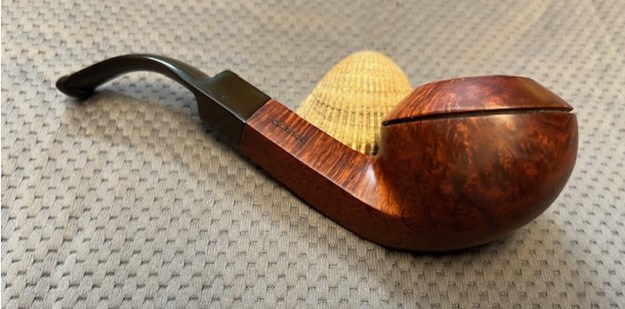
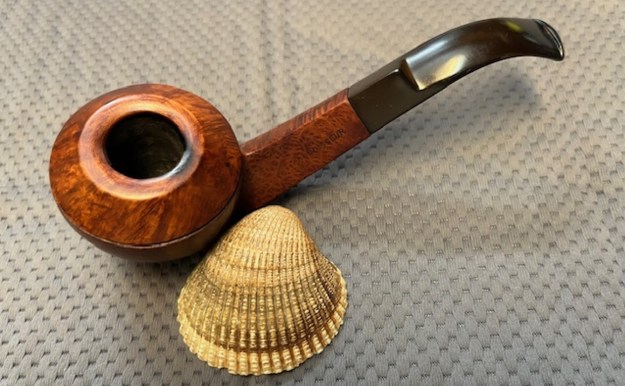
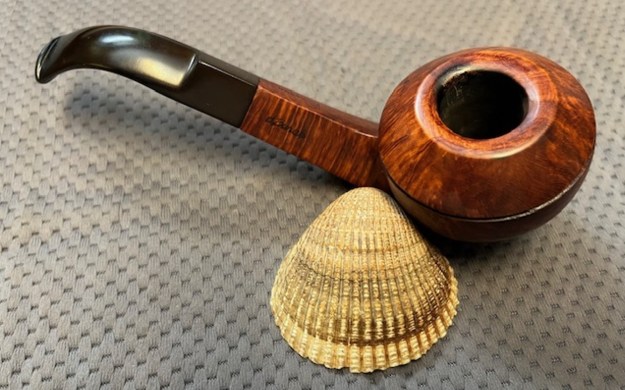
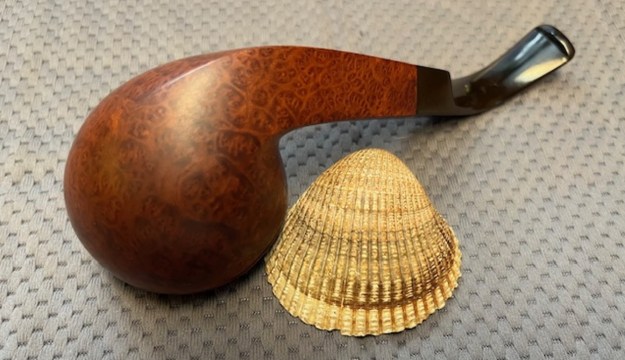
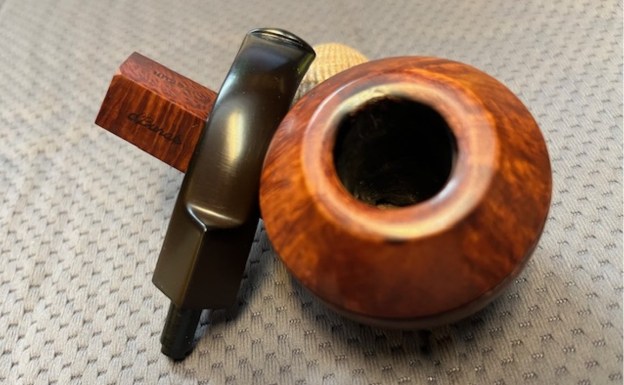
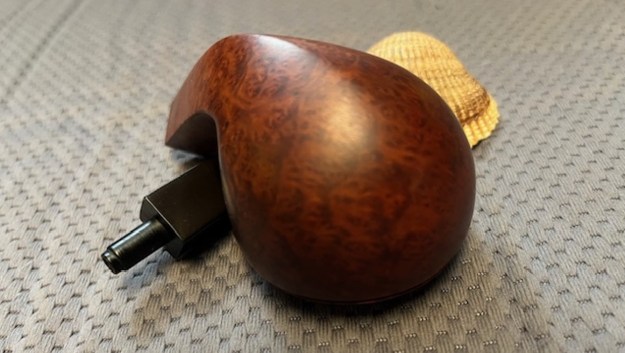
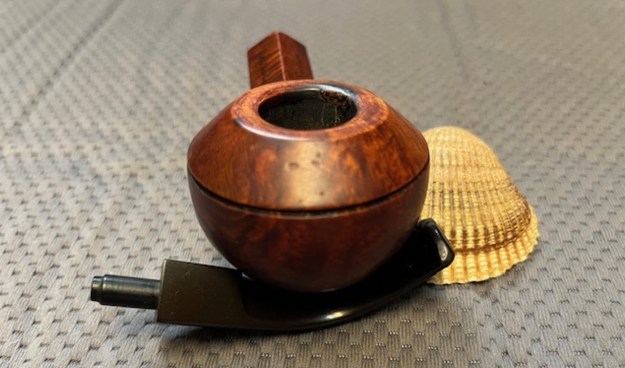
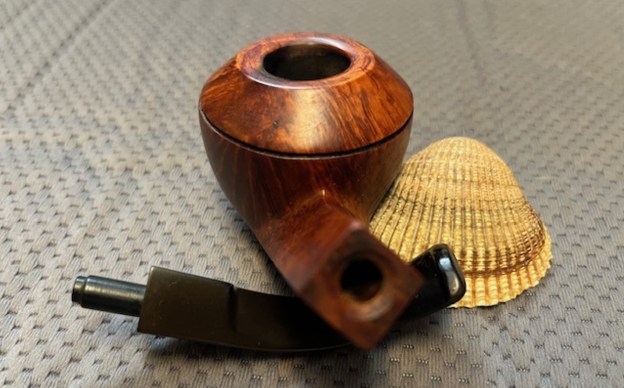
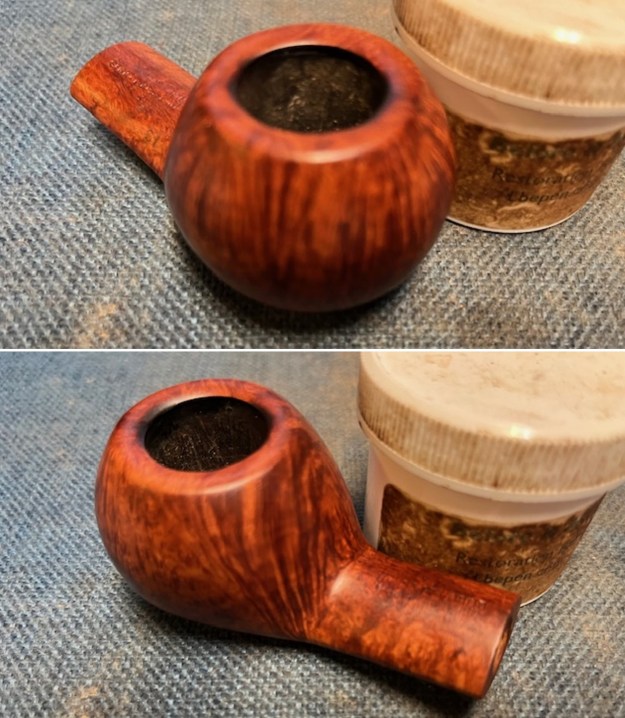
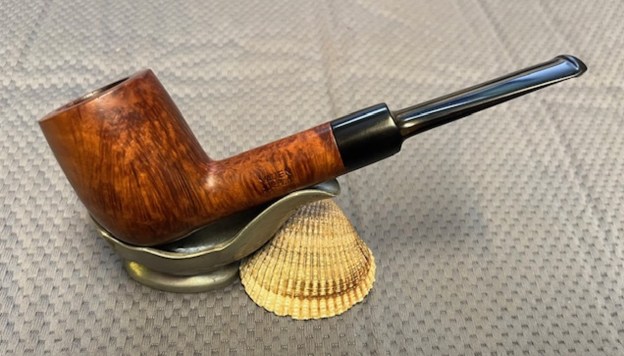
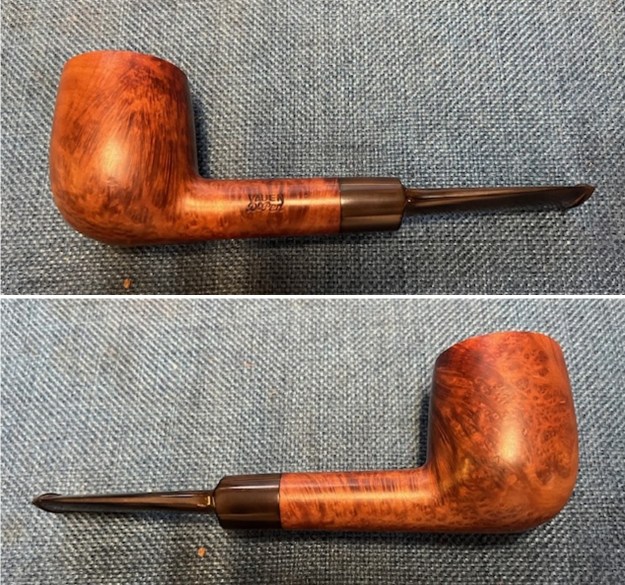
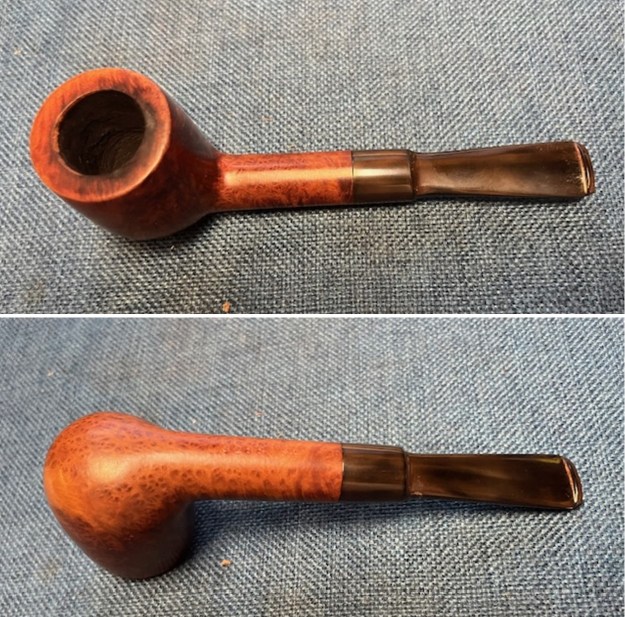
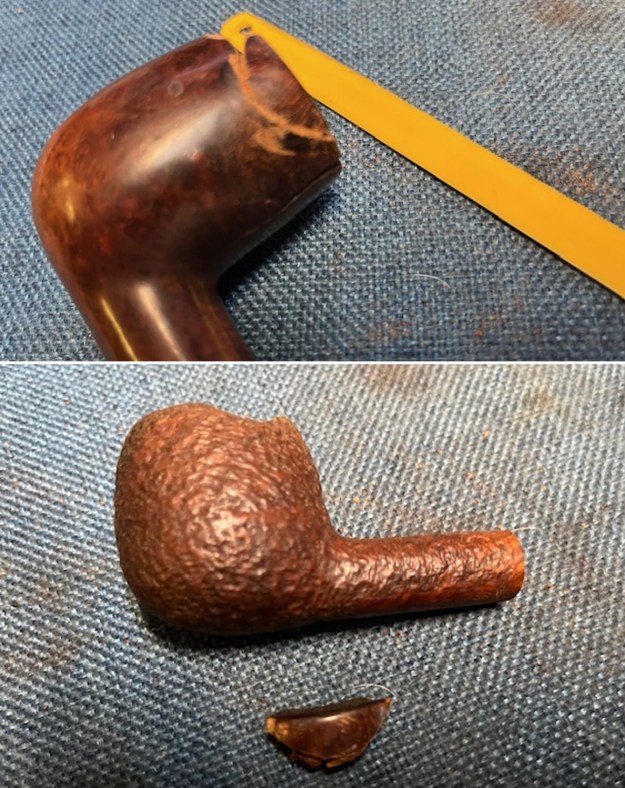
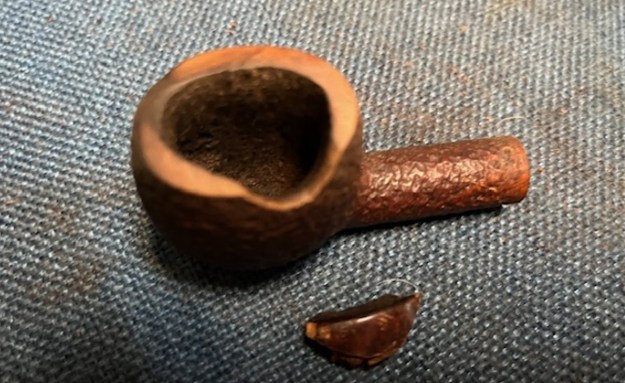
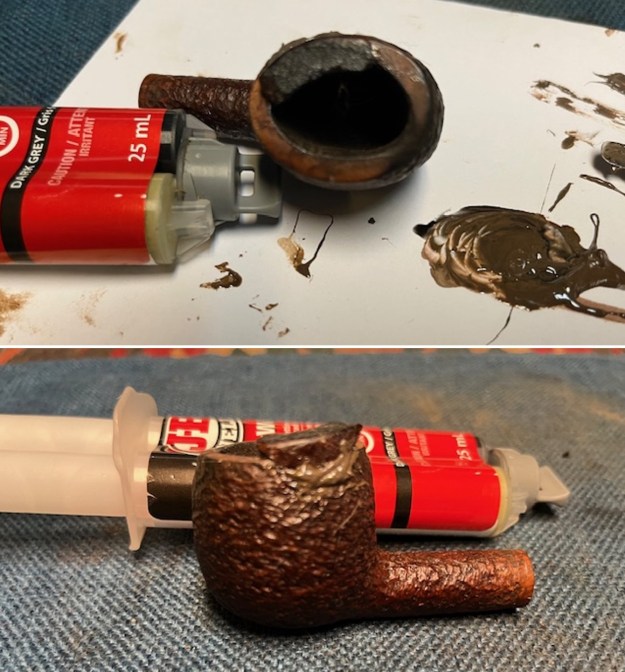
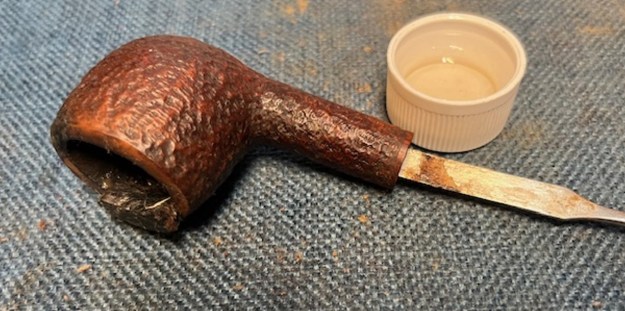
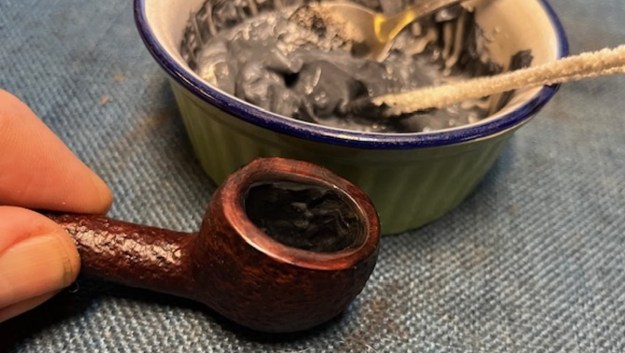
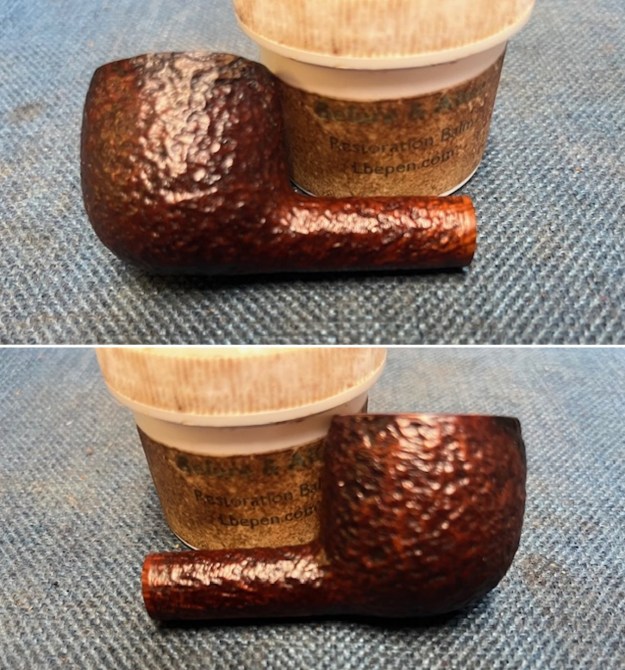
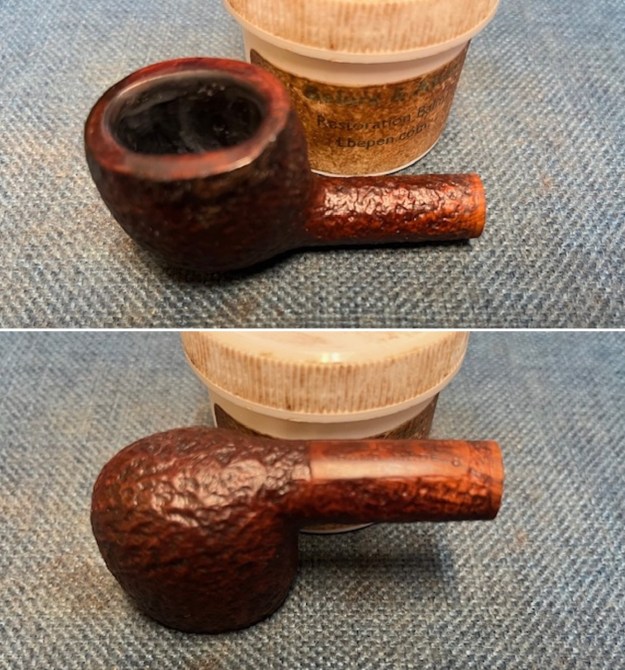
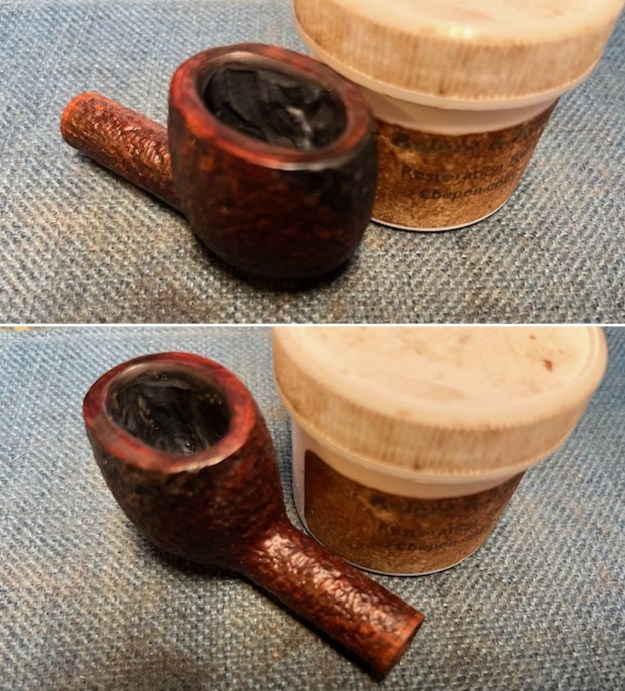
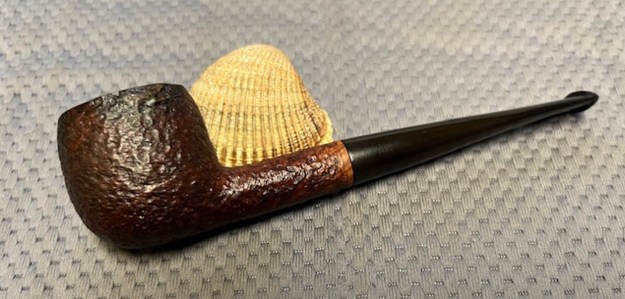
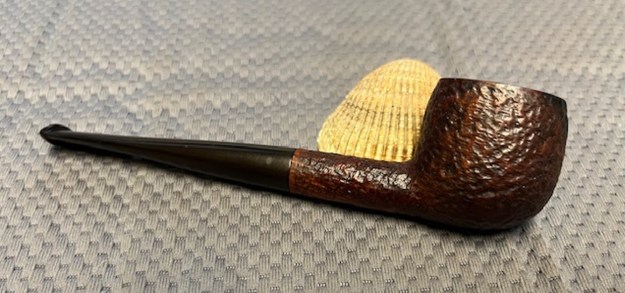
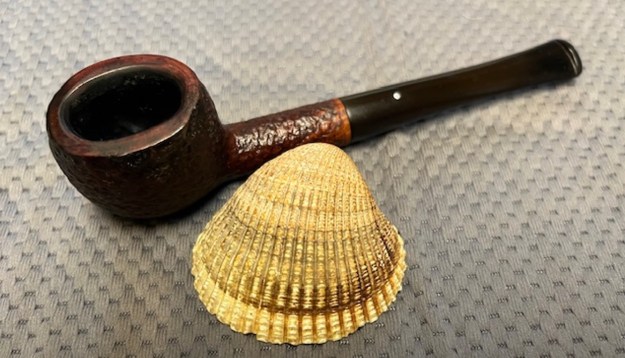
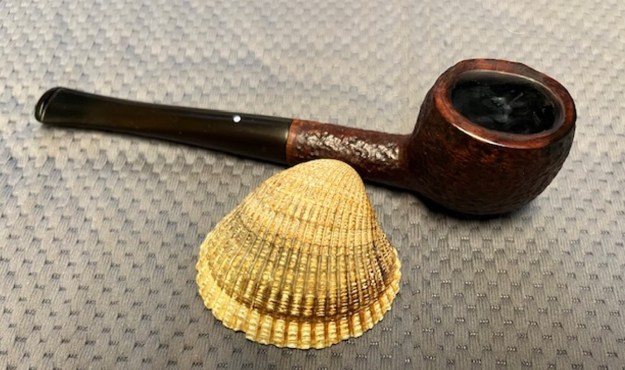
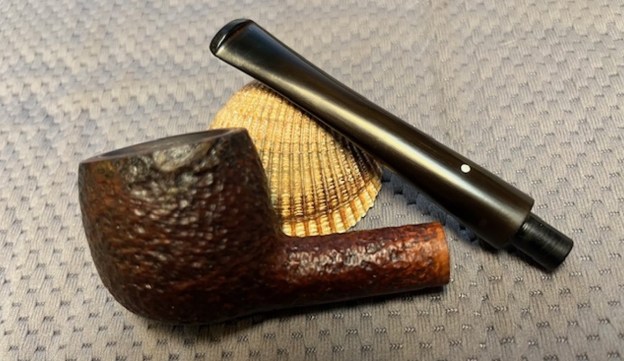
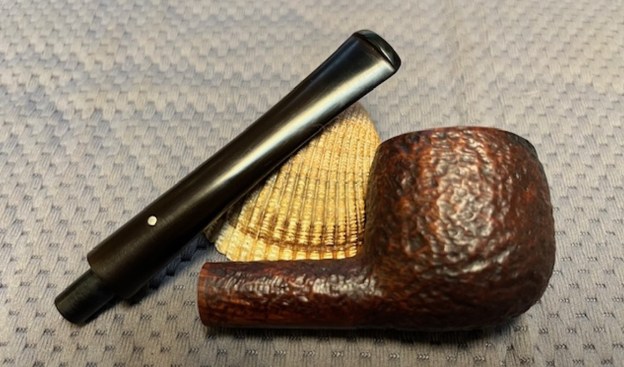
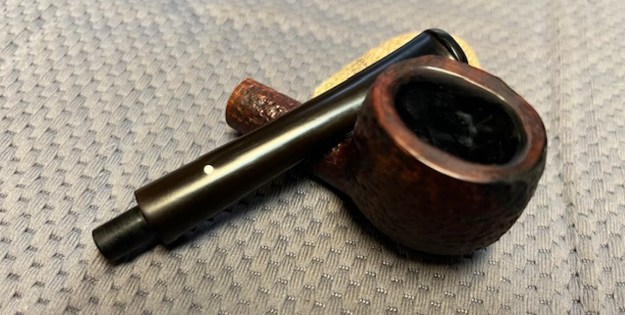
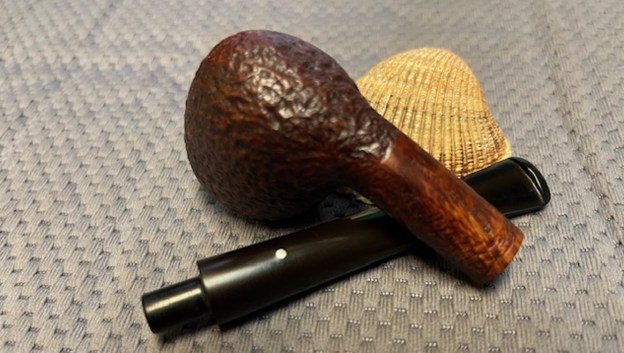
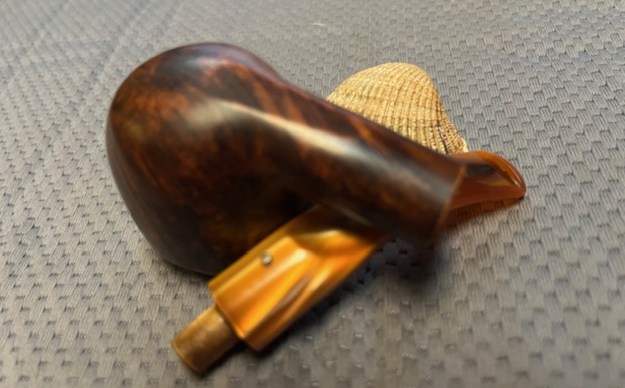
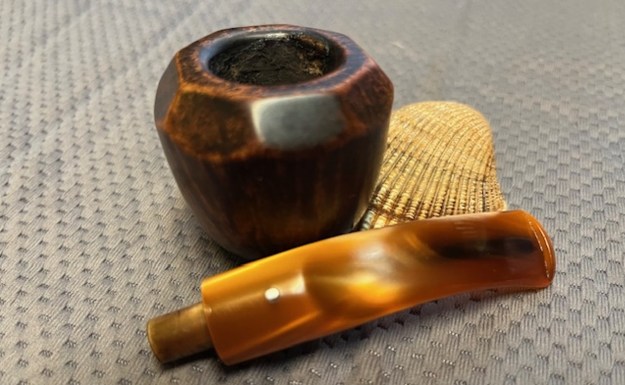
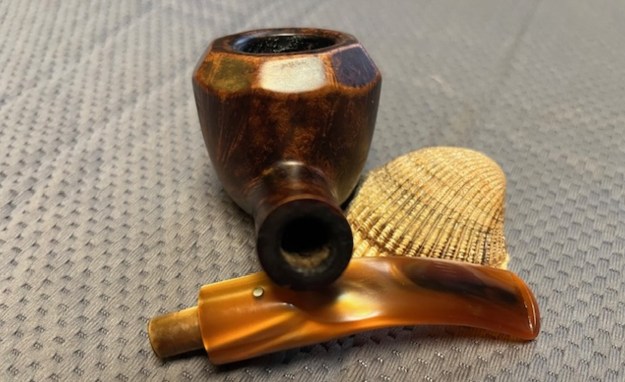
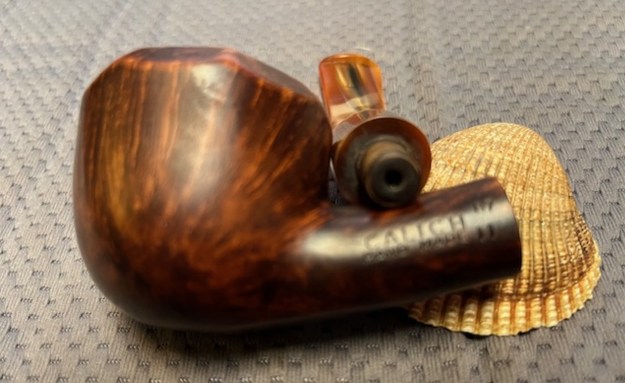
Tag Archives: topping a bowl

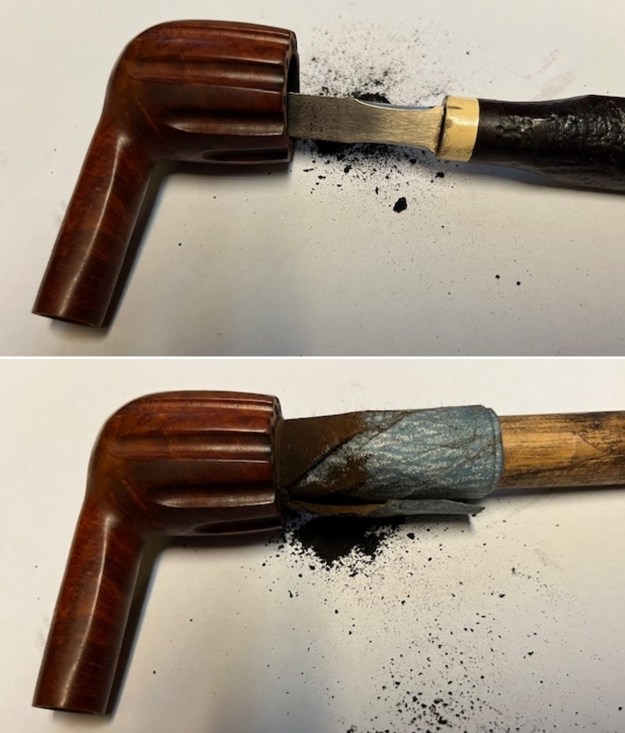
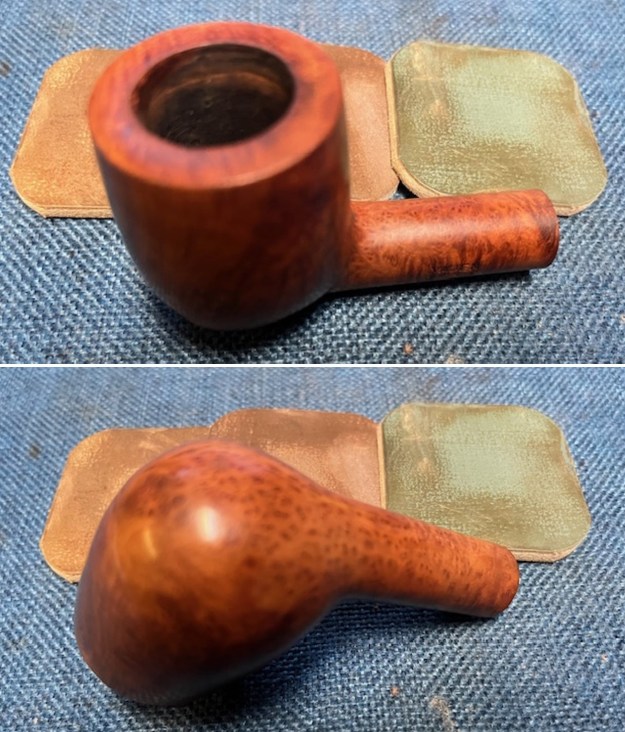
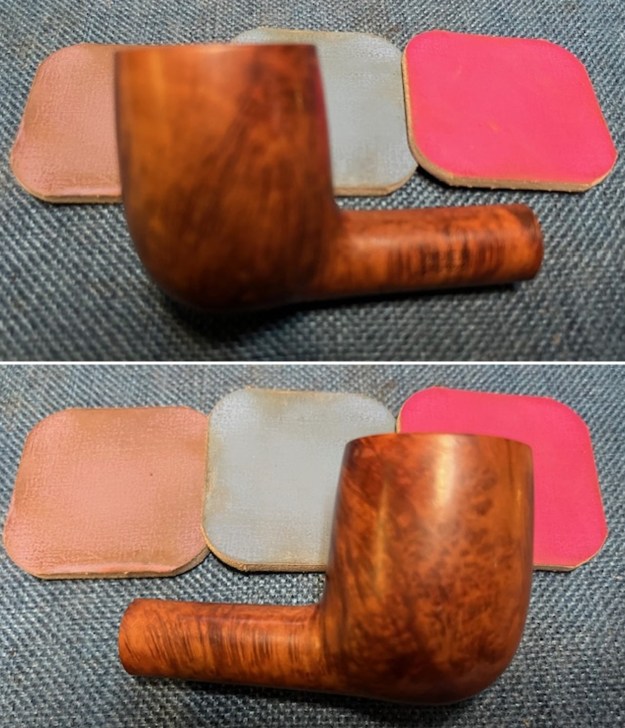
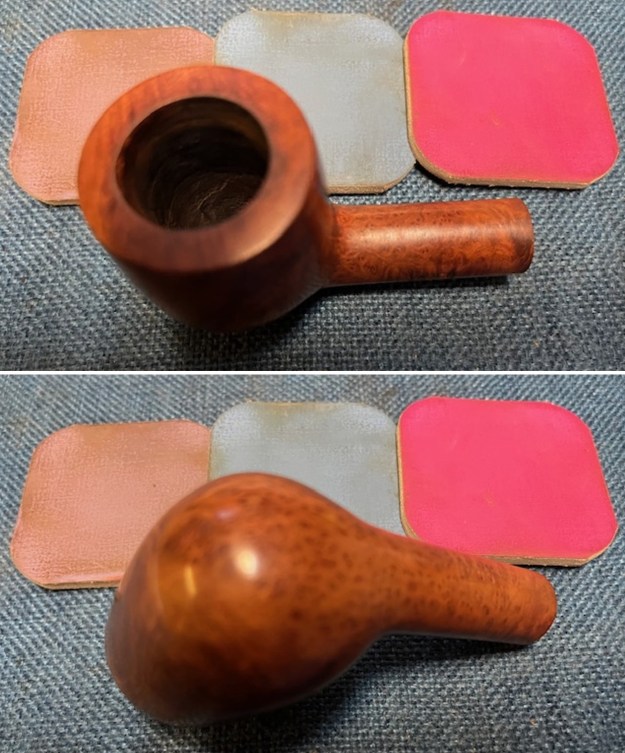
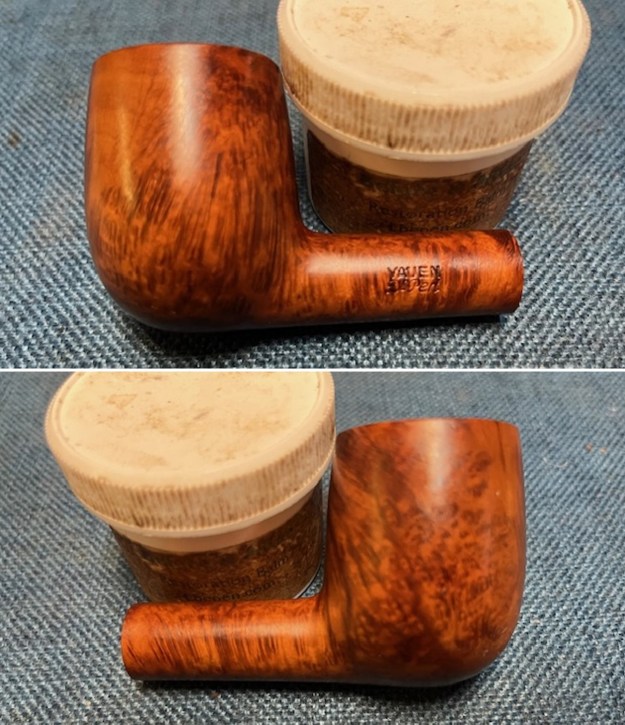
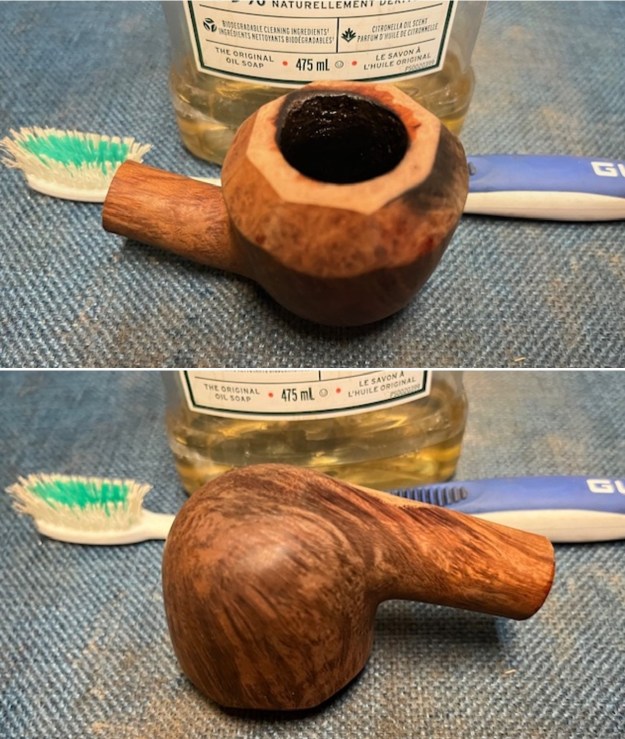
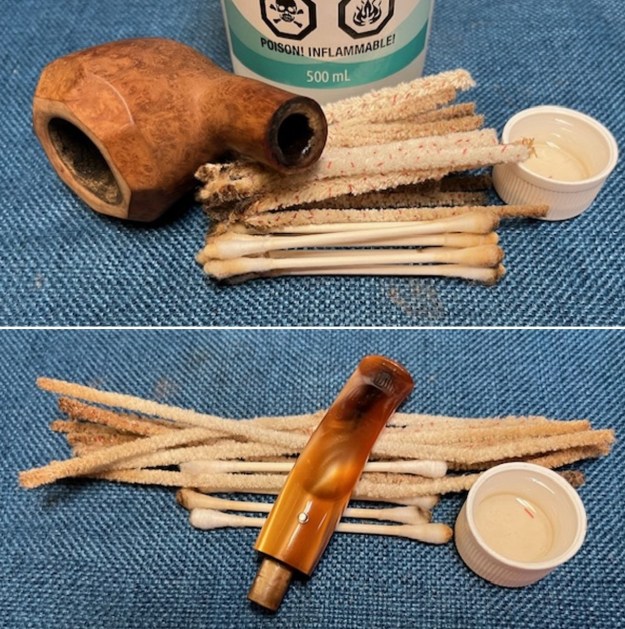
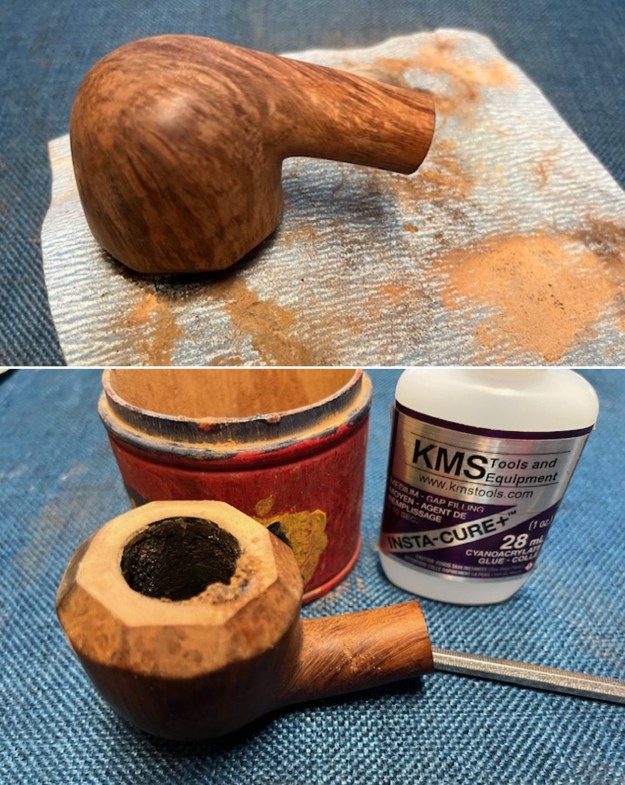
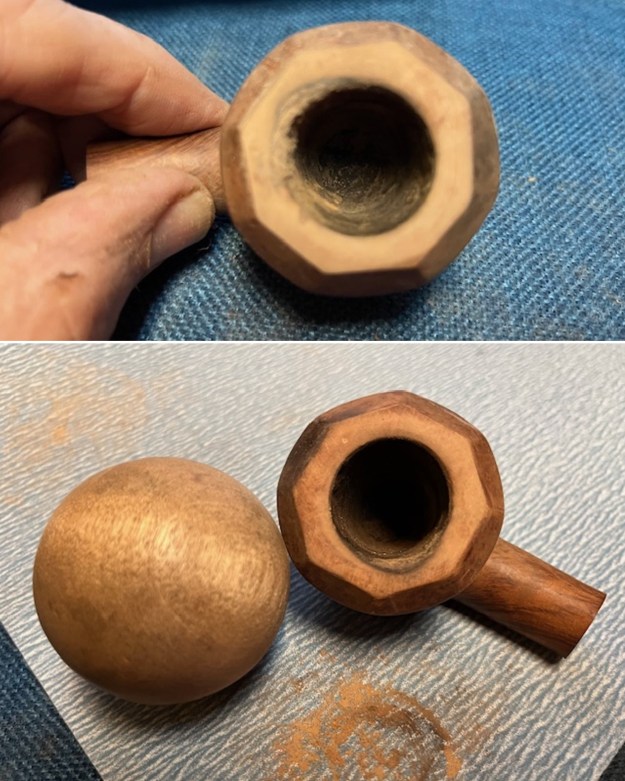
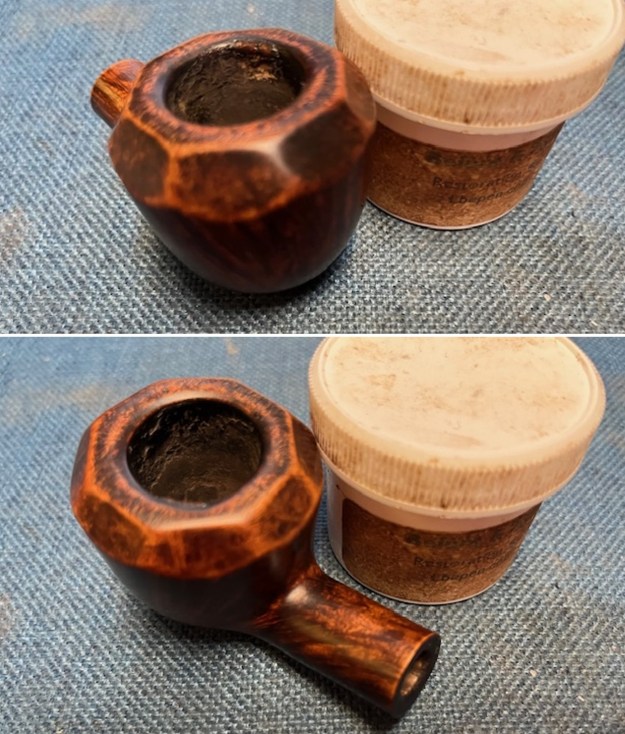
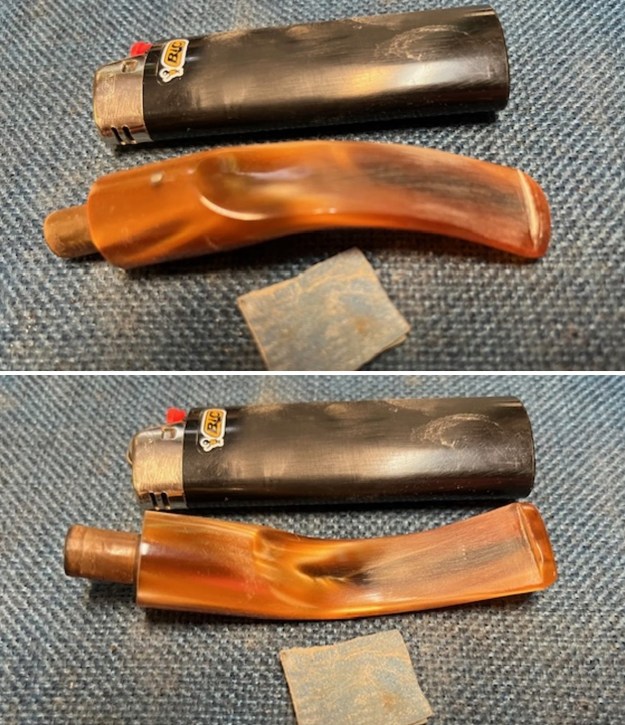
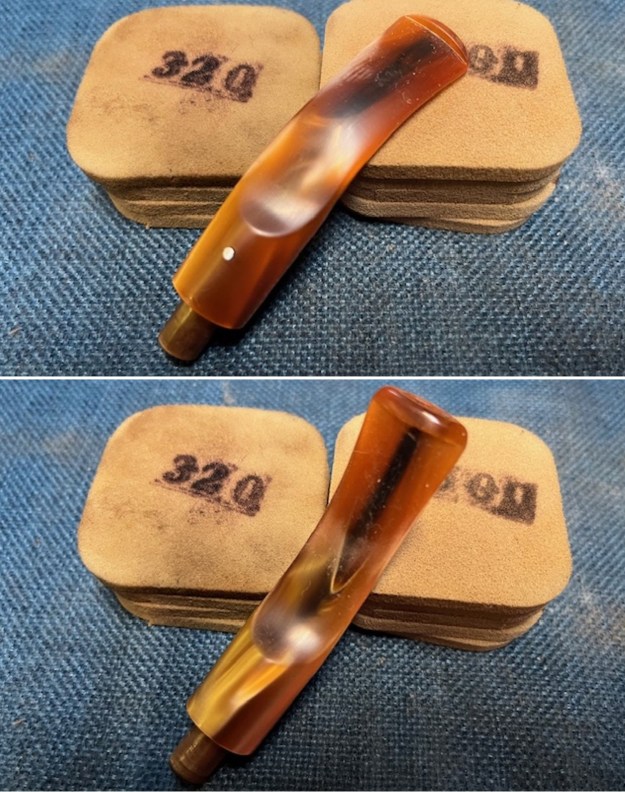
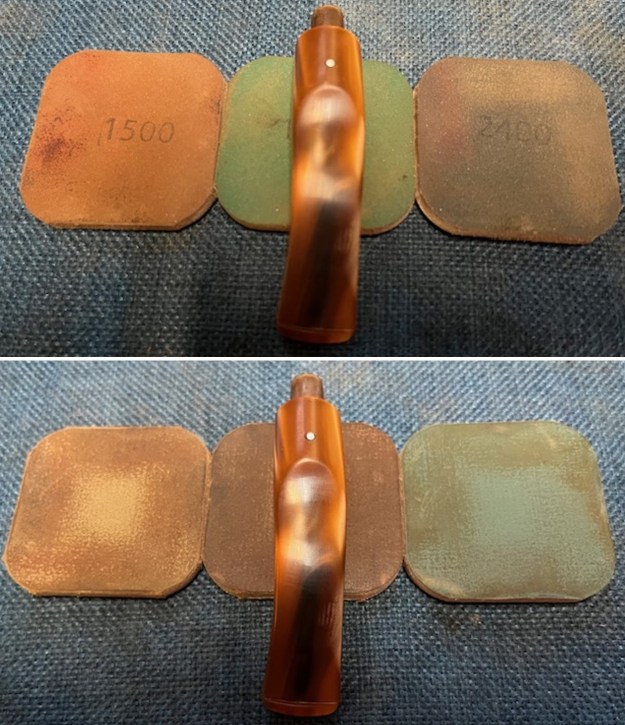
Cleaning up another one of my restorations from many years ago


by Steve Laug

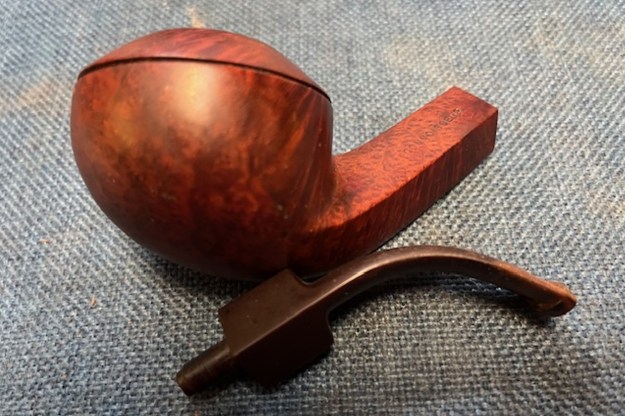
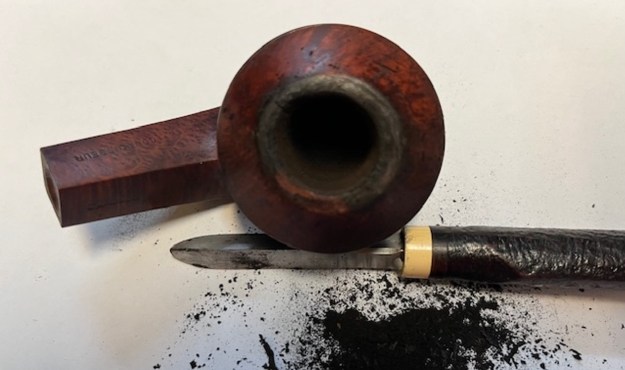
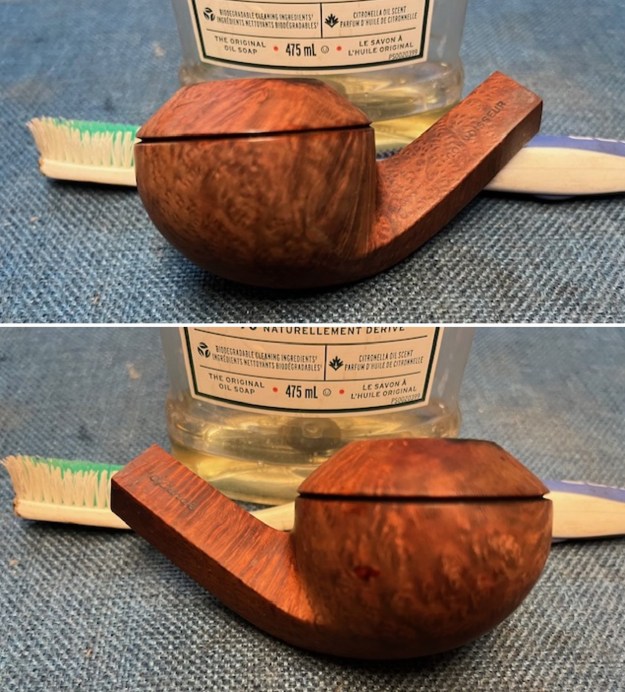
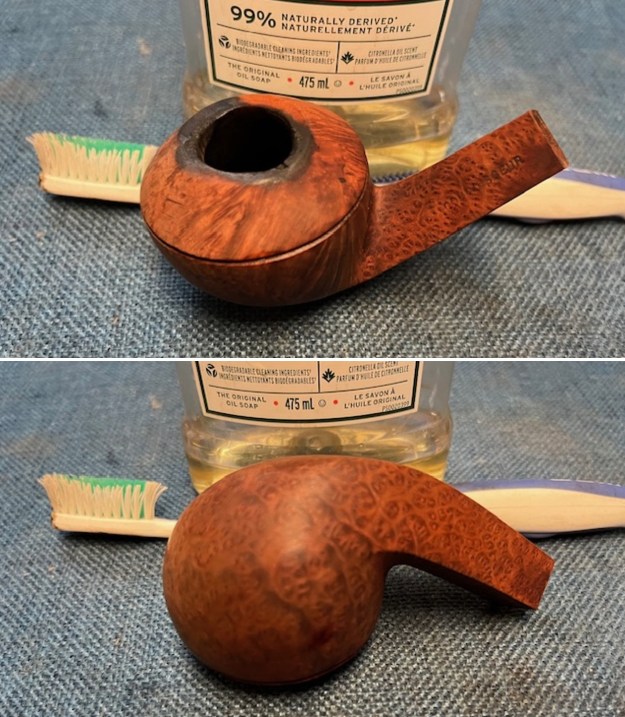
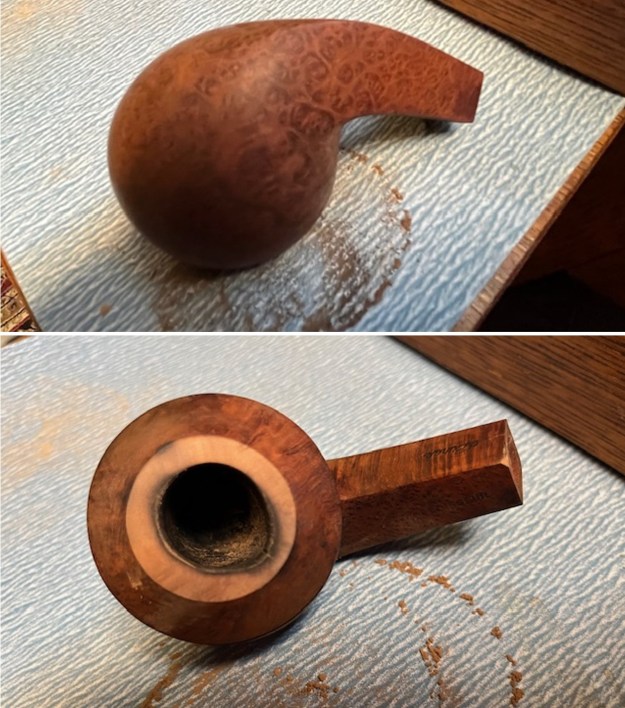
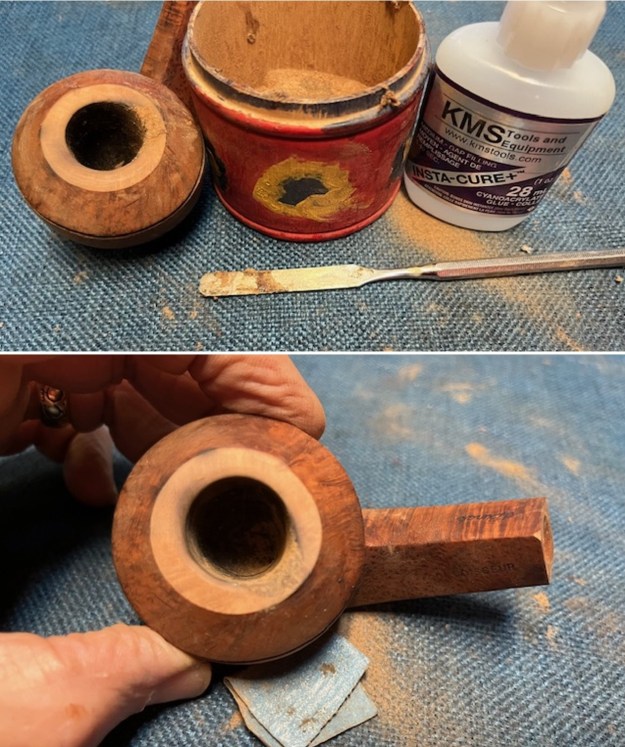
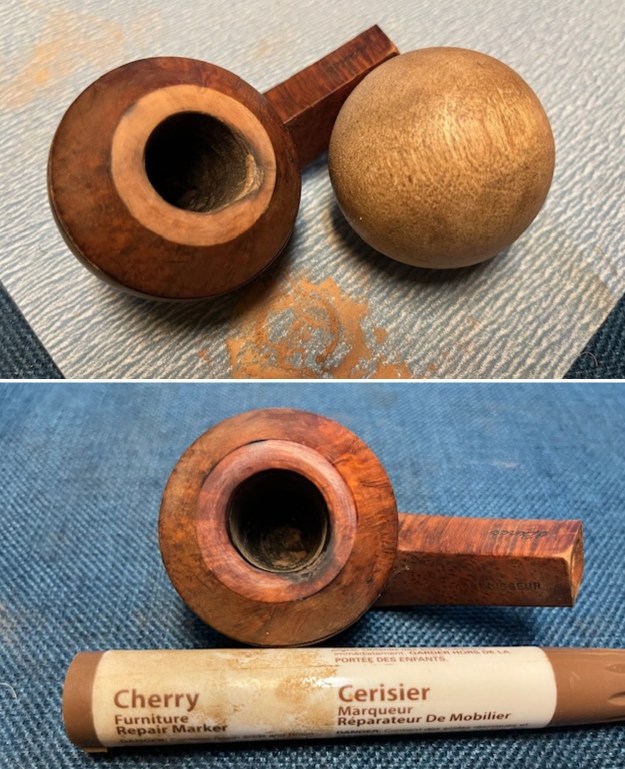
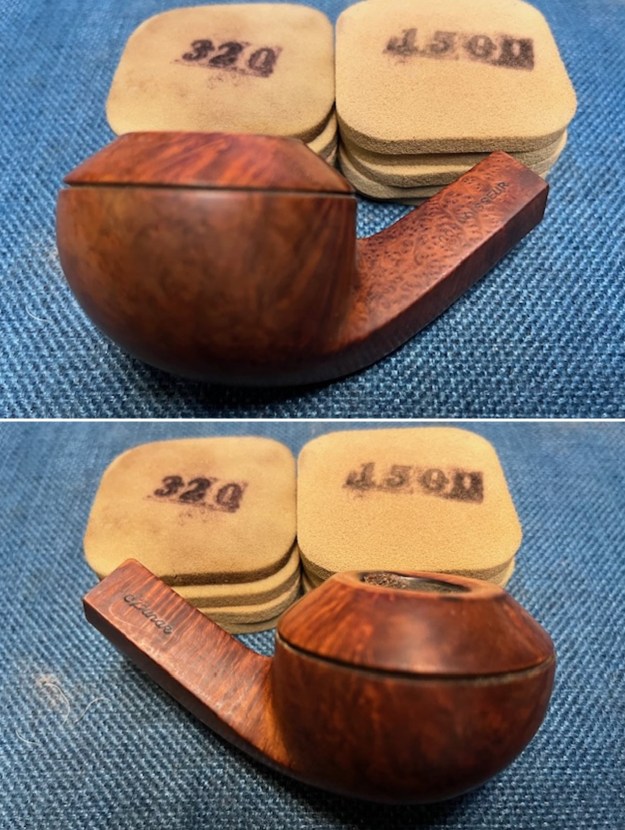
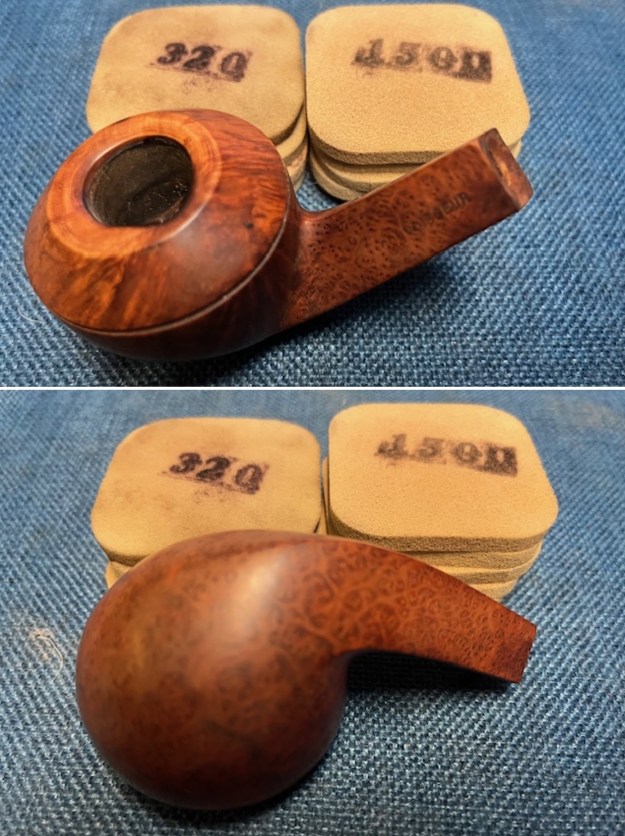
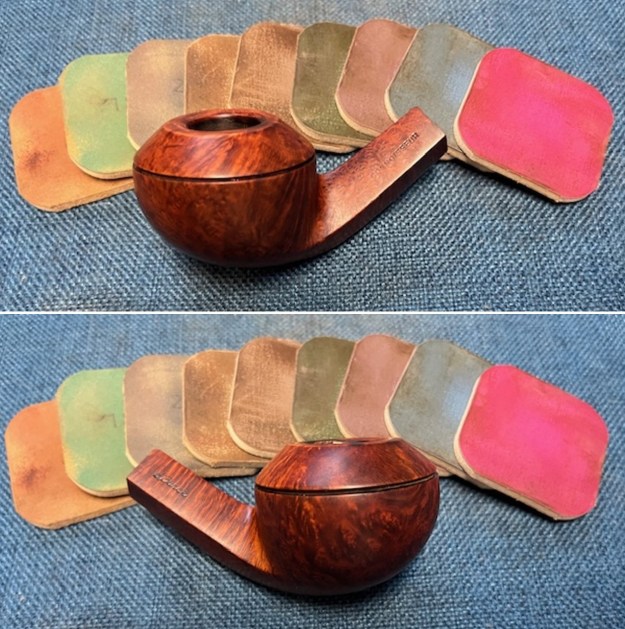
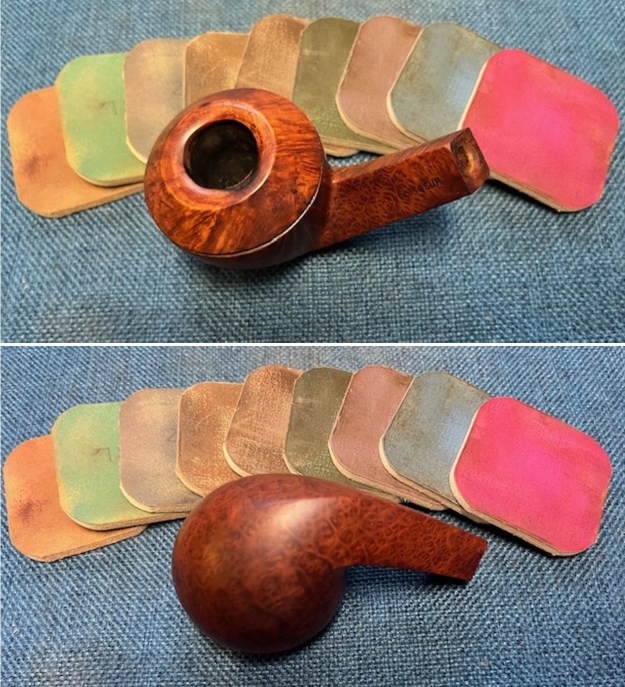
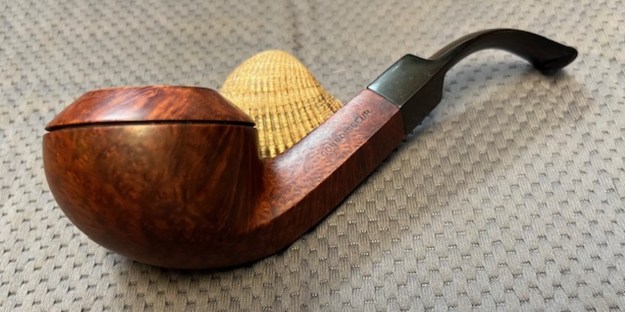
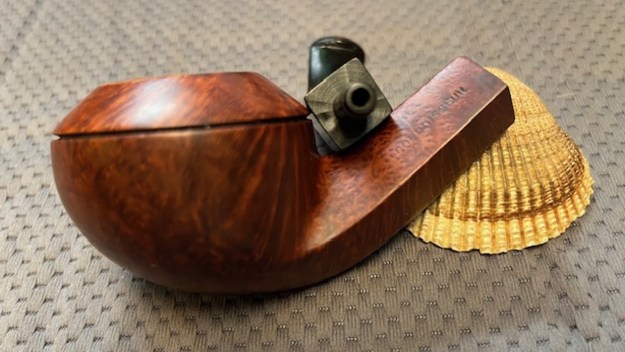
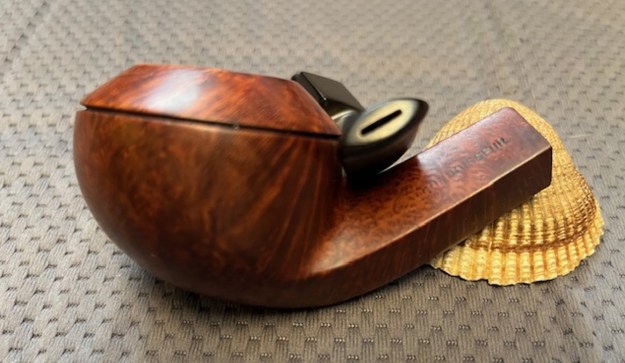
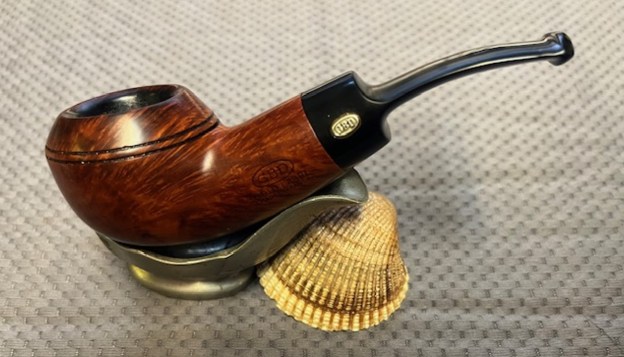
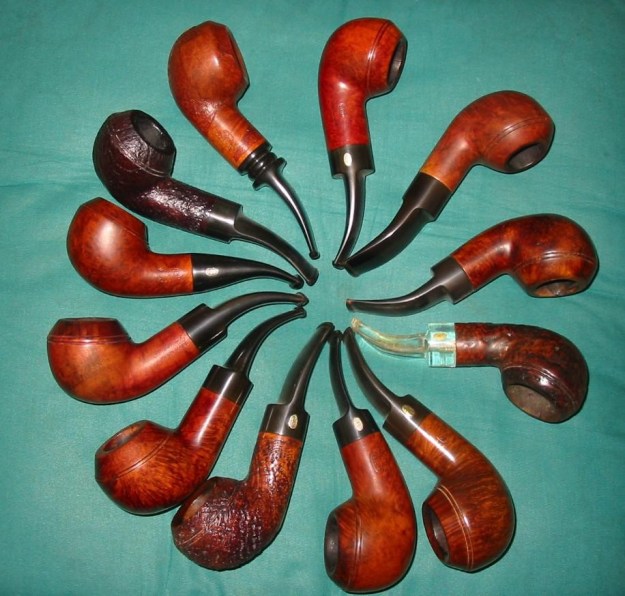
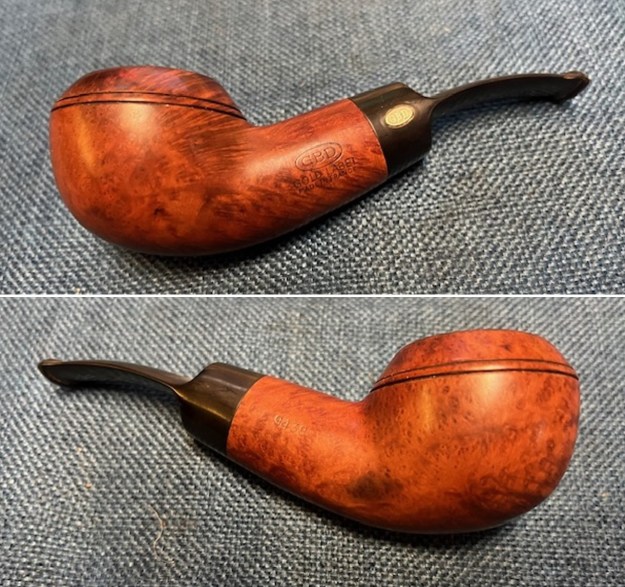
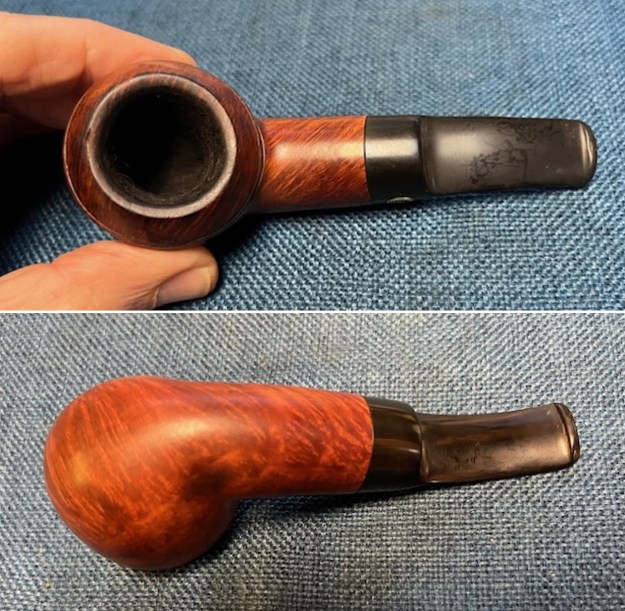
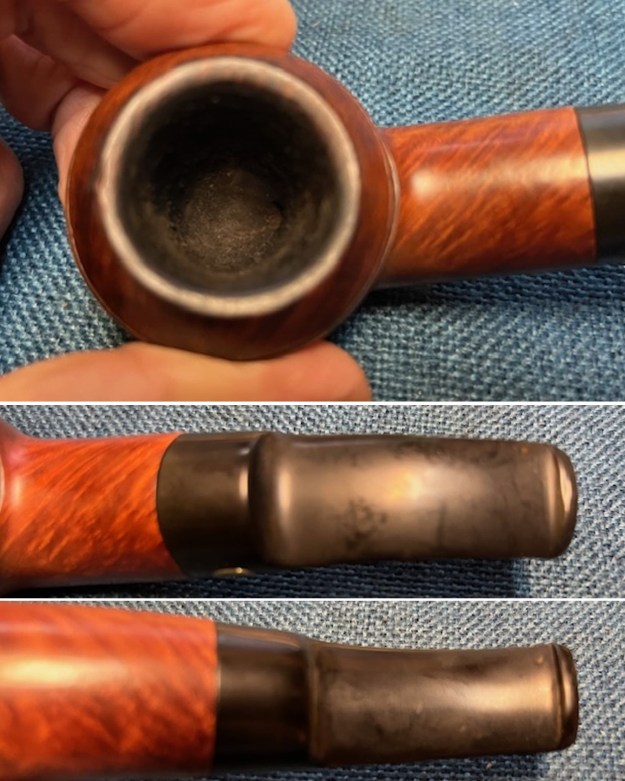
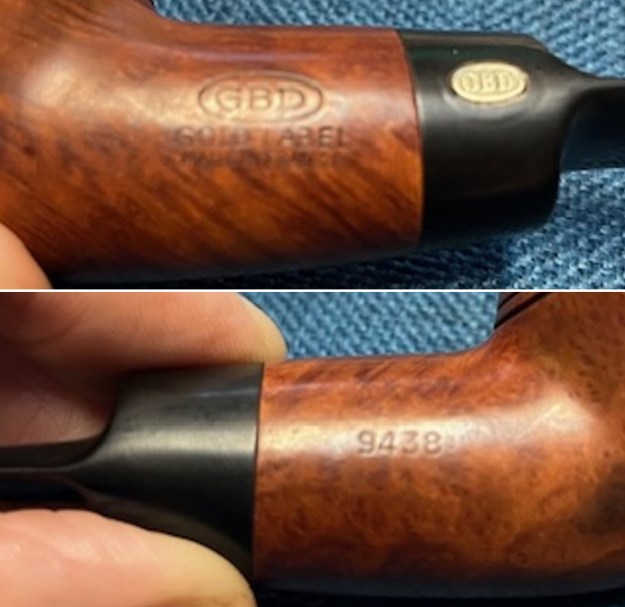
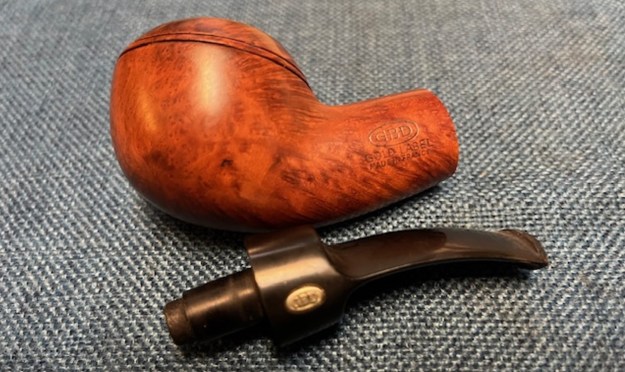
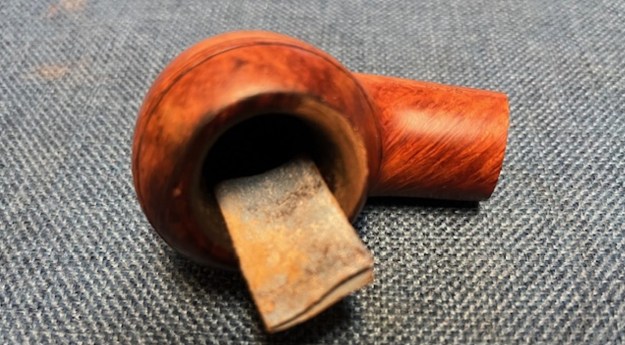
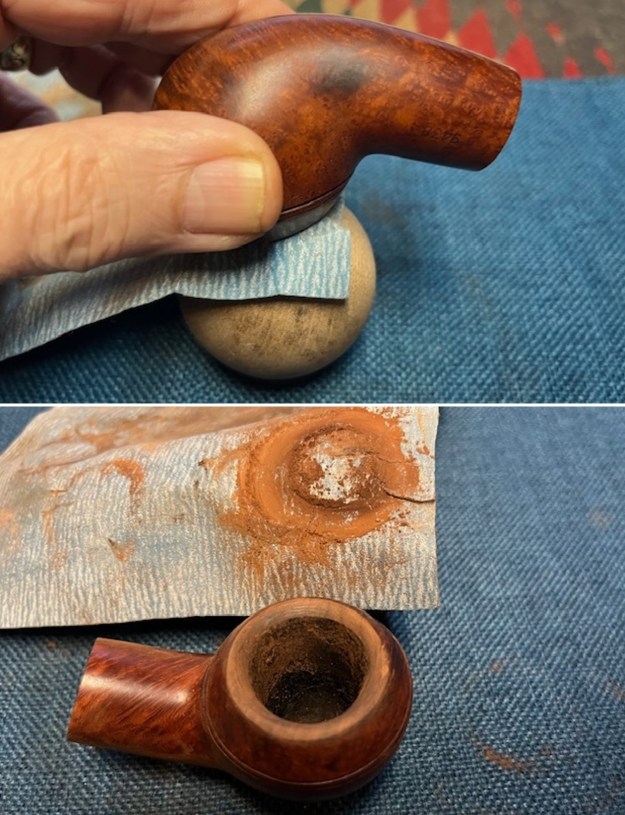
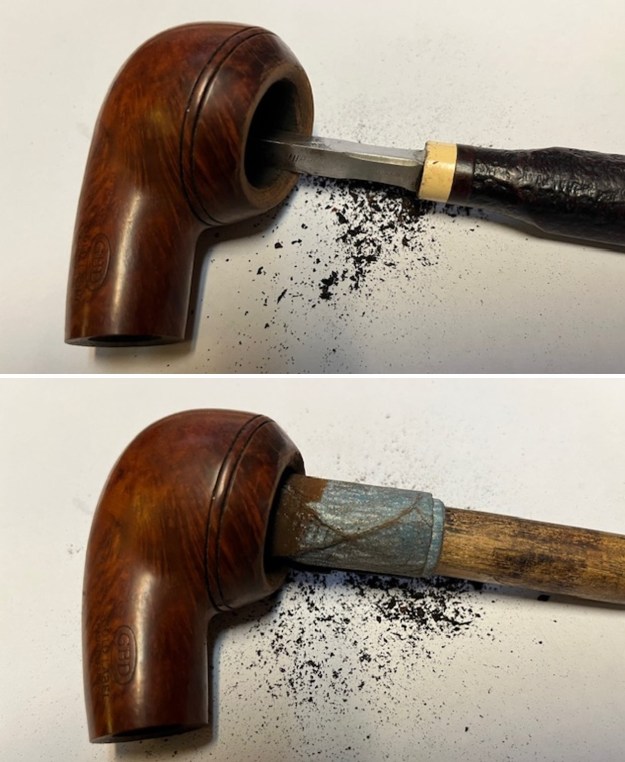
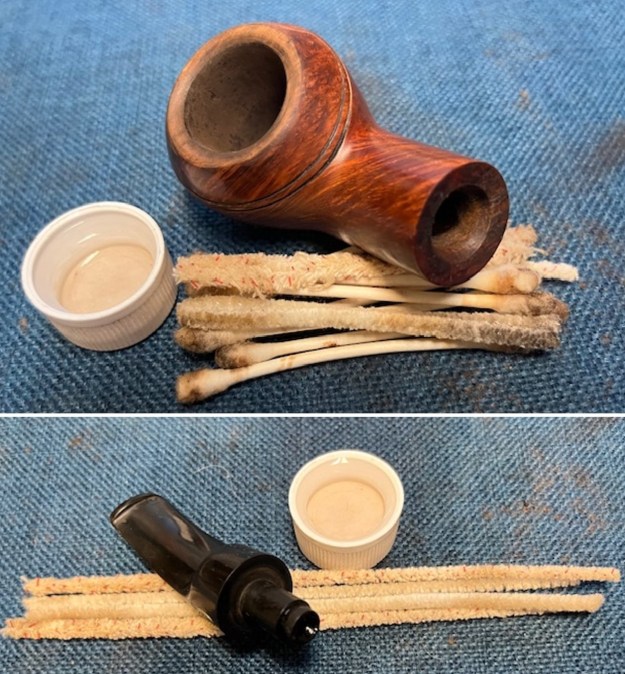
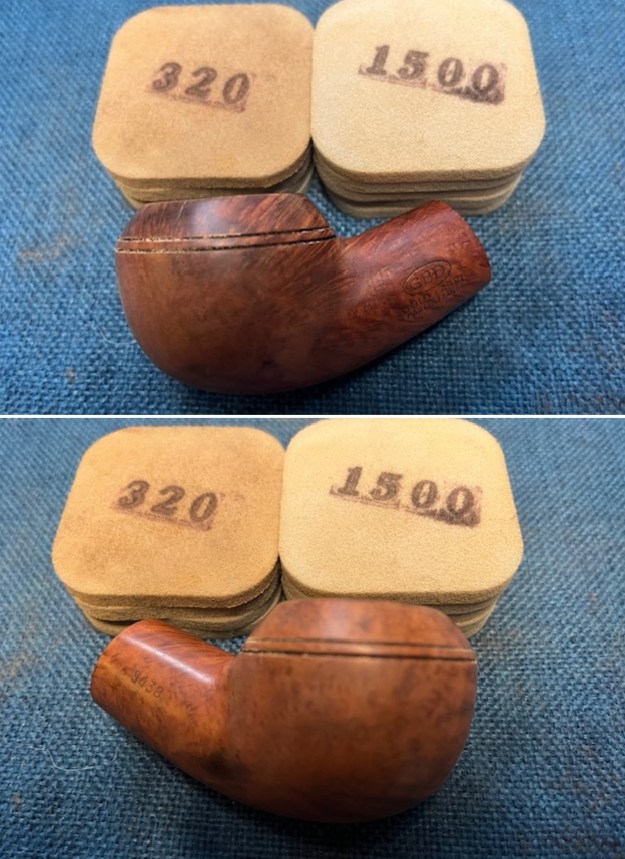
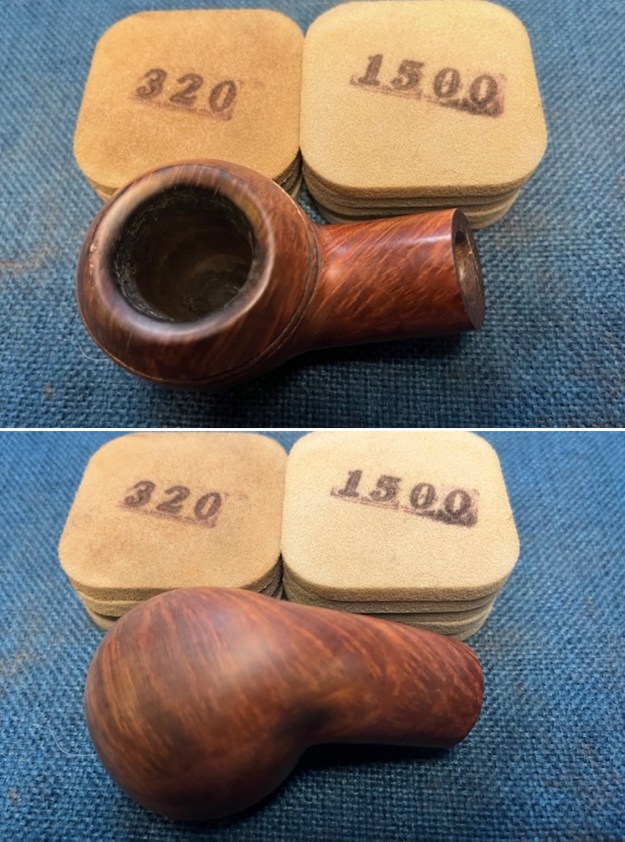
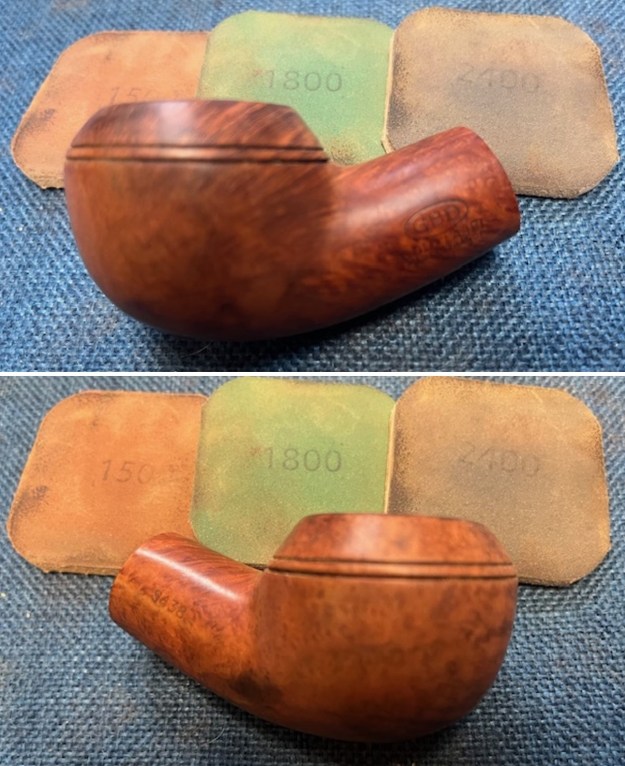
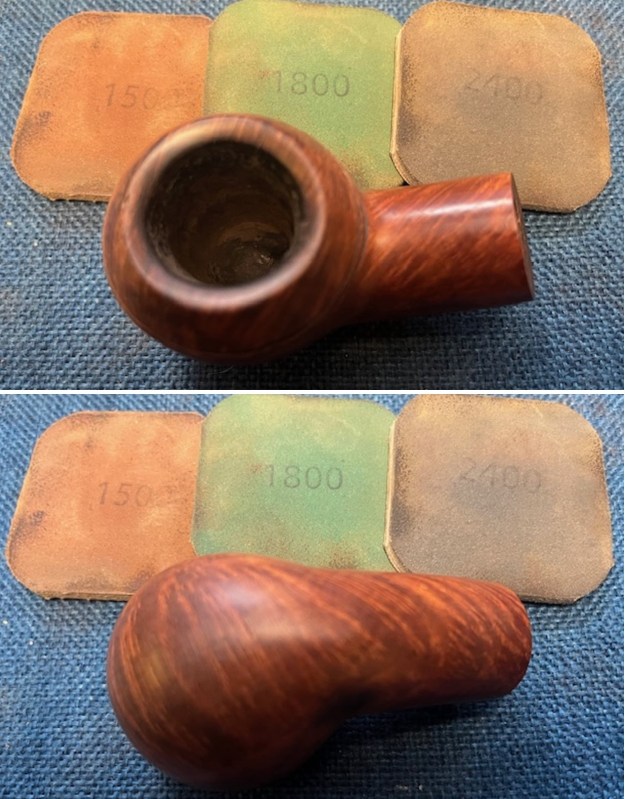
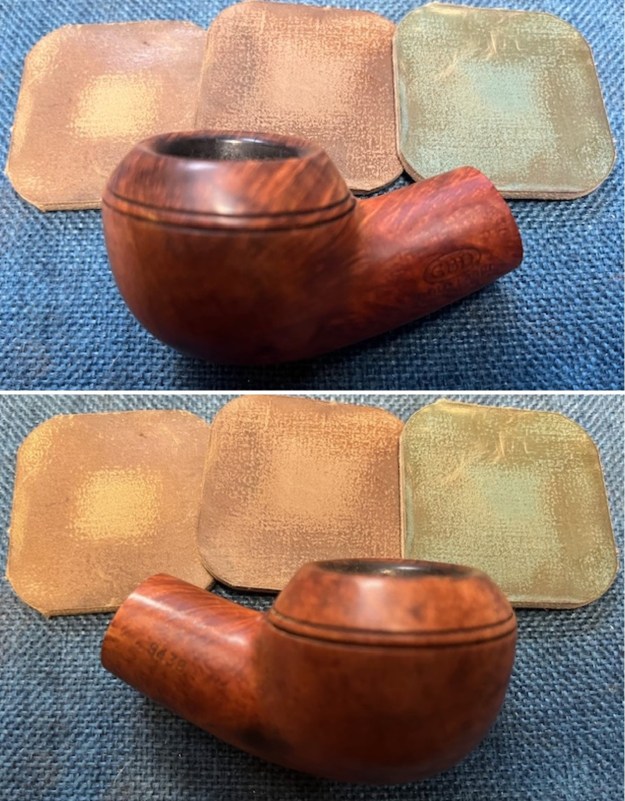
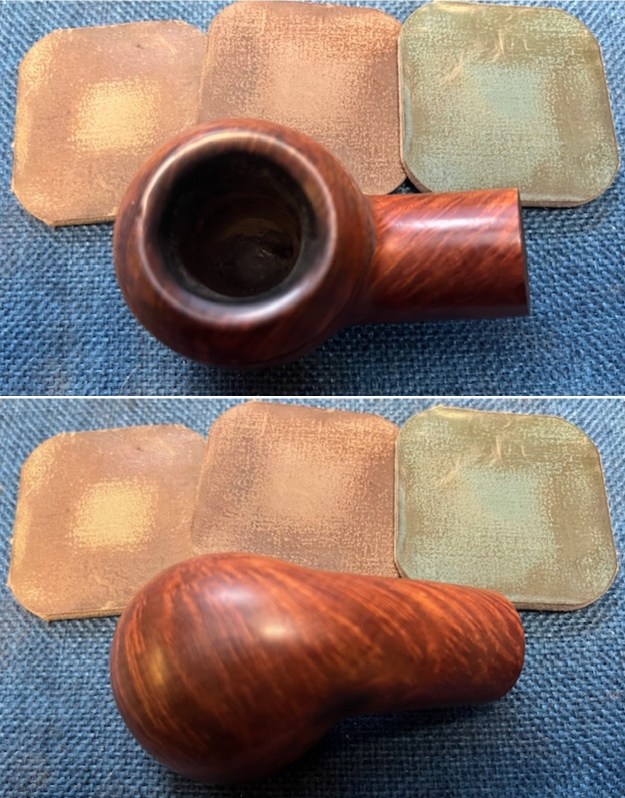
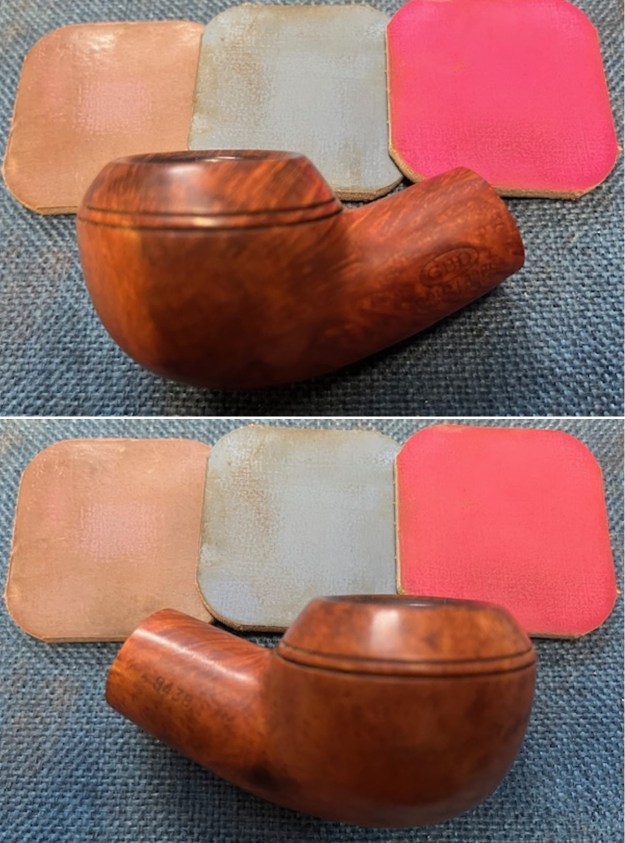
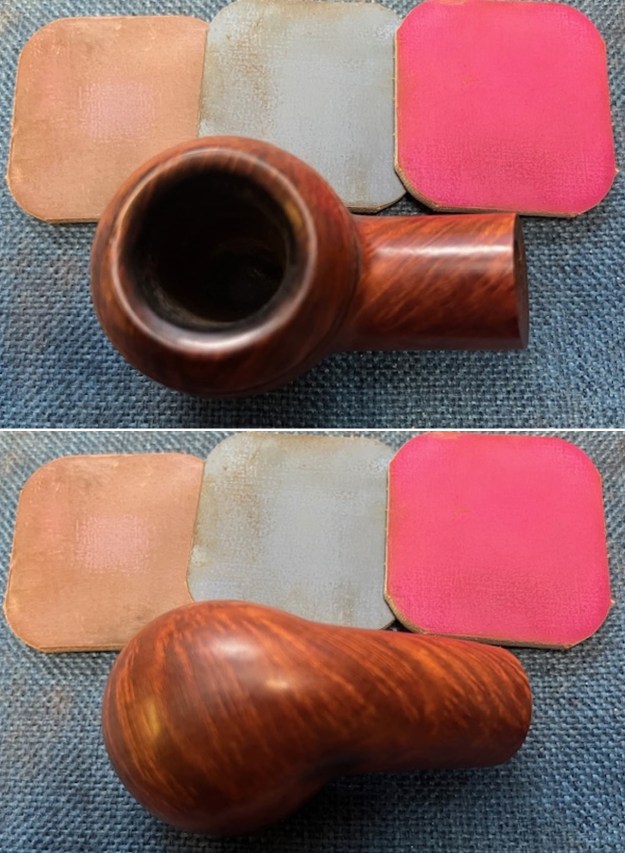
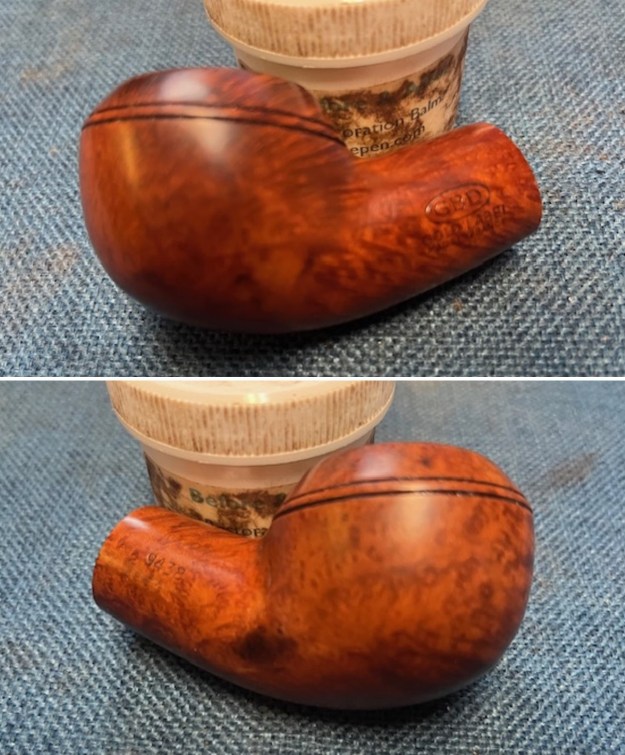
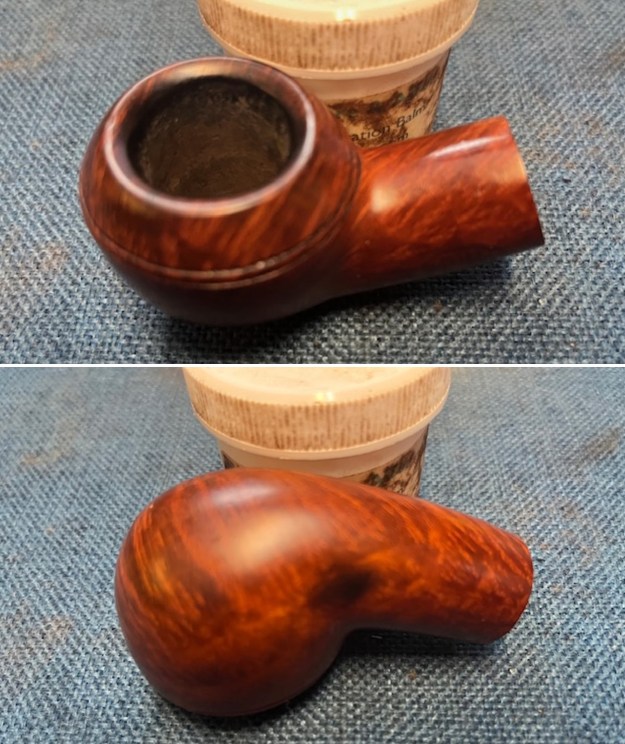
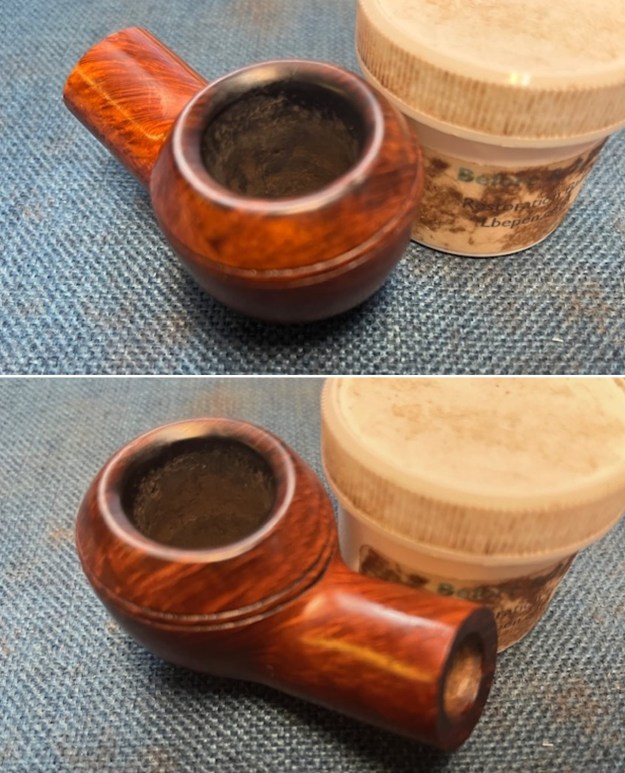
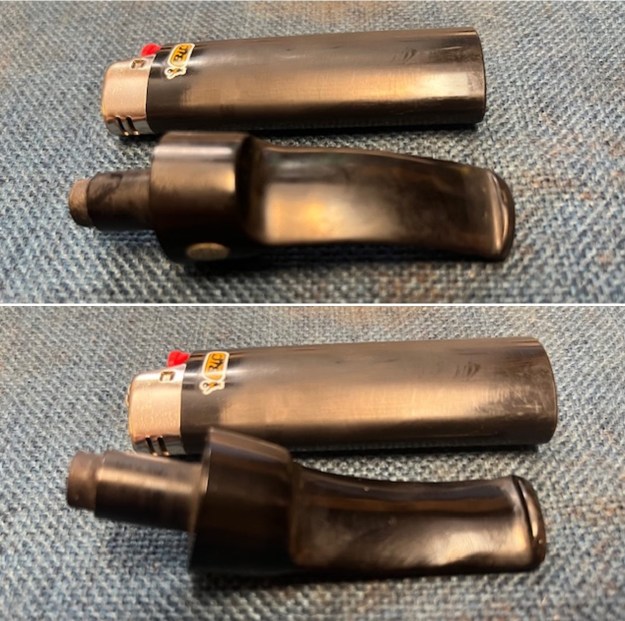
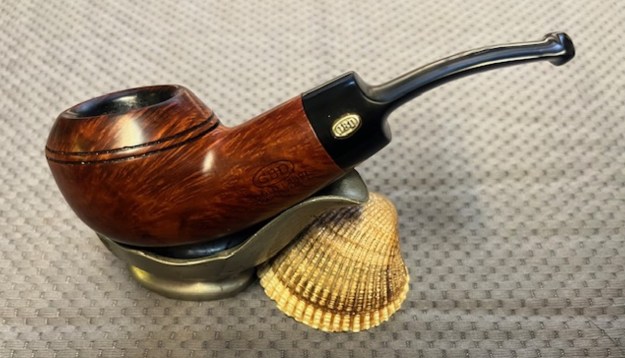
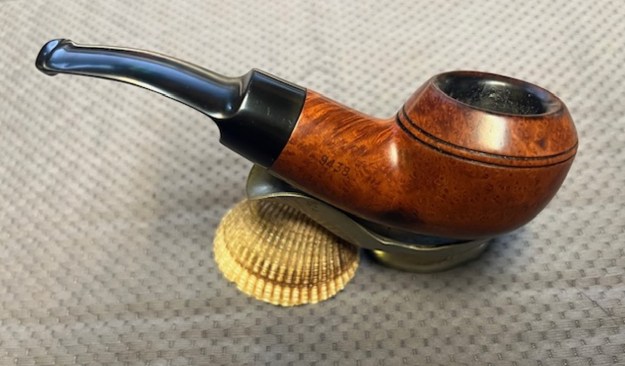
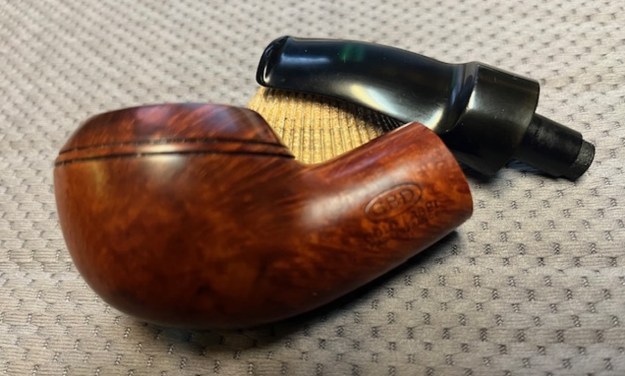
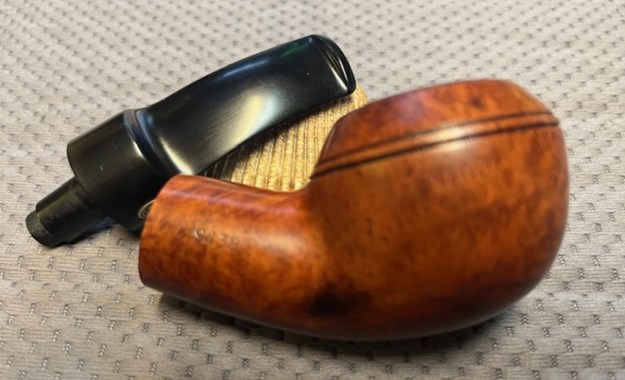
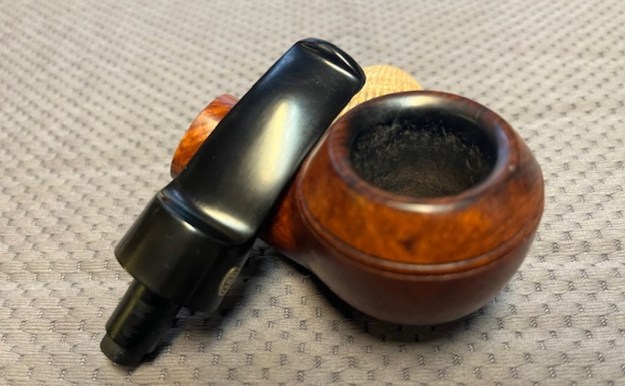
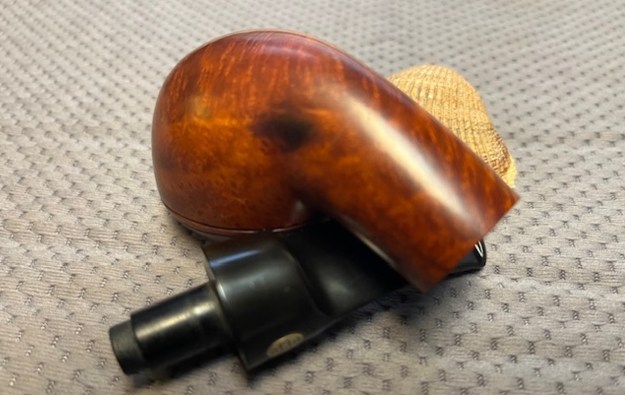
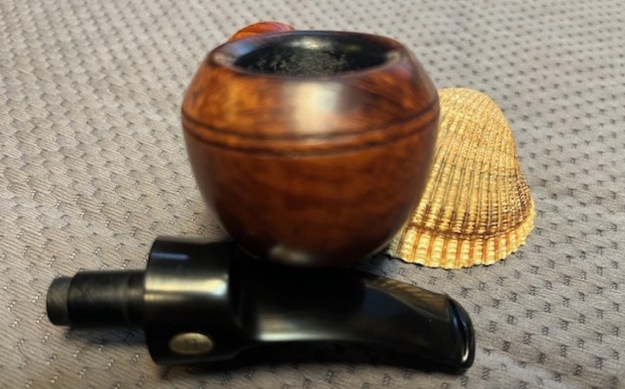
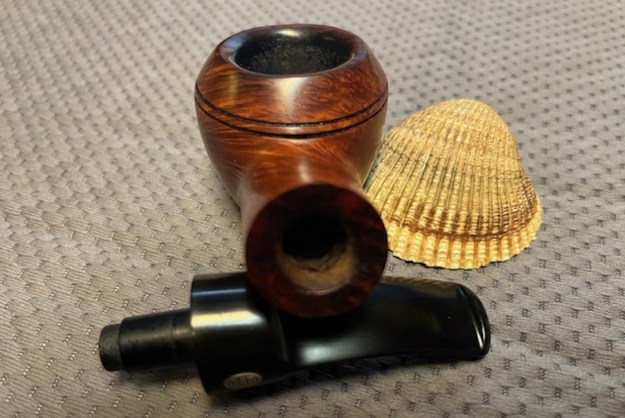
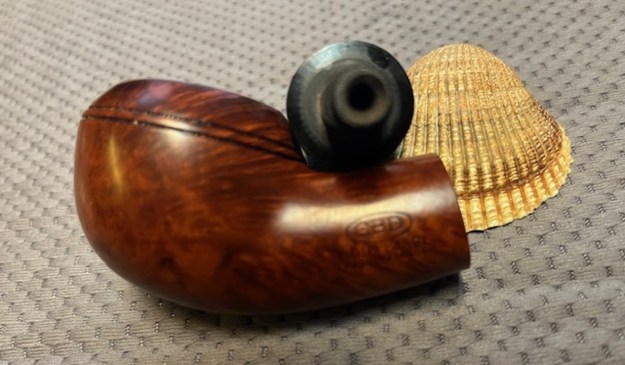
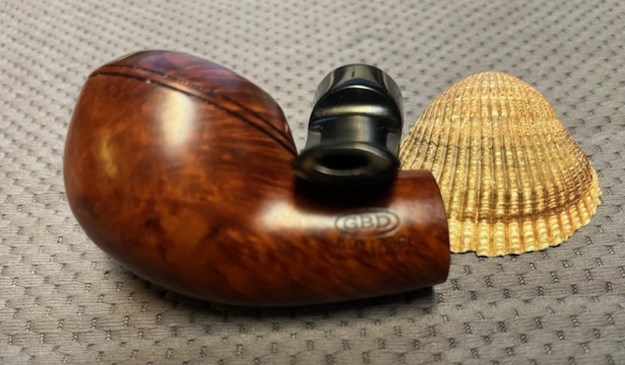
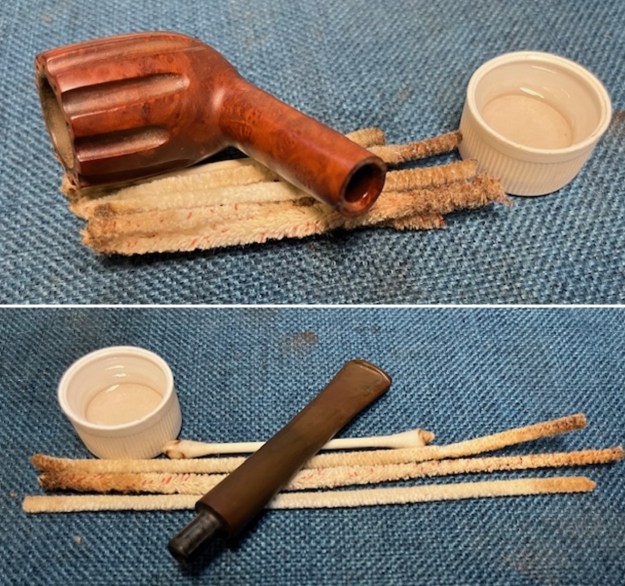
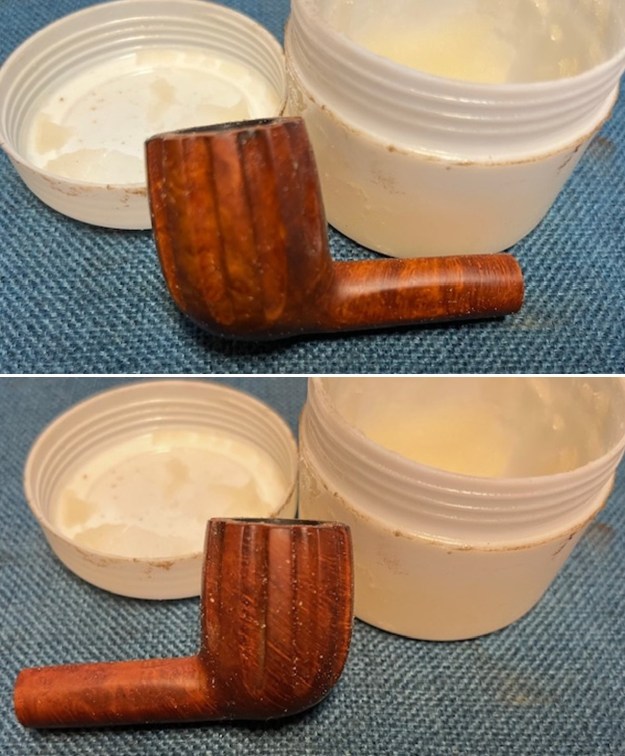
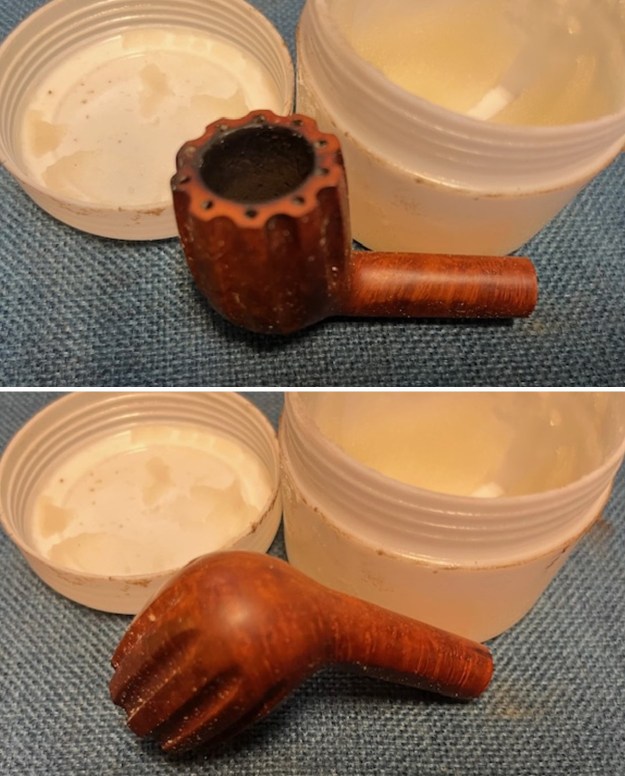
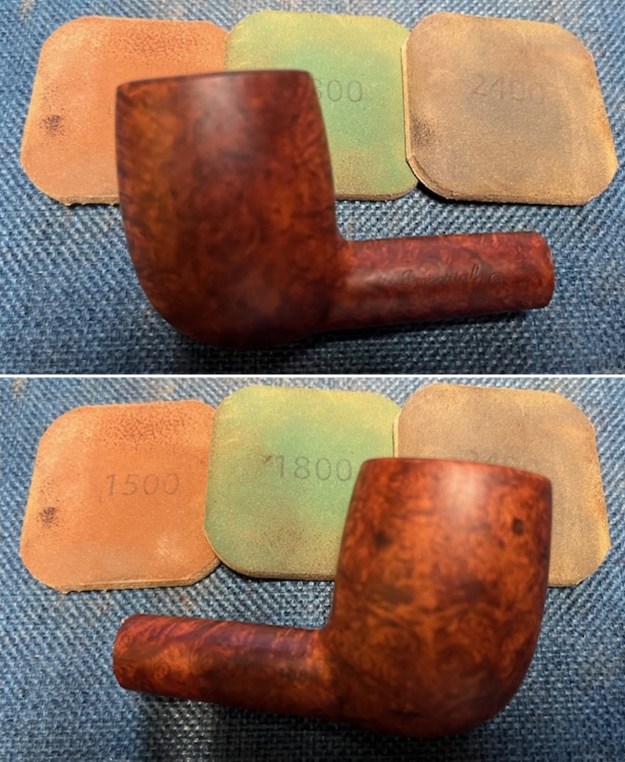
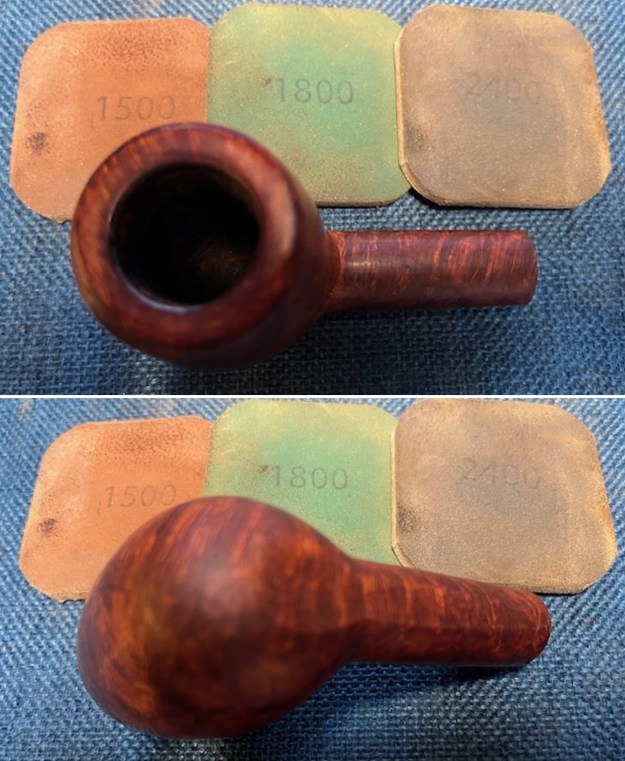
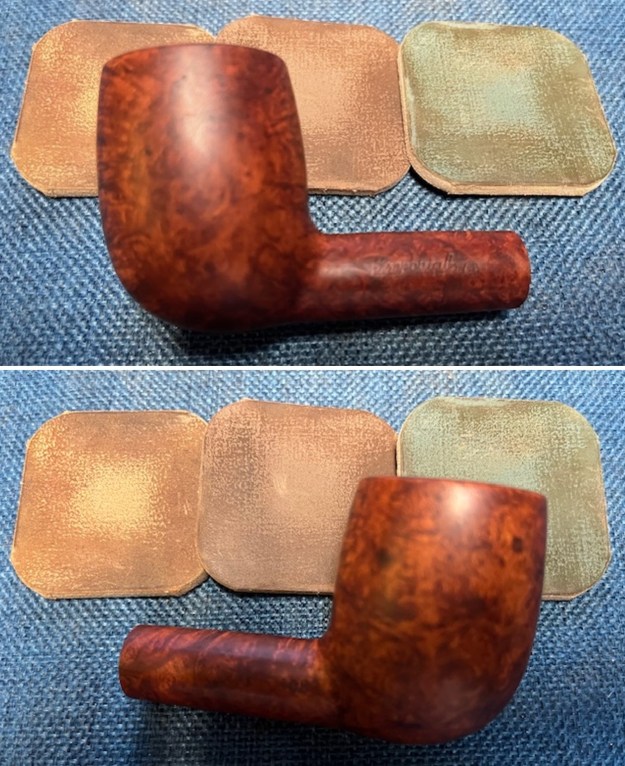
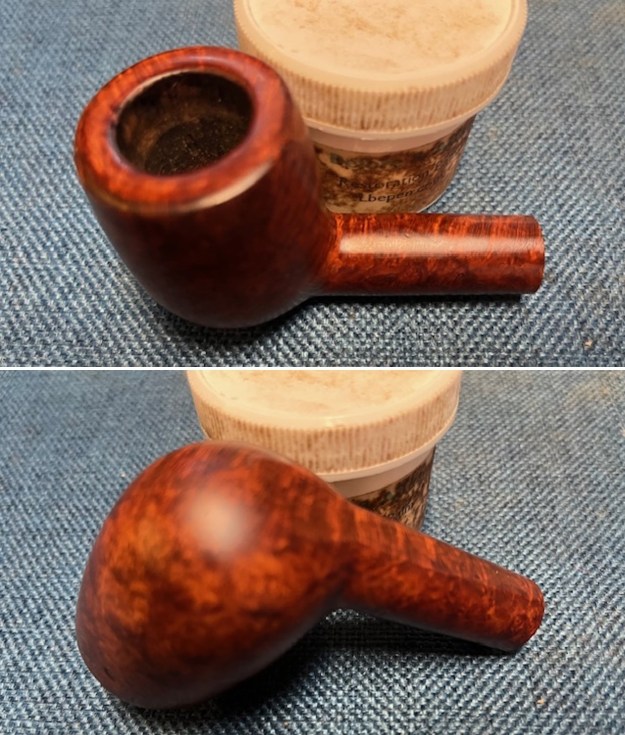
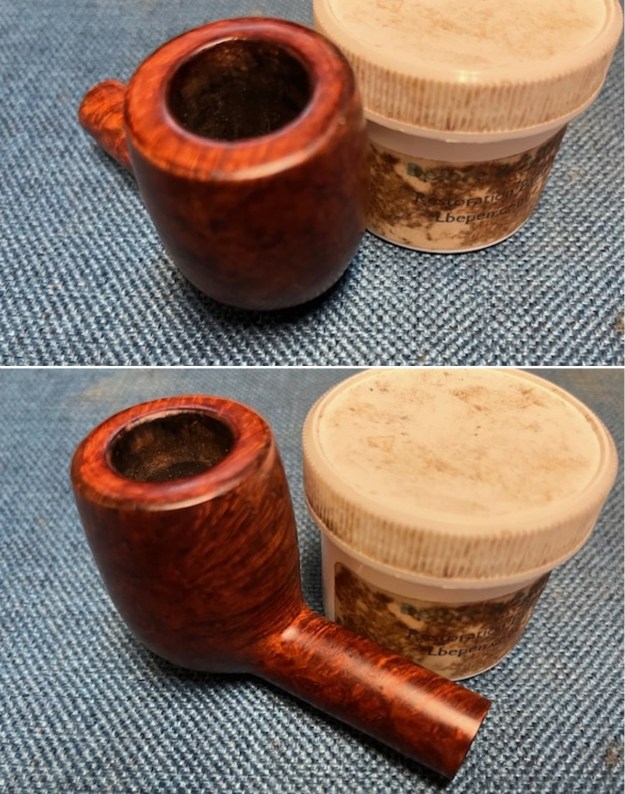
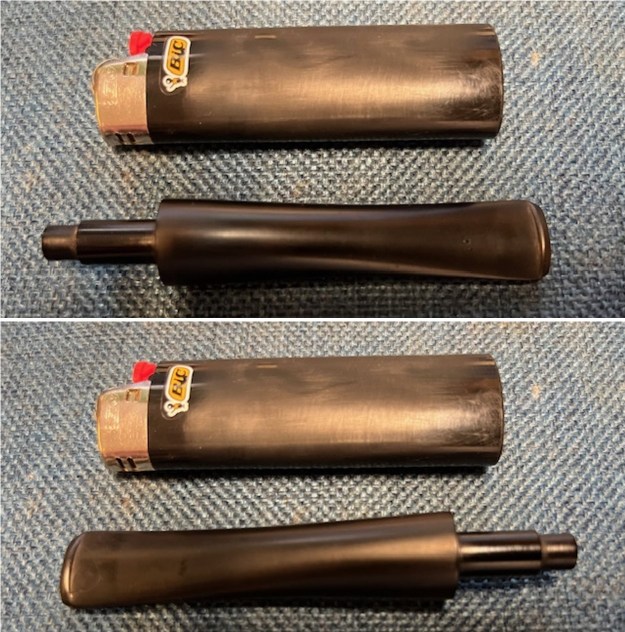
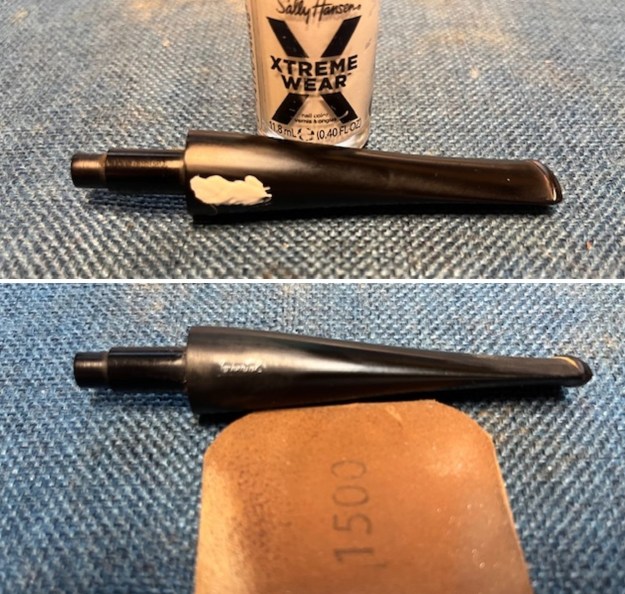
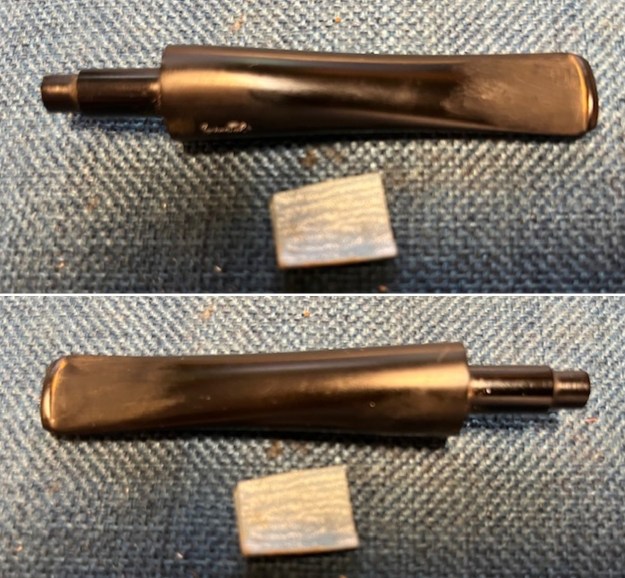
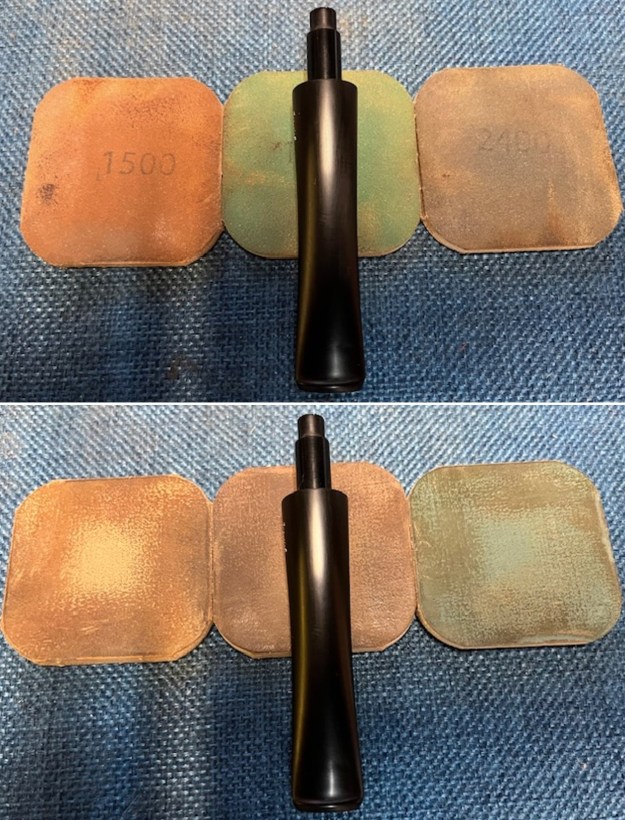
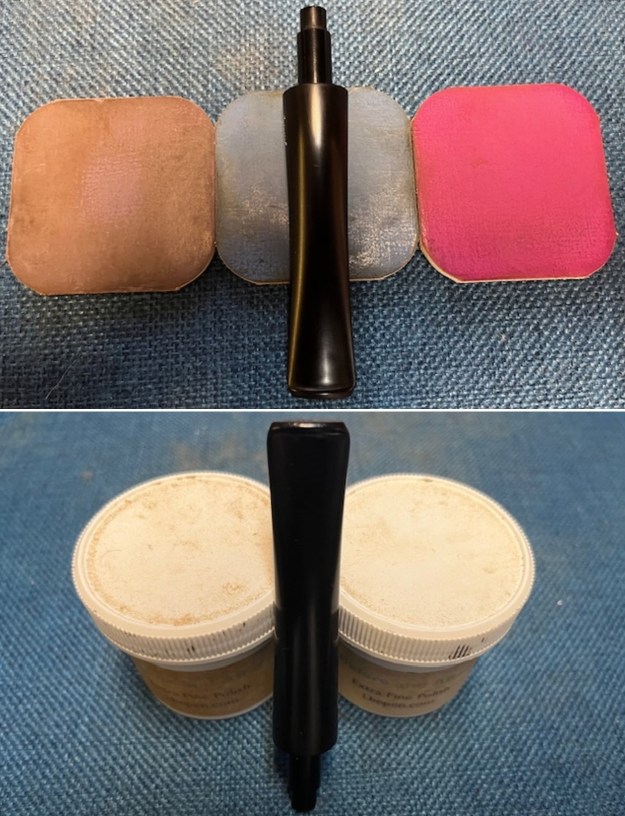
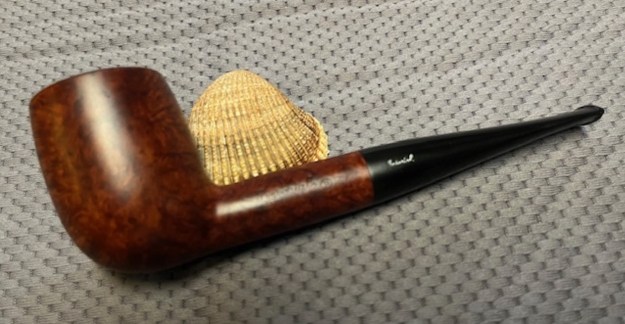
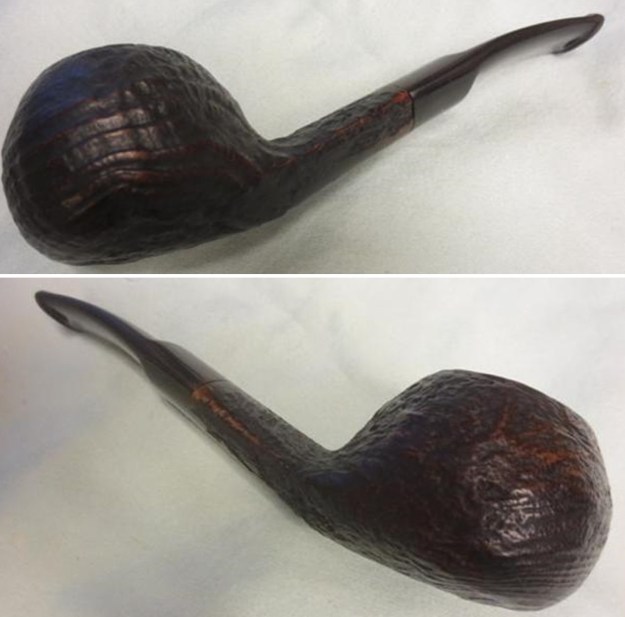
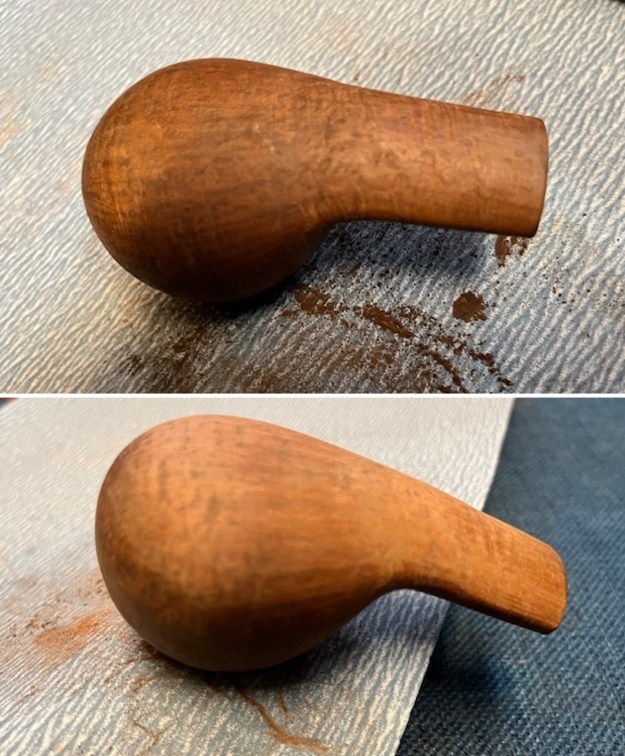
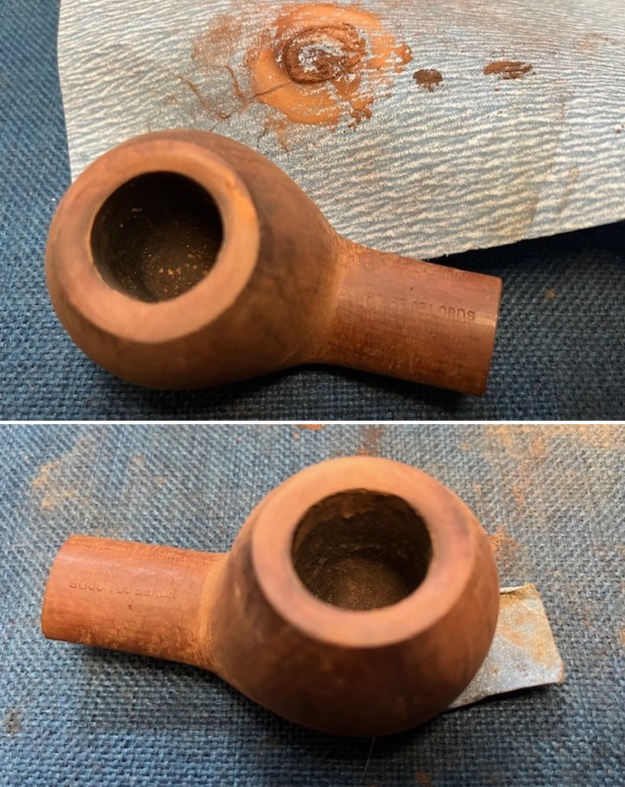
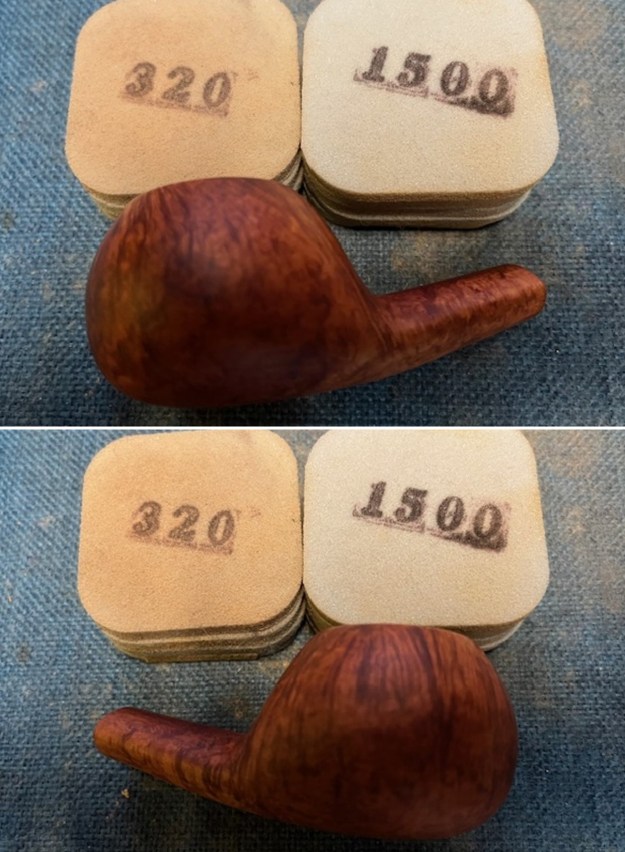
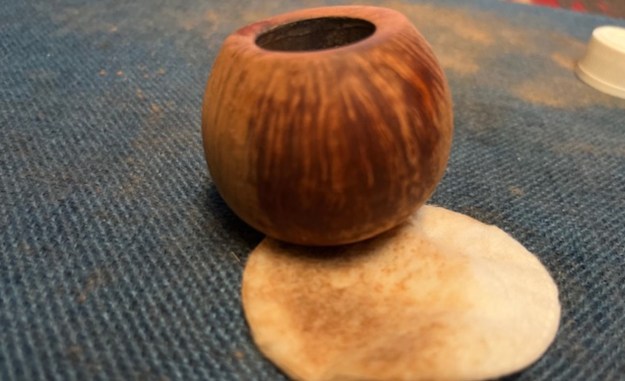
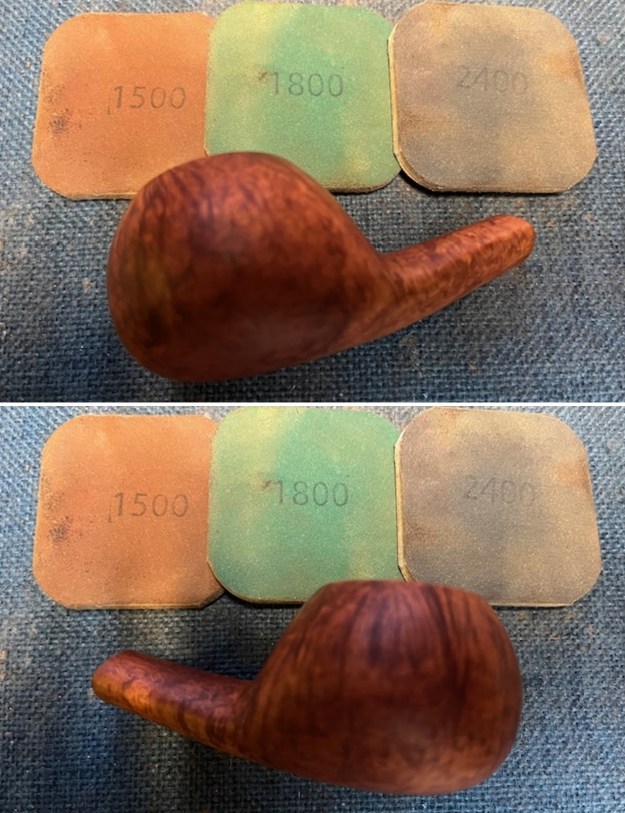
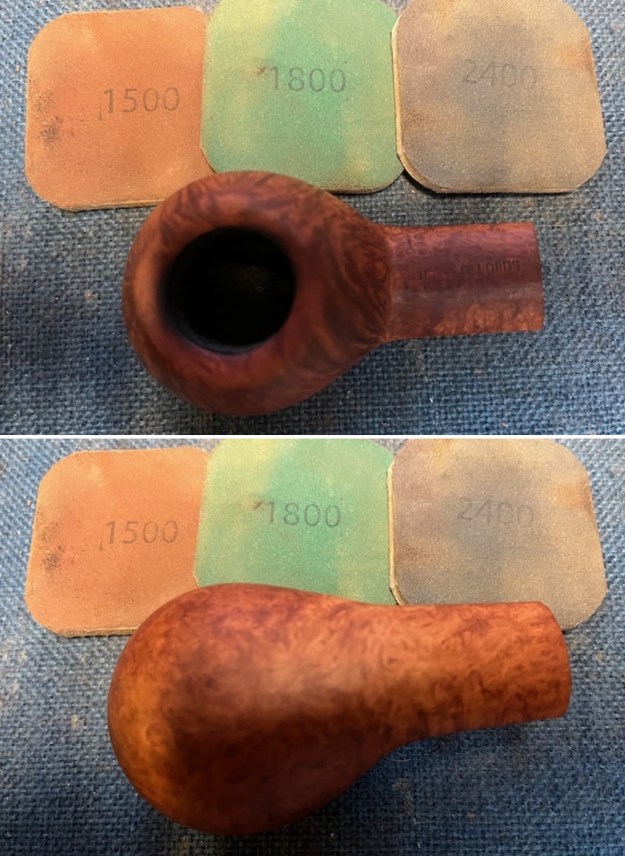
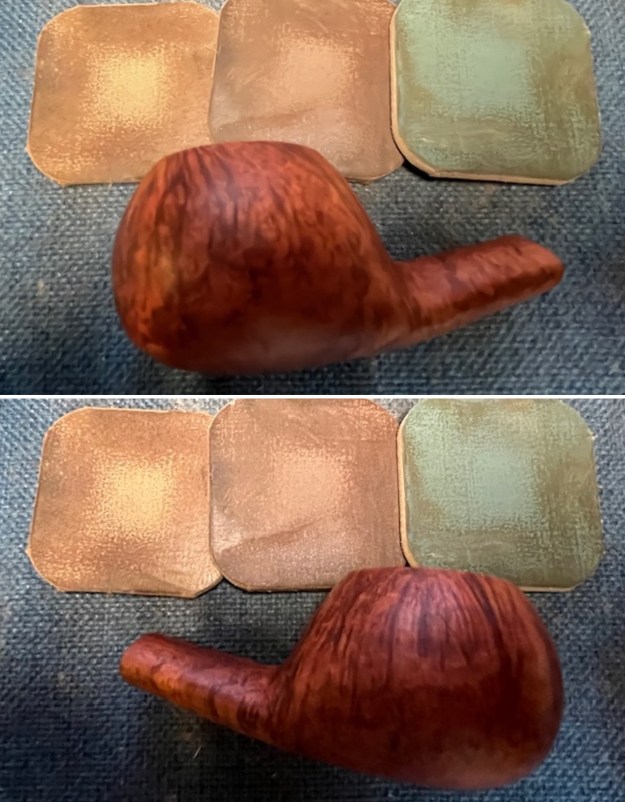
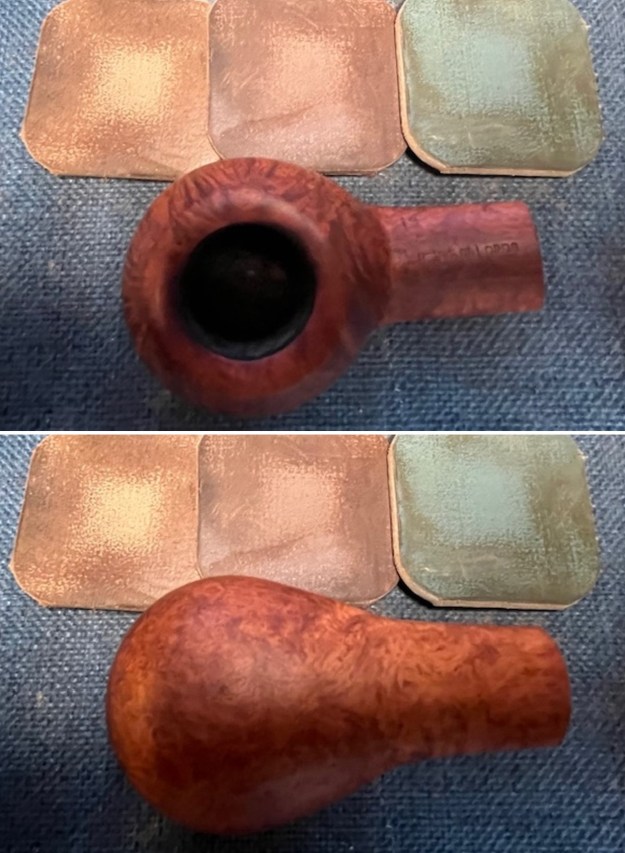
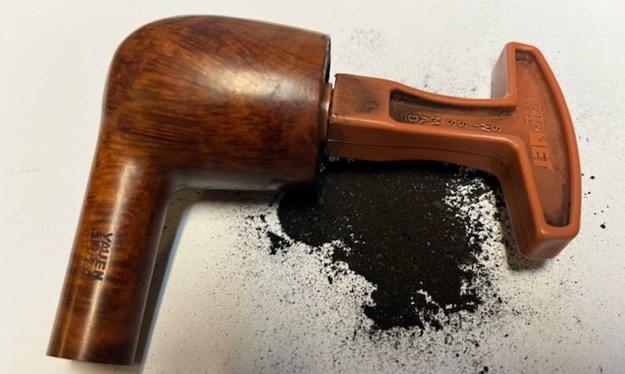
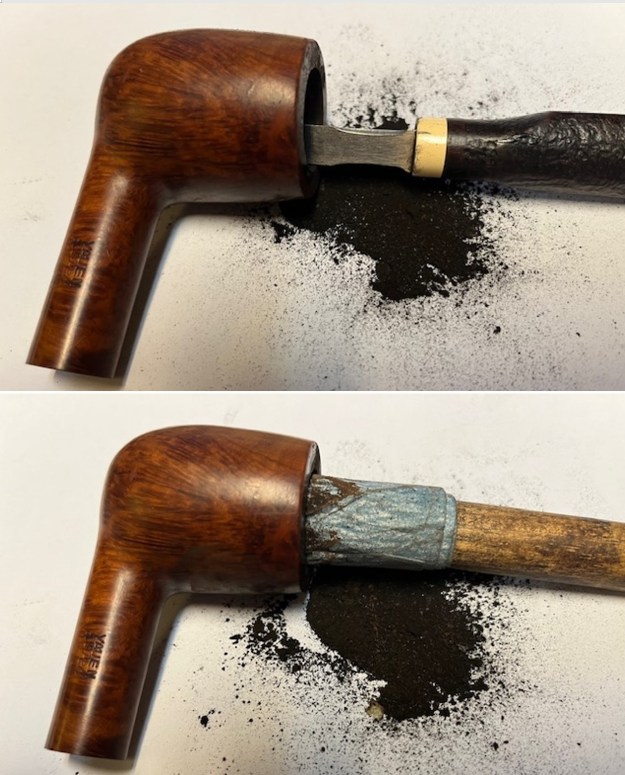
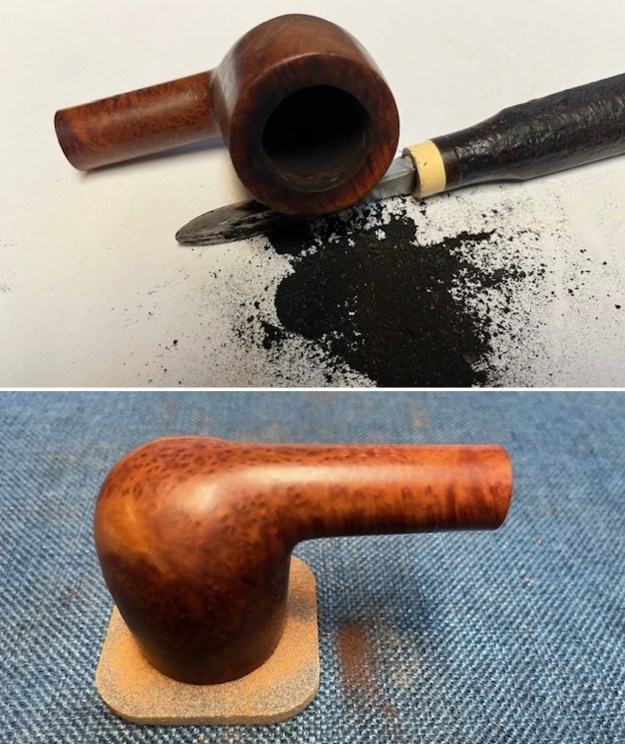
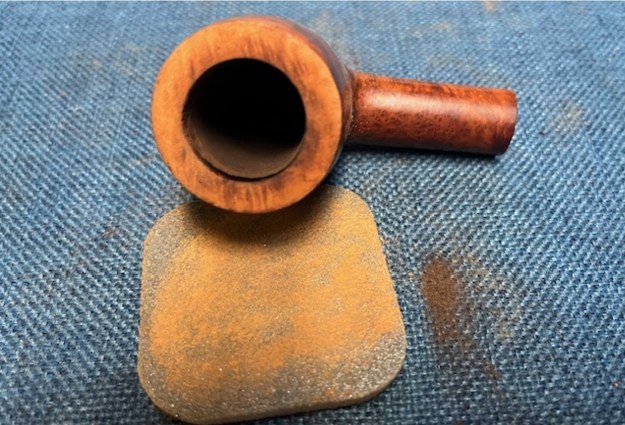
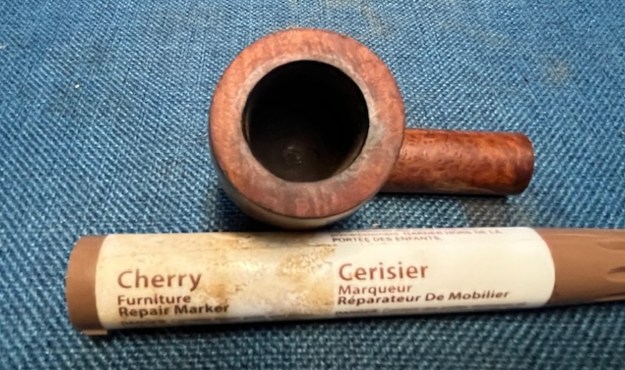
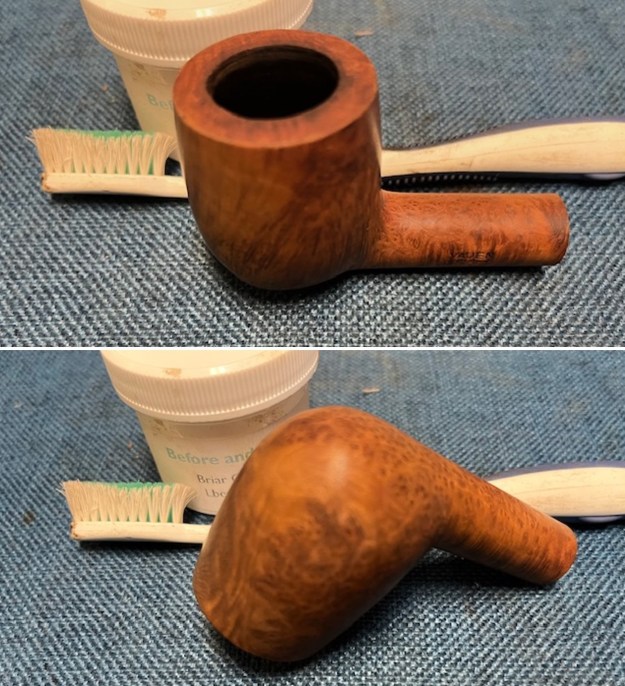
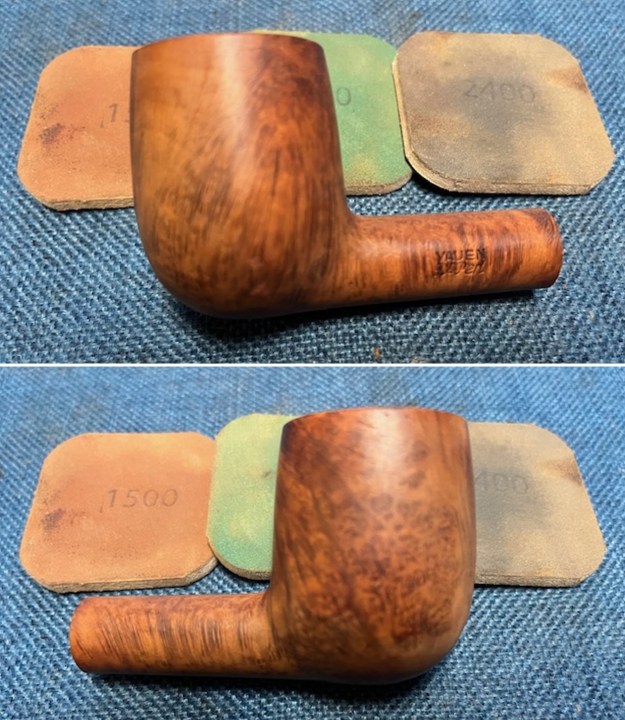
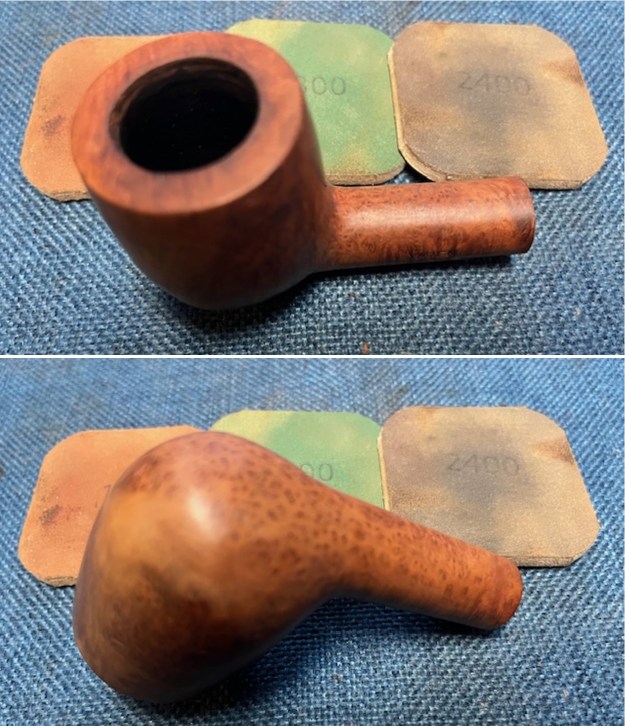
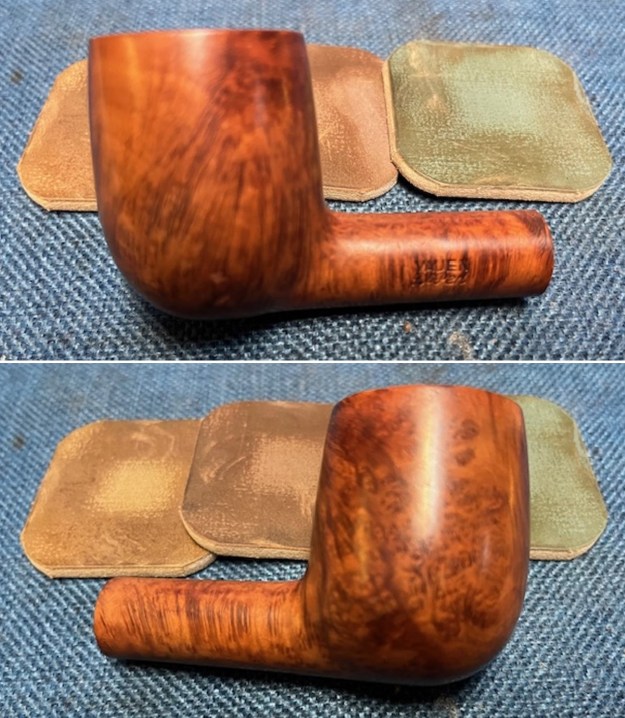
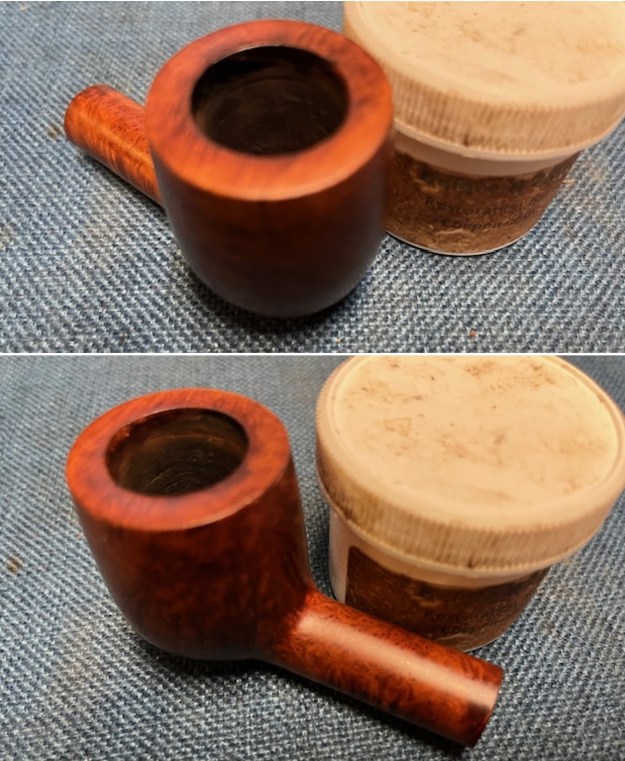
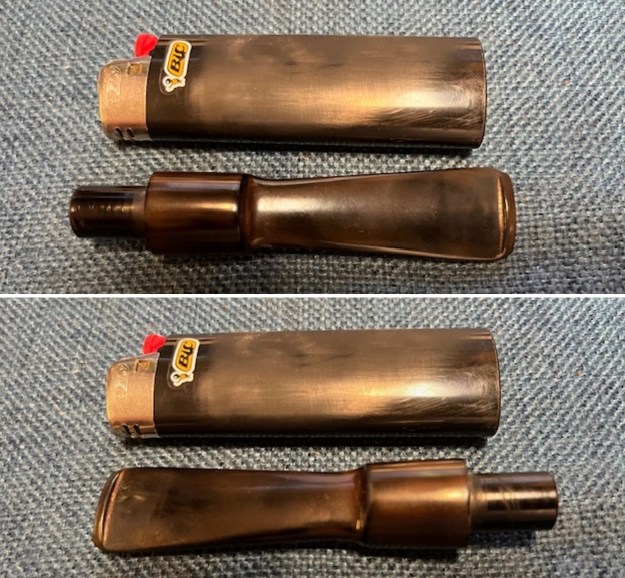
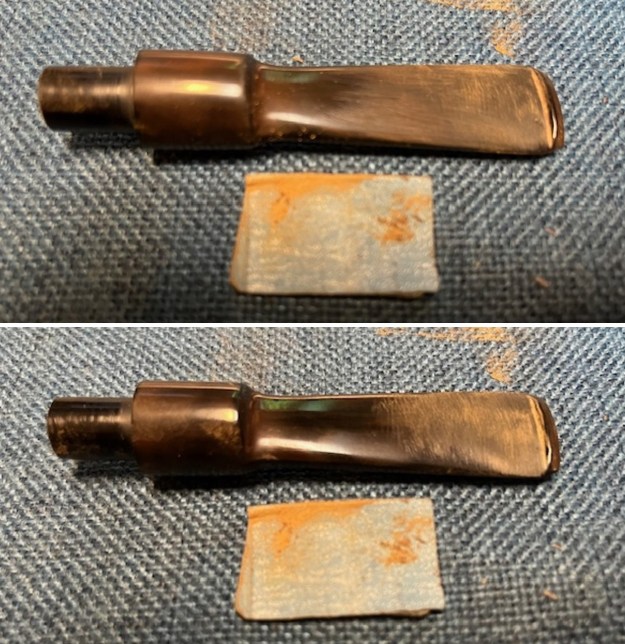
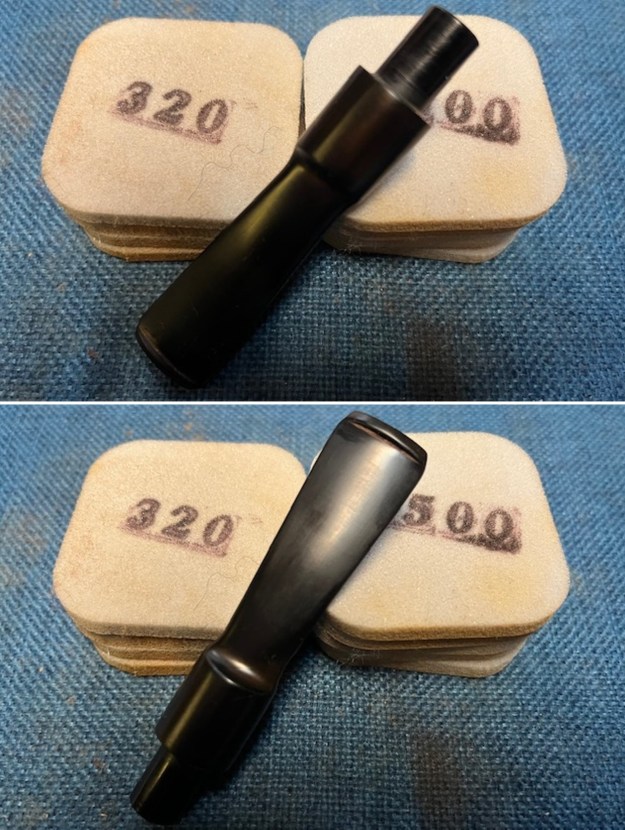
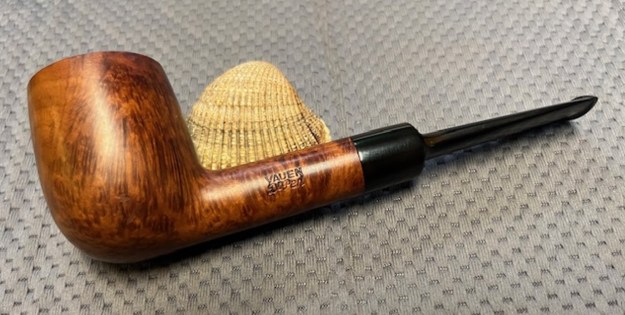
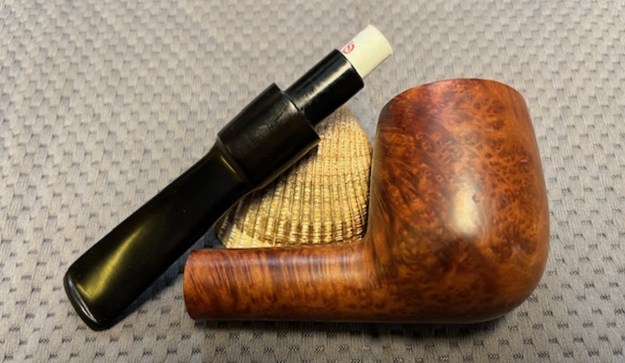
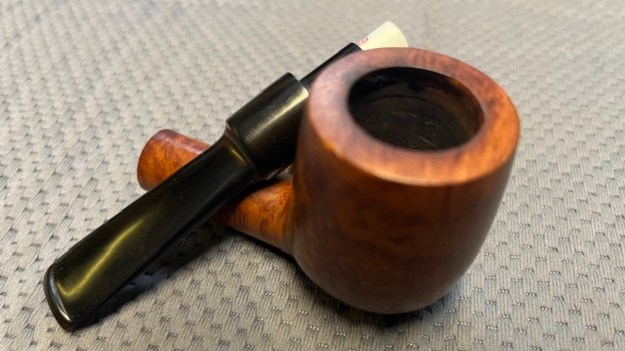
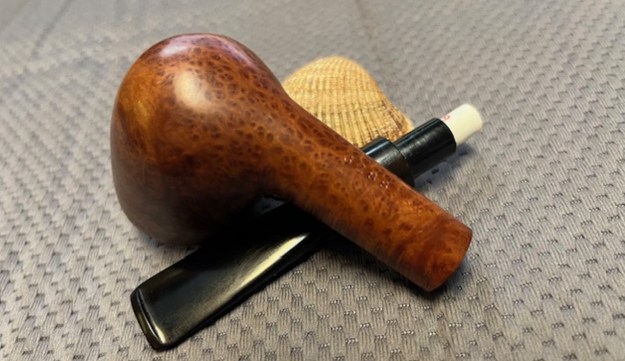
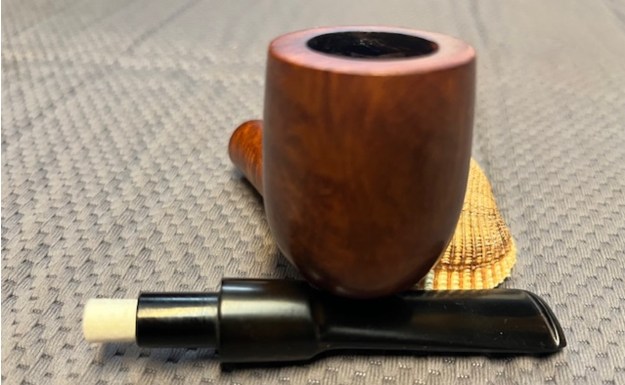
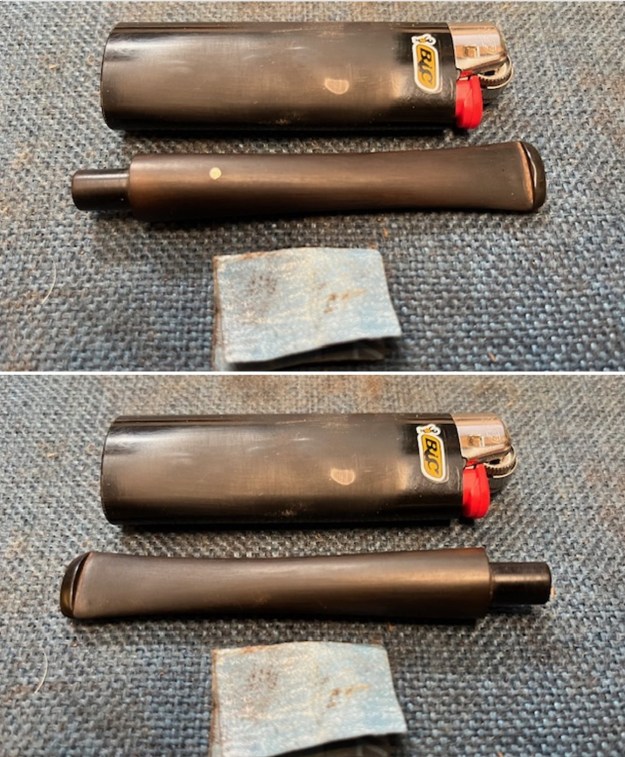
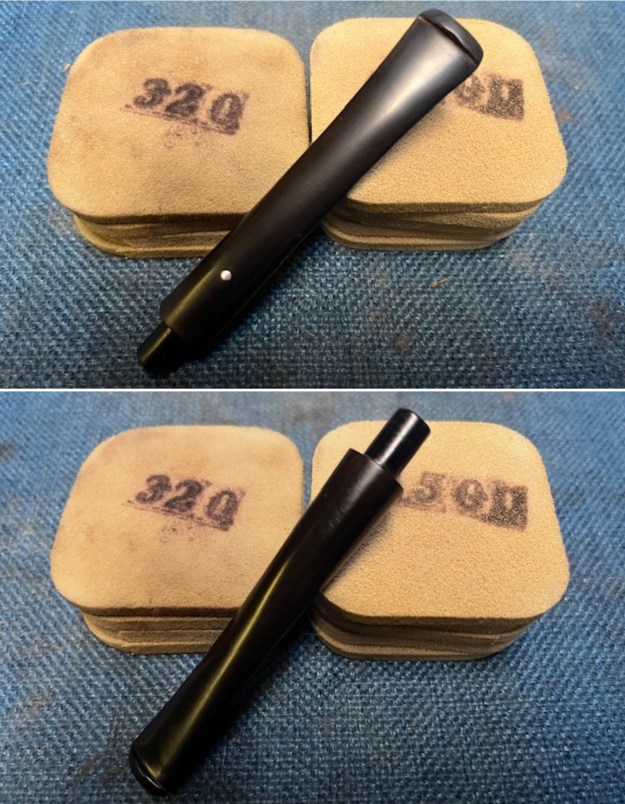
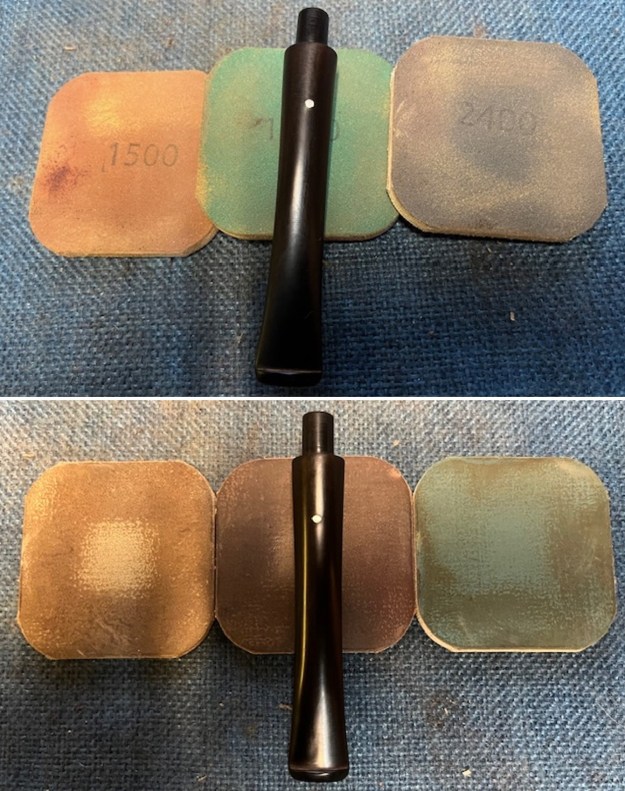
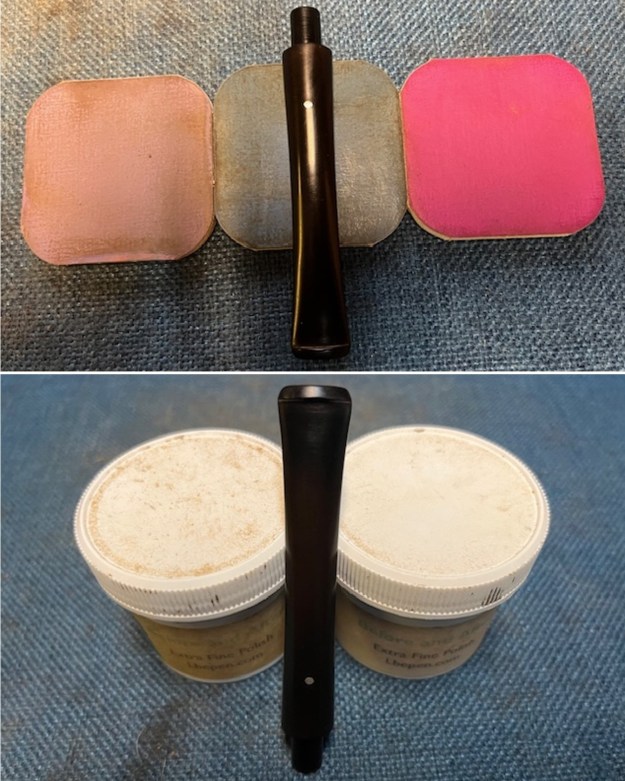
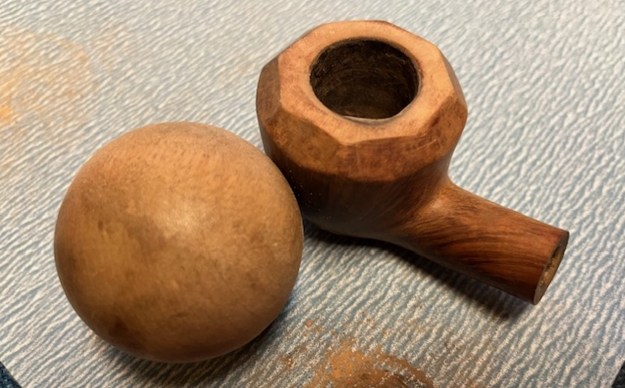
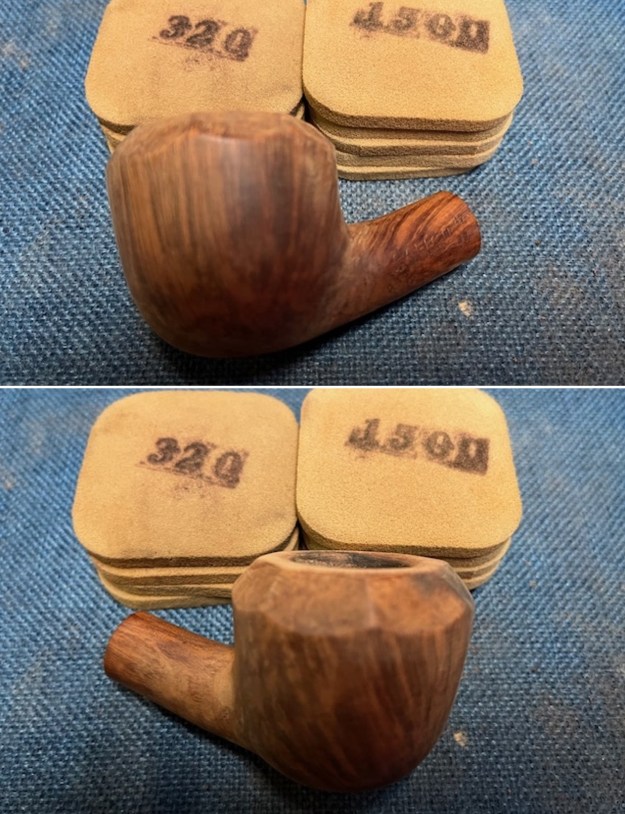
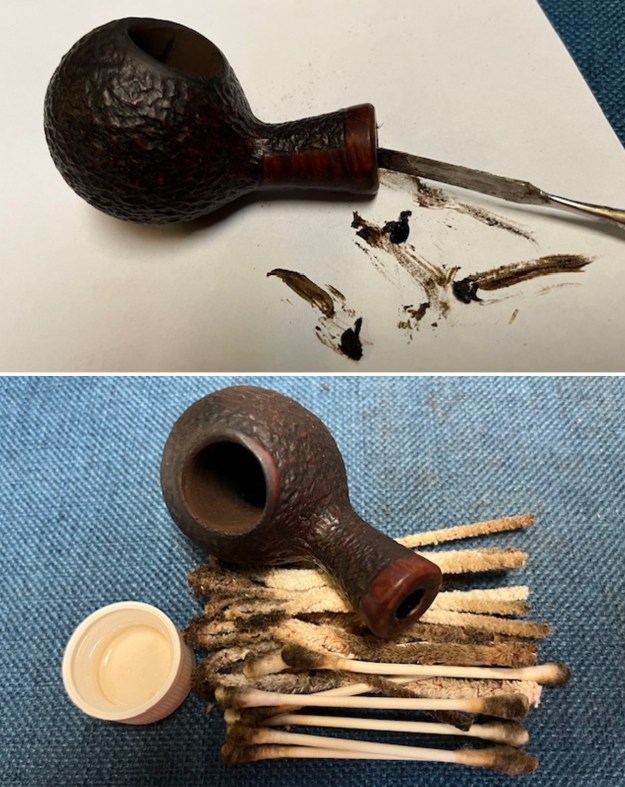
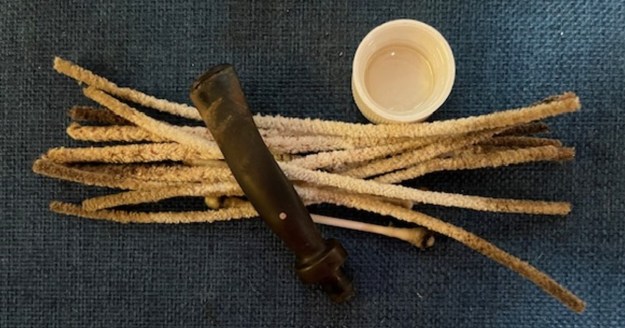
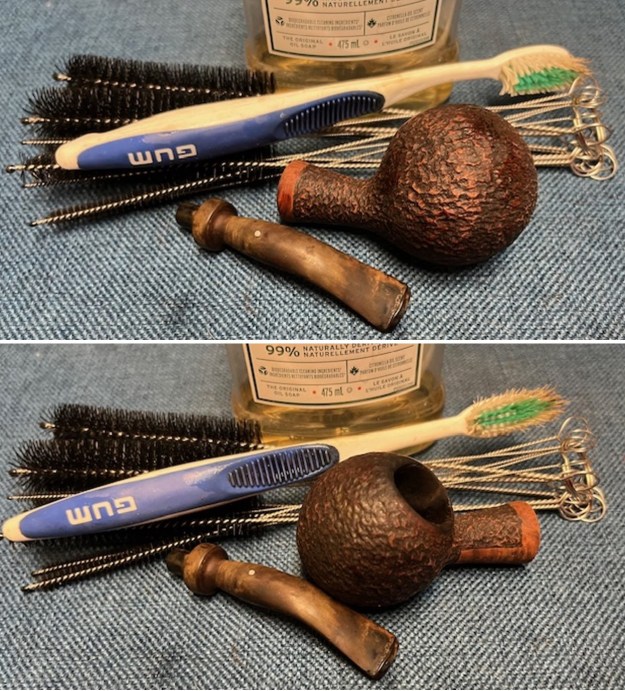
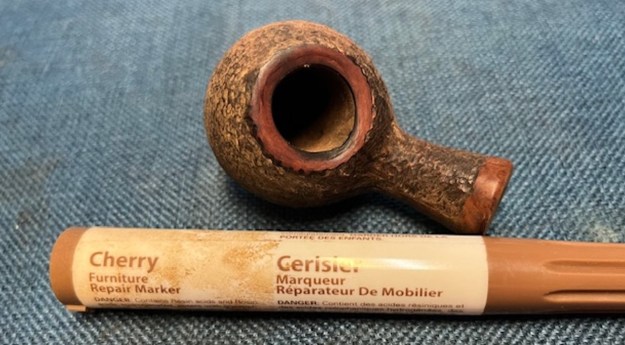
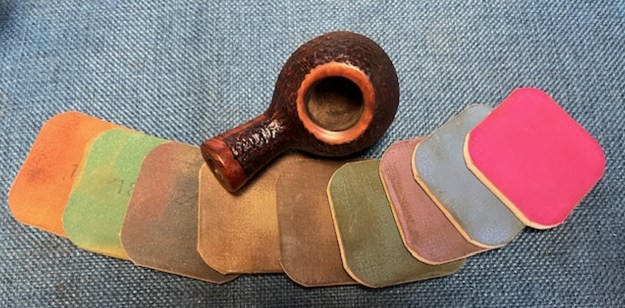
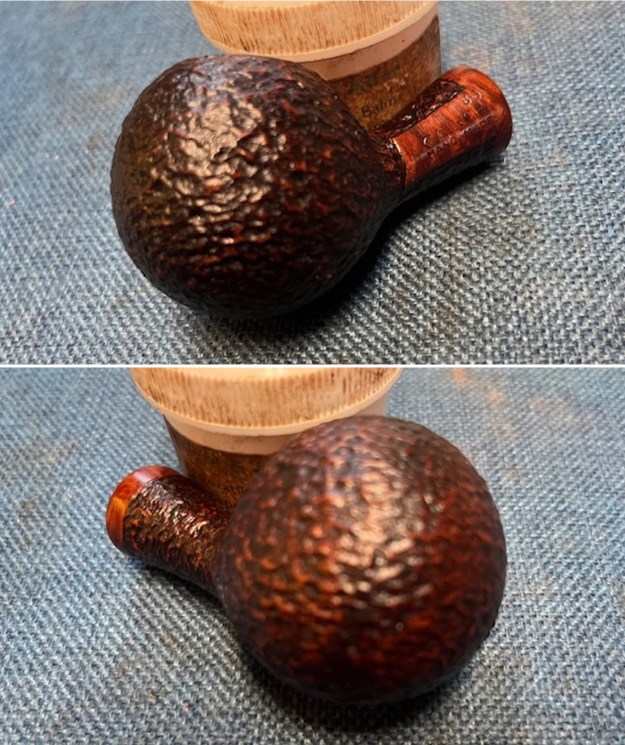
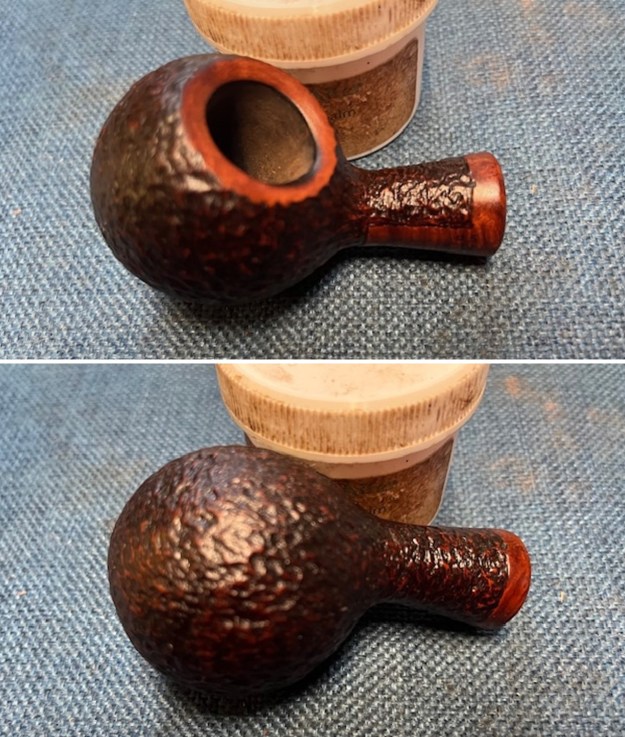
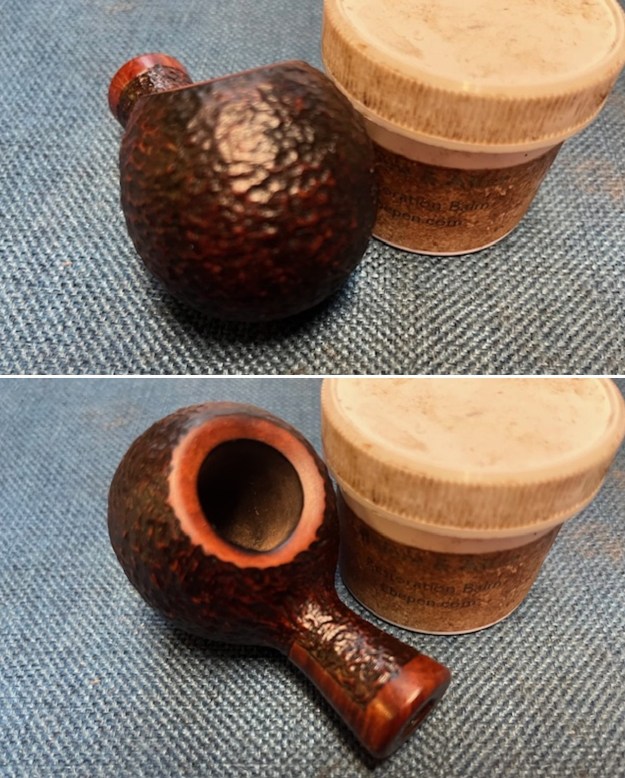
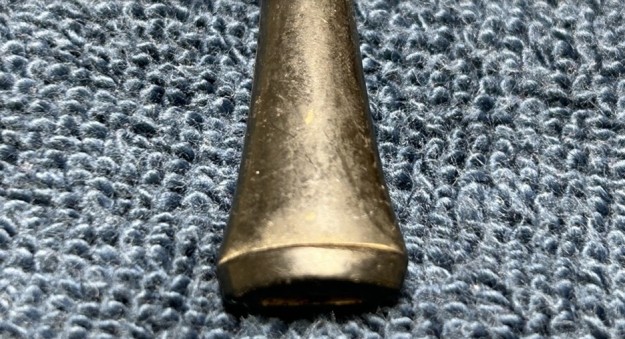
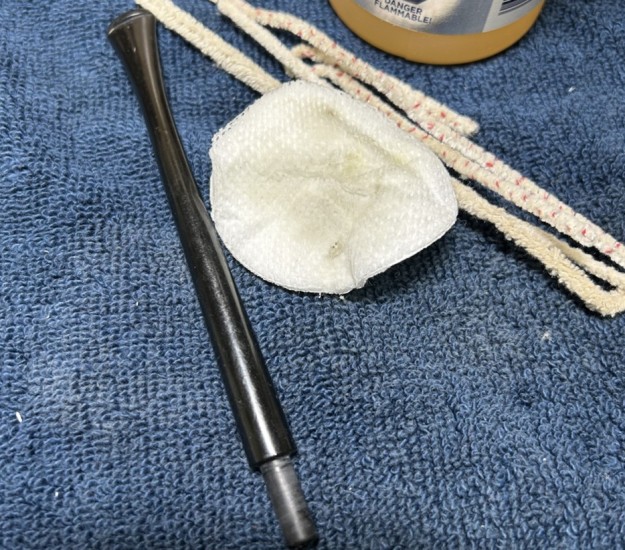
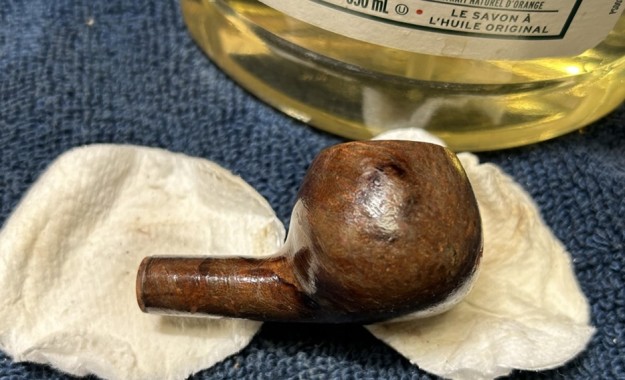
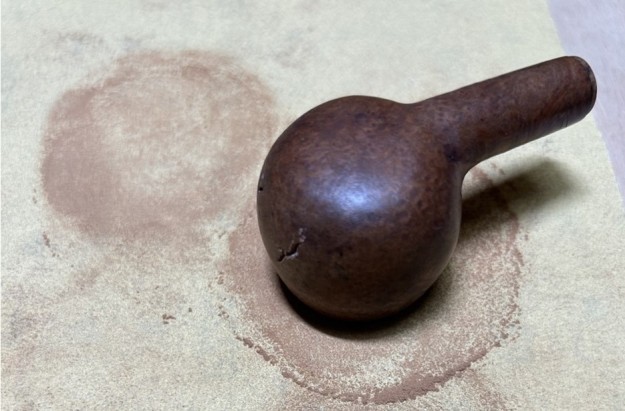
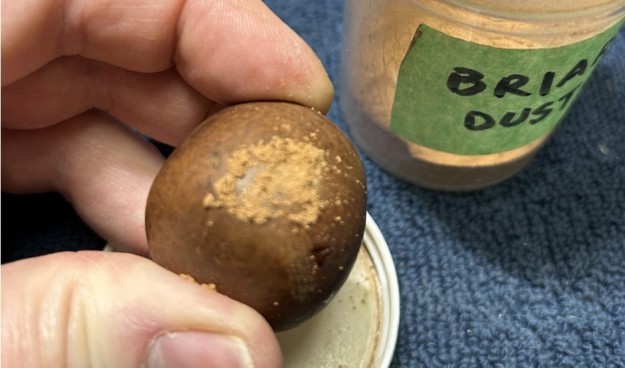
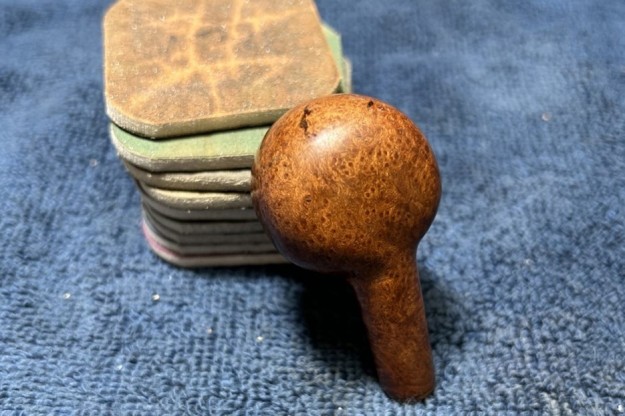
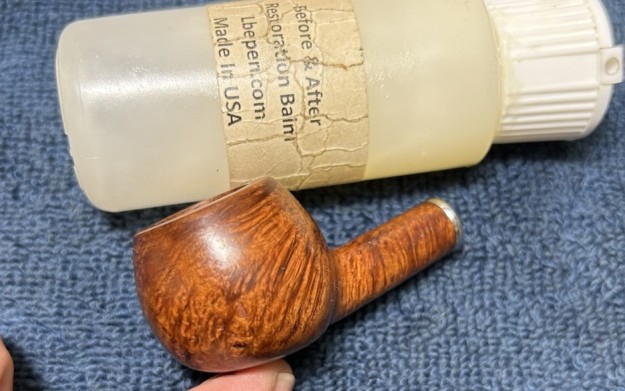
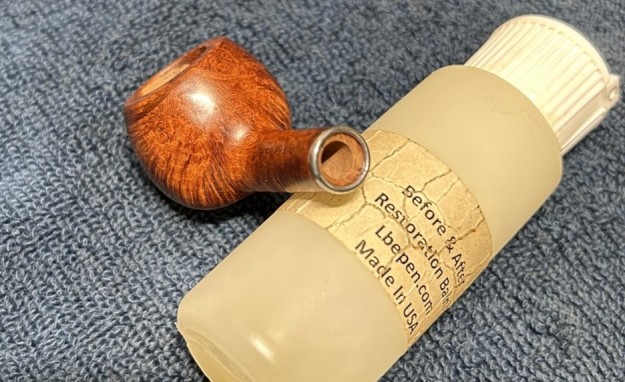
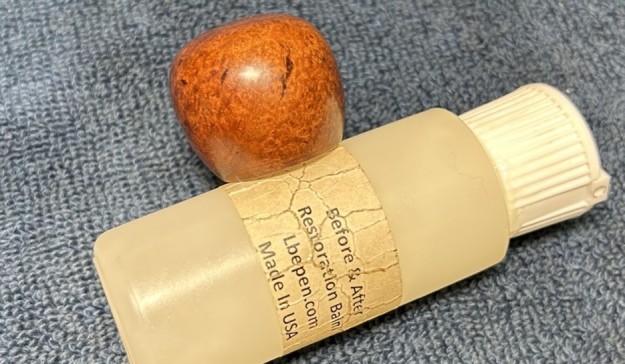
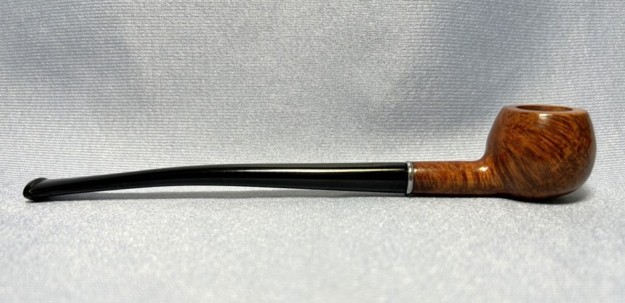
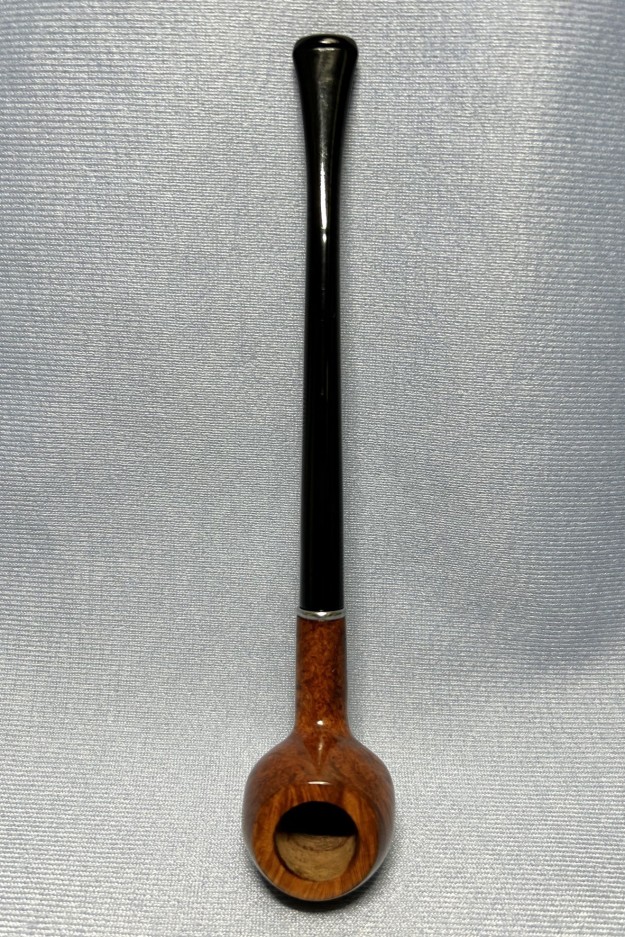
I have always liked the GBD 9438 shaped pipe and this one was one that I picked up many years ago when I first started working on pipes. I found it at an antique shop. It was in the early days when I picked up most every pipe I found. I believe that like others I found in the early days this pipe cost me about $6CDN. Just remembering that reminds me how much things have changed over the years. It became a favourite shape of mine and over the years I have purchased many more 9438 pipes made by GBD for their main and their seconds lines such as Irwin and Dr. Plumb. I have added them to my collection. Here is a link to a blog I did on my collection back in 2013 (https://rebornpipes.com/2013/12/12/my-gbd-9438-saddle-stems-and-tapered-stem-rhodesians/). I have 12 – some were in rough shape and others not so bad. I have been sorting through my pipe collection and thinning out pipes that I am willing to part with. I have sold many already and others are currently on the store. For the most part these pipes have been early restorations and all needed a bit of work to bring them up to my current standard. I have set aside three 9438 pipes that I decided to rework. This is the second of them. It is stamped on the left side GBD in the oval [over] Gold Label [over] Made in France. On the right side it is stamped with the shape number 9438. While it was very workable and I had actually smoked it quite a bit over the years I knew that original restoration on it was less rigorous than my current standards. So, before I listed it for sale I wanted to work it over again. I took photos of the pipe to give a sense of the beauty, the French take on the 9438 shape and the work that needed to be done. I took photos of the pipe’s bowl and rim top to show the moderate cake in the bowl and some darkening on the bevelled rim top and a nick on the front outer edge of the bowl. I also took photos to capture the condition of the stem. It had some light oxidation and tooth chatter and marks on the top and underside ahead of the button.I took photos of the stamping on each side of the shank. It is readable and clear as noted above. The oval GBD brass rondel is visible on the left side of the saddle stem.I took the stem off the shank and took a photo of the look of the pipe. It an interesting take on a 9438 shape. Unique and beautiful.I decided to address the damage to the rim top and inner edge of the bowl. To deal with the burned inner edge of the rim and the rim top damage I worked on the edge with a piece of 220 grit sandpaper. I used a piece of 220 grit sandpaper on a wooden ball to further clean up the bevel. It took a bit of work to smooth out the damage and the darkening on the bevelled inner edge of the bowl. It looked much better at this point. I reamed the bowl with a Savinelli Fitsall Pipe Knife to take out the cake. I removed ti back to bare briar. I sanded the bowl walls with a piece of 220 grit sandpaper wrapped around a dowel to smooth out the walls. It looked very good. No burn damage or checking on the bowl walls.I scrubbed out the shank and the stem with pipe cleaners, cotton swabs and alcohol to remove the tars and oils. The shank was dirty though the stem airway was not too bad. It cleaned up well.I sanded the bowl and rim top to start smoothing out the rim top and start the polishing of the bowl. I also worked on the burn mark on the lower right of the bowl/shank union. I used 320-3500 grit sanding pads. I wiped the bowl down with a damp cloth after each pad. It really began to take on a shine. I polished the briar with micromesh sanding pads – dry sanding with 1500-12000 grit pads. I wiped it down after each sanding pad with a damp cloth to remove the sanding debris on the surface. I rubbed the bowl down with Before & After Restoration Balm. I worked it into the surface of the briar with my fingertips to clean, enliven and protect it. I let the balm sit for a little while and then buffed with a cotton cloth and shoe brush to raise the shine. I set the bowl aside and turned to address the stem. I “painted” the stem with the flame of a Bic lighter to lift the remnants of tooth marks that remained in the stem from the last time I worked on it. It worked very well and the dents lifted so that sanding the marks that remained removed all the remnants.I sanded the stem surface with 320-3500 grit sanding pads to remove all the marks remaining from the tooth damage. I wiped the stem down after each pad with a cloth impregnated with Obsidian Oil. It looked much better.It was in good condition other than the light tooth chatter so I polished the vulcanite with micromesh sanding pads – 1500-12000 grit pads. I wiped it down with Obsidian Oil after each sanding pad. I used Before & After Pipe Polish – both Fine and Extra Fine to further polish the stem. I gave it a final coat of Obsidian Oil and set it aside to dry. This GBD Gold Label Made in France 9438 Bent Rhodesian cleaned up much better this second time around and looks very good. The Before & After Restoration Balm brought the colours and grain out in the smooth finish on the pipe. It works well with the polished vulcanite saddle stem. I put the stem back on the bowl and carefully buffed the pipe with Blue Diamond on the buffing wheel using a light touch on the briar. I gave the bowl and the stem multiple coats of carnauba wax on the buffing wheel. I followed that by buffing the entire pipe with a clean buffing pad. I hand buffed the pipe with a microfiber cloth to deepen the shine. The finished GBD Gold Label 9438 Rhodesian fits nicely in the hand and I think it feel greats as it heats up with a good tobacco. Give the finished pipe a look in the photos below. The dimensions of the pipe are Length: 5 inches, Height: 1 ½ inches, Outside diameter of the bowl: 1 ¾ inches, Chamber diameter: 1 inch. The weight of the pipe is 2.08 ounces/59 grams. It is time to move it on to someone who will give it proper attention. I will be adding this one to the French Pipemakers Section of the rebornpipes store shortly. If you want to add it to your collection let me know. Thanks for reading this blog and my reflections on the pipe while I worked on it.

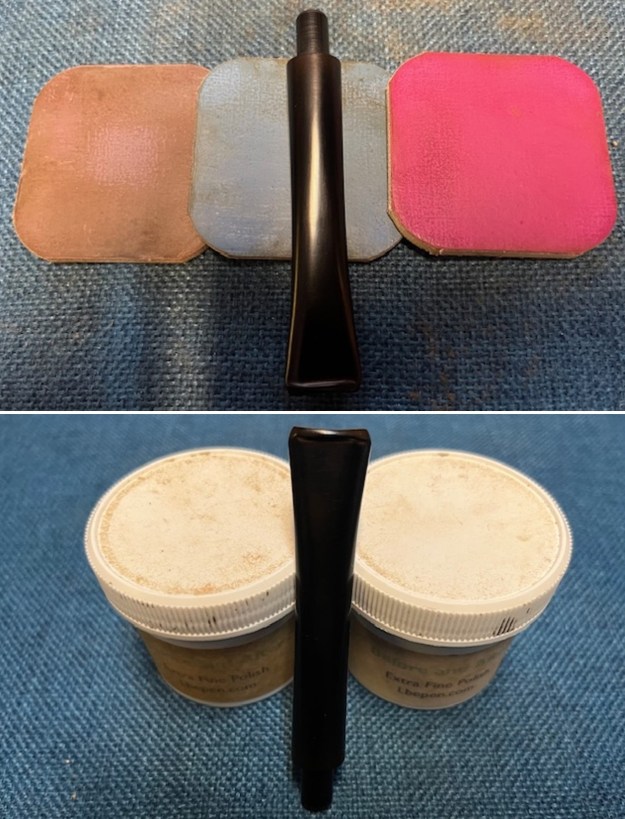
A Kennett No.1 Billiard Another Brilliant Attempt at a Cool Dry Smoke


By Steve Laug

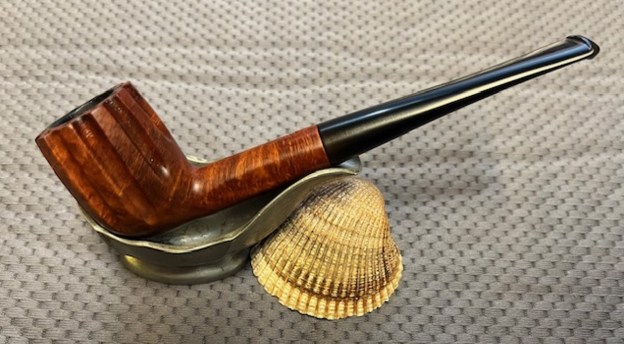
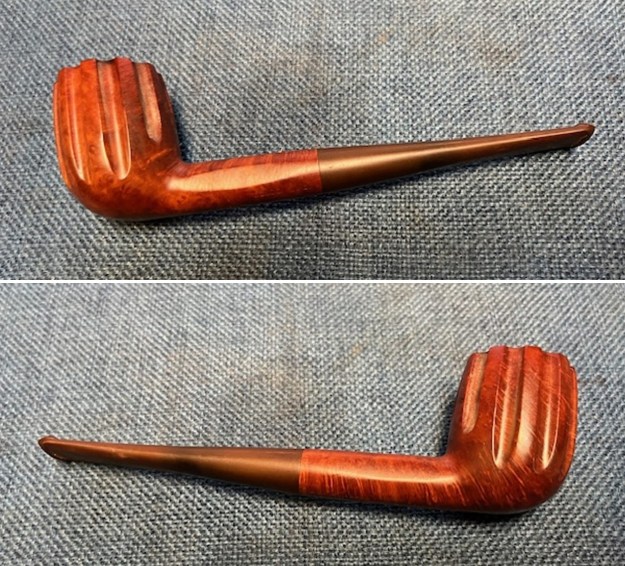
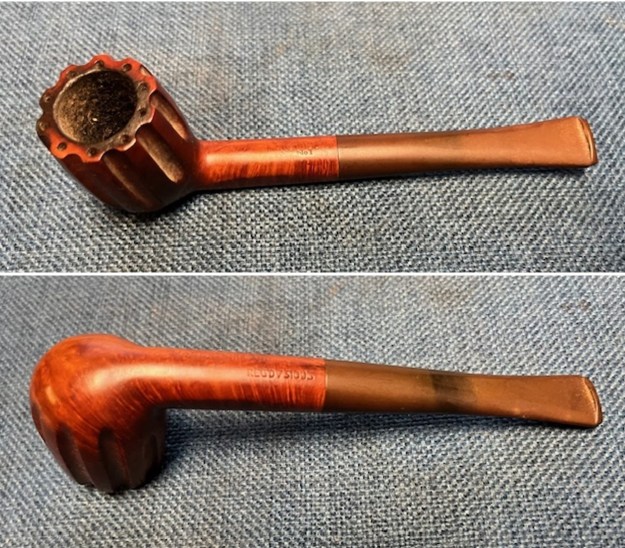
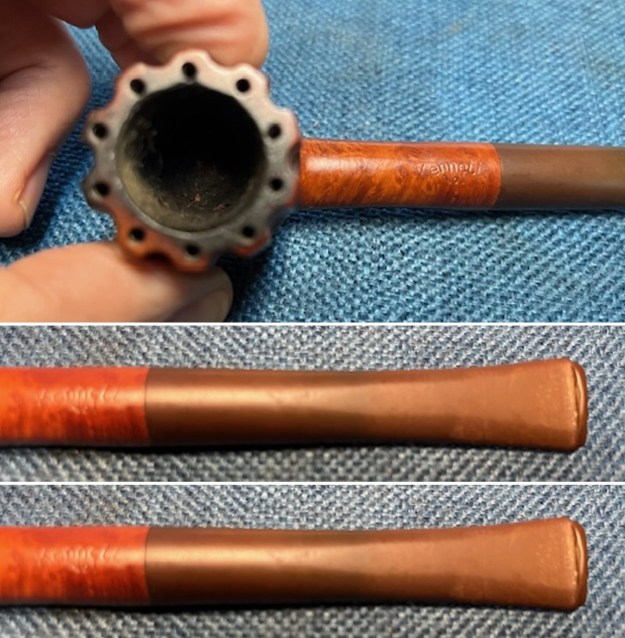
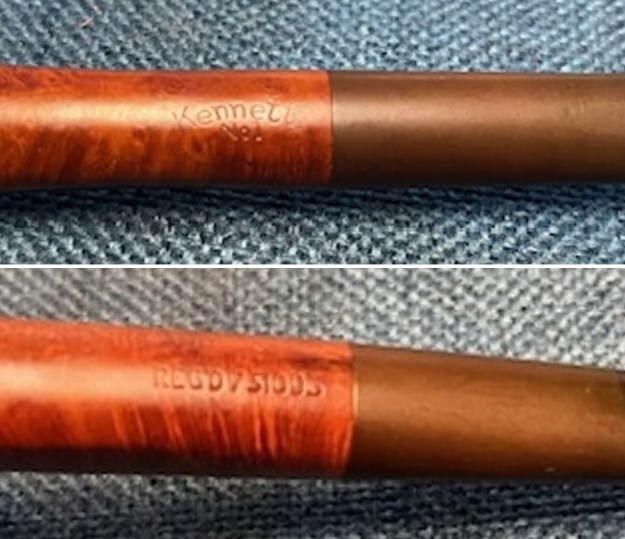
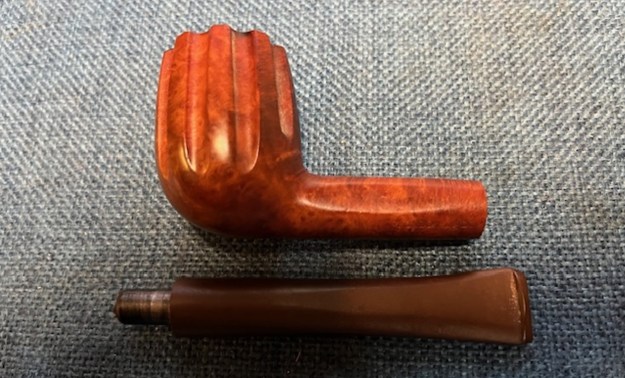
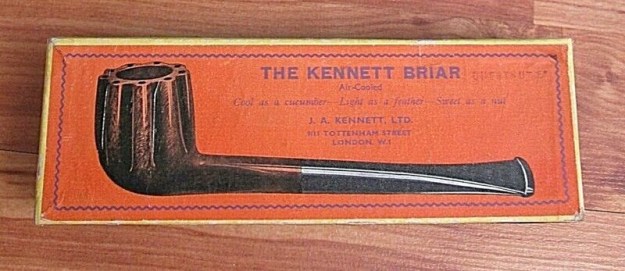
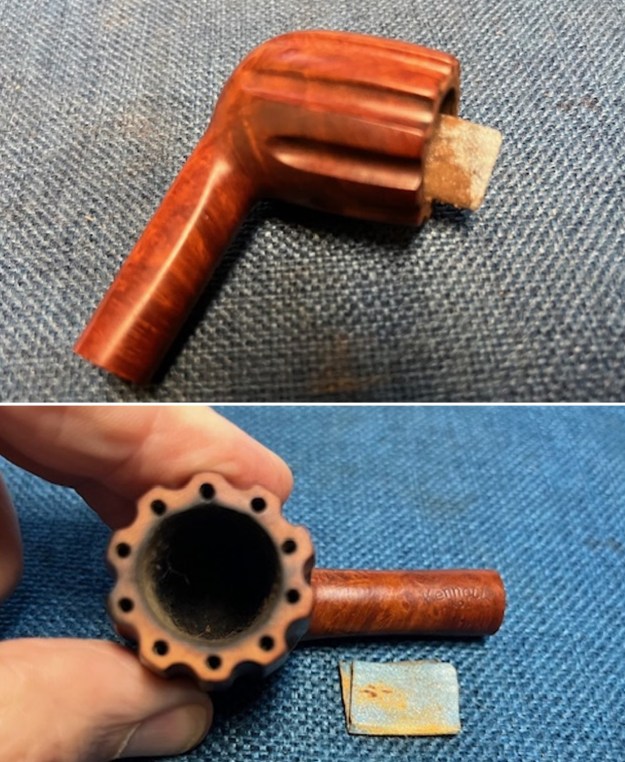
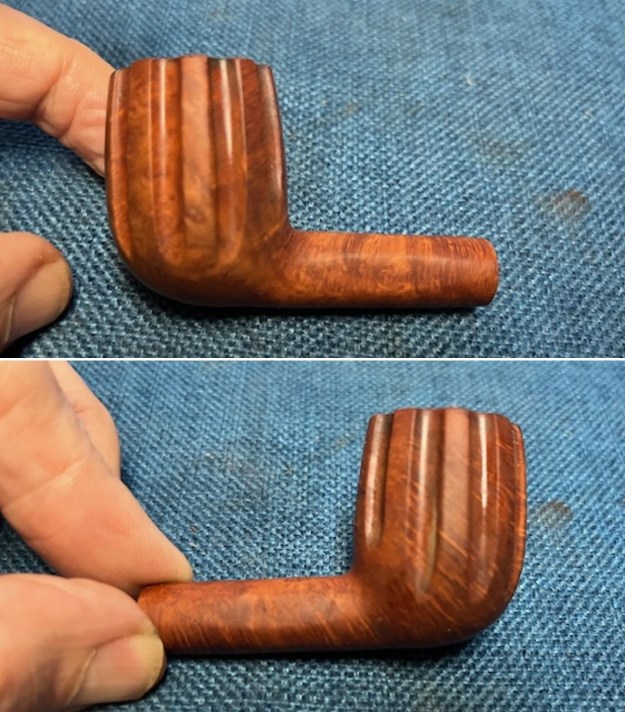
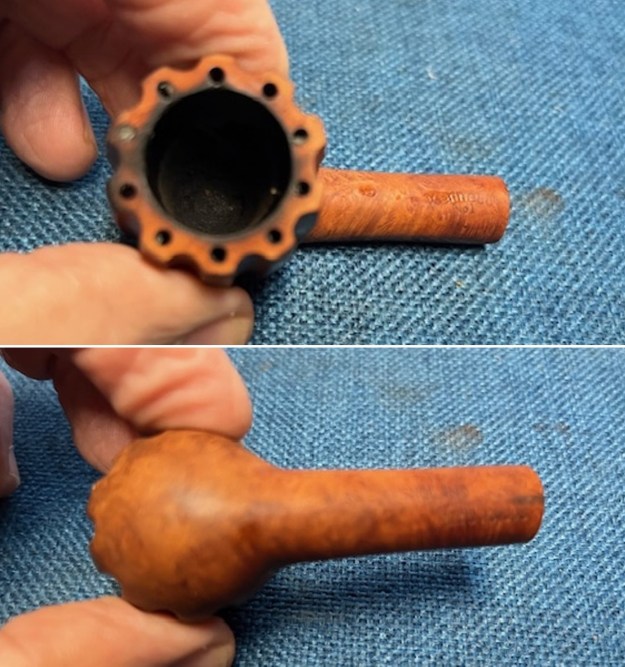
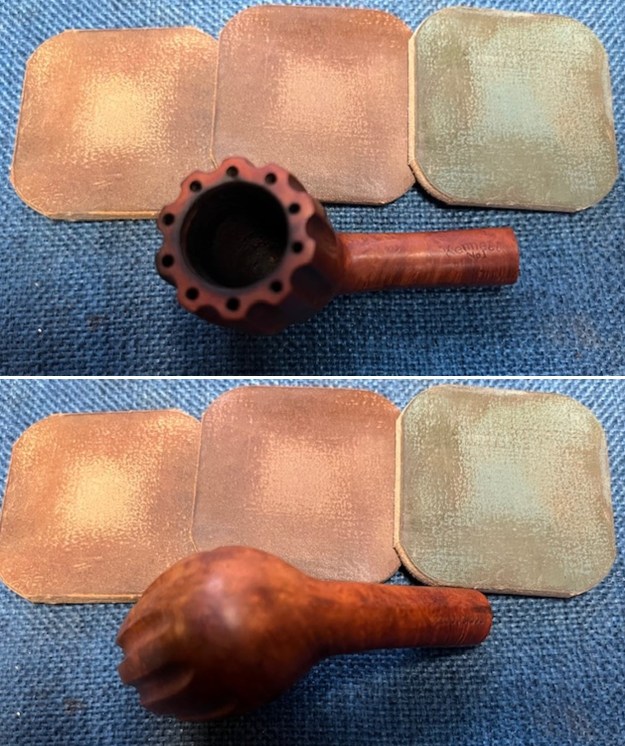
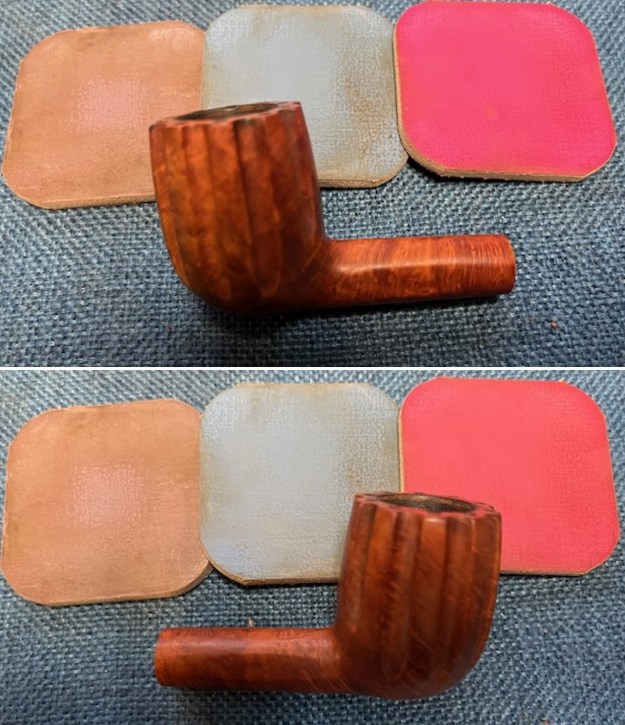
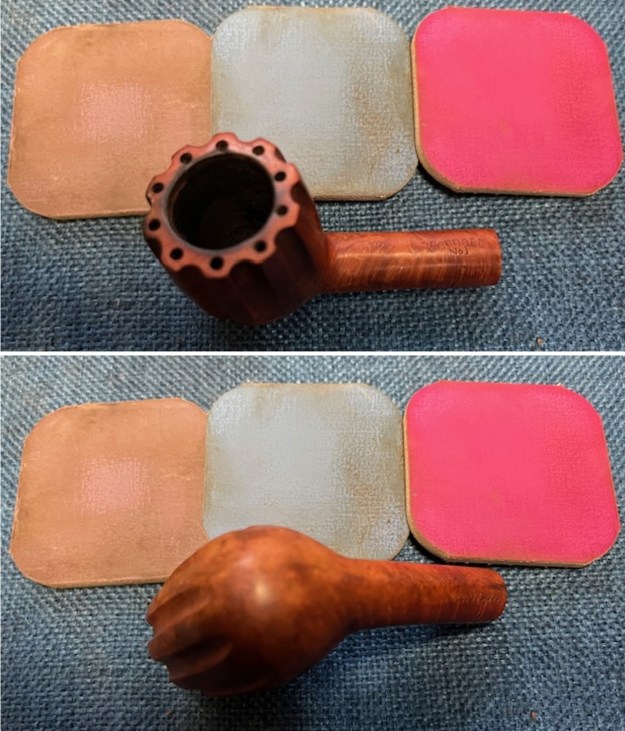
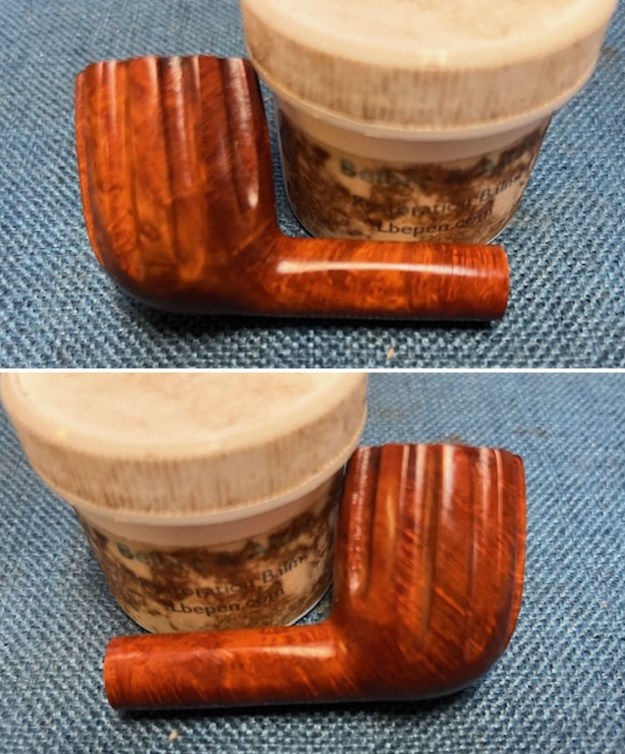
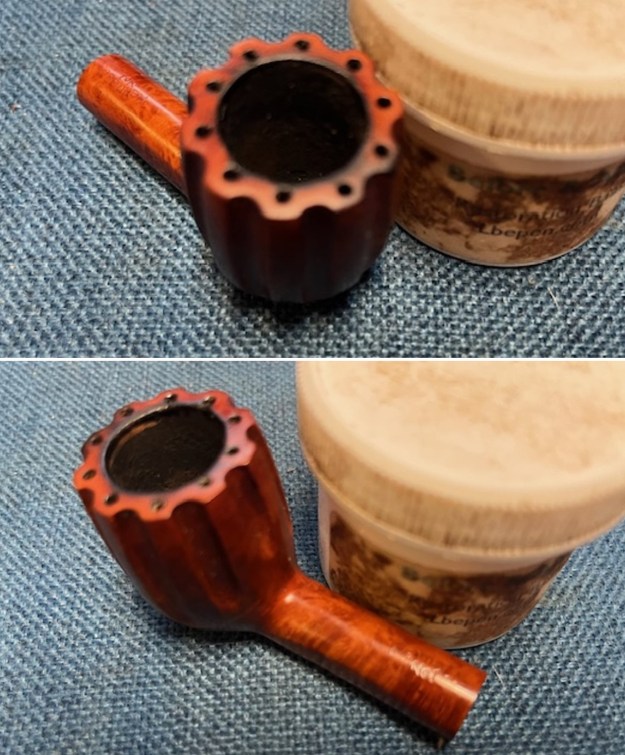
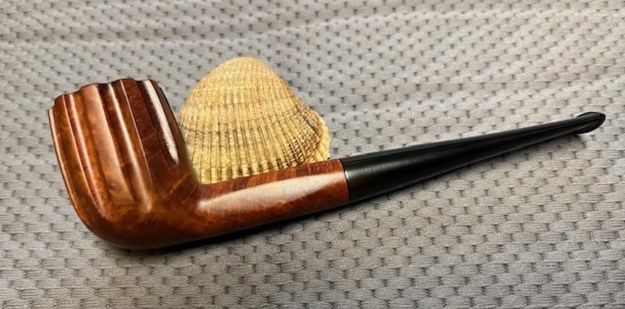
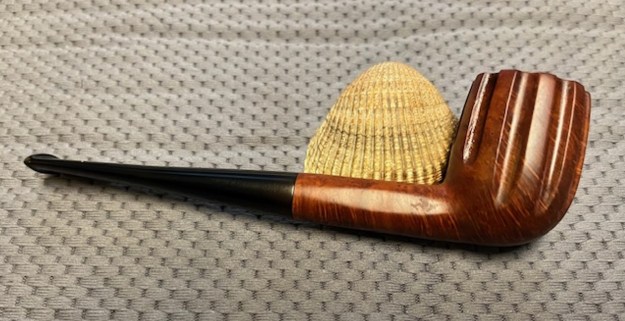
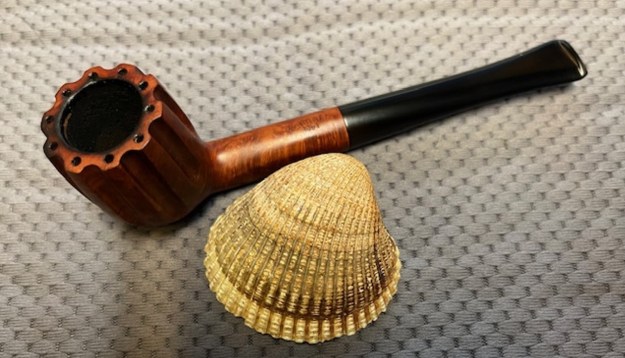
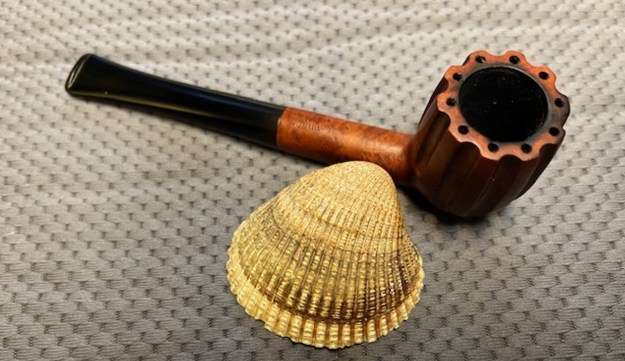
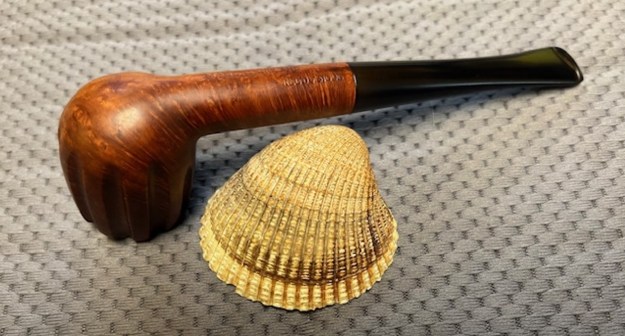
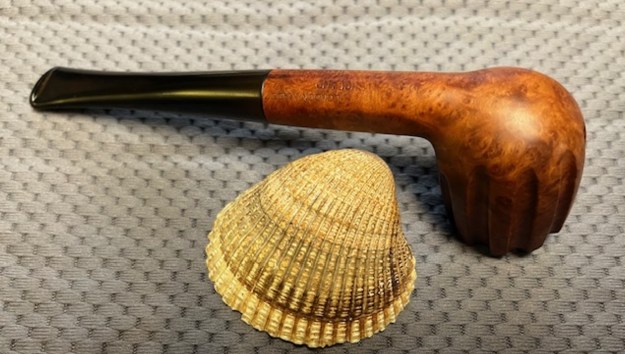
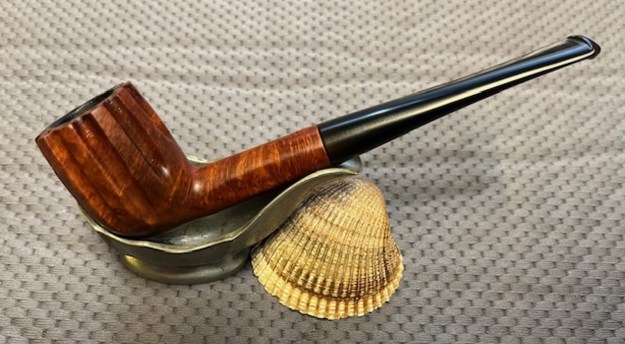
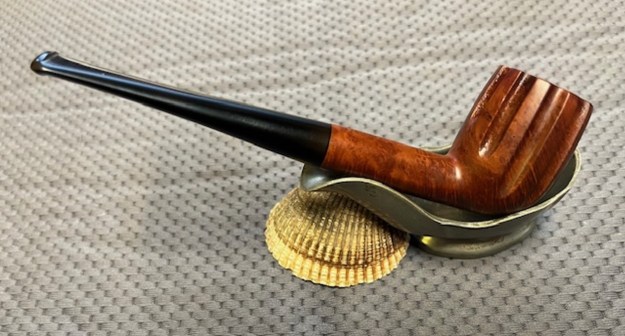
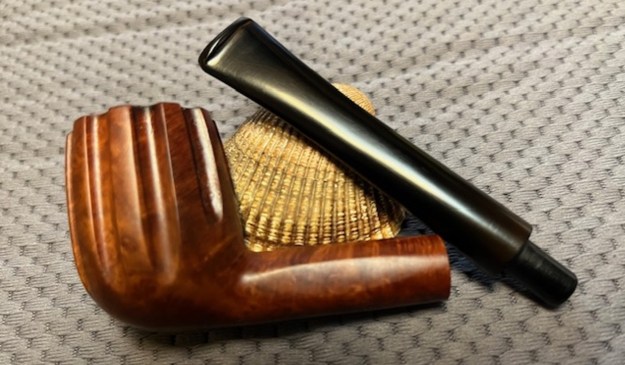
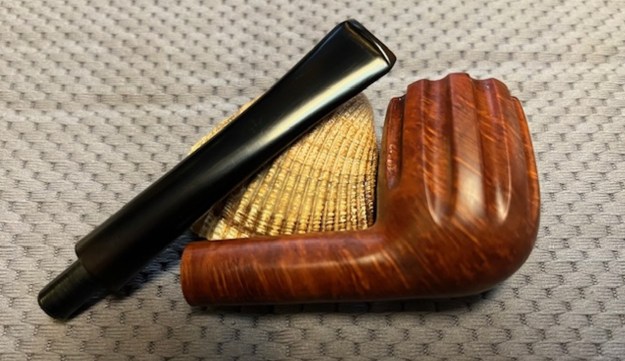
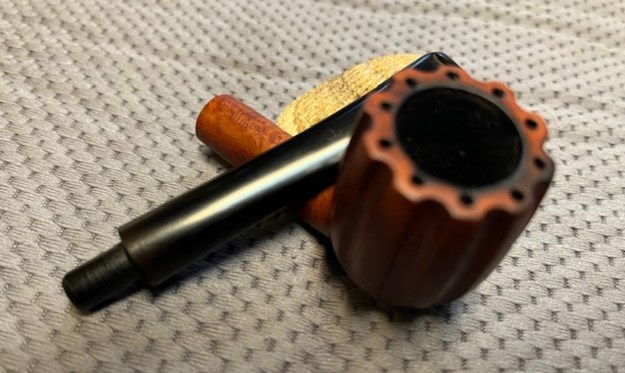
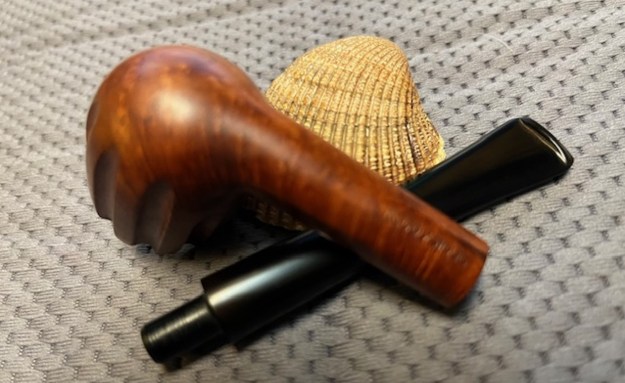
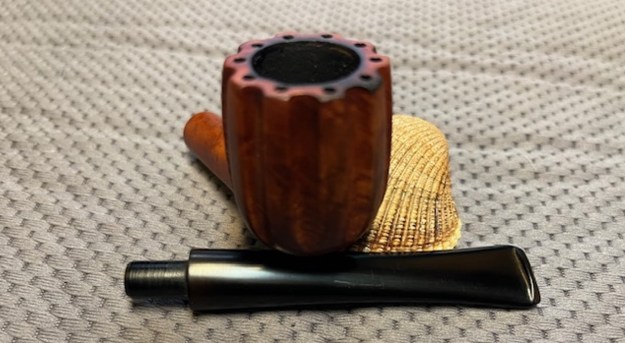
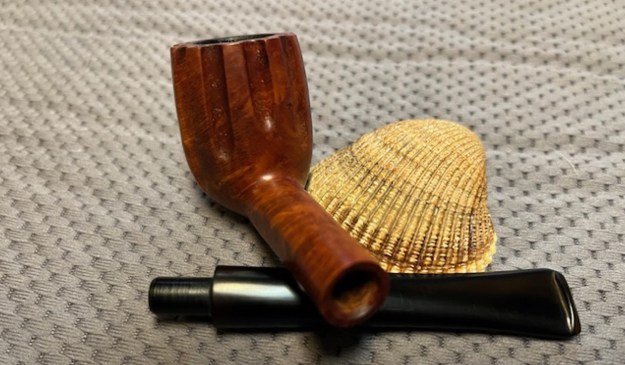
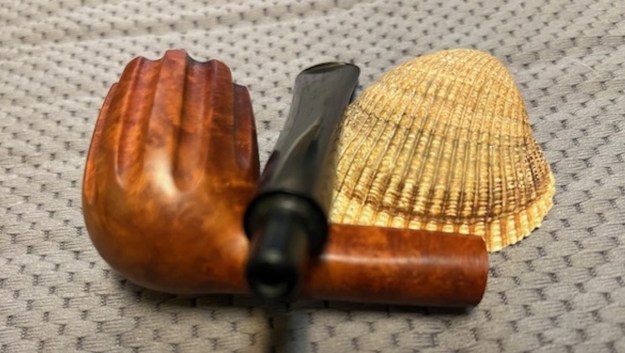
The next pipe on the work table is a pipe that we picked up from a seller in Cottage Grove, Minnesota, USA on 02/02/2022. This one was a unique fluted, pinched shank take on classic Billiard. It is stamped on the topside of the shank and reads Kennett [arched over] No 1. On the underside of the shank it is stamped London Made [over] Made in England [over] Reg’d 731096. The smooth, fluted finish around the bowl shows some nice grain patterns. There was grime and oil ground into the finish around the bowl. The fluted carving on the bowl sides and the holes around the rim go down the ridges to the bottom of the bowl. There was a moderate cake in the bowl and tobacco debris on the walls and heel. The rim top had lava overflowing from the bowl. It was thicker on left back of the rim top. The edges looked good but a clean up would tell the story. There was some thinning around the inner edge of the bowl affecting the holes in the rim top. The vulcanite taper stem was oxidized and had some tooth chatter and tooth marks on the top and underside ahead of the button. The interesting pipe showed a lot of promise but it was a mess. I took pictures of the pipe before I started my clean up work. I took photos of the rim top and bowl as well as the stem surfaces to show the condition of the well smoked pipe. You can see the thick cake in the bowl and the lava on the inner edge and rim top. There is also some roughening on the inner edge but the out edge looked good. There was a small nick in the outer edge on the left backside. The stem was oxidized, calcified and had scratches and light tooth chatter and marks on both sides ahead of the button.I took photos of the stamping on the sides of the shank and stem. The stamping is clear and readable as noted above. Before I started working on the pipe I wanted to do a bit of research and see what I could learn about it. First, I looked on Pipephil for The Kennett London Made No 1 and was unable to find any information there. There was no logo on the shank or the stem to help identify the brand.

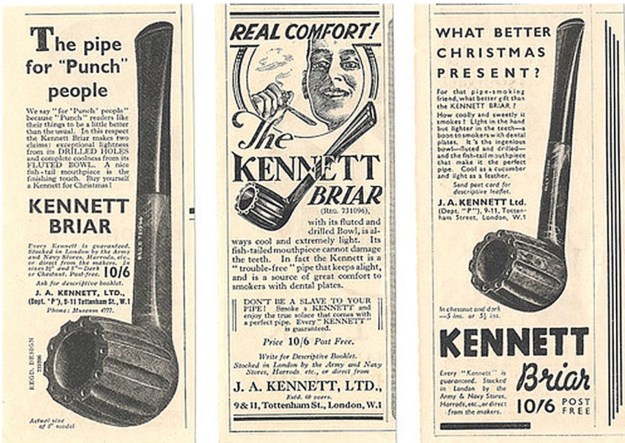
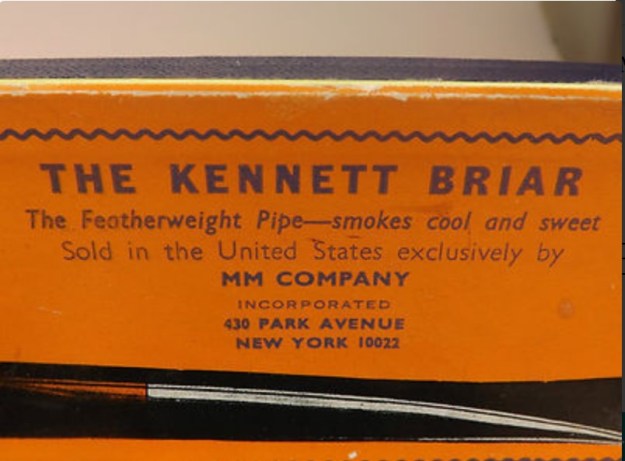
I turned then to Pipedia (https://pipedia.org/wiki/Kennett) and found a very short entry there. I quote it below. There were photos of several pipes, a Kennett Box and a pamphlet that gave some information. I quote it below:

J.A. Kennett, LTD. in London were the makers of the Kennett pipe (photos thank to Doug Valitchka). I also Googled and was able to find a link to a Kennett for sale on smokingpipes.com (https://www.smokingpipes.com/pipes/estate/england/moreinfo.cfm?product_id=372529). There was also a photo that are worth look in at. I have included the description that was written about the pipe below.

This 1930s Billiard from Kennett is really unique, with its vertical, fluted channels opening up into tiny, hollow holes on the rim, resulting in an intriguing aesthetic. But wait: There’s more. Paired to the pert, tall bowl is a tapered, pinched, paneled shank that is unusual and is complemented by the bowl’s ridges. The jet-black vulcanite stem is also tapered. This smooth piece is dressed in a warm, chestnut stain that accentuates all of the above, and the fluting certainly provides entertainment for nimble fingers. -Angela Robertson

I also found a link on Google for an auction on Worthpoint for an unsmoked Kennett that was for sale there (https://www.worthpoint.com/worthopedia/kennett-briar-unsmoked-air-cooled-469502789 . I have included the description that seller included with the item.Here’s an auction for sale. A The Kennett Briar “Air Cooled” Briar Pipe made in London England in the 1950’s or earlier. The bowl has 10 holes drilled down thru the bowl wall on the ribs on the bowl. The pipe will be very cool to touch and to smoke because of the air cooled circulation in the holes and around the rib cuts. The Kennett Briar pipe is Air-Cooled, Cool as a Cucumber, Light as a Feather, Sweet as a Nut says J. A. Kennett, Ltd.9/11 Tottenham Street London, W. The Kennett Guarantee says every care has been used in selecting well seasoned Briar Root for making of this Pipe, and it is guaranteed with fair usage not to crack or burn. The stem is English Vulcanite.

Now I knew that the pipe was made between the 30s and 50s. The Reg’d number on it makes me think that is an older one – possibly from the 30s. I would not be able to further pin the date down on the pipe. Now it was time to work on it.

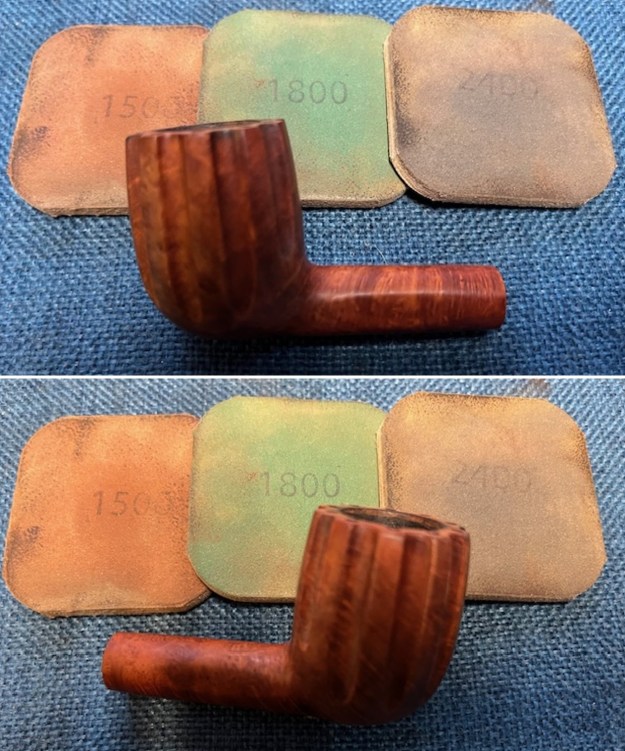
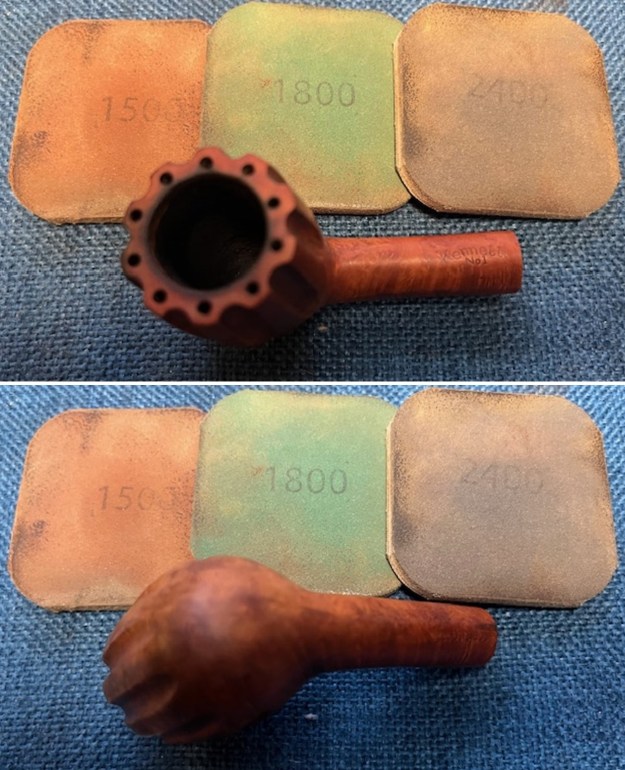
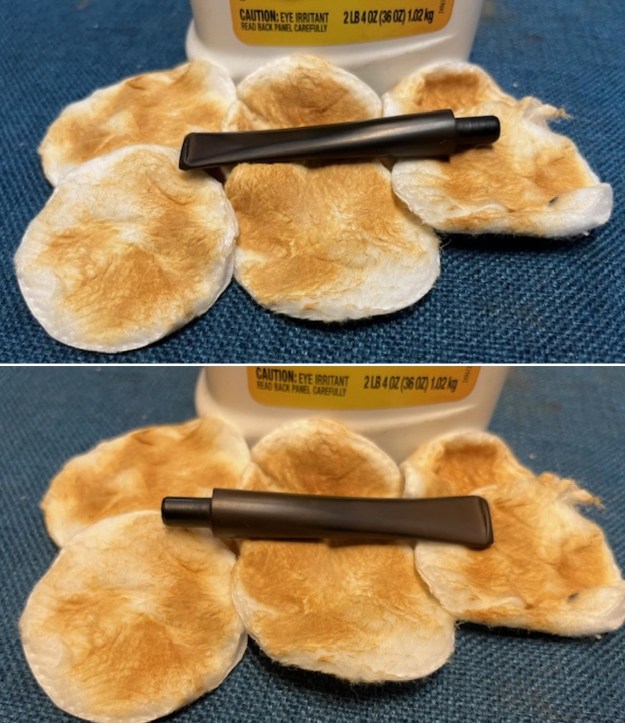
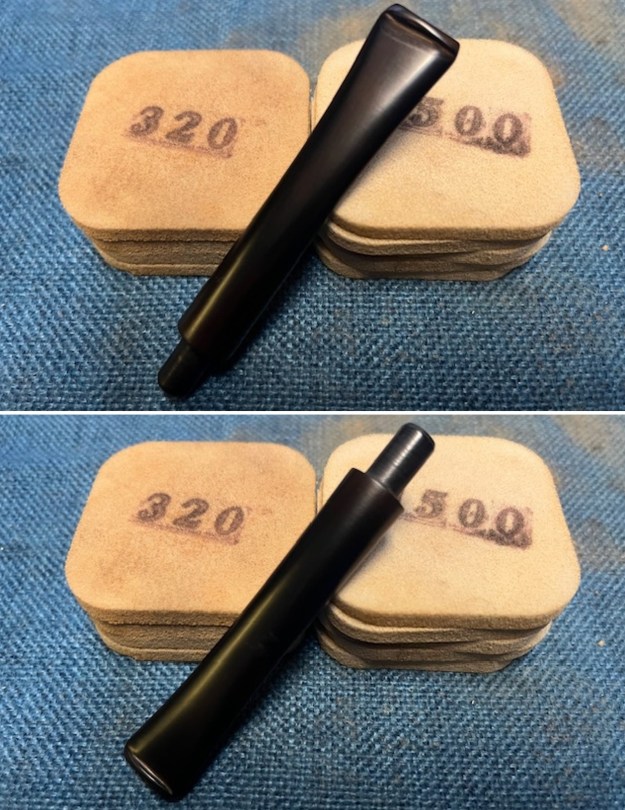
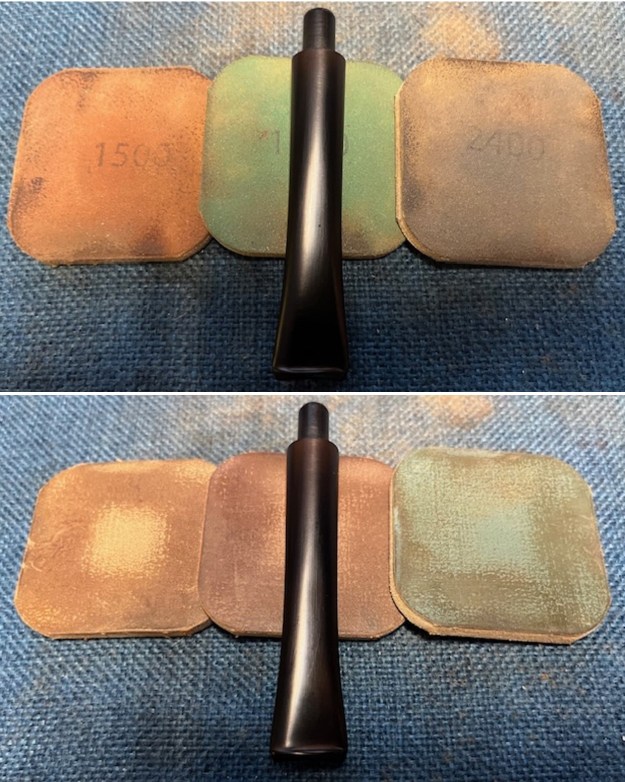
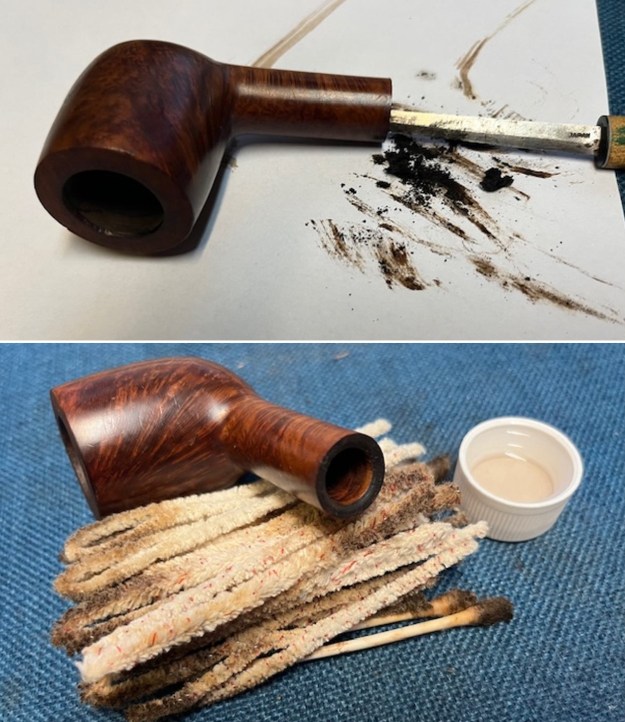
I started my work on the pipe by cleaning up the lava on the rim top. I used a folded piece of 220 grit sandpaper to clean it up. I carefully cleaned the darkening on the inner edge at the same time. I scraped the cake around the bowl sides with a Savinelli Fitsall Pipe knife and then sanded the walls with 220 grit sandpaper wrapped around a piece of dowel. The walls were smooth and showed no burn damage. I cleaned out the interior of the shank, mortise and airway in the stem with pipe cleaners, cotton swabs and alcohol. It was a dirty pipe.I scrubbed the externals of the pipe with Mark Hoover’s Briar Cleaner (extra strength). I cleaned the surface of the briar with my fingertips working product into the surface of the briar. I scrubbed it with a tooth brush working it over. I rinsed off the Mark’s Briar cleaner with warm water to remove the debris and grit that it had collected. I dried it off with a soft cotton cloth and took some photos of the pipe at this time. There was burn damage on the rim top that was going to remain. The holes down the sides of the bowl from the rim top were thin so I did not want to remove any of the briar. I chose to leave the burn marks as they are. I used a Maple stain pen to touch up the rim top. It matched the colour of the stain on the rest of the bowl. Once it was polished it would blend in very well. I polished the bowl with micromesh sanding pads – dry sanding with 1500-12000 grit pads. I wiped it down with a damp cotton pad after each sanding pad. The briar really took on a patina that began to look better with the polishing. I rubbed the bowl down with Before & After Restoration Balm. It is a paste/balm that works to deep clean the finish, enliven and protect the briar. I work it into the briar with my finger tips to make sure that it covers every square inch of the pipe. I set it aside for 10 minutes to let it do its work. I wiped it off with a soft cloth then buffed it with a cotton cloth. The briar really began to have a deep shine. The photos I took of the bowl at this point in the restoration. You see the shine that the briar has taken on and the way grain pops with the light buffing. I set the bowl aside and turned my attention to the stem. I worked on the oxidation on the stem with Soft Scrub and was able to remove it. Lots of elbow grease and working over the surface but it started to look much better.I sanded the stem with 320-3500 grit sanding pads to break up the remaining oxidation. I wiped it down after each sanding pad with an Obsidian Oil impregnated cloth. It was looking good.I polished the stem with micromesh sanding pads – dry sanding with 1500-12000 grit pads. I wiped the stem down after each sanding pad with Obsidian Oil. I polished it with Before & After Pipe Stem Polish – both Fine and Extra Fine. Once I had finished the polishing I gave it final coat of Obsidian Oil and set it aside to dry. I am glad to be on the homestretch on what was a mystery pipe when I started. I really am looking forward to the final look when I put a pipe back together, polished and waxed. I polished the bowl and stem with Blue Diamond to polish out the scratches in the briar and the vulcanite. I gave the bowl and the stem multiple coats of carnauba wax. I buffed the pipe with a clean buffing pad to raise the shine. I hand buffed it with a microfiber cloth to deepen the shine. The pipe polished up pretty nicely. The grain pops with the wax and polish. The shiny black vulcanite stem is a beautiful contrast to the browns of the bowl and shank. This The Kennett No1 Reg’d 731096 Billiard was interesting pipe to work on. The pipe is comfortable pipe to hold in the hand. The finished pipe is shown in the photos below. The dimensions of the pipe are Length: 5 inches, Height: 1 ¾ inches, Outside diameter of the bowl: 1 ¼ inches, Chamber diameter: ¾ of an inch. The weight of the pipe is 1.45 ounces/41 grams. This Kennett pipe is a great piece of history of the ongoing search for the cooler and drier smoke. I will be adding it to the British Pipe Making Companies Section on the rebornpipes store shortly. Thanks for reading this blog and my reflections on the pipe while I working on it.

As always, I encourage your questions and comments as you read the blog. Thanks to each of you who are reading this blog. Remember we are not pipe owners; we are pipemen and women who hold our pipes in trust until they pass on into the trust of those who follow us.

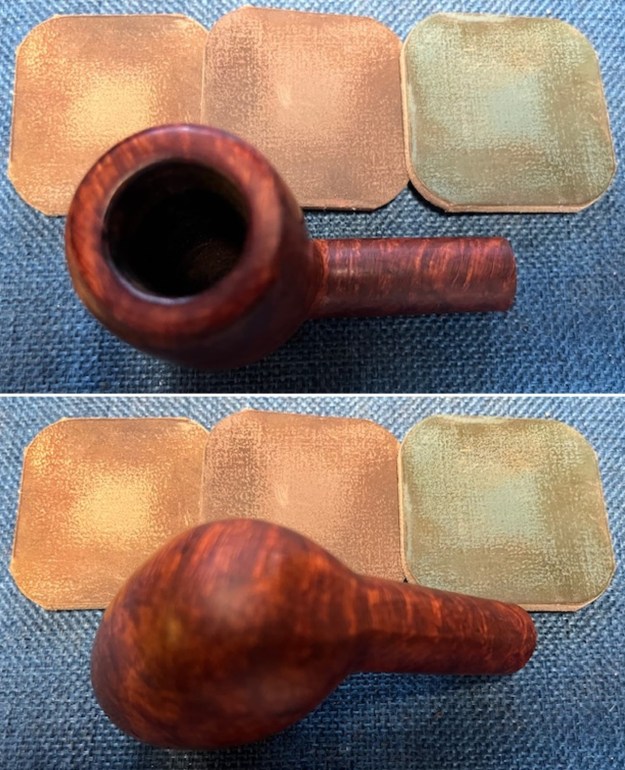
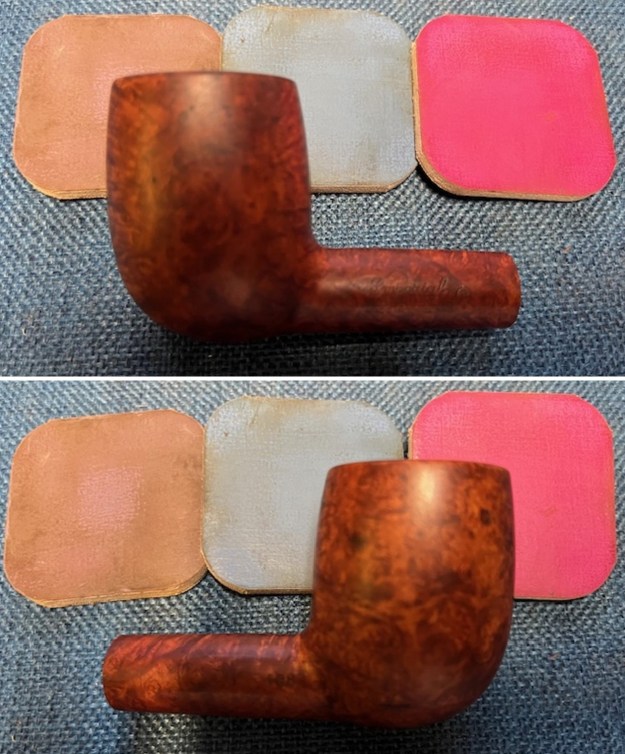
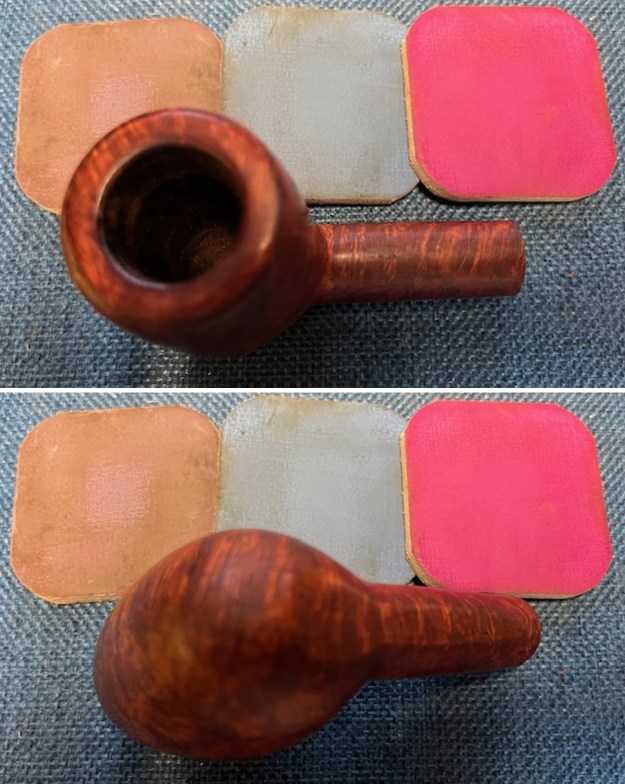
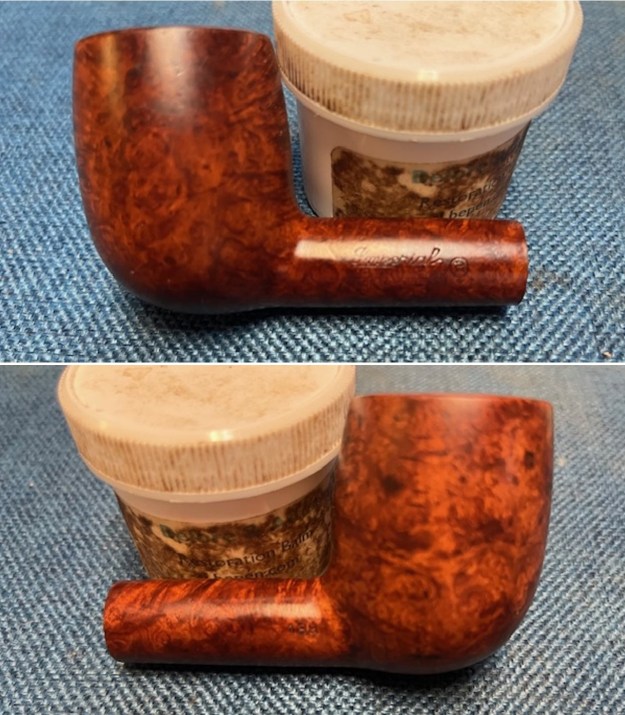
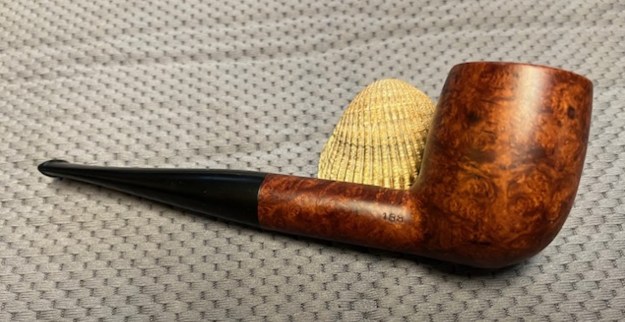
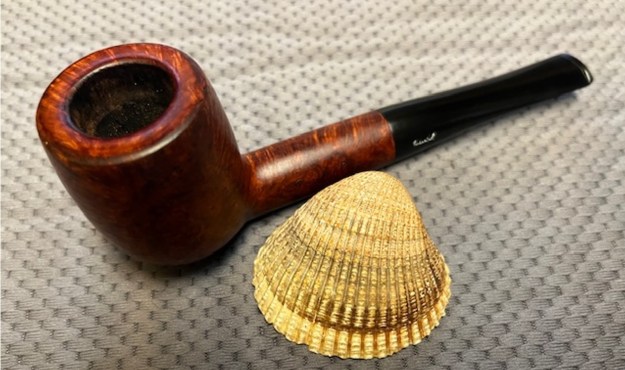
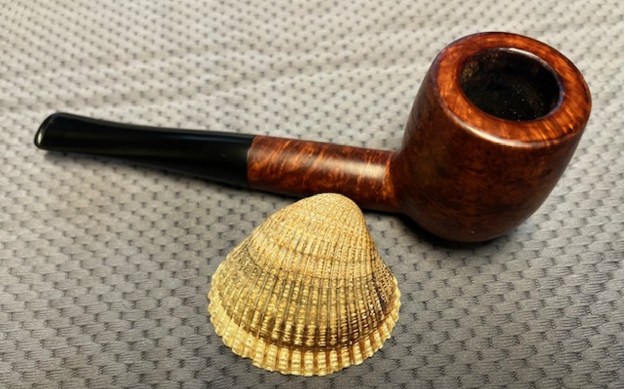
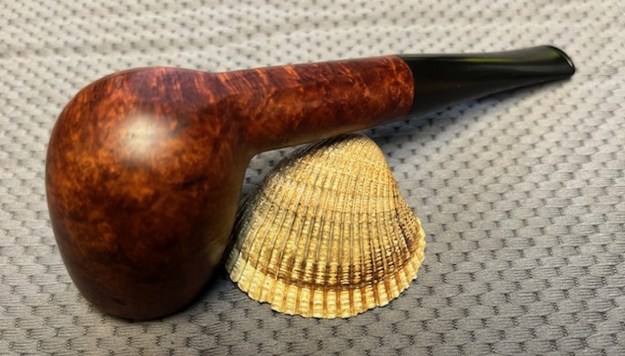
Restoring a Beautiful Imperial Old Bruyere 188 Chunky Billiard


By Steve Laug

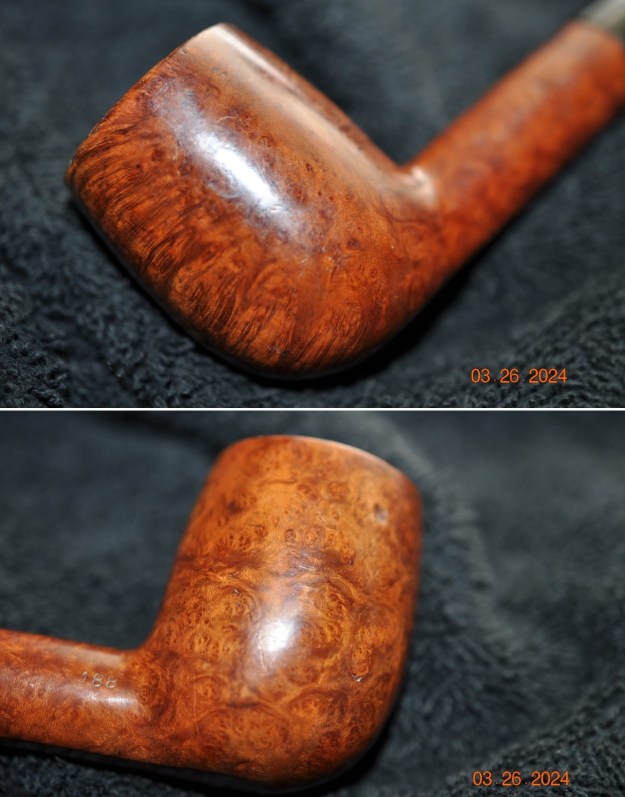
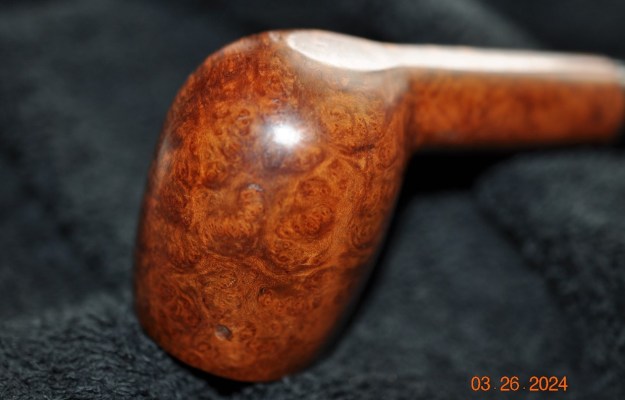
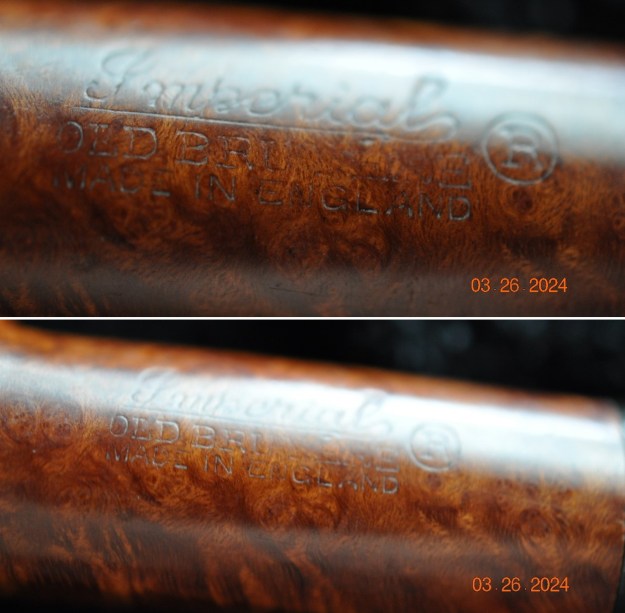
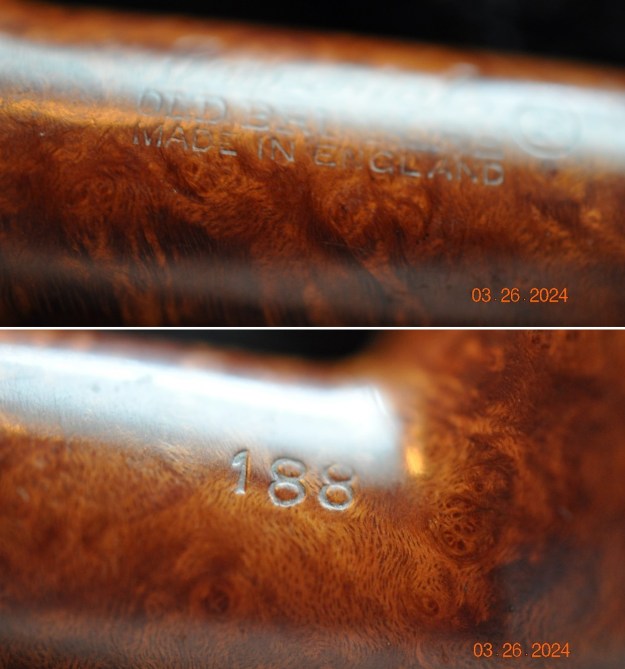
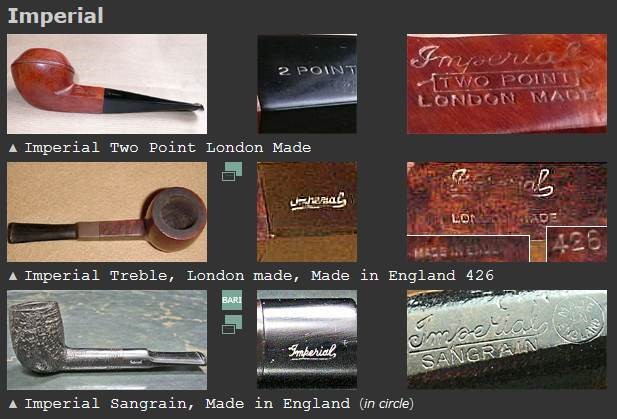
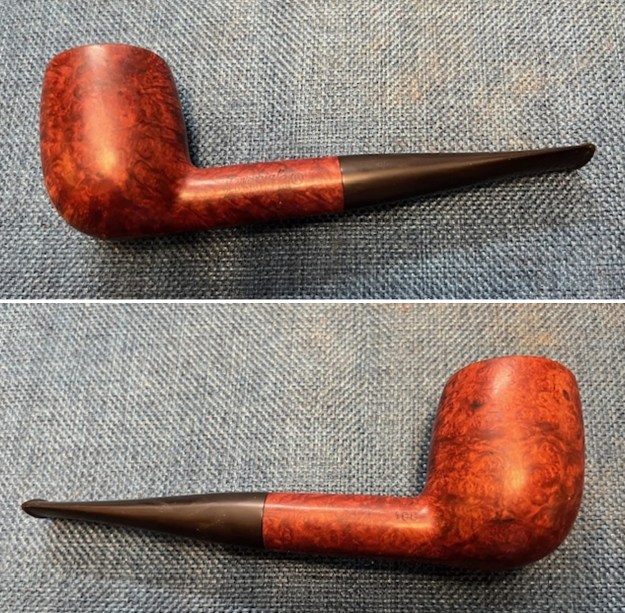
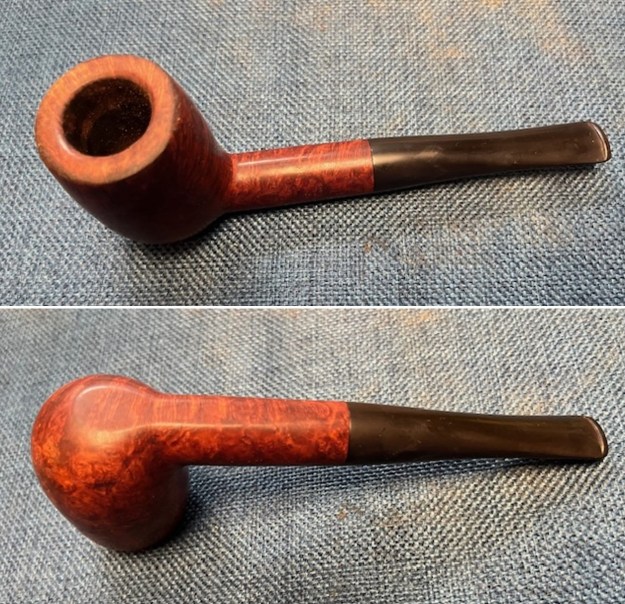
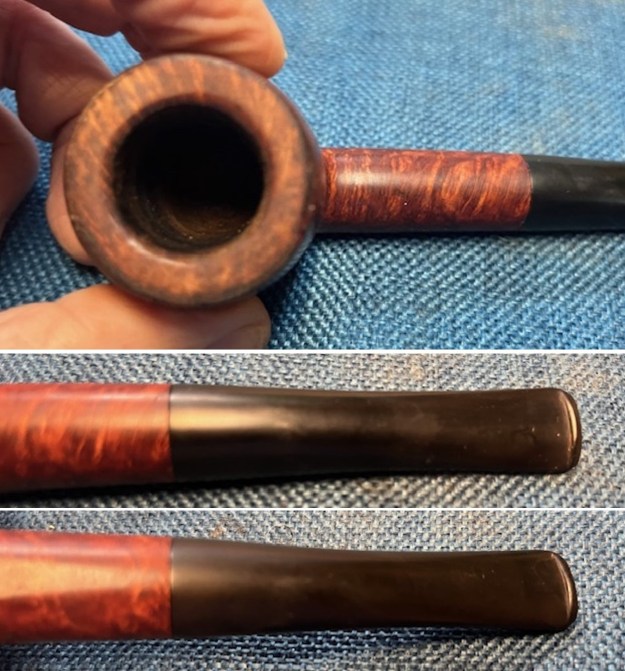
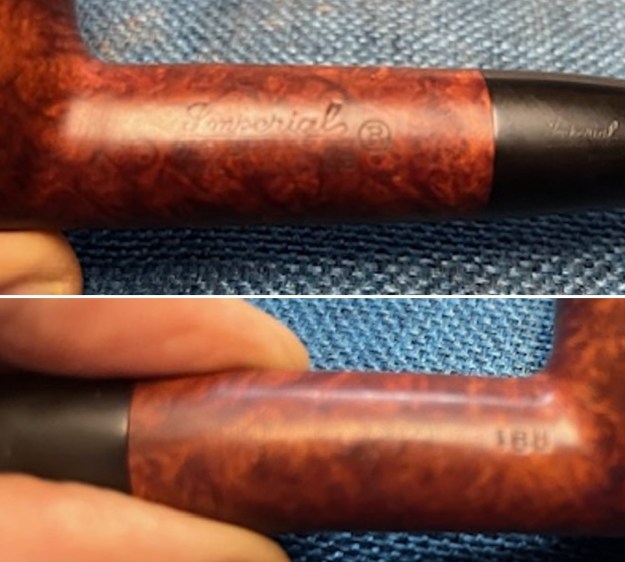
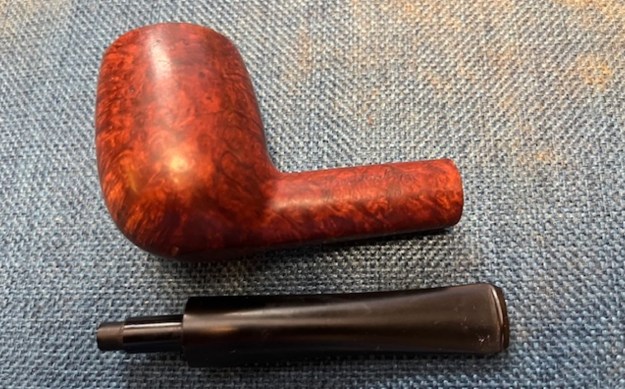
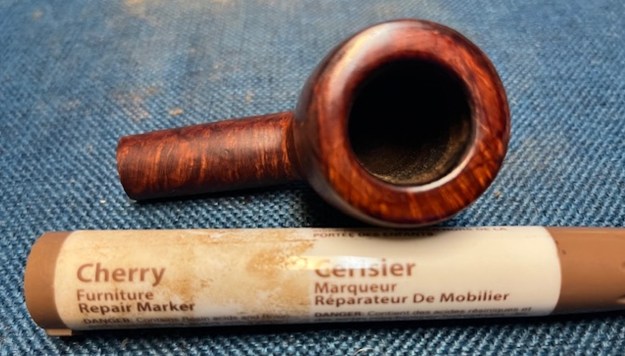
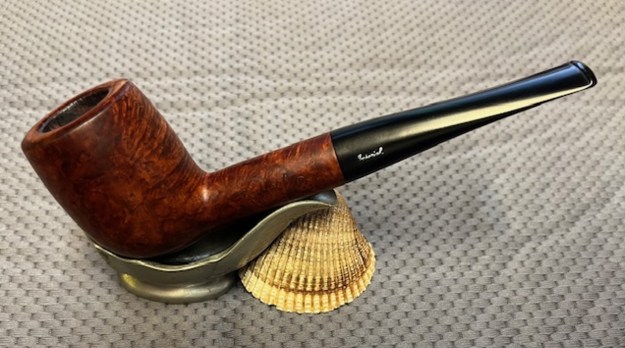
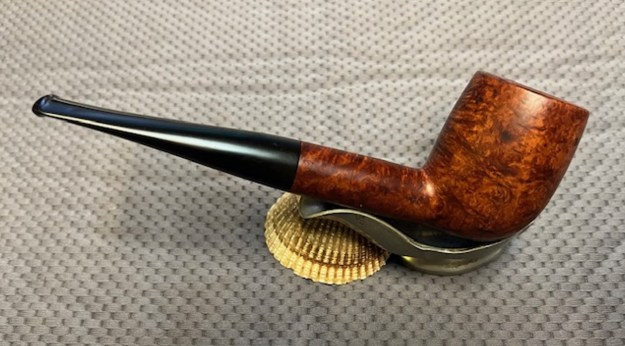
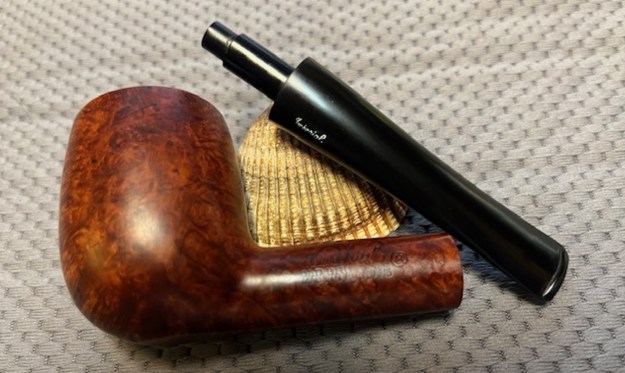
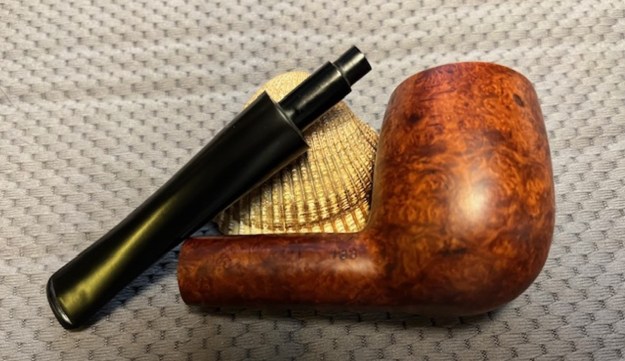
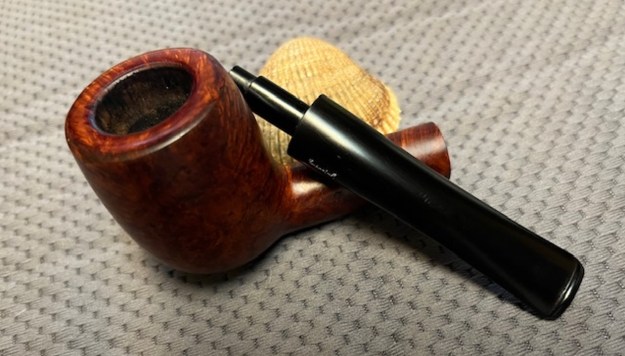
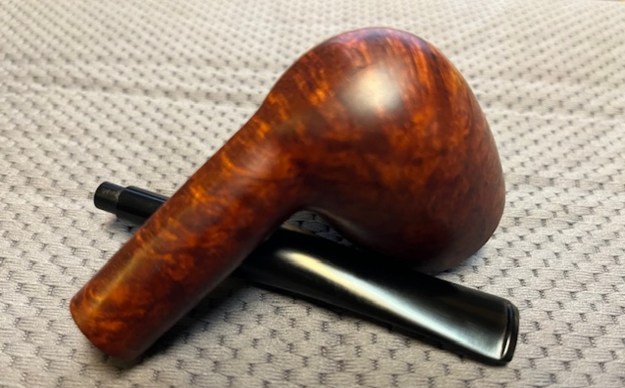
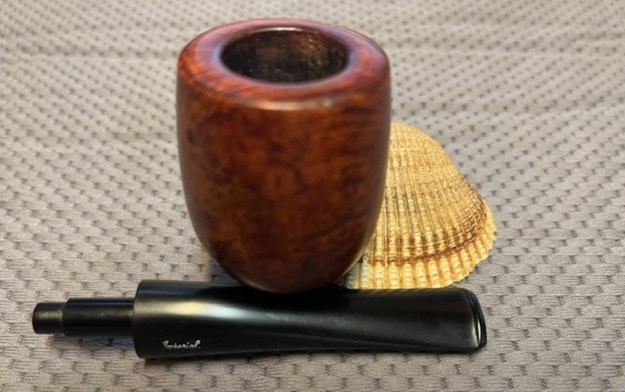
The next pipe on the work table is another pipe is another pipe that we picked up from the estate in Oregon City, Oregon, USA on 03/21/2024. This one was a nice looking thick shanked Billard that reminds me of Dunhill LB pipes. It has some nice grain patterns. It is stamped on the left side of the shank and reads Imperial in script [over] Old Bruyere [over] Made in England. To the right of that is stamped the  which is the symbol for a Registered Trademark. On the right side of the shank it is stamped next to the bowl with the shape number 188. The smooth finish had some very nice grain but there was a lot of grime and oils ground into the finish around the bowl and the shank. The pipe was dirty but is quite nice natural tones of the briar. There was a moderate cake in the lower portion of the bowl. The inner edge looked quite good. The outer edge was rounded and damaged giving the rim top a crowned look. The stem seems to be hard rubber rather than vulcanite that leads me to think it is an older pipe. It has a stamp on the left side of the taper that reads Imperial with the tail of the “l” curving under the rest of the stamp in the same script as the stamp on the shank. It had some light oxidized and had some tooth chatter and tooth marks on the top and underside ahead of the button. The pipe showed a lot of promise but it was a mess. Jeff took pictures of the pipe before he did his clean up work. He took photos of the rim top and bowl as well as the stem surfaces to show the condition of the well smoked pipe. You can see the light cake in the bowl and the light lava on the inner edge and rim top. There is also some roughening on the outer edge at the front and back of the bowl. It appears to have been rounded over giving the rim top a bit of an artificial crown. The stem was lightly oxidized, calcified and had scratches, tooth chatter and marks on both sides ahead of the button. Jeff took some photos of the sides and heel of the bowl to give a sense of the grain and the shiny varnish or shellac coat on the exterior of the bowl. It is definitely an addition that will need to be removed. He captured the stamping on the sides of the shank and stem. On the left side it reads as noted above. On the right side it is stamped with the shape number 188. To capture the stamping on the left side Jeff had to take a few extra photos. I turned to Pipephil to get a quick overview of the background information on the Imperial brand (http://pipephil.eu/logos/en/logo-i.html). There was no background information on the site this time but the photos below are helpful in terms of the stamping on the shank and the stem.I turned to Pipedia for more information (https://pipedia.org/wiki/Imperial_Tobacco_Co.). I quote the article below.

From Pipes, Artisans and Trademarks, by Jose Manuel Lopés’

The Imperial Tobacco Co. (Imperial Tobacco Ltd.) was founded in 1901 through the merger of several British tobacco companies. In 1902 it went into partnership with the American Tobacco Company to found the British American Tobacco Company.

See also: Civic. Brands involved: Comoy’s, Bewlay, Nording, Ogden’s, Salmon & Gluckstein, and Steel’s

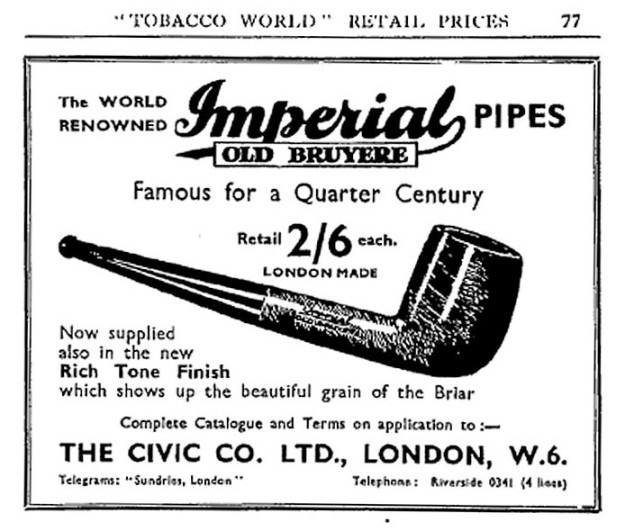
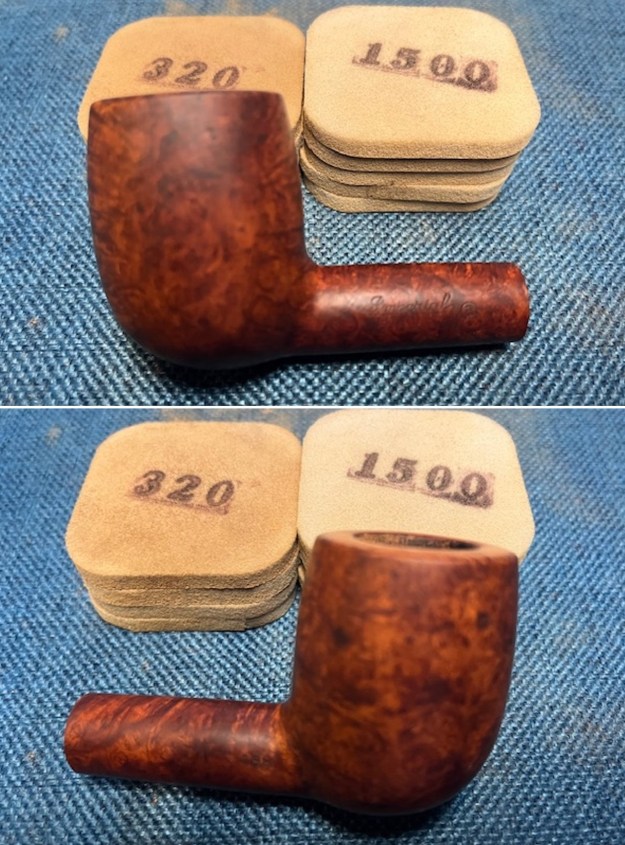
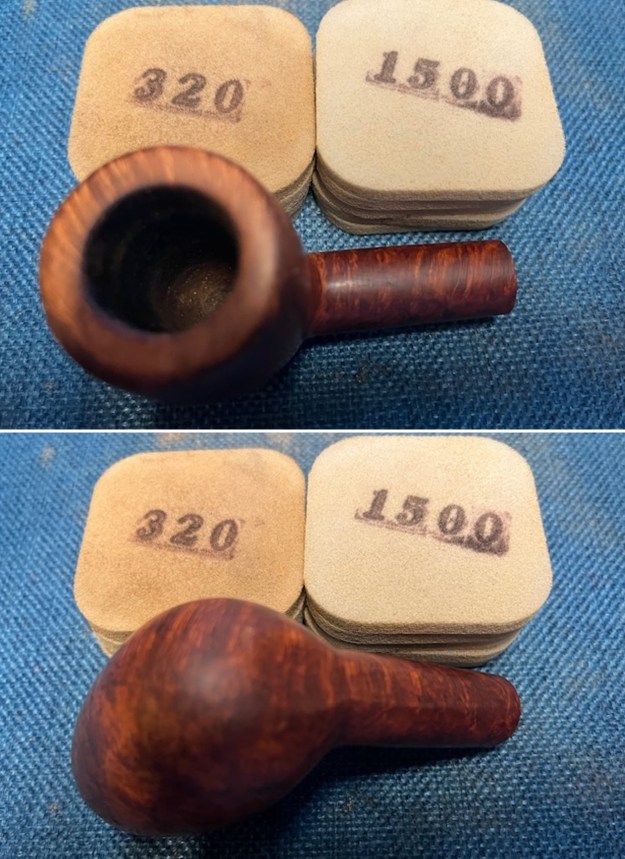
There was a great older advertisement on the link as well that highlighted the age of the brand. I have included that below.Now it was time to look at it up close and personal. Jeff had removed the cake and the lava on the rim top. He had reamed the bowl with a PipNet Pipe Reamer and cleaned up the remnants with a Savinelli Fitsall Pipe Knife. He took the cake back to bare briar so we could check the walls for damage. He scrubbed the exterior of the bowl with Murphy’s Oil Soap and a tooth brush to remove the grime on the bowl and rim and was able to remove the lava and dirt. He cleaned out the interior of the bowl and shank with shank brushes, pipe cleaners, cotton swabs and alcohol until they came out clean. He cleaned the stem with Soft Scrub to remove the grime on the exterior. He cleaned out the airway with alcohol, cotton swabs and pipe cleaners. I took some photos of the pipe before I started my work on it today. I took a close up photo of the cleaned up rim top. The rim top and the inner edge look good. The damage on the outer edge of the bowl shows up as rounding on the front and the back of the bowl. The bowl is clean and the walls are undamaged. The stem looks good with some tooth chatter and marks along the top and underside ahead of the button. The stem is hard rubber which makes the work more difficult on the tooth marks.I took a photo of the stamping on the shank side. It is clear and readable as noted above. I took the stem off the pipe and took a photo. The thick shank billiard is an attractive looking pipe with nice lines. The taper stem shows tooth damage on the top and undersides of the stem. I started my work on the pipe by working over the rim top and the bowl and shank with 320-3500 grit sanding pads. I wiped the bowl down after each sanding pad. The bowl began to take on a shine. I used a Cherry stain pen to restain the rim top and edges to match the colour of the rest of the bowl. The match will be perfect once I finish the next stage of polishing.I polished the smooth rim top and areas on the bowl and shank with micromesh sanding pads – dry sanding with 1500-12000 grit pads. After each pad I wiped the bowl down with a damp cloth to remove the sanding debris. It really took on a shine and the fills were less noticeable by the last three sanding pads. I rubbed the bowl down with Before & After Restoration Balm. I worked it into the surface of the briar with my fingertips where it works to clean, restore and preserve the briar. I let it do its magic for 15 minutes then buffed it off with a cotton cloth. The pipe looks incredibly good at this point in the process. I set aside the bowl and turned my attention to the stem. I “painted” the tooth marks and chatter on both sides of the stem with the flame of a Bic lighter. I was able to lift all of them to the point where sanding the stem with 220 grit sandpaper should smooth the rest of them out.I touched up the faint stamping on the left side of the taper stem with white acrylic fingernail polish. I pointed it on with the applicator and scraped off the excess and lightly sanded it with a 1500 grit micromesh pad. I sanded out the remnants of the tooth marks with a folded piece of 220 grit sandpaper and was able to remove all of the remaining marks. Once finished the stem looked very good.I sanded the stem surface with 320-3500 grit sanding pads. I wiped down the stem after each pad using a cloth impregnated with Obsidian Oil. It started looking better as each step took it closer to the finished look.I continued to polish the stem with micromesh sanding pads – wet sanding with 1500-12000 grit sanding pads. I wiped it down after each sanding pad with Obsidian Oil. I polished it further with Before & After Stem Polish – both Fine and Extra Fine. I gave it a final coat of Obsidian Oil and set it aside to cure. I am excited to finish this Imperial Old Bruyere  Made in England 188 Billiard. I put the pipe back together and buffed it with Blue Diamond on the buffing wheel. I gave the bowl and the stem multiple coats of carnauba wax. I buffed the pipe with a clean buffing pad to raise the shine and then by hand with a microfibre cloth to deepen it. It is fun to see what the polished bowl looks like with beautiful straight grain all around it. The polished grain on the pipe looks great with the black hard rubber stem. This Imperial Old Bruyere Billiard is great looking and the pipe feels great in my hand. It is light and well balanced. Have a look at it with the photos below. The dimensions are Length: 6 inches, Height: 1 ¾ inches, Outside diameter of the bowl: 1 ¼ inches, Chamber diameter: ¾ of an inch. The weight of the pipe is 53 grams/1.87 ounces. It turned out to be a beautiful pipe. I will soon be putting it on the rebornpipes store in the British Pipemakers Section. If you are interested in adding it to your collection let me know. Remember we are the next in a long line of pipe men and women who will carry on the trust of our pipes until we pass them on to the next trustee. Thanks for your time reading this blog.

Cleaning up a Pipe Hunt Find from Idaho


by Steve Laug

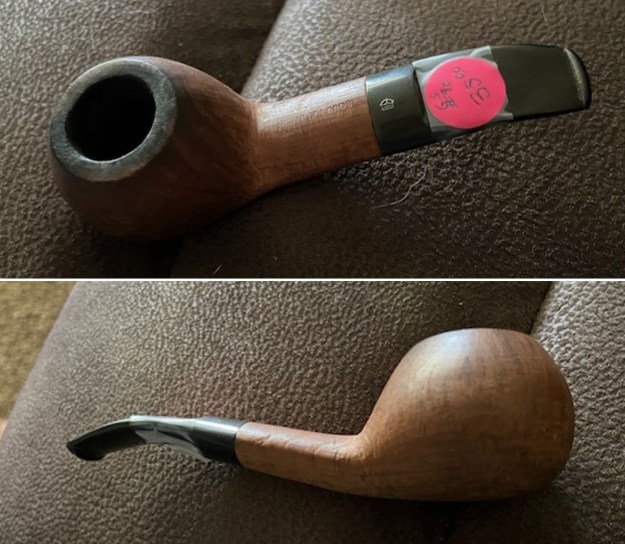
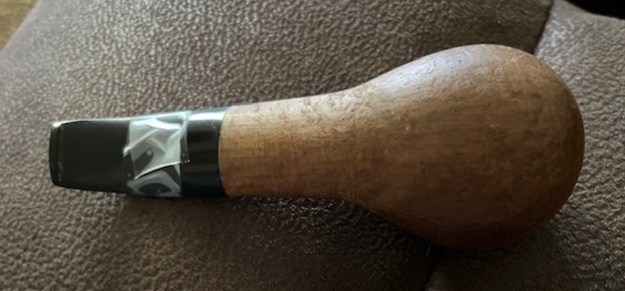
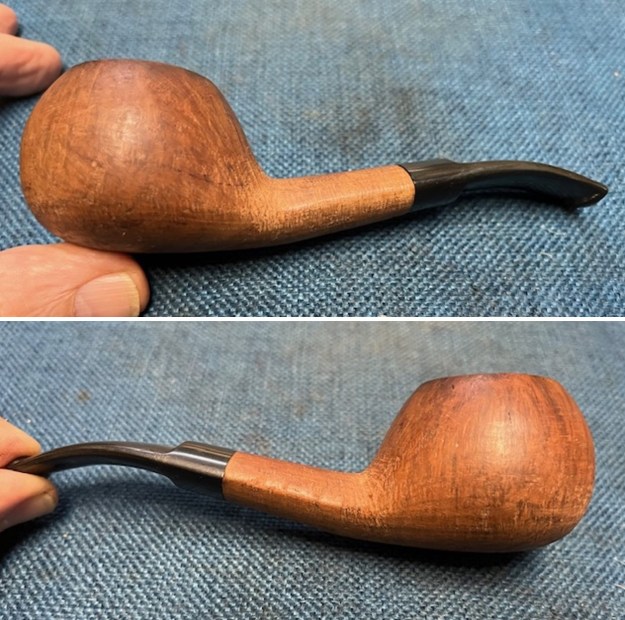
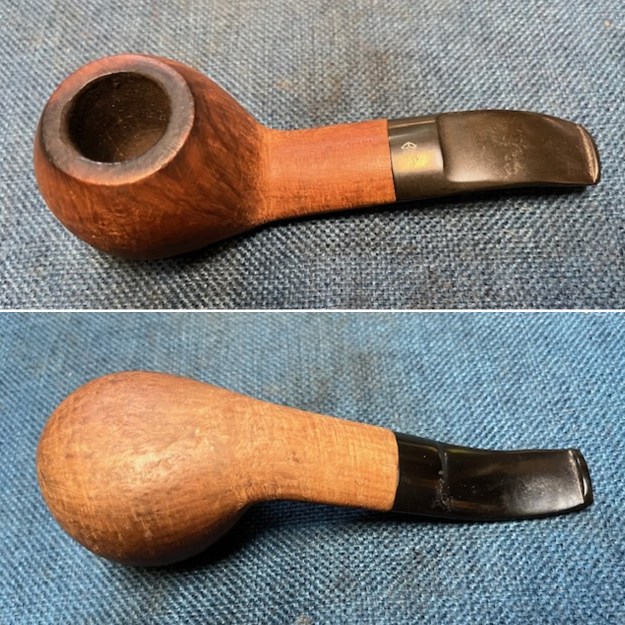
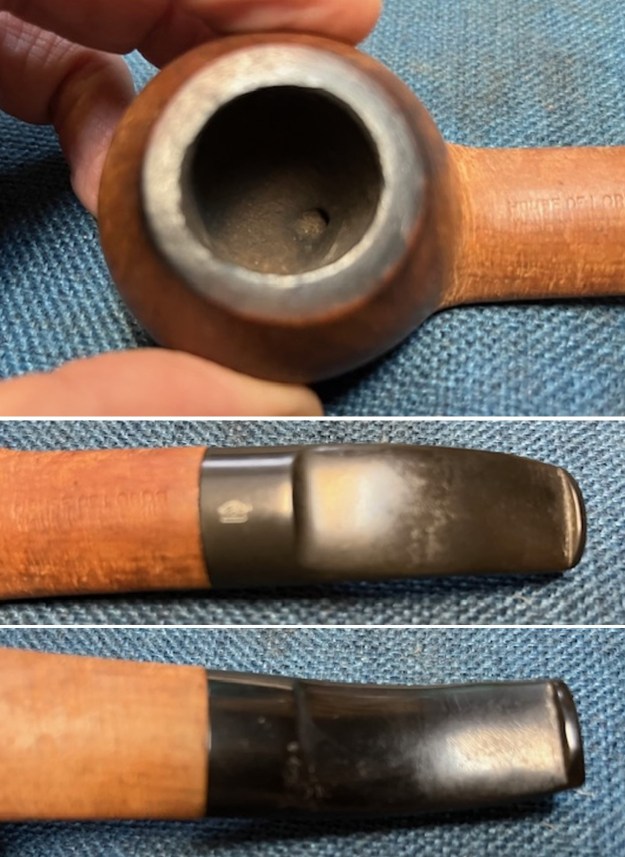
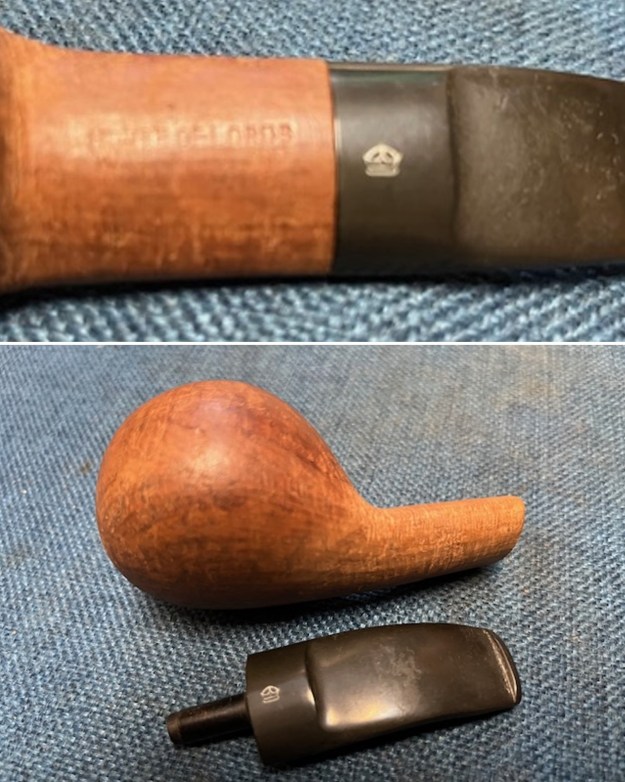
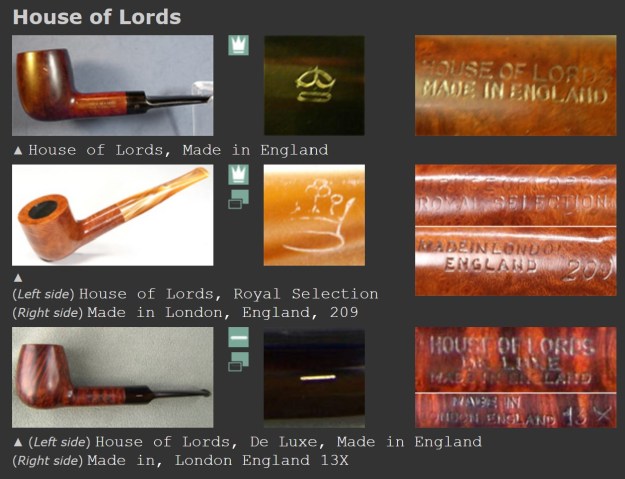
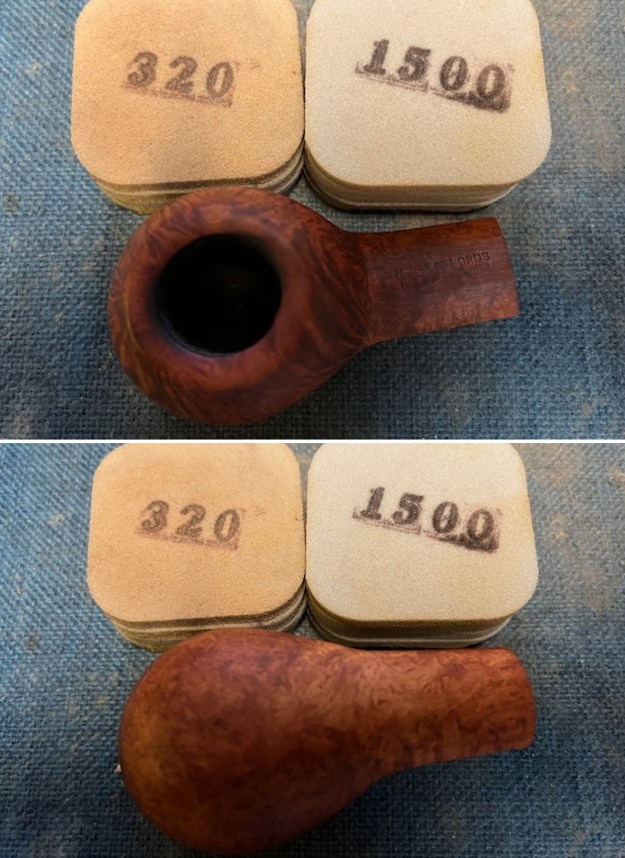
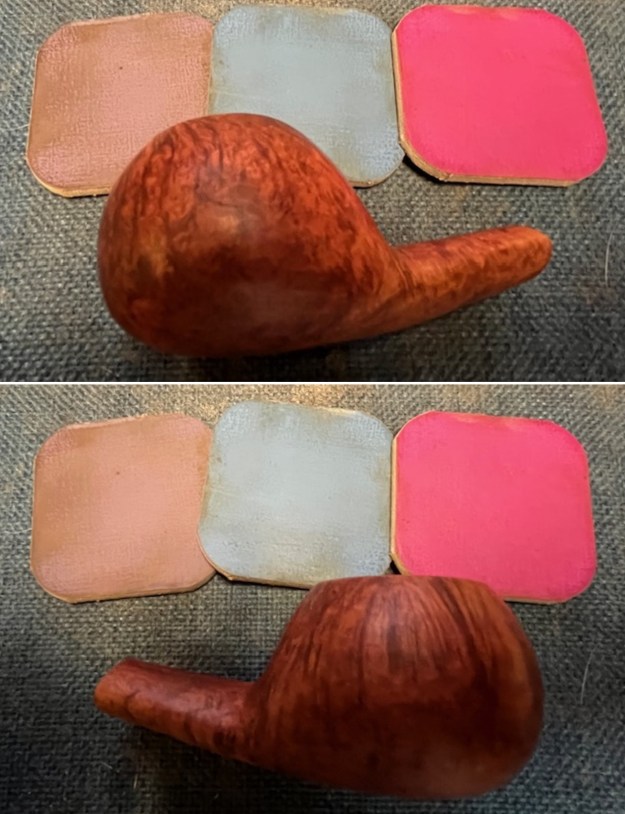
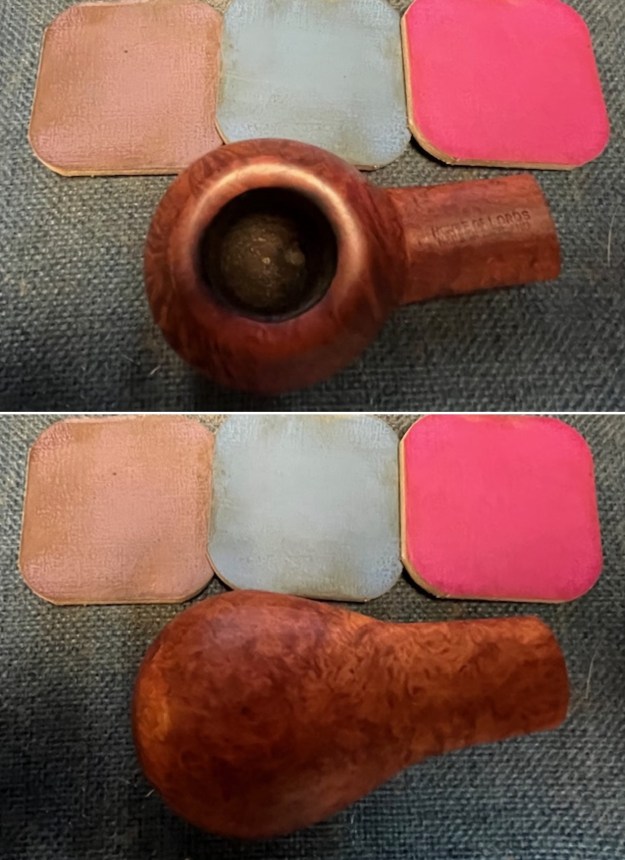
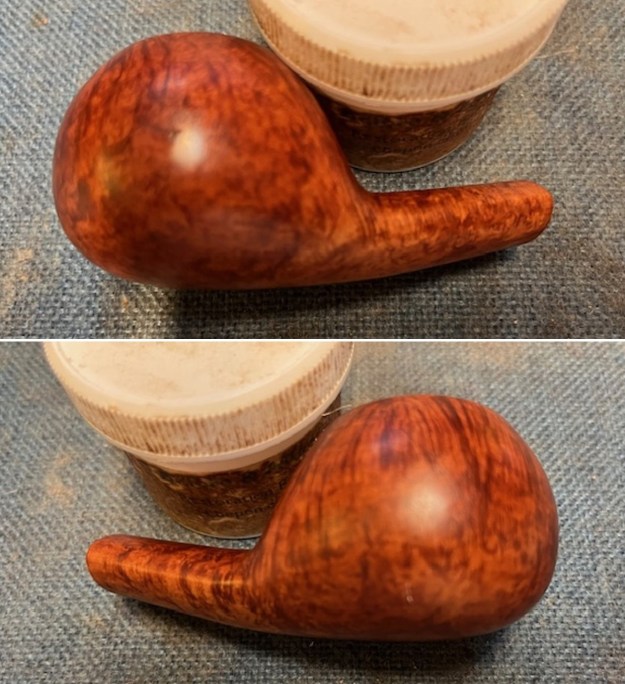
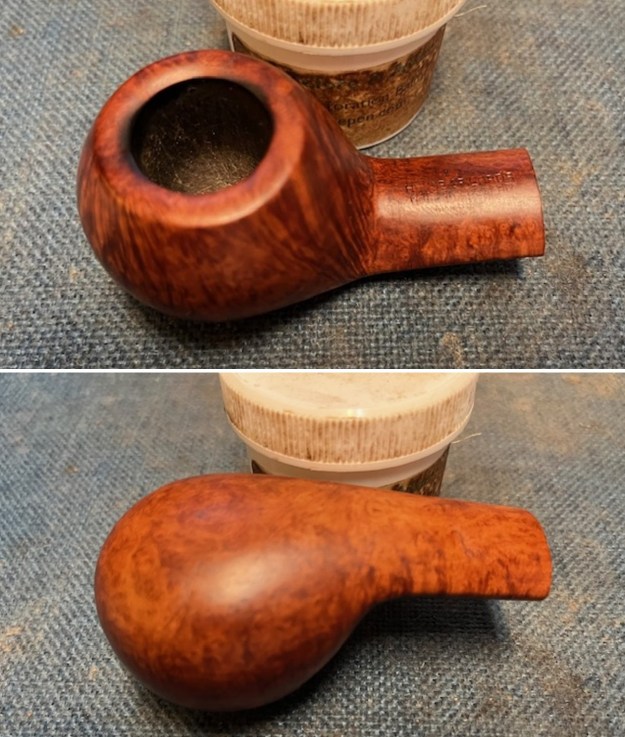
A few weeks ago, I visited my Dad and family in Idaho Falls, Idaho. While there my Brother Jeff and I did a bit of pipe hunting. We did not find much but we did find an interesting Banker shaped pipe in an Antique Mall. The price was right ($35USD) so we picked it up and brought it home to Jeff’s house. The surface of the briar has been roughened, perhaps by steel wool or a wire brush. The finish was rough to the touch but it looked like there might be some nice grain underneath. With the use of a lens I could read the stamping on the topside. It read House of Lords [over] Made in England. There was the remnant of the shape number on the right side of the shank next to the bowl. It could be a 52S shape. The bowl had a cake in it and the rim top had a thick coat of lava built up. The stem had a crown stamp on the topside of the saddle. The stem was lightly oxidized and there were tooth marks on the top and underside ahead of the button. I took a few photos of the pipe in the car on the way home and have included them below. I reamed the pipe while I was staying with Jeff. I forgot to take photos of the pipe before I reamed it. I brought it home to finish my work on it. I took photos of the pipe when I took it out of the box this afternoon. Jeff had scraped the lava off the rim top and we cleaned up the outside of the bowl. You can see the damage to the finish in the photos below. Whoever had done the work on it had made a mess of it. This was going to be a fun one to bring back to life. I took a photo of the rim top and bowl to show the condition of both of them. The bowl itself looked quite clean after our reaming. The rim top showed some darkening on the top and down the outside edges where it had run over the rim top. The inner edge was rough from being reamed with a knife and would need to be cleaned up. The photos of the stem show the light oxidation and tooth marks/chatter on both sides ahead of the button.I took a photo of the stamping on the side of the shank. The stamping was clear and readable as noted above. I removed the stem from the shank and took a photo to show the proportions of the pipe. I turned to Pipephil’s site (www.pipephil.eu/logos/en/logo-h3.html#houseoflords). I did a screen capture of the section on the site. It shows the stamping on the left side of the shank that matches the stamping on the topside of the pipe I am working on. The crown stamp shown on the stem I have is a lot like stamping on the stem I have. I am including the information from the side bar that says that House of Lords is a brand from Samuel Gordon and possibly a Sasieni second (J.M. Lopes, op. cit.). I further followed the link to “Gordon” and learned that Samuel Gordon had founded the brand “GORDON” in 1910-20 eras. This is the link for Gordon brand of pipes; www.pipephil.eu/logos/en/logo-g4.html#gordon

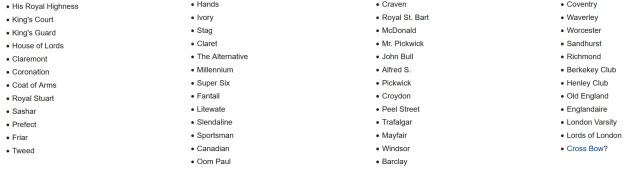
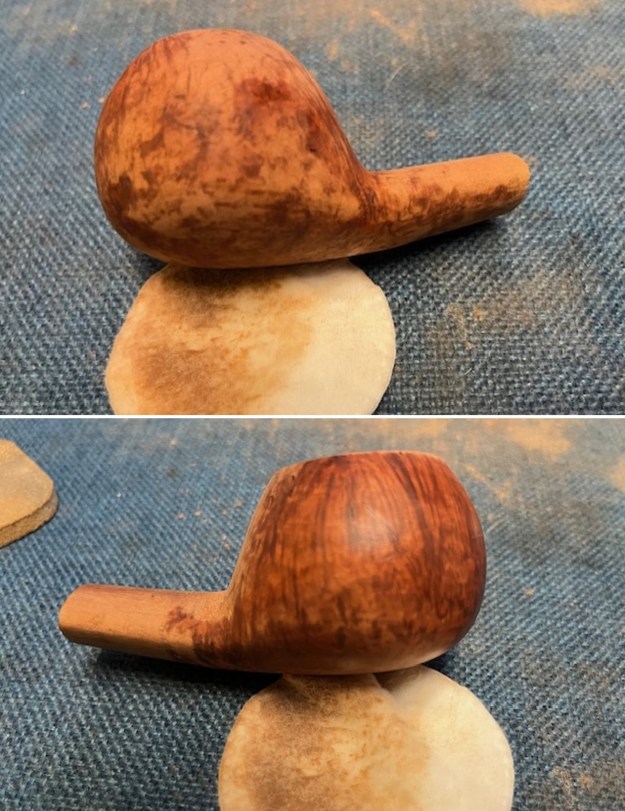
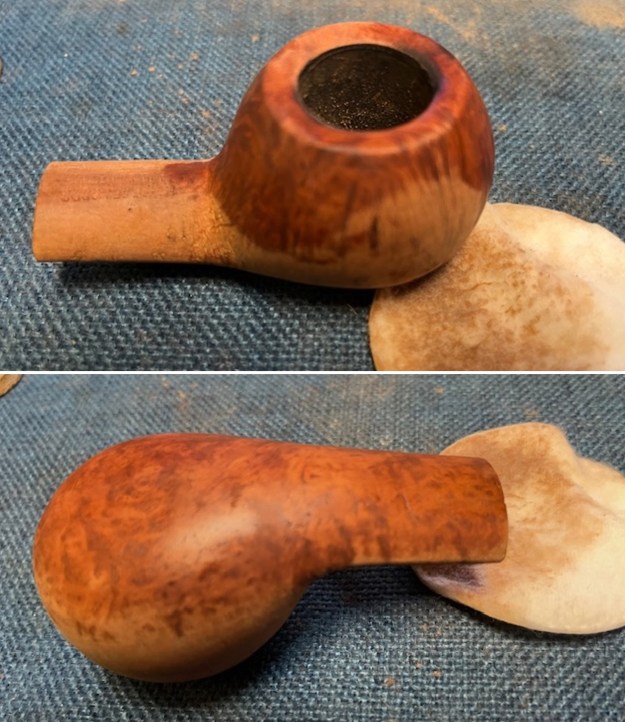
From there I turned to the Sasieni listing on Pipedia and scrolled down to the list of seconds that was given there (https://pipedia.org/wiki/Sasieni#Sasieni_Seconds). From that information I learned that the pipe was definitely linked to Sasieni. The fourth listing in the screen capture Now I knew I was dealing with a Sasieni made pipe which helps explain the stamping on the pipe including the Made in England on the topside of the shank. I did a quick search of rebornpipes and found an article on a pipe I had restored that was the same shape as this one. I have included the link (https://rebornpipes.com/2015/10/25/cleaning-up-a-london-made-charleston-banker/). Have a look at the blog and you will see the shape I am referring to. I am also including some photos of the pipe that show the parallels to the one that I am working on now. I turned to work on the pipe next. Since it had been reamed and cleaned a bit I could forgo that part of the process. I used a 320 grit sanding pad to remove the darkening from the rim top. There was some burn damage on the back inside edge and the front inside and outside edge. I Then used a piece of 220 grit sandpaper and a wooden ball to give the top an inward bevel that took care of the damage to the inner edge and cleaned up the rim top. The pipe was beginning to look much better. I still needed to sand the rough finish but I liked the rim top at this point. I sanded the bowl with 320-3500 grit sanding pads to smooth out the roughened finish. I wiped it down after each sanding pad to get a sense of the progress on the finish. It was looking better with each pad I used. I wiped the bowl and shank down with alcohol on a cotton pad to remove the sanding dust and get a sense of the grain around the bowl sides. I am very happy with how it is looking at this point. I polished the bowl with micromesh sanding pads – dry sanding with 1500-12000 grit pads. I wiped it down with a cotton pad and a drop of olive oil after each sanding pad. The briar really took on a patina that began to look better with the polishing. I rubbed the bowl down with Before & After Restoration Balm. It is a paste/balm that works to deep clean the finish, enliven and protect the briar. I work it into the briar with my finger tips to make sure that it covers every square inch of the pipe. I set it aside for 10 minutes to let it do its work. I wiped it off with a soft cloth then buffed it with a cotton cloth. The briar really began to have a deep shine. The photos I took of the bowl at this point mark the progress in the restoration. You see the shine that the briar has taken on and the way sandblast has depth. I set the bowl aside and turned my attention to the stem. I sanded the stem with 320-3500 grit sanding pads to break up the remaining oxidation. I wiped it down after each sanding pad with an Obsidian Oil impregnated cloth. It began to look good.I polished the stem with micromesh sanding pads – dry sanding with 1500-12000 grit pads. I wiped the stem down after each sanding pad with Obsidian Oil. I polished it with Before & After Pipe Stem Polish – both Fine and Extra Fine. Once I had finished the polishing I gave it final coat of Obsidian Oil and set it aside to dry. More than usual at this point in the restoration process I am excited to be on the homestretch. I really am looking forward to the final look when I put a pipe back together, polished and waxed. I polished the bowl and stem with Blue Diamond to polish out the scratches in the briar and the vulcanite. I gave the bowl and the stem multiple coats of carnauba wax. I buffed the pipe with a clean buffing pad to raise the shine. I hand buffed it with a microfiber cloth to deepen the shine. The pipe polished up pretty nicely. The grain pops with the wax and polish. The shiny black vulcanite stem is a beautiful contrast to the browns of the bowl and shank. This House of Lords Banker was another fun pipe to work on. The pipe is comfortable pipe to hold in the hand. The finished pipe is shown in the photos below. The dimensions of the pipe are Length: 5 ½ inches, Height: 1 ½ inches, Outside diameter of the bowl: 1 ¼ inches, Chamber diameter: ¾ of an inch. The weight of the pipe is 2.08 ounces/59 grams. The pipe will be on the rebornpipes store shortly in the British pipe makers section. If you are interested in adding it to your collection let me know. Thanks for reading this blog and my reflections on the pipe while I working on it. As always, I encourage your questions and comments as you read the blog. Thanks to each of you who are reading this blog. Remember we are not pipe owners; we are pipemen and women who hold our pipes in trust until they pass on into the trust of those who follow us.

The Fifth of Six Pipes from Salmon Arm for Restoration –A Vauen Dr. Perl 3288 Billiard


Blog by Steve Laug

A few weeks ago, I received an email from a friend, Sonny in Salmon Arm, BC. We have worked together on pipes over the past few years either ones that I have sold to him or those he has picked up on auctions or sales that I have restored. He wrote that he had some pipes that needed restoration.

I also have some of those old estates I still need to send to you for restoration. Hopefully I will be able to pack them up and get them off to you this week. Thank you again, Steve! – Sonny

He followed that up with another email regarding what he wanted done on the various pipes. I have included it below.

I would like the Vauen bent ball shape to have no band on it. It looks like it may have had a band there at one time and I’m not sure why. And if any of them needs to be stained again, I would like them to be black, especially the Peterson 309 and that ball Vauen. Let me know what you think.

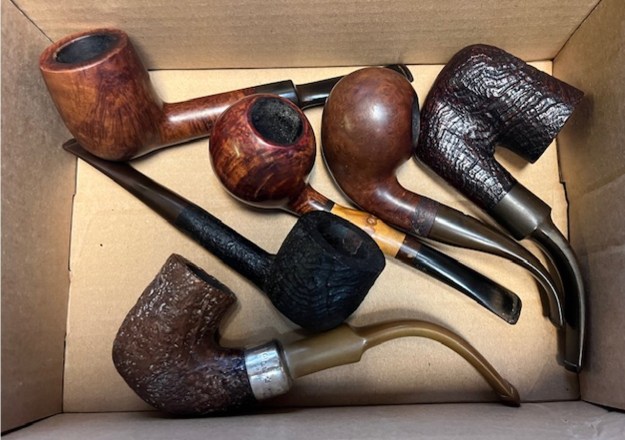
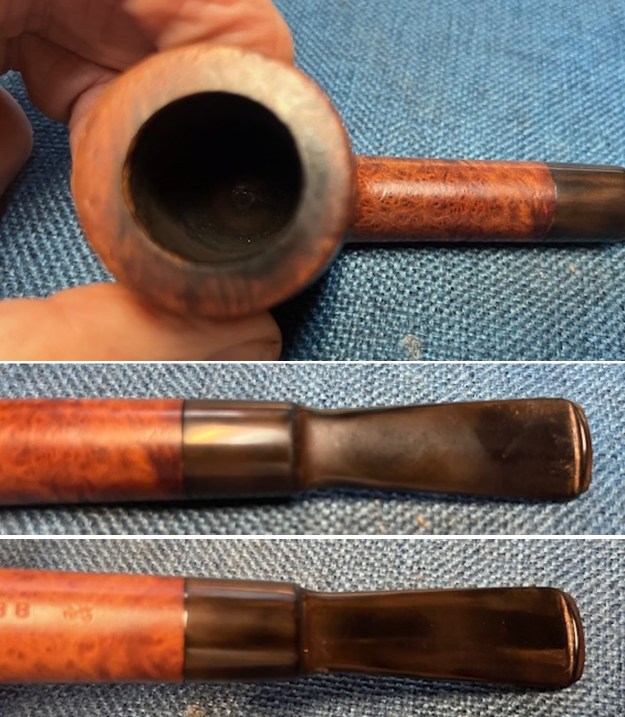
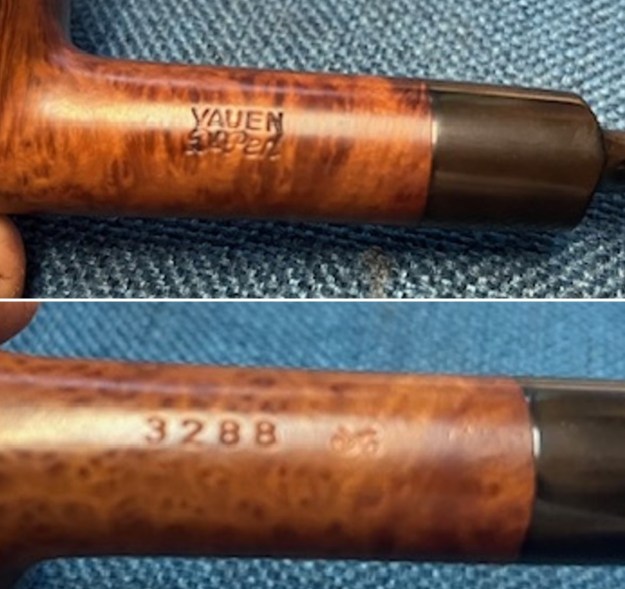
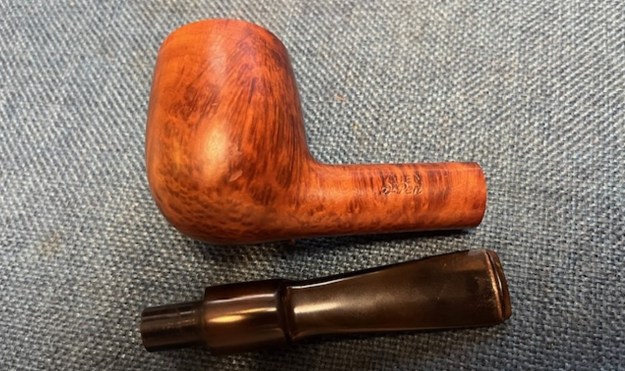
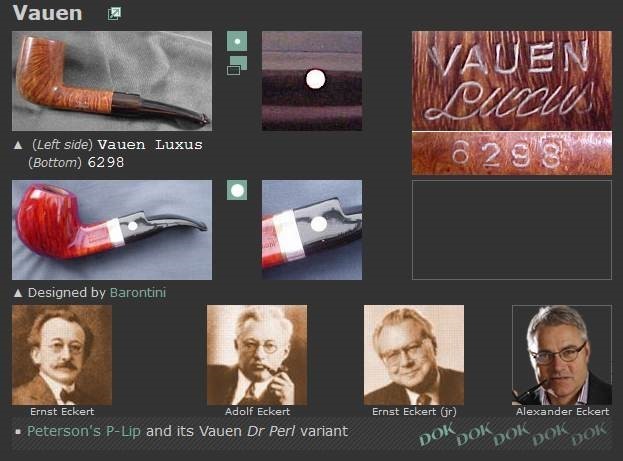
I took a photo of the box of six pipes once I unwrapped them. There were 6 interesting pipes – a Vauen Luxus Bent Ball, a Vauen Dr. Perl Billiard, a Sand Blast Vauen Dr. Perl Pot, a Parade News Briar Shop Oom Paul, a Bari Pearl Bamboo shank Ball and Peterson’s System Premier 309 Bent Billiard. All were in need of various degrees of restoration.The fifth pipe I chose to work on was another Vauen Dr. Perl but this time a saddle stem Billiard. It is stamped on the left side and reads Vauen [over] Dr. Perl. On the underside it is stamped with the shape number 3288 followed by a pair of crossed bent pipes. The finish was dull with grime on the surface of the sides of the bowl. The was a moderate cake in the bowl – heavier in the bottom half. There was some light lava on the rim top and some darkening. The filter stem was lightly oxidized and there was tooth marks and chatter ahead of the button. I took these photos before I started my work on the pipe. I took a photo of the rim top and bowl to show the condition of both of them. There is a moderate cake in the bowl and some lava and rim darkening on the top and inner edge. The photos of the stem show the oxidation and tooth marks/chatter on both sides ahead of the button.I took photos of the stamping on the sides of the shank. The stamping was very clear and readable as noted above. I removed the stem from the shank and took a photo to show the proportions of the pipe. I am including the background on the Vauen brand that I have used before. I always read over it before I start my work on a pipe. It is an important part of the restoration to me as it adds colour to the pipe I am working on. I turned to Pipephil’s site (http://pipephil.eu/logos/en/logo-v1.html). I did a screen capture of the information on the site. There was a great sidebar that gave some history of the brand. I include both of them below. In 1848, Karl Ellenberger and his partner Carl August Ziener establish a pipe factory in Nuremberg. In 1901 they merge with Gebhard Ott an other factory in town and they create a firm named Vereinigten Pfeifenfabriken Nürnberg (abbreviated : VPFN*). Shortly after Ernst Eckert, a member of the Ott family became manager of the society. During the 20th century Adolf, Ernst (jr) and Alexander Eckert (CEO in 2012) followed one another at Vauen’s head.* VPFN : “V” is said VAU in German (pronounce faou) and “N” becomes EN. Hence VAUEN.

Dal Stanton (Pipesteward.com) wrote a great piece on the history of the brand on a Vauen pipe that he worked on. I reread that and quote a section from the blog below that gives a great sense of the history of the German brand and some photos from the website (https://rebornpipes.com/2021/04/27/breathing-new-life-into-a-german-vauen-6294-p-lip-saddle-billiard-for-a-special-young-lady/).

… I turn to the question of the history of the VAUEN name? I look to the History section of the VAUEN website and again, I am impressed with the presentation. Whenever I work on a pipe, and especially when a pipe name is new to me, I enjoy looking at its history to appreciate the pipe more fully now on my worktable. From VAUEN’s website:Quality and a wealth of ideas have a long tradition at VAUEN. 160 years of VAUEN: that means 160 years of skilled workmanship and modern technology and 160 years of experience in fulfilling the individual wishes of today’s pipe lovers, and those of tomorrow.

In Nuremberg in 1848, Karl Ellenberger and his partner Carl August Ziener turned an idea into reality: Germany’s first pipe manufacturer produced tobacco pipes for connoisseurs around the world using a selection of the best wood. In an amalgamation with the Gebhard Ott pipe factory, which was founded in 1866 in Nuremberg, the Vereinigten Pfeifenfabriken Nuremberg (United Pipe Factories Nuremberg, or VPFN) was born in 1901.  Under the management of Ernst Eckert, a descendent of the founding Ott family, a company was born whose products and services would shape the tobacco and smoking culture in Europe and overseas for the next 160 years and counting.

The question about the name, VAUEN, not being a name of a person and why it is capitalized throughout is explained:

In his search for a name that would be easily remembered by all pipe lovers, Ernst Eckert’s son, Adolf Eckert, coined a new name for the company in 1909: VAUEN – a composition of the first letters V (pronounced vow) of Vereinigte Pfeifenfabriken and N (pronounced en) of Nuremberg. A brand for the future was born.

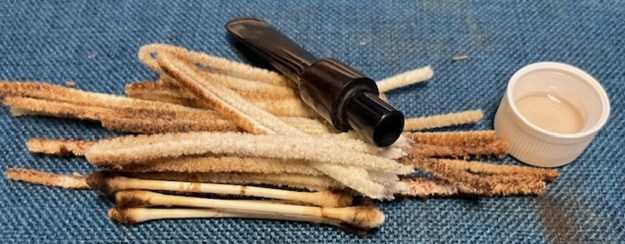
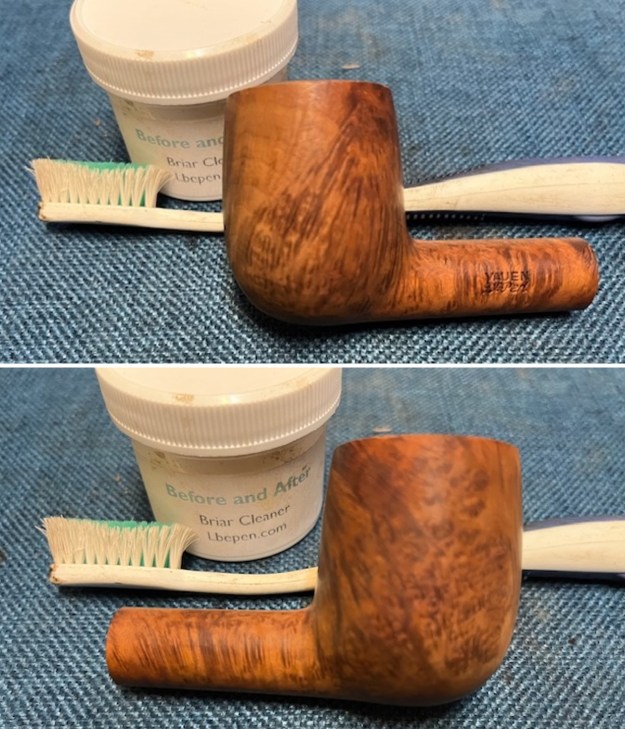
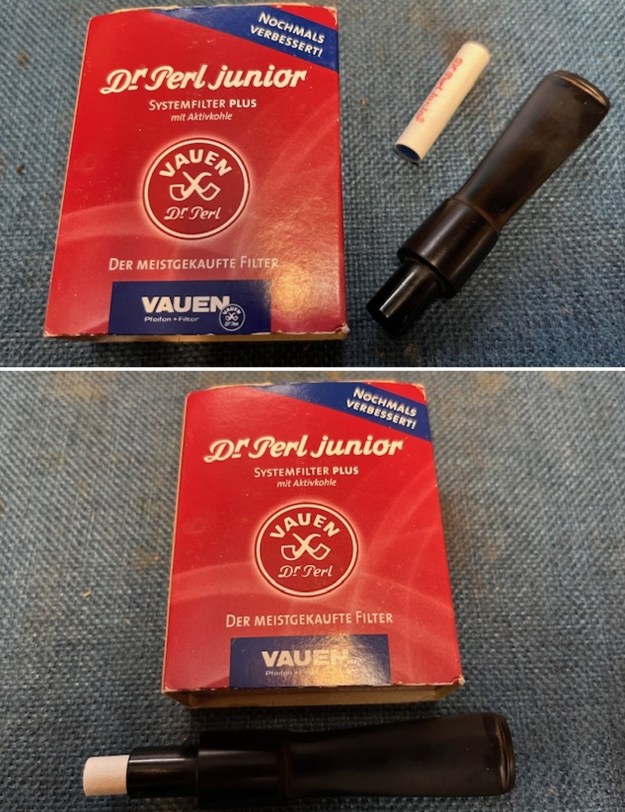
Armed with that information I turned my attention to the pipe itself. I reamed the bowl with a PipNet reamer using the second and third cutting head to remove the cake. I cleaned up what remained of the cake with a Savinelli Fitsall Pipe Knife. I sanded the walls of the bowl to remove any remnants with 220 grit sandpaper wrapped around a piece of dowel. Once finished the inside of the bowl was smooth and the briar was bare. I cleaned up the rim top to remove the darkening and the lava. I used a Savinelli Fitsall knife to scrape off the lava. I sanded the top with a 320 grit sanding pad. It looked much better. I cleaned up the rim top to remove the darkening and the lava. I used a Savinelli Fitsall knife to scrape off the lava. I sanded the top with a 320 grit sanding pad. It looked much better.I touched up the rim top and edge with a Cherry Stain pen to match the rest of the surrounding briar.Once the pipe was reamed and the rim top cleaned I worked on the internals – the mortise and airway in the shank and airway in the stem. I scraped the shank with a pen knife to scrape off the tars and thick carbon. It appeared that the pipe has been heavily smoked without the filter and the inside of the shank was a mess. The stem was more of the same. I cleaned them all with pipe cleaners, cotton swabs and alcohol. It used a lot of them but the results are very good. I scrubbed the externals of the bowl with Before & After Briar Cleaner and a tooth brush. I rinsed off the grime and grit from the cleaning with warm water and dried it with a soft cloth. I polished the briar by dry sanding with 1500-12000 grit micromesh sanding pads. I wiped the briar down with a damp cloth after each sanding pad. By the last three pads the briar really took on a rich shine. When I get the bowl to this point in the process I use Before & After Restoration Balm. It is a paste/balm that works to deep clean the finish, enliven and protect the briar. I work it into the briar with my finger tips to make sure that it covers every square inch of the pipe. I set it aside for 10 minutes to let it do its work. Once the time has passed I wiped it off with a soft cloth then buffed it with a cotton cloth. The briar really began to have a deep shine. The photos I took of the bowl at this point mark the progress in the restoration. You see the shine that the briar has taken on and the way sandblast has depth. I set the bowl aside and turned my attention to the stem. I “painted” the stem surface with the flame of a Bic lighter to lift the tooth marks and chatter on the stem surface. I was able to lift all of the marks significantly and then sanded them out with 220 grit sandpaper. I sanded the stem with 320-3500 grit sanding pads to break up the remaining oxidation. I wiped it down after each sanding pad with an Obsidian Oil impregnated cloth. It began to look good.I took out my box of Vauen 9mm filters and put a new filter in the tenon of the stem. It fit perfectly and sat in the stem and shank as expected. I polished the stem with micromesh sanding pads – dry sanding with 1500-12000 grit pads. I wiped the stem down after each sanding pad with Obsidian Oil. I polished it with Before & After Pipe Stem Polish – both Fine and Extra Fine. Once I had finished the polishing I gave it final coat of Obsidian Oil and set it aside to dry. As usual at this point in the restoration process I am excited to be on the homestretch. I look forward to the final look when I put a pipe back together, polished and waxed. I polished the bowl and stem with Blue Diamond to polish out the scratches in the briar and the vulcanite. I gave the bowl and the stem multiple coats of carnauba wax. I buffed the pipe with a clean buffing pad to raise the shine. I hand buffed it with a microfiber cloth to deepen the shine. The pipe polished up pretty nicely. The grain really pops with the wax and polish. The shiny black vulcanite stem is a beautiful contrast to the  browns of the bowl and shank. This Vauen Dr. Perl 3288 Saddle Stem Billiard was another fun pipe to work on. The pipe is comfortable pipe to hold in the hand. The finished pipe is shown in the photos below. The dimensions of the pipe are Length: 6 inches, Height: 2 inches, Outside diameter of the bowl: 1 ¼ inches, Chamber diameter: ¾ of an inch. The weight of the pipe is 1.45 ounces/41 grams. Just one more of Sonny’s pipes to work on before I send them all back to him. Thanks for reading this blog and my reflections on the pipe while I working on it. As always, I encourage your questions and comments as you read the blog. Thanks to each of you who are reading this blog. Remember we are not pipe owners; we are pipemen and women who hold our pipes in trust until they pass on into the trust of those who follow us.

Restoring the fourth of five pipes for an old pipeman – a 1986 Calich Hand Made Grade 8 Opera


Blog by Steve Laug

Earlier in June I received an email regarding restoring some pipes for her husband. Here is here email.

I have one Calich and one Dunhill pipe which my husband destroyed using a torch lighter on. I am wondering if it is possible to get them restored somehow. If you want to have a look I can send pics.

I wrote and asked for photos of the pipes. She wrote that there were actually 5 pipes not two and included photos of all five. I asked her if she was wanting to sell them or just repair them. Here is her response.

No… I don’t want to sell (yet) he’s 86 and has taken up smoking his pipes again. He was using a torch lighter until I discovered and replaced with proper pipe lighters. For now I’m wondering if it’s possible or even wise to restore them. – Kathleen.

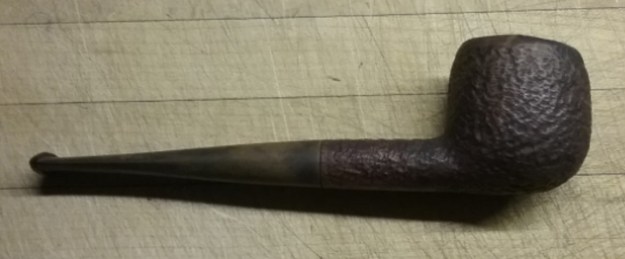
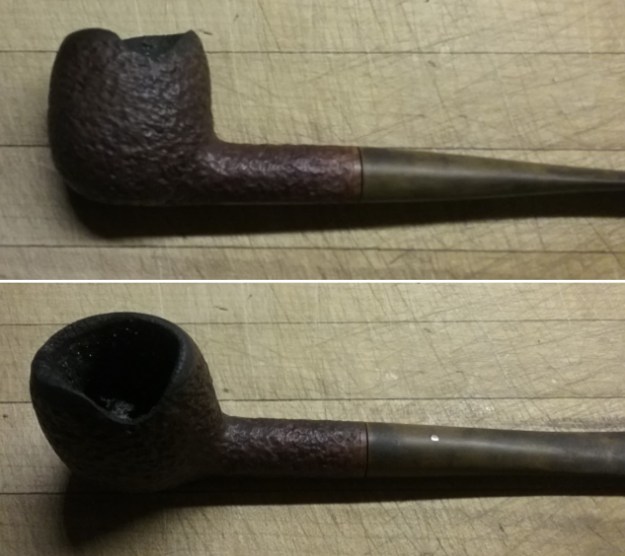
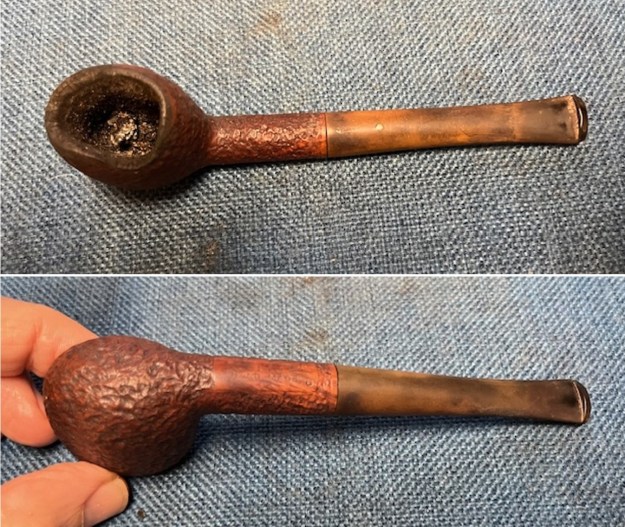
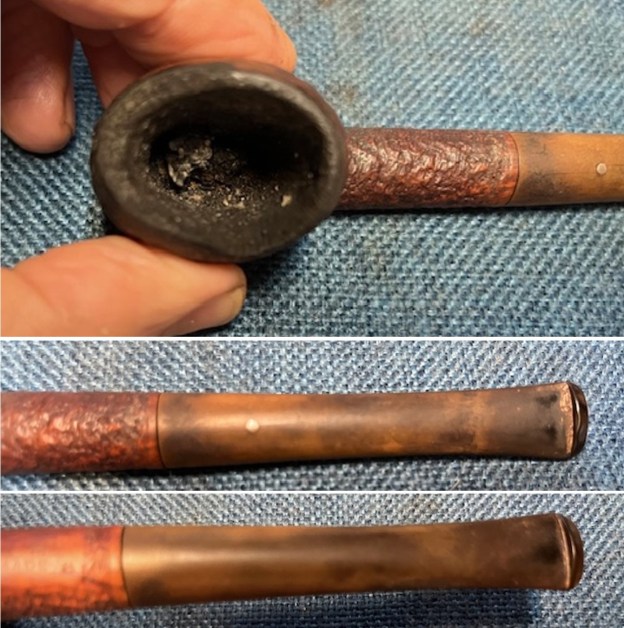
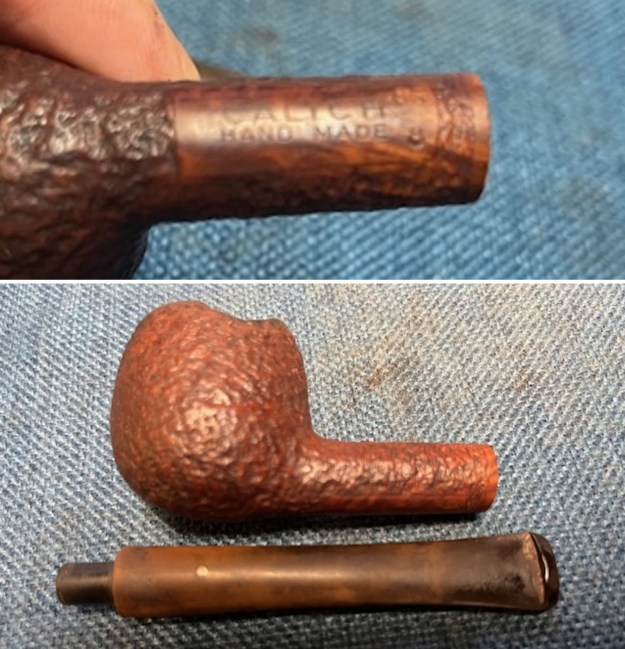
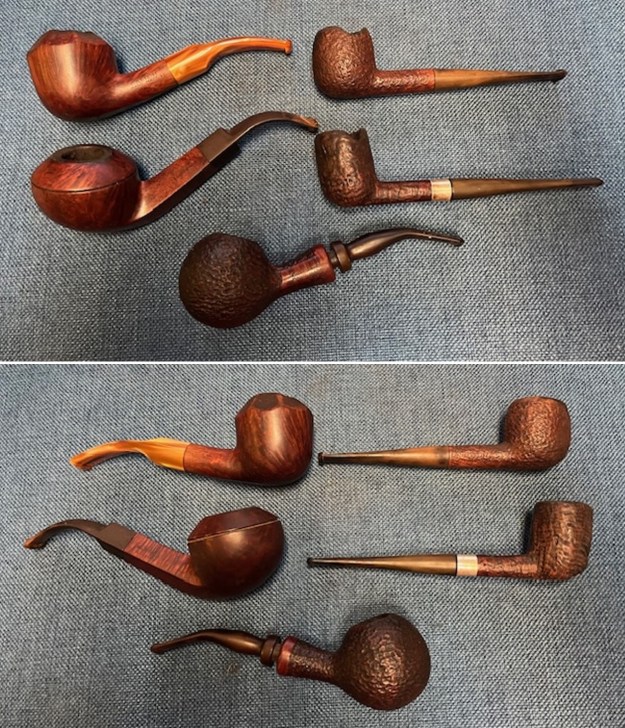
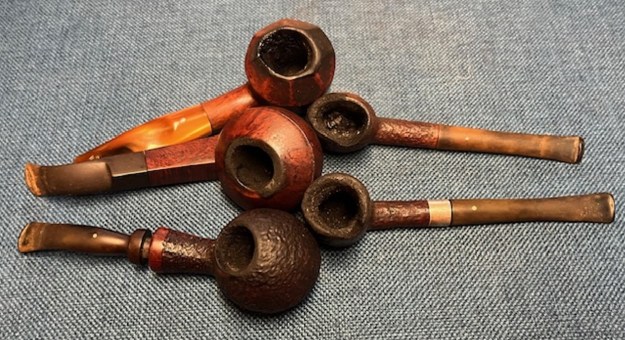
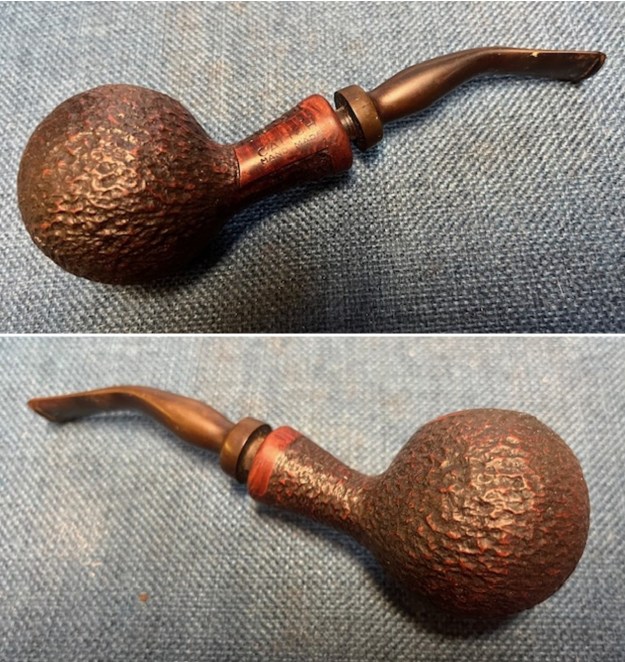
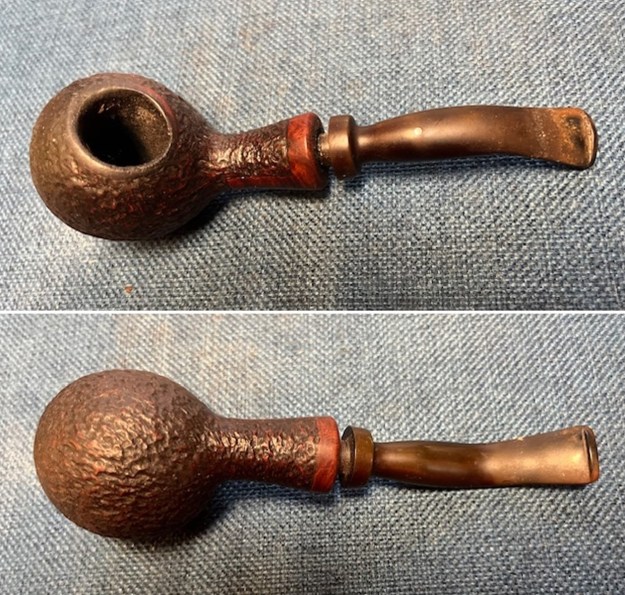
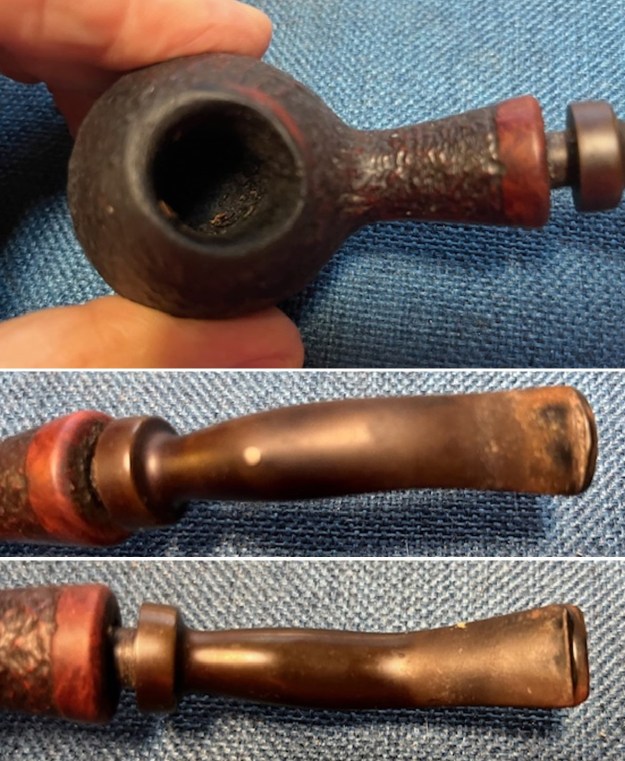
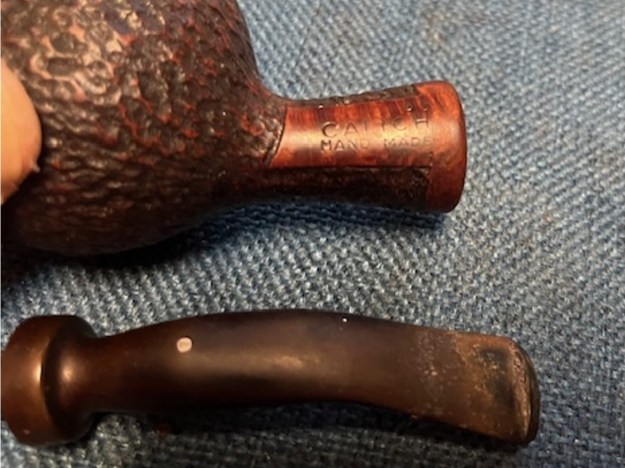
I replied to Kathleen and invited her to send the pipes to me in Vancouver. They arrived just before I left for my visit with my Dad in Idaho. Here is what I found when they arrived. There were three Caliches, a Dunhill, and an Ed Burak Connoisseur. The Calich Pipes included a rusticated straight Opera, a bent Rhodesian with an octagonal rim cap and an acrylic stem. The Dunhill was a sandblast Billiard with a repair band on the shank. The Ed Burak Connoisseur was a bent Bulldog. All had rim top damage from being lit with a torch lighter. Some were in worse condition than others. The worst were the Calich Opera and the Dunhill Billiard which had torch damage on the left side of the rim and down the bowl side. The others had varying degrees of burn damage. I set them aside until I returned home from my visit. She sent me photos of the next pipe, a Calich Opera Pipe. I took the pipes out of the box and laid the group out on my worktable. I took some photos of the group to show their condition. The photo of the left side of the shank shows the damage I mentioned in the earlier paragraphs. The right-side photo looks very good. The photos from the rim top show a lot of damage and the overall condition of the pipes very clear. After looking through the last two pipes I decided to work on the last of the Calich pipes and by far the one with the worst damage of the three. This one is a rusticated oval bowled pipe or Opera that is stamped CALICH [over] Hand Made [over] 8 and above that 86. It had a smooth rim top, shank end and a rectangle on the underside for the stamping. The pipe had a very thick cake in the bowl and there was a lava overflow on the top. There was also a ball of unburned tobacco in the bottom half of the bowl. There was some major burn damage under the lava on the front edge of the bowl toward the front right as well as a deep burned area on the left back side and edge. The burn was like a large bite out of the top and left side of the bowl as can be seen in the photos. The shank had a thick coat of tars and oils and the stem had a thick tar build up as well so its fit in the shank was very sticky and dirty. The stem itself is vulcanite with a single silver dot on the topside. It was oxidized and had light tooth marks and chatter on both sides of the stem just ahead of the button. There were overflowing tars on the smooth shank end around the fit of the tenon in the mortise. The finish was dusty and tired but had a nice rustication under the grime and appeared to be in good condition. A lot would be revealed once I had cleaned it. I took photos of the pipe before I started my cleanup work. I took a close-up photo of the bowl and rim top to show its condition. The inside of the bowl was heavily caked with a wet oily tobacco and a ball of tobacco in the bottom half. The rim top had damage on the front right in the photo below as well as on the back left. The back left side is the worst as it is quite thin and is like a deep bite mark down the side of the bowl. It left a mess for me to clean up. The stem was also is a mess. There was some light tooth marks and chatter on the top and underside ahead of the button. There was a thick coat of calcification and oxidation on the stem. The silver dot on the stem top was tarnished but very visible.I took a photo of the stamping on the underside of the shank. It is clear and readable as noted above. I removed the stem from the shank and took a photo of the silver dot on the stem top. I am once again including information about John Calich the pipemaker as I have loved John Calich’s pipes for over 25 years now and have collected a few of them. I have restored quite a few of them and written blogs about them that can be read if you are interested in seeing the kind of pipes that John made. They are unique and beautiful. Each of his pipes are a work of art to me. I am including the links to the previous blogs that have written about his pipes.

https://rebornpipes.com/2015/03/03/one-of-my-john-calich-pipes-a-calich-ee-billiard/

https://rebornpipes.com/2019/01/23/i-am-the-happy-owner-of-an-unsmoked-pipe-by-the-late-john-calich/

https://rebornpipes.com/2015/03/03/one-of-my-john-calich-pipes-a-calich-ee-billiard/

https://rebornpipes.com/2014/03/21/reflecting-on-my-collection-of-john-calich-pipes/

Each of the blogs reflects on John’s pipes if you want to get a feel for them take a few minutes and read them.

When John was living I spoke with him several times via phone and had him make some new stems for some of his pipes that I picked up off eBay. He was a very kind gentleman and was always helpful when I spoke with him. He was always ready with encouragement and when I needed to know how to do something when I was first learning to repair pipes he was willing to help. He was one of the old guard of Canadian Pipe makers. I miss him. I am including a short piece from Pipedia on John to give details on his work and the grading of his pipes. The second paragraph below is highlighted in blue as it gives some information on the Grade 12 Apple that I am working on with the single silver dot now. I am also including a photo of John Calich, courtesy Doug Valitchka

John Calich was one of Canada’s finest carvers. He died in July 2008. John was a full-time pipe maker for the last 40 years. Calich pipes were mostly traditional shapes. His signature style is rustication and smooth on the same pipe along with his unique skill to stain a pipe in contrasting colors. He used only top-quality Grecian and Calabrian briar. The mouthpieces are hand finished Vulcanite “A”. Each pipe was entirely made by hand. John Calich was featured in the summer 2005 issue of Pipes & Tobacco.

His pipes are graded 3E – 7E. Retail prices range from$ 145.00 to $ 500.00 Each pipe is stamped “CALICH” 3-8E, his earlier pipes were graded from 3-14, and a single, tiny silver dot is applied to the top of the stem (https://pipedia.org/wiki/Calich).

I summarize the dating information from those blogs now: From my research and conversations I learned that John’s later pipes were graded 3E – 8E. The retail prices for them ranged from $145.00 to $500.00. Each pipe was stamped “CALICH” and given an E grade. His earlier pipes were graded from 3-14 and had a single, tiny silver dot applied to the top of the stem. More information can be found at the Pipedia article above. All of this information told me as expected that the pipe I had was an earlier one.

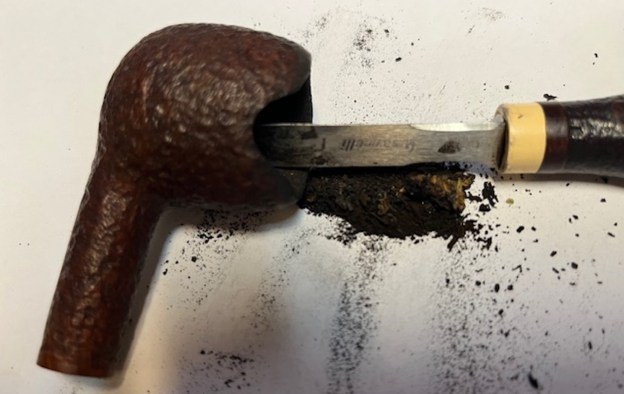
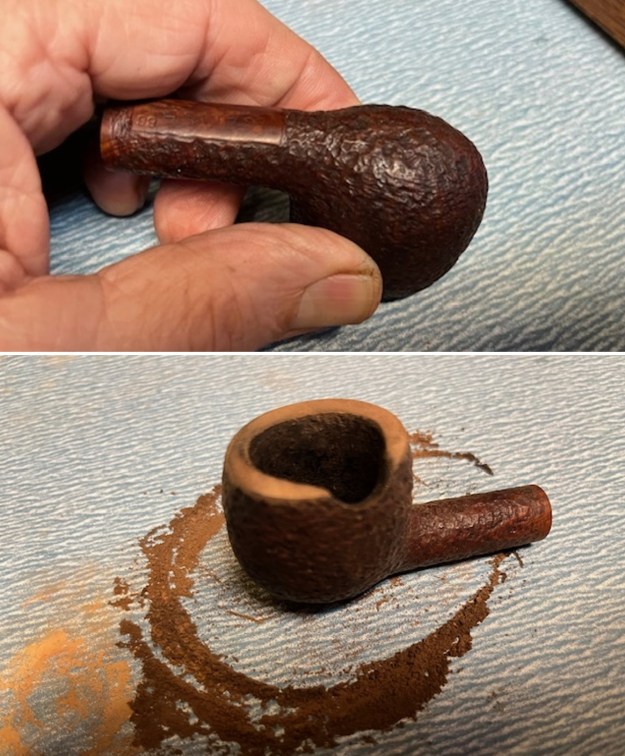
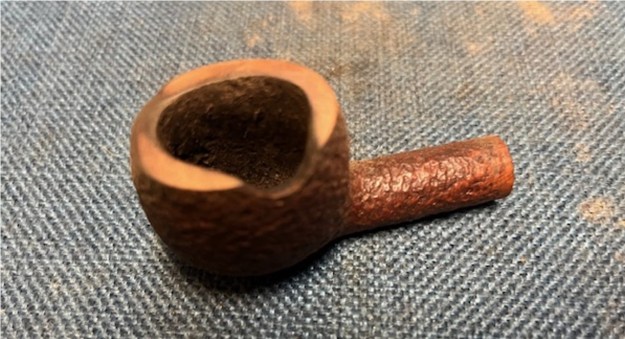
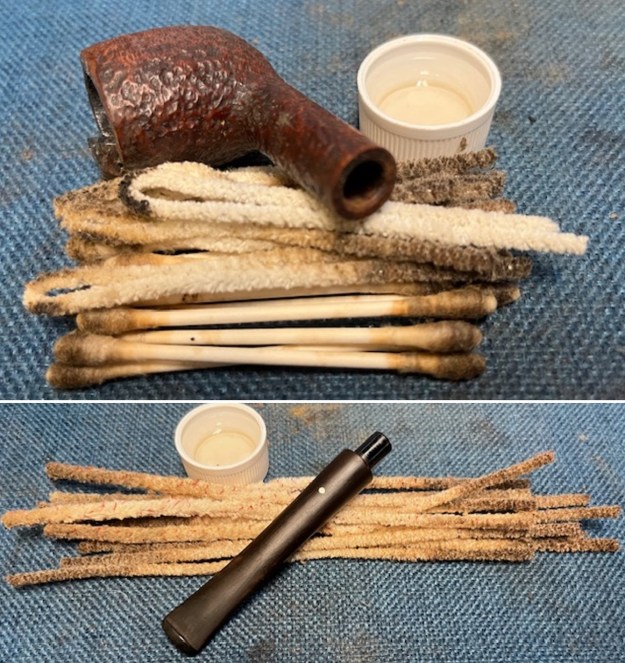
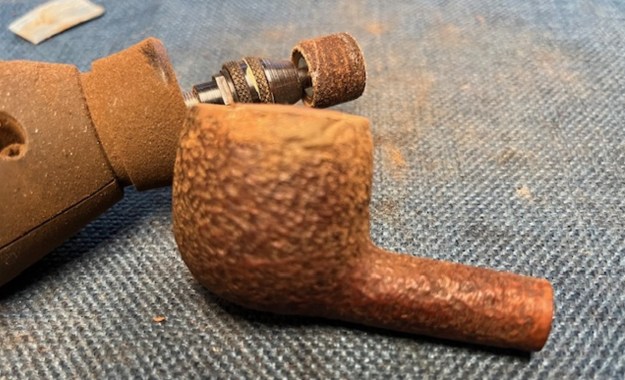
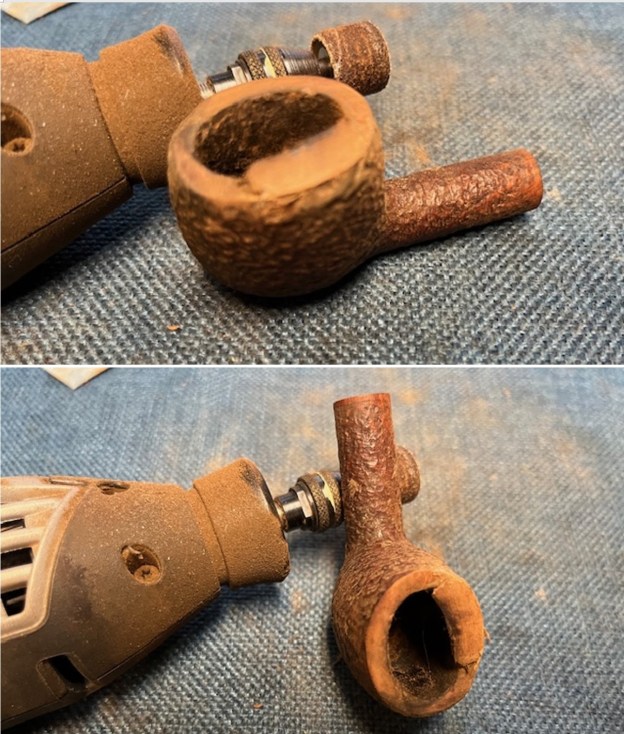
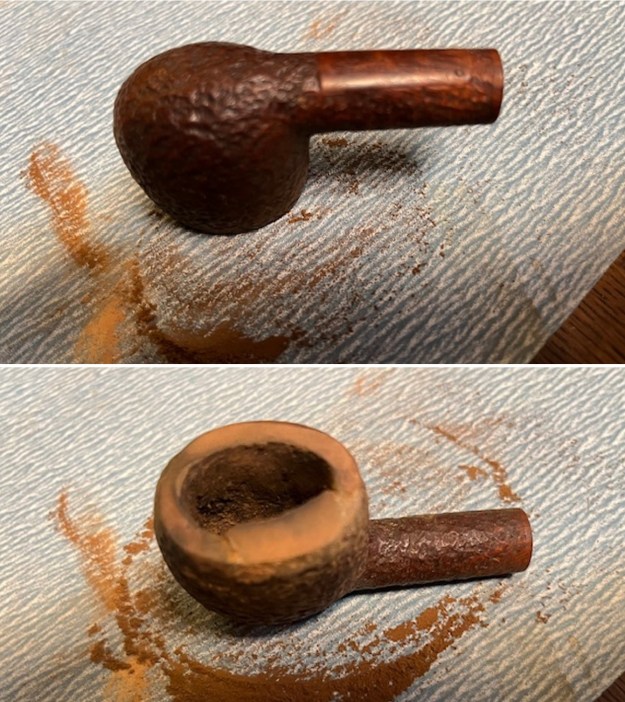
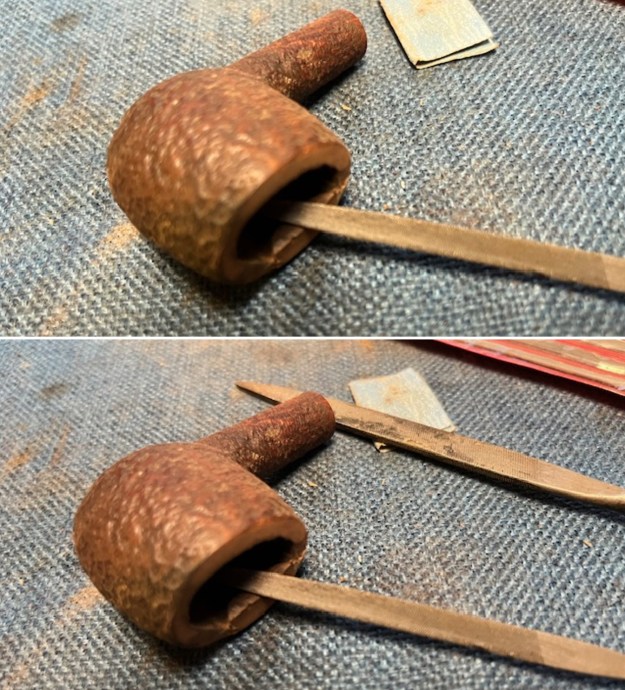
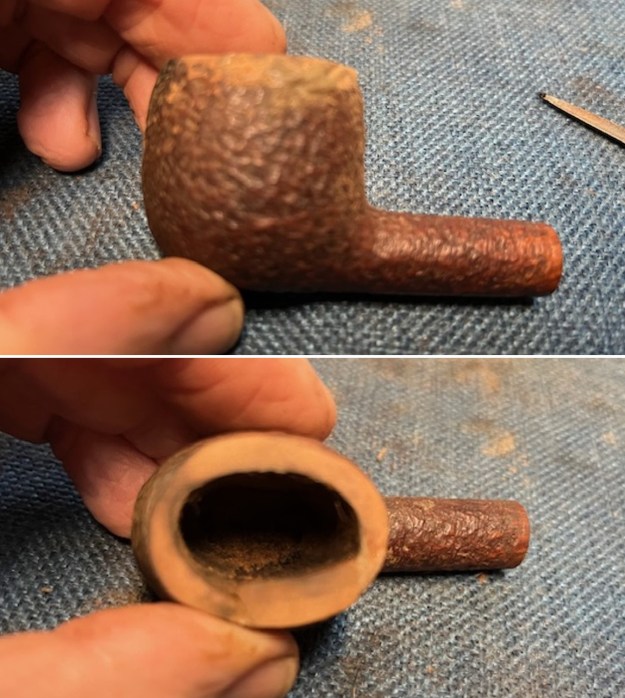
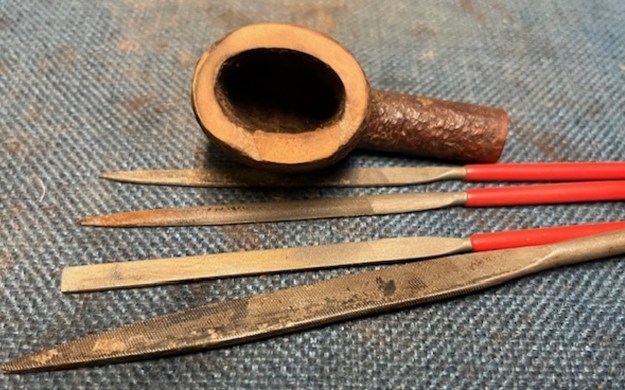
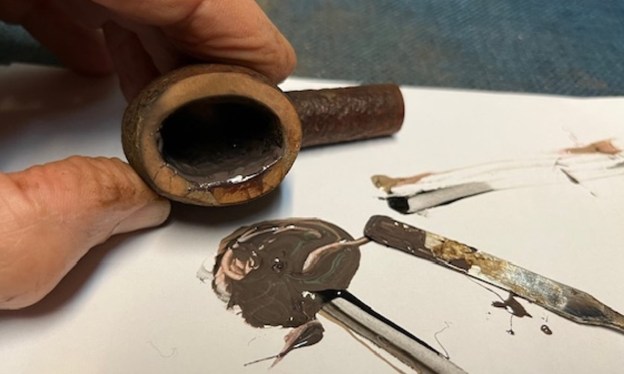
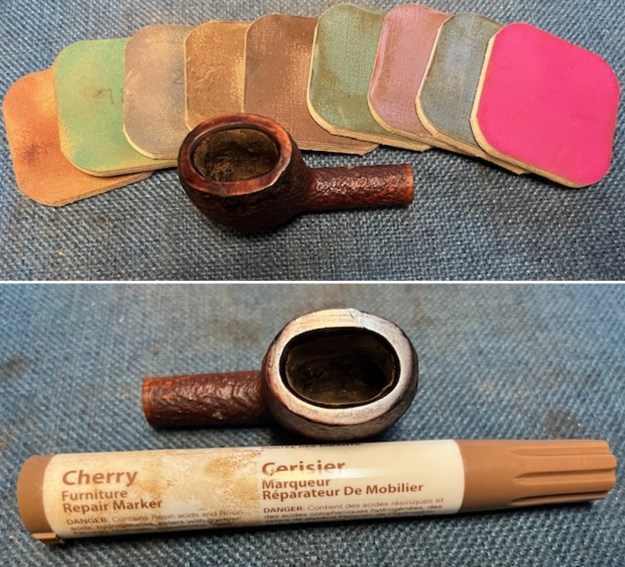
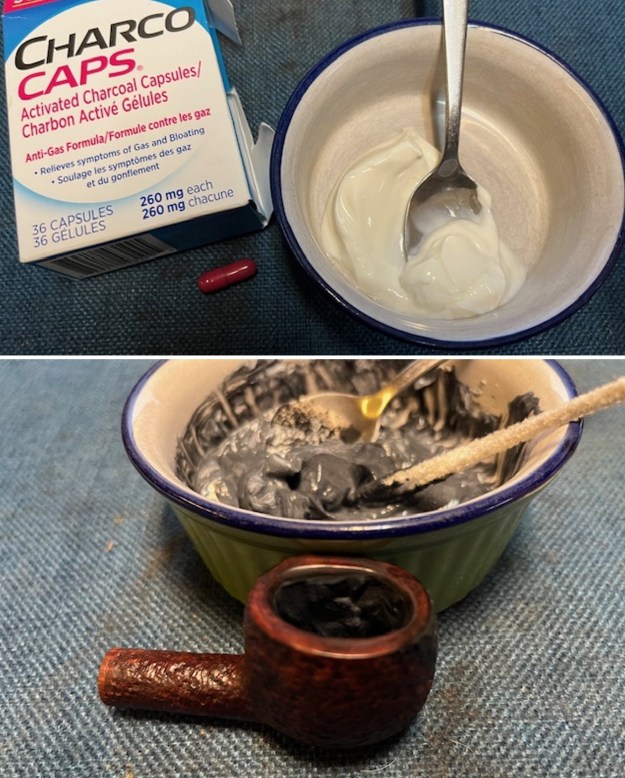
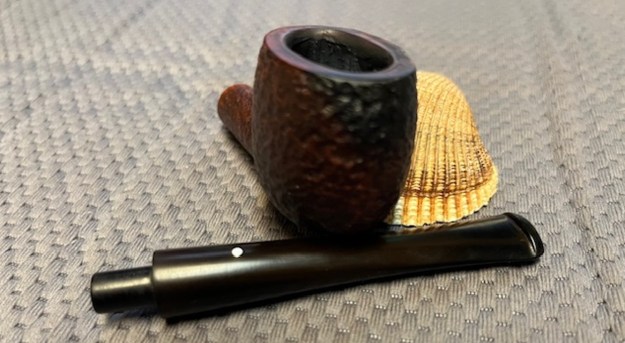
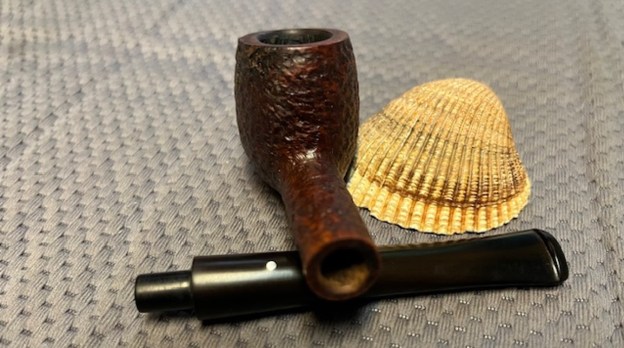
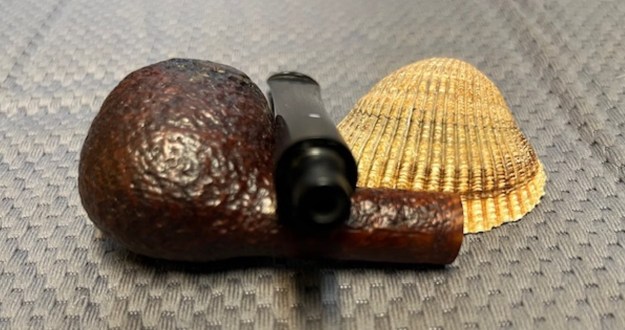
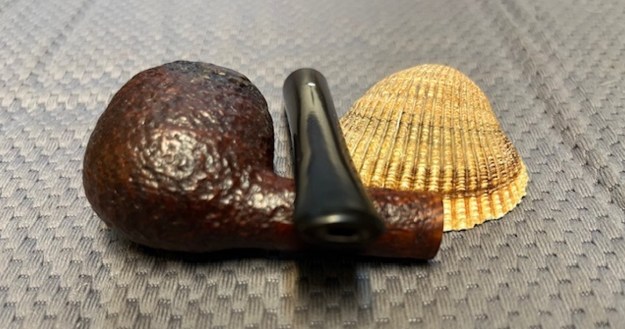
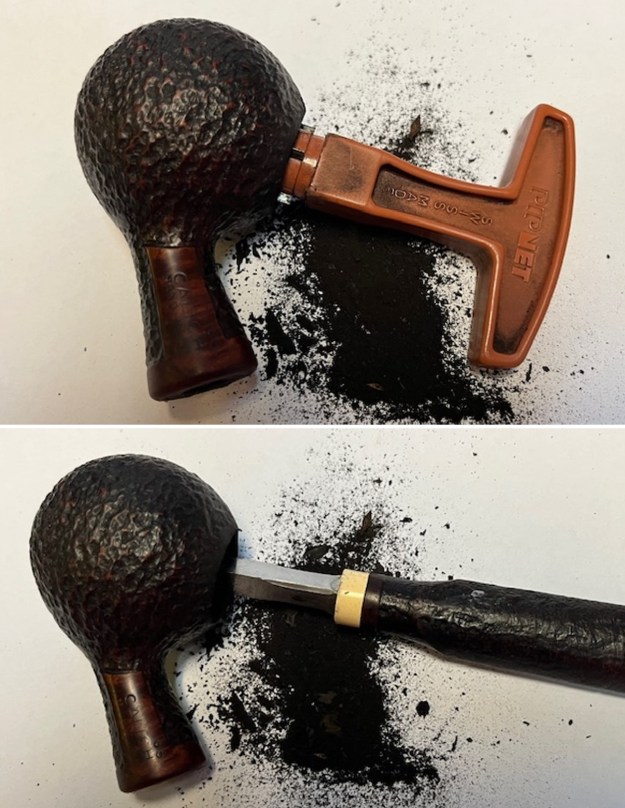
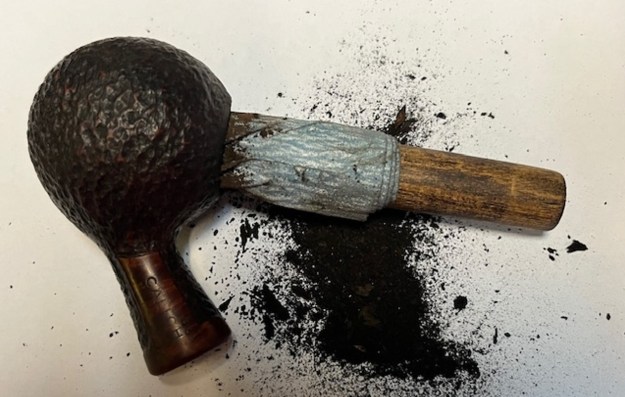
Armed with the information about John’s grading system I knew that the pipe in hand was an earlier Calich Hand Made Grade 8 Opera pipe and the 86 told me it was made in 1986. Now it was time to work on the pipe. The PipNet reamer would not fit in the bowl so I reamed the oval bowl with a Savinelli Fitsall Pipe Knife to scrape back the remaining cake. I would finish my cleaning of the bowl later by sanding it by hand. Once it was clean I turned my attention to the rim top. I cleaned up the inner edge of the bowl with a folded piece of 220 grit sandpaper. I flattened out the damaged area with the sandpaper to give a flat surface for my repair. I topped the bowl with 220 grit sandpaper on a topping board to give the rim top a smooth surface. I decided to work on the repair to the deep burned area on the left side of the bowl. I cut a piece of briar out of a cracked bowl I keep around for just this purpose. I eyeballed the shape of the divot and used a hacksaw blade and a carving knife to remove the chunk that I would use. I shaped the piece of briar more closely to the shape with a Dremel and a sanding drum. I mixed up a batch of JB Weld and applied the mixture with a dental spatula to the divot on the bowl side and on the underside of the cut piece of briar. I pressed the piece of briar into divot on the bowl side. I held it until it started to set and then set it aside to cure. I purposely used a little taller piece of briar than necessary as it gave me material to work with. I have found it simpler to work with the larger piece and then remove the excess. Once the JB Weld set enough for the repair not to move I set it aside to cure. Once the piece was solid in the repair I decided to work on the internals. I scraped the inside of the mortise with a dental spatula to remove the hardened tars and oils that lined the walls of the shank. Once I had that done I cleaned out the airway to the bowl, the mortise and the airway in the stem with pipe cleaners, cotton swabs and alcohol. When I finished the pipe smelled very clean. Once the repair had cured I used a Dremel and sanding drum to remove the excess briar and flatten out the rim top as much as possible with the tool. I then topped the bowl again on a topping board with 220 grit sandpaper to get a smooth rim top. With the top flattened, I used files to reduce the inner edge and reshape it to match the inner edge on the right side of the bowl. It took a bit of time and working through several needle files but it looked much better when I finished. I still had some work to do on the rim top and the inner edge but it was very close. I am still trying to decide if I will leave the rim top smooth or rusticate it to match the bowl rustication. Time will tell! I mixed up another batch of the JB Weld and spread it on to the inside wall of the bowl to protect the area where the bowl and inserted piece joined. This would keep the heat from following the repair joint out to the exterior and create potential burnout in the bowl. I set it aside to allow the JB Weld time to cure and harden before I sanded it smooth.I scrubbed the briar with some Before & After Briar Cleaner and a tooth brush and wiped it off with a clean paper towel. The Briar Cleaner removed a lot of built up grime and oils from the grooves of the rustication and the bowl looked much better. I polished the smooth rim top with micromesh sanding pads – wet sanding with 1500-12000 grit sanding pads. I wiped it down with a damp cloth after each pad. I was able to smooth it out nicely and it did not look too bad. The repaired area actually blended in very well. I would not need to rusticated it! I touched up the sanded and rebuilt rim top with a Cherry stain pen. The match on the rim with the rest of the pipe is perfect.Once the internal coating of JB Weld cured I sanded it with 220 grit sandpaper to smooth it out. I then mixed a batch of bowl coating with some sour cream and charcoal powder and coated the walls of the entire bowl. I used two teaspoons of sour cream and four of the Charco caps to mix a black/grey mixture that I use for the bowl coating. I applied it to the walls of the bowl with a folded pipe cleaner and covered the interior of the bowl with it so that it was smooth. I set it aside to cure. Once it hardens and dries it is odorless and leaves behind no lingering taste. I rubbed the bowl down with Before & After Restoration Balm. I worked it into the surface of the briar with my fingertips to clean, enliven and protect it. I let the balm sit for ten minutes then buffed with a cotton cloth to raise the shine. Mark Hoover’s Balm is a product that I have come to appreciate and one I use on every pipe I have been working on. I set the bowl aside and turned my attention to the stem. I “painted” the stem surface of the stem with the flame of a Bic lighter to lift the tooth marks and chatter on the surface. I was able to remove it all. I sanded the stem surface with 220 grit sandpaper to remove the remaining chatter marks. I wiped the stem down with an Obsidian Oil cloth and it looked much better at this point.I sanded the stem with 320-3500 grit sanding pads to break up the remaining oxidation. I wiped it down after each sanding pad with a soft cloth. It began to look good. I polished the stem with micromesh sanding pads – dry sanding with 1500-12000 grit pads. I wiped the stem down after each sanding pad with Obsidian Oil. I polished it with Before & After Pipe Stem Polish – both Fine and Extra Fine. Once I had finished the polishing I gave it final coat of Obsidian Oil and set it aside to dry. This is the fourth of five pipes from Kathleen that I am working on. It is another beautifully shaped 1986 John Calich Hand Made Grade 8 Opera Pipe. It has the kind of beauty I have come to expect from John’s pipes with a smooth rim top and shank end. I put the bowl and stem back together. I polished the bowl and stem with Blue Diamond to polish out the scratches in the briar and the vulcanite. I gave the bowl multiple coats of Conservator’s Wax and the stem multiple coats of carnauba wax. I buffed the pipe with a clean buffing pad to raise the shine. I hand buffed it with a microfiber cloth to deepen the shine. The pipe polished up pretty nicely. The rusticated finish is well done and the polished smooth finish on the shank end and rim top look really good with the black vulcanite stem. This Calich Hand Made Opera Pipe was a challenging pipe to bring back to life. It is a comfortable pipe to hold in the hand. The finished pipe is shown in the photos below. The dimensions of the pipe are Length: 5 ¾ inches, Height: 1 ½ inches, Outside diameter of the bowl: 1inch x 1 ¼ inches, Chamber diameter: 7/8 of an inch x ½ of an inch. The weight of the pipe is 27 grams/.95 ounces. Thanks for reading this blog and my reflections on the pipe while I worked on it. Once I finish the last pipe in the lot I will be sending them back to Kathleen for her husband to enjoy.

Restoring the third of 5 pipes for an old pipeman – a Large Ed Burak Connoisseur Bent Bulldog


Blog by Steve Laug

Earlier in June I received an email regarding restoring some pipes for her husband. Here is here email.

I have one Calich and one Dunhill pipe which my husband destroyed using a torch lighter on. I am wondering if it is possible to get them restored somehow. If you want to have a look I can send pics.

I wrote and asked for photos of the pipes. She wrote that there were actually 5 pipes not two and included photos of all five. I asked her if she was wanting to sell them or just repair them. Here is her response.

No… I don’t want to sell (yet) he’s 86 and has taken up smoking his pipes again. He was using a torch lighter until I discovered and replaced with proper pipe lighters. For now, I’m wondering if it’s possible or even wise to restore them. – Kathleen.

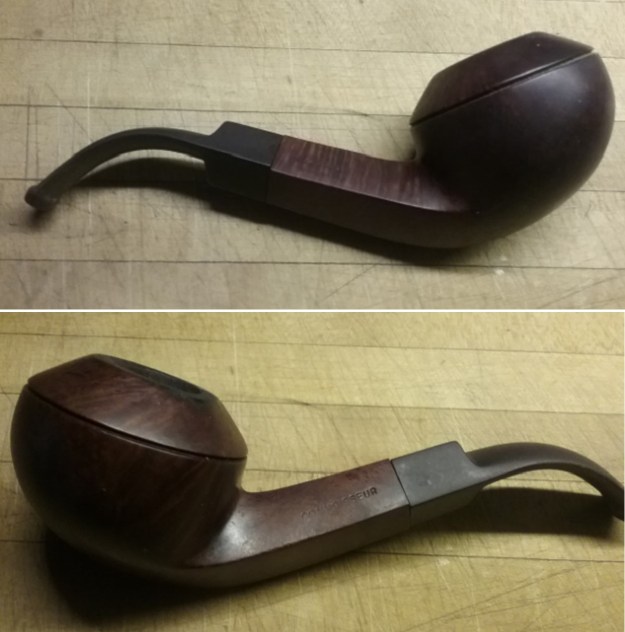
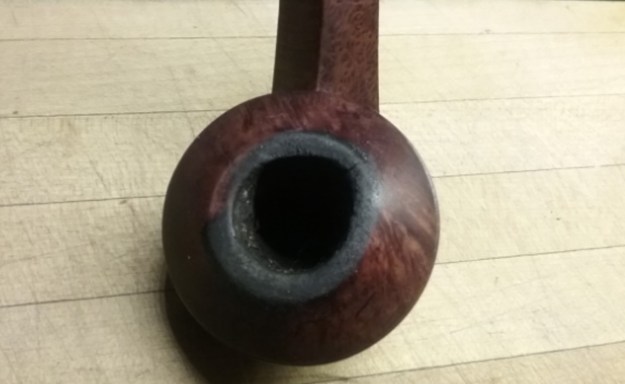
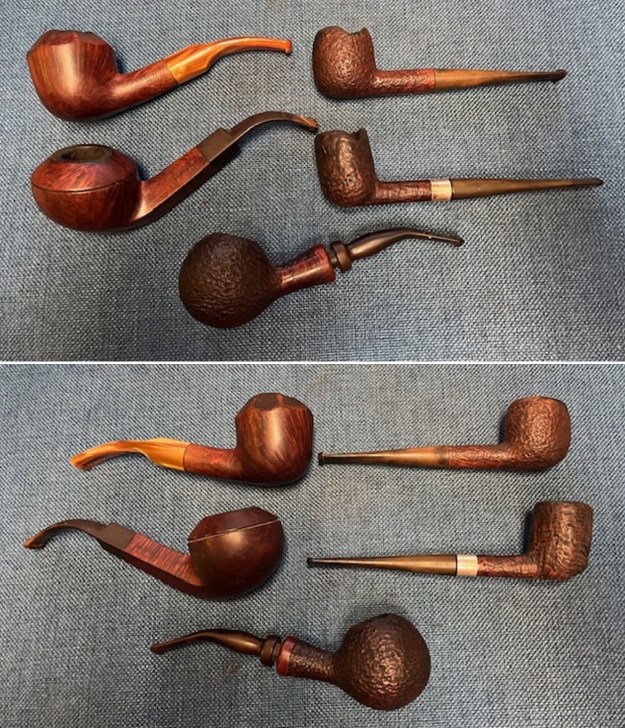
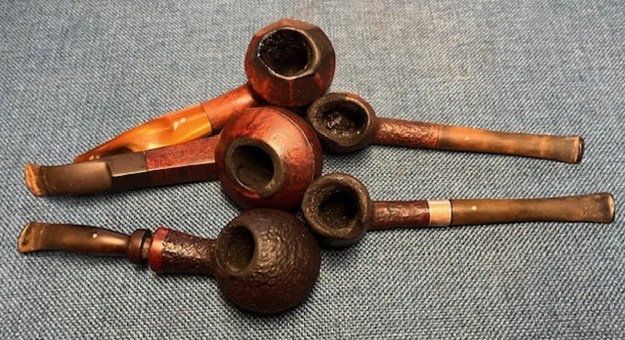
I replied to Kathleen and invited her to send the pipes to me in Vancouver. They arrived just before I left for my visit with my Dad in Idaho. Here is what I found when they arrived. There were three Caliches, a Dunhill, and an Ed Burak Connoisseur. The Calich Pipes included a rusticated straight Opera, a bent Rhodesian with an octagonal rim cap and an acrylic stem. The Dunhill was a sandblast Billiard with a repair band on the shank. The Ed Burak Connoisseur was a bent Bulldog. All had rim top damage from being lit with a torch lighter. Some were in worse condition than others. The worst were the Calich Opera and the Dunhill Billiard which had torch damage on the left side of the rim and down the bowl side. The others had varying degrees of burn damage. I set them aside until I returned home from my visit. Here are the photos that Kathleen sent me of the third pipe – a large Bent Bulldog. I took the pipes out of the box and laid the group out on my worktable. I took some photos of the group to show their condition. The photo of the left side of the shank shows the damage I mentioned in the earlier paragraphs. The right-side photo looks very good. The photos from the rim top show a lot of damage and the overall condition of the pipes very clear. After looking through the remaining group of three pipes I decided to work next on the Burak Connoisseur. This one is a smooth Bent Bulldog with a single ring below the rim cap. It is stamped Connoisseur on the left side of the shank. On the right side it is stamped with the signature of Ed Burak in script. The smooth finish Bulldog had a very thick cake in the bowl and there was a lava overflow on the top. There was heavy burn damage under the lava like the other two pipes I have worked on. There was one on the front edge of the bowl toward the front right as well as much heavier burn damage on the left back edge. The bowl was out of round. The finish had a lot of oils and tars built up on the sides and the cap. It was oily and sticky to the touch while I held it. The shank had a thick coat of tars and oils and the stem had a thick tar build up as well so its fit in the shank was very sticky and dirty. The stem is a vulcanite saddle without any stamping on it at all. It was oxidized, calcified and had tooth marks on the stem ahead of the button. There were overflowing tars on the smooth shank end around the fit of the tenon in the mortise. A lot would be revealed once I had cleaned it. I took photos of the pipe before I started my cleanup work. I took a close-up photo of the bowl and rim top to show its condition. The inside of the bowl was heavily caked with a wet oily tobacco. The rim top had damage on the front right in the photo below as well as on the back left. The back left side is the worst as it is quite thin and the bowl is out of round. It left a mess for me to clean up. The stem was also is a mess. There was some tooth marks and dents on the top and underside ahead of the button. There was a thick coat of calcification and oxidation on the stem.I took a photo of the stamping on the sides of the shank. It is clear and readable as noted above. I removed the stem from the shank and took a photo of the pipe showing the shape and flow of the pipe. It is a nice looking pipe that shows a lot of damage from burning. I decided to have a look at the history of the brand. Over the years I have had a few Connoisseur pipes but none of them were stamped like this one with the Ed Burak signature on the left side. I wondered about the stamping. It was my guess that it somehow helped with dating the pipe to a particular time in Ed Burak’s pipe making career but I did not know for sure. I decided that before working on this particular pipe I would do a little research on the brand and the maker on Google. I always check Pipedia to see what they might have on a maker. In this case I was not disappointed. There as a great article on the site. The link to that is: http://pipedia.org/wiki/Burak.
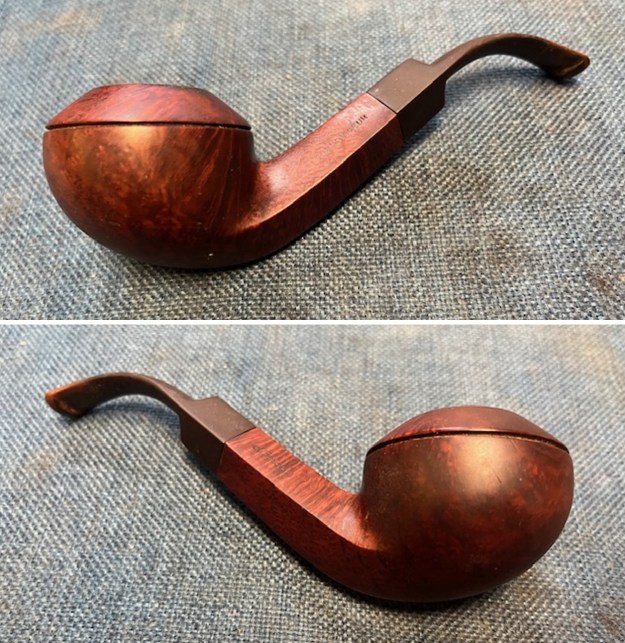
On that site I found not only some history on Ed Burak and the brand. I also found some great information on the site regarding Ed Burak. I quote from that article below. If you should wish to read it in its entirety click on the link noted above. The article is entitled, The Art of Edward F. Burak, Dean of American Pipe Designers.

“Ed Burak is the dean of American pipe designers whose work has had a worldwide influence on the thinking and the work of contemporary pipe makers.”

“…he met and subsequently began working with Meerschaum master Paul Fisher, with whom he stayed 5 years. During that time he produced a small number of Meerschaum pipes, a few of which are still extant in collections. He also worked for Wally Frank as a pipe designer. In 1968 he bought the Connoisseur Pipe Shop, where he was able to concentrate on his own designs. Burak’s pipes have been carved by a number of well-regarded pipe makers, among them Joe Corteggione and Tony Passante. Several of his freehands are in the Museum of Modern Art in New York and have been part of a traveling exhibit of the American Craft Museum.”

“Burak’s work is best known as pipe design as fine art. He admires pays tribute to the classic English designs of the old Barlings and Comoy’s and offers a line of “Classics” which begin with these traditional values yet reflect his own interpretations.”

“Because these pipes are different, so carefully crafted, they not only please the eye, but educate it. Most pipe makers will start with an idea and work the wood toward that goal, but will change their original design to accommodate the briar. Burak does not allow the medium to modify the intent. Minor surface flaws are left on the pipes. No staining is permitted; all Connoisseurs have a natural finish, with only carnauba was added.”

“As a significant footnote, the reader should note that Ed Burak’s pipes are NOT made by Paul Perri, nor Weber, nor Jobey, as erroneously stated in Lopes’s book “Pipes: Artisans and Trademarks.” Burak prefers not to disclose the name of his current pipe carver.”

I also learned on Pipephil’s website, http://www.pipephil.eu/logos/en/about-en.html that the stamping did indeed give some information that helped in identifying the period that a particular pipe was made. There I found that one may generally separate Connoisseur pipes date of manufacture into three periods.

From late 1960’s until 1974: no stampings
From 1974 until 1981: CONNOISSEUR over N.Y.C.
From 1981 on: CONNOISSEUR over N.Y.C. and Ed Burak’s signature

The pipe I was working on was stamped like the photo below. It had the Connoisseur stamp on the left side and Ed Burak’s signature on the right side. That dated the pipe to the time period from 1981 to the time that the Connoisseur Pipe Shop in Manhattan closed in 2009 on Ed’s retirement.

I did some further searching and foun that on the Puff.com Pipe Forums was a thread on Connoisseur pipes that confirmed how the pipes were finished when they were originally made. http://www.puff.com/forums/vb/general-pipe-forum/299824-ed-burak-pipes-man.html. There in the latter part of a post by a member identified as Mr. Rogers was the information that I was seeking confirmation about.

“His premium pipes were like nothing I had seen before. He finished all of his pieces with only wax, no stain. He incorporated blemishes into his designs and made no attempt to hide these flaws with fillers. I frequented the CPS (Connoisseur Pipe Shop) as a high school, college, then grad school student, never really having the funds to purchase his premium pieces. As luck would have it, once I became established in my work/field, the CPS was long gone…”

Now that I had a pretty good idea of when the pipe was made and what the stamping meant, it was time to go to work cleaning up this beauty. I knew that the pipe in hand was made between 1981- 2009. I reamed the bowl with a PipNet Pipe reamer using the first cutting head. I took the cake back to bare briar so that I could check out the inside walls. I used a Savinelli Fitsall Pipe Knife to scrape back the remaining cake. I finished my cleanup of the walls by sanding it with 220 grit sandpaper wrapped around a piece of dowel. I scraped off the lava buildup on the rim top with the edge of a Savinelli Fitsall Pipe Knife. I was able to remove the majority of the build up leaving the burn damage very clear.I worked on the internals next. I cleaned out the airway to the bowl, the mortise and the airway in the stem with pipe cleaners, cotton swabs and alcohol. When I finished the pipe smelled very clean.I scrubbed the briar with undiluted Murphy’s Oil Soap and a tooth brush and rinsed it off with warm running water. I scrubbed the rim top with a tooth brush and warm running water at the same time. I dried the bowl off with a soft microfiber cloth and gave it a light buffing. I also cleaned out the shank, mortise and airway in the stem and shank with Murphy’s Oil Soap and shank brushes to clean out the oils and tars on the inside. You can see the darkening or burn damage on the top of the rim and the outer edge of the rim cap. I am hoping it is removable. Once it was clean I turned my attention to the rim top. To smooth out the damage on the cap I topped the bowl with 220 grit sandpaper to smooth out the top. I took a photo of the rim top at this point. The burn damage on the back left is very visible and will need to be rebuilt.I rebuilt the back left inner edge up to match the rest with briar dust and clear CA glue. I put a drop of glue on the briar and pressed some briar dust onto the edge with a dental spatula. I carefully topped the repaired rim top with 220 grit sandpaper and took a photo of the rim at this point in the process.I worked over the inner edge of the bowl with a wooden ball/sphere and 200 grit sandpaper to give the inner edge a slight bevel that would help blend in the repair that I had made to the top and inner edge. It began to look much better at this point. I touched up the rim top with a Cherry Stain Pen to match the colour on the bowl. It looked pretty good considering where it started.I sanded the bowl and cap with 320-3500 grit sanding pads to smooth it out and blend in the restained cap. I wiped the bowl down between each pad with a damp cloth. When I finished it wiped it down with a cotton pad and alcohol. I polished the bowl with micromesh sanding pads – wet sanding with 1500-12000 grit sanding pads. I wiped it down with a damp alcohol cotton makeup pad after each sanding pad. I rubbed the bowl down with Before & After Restoration Balm. I worked it into the surface of the briar with my fingertips to clean, enliven and protect it. I let the balm sit for ten minutes then buffed with a cotton cloth to raise the shine. Mark Hoover’s Balm is a product that I have come to appreciate and one I use on every pipe I have been working on. I set the bowl aside and turned my attention to the stem. The stem had tooth marks and chatter on both sides ahead of the button. Before I could work on them I needed to remove the oxidation and the calcification on the surface. I scrubbed the stem with Soft Scrub on cotton pads to remove them both.Once it was clean, I painted the tooth marks and chatter with the flame of a lighter to try to lift the marks. Many of them were lifted thanks to the memory of vulcanite. I filled in the remaining marks with black super glue and set it aside to dry.Once the repairs cured I used two small files to flatten them and started process of blending them into the surface. I sanded the repairs with a folded piece of 220 grit sandpaper and they were removed. The surface was smooth. I sanded the stem with 320-3500 grit sanding pads to smooth out the remaining marks and begin polishing the stem. I wiped it down after each sanding pad with a soft cloth. It began to look good. I polished the stem with micromesh sanding pads – wet sanding with 1500-12000 grit pads. I wiped the stem down after each sanding pad with Obsidian Oil. I polished it with Before & After Pipe Stem Polish – both Fine and Extra Fine. Once I had finished the polishing I gave it final coat of oil and set it aside to dry. This is the third of five pipes from Kathleen that I am working on. It is a beautifully shaped Ed Burak Connoisseur Bent Bulldog. It has the kind of beauty I have come to expect from other pipes of Ed’s I have worked on. I put the bowl and stem back together. I polished the bowl and stem with Blue Diamond to polish out the scratches in the briar and the vulcanite. I gave the bowl and the stem multiple coats of carnauba wax. I buffed the pipe with a clean buffing pad to raise the shine. I hand buffed it with a microfiber cloth to deepen the shine. The pipe polished up pretty nicely. The smooth finish is well done and the reshaped rim cap look really good with the variegated acrylic stem. This Burak Connoisseur Bent Bulldog was a fun pipe to bring back to life. It is a comfortable pipe to hold in the hand. The finished pipe is shown in the photos below. The dimensions of the pipe are Length: 6 inches, Height: 2 inches, Outside diameter of the bowl: 2 inches, Chamber diameter: 7/8 of an inch. The weight of the pipe is 61 grams/2.12 ounces. Thanks for reading this blog and my reflections on the pipe while I worked on it. Once I finish the other three pipes in the lot I will be sending them back to Kathleen for her husband to enjoy once again.

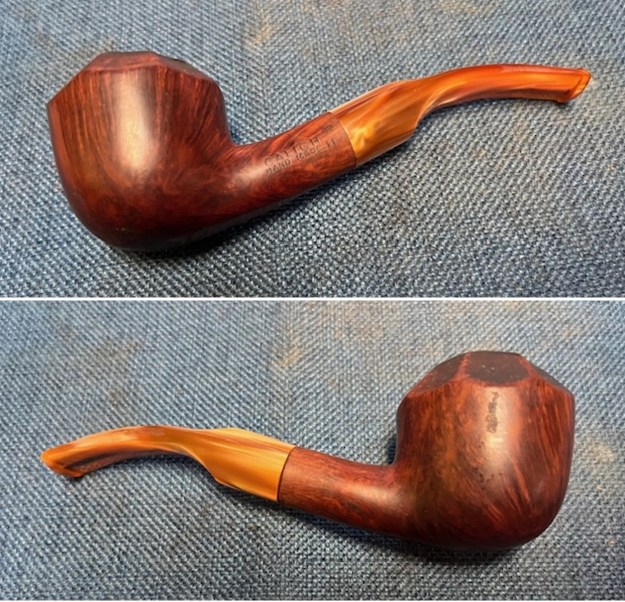
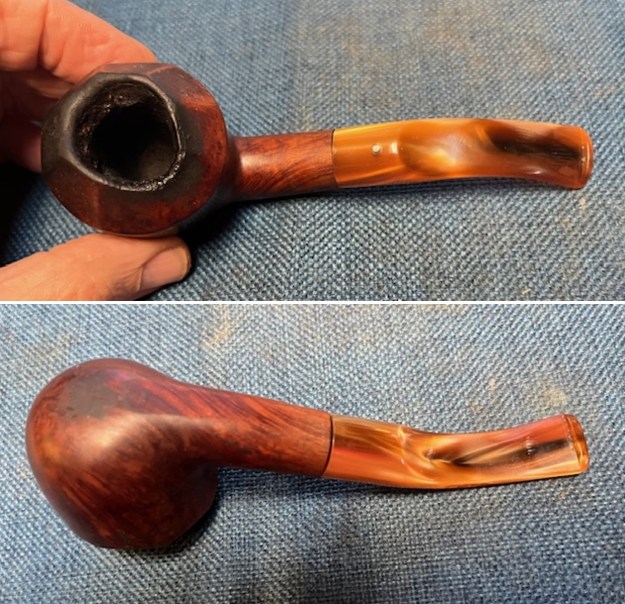
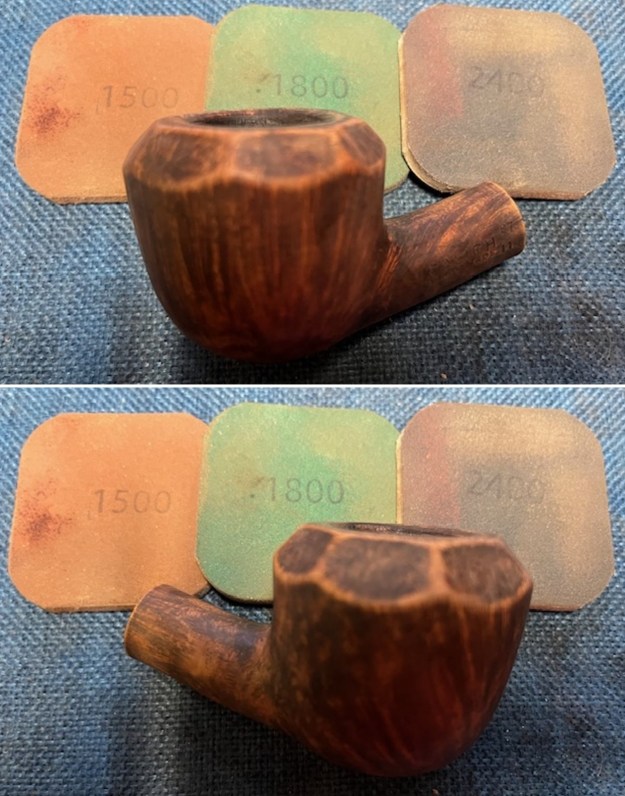
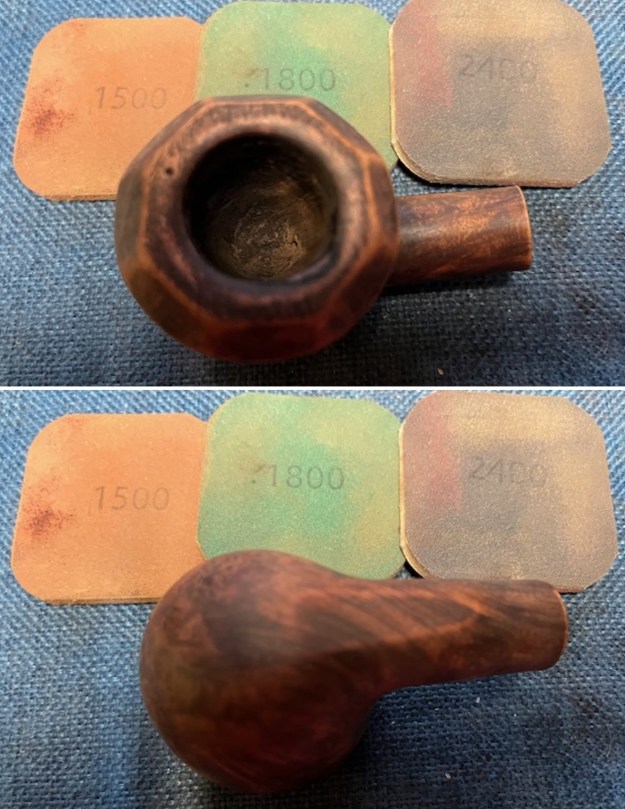
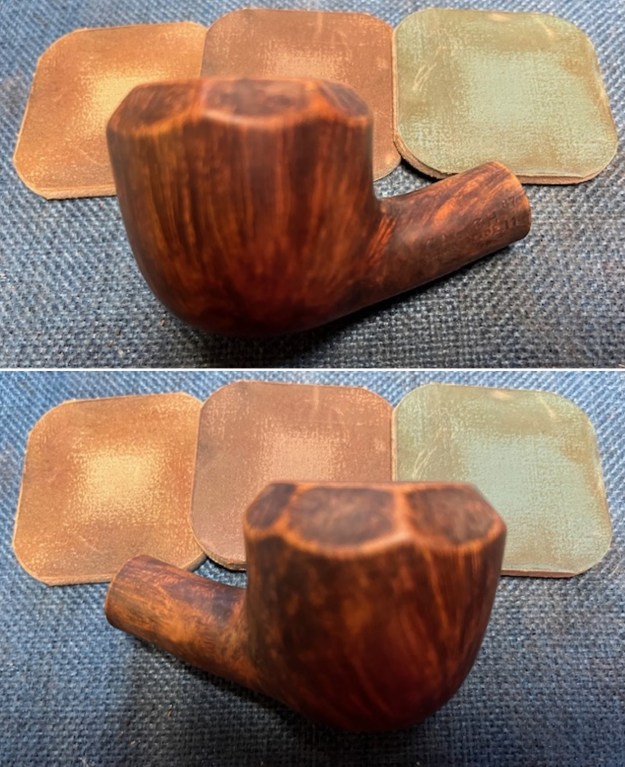
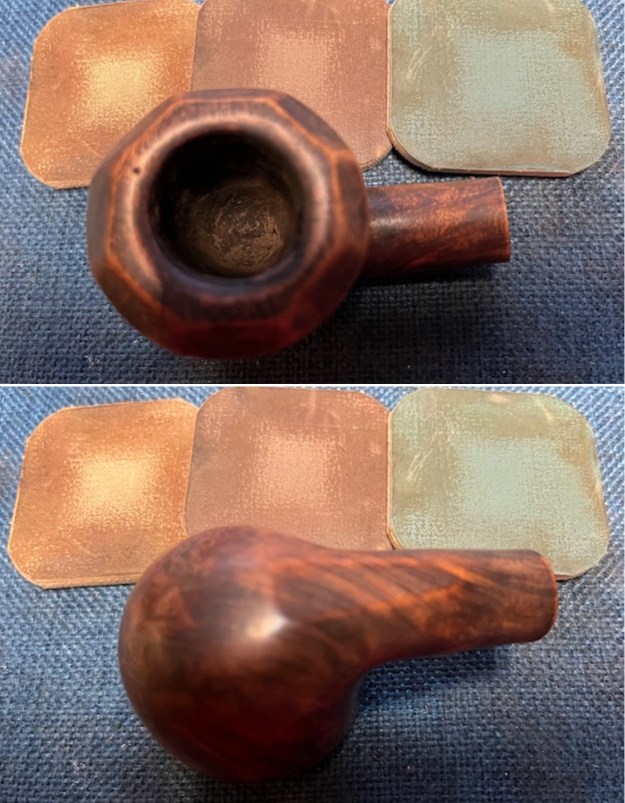
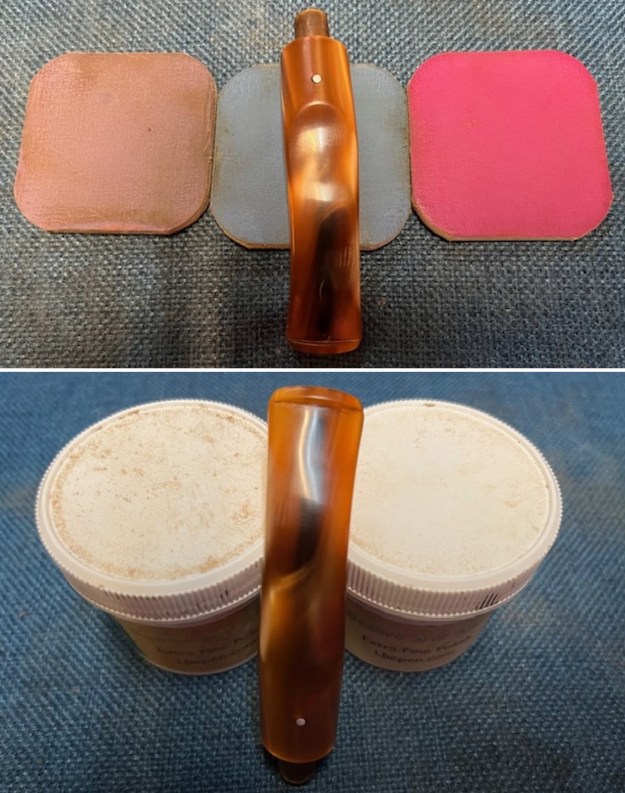
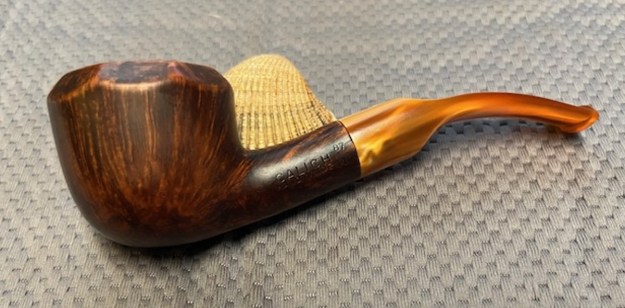
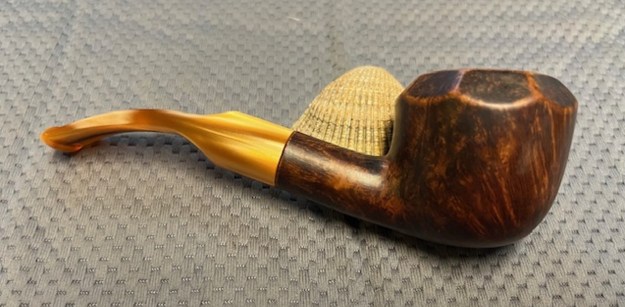
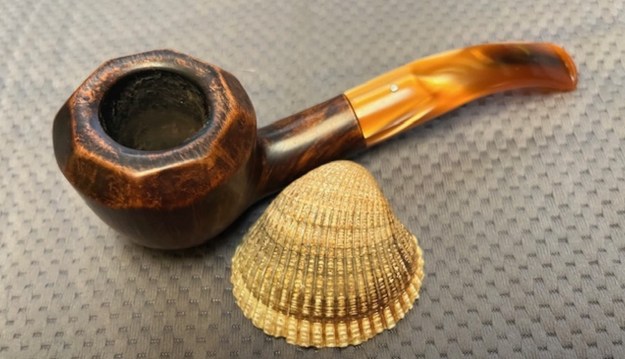
Restoring the second of 5 pipes for an old pipeman – a Calich Hand Made Grade 11 Rhodesian


Blog by Steve Laug

Earlier in June I received an email regarding restoring some pipes for her husband. Here is here email.

I have one Calich and one Dunhill pipe which my husband destroyed using a torch lighter on. I am wondering if it is possible to get them restored somehow. If you want to have a look I can send pics.

I wrote and asked for photos of the pipes. She wrote that there were actually 5 pipes not two and included photos of all five. I asked her if she was wanting to sell them or just repair them. Here is her response.

No… I don’t want to sell (yet) he’s 86 and has taken up smoking his pipes again. He was using a torch lighter until I discovered and replaced with proper pipe lighters. For now, I’m wondering if it’s possible or even wise to restore them. – Kathleen.

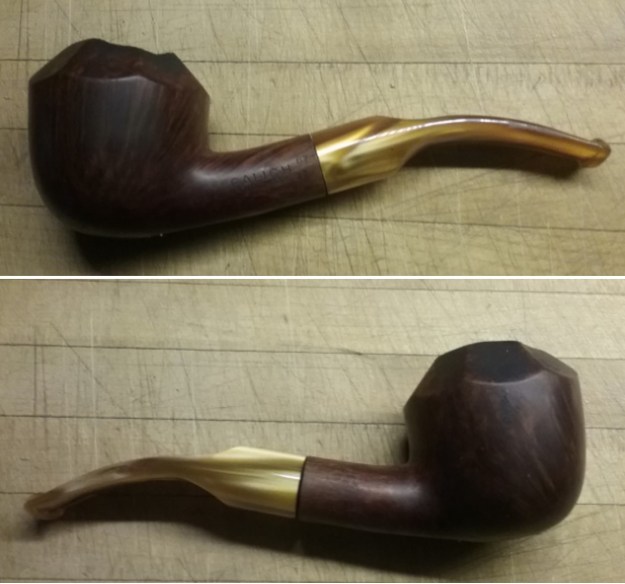
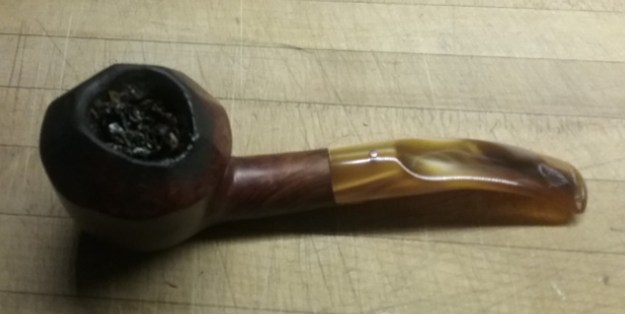
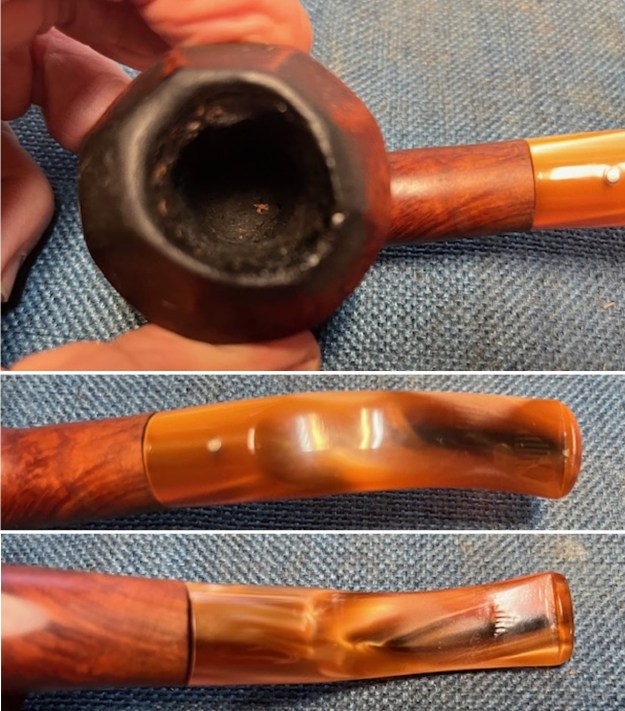
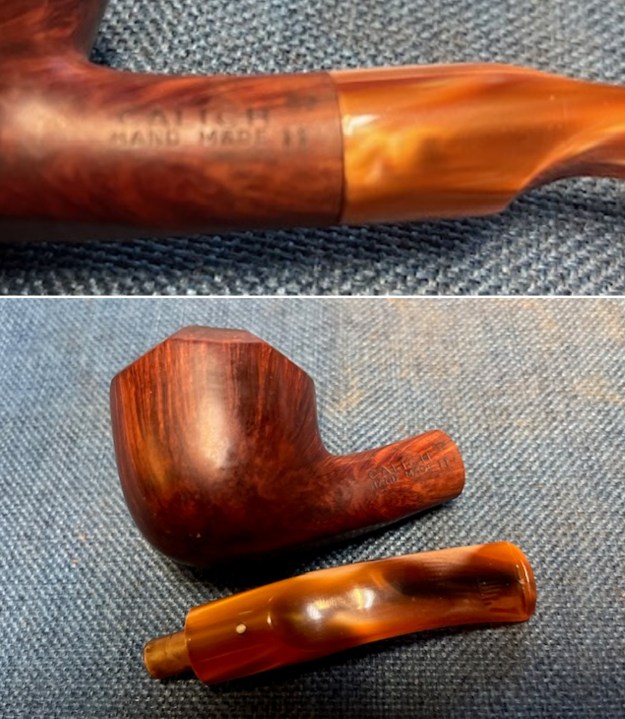
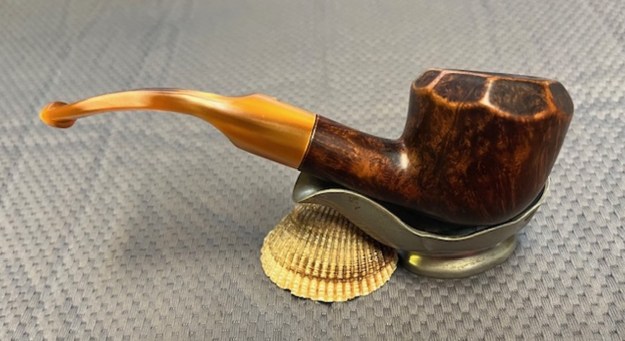
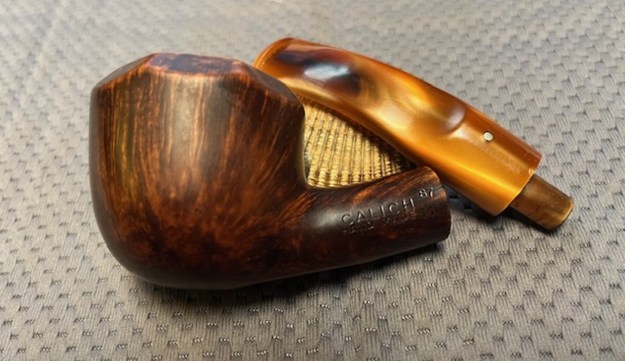
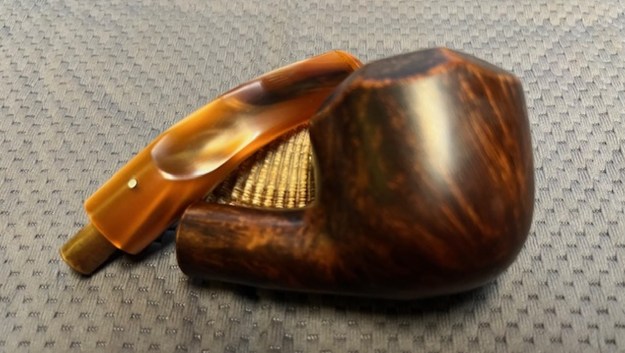
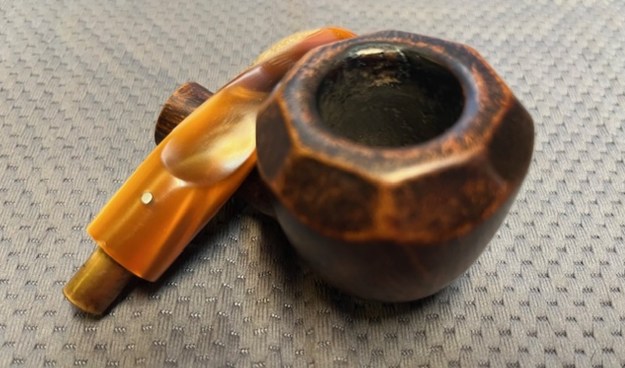
I replied to Kathleen and invited her to send the pipes to me in Vancouver. They arrived just before I left for my visit with my Dad in Idaho. Here is what I found when they arrived. There were three Caliches, a Dunhill, and an Ed Burak Connoisseur. The Calich Pipes included a rusticated straight Opera, a bent Rhodesian with an octagonal rim cap and an acrylic stem. The Dunhill was a sandblast Billiard with a repair band on the shank. The Ed Burak Connoisseur was a bent Bulldog. All had rim top damage from being lit with a torch lighter. Some were in worse condition than others. The worst were the Calich Opera and the Dunhill Billiard which had torch damage on the left side of the rim and down the bowl side. The others had varying degrees of burn damage. I set them aside until I returned home from my visit. Here are the photos that Kathleen sent me of the second Calich pipe – the Rhodesian with the octagonal rim cap. This morning I took the pipes out of the box and laid the group out on my worktable. I took some photos of the group to show their condition. The photo of the left side of the shank shows the damage I mentioned in the earlier paragraphs. The right-side photo looks very good. The photos from the rim top show a lot of damage and the overall condition of the pipes very clear. After looking through the remaining group of four pipes I decided to work on the second of the Calich pipes. This one is a smooth Rhodesian with an octagonal rim cap. It is stamped CALICH [over] Hand Made [over] 11 and just above that is the number 87. The smooth finish Rhodesian had a very thick cake in the bowl and there was a lava overflow on the top. There was heavy burn damage under the lava on the front edge of the bowl toward the front right as well as much heavier burn damage on the left back edge. The bowl was completely out of round. The finish had a lot of oils and tars built up on the sides and the cap. It was oily and sticky to the touch while I held it. There was some burn damage on the front of the bowl on one of the octagonal panels. The shank had a thick coat of tars and oils and the stem had a thick tar build up as well so its fit in the shank was very sticky and dirty. The stem itself is variegated gold acrylic with a single silver dot on the topside of the saddle. It was dirty and had some deep gouges on the surface of the stem ahead of the button. There were overflowing tars on the smooth shank end around the fit of the tenon in the mortise. A lot would be revealed once I had cleaned it. I took photos of the pipe before I started my cleanup work. I took a close-up photo of the bowl and rim top to show its condition. The inside of the bowl was heavily caked with a wet oily tobacco. The rim top had damage on the front right in the photo below as well as on the back left. The back left side is the worst as it is quite thin and the bowl is out of round. It left a mess for me to clean up. The stem was also is a mess. There was some tooth marks and dents on the top and underside ahead of the button. There was a thick coat of calcification and oxidation on the stem. The silver dot on the stem top was tarnished but very visible.I took a photo of the stamping on the left side of the shank. It is clear and readable as noted above. I removed the stem from the shank and took a photo of the pipe showing the silver dot on the top of the saddle. It is a nice looking pipe that shows a lot of damage from burning. Once again I am including a bit about John Calich the pipemaker as I have loved John Calich’s pipes for over 25 years now and have collected a few of them. I have restored quite a few of them and written blogs about them that can be read if you are interested in seeing the kind of pipes that John made. They are unique and beautiful. Each of his pipes are a work of art to me. I am including the links to the previous blogs that have written about his pipes.
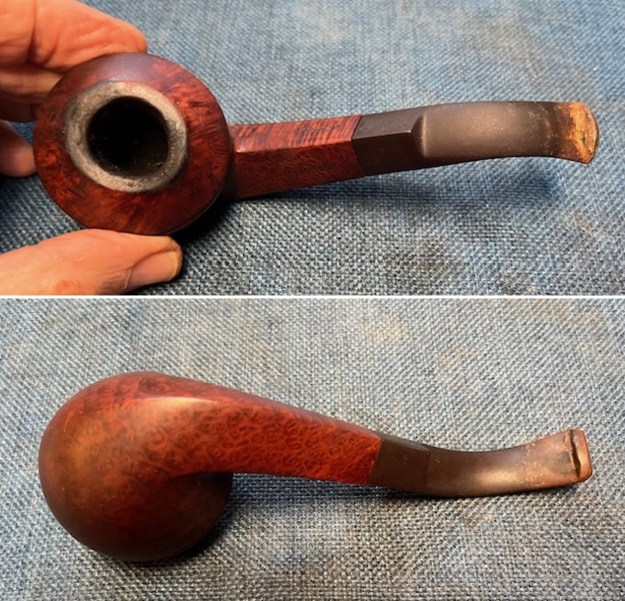
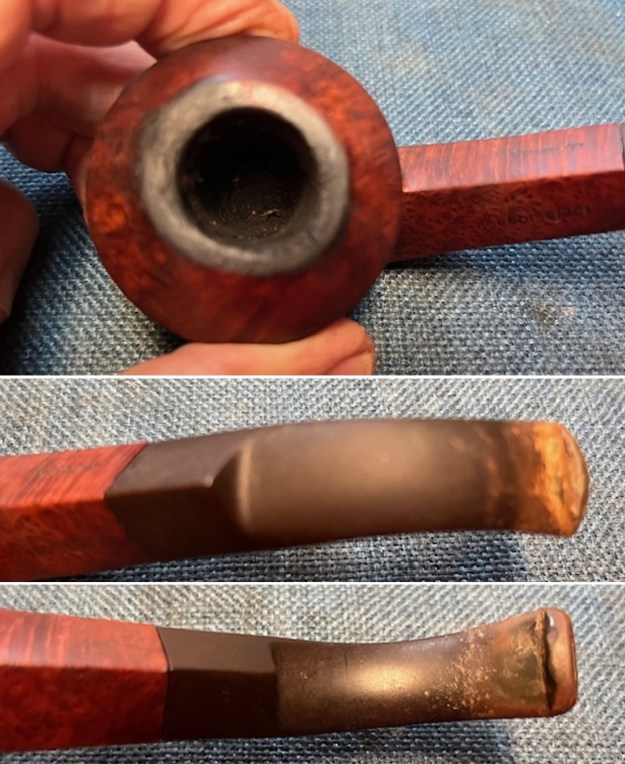
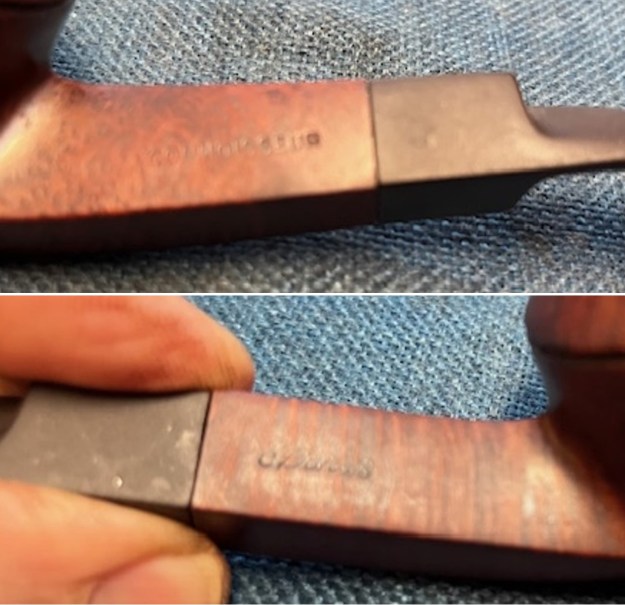
https://rebornpipes.com/2015/03/03/one-of-my-john-calich-pipes-a-calich-ee-billiard/

https://rebornpipes.com/2019/01/23/i-am-the-happy-owner-of-an-unsmoked-pipe-by-the-late-john-calich/

https://rebornpipes.com/2015/03/03/one-of-my-john-calich-pipes-a-calich-ee-billiard/

https://rebornpipes.com/2014/03/21/reflecting-on-my-collection-of-john-calich-pipes/

Each of the blogs reflects on John’s pipes if you want to get a feel for them take a few minutes and read them.

When John was living I spoke with him several times via phone and had him make some new stems for some of his pipes that I picked up off eBay. He was a very kind gentleman and was always helpful when I spoke with him. He was always ready with encouragement and when I needed to know how to do something when I was first learning to repair pipes he was willing to help. He was one of the old guard of Canadian Pipe makers. I miss him. I am including a short piece from Pipedia on John to give details on his work and the grading of his pipes. The second paragraph below is highlighted in blue as it gives some information on the Grade 12 Apple that I am working on with the single silver dot now. I am also including a photo of John Calich, courtesy Doug Valitchka

John Calich was one of Canada’s finest carvers. He died in July 2008. John was a full-time pipe maker for the last 40 years. Calich pipes were mostly traditional shapes. His signature style is rustication and smooth on the same pipe along with his unique skill to stain a pipe in contrasting colors. He used only top-quality Grecian and Calabrian briar. The mouthpieces are hand finished Vulcanite “A”. Each pipe was entirely made by hand. John Calich was featured in the summer 2005 issue of Pipes & Tobacco.

His pipes are graded 3E – 7E. Retail prices range from$ 145.00 to $ 500.00 Each pipe is stamped “CALICH” 3-8E, his earlier pipes were graded from 3-14, and a single, tiny silver dot is applied to the top of the stem (https://pipedia.org/wiki/Calich).

I summarize the dating information from those blogs now: From my research and conversations I learned that John’s his later pipes were graded 3E – 8E. The retail prices for them ranged from $145.00 to $500.00. Each pipe was stamped “CALICH” and given an E grade. His earlier pipes were graded from 3-14 and had a single, tiny silver dot applied to the top of the stem. More information can be found at the Pipedia article above. All of this information told me as expected that the pipe I had was an earlier one.

Armed with the information about John’s grading system I knew that the pipe in hand was an earlier Calich Hand Made Grade 11 made in 1987 and it was time to work on the pipe. I reamed the bowl with a PipNet Pipe reamer using the first cutting head. I took the cake back to bare briar so that I could check out the inside walls. I used a Savinelli Fitsall Pipe Knife to scrape back the remaining cake. I finished my cleanup of the walls by sanding it with 220 grit sandpaper wrapped around a piece of dowel. I decided to top the burned bowl. I used a topping board to flatten the rim top and remove the damage. I would still need to work on the rim more but I wanted it flat before I did my clean up and scrubbing.I scrubbed the briar with undiluted Murphy’s Oil Soap and a tooth brush and rinsed it off with warm running water. I scrubbed the rim top with a tooth brush and warm running water at the same time. I dried the bowl off with a soft microfiber cloth and gave it a light buffing. I also cleaned out the shank, mortise and airway in the stem and shank with Murphy’s Oil Soap and shank brushes to clean out the oils and tars on the inside. You can see the darkening or burn damage on the front panel of the rim cap in the third photo. I am hoping it is removable. I worked on the internals. I cleaned out the airway to the bowl, the mortise and the airway in the stem with pipe cleaners, cotton swabs and alcohol. When I finished the pipe smelled very clean. Once it was clean I turned my attention to the rim top. I cleaned up the inner edge of the bowl with a folded piece of 220 grit sandpaper. There was a damaged divot on the rear left inner edge of the bowl. I filled it in with briar dust and clear CA glue to built it up even with the rest of the edge and the rim top. I topped the bowl with 220 grit sandpaper to smooth out the top. I used a wooden ball and sanded the top edge and inner edge of the bowl with 220 grit sandpaper. I gave the top and inner edge a slight bevel. To remove some of the dark marks – both burn and tars/oils, I wiped the front edge of the cap with a mix of Oxalic Acid and water to try to lighten the surface of the briar. While it removed some, it did not work completely.I sanded the bowl and cap with 320-3500 grit sanding pads to smooth it out before I restained the bowl. I wiped the bowl down between each pad with a damp cloth. When I finished it wiped it down with a cotton pad and alcohol. I restained the bowl with a Cordovan Fiebing’s stain and flamed it with a lighter. I repeated the process until I was happy with the coverage on the bowl. I wanted to use a darker stain to hide the burn damage on the inner edge and top of the cap as well as those on the front of the cap. It would be darker but I thought it would work very well. I wiped the stain down with some acetone and cotton pads to remove the excess stain and make the grain stand out more on the surface of the briar. I polished the bowl with micromesh sanding pads – wet sanding with 1500-12000 grit sanding pads. I wiped it down with a damp alcohol cotton makeup pad after each sanding pad. I rubbed the bowl down with Before & After Restoration Balm. I worked it into the surface of the briar with my fingertips to clean, enliven and protect it. I let the balm sit for ten minutes then buffed with a cotton cloth to raise the shine. Mark Hoover’s Balm is a product that I have come to appreciate and one I use on every pipe I have been working on. I set the bowl aside and turned my attention to the stem. The stem had some deep marks from what looked like pliers’ marks on the top and underside just ahead of the button. These marks were rough and very visible. I painted them with the flame of a lighter to try to lift the marks then sanded them out with a folded piece of 220 grit sandpaper and they were removed. The surface was smooth.I sanded the stem with 320-3500 grit sanding pads to smooth out the remaining marks and begin polishing the stem. I wiped it down after each sanding pad with a soft cloth. It began to look good. I polished the stem with micromesh sanding pads – wet sanding with 1500-12000 grit pads. I wiped the stem down after each sanding pad with Obsidian Oil. I polished it with Before & After Pipe Stem Polish – both Fine and Extra Fine. Once I had finished the polishing I gave it final coat of oil and set it aside to dry. This is the second of five pipes from Kathleen that I am working on. It is a beautifully shaped John Calich Hand Made Grade 11 Smooth Bent Rhodesian. It has the kind of beauty I have come to expect from John’s pipes. I put the bowl and stem back together. I polished the bowl and stem with Blue Diamond to polish out the scratches in the briar and the vulcanite. I gave the bowl and the stem multiple coats of carnauba wax. I buffed the pipe with a clean buffing pad to raise the shine. I hand buffed it with a microfiber cloth to deepen the shine. The pipe polished up pretty nicely. The smooth finish is well done and the reshaped rim cap look really good with the variegated acrylic stem. This Calich Hand Made Bent Rhodesian was a fun pipe to bring back to life. It is a comfortable pipe to hold in the hand. The finished pipe is shown in the photos below. The dimensions of the pipe are Length: 6 inches, Height: 2 inches, Outside diameter of the bowl: 1 ¾ inches, Chamber diameter: 7/8 of an inch. The weight of the pipe is 61 grams/2.12 ounces. Thanks for reading this blog and my reflections on the pipe while I worked on it. Once I finish the other three pipes in the lot I will be sending them back to Kathleen for her husband to enjoy once again.
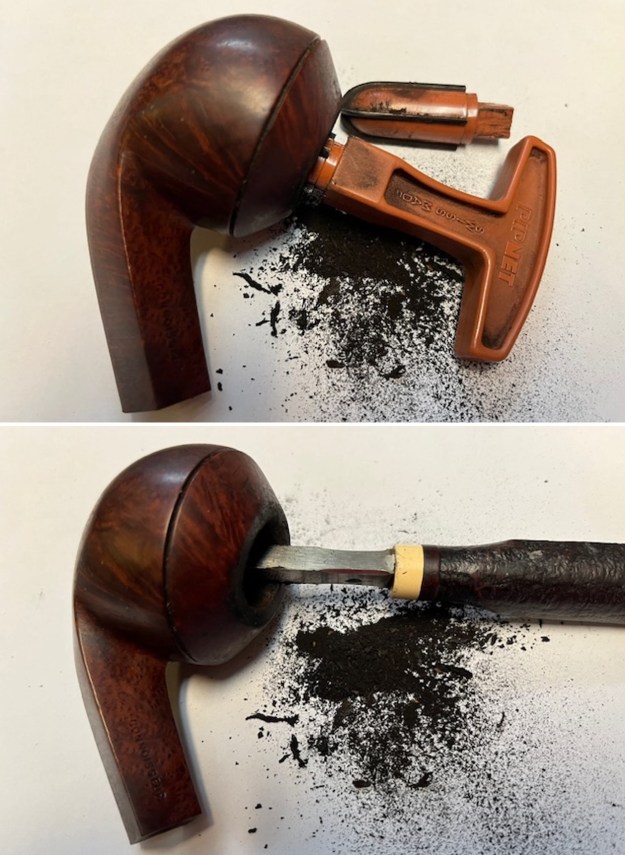
Restoring the first of five pipes for an old pipeman – a Calich Hand Made Grade 12 Bent Ball


Blog by Steve Laug

Earlier in June I received an email regarding restoring some pipes for her husband. Here is here email.

I have one Calich and one Dunhill pipe which my husband destroyed using a torch lighter on. I am wondering if it is possible to get them restored somehow. If you want to have a look I can send pics.

I wrote and asked for photos of the pipes. She wrote that there were actually 5 pipes not two and included photos of all five. I asked her if she was wanting to sell them or just repair them. Here is her response.

No… I don’t want to sell (yet) he’s 86 and has taken up smoking his pipes again. He was using a torch lighter until I discovered and replaced with proper pipe lighters. For now I’m wondering if it’s possible or even wise to restore them. – Kathleen.

I replied to Kathleen and invited her to send the pipes to me in Vancouver. They arrived just before I left for my visit with my Dad in Idaho. Here is what I found when they arrived. There were three Caliches, a Dunhill, and an Ed Burak Connoisseur. The Calich Pipes included a rusticated straight Opera, a bent Rhodesian with an octagonal rim cap and an acrylic stem. The Dunhill was a sandblast Billiard with a repair band on the shank. The Ed Burak Connoisseur was a bent Bulldog. All had rim top damage from being lit with a torch lighter. Some were in worse condition than others. The worst were the Calich Opera and the Dunhill Billiard which had torch damage on the left side of the rim and down the bowl side. The others had varying degrees of burn damage. I set them aside until I returned home from my visit. Here are the photos that Kathleen sent me of the pipe. This morning I took the pipes out of the box and laid the group out on my worktable. I took some photos of the group to show their condition. The photo of the left side of the shank shows the damage I mentioned in the earlier paragraphs. The right-side photo looks very good. The photos from the rim top show a lot of damage and the overall condition of the pipes very clear. After looking through the entire group of five pipes I decided to work on the first of the Calich pipes. This one is a rusticated ball that is stamped CALICH [over] Hand Made [over] 12. It had a smooth rim top, shank end and a rectangle on the left shank side for the stamping. The pipe had a very thick cake in the bowl and there was a lava overflow on the top. There was some burn damage under the lava on the front edge of the bowl toward the front right as well as much heavier damage on the left back edge. The shank had a thick coat of tars and oils and the stem had a thick tar build up as well so its fit in the shank was very sticky and dirty. The stem itself is vulcanite with a single silver dot on the topside just ahead of the bend. It was oxidized and had tooth marks and chatter on both sides of the stem just ahead of the button. There were overflowing tars on the smooth shank end around the fit of the tenon in the mortise. The finish was dusty and tired but had some nice grain under the grime and the finish appeared to be in good condition. A lot would be revealed once I had cleaned it. I took photos of the pipe before I started my cleanup work. I took a close-up photo of the bowl and rim top to show its condition. The inside of the bowl was heavily caked with a wet oily tobacco. The rim top had damage on the front right in the photo below as well as on the back left. The back left side is the worst as it is quite thin and the bowl is out of round. It left a mess for me to clean up. The stem was also is a mess. There was some tooth marks and dents on the top and underside ahead of the button. There was a thick coat of calcification and oxidation on the stem. The silver dot on the stem top was tarnished but very visible.I took a photo of the stamping on the left side of the shank. It is clear and readable as noted above. I removed the stem from the shank and took a photo of the silver dot on the stem top.I decided to include a bit about John Calich the pipemaker as I have loved John Calich’s pipes for over 25 years now and have collected a few of them. I have restored quite a few of them and written blogs about them that can be read if you are interested in seeing the kind of pipes that John made. They are unique and beautiful. Each of his pipes are a work of art to me. I am including the links to the previous blogs that have written about his pipes.

https://rebornpipes.com/2015/03/03/one-of-my-john-calich-pipes-a-calich-ee-billiard/

https://rebornpipes.com/2019/01/23/i-am-the-happy-owner-of-an-unsmoked-pipe-by-the-late-john-calich/

https://rebornpipes.com/2015/03/03/one-of-my-john-calich-pipes-a-calich-ee-billiard/

https://rebornpipes.com/2014/03/21/reflecting-on-my-collection-of-john-calich-pipes/

Each of the blogs reflects on John’s pipes if you want to get a feel for them take a few minutes and read them.

When John was living I spoke with him several times via phone and had him make some new stems for some of his pipes that I picked up off eBay. He was a very kind gentleman and was always helpful when I spoke with him. He was always ready with encouragement and when I needed to know how to do something when I was first learning to repair pipes he was willing to help. He was one of the old guard of Canadian Pipe makers. I miss him. I am including a short piece from Pipedia on John to give details on his work and the grading of his pipes. The second paragraph below is highlighted in blue as it gives some information on the Grade 12 Apple that I am working on with the single silver dot now. I am also including a photo of John Calich, courtesy Doug Valitchka

John Calich was one of Canada’s finest carvers. He died in July 2008. John was a full-time pipe maker for the last 40 years. Calich pipes were mostly traditional shapes. His signature style is rustication and smooth on the same pipe along with his unique skill to stain a pipe in contrasting colors. He used only top-quality Grecian and Calabrian briar. The mouthpieces are hand finished Vulcanite “A”. Each pipe was entirely made by hand. John Calich was featured in the summer 2005 issue of Pipes & Tobacco.

His pipes are graded 3E – 7E. Retail prices range from$ 145.00 to $ 500.00 Each pipe is stamped “CALICH” 3-8E, his earlier pipes were graded from 3-14, and a single, tiny silver dot is applied to the top of the stem (https://pipedia.org/wiki/Calich).

I summarize the dating information from those blogs now: From my research and conversations I learned that John’s his later pipes were graded 3E – 8E. The retail prices for them ranged from $145.00 to $500.00. Each pipe was stamped “CALICH” and given an E grade. His earlier pipes were graded from 3-14 and had a single, tiny silver dot applied to the top of the stem. More information can be found at the Pipedia article above. All of this information told me as expected that the pipe I had was an earlier one.

Armed with the information about John’s grading system I knew that the pipe in hand was an earlier Calich Hand Made Grade 12 and it was time to work on the pipe. I reamed the bowl with a PipNet Pipe reamer using the first cutting head. I took the cake back to bare briar so that I could check out the inside walls. I used a Savinelli Fitsall Pipe Knife to scrape back the remaining cake. I finished my cleanup of the walls by sanding it with 220 grit sandpaper wrapped around a piece of dowel. I worked on the internals. I scraped the inside of the mortise with a dental spatula to remove the hardened tars and oils that lined the walls of the shank. Once I had that done I cleaned out the airway to the bowl, the mortise and the airway in the stem with pipe cleaners, cotton swabs and alcohol. When I finished the pipe smelled very clean. I scrubbed the briar with undiluted Murphy’s Oil Soap and a tooth brush and rinsed it off with warm running water. I scrubbed the rim top with a tooth brush and warm running water at the same time. I dried the bowl off with a soft microfiber cloth and gave it a light buffing. I also cleaned out the shank, mortise and airway in the stem and shank with Murphy’s Oil Soap and shank brushes to clean out the oils and tars on the inside. Once it was clean I turned my attention to the rim top. I cleaned up the inner edge of the bowl with a folded piece of 220 grit sandpaper. I topped the bowl with 220 grit sandpaper on a topping board to give a the rim top a smooth surface. I then used a wooden ball and sanded the top edge and inner edge of the bowl with 220 grit sandpaper. I gave the top and inner edge a slight bevel. I touched up the sanded rim top with a Cherry stain pen. The match on the rim with the shank end and shank end is perfect. Once it is polished it will be perfect. I polished the smooth rim top with micromesh sanding pads – wet sanding with 1500-12000 grit sanding pads. I wiped it down with a damp cloth after each pad.I rubbed the bowl down with Before & After Restoration Balm. I worked it into the surface of the briar with my fingertips to clean, enliven and protect it. I let the balm sit for ten minutes then buffed with a cotton cloth to raise the shine. Mark Hoover’s Balm is a product that I have come to appreciate and one I use on every pipe I have been working on. I set the bowl aside and turned my attention to the stem. I wiped down the stem surface with Soft Scrub and cotton pads to remove the oxidation and grime on the surface. Once I finished it looked significantly better.I sanded the stem with 320-3500 grit sanding pads to break up the remaining oxidation. I wiped it down after each sanding pad with a soft cloth. It began to look good. I polished the stem with micromesh sanding pads – wet sanding with 1500-12000 grit pads. I wiped the stem down after each sanding pad with Obsidian Oil. I polished it with Before & After Pipe Stem Polish – both Fine and Extra Fine. Once I had finished the polishing I gave it final coat of oil and set it aside to dry. This is the first of five pipes from Kathleen that I am working on. It is a beautifully shaped John Calich Hand Made Grade 12 Rusticated Ball. It has the kind of beauty I have come to expect from John’s pipes with a smooth rim top and shank end. I put the bowl and stem back together. I polished the bowl and stem with Blue Diamond to polish out the scratches in the briar and the vulcanite. I gave the bowl multiple coats of Conservator’s Wax and the stem multiple coats of carnauba wax. I buffed the pipe with a clean buffing pad to raise the shine. I hand buffed it with a microfiber cloth to deepen the shine. The pipe polished up pretty nicely. The rusticated finish is well done and the polished smooth finish on the shank end and rim top look really good with the black vulcanite stem. This Calich Hand Made Bent Ball was a fun pipe to bring back to life. It is a comfortable pipe to hold in the hand. The finished pipe is shown in the photos below. The dimensions of the pipe are Length: 5 ½ inches, Height: 1 ¾ inches, Outside diameter of the bowl: 1 ¼ inches, Chamber diameter: ¾ of an inch. The weight of the pipe is 54 grams/1.94 ounces. Thanks for reading this blog and my reflections on the pipe while I worked on it. Once I finish the other four pipes in the lot I will be sending them back to Kathleen for her husband to enjoy.
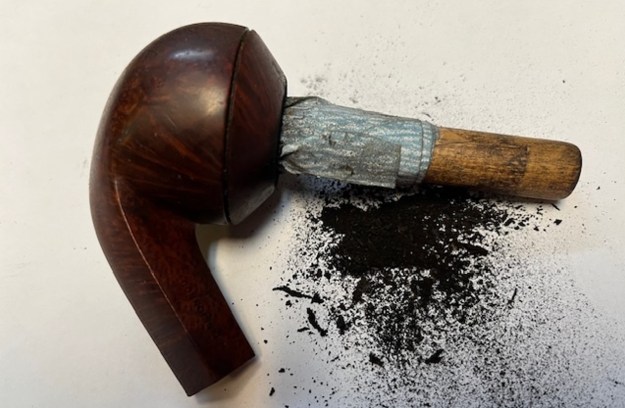
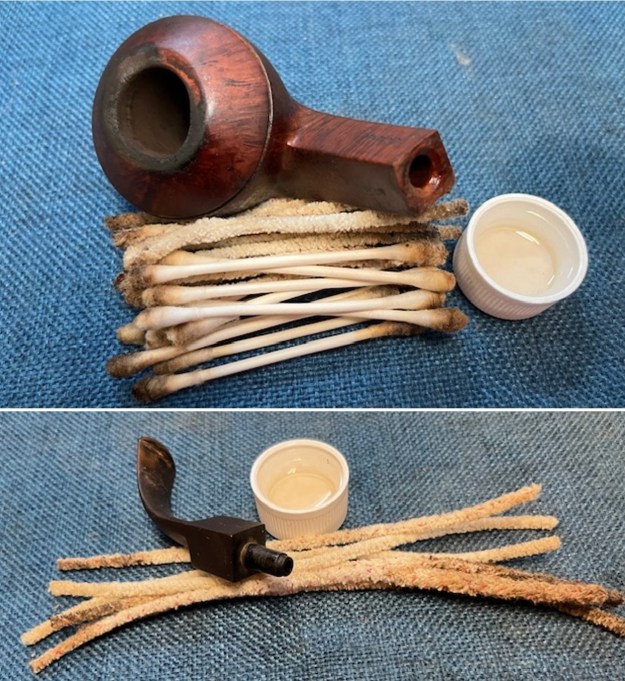
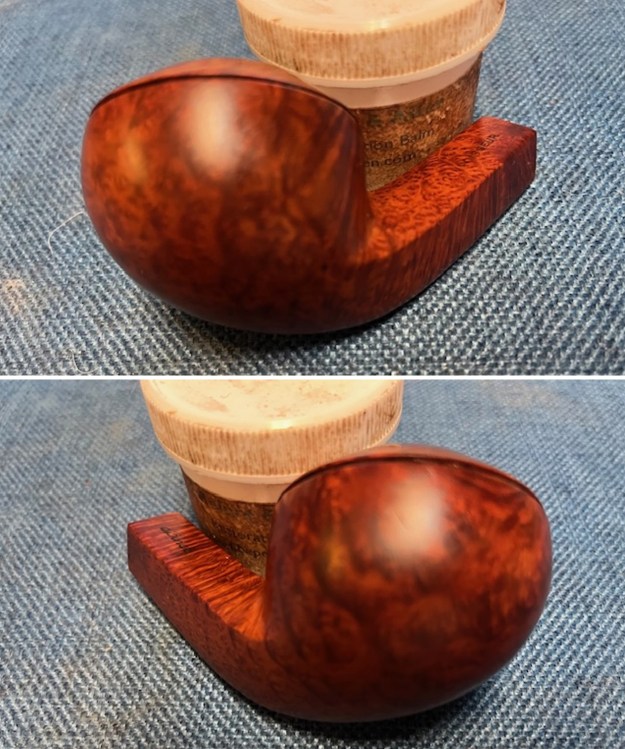
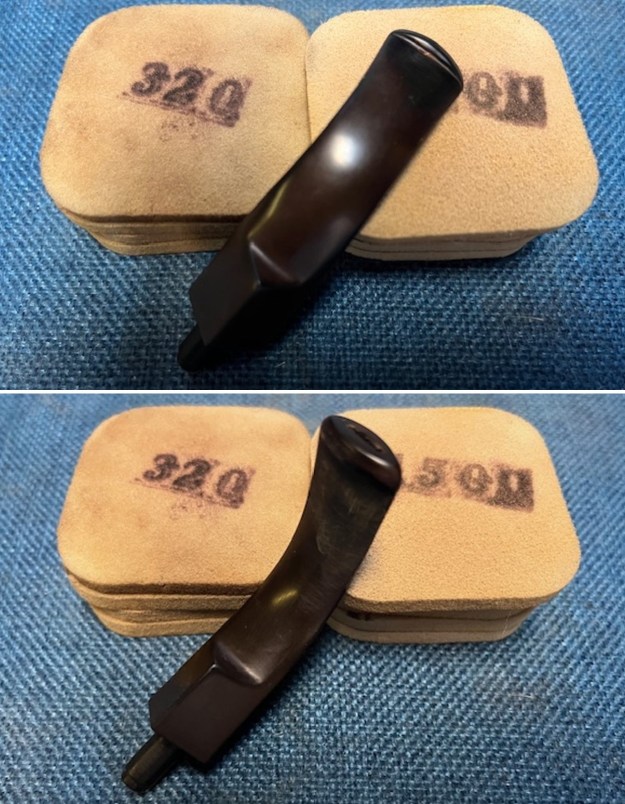
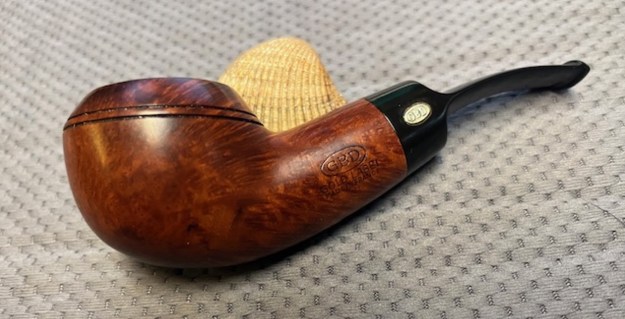
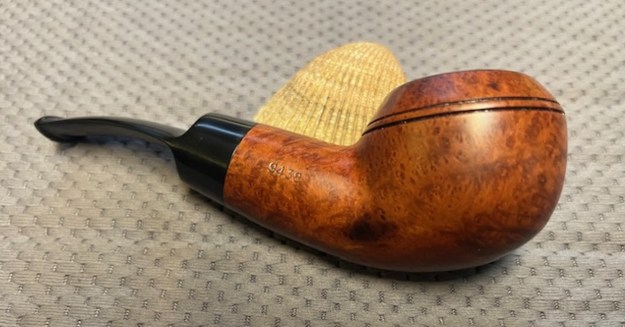
New Life for a NOS French Churchwarden


by Kenneth Lieblich

Next up is a charming apple churchwarden that I found in one of my bins and it piqued my interest. It’s got the typical shape and feel of a regular churchwarden, but this one is a bit smaller – and perhaps a bit more manageable. It’s hard to know how old this one is, but it feels old and it has certainly seen better days. I’m looking forward to this one.

Frankly, this one didn’t look like it had been smoked at all. It was certainly filthy, but that seemed to be from questionable storage rather than smoking. The only markings were on the left side of the shank: Bruyère [over] Garantie which translates to ‘Genuine Briar’. The words Bruyère Garantie on a pipe are the bane of my pipe restoration existence. They are found on a plethora of different pipes, usually without any other identification. Ugh. One comment on the old Pipes Magazine forums confirms exactly what my meagre research has uncovered:

“Lots of French and German pipes, even pre-war ones, were given the label “Bruyere Garantie.” At least the ones I’ve seen for sale were listed as being from the 1920s and 30s. But I suspect that is a genuine date for those because many of them had horn stems, which are much rarer in post-war pipes and some of them definitely had an Art Deco/Art Nouveau look about them as well as old-fashioned rounded buttons.” — pitchforkThis pipe doesn’t have the old orific button, but it might date from just after that time period. Anyway, time to get to work! I started by sending the stinger for a soak in some lemon-infused isopropyl alcohol. I let it sit for several hours, cleaned it off and gave it a quick polish. Good as new!The shank had a lovely, thin band around it – but it was quite encrusted. I removed it, looked closer, and saw that there was rust! Interesting – the band must have some iron in it. I dropped the band in a little plastic bowl of plain white vinegar and let it soak overnight. I scrubbed with some 0000-grit steel wool and that worked a treat. Gave it a quick polish with my Micromesh pads and it looked good as new.Next, I went to work on the long stem. It appears to be acrylic – definitely not vulcanite. I gave it a good wipe-down with some soap on cotton rounds and that helped. As mentioned earlier, I don’t think this pipe was smoked and, though I can’t be sure about that, the stem’s insides had dust-type filth rather than tobacco debris. Regardless, I cleaned it out with pipe cleaners and 99% isopropyl alcohol. It wasn’t too dirty.Fortunately, the stem was in good enough shape that it didn’t show any tooth marks/dents. So, I skipped the cyanoacrylate treatments and jumped straight to the Micromesh pads. I used all nine pads (1,500 through 12,000 grit) to bring out the lovely black lustre on the stem. I also used Obsidian Pipe Stem Oil in between each pad scrubbing (from 3,600 onward).Now for the stummel. As the photos show, the finish on the wood has crackled and/or degraded somewhat over the years. It looks terrible and I’ll have to address that. First, I decided to ream out the bowl – but there wasn’t anything to ream! This is another clue that suggests an unsmoked pipe. It was certainly dusty inside – very. I cleaned out the insides with pipe cleaners and 99% isopropyl alcohol. I also cleaned the insides with some soap and tube brushes. It was nice and clean after this.Now to deal with the finish on the stummel. I grabbed some Murphy’s and rubbed the surface to clean things up. This did precious little. Since there was a fill that also needed to be fixed under this finish, I took some acetone and thoroughly cleaned the surface – that was the best decision I made! The pipe looked so much better with the old finish removed. There was actually some very nice wood under there.I examined the nicks in the briar. I took my iron and a damp cloth to try to raise them. The hot and moist steam can often cause the wood to swell slightly and return to shape. This worked well – I was pleased with the results. However, some lumps and bumps remained on the rim and a big fill to boot. In order to safely remove the marks on the rim, I “topped” the pipe – that is to say, I gently and evenly sanded down the rim on a piece of 220-grit sandpaper. This effectively removed the damage, without altering the look of the pipe. Then, I made a mix of cyanoacrylate and briar dust and filled the fill. I sanded the repair down with 400-grit sandpaper, then proceeded to use the Micromesh pads over the whole thing. Oh boy, it really looked good. I glued the band back on the shank and applied some Before & After Restoration Balm. I let it sit for 20 minutes or so. It does lovely things to the wood. I polished it with a microfibre cloth and it shone. Wow – the pipe really looks lovely.
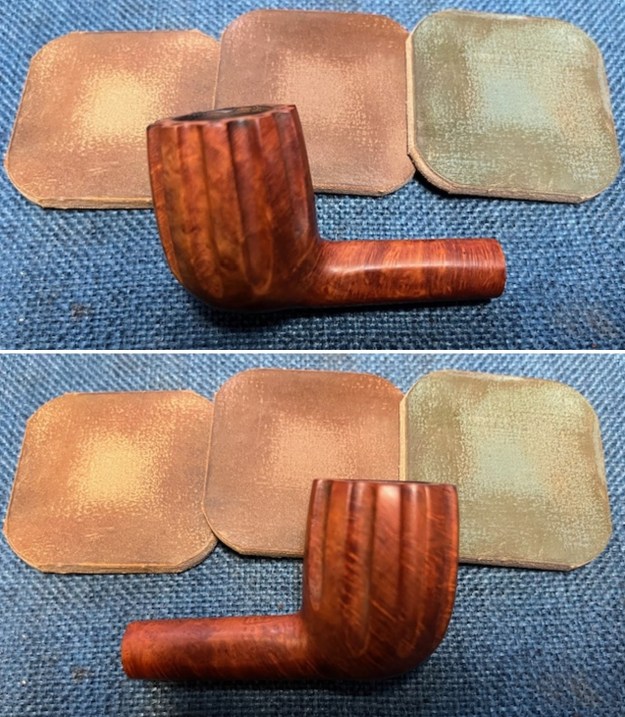
Off to the bench polisher I went. I applied some White Diamond and a few coats of carnauba wax and they added the finishing touch. This old Bruyere Garantie churchwarden was in need of a new lease on life. I am pleased to announce that this pipe is for sale! If you are interested in acquiring it for your collection, please have a look in the “French” pipe section of the store here on Steve’s website. You can also email me directly at kenneth@knightsofthepipe.com. The approximate dimensions of the pipe are as follows: length 7⅜ in. (185 mm); height 1⅛ in. (28 mm); bowl diameter 1¼ in. (32 mm); chamber diameter ⅔ in. (15 mm). The weight of the pipe is ¾ oz. (23 g). I hope you enjoyed reading the story of this restoration as much as I enjoyed restoring it. If you are interested in more of my work, please follow me here on Steve’s website or send me an email. Thank you very much for reading and, as always, I welcome and encourage your comments.