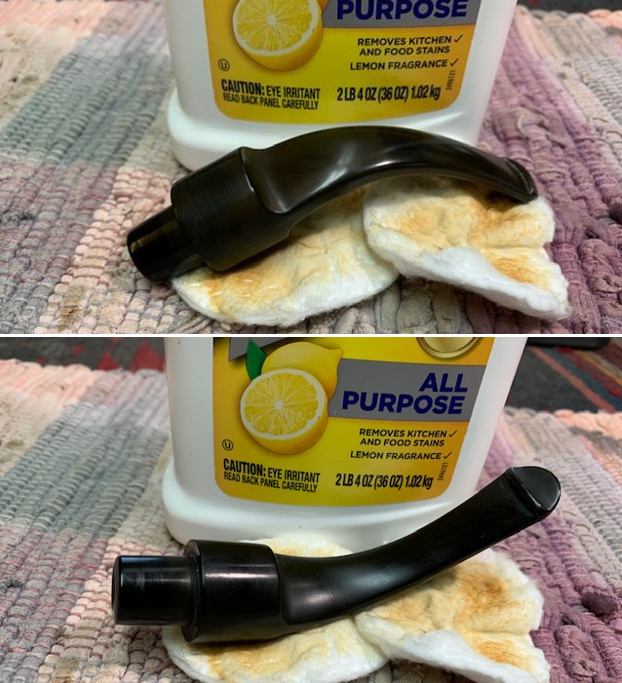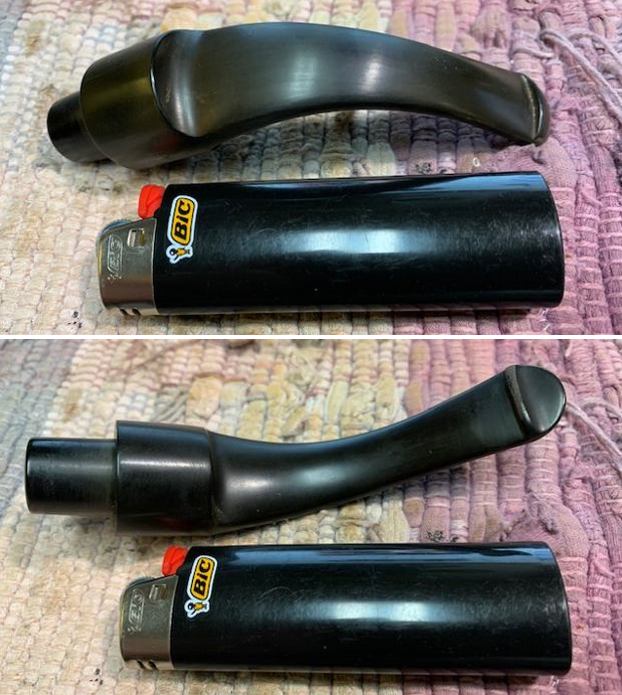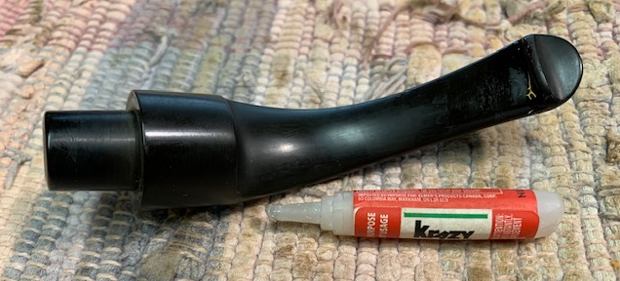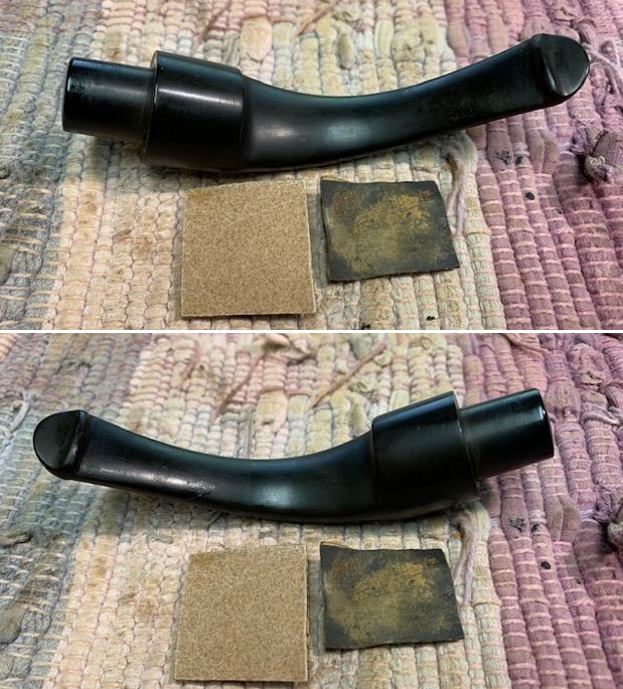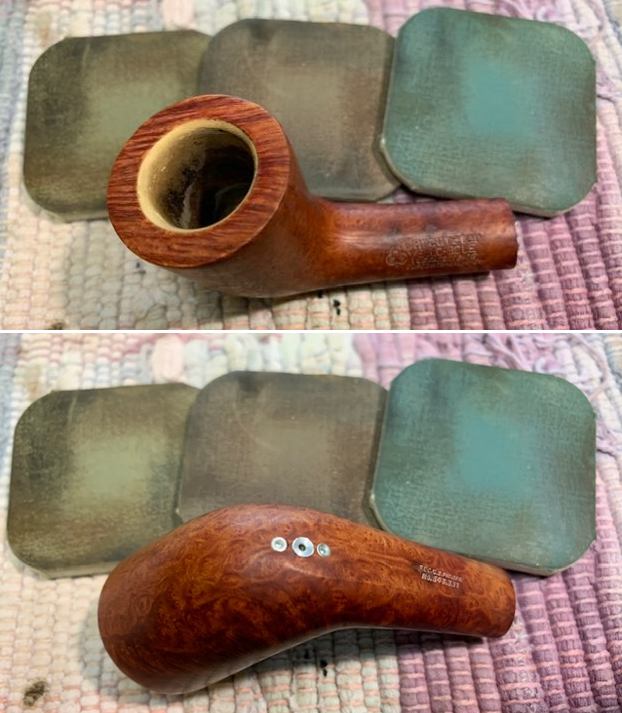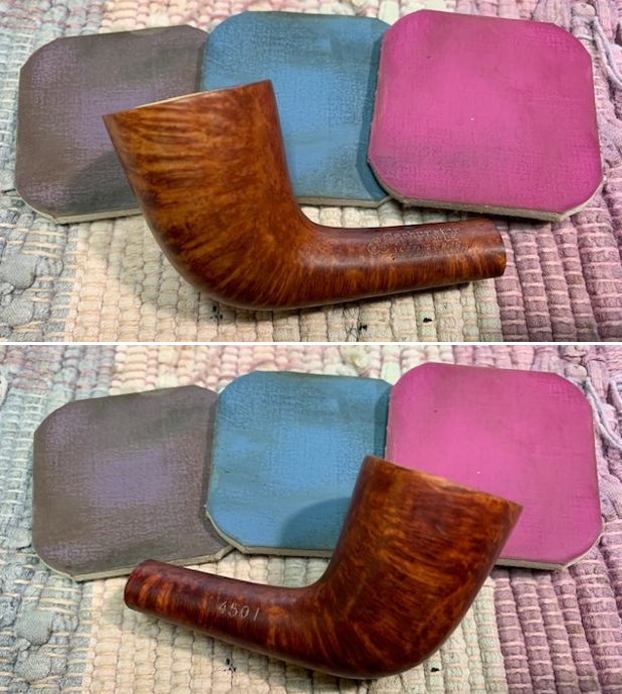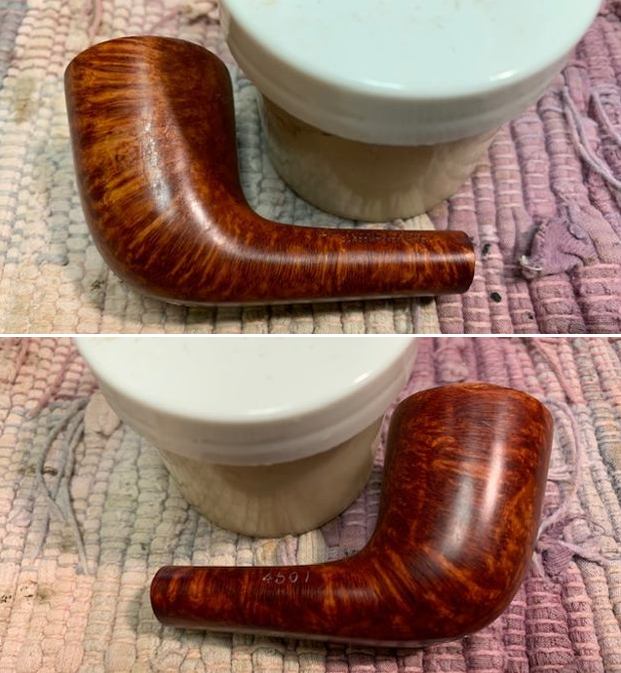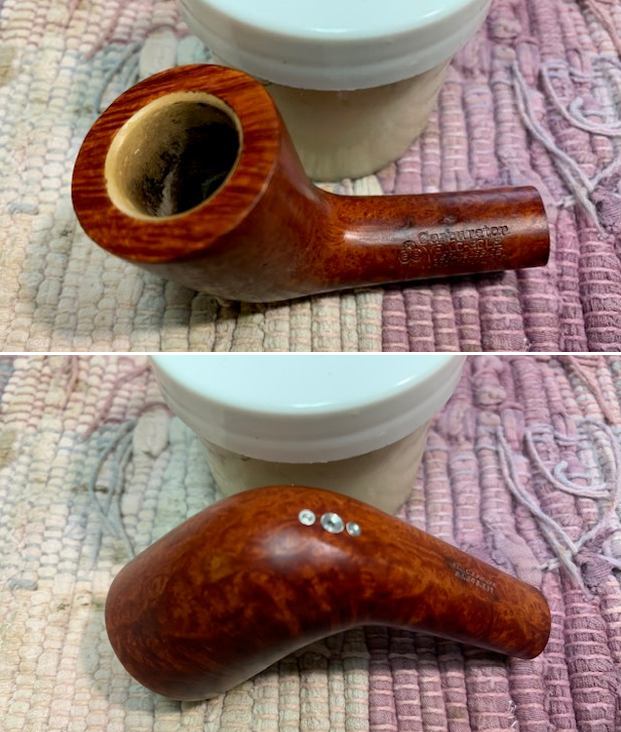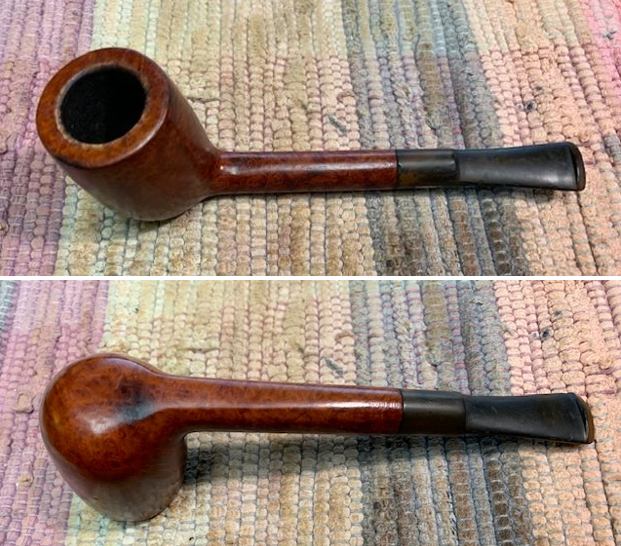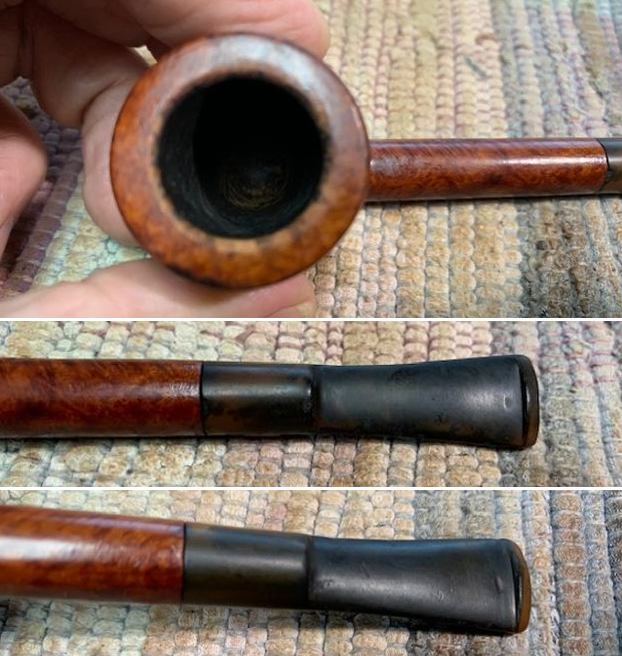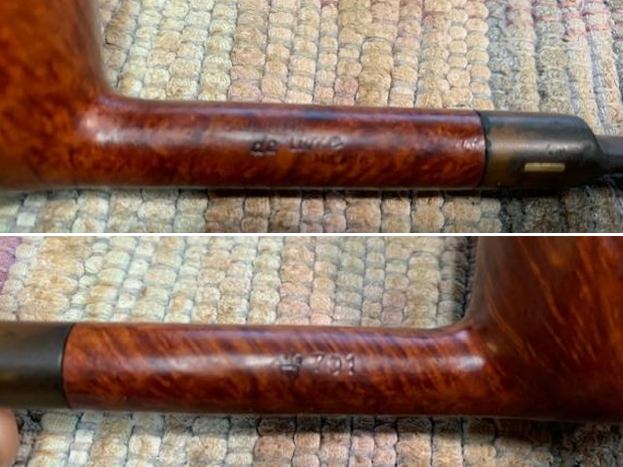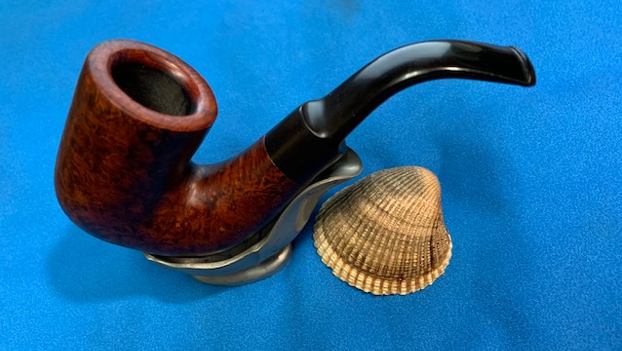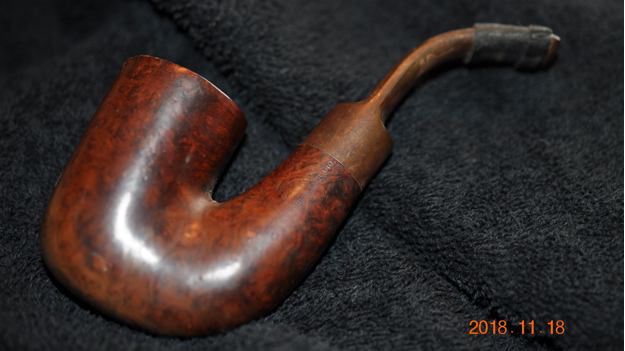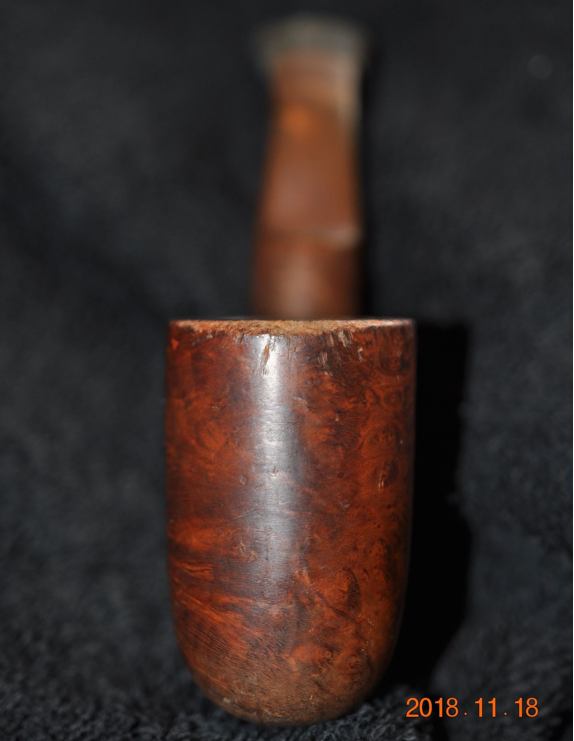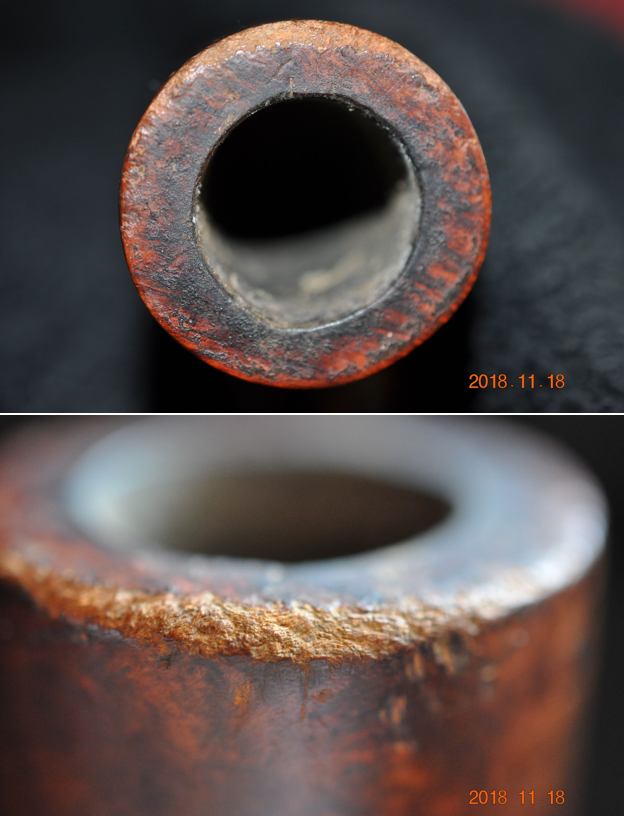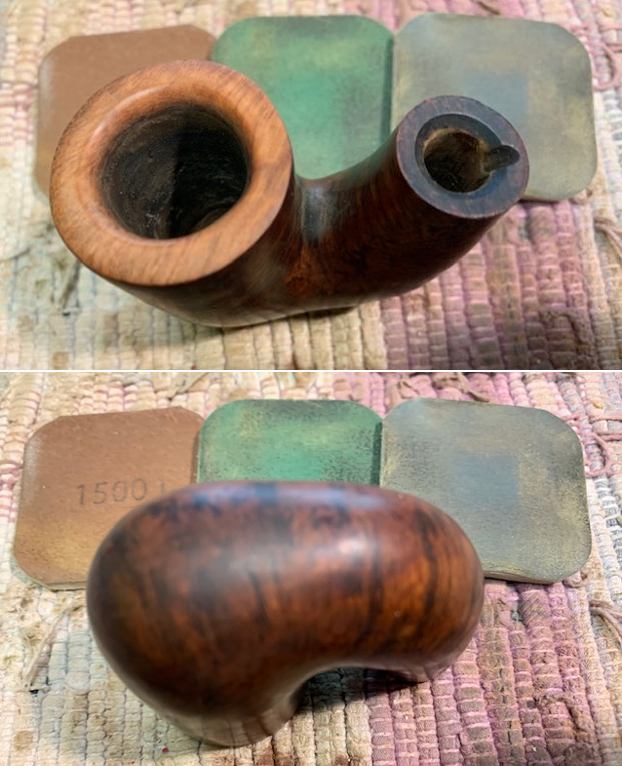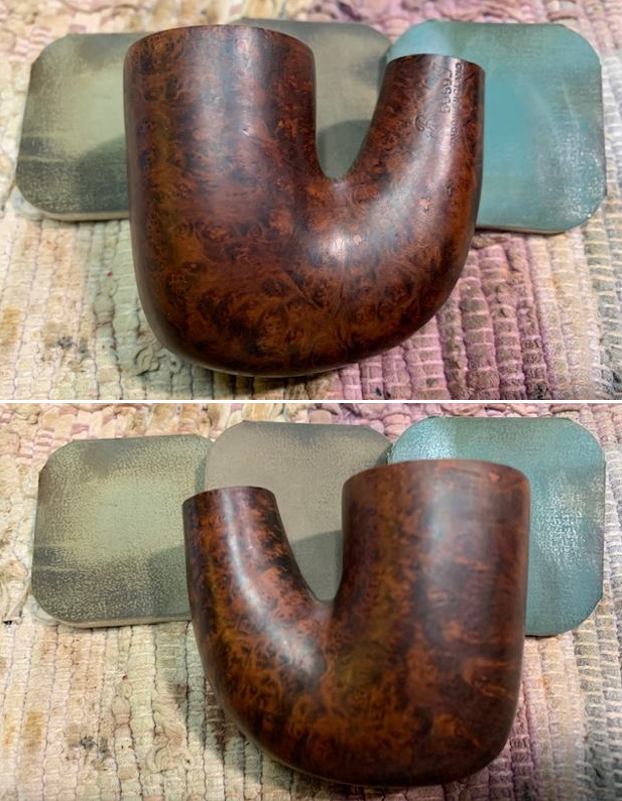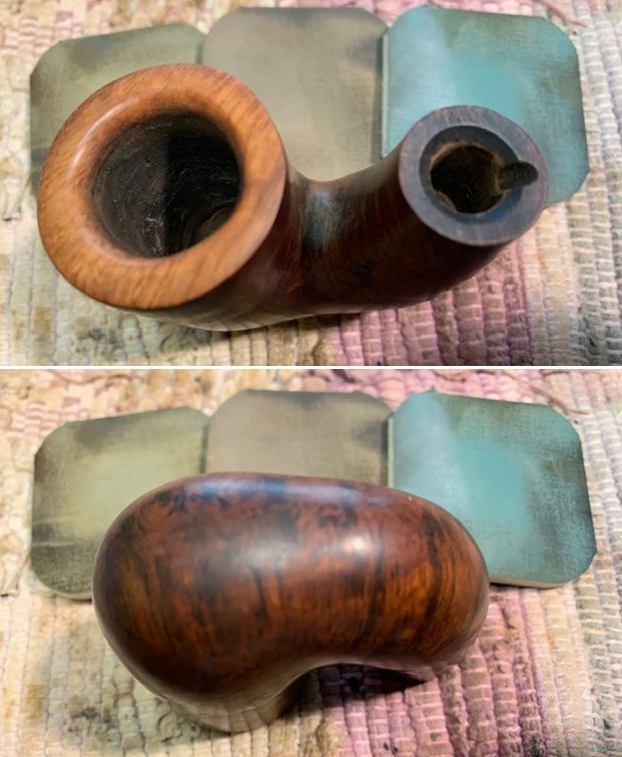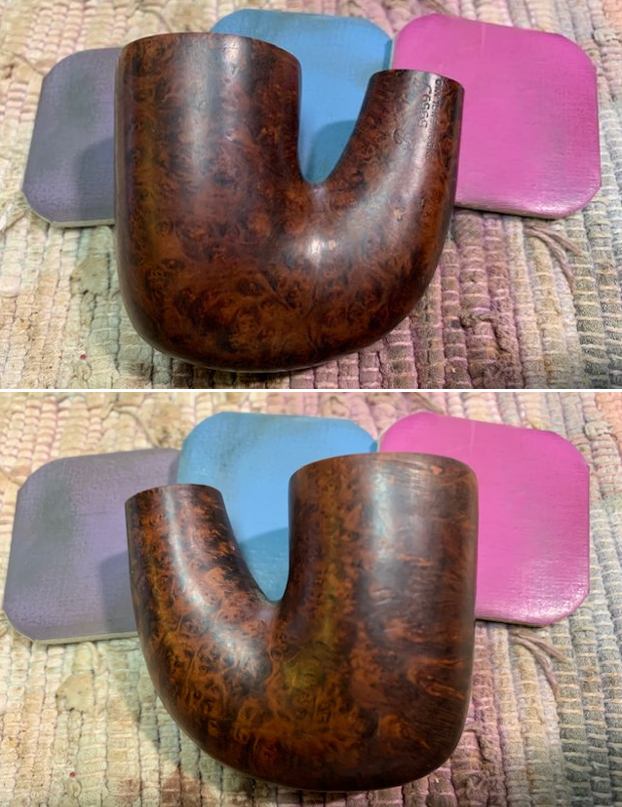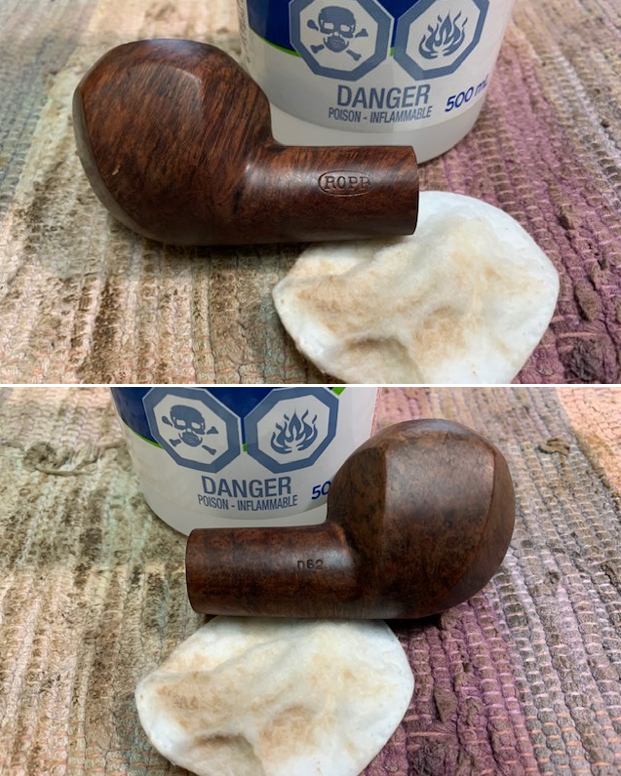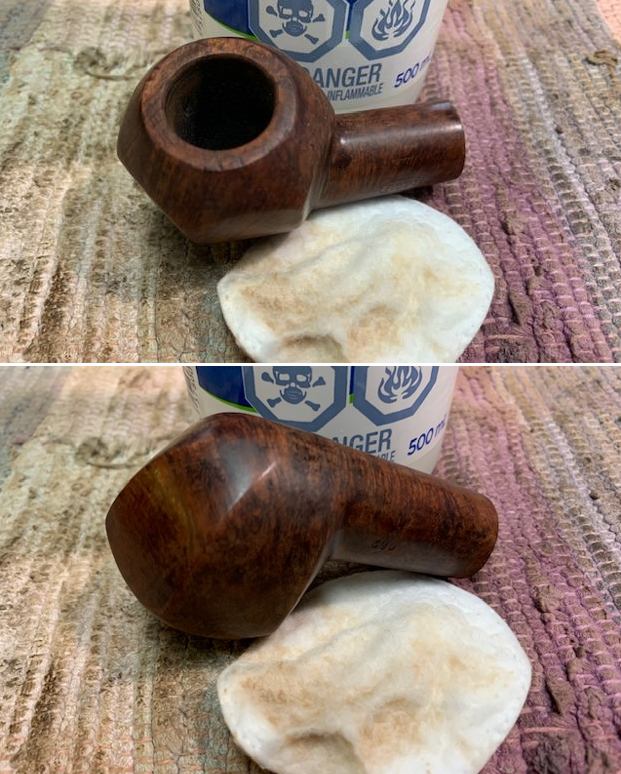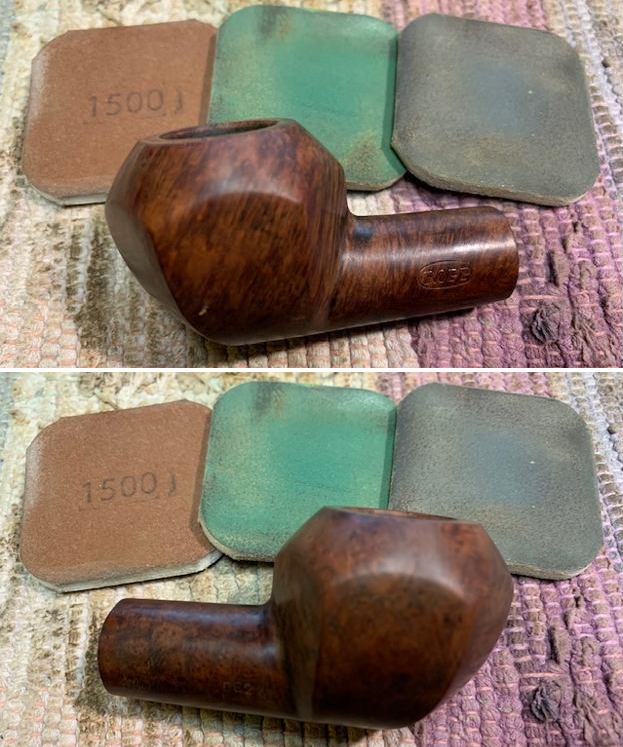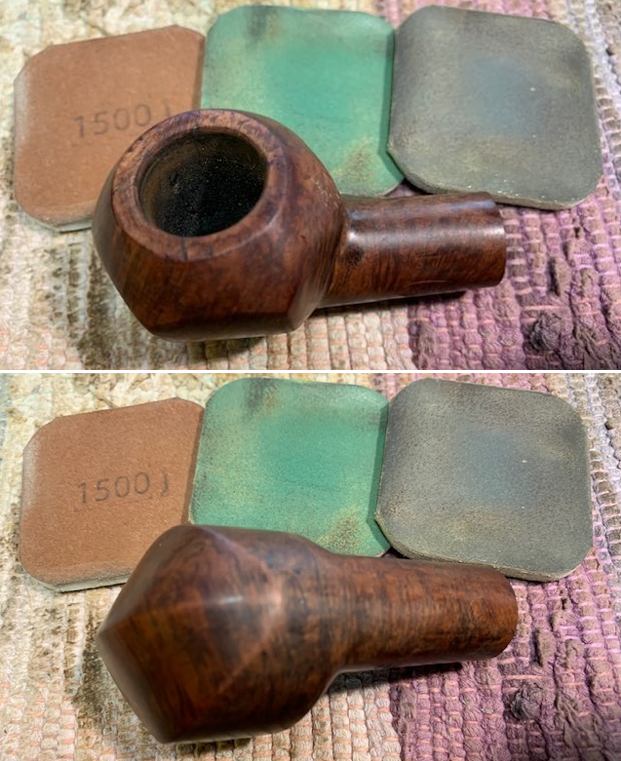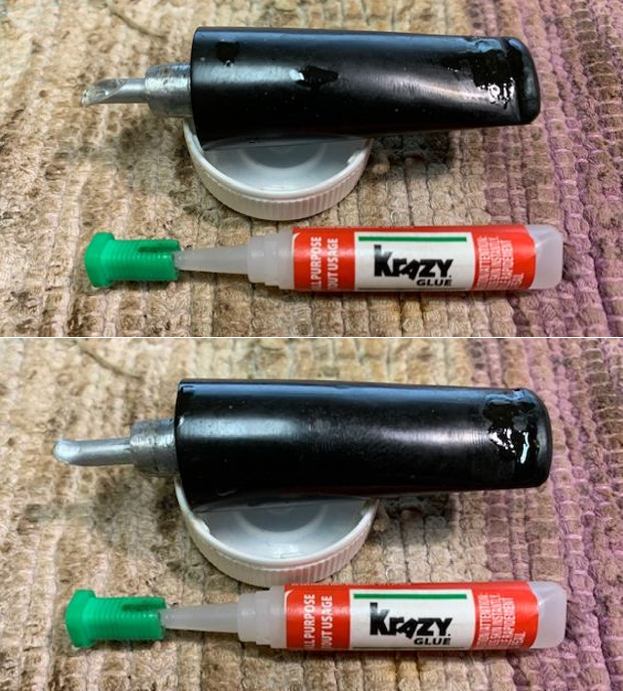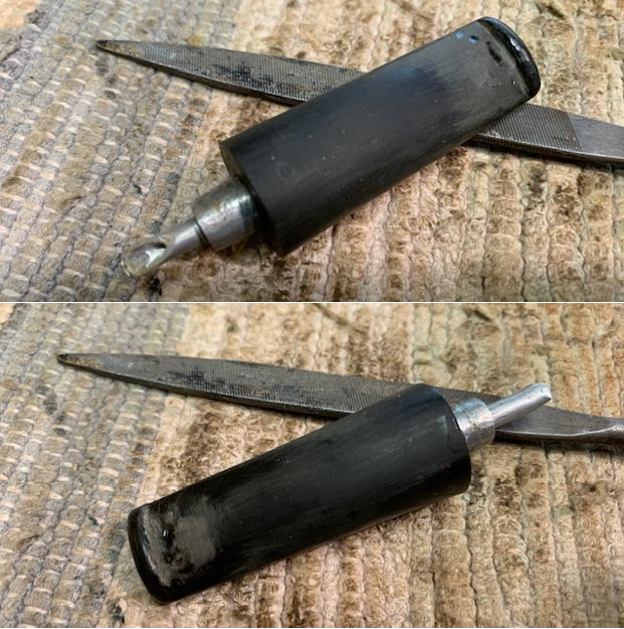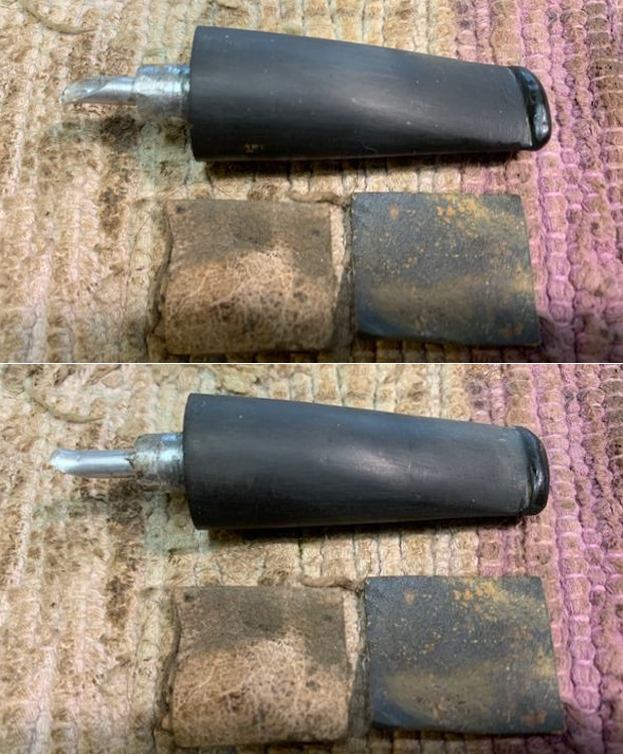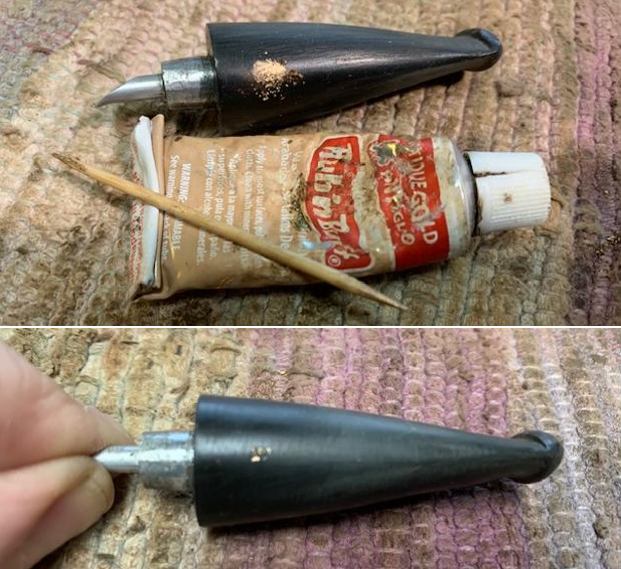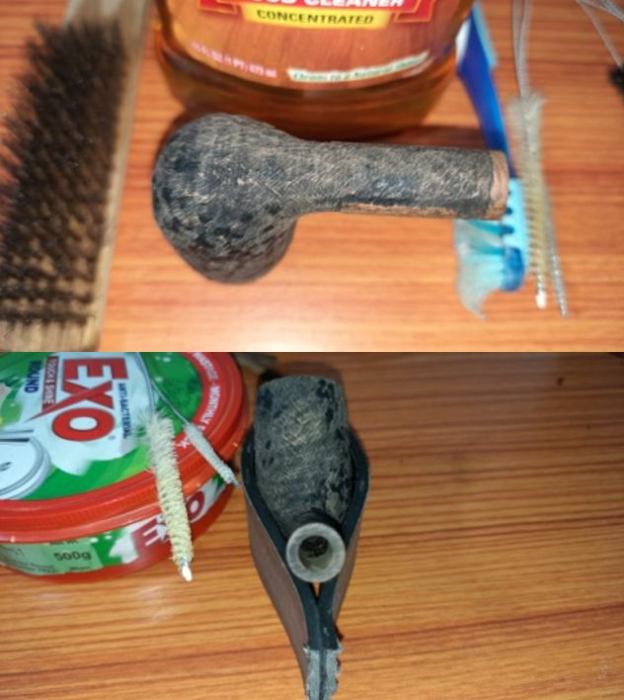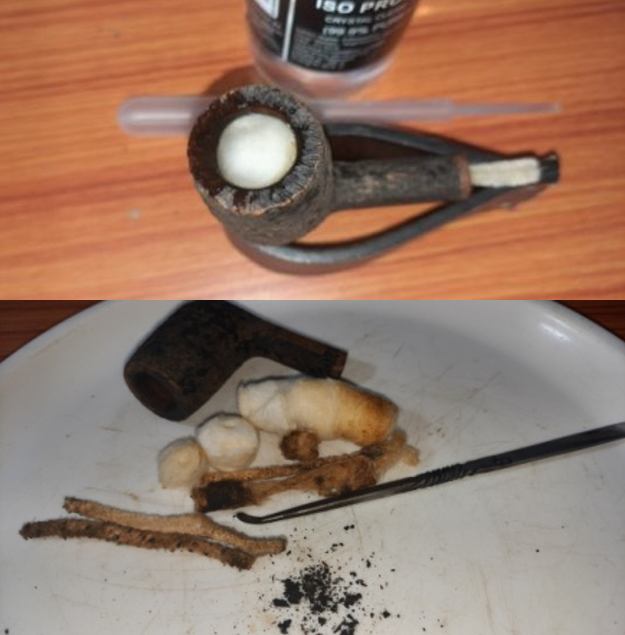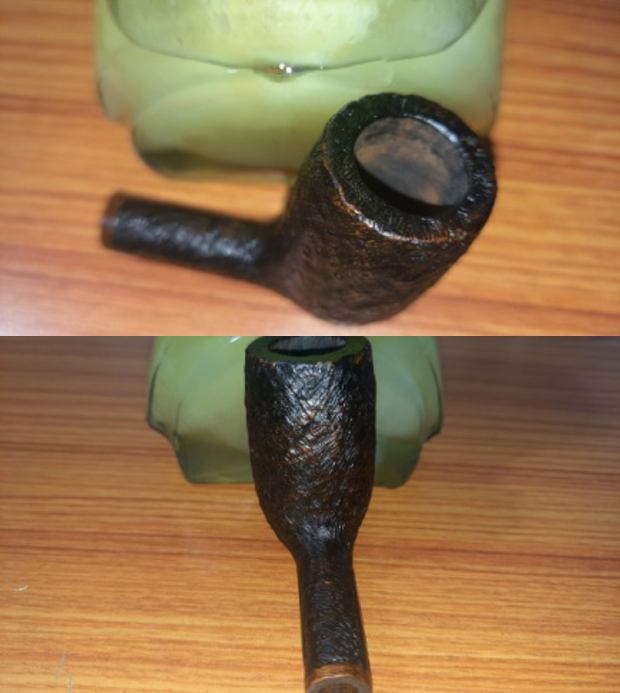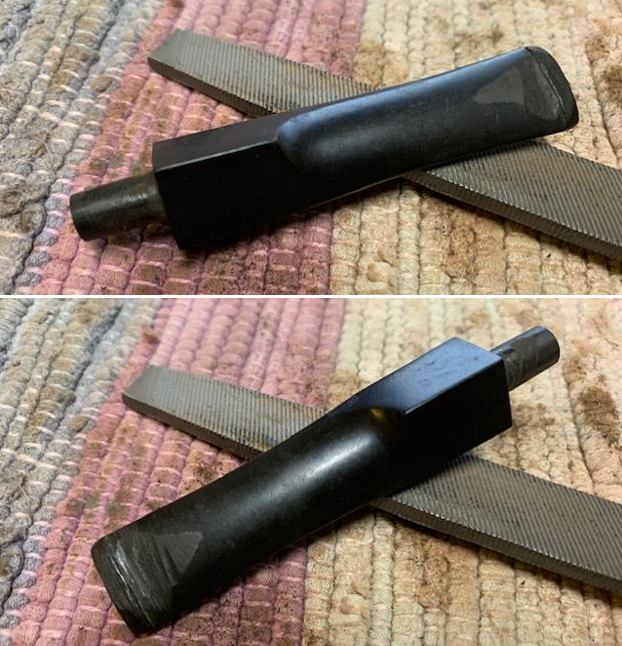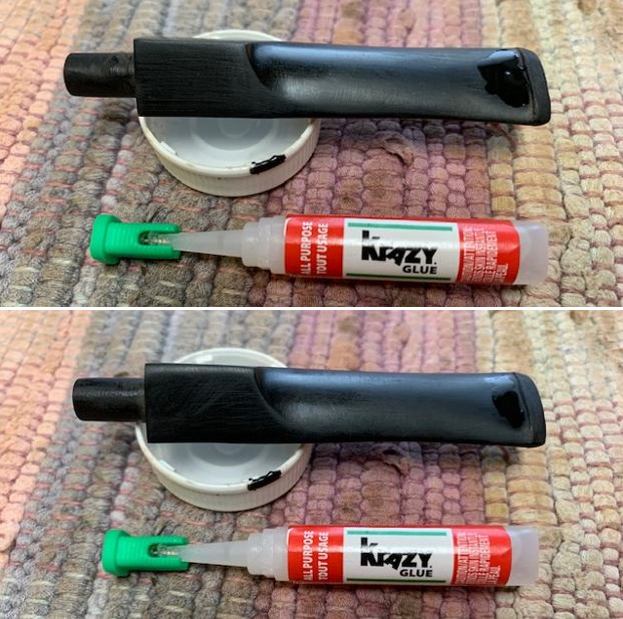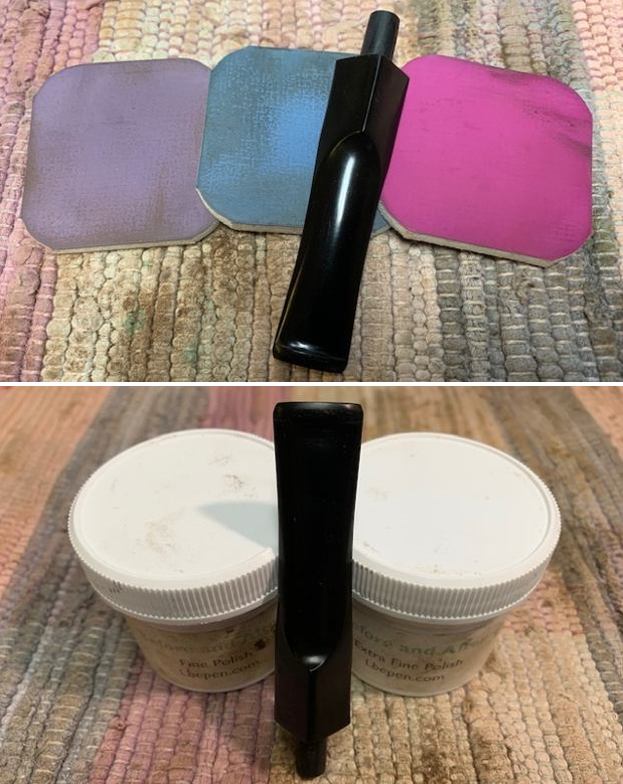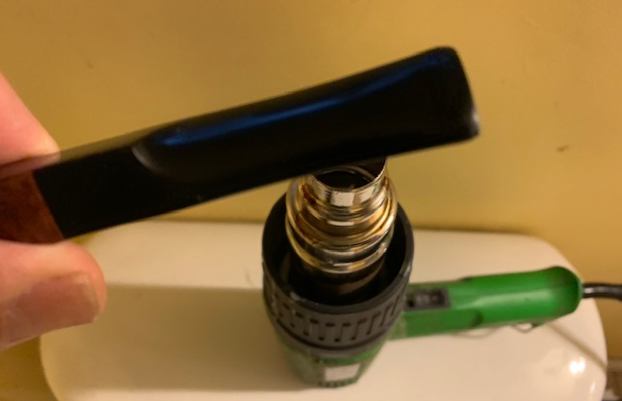
Tag Archives: super glue

Restoring a Comoy’s Grand Slam Pipe 233 Straight Bulldog


Blog by Steve Laug

I decided to dig deep in the boxes of pipes I have here to work on. I chose a Comoy’s Grand Slam Pipe Straight Bulldog. It is a beautifully grained Comoy’s Bulldog that was purchased from a Portland Oregon estate sale on 08/16/17. It really is a pipe of Pipe Smoking History. The stamping is the significant marker that points this out for me. It is stamped on the left side of the shank and reads COMOY’S [over] Grand Slam [over] Pipe. On the right side it has the shape number 233 next to the bowl/shank junction and that is followed by a Comoy’s COM stamp that reads Made in London in a circle [over] England. On the underside there was a *7 stamped at the stem/shank junction. There was a lot of grime ground into the smooth finish on the bowl and some darkening around the rim cap and top. The bowl was heavily caked with an overflow of thick lava on the top of the rim and on the inner bevel of the bowl. It was hard to know what the rim top and inner edge of the bowl looked like under the grime. The stem was oxidized, calcified and there were tooth marks and chatter on both sides ahead of the button. There was a three part inlaid C on the left of the taper stem. The pipe had promise but it was very dirty. Jeff took photos of the pipe before he started his cleanup work. He took photos of the rim top and bowl to give a clear picture of the thickness of the cake and the overflow of lava on the rim top and down the side. It is hard to know if there is damage to the inner edge of the bowl because of the lava coat. He also took photos of the top and underside of the stem to show the condition of the stem. He took photos of the stamping on both sides and underside of the shank. They read as noted above. You can also see the 3 part C logo on the left side of the taper stem.   I looked on Pipephil’s site for information on the Comoy’s Grand Slam Pipe and found the following information I have included a screen capture (http://www.pipephil.eu/logos/en/logo-comoy.html). It has the three part C which dated it to 1946 and following. The stamping on the second pipe in the capture is the same as the one I am working on. The *7 is the size of the washer on the end of the stinger. (The pipe in hand is missing the stinger apparatus.)I turned to the article on Pipedia about dating Comoy’s pipes but the style of the stamping (https://pipedia.org/index.php?title=Comoy%27s_Dating_Guide#1917_to_the_end_of_the_1930.27s_.28at_least_1938.29). I have include the section in the screen capture below that date this pipe to the 1950s.

Now the Comoy’s stamp can be found in three variants in the 1950s

  1. A simple block-letter style without serifs but with the C larger than the other letters and the apostrophe before the “S”.
  2. A return to the slightly more fancy block letters with serifs and the apostrophe. (It seems that some grades carried different stamps, or at least that the stamping changed in different years for some grades.)
  3. A simple block-letter style without serifs and without the apostrophe and with the “C” the same size as the rest of the letters. This stamp was probably not used very long.
  4. A simple block-letter style without serifs but with the apostrophe before the “S” and with the “C” the same size as the rest of the letters.

Made in London England

Appears in two versions. This is again stamped in a circle with “MADE” at the top, “IN” in the middle, and “LONDON” at the bottom, with “ENGLAND” in a straight line beneath. It can be assumed that this stamp was first used in the export drive in the early 1950s. On a Bulldog Sandblast from the early 50s the Comoy name no. 2 above was used together with “MADE IN LONDON” over “ENGLAND”. There are no known examples of pre-WW II Comoy’s stamped in this way. The second version is the same as above but in a “rugby ball ” shape. This shape is verified on Comoy´s “Extraordinaire” pipes.

Inlaid “C”

C” was first inlaid in the side of the mouthpiece around 1919. This was a complex inlay needing three drillings. First, a round white inlay was inserted, then the centre of the white was drilled out, and a smaller round black inlay was inserted. Finally, another drilling was made to remove the open part of the “C,” and an even smaller black inlay was inserted. This inlaid “C,” known as the “three-piece C,” was continued until the Cadogan era in the 1980s. However, the “C” in the 1920s and early 30s is much thinner and more delicate than the one post-WW II.

That article gave me some helpful information regarding the pipe that I was working on. I knew that the stamping and logos identified the pipe as having been made in following WW2 and from what I can see from the above information it is a 1950s era pipe.

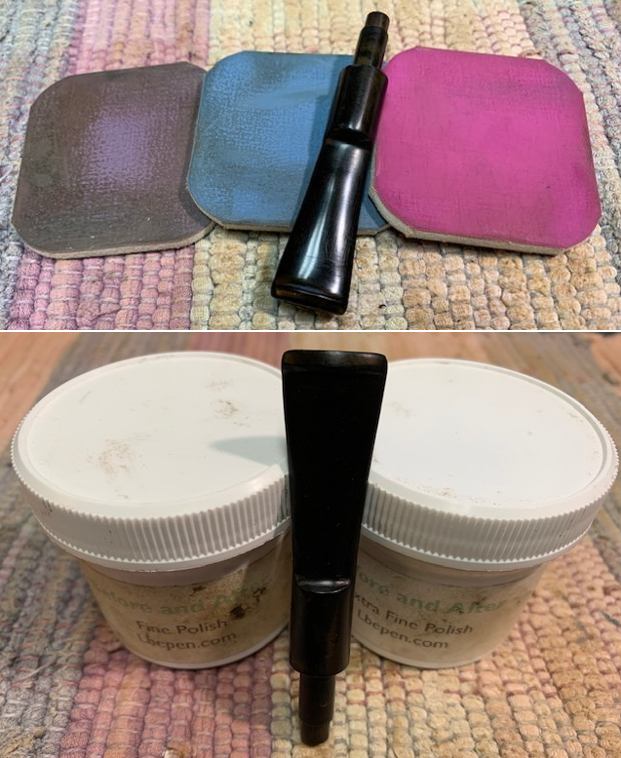
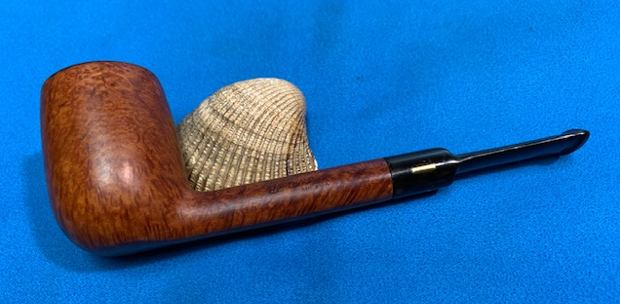
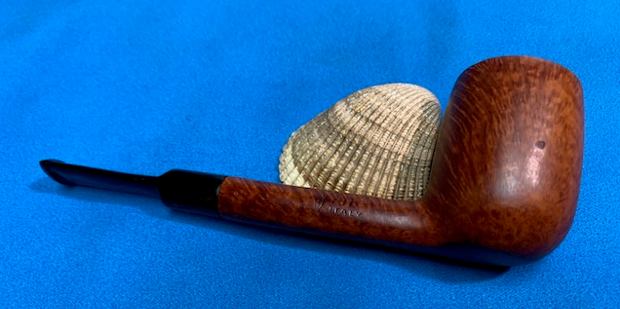
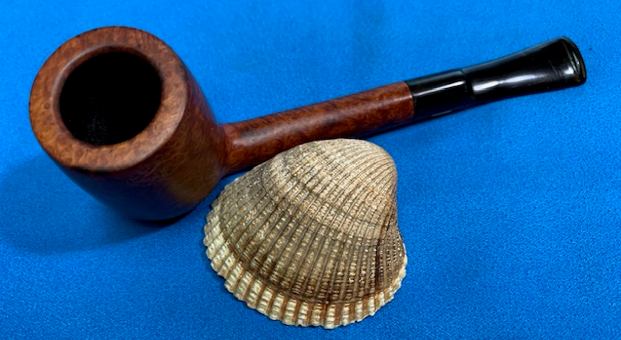
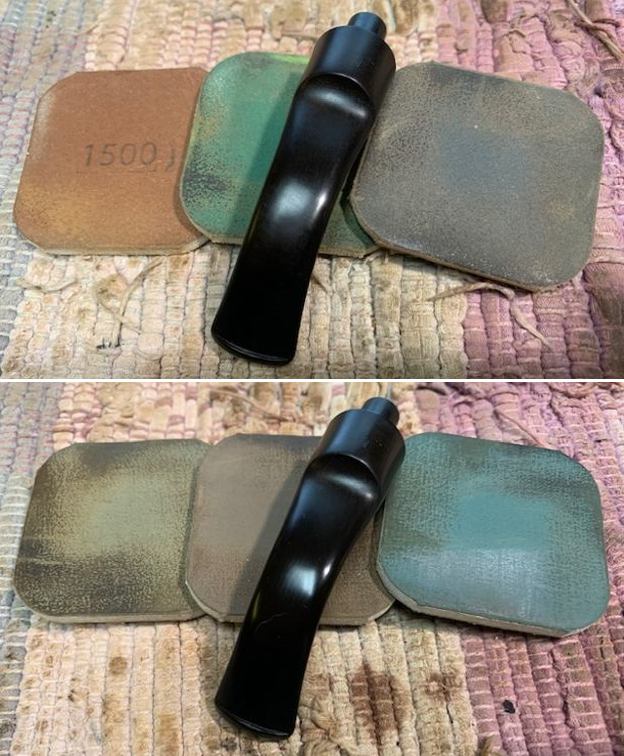
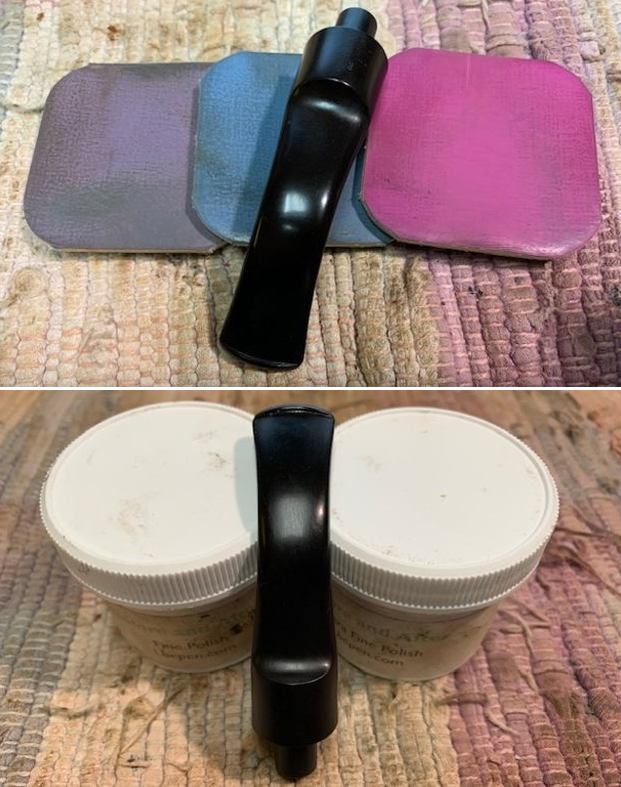
Jeff had done his usual thorough clean up of the bowl and stem. He reamed the bowl with a PipNet pipe reamer to remove the remaining cake back to briar. He followed up with a Savinelli Fitsall pipe knife to remove the remnants of cake. He scrubbed out the mortise and the airway in the shank and the stem with alcohol, cotton swabs and pipe cleaners. He scrubbed the exterior of the bowl, rim, shank and stem with a tooth brush and Murphy’s Oil Soap to remove the oils and tars on the rim and the grime on the finish of the bowl. He rinsed it under running water and dried it off with a soft cloth. The pipe was remarkably clean considering where it began! The rim top looked much better. There was still some darkening on the top and inner bevel as well as some down the cap on the bowl. It was definitely an improvement but more would need to be done. The stem looked better as well but the tooth marks are very visible in the photos below. I took photos of the stamping on the shank sides. They read as noted above.  I removed the stem from the shank and took a photo of the pipe to give a sense of the proportions of the pipe. It is a beauty.Now it was time to start working on the pipe. I decided to work on the rim top and edges to try to remove the darkening that was present. I used a folded piece of 220 grit sandpaper to smooth out the top and edges and try to lighten them. I am pretty pleased with the way it turned out.  I polished the bowl and the rim top, sides and shank with micromesh sanding pads – dry sanding with 1500-12000 grit pads and wiping it down after each pad with a damp cloth. I carefully avoided the stamping on the shank so as not to damage it.    I rubbed the bowl and shank down with Before & After Restoration Balm. I worked it into the surface of the bowl sides and shank with my fingertips to clean, enliven and protect the briar. I let the balm sit for 10 minutes and then buffed with a cotton cloth to raise the shine.    I set the bowl aside and turned my attention to the stem. I “painted” the surface of the stem on both sides with the flame of a lighter. I was able to lift many of the tooth marks. I filled in the remaining tooth marks on the button surface and just ahead of it on the underside with clear super glue and set the stems aside to let the repairs cure.    I smoothed out the repairs with a needle file and started blending them into the surface of the stem. I sanded the remaining repairs with 220 grit sandpaper to further blend it into the stem surface. I started polishing it with 400 grit wet dry sandpaper.   I polished the vulcanite stem with micromesh sanding pads – 1500-12000 grit pads. I wiped it down with a damp cloth after each sanding pad. This 50s era Comoy’s Grand Slam Pipe 233 Straight Bulldog with a vulcanite taper stem is a great looking pipe now that it has been restored. I did a lot of work on the bowl and the stem. The rich browns and blacks of the contrasting stains came alive with the polishing and waxing. I put the stem back on the bowl and carefully buffed the pipe with Blue Diamond on the buffing wheel using a light touch on the briar. I gave the bowl and the stem multiple coats of carnauba wax on the buffing wheel and followed that by buffing the entire pipe with a clean buffing pad. I hand buffed the pipe with a microfiber cloth to deepen the shine. The finished Comoy’s Grand Slam Bulldog is a beauty and fits nicely in the hand and looks very good. Give the finished pipe a look in the photos below. The dimensions of the pipe are Length: 5 ½ inches, Height: 1 ¾ inches, Outside diameter of the bowl: 1 ¼ inches, Chamber diameter: ¾ of an inch. The weight of the pipe is 38 grams/1.34 ounces. I will be putting this older Comoy’s Bulldog on the rebornpipes store shortly if you want to add it to your collection. Thanks for reading this blog and my reflections on the pipe while I worked on it. There are many more to come!

Reuniting an older Ropp Panel 062 Rhodesian with its original stem


Blog by Steve Laug

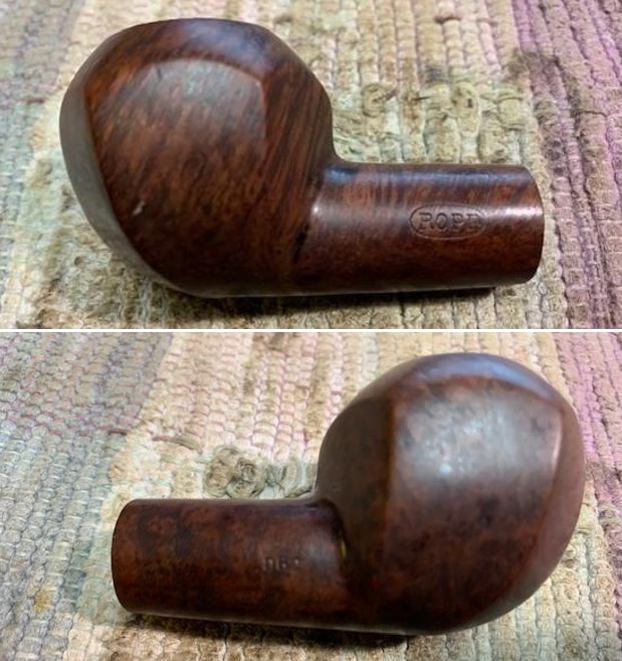
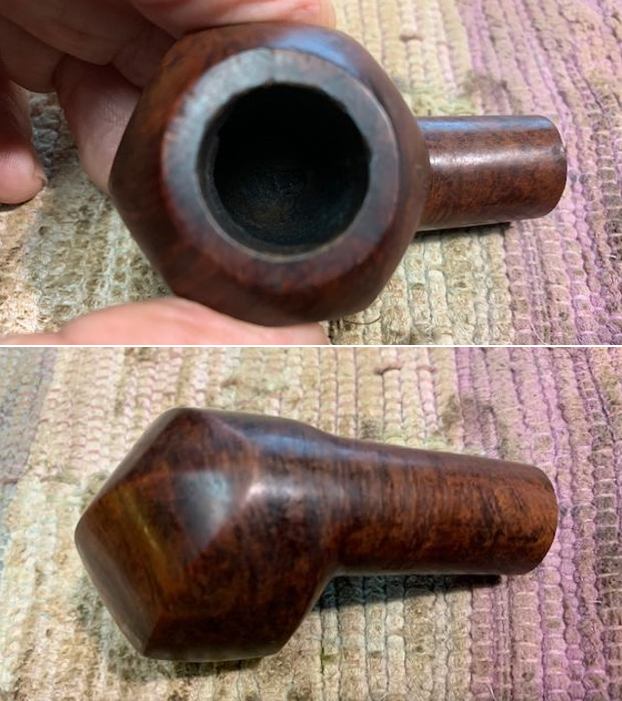
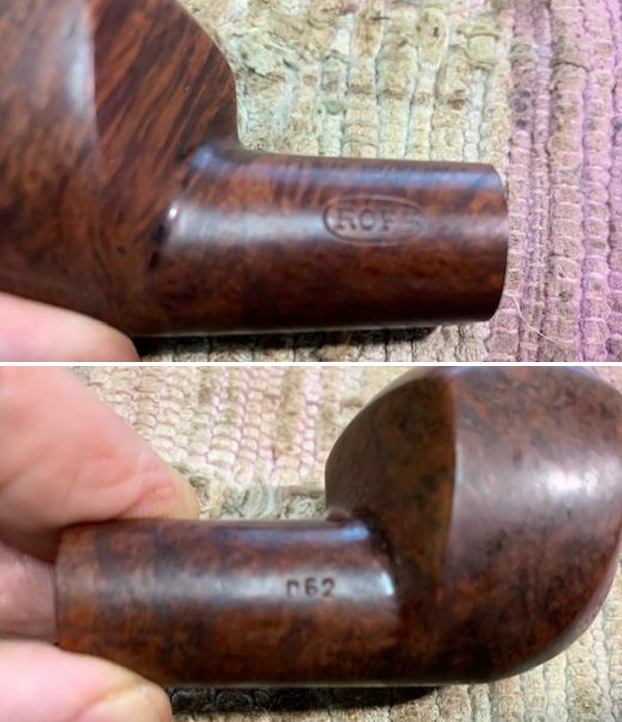
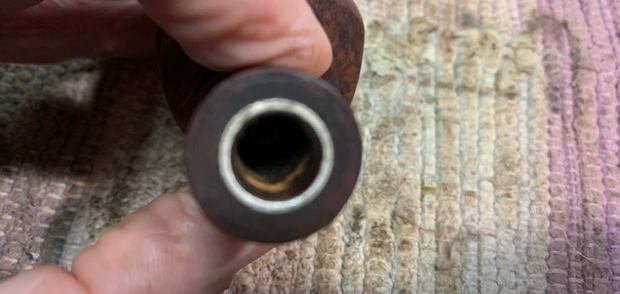
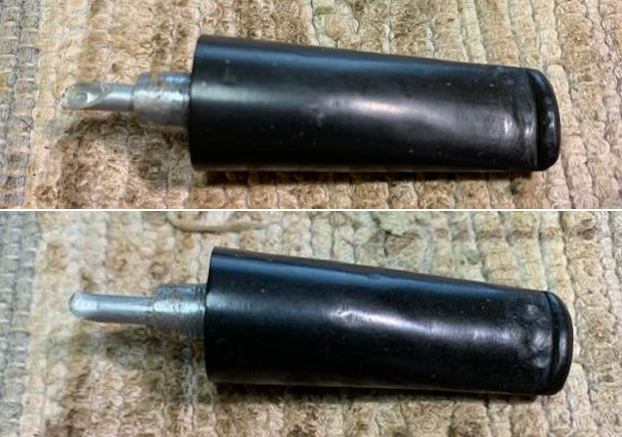
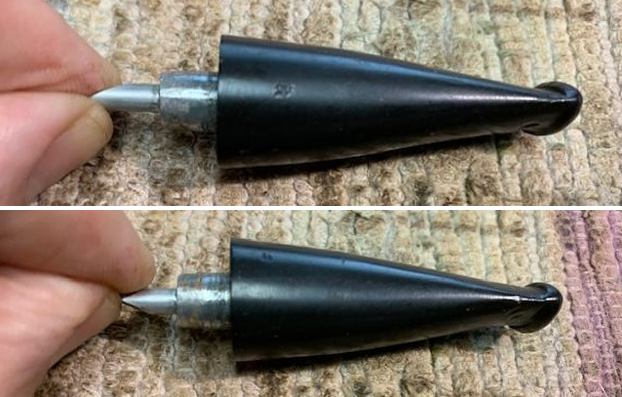
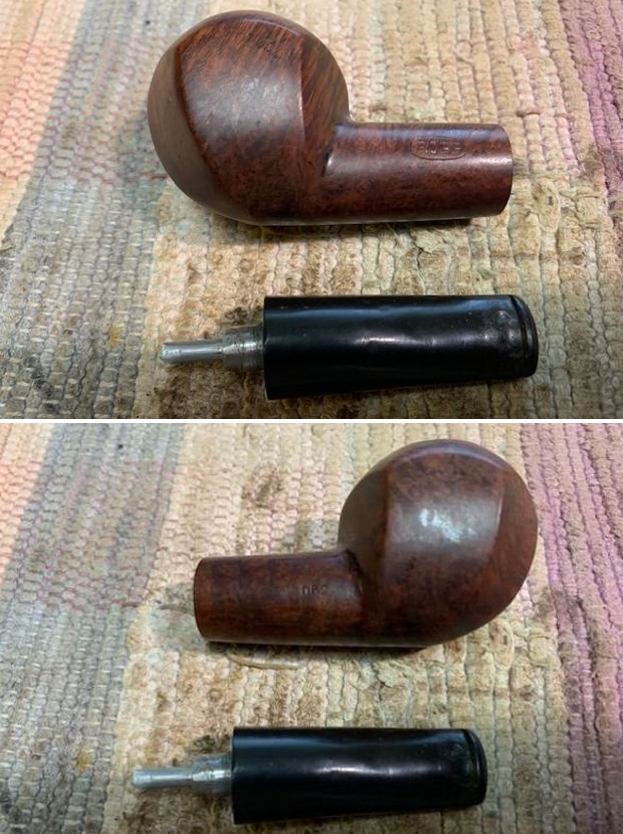
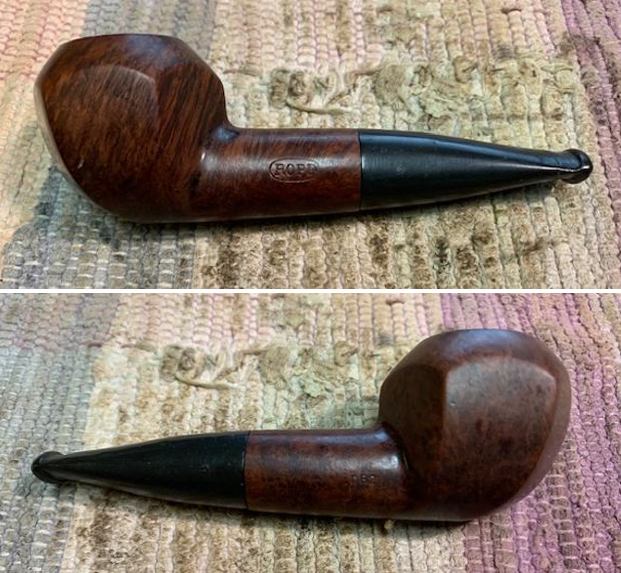
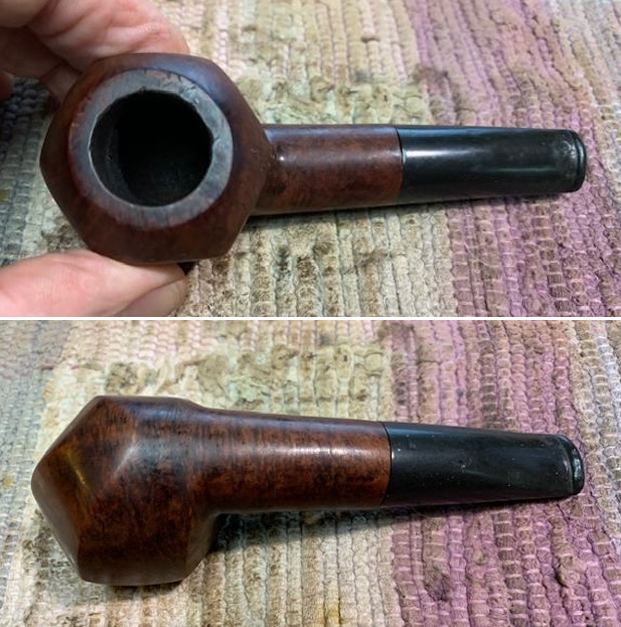
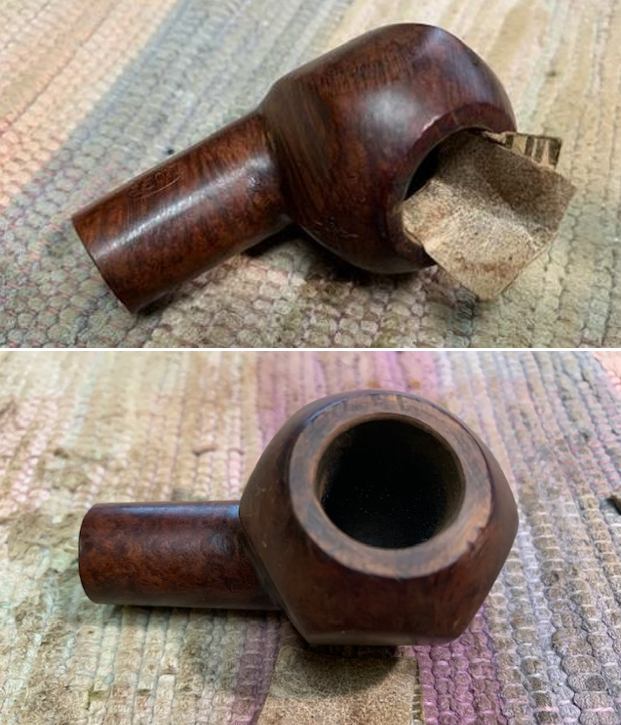
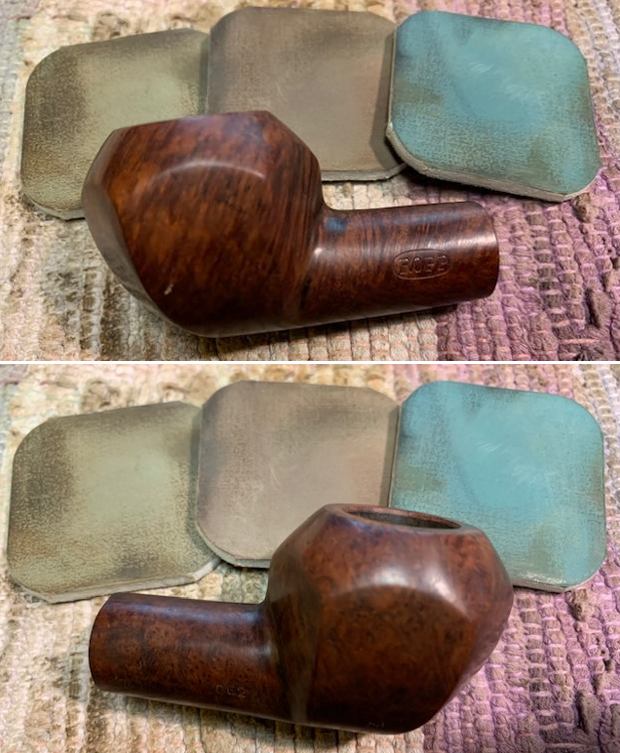
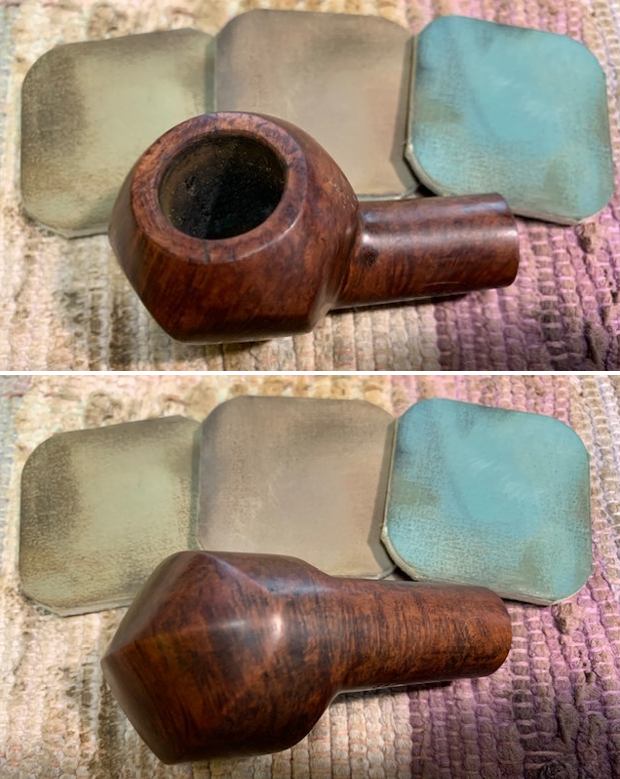
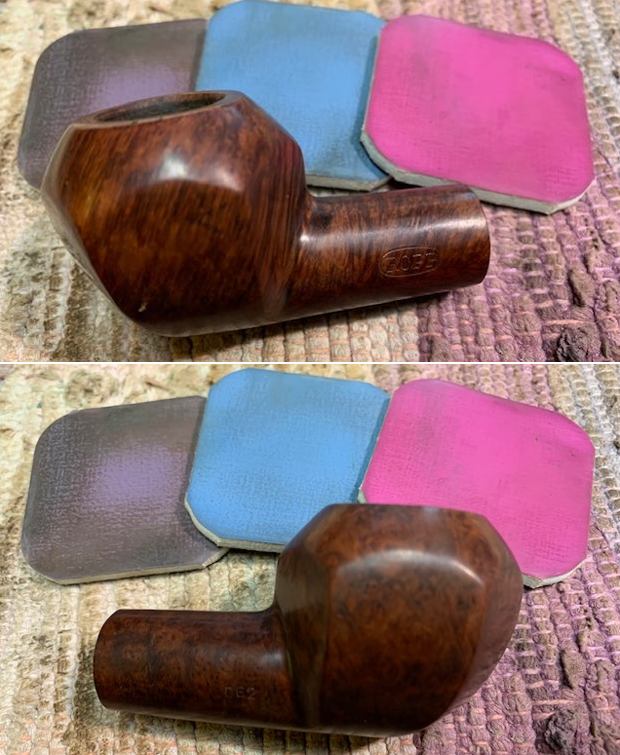
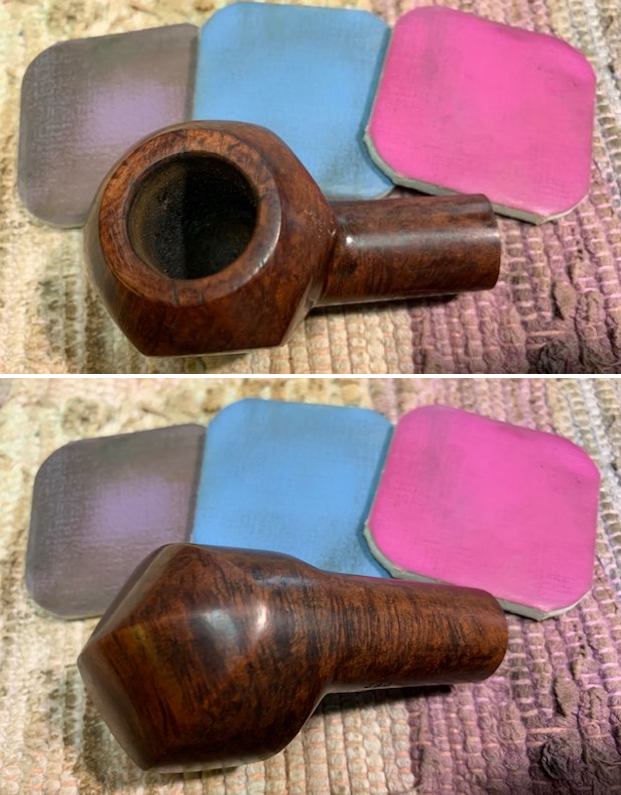
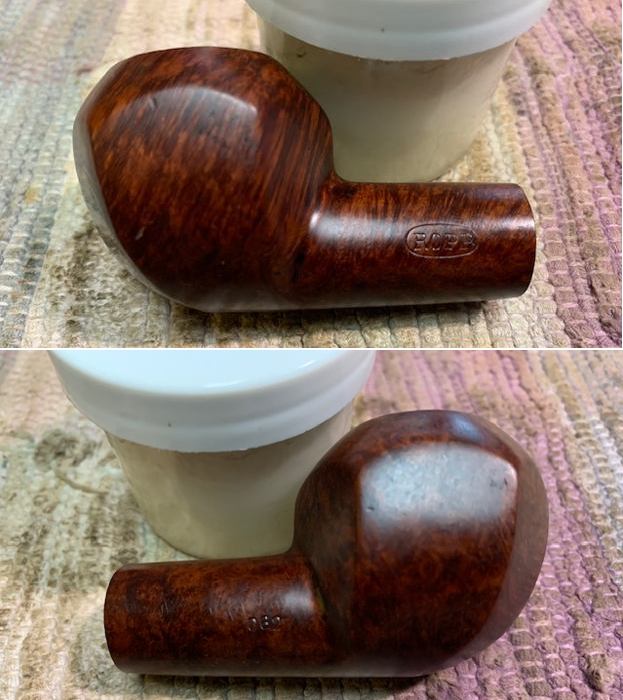
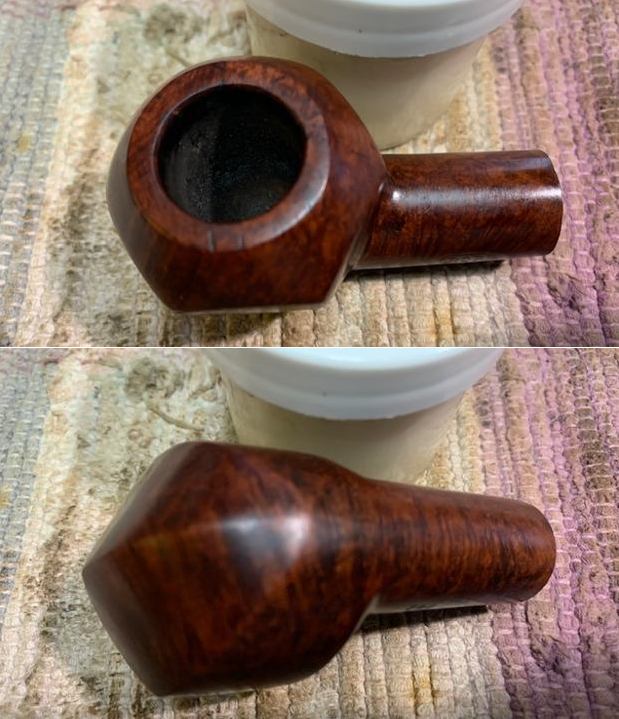
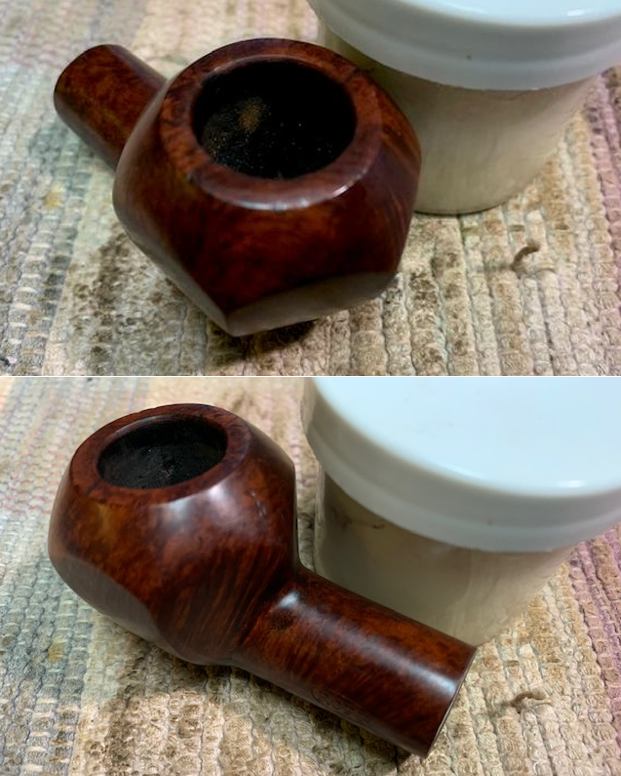
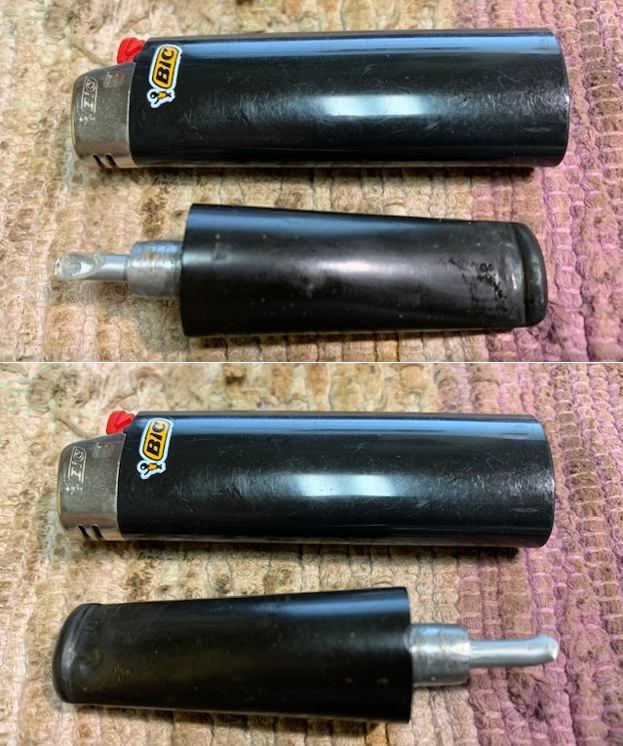
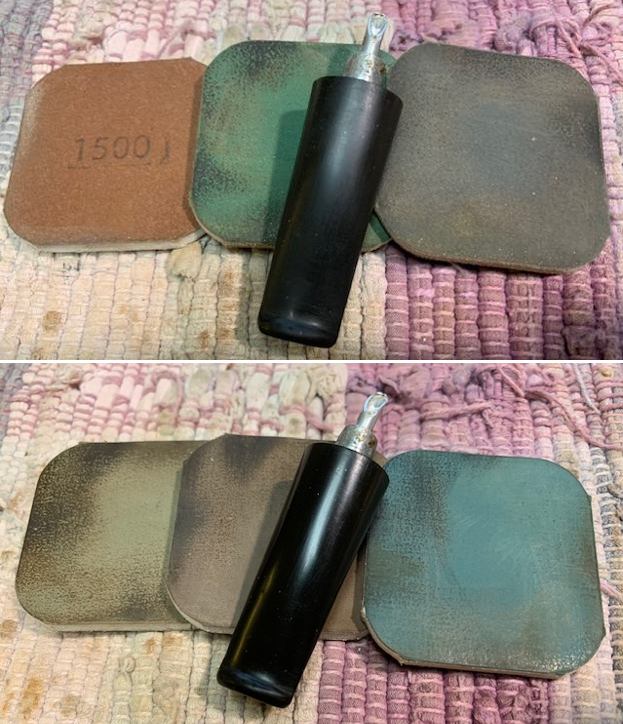
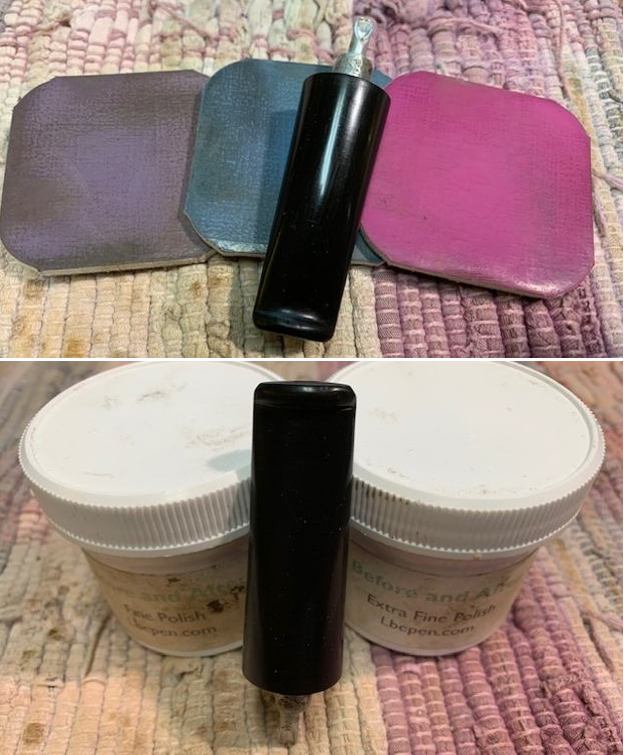
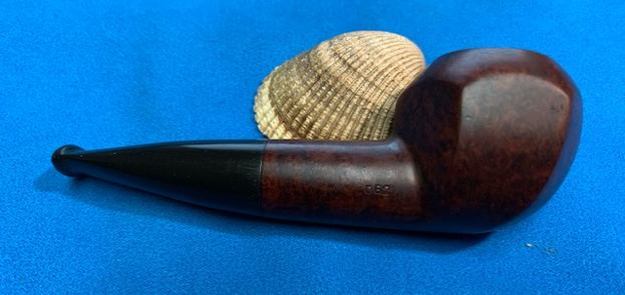
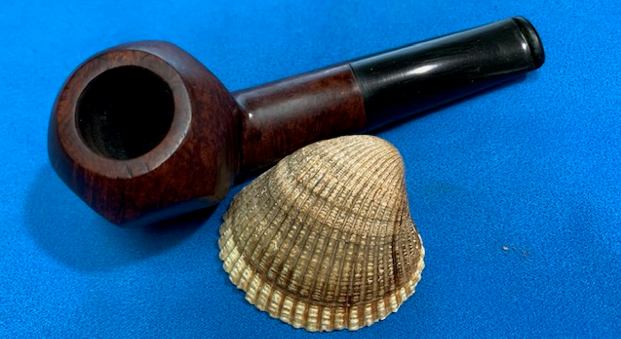
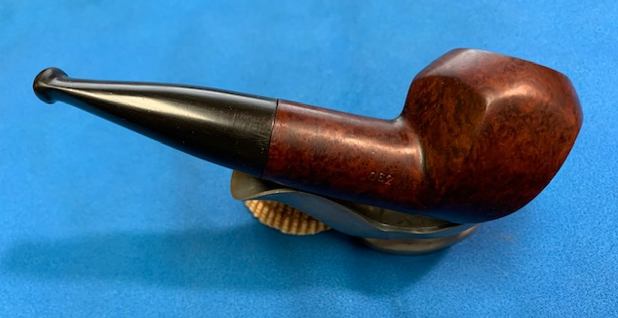
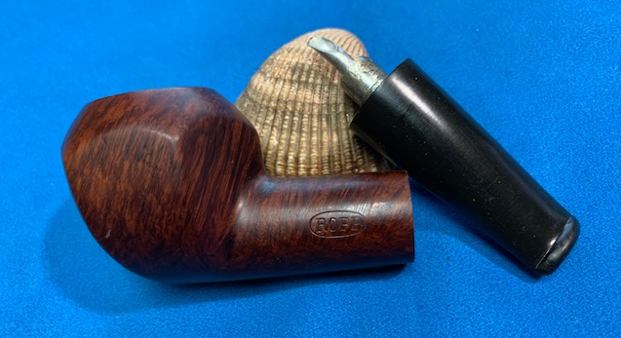
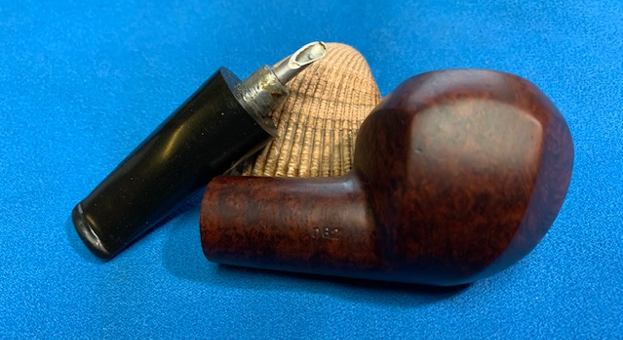
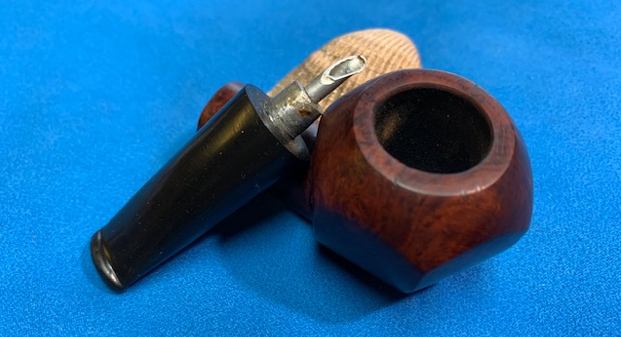
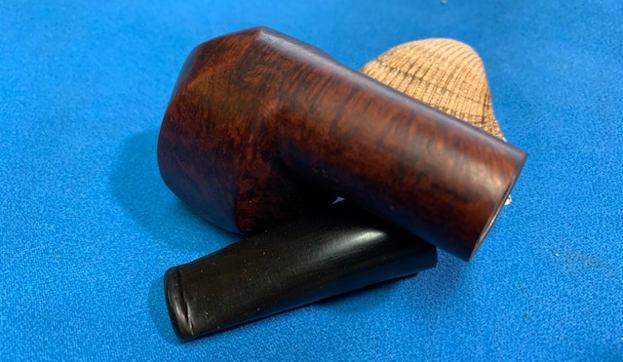
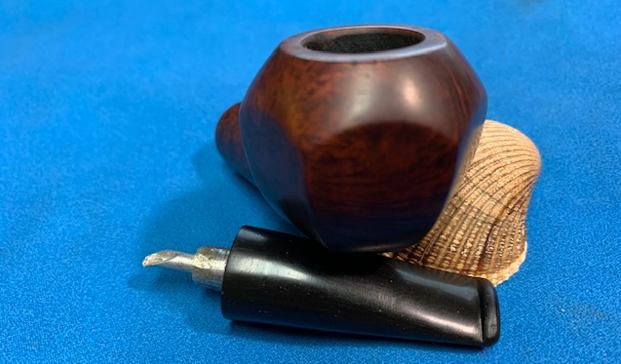
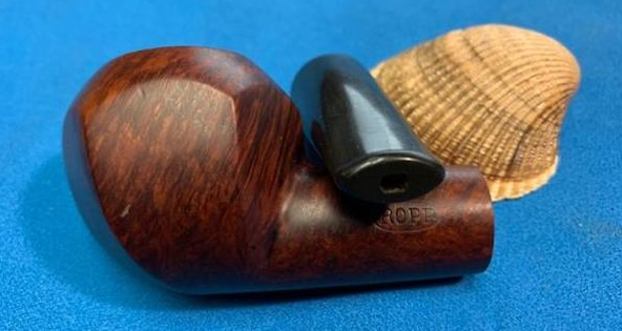
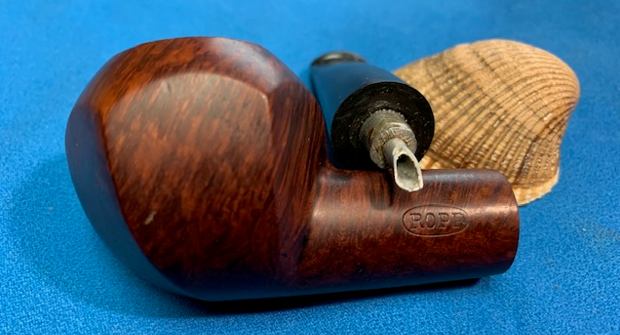
I looked through my box of bowls and came across this older Ropp Panel Rhodesian that caught my eye. The shape was really nicely done – a Rhodesian with a thick shank. The bowl was a paneled hexagon. The rim cap was smooth and the bowl top was smooth. The inner edge was nicked like it had been reamed with a knife. The outer edge of the bowl was in good shape. The rim top had some scratches. There were some dents on the bowl but the finish looked good. It appeared to have been cleaned up by Jeff somewhere along the way. The bowl had been reamed and scrubbed. The shank was clean and was lined with a metal shank tube. On the left side of the shank it was stamped ROPP in an oval. On the right it was stamped 062. I took some photos of the stamping on the sides of the shank and they read as noted above. They were clear and readable. I also took a photo of the shank end to show the metal tube that lines the mortise.I went through my can of stems and found a stem that I thought would probably work with the bowl. It had a metal tenon and a metal tube. There were some deep tooth marks on the top and underside near the button. In the third photo below you can see a stamping on the left side of the stem. Under a light with a lens I believe it reads ROPP. I am pretty certain that I have reunited the bowl with its original stem. I took some photos of the bowl and stem together to get a sense of how the pipe looked.I put the stem on the bowl and the fit in the shank was really good. The thickness of the shank and the stem match perfectly. Everything about it looked right. The stem is hard rubber and has an orific hole in the button end.  I decided to start my clean up of the pipe by address the damage on the rim top and inner edge. I used a folded piece of 220 grit sandpaper to smooth out the edge and to polish out the scratches in the rim top. It worked quite well and I was happy with the results.I wiped the bowl down with alcohol to remove the shiny spots of the previous varnish coat on the bowl. It came off very well and the grain began to stand out nicely! I polished the briar with micromesh sanding pads – dry sanding with 1500-12000 grit pads. I wiped the bowl down after each sanding pad to remove the debris. I rubbed the bowl and shank down with Before & After Restoration Balm. I worked it into the surface of the bowl sides and shank with my fingertips to clean, enliven and protect the briar. I let the balm sit for 10 minutes then buffed with a cotton cloth to raise the shine. The grain really came alive. It looks better than when I began. I set the bowl aside and turned my attention to the stem. I “painted” the stem surface with the flame of a Bic lighter to try to lift them. I was able to raise them quite a bit. I filled in the remaining marks and the nicks in the hard rubber stem surface with clear super glue. I used a small file to flatten out the repairs on the top and underside of the stem at the button. I also flattened out the repairs round the rest of the stem. I sanded it with 220 grit sandpaper to smooth it out. I started polishing it with 400 grit wet dry sandpaper. I tried to touch up the ROPP stamp on the left side of the stem. I rubbed it into the stamp with a tooth pick and rubbed it off with a soft cloth. Much of the stamping was not deep enough to hold the Antique Gold Rub’n Buff. The amount of gold in the stamp was not too much but it is still slightly readable.I polished the stem with micromesh sanding pads – 1500-12000 grit pads. I wiped it down with Obsidian Oil after each sanding pad. I used Before & After Pipe Polish – both Fine and Extra Fine to further polish the stem. I gave it a final coat of Obsidian Oil and set it aside to dry. This older style Ropp Panel 062 Rhodesian is a great looking pipe now that it has been restored and reunited with its stem. The finish around the bowl is quite beautiful and highlights the grain and works well with the polished taper stem. I put the stem back on the bowl and carefully buffed the pipe with Blue Diamond on the buffing wheel using a light touch on the briar. I gave the bowl and the stem multiple coats of carnauba wax on the buffing wheel and followed that by buffing the entire pipe with a clean buffing pad. I hand buffed the pipe with a microfiber cloth to deepen the shine. The finished Ropp Panel Rhodesian fits nicely in the hand and feels great. Give the finished pipe a look in the photos below. The dimensions of the pipe are Length: 5 inches, Height: 1 ¾ inches, Outside diameter of the bowl: 1 ½ inches, Chamber diameter: ¾ of an inch. The weight of the pipe is 1.94 oz./55 gr. I will probably be putting it on the rebornpipes store shortly. If you are interested in adding this pipe to your collection send me a message or an email. Thanks for reading this blog and my reflections on the pipe while I worked on it.
A Simple Refurbishing Of A Boxed “Brakner # 129”


Blog by Paresh Deshpande

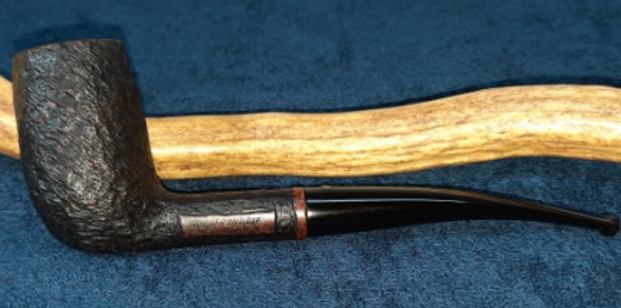
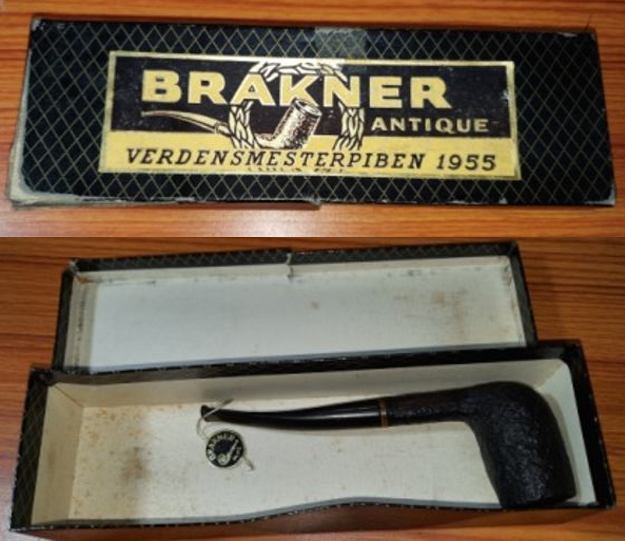
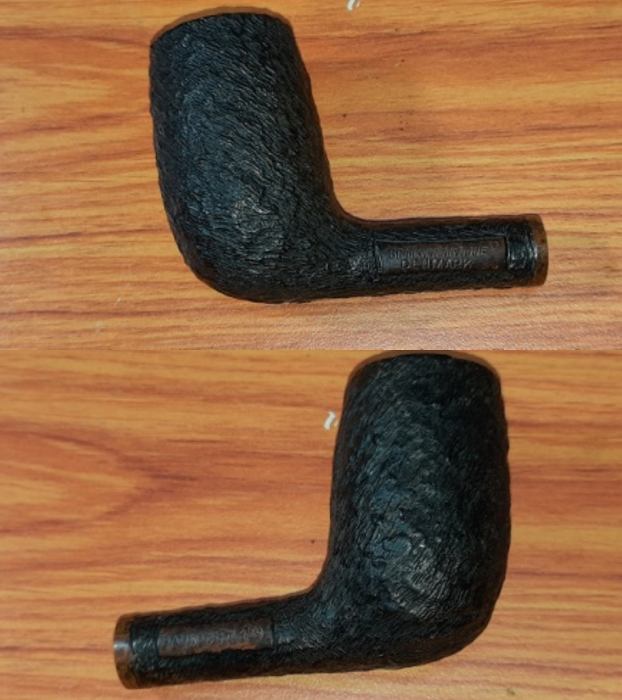
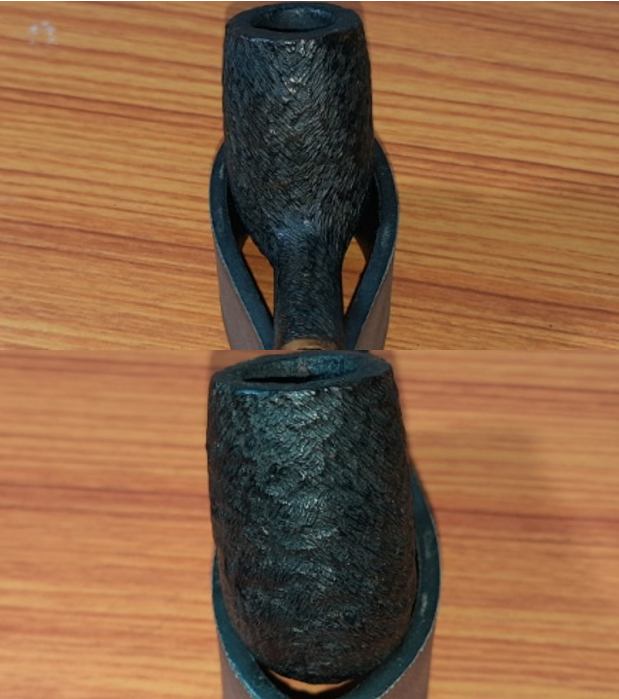
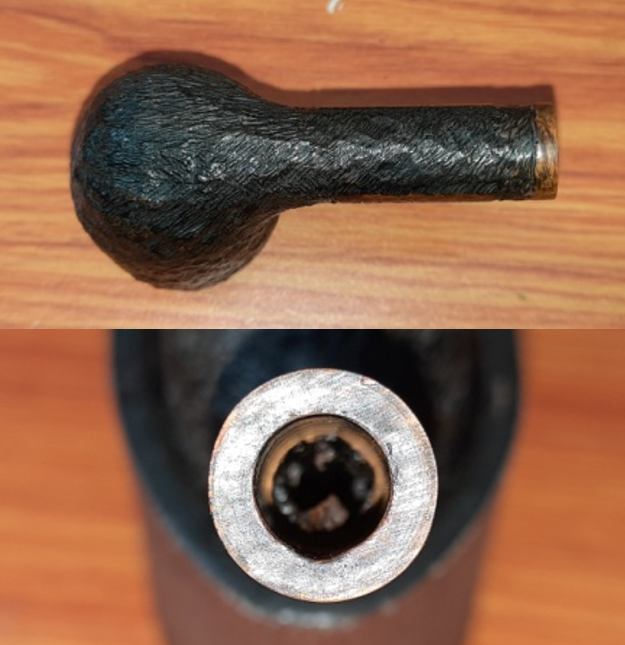
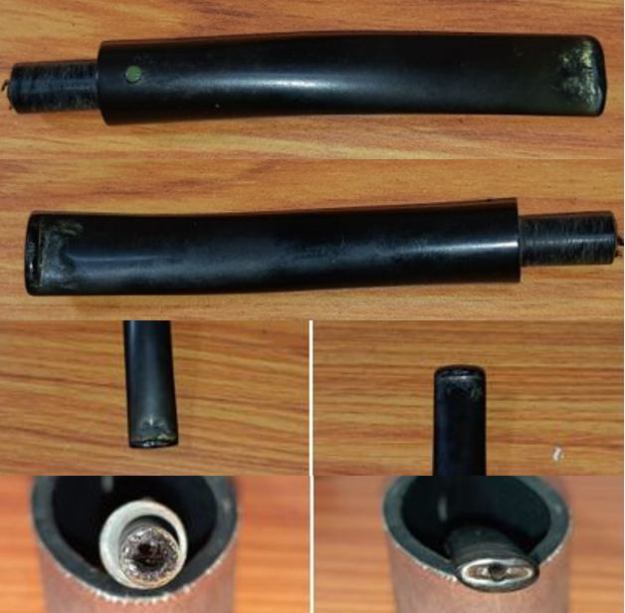
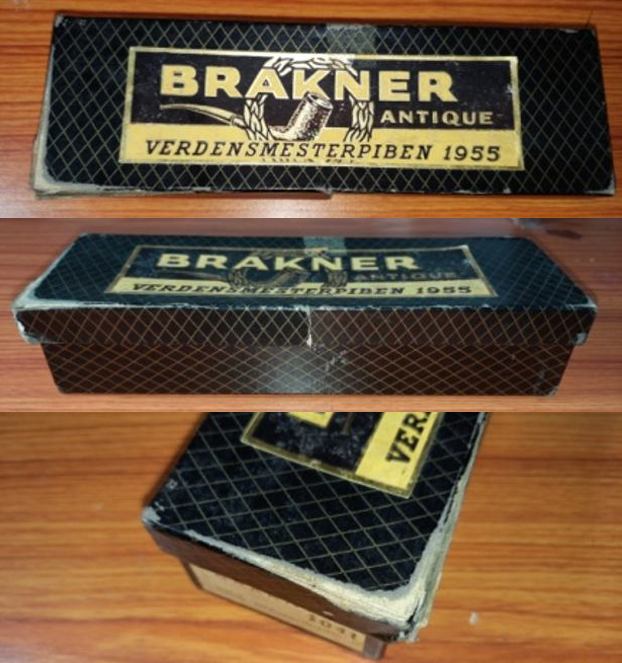
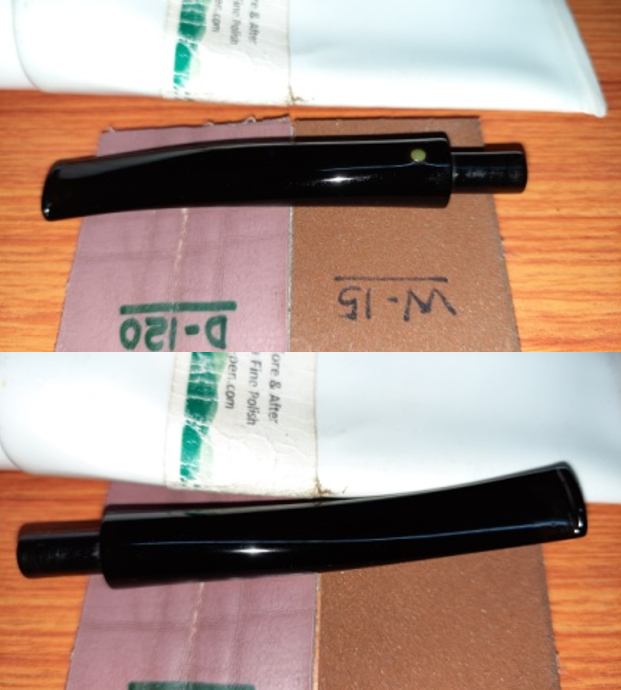
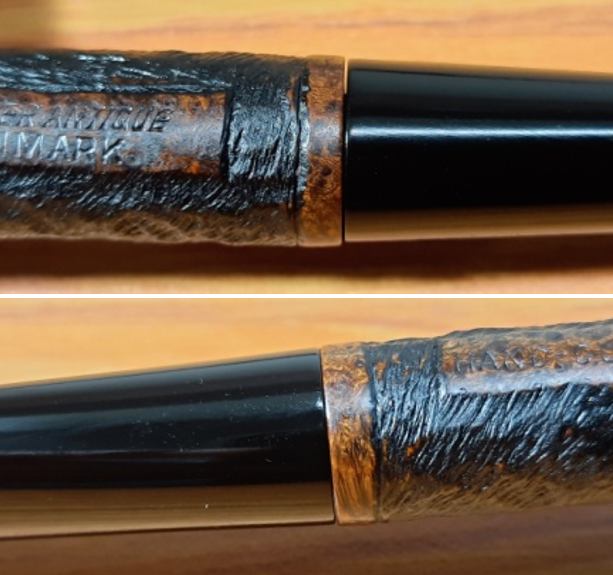
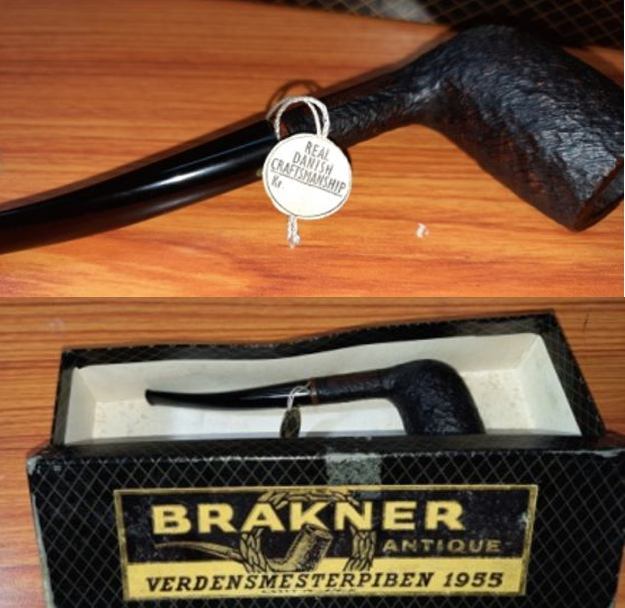
This is the third and the last Brakner pipe in my inherited collection that came in original Brakner box duly tagged, but I don’t think the box is original as the shape code on the pipe and the box do not match. I had been delaying restoring this pipe as I had my hands full with pipes that I had received for repairs and ones that were selected by brother pipers to be restored/ refurbished by me. In between these commitments, I took the time out to refurbish pipes for my personal collection and this is one such pipe. This uniquely rusticated stacked billiard shaped pipe is stamped on the smooth surface on the left side of the shank as “BRAKNER ANTIQUE” over “DENMARK”. The smooth surface on the right side of the shank is stamped as “HAND-CUT” followed by # 129, the shape number. The vulcanite stem is adorned with a green dot (larger than a Dunhill stem logo), I think made of Jade stone, not sure though. There is a smooth band around the end of the shank.  I have worked on Brakner pipes before and had read about Peter Brakner and his unique “micro-rustication” technique, which has been lost to the pipe community with his demise as he never did share this technique that he had developed. To refresh my memory, I revisited pipedia.org and read the article published therein. One can refer to the article at this link Brakner – Pipedia.

Peter Micklson (†) started his career at the Teofil Suhr workshop, Suhr’s Pibemageri, in Copenhagen, where Sixten Ivarsson was the foreman. He brought in Poul Rasmussen and taught him the two or three important things about pipemaking in a six weeks crash course, before he went off to join Poul Nielsen, the later Mr. Stanwell.

Micklson, who later changed his last name to Brakner,cannot have worked under Rasmussen too long before he felt to be good enough to go off on his own. Indeed he carved himself quite a good name as it was proudly announced 1955’s World Championship of Pipe Smoking was won by a smoker who employed a Peter Brakner pipe.

His fame based fairly on developing an unique and very special “micro-rustication” he called Antique. According to Kai Nielsen, Brakner kept this technique as a secret and only once he showed it to one person – Kai’s mother. Both have passed away, so this secret technique is lost. Kent Rasmussen was recently inspired by Brakner’s Antique finish when he created his new technique of rustication.

Brakner was a close friend of Ole Larsen, the proprietor of the famous W.Ø. Larsen tobacco shop and sold a lot of his pipes there, before Larsen hired his own indoor carvers. From the Larsen Export Catalog 1960/61 we learn a bit about Brakner pipes:

  • Antique Antique finish in tan or black. Smooth pipes also. Each pipe 7.50 $.
  • Bella Danica Antique finish in tan or black. Each pipe 10.00 $.
  • Royal Danois Antique finish in tan or black. Each pipe 12.50 $.

The latter were named after the Royal Danish Guard Regiment, founded in 1689.

Brakner was one of the first high-end carvers from Denmark to enter the US market and was considerably successful there in the early 1970’s. After his sudden death Peter Brakner’s name faded back from the forefront, but his pipes speak to the injustice of that. His body of work has earned him a place in the important history of Danish pipemaking.

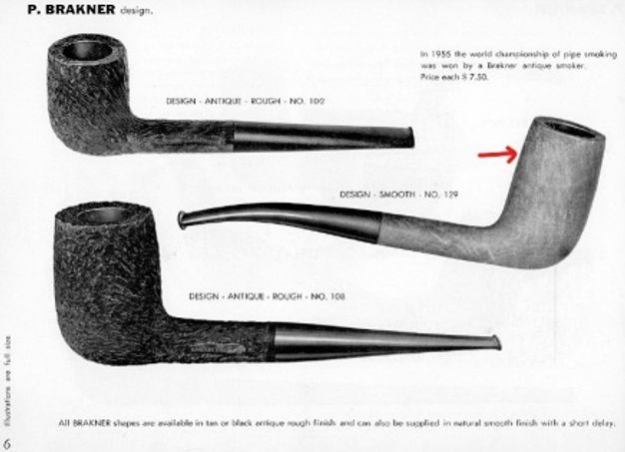
Further down the article, there were a few pictures of Brakner Pipes from the 1961-62 catalogs that I have reproduced below which has the shape code of the pipe currently on my work table, albeit in a smooth finish and indicated with a red arrow.Having read the detailed account, I feel blessed to be holding a piece of Danish pipe history.

Initial Visual Inspection
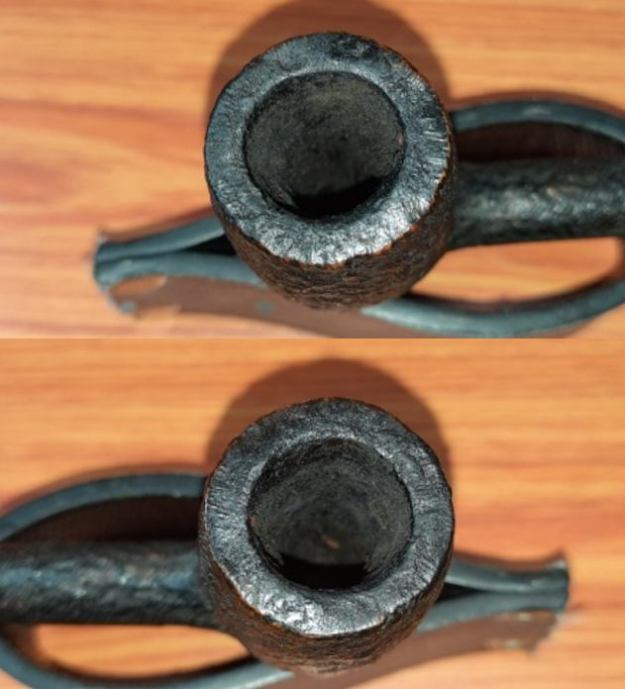
As is generally observed with most of my grandfather’s pipe, the chamber of this pipe too is filled with a thick cake with overflowing lava covering the rim top surface. The thick cake hides the condition of the inner walls of the chamber and will be ascertained only after the cake has been taken down to bare briar. Similarly, the condition of the rim top surface will be commented once the overflowing lava has been scraped off. However, the inner rim and outer rim edge appears to be in good condition with no tell tale signs of damage. There are strong smells emanating from the entire pipe and would need to be addressed. Unlike the other two Brakners in my collection, this one does not have a smooth band below the outer edge of the rim, but has one at the shank end. It has smooth surfaces on either side of the shank which bears the stampings seen on this pipe. The unique rustications on the stummel surface are covered in oils, tars, grime and dust of all these years of use and storage. However, once cleaned up, the dark of the stummel should contrast beautifully with the smooth brown shank end band. The mortise and the shank air way are clogged as expected making the air flow anything but laborious. However, with the draught hole being right at the bottom of the chamber and the perfect alignment of the stem airway, tenon and the shank airway should make this one a fantastic smoker. The vulcanite stem is heavily oxidized with deep tooth marks on both the upper and lower stem surfaces. The buttons on the either surfaces are deformed due to tooth indentation and would have to be rebuilt and reshaped. The trademark green dot on Brakner pipe stem has dulled a bit and would benefit from a nice polish. The tenon end and the slot end showed heavy accumulation of dried oils and gunk.The cardboard box that housed the pipe for these many years does show its age. The edges have separated at the seams at a couple of places and the whites of the insides have yellowed. However, the posters and external surface are bright and in good condition. All in all, judging from the initial examination, I do not envisage any major/ serious issues to present themselves in the course of restoring this beauty and should be an easy project.

The Process
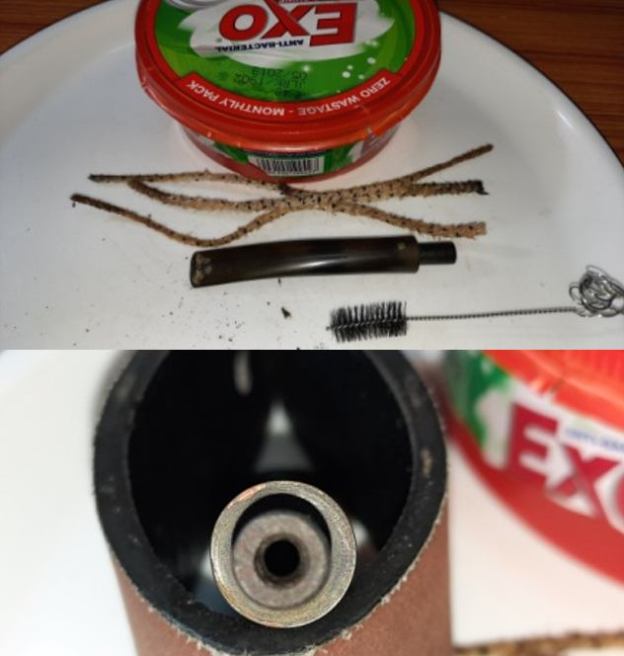
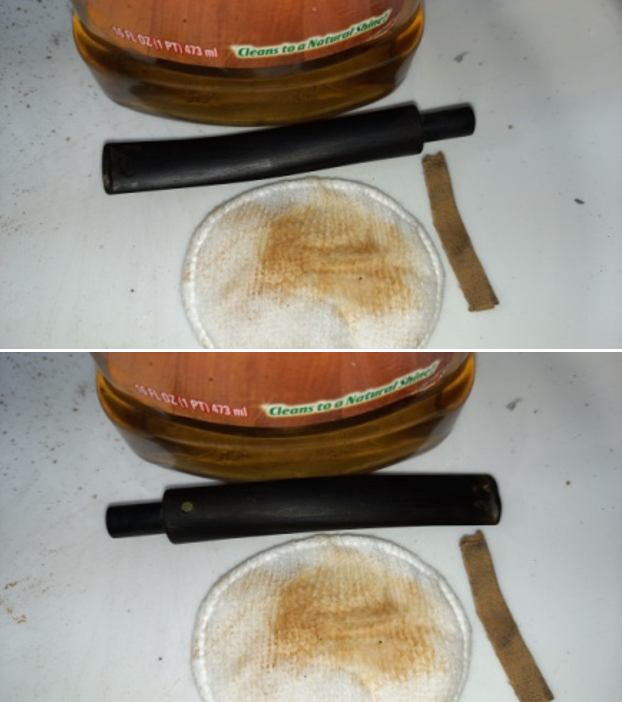
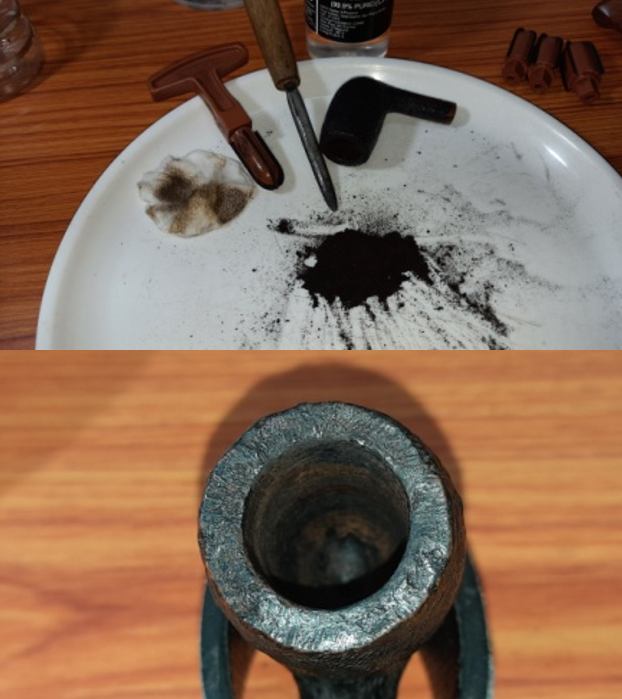
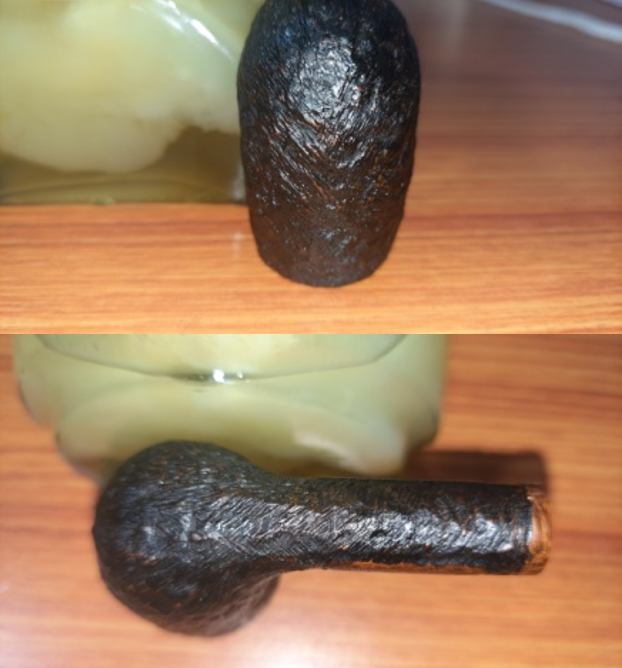
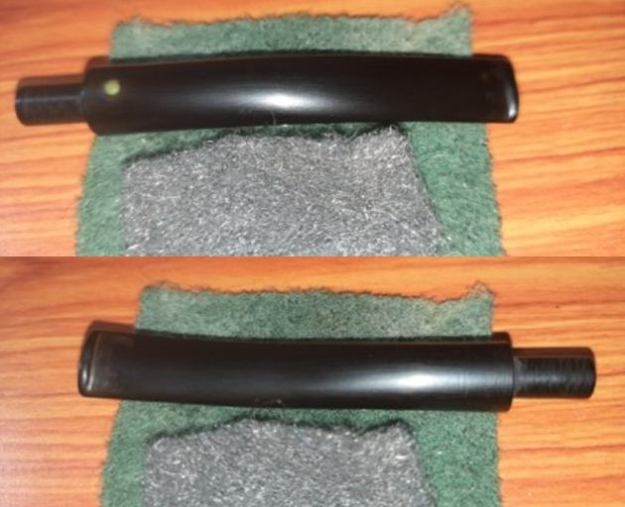
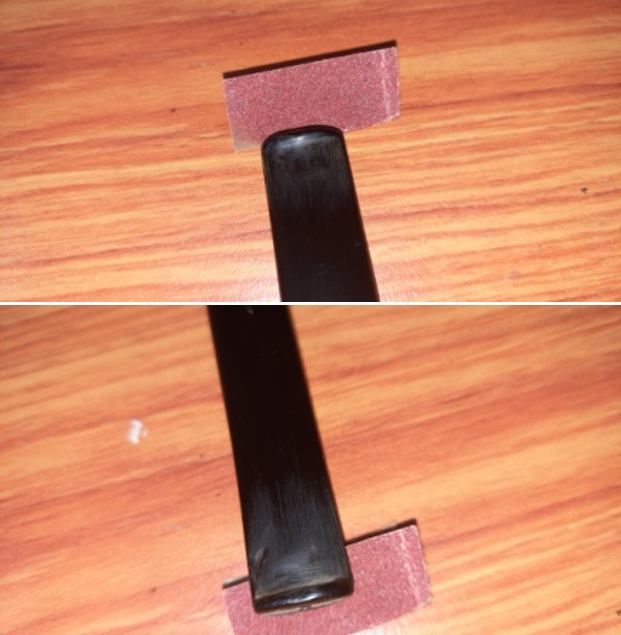
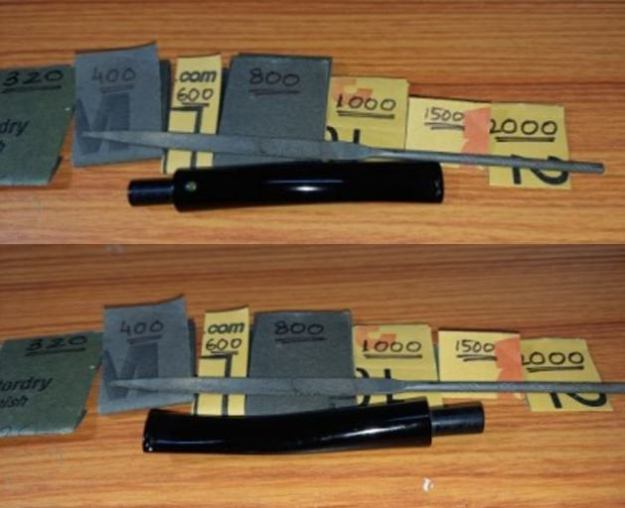
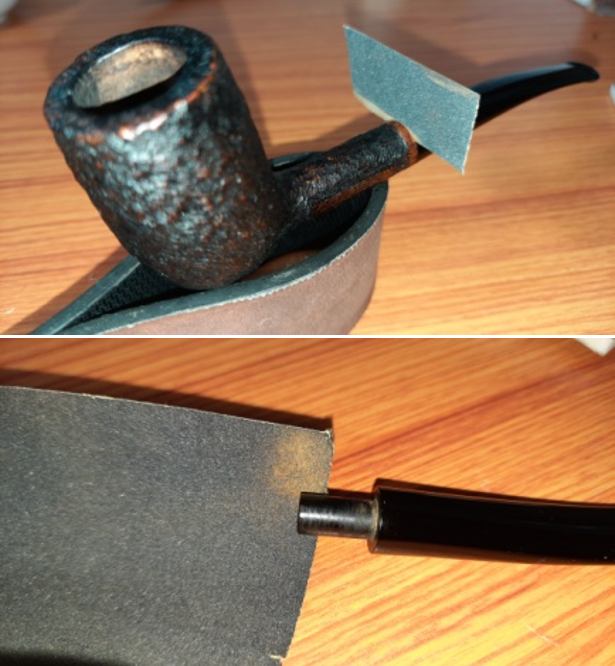
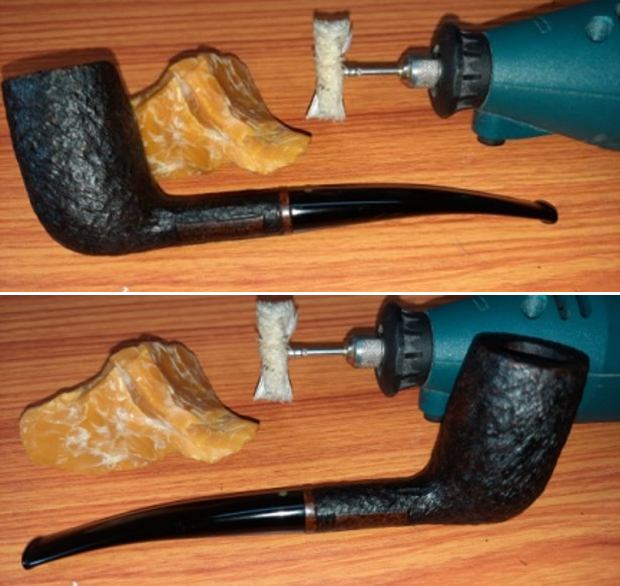
I began the restoration process by first cleaning the stem internals. I cleaned the internals of the stem using hard bristled pipe cleaners dipped in isopropyl alcohol and followed it by cleaning the air way using a small shank brush with anti oil dish cleaning soap. This helps in reducing the number of pipe cleaners required while ensuring a spotless and a very clean stem air way. Once the stem internals were clean, I sand the entire stem surface with a piece of 220 grit sand paper and cleaned the stem surface with Murphy’s Oil soap on a cotton pad. This step helps to remove surface oxidation to some extent while preparing the stem for a dunk in deoxidizer solution for better results. To address the issue of bite marks and tooth chatter on the stem surfaces, I flamed the surface with a lighter. Vulcanite has the property to attain its original shape when heated and this is exactly what was being done. The tooth chatter and deeper bite marks were raised to the surface to a great extent. The remaining minor tooth indentations would be subsequently filled with a mix of clear super glue and activated charcoal. At this stage, I immersed the stem in to the De-oxidizer Solution developed by Mark Hoover. I generally allow the stem soak in the solution overnight.While the stem was soaking in the De-oxidizer solution, I reamed the chamber with size 1 head of the PipNet pipe reamer. I removed the carbon from the areas where the reamer head could not reach with my fabricated knife. To completely remove the residual carbon from the walls of the chamber and smooth out the walls, I sand the chamber walls with a folded piece of 220 grit sandpaper followed by cleaning the chamber with a cotton swab wetted with isopropyl alcohol. The chamber walls are in pristine condition. I deliberately avoided scraping off the lava build up over the rim top to avoid damage to the micro-rustications over the surface. I cleaned the mortise and shank airway using dental pick and hard/ soft bristled pipe cleaners dipped in isopropyl alcohol. I shall continue with further cleaning of the shank internals once I clean the external stummel surface.Once the internals of the chamber and shank were cleaned, I cleaned the external surface of the stummel with Murphy’s Oil soap and cotton swabs followed by scrubbing the rusticated surface with a toothbrush and dish washing soap. This rid the stummel rustications of all the accumulated dust, dirt and grime and the smooth brown band around the shank now contrasts beautifully with the dark stummel surface. Using a soft brass brush, I deliberately cleaned the rim top micro-rustications till clean. I also cleaned the shank internals with dish washing soap and shank brush.I had expected that after such a thorough cleaning of the chamber and shank internals, the ghost smells would have been greatly reduced or eliminated completely, but that was not so. I decided to subject the chamber and mortise to cotton and alcohol bath. I packed the chamber with cotton and drew out a wick from the cotton and along with a folded regular pipe cleaner, inserted it into the mortise and through the draught hole into the chamber. I tightly packed cotton balls in to the remaining portion of the mortise. Thereafter, I soaked the cotton balls with isopropyl alcohol up to the brim. About half an hour later, the level of alcohol had gone down, having being absorbed by the cotton. I topped it up once again and set it aside overnight. By next afternoon, the cotton and alcohol had drawn out all the remaining oils and tars from the chamber and mortise. I removed the cotton balls and the dirt can be gauged by the appearance and coloration of the cotton balls and the pipe cleaner. With my fabricated knife and dental tools, I spent the next hour scrapping out the entire loosened gunk from the mortise. I ran pipe cleaners through the mortise and draught hole to clean out all the loosened tars and gunk that was lodged in the draught hole and mortise. The chamber and mortise now smelled clean, fresh and looked it too. I set the stummel to dry out naturally. To enhance the contrast and break the monotony of the black stained stummel and the soon-to-be shining black stem, I polished the smooth briar band at the shank end, dry sanding with 1500 to 12000 grit micromesh pads.To enliven the briar wood and further enhance the contrast of the band with the rest of the dark stummel surface, I rubbed a little quantity of “Before and After” balm in to stummel surface and set it aside for 20 minutes for the balm to be absorbed in to the briar. Thereafter I hand buffed it with a microfiber to deepen the shine. The stummel looks nice and vibrant.With the stummel refurbishment almost complete, I turned my attention to the stem which had been soaking in the solution now for nearly 24 hours. I cleaned the stem and the stem airway under running warm water and scrubbed the raised oxidation from the surface using a Scotch Brite pad and the airway with thin shank brush. I further removed the oxidation by scrubbing the stem with 0000 grade steel wool. Once the stem was dried with paper towels, I sand the bite zone to completely eliminate the raised oxidation in preparation for filling the tooth indentations and applied a little olive oil to rehydrate the stem.I prepared a mix of CA superglue and activated charcoal and spot filled the tooth indentations and set it aside to cure overnight.Once the fills had cured completely, I sand the fill with a flat head needle file till I had achieved a rough match of the fill with the rest of stem surface. I continued the sanding cycle by dry sanding with 320, 400, 600 and 800 grit sand papers. I wet sand the entire stem with 1000, 1500 and 2000 grit sand papers. This not only ensured a nice blend of the filled areas with the rest of the stem surface, but also removed the oxidation from the surface. I rubbed the stem surface with some EVO and set it aside to be absorbed in to stem surface. Thereafter, I launched a second determined assault on the stem, subjecting it to the complete cycle of micromesh polish. The end result is a gorgeous, smooth and shiny looking black of the vulcanite stem.When the stem and the stummel were united for a polish using carnauba wax, I saw a mysterious gap appear between the stem and shank face. This gap was definitely not noticed during my initial inspection and neither the stem face was shouldered during the polishing process. I really am not aware about the reasons for this happenstance, but now that it has been noticed, it needs to be addressed. I attach the stem to the shank and insert a piece of 320 grit sand paper between the two and sand the shank face opposite to the gap. I also gave a few turns to the tenon end over the same sand paper. I continued the micro adjustments till I had achieved a perfect seating of the stem in to the shank end. Just a word of caution here; please be extremely diligent and careful during this step as it has the potential to ruin the pipe completely due to over sanding. Remember “LESS IS MORE” and “SAND ONCE AND CHECK TWICE/ THRICE”.  This was followed by the routine regime of polish with carnauba wax using my hand held rotary tool. The Brakner looks unique and oozes quality.To deepen the shine, I gave a vigorous rub to the entire pipe with a microfiber cloth. This is truly a beautiful pipe and will be joining my now increasing personal collection. Here are a few pictures that should give you a fair idea about the end results…. Thank you all for being a part of this journey and support extended.P.S.- I had requested my youngest daughter, Pavni, to help me repair the box which housed the pipe. This kind of work is right up there in her alley and she did oblige me. The box has been repaired solid and cleaned. Here are a few pictures of the box with the pipe.Praying for the health and safety of you and your loved ones…

So long until the next project.

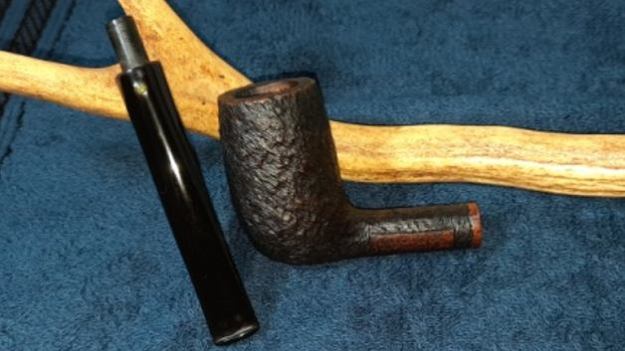
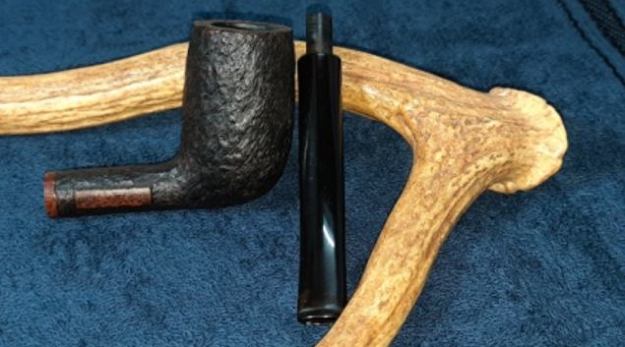
Restemming a No Name (Anonymous) Oval Shank Sandblast Billiard


Blog by Steve Laug

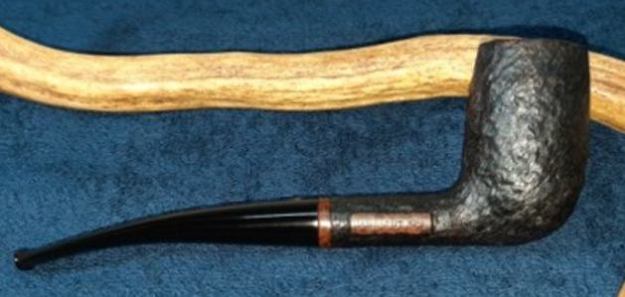
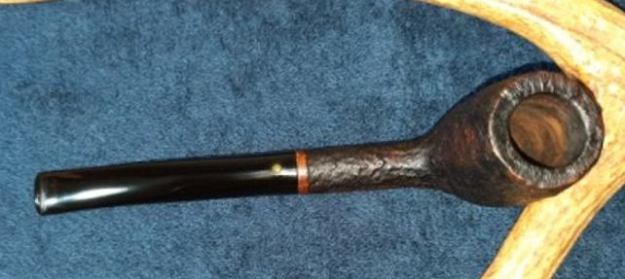
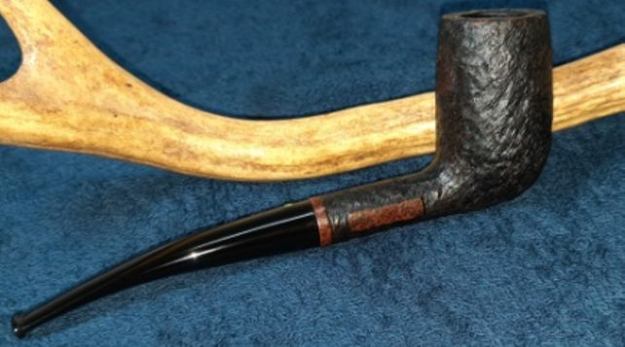
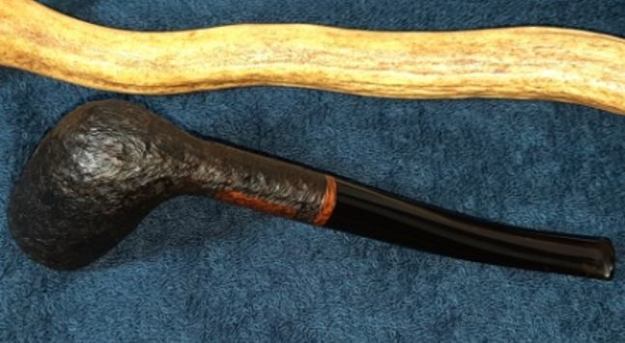
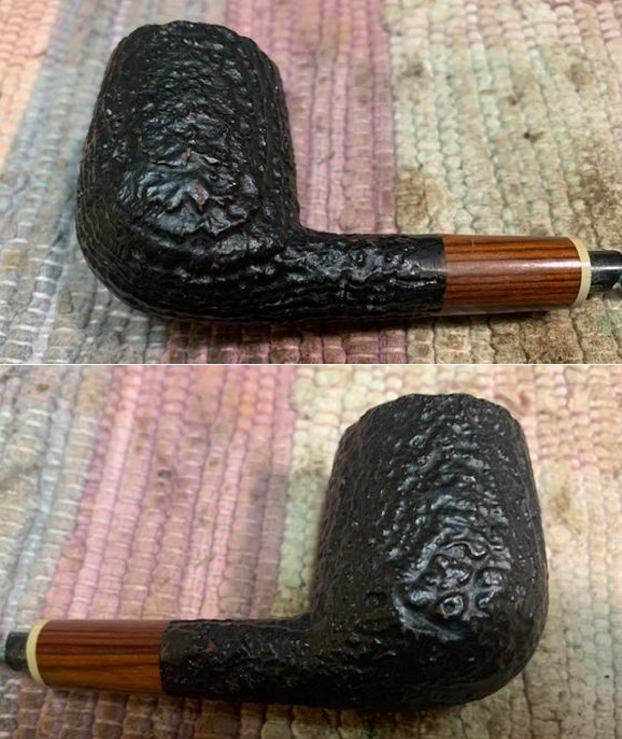
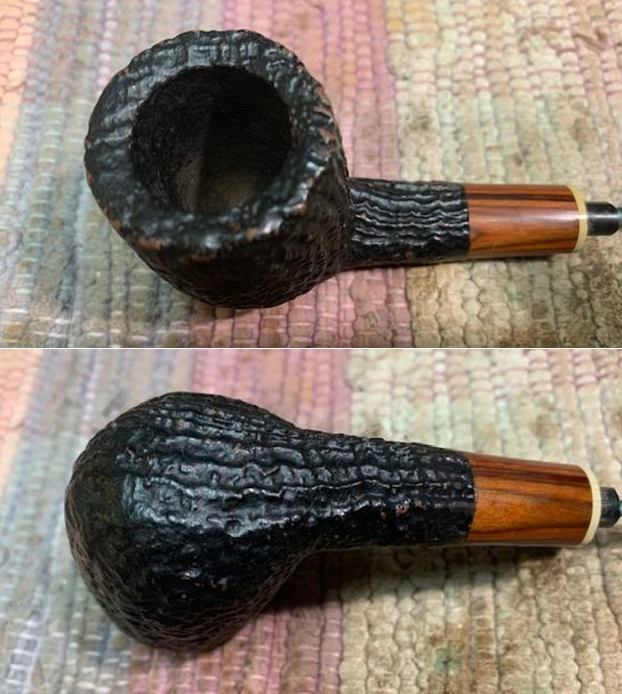
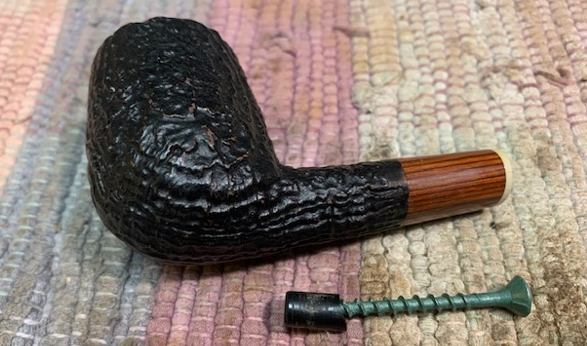
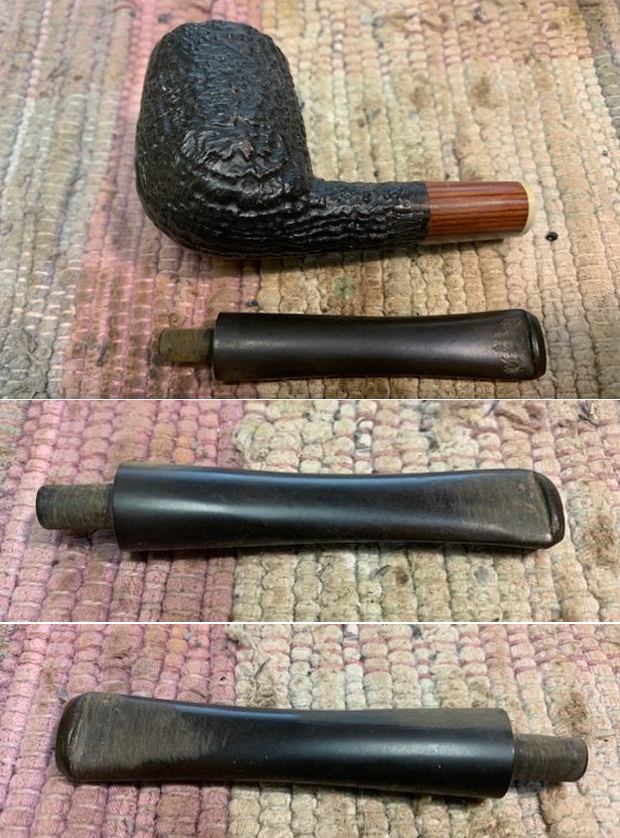
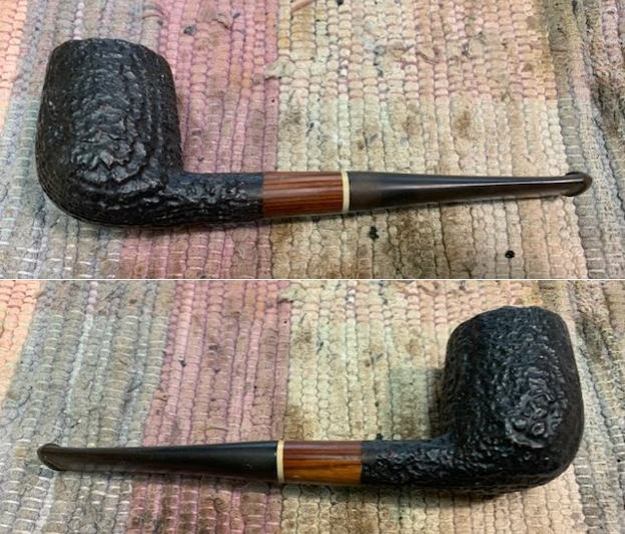
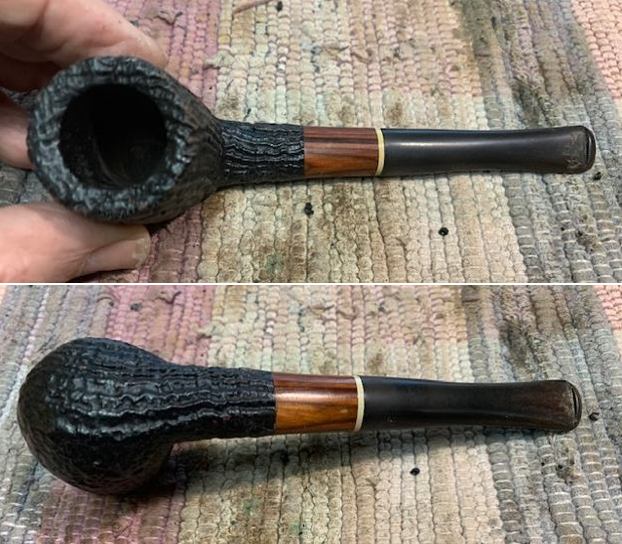
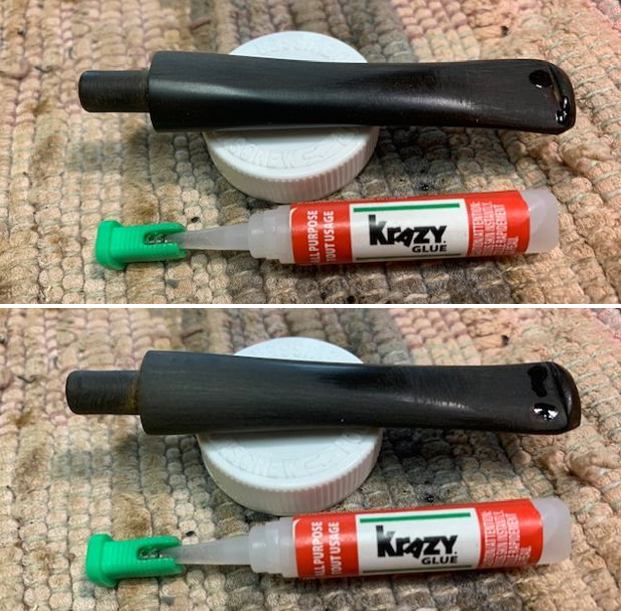
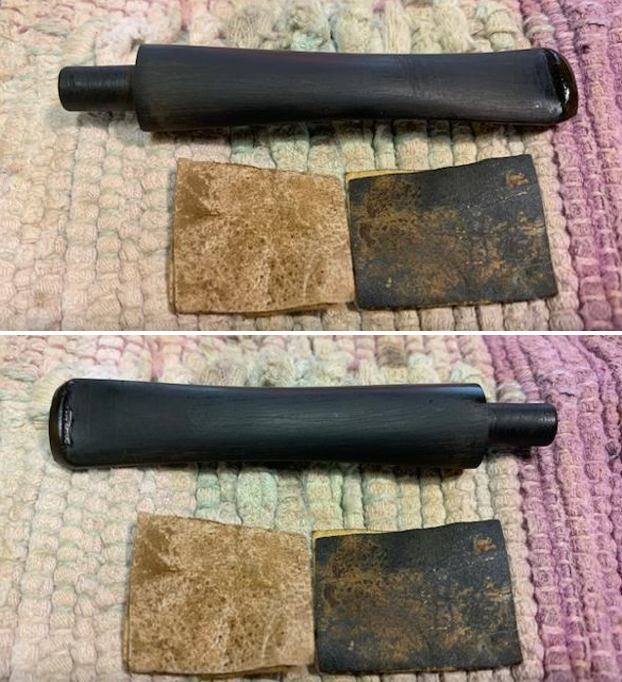
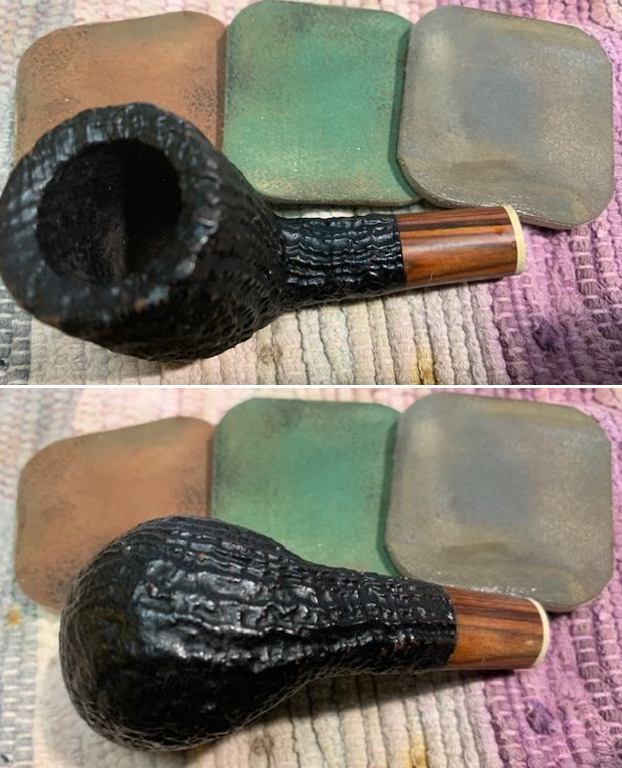
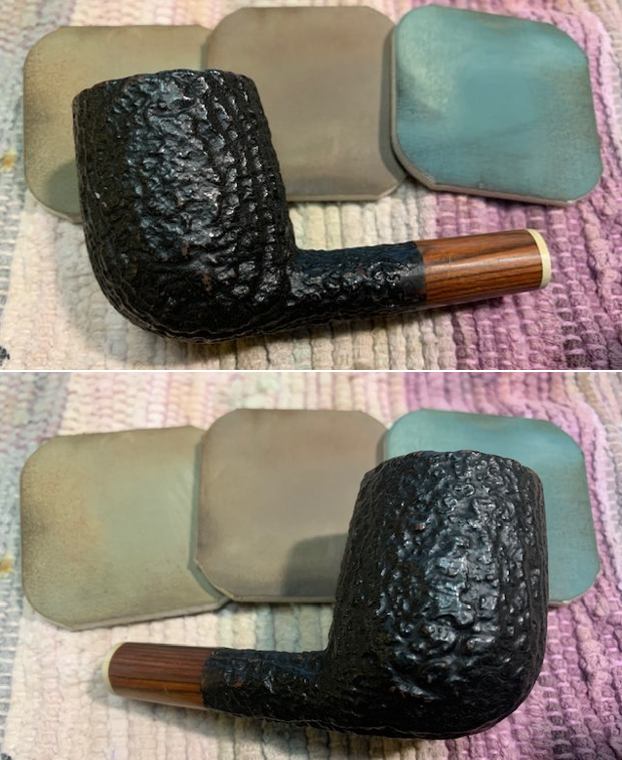
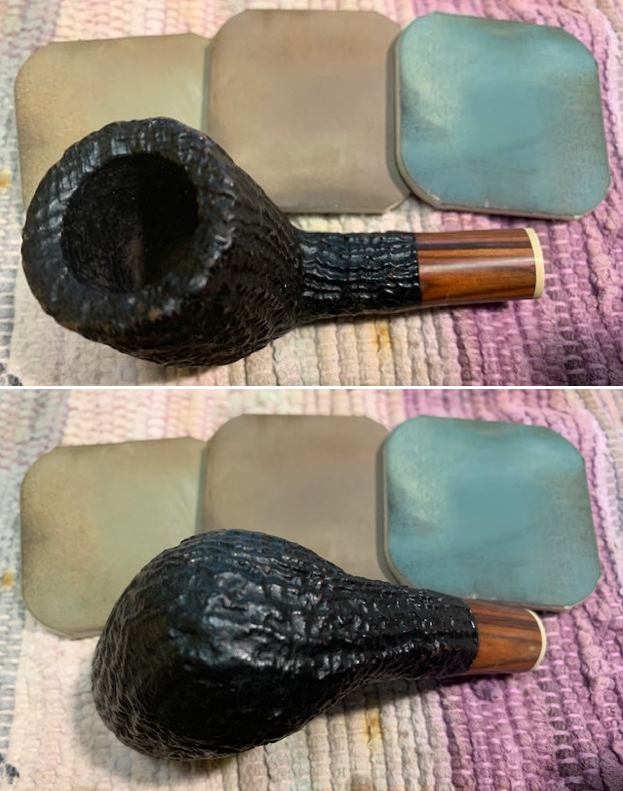
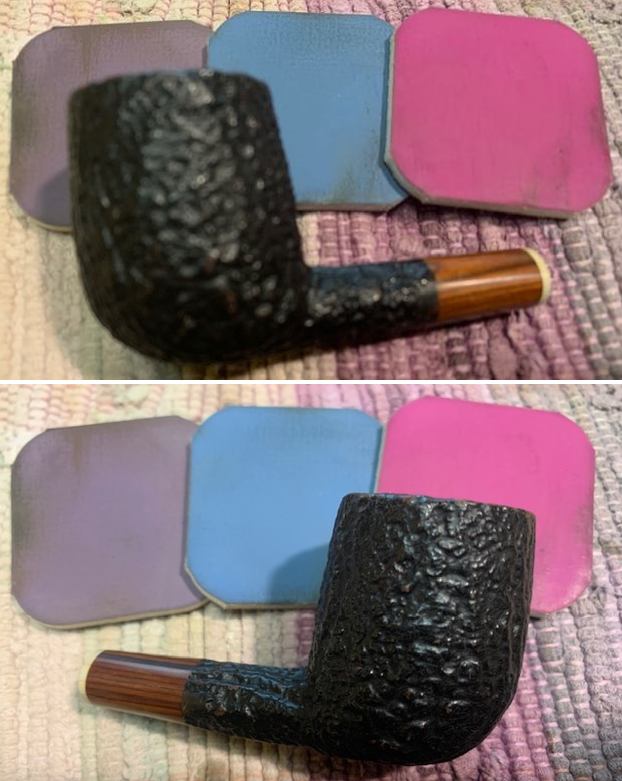
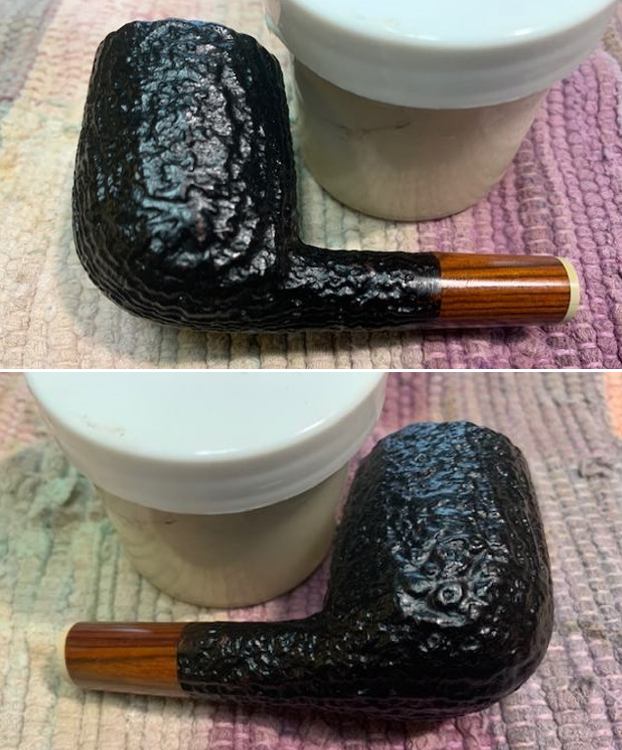
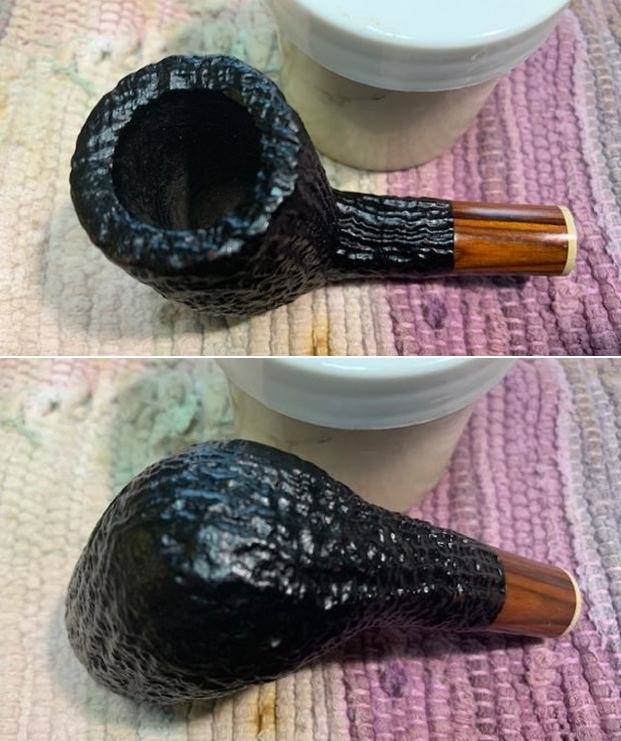
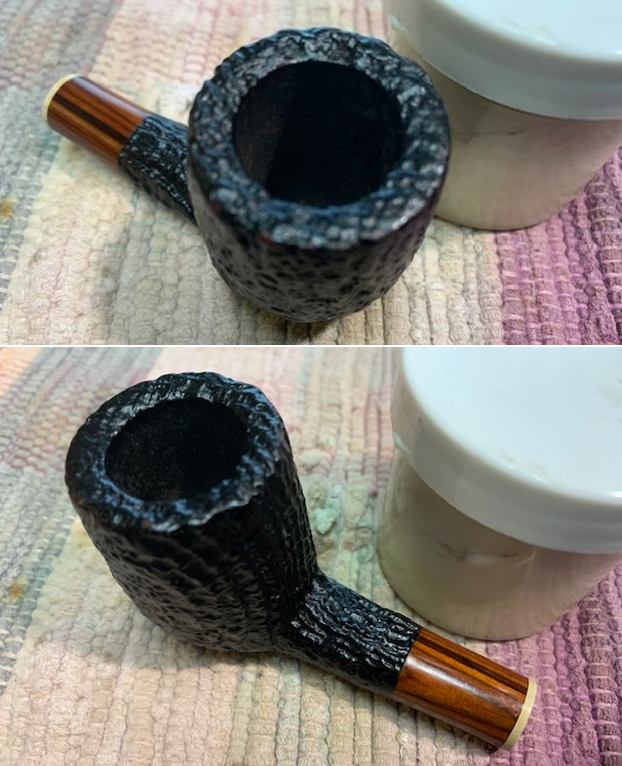
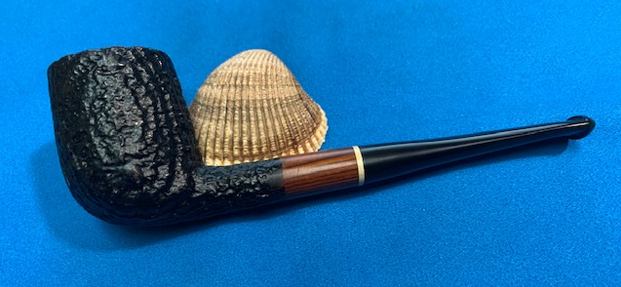
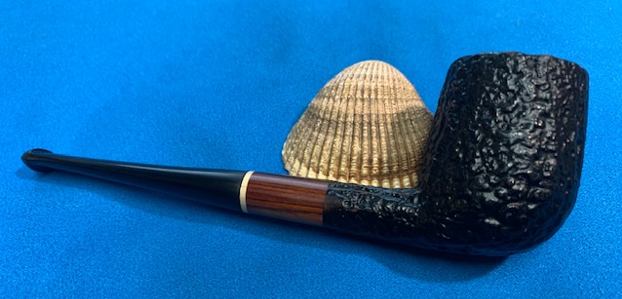
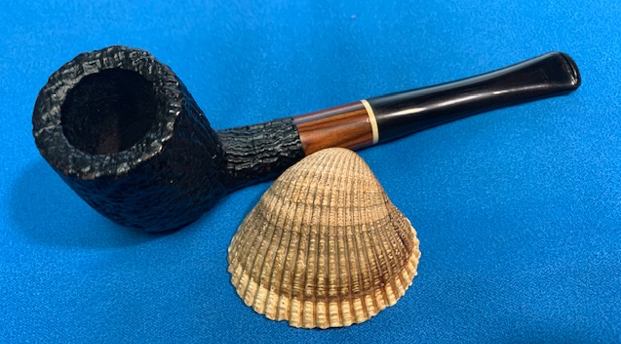
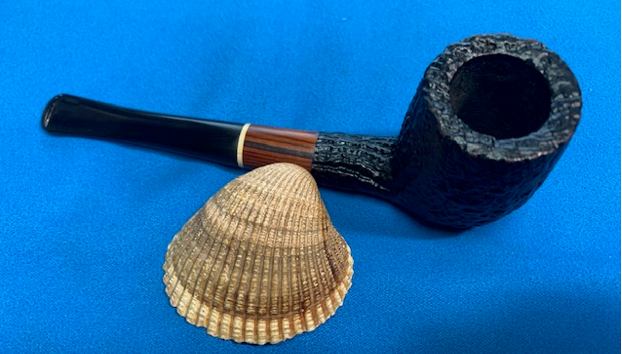
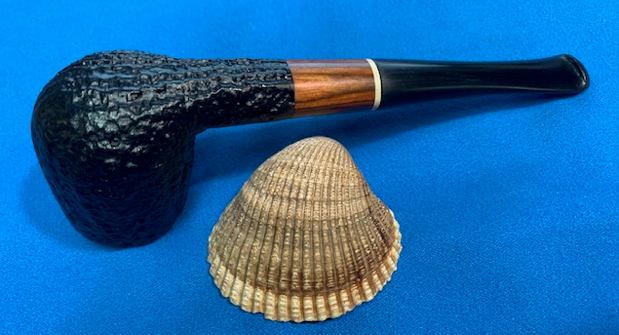
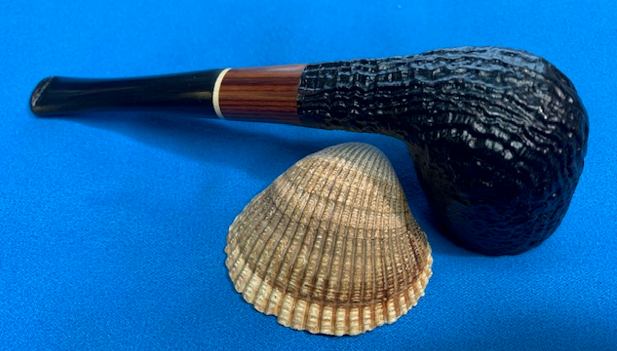
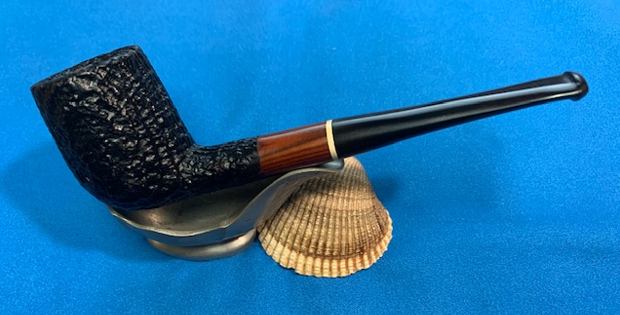
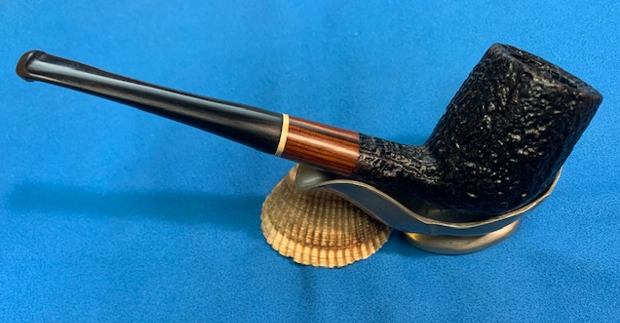
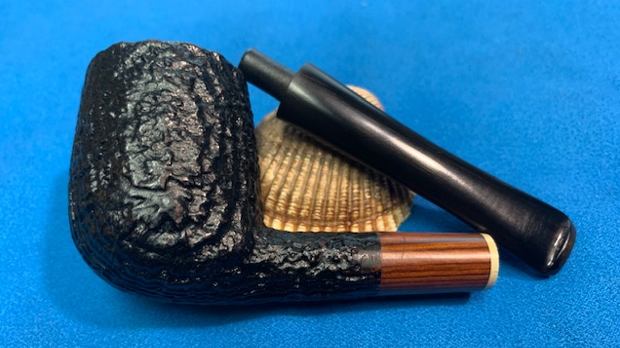
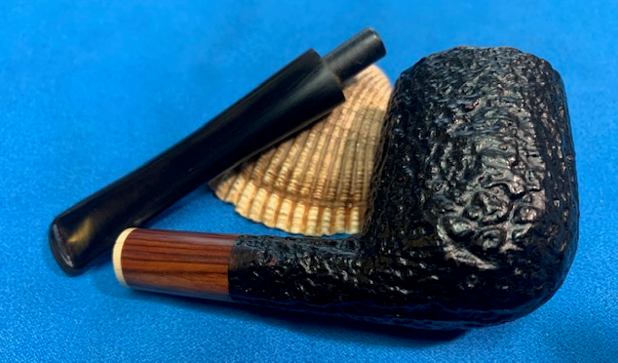
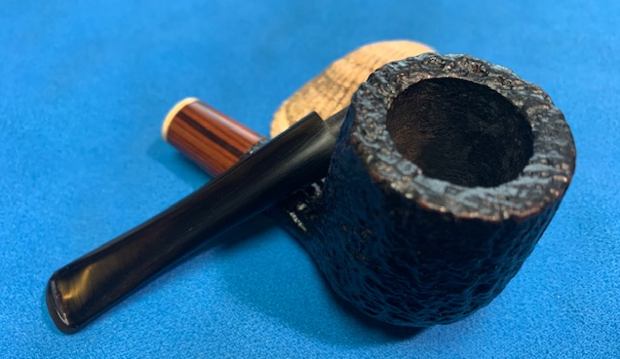
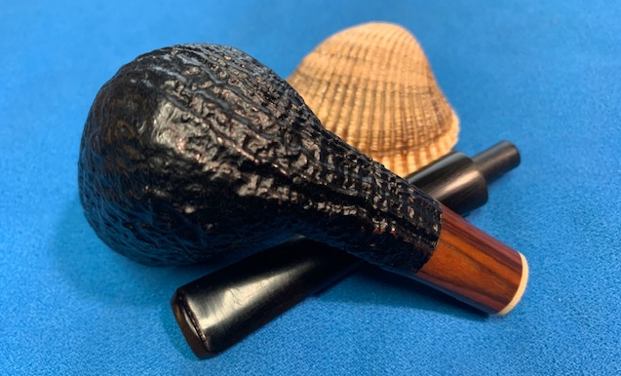
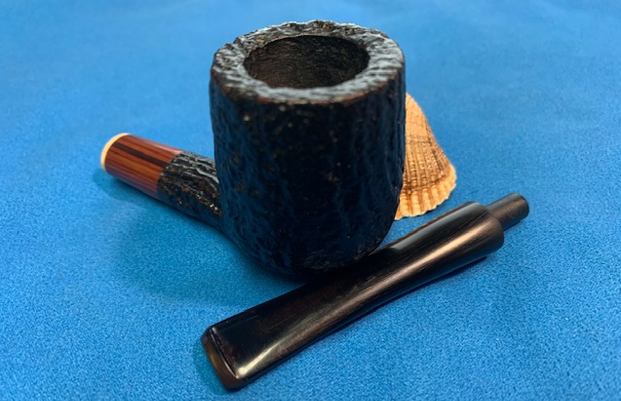
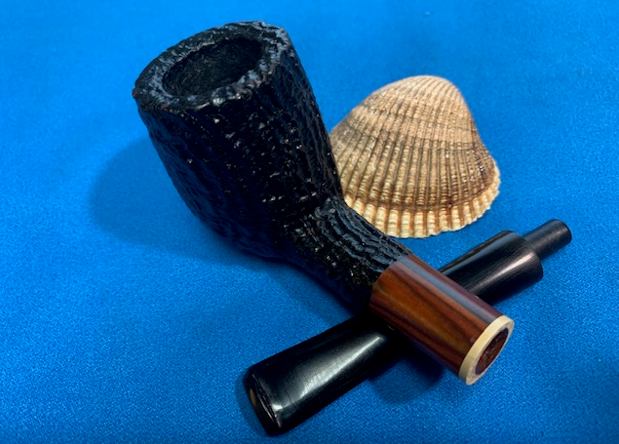
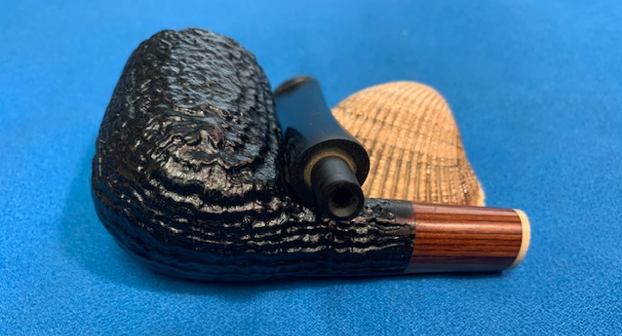
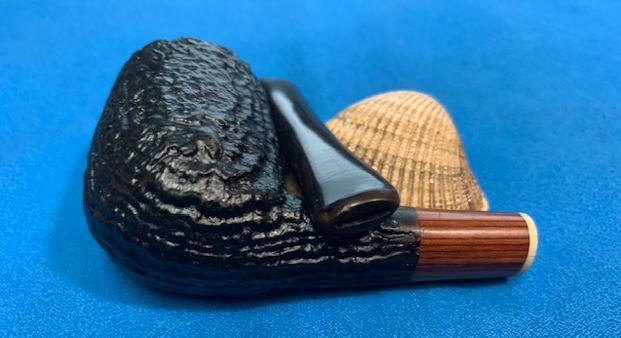
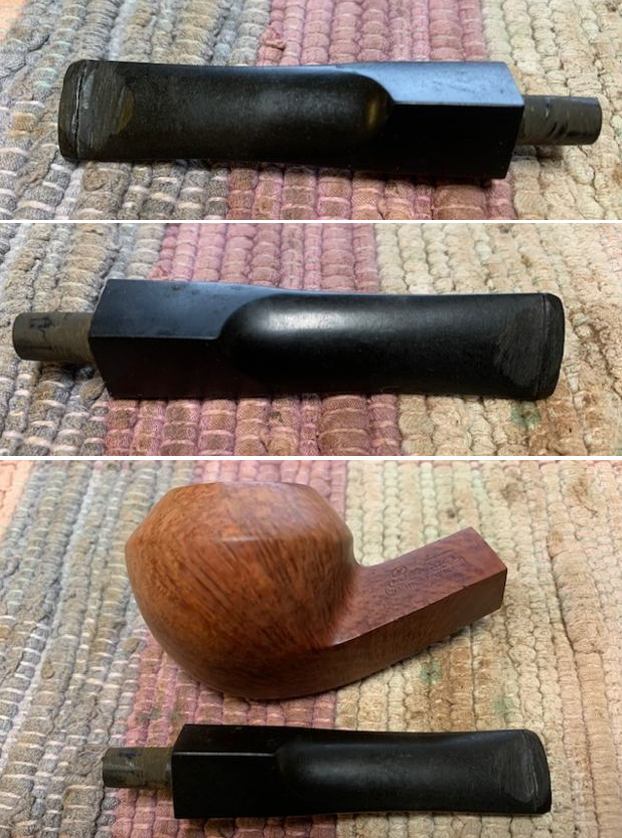
The next pipe is bowl that I have had in the box for a very long time. The rugged and very tactile sandblast really caught my eye and the cocobolo shank extension (at least it looks like that to me) and the thin ivory coloured spacer looked really good. I figured some day I would restem it and bring it back to life again. Since I am in the mood to restem a few pipes today turned out to be that day! It had a broken tenon in the shank when I put it away but the stem had disappeared long before it arrived in my care. The sandblast is very visible in the photos below. The pipe was very clean with no cake in the bowl and a decent finish in good condition. The cocobolo wood shank extension was lightly scratched but otherwise in good condition. It really is a beautiful looking oval shank Billiard. (I had already started wiggling out the broken tenon when I remembered to take these photos.)    I started to work on the pipe quickly as there was no stamping or identifying features that I could dig into regarding the maker of the pipe. The first thing that had to be done was to remove the broken tenon from the shank. I used a drywall screw with coarse threads to lock into the airway in the tenon and remove it. It took a bit of wiggling to do so but it came out.I went through a can of stems that I have here and almost immediately found one that looked like it would work with the pipe. I took some photos of it. There were some tooth marks and chatter on both sides near the button. The tenon fit perfectly. The stem was a little wide on the right side and would need to have the shape reduced to fit snugly against the shank like the left side. Otherwise it was a perfect fit. I have to say that does not happen very often but it keeps me picking up used stems because one day “I will need them!”. In the second and third photo below I gave them a quick sand to see how deep the tooth marks were. I was pleasantly surprised.I wiped off the stem with some Obsidian Oil and put it in place in the shank. I took photos of the fit to the shank to give a clear picture of what the stem looked like. It would only take a bit of adjusting on the right side and clean up of the tooth marks. It would be a great looking pipe with the addition of this stem. I moved on to sand the shape of the stem fit it evenly to the shank. The stem diameter needed more work so I worked on it with 180 grit sandpaper to match it to the right side of the shank. I sanded it with 220 grit sandpaper to smooth it out. I repaired the tooth marks on each side o f the stem at the same time. I smoothed out the repairs with 220 grit sandpaper. I started the polishing of the stem with 400 grit wet dry sandpaper. I set the stem aside and polished the cocobolo shank extension with micromesh sanding pads – dry sanding with 1500-12000 grit pads and wiping it down with a damp cloth after each pad. It really began to shine.I worked some Before & After Restoration Balm into the surface of the smooth briar with my finger tips. The product is amazing and works to clean, enliven and protect the briar. I let it sit on the briar for 10 or more minutes and then buff it off with a soft cloth. It really makes the grain sing. I set the bowl aside and turned my attention back to the stem. I polished the stem with micromesh sanding pads – dry sanding with 1500-12000 grit pads. I wiped the stem down after each pad with a cloth and Obsidian Oil. I finished the polishing with Before & After Pipe Stem Polish – both Fine and Extra Fine. I gave it a final coat of Obsidian Oil. I put the pipe together – the bowl with its new stem. This restored and restemmed No Name (Anonymous) Sandblast Oval Shank Billiard is quite stunning and I think the chosen stem works well with it. The sandblast on the bowl came alive and showed the depth of the crevices with the polishing. I used Blue Diamond on the buffing wheel on both the shank extension and stem (carefully avoiding the bowl so as not to fill in the crevices). I gave the bowl multiple coats of Conservator’s Wax and the stem carnauba wax on the wheel then buffed it with a clean buffing pad to raise the shine. I hand buffed it with a microfibre cloth to deepen the shine. The attractive Anonymous Sandblast Billiard feels great in the hand. It is lightweight and the contrast in the browns of the briar, the cocobolo shank extension and the polished vulcanite stem is quite amazing. The dimensions of the pipe are Length:5 ¾ inches, Height: 1 ¾ inches, Outer diameter of the bowl: 1 ¼ inches, Chamber diameter: ¾ of an inch. The weight of the pipe is 1.34 ounces/38 grams. It really is a beauty. I will be putting it on the rebornpipes store in the American Pipe Makers section shortly if you are interested in adding it to your collection. Thanks for walking through the restemming and the restoration with me. Cheers.

Restemming & Restoring a Bertram 60 Bent Bulldog


Blog by Steve Laug

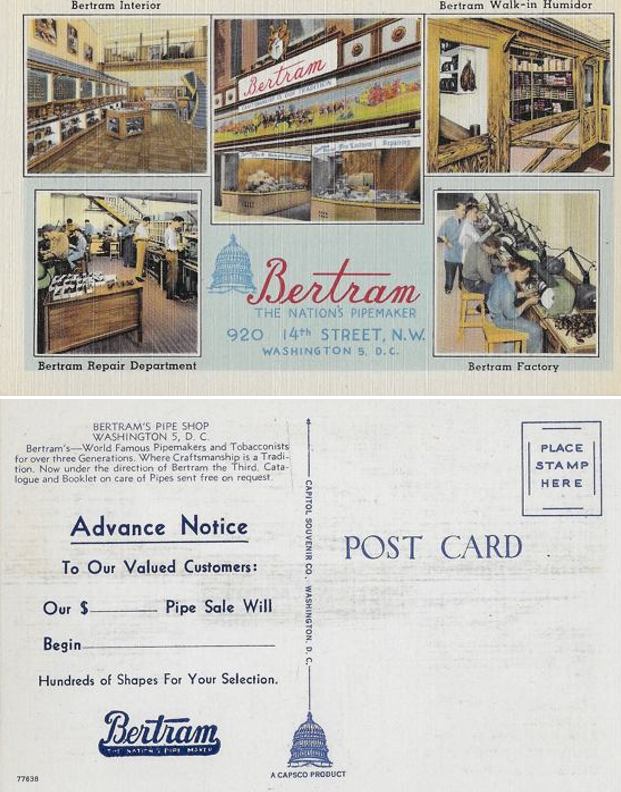
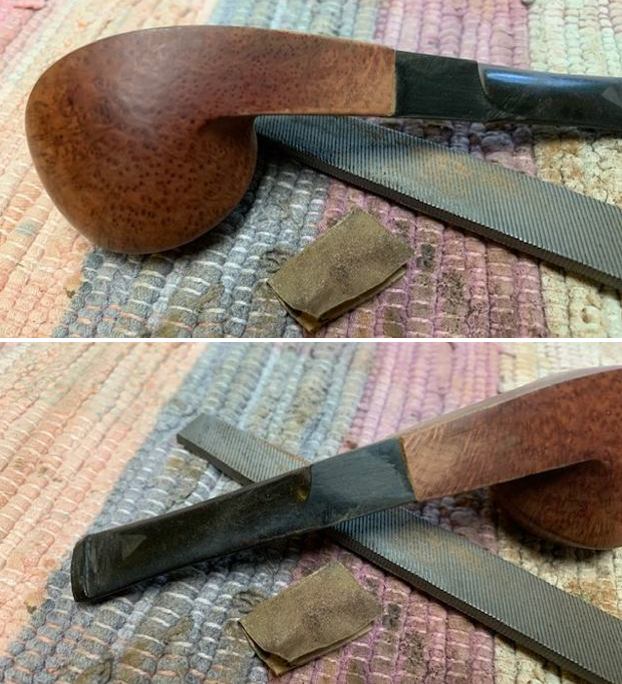
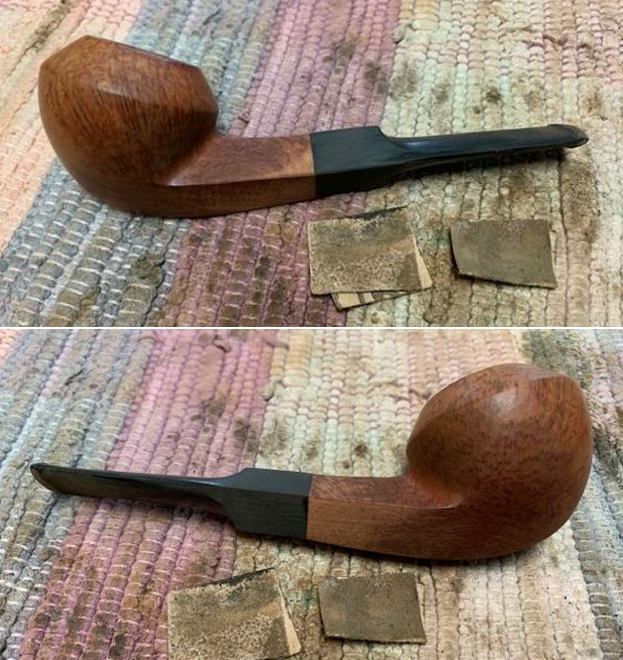
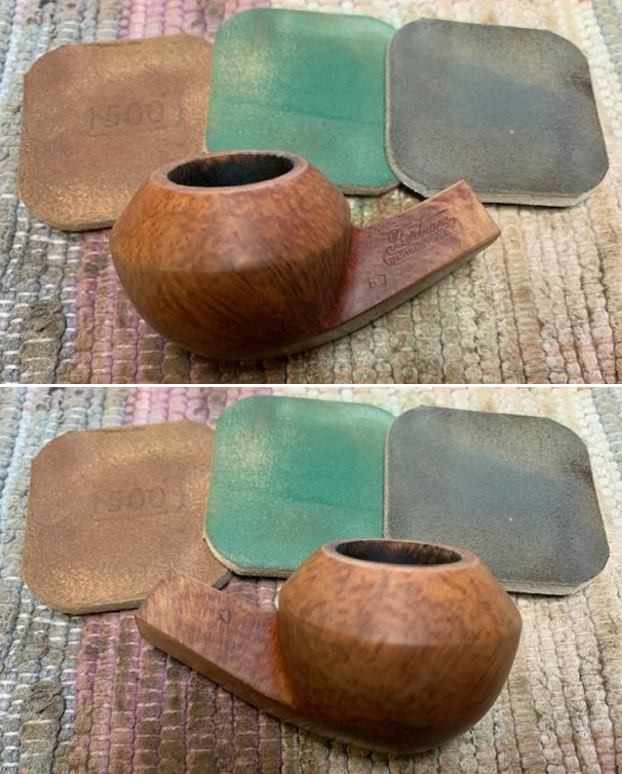
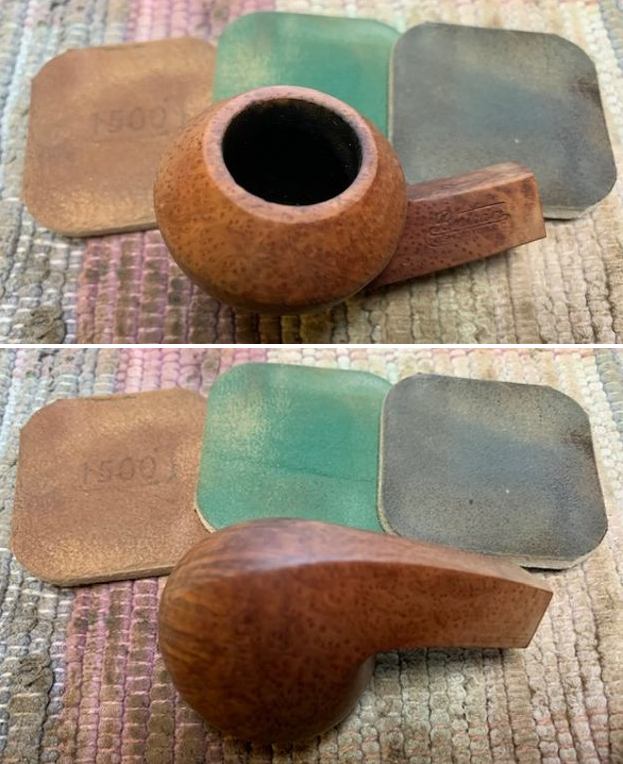
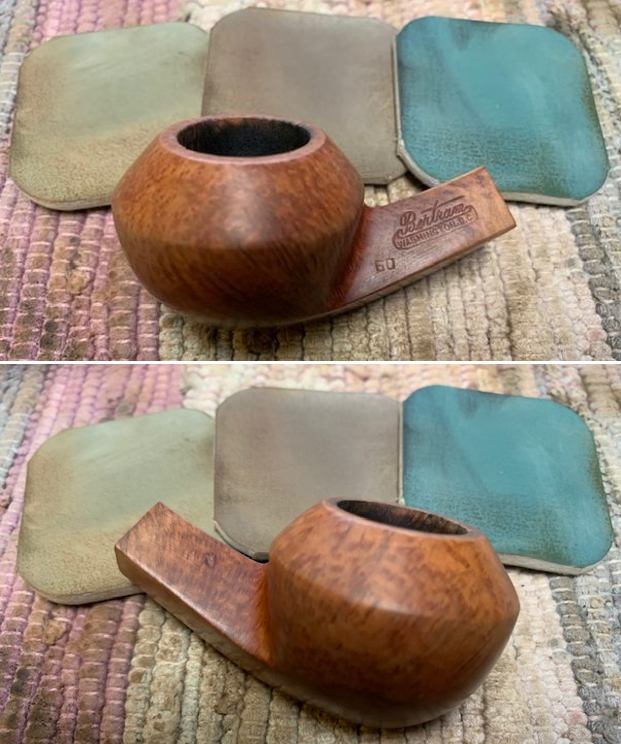
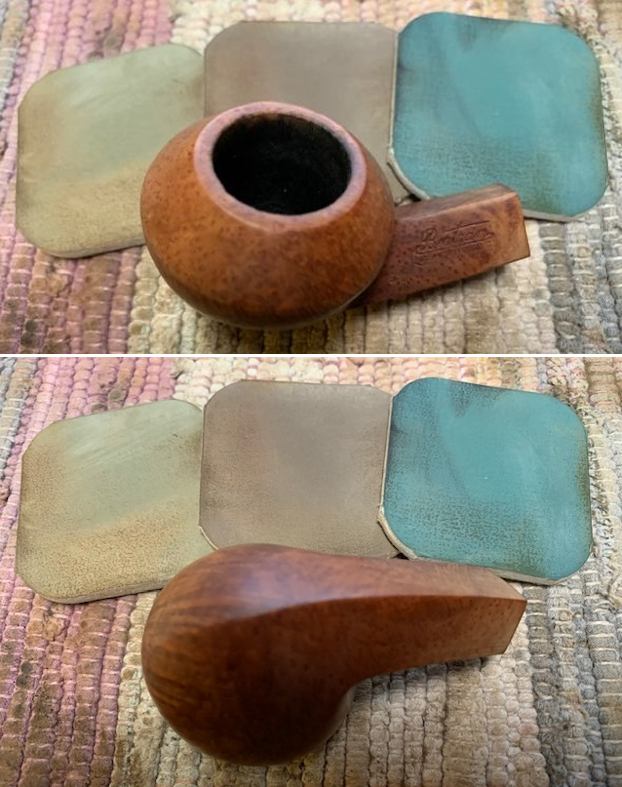
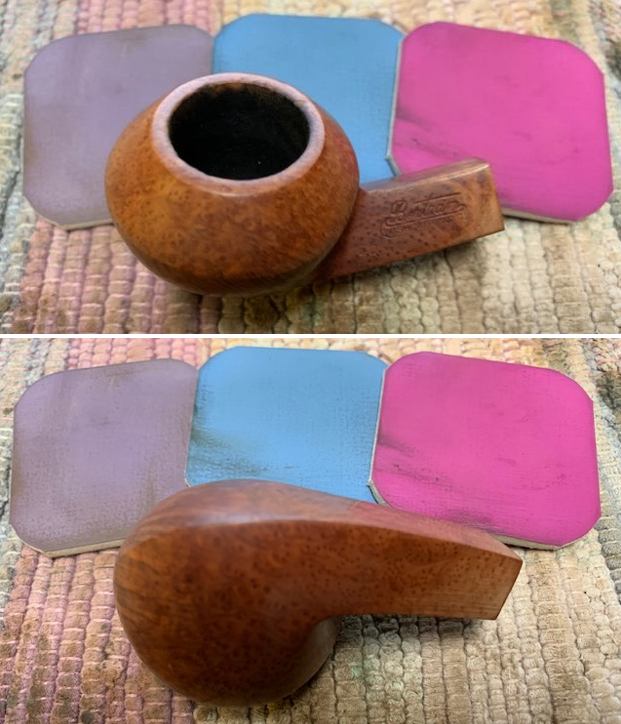
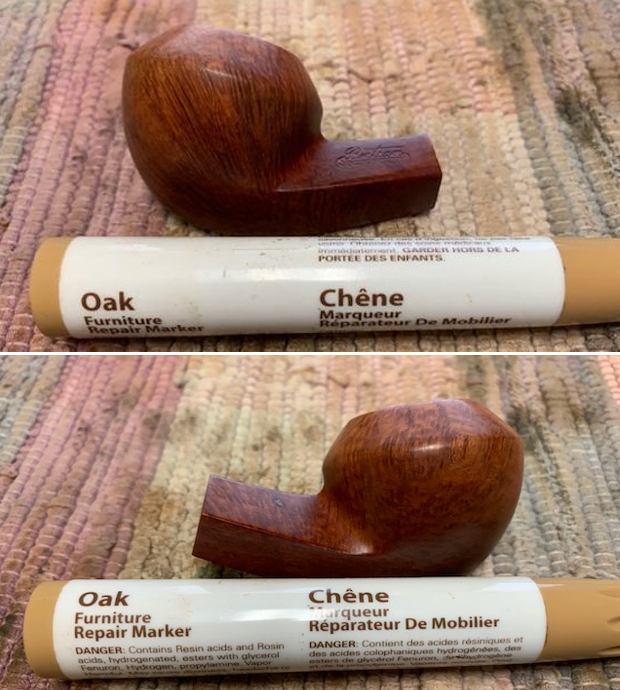
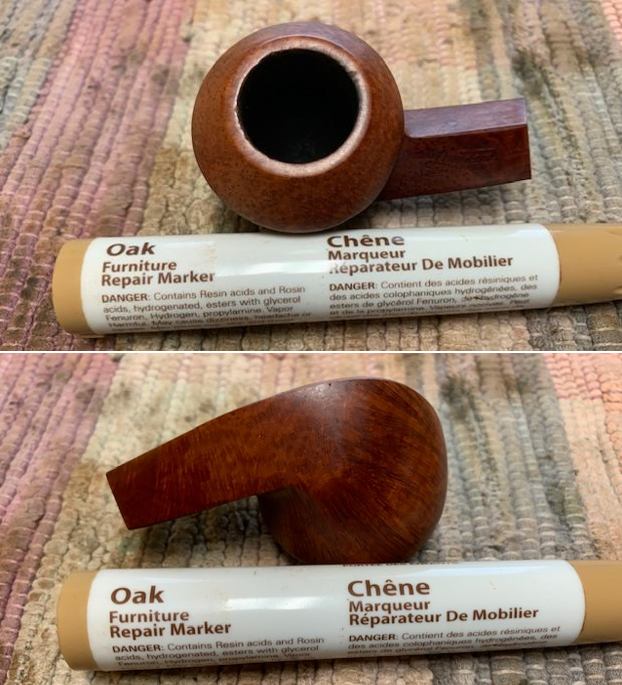
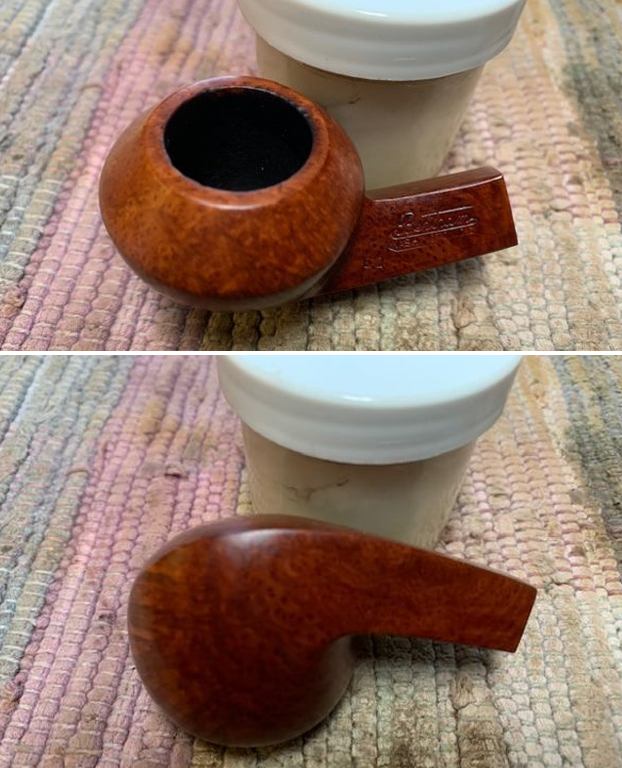
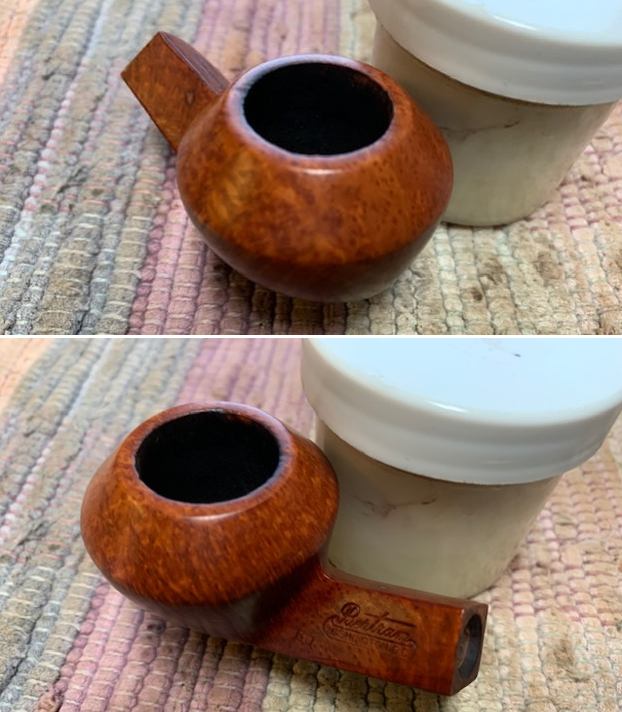
Sometimes the repetitive work on similar pipes and stems gets tiring to me and to alleviate the inevitable boredom I change things up a bit to refresh me. I have a box of stummels (bowls) here that I periodically go through and see if I have a potential stem that would fit them. Sunday afternoon I went through the box and picked out two bowls and found workable stems for them both. They were in different states of need but all had been thoroughly cleaned before I boxed them up. The pipe I chose to work on next is a nicely grained Bulldog stummel. The bowl looked very good. The grain around the sides was quite nice and a mix of flame and birdseye grain. There was one small fill on the right side of the shank but it was in good condition. The rim top was in excellent condition with a bit of darkening toward the rear of the bowl. The interior of the bowl was clean and there were not any chips, cracks or checking on the walls. The finish was dull and bit and tired but still quite redeemable. The stamping on the pipe was clear and readable. On the left side it read Bertram in script [over] Washington DC in a ribbon. The grade 60 stamp was on the same side near the bowl/shank junction. I took some photos of the bowl before I started to work on it.   I took a photo of the stamping on the left side of the shank. It reads as noted above and is clear and readable.I went through some of stems and found this diamond saddle style stem that was close to the right diameter and had a tenon that would work as well. It has some file damage on the surface near the button but it would clean up well. I also took a photo of the stem and bowl together to give a sense of the look.The pipe is a Bertram from the Bertram Pipe Shop in Washington DC. I have posted a lot of different blogs on the brand so the information available is quite accessible. I am including pic of a post card that a reader of the blog sent me. It is a great memento that I love to spend time looking at. I started my work on the pipe by fitting the new stem to the shank. I trimmed down the tenon diameter slightly with a file so that the fit in the shank was snug. The stem diameter needed more work so I worked it with a file to match it to the shank. I sanded it with 220 grit sandpaper to smooth it out. I removed the stem and polished the briar (bowl and sanded shank end) with micromesh sanding pads – dry sanding with 1500-12000 grit pads and wiping it down with a damp cloth after each pad. It really began to shine. I restained the shank end where I had sanded it to make the transition to the new stem smooth with an Oak stain pen. The colour was a perfect match. Once the bowl was buffed the newly stained section will blend in even better. I worked some Before & After Restoration Balm into the surface of the smooth briar with my finger tips. The product is amazing and works to clean, enliven and protect the briar. I let it sit on the briar for 10 or more minutes and then buff it off with a soft cloth. It really makes the grain sing. I set the bowl aside and turned my attention to the stem. I flattened out the file marks as much as possible with a flat file. I knew I would not remove them this way but I wanted make them flatter. I filled in the deeper cut marks with clear CA glue and once it was hard smoothed out the repairs with 220 grit sandpaper and started polishing the stem with 400 grit wet dry sandpaper. I polished the stem with micromesh sanding pads – dry sanding with 1500-12000 grit pads. I wiped the stem down after each pad with a cloth and Obsidian Oil. I finished the polishing with Before & After Pipe Stem Polish – both Fine and Extra Fine. I gave it a final coat of Obsidian Oil. I used my heat gun to bend the vulcanite stem to match the angles of the bowl and give it a proper Bent Bulldog look. I put the pipe together – the bowl with its new stem. This restored and restemmed Bertram Washington DC Grade 60 Bent Bulldog is a real beauty and I think the chosen stem works well with it. The grain on the bowl came alive with the buffing. I used Blue Diamond on the buffing wheel on both the bowl and stem. I gave both multiple coats of carnauba wax on the wheel then buffed it with a clean buffing pad to raise the shine. I hand buffed it with a microfibre cloth to deepen the shine. The Bertram Bent Bulldog feels great in the hand. It is lightweight and the contrast in the browns of the briar and the polished vulcanite stem with the popping grain on the mixed brown stained bowl is quite amazing. The dimensions of the pipe are Length:5 ½ inches, Height: 1 ¾ inches, Outer diameter of the bowl: 1 ¾ inches, Chamber diameter: ¾ of an inch. The weight of the pipe is 1.31 ounces/37 grams. It really is a beauty. I will be putting it on the rebornpipes store in the American Pipe Makers section shortly if you are interested in adding it to your collection. Thanks for walking through the restemming and the restoration with me. Cheers.

The Prince of Pipes


Blog by Kenneth Lieblich

One of my dearest friends contacted me recently to inquire if I could repair and restore a pipe that belongs to his father. His father told me that the pipe had been given to him by his wife (my friend’s mother) as a graduation gift in 1967. I was only too happy to oblige – not just to help my friend, but to raise this beautiful pipe back to life. The pipe is from The House of Bewlay and is a Prince shape. Just as an aside, the shape was named after Prince Albert, the Prince of Wales, who later became King Edward VII (1841–1910). What a gorgeous pipe! I must admit that the prince is one of my favourite pipe shapes (and possibly my outright favourite). This one is the epitome of elegance in pipe smoking. The pipe’s markings read Bewlay [over] Deluxe [over] London Made. The other side of the pipe read Made in [over] England and the shape number, 258. This corresponds nicely with a Bewlay catalogue from the late 60s, as you can see in the photo below. One additional piece of information that was useful was the date of the gift: 1967. This certainly gives us a good idea of the time period from which this pipe dates. Let us read a bit more about Bewlay from the Pipedia article:

The English brand of Bewlay & Co. Ltd. (formerly Salmon & Gluckstein Ltd.), was in business from the early 20th century until the 1950s. The brand ended up being sold and taken over by Imperial Tobacco Co. The shop chain closed in the 1980s but there seems to be one shop still in business on Carr Lane in the city of Hull. Bewlay pipes were made by prestigious firms. Notably Barling, Charatan, Loewe & Co., Sasieni, Huybrecht, and Orlik. So understandably, the English considered a Bewlay pipe a quality pipe.Anyway, on to the pipe – and what a beauty it was. However, it was not without its issues. The stummel had the following problems: lava on the rim, a notable burn to the rim, plenty of cake in the bowl, strange stain patterns, and – most serious of all – a nasty crack to the shank. Meanwhile, the stem had its own set of problems: the ‘B’ logo was nearly obliterated, some oxidation and calcification, and minor tooth marks and dents. This pipe was not going to be too tough, but I needed to be especially careful to ensure the crack would be repaired perfectly – so it could be used for many years to come. The stem was first on my list. I took a BIC lighter and ‘painted’ the stem with its flame in order to lift the tooth marks. This was reasonably successful in raising the dents. Then, I cleaned out the insides of the stem with pipe cleaners and isopropyl alcohol. It was dirty, but not too bad and I went through a decent number of pipe cleaners in order to clean it up. I also soaked the stinger in lemon-infused isopropyl alcohol. This loosened everything up and I was able to clean it up very nicely. Once this process was done, the stem went for an overnight soak in the Before & After Hard Rubber Deoxidizer. The following day, I cleaned all of the de-oxidizing sludge off with alcohol, pipe cleaners, et cetera. The oxidation had migrated to the surface and would be fairly straightforward to remove. I scrubbed vigorously with SoftScrub to remove the leftover oxidation. Before I moved on to the Micromesh pads, I built up the small dents on the stem with cyanoacrylate adhesive and let them fully cure. I then sanded it down with 220-, 400-, and 600-grit sandpapers to meld the repair seamlessly into the stem. This ensures that it keeps its shape and looks like it should. I then used all nine Micromesh pads (1,500 through 12,000 grit) to bring out the lovely black lustre on the stem. I also used Obsidian Pipe Stem Oil in between each pad scrubbing.I then took the opportunity to repair the “B” logo on the stem. It had faded – both by loss of paint over time and also by fingers inadvertently smoothing out the “B” over time. So, I added some acrylic paint with a paint brush, let it dry, and buffed it to make it look good. The “B” is back, but, as later photos reveal, a little bit has disappeared into history.

On to the stummel, and the usual cleaning procedures were in order for this pipe. I used both the PipNet Reamer and the KleenReem to remove the built-up cake and followed that with 220-grit sandpaper to remove as much as I could. I wanted to take the bowl down to bare briar to ensure there were no hidden flaws in the walls of the bowl. Fortunately, there were none. I then proceeded to clean out the insides of the shank with Q-tips, pipe cleaners, and isopropyl alcohol. There was some nastiness inside this stummel, but fortunately not too much – it only took a handful of pipe cleaners etc. to sort that out. I followed that up by cleaning the insides with some dish soap and tube brushes. I then moved on to cleaning the outside of the stummel with Murphy’s Oil Soap and some cotton pads. That removed any latent dirt. By the way, I deliberately did not de-ghost this pipe – I wanted to leave as much of the original tobacco essence as I could for the owner.As I mentioned earlier, there was some lava and a substantial burn on the rim of the stummel that also needed to be addressed. In order to minimize the impact of both, I “topped” the pipe – that is to say, I gently and evenly sanded down the rim on a piece of 220-grit sandpaper. This effectively removed the lava and most the damage, without altering the look of the pipe. However, I had to stop short of removing it all, otherwise the look of the pipe would have been altered. For the remaining bits of burn, I took some oxalic acid on a Q-tip and rubbed and rubbed and rubbed! The burn site did improve but never fully disappeared. It would be a permanent feature of the pipe going forward. I took solace from the fact that the burn did not affect the integrity of the wood. I then took a solid wooden sphere, wrapped sandpaper around it, and gently sanded the opening of the tobacco chamber. This was to achieve on the inner part of the rim the same thing that I achieved by “topping” on sandpaper. On to the major issue with this pipe: the crack in the shank. Naturally, Steve had the answers to all of this pipe’s problems. He explained that my first step was to ensure that the crack would not continue to creep after I had repaired it. To that end, I took a micro-drill bit, inserted it in my Dremel, and very carefully drilled a hole right through the wall of the shank. This was quite nerve-wracking, but it worked perfectly. I then needed to apply cyanoacrylate adhesive to the crack in order to seal and repair it. First, however, I used a Q-tip and a folded pipe cleaner to coat the inside of the shank with petroleum jelly. This would prevent the adhesive from dripping inside the shank and creating further problems. That done, I carefully applied a bead of adhesive to the tiny hole and the length of the crack. Finally, I clamped it shut and let it sit overnight to cure. This was a great success – obviously, the crack would always be visible, but I was really pleased with how the repair looked.Before moving on to sanding, there were a couple of small nicks on the underside of the stummel that I needed to sort out. I dug out my iron and a damp cloth to try and raise the nicks. The hot and moist steam created can often cause the wood to swell slightly and return to shape. There was some movement – not a lot, but it was better than doing nothing. I filled the remaining divots with cyanoacrylate adhesive. Now, with the crack repaired and the nicks filled, it was time to sand down the stummel. Just like the stem, I used all nine Micromesh pads (1,500 through 12,000 grit) to sand everything smooth. A light application of Before & After Restoration Balm brought out the best in the stummel’s grain. All of the work I had done to this point had taken its toll on the colour of the wood. Originally, there was a lovely sort of brownish-Burgundy colour on this pipe, and I wanted to restore this as best I could – and I also wanted to ensure that we got rid of that weird mottling. In order to bring back some life to this pipe, I opted for aniline dye. I dragged out some of Fiebing’s Oxblood Leather Dye, but it looked too reddish to me. Instead, I experimented with mixing to see what I could come up with. I made my own concoction of Oxblood and Medium Brown dyes, painted the stummel, and then applied flame in order to set the colour. Furthermore, since it is an alcohol-based dye, I was able to adjust the colour to my liking by applying my own isopropyl alcohol to the colour. Let it sit overnight and it worked like a charm!Then it was off for a trip to the buffer. A dose of White Diamond and a few coats of carnauba wax were just what this pipe needed. Now that the wood was looking all spiffy, I had to circle back and complete the repair on the crack in the shank. It needed a tight-fighting band to ensure that the crack would never open up again. I went to my jar of bands and picked one that looked good. I heated it up and then messed it up! See the photos. I did not apply even pressure as I was attaching the band, so it went mush. Fortunately, I had more bands and I did a much better job of getting the next one on. I glued it in place and let that set. It looked very dapper. I polished up the band with a 12,000-grit MicroMesh pad. I also went back to the buffer with both the stem and stummel, gave them a final application of White Diamond and carnauba wax, and brought out that lovely shine.In the end, what a beauty this pipe is! It is an elegant pipe, from a very fine maker. It obviously meant a great deal to its owner, and I was delighted to bring it back to life. Once the pipe was returned to its owner, he told me that it looked better than when it was new! Although I am not sure I agree with that, I am very pleased that he is very pleased. As I mentioned before, the prince is one of my favourite shapes and it was great fun to work on this one. I hope you enjoyed reading the story of this pipe as much I as I did restoring it. If you are interested in more of my work, please follow me here on Steve’s website or email me directly at kenneth@knightsofthepipe.com. Thank you very much for reading and, as always, I welcome and encourage your comments.

New Life for a Great Looking Tinder Box Vintage 91 Canadian


Blog by Steve Laug

I have had this next pipe sitting in a box next to my desk for several weeks now and finally decided this afternoon to work on. It is not a particularly tough restoration so I am not sure why I was dragging my heels. Maybe I just wanted a change of pace for a while. But the Labour Day weekend is almost over and I have time to work on at least one more pipe so why not this one. We purchased the pipe on an online auction from Vanceburg, Kentucky, USA. It had an interesting rich brown finish that really highlighted some nice grain around bowl. It was a nice looking Canadian and would look even better once cleaned up. There was a thick cake in bowl and lava on the rim top and the inner bevel. The finish was filthy with grit and grime ground into the surface of the briar. The pipe is stamped on the topside of the shank and read The Tinder Box [over] Vintage. On the underside it was stamped MADE IN LONDON [over] ENGLAND. The shape number 91 was at the shank/stem junction. The stem was oxidized and had light tooth marks and chatter on both sides at the button. The Tinder Box logo was stamped on the topside of the taper and was faded and only the frame was clear. On the underside of the stem it was stamped HAND arched over FINISHED. Jeff took photos of the pipe before he started his clean up work. I like to have an idea of how the pipe was smoked before we got it and what the bowl and rim top looked like. Jeff always takes some photos of the bowl and rim from various angles to show what it looked like. The stem looked very good under the oxidation.He took photos of the sides and heel of the bowl to give a sense of the grain on the pipe.The next photos show the stamping on the top and underside of the shank. It is clear and readable as noted above. Jeff also captured the remnants of the Tinderbox logo stamp on the topside of the taper stem and the Hand Finished stamp on the underside. I remembered that The Tinder Box Tobacconist had several pipe companies in Europe make pipes for them so I looked them up on Pipephil’s site (http://pipephil.eu/logos/en/logo-t6.html). I found a listing with three examples shown in the screen capture below. The pipe I am working on is stamped like the second one, the Bulldog below. The only difference is the one I have is stamped Vintage instead of Old Bruyere and is a shape 91 instead of a 61. All the other identifying stamps are the same.I turned to Pipedia for more information on the potential pipe makers for the company (https://pipedia.org/wiki/Tinder_Box). I quote below.

The Tinder Box was the chain of tobacco stores started by Edward Kolpin, Sr., who carved Ed’s Hand Made pipes. The store, eventually sold to a Canadian conglomerate, eventually reached 200 retail outlets by 2007, and in the 40 years it operated on a large scale a great number of pipes were made for The Tinder Box by well respected makers. A few include the Tinder Box Unique, made by Charatan, Christmas Pipes by Ascorti, and the Tinder Box Noble and Exotica, made by Shalom Pipe Factory, Mauro Armellini did make the Verona and Napoli lines.

Ed Kolpin, Jr., opened a small tobacco, pipe, and cigar store in Santa Monica, the Tinder Box, in 1928. Later it moved to its current location in 1948 where it began serving the many Hollywood celebrities living nearby. Part of the attraction were the famous pipes handmade by Kolpin himself. In 1959 Kolpin began a tobacco-store franchise, at first locally and then by the mid-1960s there were Tinder Box stores in malls across America. The franchise business was sold in the 1970s, but Kolpin still owns and operates the original store as of 2003.[1]

The stamping Made in London [over] England made me wonder if it was not made by Charatan as noted in the quote in red above. Now it was time to work on the pipe.

I turned my attention to the pipe itself. Jeff had done a great cleanup on the pipe. He reamed the bowl with a PipNet pipe reamer and followed up with a Savinelli Fitsall pipe knife to remove the cake. He scrubbed out the mortise and the airway in the shank and the stem with alcohol, cotton swabs and pipe cleaners. He scrubbed the bowl exterior with a tooth brush and Murphy’s Oil Soap to remove the grime on the finish of the bowl and the lava from the rim top. He rinsed it under running water. One of the benefits of this scrub is that it also tends to lift some of the scratches and nicks in the surface of the briar. He dried it off with a soft cloth. He cleaned the internals and externals of the stem with alcohol, pipe cleaners and cotton swabs. He scrubbed the stem with Soft Scrub to remove some of the oxidation and then soaked it in Before & After Pipe Stem Deoxidizer and rinsed it off with warm water and cleaned out the airway in the stem with alcohol. When I received it the pipe looked very good other than a remnant of oxidation.  I took a photo of the rim top and stem to show the condition. The rim top and the beveled inner edge of the bowl were in good condition. The stem was vulcanite and there were some light tooth marks and chatter on both sides ahead of the button and on the button itself. There was also some remaining oxidation.The stamping on the pipe is clear and readable as noted above. The stamping on the stem is faint but is still readable.I removed the stem from the shank and took a photo of the pipe to give a sense of the whole. I started my work on this pipe by repairing a small fill that had shrunk on the heel of the bowl. I filled it in with clear CA glue and when it had cured I polished the repair with a 1500 grit micromesh sanding pad.Once the repair cured I polished the briar with 1500-12000 micromesh sanding pads and wiping it down with damp cloth after each sanding pad. As I worked through the cycle of pads the shine developed with each change of pad. The pipe looks very good.      I restained the repaired area on the bottom of the bowl with a combination of Maple, Cherry and a Black Sharpie Pen. Then I went back to sanding with 6000-12000 grit pads. I rubbed the bowl and shank down with Before & After Restoration Balm. I worked it into the surface of the bowl sides and shank with my fingertips to clean, enliven and protect the briar. I let the balm sit for 10 minutes, then buffed with a cotton cloth to raise the shine. The Balm did its magic and the grain stood out on the briar. I set the bowl aside and turned my attention to the stem. There was a lot of deep oxidation remaining in the stem that needed attention. I scrubbed it with Soft Scrub and cotton pads and removed a lot of the oxidation.I polished it with micromesh sanding pads – 1500-12000 grit pads. I wiped it down with Obsidian Oil after each sanding pad. I used Before & After Pipe Polish – both Fine and Extra Fine to further polish the stem. The photos below show the polished stem. I tried to touch up the stamping on the stem and it was not deep enough to hold acrylic/gold. Nothing really worked so I decided to leave it alone. There is also some remaining oxidation around the stamping on the top and underside that I reduced as much as possible without damaging the faint stamping. This The Tinder Box Vintage 91 Canadian with a vulcanite stem is a great looking pipe now that it has been restored. The rich browns of the stain made the grain come alive with the polishing and waxing. I put the stem back on the bowl and carefully buffed the pipe with Blue Diamond on the buffing wheel using a light touch on the briar. I gave the bowl and the stem multiple coats of carnauba wax on the buffing wheel and followed that by buffing the entire pipe with a clean buffing pad. I hand buffed the pipe with a microfiber cloth to deepen the shine. The finished Tinder Box Vintage Canadian really is a beauty and fits nicely in the hand and looks very good. Give the finished pipe a look in the photos below. The dimensions of the pipe are Length: 5 ½ inches, Height: 1 ¾ inches, Outside diameter of the bowl: 1 ¼ inches, Chamber diameter: ¾ of an inch. The weight of the pipe is 1.20oz./34grams. This beauty will be going on the rebornpipes store in the English Pipe Makers section. Let me know if you are interested in adding it to your collection. Thanks for reading this blog and my reflections on the pipe while I worked on it. There are many more to come!

A 3 Pipe Reclamation Project – The next is a D.P. Ehrlich & Co. Meerschaum Bulldog


Blog by Steve Laug

With the completion of a beautiful Octagonal, horn stemmed billiard as another  break from the routine of these meerschaums (https://rebornpipes.com/2021/08/28/reviving-an-unsmoked-nos-octagonal-billiard-with-a-horn-stem/) it was time to go back to the D.P. Ehrlich Meerschaum reclamation work. I will quote the next paragraphs to give context to the pipes that I am working on in this project.

Not long ago I received a Facebook Message from a friend asking if I would consider restoring three Ehrlich meerschaums that he had. He spoke about first, then sent photos as he knew I was not presently taking on any new work due to my heavy schedule. He described the first cased set – which contained a Bulldog and a Billiard with great patina and cloudy acrylic stems. It sounded amazing. He described the second cased single – a Poker with the same kind of stem. At least one of the stems had a bite through on it. All were heavily smoked and dirty. From his reckoning the pipes came from at least two different time periods in D. P. Ehrlich of Boston’s long life. I thanked him for thinking of me and gently said I would not be able to do the work.

He understood but wanted me to have a look at them anyway. He sent these photos of the pipes in their cases on Messenger. They were indeed beautiful pipes. They were also very tempting. I really like these cased older style, smooth, classic shaped meerschaums. I did not reply to him for a bit and thought it over. I looked over my schedule and calendar for the next two months and it was very heavy. But… I was hooked. I finally answered him and basically said if he was not in a hurry I would be willing to take them on. He replied that he was in no hurry. You have to understand when I have pipes to work on here I squeeze them in somehow but I wanted freedom.Once I gave my answer he sent a few more photos of each of the pipes so that I could have a look at what was coming my way. He sent the tracking number of the pipes as well. They arrived safely and I went over them and called him to talk about what I saw. I restored the Poker first and then the Billiard. I have written about the restoration of both on rebornpipes. Here is the link to those blogs (https://rebornpipes.com/2021/08/26/reclamation-project-an-older-d-p-ehrlich-co-cased-meerschaum-poker/ and https://rebornpipes.com/2021/08/27/a-3-pipe-reclamation-project-next-a-d-p-ehrlich-co-meerschaum-billiard/).

Now to have a look at the Bulldog (the second pipe in the cased 2 pipe set). He took some photos of the bowl, rim top and stem so I could assess the condition they were in. I have included them below. The lava on the rim top and cake in the bowl are very thick and I am hoping they have protected the inner edge and top from damage. The 14K gold ring on the shank looked very good. The stem had tooth marks and chatter on both the top and underside near the button. It is by far the best looking stem of the threesome. The fit at the shank is very good. The cloudy gold stem material looks good. This stem material can be problematic in that the yellow colour often is on the top surface and once there are repairs done or sanding they are visible and significantly different in colour from the rest of the stem. Once I had it in hand and checked it out I would know more.While I have worked on a significant number of Ehrlich briar pipes over the years I have not tackled a meerschaum let alone three older ones. I have worked on a lot of meers but not Ehrlich meers (with this one I have worked on three). I actually knew very little about them. They looked like European made meers that come out of Austria but I was unclear of where Ehrlich got these pipes. I was time to due some work on this. I checked first on Pipephil and found only information on the briar pipes. Then I turned to Pipedia and was more successful (https://pipedia.org/wiki/Ehrlich%27s). I quote a portion of that article below that gives a bit of history and more importantly cleared up where the pipes came from for me.
The David P. Ehrlich story – Pipemakers and Tobacconists for a Hundred Years, 1868-1968.

The David P. Ehrlich Company has remained solely in the hands of one family during its century of business, yet it has had several firm names and locations. David P. Ehrlich went to work in 1881 at the age of twenty for Ferdinand Abraham, who dealt in cigars and tobacco and who had begun business in 1868 at 1188 Washington Street in the South End, but in 1880 moved to the center of the city, where the firm has been ever since. David Ehrlich married the boss’s daughter. In 1916 the name became the David P. Ehrlich Company and Mr. Ehrlich devoted the rest of his life to this business. Since David’s death in 1912 it has been owned by – his nieces and nephews including Richard A. and William Ehrlich.

Ehrlich shop has since 1880 had a predilection for historic sites. 25 Court Street was close to the spot where from 1721-1726 James Franklin had, with the assistance of his brother Benjamin, published The New-England Courant. In 1908 the firm moved a few doors up Court Street to number 37, on the opposite corner of the alley that is grandiloquently named Franklin Avenue. This new location was on the site of the one-time printing office of Edes and Gill, publishers of the Boston Gazette, in whose back room some of the “Indians” of the Boston Tea Party assumed their disguises. Soon after the end of World War II at which time the store was located at 33 Court Street a move around the corner to 207 Washington Street brought the shop diagonally across from the Old State House and onto the site occupied from 1610-1808 by the First Church of Boston. The demolition of 207 Washington Street in 1967 caused still another move to 32 Tremont Street, adjoining King’s Chapel burying Ground, which is the oldest cemetery in Boston.

The David P. Ehrlich Co. has not just occupied sites intimately associated with Boston history and institutions; it has in the past century become a Boston institution in its own right. It has specialized in fine cigars, pipes, and pipe tobacco. In addition to the retail business, the firm has long specialized in the manufacture of pipes, both from Algerian briar root and from meerschaum, a beautiful white fossilized substance, mined from the earth in Turkish Asia Minor. Meerschaum lends itself to carving, and in the nineteenth century there developed in Austria a fashion for carving pipes from it with formidably intricate decoration.

The Ehrlichs have long had meerschaum carvers, who ply their craft in the shop window to the delight of passersby. For years the bearded Gustave Fischer was a familiar figure in the window at 33 Court Street. A succession of craftsmen have continued the tradition. and still make and repair pipes in the window of the new Tremont Street shop. They still turn their meerschaum pipes by hand on a foot operated wooden lathe made in Austria about 1871. Although briars are today turned on power lathes, meerschaum can only be turned on a foot-operated lathe.

I did a search on Google to see if I could find further documentation on the Ehrlich Meerschaum pipes. I came across a PDF of a 1960s Ehrlich Catalogue that had some helpful sections on the pipes(https://docs.google.com/file/d/0B0xEzQgGtOv8LXNhLUNJQUJrU1U/edit?resourcekey=0-I8eh7aQxyrEcmVW7-SKjFw). I did a screen capture of two of those sections. The first is a great descriptive paragraph on the pipe regarding both the meerschaum and what they call a handmade cloudy yellow stem. The prices are astonishingly low even for those days. The second screen capture is about how the pipes were made on a wooden lathe made in Austria and operated by Ehrlich craftsmen in the window of the Boston shop. It is also a great read.I took the pipe out of the case and took some photos of it to chronicle the condition it was in when I received it. It is another large pipe. I would say it is another large pipe – at least a Dunhill Group 4 or larger. I spent some time going over it carefully. The bowl indeed had a thick cake and the lava coat on the edge and rim was thick as well. It was in worse condition than either the Poker or Billiard had been. There were light surface scratches in the meerschaum all around the bowl and shank sides. The meerschaum was dirty with smudges and dust but underneath it had a nicely developing patina on the shank and heel of the bowl and was beginning to get some colour on the bowl. The stem was the best of the lot. It had tooth marks on the top and underside ahead of the button. I removed the stem from the shank and had a look at the parts. The threaded metal tenon was inset permanently in the shank of the pipe. It was dirty and the pipe had a musty/old tobacco smell. There was a 14K gold wedding ring style band on the shank for decoration. The shank was filthy as was the airway in the stem. The good news for me was that the stem material was solid yellow all the way through so repairing the tooth marks and chatter would be easier. The slot in the stem was filled in partially with debris. Overall it was a great looking pipe that would clean up well. Here is what I saw. I took a close up photo of the bowl and rim top to capture the condition of both. You can see the thick cake in the bowl and the lava on the inner edge and thick on the top and inner edge of the rim. It is by far the most caked and lava covered of all of them. I took photos of the shank and stem as well. You can also see the tooth damage on both sides ahead of the button. I removed the stem from the shank and took a photo of the proportions of the pipe. You can see that it is a large bowl but well proportioned with the stem. I like the looks of it.I started my clean up work on the pipe by reaming the bowl. I wanted to remove the cake completely from the walls of the bowl and clean it thoroughly. I began the reaming with a PipNet pipe reaming set. The bowl is quite large so I used the second and third cutting head. I took it back to the walls. I cleaned it up further with a Savinelli Fitsall Pipe knife. I finished by sanding the interior of the bowl with 220 grit sandpaper wrapped around a dowel. I used the Fitsall knife to carefully scrape off some of the lava on the rim top. It is very thick. I used micromesh sanding pads to remove the remaining lava coat on the rim top and to polish the light scratching around the bowl. I polished the meerschaum with 1500-12000 grit pads wiping it down after each pad with a damp cloth to remove the debris and dust. The bowl and shank began to really take on a shine as I worked on it. (As I mentioned in the previous blogs, my friend and I spoke on the phone and the decision was made to leave the light scratching as part of the story of the pipe.) With the exterior clean I worked on the inside of the shank and stem. The airway on the bottom of the bowl was plugged so I needed to get the airflow open again. I used a curved dental pick to open the airway in bowl bottom. I used isopropyl alcohol, pipe cleaners and cotton swabs to open the airway in the shank and into the bowl and to remove the debris and oils. I cleaned out the end of the stem where the tenon screwed in with cotton swabs and alcohol. Once finished the pipe smelled clean. I filled in the tooth marks on the top and underside of the stem near the button with clear CA glue. Was aiming for smoothing out the tooth marks and making them invisible.Once the repair cured I smoothed out the repair and worked to blend it into the stem with micromesh sanding pads. I smoothed it out with a 1500 grit pad first the polished it with the remaining pads 1800-12000 grit. I wiped it down with a bit of Obsidian Oil to remove the debris after each pad. I was quite pleased with the look of the repaired stem. With the stem finished and the bowl completed to this point it was time recoat the bowl with beeswax. I melted a chunk of beeswax in the microwave and brushed the melted wax onto the bowl and shank. I took photos of the thick wax coat around the bowl sides and top. I look forward to seeing what happens when I melt it off! I used my heat gun on the low setting to melt the excess wax and heat the meerschaum to absorb the wax. I put a thick layer of paper towels below the heat gun to catch the dripping of the wax. I used a cork in the bowl as a handle to turn the pipe over the heat. As the heat and wax did the work the bowl began darken. I took some photos of the bowl when I had finished. It is a beauty. This D.P. Ehrlich Co, Boston Made Meerschaum Straight Bulldog turned out really well and it is a great looking pipe with a great shape to it. The deepening patina around the bowl and shank has been highlighted by the wax and will only deepen with use. The smoky yellow coloured acrylic stem looks good with the darkening bowl and shank. I put the stem back on the bowl and carefully buffed the pipe with a clean buffing pad to raise the shine. I hand buffed the pipe with a microfiber cloth to deepen the shine. The finished Ehrlich Meerschaum Bulldog is comfortable to hold and is quite distinguished looking. Give the finished pipe a look in the photos below. The dimensions of the pipe are Length: 6 inches, Height: 2 inches, Outside diameter of the bowl: 1 ½ inches, Chamber diameter: 1 inch. The weight of the pipe is 50 grams/1.76 ounces. This is the third D.P. Ehrlich Co. Meerschaum I have finished. Now that the last one is finished I will be packing them carefully and sadly saying farewell to some beautiful pieces. I think the pipeman who is carrying on the trust of these beauties will thoroughly enjoy them. Thanks for reading this blog and my reflections on the pipe while I worked on it.
A 3 Pipe Reclamation Project – Next a D.P. Ehrlich & Co. Meerschaum Billiard


Blog by Steve Laug

With the completion of the latest Frankenpipe (https://rebornpipes.com/2021/08/27/it-is-about-time-to-breath-life-into-a-new-frankenpipe/), a break from the routine, it was time to go back to the D.P. Ehrlich Meerschaum reclamation work. I will quote the next paragraphs to give context to the pipes that I am working on in this project.

Not long ago I received a Facebook Message from a friend asking if I would consider restoring three Ehrlich meerschaums that he had. He spoke about first, then sent photos as he knew I was not presently taking on any new work due to my heavy schedule. He described the first cased set – which contained a Bulldog and a Billiard with great patina and cloudy acrylic stems. It sounded amazing. He described the second cased single – a Poker with the same kind of stem. At least one of the stems had a bite through on it. All were heavily smoked and dirty. From his reckoning the pipes came from at least two different time periods in D. P. Ehrlich of Boston’s long life. I thanked him for thinking of me and gently said I would not be able to do the work.
He understood but wanted me to have a look at them anyway. He sent these photos of the pipes in their cases on Messenger. They were indeed beautiful pipes. They were also very tempting. I really like these cased older style, smooth, classic shaped meerschaums. I did not reply to him for a bit and thought it over. I looked over my schedule and calendar for the next two months and it was very heavy. But… I was hooked. I finally answered him and basically said if he was not in a hurry I would be willing to take them on. He replied that he was in no hurry. You have to understand when I have pipes to work on here I squeeze them in somehow but I wanted freedom.Once I gave my answer he sent a few more photos of each of the pipes so that I could have a look at what was coming my way. He sent the tracking number of the pipes as well. They arrived safely and I went over them and called him to talk about what I saw. I restored the Poker first and have written about the restoration of it on rebornpipes. Here is the link to that blog (https://rebornpipes.com/2021/08/26/reclamation-project-an-older-d-p-ehrlich-co-cased-meerschaum-poker/).

Now to have a look at the Billiard (the pipe of the threesome in the worst condition). He took some photos of the bowl, rim top and stem so I could assess the condition they were in. I have included them below. The lava on the rim top and cake in the bowl are quite thick and I am hoping they have protected the inner edge and top from damage. The 14K gold ring on the shank looked very good. The stem had deep tooth marks on both the top and underside near the button. There was also a bite through on the top side of the stem. The profile definitely shows the condition of the stem. I am quite certain from looking at the photos of the pipe that this is a replacement stem. The fit at the shank is not as good as expected and the material does not appear to be the same as the other two Ehrlich meerschaums. The stem material can be problematic in that the yellow colour often is on the top surface and once there are repairs done or sanding they are visible and significantly different in colour from the rest of the stem. Once I had it in hand and checked it out I would know more. While I have worked on a significant number of Ehrlich briar pipes over the years I have not tackled a meerschaum let alone three older ones. I have worked on a lot of meers but not Ehrlich meers. I actually knew very little about them. They looked like European made meers that come out of Austria but I was unclear of where Ehrlich got these pipes. I was time to due some work on this. I checked first on Pipephil and found only information on the briar pipes. Then I turned to Pipedia and was more successful (https://pipedia.org/wiki/Ehrlich%27s). I quote a portion of that article below that gives a bit of history and more importantly cleared up where the pipes came from for me.

The David P. Ehrlich story – Pipemakers and Tobacconists for a Hundred Years, 1868-1968.

The David P. Ehrlich Company has remained solely in the hands of one family during its century of business, yet it has had several firm names and locations. David P. Ehrlich went to work in 1881 at the age of twenty for Ferdinand Abraham, who dealt in cigars and tobacco and who had begun business in 1868 at 1188 Washington Street in the South End, but in 1880 moved to the center of the city, where the firm has been ever since. David Ehrlich married the boss’s daughter. In 1916 the name became the David P. Ehrlich Company and Mr. Ehrlich devoted the rest of his life to this business. Since David’s death in 1912 it has been owned by – his nieces and nephews including Richard A. and William Ehrlich.

Ehrlich shop has since 1880 had a predilection for historic sites. 25 Court Street was close to the spot where from 1721-1726 James Franklin had, with the assistance of his brother Benjamin, published The New-England Courant. In 1908 the firm moved a few doors up Court Street to number 37, on the opposite corner of the alley that is grandiloquently named Franklin Avenue. This new location was on the site of the one-time printing office of Edes and Gill, publishers of the Boston Gazette, in whose back room some of the “Indians” of the Boston Tea Party assumed their disguises. Soon after the end of World War II at which time the store was located at 33 Court Street a move around the corner to 207 Washington Street brought the shop diagonally across from the Old State House and onto the site occupied from 1610-1808 by the First Church of Boston. The demolition of 207 Washington Street in 1967 caused still another move to 32 Tremont Street, adjoining King’s Chapel burying Ground, which is the oldest cemetery in Boston.

The David P. Ehrlich Co. has not just occupied sites intimately associated with Boston history and institutions; it has in the past century become a Boston institution in its own right. It has specialized in fine cigars, pipes, and pipe tobacco. In addition to the retail business, the firm has long specialized in the manufacture of pipes, both from Algerian briar root and from meerschaum, a beautiful white fossilized substance, mined from the earth in Turkish Asia Minor. Meerschaum lends itself to carving, and in the nineteenth century there developed in Austria a fashion for carving pipes from it with formidably intricate decoration.

The Ehrlichs have long had meerschaum carvers, who ply their craft in the shop window to the delight of passersby. For years the bearded Gustave Fischer was a familiar figure in the window at 33 Court Street. A succession of craftsmen have continued the tradition. and still make and repair pipes in the window of the new Tremont Street shop. They still turn their meerschaum pipes by hand on a foot operated wooden lathe made in Austria about 1871. Although briars are today turned on power lathes, meerschaum can only be turned on a foot-operated lathe.

I did a search on Google to see if I could find further documentation on the Ehrlich Meerschaum pipes. I came across a PDF of a 1960s Ehrlich Catalogue that had some helpful sections on the pipes(https://docs.google.com/file/d/0B0xEzQgGtOv8LXNhLUNJQUJrU1U/edit?resourcekey=0-I8eh7aQxyrEcmVW7-SKjFw). I did a screen capture of two of those sections. The first is a great descriptive paragraph on the pipe regarding both the meerschaum and what they call a handmade cloudy yellow stem. The prices are astonishingly low even for those days.The second screen capture is about how the pipes were made on a wooden lathe made in Austria and operated by Ehrlich craftsmen in the window of the Boston shop. It is also a great read.I took the pipe out of the case and took some photos of it to chronicle the condition it was in when I received it. It is another large pipe. I would say it is at least a Dunhill Group 4 or larger pipe. I spent some time going over it carefully. The bowl indeed had a thick cake and the lava coat on the edge and rim was thick as well. It was in worse condition than the Poker had been. There were light surface scratches in the meerschaum all around the bowl and shank sides. The meerschaum had a nicely developing patina on the shank and heel of the bowl and was beginning to get some colour on the bowl. The stem was the worst of the lot. I had tooth marks on the top and underside and a bite through on the top of the stem ahead of the button. I removed the stem from the shank and had a look at the parts. The threaded metal tenon was inset permanently in the shank of the pipe. It was dirty and the pipe had a musty/old tobacco smell. There was a 14K gold wedding ring style band on the shank for decoration. The shank was filthy as was the airway in the stem. The good news for me was that the stem material was solid yellow all the way through. Repairing it would be easier, though the stem had its own darkening patina at the button end. The slot in the stem was filled in partially with debris. Overall it was a great looking pipe that would clean up well. Here is what I saw. I took a close up photo of the bowl and rim top to capture the condition of both. You can see the thick cake in the bowl and the lava on the inner edge and thick on the top and inner edge of the rim. I took photos of the shank and stem as well. You can also see the tooth damage on both sides ahead of the button. The bite-through is clearly visible on the top of the stem at the button.I removed the stem from the shank and took a photo of the proportions of the pipe. You can see that it is a large bowl with a relatively shorter stem. I like the looks of it however.I started my clean up work on the pipe by reaming the bowl. I wanted to remove the cake completely from the walls of the bowl and clean it thoroughly. I began the reaming with a PipNet pipe reaming set. The bowl is quite large so I used the second and third cutting head. I took it back to the walls. I cleaned it up further with a Savinelli Fitsall Pipe knife. I finished by sanding the interior of the bowl with 220 grit sandpaper wrapped around a dowel. I used the Fitsall knife to carefully scrape off some of the lava on the rim top. It is very thick. I used micromesh sanding pads to work on the light scratching around the bowl and to remove the thick lava coat on the rim top. I removed the sharpness of the nicks on the front of the bowl at the same time. I polished the meerschaum with 1500-12000 grit pads wiping it down after each pad with a damp cloth to remove the debris and dust. The bowl and shank began to really take on a shine as I worked on it. (As I mentioned in the previous blog, my friend and I spoke on the phone and the decision was made to leave the light scratching as part of the story of the pipe.) With the exterior clean I worked on the inside of the shank and stem. The airway on the bottom of the bowl was plugged so I needed to get the airflow open again. I used isopropyl alcohol, pipe cleaners and cotton swabs to open the airway into the bowl and to remove the debris and oils. I cleaned out the end of the stem where the tenon screwed in with cotton swabs and alcohol. Once finished the pipe smelled clean.I still need to wax the bowl but I set it aside for now and turned my attention to the stem. I cleaned off the surface of the acrylic with alcohol to remove and debris from the tooth dents. I took some photos of the stem as it was after cleaning. The dents and hole are very clear in the photos.I greased a pipe cleaner with Vaseline and inserted it in the stem below the hole to protect the airway from the glue hardening and closing it off. Now I was ready to do the patch. I decided to try a bit of a new method (at least for me) on this repair. I have ground up dust from donor stem and mixed that with the CA glue to do the repair. The issue has always been that when you sand the yellow acrylic stem the dust is always white. That just does not work. So today I decided to cut a chunk of the acrylic stem off the donor stem and fill in the hole with that and CA glue around it to hold it in place. We shall see if it works. I also filled in the tooth marks on the underside and the chips on the edges and end of the button with the CA glue at the same time. I used just glue there and no chips.The repair cured and it filled in the hole very well. As it dried the piece of yellow stem turned dark (brownish yellow) and it did not match. The repair on the underside worked very well and the rebuild on the button did as well using just the clear CA glue. I used a small file to flatten out the repaired hole and recut the button. As I smoothed out the repaired hole with 220 grit sandpaper, the yellow of the original stem lightened. On the end of the button it turned almost white. It is definitely not the same material as the original stems of the other Ehrlich pipes I am working on.I worked on it to blend it into the stem with micromesh sanding pads. It worked well on the underside but the top still is a bit of an eyesore. I worked it smooth with a 1500 grit pad first the polished it with the remaining pads 1800-12000 grit. I wiped it down with a bit of Obsidian Oil to remove the debris after each pad. I was quite pleased with the look of the repaired stem. With the stem finished and the bowl completed to this point it was time recoat the bowl with beeswax. I melted a chunk of beeswax in the microwave and brushed the melted wax onto the bowl and shank. I took photos of the thick wax coat around the bowl sides and top. I look forward to seeing what happens when I melt it off!I used my heat gun on the low setting to melt the excess wax and heat the meerschaum to absorb the wax. I put a thick layer of paper towels below the heat gun to catch the dripping of the wax. I used a cork in the bowl as a handle to turn the pipe over the heat. As the heat and wax did the work the bowl began darken. I took some photos of the bowl when I had finished. It is a beauty.This D.P. Ehrlich Co, Boston Made Meerschaum Billiard turned out really well and it is a great looking pipe with a great shape to it. The deepening patina around the bowl and shank has been highlighted by the wax and will only deepen with use. The smoky yellow coloured acrylic stem looks good with the darkening bowl and shank. I put the stem back on the bowl and carefully buffed the pipe with a clean buffing pad to raise the shine. I hand buffed the pipe with a microfiber cloth to deepen the shine. The finished Ehrlich Meerschaum Billiard is both comfortable to hold and is quite distinguished looking. Give the finished pipe a look in the photos below. The dimensions of the pipe are Length: 5 ¾ inches, Height: 2 inches, Outside diameter of the bowl: 1 ½ inches, Chamber diameter: 1 inch. The weight of the pipe is 50 grams/1.76 ounces. This is the second D.P. Ehrlich Co. Meerschaum I have finished. Once finish the last one I will be packing them carefully and sadly saying farewell to some beautiful pieces. Thanks for reading this blog and my reflections on the pipe while I worked on it. Keep an eye out for the final one.

Reclamation Project – an older D.P. Ehrlich & Co. Cased Meerschaum Poker


Blog by Steve Laug

It was not too long ago that I received a Message on Facebook from a friend asking me if I would consider restoring three Ehrlich cased meerschaums that he had. He spoke about them before he sent photos as he knew I was not presently taking on any new work due to my heavy schedule. He described the first cased set – which contained a Bulldog and a Billiard with great patina and cloudy acrylic stems. It sounded amazing. He then described the second cased single – a Poker with the same kind of stem. At least one of the stem had a bite through on it. All were heavily smoked and dirty. All were purchases that he had made. From his reckoning the pipes came from at least two different time periods in D. P. Ehrlich of Boston’s long life. I thanked him for thinking of me and gently said I would not be able to do the work.

He understood but wanted me to have a look at them anyway. He sent these photos of the pipes in their cases on Messenger. They were indeed beautiful pipes. They were also very tempting. I really like these cased older style, smooth, classic shaped meerschaums. I did not reply to him for a bit and thought it over. I looked over my schedule and calendar for the next two months and it was very heavy. But… I was hooked. I finally answered him and basically said if he was not in a hurry I would be willing to take them on. He replied that he was in no hurry. You have to understand when I have pipes to work on here I squeeze them in somehow but I wanted freedom.Once I gave my answer he sent along a few photos of each of the pipes so that I could have a look at what was coming my way. Then he sent the tracking number of the pipes as well. I decided that would tackle the Poker first. I believe it is a bit newer than the others and the stem material is slightly different. Here are some photos of the pipe that he sent me. You can see the thick cake in the bowl and the overflow of lava on the rim top. The finish is quite scratched but nothing deep so those present were part of the story of the pipe. The exterior and the interior of the pipe was really dirty with use and also from sitting and not being used.He took some photos of the bowl, rim top and stem so I could assess the condition they were in. I have included them below. You can see that the outer edge of the bowl has some nicks in the meerschaum on the front side. The lava and cake are quite thick and I am hoping they have protected the inner edge and top from damage. The stem had deep tooth marks on both the top and underside near the button but the profile looked promising. This stem material can be problematic in that the yellow colour often is on the top surface and once there are repairs done or sanding they are visible and significantly different in colour from the rest of the stem. Once I had it in hand and checked it out I would know more.While I have worked on a significant number of Ehrlich briar pipes over the years I have not tackled a meerschaum let alone three older ones. I have worked on a lot of meers but not Ehrlich meers. I actually knew very little about them. They looked like European made meers that come out of Austria but I was unclear of where Ehrlich got these pipes. I was time to due some work on this. I checked first on Pipephil and found only information on the briar pipes. Then I turned to Pipedia and was more successful (https://pipedia.org/wiki/Ehrlich%27s). I quote a portion of that article below that gives a bit of history and more importantly cleared up where the pipes came from for me.

The David P. Ehrlich story – Pipemakers and Tobacconists for a Hundred Years, 1868-1968.

The David P. Ehrlich Company has remained solely in the hands of one family during its century of business, yet it has had several firm names and locations. David P. Ehrlich went to work in 1881 at the age of twenty for Ferdinand Abraham, who dealt in cigars and tobacco and who had begun business in 1868 at 1188 Washington Street in the South End, but in 1880 moved to the center of the city, where the firm has been ever since. David Ehrlich married the boss’s daughter. In 1916 the name became the David P. Ehrlich Company and Mr. Ehrlich devoted the rest of his life to this business. Since David’s death in 1912 it has been owned by – his nieces and nephews including Richard A. and William Ehrlich.

Ehrlich shop has since 1880 had a predilection for historic sites. 25 Court Street was close to the spot where from 1721-1726 James Franklin had, with the assistance of his brother Benjamin, published The New-England Courant. In 1908 the firm moved a few doors up Court Street to number 37, on the opposite corner of the alley that is grandiloquently named Franklin Avenue. This new location was on the site of the one-time printing office of Edes and Gill, publishers of the Boston Gazette, in whose back room some of the “Indians” of the Boston Tea Party assumed their disguises. Soon after the end of World War II at which time the store was located at 33 Court Street a move around the corner to 207 Washington Street brought the shop diagonally across from the Old State House and onto the site occupied from 1610-1808 by the First Church of Boston. The demolition of 207 Washington Street in 1967 caused still another move to 32 Tremont Street, adjoining King’s Chapel burying Ground, which is the oldest cemetery in Boston.

The David P. Ehrlich Co. has not just occupied sites intimately associated with Boston history and institutions; it has in the past century become a Boston institution in its own right. It has specialized in fine cigars, pipes, and pipe tobacco. In addition to the retail business, the firm has long specialized in the manufacture of pipes, both from Algerian briar root and from meerschaum, a beautiful white fossilized substance, mined from the earth in Turkish Asia Minor. Meerschaum lends itself to carving, and in the nineteenth century there developed in Austria a fashion for carving pipes from it with formidably intricate decoration.

The Ehrlichs have long had meerschaum carvers, who ply their craft in the shop window to the delight of passersby. For years the bearded Gustave Fischer was a familiar figure in the window at 33 Court Street. A succession of craftsmen have continued the tradition. and still make and repair pipes in the window of the new Tremont Street shop. They still turn their meerschaum pipes by hand on a foot operated wooden lathe made in Austria about 1871. Although briars are today turned on power lathes, meerschaum can only be turned on a foot-operated lathe.

I did a search on Google to see if I could find further documentation on the Ehrlich Meerschaum pipes. I came across a PDF of a 1960s Ehrlich Catalogue that had some helpful sections on the pipes(https://docs.google.com/file/d/0B0xEzQgGtOv8LXNhLUNJQUJrU1U/edit?resourcekey=0-I8eh7aQxyrEcmVW7-SKjFw). I did a screen capture of two of those sections. The first is a great descriptive paragraph on the pipe regarding both the meerschaum and what they call a handmade cloudy yellow stem. The prices are astonishingly low even for those days.The second screen capture is about how the pipes were made on a wooden lathe made in Austria and operated by Ehrlich craftsmen in the window of the Boston shop. It is also a great read.Now it was time to bring out the pipes that arrived today. I took out the cased Poker from the well packed box it came in and had a look. I took a photo of the pipe in the case to show the setting of the pipe. You can see the D.P. Ehrlich Co. Boston label in the cover of the hand made case. The lining is soft and made to fit the pipe perfectly. The pipe shows some developing patina.I took the pipe out of the case and took some photos of it to chronicle the condition it was in when I received it. It is a large Dunhill Group4 or more sized pipe. I spent some time going over it carefully. The bowl indeed had a thick cake and the lava coat on the edge and rim was thick as well. There were nicks around the front outer edge of the bowl. There were light surface scratches in the meerschaum all around the bowl sides. The shank had the deepest scars that seemed to run horizontally along all sides of the shank. The meerschaum ha a nicely developing patina on the shank and heel of the bowl. The stem had tooth marks on the top and underside that were not as deep as I had originally thought from the photos. I removed the stem from the shank and had a look at the parts. The threaded metal tenon was inset permanently in the shank of the pipe. It was dirty and the pipe had a musty/old tobacco smell. The shank was filthy as was the airway in the stem. The good news for me was that the stem material was solid yellow all the way through. Repairing it would be easier though the stem had its own darkening patina at the button end. The slot in the stem was filled in partially with debris. Overall it was a great looking pipe that would clean up well. Here is what I saw. I took a close up photo of the bowl and rim top to capture the condition of both. You can see the thick cake in the bowl and the lava on the inner edge and thick on the back side of the rim. You can also see the nicks on the outer edge of the bowl at the front. I took photos of the shank and stem as well. You can see the scratches in the shank that run horizontally along it. You can also see the tooth damage on both sides ahead of the button.I removed the stem from the shank and took a photo of the proportions of the pipe. You can see that it is a large bowl with a relatively shorter stem. I like the looks of it however.I started my clean up work on the pipe by reaming the bowl. I wanted to remove the cake completely from the walls of the bowl and clean it thoroughly. I began the reaming with a PipNet pipe reaming set. The bowl is quite large so I used the second and third cutting head. I took it back to the walls. I cleaned it up further with a Savinelli Fitsall Pipe knife. I finished by sanding the interior of the bowl with 220 grit sandpaper wrapped around a dowel. I used micromesh sanding pads to work on the light scratching around the bowl and to remove the thick lava coat on the rim top. I removed the sharpness of the nicks on the front of the bowl at the same time. I polished the meerschaum with 1500-12000 grit pads wiping it down after each pad with a damp cloth to remove the debris and dust. The bowl and shank began to really take on a shine as I worked on it. (The owner and I spoke on the phone and the decision was made to leave the light scratching as part of the story of the pipe.) With the exterior clean I worked on the inside of the shank and stem. I used isopropyl alcohol, pipe cleaners and cotton swabs to remove the debris and oils. I cleaned out the end of the stem where the tenon screwed in with cotton swabs and alcohol. Once finished the pipe smelled clean.I still need to wax the bowl but I set it aside for now and turned my attention to the stem. I cleaned off the surface of the acrylic with alcohol to remove and debris from the tooth dents. Once it was clean I carefully filled in the indentations with a drop of clear CA glue. Once the repair had cured I blended it in with micromesh sanding pads. I worked it smooth with a 1500 grit pad first the polished it with the remaining pads 1800-12000 grit. I wiped it down with a bit of Obsidian Oil to remove the debris after each pad. I was quite pleased with the look of the repaired stem. With the stem finished and the bowl completed to this point it was time recoat the bowl with beeswax. I melted a chunk of beeswax in the microwave and brushed the melted wax onto the bowl and shank. I took photos of the thick wax coat around the bowl sides and top. I look forward to seeing what happens when I melt it off! I used my heat gun on the low setting to melt the excess wax and heat the meerschaum to absorb the wax. I put a thick layer of paper towels below the heat gun to catch the dripping of the wax. I used a cork in the bowl as a handle to turn the pipe over the heat. As the heat and wax did the work the bowl began darken. I took some photos of the bowl when I had finished. It is a beauty. This D.P. Ehrlich Co, Boston Made Meerschaum Poker turned out really well and it is a great looking pipe with a great shape to it. The deepening patina around the bowl and shank has been highlighted by the wax and will only deepen with use. The smoky yellow coloured acrylic stem looks very good with the darkening bowl and shank. I put the stem back on the bowl and carefully buffed the pipe with a clean buffing pad to raise the shine. I hand buffed the pipe with a microfiber cloth to deepen the shine. The finished Ehrlich Meerschaum Poker is comfortable to hold and is quite distinguished looking. Give the finished pipe a look in the photos below. The dimensions of the pipe are Length: 6 inches, Height: 2 inches, Outside diameter of the bowl: 1 ¾ inches, Chamber diameter: 1 inch. The weight of the pipe is 58 grams/2.01 ounces. Once finish his other two D.P. Ehrlich Co Meerschaums I will be packing them carefully and sadly saying farewell to some beautiful pieces. Thanks for reading this blog and my reflections on the pipe while I worked on it. Keep an eye out for the next two.