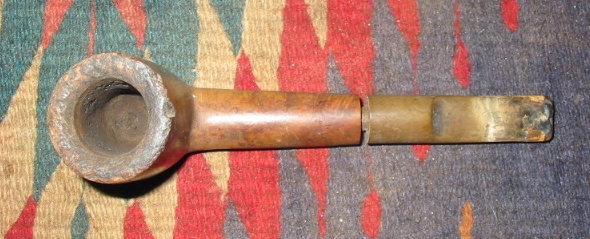
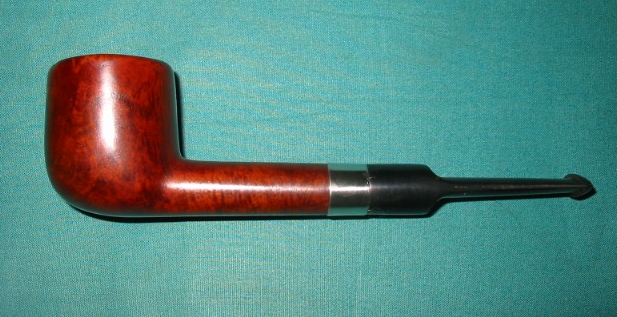
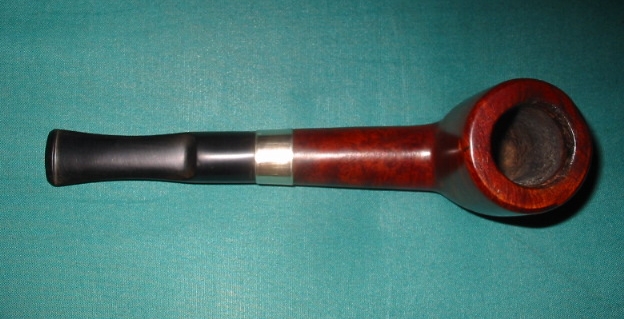
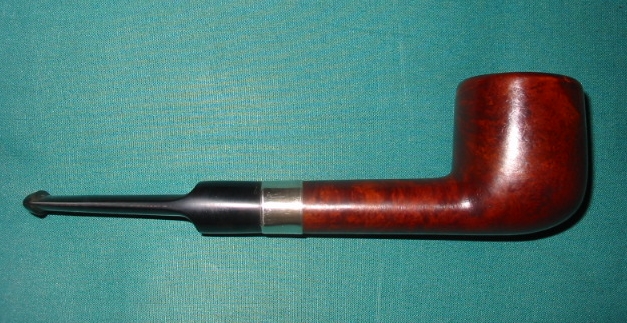
Tag Archives: stem work

Fitting a pipe with a new stem – photo essay


Blog by Steve Laug

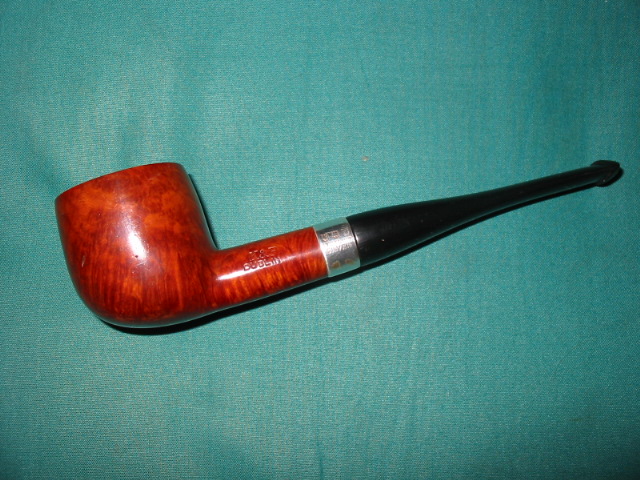
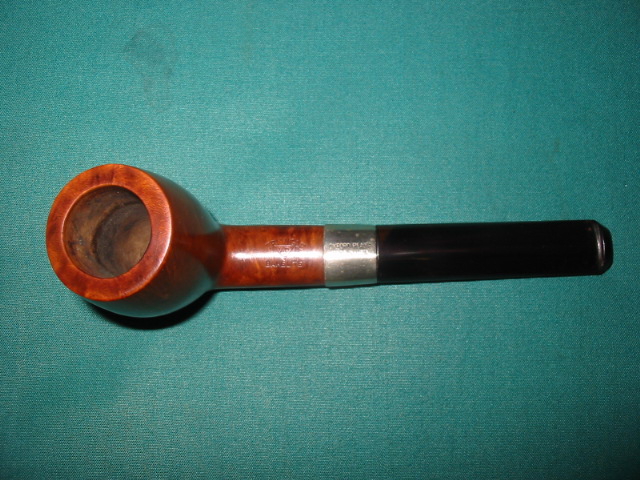
I picked up this pipe bowl – a Pete 207 – an early Peterson from the late 40s. It was in need of a stem. I have a couple of cans of stems that are precast blanks. They need to have the tenons turned to make them fit correctly.
ImageImage

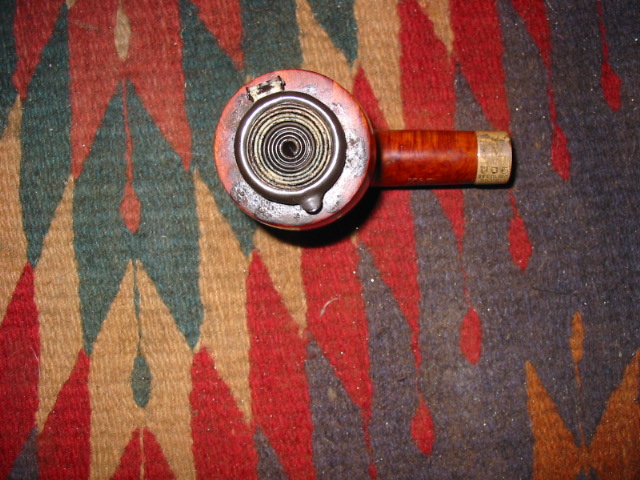
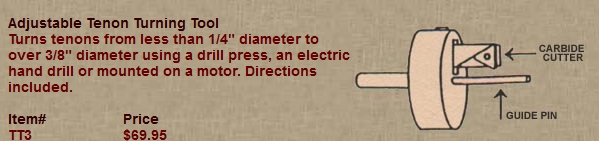
I have a PIMO tenon turning tool like the one pictured in the diagram below. I have to drill the stems to fit the guide pin as they are generally very small. Once that is done with a bit on my cordless drill I then put it on the tenon tool and adjust the carbide cutter to the diameter tenon I want to cut. I always start large and work my way down. I have found that trying to cut too much off at once causes the tenon to chip or break. So I start large and work my way down until it fits the mortise. I found this YouTube link that gives a video presentation of the process so I have included that as well for your information http://www.youtube.com/watch?v=drKxzteEEPk A quick look at the video will show you the process I use in turning the tenons. I generally turn the tenon until it is close to fitting and then finish the fit by hand. I have found it is better to proceed by hand from that point so as I don’t take off too much of the vulcanite and have a loose fit on the tenon. I will show that process from the point the tenon has been fit in this pictorial essay.
Image

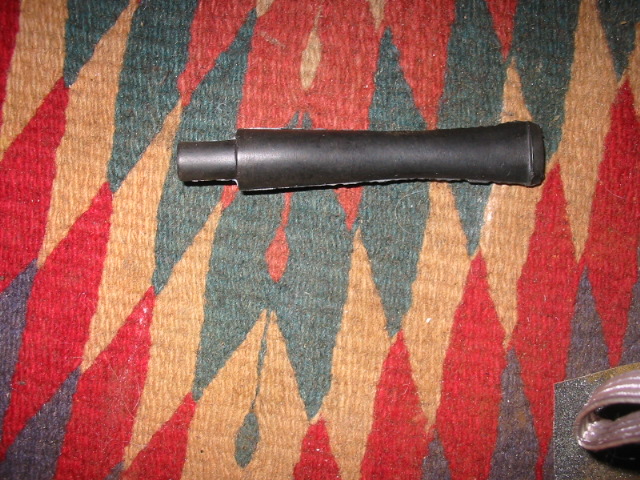
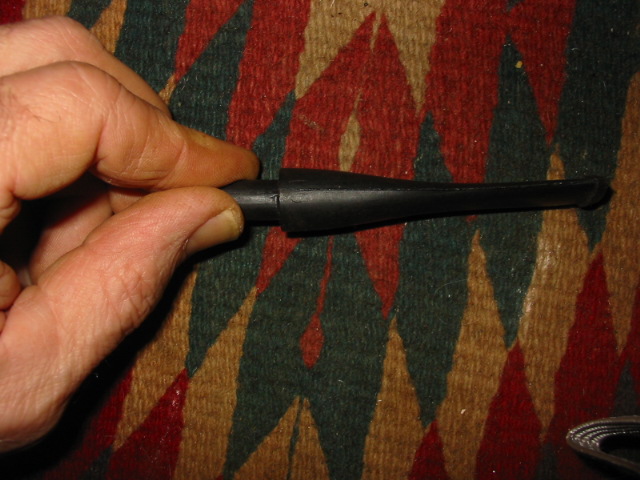
Below is a stem blank that I picked up online from Pipe Makers Emporium. I have several coffee cans full of different sizes of blanks. I sort through them to find one that is close to the outside diameter of the shank. I find that it is not too difficult to get the two to match with a lot of sanding and fine work.
ImageImage

Below is a picture of the bowl prepped and ready for the new stem. I cleaned the top and polished the silver band as I want nothing in the way of a tight fit for the stem. You will also notice in the photo that the tenon is partially turned for a fit. I stopped at this point to show the process. The large portion still remaining on the tenon shows the first turn of the tool to take off the first portion of vulcanite. I keep the tool turning so that the carbide blade removes the face of the stem as well so that the seat will be straight and flush at the union of stem and shank. I find that when I do this at the beginning of the turn it give a good clean finish. The step down in the tenon shows the next portion removed. I have adjusted the tool to take off that portion. After this photo I finished turning the tenon.
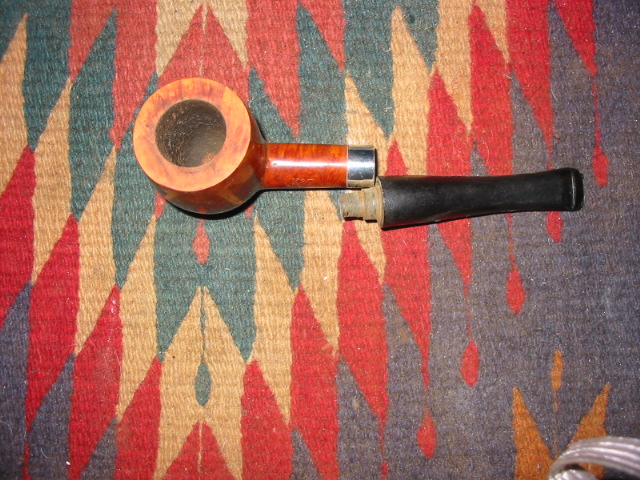
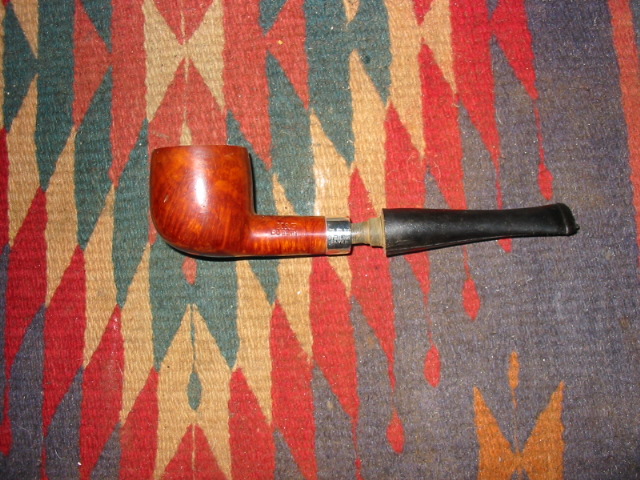
ImageImage

The PIMO tenon tool took a bit of work for me to figure out the adjustments as I purchased the tool second hand without the instructions. The fellow I bought it from gave me some quick lessons on how to adjust it. He even threw in the hex keys!! So needless to say, I learned by trial and error how to adjust the cutting head and keep it straight for a straight cylinder cut on the tenon. Since then I have it has been pointed out to me that Kurt Huhn of Pipe Makers Forums has noted the tricks I learned the hard way.

ImageImage

I will try to capture the trick in my own words, combining what I have learned the hard way with Kurt’s recommendations. The first step in the process is to adjust the cutting head. Start by removing small portions at a time. To deep a cut makes the cutter wobble and give an uneven tenon. To adjust the cutting head insert the adjustment hex key (larger hex screw on the tool) and the lock key (smaller hex screw) into their set screws. Do not turn them, just insert them. Push in lightly on the adjusting key and pull up slightly. Loosen the lock key a quarter or half turn. While maintaining the up and in pressure on the adjusting key turn it in increments of a half turn (think half hour on a clock). With steady pressure on it by pulling it up, the arm with the carbide cutting head is not loose and wiggling as it is adjusted. If it is loose while adjusting it, you will get non-cylindrical tenons regardless of the number of turns from zero. Do not let go of the adjusting key, tighten the lock key while the pressure remains on the adjusting key. Pull the adjusting key straight out, being careful not to turn or press down on it. Trim the stem and repeat as you need to get a good tight fit on the tenon.

The next sequence of photos shows the tenon finished and the fit clean and tight. I hold it up to the light to make sure that there is no light showing between the stem and shank. Also note the Dremel with the sanding drum in the photo. I use that to bring the outside diameter of the stem to a close match to the shank. I run the Dremel at the middle speed to allow me more control of the tip as I take off material. If I run it too fast I find that it takes off too much. Too slow and it leaves a chunky beat up finish that takes a lot of sanding to smooth out. As can be seen from the photos there is not much material that needs to be removed for a smooth fit.
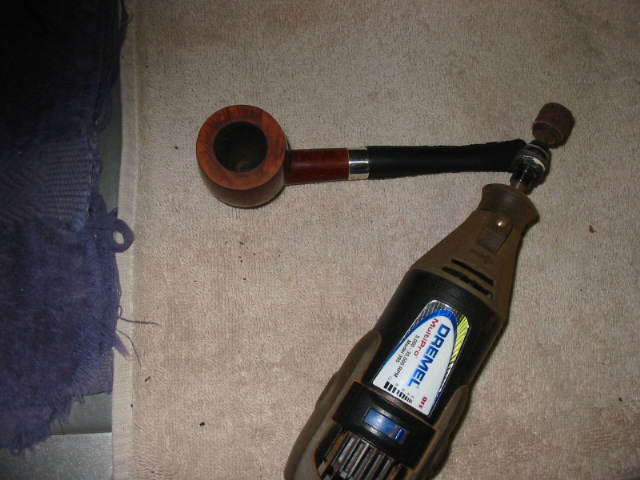
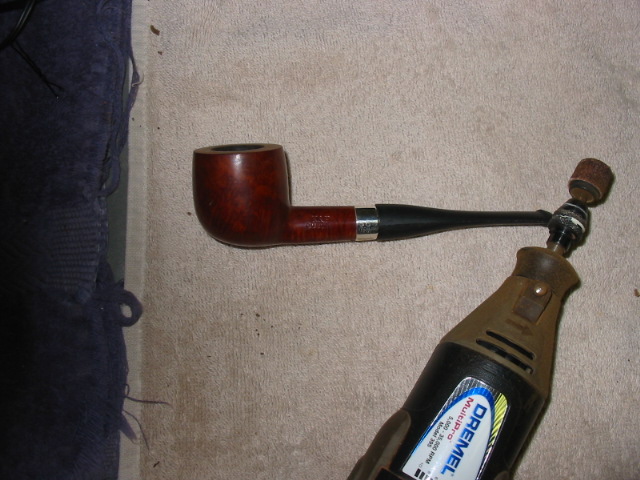
ImageImage

In the photos above I have used the Dremel and removed material to the point that the stem and the shank are almost level. I did it in stages with the stem on the shank and rotating the pipe to keep the perspective round and even. Once I got it to the stage above I move to my table and continue the rest of the work by hand. Sand paper in a variety of grades starting with 180 allows me to work the remainder of the material off and to get the scratches and grooves from the Dremel worked out of the stem.

Each of the next seven photos shows the progress of the stem toward the finished product with the different sand papers. Once I have removed the majority of scratches and grooves left by the Dremel with the 180 grit (pictures 1 &2) I move on to using 220 grit and 240 grit to take down more material. Care must be exercised to not scratch the band or the shank. The idea is to leave the shank exactly like it was without scratches or marks (pictures 3,4,5).
ImageImageImageImageImage

Pictures 6, 7 & 8 show the stem after using 1600 grit wet dry sandpaper. Each sanding step removes more material and evens the flow of the stem to shank. It also removes scratches and prepares the stem for the finish sanding.
ImageImageImage

The last four pictures show the pipe after sanding with micromesh pads – 1800, 2400 and 4000 grit. Generally each of the pads progressively polishes the stem. Any places that still show scratches send the stem back to the 600 wet dry sanding or even further depending on the depth of the scratches. When the polish is clean and smooth I take the stems to my buffer and buff with white diamond that raises a deep reflective finish on the stems.
ImageImageImageImage

Refurbed and old timer – WDC Bakelite


I finished up a pipe that is stamped WDC in a triangle and Bakelite on the shank. The bowl is briar and by the way the stem is put together it is clear that it is an old timer. It has a screw mount stem with a bone tenon and the red Bakelite stem has an orific button.

The bowl was caked and had cob webs! (no kidding). The bowl and shank were cleaned and reamed as usual. The stem had bite marks and needed to be sanded and then finished with micro-mesh pads and finally a trip to the buffer and Tripoli and White Diamond. The bowl was re-stained with cherry and then buffed and polished. The stem was over turned a bit so heated the tenon water and it seemed to expand (?) a bit and loosen so I was able to straighten it out on the shank and it fit perfectly. I wonder if on these old bone tenons that the hot water may actually expand them a bit – not sure how that works but it certainly worked with both of the ones I did today.

Thanks for looking and all of your comments. It made for a great day and it is good to look back and see the work completed today!

Before:

ImageImage

After:

ImageImageImage

Refurbished another horn stemmed pipe


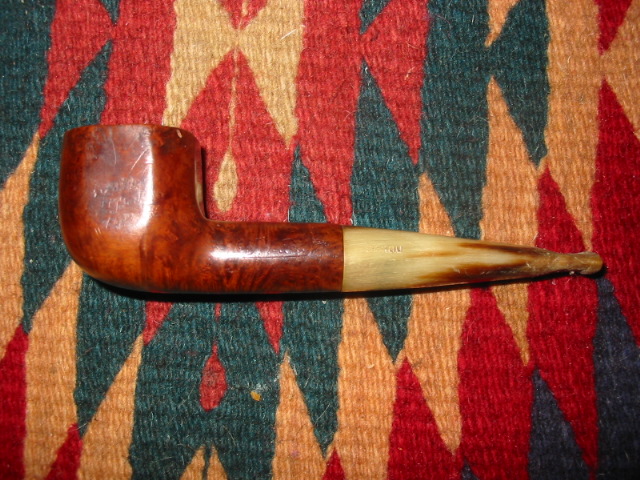
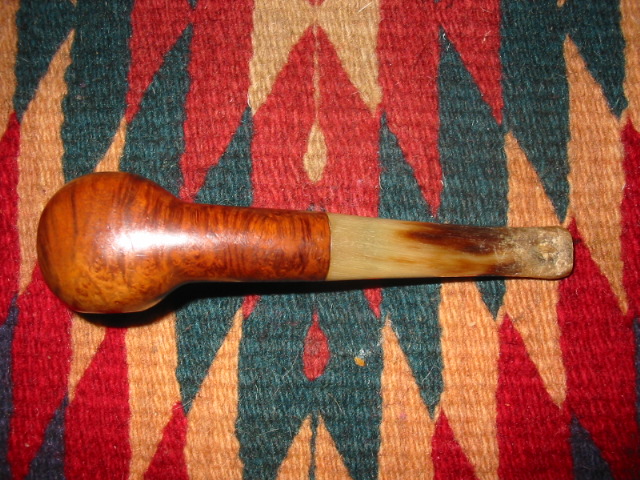
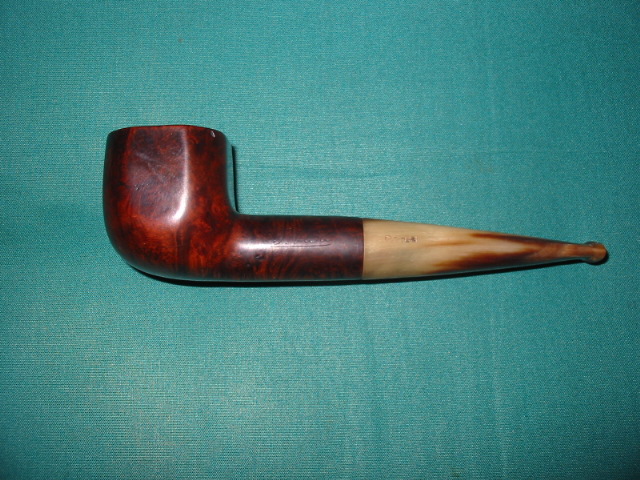
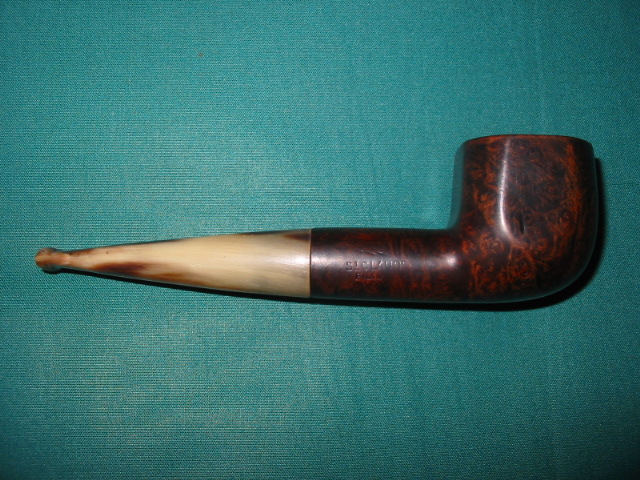
I just finished the second little horn stemmed French pipe that I picked up recently. It is stamped P. Viou which is an old French brand made in St. Claude. It is a 5 inch long pot that is paneled as well. The bowl was in pretty good shape – I reamed and cleaned it. The finish was rough so I removed the varnish and the stain and re-stained it. It came out a bit darker than the original but it really highlights the grain. The rim is beveled in a bit, chamfered nicely.

The stem was a mess. The previous owner obviously gnawed it and clenched it so the horn was dented and chewed with the profile changed. I steamed the dents and lifted them with a damp cloth and hot knife. Most of them came out. I sanded the stem and cleaned up the chewed part. I then restored the profile and filled the remaining spots with super glue and then sanded and buffed. I like the end product.

Here are some before shots:

ImageImage

Image

Here is the refurbished pipe:

ImageImageImageImage

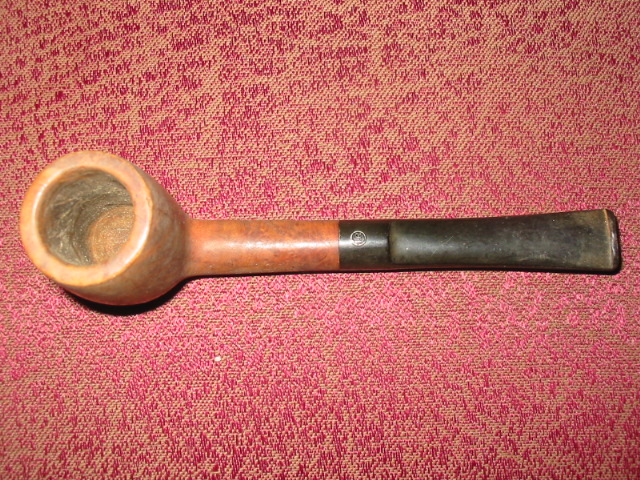
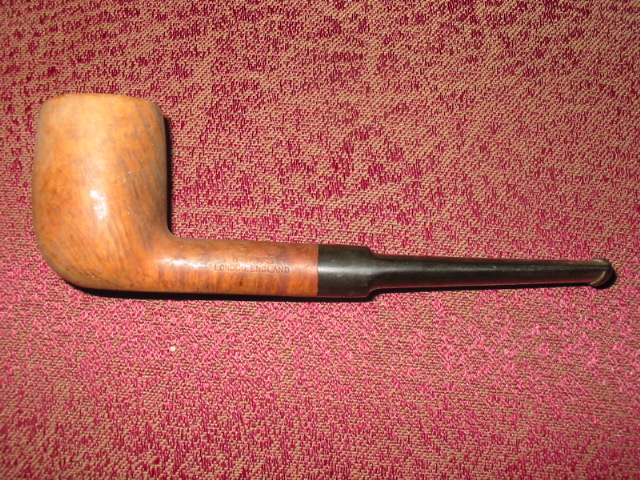
Refurb on a Irwin (GBD Second) Saddle stem Billiard


The 1976 GBD Catalogue says this about the Irwin pipes: “The warm dual-tone brown finish deepens with repeated smoking. Finest Rum is used in the special process of maturing these fine pipes. Its smooth flavour complements the natural taste of fine tobacco.” Knowing that when I came across this old timer I put in the pile to recondition while I was off this week. It is stamped Irwin over London England on the left shank. On the right side is the shape number 1207. It was caked a bit so I reamed the bowl and wiped it down with alcohol. The shank was dusty and dirty so it was cleaned as well. The bowl then went into the alcohol bath and sat for a half hour while I worked on the stem. It was in pretty good shape with a minimum of teeth chatter. I sanded out the tooth marks and sanded the residual oxidation on the stem. I then buffed the stem and polished it.

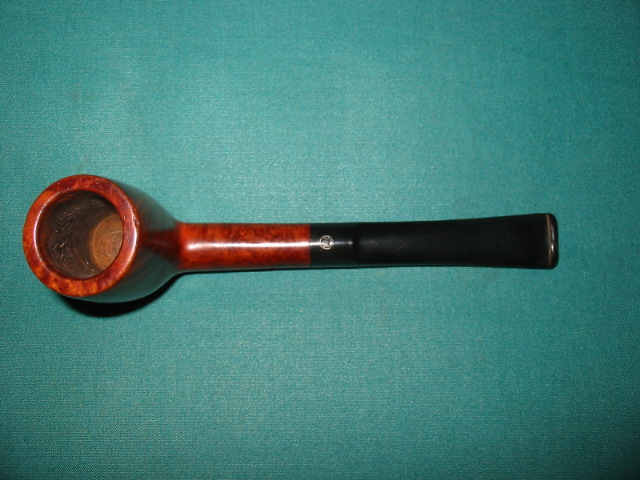
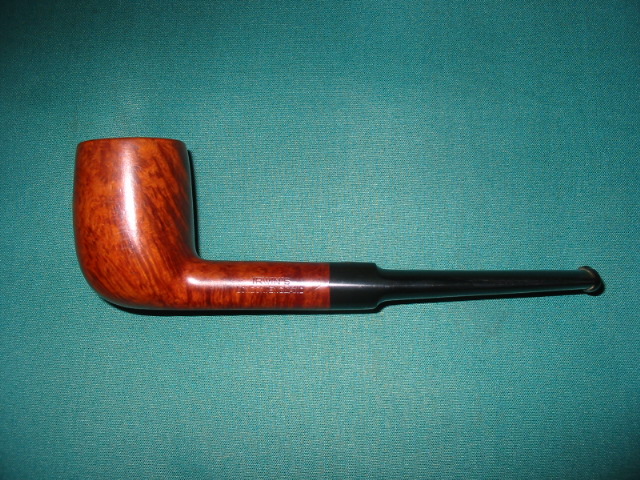
Once I was finished I took the bowl out of the bath and wiped it down. It was clean and once it dried was ready for sanding in preparation for a new coat of stain. I wiped it down with clean alcohol to remove any dust and then stained it with a cherry stain to bring out the brown highlights in the finish. I then buffed the entirety and waxed it with carnauba. I am very happy with the results. Thanks for looking. Here are the before shots:

Image

Image

Here are the pictures after refurbishing

ImageImageImage

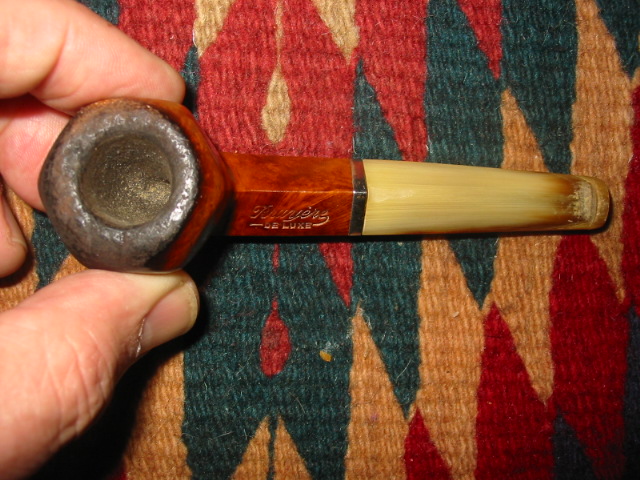
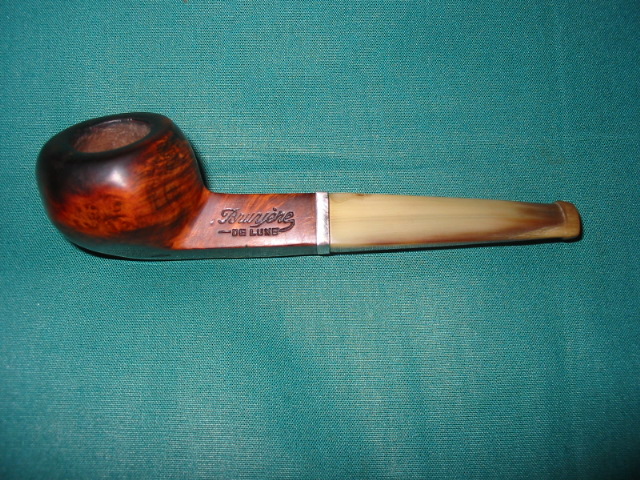
Bruyere Deluxe Horn Stem refurb


Blog by Steve Laug

The two pipes that had what looked like horn stems arrived yesterday. They indeed were horn stems. One of them the little 4 1/2 inch bulldog need some work on the stem as it had some tooth marks. The bowl itself was rough. The varnish (?) was crackling and the lava had overflowed the top of the bowl and stained the wood around it. Fortunately it was not charred at all! I reamed and cleaned the bowl. It was a mess. Then I sent it to the alcohol soak and it lifted some of the tars and stain as well as the varnish. I then reworked the bowl with sand paper and with micro mesh pads. It then was re-stained with a black under stain and then a cherry over stain. I then buffed and polished it.

For the horn stem I heated a knife and used a damp cloth and the hot knife to lift the tooth marks. Thanks to Nigel and others (Chris/Caskwith) who gave that bit of advice. It is the same process that is used to lift dents in the briar. I repeated this process until they were gone and the stem was smooth to touch. I then used micro mesh to sand and polish the stem. Finally I gave it a buff with white diamond and carnuba wax.

Here are the before shots:

ImageImage

The front rim was solid but the tars seemed to have permanently stained the briar. I did not want to take much off as it would change the panel shape of the bowl so I cleaned the wood as deeply as I could and was able to get it so that I can see grain through the dark stain. I may give the entire bowl a dark stain to further hide the top but still considering that…

ImageImage

Image


An Interesting Wellington Straight Billiard


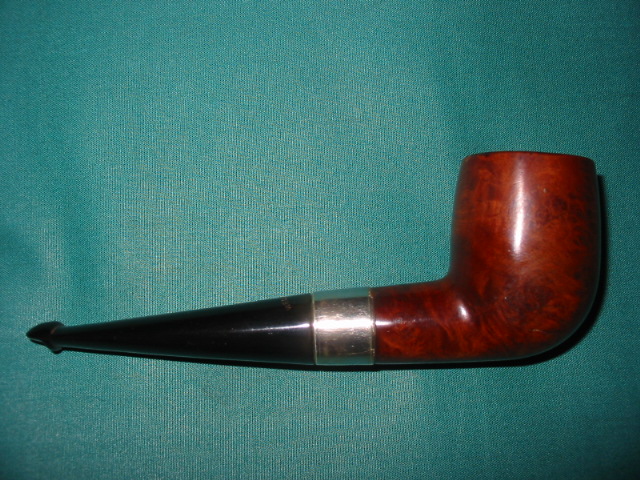
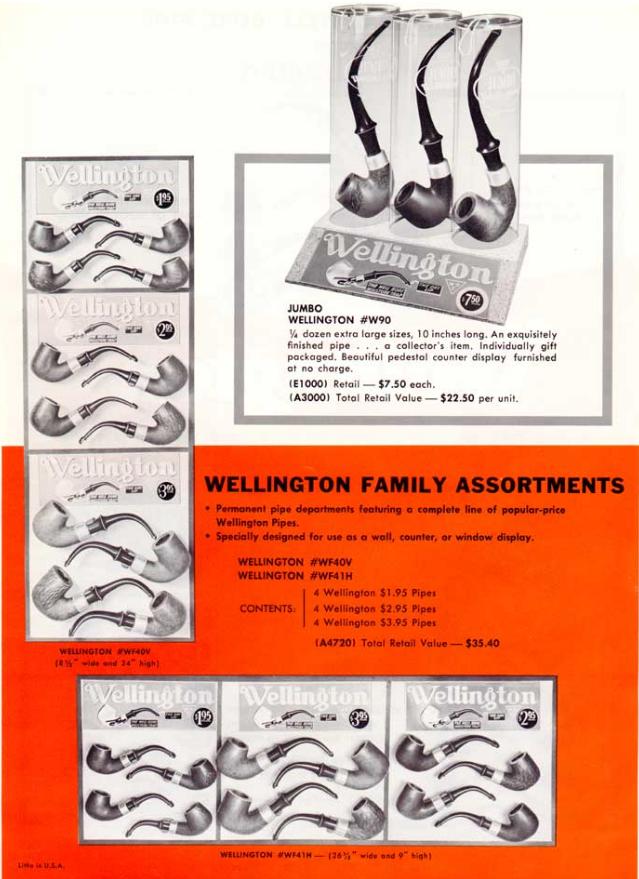
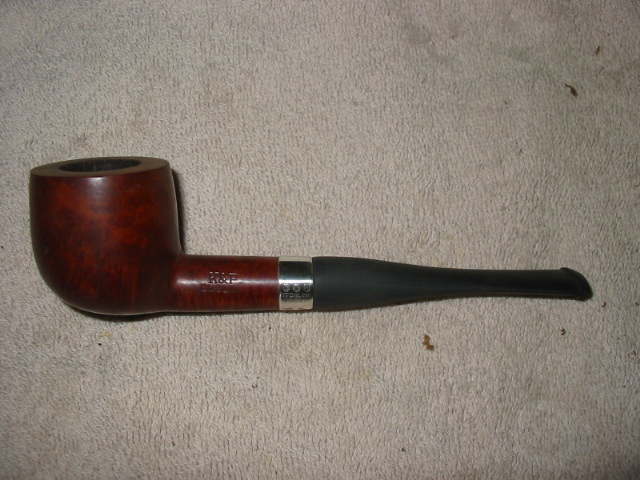
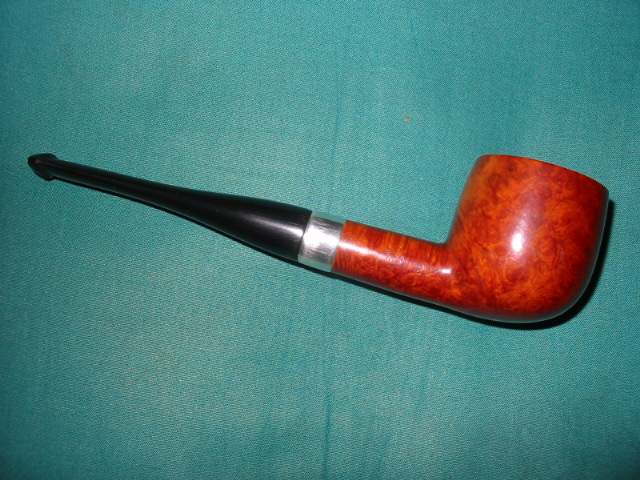
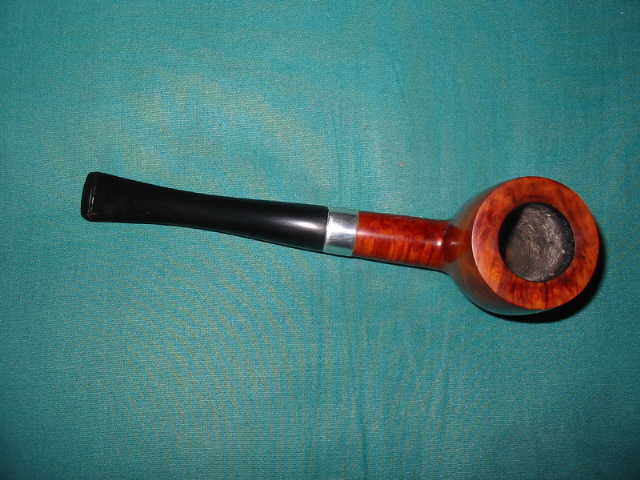
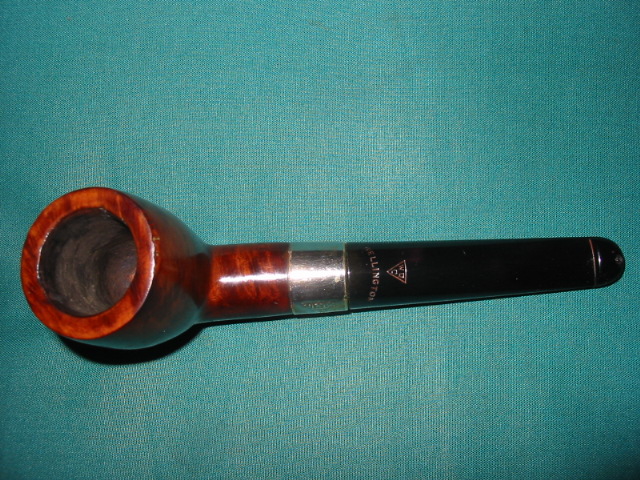
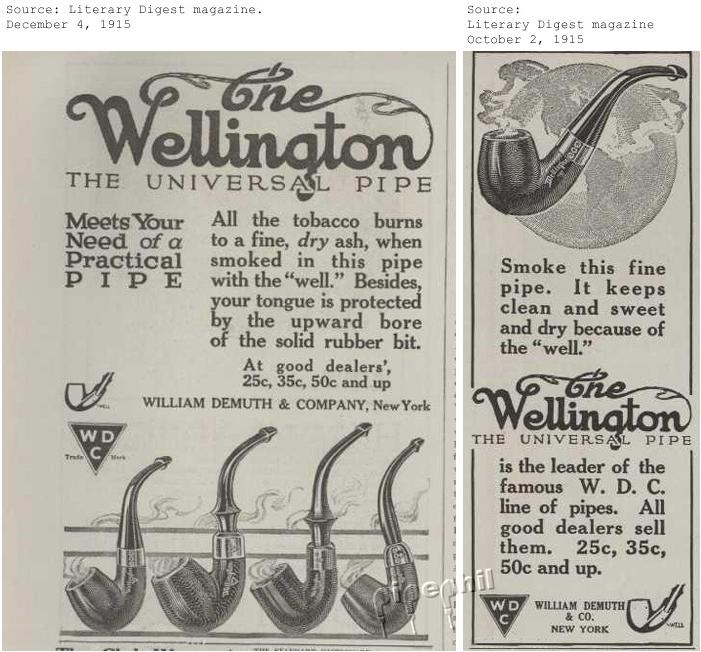
Just finished researching a bit on WDC Wellington Pipes. Yet in all of the research I cannot find the one that I picked up. It is a straight billiard. It is chunky and 5 1/2 inches long. It is a system pipe like the Wellington Bent pictured below but it is a standard P-lip stem with a regular tenon. The band is sterling silver and has the WDC triangle and hallmarks stamped in it – an anchor, a five point star, and an eagle. The shank is also stamped WDC in a triangle under a script Wellington. The stem is stamped the same way. The bowl is U shaped with draft hole at the shank side as usual. From there it drops down into the shank where there is a chamber – a bit different than the well in the picture below. It is more of a wide open chamber that tapers a bit to receive the end of the tenon. Very interesting design.

It was rough so I reamed and cleaned the bowl. Cleared out the reservoir and the shank with pipe cleaners folded in half and then gave the bowl an alcohol bath. I left it in for about a 1/2 hour and then took it out and cleaned it again. It did not need to be re-stained as it retained its colour. I buffed it with White Diamond and then gave it a coat of carnauba wax. The stem needed a buff as well. It was a bit oxidized. The stem is unique as well in that the tenon end is very open and tapering back to the whole in the Plip. Here are the after pics.

ImageImageImage

I have also included a couple of adverts that I came on that are interesting bits of history of the brand.

ImageImageImageImage

You Just Found a Pair of Dad’s Old Pipes?


Blog by Steve Laug

They are both in very rough shape and need help but you want to keep them anyway. There is dried out old tobacco in both and the finish is about shot. The rims and sides of the bowls are both covered with dark grime and the mouth piece, or stem, is covered with bite marks and hard white lime like crust. The rest of the family tells you they are not worth saving and should just be thrown out but something inside you rebels against that. You still have memories of your father smoking those pipes and the associated feelings and smells still linger for you. It is hard to let go of these pieces of history. Something inside you wants to restore them but you just don’t know where to start. If this sounds like your situation, then you have come to the right place.

Image

You have already begun the first step in the process of refurbishing and that is to respect what you hold in your hands. These pipes are a piece of family history that can be passed down through future generations and when cleaned up and maintained, will last longer than any one of you. If they could speak to future generations can you imagine the stories they would tell? But if you listen to the wood, the old tobacco in the bowl, the dents and dings and the smells that still linger in it you will hear it speak. It will tell you what your Dad smoked. It will tell you how much he loved that old pipe and it still held the half smoked bowl of the last tobacco he smoked in it. It will tell you in the decimated finish where his fingers curved around the bowl. As you remember, you will know the stories that give meaning to dents – one from the fishing trip you took, one from the dash on the car when he laid it down and it hit the gear shift before bouncing off to the floor. All those bits and pieces add to the myth that surrounds story of a family. Be sure to take some photos of the old timers before you go to work on it. You will be amazed at the transformation that still respects the history of your Dad’s pipes.

The first step in the process is to do what I call field dressing of the pipe. It starts by laying out some newspaper on a table top where you can work on the pipe. Sit down with the pipe and begin to clean it. Use a small screw driver, ice pick or a dental pick, if you have one, to clean out the remnants of tobacco in the bowl. Put it to the side on the paper. You can purchase a pipe reamer on eBay for reaming the bowl or you can carefully use a knife with a rounded end to scrape out the old carbon. If you use a knife be sure to proceed slowly and carefully to ensure that bowl stays round. Scrape slowly, bit by bit, until you have a thin even cake all around the bowl. Once that is done you can wrap a piece of dowel with some sandpaper and use it to sand the bowl back to smooth. Use a paper towel or a soft cloth and some Isopropyl alcohol to wipe down the surface of the bowl and remove the dirt and oils of the past. This should also help to soften the remaining finish on the bowl. This cleaning will go deeper as we progress through the process but start with a cleaning of the outer surfaces of the bowl and the stem of each pipe. I have learned that it is always more pleasant to work with a clean pipe than one that is oily and tarred.

The stem needs to be separated from the shank. This may sound like an easy thing to do, but sometimes with the amount of tars and use the pipe has seen, the stem will be stuck in the shank. Put the pipe in the freezer. You don’t need to bag it or tag it, just sneak it in when the family is not paying attention and leave it there for an hour or so, long enough to sip a coffee and relax a bit. The different materials in the stem and bowl of the pipe make them contract at different rates and I have found that when I remove it from the freezer the stem is easily removed. If it is still stuck then put it back for another cup of coffee.

ImageImageImage

Once the stem is removed I fill a jar with Isopropyl alcohol and place the pipe bowls in it and let them soak for awhile. The length of time depends on the depth of the grime. I put the lid on the jar and give it a bit of a shake to churn the alcohol through the pipe. I leave it and turn my attention to the stem.

The stem will take a bit of work and will take the better part of a couple of hours to get back into shape. I clean the inside of the stem with pipe cleaners and cotton swabs until they come out clean. I dip them in the Isopropyl and run them through to remove all the grimes from inside the stem. Once I have it clean then fill a bowl with some water and put it in the microwave and set it to boil. I dip the end of the stem with the bite marks in the boiling water repeatedly to lift the bite marks a bit. Vulcanite, which is the material the stem is made of is said to have memory and will return to its original state. This method does wonders in lifting the bite marks. When they have raised as much as they are going to dump the water and take the stem back to your table. Using 240 grit sandpaper, remove the brown oxidation and calcified white stuff that are on the stem. Be careful as you sand to not round the sharp edges on the stem at the mouth end (button) or the pipe end (tenon). You want to leave a good tight fit with sharp clean edges when you are finished. You will find that the sandpaper scratches the surface but do not worry about it as the goal at the moment is to return it to a dull black. Once it is clean of the browns use 400 grit and then 600 grit wet dry sandpaper to smooth out the scratches and remove any remaining oxidation.

The stem should be a dull or flat black once you have finished with this step in the process. Now you have a choice to make. There are several steps that can be taken next depending on what choices you make. You can either use repeatedly higher and finer grades of wet dry sandpaper or you can use micromesh sanding pads – I use 1500, 1800, 2400, 3200, 4000 and 6000 grit pads to finish the stem to a gloss. These pads are readily available at woodworking shops or online – just Google Micro-mesh pads. If you use the sandpaper it works well but is a bit more labour intensive. After you have the stem restored to a gloss you can use a bit of olive oil to polish it – wiping it on and then off or you can use some softened beeswax or carnauba wax. I have even used Kiwi Neutral shoe polish which is a carnauba based wax.

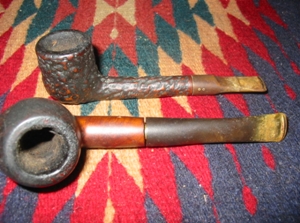
I then set the stem aside and retrieve the bowls from the alcohol bath. Before I take them out I use the alcohol in the bath to scrub the bowls using an old tooth brush as it just gets into the cracks and crevices and gets the dirt out of the surface. Once that is done I dry off the pipe with a soft cloth and get to work on the finish. For the rough surfaced ones like the smaller pipe in the picture I will often use the tooth brush repeatedly to remove all the grime on the pipe. With the smooth pipes like the second pipe in the picture I wipe it down with alcohol dampened cloths until it is clean. I then sand the smooth one with either the 400 and 600 grit sand paper or the Micro-mesh pads to smooth out the finish. If the top is rough you will need to decide what to do with it. I have posted on the blog how I repair those issues so have a look on there for the article on topping a pipe bowl.

When both bowls are clean and free of dirt and tars I wash them down with a fresh alcohol cloth and then they are ready to stain. I use Feibings Shoe Dye for the stain and have found that the Medium Brown dye works well and matches most of the stains on these old pipes. Both pipes in the pictures were stained with the same Dye. I use the dauber that comes with the Dye (the dye is available at most shoe repair shops for about $4-$5). I coat the bowl while holding the stem. As the stain will turn your hands brown, wear rubber gloves for the staining. Once it is stained light the stain on fire with a match to set it. You will think I am nuts in suggesting this and think you will catch things on fire but like the alcohol in Baked Alaska it only burns blue for a short while and really sets the stain into the grain of the wood.

Set the pipe aside over night to let it thoroughly dry. The next day use the 600 or higher grit wet dry sandpaper to remove the excess stain on the exterior of the smooth bowl. Wipe it down regularly with a damp cloth to see what it is looking like. With the rough surfaced pipe I use a piece of flannel fabric and buff the surface until it glows. Once both pipes are finished and look acceptable to you give them a good coat of wax or polish. Some folks use Pledge on the bowls and have done so for years without ill effect. This gives them a rich glow. The only thing left to do is join the family heritage by smoking a bowl of your own tobacco in the pipe. When you are done with that smoke, wipe the pipe down with a soft cloth and clean it inside with a pipe cleaner. With a little care the finish that you have done will last until you own grandchildren need to refinish it once again. But take delight in smoking a piece of the family history and adding another generation’s story to the life of this old pipe. Enjoy.

If you have any questions on the process feel free to post a response or question here.

Here are the same pipes after finishing the process I laid out above.

ImageImageImageImageImageImage

Removing Oxidization on Vulcanite Stems


Blog by Steve Laug

In May 2011 I started a thread on Smoker’s Forums asking people how they dealt with oxidation on vulcanite stems. Many of the members of the Forums responded in the ongoing posts to that thread. Unfortunately that thread and others were lost when the Forums were attacked and decimated. I collected their answers and compiled them into the document that became the basis for this blog post.

For this blog I have rewritten the first document and clarified my explanations. I have followed the same format for reporting the various methods I gathered. I have arranged them according to the main component in the process. As you read them you will note that several of the categories overlap and are combined in the processes. I have found that there is no one method for removing oxidation. I have used one or all of the methods below in combinations to conquer the dreadful browning of the vulcanite stem. Hopefully this document will prove to be a helpful reference to those who venture into the realm of cleaning and polishing stems. Please remember that the methods below are to be used at the risk of the amateur pipe “refurbisher”!

The first step in breaking down the responses to my initial post involved organizing the respondents into two broad categories regarding the use of a presoak or not using a presoak. From there both groups went on to use micro mesh pads or sand paper in their work on the stems. There are two main pre-soaks that are used to begin the process of removing oxidation – Bleach and OxyClean. Interestingly there were also two additional pre-soaks that have been used by the respondents – Goo Gone and Simply Green. All of the methods have adherents that swear by their choice. In each of the categories below I will summarize the methodology and give a basic explanation of the process.

PRESOAKING

Bleach Soak
Mix bleach and water (50/50) to remove the oxidation. Use a pint jar or a bowl that allows you to reach in to remove the stem once it is finished. I insert a pipe cleaner in the stem and bend it into a hook that I can hang on the side of the bowl or jar. I then coat any stamping or logo symbols with Vaseline to protect them from the bleach. The stem is immersed in the mixture and allowed to sit for differing amounts of time until the oxidation is removed.  Note that this mix, no matter the strength, does cause pitting or roughening to the surface of the stem. Sand and buff the stem with Tripoli and White Diamond.

OxyClean Method
Mix a scoop of OxyClean in a pint jar of hot water, put the lid on and shake vigorously to mix the solution. The water should be deep enough to completely cover the stems that are put in the jar. Soak the stems in OxyClean and hot water for 30 minutes to 1 hour and then use micromesh pads to remove softened oxidation. Repeat this as often as necessary in the process. Then it takes a trip to the buffer. Note that the mixture does not remove the oxidation but merely softens it making it easier to remove with the buffer and sanding. I have tried various strengths of mixture and the single scoop seems to be a perfect mixture for how I use it.

Goo Gone Method
Goo Gone is applied to the stem either after soaking in bleach or OxiClean or is used without the prior soaking. Once the Goo Gone is dry the stems are sanded to remove the softened oxidation. Then the stems are taken to the buffer or are sanded to finish removing the oxidation. Once that is done wax is applied to protect the newly cleaned stem.

Simple Green Method                                                                                                         Simple Green is mixed with water and placed in a jar, placed in the jar full strength or wiped onto the stem with a cloth. If the stem is left to soak it usually soaks for an hour or more and then rinsed off and buffed. If wiped on it is wiped on and off until the oxidation is gone. The stem is resoaked or rewiped as often as necessary to complete the project. Once done the stem is buffed with Red Tripoli, White Diamond and then waxed to protect the newly cleaned surface.

NO PRESOAKING – STEM POLISHES

Others do not use presoaks but use a variety of stem polishes or cleaning polishes to remove the oxidization. These include cleaning kits as well as some other non-conventional polishes. I have included Mr. Clean Magic Erasers in this category though some might argue it should go with the Microfiber materials. I find though that it is in essence a polishing product and thus fits well in this category.

Walker Briarworks Stem Restore Kit
The Walker Briar Works Stem Restore Kit can be directly ordered from Walker Briar Works, an online pipe repair service http://www.walkerbriarworks.com/html/stem_restore_kit.html for $20 plus shipping. The kit comes with two jar each containing 1.5 ounces, enough for at least 50 stems. The first is a Deoxidizer and cleaner, the second is the Carnauba Wax/Polish/Sealer. Using a soft cloth, rub the Deoxidizer/Cleaner on a Vulcanite stem until it feels smooth. Then rinse the stem with warm water and let it dry. Once dry, apply the Carnauba Wax/Polish/Sealer by rubbing it on with a soft cloth.  Let it dry for about 10 minutes and then polish the stem.  Many have used it with success. Personally I find that it works well on stems that are less oxidized. Heavily oxidized stems do not seem to be affected by the application of this product.

Other Brand Name Stem Polishes
Other products such as Denicare Mouth piece polish, Outwest Pipe Stem Scrub, Brebbia Pipe and Mouthpiece Polish, Dunhill Mouth piece polish are used with varying degrees of success. All come in small tins or tubes and are applied by hand with a finger or a cloth, left to dry and then buffed off with a soft cloth. In my opinion they work well in maintaining a clean stem but are all less effective in removing the oxidization.

Flitz
Flitz is a polish that is similar in application to the Walker Briar Works Kit, but is a bit more effective according to those who use it regularly. It is said to be readily available in Hardware Stores and other convenience shops in the US, though I have not been able to find it here in Canada. Those who use it say that stems treated with Flitz will remain un-oxidized for approximately 18 months to two years before needing another treatment and buffing.

Toothpaste
Over the years I have read and heard about those who use tooth paste to clean oxidation on their pipe stems. I have tried Crest and Colgate toothpaste applied with a soft tooth brush and scrubbed until the oxidation is gone. The micro abrasives in the tooth paste work to remove the oxidation. Personally I have found that this takes a lot of hard scrubbing to get the kind of results that I am looking for. The plus to this method is that it removes little or no stem material and thus is relatively safe in maintaining the original shape and integrity of the stem. The method has been spelled out in the following step by step procedure:

1) Submerge offending stem into hot water (just off the boil), to bring all the oxidisation to the surface.

2) Apply a thin coating of toothpaste to the surface of the wet stem.

3) Rub vigorously with the rough side of a green plastic scouring sponge, (some use a soft bristle tooth brush instead).

4) Keep rubbing…and then some!! Apply more toothpaste as necessary

5) Finish by waxing the clean surface to protect it from further oxidation.

Magic Eraser: (polishing compound)
Mr. Clean Magic Eraser or generic brand eraser is wetted with water and used to scrub the stems. It removes oxidation without visible loss of material and without scratches. I have used this as a follow up to some of the above methods with good success. The magic eraser needs to be periodically rinsed and wrung out to remove the removed oxidation. It is a melamine micro abrasive and once it has been used and the stem is dried it should be followed by polish as the stem is left smooth but with a matte finish. Regular ebonite polish brings it to a good shine then quickly and easily.
Automobile Polishing Compound                                                                                       Others have used automobile polishing compound and rubbed it vigorously into the stem material to remove oxidation. It is used to remove the same on headlamps and plastic parts on the exterior of the vehicle so the logic is sound in using it on vulcanite stems. However, I have avoided that product as it does not seem like something that I want to put in my mouth.

HAND SANDING

Many who work to remove oxidation skip all the pre-soak, scrubbing and polishing and attack the problem head on with sandpaper and/or micromesh pads. Others use the soaks above and then proceed to the sanding. Many combine the processes and find that in the combination they have a tool that works for them.

Micromesh pads:
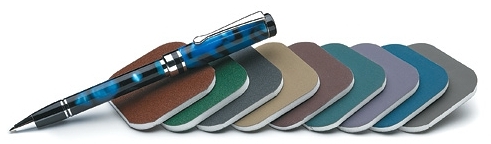
Micromesh pads have proven to be my tool of preference in my battle against oxidation in the old estates that I refurbish as well as in maintaining my own pipes. A variety of pads with the following grits – 1500, 1800, 2400, 3200, 3600, 4000, 6000, 8000, 12000 are all used. I find that for the most part I use these various pads up through 6000 and that they work extremely well. I keep a bowl of water next to me while I am sanding with them as they have a far better bit when they are wet. I sand and wet the pad and then sand and clean it in the water. I change the water between grits of the pads. While I keep the pad wet others suggest keeping the stem wet while working on it. It seems to me that both achieve the same purpose. Many people use all 9 grits for badly oxidized stems. Before moving on to the next grit pad be sure to dry the stem to see if it’s ready to move up to the next pad. Look for any vestiges of brown or green oxidation. Stay with the coarse grits until all the brown-tan-green is gone. Those who use the upper grits say that the change that occurs between the 6000 and 8000 with respect to shine is amazing. Each time I have ordered the pads on line the higher grits were out of stock. After finishing with the 12000 the only thing left is the buffer for carnauba or rubbed with a bit polish. Periodic maintenance of the stems can be done using the 2 finest grit pads rather than the buffer with white diamond.
Image

Sandpaper:
You can also remove oxidation with 400, 500 or 600 grit sandpaper, depending on the condition of the oxidization. Continue to sand the stem to remove scratches with consecutive grits up to 2500. These sandpapers are of the wet dry variety and work very well with a bowl of water nearby to keep the stem wet while it is being worked on. The same principle of drying the stem between grits as mentioned above is use with the sandpapers. Finish the process by waxing the stem to protect the newly cleaned surface.

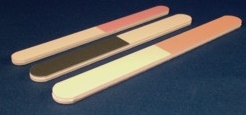
Sanding sticks are available from wood working suppliers and interestingly enough at beauty supply houses. Nail polishing files that have four grades of “sandpaper” on a thin bar of Styrofoam can be purchased there or in the cosmetics department of the local drug store. They can also be used to remove tooth marks and tooth chatter near the button. I have used these for years and always have a set in my refurb kit.

Image

POLISHING WITH POWER TOOLS

After the removal of the oxidation from the surface of the stem, whether by one of the above mentioned methods, one of your own or a combination of several of them, the stems are ready to be polished with power tools – buffers, drills with buffing pads or a Dremel. Some refurbishers do not feel this necessary after the use of the micromesh pads. But many still finish the job on a  buffer.

Dremel:
The variable speed hand held Dremel can be used with a 3 inch fibre wheel or a polishing pad loaded with red Tripoli and White Diamond polishing compound followed by a pad loaded with carnauba wax to give a final sheen to the stem. The drawback with the Dremel is that you must be extremely carefully in applying pressure to the stem surface or you will end up with wavy patterns in the vulcanite.

Buffer:
Personally, I use two bench grinders with two polishing wheels on each one. I removed the grinding stones and the protective shields over each wheel that was standard equipment and mounted 8 inch buffing pads on the spindles. My process is as follows:

– Polish with Tripoli, 8 inch stitched muslin buff
– Polish with White Diamond, 8 inch stitched muslin buff
– Wax with carnauba, 8 inch unstitched flannel/muslin buff
– Finish on a clean 8 inch flannel buff with no wax

Drill:
Buffing pads can also be mounted on a hand drill – cord or cordless. I have used a drill before I got my buffers. I anchored the drill in a bench vise so that I have both hands free to maneuver the pipe while polishing. I used four different 3 or 4 inch buffing pads my drill. I have not used it since picking up the two buffers.

Thanks to the many from Smokers Forums who responded to my initial thread on cleaning oxidized stems. Over the years many have contributed to my methodology on these processes.
From Sow’s Ear to Silk Purse


Blog by Steve Laug

This morning I decided to do a few more refurbs on pipes from my box. It is getting low on options as I have reworked the majority of the interesting ones. There are about 25 or so pipes to choose from now and many are in a real state of disrepair. As I sorted through them I came upon this one. I took it out of the box and turned it over in my hands. The bowl was clogged with the remnants of the last smoke – dried tobacco and sticky tars. I decided that this was the first pipe I would work on today. It would be a challenge to see if anything beautiful could come from this mess. It was a beat up old pipe. I think the previous owner must have always had it in mouth and chewed on it like a piece of straw and then used it to hammer nails. The top was chipped and dented with valleys and mountains and the whole covered in a thick coating of tars – pipe lava. The stem was gnawed on had deep dents and tooth marks. It was oxidized to a rich brown that stank of sulfur.
The first step in the process for me is always to ream the bowl and clean out the detritus of the past. I used a dental pick to get the remaining dottle out of the bowl and to make way for my reamers. I find that the dental pick works well as it is sharp enough to break into the hardened ball of tobacco remnant and remove it quickly. I work it around to clean out any loose leftovers so that I can work on the hardened cake that is left in the bowl. This one had a thick cake that was a bit crumbly and soft once the tobacco ball was removed. It would need to be reamed back quite a bit. I generally ream back to bare wood on these old timers as I want to start a hard cake that is not built upon the old crumbling base cake that was in the pipe when I started. I used the PipNet reamer on this one. I fit the cutting head into the T handle and began to carefully turn the reamer into the bowl. I generally do this over a plastic bucket as it is a mess. The coarse dust of the carbon that is cut away is a black cloud if you are not careful. I proceed slowly as it is easy to angle the cutting head and take the bowl out of round. Once it is done I tap out any dust that remains before moving the pipe to my work desk.

 ImageImage

On the desk I had placed a work surface that was washable and then took out the soft cotton wash cloths that I use to remove grime and stains and wet them with Isopropyl. I washed down the outside of the bowl including the rim. It removed much of the dirt the first pass and I continued to scrub until the cloth came back clean. For this part of the process I leave the old stem in place as it serves as a handle for me to hang on to while I am working with the bowl. I picked at the grime on the top of the bowl a bit with the dental pick and decided that indeed this one was a candidate for topping. The two pictures above show the pipe after the reaming and cleaning of the bowl. It is ready to be topped.

In preparation for topping the bowl I use a flat surface – either a hard flat board or a piece of glass to which I anchor the sand paper. This time however I wanted to try out a new trick that I had learned from a friend on one of the online forums so I anchored a piece of 240 grit sand paper on a Masonite clipboard and put the clipboard on the desk top. Topping the bowl is a careful process that involves keeping the rim flat on the sand paper and turning it either clockwise or counter clockwise until the chips and dents are minimized. The trick is to take if far enough to remove the majority of the dents and chips without changing the overall profile of the bowl. Too much of the top removed changes the pipe rather than merely restoring it. As I sand the top of the bowl I stop to check it regularly to see if I have removed enough of the damage to the bowl. On this particular pipe it took me quite a bit of time to take it down slowly to the point it was smooth enough to do the next step in the process.

Often once the top is close to being smooth enough the last remaining dents can be steamed out and then a minimal amount of sanding will finish the job. On this particular pipe the top was smooth after sanding it. There was no need to remove any further dents. However there were some major chips out the outer edge of the rim. To remove them would have involved sanding off a fairly significant amount of the top and would have changed the overall look of the pipe. I decided instead to chamfer the edges on the outer portion of the rim. I used a piece of sand paper held at an angle that I maintained throughout the sanding. The idea was to hide the battered edge and remove some of the damage while minimizing some of the larger chips. Once I had the outer rim repaired to my satisfaction I did the same to the inside rim to regain some of the roundness of the bowl. The previous owner seemed to have used a knife to remove cake so there were major chunks taken out of the inside edge. Chamfering the inner edge took care of most of the damage and made the rest relatively invisible to a quick glance.

I then cut a stem to fit – turning the tenon on a precast stem and also taking off the excess vulcanite on the area where the stem joined the shank. I wanted to get the fit to be precise without gaps. Once I had the fit correct and just needed to sand out the scratches I put the bowl in the alcohol bath to let it soak and remove the stain. I continued to work on the stem while it soaked. I generally leave the bowl in the bath for a minimum of 30 minutes and have even left them over night in an extremely dirty bowl. Once I take it out of the bath I wipe it down with a dry cotton cloth and let it dry. I then sand the bowl down to remove any scratches in the surface. I start with a 400 grit wet dry sand paper and work my way through the Micro-mesh pads 1500, 1800, 2400, 3200, 4000, and 6000 to get a good smooth surface. As I worked on the shank I noticed a fine crack that became evident as I removed the grime from the inside of the shank. I heated a nickel band and pressure fit it to the shank to take care of the crack.

I finished the bowl by re-staining it with a medium brown stain as an undercoat and then buffed and sanded it yet again. A top coat of oxblood stain followed that sanding. I find that the two coats of stain complement each other and add some depth and patina to the pipe that only the one colour does not give. It was then polished on the buffing wheel with White Diamond and then given several coats of carnauba wax. I had also finished the stem and put it on the bowl and buffed and waxed the entirety.

This is the finished product. I think you would agree it has ceased to be a sow’s ear and has become a silk purse!

ImageImageImage


Hot off the refurb desk


This is one that I just finished refurbishing. It came in a box of pipe bowls that I was given that needed re-stemming. I cleaned and reamed it and removed the tars on the rim. The shank had a small crack in it that needed to be fixed so before I re-stemmed it I cleaned the outside of the shank with a cotton swab of acetone to remove any finish that was on the area that the band would cover. I measured the outer diameter of the shank, picked out a nickel band. Just before placing the band I put some super glue in the crack and let it dry. Once done I dabbed a bit of all purpose glue where the band would go and then heated band so that I could pressure fit it in place. I re-stained the bowl with a dark brown aniline stain to give it a more even finish. I buffed it with Tripoli and White Diamond before giving it a coat of wax. Then I laid it aside.

I found an interesting stem blank that would give the pipe a pleasing look to my eye. I turned the tenon with a PIMO tenon turning tool until it was a close fit and then did the rest of the work on the tenon with sand paper by hand. Once I had the tenon fitting snugly I took my Dremel to the outer diameter of the stem to bring it as close as possible to the diameter of the shank of the pipe. I finished the exact fit by hand with varying grades of sand paper. Upon completion of the fit I used 240, 400 and 600 grit sand paper to remove the scratches and then 1500,1800, 2400, 3200,4000 and 6000 micro-mesh sanding pads to finish the polish on the stem. I put the stem on the pipe and then took it to the buffer and did a final buff with White Diamond buffing compound on a mixed felt/flannel wheel. Remember never buff a stem without it being in place on the bowl or you will round the edges at the stem/shank connection.

Once I had the stem as smooth as I wanted I gave it a coating of Obsidian Pipe Stem Oil and let it dry for half an hour and then buffed the entire pipe with a carnuaba wax buff.

Here is the finished product:

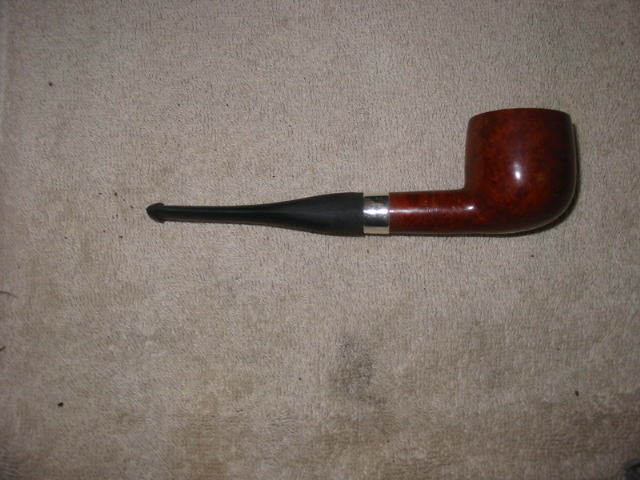
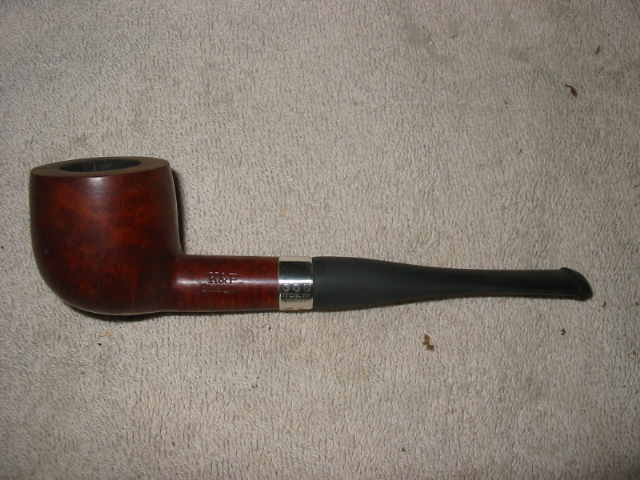
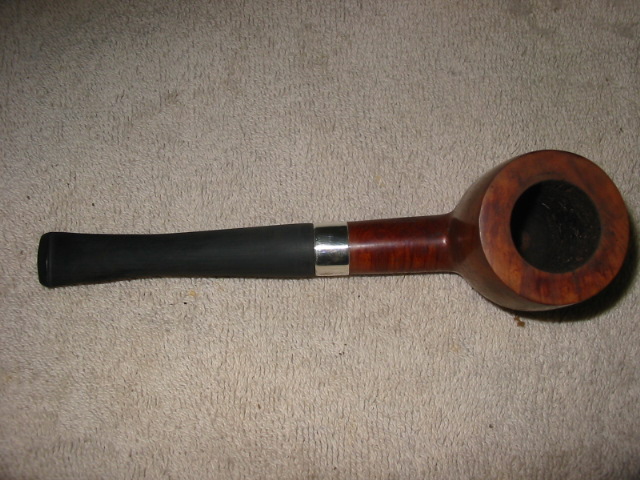
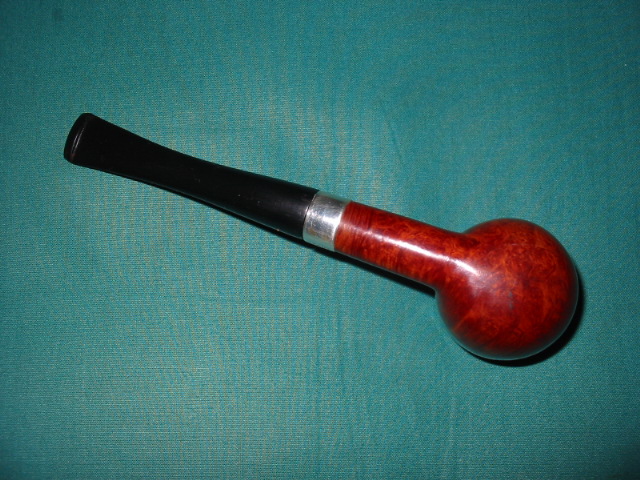
ImageImageImageImage