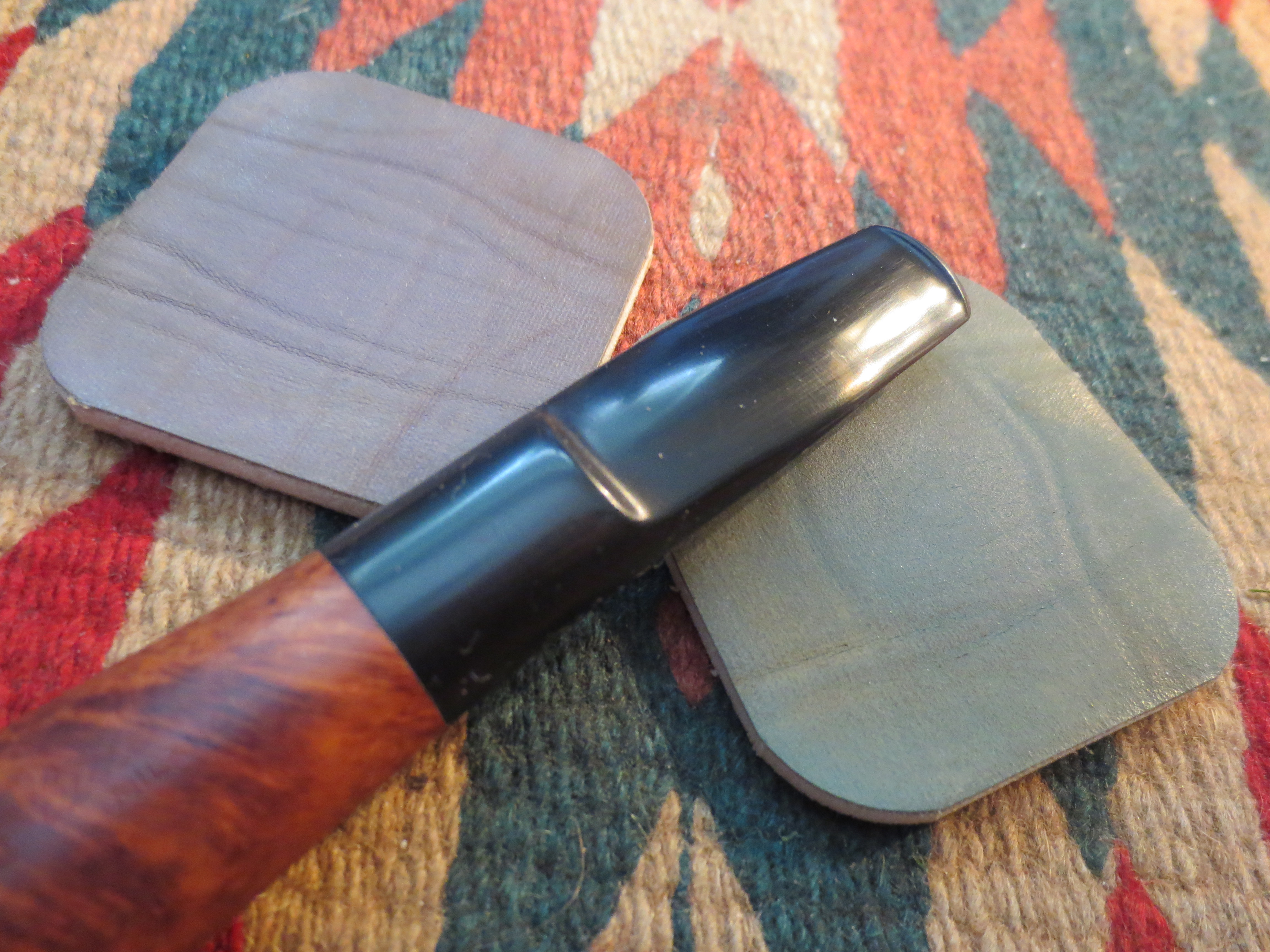
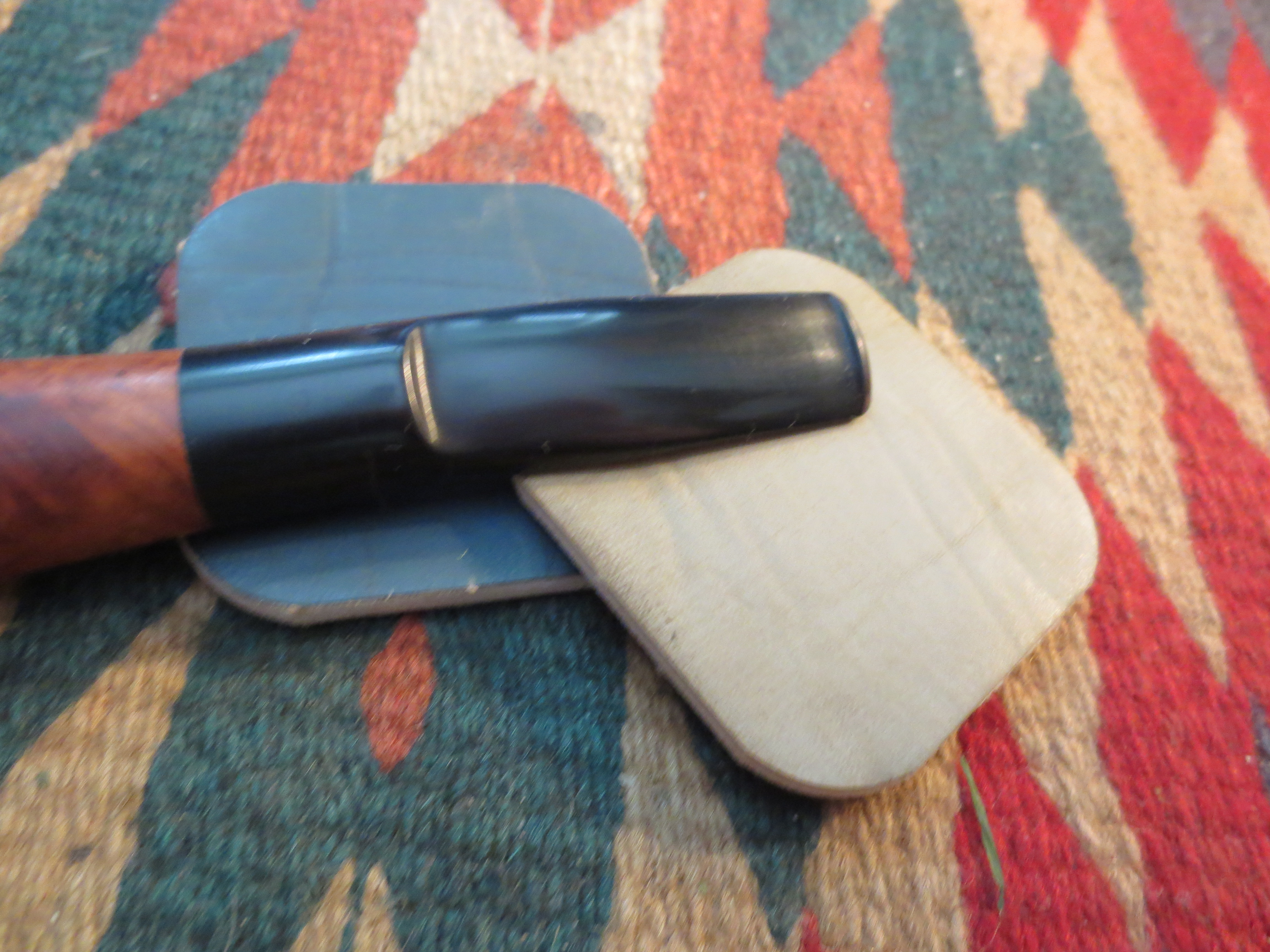
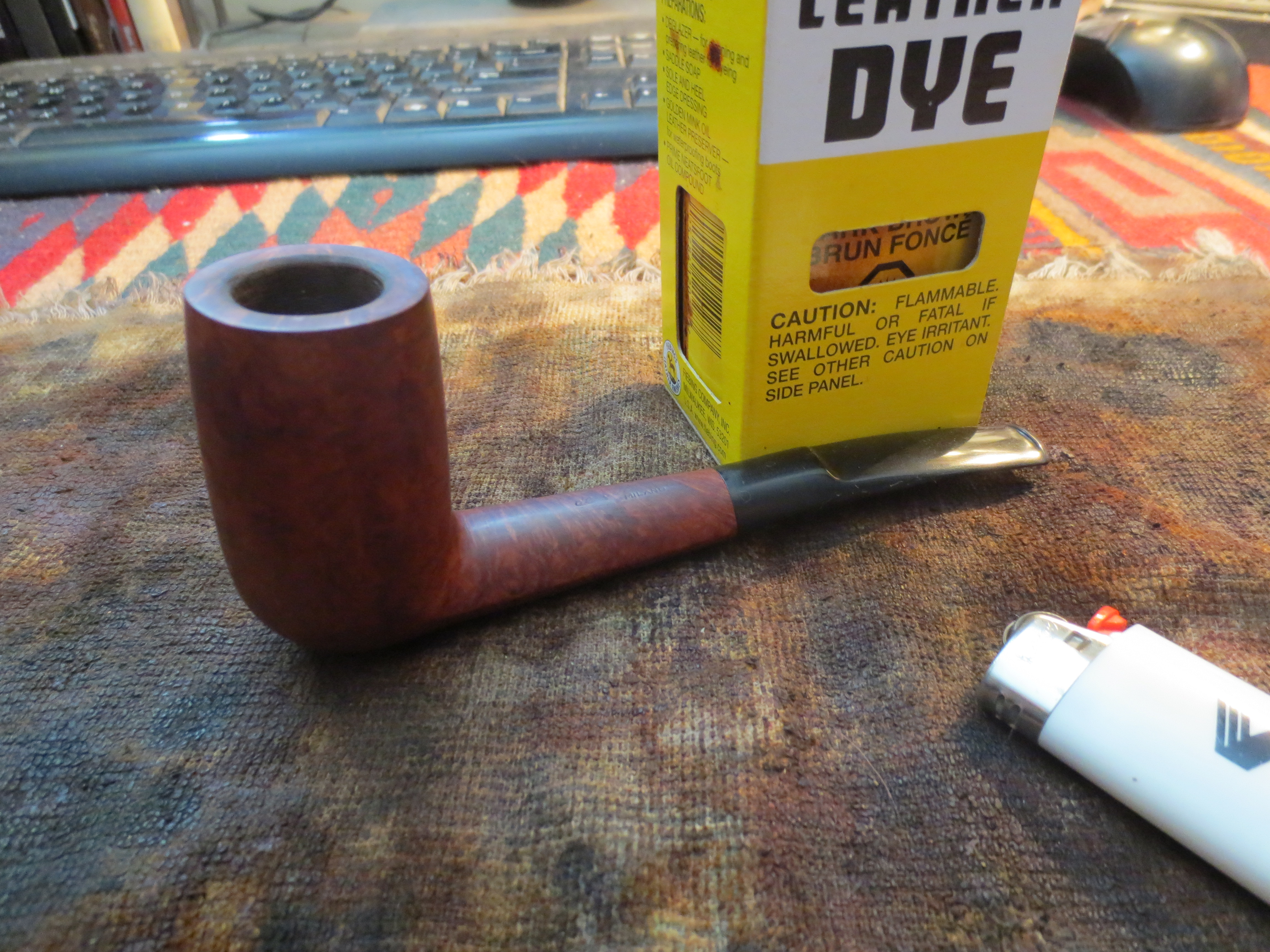
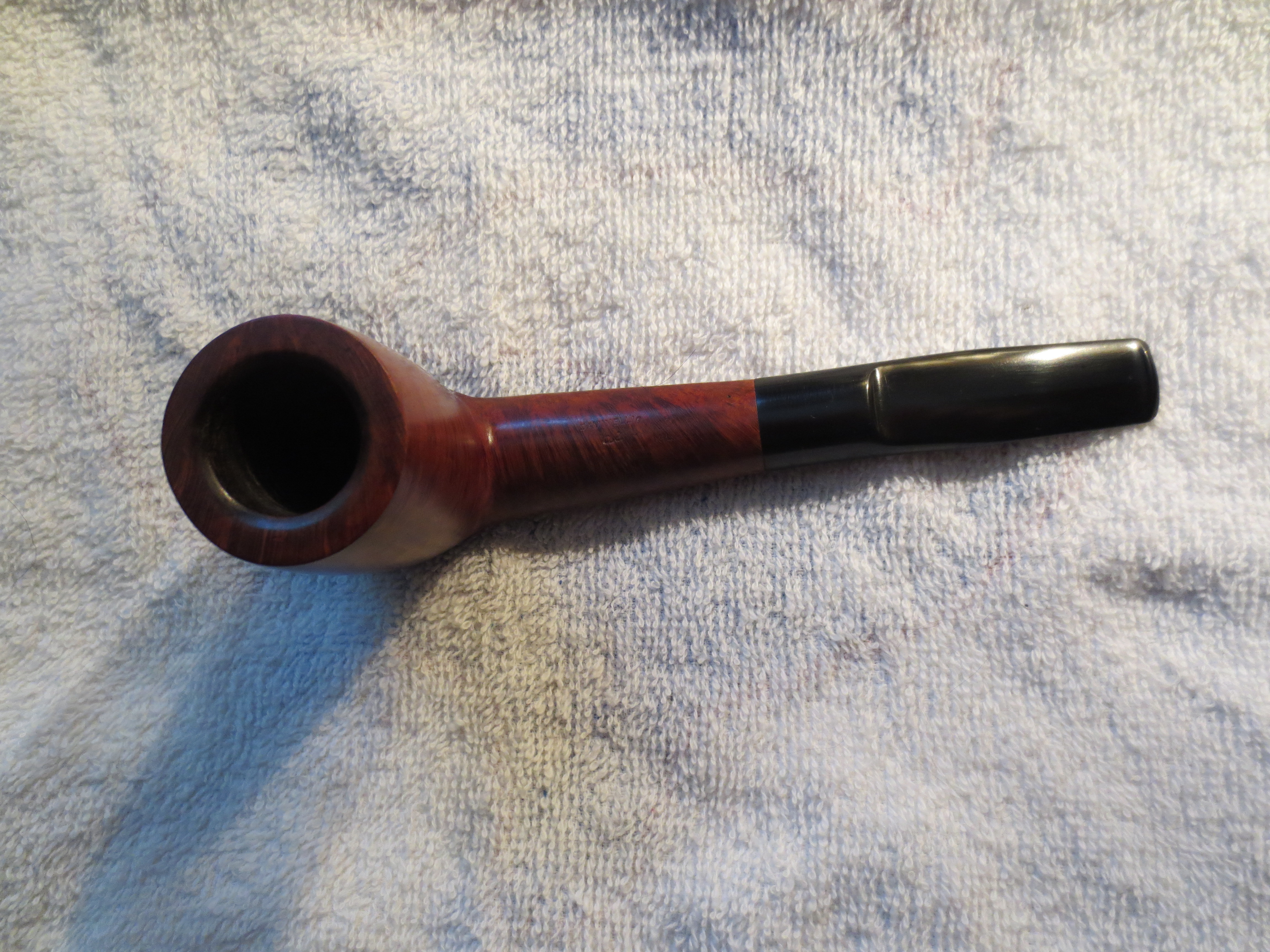
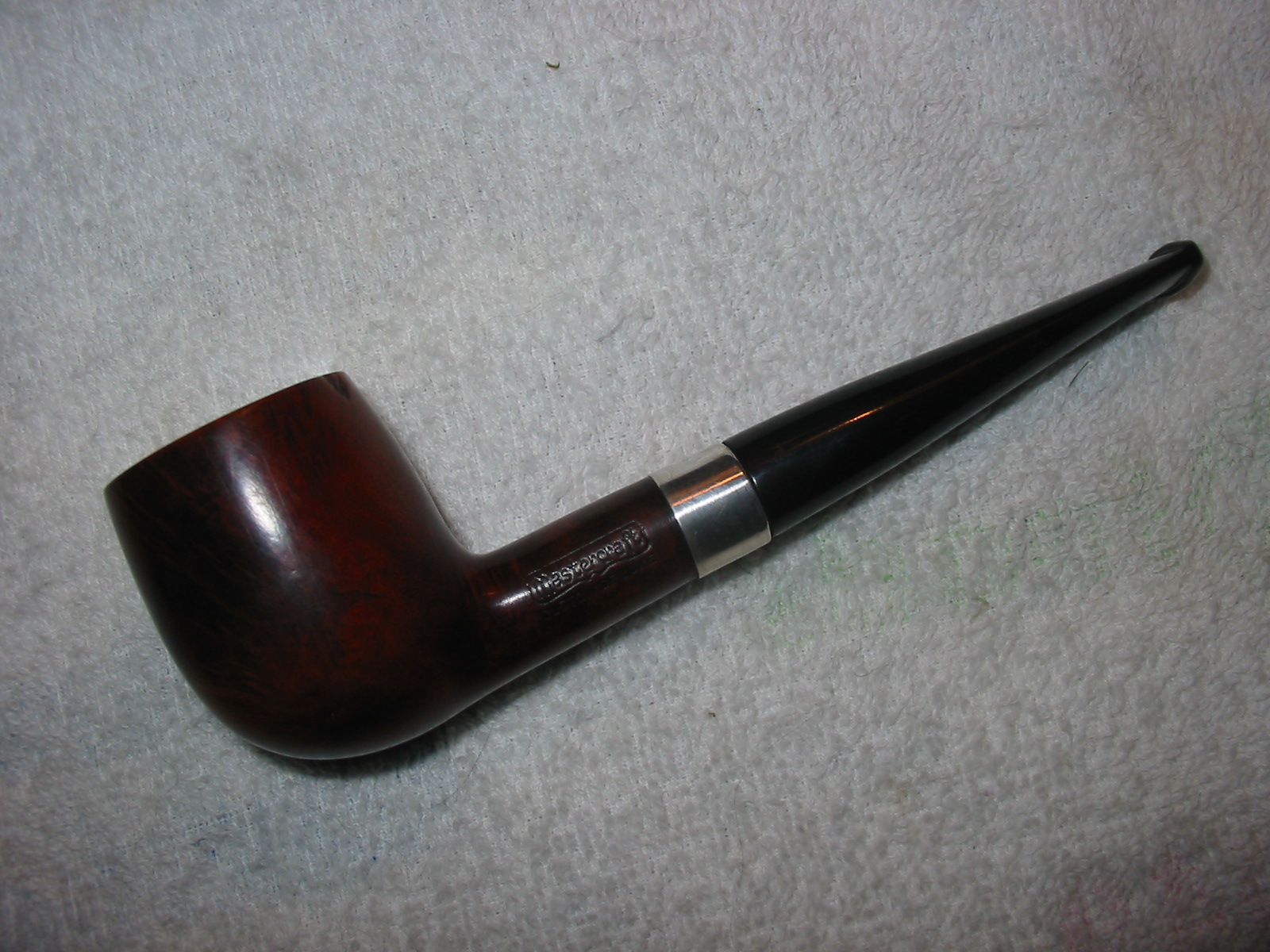
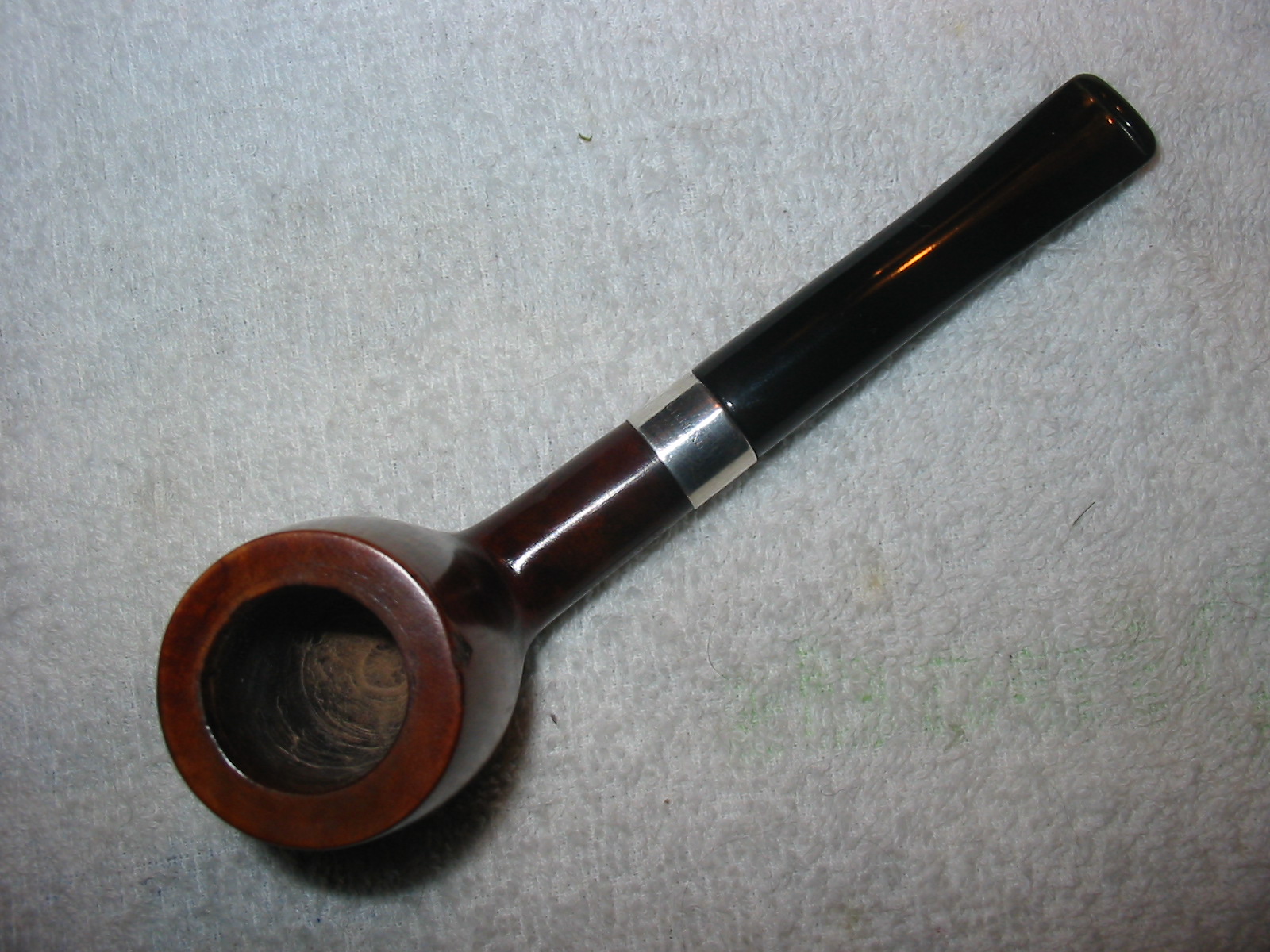
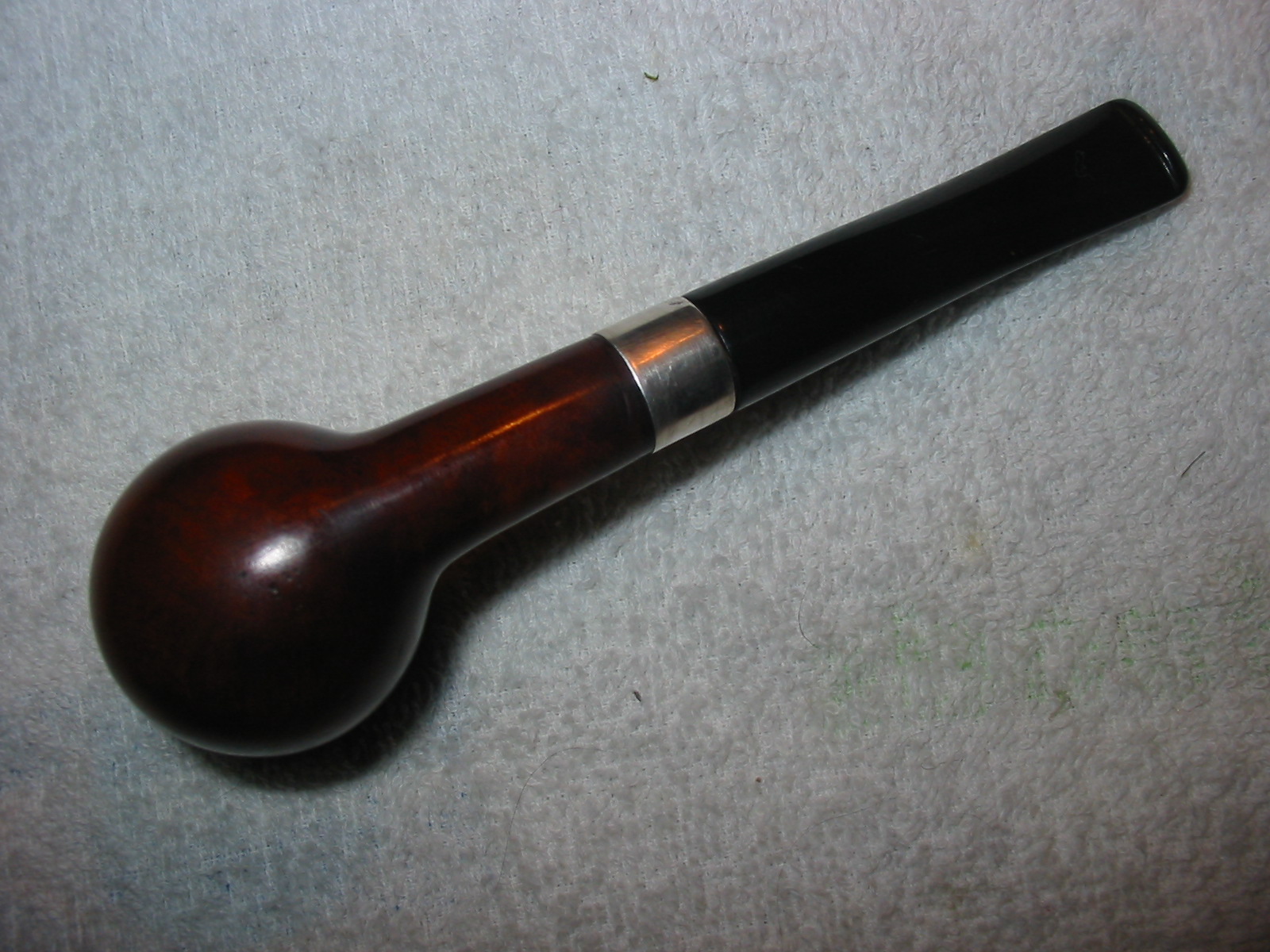
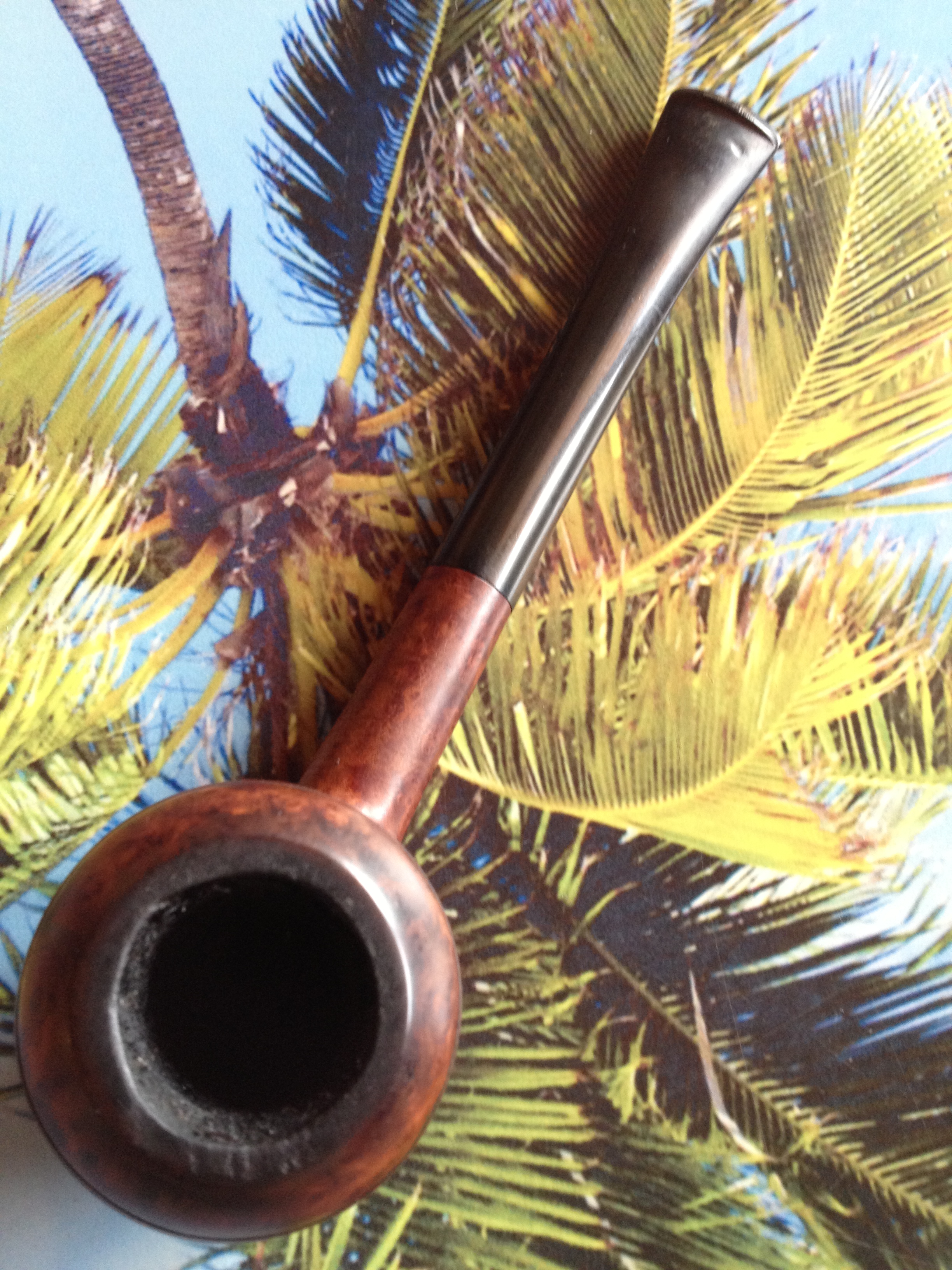
Tag Archives: stem work

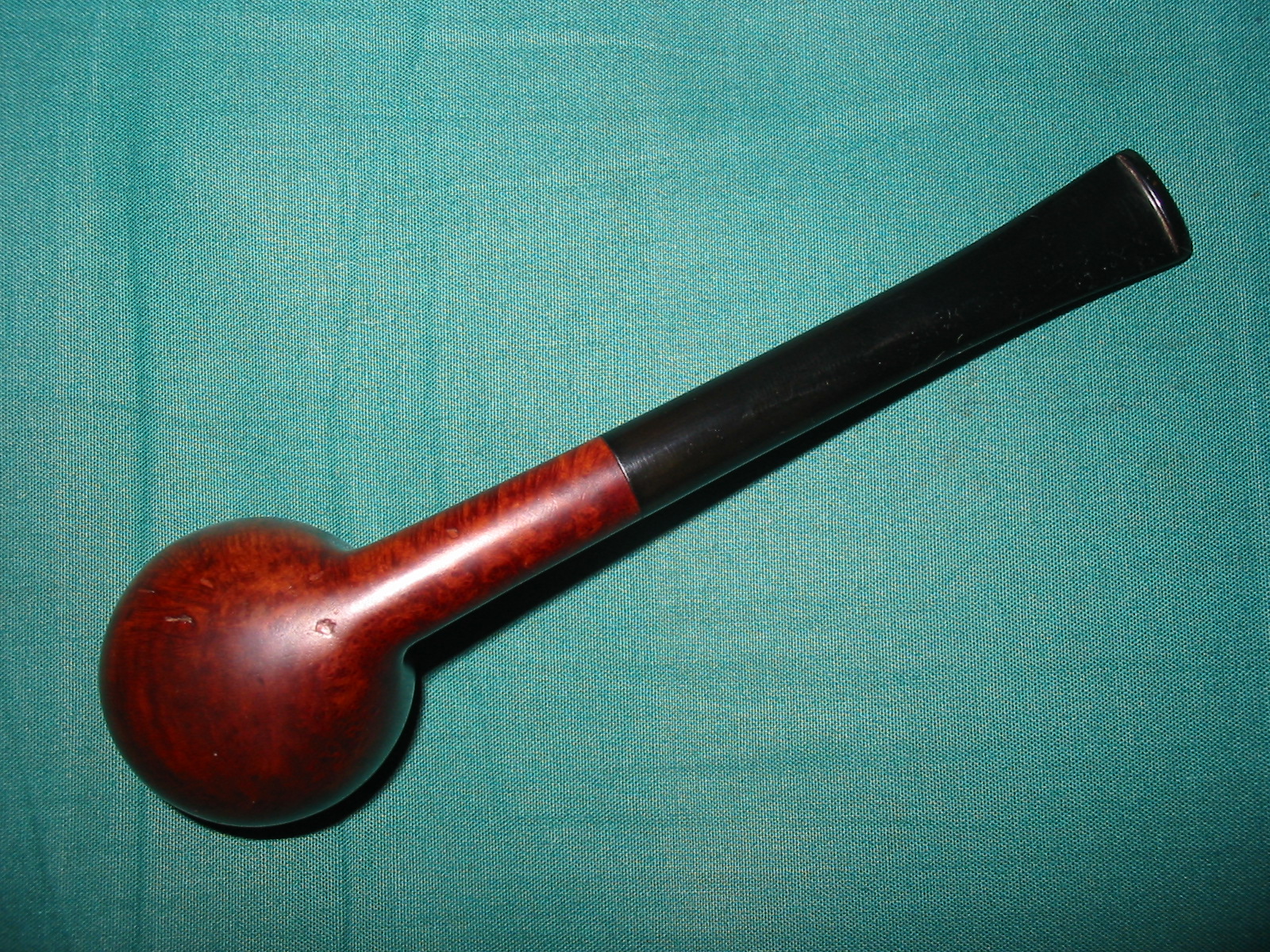
Savinelli deluxe Milano Stack Restemmed & Renewed


Blog by Steve Laug

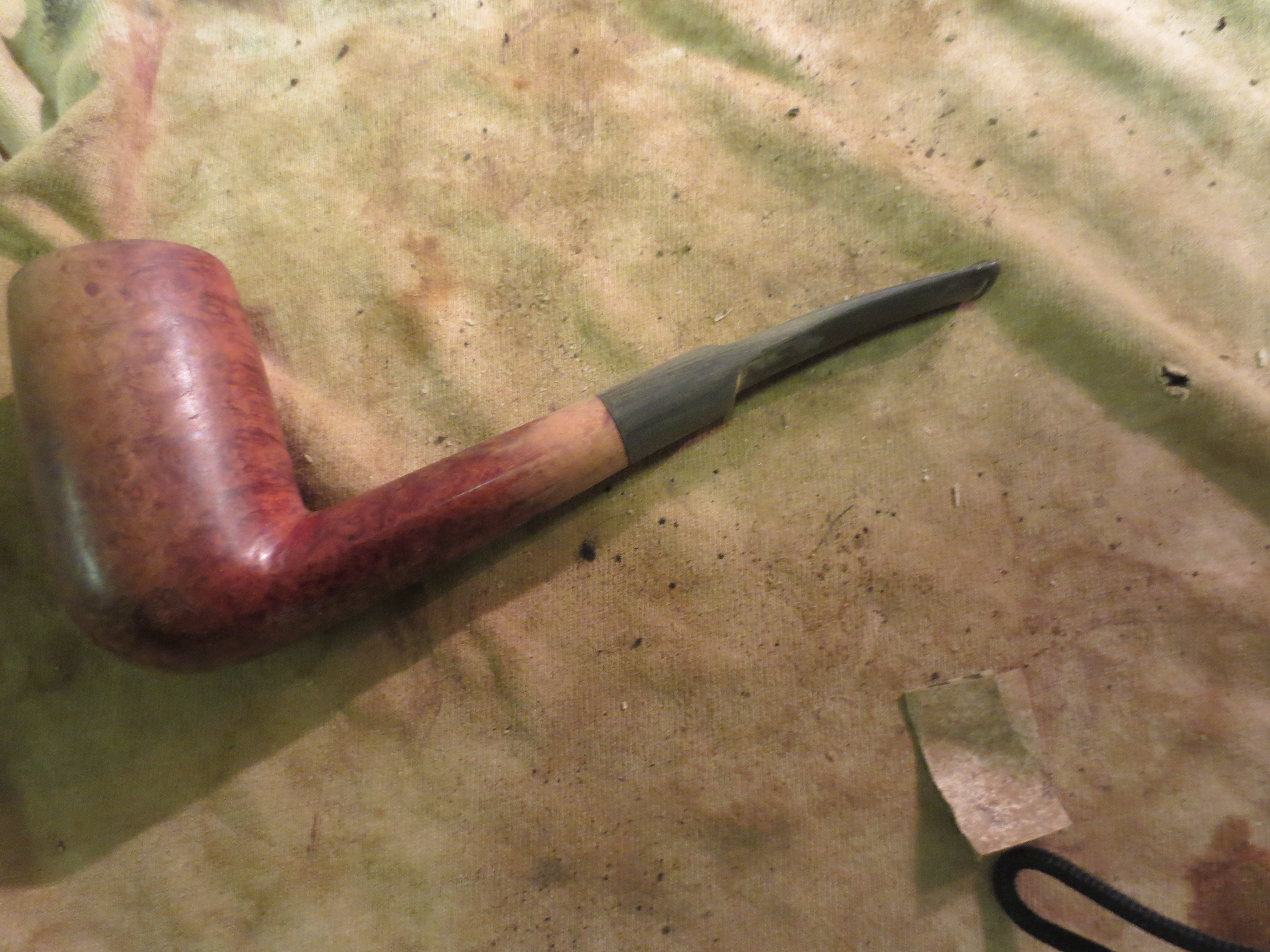
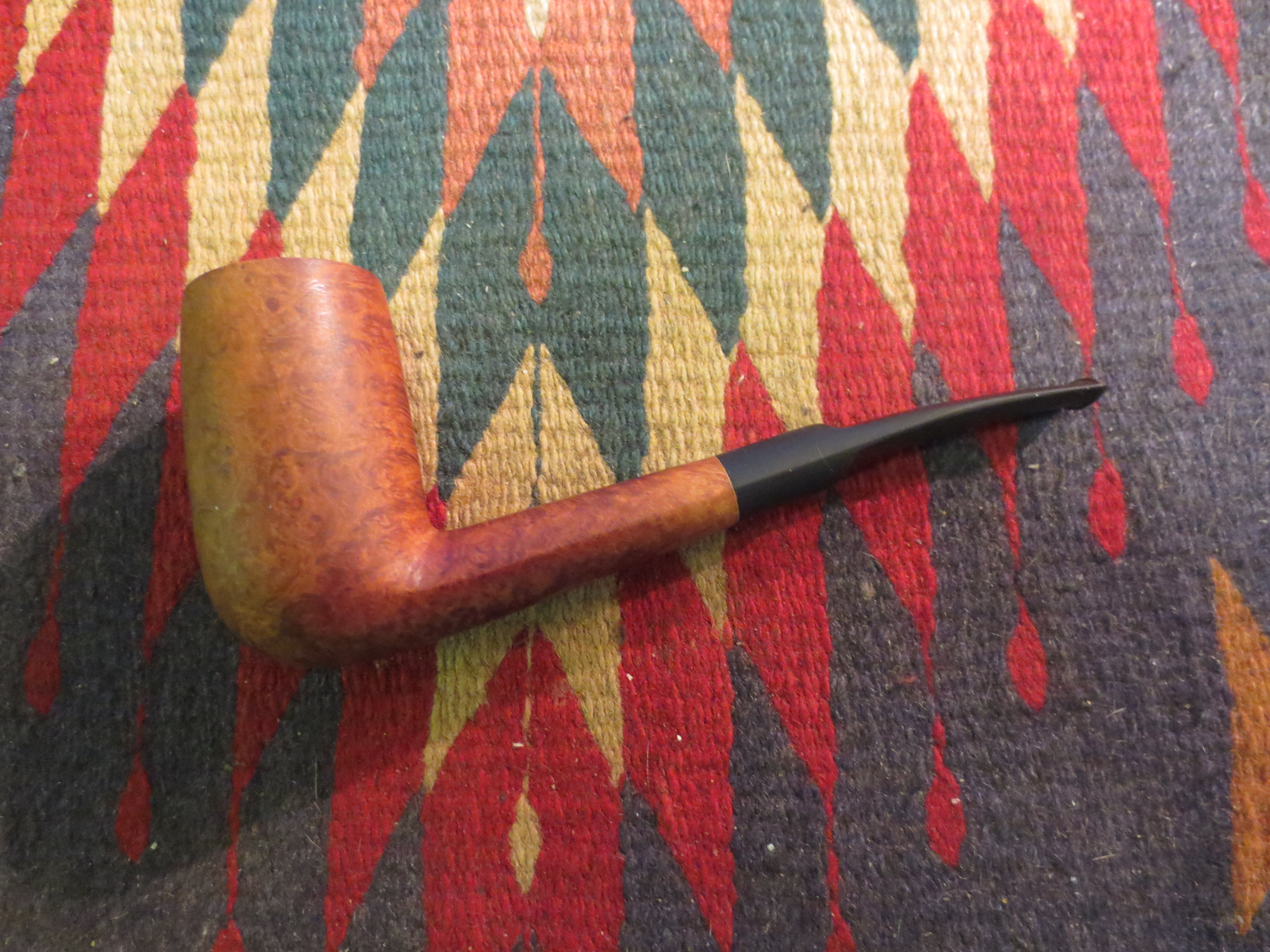
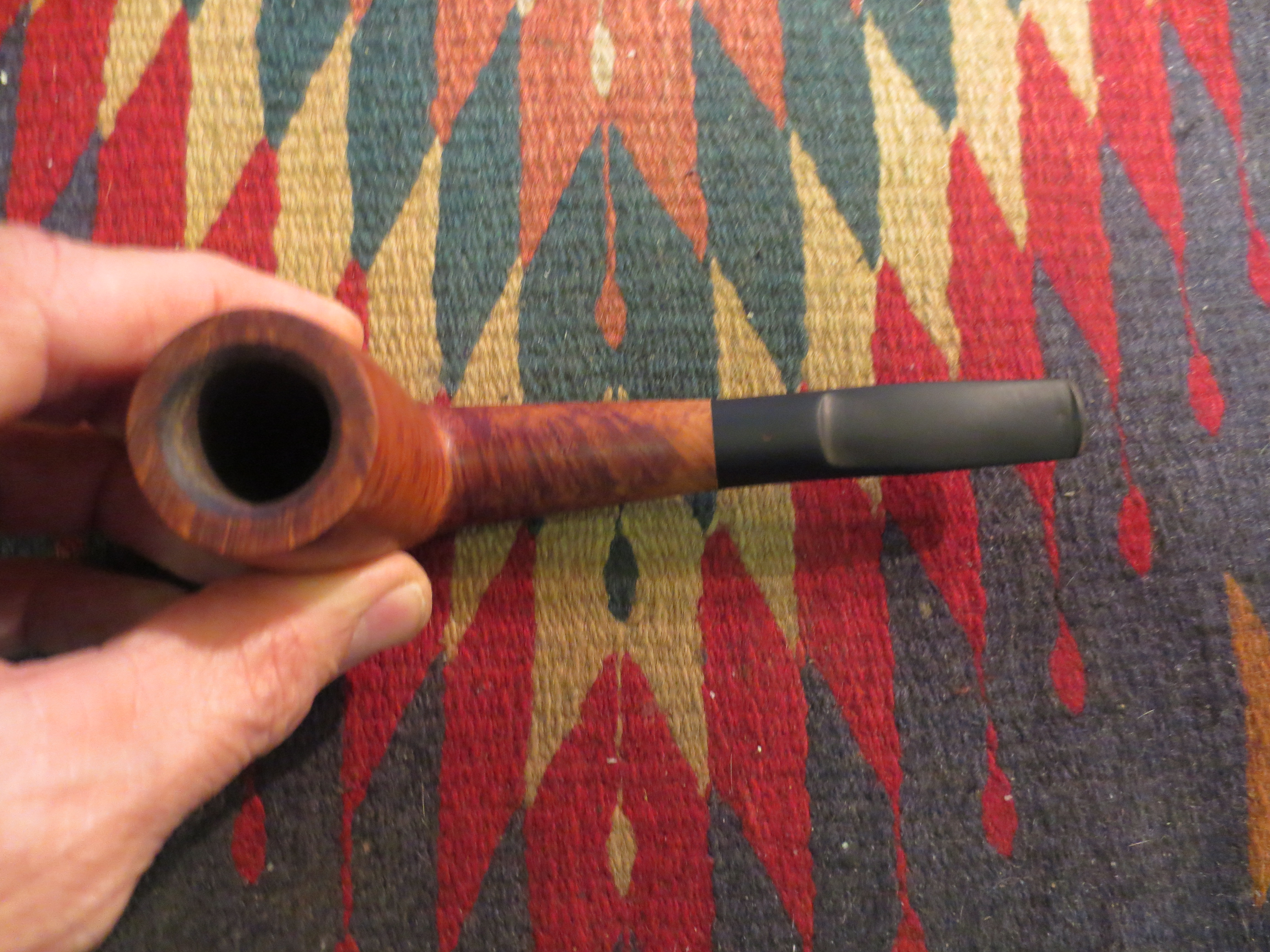
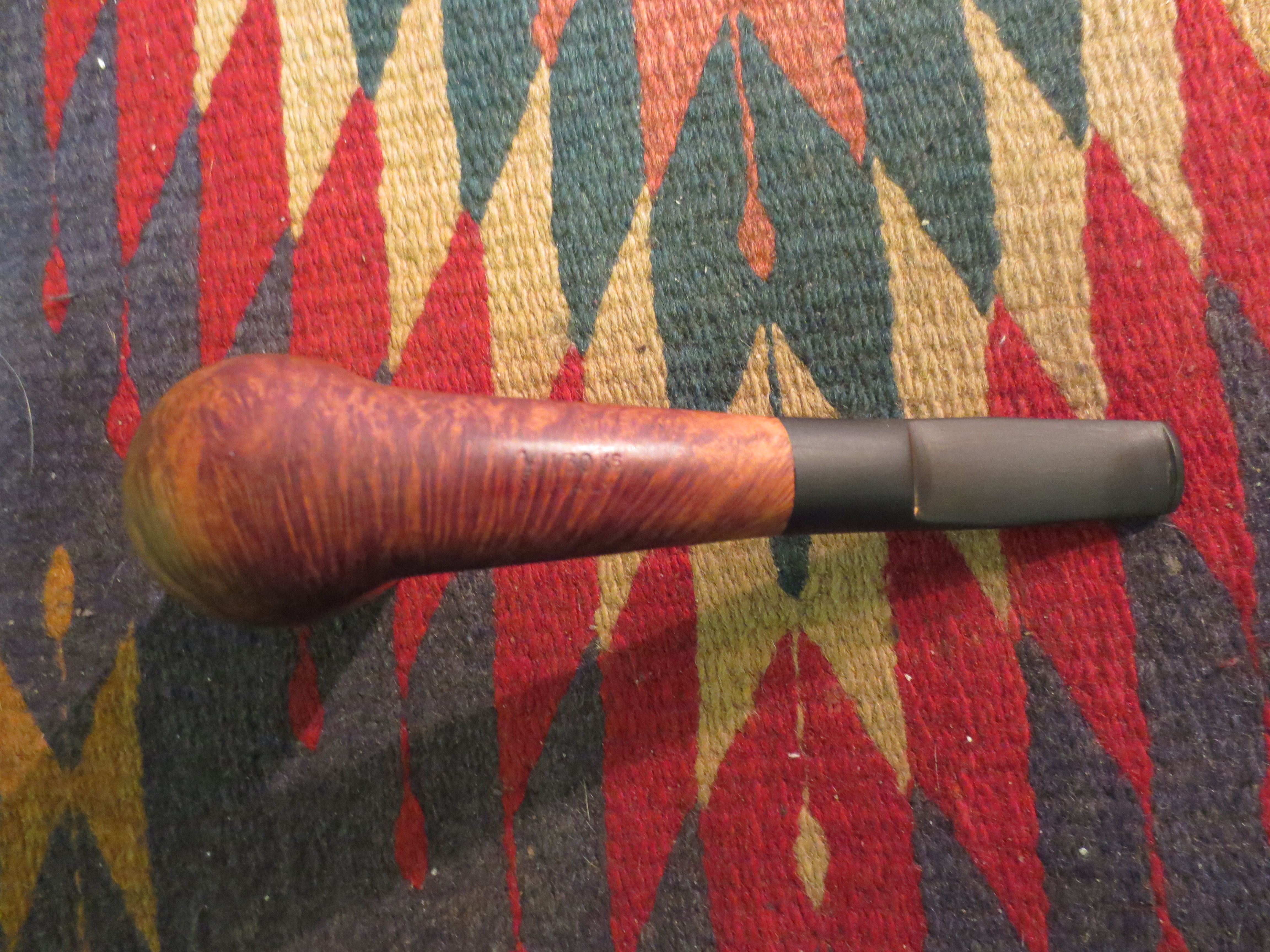
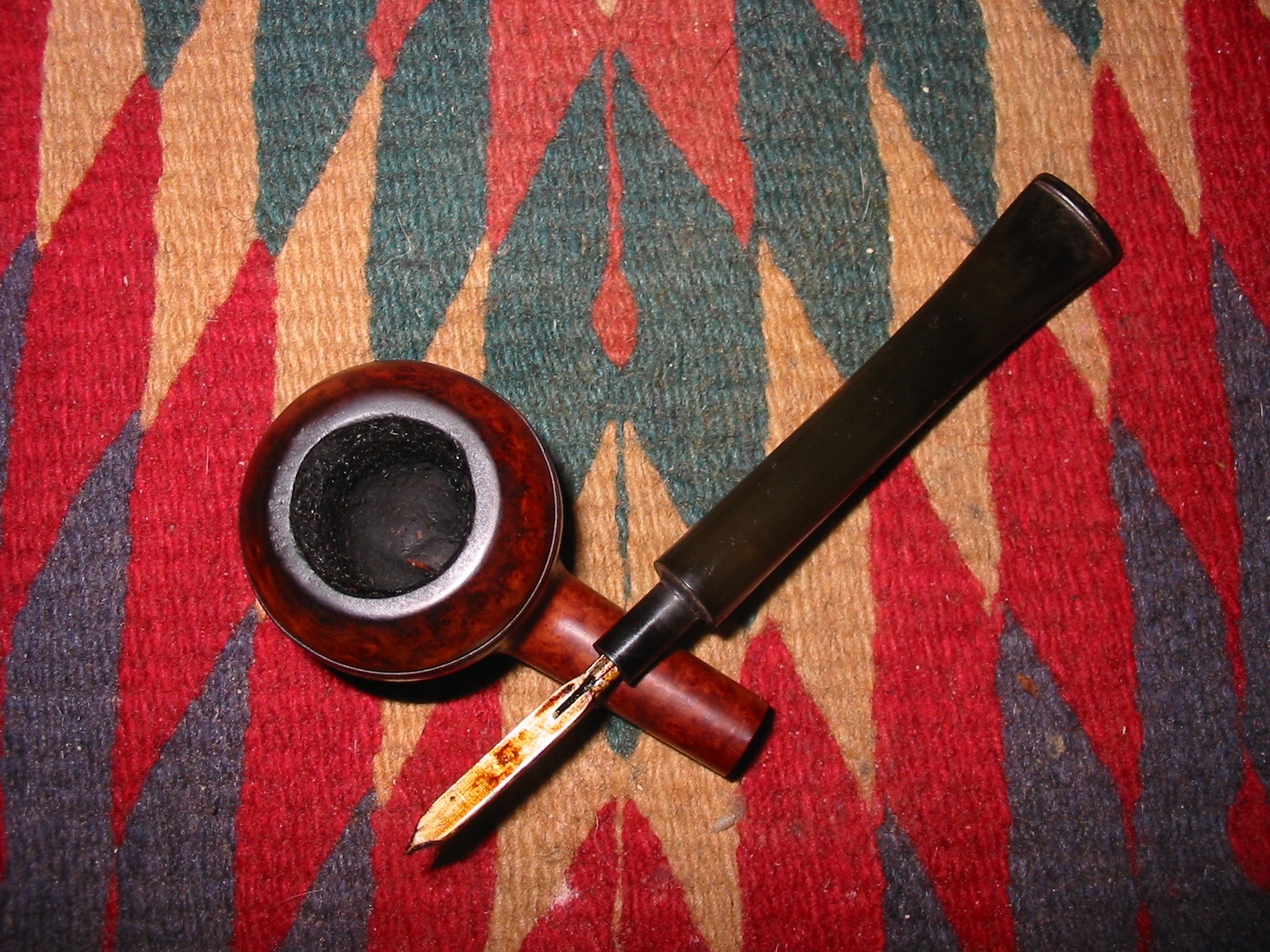
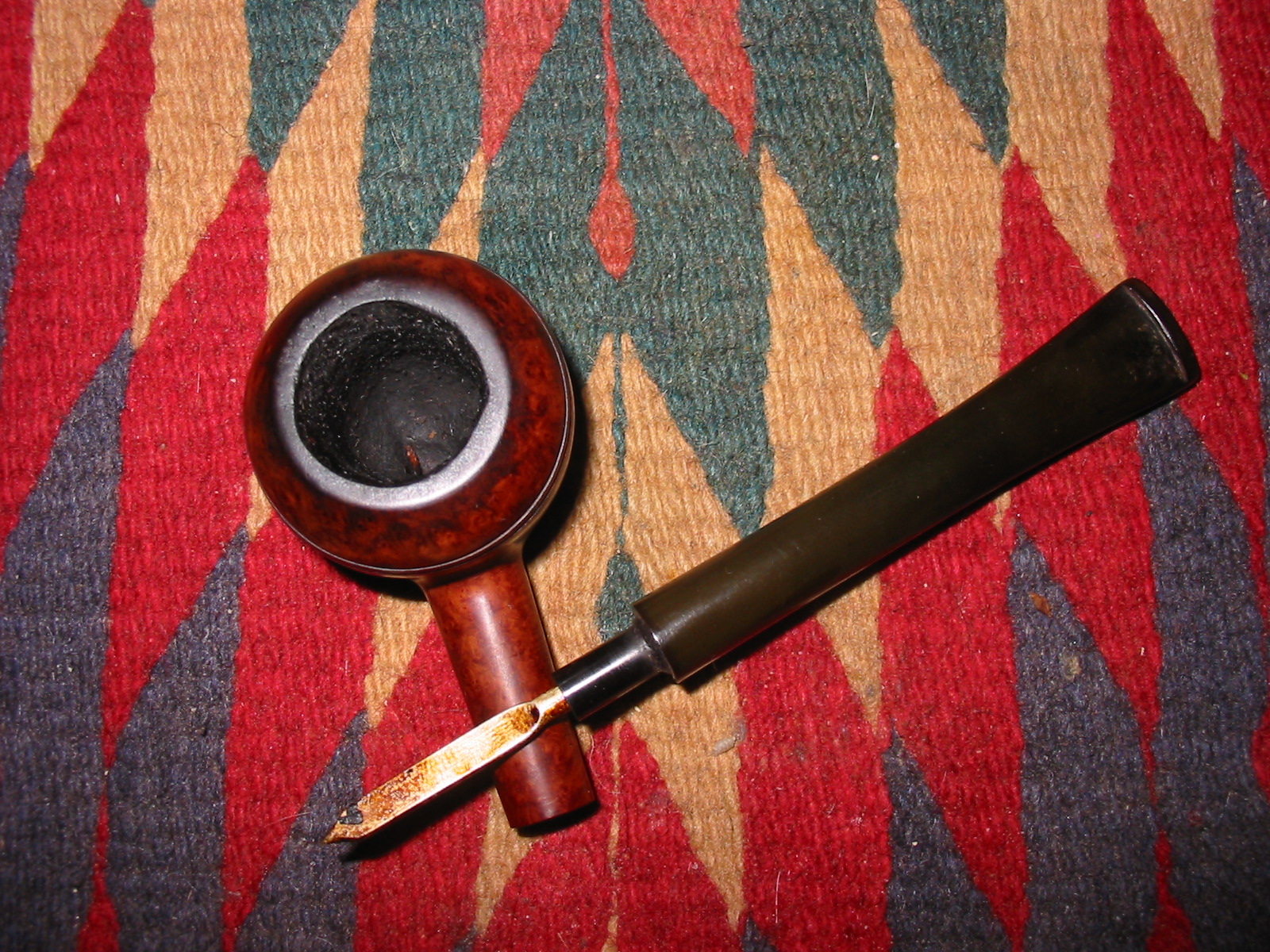
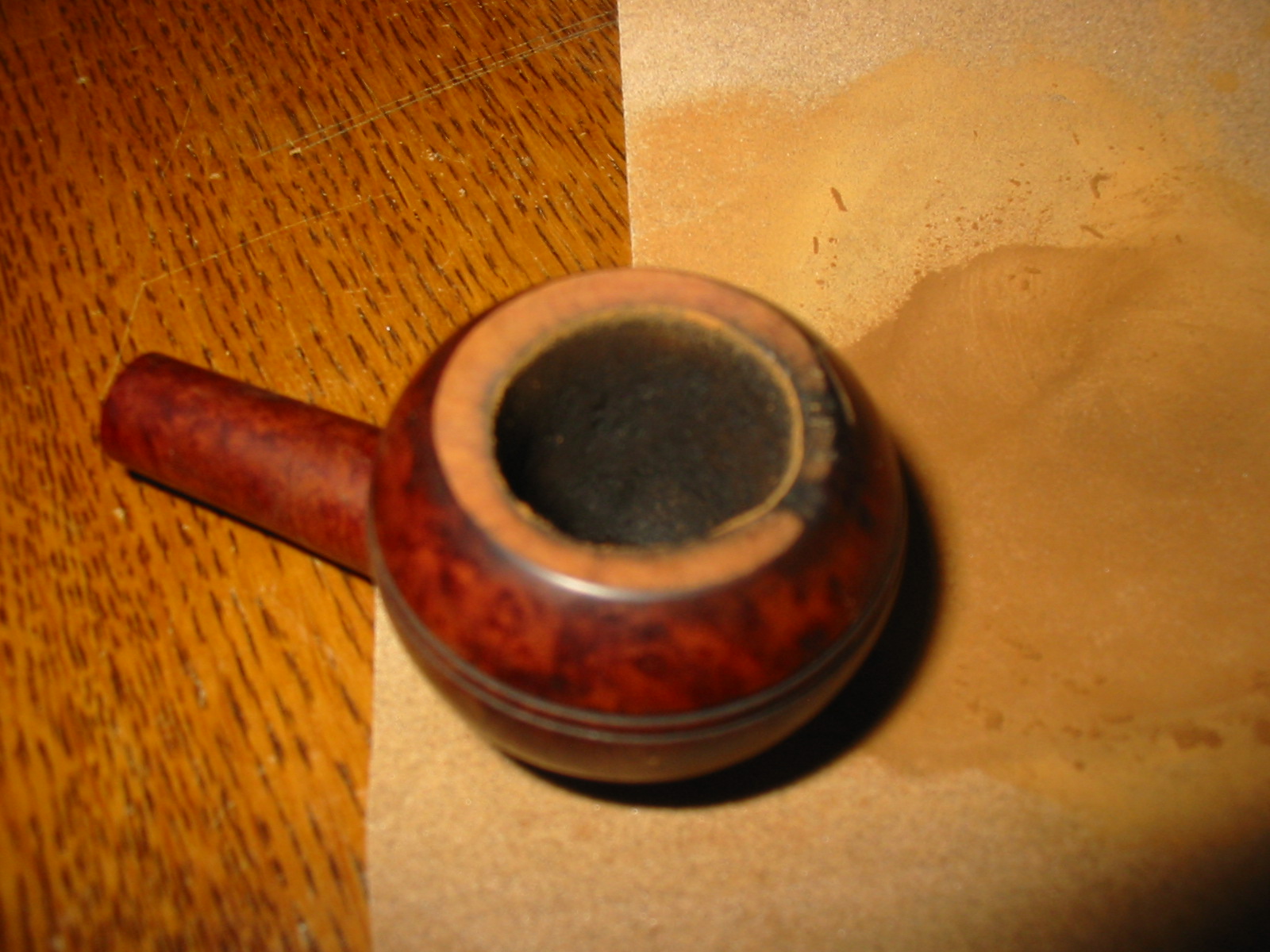
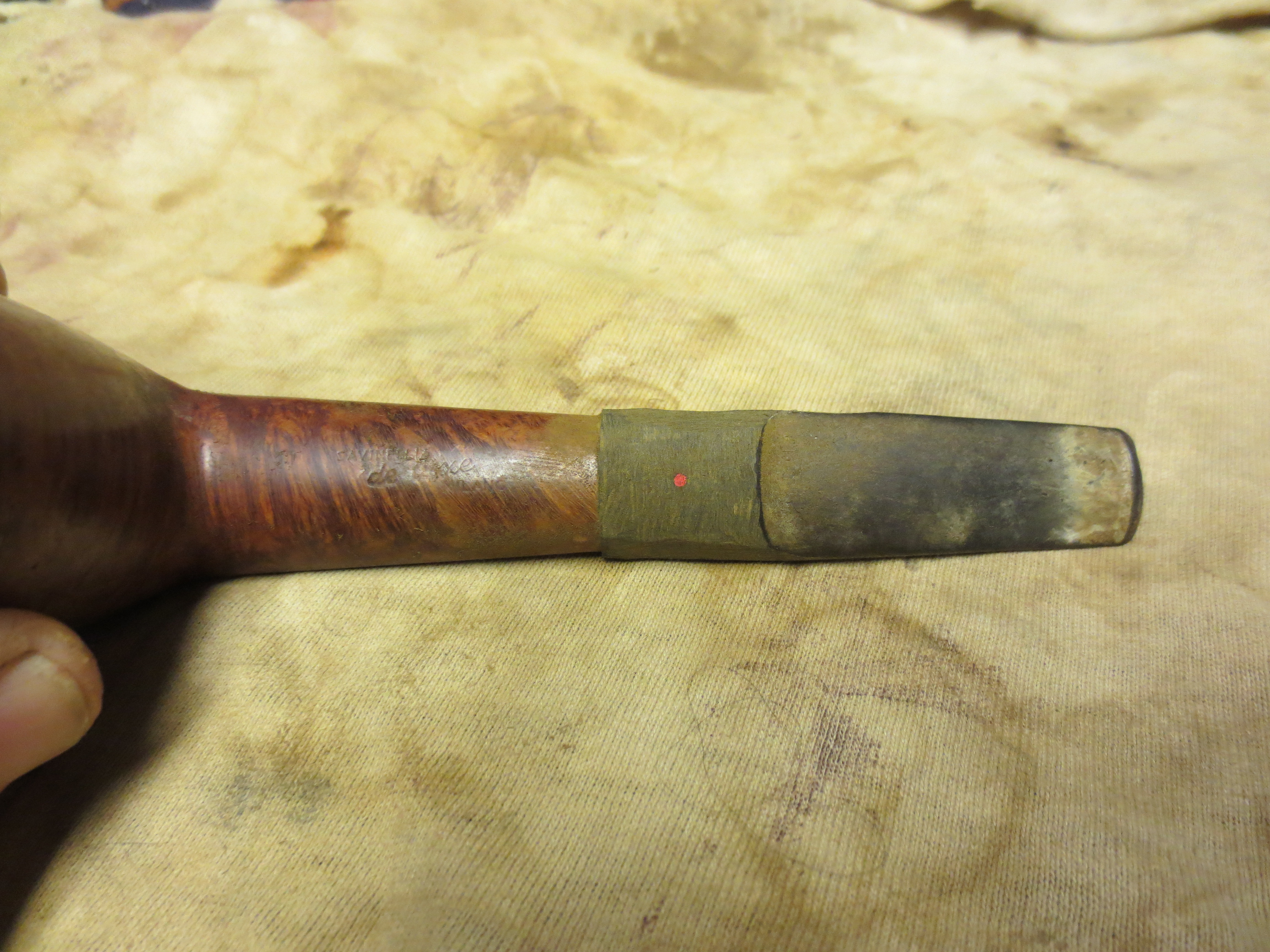
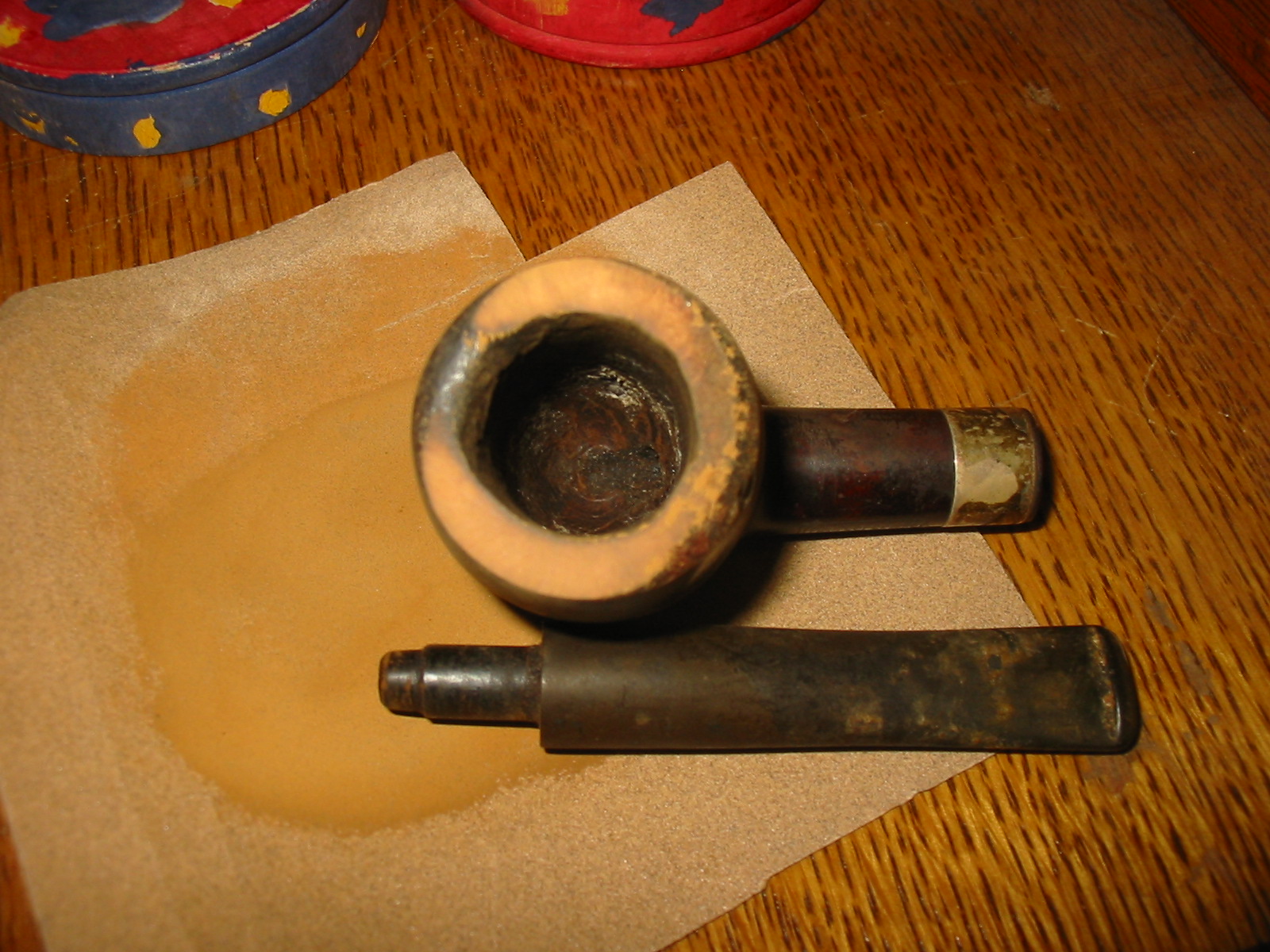
The second pipe in the lot pictured below that I chose to work on was the one on the top of the right column. It is stamped on top of the shank Savinelli de luxe Milano and on the underside the Savinelli shield and next to that is it stamped 130KS Italy. The finish was dull and mostly gone. The rim was not charred at all but had a heavy build up of tars. The bowl was caked – interestingly for a pipe this deep it was caked all the way to the bottom of the bowl. The dimensions of this bowl are: height 2 1/4 inches, outer diameter of the bowl 1 ½ inches, diameter of the chamber ¾ inches. It smelled of sweet aromatics so it would need to be reamed and cleaned well. There was no stem with it but there was a broken tenon stuck in the shank. I would have to pull the tenon and fit a new stem on the bowl. It was made of a good piece of briar – no fills or sand pits. The grain is cross grain on the front and back of the bowl and the top and the bottom of the shank. It had some very nice birdseye grain on each side of the bowl and the shank. The shape of the shank was a modified oval shape.

bowls1

Savinelli top

Before I cleaned the bowl and shank I removed the broken tenon that was stuck in the mortise. I have a screw that works perfectly for this process. I turn it into the tenon by hand or a screw driver and then work it out by hand or with a pair of pliers. If the tenon is stuck and will not move I put it in the freezer for 30 minutes or more and generally it will pop out quite easily. In this case it came out quite simply and I was able to move on in the process of cleaning.
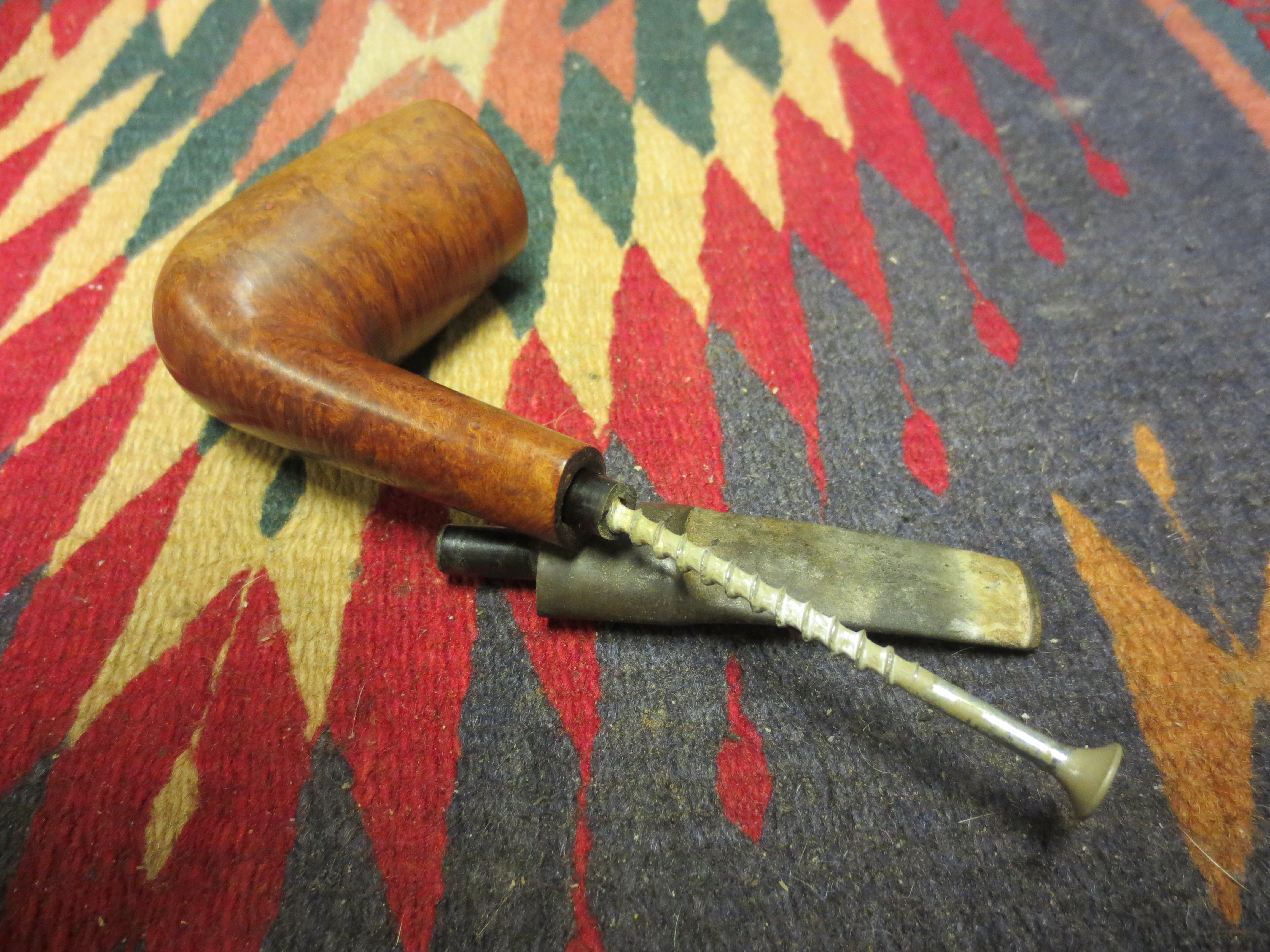
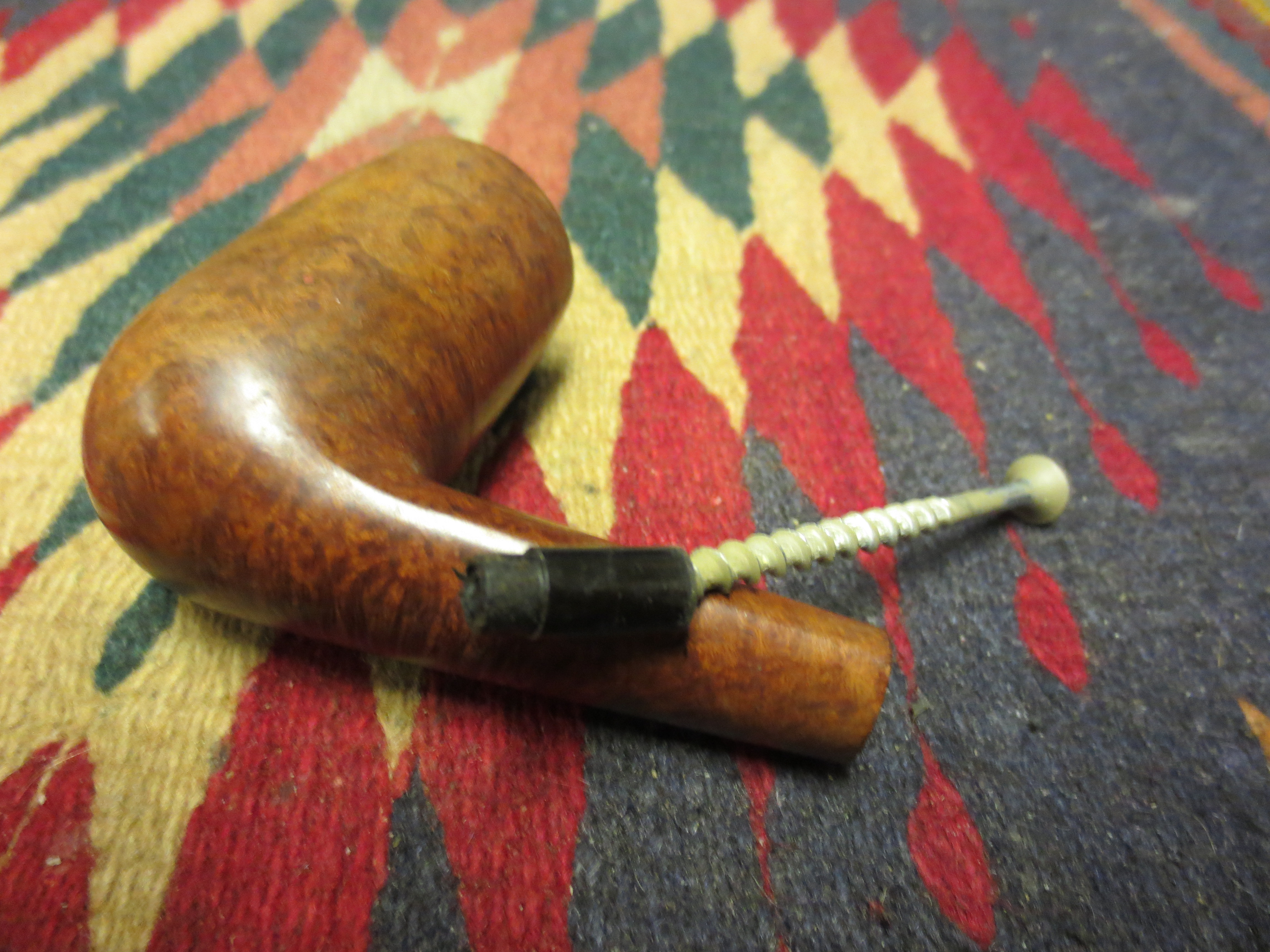
IMG_1323

IMG_1324

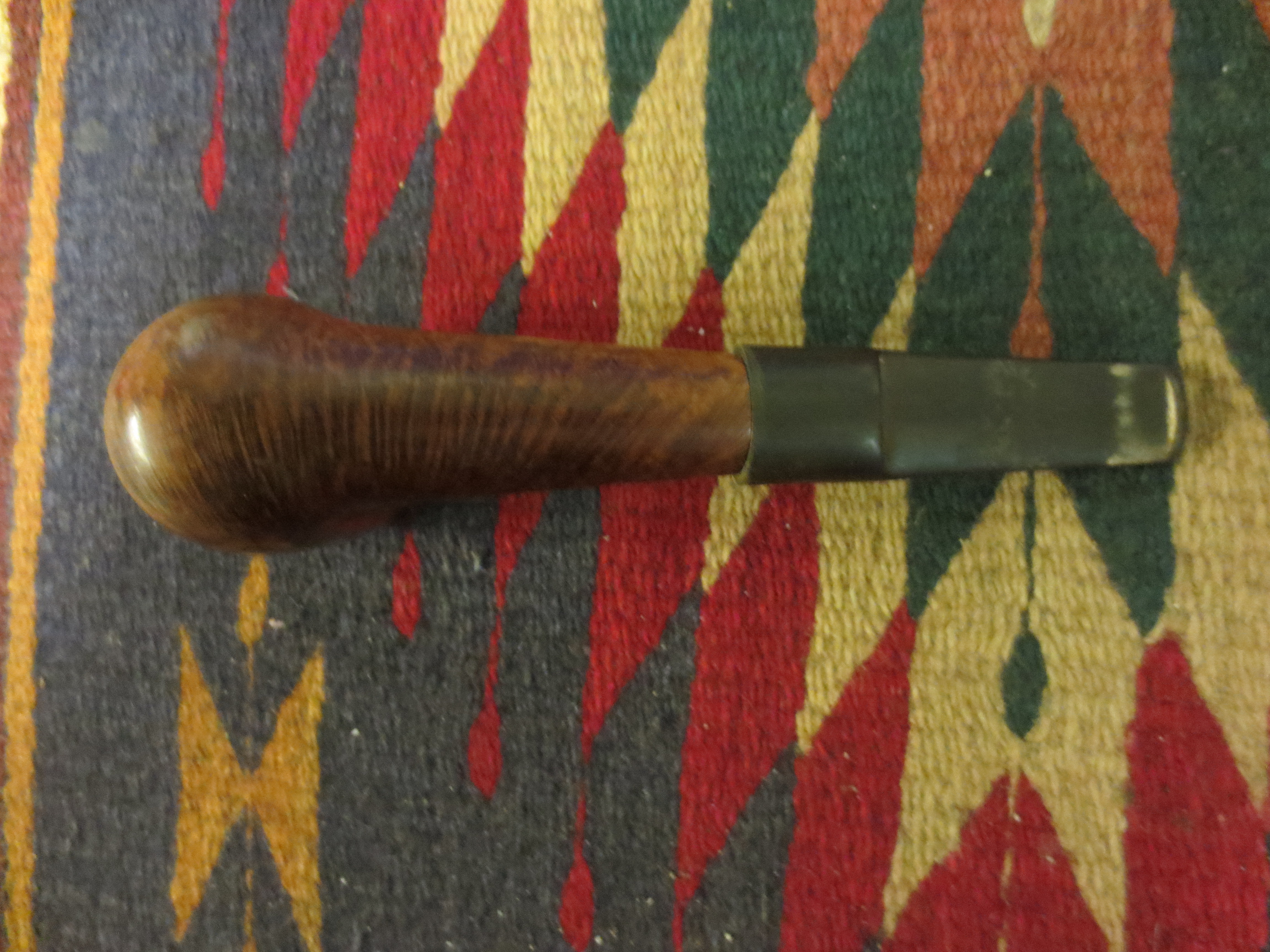
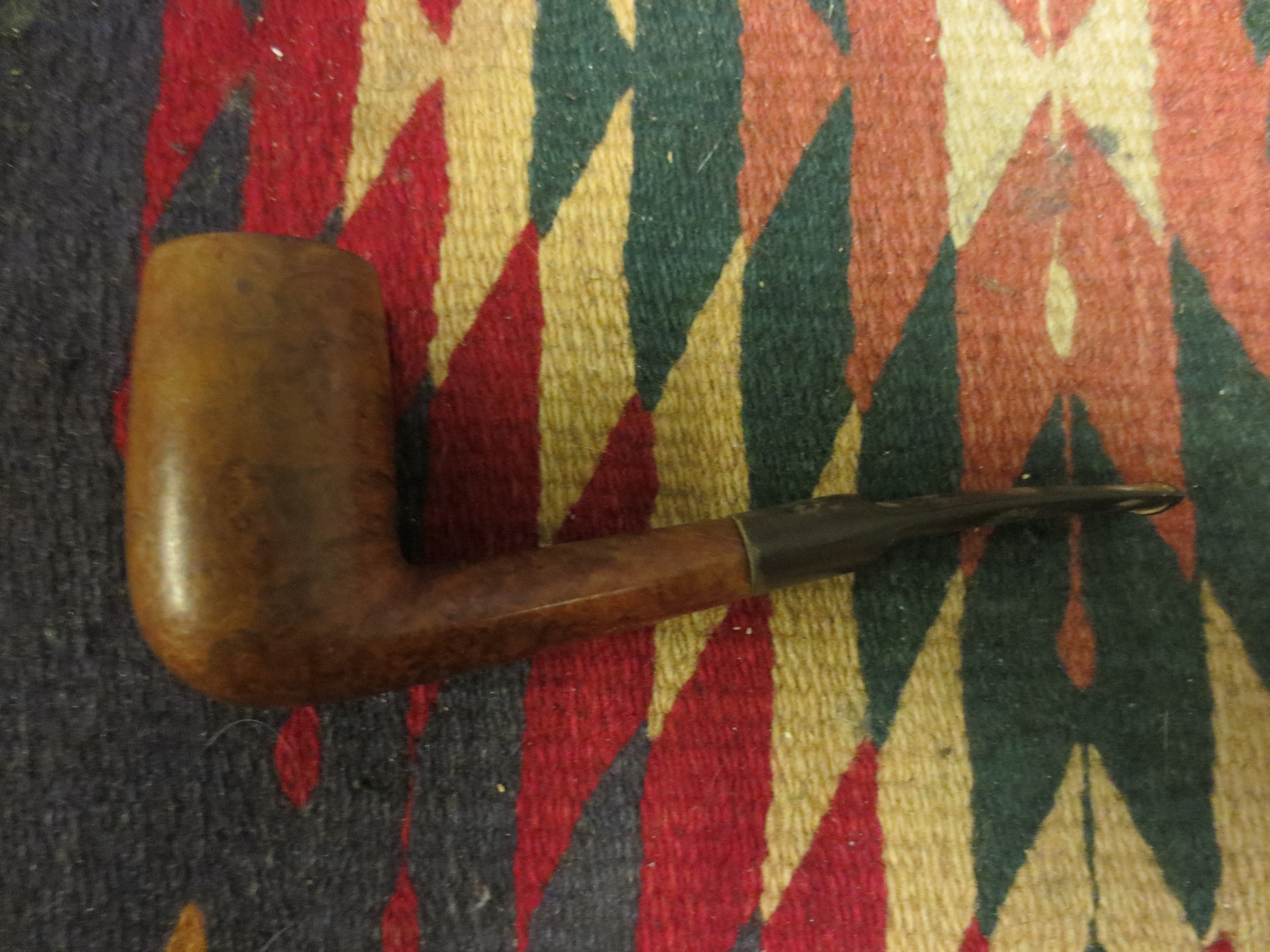
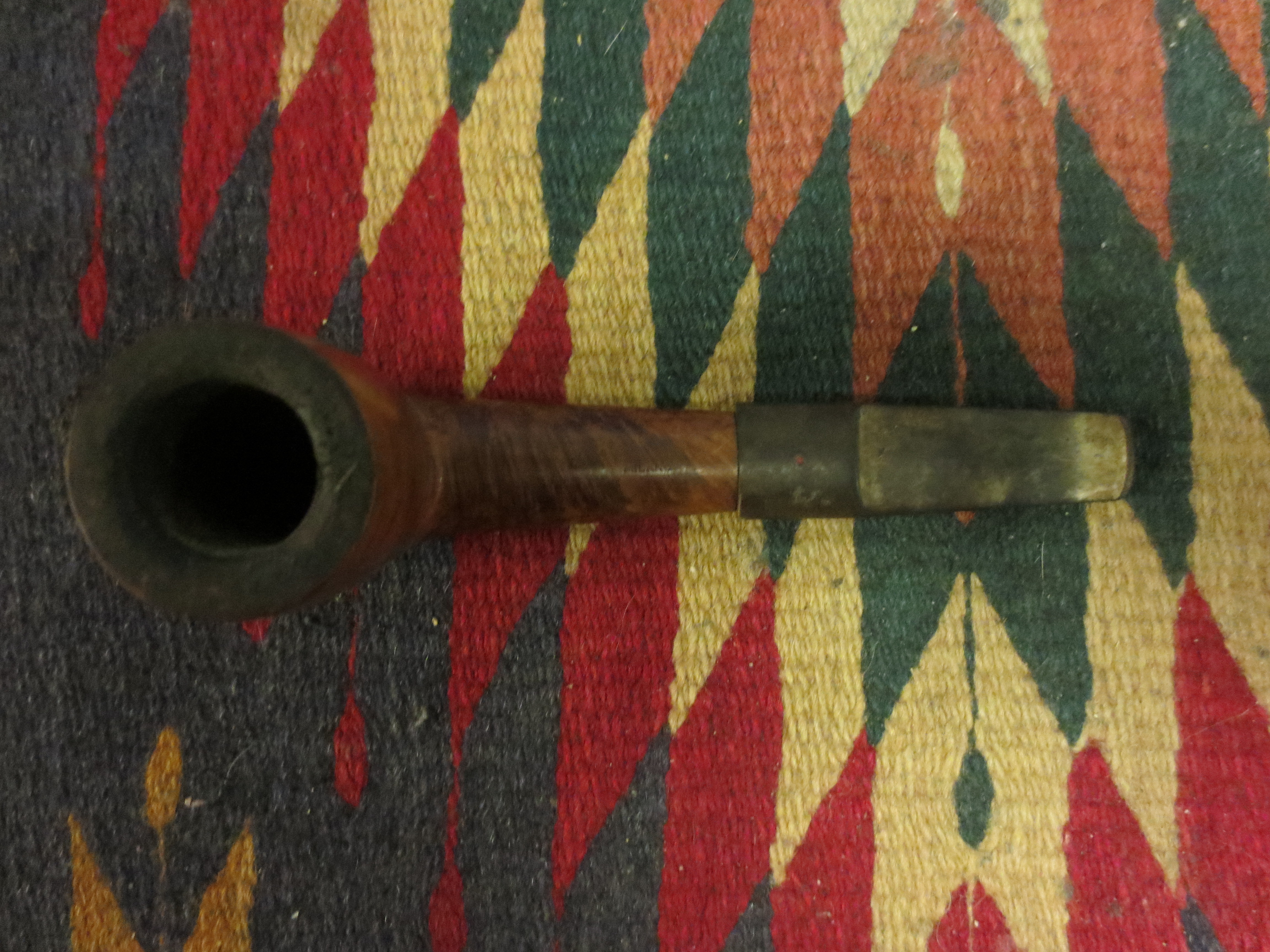
I sorted through my collection of old stems to find an oval one that I could modify to fit the style of the shank. I had looked on line and found that this particular model of Savinelli had a taper stem (see the first photo below). I did not have any oval tapered stems that would fit, nor did I have large enough round stems that could be modified. I chose an older oval saddle stem that I believed would look good. I think that originally it was on a Dr. Plumb pipe but the logo was worn off and my modifications would remove the red dot on the stem (second photo below).
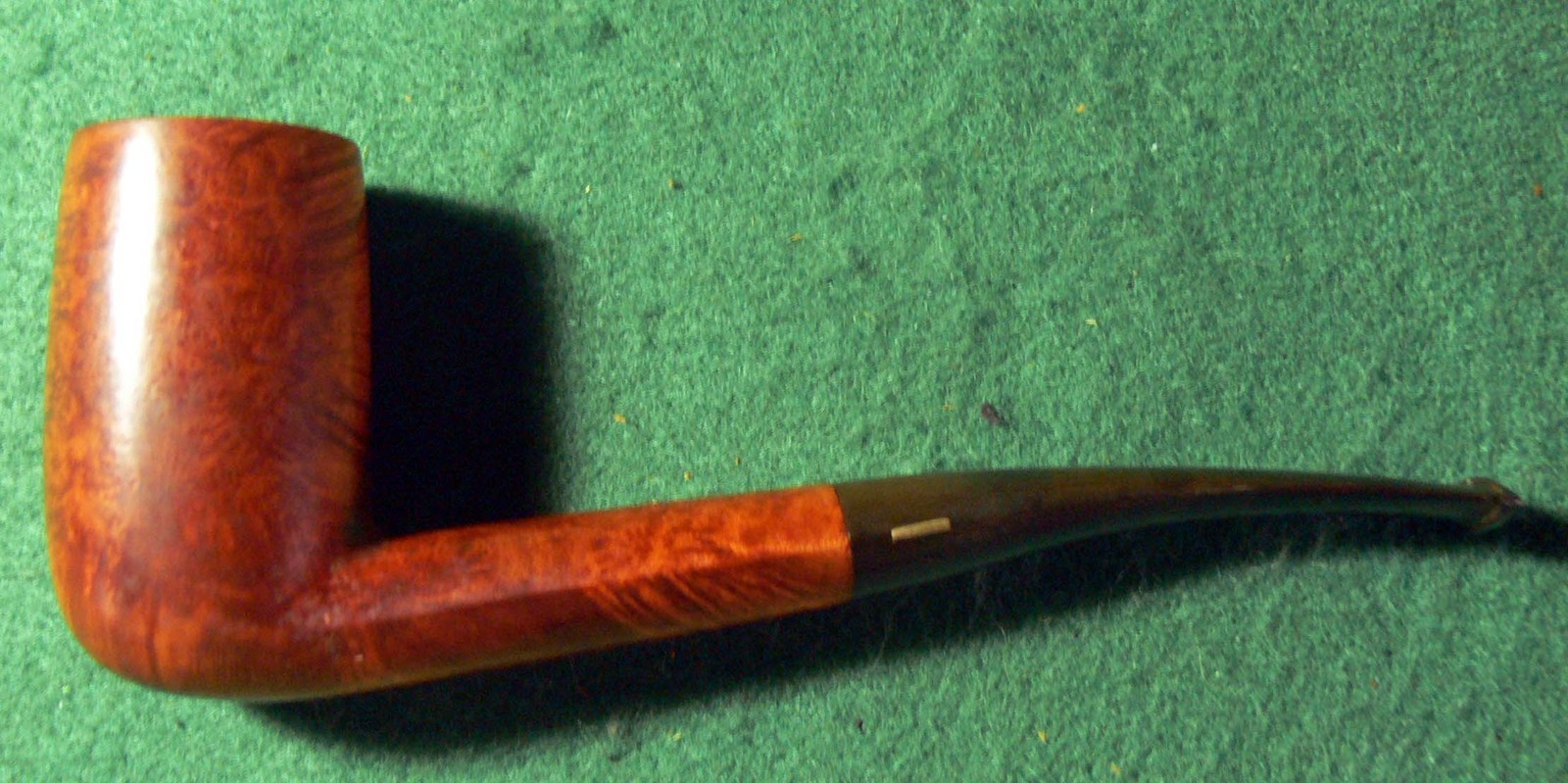
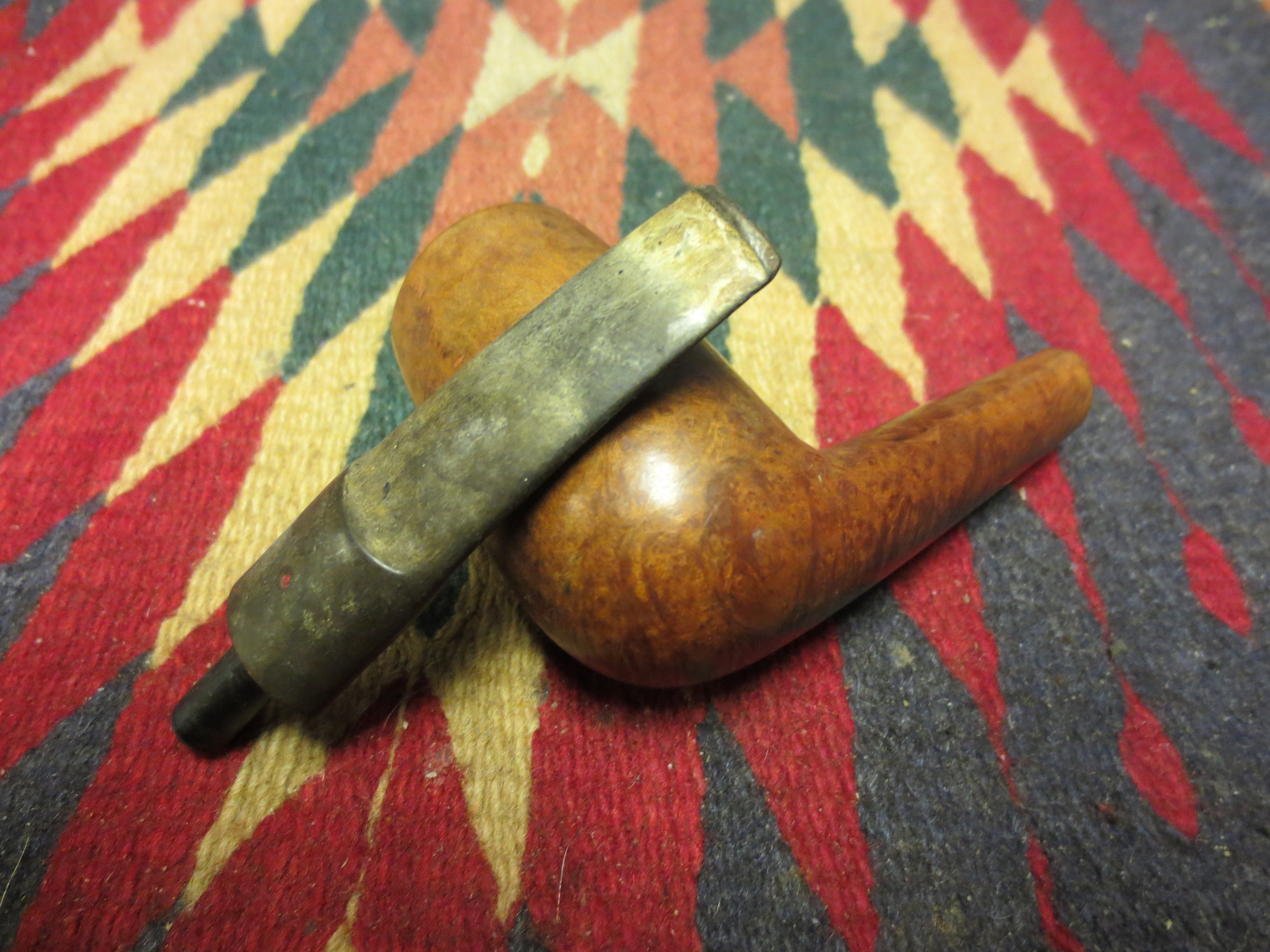
$T2eC16JHJHUFFfhDpWd3BR)N9Jwnpw~~60_57

IMG_1325

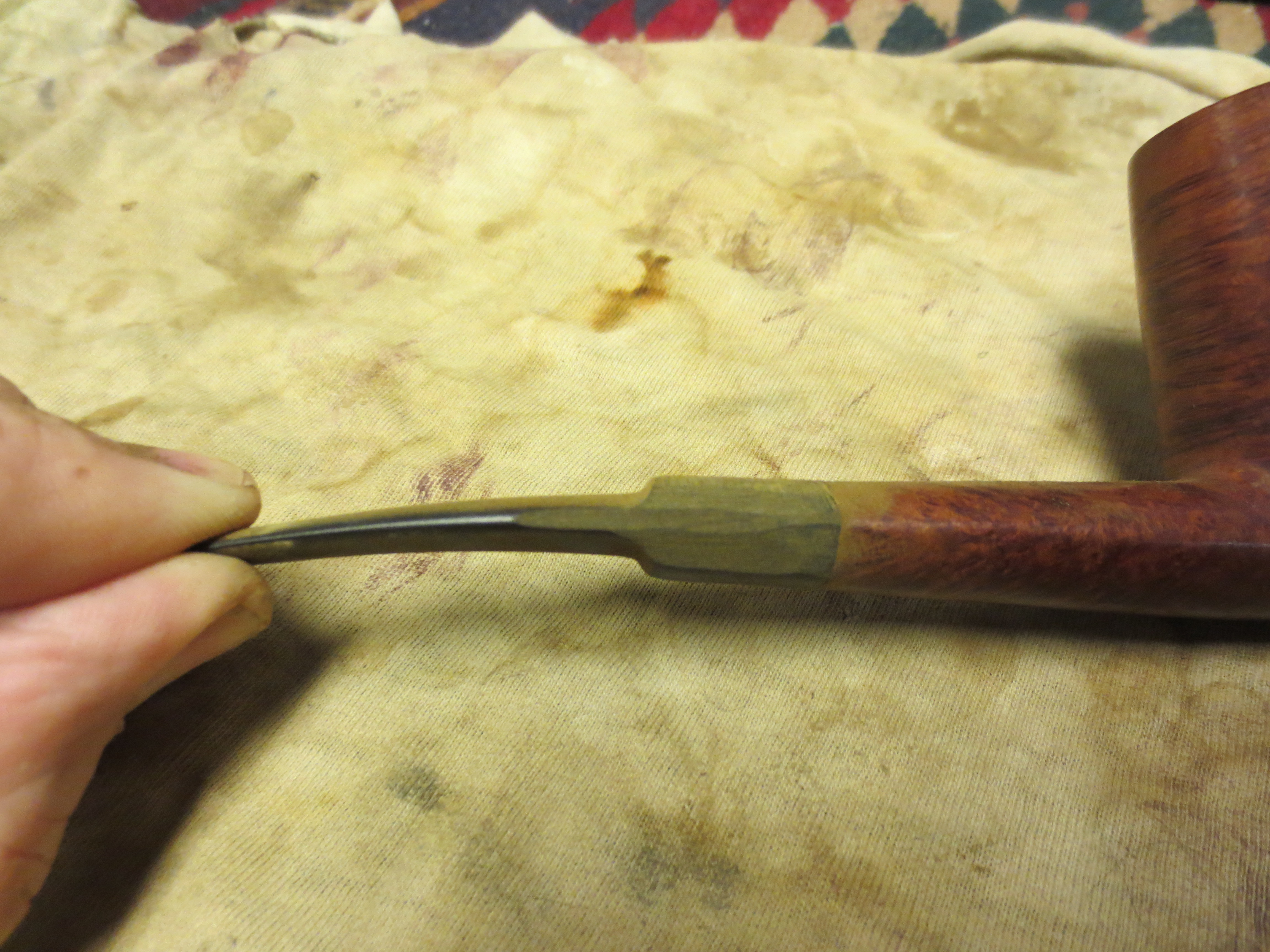
I sanded the tenon with 220 grit sandpaper until I had a good snug fit on the shank. The next four photos show the stem before I began to shape it to fit. The fit against the shank was good and tight. The look of the pipe and stem worked for me so I was good to go.
IMG_1326

IMG_1327

IMG_1328

IMG_1329

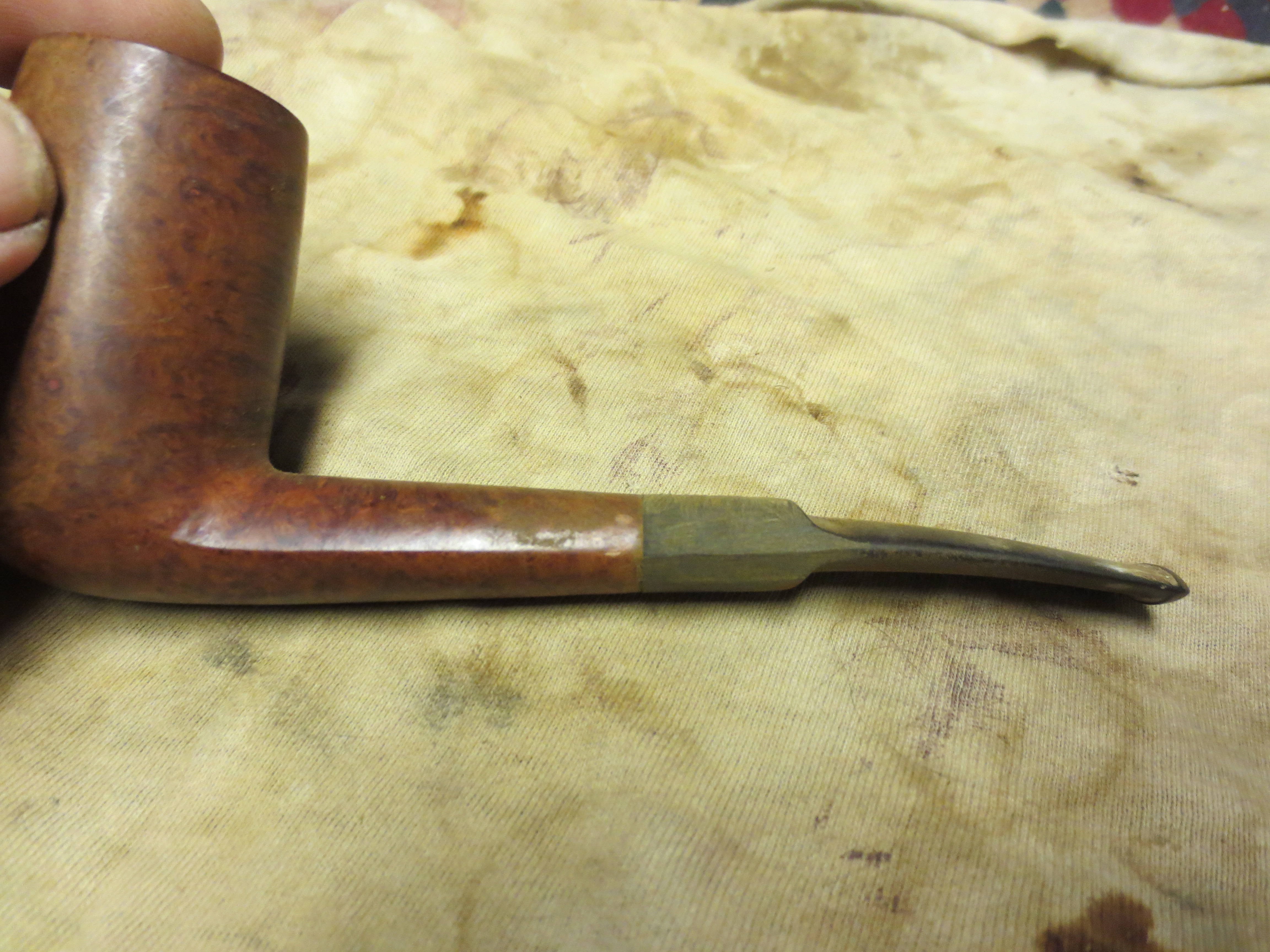
I do the initial shaping of a stem with a Dremel and sanding drum. I set the speed about mid mark on the speed control of the Dremel and slowly work at the surface of the stem. I do this initial shaping with the stem on the shank. I want to shape it as closely as possible to the shank shape before doing the finish shaping by hand. The next three photos show the stem after this initial shaping. There was still much work to do in bring the stem and shank to a proper fit and the width of the stem to a match with the taper of the shank. This work had to be done by hand using sandpaper and files.
IMG_1330

IMG_1331

IMG_1332

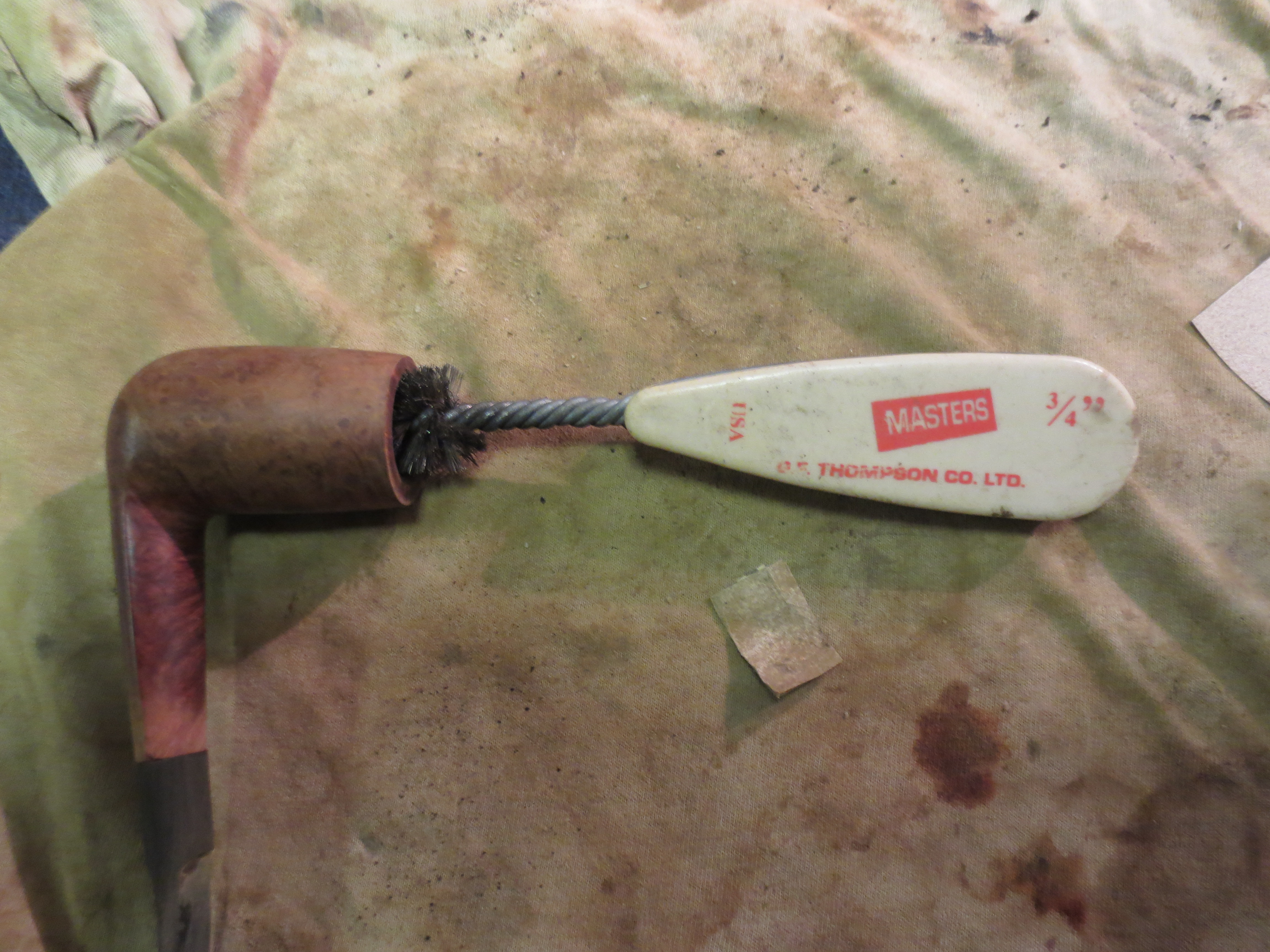
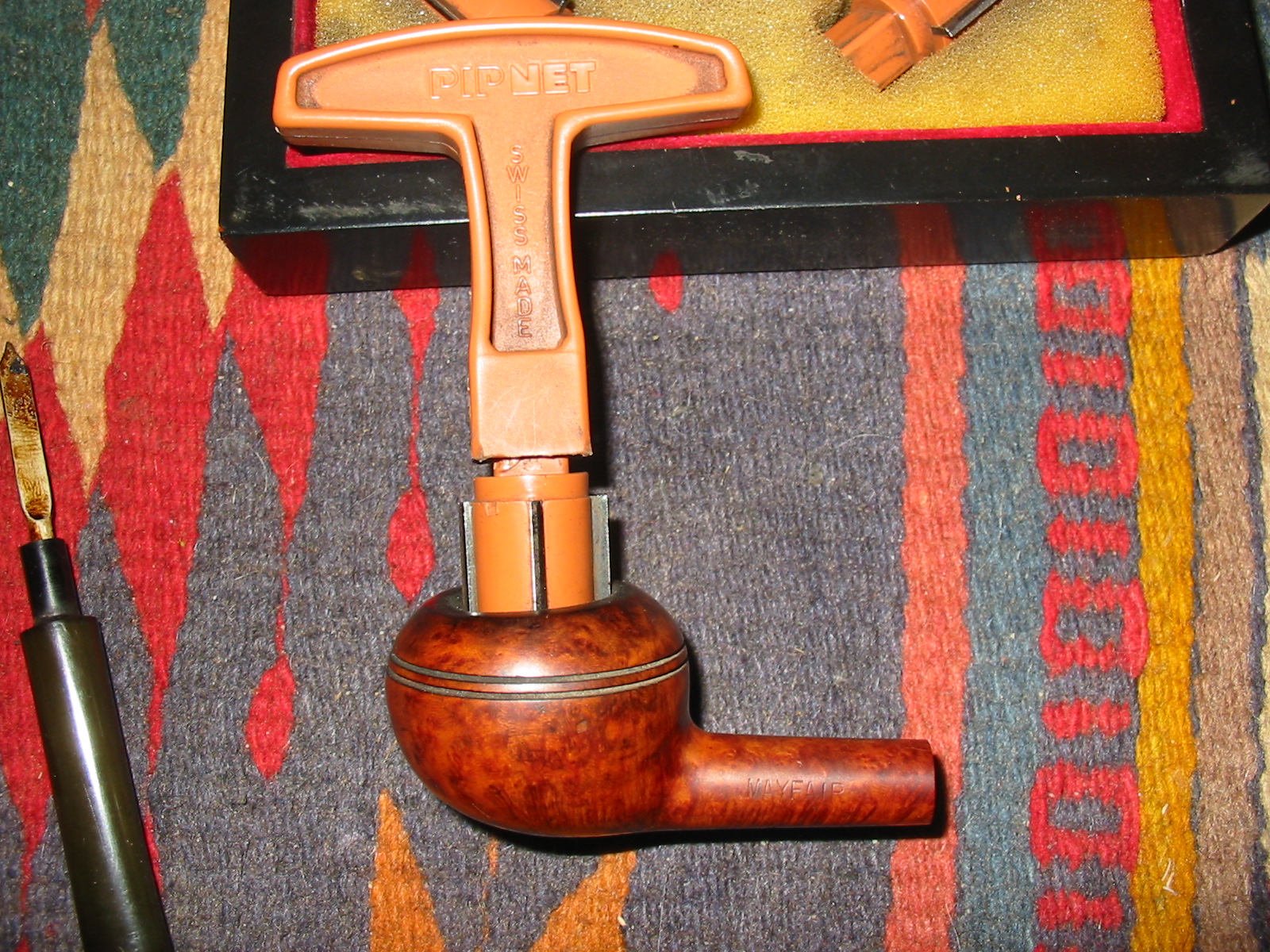
The depth of the bowl on this stack made it impossible for me to get to the bottom of the bowl with my reamers. The PipNet reamer went about 2/3 of the way down the bowl and the KleenReem or Senior reamer did the same. I have used a plumbing tool that is used to clean up pipe after cutting it to ream deep bowl. It is a ¾ inch cone shaped wire brush with a handle that I can turn into the bowl and go to the bottom to remove the cake evenly. It works exceptionally well for this purpose.
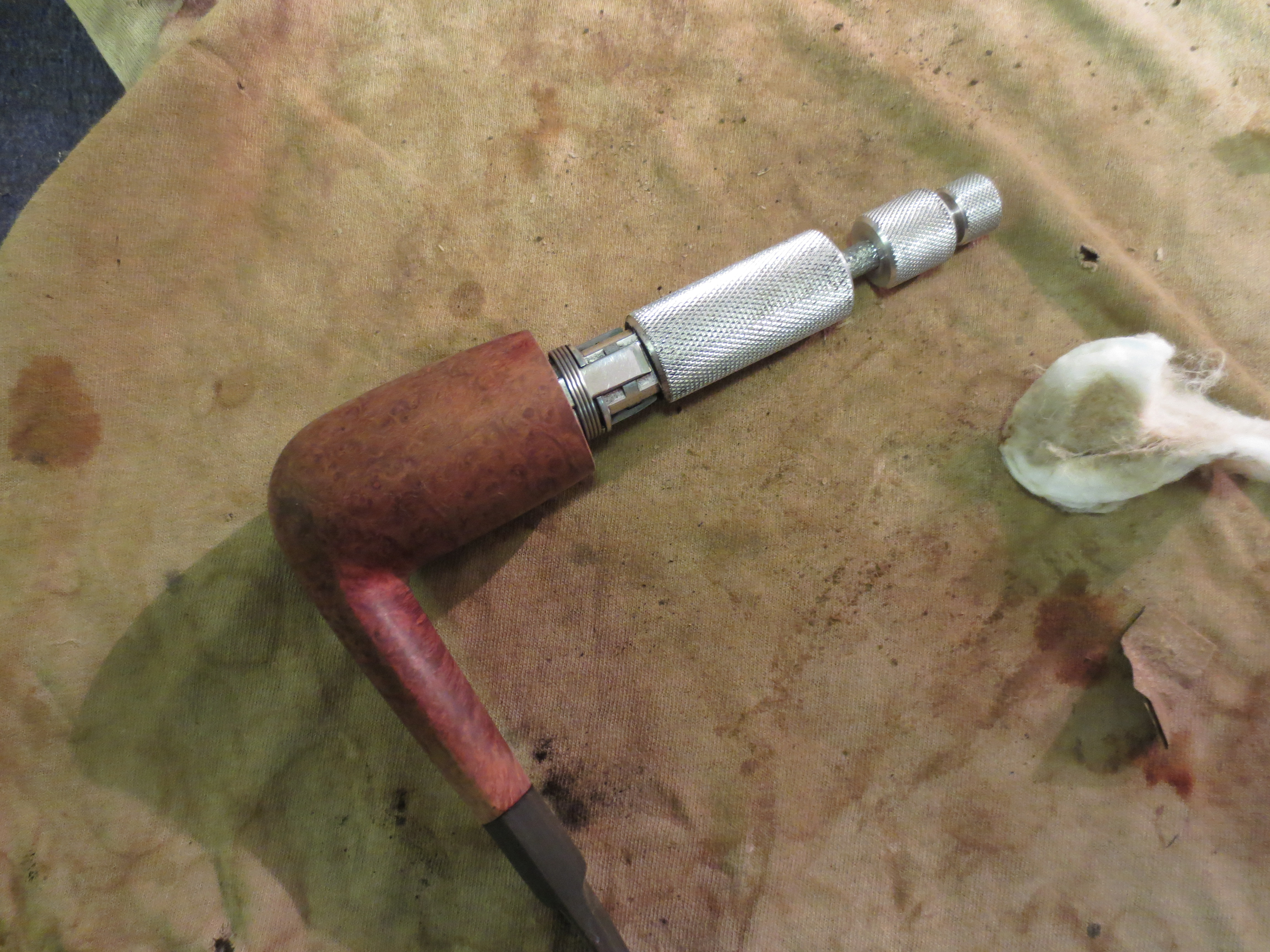
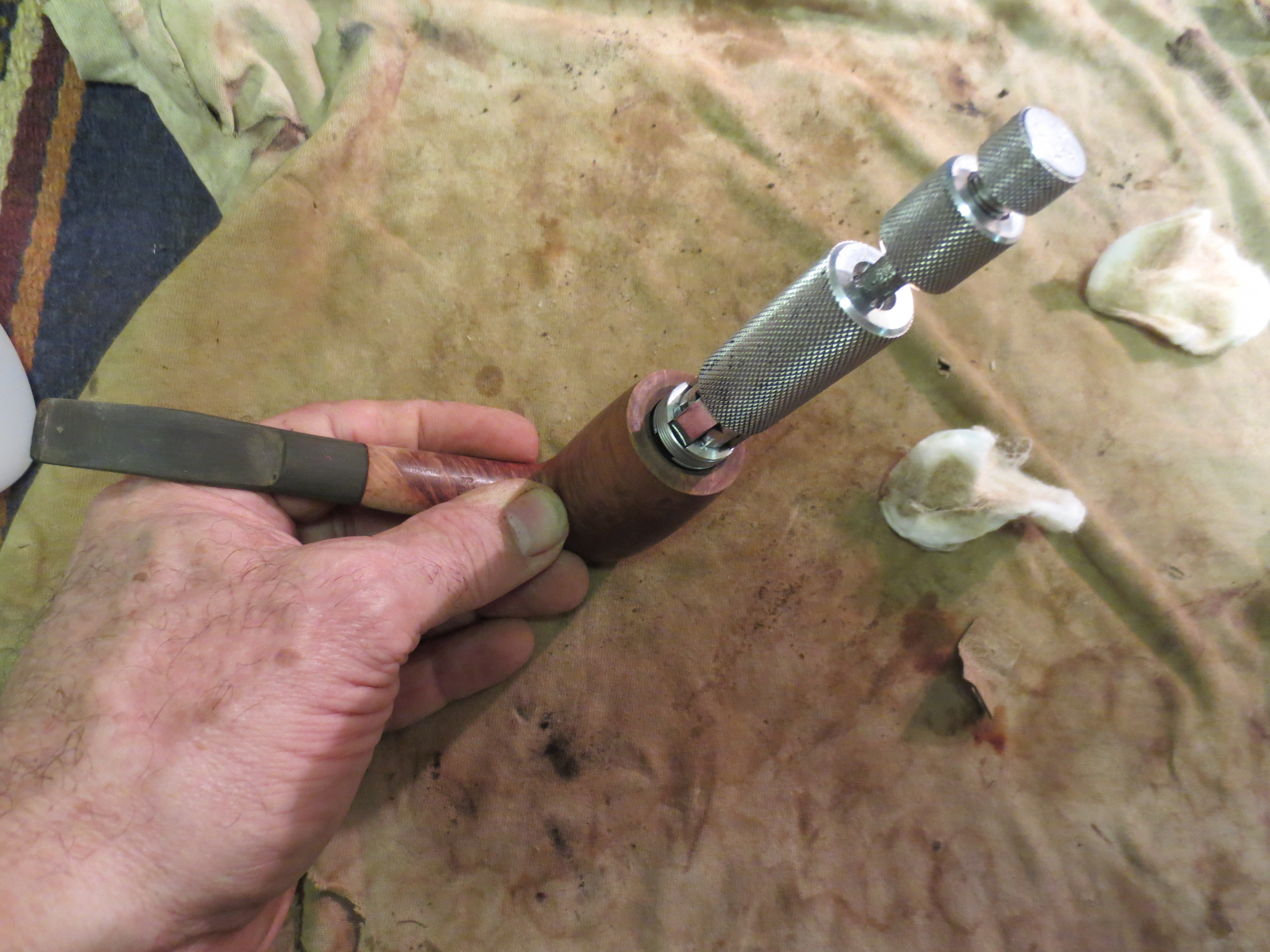
IMG_1337

IMG_1338

IMG_1339

IMG_1333

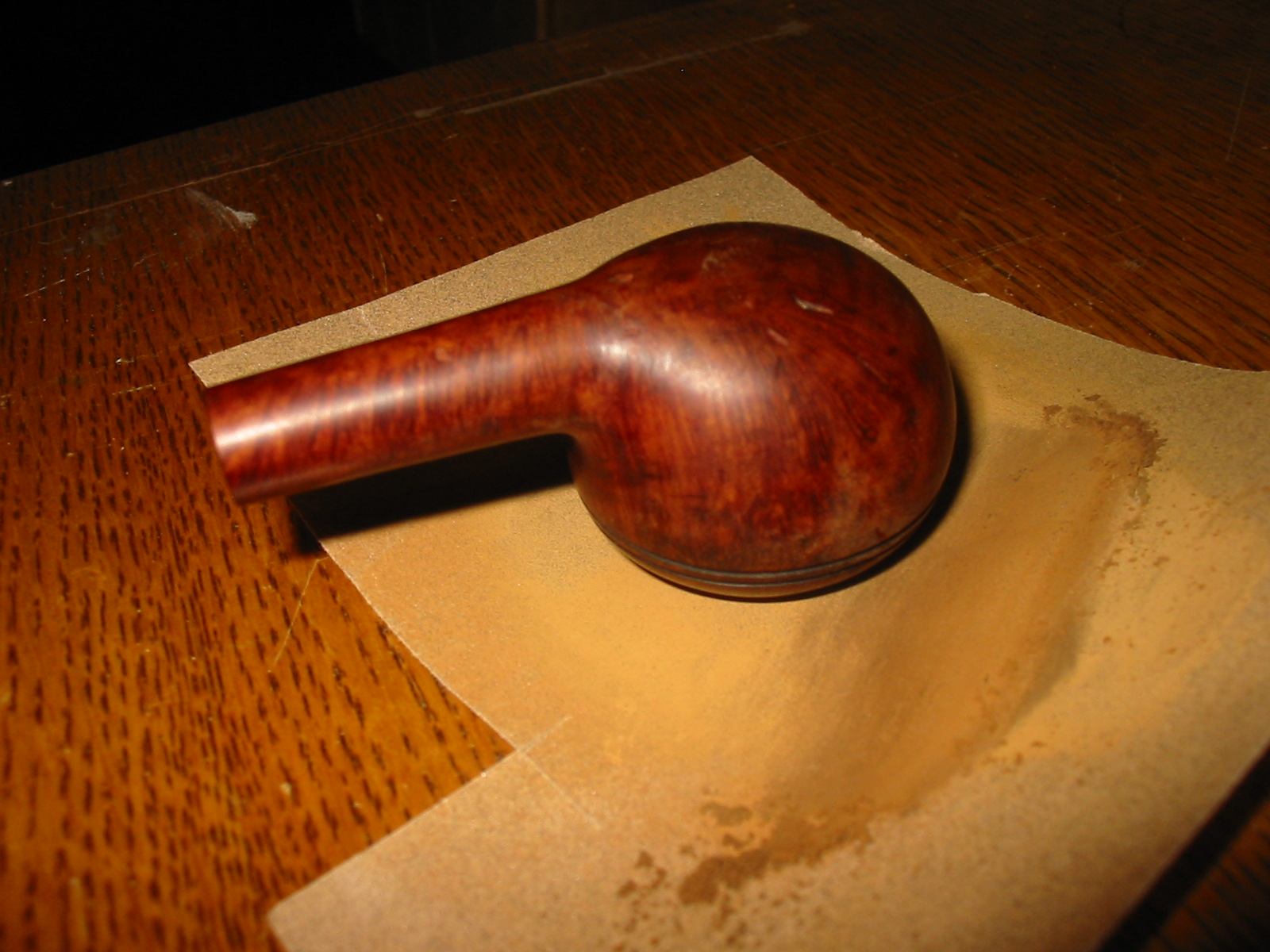
I cleaned up the rim of the pipe with 220 grit sandpaper and also worked on the shank stem fit with the same sandpaper. As I was planning to refinish the pipe bowl and shank I did not care if I removed a bit of the finish while sanding the stem and shank. The next three photos show the stem/shank fit after I had sanded it with the sandpaper. I really liked the look of the pipe at this point and only needed to do the stem polishing and the finish sanding and cleaning of the bowl.
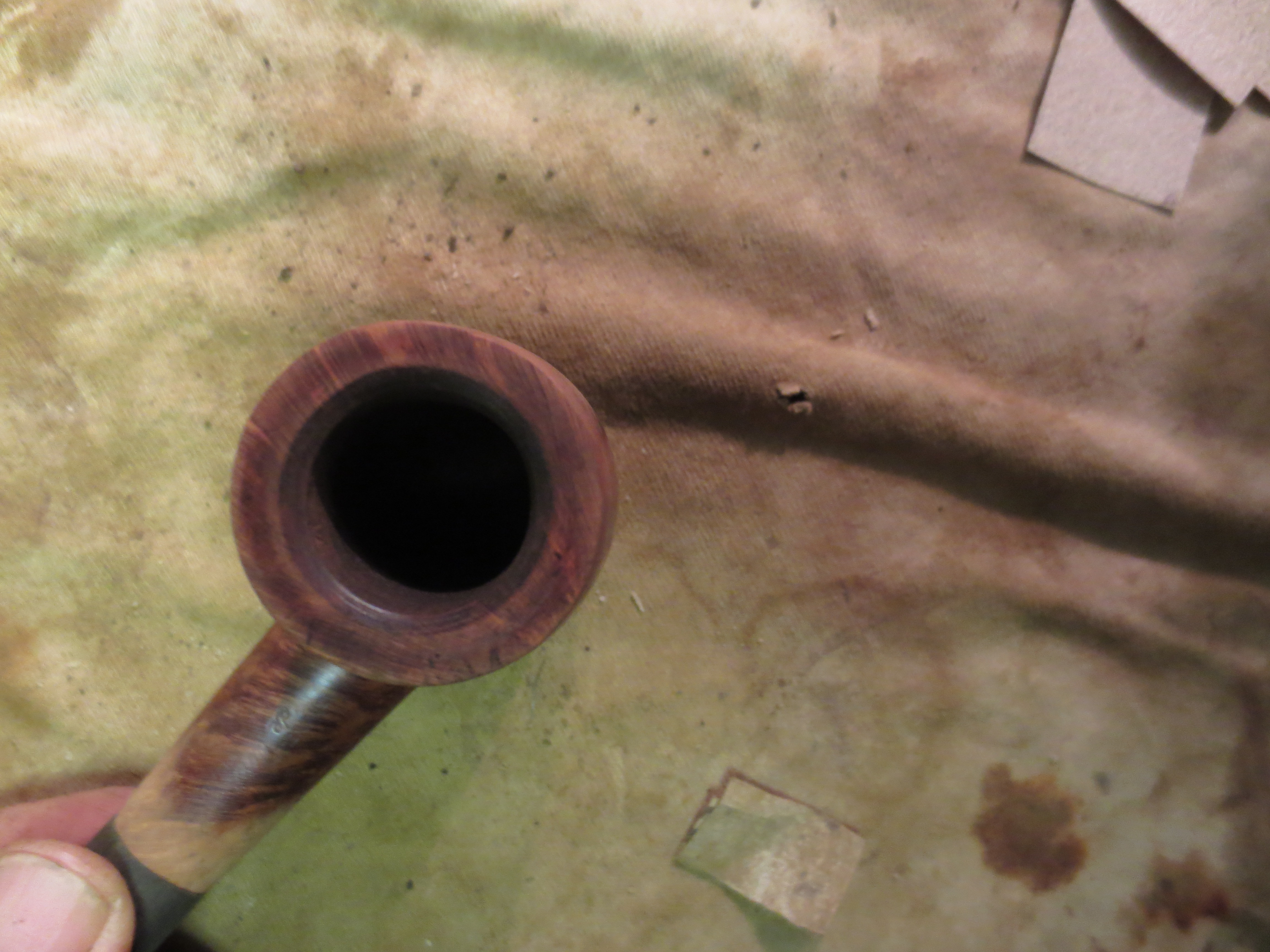
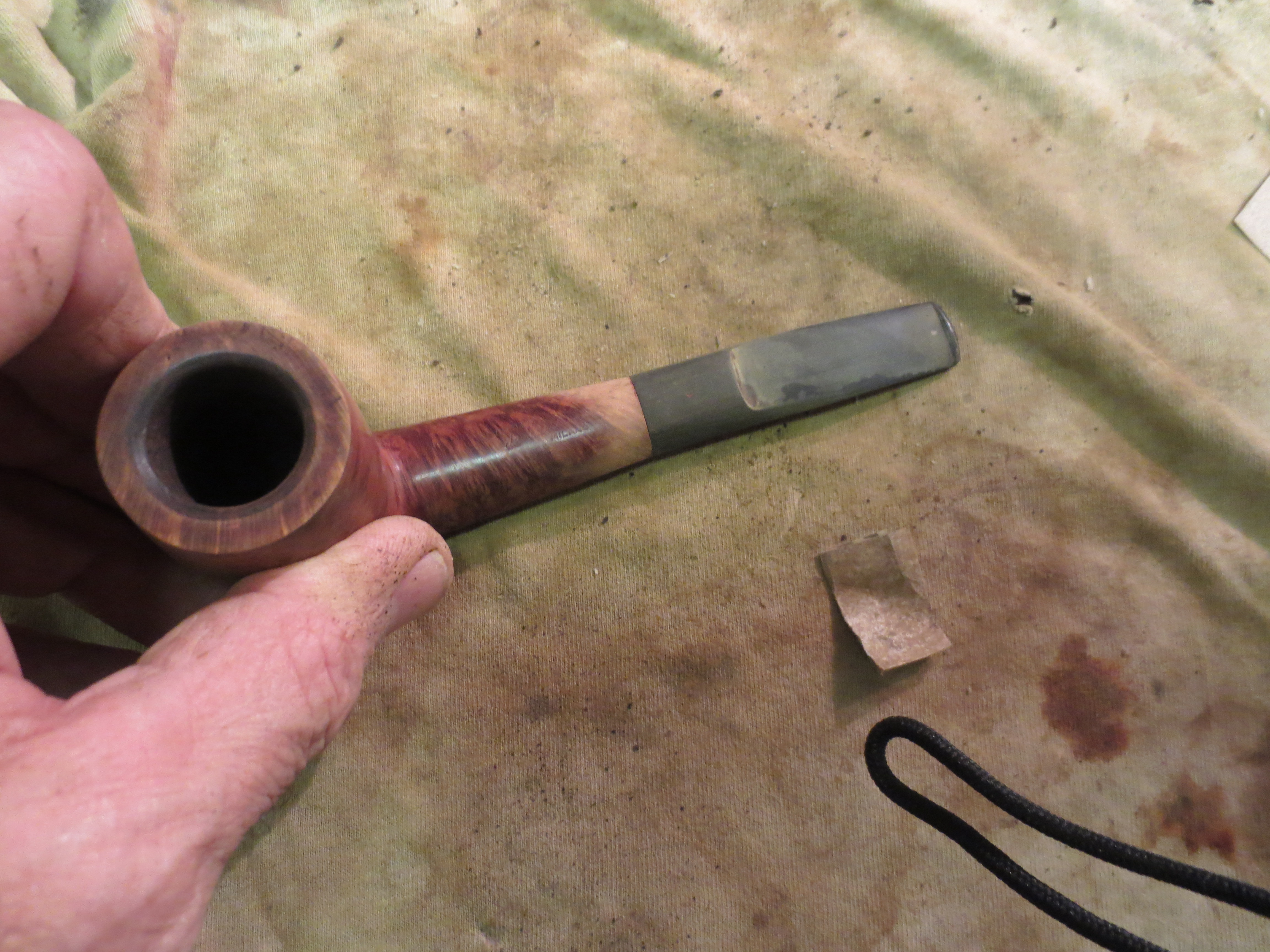
IMG_1334

IMG_1335

IMG_1336

I used acetone on cotton pads to remove the finish on the pipe. I wiped it down until it was the same colour as the sanded portion of the shank. This would make blending the stain much easier to do. The first two photos below show the bowl after the initial wipe down with acetone. Photos 3-5 show the pipe after the finish has been removed from the pipe and it is ready to be stained.
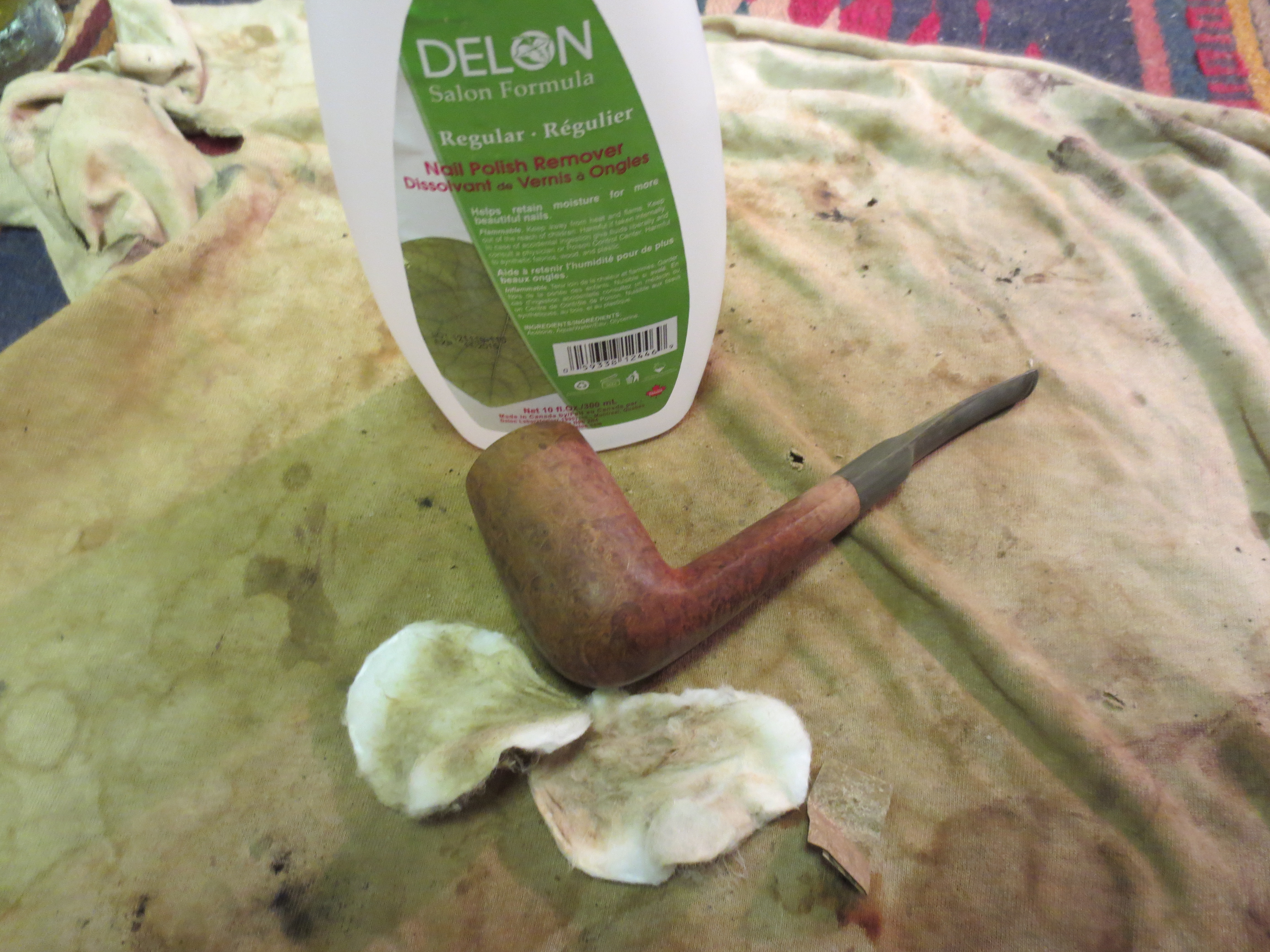
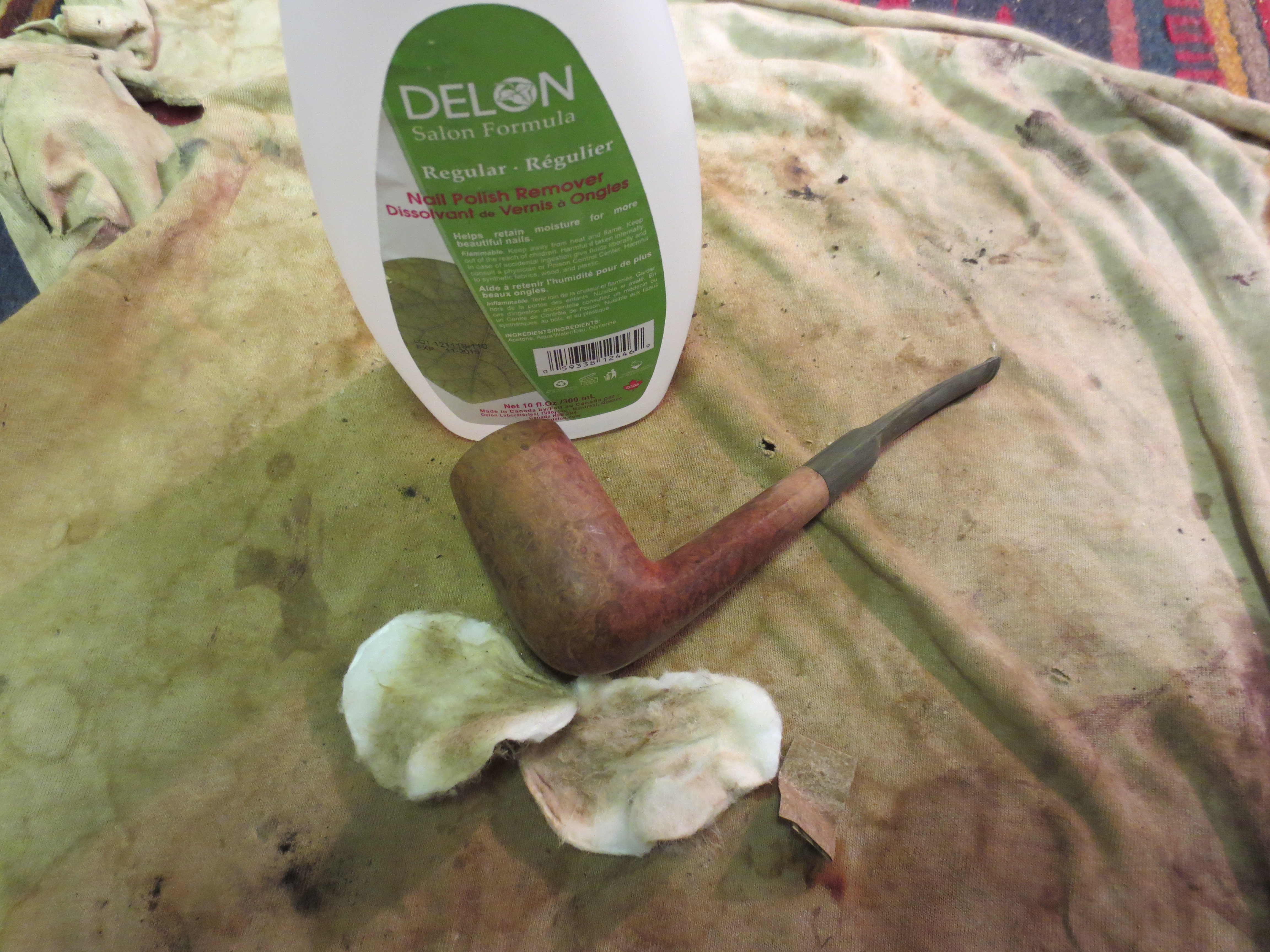
IMG_1340

IMG_1341

IMG_1342

IMG_1343

IMG_1344

When I sanded the stem I found that there was one small tooth mark on the top of the stem near the button that no amount of heat would lift up. I sanded the spot with the 220 grit sandpaper until it was clean and then buffed it with Tripoli until it was very clear the breadth of the spot. I filled the indentation with clear super glue and sanded it once it was dry. The two photos below show the stem repair after the initial sanding and then after it was ready to be polished. Once the polishing was done the repair would be virtually invisible.
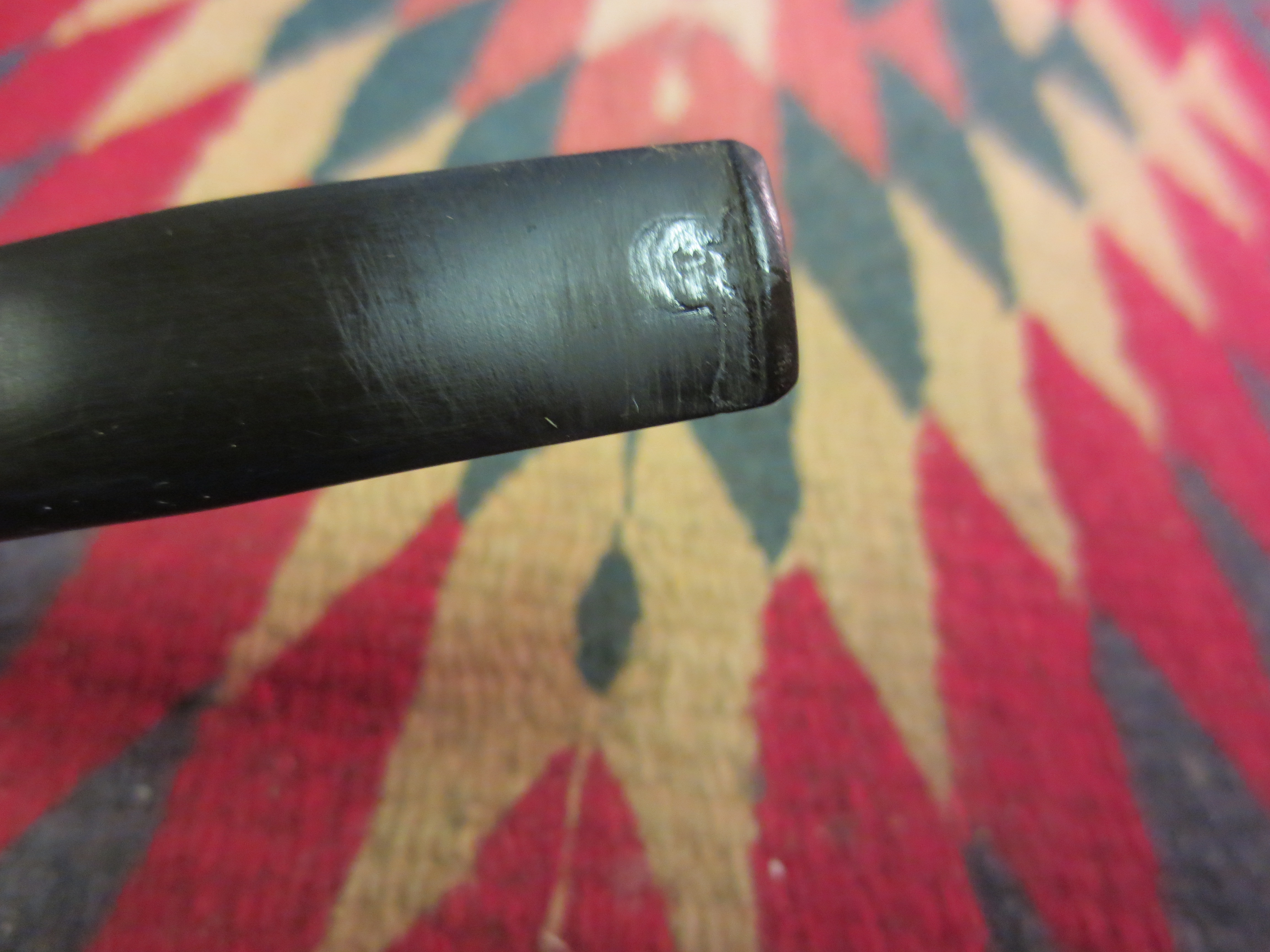
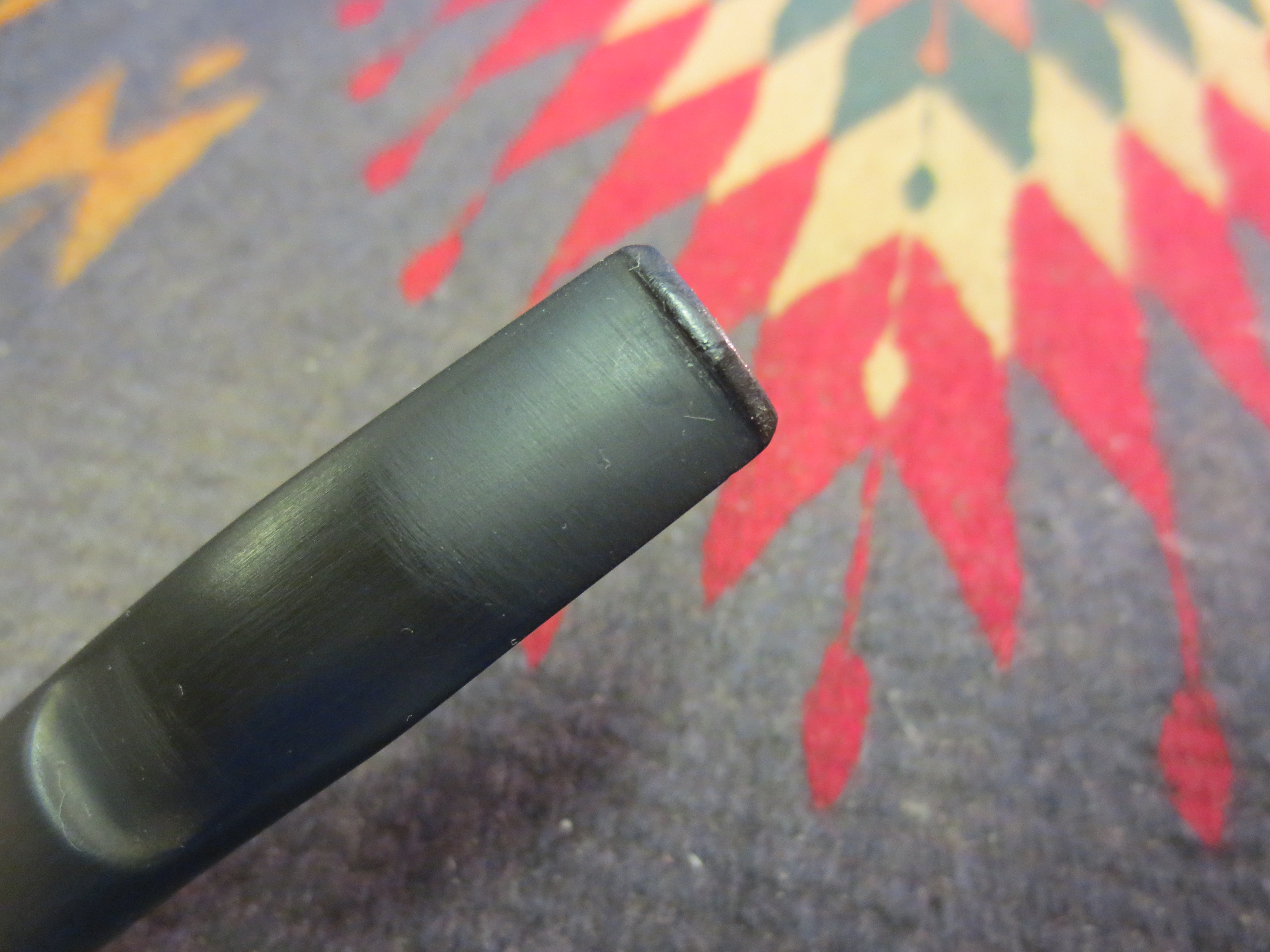
IMG_1345

IMG_1346

I cleaned the internals of the stem and the shank with pipe cleaners, cotton swabs and Everclear until the shank and the internals of the stem were clean. I used a dental pick to clean out the areas inside the button and the flare of the airway in the button.
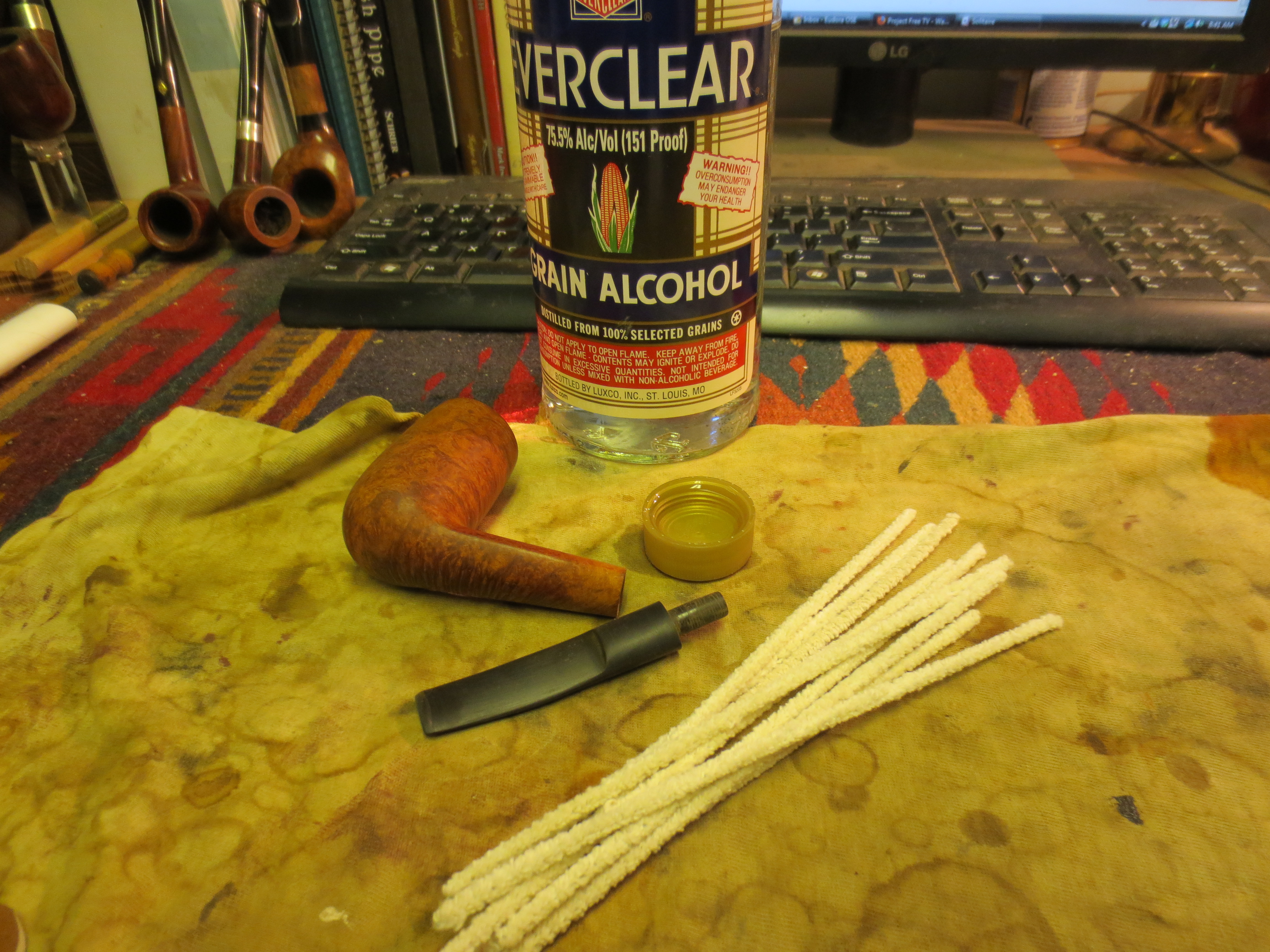
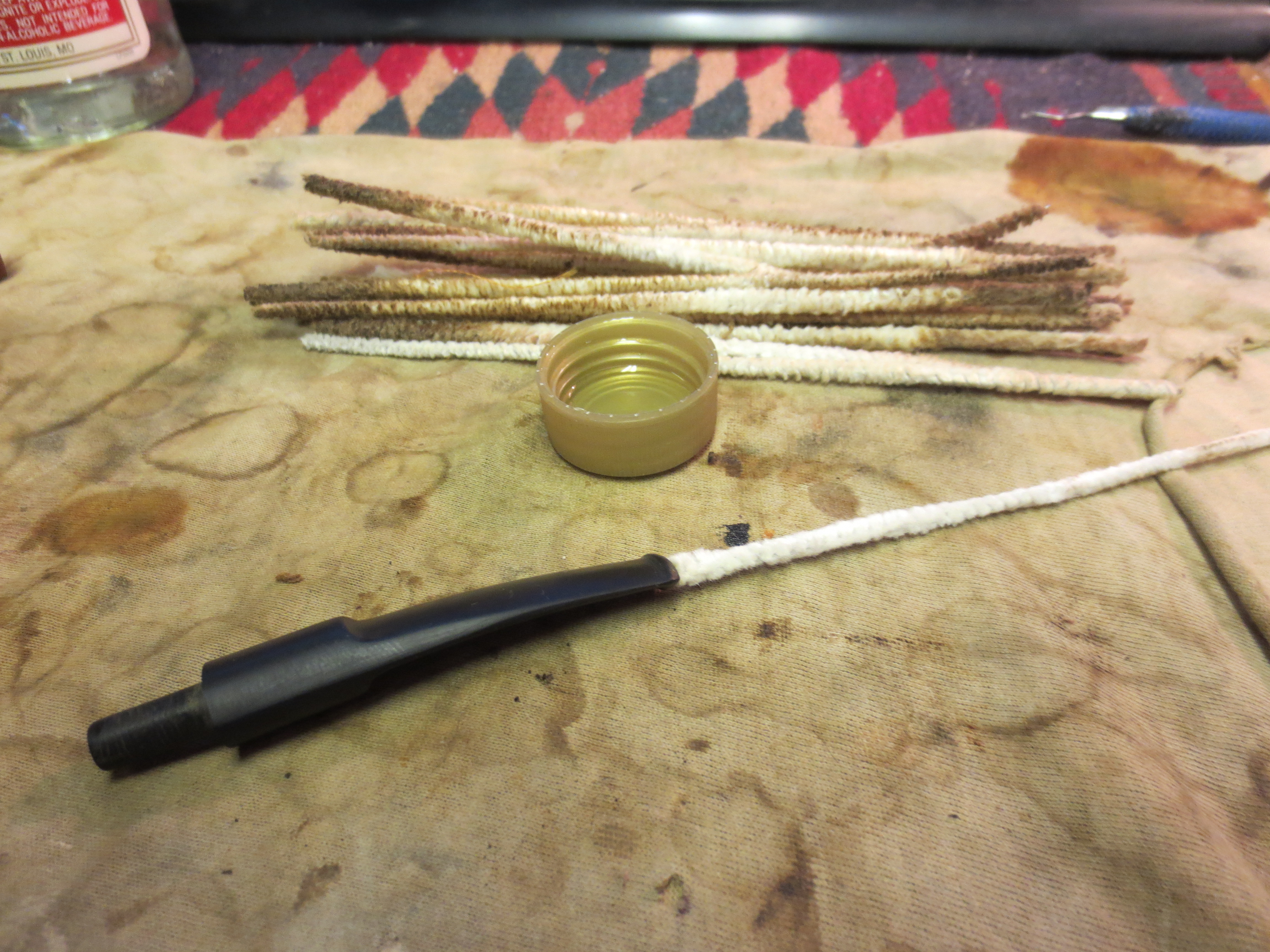
IMG_1347

IMG_1349

Once the insides were clean I wiped the bowl down with Everclear and removed any possible grime that I added to the surface in the cleaning process. The next three photos show the pipe after all of the cleaning. It is beginning to look like the stem and pipe were made together.
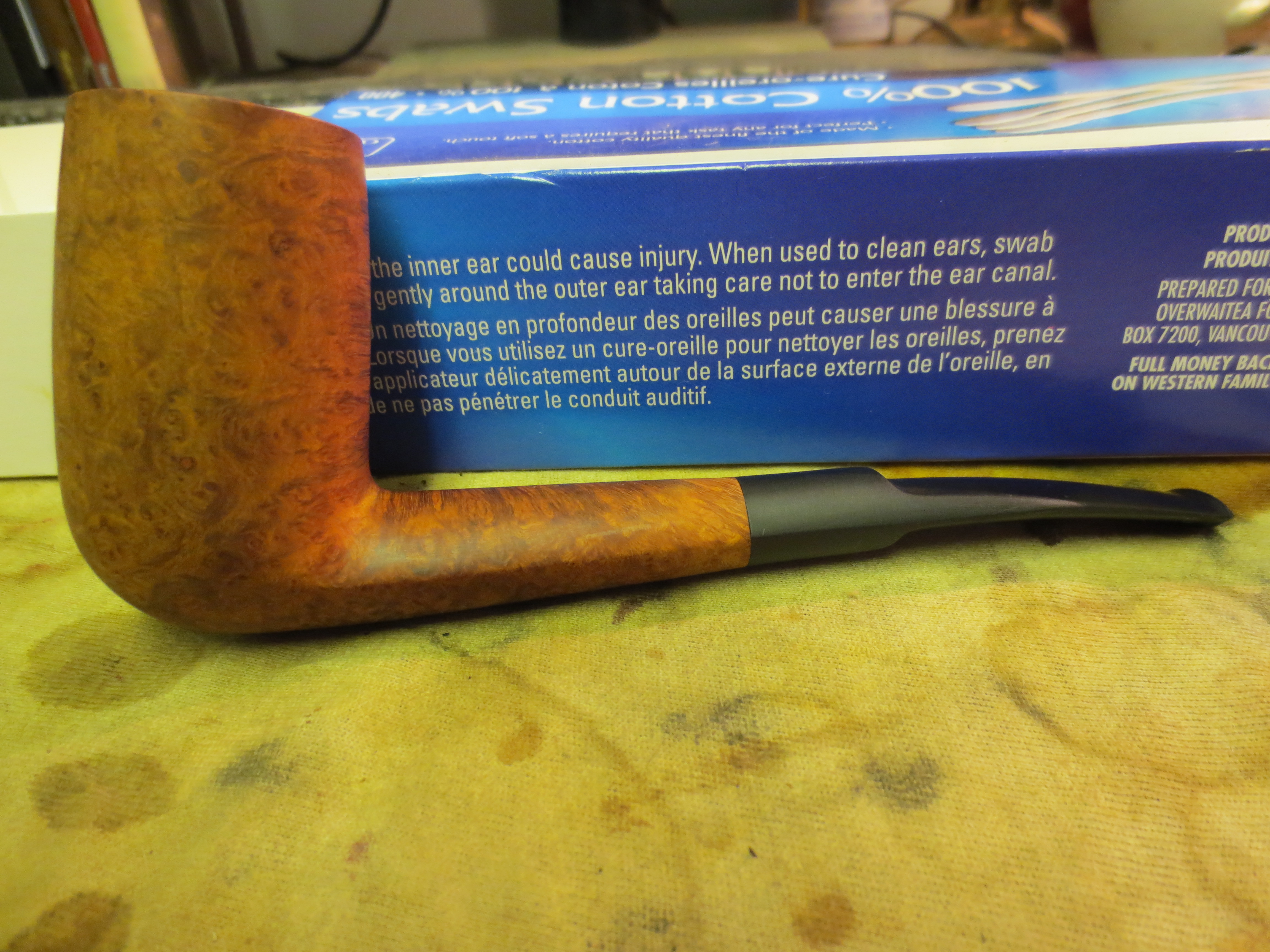
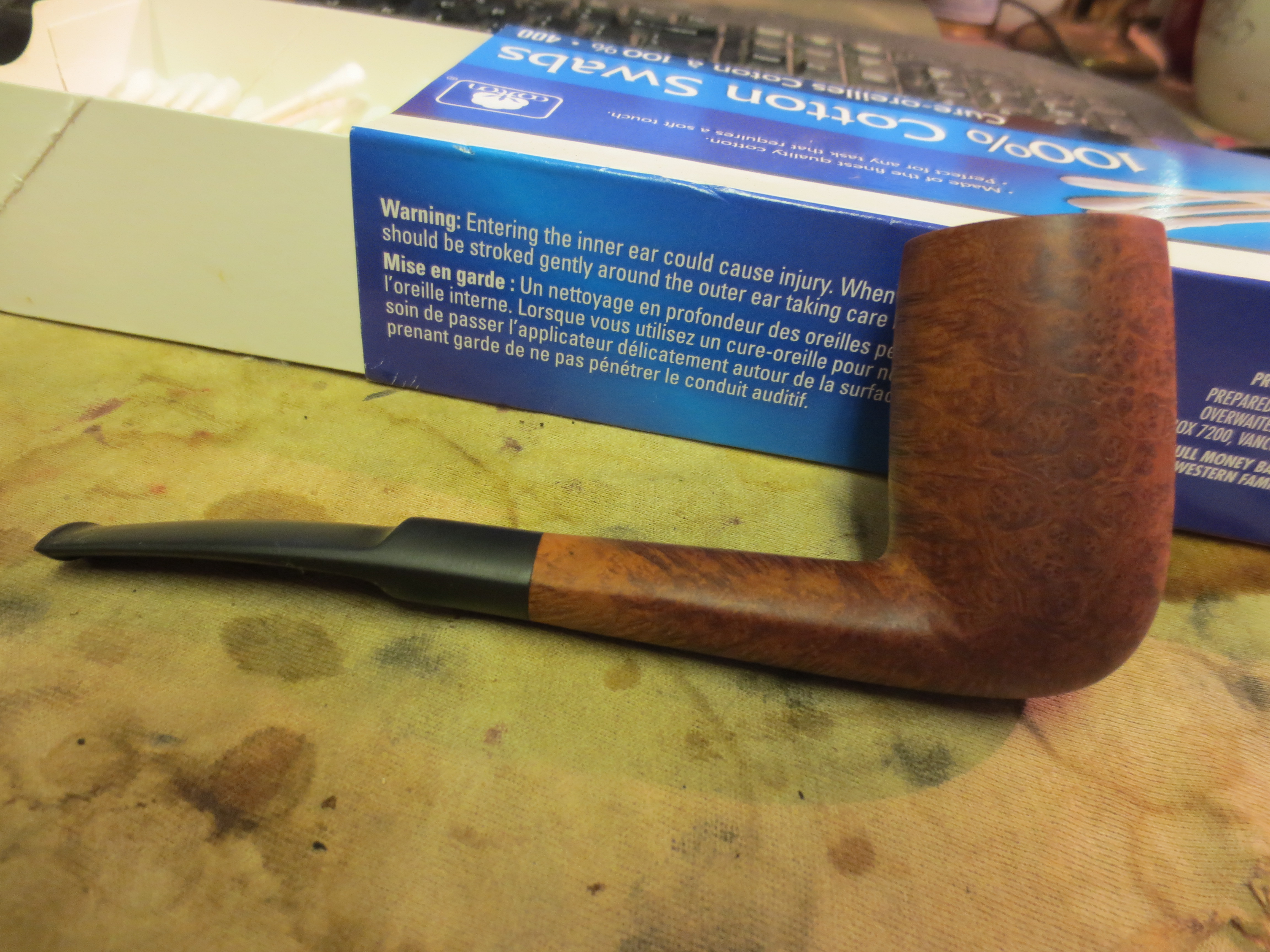
IMG_1350

IMG_1351

IMG_1352

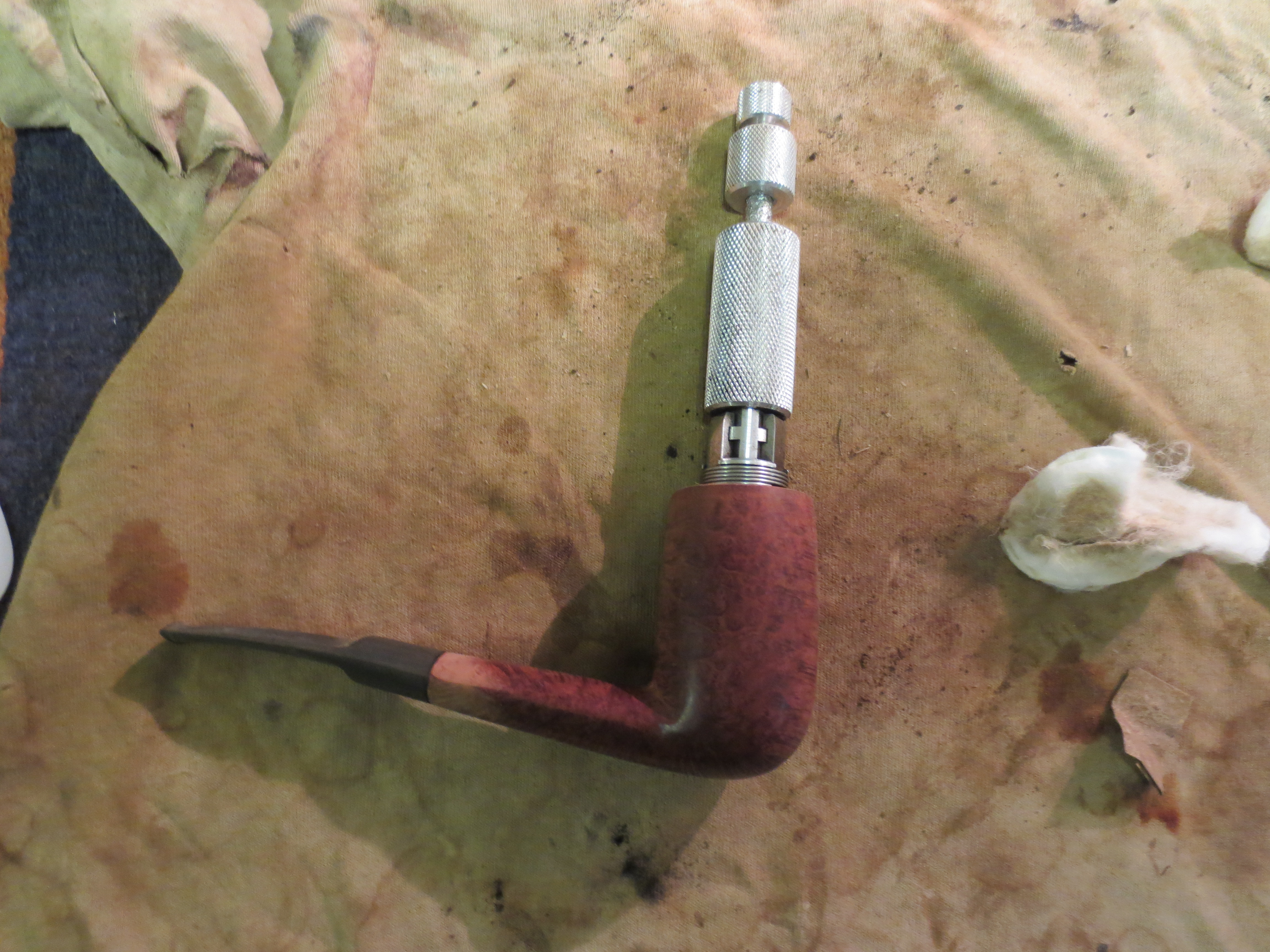
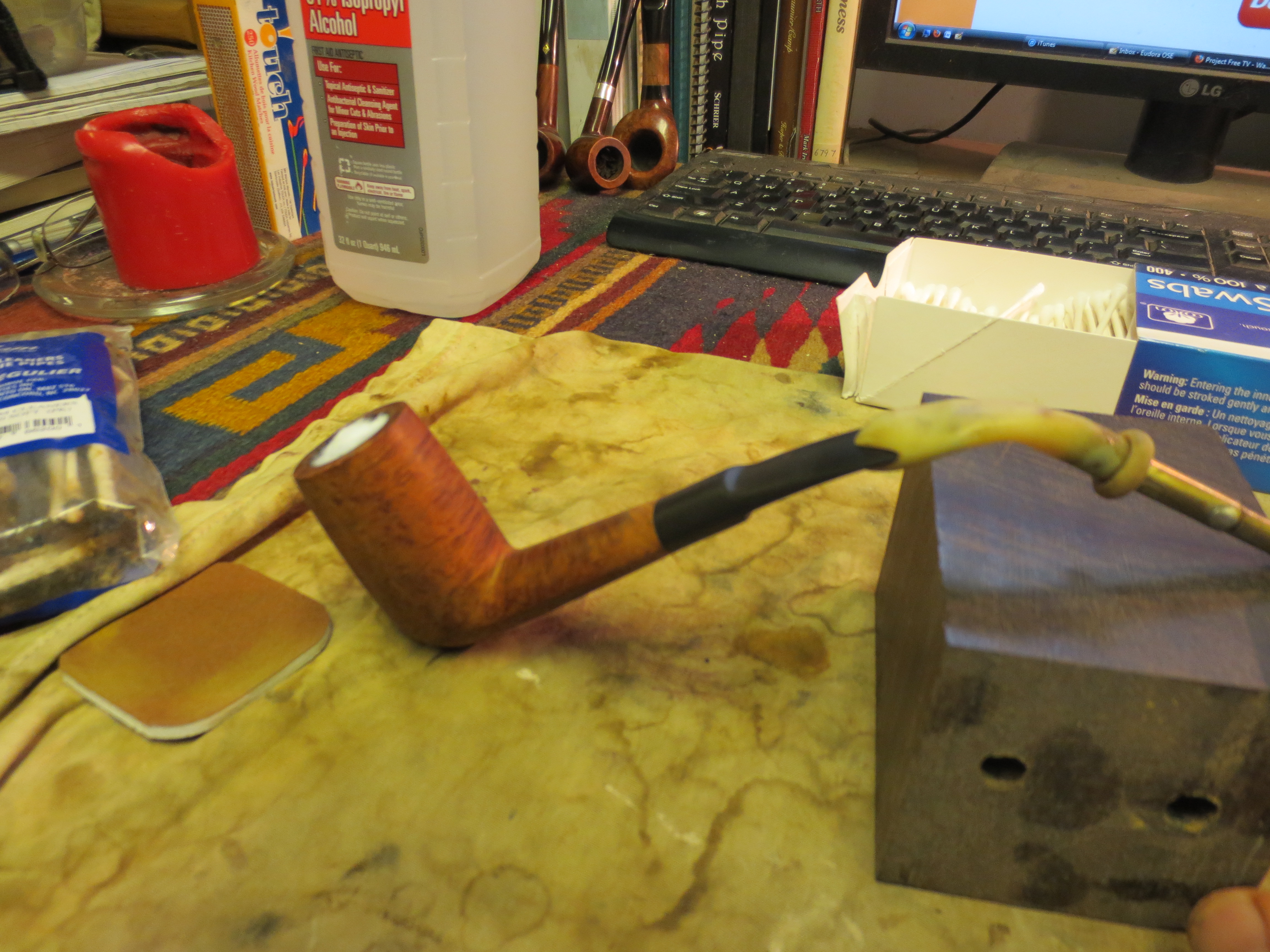
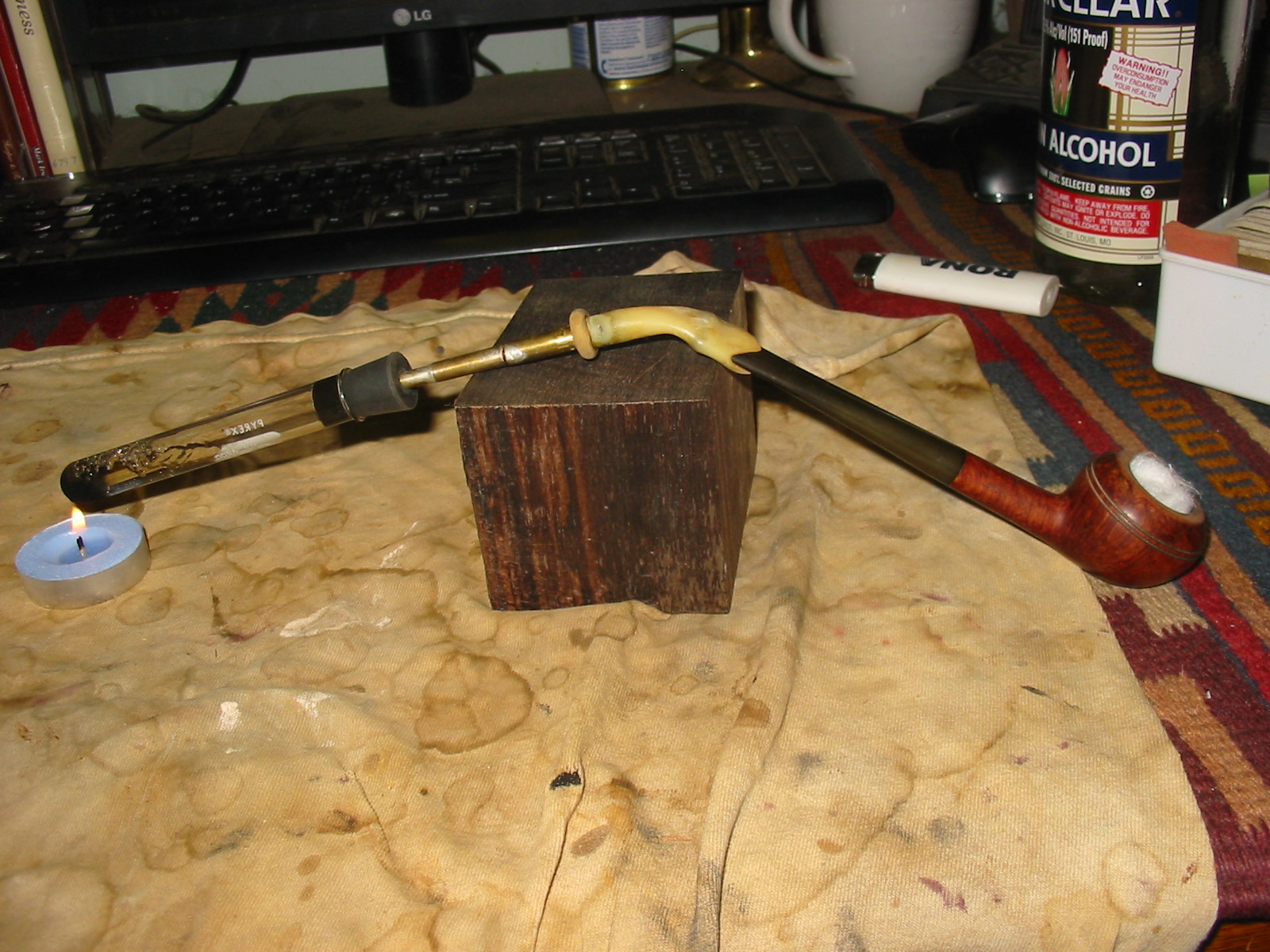
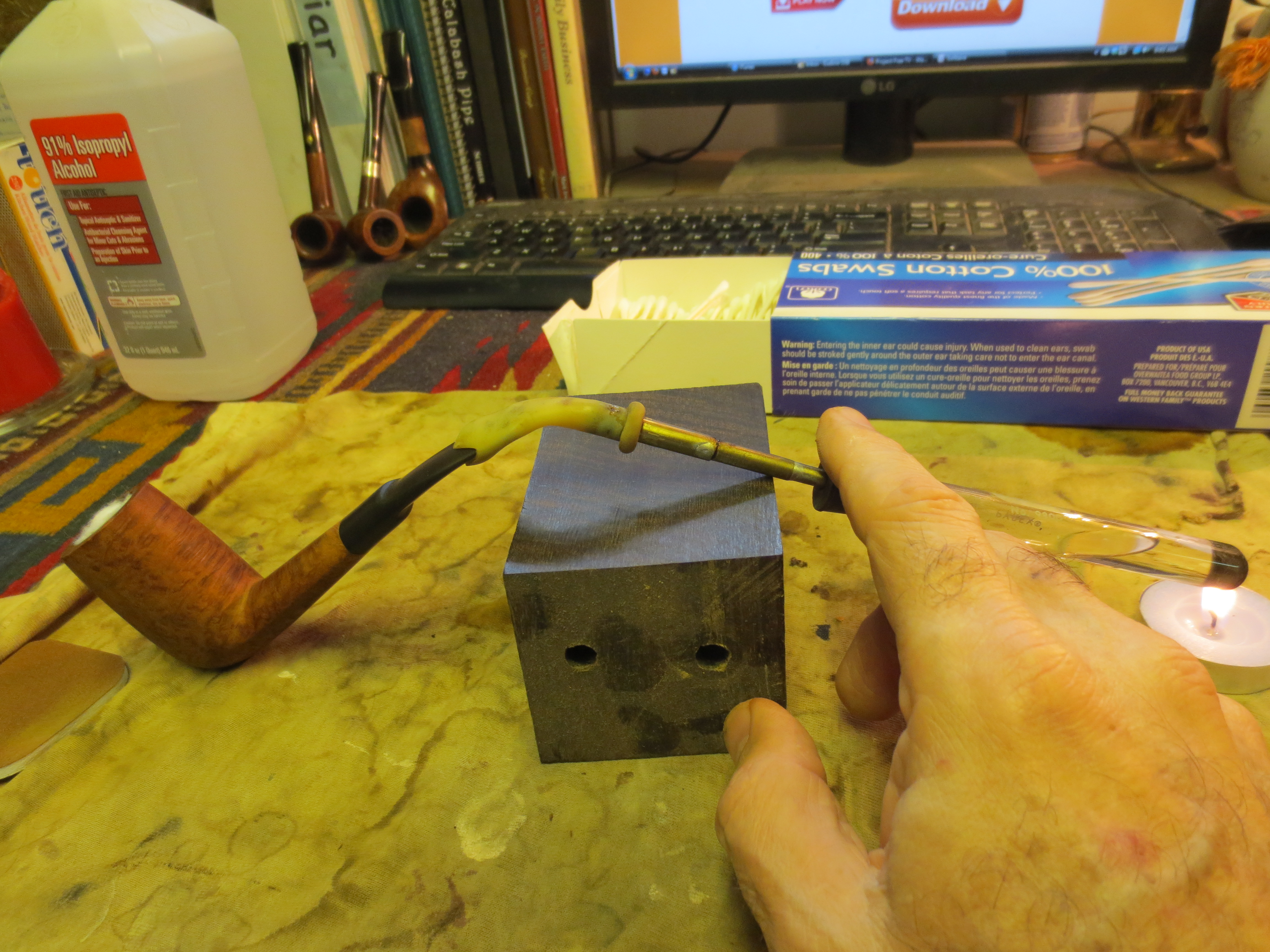
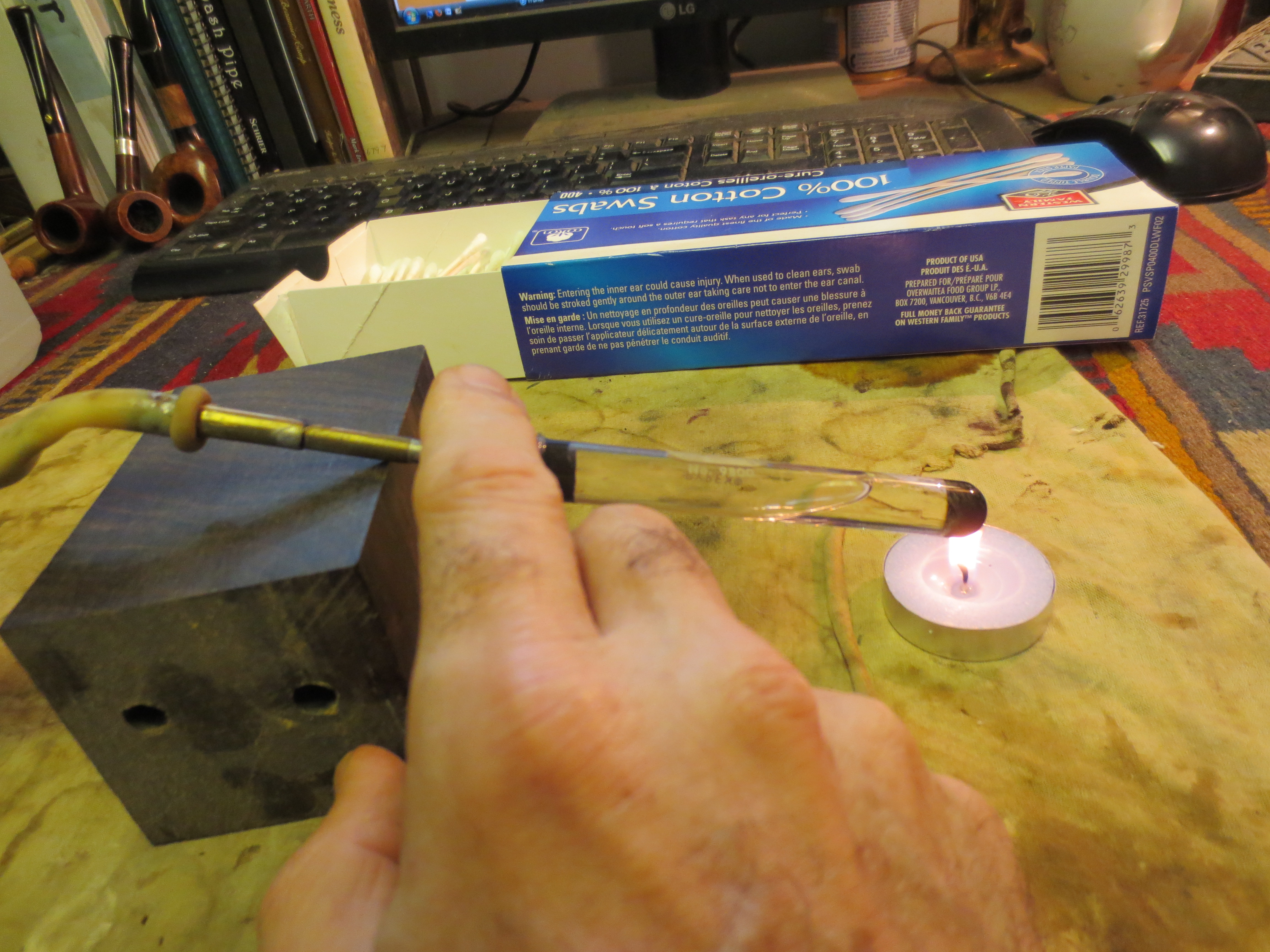
Because of the amount of grime that I cleaned out of the shank and the stem I decided to use a retort on it to give it a more thorough cleaning. The next series of three photos show the set up of the retort system. I use isopropyl alcohol in the test tube and heat the tube with a small tea light candle. I use a block of ebony that I have here to support the pipe and retort during the process. The alcohol is boiled through the pipe until it comes out clean. Generally this takes 2-3 fresh test tubes of alcohol.
IMG_1353

IMG_1354

IMG_1355

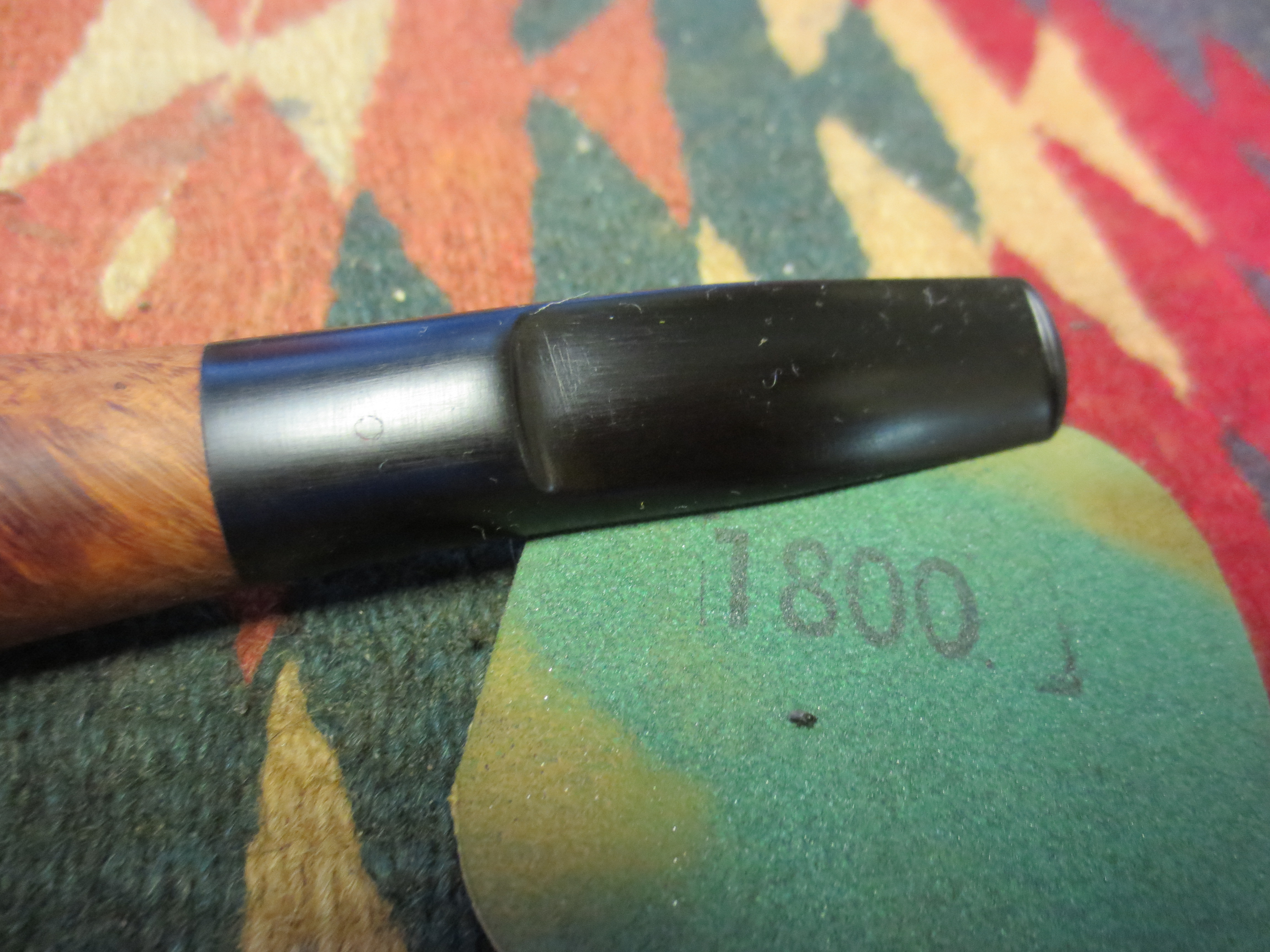
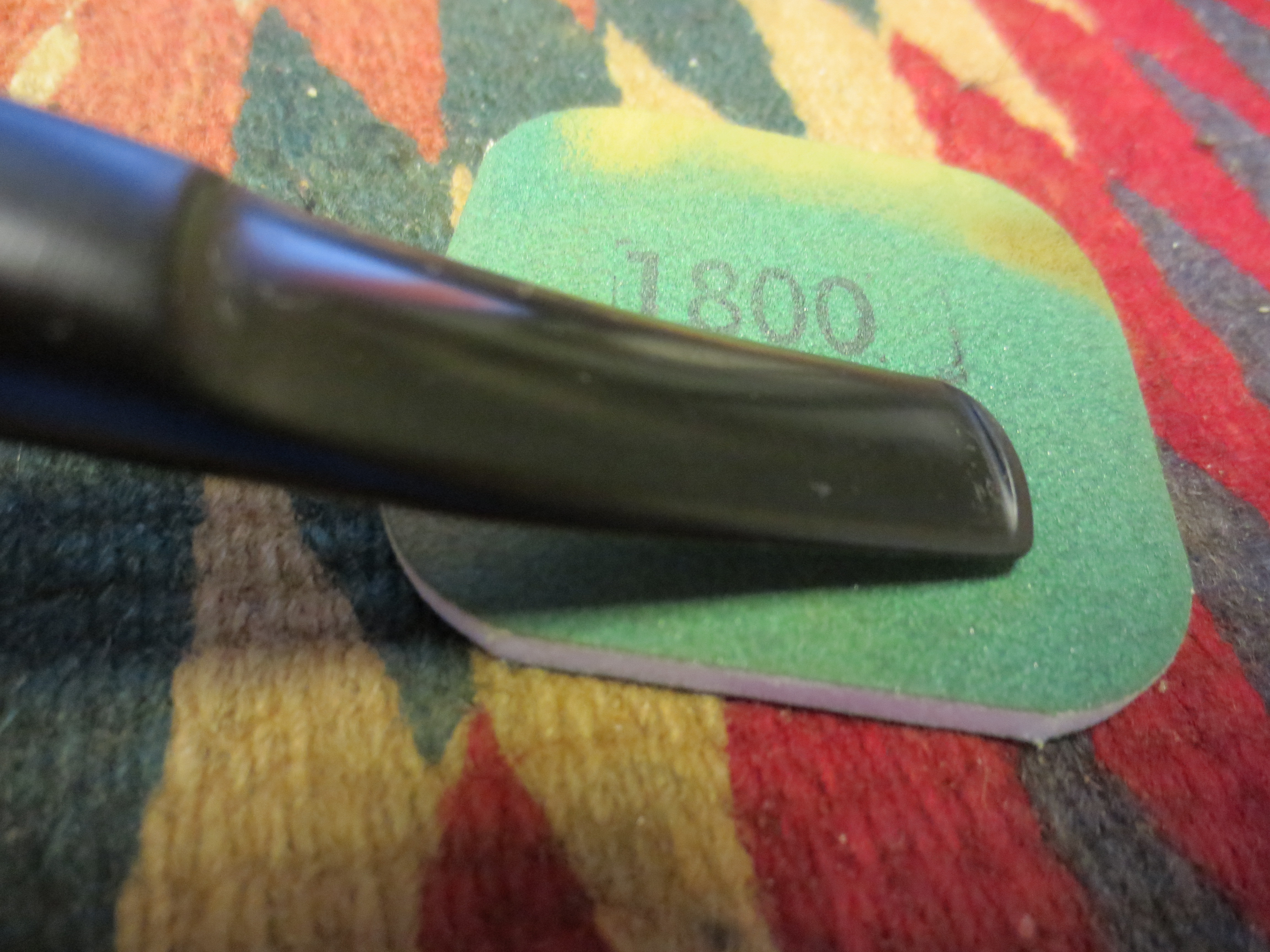
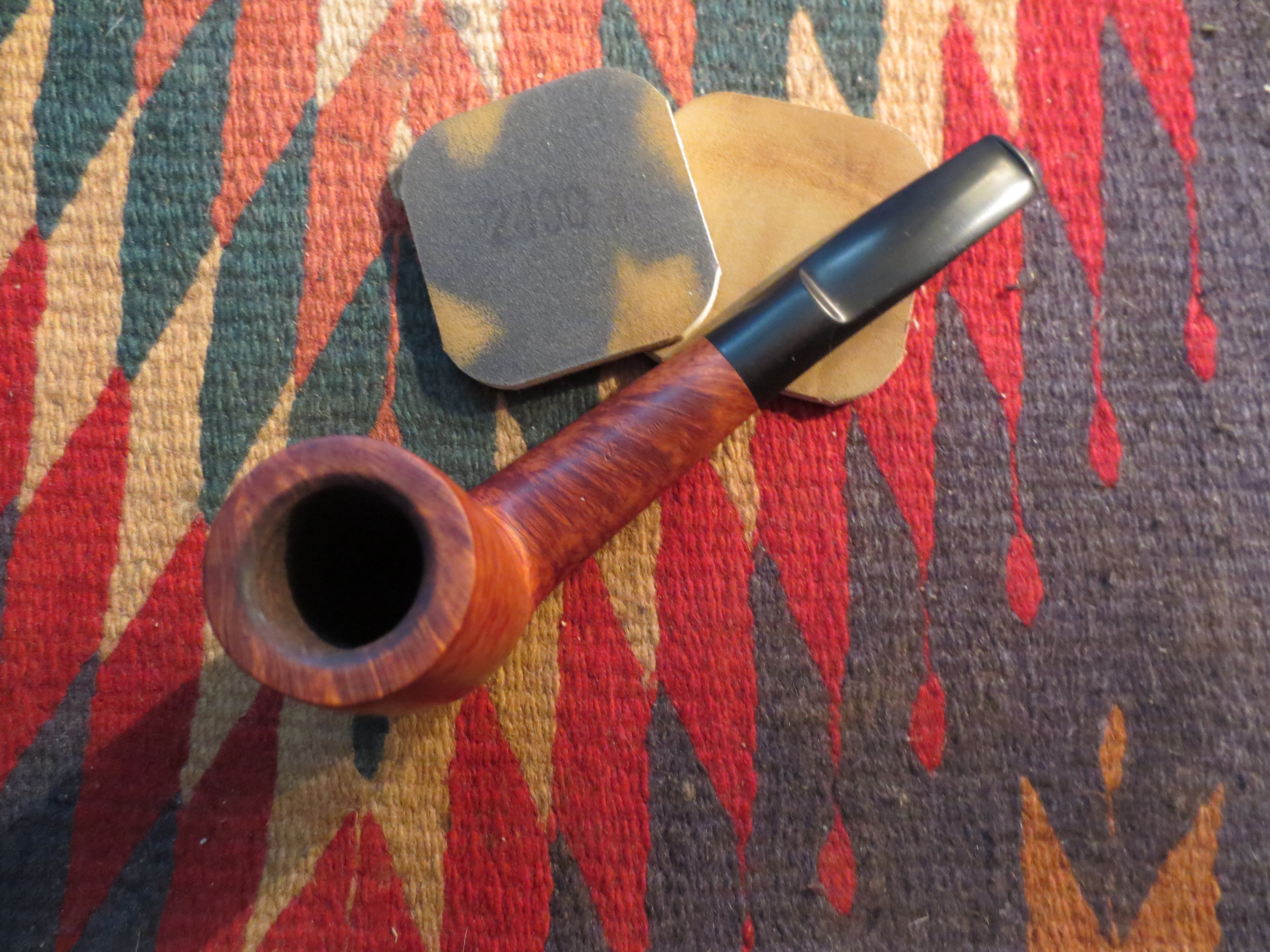
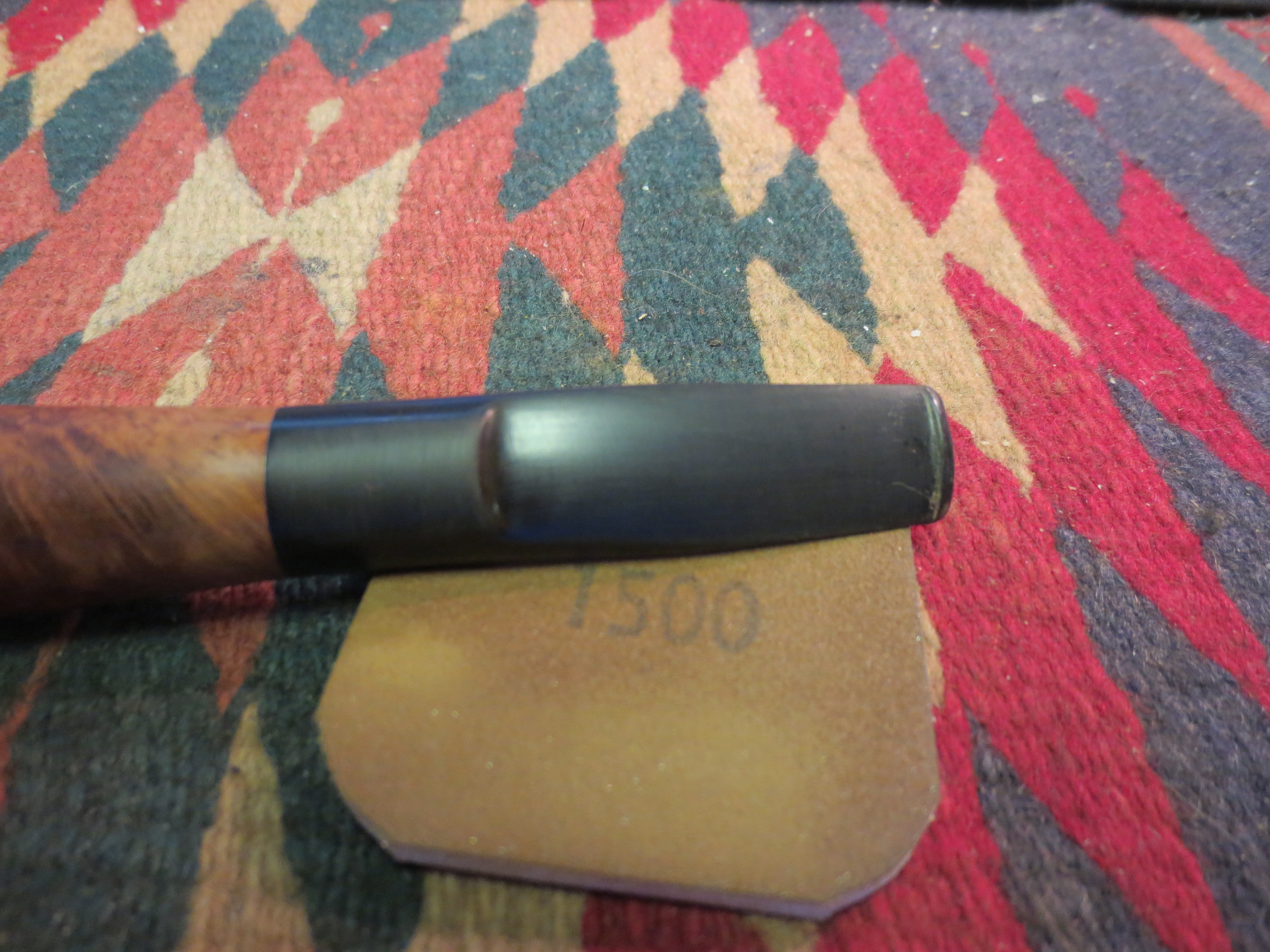
After removing the retort I cleaned out the bowl, shank and stem with pipe cleaners and cotton swabs a final time to remove any of the alcohol and oils that remained. I then sanded the stem with 1500 and 1800 grit micromesh sanding pads to begin polishing the surface and to remove any of the debris left from the surgical tubing on the stem.I continued to sand the stem with the micromesh sanding pads from 2400-12,000 grit in preparation for staining.
IMG_1356

IMG_1357

IMG_1358

IMG_1359

IMG_1360

IMG_1361

IMG_1362

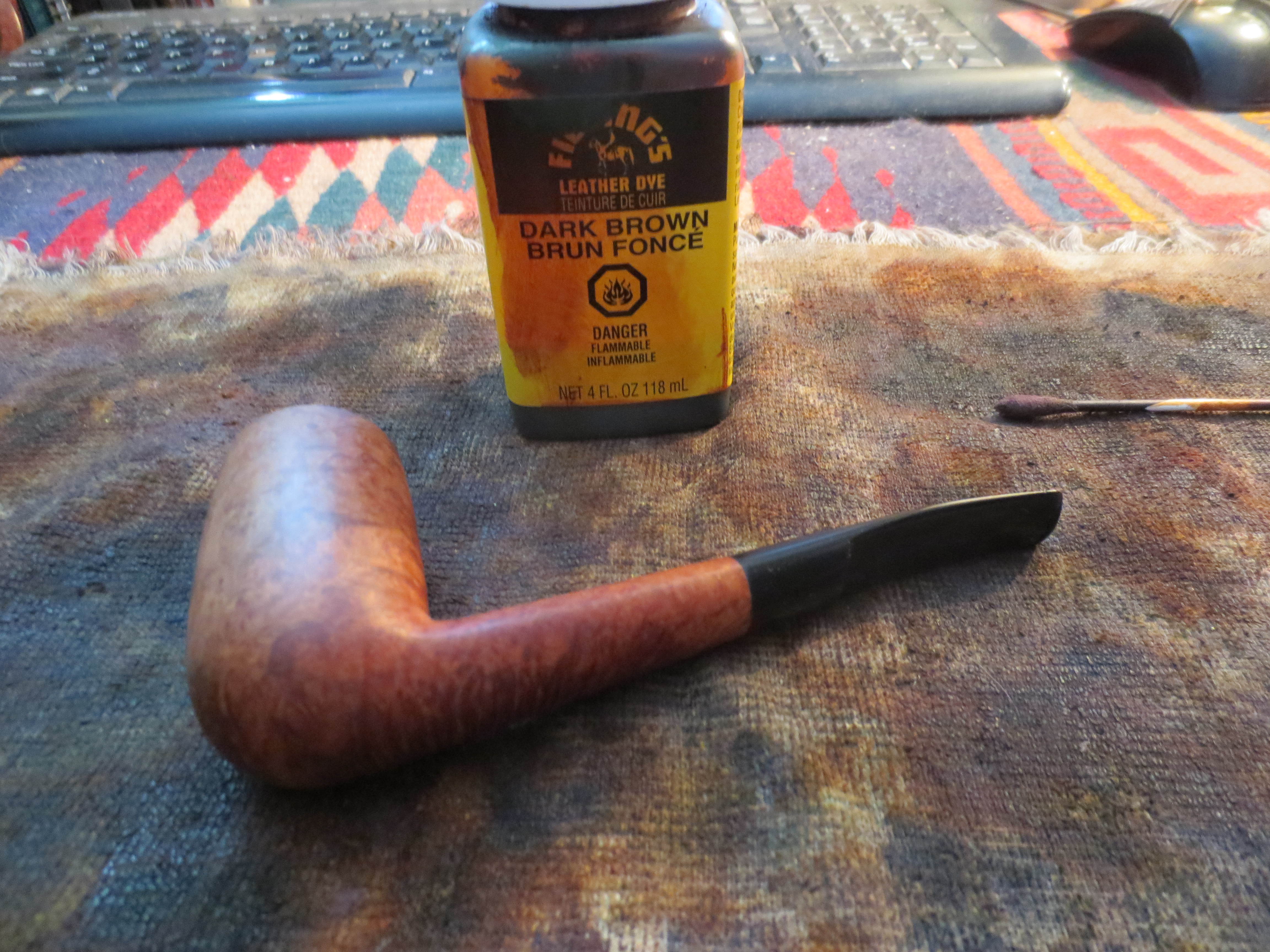
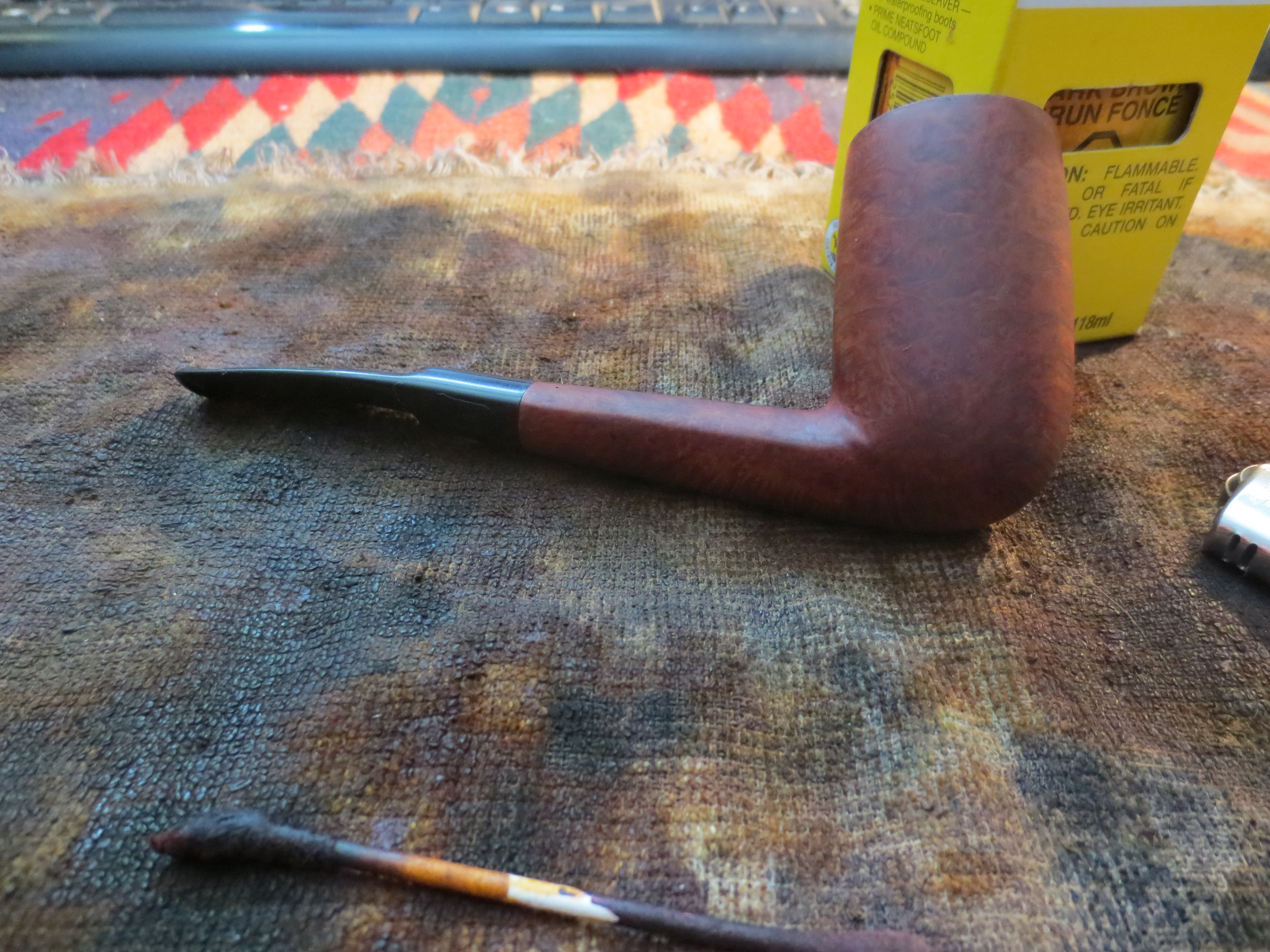
I stained the pipe bowl and shank with dark brown aniline stain mixed 2 parts stain to one part alcohol to get the brown colour that was previously on the pipe. I wanted it thin enough that the grain would really stand out and give the pipe a uniform look after the sanding. The pipe has some beautiful cross grain on the front and back of the bowl and the top and bottom of the shank with birdseye grain on the sides. I wanted the stain to highlight that. I stained the pipe, flamed it and restained and reflamed it to set the stain in the grain.
IMG_1363

IMG_1364

IMG_1365

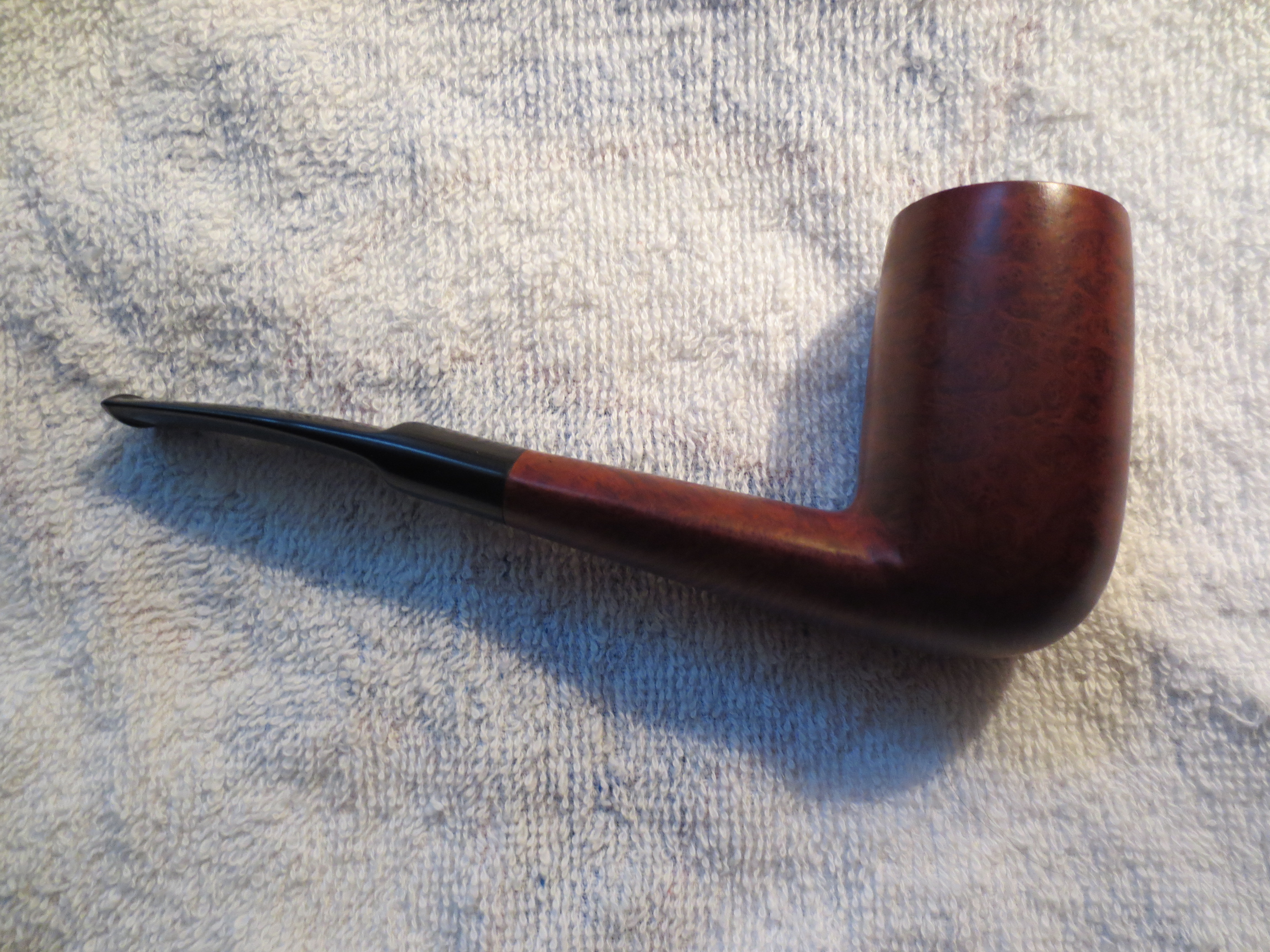
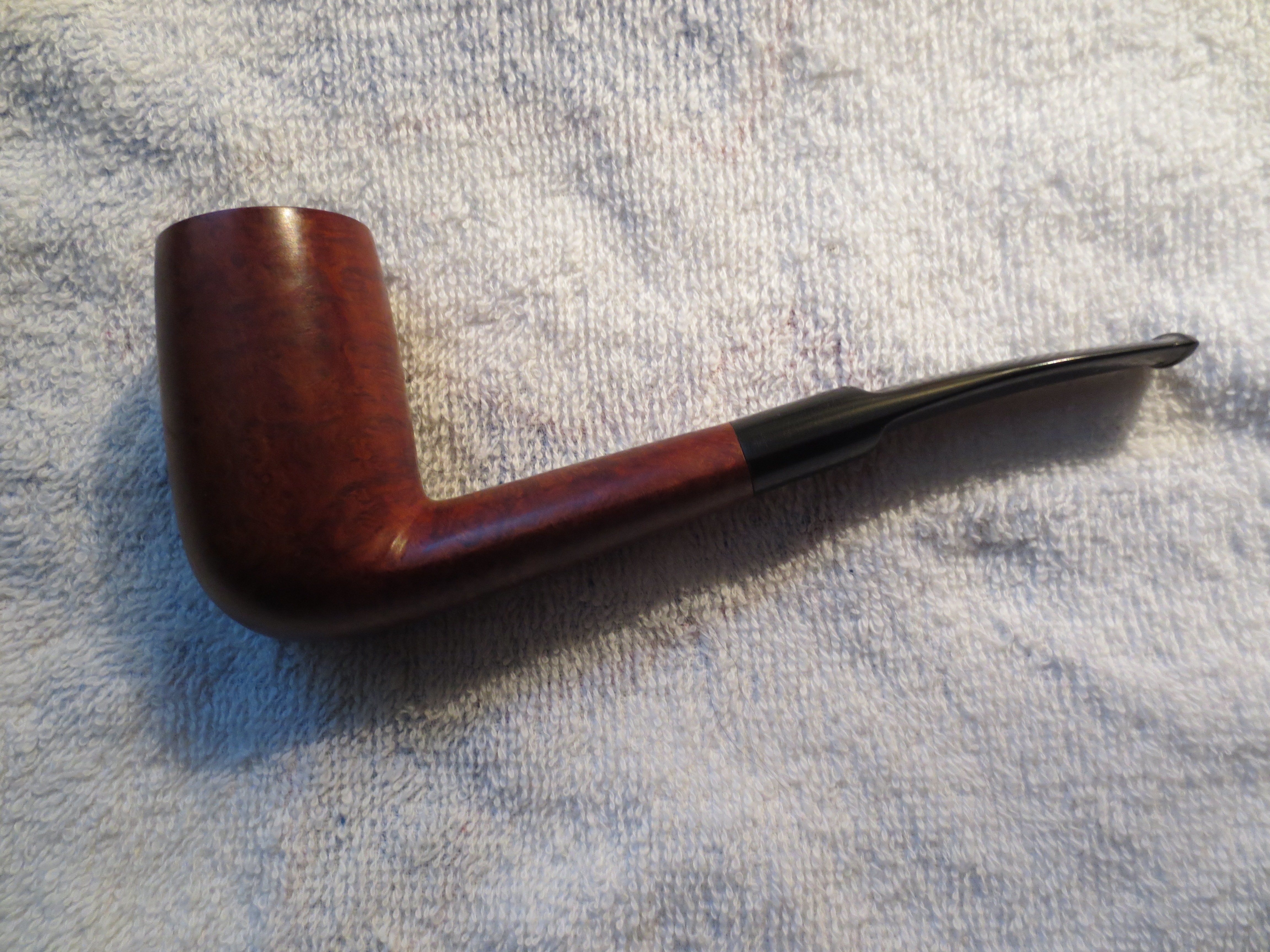
Once the stain was dry I took the pipe to the buffer and buffed the bowl and the stem with White Diamond to polish the stem and the stained bowl. Afterwards I gave it multiple coats of carnauba wax and buffed it with a clean flannel buff. For a final touch I hand buffed it with one last coat of wax and shoe shine brush. The final photos below show the finished pipe. It is cleaned, renewed and ready to go out to a good friend who loves this shape!
IMG_1368

IMG_1369

IMG_1370

IMG_1371

Comoys 498 Extraordinaire Restoration


Many pipe smokers or collectors (I consider myself both) have a “Holy Grail” list of pipes they would like to own. My list totals five and this year I was fortunate to have acquired two from that list within six months. My five are highly sought after and fully restored examples are most likely beyond my meager pipe fund budget. My best bet to acquire any of these models is to find a pipe in need of restoration. Even then, I’m competing with collectors all over the world.

Two pipes on my list are Comoys Extraordinaire models. The Extraordinaire line is described in Pipedia as:

Extraordinaire. This designation was given to any pipe that was out of the ordinary in size or grain. The E/O was introduced in the 1930s, and “Extraordinaires” can be found with no other designation or also stamped, for instance, “Blue Riband” or “London Pride.”

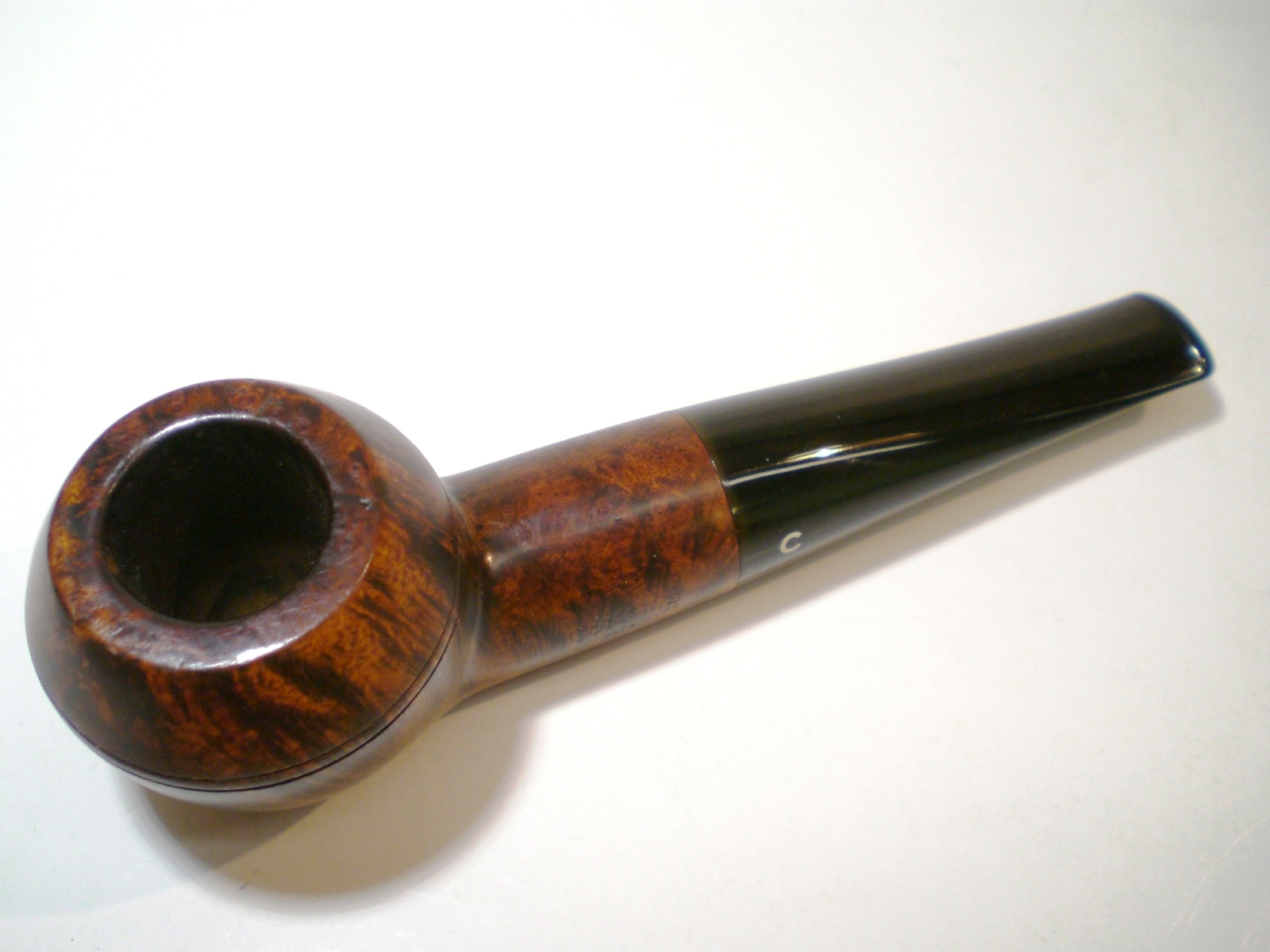
My first Extraordinaire is a 499 that has been dated to the 1930’s, from the “football” stamp and drilled “C” logo. I bought this one from a pipe friend and it was in the condition you see pictured below. (originally purchased at Fine Pipes) I found this 498 Extraordinaire listed on Ebay and was able to make a deal with the seller to acquire it before the auction continued. It was listed as a “283/Blue Riband”, both of which I knew it was not. The nomenclature isn’t as sharp as on my 499 but it is legible. The stamping style and C logo are identical to my 499, so I assume this one is also from the 1930’s. There were plenty of dings on the bowl, including some on the top. The stem was in pretty good shape, but heavily oxidized with one tooth indention on the bottom. Here is the condition of the pipe as delivered.

Comoys_498_Before

Comoys_498_Before (1)

Comoys_498_Before (2)

Comoys_498_Before (3)

Comoys_498_Before (4)

Comoys_498_Before (5)

There was a moderate cake in the bowl, which I reamed and then filled the bowl and shank with Sea Salt and Everclear for an overnight soak. The alcohol and salt didn’t leach much tar from the bowl, so hopefully it will be ghost free. The bowl was previously reamed slightly out of round and the Comoys beveled bowl top has been dimished over the past seven or so decades.

The next step was to steam the dents and marks from the bowl. I heated an old kitchen knife tip with a propane torch. A wet cloth, doubled over was applied to the area with a dent, then the hot knife tip was pressed over the dent. The steam eventually causes the dent to rise and I was able to remove or diminish most of the dents. You have to be careful on this step not to scorch the wood, so keep your cloth wet. I was able to reduce the dents on the bowl top to much smaller marks. Fortunately, the bowl top was not scorched by previous smokers

Removing the oxidation from the stem took several hours. I first soaked the stem in mild Oxy-clean solution to loosen the oxidation. I put a dab of grease on the “C” logo to protect it. I then used 1500 wet paper and then 2000 wet paper to remove the brown oxidation. I buffed the stem lightly with white diamond rouge (with the stem mounted to avoid rounding the edge). Next I sanded the stem with 8000 and then 12000 grade micromesh sheets. The stem was then buffed again with white diamond rounge and finally with Blue Magic automotive plastic polish.

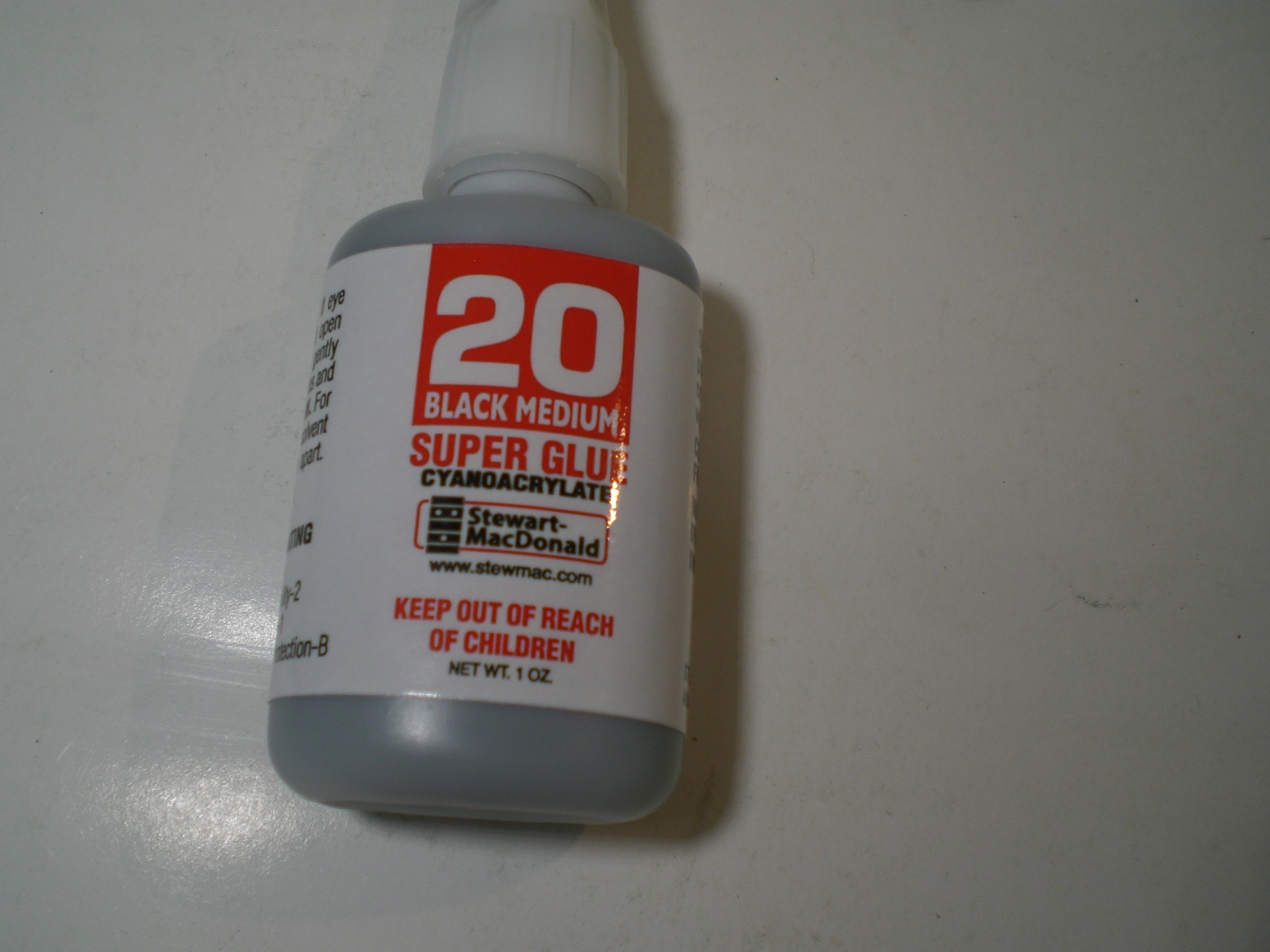
I tried to raise the tooth indention on the bottom of the stem, but it could not be raised much. I ordered a tube of black superglue that luthiers use for repair on stringed instruments. I’ve previously used regular superglue mixed with a little black vulcanite dust but this pipe seemed worthy of the investment ($15 delivered…). I’ll update the photos after the black superglue is used.

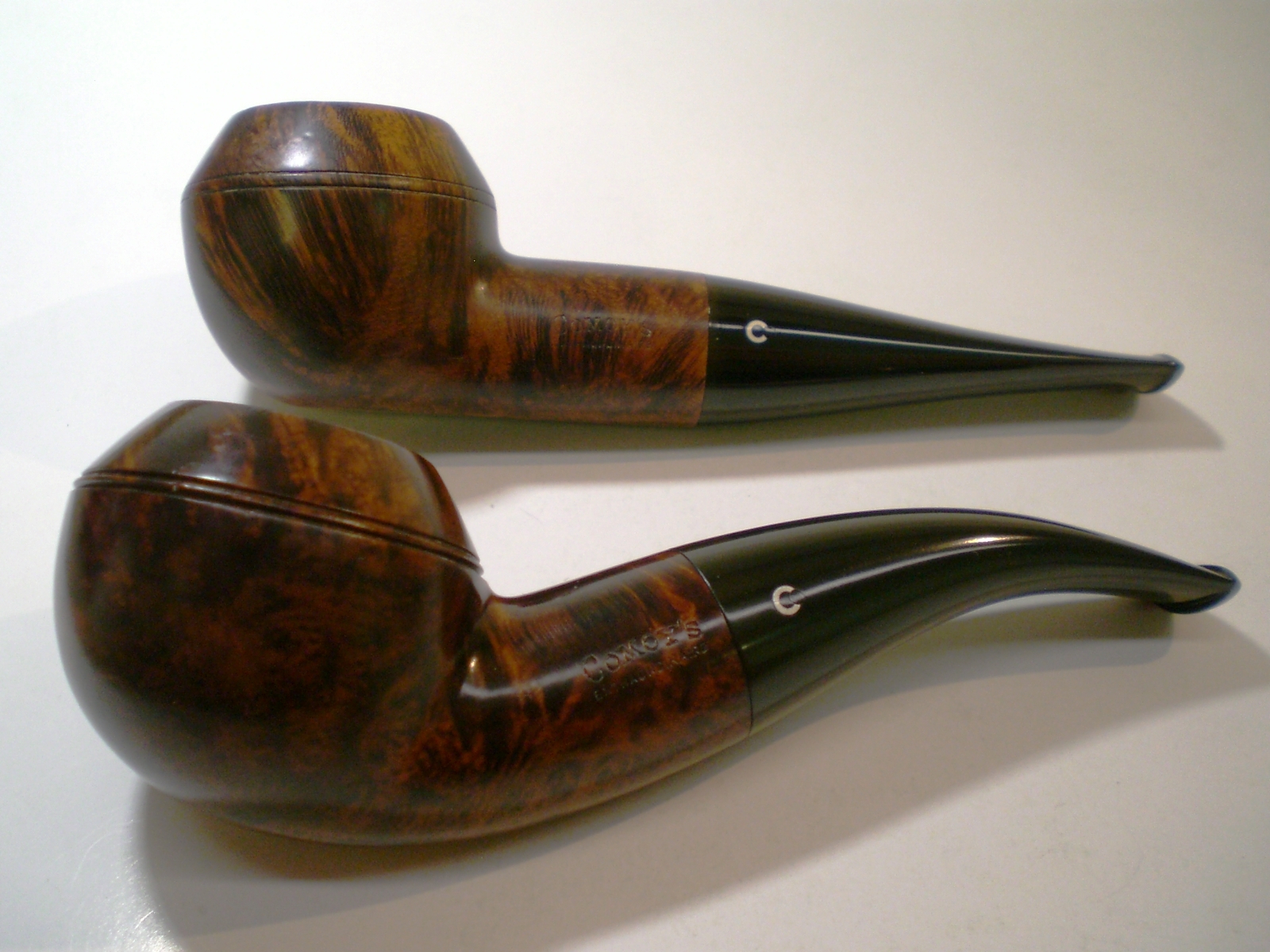
Below is the finished pipe along with my other Extraordinaire 499. I’m thrilled and fortunate to have acquired this one before it went thru the auction process. It makes a terrific stablemate to my 499.

Comoys_498_Finish

Comoys_498_Finish (3)

Comoys_498_Finish (2)

Comoys_498_Finish (1)

Comoys_498_Finish (4)

Update – Stem Tooth Indention Repair:

My order of Black Superglue was delivered this week from Stew-Mac. I forgot to order the accelerant, but Steve Laug told me to let the glue set overnight to dry.

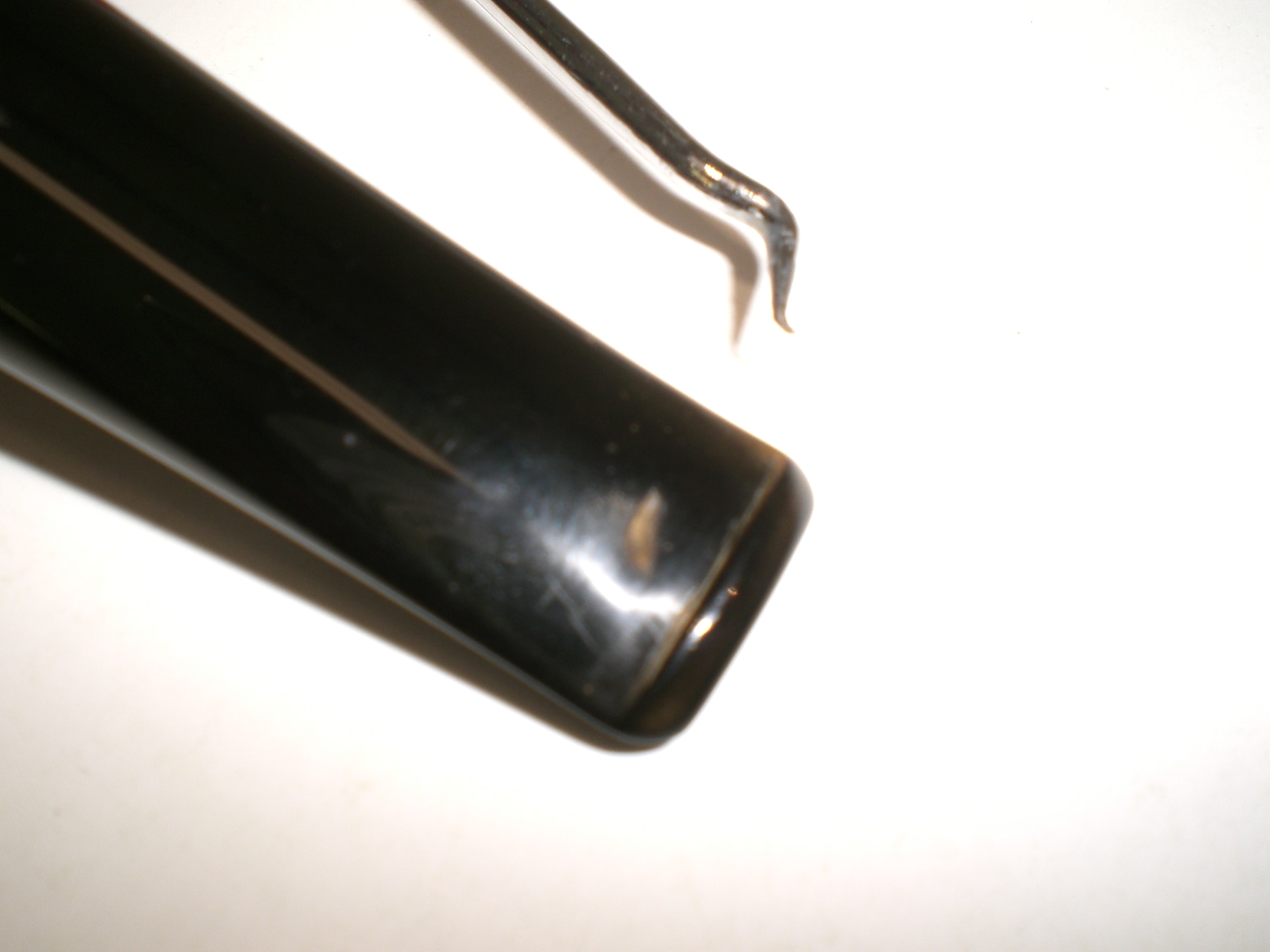
I cleaned out the tooth mark using a small pick, to allow the glue to have a good clean suface.

Comoys_Stem_Stem_Repair (2)

Comoys_Stem_Stem_Repair (1)

The glue is a little thicker than regular Superglue, but it can still run, so the pipe stem must be kept level. Cut the tube open with the smallest opening possible. The bottle does have a tight fitting cap, so hopefully it does not dry out between uses.

Comoys_Stem_Stem_Repair (3)

After the glue dried overnight, I sanded it smooth with some 400 and then 800 grit wet sandpapers. I followed this with 1500 and then 2000 grit wet papers.

Comoys_Stem_Stem_Repair (4)

I then moved to the final two grades of micromesh, 8000 and 12000 grade papers, followed by a buff on the machine with White diamond rouge. I always do a final buff with automotive plastic polish. I’m pleased with how the repair came out and the black superglue does blend in better than the clear. I’m not a clencher, but I suspect the repair section would last longer then the original stem material.

Comoys_Stem_Stem_Repair

A Surprise in this Lot of Pipe Bowls – a BBB Virgin Own Make Billiard


Blog by Steve Laug

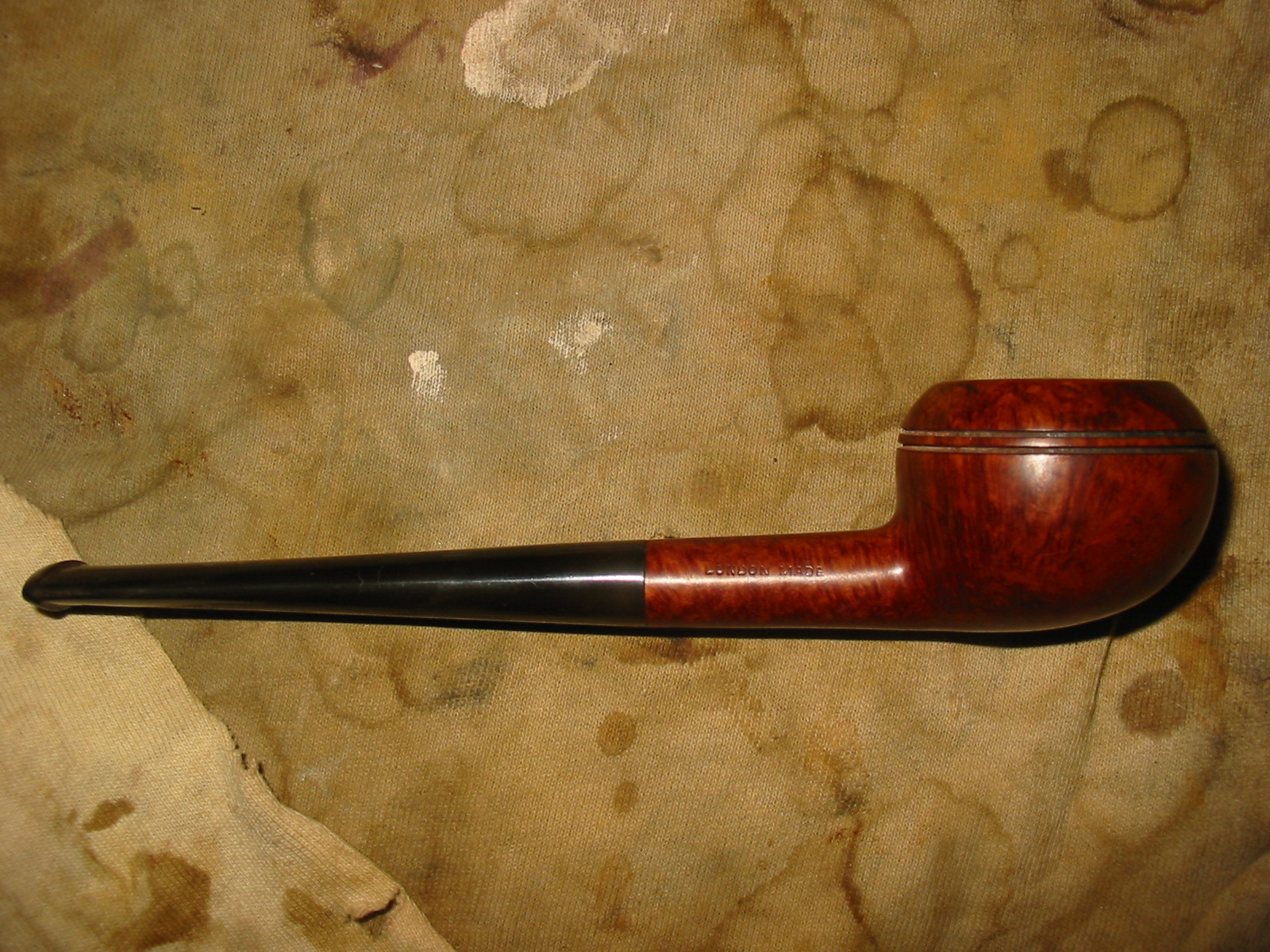
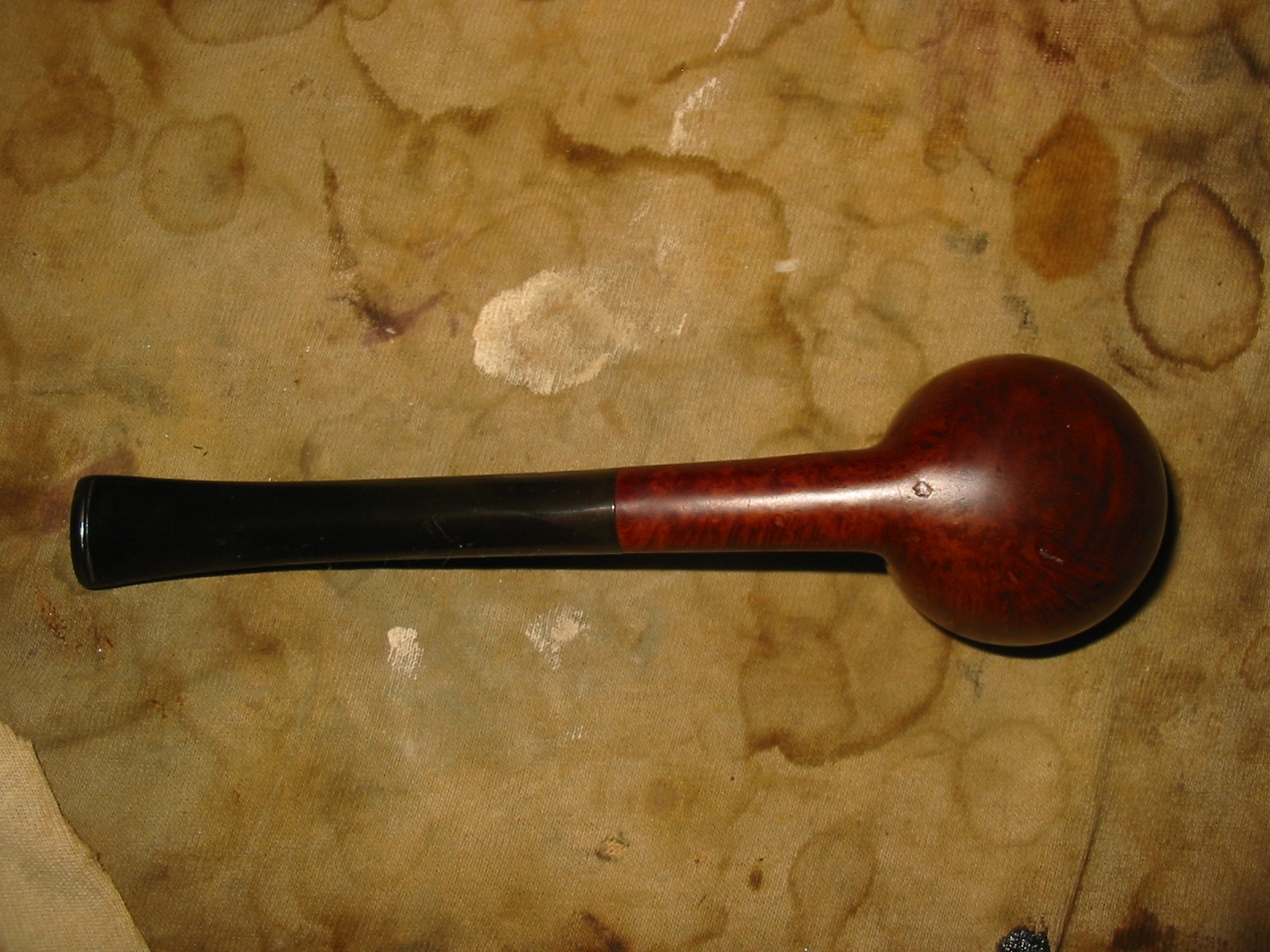
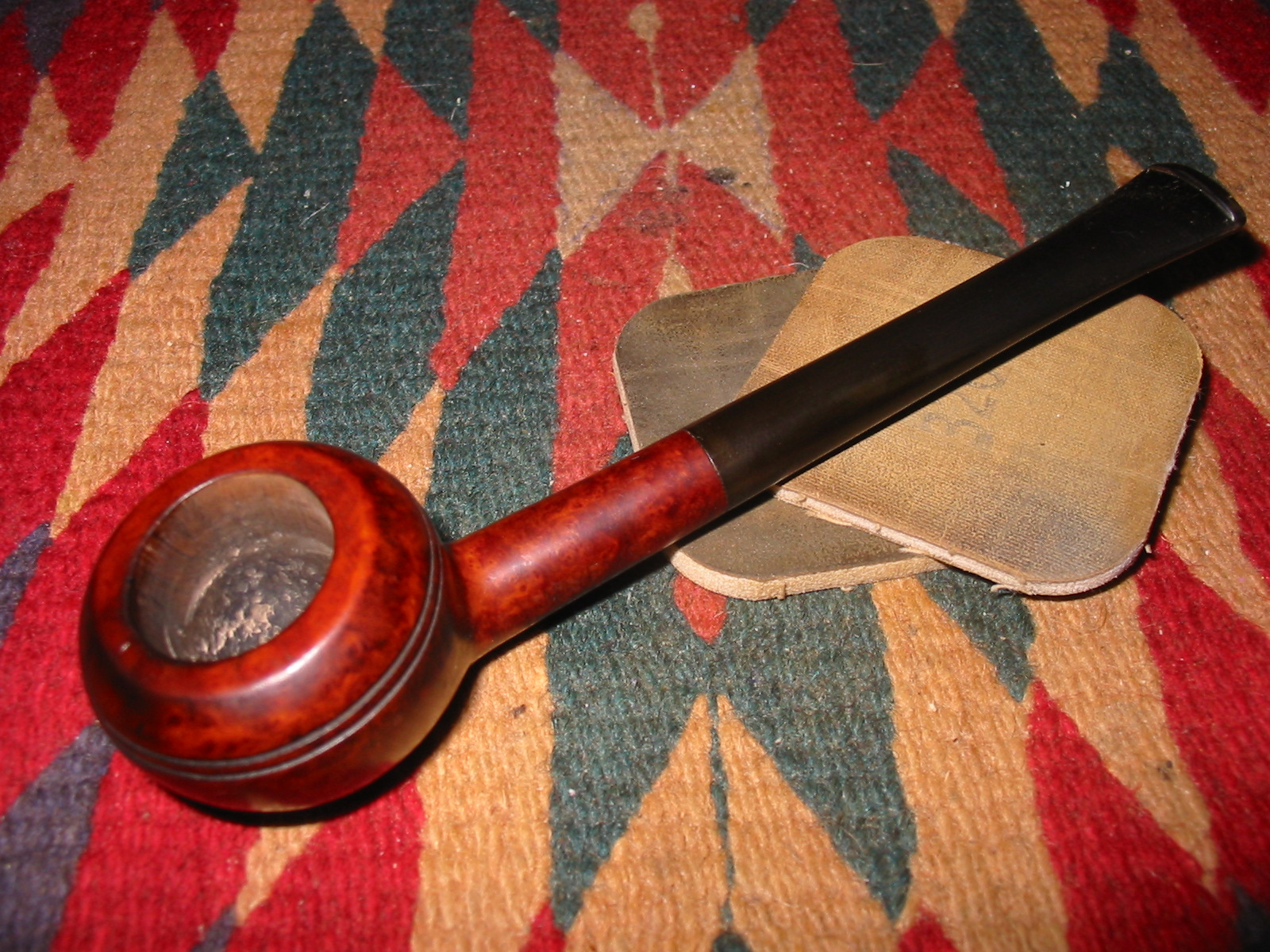
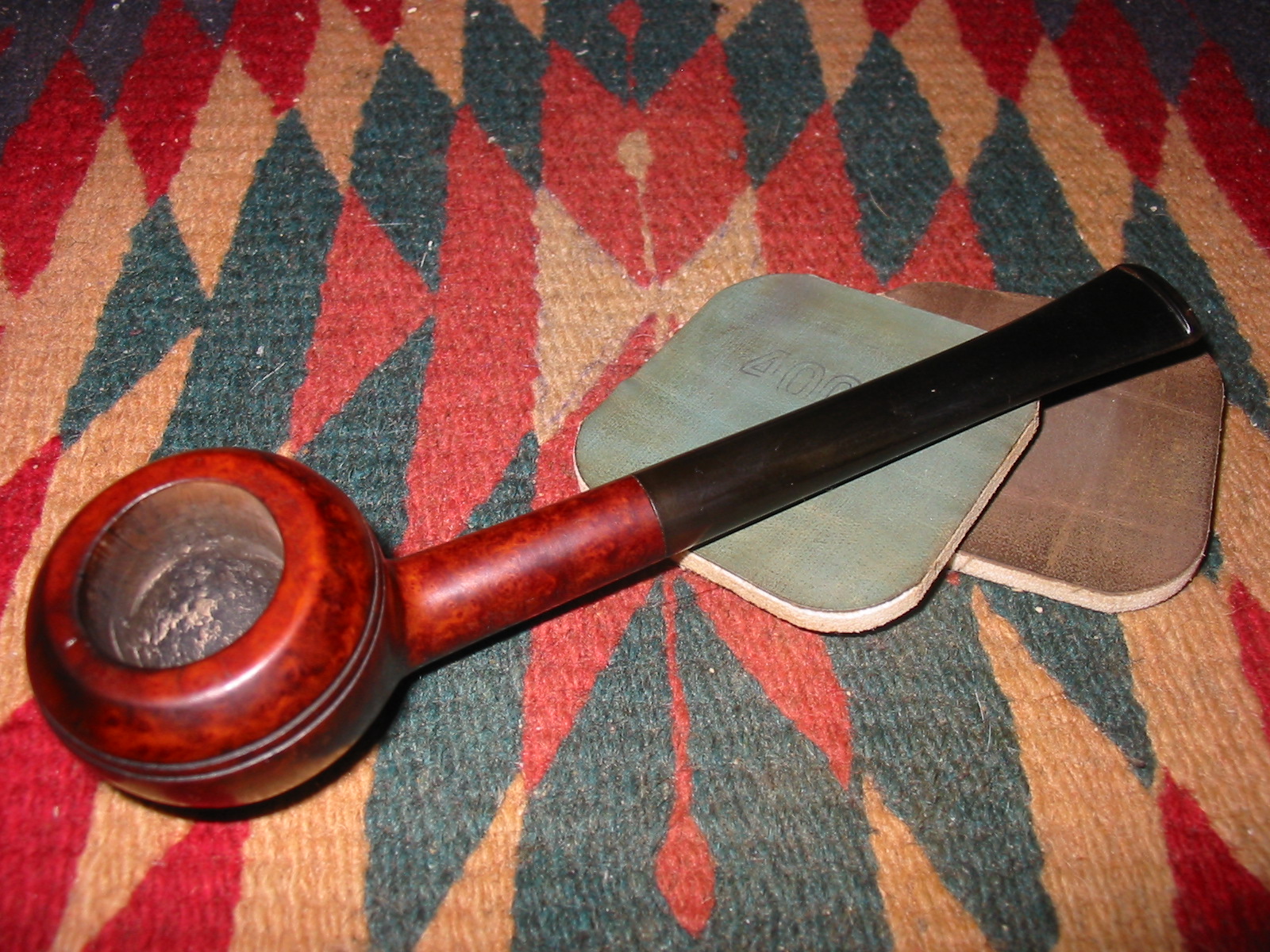
This package of pipe bowls to restem arrived this week. There were several surprises in the lot but one that the seller had listed as London Made turned out to be a BBB Virgin Own Make. The stamping had been buffed and was fairly faint but it indeed read BBB under the loupe. The left side of the shank is stamped London Made and the shape number 638. In the photo below it is in the center column the third pipe in the column. It came with a heavy cake and tar buildup on the rim. The bowl had been reamed in the past with a knife but was still fairly round. The chamfer/bevel on the inner rim is what had suffered the damage. The finish was dirty but would clean up fairly easily. Under the grime it appeared to be a beautiful cross grain – birdseye on the front and back of the bowl, on the top and bottom of the shank and cross grain on the sides of the bowl and the shank. It was going to be a beauty once it was cleaned up. The edges on the shank end were clean and undamaged and there were no cracks in the shank. The inside of the shank was also very tarry and caked.

Figure 1 Assorted pipe bowls for restemming

Figure 1 Assorted pipe bowls for restemming

I used a PipNet reamer to ream the bowl and remove the heavy cake build up. I reamed it with a smaller cutting head first and then used the correct size to finish. I wanted to ream it back to bare briar so I patiently worked with the cutting heads until the bowl was clean. The next series of three photos show the reamer in place and the result of the reaming. Look closely at the top of the bowl in the third photo and you will see the damage to the chamfer/bevel on the inner edge of the rim. Also in the photos is the stem I picked out of my can of stems for this pipe. The great thing is that I had a BBB stem in the can that fit well with minimal work on the tenon.

BBB Virgin bowl

IMG_1188

IMG_1189

IMG_1190

The next photo shows a side view of the pipe. I took this photo because of the great cross grain that is visible on the bowl.

IMG_1191

I sanded the tenon with 220 grit sandpaper to remove a thin layer of the vulcanite and make a good fit on the stem. The next two photos show the fit of the stem. I was unable to push it into the shank due to the tar buildup in the shank. Once I cleaned out the shank I would be able to tell if I needed to do a bit more sanding on the tenon.

IMG_1192

IMG_1193

I cleaned out the shank with cotton swabs and Everclear. While I worked on that I also swabbed out the inside of the bowl and the rim with Everclear as well. It took many cotton swabs and pipe cleaners to get the shank clean and ready for the new stem.

IMG_1194

IMG_1195

When the shank was clean I tried to fit the stem again. It was still a little tight so I set it aside to work on when it was thoroughly dry. I have learned that if I fit it when the shank is wet the fit will be too loose once it dries out. The photo below shows how the stem fit after the cleaning of the shank.

IMG_1196

When I returned from work the stem fit perfectly. I did not need to do any more sanding on the tenon. I wiped down the exterior of the bowl and shank with acetone on cotton pads to remove the finish and grime from the top of the bowl. I also did some minor adjustments to the shank/stem union as the shank was slightly out of round and needed to have briar removed on the top and left edges to smooth out the union. I used 220 grit sandpaper and a medium grit sanding sponge to even out the fit of the stem. The next three photos show the fit of the stem and shank after the work.

IMG_1197

IMG_1198

IMG_1199

I sanded the chamfer/bevel on the inner rim of the bowl with a folded piece of 220 grit sandpaper. I wanted to repair and minimize the damage to the rim from the reaming that had been done with a knife. I have found that I can set the folded sandpaper at a set angle and work my way around the inner rim of the bowl repairing the bevel. It takes careful work to get the angles to even out and give a finished look to the repair. The photo below shows the finished chamfer/bevel.

IMG_1200

Once the bevel was completed and the shank/stem fit fine-tuned I needed to remove the rest of the finish from the pipe so that I could easily restain it and have a good match on the sanded areas. I sanded the rim and the shank with a fine grit sanding sponge and also with 1500-2400 micromesh. I then wiped the bowl down with acetone wetted cotton pads to remove the finish. The next three photos show the pipe after the wash with acetone. The finish stained acetone cotton pads are in the background.

IMG_1201

IMG_1202

IMG_1203

I sanded the stem and the bowl with a fine grit sanding sponge after the wash to even out the look of the finish and to prepare it for staining. The next three photos show how the sanded portions now blend in with the finish of the bowl and shank. The scratches have been removed and the bowl and shank are ready to be stained.

IMG_1204

IMG_1205

IMG_1206

I decided to begin working on the stem before I stained the bowl. I wet sanded the stem with micromesh sanding pads from 1500-1800 grit. Once I had it started as pictured in the first photo below I changed my mind about sanding the stem further at this point. I restained the bowl with a dark brown aniline stain thinned 2:1 with isopropyl alcohol. I applied the stain with a cotton swab and then flamed it with my lighter, reapplied the stain and reflamed it until I had the colour and coverage I wanted. Photos 2-4 below show the pipe after staining. I am happy with the blend of the stain on the rim and the sanded area of the shank. The coverage is heavy enough to give a good colour and yet it is not too heavy so that the grain really shines through. I had not buffed the pipe at this point merely stained it and let it sit while I went back to working on the stem.

IMG_1207

IMG_1208

IMG_1209

IMG_1210

I went back to sanding the stem with the micromesh sanding pads. I worked through the remaining grits of pad from 2400-12,000. Each successive grit of pad deepened the shine on the stem and progressed to a deep black look. I also sanded the bowl with the micromesh pads. The hardest area to remove the oxidation was around the brass BBB diamond insert. To clean that up I used a Bic lighter and passed the flame over the stem surface quickly and the oxidation burned. I also wet sanded the area with the edge of the sanding pads. To finish that area I also used the Scratch X2.0 plastic polish and then rubbed the stem down with Obsidian Oil and let it dry. The next three photos show the stem after sanding with the pads.

IMG_1212

IMG_1213

IMG_1214

The final four photos show the finished pipe. There are some dents remaining in the side of the bowl that I steamed to lift but they still show. I tend to leave these on older pipes as signs of their age and character. I love the way the grain stands out on this pipe. The sides show the cross grain. I did not take photos of the ends of the bowl to show the birdseye grain that is situated on them but you can imagine the look from the straight lines of the cross grain. The rim and sanded areas on the shank look well blended in and the bowl smells fresh and ready to use. I am well pleased with how this old beauty turned out and know that it is ready for a life of service.

IMG_1219

IMG_1220

IMG_1221

IMG_1222

Comoys 215 “The Guidall” Restoration


This Comoys “Guildhall” came with an Ebay estate lot that held my recent GBD Seventy-Six project. It is a stamped “C” logo pipe but the briar is nice and it should make a decent smoker. I suspect given the stamped logo and nomenclature, that this one is from the 1980’s.

The stem was heavily oxidized and it took a lot of elbow grease to get it shiny again. The bowl was reamed and soaked with an alcohol and sea salt mixture, as is my usual practice. There was a chip on the bowl top, around the 7 o’clock position. That spot was sanded lightly with a piece of 6000 grit micromesh which mininized the mark and didn’t require the bowl top to be restained. The beveled edge, a common Comoys styling element, is still intact with some darkening.

Comoys_215_Guidall_Before (3)

Comoys_215_Guidall_Before (4)

Comoys_215_Guidall_Before (5)

Comoys_215_Guidall_Before (6)

I put a dab of grease on the “C” logo stamp and soaked it in a mild Oxy-Clean solution. It took a lot of sanding with a piece of 1500 grit wet paper to remove the oxidation. The logo has to be avoided, which is tricky. I then moved to 2000 grit wet paper. The stem had a pretty decent level of shine at that point and I finished the hand work with 8000 followed by 12000 grit micromesh papers. The pipe was then buffed on a machine with White Diamond followed by Blue Magic plastic polish.

The bowl was buffed lightly with Tripoli rouge followed by White Diamond and finally several coats of carnuba wax.

Here is the finished pipe. This one will most likely be sold via pipe forum classifieds or Ebay.

Comoys_215_Finish_B

Comoys_215_Finish_B (1)

Comoys_215_Finish (8)

Comoys_215_Finish_B (4)

Comoys_215_Finish_B (5)

A Peterson Pipe Finds Its Way Home


I don’t think I have ever had a pipe I gave a way or sold come back to me years later. Usually they are gone from my radar. I have a record of the pipes I have sold but rarely record the ones I give away. They are gifts and as such the moment they leave my hand they are no longer on my radar. There has been times when I wished they would come home but never truly expected it to happen. That is until yesterday!

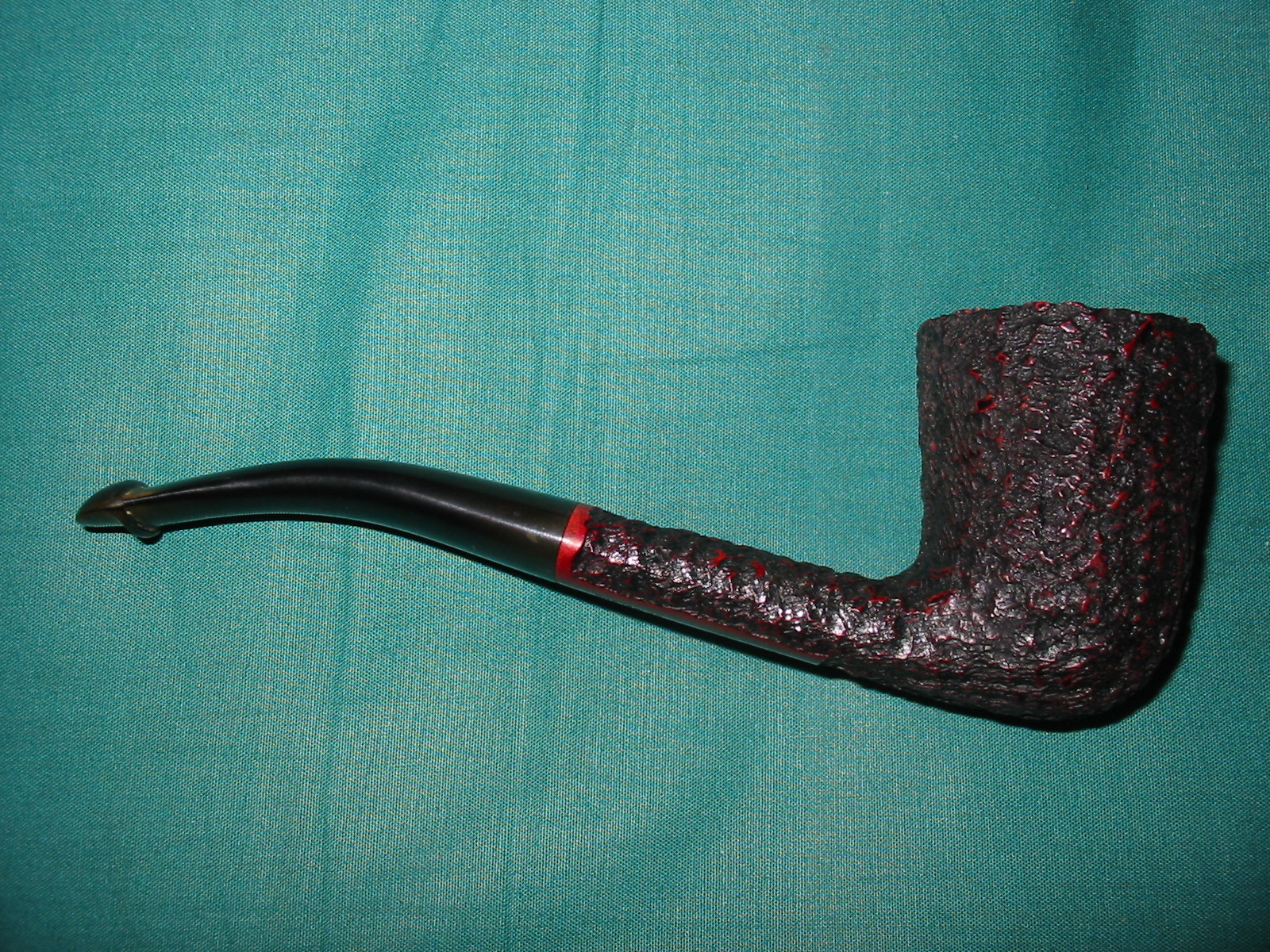
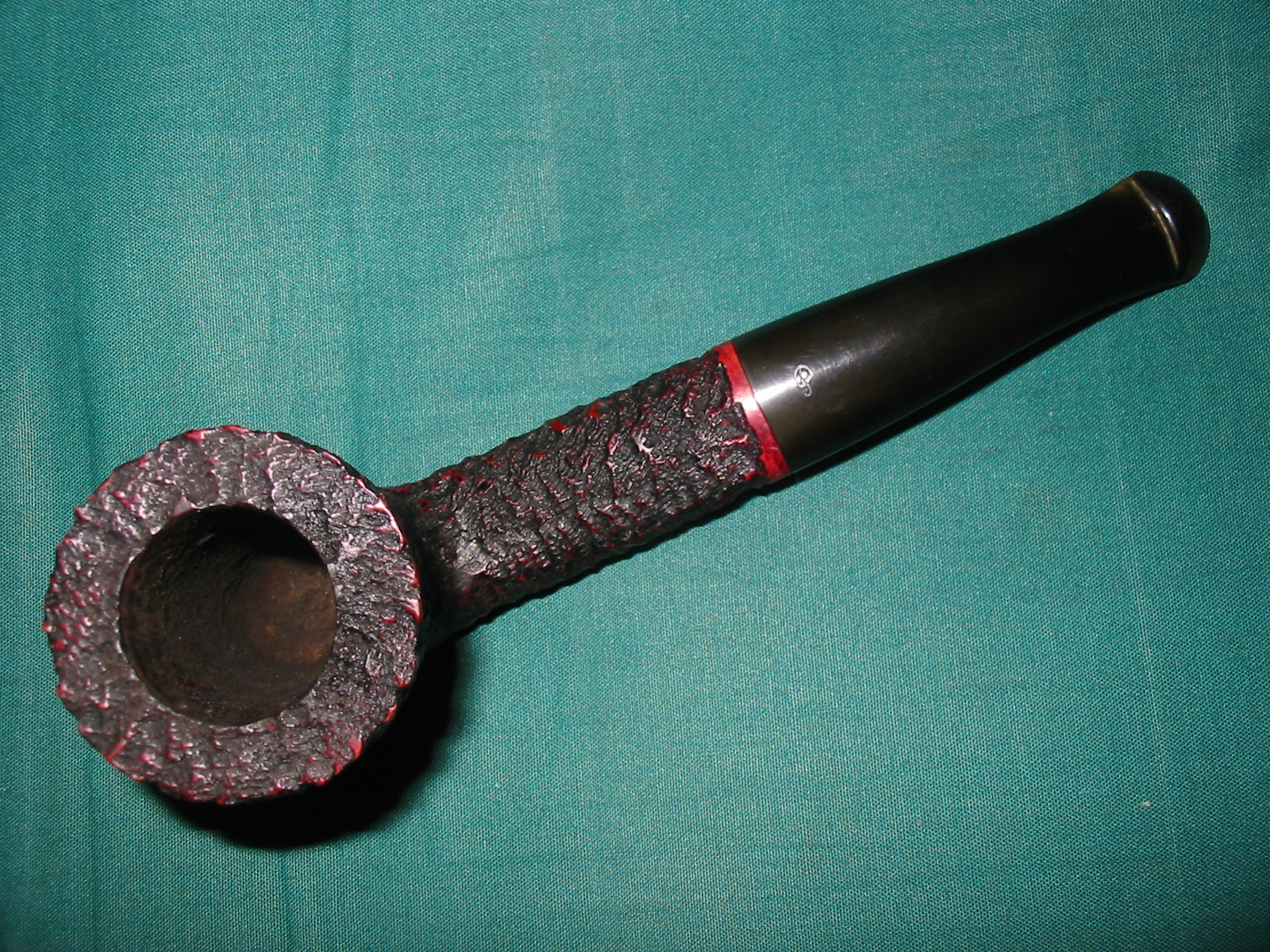
The pipe that came home has been there and back again! Its residence with me began when I visited Mike Glukler in Aldergrove many years ago. Periodically I would visit and look through the pipes he had for sale through Briar Blues. This time I looked through and was drawn to a Peterson Special in a rusticated Dublin shape. I checked it out and the purchased it. I brought it home with me and smoked it a couple of times but never quite enjoyed it enough to make it a regular in my rotation. So it sat neglected for a while. On day I was going through my rack and deciding which pipes to sell and which to keep and I came across this one. I almost put it in the “to be sold pile” but instead I cut a new fishtail stem for it. I smoked it more often then.

I have always had a curiosity about the estate pipes that I purchase. I want to find out as much as possible about them. In the case of this Peterson that meant I would contact Mike Leverette. I wanted to get an idea of what I had in my hands. I wanted to know a bit about the age and details of the pipe. Mike was excited when he heard about this pipe. He said he had never seen a Special in this shape. I sent him photos of it and he sent back replies about it that were very helpful to me. I had it in the rack and smoked it occasionally with the new fishtail stem but never truly seemed to reach for it that often.

Through my work I would travel to Atlanta several times a year and stay for a week or more at a time. I always took along pipes and tobacco that I would gift to other pipemen that I would call and meet for a bowl and a chat. I met John Offerdahl and Mike Hagley on some of those trips. But I would always get together with Mike Leverette. He would drive up from his home to Atlanta where I was staying in a hotel by the airport and we would have lunch or dinner together. We would talk about all kind of things – history, Vikings, architecture, pipes, history, pipes. WE kept in touch by email and phone over the years and when he was diagnosed with cancer and underwent surgery we talked and afterwards we met together. When I was diagnosed with cancer and was scheduled for surgery we talked and met together. Mike was my friend and a kindred spirit in terms of pipes, history, writing and many other things. If you have a picture in your mind of two old gents sitting together over dinner chatting and later adjourning to the open space near my hotel to smoke our pipes and talk some more you have the right image in your mind. I always enjoyed those visits. Several times John Offerdahl would join us for dinner and a pipe. I have missed those visits and conversations since Mike died.

LTR: John Offerdahl, your’s truly, Mike Leverette

LTR: John Offerdahl, your’s truly, Mike Leverette

It was on one of those trips, quite a few years ago now, that I gave that Peterson’s Special Dublin to Mike when I visited him in Atlanta, Georgia. I remember sitting in an Italian restaurant near the hotel and each of us pulled out our gift pipe and tobacco to exchange. It had become a bit of a ritual with us. We would exchange our gifts before even opening the menu! I remember on this particular occasion Mike gave me two old sandblasted Barling Canadians that needed to be restemmed and a tin of Virginia Flake tobacco. My gift to him was wrapped like most of my presents (at least that is what my daughters tell me) in a grocery bag. When he opened it and took out the Pete Dublin the look on his face was a mixture of surprise and excitement. He turned it over in his hands and read the stamping and commented on the history of the pipe. He took it apart and looked down the long shank and examined the stem. He loved that pipe a lot. I had included a tin of Latakia Flake for him as it was a favourite of his.

We finished our dinner that evening and went back to the hotel and adjourned to the bench out front. He loaded up the pipe with some of his own tobacco and I loaded mine. He smoked it and thoroughly enjoyed the smoke. I am sure there was much more that went on that evening but this is what my memory brings up. That evening was in the pre-cancer days for both of us so we did not have a care in the world or a worry on our minds. I remember a bit of the conversation that evening – we spoke of the route of the Exodus of Israel from Egypt. Mike had done a lot of work on that in a paper he sent me and he wanted some feedback. It was a great evening and we talked and smoked until the sun went down. We parted company that evening both richer for the conversation and friendship. That was the last I saw of the Dublin.

Now jump ahead about 12 or more years. I was on the phone with a buddy who is selling Mike’s pipes for Mike’s widow, Jeanette. We were talking about the pipes in the lot that he was selling. There were several of them that he wanted to send me to recondition and document the process I used on them. As we talked I asked him in passing about the Peterson Special Dublin. I was curious as to what happened to that pipe after Mike died. I told him a bit of the story I have written above. He laughed and said that he happened to have that pipe in his hand at just that moment. I asked him about its condition and what he thought of it. It was at that point he offered to send it back to me. He would call Jeanette and tell her about our conversation and then ask her about the pipe coming back to me. She told him she was more than happy to have it come home! He let me know that it would be shipped out to me soon!

I knew it was coming but not when. Today I came home from work and found a package waiting for me. It was addressed from my buddy in Texas. I excitedly opened it and carefully unwrapped “Mike’s Pipe”. It had come home to Canada. As a kindness my friend had include a small bag of HH Dark Flake tobacco for me to try. I know he had said it was too strong for his liking but the funny thing is I think it is just the tobacco that Mike would have loved. I took the pipe down to my work table and gave it a thorough examination. It was actually in great shape. The cake was minimal, just the way I like it. The finish was in excellent shape with no dings or scratches. There was a little darkening and dust on the rim but that would clean up easily. The stem had some oxidation around the P stamp and on the underside as well (to be honest I think this was there when I gave it to Mike, or at least it looked like I remembered it). There was some small tooth chatter on the top of the stem and on the underside just ahead of the button and the shelf, but none of it was too deep. I decided to clean up the pipe right then. The next three photos show the pipe as it looked when I took it from the box.

IMG_1155

IMG_1156

IMG_1157

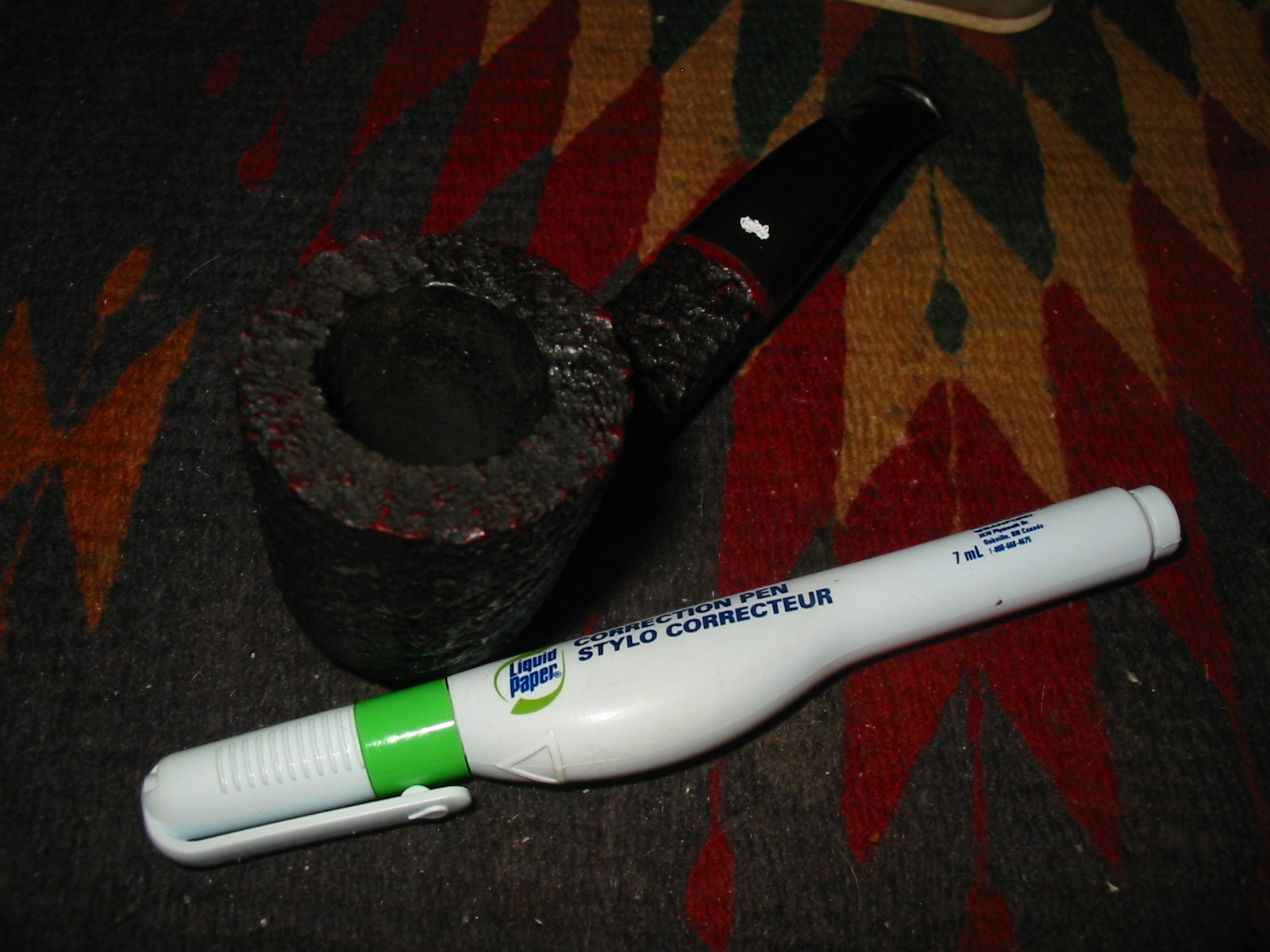
I used a Bic lighter and passed the flame over the tooth chatter on the top and underside of the stem. I then sanded it lightly with 1500 grit micromesh to make the tooth marks very visible. I used 220 grit sandpaper to remove the tooth ridges and remnants left after the heat of the lighter raised the dents. I wet sanded it with the 1500 grit micromesh to smooth out the scratches left by the 220 grit. I also decided to add some white to the stamping on the stem. I use a whiteout pen to do that. I apply the whiteout heavily to the stamping and once it is dried I sand it off with the 1500 grit micromesh sanding pad.

IMG_1163

IMG_1158

IMG_1159

IMG_1161

The next series of three photos show the progress of polishing the stem with the micromesh sanding pads from 1500-12,000 grit. The recoloured stamping is also visible. At this point in the process I scrubbed the top of the bowl with warm water and a tooth brush. The darkening and light build up was easily removed by this method. I then buffed the stem with White Diamond to give it a final polish and lightly buffed the bowl. I buffed the stem with carnauba to protect it from oxidizing and then took the pipe back to my table. I gave the bowl a coat of Halcyon II wax and hand buffed it with a shoe brush. I have found that this keeps the rustication crisp and fresh where a buff on the buffer can flatten the rustication and change the feel in the hand.

IMG_1164

IMG_1165

IMG_1166

The next series of four photos show the rejuvenated pipe. The stem is a bright black and the tooth marks are gone. The bowl and internals are also cleaned and the pipe is ready to load up with the HH Dark Flake and smoke. This pipe will always be “Mike’s Pipe” to me. I raise the bowl in his honour!

IMG_1182

IMG_1183

IMG_1185

IMG_1187

Not So “Mint” Danish Sovereign Reborn


Blog by Greg Wolford

I picked up this Danish Sovereign off eBay for my son as a gift. I have one in a different shape and he has admired it since I got it. I knew that he had been wanting a Danish pipe and when I was this one it looked to be right up his style-alley.

This pipe came described as in “mint condition” from an eBay seller. It was a Father’s Day gift for my son, his first Father’s Day pipe actually; he took up the pipe only about 8 months ago. The photos the seller provided were not good and none of the problems were shown/disclosed; I could see some oxidation but didn’t expect the chatter and dents.

The seller shipped it not as expediently as I had hoped so the pipe didn’t arrive in time for Father’s Day; it came yesterday. I spent the evening getting it cleaned up for him, not doing anything to alter the originality of the pipe, which is what he wanted. If he decides he wants me to, I may end up sanding it down and re-staining it, filling the dents as needed, to make it much more like new. But that’ll be his call since it’s his gift.

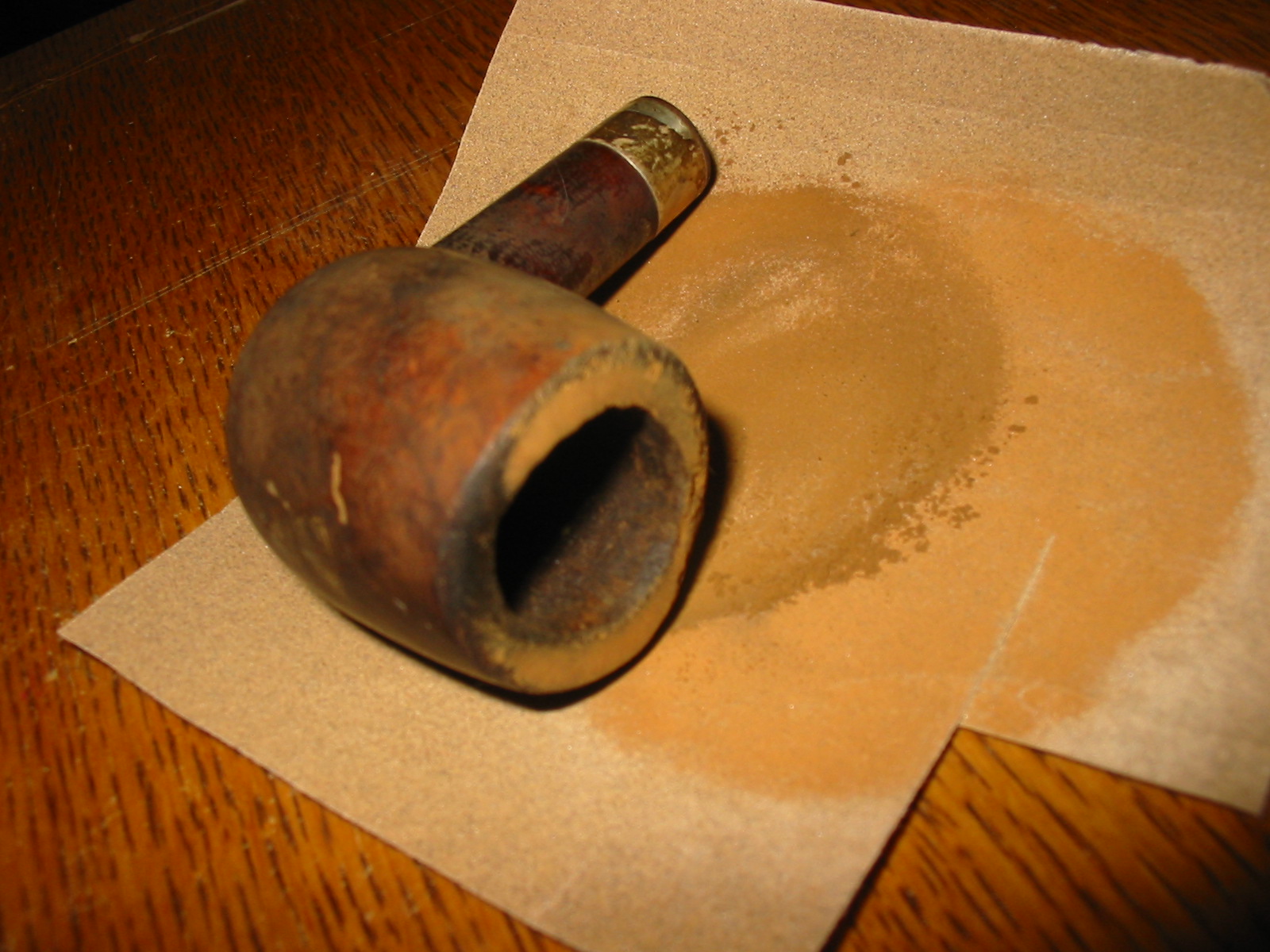
I thought I would try something, actually a few things, different for this project: I used a few new things/processes, yes, but mainly the difference is I took video as I went instead of photos and will show the steps/progress in the video rather than writing it all out. This is something I have been wanting to try and so, now I have! Since it is the first time doing a resto-video I’m sure there will be things that could’ve been done better. And hopefully with time and practice, if this idea seems to “fly”, they will in the next projects.
Concerning a Vintage Portland London Made – Robert M. Boughton


It is a pleasure to have another article by Robert Boughton. In this article he demonstrates his skills in the restoration of a Portland Pot shaped pipe. Thanks Robert for your additions to the blog.

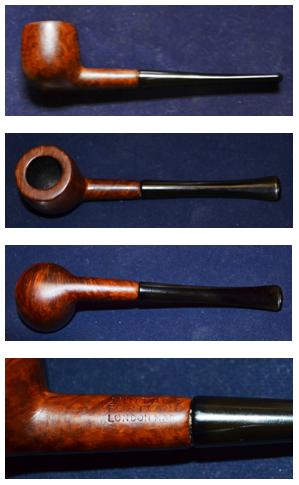
The particulars of said pipe being that it is an elegant, very small straight pot (5’’ length with a 1.5” x 1.25” bowl), and is believed by the author to be a BB&S, or Barling, seconded to Topsall Portland
Guest Blog by Robert M. Boughton

Introduction
Irish author James Joyce, in a memorable example of poetic license, called his collection of short stories assembled in Dubliners his “little epiphanies.” Rare stones are known as gems. Wise men have written that the smoking pipe is “the poor man’s friend”and“the fountain of contemplation, the source of pleasure, the companion of the wise,” and that it “draws wisdom from the lips of the philosopher, and shuts up the mouth of the foolish.” To me, the moment I first saw on eBay this fine specimen of pipe-making, its simple and classic lines and curves shining through the obvious considerable use by its previous owner(s),“sudden as the spark from smitten steel” I was effected the same as the hammer striking metal in a forge. I had to have this pipe, and for a penny less than $20 it became mine. Knowing nothing at the time of purchase of its possible history, my only desire was to restore the beautiful little pot to its original splendor.

As I sit here on the only piece of comfortable furniture so far moved into my new apartment in a much better and safer part of town than I described in my previous blog, with the morning view of a golf course outside my window, I am smoking in my little Portland pot – now restored to the above-sought condition – a gentle bowl of Stokeby’s 4th Generation 1855 ready-rubbed mixture with its natural Virginia sweetness, and feeling so happy I made the small investment of money and time. Although I am comfortable taking credit for the full restoration of the pipe, this being my first such complete endeavor in the art and craft of such work, I must again give thanks for the collaborative contributions of several friends, in this case Chuck Richards, Hunter Brooks and Leigh Brady, whose parts in the task will be described in time.

Boughton1

Again, when I bought this pipe, I did so without any initial research. By the time it arrived in the mail four days later, however, I had found references online that seem to identify it as a BB&S (Barling’s) second made for a company known as Topsall Portland. Other sources include eBay and the Brothers of Briar. I am satisfied with the pipe regardless of its origins, though, and any better information would be appreciated.

Chuck Richards.  Photo © by the Author

Chuck Richards. Photo © by the Author

Hunter Brooks.  Photo © by the Author

Hunter Brooks. Photo © by the Author

Leigh Brady.  Photo courtesy of L. Brady

Leigh Brady. Photo courtesy of L. Brady


Restoring the Portland

First, there’s the sanding that I expected to reveal a small crack in the top of the shank near the stem, which in fact was my original excuse for the full restoration of the pipe as opposed to the initial refinish I had completed to remove the bad discoloration of the bowl and stem…but after sanding down the entire bowl and shank, the “crack,” I was actually disappointed to discover, was only a mirage created by the old finish.

Boughton5

Then, after the initial setback of discovering there was no need to fill a crack and use a metal band to seal the shank, I micro-meshed the wood:

Boughton6

Boughton7

Boughton8

Following the micro-mesh, I used a light brown leather stain recommended by Chuck, which I found at Hoffmantown Shoe and Boot Repair, after which Hunter at Stag Tobacconist(owing to my lack of supplies and equipment) buffed the bowl with Red Tripoli Wax and the stem with White Tripoli.
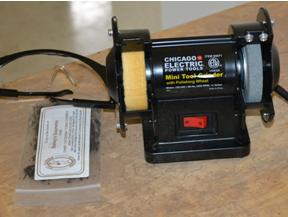
I bought a very cheap wheel buffer to apply Halcyon II Wax, which gave the pipe a decent but still somewhat wanting finish.

Chicago Electric Mini Grinder/Buffer

Chicago Electric Mini Grinder/Buffer

Finally, I tackled the hardest, and therefore most satisfying, task of micro-meshing the stem where it connected to the shank, which appeared to have been replaced at some point during the pipe’s long life. By my estimate, this Portland London Made pot was crafted no later than the 1960s. Perhaps this accounts in large part to my dread of fitting the stem to the shank, a job that even I could feel was necessary to call the overall work a full restoration but which I approached with considerable trepidation for fear of overdoing this step – and in so doing botching the entire effort! But, at Chuck’s insistence, I applied gentle, patient micro-meshing and at last achieved the desired effect. Again I am indebted to Chuck’s guidance, without which my own inclination to put the helpless stem to the wheel almost surely have obliterated all of my hard work!
The next Friday night, at our weekly pipe club meeting, I presented the pipe for scrutiny by my fellow members. I was gratified by Chuck’s initial pronouncement, which was a simple “Nice!” but even more so for his almost immediate observation that I had attached the stem upside-down – and his final contribution of a quick carnauba Wax spin on the shop’s high-speed buffer wheel as well as a small amount of beeswax to tighten the loose stem, rendering the following finished product:

Boughton10

Conclusion
It is with a sense of humility and responsibility for the admitted first attempt at such a work that I present this finished product to the pipe smoking world at large for its final judgment and, I hope, suggestions for how to approach future restorations.

My final word of appreciation is owed to Leigh, a fine British friend and fellow lifelong member of the Stag Pipe Club, for his contribution concerning this pipe’s possible history being linked to the Great Portland Street of London, which he wrote in an email is known for its tobacconists as well as being “very close geographically to the famous Baker Street which was the choice of abode for the great Sherlock Holmes.”

Reworking a Mastercraft Custom Deluxe Billiard and Removing Mold


Blog by Steve Laug

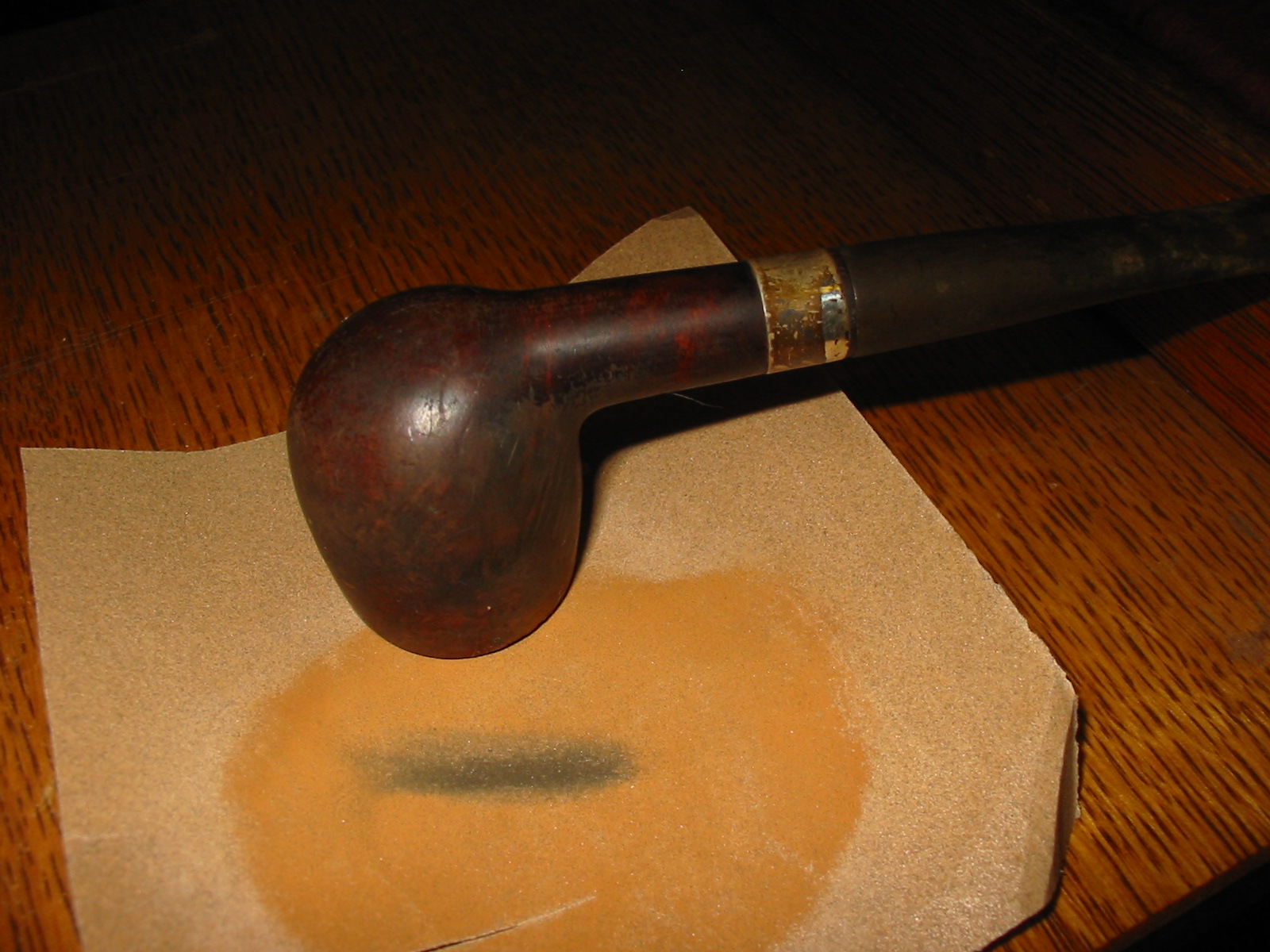
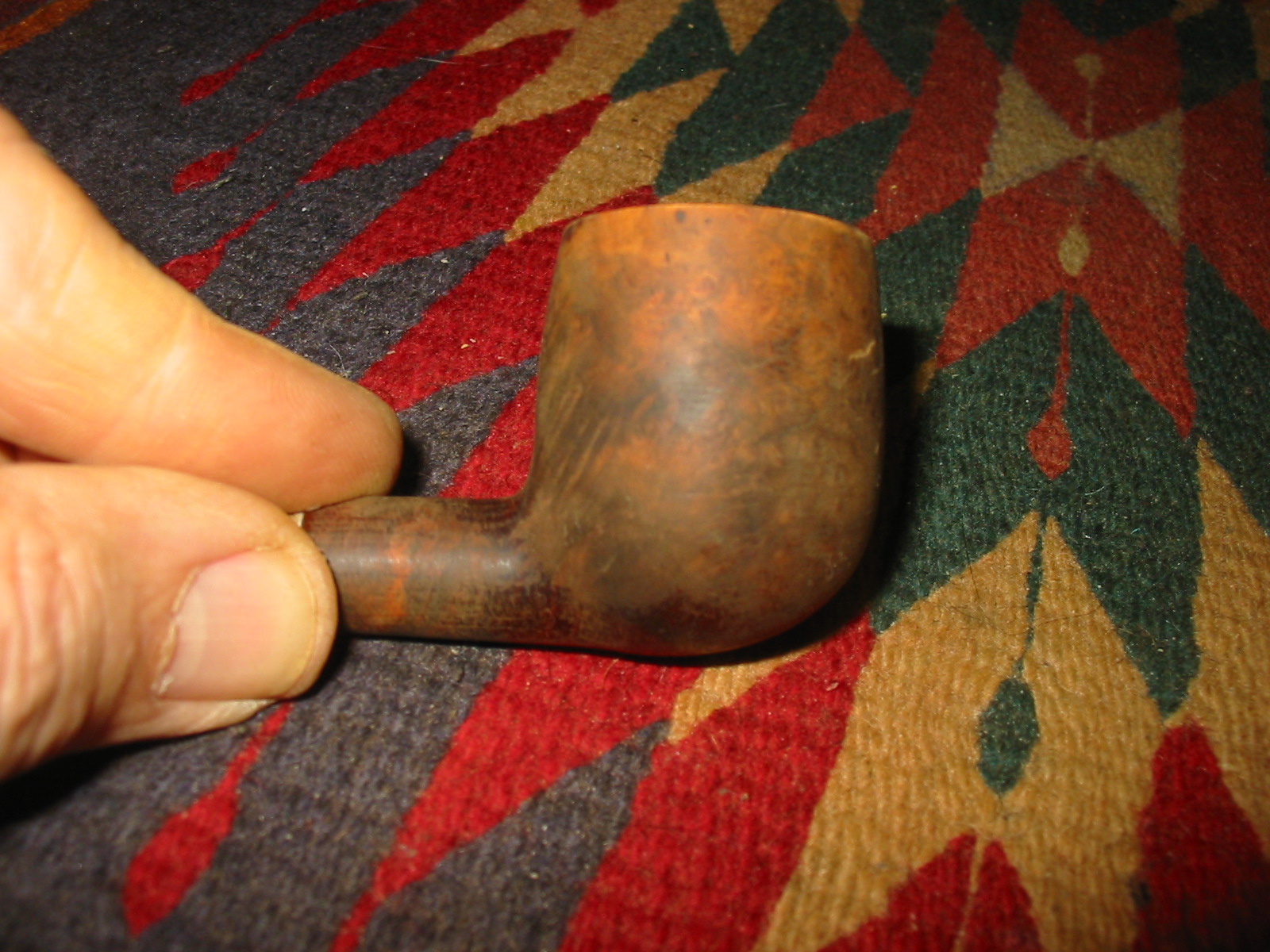
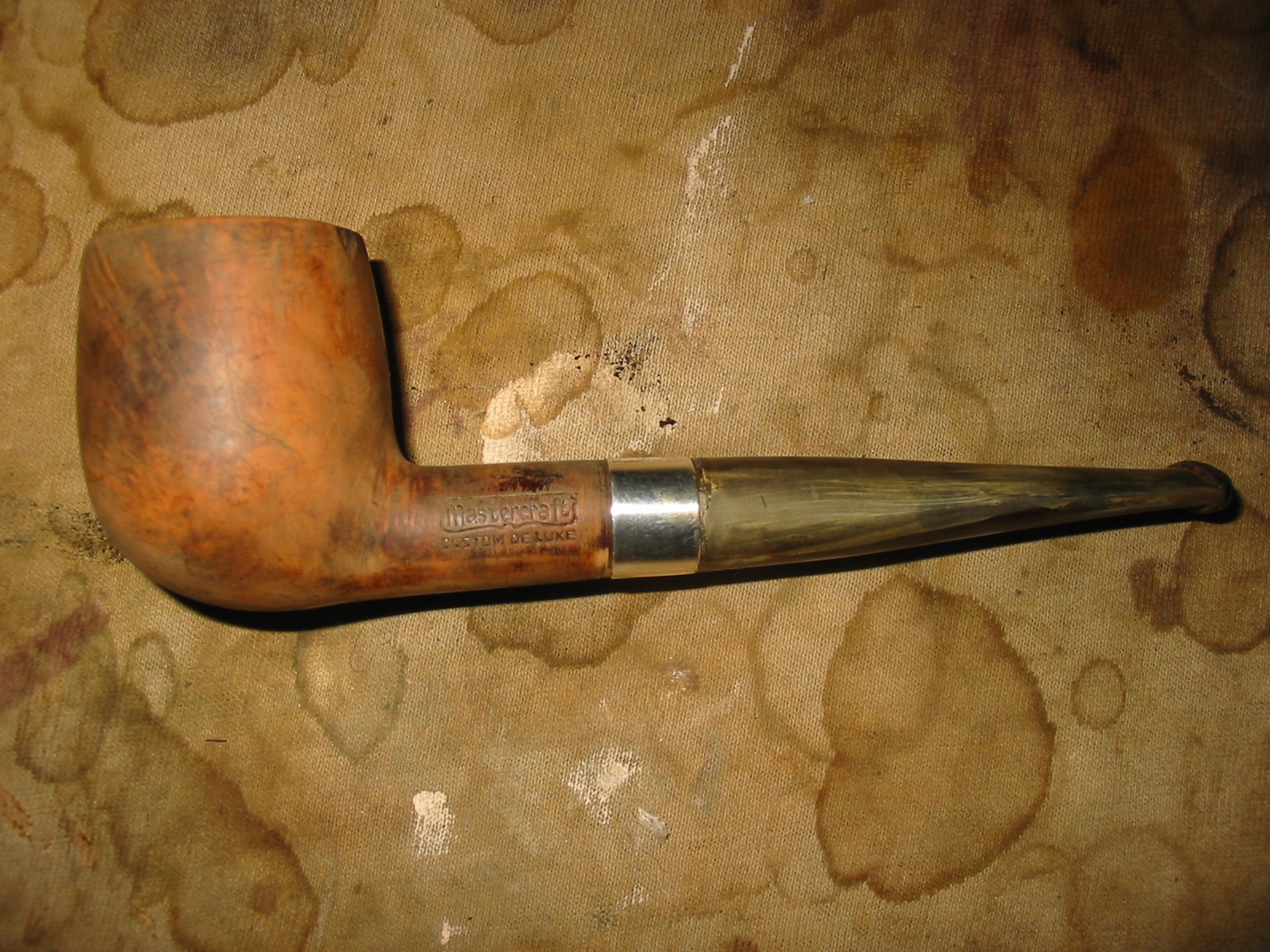
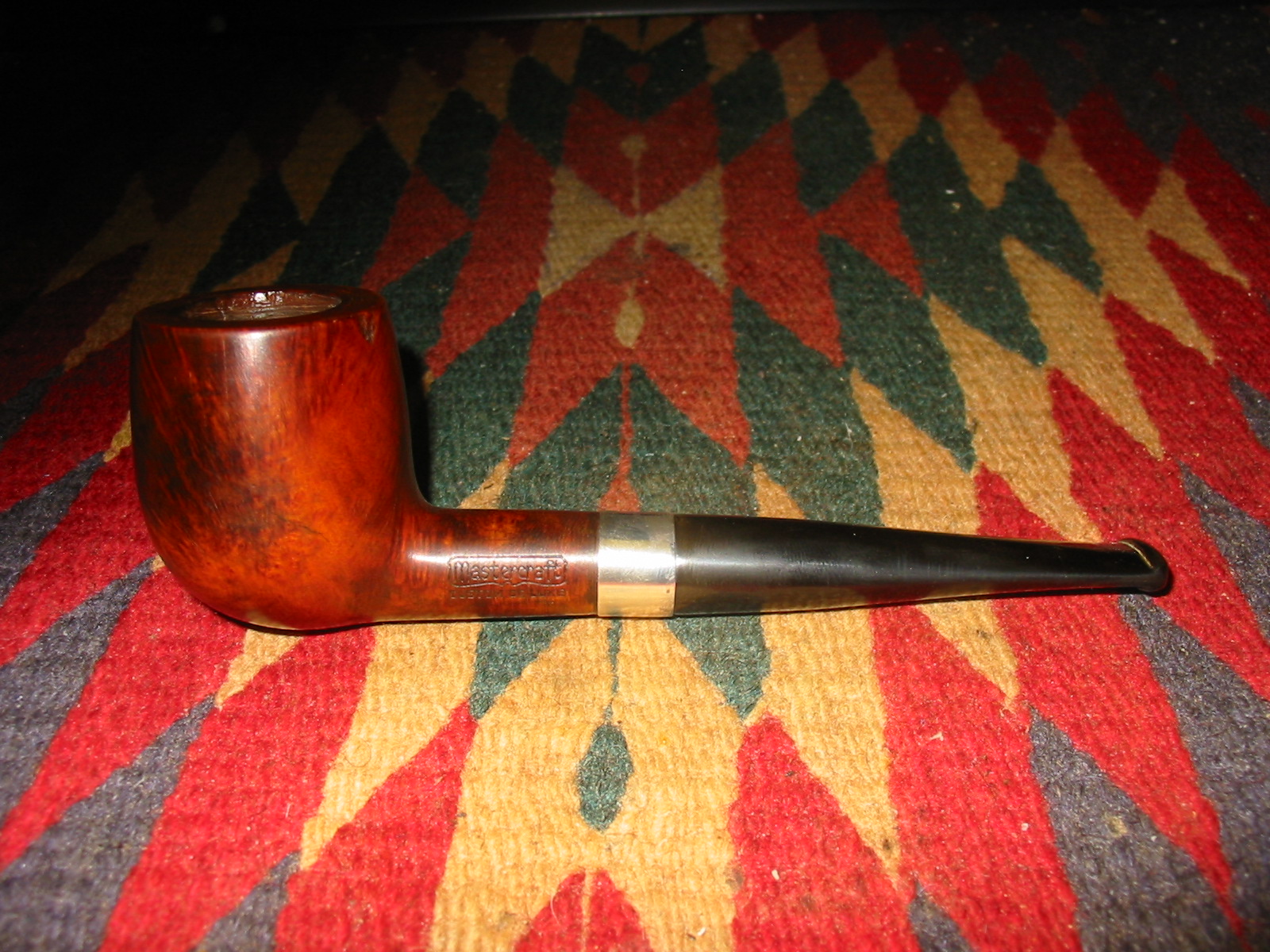
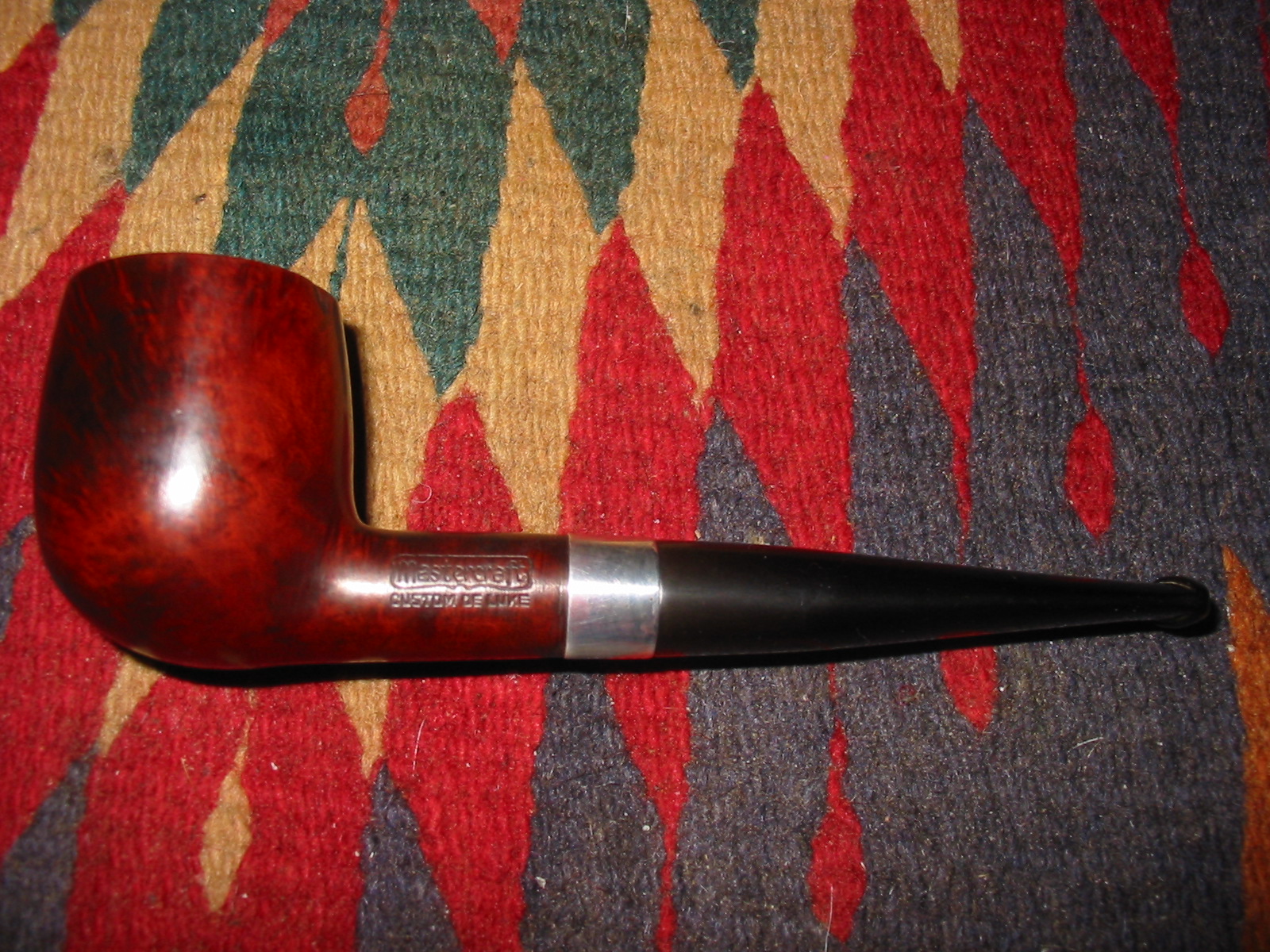
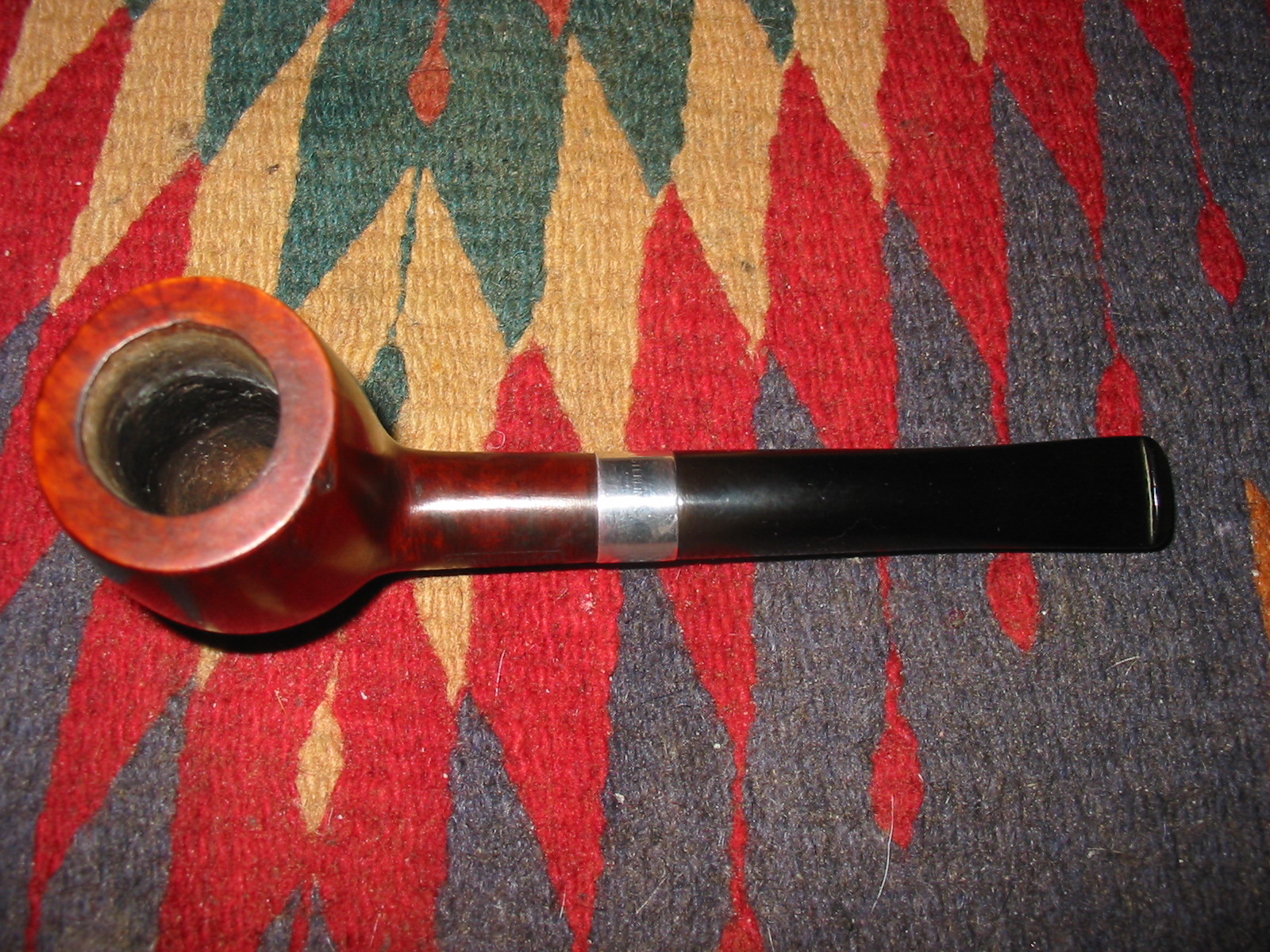
This old Mastercraft billiard is the second pipe of the threesome that was sent to me last week as a gift. In his email asking if I wanted them he said they were either going to the rubbish bin or to me so I was not surprised when I opened the box and unpacked them. It had some nice looking grain underneath all of the grime and peeling varnish. But this one was in very rough shape. The stem was chewed in half so there was not enough to save. The inner tube apparatus inserted into the stem looked like it had been destroyed and then somebody bent it close to shape and cut a X cut in the end of the tenon so that it would fit into the stem. The shank was grimy and dark with a white mold residing inside both the bowl and the shank. The pipe reeked of mold. The bowl itself had a heavy but broken cake underneath the mold. It had a coat of varnish that was spotty and peeling where it was worn off the briar. In those worn spots the briar was almost black. The rim was also in very bad shape. The front was burned down from repeatedly lighting the pipe in the same spot with a torch. The back side of the rim looked like it had been scraped on concrete or hammered out on concrete because it was worn and broken down. The three photos below (I apologize for the poor quality – still getting used to this new camera!) show the state of the bowl and stem.

IMG_1009

IMG_1010

IMG_1011

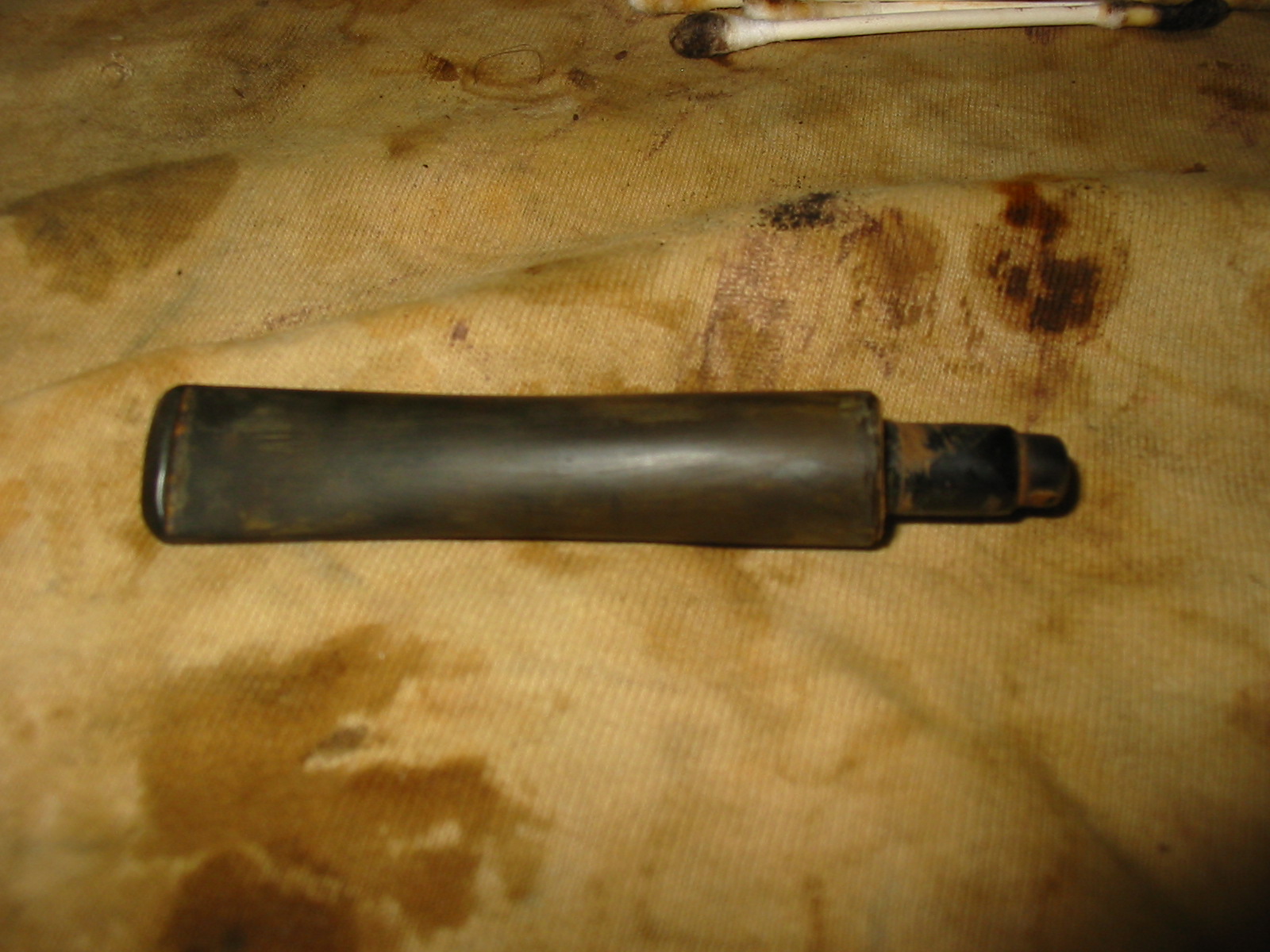
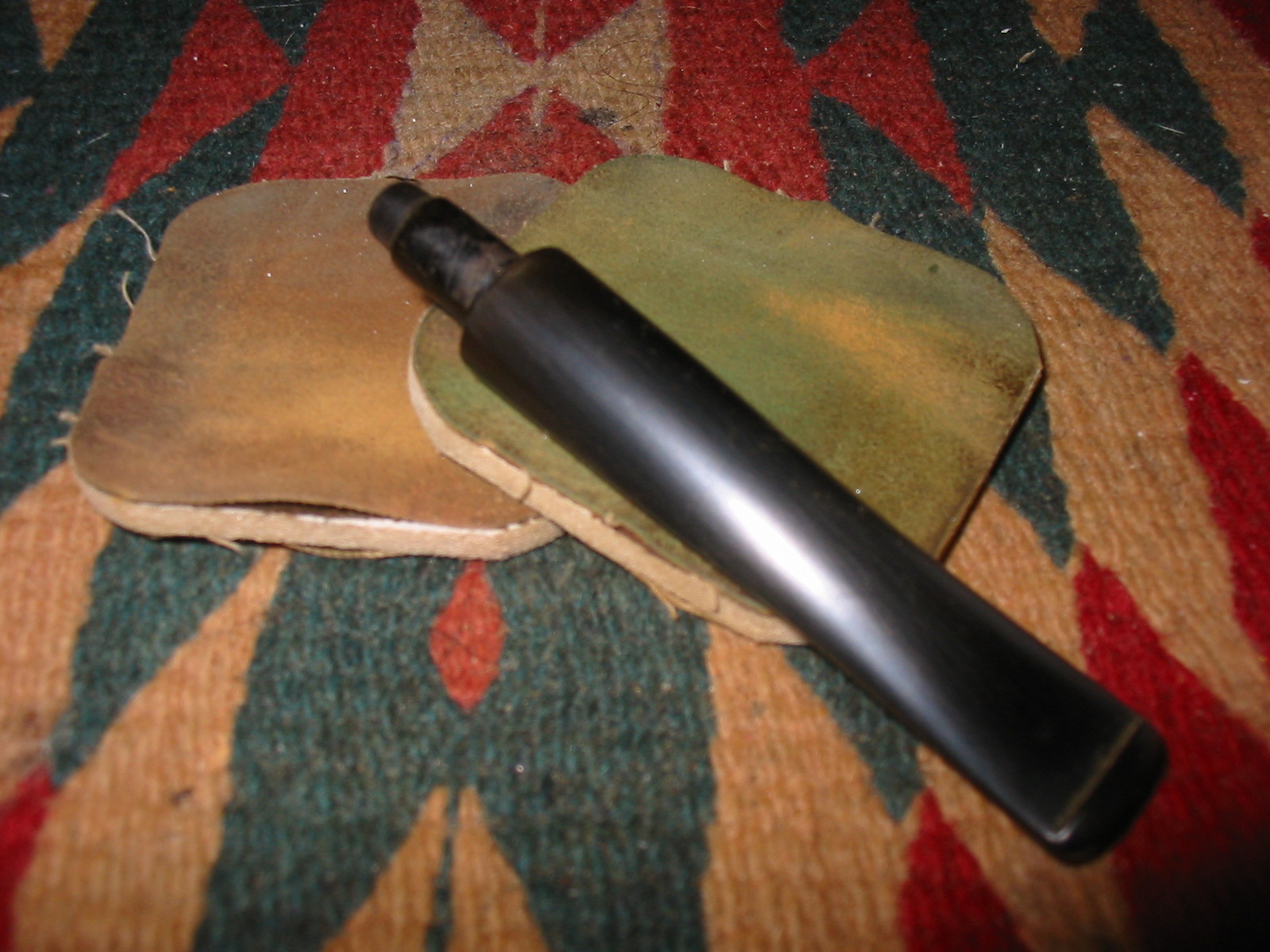
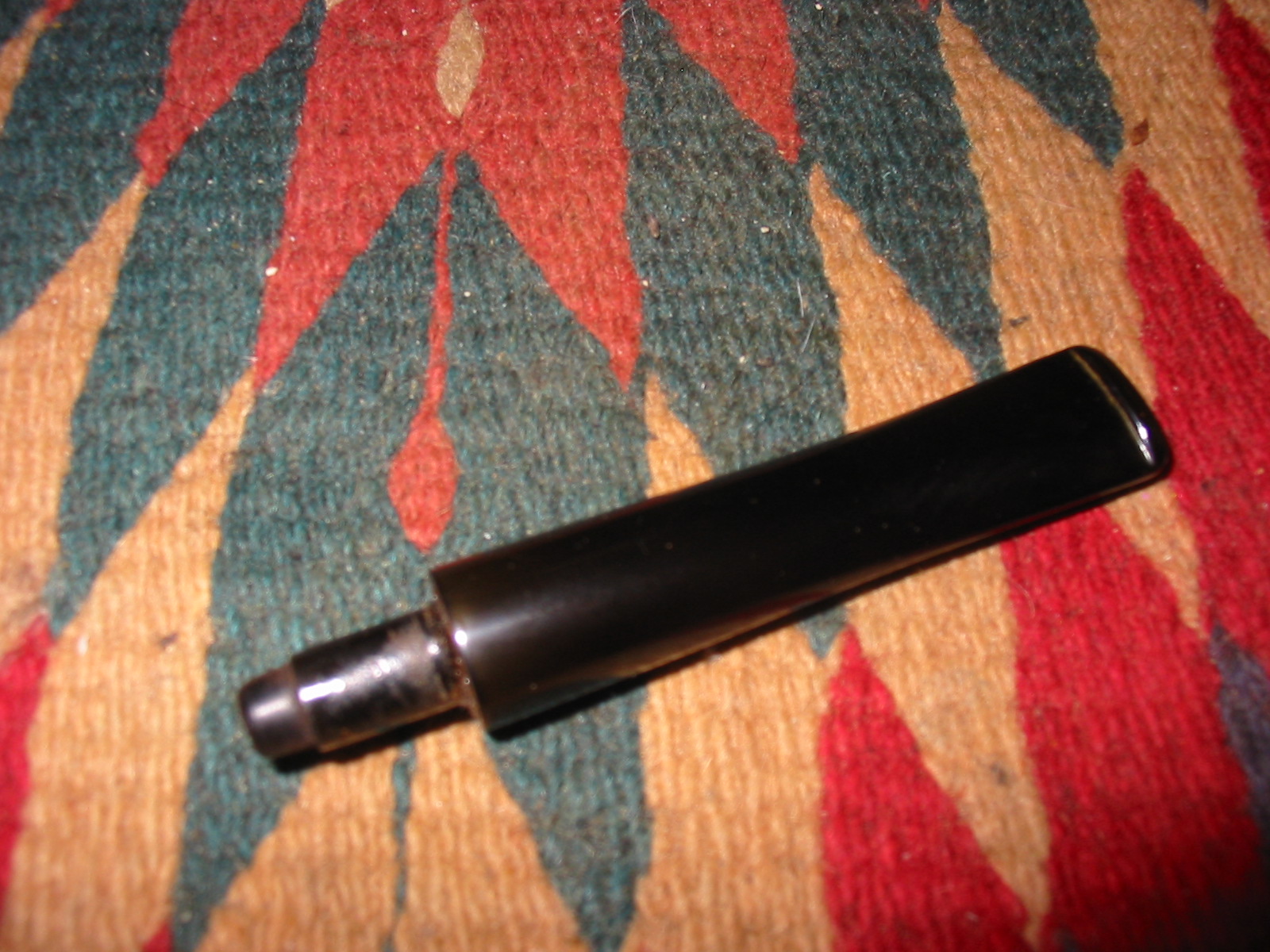
I sorted through my stems and found two options that I thought might work on the pipe. The first one was an acrylic saddle stem that I thought might look good with the bowl (pictured in the first photo below). I turned the tenon and fit it to the pipe but did not like the proportion of the stem and shank length. I then took the second stem – a shorter, straight tapered stem and fit it to the pipe (pictured in the second – fourth photo below). It looked like it belonged on the pipe so my choice was made. It was an old previously used vulcanite stem from my collection of old pre-used stems that I collect. This one would take some work as it was oxidized and had a calcified buildup around the button area. It was also clogged and the slot was plugged to a small pin hole. But it had the right look so it would be worth cleaning up.

IMG_1020

IMG_1049

IMG_1050

IMG_1051

I set the stem aside and worked on the bowl. I reamed the pipe with a PipNet reamer to get rid of the cake and the mold. I cleaned the reamer with alcohol before putting it away. I cleaned the bowl and the shank with cotton swabs, pipe cleaners and Everclear to remove as much of the tars and oils and moldy smell as possible.

IMG_1021

IMG_1022

IMG_1023

When I finished it still smelled moldy, but I had several plans in mind for addressing that. But first I topped the bowl with my usual flat board and 220 grit sandpaper. I place the bowl rim down flat against the sandpaper and work in it a circle to remove the damage on the rim. This one took quite a bit of work to even out the top and get rid of the damage from the burn on the front side of the rim and the roughened back edge done by beating the pipe against concrete. I sanded it, repeatedly checking to see if I was removing enough of the damage to get a sharp edge on the bowl. On the outer rim next to the shank there was a chunk of briar missing that I would try to minimize after topping the bowl. I was able to remove all of the damage of the burned area and most of the damage of the battering the old pipe had taken. The rim looked good. I used a folded piece of sand paper to work on the inside edge of the rim and clean up the damage that was done there and keep the bowl in round.

IMG_1053

IMG_1054

IMG_1055

IMG_1056

IMG_1057

IMG_1058

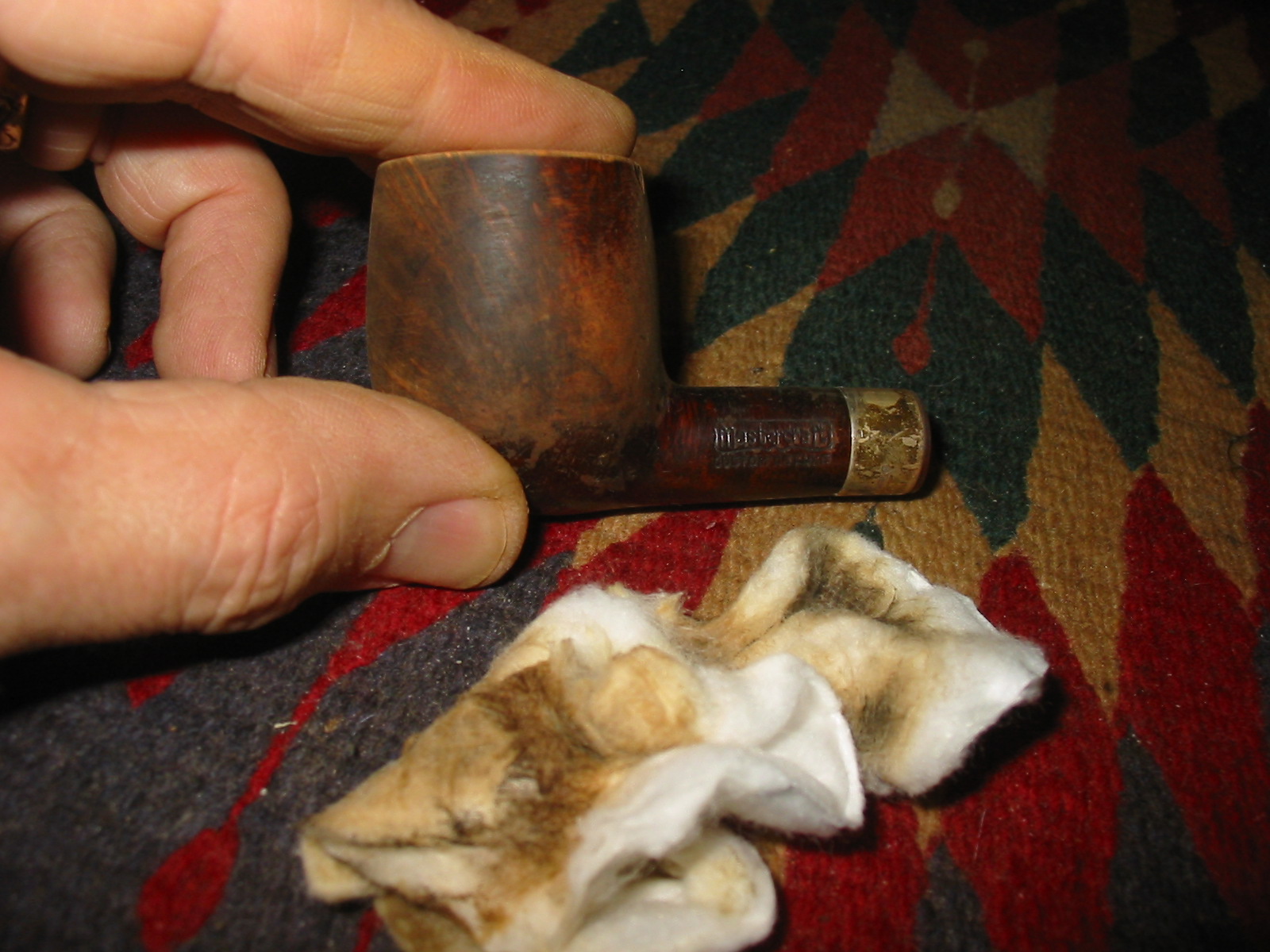
I wiped the exterior of the bowl down with acetone on a cotton pad to remove the grime and the finish that remained. I repeated this until I could not remove any more finish or grime. The next two photos show the wipe downed bowl.

IMG_1059

IMG_1060

I placed the bowl in an alcohol bath for several hours while I worked on the stem and worked on several other old pipes that I have on the go. When I took it out of the bath, I dried it off with a cotton cloth and scrubbed it with a tooth-brush dipped in alcohol from the bath. I dried it again to check on the finish. There were still several spots where the varnish remained – the shank and the bottom of the bowl. One benefit of the bath was that the glue softened on the over pressed band and I was able to remove it from the shank. I sanded and scrubbed the old glue off the shank and sanded the bowl with a fine grit sanding sponge. I wiped it down with another acetone cotton pad. It still needed to soak a bit longer to finish breaking down the varnish that remained. While it soaked I cleaned up the silver band with silver polish and the jeweler’s polishing cloth. Under all the tarnish I found that the band was stamped Sterling.
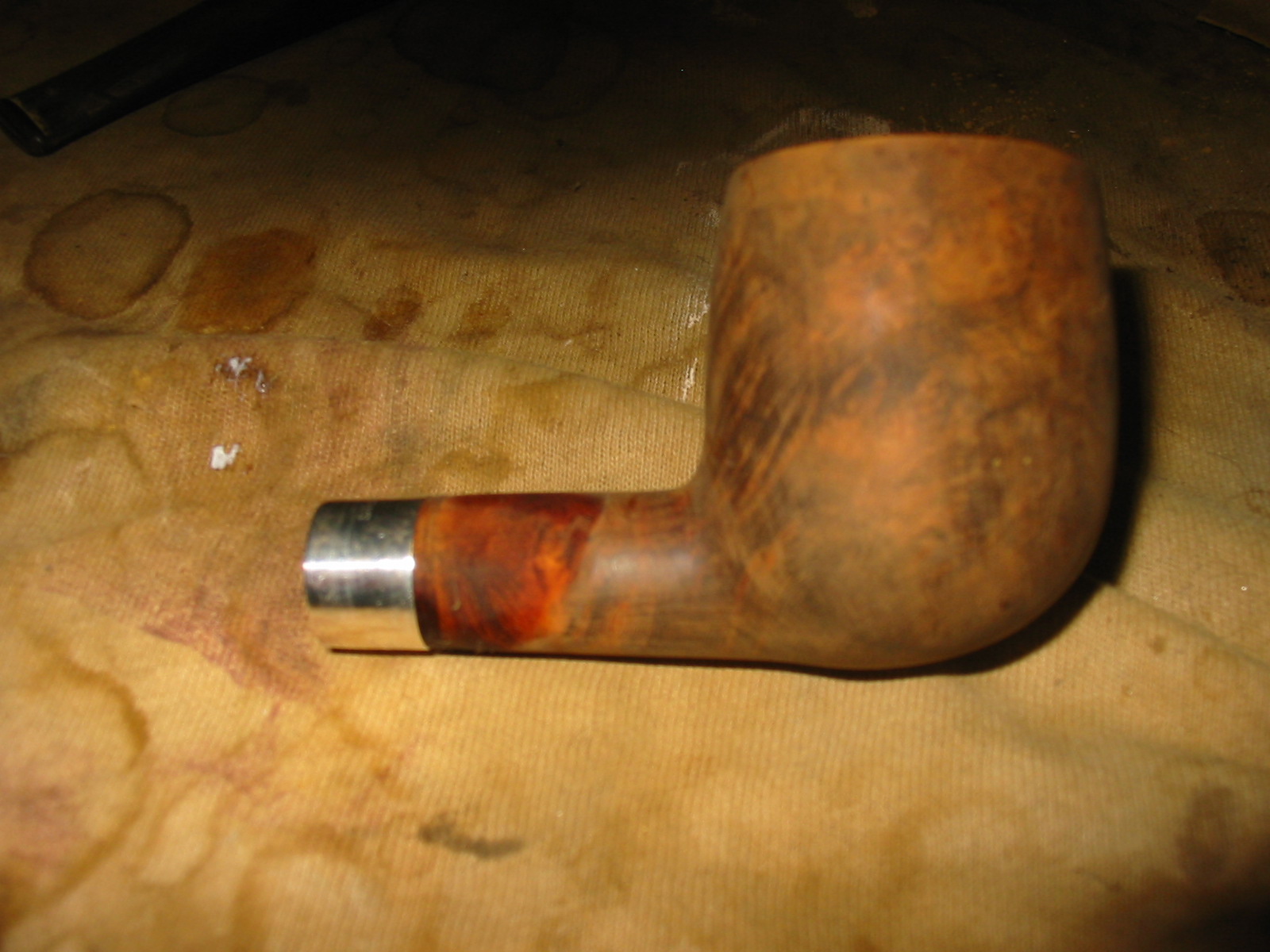
I removed the bowl from the alcohol soak and dried it off. I used a lighter to burn off the alcohol from inside the bowl and the shank. I then recleaned the inside of the bowl and the shank with Everclear and many more pipe cleaners and cotton swabs. The amount of tars and sticky oils and grit that came out of the shank was incredible. It was no wonder that the pipe still reeked like mold. The next series of three photos show the pipe after soaking and sanding.

IMG_1061

IMG_1062

IMG_1063

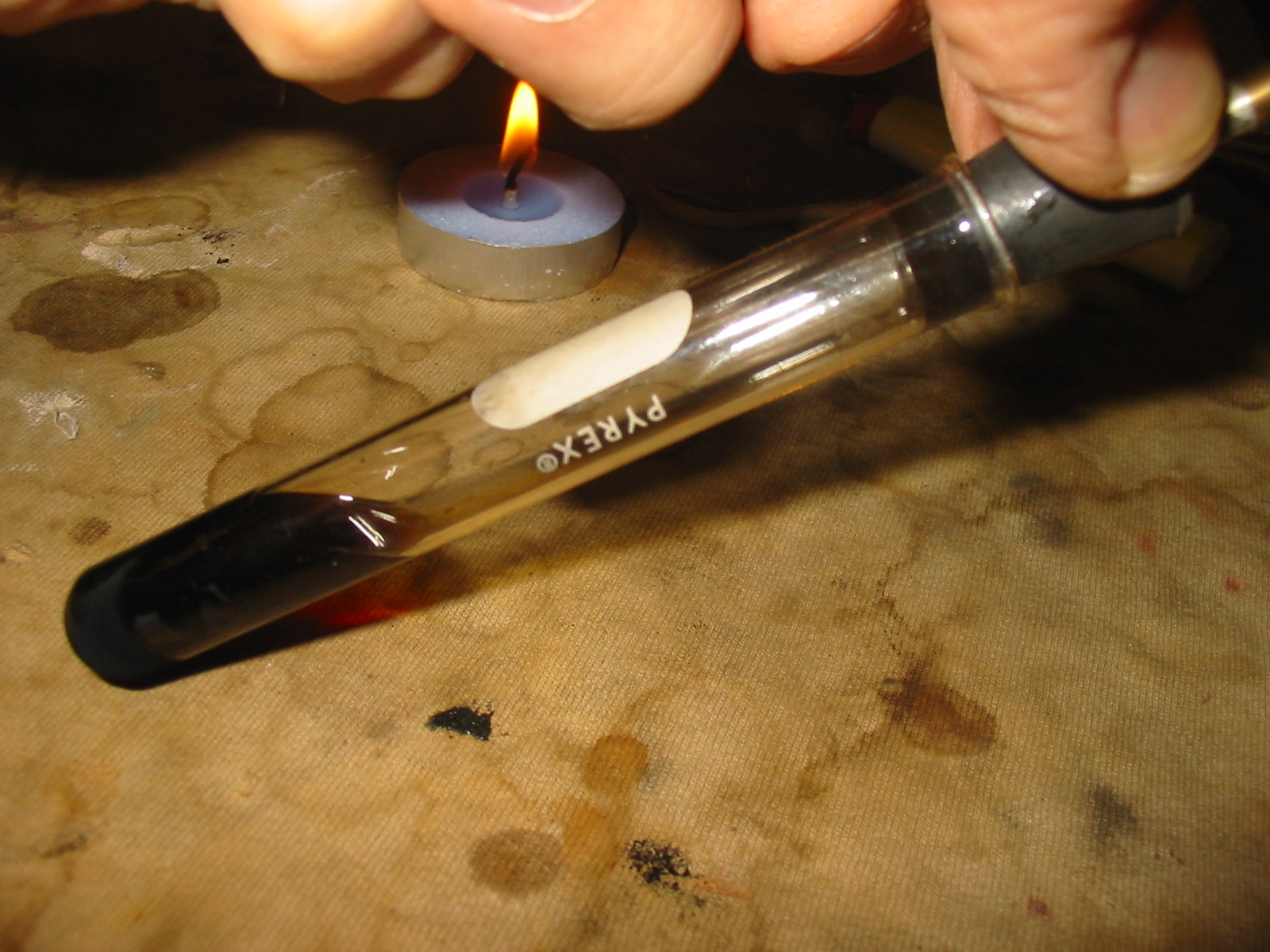
I scoured the shank until it was fairly clean and then set up a retort to do a more thorough clean. The retort sends vaporized alcohol into the bowl and shank and in essence boils out the grime with hot alcohol. As the alcohol cools it returns to the tube and with it the grime and oils from the pipe. I repeated the retort three times on the pipe until the alcohol came out clean. I then took apart the pipe and cleaned out the shank with pipe cleaners and cotton swabs a third time. There was even more oil and grime that came out of the shank. I cleaned off the surface with an acetone wipe and then reset the silver band with Weldbond glue. I turned it so that the Sterling stamp was on the top of the shank and pressed it on to the shank until it was even with the edge of the shank. Weldbond dries fairly quickly to touch so that the band would not be loosened when I went on to the next step in my cleaning process.

IMG_1064

IMG_1065

IMG_1071

After removing the retort I cleaned the bowl and shank. Yet even more grime came out. I put the stem back on and took the four photos below to show the state of the pipe at this point. I did this more for an encouragement to me as this one was proving a difficult rework. The photos gave me a picture of what I was aiming for in cleaning this one up. If I lose sight of that it will end up in the bin as rubbish.

IMG_1066

IMG_1067

IMG_1068

IMG_1069

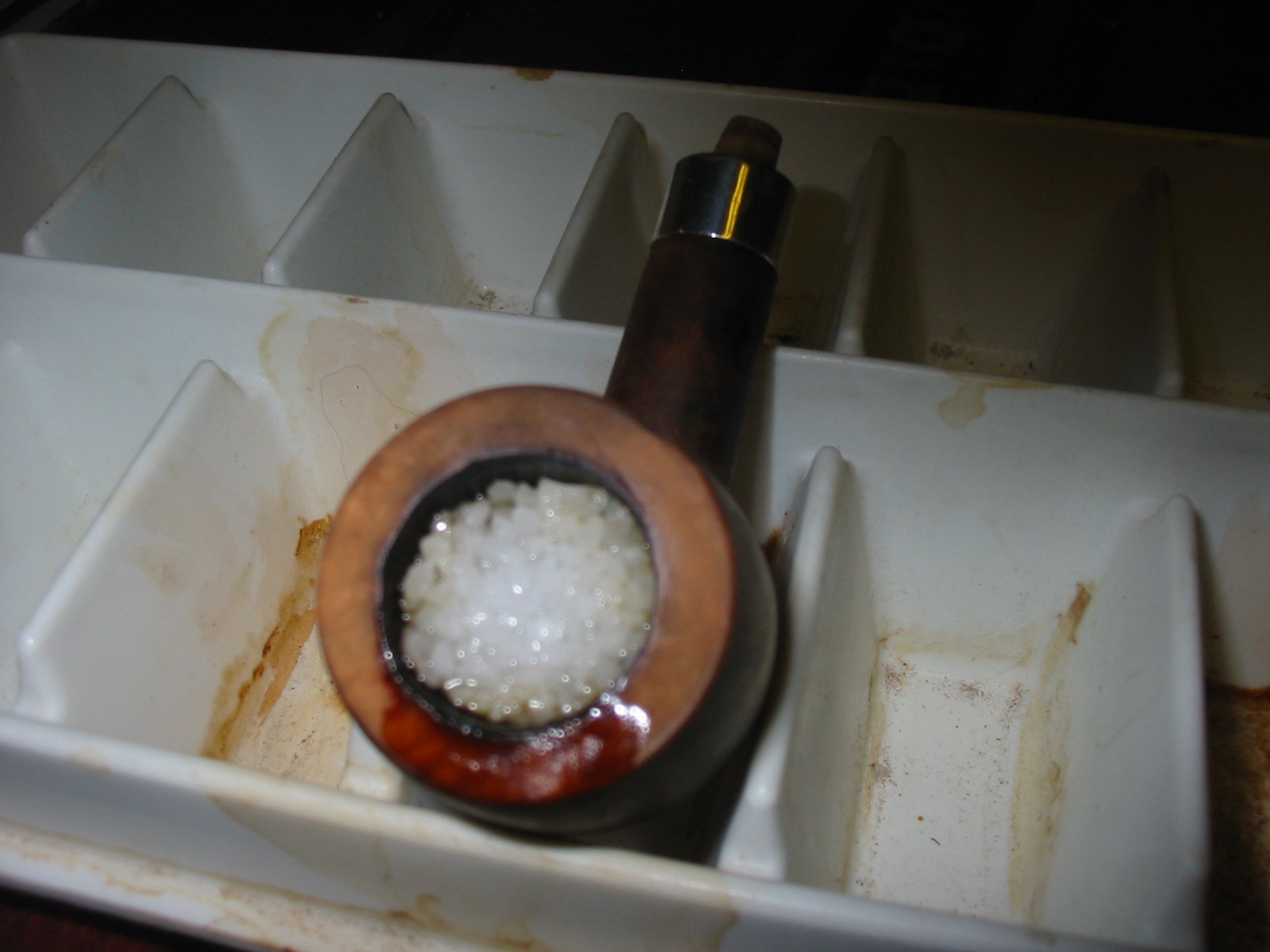
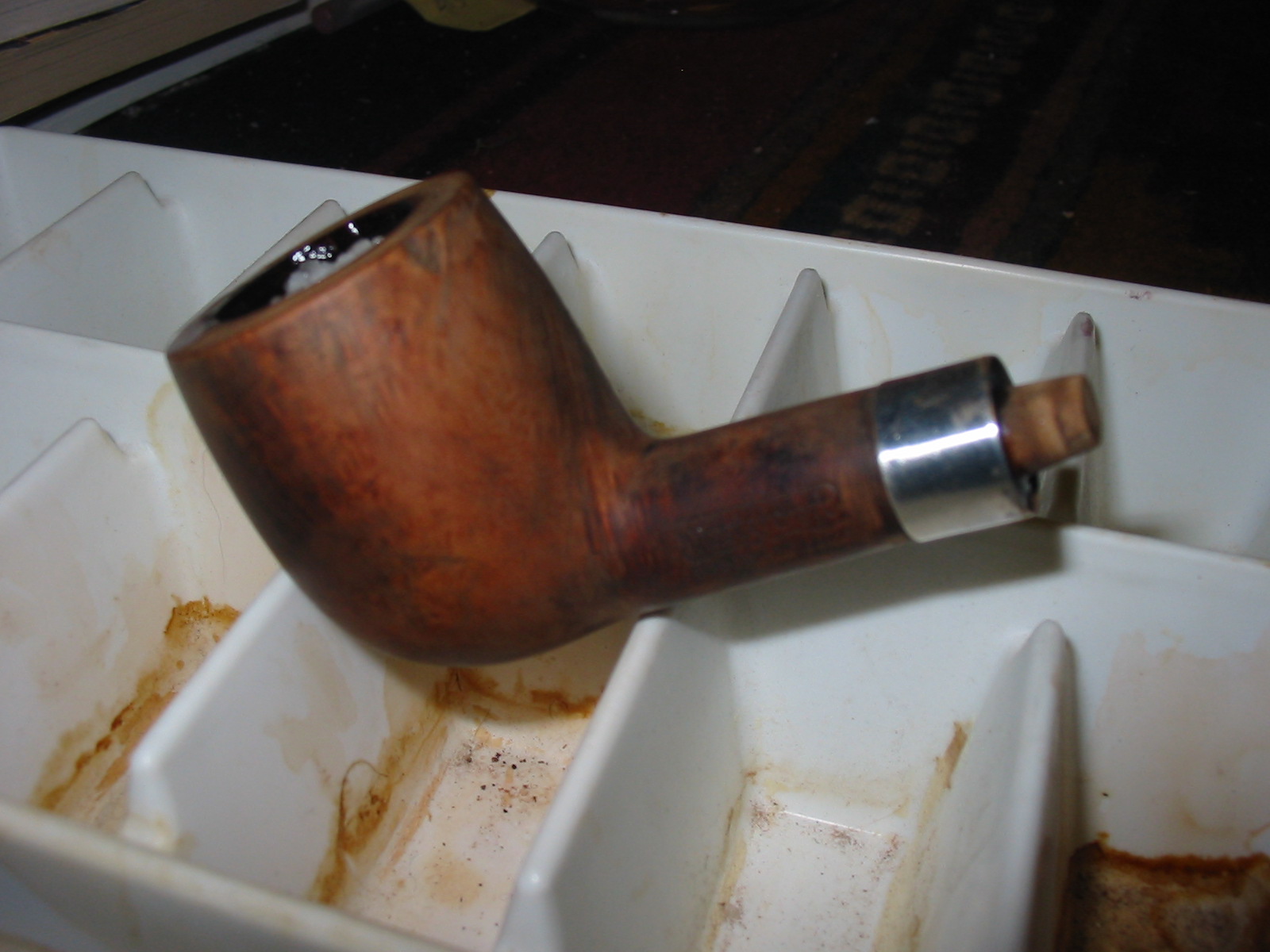
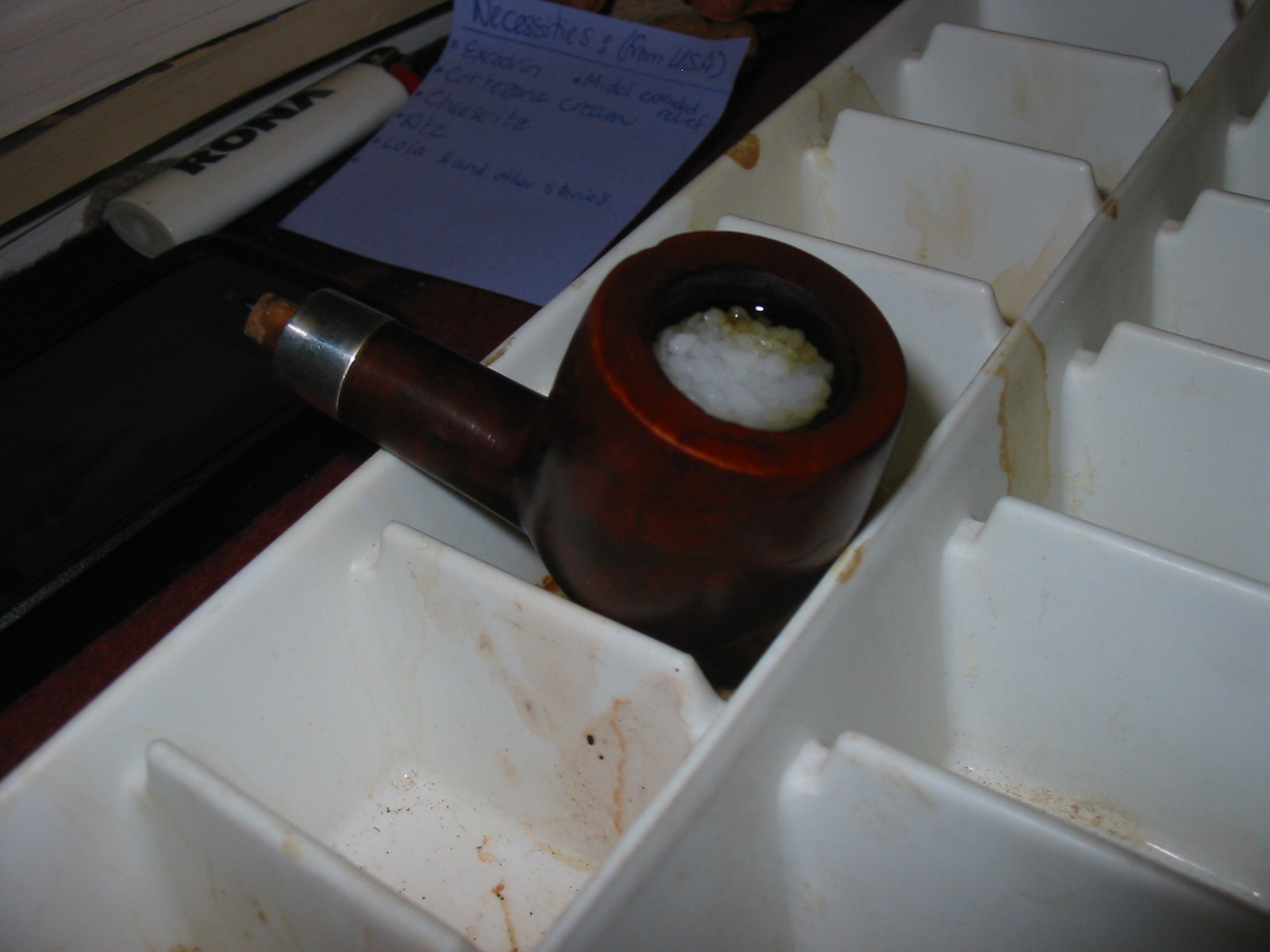
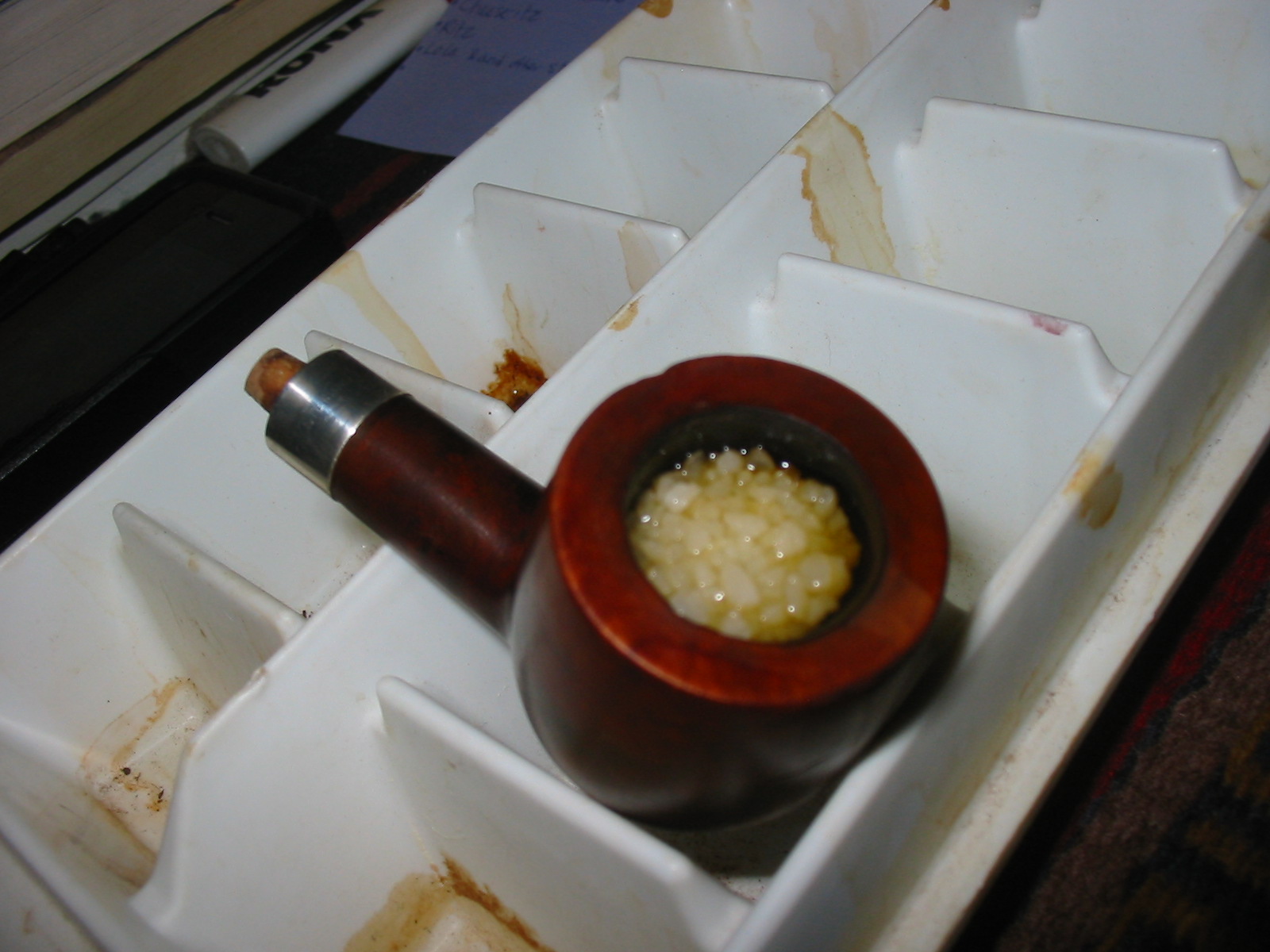
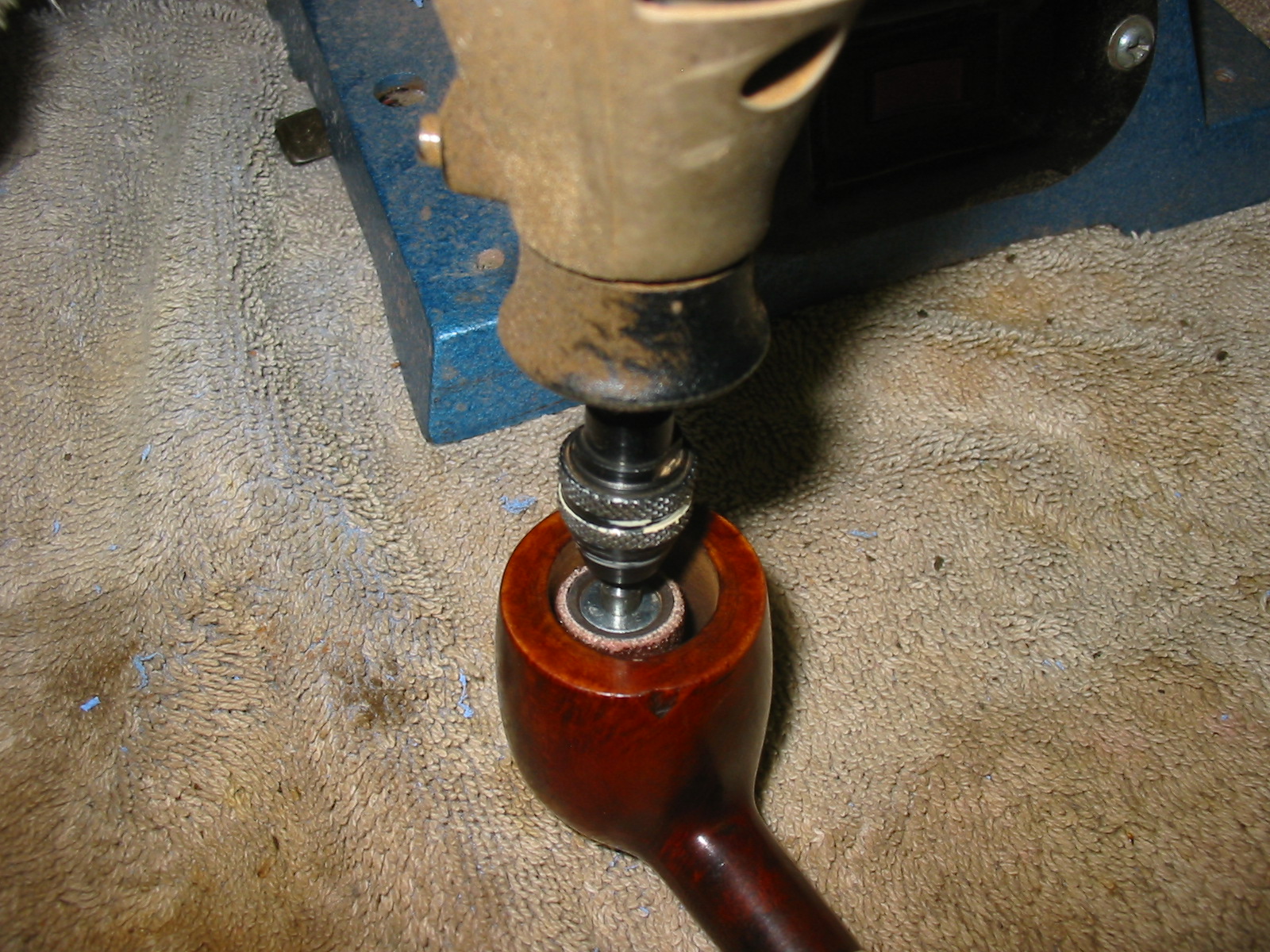
When the alcohol dried in the bowl and the visual showed a clean bowl and shank I took a sniff of the bowl. After all of this work the moldy smell still was present in the bowl and shank. This called for more drastic measures. I used the Dremel with a sanding drum on it and sanded the inside of the bowl until the briar was bare and clean. Then I filled the bowl with salt and alcohol to leach out the oil from the inside of the bowl and shank. My hope was that in doing this I would also kill the stench. I plugged the shank with a cork, filled the bowl with kosher rock salt (I was out of my normal cotton bolls) and set it up on an old ice-cube tray. I used an ear syringe to fill the bowl with 99% isopropyl alcohol. I set it aside and went to bed to let the treatment do its work while I was sleeping. The two photos below show the bowl after filling with alcohol.

IMG_1072

IMG_1073

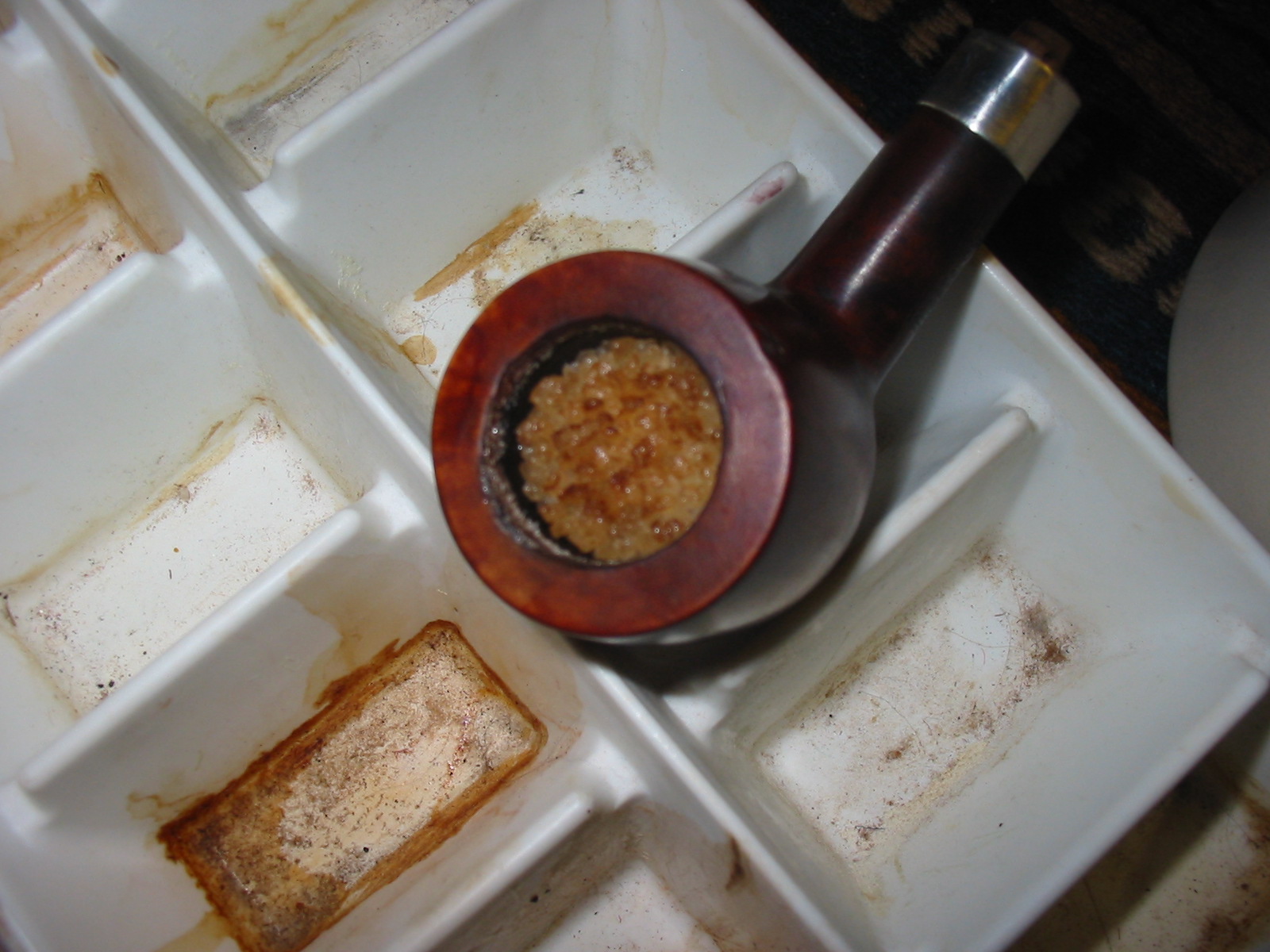
In the morning the salt was a dark brown as pictured below. I emptied the now darkened salt and dried out the inside of the bowl by flaming the alcohol with my lighter. It still smelled like mold though the smell was definitely losing strength.

IMG_1070

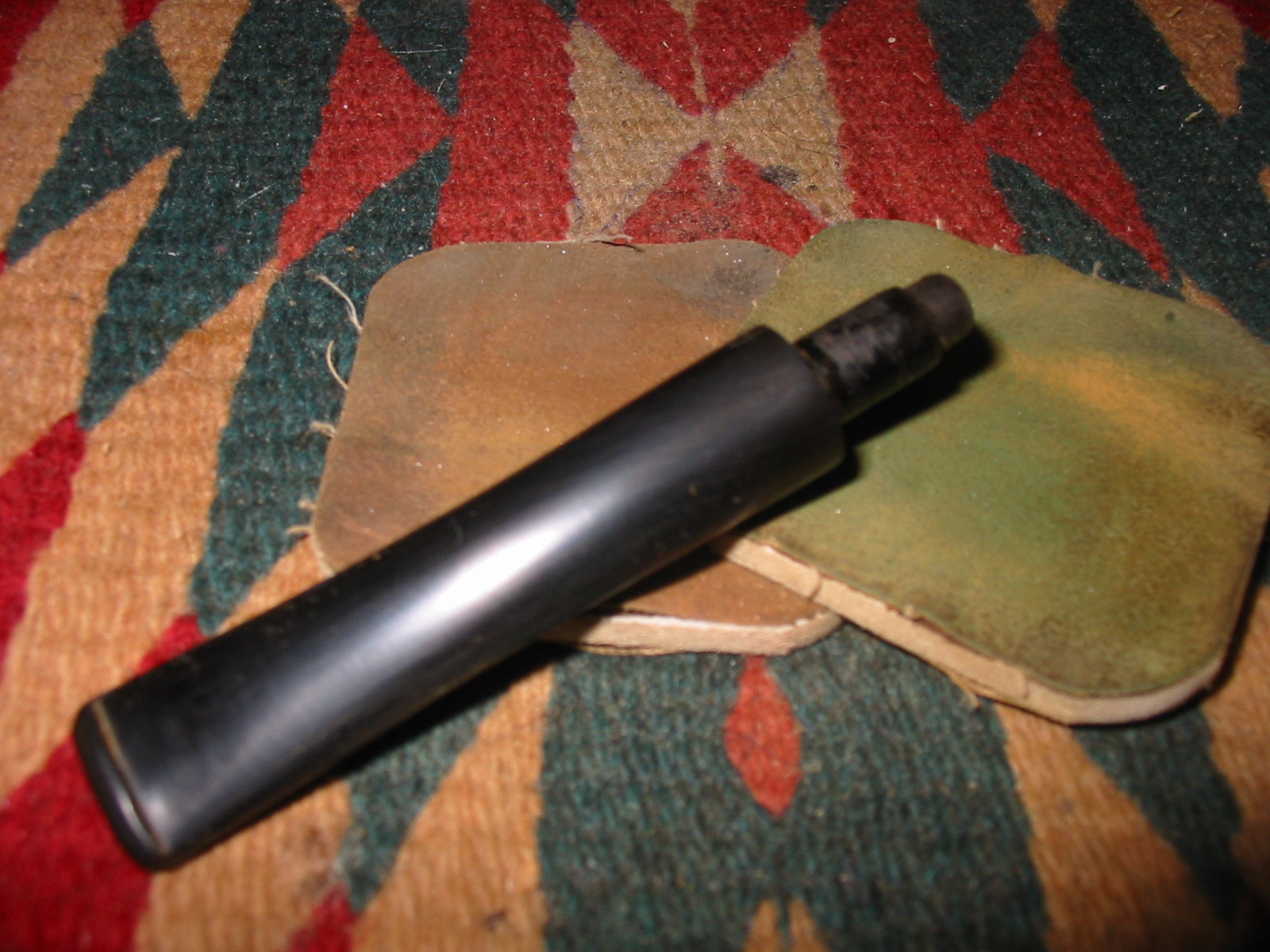
I cleaned out the button area of the stem with the dental pick and then ran several bristle pipe cleaners through it and then followed up with regular pipe cleaners. I soak both in Everclear to clean out the stem. I then sanded the stem with 220 grit sandpaper to remove the calcification that was all over the stem. I also gave the stem a quick sand all over with the 220 grit to remove the top oxidation. I ran the flame from the Bic lighter over the surface to burn off the oxidation. It did a great job of removing what I had loosened with the sandpaper. I continued sanding it with a fine grit sanding sponge to remove the remaining oxidation. I rubbed down with Obsidian Oil and set it aside with the bowl while I went off to work. The Obsidian Oil sat on the stem and soaked in for the 9 hours I was at work.

IMG_1074

IMG_1075

IMG_1076

IMG_1077

I refilled the bowl with salt and put a cork in the shank. I again used the ear syringe to fill the bowl with alcohol and set it aside to work on the stem. It too sat for the nine hours I was at work.

IMG_1072

When I got home from work the stem looked quite good. It was significantly more black and the oxidation was gone except around the stem shank union. More work to do there. The salt was a dark brown, but slightly lighter than the first treatment. I dumped out the salt and cleaned out the bowl and shank with cotton swabs again. When I finished the smell was better but present nonetheless. I cleaned out the bowl with alcohol and cotton swabs again.

IMG_1078

I needed another bit of encouragement at this point so I decided to stain the pipe with a dark brown aniline stain cut 2:1 with isopropyl alcohol. I applied the stain, flamed it and then buffed it on with Tripoli and White Diamond (photos 1-4 below). The brown did a fair job of coverage but I would need to give it a second coat of stain using a oxblood colour to do some blending with the dark areas on the bowl.

IMG_1083

IMG_1084

IMG_1085

IMG_1086

I worked on the stem with fine grit sanding sponges and 1500-2400 grit micromesh sanding pads. There were some minor tooth dents that still showed up so I passed over them with a Bic lighter and was able to raise them. More sanding was needed and I repeated the sanding described above.

IMG_1079

IMG_1080

IMG_1081

IMG_1082

Once the bowl dried out it still smelled so I decided to repeat the salt and alcohol treatment a third time. I filled the bowl with salt and isopropyl and set it aside over night (photo 1 below). In the morning the salt was little lighter brown this time (photos 2-3 below). I dumped the salt out and cleaned the bowl and shank again. This time the cotton swabs came out fairly clean. I flamed the inside of the bowl. Once the bowl dried out it still smelled so I decided to repeat the salt and alcohol treatment again. I filled the bowl with salt and isopropyl and set it aside over night. In the morning the salt was once again a dark brown. I dumped the salt out and cleaned the bowl and shank again. This time the cotton swabs came out fairly clean. I flamed the inside of the bowl. Though the inside of the bowl and the shank was very clean the musty smell still remained, though less prevalent. This was one stubborn pipe bowl to clean.

IMG_1087

IMG_1088

IMG_1089

While the inside of the bowl dried out I decided to restain the bowl. For the second/top coat I used a oxblood stain. I applied it and wiped it off (first photo below). The coverage this time was much better. The dark reddish stain blended well and covered the dark areas of the bowl. The finished colour is a nice older deep reddish brown look (second-fourth photos below).

IMG_1090

IMG_1091

IMG_1092

IMG_1093

I decided to sand back the inside of the bowl yet again. I used the Dremel with the sanding drum a second time. When I was finished the inside of the bowl was very clean and fresh looking. The smell was still there. I stuffed the bowl with cotton bolls and then used an ear syringe to fill it with white vinegar and set it in the ice-cube tray to let it work. I have used that in the past to remove stubborn ghosts so I thought I would give it a try on this one.

IMG_1094

While the bowl soaked I worked on the stem with the remaining grits of micromesh sanding pads – 3200-12,000 to bring back the deep shine on the stem. Sanding them with the higher grits of micromesh really gives a deep shine to the stem. It is amazing to see the difference between each of the successive grits of micromesh. I did not take photos of the steps as almost all of my refurbishing posts have shown the polishing process with the micromesh. The next two photos show the finished stem. Once the bowl is finished I will buff the bowl and stem with White Diamond and then give the whole a buff with multiple coats of carnauba wax to polish.

IMG_1141

IMG_1142

Once the vinegar had soaked in the bowl for several hours I removed the cotton boll and dried out the bowl. I then used a Dremel with a sanding drum to sand back the sides of the bowl yet again. This time I extended the diameter of the bowl to get rid of the surface area of the bowl interior. Once I was finished with the Dremel I hand sanded the bowl with 220 grit sandpaper to smooth out the small ridges left behind by the drum sanding. The last two photos in this sequence show the newly sanded bowl.

IMG_1126

IMG_1127

IMG_1119

IMG_1120

I took the bowl outside and put it in the bright sun on my patio. I wanted to let the heat and the UV rays from the sun do more work on the potential mold in the bowl. The evening is cooling down and the sun is no longer as warm. I brought in the bowl and wiped down the inside of the bowl and shank with an alcohol based anti bacterial wipe. I took it to the buffer and gave the whole pipe a buff with White Diamond. I then gave it several coats of carnauba wax and buffed it with a clean flannel buff. The pipe is like new and it SMELLS GREAT. I finally beat the moldy smell. The final four photos show the finished pipe.

IMG_1143

IMG_1144

IMG_1145

IMG_1146

Beautifying a Sasieni Mayfair


Blog by Steve Laug

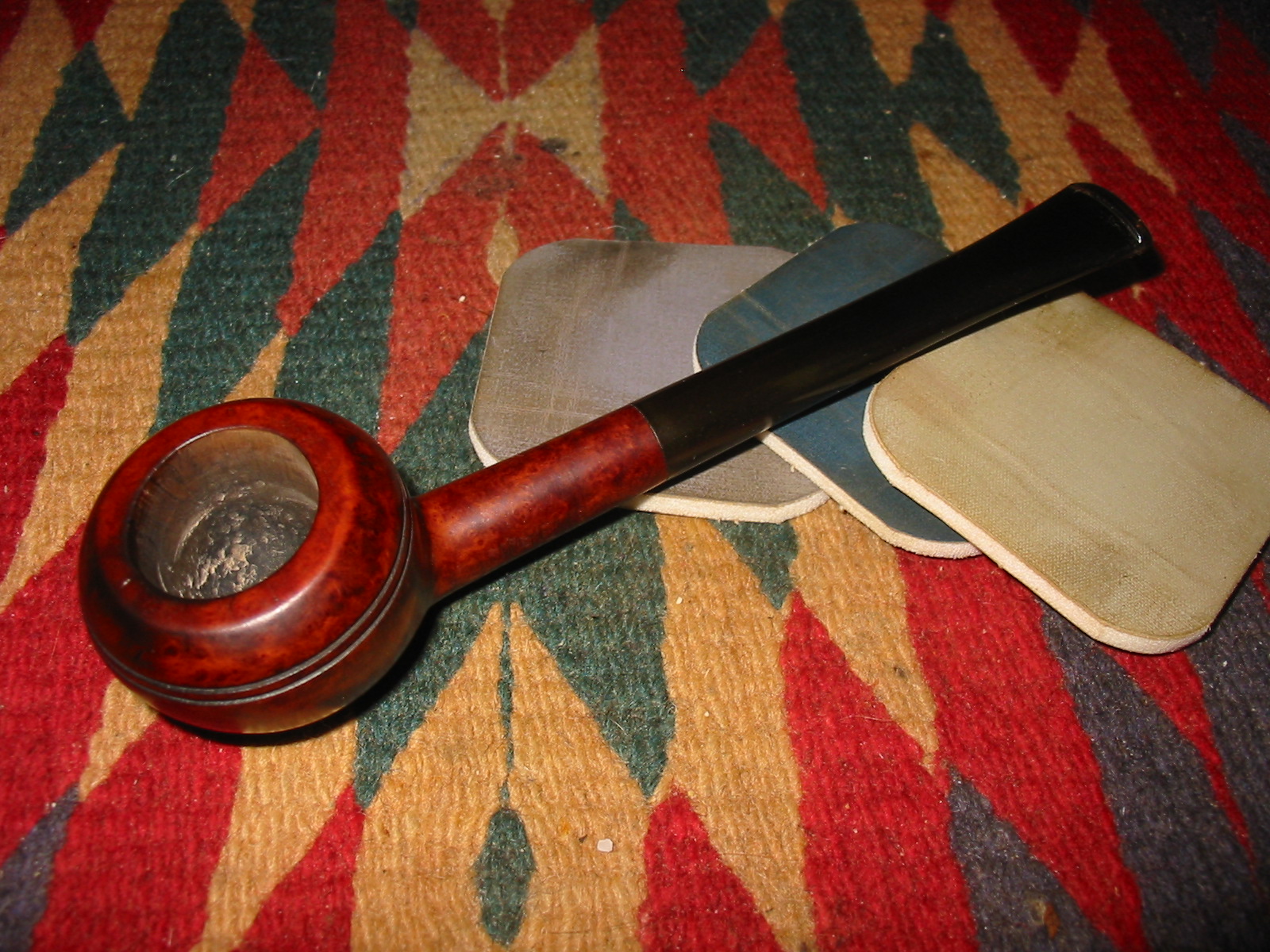
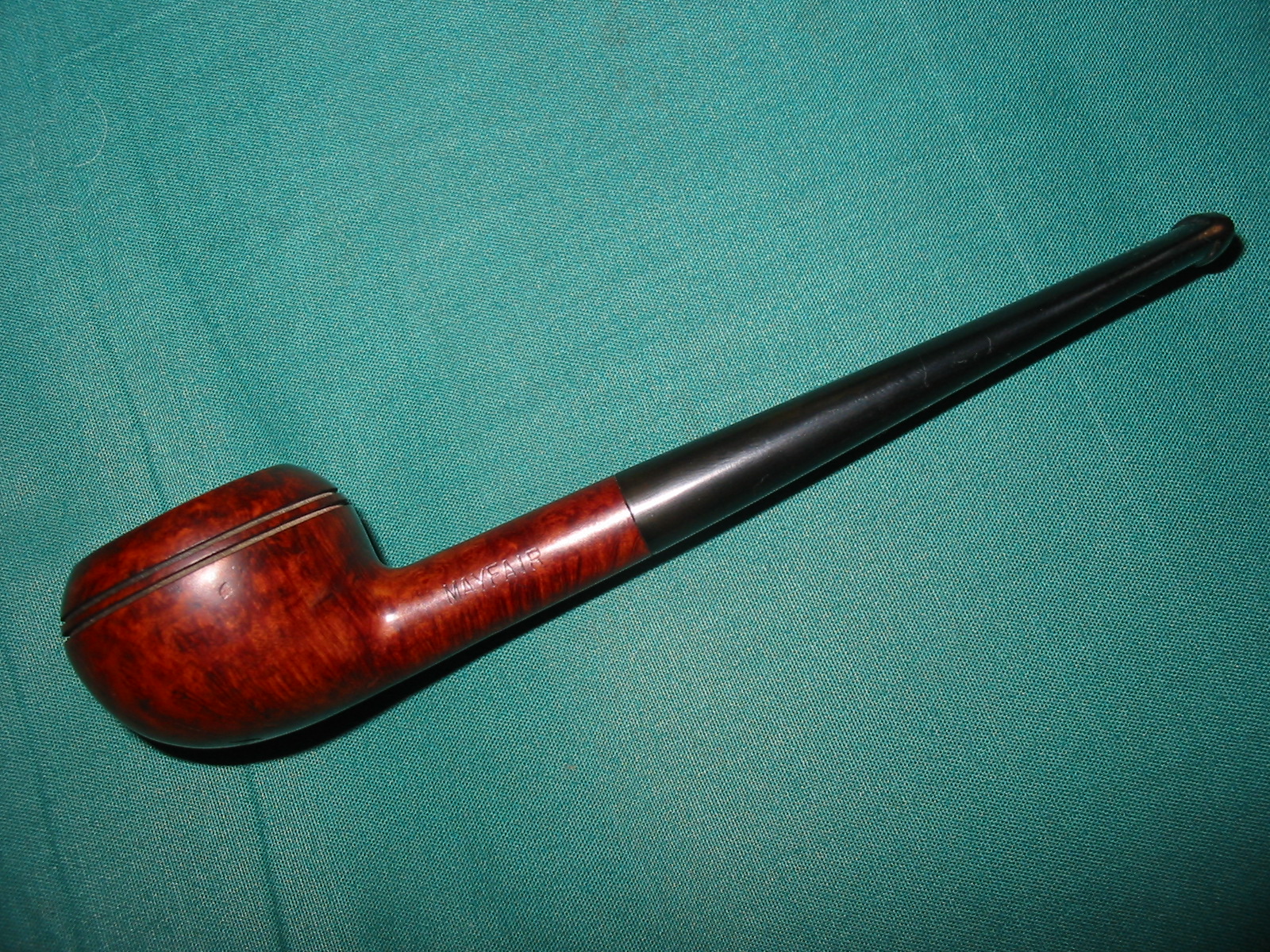
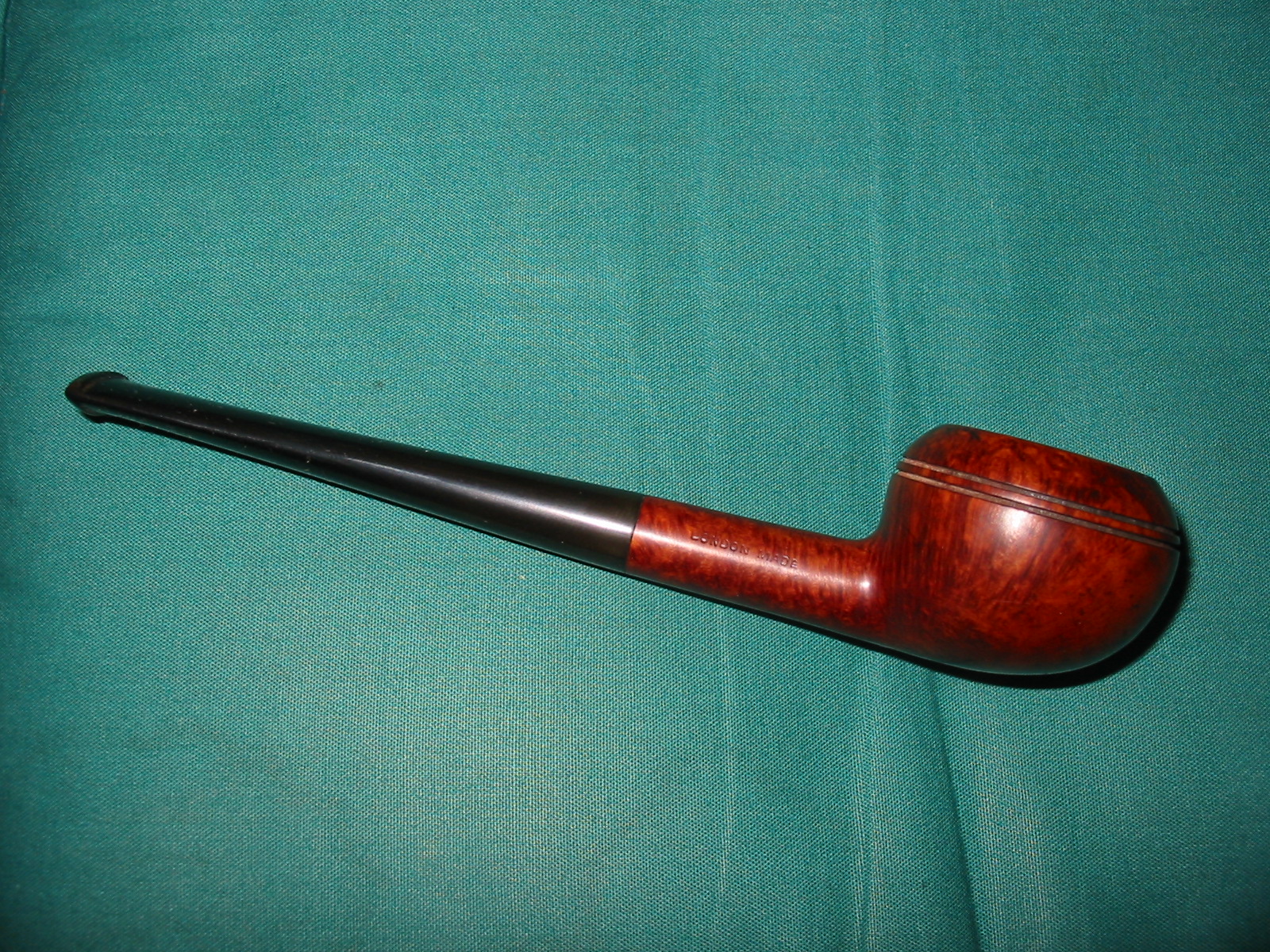
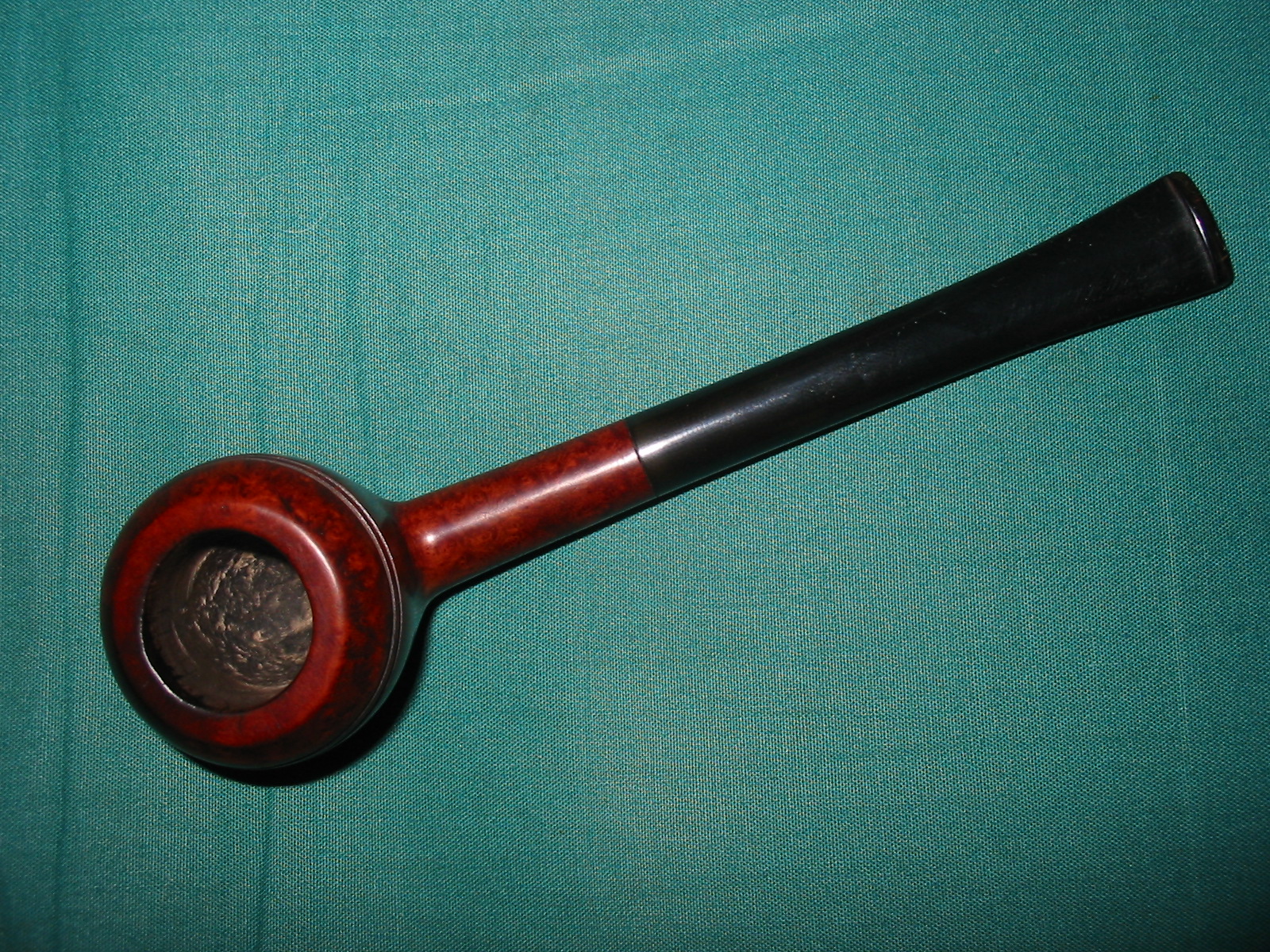
Yesterday I picked up this beautiful little Sasieni Mayfair. It is stamped Mayfair on the left side of the shank and London Made on the right side. The bowl was tarry with a sticky aromatic and the top had been burned on the front side and then poorly topped to get rid of the burn. This left the bowl slanted toward the front side where the burn had been. The rim was also covered with the aromatic goo. The stem was tight but I was able to remove it from the bowl at the shop and found the typical stinger apparatus intact. It was a flat metal blade that ended in a round tube that inserted into the tenon. The tube was slotted to allow the smoke to pass into the airway of the stem. The stem was slightly oxidized and had a tooth mark on the top and the bottom of the stem. Other than those things it was a nice piece of briar and the finish was actually in excellent shape. There were several small sandpits on the bottom of the bowl but they did not detract from the beauty. The shape is kind of a cross between a Prince and a Rhodesian. The shank is a pencil shank. Dimensions for this little pipe are: length 5 ½ inches, height 1 ¼ inches, bowl diameter ¾ inches, bowl depth ¾ inches, shank diameter 3/8 inches. The two photos below show the pipe as it was when I found it. We went for supper at a Mexican Restaurant and I took these photos on the table top.

IMG_0373

IMG_0374

This morning I went to work on it. I took the following photos on my work table. The first three show the externals of the pipe. The damage on the rim is visible as is the state of the bowl. In the third photo note the angle of the bowl top in comparison to the one above it in the second photo. The angles are different and the bowl top is slanted toward the left and the front of the bowl.
IMG_1101

IMG_1102

IMG_1103

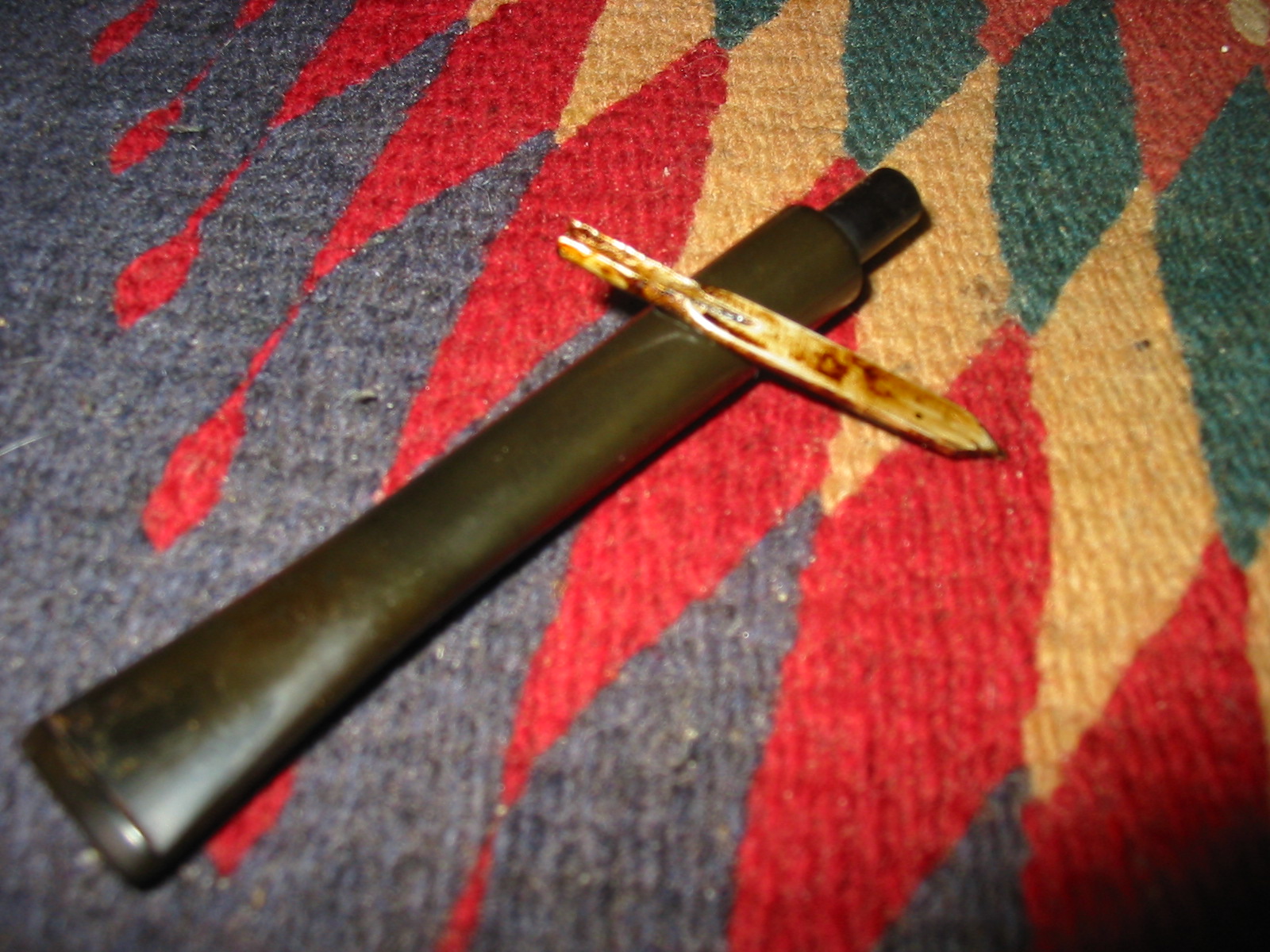
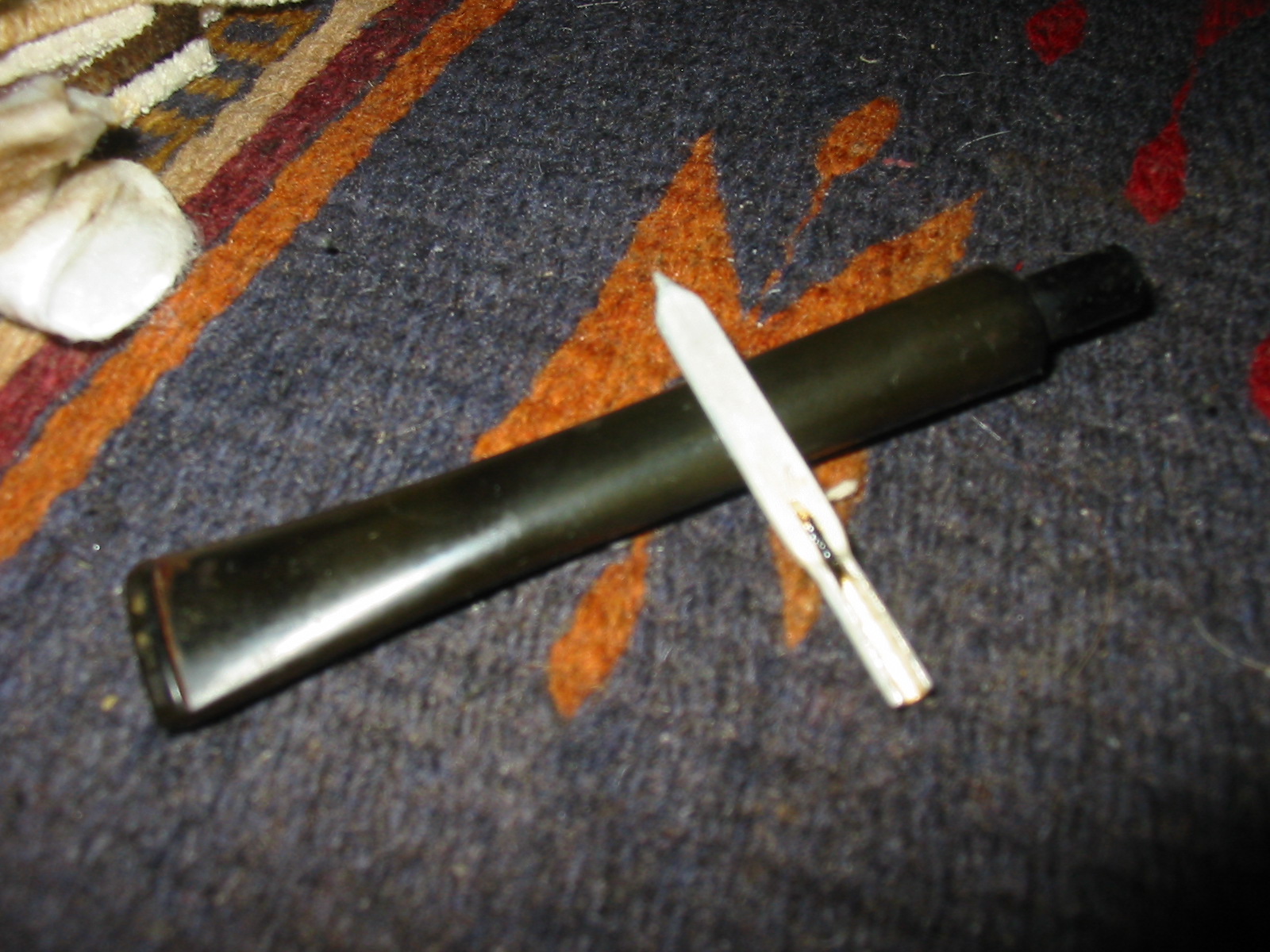
I took the pipe apart to check on the internals and remove the stinger apparatus. The next two photos show the top and bottom of the stinger. It is also clear in these two photos the damage to the right inside edge of the rim as well. It is slightly out of round.

IMG_1104

IMG_1105

I reamed the bowl with a PipNet reamer using two different cutting heads. I start with one size smaller than the diameter of the bowl to start the reaming. I then follow-up using the correct size cutting head in the bowl. I find that it is easier to cut the cake carefully and not do any further damage to the roundness of the bowl.

IMG_1106

Topping the bowl on this one was a bit tricky. I needed to take down the back left side of the rim and even out the back side of the rim without removing any from the front edge. I used the flat hard surface that I always use for topping. I held the bowl with the back side pressed into the sandpaper and the front edge off the paper. I move the bowl right to left across the sandpaper checking to see the effect (photo 1 below). I did not want to make the top worse than it already was. Once I had the back left and right sides even and the front and the back even I was ready to do a slight topping on the bowl to even it up neatly (photo 2 below).

IMG_1107

IMG_1108

At this point I sanded the top a little more to clean off the burn damage on the front of the bowl. Once I had that minimized I sanded the top with a medium and a fine grit sanding sponge until the scratch marks were gone. I also used the Dremel to even out the diameter of the bowl and bring it back into round.
I then removed the stinger apparatus and cleaned it with alcohol and cotton pads. I picked the slot clean with the dental pick. I did not intend to use it on the pipe once it was clean so I put it away in case I sold the pipe and the new owner wanted the stinger.

IMG_1109

IMG_1110

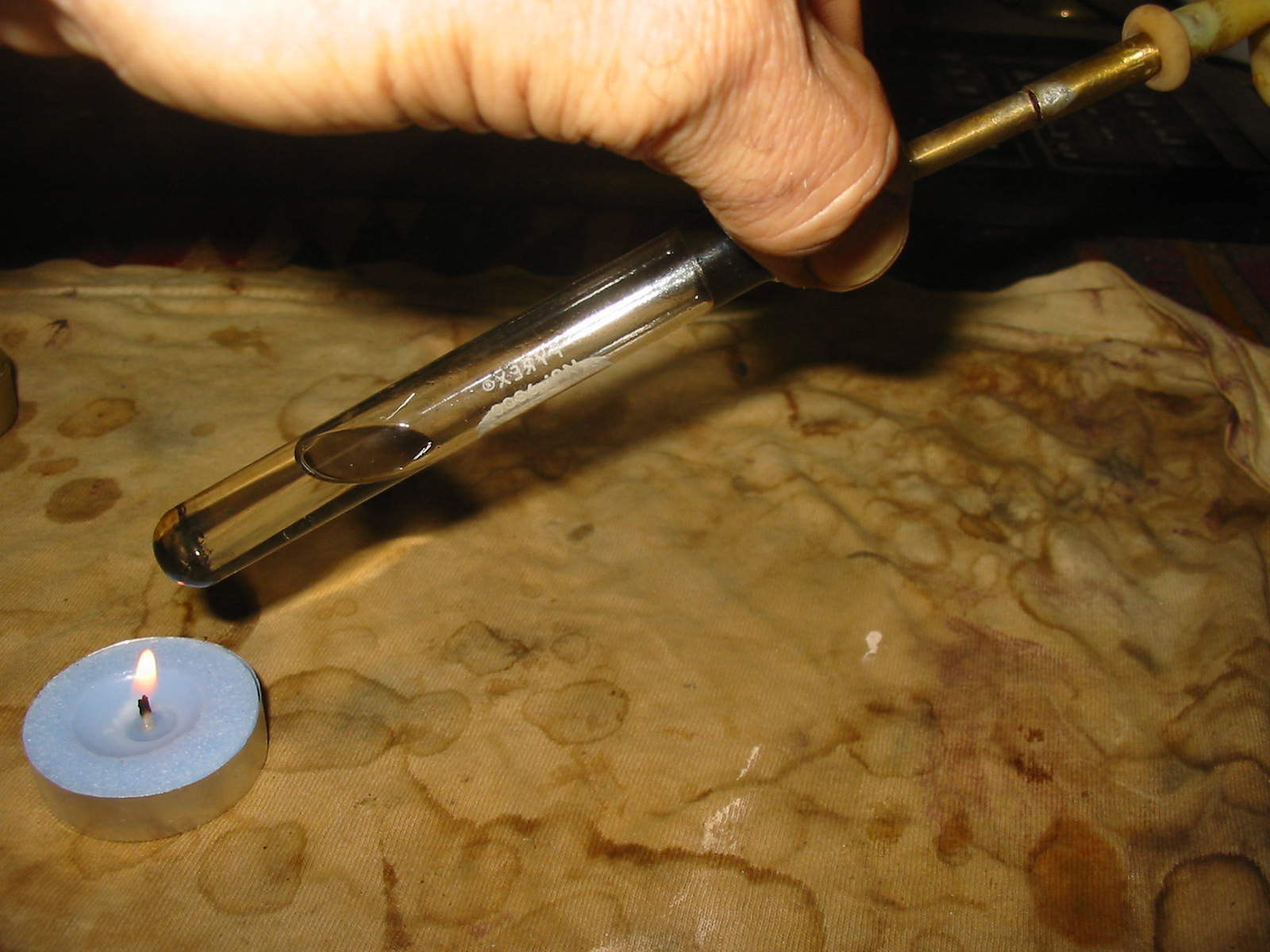
I set up the retort and filled the test tube with isopropyl alcohol and boiled out the inside of the bowl and stem. The next four photos show the set up and the process. I heat the alcohol with a tea candle and once the alcohol has cooled from the boil it returns back to the test tube and carries the oils and tars of the bowl and shank with it. I repeated this process twice.

IMG_1111

IMG_1112

IMG_1113

IMG_1114

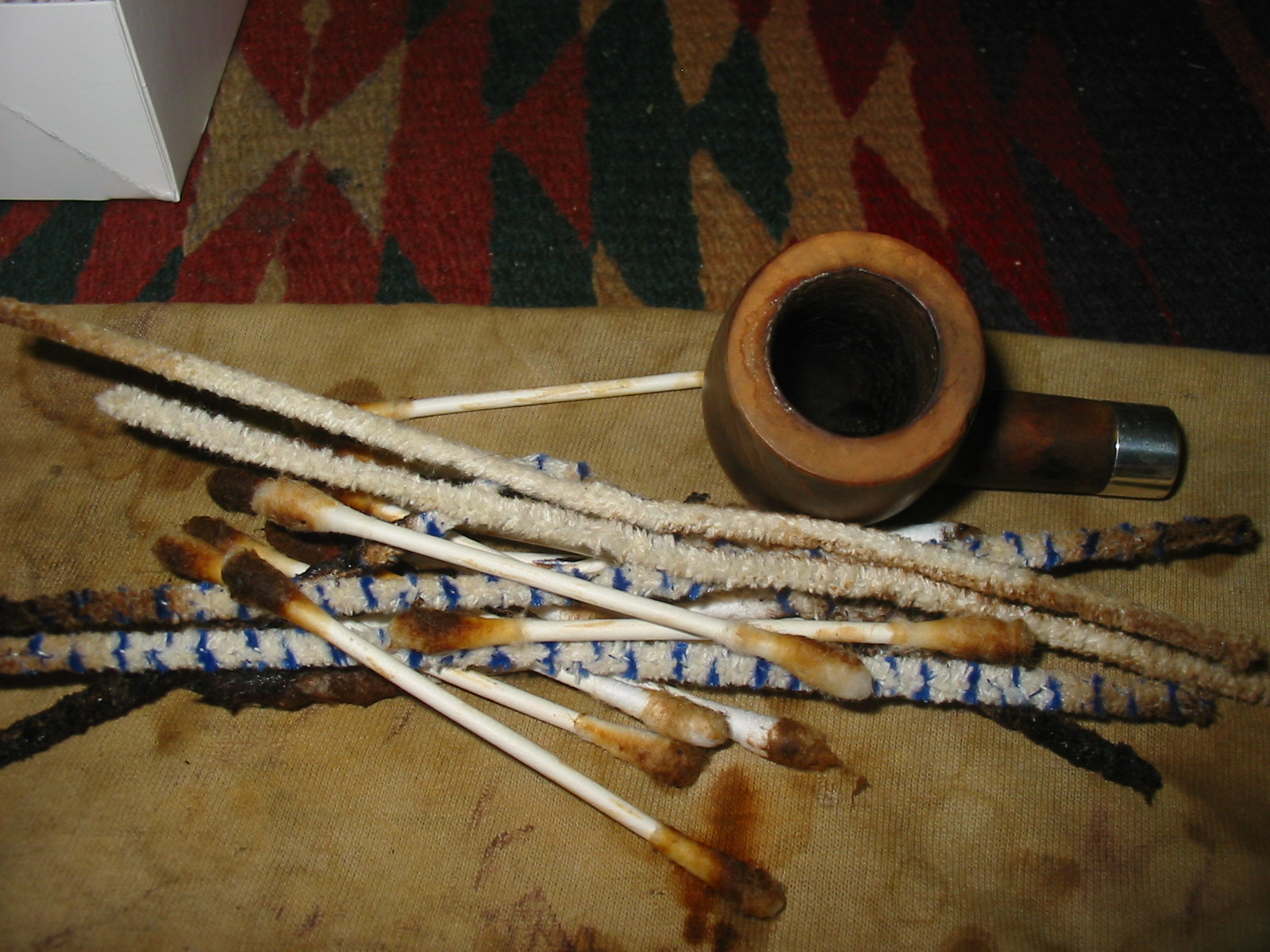
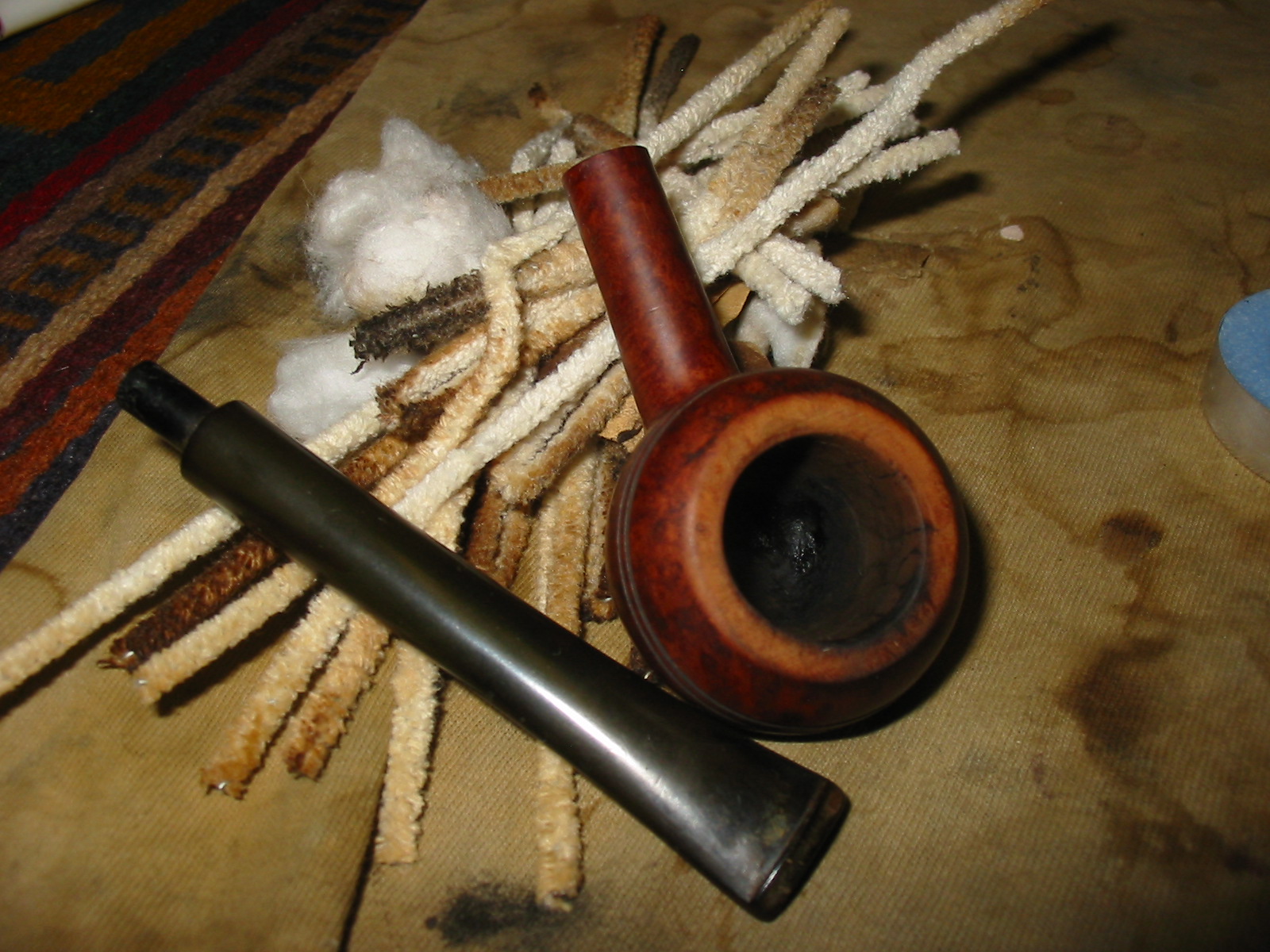
I cleaned up after the retort with pipe cleaners and Everclear. Both the stem and the shank were cleaned of all the internal grime. The pile of pipe cleaners in the picture below show the sheer volume of pipe cleaners used in cleaning up after the retort. Once this was finished the interior of the shank and stem were clean and pipe cleaners came out pristine.

IMG_1115

It was time to work on the stem. I ran the flame of a Bic lighter across the tooth marks on the topside and bottom side of the stem until they lifted. I then sanded the stem with 220 grit sandpaper to remove the remaining signs of the marks. And then I sanded the entire stem with a fine grit sanding sponge to remove the oxidation and to deal with the scratch marks from the sandpaper.

IMG_1116

IMG_1117

IMG_1118

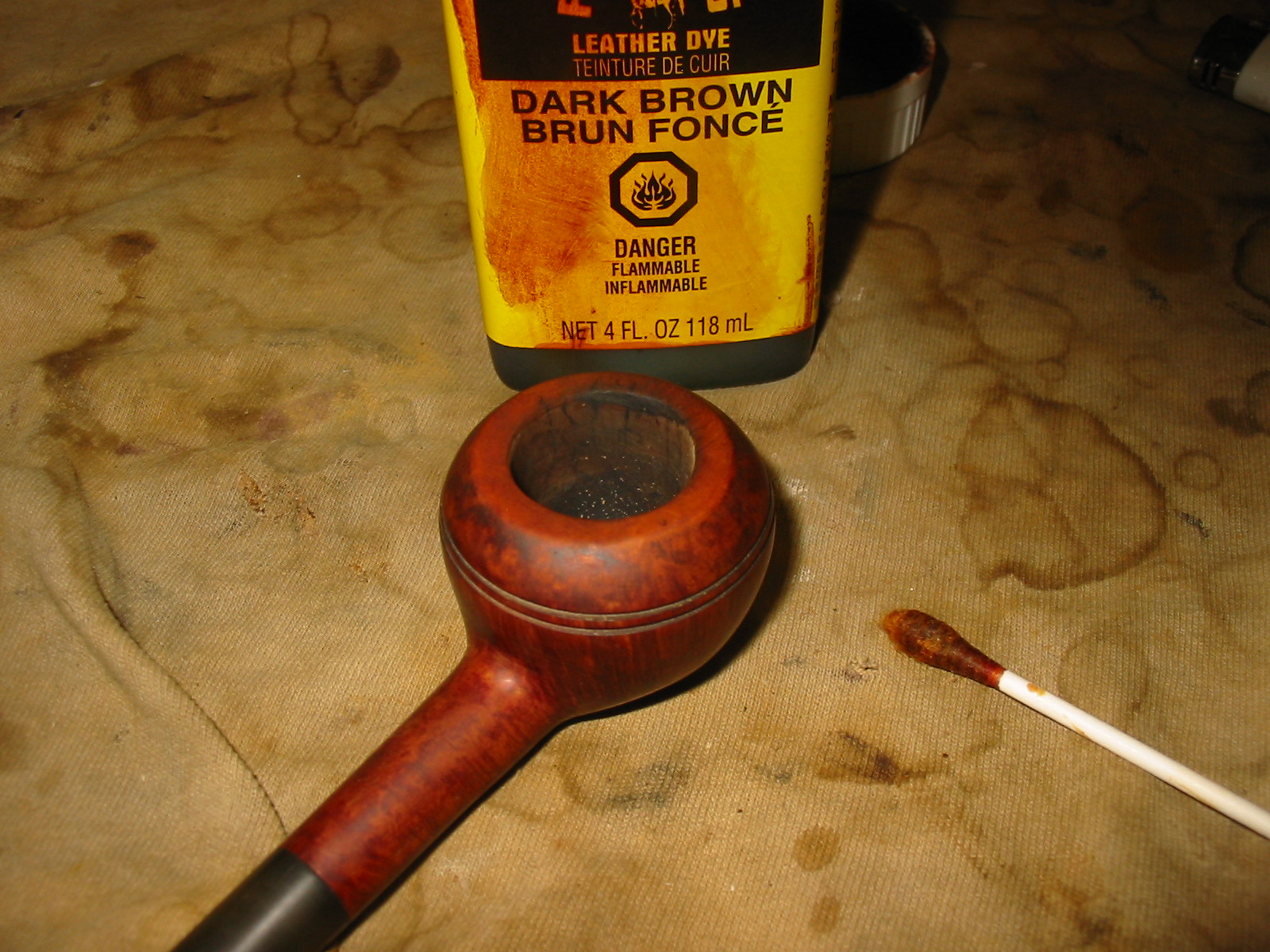
I stained the top of the bowl with dark brown aniline stain that I thinned 2:1 with isopropyl to match the colour of the bowl and shank. I flamed it and then repeated the process until the colour was an exact match to the rest of the pipe.

IMG_1124

IMG_1125

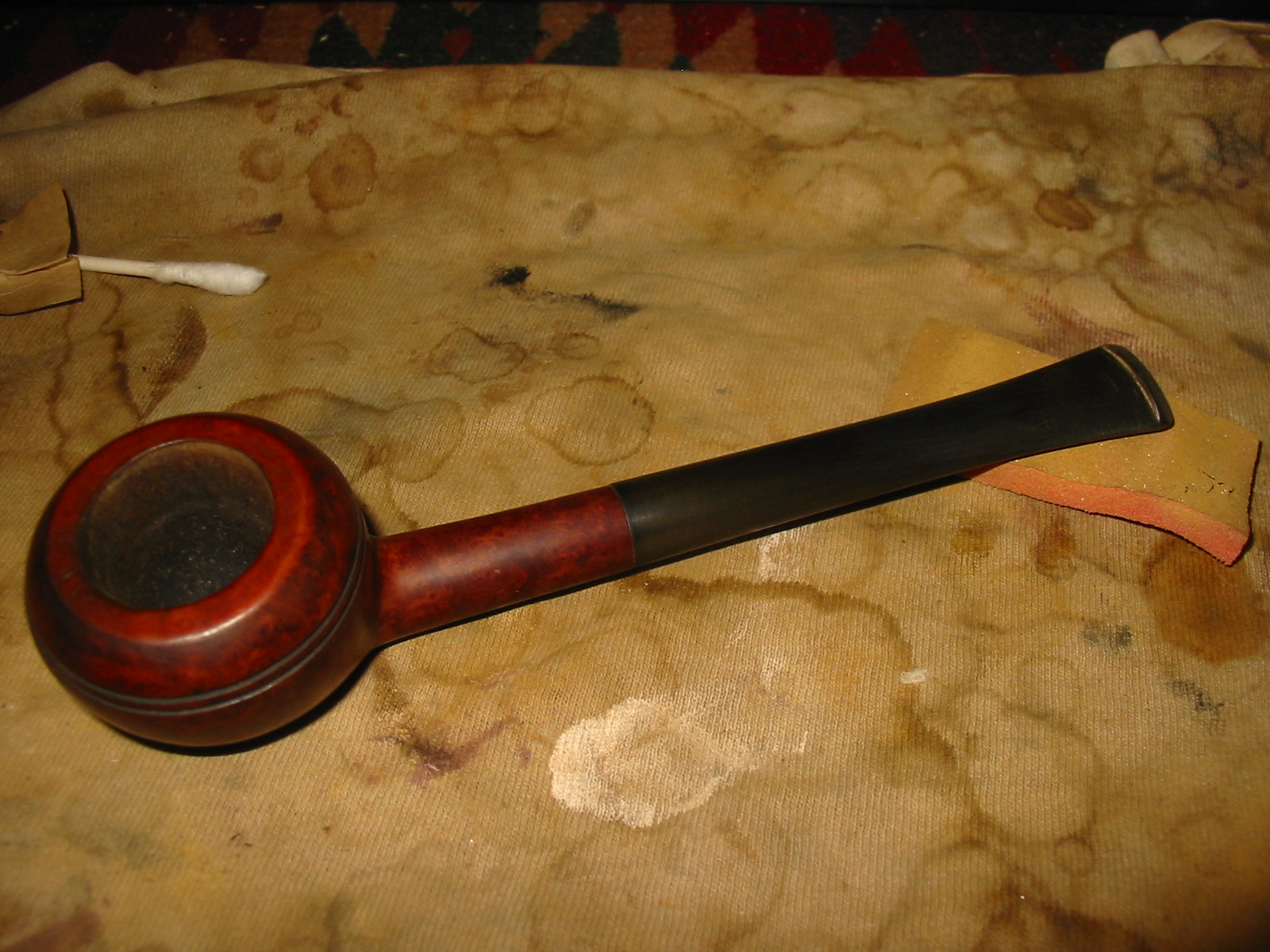
I took the pipe to the buffer and buffed the bowl with White Diamond to shine up the bowl and the newly stained rim. I also buffed the stem with Tripoli and White Diamond at the same time to further shine the stem. The four photos below show the buffed and polished bowl and stem after the White Diamond buff.

IMG_1128

IMG_1129

IMG_1130

IMG_1131

I took the pipe back to my desk and sanded the stem with micromesh sanding pads. I worked through the various grits of micromesh from 1500-12,000 to polish the stem.

IMG_1132

IMG_1134

IMG_1135

IMG_1136

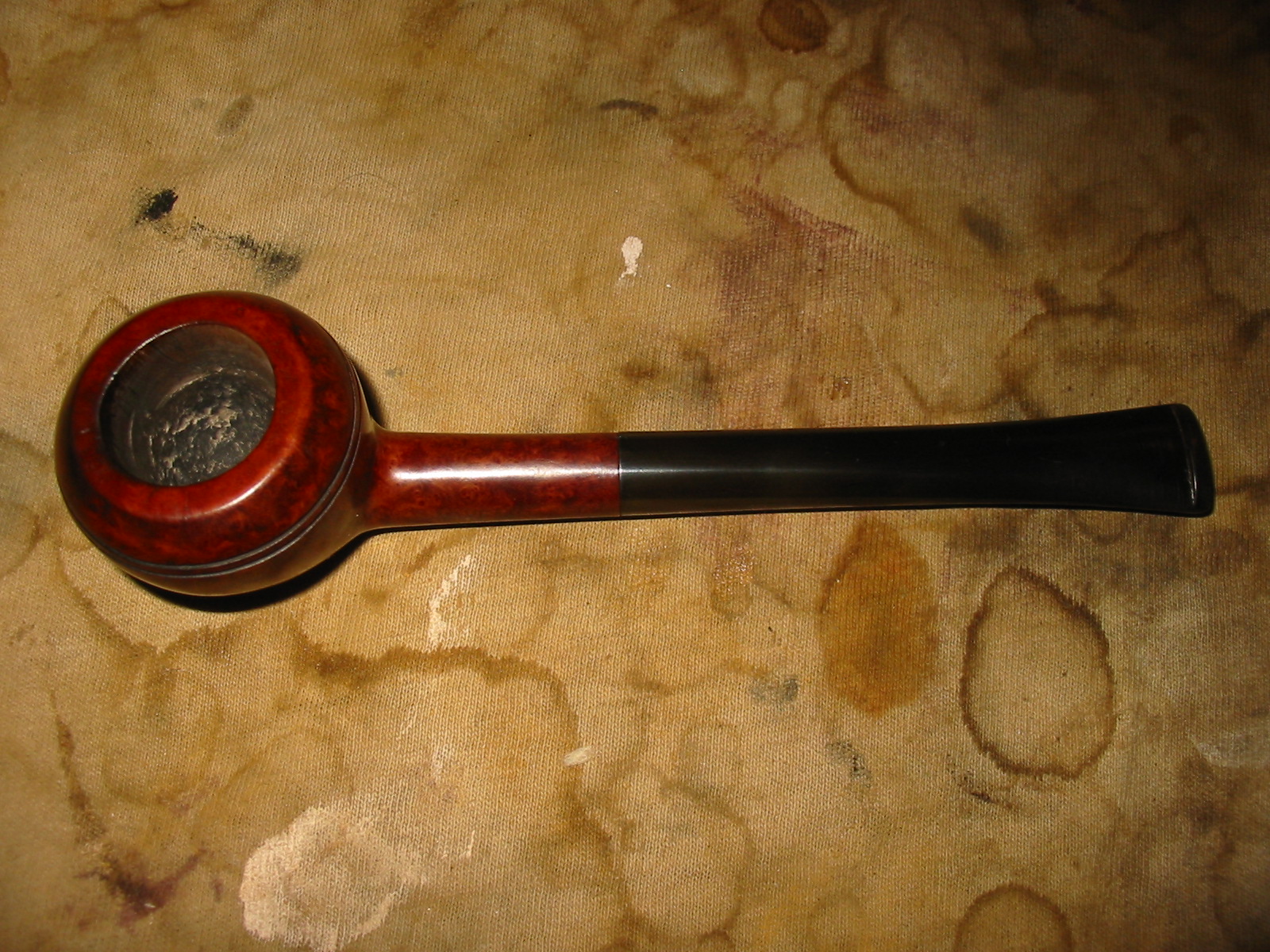
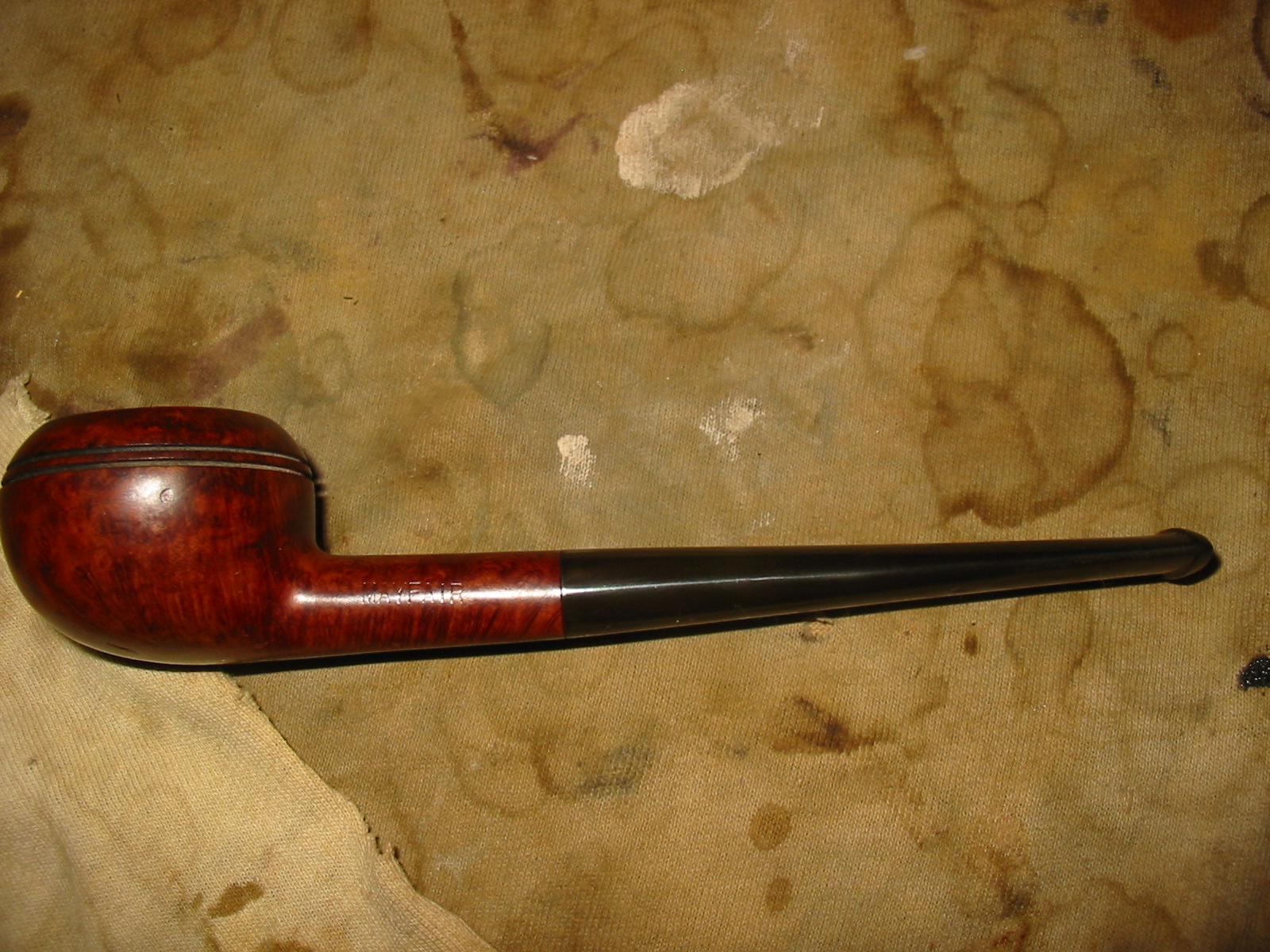
I gave the entire pipe another buff with White Diamond and then gave it multiple coats of carnauba wax and buffed it to a shine with a clean flannel buff. The final four photos show the finished pipe.

IMG_1137

IMG_1138

IMG_1139

IMG_1140

GBD Midnight 9456


Blog by Greg Wolford

The last few months have been extremely busy for me. It is amazing how much a disabled, non-working person can be obligated to do; I think I had more “free time” when I was working full time in the car business! Ah, but I digress …

By chance, I found myself today with no obligations, no chores, no appointments, just a day to myself. Unfortunately it also stormed badly which flared up my arthritic joints but I was able, finally, to get to a project, if only a simple one.

I picked up this GBD Midnight about two weeks ago. It was a fair price and an interesting pipe to me; all of the Midnight models I had seen before had acrylic stems and this one had vulcanite. Some later research led me to believe that there were at least two productions of this line: the first with vulcanite stems shortly after the merger and another some time later with acrylic stems.

Although I forgot to take “before” photos the seller’s were quite accurate except for the oxidation was a bit more than I anticipated: it wasn’t thick or heavy but was even, all over brown. The seller said he had only smoked it a few times over the years and didn’t like it; he prefers a 9 mm filter pipe. He said there were a few tooth dents but not bad ones and that he had cleaned it; these things were accurate, if he meant cleaned the inside.

The too had a fair amount if tar build up but not thick. The stummel was dirty but not in bad shape at all. And the dents were mild as be had said.

I began with an alcohol soaked pad, wiping down the stummel, paying extra attention to the rim’s build up. It didn’t take a lot to get it cleaned up and the rim smoothed out. I then reamed the bowl, which needed it but wasn’t badly caked. I set the stummel aside and began to work on the stem.

I started by rubbing the entire stem well with Back-to-Black, which removed a lot of oxidation. Then I took some automotive rubbing compound and cotton pads and polished away almost all of the remaining oxidation. After the rubbing compound I took the stem to the heat gun to raise the dents. They came up pretty well but not completely. But they were now slight enough I decided to not sand them smooth; I wanted to finish this pipe and write this blog tonight, those things and the small dents left made this decision for me easy. I did wet sand the stem with 400 grit wet/dry paper to remove the last of the oxidation and the few scratches I saw.

I reassembled the pipe and went to the buffing wheel. I like to buff the shank-stem union together so as to keep a nice fit. I began with black buffing compound, about an 800-grit I believe. After the union was buffed I took the stem and stummel apart and buffed each piece. I moved onto brown tripoli, then white diamond doing the same process.

I had a small deviation at the end of the white diamond buffing: the wheel grabbed the stummel and bounced it off my table. It left two dents, the bounce across the garage, that totally irritated me. I then had to steam the the dents out; thankfully the dents weren’t bad and came out. I went back to the white diamond and re-buffed the stummel.

I reassembled the pipe and gave it several coats of carnauba wax, buffed it on a soft, clean wheel and, finally, hand buffed it wearing a pair of linen gloves I bought just for that purpose.

The pipe came out quite well I think. After cleaning and buffing it is a bit lighter on color, which I am very happy with; the grain, especially the Birdseye on the front of the bowl really pops now.

Hopefully the frantic pace of life will slow some over the coming weeks; I have many more wonderful old pipes that are patiently awaiting being brought back to life. And I am anxious to do the work an share it with you.

20130613-222006.jpg

20130613-222015.jpg

20130613-222023.jpg

20130613-222030.jpg

20130613-222040.jpg

20130613-222049.jpg

20130613-222056.jpg

20130613-222105.jpg

20130613-222111.jpg

20130613-222119.jpg

20130613-222126.jpg

20130613-222132.jpg