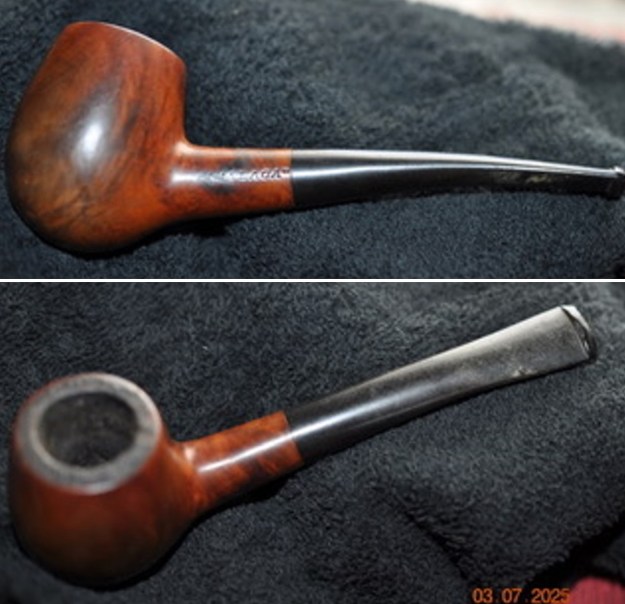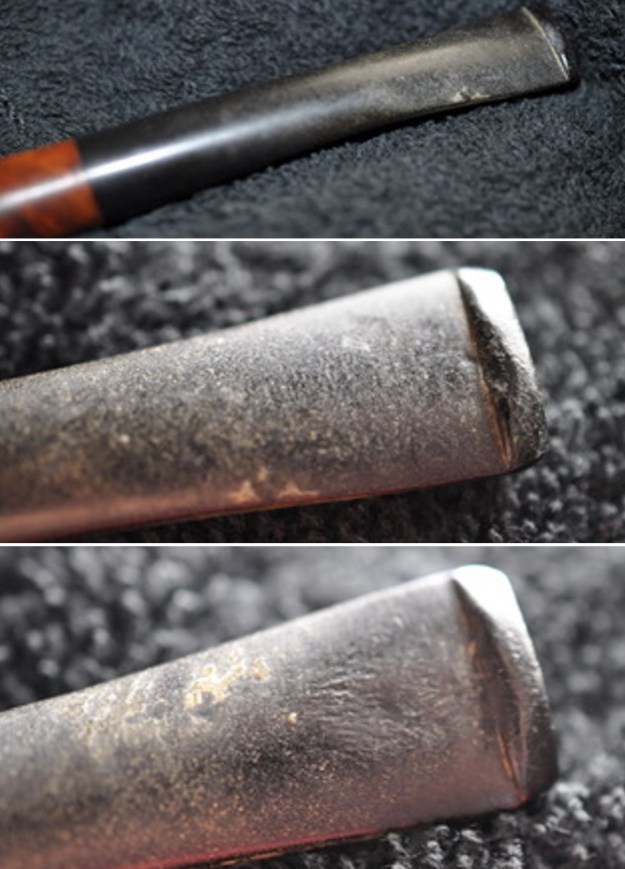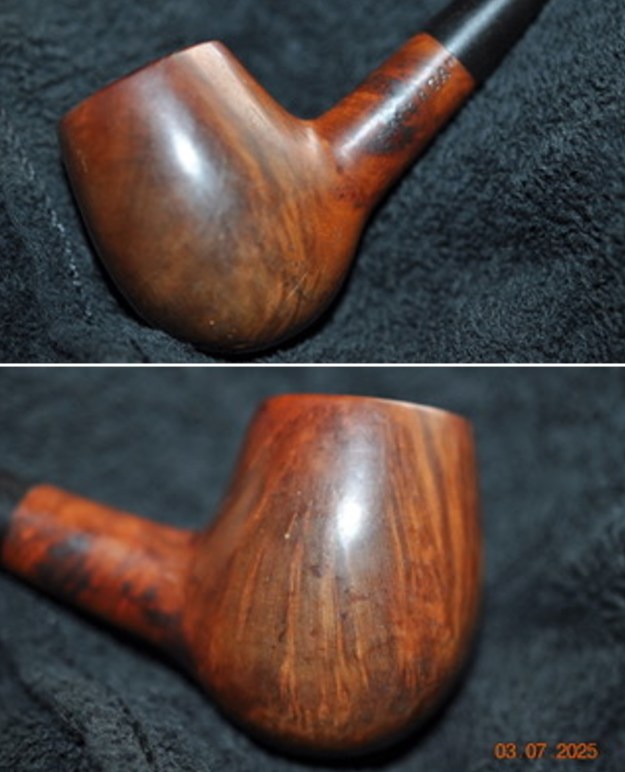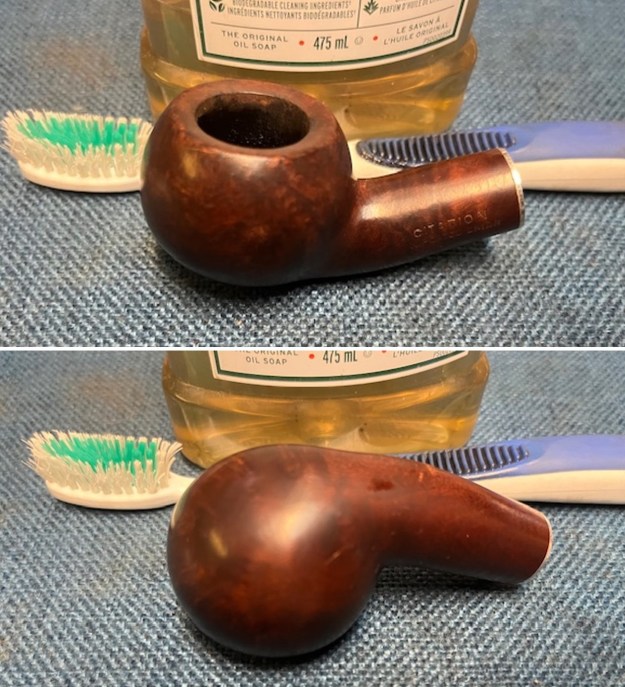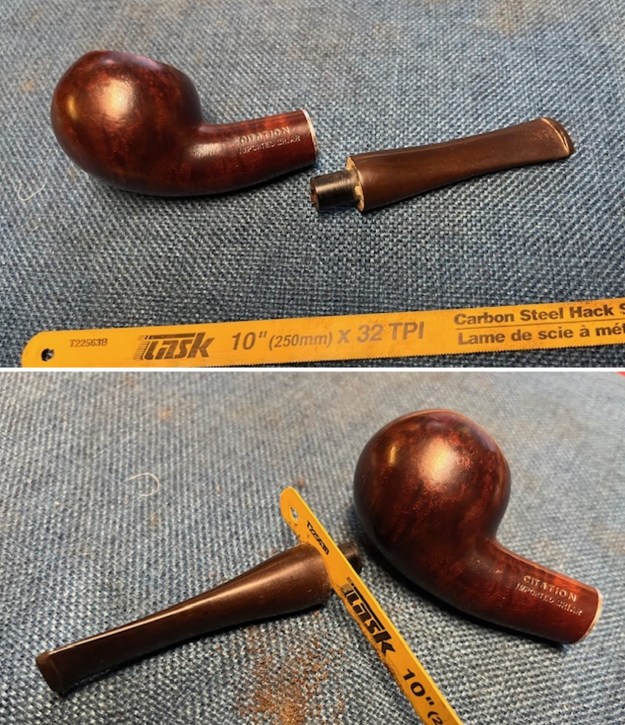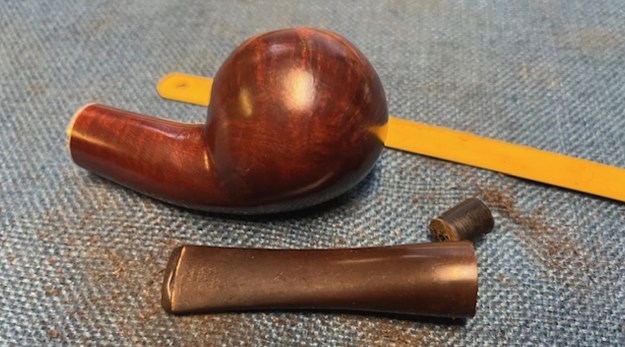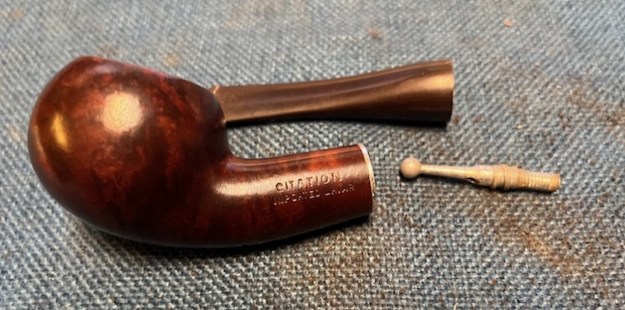
Tag Archives: Stem repairs

Restoring an Unusual Meerschaum with a Bamboo Shank


by Kenneth Lieblich

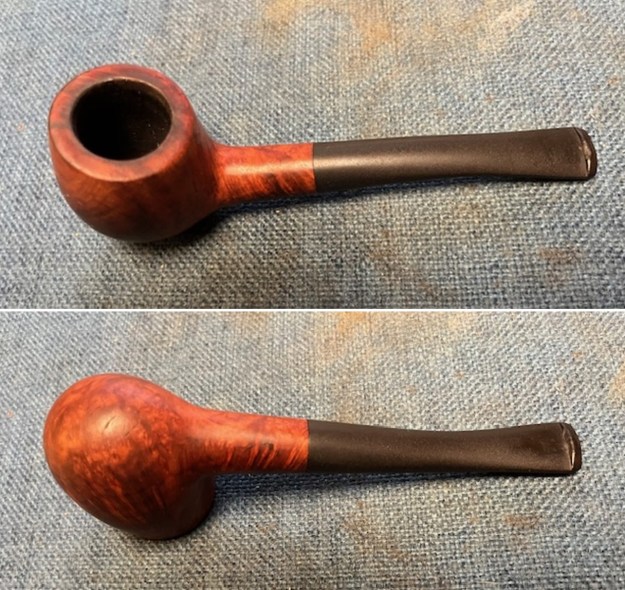
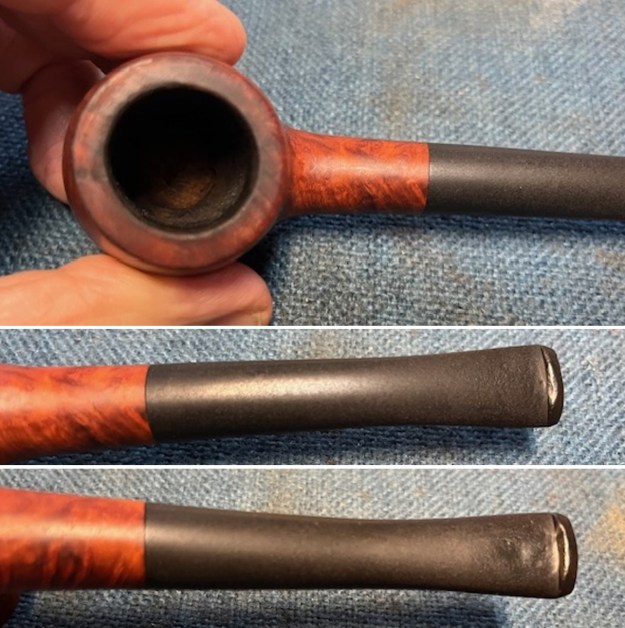
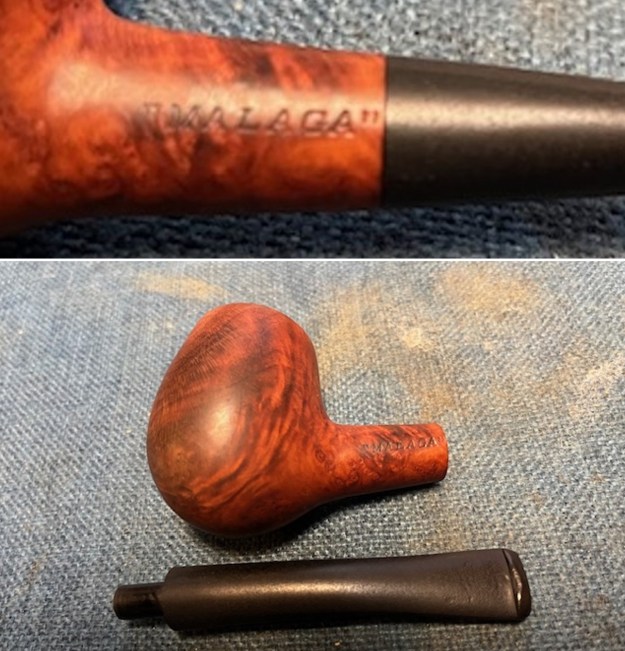
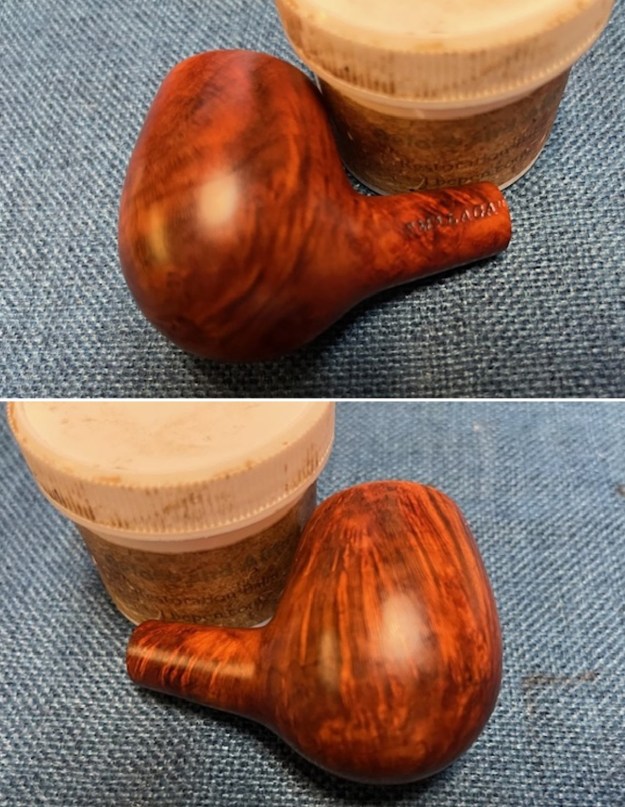
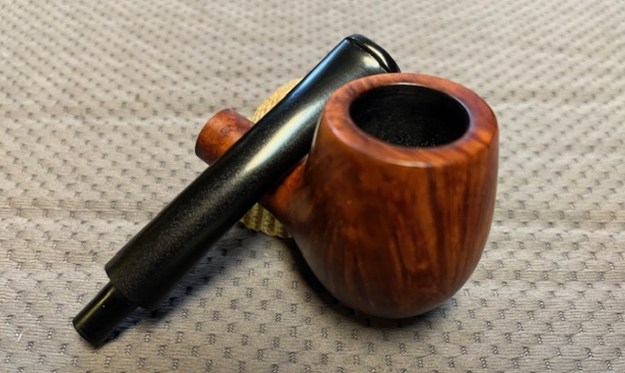
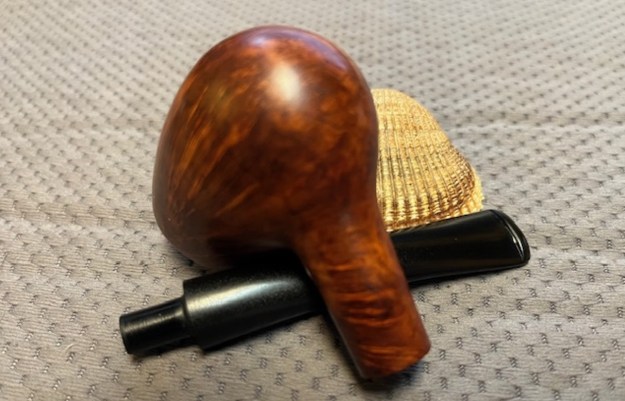
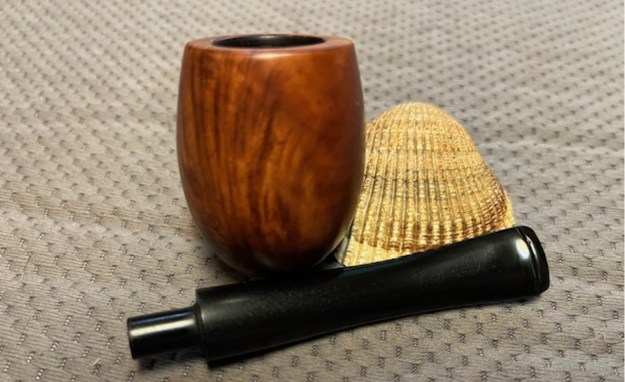
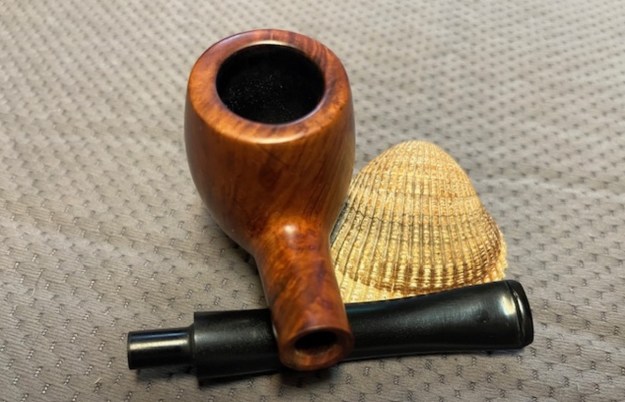
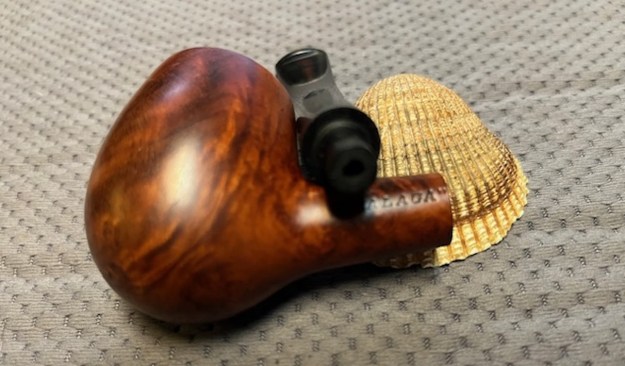
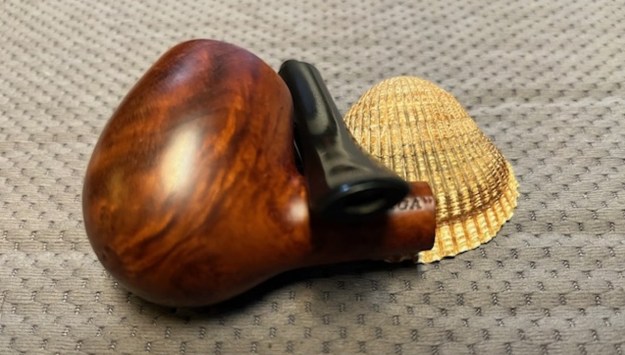
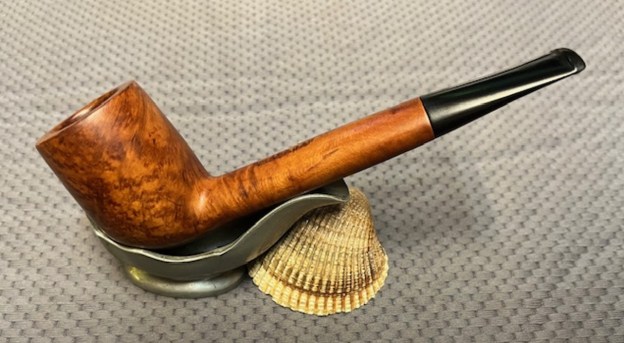
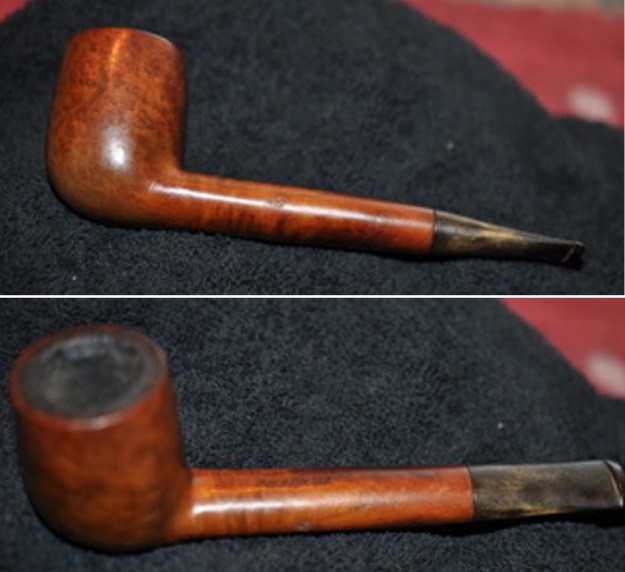
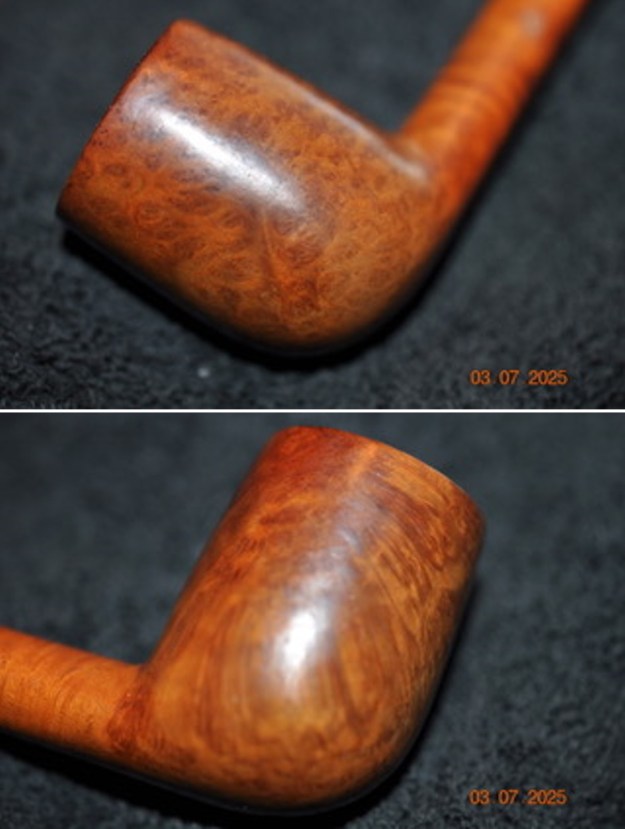
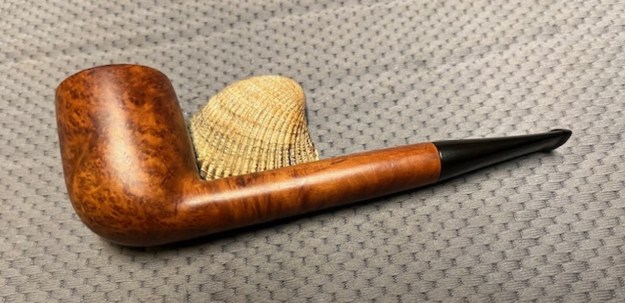
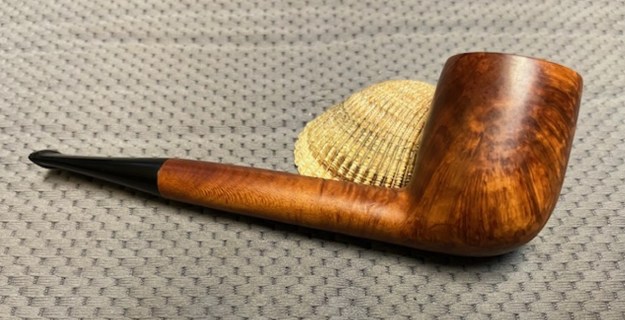
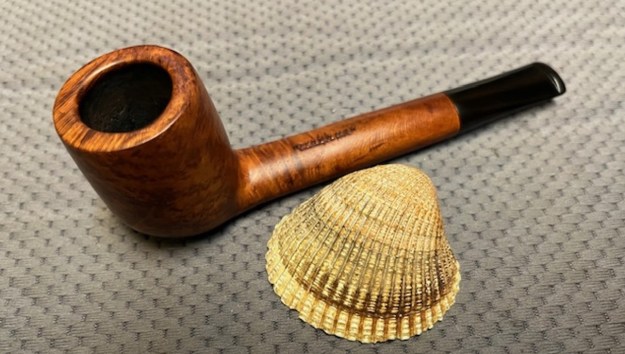
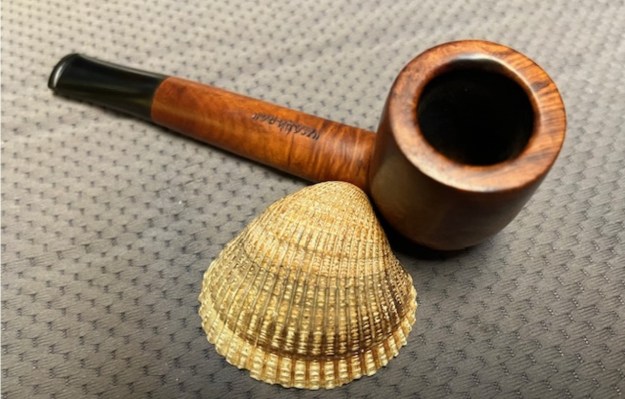
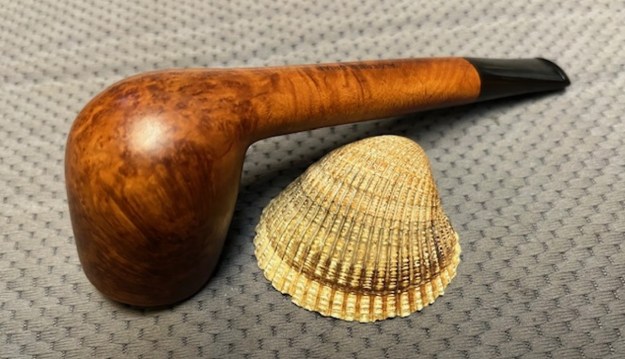
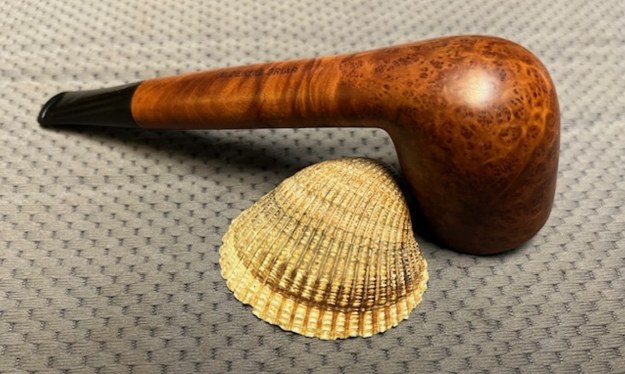
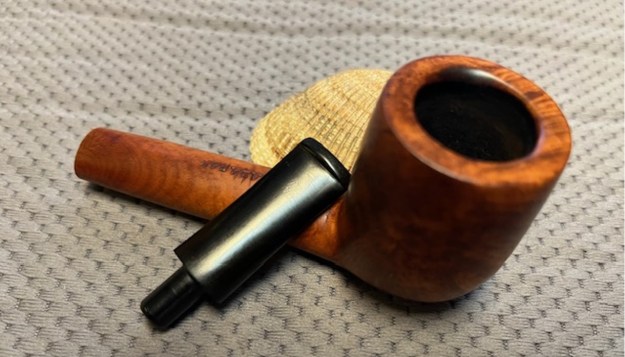
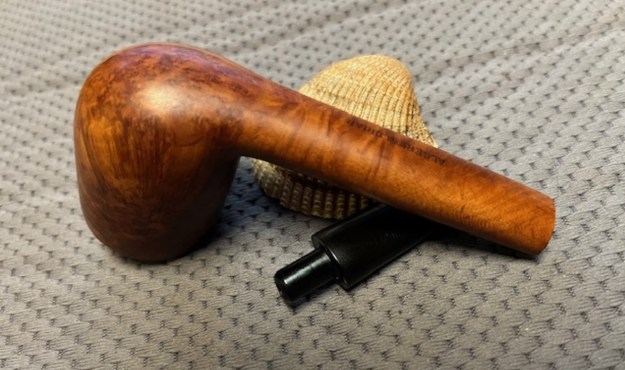
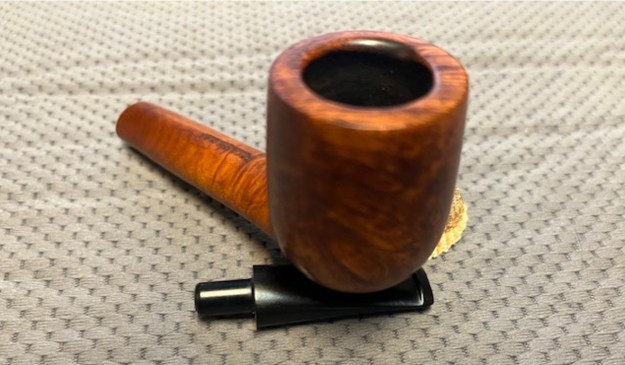
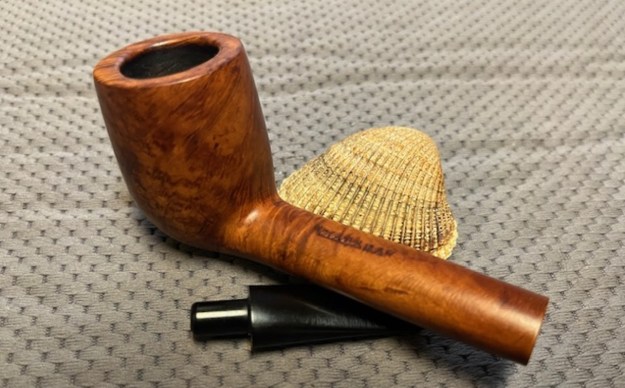
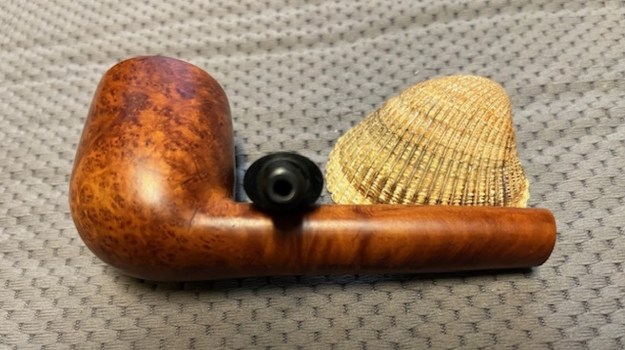
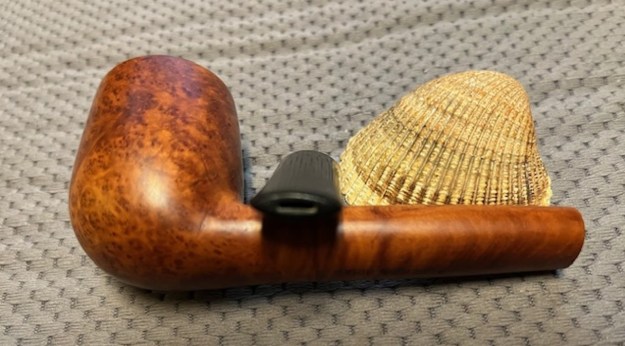
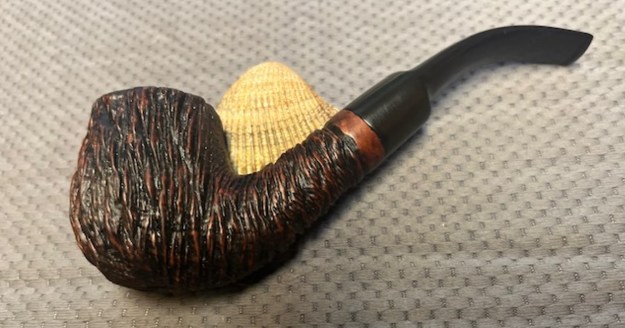
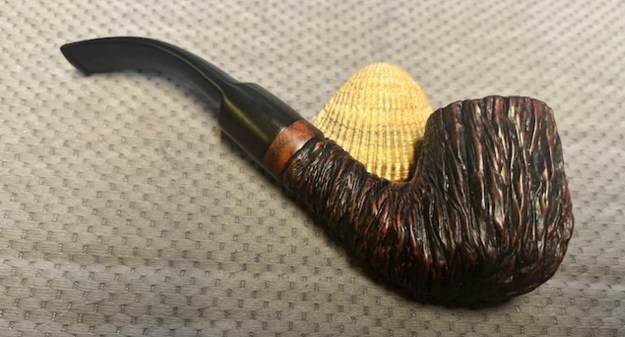
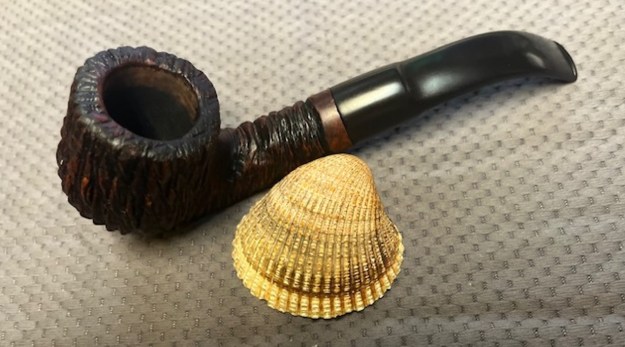
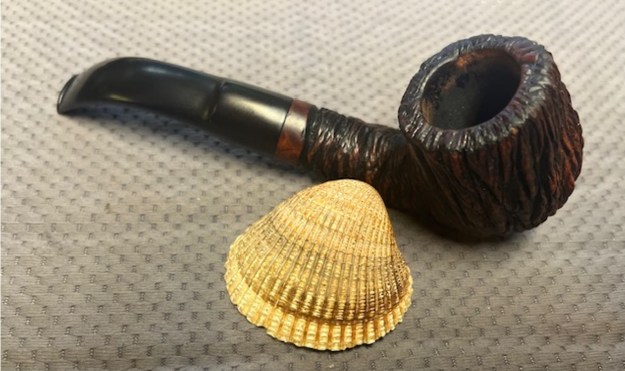
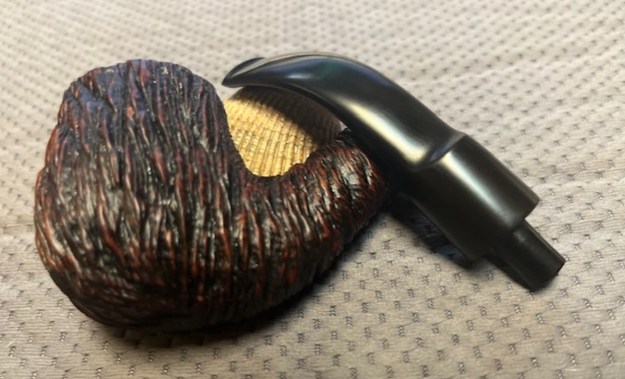
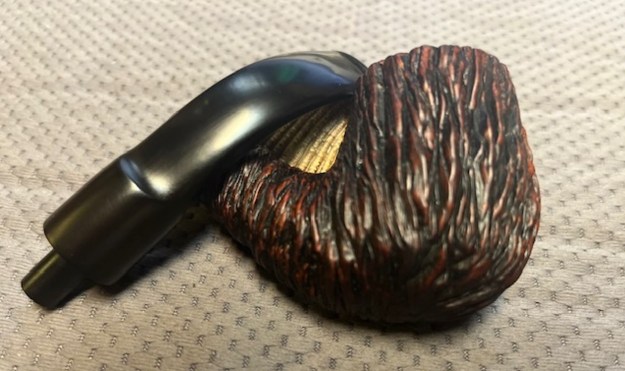
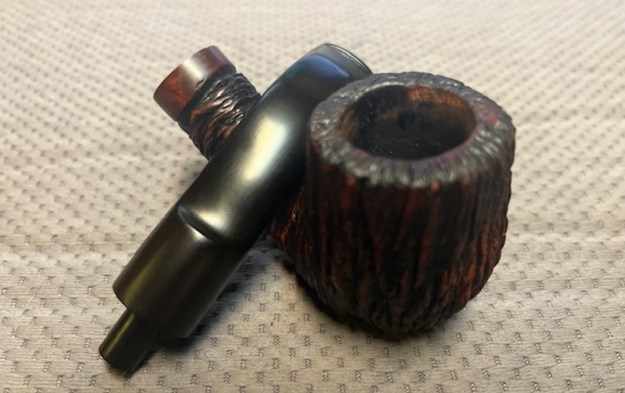
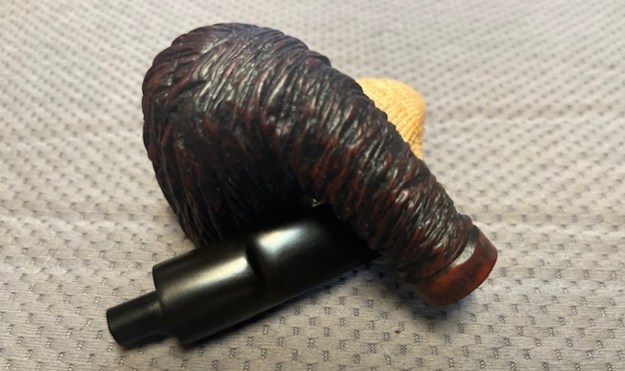
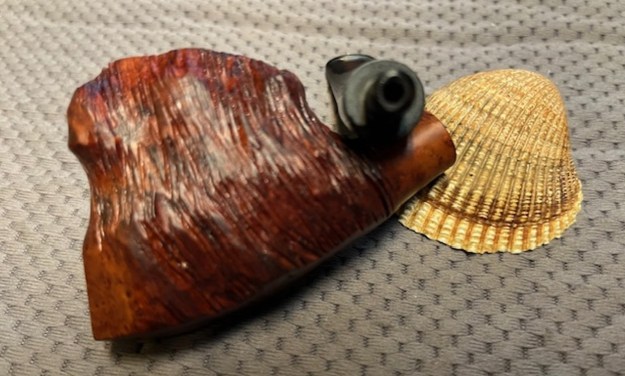
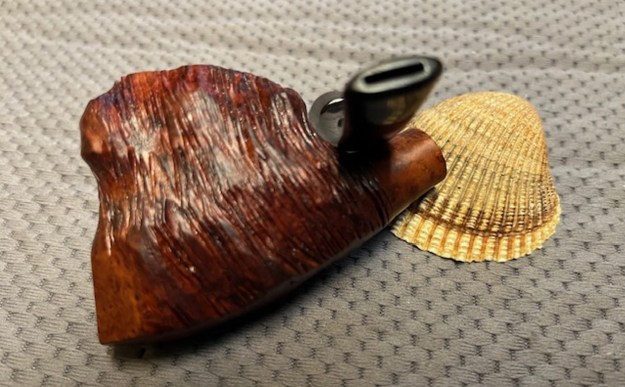
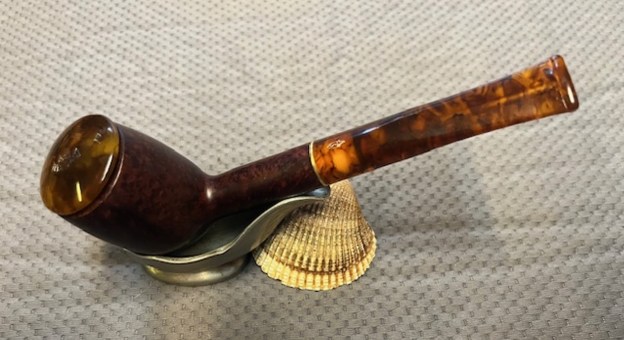
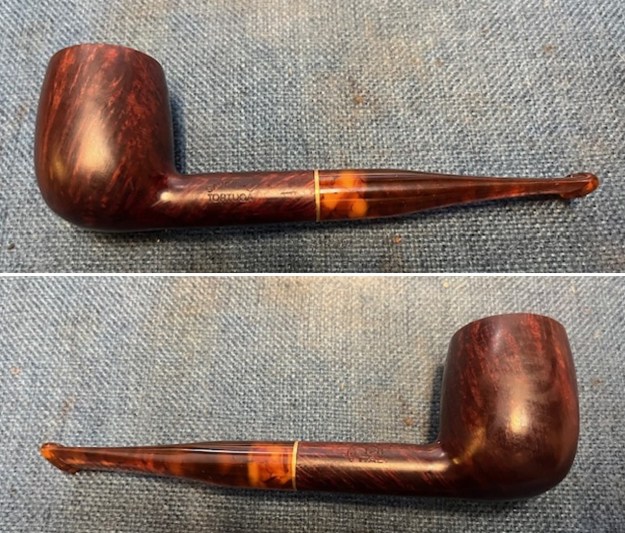
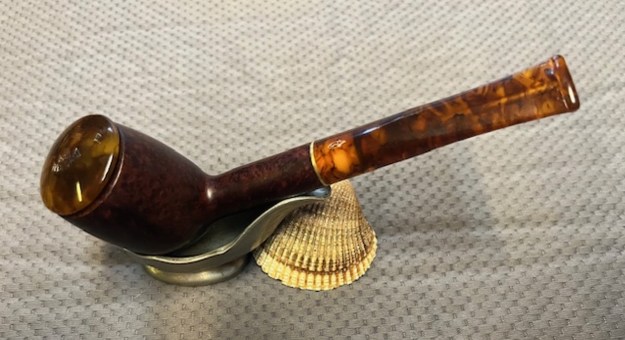
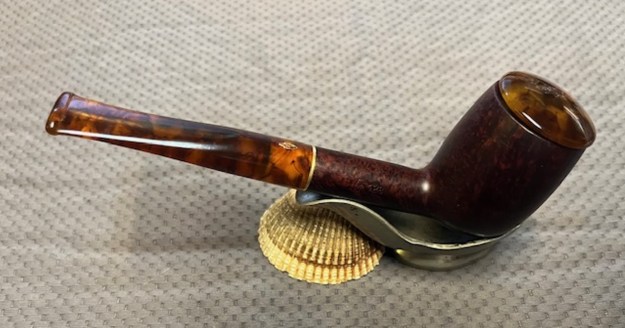
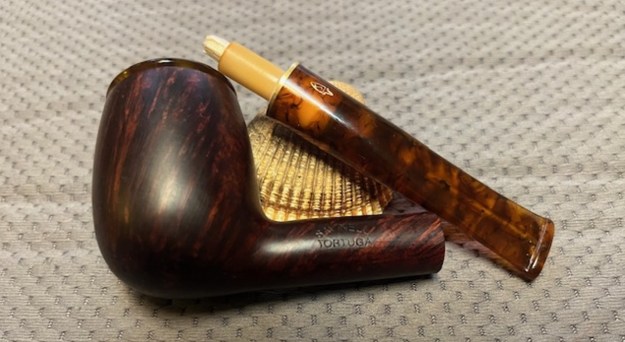
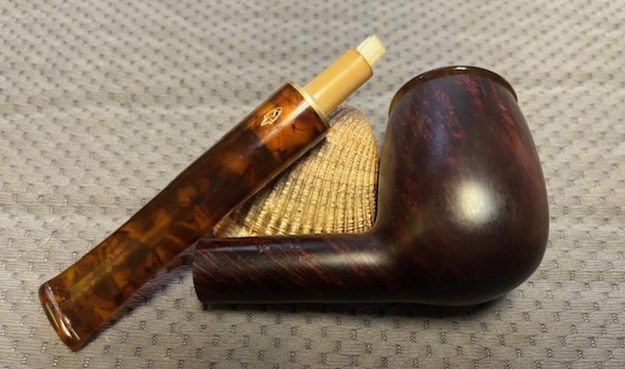
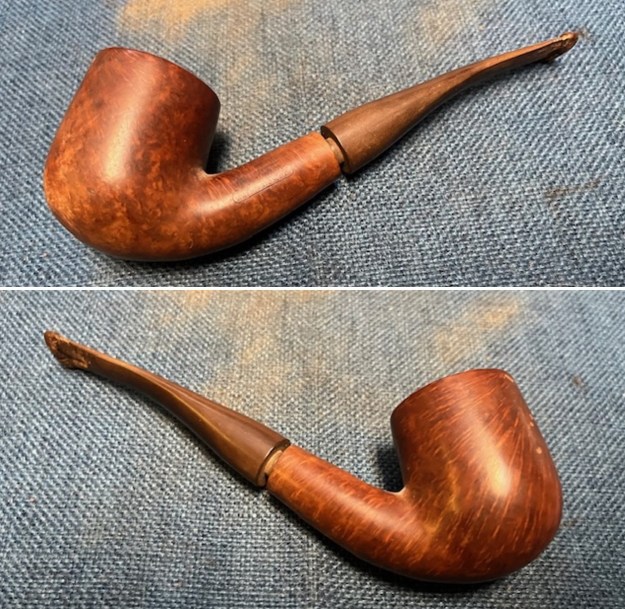
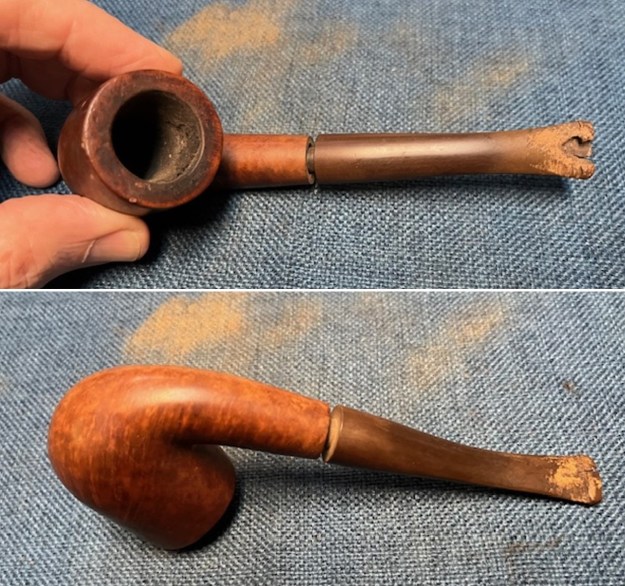
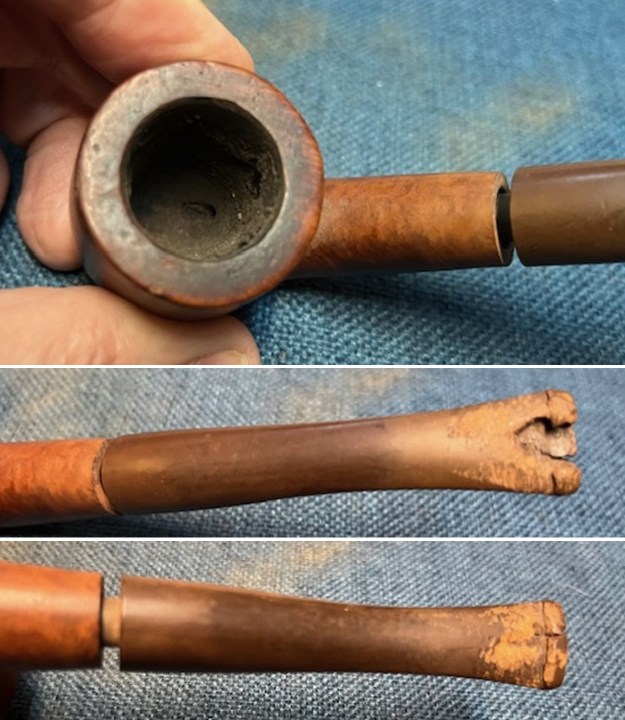
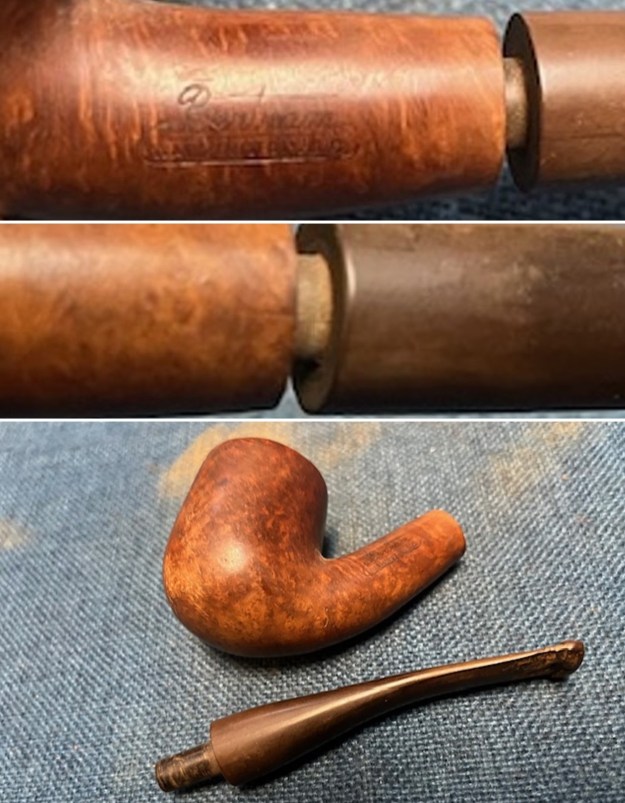
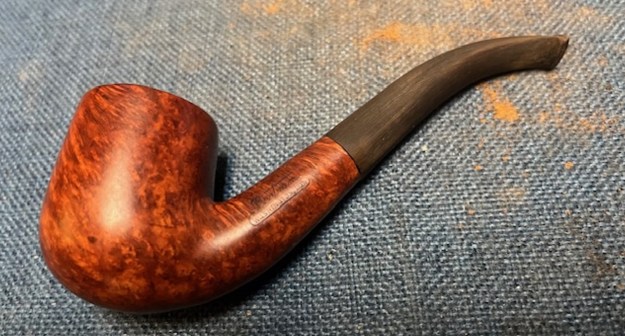
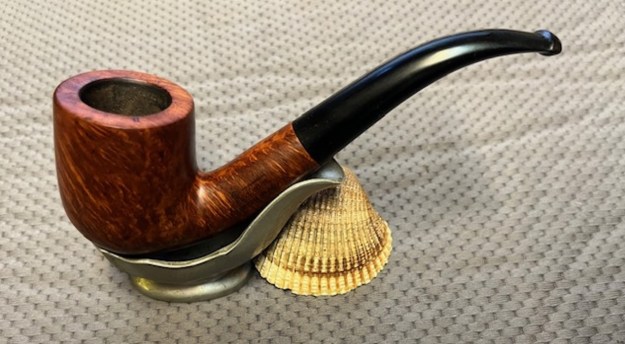
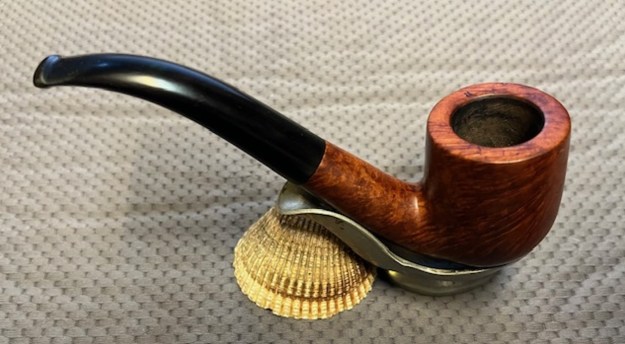
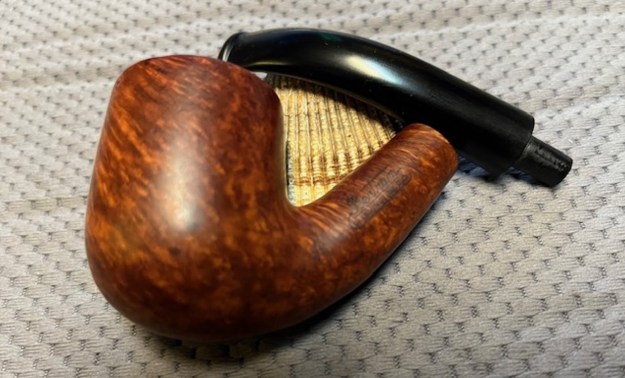
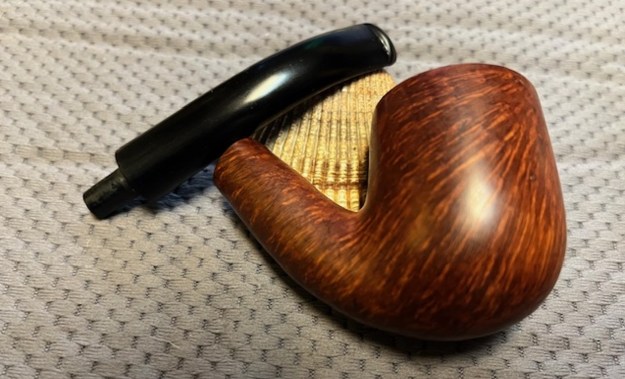
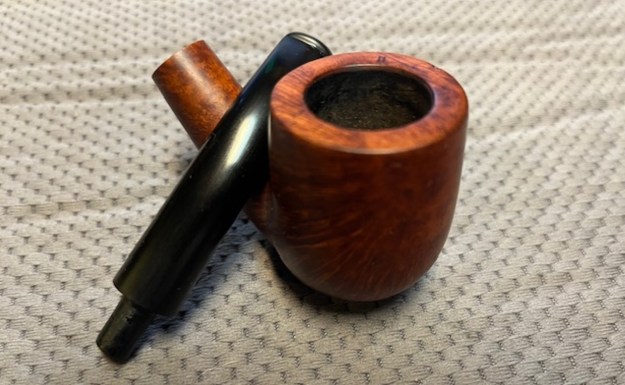
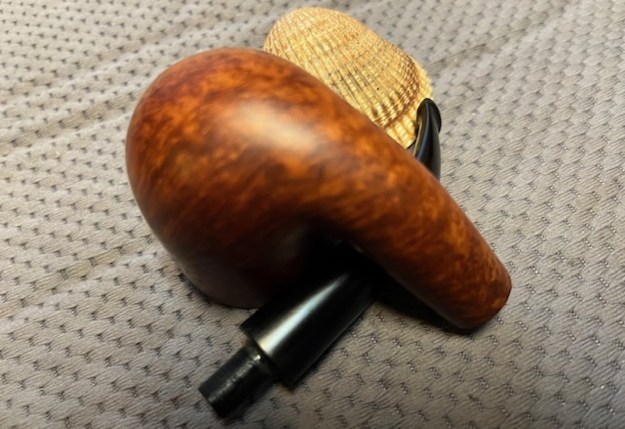
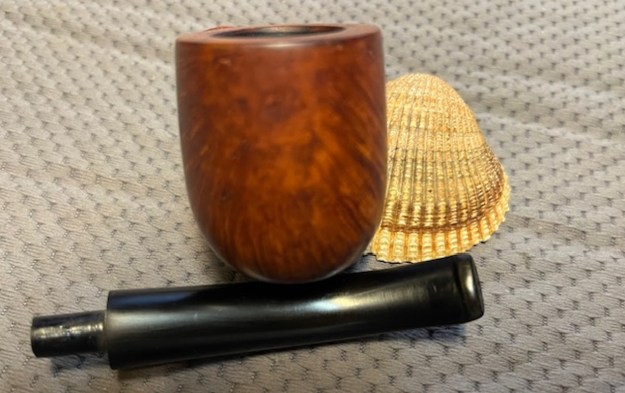
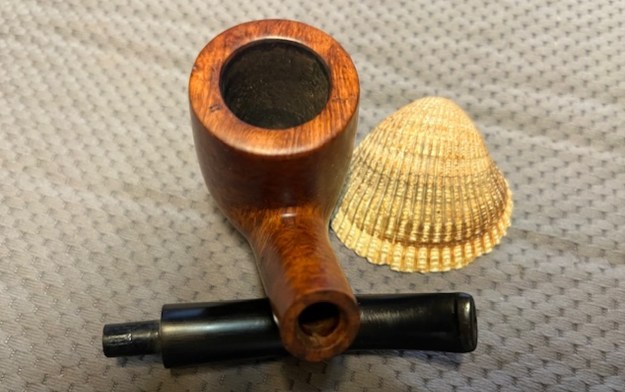
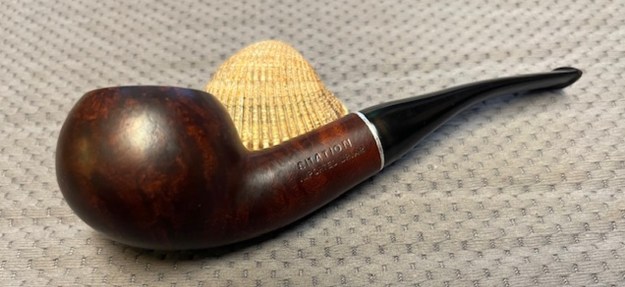
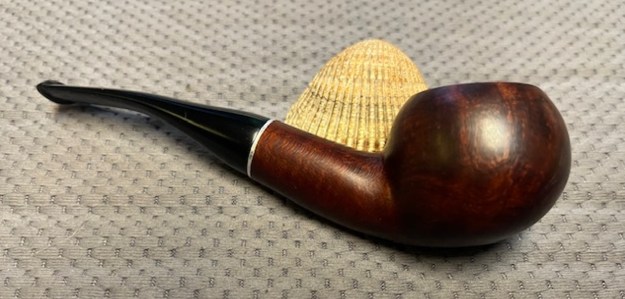
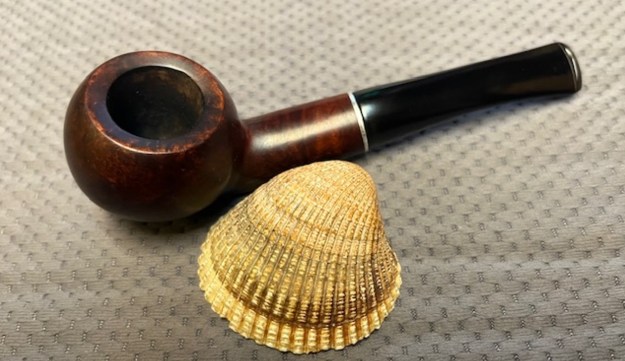
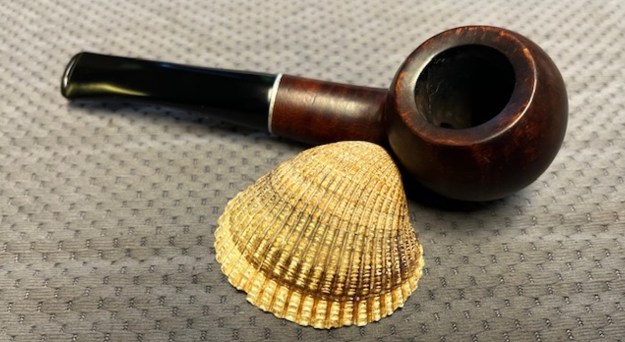
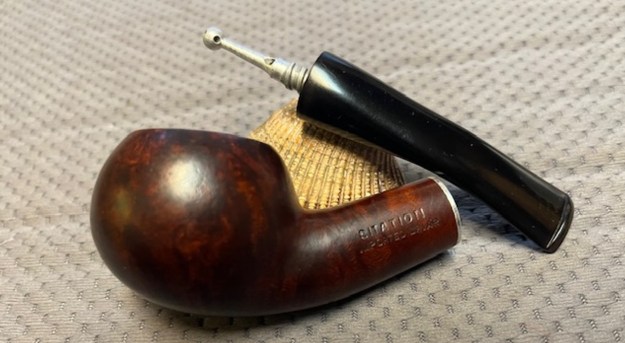
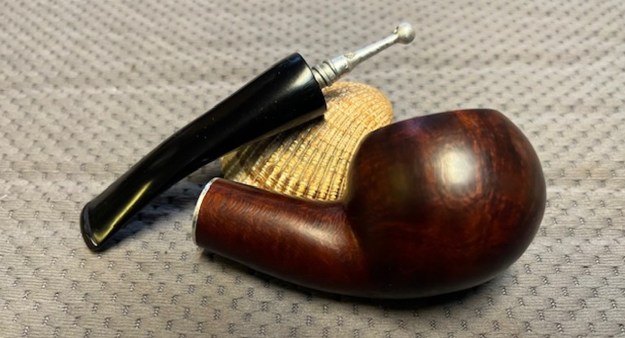
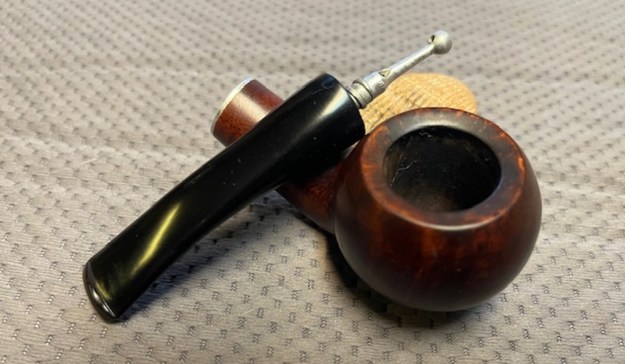
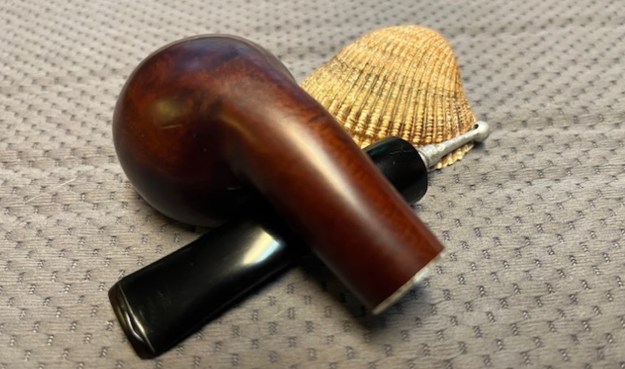
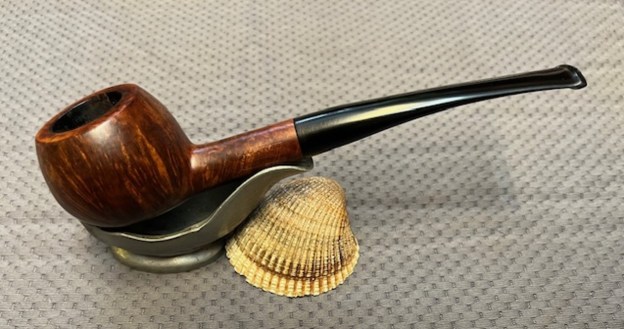
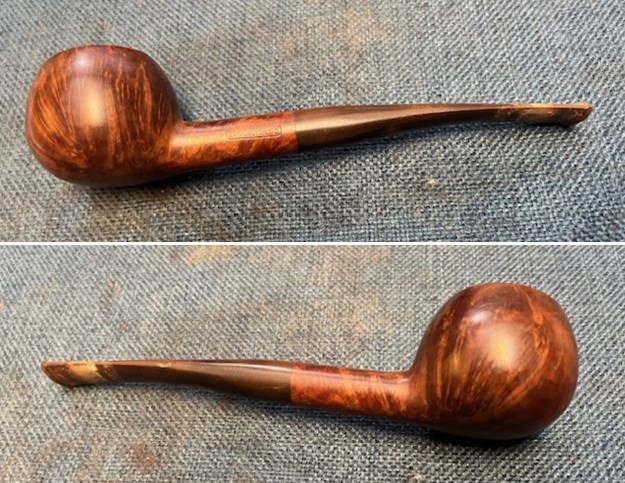
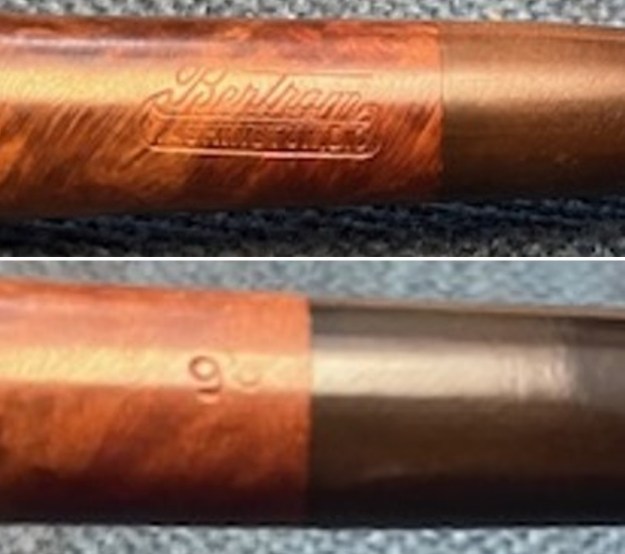
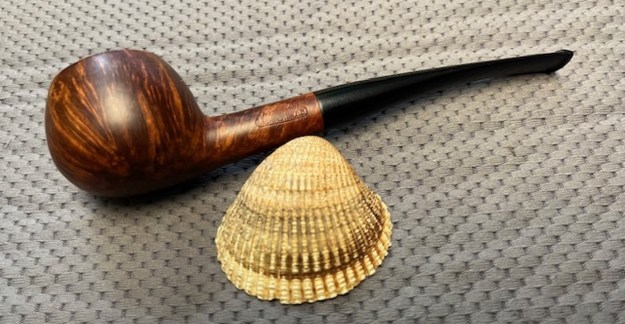
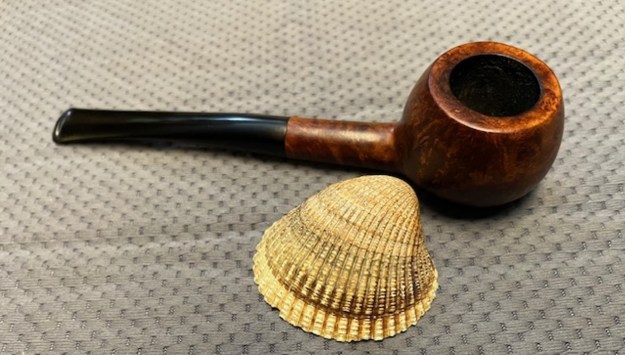
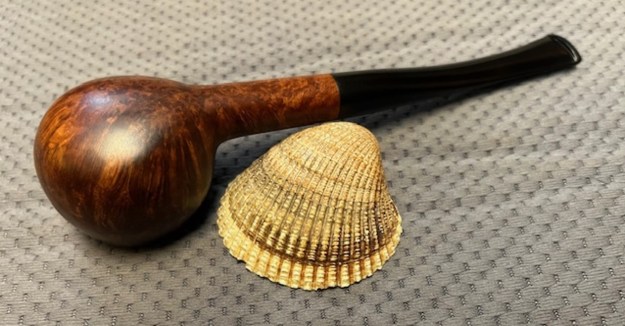
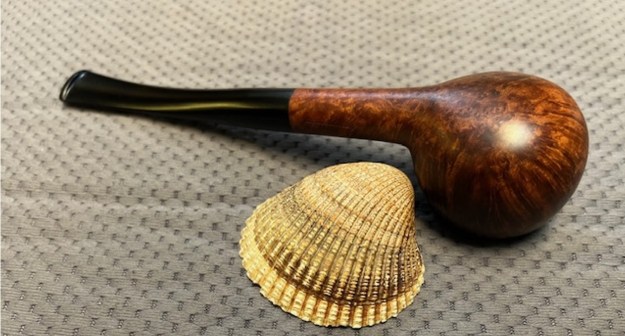
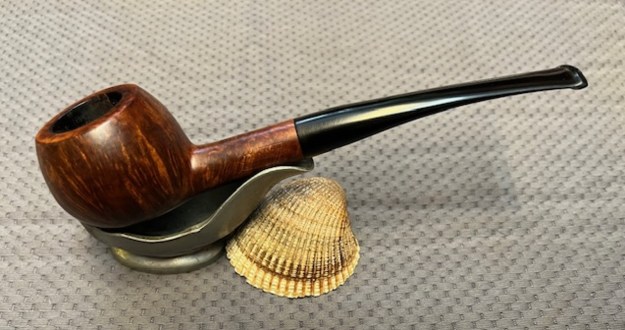
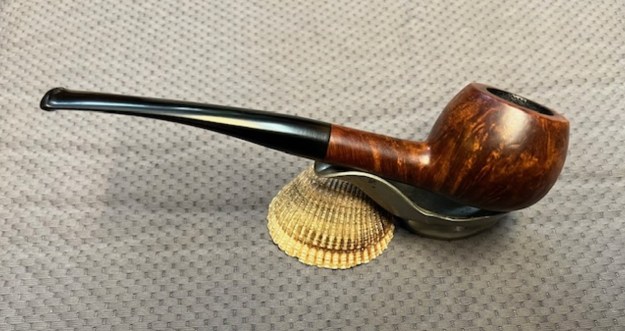
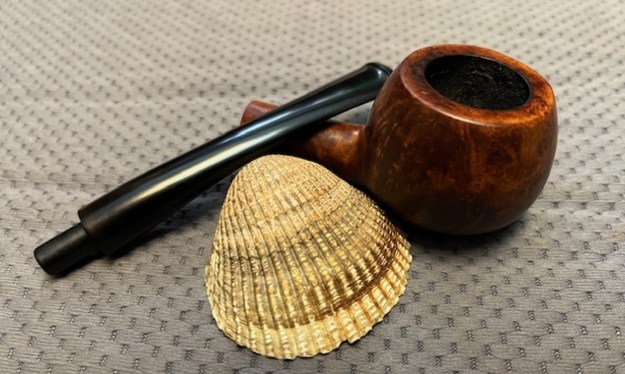
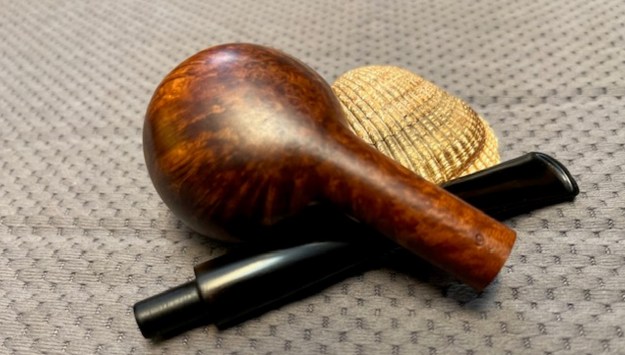
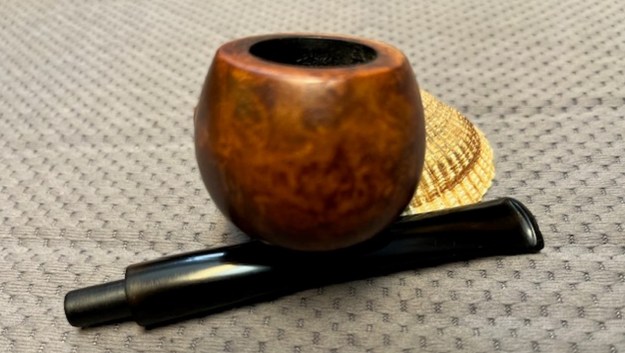
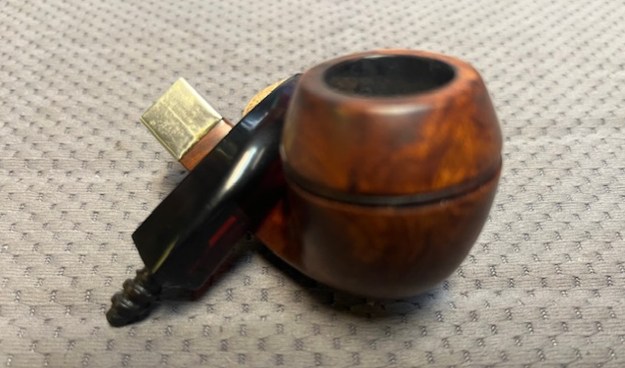
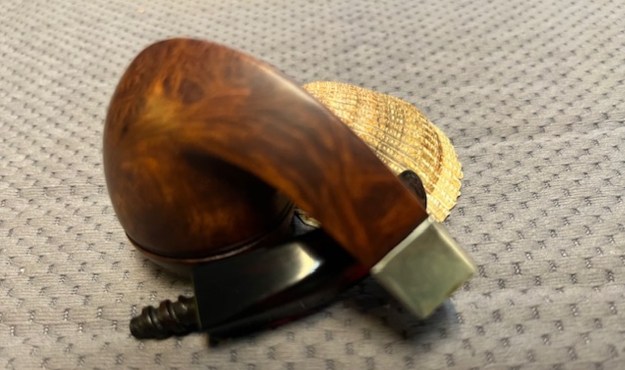
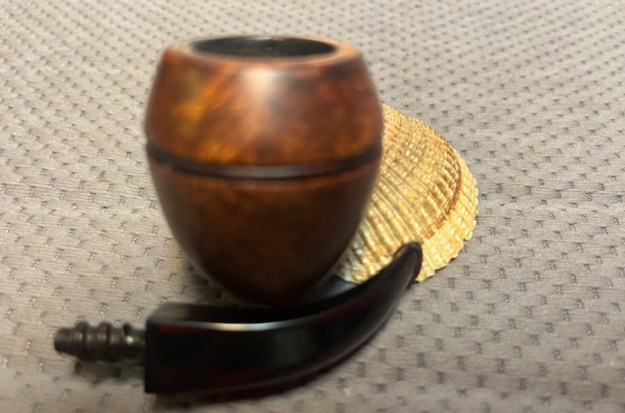
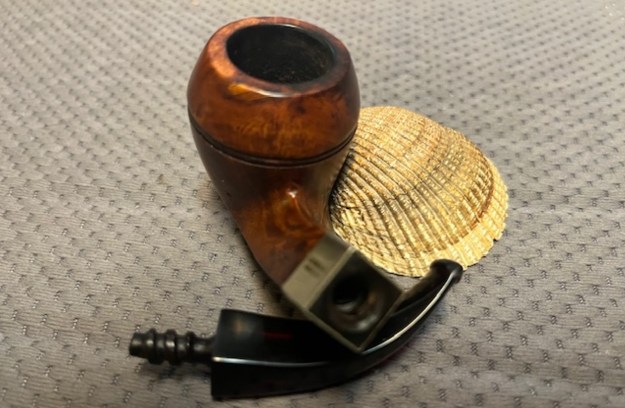
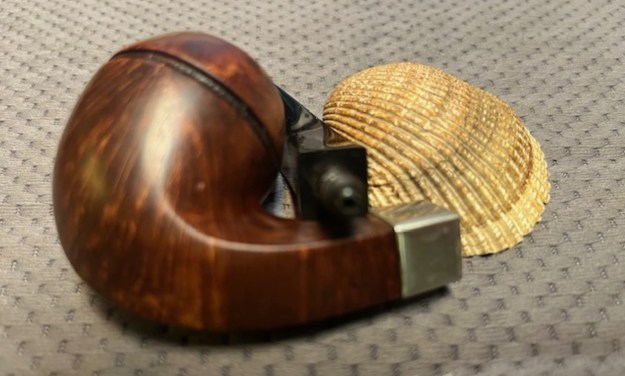
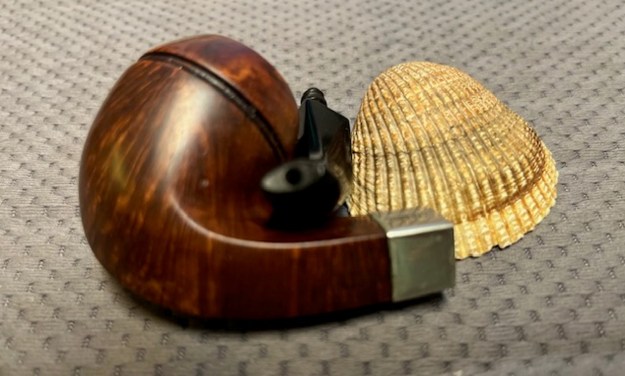
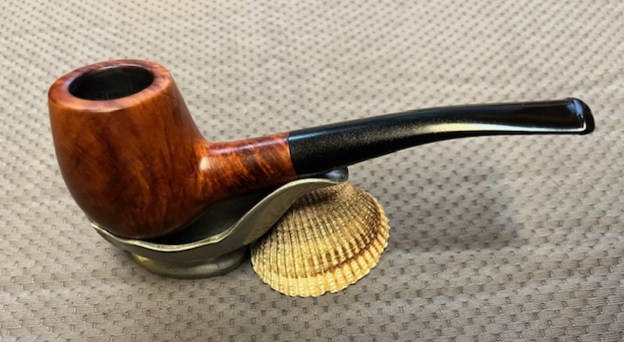
I was pleasantly surprised to find this pipe recently at a local thrift shop. The thrift shops around here don’t usually carry tobacco pipes and, those that do, normally offer nothing but the dregs of the pipe world. In this case, I found a charming, simple, and beautiful billiard pipe. The bowl is made of block meerschaum, the shank is made of bamboo, and the tapered stem is made of vulcanite. Its seemingly conventional design belies a slightly enigmatic history. I must admit, I am tempted to keep this one in my own collection, but maybe one of you will talk me into selling it. The only marks on this pipe are underneath the bowl, and read Genuine Block [over] Meerschaum. Annoyingly, there were no marks on the stem, shank, or anywhere else. Having said that, however, it did lead me to think that this pipe was manufactured on the Isle of Man. I have restored a few pipes from the Isle of Man and Steve has restored countless pipes from there. In a recent blog post, Steve wrote the following:

My research on the origins of [this pipe] can be summarized like this: It was made with African Meerschaum from the Tanganyika Meerschaum Corporation and produced by Laxey Pipe Ltd. on the Isle of Man.Here is some information from Pipedia about meerschaum production on the Isle of Man:

Laxey Pipes Ltd. resided in a historical 19th century four-storey Man stone building at The Quay, Old Laxey, Isle of Man, which thankfully has been preserved.

The company specialised in the production of meerschaum pipes using the Meerschaum mined by the Tanganyika Meerschaum Corporation in the Amboseli basin in Tanganyika (since 1964 part of the United Republic of Tanzania).

Please note: you may often find names like “Manx Pipes Ltd.”, “Man Pipe Co.” and others more, but there is no indication of another Isle of Man pipe producer other than Laxey Pipe Ltd. at any time!

 Laxey Pipes Ltd. marketed own brands like “Manxpipe”, “Manxman”, “Manxland” e.c. Names like “John Bull”, “White Knight” (unwaxed), “Domino” (black, or lined) indicated some shapes / colours of Laxey’s own series. The stems either showed the astronomical sign for “male” or “man” (circle + arrow), or the crest of the Isle of Man, the 3-legged X in a circle. Manxpipes and Laxey’s other brands were available through pipe retailers in general, but also were sold (mainly) to tourists through their own shop in Laxey.

Furthermore Laxey Pipes Ltd. manufactured the meer bowls for Peterson, Barling, Nørding and others from the later 1960’s until 2001. Man Pipe e.g. was a brand distributed by Comoy’s. The bowls usually showed no nomenclature indicating the orderer. “Genuine Block Meerschaum” was engraved frequently. Often, just the stems were different, while bowls were the same.

Supply of meerschaum from East Africa run out (Kenya / Tanzania exhausted, Somalia inaccessible), and thus the last Laxey meers were supplied to trade in May, 2001. Laxey Pipes Ltd. tried to survive continuing with briar pipes – mainly in the Danish style -, but to no success. It closed down business in July, 2002.Despite the paucity of maker’s marks on my pipe, the style of the marks that are there leads me to believe that this is a Manx-made pipe. One major detail that made me harrumph a bit was the bamboo shank. I wasn’t familiar with Laxey making bamboo shanked pipes. Steve commented that the pipe was not unlike pipes from the Kaywoodie Mandarin line of bamboo-shanked pipes. Again, however, as far as I know, the Mandarin line never included meerschaum. Steve asserts, however, that Kaywoodie did produce a bamboo-meerschaum pipe. Here is an example of an unbranded bamboo meer found on eBay. Not only does the pipe have no identifying marks, but the seller had no information either.The combination of meerschaum and bamboo in pipes is certainly not unprecedented in the 21st century. For example, one can find some spectacular examples from Walt Cannoy, Ryan Alden, and the famous Turkish maker, Said Altınay. Here is a beautiful example from him:As a side note, Altınay’s website includes an interesting note on the history of bamboo in pipemaking. I provide a brief quotation:

Bamboo began appearing in briar pipe construction in the early 20th century. The earliest known pioneer of this style is believed to be Sixten Ivarsson, the Danish pipe-making legend, who introduced bamboo shanks in the mid-1900s as both an aesthetic and practical innovation. The concept soon spread, embraced by artisans such as Tom Eltang, Tokutomi, and Takahiro Hibi, who elevated the use of bamboo into a form of fine art. Its appeal was twofold: the natural lightweight strength and the distinctive, organic appearance. While traditional briar offered durability and familiarity, bamboo introduced character, contrast, and subtle resilience — giving each pipe a unique signature.

Obviously, the pipe I found is not on the order of a Cannoy, Alden, or Altınay! But I also feel comfortable in saying that this pipe is a lot older than those fellows’ pipes. I would be interested in hearing from YOU if you know more about the marriage of meerschaum and bamboo in pipemaking. Thank you kindly.

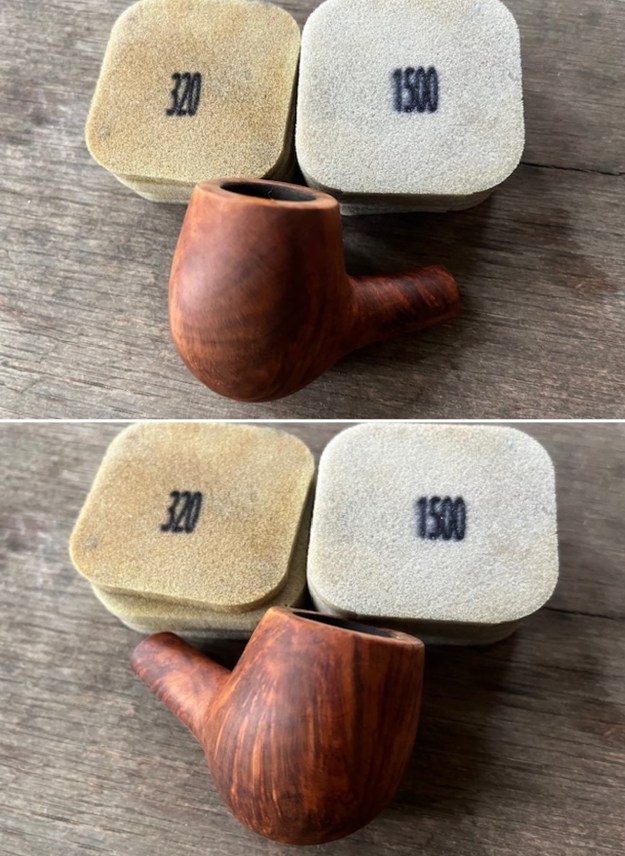
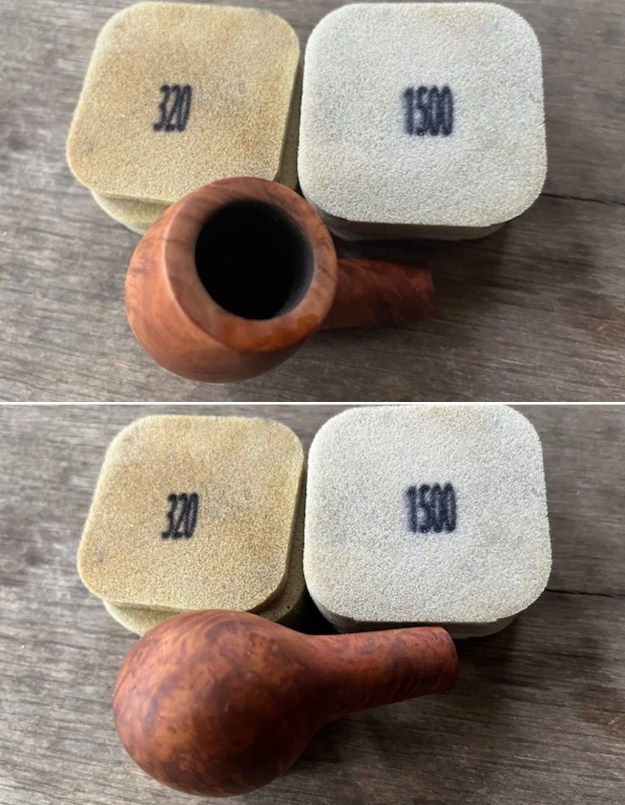
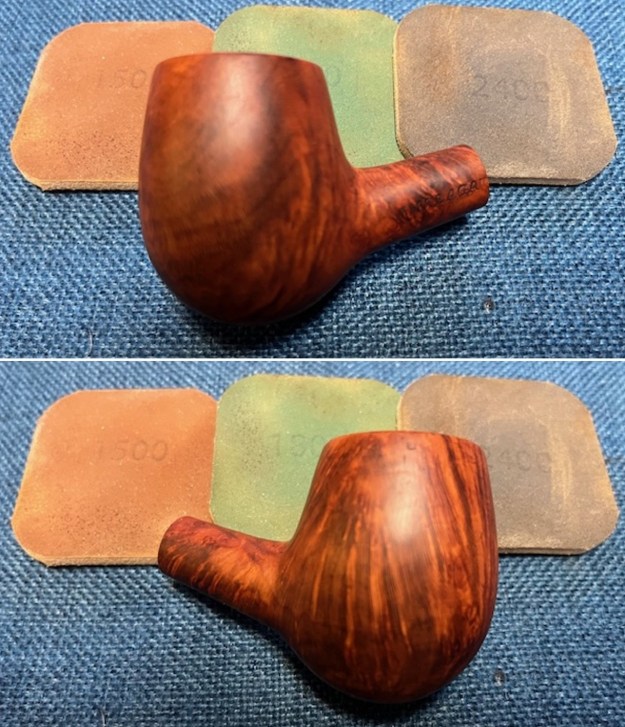
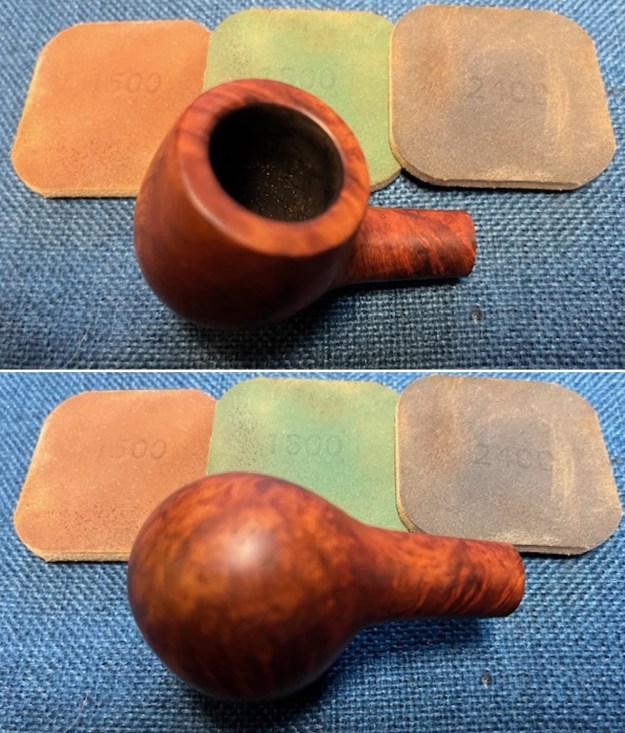
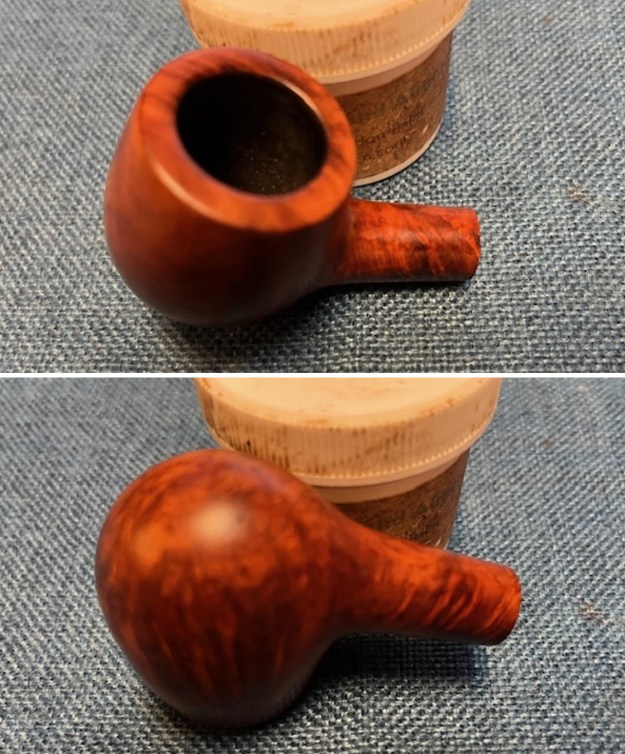
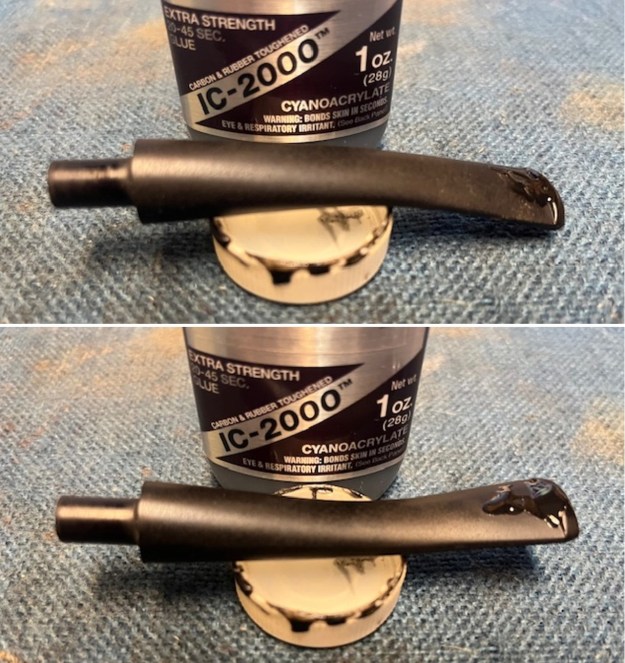
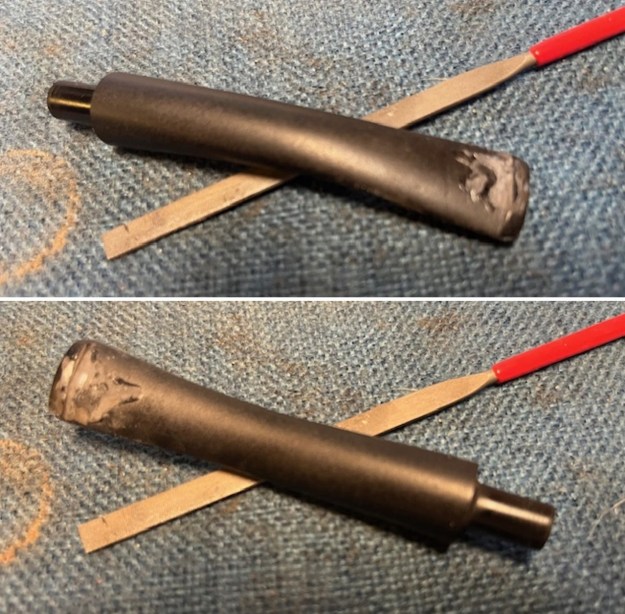
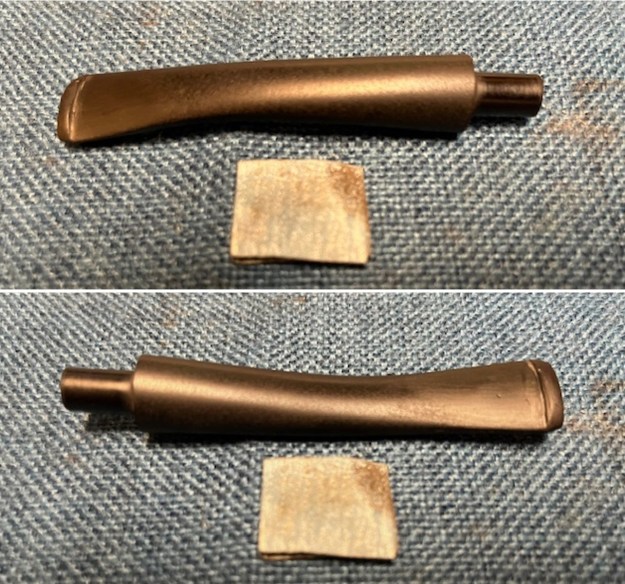
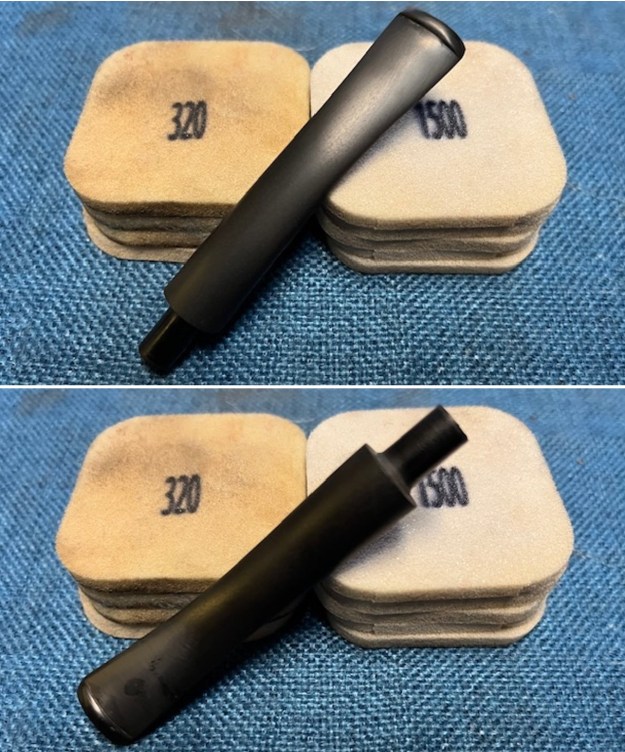
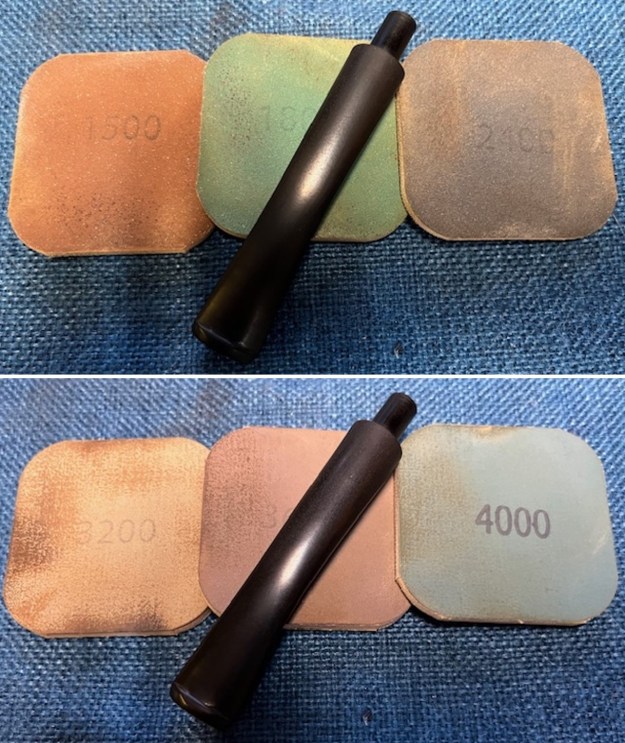
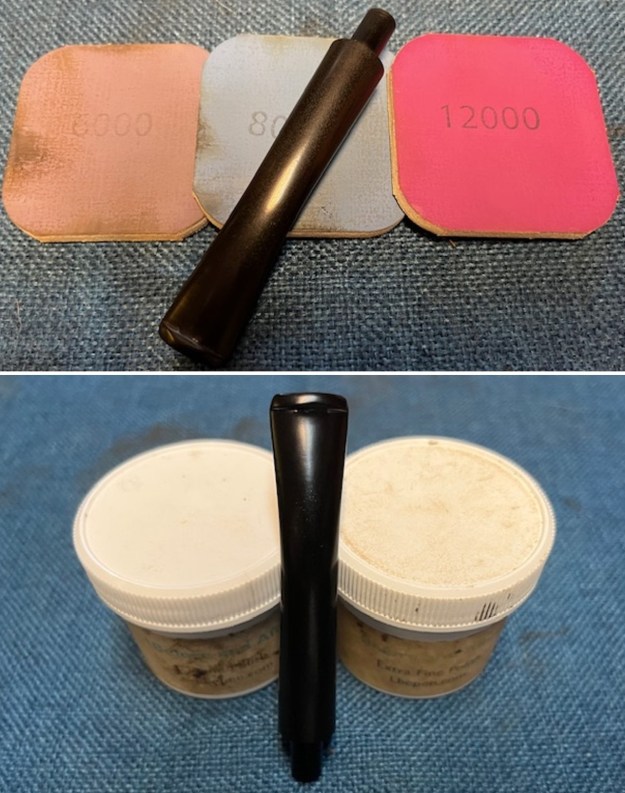
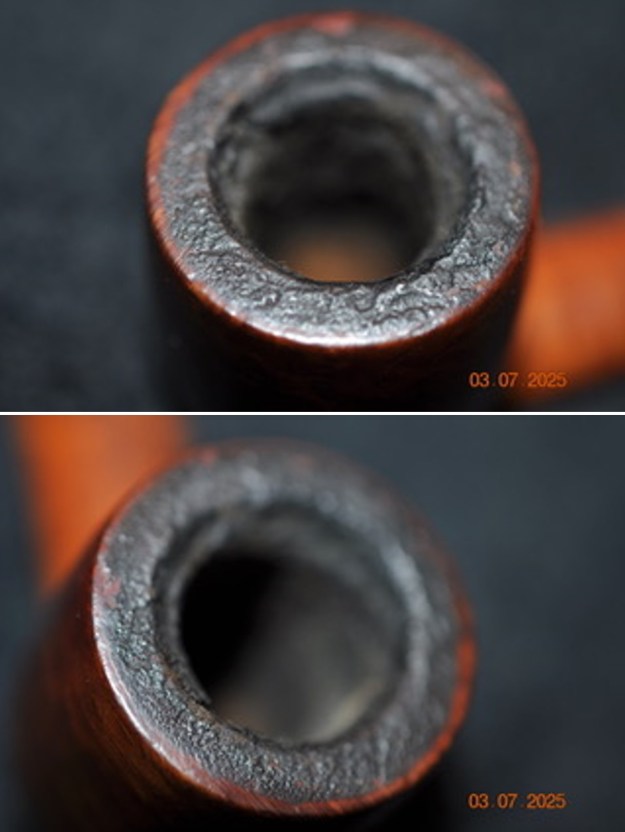
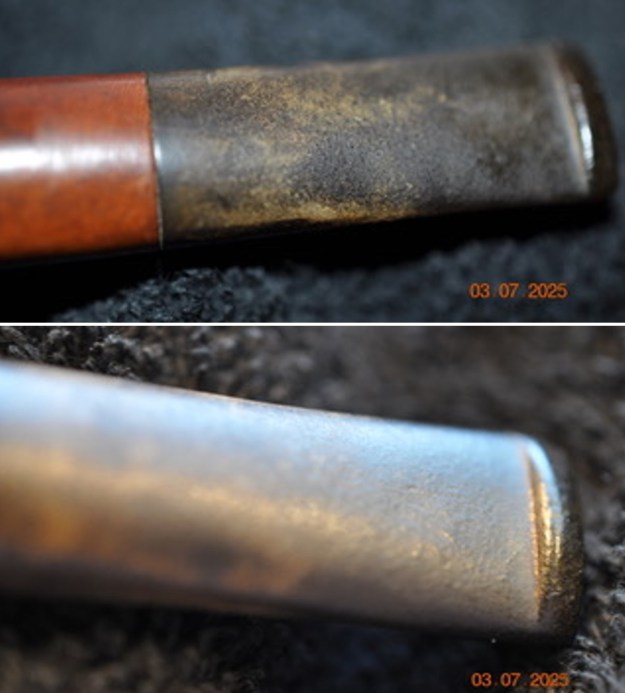
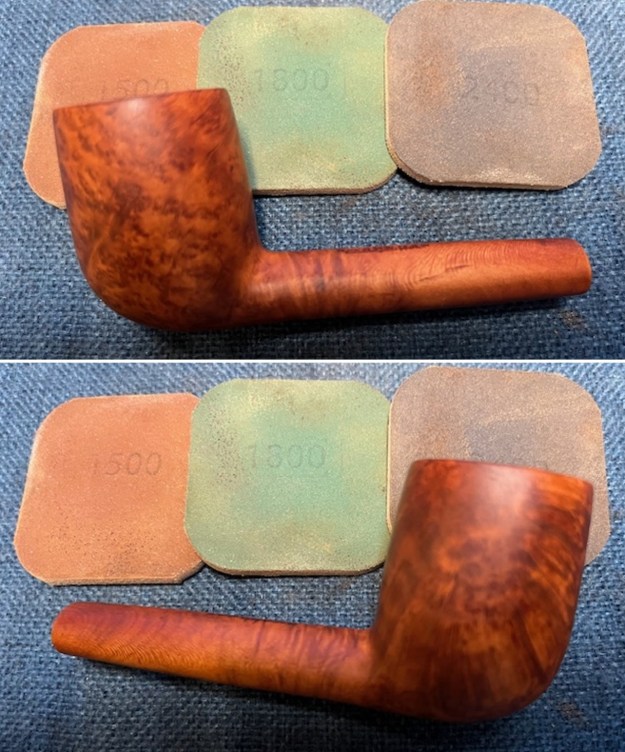
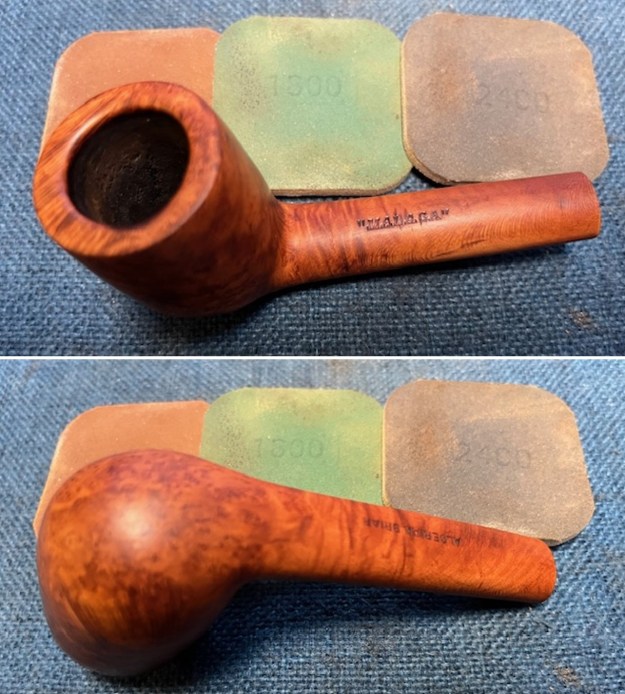
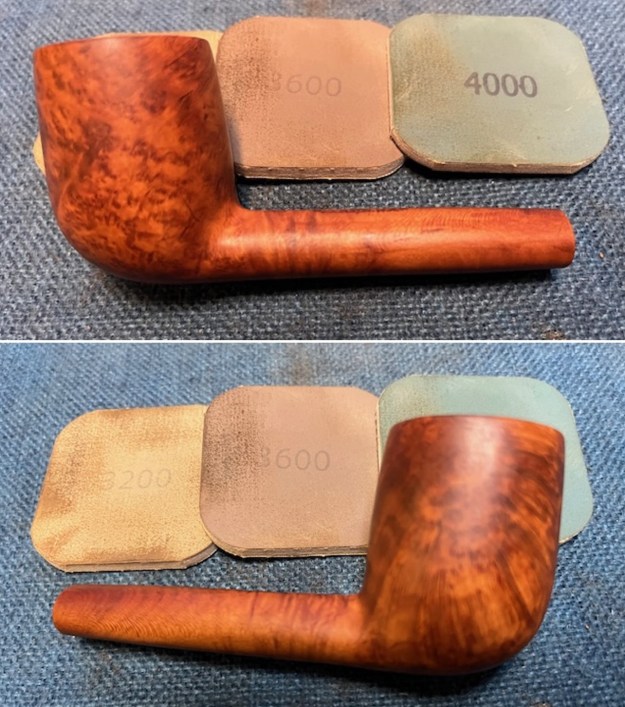
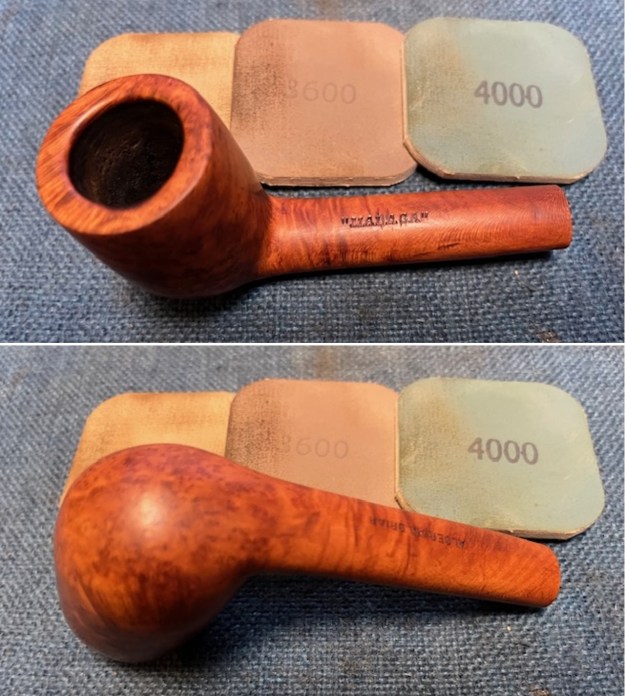
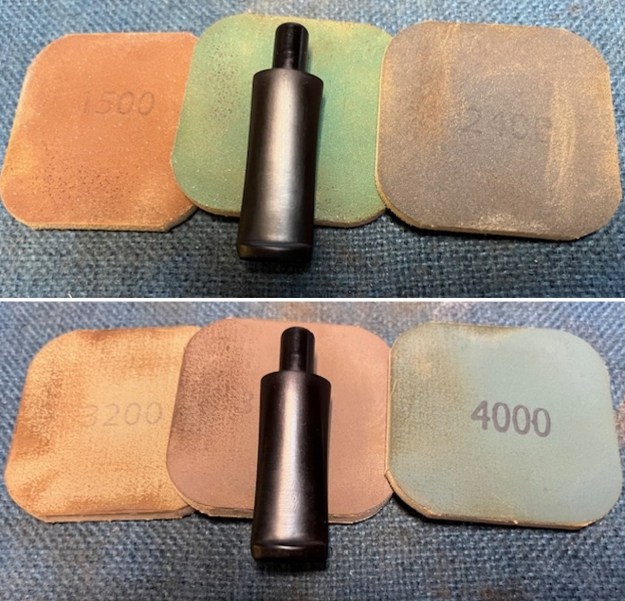
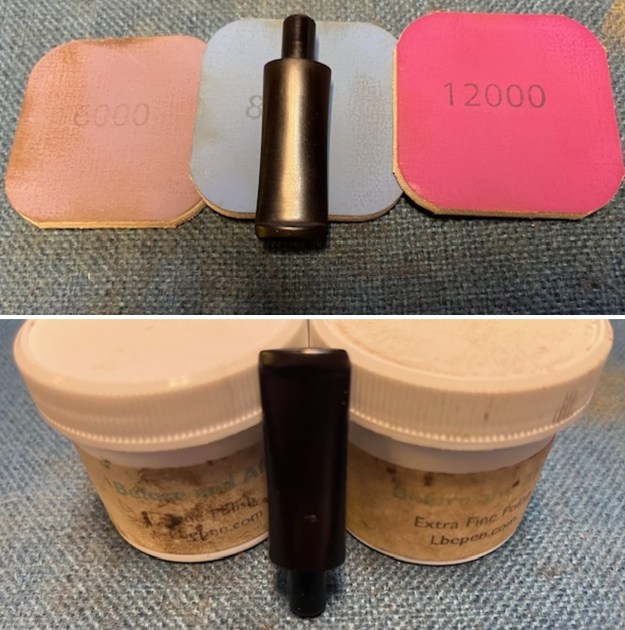
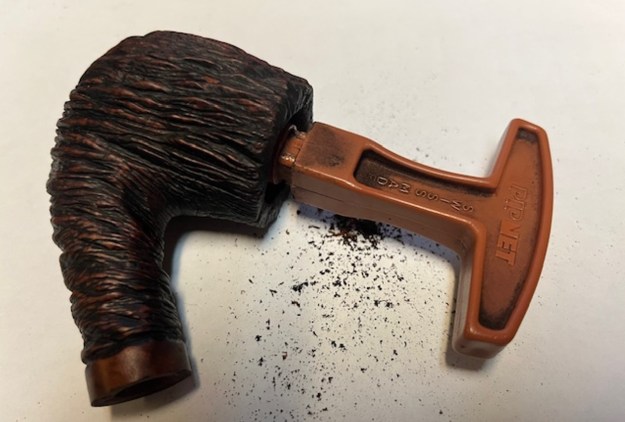
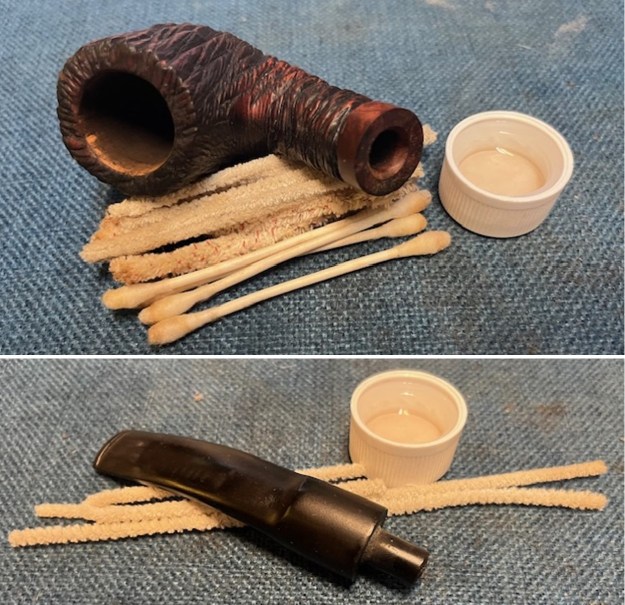
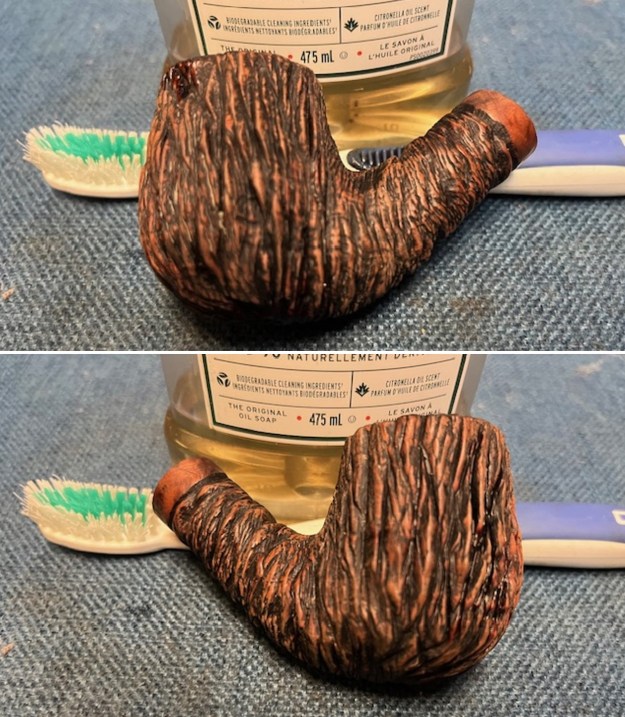
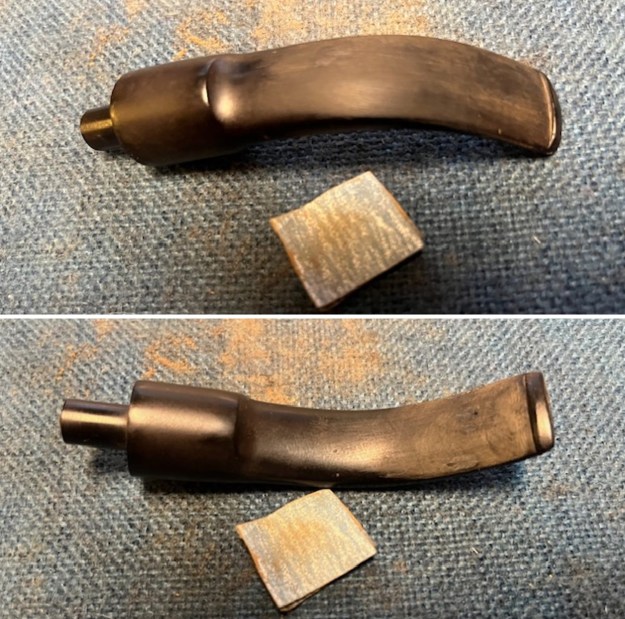
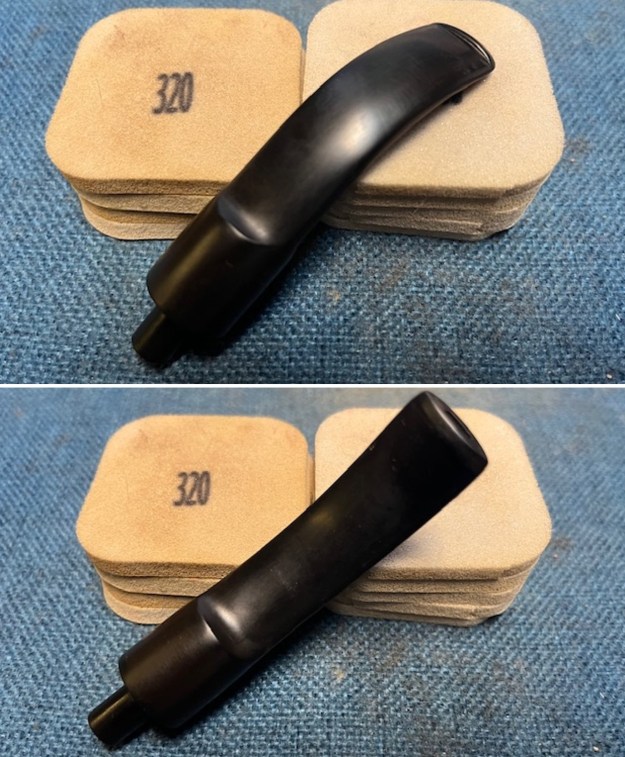
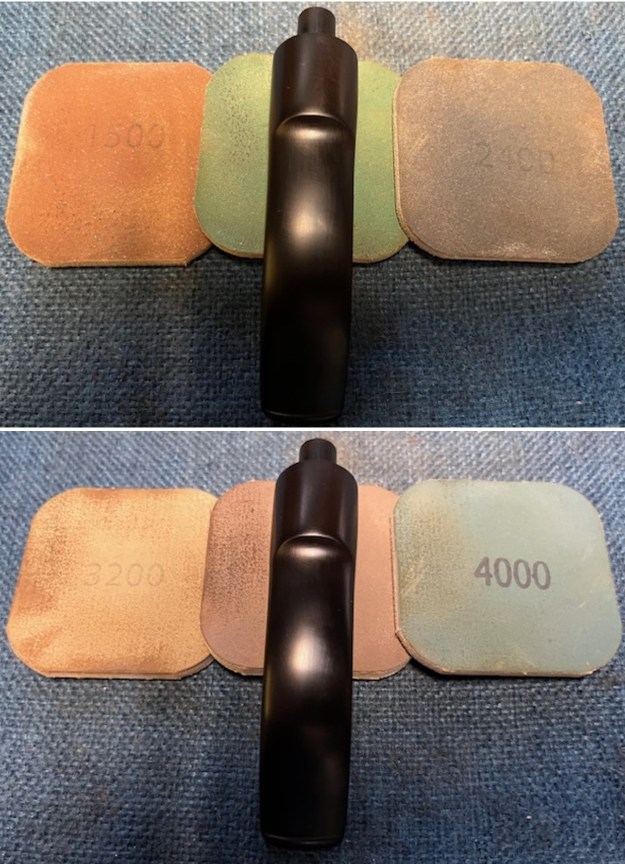
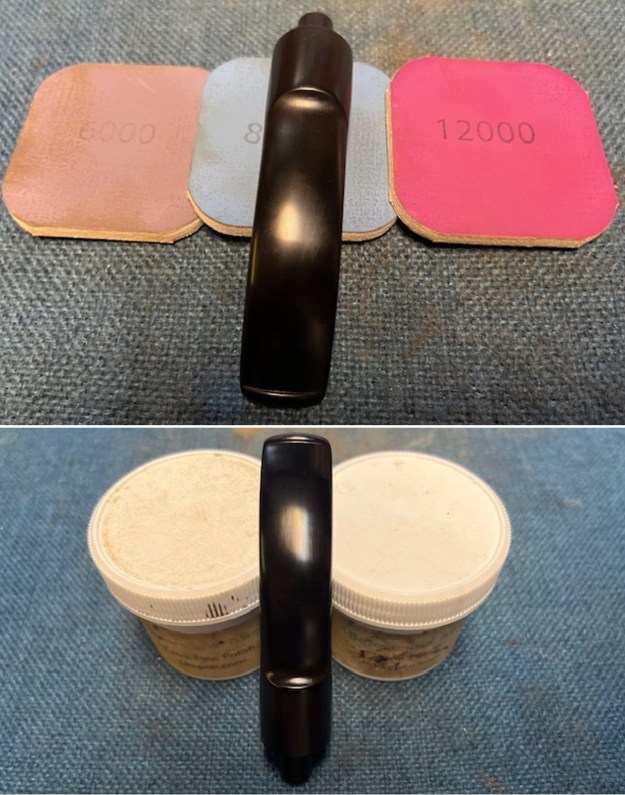
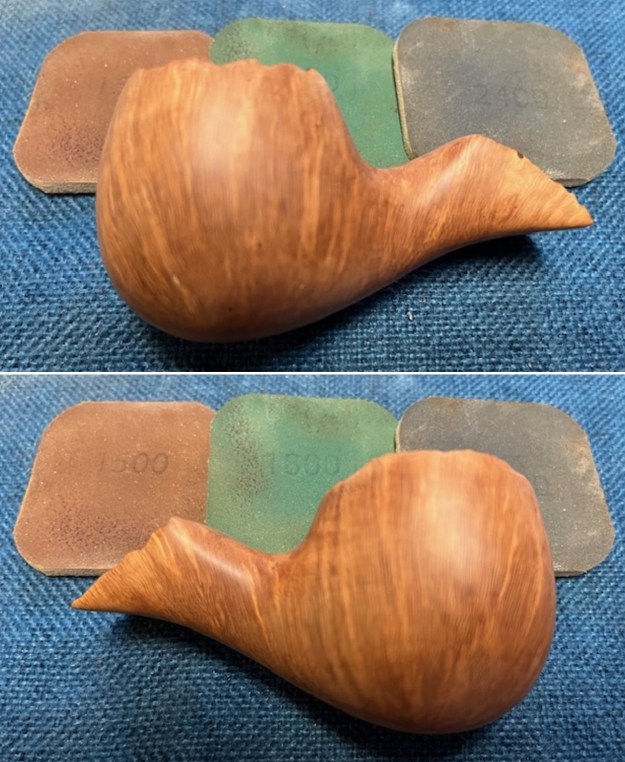
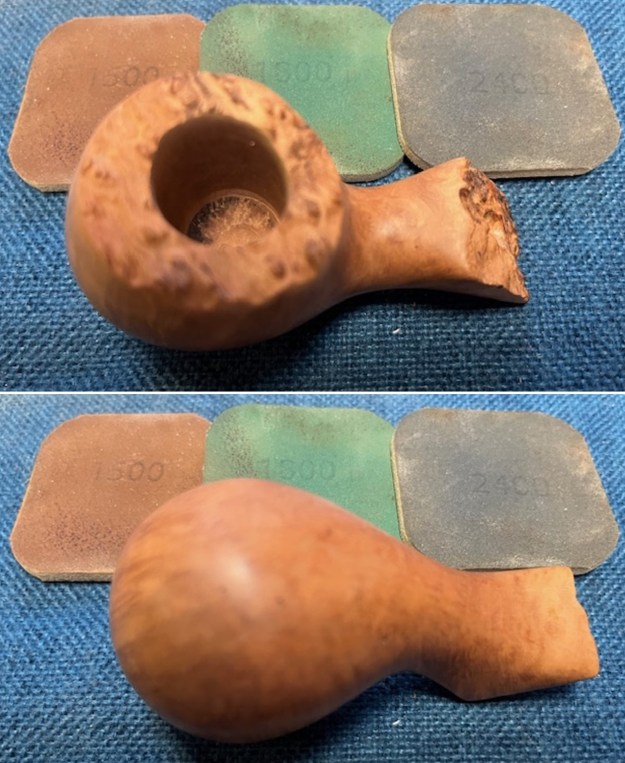
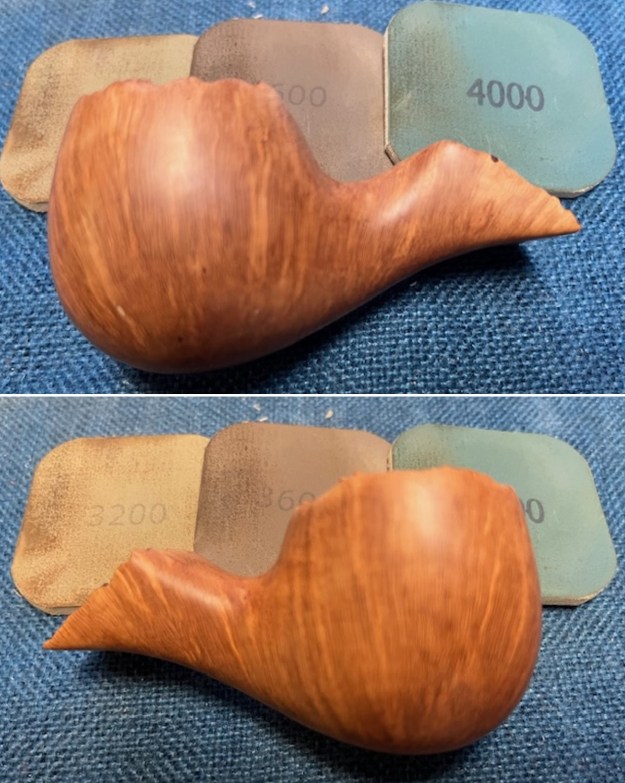
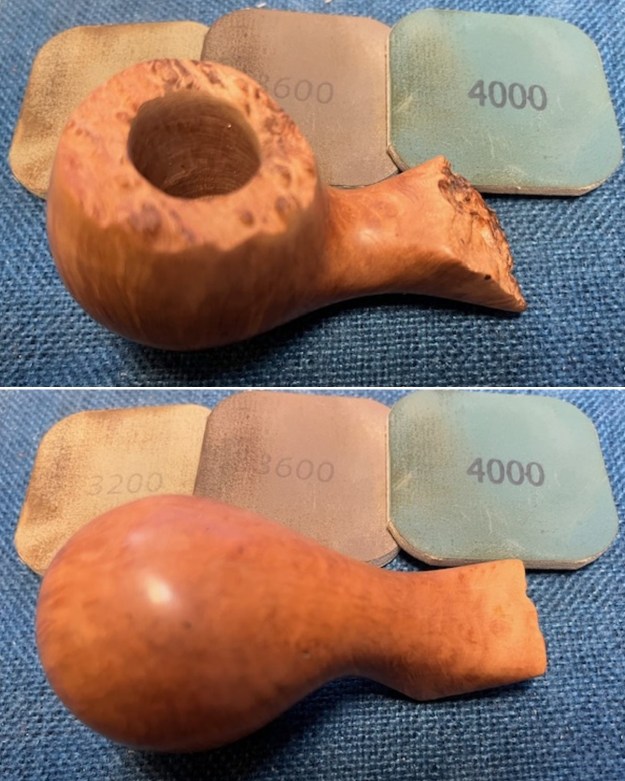
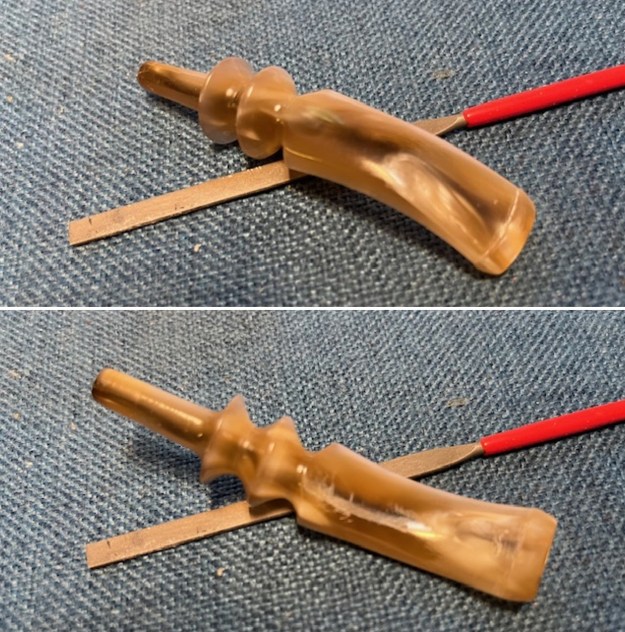
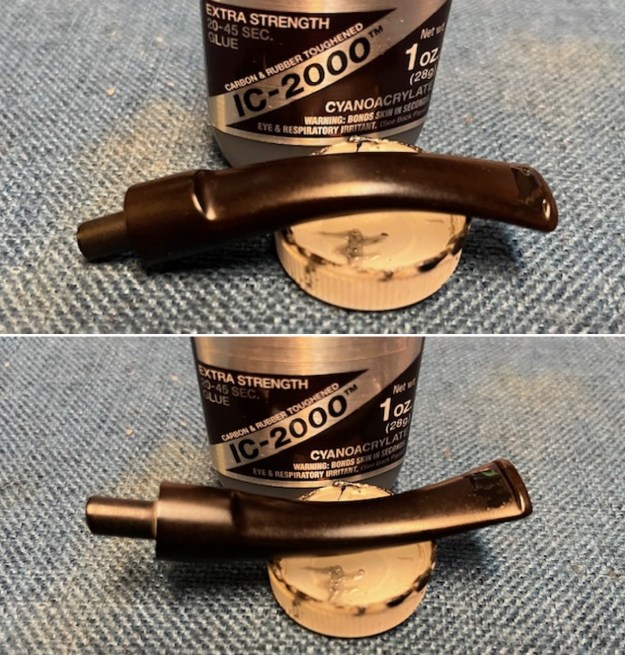
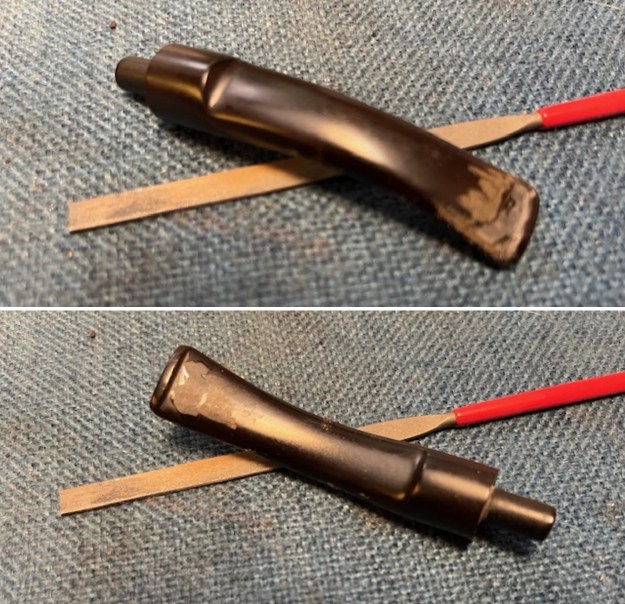
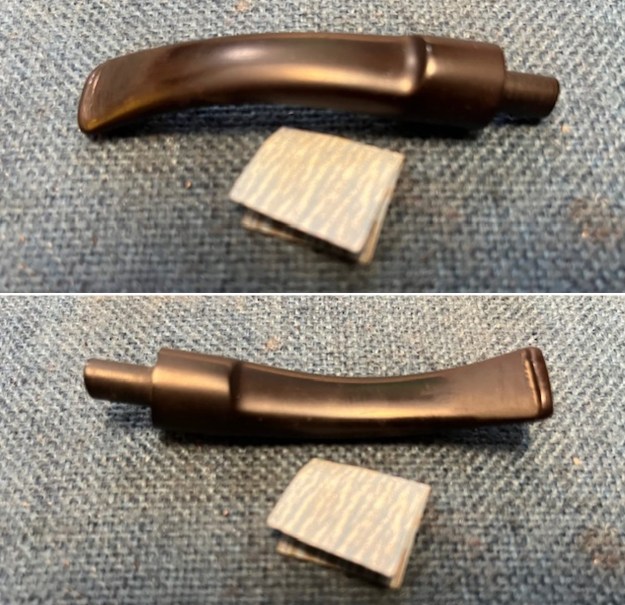
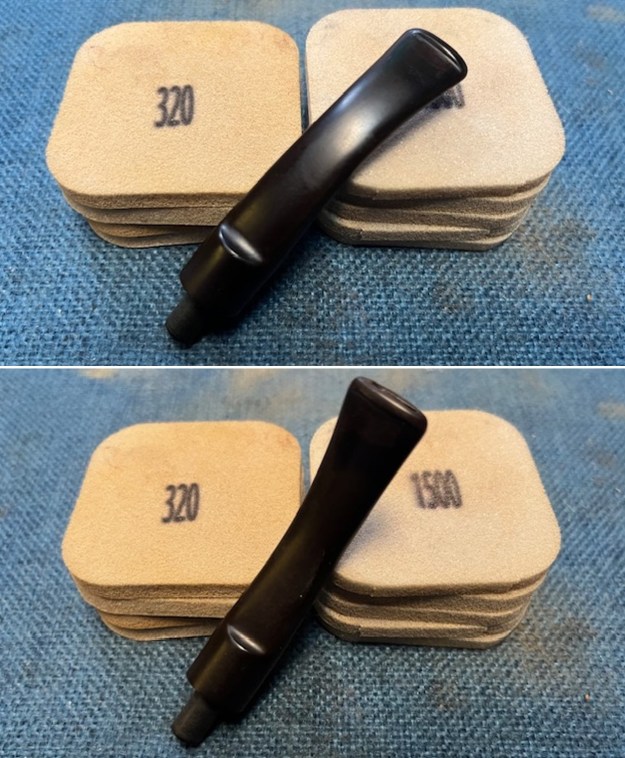
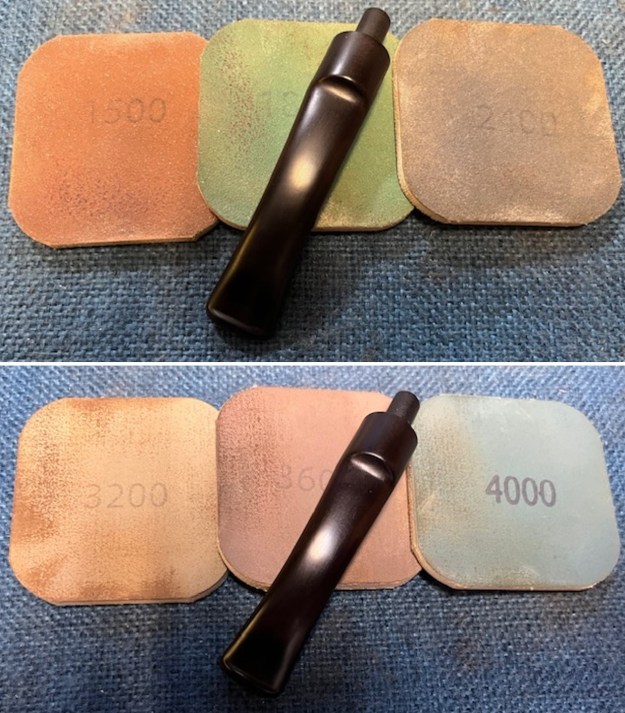
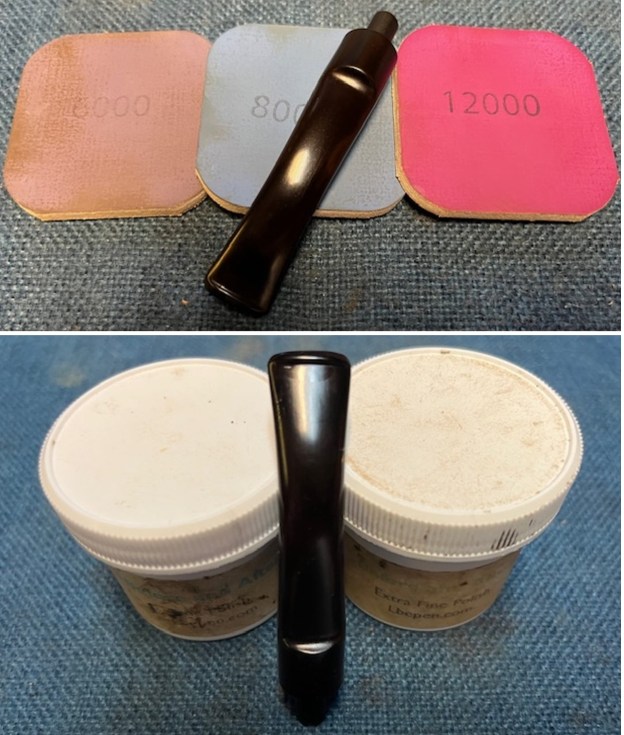
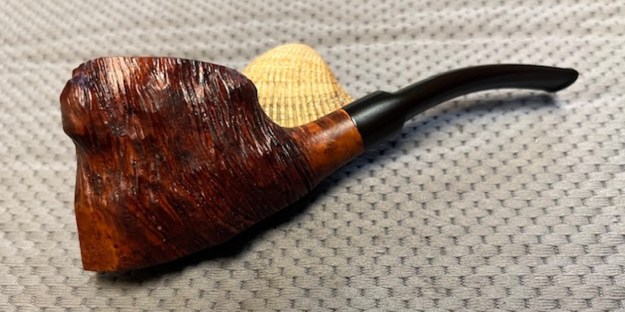
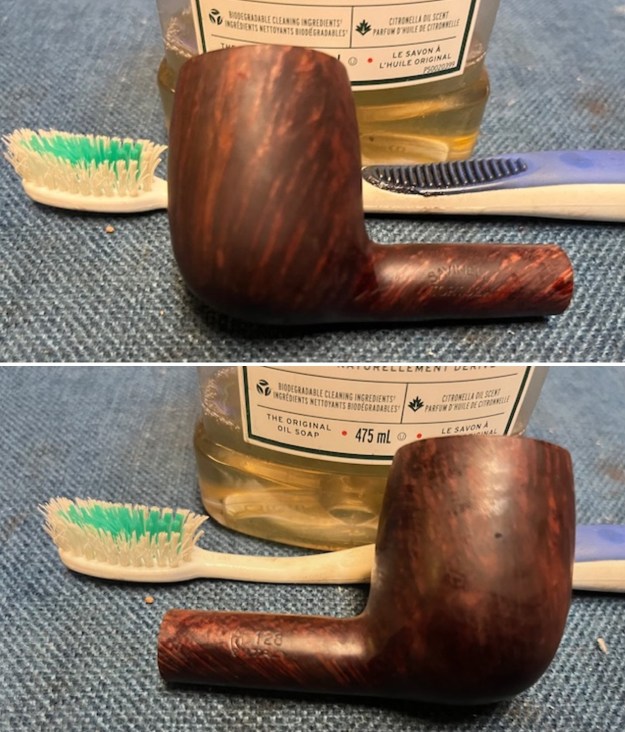
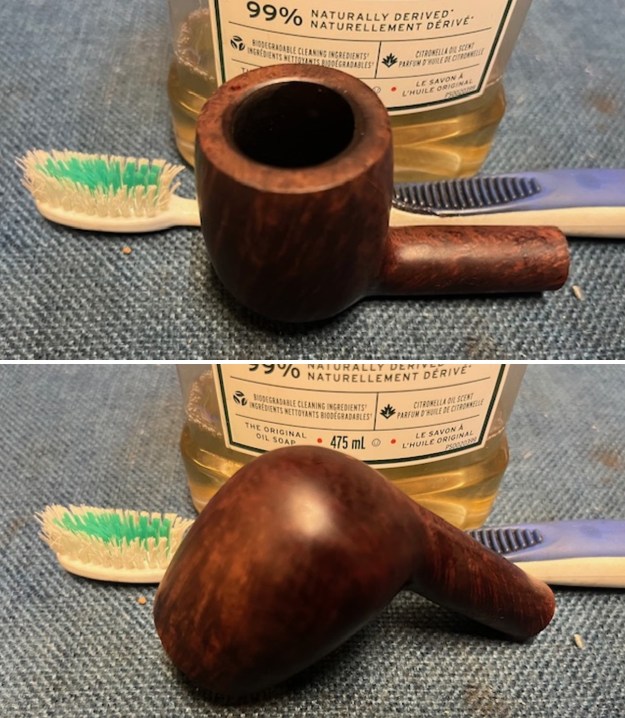
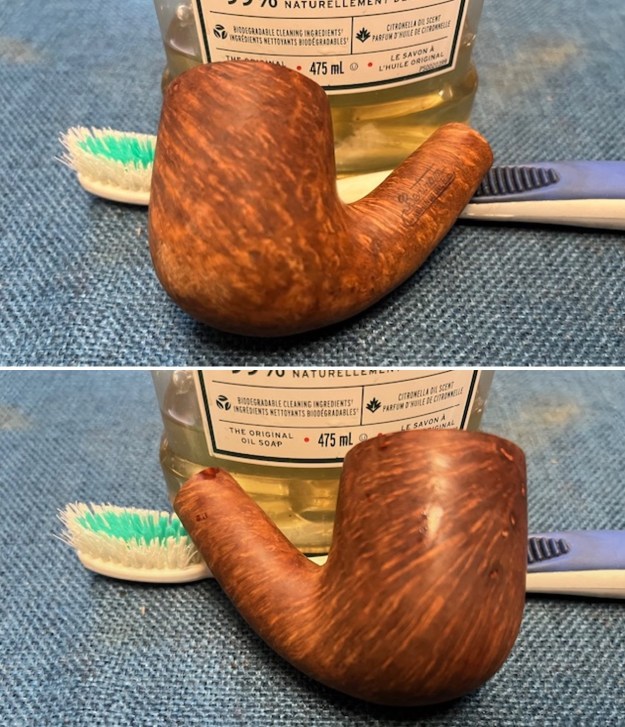
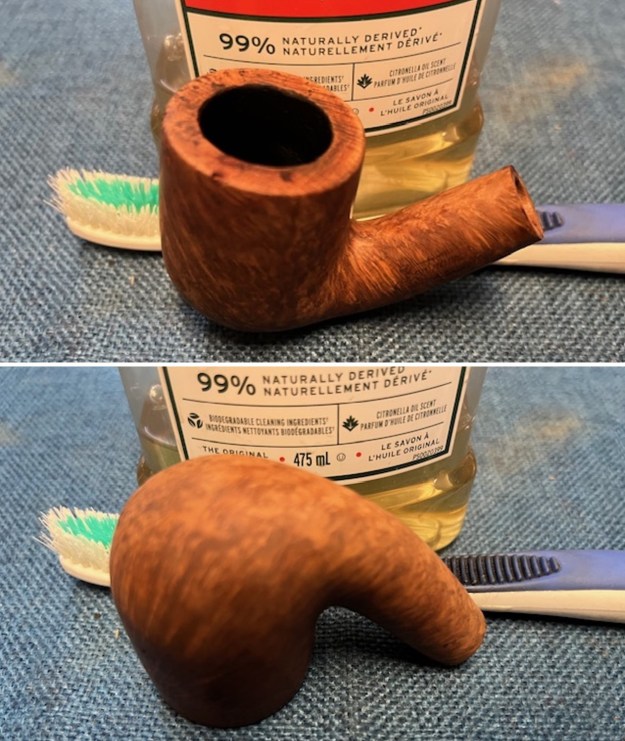
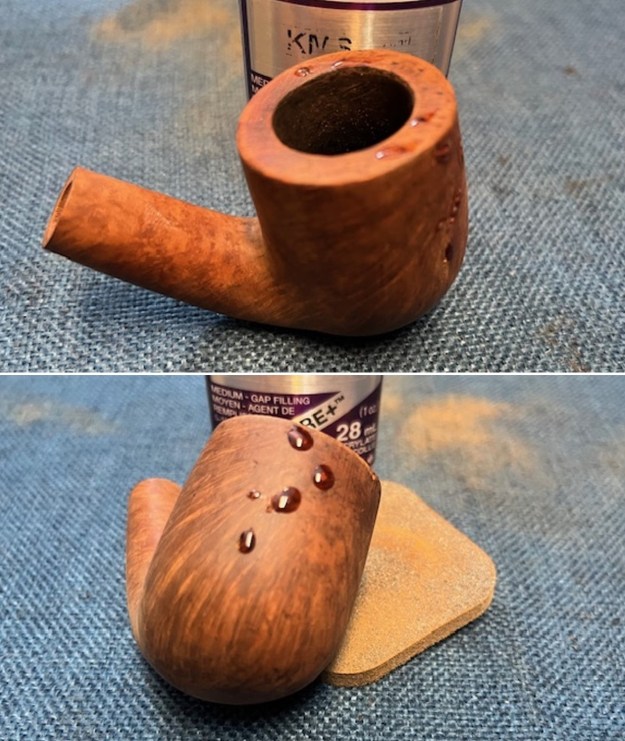
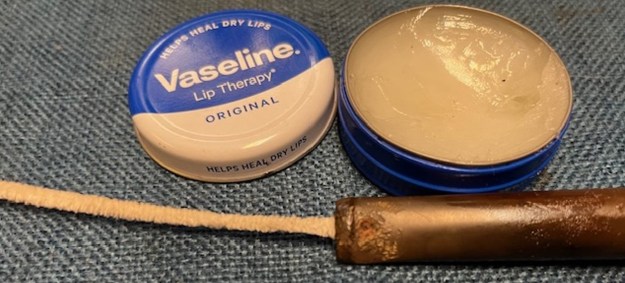
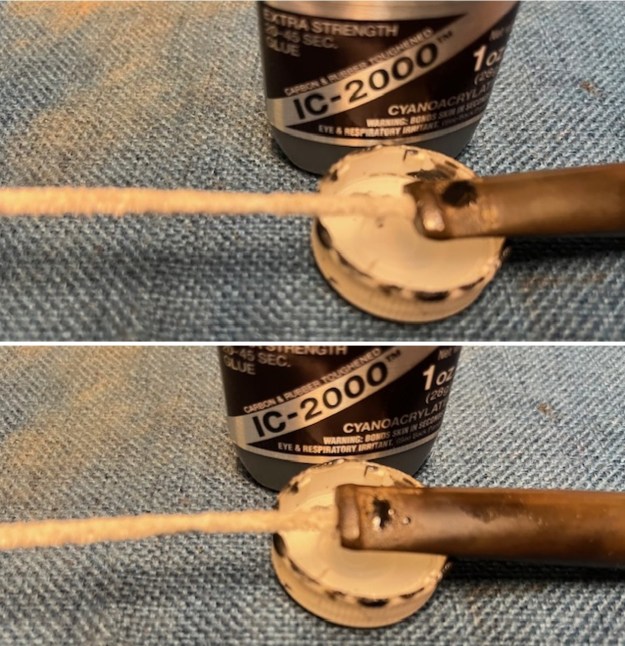
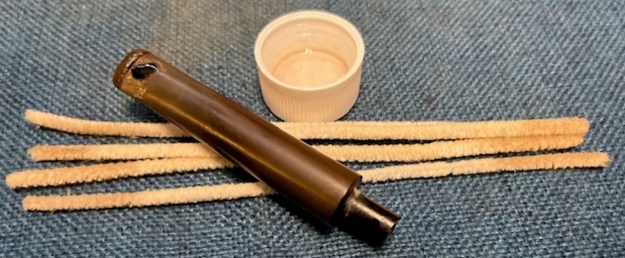
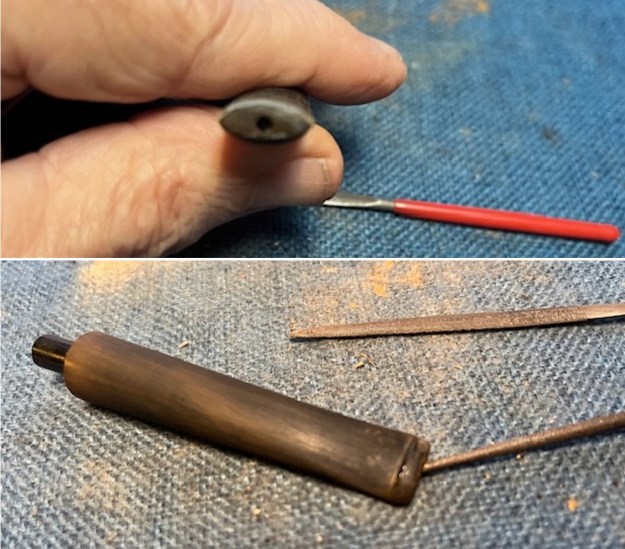
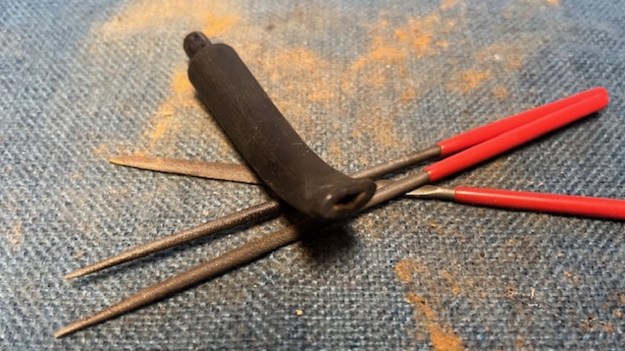
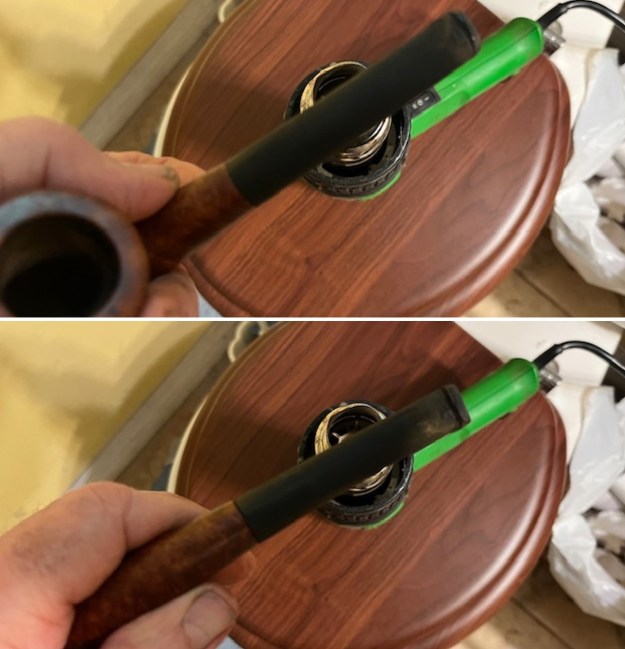
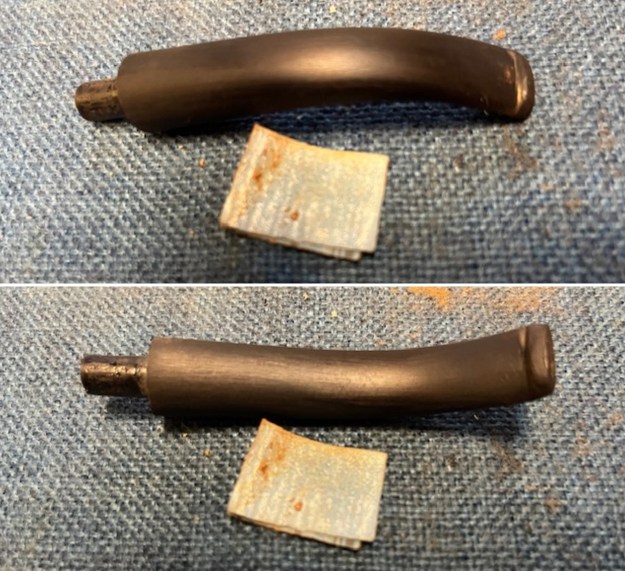
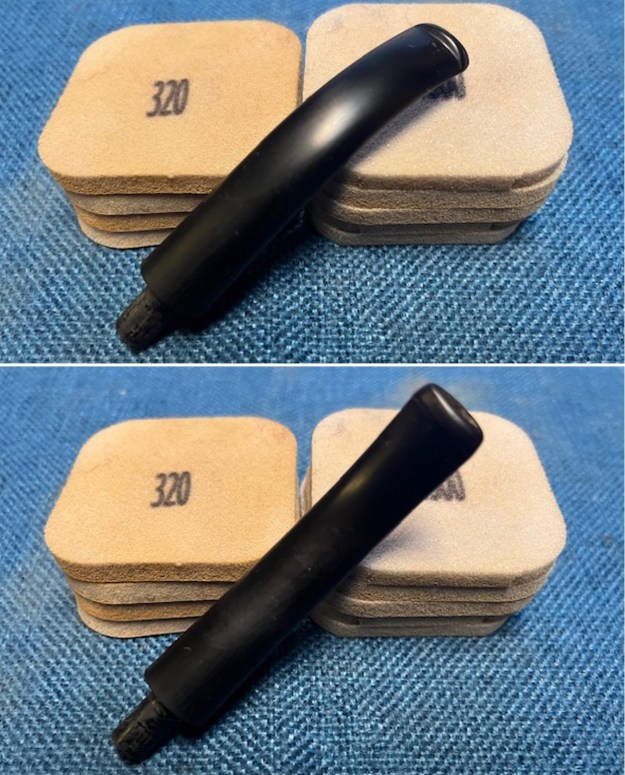
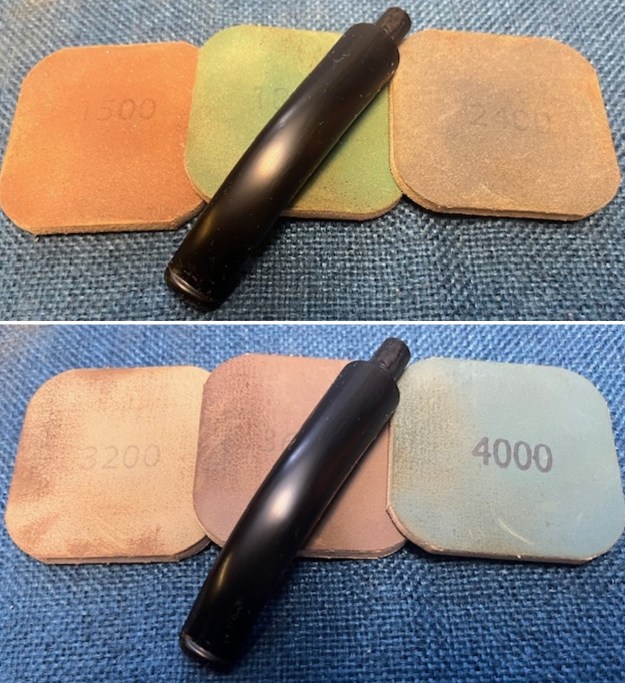
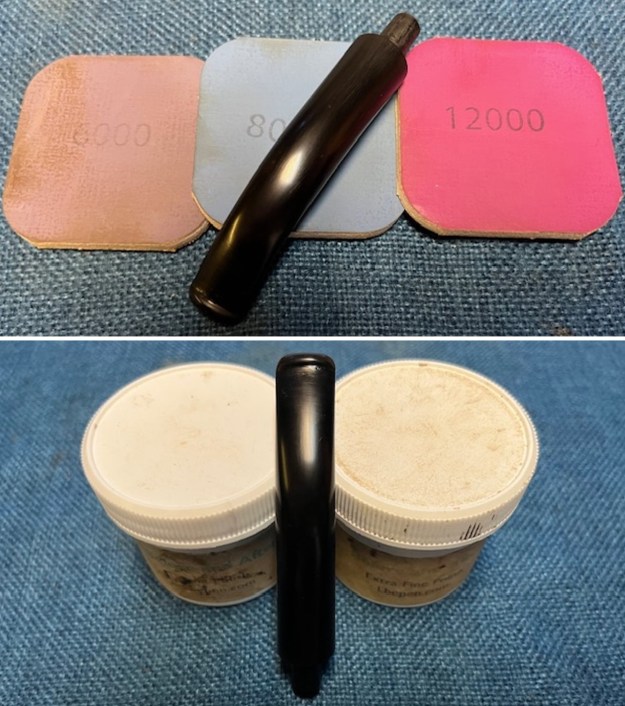
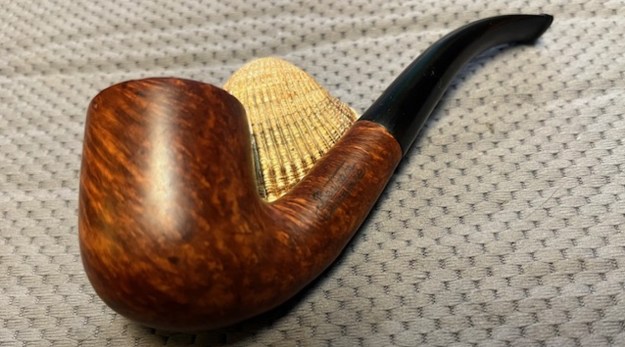
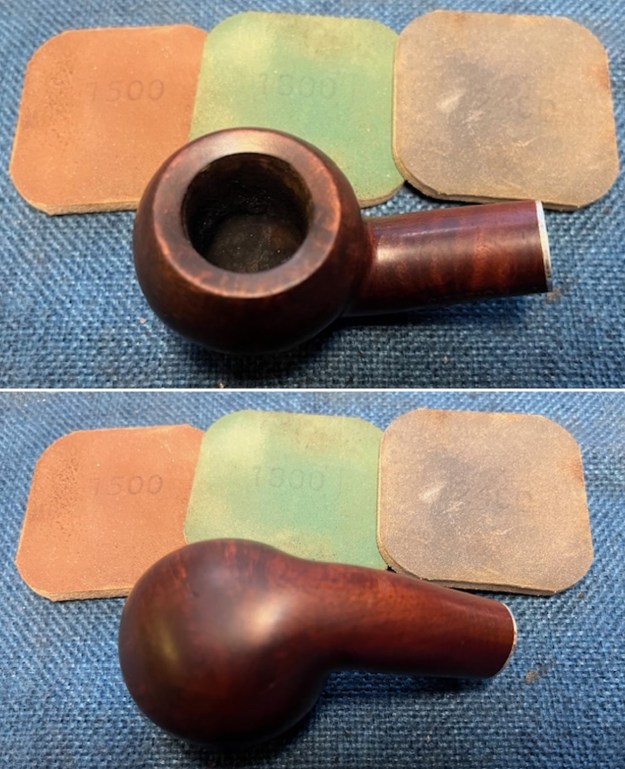
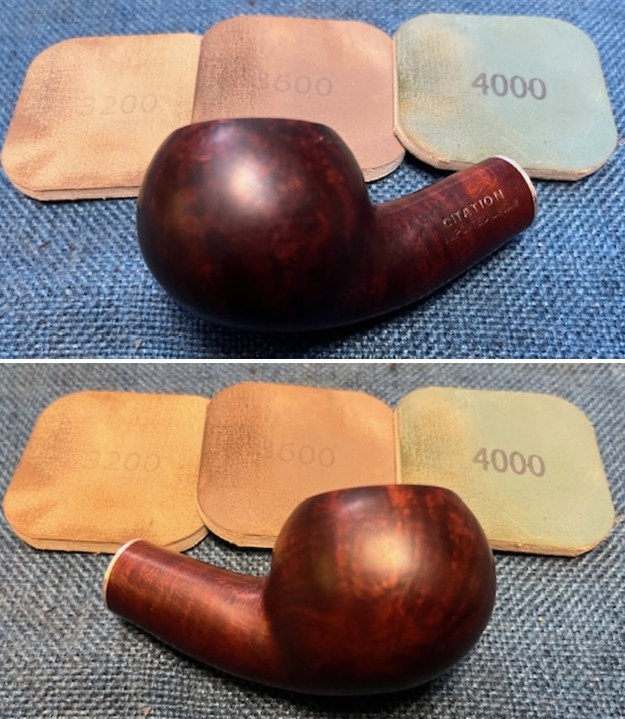
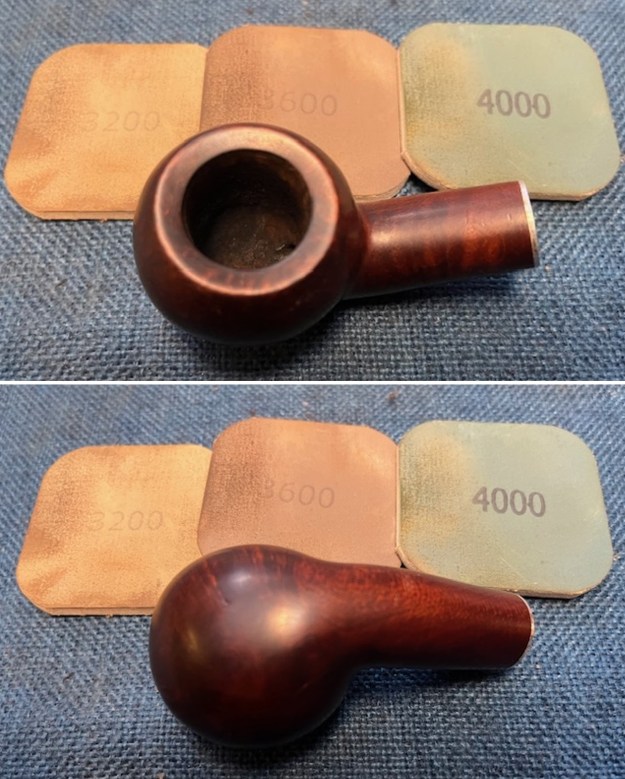
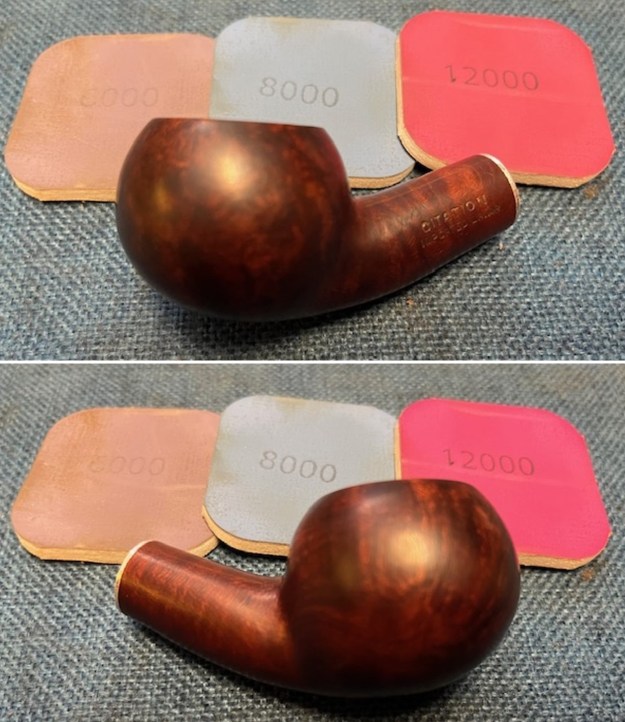
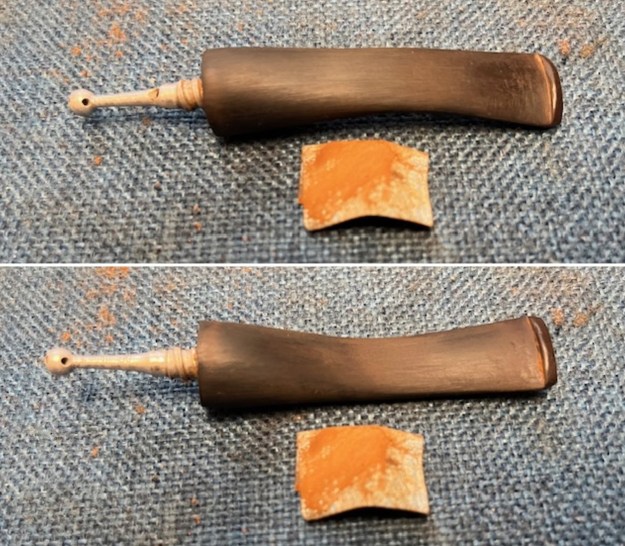
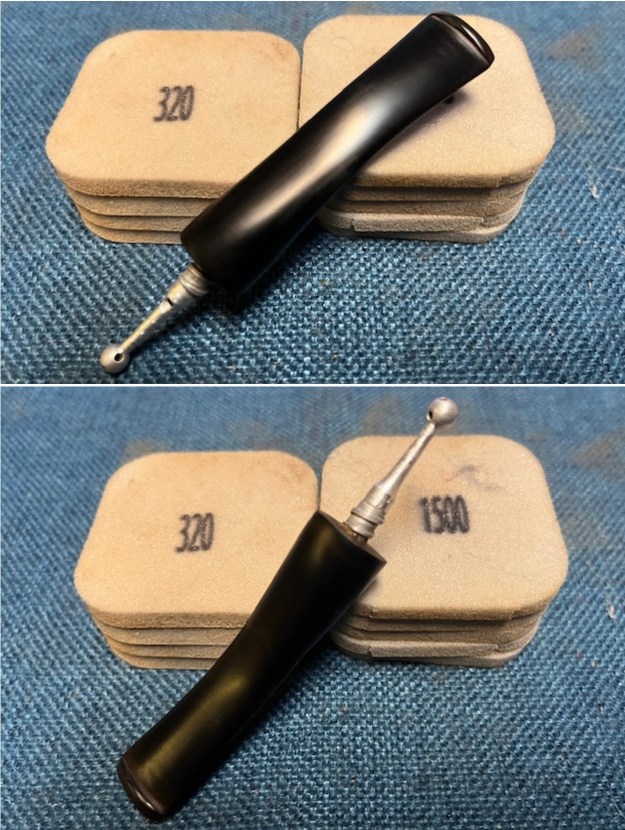
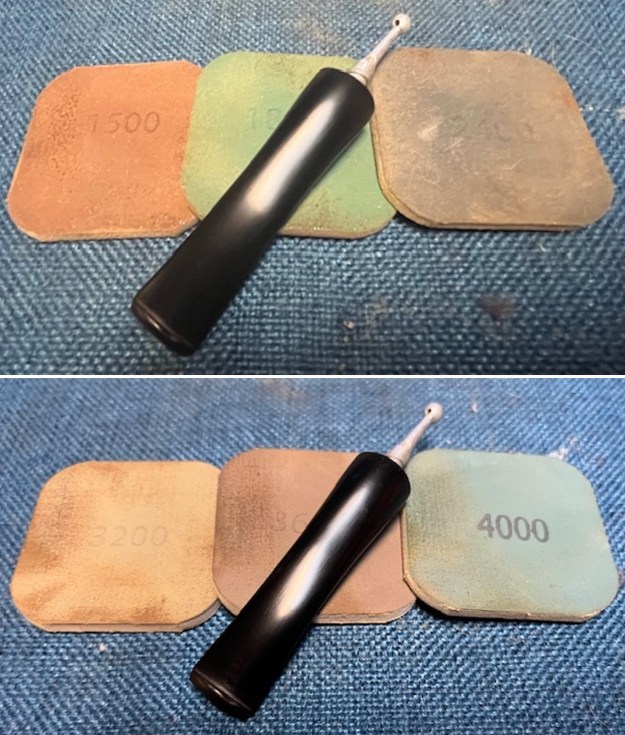
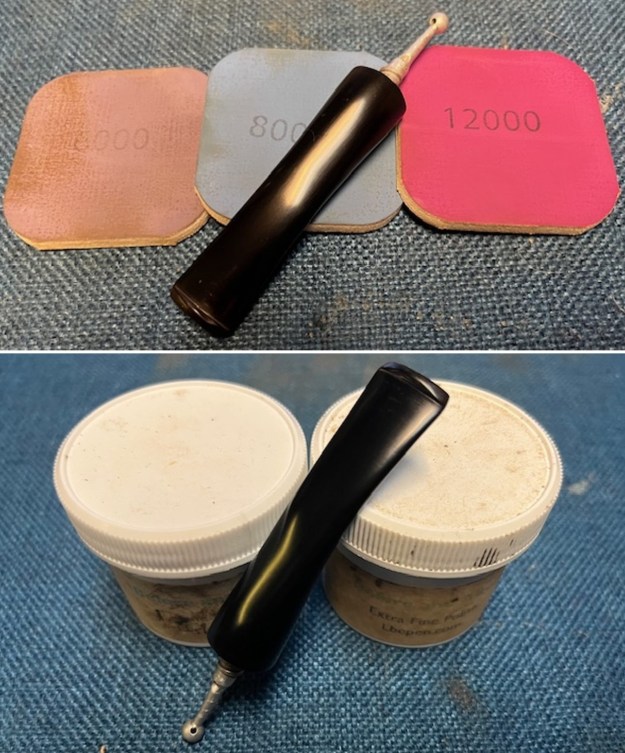
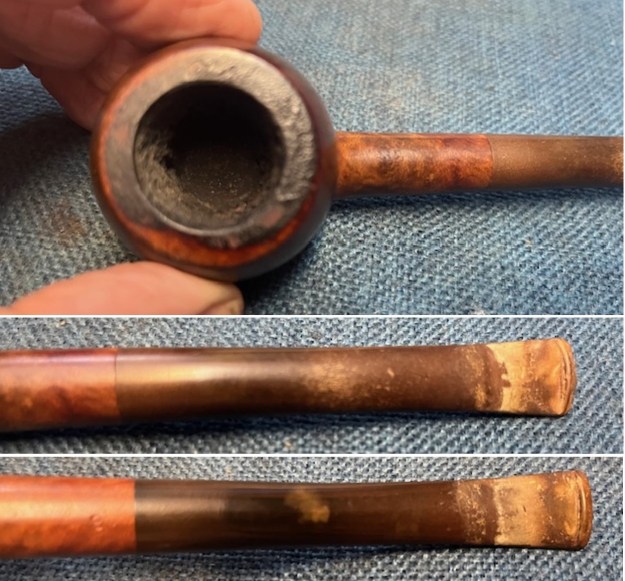
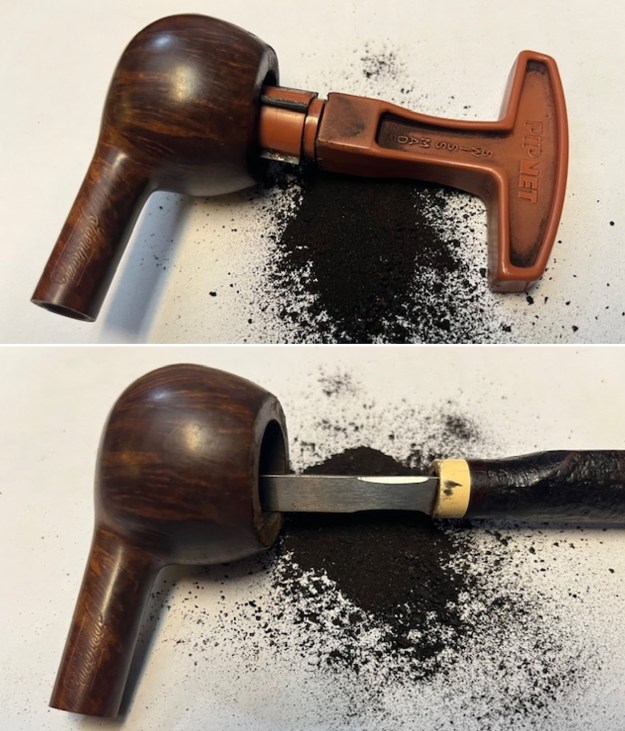
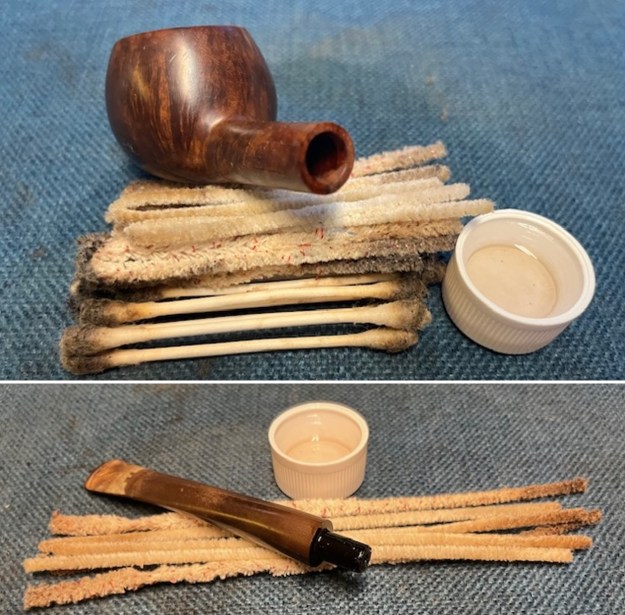
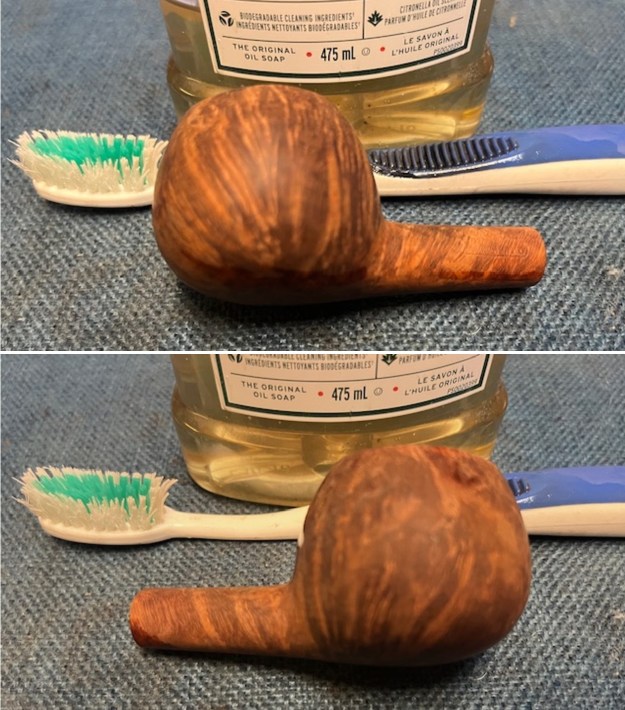
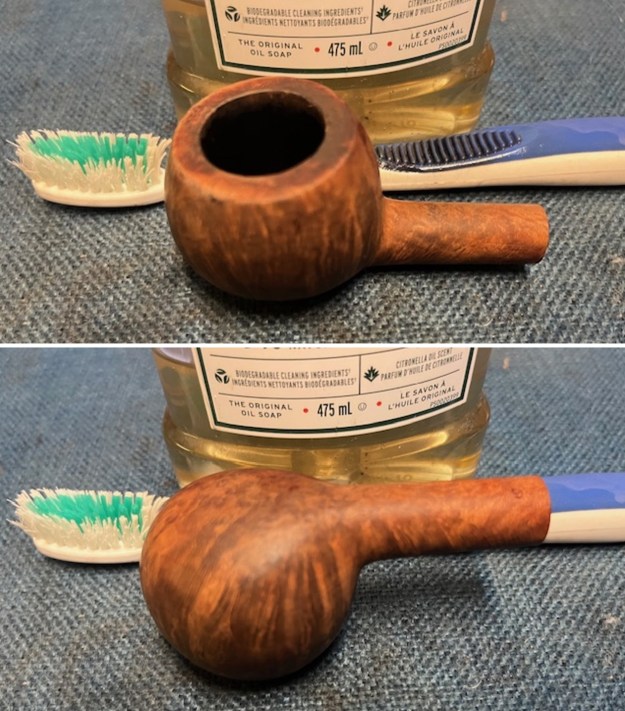
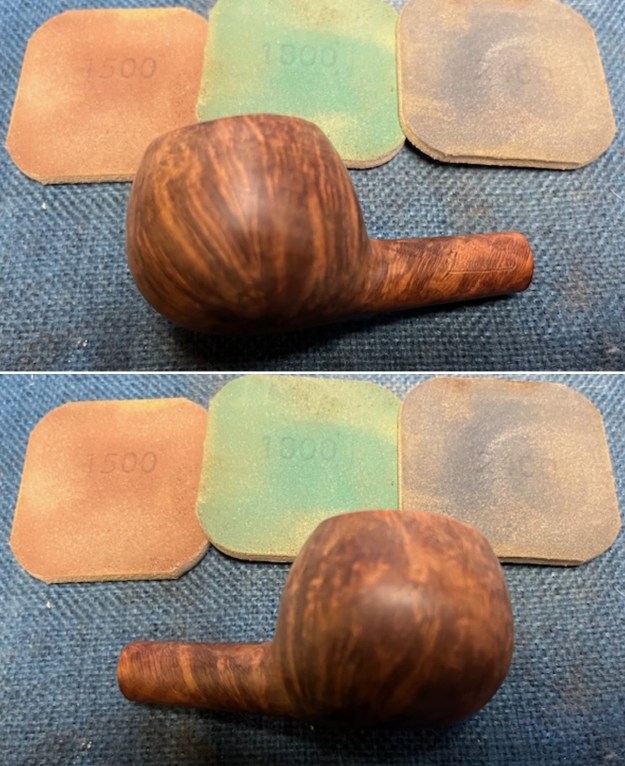
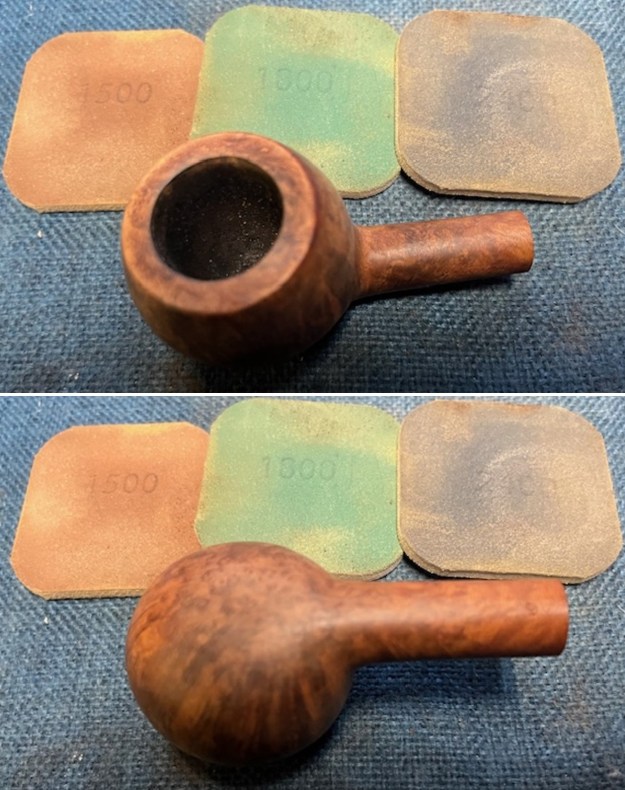
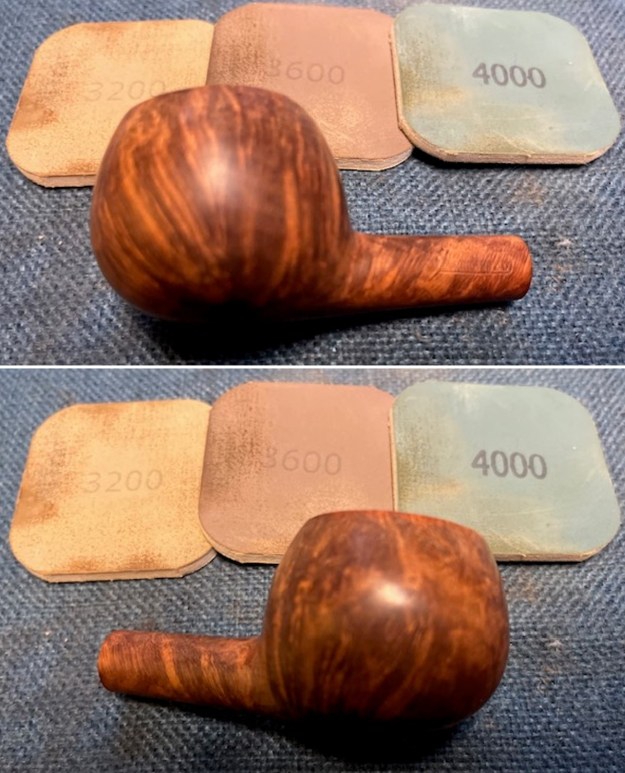
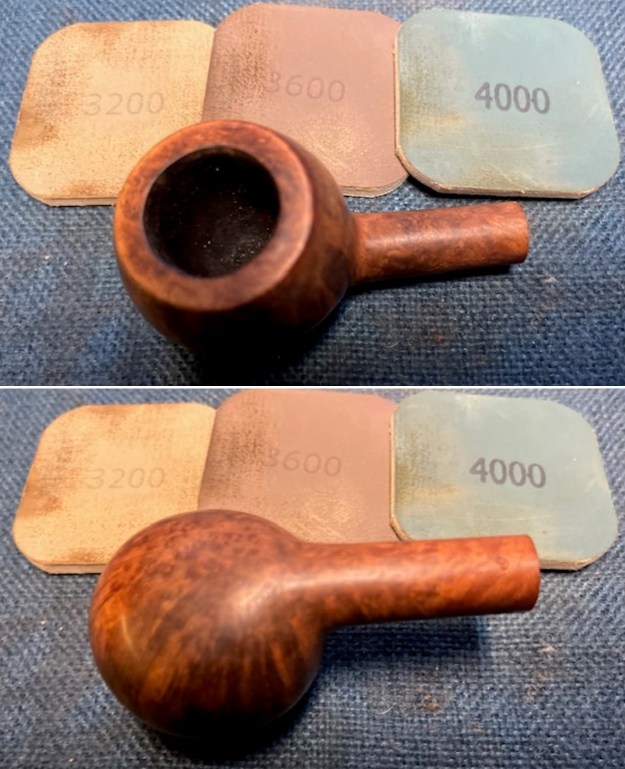
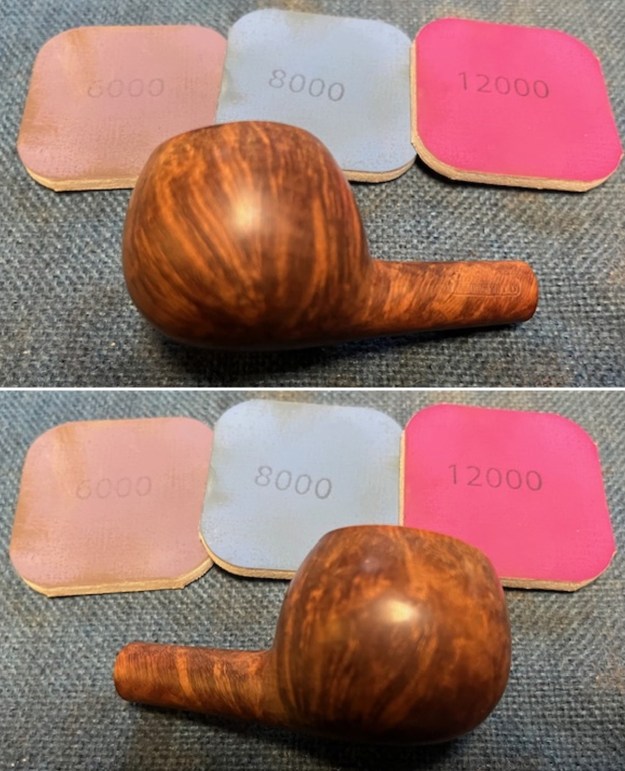
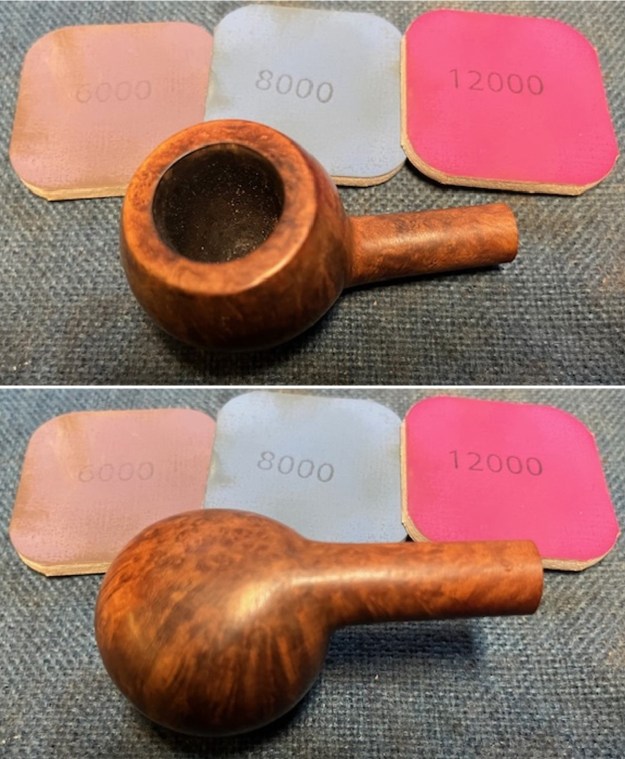
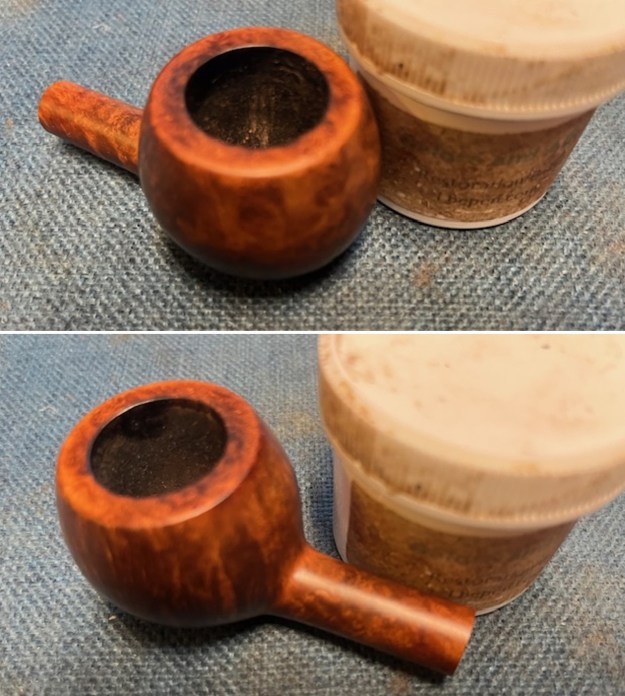
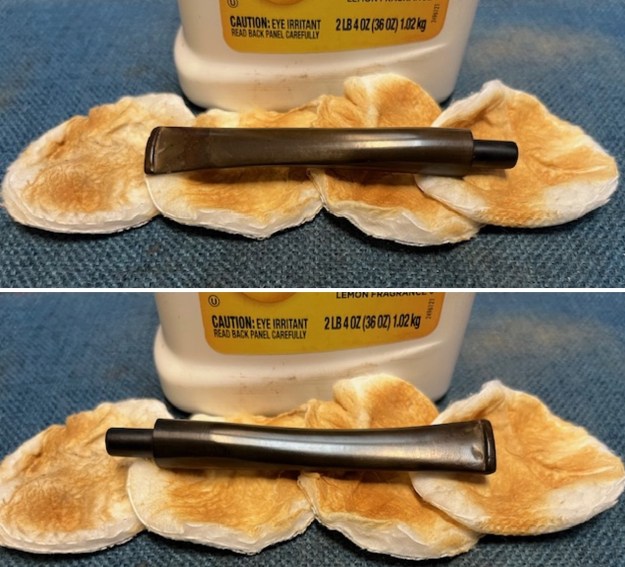
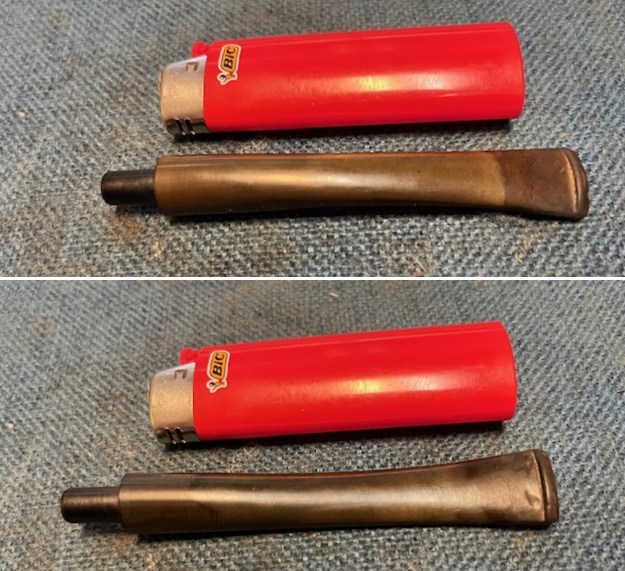
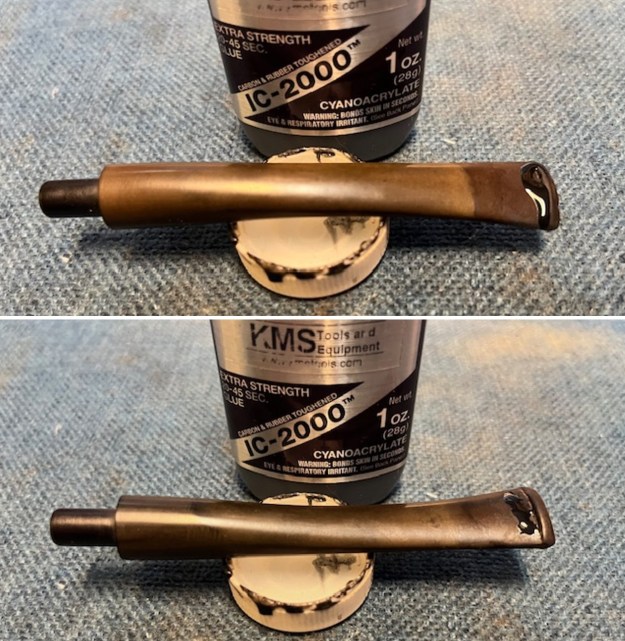
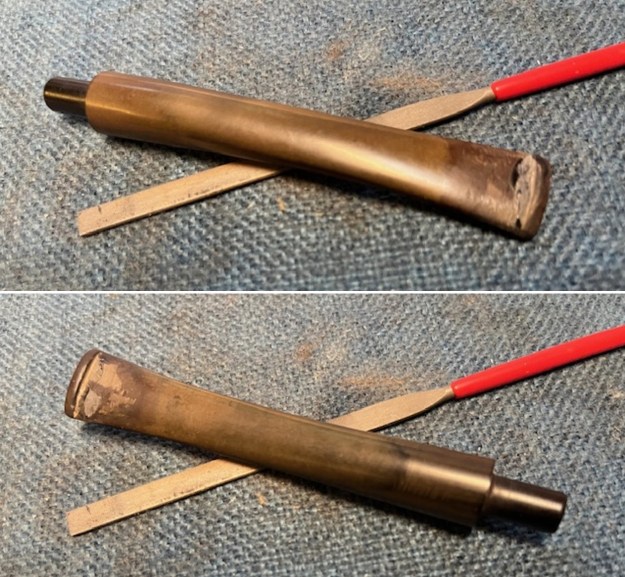
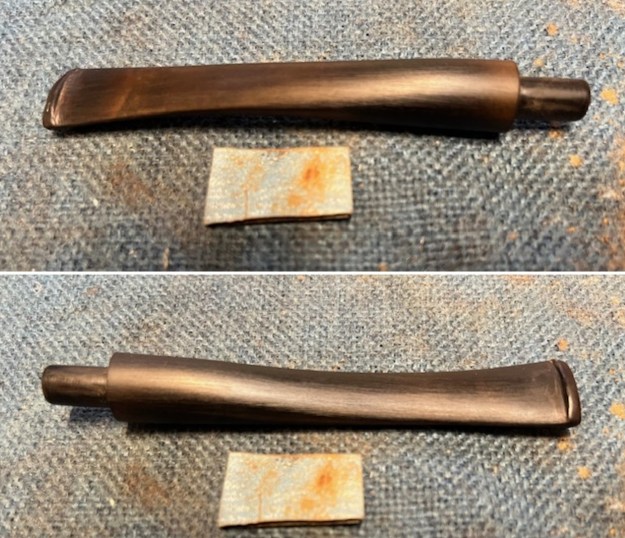
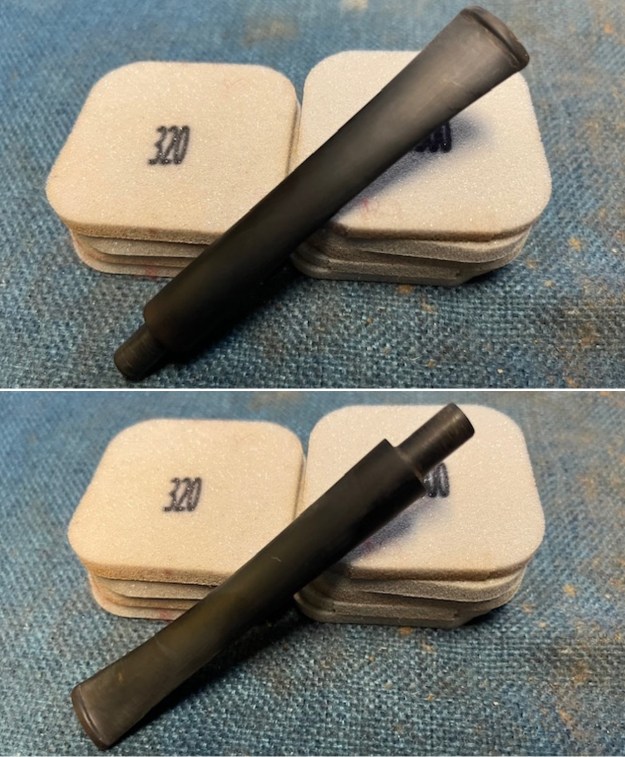
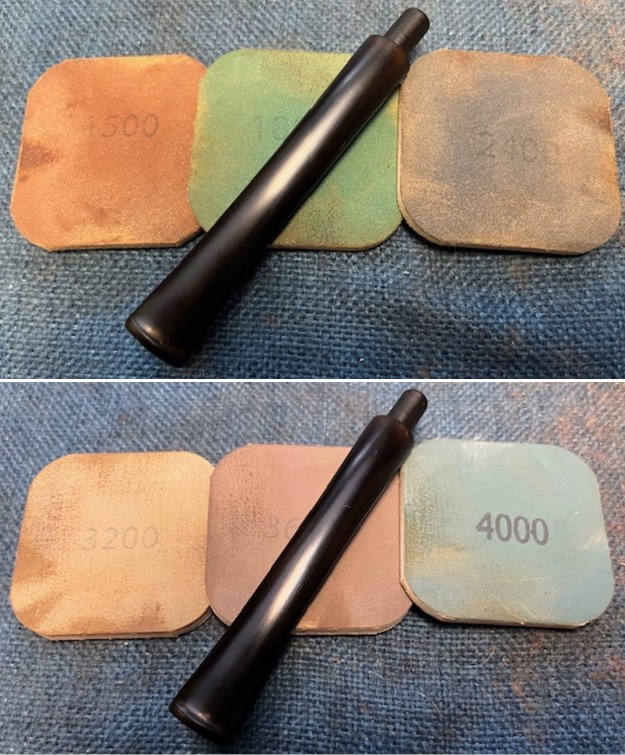
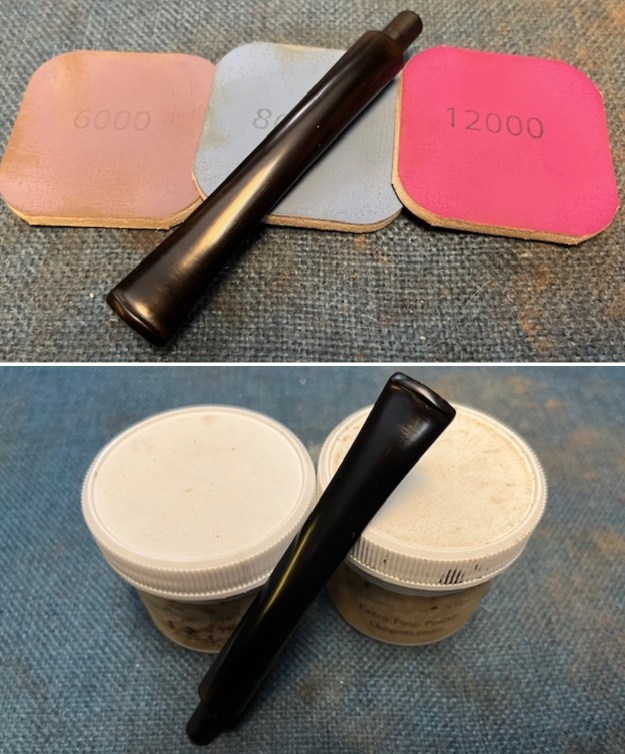
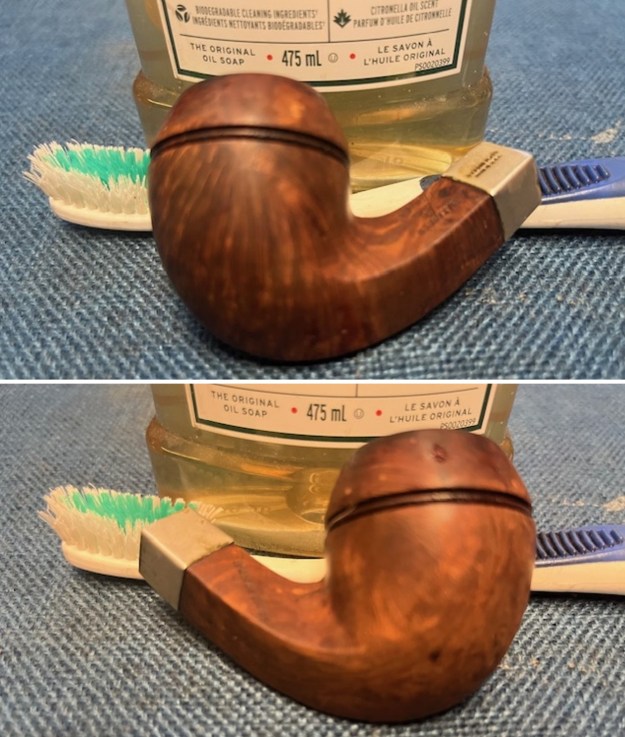
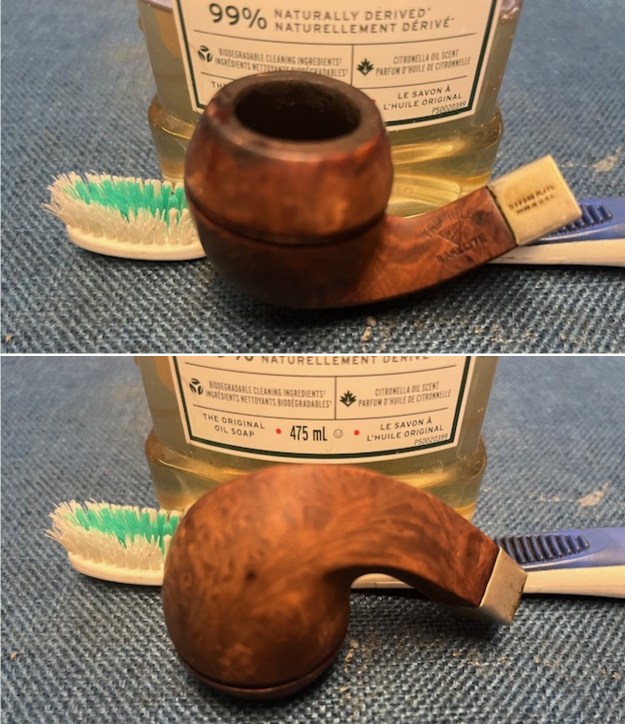
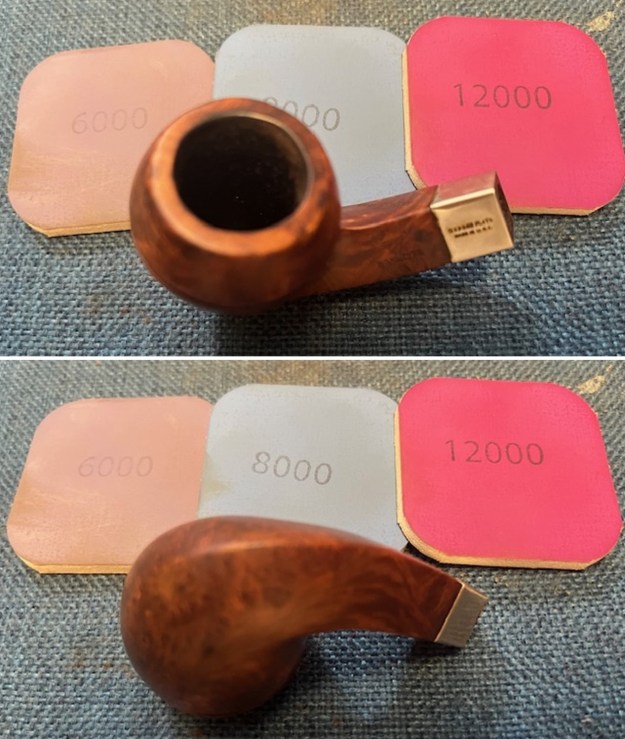
The pipe was in generally good condition and didn’t seem too challenging to clean up. There was a bit of scratching, etc. on the stem, but nothing serious. The bamboo shank was aged, but perfectly sound. Finally, the meerschaum bowl was well worn, but not bad at all.I used oil soap on a few cotton rounds and wiped down the stem to provide an initial cleaning of filth before moving on to the next steps. The primary cleaning came next. I disinfected the inside of the stem with both pipe cleaners and cotton swabs dipped in lemon-infused 99% isopropyl alcohol. I scrubbed thoroughly to make sure the interior was very clean.The goal of the next step is the removal (or minimization) of oxidation. Going to my sink, I used cream cleanser, cotton rounds, and a toothbrush, and scoured the stem to remove as much surface oxidation as possible. As the photos show, the result was a hideous, brownish mess – but better off the stem than on it.Once the stem was reasonably clean, I soaked it overnight in some Briarville Stem Oxidation Remover. This solution works to draw oxidation in the stem to the surface of the vulcanite. This is a major aid and an important step in ensuring a clean stem. The following day, I drew out the stem from its bath and scrubbed the lingering fluid with a toothbrush.As the stem was now clean and dry, I set about fixing the marks in the vulcanite. This was done by filling those divots with black cyanoacrylate adhesive, impregnated with carbon and rubber. I left this to cure and moved on.The penultimate step for the stem is sanding. First, with my set of needle files, I reduced the bulk of the cyanoacrylate repairs. I removed the excess adhesive as near to the surface as possible, without cutting into the vulcanite. Following that, I used all nine of the micromesh sanding pads (1,500 through 12,000 grit) to sand out flaws, even out the vulcanite, and provide gentle polishing of the finished surface. I also applied pipe-stem oil while using the last five micromesh pads. There was a wonderful, deep black shine to the stem when I was done. Alas, I forgot to take photos of this step.

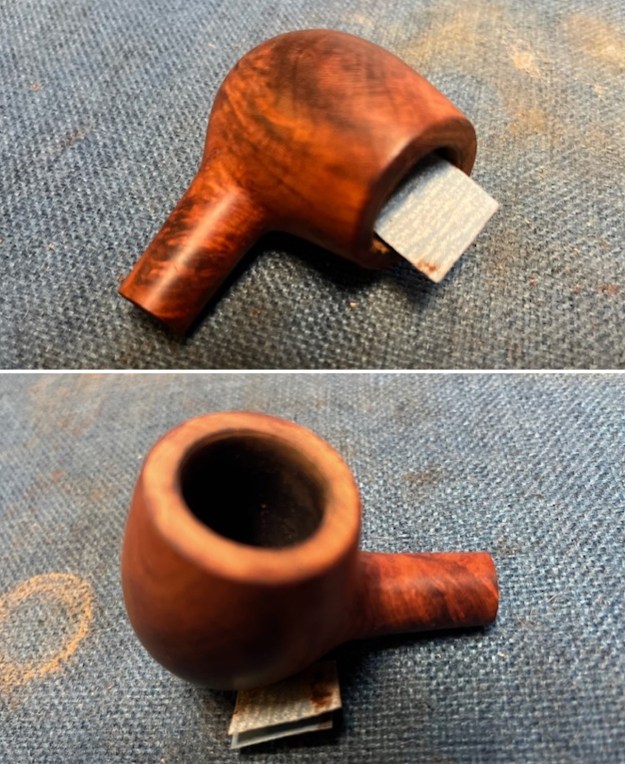
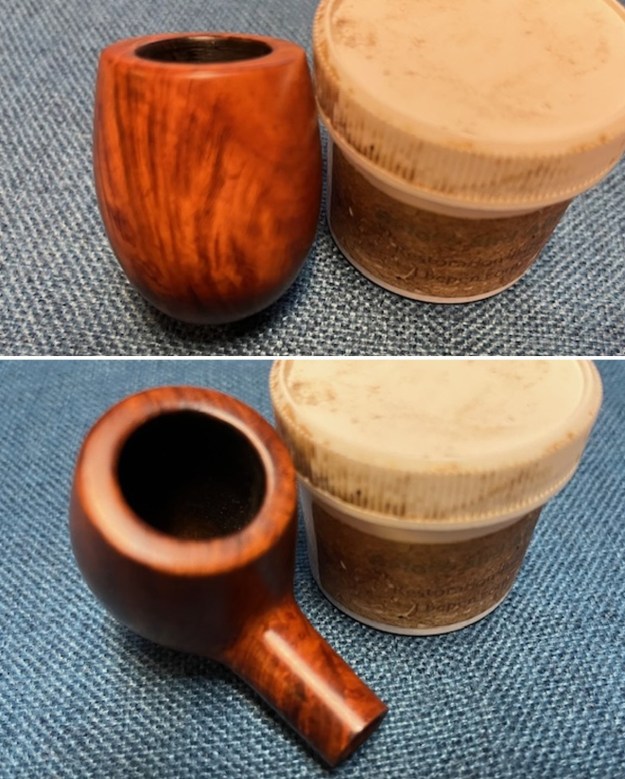
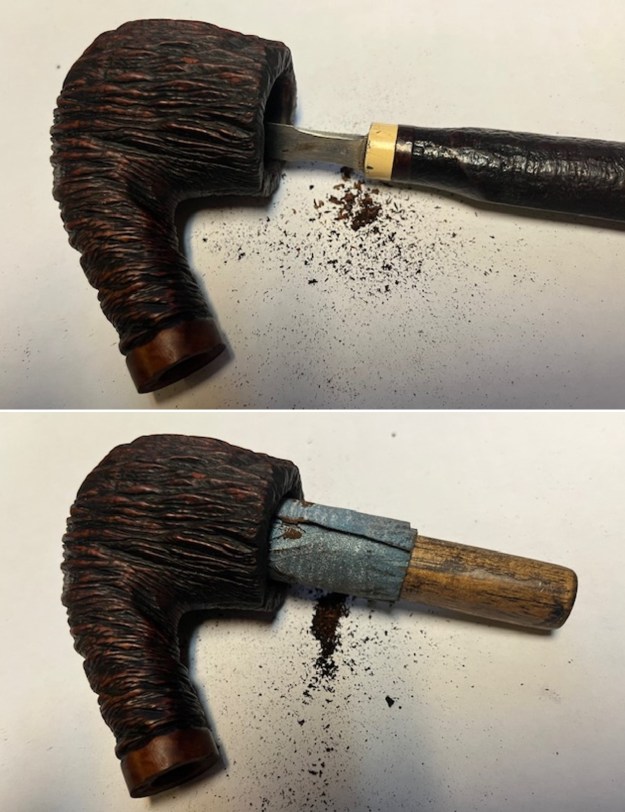
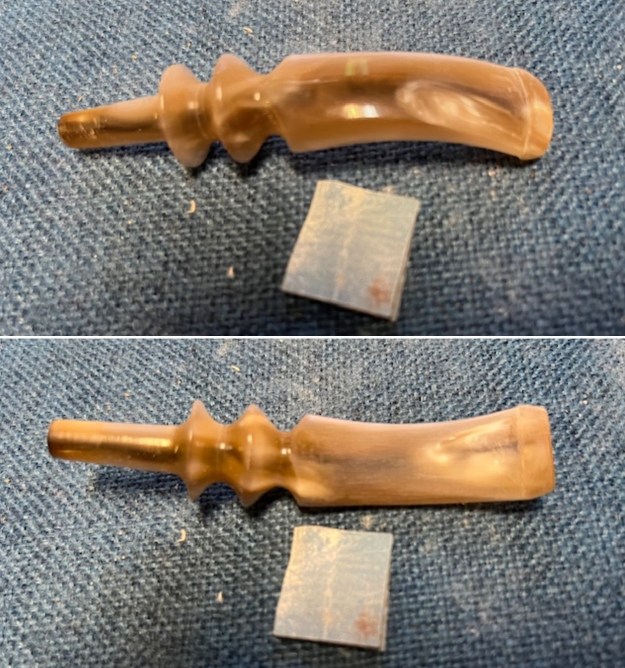
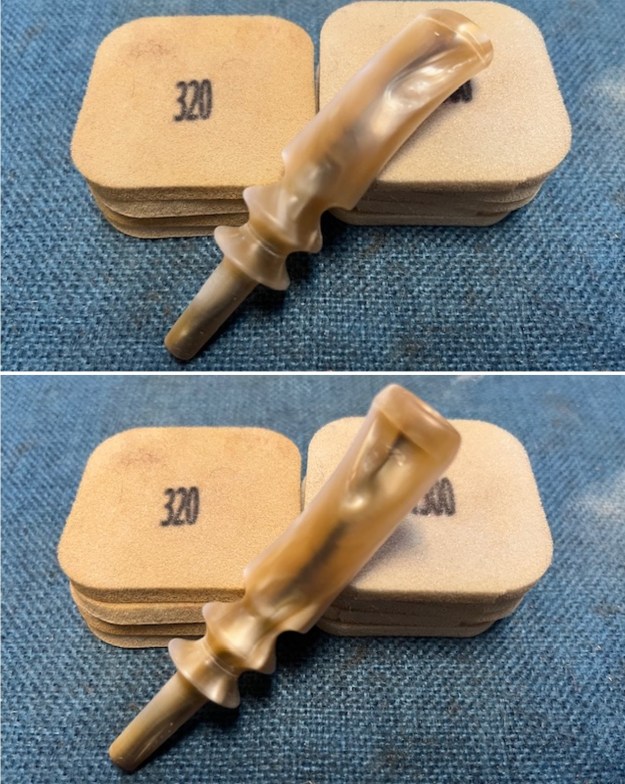
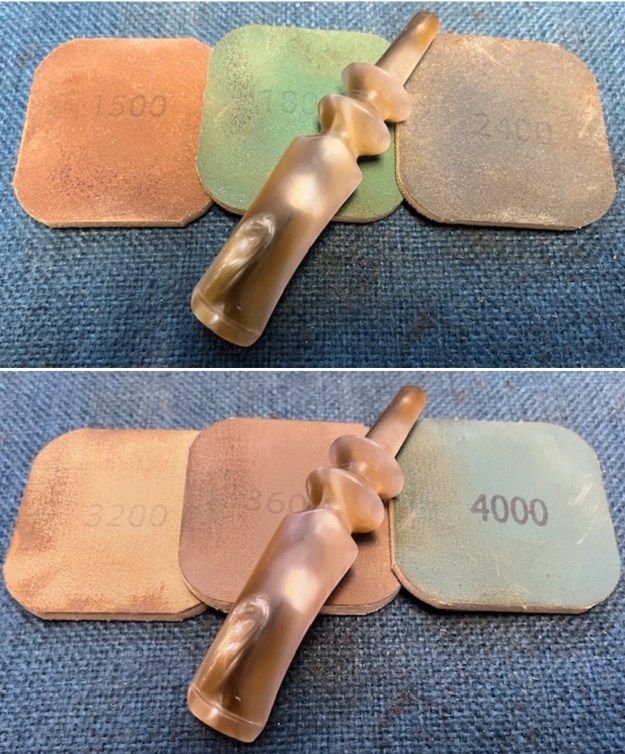
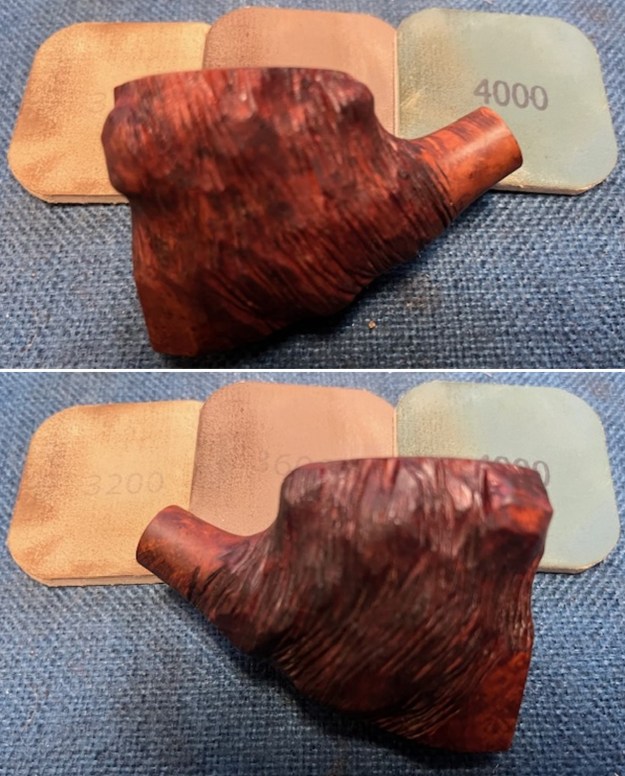
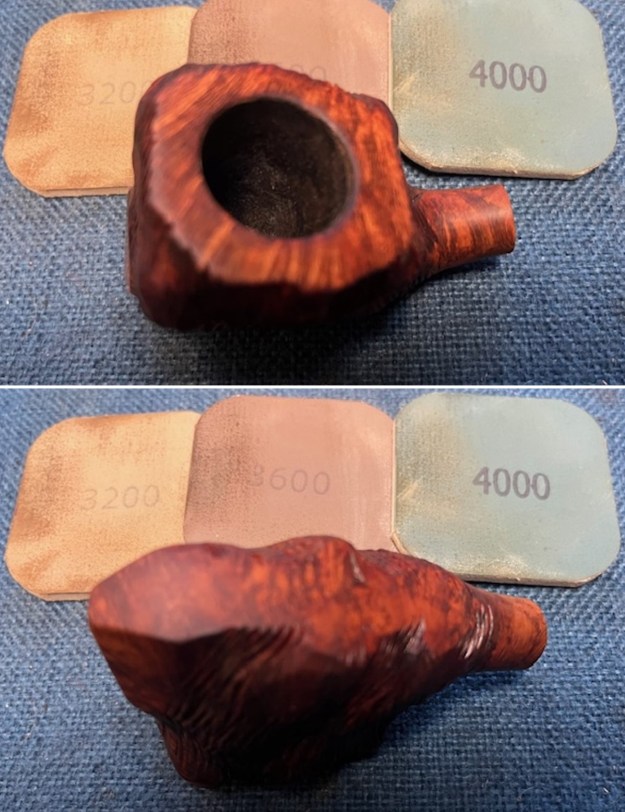
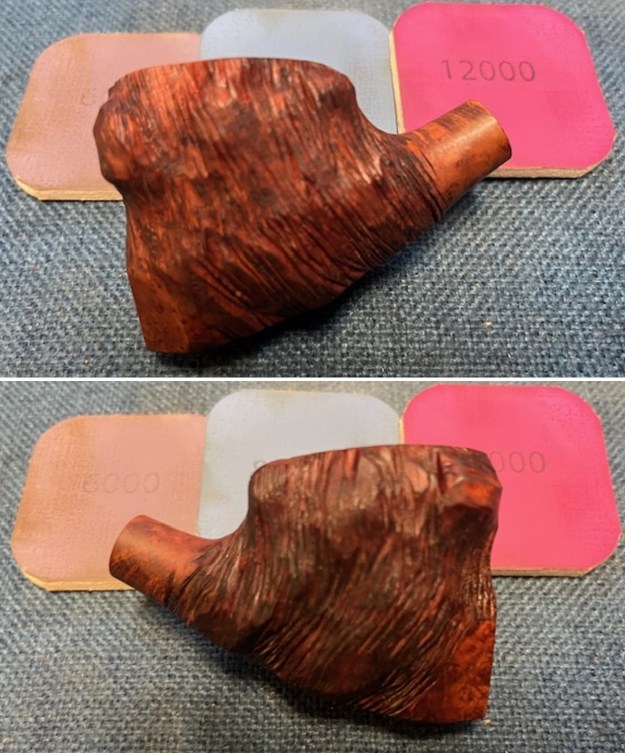
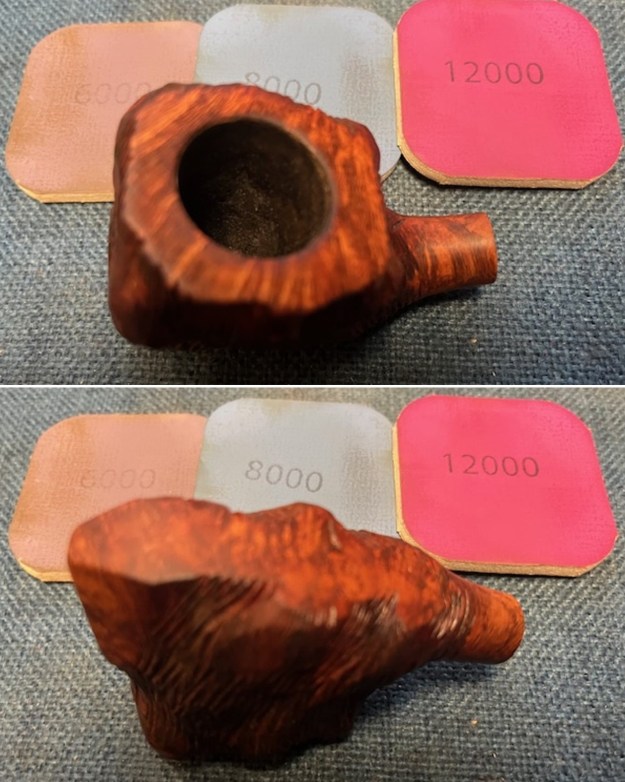
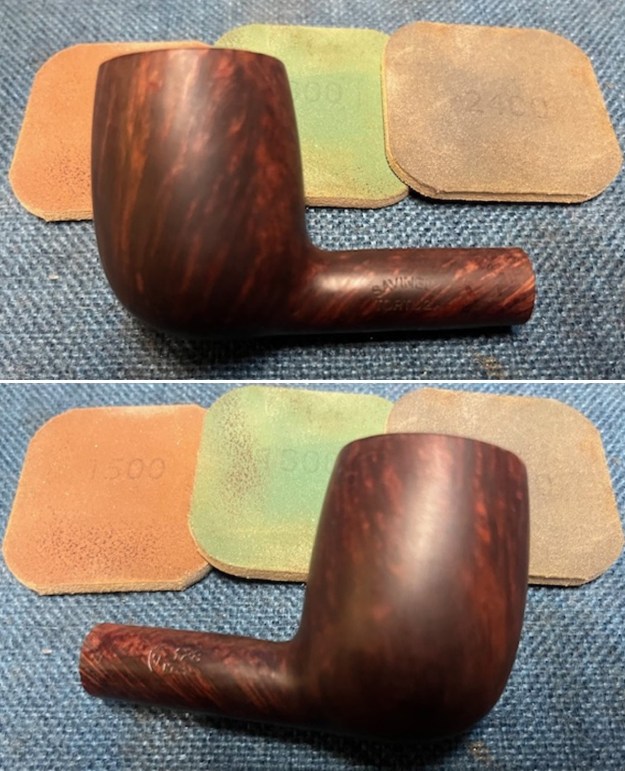
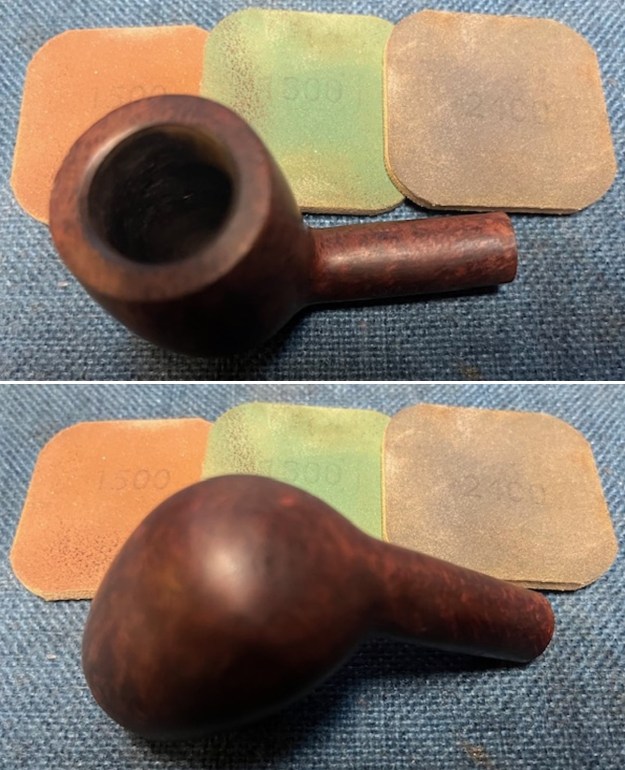
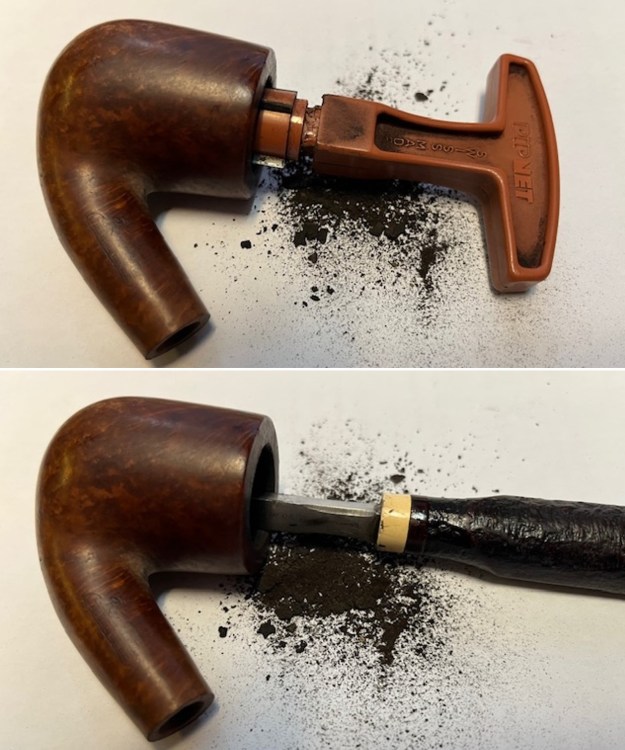
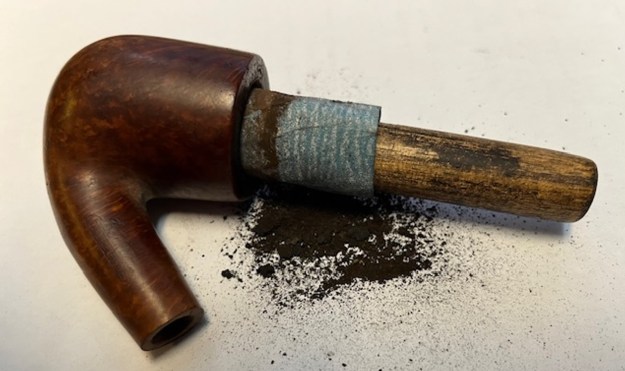
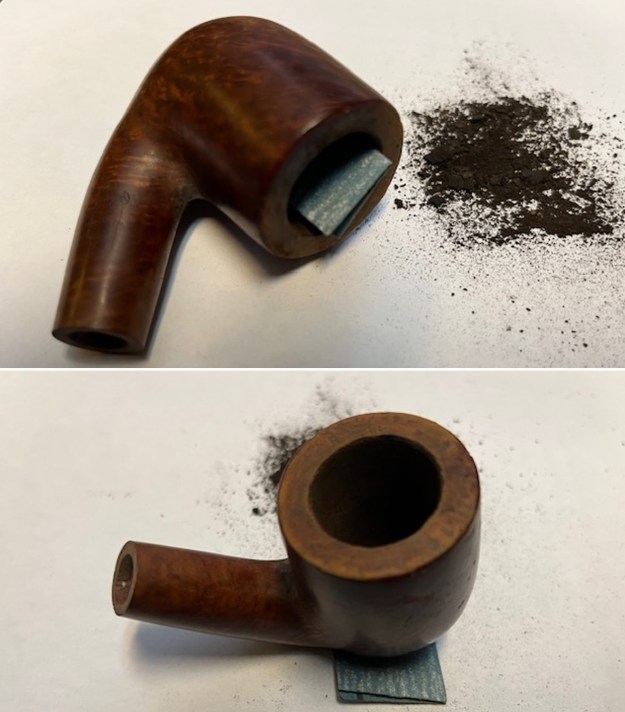
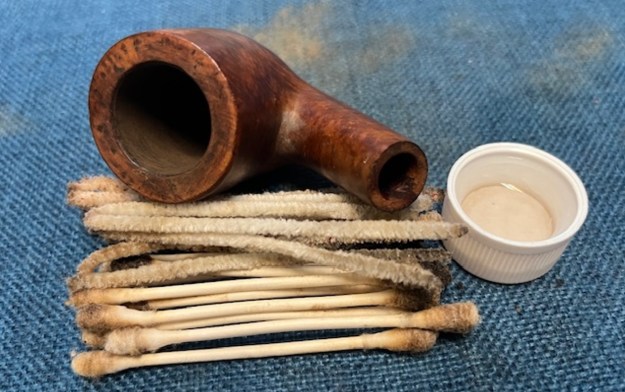
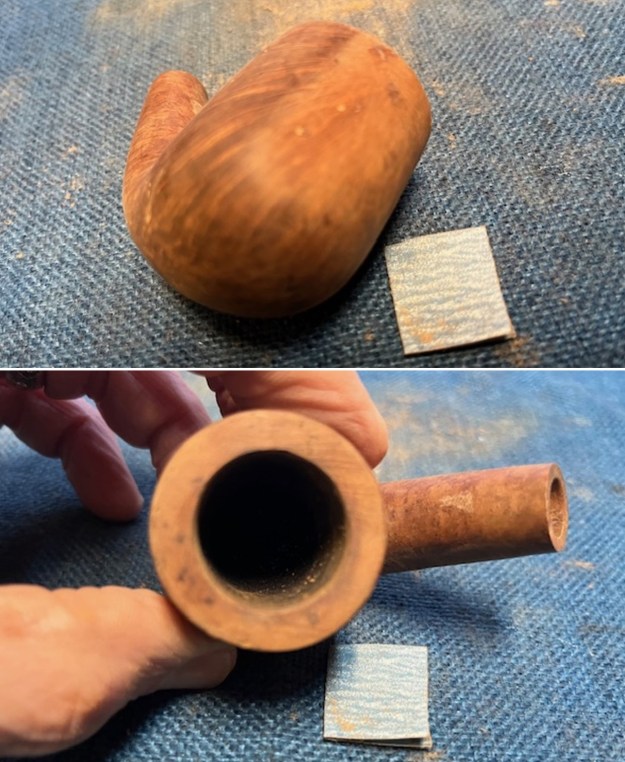
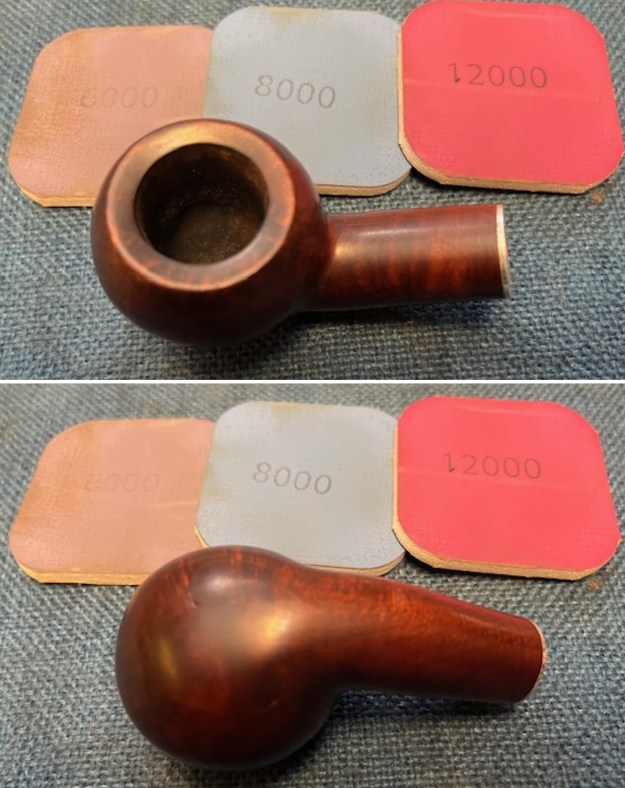
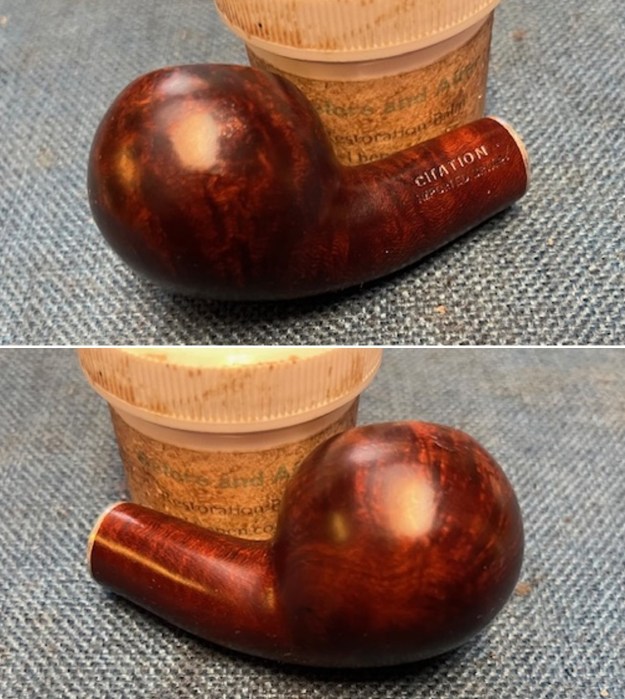
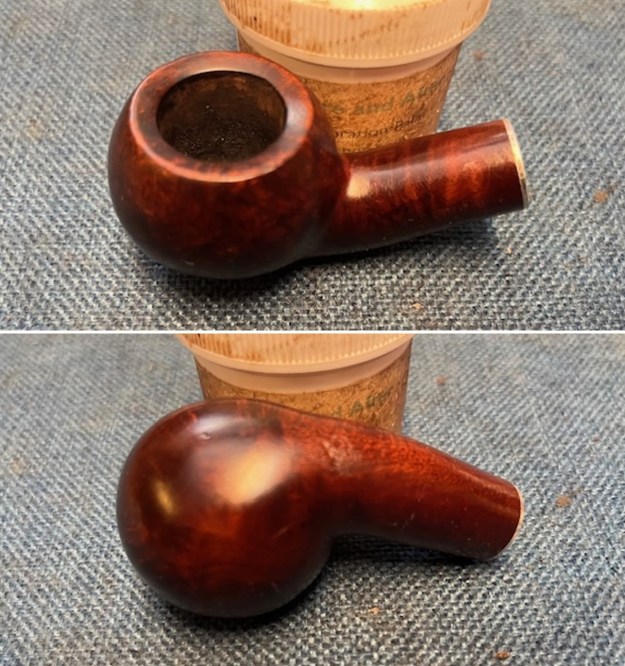
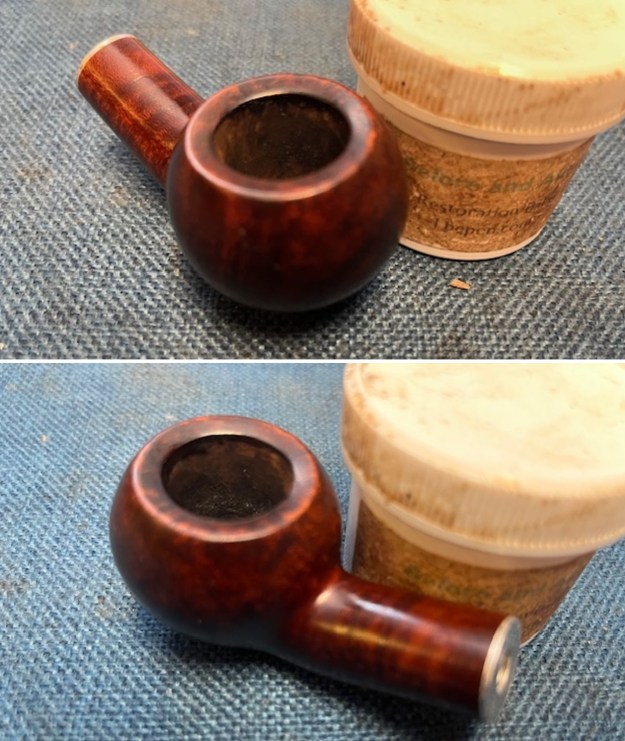
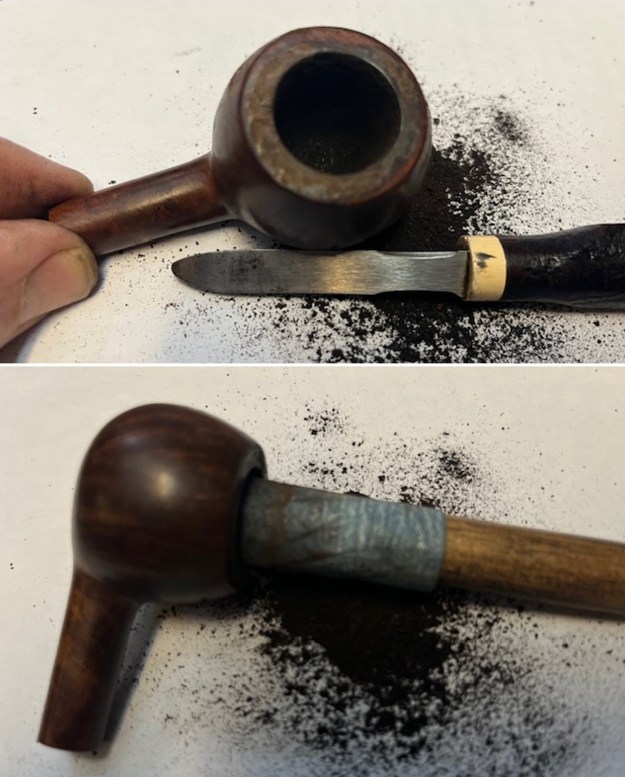
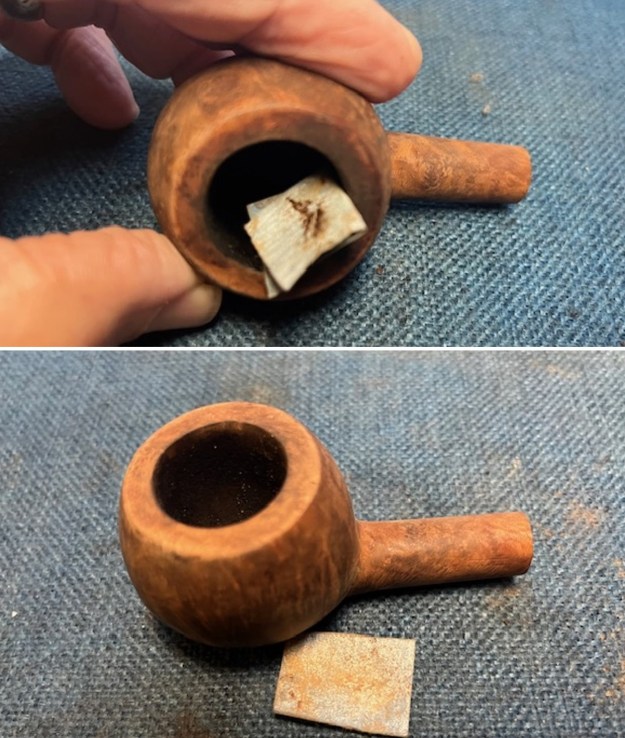
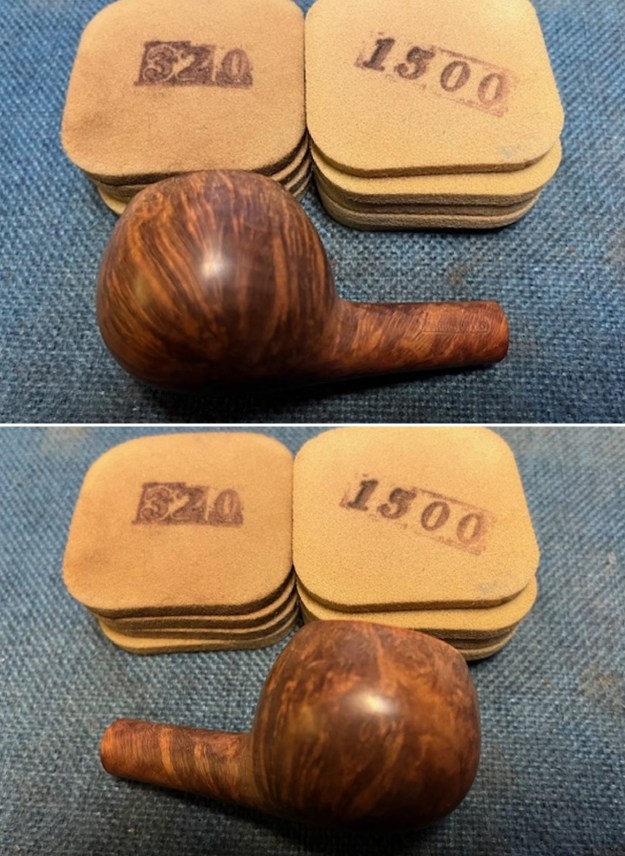
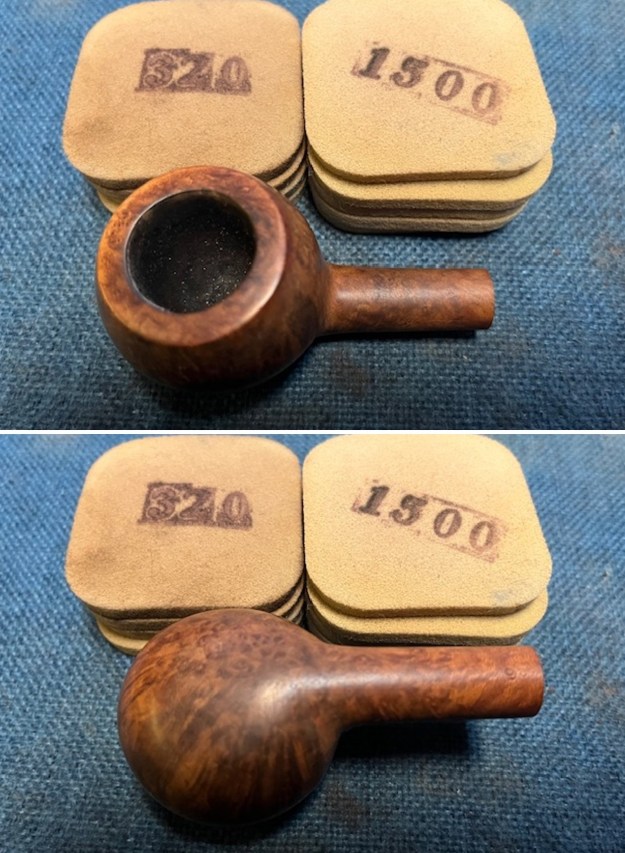
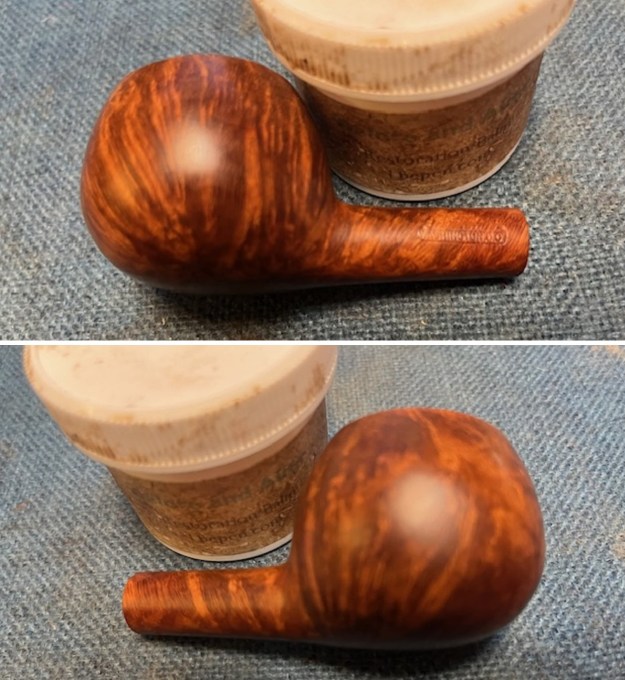
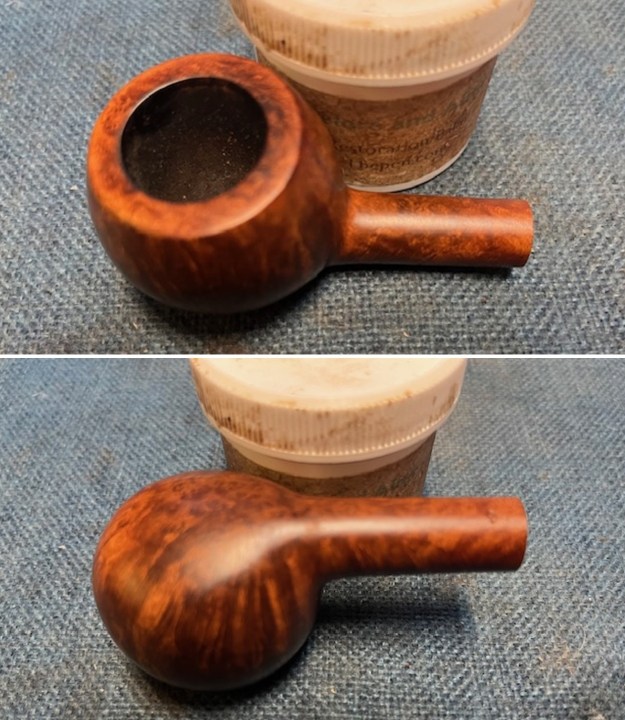
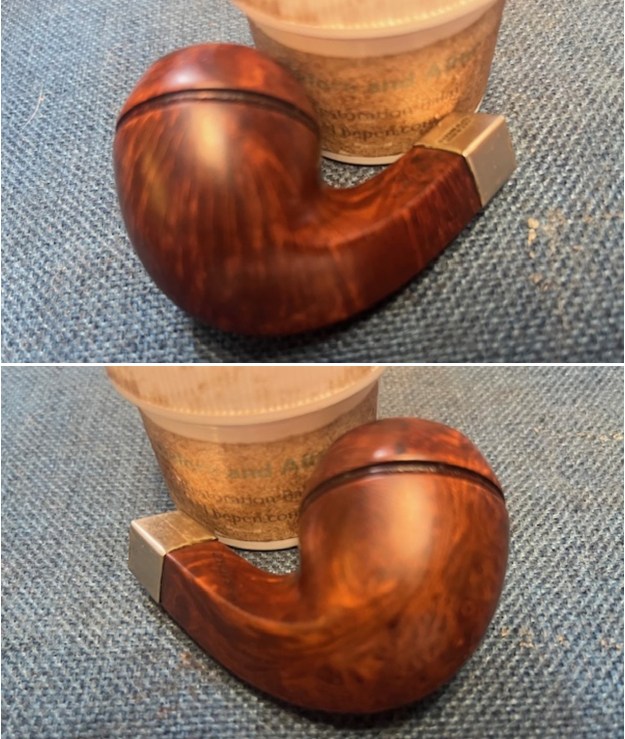
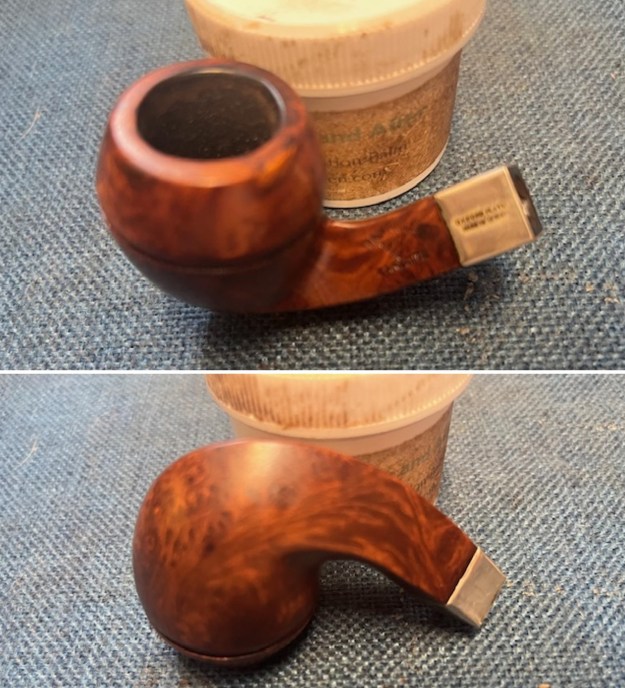
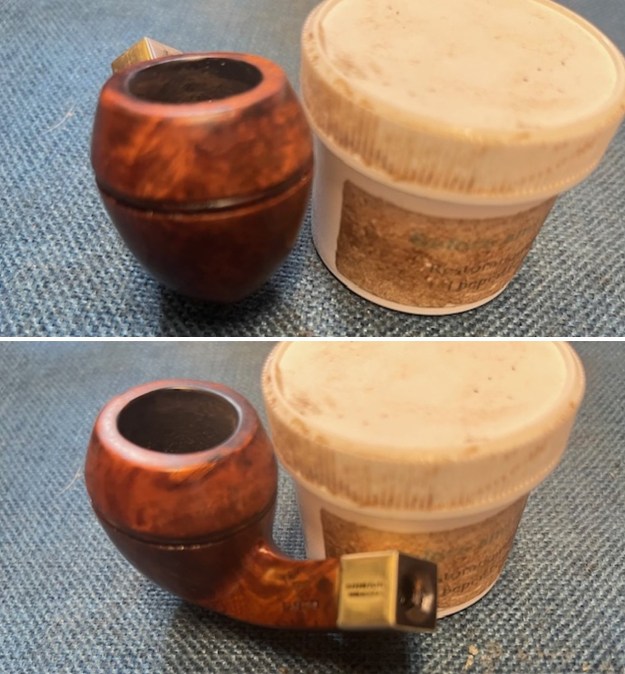
The inside of the shank needed to be cleaned thoroughly. Similar to the stem, I then cleaned it with both pipe cleaners and cotton swabs dipped in lemon-infused 99% isopropyl alcohol.I didn’t sand the bamboo in any way, but I did rub it with some LBE Before & After Restoration Balm and let it sit for 30 minutes or so. The balm moisturizes the bamboo and gives a beautiful depth to it. I then buffed the shank with a microfibre cloth.I moved on to the bowl. The first step was to ream it out – that is to say, remove all the cake inside the bowl. This accomplished a couple of things. First (and most obviously), it cleaned the bowl and provided a refurbished chamber for future smoking. Second, when the old cake was removed, I could inspect the interior walls of the bowl and determine if there was damage or not. Given the more fragile nature of meerschaum and the relative cleanliness of the smoking chamber, I only used a piece of sandpaper taped to a wooden dowel to clean things out. This was sufficient to ensure that all the debris was removed. My next step was to remove the lava on the rim. For this, I took a piece of machine steel and gently scraped the lava away. The metal’s edge is sharp enough to remove what I need, but not so sharp that it damages the rim.I then cleaned the entrance to the bowl with both pipe cleaners and cotton swabs dipped in lemon-infused 99% isopropyl alcohol. This was done cautiously, as too much liquid can cause softening of the meerschaum. Due to my care, no such problems were encountered. I used all nine micromesh pads (1,500 through 12,000 grit) to sand the outside of the bowl and finish it off. This sanding minimizes flaws in the meerschaum and provides a beautiful smoothness to it. As the photos show, I masked the darkened portion of the bowl with tape so as not to remove it while sanding. I rubbed some Clapham’s Beeswax Polish into the meerschaum and let it dry thoroughly. Then I buffed it carefully with a microfibre cloth. Ooo – what a shine! For the final step, I took the pipe to my bench polisher and carefully buffed it – first with a blue diamond compound, then with three coats of carnauba wax. This procedure makes the pipe look its best – the stummel sings and the stem glows.

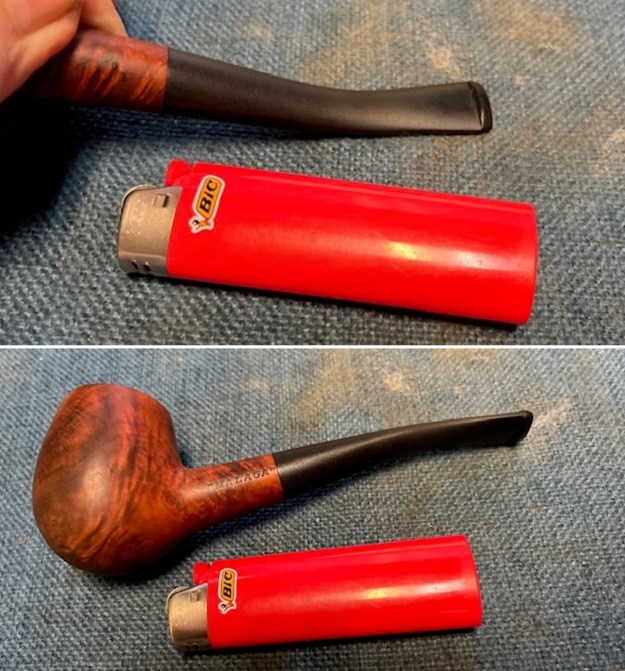
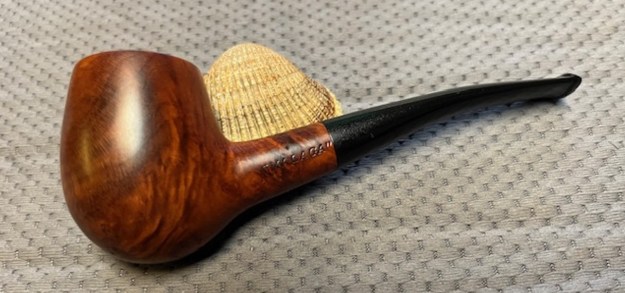
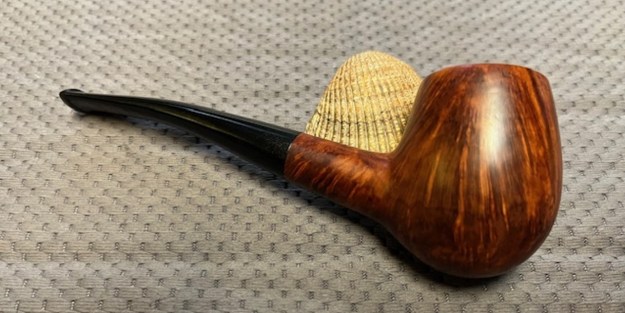
All done! This bamboo meerschaum billiard looks fantastic again and I am delighted with the results. As I mentioned before, I might keep this for myself, but you’re welcome to reach out to me if you’re interested in acquiring it: kenneth@knightsofthepipe.com. The approximate dimensions of the pipe are as follows: length 5⅝ in. (142 mm); height 1¾ in. (44 mm); bowl diameter 1⅜ in. (36 mm); chamber diameter ¾ in. (18 mm). The weight of the pipe is ¾ oz. (24 g). I hope you enjoyed reading the story of this pipe’s restoration as much as I enjoyed restoring it. If you are interested in more of my work, please follow me here on Steve’s website or send me an email. Thank you very much for reading and, as always, I welcome and encourage your comments.

Restoring a Beautiful Royal Danish 989 Made in Denmark Pot


By Steve Laug

The next pipe on the table is one that we picked up in an estate lot from a seller in Sacramento, California, USA on 09/03/2024. The sandblast finish with two smooth panels looking like a Stanwell style pipe is what caught our eye. It is stamped on the underside of the shank and reads Royal Danish [over] Made in Denmark to the right it is stamped with a shape number 989. That is followed by R. It has a classic sandblast finish and the smooth panels on the sides of the bowl are a stark contrast to vulcanite, faux military taper stem. There is Royal Danish Crown logo on the right side of the stem and looks to be in good condition. The seller sent the following photo of the pipes that we purchased. The pipe I am working on is the one on the top of the right column in the photo below.Jeff took some photos of the pipe to show the general condition of the pipe before he started his clean up. The bowl appears to be lightly caked at first glance but could be thicker deeper in the bowl. The inner edge and the top show some lava overflow. The stem is oxidized and calcified which is quite normal for what I see. There are some tooth marks and chatter on the top and underside ahead of the button and on the button surface. He took some photos of the rim top and bowl from various angles to give me a clear picture of the condition of the rim top and bowl. You can see the lava on the rim top and edges as well as part of the cake in the bowl. He included photos that show the top and underside of the stem. It is as described above. Jeff took some photos of the sides and heel of the bowl to show the condition of the finish on the pipe. The photos showed some great grain around the bowl and shank. It is a great looking piece of briar. He took a photo of the stamping on the underside of the shank. The stamping was clear and readable as noted above. He also took a photo of the Crown logo on the left side of the saddle stem. It shows the faint stamping on the stem.Regardless of when this specific briar was made, the shape is very much a 1960s Danish one. I turned to Pipephil’s site and quickly scanned the article on Stanwell getting a great overview of the history. I went through the photos and did not find the shape of the pipe that I was working on (http://pipephil.eu/logos/en/logo-r6.html). There was one that showed the mixed finish of the Royal Danish line – sandblast with smooth patches on each side of the bowl. I have included a screen capture of that section below.I then turned to Pipedia and found that the Royal Danish was also listed as a second or a sub-brand made by Stanwell (https://pipedia.org/wiki/Stanwell#Sub-brands_.2F_Seconds). I have included the list of seconds from the site below. I have highlighted the Royal Danish in blue in the text.

Sub-brands / Seconds – Bijou (discontinued), Danish Quaint, Danish Sovereign, Danske Club, Henley (discontinued), Kong Christian (discontinued), Majestic, Reddish (discontinued), Royal Danish, Royal Guard, Royal Sovereign, Sailor (discontinued), Scandia, Sorn (discontinued), Svendson.

There was also an interesting advertising page on the Danish Briars by Stanwell. The first one on the list was the Royal Danish. The description of the line is clear and concise, be sure to read it below.Now I knew that I was dealing with a Stanwell made pipe in the line called Royal Danish. That line is described as “dark walnut sandblast with smooth side panels…” That matches the pipe I am working on now and now it is time to do the work on it.

Jeff had cleaned up the pipe following his normal cleaning process. In short, he reamed the bowl with a PipNet pipe reamer and cleaned up the reaming with a Savinelli Fitsall Pipe Knife.  He scrubbed the smooth bowl with undiluted Murphy’s Oil Soap with a tooth brush. He worked over the lava and debris on the rim top and was able to remove it. He rinsed it under running warm water to remove the soap and grime. He cleaned out the inside of the shank and the airway in the stem with alcohol, cotton swabs, shank brushes and pipe cleaners. He scrubbed the stem with Soft Scrub and cotton pads to remove the debris and oils on the stem. He soaked it in a bath of Briarville’s Pipe Stem Deoxidizer to remove the oxidation. He rinsed it with warm water and dried it off. I took photos of the pipe once I received it. It really looked good. I took a close up photo of the rim top and stem surface to show the condition after the clean up. The bowl was in good condition though the rim top and edges looked very good. The stem surface showed the light tooth marks and chatter on both sides. The stamping on the shank was readable as noted above. I took the stem off the pipe and took a photo of the pipe in proportion. It is a beautiful pipe.I polished the smooth portion of the bowl sides and the inner edge of the rim with micromesh sanding pads – dry sanding with 1500-12000 grit sanding pads. I wiped it down after each sanding pad to remove the sanding debris. The smooth portions and bevelled inner edge looked much better at this point. I rubbed the bowl down with Before & After Restoration Balm working it into the briar with my fingertips and a horsehair shoe brush to clean, enliven and protect it. I let the balm sit for 15 minutes and then buffed with a cotton cloth to raise the shine. Mark Hoover’s Balm is a product that I have come to appreciate and one I use on every pipe I have been working on. I set the bowl aside and turned to the stem. I “painted” the surface with the flame of a lighter to lift the tooth marks on the stem and button surface. I was able to lift many of them. I filled in the remaining marks on the button and stem with rubberized black CA glue. Once it cured I use a small file to flatten the repairs. I sanded it smooth with a folded piece of 220 grit sandpaper. I sanded the stem with 320-3500 grit sanding pads. I wiped the stem down with an Obsidian Oil cloth after each sanding pad.I touched up the stamping in the vulcanite on the top of the saddle portion of the stem. I used white acrylic fingernail polish to refresh the Crown on the top of the saddle. Once it hardened I sanded it with a 1500 grit micromesh sanding pads. I wiped it down with Obsidian Oil. As usual at this point in the restoration process I am excited to be on the homestretch. I look forward to the final look when it is put back together, polished and waxed. I put the Stanwell Royal Danish Made in Denmark 989 Saddle Stem Pot back together and it is a beauty. I polished the bowl and stem with Blue Diamond to polish the briar and the vulcanite. I gave the bowl and the stem multiple coats of carnauba wax. I buffed the pipe with a clean buffing pad to raise the shine. I hand buffed it with a microfiber cloth to deepen the shine. The pipe polished up pretty nicely. The grain really pops with the wax and polish. The shiny black vulcanite saddle stem is a beautiful contrast to the browns of the bowl. This Royal Danish 989 Saddle Stem Pot was a great pipe to spruce up. It is a very comfortable pipe to hold in the hand. The finished pipe is shown in the photos below. The dimensions of the pipe are Length: 6 ½ inches, Height: 1 ½ inches, Outside diameter of the bowl: 1 ¾ inches, Chamber diameter: 1 inch. The weight of the pipe is 54 grams/1.87 ounces. I will be putting this pipe on the Danish Pipe Making Companies Section of the rebornpipes store. If you are interested in adding it to your collection let me know by email or message. Thanks for reading this blog and my reflections on the pipe while I worked on it. This is an interesting estate to bring back to life.
Karl Erik Handmade in Denmark 225 Rusticated Poker


by Steve Laug

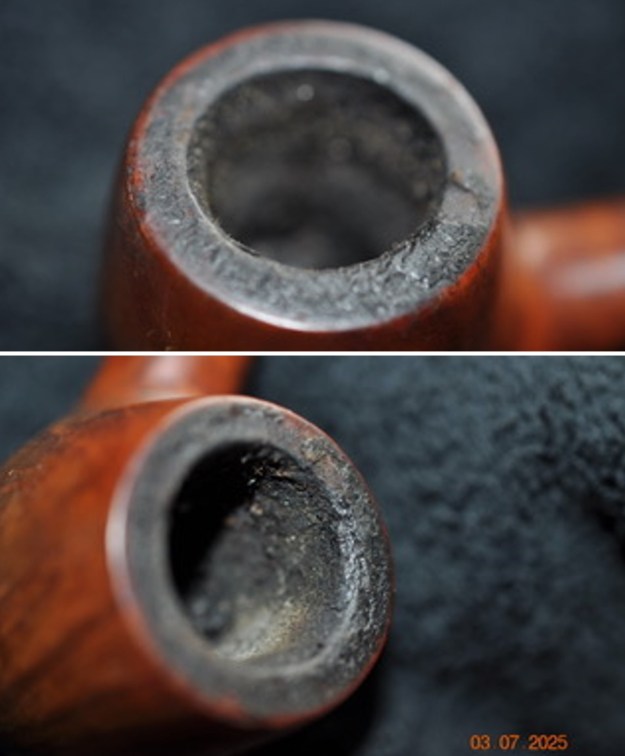
The next pipe on the table is one that we picked up from a seller in Ogden, Utah, USA on 12/21/2024. It is deep and uniquely rusticated Pot with a saddle stem. It is stamped on the underside of the shank and reads Karl Erik [over] Handmade in Denmark [over] the shape number 225. The stamping is clear and readable as noted above. The pipe has some grime and oils ground into the rustication around the bowl and shank. The bowl had a thick cake and there was thick lava in the deep rustication on the rim top and edges. The inner and outer edges appeared to be undamaged. Cleaning would make that clear. The vulcanite saddle stem was oxidized and dirty with deep tooth marks and chatter ahead of the button. Jeff took photos of the pipe to show what it looked like before he started working on it. Jeff took a photo of the bowl and rim top to show the cake in the bowl, lava overflow and the general condition of the pipe. The photos of the stem to show the condition of both sides of the stem as noted above. He took photos of the sides of the bowl and the heel to show the interestingly textured rustication around the bowl and shank. It really is a beautifully rusticated piece of briar. The finish is nice but it also dirty with dust ground into the deeper portions of the finish. Jeff took a photo of the stamping on the underside of the shank. It is clear and readable as noted above. If you have been following the blog for any length of time you have come to know that when I am working on interesting old pipes (even sometimes those not so interesting) I like to know a bit about the background of the brand. I like to “meet” the carver to get a feel for their work and style.

I turned to Pipephil’s site (http://pipephil.eu/logos/en/logo-k1.html) to see what I could find. I did a screen capture of the entry there and have included the side bar information below the photo. Brand created in 1965-66 by Karl Erik Ottendahl (1942 – 2004 †). In the best years he employed up to 15 craftsmen among which Bent Nielsen (see Benner) and Peder Christian Jeppesen. Former grading (ascending): from 4 to 1, and “Ekstravagant” (entirely hand made)

I turned to Pipedia (https://pipedia.org/wiki/Karl_Erik) and reread the history of the brand. Give the article a read.

Armed with that information I turned to work on the pipe itself. Jeff had done a great job cleaning up the pipe as usual. He cleaned up the inside of the bowl with a PipNet reamer and a Savinelli Fitsall Pipe Knife. The bowl walls looked very good. He scrubbed the interior of the bowl and shank with pipe cleaners, shank brushes, cotton swabs and alcohol to remove the tars and oils. He scrubbed the exterior of the pipe with undiluted Murphy’s Oil Soap and a tooth brush to remove the grime from the finish. He worked on the rim top lava and darkening with the soap and tooth brush. He scrubbed the inside of the stem with alcohol and pipe cleaners. He scrubbed the exterior with Soft Scrub and then soaked it in Briarville’s Pipe Stem Deoxidizer. He washed it off with warm water to remove the deoxidizer. The pipe looked far better. I took photos of the pipe when I received it before I started working on it.    I took photos of the bowl and rim top to show how clean it was. The top and the inner edge of the rim look very good. There is a little darkening on the top that I will address and see if I can lessen. The stem looks clean of debris and grime. There is tooth chatter on the stem surface on both sides but otherwise it looks good.I took a photo of the stamping on the underside of the shank of the pipe. The stamping is clear and readable. I took a photo of the pipe with the stem removed to show the overall look of stem, tenon and profile of the pipe.I worked over the rusticated rim top with a brass bristle wire brush to clean out the remnants of the debris. It looked much better. The bowl was very clean so I worked some Before & After Restoration Balm into the briar with my finger tips and into the deep rustication with a shoe brush. I let it sit on the bowl for 10 minutes and then buffed it off with a paper towel and soft cloth. The product is a great addition to the restoration work. It enlivens, enriches and protects the briar while giving it a deep glow. It is a product I use on every pipe I restore. I set the bowl aside and turned my attention to the stem. I “painted” the surface of the stem with the flame of a lighter to lift the tooth marks and had mixed success. All of the marks on the topside were lifted. The one remaining on the back I filled in with some rubberized black CA glue. Once the repairs cured I used a flat file to blend them into the surface and followed that with some 220 grit sandpaper. It looked better. Polishing would finish the work. I continued the sanding process with 320-3500 grit sanding pads. After each pad I wiped the stem down with some Obsidian Oil to clearly show me the scratches and areas that still needed work. It was really looking good.I polished the stem with micromesh sanding pads – dry sanding with 1500-12000 grit pads. Once again, I wiped it down between each pad with Obsidian Oil. I further polished it with Before and After Stem Polish – both Fine and Extra Fine. I gave it another rub down with Obsidian Oil. It looked very good. I am really happy with the way that this Heavily Rusticated Karl Erik Bent Poker/ Cherrywood with a saddle stem turned out. It really is a beautiful looking pipe with a unique shape and deep rustication completed by a vulcanite saddle stem. The briar really came alive with the buffing. The rich brown stains of the finish gave the pipe a sense of depth with the polishing and waxing. I carefully buffed the pipe with Blue Diamond on the buffing wheel using a light touch on the briar. I gave the bowl multiple coats of Conservator’s Wax and the stem multiple coats of carnauba wax on the buffing wheel. I buffed the pipe with a clean buffing pad to raise the shine. I hand buffed the pipe with a microfiber cloth to deepen the shine. The finished Karl Erik Rusticated Cherrywood really is a beauty and feels great in the hand and looks very good. Give the finished pipe a look in the photos below. The dimensions of the pipe are Length: 6 inches, Height: 2 inches, Outside diameter of the bowl: 1 ½ inches, Chamber diameter: ¾ of an inch. The weight of the pipe is 52 grams/1.83 ounces. I will be putting the pipe on the rebornpipes store in the Danish Pipe Makers Section. If you would like to add it to your collection let me know. It should be a great smoking pipe.

As always, I encourage your questions and comments as you read the blog. Thanks to each of you who are reading this blog. Remember we are not pipe owners; we are pipe men and women who hold our pipes in trust until they pass on into the trust of those who come after us.

Restoring a Camillo Rusticated 112 Italy oval shank Billiard


by Steve Laug

The next pipe on the table is one that we picked up from a seller on eBay from Harrison Township, Michigan, USA. It is rusticated oval shank Billiard with a saddle stem. It is stamped on the underside of the shank. The stamp reads Camillo [over] 112. It is stamped Italy at the shank/stem junction. The stamping is clear and readable as noted above. The pipe has some grime and oils ground into the rustication on the bowl and shank. The bowl had a thick cake and there was lava on the rusticated rim top or edges. The edges looked to be undamaged and possibly protected by the lava. Cleaning would make that clear. The oval saddle stem was lightly oxidized, calcified, dirty with tooth marks and chatter ahead of the button. Jeff took photos of the pipe to show what it looked like before he started working on it. Jeff took a photo of the bowl and rim top to show the cake in the bowl, lava overflow and the general condition of the pipe. The photos of the stem to show the condition of both sides of the stem as noted above. He took photos of the sides of the bowl and the heel to show the interestingly textured rustication around the bowl and shank. It really is a beautifully rusticated piece of briar. The finish is nice but it also dirty with dust ground into the finish.  Jeff took a photo of the stamping on the underside of the shank. It is clear and readable as noted above. I could not find any information on the Camillo Brand of pipes. I knew it was made in Italy but had no other information on Pipephil’s site of Pipedia. I googled the brand and found nothing listed. So with no info it was time to work on the pipe.

Armed with that information I turned to work on the pipe itself. Jeff had done a great job cleaning up the pipe as usual. He cleaned up the inside of the bowl with a PipNet reamer and a Savinelli Fitsall Pipe Knife. The bowl walls looked very good. He scrubbed the interior of the bowl and shank with pipe cleaners, shank brushes, cotton swabs and alcohol to remove the tars and oils. He scrubbed the exterior of the pipe with undiluted Murphy’s Oil Soap and a tooth brush to remove the grime from the finish. He worked on the rim top lava and darkening with the soap and tooth brush. He scrubbed the inside of the stem with alcohol and pipe cleaners. He scrubbed the exterior with Soft Scrub and then soaked it in Briarville’s Pipe Stem Deoxidizer. He washed it off with warm water to remove the deoxidizer. The pipe looked far better. I took photos of the pipe when I received it before I started working on it.   I took photos of the bowl and rim top to show how clean it was. The top and the inner edge of the rim look very good. There is a little darkening on the top that I will address and see if I can lessen. The stem looks clean of debris and grime. There is light tooth chatter on the stem surface on both sides but otherwise it looks good.I took a photo of the stamping on the underside of the shank of the pipe. The stamping is clear and readable. I took a photo of the pipe with the stem removed to show the overall look of stem, tenon and profile of the pipe.The bowl was very clean so I worked some Before & After Restoration Balm into the briar with my finger tips. I let it sit on the bowl for 10 minutes and then buffed it off with a paper towel and soft cloth. The product is a great addition to the restoration work. It enlivens, enriches and protects the briar while giving it a deep glow. It is a product I use on every pipe I restore. I set the bowl aside and turned my attention to the stem. I “painted” the surface of the stem with the flame of a lighter to lift the tooth marks and had mixed success. All of the marks on the topside were lifted. The one remaining on the back I filled in with some rubberized black CA glue. Once the repairs cured I used a flat file to blend them into the surface and followed that with some 220 grit sandpaper. It looked better. Polishing would finish the work. I continued the sanding process with 320-3500 grit sanding pads. After each pad I wiped the stem down with some Obsidian Oil to clearly show me the scratches and areas that still needed work. It was really looking good.I polished the stem with micromesh sanding pads – dry sanding with 1500-12000 grit pads. Once again, I wiped it down between each pad with Obsidian Oil. I further polished it with Before and After Pipe Stem Polish – both Fine and Extra Fine. I gave it another rub down with Obsidian Oil. It looked very good. I am really happy with the way that this Rusticated Camillo 112 Oval Shank Billiard with a saddle stem turned out. It really is a beautiful looking pipe with a unique shape and combining a smooth bowl and a vulcanite saddle stem. The briar really came alive with the buffing. The rich brown stains of the finish gave the pipe a sense of depth with the polishing and waxing. I carefully buffed the pipe with Blue Diamond on the buffing wheel using a light touch on the briar. I gave the bowl and the stem multiple coats of carnauba wax on the buffing wheel. I buffed the pipe with a clean buffing pad to raise the shine. I hand buffed the pipe with a microfiber cloth to deepen the shine. The finished Camillo Rusticated 112 Billiard really is a beauty and feels great in the hand and looks very good. Give the finished pipe a look in the photos below. The dimensions of the pipe are Length: 6 inches, Height: 2 inches, Outside diameter of the bowl: 1 ½ inches, Chamber diameter: ¾ of an inch. The weight of the pipe is 47 grams/1.59 ounces. I will be putting the pipe on the rebornpipes store in the Italian Pipe Makers Section. If you would like to add it to your collection let me know. It should be a great smoking pipe.

As always, I encourage your questions and comments as you read the blog. Thanks to each of you who are reading this blog. Remember we are not pipe owners; we are pipe men and women who hold our pipes in trust until they pass on into the trust of those who come after us.      

Restoring a Peterson’s Kapet Made in the Republic of Ireland 502


by Steve Laug

This beautifully grained briar pipe was purchased on 08/27/2024 from an auction on eBay from a seller in Memphis, Tennessee, USA. It is stamped on the left side of the shank and clearly reads Peterson’s [over] Kapet. On the right side it is stamped Made in the Republic of Ireland [three lines]. The shape number 502 is stamped to the right of that next to the bowl/shank junction. The bowl had a thick cake on the walls and an overflow of lava onto the rim top and edges. The smooth finish is dirty with debris and oils. The vulcanite saddle stem has a “P” stamped on the left side of the saddle. It was oxidized, calcified and has light tooth marks and chatter on both sides near the button. It was a beautiful looking pipe even through the grime in the finish. Jeff took photos of the pipe before he started cleaning it up. Have a look. Jeff took close up photos of the bowl and rim top to show the condition of the bowl and the rim top. You can also see the lava on the rim top, inner edge and the cake in the bowl. He also took close up photos of the stem to show its condition as mentioned above. He also took photos of the tooth marks and chatter on both sides of the stem. He took photos of the bowl sides and heel to show the grain around the bowl. There are small fills on the left side mid bowl. The grain is beautiful straight or flame grain. Jeff also took photos of the stamping on the sides of the shank. It is clear and readable as noted above.I am including the link to the Pipedia’s article on Peterson pipes. It is a great read in terms of the history of the brand (https://pipedia.org/wiki/Peterson). There was a short note toward the bottom of the page about the series. It is definitely referring to the newer line that came out later. I quote:

I turned to Pipedia (https://pipedia.org/wiki/Peterson) to first pin down a date that the pipe was made. I knew that the Made in Ireland stamp would give me that. I quote:

As usual when trying to get accurate facts in regard to Peterson history, something will jump up and get in the way. They are missing many of their records. The following is the best that we can do for a guide to the myriad markings during the period 1922 – 1949. Prior to 1920 it was rare for a country of origin to be stamped on the pipe, just Peterson’s Dublin on the band. After 1921/22, if it is stamped “MADE IN IRELAND” and the “Made in” is stacked over “Ireland” or “MADE IN EIRE” or several other forms, it was made between 1922 and 1938. A considerable number of Peterson pipes were stamped “Irish Free State”. From about 1930 to 1949, most of the pipes (those which were stamped) were stamped “Made in Ireland”.” If the stamp reads “MADE IN IRELAND” in a circle, the pipe was made between 1939 and 1948. These are all “Pre-Republic” pipes. I can tell you that the mark “Irish Free State” was adopted in 1922; and replaced by “Eire” in 1937 and then by “Republic of Ireland” in 1949.

That gave me a date for the pipe – it was made after 1949 as can be proved by the Made in the Republic of Ireland stamp on the right side of the shank.

I turned to “The Peterson Pipe” by Mark Irwin and Gary Malmberg to get some background on the Peterson’s Kapet Line. On page 305 it had the following information.
Kapet (1925-87) Line first described in 1925 brochure and featured in occasional catalogs through 1987. Early specimens will be stamped IRISH over FREE STATE. Described in 1937 catalog as available in dark plum or natural finish. Featured an aluminum “inner tube” or stinger until 1945.  Mid-century specimens may be stamped Made In over Ireland. Specimens from 1970 on may have mounts with hallmarks.

Judging from the Made in the Republic of Ireland stamp, the pipe I am working on is probably made after 1945 when the stinger or inner tube was removed. Those dates work also for the Kapet information above. The stem has the original P stamp on the saddle side and no stinger.

To help clarify the stamping on the shank more, I did some digging and found a blog on Mark Irwin’s Site that had information on the 500 shapes and specifically the 502 shape and it did indeed have a saddle stem (https://petersonpipenotes.org/tag/peterson-502/). That also move the date forward to post 1980.

The 500 shapes aren’t documented in the Peterson ephemera, which is an important reason to stop and let everyone know they’re available just now. They’re big, XL shapes, mostly bulldogs and Rhodesians, and appeared around 1980 in a red stain in the Spigot, Sterling Silver and  Kapet lines (from high to low), but also in standard brown stain in the lower Kildare and K Briar entry-grade lines. I’ve also seen a Supreme on the internet.

The 1980s were a difficult period in the company’s history, as we recount in The Peterson Pipe: The Story of Kapp & Peterson. Global pipe sales had plummeted to an all-time low and Peterson, like many other companies, was retrenching.  While we have a good record of the company’s offerings in the 1970s and 80s, the 500 shapes are nowhere to be seen. They’re big pipes, which made me think they might have been made designed for the U.S. market, were it not for the fact that some of them accommodate a 6mm filter, which is usually a sign that they were destined for the German market.Armed with the information above, I turned my attention to the pipe itself. Jeff had cleaned the pipe with his usual penchant for thoroughness that I really appreciate. He reamed it with a PipNet pipe reamer and cleaned up the reaming with a Savinelli Fitsall Pipe Knife. He scrubbed out the internals with alcohol, pipe cleaners, shank brushes and cotton swabs until the pipe was clean. He scrubbed the exterior of the bowl with Murphy’s Oil Soap and a tooth brush to remove the grime and grit on the briar and the lava on the rim top. The finish looks very good with good looking grain around the bowl and shank. Jeff soaked the stem in Before & After Deoxidizer to remove the oxidation on the rubber. When the pipe arrived here in Vancouver for the second stop of its restoration tour it looked very good. I took photos before I started my part of the work. I took close up photos of the bowl, rim top and stem to show how clean the pipe was. The bowl was clean and the rim top and the inner edge look beautiful. The stem was clean and did not show either tooth marks or chatter.I took photos of the stamping on the sides of the shank. It is very clear and readable and read as noted above. I also removed the stem from the shank and took photos of the pipe to show the look of the parts. I started by sanding the exterior of the bowl with 1500-12000 grit micromesh sanding pads. I dry sanded it with each pad and wiped the briar down with a damp cloth to remove the sanding- debris. I worked some Before & After Restoration Balm into the briar with my finger tips. I let it sit on the bowl and shank for 10 minutes and then buffed it off with a paper towel and soft cloth. The product is a great addition to the restoration work. It enlivens, enriches and protects the briar while giving it a deep glow. It is a product I use on every pipe I restore. I set the bowl aside and touched up the “P” stamp on the left side of the saddle with some white acrylic nail polish. I let it cure then scraped off the excess and sanded the remnant off with a 1500 grit sanding pad.I polished the stem with micromesh sanding pads – dry sanding with 1500-12000 grit pads. Once again, I wiped it down between each pad with Obsidian Oil. I further polished it with Before and After Stem Polish – both Fine and Extra Fine. It looked very good.I am excited to finish this beautifully grained, Peterson’s Kapet 502 Saddle Stem Apple. I put the pipe back together and buffed it with Blue Diamond on the buffing wheel. I gave the bowl and the stem multiple coats of carnauba wax. I hand buffed the pipe with a clean buffing pad to raise the shine. It is fun to see what the polished bowl looks like with beautiful mixed grain all around it. The straight apple looks great with the black vulcanite saddle stem. This smooth Classic Peterson’s Kapet 502 Apple is great looking and the pipe feels great in my hand. It is light and well balanced. Have a look at it with the photos below. The dimensions are Length: 5 ½ inches, Height: 1 ¾ inches, Outside diameter of the bowl: 1 ¼ inches, Chamber diameter: ¾ of an inch. The weight of the pipe is 45 grams/1.62 ounces. It turned out to be a beautiful pipe. I will be putting on the rebornpipes store in the Irish Pipe Makers Section. If you would like to add it to your collection let me know. It is a real beauty. Thanks for walking through the restoration as I brought the pipe back to life.
Refreshing a Rusticated Imported Briar Rhodesian could it be a Weber Made Pipe?


by Steve Laug

This mysterious pipe was purchased on 11/16/2024 from an auction in Mastic Beach, New York, USA. It is mysterious in terms of the maker. The only stamping on the pipe is on the right side of the shank and reads Imported Briar. The carving, or rustication is very similar to that of a recent Weber The Scoop that recently restored (https://rebornpipes.com/2025/04/16/restoring-a-unique-old-weber-the-scoop-squat-bulldog/). Like that one this pipe has three smooth spots on the sides and front of the bowl. The rustication leaves them as islands in a heavily rusticated bowl. The Weber Scoop I restored was the same. The rim cap was different from this one but there are many similarities that make we wonder if this mystery pipe is also a Weber made pipe. The bowl had a thick cake on the walls and an overflow of lava onto the rim top and edges. The rustication had a lot of dust and debris in the grooves and valleys. The vulcanite saddle stem was oxidized, calcified and has light tooth marks and chatter on both sides near the button. It was a unique and beautiful looking pipe in its own way. Jeff took photos of the pipe before he started cleaning it up. Have a look. Jeff took close up photos of the bowl and rim top to show the condition of the bowl and the rim top. You can also see the lava on the rim top, inner edge and the cake in the bowl. He also took close up photos of the stem to show its condition as mentioned above. I also took photos of the tooth marks and chatter on both sides of the stem. He took photos of the bowl sides and heel to show the rustication style around the bowl. The deep patterns around the smooth patches on the bowl front and sides. The rustication is swirled around the smooth patches and is doubly rusticated. Jeff also took a photo of the stamping on the right side of the shank. It is clear and readable as noted above.Since I had a hunch about a connection to Weber pipes I decided to do a bit of reading on Weber pipes in general and also see if I could pick up specific information on this particular pipe. I turned to Pipedia and found the some interesting historical information (https://pipedia.org/wiki/Weber_Pipe_Co.).

Carl B. Weber was a German from Bavaria. Aged 21 he immigrated to the USA in 1911. In 1938 he established Weber Briars Inc. in Jersey City, New Jersey – later renamed the Weber Pipe Co. The firm grew to be one of the giants of American pipe industry focusing itself in the middle price and quality zone. Trademark: “Weber” in an oval. Beside that Weber – especially in the years after 1950 – was a most important supplier for private label pipes that went to an immense number of pipe shops. In New York alone for example, exactly the same pipes were found at Wilke’s, Barclay Rex, Trinity East, Joe Strano’s Northampton Tobacconist in Ridgewood, Queens, Don-Lou in Bensonhurst, Brooklyn. Nearly all pipes for Wilke were unstained and many models, for example the “Wilke Danish Bent”, could hardly deny originating of Weber. Among others well reputed pipemaker Anthony Passante worked for Weber.

Weber Pipe Co. owned and manufactured Jobey pipes – when mainly sold in the USA by The Tinderbox from 1970’s – 80’s. In addition Jobey / Weber bought Danish freehands from Karl Erik (Ottendahl). These pipes were offered as Jobey Dansk. Ottendahl discontinued exports to the United States in 1987 and in the very same year – obviously only as a ghost brand – Jobey was transferred to Saint-Claude, France to be manufactured by Butz-Choquin. Carl B. Weber is the author of the famous book “Weber’s Guide to Pipes and Pipe Smoking”.     

Armed with just my suspicion I turned my attention to the pipe itself. Jeff had cleaned the pipe with his usual penchant for thoroughness that I really appreciate. He reamed it with a PipNet pipe reamer and cleaned up the reaming with a Savinelli Fitsall Pipe Knife. He scrubbed out the internals with alcohol, pipe cleaners, shank brushes and cotton swabs until the pipe was clean. He scrubbed the exterior of the bowl with Murphy’s Oil Soap and a tooth brush to remove the grime and grit on the briar and the lava on the rim top. The finish looks very good with good looking grain around the bowl and shank. Jeff soaked the stem in Before & After Deoxidizer to remove the oxidation on the rubber. When the pipe arrived here in Vancouver for the second stop of its restoration tour it looked very good. I took photos before I started my part of the work. I took close up photos of the bowl, rim top and stem to show how clean the pipe was. The bowl was clean and the rim top and the inner edge look beautiful. The cap on this pipe was smooth with a ring around the inner and out edge and a rim top that is slightly inset. It is unique among the Weber Pipes that I have worked on. The stem was clean and did not show either tooth marks or chatter.I took photos of the stamping on the sides of the shank. It is very clear and readable and read as noted above. I also removed the stem from the shank and took photos of the pipe to show the look of the parts.The exterior of the bowl was in excellent condition. I did not need to do any sanding or work on the rim or bowl edges. I started by working some Before & After Restoration Balm into the briar with my finger tips and a shoe brush to get into the nooks and crannies. I let it sit on the bowl for 10 minutes and then buffed it off with a paper towel and soft cloth. The product is a great addition to the restoration work. It enlivens, enriches and protects the briar while giving it a deep glow. It is a product I use on every pipe I restore. I set the bowl aside and sanded the stem with 320-3500 grit sanding pads. I wiped it down after each pad with Obsidian Oil and it began to look very good.I polished the stem with micromesh sanding pads – dry sanding with 1500-12000 grit pads. Once again, I wiped it down between each pad with Obsidian Oil. I further polished it with Before and After Stem Polish – both Fine and Extra Fine. It looked very good. I am excited to be on the homestretch with beautiful Imported Briar Rhodesian. The mystery of the connection to Weber intrigues me. I look forward to when a pipe all comes back together, polished and waxed. I put the bowl and stem back together. I polished the bowl and stem with Blue Diamond on the buffer to remove any scratches. I gave the bowl multiple coats of Conservator’s Wax and the stem multiple coats of carnauba wax. I buffed the pipe with a clean buffing pad to raise the shine. I hand buffed it with a microfiber cloth to deepen the shine. The unique rusticated finish looks really good with the interesting patterns standing out on the shape. The richly stained briar and the polished black vulcanite went really well together. This Weber Scoop has a recognizable shape and look that catches the eye. The brown stain really makes the rustication depths pop. It is another comfortable pipe to hold in the hand. The finished pipe is shown in the photos below. The dimensions of the pipe are Length: 5 ½ inches, Height: 1 ½ inches, Outside diameter of the bowl: 2 inches, Chamber diameter: 1 inch. The weight of the pipe is 39 grams/1.38 ounces. This one will soon be on the American Pipe Makers Section of the rebornpipes store. Let me know if you are interested in adding it to your rack. Thanks for reading this blog and my reflections on the pipe while I worked on it.
Restoring a Badly Burned Out Peterson’s Kapmeer 407 Prince


by Steve Laug

Several months ago, now I received an email from Jake about a Peterson’s Prince that he had that had a burnout in the bottom of the bowl. I asked him to send me photos of the pipe so that I could see what the issues were with the pipe. The photos showed the large hole in the bottom of the bowl. The hole is the same diameter as the inner walls of the bowl by the looks of the photo. I did not know what the brand mark on the pipe was as we never spoke about it. My guess about it was that the stem made me think of a Dunsmore or perhaps a Kapmeer pipe. We talked about it and what it would cost to restore it. Jake said he would send it up for work. Time passed and I really forgot about the pipe then on the weekend Jake wrote that he was mailing it. I told him I would keep an eye out for it and early this week the pipe arrived. Here are the photos that Jake sent me to show me the damage. When I unpacked the box I took the pipe out and had a look at it. The hole was quite large and the edges of the hole were thin and chipping. The stem was very oxidized and had some tooth marks on the top and the underside ahead of the button.
I took a photo of the bowl to show the size of what I was dealing with. The liner on the walls of the bowl were meerschaum. I believe that originally the Kapmeer had a Meerschaum tube on the walls that did not have a meerschaum bottom. I took photos of the stem to show its condition. The stem was oxidized and had tooth chatter and marks on the top and underside of the stem ahead of the button. The pipe is stamped around the sides of the shank. I took photos of the stamping and have included them below. They are clear and readable. The stamping on the left side read Peterson’s [over] KAPMEER. On the left side of the stem there was a stamped “P” that was clear and readable. The stamping on the right side read Made In [over] Great Britain. On the underside of the shank it was stamped with the shape number 407. I took the stem off the shank and took a photo of the pipe parts to give a sense of what it looked like. I started my repair on the burnout by cleaning up the pipe. I carefully reamed the thick cake out of the bowl with a Savinelli Fitsall Pipe Knife. I scraped the cake off the walls of the bowl. I sanded the bowl out with sandpaper wrapped around a piece of dowel to remove any residual cake and smooth out the meerschaum.I used a pen knife to clean of the edge of the hole in the bottom of the bowl. I cut out all of the burned and thin areas on the hole. I cut a piece of briar out of the heel of a sacrificial old pipe. I cut a bit bigger than the hold as I would need to shape and fit it in the hole. I used the shape of the inner edge of the bowl and rim to set the shape of the plug that I was going to use on the repair. I used a Dremel to reduce the edges and make the plug round. I scored the back edge with the Dremel where the airway entered the bowl. I would reduce the edges of the plug to fit in the hole from the outside. I used a Dremel and sanding drum as well as several files to shape of the bottom of the plug to the same size as the hole in the bottom. Once it was shaped I fit it to the hold in the bottom. I glued it in place with clear CA glue. I filled in the gaps around the plug with briar dust and super glue. When the glue cured I sanded the repair smooth with a folded piece of 220 grit sandpaper. I took a photo of the inside of the bowl. It shows some of the glue from the plug around the edges. I mixed a batch of JB Weld and pressed it into the bottom of the bowl. I used a folded pipe cleaner and pipe nail to press it into the bottom. I raised the bottom of the bowl to the bottom of the entrance of the airway.I sanded the outside of the bowl and the rim top with 320-3500 grit sanding pads. I wiped the bowl down with a damp cloth after each sanding pad. The repair blended into the surrounding briar. There was some darkening around the outer edge of the patch. I stained the repaired burnout with a Walnut stain pen. It is a different piece of briar but the colour is a close match.I polished the briar with 1500-12000 grit micromesh sanding pads. I dry sanded it and then wiped it down after each sanding pad to remove the sanding dust. It began to take on a shine. The exterior of the bowl looks better after polishing. I worked some Before & After Restoration Balm into the briar with my finger tips. I let it sit on the bowl for 10 minutes and then buffed it off with a paper towel and soft cloth. The product is a great addition to the restoration work. It enlivens, enriches and protects the briar while giving it a deep glow. It is a product I use on every pipe I restore. I set the bowl aside and turned my attention to the stem. I scrubbed the stem with Soft Scrub to remove the oxidation on the surface of the stem. It took some work but I was able to remove a lot of the oxidation.I “painted” the surface of the stem with the flame of a lighter to lift the tooth marks. I was able to lift some of them. I filled in the few that remained with a rubberized black CA glue. Once it cured I use a small flat file to smooth out the repairs on the stem surface. I followed that up by sanding it with a folded 220 grit sandpaper. I sanded the stem surface with 220 grit sand paper to smooth out the repairs. I forgot to take photos of this part of the process. I sanded the stem with 320-3500 grit sanding pads to remove the scratching, oxidation and further polishing the stem surface.I touched up the “P” logo stamp on the left side of the stem with white acrylic fingernail polish. Once it cured I scraped of the excess and sanded the surrounding area with 1500 grit sanding pads. It looked very good. I polished the stem with micromesh sanding pads – dry sanding with 1500-12000 grits pads. I wiped the stem down with an Obsidian Oil Cloth after each pad. There still seems to be some oxidation around the stem. But it looks much better. I mixed a batch of sour cream and charcoal powder and painted the bottom of the bowl with a folded pipe cleaner. The mixture cures hard and flavourless and protects the repaired bottom of the bowl. With the burned out bowl repaired, the bowl cleaned and restored I put the polished stem back on the shank. The Peterson’s Kapmeer 407 Prince looked beautiful. Even the repaired burnout on the bottom of the bowl looked interesting with the dark ring around it on the bowl bottom. I buffed the pipe Blue Diamond on the buffing wheel and worked over the briar and the vulcanite with it. The buffer brought out a rich shine on the bowl and stem. I gave it multiple coats of Carnauba wax and then buffed it with a clean buffing pad. I had buffed the pipe with a soft cloth to deepen the shine. It is fun to see what the polished bowl looks like with beautiful mixed grain all around it. The pipe looks great with the black vulcanite stem. This smooth Peterson’s Kapmeer 407 Meerlined Prince is great looking and the pipe feels great in my hand. It is light and well balanced. Have a look at it with the photos below. The dimensions are Length: 6 inches, Height: 1 ¼ inches, Outside diameter of the bowl: 1 ¼ inches, Chamber diameter: ¾ of an inch. The weight of the pipe is 29 grams/0.99 ounces. It turned out to be a beautiful pipe. I will be sending it back to Jake soon. He is looking forward to enjoying it once again. Thanks for walking through the restoration with me as I worked over this pipe. Thanks to each of you who are reading this blog.
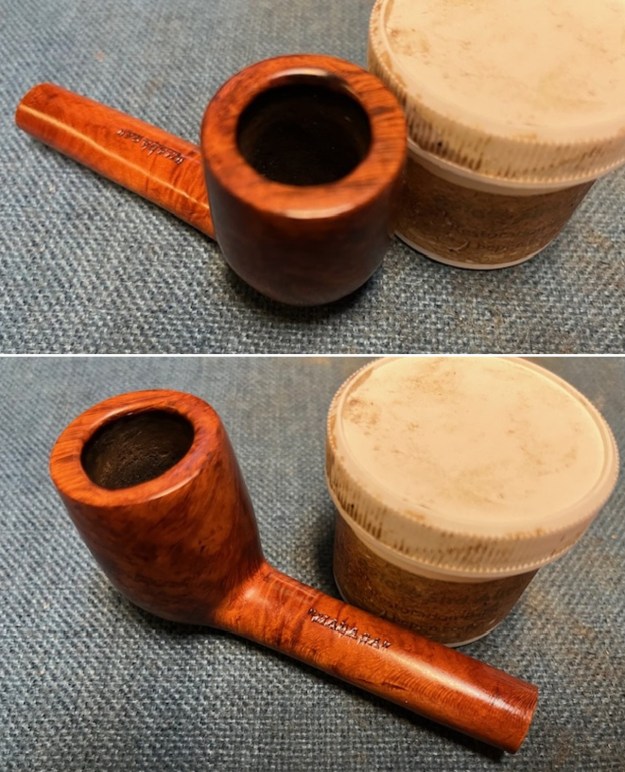
Restoring a P.L. Perri & Son flat bottom Rhodesian


by Steve Laug

The next pipe I have chosen is a beautifully grained and smooth finished Rhodesian sitter with a briar cap and twin rings around the cap like a well made Rhodesian. It has a well shaped taper vulcanite stem. It came to us on August 22, 2024 from a friend in Barrington, Rhode Island, USA. The contrast of the brown stains makes the grain stand out. It was stamped left side of the shank and read P.L. Perri & Son. There was no other stamping on the shank sides of bottom. The pipe was quite clean. It had obviously been reamed recently. The bowl was clean and the smooth rim top was dirty a few spots of lava on the surface. The black vulcanite taper stem was in good condition other than being a bit dirty. The stem surface had some chatter and tooth marks on both sides of the stem ahead of the button. There was no logo on the stem that identifies it as a Perri pipe. Other than that, the stem was in good shape. Jeff took photos of the pipe before his cleanup work. They tell the story and give a glimpse of the pipe. Jeff took photos of the rim top and stem to show the general condition of the pipe. The bowl is clean though it appeared that there were some spots of lava on the top and inner edge of the bowl. The stem is oxidized, calcified and grimy with light tooth chatter and marks on both sides ahead of the button. Jeff took photos of the bowl sides and heel to show the grain that was around this bowl. The grain is quite beautiful around the sides of the bowl and shank. It is a nice looking pipe. He took a photo of the left side of the shank to show the stamping. The stamping is readable in the photo below and is as noted above.Before I started my work on the pipe I wanted to gain background information. I remember meeting Paul many years ago now at Chicago and had good memories of that meeting but I wanted to learn more about his pipes. I turned first to Pipephil’s site to see what he had in summary about the brand (http://www.pipephil.eu/logos/en/logo-p1.html#paulperri), I did a screen capture of the information and quoted the side bar as well. The stamping shown in the first photo below is the same as the one I am working on.Artisan: Paul Perri (retired 1997 in Hawai). He was the first mentor of Trever Talbert.
From there I turned to Pipedia for some more details (https://pipedia.org/wiki/Perri). I quote below.

Denoted as Paul L. Perri & Son, pipemakers, Manhattan Beach, CA. Paul was still making when he reached 100 years of age, and may have been the oldest living pipe maker. He passed away just short of his 101st birthday in December of 2021.

Paul was well known in California, but less so in other parts of the country and the world. He was a formative influence on a number of American pipe makers, including Trever Talbert. The sandblasted lovat shown bellow typifies Paul’s work, which consists of larger classic shapes with slight twists here and there.

Chance Whittamore, a well respected pipe restorer who was fortunate enough to spend time with him believes “…nobody, living or dead, had the combination of pipe knowledge, depth and breadth, that Paul did.”

There was also a reference to a beautiful piece that Marty Pulvers wrote celebrating Paul’s life and work. I am including that link as well (https://www.pulverspriorbriar.com/my-life-in-pipes/dytn7osvvwmecilhpf11fx7nu420gp?rq=Paul%20Perri).

Now it was time to work on the pipe. Jeff had done a great job cleaning up the pipe as usual. He reamed the pipe with a PipNet reamer and cut back the cake back to the bare briar. He cleaned up the walls with a Savinelli Fitsall Pipe Knife. Surprisingly the walls looked unscathed from the cake. He scrubbed the interior of the bowl and shank with pipe cleaners, shank brushes, cotton swabs and alcohol to remove the tars and oils. He scrubbed the exterior of the pipe with undiluted Murphy’s Oil Soap and a tooth brush to remove the grime from the finish. He worked on the rim top lava and darkening with the soap and tooth brush. He cleaned the inside and outside of the stem and soaked it in Briarville’s Pipe Stem Deoxidizer. He rinsed of the residue and buffed it up with a towel. I took photos of the pipe when it arrived. I took a close-up photo of the rim top to show the condition of the bowl and inner edge of the bowl and the stem. The bowl is clean and the lava on the rim top and edges cleaned up very well. The stem photos show that it also cleaned up very well. The tooth marks and chatter are visible and I will need to deal with them.I took a photo of the stamping on the side of the shank. It is clear and readable as noted above. I removed the stem and took a photo of the parts of the pipe. It is a large and quite unique pipe.I polished the bowl with micromesh sanding pads – dry sanding with 1500-12000 grit sanding pads. I wiped it down between pads with a damp cloth. It really began to take on a deep shine. The exterior of the bowl looks better after polishing. I worked some Before & After Restoration Balm into the briar with my finger tips. I let it sit on the bowl for 10 minutes and then buffed it off with a paper towel and soft cloth. The product is a great addition to the restoration work. It enlivens, enriches and protects the briar while giving it a deep glow. It is a product I use on every pipe I restore. I set the bowl aside and turned my attention to the stem. I “painted” it with the flame of a lighter to try and lift the tooth marks. I was able to lift the majority of them. The deeper ones that remained came up some but I filled them in with some rubberized Black CA glue. Once the repairs cured I flattened them and recut the button edge with a small file. I sanded the stem surface smooth with 220 grit sandpaper. I sanded the stem further with 320-3500 grit sanding pads. I wiped the stem down after each pad with a damp cloth to remove the debris. The stem really began to look good.I polished the stem with micromesh sanding pads – dry sanding with 1500-12000 grit pads. I wiped the stem down after each sanding pad with Obsidian Oil to further protect the vulcanite surface. I finished the polishing with Before & After Pipe Stem Polish – Fine and Extra Fine. I wiped the stem down a final time with Obsidian Oil and a cloth. It really looks very good. I am excited to finish this beautifully grained, Perri & Son Rhodesian Sitter. I put the pipe back together and buffed it with Blue Diamond on the buffing wheel. I gave the bowl and the stem multiple coats of carnauba wax. I hand buffed the pipe with a clean buffing pad to raise the shine. It is fun to see what the polished bowl looks like with beautiful mixed grain all around it. The pipe looks great with the black vulcanite stem. This smooth Perri & Son Rhodesian is great looking and the pipe feels great in my hand. It is light and well balanced. Have a look at it with the photos below. The dimensions are Length: 6 inches, Height: 1 ½ inches, Outside diameter of the bowl: 2 inches, Chamber diameter: 7/8 of an inch. The weight of the pipe is 57 grams/2.05 ounces. It turned out to be a beautiful pipe. I will be putting it on the rebornpipes store shortly in the American Pipe Makers Section if you are interested in it. Thanks for walking through the restoration with me as I worked over this pipe. Thanks to each of you who are reading this blog.

Restoring a Fraser River Straight Bulldog Made in Canada


by Steve Laug

Last weekend Kenneth and I went to an antique show in New Westminster, BC. It is our third year going but still we have no idea what we are going to fine each time we go. It is always a part of the fun to wander through the various stalls and see what the vendors are offering on their tables. There are always surprising things – items that I grew up with that are now called antiques or at least collectibles. If only my foresight had been as good as my memory is now I could have sold many of the things I played with and ate from! But I digress. Back to the pipe hunting. We saw the usual offerings of things Grabow and Medico that were in very rough shape. I think we both have become much more selective over time and we passed on spending time with them. I did a few items that I picked up to restore. I took a picture of the group of fout pipes. In the left column from top to bottom there was a Peterson’s System Standard 1307 (Canadian number on a 307 shape), a Bulldog that was stamped Fraser Valley Made in Canada with a white dot stem and at the bottom was another Peterson – a K&P Dublin Made in Ireland Canadian with a Sterling Silver Band. The one on the right side is an older GBD Nosewarmer with an orific button on the short stem. Not a bad group of pipes to bring to the work table.The third of them I chose to bring to the table was the Bulldog the second on down on the left column of the above photo. It is a pretty pipe and bears the stamping on the top left side of the diamond shank that reads FRASER [over] RIVER. On the right side of the shank it is stamped Made in Canada in script. There is a single white dot logo on the top left side of the diamond saddle stem. The bowl, rim top and edges of the bowl are clean. The stem is heavily oxidized, almost brown looking and had light tooth marks and chatter on both sides ahead of the button. I took photos of the pipe before I started my clean up work on it. I took a close-up photo of the rim top to show the condition of the bowl and inner edge of the bowl and the stem. You can clearly see the cake in the bowl and the darkening and lava on the rim top. The stem photos show the oxidation, calcification and tooth marks on the stem.I took a photo of the stamping on the sides of the shank. It is clear and readable as noted above. I removed the stem and took a photo of the parts of the pipe. It is a pretty pipe. There was something very familiar with the stamping that both Kenneth and I saw when we picked it up. The Fraser River stamp does not connect to anything for me that I can find. I have hunted and googled and not found a match. However, the Made in Canada stamping on the left side of the shank is what caught our eye. It is identical to the stamping used by Leonard Payne on the pipes that he carved. I have included a photo of the stamping on the Payne below. The Payne signature was not on the Fraser River pipe but the Made in Canada stamp is identical to the one shown in the photos.
I went back to earlier articles on rebornpipes regarding the Payne pipes. The first one I have included below is of a Payne brochure that I have on the blog. It gives a sense of the design and concepts Payne had. It is an interesting piece of Pipe history. Here is the link to the brochure on the blog (https://rebornpipes.com/2024/03/12/leonard-payne-pipes-ltd-british-columbia-canada-brochure/). I included the front and back cover of the brochure below.From there I reread an article by Kenneth on the blog about a restoration he did on a Payne pipe (https://rebornpipes.com/2022/10/10/restoring-a-payne-to-its-former-glory/). I quote below from what he found. I have also included Picture that he included from a source on Reddit.

In addition, there was a photograph that Steve found of Payne on Reddit that appears to date from the 1960s. The original poster on Reddit told me that the photo comes from the City of Surrey archives. I have no idea why it is in French (or why it’s in the Surrey archives). Kenneth his translation of the text next to the photo above the photo:

“Pipe makers are not on every street corner in Canada! Leonard Payne, originally from England, didn’t know the challenges he would face and that’s probably what influenced his decision to come and try his luck in Canada. After his arrival in 1957, he and his family settled in Vancouver, where he first found work as a tool maker – and made pipes in his free time. In 1959, he decided to become a full-time pipe maker, and since then he has had department stores in all parts of Canada among his clients. He imports briar blocks from Italy and pipe stems from England.” Of course, I have no solid proof that it is a Leonard Payne pipe. In my experience working on quite a few of them over the years I am convinced it is a Payne. To me the Made in Canada stamp lends proof to that.

The interior and the exterior of the bowl was very clean. The sandblast finish was clean and free of debris. The airway in the shank and stem, the inside of the mortise was spotless. I worked some Before & After Restoration Balm into the briar with my finger tips. I let it sit on the bowl for 10 minutes and then buffed it off with a paper towel and soft cloth. The product is a great addition to the restoration work. It enlivens, enriches and protects the briar while giving it a deep glow. It is a product I use on every pipe I restore. I set the bowl aside and turned my attention to the stem. The heavy oxidation was going to be a big problem. Nothing seemed to work. I soaked it in some Briarville’s Pipe Stem Deoxidizer for several hours and nothing happened to the oxidation. It did not even make a dent in breaking the oxidation on the stem surface. It seemed impermeable at this point. I changed it up and scrubbed the heavy oxidation with Soft Scrub and cotton pads. After using about a dozen pads it seemed that I had made very little progress in stripping of the oxidation on the surface. I set it aside for the evening then repeated the process with more pads and more soft scrub in the morning. The photos below show the stem after much scrubbing. With little progress on the oxidation I decided to fire up the “big guns” so to speak. I took it to the buffer and buffed it with red Tripoli. I worked over the stem repeatedly until I was able to finally cut through the heavy oxidation. While I was making progress for sure a ghost of the rustication remained on the body of the stem. There is some deeper oxidation around the saddle portion where it meets the shank, at the sharp edge of the saddle and on the edge of the button. I attacked the remaining oxidation in the body of the stem and the remaining issues one the saddle end and the button end. I sanded the stem with 220 grit sandpaper to work over the saddle, the sharp edge of the saddle and the edge of the button. Once finished it was beginning to look much better. I was getting hopeful that the oxidation might be conquered.I sanded the stem with 320-3500 grit sanding pads and you can see how well the process had removed the oxidation on the stem surface. I wiped it down with Obsidian Oil after each sanding pad to remove the sanding dust.I polished the stem with micromesh sanding pads – dry sanding with 1500-12000 grit pads. I wiped the stem down after each sanding pad with Obsidian Oil to further protect the vulcanite surface. I finished the polishing with Before & After Pipe Stem Polish – Fine and Extra Fine. I wiped the stem down a final time with Obsidian Oil and a cloth. It really looks very good. I am always excited to finish working on a pipe. This Fraser River Bulldog (probably made by Leonard Payne) is no exception. I put the pipe back together and buffed it with Blue Diamond on the buffing wheel. I gave the bowl and the stem multiple coats of carnauba wax. I buffed the pipe with a clean buffing pad to raise the shine and hand buffed it with a microfibre cloth to deepen the shine. It is fun to see what the polished bowl looks like with the black vulcanite taper stem. This sandblasted Fraser River Made in Canada straight Bulldog with a thin saddle stem feels great in my hand. It is light and well balanced. Have a look at it with the photos below. The dimensions are Length: 5 ½ inches, Height: 1 ¾ inches, Outside diameter of the bowl: 1 ¼ inches, Chamber diameter: ¾ of an inch. The weight of the pipe is 33 grams/1.16 ounces. I will be hanging on to this old timer at least for the time being. It is a brand I have never seen before but it cleaned up very well. I will be putting the pipe on the Canadian Pipemakers Section of the rebornpipes store shortly. Thanks for walking through the restoration with me as I worked over this pipe. Thanks to each of you who are reading this blog.
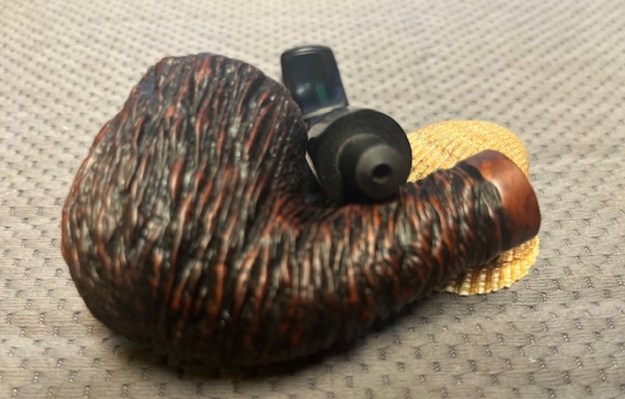
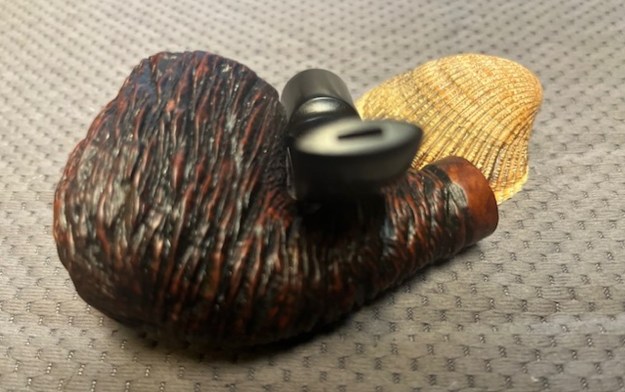
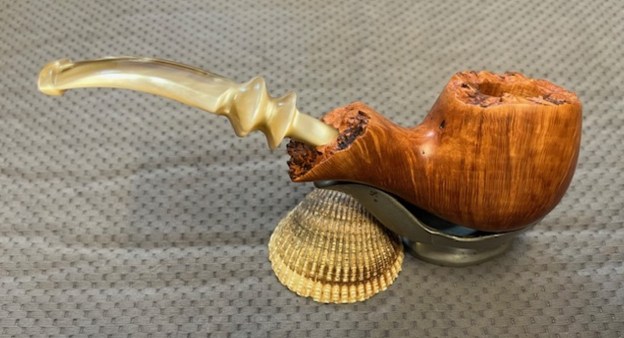
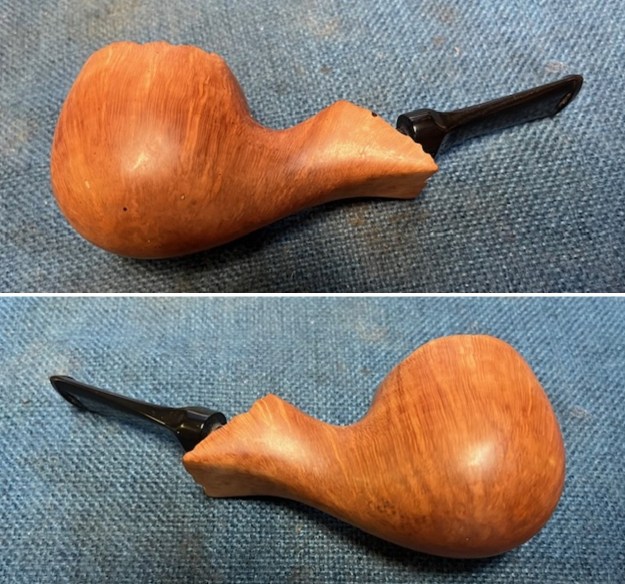
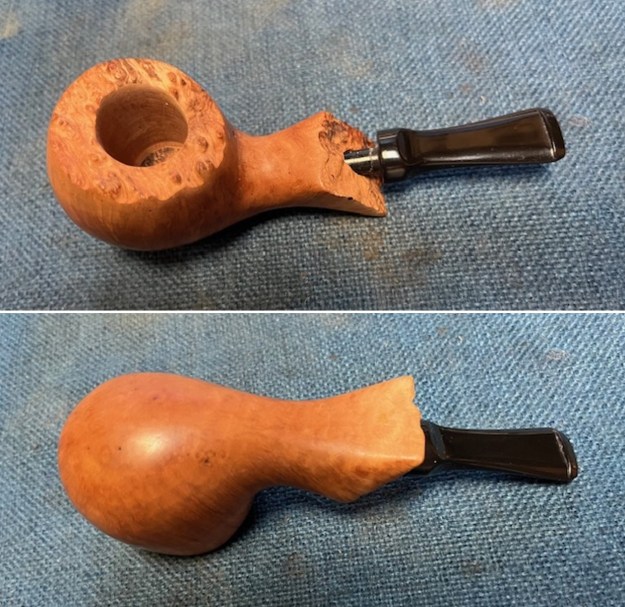
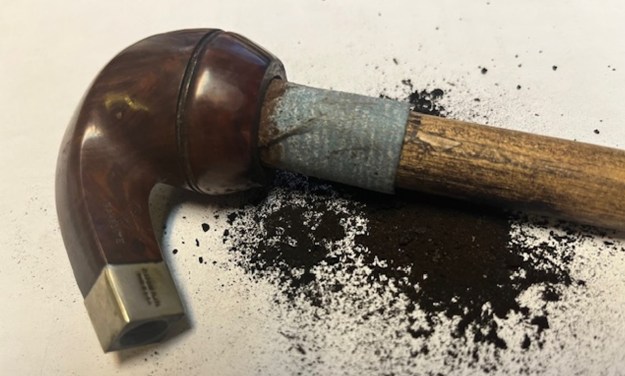
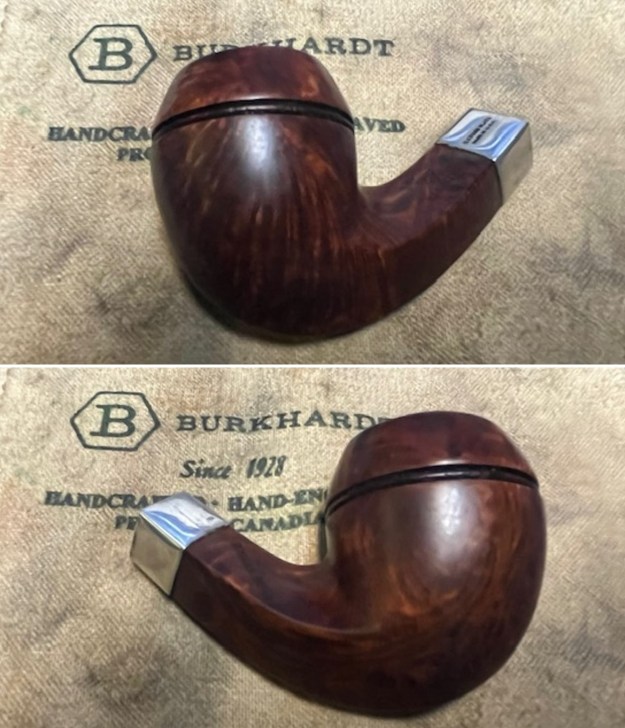
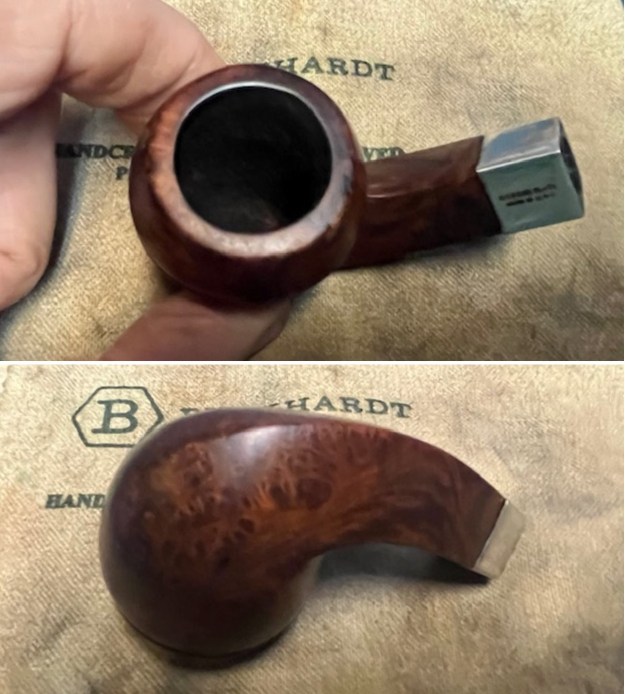
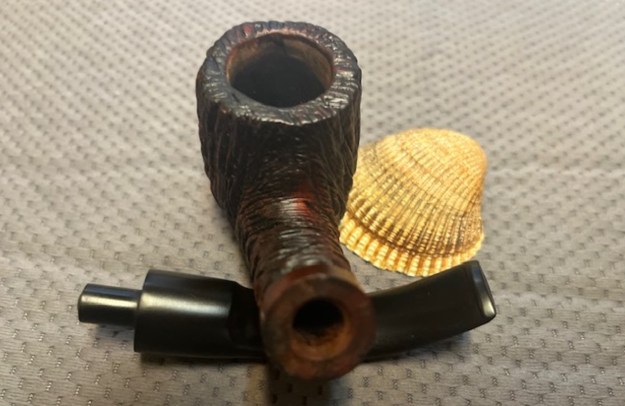
“Help I dropped a brand new Nording 3 Double Silver Freehand and snapped the tenon”


by Steve Laug

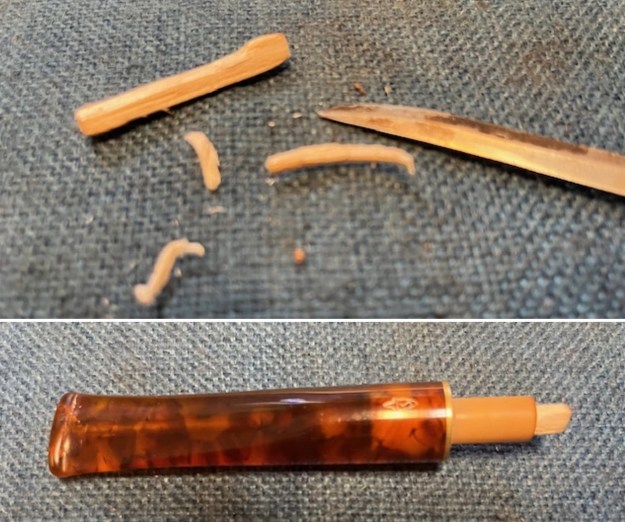
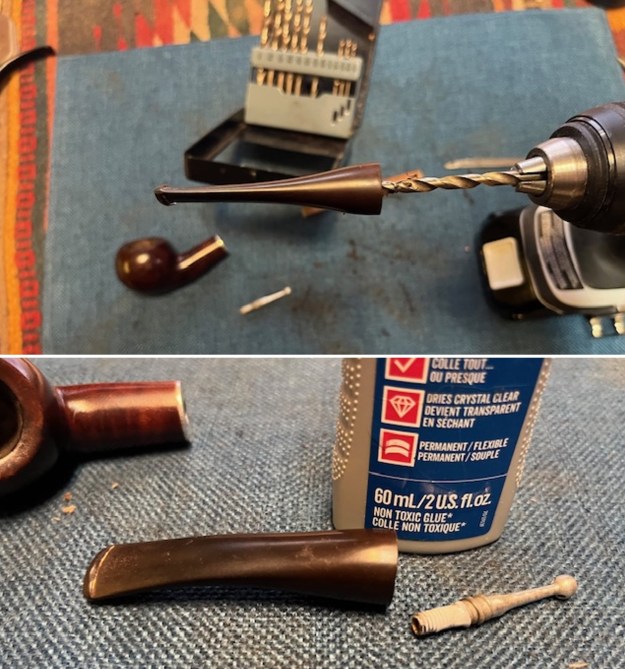
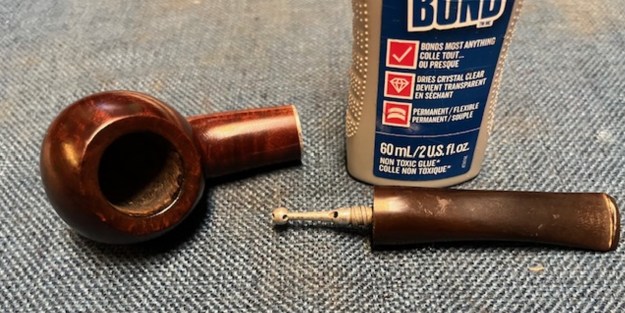
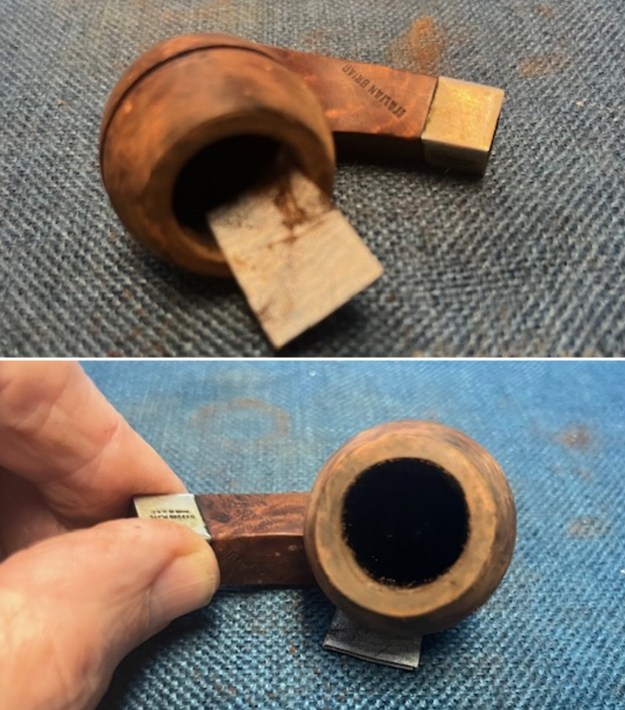
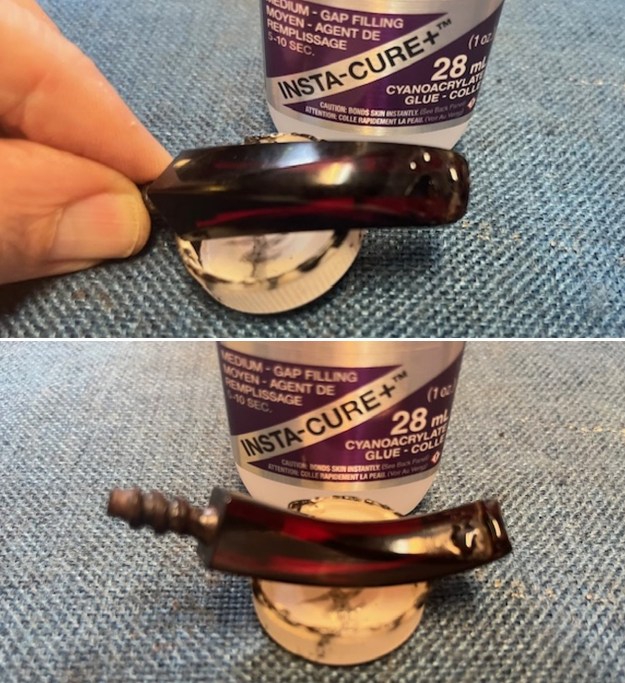
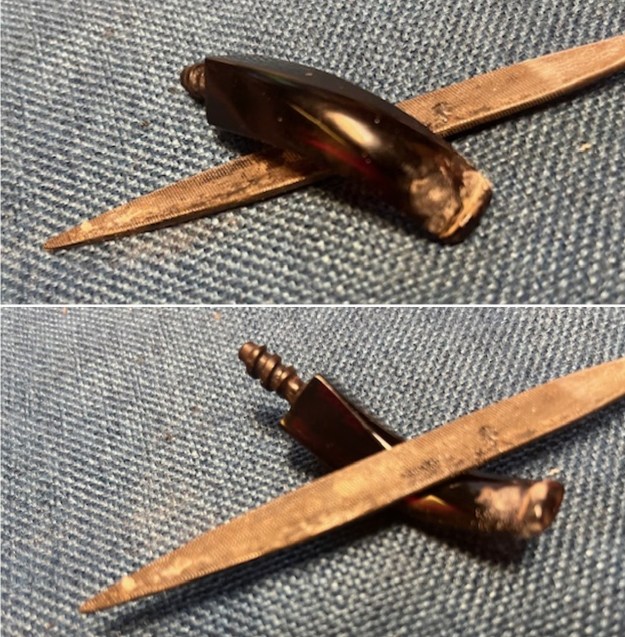
On the weekend I received a series of emails from a fellow here in Vancouver regarding a help with a pipe. He was unpacking his new pipe and he dropped it and the tenon snapped of the stem. The broken tenon was still in the shank and this was a brand-new pipe. He asked if I could help him and fix it. In days past this was a hard fix, but I have since done many tenon replacements. While I would not say it is simple it is certainly something that I can do. The pipe is a Nording 3 Made in Denmark Double Silver and is partially rusticated and partially smooth. It is a Freehand with some blackened plateau on the rim top. It has a gold band sandwich between two silver rings that allow the gold to be turned and spun. The acrylic stem is significantly smaller in diameter than the shank and also bears a nicely carved band with a Nording N logo on the top. He sent me the following photos with is plea for help. He shipped the pipe to me and it arrived at my place on Monday afternoon. I used my normal methods to pull the broken tenon from the shank. I threaded a drywall screw in the shank and tried to pull it from the shank with no luck. It would not come out. I put it in the freezer to see if the old freezer trick would cause it to loosen. I took it out of the freezer after 30 minutes and with some cajoling and wiggling on my part the tenon came free. I carefully flattened out the broken tenon piece remaining on the stem with a small sanding drum on my Dremel. I ran it at a very slow speed and flattened it carefully avoiding the silver band on the stem end. Did I say carefully? Once that was done I used various drill bits to open the airway in the stem to receive a new tenon. I used the Dremel to also reduce the diameter on the new tenon to match the diameter of the mortise. It fit very well. I roughened the end of the new tenon with a rasp so that it would have some bite for the glue when I fit it into the drilled out airway in the stem. I glued the new tenon in place in the mortise with Black rubberized CA Glue. I set it aside for the repair to cure.I set the stem and bowl aside and took photos of the way it looked and let it cure over night. It is a great looking pipe at this point. I still need to polish the new tenon and get a shine on it but it fits very well and all aligns with the shank. I look forward to putting the stem on the pipe in the morning. This morning I fit the stem to the shank and I was very happy with the fit. I polished the new Delrin tenon with micromesh pads and it looks good. Have a look at the pipe.