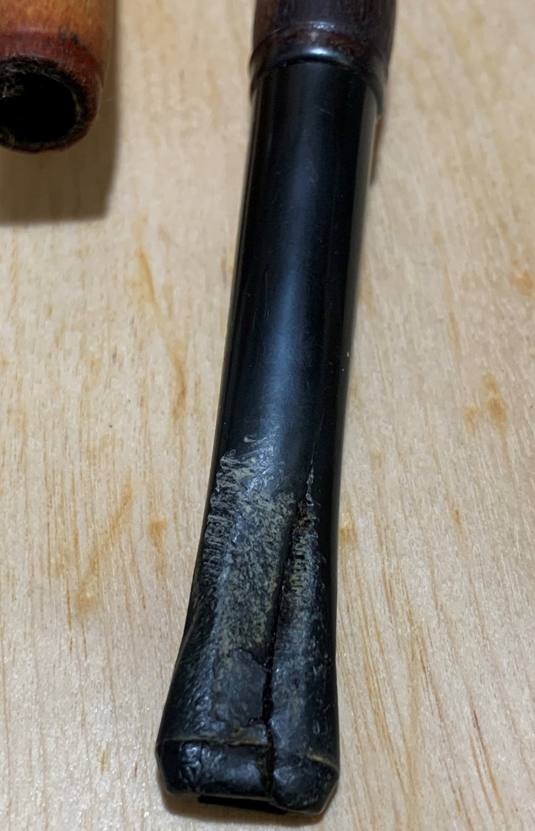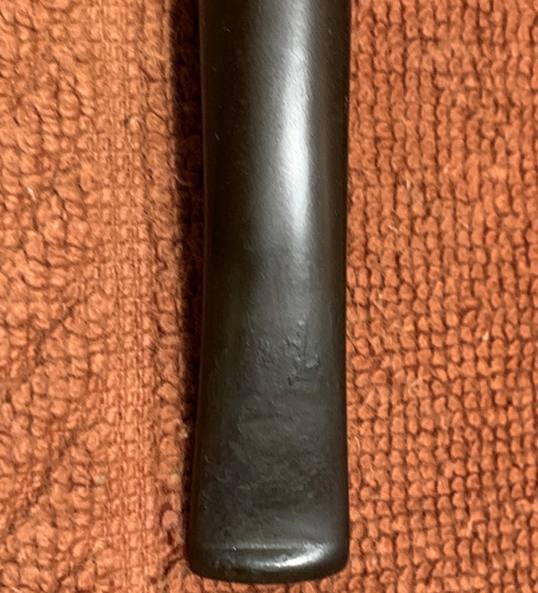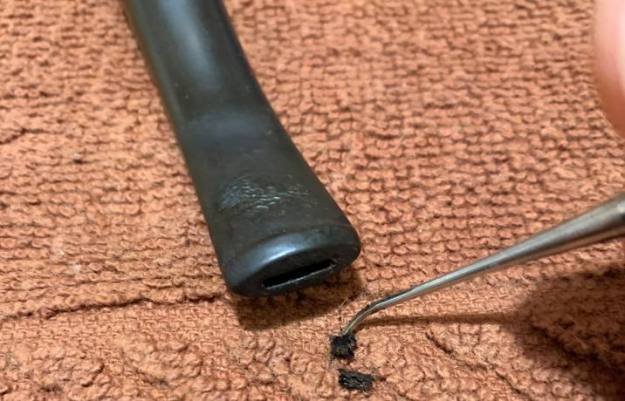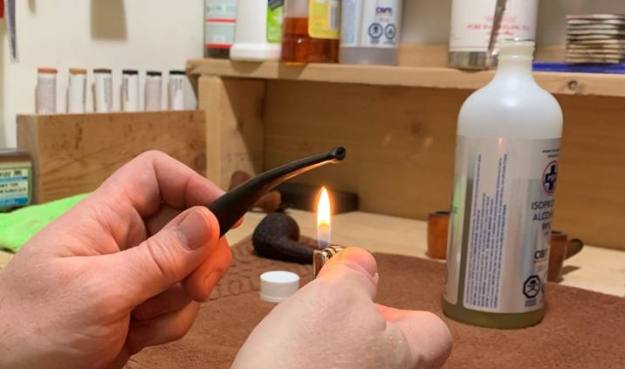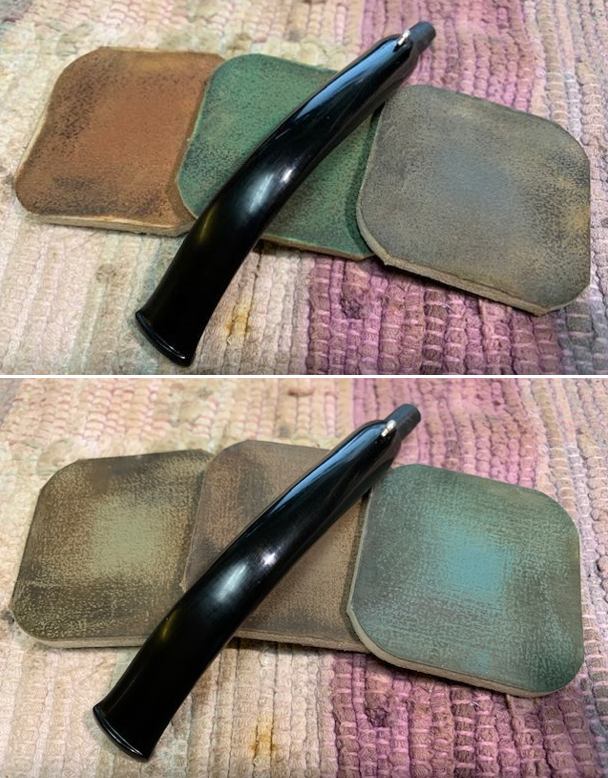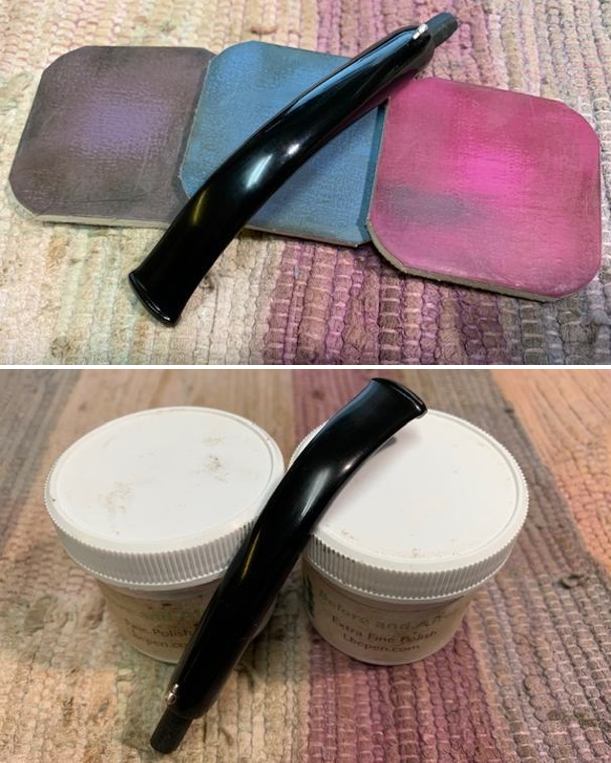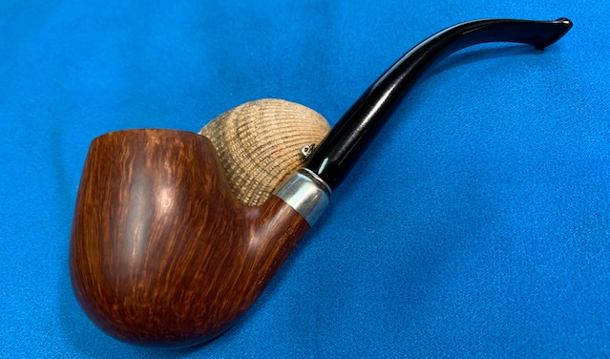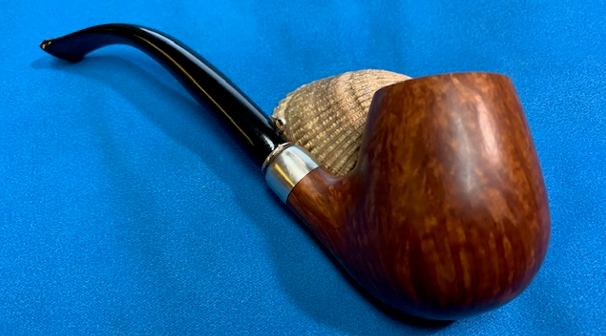
Tag Archives: Stem repairs

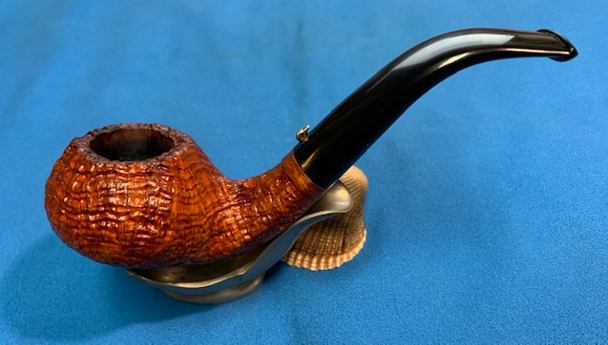
This Dirty Algerian Briar Rhodesian with Amazing Potential Blossomed in the Restoration


Blog by Steve Laug

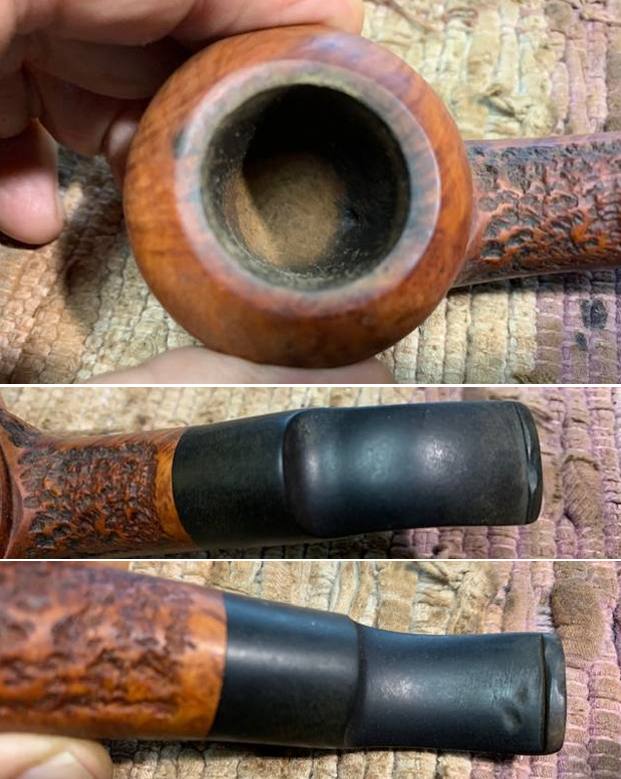
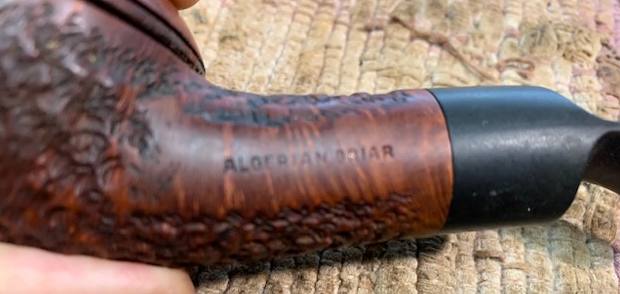
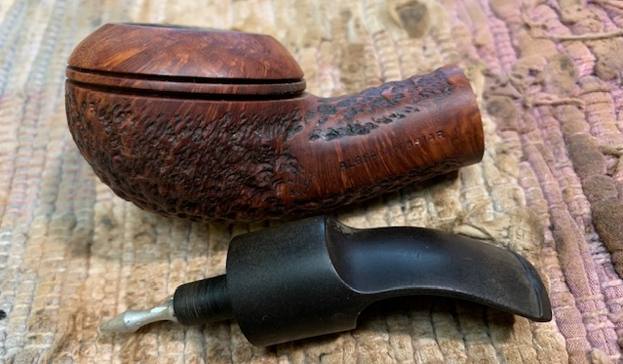
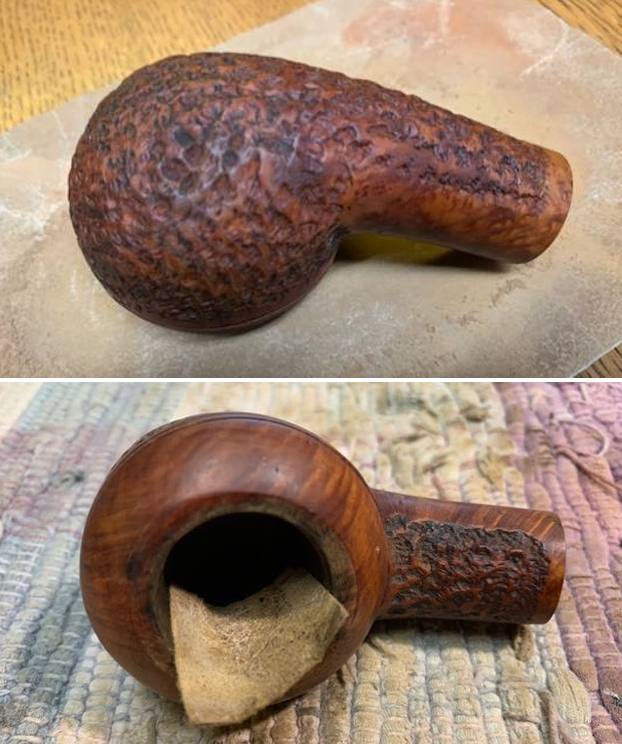
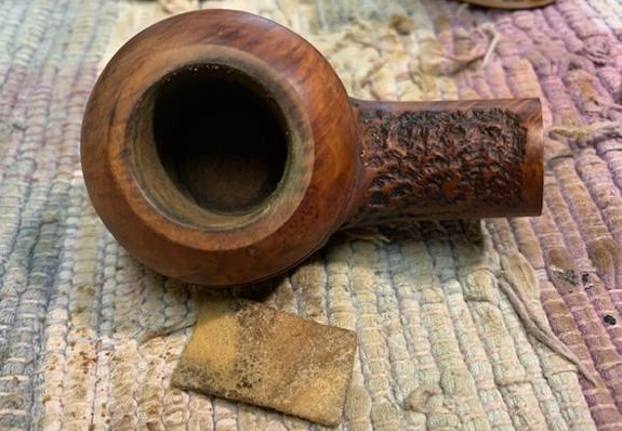
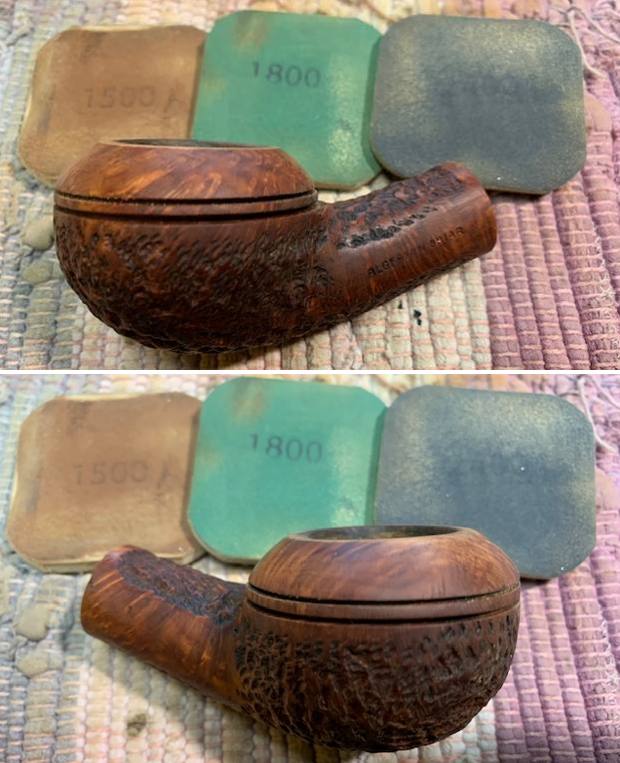
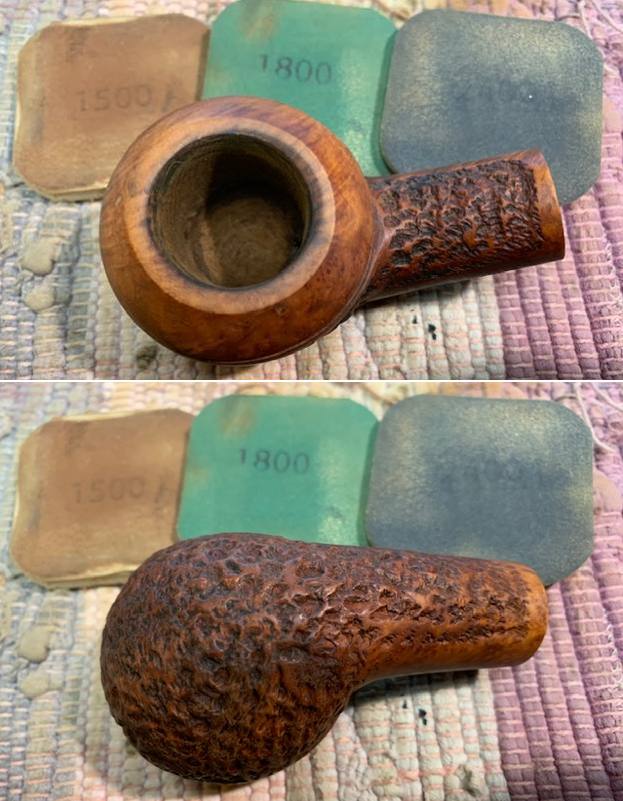
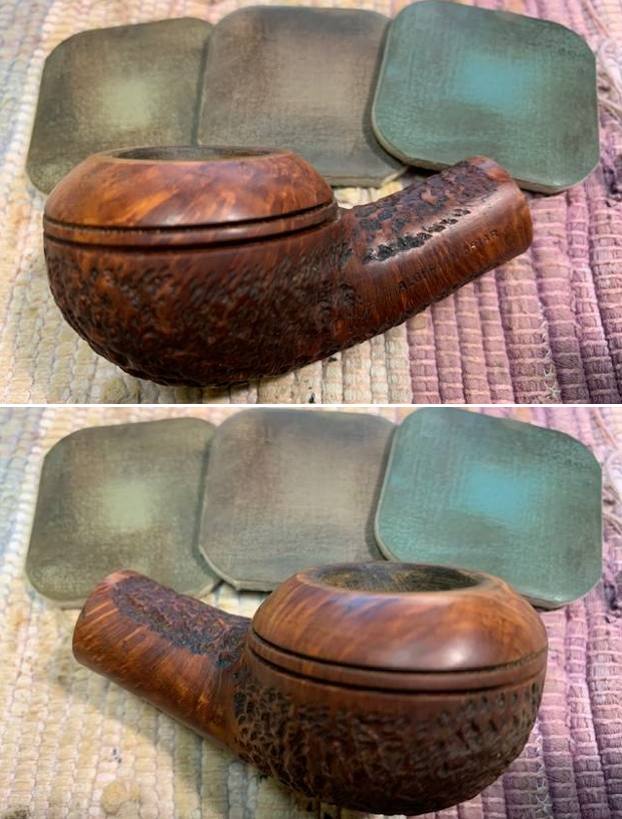
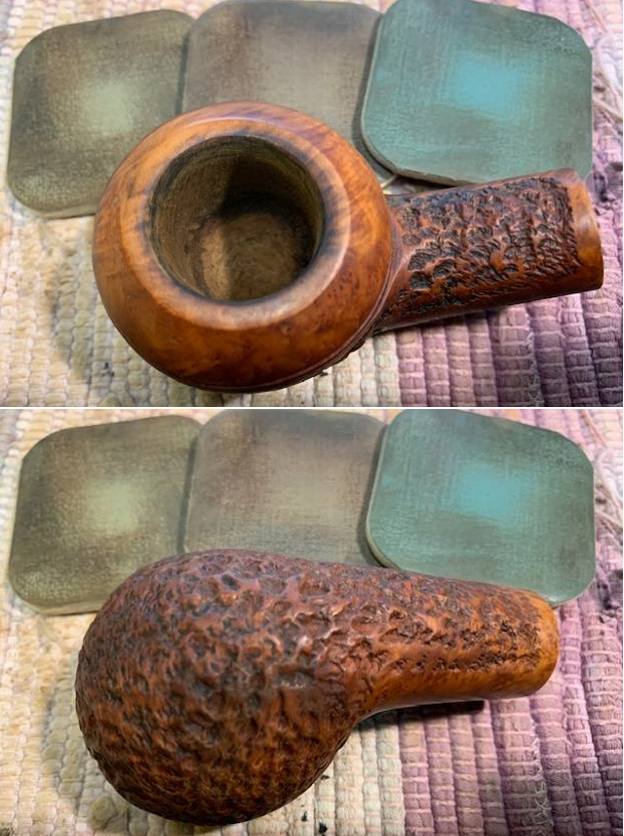
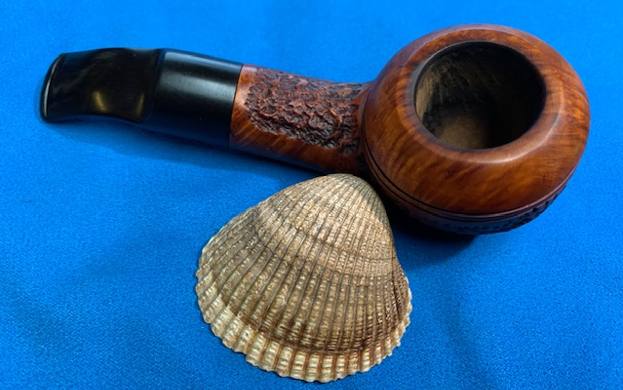
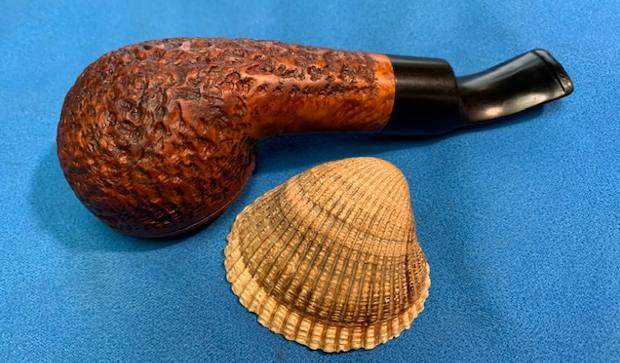
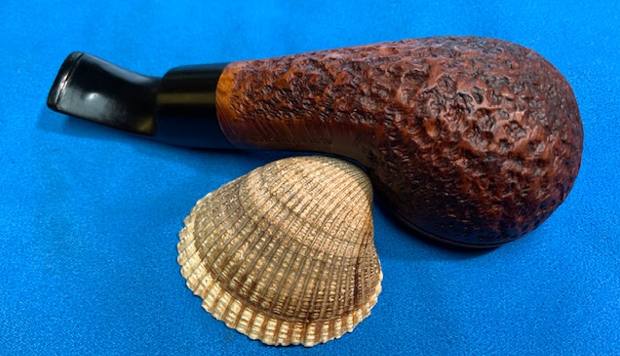
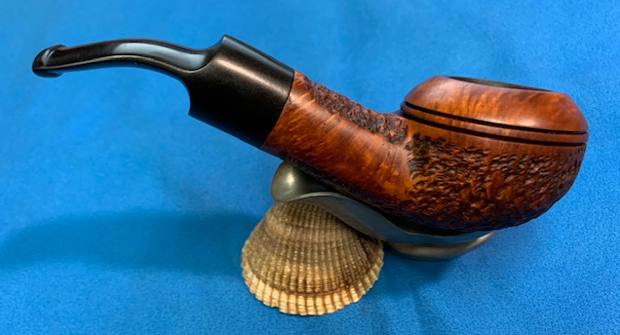
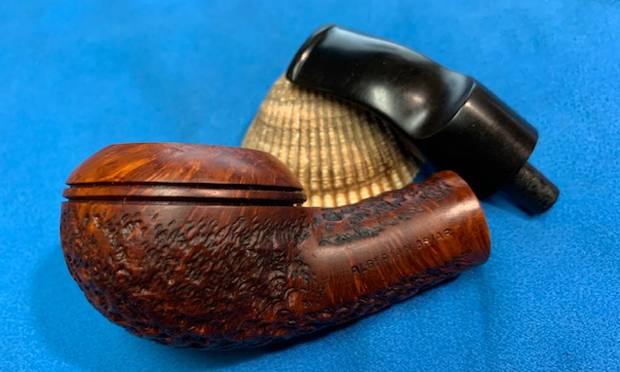
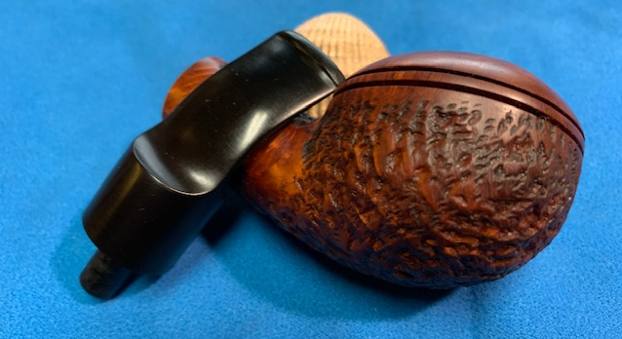
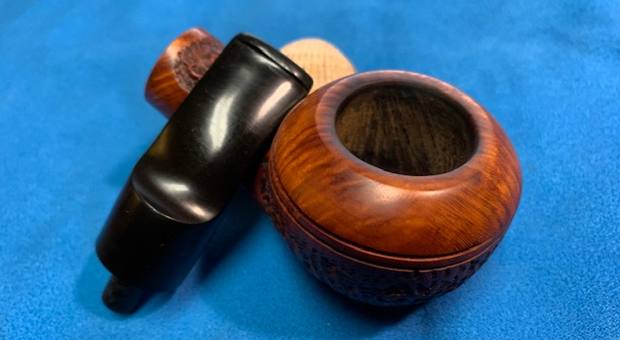
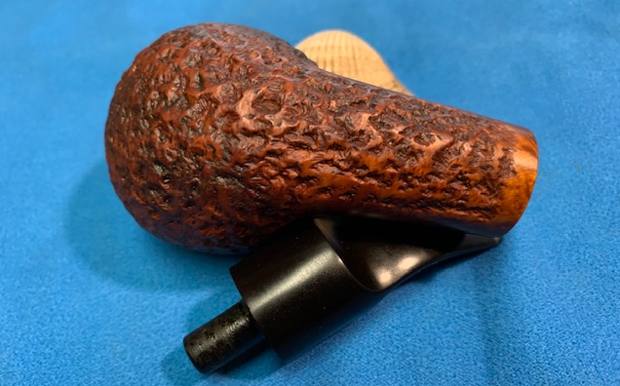
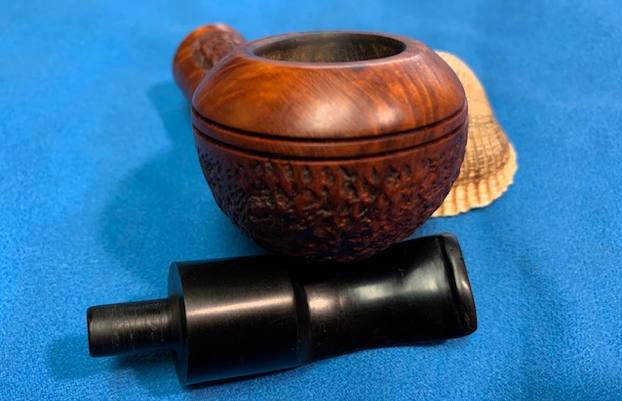
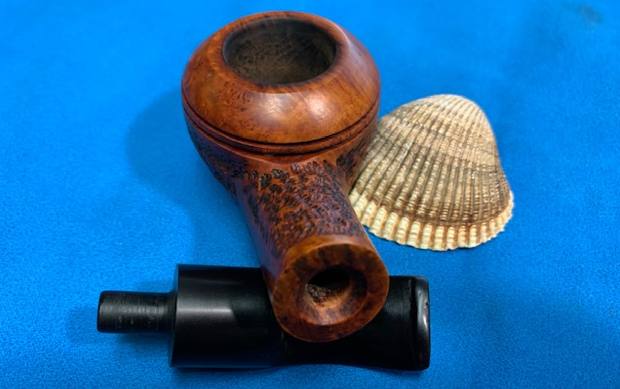
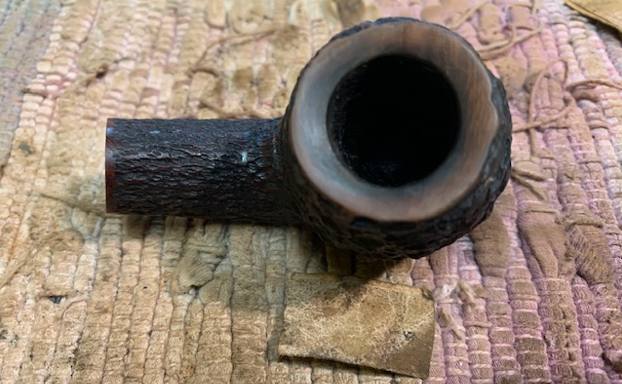
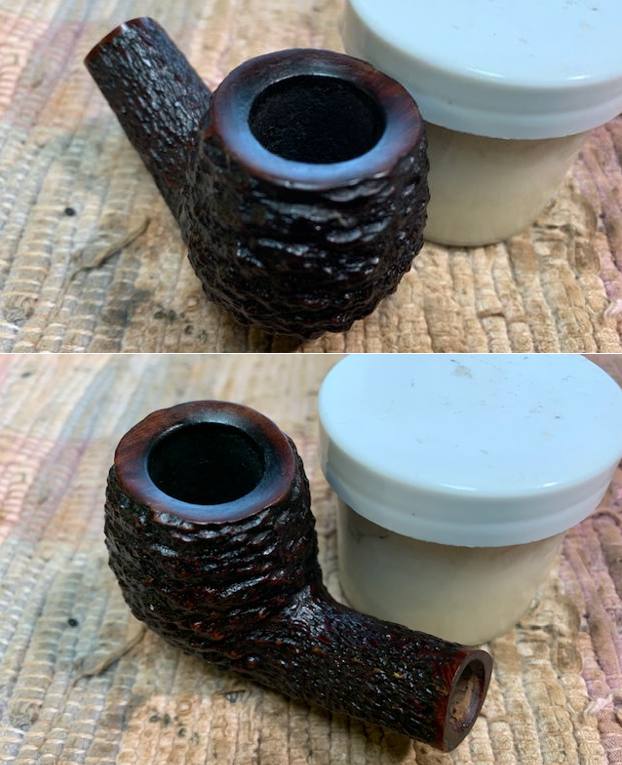
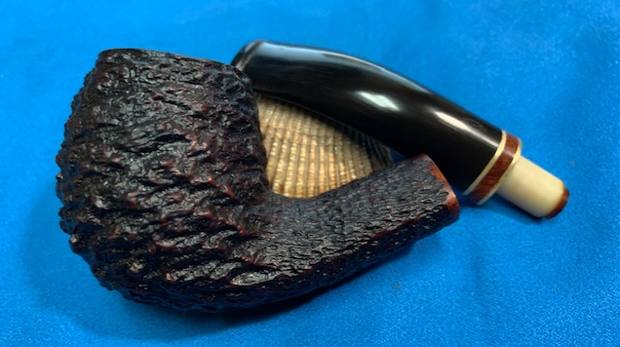
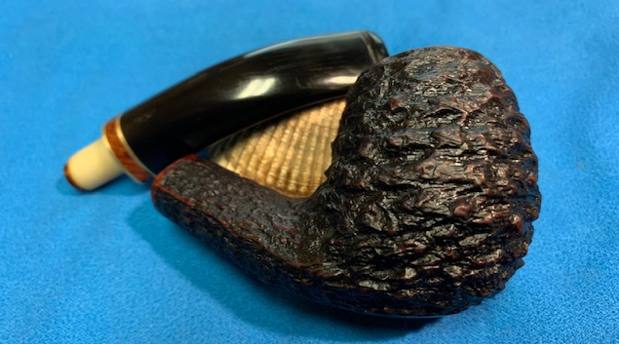
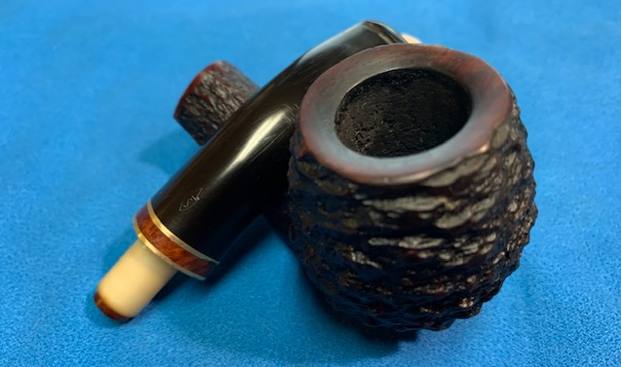
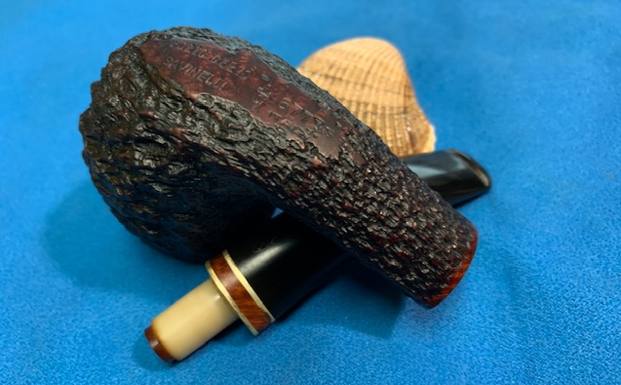
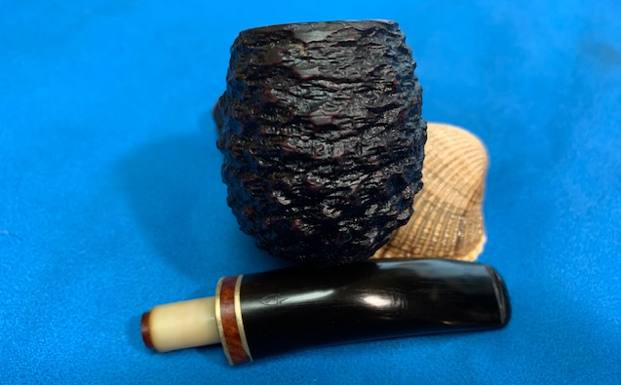
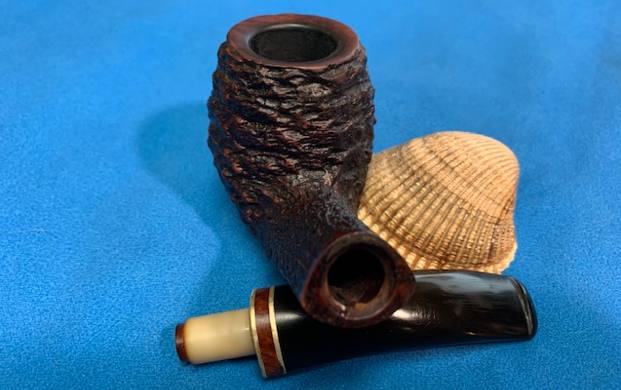
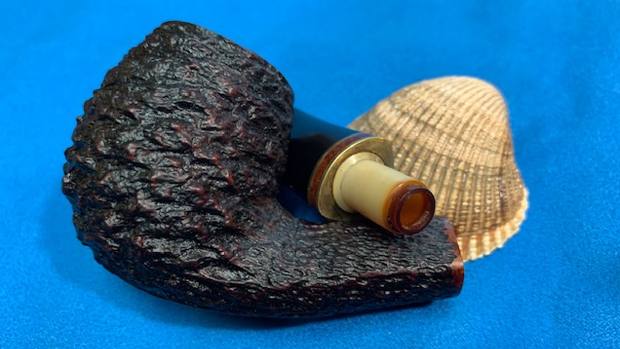
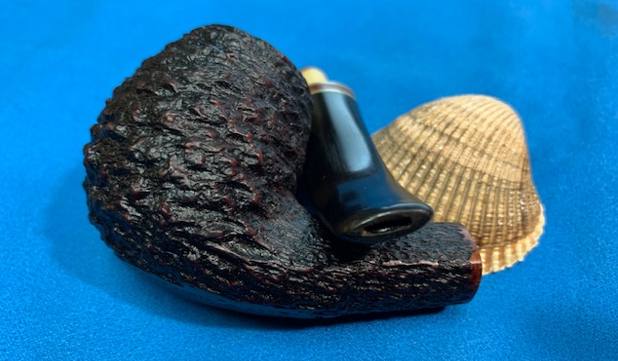
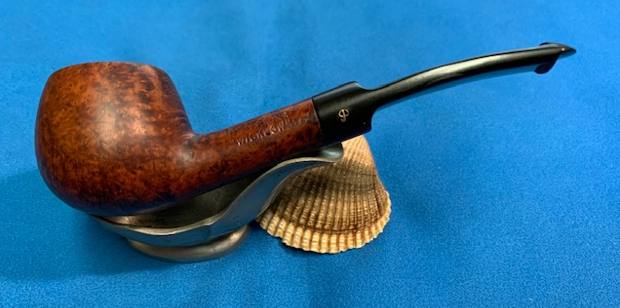
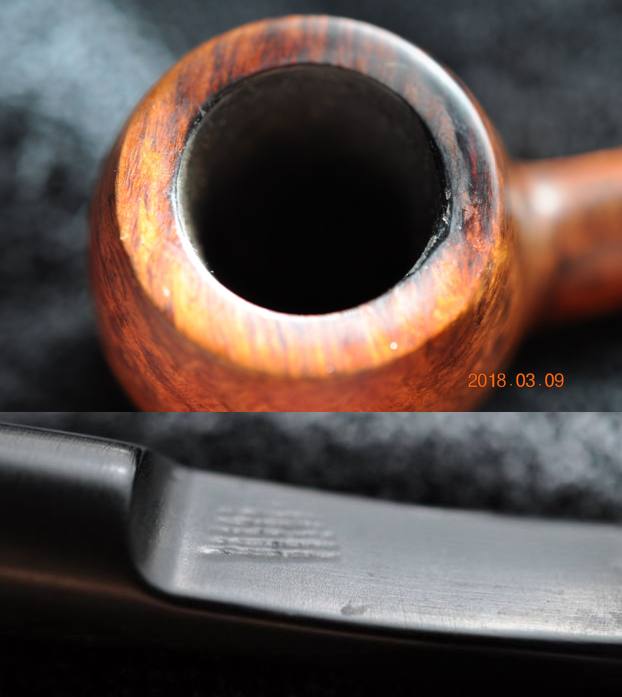
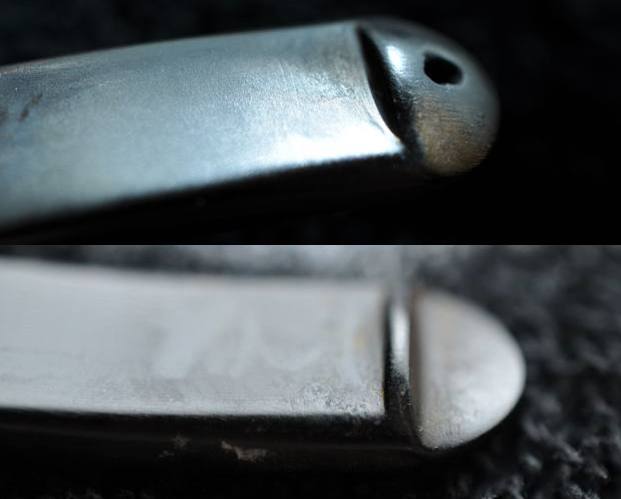
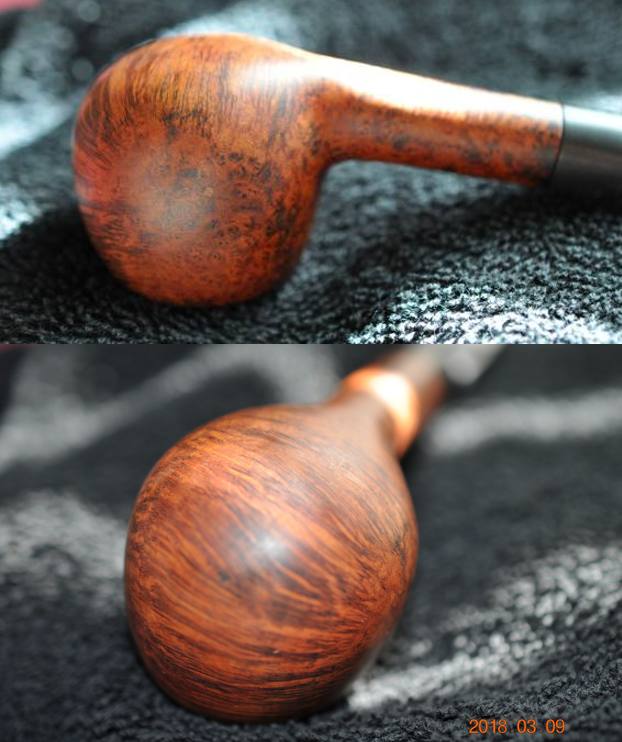
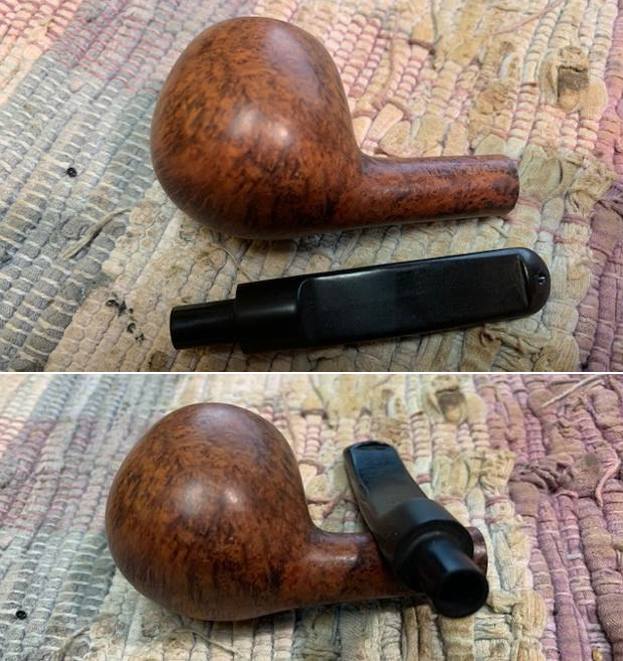
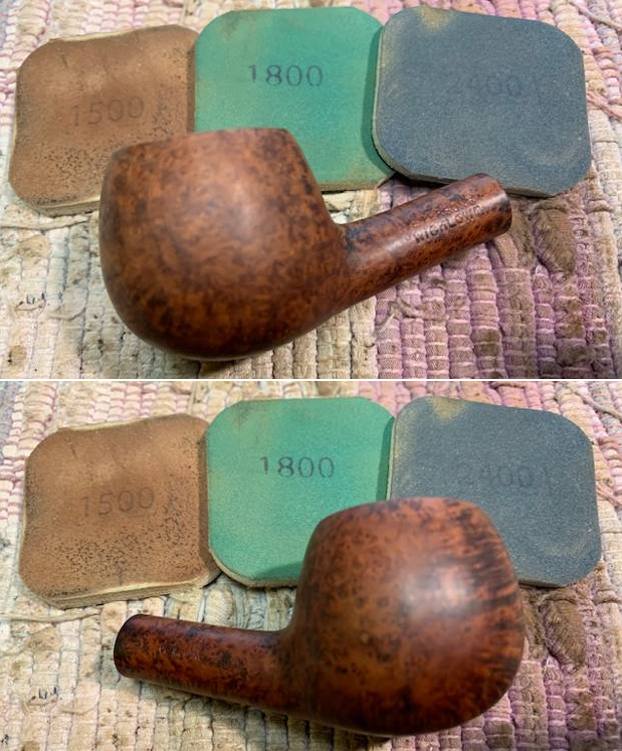
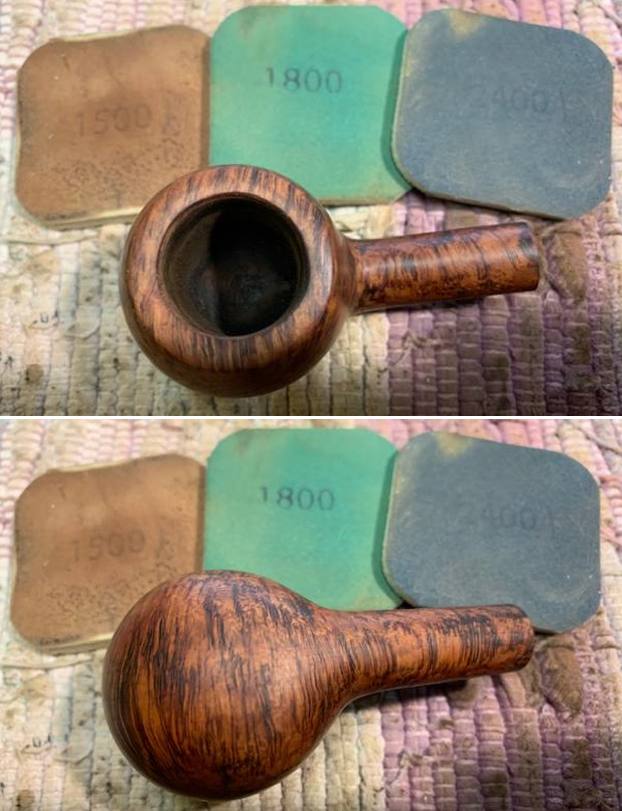
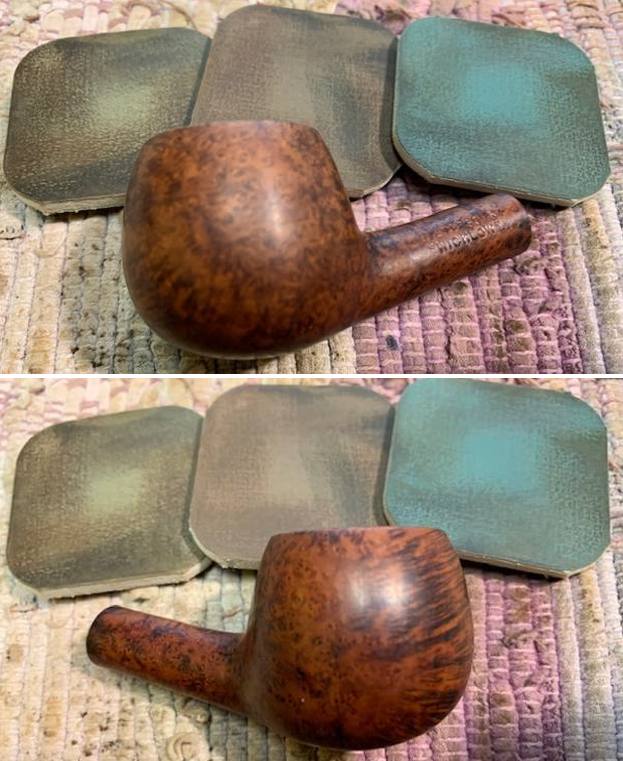
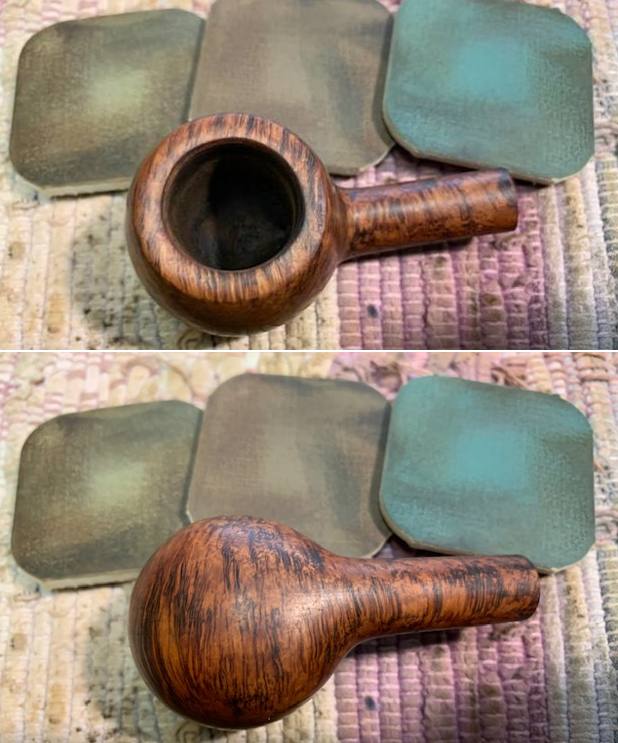
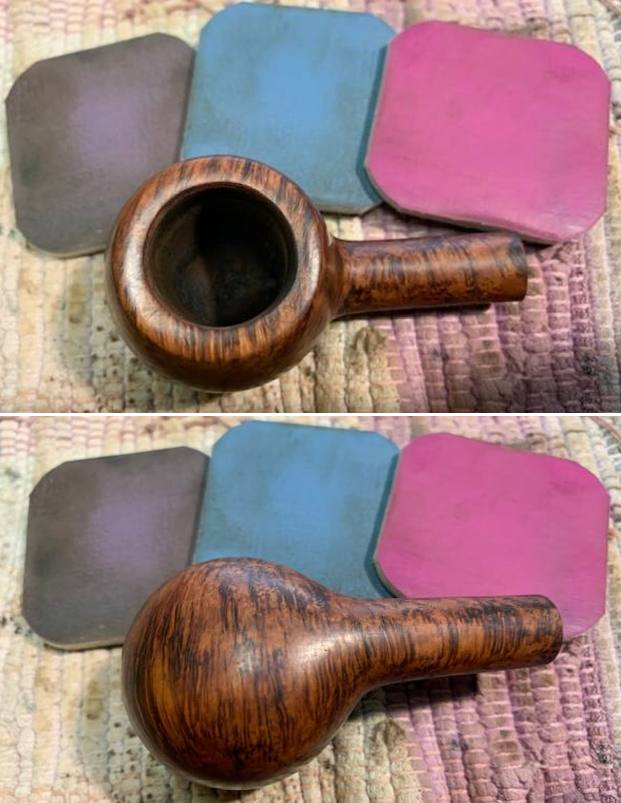
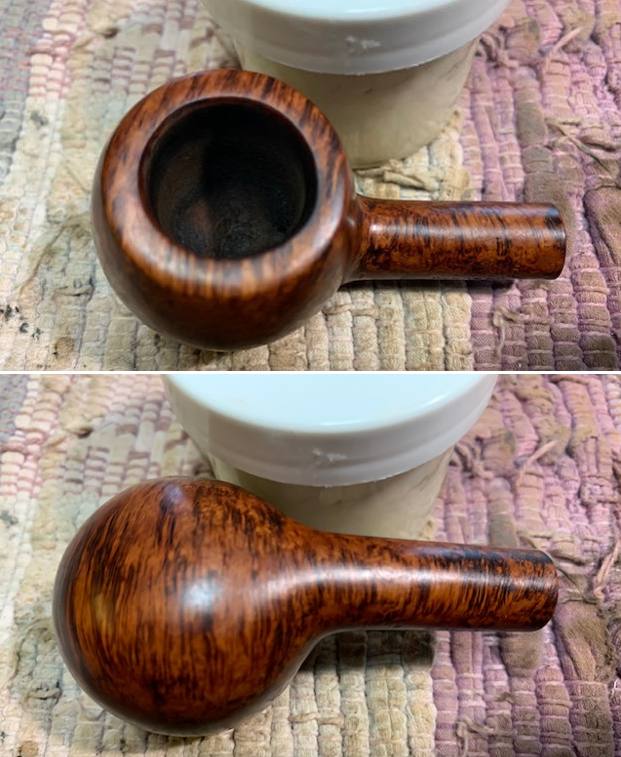
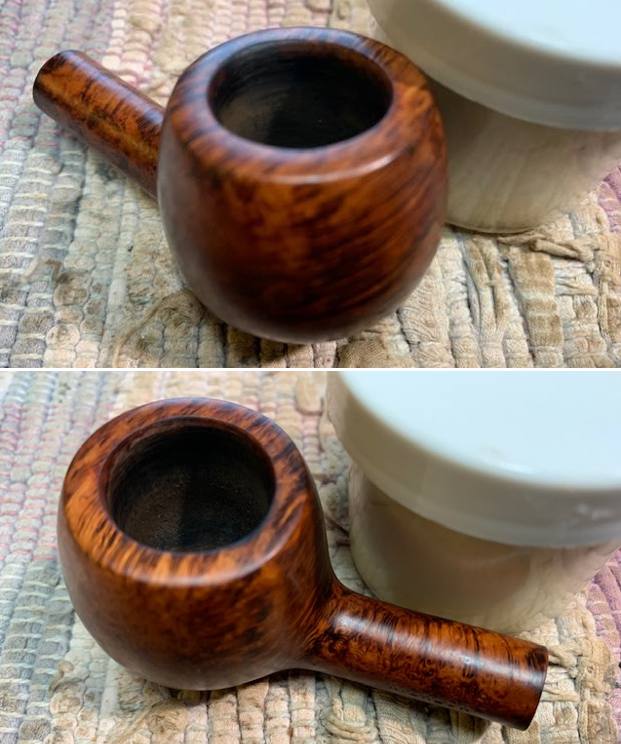
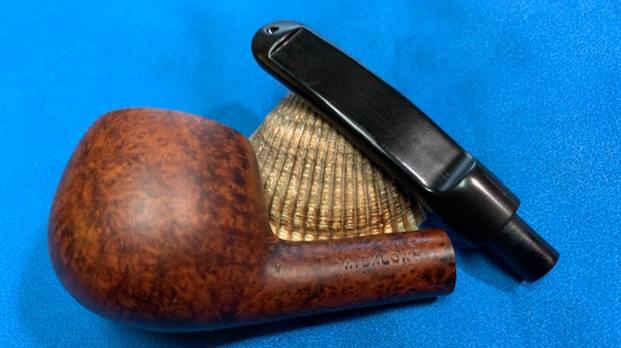
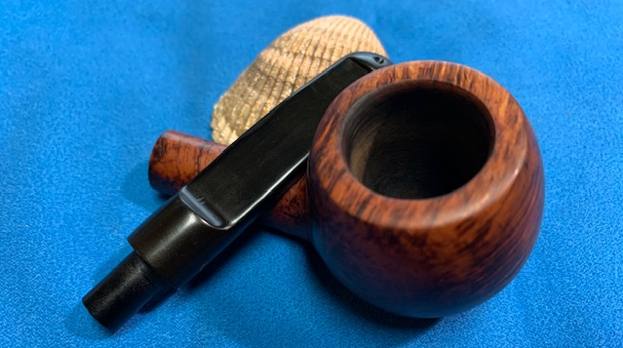
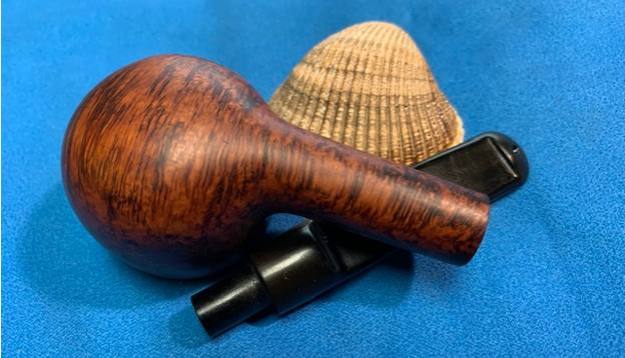
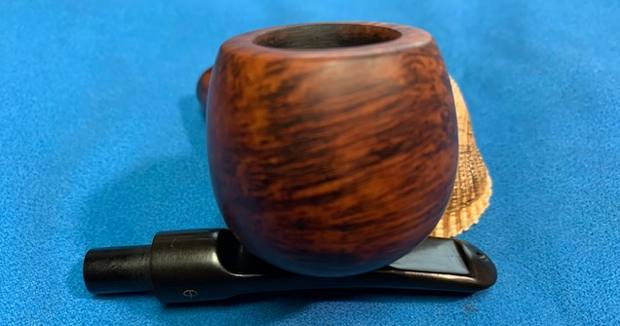
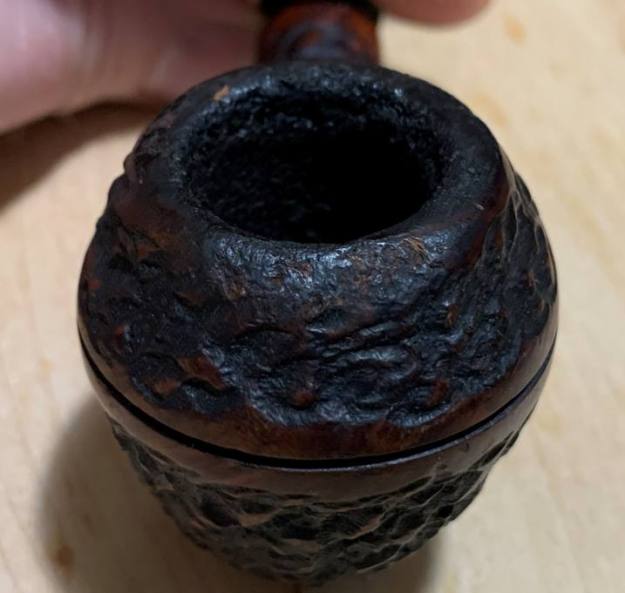
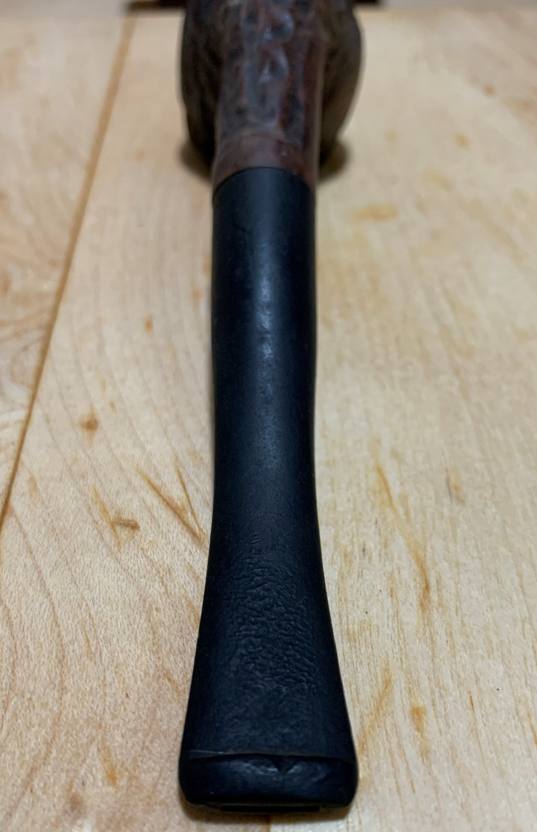
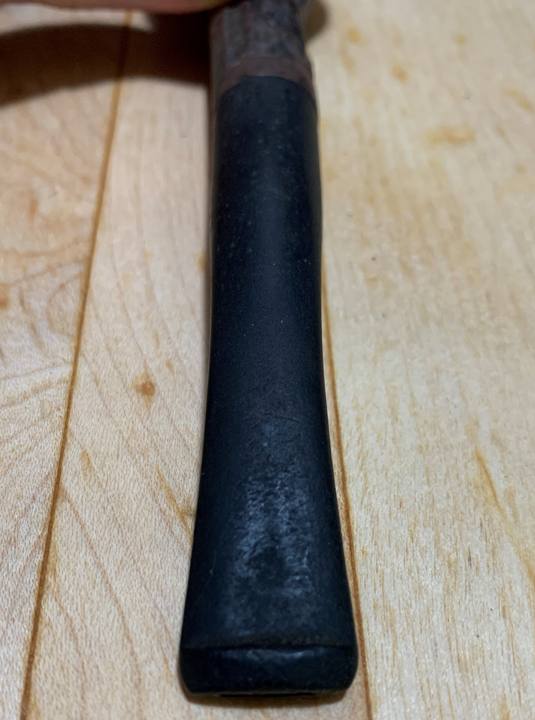
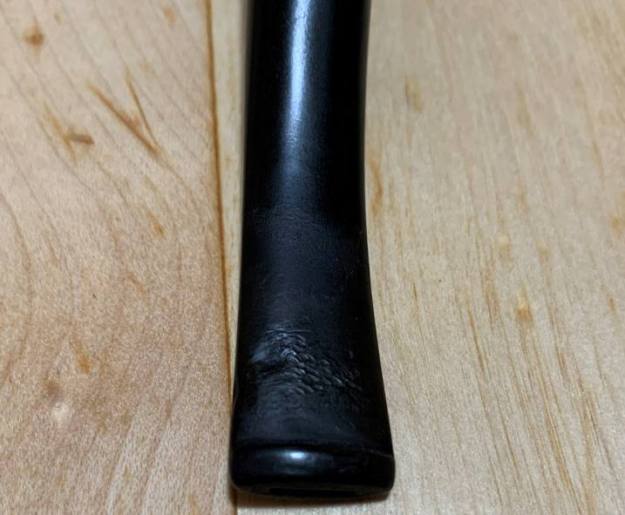
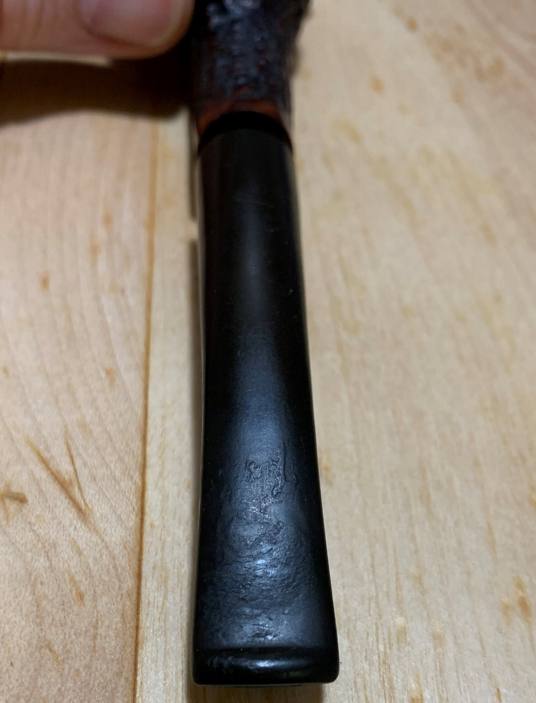
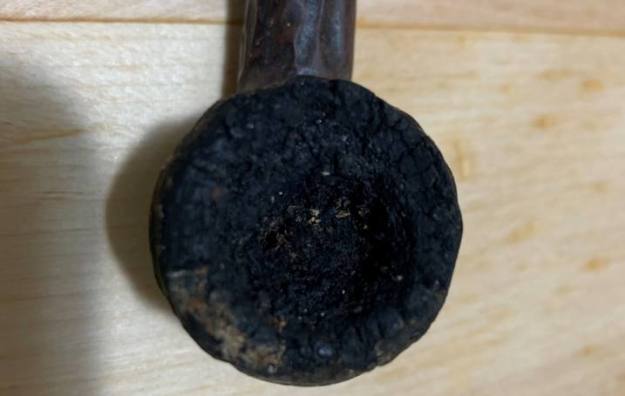
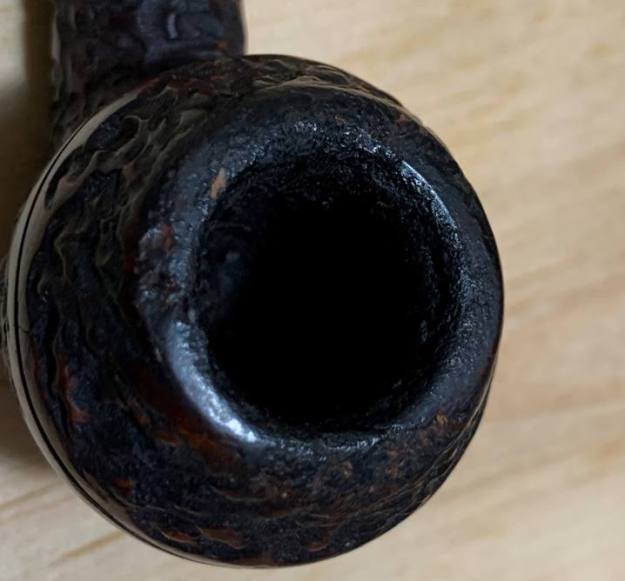
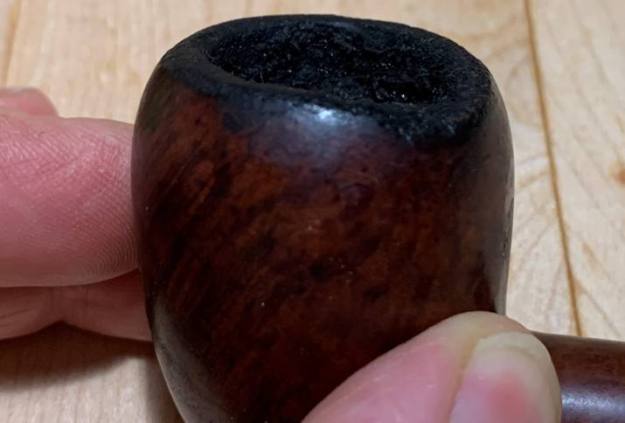
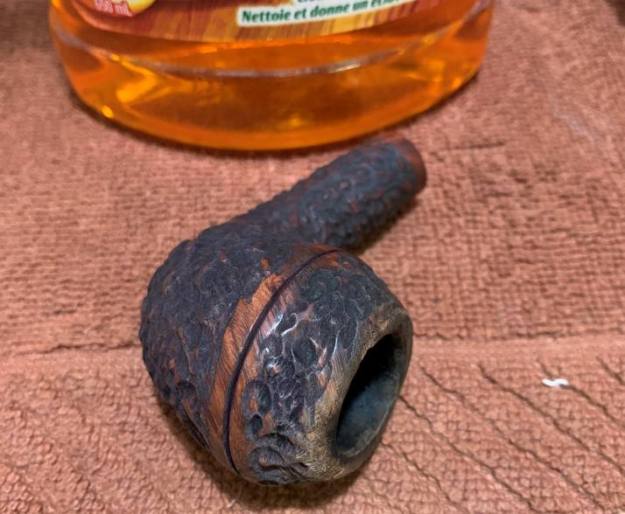
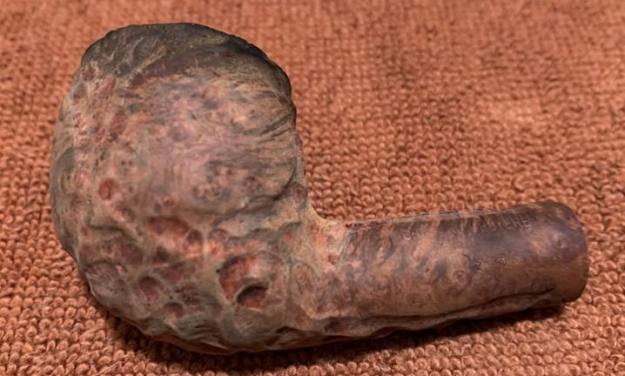
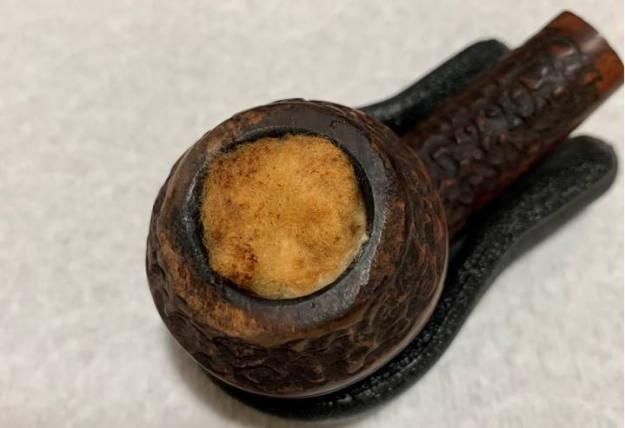
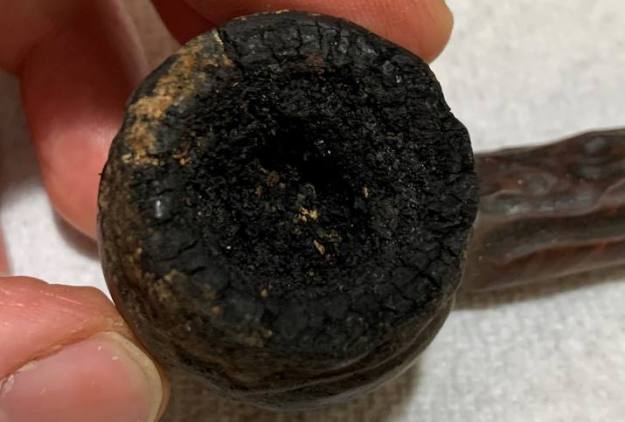
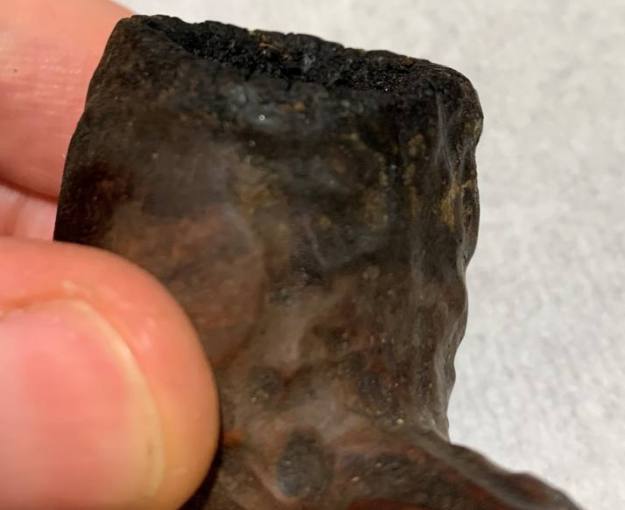
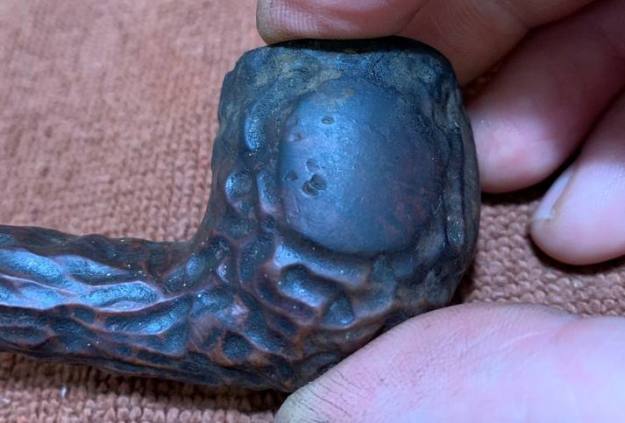
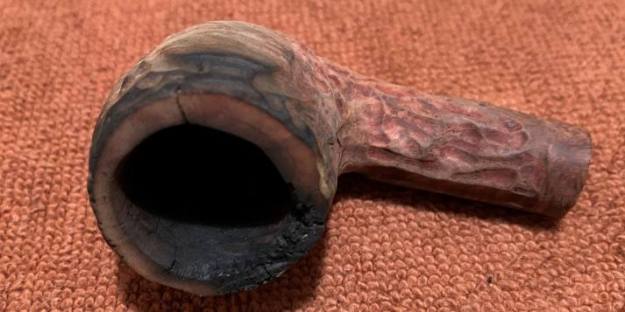
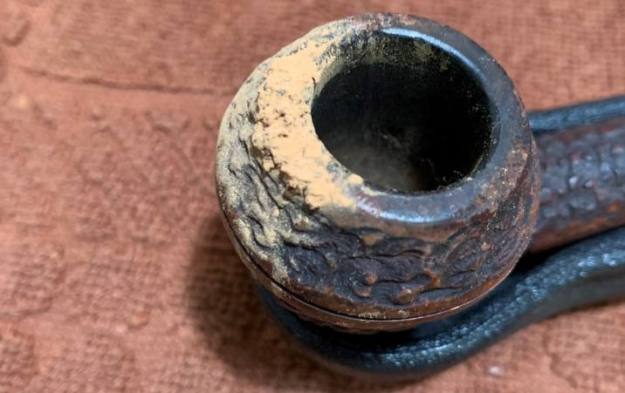
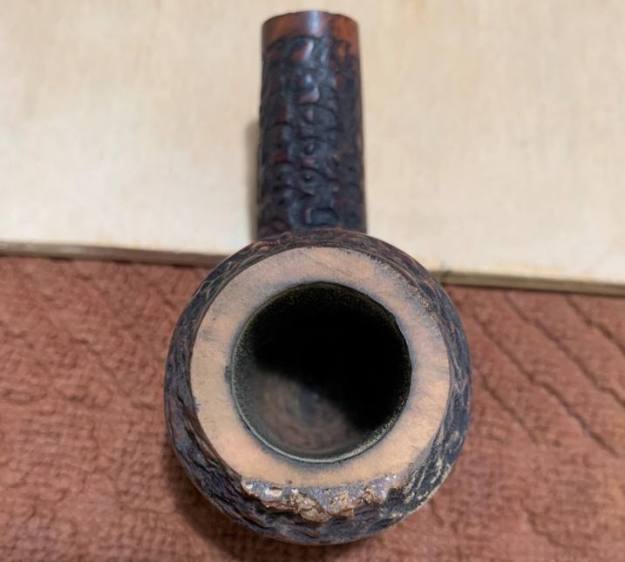
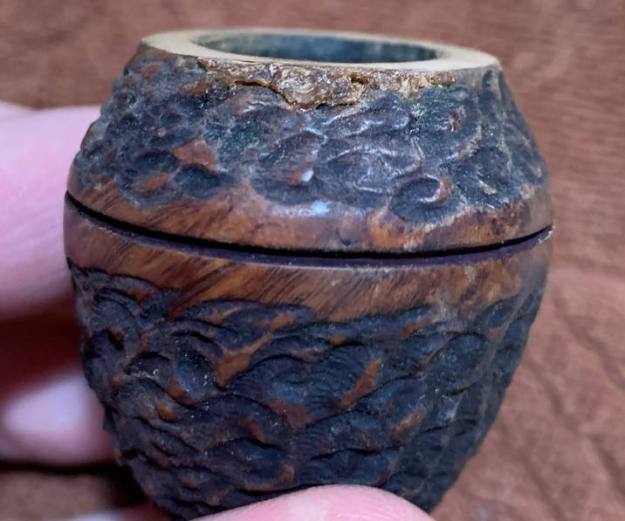
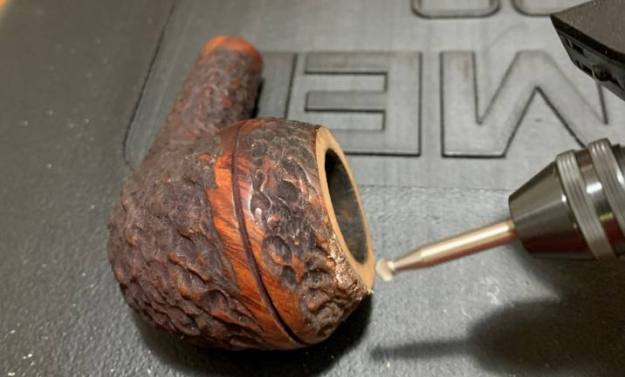
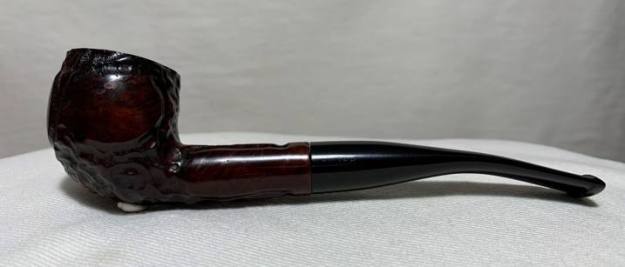
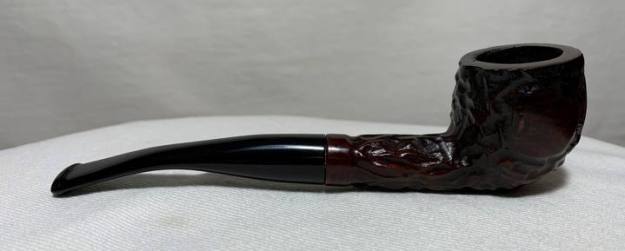
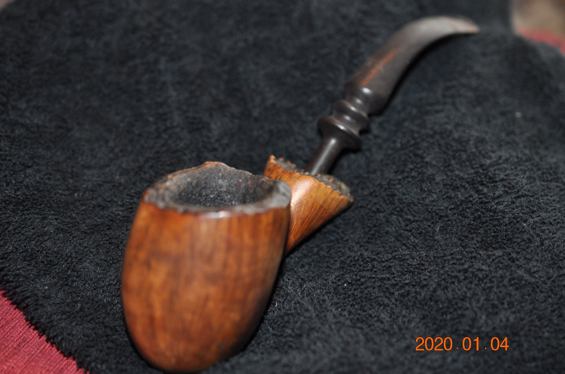
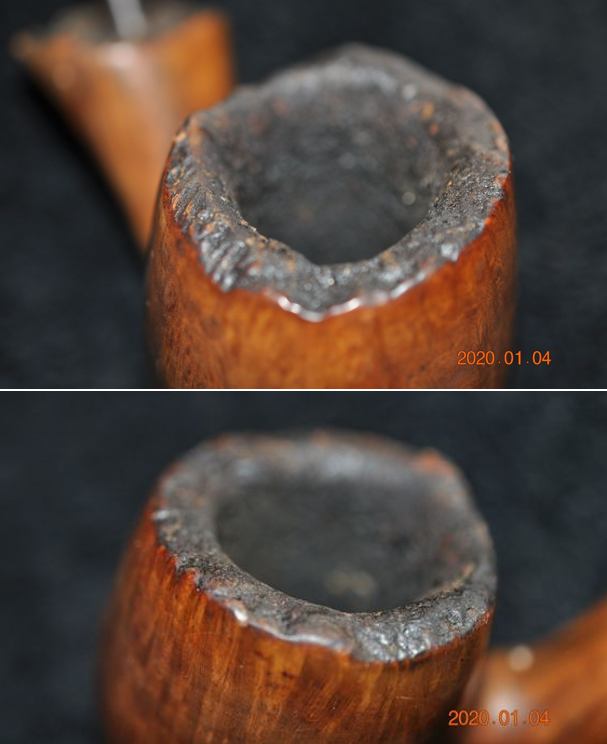
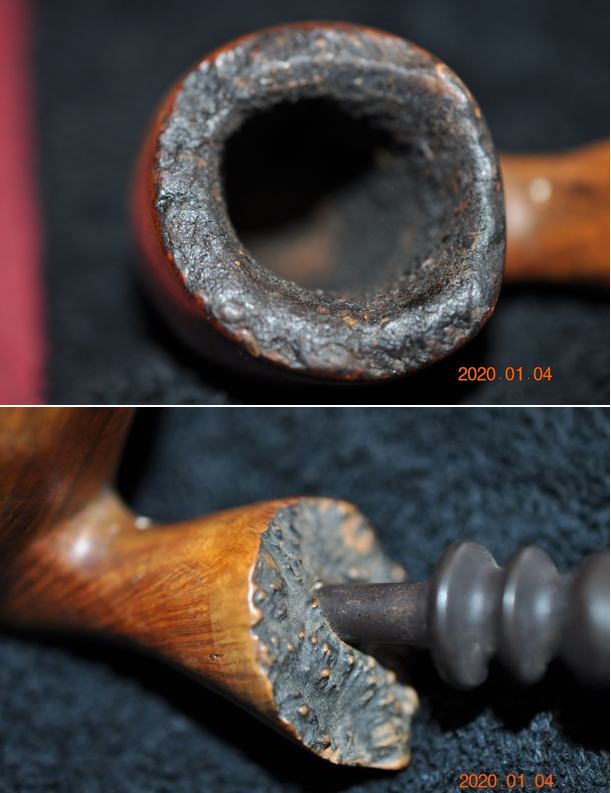
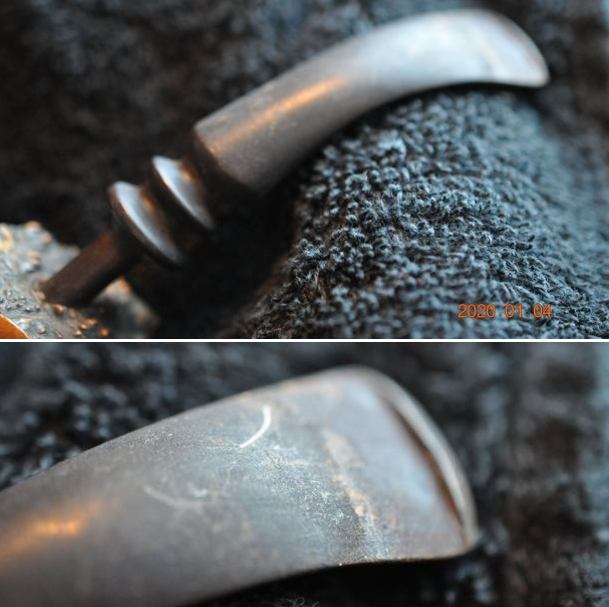
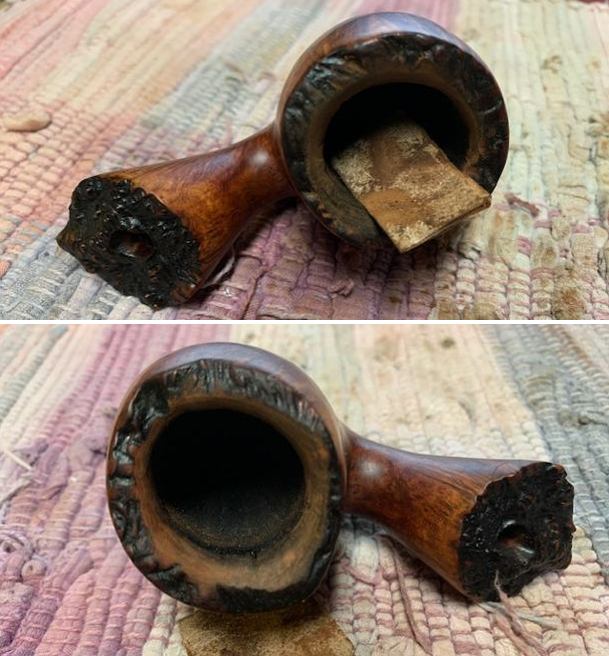
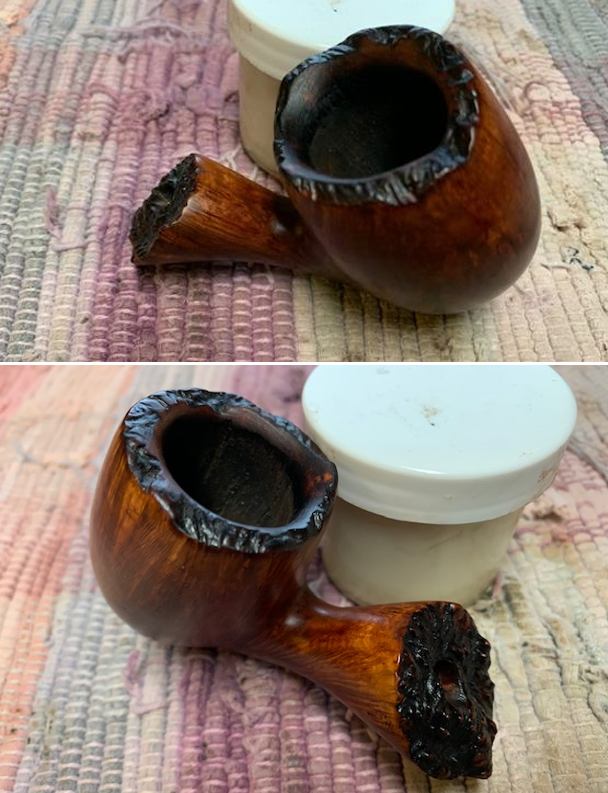
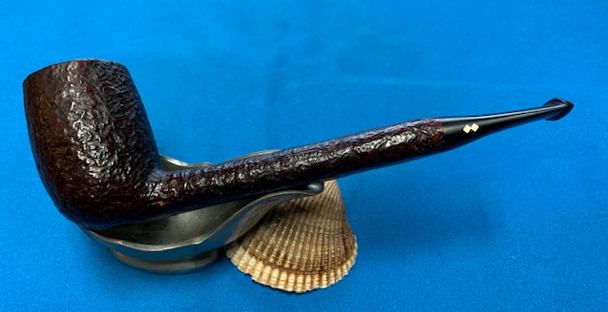
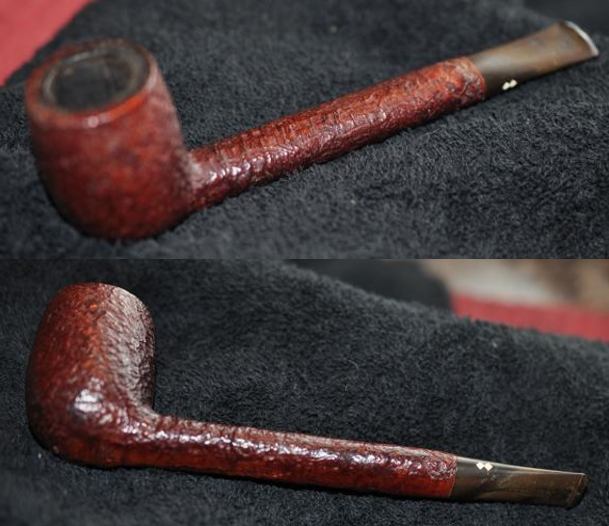
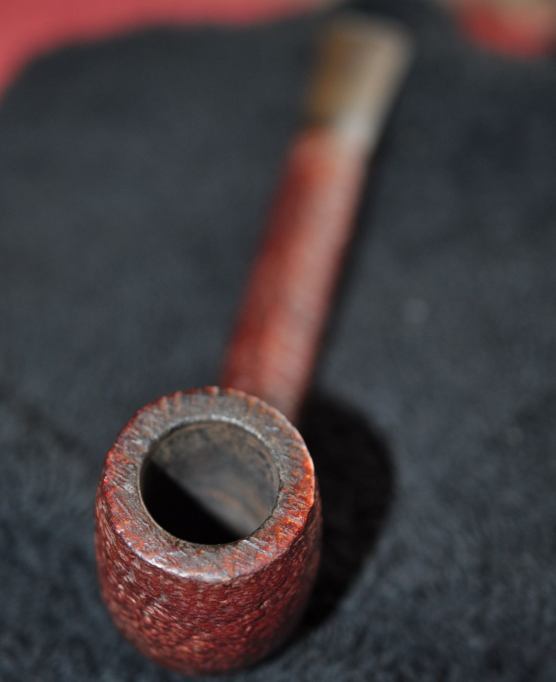
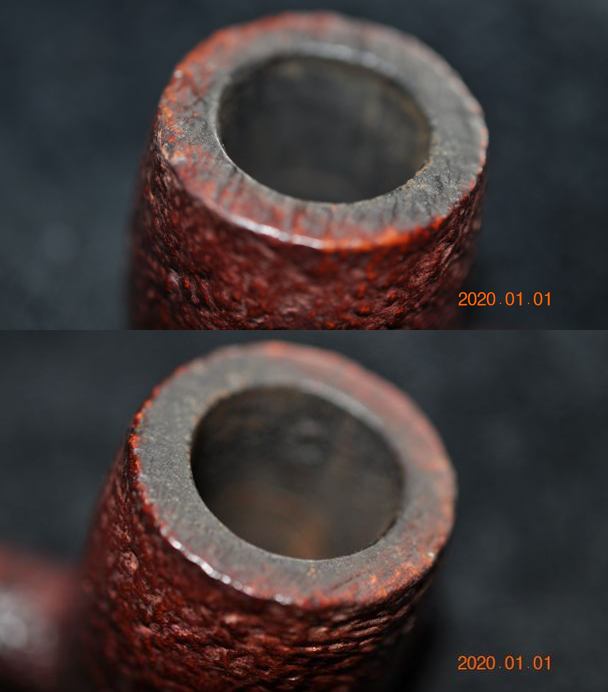
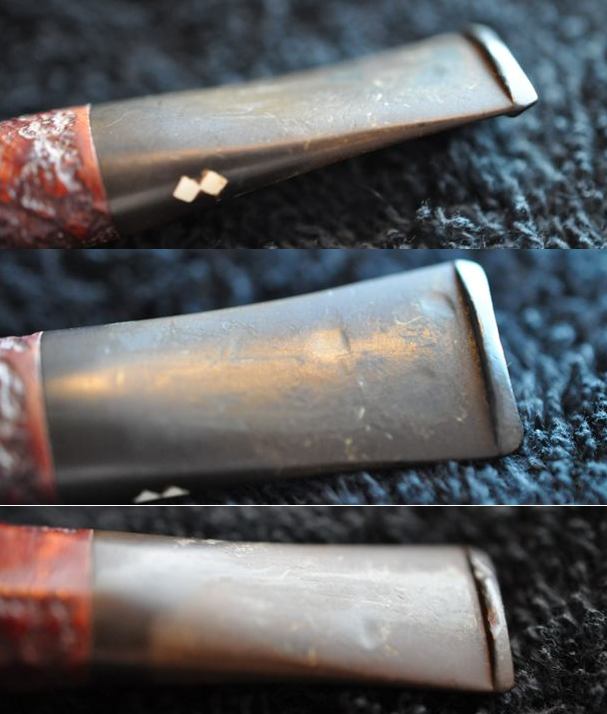
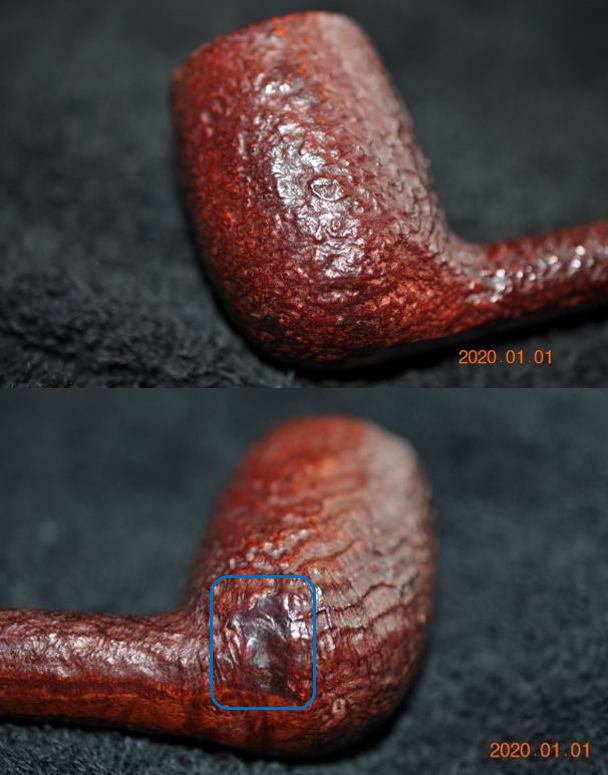
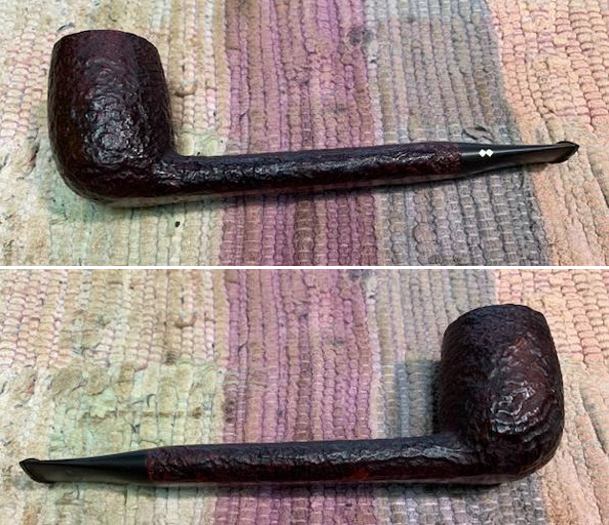
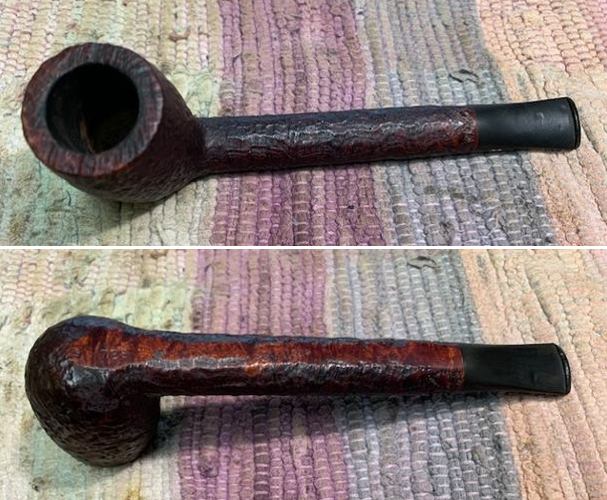
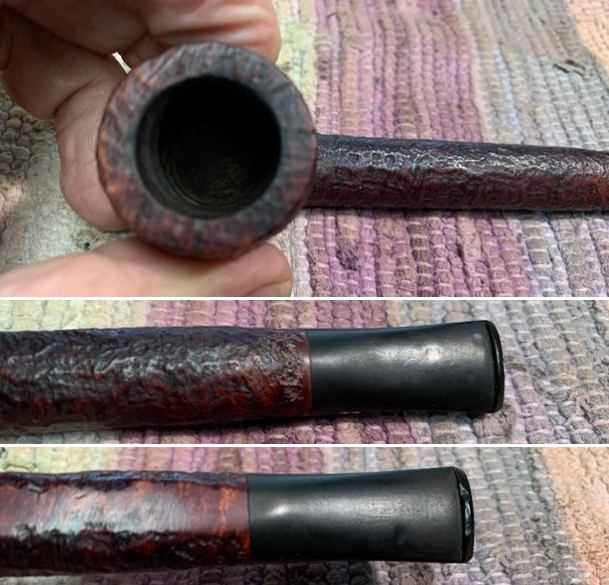
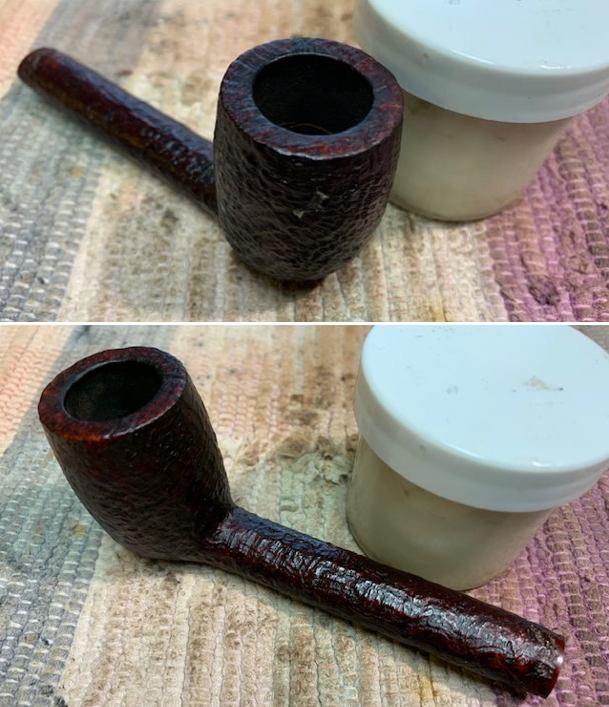
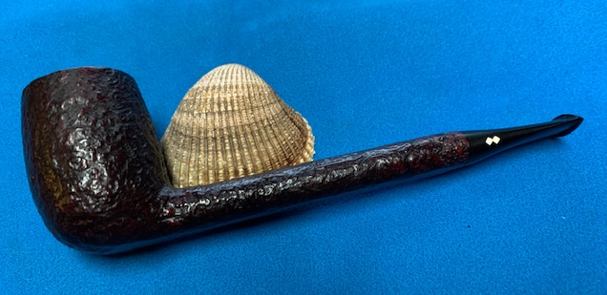
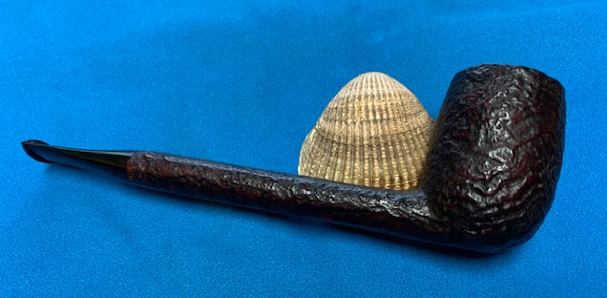
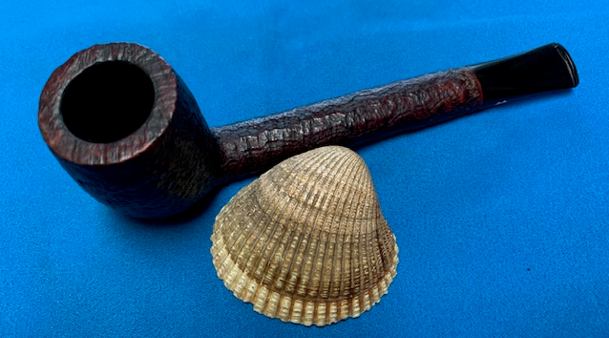
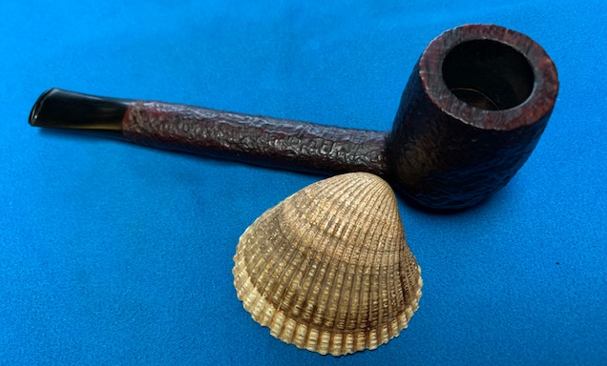
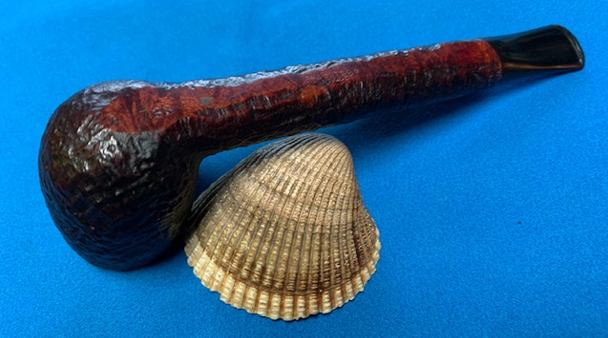
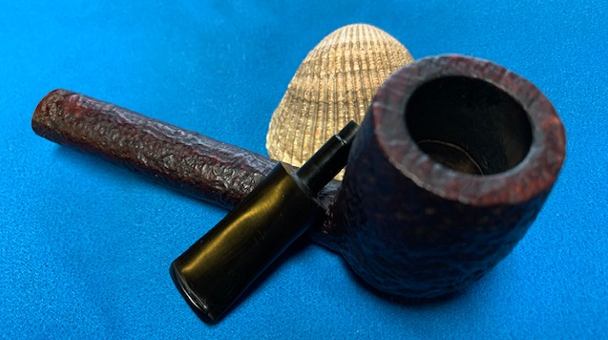
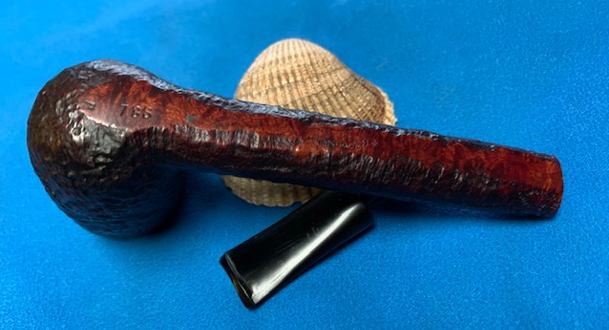
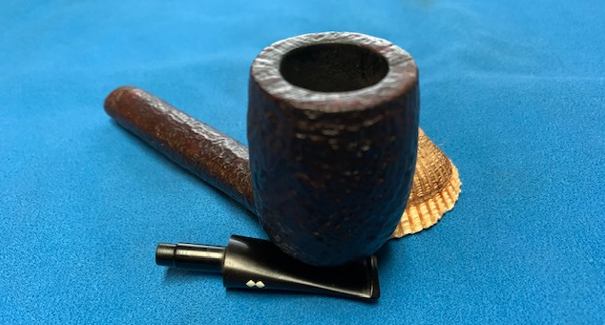
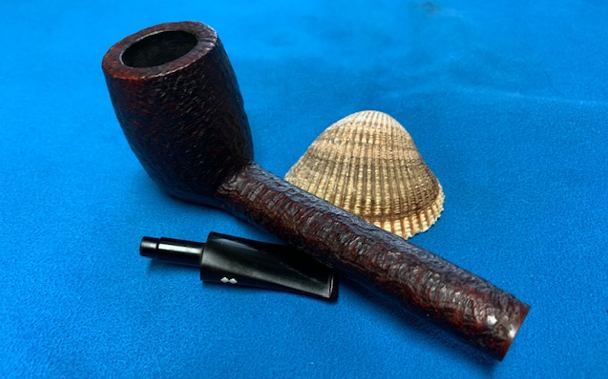
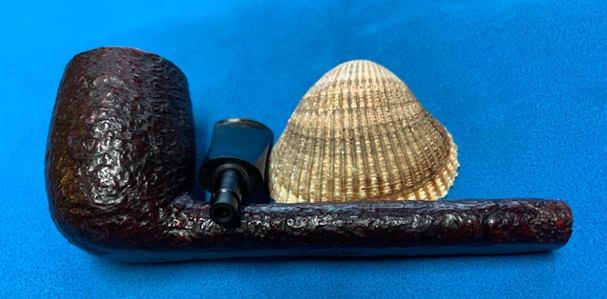
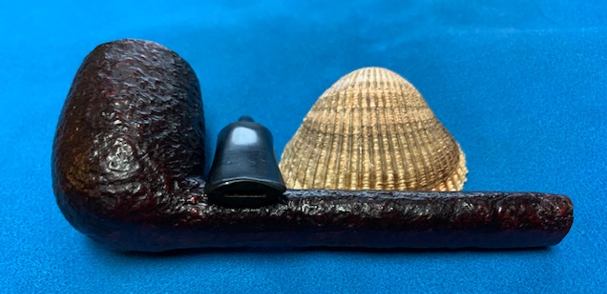
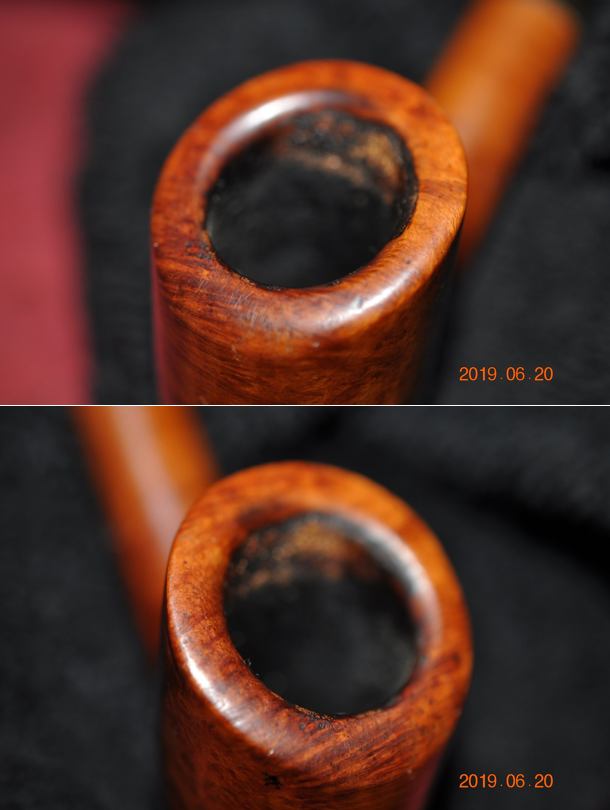
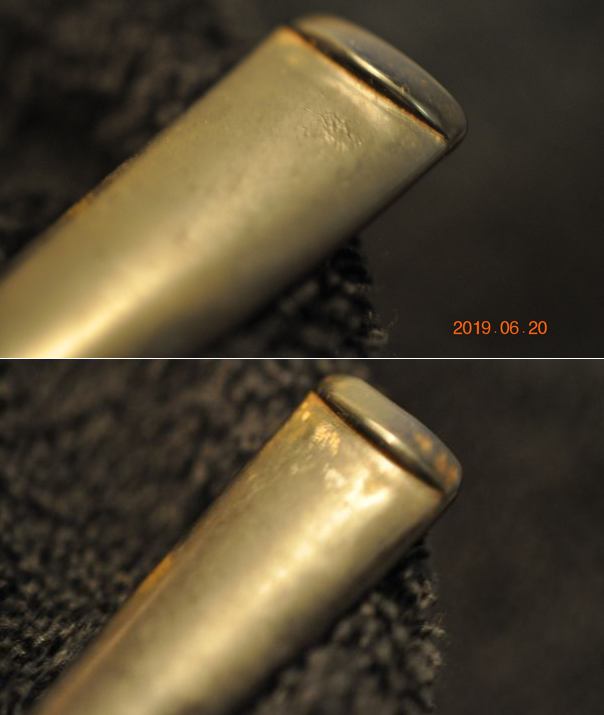
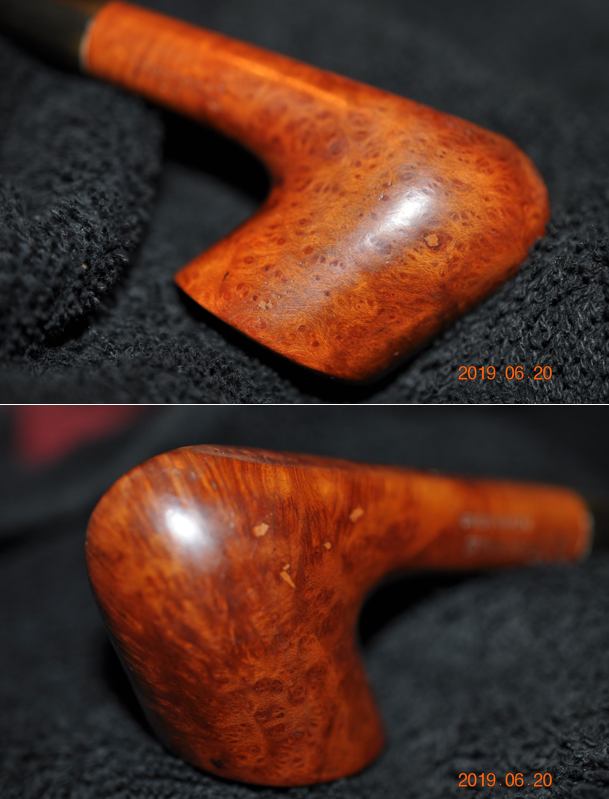
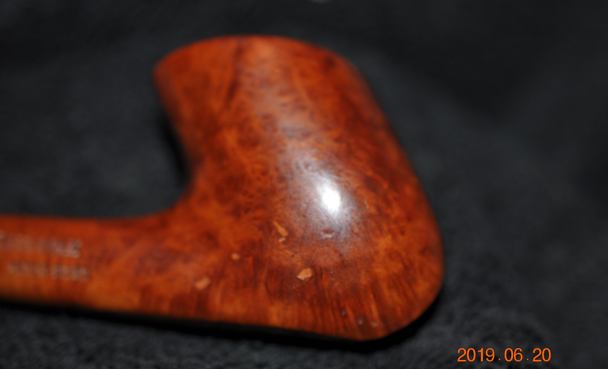
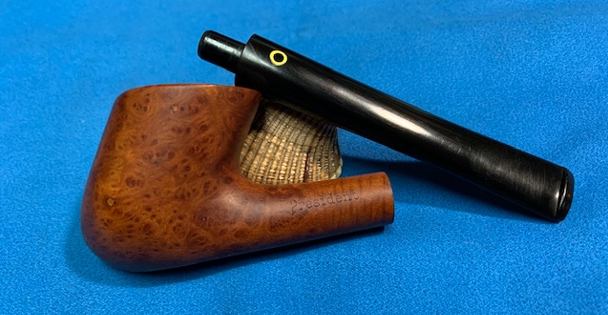
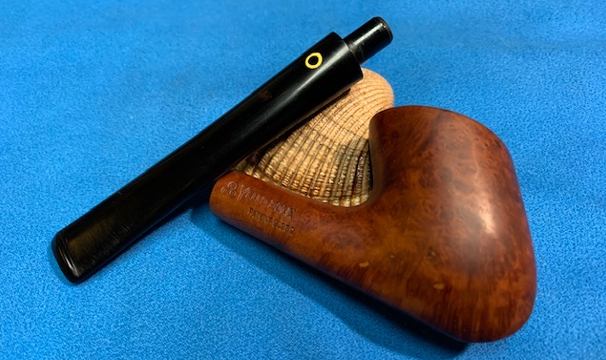
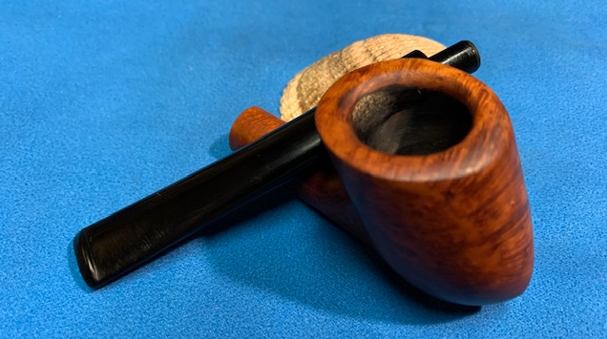
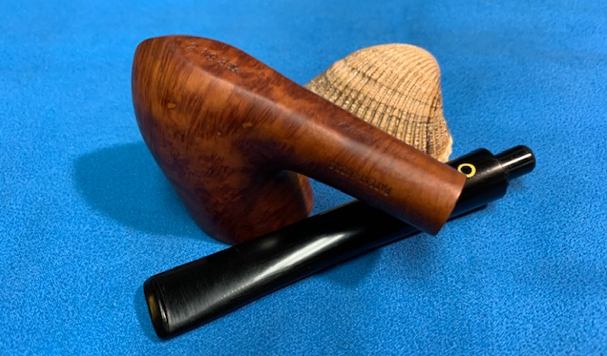
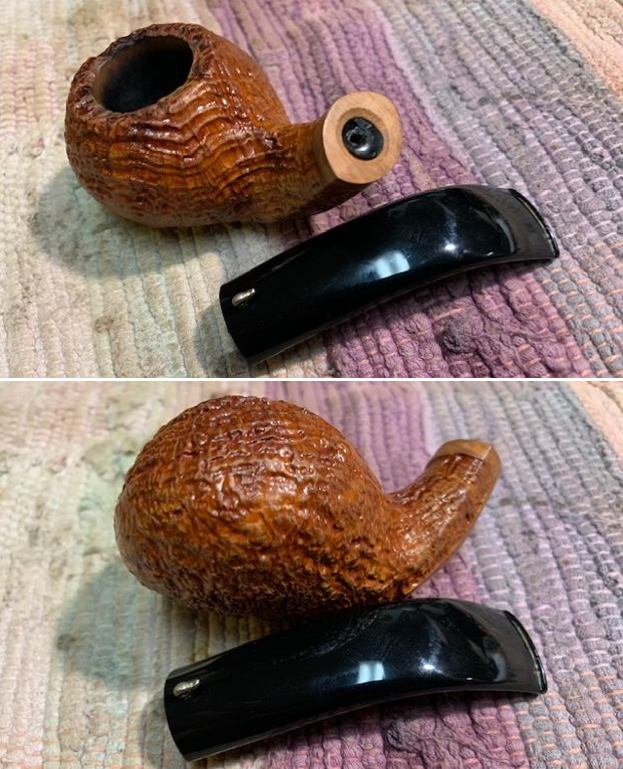
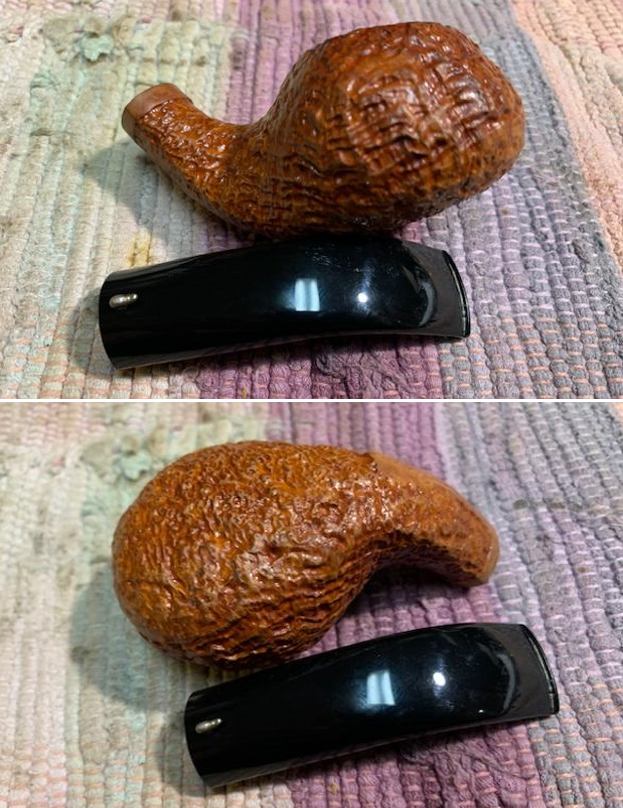
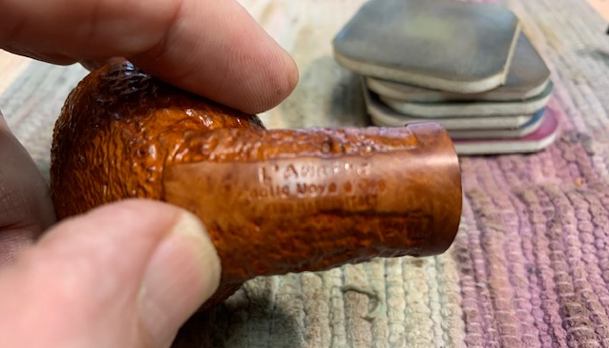
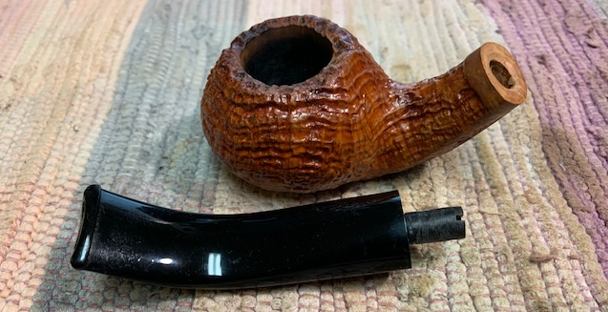
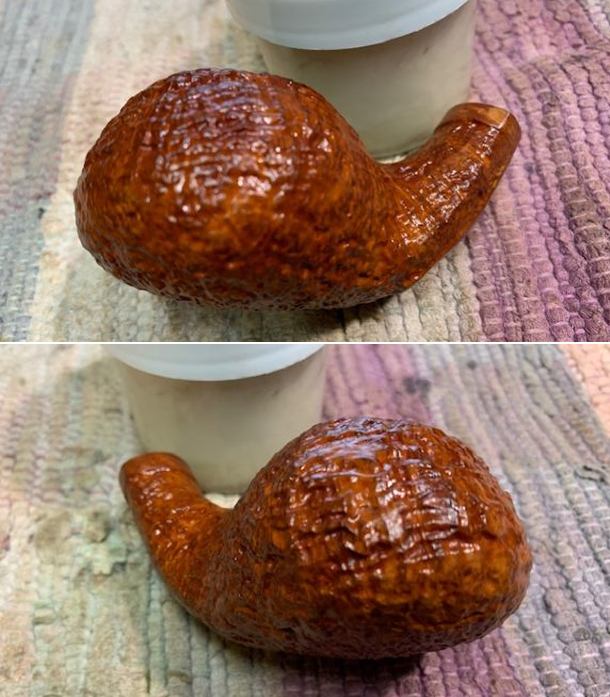
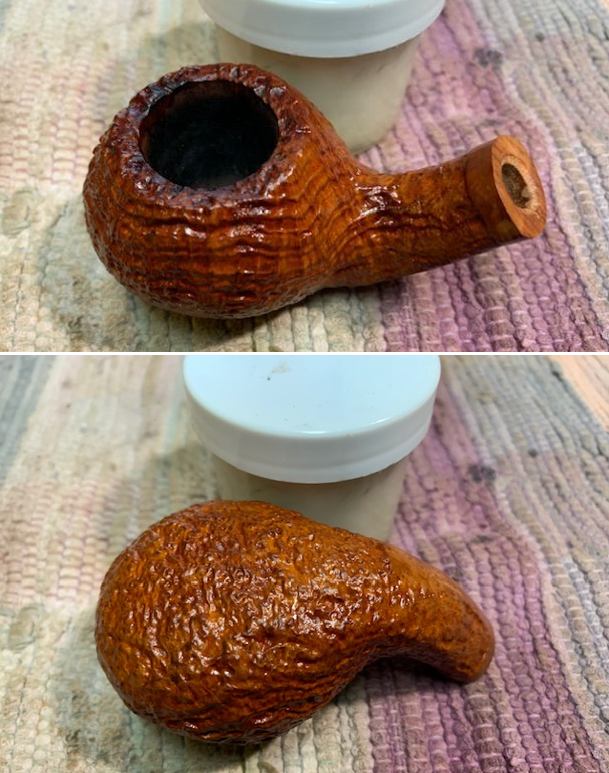
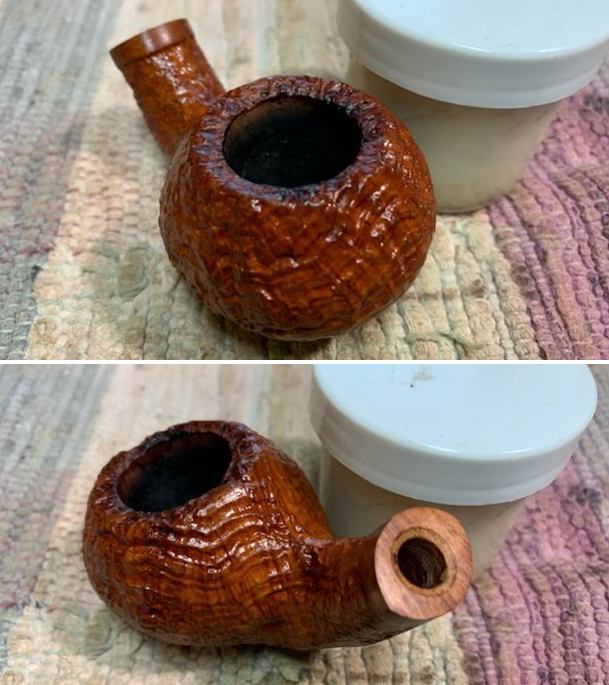
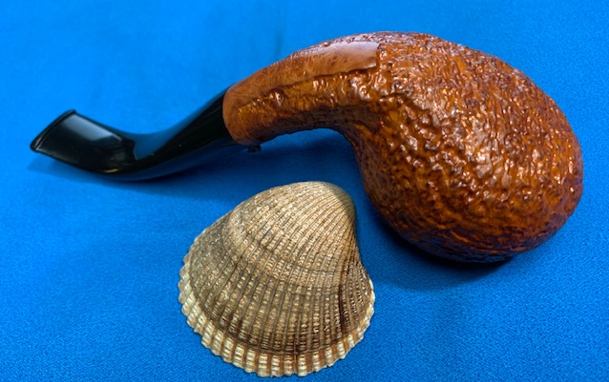
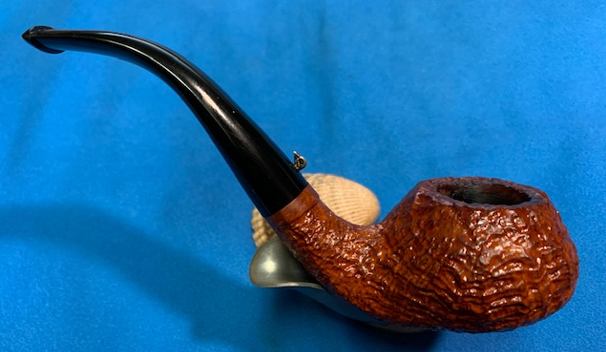
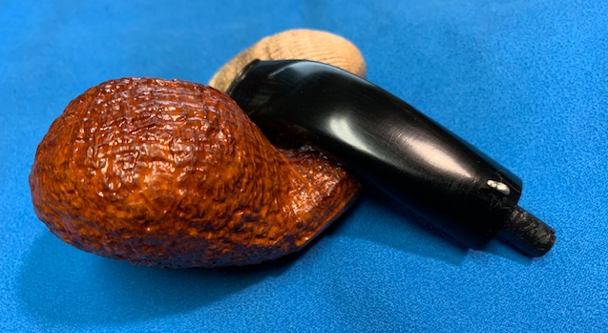
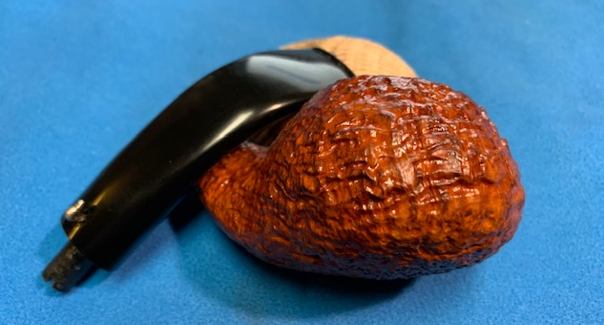
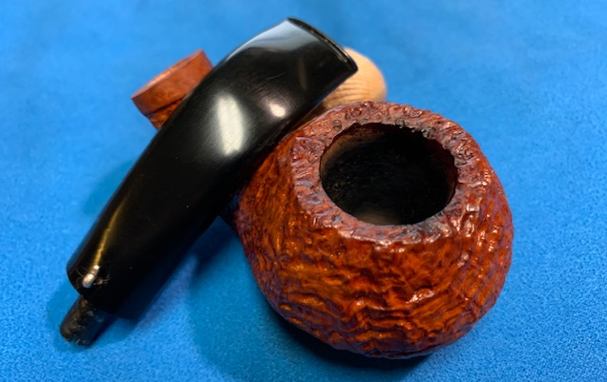
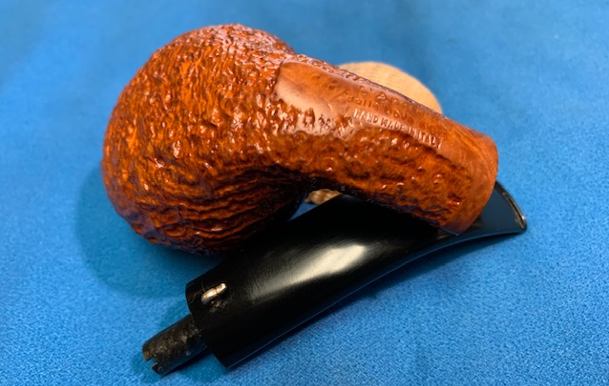
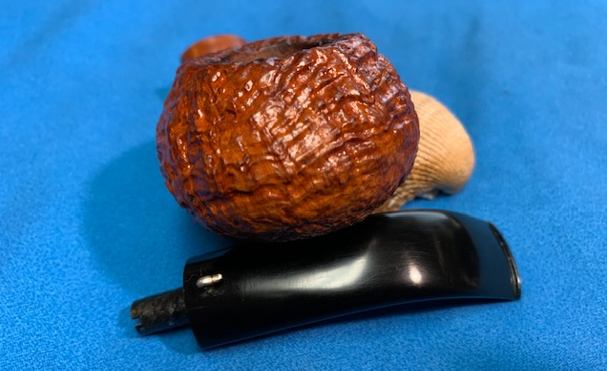
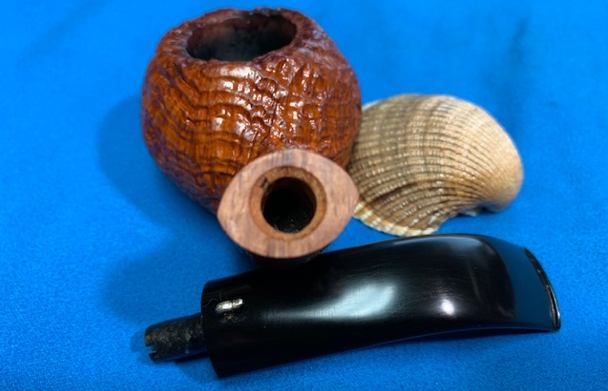
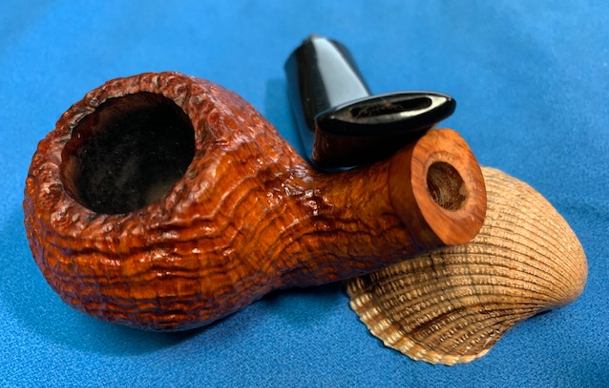
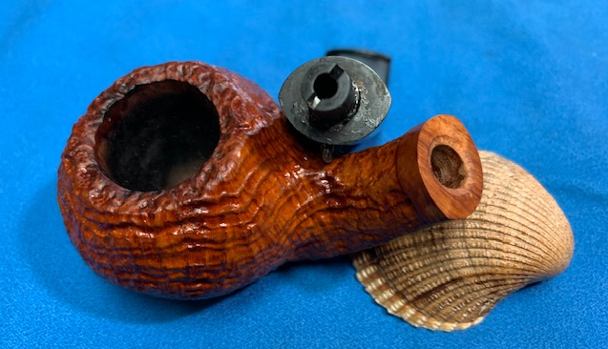
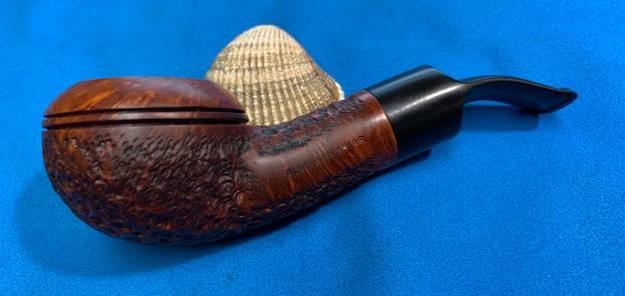
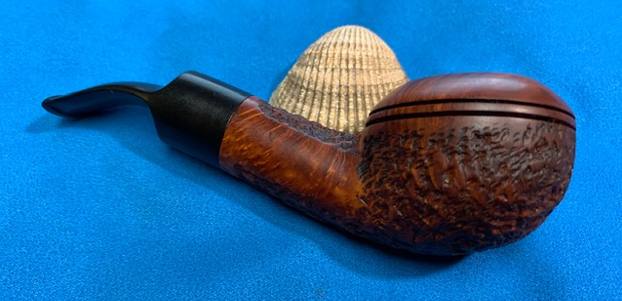
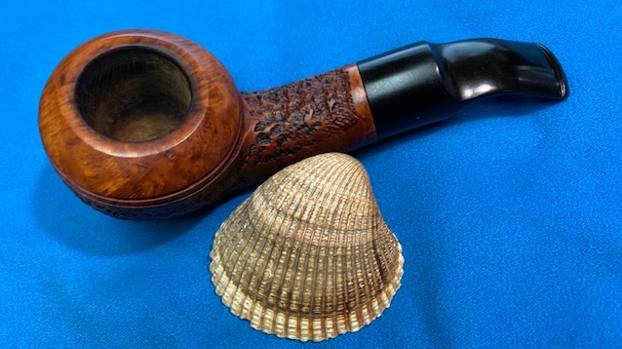
I went through my box of pipes that needed to be restored and came across this interesting looking Rhodesian with a smooth rim cap and patches on the shank. There was a smooth ring around the shank end. The lower half of the bowl and the shank were rusticated with a unique pattern that feels great in the hand. I was really interested in what it would look like once it was finished. The only stamping on the left side of the shank was stamped ALGERIAN BRIAR in a smooth panel. There was no other stamping on the shank sides. The finish was very dirty with ground in oils and dirt. The twin rings around the smooth rim top were filled with debris. The bowl had a thick cake in it that overflowed with lava on the rim top and down the sides of the cap. The thick shank ended with a vulcanite saddle stem that was lightly oxidized and had tooth marks on the surface of the stem and the button itself on both sides. It was a dirty pipe but it had some amazing potential that shone through the dirt and debris. Jeff took photos of the pipe before he started his clean up.Jeff and I have no idea where we fond this one but he started a spreadsheet of the pipes we have found since January of 2016 and this one was not on the spreadsheet. So we know that the pipe was found prior to that date and was photographed in June of 2019. Jeff took a photo of the rim top to show the thick cake in the bowl and the thick lava coat on the rim  top. The exterior looked dull and lifeless but still we both saw something. He took photos of the top and underside of the stem to show the oxidation, calcification and tooth damage on both sides of the stem surface and button. He took a photo of the dirty rustication on the heel and sides of the bowl to show the pattern of the finish and the beauty of the briar. It really is very nice.He took a photo of the only stamping on the pipe. It was on the left side of the shank and was clear and readable as noted above. I knew nothing about the brand of the pipe as the Algerian Briar stamping is used on a lot of different brands. I have seen it on a lot of different American made pipes – Bertram, National Pipes and A. Garfinkel pipes for example. I could not garner any other information on it so it was time to work on the pipe.
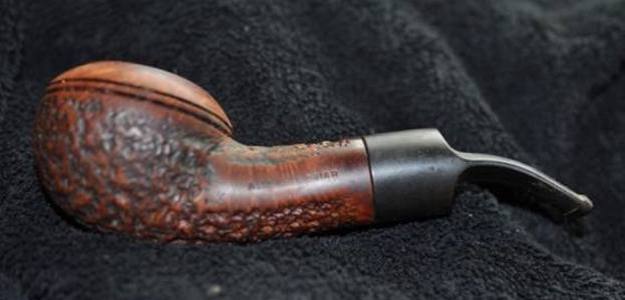
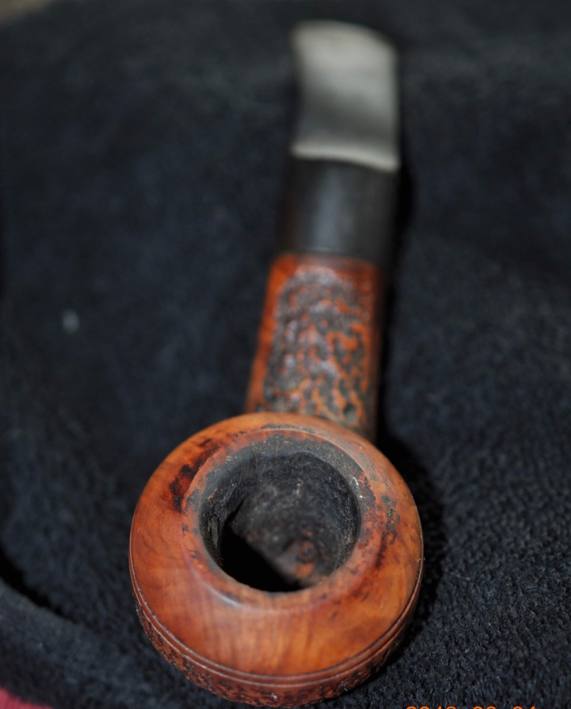
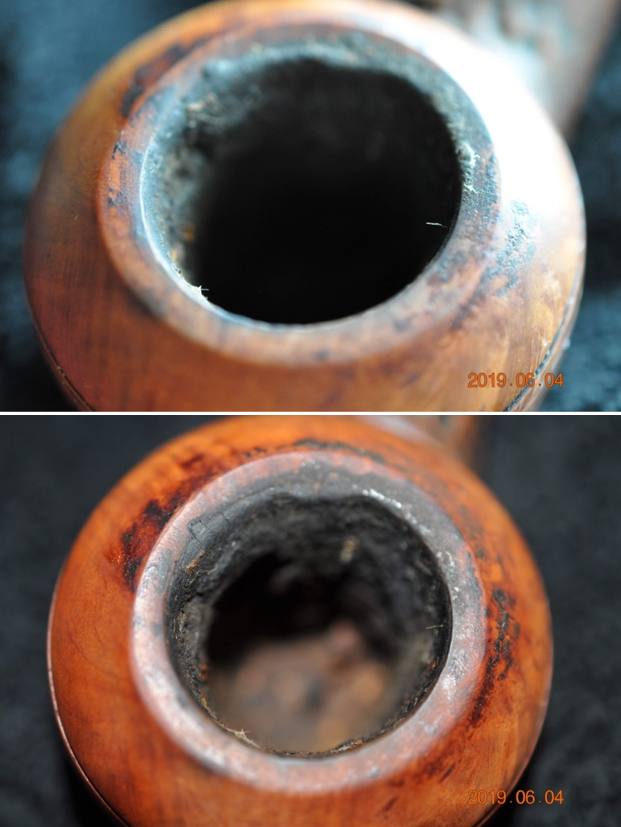
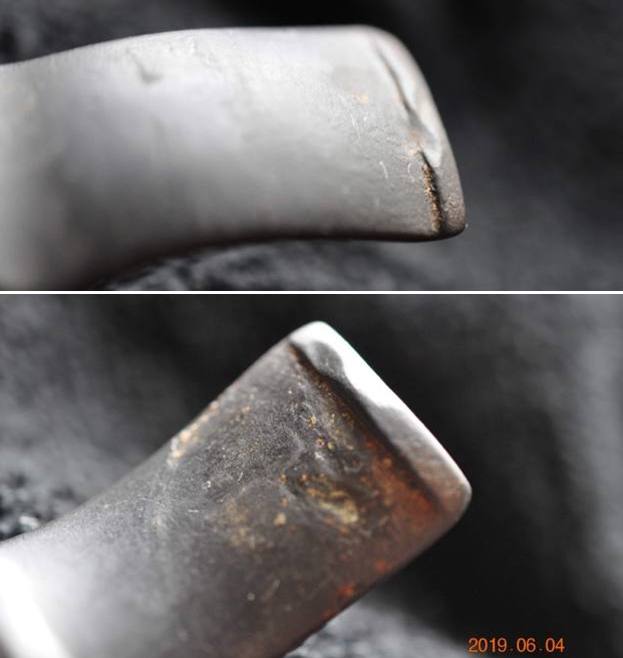
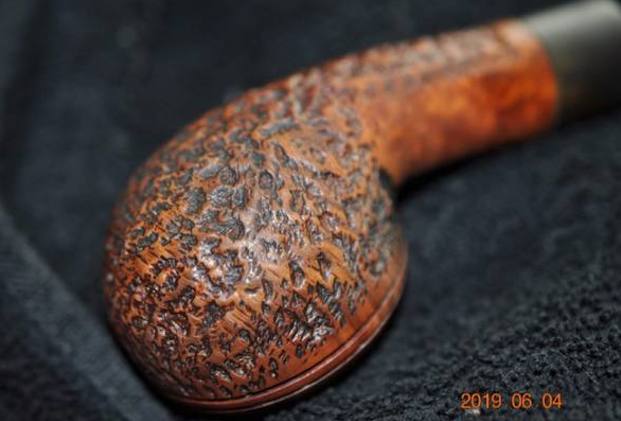
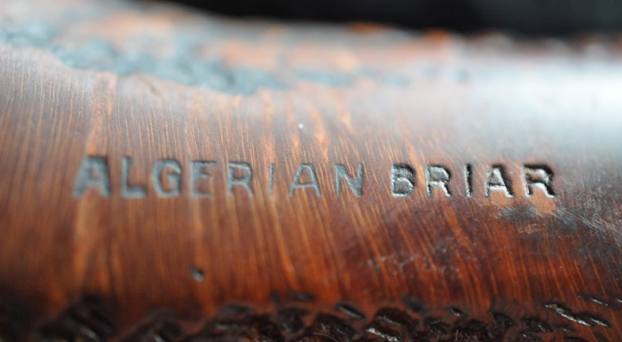
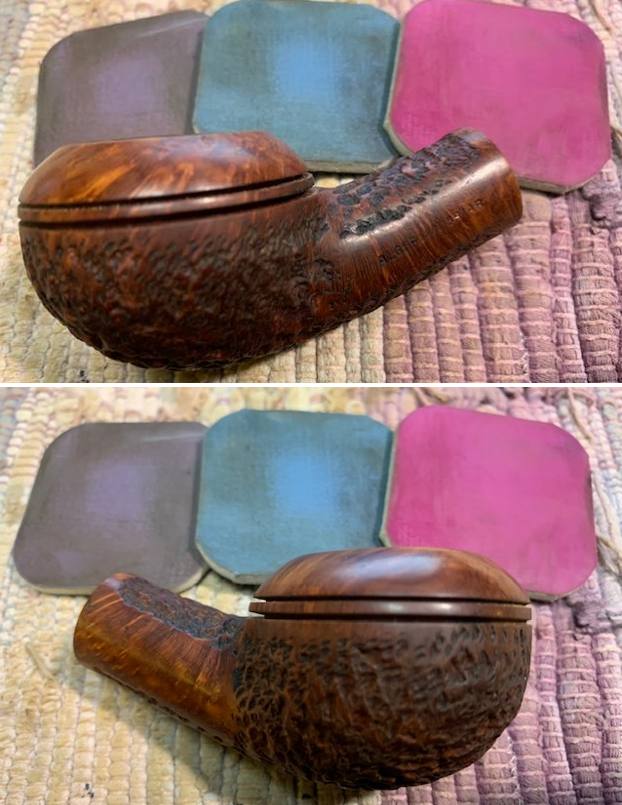
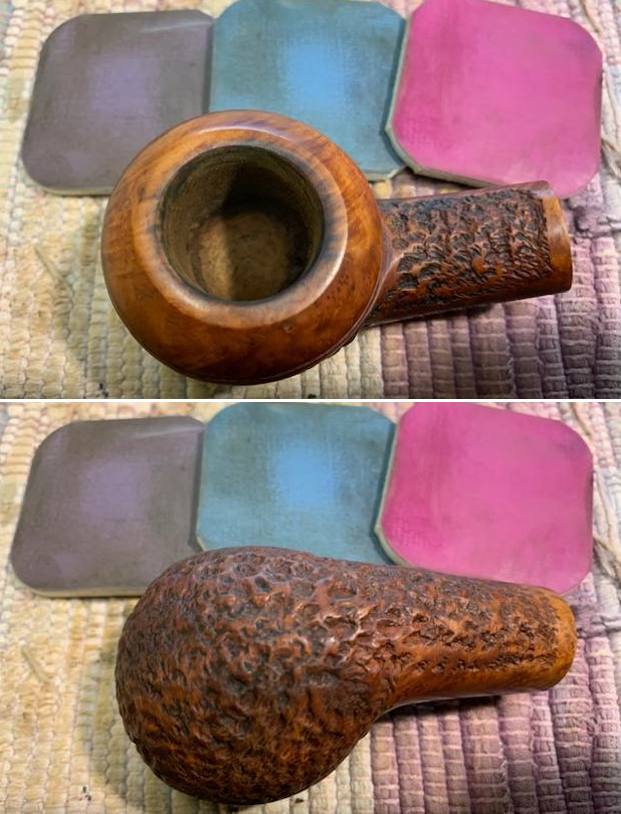
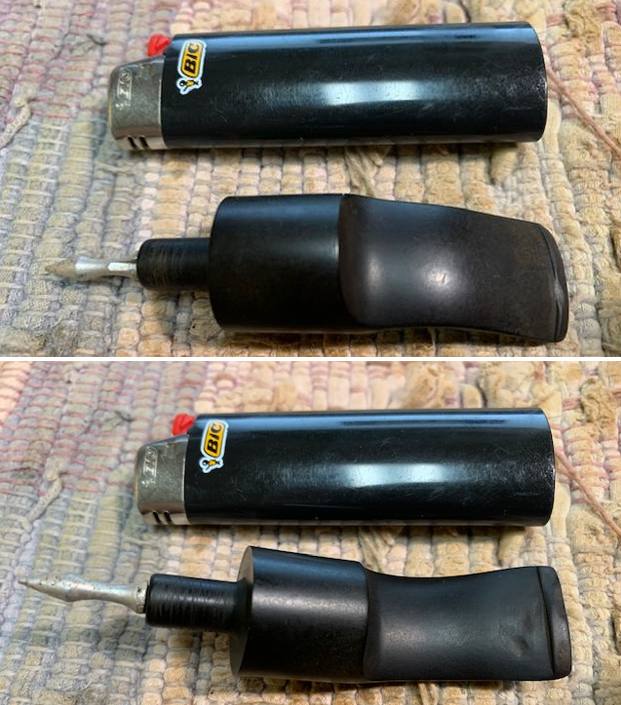
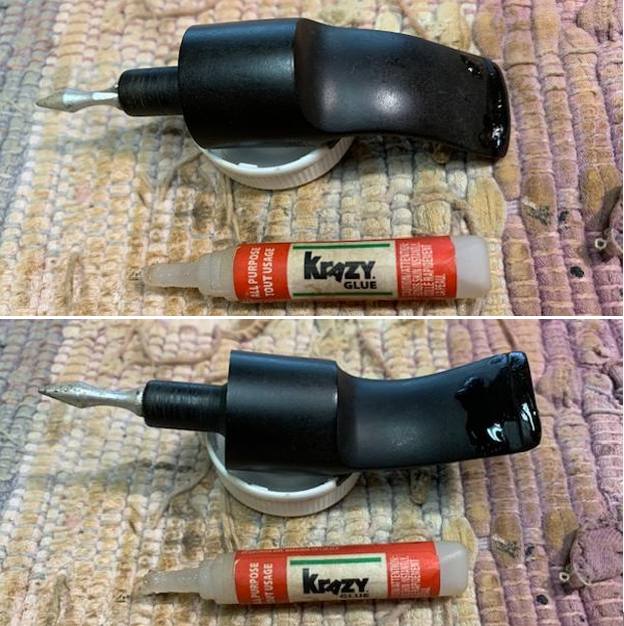
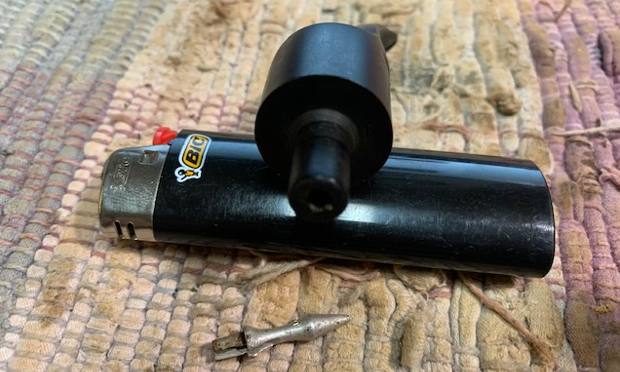
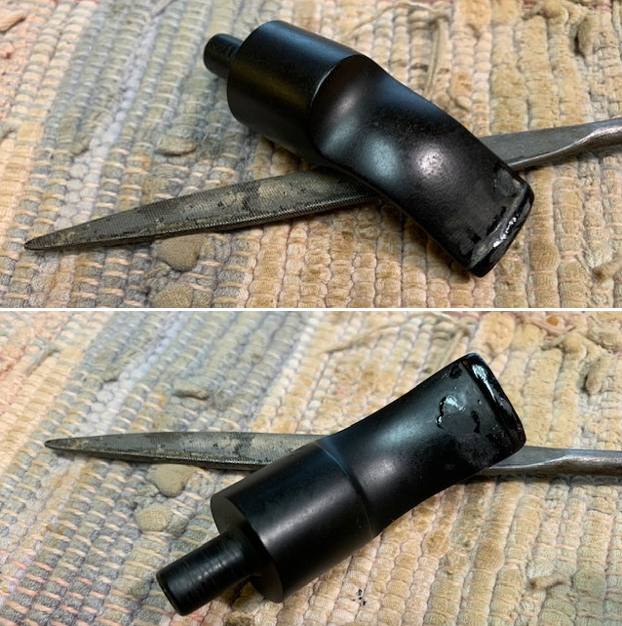
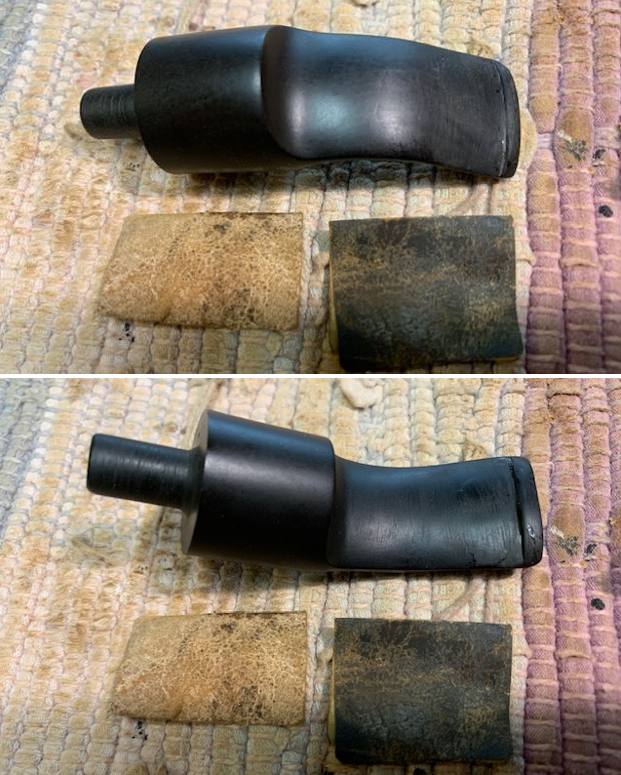
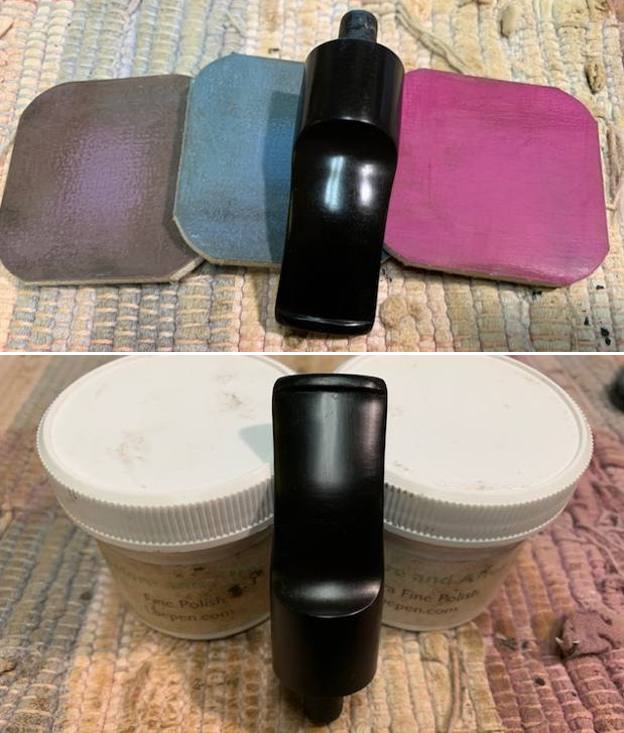
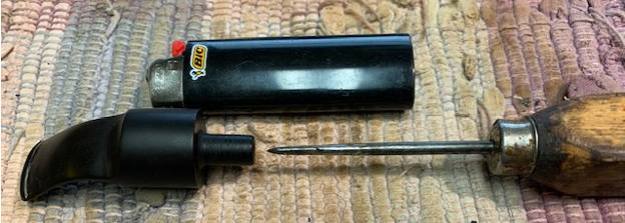
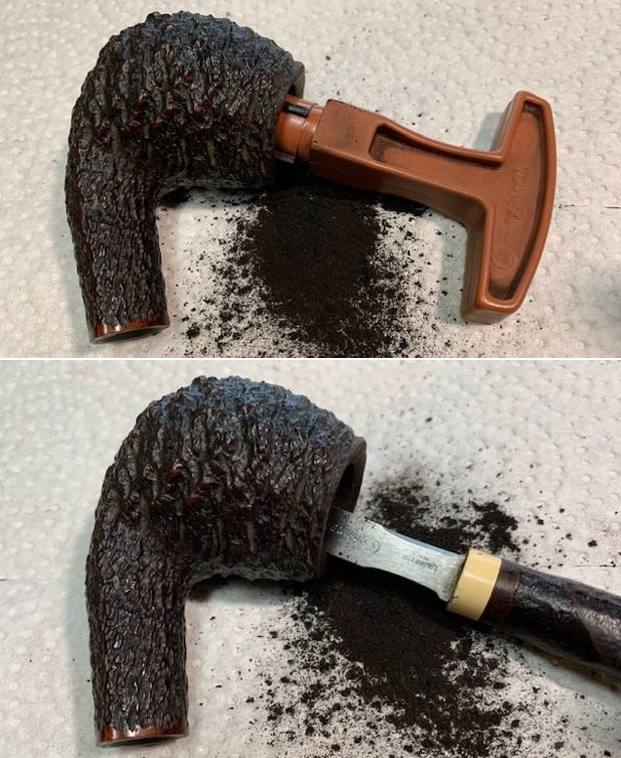
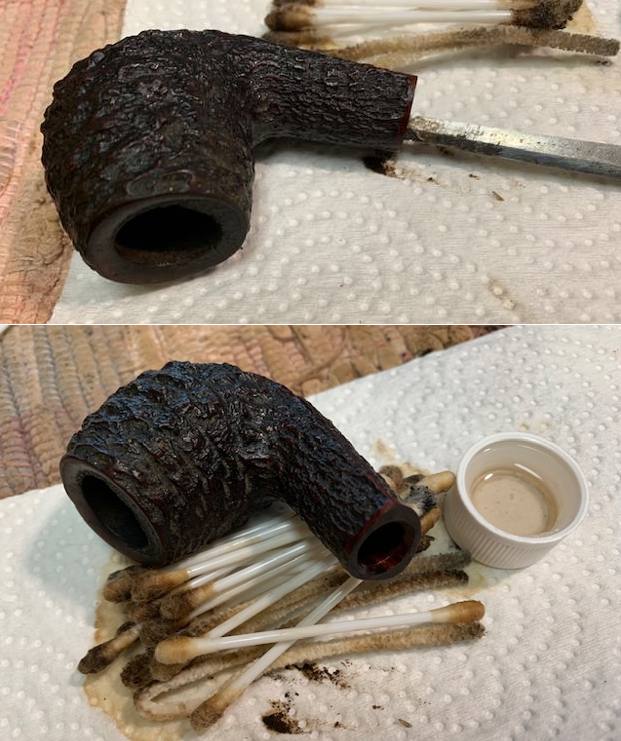
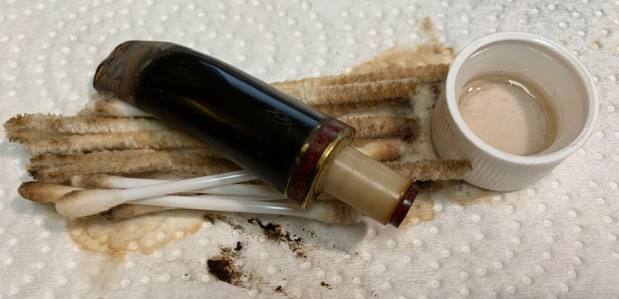
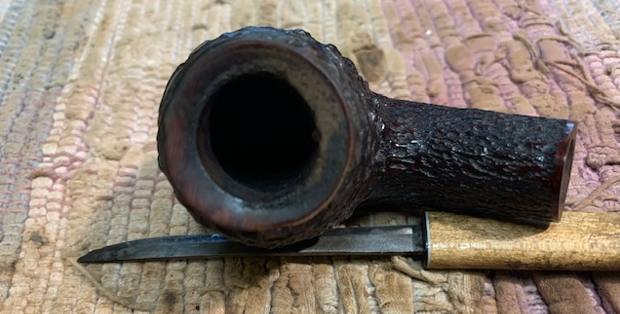
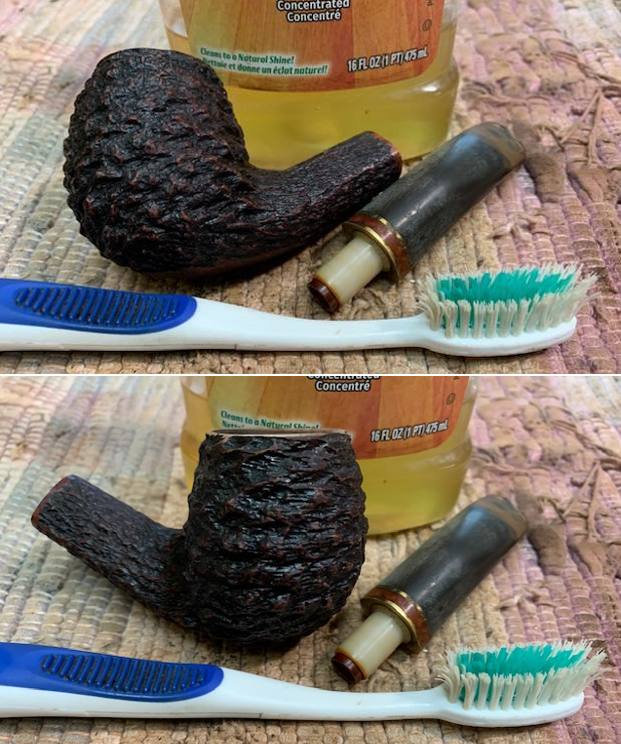
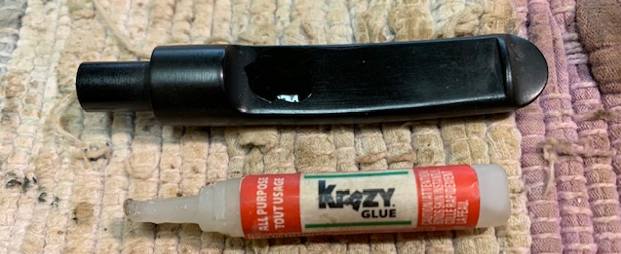
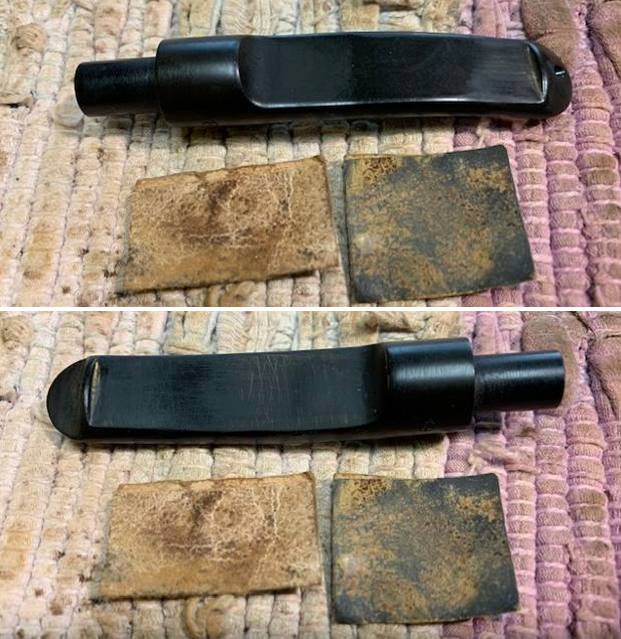
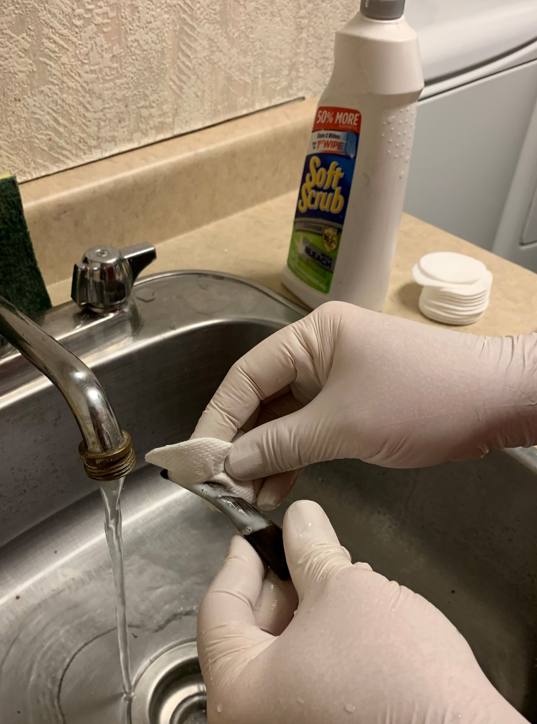
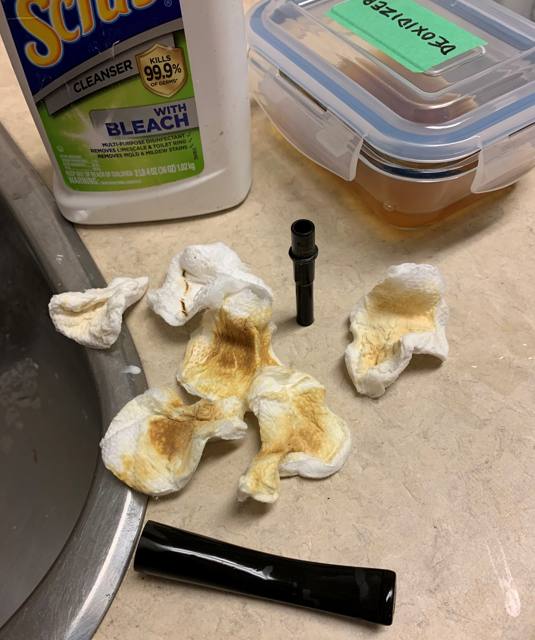
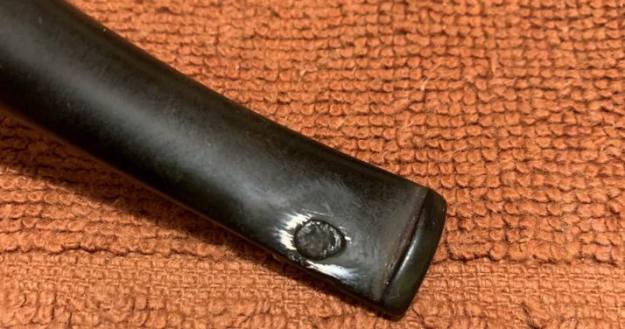
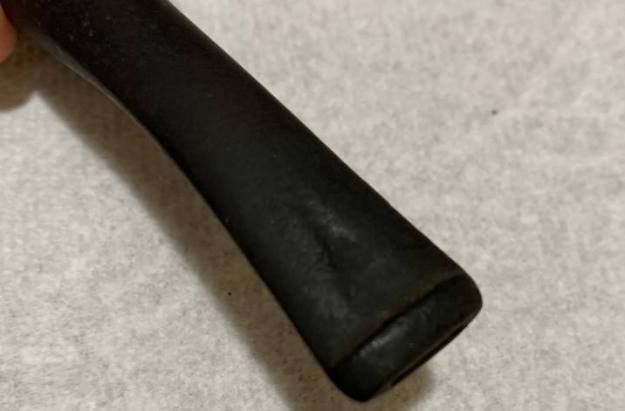
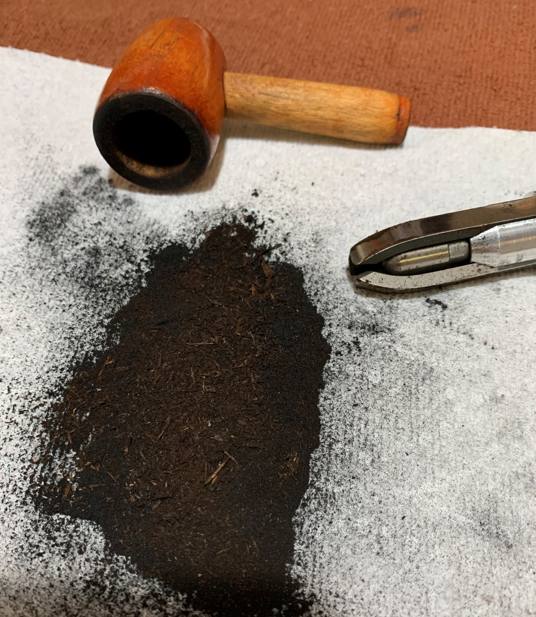
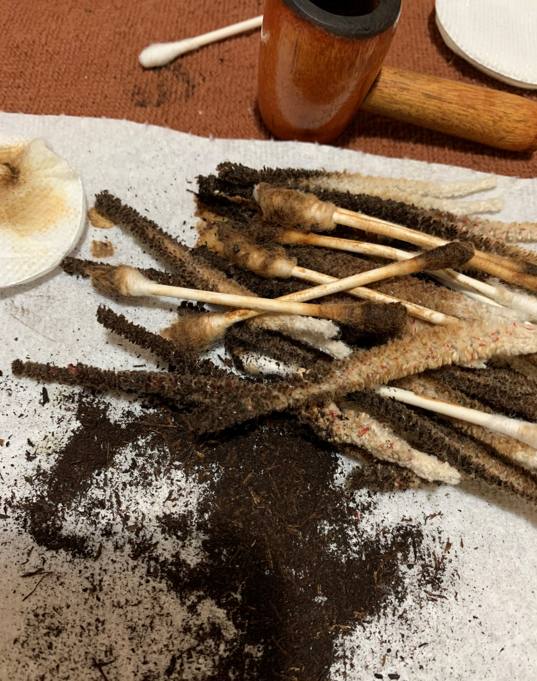
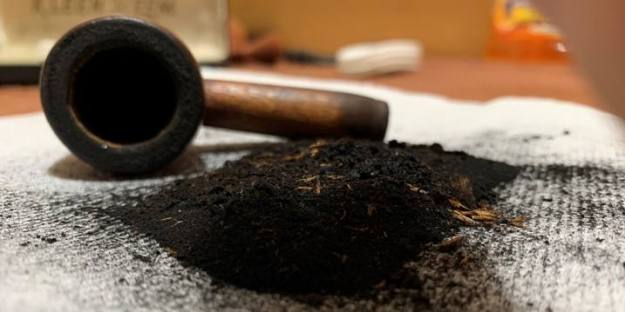
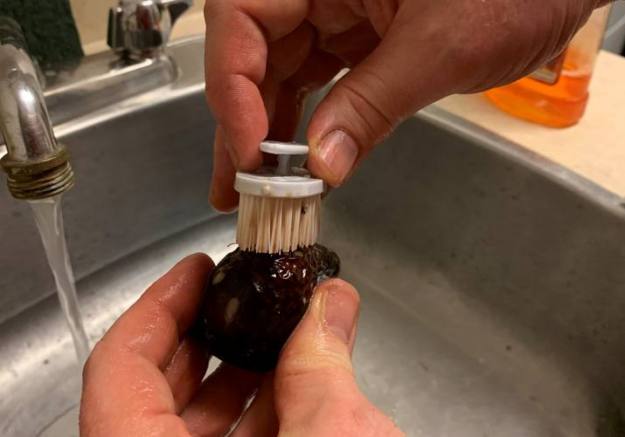
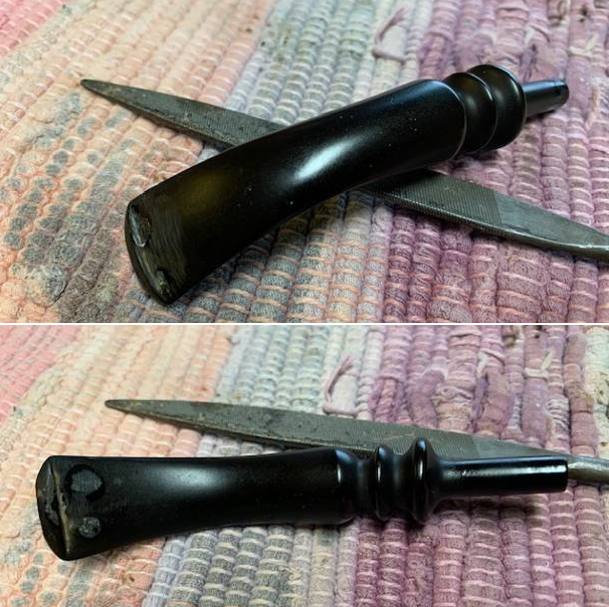
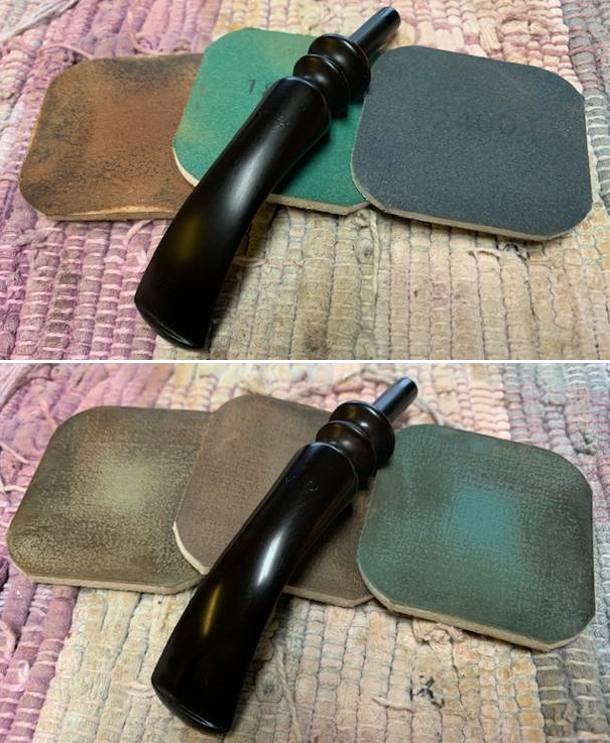
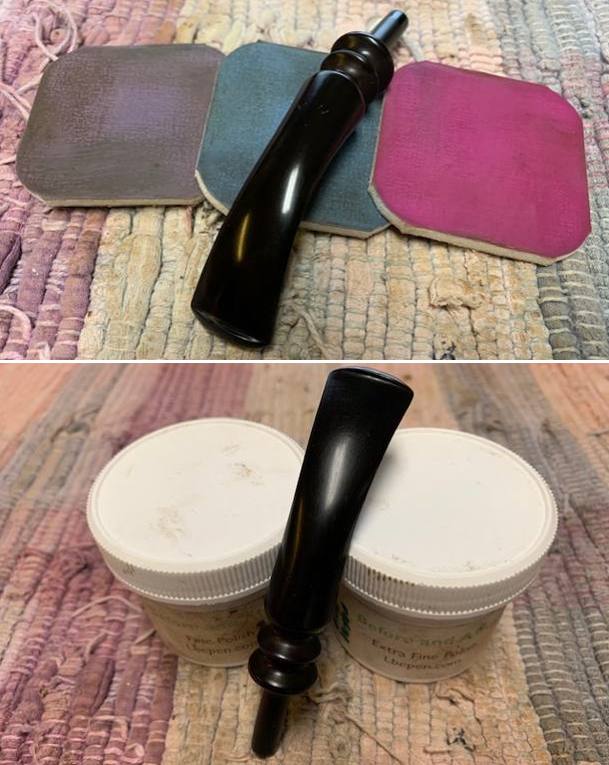
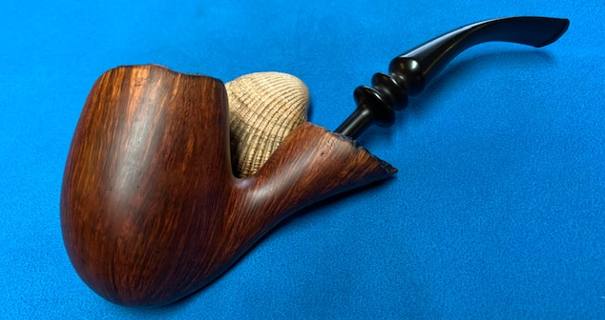
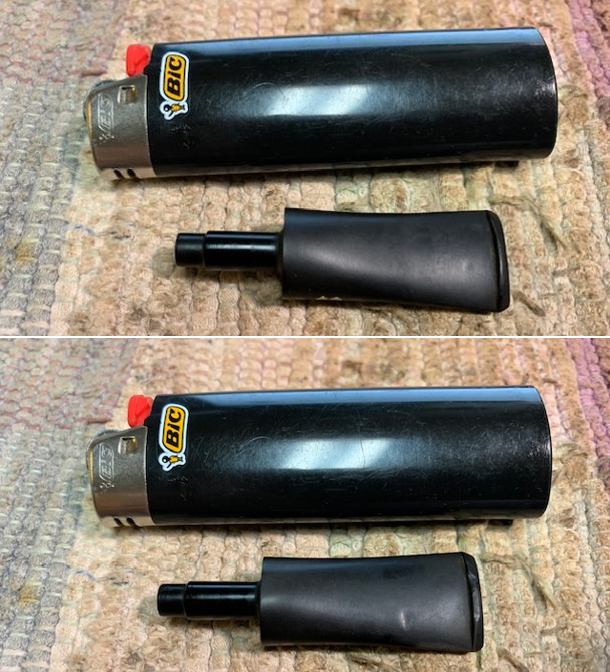
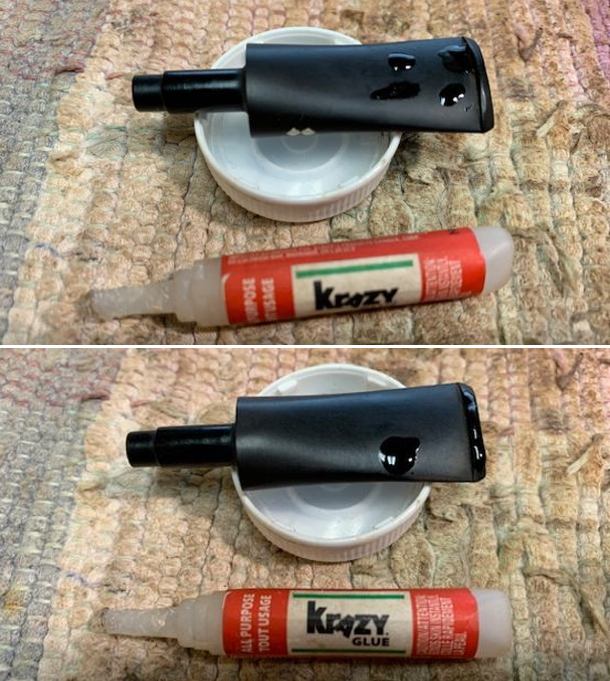
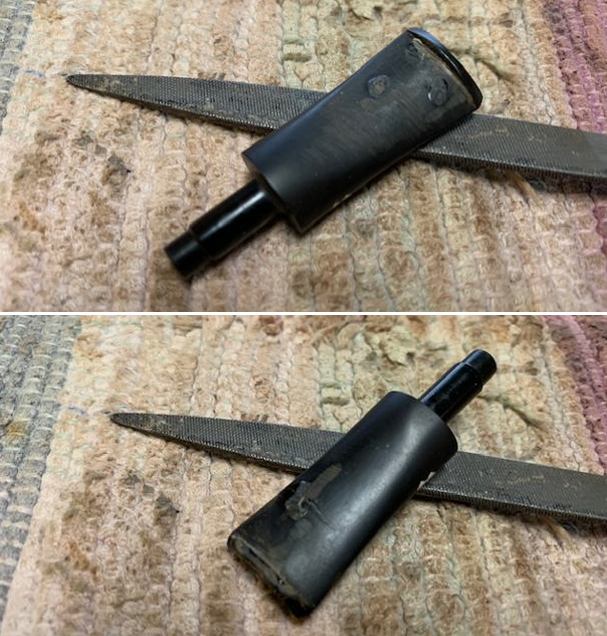
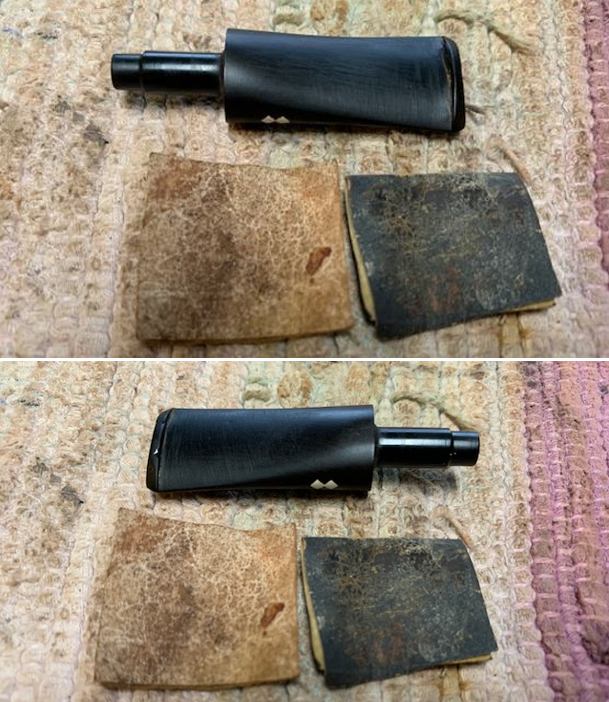
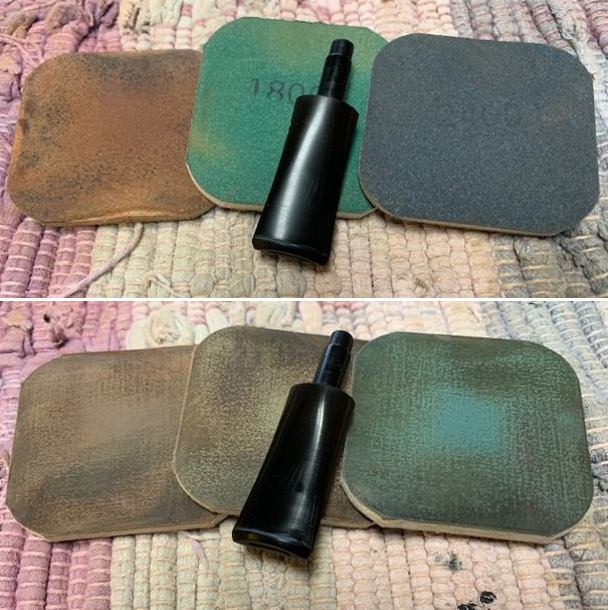
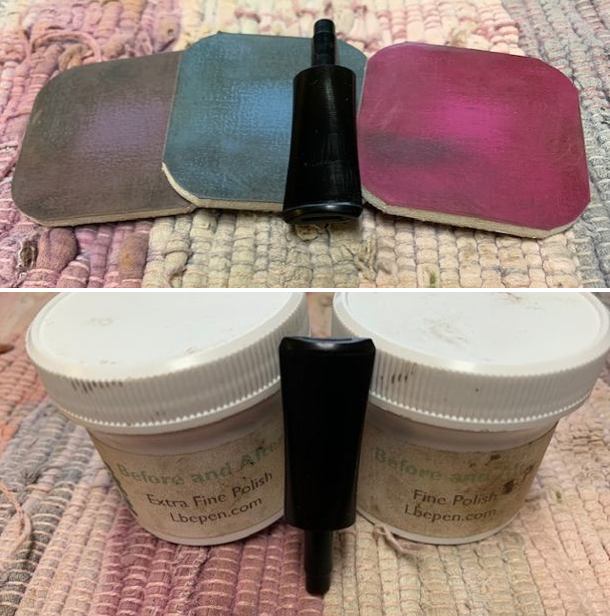
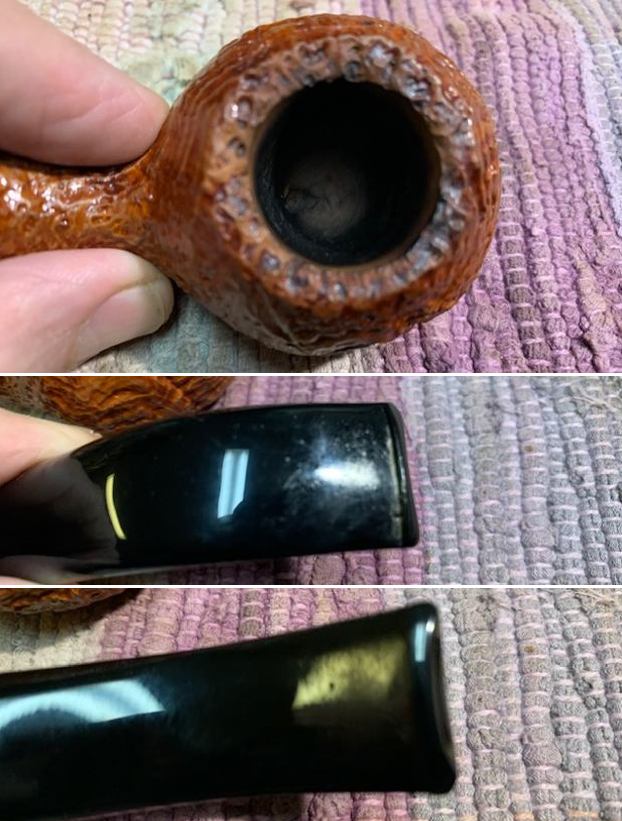
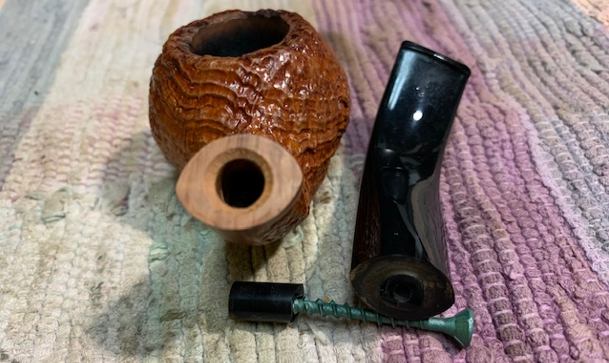
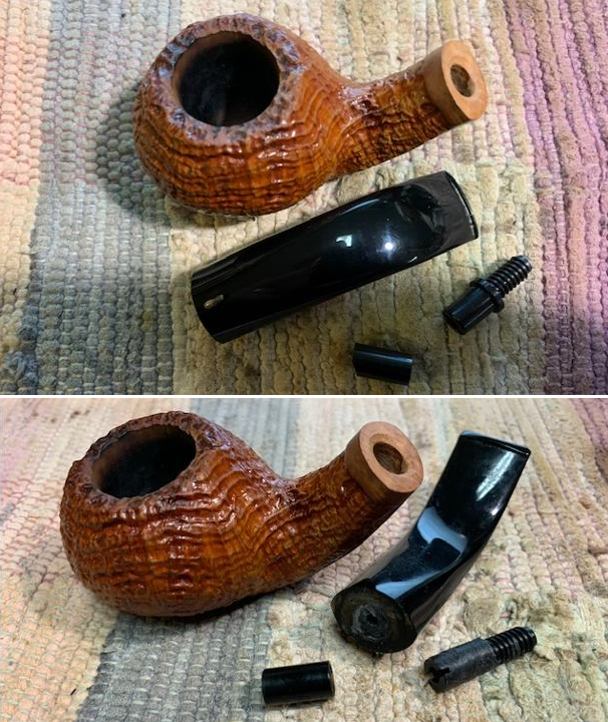
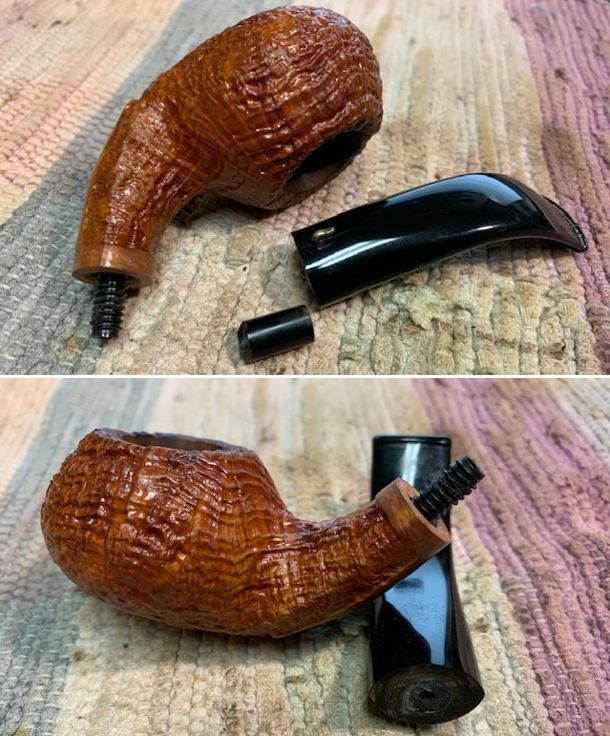
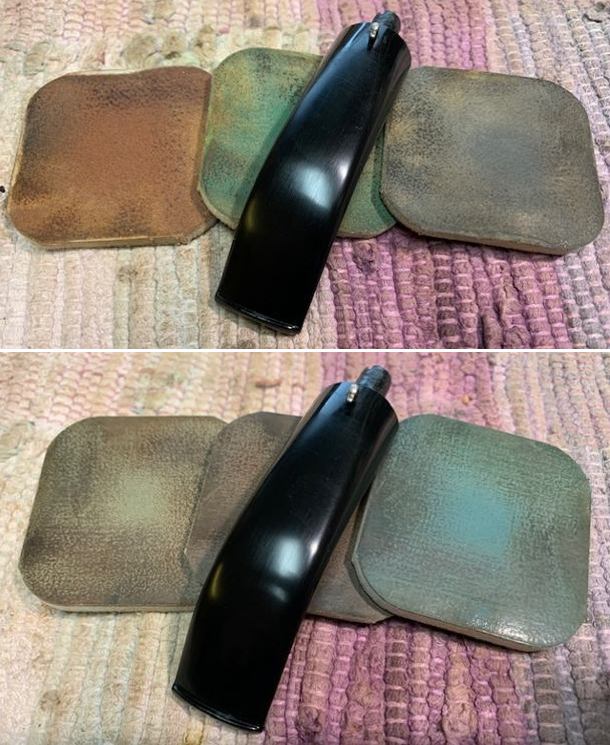
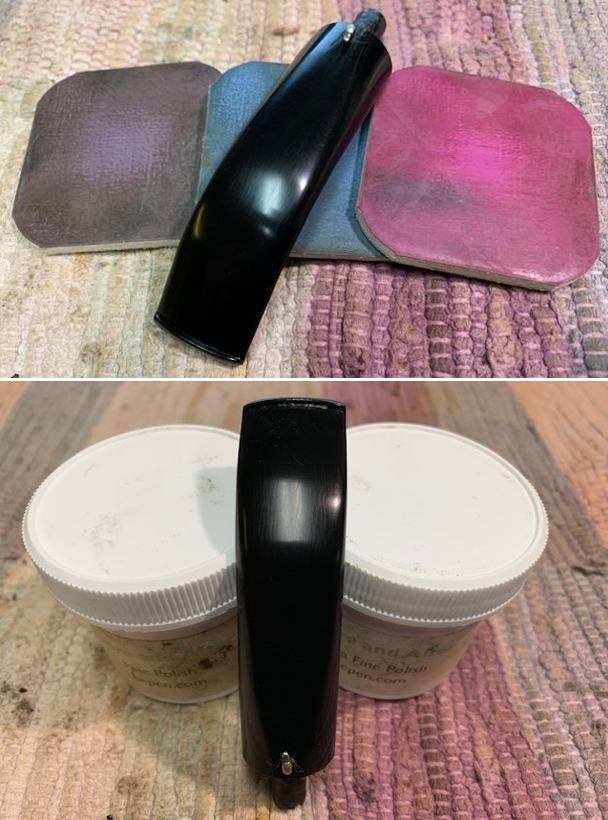
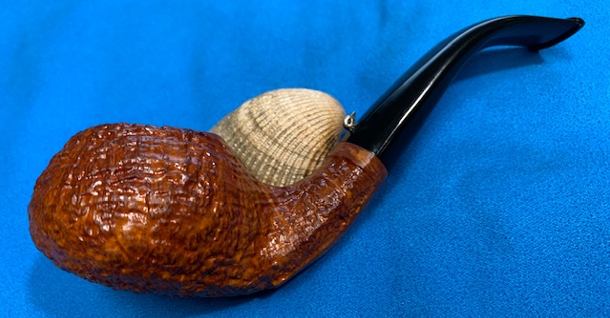
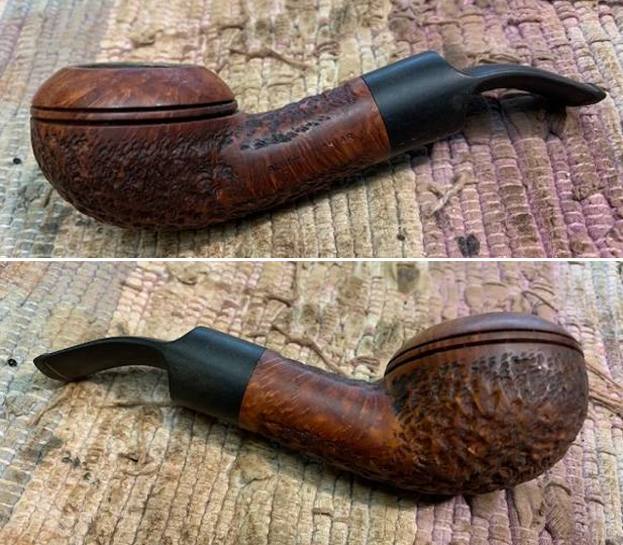
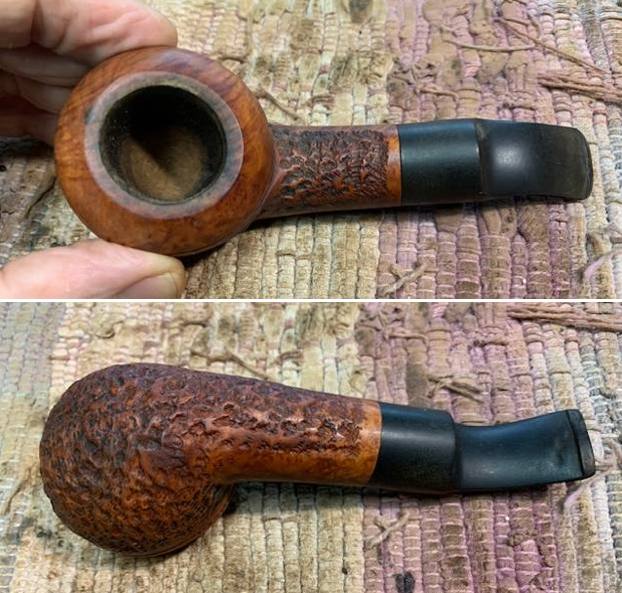
Jeff had done a great job cleaning up the pipe as usual. He reamed the pipe with a PipNet reamer and cut back the cake back to the bare briar. He cleaned up the walls with a Savinelli Fitsall Pipe Knife. He scrubbed the interior of the bowl and shank with pipe cleaners, cotton swabs and alcohol to remove the tars and oils. He scrubbed the exterior of the pipe with Murphy’s Oil Soap and a tooth brush to remove the grime from the finish. He worked on the rim top lava and darkening with the soap and tooth brush. He scrubbed the inside of the stem with alcohol and pipe cleaners. He scrubbed the exterior with Soft Scrub and then soaked it in Before & After Deoxidizer. He washed it off with warm water to remove the Deoxidizer. The pipe looked far better when it arrived.   I took some close up photos of the rim top and also of the stem surface. I wanted to show how well it had cleaned up. There was some darkening on the back of the rim top and a dark spot on the front outer edge of the bowl. The inner edge of the bowl looked very good. I also took close up photos of the stem to show the light tooth marks on the surface near the button and on the button itself on both sides. I took a photo of the stamping on the left side of the shank. You can see that it is stamped as noted above. It is clear and readable.       I removed the stem from the shank and took a photo of the parts. You can see the aluminum stinger in the tenon end. It is pointed and removable.I started the work on the pipe by cleaning up the darkening on the rim top and the darkening to the inside edge of the bowl and the burn spot on the outer edge first. I topped the bowl on a topping board with 220 grit sandpaper. I then worked on the darkening on the inner edge of the bowl with a folded piece of 220 grit sandpaper. It looked much better. I polished the smooth briar bowl cap and smooth patches on the shank with micromesh sanding pads. I dry sanded it with 1500-12000 grit pads and wiped it down with a damp cloth after each pad. I worked some Before & After Restoration Balm into the surface of the briar with my fingertips and a horsehair shoe brush to clean, enliven and protect the briar. I let the balm sit for 15 minutes and then buffed with a cotton cloth to raise the shine. The photos show the bowl at this point in the restoration process.   I set the bowl aside and turned my attentions to the stem. I “painted” the tooth marks on the stem surface and the button with the flame of a lighter. I was able to raise them significantly. I filled in the remaining marks with clear CA glue and set it aside to cure. I tried to blow air through the stem and found that the air flow was restricted and the draw was really not good. I heated the aluminum stinger with a lighter and was able to remove it from the tenon. I ran some pipe cleaners through the stem and cleaned it and tried the airflow once more. It was perfect.Once the stinger was removed and the repair had cured I used a small file to flatten the repairs on the surface of the stem. I also reshaped the button shape. I sanded it smooth with 220 grit sandpaper. I also sanded out the tooth chatter and marks on the stem surface near the button. I started the polishing of the stem with 400 grit wet dry sandpaper. I polished the stem with micromesh sanding pads – wet sanding with 1500-12000 grit sanding pads. I wiped it down after each sanding pad with Obsidian Oil. I polished it with Before & After Pipe Stem Polish – both Fine and Extra Fine.  The tenon was loose in the shank after I removed the stinger. I heated the metal pick end of an old ice pick with a lighter and inserted it in the tenon to expand it slightly. Then the fit of the tenon in the shank was much more snug.I am excited to finish what turned out to be a beautiful Algerian Briar Rusticated Rhodesian. I put the pipe back together and buffed it with Blue Diamond on the buffing wheel. I gave the bowl and the stem multiple coats of carnauba wax. I buffed the pipe with a clean buffing pad to raise the shine. I also hand buffed it with a microfibre cloth to deepen the shine. It is fun to see what the polished bowl looks like with the grain and the depth of the rustication popping all around it. Added to that the polished  black vulcanite saddle stem was beautiful. This shapely Rusticated Rhodesian is nice looking and the pipe feels great in my hand. It is light and well balanced. Have a look at it with the photos below. The dimensions are Length: 5 ½ inches, Height: 2 inches, Outside diameter of the bowl: 2 inch, Chamber diameter: 1 of an inch. The weight of the pipe is 70 grams/2.47 ounces. It is a beautiful pipe and one that I soon put on the rebornpipes store in the American Pipemakers Section. If you are interested in carrying on the pipeman’s legacy. Thanks for walking through the restoration with me as I worked over this pipe. Thanks to each of you who are reading this blog.

Restoring a Savinelli Porto Cervo 677KS Rusticated Bent Brandy


Blog by Steve Laug

Not long ago a good friend of mine here in Vancouver wrote me an email about a repair on one of his pipes. Pre- COVID we used to have lunch together at least every other month and go for pipe walks after the meal. Since COVID hit we have met a couple of times for me to fix his pipes and enjoy a bowl on my front porch. So I am always glad to hear from him because it means at least on one end of the repair we will have a visit and a few bowls. Here is the email he sent me.

Hi Steve – I’ve a Savinelli that has the top centre of the button worn away — could you find time to fix it for me, please?

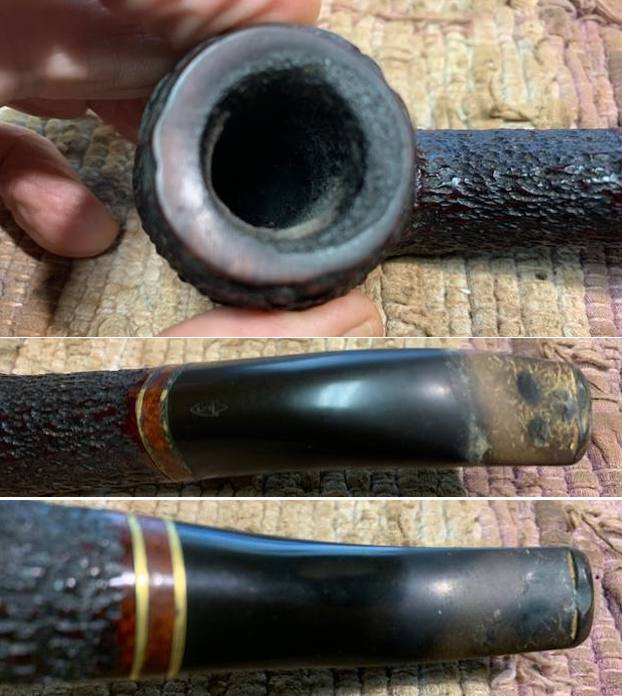
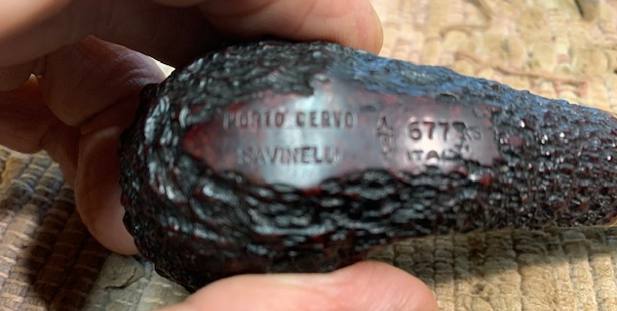
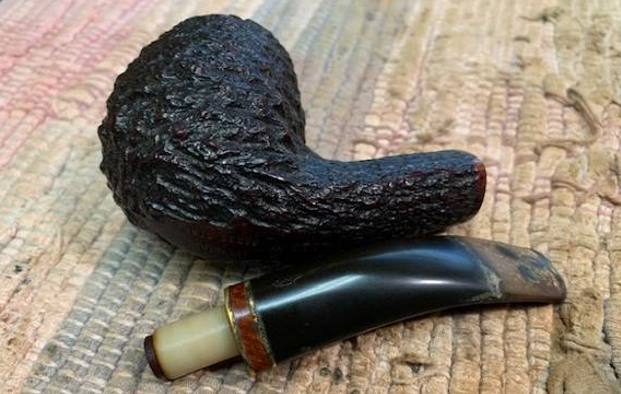
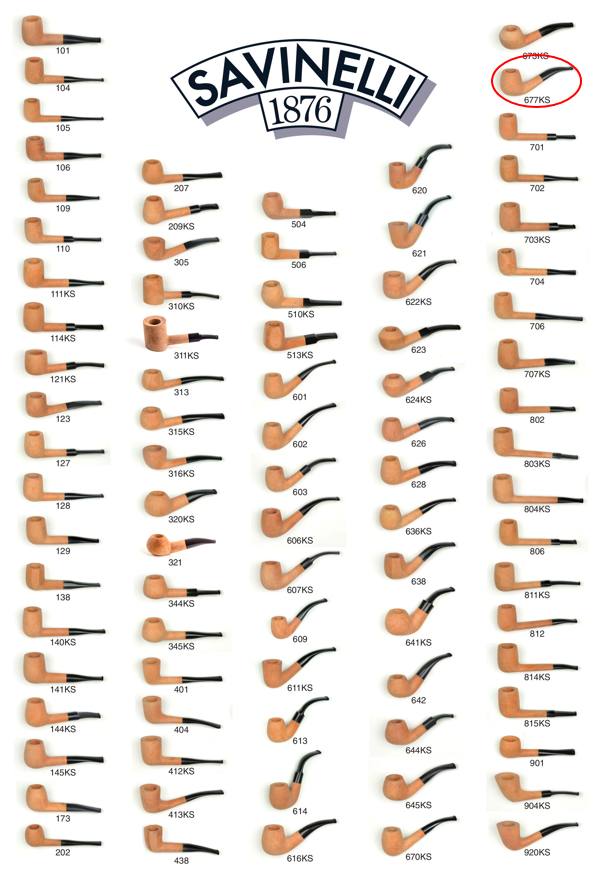
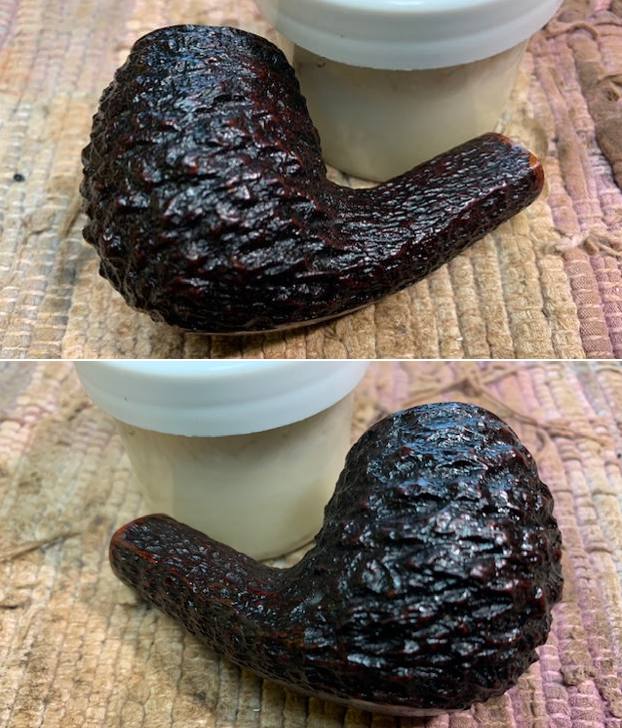
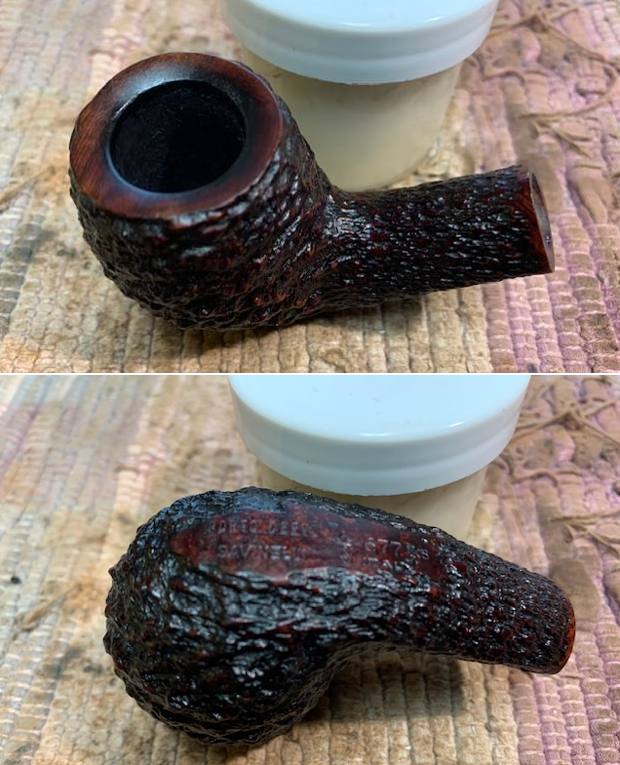
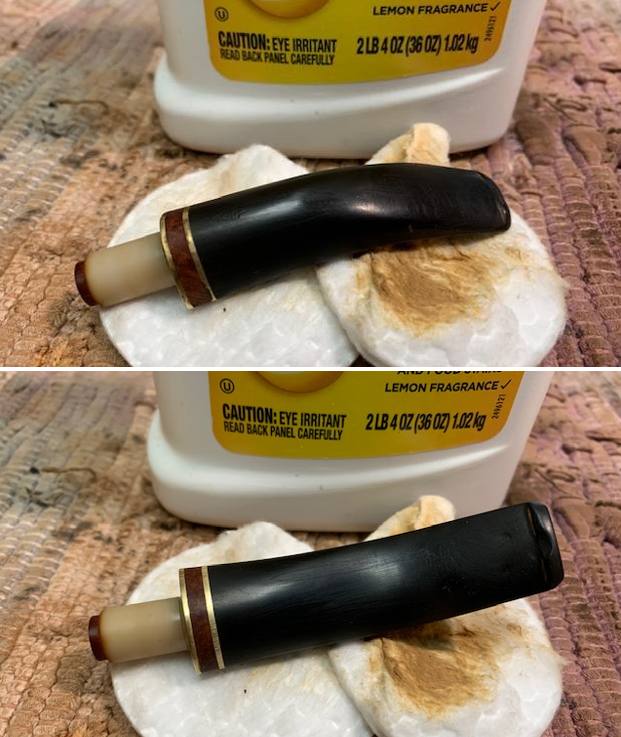
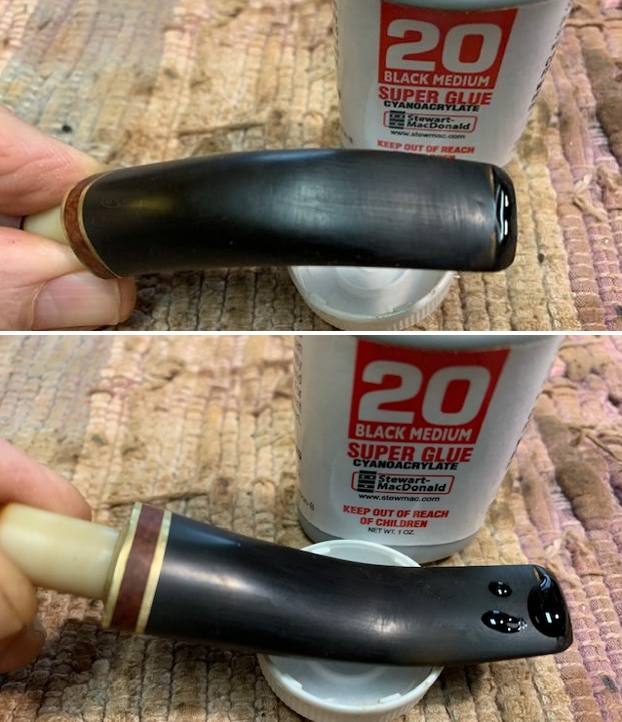
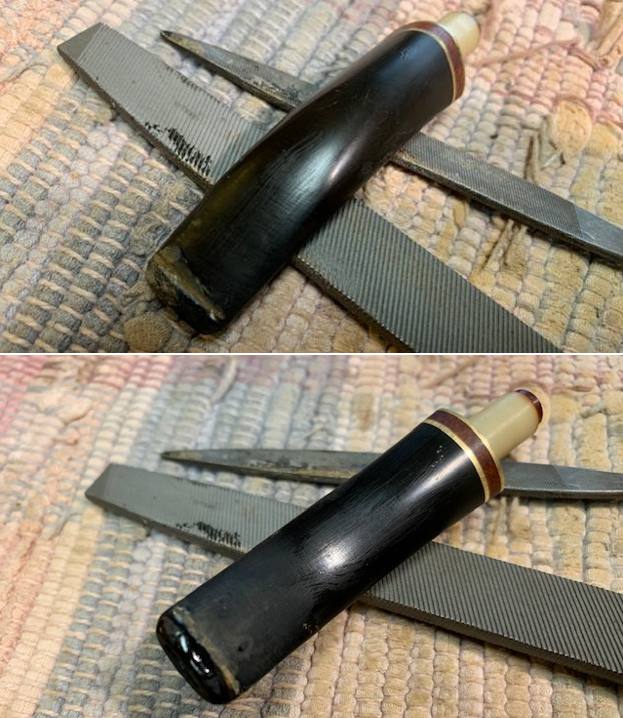
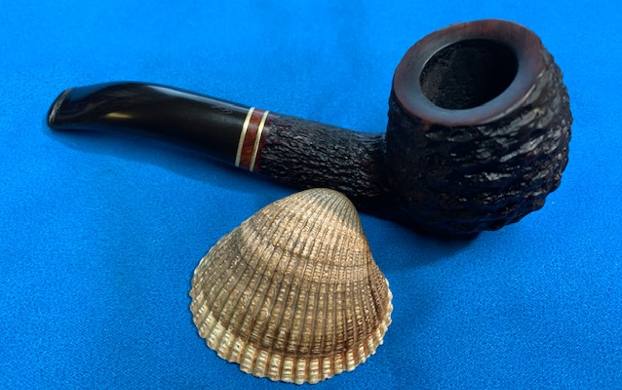
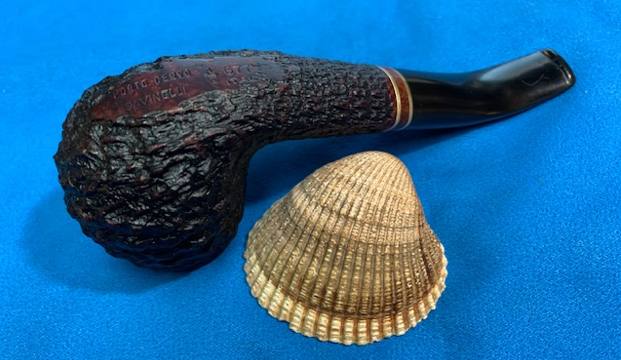
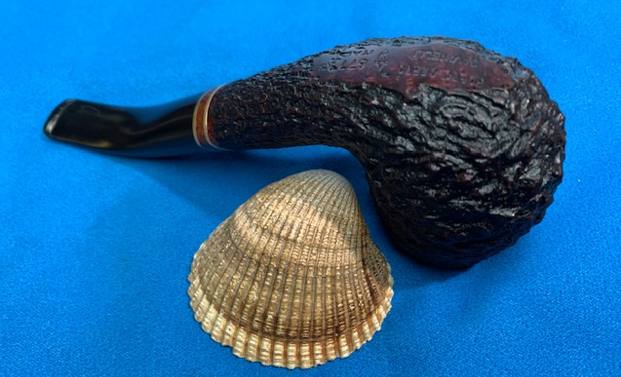
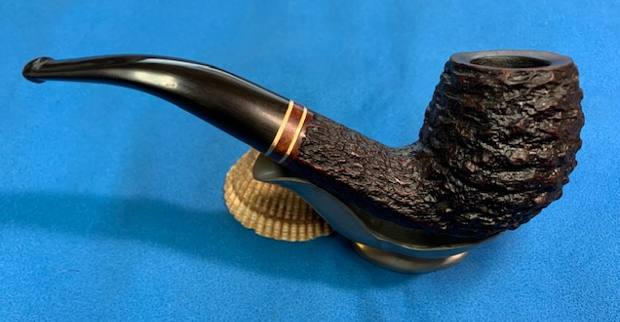
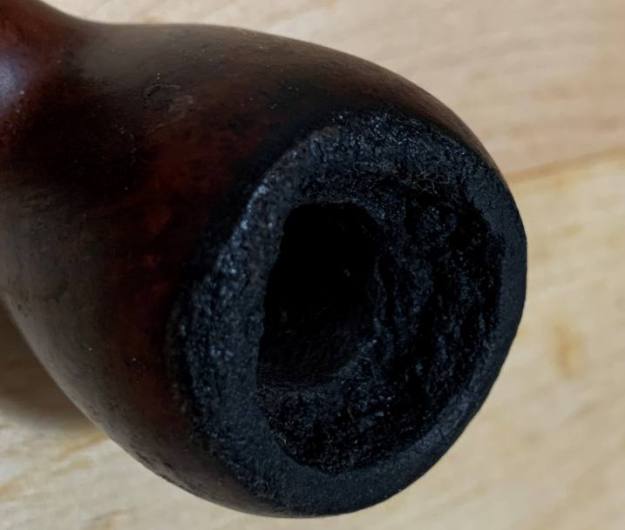
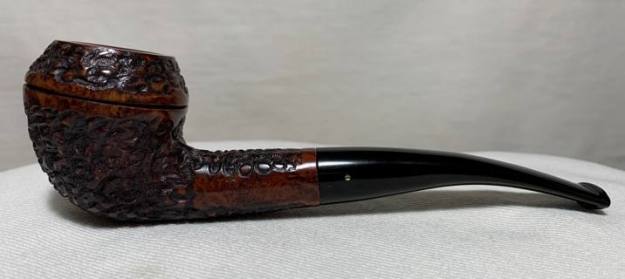
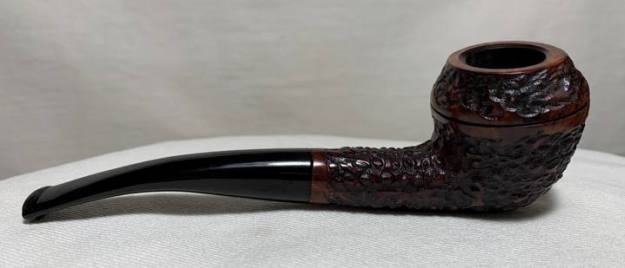
I wrote him back and told him I would gladly repair the pipe for him. He dropped it by a few days later and it joined the queue of four others that I had to work on. Today though is the day to work on his pipe. The pipe is a Savinelli Porto Cervo in a Rusticated Brandy 677KS shape with a triangular shank and stem. It has coral like rustication on it and it is a nice looking pipe. When I work on repairing his pipe’s I generally do a thorough ream and clean job on them. This had a thick soft cake in the bowl as he generally smokes aromatics. The rim top had a very thick coat of lava. The pipe was a filter pipe but he rarely uses a filter. The internals were also dirty and sticky with the tars and oils. The stem was oxidized, calcified and had tooth marks on the button and on the surface of the stem on both sides. The button was worn down in the top middle. I took some photos of the pipe before I started my clean up.  I took a photo of the rim top to show the thick, soft cake and the thick lava coat on the rim top. It was sticky. The exterior was also sticky and a bit dull in spots. I like to work on clean pipes so I decided that would be the first order of business on this one before I address the issues with the stem button. I took photos of the top and underside of the stem to show the oxidation, calcification and tooth damage on both sides of the stem surface and button.I took a photo of the heel of the bowl and the underside of the shank to show the stamping. It reads Porto Cervo [over] Savinelli on the heel of the bowl. That is followed by the Savinelli shield S logo then 677 KS [over] Italy. It is clear and readable.I removed the stem from the shank and took a photo to give a sense of the look of the pipe. It is a nice looking pipe and the two brass rings separated by a piece of briar on the stem is a nice touch.If you would like to read about the history of Savinelli, Pipedia has a great article and some amazing photos of different pipes, lines and catalogue pages. Here is the link – check it out (https://pipedia.org/wiki/Savinelli).  I also have included a Savinelli Shape Chart from the site for reference to the 677 KS Shape. I have circled it in red (https://pipedia.org/images/4/41/Sav_Shape_Chart_2017.jpg).Now it was time to start the clean up work on the pipe. I mentioned above that I like to work on clean pipes so I began by reaming the sticky, soft cake back with a PipNet pipe reamer and the second cutting head. I cleaned up the reaming with a Savinelli Fitsall Pipe Knife. It began to look and smell better! With the bowl reamed I turned to clean out the tars and oils in the shank and in the airway in the bowl and the stem. I scraped the airway clean with a pen knife as the first few cotton swabs told me that there was a ridge of tar mid shank. I scrubbed the shank and airway in the stem with isopropyl alcohol (99%) and cotton swabs and pipe cleaners and the pipe smelled clean with just a hint of my friend’s pipe tobacco of choice. Now it was time to work on the externals. I carefully scraped off the thick lava coat with a small pen knife. With that finished I scrubbed the briar and the surface of the stem with undiluted Murphy’s Oil Soap and a tooth brush. I was able to remove the dust and debris from the rustication and more of the tars on the rim top. I used a folded piece of 220 grit sandpaper to further clean up the rim top. I gave it a quick polish with 1500 grit micromesh.I worked some Before & After Restoration Balm into the surface of the briar with my fingertips and a horsehair shoe brush to clean, enliven and protect the briar. I let the balm sit for 15 minutes and then buffed with a cotton cloth to raise the shine. The photos show the bowl at this point in the restoration process. I set the bowl aside and turned my attention to the stem. I gave the surface a quick sand with 220 grit sandpaper to knock of the oxidation and the calcification. It was quite dirty so I needed to clean it before rebuilding the button. I “painted” the surface of the stem with the flame of a Bic lighter and was able to lift the tooth marks on the top side. I was able to lift the majority of those on the underside as well. I then scrubbed the stem with Soft Scrub to remove the rest of the oxidation from the stem. It worked quite well. I built up the deep tooth marks on the button with a Black Rubberized Super Glue. I layered it and sprayed it with an accelerator before adding another layer and repeating the process until the surface was where I wanted it. I set it aside to cure overnight.In the morning the repair had hardened. I used a file to flatten the repairs and to recut the edge of the button on both sides. I also flattened the top and underside of the button and reshaped it with the files. I sanded the repaired areas smooth with 220 grit sandpaper and reshaped them further. I started the polishing with 400 grit wet dry sandpaper.I polished the stem with micromesh sanding pads – wet sanding with 1500-12000 grit sanding pads. I wiped it down after each sanding pad with Obsidian Oil. I polished it with Before & After Pipe Stem Polish – both Fine and Extra Fine. I am excited to finish this Savinelli Porto Cervo 677KS Rusticated Bent Brandy. It turned out to be a nice looking Bent Brandy. It has a rusticated finish around the bowl with a smooth rim top. I put the pipe back together and buffed it with Blue Diamond on the buffing wheel. I gave the bowl multiple coats of Conservator’s Wax and the stem multiple coats of carnauba wax. I buffed the pipe with a clean buffing pad to raise the shine. I hand buffed it with a microfiber cloth to deepen the shine. It is fun to see what the polished bowl and the black vulcanite stem the twin rings of brass with briar sandwiched between them. Have a look at it with the photos below. The dimensions are Length: 5 ½ inches, Height: 1 ¾ inches, Outside diameter of the bowl: 1 ¼ inches, Chamber diameter: ¾ of an inch. The weight of the pipe is 57 grams/2.01 ounces. It is a beautiful pipe and one I am sure my friend will pick up and reacquaint himself with soon. Thanks for walking through the restoration with me as I worked over this pipe. Thanks to each of you who are reading this blog.

Breathing Life into a Peterson’s Republic Era ¼ Bent “Wicklow” 405S Saddle Stem Apple


Blog by Steve Laug

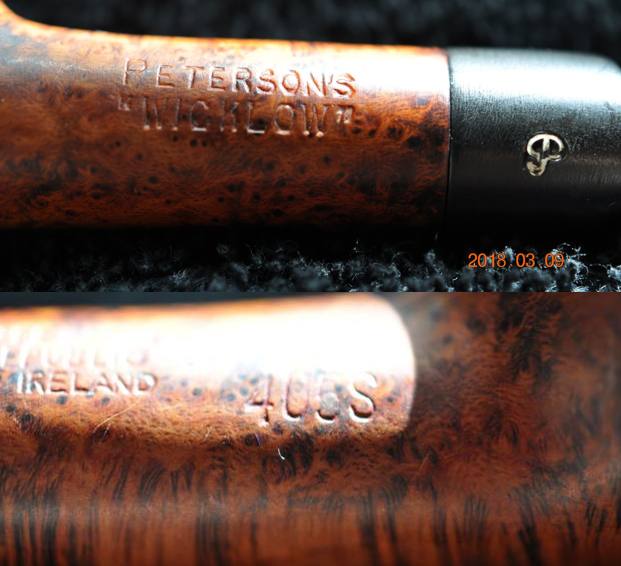
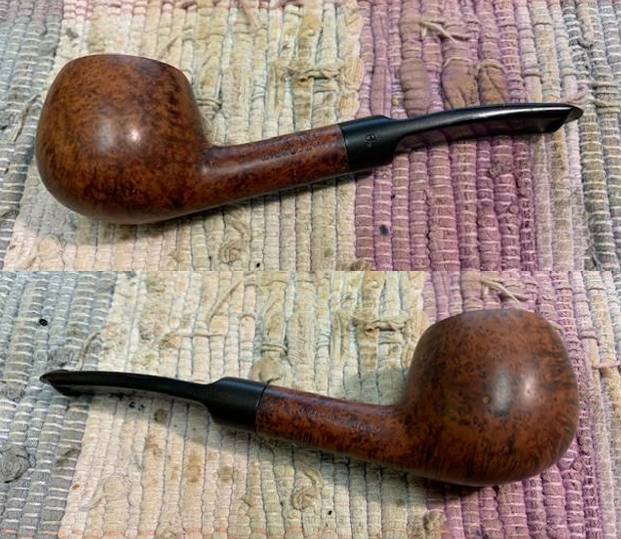
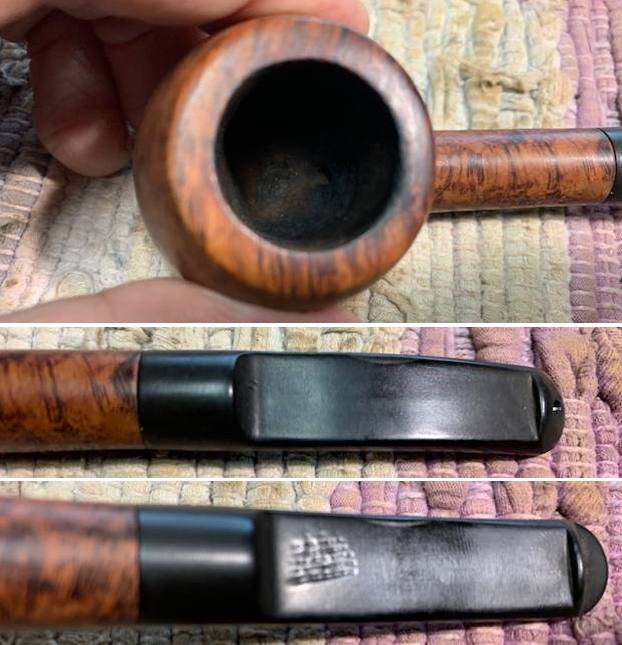
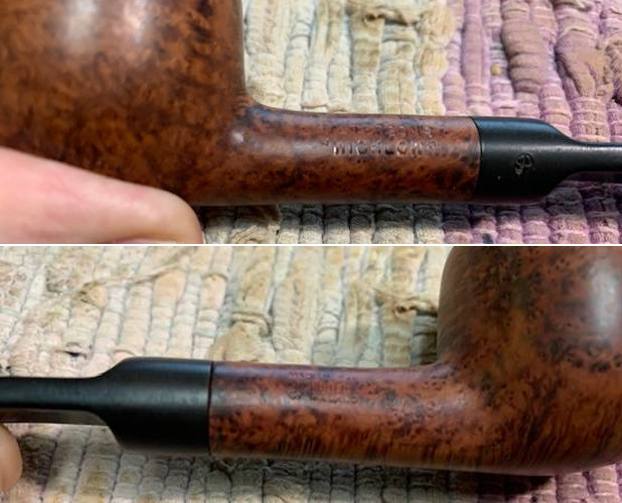
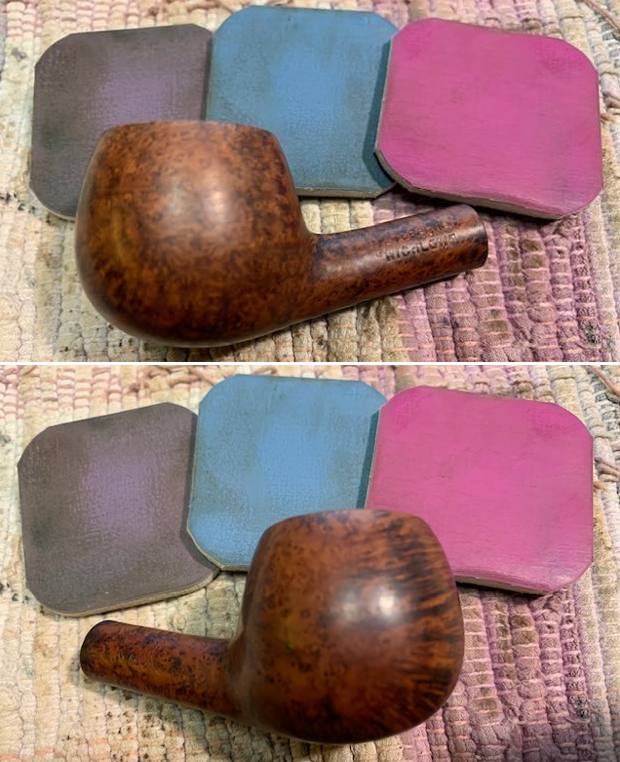
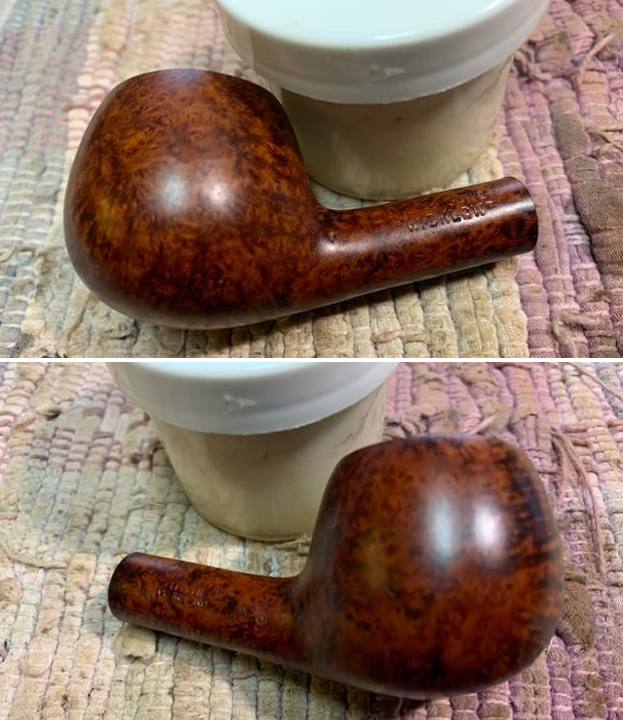
The next pipe I have chosen is smooth finished Peterson’s Saddle Stem Apple with a filter stem. This Apple has a medium brown finish around the bowl sides and rim top. It also came to us from the estate of Anglican minister that was a great friend of mine here in Canada. The Apple had a great grain on the shank that was in great condition. The finish on the bowl sides was dirty. It was stamped on the left side of the shank and read Peterson’s [over] “Wicklow”. On the right side of the shank it is stamped Made in the Republic of Ireland in three lines. Next to the bowl it was stamped with the shape number 405S. There was a thick cake in the bowl and light spattering of lava on the rim top and the inner edge of the bowl. There was darkening on the back side of the rim top. The stem was lightly oxidized and had light tooth marks and chatter on the top and underside on and near the button. There were some deep hash marks on the underside of the stem next to the saddle. The “P” stamp on the left side of the saddle stem is clear. Jeff took photos of the pipe before his cleanup work. They tell the story and give a glimpse of the promise that we see in this pipe.   Jeff took photos of the rim top and stem to show the general condition of the pipe. The bowl is thickly caked and the rim top and edges have some light lava overflow and some darkening on the back side of the rim top. The stem is lightly oxidized and there are some hash marks near the saddle on the underside of the stem. There are light tooth marks on the top and underside near the button. Jeff took some photos of the bowl sides and heel to show the grain that was around this bowl. It is a nice looking pipe.  He took photos of the underside of the shank to show the stamping. The stamping is readable in the photos below and is as noted above.   I am including the information from Pipedia’s article on Peterson pipes. It is a great read in terms of the history of the brand (https://pipedia.org/wiki/Peterson). I have included a bit of the pertinent history here.

1950 – 1989 The Republic Era – From 1950 to the present time, the stamp for this era is “Made in the Republic of Ireland” in a block format generally in three lines but two lines have been used with or without Republic being abbreviated.

During the 1950’s and 60’s the Kapp & Peterson Company was still in the ownership of the Kapp family. However 1964 saw the retiral of the company Managing Director Frederick Henry(Harry) Kapp. 

I turned to “The Peterson Pipe” by Mark Irwin and Gary Malmberg to get some background on the Wicklow Pipe. On page 315 it had the following information on the Wicklow pipe.

Wicklow (1969-) First appearance of this line exclusive to Iwan Ries, handmade black sandblast finish with twin bore mouthpiece. In 1987 offered with a matte-brown finish, nickel band and P-lip mouthpiece; in 2011 as a custom line from Smokingpipes.com in a deep-red sandblast finish with a nickel band. In 2014 released for Italy in brown with a sterling band, vulcanite mouthpiece in fishtail or P-lip, hot-foil P. 

I knew that I was dealing with a Republic Era pipe made between 1969 and the present. It is bit of anomaly in that it does not match any of the descriptions above. The one I have has a matte-brown finish but does not have a band. It does have a P-lip mouthpiece. It is also a smooth finished pipe and not sandblast. It also has a tenon drilled to receive a 6mm filter. Now it was time to work on the pipe. 

Jeff had done a great job cleaning up the pipe as usual. He reamed the pipe with a PipNet reamer and cut back the cake back to the bare briar. He cleaned up the walls with a Savinelli Fitsall Pipe Knife. He scrubbed the interior of the bowl and shank with pipe cleaners, cotton swabs and alcohol to remove the tars and oils. He scrubbed the exterior of the pipe with Murphy’s Oil Soap and a tooth brush to remove the grime from the finish. He worked on the rim top lava and darkening with the soap and tooth brush. He scrubbed the inside of the stem with alcohol and pipe cleaners. He scrubbed the exterior with Soft Scrub and then soaked it in Before & After Deoxidizer. He washed it off with warm water to remove the Deoxidizer. The pipe looked far better when it arrived.   I took some close up photos of the rim top and also of the stem surface. I wanted to show how well it had cleaned up. There was some darkening on the back of the rim top and some damage on the inner edge of the bowl at the back. I also took close up photos of the stem to show the light tooth marks on the surface near the button and the hash marks near the saddle on the underside.I took a photo of the stamping on the sides of the shank. You can see that it is stamped as noted above. It is clear and readable. I took the pipe apart and took photos of the pipe. It is a good looking pipe and has some great grain around the bowl. In the second photo you can see the drilled tenon made to receive a filter.   I cleaned up the darkening on the rim top and the damage to the inside edge of the bowl with a folded piece of 220 grit sandpaper. It looked much better.I polished the briar bowl and shank with micromesh sanding pads. I dry sanded it with 1500-12000 grit pads and wiped it down with a damp cloth after each pad. I worked some Before & After Restoration Balm into the surface of the briar with my fingertips to clean, enliven and protect the briar. I let the balm sit for 15 minutes and then buffed with a cotton cloth to raise the shine. The photos show the bowl at this point in the restoration process.   I set the bowl aside and turned my attentions to the stem. I filled in the hash marks on the underside of the stem with clear CA glue and set it aside for the repair to cure.Once the repair had cured I sanded it smooth with 220 grit sandpaper. I also sanded out the tooth chatter and marks on the stem surface near the button. I started the polishing of the stem with 400 grit wet dry sandpaper.I touched up the gold stamping on the “P” with Rub’n Buff Antique Gold. I pressed it into the stamping with a tooth pick and buffed it off with a soft cotton pad. The product works very well to give that gold foil look to the stamp. I polished out the light tooth marks on the stem with micromesh sanding pads – wet sanding with 1500-12000 grit sanding pads. I wiped it down after each sanding pad with Obsidian Oil. I polished it with Before & After Pipe Stem Polish – both Fine and Extra Fine.    I am excited to finish this Republic Era Peterson’s “Wicklow” 405S Saddle Stem Apple with a filter stem. I put the pipe back together and buffed it with Blue Diamond on the buffing wheel. I gave the bowl and the stem multiple coats of carnauba wax. I buffed the pipe with a clean buffing pad to raise the shine. I also hand buffed it with a microfibre cloth to deepen the shine. It is fun to see what the polished bowl looks like with the grain popping all around it. Added to that the polished  black vulcanite saddle stem was beautiful. This shapely Classic Peterson’s Apple is nice looking and the pipe feels great in my hand. It is light and well balanced. Have a look at it with the photos below. The dimensions are Length: 5 ½ inches, Height: 1 ½ inches, Outside diameter of the bowl: 1 ¼ inch, Chamber diameter: ¾ of an inch. The weight of the pipe is 37 grams/1.31 ounces. It is a beautiful pipe and one that I soon put on the rebornpipes store in the Irish Pipe Makers section if you are interested in carrying on the pipeman’s legacy. Thanks for walking through the restoration with me as I worked over this pipe. Thanks to each of you who are reading this blog.
Five for the Price of One


Blog by Kenneth Lieblich

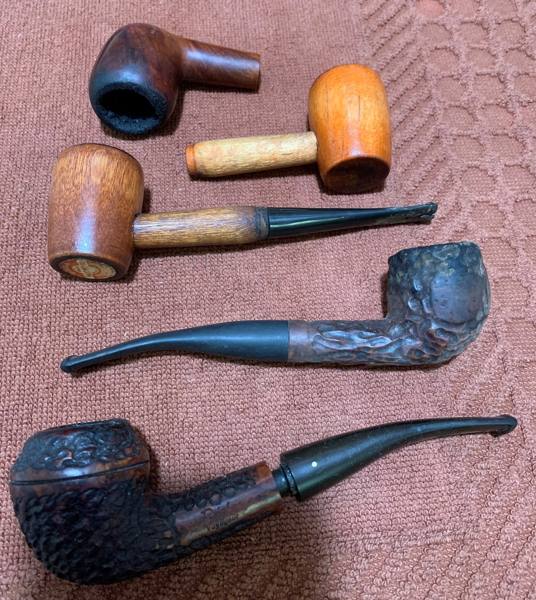
Next on the chopping block is a quintet of pipes. Word has been getting around! My barber’s boss approached me recently about restoring his late grandfather’s pipes. Of course, I was only too happy to oblige. The fellow told me that his grandfather did not have fancy pipes, but he just wanted them to look good. Interestingly, he also asked that I not clean the pipes too much – he wanted some of the olfactory memories to remain. When I got my hands on the pipes, I realized what I was up against. These five pipes were really a mess. Quite frankly, if I had these pipes for myself, I would have tossed some on the firewood pile. But my customer wanted these pipes restored as a nice remembrance of his grandfather – and I completely understand and respect that. Since I restored these pipes all together, I thought I would write up their story altogether too – with a tip of my hat to my customer’s late grandfather.

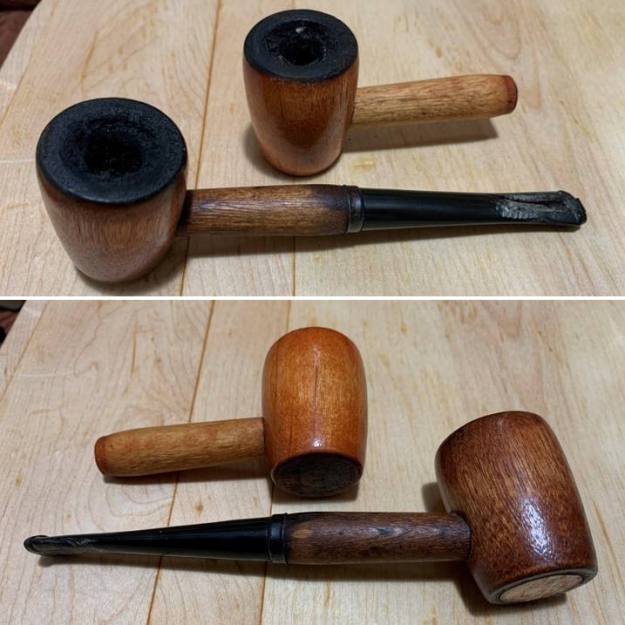
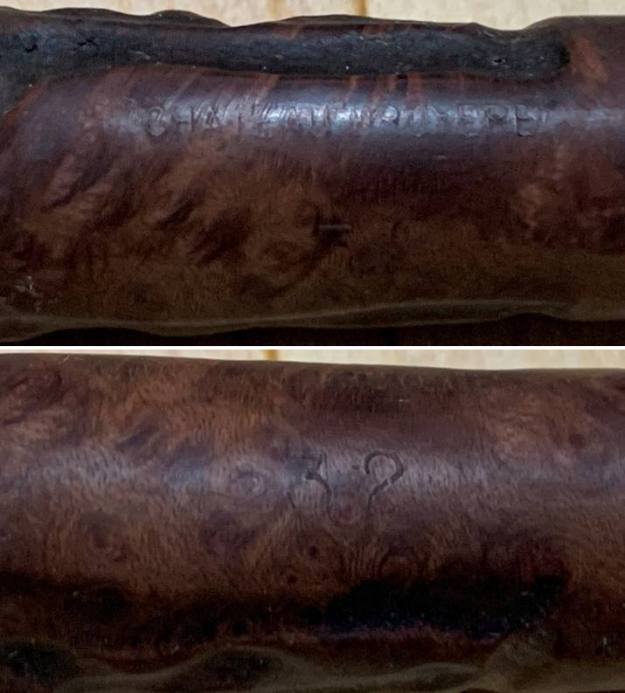
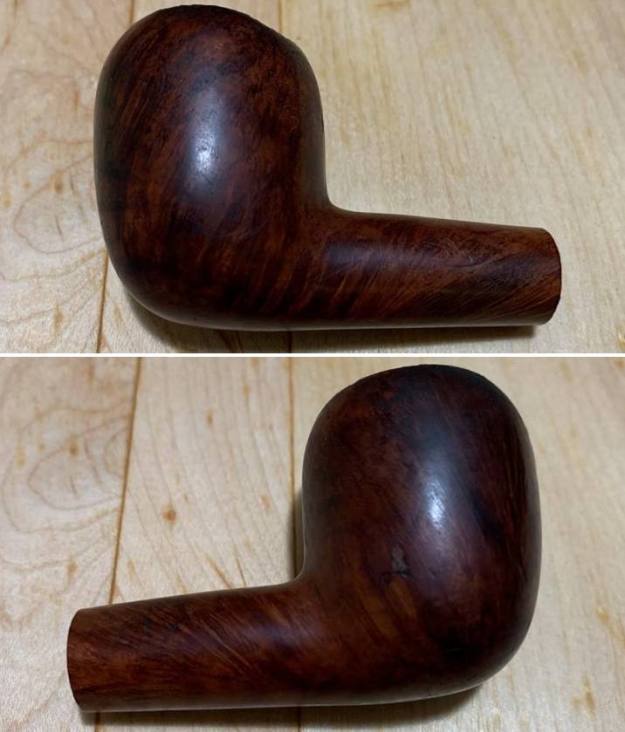
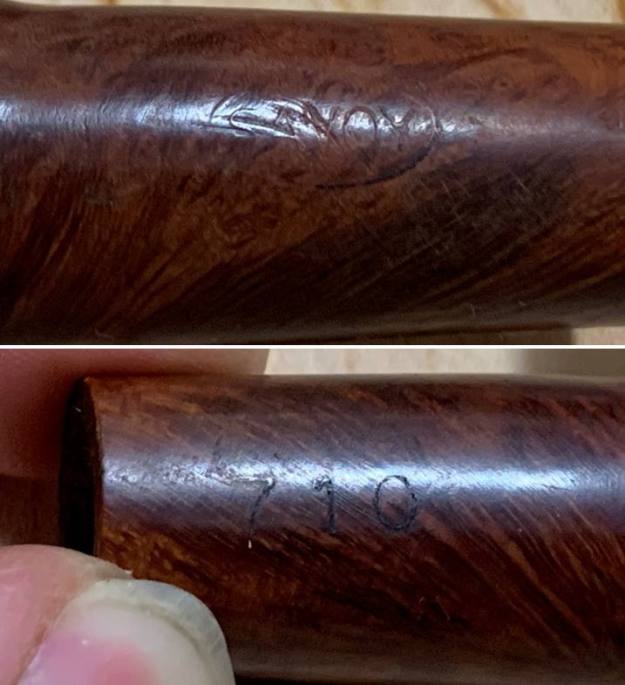
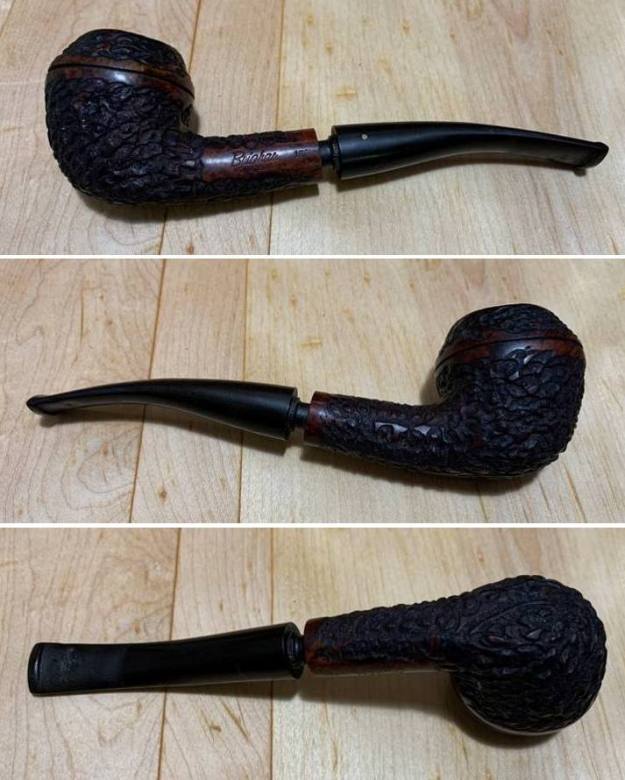
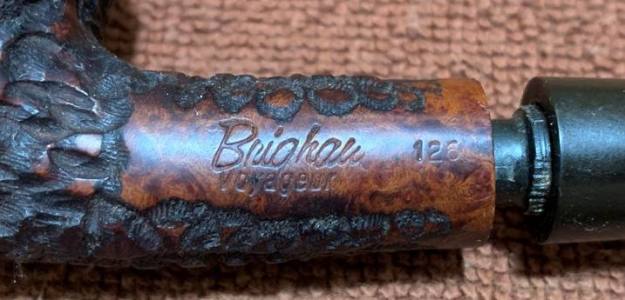
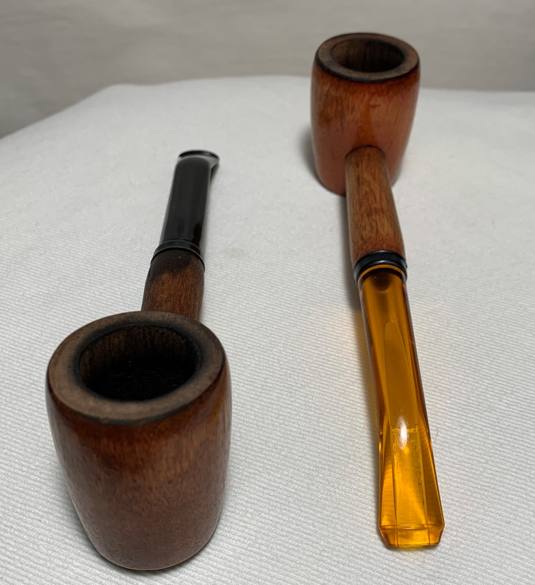
Well, what have we got here? (1) A cherrywood pipe from Missouri Meerschaum, missing its stem; (2) another cherrywood pipe from Missouri Meerschaum; (3) a briar bent pot, marked Château Bruyère 32; (4) a briar egg, marked Savoy 710, missing its stem; and (5) a Brigham Voyageur 126 bent Rhodesian. Missouri Meerschaum is, of course, most famous for being the largest corncob manufacturer in the world – although they do make hardwood pipes too. Herb Wilczak and Tom Colwell’s book, Who Made That Pipe? states that Château Bruyère (as its name suggests) is made in France by an unknown manufacturer. Pipedia tells us that Savoy is a brand of Oppenheimer Pipe/Comoy’s, which was also sold by M. Linkman & Co. Finally, Brigham is the famous Canadian pipe manufacturer. The markings suggest that this Brigham was made after the move of production to Italy.

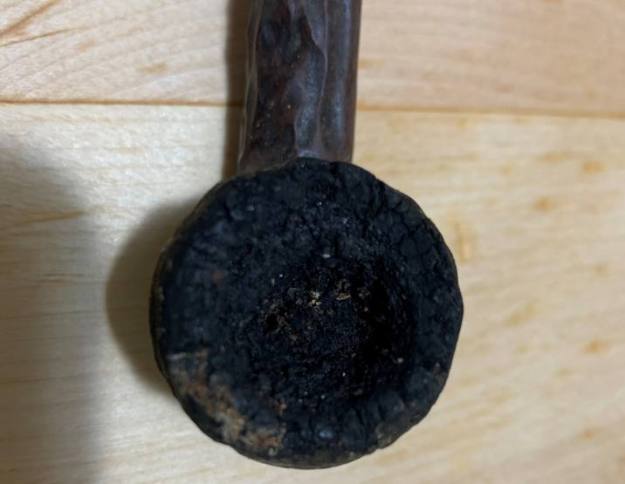
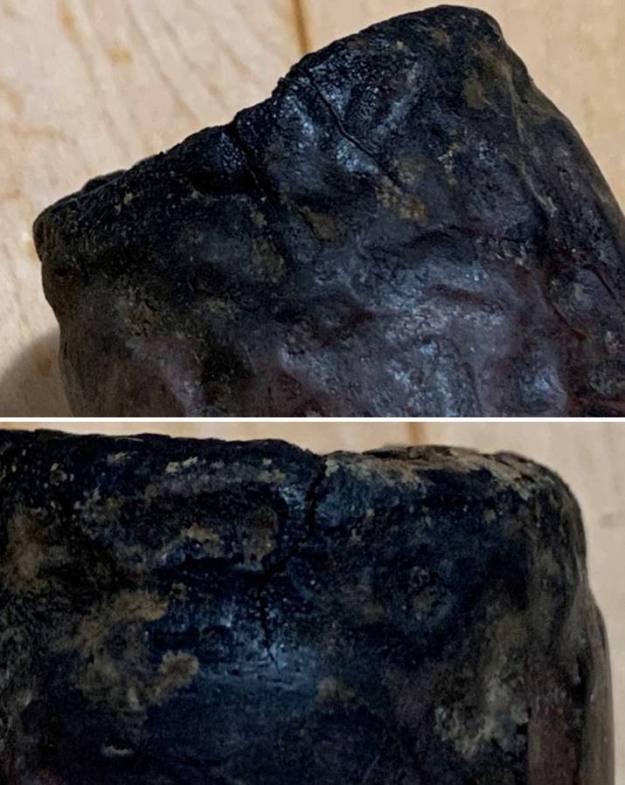
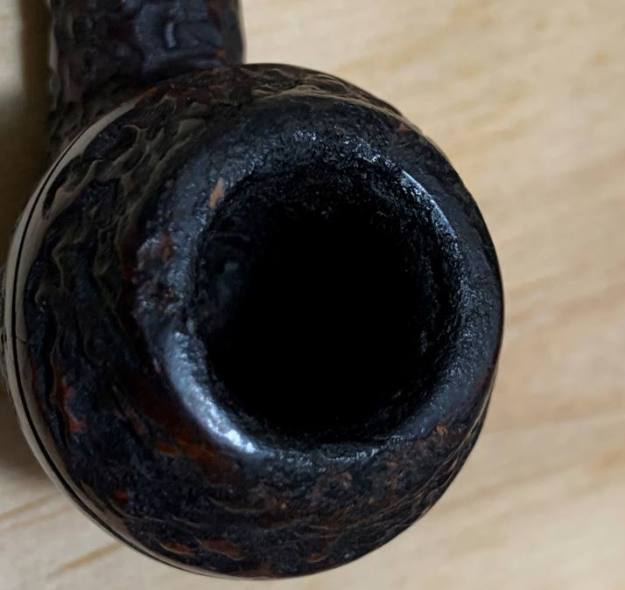
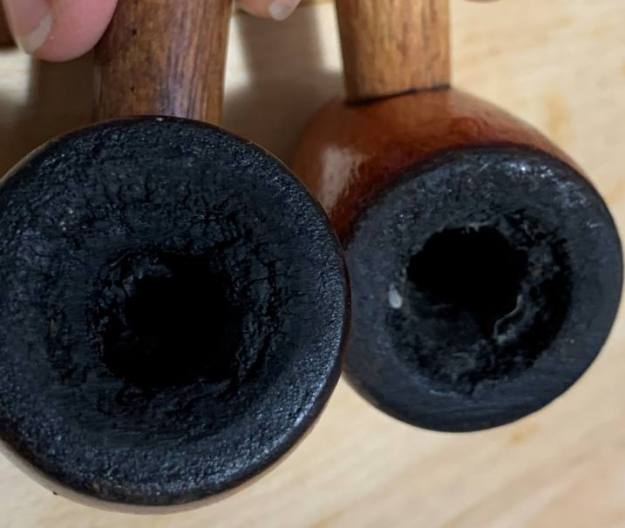
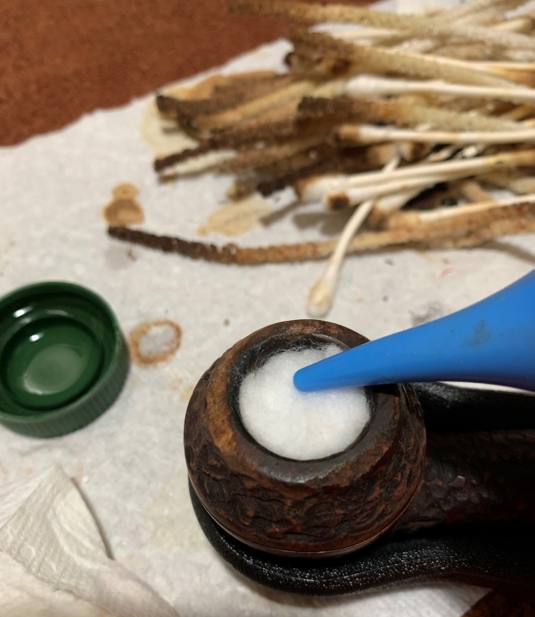
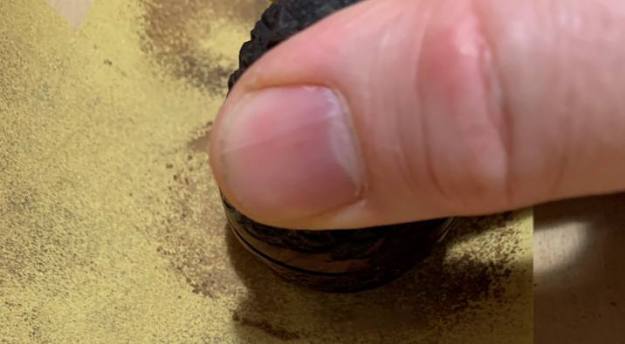
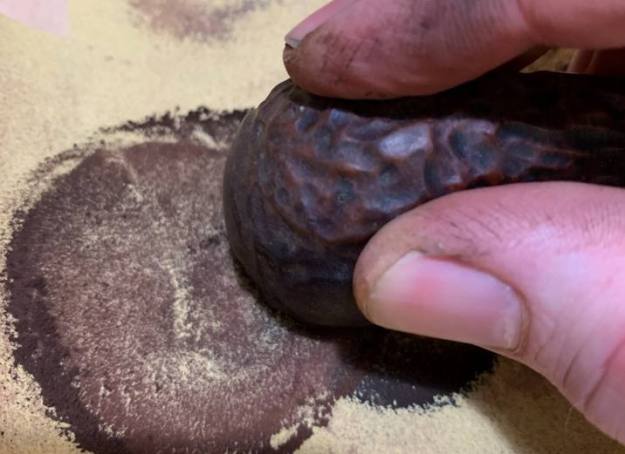
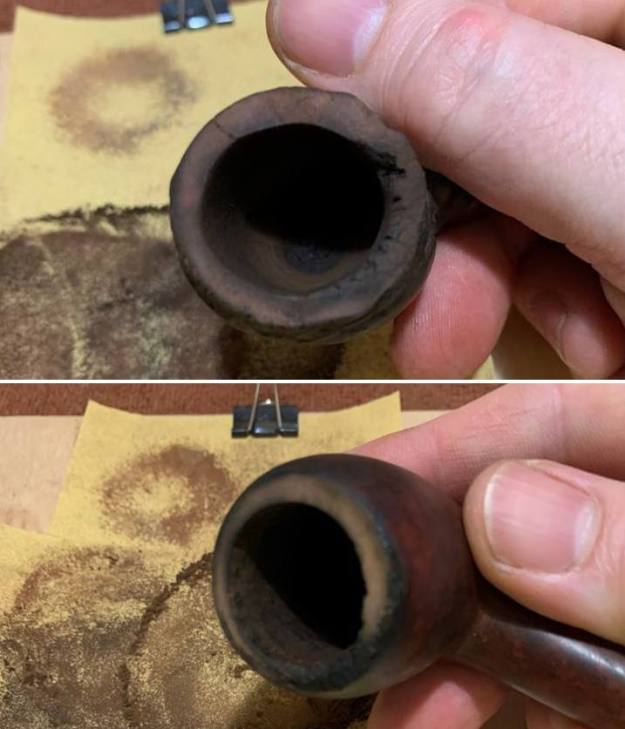
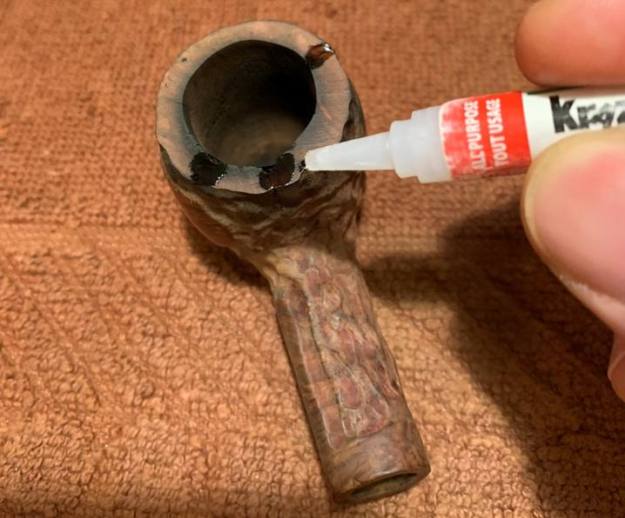
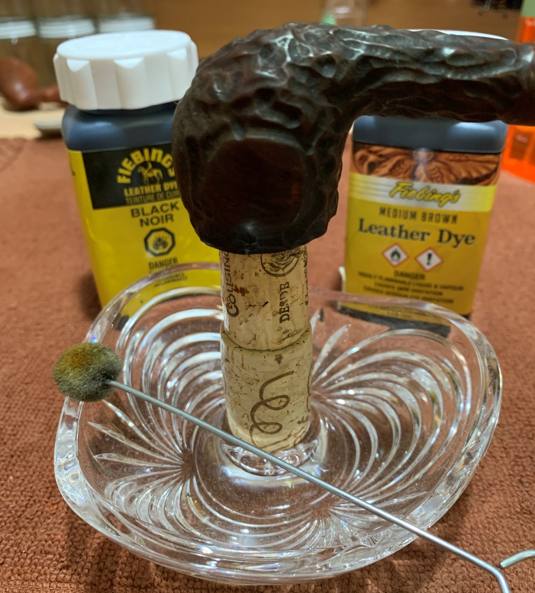
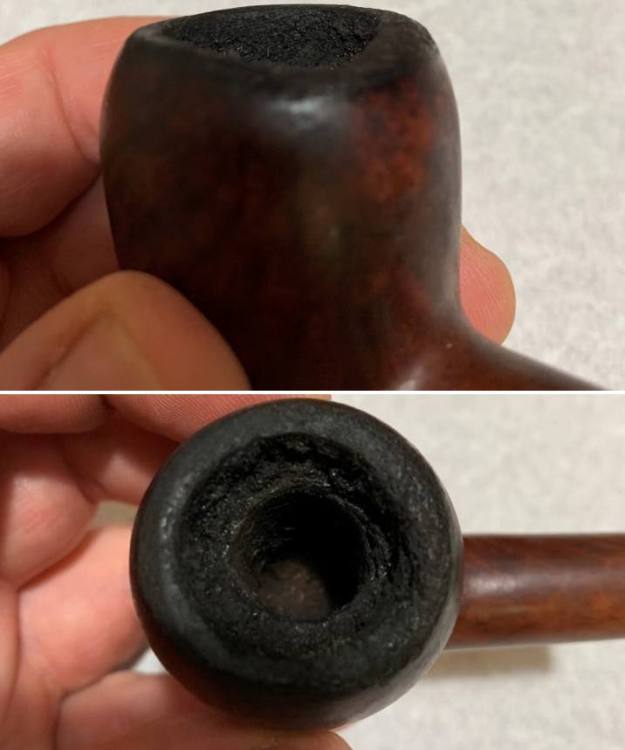
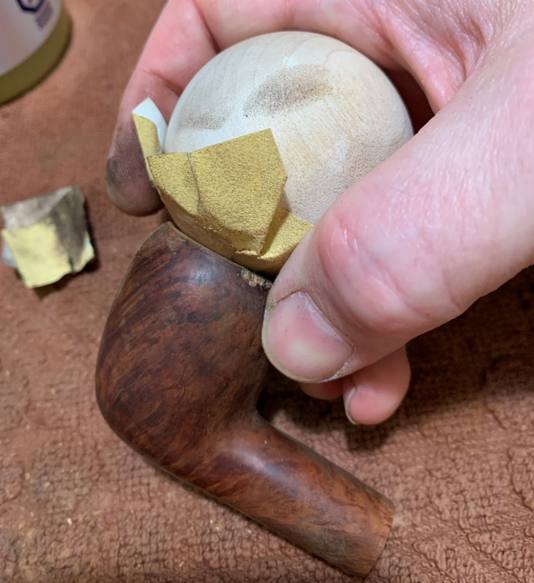
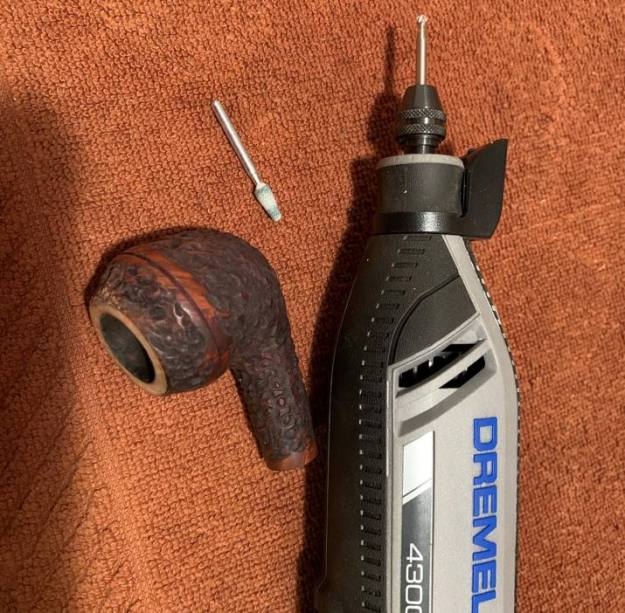
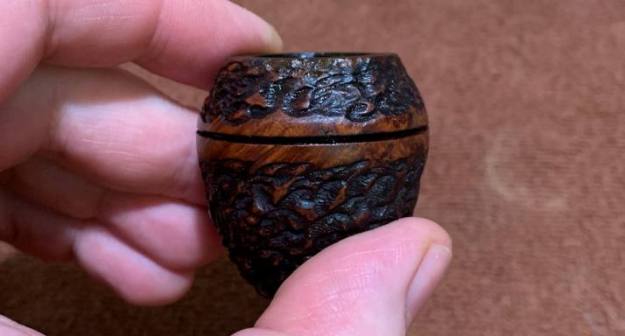
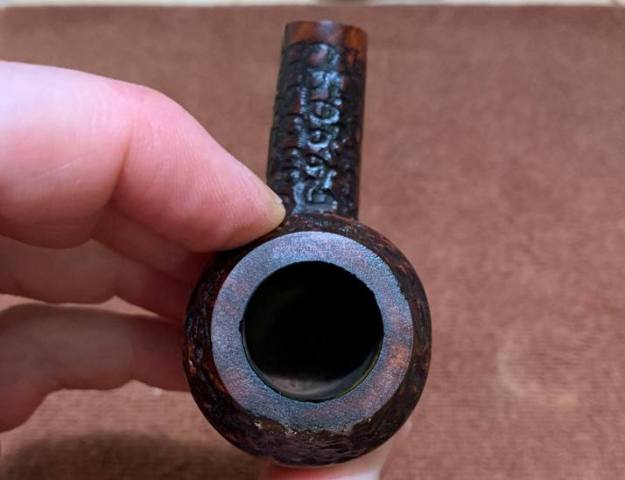
Problems with these pipes? Wow – where to begin? Both cherrywoods needed new stems. After all, one was cracked beyond repair and the other was missing altogether. They had lava and burns all over, and plenty of cake in the bowl. Besides that, the stummels were just a bit grimy. The Château Bruyère was in really bad condition: tons of lava, cake, and serious burning; cracks galore on the rim; but at least the stem had only minor tooth marks and dents. The Savoy would, of course, also need a new stem, but its stummel was also a disaster: some fills; tons of lava and cake; and (worst of all) an enormous burn gouge on the rim. The Brigham was not too bad (compared with the others), but it still had the usual cake and lava. It also looked like the rim had been used to hammer nails! The stems were first on my list. Fortunately, Steve had a couple of new Missouri Meerschaum stems for me to use on the cherrywood pipes. That was the easiest part of this whole restoration! I also had to sculpt a new stem for the Savoy. Stupidly, I forgot to take photos of this procedure, but, suffice it to say, it was tricky getting the tenon to fit correctly and getting the edges of the new stem to match with the existing stummel. On the two pre-existing stems, I took a BIC lighter and ‘painted’ them with flame in order to lift the tooth marks. This was reasonably successful in raising the dents. Then, I cleaned out the insides of the stems with pipe cleaners and isopropyl alcohol. They were terribly dirty and I went through a large number of pipe cleaners in order to clean them up. Once this process was done, the stems went for an overnight soak in the Before & After Hard Rubber Deoxidizer. The following day, I cleaned all of the de-oxidizing sludge off with alcohol, pipe cleaners, et cetera. The oxidation had migrated to the surface and would be fairly straightforward to remove. I scrubbed vigorously with SoftScrub on cotton pads to remove the leftover oxidation. On the Brigham, the tenon had come loose from the stem and needed to be repaired. I used my cyanoacrylate adhesive to sort that problem out and let it set. I also built up the small dents on the Brigham and Château Bruyère stems with cyanoacrylate adhesive and let them fully cure. I then sanded the repairs down with 220-, 400-, and 600-grit sandpapers to meld the repair seamlessly into the stems. This ensured that they keep their shape and look like they should. I then used all nine Micromesh pads (1,500 through 12,000 grit) to bring out the lovely black lustre on the stems. I also used Obsidian Pipe Stem Oil in between each pad scrubbing. I should make quick mention of the stem I made for the Savoy. I had a blank and an old, spare stem to potentially use. I ended up using the blank because it fit better. Making a new stem is tricky and messy business, and Steve is far better (and more experienced) than I am at it. Basically, I used some 220-grit sandpaper to remove the excess material from the tenon (to ensure it fit into the stummel’s mortise) and from the tenon-end of the stem (to ensure that this end matches the shape and thickness of the shank). Once the basic shape is achieved, I use progressively finer sandpaper (and then the MicroMesh pads) to make the stem look just as it should. In this end, I was pleased with the results and I wish I had photos to show you of the process!All five stummels were a terrible mess: loaded with cake, filth, and an overall yucky feel. They had obviously been thoroughly smoked and enjoyed. Quite frankly, the grandfather must have smoked them until there was no more draw! Anyway, I first decided to ream out all of the bowls. I used both the PipNet Reamer and the KleenReem to remove most of the built-up cake – but not all. I didn’t take the cake down to bare briar, as my customer wanted some essence of his grandfather left in the bowls. The one exception to this was the Brigham, and I did ream it completely and brought it down to bare briar. My customer wanted only this pipe to be completely cleaned out. On all five, however, I did clean out the insides of the shanks with Q-tips, pipe cleaners, and isopropyl alcohol. There was a lot of nastiness inside the shanks and it took a lot of cotton to get them clean! I then moved on to cleaning the outside of the stummels with Murphy’s Oil Soap on some cotton pads and also used a tooth brush to get into the crevasses of the Brigham and the Château Bruyère. I actually soaked the rims in Murphy’s for a while, just to loosen up the lava. I followed that up by cleaning the insides of the Brigham with some dish soap and tube brushes. A de-ghosting session seemed in order for the Brigham. The de-ghosting consisted of thrusting cotton balls in the bowl and the shank, and saturating them with 99% isopropyl alcohol. I let the stummel sit for 24 hours. This caused the oils, tars and smells to leech out into the cotton. Finally, a relatively clean and fresh-smelling bowl emerged. There was a great deal of damage to the rims of all the stummels – and that also needed to be addressed. In order to remove the lingering bits of lava, fix any nicks, and tidy up the look, I “topped” the pipes – that is to say, I gently and evenly sanded down the rims on a piece of 220-grit sandpaper. This effectively removed the lava and the damage, without altering the look of the pipes. However, some needed more attention than others. The two cherrywood pipes were straightforward enough, but a fair amount of work was needed on the other three. The Château Bruyère, as you will have seen, had fairly horrific damage to the wood of the bowl. There were so many cracks and burns that I was not sure if anything meaningful could be done. I did top the bowl, but stopped before I took too much off. There was no getting around the fact that this pipe was not going to be like new. I was comforted by the fact that this pipe was simply being cleaned up and was not going to be smoked again. I sealed off the cracks with cyanoacrylate adhesive, let them cure, and then sanded them smooth. It made a huge difference.But the Château Bruyère still needed a bit more help: re-staining. In order to create some external beauty to this pipe, I opted for aniline dye. I applied my own mixture of some of Fiebing’s Medium Brown Leather Dye and some Fiebing’s Black Leather Dye. I then applied flame in order to set the colour. Worked like a charm! The pipe looked so much better after this.The Savoy had a large valley running along the rim of the bowl (not to mention some considerable burning). A combination of techniques was used to sort this out. I topped the stummel to start, but then I took a solid wooden sphere, wrapped sandpaper around it, and sanded it thoroughly. This was to achieve on the inner part of the rim the same thing that I achieved by “topping” on sandpaper. I then built up the remaining wound with a mixture of briar dust and cyanoacrylate adhesive. I was quite pleased with the results. Finally, I added a brass ferrule to the end of the shank and glued it in place. It gave the pipe a snazzy look. The Brigham was also tricky, but for a different reason. The Brigham had what I like to call a “broken nose”. The front edge was smashed in and would need to be built up. More than that, the repair would need to be rusticated so as to match the original rustication of the pipe. I am always worried about this sort of work because I dread the possibility of not getting the match right. In this case, I topped the Brigham first, but only slightly – just enough to make it neat and tidy. Then I built up the edge with a mixture of briar dust and cyanoacrylate adhesive. Then, I topped it a second time in order to even out the repair with the rim. Finally, I got out my Dremel and used that to rusticate the pipe’s “nose”. The results were quite good. Now, with the damage repaired on all five pipes, it was time to sand down the stummels. Just like the stems, I used all nine Micromesh pads (1,500 through 12,000 grit) to sand everything smooth on the three briar pipes (I did not sand the cherrywoods). A light application of Before & After Restoration Balm brought out the best in the stummels’ grain

Then it was off for a trip to the buffer. A dose of White Diamond and a few coats of carnauba wax were just what these pipes needed to shine (literally and figuratively). The polishing was the cherry on top of a long road of recovery for these five pipes. The pipes began in the hands of a man who clearly loved smoking them. His grandson, honouring his grandfather’s memory, wanted them to look good again – but not so new that the essence of his grandfather was lost. It was my job to make sure that his grandfather was still in those pipes. I know that my customer will enjoy looking at those pipes (and remembering) for many years to come. I hope you enjoyed reading the story of these pipes as much I as I did restoring them. If you are interested in more of my work, please follow me here on Steve’s website or email me directly at kenneth@knightsofthepipe.com. Thank you very much for reading and, as always, I welcome and encourage your comments.

Restoring a Large Ben Wade Danish Hand Model 100 Freehand


Blog by Steve Laug

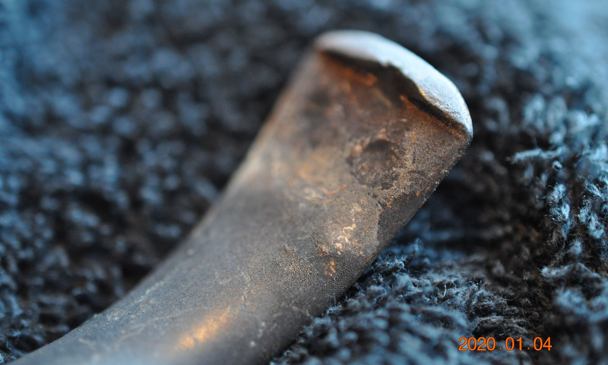
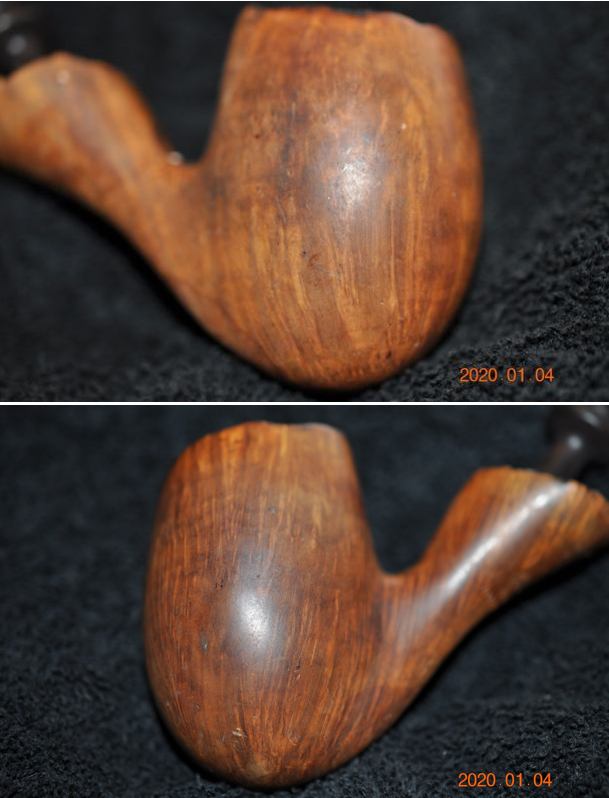
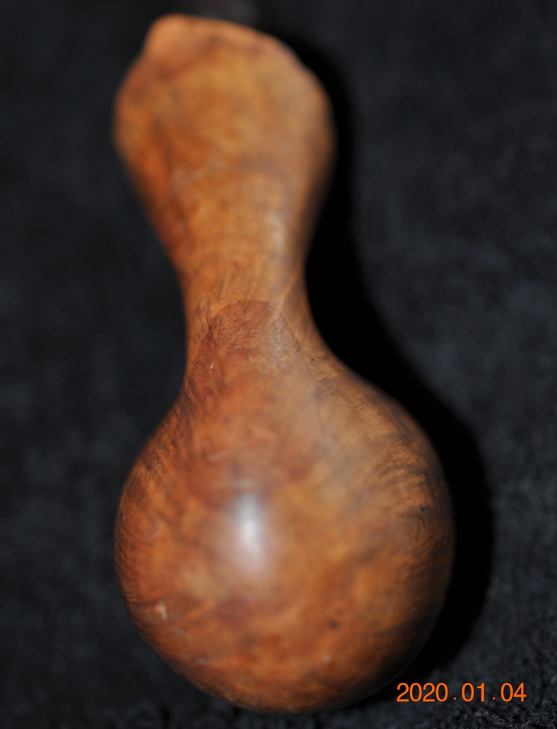
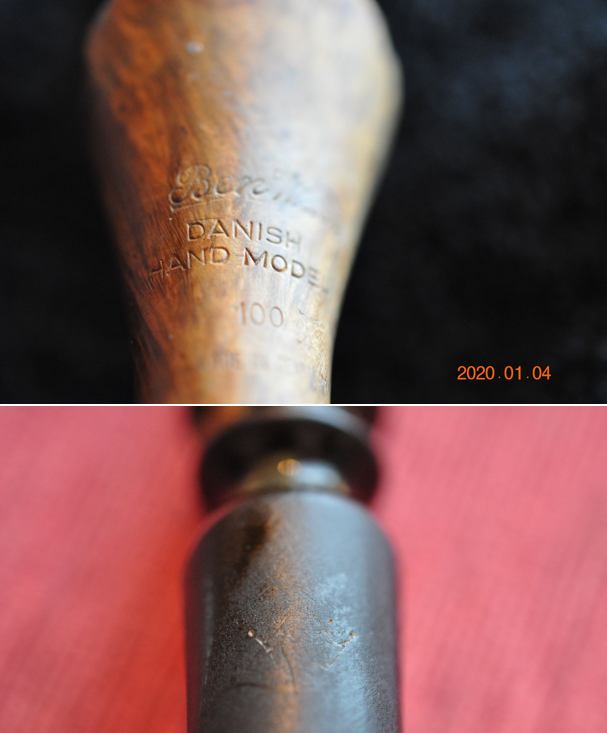
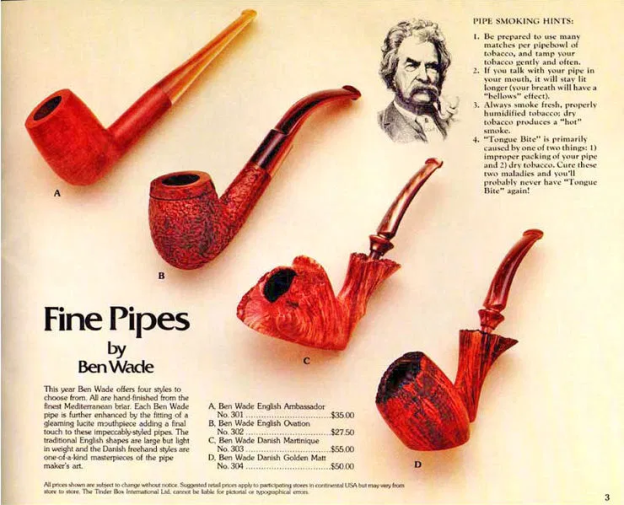
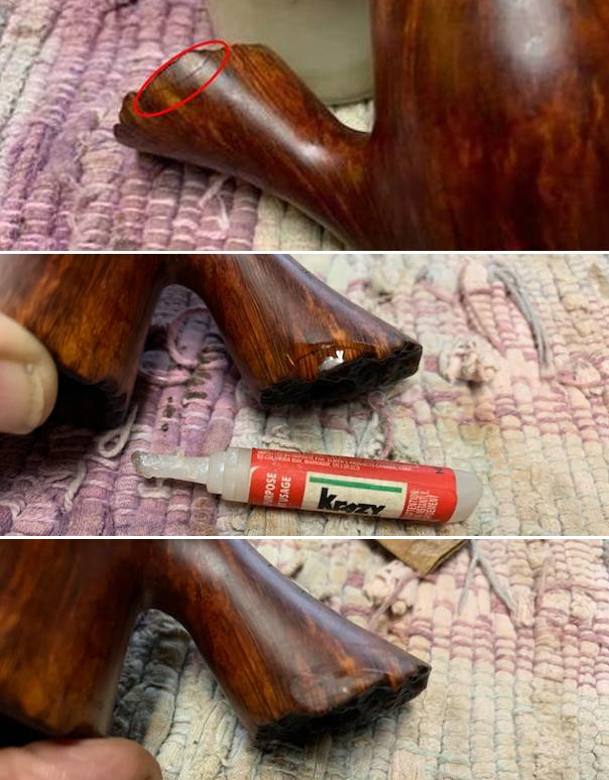
The next pipe on the table came to us late in 2019 from a fellow in Los Angeles, California, USA. We have purchased quite a few pipe from him over the years and several Ben Wade Pipe. This is another one of those. Even though the finish was dull and lifeless it showed promise under the grit and grime of the years. On the underside of the shank it was clearly stamped Ben Wade in script [over] Danish[over] Hand Model[over] 100 [over] Made In Denmark. The finish is filthy with grime and oils ground into the smooth briar of the bowl and shank sides. The bowl had a thick cake that overflowed in heavy lava onto the plateau rim top filling in the grooves and valleys of the finish. The plateau shank end was also dirty with dust and debris in the grooves and valleys of the shank. The vulcanite stem was oxidized, calcified, dirty and had some tooth marks and chatter on both sides ahead of the button. Jeff took some photos of the pipe to show its overall condition before he started his cleanup work. He took photos of the rim top and bowl to give a clear picture of the thickness of the cake and the lava on the plateau finish of the rim top. There is dust and debris stuck to the walls of the bowl clearly visible in the photos. He also took photos of the top and underside of the stem to show the chatter and tooth marks. Jeff took photos of the sides and heel of the bowl to give a picture of what the briar around the pipe looked like. There is some stunning grain under the grime.  He took photos of the stamping on the shank. It reads as noted above and is clear and readable. There is the faint remnant of the crown stamp on the top of the stem.   I remembered a bit of history on the brand that thought that the Preben Holm pipes were marketed under the Ben Wade label in the US and imported through Lane Ltd. I turned to Pipedia and read the listing on the brand to refresh my memory and flesh out the knowledge of the brand (https://pipedia.org/wiki/Ben_Wade). I have included a photo from that site that was taken from a Tinderbox advertisement.I quote the portion of the article that summarizes the Danish period of the history of the brand:

Young Copenhagen master pipemaker Preben Holm had made a meteoric career heading a pipe manufacture employing 45 people at the age of 22! But around the turn of 1970/71 he was in major financial difficulties. His US distributor, Snug Harbour Ltd. in New York City, left him in the lurch. Holm had three unpaid invoices on his desk and another large shipment was ready for the USA, when Snug Harbour’s manager told him on the phone that there was no money at all on the account to pay him.

So the Dane went to New York for an almost desperate search for a new distribution partner. He made contacts with Lane Ltd. and met Herman G. Lane in February 1971. Lane Ltd. had no interest in Holm’s serial pipes produced at that time but so much the more in the hand-carved freehands because the hype for Danish freehands and fancies in the States was still on its way to the climax then. The meeting resulted in an agreement to start a cooperation. Lane insisted to improve the quality considerably and in return he assured to be able to sell essentially larger quantities.

Holm went back home to work on new samples with all-new designs and altered finishes for Lane. Both, Lane and Holm, agreed that it would be unwise to sell the pipes under Preben Holm’s name as long as Snug Harbour had a considerable stock of Preben Holm pipes and might sell them pipes at very low prices just to bring in some money.

So on Mr. Lane’s proposal it was determined to use the name Ben Wade belonging to Lane Ltd. Lane spent considerable amounts of money for advertising the new brand in the big magazines– the centerpiece being whole-page ads showing a very exclusive Seven Day’s Set.

The cooperation with Lane Ltd. proved to be an eminent business success for both partners. Within a very short time Ben Wade Handmade Denmark sold in much larger quantities and at higher prices than they had ever dreamed of. And the hype these freehands and fancy pipes caused went on unbroken long after Herman G. Lane deceased. Preben Holm – obviously much more brilliant in pipe making than in pipe business – was in major troubles again in 1986 and had to sack most of his staff. The Ben Wade production was significantly lowered but continued until his untimely death in June of 1989.

Up to now Preben Holm made Ben Wade pipes are cult and highly sought for on the estate markets.

With that information my initial thoughts were confirmed. This pipe was a Preben Holm made Freehand distributed in the US by Lane Ltd under the name Ben Wade. The freehand rage occurred in the late 70s and the pipes were made until Preben’s death in 1989. My guess would be that this pipe was made sometime during that time period and potentially in the late 70s.

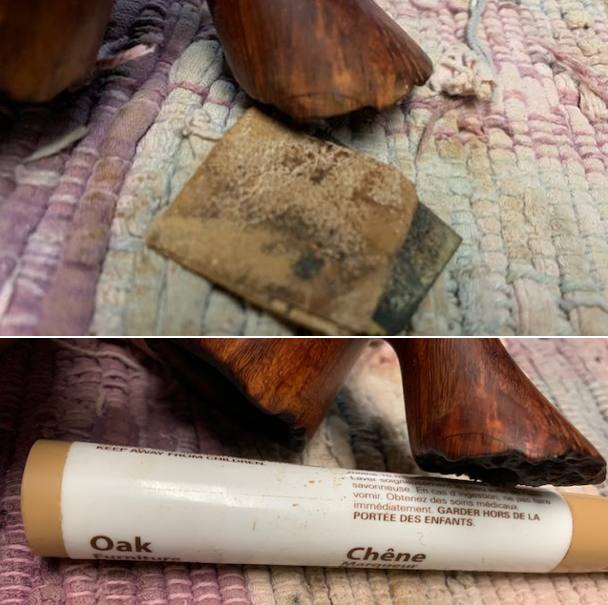
Jeff had cleaned up the pipe until it almost did not look like the same pipe. He reamed the pipe with a PipNet Pipe Reamer and cleaned up the remnants with a Savinelli Fitsall Pipe Knife. He scrubbed the exterior of the bowl with undiluted Murphy’s Oil Soap with a tooth brush. He was able to get all of the lava and grime off the rim top and shank end. He rinsed it under running warm water to remove the soap and debris. He cleaned out the inside of the shank and the airway in the stem with alcohol, cotton swabs and pipe cleaners. He scrubbed the stem with Soft Scrub and cotton pads to remove the debris and oils on the stem. He soaked it in Before & After Pipe Stem Deoxidizer. He rinsed it with warm water and dried it off. I took photos of the pipe once I received it.   The rim top had some darkening on the back of the bowl. The beveled inner edge of the rim looked good with some darkening. The rim thinned toward the back of the bowl but was still quite thick. The stem surface looked very good with a few small tooth marks and chatter on both sides near the button. I took a photo of the stamping on the underside of the shank. It is clearer than it appears in the photo and is readable as noted above.I removed the stem and took a photo of the pipe to give a sense of the whole. The stem is turned fancy vulcanite. I started my work on the pipe by polishing the bowl sides and shank with micromesh sanding pads – dry sanding with 1500-12000 grit pads and wiping it down after each pad with a damp cloth. I paused in the polishing to clean up the darkening on the inner bevel of the plateau rim top with a folded piece of 220 grit sandpaper. I was able to minimize the darkening and I like the looks of the rim top.     I rubbed the bowl and shank down with Before & After Restoration Balm. I worked it into the surface of the bowl sides and shank with my fingertips and into the plateau rim top with a horsehair shoe brush. The product works to clean, enliven and protect the briar. I let the balm sit for 10 minutes and then buffed with a cotton cloth to raise the shine.   While I polished the shank I saw a small hairline crack on the right side of the shank at the plateau end. I have circled it in red in the photo below. I decided to pause in the work on the stem and address this issue first. I filled in the crack with a drizzle of CA glue. I let hardened then sanded the area with 220 grit sandpaper to smooth it out and then polished it with micromesh sanding pads. I stained it with an oak stain pen and then gave it a rub of Before & After Restoration Balm. I buffed it with a cotton cloth. I set the bowl aside and turned to work on the stem. I painted the surface of the rim with the flame of  Bic lighter to raise the tooth marks. I was able to raise them quite significantly but there were deeper ones that needed further work. I filled in what remained with clear CA glue and set the stem aside to cure.    Once the glue cure I flattened out the repairs with a small flat file. I sanded them with 220 grit sandpaper to blend them into the stem surface. I started the polishing of the stem with 400 grit wet dry sandpaper. (I failed to take a photo of the sanding process but you can see the result in the polishing photos.)  I polished the vulcanite stem with micromesh sanding pads – 1500-12000 grit pads. I wiped it down with Obsidian Oil after each sanding pad. I used Before & After Pipe Polish – both Fine and Extra Fine to further polish the stem. I gave it a final rubdown with Obsidian Oil to further protect it and let it dry.      This Ben Wade Danish Hand Model 100 Freehand with a fancy, turned vulcanite stem is a great looking pipe now that it has been restored. I put the stem back on the bowl and carefully buffed the pipe with Blue Diamond on the buffing wheel using a light touch on the briar. I gave the bowl and the stem multiple coats of carnauba wax on the buffing wheel and followed that by buffing the entire pipe with a clean buffing pad. I hand buffed the pipe with a microfiber cloth to deepen the shine. The finished Ben Wade 100 Freehand fits nicely in the hand though it is quite large and feels great. Give the finished pipe a look in the photos below. The dimensions of the pipe are Length: 6 inches, Height: 2 ½ inches, Outside diameter of the bowl: 1 ½ inches, Chamber diameter: 1 inch. The weight of the pipe is 2.29 ounces/65 grams. I will be adding this pipe to the rebornpipes store shortly in the Danish Pipe Makers section. If you are interested in adding this pipe to your collection send me a message or an email. Thanks for reading this blog and my reflections on the pipe while I worked on it. There are many more to come! rac

Repairing An Interesting Surprise on a Beautiful Heritage Antique 73S Canadian


Blog by Steve Laug

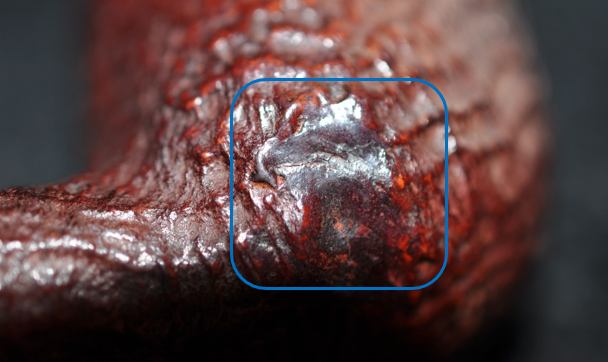
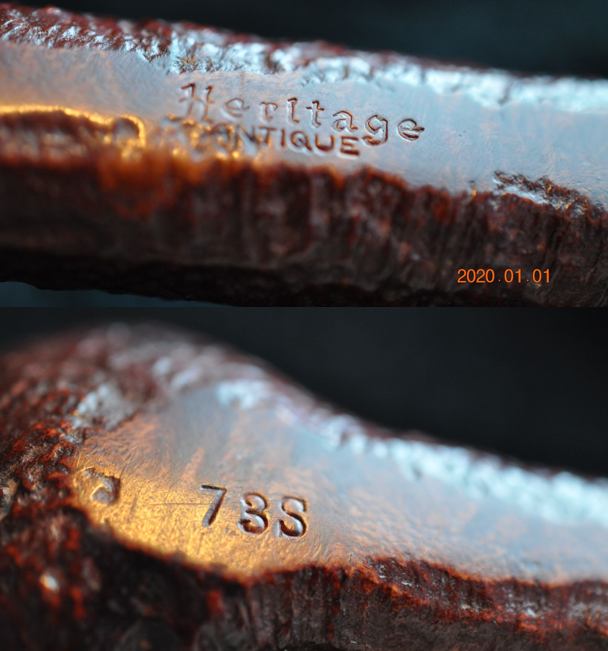
I have always had an interest in the Kaywoodie Made Heritage Pipe line. I really like the way they are made – both in terms of workmanship and style. They really made some amazing looking pipes and I always try to pick them up when I can. Jeff has also found this to be true so he is on the lookout for this brand in all of his pipe hunts and auction haunts. When this pipe became available to us late in 2019 from a fellow in Los Angeles, California, USA we bought it. It is stamped 73S on the heel of the bowl and Heritage [over] Antique on a smooth panel on the underside of the shank. The pictures of the sandblast showed it was well done. The finish was dirty and there was a thick cake in the bowl. It appeared that the bowl had been lightly reamed before it came to us. There was a lava overflow in the sandblast finish on the rim top that would need to go. There was the Heritage double diamond logo on the left side of the stem. The stem was oxidized and had deep tooth marks on both sides ahead of the button. All totaled it was still a beautiful pipe. We were hooked. Jeff took these photos before he started his clean up work. Jeff took photos of the bowl and rim top to show the condition that I noted in the description above. Even though it is very dirty you can see that the rim top and edges all look very good. The stem photos clearly show the oxidation and tooth marks on both sides. It would need some work. Jeff took photos of the sides of the bowl and heel to show the sandblast finish on the bowl. He also took photos of a strange looking area on the lower right side of the bowl. It appeared that there was a large flaw that had been filled in that area. It was obviously a dark putty and there were some small cracks in the middle area of the fill material. I drew a box around it in the second photo. I have worked on quite a few Heritage pipes and have never seen this before.Jeff took a close up photo of that area to show more clearly what we are speaking of. You can see the tiny cracks in the fill area toward the top of the repair. The patch material is dark and very hard so it should be repairable.The next photos show the stamping that I described in the opening paragraph. It is clear and readable.In other blogs on the brand I have given a bit of history on the Heritage Brand. I have included that here as well for ease of reference. Andrew Selkirk did a great job in researching a link to his work on the blog. Here is the link: https://rebornpipes.com/2014/12/23/refurbishing-a-heritage-heirloom/. I am including a brief summary of what he found in the next two short paragraphs to set the stage for the pipe on my work table.

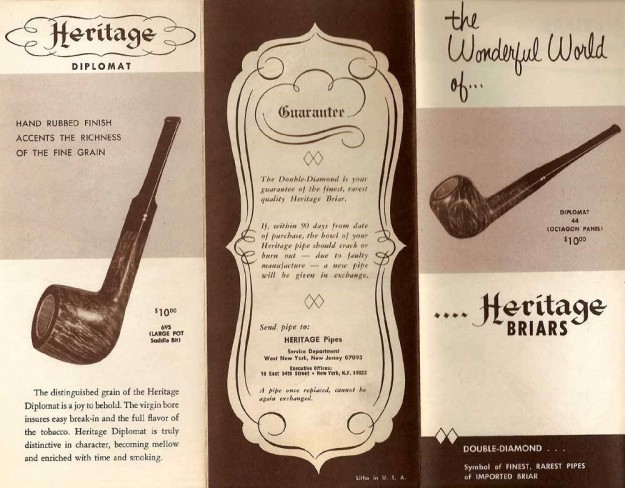
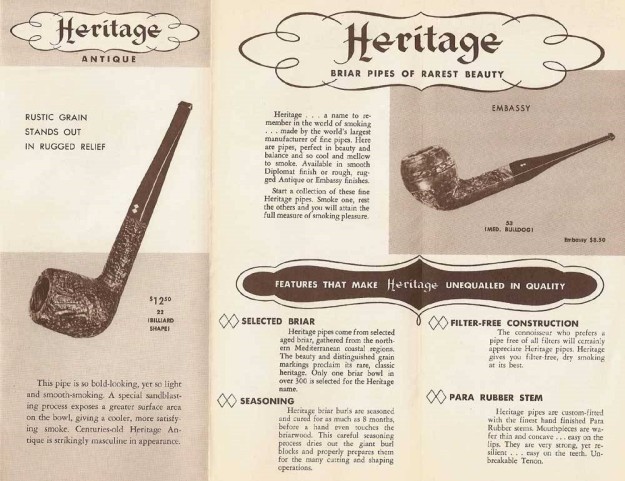
Heritage pipes were Kaywoodie’s answer to Dunhill. According to one of their brochures, Heritage pipes were made from “briar burls seasoned and cured for up to 8 months,” with only “one briar bowl in over 300 selected to bear the Heritage name.” “Heritage stems are custom fitted with the finest hand finished Para Rubber stems. Mouthpieces are wafer thin and concave.”

The Heritage line began in the early 1960’s, with the trademark issued in 1964. The line was started at the request of Stephen Ogdon, (who worked for Kaywoodie in 1962). Mr. Ogdon had previous experience working for Dunhill, either running the New York store or working for Dunhill North America. Mr. Ogden was made President of Heritage Pipes, Inc., Kaywoodie Tobacco Co.,Inc. and Kaywoodie Products Inc. as well as a Vice President of S.M. Frank & Co. Heritage Pipes were produced from 1964 until 1970 (Source kaywoodie.myfreeforum.org).

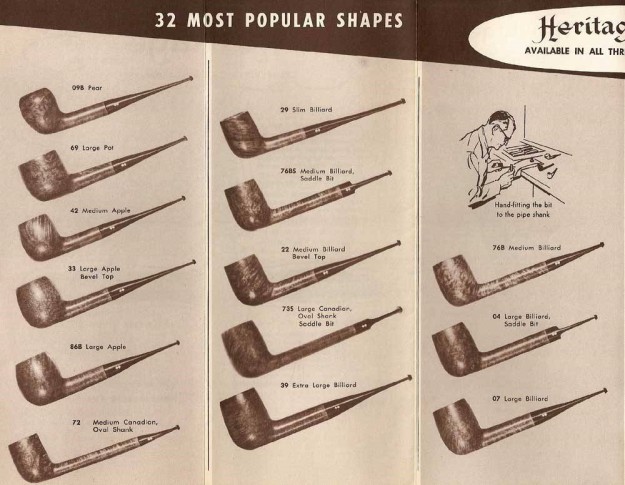
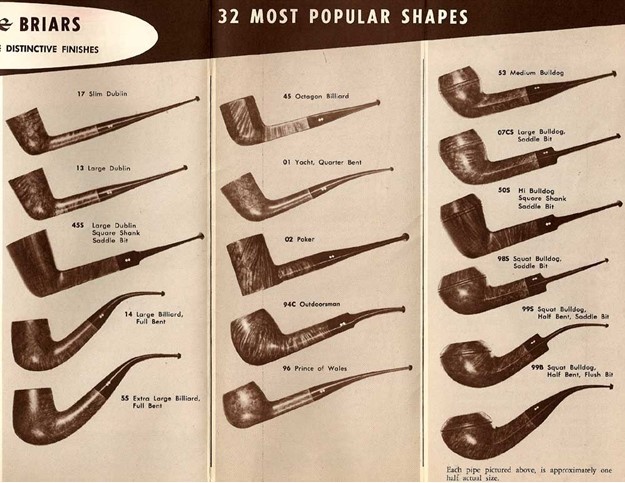
Andrew also included a copy of the Heritage brochure that I am also including below (Courtesy kaywoodiemyfreeforum). In going through the models displayed on the page there is not one for the 73S. The closest is the shape 72 Canadian. The brochure has a great write up on the Heritage Antique Line. It reads Rustic Grain Stands out in Rugged Relief. It describes the line as follows:

This pipe is so bold looking, yet so light and smooth smoking. A special sandblasting process exposes a greater surface area on the bowl, giving a cooler, more satisfying smoke. Centuries-old Heritage Antique is strikingly masculine in appearance.

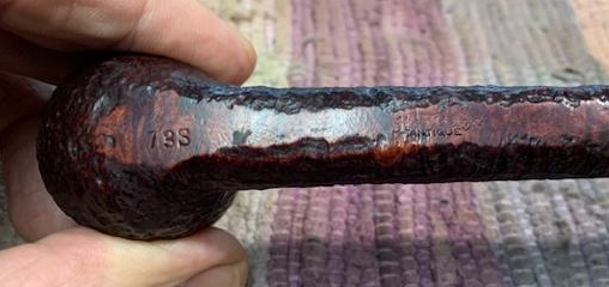
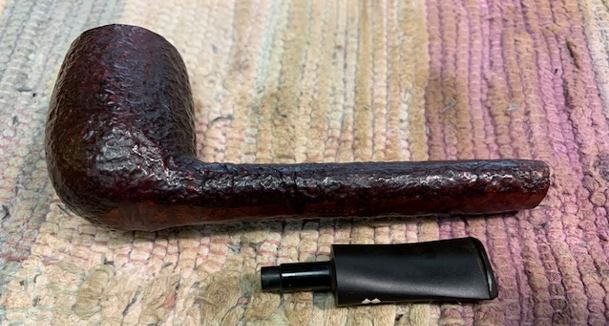
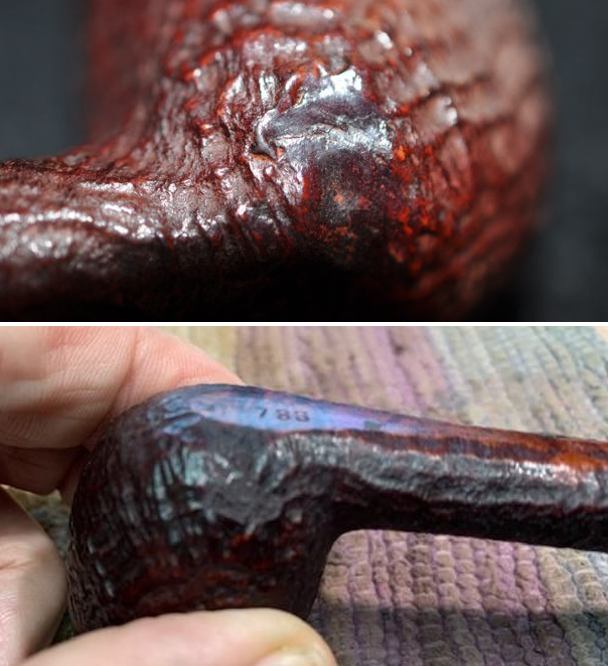
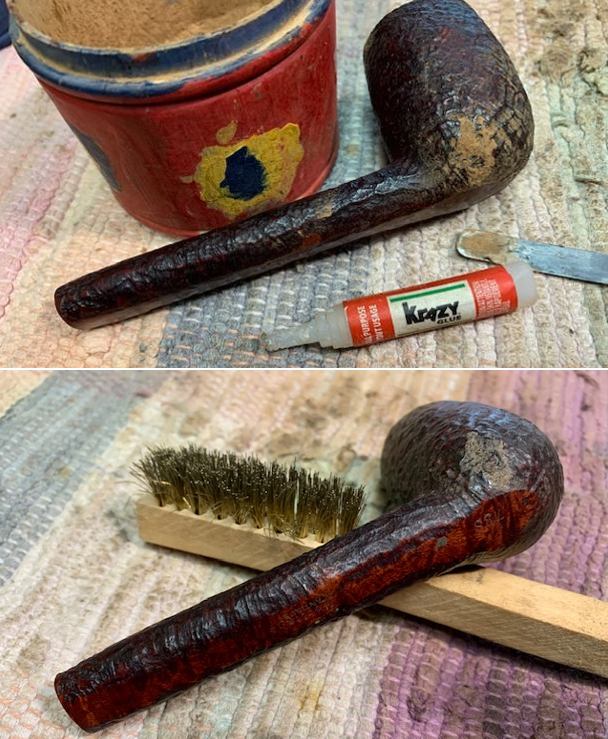
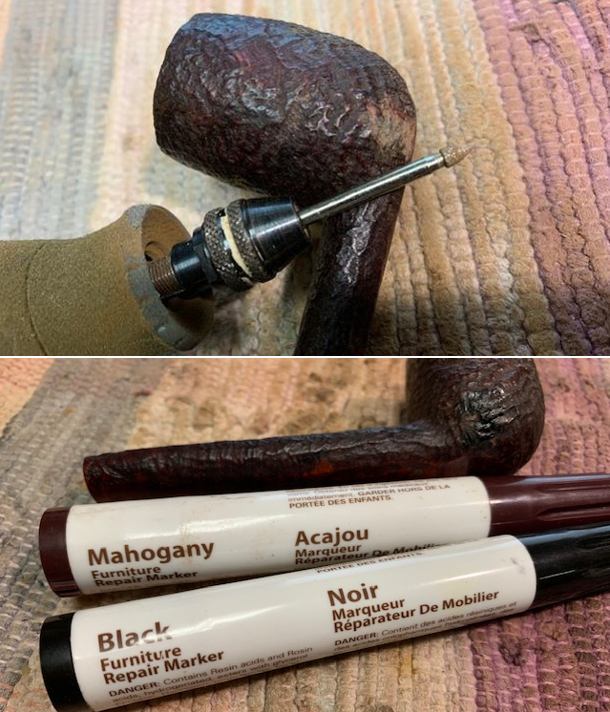
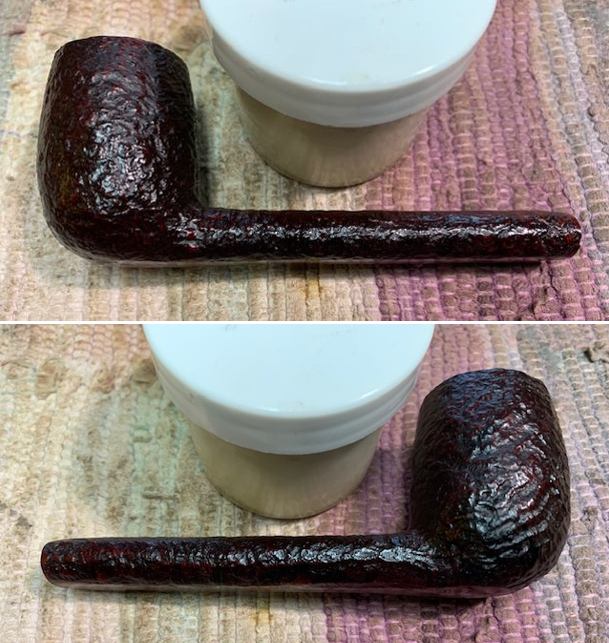
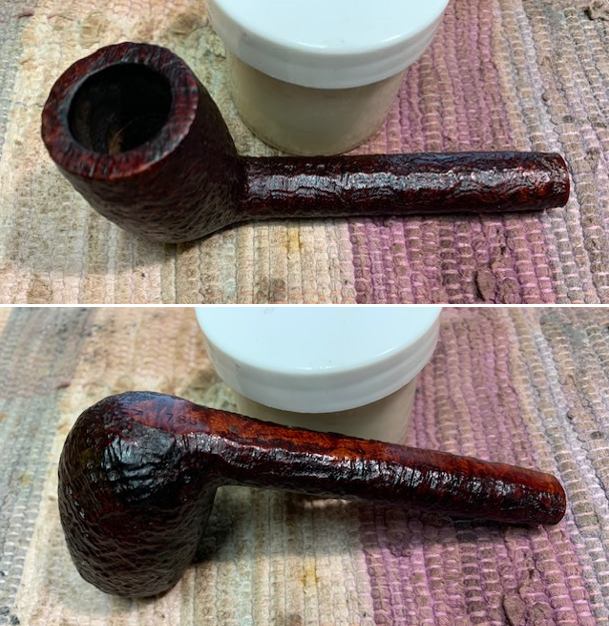
Jeff had cleaned up the pipe with his usual precise work. He reamed the pipe with a PipNet Pipe Reamer and cleaned up the remnants with a Savinelli Fitsall Pipe Knife.  He scrubbed the bowl with undiluted Murphy’s Oil Soap with a tooth brush. He rinsed it under running warm water to remove the soap and grime. The fill on the lower right side of the bowl did not loosen, crack more or fall out. It was solid. The rim top cleaned up very well. He cleaned out the inside of the shank and the airway in the stem with alcohol, cotton swabs and pipe cleaners. He soaked the stem in Before & After Deoxidizer and rinsed it off with warm water. I took photos of the pipe once I received it. Now it was time to work on the pipe itself. The bowl and the rim top looked very good. The inner and outer edges of the rim also looked very good. There was no damage to the edges. The stem surface showed deep tooth marks and chatter on both sides near the button. I took photos of the stamping on the underside shank. The stamping was clear and readable as noted above. I took the stem off the shank and took a photo of the parts of the pipe to show the overall look of the pipe. To me it is a vary British looking sandblast Canadian.I decided to deal with the large filled area on the lower right side of the bowl. It was hard and solid but had some small cracks toward the top of the fill. The first two photos show the filled area before and after cleaning. I roughed it up a little bit with a brush then filled in the cracks and sunken portions of the fill with clear CA glue and briar dust. Once the repair hardened I used a brass bristle wire brush to knock off the loose briar dust and give a bit of texture to the fill. I used the Dremel and a pointed burr to carve grain patterns to match the surrounding areas of the briar. I liked the way it was looking. I mixed a black and a mahogany stain pen into the rusticated surface to match the surrounding colour of the bowl. I was happy with how the repair had blended into the rest of the surrounding briar. I worked some Before & After Restoration Balm into the surface of the briar with my fingertips and a horsehair shoe brush to clean, enliven and protect it. I let the balm sit for a little while and then buffed with a cotton cloth to raise the shine. The following photos show the bowl at this point in the restoration process. I am very happy with the results. I set the bowl aside and turned my attention to the stem. I “painted” the stem with the flame of a Bic lighter to lift the tooth marks. I was able to lift them out significantly. I filled in the remaining dents in the stem surface with clear CA glue and set it aside to cure. I flattened out the repairs with a small file to start the process of blending them into the surface of the vulcanite. I then sanded them smooth with 220 grit sandpaper to further blend them in and started polishing the stem with 400 grit wet dry sandpaper. I polished the vulcanite stem with micromesh sanding pads – 1500-12000 grit pads. I wiped it down with a damp cloth after each sanding pad. I used Before & After Pipe Polish – both Fine and Extra Fine to further polish the stem. I wiped it down with a final coat of Obsidian Oil and set it aside.     The repair on the lower right side of the sandblast Heritage Antique 73S Canadian came out very well and really is unnoticeable. The pipe is a real beauty and the finish and shape are well done and have a classic English look even though this is an American Made pipe. The thin taper vulcanite stem polished up on the buffing wheel with Blue Diamond and had a rich glue. I gave the bowl multiple coats of Conservator’s Wax and the stem multiple coats of carnauba wax on the buffing wheel and followed that by buffing the entire pipe with a clean buffing pad. I hand buffed the pipe with a microfiber cloth to deepen the shine. The finished Heritage Antique Canadian fits nicely in the hand and feels great. Give the finished pipe a look in the photos below. The dimensions of the pipe are Length: 6 inches, Height: 1 ¾ inches, Outside diameter of the bowl: 1 ¼ inches, Chamber diameter: ¾ of an inch. The weight of the pipe is 1.27 ounces/36 grams. I will soon be adding it to the rebornpipes store in the American Pipe Maker section. If you are interested in adding this pipe to your collection send me a message or an email. Thanks for reading this blog and my reflections on the pipe while I worked on it. There are many more to come!

Breathing New Life into a Patented KBB Yello-Bole 2198L President


 Blog by Steve Laug

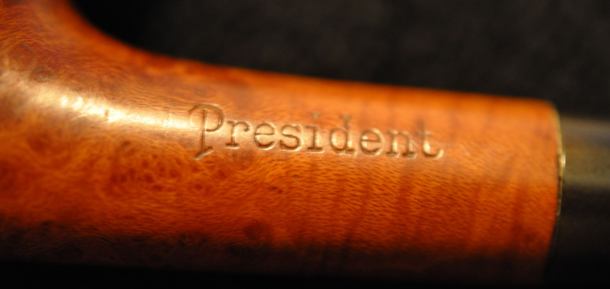
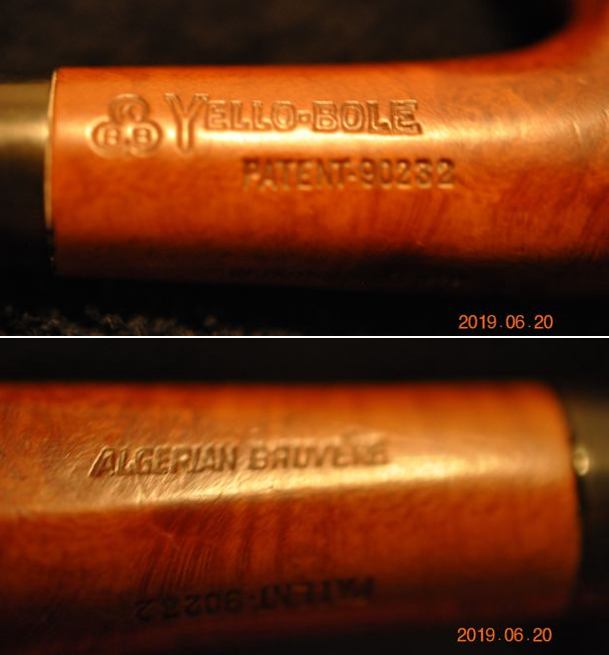
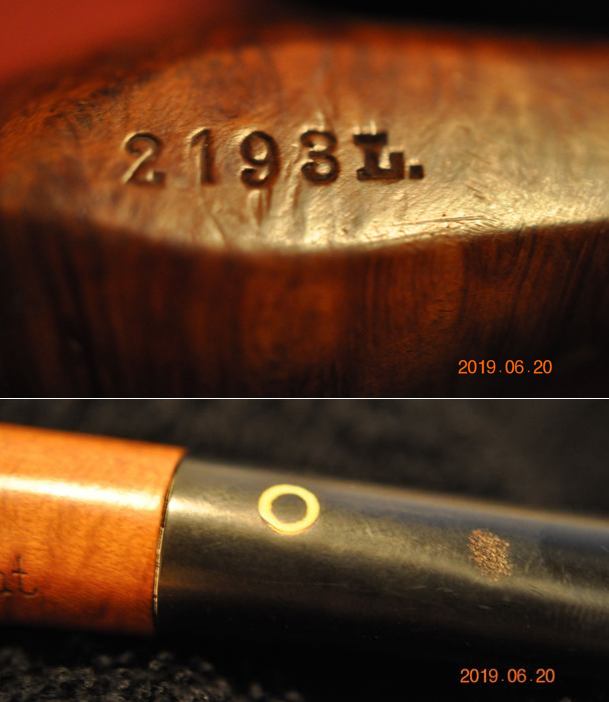
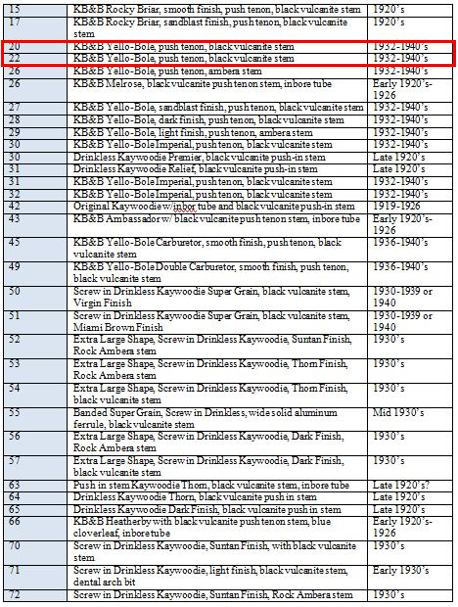
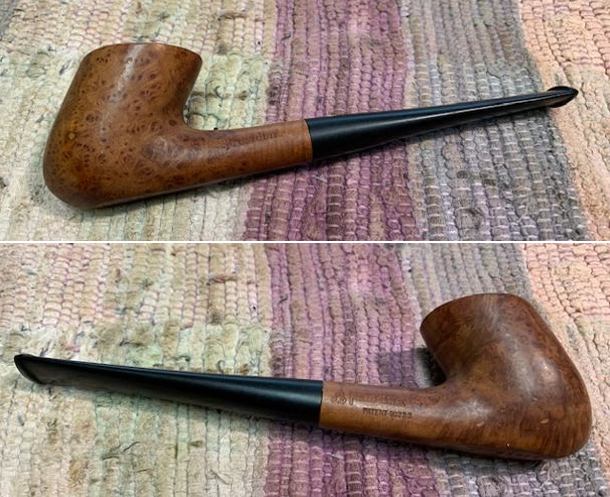
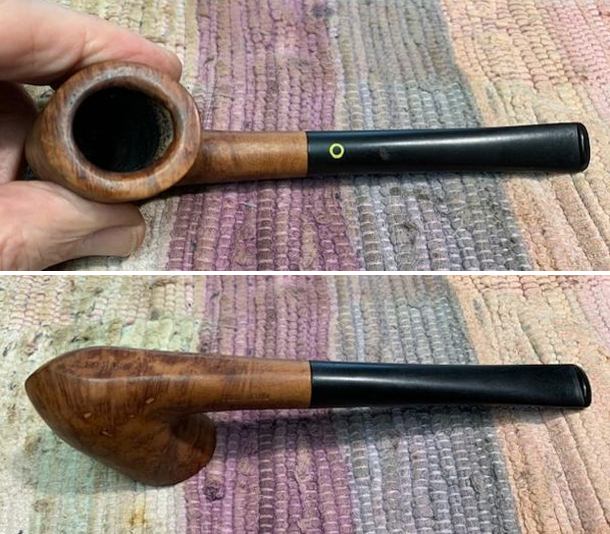
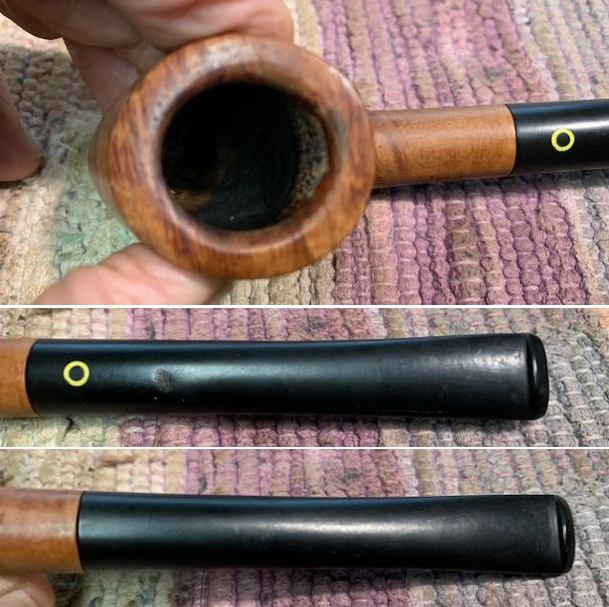
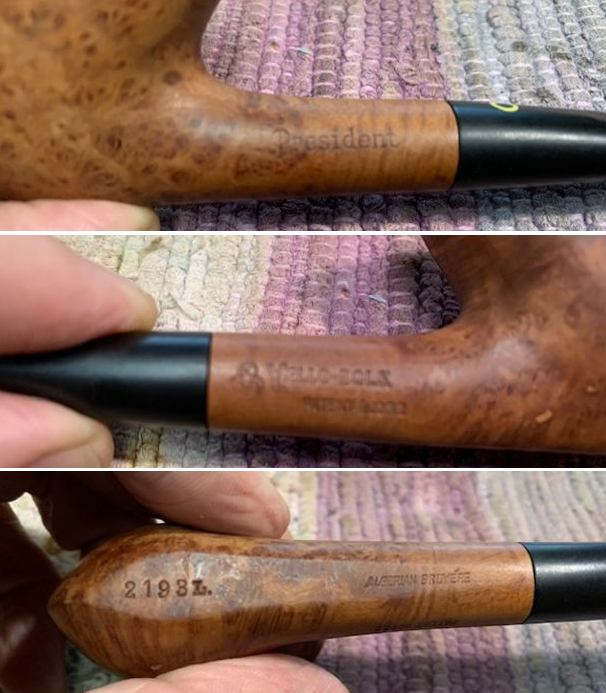
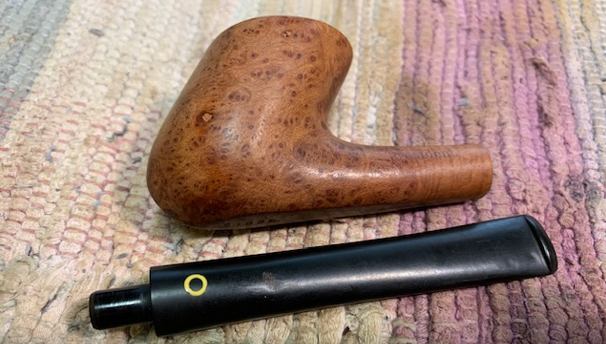
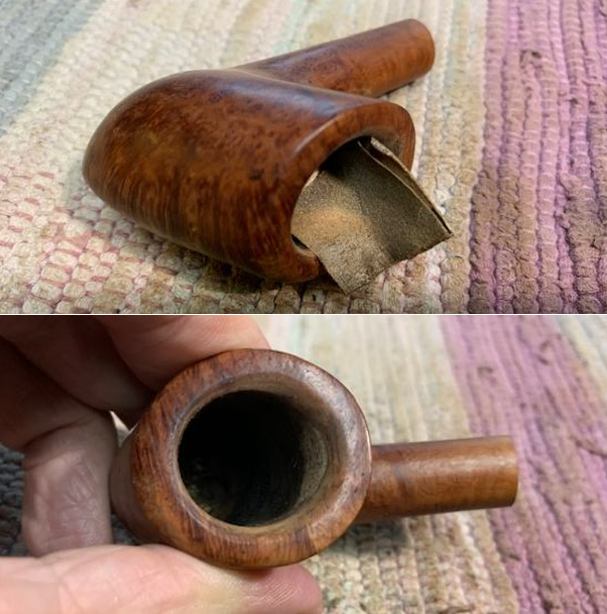
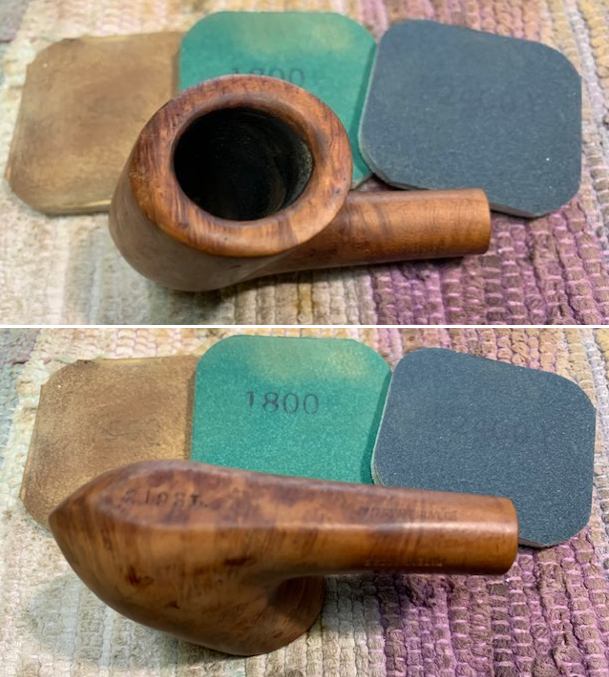
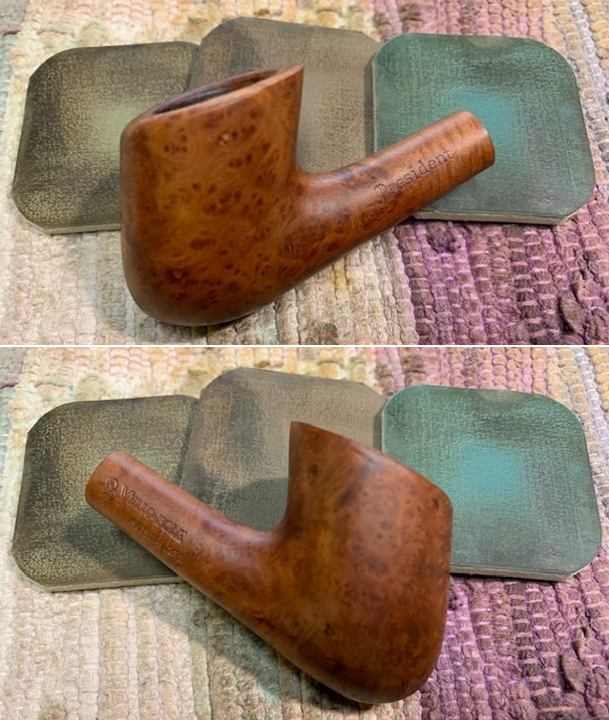
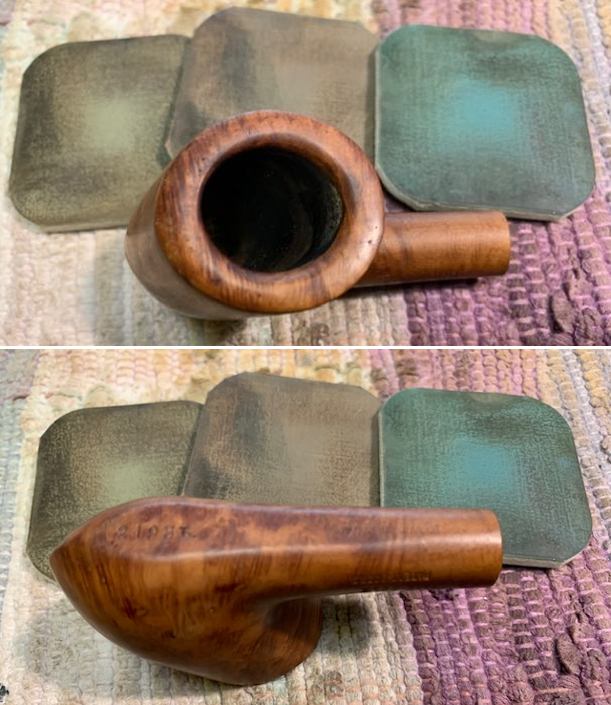
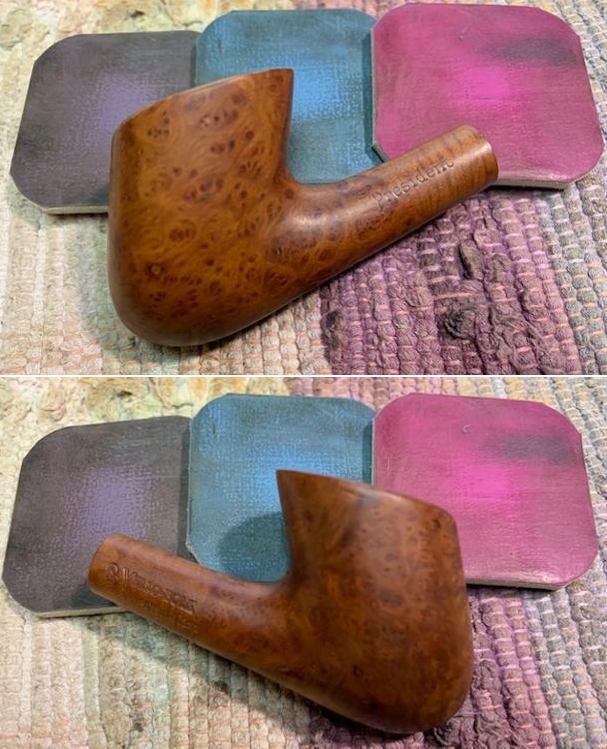
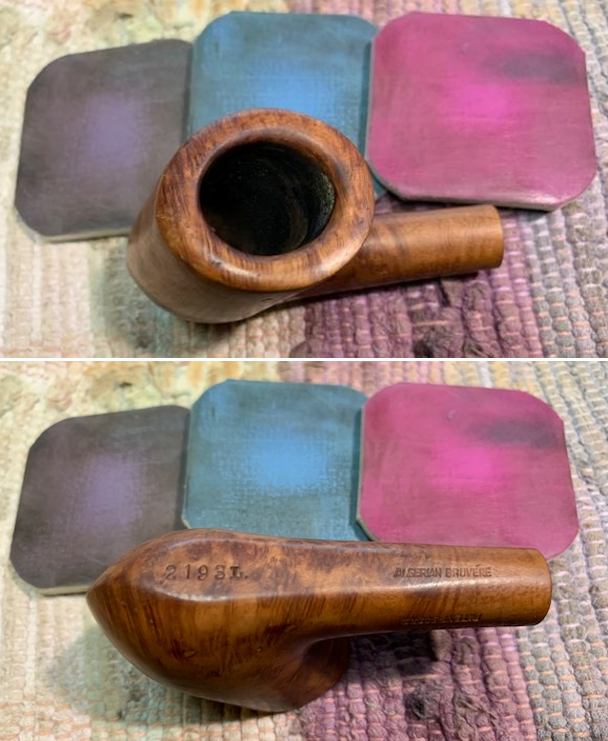
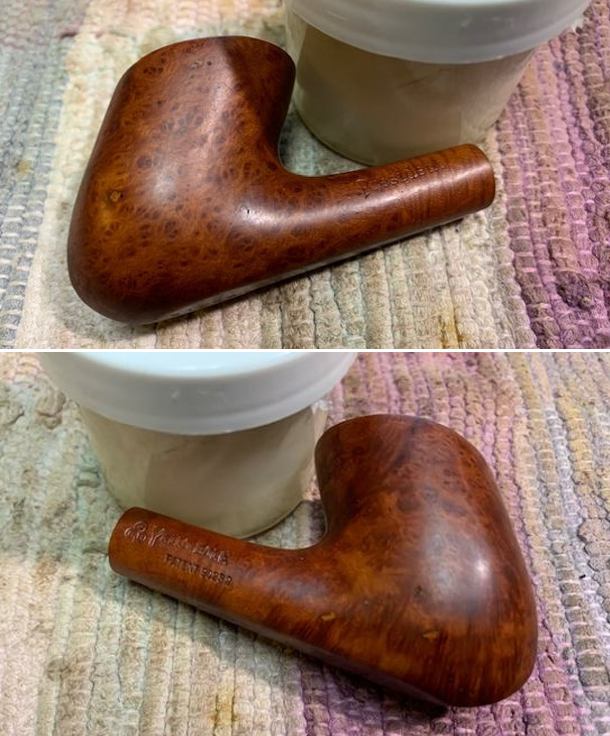
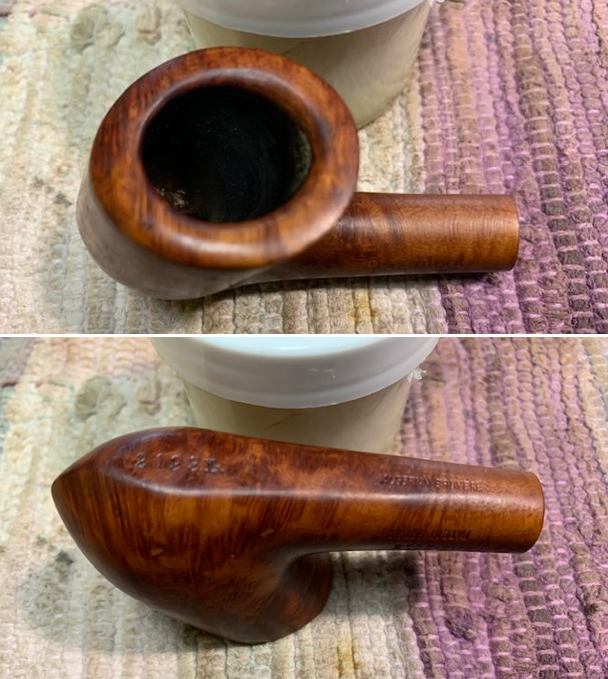
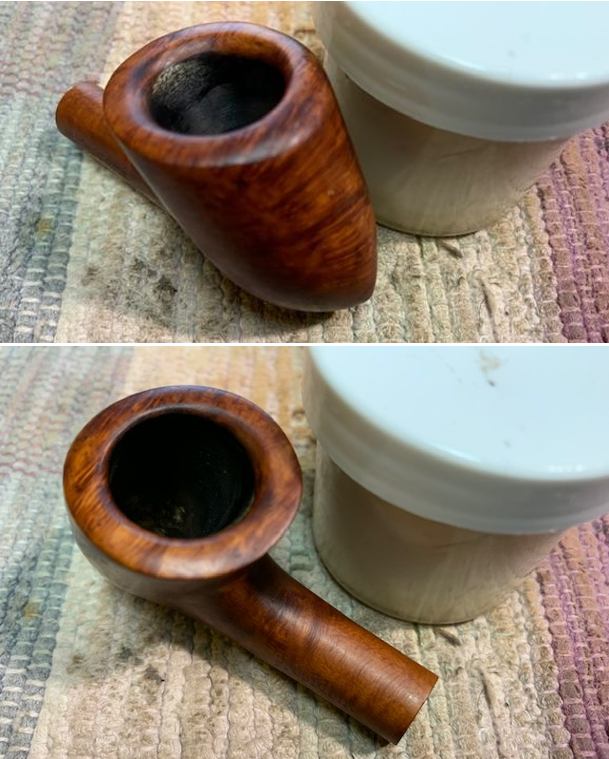
This pipe was purchased from an antique mall on 04/28/19 in Ogden, Utah, USA. Jeff picked it up because it was such a unique shape. It seems to somehow combine parts of the Skater shape and the Bullmoose’s protruding chin. The grain was nice and it had some fills on the sides of the bowl but not too obvious or obnoxious. The pipe is stamped President on the left side of the shank and KBB in a cloverleaf followed by Yello-Bole [over] Patent – 90232 on the right side of the shank. On the underside at the heel it is stamped with the shape number 2198L and mid shank reads Algerian Bruyere. The bowl had a moderate cake but you could see the yellow Honey Coating that Yello-Bole draw their name from. The finish was dirty and had a lot of nicks and scratches on the rim top and around the bowl sides. The base of the bowl and shank had been flattened to make the pipe a sitter. It had a vulcanite push stem and no stinger apparatus in the tenon or shank and there was no evidence that their ever had been one. The stem was lightly oxidized. There are a burn mark on the top side near the yellow O logo. There were tooth marks and chatter on both sides ahead of the button. Jeff took some photos of the pipe before he started his clean up work. The photos of the rim top show the nicks and scratch on the top and the darkening on the inner edge of the bowl. You can also see the yellow bowl coating on the back side near the top of the bowl above and surrounded by the cake. The photos of the stem show the oxidation and tooth marks and chatter on both sides. They do not show the damage on the top of the stem near the O stamp. The next three photos show the grain around the sides of the bowl and heel as well as the placement of the fills on the sides of the bowl. It is a pretty neat looking pipe. The next series of photos show the stamping on the shank sides and the O logo stamp on the stem top. You can also see the burn mark on the stem top in the photo of the logo. The stamping is clear and readable as noted above. Before I started my work on the pipe I decided to do a bit of work on the Patent Number and the shape number on the heel of the bowl. I remembered that Troy Wilburn, one of our blog writers and good friend of rebornpipes sent me a shape number list for old Kaywoodie and Yello-Bole pipes that is on the blog. I found it very useful and typed it into a chart format. Troy said that he got the data for this from the Kaywoodie Forums. If you have not visited the forums here is the link: http://kaywoodie.myfreeforum.org/ . I decided to post the chart on the blog for easy access. Thank you to the KW forum for the information. Here is the link to the full shape chart information that I have on the site (https://rebornpipes.com/2016/05/07/kaywoodie-yello-bole-shape-numbers/).

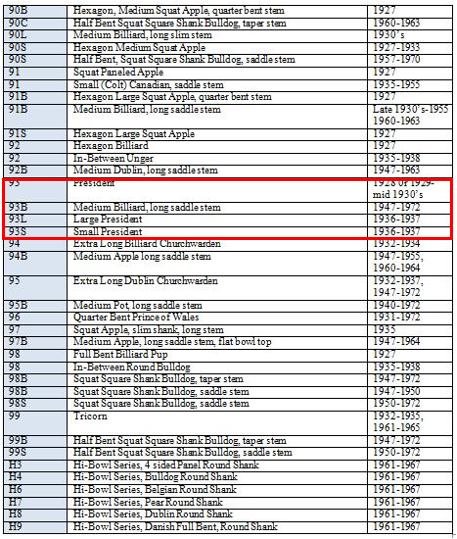
I also have included the pertinent sections of the chart on this particular 2193 shape. I remembered that the last two numbers and letter on heel of the bowl were the shape of the pipe. In this case the 93L referred to a shape that KBB called a Large President. I have drawn a box around that stamp number. The 93 is thus the President shape and the L identifies it as a large version of the pipe. Note also that the pipe was only made between 1936-1937 so it is an old timer.Troy also included the following information on the first two digits of the shape number. I quote in full regarding that below.

2-digit prefixes for 4-digit pipes – you might find an odd ball or a rare one that is not on the list.
From the time of the first Kaywoodie until 1938 for Kaywoodie and for Yello-Bole, Kaufmann Brothers & Bondy used a 4-digit number system (plus a letter sometimes) to identify the line and shape number. The 4-digits were not used after 1938. The first two, which we’ll call the prefix, referred to the finish and the second two, the suffix numbers referred to the shape number.

I have identified the section on the chart where this pipe stands. Note that the 21 prefix is missing but the description of the 20 and 22 is identical to the information on this pipe. From that I know that the pipe I am working on should have a push tenon, vulcanite stem. The good news is that I have the original stem.Now it was time to see if I could find anything out about the Patent number. I am assuming it is a US Patent as the pipe is an American brand. The number on the right side of the bowl reads as follows:  Patent – 90232. I turned to the US Patent search site to see what I could find out there. Here is the link to the site: https://patft.uspto.gov/netahtml/PTO/patimg.htm . Unfortunately that patent number takes me to a series of drawings of a new plowshare. At this point the Patent information is a dead end.

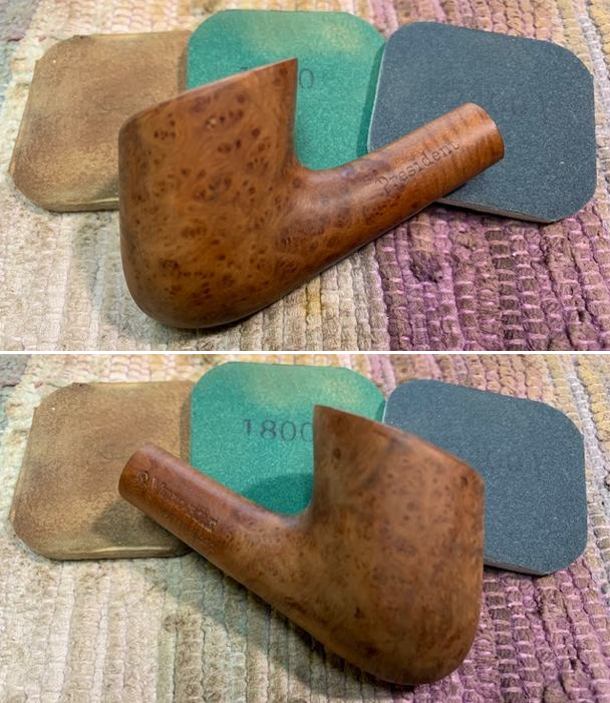
It may seem that I praise Jeff’s work in cleaning up the pipes I work on a lot! I know I do but he is an indispensable part of the restoration work for me. He has developed a system of cleaning that is quite remarkable and leaves the pipes very clean. It saves me a lot of time so I have no issues saying that! Jeff did a great job cleaning up the pipe as usual. He reamed the pipe with a PipNet reamer and cut back the cake back to the bare briar. He cleaned up the walls with a Savinelli Fitsall Pipe Knife. He scrubbed the interior of the bowl and shank with pipe cleaners, cotton swabs and alcohol to remove the tars and oils. He scrubbed the exterior of the pipe with Murphy’s Oil Soap and a tooth brush to remove the grime from the finish. He worked on the rim top lava and darkening with the soap and tooth brush. He scrubbed the inside of the stem with alcohol and pipe cleaners. He scrubbed the exterior with Soft Scrub and then soaked it in Before & After Deoxidizer. He washed it off with warm water to remove the Deoxidizer. The pipe looked far better when it arrived.  I took some close up photos of the rim top and also of the stem surface. I wanted to show how well it had cleaned up. The rim top photo looks good but there are some nicks and scratches on the top and the beveled inner rim edge. I also took close up photos of the stem to show the light tooth marks and chatter on the surface near the button and the burn mark on the top near the O logo. I took photos of the stamping on the sides of the shank. You can see that it is stamped as noted above. It is clear and readable.I took the pipe apart and took a photo of the pipe. It is a good looking pipe and has some great grain on the side of the bowl.I decided to address the rim top damage first. I used a folded piece of 220 grit sandpaper to the beveled inner edge to minimize the damage to the rim. I think that it is definitely better once I finished. I would polish the flat top of the rim with micromesh and try to minimize the scratching there. The angle of the stem makes topping the bowl seem impractical.I polished the briar rim top and edges along with the rest of the briar with micromesh sanding pads –dry sanding with 1500-12000 grit pads and using a damp cloth after each pad. I worked some Before & After Restoration Balm into the surface of the briar with my fingertips to clean, enliven and protect the briar. I let the balm sit for 15 minutes and then buffed with a cotton cloth to raise the shine. The photos show the bowl at this point in the restoration process. I set the bowl aside and turned my attention to the stem. I filled in the burn mark on the top and the tooth marks on the top and underside of the stem with clear super glue. I let the repairs cure. Once they had cured I sanded the repairs on the underside and the chatter on the topside with 220 grit sandpaper. I started the polishing with 400 grit wet dry sandpaper. I wiped it down with some Obsidian Oil.   I polished the stem with micromesh sanding pads – wet sanding with 1500-12000 grit sanding pads. I wiped it down after each sanding pad with Obsidian Oil. I polished it with Before & After Pipe Stem Polish – both Fine and Extra Fine. Afterwards I rubbed it down with another coat of Obsidian Oil and let it dry. I am excited to finish restoration of this older KBB Yello-Bole President 2193L pipe. I put the pipe back together and buffed it with Blue Diamond on the buffing wheel. I gave the bowl and stem multiple coats of carnauba wax. I buffed the pipe with a clean buffing pad to raise the shine and hand buffed it with a microfibre cloth to deepen the shine. It is fun to see what the polished bowl looks like with the polished black vulcanite stem. This unique looking KBB Yello-Bole President actually feels great in my hand. It is light and well balanced. Have a look at it with the photos below. The dimensions are Length: 6 ½ inches, Height: 1 ¾ inches, Outside diameter of the bowl: 1 ¼ inches, Chamber diameter: ¾ of an inch. The weight of the pipe is 32 grams/ 1.16 oz. It is a beautiful pipe and one that will be on the American Pipe Makers section of the rebornpipes store soon. If you are interested in adding it to your collection let me know. Thanks for walking through the restoration with me as I worked over this pipe. Thanks to each of you who are reading this blog.
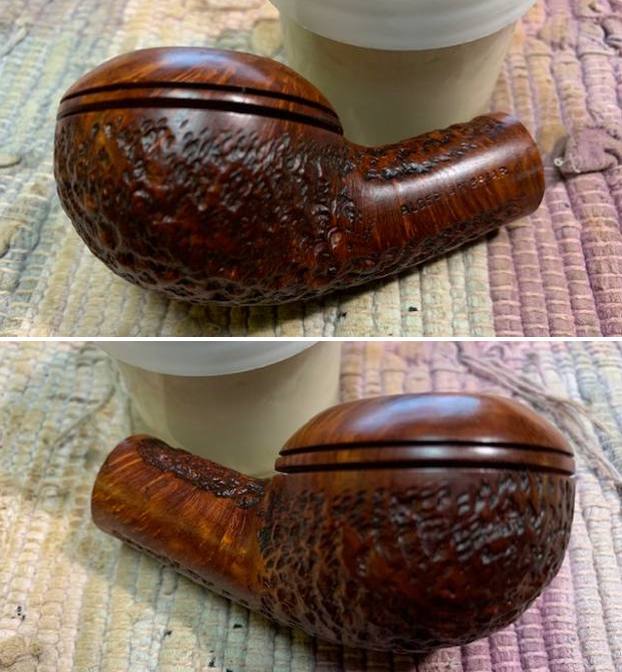
Replacing a Broken Tenon on a L’Anatra dalle Uova d’ Oro 2 Egg Bent Egg


Blog by Steve Laug

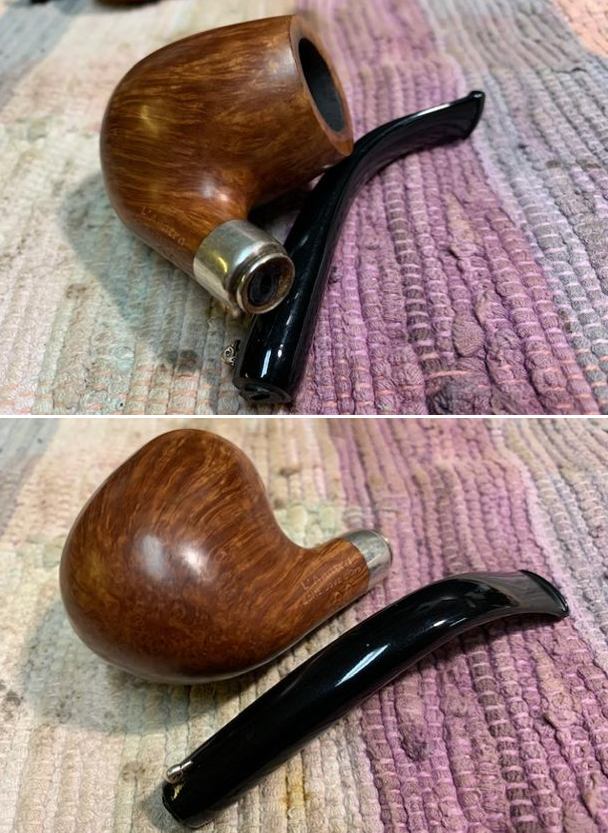
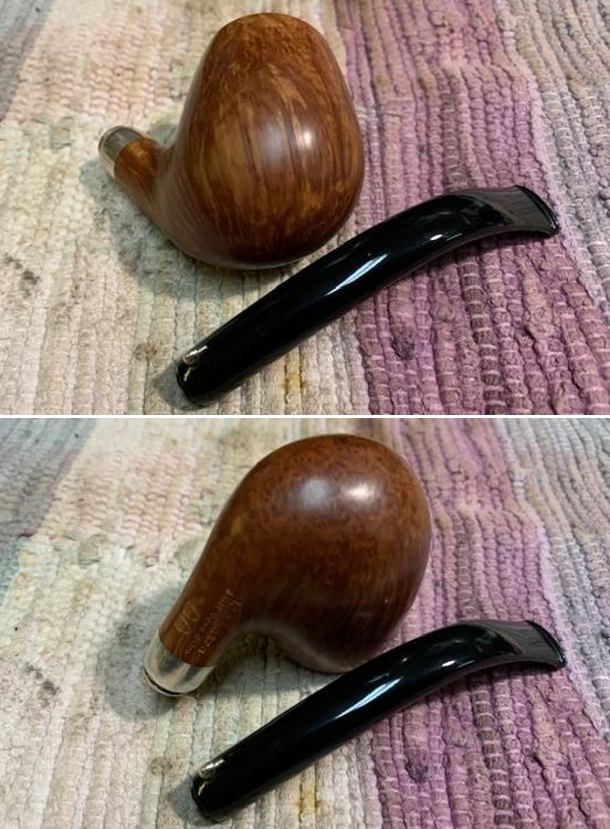
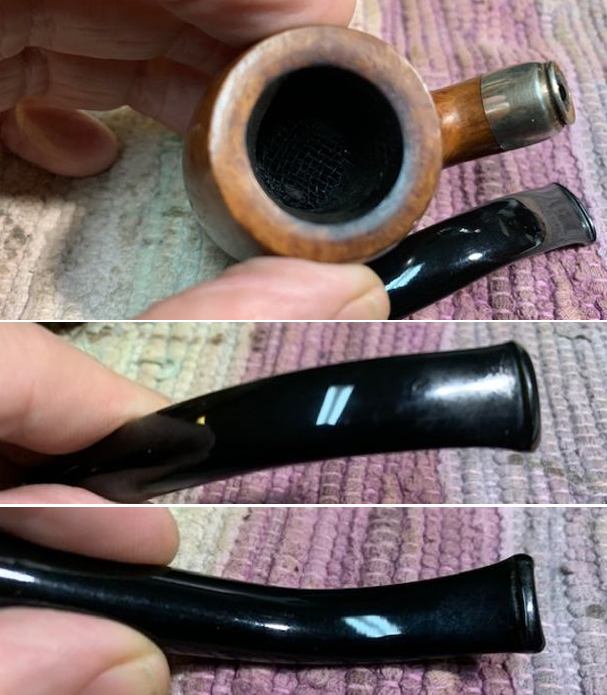
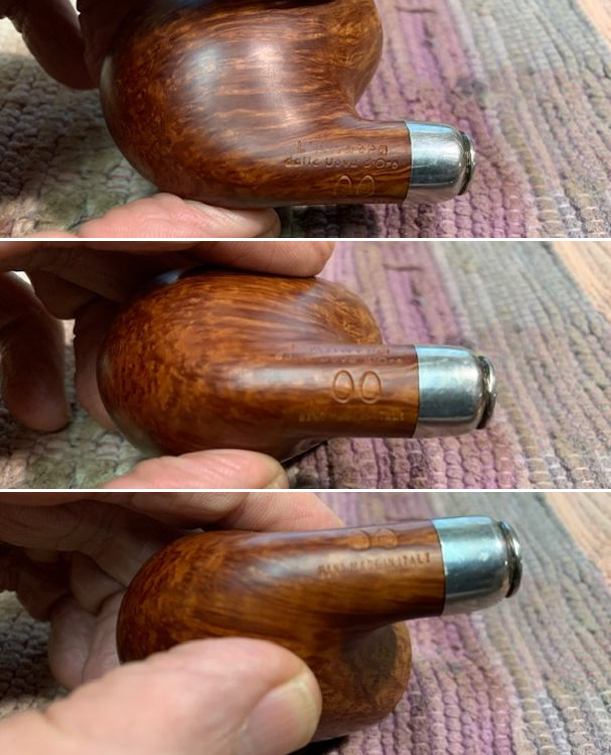
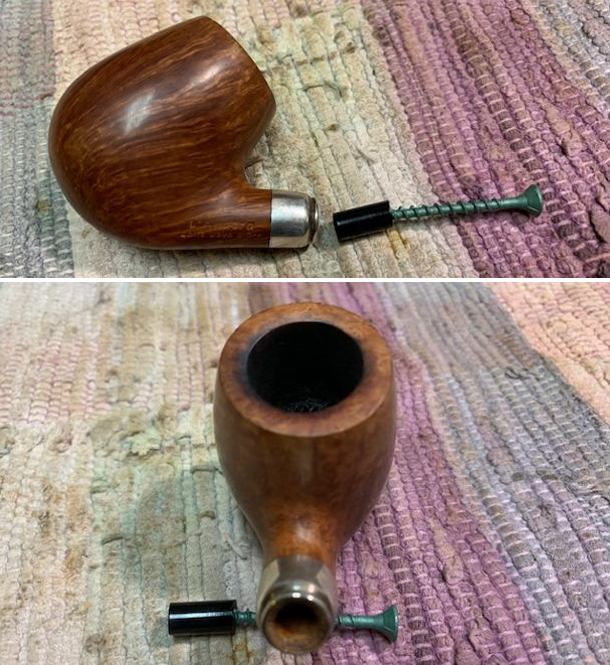
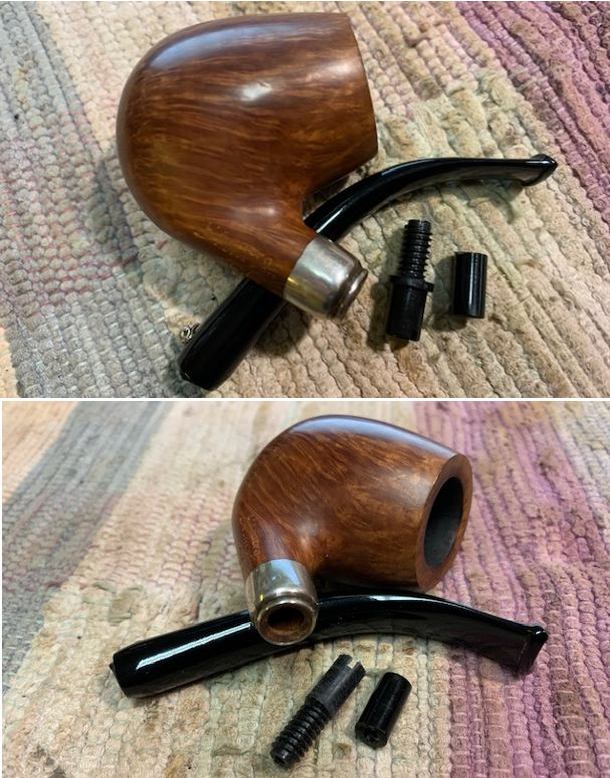
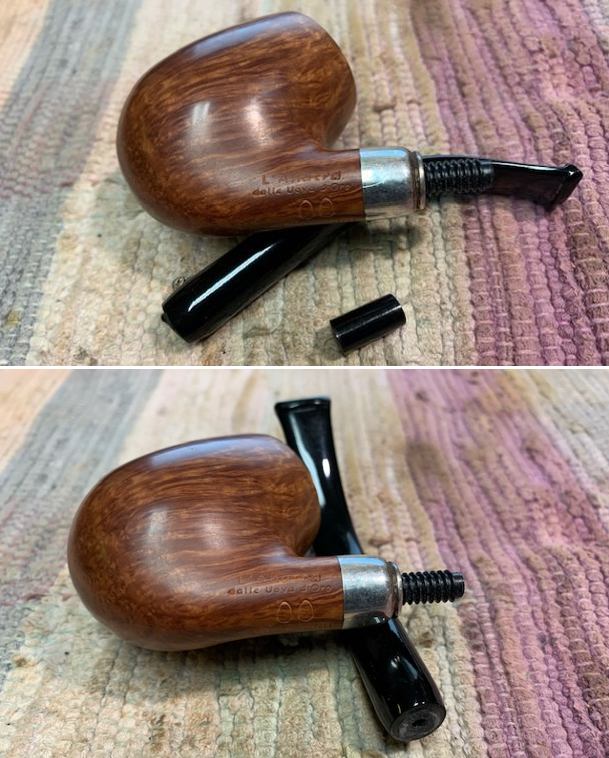
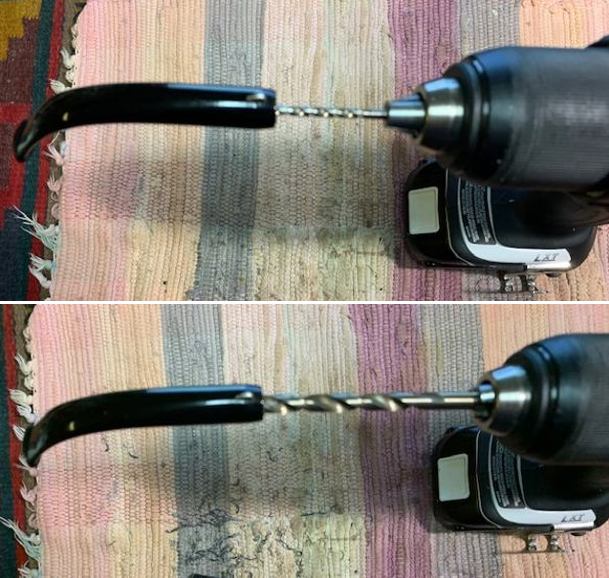
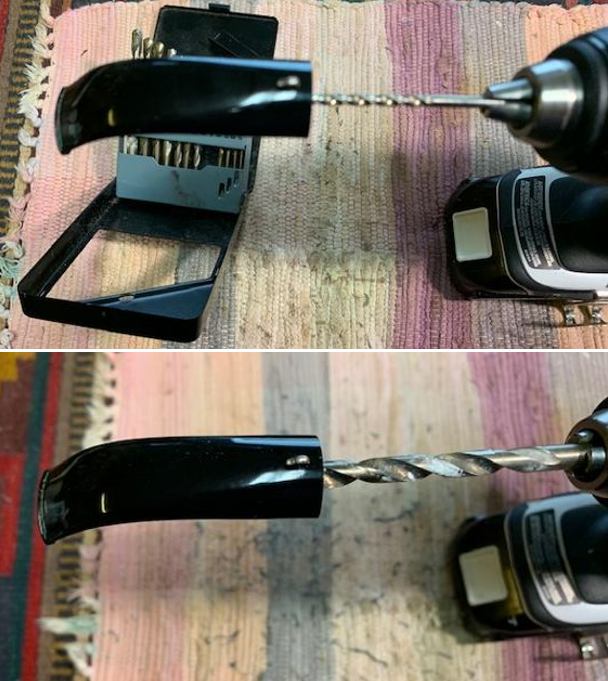
Last week I received a call from a local Vancouver realtor who had gotten my phone number from the pipe shop here. He had a pipe that he said needed a stem replacement and wanted to know if I could do that for him. I have learned to ask what he meant about needing a stem replacement. I had him send me photos of the pipe so I could see what it needed. It was a L’anatra bent egg shape with a silver ferrule. In the first photo you can see the tenon snapped off in the shank. I talked with the fellow a bit and we decided to do a tenon replacement. He was keen to keep the Duck head on the stem so this seemed the best solution for him. I told him to drop the pipe off at the house so I could work on it. I have included the photos that he sent me so you could see what I was going to deal with. With the oval shank L’Anatra tenon replaced I turned my attention to the original one that he had called me about. It too had the tenon snapped off in the shank. It was stamped on the left side of the shank and read L’Anatra [over] dalle Uova d’ Oro [over] 2 Eggs for the Grade of smooth pipe that it was. Underneath that it was stamped Hand Made in Italy. It had some beautiful grain around the bowl and shank. It was a little dirty with some debris and darkening on the beveled inner edge of the bowl. It had been smoked significantly more than the previous pipe. It had a screen in the bowl to help with what I assume was wet smoking but I did not know for sure. I left it in the bowl. It looked like he had dropped it as well but there were no dents in the finish. The stem was in good condition with some chatter on both side ahead of the button but nothing to deep. Once the tenon was replaced it would be a quick clean up and polish before I gave it back to him. I took some photos of the bowl and stem when I received it to show what a great looking pipe it was. I took photos of the rim top to show the condition of the bowl and the darkening on the back inner edge of the rim. I also took photos of the stem to show the tooth chatter on both sides at the button. I rotated the bowl and took photos of the stamping on the left and underside of the shank. It was clear and readable as noted above.I decided to start my work on the pipes by pulling the tenon on both pipes. That way I could proceed on them both from the same starting place. The broken tenon was firmly stuck in the shank so I put the bowl in the freezer while I had a coffee. When I finished the coffee I tried to pull the tenon again with the screw and it came out very easily. I went through my tenons and found a threaded one that would fit the shank with a few minor adjustments. I used a Dremel and sanding drum to remove the should ahead of the threads and to reduce the diameter slightly to fit the shank. I also used the Dremel and sanding drum to remove the fragments of the broken tenon on the stem face. I put the tenon in the shank and took some photos of the fit. It was looking very good. Now it was time to work on replacing the broken tenon. I drilled out the face of the stem with a cordless drill and a bit roughly the size of the airway in the stem. I find that this helps to center the drilling. I worked my way through drill bits up to 15/64s which is approximately the size of the threaded portion of the tenon.I flattened out the threads with the Dremel and sanding drum until the fit in the new opening on the stem was snug. I fit a pipe cleaner in the stem and then coated the threaded tenon end with black CA glue and turned it into the stem. I set it aside to let the glue harden. Once it had I removed the pipe cleaner and took some photos of the pipe with the stem. While the glue cured on the new tenon I turned my attention to the bowl. I polished the briar with micromesh sanding pads – dry sanding with 1500-12000 grit pads. I wiped the bowl down after each pad with a damp cloth. I worked over the darkening on the rim top at the same time. It looked much better. I worked some Before & After Restoration Balm into the surface of the briar with my fingertips to clean, enliven and protect the briar. I let the balm sit for 15 minutes and then buffed with a cotton cloth to raise the shine. The photos show the bowl at this point in the restoration process. I set the bowl aside and turned my attention to the stem. It was in such great condition that I polished it with micromesh sanding pads – wet sanding with 1500-12000 grit sanding pads. I wiped it down after each sanding pad with Obsidian Oil. I polished it with Before & After Pipe Stem Polish – both Fine and Extra Fine. I finished it with a final coat of Obsidian Oil. This L’Anatra dalle Uova d’ Oro 2 Egg Grade Bent Egg turned out to be a more beautiful pipe than I had expected once I had replaced the tenon. The finish on the briar is beautiful and the grain is quite stunning around the bowl and shank. I put the pipe back together and buffed it lightly with Blue Diamond on the buffing wheel. I gave the bowl and the acrylic stem multiple coats of carnauba wax. I buffed the pipe with a clean buffing pad to raise the shine and hand buffed it with a microfibre cloth to deepen the shine. It is fun to see what the polished bowl looks like with the polished black vulcanite stem. This classic looking L’Anatra dalle Uova d’ Oro Bent Egg feels great in my hand. It is light and well balanced. Have a look at it with the photos below. The dimensions are Length: 5 ½ inches, Height: 2 inches, Outside diameter of the bowl: 1 ¼ inches, Chamber diameter: ¾ of an inch. The weight of the pipe is 54 grams/1.90 oz. It is a beautiful pipe and another one that will be heading back to the Vancouver Realtor now that I have replaced a broken tenon on each of the pipes. Thanks for walking through the restoration with me as I worked over this pipe. Thanks to each of you who are reading this blog.
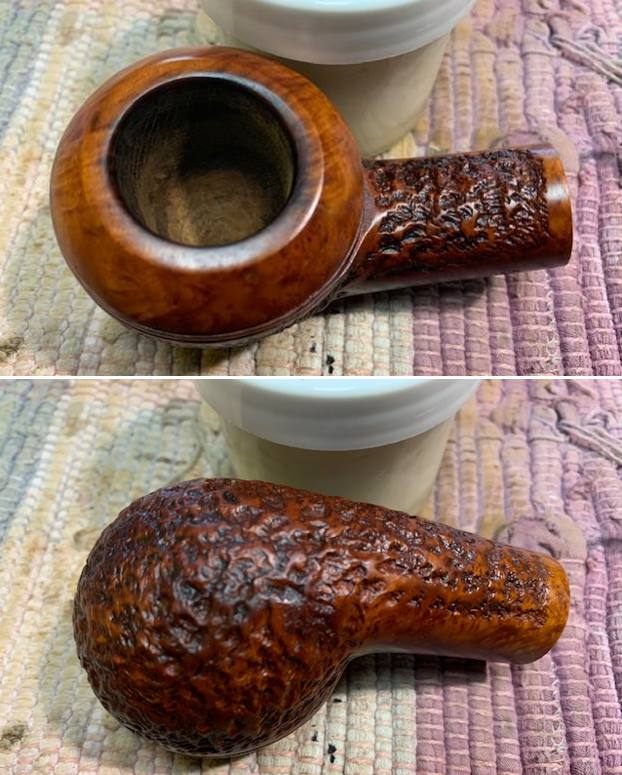
Replacing a Broken Tenon on a L’Anatra dalle Uova d’ Oro Sandblast Squashed Tomato


Blog by Steve Laug

Last week I received a call from a local Vancouver realtor who had gotten my phone number from the pipe shop here. He had a pipe that he said needed a stem replacement and wanted to know if I could do that for him. I have learned to ask what he meant about needing a stem replacement. I had him send me photos of the pipe so I could see what it needed. It was a L’Anatra bent egg shape with a silver ferrule. In the first photo you can see the tenon snapped off in the shank. I talked with the fellow a bit and we decided to do a tenon replacement. He was keen to keep the Duck head on the stem so this seemed the best solution for him. I told him to drop the pipe off at the house so I could work on it. I have included the photos that he sent me so you could see what I was going to deal with. The day that he was going to drop the pipe off he called and asked if he could put another pipe in the bag that had the same problem – a snapped tenon in the shank. I told him to go ahead and add it to the bag. When I came home from work the pipes were waiting for me. The second pipe was another L’Anatra. This one was a beautifully sandblasted bent squashed tomato shape with an oval shank. Like the first one the tenon was snapped off in the shank. It was stamped on the underside of the shank and read L’Anatra [over] dalle Uova d’ Oro [over] Hand Made in Italy. The blast was very well done – deep and rugged. The sandblast on the rim top had some debris and darkening but otherwise was clean. The bowl itself was clean and still had raw briar in the bottom half of the bowl. It looked like he had dropped it not too long after he acquired it. The stem was in good condition with some chatter on both side ahead of the button but nothing to deep. I decided to deal with this one first. Once the tenon was replaced it would be a quick clean up and polish before I gave it back to him. I took some photos of the bowl and stem when I received it to show what a great looking pipe it was. I took photos of the rim top to show the condition of the bowl and the darkening in the sandblast finish of the rim. I also took photos of the stem to show the tooth chatter on both sides at the button.I took a photo of the stamping on the underside of the shank. It was clear and readable as noted above.I decided to start my work on the pipes by pulling the tenon on both pipes. That way I could proceed on them both from the same starting place. I used a dry wall screw and twisted it into the airway. On this pipe a bit of wiggling and the tenon popped free of the shank. The other was a bit tougher but I will talk about it on the next blog.I went through my tenons and found a threaded one that would fit the shank with a few minor adjustments. I used a Dremel and sanding drum to remove the should ahead of the threads and to reduce the diameter slightly to fit the shank. I also used the Dremel and sanding drum to remove the fragments of the broken tenon on the stem face.I put the tenon in the shank and took some photos of the fit. It was looking very good.Now it was time to work on replacing the broken tenon. I drilled out the face of the stem with a a cordless drill and a bit roughly the size of the airway in the stem. I find that this helps to center the drilling. I worked my way through drill bits up to 15/64th which is approximately the size of the threaded portion of the tenon.I flattened out the threads with the Dremel and sanding drum until the fit in the new opening on the stem was snug. I fit a pipe cleaner in the stem and then coated the threaded tenon end with black CA glue and turned it into the stem. I set it aside to let the glue harden. Once it had I removed the pipe cleaner and took some photos of the pipe with the stem. While the glue cured on the new tenon I turned my attention to the bowl. I used a brass bristle wire brush to scrub off some of the darkening on the rim top. I worked some Before & After Restoration Balm into the surface of the briar with my fingertips and a horse hair shoe brush to clean, enliven and protect the briar. I let the balm sit for 15 minutes and then buffed with a cotton cloth to raise the shine. The photos show the bowl at this point in the restoration process. I set the bowl aside and turned my attention to the stem. It was in such great condition that I polished it with micromesh sanding pads – wet sanding with 1500-12000 grit sanding pads. I wiped it down after each sanding pad with Obsidian Oil. I polished it with Before & After Pipe Stem Polish – both Fine and Extra Fine. This L’Anatra dalle Uova d’ Oro Sandblast Squashed Tomato turned out to be a more beautiful pipe than I had expected once I had replaced the tenon. The sandblast finish on the briar is beautiful and the nooks and crannies of the blast really show the depth of the finish. I put the pipe back together and buffed it lightly with Blue Diamond on the buffing wheel. I gave the bowl multiple coats of Conservator’s Wax and the acrylic stem multiple coats of carnauba wax. I hand buffed the pipe with a clean buffing pad to raise the shine and hand buffed it with a microfibre cloth to deepen the shine. It is fun to see what the polished bowl looks like with the polished black vulcanite stem. This classic looking L’Anatra dalle Uova d’ Oro Squashed Tomato feels great in my hand. It is light and well balanced. Have a look at it with the photos below. The dimensions are Length: 6 inches, Height: 1 ½ inches, Outside diameter of the bowl: 1 ½ inches, Chamber diameter: 7/8 of an inch. The weight of the pipe is 63 grams/2.22 oz. It is a beautiful pipe and one that will be heading back to the Vancouver Realtor once I finish the tenon replacement on his second L’Anatra – an Egg. Thanks for walking through the restoration with me as I worked over this pipe. Thanks to each of you who are reading this blog.
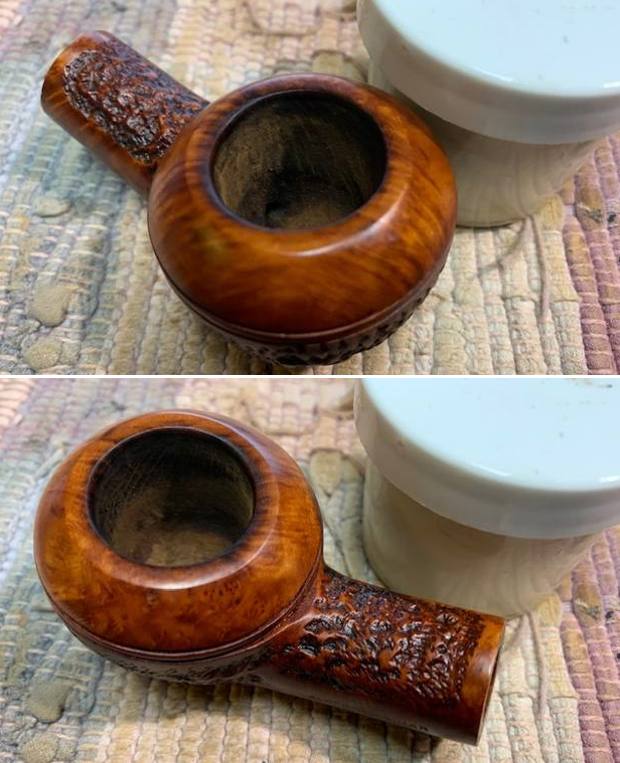
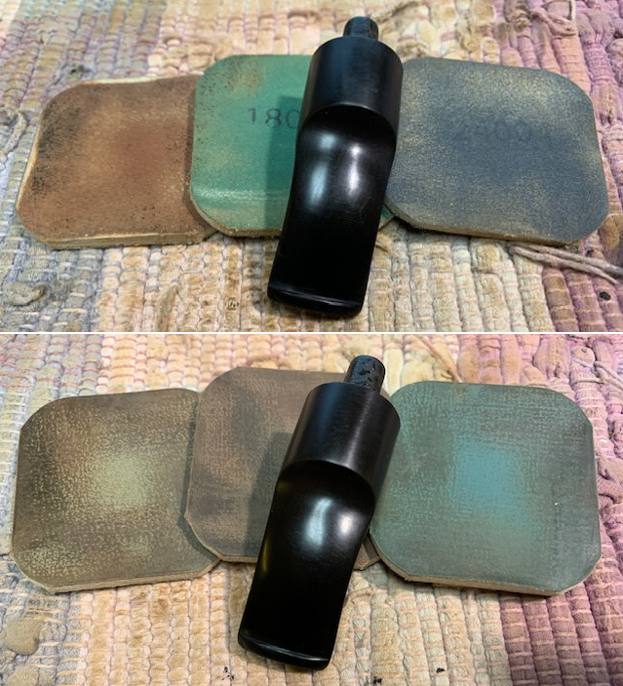
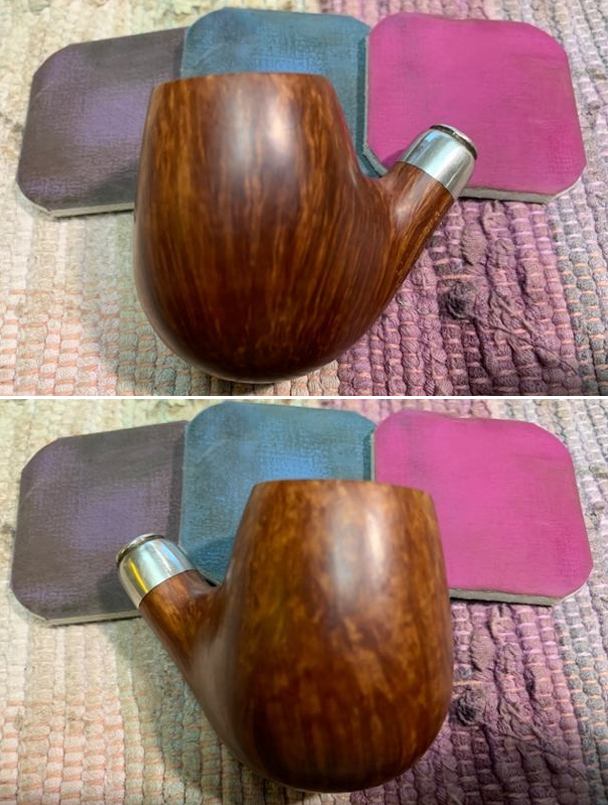
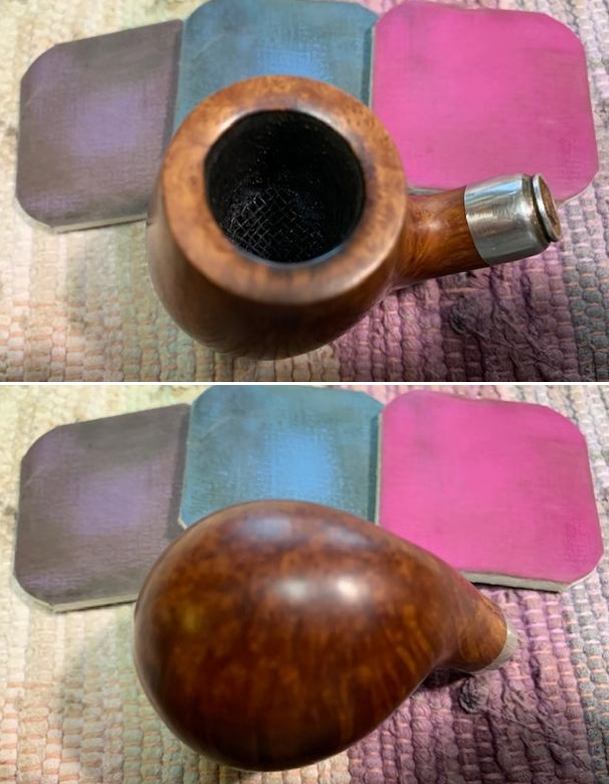
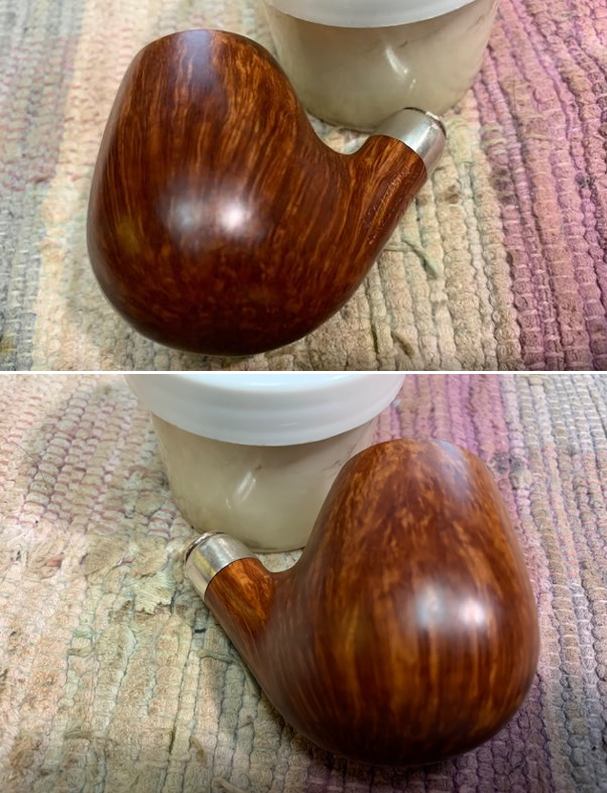
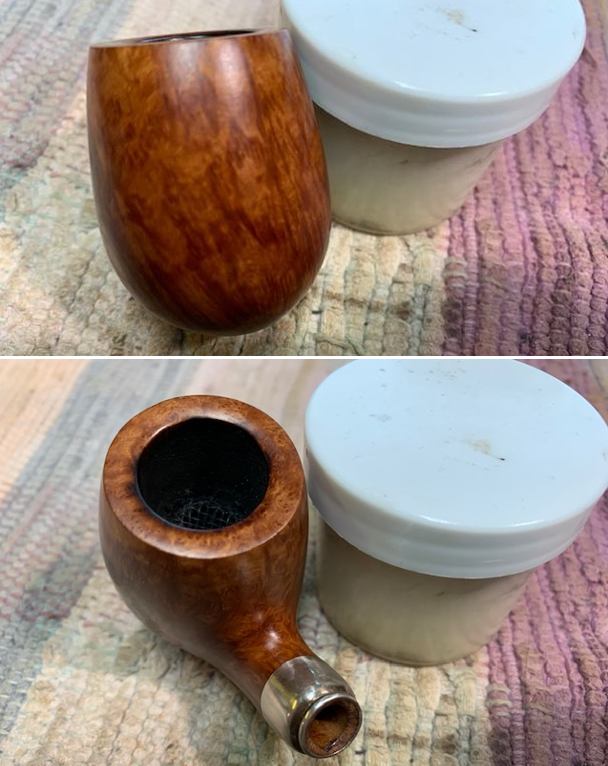
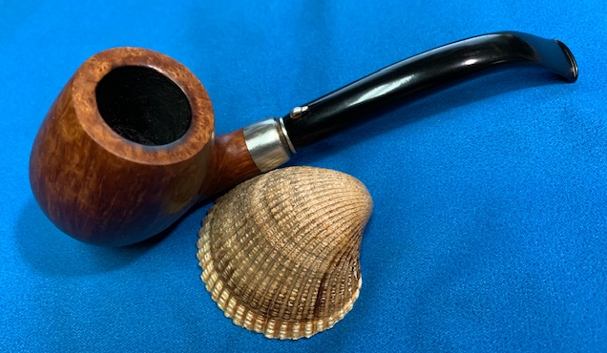
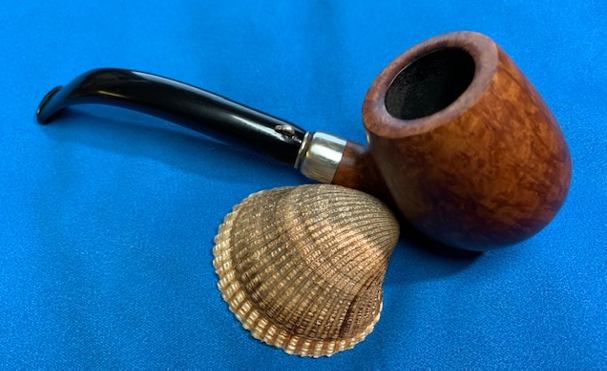
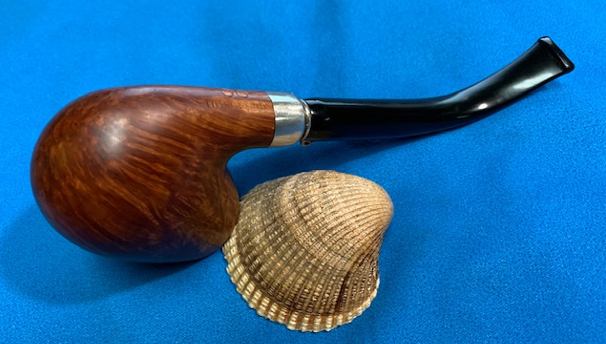
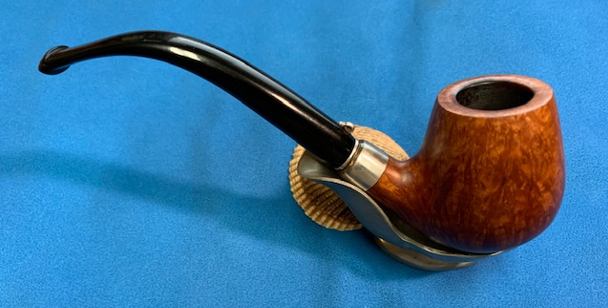
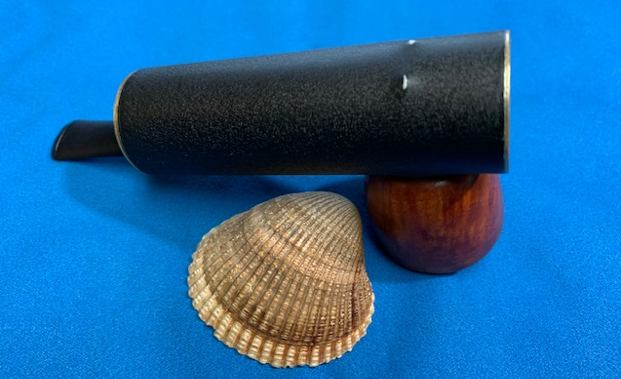
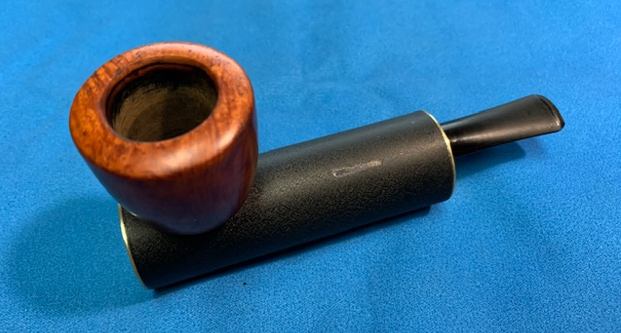
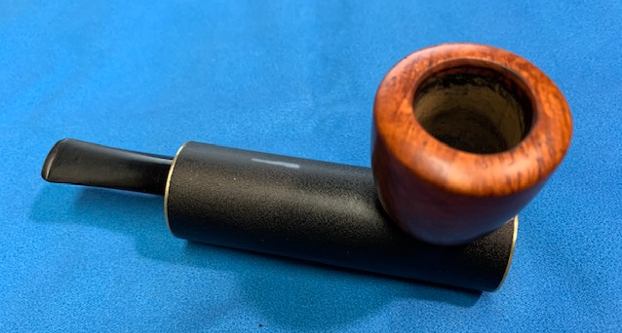
This one is strangely beautiful – a Smooth Bowled Brial System Pipe


Blog by Steve Laug

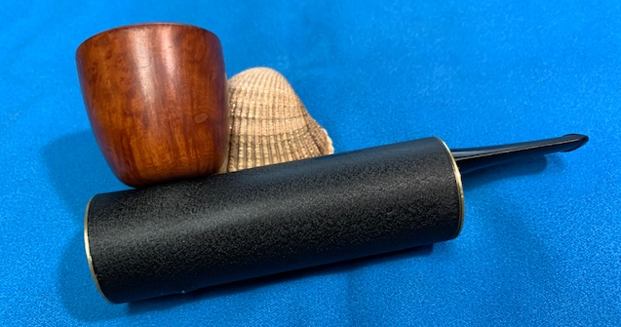
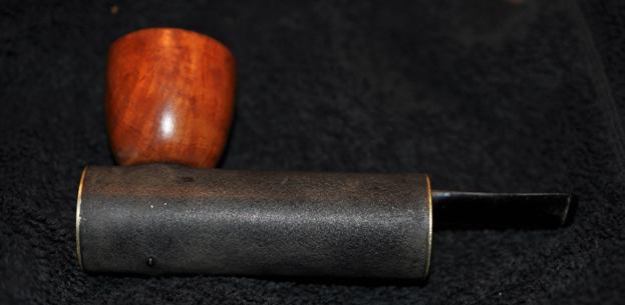
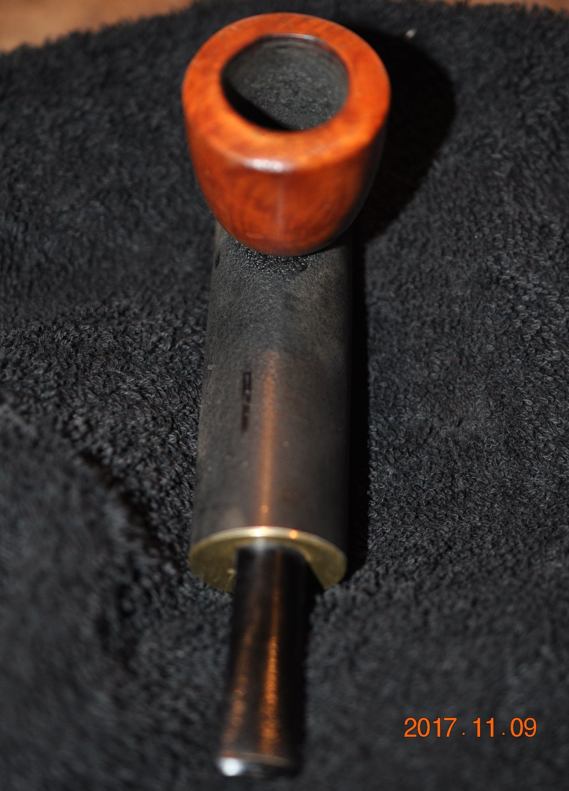
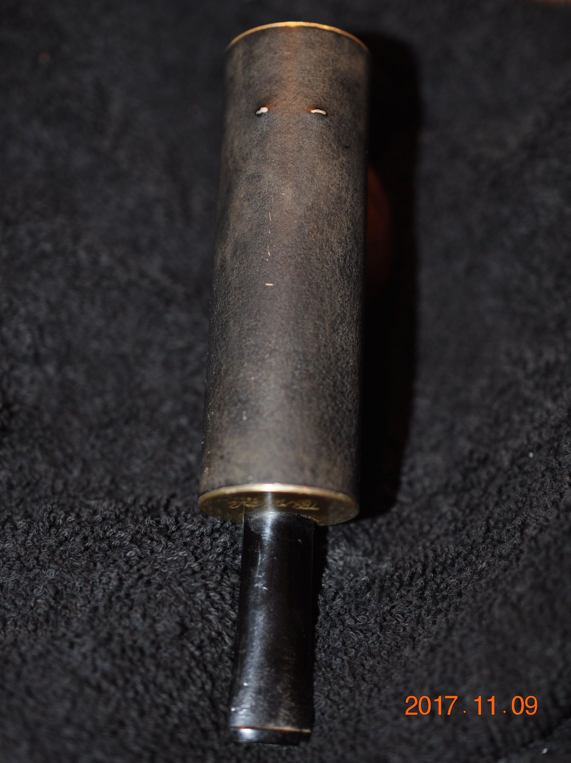
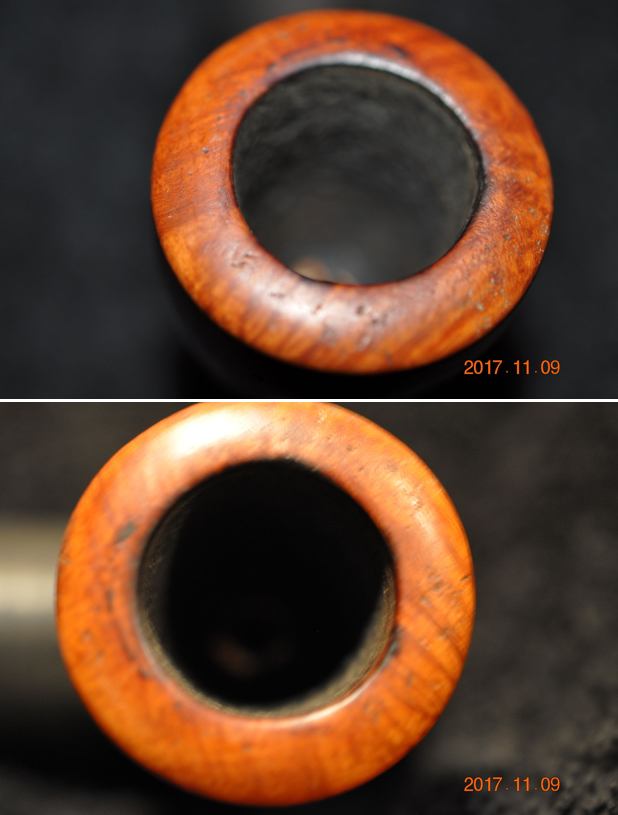
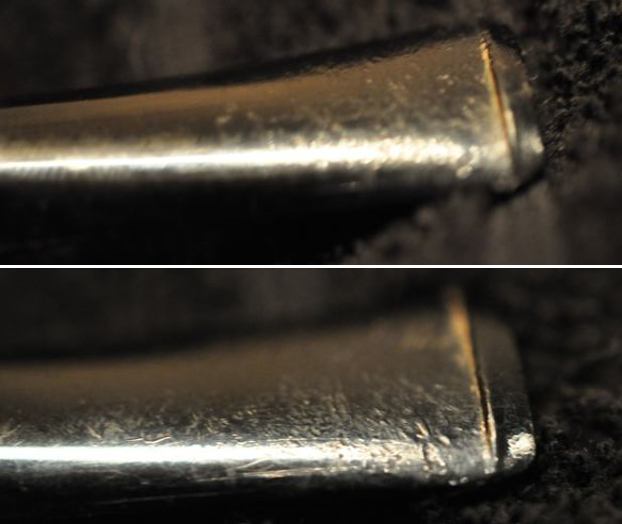
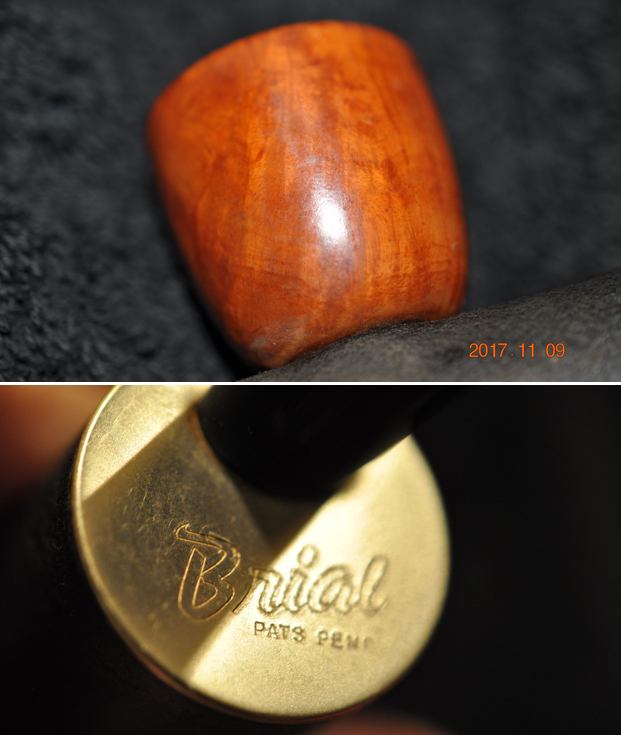
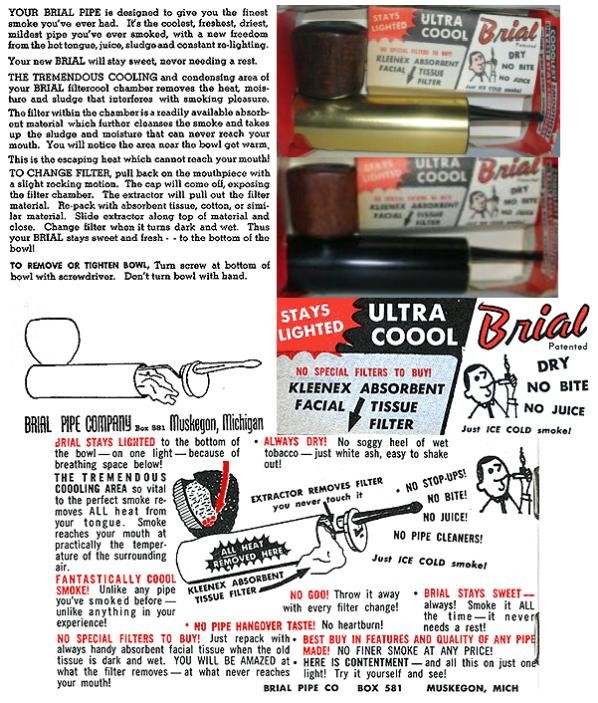
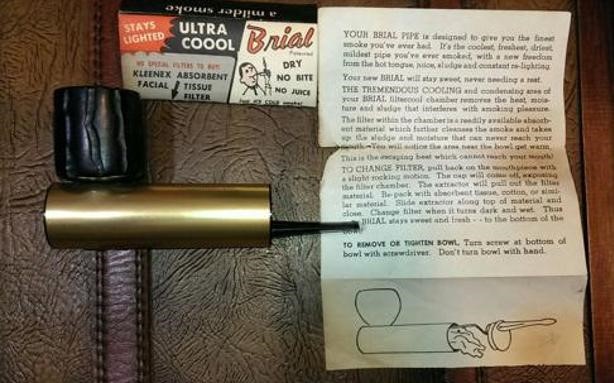
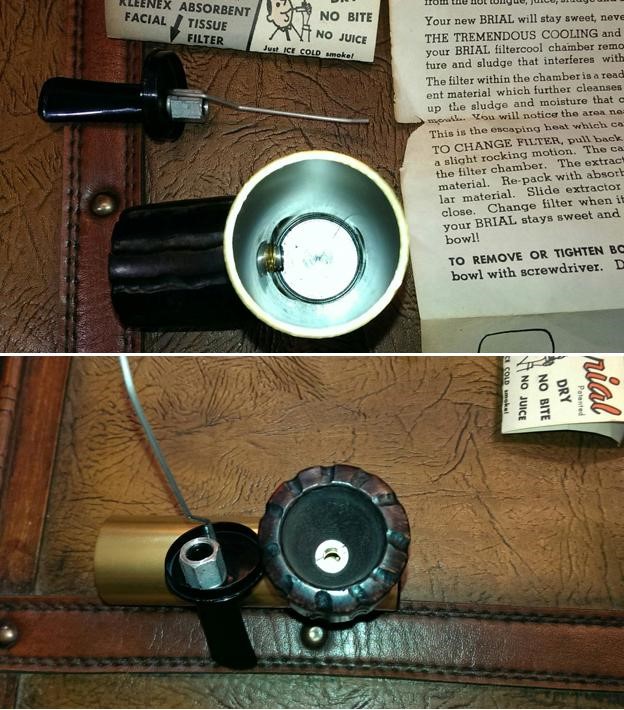
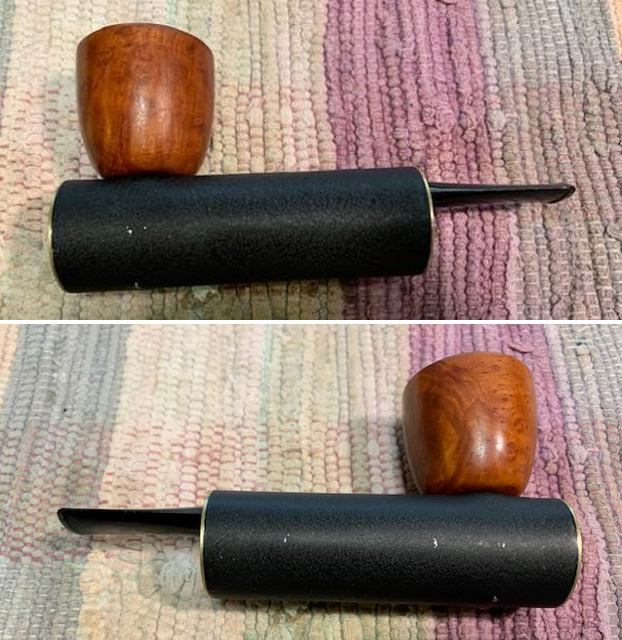
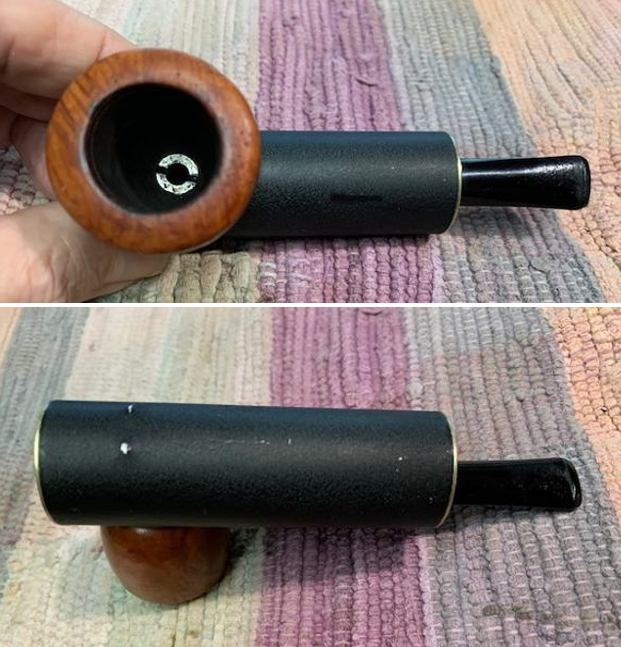
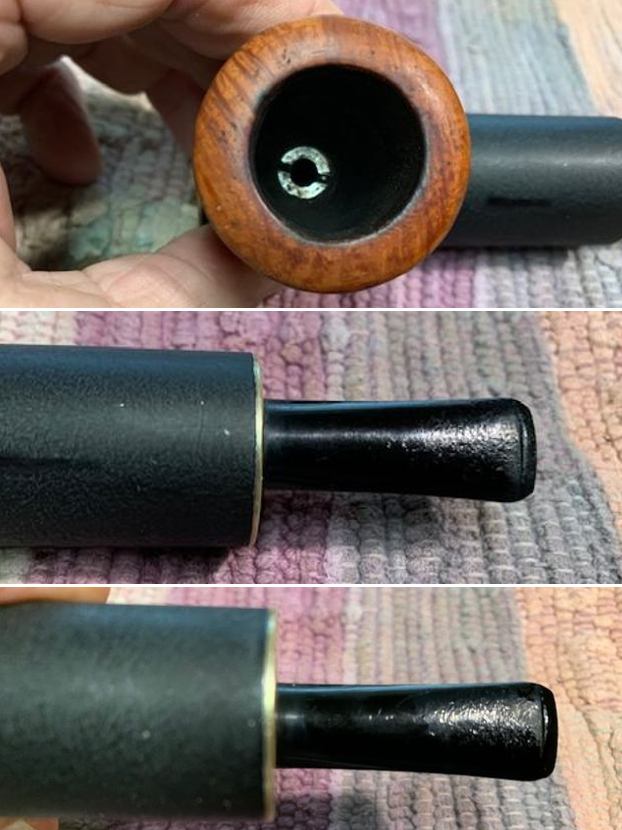
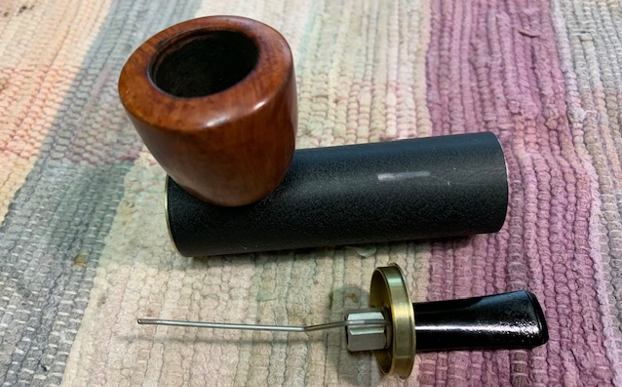
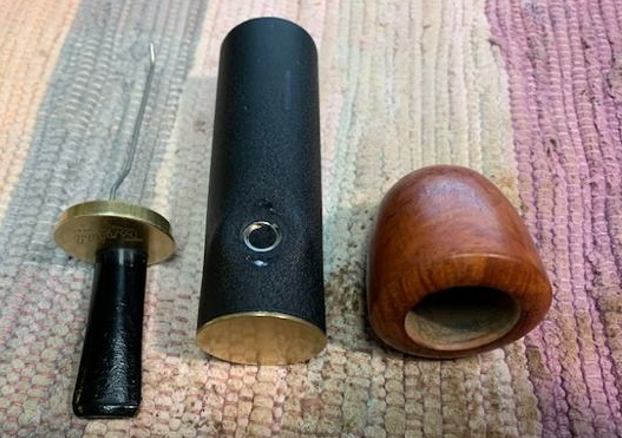
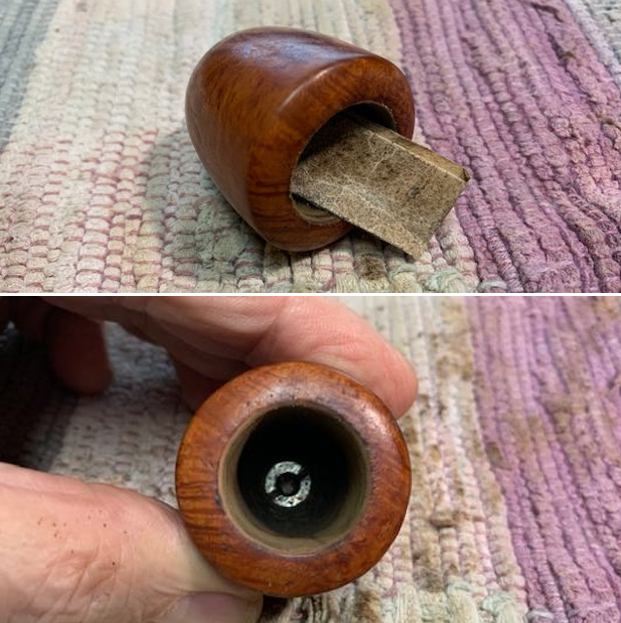
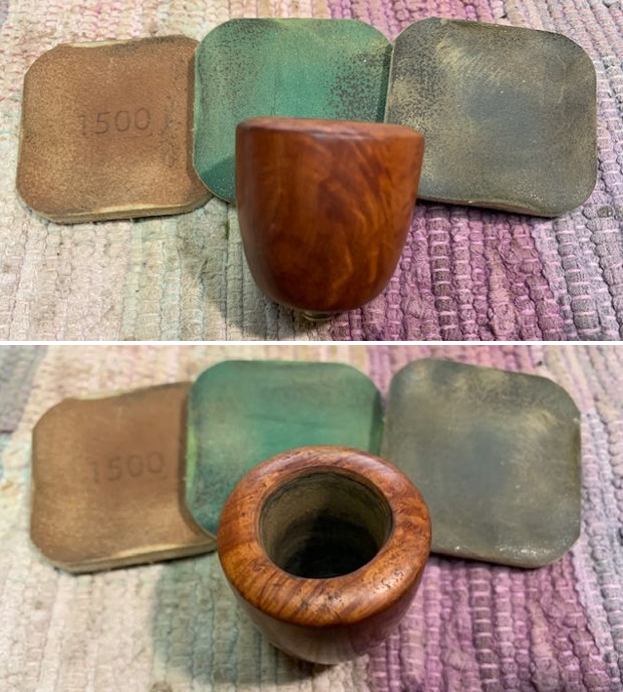
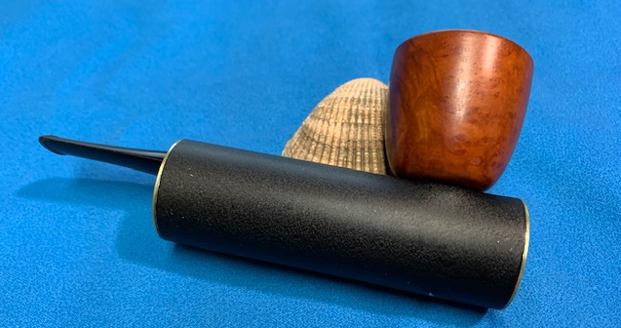
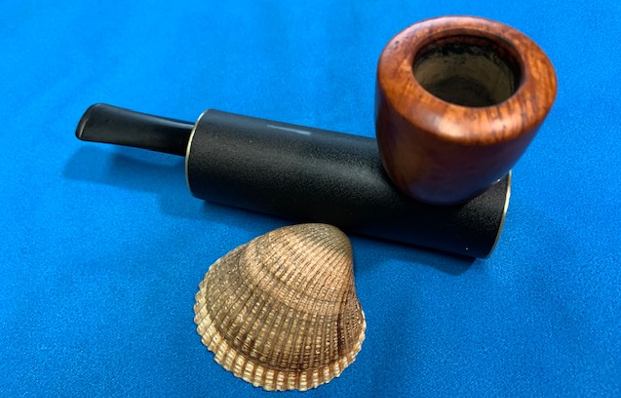
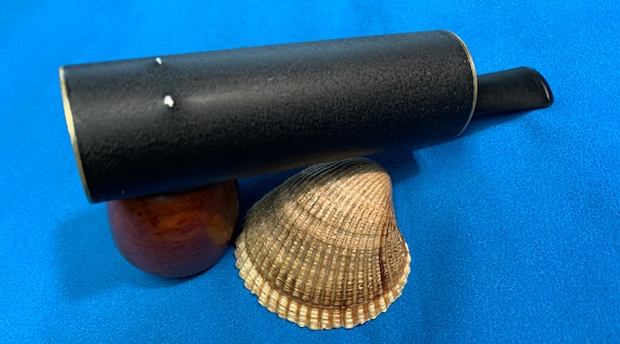
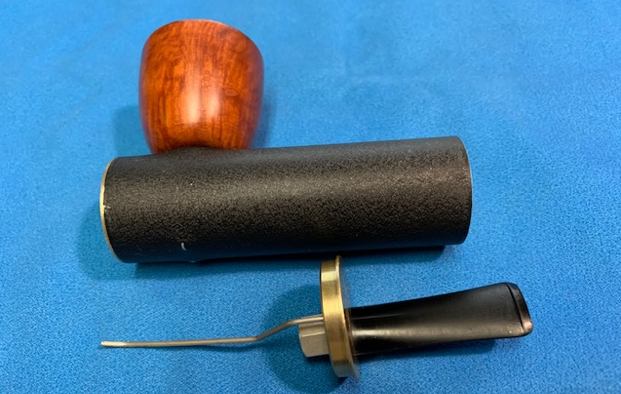
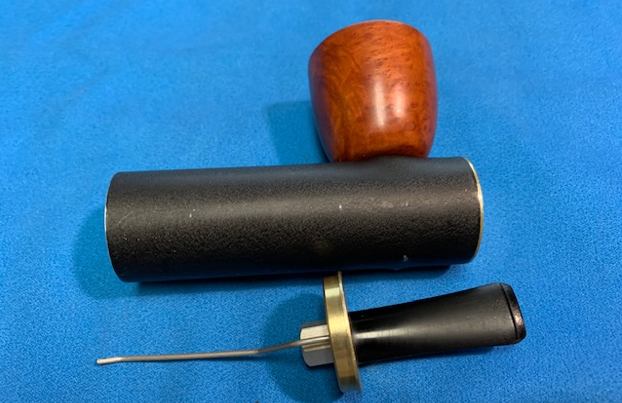
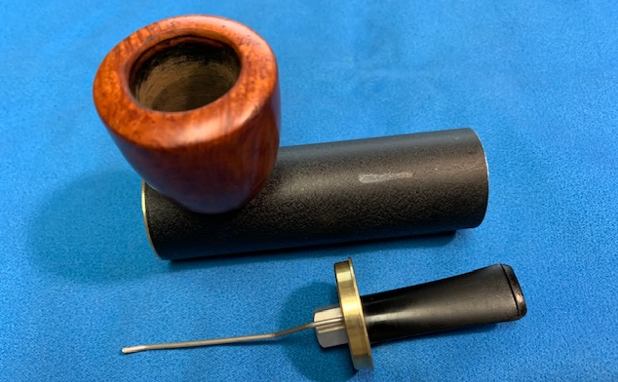
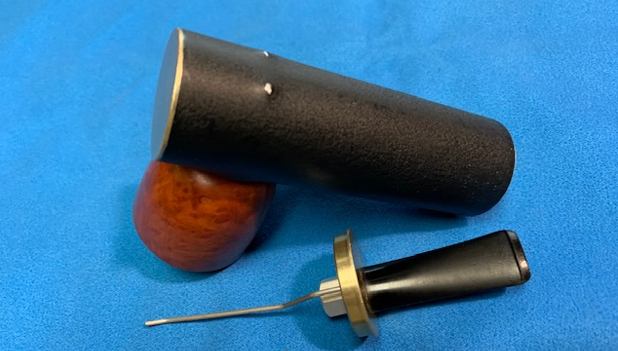
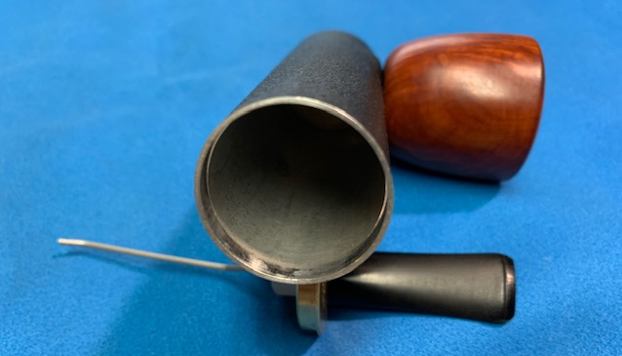
This particular style of system pipe always reminds me of the tadpoles we used to catch when I was younger. We would get a jarful and watch them become frogs. The pipe has that same look to me. Or you might compare it to an inflated puffer fish. Either way it is an odd pipe and yet there is something strangely beautiful about it. We purchased this smooth bowled one from an antique mall on 10/28/17 in Bozeman, Montana, USA. I have worked on one other of these Brial pipes and have found them hilariously interesting. The base tube that receives the stem is made to be stuffed with wads of toilet paper or tissue to filter out the moisture in the smoke. The one I had before still had that in it. Fortunately, this did not as it is quite smelly and messy. This one had a fairly thick cake in the bowl  and some dings in the rim top and light lava on the inner edge of the bowl. The briar bowl was dirty with ground in oils and the tubular shank was dusty and dirty as well. The brass coloured ends of the tube were also lightly scratched and dirty. The tube has two small bumps on the bottom that act as feet making the pipe a sitter. The stem had tooth chatter and marks on both sides. I think the stem is a plastic product rather than vulcanite. It is quite different feeling and the marks in it are much like what I have seen on Medico pipe stems. The brass end plate on the stem end of the tube read Brial [over] Pats Pend. When removed there was a nickel nut on the inside holding the stem in place and a wire to wrap the tissue paper filter around. Jeff took these photos before he started his clean up of the pipe. Jeff took some photos of the rim and bowl to give a sense of the cake and lava situation. You can also see the nicks and scratches in the briar. It is still a nice looking piece of briar. The stem is also shown. You can see the tooth marks and chatter on the surface. Even the marks look different than the ones that are in vulcanite or acrylic. Jeff took a photo of the side of the bowl to give a glimpse of the grain on the briar. It is quite nice. He also captured the etching on the brass stem end of the tube. It reads as noted above.I mentioned above about the earlier Brial pipe that I had worked on. I turned to that blog now and reread the information that I had gathered on the brand. Here is the link to the blog if you would like to have a look at it (https://rebornpipes.com/2017/07/17/a-messy-cleanup-on-a-brial-system-pipe/). I quote the section from the blog on the brand itself. It is quite interesting.
I remember when I first started looking at getting a Brial pipe I Googled and found a write up on the brand on the Smoking Metal Website. It was that brief description, the photos and printed advertisement that hooked me and set me on the hunt to acquire one of them. I have included that write up for you. If you wish to read it on the website here is the link – http://www.smokingmetal.co.uk/pipe.php?page=70.
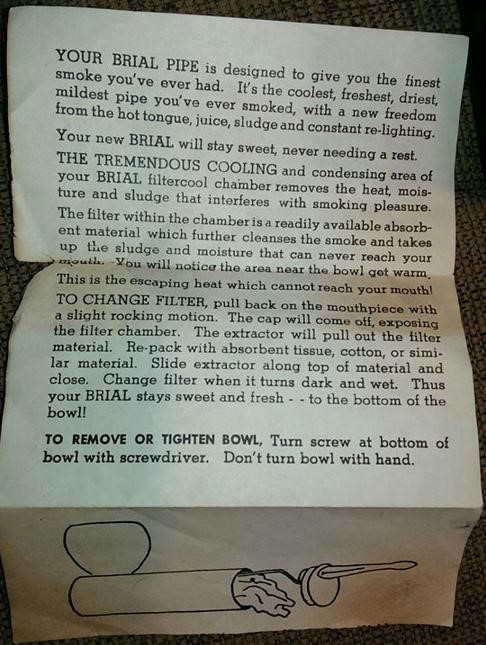
The BRIAL pipe is basically an alloy cylinder to which the briar bowl is screwed through the base of the bowl. The front end is permanently sealed with an alloy endpiece. The cylinder is filled with a tissue to act as an absorption media. This can be tamped in or extracted by means of the probe attached to the mouthpiece plate.

To enable the pipe to stay upright on a table, two dimples have been made in the underside of the cylinder to act as ‘feet’ as shown in my photos.

Brials were available in natural aluminium, brass anodized finish or black… The pipe was patented and manufactured by Salimar Oden in Jefferson Historic District, Muskegon, Michigan. It is believed he continued to market them until his move to Florida in 2000.

Smoking Metal also had a copy of this advertisement sheet on their site. Personally, I love the wording and descriptions on these older advertising flyers. The way they speak of the pipes and what they deliver always gives me cause to laugh. This one is no exception. I include it below. Make sure to give it a read.I posted a note on the Facebook Metal Pipe Smokers Group asking about information on the pipe and potential patent information. One of the members, Cody Easom posted some pictures of a new old stock, unsmoked Brial with the various inserts that came with the pipe. The first photo shows the new pipe with the box and the insert. The second photo shows the insert itself. The third and fourth photos show the inside of the new pipe. Now, the goal is in front of me – to get the old pipe on my table to look like this one. My brother did an amazing job cleaning out the inside of the pipe. He reamed the bowl with a PipNet reamer and took the cake back to bare briar. He cleaned out the inside of the tube/cooling chamber and the airway in the screw in the bottom of the bowl and the stem with pipe cleaners, cotton swabs and alcohol. He scoured out the inside of the chamber with steel wool, cotton swabs and alcohol until the inside shone. He scrubbed the stem with Soft Scrub and soaked it in Before & After Deoxidizer. He rinsed it with warm water to remove the excess Deoxidizer. When I finally brought it to my work table I took photos of the pipe. The black matter chamber is very nice with a few small nicks on the sides. The briar bowl is very nice.    I took some close up photos of the bowl, rim and stem surfaces to show how well it had cleaned up and what would need to be addressed. The bowl looked very good. There was some darkening around the inner edge of the bowl and some burn damage on the back side. The stem had a lot of tooth marks and chatter on both sides and looks very different from its vulcanite counterparts with tooth chatter.I took a photo of the stamping on the brass end of the barrel. It is clear and readable as noted above. The brass is in great condition. I took the pipe apart and took photos of the parts. The first one shows the stem removed from the shank and the wire that holds the tissue filter paper. The others show all the parts. I started my work on the pipe by addressing the darkening and burn damage on the inner edge of the rim. I used a folded piece of 220 grit sandpaper to smooth it out and give it a light bevel. I decided to polish out the nicks and scratches with the micromesh sanding pads and to leave behind what remained as a part of this pipe’s journey. I polished the briar bowl with micromesh sanding pads – dry sanding with 1500-12000 grit pads. I wiped the bowl down after each pad with a damp cloth. The bowl and rim began to take on a rich shine by the end of the cycle. I worked some Before & After Restoration Balm into the surface of the briar with my fingertips to clean, enliven and protect the briar. I let the balm sit for 15 minutes and then buffed with a cotton cloth to raise the shine. The photos show the bowl at this point in the restoration process. I touched up the nicks in the matte black finish of the sides of the barrel with a black Sharpie pen. It worked surprisingly well.I rubbed the finish down with some Before & After Restoration Balm. I worked it into the finish and let it sit for 10 minutes then buffed it off with a soft cloth. It looked really good.With that finished I turned my attention to the plastic/nylon/strange material stem! I sanded out the tooth chatter with 220 grit sandpaper and started the polishing with 400 grit wet dry sandpaper. I spent more time than usual with the wet dry sandpaper as the stem material was very porous looking and I wanted to smooth it out.I polished the stem with micromesh sanding pads – wet sanding with 1500-12000 grit sanding pads. I wiped it down after each sanding pad with Obsidian Oil. I polished it with Before & After Pipe Stem Polish – both Fine and Extra Fine.This is one that I am excited to finish the restoration on. Metal pipes can be a bear and painted ones even more so. But, this Brial Pat Pend System Pipe was actually an exception. I put the pipe back together and gently buffed it with Blue Diamond on the buffing wheel. I gave the bowl and stem multiple coats of carnauba wax. I hand buffed the pipe with a clean buffing pad to raise the shine and hand buffed it with a microfibre cloth to deepen the shine. It is fun to see what the polished bowl looks like with the polished  matte black shank tube and the black stem. This is truly beautiful in a very odd way. It actually feels great in my hand. It is light and well balanced. Have a look at it with the photos below. The dimensions are Length: 5 inches, Height: 2 ½ inches, Outside diameter of the bowl: 1 ½ inches, Chamber diameter: 7/8 of an inch. The weight of the pipe is 50 grams/1.76 oz. It is an interesting pipe and one that will be added to the American Pipe Makers section of the rebornpipes store soon. If you are interested in adding it to your collection let me know. Thanks for walking through the restoration with me as I worked over this pipe. Thanks to each of you who are reading this blog.