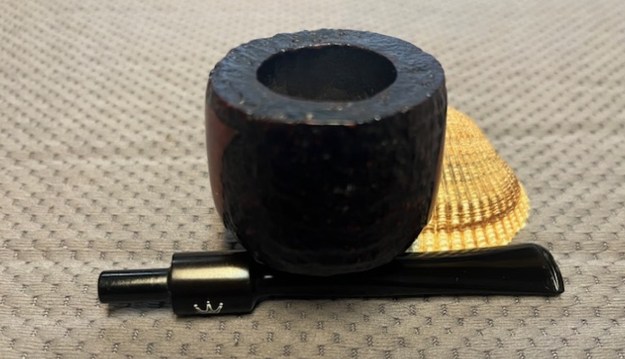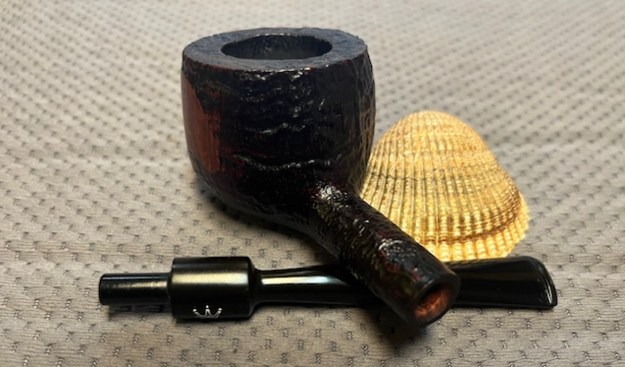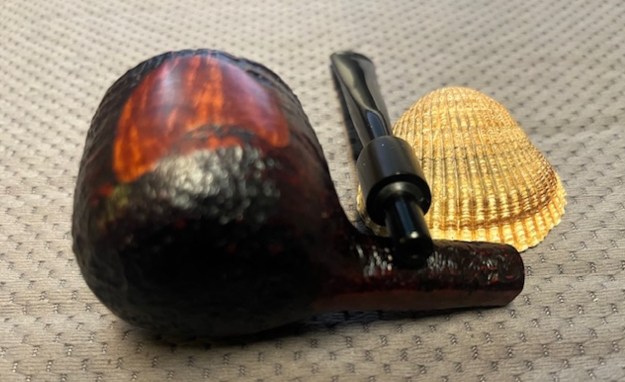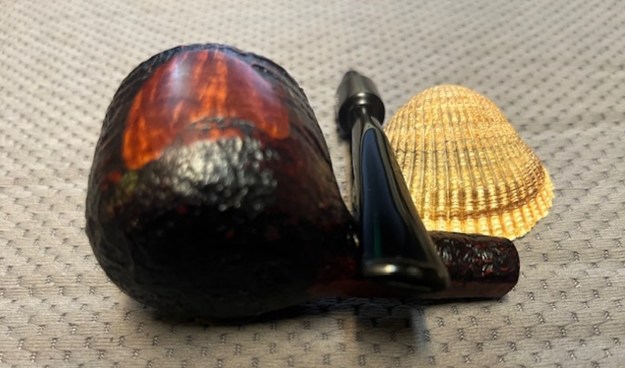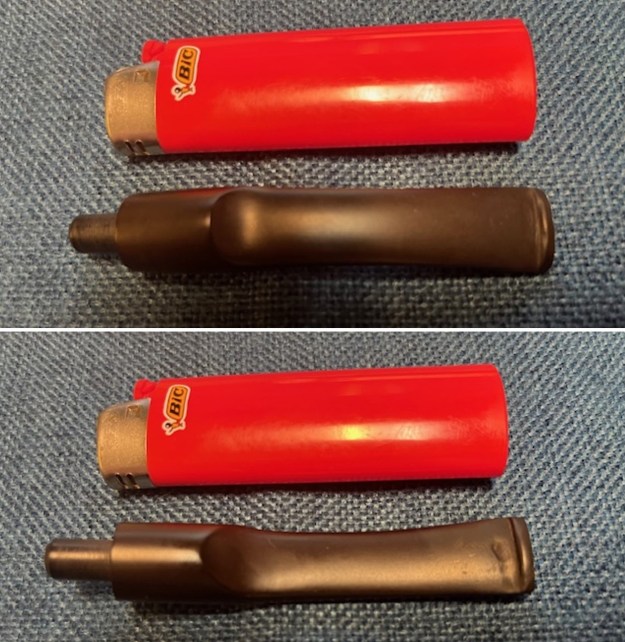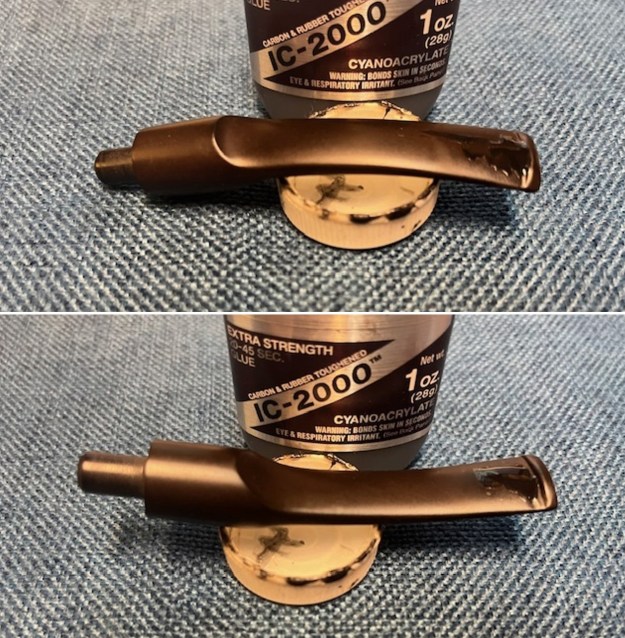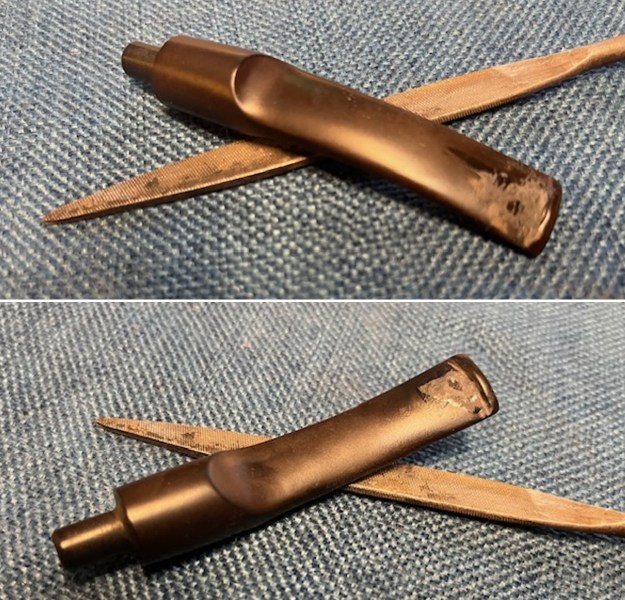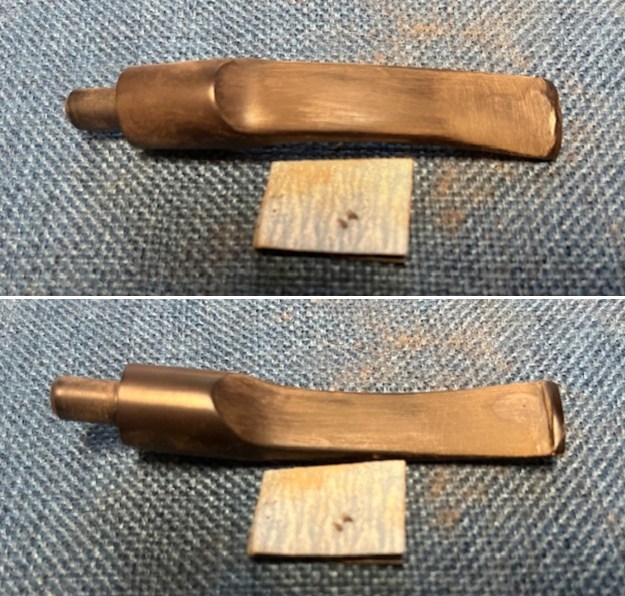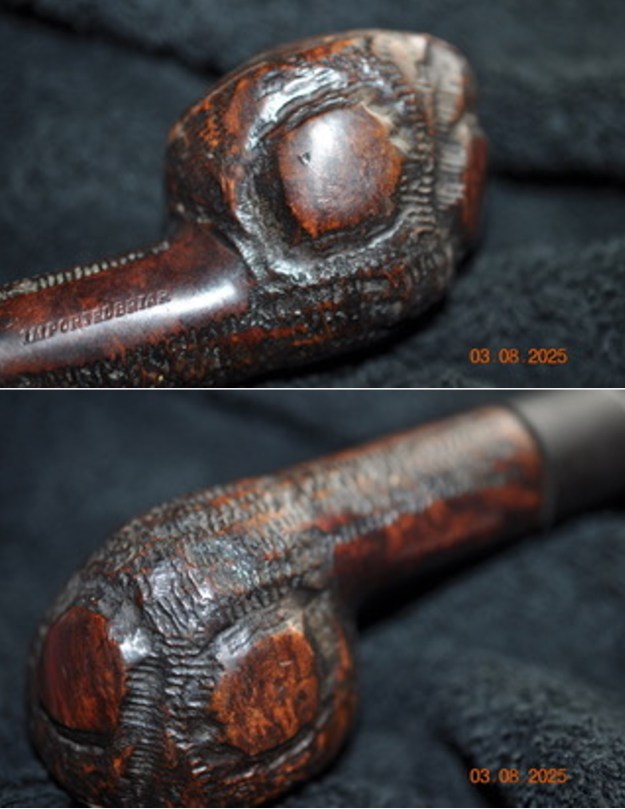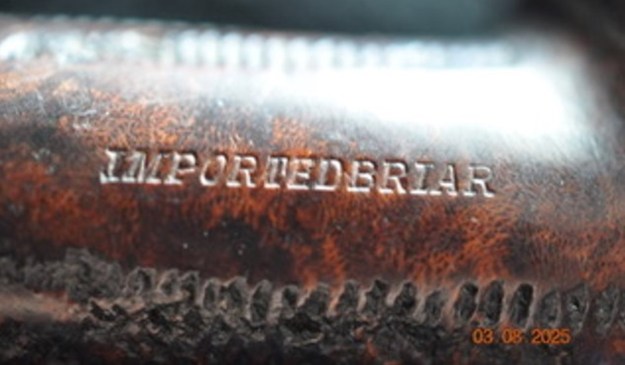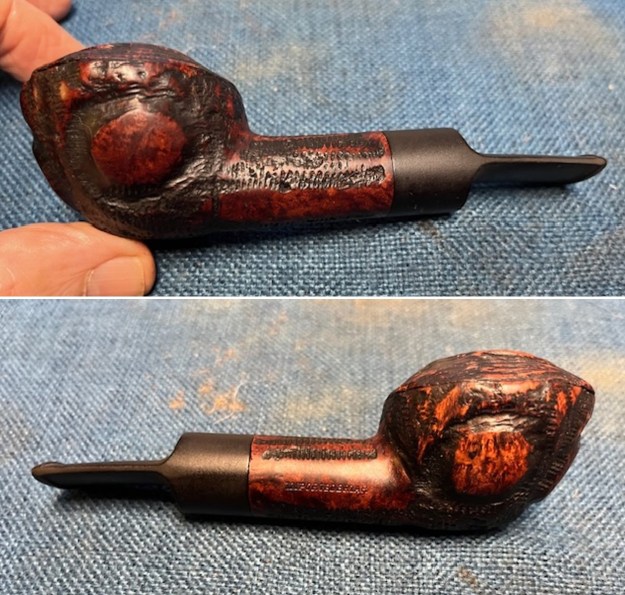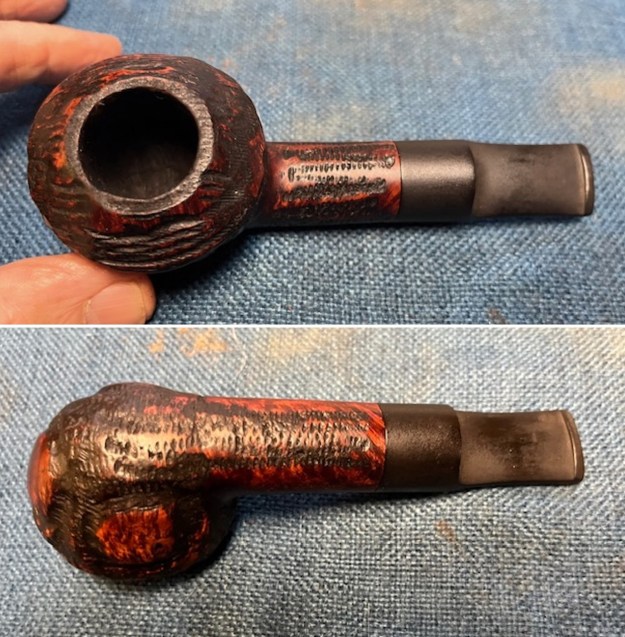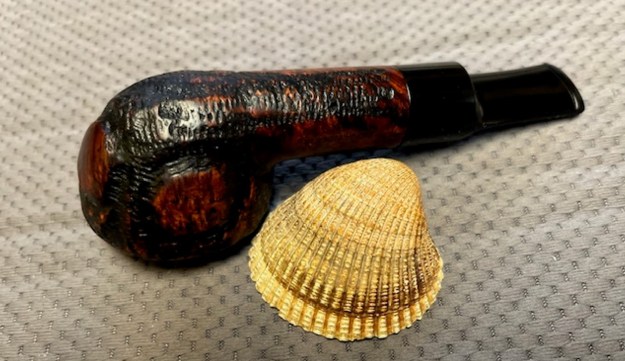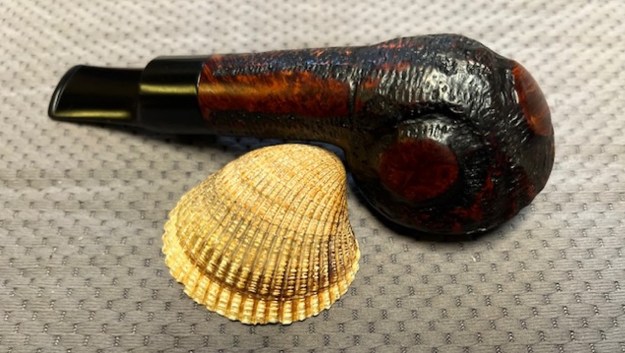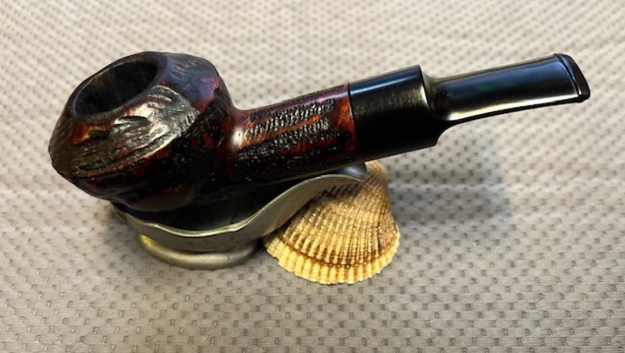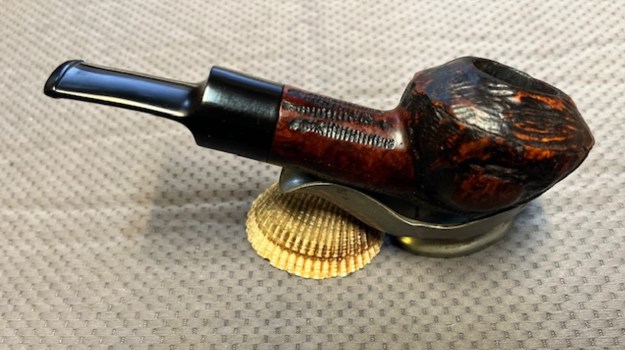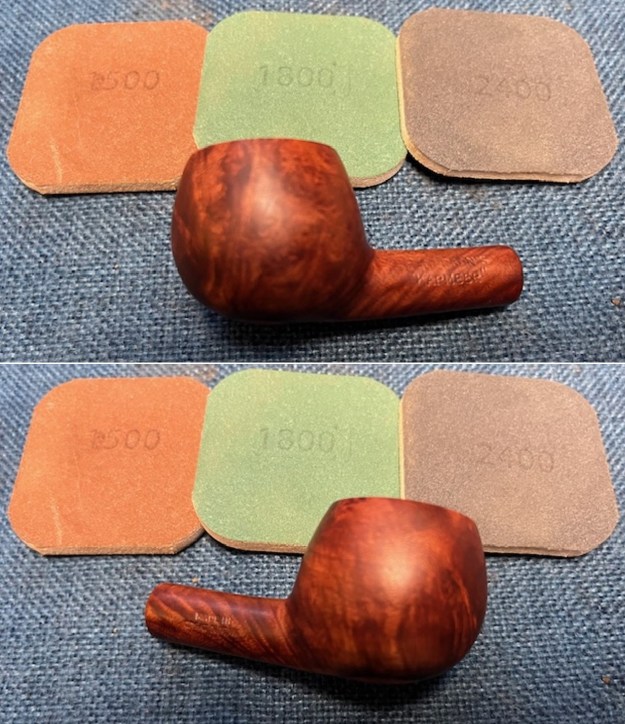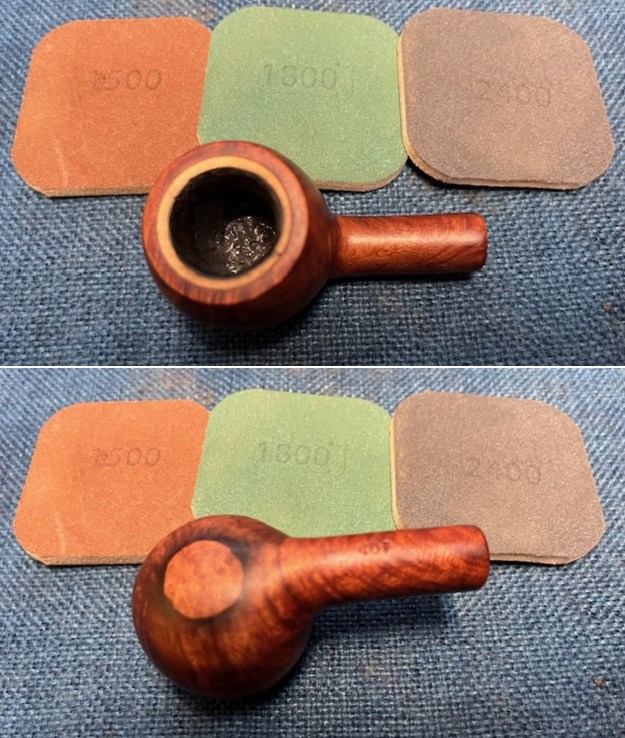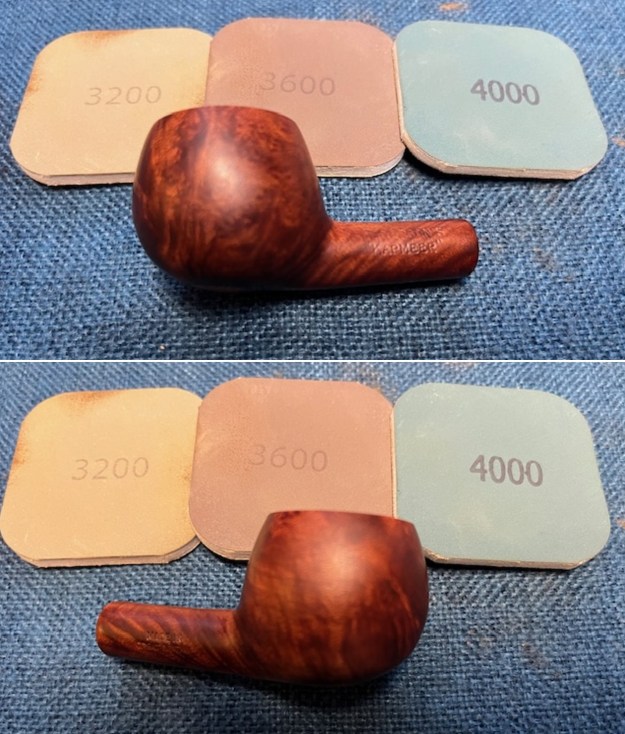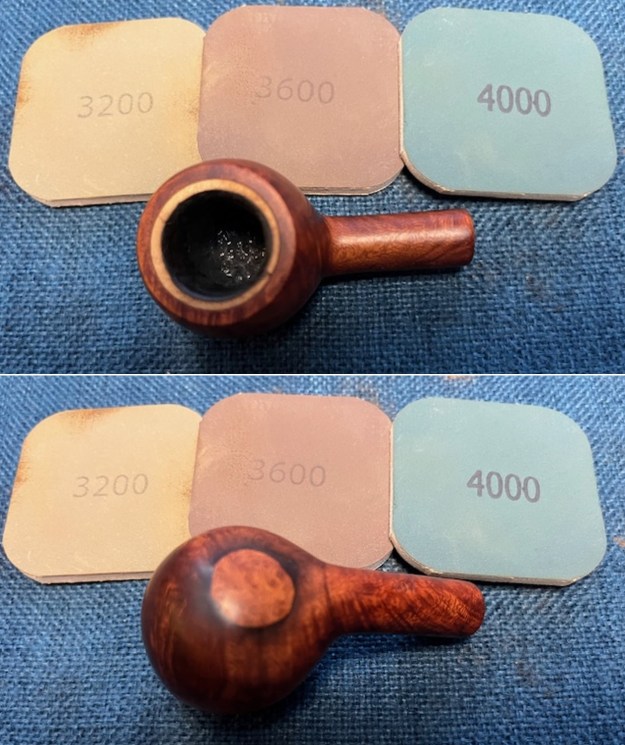
Tag Archives: Stem repairs

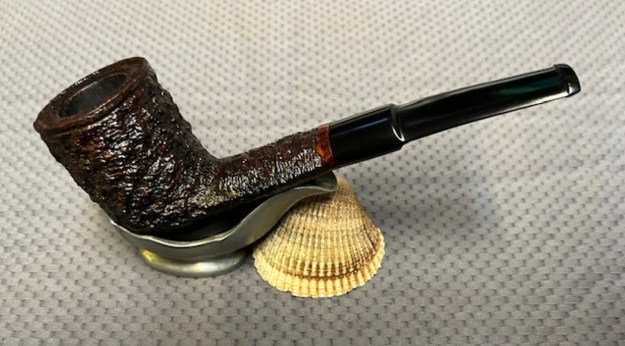
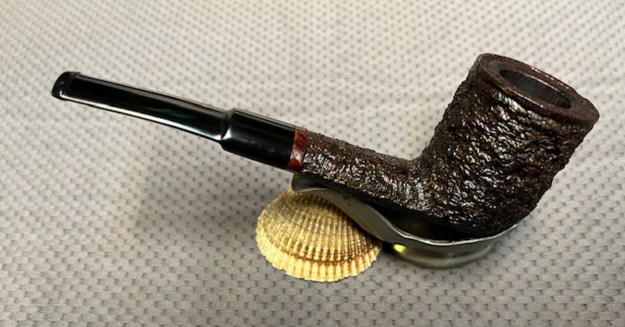
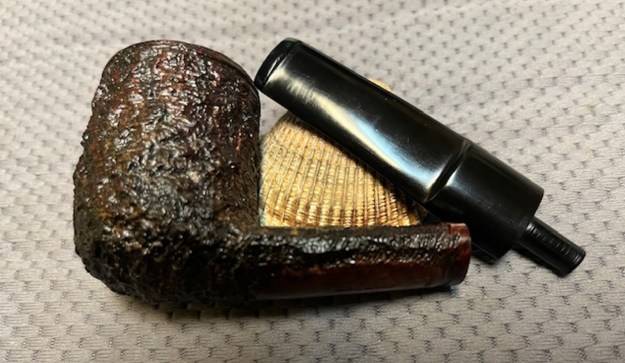
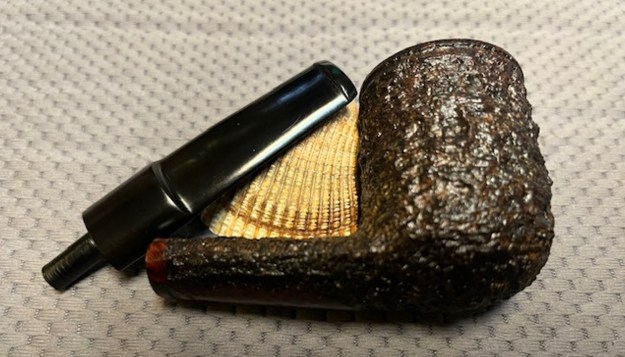
Restoring a P.L. Perri & Son flat bottom Rhodesian

by Steve Laug

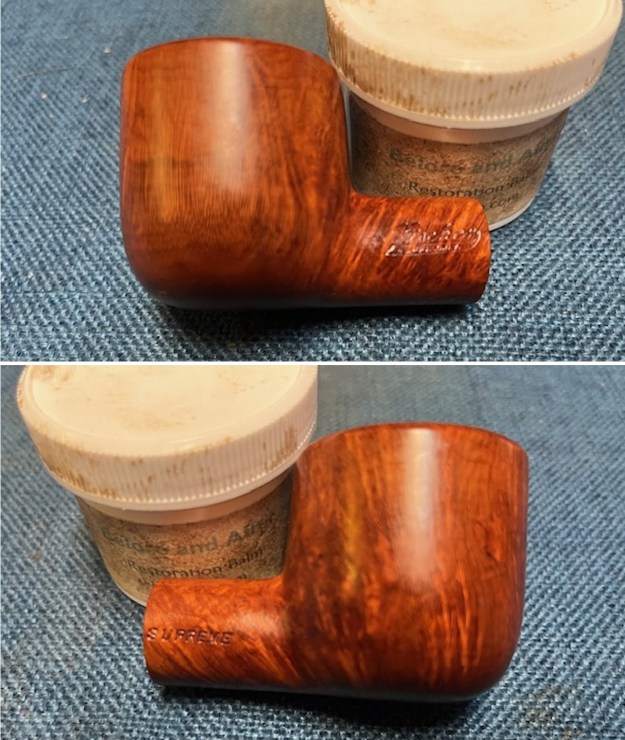
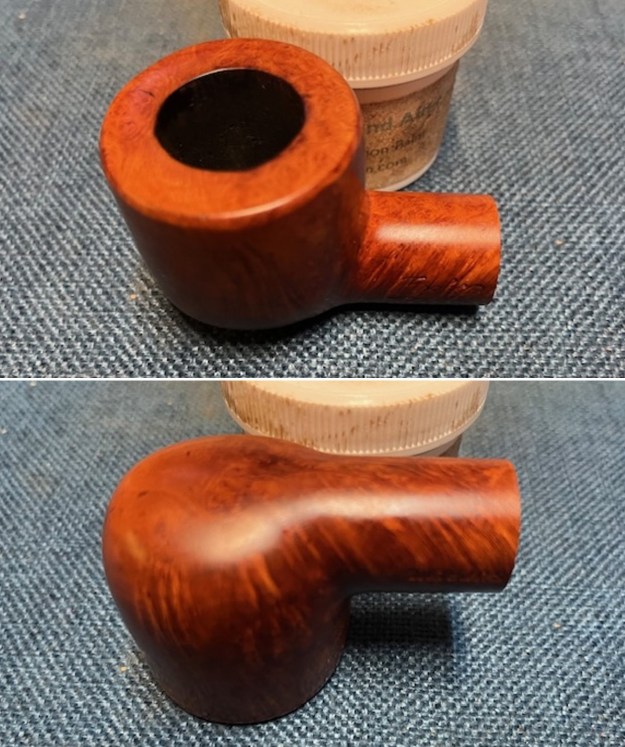
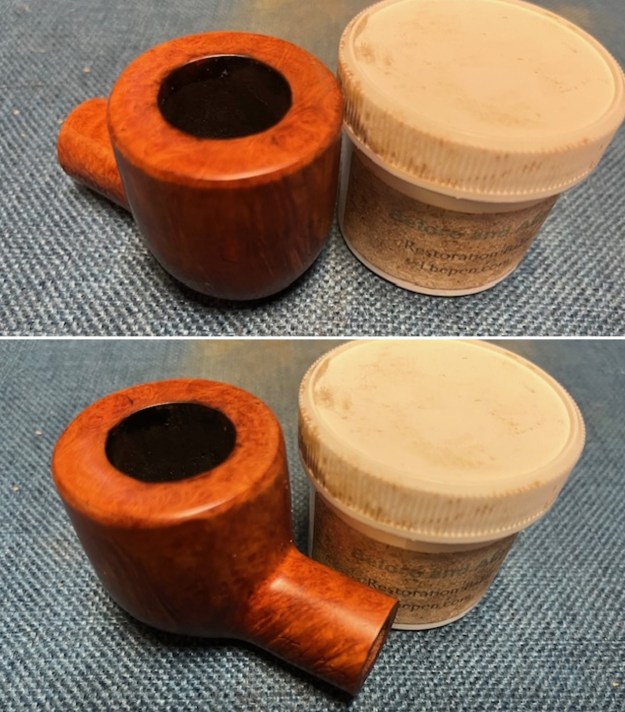
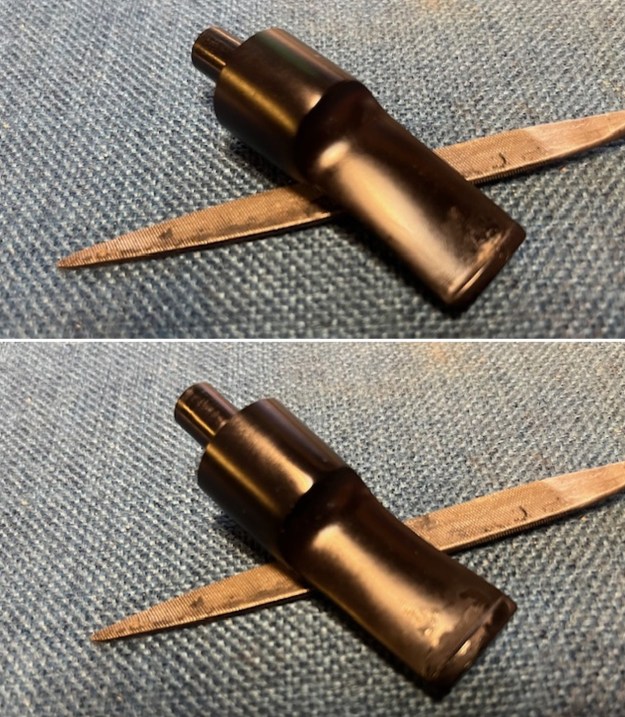
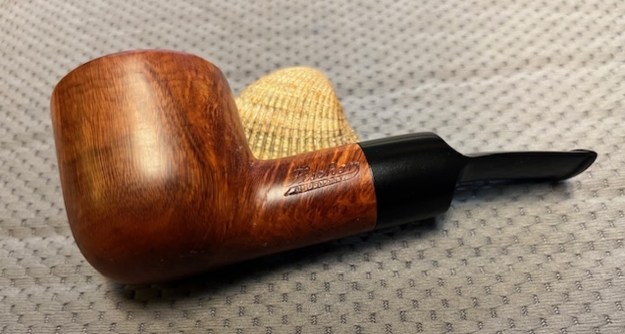
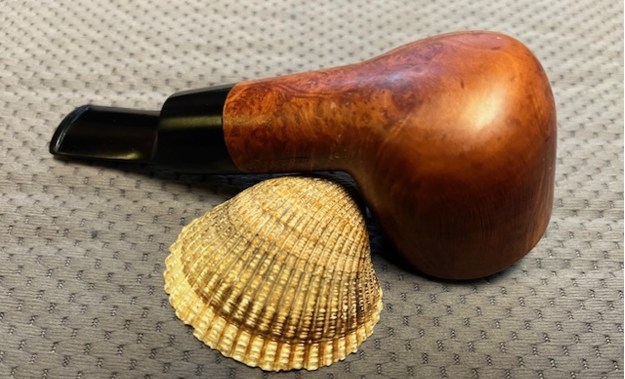
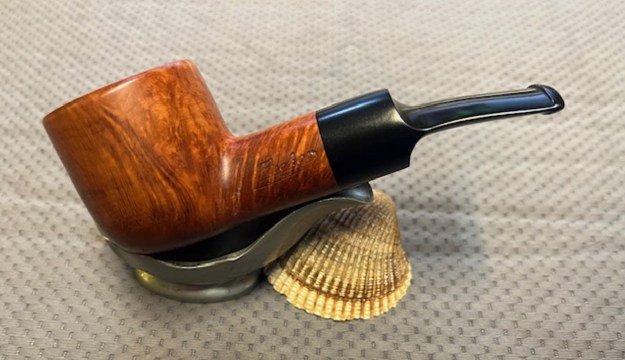
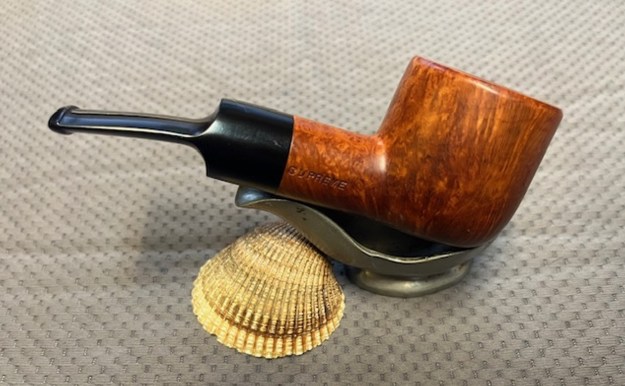
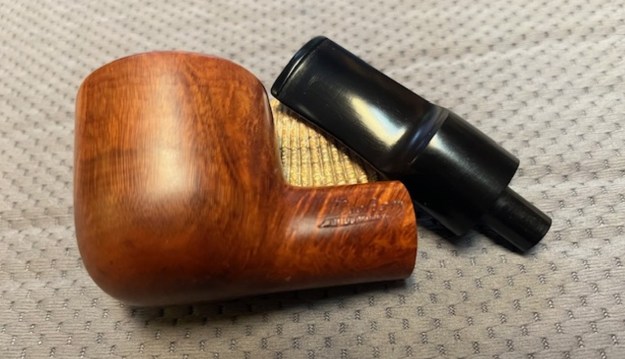
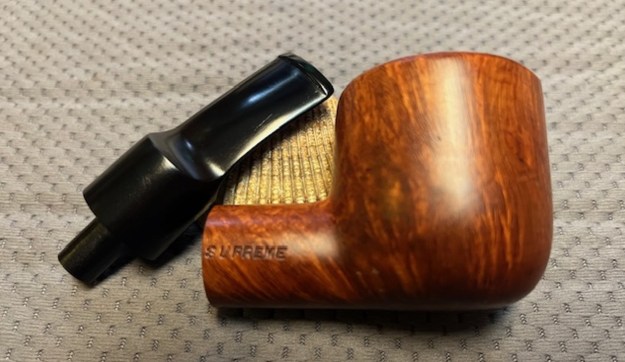
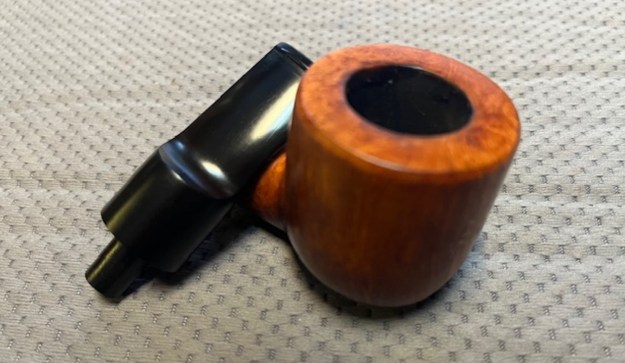
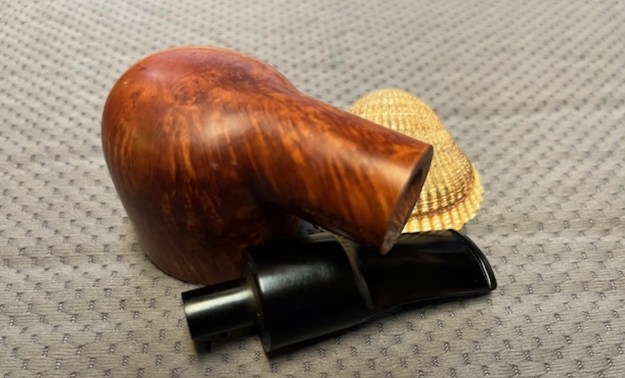
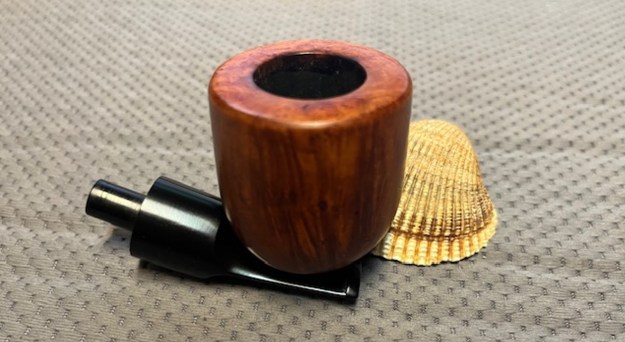
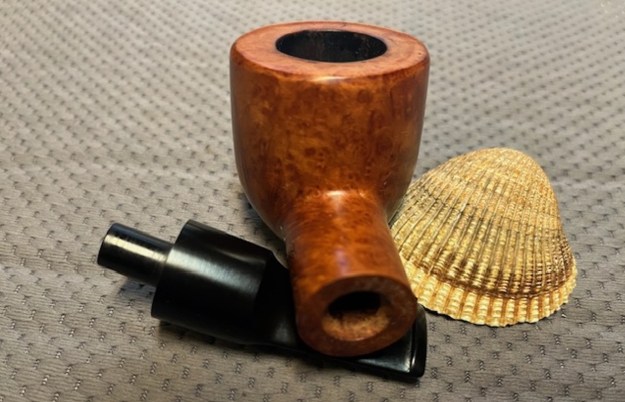
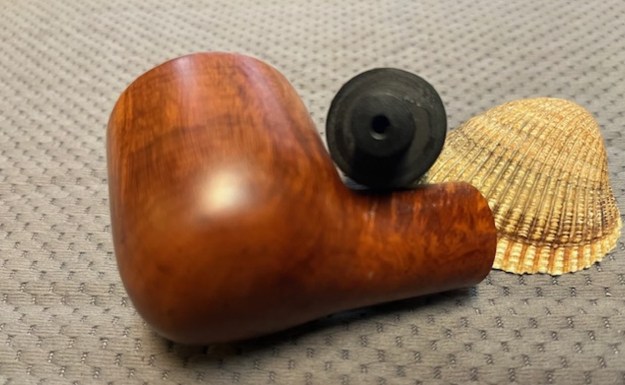
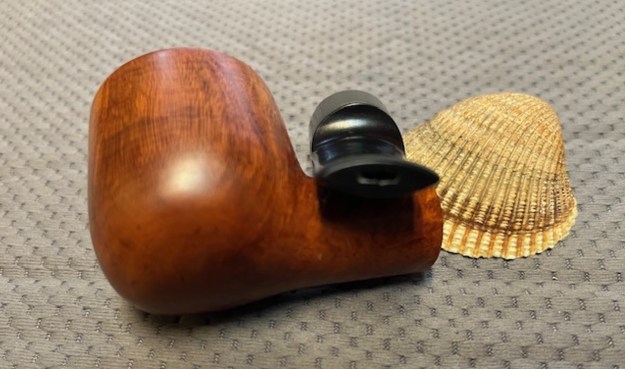
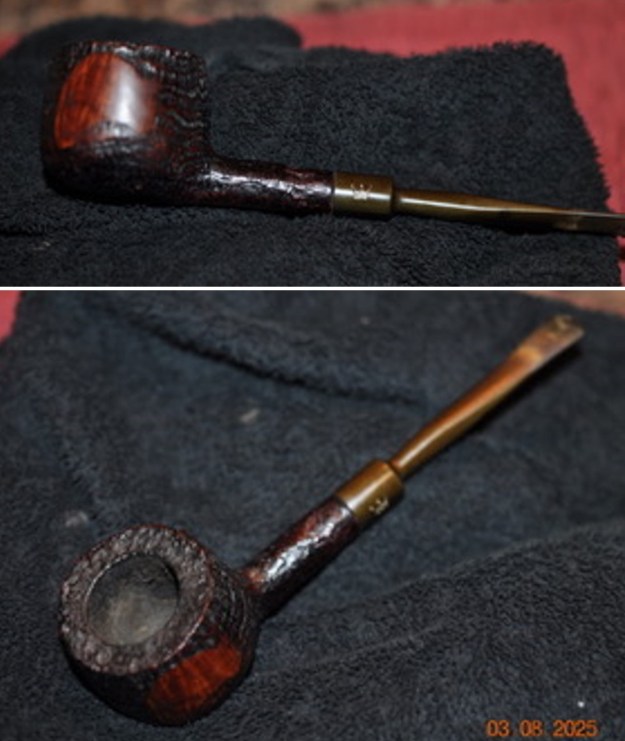
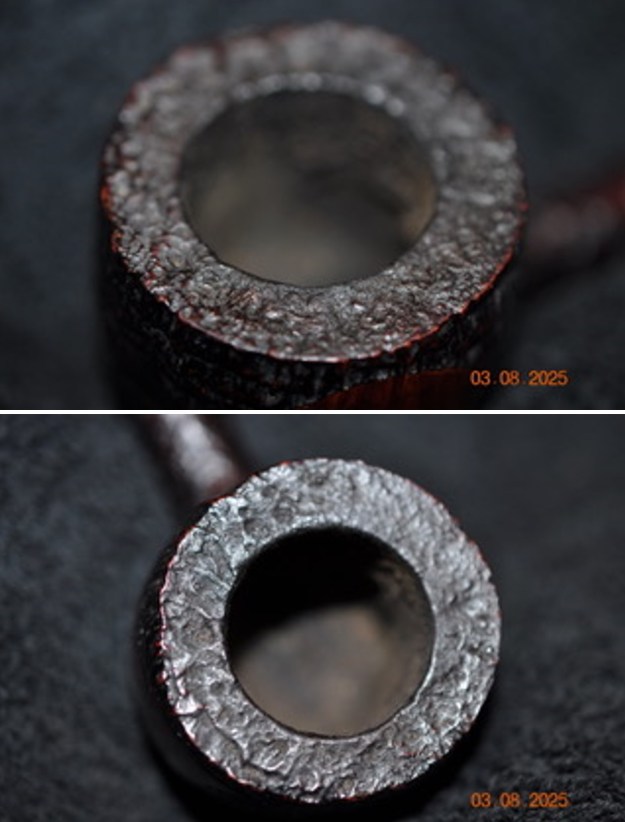
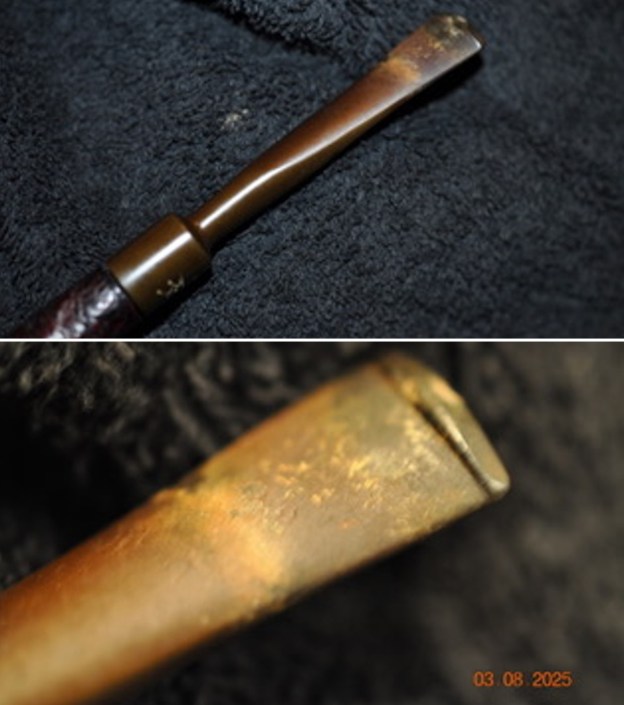
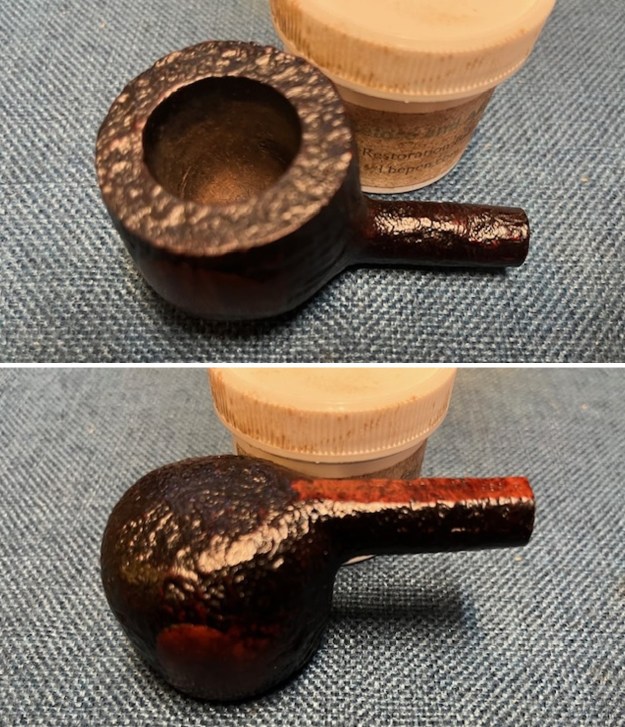
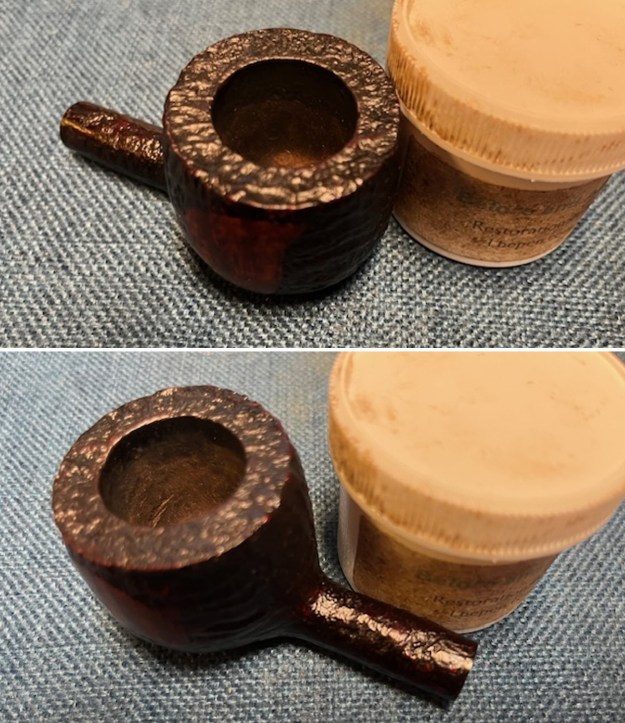
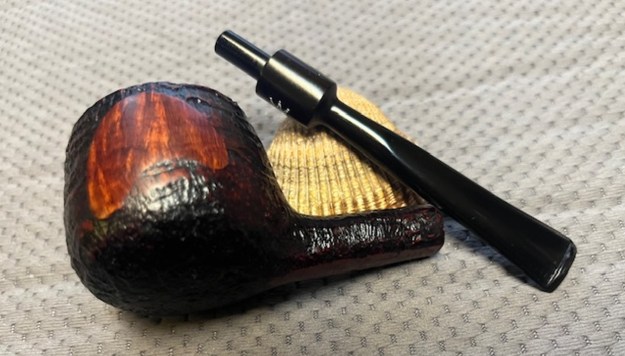
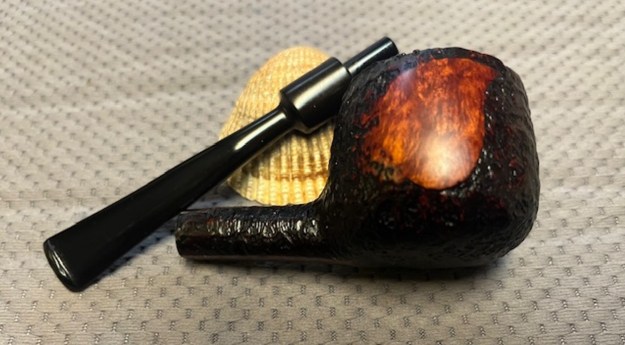
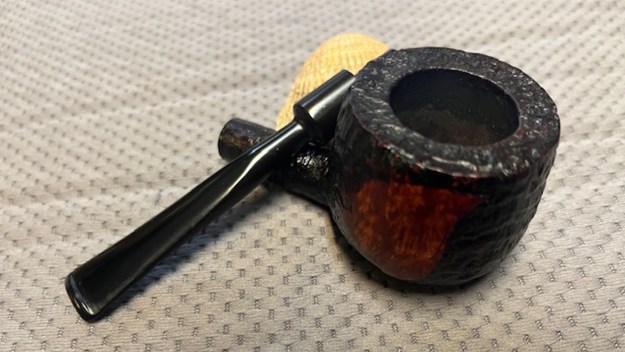
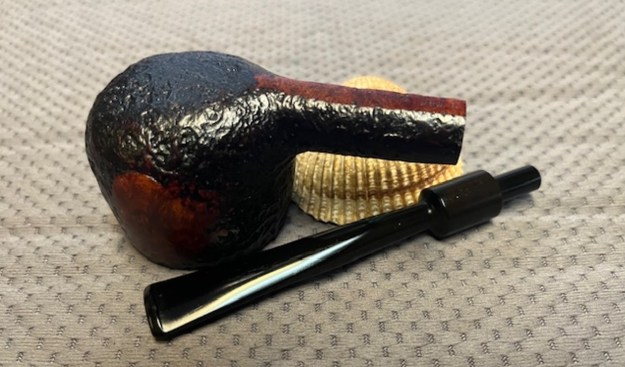
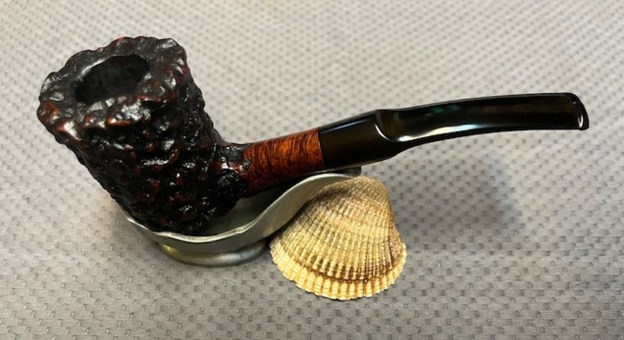
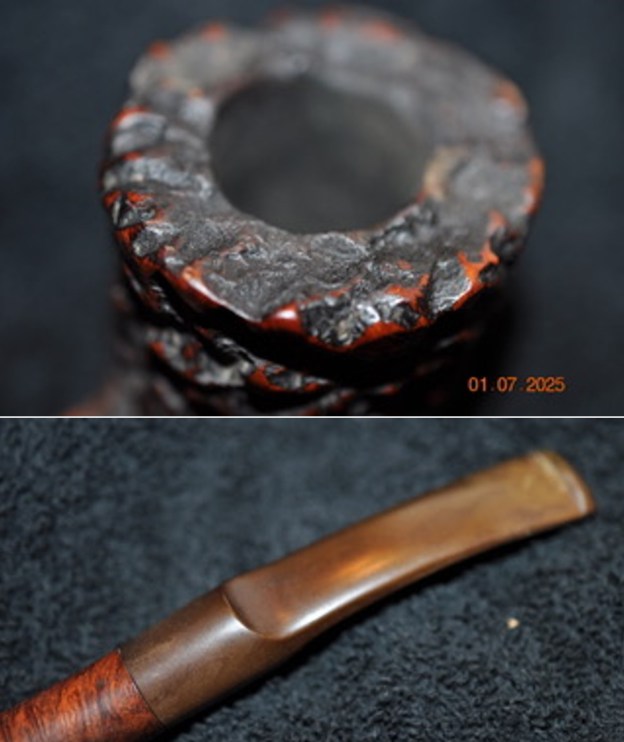
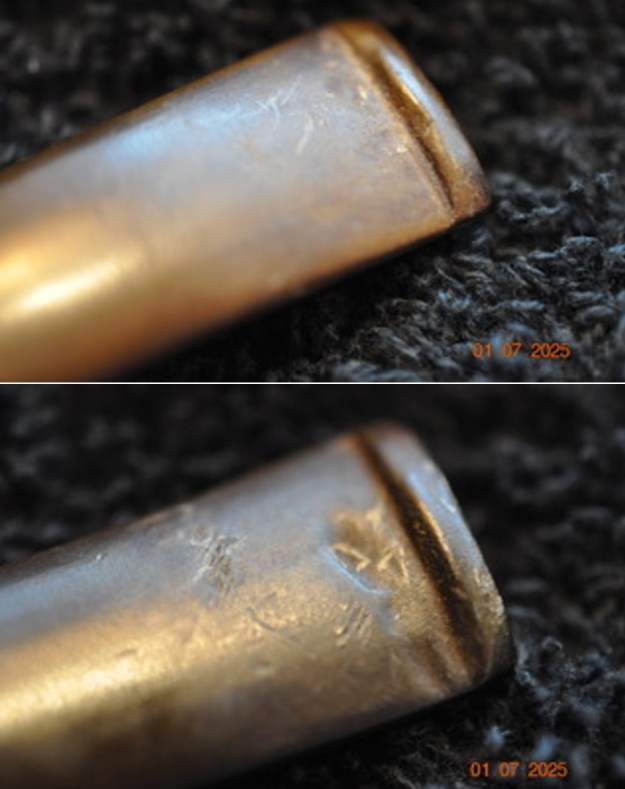
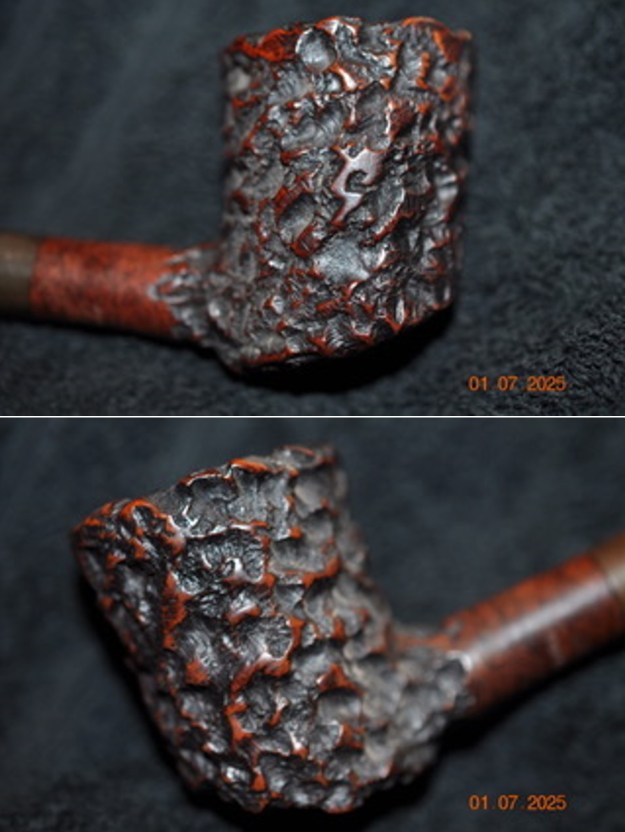
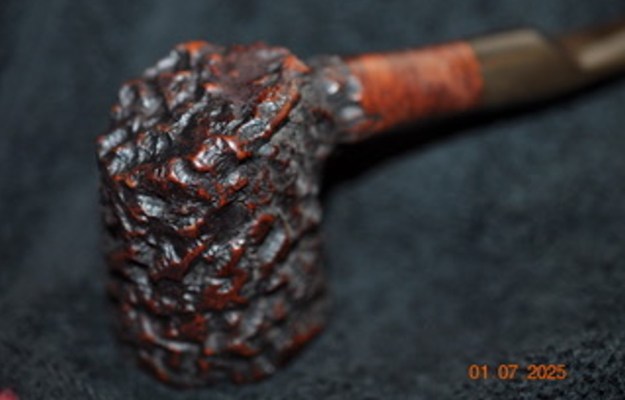
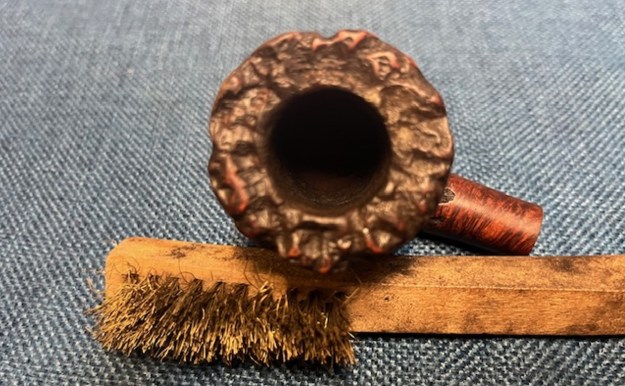
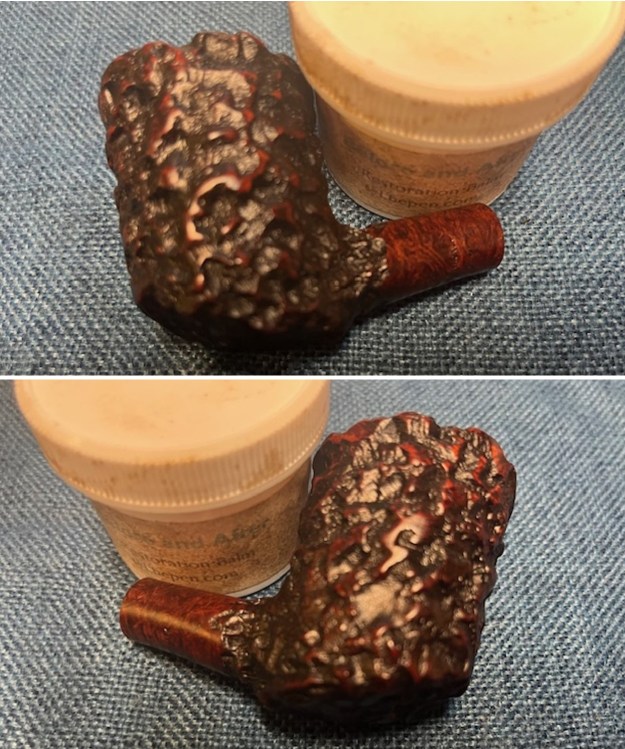
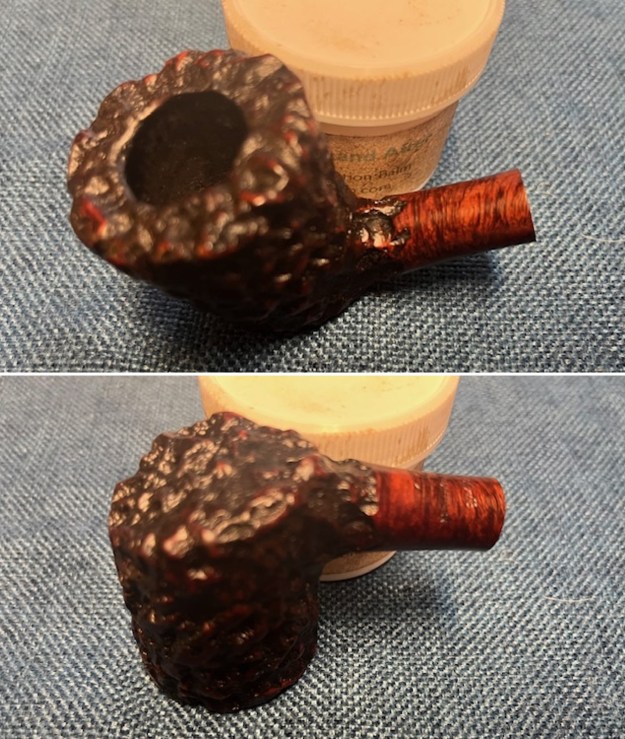
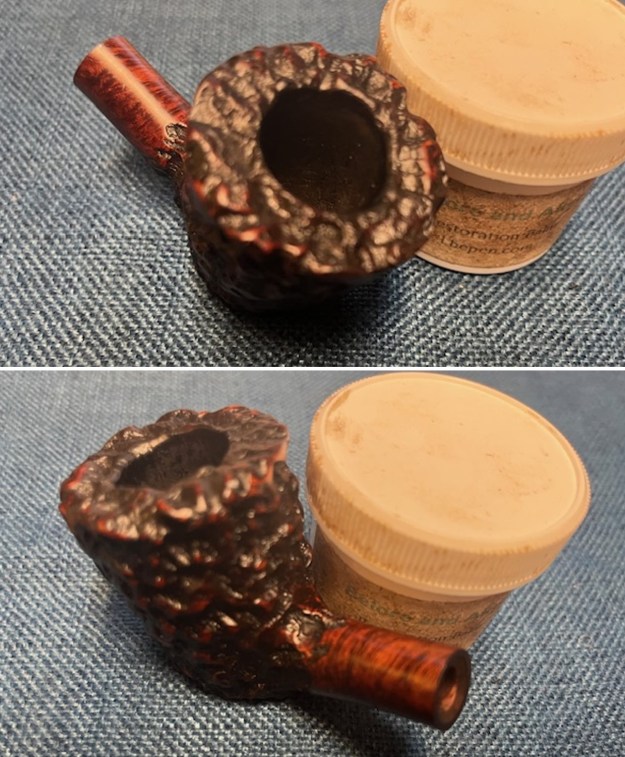
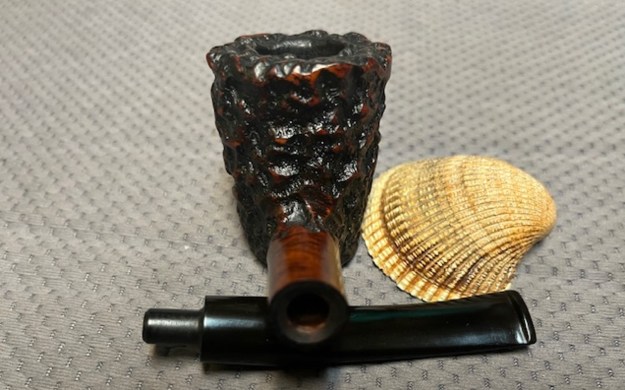
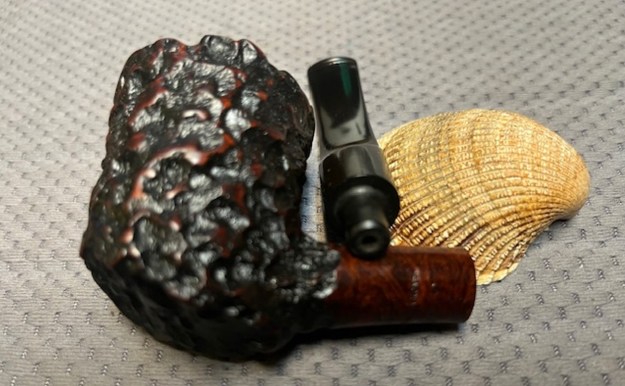
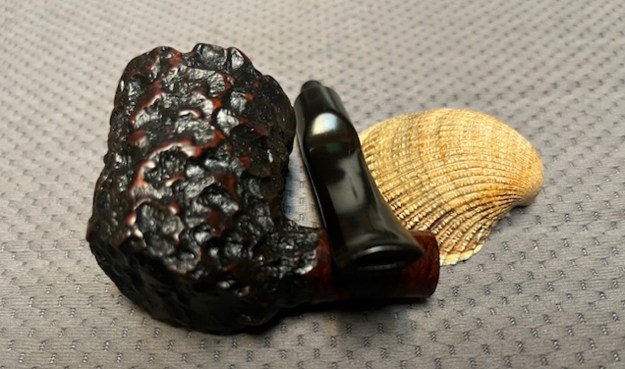
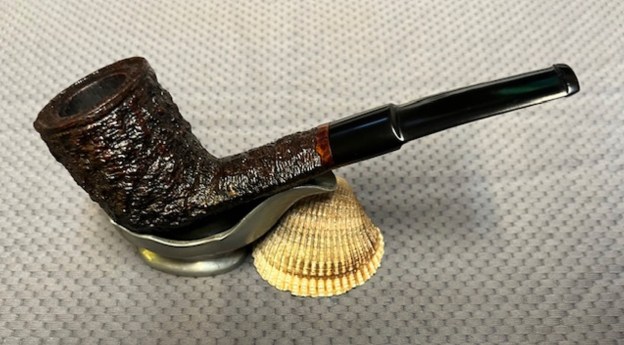
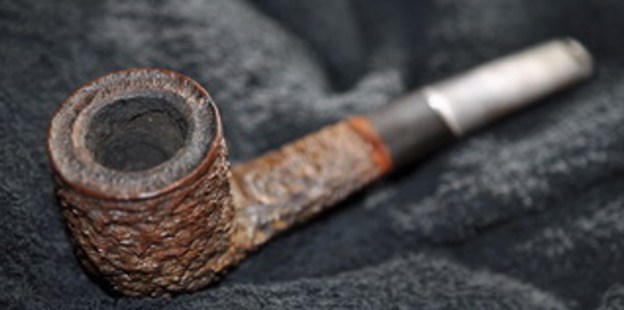
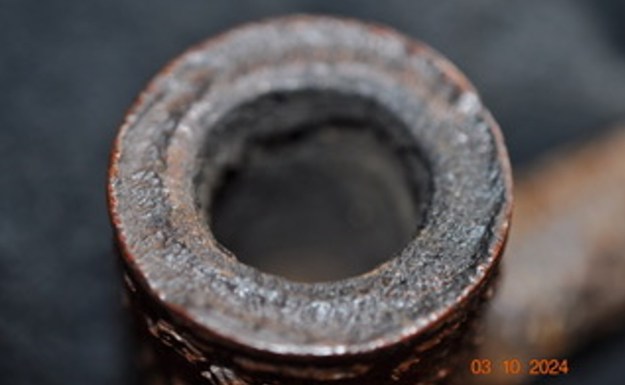
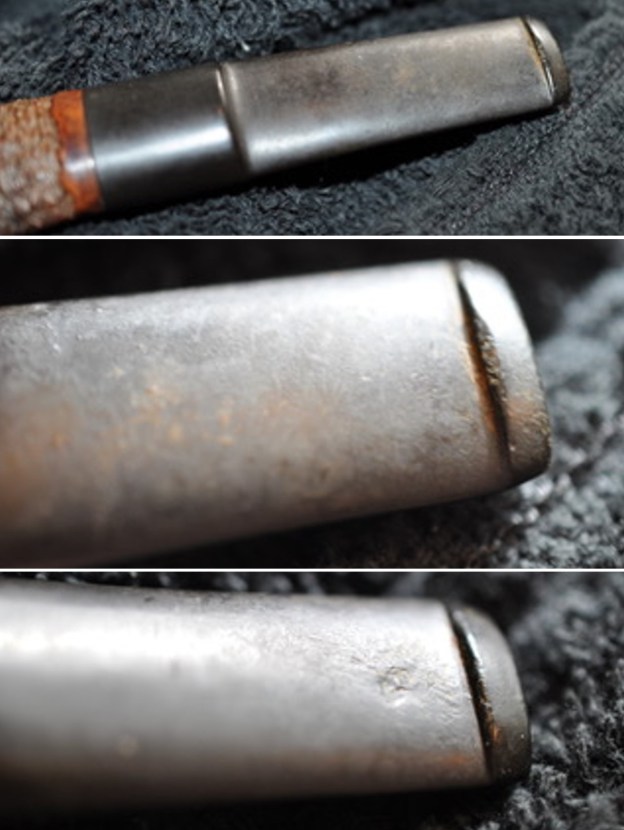
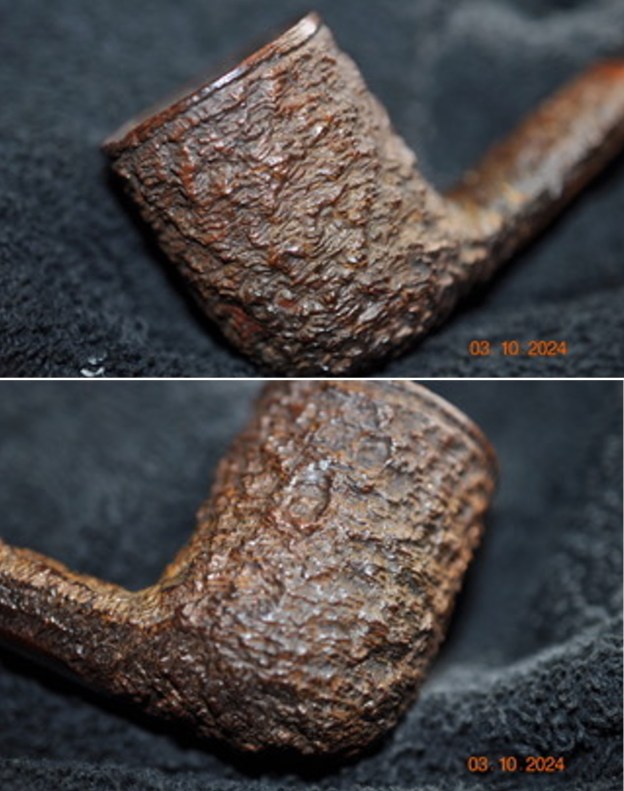
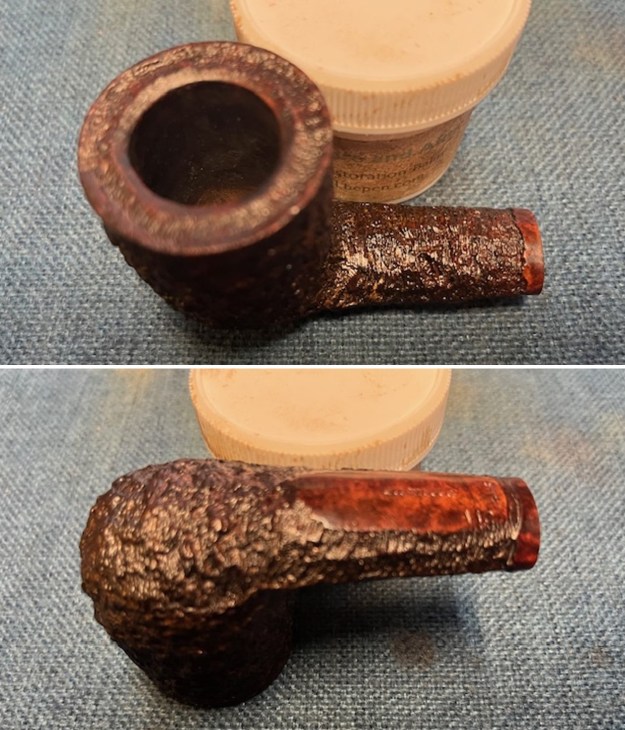
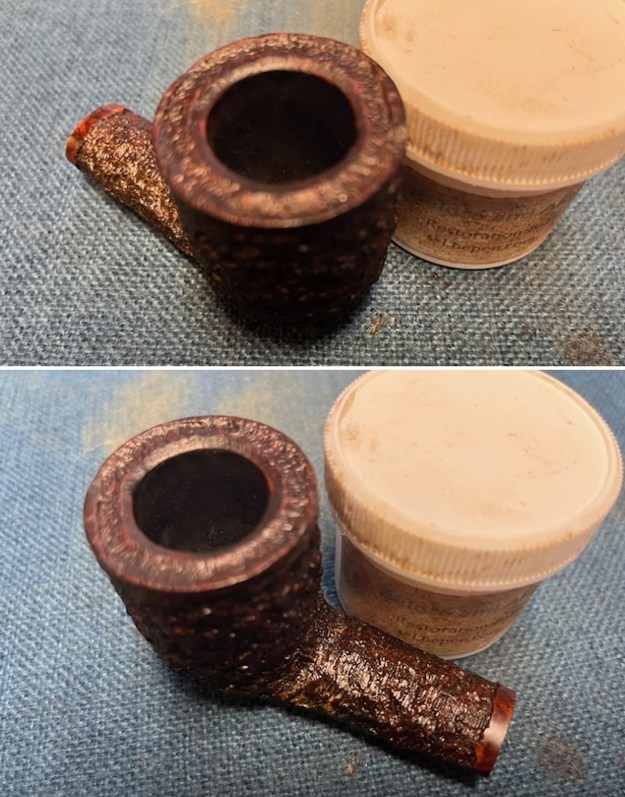
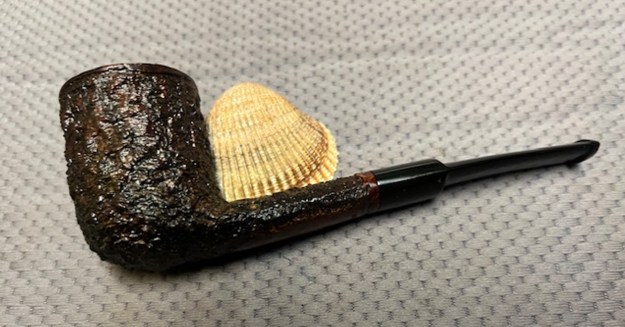
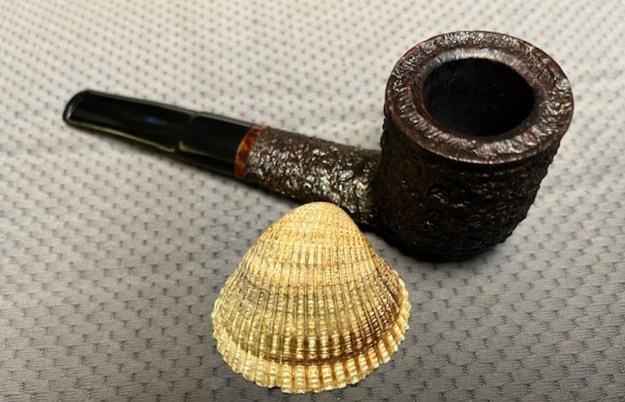
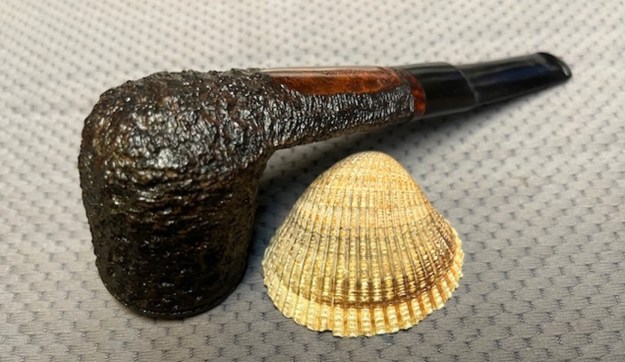
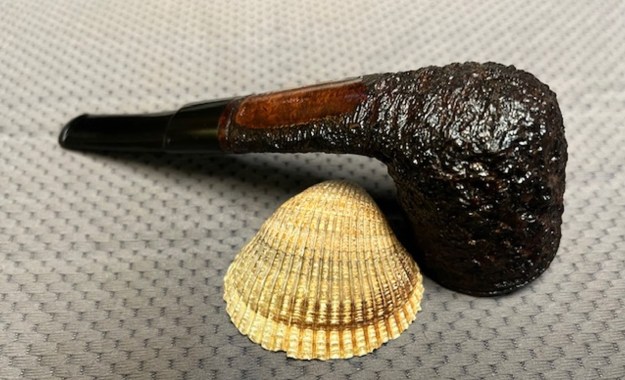
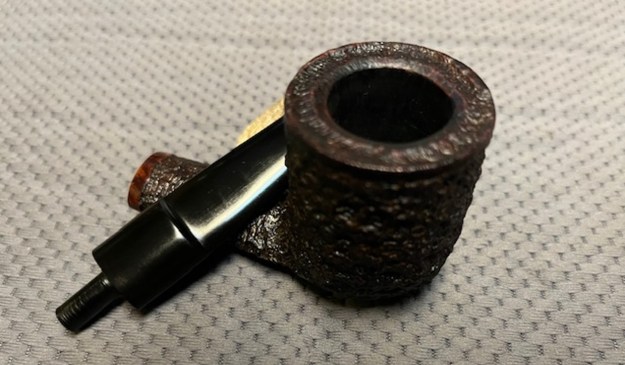
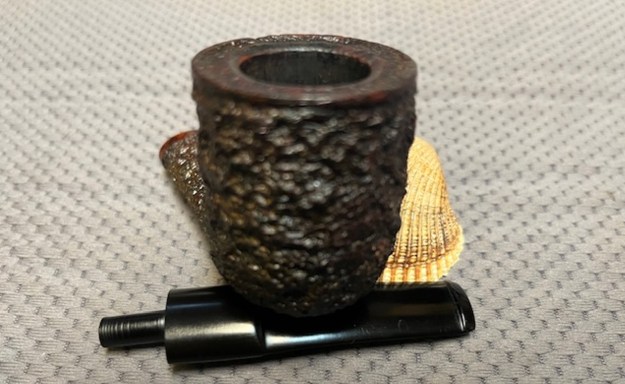
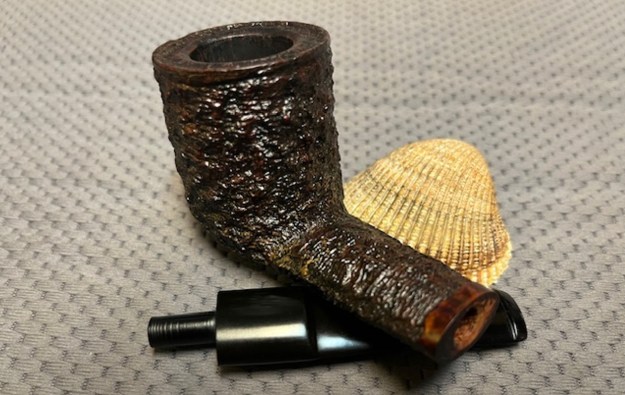
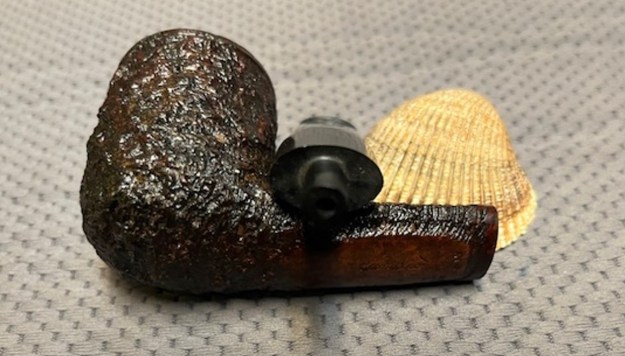
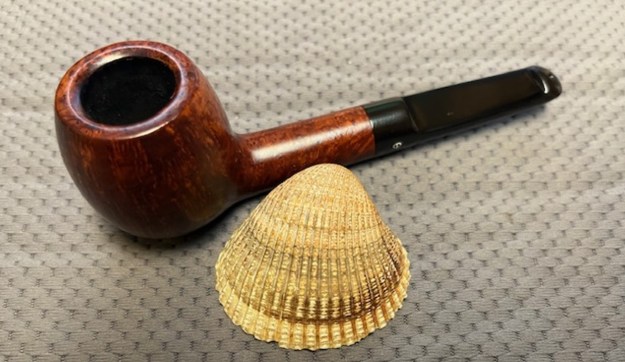
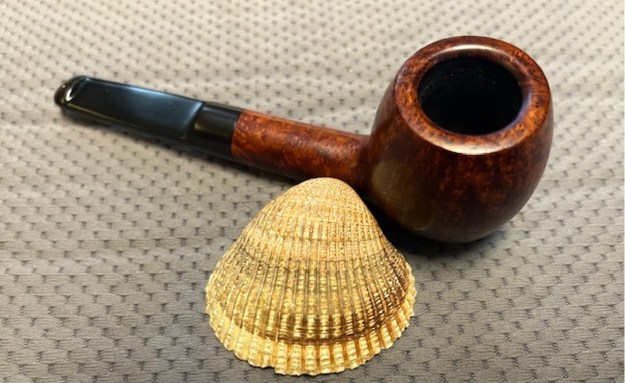
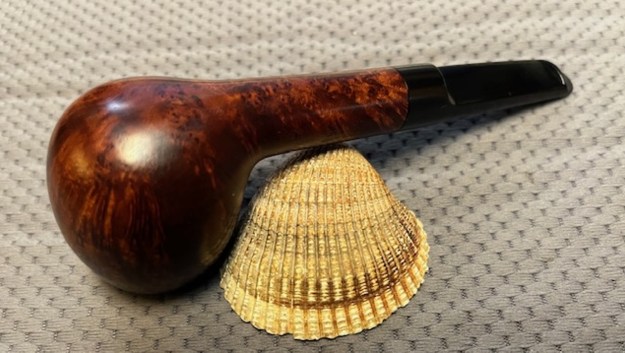
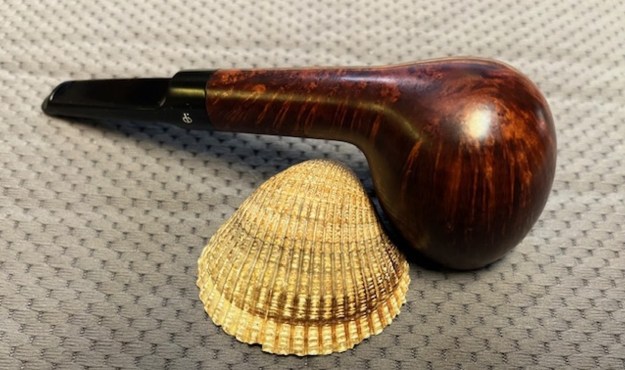
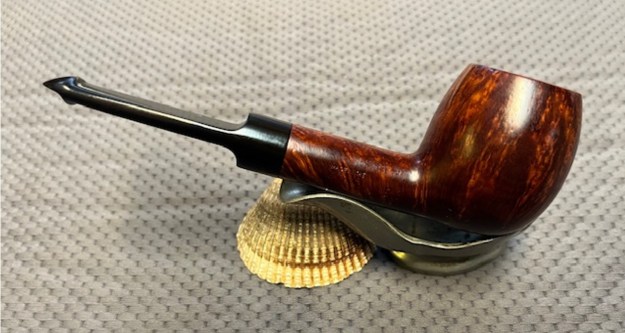
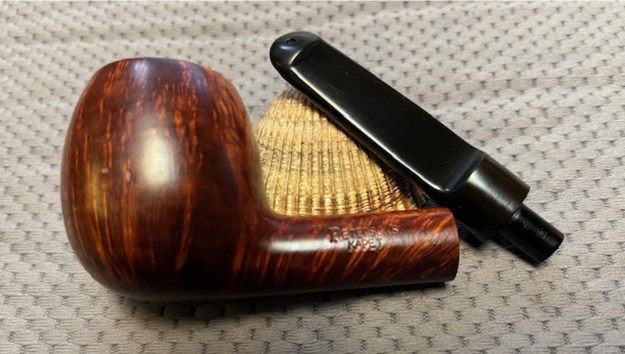
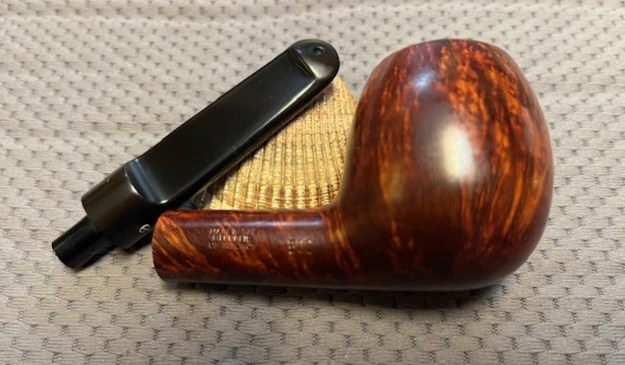
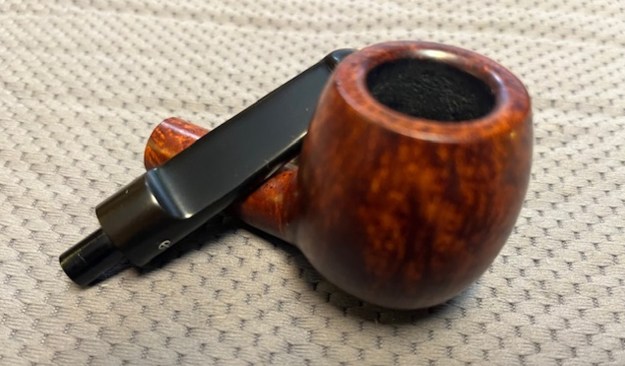
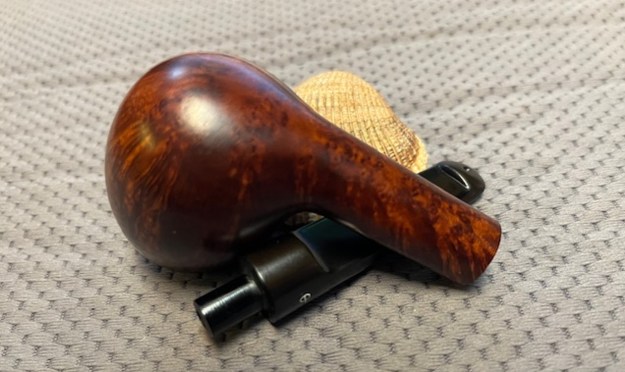
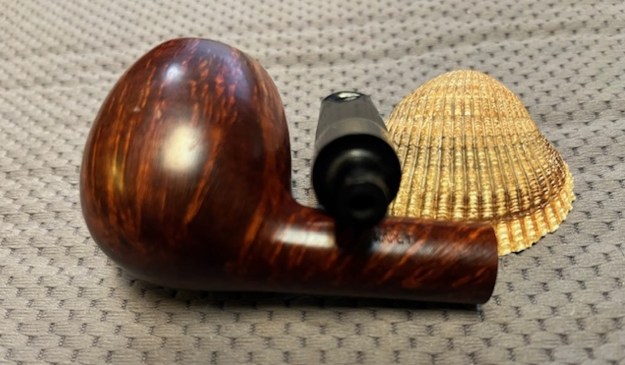
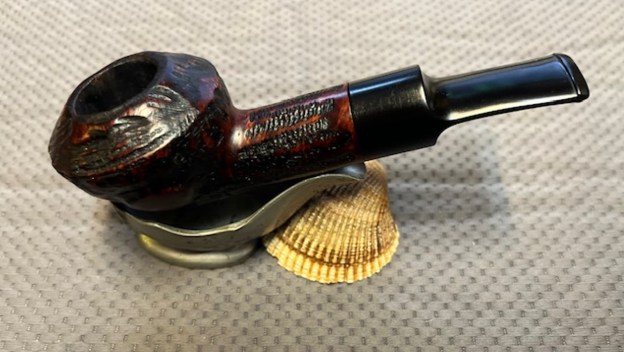
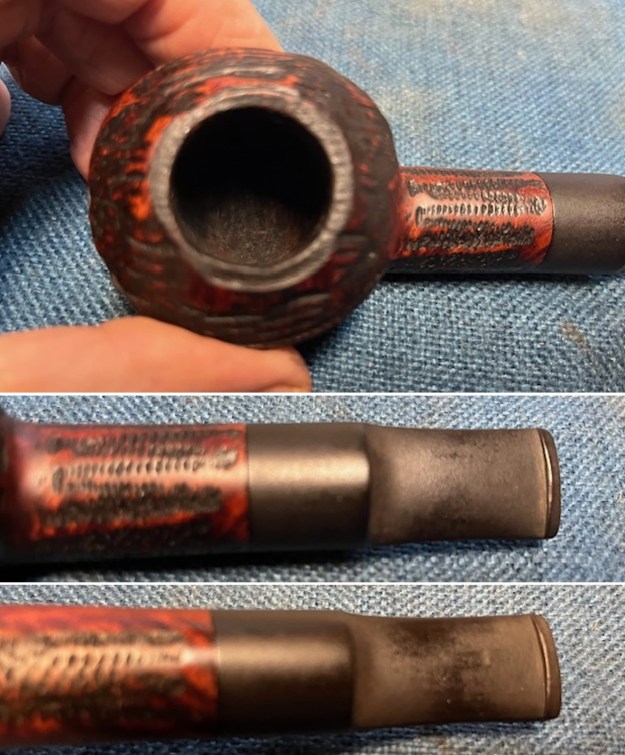
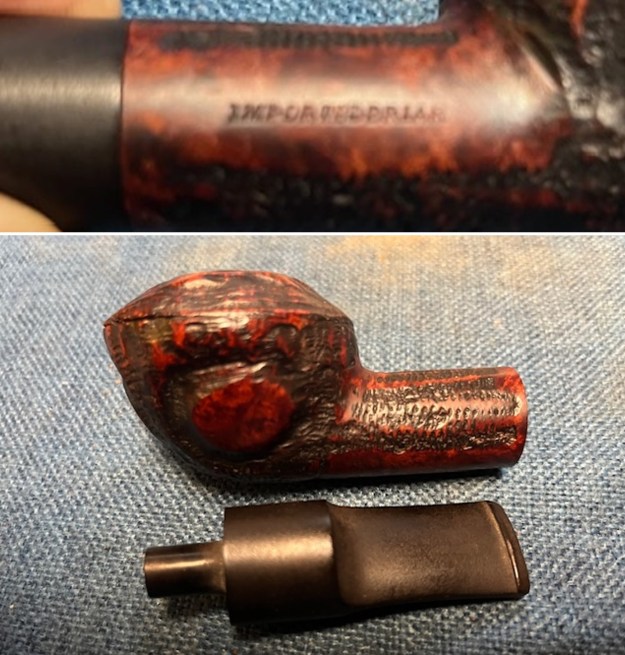
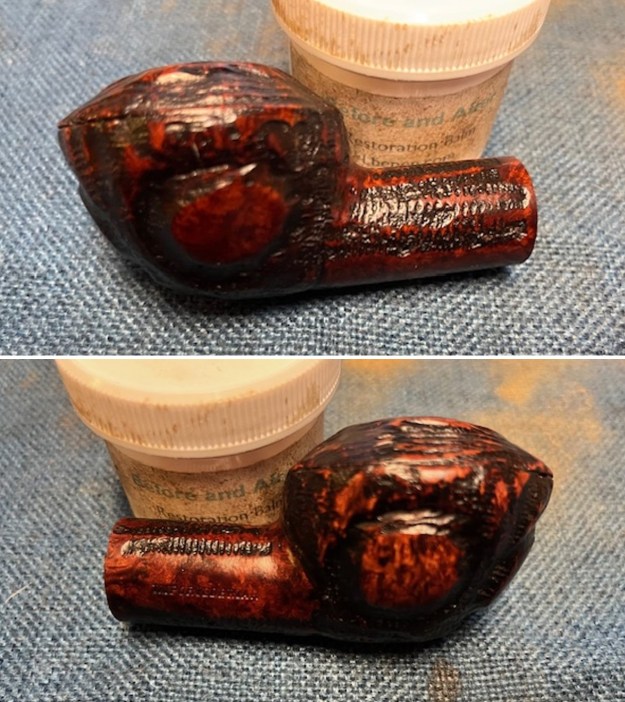
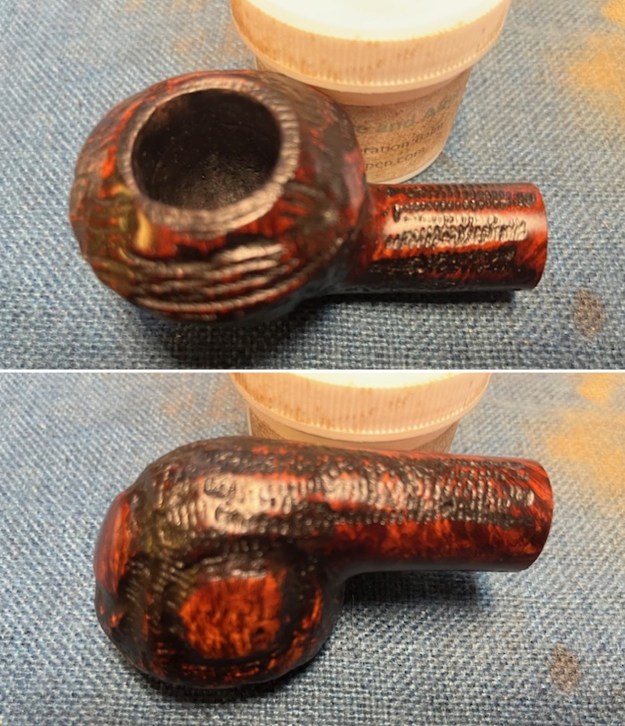
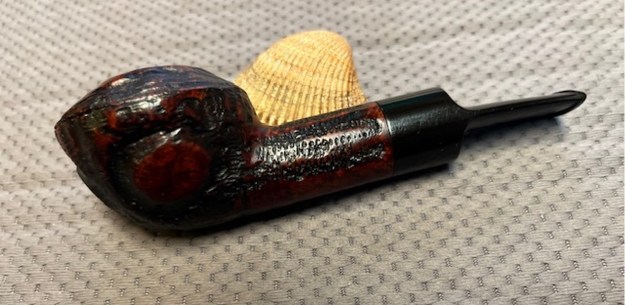
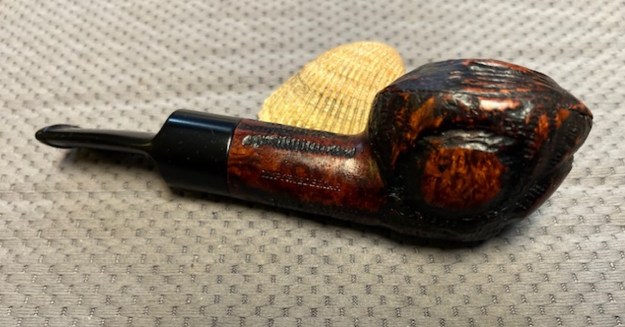
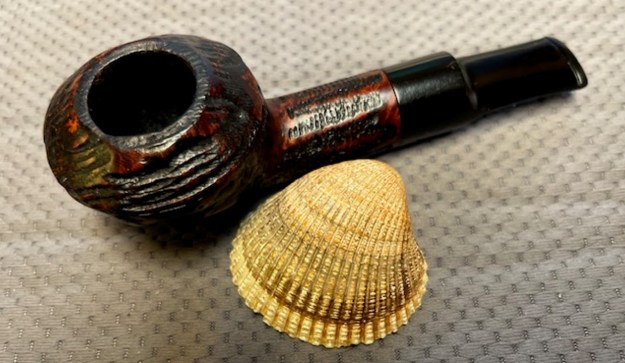
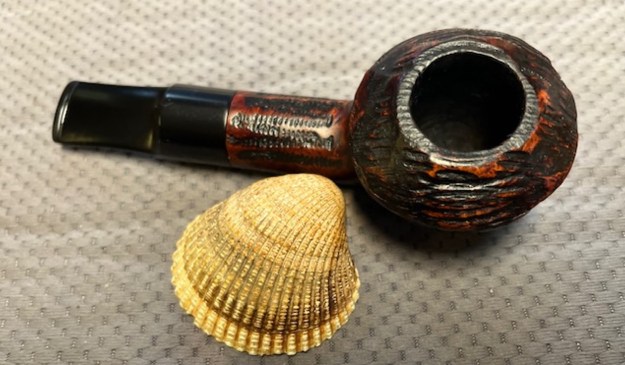
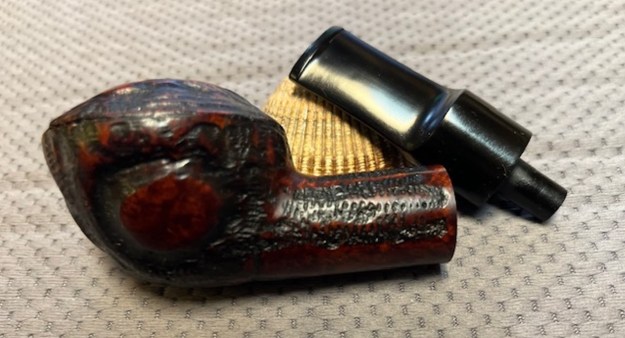
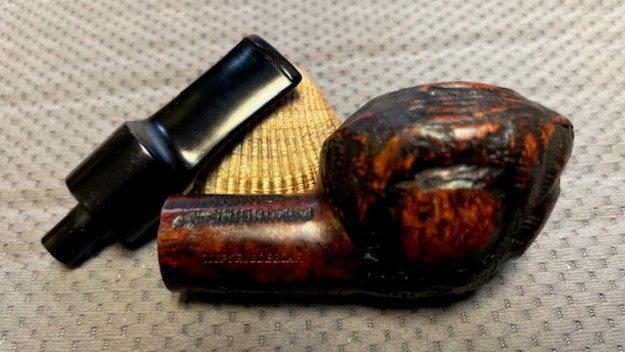
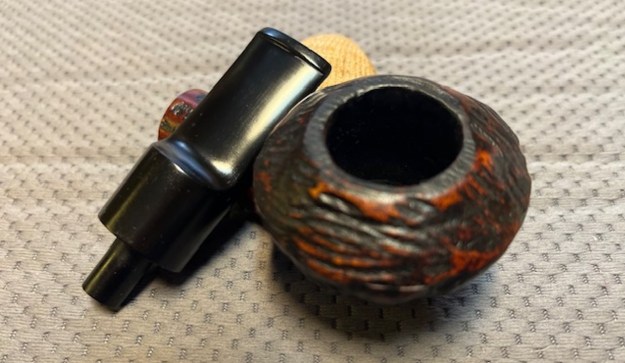
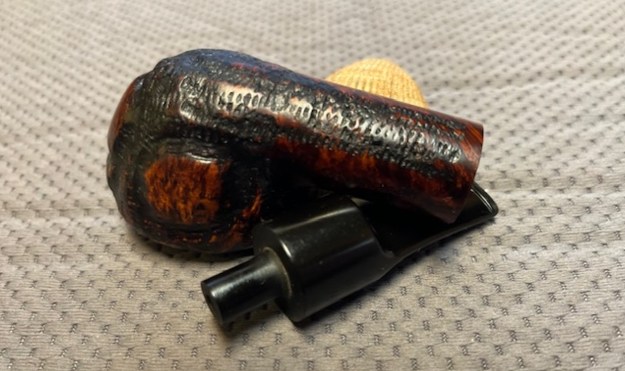
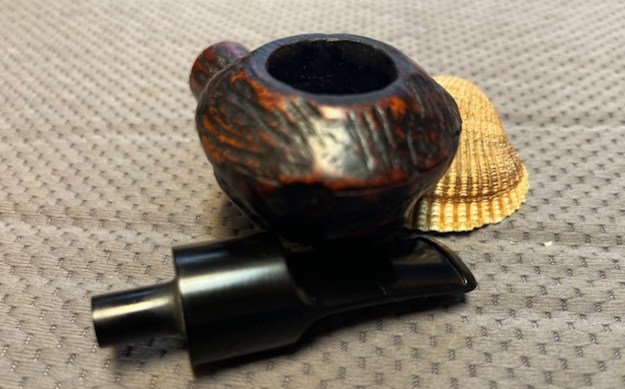
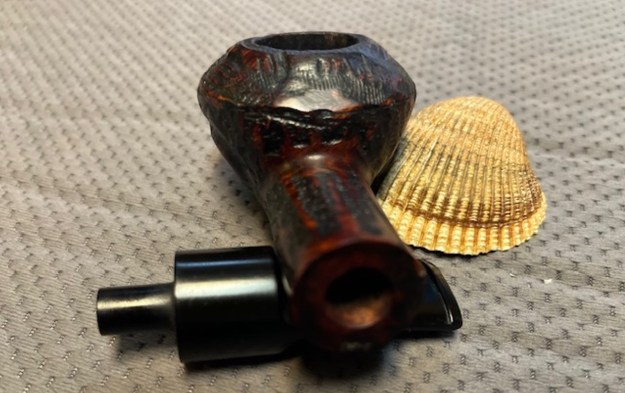
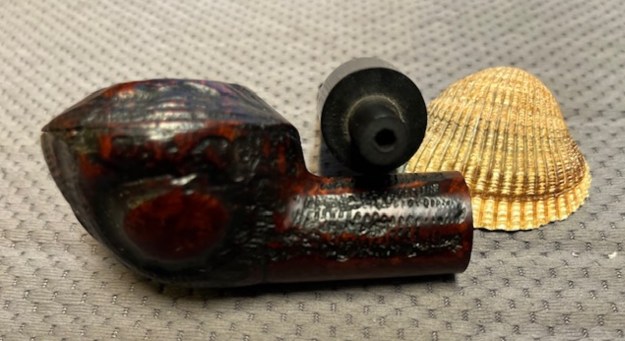
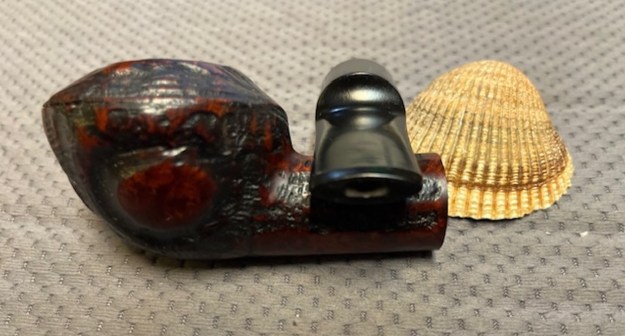
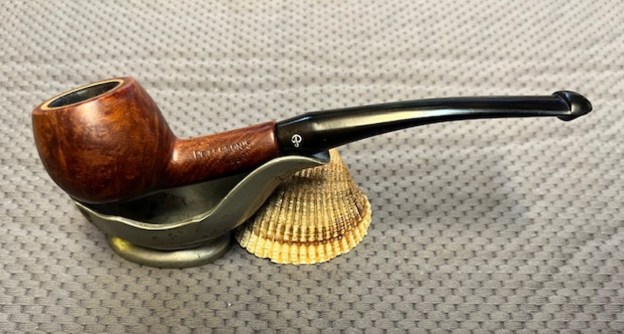
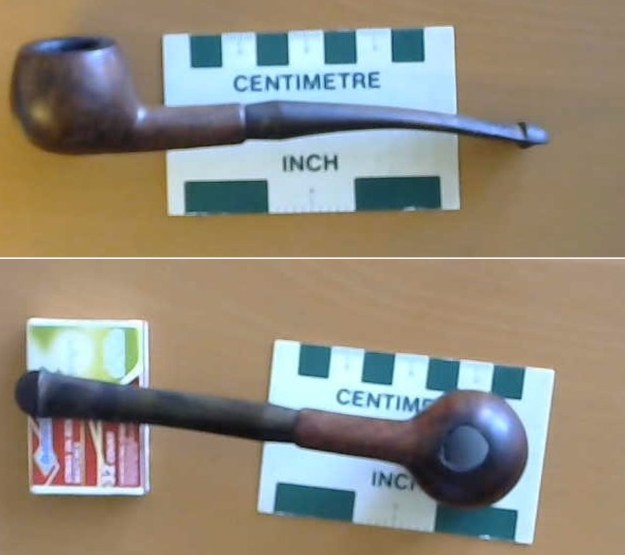
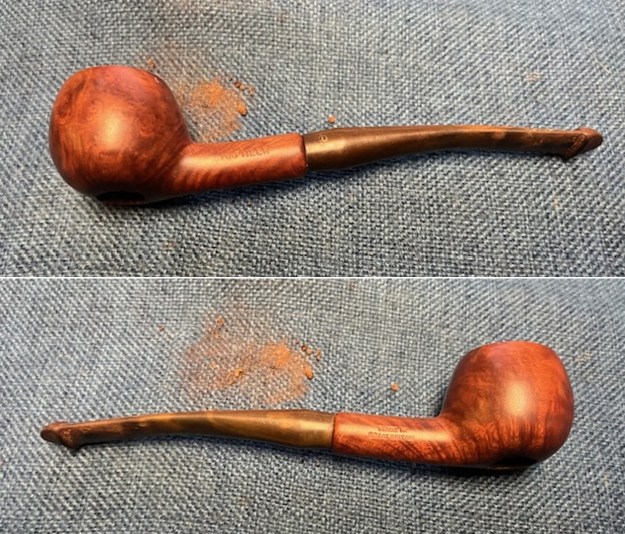
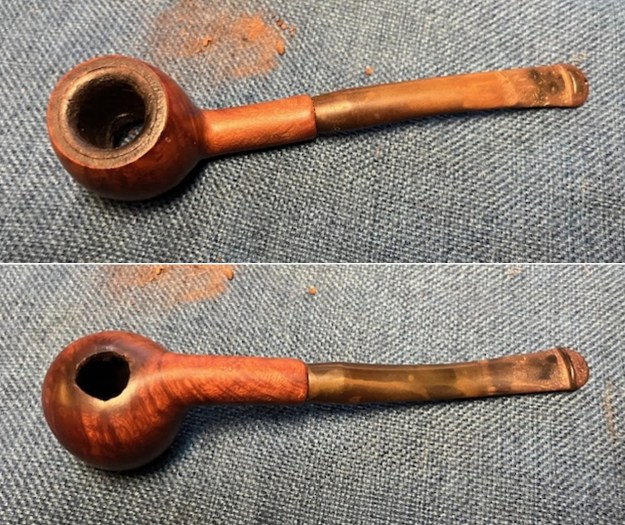
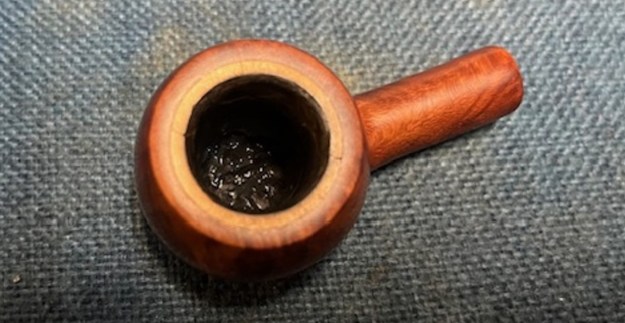
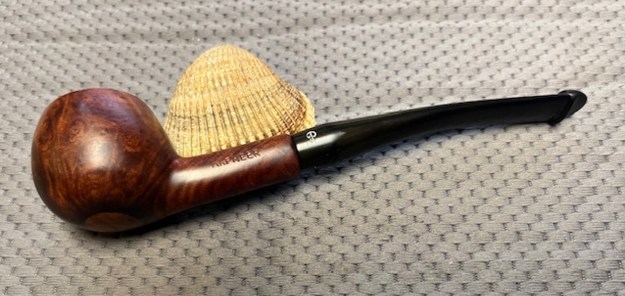
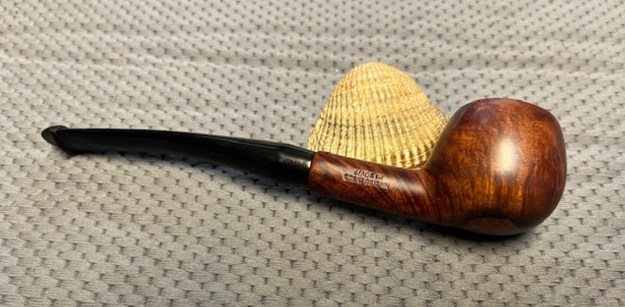
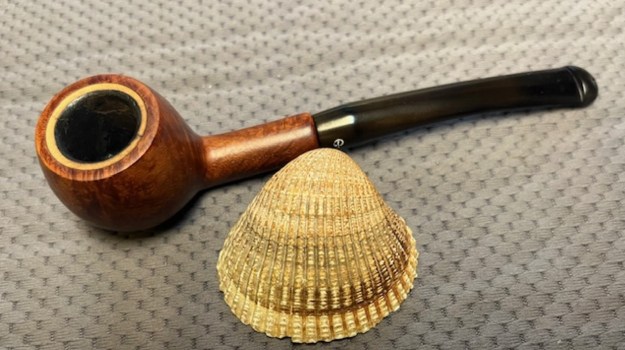
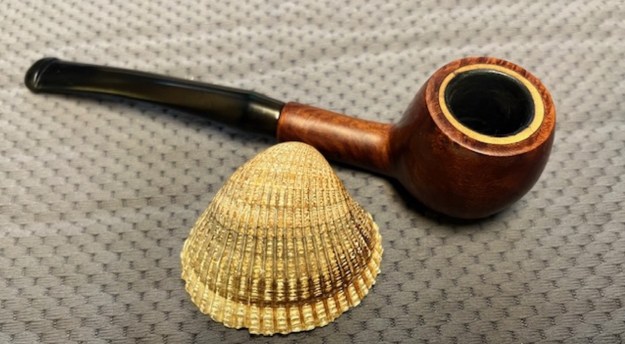
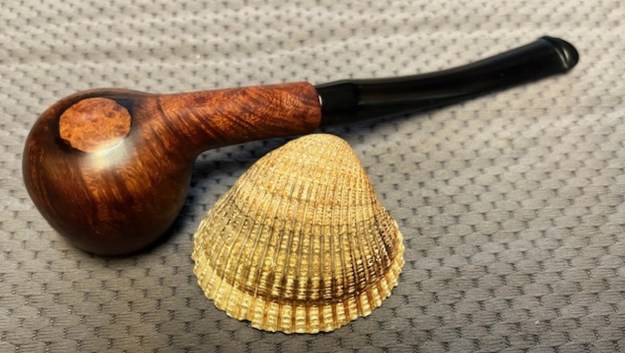
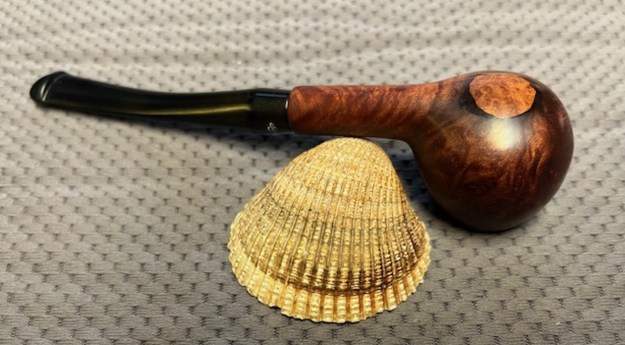
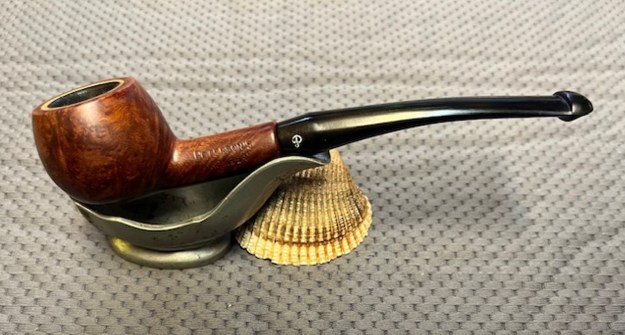
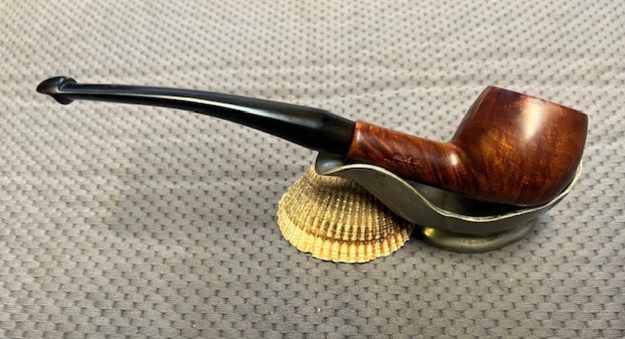
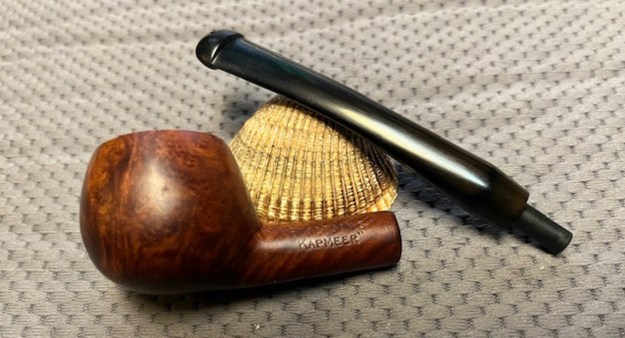
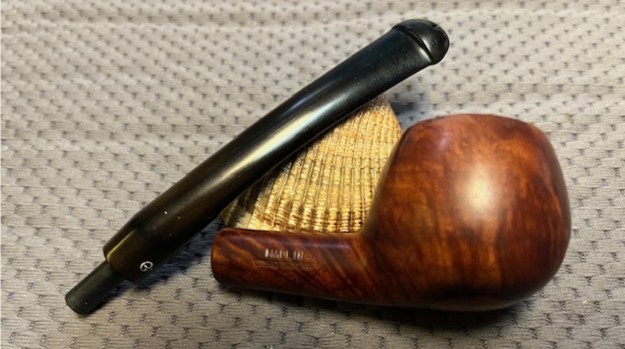
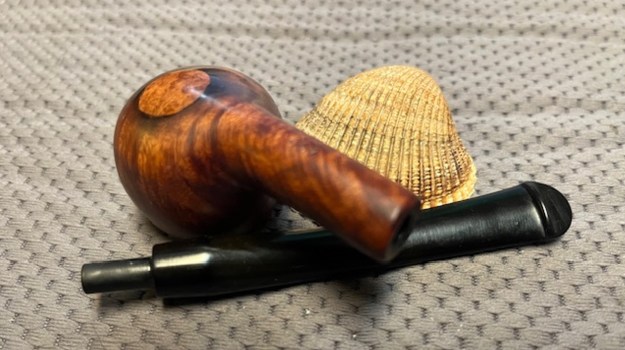
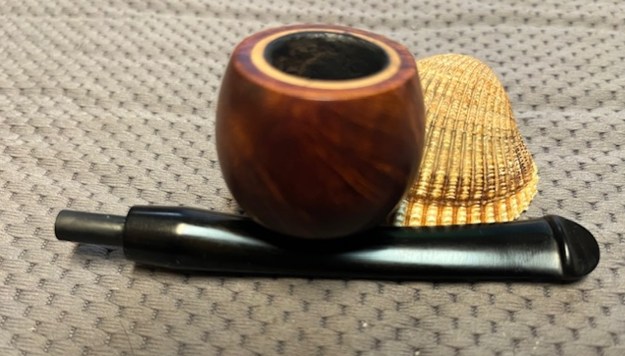
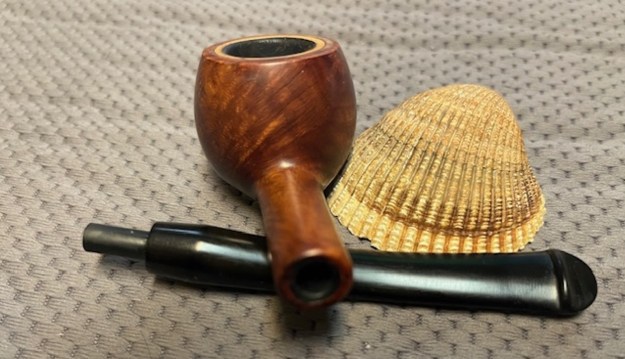
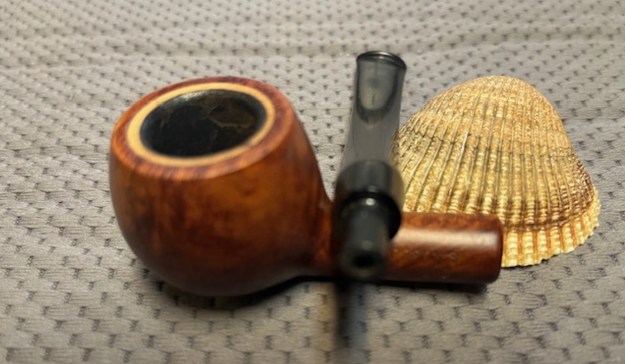
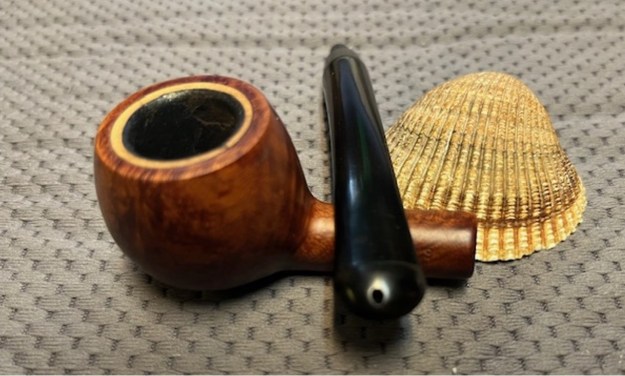
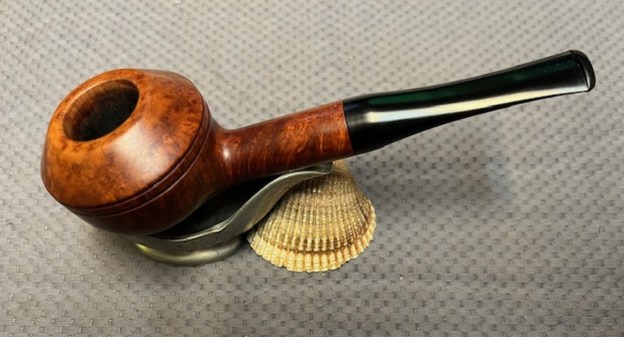
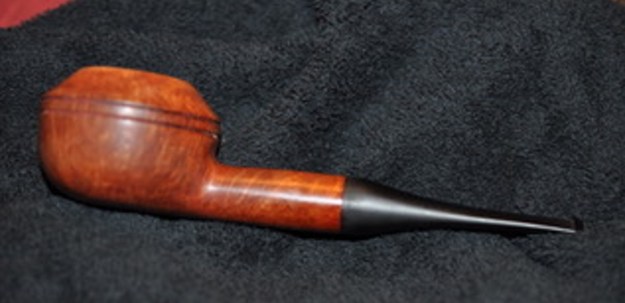
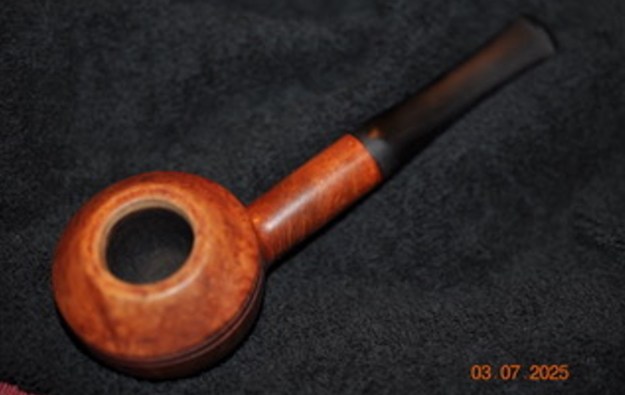
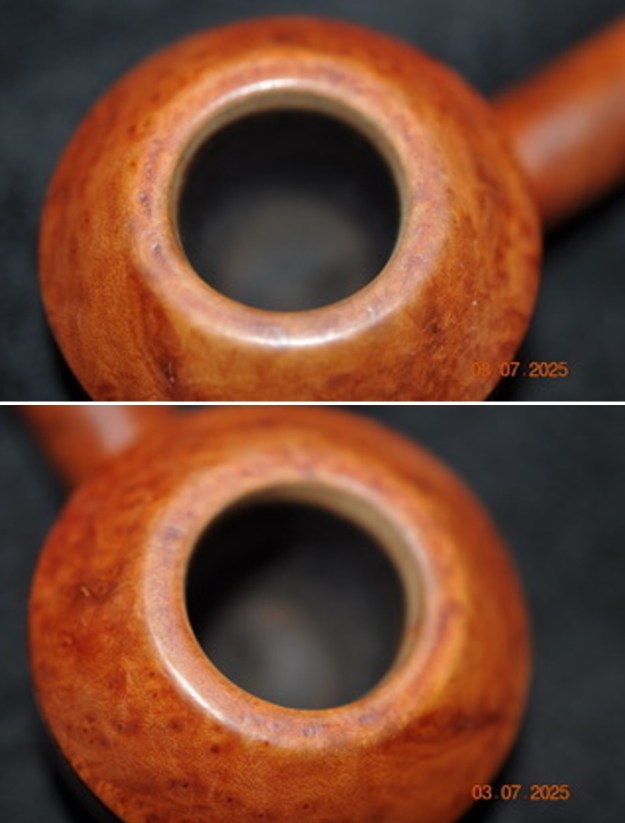
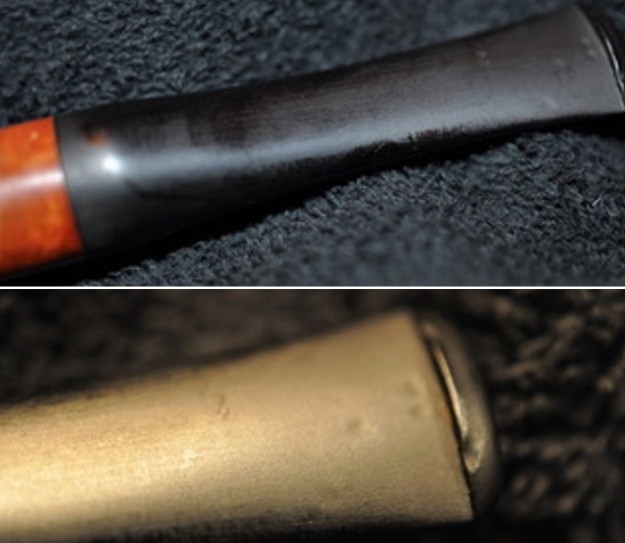
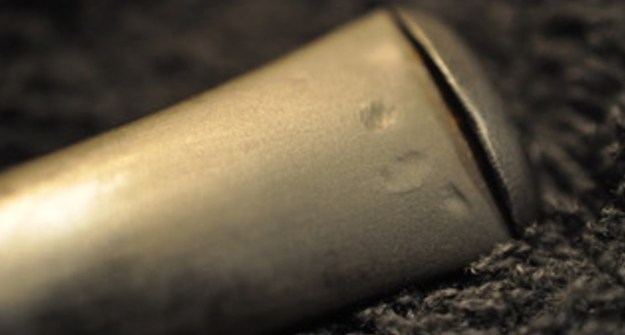
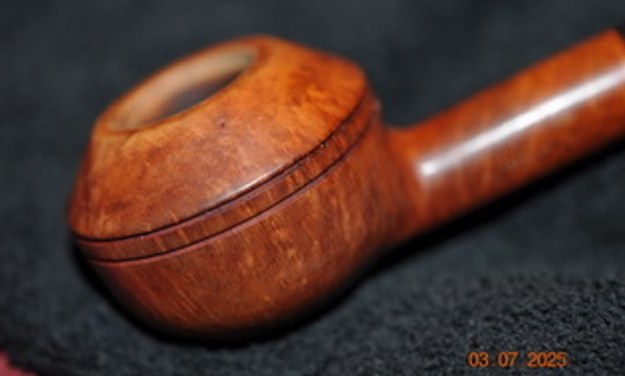
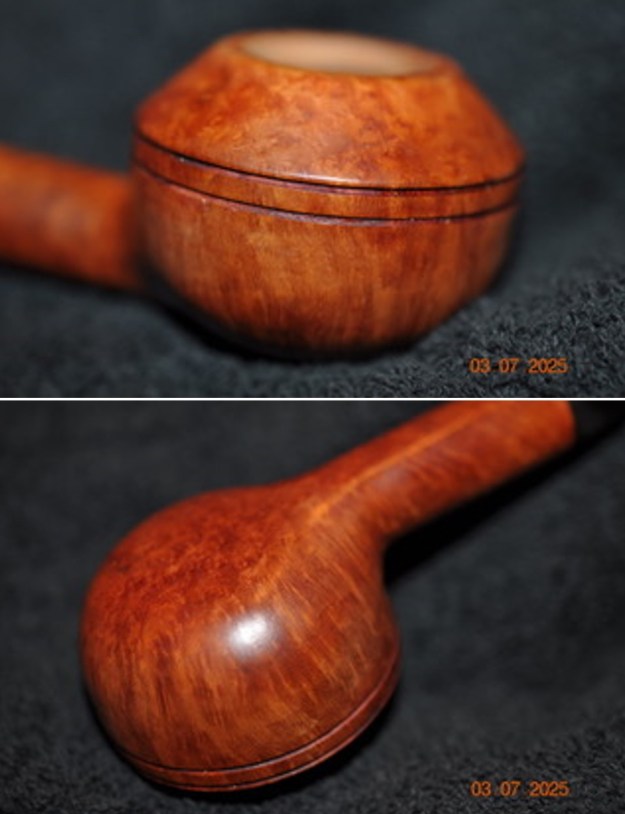
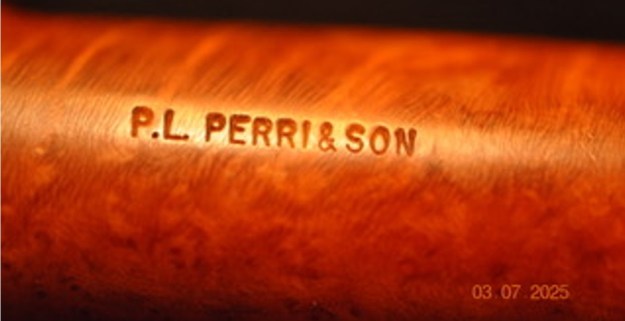
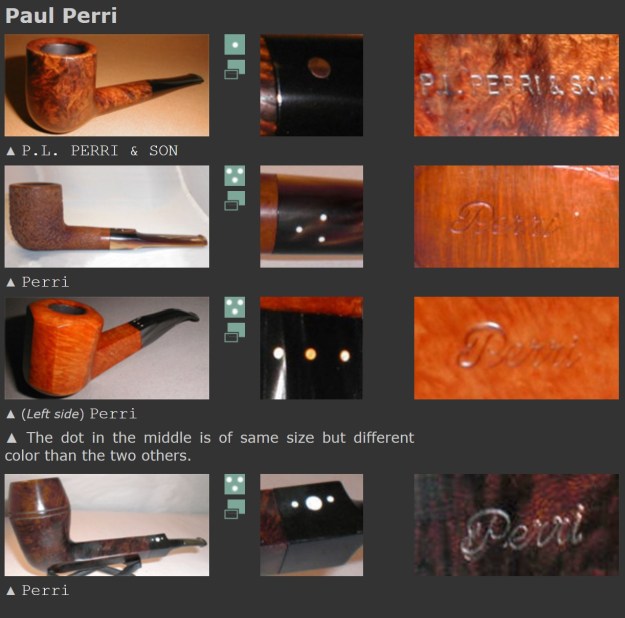
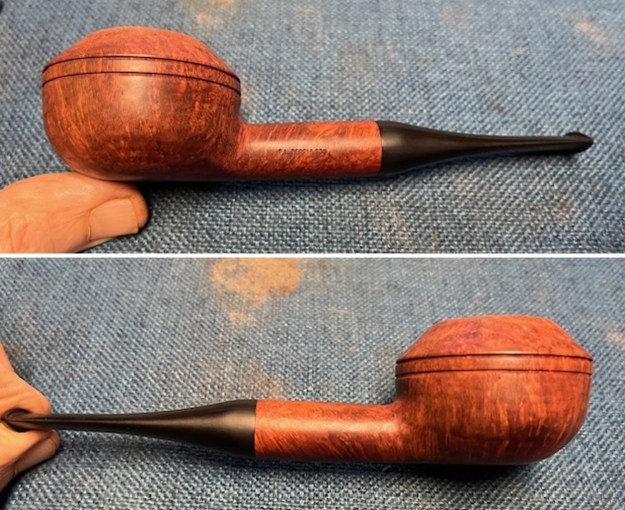
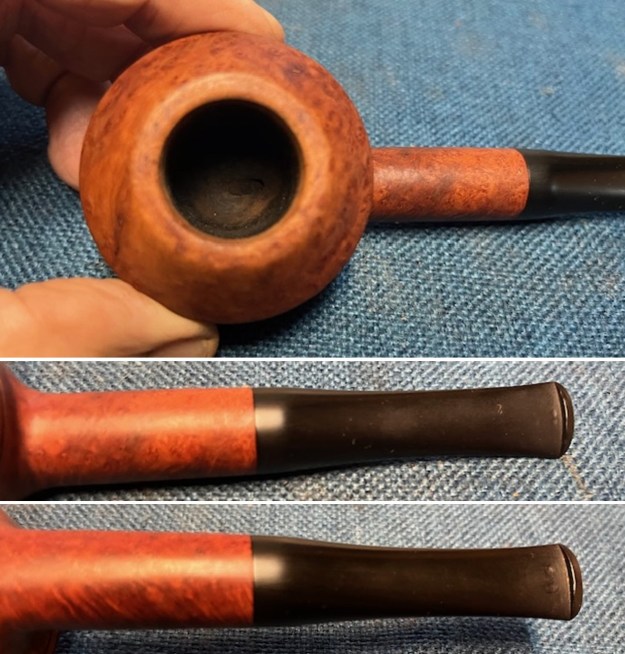
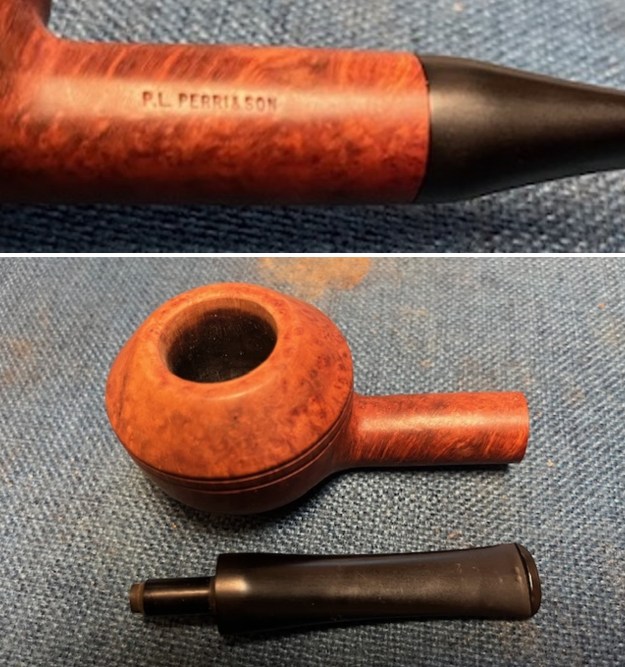
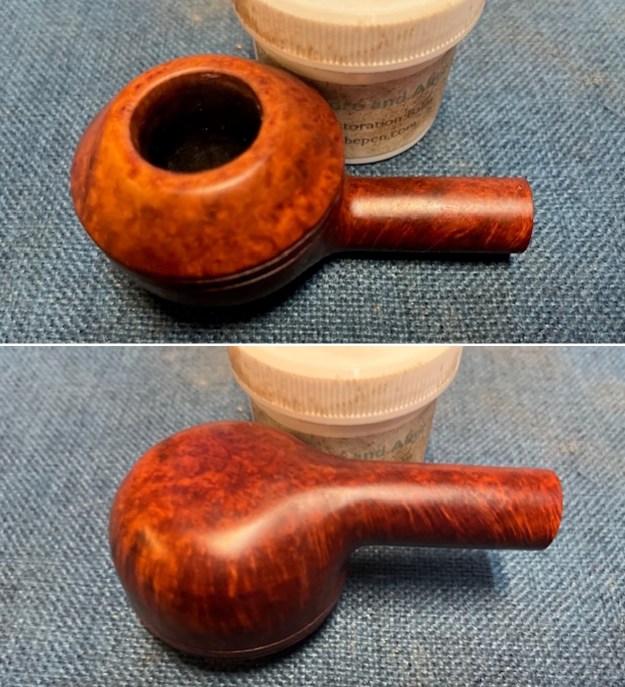
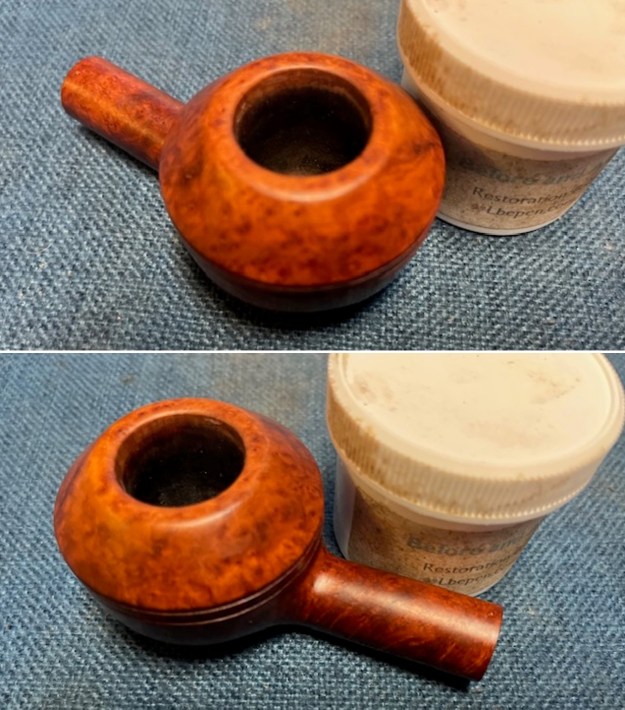
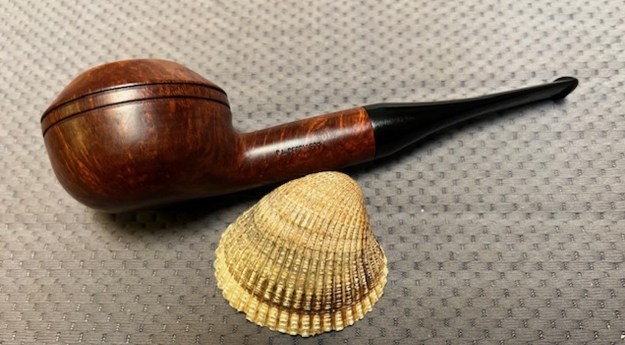
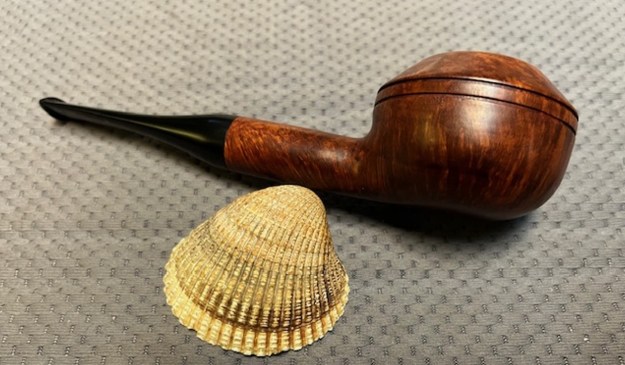
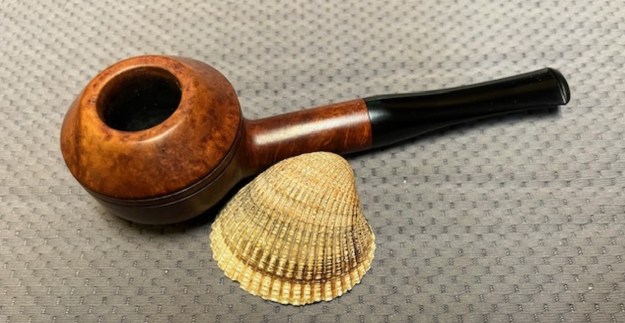
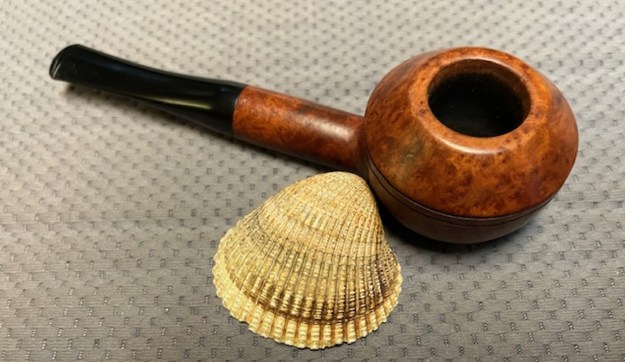
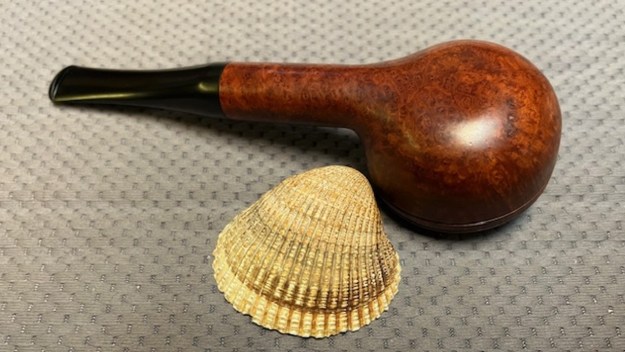
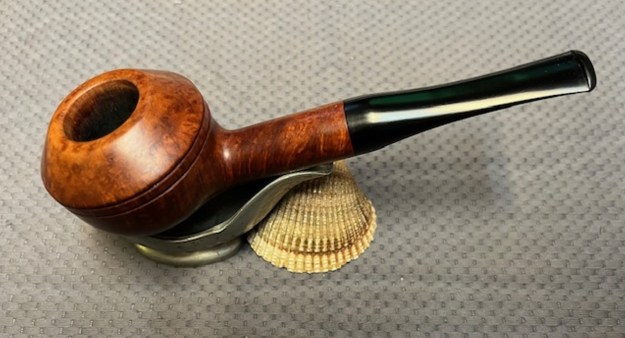
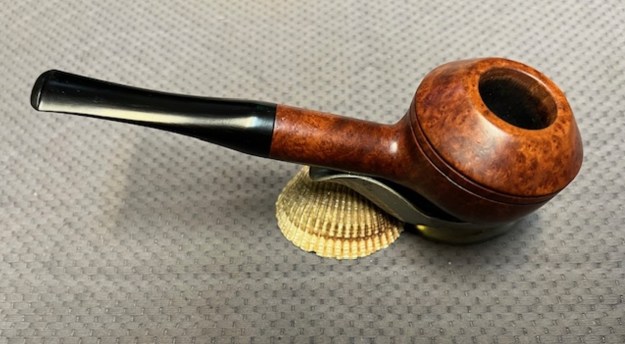
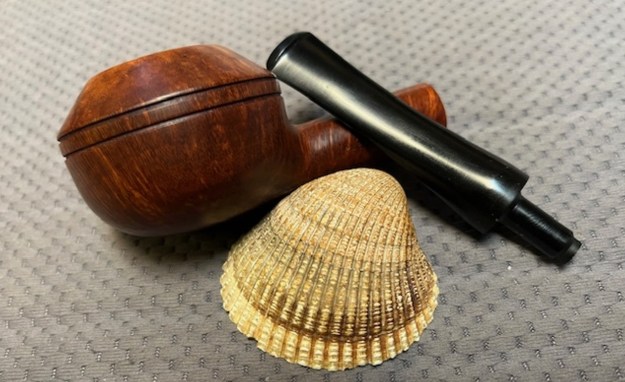
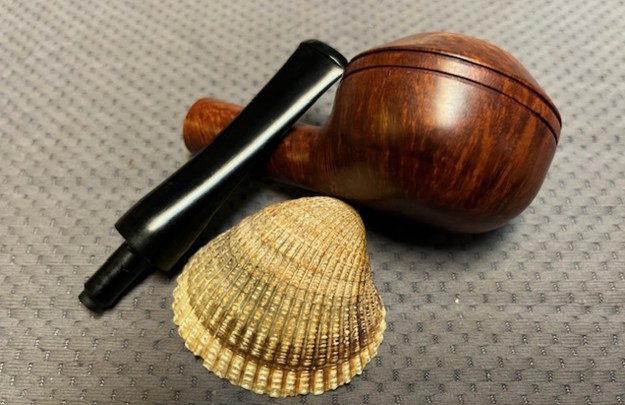
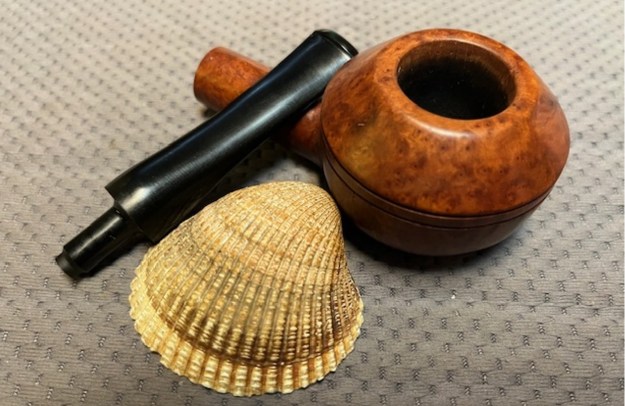
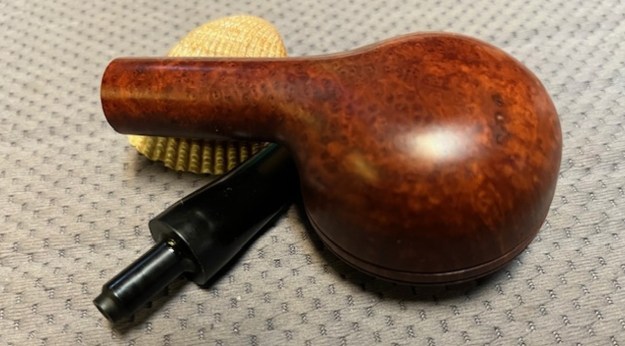
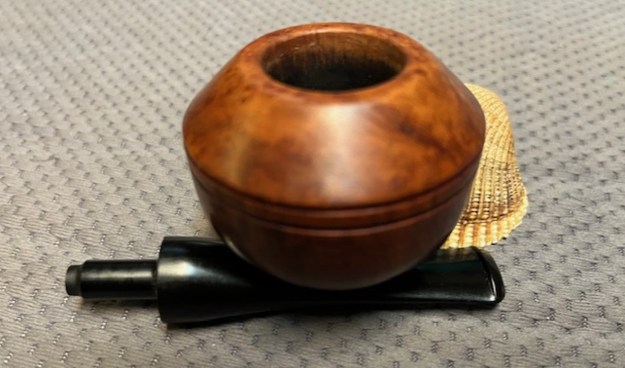
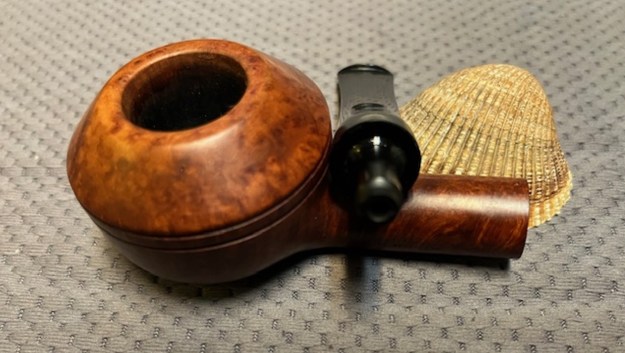
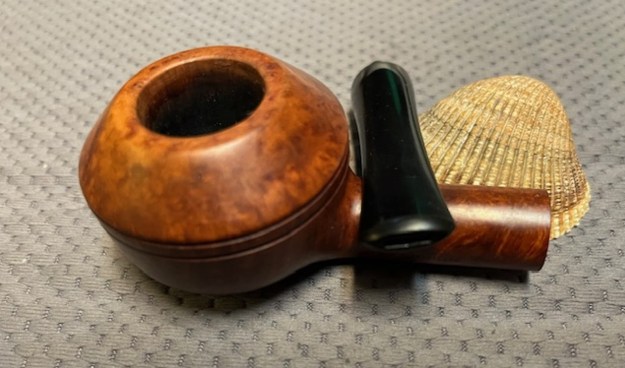
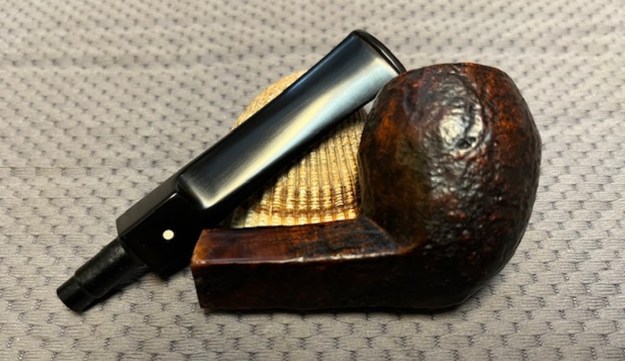
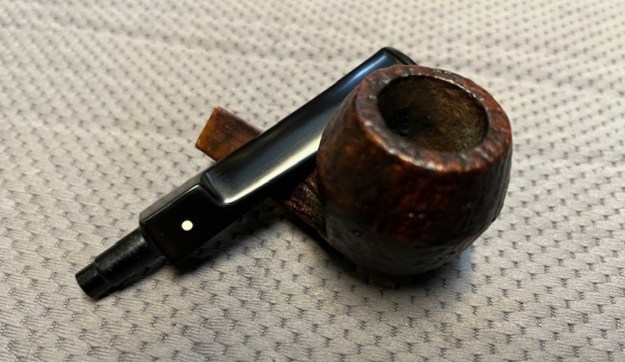
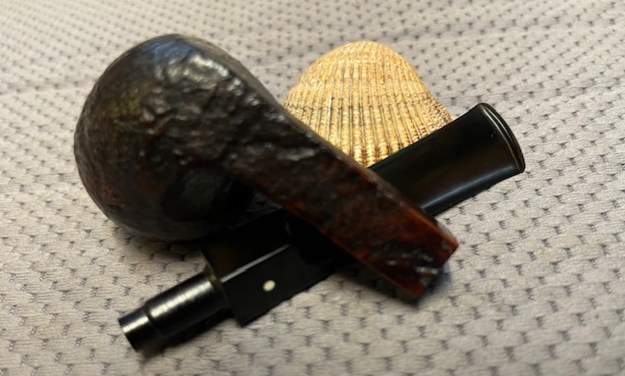
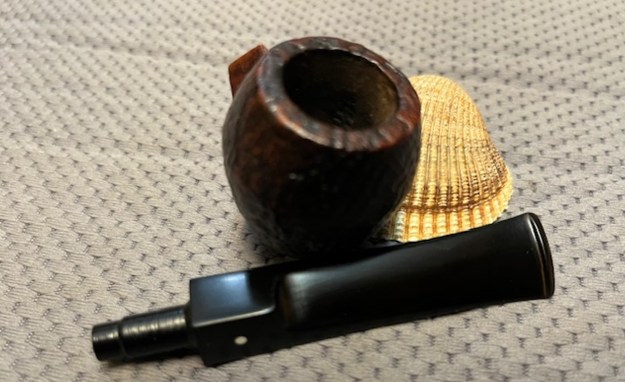
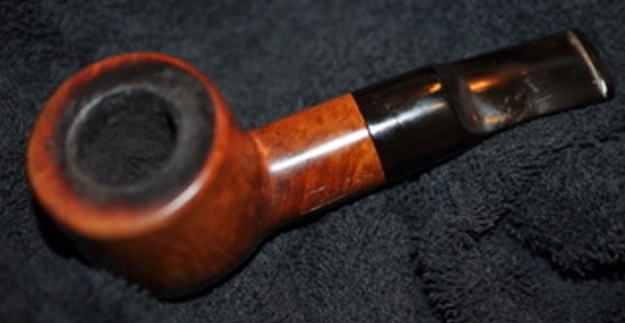
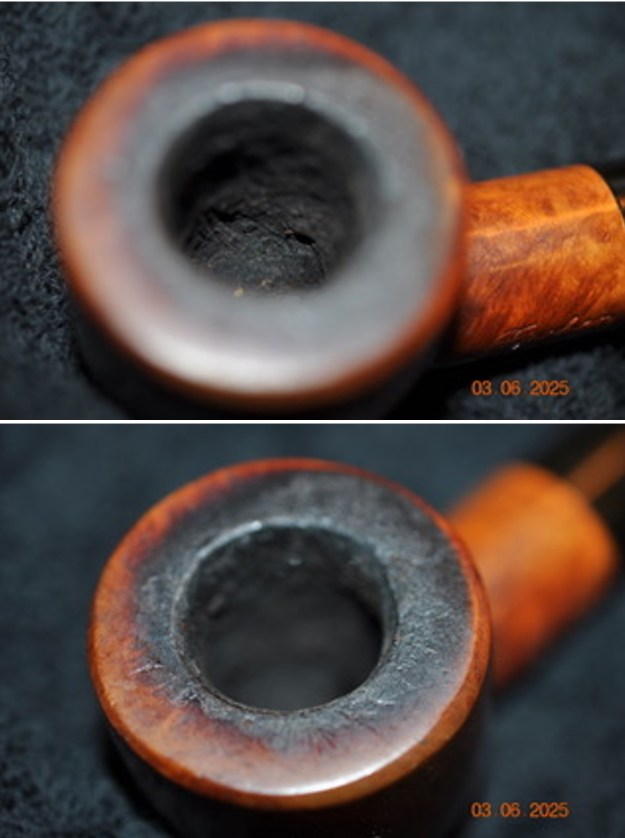
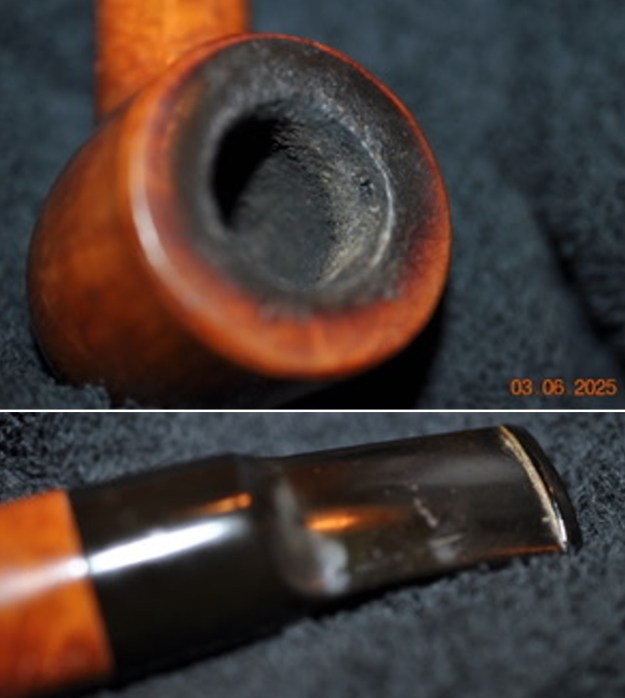
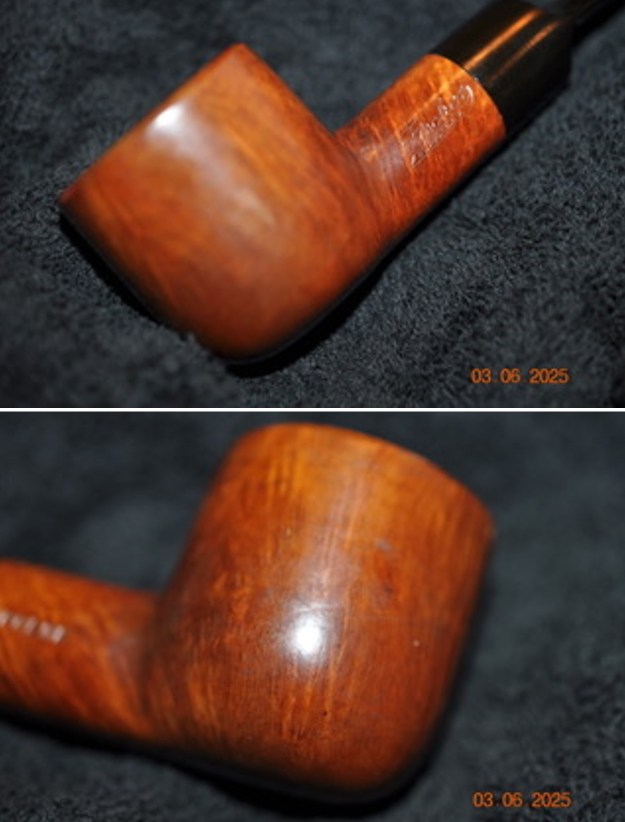
The next pipe I have chosen is a beautifully grained and smooth finished Rhodesian sitter with a briar cap and twin rings around the cap like a well made Rhodesian. It has a well shaped taper vulcanite stem. It came to us on August 22, 2024 from a friend in Barrington, Rhode Island, USA. The contrast of the brown stains makes the grain stand out. It was stamped left side of the shank and read P.L. Perri & Son. There was no other stamping on the shank sides of bottom. The pipe was quite clean. It had obviously been reamed recently. The bowl was clean and the smooth rim top was dirty a few spots of lava on the surface. The black vulcanite taper stem was in good condition other than being a bit dirty. The stem surface had some chatter and tooth marks on both sides of the stem ahead of the button. There was no logo on the stem that identifies it as a Perri pipe. Other than that, the stem was in good shape. Jeff took photos of the pipe before his cleanup work. They tell the story and give a glimpse of the pipe. Jeff took photos of the rim top and stem to show the general condition of the pipe. The bowl is clean though it appeared that there were some spots of lava on the top and inner edge of the bowl. The stem is oxidized, calcified and grimy with light tooth chatter and marks on both sides ahead of the button. Jeff took photos of the bowl sides and heel to show the grain that was around this bowl. The grain is quite beautiful around the sides of the bowl and shank. It is a nice looking pipe. He took a photo of the left side of the shank to show the stamping. The stamping is readable in the photo below and is as noted above.Before I started my work on the pipe I wanted to gain background information. I remember meeting Paul many years ago now at Chicago and had good memories of that meeting but I wanted to learn more about his pipes. I turned first to Pipephil’s site to see what he had in summary about the brand (http://www.pipephil.eu/logos/en/logo-p1.html#paulperri), I did a screen capture of the information and quoted the side bar as well. The stamping shown in the first photo below is the same as the one I am working on.Artisan: Paul Perri (retired 1997 in Hawai). He was the first mentor of Trever Talbert.

From there I turned to Pipedia for some more details (https://pipedia.org/wiki/Perri). I quote below.

Denoted as Paul L. Perri & Son, pipemakers, Manhattan Beach, CA. Paul was still making when he reached 100 years of age, and may have been the oldest living pipe maker. He passed away just short of his 101st birthday in December of 2021.

Paul was well known in California, but less so in other parts of the country and the world. He was a formative influence on a number of American pipe makers, including Trever Talbert. The sandblasted lovat shown bellow typifies Paul’s work, which consists of larger classic shapes with slight twists here and there.

Chance Whittamore, a well respected pipe restorer who was fortunate enough to spend time with him believes “…nobody, living or dead, had the combination of pipe knowledge, depth and breadth, that Paul did.”

There was also a reference to a beautiful piece that Marty Pulvers wrote celebrating Paul’s life and work. I am including that link as well (https://www.pulverspriorbriar.com/my-life-in-pipes/dytn7osvvwmecilhpf11fx7nu420gp?rq=Paul%20Perri).

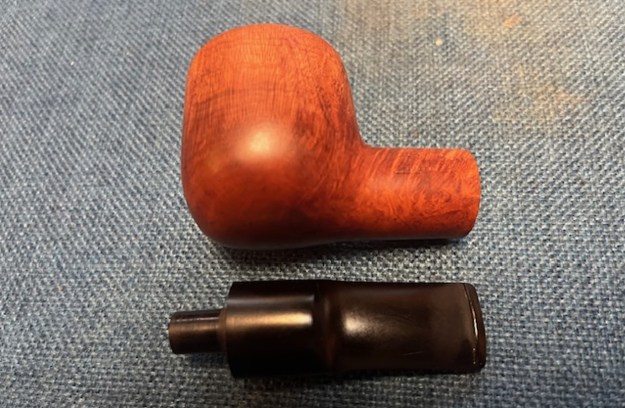
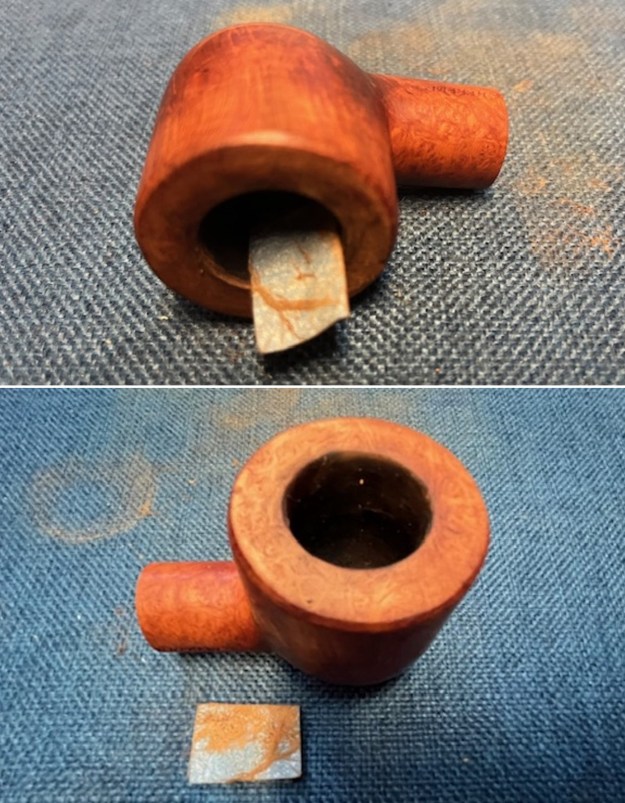
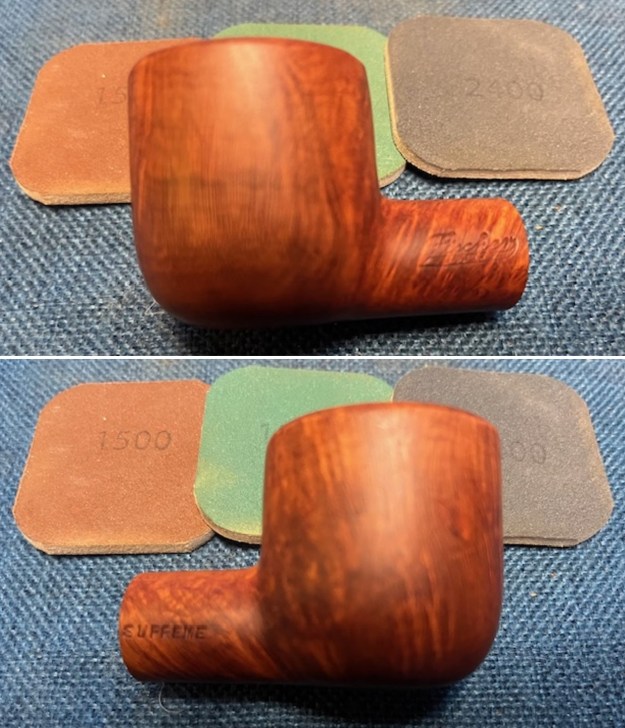
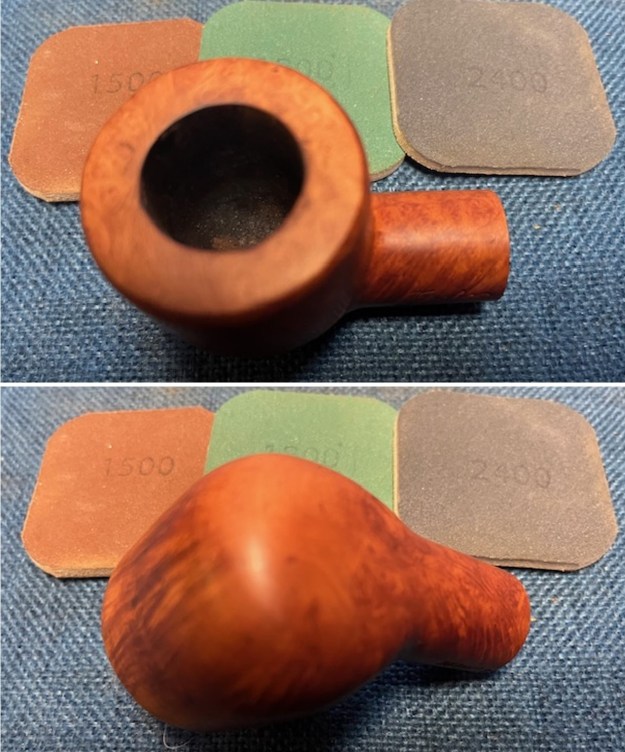
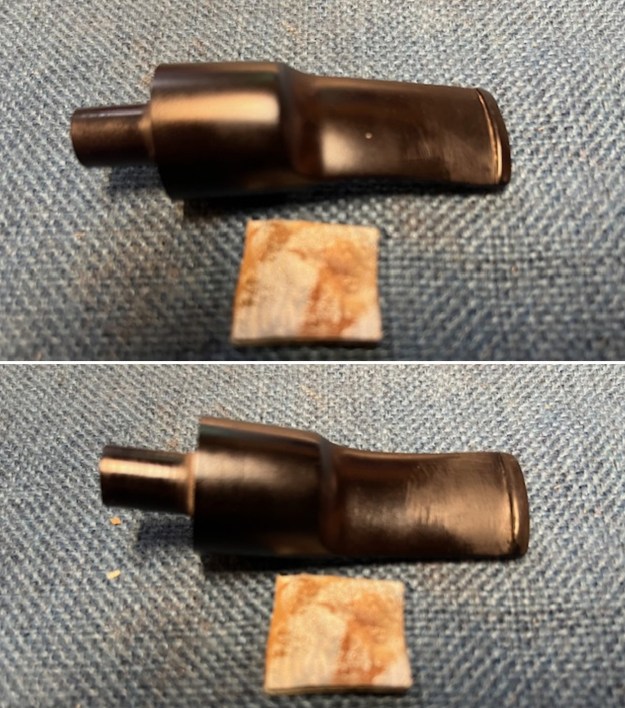
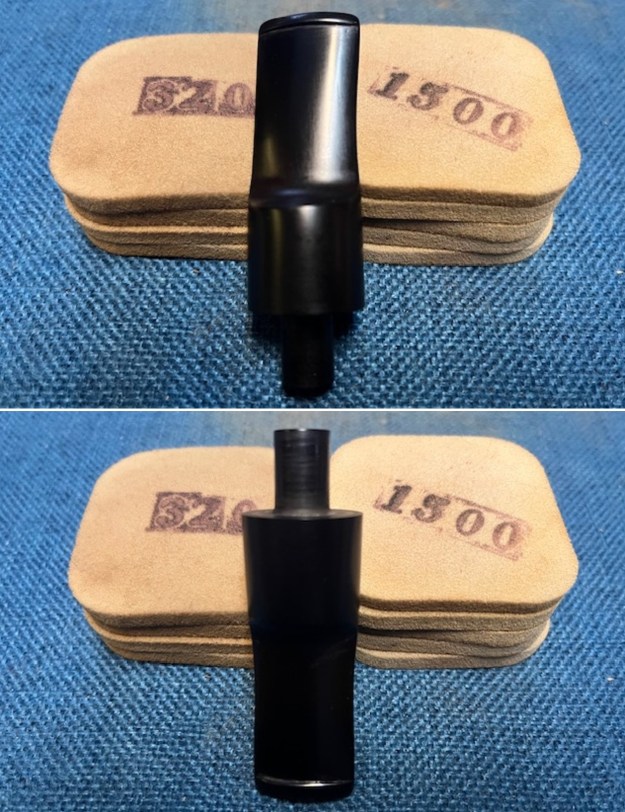
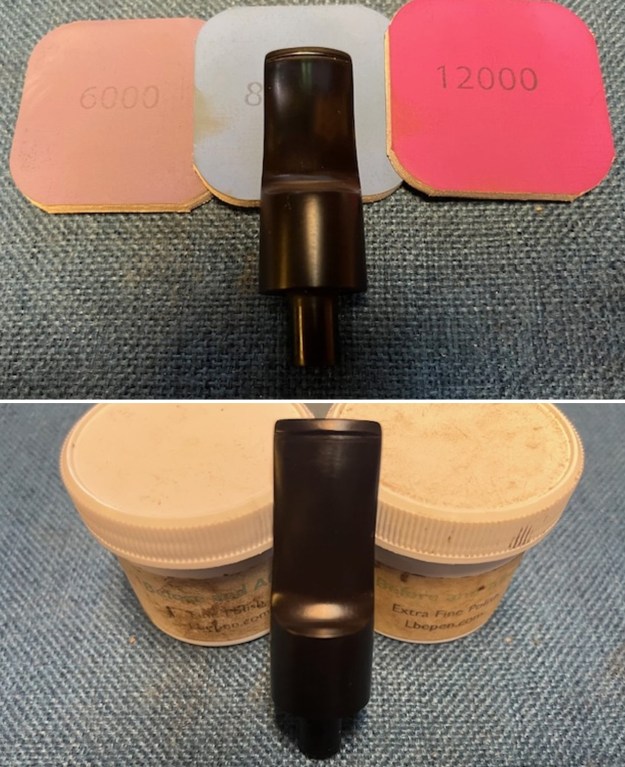
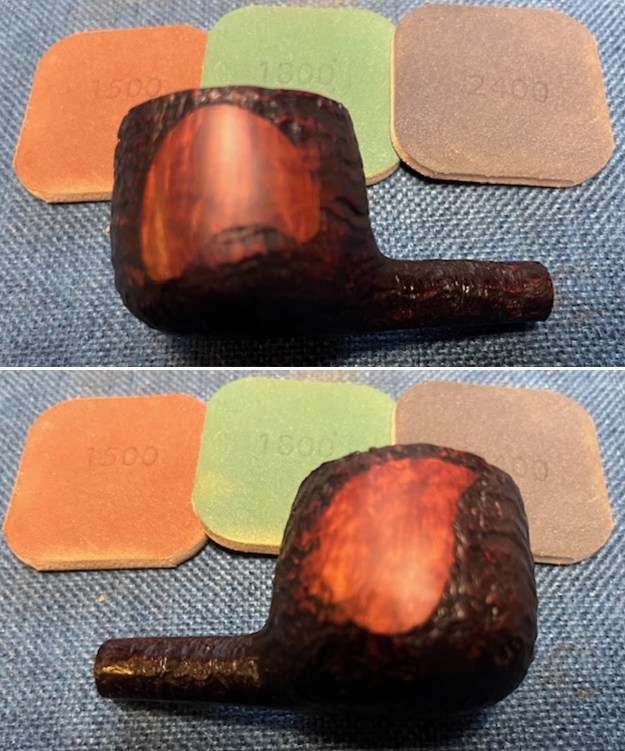
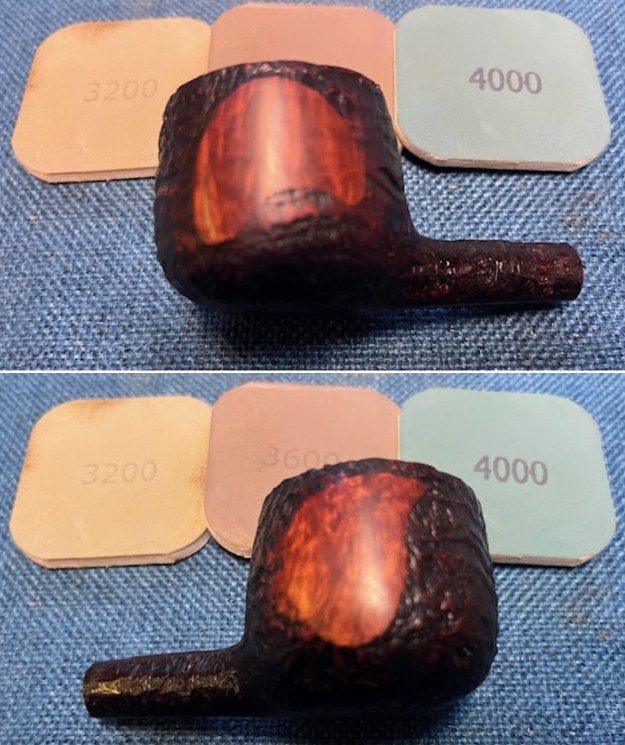
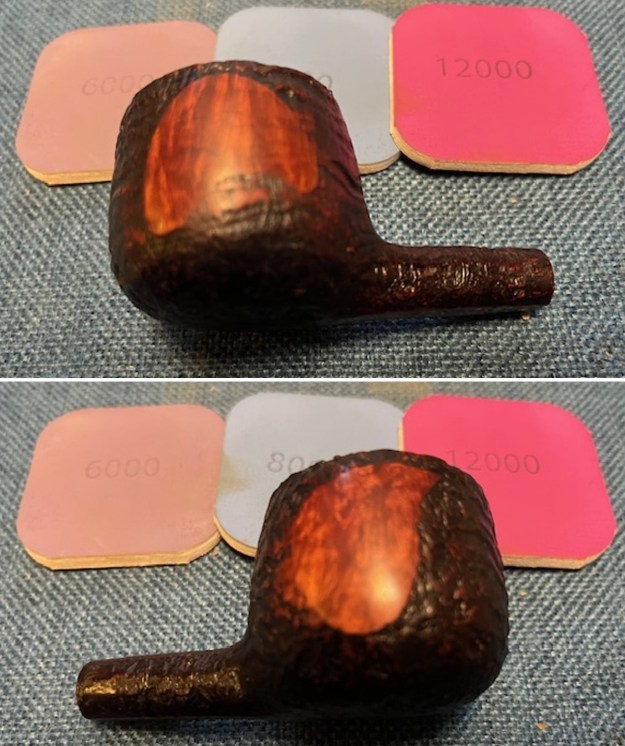
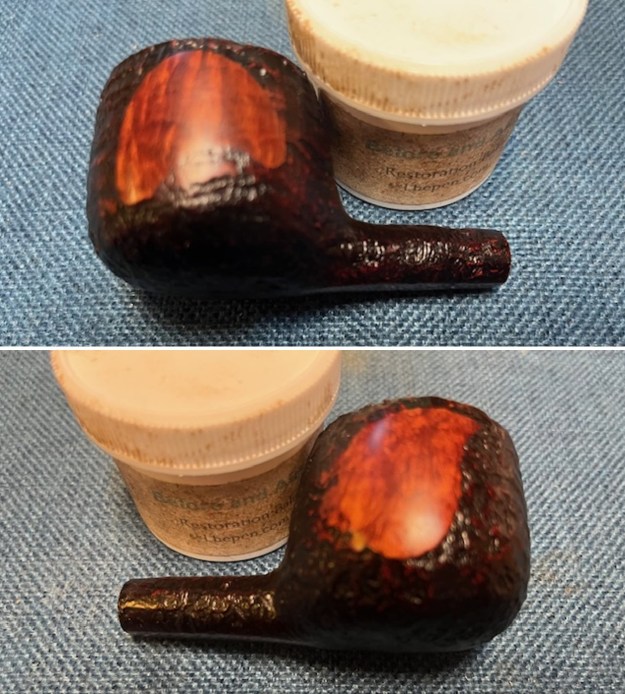
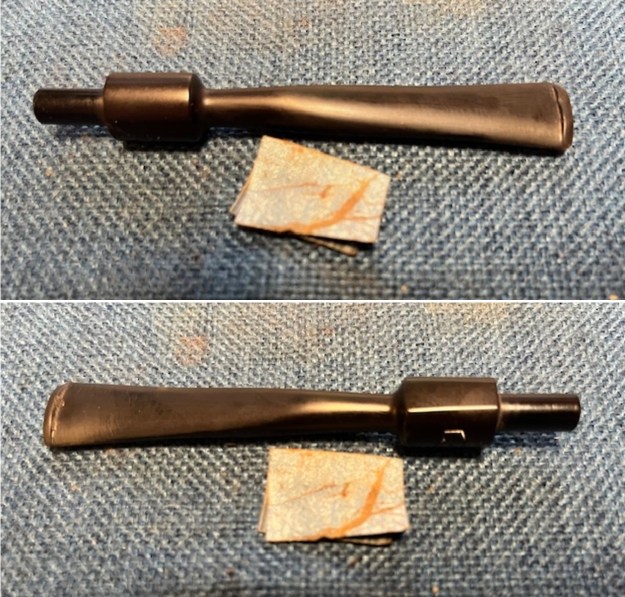
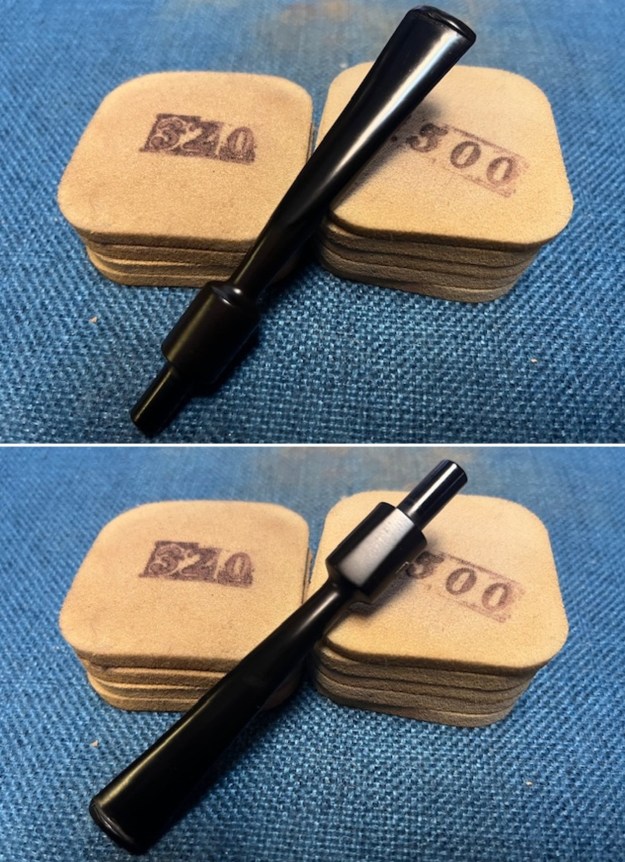
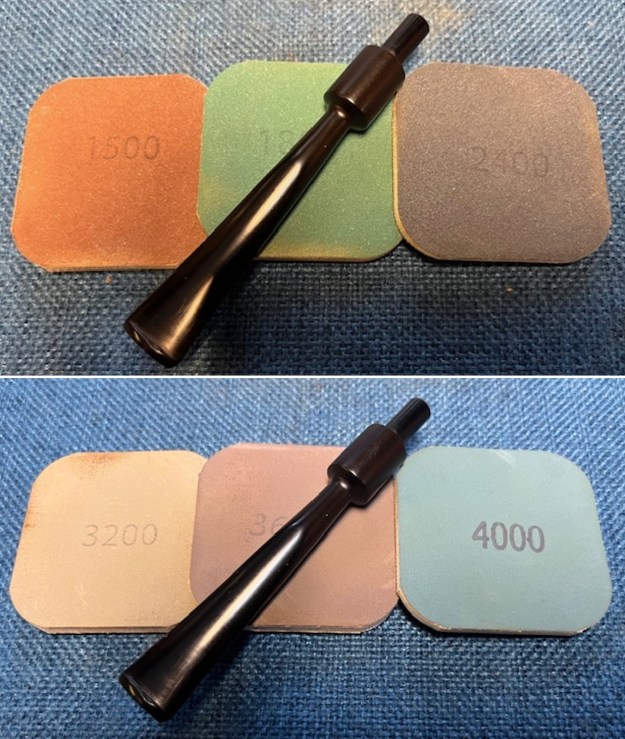
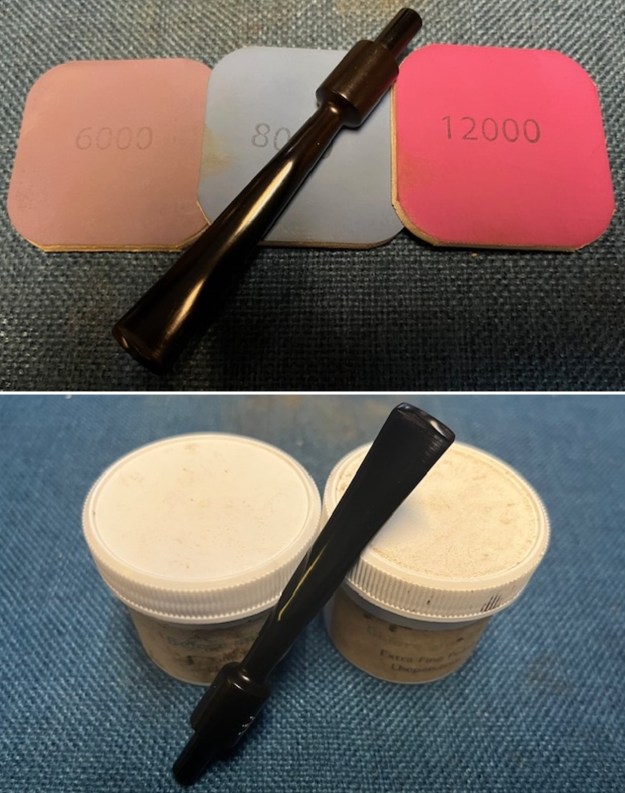
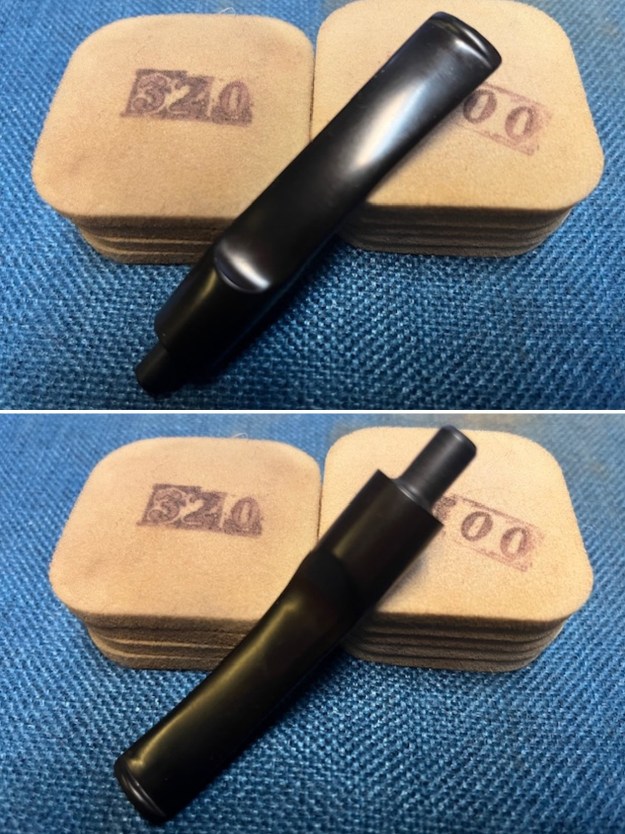
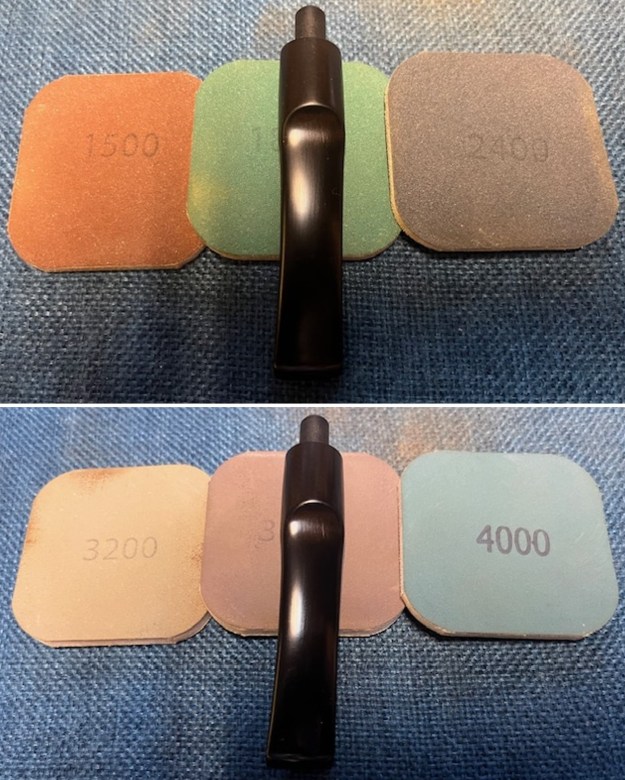
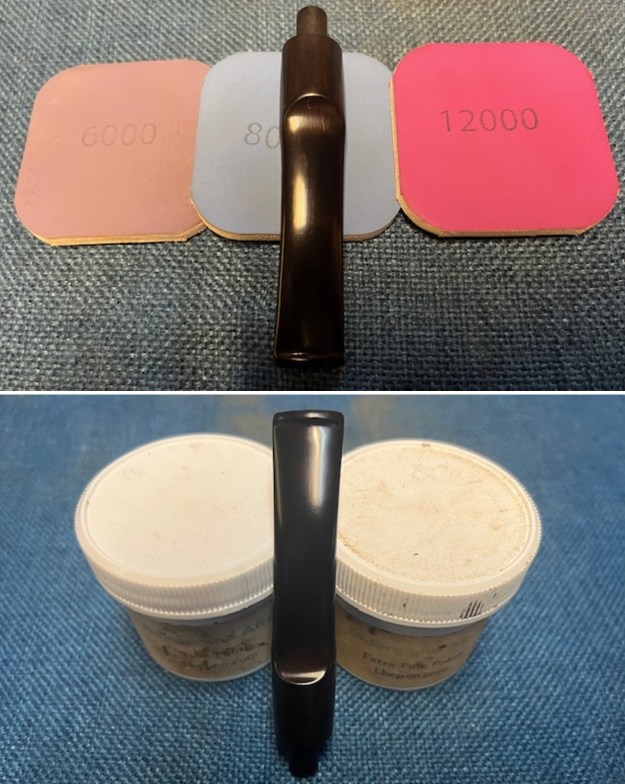
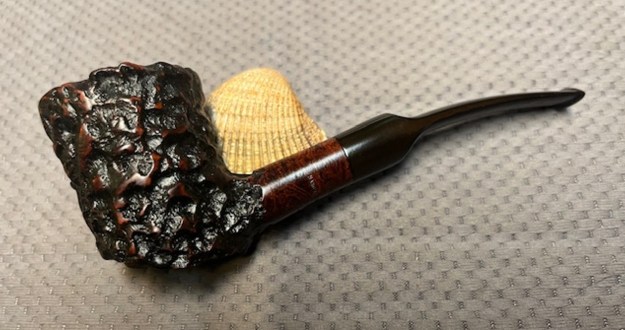
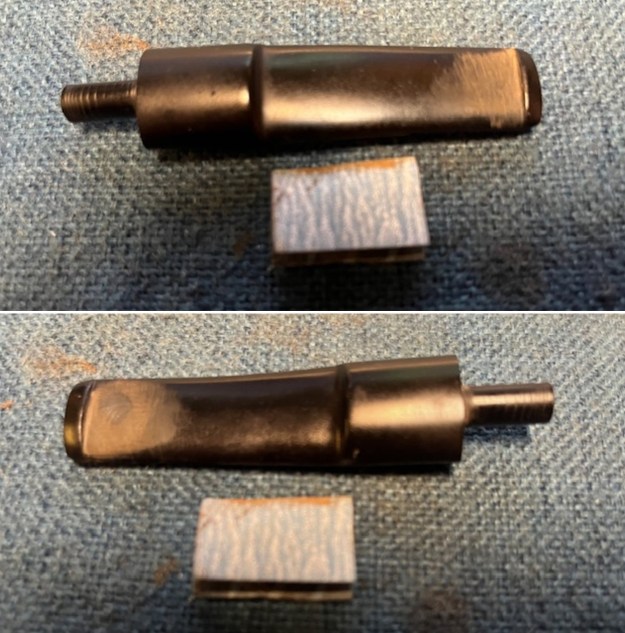
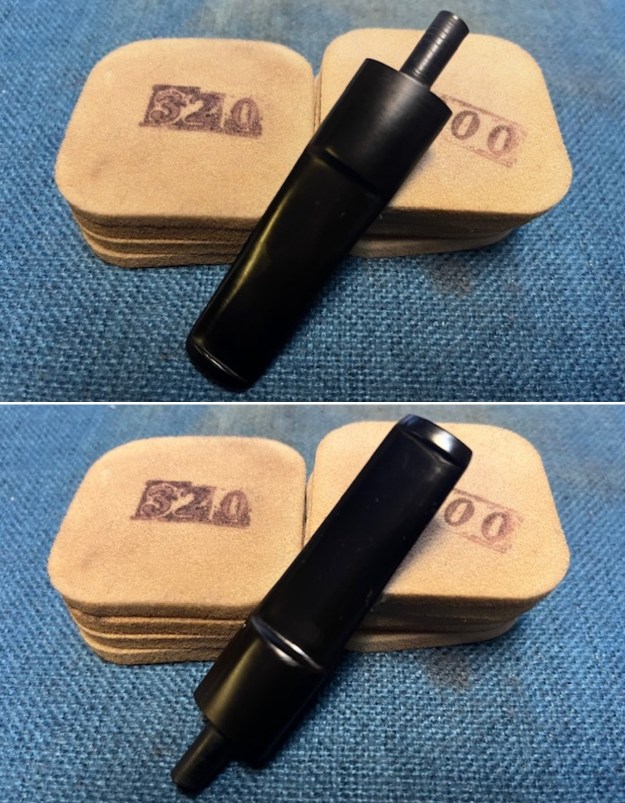
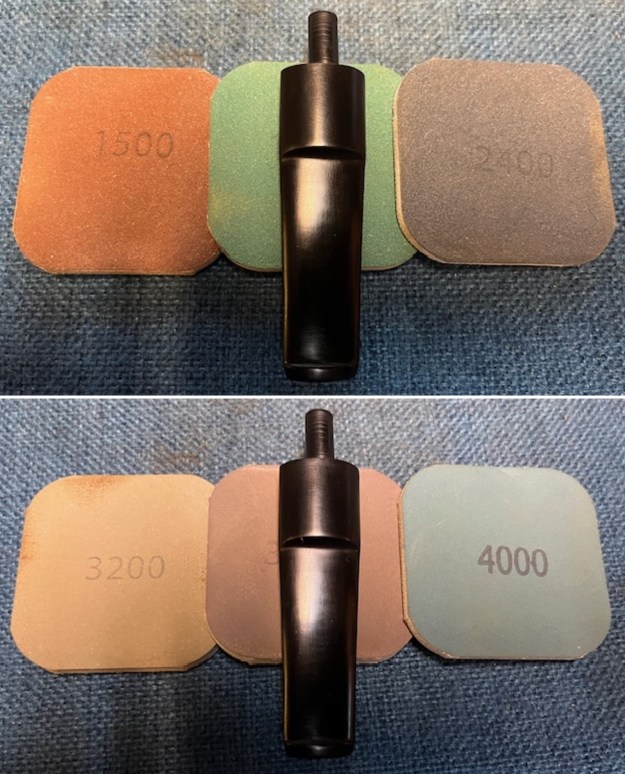
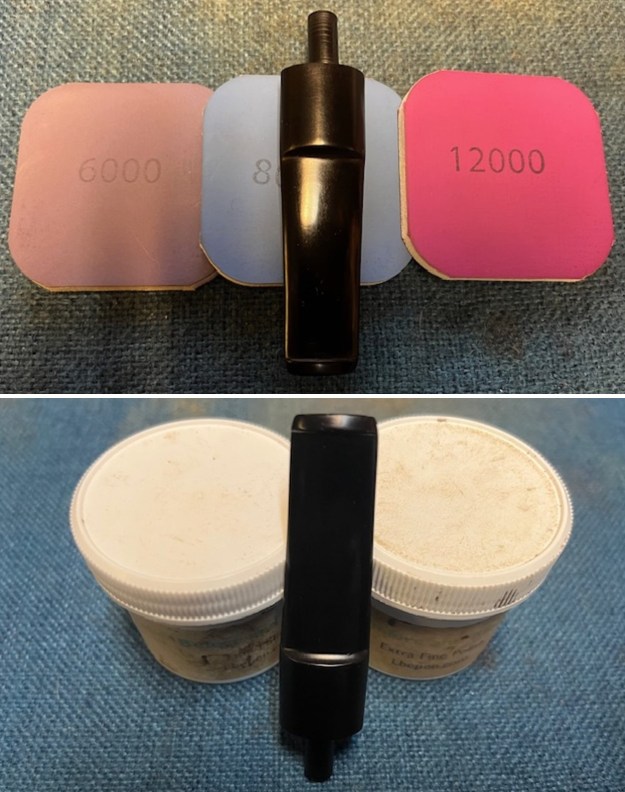
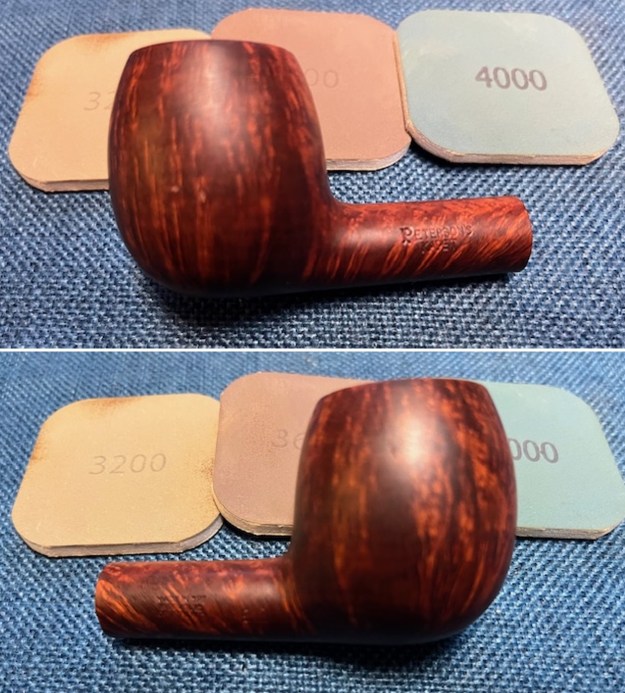
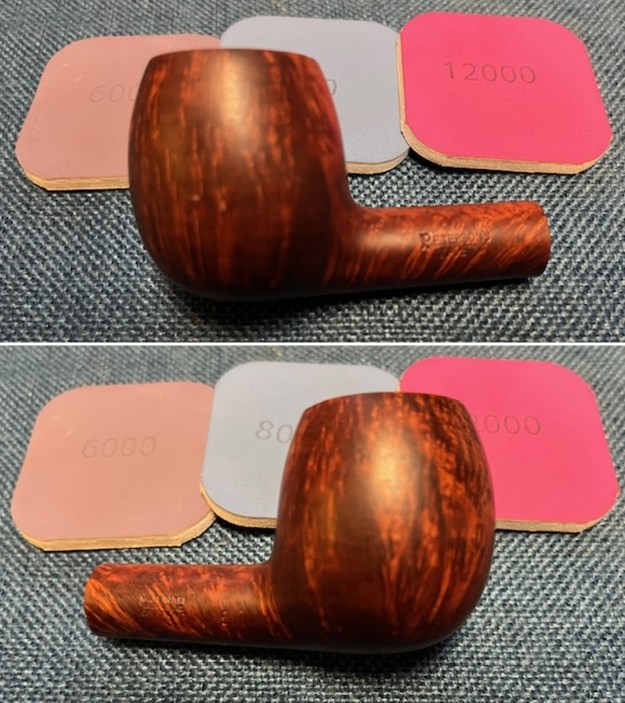
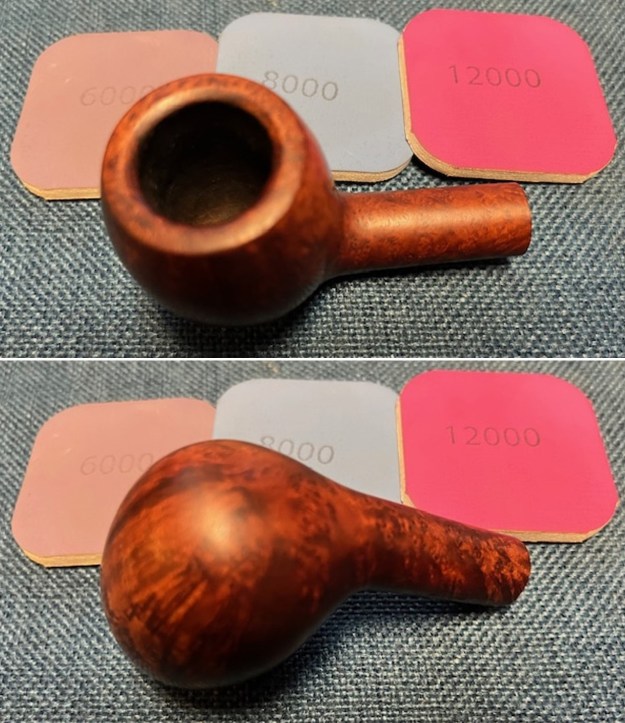
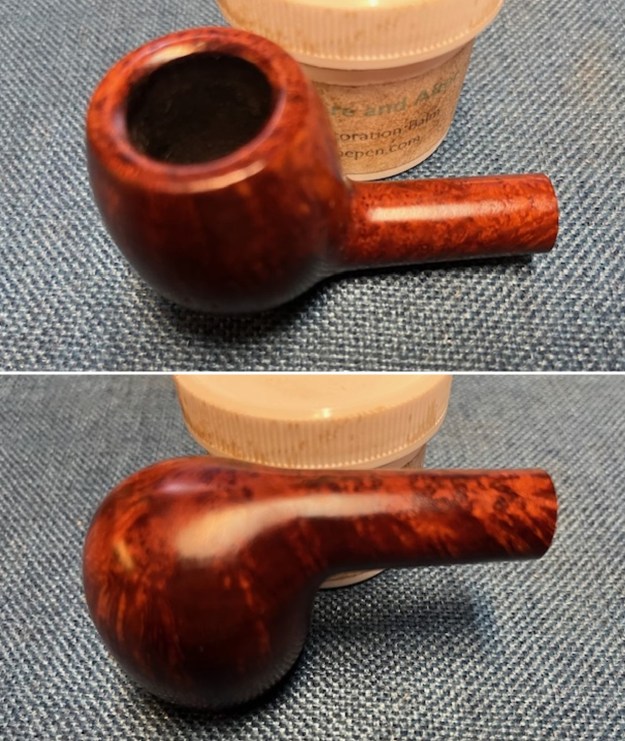
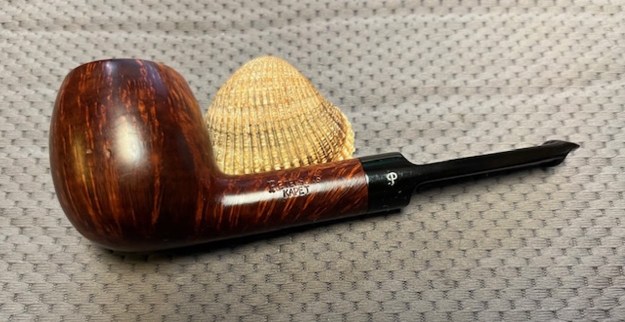
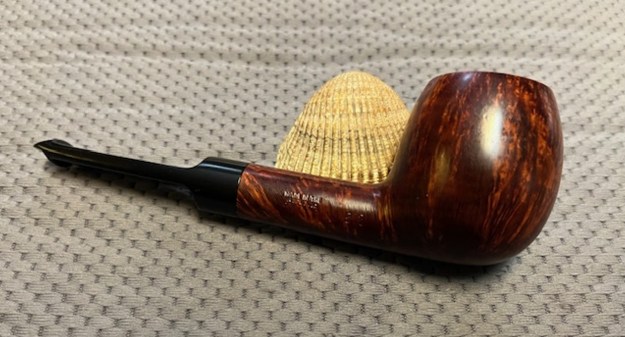
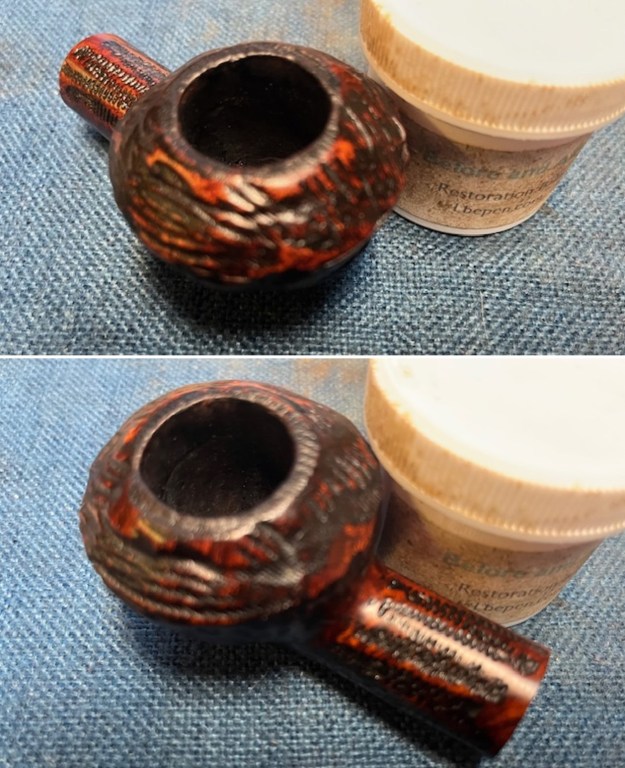
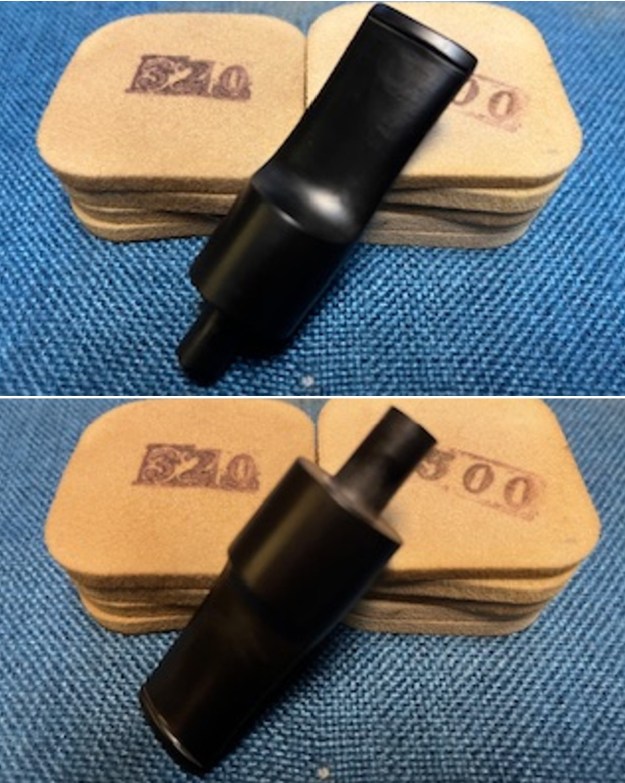
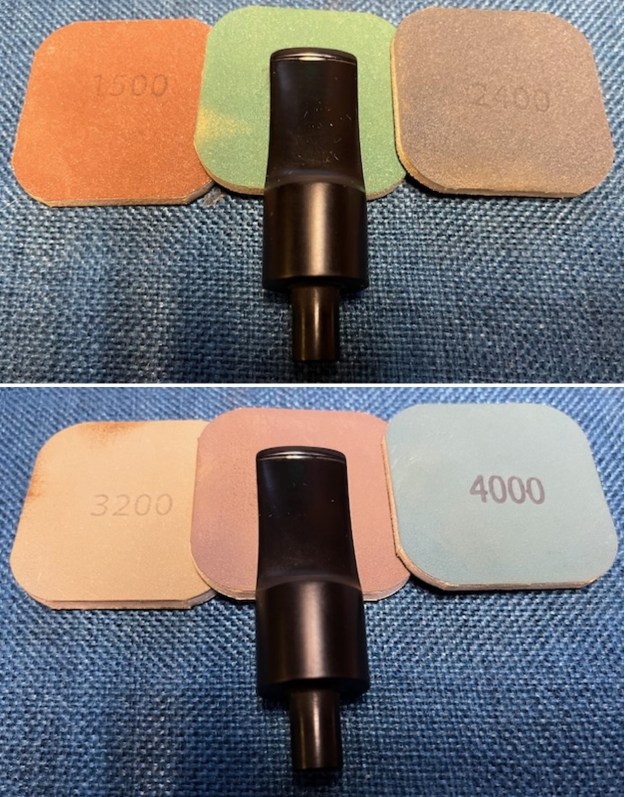
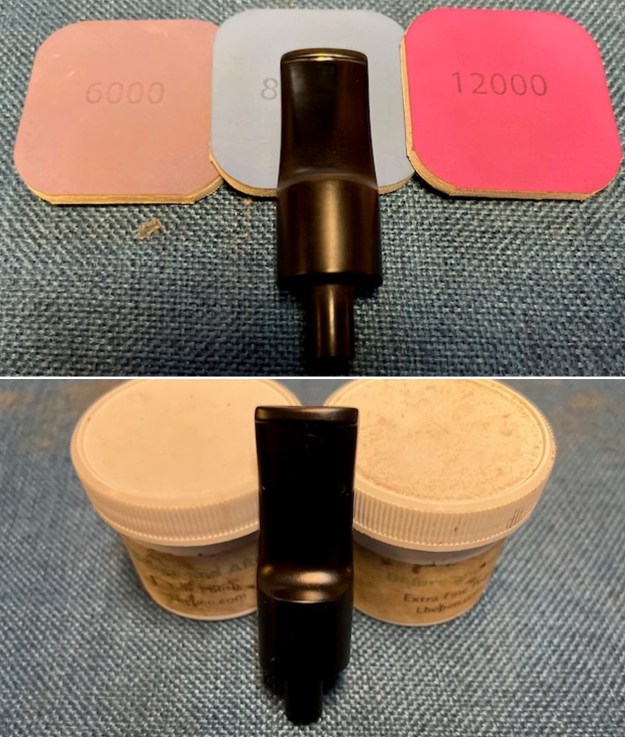
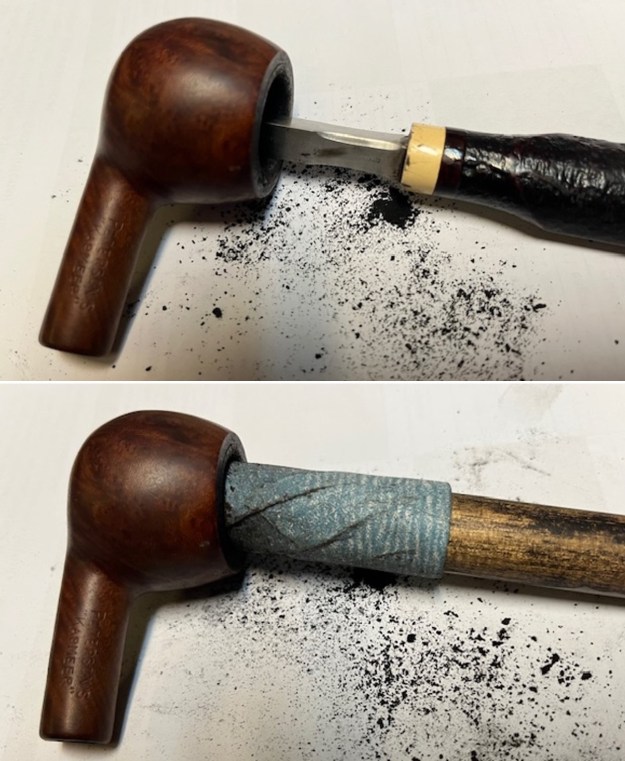
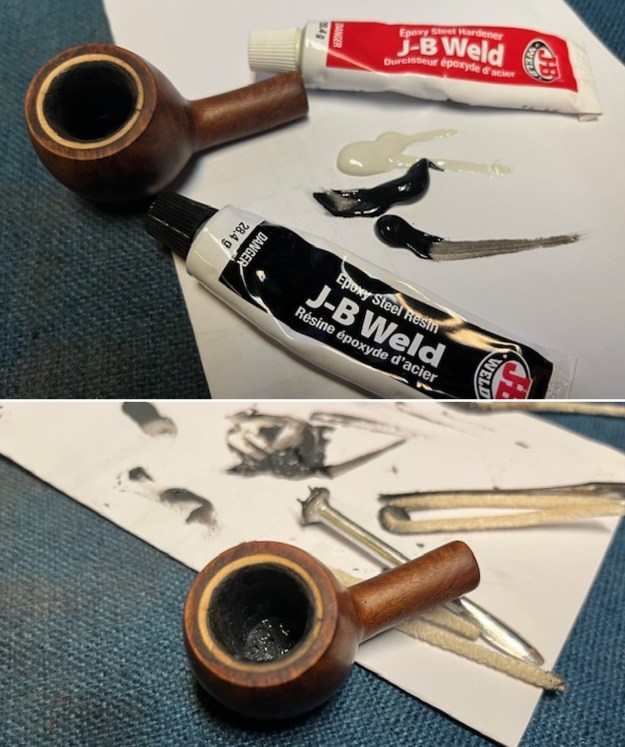
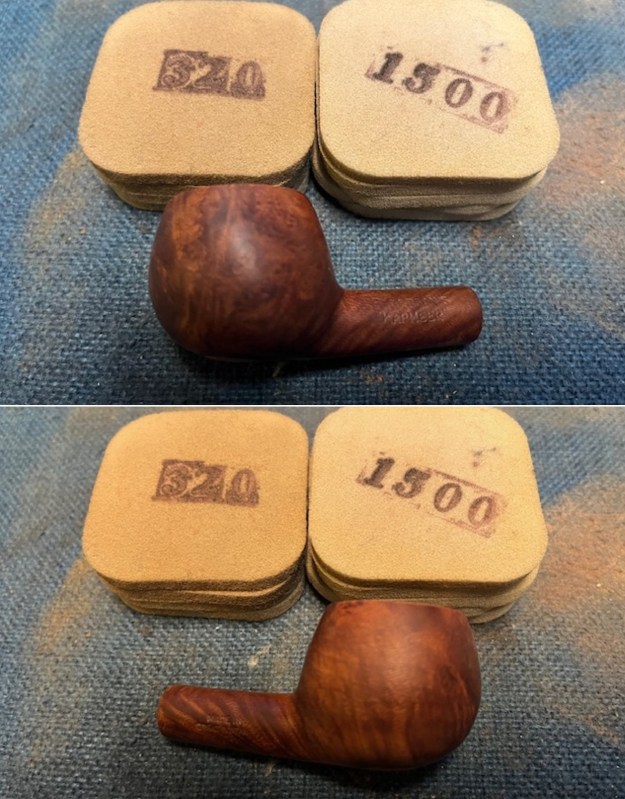
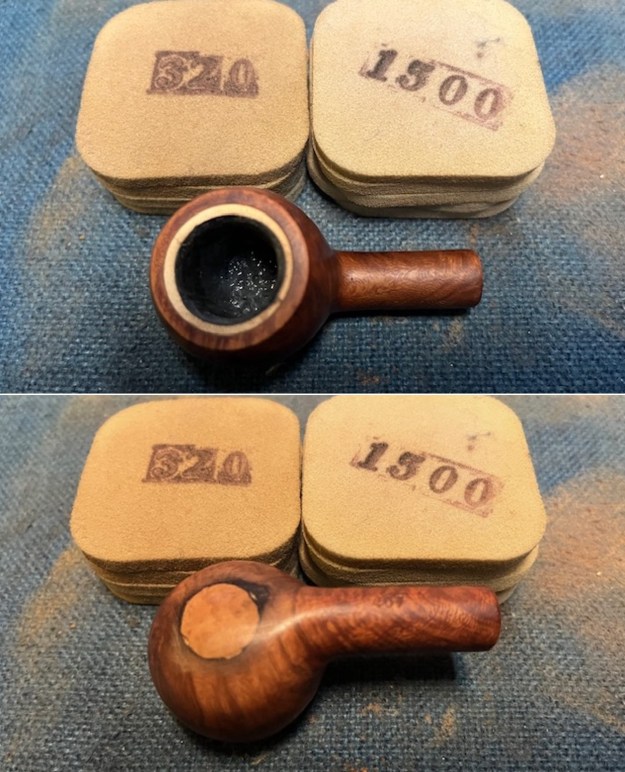
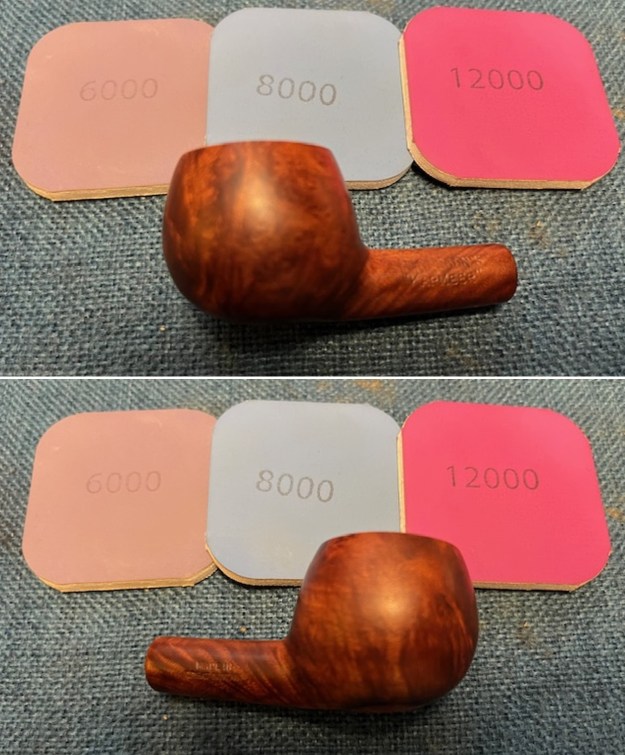
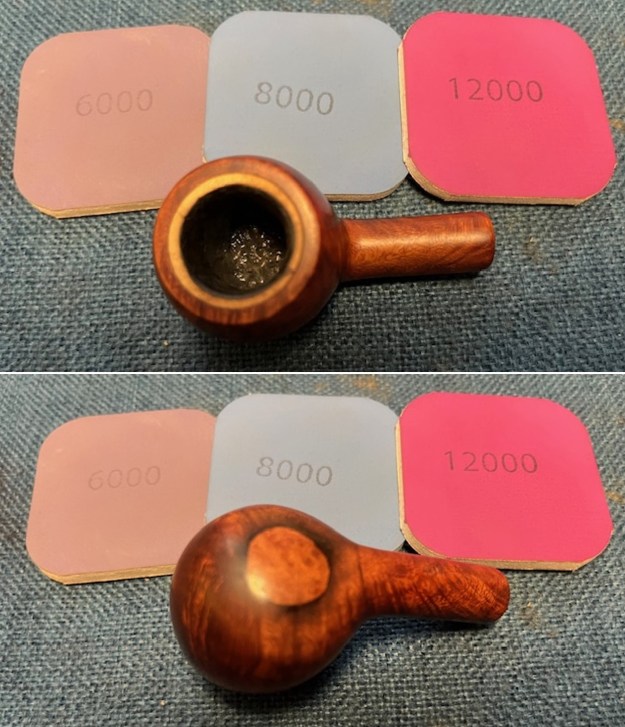
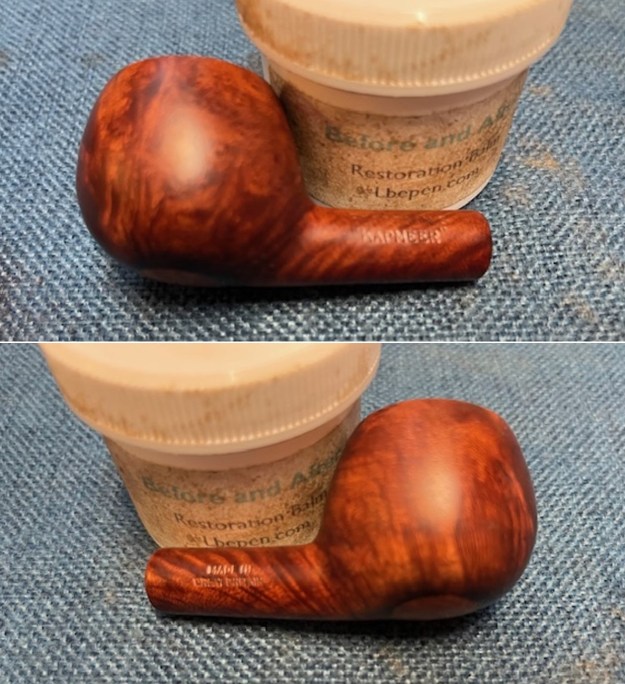
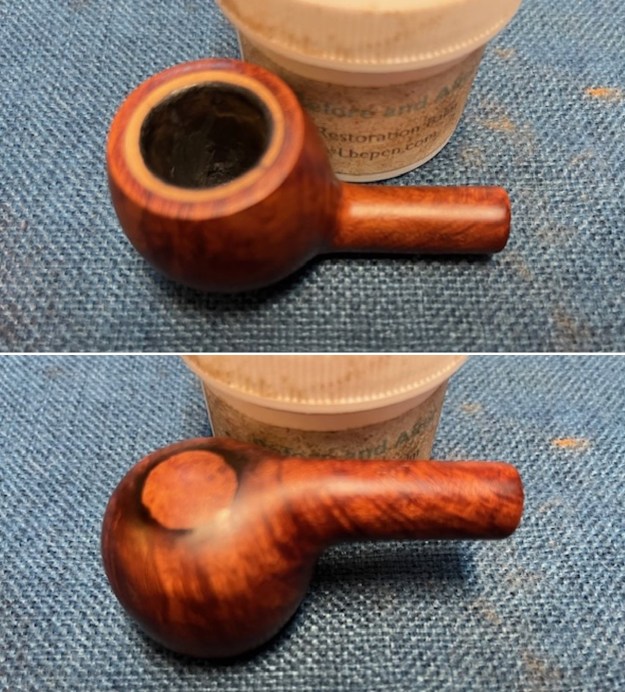
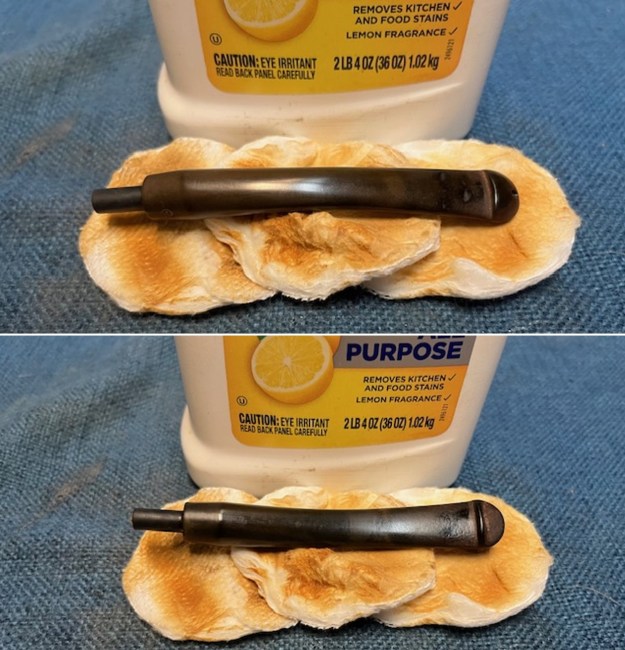
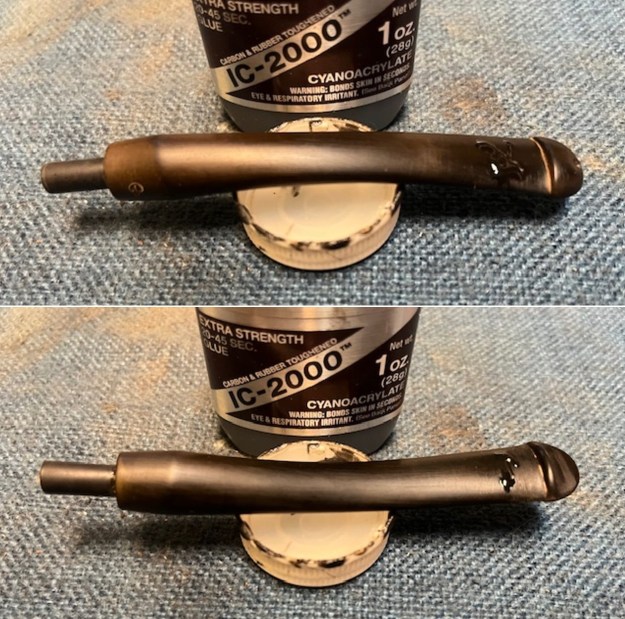
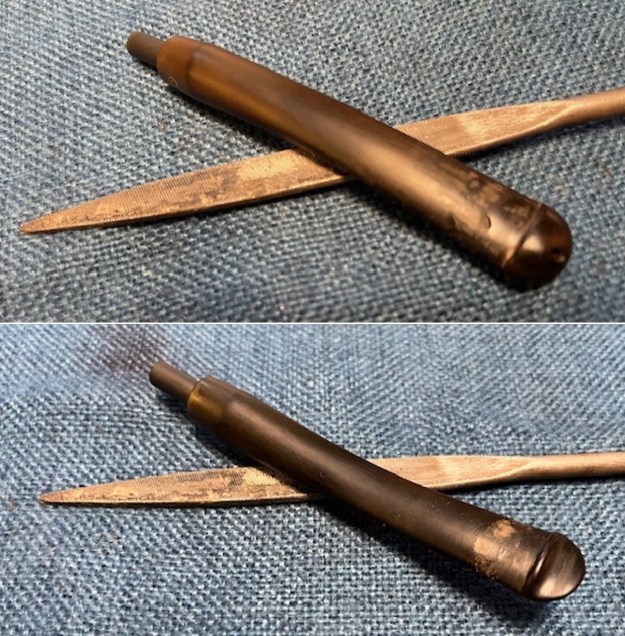
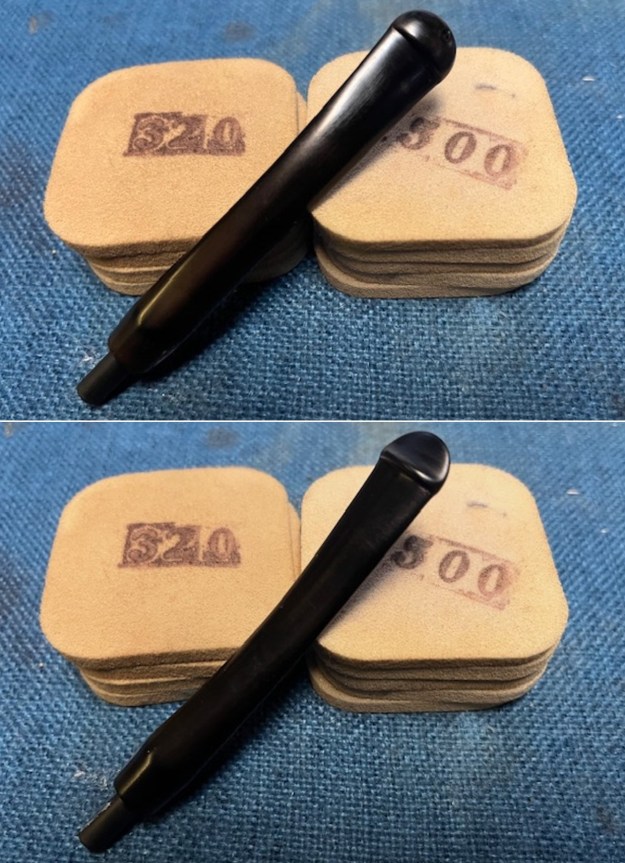
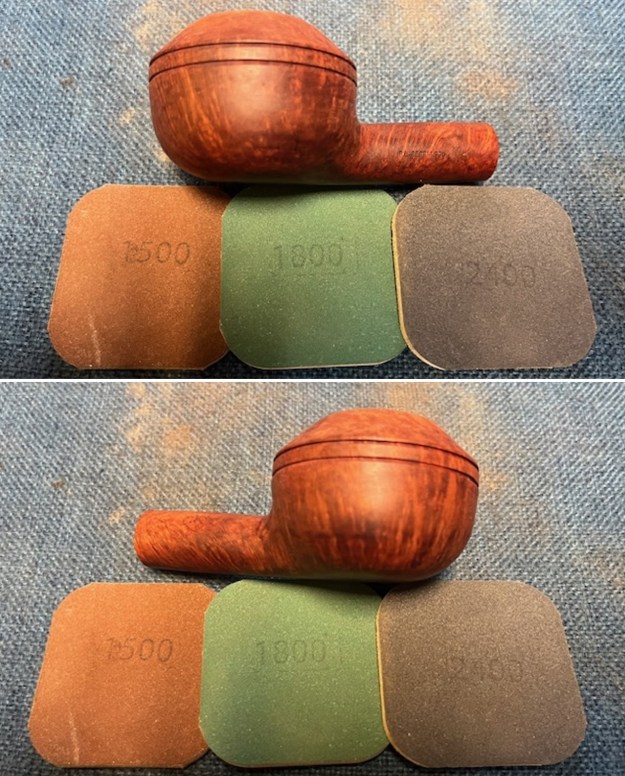
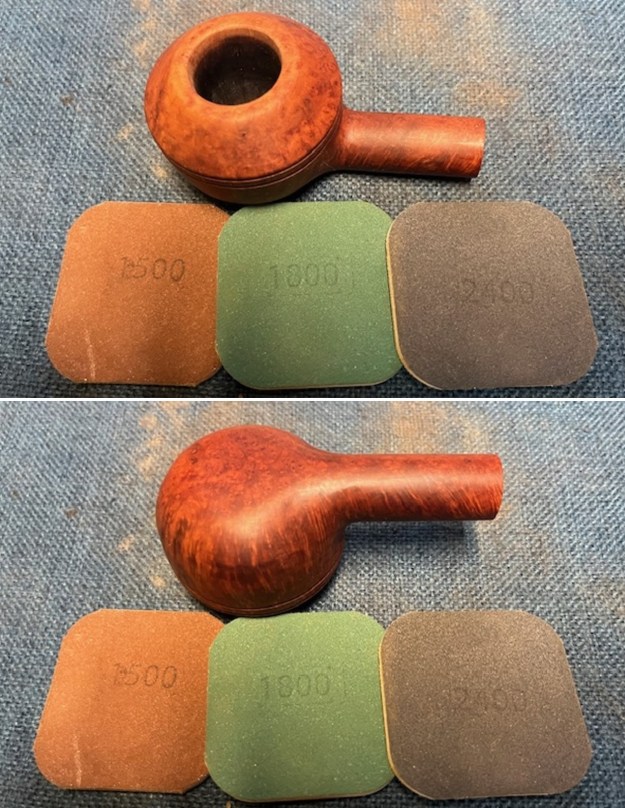
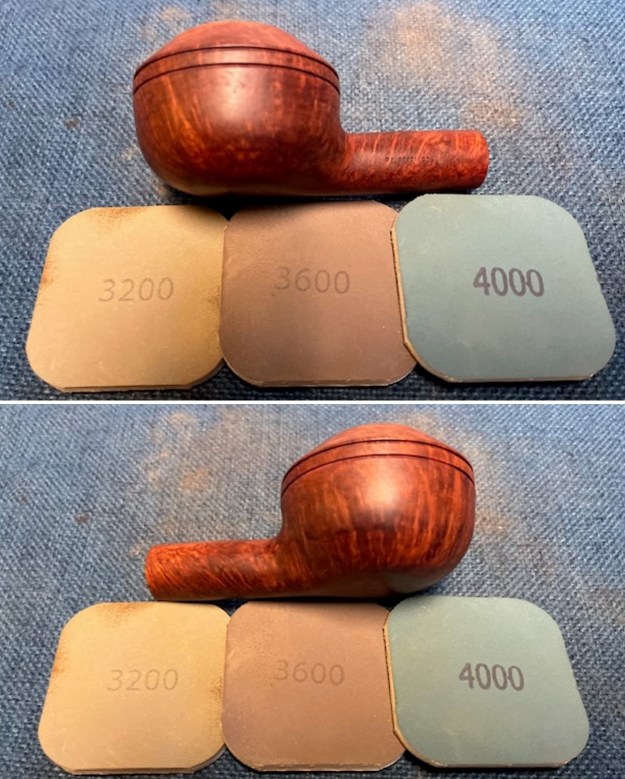
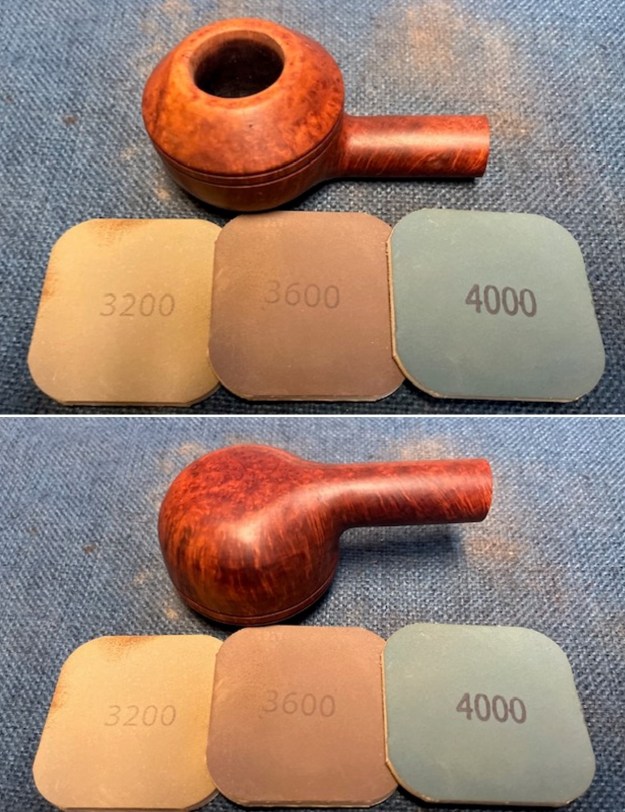
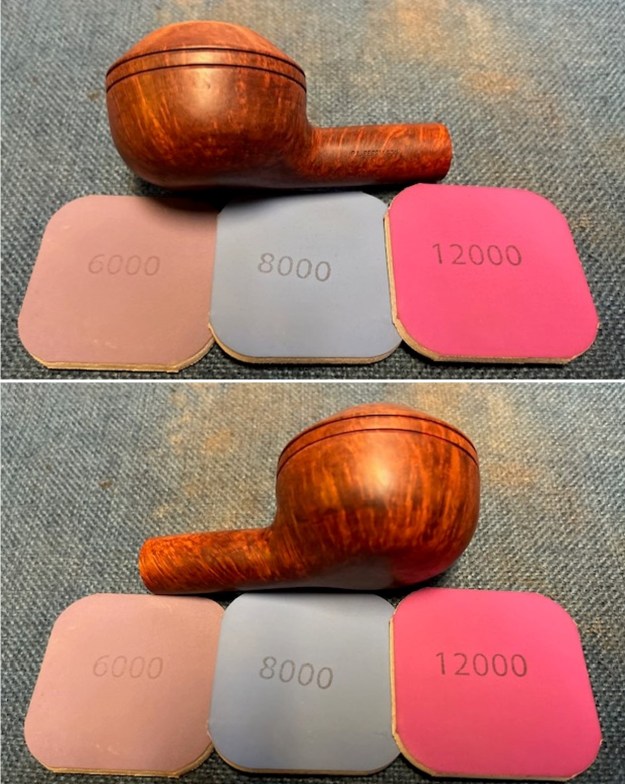
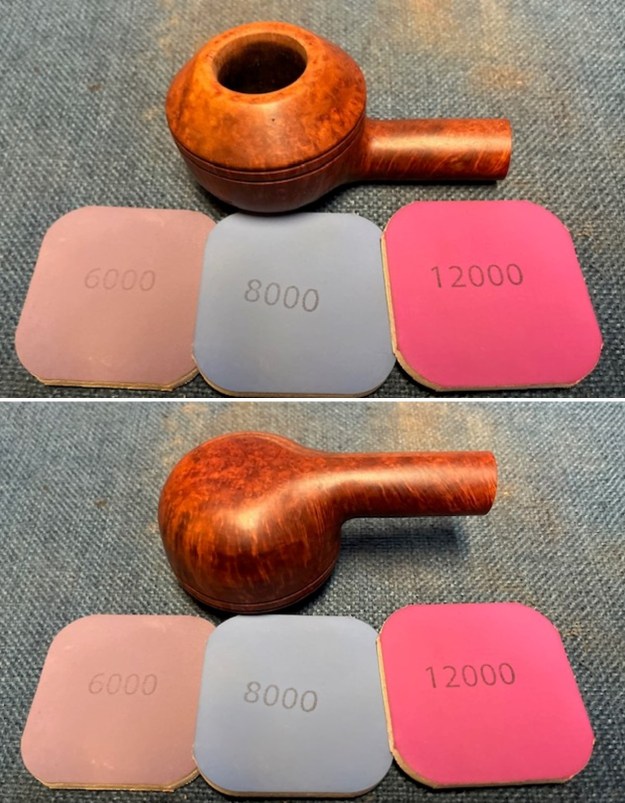
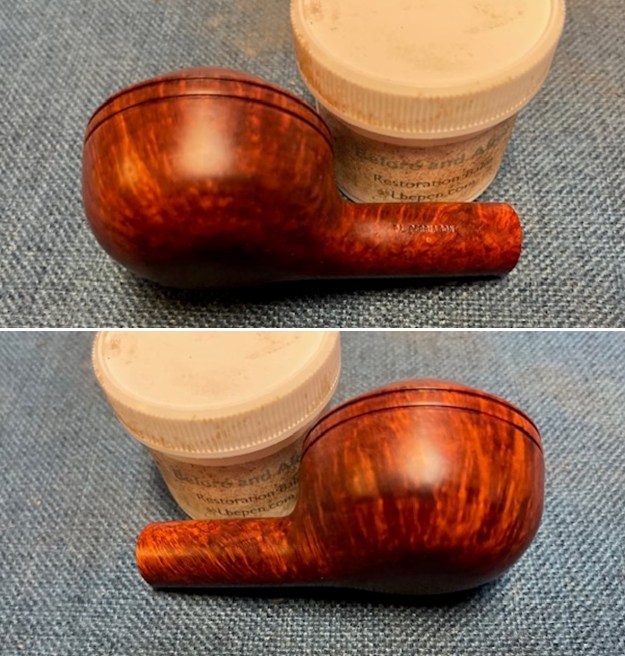
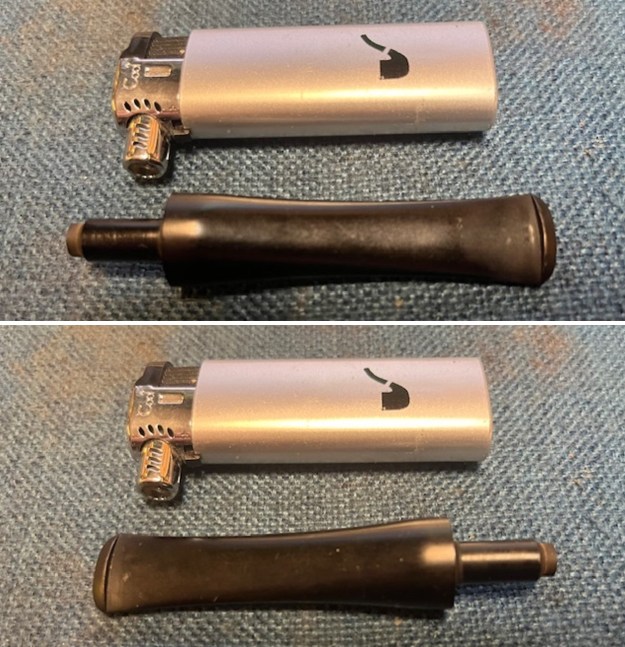
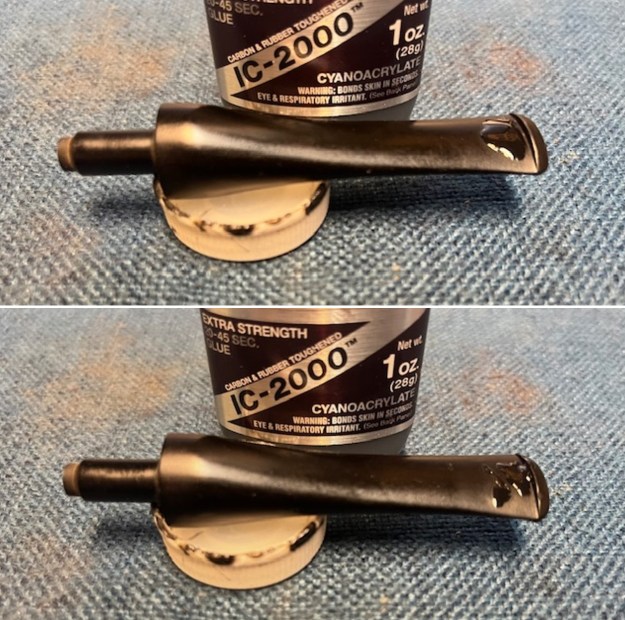
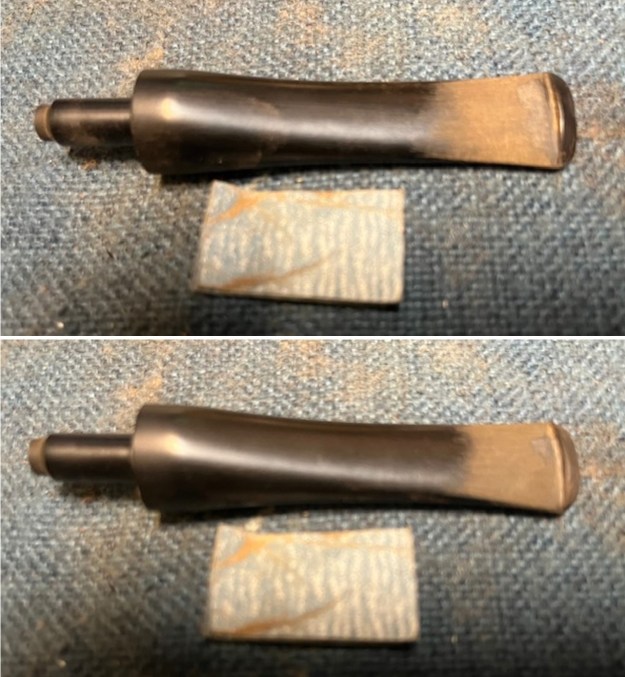
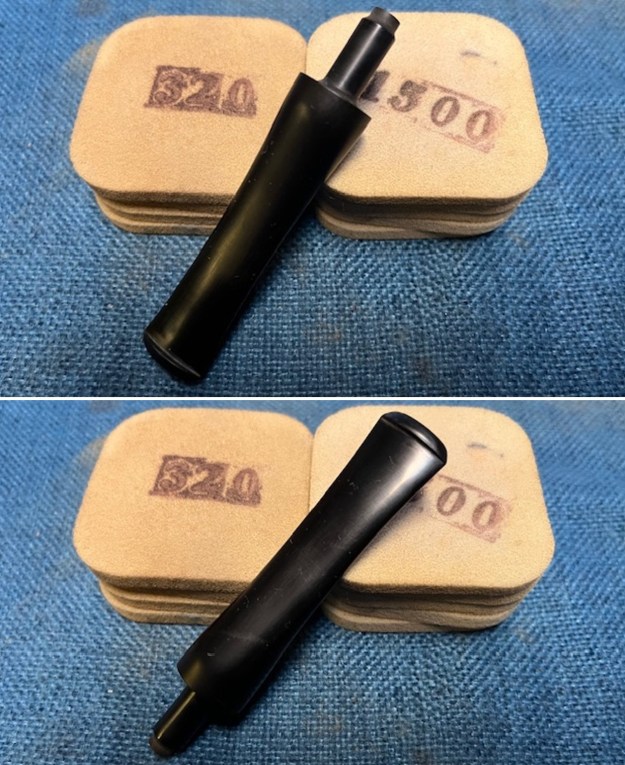
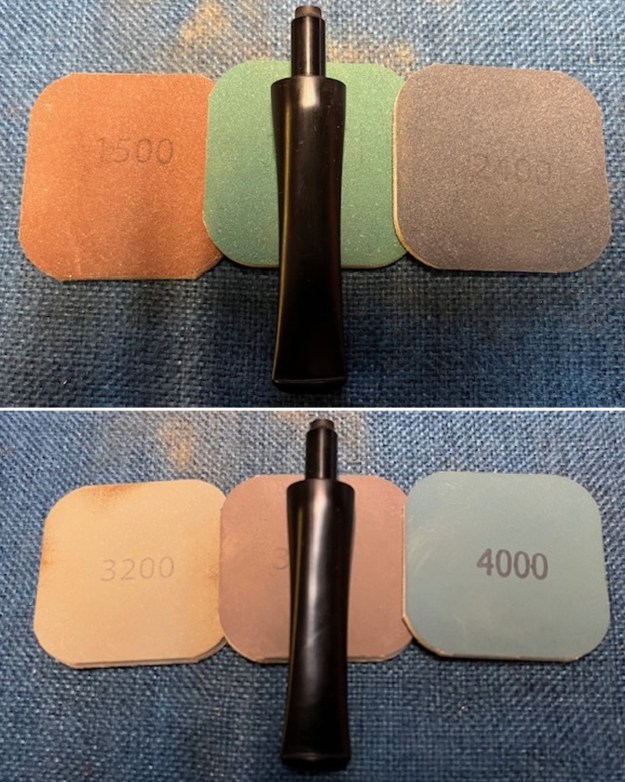
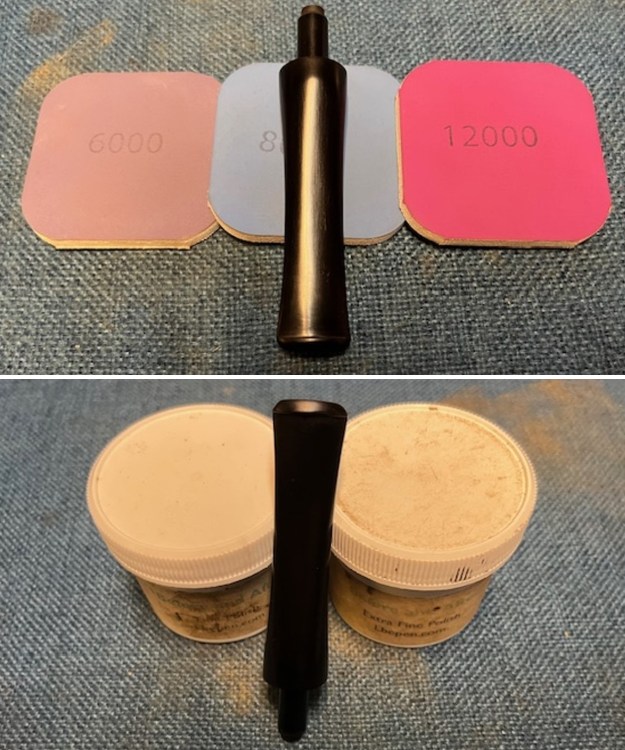
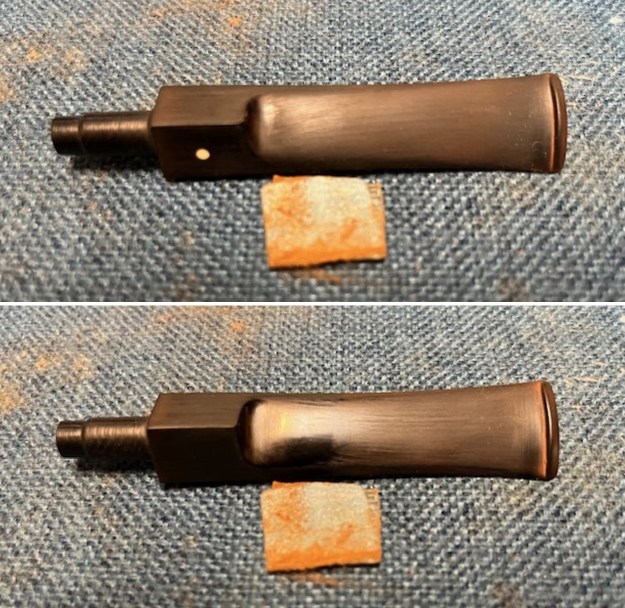
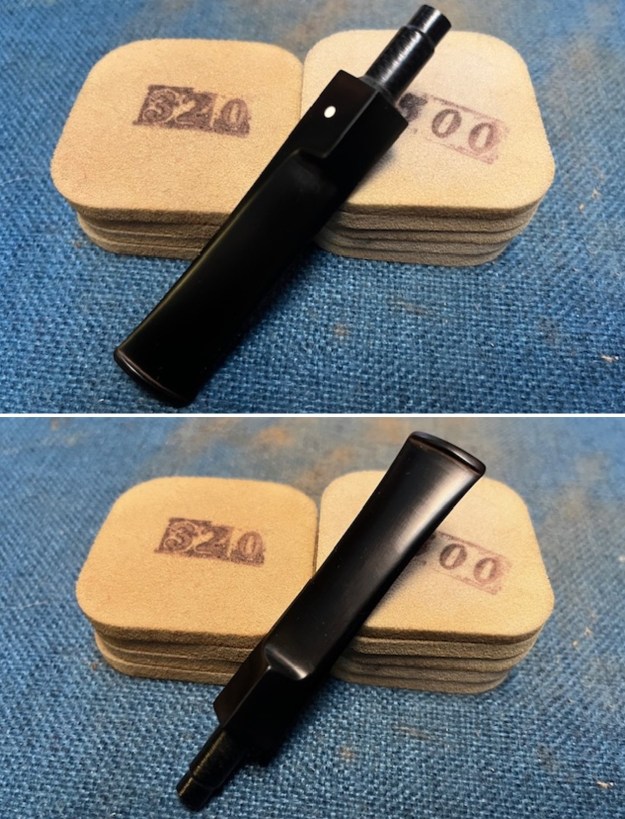
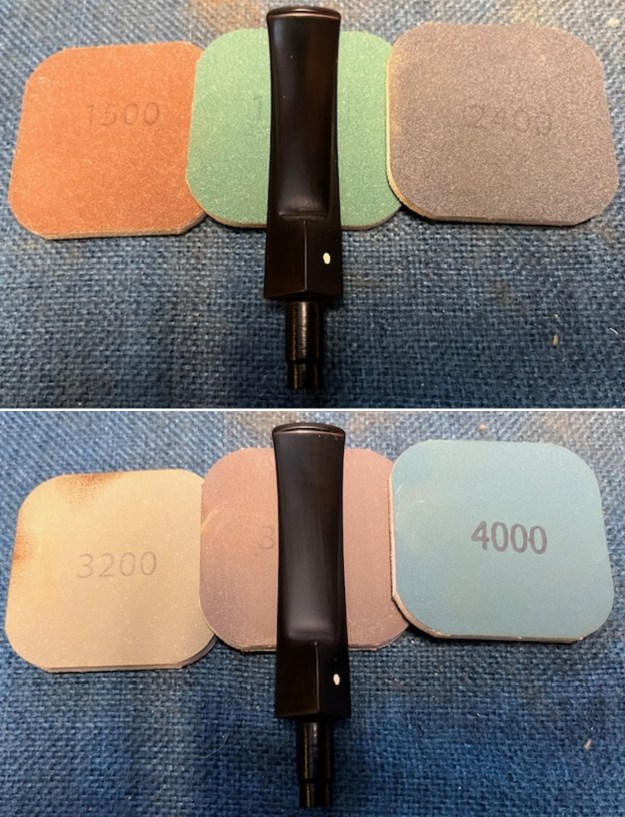
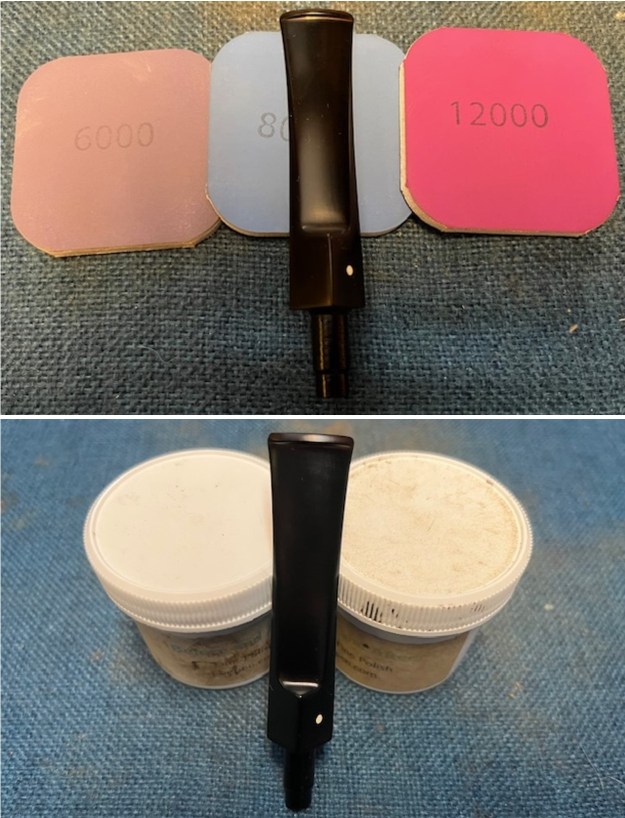
Now it was time to work on the pipe. Jeff had done a great job cleaning up the pipe as usual. He reamed the pipe with a PipNet reamer and cut back the cake back to the bare briar. He cleaned up the walls with a Savinelli Fitsall Pipe Knife. Surprisingly the walls looked unscathed from the cake. He scrubbed the interior of the bowl and shank with pipe cleaners, shank brushes, cotton swabs and alcohol to remove the tars and oils. He scrubbed the exterior of the pipe with undiluted Murphy’s Oil Soap and a tooth brush to remove the grime from the finish. He worked on the rim top lava and darkening with the soap and tooth brush. He cleaned the inside and outside of the stem and soaked it in Briarville’s Pipe Stem Deoxidizer. He rinsed of the residue and buffed it up with a towel. I took photos of the pipe when it arrived. I took a close-up photo of the rim top to show the condition of the bowl and inner edge of the bowl and the stem. The bowl is clean and the lava on the rim top and edges cleaned up very well. The stem photos show that it also cleaned up very well. The tooth marks and chatter are visible and I will need to deal with them.I took a photo of the stamping on the side of the shank. It is clear and readable as noted above. I removed the stem and took a photo of the parts of the pipe. It is a large and quite unique pipe.I polished the bowl with micromesh sanding pads – dry sanding with 1500-12000 grit sanding pads. I wiped it down between pads with a damp cloth. It really began to take on a deep shine. The exterior of the bowl looks better after polishing. I worked some Before & After Restoration Balm into the briar with my finger tips. I let it sit on the bowl for 10 minutes and then buffed it off with a paper towel and soft cloth. The product is a great addition to the restoration work. It enlivens, enriches and protects the briar while giving it a deep glow. It is a product I use on every pipe I restore. I set the bowl aside and turned my attention to the stem. I “painted” it with the flame of a lighter to try and lift the tooth marks. I was able to lift the majority of them. The deeper ones that remained came up some but I filled them in with some rubberized Black CA glue. Once the repairs cured I flattened them and recut the button edge with a small file. I sanded the stem surface smooth with 220 grit sandpaper. I sanded the stem further with 320-3500 grit sanding pads. I wiped the stem down after each pad with a damp cloth to remove the debris. The stem really began to look good.I polished the stem with micromesh sanding pads – dry sanding with 1500-12000 grit pads. I wiped the stem down after each sanding pad with Obsidian Oil to further protect the vulcanite surface. I finished the polishing with Before & After Pipe Stem Polish – Fine and Extra Fine. I wiped the stem down a final time with Obsidian Oil and a cloth. It really looks very good. I am excited to finish this beautifully grained, Perri & Son Rhodesian Sitter. I put the pipe back together and buffed it with Blue Diamond on the buffing wheel. I gave the bowl and the stem multiple coats of carnauba wax. I hand buffed the pipe with a clean buffing pad to raise the shine. It is fun to see what the polished bowl looks like with beautiful mixed grain all around it. The pipe looks great with the black vulcanite stem. This smooth Perri & Son Rhodesian is great looking and the pipe feels great in my hand. It is light and well balanced. Have a look at it with the photos below. The dimensions are Length: 6 inches, Height: 1 ½ inches, Outside diameter of the bowl: 2 inches, Chamber diameter: 7/8 of an inch. The weight of the pipe is 57 grams/2.05 ounces. It turned out to be a beautiful pipe. I will be putting it on the rebornpipes store shortly in the American Pipe Makers Section if you are interested in it. Thanks for walking through the restoration with me as I worked over this pipe. Thanks to each of you who are reading this blog.

Restoring a Fraser River Straight Bulldog Made in Canada

by Steve Laug

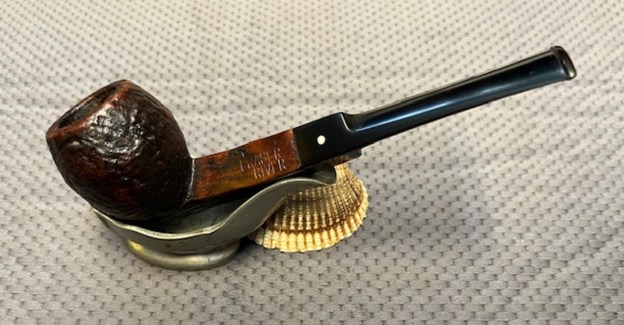
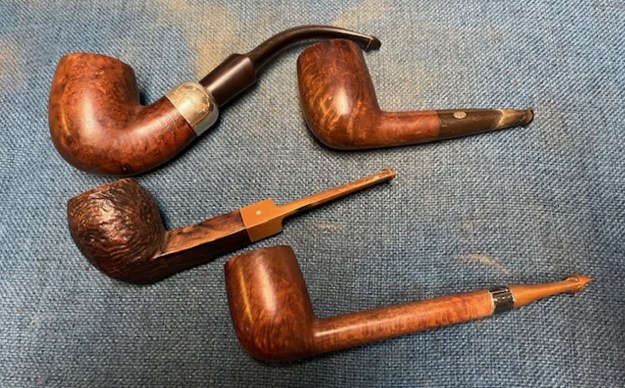
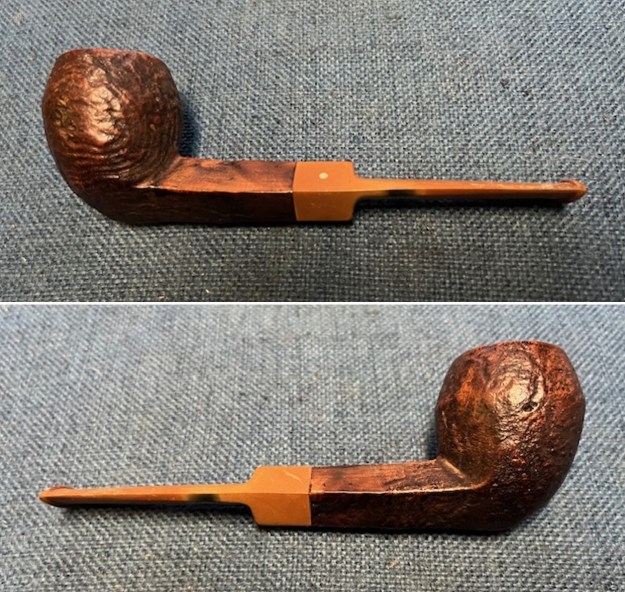
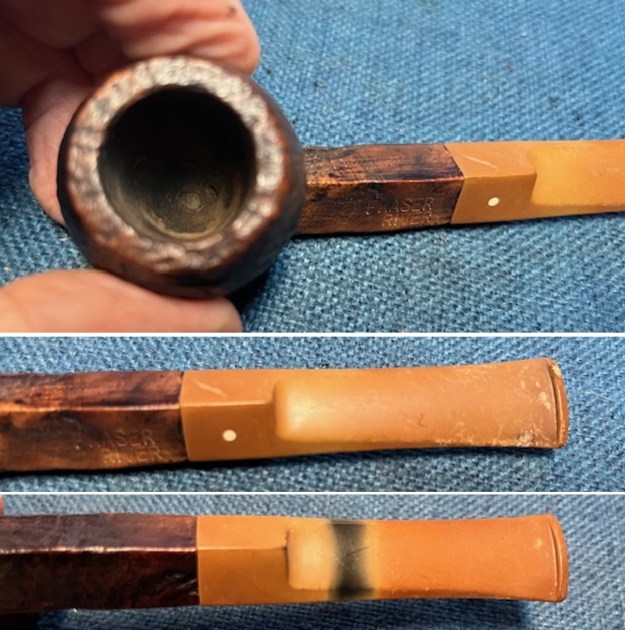
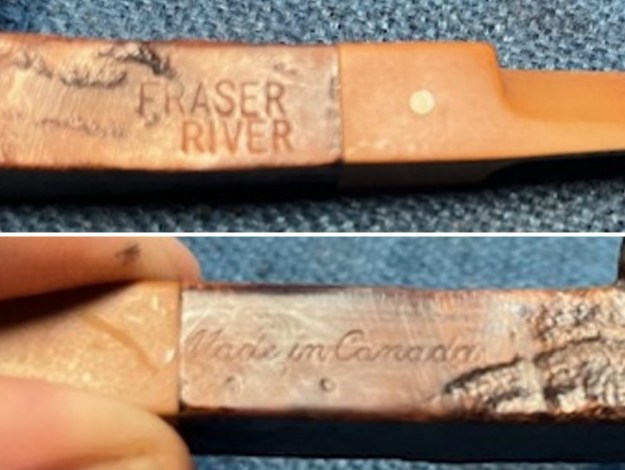
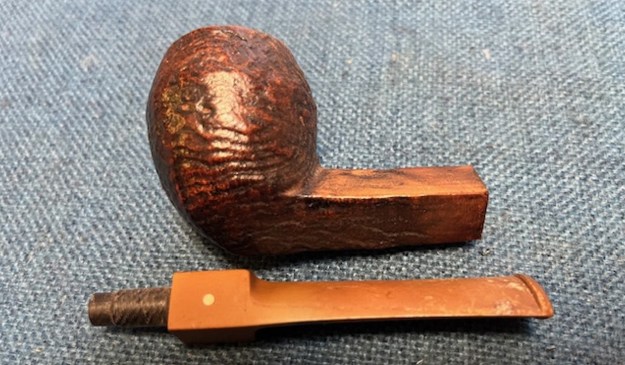
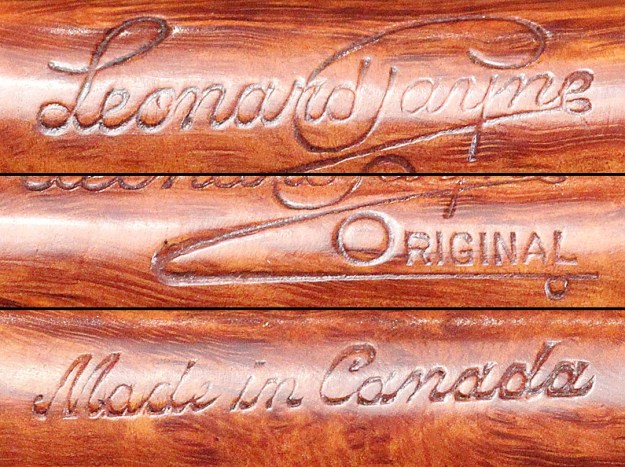
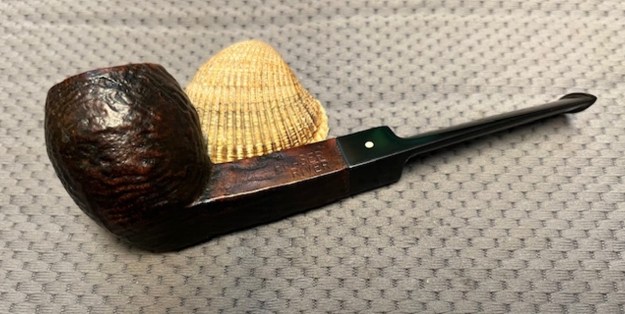
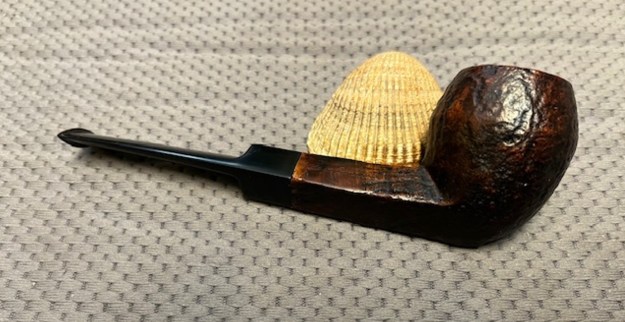
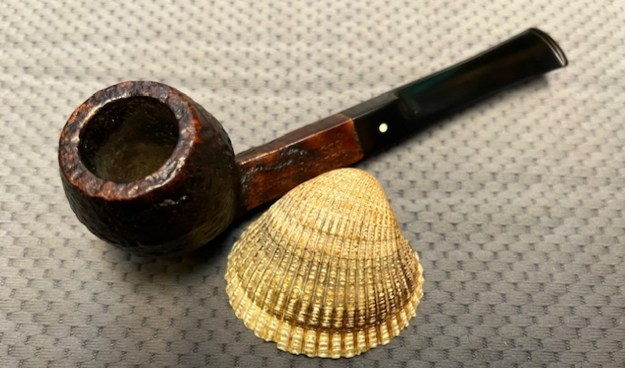
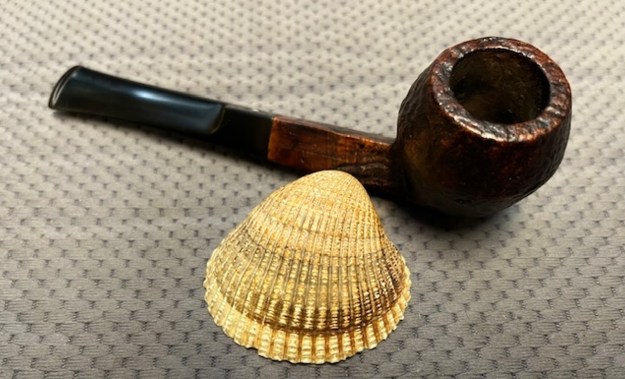
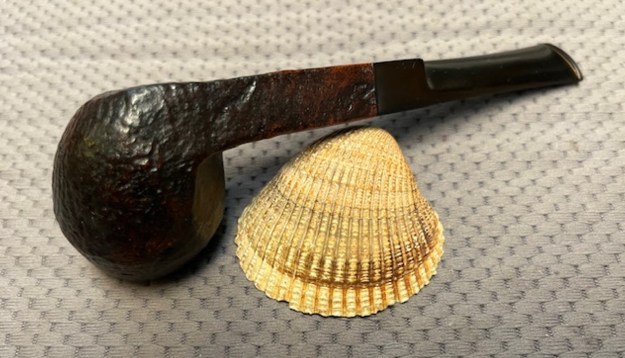
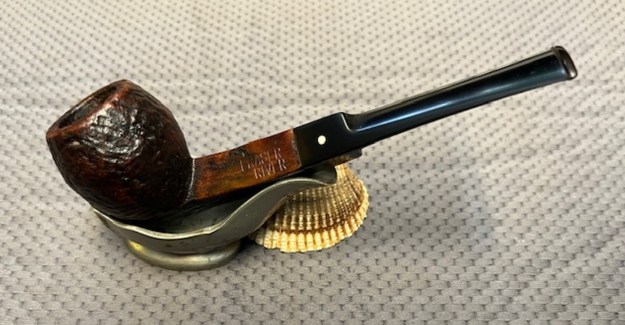
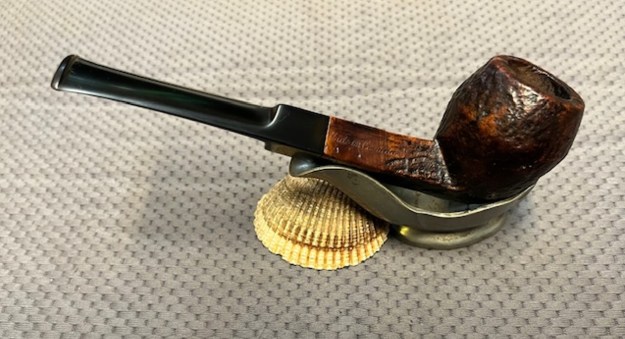
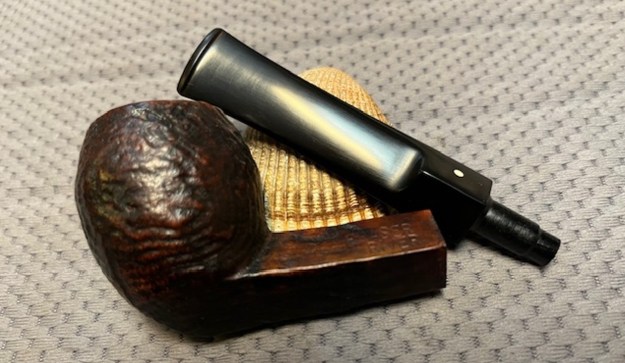
Last weekend Kenneth and I went to an antique show in New Westminster, BC. It is our third year going but still we have no idea what we are going to fine each time we go. It is always a part of the fun to wander through the various stalls and see what the vendors are offering on their tables. There are always surprising things – items that I grew up with that are now called antiques or at least collectibles. If only my foresight had been as good as my memory is now I could have sold many of the things I played with and ate from! But I digress. Back to the pipe hunting. We saw the usual offerings of things Grabow and Medico that were in very rough shape. I think we both have become much more selective over time and we passed on spending time with them. I did a few items that I picked up to restore. I took a picture of the group of fout pipes. In the left column from top to bottom there was a Peterson’s System Standard 1307 (Canadian number on a 307 shape), a Bulldog that was stamped Fraser Valley Made in Canada with a white dot stem and at the bottom was another Peterson – a K&P Dublin Made in Ireland Canadian with a Sterling Silver Band. The one on the right side is an older GBD Nosewarmer with an orific button on the short stem. Not a bad group of pipes to bring to the work table.The third of them I chose to bring to the table was the Bulldog the second on down on the left column of the above photo. It is a pretty pipe and bears the stamping on the top left side of the diamond shank that reads FRASER [over] RIVER. On the right side of the shank it is stamped Made in Canada in script. There is a single white dot logo on the top left side of the diamond saddle stem. The bowl, rim top and edges of the bowl are clean. The stem is heavily oxidized, almost brown looking and had light tooth marks and chatter on both sides ahead of the button. I took photos of the pipe before I started my clean up work on it. I took a close-up photo of the rim top to show the condition of the bowl and inner edge of the bowl and the stem. You can clearly see the cake in the bowl and the darkening and lava on the rim top. The stem photos show the oxidation, calcification and tooth marks on the stem.I took a photo of the stamping on the sides of the shank. It is clear and readable as noted above. I removed the stem and took a photo of the parts of the pipe. It is a pretty pipe. There was something very familiar with the stamping that both Kenneth and I saw when we picked it up. The Fraser River stamp does not connect to anything for me that I can find. I have hunted and googled and not found a match. However, the Made in Canada stamping on the left side of the shank is what caught our eye. It is identical to the stamping used by Leonard Payne on the pipes that he carved. I have included a photo of the stamping on the Payne below. The Payne signature was not on the Fraser River pipe but the Made in Canada stamp is identical to the one shown in the photos.
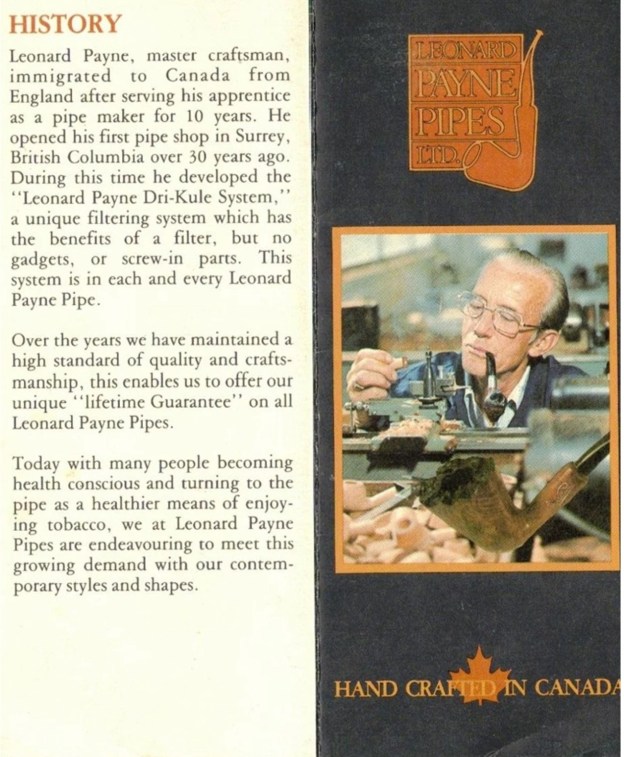
I went back to earlier articles on rebornpipes regarding the Payne pipes. The first one I have included below is of a Payne brochure that I have on the blog. It gives a sense of the design and concepts Payne had. It is an interesting piece of Pipe history. Here is the link to the brochure on the blog (https://rebornpipes.com/2024/03/12/leonard-payne-pipes-ltd-british-columbia-canada-brochure/). I included the front and back cover of the brochure below.From there I reread an article by Kenneth on the blog about a restoration he did on a Payne pipe (https://rebornpipes.com/2022/10/10/restoring-a-payne-to-its-former-glory/). I quote below from what he found. I have also included Picture that he included from a source on Reddit.

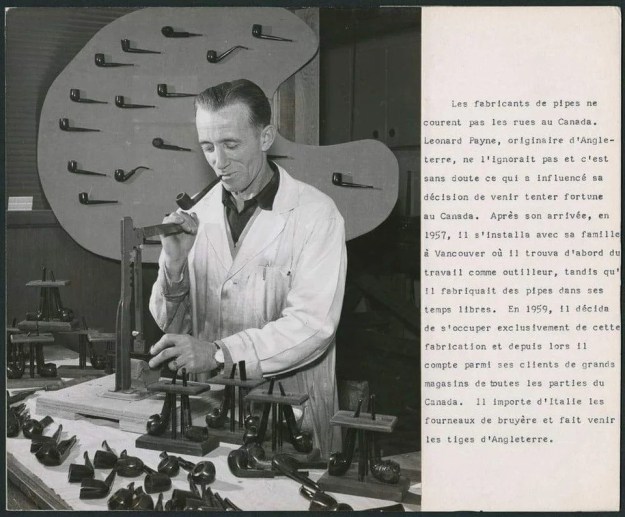
In addition, there was a photograph that Steve found of Payne on Reddit that appears to date from the 1960s. The original poster on Reddit told me that the photo comes from the City of Surrey archives. I have no idea why it is in French (or why it’s in the Surrey archives). Kenneth his translation of the text next to the photo above the photo:

“Pipe makers are not on every street corner in Canada! Leonard Payne, originally from England, didn’t know the challenges he would face and that’s probably what influenced his decision to come and try his luck in Canada. After his arrival in 1957, he and his family settled in Vancouver, where he first found work as a tool maker – and made pipes in his free time. In 1959, he decided to become a full-time pipe maker, and since then he has had department stores in all parts of Canada among his clients. He imports briar blocks from Italy and pipe stems from England.” Of course, I have no solid proof that it is a Leonard Payne pipe. In my experience working on quite a few of them over the years I am convinced it is a Payne. To me the Made in Canada stamp lends proof to that.

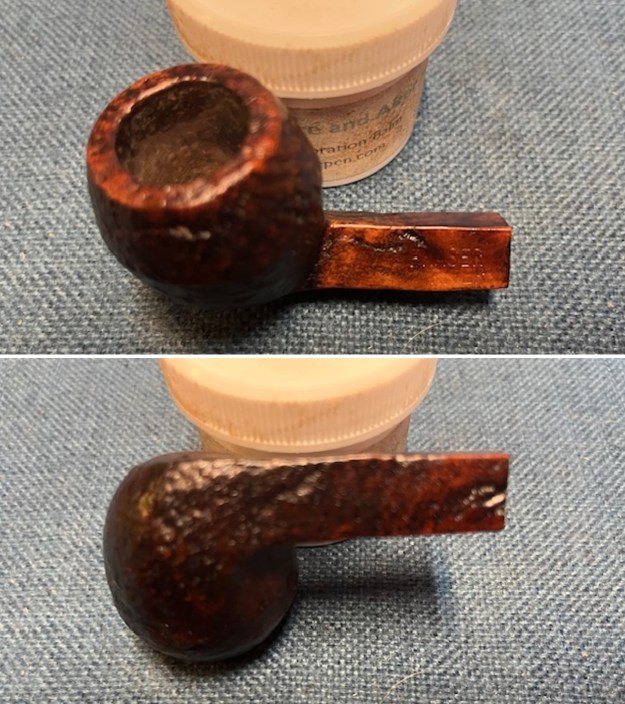
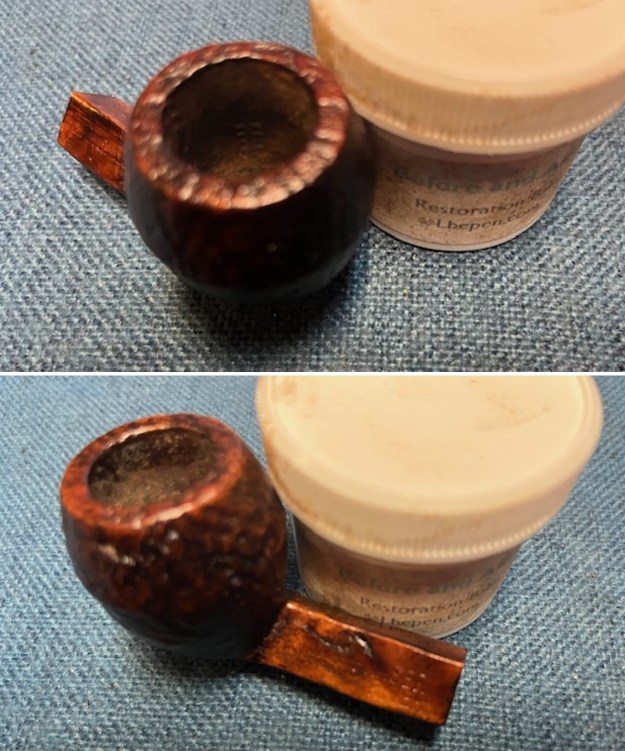
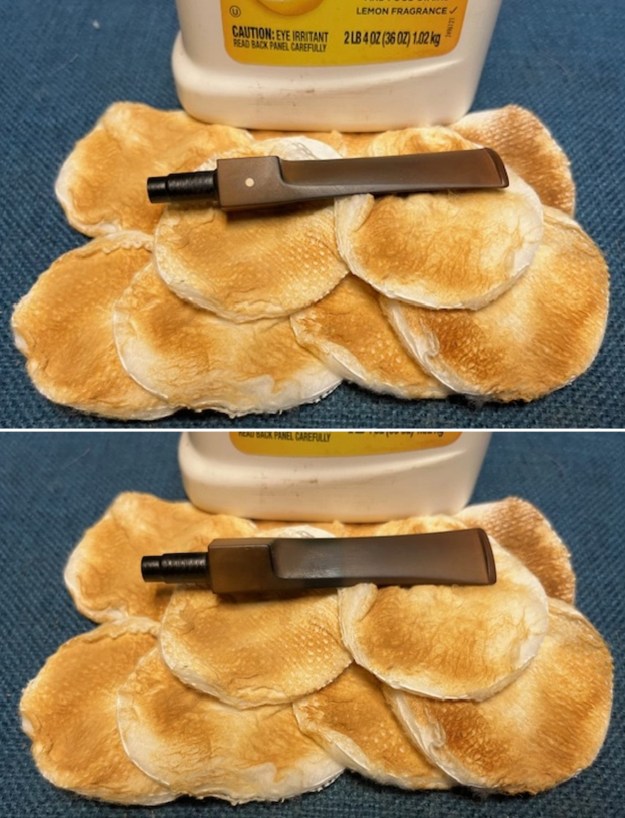
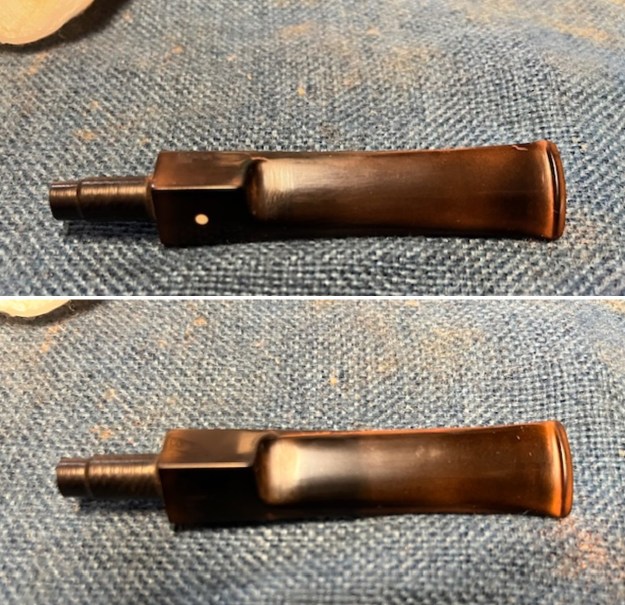
The interior and the exterior of the bowl was very clean. The sandblast finish was clean and free of debris. The airway in the shank and stem, the inside of the mortise was spotless. I worked some Before & After Restoration Balm into the briar with my finger tips. I let it sit on the bowl for 10 minutes and then buffed it off with a paper towel and soft cloth. The product is a great addition to the restoration work. It enlivens, enriches and protects the briar while giving it a deep glow. It is a product I use on every pipe I restore. I set the bowl aside and turned my attention to the stem. The heavy oxidation was going to be a big problem. Nothing seemed to work. I soaked it in some Briarville’s Pipe Stem Deoxidizer for several hours and nothing happened to the oxidation. It did not even make a dent in breaking the oxidation on the stem surface. It seemed impermeable at this point. I changed it up and scrubbed the heavy oxidation with Soft Scrub and cotton pads. After using about a dozen pads it seemed that I had made very little progress in stripping of the oxidation on the surface. I set it aside for the evening then repeated the process with more pads and more soft scrub in the morning. The photos below show the stem after much scrubbing. With little progress on the oxidation I decided to fire up the “big guns” so to speak. I took it to the buffer and buffed it with red Tripoli. I worked over the stem repeatedly until I was able to finally cut through the heavy oxidation. While I was making progress for sure a ghost of the rustication remained on the body of the stem. There is some deeper oxidation around the saddle portion where it meets the shank, at the sharp edge of the saddle and on the edge of the button. I attacked the remaining oxidation in the body of the stem and the remaining issues one the saddle end and the button end. I sanded the stem with 220 grit sandpaper to work over the saddle, the sharp edge of the saddle and the edge of the button. Once finished it was beginning to look much better. I was getting hopeful that the oxidation might be conquered.I sanded the stem with 320-3500 grit sanding pads and you can see how well the process had removed the oxidation on the stem surface. I wiped it down with Obsidian Oil after each sanding pad to remove the sanding dust.I polished the stem with micromesh sanding pads – dry sanding with 1500-12000 grit pads. I wiped the stem down after each sanding pad with Obsidian Oil to further protect the vulcanite surface. I finished the polishing with Before & After Pipe Stem Polish – Fine and Extra Fine. I wiped the stem down a final time with Obsidian Oil and a cloth. It really looks very good. I am always excited to finish working on a pipe. This Fraser River Bulldog (probably made by Leonard Payne) is no exception. I put the pipe back together and buffed it with Blue Diamond on the buffing wheel. I gave the bowl and the stem multiple coats of carnauba wax. I buffed the pipe with a clean buffing pad to raise the shine and hand buffed it with a microfibre cloth to deepen the shine. It is fun to see what the polished bowl looks like with the black vulcanite taper stem. This sandblasted Fraser River Made in Canada straight Bulldog with a thin saddle stem feels great in my hand. It is light and well balanced. Have a look at it with the photos below. The dimensions are Length: 5 ½ inches, Height: 1 ¾ inches, Outside diameter of the bowl: 1 ¼ inches, Chamber diameter: ¾ of an inch. The weight of the pipe is 33 grams/1.16 ounces. I will be hanging on to this old timer at least for the time being. It is a brand I have never seen before but it cleaned up very well. I will be putting the pipe on the Canadian Pipemakers Section of the rebornpipes store shortly. Thanks for walking through the restoration with me as I worked over this pipe. Thanks to each of you who are reading this blog.

“Help I dropped a brand new Nording 3 Double Silver Freehand and snapped the tenon”

by Steve Laug

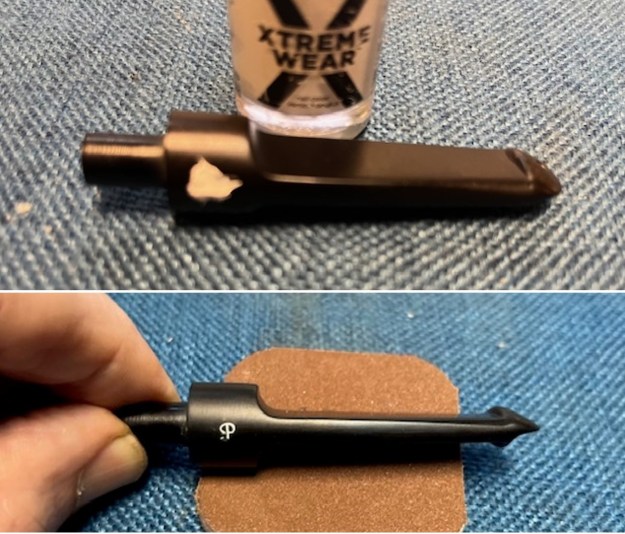
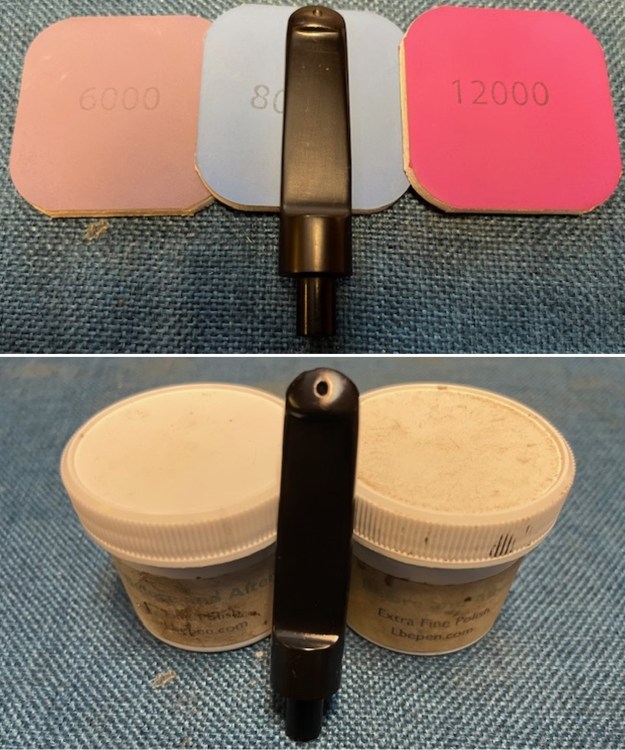
On the weekend I received a series of emails from a fellow here in Vancouver regarding a help with a pipe. He was unpacking his new pipe and he dropped it and the tenon snapped of the stem. The broken tenon was still in the shank and this was a brand-new pipe. He asked if I could help him and fix it. In days past this was a hard fix, but I have since done many tenon replacements. While I would not say it is simple it is certainly something that I can do. The pipe is a Nording 3 Made in Denmark Double Silver and is partially rusticated and partially smooth. It is a Freehand with some blackened plateau on the rim top. It has a gold band sandwich between two silver rings that allow the gold to be turned and spun. The acrylic stem is significantly smaller in diameter than the shank and also bears a nicely carved band with a Nording N logo on the top. He sent me the following photos with is plea for help. He shipped the pipe to me and it arrived at my place on Monday afternoon. I used my normal methods to pull the broken tenon from the shank. I threaded a drywall screw in the shank and tried to pull it from the shank with no luck. It would not come out. I put it in the freezer to see if the old freezer trick would cause it to loosen. I took it out of the freezer after 30 minutes and with some cajoling and wiggling on my part the tenon came free. I carefully flattened out the broken tenon piece remaining on the stem with a small sanding drum on my Dremel. I ran it at a very slow speed and flattened it carefully avoiding the silver band on the stem end. Did I say carefully? Once that was done I used various drill bits to open the airway in the stem to receive a new tenon. I used the Dremel to also reduce the diameter on the new tenon to match the diameter of the mortise. It fit very well. I roughened the end of the new tenon with a rasp so that it would have some bite for the glue when I fit it into the drilled out airway in the stem. I glued the new tenon in place in the mortise with Black rubberized CA Glue. I set it aside for the repair to cure.I set the stem and bowl aside and took photos of the way it looked and let it cure over night. It is a great looking pipe at this point. I still need to polish the new tenon and get a shine on it but it fits very well and all aligns with the shank. I look forward to putting the stem on the pipe in the morning. This morning I fit the stem to the shank and I was very happy with the fit. I polished the new Delrin tenon with micromesh pads and it looks good. Have a look at the pipe.

Restoring an Early GBD Billiard Nosewarmer with an Orific Stem

by Steve Laug

Last weekend Kenneth and I went to an antique show in New Westminster, BC. It is our third year going but still we have no idea what we are going to fine each time we go. It is always a part of the fun to wander through the various stalls and see what the vendors are offering on their tables. There are always surprising things – items that I grew up with that are now called antiques or at least collectibles. If only my foresight had been as good as my memory is now I could have sold many of the things I played with and ate from! But I digress. Back to the pipe hunting. We saw the usual offerings of things Grabow and Medico that were in very rough shape. I think we both have become much more selective over time and we passed on spending time with them. I did a few items that I picked up to restore. I took a picture of the group of fout pipes. In the left column from top to bottom there was a Peterson’s System Standard 1307 (Canadian number on a 307 shape), a Bulldog that was stamped Fraser Valley Made in Canada with a white dot stem and at the bottom was another Peterson – a K&P Dublin Made in Ireland Canadian with a Sterling Silver Band. The one on the right side is an older GBD Nosewarmer with an orific button on the short stem. Not a bad group of pipes to bring to the work table.The second of them I chose to bring to the table was the GBD at the top right of the above photo. It is a pretty pipe and bears the stamping on the left side of the shank that reads GBD in an oval. There is no other stamping on the shank and the stem has a brass GBD oval logo on the left side of the taper. The bowl has a thick cake and a heavy overflow of lava on the inner edge and the rim top. The stem is very tight in the shank and the pipe is dirty and smelly. The stem is dirty and lightly oxidized with calcification on the end that makes me wonder if it had a Softee Bit in place. There are tooth marks and chatter on both sides ahead of the button. The stem is hard rubber and has an orific style button – a single hole in the button that is very rounded. I took photos of the pipe before I started my clean up work on it. I took a close-up photo of the rim top to show the condition of the bowl and inner edge of the bowl and the stem. You can clearly see the cake in the bowl and the darkening and lava on the rim top. The stem photos show the oxidation, calcification and tooth marks on the stem.I took a photo of the stamping on the sides of the shank. It is clear and readable as noted above. I removed the stem and took a photo of the parts of the pipe. It is a pretty little pipe.I reamed the pipe with a PipNet pipe reamer using the first two cutting heads. I followed up with a Savinelli Fitsall Pipe Knife to clean up the remnants of cake left in the bowl and check the bowl walls. I sanded the bowl with a piece of dowel wrapped with 220 grit sandpaper. It looked much better at this point. I moved on to clean up the internals. I cleaned out the airway and mortise with pipe cleaners, cotton swabs and alcohol. I cleaned out the airway in the stem at the same time. I was surprised at how clean the internals were. I scrubbed the externals of the pipe with undiluted Murphy’s Oil Soap and a tooth brush to remove the grime in the finish and on the rim top. I worked on it until it looked much better and then rinsed it off with warm water. I dried it off with a soft cloth. I polished the bowl and worked on the darkening on the rim top with micromesh sanding pads – dry sanding with 1500-12000 grit sanding pads. I wiped it down between pads with a damp cloth. It really began to take on a deep shine. The grain really began to show on the briar. The exterior of the bowl looks better after sanding. I worked some Before & After Restoration Balm into the briar with my finger tips. I let it sit on the bowl for 10 minutes and then buffed it off with a paper towel and soft cloth. The product is a great addition to the restoration work. It enlivens, enriches and protects the briar while giving it a deep glow. It is a product I use on every pipe I restore. I set the bowl aside and turned my attention to the stem. I “painted” the hard rubber surface with the flame of a lighter to try and lift the tooth marks. I was able to lift some of them. The remaining ones I filled in with rubberized black CA glue. Once the repairs cured I flattened them with a small file and then finished blending them in with 220 grit sandpaper. I sanded the stem with 320-3500 grit sanding pads to further blend in the repairs and remove the remaining oxidation on the stem surface. I wiped it down with Obsidian Oil after each sanding pad to remove the sanding dust.I polished the stem with micromesh sanding pads – dry sanding with 1500-12000 grit pads. I wiped the stem down after each sanding pad with Obsidian Oil to further protect the vulcanite surface. I finished the polishing with Before & After Pipe Stem Polish – Fine and Extra Fine. I wiped the stem down a final time with Obsidian Oil and a cloth. It really looks very good. I am always excited to finish working on a pipe. This GBD Nosewarmer is no exception. I put the pipe back together and buffed it with Blue Diamond on the buffing wheel. I gave the bowl and the stem multiple coats of carnauba wax. I buffed the pipe with a clean buffing pad to raise the shine and hand buffed it with a microfibre cloth to deepen the shine. It is fun to see what the polished bowl looks like with the black vulcanite taper stem. This Classic looking GBD Nosewarmer with a full sized bowl and short hard rubber stem feels great in my hand. It is light and well balanced. Have a look at it with the photos below. The dimensions are Length: 4 ½ inches, Height: 1 ¾ inches, Outside diameter of the bowl: 1 ¼ inches, Chamber diameter: ¾ of an inch. The weight of the pipe is 34 grams/1.20 ounces. I will be hanging on to this old timer at least for the time being. It is a GBD I have never seen before so I want to enjoy it for a bit. Thanks for walking through the restoration with me as I worked over this pipe. Thanks to each of you who are reading this blog.

Restoring an Elegant Sandblast Rebild de Luxe Made in Denmark 020 Tall Cutty

by Steve Laug

The next pipe on the table is one that we picked up in the lot from a good friend in Denmark on May 22/2024. The sandblast finish on this Danish made pipe and the shape is what caught our eye. It is stamped on the underside of the shank and reads REBILD [followed by] de [over] Luxe. Next to that it is stamped Made in [over] Denmark. Next to that it is stamped with the shape number 020. It has a Reddish, Brown stain on the sandblast finish that is a stark contrast to fancy vulcanite saddle stem. The Cutty shaped bowl was lightly caked, though it also seems to have been recently reamed. The inner edge and the top look good though there is some darkening and some spots of lava in the sandblast on the top. The stem was lightly oxidized and had tooth chatter on both sides ahead of the button. There was a GJ logo stamped on the left side of the saddle. It points to a Georg Jensen connection. Jeff took some photos of the pipe to show the general condition of the pipe before he started his clean up. He took some photos of the rim top and bowl from various angles to give me a clear picture of the condition of the rim top and bowl. There is some darkening and lava on the rim top but the bowl itself is lightly caked. He included photos that show the top and underside of the stem. It is as described above. Jeff took some photos of the sides and heel of the bowl to show the condition of the finish on the pipe. The photos showed a nice sandblast around the bowl and shank even with the grime in the finish. It is a great looking piece of briar. He took photos of the stamping on the underside of the shank. It was clear and readable as noted above. I was pretty sure I was dealing with a Georg Jensen pipe so I did a google search for REBILD Made in Denmark pipes. I found a great discussion by a fellow on Pipemagazine.com about his collecting of Georg Jensen pipes (https://pipesmagazine.com/forums/threads/georg-jensen-pipes-models-shapes-info-and-mysteries.87932/). In the post he gave a list of the model names of the Jensen pipes. There was some great information and scrolling through the list I found what I was looking for. I quote from the post below:
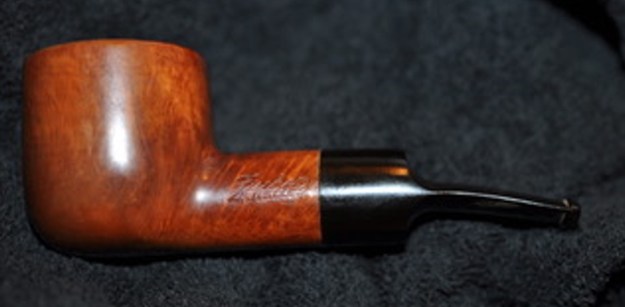
The model names were generally in all capital letters… but there were plenty of GJ pipes that had no model name stamp at all. Here are the model names that I have seen:

-SUNRISE

-GOODWILL

-REBILD [named after Danish woodland region]…

I did a bit more digging and found an esty listing for a Rebild pipe by Georg Jensen. I have included the link and the description of the pipe that was being sold below (https://www.etsy.com/ca/listing/1728913413/rebild-georg-jensen-hand-cut-niceclean?show_sold_out_detail=1&ref=nla_listing_details). It was also very helpful information. I also included a photo of the pipe.

From the good folks at Georg Jensen, this gorgeous straight Chimney or Stack, offers a nice tall bowl as part of their “Rebild” series. It’s rather obvious that Jensen’s Rebild (the name of a wooded region) series is an attempt to capitalized on the huge success of their competitor/fellow pipe makers, the Pipe Dan “Reformed”, with the same very Danish tall pipe legacy. This is a Georg Jensen higher end pipes as it was “hand cut”, while much of their line is machine made. The briar has a nice mélange of briar including birds-eye grain, in a dark honey colored finish. The short “pencil” shank leads to a long straight, tapered, fantail Vulcanite stem that is in excellent condition with no tooth marks. A really nice long/elegant, lightweight Dane to add to your collection of pipes. Cleaned, refreshed, sanitized, and ready to enjoy right out of the box.I knew that I was definitely dealing with a Georg Jensen made Rebild pipe which appeared to be tall and quite unique pipes. It was named after a wooded area in Denmark and came out about the same time as the Danpipe Reform pipes.

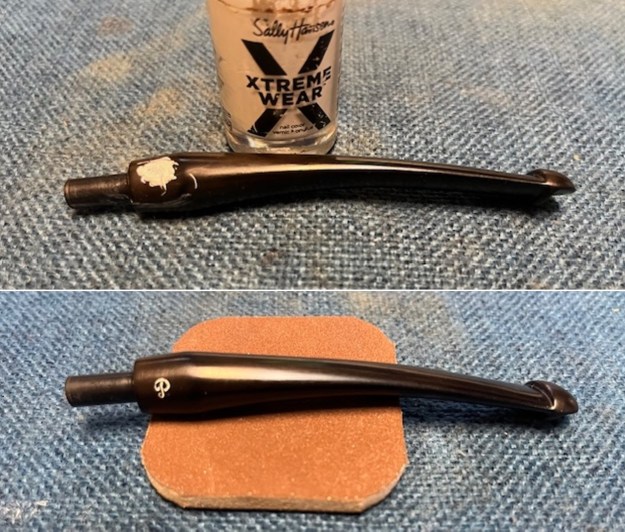
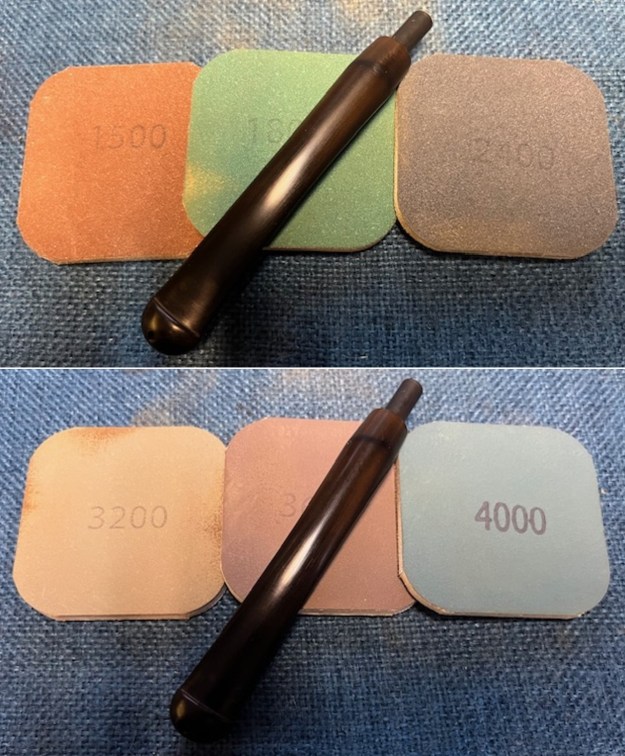
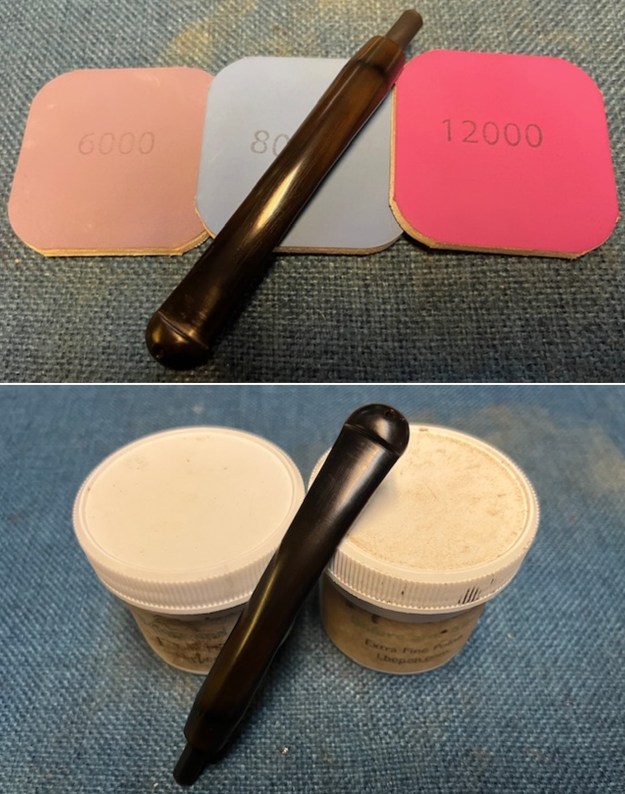
Armed with that information I was ready to work on the pipe. Since Jeff always follows the same pattern of work in his cleanup we do not include photos but rather just a simple summary. Jeff reamed the bowl with a PipNet pipe reamer and followed up with a Savinelli Fitsall pipe knife to remove the cake. He scrubbed out the mortise and the airway in the shank and the stem with alcohol, cotton swabs and pipe cleaners. He scrubbed the exterior of the bowl, rim, shank and stem with a tooth brush and Murphy’s Oil Soap to remove the oils and tars on the rim and the grime on the finish of the bowl. He rinsed it under running water. He dried it off with a soft cloth. He was able to remove the lava build up on the rim top and you could see the damages to the top and edges of the rim. I think this pipe may well been before we worked with Mark Hoover’s Before & After Deoxidizer so he cleaned the internals and externals. The stem was clean but lightly oxidized. I took photos of what the pipe looked like when I brought to my worktable. I took close up photos of the bowl, rim top and stem to show how clean the pipe was. The bowl was clean and the rim top and the inner edge showed darkening but no damage. The stem was clean and there were light tooth marks on the top and underside of the stem.I took a photo of the stamping on the underside of the shank. It is very clear and readable and read as noted above. I also removed the stem from the shank and took photos of the pipe to show the look of the parts.The exterior of the bowl was in excellent condition. I did not need to sand or do anything in preparation on the pipe. I set the stem aside and worked some Before & After Restoration Balm into the briar with my finger tips and a horsehair shoe brush. I let it sit on the bowl for 10 minutes and then buffed it off with a paper towel and soft cloth. The product is a great addition to the restoration work. It enlivens, enriches and protects the briar while giving it a deep glow. It is a product I use on every pipe I restore. I set the bowl aside and turned my attention to the stem. I tried to raise the tooth marks as much as possible by “painting” the surface with a lighter flame. It lifted the marks completely on the underside but did not lift the deeper one on the topside. I filled in the deep mark with rubberized black CA glue. Once it had cured I flattened the repair and recut the button edge with a small file. I further flattened and blended in the repairs with a folded piece of 220 grit sandpaper. It was a big improvement but still more work to go!I continued the sanding process with 320-3500 grit sanding pads. The repairs began to disappear into the surface of the vulcanite and the stem began to take on a smooth new look. Progress for sure. I touched up the GJ stamp on the left side of the saddle stem with white acrylic nail polish. I worked it into the stamping with a tooth pick. Once it dried I scrapped off the excess acrylic with my fingernail and then sanded it lightly with a 1500 grit micromesh pad to remove the excess.I polished the surface of the stem with micromesh sanding pads – dry sanding with 1500-12000 grit pads and wiping the surface down with Obsidian Oil after each sanding pad. It is really shining. I polished it further with Before & After Stem Polish – both Fine and Extra Fine. I gave it another coat of Obsidian Oil to finish this step. As usual at this point in the restoration process I am excited to be on the homestretch. I look forward to the final look when it is put back together, polished and waxed. I put the Georg Jensen Rebild 020 Cutty back together. I polished the bowl and stem with Blue Diamond to polish out the scratches in the briar and the vulcanite. I gave the bowl and the stem multiple coats of carnauba wax. I buffed the pipe with a clean buffing pad to raise the shine. I hand buffed it with a microfiber cloth to deepen the shine. The sandblast shows depth and really pops with the wax and polish. The shiny black vulcanite saddle stem is a beautiful contrast to the reddish browns of the bowl. This Georg Jensen Rebild Cutty was a great pipe to spruce up. It is a very comfortable pipe to hold in the hand. The finished pipe is shown in the photos below. The dimensions of the pipe are Length: 7 inches, Height: 2 ¼ inches, Outside diameter of the bowl: 1 inch, Chamber diameter: ¾ of an inch. The weight of the pipe is 29 grams/1.02 ounces. This pipe will be going on the Danish Pipe Maker section of the rebornpipes store if you are interested in adding it to your collection. Thanks for reading this blog and my reflections on the pipe while I worked on it. This is an interesting estate to bring back to life.

Another pipe dropped off for repair and restoration

by Steve Laug

On Sunday afternoon a fellow stopped by with a bag of parts from one of his first pipes. It was in pieces and he was thinking perhaps it needed a new stem. As I looked at the parts I could see what happened. It also seemed things were missing. The 9mm filter tenon had come loose from the stem and in the process, he lost one of the metal spacers. The spacers were originally an acrylic ring sandwiched between to steel washers. With one missing it made the fit of the stem to the shank crooked as the acrylic spacer was not uniform in its depth. Work would need to be done on the spacer pieces to correct the issues. The pipe appeared to be a basket pipe from Italy and bore the stamp Angelo on the left side. It was not a brand I was familiar with. It had a thick varnish coat that was bubbling all around the sides and would need to be removed. The finish was smooth with small hash marks around the surface of the bowl and shank. The bowl had a thick cake and an overflow of lava on the rim top. The top and inner edges looked good as far as I could tell through the grime. The stem had tooth marks and chatter on both sides and was dirty and scratched from sitting around. I put the stem in the shank part way to have a look at what I had to work with. The order of the rings on the stem as it is in the following photos appears wrong to me. The missing ring changes the sandwich look. I think the washer needs to go against the stem face and the acrylic against the shank to have the right feel. I will need to set those in an order that minimizes the break in the flow of the stem and shank. Here are some photos of the pipe as it was initially fit together. I took the stem off the shank and took a photo of the current look of the pipe. I think there is potential to improve the look as it has some charm and the sitter base is very balanced and functional.Before I started my reworking of the stem and bowl on this problematic pipe I wanted to have a bit of information on the Angelo brand. I personally like to have the background so that when I am working on a pipe I know who carved or made it originally. Then as I work on it I can carry on a dialogue with them (at least in my mind) about my changes. I turned to PipePhil’ site for information (http://www.pipephil.eu/logos/en/logo-a6.html#angelo). I have included a screen capture of the pertinent section and the sidebar information below the photo.Second brand used by the Rovera family (Angelo and Damiano) who produces Ardor, Roverart and Rovera.

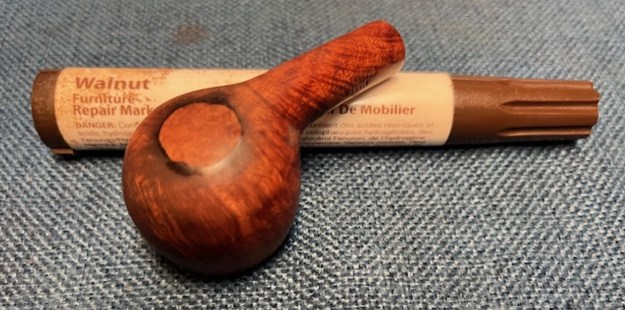
I decided to start my work on the pipe by addressing the puzzle of the stem. I took it apart and found that the rings were not glued and could be slipped up and down the tenon. This was a plus in this case so I removed the rings and reversed the order so that the metal spacer separated the vulcanite stem from the acrylic spacer. I fit it in the stem and in the shank for a look. Because the shank is very dirty it is hard to press the stem into the shank all the way but this gave me a sense of the look of the pipe with the rings reverse. I liked it and was pretty sure that the missing metal spacer would have been on the other side of the acrylic. With the order of the spacers to my liking I cleaned out the stem with alcohol, pipe cleaners and cotton swabs to remove the grime in the airway and int seat of the tenon. I cleaned out the tenon at the same time. I coated the tenon end that it in the stem with black CA glue using a tooth pick. Once it was ready I pressed the parts together and set the stem aside to let the glue cure. I like the overall look of the stem at this point. I did not anchor the acrylic ring as there were going to be issues with the fit as it was not round or flat on the face.While the glue cured on the tenon I move to address the bowl. I reamed the cake in the bowl using a PipNet pipe reamer with the second and third cutting heads to take back the cake. I used a Savinelli Fitsall Pipe Knife to scrape the remainder of the cake out of the bowl and clean up the bottom of the bowl. I sanded the bowl walls with 220 grit sandpaper wrapped around a piece of dowel. With the bowl cleaned out I was able to see that the bowl walls and bottom were in great condition. There was no checking or damage. I used the edge of the Fitsall knife to scrape the lava from the rim top. I decided to remove the bubbling varnish coat next. I used acetone and cotton pads to scrub the thick bubbling varnish coat off the bowl. I was surprised by the way the briar looked with the shiny coat gone. It was a nice looking piece of wood and once cleaned and polished would be quite lovely. I sanded the bowl and shank (carefully avoiding the stamping) with 320-3500 grit sanding pads. I wiped the bowl down after each pad with a damp cloth to remove the dust and debris from the sanding. The briar really was taking on a rich shine. After the sanding and stem work I cleaned out the airway in the shank, mortise and the stem with alcohol, pipe cleaners and cotton swabs. I was surprised by how much more gunk came out of the tenon particularly. The pipe was clean now.I polished the bowl and rim with micromesh sanding pads – dry sanding with 1500-12000 grit sanding pads. I wiped it down after each pad with a damp cloth. It took on a deeper shine with each pad. I decided to fit the stem to the shank end before I gave it a rub down with Restoration Balm. The shank was cut at and angle and the stem would not fit flat against it. I put the stem in place and marked it with a pencil to clean up the angle. The top half of the shank needed to be reduced in depth to match the bottom half. I used a folded piece of 220 sandpaper to do the work. I constantly rechecked the fit until I had the face flat and the stem sat correctly. The picture below shows the sanded shank end. I stained the sanded briar with a walnut stain pen to match the rest. I rubbed the briar down with Before & After Restoration Balm. I worked it into the briar with my fingertips to work it into the finish. The product works to clean, enliven and preserve the briar. I let it sit for 10 minutes then I buffed it with a cotton cloth to deepen the shine. The briar really comes alive with the balm. I sanded the stem with 320-3500 grit sanding pads to smooth out the marks. I wiped it down with Obsidian Oil after each sanding pad. The bands and the stem work very well.I polished the stem with micromesh sanding pads – dry sanding with 1500-12000 grit pads. Once again, I wiped it down between each pad with Obsidian Oil. I further polished it with Before and After Stem Polish – both Fine and Extra Fine. It looked very good. I used a replacement tenon to make a 9mm converter to fit a stem to be a non-filter stem. I slipped it into the tenon and it fit well.This reworked Angelo Bent Sitter has a beautiful finish now that the varnish coat has been removed and the stem refit. It truly has a new lease on life. The medium brown/black finish gives depth to the grain around the bowl and shank. The rebuilt and polished black vulcanite acrylic stem adds to the mix. I put the stem back on the bowl and buffed the pipe with Blue Diamond on the buffing wheel being careful to not buff the stamping. I gave the bowl and the stem multiple coats of carnauba wax on the buffing wheel and followed that by buffing it with a clean buffing pad. I hand buffed the pipe with a microfiber cloth to deepen the shine. The finished Angelo Bent Sitter is quite nice and feels great in the hand. Give the finished pipe a look in the photos below. The dimensions of the pipe are Length: 5 ½ inches, Height: 1 ¾ inches, Outside diameter of the bowl: 1 ¼ inch, Chamber diameter: ¾ of an inch. The weight of the pipe is 1.69 ounces/48 grams. Thanks for walking through the restoration with me as I worked over another beautiful pipe. The fellow who dropped it off will pick up his pipe on the weekend. I am looking forward to seeing what he thinks of it.

New Life for a Damaged Julius Vesz Hand Made circle 6 Calabash 97

by Steve Laug

The next pipe on the table is one that we picked up in the lot from a good friend in Barrington, Rhode Island, USA on 08/22/2024. The smooth finish on this Canadian made pipe and the Julius Vesz stamping are what caught our eye. It is stamped on the left side of the shank and reads Circle 6 [over] 97 followed by Julius Vesz [over] Hand Made. It has a rich reddish, brown stain on the smooth finish that is a stark contrast to the well shaped Bent Vulcanite Stem. It is a great looking Bent Calabash shape. The bowl was clean and appears to have been recently reamed. It was a lightly smoked and well cared for pipe. The inner edge and the top look good and were clean. The stem is another issue. The shank appears to have been reshaped a bit and was rough in its fit to the shank. The left side was particularly rough. The stem itself has a poorly finished repair on a bite through on the underside ahead of the button. The white circle logo of Vesz pipes was on the left side of the stem and looks to be in good condition. Jeff took some photos of the pipe to show the general condition of the pipe before he started his clean up. He took a photo of the rim top and bowl to give me a clear picture of the condition of the rim top and bowl. It is quite clean and the inside of the bowl is very clean and shows that the pipe has been lightly smoked. He included photos that show the top and underside of the stem. It is as described above. The final photo below shows the repaired bite through in the underside of the stem ahead of the button. Jeff took some photos of the sides and heel of the bowl to show the condition of the finish on the pipe. The photos showed some great grain around the bowl and shank even with the grime in the finish. It is a great looking piece of briar. He took photos of the stamping on the sides of the shank. It was clear and readable as noted above. He also captured the white circle logo on the left side of the bent taper stem. Before I started working my part of the restoration I spent some time trying to place the hand cut line in the Vesz hierarchy. I turned to rebornpipes to have a look at some of the pieces I had written previously on the brand. The first was a catalogue I had picked up on Vesz pipes from a friend. It was an older catalogue from the time period that the brand was called Craft Pipes (https://rebornpipes.com/2016/09/13/an-older-julius-vesz-catalogue/). In going through the catalogue there was nothing that referred to the newer lines of the Vesz pipes that showed up in other places.
A piece I wrote on a Vesz Zulu gave a lot of historical background on the brand so I reread that (https://rebornpipes.com/2014/10/04/a-review-a-julius-vesz-shape-76-zulu/). I quoted a part of the article that applied to the pipe I was working on now.

My first Vesz is stamped on the left side of the shank Julius Vesz Hand Made Canada with a circle 4 stamp. I learned from correspondence with Julius’ son Rob that his dad’s Hand Made pipes were graded (in ascending order): 2 – 4 and this one is a grade 4 stamped pipe. It also bears a shape number of 76 which is the Zulu shape. The stem bears a white circle inlay that is common on his pipes.

The pipe I was working on was stamped Julius Vesz [over] Hand Made and had a circle 6 stamp. That appears to be the grade stamp though it is higher than the 2-4 listed above. It also bears the shape number of 97 which is a Calabash. The stem also has a white inlay circle on the stem.

In the previous blog about I quoted from Pipedia in the piece and have included that and the link below and the information on Vesz. The picture and the material is taken from this link http://pipedia.org/wiki/Vesz_Pipes

 “Born and raised in Hungary, Julius Vesz was first exposed to pipe making through his grandfather. Although his grandfather died when Julius was only 9 years old, he can still picture his grandfather making pipes. It made a lasting impression that matured years later.

After immigrating to Canada at age 23, Vesz worked as a mechanical draftsman, but ever since a child had wanted to do something on his own. Remembering his grandfather’s pipe making and repairing, he thought perhaps he should try his hand at that also. He sought out Charlie Dollack, who had a repair shop in downtown Toronto, but while Charlie encouraged the young Vesz, he did not offer any help or instruction.

Julius continued on his own, setting up a modest shop in his own home, and was soon fixing and making pipes for several department stores, as well as United Cigar, which later turned into his main source of work. He discovered he had a unique skill, which he practiced and nurtured on his own. Like his grandfather, Vesz is motivated by a desire to create pipes that approach perfection.”

Over the years I have followed Julius Vesz’ pipes and kept an eye out for one that caught my eye. Julius Vesz is a Canadian pipe maker who has been controversial in his claim to use dead root briar. Many have argued about his choice of terms regarding the briar that he uses. But regardless of your take on that issue he makes beautiful pipes that smoke exceptionally well. His unique raindrop shaped pipes may be how many people know him. He had a shop in the Royal York Hotel, 100 Front Street West in Toronto. He now has moved out of the shop and into his home…”

Now I knew that the Hand Made pipe I had was the top of the lower line of Vesz Pipes below the Hand Cut line. It was graded 6 which is close to the top of the line. It is a beauty and it is now time to work on it!

Armed with that information I turned to work on the pipe itself. Jeff had done a great job cleaning up the pipe as usual. He cleaned up the inside of the bowl with a Savinelli Fitsall Pipe Knife. The rim top and the inner edge of the bowl are in excellent condition. The bowl walls looked very good. He scrubbed the interior of the bowl and shank with shank brushes, pipe cleaners, cotton swabs and alcohol to remove the tars and oils. He scrubbed the exterior of the pipe with Murphy’s Oil Soap and a tooth brush to remove the grime from the finish. He scrubbed the inside of the stem with alcohol and pipe cleaners. He scrubbed the exterior with Soft Scrub and then soaked it in Briarville’s Pipe Stem Deoxidizer. He washed it off with warm water to remove the deoxidizer. The stem looked very good. I took photos of the pipe before I started working on it. I took close up photos of the bowl, rim top and stem to show how clean the pipe was. The bowl was clean and the rim top and the inner edge look beautiful. The stem was clean and had light tooth marks and chatter on both sides. You can also see the poor repair on the underside of the stem.I took a photo of the stamping on the left side of the shank. It is very clear and readable and read as noted above. I also removed the stem from the shank and took photos of the pipe to show the look of the parts. I started my work on the pipe by dealing with the roughness at the shank stem junction. I sanded it with 320-3500 grit sanding pads to smooth out the transition. It looked and felt much better. I touched up the sanded areas on the shank with a Walnut Stain Pen. The colour matched the bowl stain very well. I polished the bowl and shank with 1500-12000 grit micromesh sanding pad – dry sanding it with the pads. I wiped the bowl down with a damp cloth after each pad. It began to take on a deep shine. The shank reshape and reworking blended in very well and the colour is more and more rich with the polishing. The exterior of the bowl looks better after sanding. I worked some Before & After Restoration Balm into the briar with my finger tips. I let it sit on the bowl for 10 minutes and then buffed it off with a paper towel and soft cloth. The product is a great addition to the restoration work. It enlivens, enriches and protects the briar while giving it a deep glow. It is a product I use on every pipe I restore. It was ready for the next step. I used a folded piece of 220 grit sandpaper to sand out the poorly done repair on the underside of the stem. I flattened it out and cleaned off the surface of the stem. I filled in the area with black CA glue put in place with a tooth pick. I set it aside to cure.Once the repair cured I used a file to flatten out the repair and clean up the edge of the button. I sanded it further with a folded piece of 220 grit sandpaper to blend it into the surrounding vulcanite.I polished the sanding repairs on the shank end of the stem and the repair of the bite through by sanding it with micromesh sanding pads. I dry sanded them with 1500-12000 grit pads. I wiped the stem down after each sanding pad with Obsidian Oil to further protect the vulcanite surface. I finished the polishing with Before & After Pipe Stem Polish – Fine and Extra Fine. I wiped the stem down a final time with Obsidian Oil and a cloth. It really looks very good. It was great to finish the repairs and reshaping on this Julius Vesz Hand Made Circle 6 Calabash 97. I put the pipe back together and buffed it with Blue Diamond on the buffing wheel. I gave the bowl multiple coats of carnauba wax. I buffed the pipe with a clean buffing pad to raise the shine. I hand buffed the pipe with a microfiber cloth to deepen the shine. It is fun to see what the polished bowl looks like with deep sandblast all around it. Added to that the polished black, vulcanite, taper stem was beautiful. This Julius Vesz Hand Made 97 is great looking and the pipe feels great in my hand. It is light and well balanced. Have a look at it with the photos below. The dimensions are Length: 5 ½ inches, Height: 1 ¾ inches, Outside diameter of the bowl: 1 3/8 inches, Chamber diameter: ¾ of an inch. The weight of the pipe is 43 grams/1.48 ounces. It is a beautiful pipe and one that I will hold onto for awhile. I always have enjoyed Julius’ pipes and this one is a great shape.

As always, I encourage your questions and comments as you read the blog. Thanks to each of you who are reading this blog and following this restoration. Remember we are not pipe owners; we are pipe men and women who hold our pipes in trust until they pass on into the trust of those who follow us.

A Pair of Pretty Petes for your Perspicacious Perusal

by Kenneth Lieblich

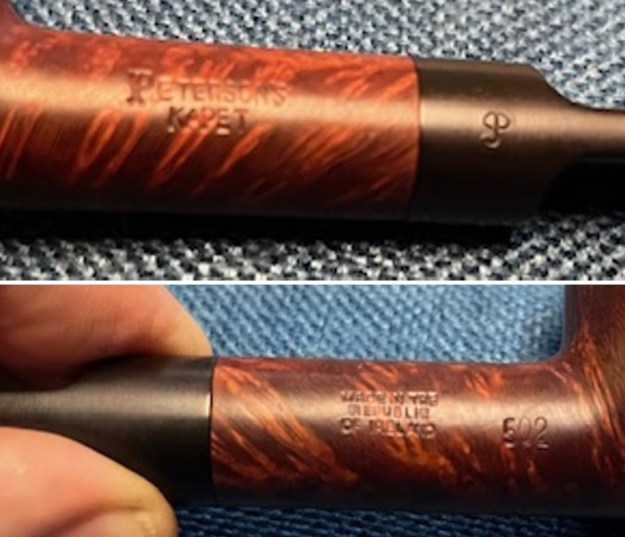
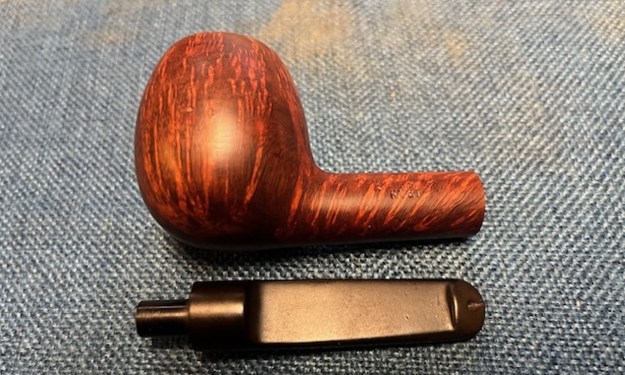
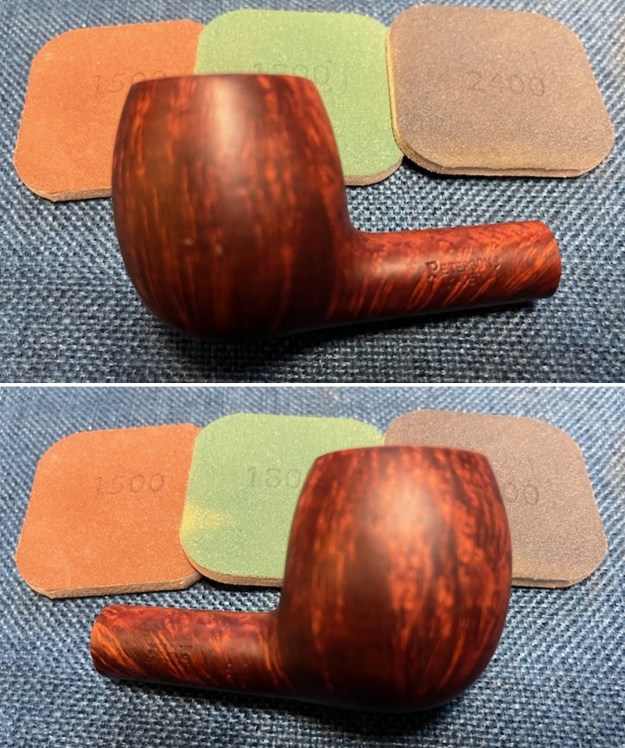
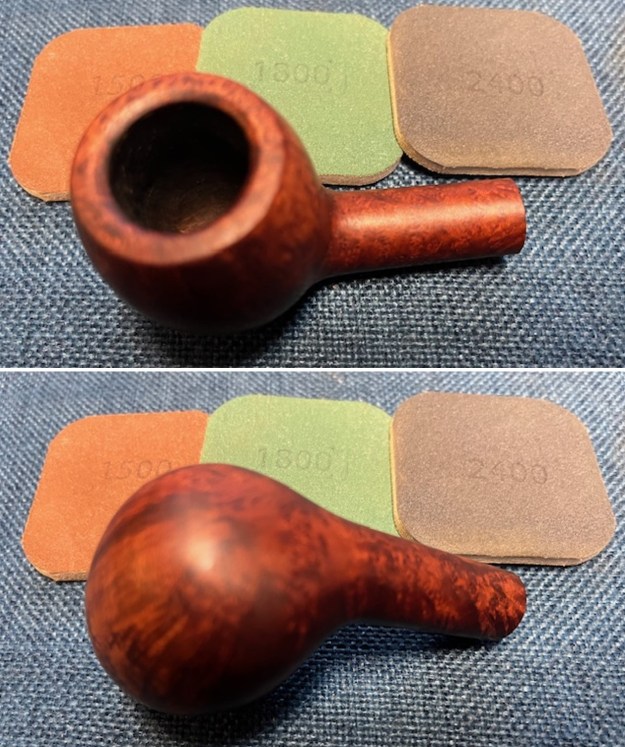
I have a couple of Peterson pipes that came my way recently and I decided to clean them up and get them ready. Not much of a restoration story on these – just some beautiful pipes. I gave them a quick (and thorough) once over and now it’s time to turn them over to you. Both have been hardly used (once, maybe twice) and they are very handsome. If you’re interested in adding one or both to your collection, be sure to drop me a line.

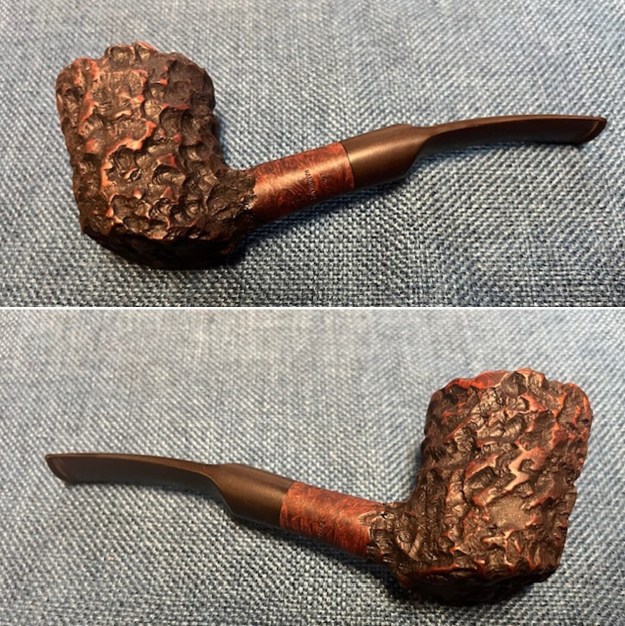
First is a Peterson K&P Irishmade 106 billiard with nickel military mount. Gorgeous pipe. If you are interested in acquiring it for your collection, please have a look in the “Irish” pipe section of the store here on Steve’s website. You can also email me directly at kenneth@knightsofthepipe.com. The approximate dimensions of the Peterson Irishmade 106 are as follows: length 6 in. (152 mm); height 2 in. (51 mm); bowl diameter 1½ in. (40 mm); chamber diameter ¾ in. (20 mm). The weight of the pipe is 1⅝ oz. (48 g). Have a look below. Thanks. Next is a Peterson System Standard 1307 (same as 307) bent billiard. Another lovely pipe. If you are interested in acquiring it for your collection, please have a look in the “Irish” pipe section of the store here on Steve’s website. You can also email me directly at kenneth@knightsofthepipe.com. The approximate dimensions of the Peterson System Standard 1307 are as follows: length 6½ in. (165 mm); height 2⅛ in. (54 mm); bowl diameter 1½ in. (40 mm); chamber diameter ⅞ in. (21 mm). The weight of the pipe is 2⅜ oz. (67 g). Have a look below. Thanks.

Restoring a beautifully grained Dunhill Bruyere 41041 Taper Stem Bulldog

by Steve Laug

The next pipe on the table is one that we picked up in the lot from our contact in Copenhagen, Denmark on 08/09/2024. The Bruyere finish and the Dunhill stamping is what caught our eye. It is stamped on the left side of the shank and reads 41041 next to the bowl/shank union followed by Dunhill [over] Bruyere. On the right side it is stamped Made in [over] England21. It has a classic Bruyere smooth finish that is a stark contrast to vulcanite, diamond taper stem. The finish has some scars that are a part of the pipe’s story particularly on the rim cap. The bowl appears to be moderately caked. The inner edge and the top show some lava overflow and what looks like knife damage from reaming on the inner edge. The stem is very oxidized and tooth marks and chatter on the top and underside ahead of the button and on the button surface itself. The classic white spot is on the left top side of the taper, diamond stem and looks to be in good condition. Jeff took some photos of the pipe to show the general condition of the pipe before he started his clean up. He took some photos of the rim top and bowl from various angles to give me a clear picture of the condition of the rim top and bowl. You can see the lava on the rim top and edges as well as part of the cake in the bowl. He included photos that show the top and underside of the stem. It is as described above. Jeff took some photos of the sides and heel of the bowl to show the condition of the finish on the pipe. The photos showed some great grain around the bowl and shank. It is a great looking piece of briar. He took some photos of the stamping on the sides of the bowl and shank. The stamping was clear and readable as noted above. As is my regular practice, before I started my work on the pipe, I turned to Pipedia’s section on Dunhill Bruyere Pipes to get a refresh the information I know regarding the Dunhill finishes (https://pipedia.org/wiki/Dunhill_Bruyere). I quote:
Initially, made from over century-old briar burls, classified by a “B” (denoted highest quality pipe); “DR” (denoted straight-grained) and an “A” (denoted first quality), until early 1915. After that, they became a high-end subset to the Dunhill ‘Bruyere’. The DR and B pipes, a limited production, they should be distinguished as hand-cut in London from burls as opposed to the Bruyere line which was generally finished from French turned bowls until 1917, when the Calabrian briar started to be used, but not completely. Only in 1920 Dunhill took the final step in its pipe making operation and began sourcing and cutting all of its own bowls, proudly announcing thereafter that “no French briar was employed”.

Bruyere pipes were usually made using Calabrian briar, a very dense and hardy briar that has a modest grain but does very well with the deep red stain.

“Before the 1950s, there were three possible finishes for Dunhill pipes. The Bruyere was a smooth finish with a deep red stain, obtained through two coats, a brown understain followed by a deep red. The Shell finish was the original sandblast with a near-black stain (though the degree to which it is truly black has varied over the years). Lastly, the Root finish was smooth also but with a light brown finish. Early Dunhill used different briars with different stains, resulting in more distinct and identifiable creations… Over the years, to these traditional styles were added four new finishes: Cumberland, Dress, Chestnut and Amber Root, plus some now-defunct finishes, such as County, Russet and Red Bark.”[1]I turned to Pipephil’s dating guide to show how I arrived at the date of manufacture for this pipe (http://www.pipephil.eu/logos/en/dunhill/cledat-en1a.html). I am including the chart that is provided there for the dating a pipe. I have drawn a red box around the section. Since the pipe I am working on has a superscript suffix 21 after the D in England it points to the 1960 line on the chart below. To date it just add 1960 +21 for a date of 1981. I have drawn a red box around the pertinent section in the chart.I now knew that I was working on a Bruyere that came out in 1981. The shape of the pipe is called a smooth straight Bulldog with a 41041 Shape number on the left side of the shank/ bowl.

I turned to Pipephil’s shape list (http://www.pipephil.eu/logos/en/dunhill/shapes.html). At the bottom of the list of shapes (with the 04 being a Billiard) is a key for interpreting the digits in the stamp I have included that below.

Dunhill pipes are stamped with a four digit code.
Digit 1: (from 1 to 6) denotes the size of the pipe (the group).
Digit 2: denotes the style of the mouthpiece (0,1=tapered, 2=saddle)
Digit 3 and 4: denote the generic pipe shape (in yellow in the chart on top) 

Example: 5102
(5 = size | 1 = tappered stem | 02 = Bent)

When 5 digits occur, the meaning of the 4 first remain the same

The 41041 was thus a Group 4 size, with a taper mouthpiece, and in an 04 or straight Bulldog shape.

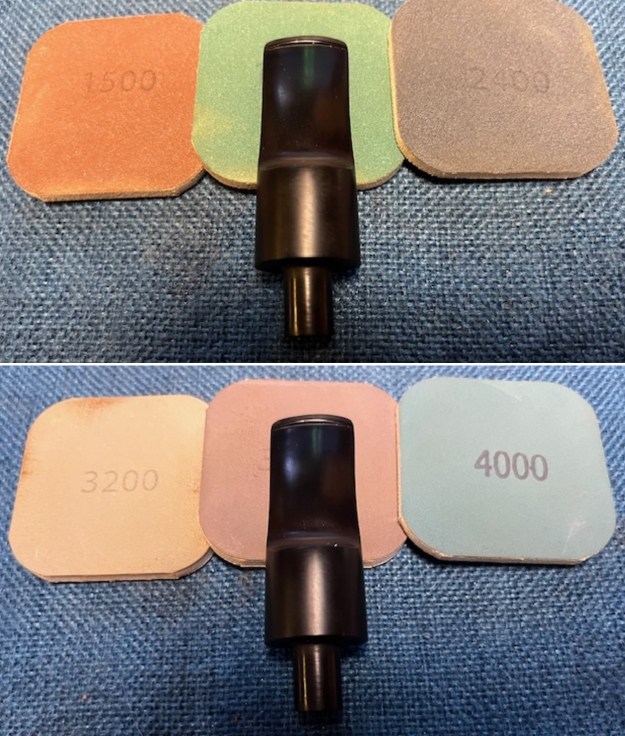
Armed with that information I turned to work on the pipe itself. Jeff had done a great job cleaning up the pipe as usual. He cleaned up the inside of the bowl with a PipNet reamer and a Savinelli Fitsall Pipe Knife. The rim top shows some damage on the top and the inner edge of the bowl. The bowl walls looked very good. He scrubbed the interior of the bowl and shank with pipe cleaners, cotton swabs and alcohol to remove the tars and oils. He scrubbed the exterior of the pipe with Murphy’s Oil Soap and a tooth brush to remove the grime from the finish. He worked on the rim top lava and darkening with the soap and tooth brush. He scrubbed the inside of the stem with alcohol and pipe cleaners. He scrubbed the exterior with Soft Scrub and then soaked it in Briarville’s Pipe Stem Deoxidizer. He washed it off with warm water to remove the deoxidizer. Now the damage to the stem was very clear. Overall, the pipe looked far better. I took photos of the pipe when I received it before I started working on it. I took close up photos of the bowl, rim top and stem to show how clean the pipe was. The bowl was clean and the damage to the rim top and the inner edge is very visible in the photo below. The stem was clean and the light tooth marks and chatter can be seen in the photos.I took a photo of the stamping on the sides of the shank. It is very clear and readable and read as noted above. I also removed the stem from the shank and took photos of the pipe to show the look of the parts. I started my work on the pipe by addressing the damage to the rim top. I used some 220 grit sandpaper and a round wooden sphere to clean up the bevel on the inner edge of the bowl. It looked much better once finished. I touched up the sanded inner edge and top with a cherry stain pen to match the surrounding briar. It is looking very good.I polished the Bruyere bowl and shank with 1500-12000 grit micromesh sanding pad – dry sanding it with the pads. I wiped the bowl down with a damp cloth after each pad. It began to take on a deep shine. The exterior of the bowl look better after sanding. I worked some Before & After Restoration Balm into the briar with my finger tips. I let it sit on the bowl for 10 minutes and then buffed it off with a paper towel and soft cloth. The product is a great addition to the restoration work. It enlivens, enriches and protects the briar while giving it a deep glow. It is a product I use on every pipe I restore. The stem surface looked good other than some deeper oxidation. It showed up in the bright lights of the photos. There were some deep tooth marks in the middle of the button surface on both sides of the stem. I filled them in with black CA glue and set it aside to cure. Once it had cured I recut the button edge and flattened it with a small file. I sanded it with a folded piece of 220 grit sandpaper. I continued the sanding process with 320-3500 grit sanding pads. The repairs began to disappear into the surface of the vulcanite and the stem began to take on a smooth new look. Progress for sure.It was ready for the next step. I polished it with micromesh sanding pads – dry sanding with 1500-12000 grit pads and wiping the surface down with Obsidian Oil after each sanding pad. It is really shining. I polished it further with Before & After Stem Polish – both Fine and Extra Fine. I gave it another coat of Obsidian Oil to finish this step. I am excited to be on the homestretch and look forward to seeing the 1981 Dunhill Bruyere 41041 Bulldog put back together, polished and waxed. I put the bowl and stem back together and lightly polished the bowl and stem with Blue Diamond to polish them. I gave the bowl and the stem multiple coats of carnauba wax. I buffed the pipe on the wheel with a clean buffing pad to raise the shine. I hand buffed it with a microfiber cloth to deepen the shine. The depths of the grain really pop with the wax and polish. The repaired and polished vulcanite stem is a beautiful contrast to the combination of stains on the bowl and shank. This Dunhill Bruyere 41041 Bulldog was a lot of work to bring back to life. The pipe is light weight, comfortable in the hand and should feel great as it is warmed up when smoking. The finished pipe is shown in the photos below. The dimensions of the pipe are Length: 5 ½ inches, Height: 1 ¾ inches, Outside diameter of the bowl: 1 ¼ inches, Chamber diameter: ¾ of an inch. The weight of the pipe is 1.34 ounces/38 grams. I will be putting this one on the rebornpipes store in the British Pipemakers Section soon. Let me know if you wish to add it to your collection.
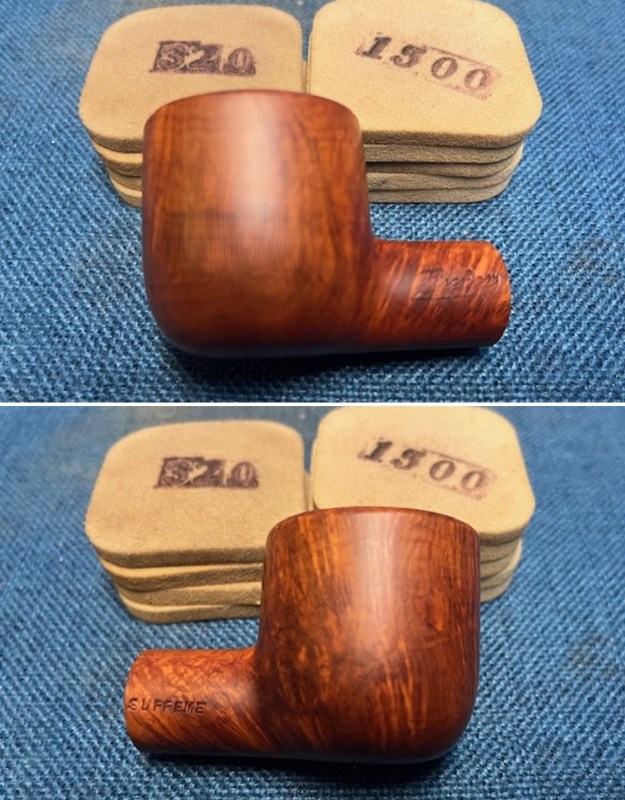
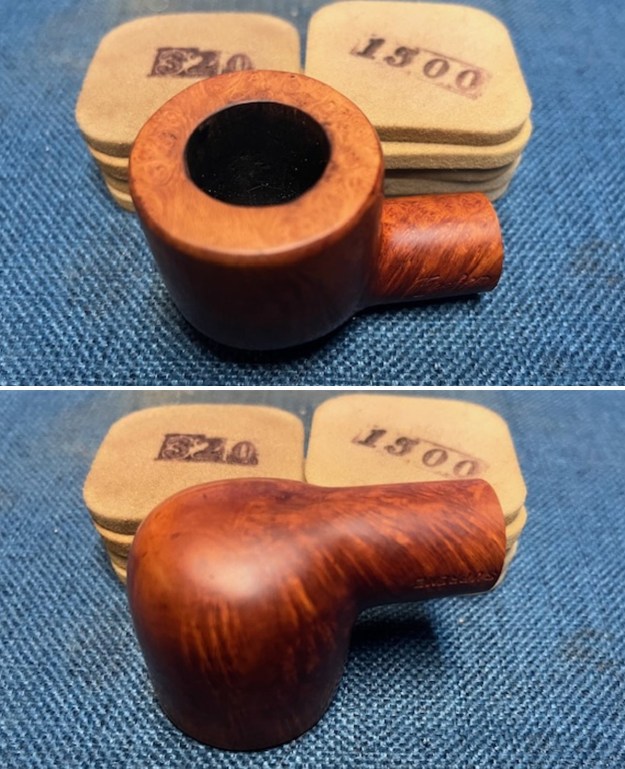
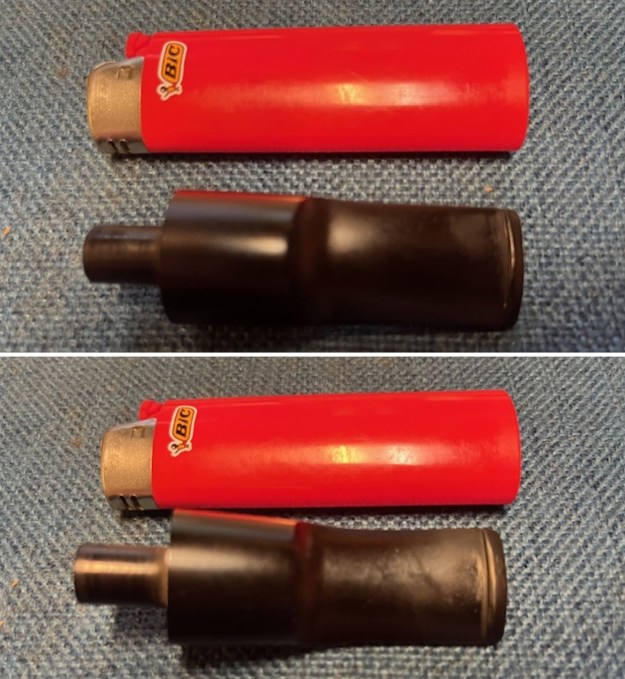
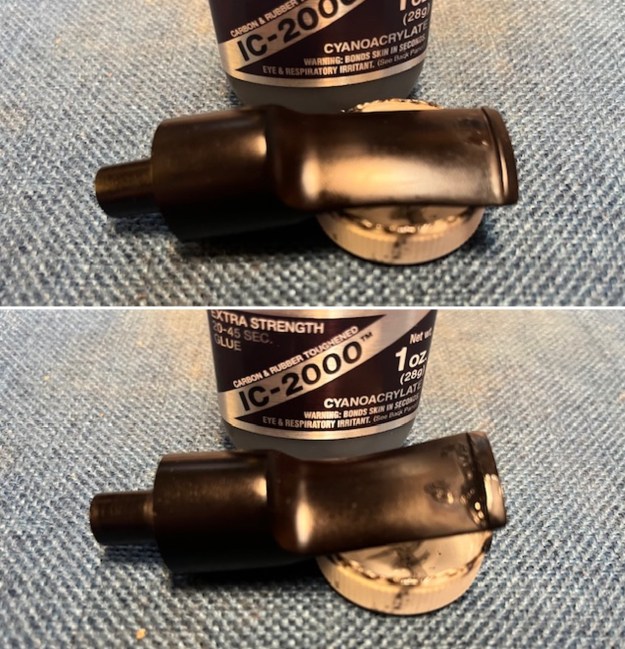
As always, I encourage your questions and comments as you read the blog. Thanks to each of you who are reading this blog. Remember we are not pipe owners; we are pipe men and women who hold our pipes in trust until they pass on into the trust of those who follow us.

The Resuscitation of an Old Airograte Yello-Bole

by Kenneth Lieblich

A gentleman recently contacted me to ask if I would restore his Airograte Yello-Bole. I was happy to take on the project, as it was an interesting pipe – and it looked like it could use some TLC. In the end, the pipe turned out very well, but it was a very labour-intensive cleaning and restoration. Take a close look at the before and after photos – I think they speak for themselves. This pipe has had a hard life, but it must have been greatly loved. This restoration made the pipe look so much better, but the battle scars of the past will always be with it – and so they should be! They are part of its history. Let’s talk about the background of the pipe. The patent on the Airograte dates to 1949, and I have included the pages from the US Patent Office below, for those who wish to read them: I also found a blurb from inside the box of an Airograte Yello-Bole from years ago. I’ve included the photo below, but I also typed out the words in case you can’t quite make them out:
Airograte Yello-Bole introduces an entirely new principle in pipe smoking. One of the basic, patented features is a removable metal grate which holds the tobacco in suspension. This allows fresh air to be drawn into, and circulate through, the lower aluminum chamber resulting in a cool, dry smoke. The metal grate may be easily washed and cleaned. Ordinary cleansing tissue will wipe clean the aluminum chamber and bottom of bowl. Shank and bit should be cleaned with a pipe cleaner. Airograte Yello-Bole’s design and patented construction give better combustion and moisture evaporation. Result? No messy juices, no bite, no bitterness, no drag and no smelly heel. Interchangeable bowls in assorted shapes are available. Buy an extra bowl… Smoke one, rest the other. Each bowl is caked with Real Honey. You’ll enjoy Airograte Yello-Bole because it’s the sweetest, driest, coolest pipe smoking sensation!On Pipedia, there is a good article about the history of the Yello-Bole company and its progenitor, Kaufmann Bros. & Bondy. On the Airograte itself, Pipedia says:

The Yello Bole Aristocrat Airograte: An Aluminum and wood pipe with a twist. This pipe doesn’t have a bowl per say, but more a briar cylinder that screws into the base of the body. At the bottom of the bowl is a metal grate, thus allowing air to be pulled through all the tobacco and reducing any chance of clogging. The lower bowl catches all moisture and tar reducing bite. These pipes can be had in a silver/chrome finish as well as a soft gold finish. The stem of these pipes has cooling fins up each side, and can be found in a straight or bent form.Steve has written several blogs about the Airograte and here is one of his comments about it:

The Airograte Pipe was also made by Yello-Bole and was their version of the Falcon pipe or the Dr. Grabow Viking. It had a metal base and shank with an interchangeable bowl. Yello-Bole made a variation to the theme by make the bowl more of a tube and inserting a metal grate between the bowl and the base for dry smoking air flow. It also had the Nylon Bit like the Grabow and the Falcon version. These pipes sold for $5.95 and you could purchase a variety of interchangeable bowls for the base.Let’s examine the condition of this pipe a little more closely. The bowl is dirty-beyond-dirty. As you can see, the chamber is absolutely choked with old cake and there is a lot of lava on the rim. To make matters worse, there is a serious abrasion on the rim. On the underside of the bowl, there are small cracks in the base which extend into the screw threads. The stem was, sadly, no better. There is plenty of calcification on the bit. Fortunately, since the stem is made of a hard nylon, there is no oxidation. However, the tooth marks, dents, and chomps on this stem are among the most severe I’ve seen in a long while. The photos do not accurately convey just how concave (and low) these tooth marks are. The aluminum body of the pipe was dull, dirty, and heavily scratched. Some of those scratches would come out, but some wouldn’t. Unsurprisingly, the metal grate was clogged with tobacco filth.

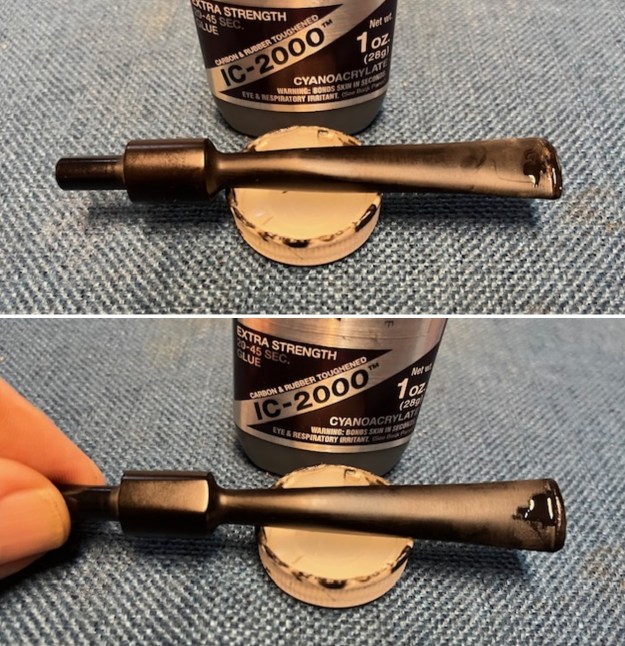
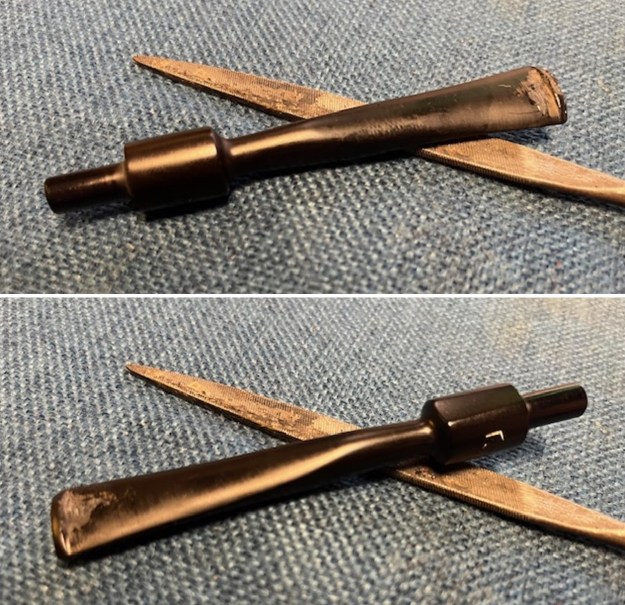
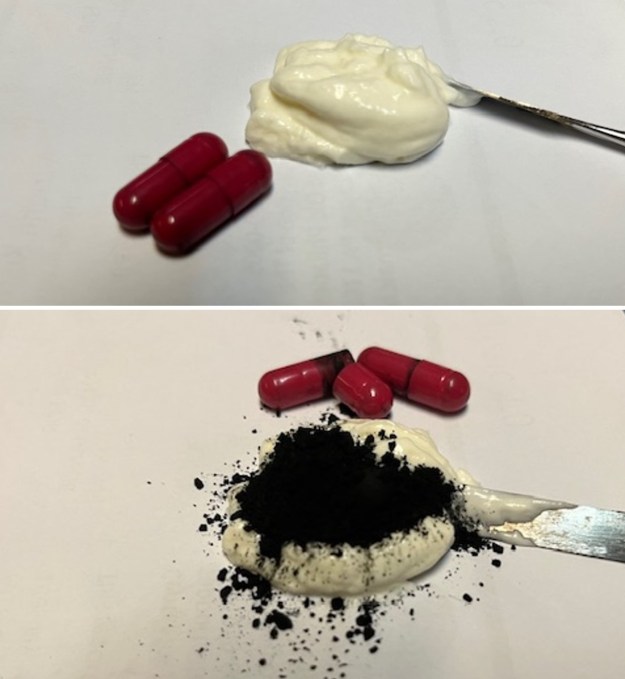
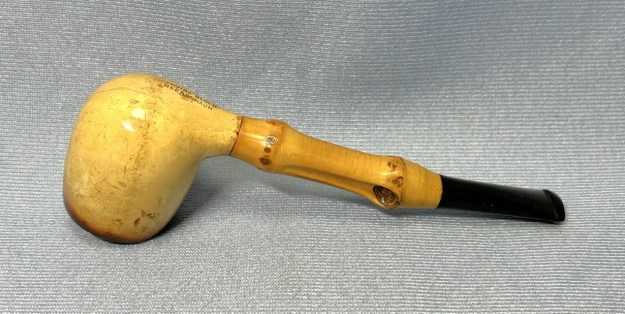
Suffice it to say that I had my work cut out for me! Let’s begin with the stem. As it is made of nylon, there was no oxidation – and no oxidation means no need for deoxidation fluid. I used 99% lemon-infused isopropyl alcohol on a few cotton rounds and scoured the stem. Then, I cleaned the inside of the stem with pipe cleaners dipped in the alcohol. I scrubbed thoroughly to make sure the interior was clean. I used ‘zillions’ of pipe cleaners for this stem. Now that the stem is clean and dry, I set about fixing the marks and dents in the nylon. This was done by filling those divots with black cyanoacrylate adhesive, impregnated with carbon and rubber. This took a lot of work (and more than one try) to get right. I left this to cure and moved on. Sorry – I neglected to take a photo of this step.The penultimate step for the stem is sanding. First, with my set of needle files, I reduce the bulk of the cyanoacrylate repairs. I want to remove the excess adhesive as near to the surface as possible, without cutting into the nylon. Following that, I use all nine of the micromesh sanding pads (1,500 through 12,000 grit) to sand out flaws, even out the nylon, and provide gentle polishing of the finished surface. I also apply pipe-stem oil while using the last five micromesh pads. There was a wonderful, deep black shine to the stem when I was done, but I had to do this whole process twice, as I wasn’t happy with the initial results.Now that the stem is (nearly) complete, I can move on to the bowl. The first step for me is to ream it – that is to say, remove all the cake inside the bowl. This accomplishes a couple of things. First (and most obviously), it cleans the bowl and provides a refurbished chamber for future smoking. Second, when the old cake is removed, I can inspect the interior walls of the bowl and determine if there is damage or not. I used a reamer and a piece of sandpaper taped to a wooden dowel. Collectively, these ensure that all the debris is removed. To my surprise, the walls were in decent shape, but, as I mentioned earlier, there were tiny cracks in the base of the bowl. To tidy up the briar, I also wiped down the outside with some oil soap on cotton rounds (and a toothbrush). This does a good job of cleaning any latent dirt on the surface of the briar. One of the difficulties in maintaining an Airograte Yello-Bole is that the wooden threads of the bowl are impregnated with the awful filth at the bottom of the metal shank. I used a brass-wire brush, a dental tool, and a small butter knife to try and clean things up. This didn’t help much. So, the next step of the cleaning process was to scour the inside of the bowl with some soap and tube brushes. This also didn’t help the base much. So, I poured some acetone into a small container and soaked the bowl’s threads for a little while. This helped quite a bit. I continued to wipe with some cotton rounds and it cleaned up fairly well. Quite frankly, this bowl was never going to be new again, but I was satisfied with it after soaking. The damage to the rim is significant. In order to lessen (but not eliminate) the nicks on the rim, I ‘topped’ the pipe – that is to say, I gently and evenly sanded the rim on a piece of 220-grit sandpaper. This effectively minimizes the damage, without altering the look of the pipe. There will always be some sign of the wound on the rim, but, as I’ve said before, it is part of the pipe’s history.
I decided to repair the tiny cracks in the briar next. This was initially straightforward enough: I was able to fill them with cyanoacrylate adhesive. However, it ended up being a bit tricky because I didn’t want to risk affecting the bowl threads by gumming them up with glue! I acted carefully and the repairs worked out perfectly.At long last, I used all nine micromesh pads (1,500 through 12,000 grit) on the outside of the bowl to finish it off. This sanding minimizes flaws in the briar and provides a beautiful smoothness to the wood. I rubbed some Before & After Restoration Balm into the briar and let it sit for 20 minutes or so. The balm moisturizes the wood and gives a beautiful depth to the briar. I then buffed it with a microfibre cloth. I’ve done the nylon, I’ve done the briar – now on to the two pieces of aluminum: the shank and the grate. As both were so dirty, I decided to drop them in an isopropyl alcohol bath and let them sit overnight. This accomplished precisely nothing. I then used my technique from above and dropped both bits in acetone for a while. This worked much better! A lot of filth came off. With that inspiration, I took both pieces to the sink and scrubbed them inside and outside with my cream cleanser. Now we’re getting somewhere! Over the next little while, I used several tools with acetone etc. to get into all the nooks and crannies in order to really clean everything well. Now to bring some shine back! Polishing up the aluminum was troublesome because of the grooves on the side. I used some 0000 steel wool to give a beautiful polish to the shank. This worked very well, but it’s such a mess! I laid out some paper towel to catch the debris because it goes everywhere. I did the same procedure on the grate as well.You can see in the following photo the difference that steel wool makes. On the left is the unsanded metal and on the right is the metal after an initial pass of steel wool. This is promising!The buffing procedure was different because of the metal – although the briar bowl and nylon stem did receive the normal White Diamond and carnauba wax treatment. I used Red Tripoli first and White Diamond second to polish the metal shank nicely. It came out so well! When I went back to my workbench, I cleaned the grooves in the metal with some soft pipe cleaners – just to remove any slight, remaining polishing compound. I then took a microfiber cloth to wipe the metal parts of the pipe to make it shine!Wow. That was quite the restoration job! This Airograte Yello-Bole looks so much better and I am happy to send it back to its owner. It was a lot of work, but I learned a lot and I am pleased with the results. The approximate dimensions of the pipe are as follows: length 5⅔ in. (144 mm); height 1⅝ in. (41 mm); bowl diameter 1⅜ in. (36 mm); chamber diameter ⅞ in. (21 mm). The weight of the pipe is 1¼ oz. (37 g). I hope you enjoyed reading the story of this pipe’s restoration as much as I enjoyed restoring it. If you are interested in more of my work, please follow me here on Steve’s website or send me an email at kenneth@knightsofthepipe.com. Thank you very much for reading and, as always, I welcome and encourage your comments.