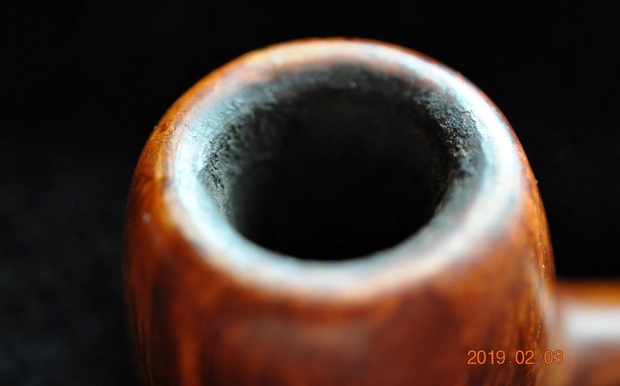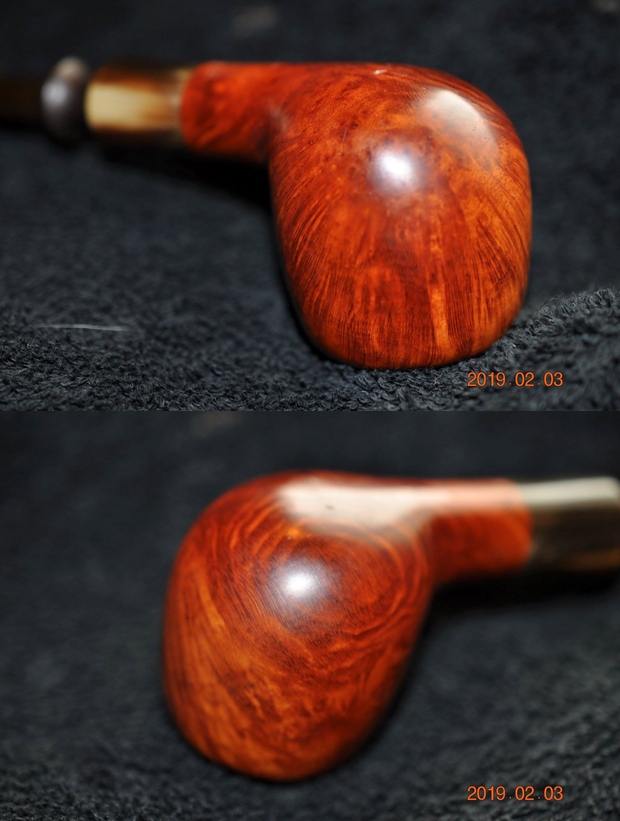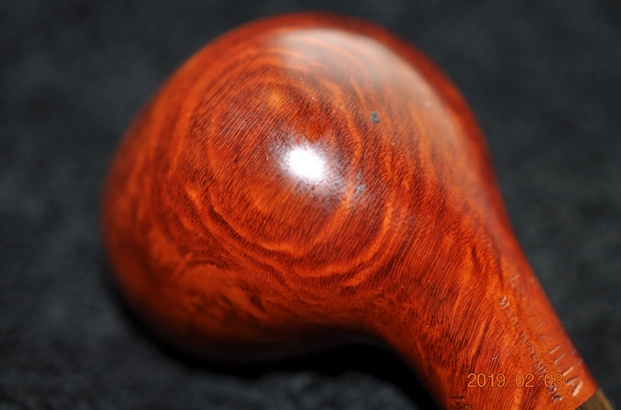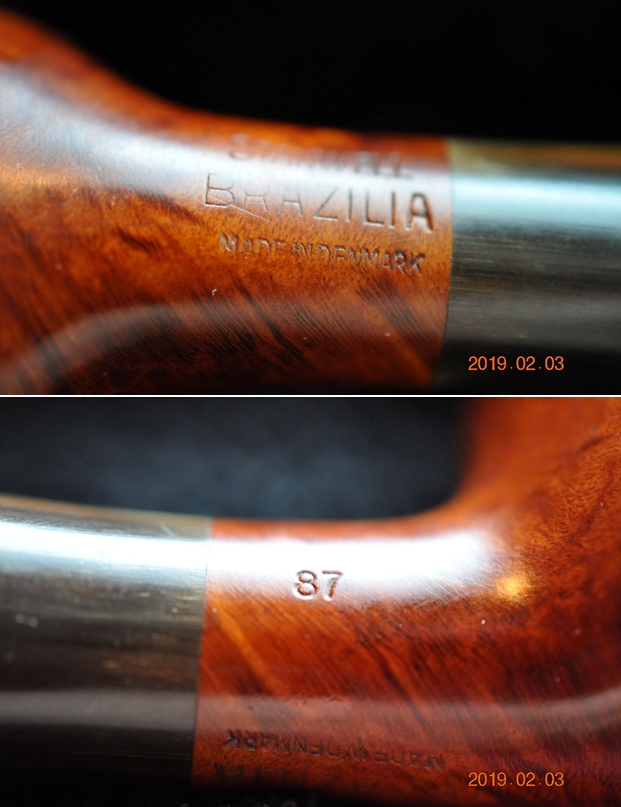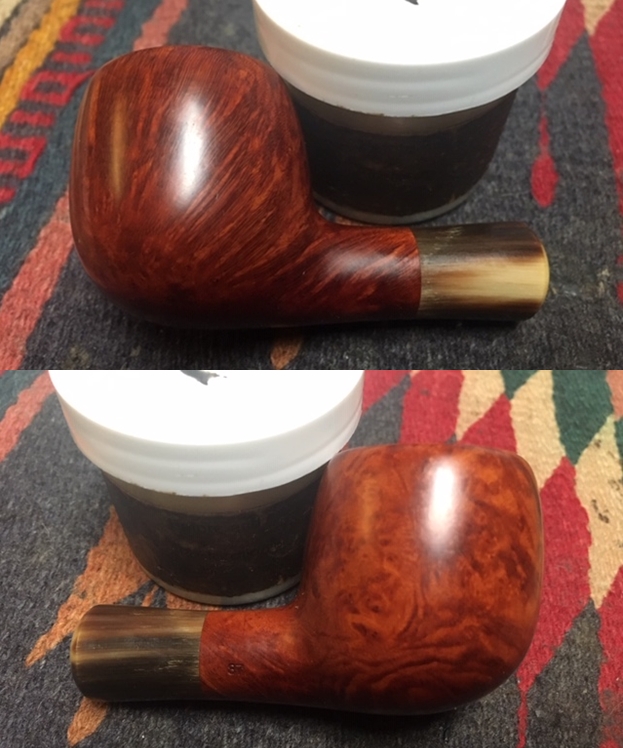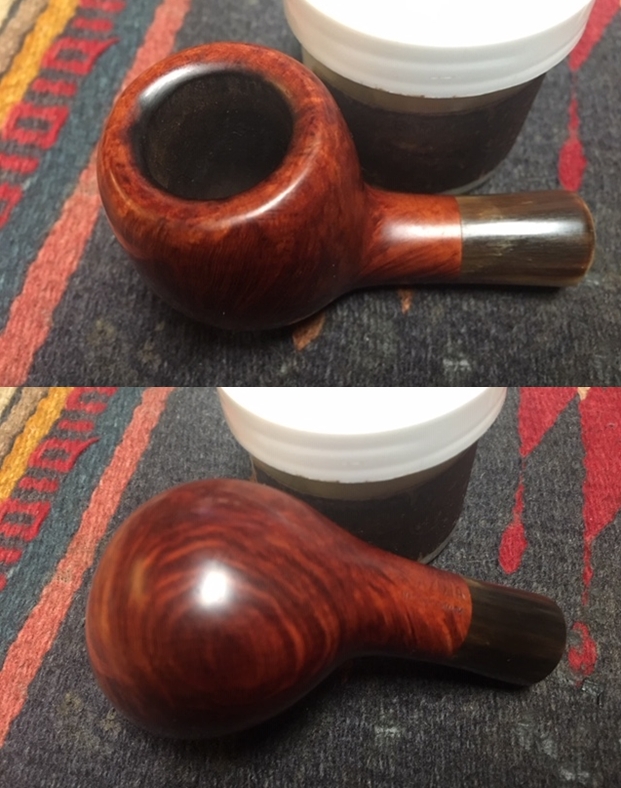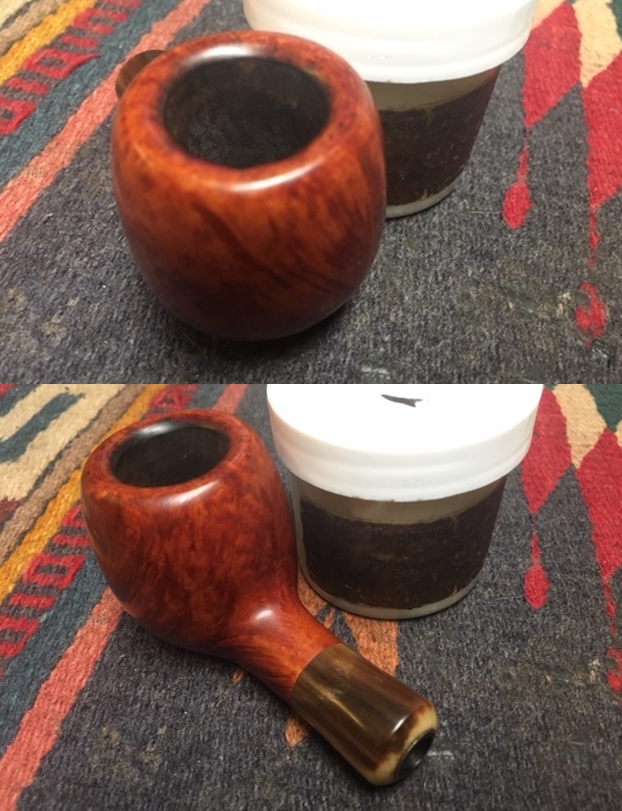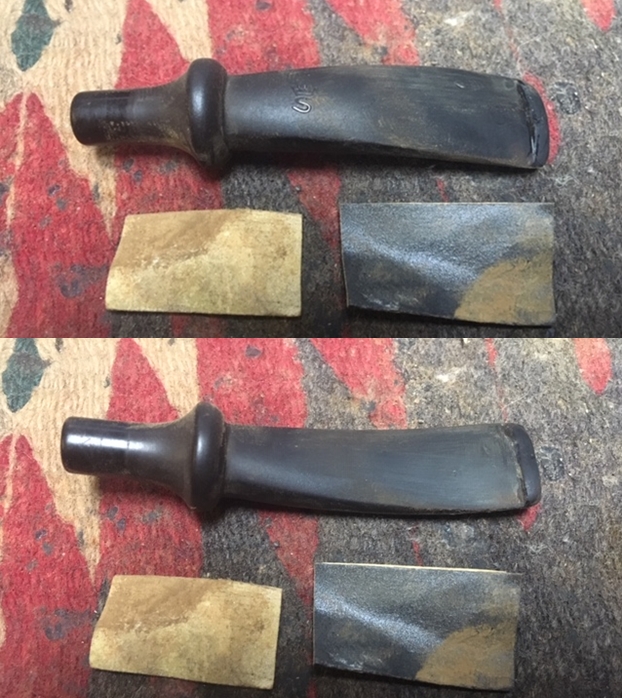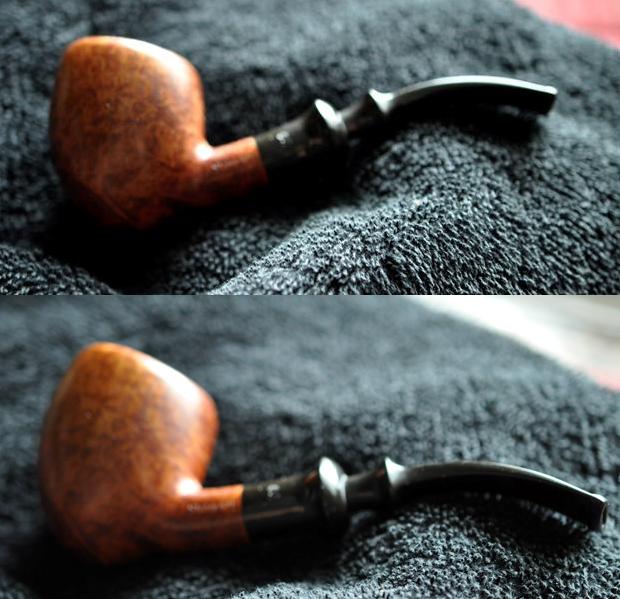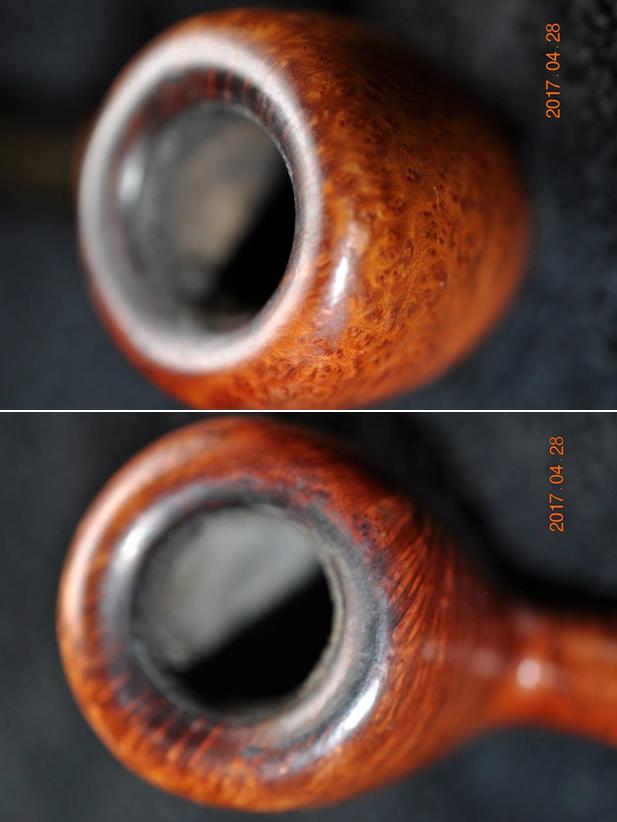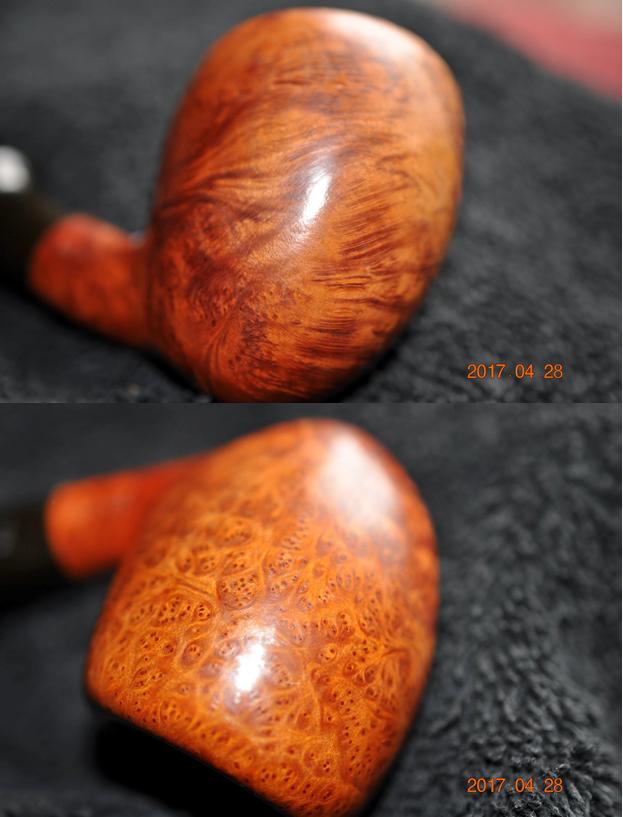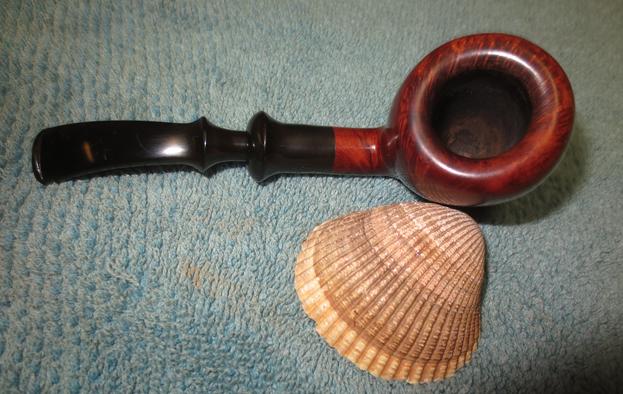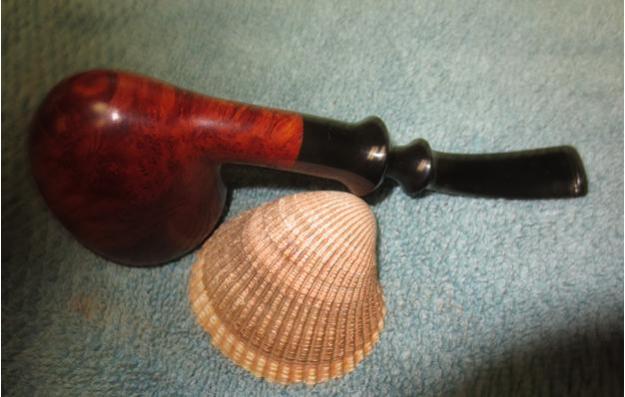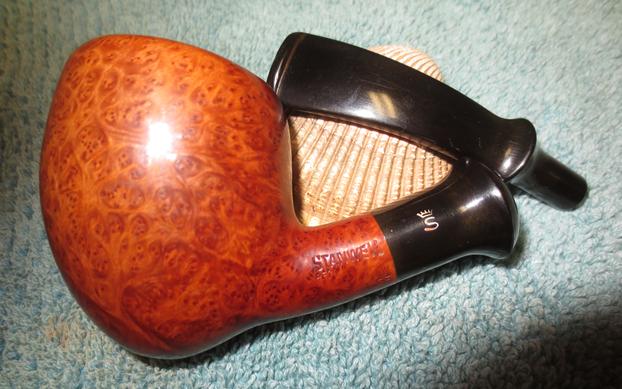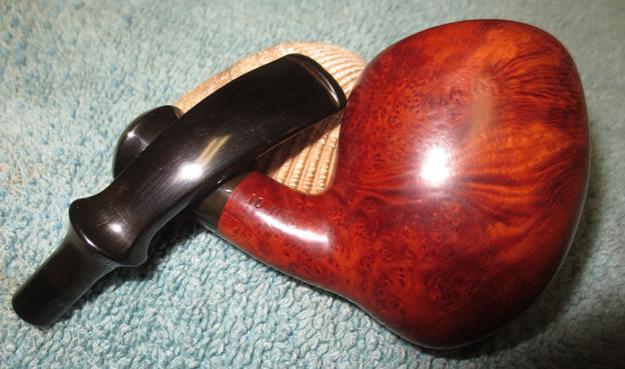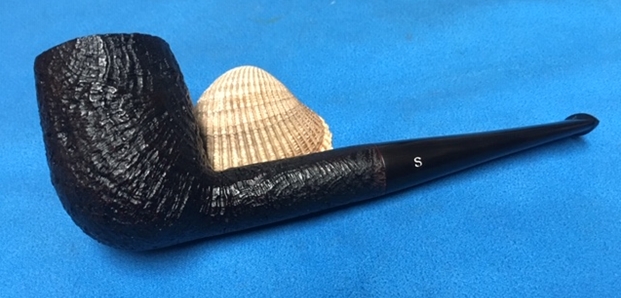
Tag Archives: Stanwell Pipes

Burn through Repair – Salvage of a Worthy Stanwell Rouge 109 Sand Blasted Ball


Blog by Dal Stanton

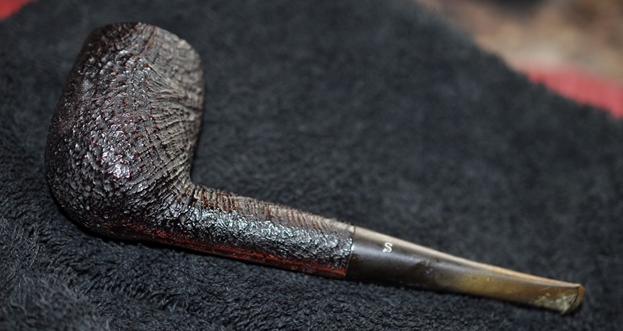
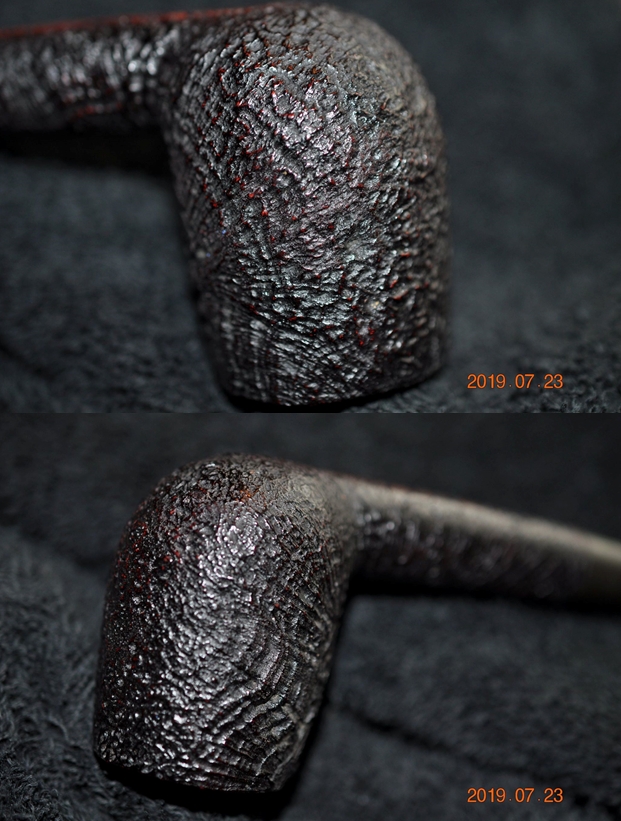
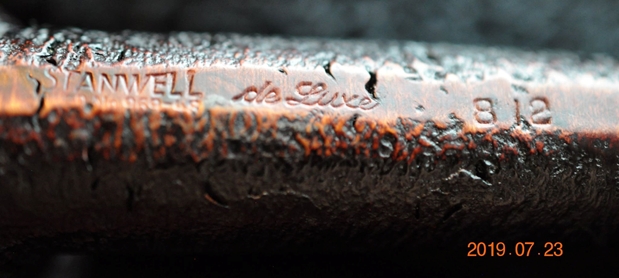
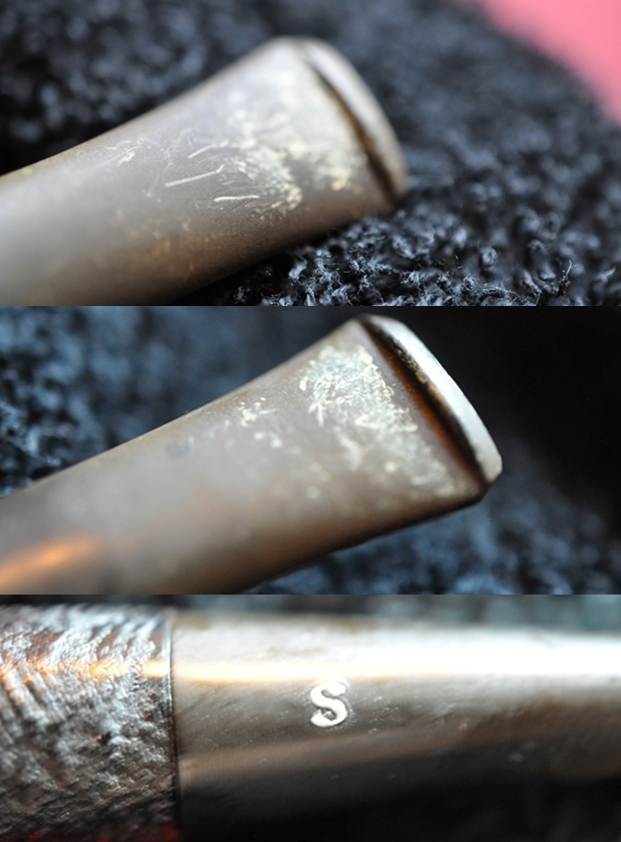
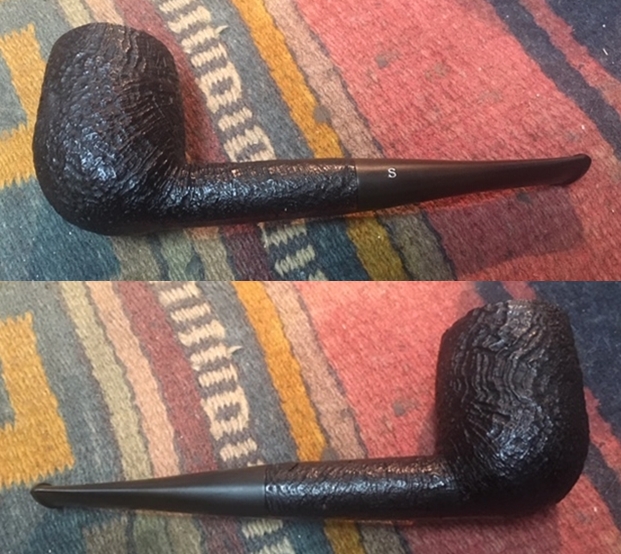
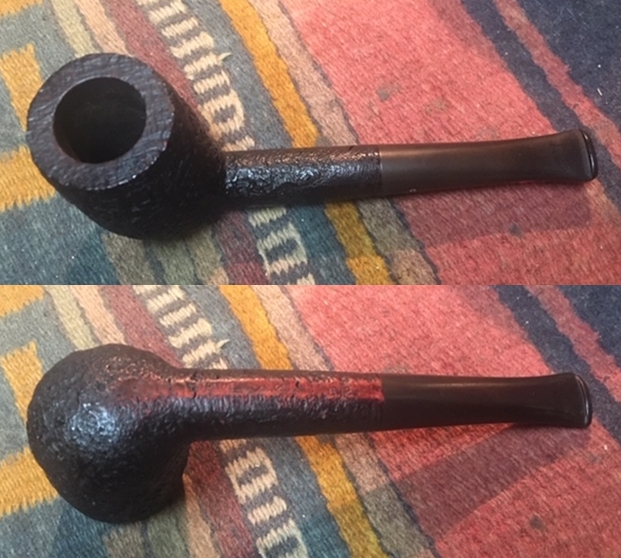
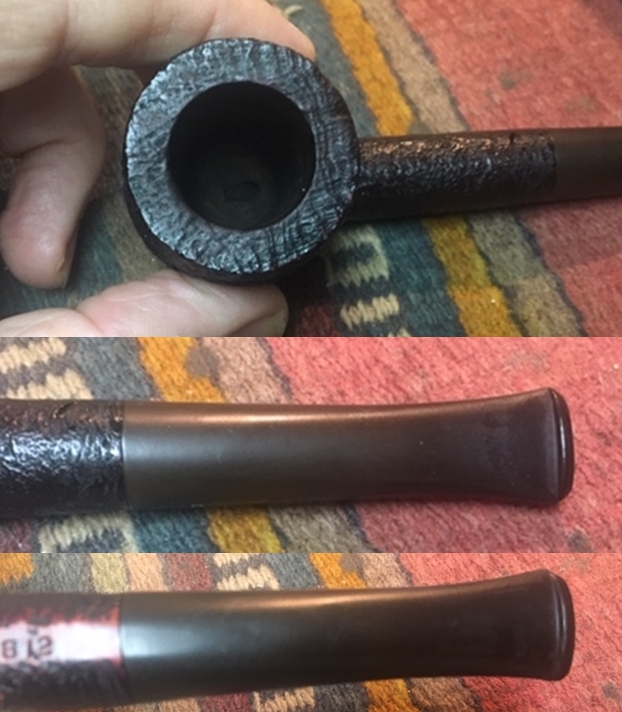
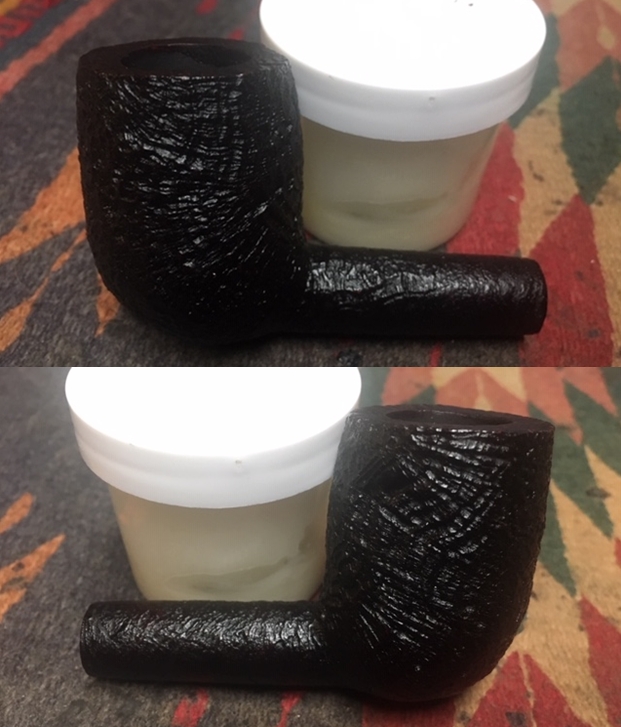
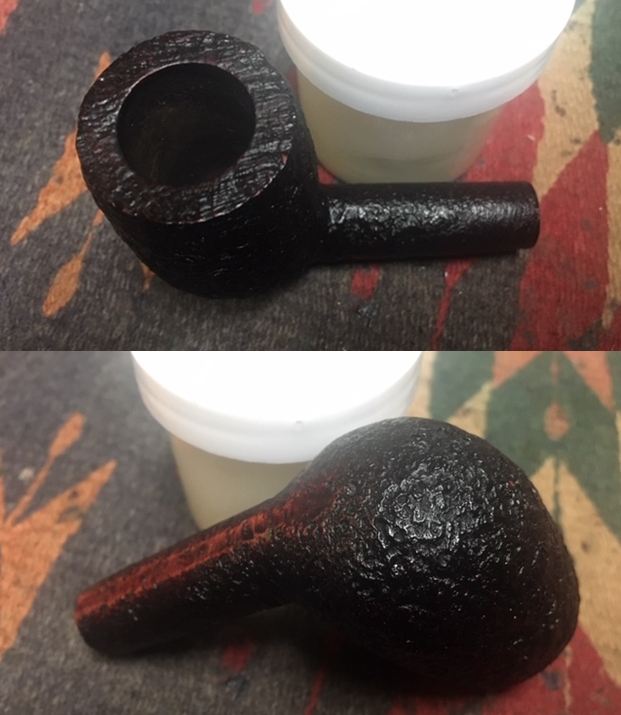
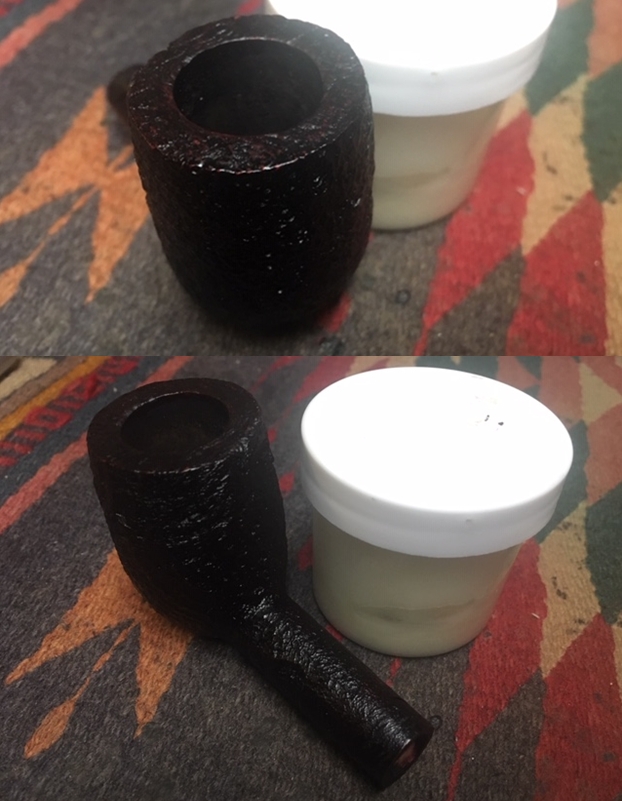
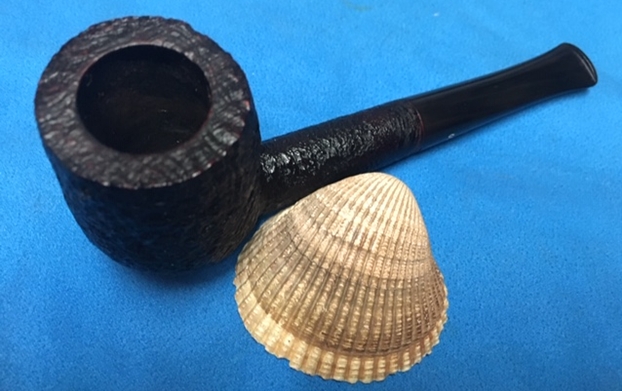
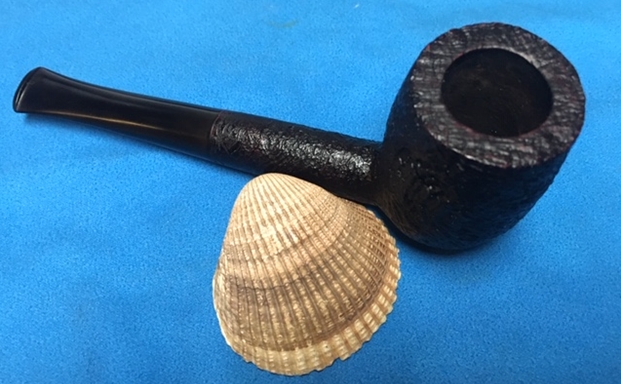
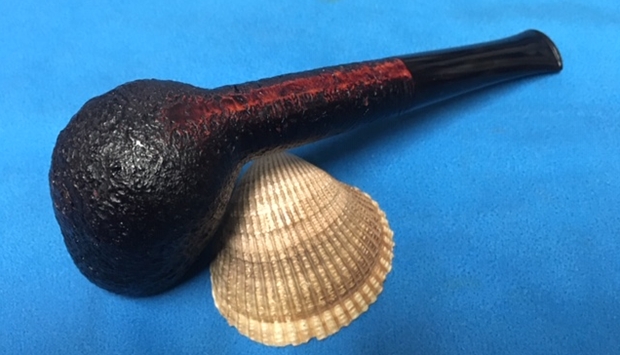
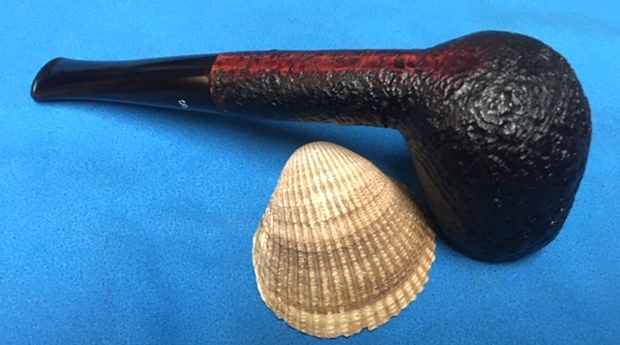
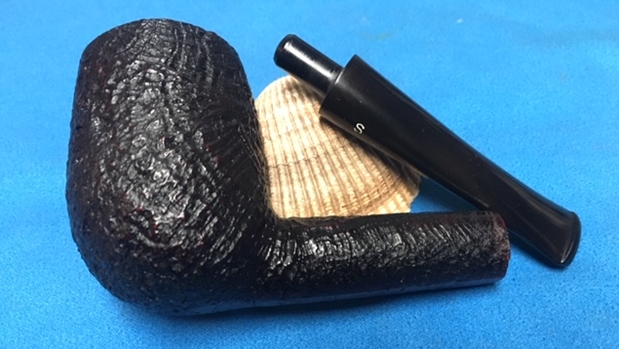
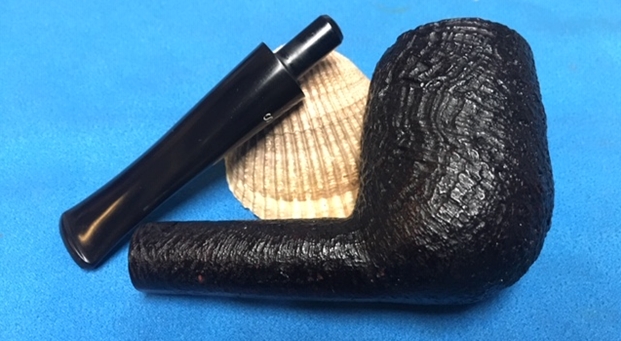
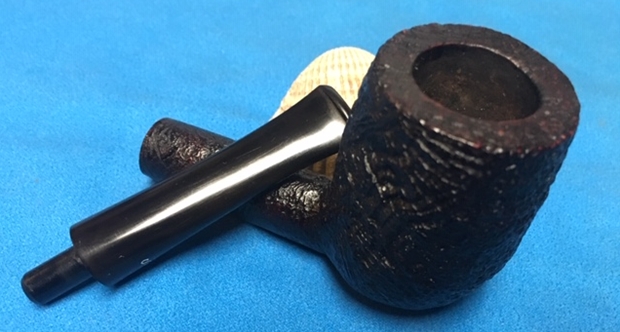
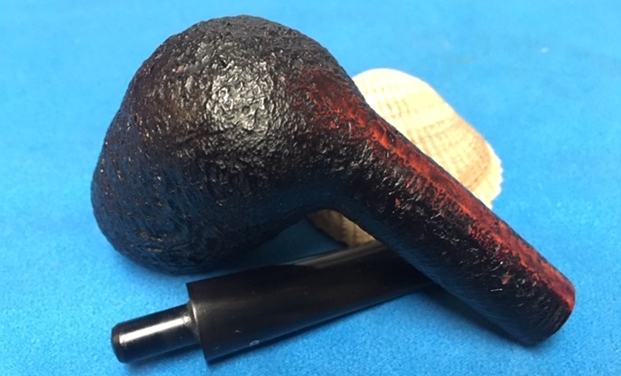
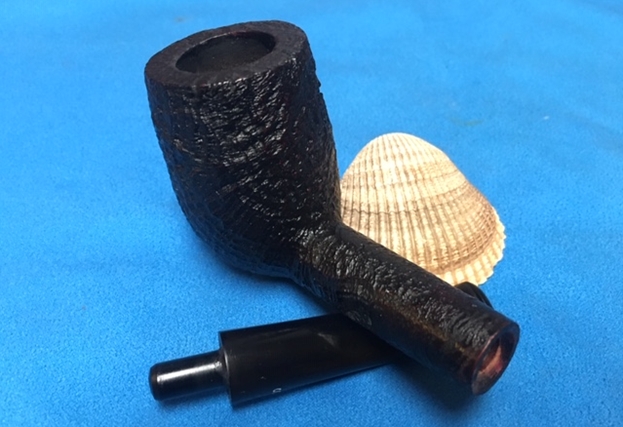
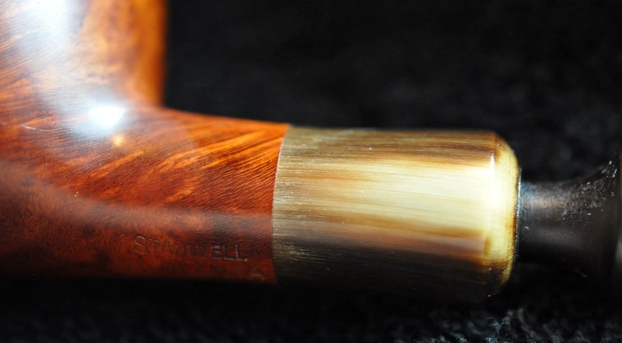
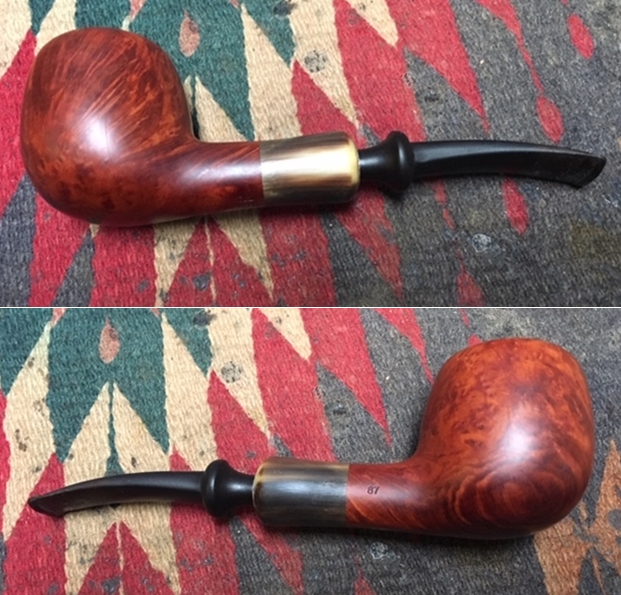
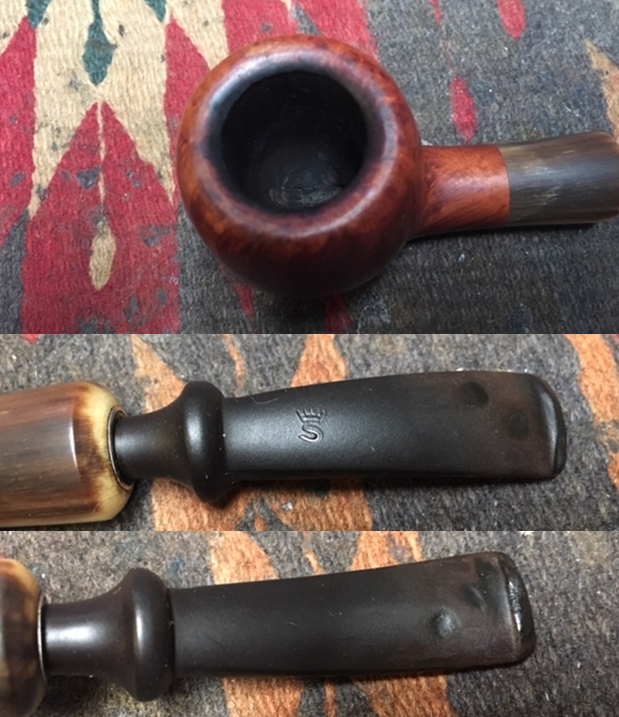
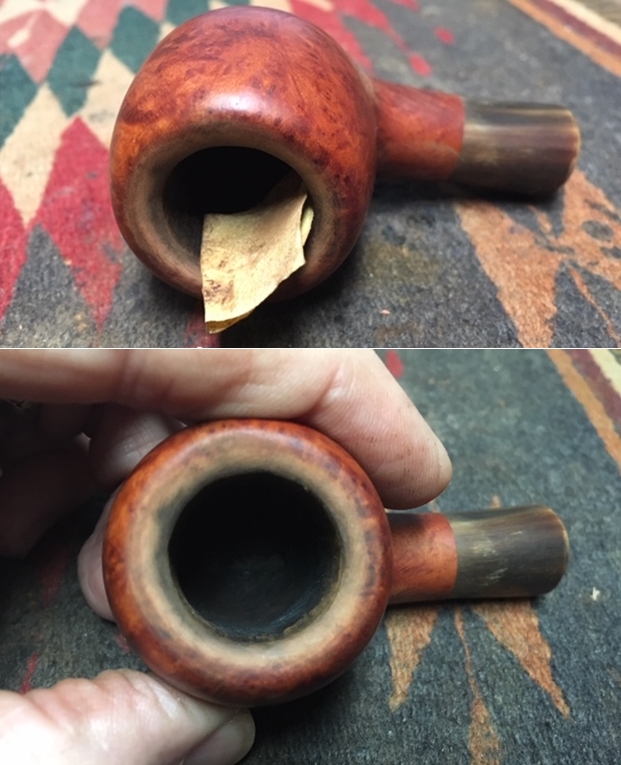
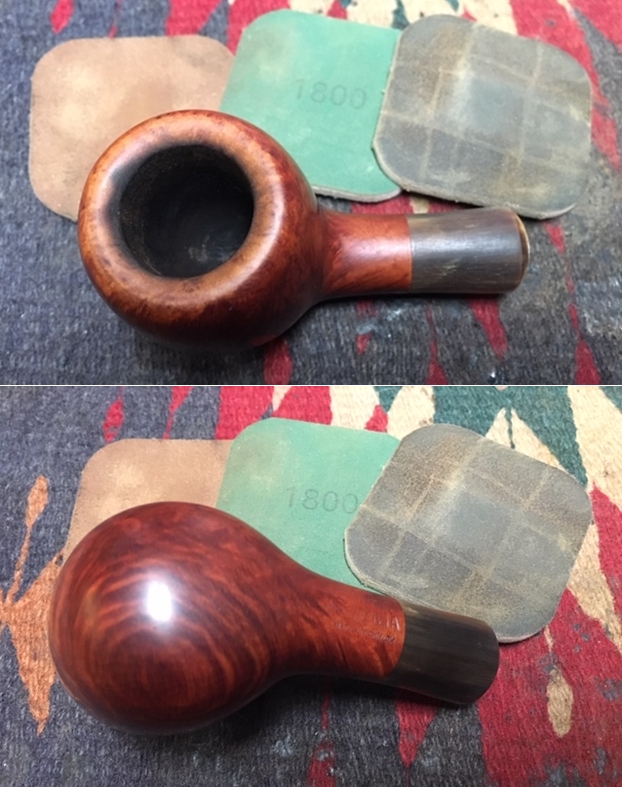
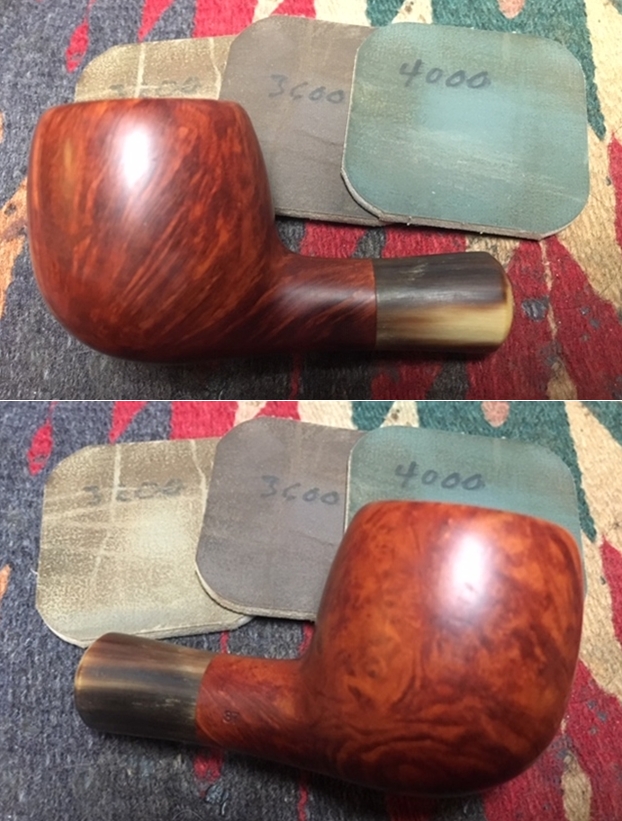
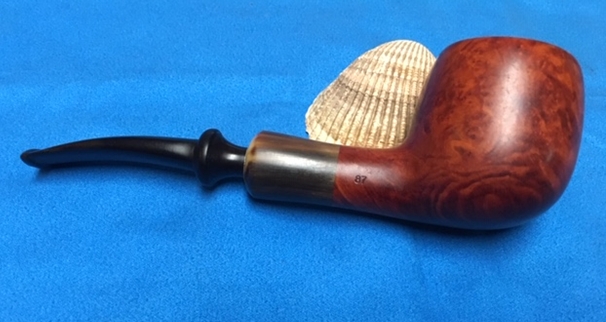
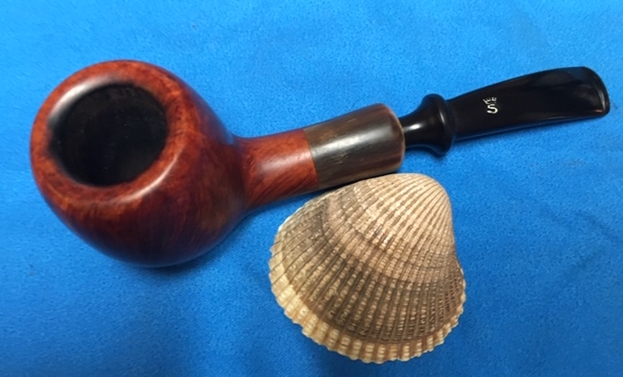
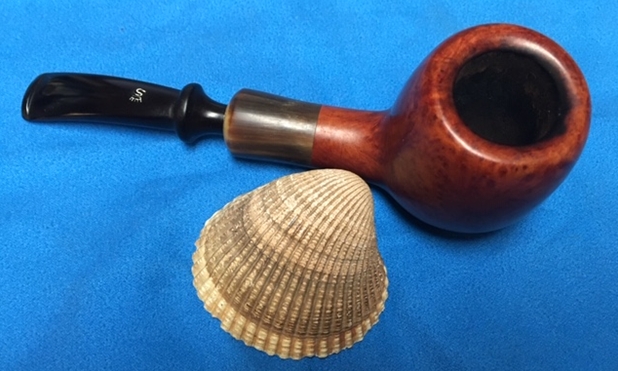
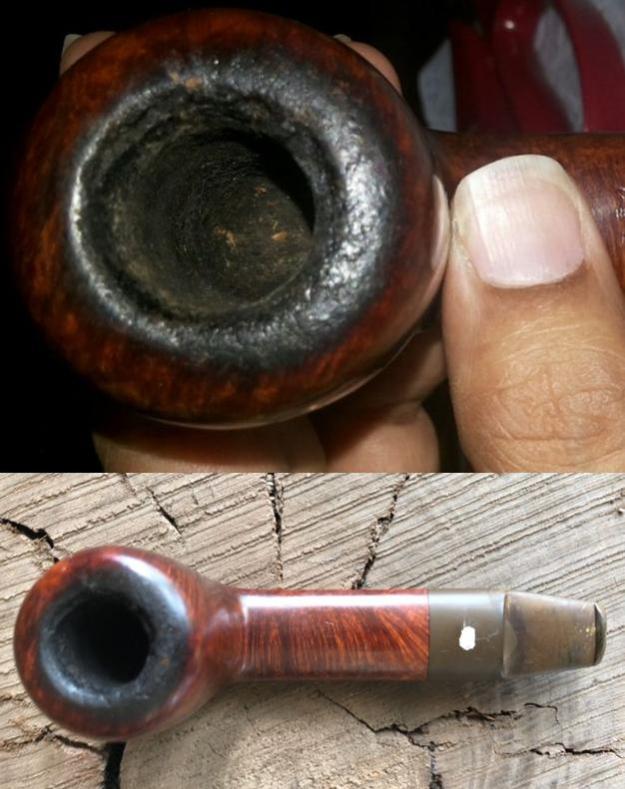
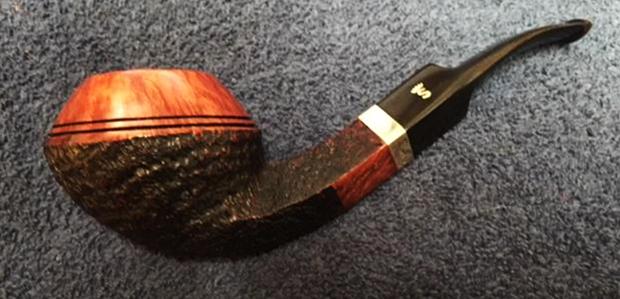
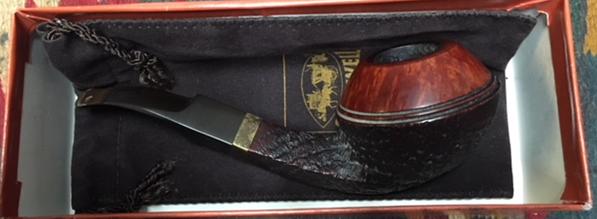
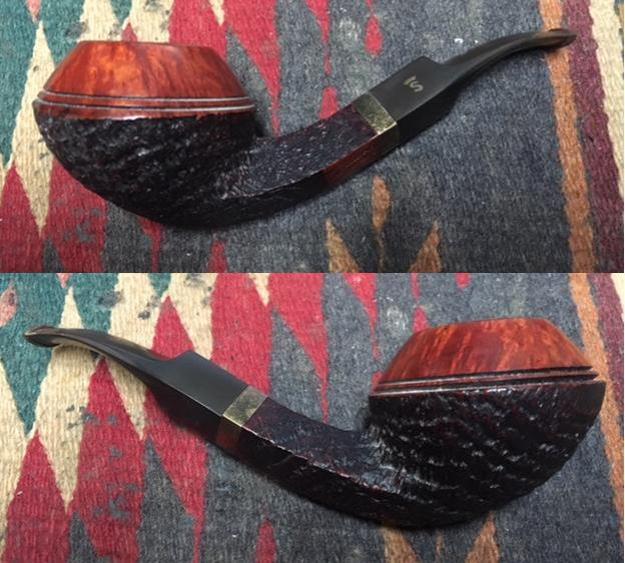
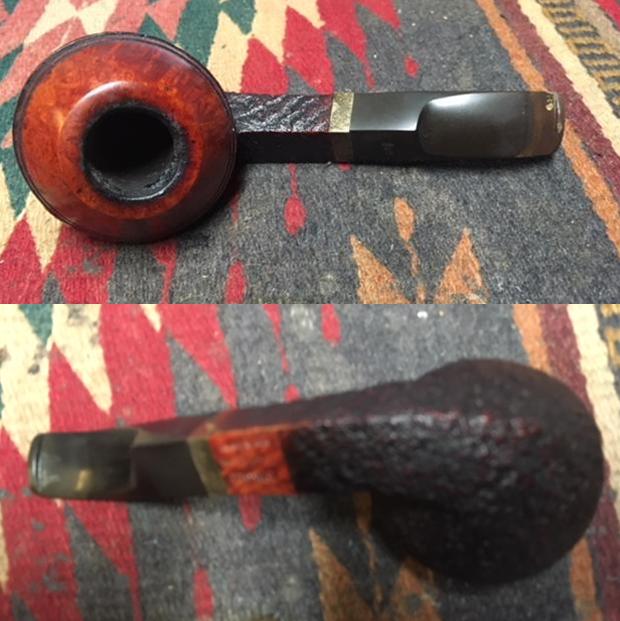
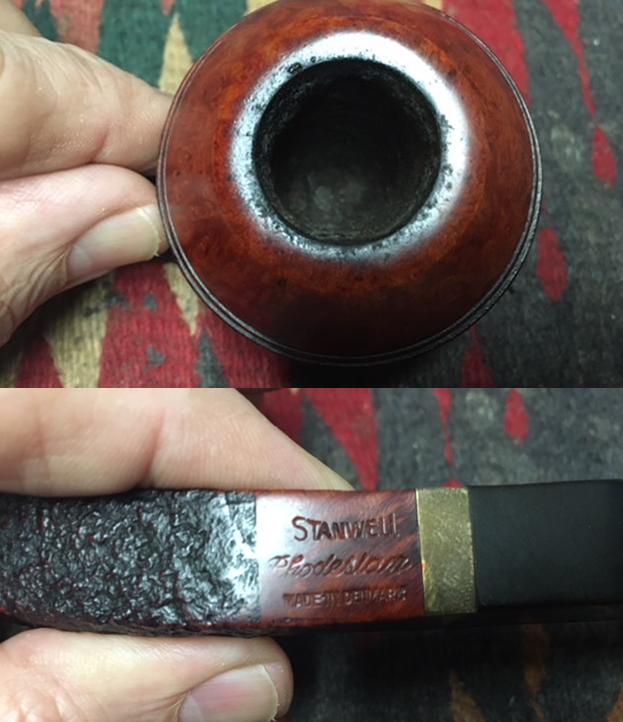
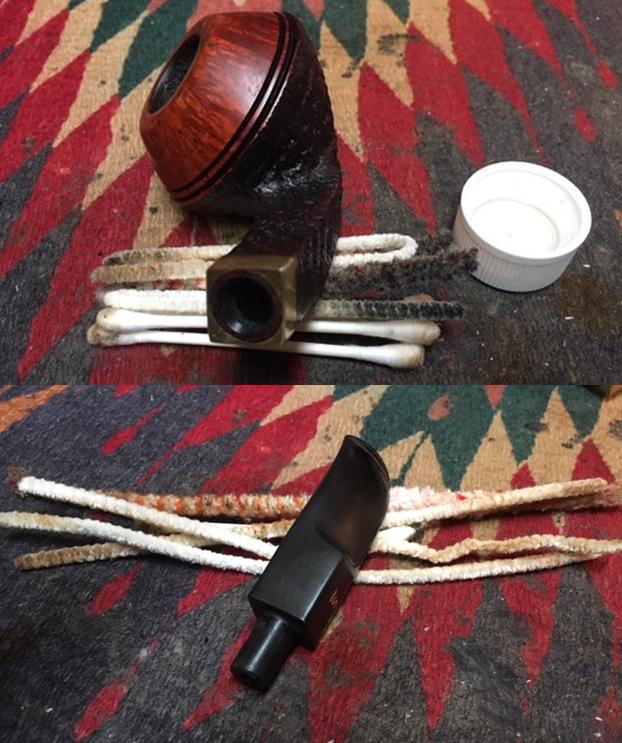
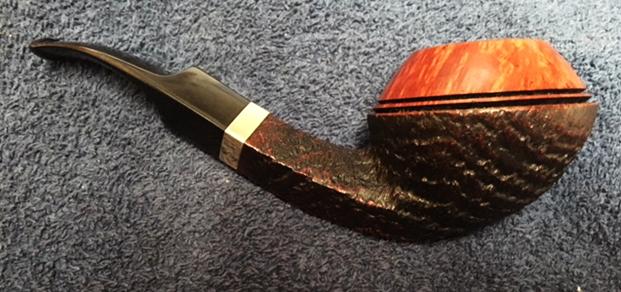
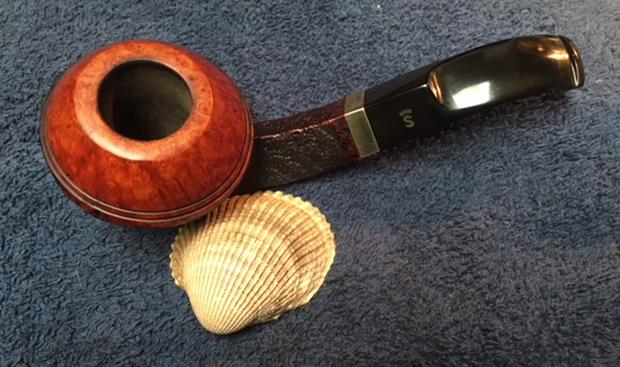
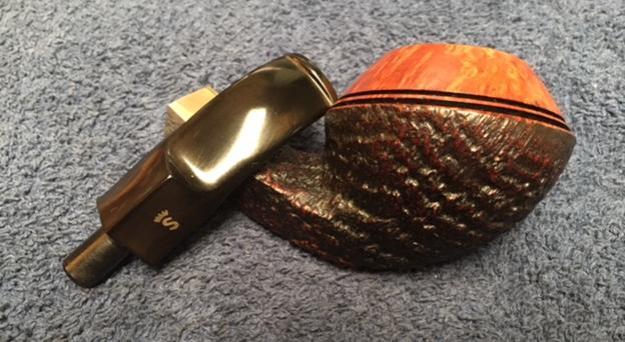
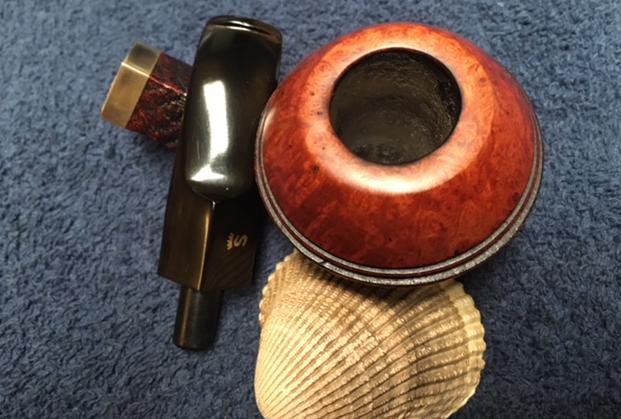
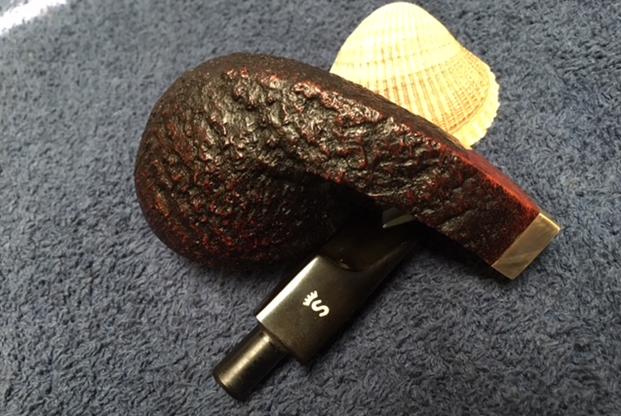
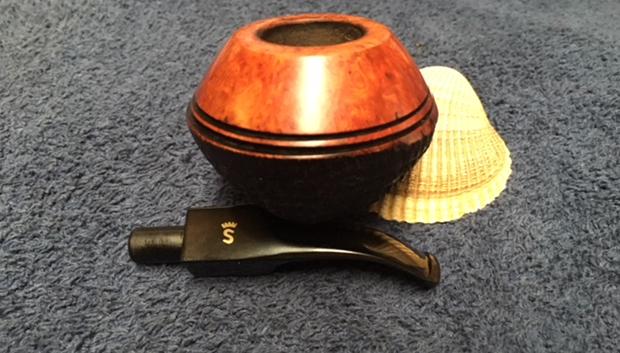
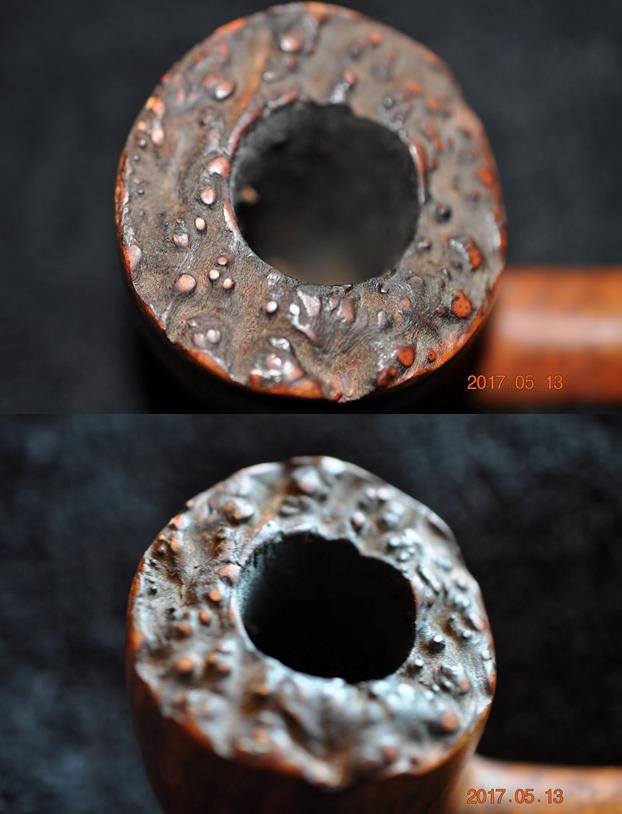
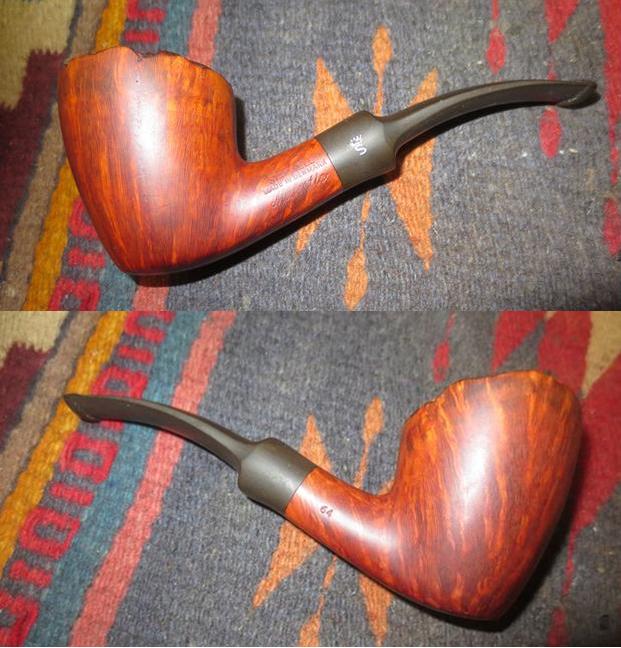
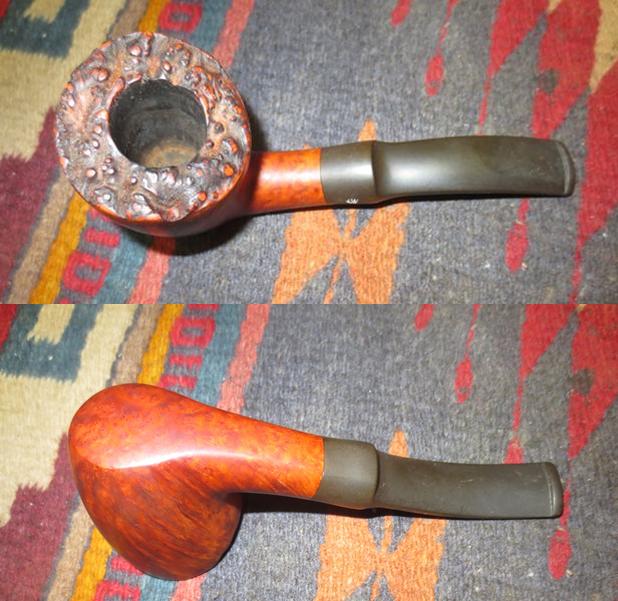
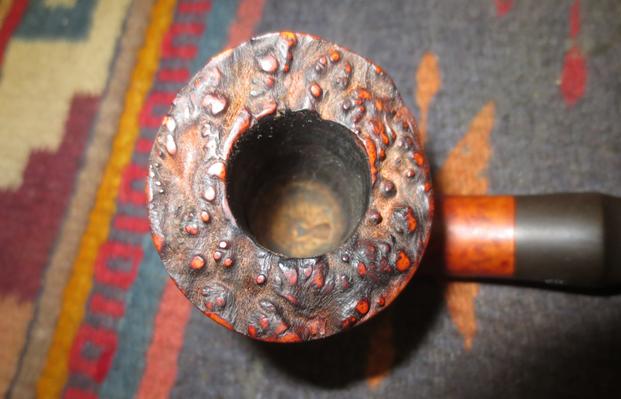
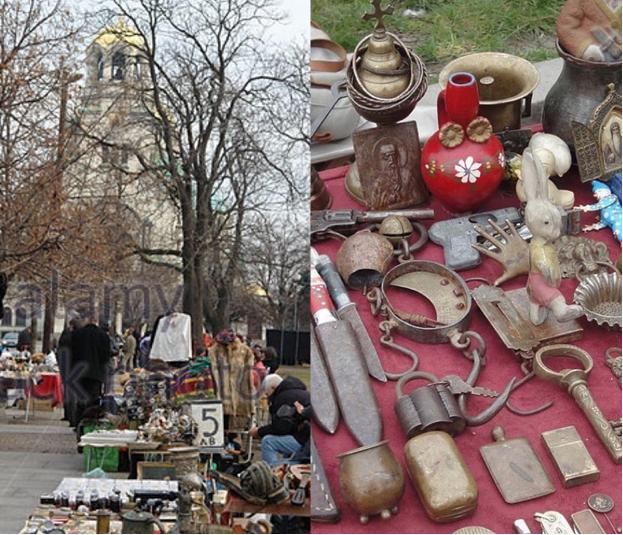
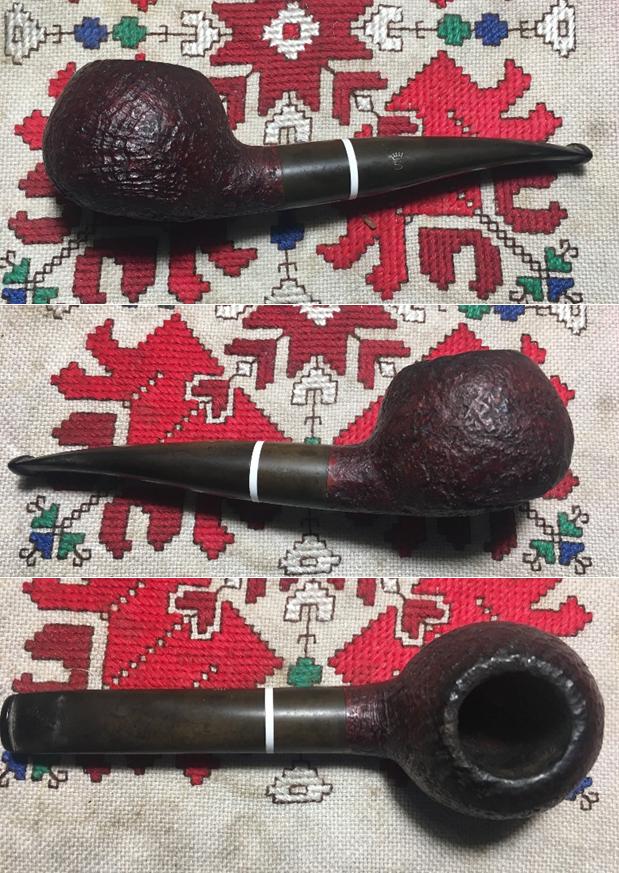
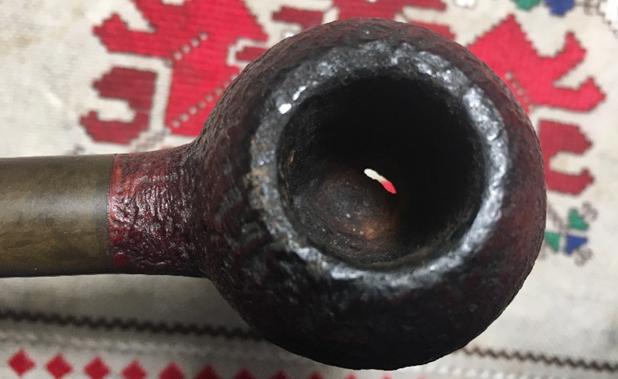
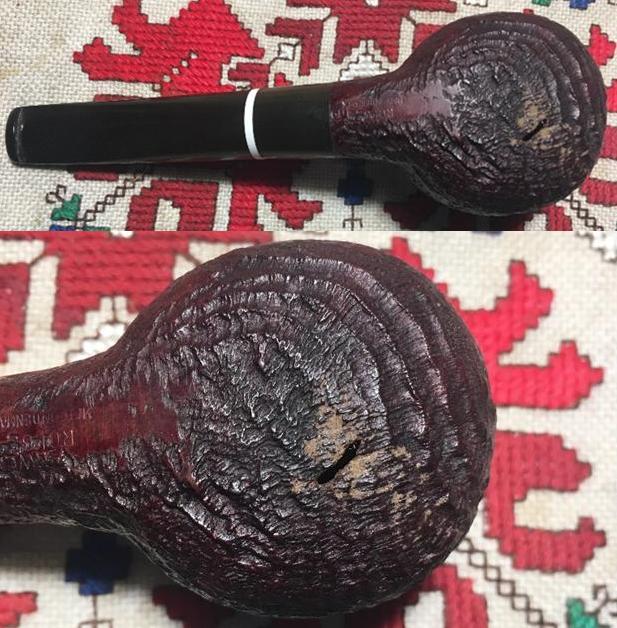
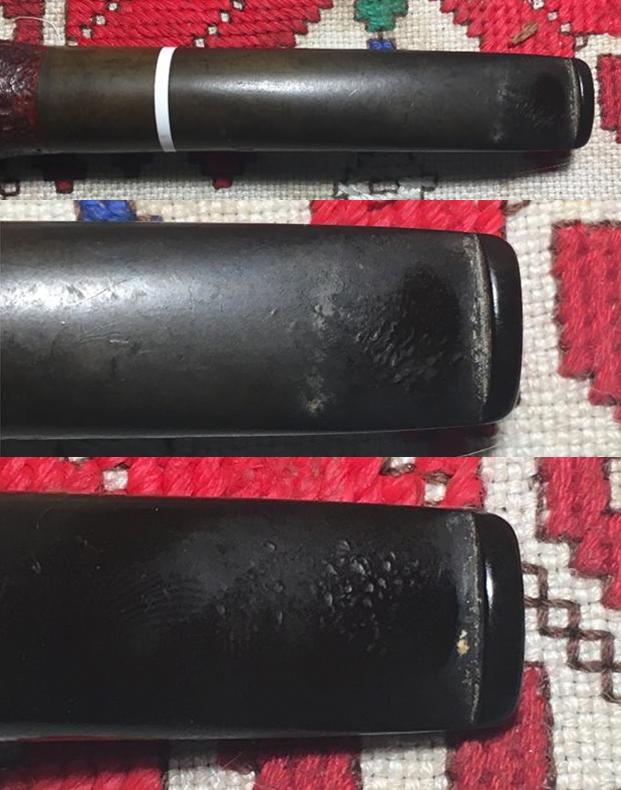
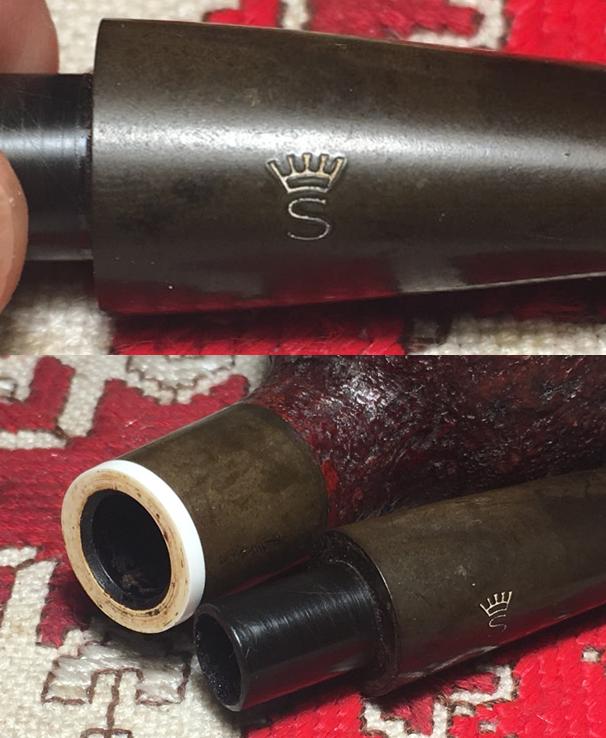
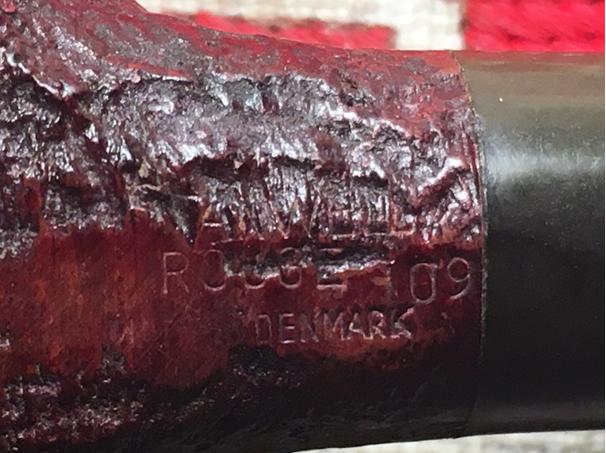
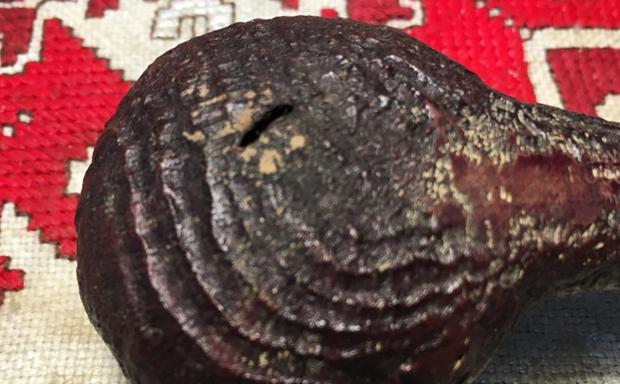
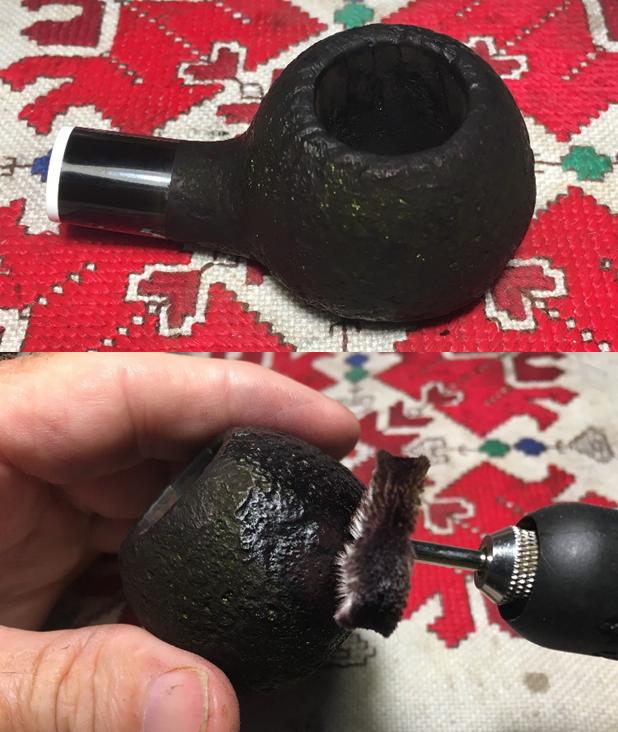
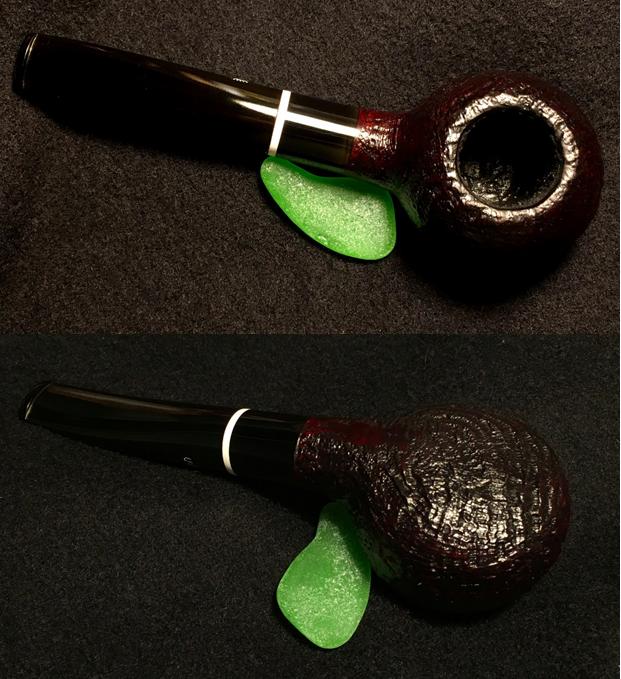
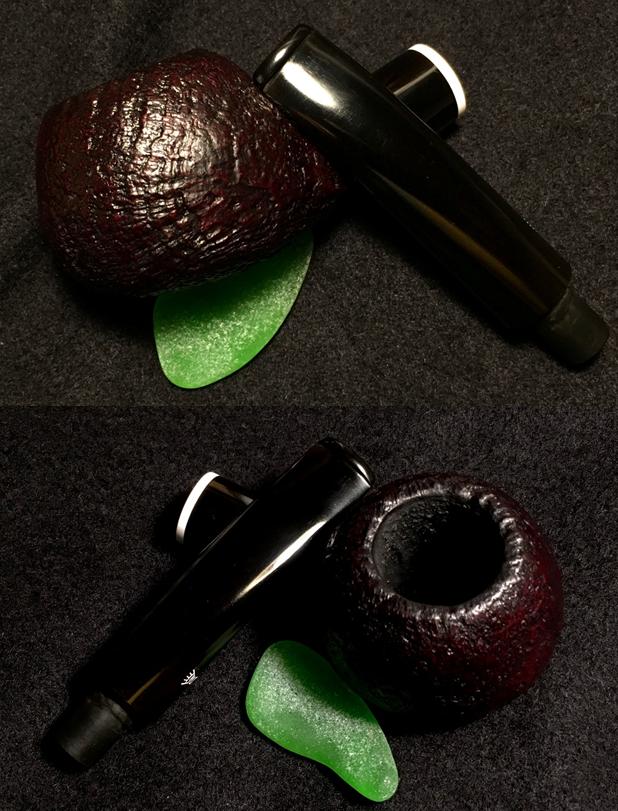
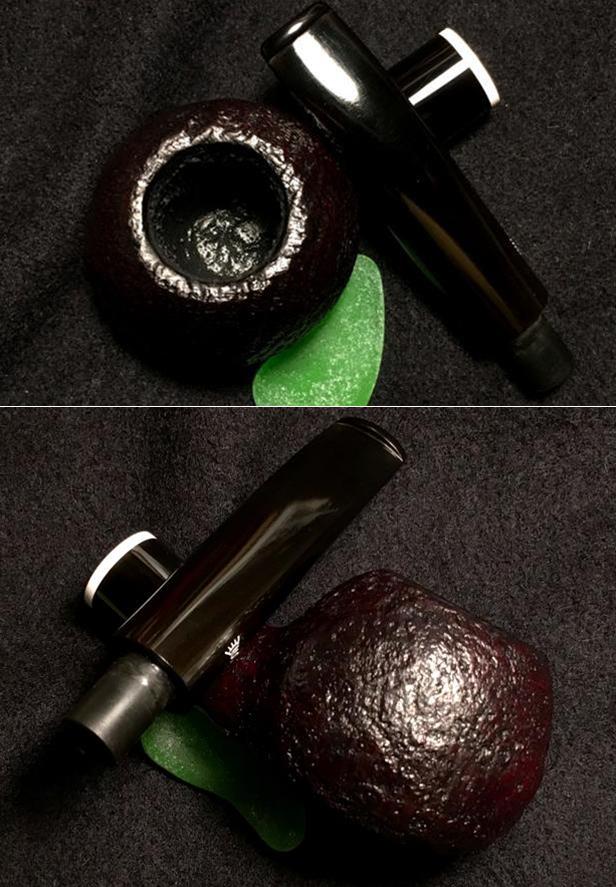
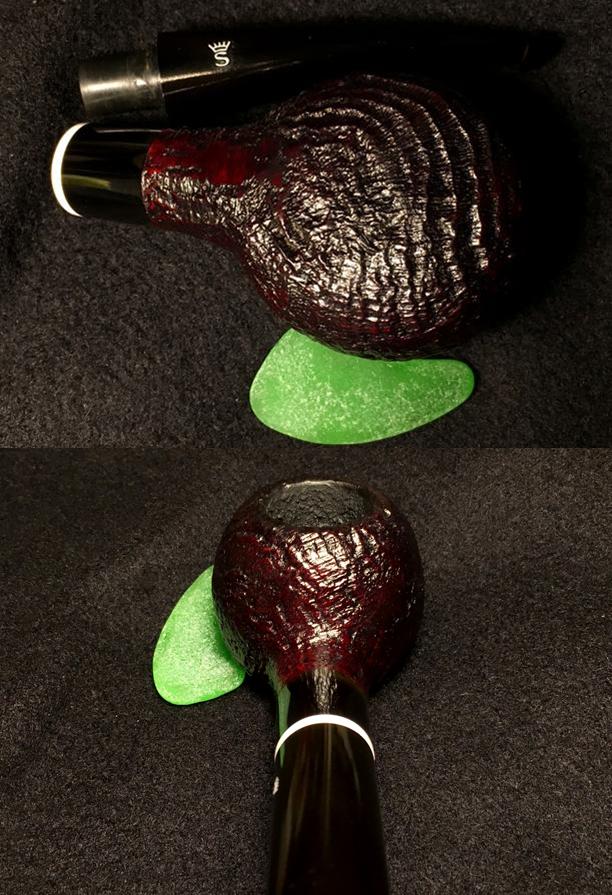
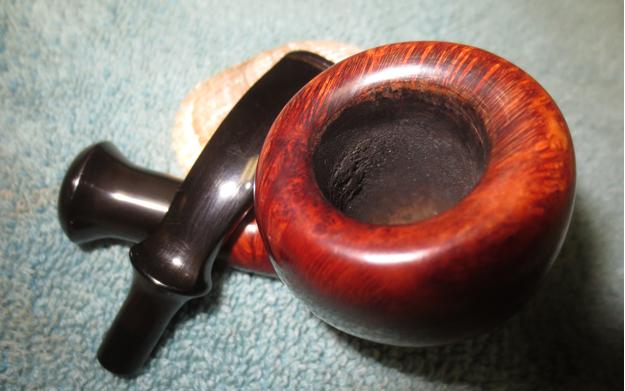
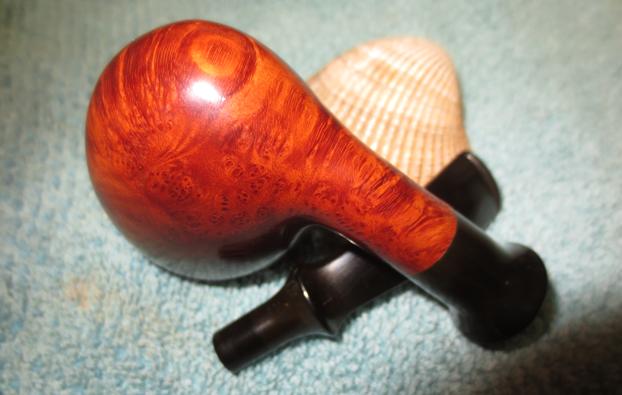
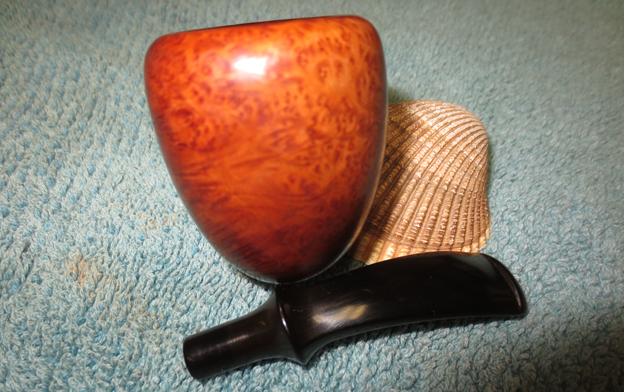
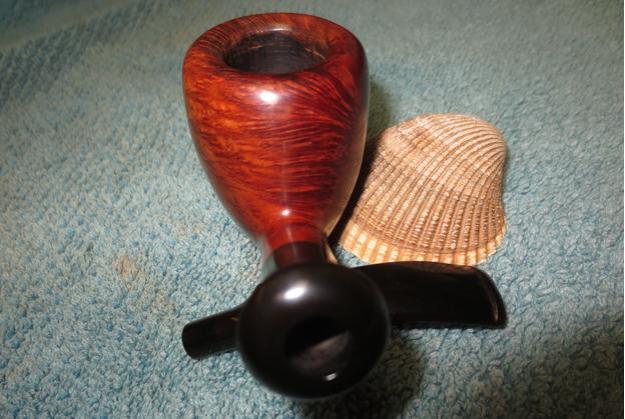
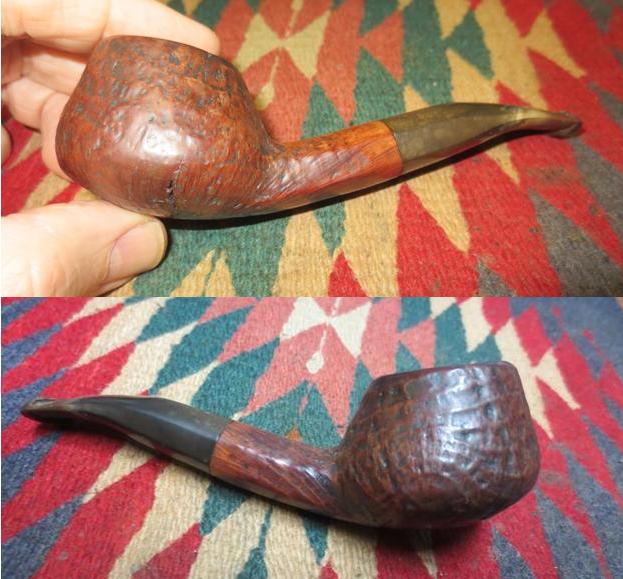
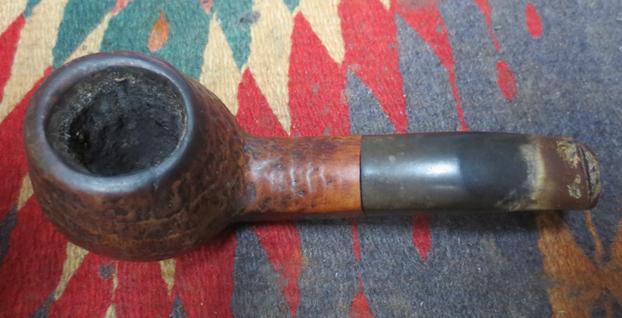
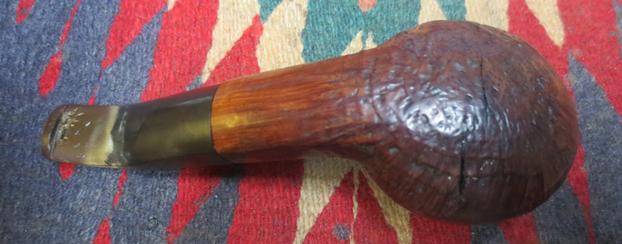
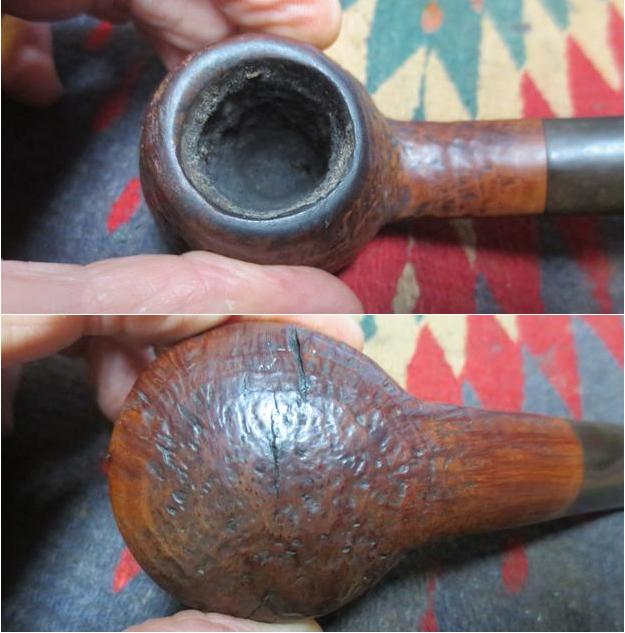
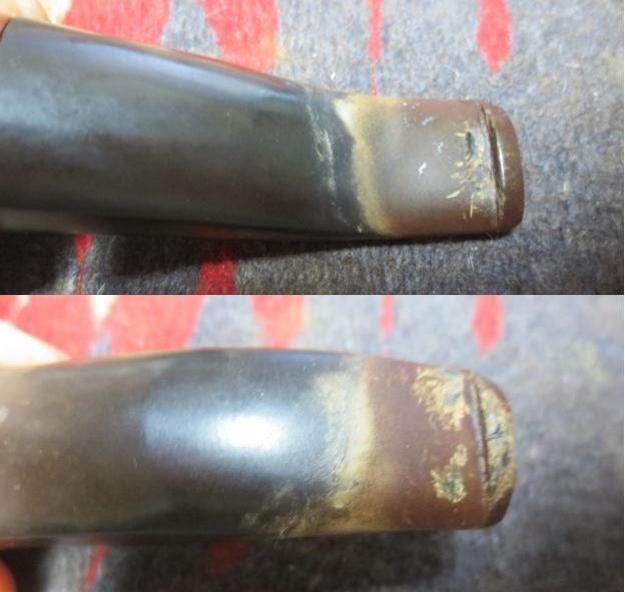
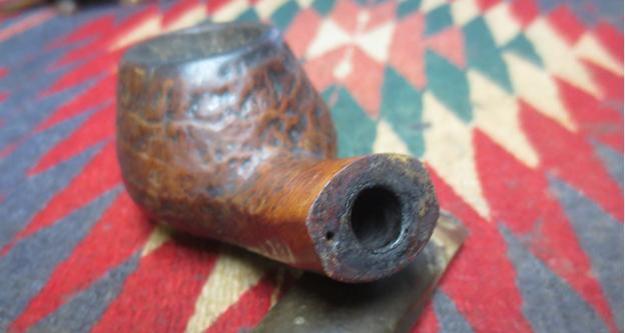
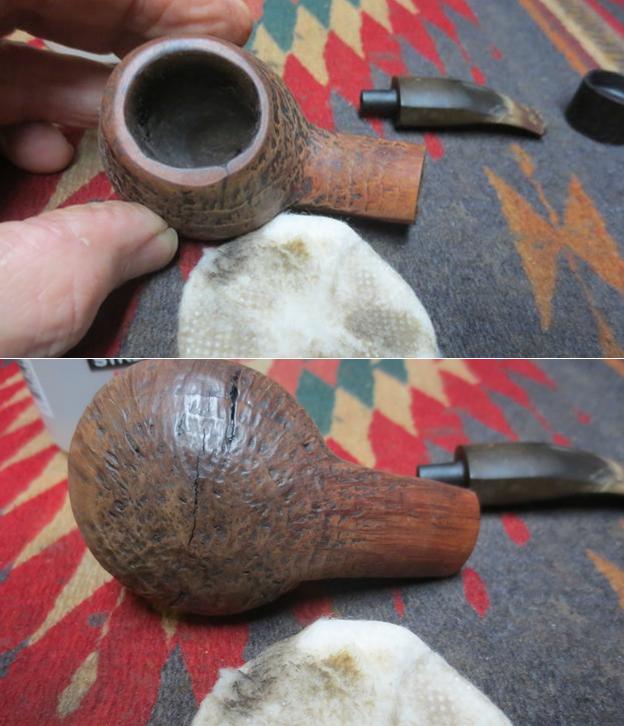
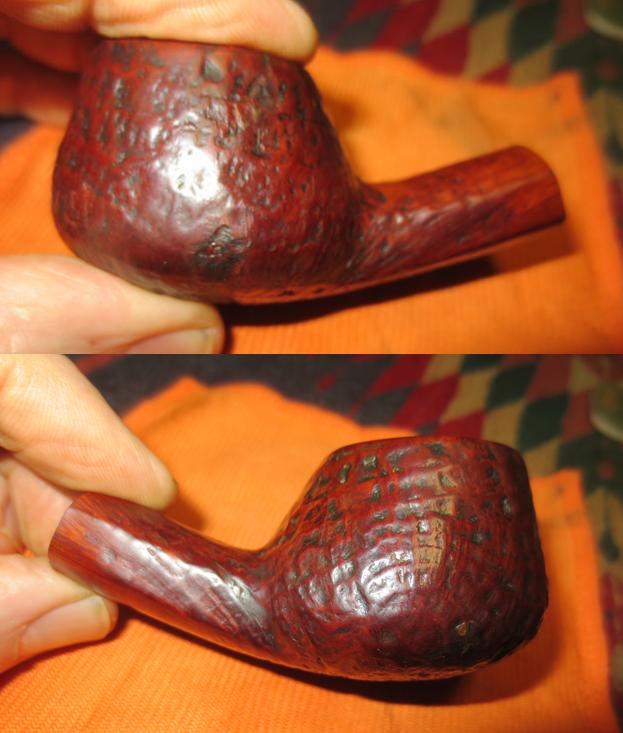
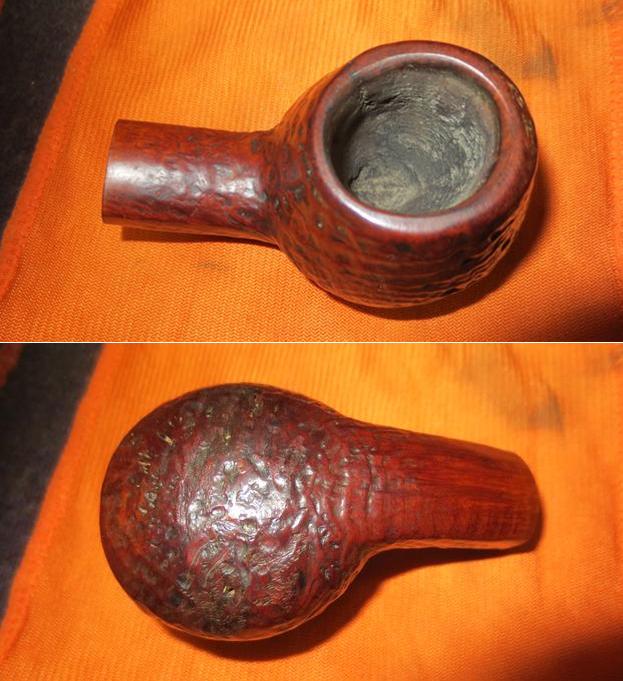
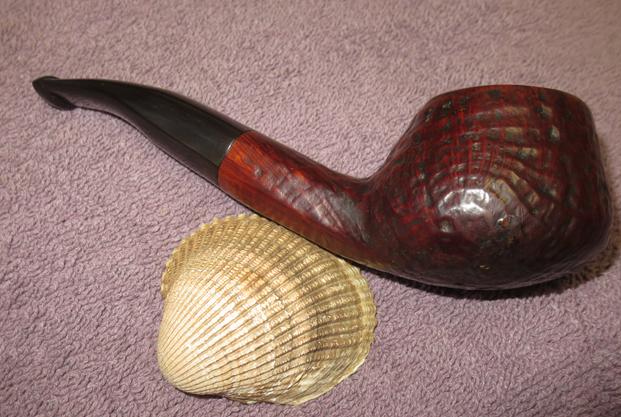
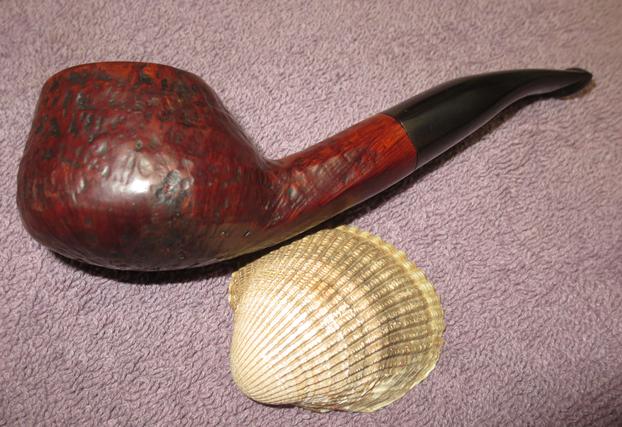
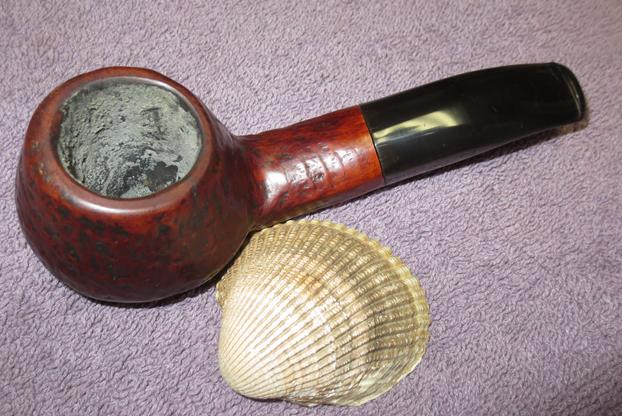
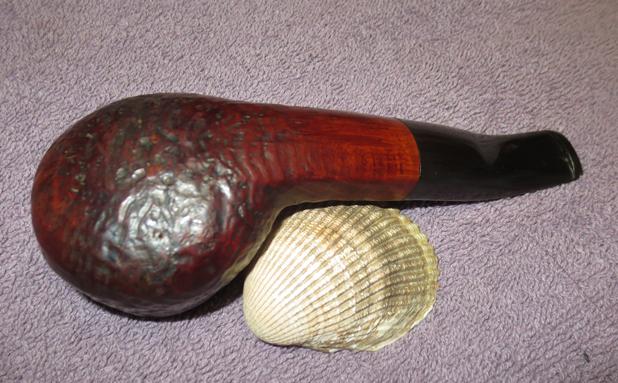
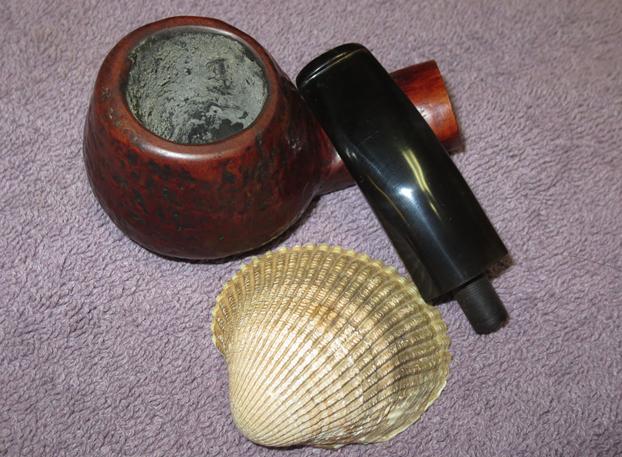
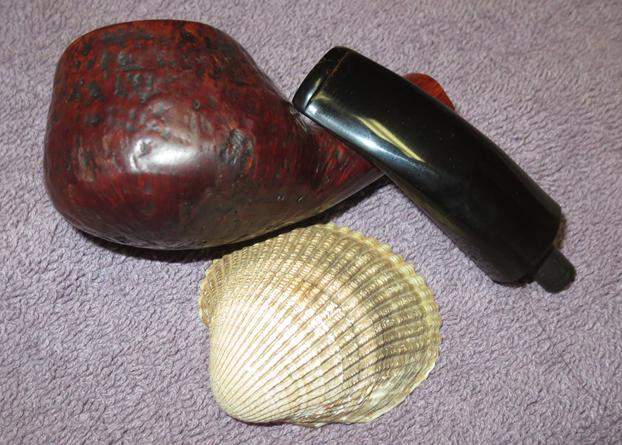
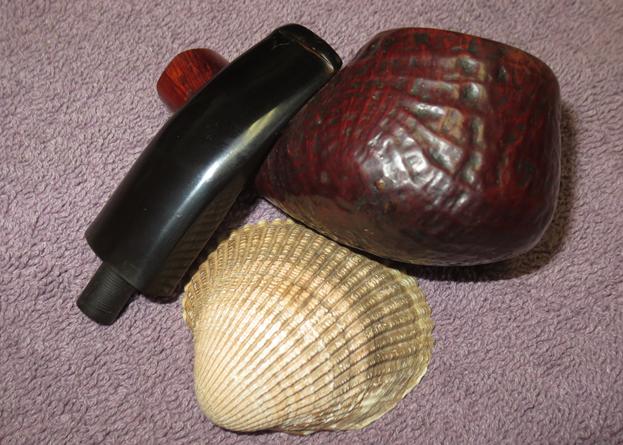
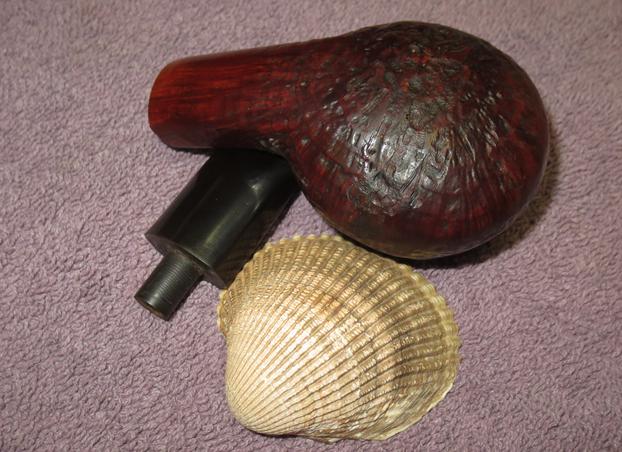
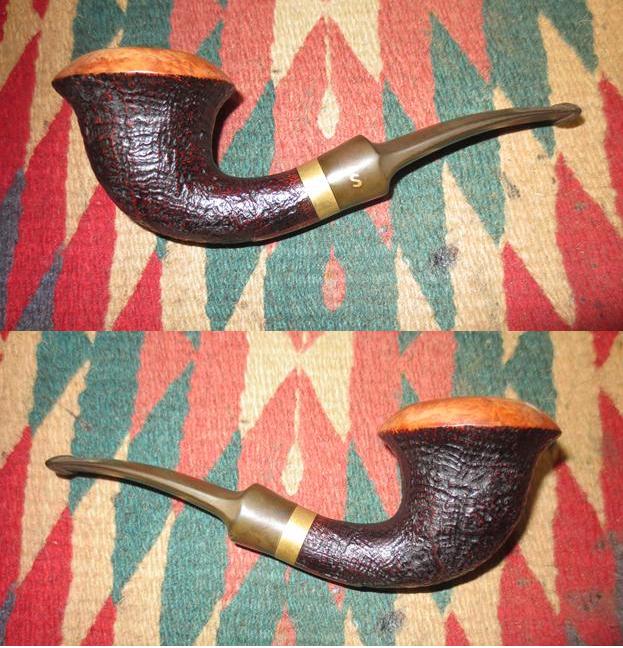
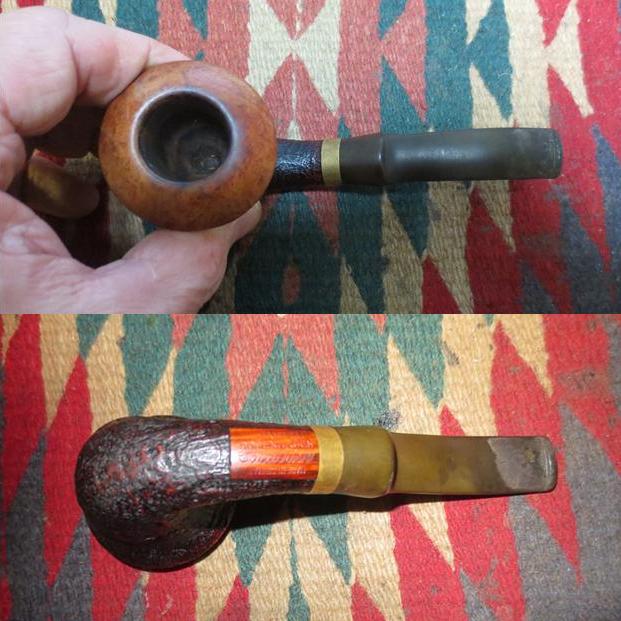
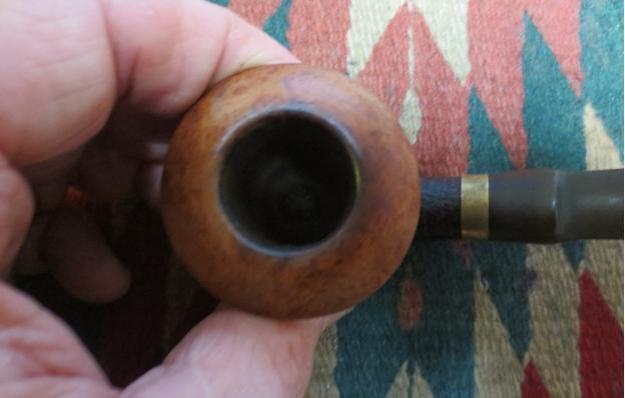
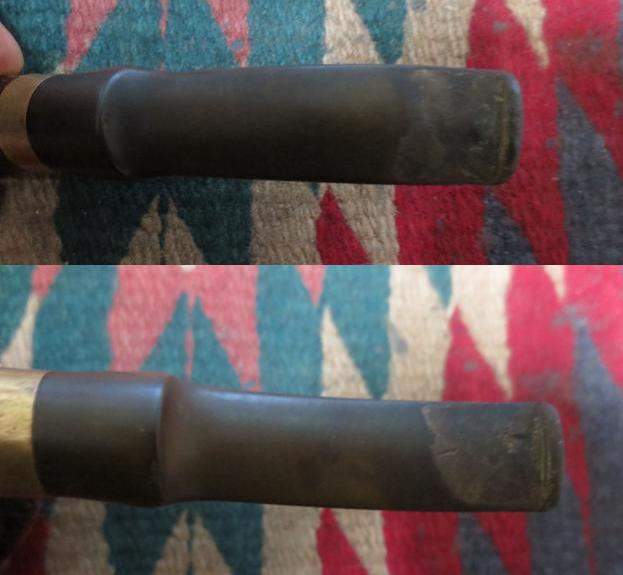
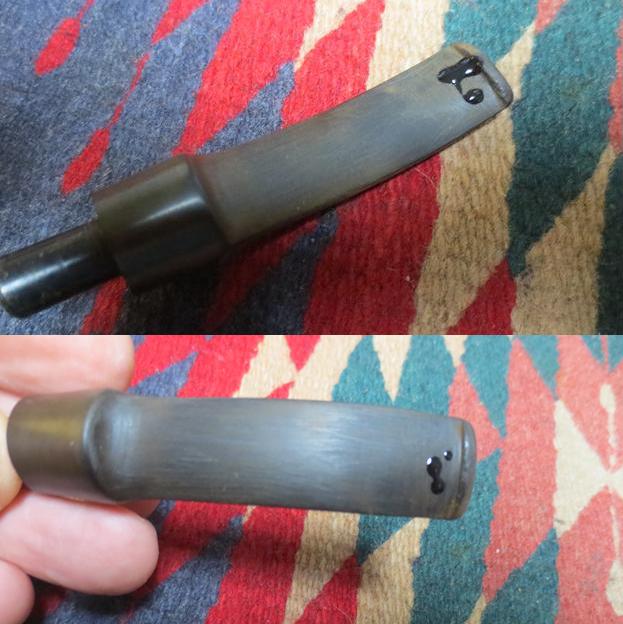
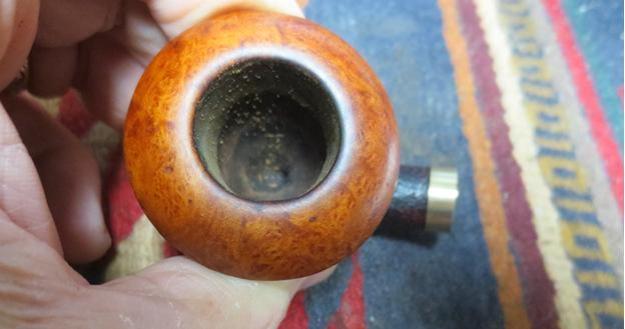
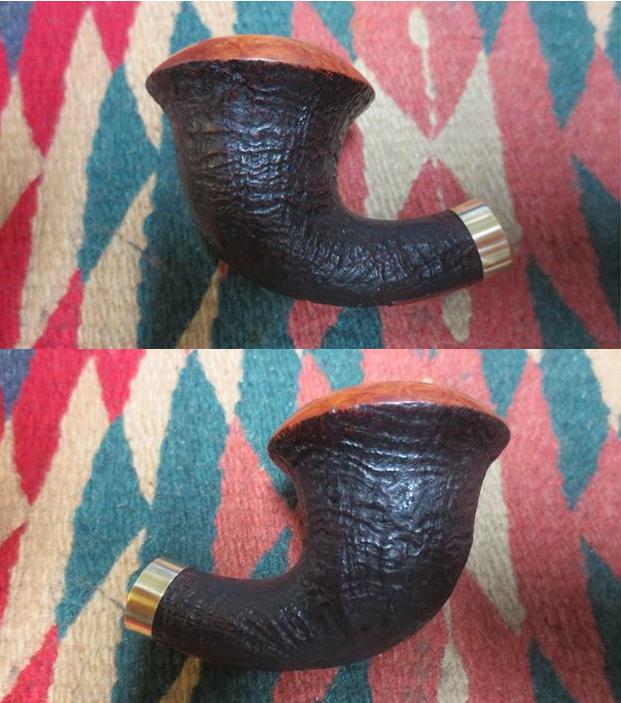
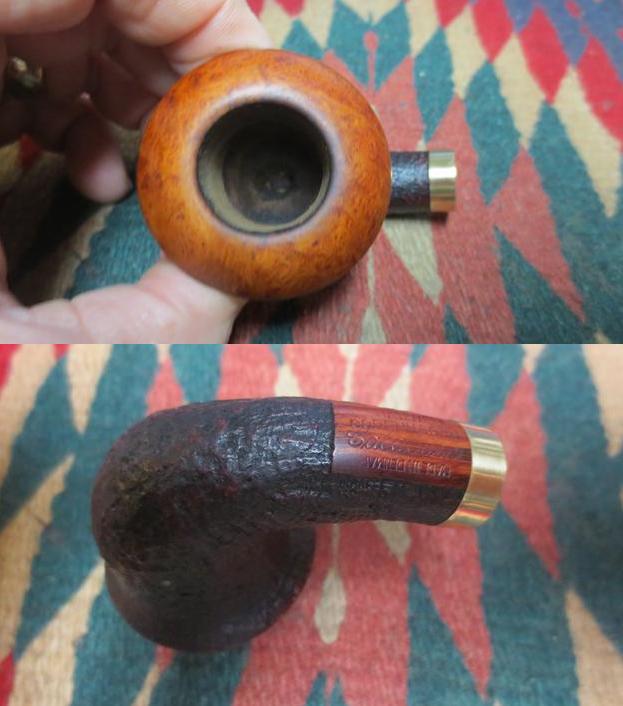
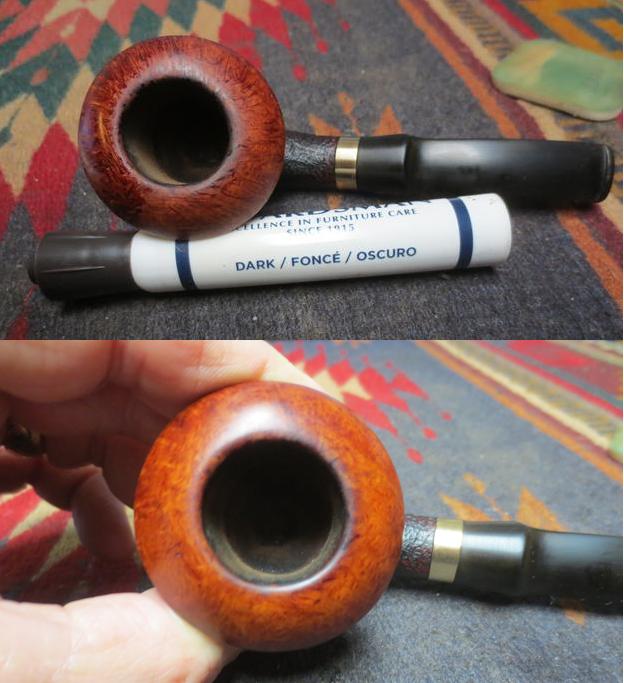
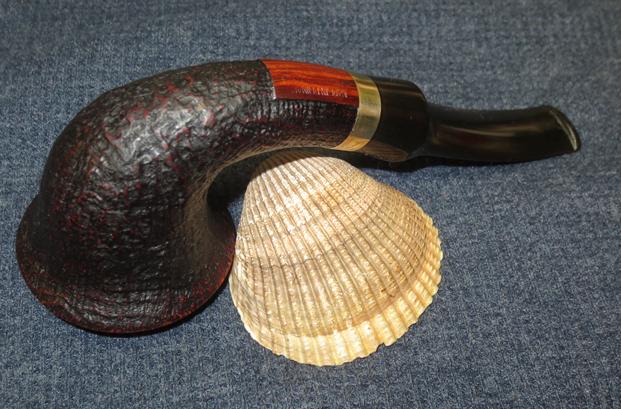
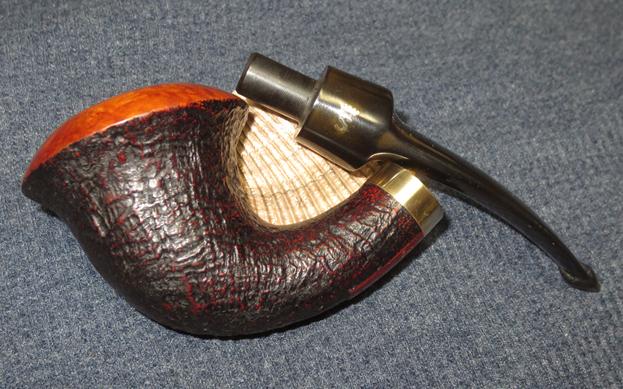
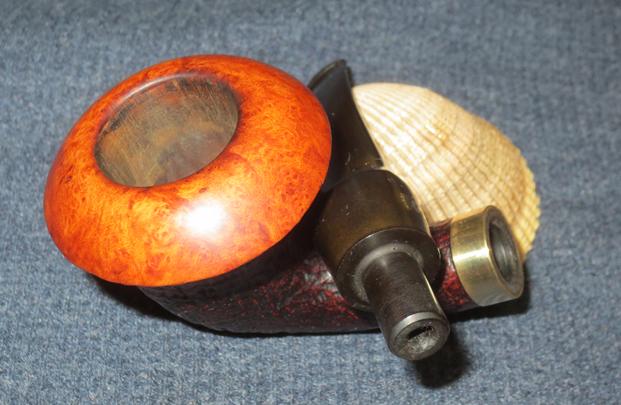
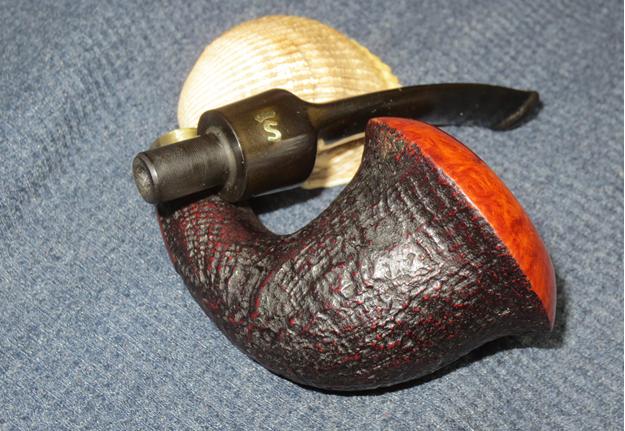
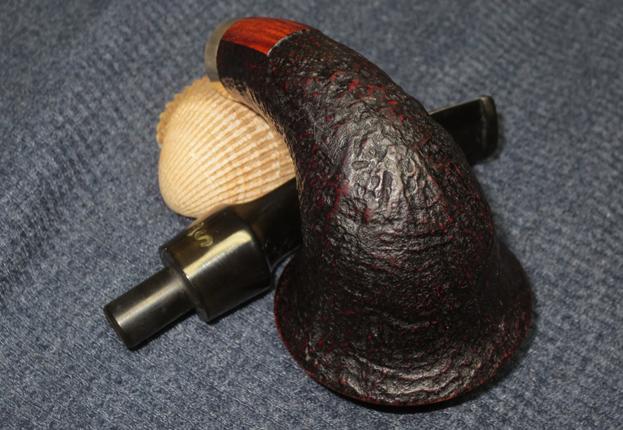
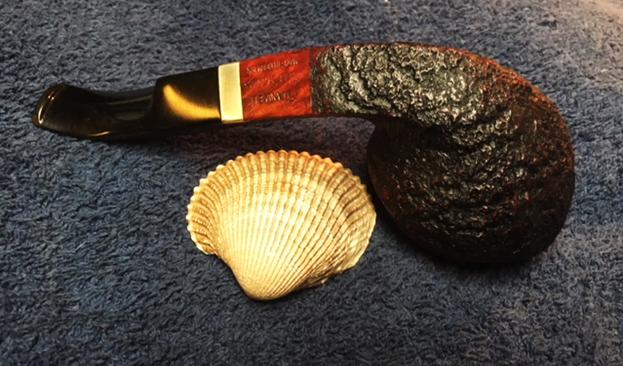
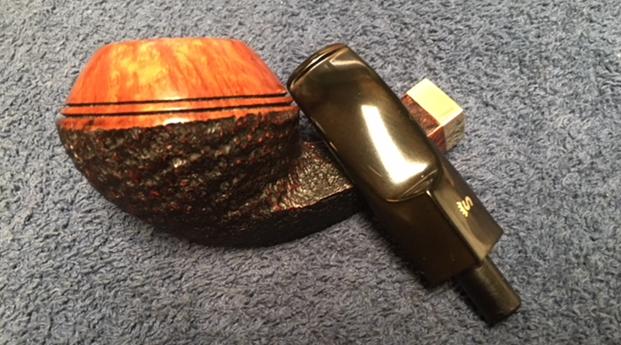
Stephen, a friend visiting Bulgaria from Rainbow City, Alabama, and I were walking through the Antique Market in the shadow of Nevski Cathedral in center city Sofia, when I my roving ‘pipe eyes’ spied an unbelievably nice looking, hefty, handful of a sand blasted Ball or Apple shaped pipe waiting on a table gratuitously mixed with WWII paraphernalia, old Communist memorabilia, skeleton keys and an assortment of cork screws, lighters and want-a-be Rolex watches.  This pipe, though, was the real deal.  With Stephen by my side, I did my best not to lock my eyes on the prize.  Finally, after I gave serious non-interested examination of the seller’s other offerings, I picked up the pipe and gave it a cursory, equally, non-interested look over.  As I looked down into the chamber, I saw my opportunity.  There was daylight at the bottom of the chamber – a hole, my leverage for the negotiation.  A quintessential burn through.  With my index finger at the chamber floor, it was sharply wedged downwardly so that the wearing, digging and burning finally was more than the briar could handle.  Turning the pipe over in my hand I read the nomenclature stamped on the underside of the shank – STANWELL (barely visible in the blasted briar) [over] ROUGE 109 [over] MADE IN DENMARK.  The hefty sand blasted stummel received my initial attention, and then the vulcanite shank extension I had not seen too often.  I laughed after the seller gave me his opening volley.  At the end of the day, both Stephen and I were happy.  The deal struck for the Stanwell Rouge was very satisfactory given that the hole in the bottom of the pipe just would not go away no matter what the seller said.  As we headed to the Metro Subway, Stephen proposed that he become the next steward of the Stanwell after I tackled the burn through.  So, some time later, Stephen emailed me from Alabama, saying he was still interested in the Stanwell.  Now on my worktable here in Sofia, Bulgaria, the time has come to recommission him. Here are the pictures from my worktable.  I recalled that Steve had posted a blog by Bas Stevens, who, according to Steve, was one of the foremost authorities on Stanwell pipes (See: LINK HERE).  Bas Steven’s extensive list of Stanwell shape numbers and designers also included this Rouge’s shape 109, which is described as:  109. Flat, ball-shaped bowl, slightly bent, full mouthpiece.

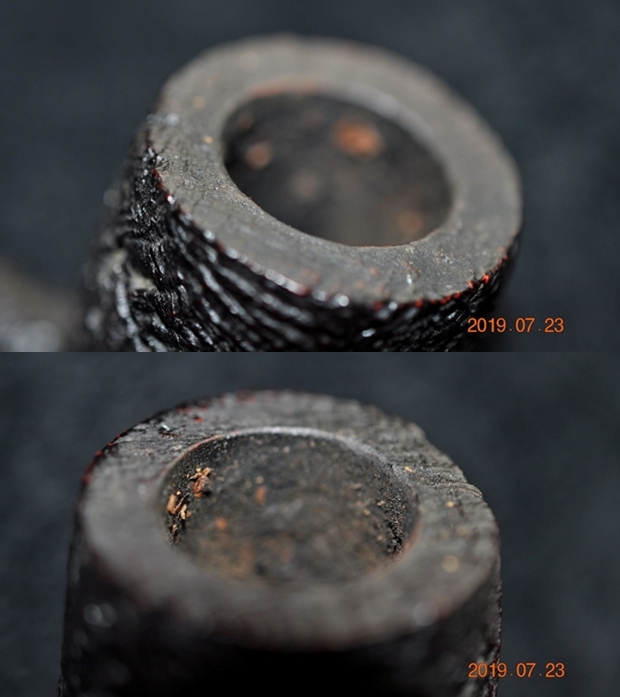
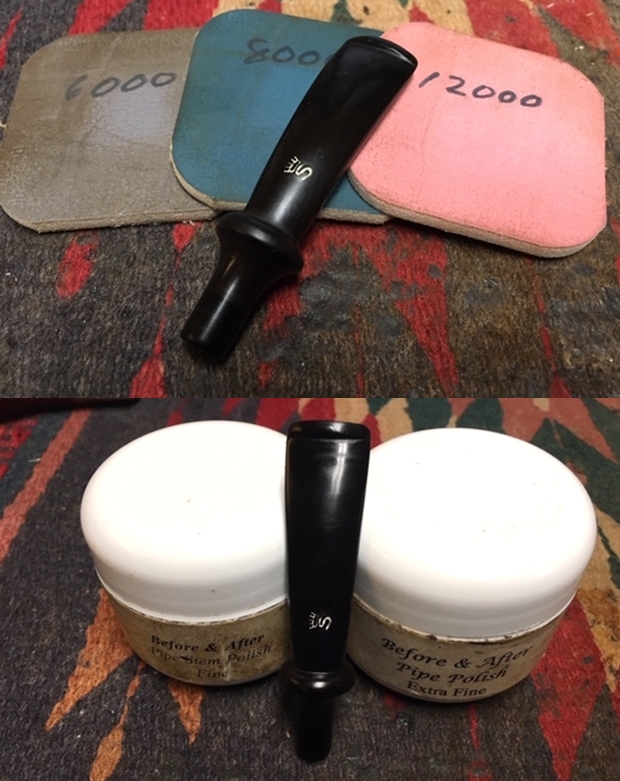
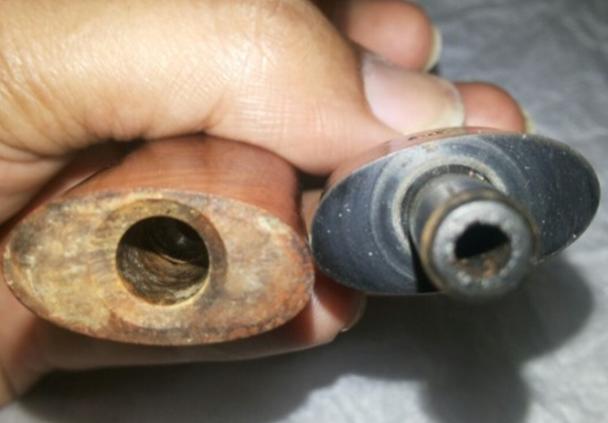
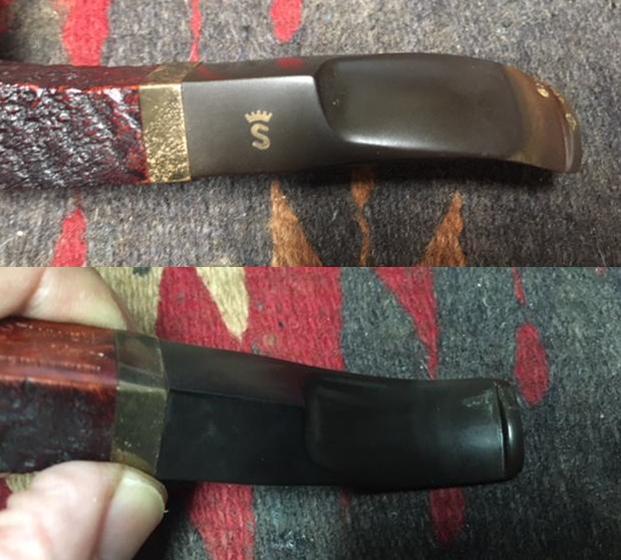
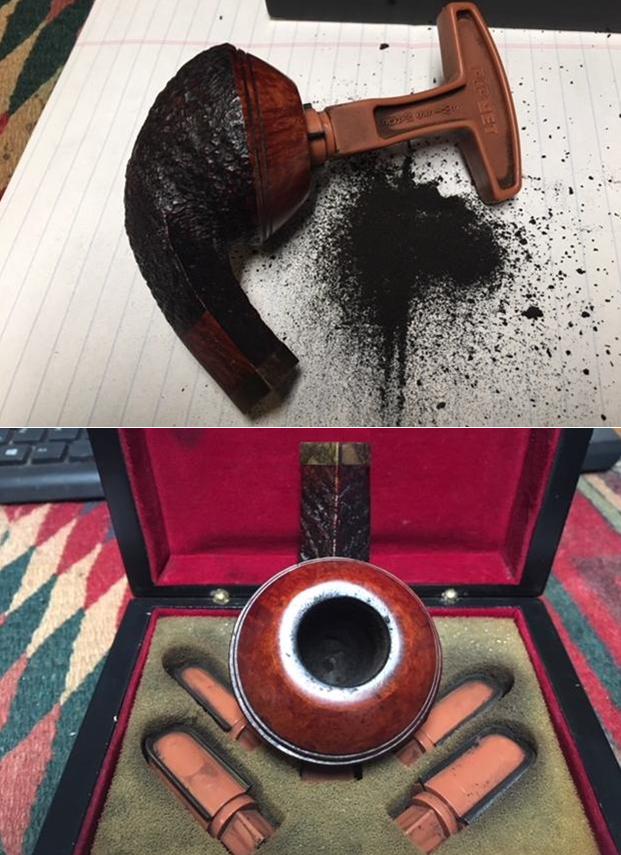
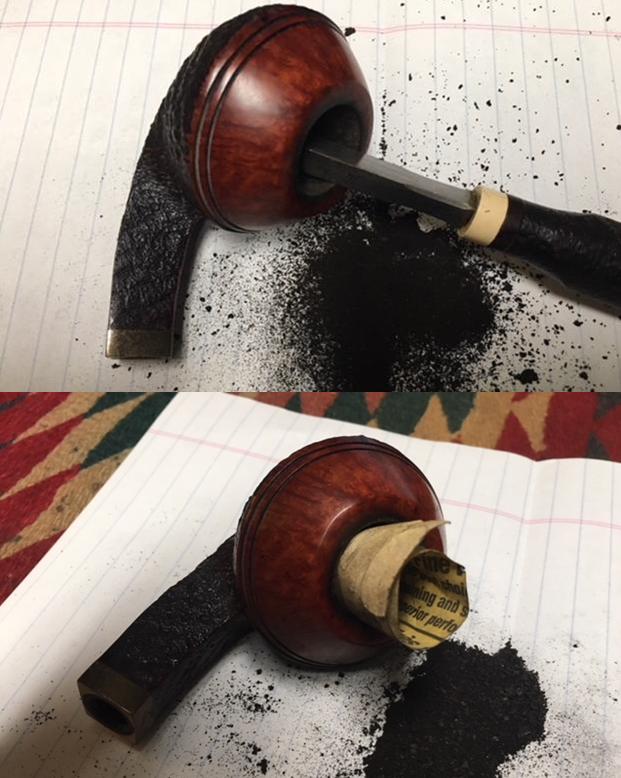
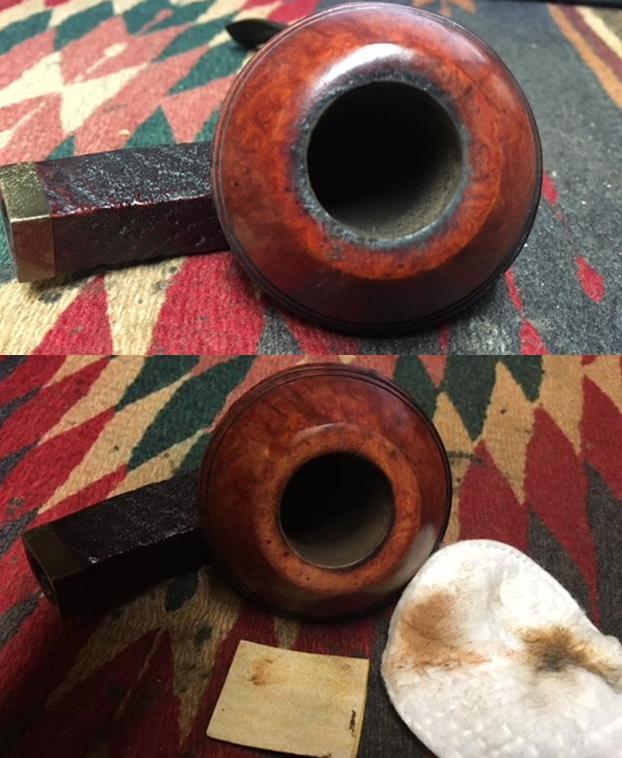
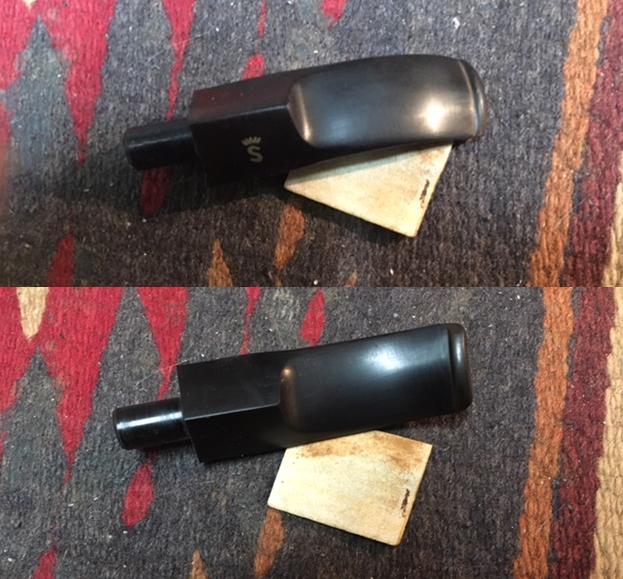
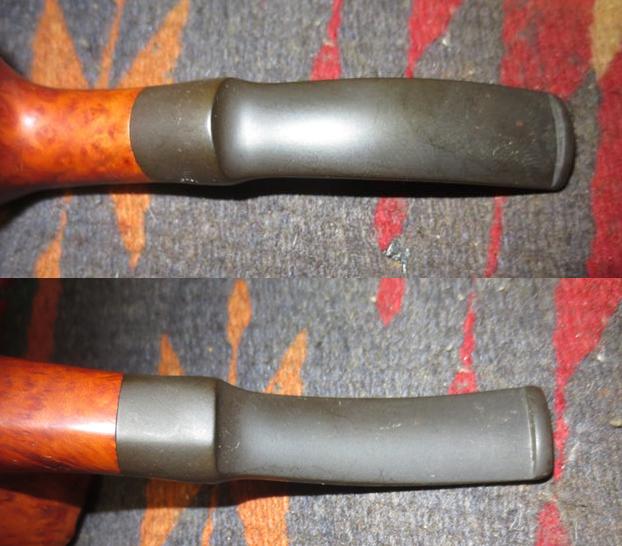
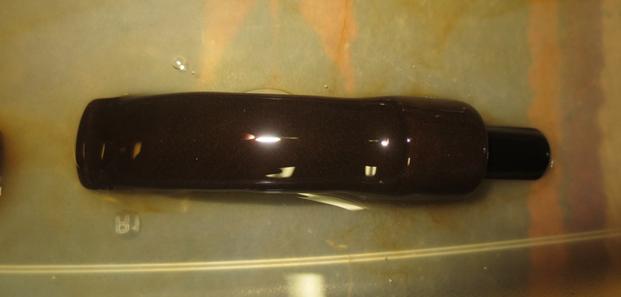
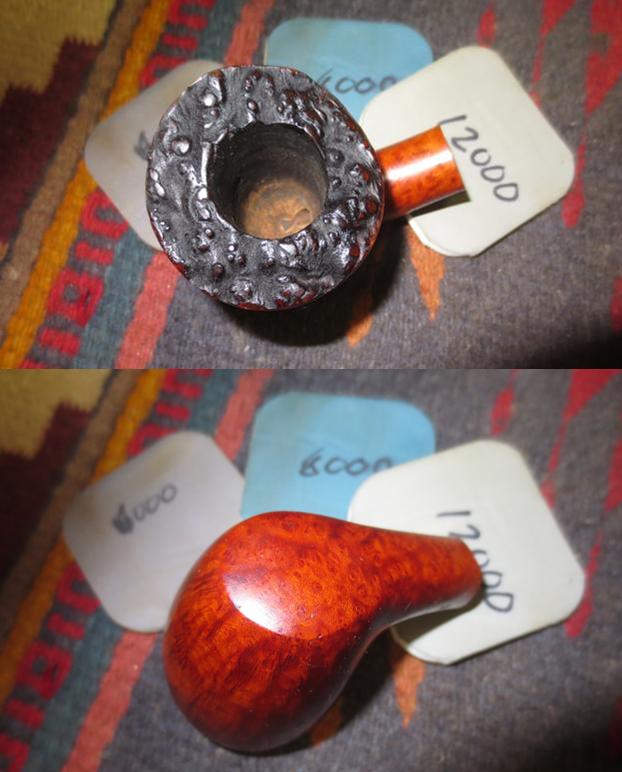
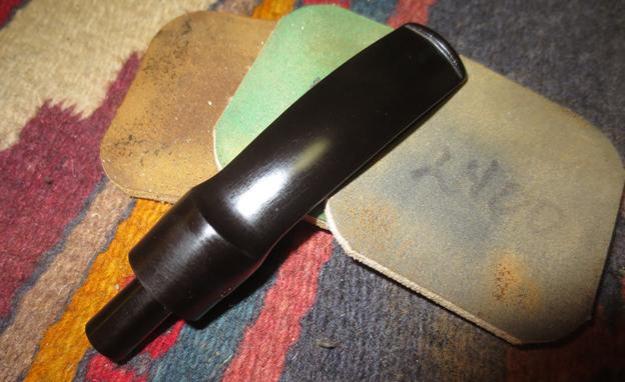
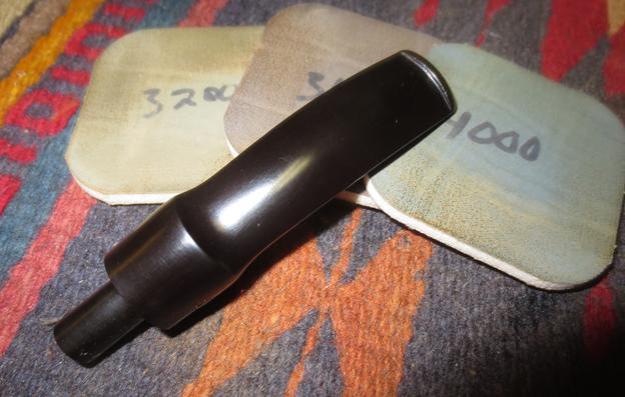
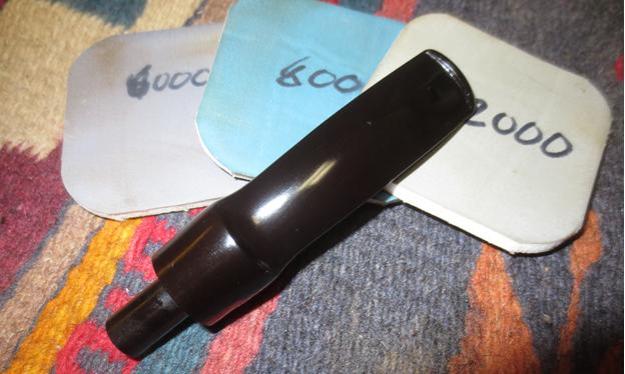
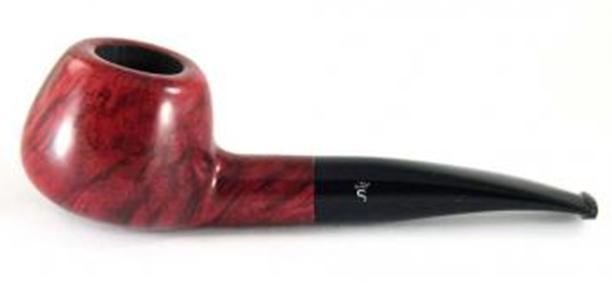
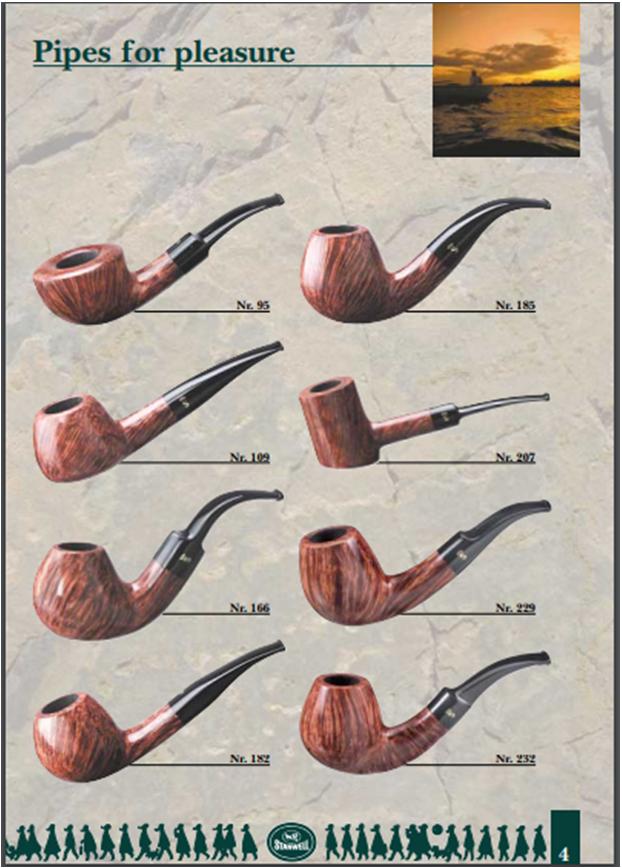
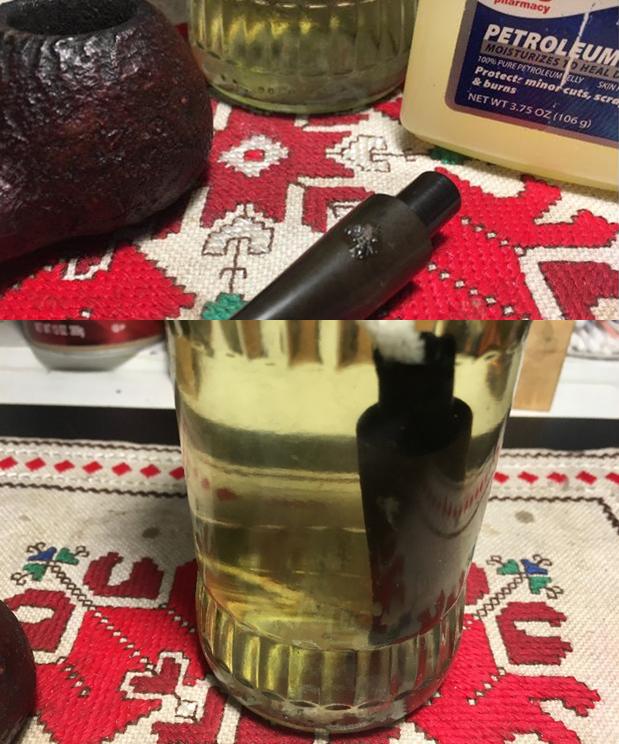
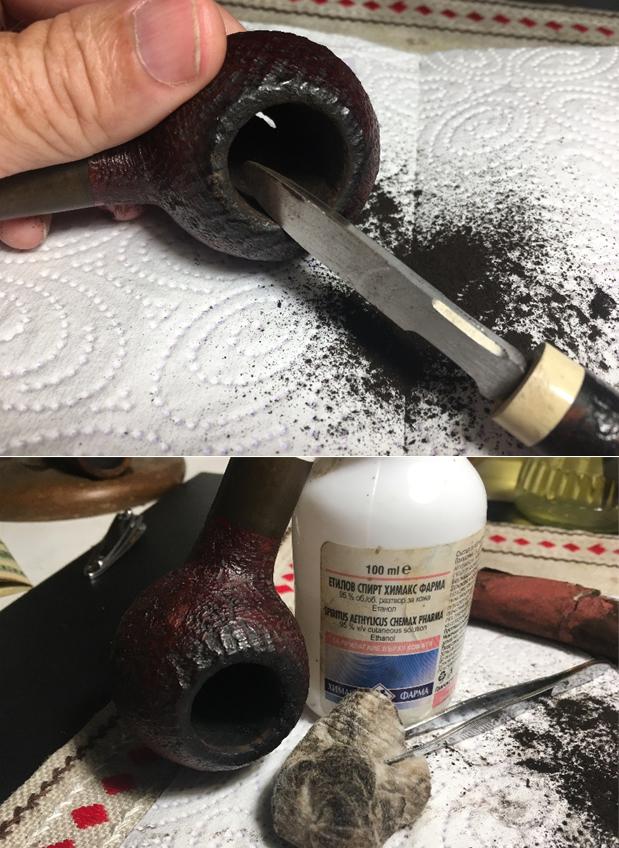
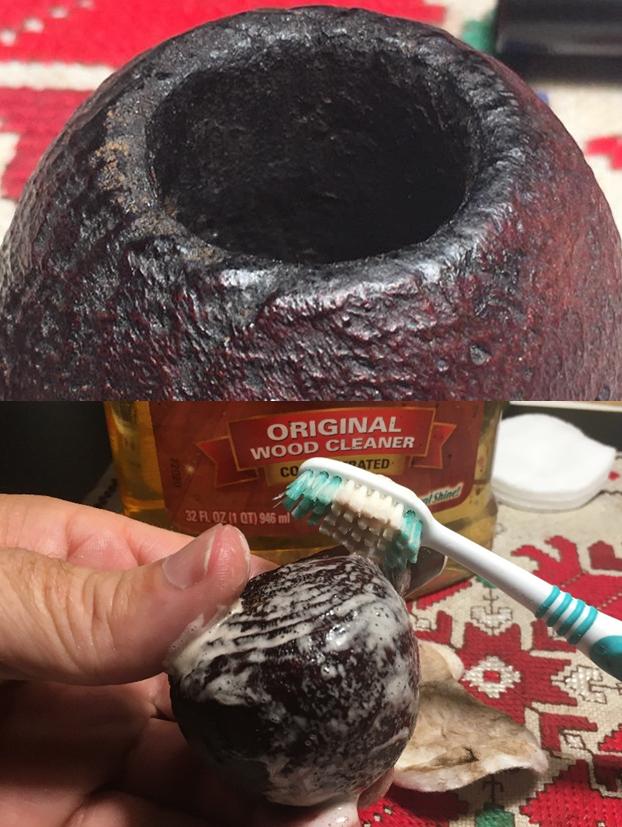
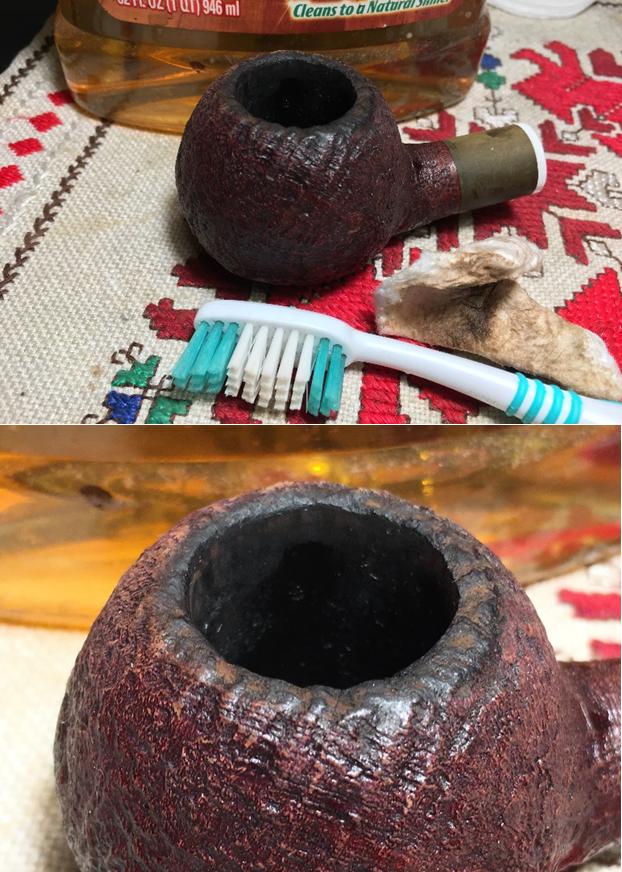
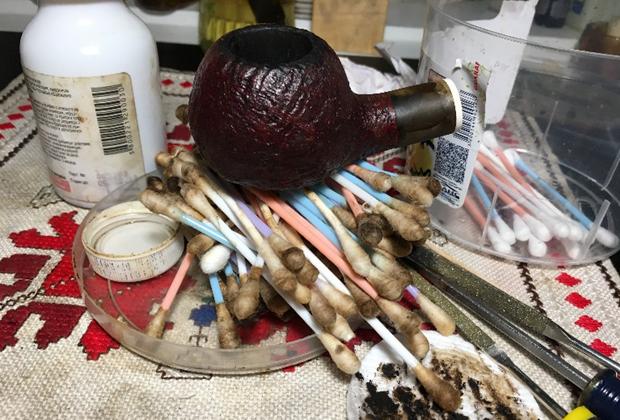
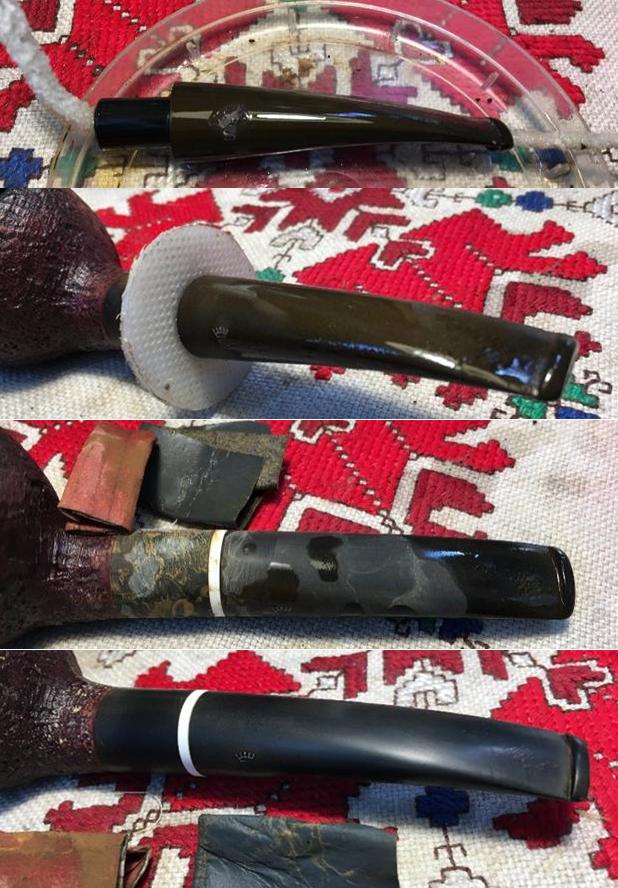
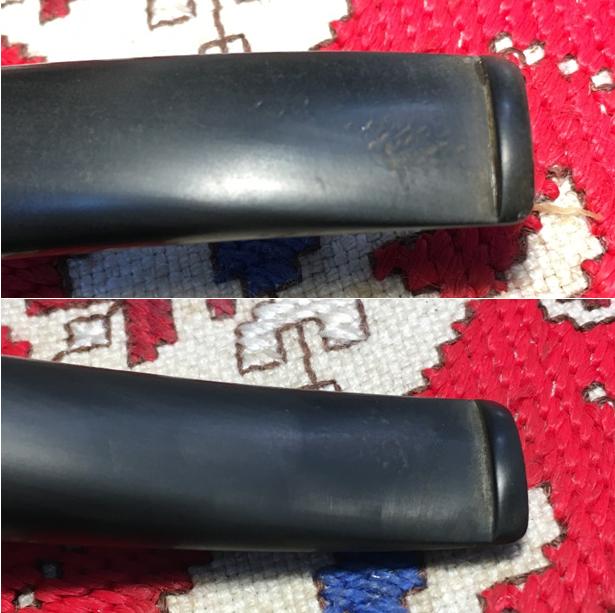
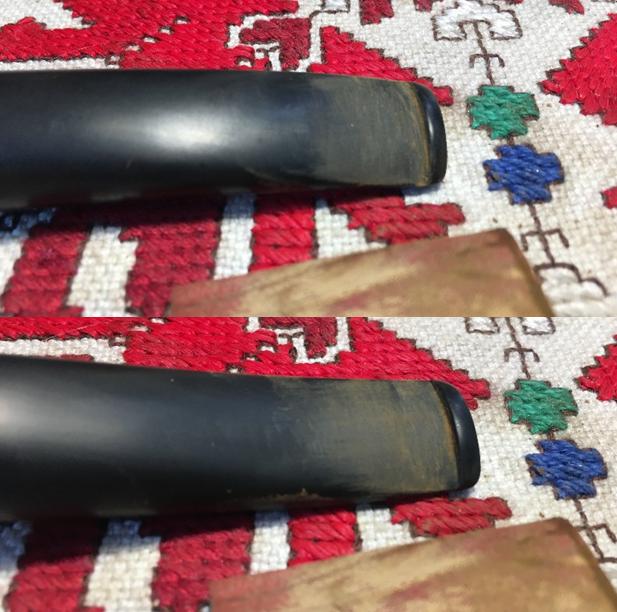
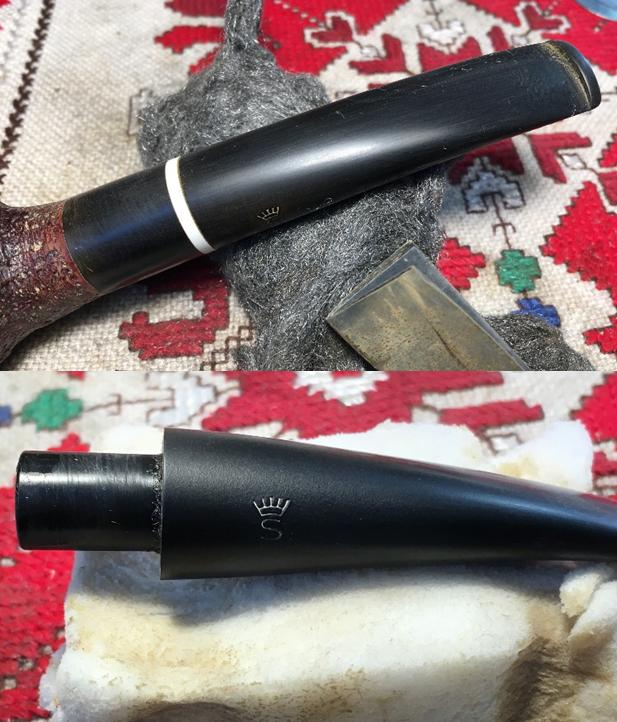
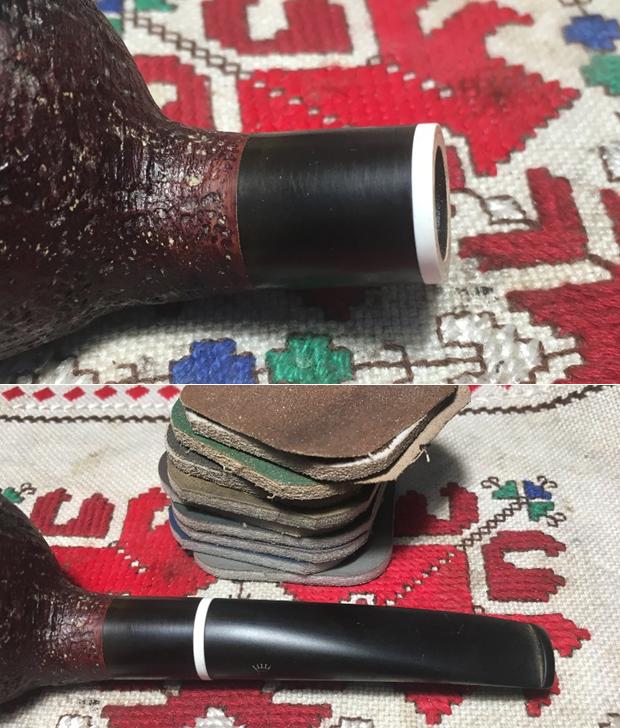
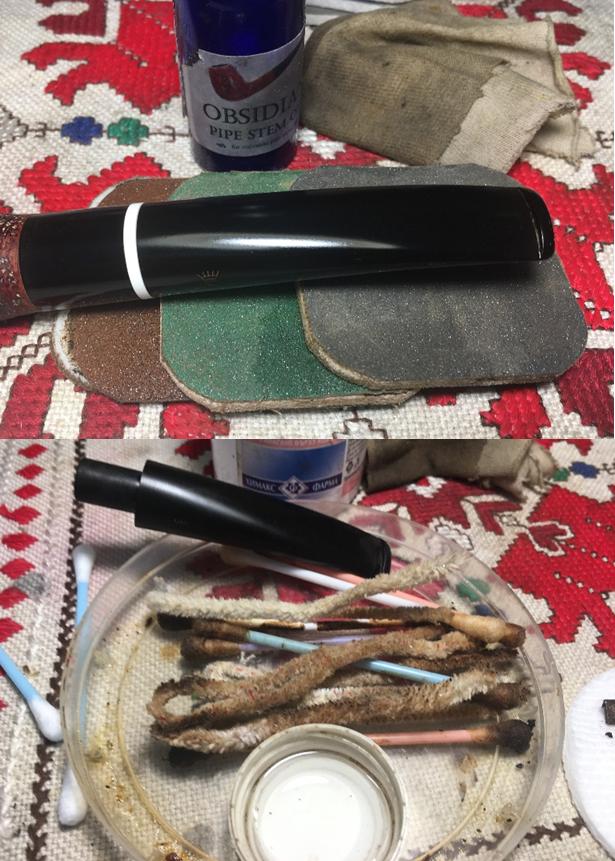
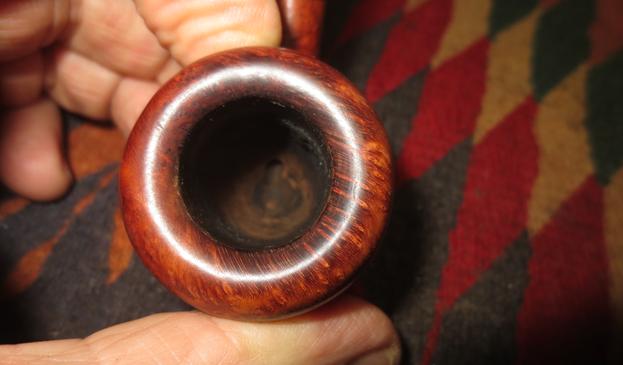
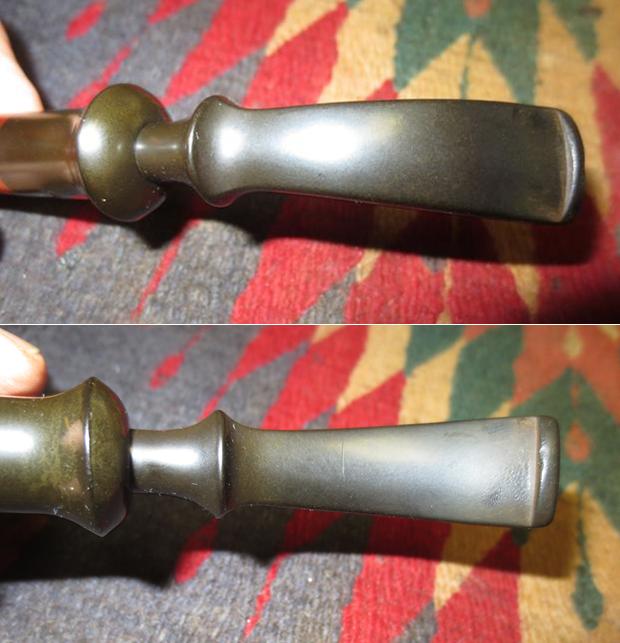
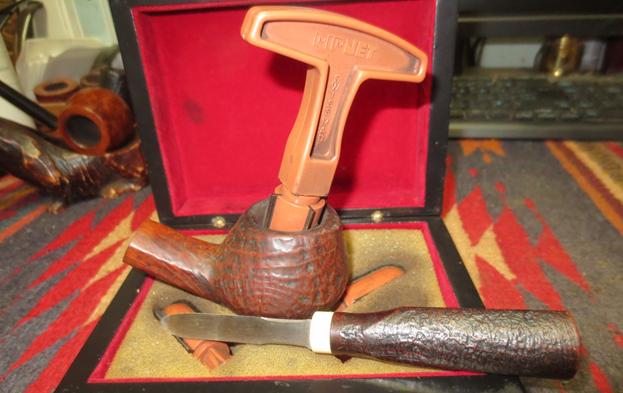
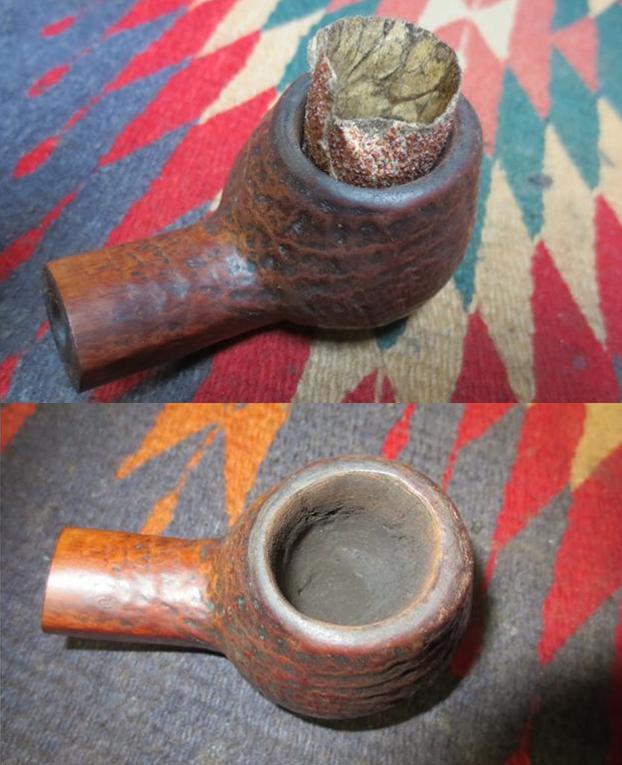
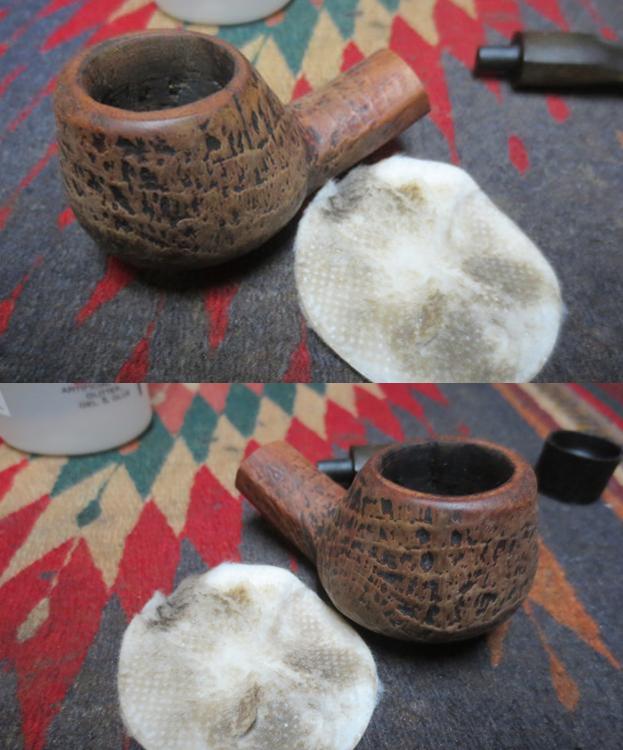
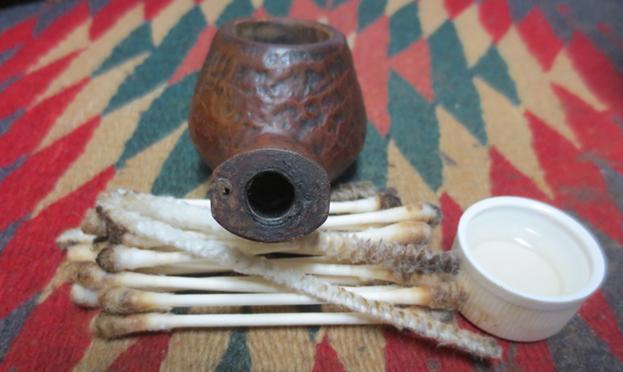
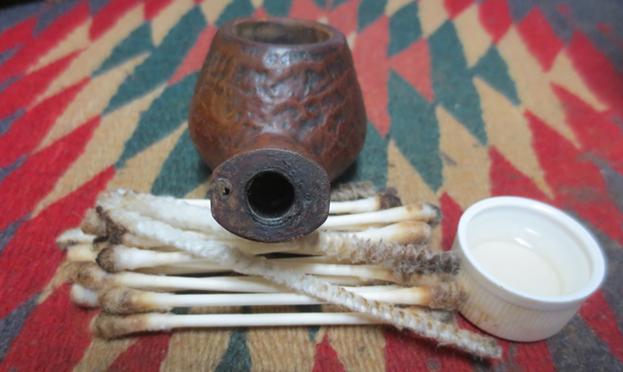
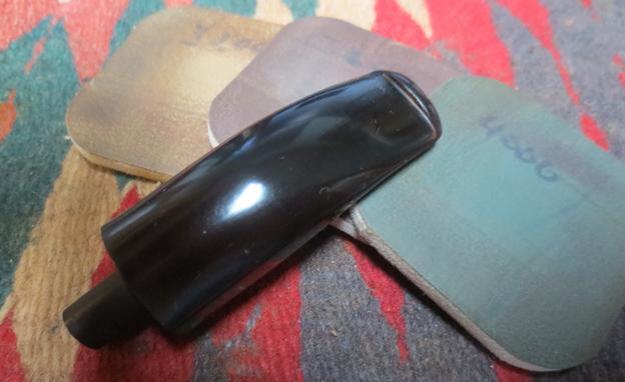
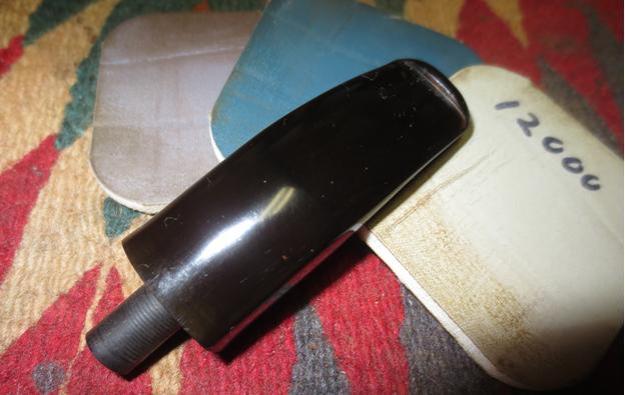
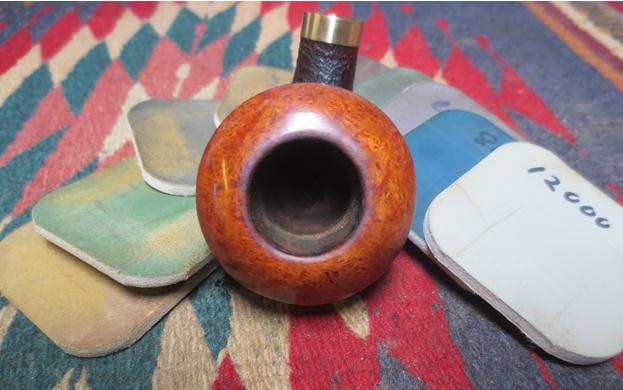
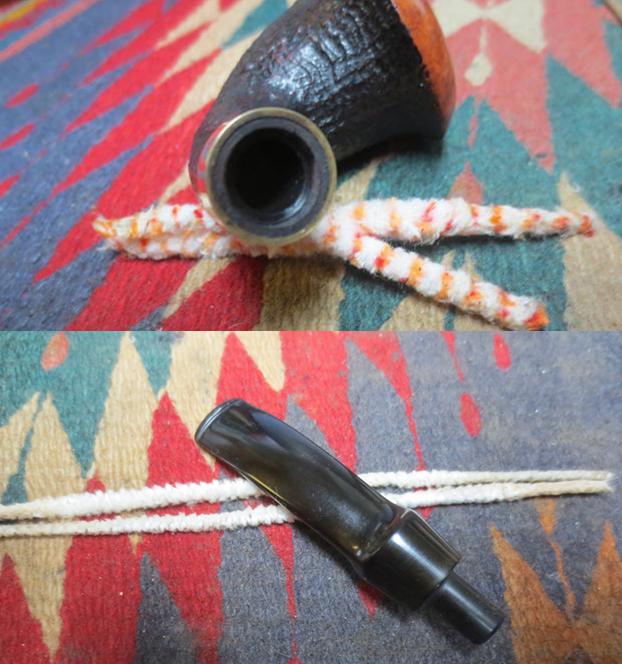
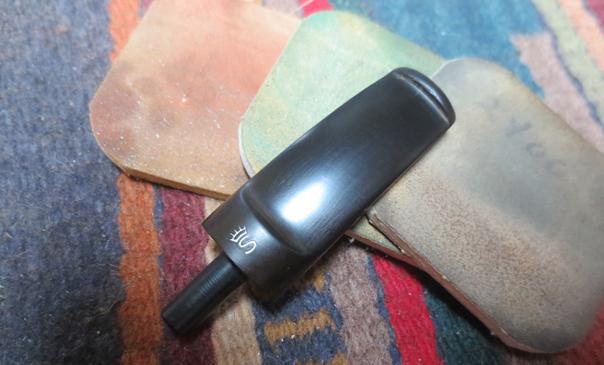
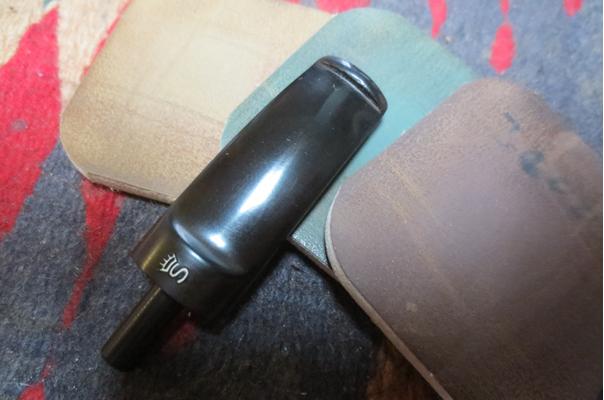
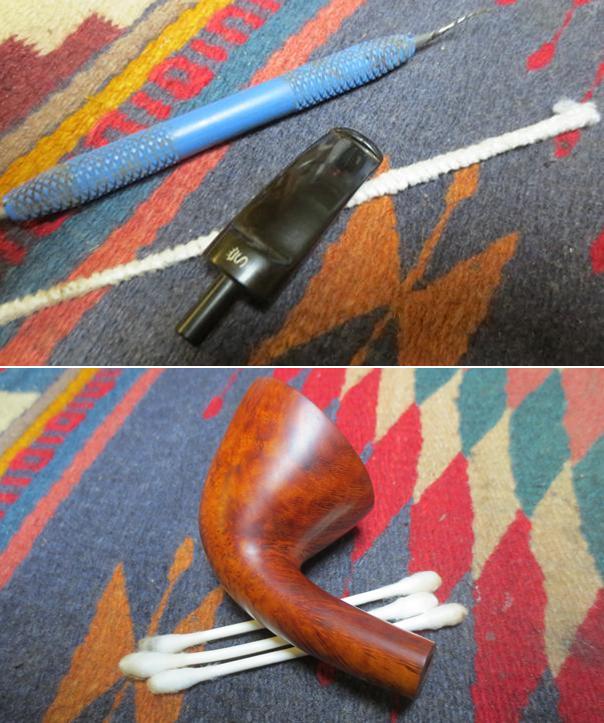
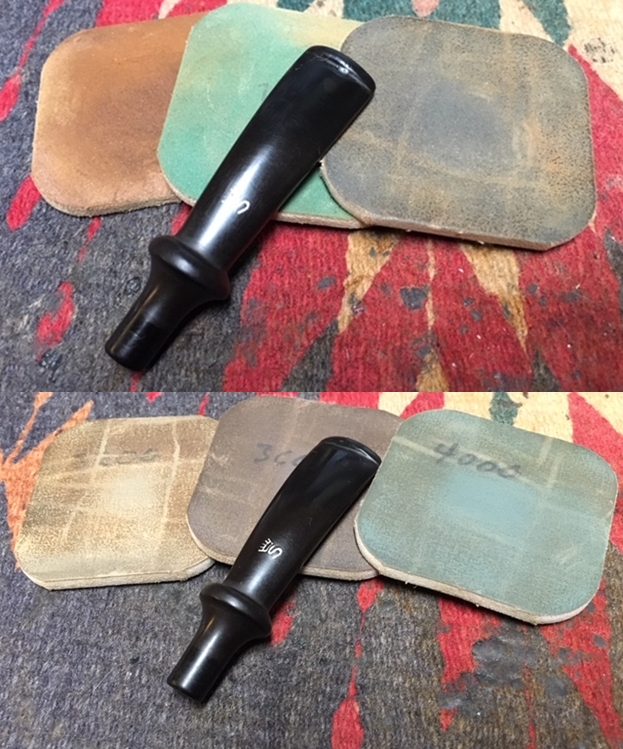
I did searches on Rouge and I could not find a Stanwell listing for only ‘Rouge’ but ‘Royal Rouge’ was evident.  This BollitoPipe.it listing has for sale, a ‘Royal Rouge’ 109 which is a smooth version described with information that matches the ‘Rouge’ in dimension with the difference of the briar shank compared to the vulcanite extension on my Rouge. Pipedia’s site links to Stanwell catalogues shows this 2008 9mm catalogue listing the 109 shape (2nd down on left) with others.  Rouge simply means ‘Red’ in French which is a good description of what the Rouge’s sand blasted stummel formerly revealed, as the ‘Royal Rouge’ exemplifies above.  The Danish pipe company, Stanwell, according to Pipedia’s article closed its doors in 2009 ending an interesting chapter of pipe history as the only remaining pipe manufacturer in Scandinavia.  The ‘Stanwell’ name moved to Italy where pipes were produced bearing the name since 2010.  The ‘Made in Denmark’ on the Rouge indicates that it was produce pre-2010 before the closing.  With a better appreciation for the Stanwell Rouge 109 before me, the first thing I do in his recommissioning is to put the stem in an OxiClean bath after putting petroleum jelly on the Stanwell Crown stamping to protect it. Before I tackle the repair of the burn-through the stummel’s heel, I like working on clean pipes because it helps with the assessment of needs.  I start by carefully reaming the bowl to remove the light carbon build up.  I say, “careful” because the floor of the fire chamber is dangerously thin.  The last thing I want is the floor to drop through!  For the gentle approach, I use the Savinelli Pipe Knife and work the sides of the chamber without reaching too deeply.  Next, I take 240 grit paper wrapped around a Sharpie Pen and sand the chamber ridding it of more carbon and exposing fresh briar.  Finally, I wipe the chamber out with a cotton pad wetted with alcohol.  Using undiluted Murphy’s Oil soap, a cotton pad and a bristled tooth brush, I scrub the exterior of the sand blasted bowl working the brush well into the surface as well as the rim (pictured below) before starting the cleaning.  The surface had a good bit of grime.  The good news is the rim is in good shape – it still shows the blasted sculpting over it, though it is darkened. Now to the internals of the stummel – using pipe cleaners and cotton swabs and isopropyl 95%, I clean the internals.  Oh my.  This old boy I believe was like the old proverbial horse saying, ‘he’s been road hard and put up wet’!  There was no end to the gunk in the mortise.  I scraped it with straight edge files and small screw drivers, and with scads of cotton swabs – the effort was immense to clean the internals.  After some time, things would start to look up, I would scrape a bit more and it was like I was starting over.  Yet thankfully, eventually the tide turned.  The picture shows the aftermath.The stem has been soaking in the OxiClean bath and I take it out to reveal the raised oxidation on the stem.  The petroleum jelly is still intact covering the Stanwell stem Crown stamping, protecting it from the OxiClean process. I start by putting a disk between the stem and the shank to protect the stem from shouldering as I wet sand with 600 grade sanding paper to remove the raised oxidation.  Then, I had one of those ‘Duh!’ moments – the shank extension on the stummel is also vulcanite with a white acrylic divider.  Removing the disk, I treat the two together.  First, with the shank extension, I lightly use 240 grit sanding paper around the extension because it did not have the benefit of the OxiClean bath.  I do this to loosen the oxidation.  Then, with the shank and stem united I wet sand using the 600 grade paper, careful to protect the stem Crown stamping. With this completed, I look to the bit area with minor tooth chatter. Using 240 grit paper I sand the chatter out, following with 600 grit again, then finish off this phase of the stem’s polishing using 0000 grade steel wool over the entire shank and stem.  To try to remove any oxidation in the Stanwell Crown stem stamp, I use a MagicEraser sponge to apply a non-abrasive cleaner.  The pictures show the progress with the stem. With the stem completed up to the micromesh phase, I put it aside to focus on the stummel repairs.  I have been developing the plan since I first saw this incredibly desirable and redeemable Stanwell Rouge beckoning on the table in the Antique Market.  There are two main steps in the burn through repair.  The first is to patch the external presentation of the stummel using a putty created from CA glue and briar dust.  This patch will fill the hole leaving an external mound for eventual sanding and shaping aiming at blending with the sand blasted finish.  When the Briar Dust Putty is applied from the external side, there also will form an internal mounding as the putty presses through the hole.  This is good and desired.  This internal mound will form the primary internal encasing of the burn through area, which is extremely thin and therefore weakened.  This internal covering of Briar Putty will form the hole fill as well as the initial reinforcement of the chamber floor.  The second step is to augment this initial reinforcement internally by using JB Weld.  I first saw the use of this from Charles Lemon on Dad’s Pipes.  I will mix a batch of JB Weld and apply it on top of the patch area and rebuild and level the floor of the fire chamber, bringing the new floor almost up to the draft hole.  That is the theoretical plan – of course, the best laid plans are often…. You know the story 😊!

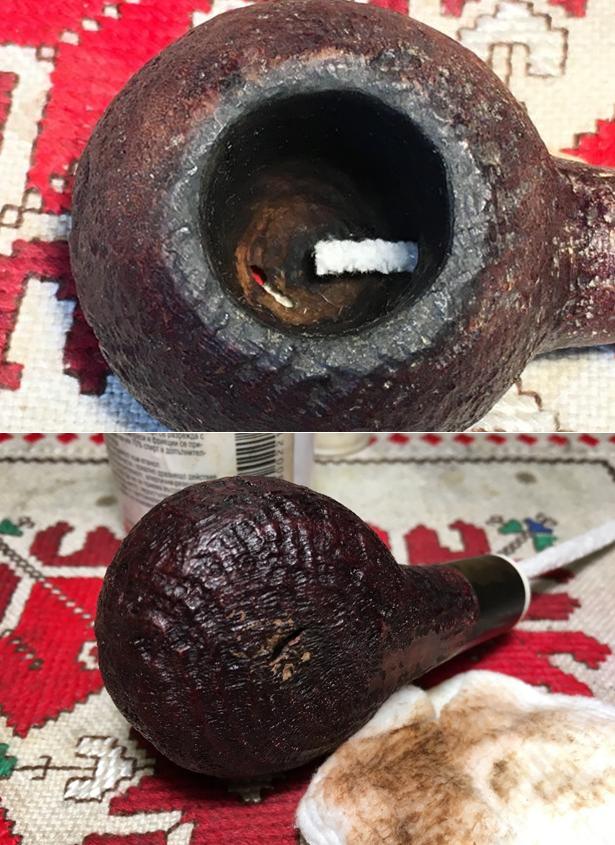
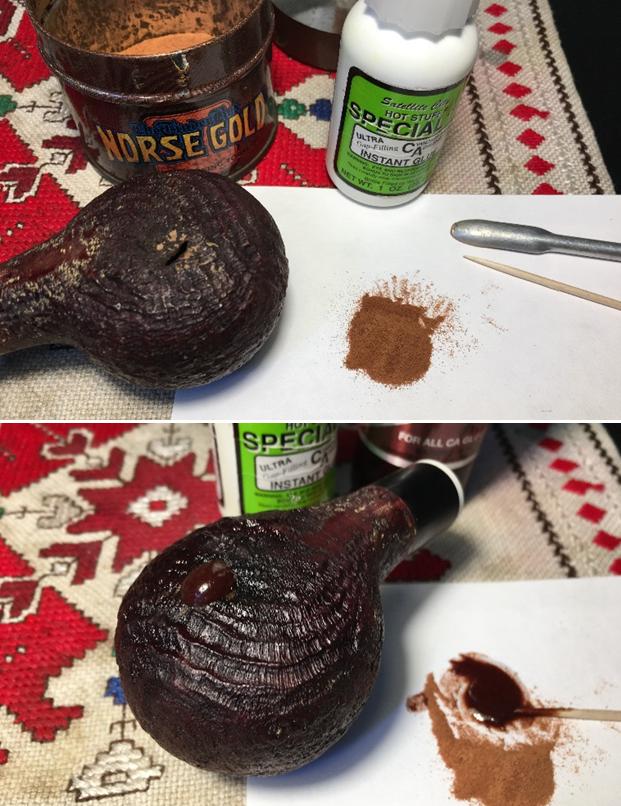
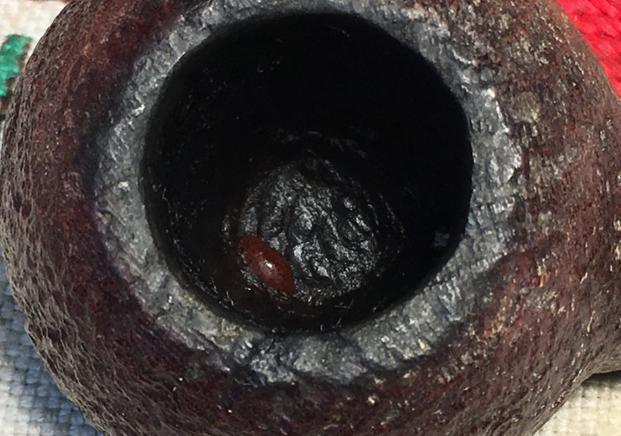
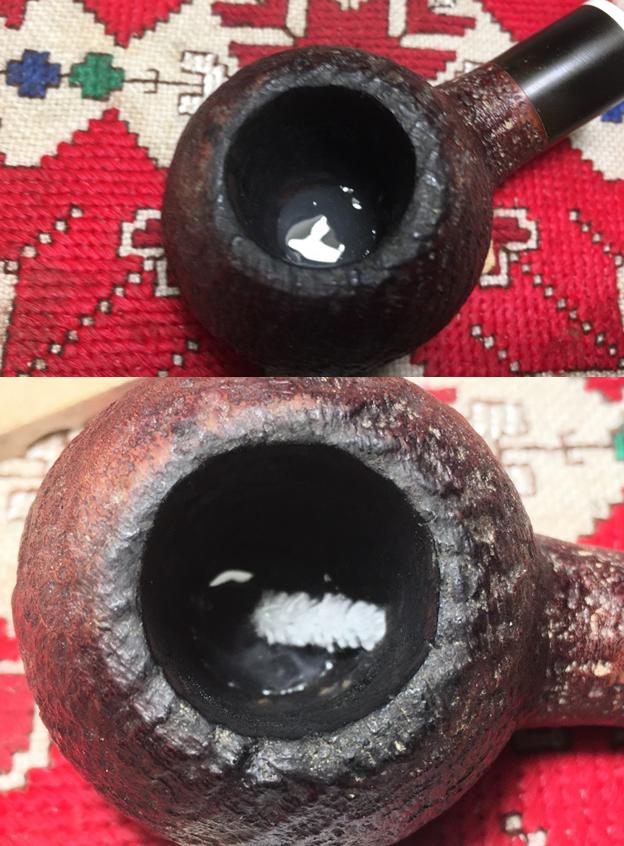
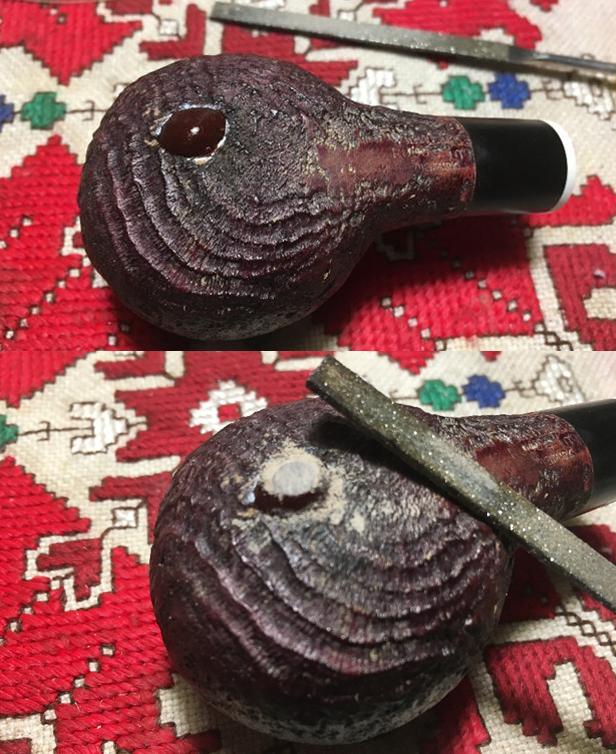
I begin by taking another close picture of the external hole area as well as the floor of the chamber, with a pipe cleaner inserted to mark the gap the new floor will need to fill.  This marks the starting point.  The second picture below does not reveal the depth, but I estimate a good, 3 to 4 mm between the hole and the draft hole level.  I clean the stummel external surface with a cotton pad wetted with alcohol.  The pictures show the prep. Using an index card, I mix briar dust and Hot Stuff Special ‘T’ CA Instant Glue (thicker) with a toothpick to form a putty.  I’m shooting for the thickness of molasses so that the putty will not run and spread but stay where I apply it.  When the putty reaches the viscosity I desire, I apply the putty to the hole pressing it through until I achieve sufficient mounding on the inside.  As I press the putty through with the toothpick, the putty spreads out a bit more than I desire.  I use an accelerator on the inside and outside to cure the putty more rapidly.  I take pictures to mark the completion of step one.  It will be tricky filing and sanding on the sand blasted surface, but not impossible with patience.  As I reflect further, a different approach that may have lessened the mounding on the external side would have been to apply the putty internally and pushed it through…. The approaches for smooth briar and blasted briar may not be the same! Next time. I’m back to the worktable after a day’s work and unfortunately, in the back of my mind the application of briar dust putty to the external surface as I did yesterday, has blossomed in my mind into a colossal blunder!  In my mind, I picture the way I should have done it and it was perfect – in my mind!  But, I have a salvage plan coming together, also in my mind and my hope is that my blunder might spare others from the same fate 😊.

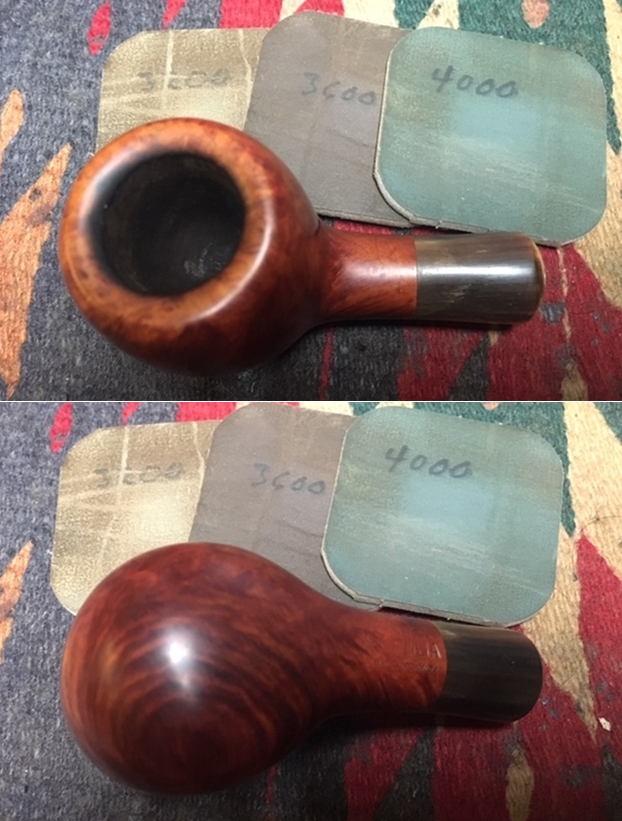
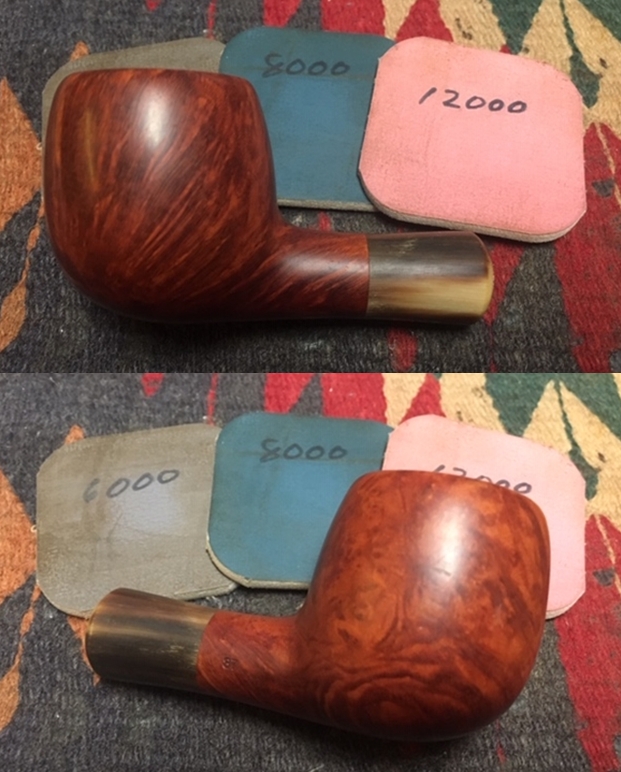
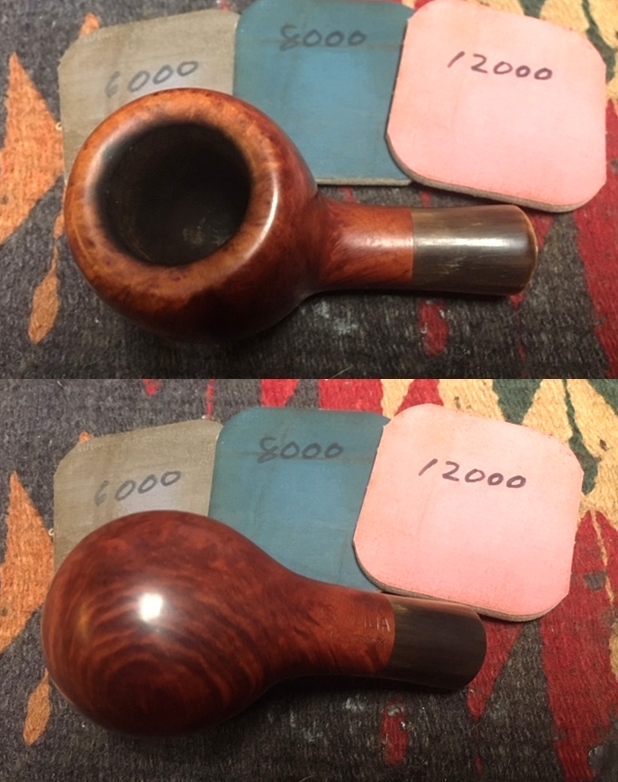
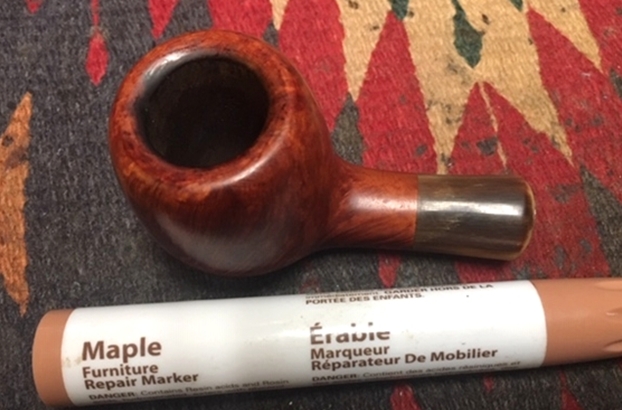
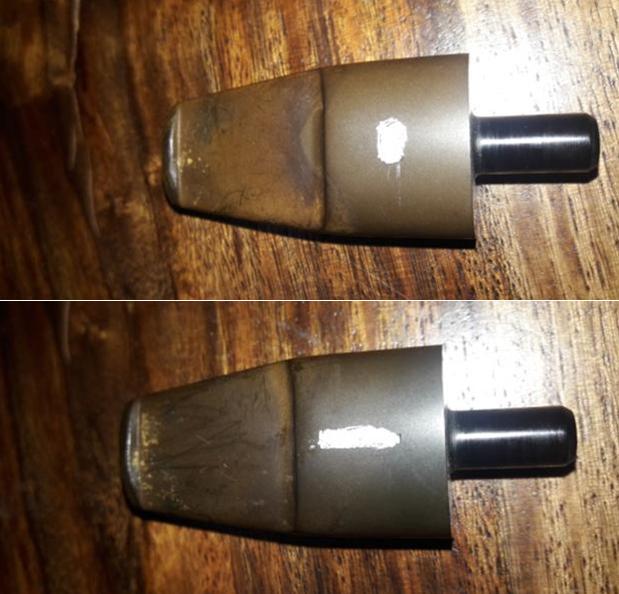
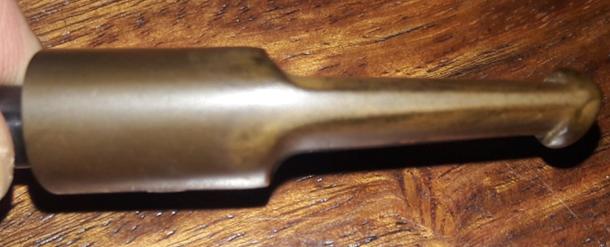
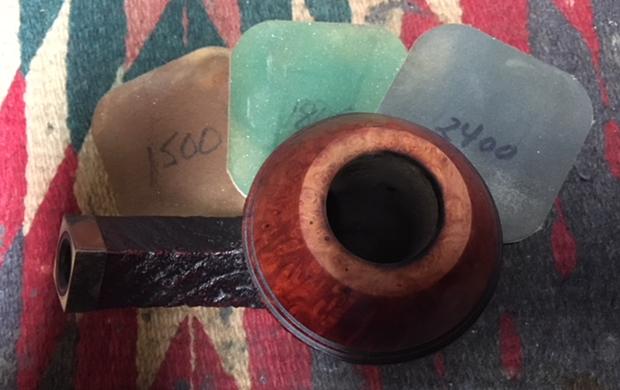
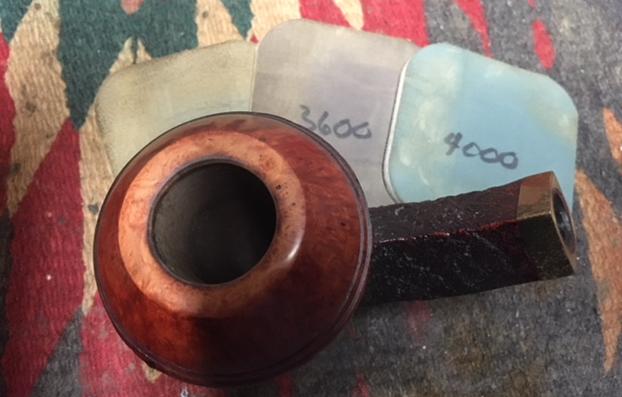
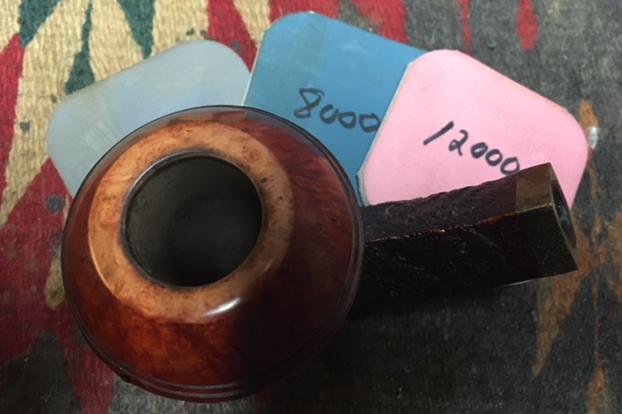
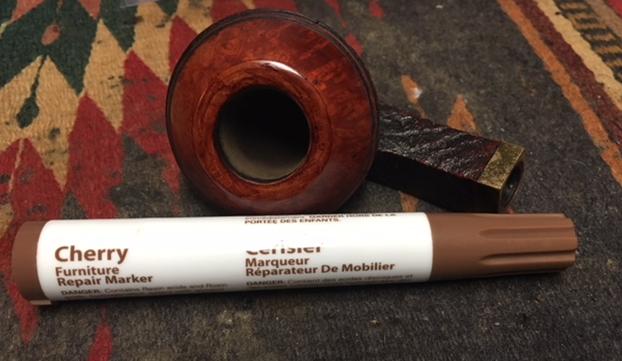
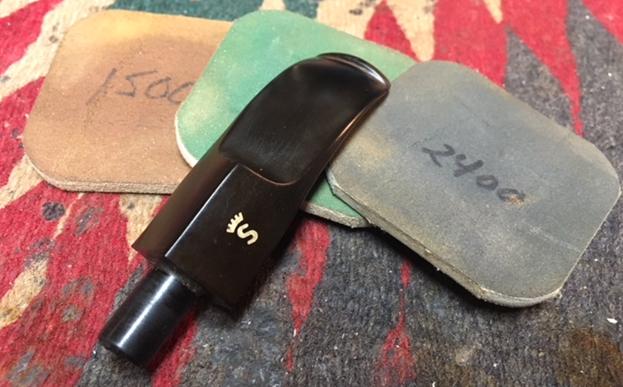
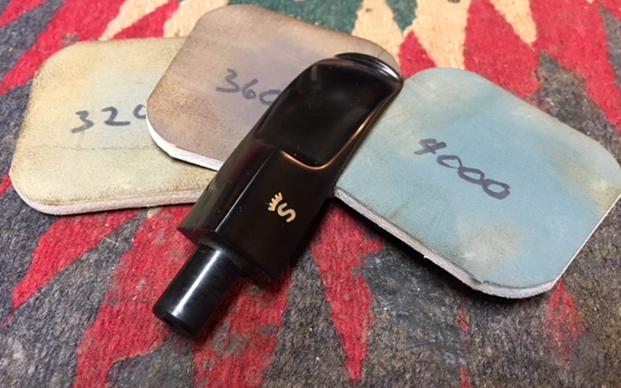
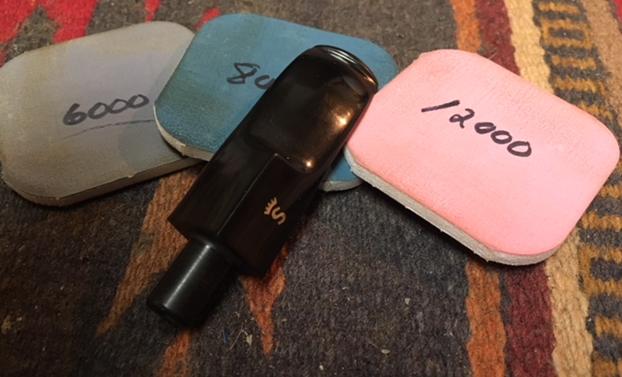
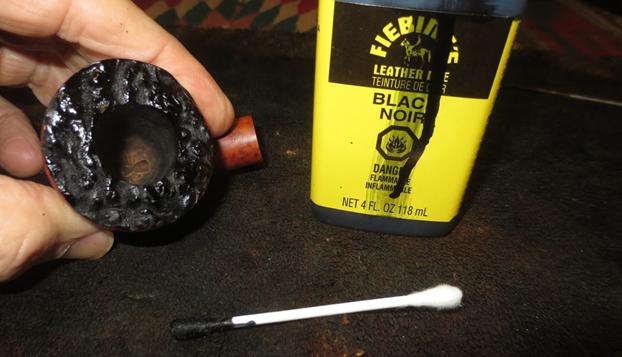
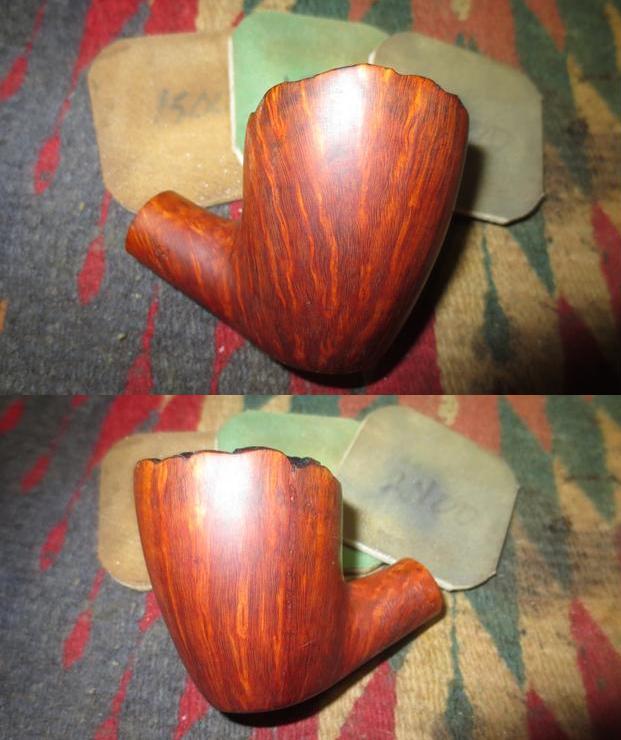
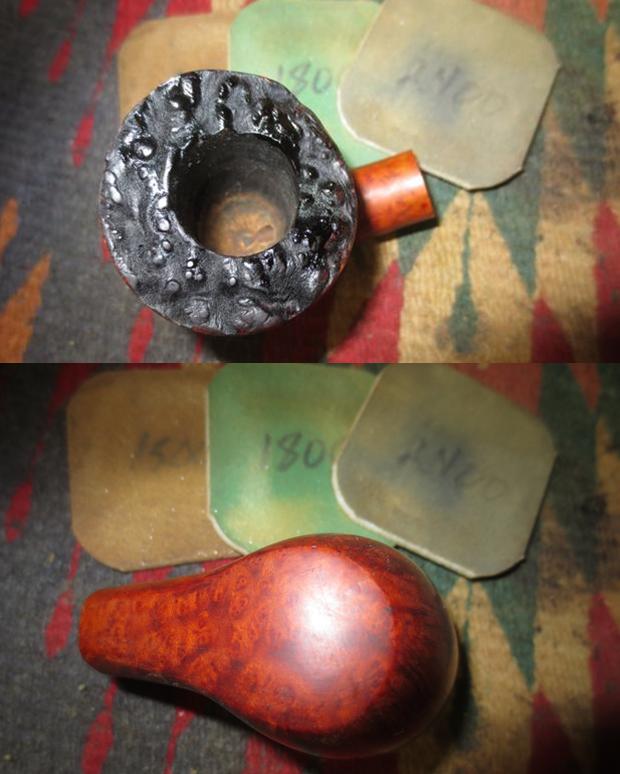
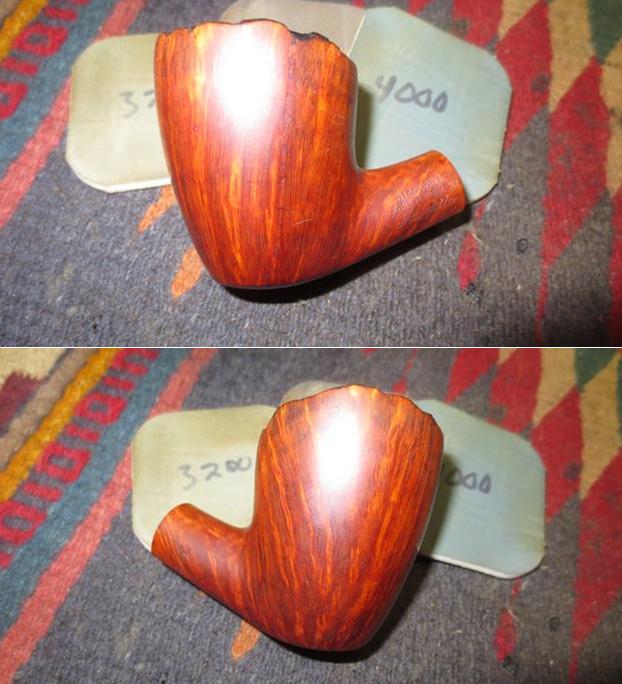
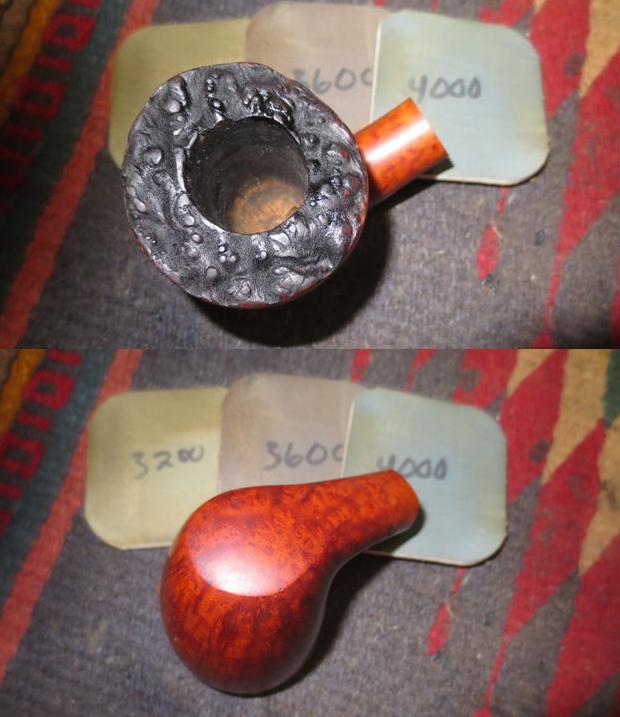
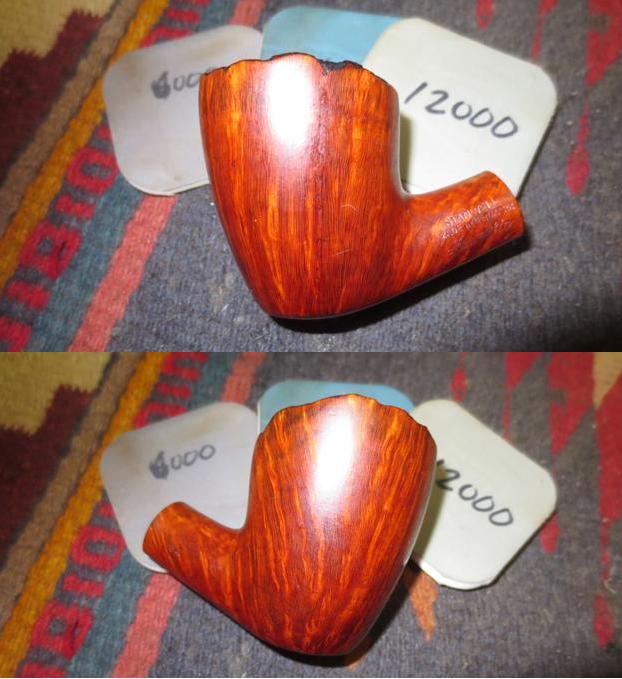
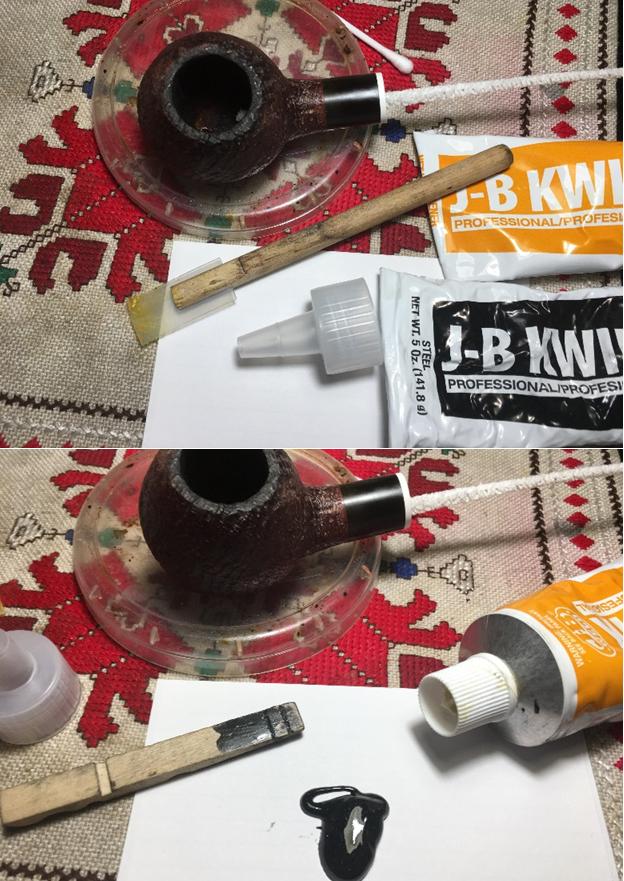
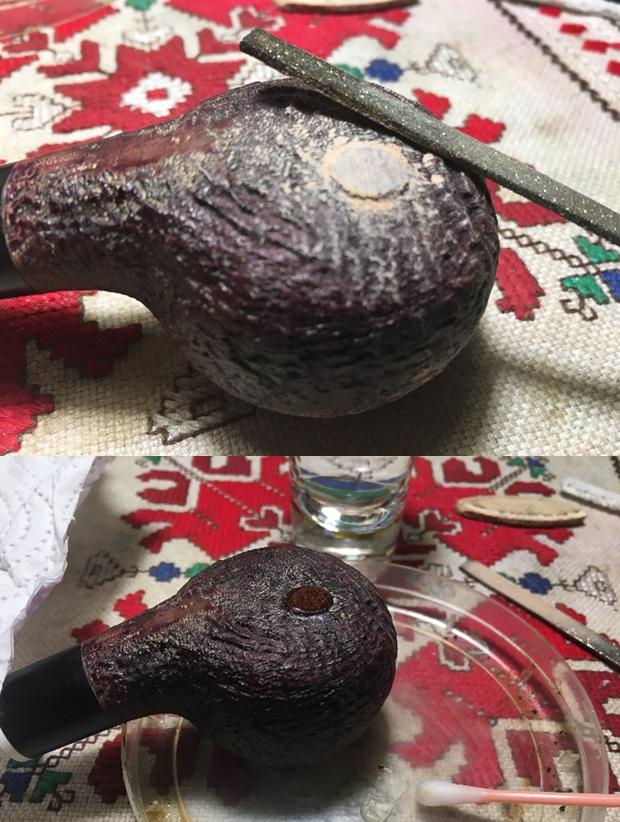
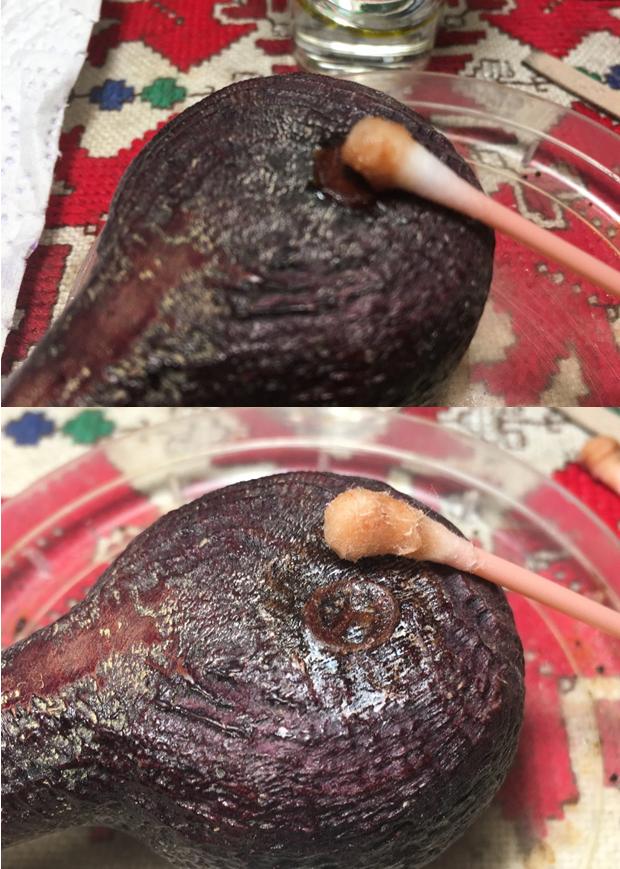
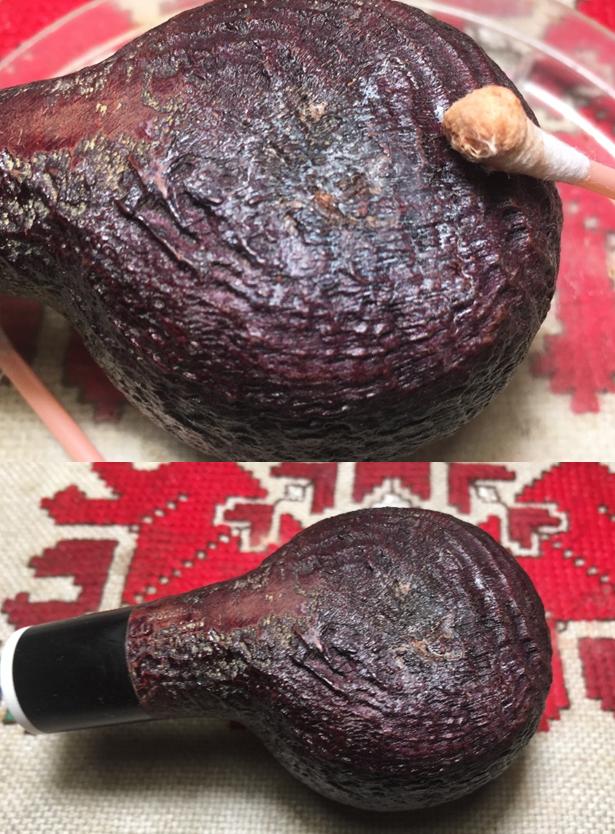
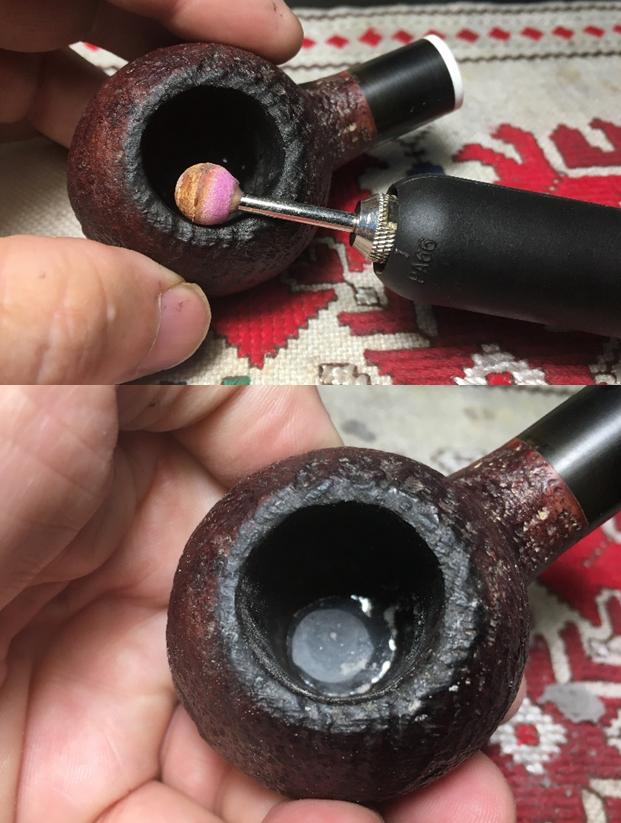
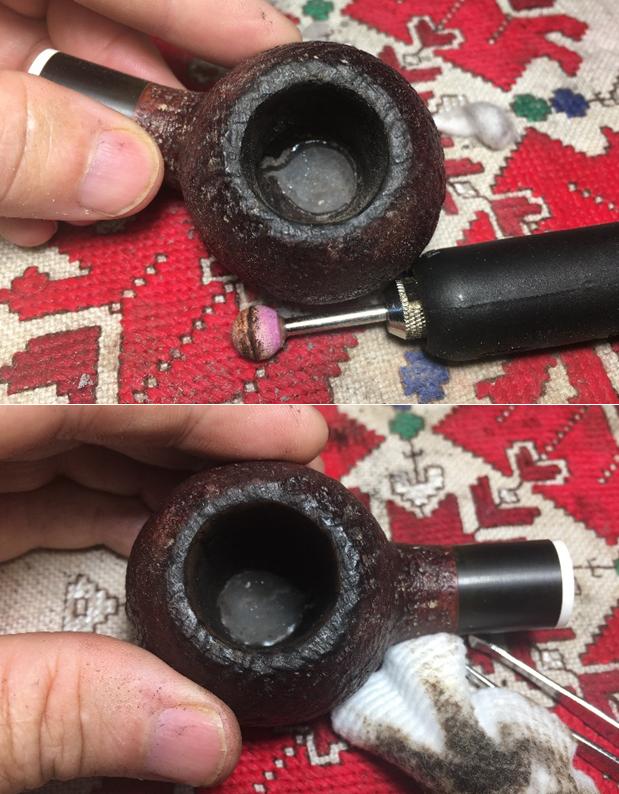
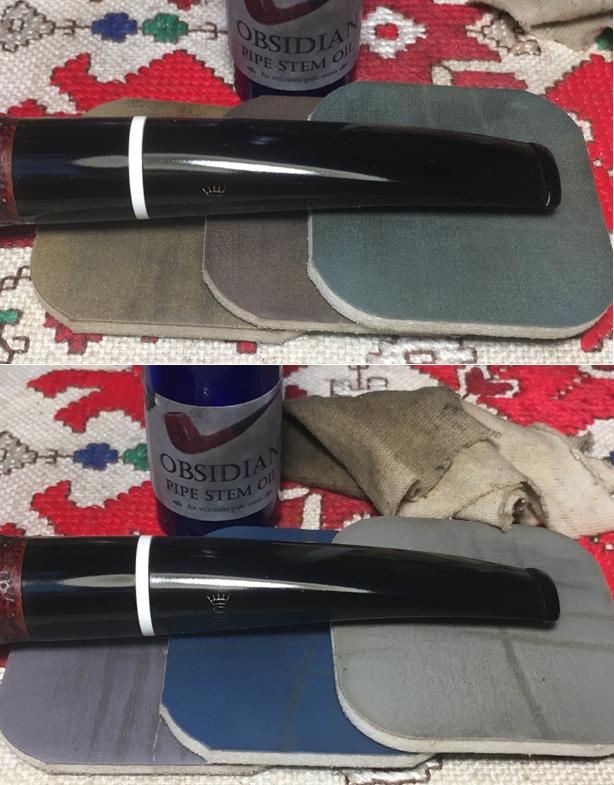
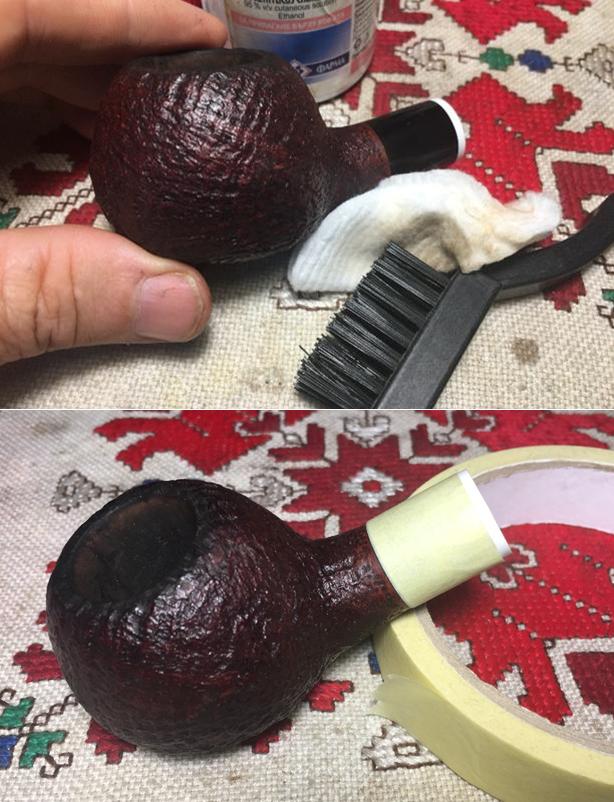
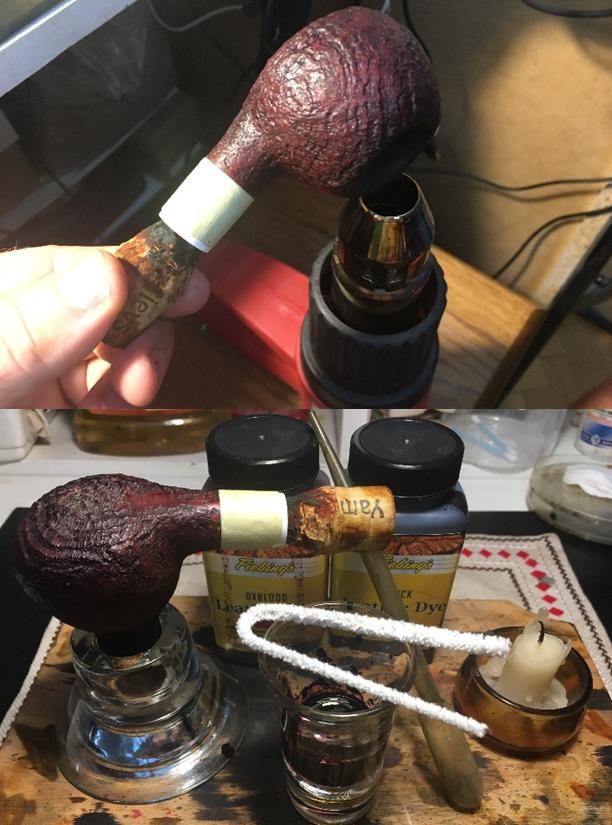
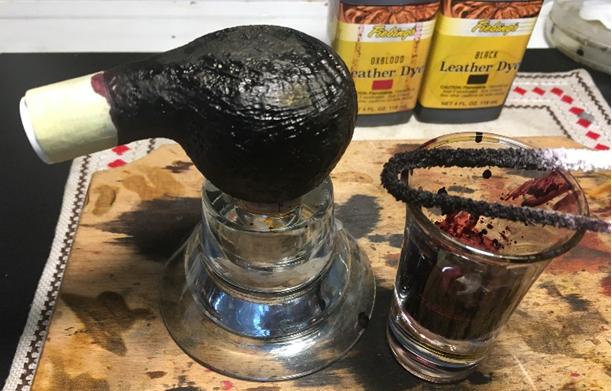
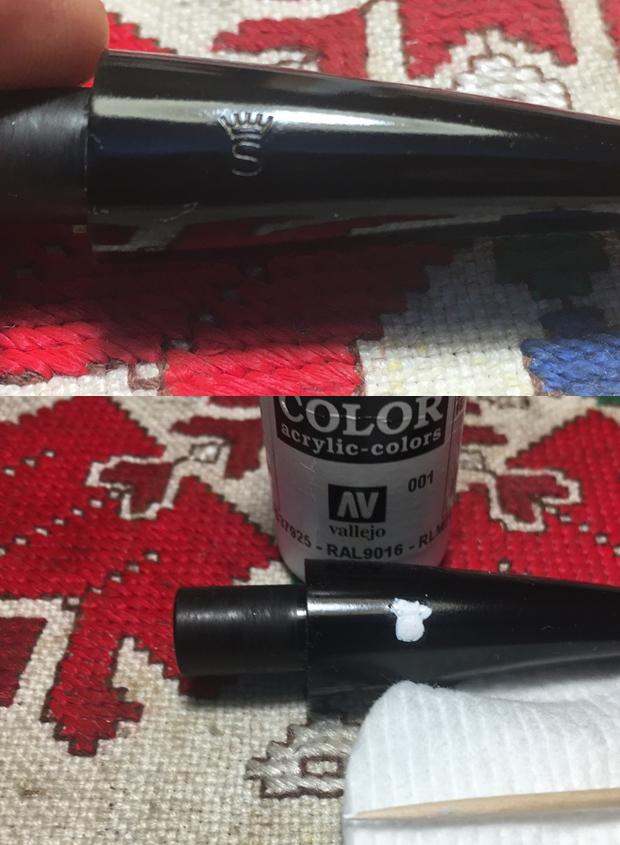
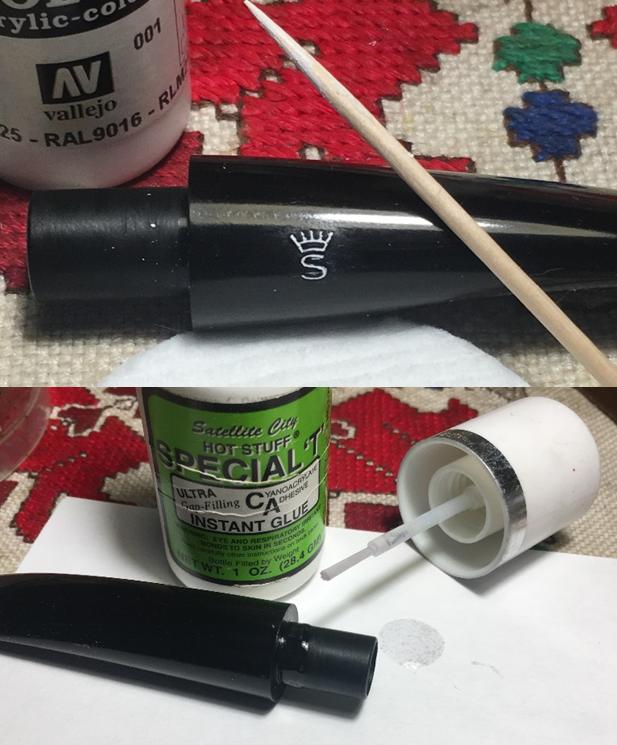
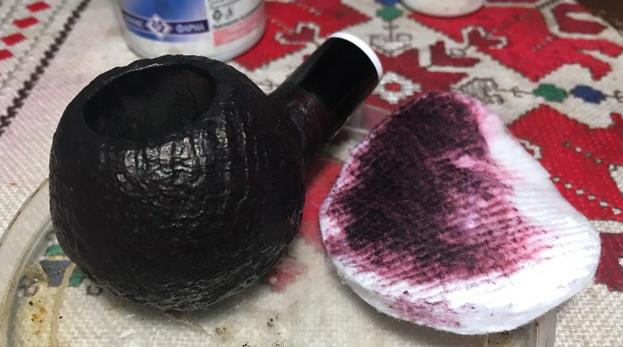
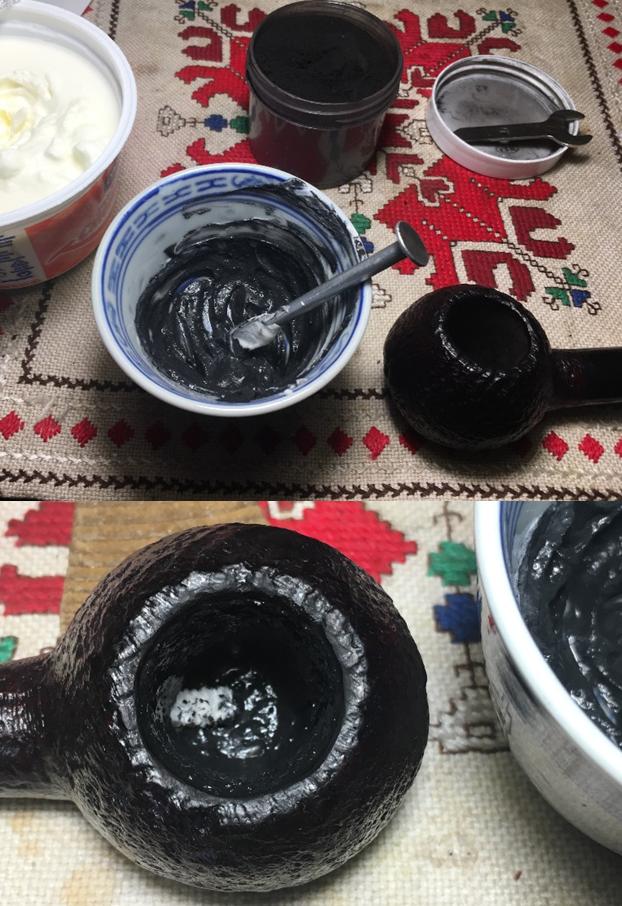
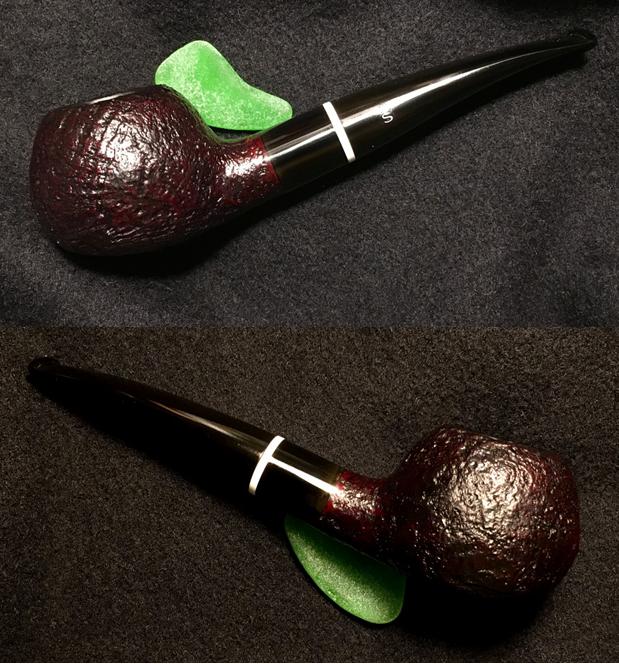
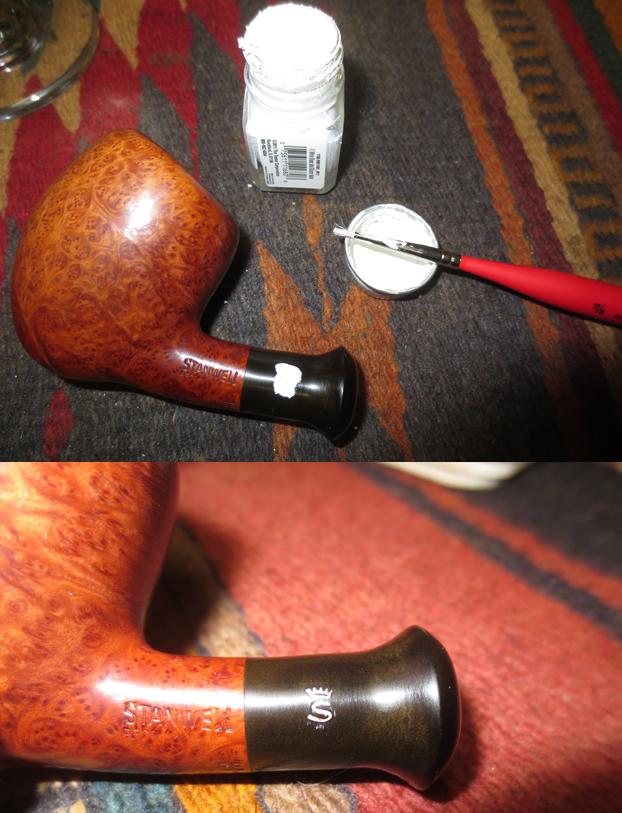
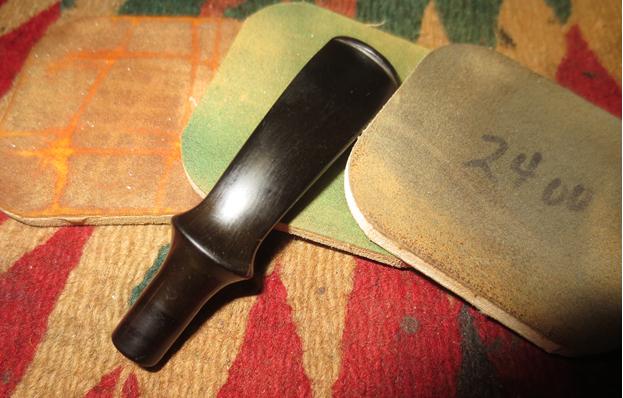
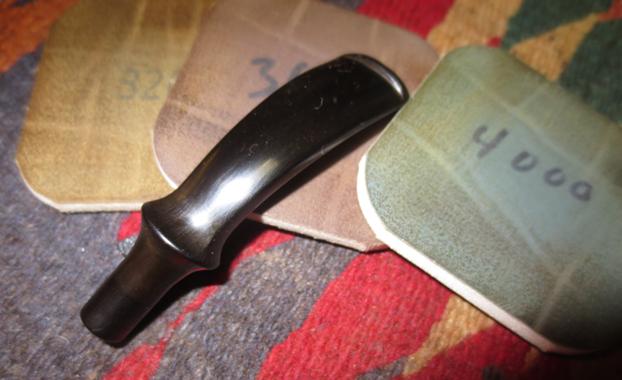
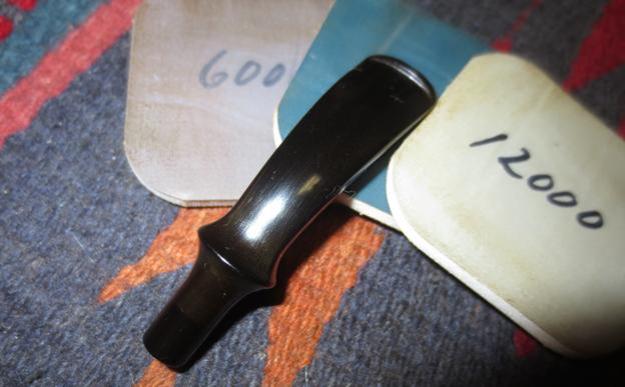
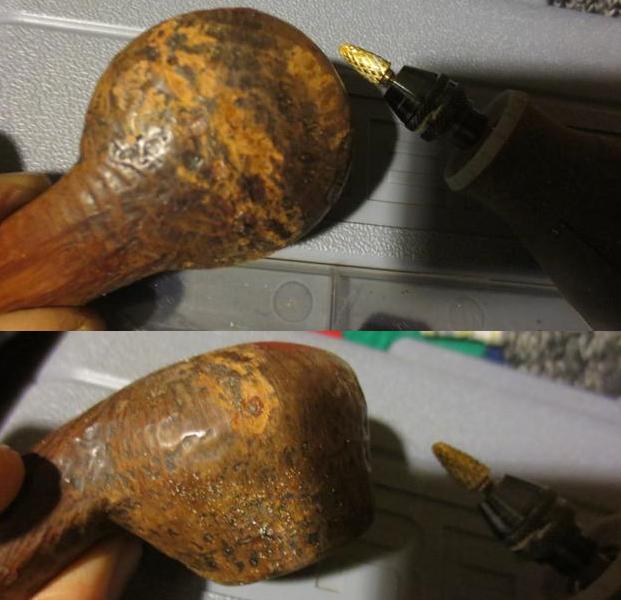
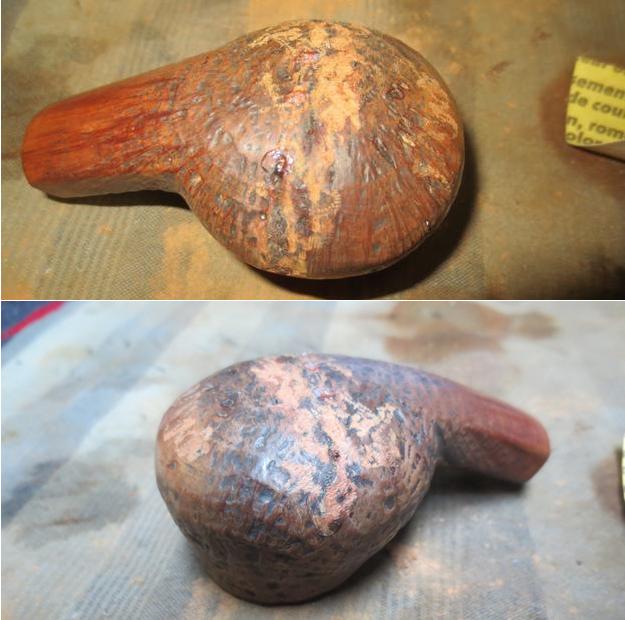
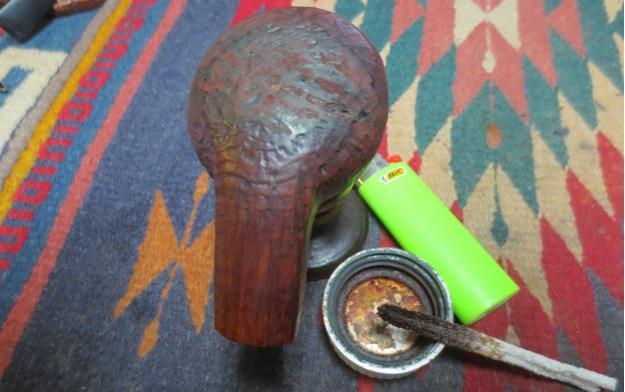
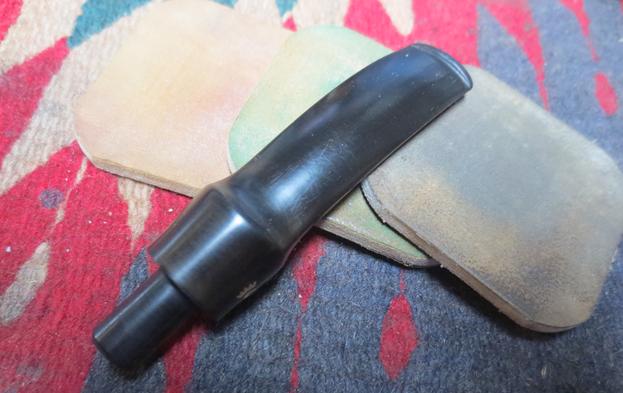
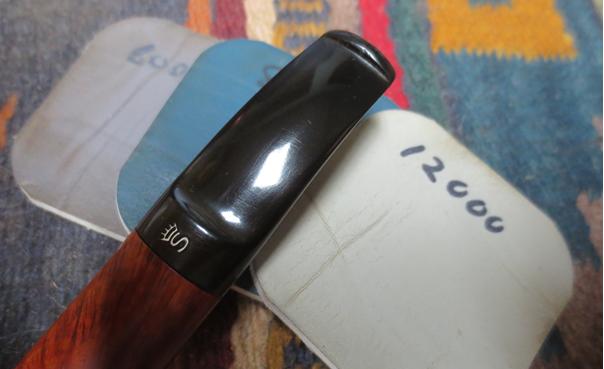
Before I work on the salvage plan coming together in my mind, I will complete the floor build-up using JB Weld.  One of the difficulties that I’ve thought about is a delivery system – how to get the JB Weld mixture to the chamber floor where it’s needed and not smeared on chamber walls trying to place it.  I’ve come up with plan of using a plastic bottle nozzle as the delivery system – load the mixture in the nozzle and force it down with a dowel rod and cotton swab.  It looks like it should work. I also insert a pipe cleaner into the airway to protect the draft hole from being clogged by the JB Weld.  It also helps me know where the floor should be.  The mixture sets up in about 4 minutes after the Hardener and Steel are combined.  Thankfully, everything works as hoped.  I take pictures through the process. Regarding the external surface patch mound, I realize that with a sandblasted surface it will be very difficult to remove the entire patch mound by filing and sanding as is the method with smooth briar.  This will damage the blasted briar surface.  After doing research on the internet, I discover that acetone dissolves CA glue.  Acetone is the primary active ingredient in nail polish removers.  What I’m hoping is a salvage plan; I begin by filing the patch mound down as far as possible without impacting the surface briar terrain. I then apply acetone to the remaining patch mound with a cotton swab to dissolve the surface overflow of the patch.  I work the briar dust patch with the cotton swab and gradually the surface patch begins to loosen and dissolve.  I’m encouraged.  I continue patiently, allowing the acetone to set its own pace.  The putty patch dissolves toward the center and leaves ridges which I scrape with my fingernail.  At the end of the process, I am relieved – it works. Not only did it work, but the blending is incredible!  I cannot see where the hole was without very close scrutiny.  The blunder becomes a teachable moment and a bit more experience for future restorations!  The pictures tell the story and I’m thankful a disaster was averted with this Stanwell. The next day, after several hours of curing for the JB Weld, I look at the new rebuilt floor of the chamber.  I rub my finger over it and it, as expected, is flat.  I want to introduce a slightly bowled chamber bottom.  To do this I employ the round grinding stone attachment which I mount on the Dremel.  I will remove just enough of the JB Weld floor to create this bowl.  With the speed at 40%, I start in the center with a circular motion creating the initial rounding.  I gradually expand it outwardly by moving it in circular motions.  This works well.  Afterwards, I use 240 grit paper to sand it more and wipe the bowl out with a cotton pad and alcohol to clean the chamber.  Done.  Later, near the end of the project, I will coat the chamber with a mixture of activated charcoal dust and sour cream that will form a hard base for forming a new cake for the bowl.  Bowl repair officially complete.  Yes! Before I address the Rouge’s stummel finish, I continue the sanding and finishing of the vulcanite shank extension so it doesn’t get in the way. I reattach the stem and beginning with micromesh pads 1500 to 2400, I wet sand the extension and stem and then apply Obsidian Oil to the vulcanite.  At this point I realize that I have forgotten to clean the internals of the stem (again!).  Before moving on, I clean the airway and the 9mm filter bay – which really needed some cleaning.  With a ‘proof of cleaning’ picture taken, I follow by dry sanding the extension and stem with pads 3200 to 4000, then 6000 to 12000.  After each set of three, I apply Obsidian Oil to the stem and extension to revitalize the vulcanite.  While sanding, I notice that the stem is a bit loose in the mortise extension.  I will look at this later.  The stem and extension look good! Turning now to the Stanwell Rouge’s stummel, and it is evident that the historic color of this stout, blasted ball shape was in keeping with its namesake – red.  My sense is a deeper burgundy tone would fit well.  My plan is to use 2 parts Fiebing’s Oxblood Leather Dye with 1 part of Fiebing’s Black Leather Dye.  I want it on the darker side.  Let’s see what happens!  Taking a close look at the stummel, I probe around with the sharp dental tool and see that there’s bits of dust and residues in the crevices of the blasted texture of the briar.  I use a cotton pad and alcohol to clean the stummel, and I use a bristled brush as well to dislodge debris.  I then tightly wrap masking tape around the vulcanite extension so that the dye does not possibly impact it – in a note from Steve, he said that some vulcanite will absorb the stains, others not….  Better to be on the safe side.  I mix the dyes in a shot glass using a large dropper at 2 to 1, insert a cork in the shank as my handle – and then realize later that the shank extension works just fine as a handle.  I take a picture of the set-up.  I then warm the stummel with a hot air gun and then apply the 2 to 1 dye mixture to the stummel with a folded pipe cleaner.  I work the dye into the crevices – I want good coverage.  I then ‘fire’ the aniline dye and the alcohol immediately burns off and sets the dye pigment in the briar.  After a few minutes, I repeat the process and set the stummel aside to rest. With the stummel now resting, I want to freshen the Stanwell Crown stamp on the stem.  Using white acrylic paint, I dab a bit of paint over the Crown with a tooth pick.  After the paint sets well, I scrape the excess off gently with the flat edge of a toothpick which goes over the stamp patterns leaving color in the stamp.  It looks good.  I had noted that the stem was a bit loose when seated in the mortise.  As I slowly insert the stem into the mortise extension, it is properly snug until the very end – at home station.  The tightness is generated by the white acrylic divider garnishing the end of the extension.  This lets me know that the tenon has thinned only at the base – where it ties in to the stem.  I use Special ‘T’ CA glue and a manicure brush and paint a line around the circumference of the tenon base.  We’ll see if this tightens the stem a bit after the CA glue cures.  After several hours, I’m anxious to unwrap the fire crusted stummel.  With the surface being sand blasted, I use a softer cotton cloth buffing wheel on the Dremel instead of the felt wheel, that I use with smooth briar pipes.  The softer cotton wheel better navigates the textured blasted surface.  With the speed at 20%, I utilize Tripoli compound to remove the crusting and to begin the buffing process.  After a short time, I decide to up the speed to 40% and this works better with the cotton wheel.  I take a picture to show the unwrapping.  After completing with the Tripoli, I wipe the bowl down with a cotton pad and alcohol to blend the dye better.  Then, loading another cotton cloth wheel, I apply Blue Diamond compound to the stummel.  I am liking the very, very subtle oxblood reds tucked away in the contours of the 3-D grain of the sand blasted surface.  This was exactly the classic, smoking jacket effect I was aiming for.  I press on and after changing to another cotton cloth wheel, I apply carnauba wax to the stummel, shank extension and stem.   One last project.  I use a mixture of sour cream (or plain yogurt may be used) and activated charcoal powder to apply to the fire chamber wall.  When this mixture hardens, it provides a good foundation for a new carbon cake to grow – but the new steward needs to be gentle with this after the first few bowls, not scraping the chamber but simply using a folded over bristled pipe cleaner to rub the sides.  This will remove the needed leftovers but protect the walls.  Over time, a cake grows and life as usual!  After mixing the sour cream and charcoal powder to a non-running thickness (like mayonnaise), and inserting a pipe cleaner through the draft hole, using a pipe nail tool, I scoop the mixture into the bowl and spread it over the surface.  After spreading, I see that there is too much here and there as the mix thickened.  I would scoop a little out and spread again.  After it starts to dry, it is thicker.  It takes about 15 to 20 minutes for it to set totally.  I let it set for at least 24 hours before smoking the pipe.  The pictures show the progress.After the sour cream/charcoal powder mixture dries, I check the fit of the stem and shank extension after applying CA glue to tighten the fit.  The patch is too thick so I sand it down using 600 grade sanding paper until the stem slides into the mortise.  I fine tune the cleaning of the tenon and apply some Obsidian Oil to it.  I complete the restoration with a rigorous hand buffing using a microfiber cloth to bring out the striking shine of this Stanwell Rouge.

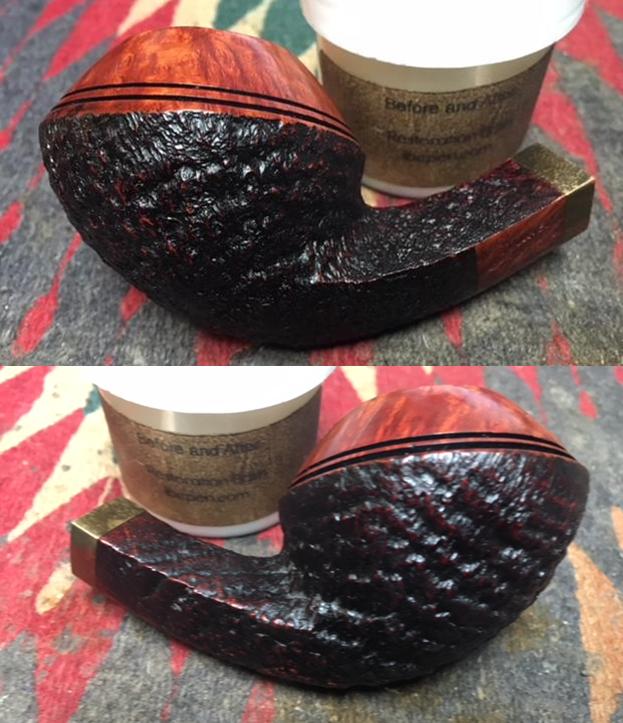
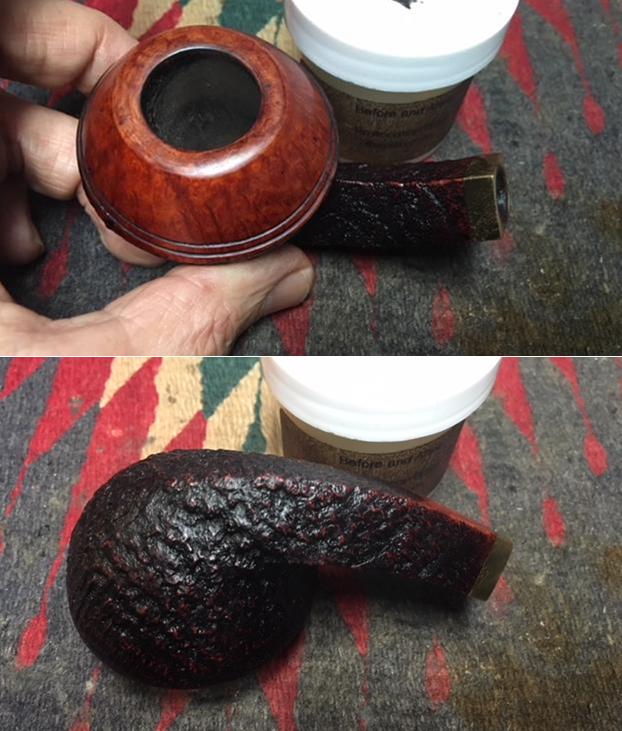
I thought I was facing disaster with the burn through repair when I mounded briar dust putty on the external surface with no way of removing it without damaging the sand blasted briar grain.  Yet, I was bailed out by acetone.  Now, as I look at this Stanwell Rouge, I can’t believe I could see daylight through it and that most people would pass it by as a loss.  I’m glad to have restored it for his new steward.  I’m pleased with the subtle red – burgundy tones in the finish.  The hefty Ball shape is a distinctive presence in the palm and the sand blasted grain stands out well.  This Stanwell Rouge 109, Made in Denmark, is ready to go.  All my restorations benefit the work we do here in Bulgaria with the Daughters of Bulgaria – women and girls who have been trafficked and sexually exploited.  Check out my blog, The Pipe Steward for more information about this, why I do what I do and other pipes I have for sale in the store!  Thanks for joining me!

Bringing a Stanwell Jubilee Sixten Ivarsson Design 10M back to life


Blog by Steve Laug

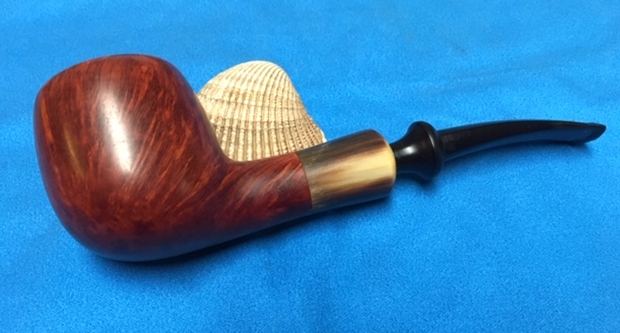
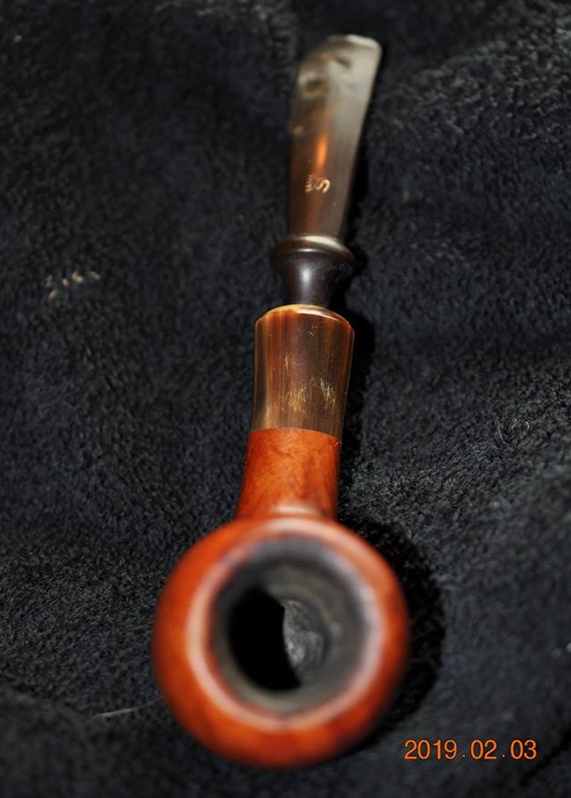
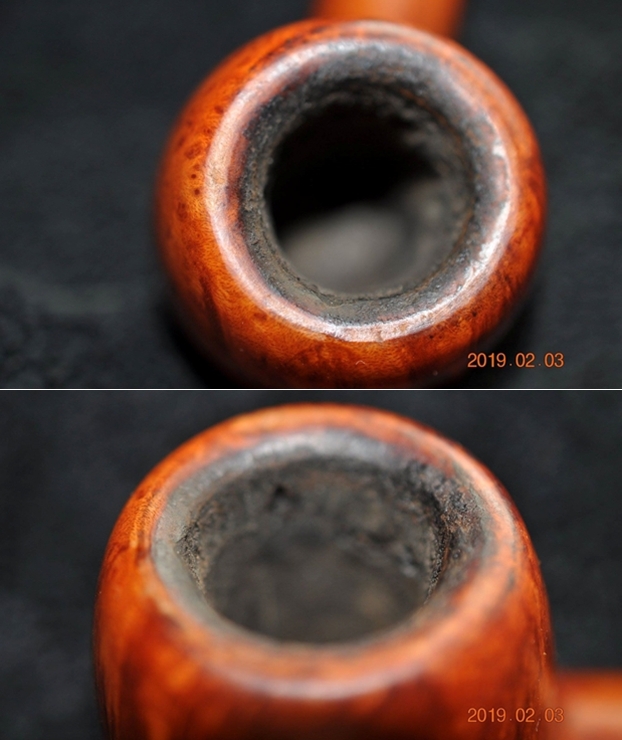
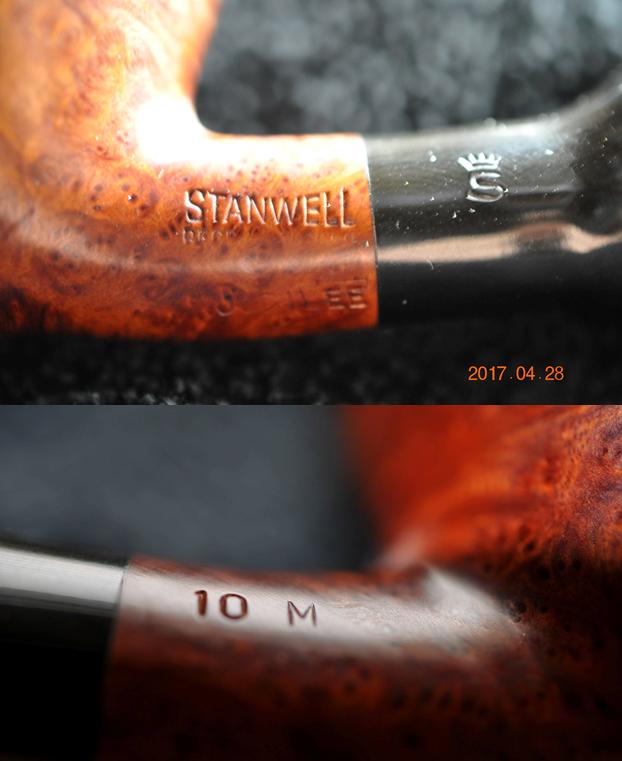
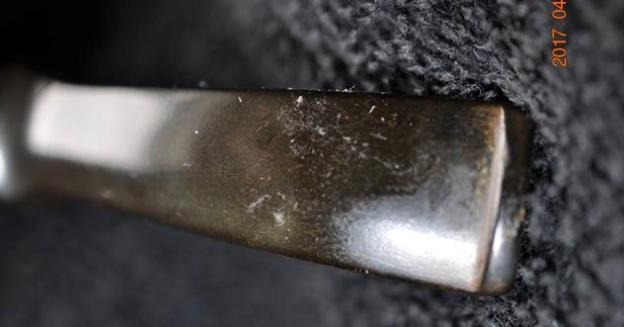
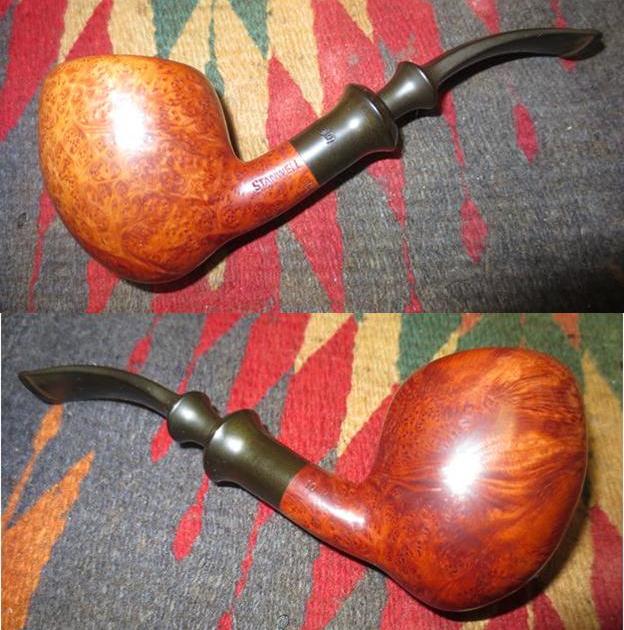
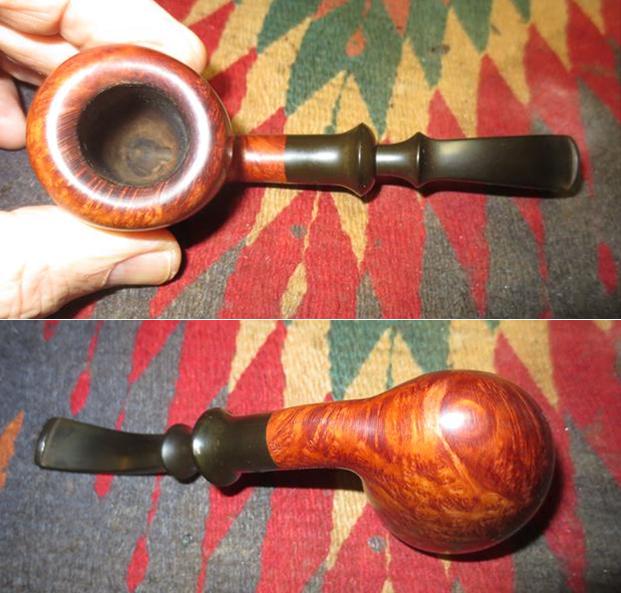
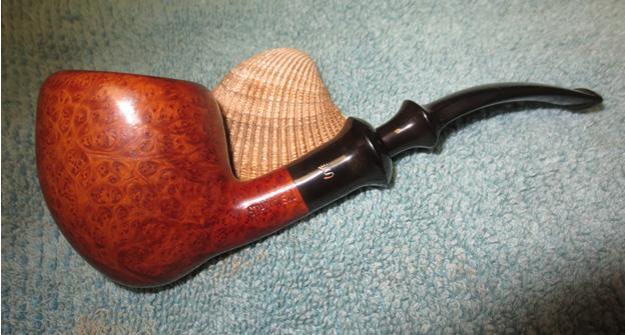
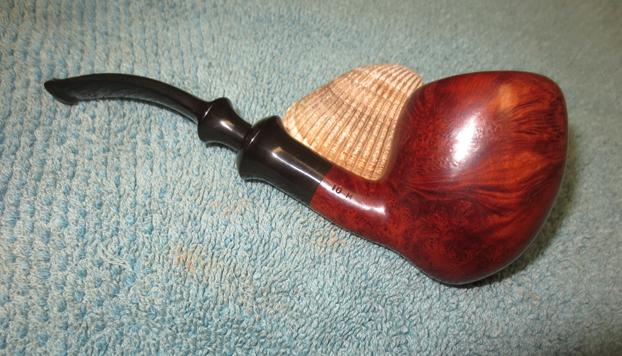
The next pipe in the lot that my brother brought back from the recent estate sale was a beautiful little Stanwell Acorn with a vulcanite shank extension. The pipe had some nice birdseye on the left side of the bowl and shank and a mix of grain around the rest of the bowl. The point at the bottom of the bowl has a ring of grain with a centre at the bottom and turning around the bowl up the front and back of the underside of the shank. The pipe is stamped on the left side of the shank Stanwell over Regd. No. (an illegible number) over Jubilee. On the right side it is stamped 10M which is the shape number. The shape is a design by Sixten Ivarsson that was done for Stanwell. It has a military mount stem. The Stanwell Crown S in on the shank extension rather than on the stem. The photos that follow are one that Jeff took of the pipe before he cleaned up to send to me.Jeff took close up photos of the rim and the bowl to show the condition. There was a light cake in the bowl with an overflow of lava on the crowned rim top. The next two photos show the grain on the sides of the bowl. The third photo shows the ring at the bottom of the bowl radiating up the bowl sides. It is a beautifully grain piece of briar that the shape fits very well. The next two photos show the stamping on the sides of the shank. The left side shows the Stanwell stamp clearly as well as the Jubilee stamp. It also shows the Crown S on the shank extension. There is a Regd. No. that is very faint and unreadable.The stem had the now familiar tooth chatter and marks the top and underside near the stem. The dents/marks on the underside were worse than those on the top side.My brother cleaned up the pipe as he usually does before he sends it to me. He did an amazing job cleaning up the interior and the exterior. When the pipe arrived in Vancouver it was absolutely clean on the inside. He had cleaned out the mortise and the airway in the shank and the stem with alcohol, pipe cleaners and cotton swabs until it was spotless. He had scrubbed exterior with Murphy’s Oil Soap and removed all of the grime on the bowl sides and the lava build up on the rim. I took the next four photos to show what the pipe looked like when it arrived here. The finish looked really good. The shank extension and stem were lightly oxidized. I took a close up photo of the rim to show how well it cleaned up. There was some darkening on the rim top. The grain really stood out well on the crowned rim. The inner edge of the rim was in excellent condition.I took some photos of the stem top and underside to show the oxidation and the tooth chatter and marks on the surface near the button.I sanded the shank extension with micromesh sanding pads to remove the oxidation. I wet sanded it with 1500-2400 grit pads and dry sanded with 3200-12000 grit pads. I buffed the shank extension and the bowl with Blue Diamond on the buffing wheel to polish the vulcanite. I use an acrylic paint to fill in the Crown S on the left side of the shank extension. Once the paint dried I buffed it off with Blue Diamond to remove the excess paint and leave some in the stamped impression in the vulcanite. There is still some oxidation in the vulcanite of the extension that needed to be polished out but the buffing would take care of that. The photos tell the story.I sanded the stem with 220 grit sandpaper to remove the oxidation on the surface. I followed that by sanding with 320 grit sandpaper to remove the scratches. I polished the stem with 1500-2400 grit micromesh sanding pads. I rubbed the stem down with Obsidian Oil. I dry sanded it with 3200-12000 grit pads and gave it a rub down with Obsidian Oil after each pad. I buffed it with Blue Diamond between the 2400 and 3200 grit pads and between the 4000 and the 6000 grit pads. I gave it a final buff after the 12000 grit pad and gave it a final coat of Obsidian Oil and set the stem aside to dry. I put the stem back in the shank extension and buffed the pipe with Blue Diamond polish on the buffing wheel. I buffed it until the remaining scratches and oxidation were gone. The grain really began to stand out as I buffed the pipe. I gave it multiple coats of carnauba wax to protect the briar and the vulcanite. I buffed it with a clean buffing pad to raise the shine. I hand buffed it with a microfibre cloth to deepen the shine. The finished pipe is shown in the photos below. It is a beautifully grained pipe that is laid out well with the piece of briar. The dimensions are Length: 5 ¼ inches, Height: 2 inches, Outside bowl diameter: 1 ½ inches, Chamber diameter: ¾ inches. It is a pipe that I would normally hang on to for my own collection but I have a similar one already so I am going to put it on the rebornpipes store. It is available to anyone who wants to add it to their collection, their pipe rack. Just let me know if you are interested. Email me at slaug@uniserve.com or send me a private message on Facebook. Thanks for looking.

A Very Tired, Very Dirty Stanwell Bent Volcano with a cracked bowl


Blog by Steve Laug

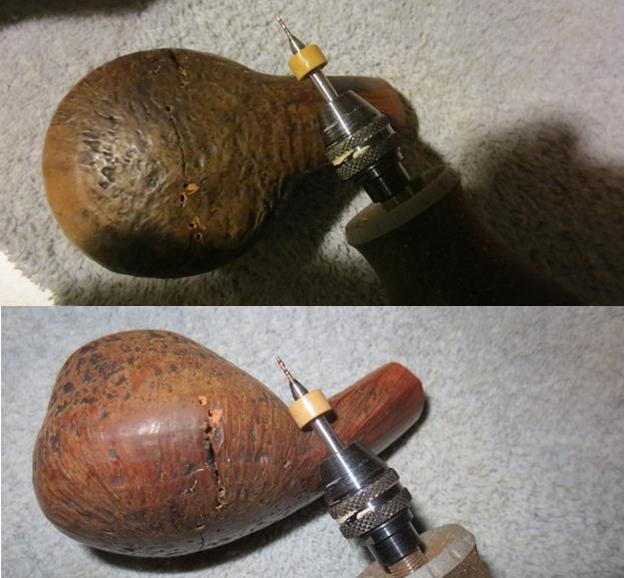
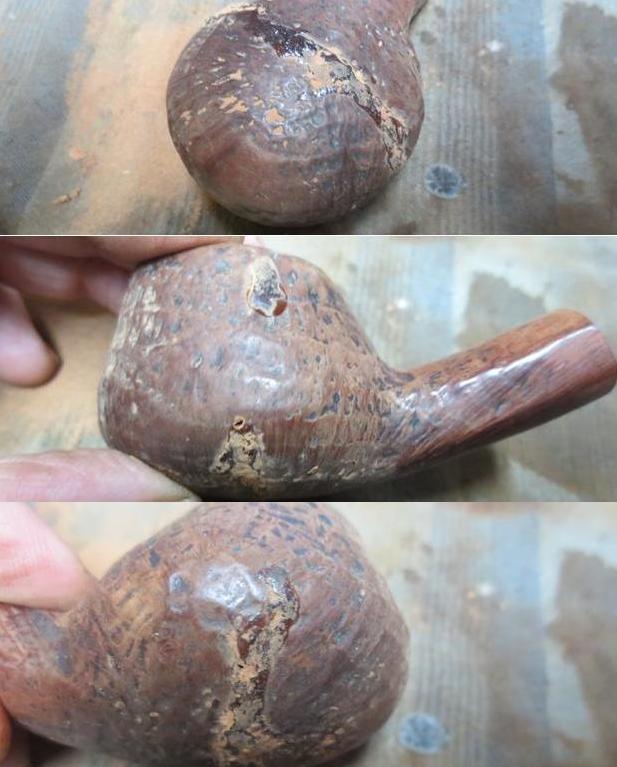
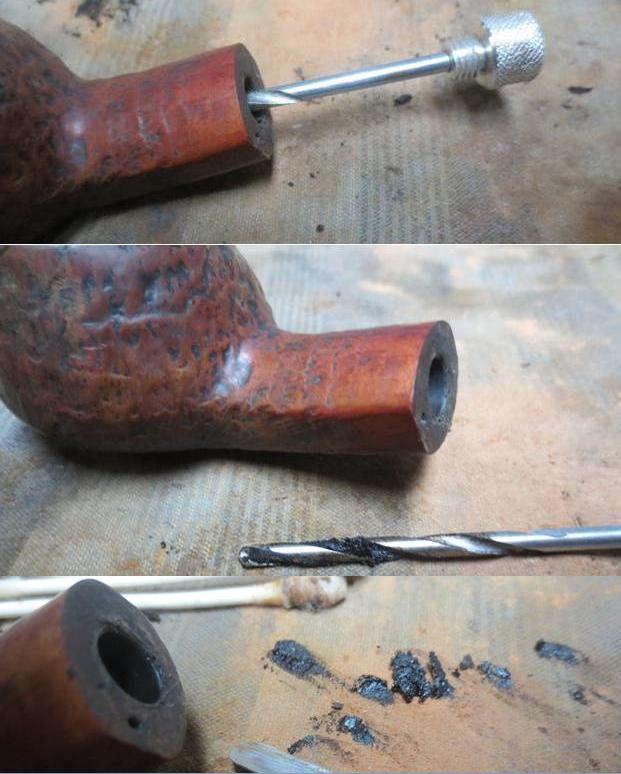
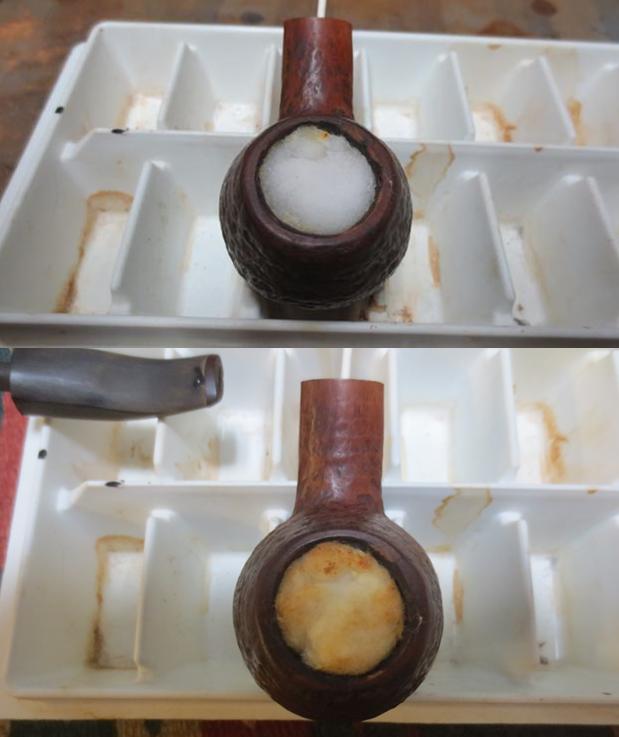
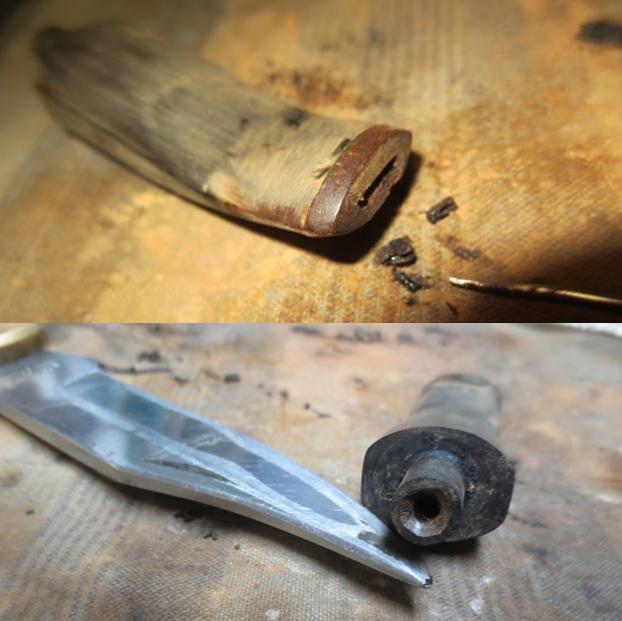
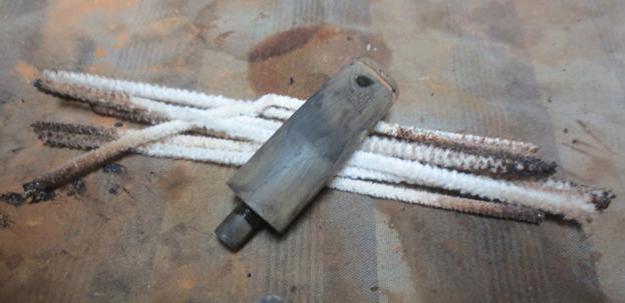
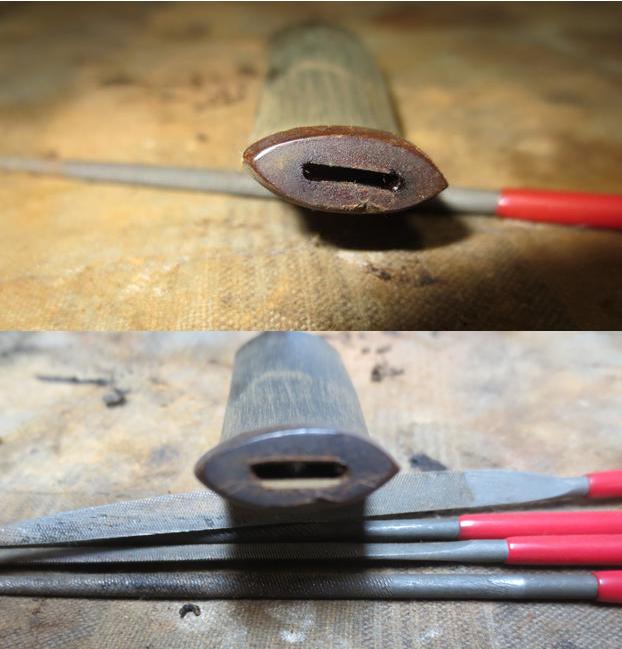
Sometimes when I take in pipes for repair and restoration I am pretty stunned by the condition. This one obviously was an old favourite of the pipesmoker who brought it to me with 8 others in need of some TLC. I sat with him in my living room and went over the repair list of what needed to be done to bring it back to life. It had been restemmed before and the stem was good and heavy so it did not need to be replaced. There were tooth marks near the button on both sides of the stem. It had some deep oxidation that needed attention. Sometime in its life it had been buffed to the point that the stamping was all but gone on the underside of the shank. With a lens I could read Stanwell over Made in Denmark but all but one number of the shape number (1) was buffed away. The finish was sticky to touch from all the waxes and oils on the bowl. The sand blast was pretty worn away and now was shallow. The angled, tapered bowl had a thick cake and it had been reamed into almost an hour-glass shape. The rim top had an overflow of the tars on it and the blast was smooth. There was some damage on the front of the bowl from knocking the pipe out on something hard. There was a small crack on the left side of the bowl from the rim down about a 1/8 of an inch that would need to be repaired. From memory I knew that the bowl was drilled to follow the angle of the exterior of the bowl.When I turned the bowl over the bottom side was covered with cracks. There were four cracks of various sizes that did not go into the interior but rather sat on the surface of heel. They were all different in terms of depth and tended to follow the blast and cut across the ring grain. They were filled with grime and wax. The bottom of the bowl was a real mess.I took a close up photo of the rim to show the damage that had been done to it by reaming it with a knife rather than with a reamer. The cake was sticky and soft and what appeared to be an hourglass shape actually was not it followed the angled bowl walls. I was concerned that the inside of the bowl would also have cracks once the cake was removed. I recommended that we remove entire cake to assess the interior of the bowl. I also took a close up photo of the heel of the bowl to show the cracks.The stem was a replacement that was thick and well made. The fit against the shank was not too bad and there was little gap between the two parts. The stem was oxidized and there was come calcium build up on the first inch on both sides. There were tooth marks and tooth chatter on both sides of the stem near the button.The shank end shows how thick the buildup was inside of the shank. The tars and oils overflow the shank and show up on the end and walls. There were also two small holes drilled to the left and right of the mortise.I reamed the bowl with the PipNet reamer using the largest cutting head. Notice the angle of the cutting head as it shows the angle of the drilling of the bowl. I cleaned up the walls with a Savinelli Fitsall reaming knife.  I sanded the bowl with 180 grit sandpaper wrapped around a piece of dowel. The third photo below shows the bowl after it has been sanded. I scrubbed the exterior of the bowl with acetone on cotton pads to remove the grime and the finish. The grime and oils came off the walls of the bowl and bowl sides and bottom to prepare the bowl for the repairs to the cracks. I drilled each end of all of the cracks with a microdrill bit on a Dremel. There were about 9 holes in the bottom of the bowl and two on the left side at the end of the shank.I put clear super glue into the cracks and pressed it down with a dental pick. I pressed briar dust into the glue and then put more dust in the glue and then more glue on top of the repair to seal it.I used a dental burr on the Dremel to rusticated the repaired areas on the bottom of the bowl and side to match them to the sand blast finish. I knocked off the rough areas of the rustication with 220 grit sandpaper to smooth it into the surrounding finish. The photos show the progress of this process. With the exterior cracks repaired and sealed I turned to work on the internals. The airway in the shank and the mortise was absolutely a mess. I used the drill bit from the KleenReem pipe reamer to clean out the airway into the bowl from the mortise. It was almost closed off with the tars and oils. I turned the bit into the airway until it was smooth. I used a dental spatula to scrape out the inside of the mortise. The scraped tars and oils can be seen in the photos below.There were two small drilled holes in the end of the shank on both sides of the mortise. I filled them in with super glue and briar dust. I cleaned out the inside the mortise and shank with alcohol, pipe cleaners and cotton swabs until they came out clean.The bowl smelled strongly of old tobacco and there were oils in the briar walls. I wanted to remove that smell as much as possible. I stuffed two cotton balls into the bowl, set it in the ice cube tray and used an ear syringe to fill it with alcohol. I left it standing overnight while it pulled the oils out of the briar bowl. In the morning the cotton was stained a yellow brown.I recleaned the mortise and airways after it had soaked using alcohol, cotton swabs and pipe cleaners.I stained the repaired areas on the bowl with a dark brown stain. I used a black Sharpie Pen to fill in some of the grooves in the briar and then restained it. I flamed it with a lighter to set the stain.I buffed the bowl with Blue Diamond on the buffing wheel to raise a shine on the bowl. The photos below show the repaired areas and the blending into the surrounding briar. I set the bowl aside and turned my attention to the stem. I cleaned out the slot with a dental pick and pulled a lot of built up tars from there. I used a sharp knife to bevel the end of the tenon to open the air flow to the slot. I sanded the stem with 220 grit sandpaper to break up the oxidation and to also remove the tooth chatter and some of the tooth marks. Some of them were too deep and they would need to be repaired later. I cleaned out the inside of the stem with alcohol and cotton swabs to remove the buildup in the airway. The slot was very narrow and it was hard to push pipe cleaners through the airway. I decided to open up the slot with needle files to facilitate easier cleaning with pipe cleaners. I did not want to change the shape of the slot, but merely wanted to make it wider and tapered smoothly into the airway. I used both large and small round, oval and flattened oval files to shape the slot. Once I had it large enough for a pipe cleaner to pass through easily I folded a piece of sandpaper and sanded the inside of the slot. I sanded the stem around the button with 220 grit sandpaper and filled in the remaining tooth marks with black super glue. I set the stem aside to dry overnight. In the morning I sanded the stem with more 220 grit sandpaper to smooth out the repairs and blend them into the surface of the stem. I also reshaped the button and smoothed out the repairs I had made there. I wiped the stem down with Obsidian Oil on a cloth to have a better look at where things were at. I noticed a small bubble in the patch on the underside of the stem once I had cleaned it so I put another drop of black superglue on it to fill it in. I polished the stem with micromesh sanding pads – wet sanding with 1500-2400 grit pads and dry sanding with 3200-12000 grit pads. I rubbed the stem down with Obsidian Oil after each set of three pads. After the final set of pads I set the stem aside and let the oil dry. I mixed up a batch of pipe mud – water and cigar ash – and applied it to the inside of the bowl to provide protection to the bare walls while a new cake is formed. When it dried I put the stem on the bowl and buffed it with Blue Diamond polish on the buffing wheel. Blue Diamond is a plastic polish that comes in a block. I load the buffing pad with it and polish the stem and the bowl. I use a light touch on the bowl so that I don’t load up the grooves and crevices with the polish. I gave the stem and bowl multiple coats of carnauba wax and buffed the pipe with a clean buffing pad to raise a shine to the finish. The finished pipe is shown in the photos below. The repairs on the bottom of the bowl blended in very well and those on the stem did also. This is the first of nine pipes that I am repairing for a guy who dropped them off at the house. It is ready for more years of service. Thanks for looking.
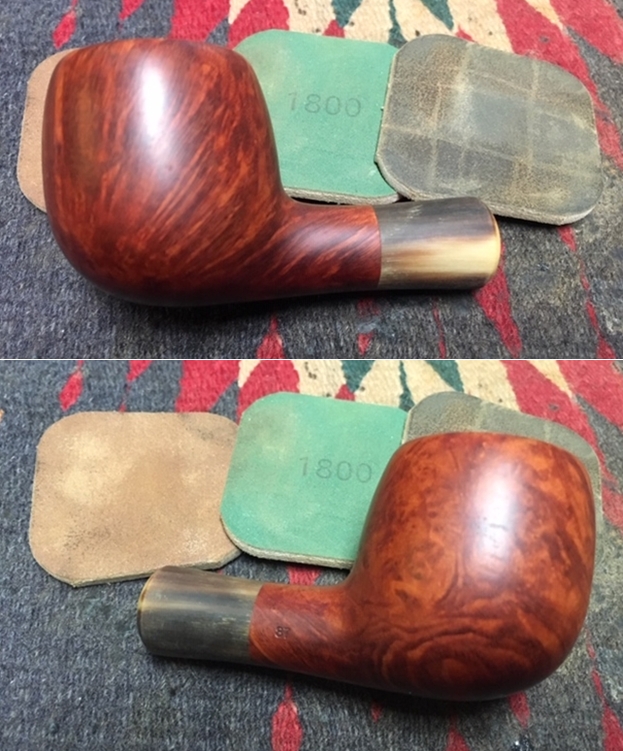
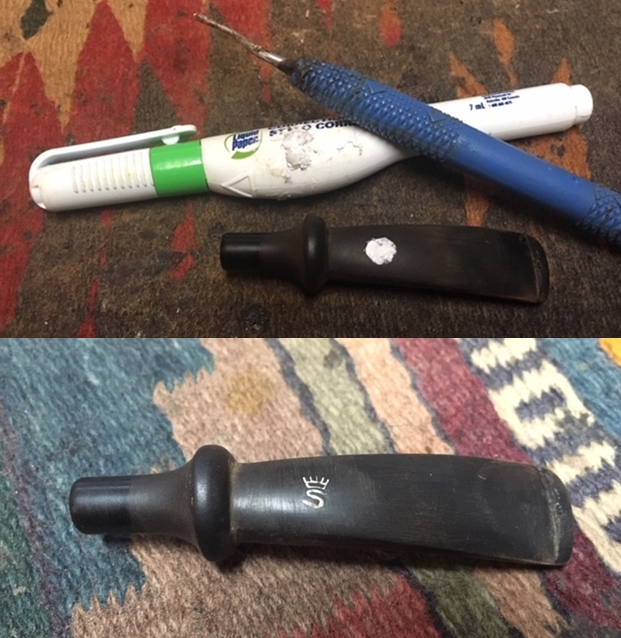


A Gold Banded Stanwell Copenhagen Calabash


Blog by Steve Laug

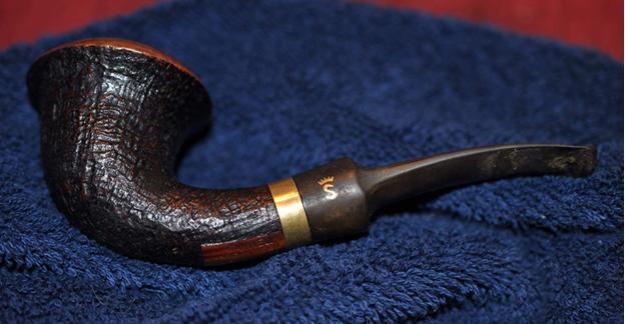
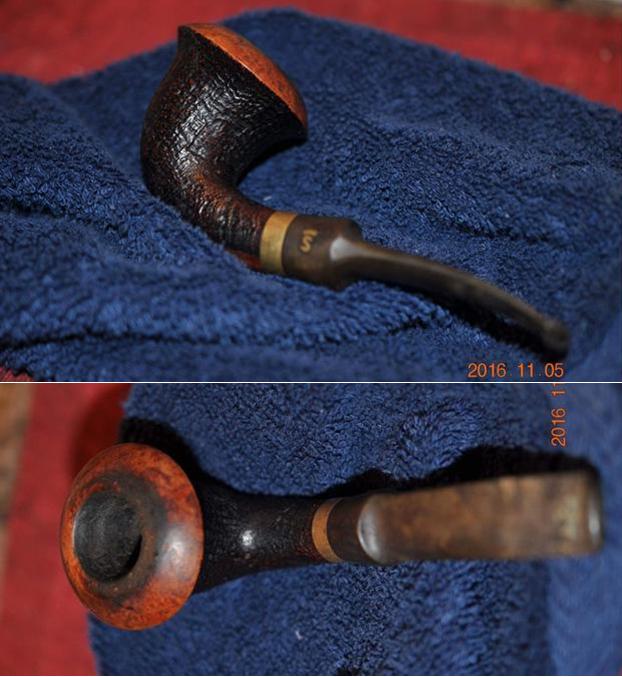
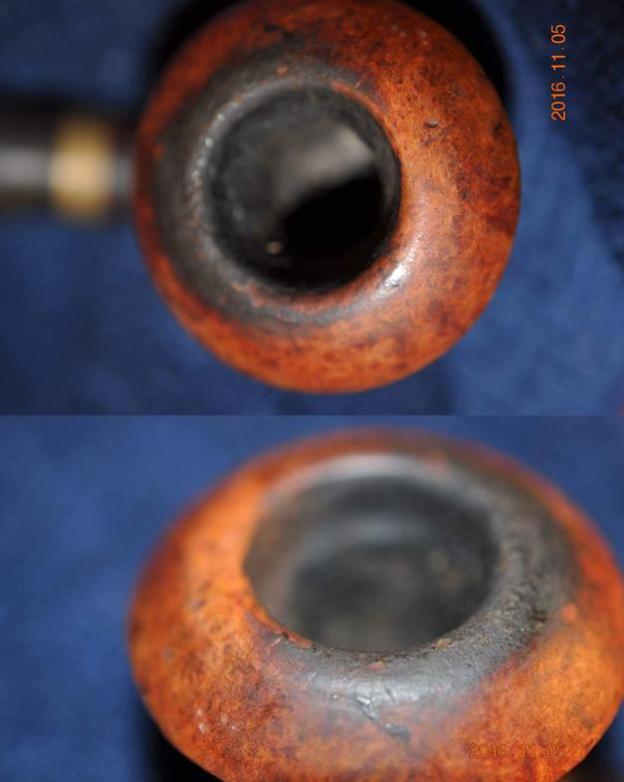
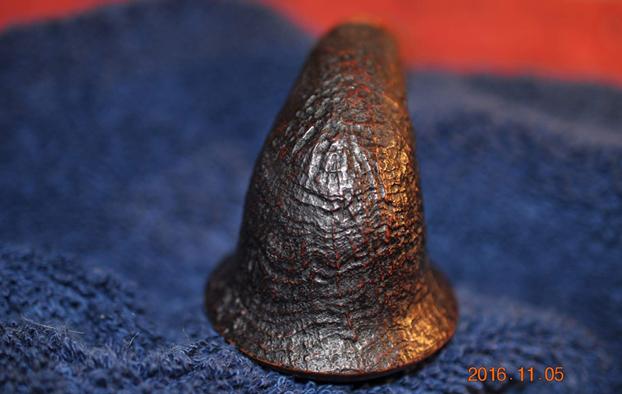
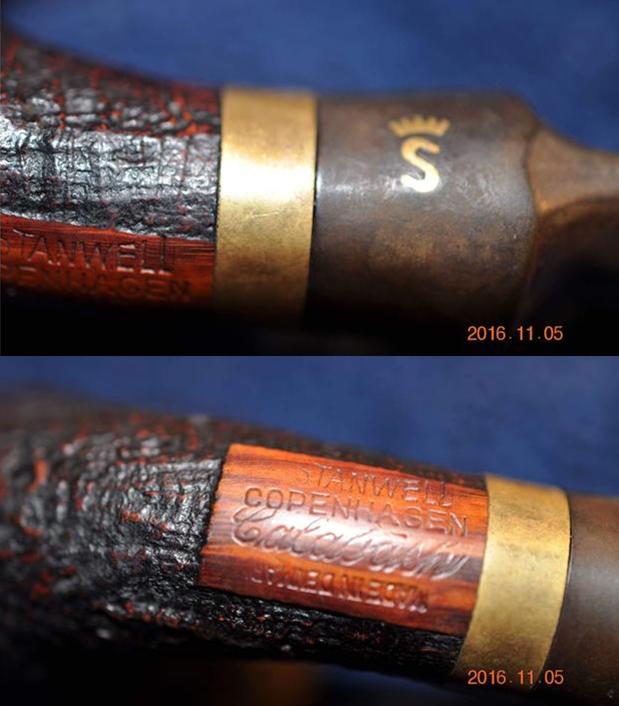
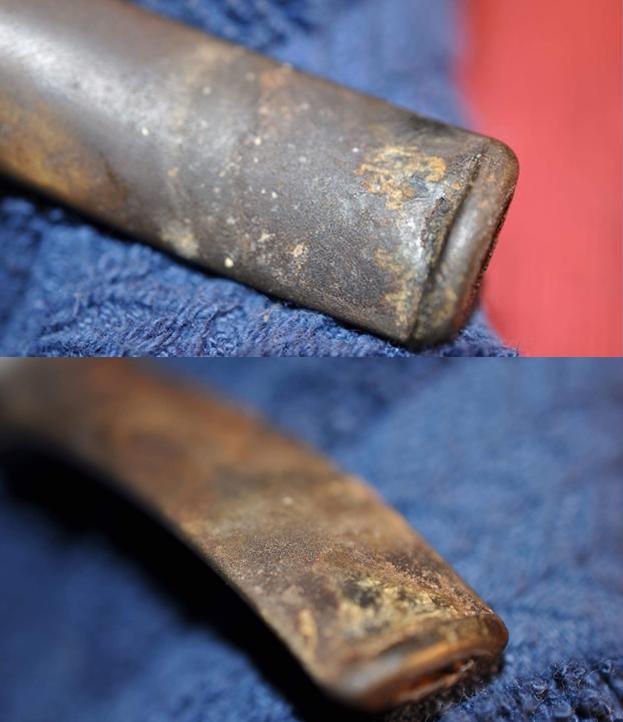
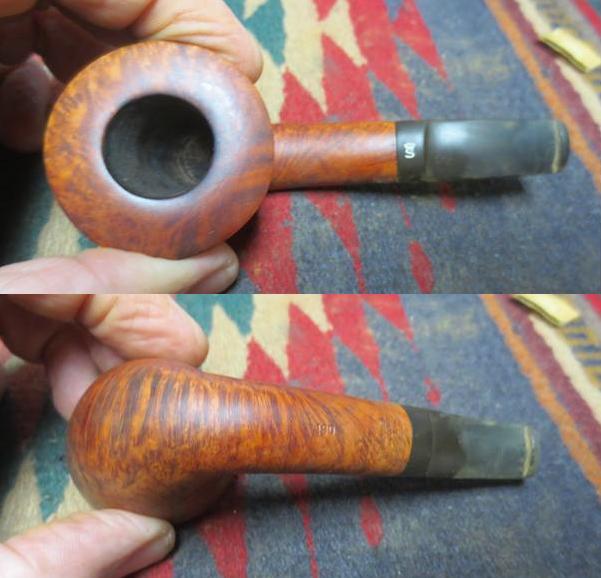
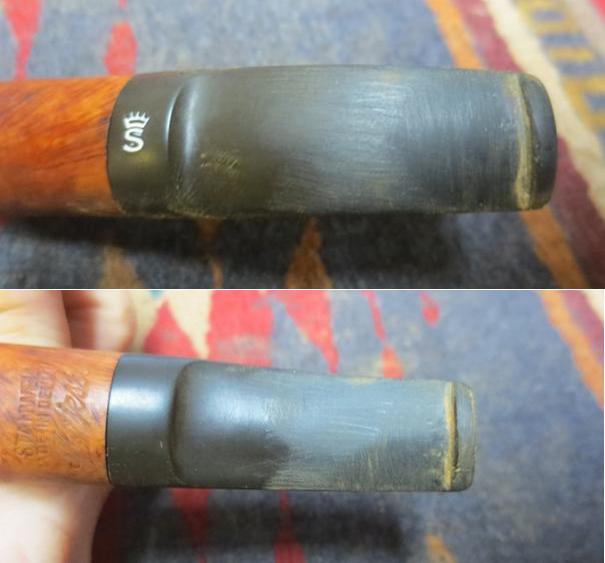
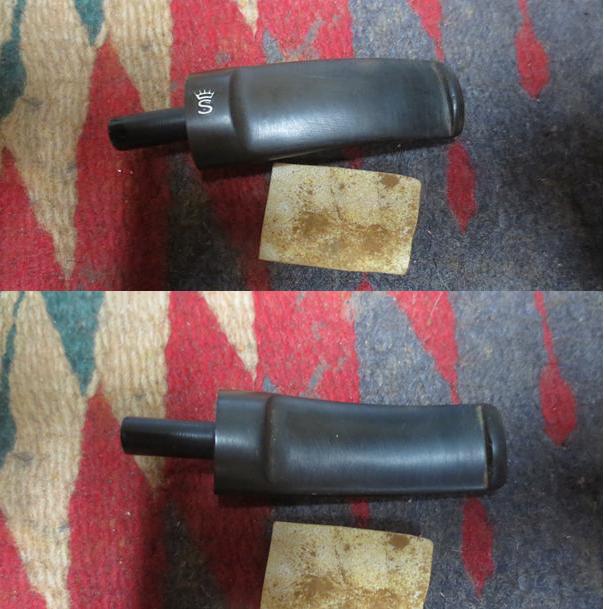
The next pipe on the work table is a striking Stanwell Calabash pipe with sandblasted body and smooth capped rim. The sandblast has exposed some wonderful ring grain around the bowl. The smooth wide rim typical of the calabash shape is wonderful birds-eye grain. The brass collar ring contrasts nicely with the dark stain of the sandblast shank. The gold crown S logo on the left side of the saddle stem combines with the other parts of the pipe to give this one a classic look. My brother Jeff found this Stanwell in an antique shop in Astoria, Oregon. It was on consignment by a widow who was selling her pipe collector husband’s collection. He bought a few of the pipes from her consignment and this is the second one that I have worked on. The first one was also a Stanwell – it was a shape 180 that was designed by Tom Eltang that I wrote about in an earlier blog (https://rebornpipes.com/2016/12/14/a-shape-you-gotta-love-a-stanwell-majestic-180/).cope1The finish on the sandblast portion was in great shape – just dirty with grit and grime. The rim cap however was another story. It had the overflow onto the top of the thick cake that was in the bowl. There was also some darkening of the inner edge of the rim. The brass band and the brass crown S logo on the stem were also dull and lifeless due to tarnishing. The stem was oxidized and had a buildup of calcification on both sides near the button. There were tooth marks and chatter on both sides of the stem and on the button. The slot in the button was nearly closed off with a thick tar.cope2My brother took two close up photos of the rim cap to show the condition of the inside of the bowl and the cap itself. There was a thick coat of tars and oils that is visible flowing over the back side of the cap. There were also several dings and dents in the cape itself though there was some nice birds-eye grain showing through the grime.cope3He also took a photo of the bowl bottom side up. The lovely bell shape of the pipe is visible from this view from the front.cope4The side view of the band and the shank/stem union shows that the connection is tight and clean. There is nothing wrong that a little polishing on the band and some elbow grease to remove the oxidation on the stem won’t take care of. The second photo below shows the stamping on the underside of the shank. It is very sharp and readable. It has the Stanwell stamp over Copenhagen over Calabash in script (it appears to have been double stamped). Beneath that it reads Made in Denmark (it is upside down in orientation to the rest of the stamping).cope5The next photos show the condition of the stem. You can see the tooth marks on the stem itself and the damage marks against the button on both sides. The calcification on the stem may have come for a Softee bit that the original owner had on the stem to protect it from more bite marks.cope6My brother Jeff again did a magnificent job cleaning up the pipe. He was able to get the grim out of the grooves and the majority of the buildup off the rim. He reamed and cleaned the interior of the pipe and stem with alcohol, cotton swabs and pipe cleaners. I took the following photos to show the condition of the pipe when I received. It was on its way to being clean.cope7 cope8I took a close up photo of the rim to show how much of the tars and oils he removed. It is pretty clean. There was some darkening on the inner edge of the rim on the back side that would need to be dealt with.cope9He also removed much of the calcification on the stem and some of the debris on the surface of both sides. The photos also show the tooth marks and chatter that was on the stem.cope10I sanded the stem to remove the rest of the debris and calcification and then wiped the stem down with alcohol on a cotton pad. I cleaned out the tooth marks with cotton swabs and alcohol and then filled them in with black super glue. I set the stem aside to let the repairs dry.cope11I sanded the inner edge of the bowl with 220 grit sandpaper to remove the darkening and then worked over the rim with 1500-1800 micromesh sanding pads to clean up the inner edge and begin polishing the rim cap. You can see the grain on the cap begin to pop and reveal the beautiful birds-eye grain.cope12When the glue had cured I sanded the patches smooth, blending them in with the surface of the stem using 220 grit sandpaper. I sanded the entire stem to work on more of the oxidation that was present on the surface. The photos below tell the story of the repairs and sanding to this point in the process.cope13I polished the bowl rim with 3200-12000 grit micromesh sanding pads and gave the sandblast bowl several coats of Conservator’s Wax. I buffed it with the shoe brush to raise the shine. The photos below show the bowl at this point.cope14 cope15I touched up the stain on the rim with a dark brown stain pen. I buffed it with a microfibre cloth and then polished it with micromesh sanding pads using 1500-12000 grit pads to polish and raise a shine.cope16 cope17I probably should have done this earlier in the process but my brother has been doing such a good job in his cleaning that I honestly forgot. I decided to give the internals of the stem and the mortise and shank a quick cleanup with pipe cleaners, cotton swabs and alcohol.cope18I polished the stem with micromesh sanding pads – wet sanding it with 1500-2400 grit pads and dry sanding it with 3200-15000 grit pads. I rubbed the stem down with Obsidian Oil after each set of three pads. I gave it the last coat of oil and set it aside to dry.cope19 cope20 cope21I polished the pipe and stem with Blue Diamond on the buffing wheel avoiding the sandblast portions of the bowl. I did not want to get the polishing compound in the grooves of the sandblast. It would be hard to get out of the grooves. I gave the sandblast portion several coats of Conservator’s Wax and buffed it with a shoe brush. I gave the stem and rim several coats of carnauba wax and buffed the entire pipe a clean buffing pad to raise the shine. I hand buffed it with a microfiber cloth. The finished pipe is shown in the photos below. It has come a long way from the pipe I started on in the first photos above. It is a classic looking calabash pipe with a great contrast between the smooth briar, the sandblast briar, the gold band and the vulcanite stem. (The brass is so shiny now that it is hard to get the vulcanite not to reflect the brass colour. In person the oxidation is gone and the stem is shiny black.) Thanks for walking through the process with me.cope22 cope23 cope24 cope25 cope26 cope27 cope28 cope29


A Shape You Gotta Love – A Stanwell Majestic 180


Blog by Steve Laug

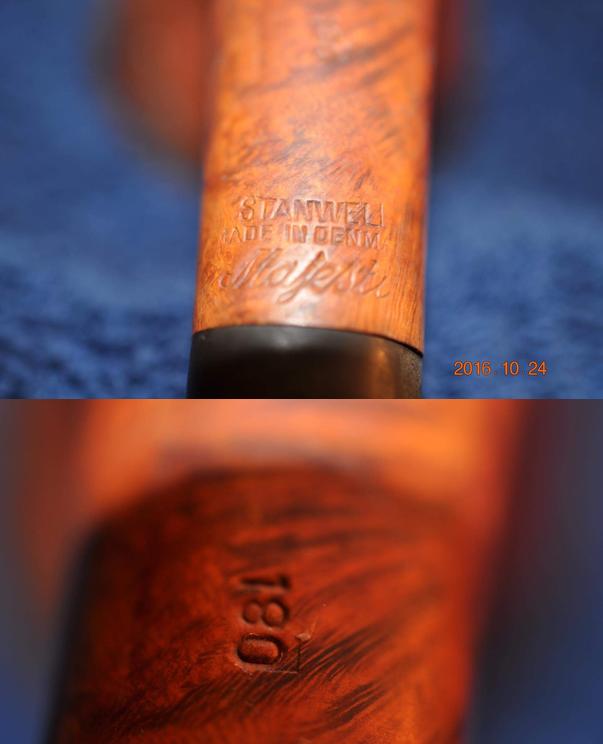
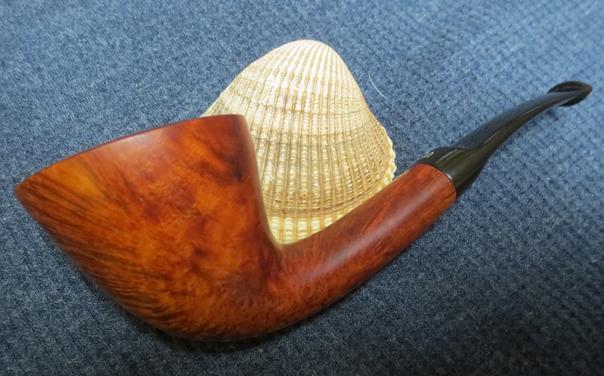
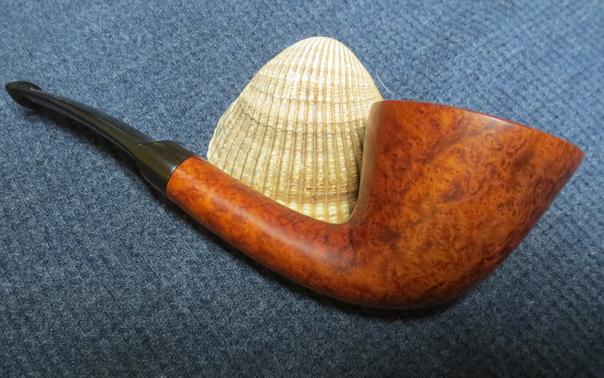
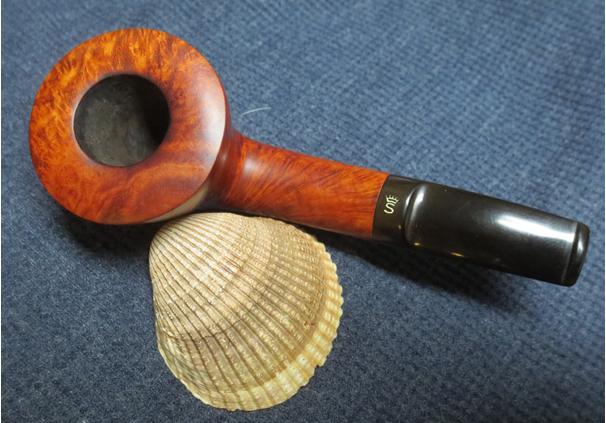
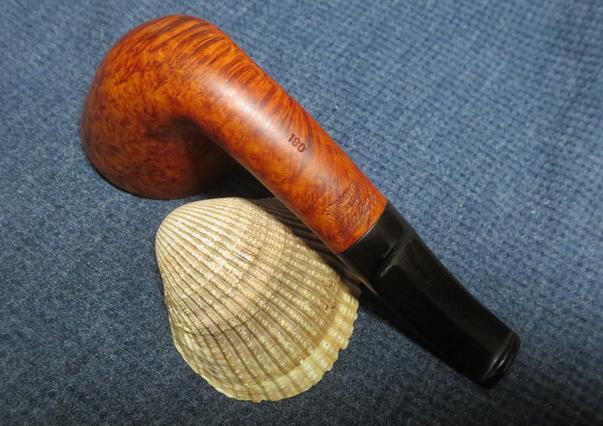
There are certain shapes that Stanwell just nails – they get them absolutely perfect. There is nothing that could be done to make the shape even more stunning than it is. The shape 180 is one of those shapes for me. It is a Dublinesque freehand with a conical bowl, an oval shank and stem that has a short saddle before flowing into the blade. According to a chart by the late Bas Stevens this shape was designed by Tom Eltang (https://rebornpipes.com/tag/shape-numbers-and-designers-of-stanwell-pipes/). It has the appearance of some of the Eltang’s that I have seen. In a write up for a Stanwell 180 sandblast pipe on smokingpipes.com Adam Davidson says this about the shape: “I would bet that this Stanwell shape was designed by Tom Eltang, who has designed quite a few for the company over the years.” So having known Bas Stevens personally I can confirm that it is definitively an Eltang designed pipe. (https://www.smokingpipes.com/pipes/estate/denmark/moreinfo.cfm?product_id=101503)

My brother Jeff found this Stanwell in an antique shop in Astoria, Oregon. It was on consignment by a widow who was selling her pipe collector husband’s collection. He bought a few of the pipes from her consignment and this is the first I have worked on. He took the following photos of the pipe to show what it looked like when he found it. It was truly a mess but looking beneath the grime he had found a gem that only needed some TLC. The grain on this pipe is truly stunning and the lay out of the pipe follows the grain amazingly well.eltang1 eltang2He took some close up photos of the rim and the underside of the bowl to show what it looked like up close. The rim was pretty tarred with overflow from the cake in the bowl. The bowl had a cake but obviously it had been trimmed back somewhere along the way. The pipe smelled strongly of aromatic vanilla tobacco and would take some serious cleaning to bring the briar back to neutral.eltang3The cross grain on the underside of the bowl is quite stunning. It would only stand out more once the pipe was cleaned and polished.eltang4The stamping on the pipe was on the underside of the shank near the stem and was sharp and clear. It reads Stanwell over Made in Denmark over the script of Majestic. Further up the shank toward the bowl it was stamped with the 180 shape number.eltang5The stem was oxidized and had tooth chatter on both sides. It seemed to have some calcification around the button. None of the marks looked to deep so it had some promise. The Crown S Stanwell logo on the topside of the small saddle portion of the stem was in excellent condition.eltang6My brother reamed the bowl and cleaned the internals of the shank and stem with pipe cleaners, cotton swabs and alcohol. He scrubbed the exterior of the pipe and stem with Murphy’s Oil Soap and was able to remove the build up on the rim and also on the stem. The finish was in very good shape under the grime on the bowl. There appeared to be a dark spot on the left side of the bowl. The next four photos show the condition of the pipe when I received it from my brother.eltang7 eltang8He was able remove the build up and calcification on the stem. You can see from the photos below that other than oxidation the stem was very clean.eltang9I worked on the stem with 220 grit sandpaper to remove the oxidation and reshape the button edges. It did not take too much work to get the oxidation that was on the surface of the stem.eltang10I polished the stem with micromesh sanding pads – wet sanding with 1500-2400 grit pads and dry sanding with 3200-12000 grit pads. I rubbed the stem down with Obsidian Oil after each set of three pads. After the third set of pads I gave it another coat of oil and set it aside to dry.eltang11 eltang12 eltang13I used a dental pick to clean out the slot in the end of the button. There was some build up in that area that had hardened. I ran a pipe cleaner through the stem and used cotton swabs and alcohol to clean out the inside of the shank and the airway to the bowl. I polished the exterior of the rim, bowl and shank with micromesh sanding pads using 1500-12000 grit pads.eltang14I buffed the bowl and stem with Blue Diamond on the buffing wheel to polish the vulcanite and the briar. I gave them both several coats of carnauba wax and buffed with a clean buffing pad to raise a shine. I hand buffed the pipe with a microfibre cloth to deepen the shine. The finished pipe is shown in the photos below. You can see from the photos of the left side of the bowl that I was able to remove the darkened spot on upper portion of the bowl. The rich finish and the comfortable shape of the pipe give the Majestic stamping on the shank a well-chosen appellation. Thanks for walking with me through the restoration.eltang16 eltang17 eltang18 eltang19 eltang20 eltang21 eltang22 eltang23

Replacing a Stem on a Stanwell Antique 156 Bulldog


Blog by Steve Laug

The next pipe I brought to my work table is another Stanwell Antique. This one is stamped on the underside of the shank with the words Stanwell over the script Antique and over the top of them both is the number 156 which is the shape number. This one came in the same lot as the two victims of Jaws that I have already written about on the blog – the Estella and the GBD Midnight (https://rebornpipes.com/2016/12/06/jaws-and-an-estella-non-pareil-%c2%bc-bent-9606-stack-by-savinelli/ and https://rebornpipes.com/2016/12/09/another-jaws-victim-a-gbd-midnight-788-oval-shank-apple/). This Stanwell Antique Bulldog had a poorly fit replacement stem – a diamond shaped stem from a classic bulldog shape. The stem had many deep tooth marks on both the top and the underside of the stem. anti1The finish on the bowl was in decent shape though the rim had some tarry buildup and there was a thick cake in the bowl. The first photo shows the mixture of sandblast and smooth on this pipe was a nice contrast. The front of the pipe was smooth and joined the smooth rim. The second photo shows that the front outer edge had nicks and dents in it as did the surface of the rim. The close up photo of the rim shows the condition of the pipe when my brother received it.anti2The Lucite shank extension is amber coloured. The thickness of the extension makes it hard for the light to shine through it. The mortise had been damaged – it is my thought that whoever put the new stem in place redrilled the mortise and damaged the inner edge and the bottom of the mortise. anti3The stamping on the underside of the shank is better than the stamping on the previous Antique I just finished. The shape number is very clear and sharp. The Stanwell logo is lighter on the left side and the Antique stamping is also very clear and sharp.anti4The next photo shows the transition from the smooth front of the bowl to the sandblast on the rest of the bowl. You can see some of the grit in the grooves and crevices of the blast and the grime on the smooth portion.anti5The last photo that my brother sent me shows the bite marks on the diamond stem. They are identical in pattern to the ones on the previous two “Jaws” pipes.anti6My brother cleaned up the pipe with his usual thoroughness. When the pipe arrived in Vancouver the finish was clean and the grooves and crevices clean. The rim was better though it show the damage to the front edge and the dents to the top of the rim. He had reamed and cleaned the mortise and the airway in the replacement stem so the pipe was very clean and ready for me to work on.

I cleaned up the shank extension end and used clear super glue to rebuild the damage portion of the Lucite. I sanded it with 180 grit sandpaper and also with 220 grit sandpaper to smooth out the repairs. I cleaned out the shank with a cotton swab and warm water to remove the debris in the shank. I took photos of the bowl after I cleaned it up and scrubbed it with Murphy’s Oil Soap.anti7 anti8The rim shows some damage to the top and the back edge in the photo below.anti9The stem was an obvious replacement so I put it in my can of stems and looked for a stem that would be a good candidate for a replacement. I had one in a lot of stems that my brother sent me. It was a Danish looking freehand stem that had a long tenon and a step up toward the ring in the middle. I forgot to take a photo of the stem before I worked on it but I had another example of one that was similarly shaped that is shown in the next photo.anti10I sanded the stem with a Dremel and sanding drum to shorten and remove the step down area. I wanted to have a smooth transition from the tenon end to the mid ring. I also wanted to make the slope to the ring more abrupt that it was in the one above. The stem was in pretty rough shape. There was deep tooth mark on the topside of the stem from the damaged button forward. There was also some tooth damage on the underside of the stem in the middle and on one side. The button was also damaged on the underside. There was a missing chunk of vulcanite on the button edge. I filled in the damaged areas with black superglue to build them up. I let the glue dry and once it was dry I sanded it smooth to match the surface of the rest of the stem. I filled in the damaged button and built up the edge on the top and bottom sides. I sanded the button as well once it had cured and reshaped it.anti11I sanded the diameter of the tenon area on the new stem until the fit in the mortise was correct. The stem still looked a little long but I would take care of that shortly. I put it in the mortise and took photos of the pipe with the new stem.anti12 anti13I sanded the stem with 180 grit and 220 grit sandpaper to smooth out the repairs and reshape the stem to match the rest of the stem.anti14I polished the stem with micromesh sanding pads – wet sanding with 1500-2400 grit sanding pads and rubbed it down with Obsidian Oil and dry sanding with 3200-12000 grit sanding pads and rubbing it down with the oil after each set of three pads. After the final set I gave it a final coat of the oil and set the stem aside to dry.anti15 anti16 anti17To remove the damage to the front edge and the top of the rim I topped the bowl with 220 grit sandpaper on the topping board. I sanded it with 1500-6000 grit micromesh sanding pads to sand out the scratches in the rim surface. I restained the rim to match the front of the bowl using a dark brown stain pen. I buffed it lightly with a microfibre cloth.anti18I sanded the smooth portions of the bowl face and the rim with 1500-6000 grit micromesh sanding pads to polish them.anti19 anti20I buffed the rim and smooth part of the bowl and the stem with Blue Diamond polish on the wheel. I gave the stem multiple coats of carnauba wax and gave the bowl several coats of Conservator’s Wax. I buffed the pipe with a clean buffing pad and hand buffed it with a microfibre cloth to deepen the shine. The finished pipe is shown in the photos below. The repairs on the stem show under the bright lights of the flash but in person they are pretty well blended into the surface of the stem. Thanks for walking through the restoration with me.anti21 anti22 anti23 anti24 anti25 anti26 anti27 anti28

A Stanwell Antique 127 with an Amber Shank Extension


Blog by Steve Laug

The next pipe on the work table is a beautiful little Stanwell Acorn. The finish on the pipe was in excellent condition. There were some tars and oil that had overflowed the bowl onto the rim but it was pretty clean. The cake was not too thick. The inner and outer edge of the rim was in excellent shape. The amber Lucite shank extension was in excellent shape and the mortise hole was in perfect condition. The underside of the shank is stamped with the Stanwell logo over the word Antique in script. To the right of it was stamped 127 which is the shape number. The stem was clean with some tooth chatter and quite a bit of oxidation on the top and the underside. The white Stanwell Crowned S logo was stamped on the left side of the stem.

The next series of photos were taken by my brother before he cleaned up the pipe. He did his usual thorough job of cleaning the inside and the outside of the pipe. He reamed the bowl and cleaned out the airways in the shank and stem with alcohol, cotton swabs and pipe cleaners.antique1The next two photos show the two sides of the bowl. The left side of the bowl is a beautiful tight sandblast finish. The rim is also sandblasted as is the entire shank. The right side of the bowl is a smooth medium brown patch of briar that is on all of the Antique line of Stanwell pipes that I have seen.antique2The photo of the rim shows the condition and the thin cake in the bowl. The pipe was well cared for and did not need to have a lot of work done to bring it back.antique3The next photo shows the underside of the shank and the stamping. You can read the Stanwell stamping even though it is a bit faint on the left side. The Antique stamping is also light but the shape number is clear and deep.antique4The last two photos show the condition of the stem and the light oxidation and tooth chatter on the top side near the button. The Crown S stamping on the stem is in perfect condition.antique5The next four photos show the condition of the pipe when it arrived in Vancouver. I took the photos to show what the pipe looked like before I began the cleanup.antique6 antique7I took a close-up photo of the rim and the shank extension to show the contrast in colours and the condition of the rim at the point I received the pipe.antique8I also took some close up photos of the stem to show the oxidation and the light tooth chatter on both sides of the stem.antique9I gave the bowl and shank several coats of Conservator’s Wax and hand buffed the pipe with a shoe brush and then a microfibre cloth to raise and deepen the shine on the briar. I ran a pipe cleaner through the airway and the mortise and it came out clean.antique10 antique11The stem was lightly oxidized so I decided to only use micromesh sanding pads to clean it up. I wet sanded it with 1500-2400 grit sanding pads and gave it a coat of Obsidian Oil. I dry sanded it with 3200-12000 grit pads and gave it a rub down with Obsidian Oil after each set of three pads. I set it aside after the final set of pads to dry.antique12 antique13 antique14I buffed the pipe with Blue Diamond on the buffing wheel to polish it. I gave the bowl several coats of Conservator’s Wax and buffed it with a clean buffing pad. I gave the stem multiple coats of carnauba wax and buffed it with a clean buffing pad. I hand buffed the pipe with a microfibre cloth to deepen the shine. The finished pipe is shown in the photos below. The complexity of the contrast of dark and medium browns as well as a hint of black gives a dimensionality to this pipe that is quite stunning. It did not take a lot of work to bring it back but it was a pleasure to work on it. Thanks for walking with me through the process.antique15 antique16 antique17 antique18 antique19 antique20 antique21 antique22 antique23

A Stanwell Danish Star 64


Blog by Steve Laug

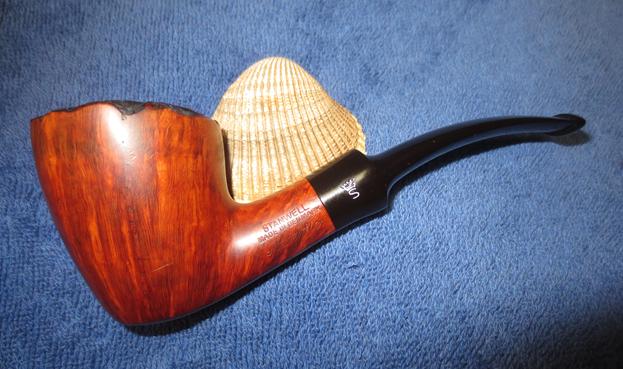
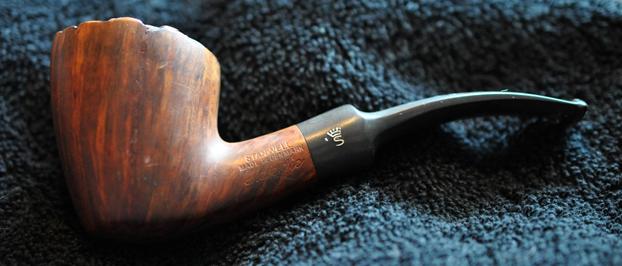
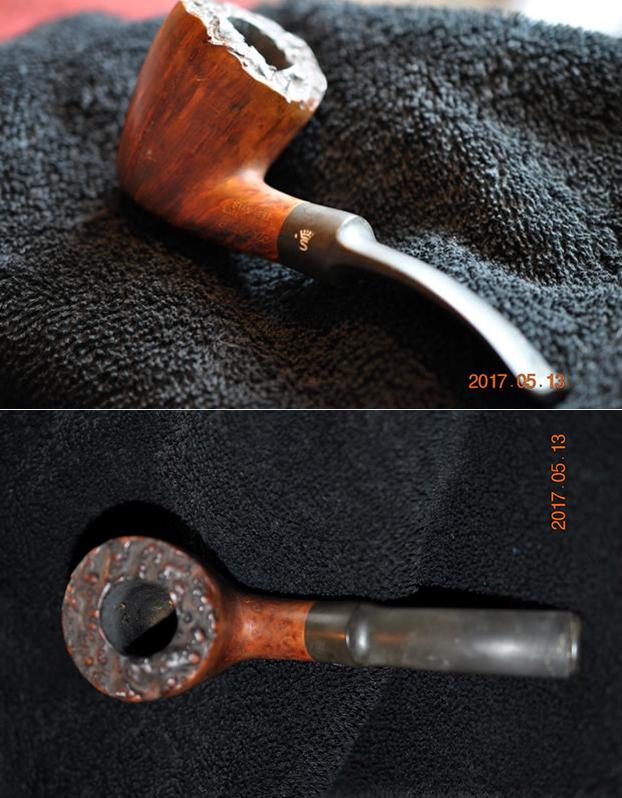
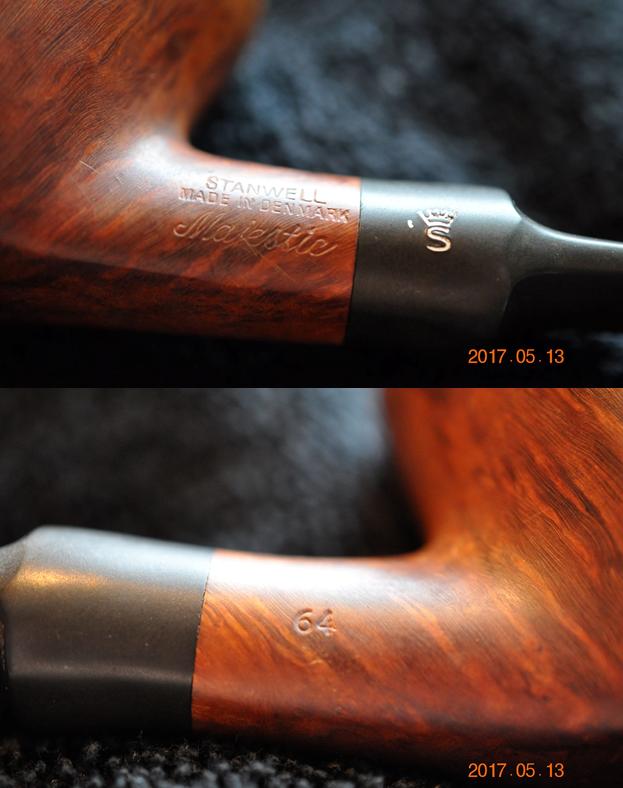
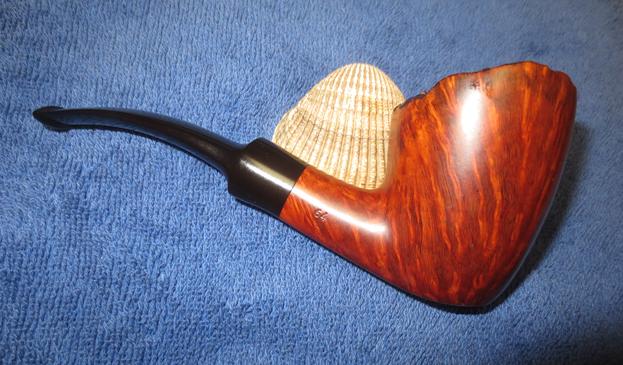
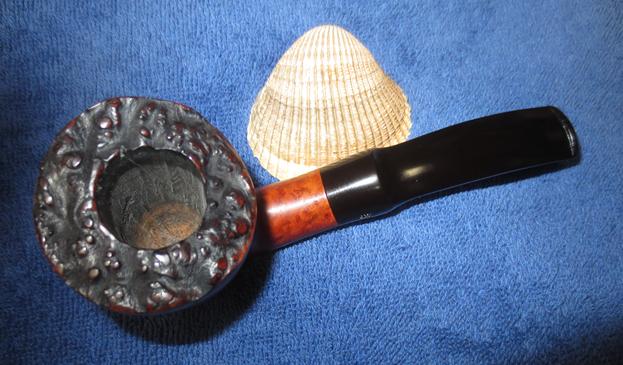
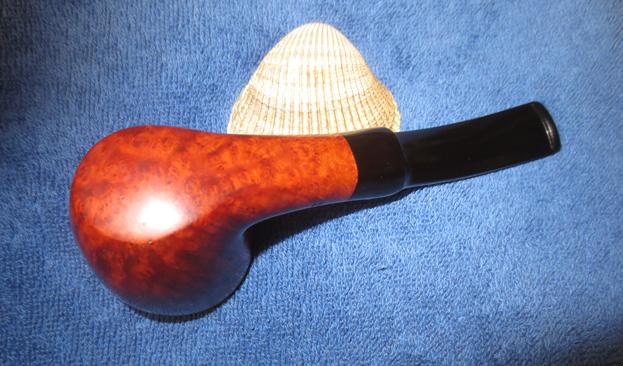
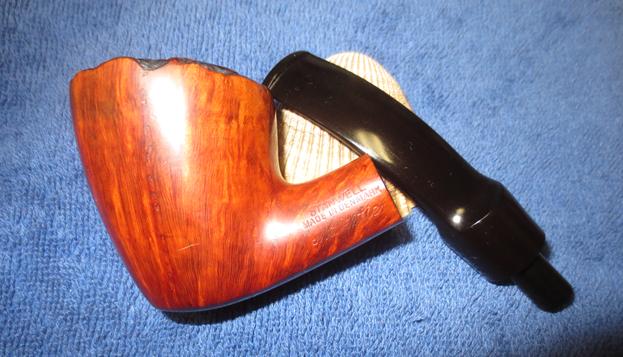
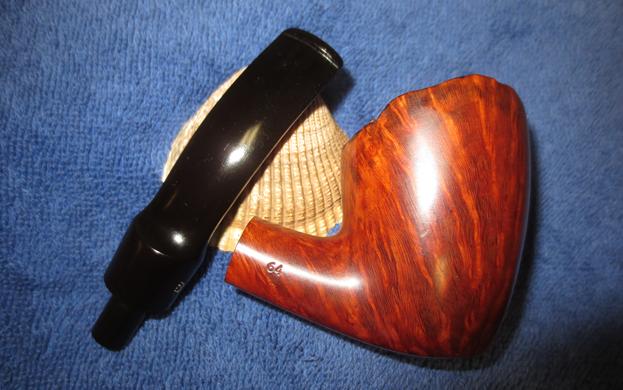
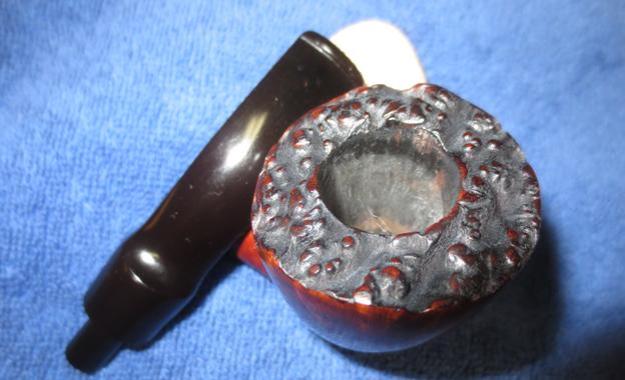
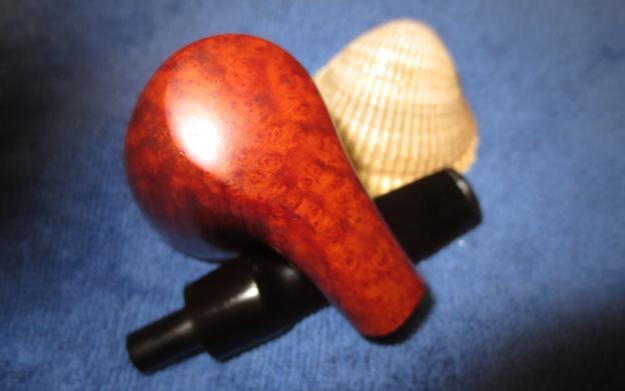
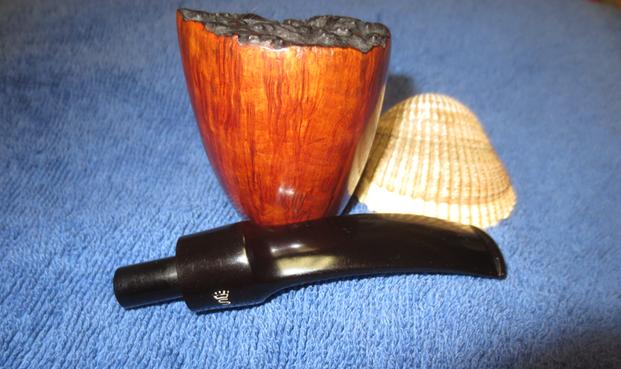
My brother sent me a nice looking Stanwell shape 64 with a nice plateau top. The briar itself was in good shape. There were no dents of nicks in the briar. The finish was in great shape. The rim was decent but the plateau was clean and in decent shape. The high spots were the same brown as the bowl and the nooks and crannies were dark brown or black. It was stamped on the left side of the stem with the words Stanwell over Danish Star. On the right side it was stamped with the shape number 64. On the underside of the shank it is stamped Made in Denmark. The stem was lightly oxidized and there were tooth marks on the top and underside near the button. The bite marks on the underside were deep but the ones on the topside was a bite through into the airway.danish1 danish2I took a close up photo of the top of the bowl. It shows the grooves, crevices and the high spots on the plateau top. It was dirty and there was dust in the grooves of the rim.danish3I took close up photos of the stem to show the condition of the top and bottom side of the stem. The photo of the top shows the bite through and the tooth marks that were further down the stem top. The photo of the underside shows the tooth marks there as well. The tooth marks were deep and large. There were also bite marks on the top and the bottom of the button.danish4I sanded the surfaces of the stem and cleaned out the dents in the surface with alcohol and cotton swabs. I greased a pipe cleaner with Vaseline and inserted it into the airway of the stem. I mixed a putty of charcoal powder and black super glue with a piece of straightened paper clips. I filled in the bite through with putty and the paper clip until it was thickly covered. I filled in the dents in the surface of the stem and built up the worn spots on the button edge. I sprayed the repairs with the accelerator to harden the repair.danish5 danish6 danish7When the glue had hardened and cured I used a file to smooth out the repaired spots on both sides of the stem.danish8I sanded the repaired areas with 220 grit sandpaper to smooth out the surface and remove the scratches left by the file. It took some time but I was able to sand out the scratches.danish9I filled in some of the air holes in the repair with clear super glue and sanded the surface with 220 grit sandpaper to smooth out the stem.danish10I polished the stem with micromesh sanding pads – I wet sanded it with 1500-2400 grit sanding pads and dry sanded it with 3200-12000 grit pads. I rubbed the stem down with Obsidian Oil after each set of three pads. I gave it a final coat of Obsidian Oil and set aside to dry.danish11 danish12 danish13The plateau top was in great shape. I used a black Sharpie pen to highlight the grooves and crevices in the rim top. I buffed the pipe and stem with Blue Diamond on the buffing wheel to raise a shine and remove the last of the scratches on the vulcanite. I buffed the bowl surface to polish out the light scratches in the briar. The Blue Diamond gave the finish on both the bowl and the stem a high shine. I gave the pipe multiple coats of carnauba wax and buffed it with a clean buffing pad to raise the shine. I hand buffed the pipe with a microfibre cloth to deepen the shine. The finished pipe is shown in the photos below. The colour of the stain on the pipe really makes the grain stand out clearly on the pipe. Thanks for having a look.danish14 danish15 danish16 danish17 danish18 danish19 danish20 danish21

Cleaning and Restoring a Stanwell Antique 56 Canadian


Blob by Steve Laug

One of the first pipes I chose to restore from the estate lot my brother and I purchased in Idaho from an older pipeman, Gene was this Stanwell Canadian. It was a nice looking contrast stained pipe that was sandblasted over most of the surface area – the shank and ¾ of the bowl. The underside of the shank and the front of the bowl were smooth and stained a medium brown. The rim top was also smooth and had a matching stain. The stem was a replacement and while it fit the mortise well it did not fit against the shank. It was well chewed by what Gene called a beaver. The tooth marks were deep and many. Fortunately the stem did not match the shank of the pipe so it would not be a loss. I would need to look for a stem in my can of stems and see if I could find one that matched the stem. Maybe I would even find one that bore the Stanwell logo and worked with the pipe. My brother Jeff took some photos of the pipe before he cleaned it up. The next photos show the pipe when he received it.stanwell1Jeff took close up photos – the first shows the cake in the bowl and the overflow of tars and lava over the top of the rim. The outer and inner rims were in great shape. The bowl was still in round and the outer edge is smooth where the smooth portion is and rougher where the sandblast portion of the bowl was. The underside of the shank was stamped Antique in script over Made in Denmark. Next to that it was stamped Stanwell. Next to the shank/stem junction it bore the shape number 56 which is the shape number for a long Canadian.stanwell2 stanwell3He also took some photos of the stem top and bottom. I have included them as they show the chewed surface of the stem on the top and the bottom side. It was a mess and the button was chewed down as well.stanwell4When the pipe arrived in Vancouver I took a photo of the pipe with the stem that came with it. I went through my can of stems and found a stem that bore the silver Stanwell logo on the top side of the saddle. It fit the shank well and with a little cleanup it would work very well. It was oxidized and had some light tooth chatter on both sides. It was almost straight from the shank to the edge of the button.stanwell5I removed the stem and took photos of the bowl without a stem to give you an idea of the condition of the bowl and shank of the pipe. You can see from the photos that my brother had cleaned up the exterior of the pipe with Murphy’s Oil Soap and a tooth brush and removed the grime that was in the grooves and crevices of the sandblast finish. There was also a small fill on the front of the bowl on the smooth portion of the bowl front. He was also able to remove much of the tars and lava on the rim top.stanwell6 stanwell7I took a close up photo of the stem – both top and bottom sides in order to show the general condition. You can see the crown S on the top of the saddle portion of the stem.stanwell8The tenon was the perfect size to fit the mortise on the Canadian. The width of the stem was the same as the shank. The height was slightly larger than the height of the shank. It would need to be sanded lightly to bring about a match. The photos show what the pipe looked like with the new stem.stanwell9 stanwell10I took a close up photo of the bowl rim and the underside of the shank. It was in great shape. The stamping on the shank underside was clear and readable.stanwell11 stanwell12I also took a close up photo of the stem top and underside with it in place in the shank. You can see from the photos that the stem fit nicely in the shank and looked like it belonged on the pipe.stanwell13I sanded the stem with 220 grit sandpaper to remove the tooth chatter and the tarnishing to the crown S logo. I worked on the height of the stem so that it was more in line with the thickness of the shank.stanwell14Once I had the stem fit better I polished it with micromesh sanding pads – wet sanding with 1500-2400 grit sanding pads and dry sanding with 3200-12000 grit sanding pads. I rubbed the stem down with Obsidian Oil after each set of three sanding pads. I gave it a final coat of oil after the last set of three pads and set it aside to dry.stanwell15 stanwell16 stanwell17I rubbed the bowl down with a light coat of olive oil and hand buffed it with a shoe brush. I gave it several coats of Conservator’s Wax and buffed it with the shoe brush. I buffed the smooth portions on the bowl and rim with Blue Diamond and buffed the stem as well to polish it. I gave the stem and smooth portions of the bowl with carnauba wax. I buffed the entire pipe with a clean buffing pad to raise the shine. I hand buffed it with a microfibre cloth to deepen the shine. The finished pipe is shown in the photos below. The shine and the contrast finish and stains make the pipe a unique looking pipe. The new stem looks right with the pipe. Together they combine to make a good looking pipe. Thanks for walking through the restoration with me.stanwell18 stanwell19 stanwell20 stanwell21 stanwell22 stanwell23 stanwell24 stanwell25 stanwell26

A Stanwell Golden Contrast 142


Blog by Steve Laug

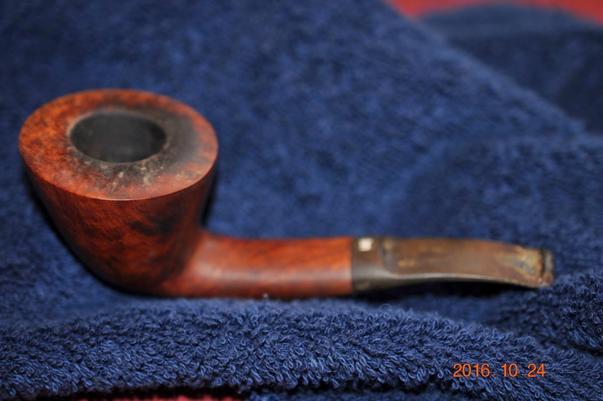
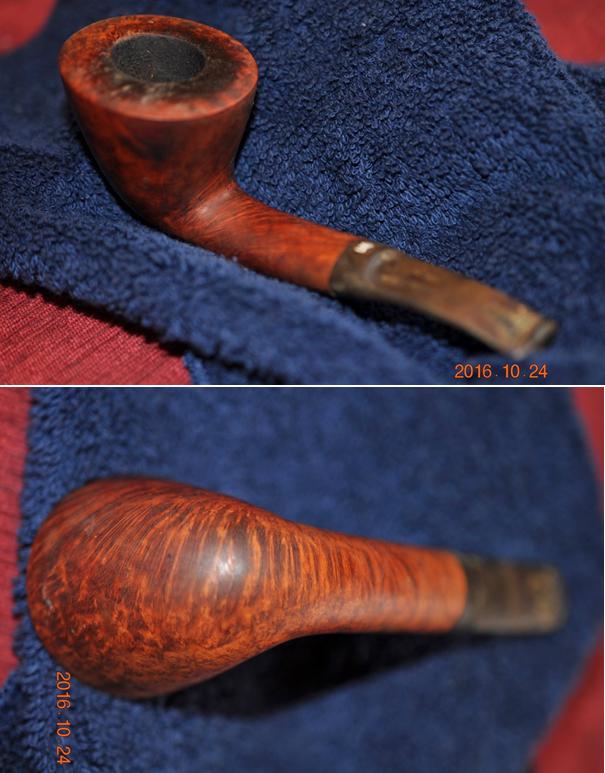
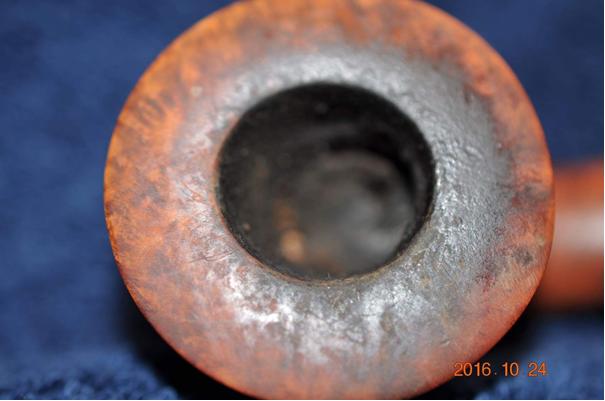
I have always been intrigued by the Stanwell Golden Contrast finish regardless of the pipes it has been applied to. The contrast of dark and light playing across the grain is beautiful. To me the lines and the elegance of the pipe are stunning and the contrast stain makes the lay of pipe with the grain gorgeous. The stain highlights the birdseye and the flame grain and makes them pop from the surface of the bowl and shank. The slight flare of the saddle on the stem to the pinch of the blade behind the saddle all pointed to a hand that I had seen before. I did a little digging because I wanted to confirm my guess/my suspicions about the designer. What I found out confirmed the direction I was thinking. It turns out that shape number 142 was originally designed for Stanwell by Jess Chonowitsch. For a list of various Stanwell Shape numbers and who they are attributed to you can read this list compiled by leading Stanwell Collector Bas Stevens on rebornpipes at:  https://rebornpipes.com/2013/09/03/stanwell-shapes-compiled-by-bas-stevens/

This particular pipe was another of the interesting pipes in the recent shipment of estate pipes my brother Jeff picked up. He is getting pretty good at grabbing some great pipes. This Golden Contrast was in pretty decent shape. The finish was dirty but in great shape. The rim showed some darkening and a build-up of tars and oils. There was a light cake in the bowl and the internals were dirty. The stem had some calcification on the top and bottom inch of the stem from the button forward. There was some tooth chatter as well but no deep tooth marks. The stem was oxidized. The brass crown S on the left side of the saddle appeared to be lightly oxidized as well but would take little to make it shine. The various photos that follow are ones that my brother took before he cleaned the pipe. They show the amazing grain on this beauty.Gold1 Gold2 Gold3The next two photos of the rim and the underside of the bowl and shank. The birdseye on the rim and the bottom of the shank is quite stunning to me. The third photo below shows the grain on the side of the bowl and the flame grain. The contrast stain makes the grain stand out.Gold4 Gold5 Gold6The next photos show the various stamping on the shank sides and bottom. The left side of the shank reads Stanwell over Golden Contrast in script. The right side of the shank is stamped with the shape number 142. The underside of the shank is stamped Made in Denmark. All the stamping is sharp and clear.Gold7 Gold8Gold9My brother did the major clean and ream of the pipe. When I received it the pipe was very clean. I ran pipe cleaners through but they came out clean. I took these photos of the pipe when it arrived. The stem was lightly oxidized from the earlier clean up.Gold10 Gold11Jeff had done a great job on the rim top. He was able to remove most of the tars and oils. There was still some darkening on the back edge of the rim.Gold12I took some photos of the top and underside of the stem to show the striping of the oxidation on the vulcanite. The stem was actually clean – no tooth marks or chatter at this point in the process.Gold13The airway in the stem was drilled off centre in the tenon. The photo below shows the location of the airway in the end of the tenon. The alignment of the airway in the stem with the airway in the tenon was off. The mortise airway was centered in the end where it entered the bowl. The one in the tenon was off.Gold14I lightly scraped the bowl with a Savinelli Pipe Knife to clean out a small ridge of cake just above the top of the airway.Gold15I used a sharp knife to bevel the airway in the tenon until the funnel was round and the alignment against the end of the mortise was better. With the funneled airway I was able to get good airflow through the stem with no constriction in the union between the two airways.Gold16I scrubbed the back side of the rim with saliva and a cotton pad and was able to remove more of the rim darkening and reveal the grain pattern underneath. I sanded it with 1500-2400 grit micromesh sanding pads to polish the rim top.Gold17I worked on the oxidation on the stem by wet sanding the stem with 1500-2400 grit micromesh sanding pads. I rubbed the stem down with Obsidian Oil and dry sanded it with 3200-12000 grit pads. I rubbed the stem down with oil between each set of three pads and after the final sanding with the 12000 grit pad. I set the stem aside to dry.Gold18 Gold19 GOld20I buffed the pipe with Blue Diamond on the buffing wheel. I gave it multiple coats of carnauba wax. I buffed it with a clean buffing pad to raise the shine on the bowl and the stem. I hand buffed it with a microfibre cloth to deepen the shine. This is a beautiful piece of briar that the carver aligned flow of the pipe with the direction of the grain. The polishing shows the contrast between the dark and light of the grain. The elegance of the shape and the flow of the grain work well together and the golden contrast stain work together to make a great looking pipe. Thanks for looking.Gold21 Gold22 Gold23 Gold24 Gold25 Gold26 Gold27 Gold28