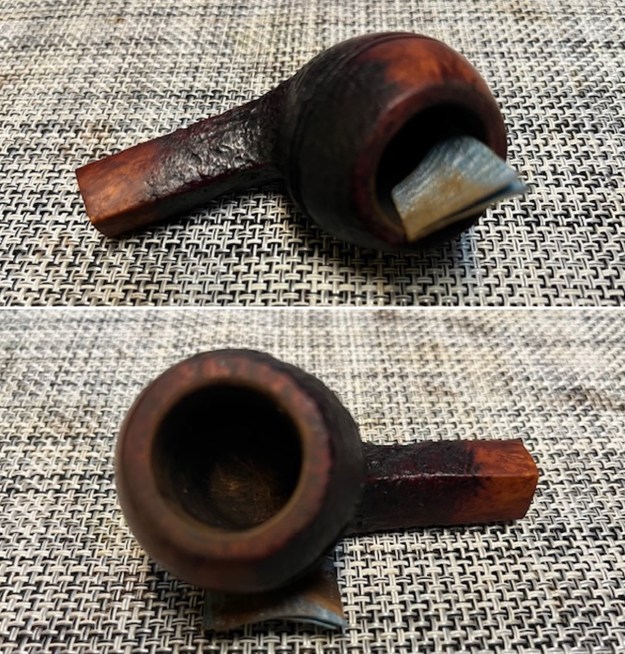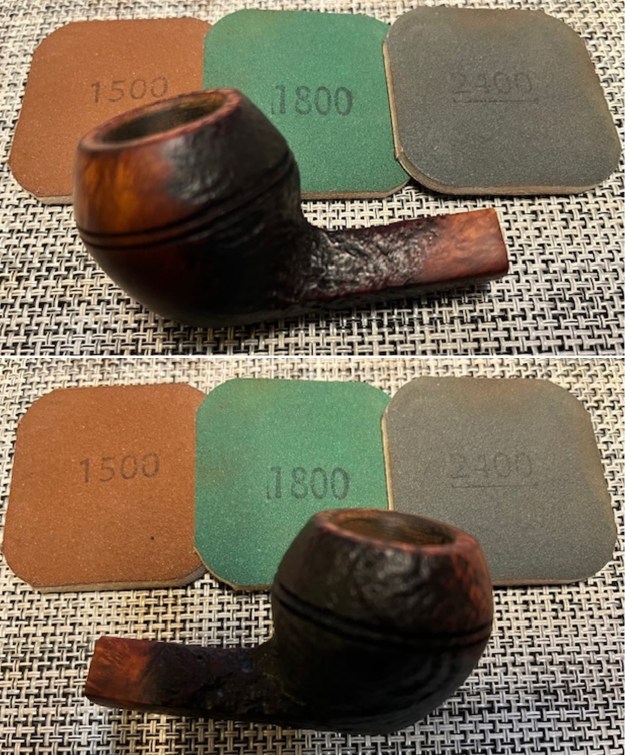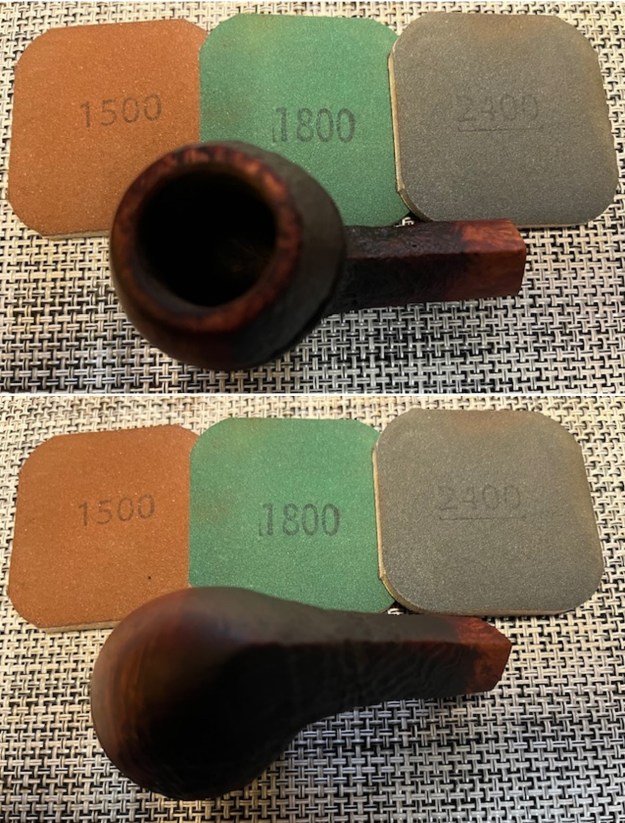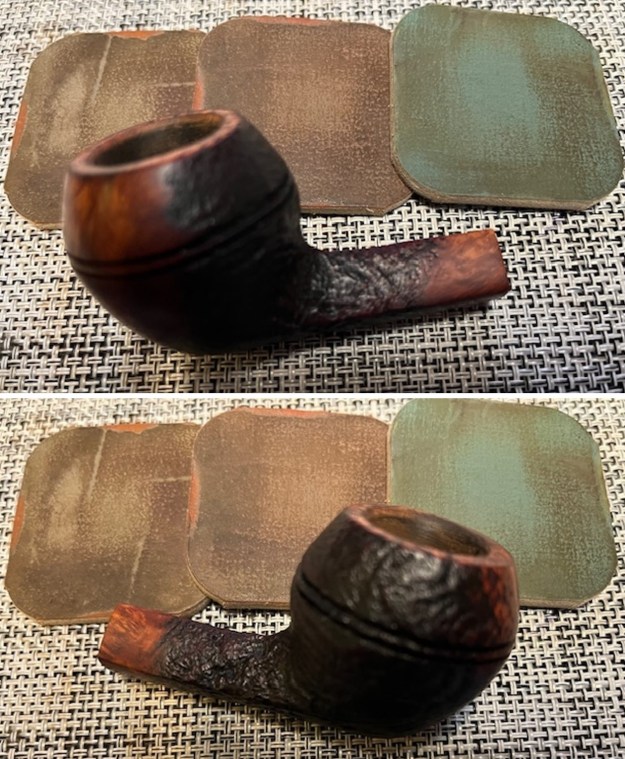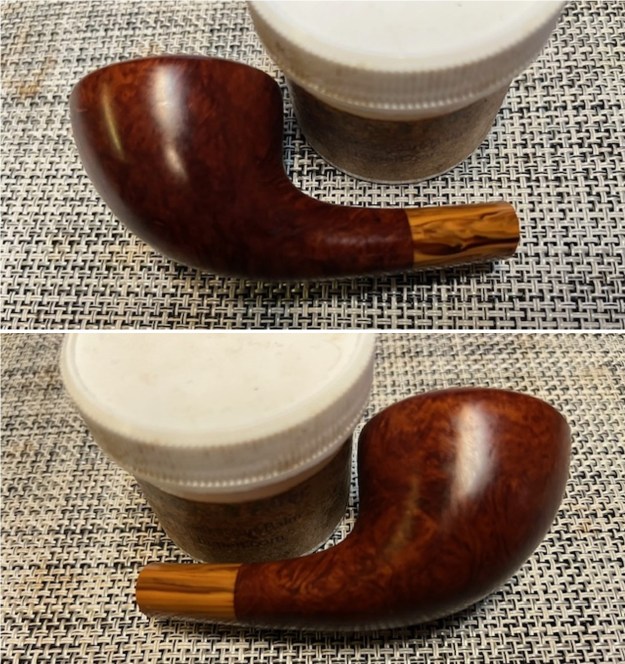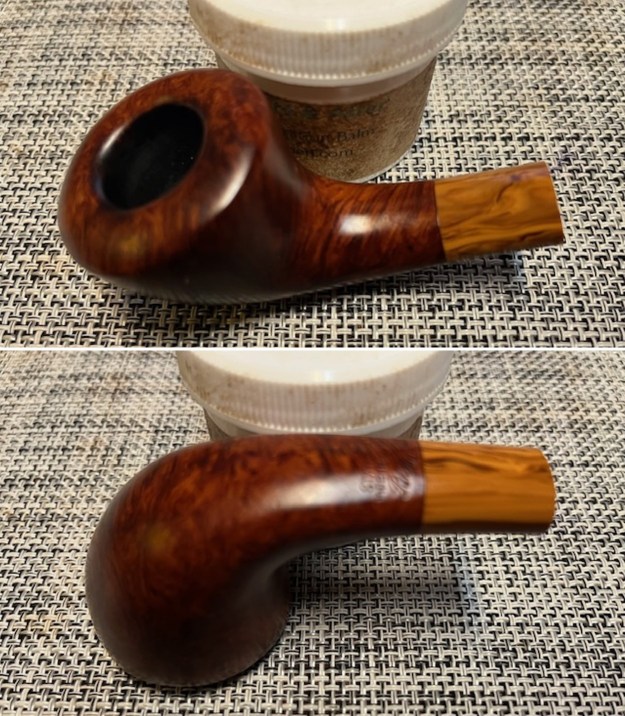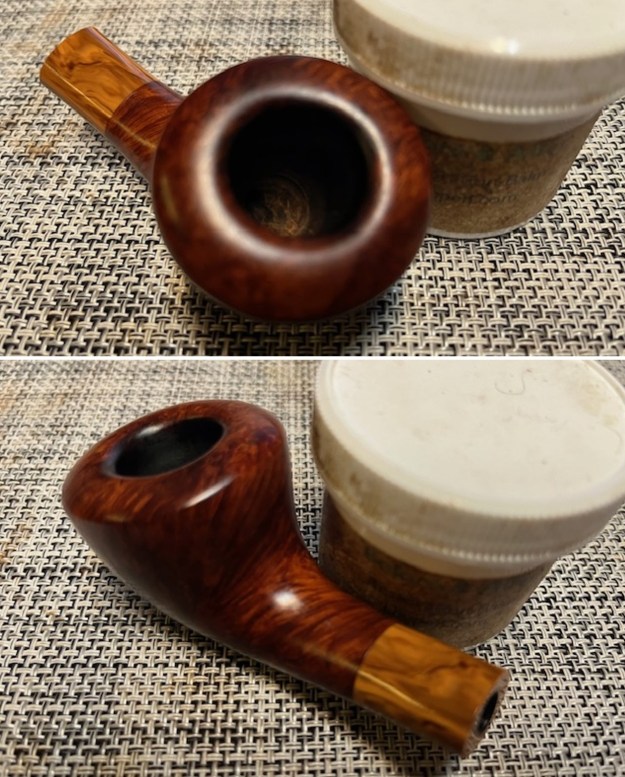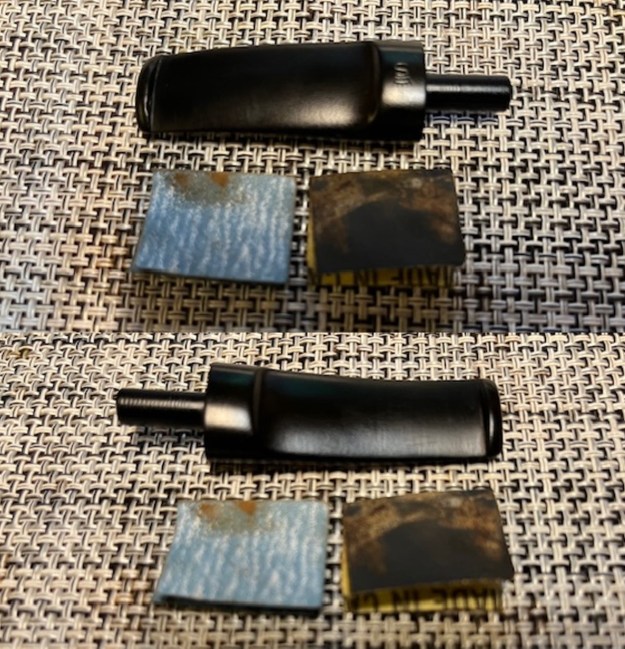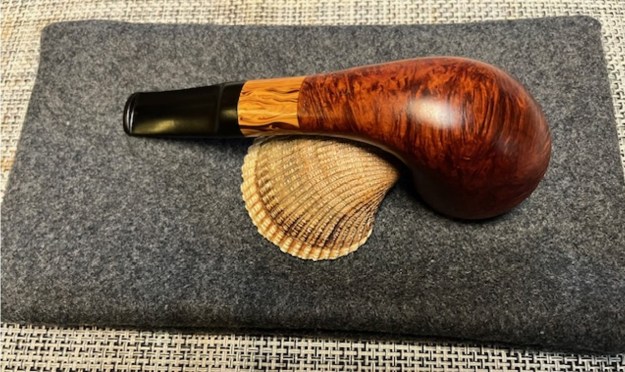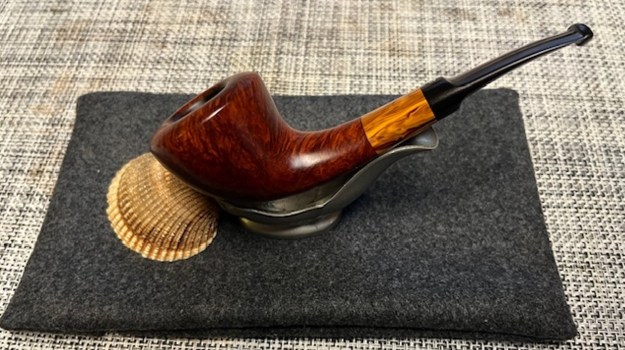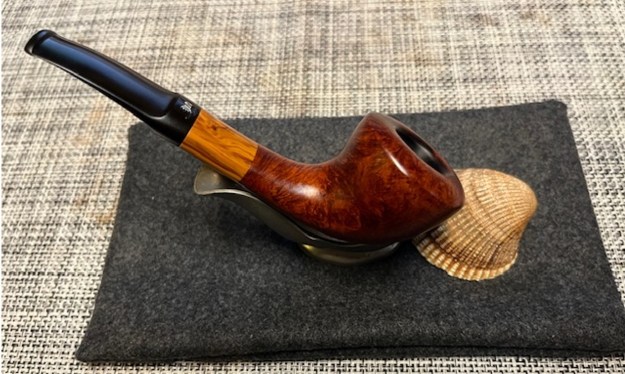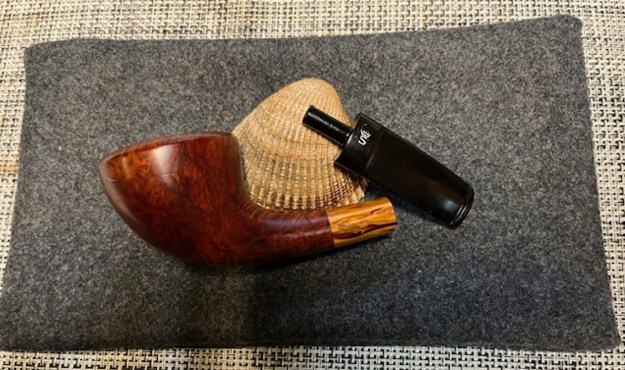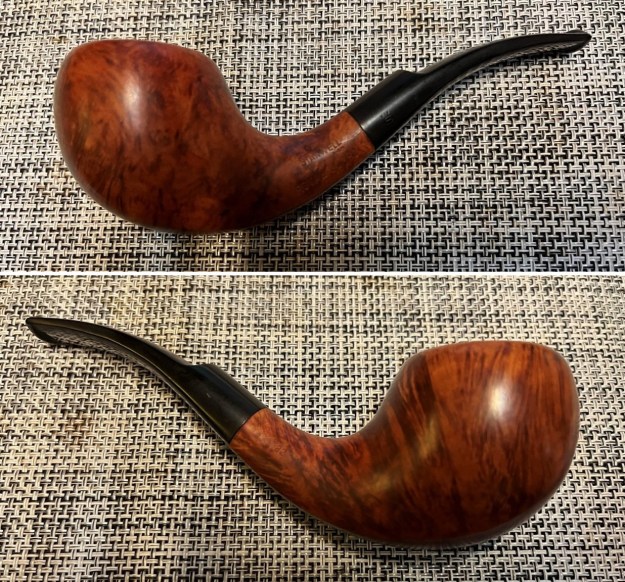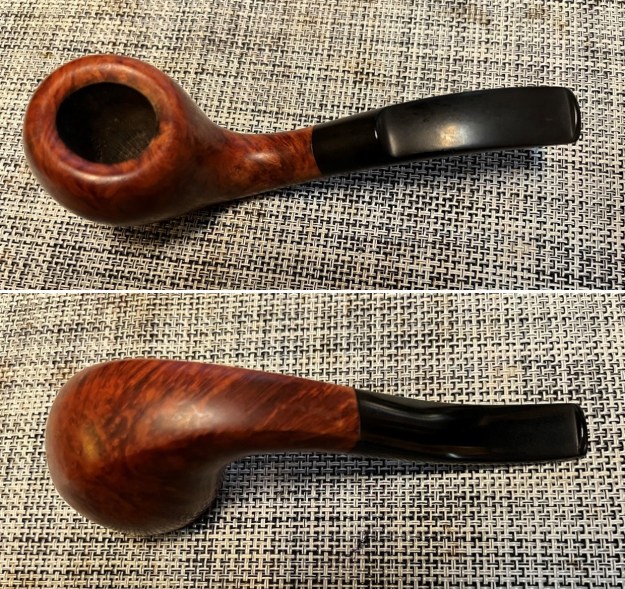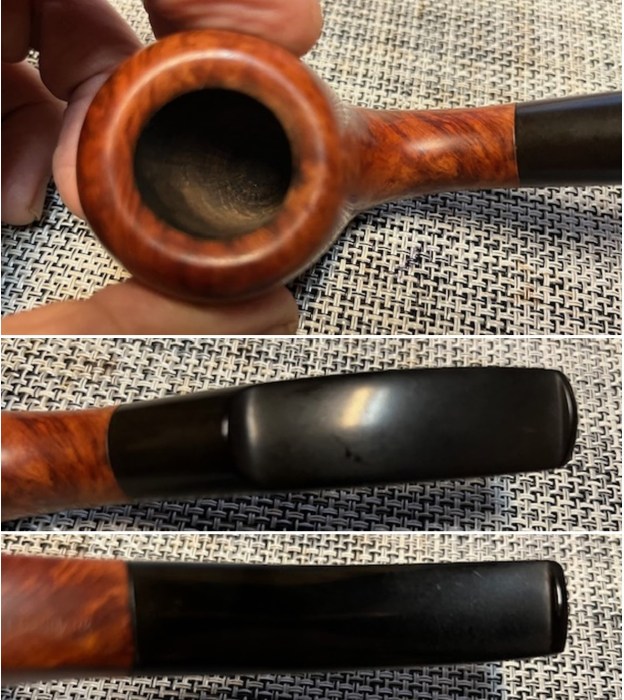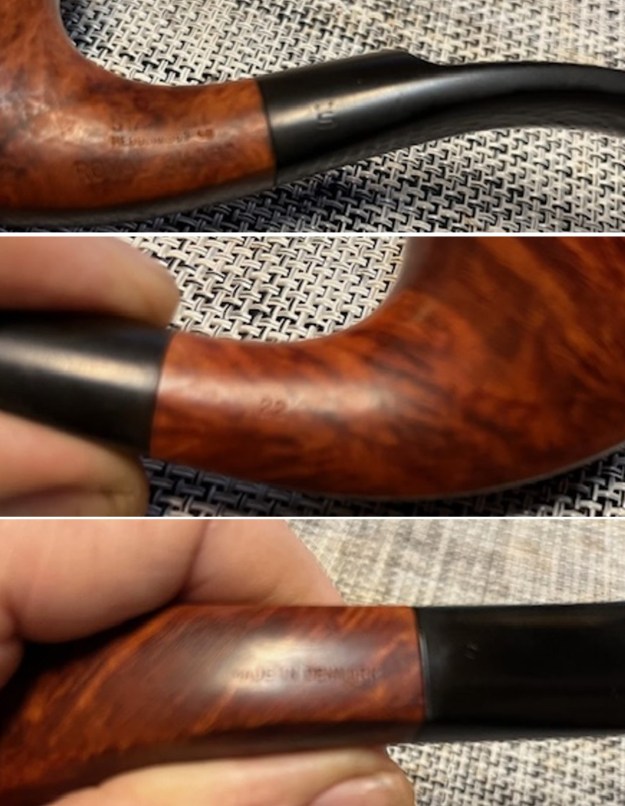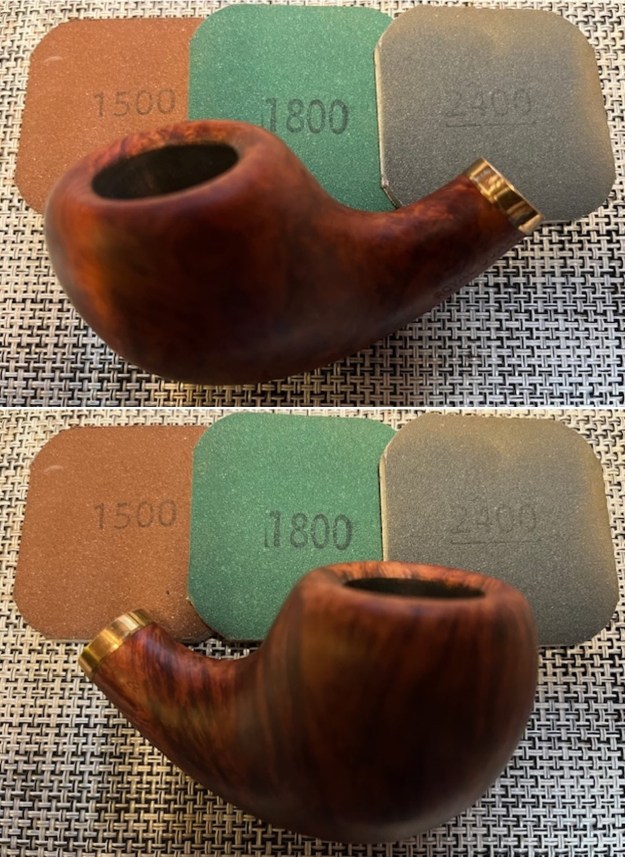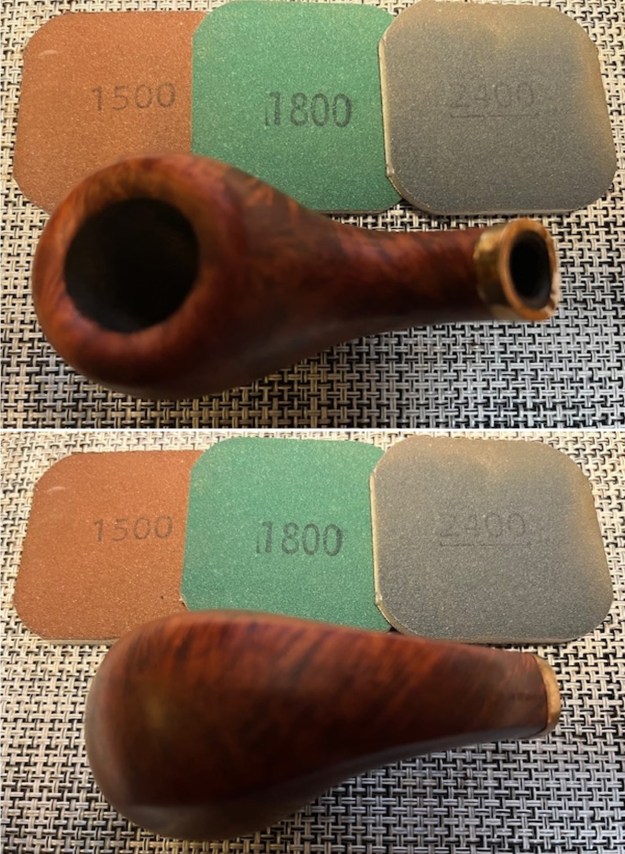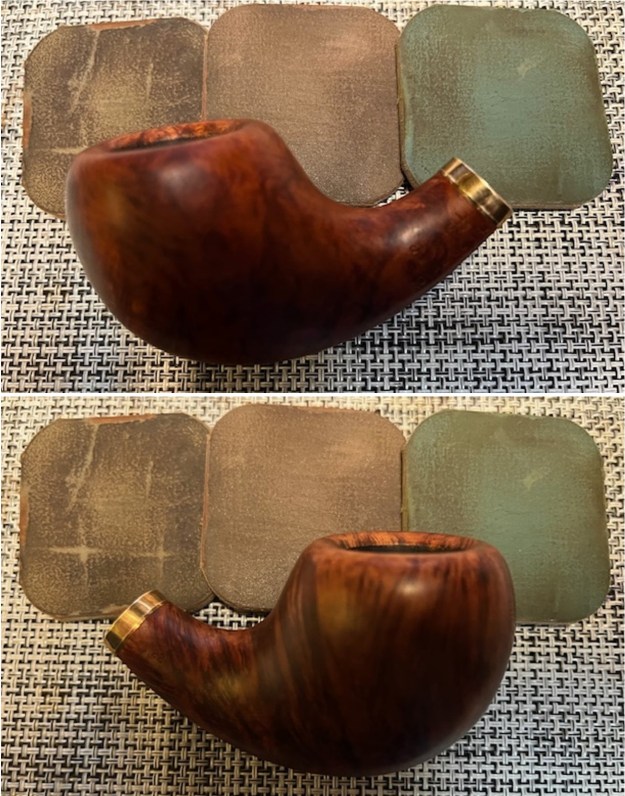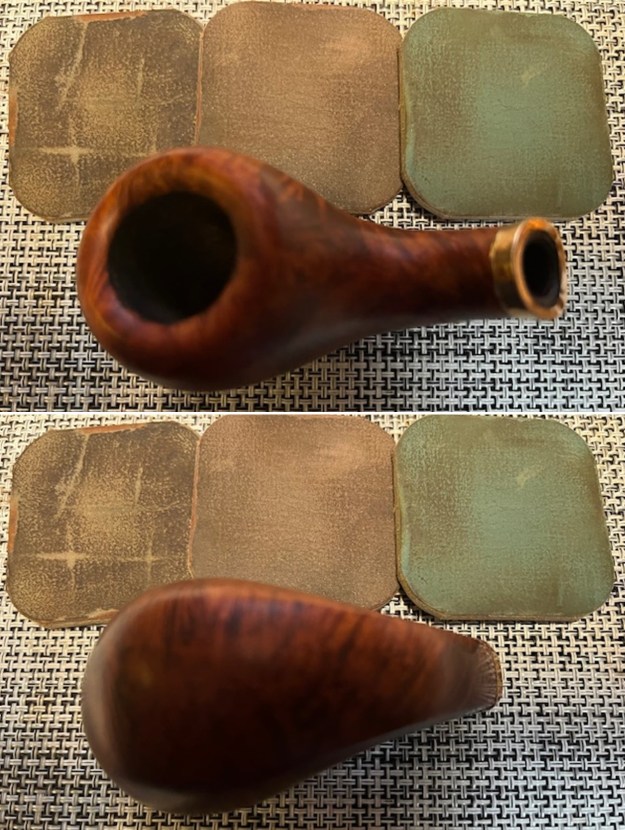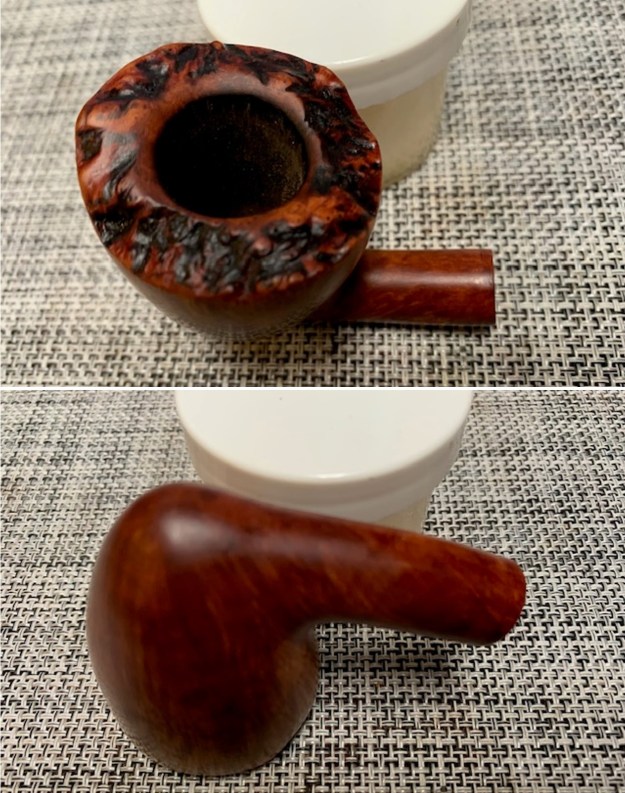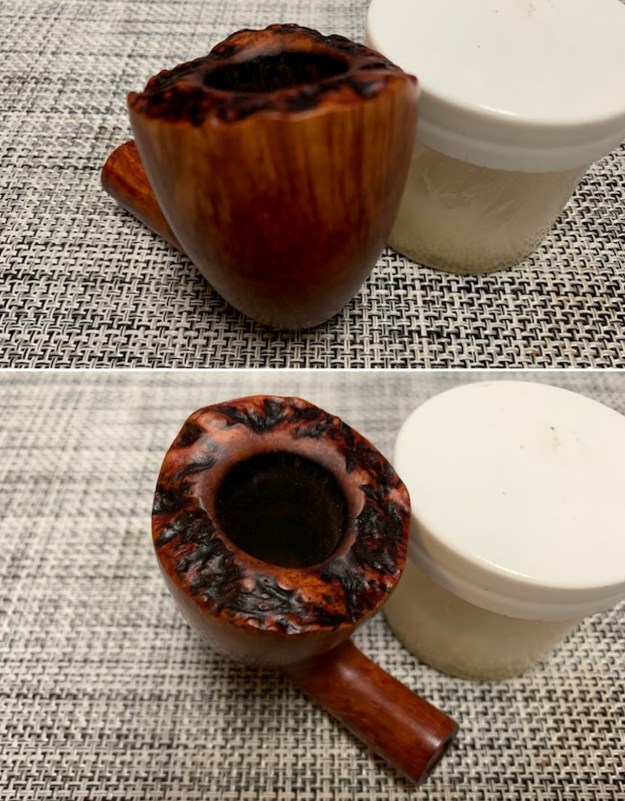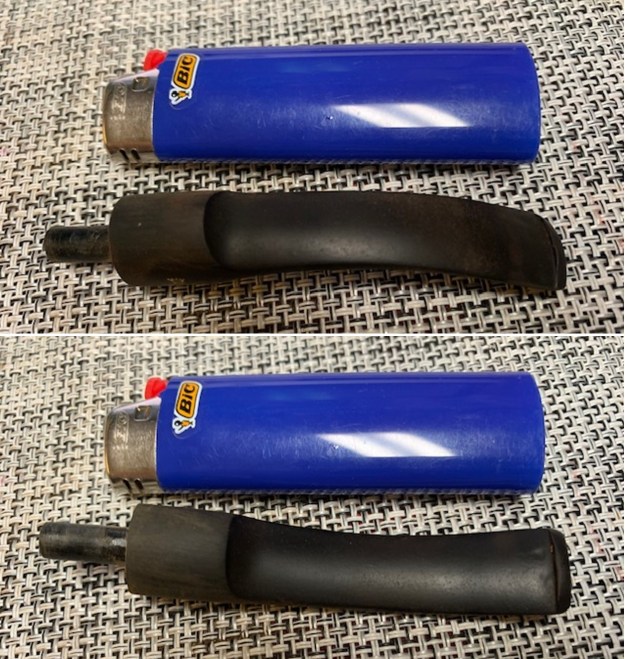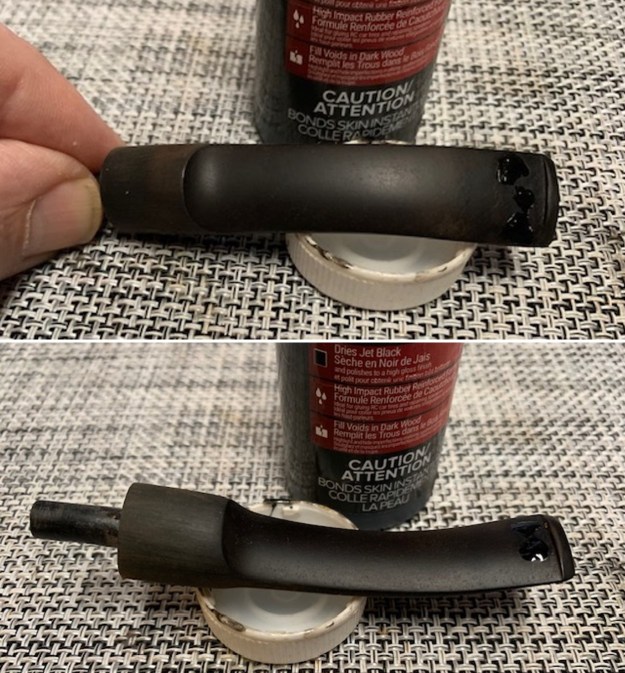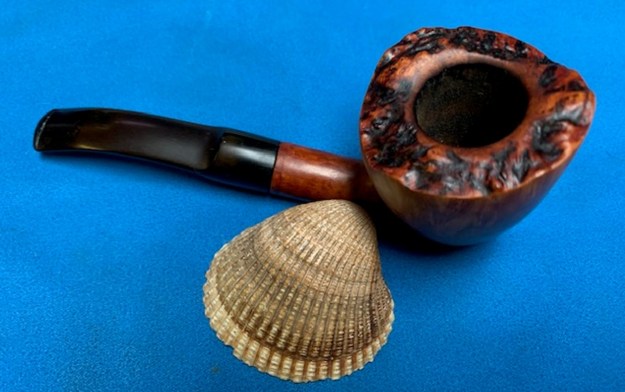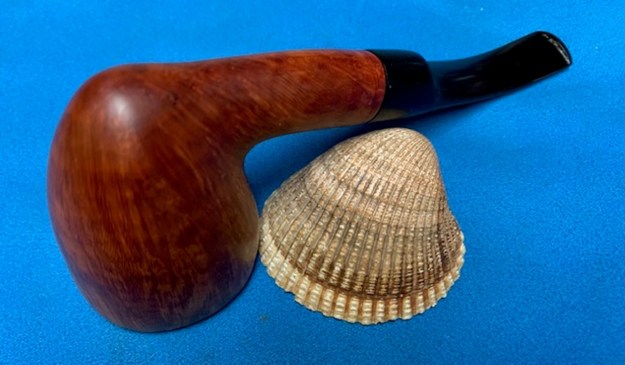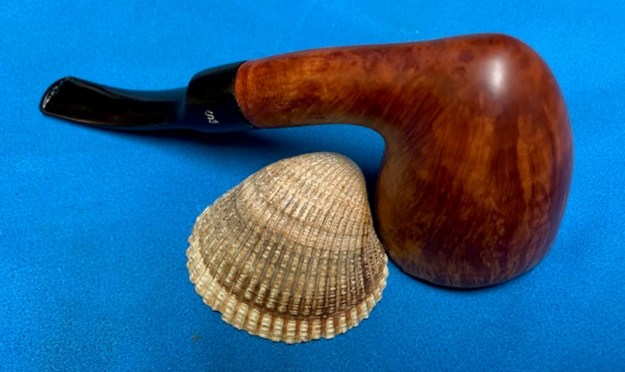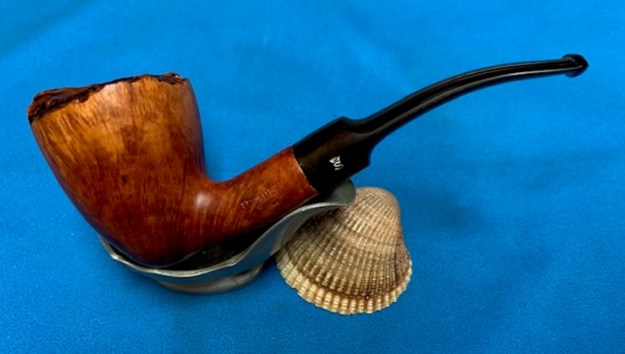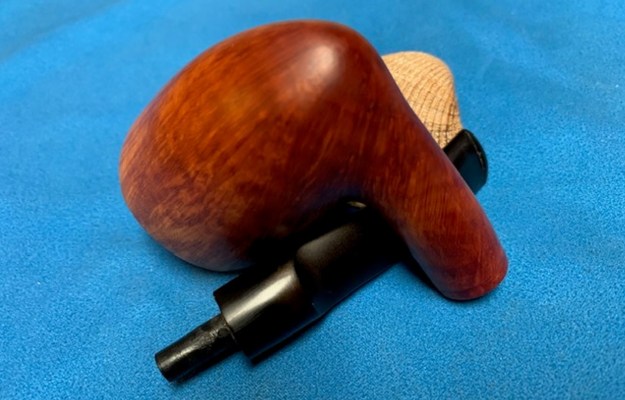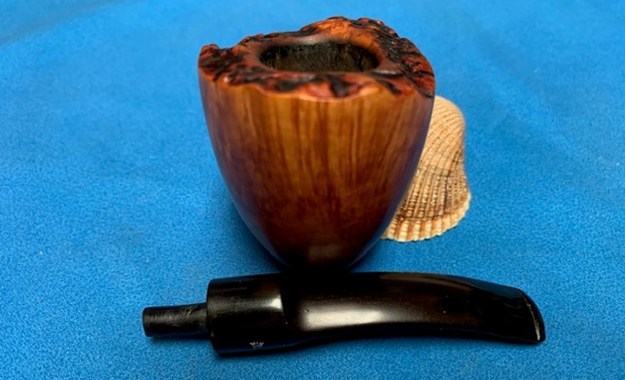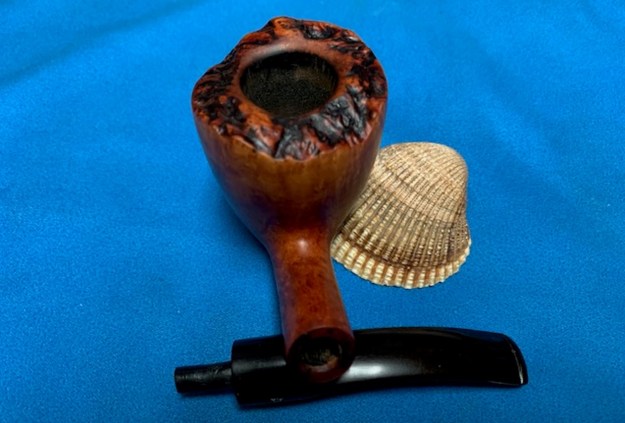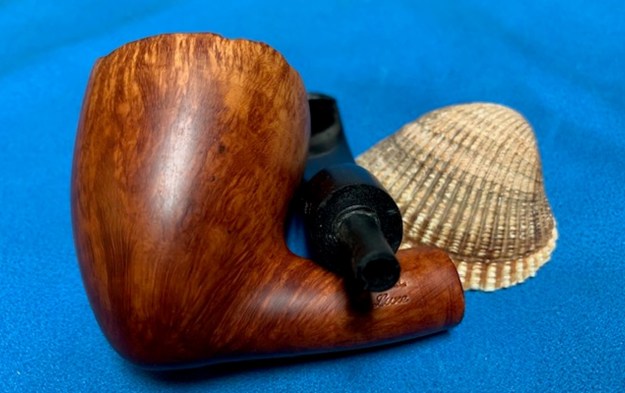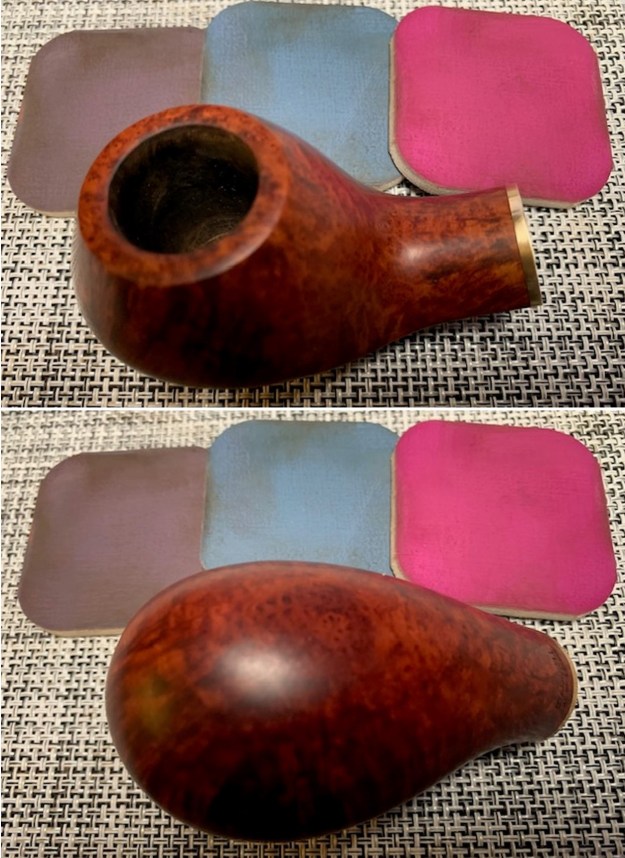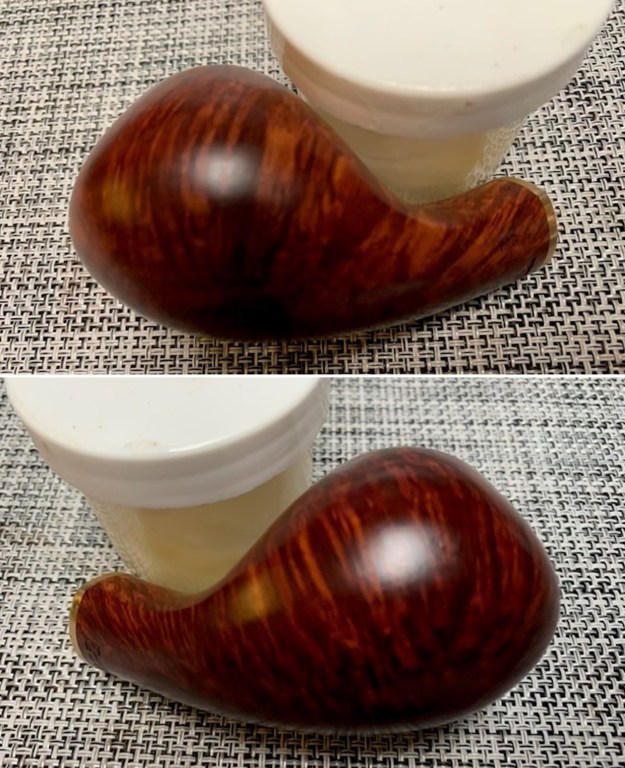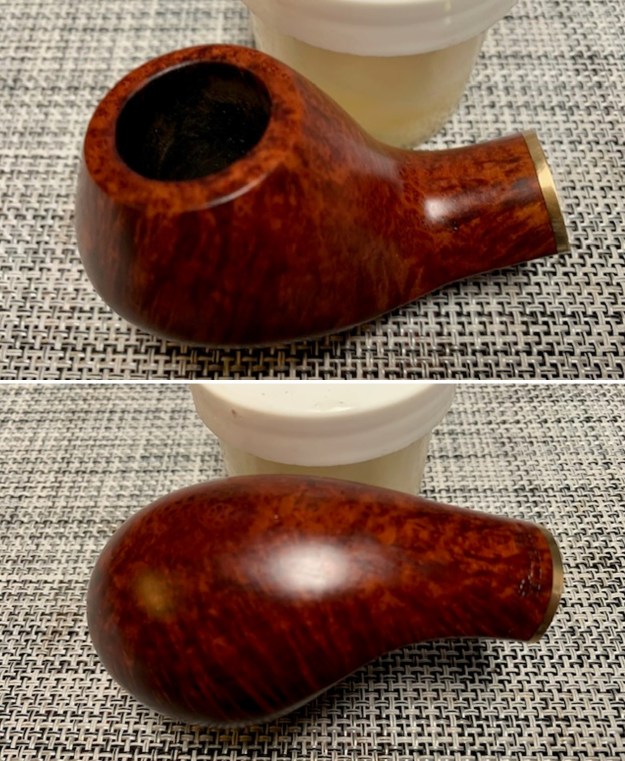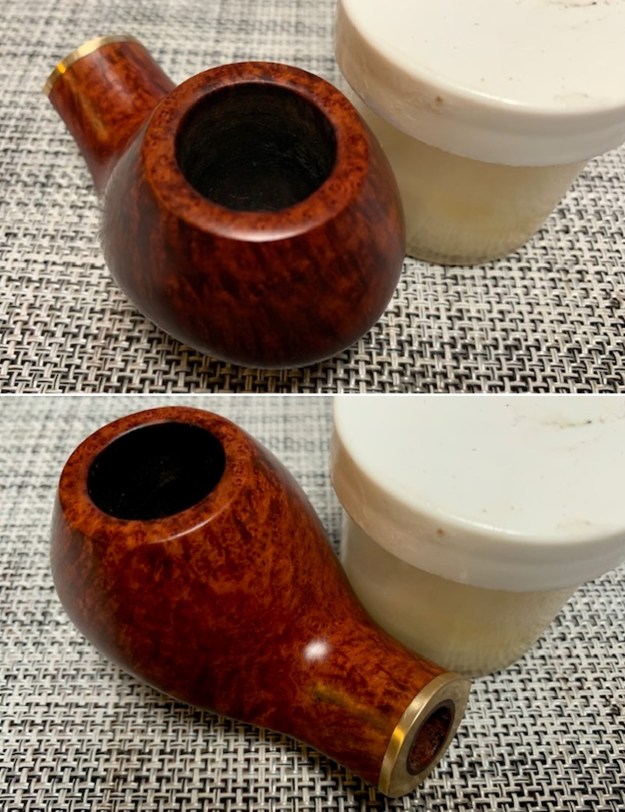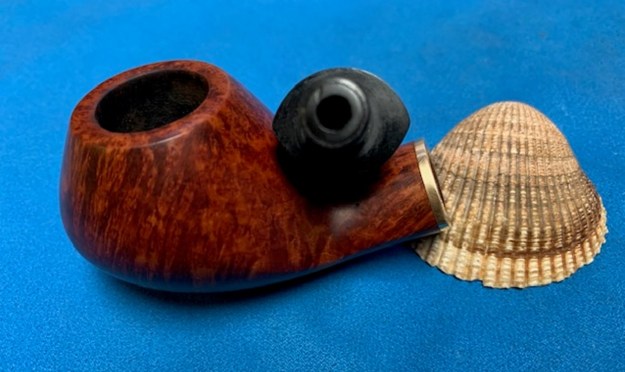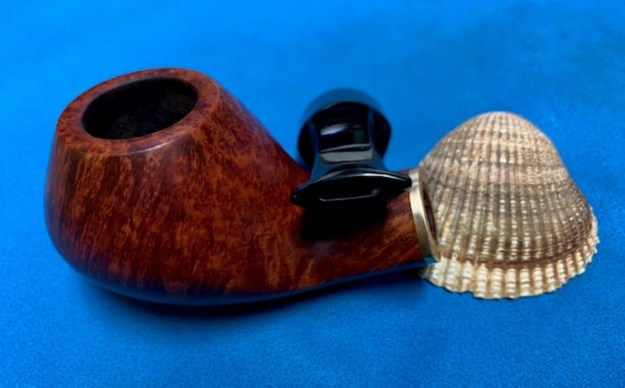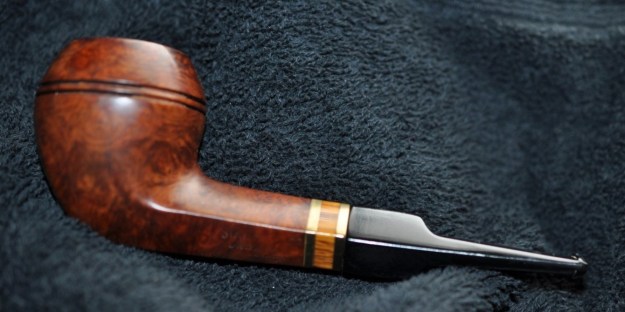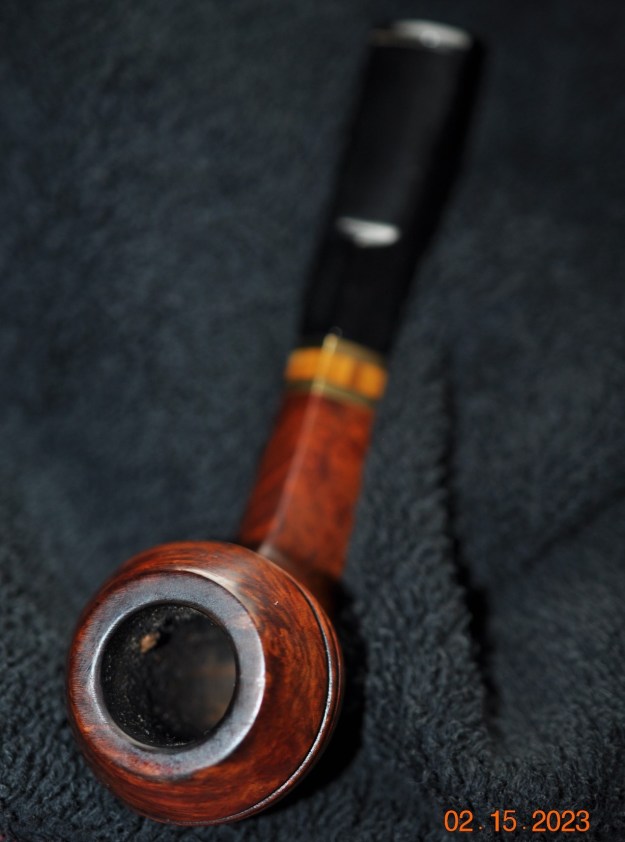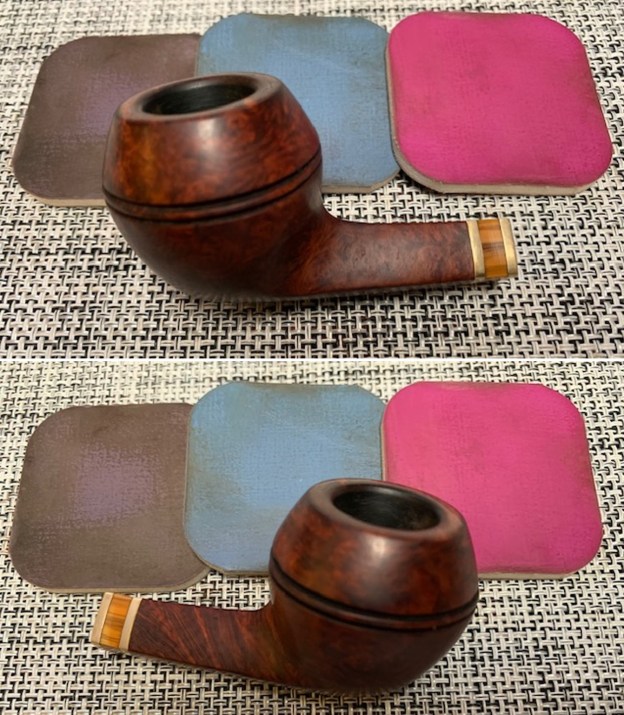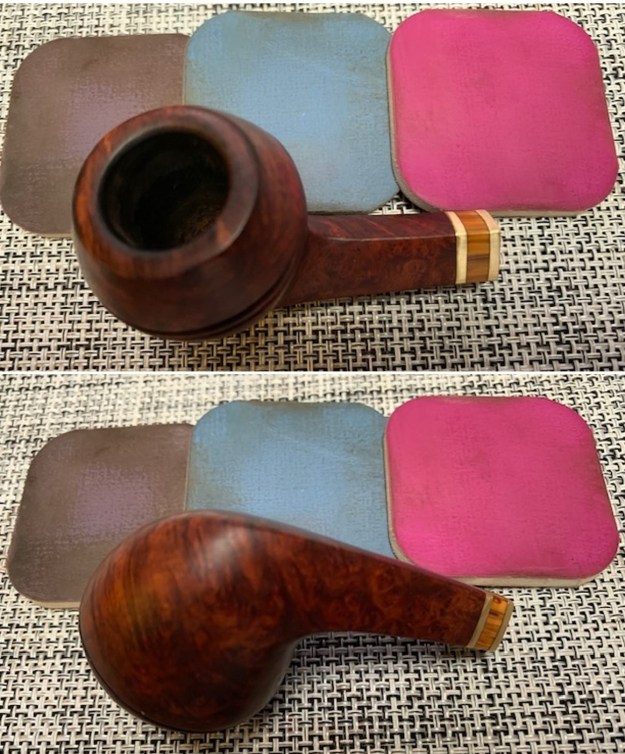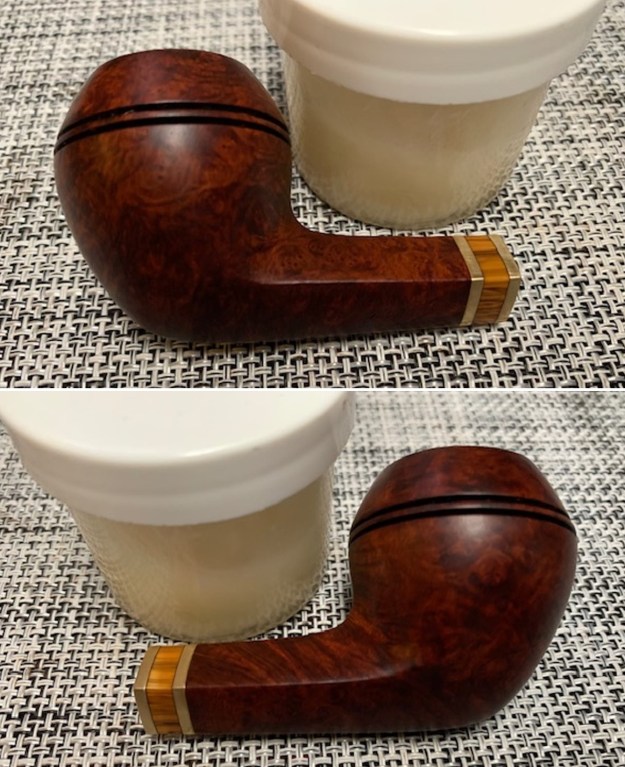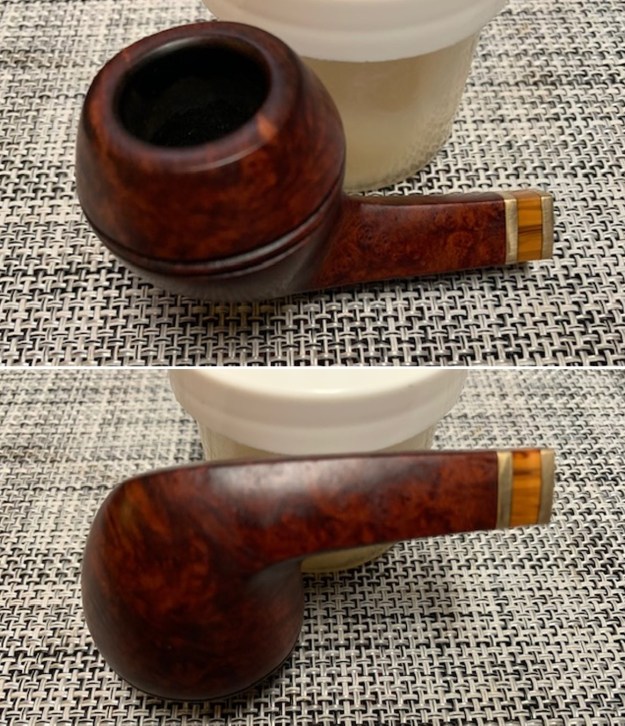
Tag Archives: Stanwell Pipes

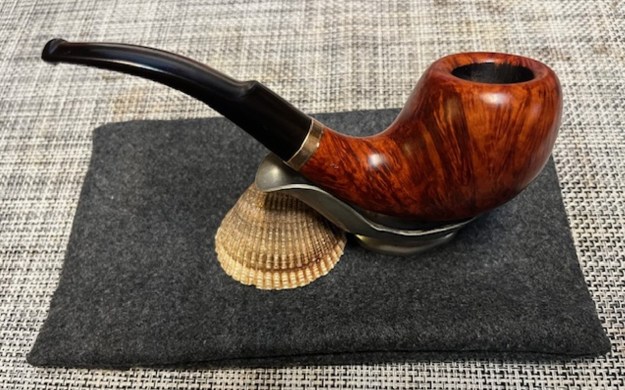
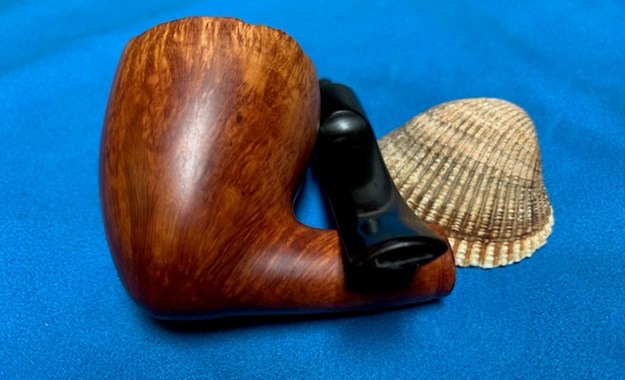
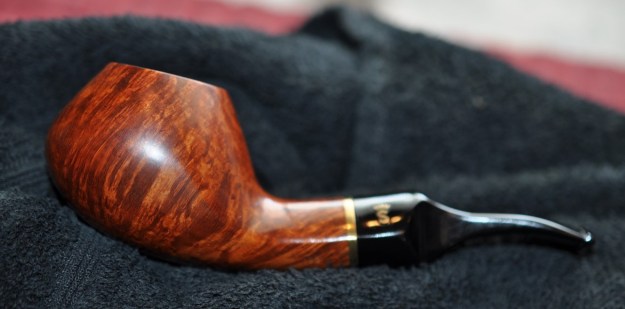
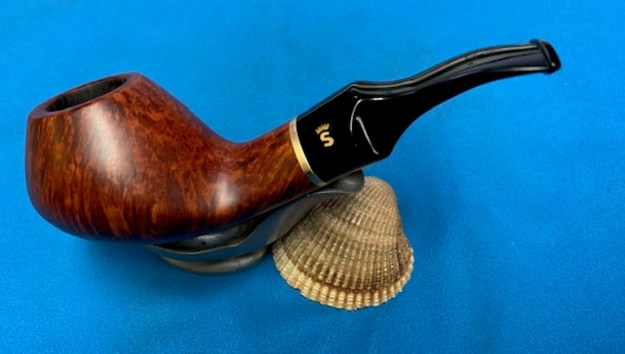
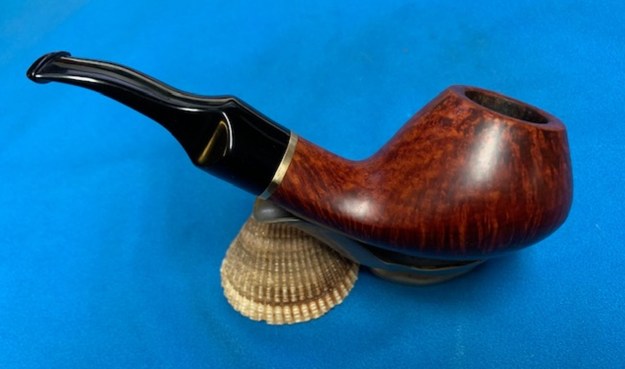
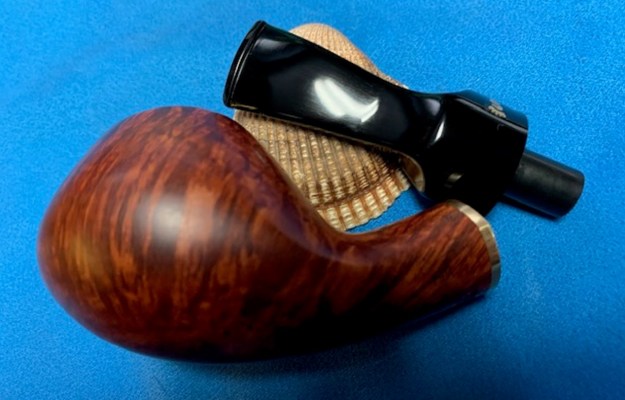
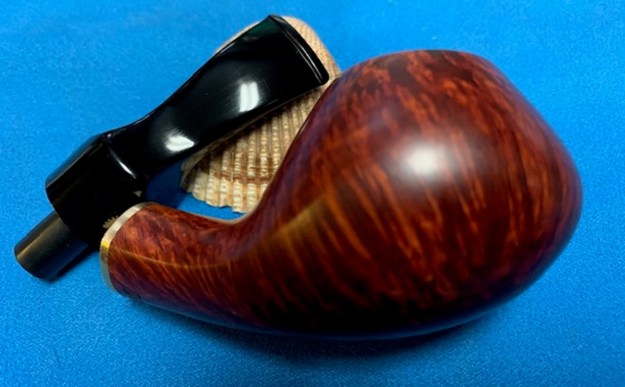
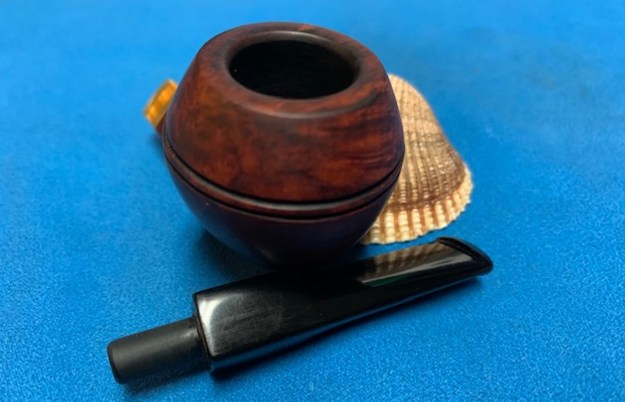
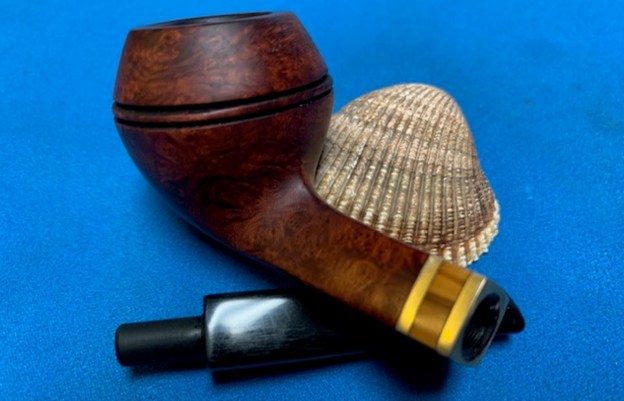
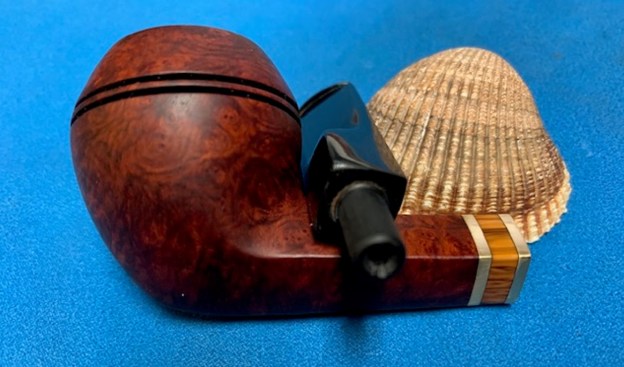
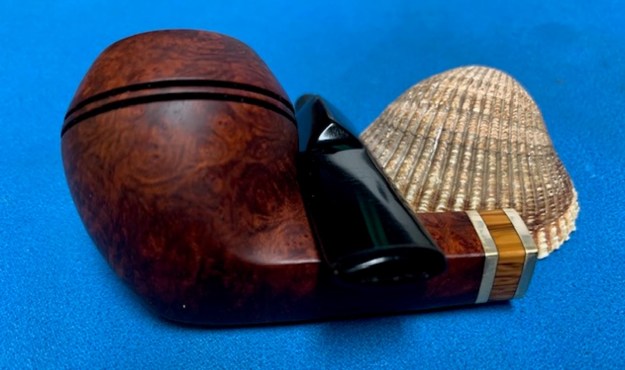
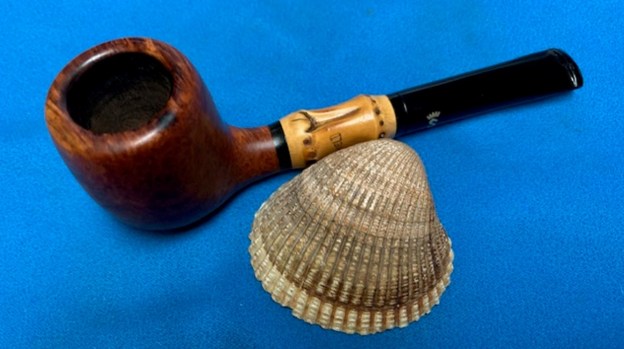
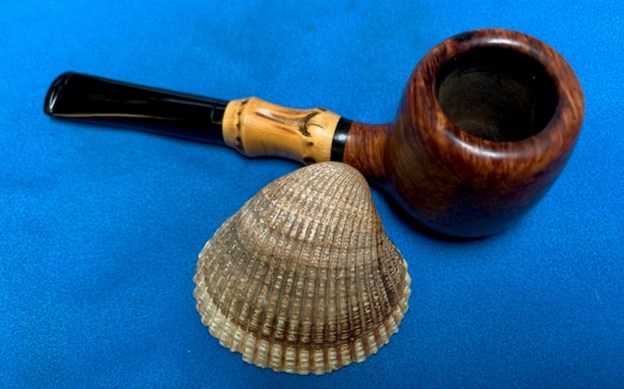
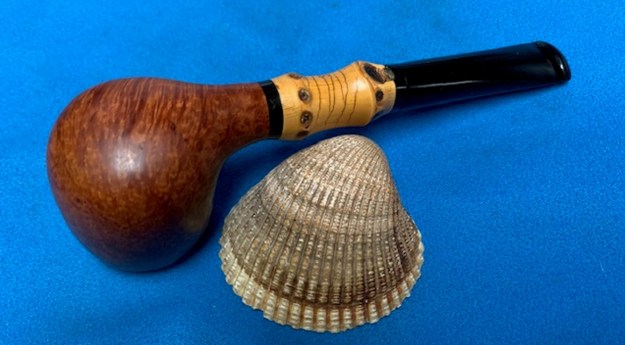
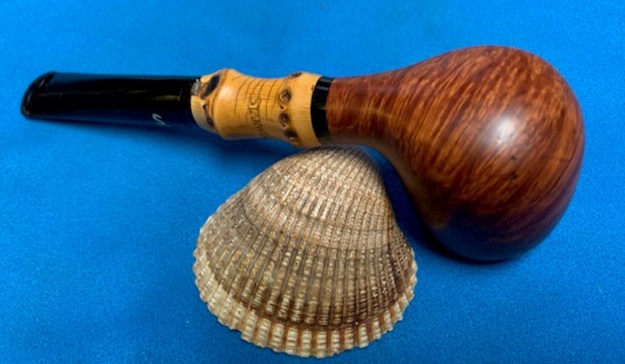
Restoring a Beautiful Stanwell Pot with a Bamboo Shank and an acrylic taper stem


Blog by Steve Laug

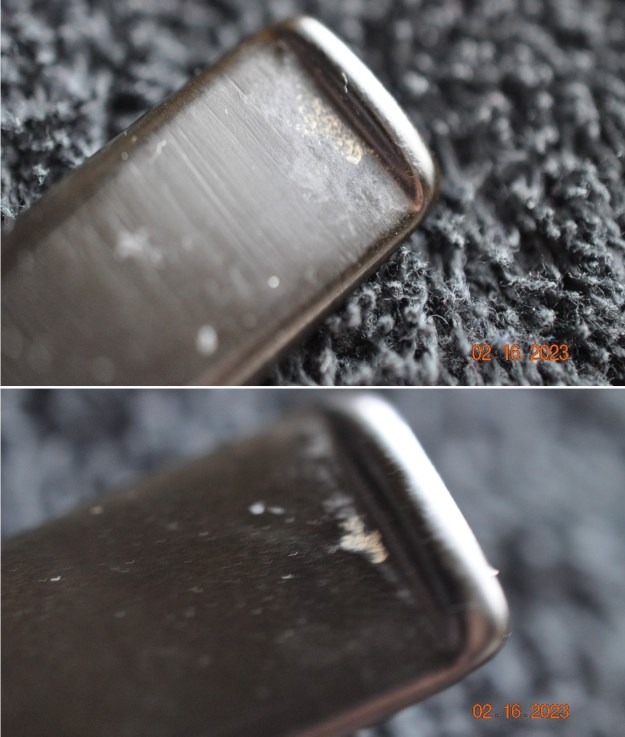
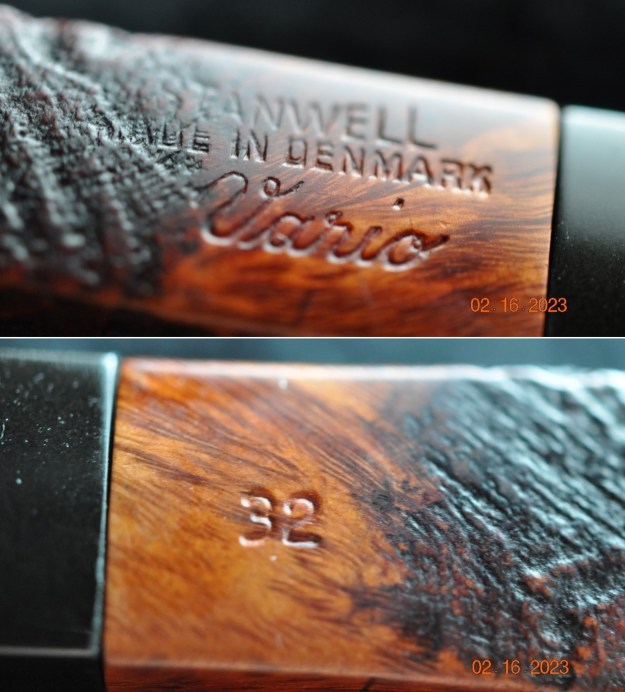
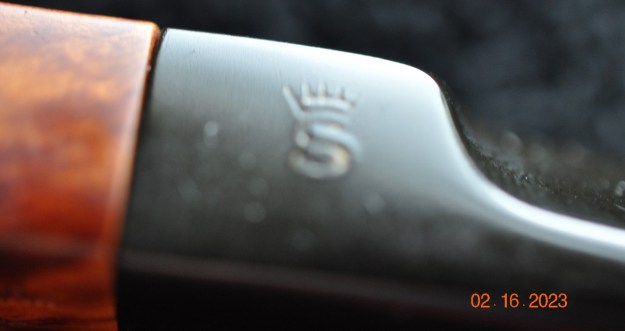
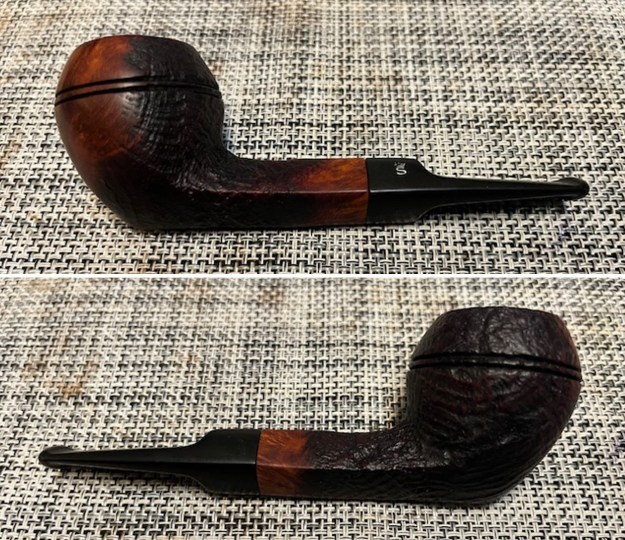
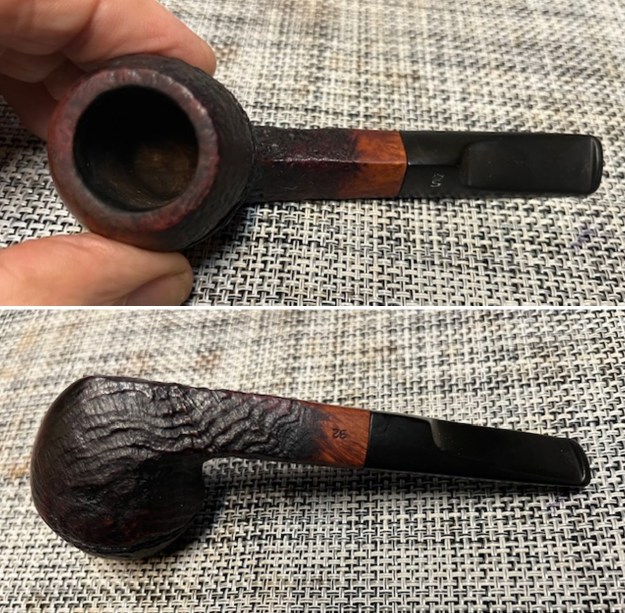
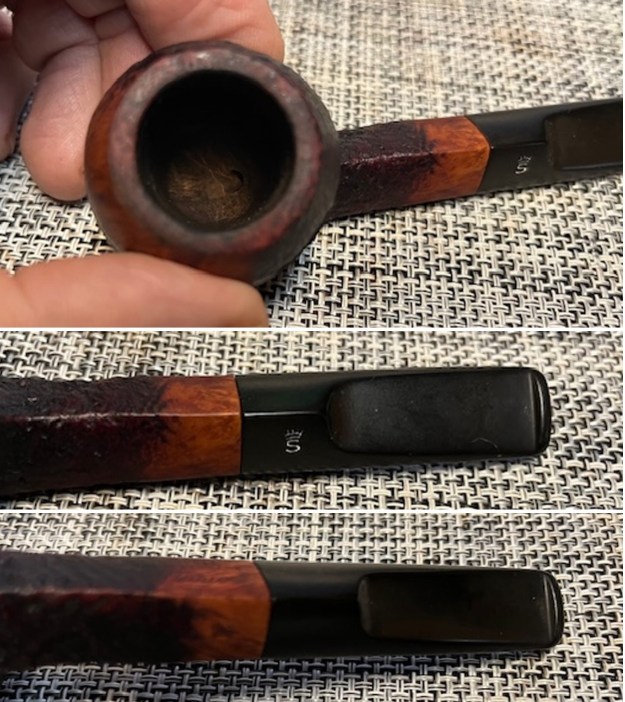
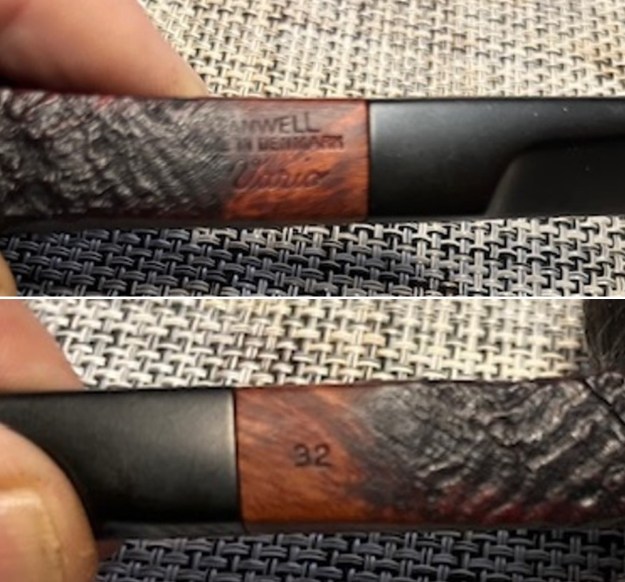
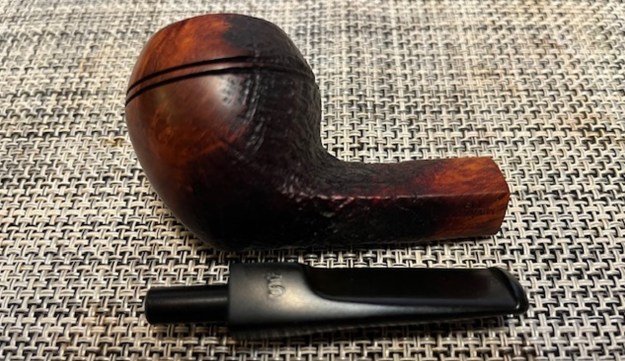
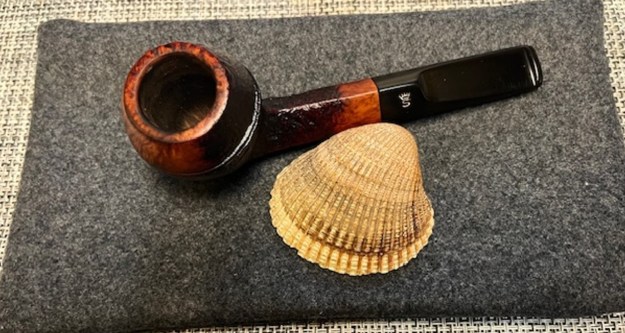
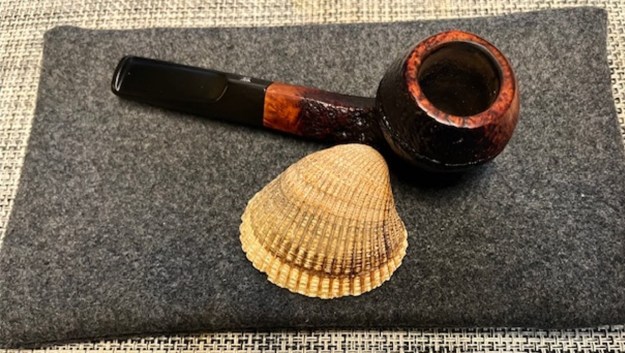
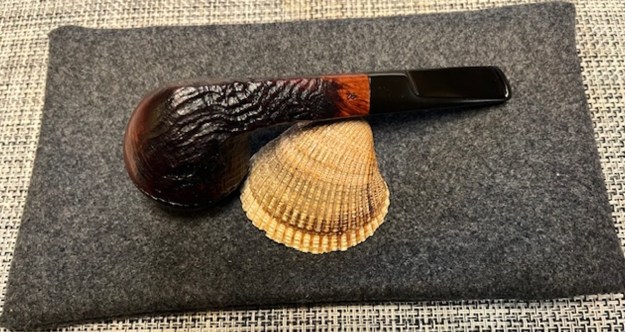
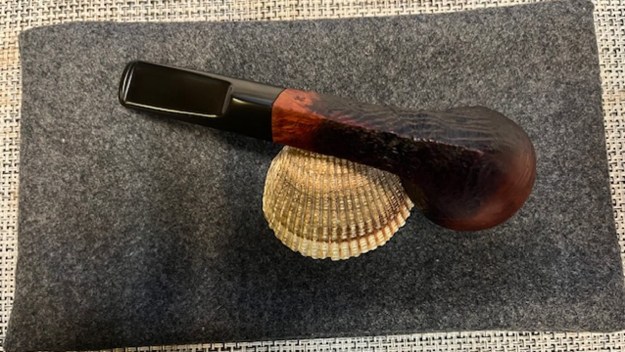
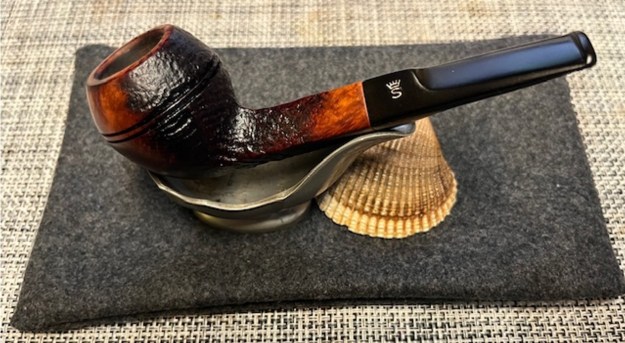
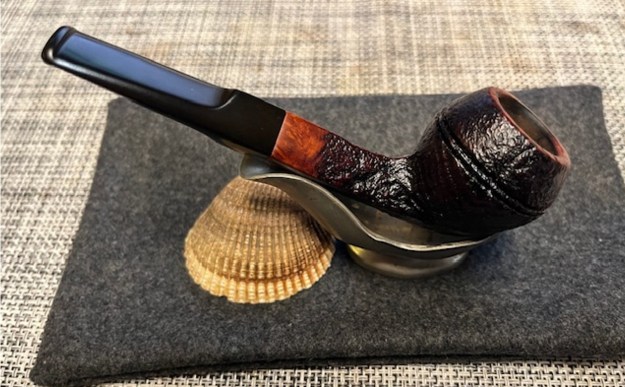
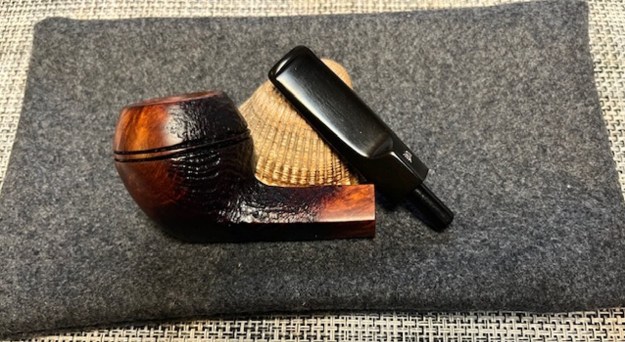
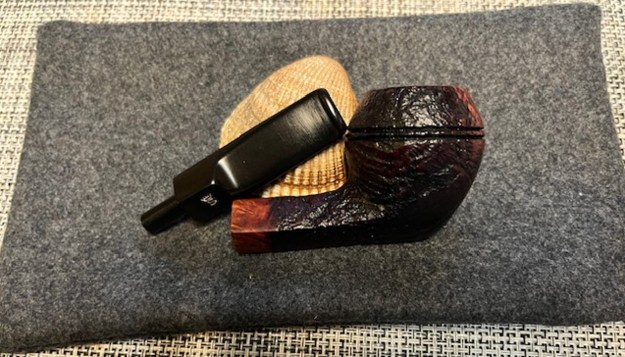
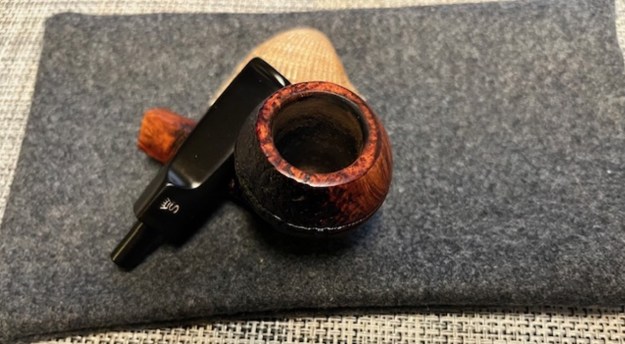
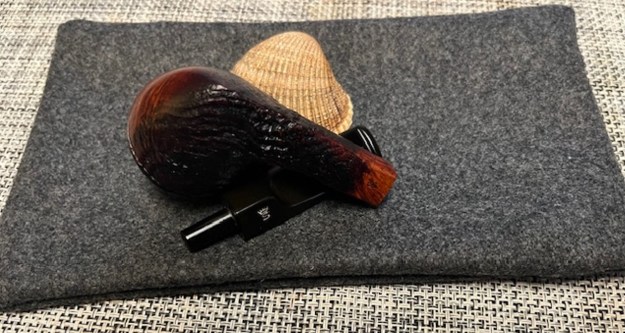
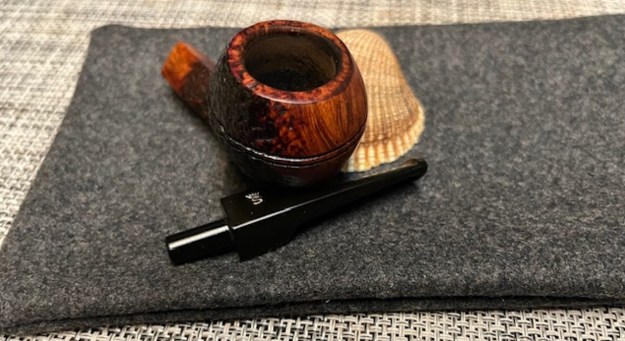
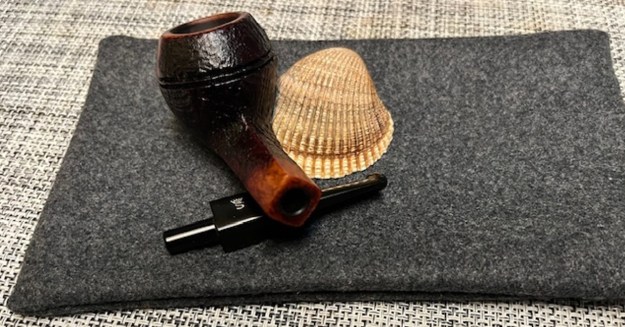
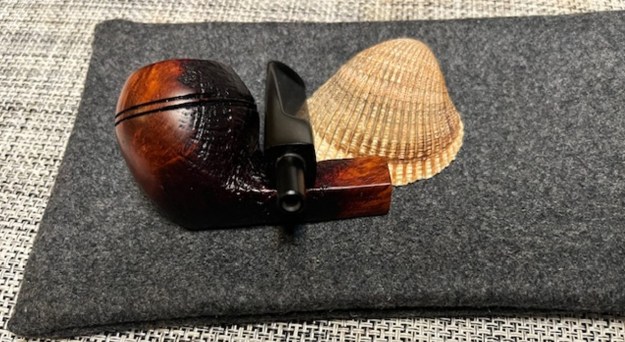
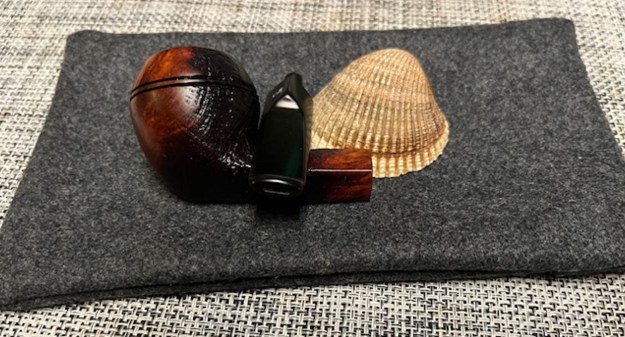
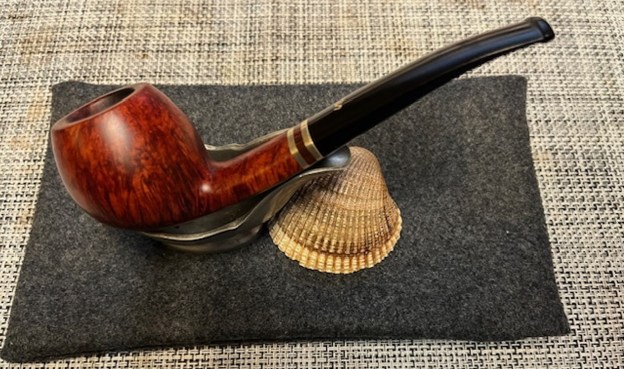
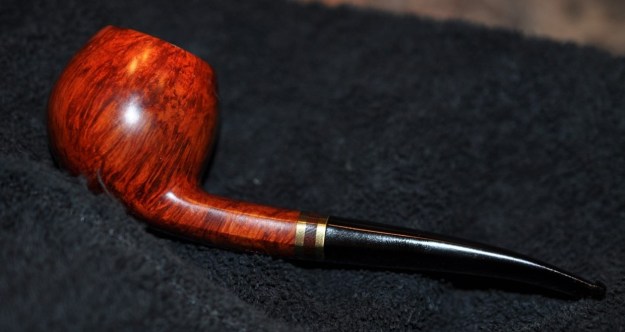
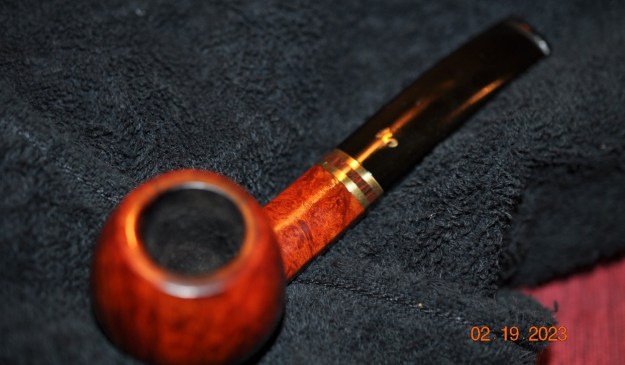
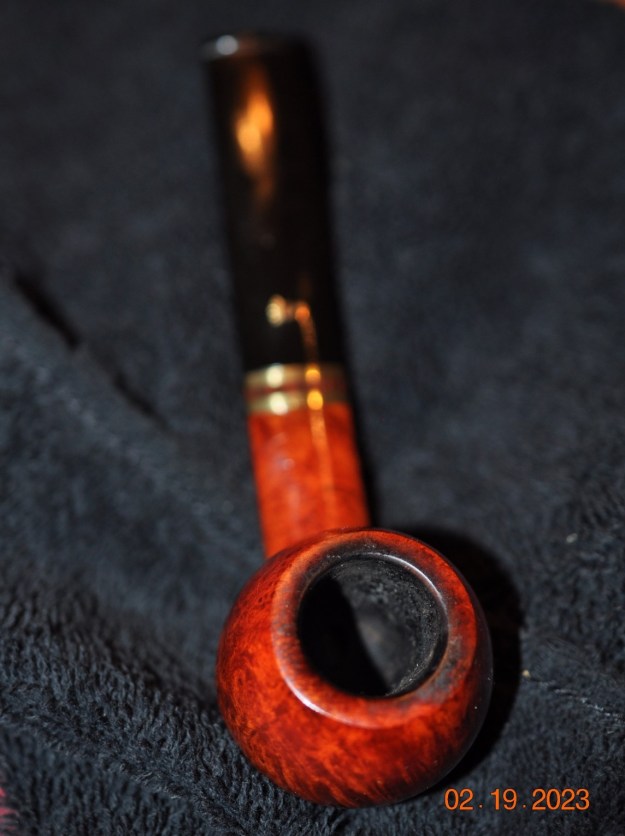
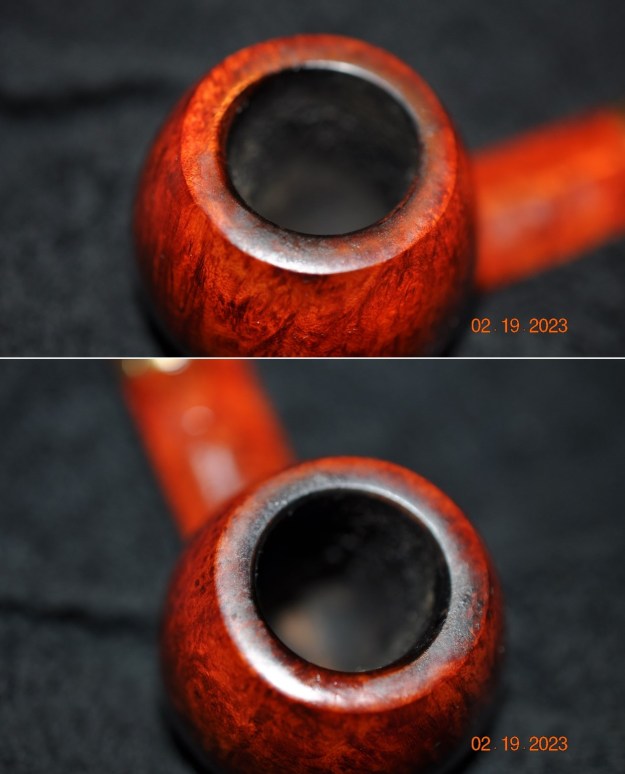
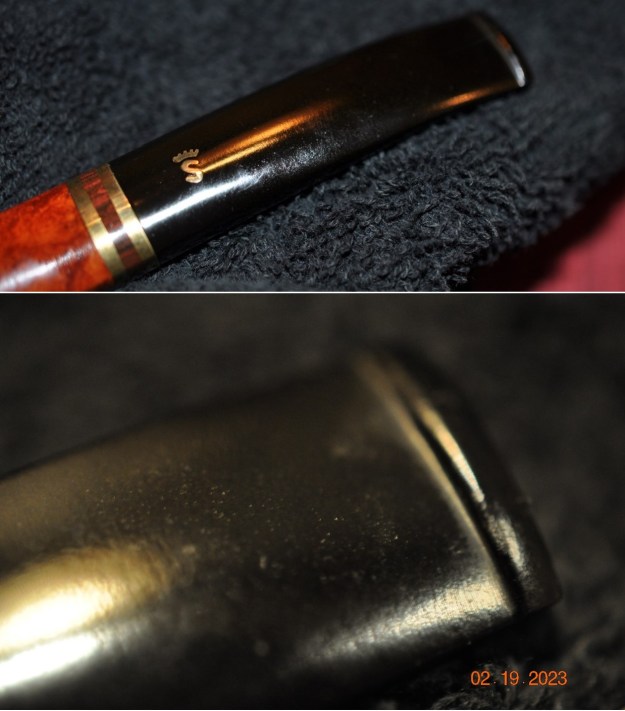
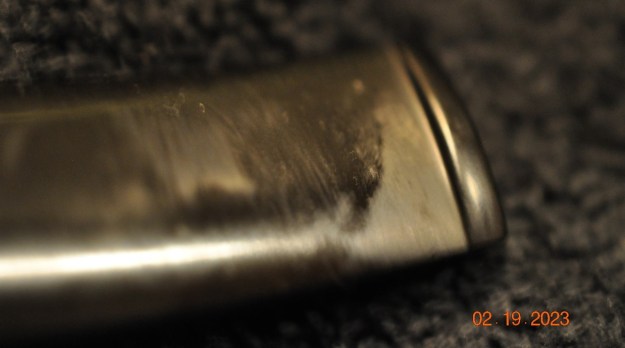
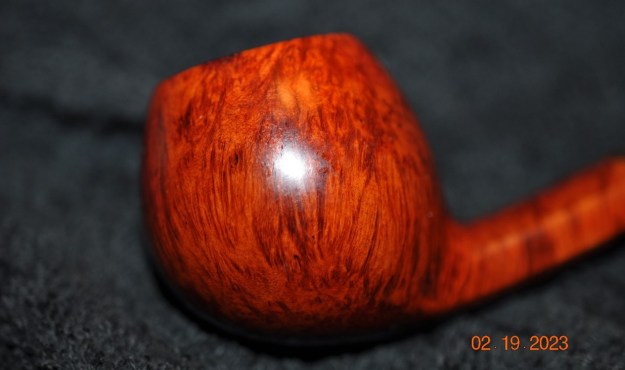
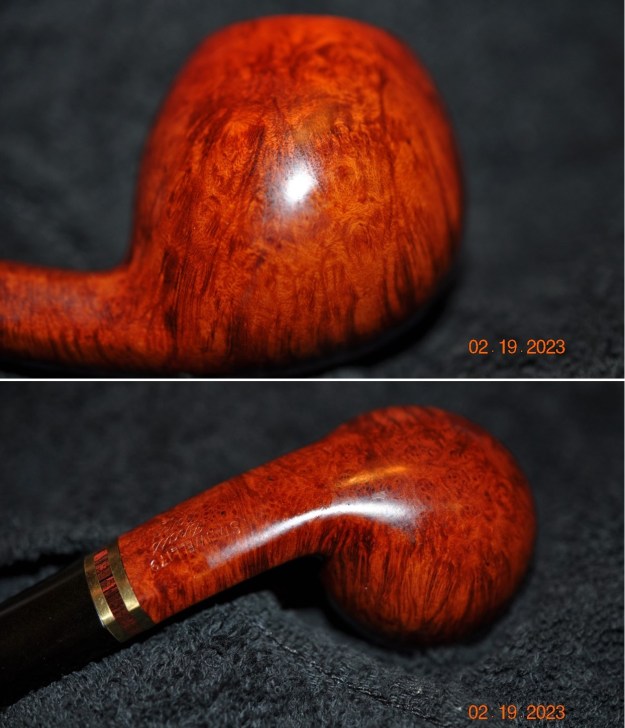
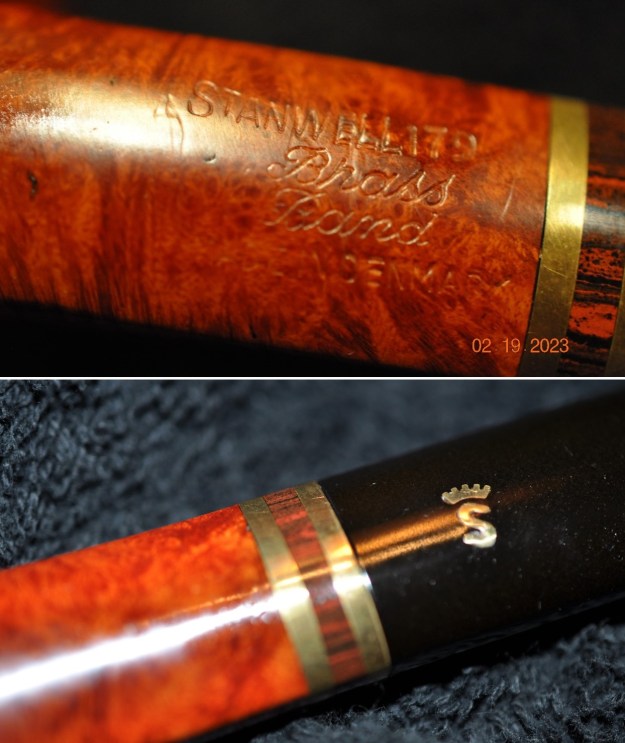
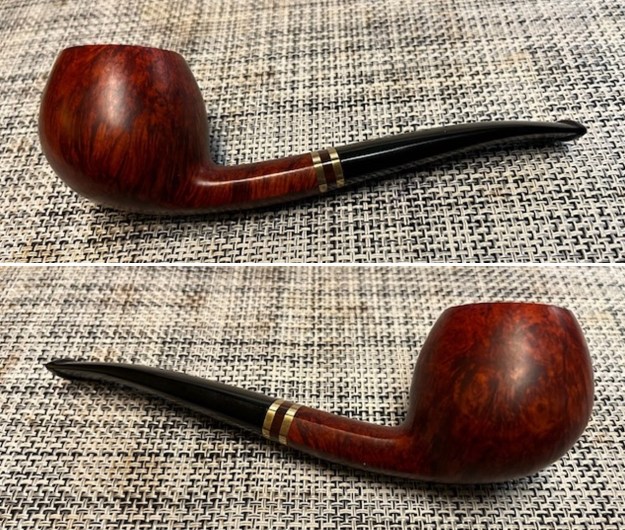
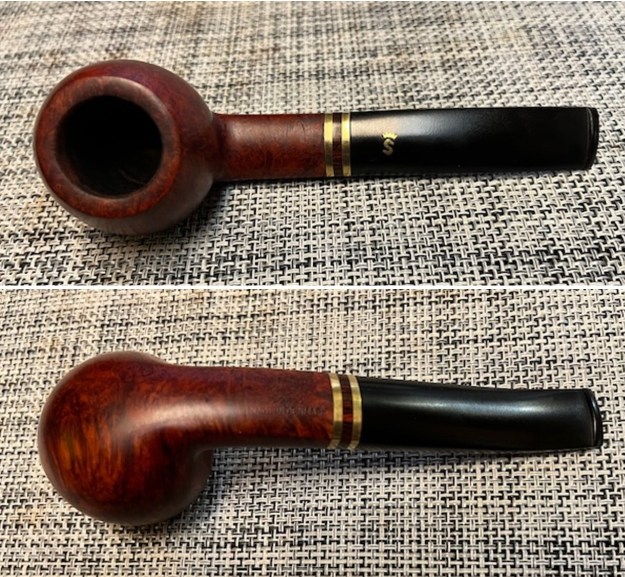
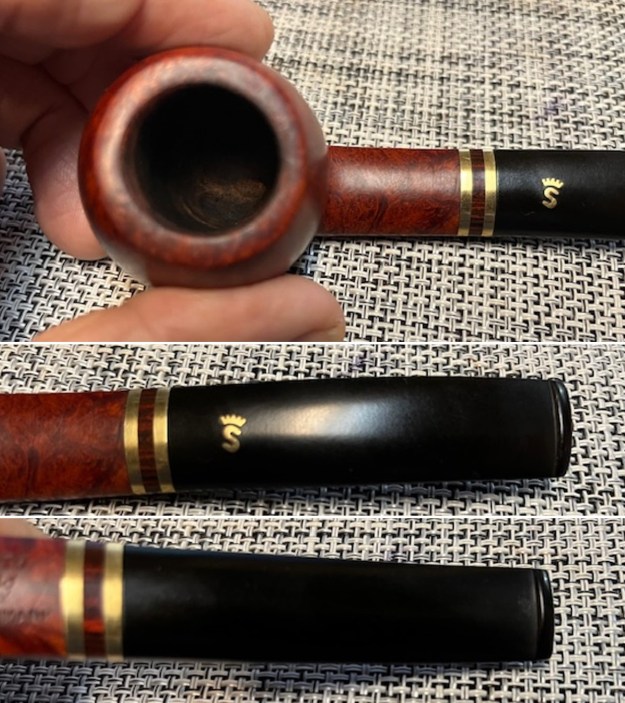
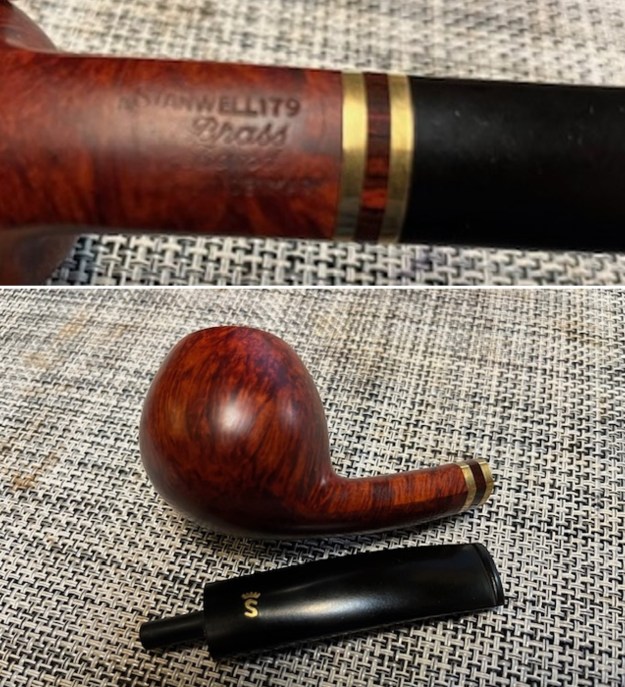
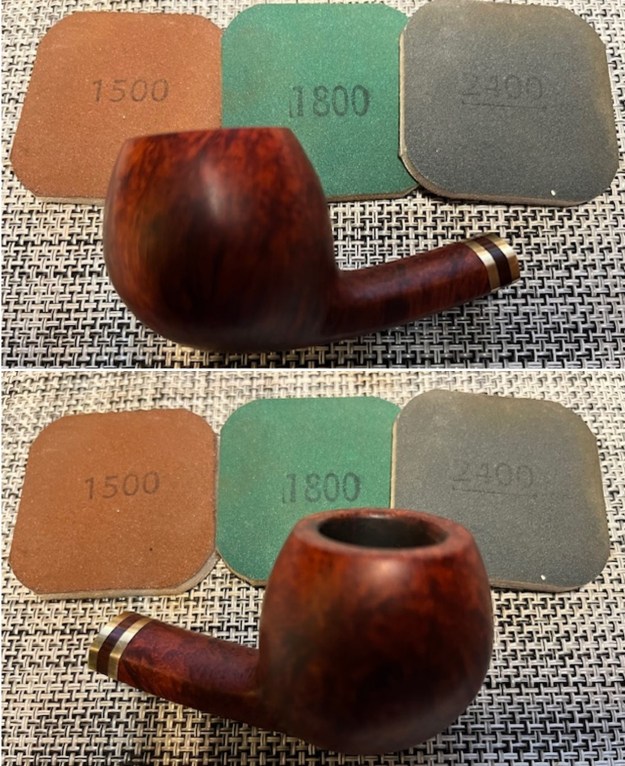
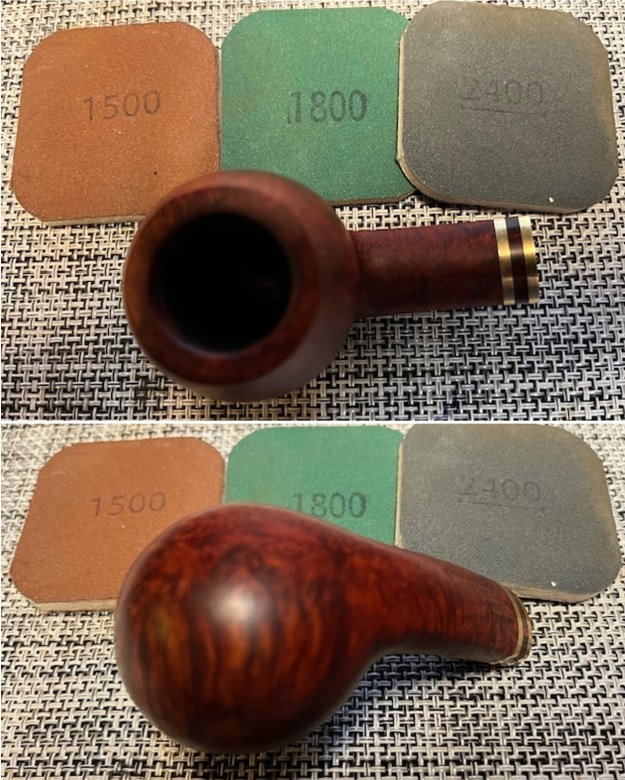
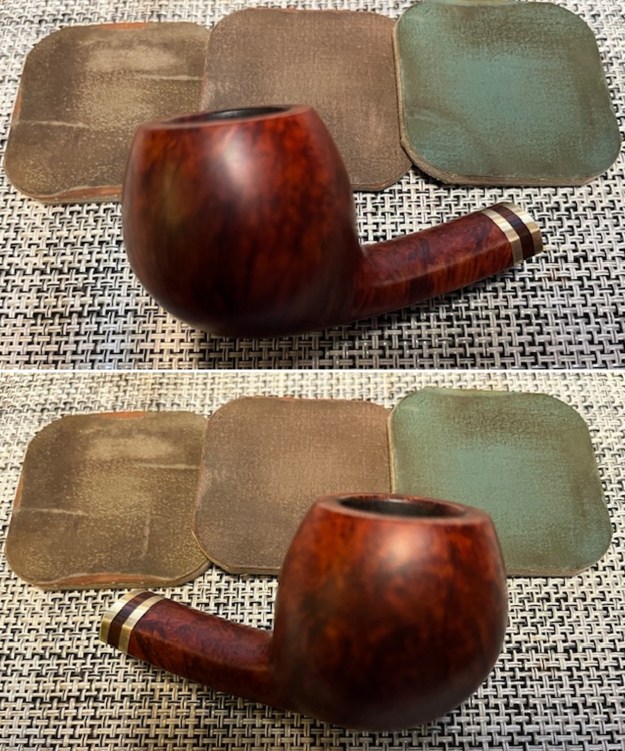
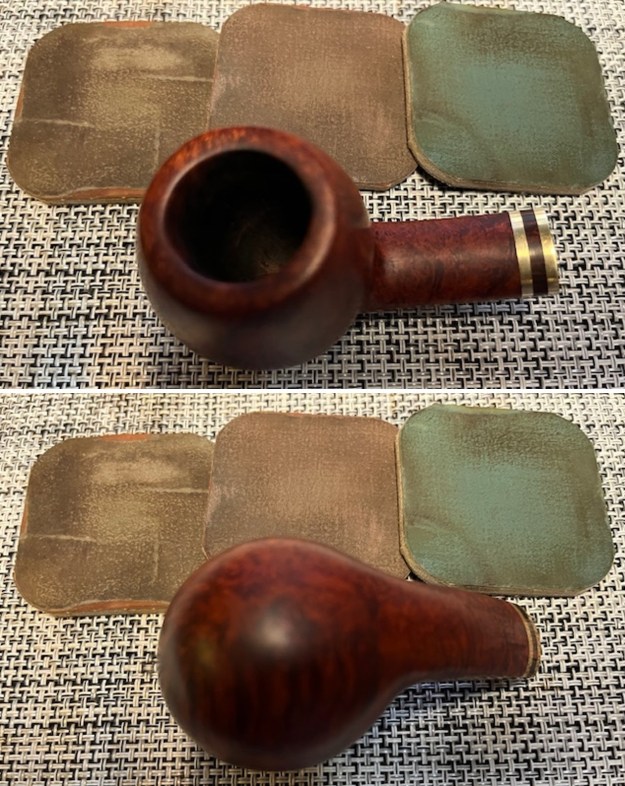
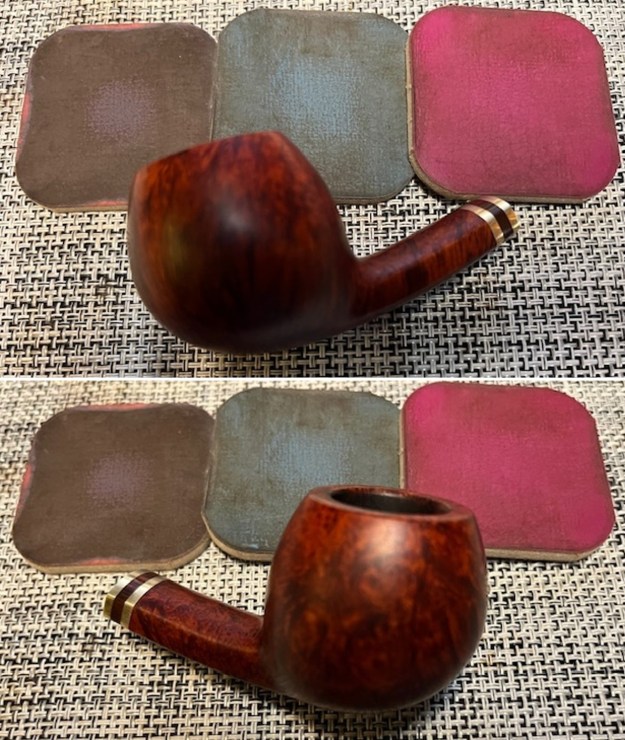
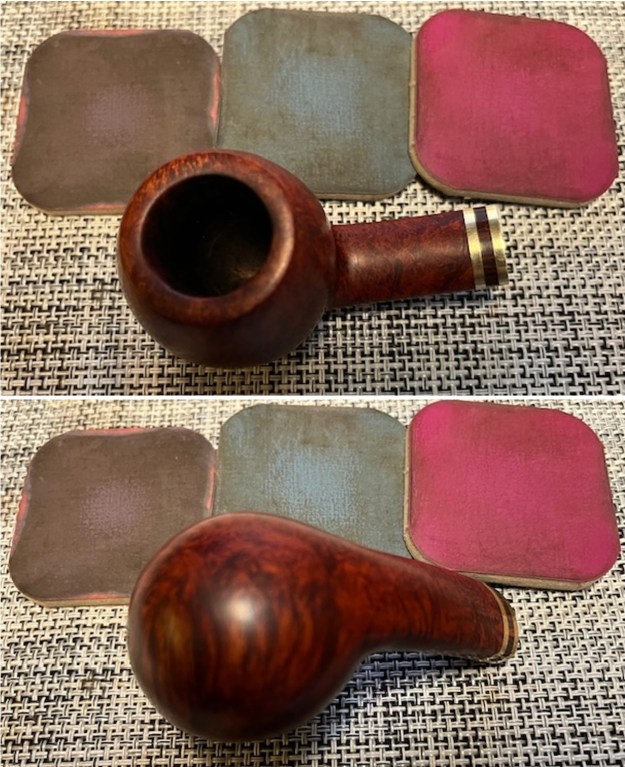
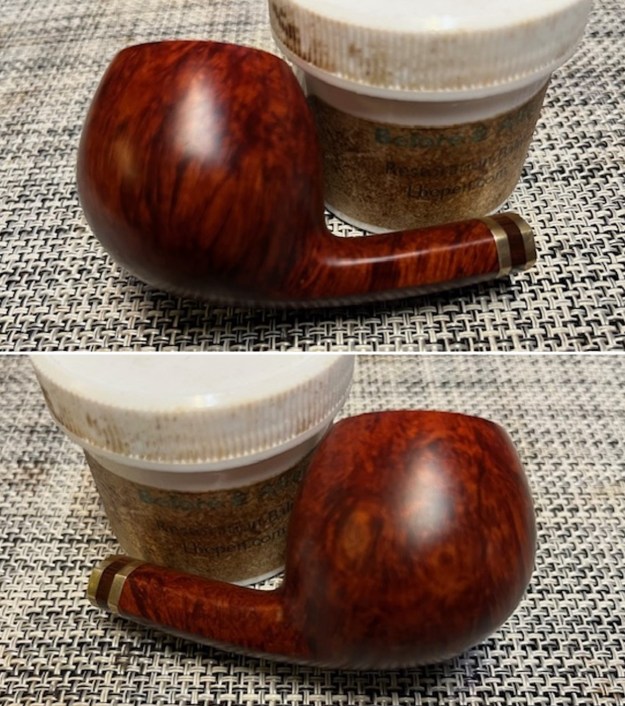
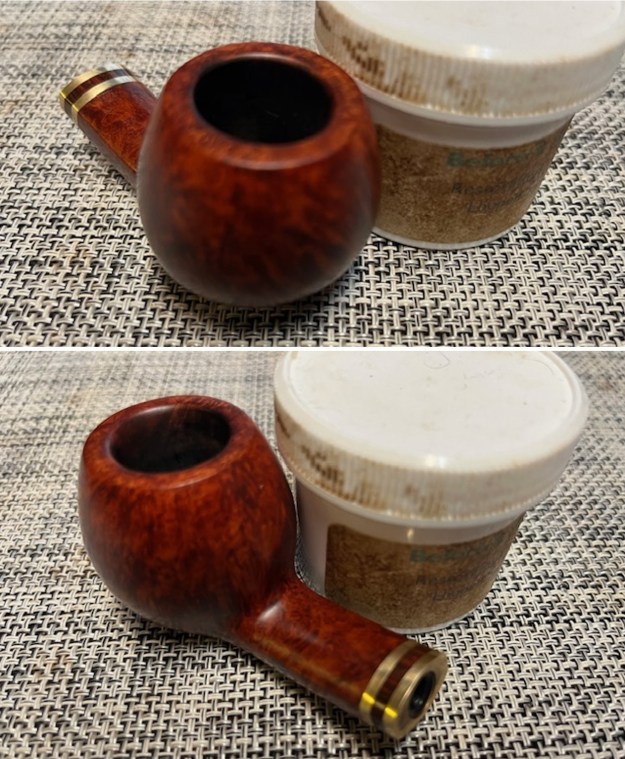
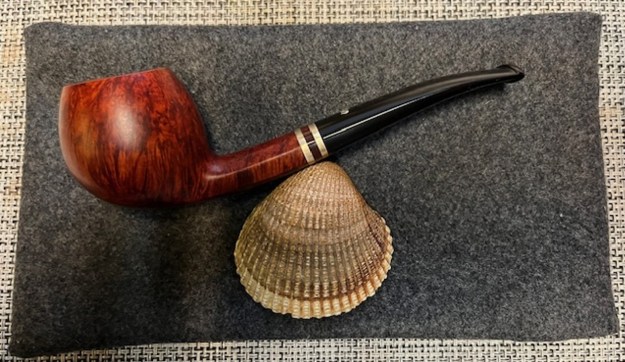
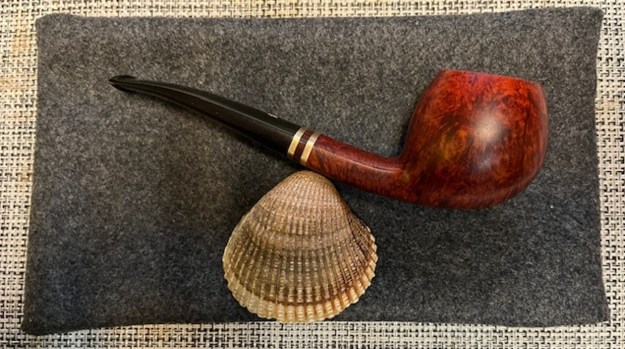
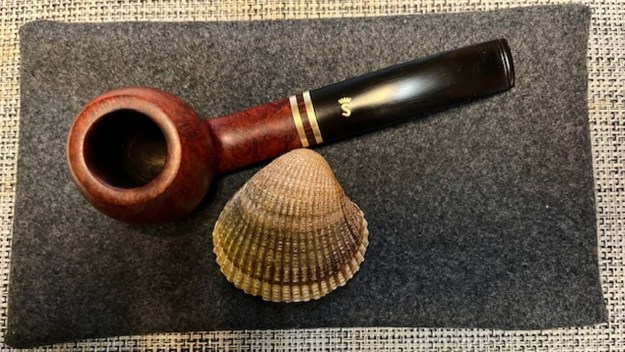
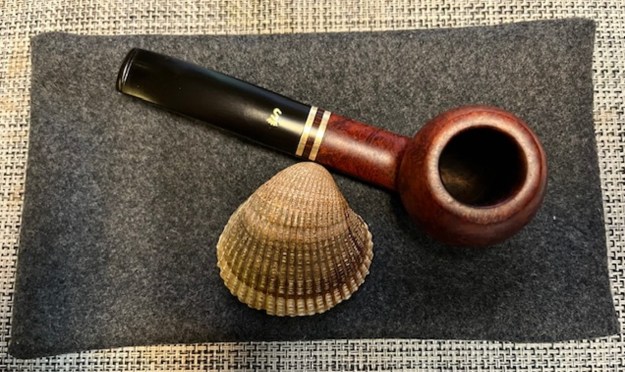
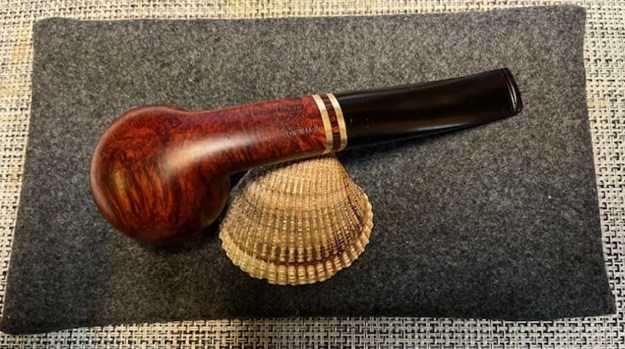
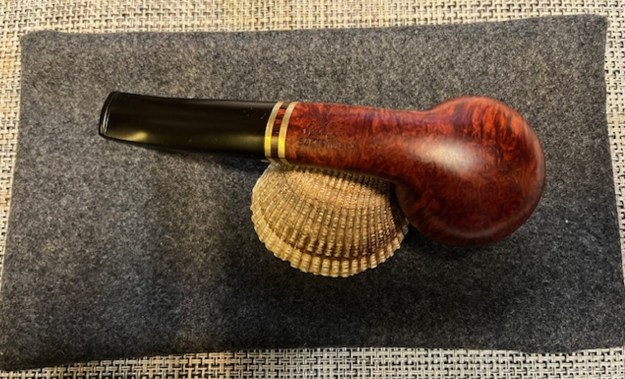
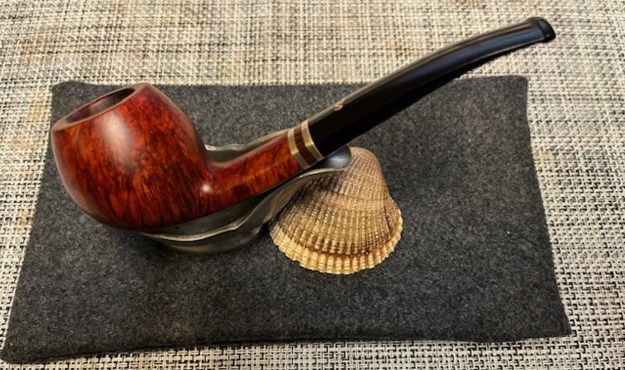
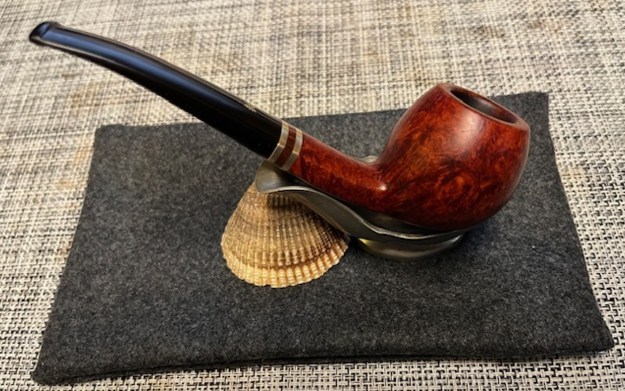
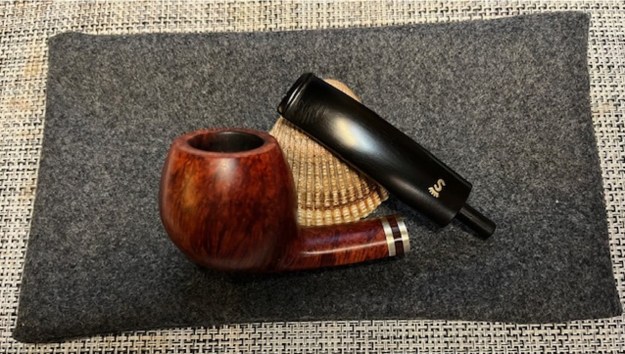
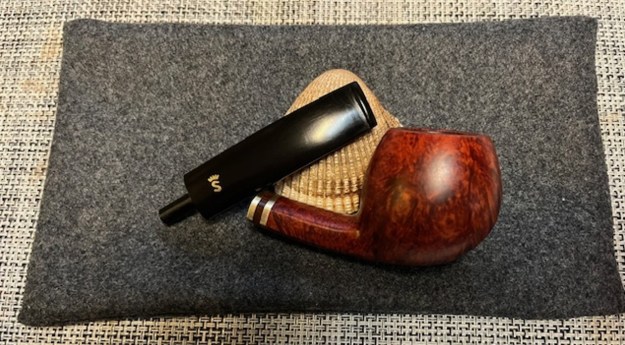
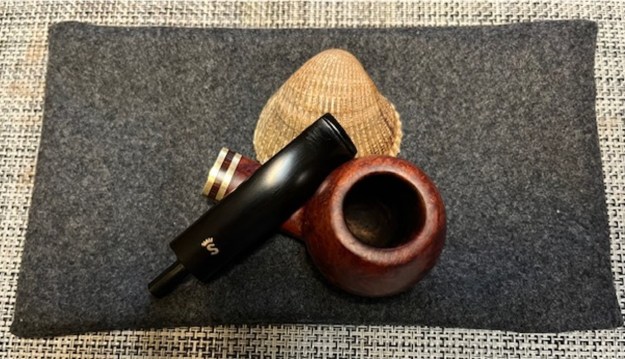
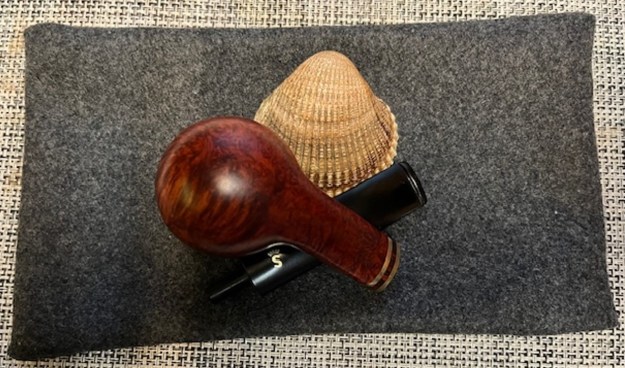
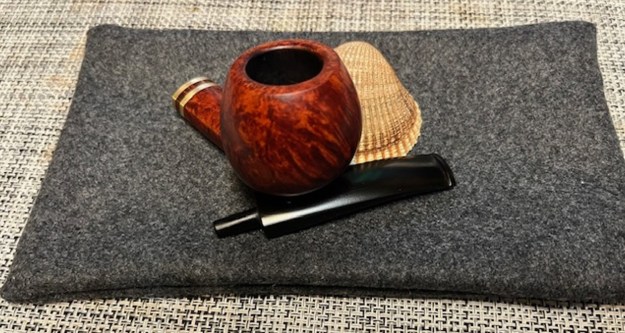
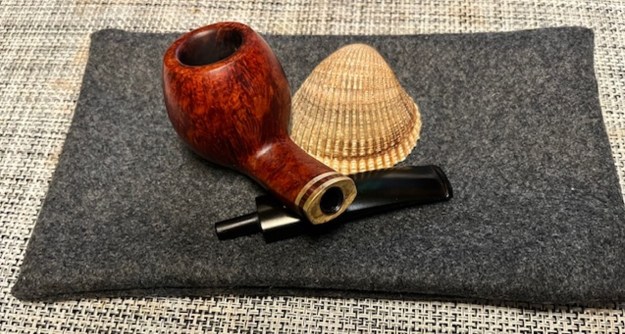
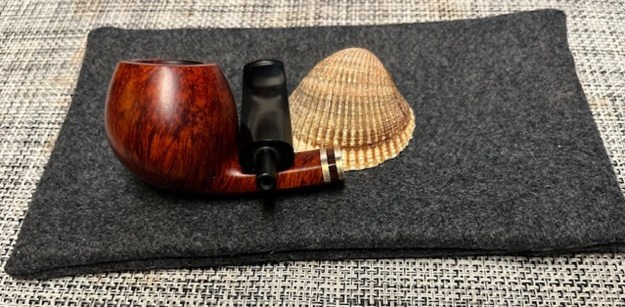
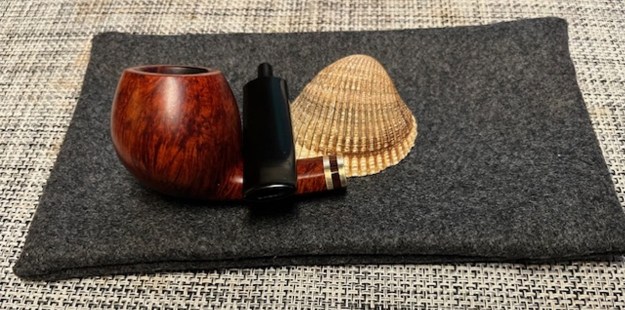
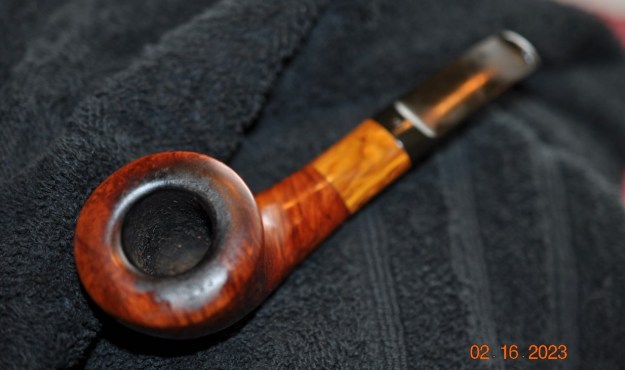
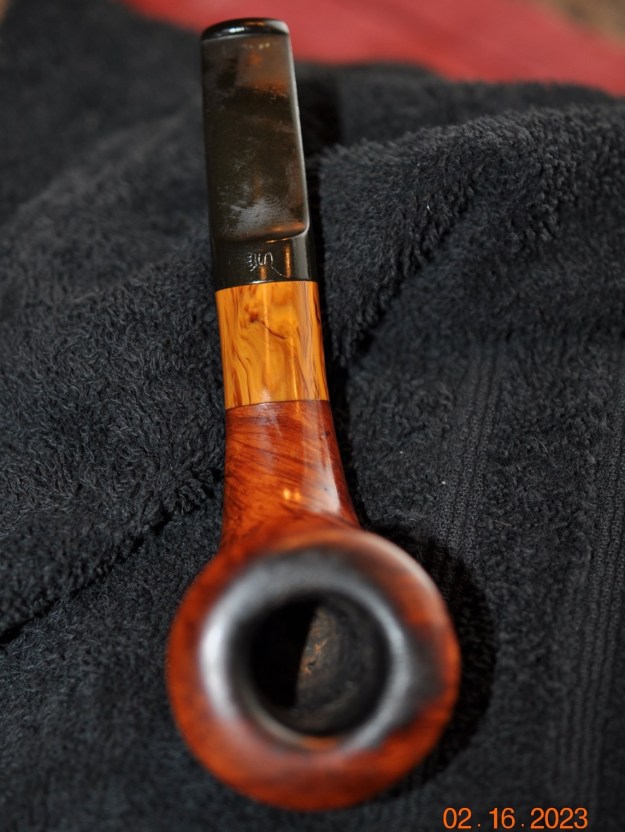
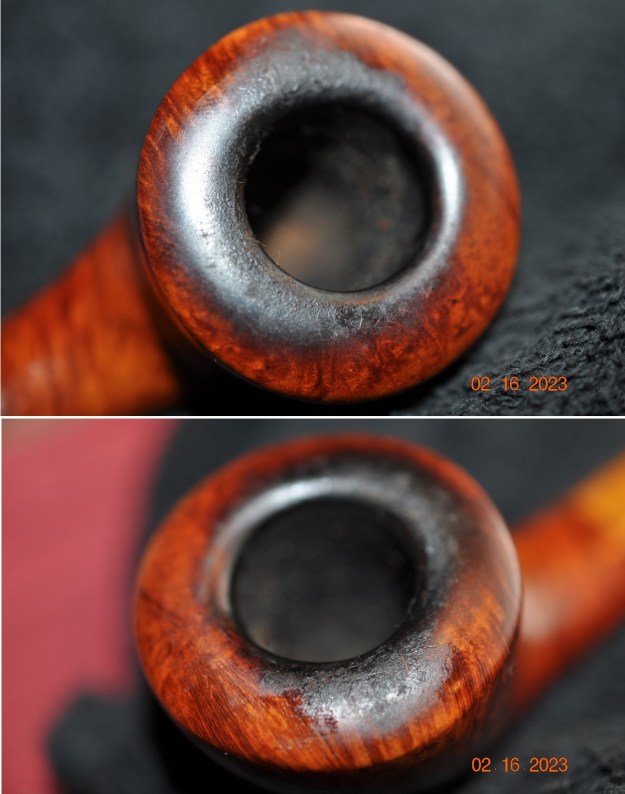
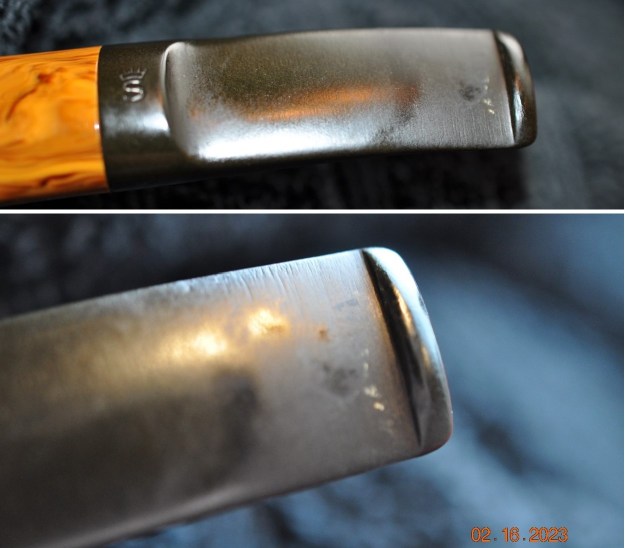
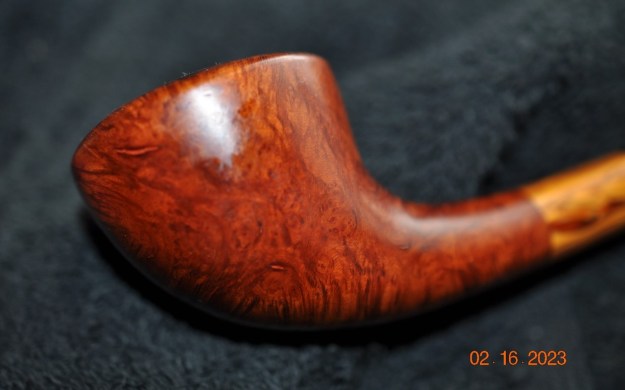
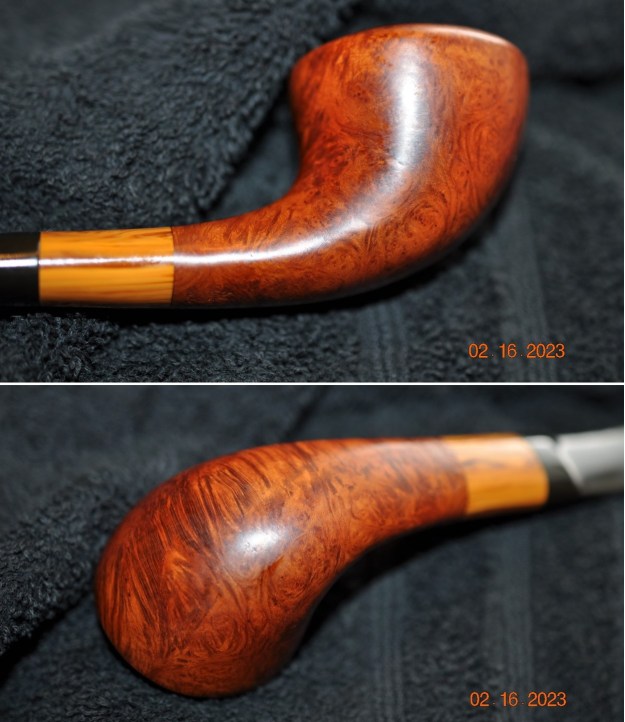
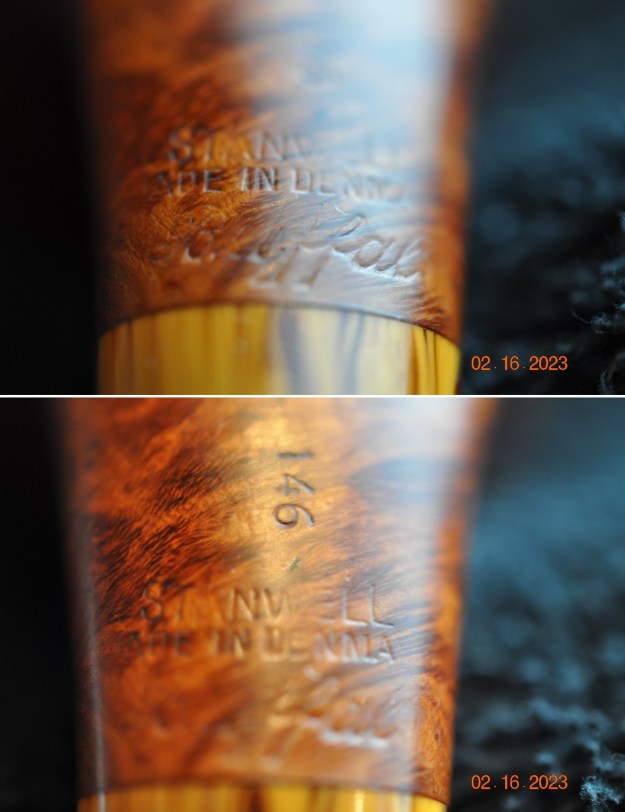
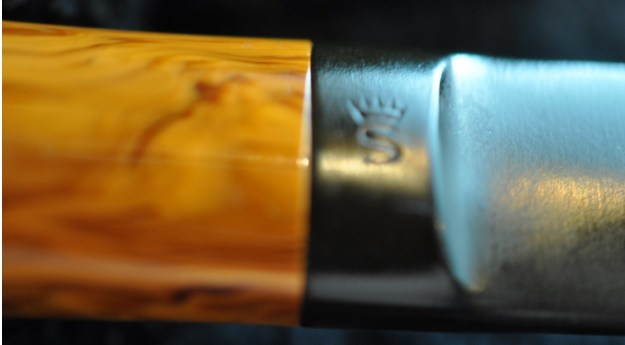
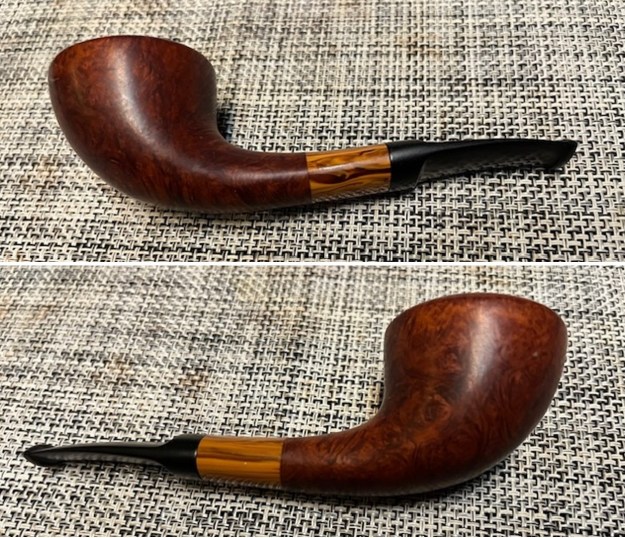
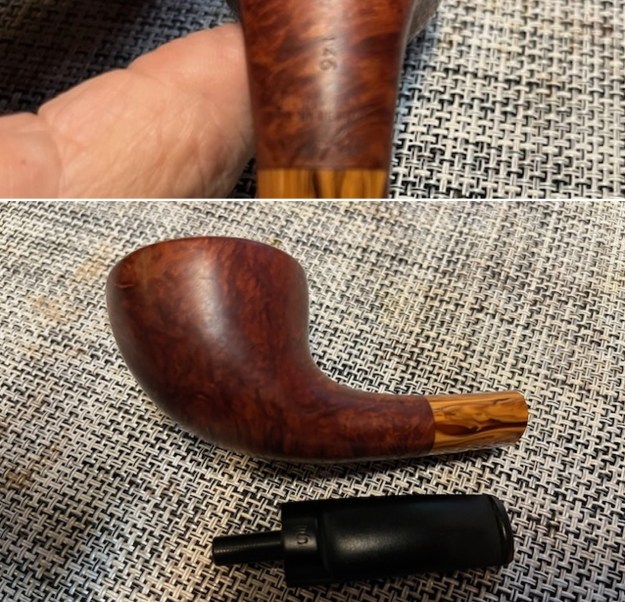
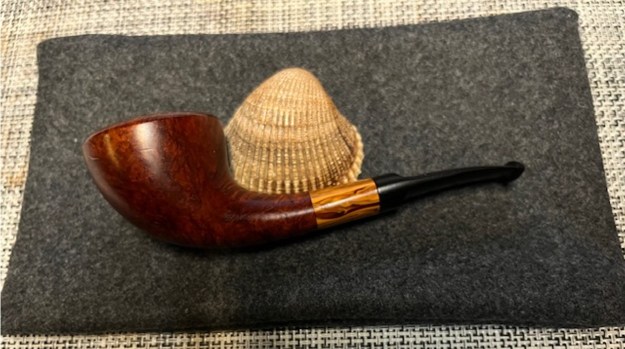
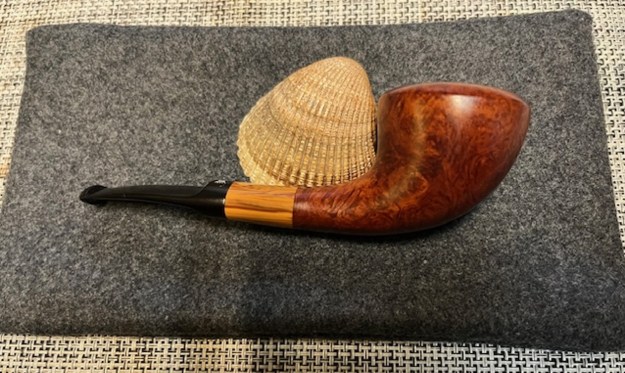
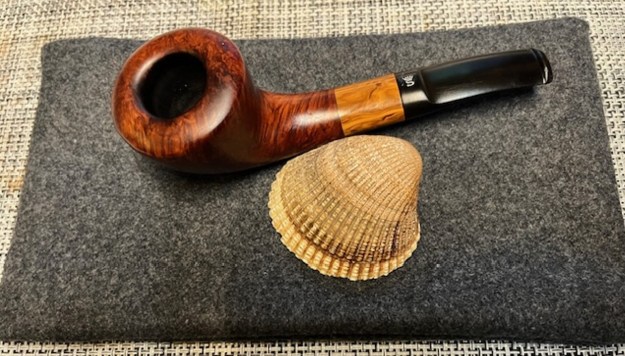
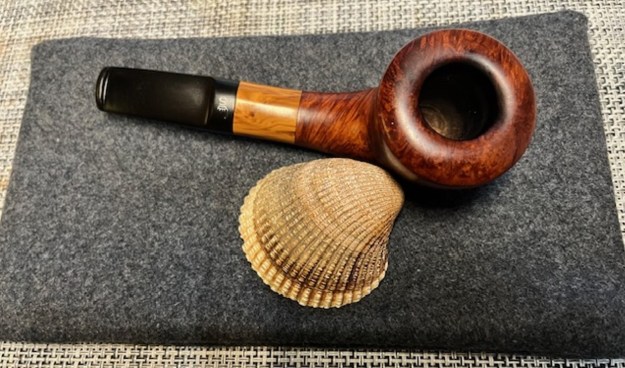
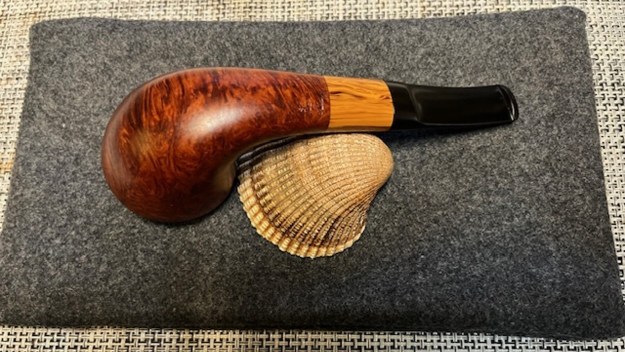
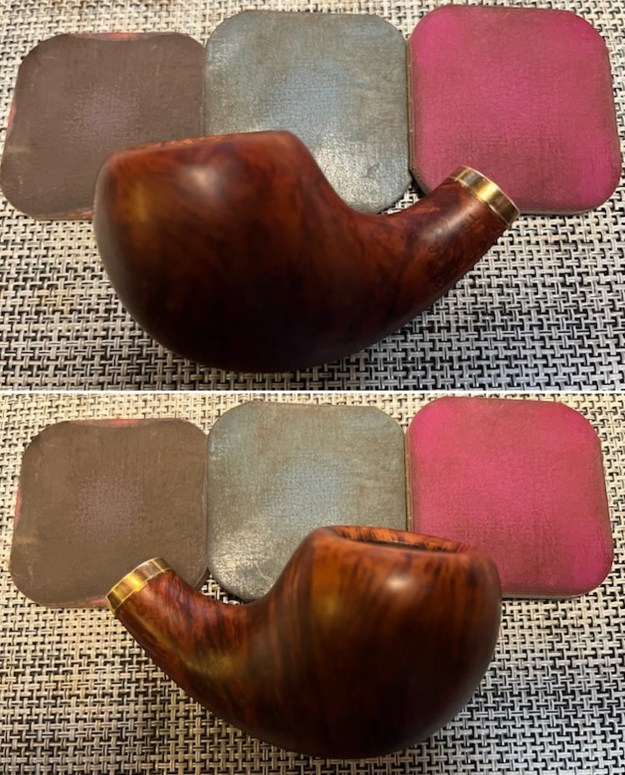
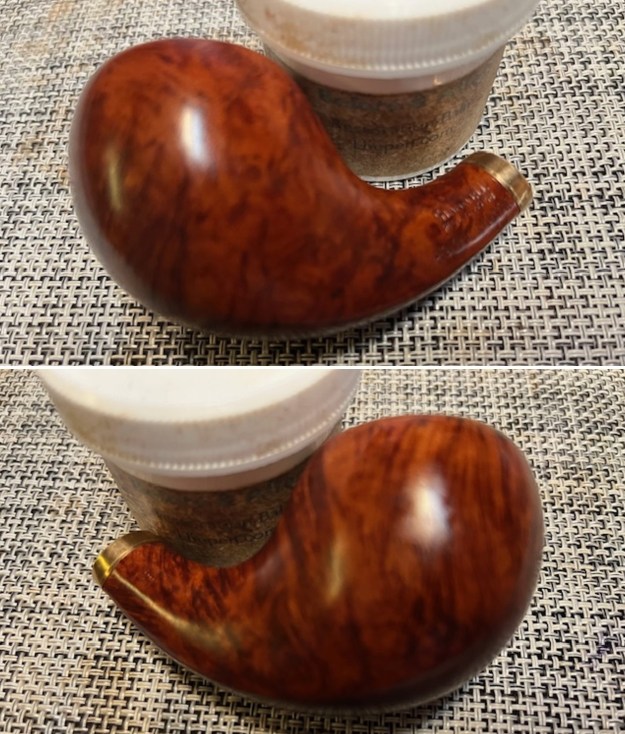
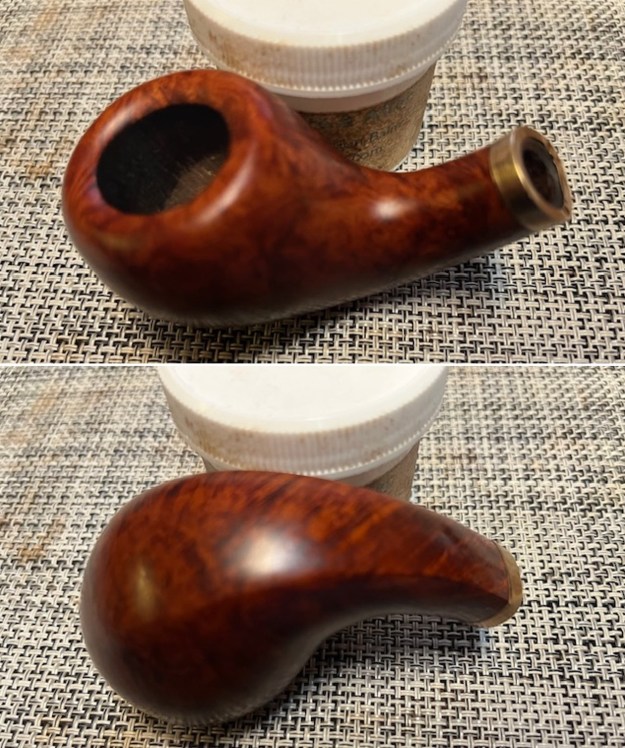
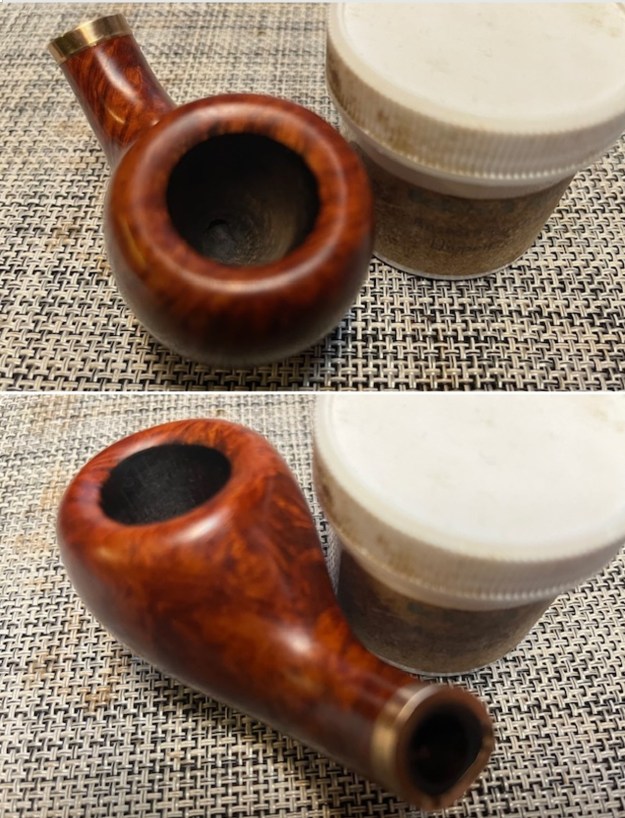
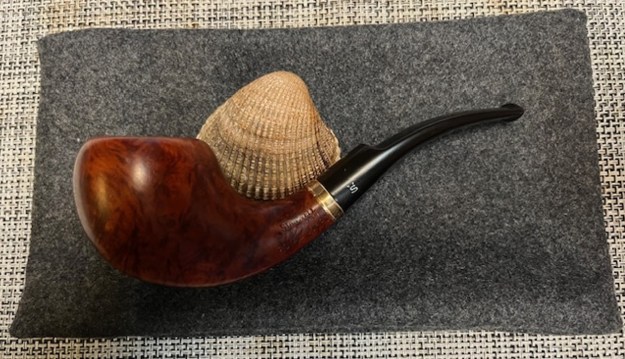
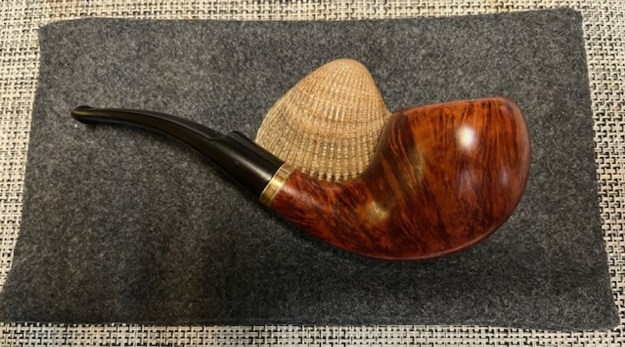
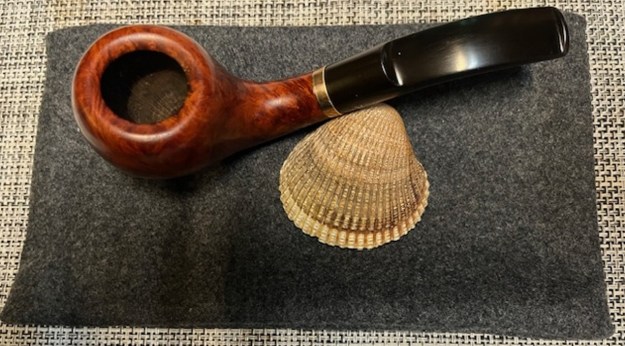
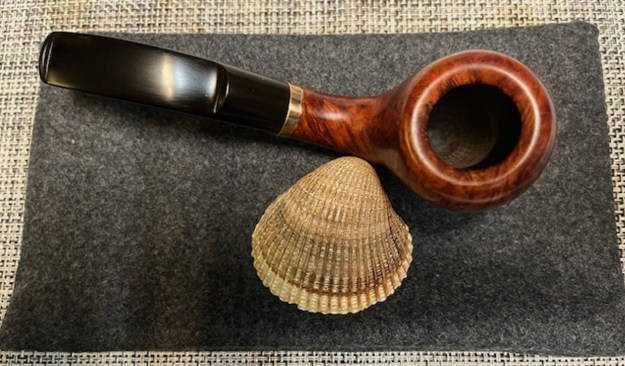
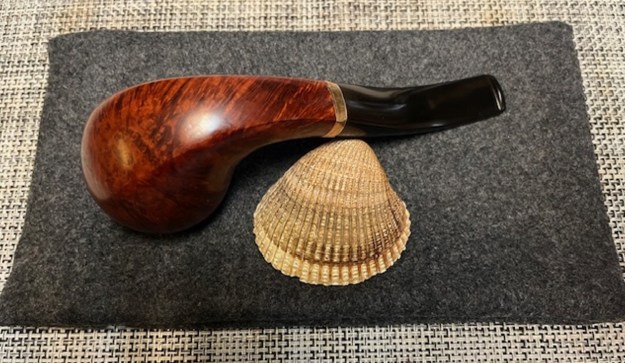
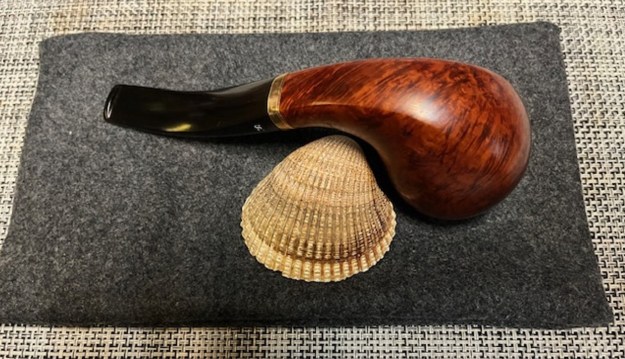
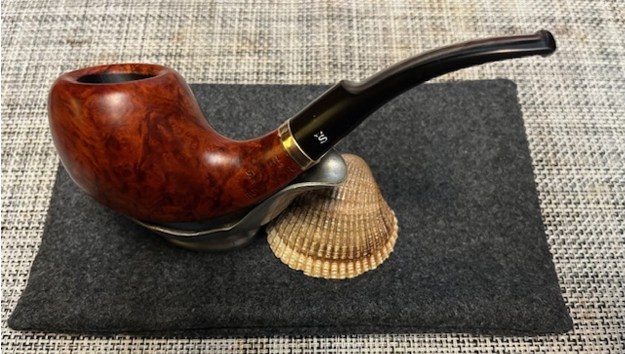
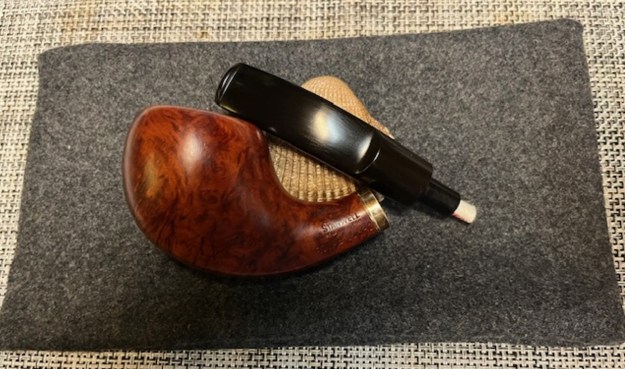
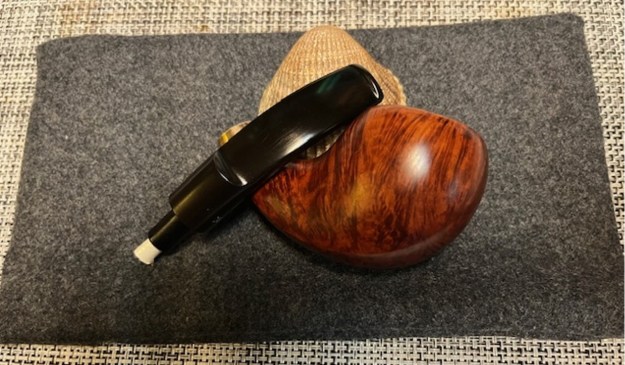
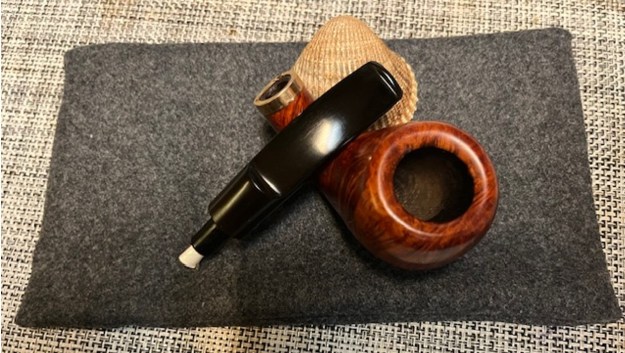
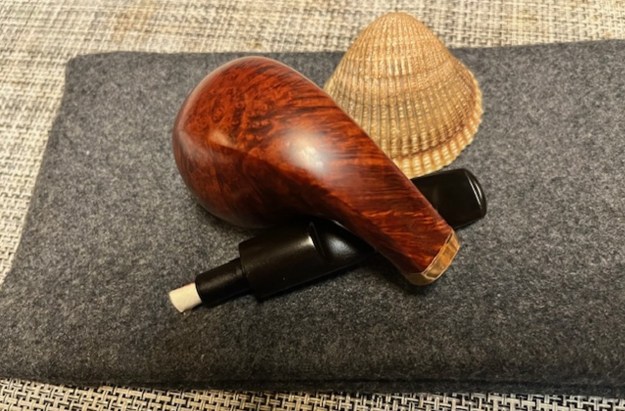
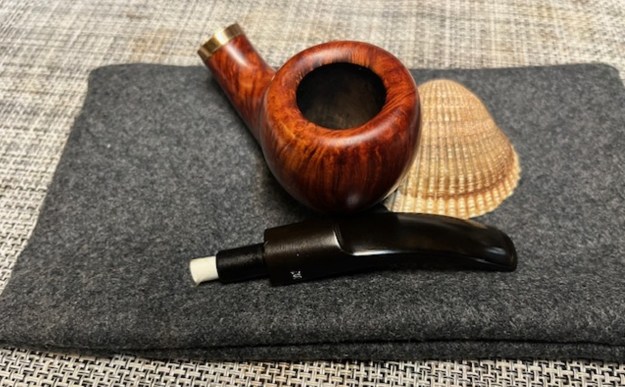
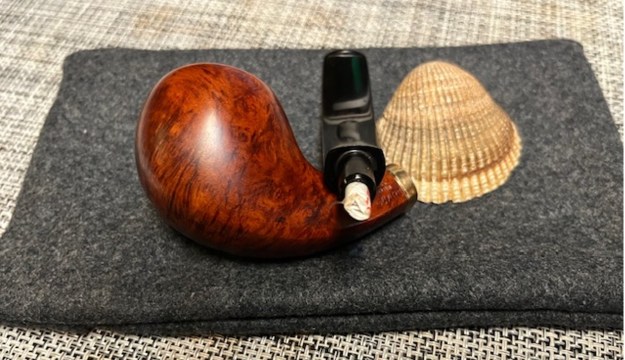
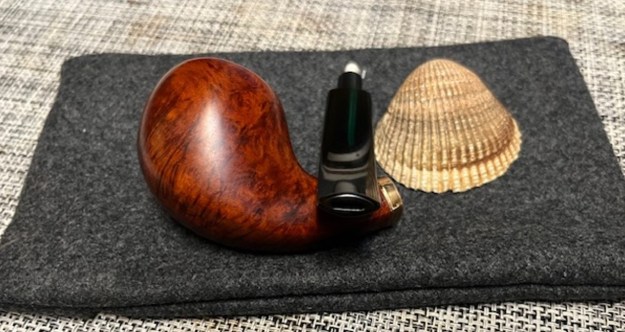
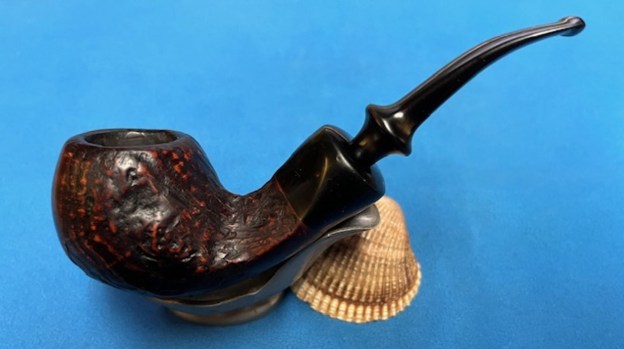
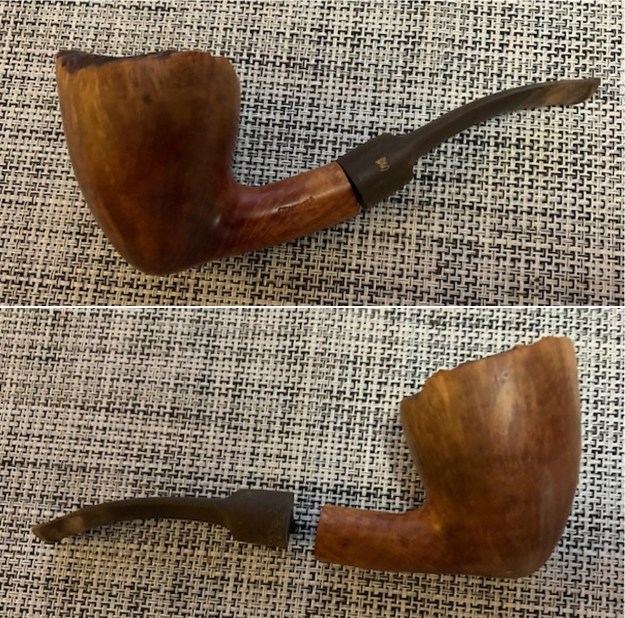
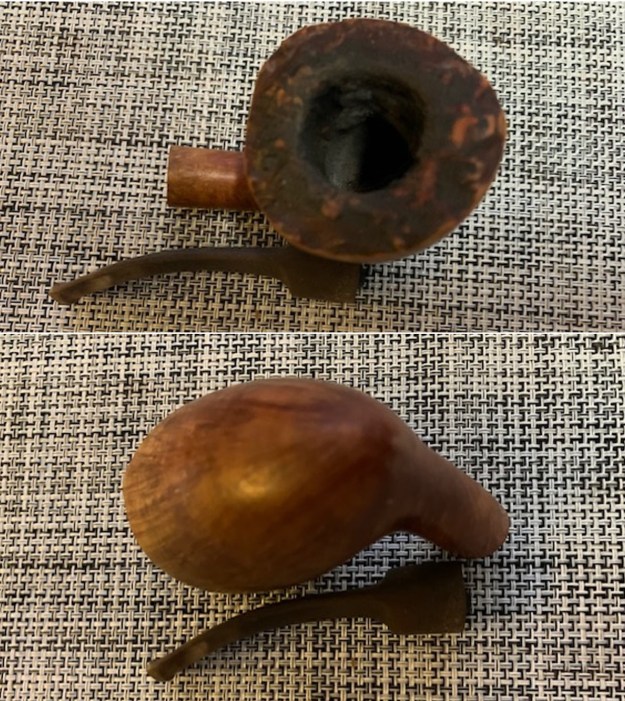
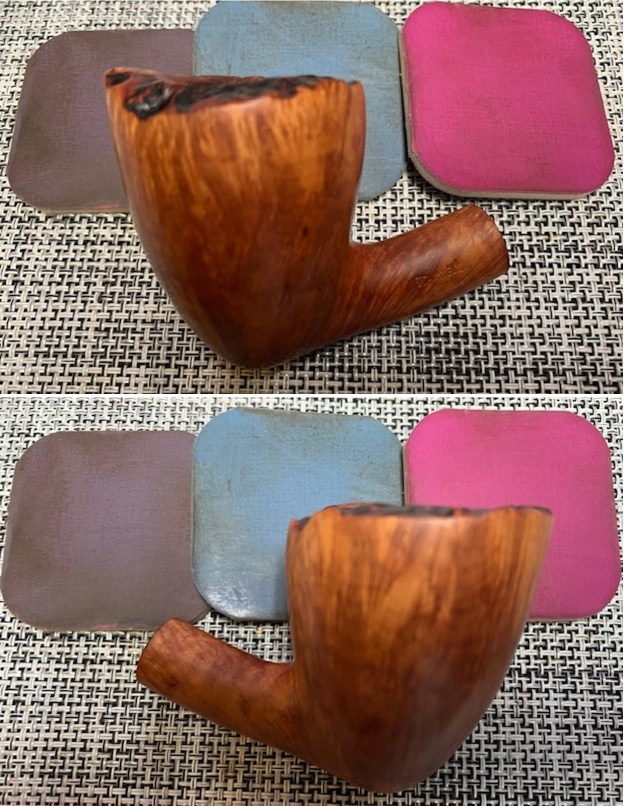
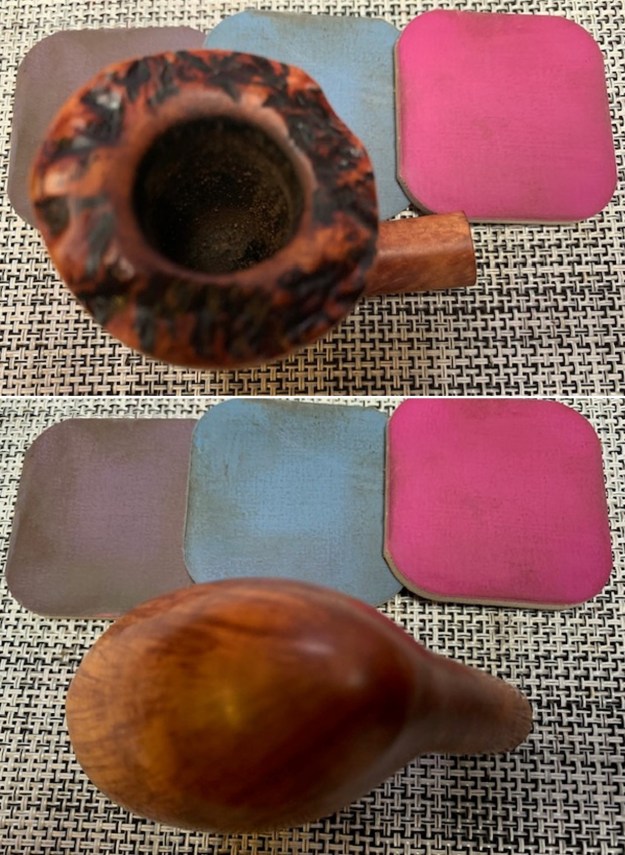
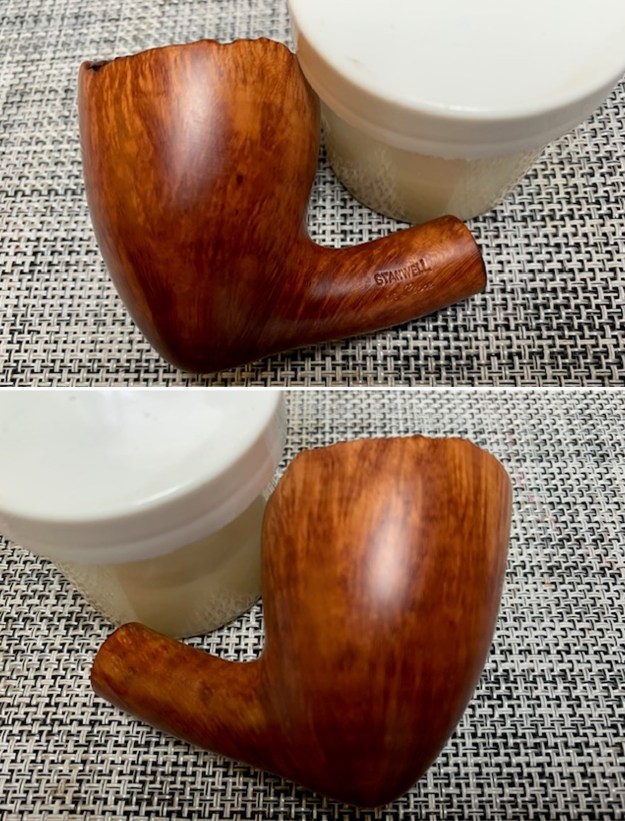
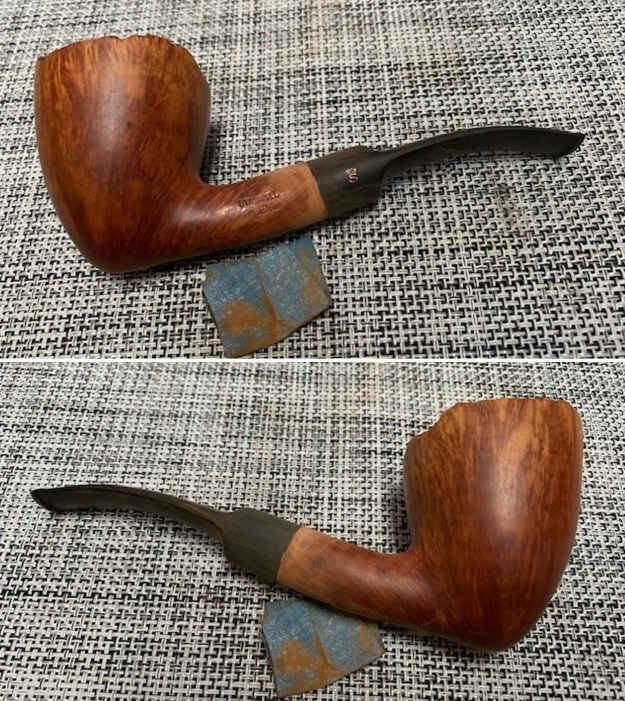
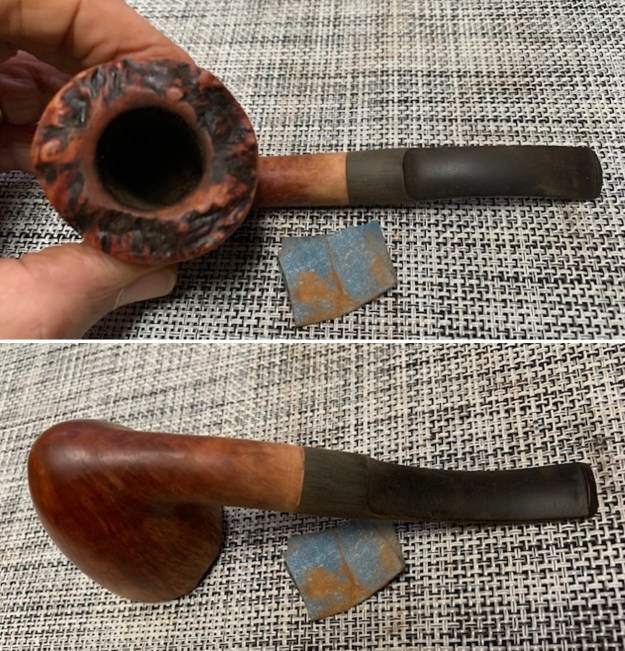
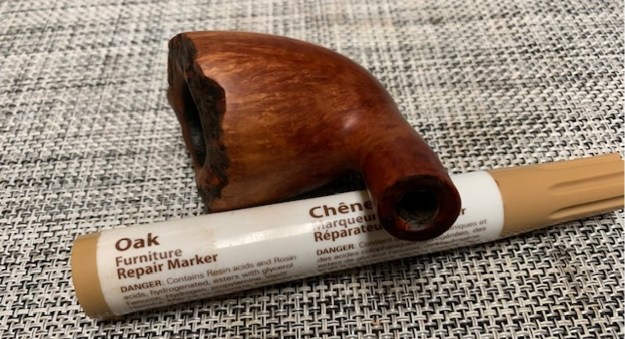
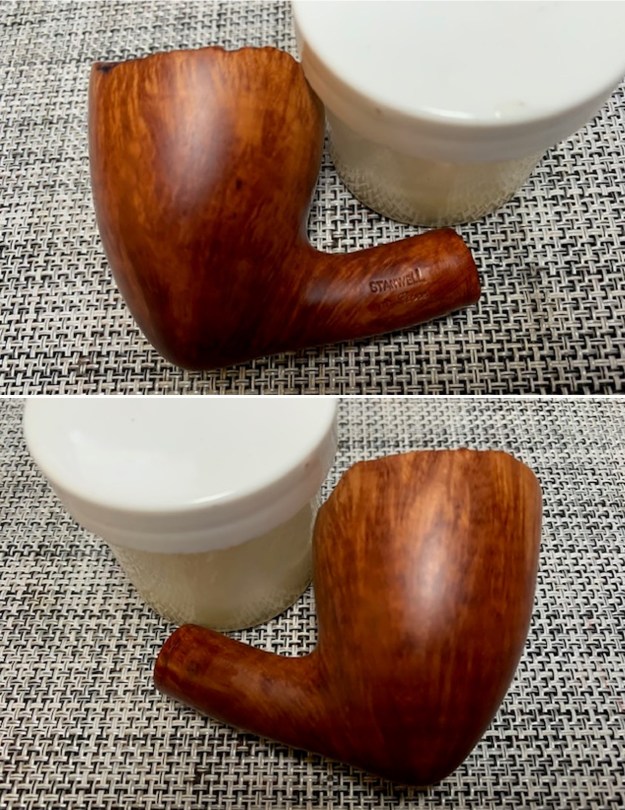
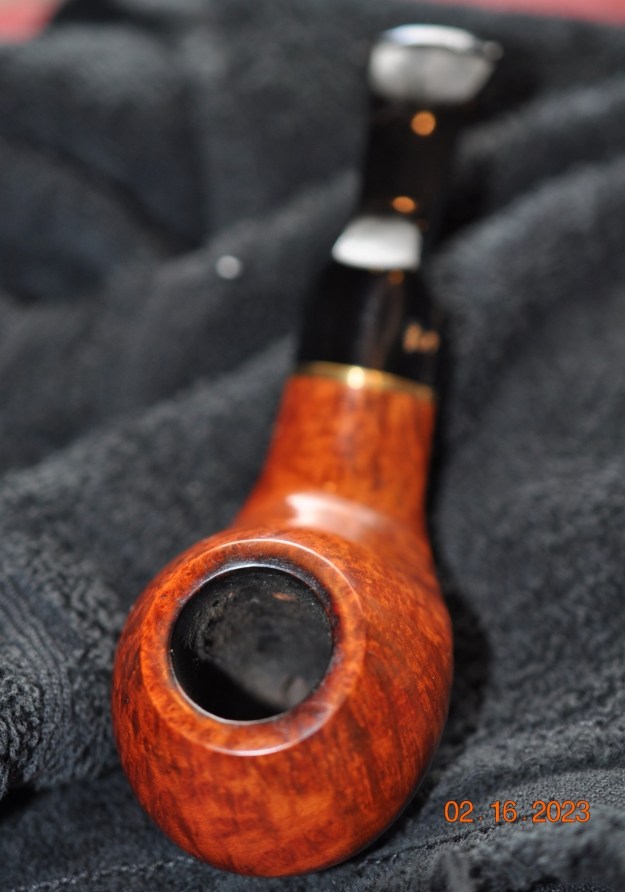
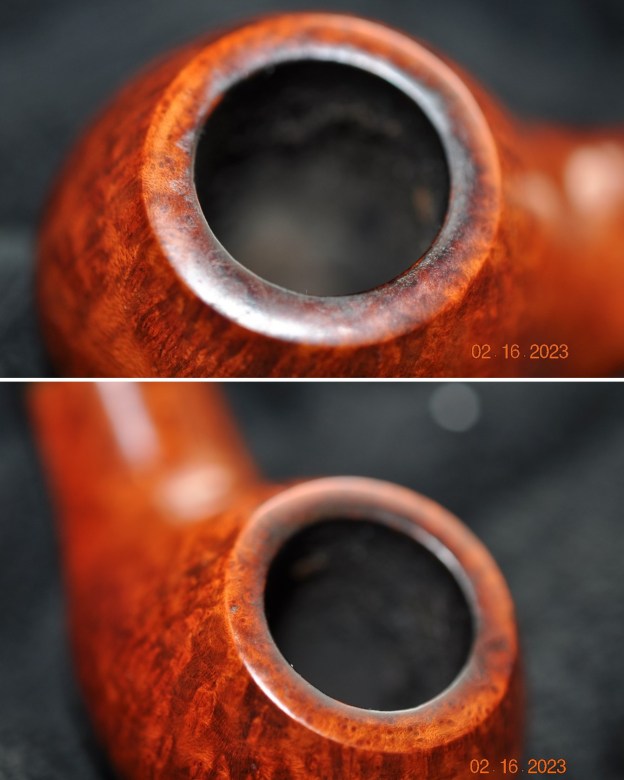
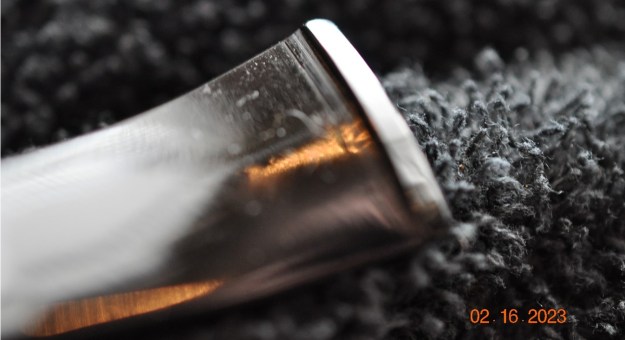
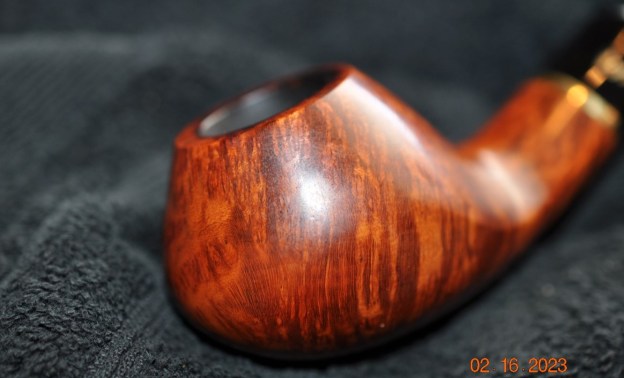
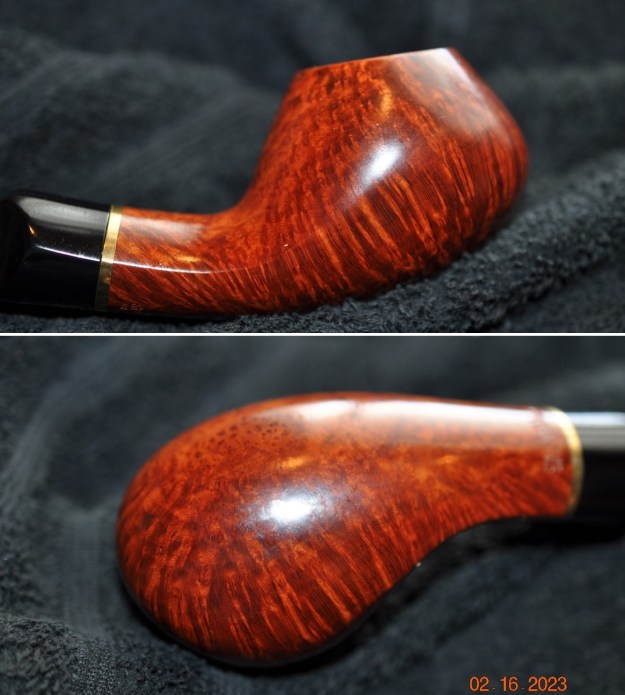
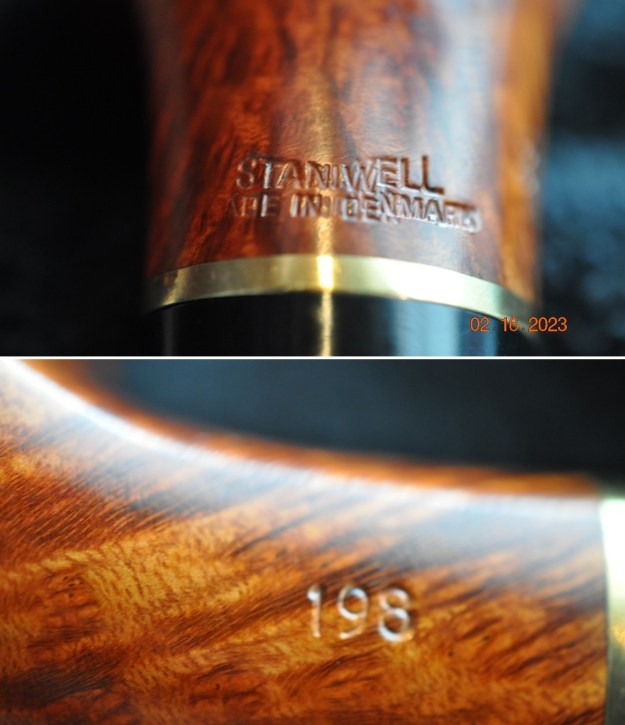
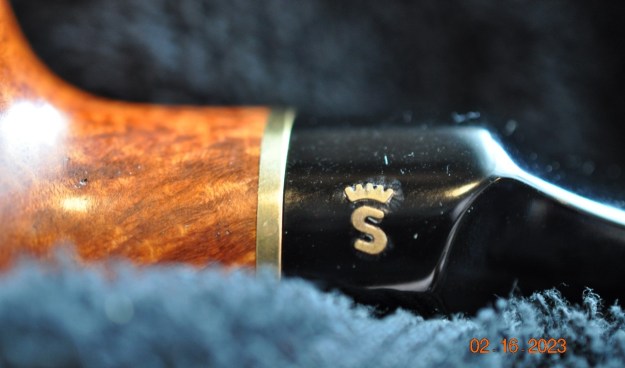
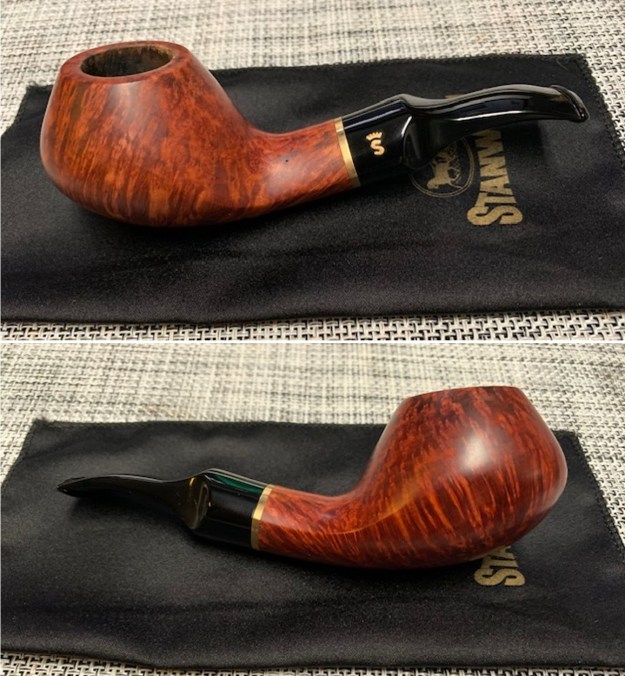
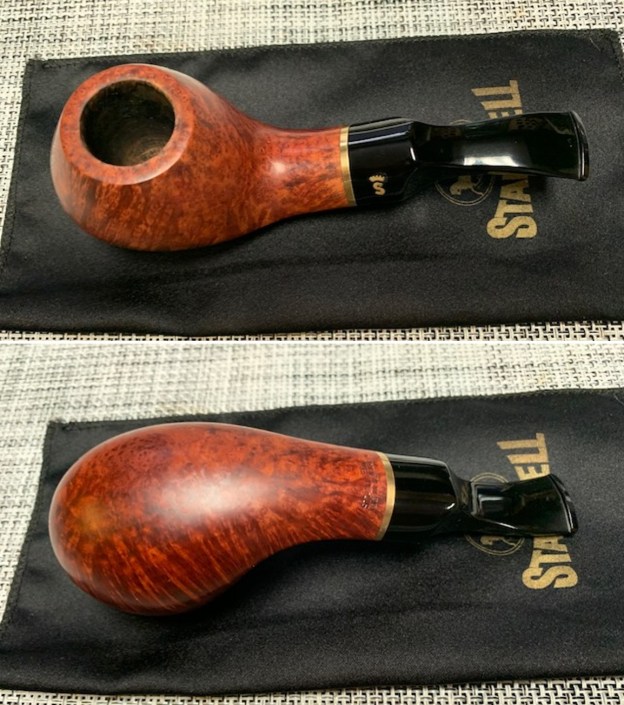
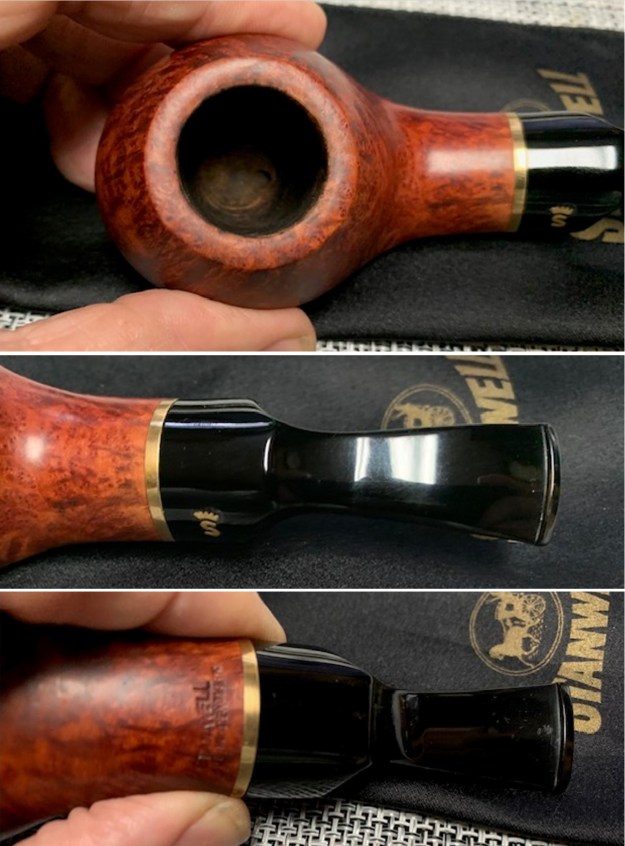
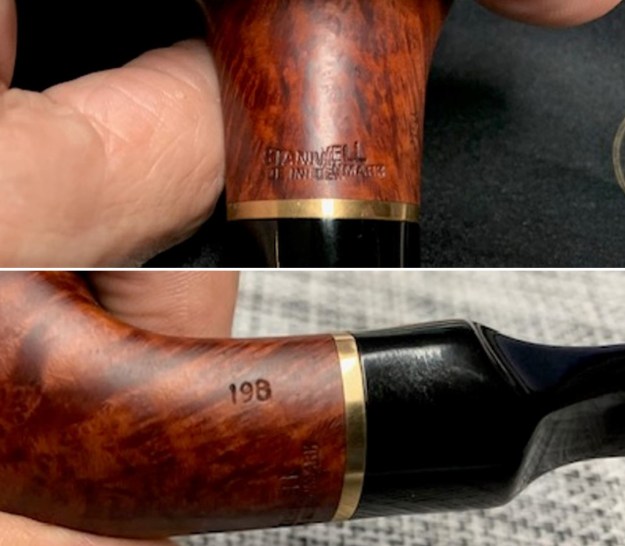
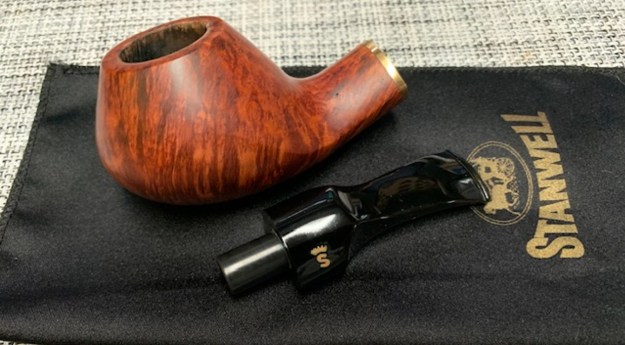
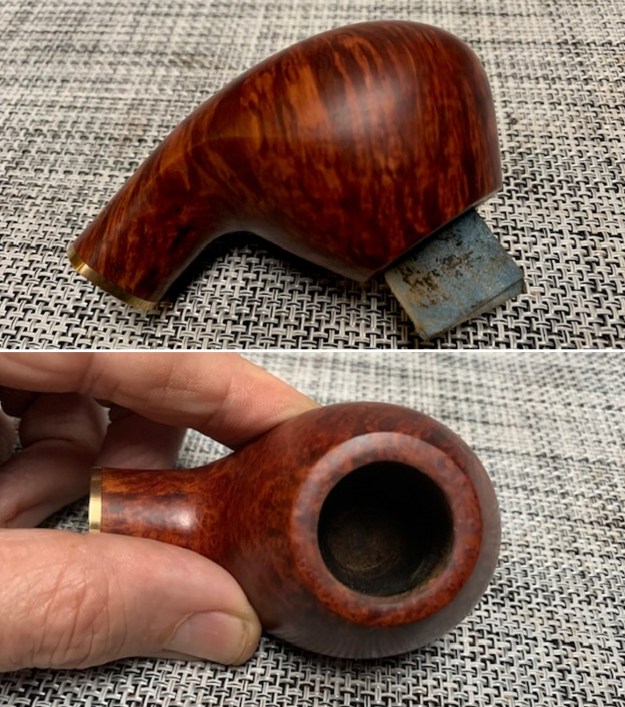
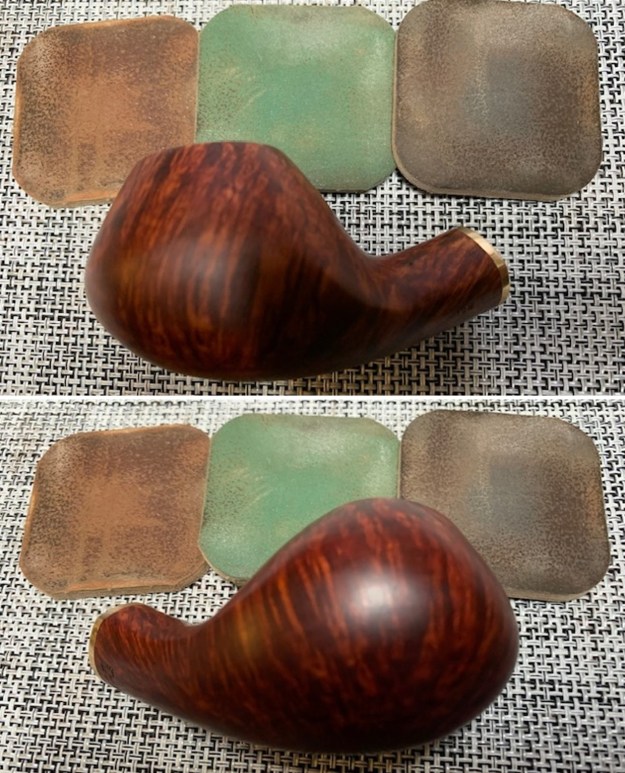
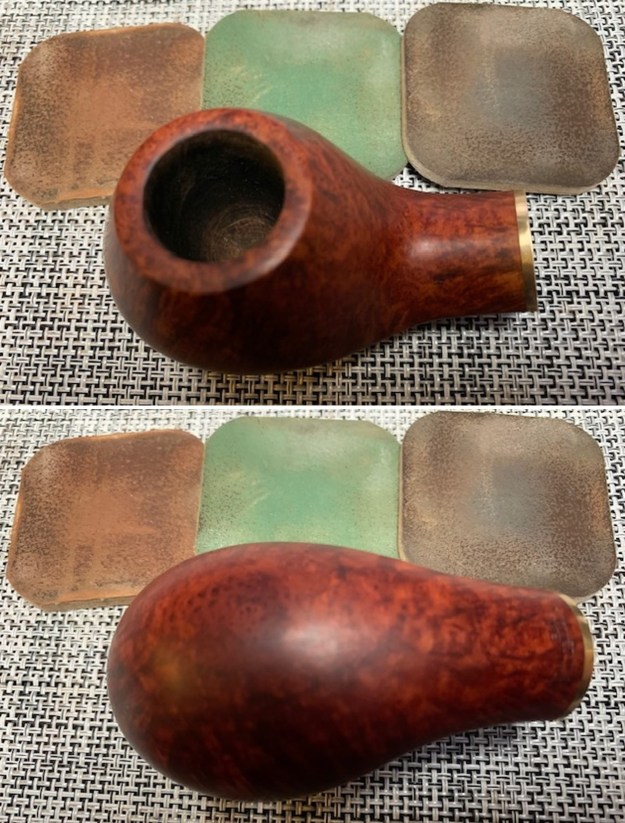
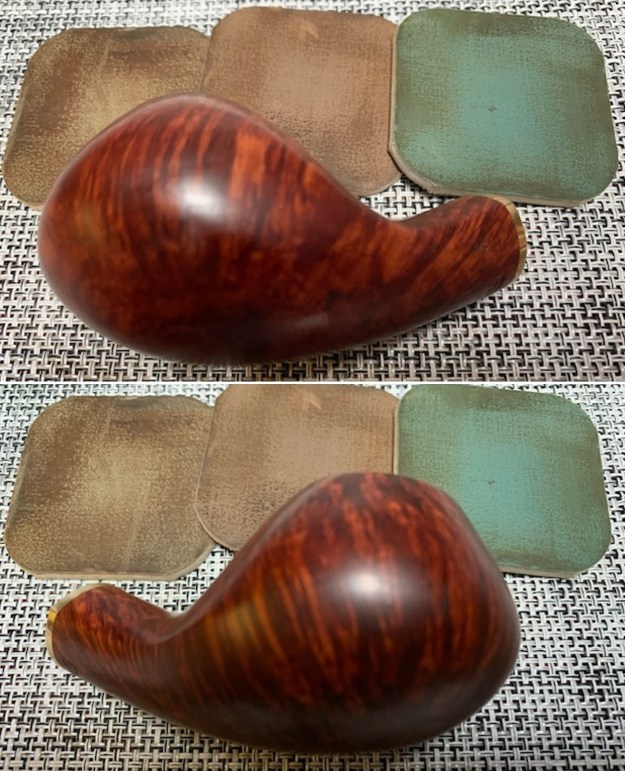
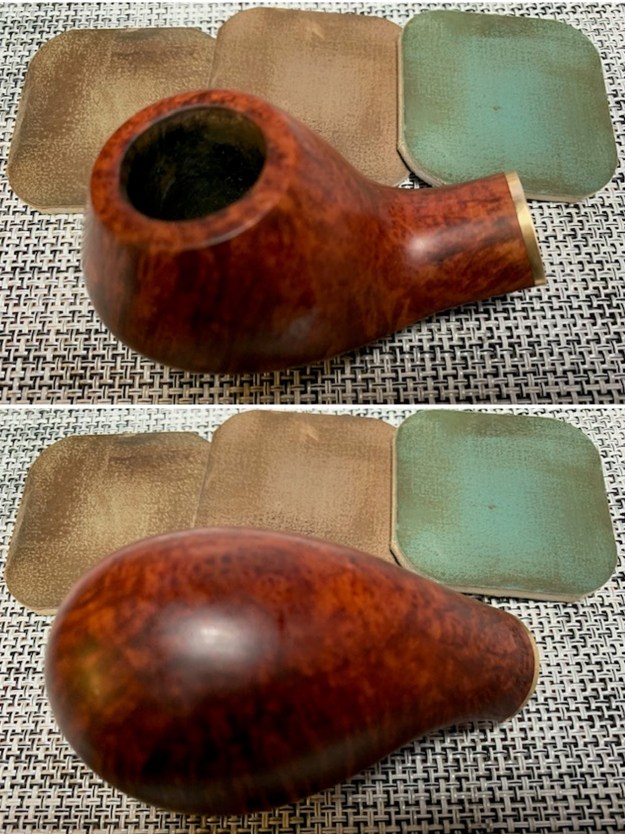
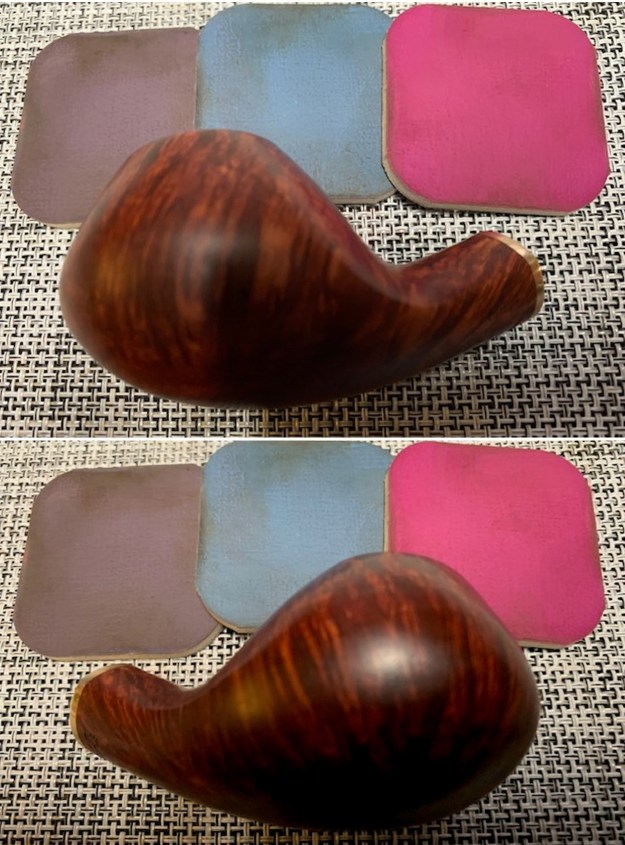
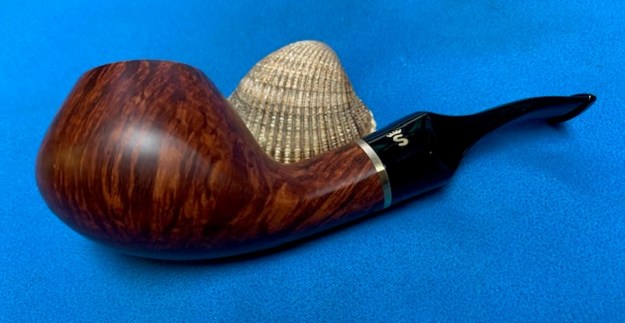
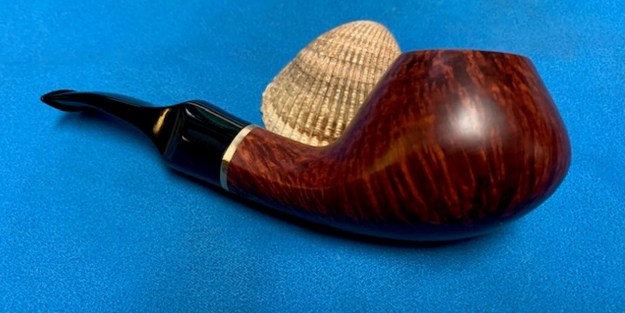
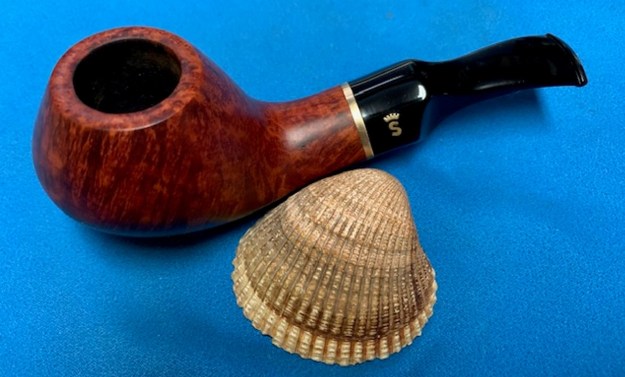
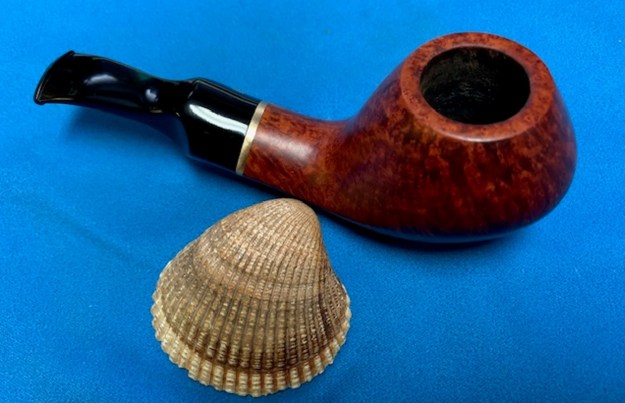
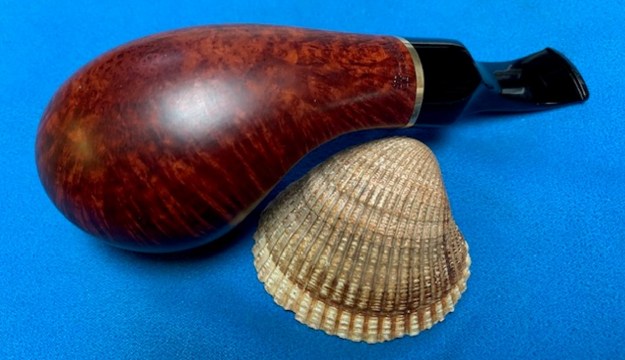
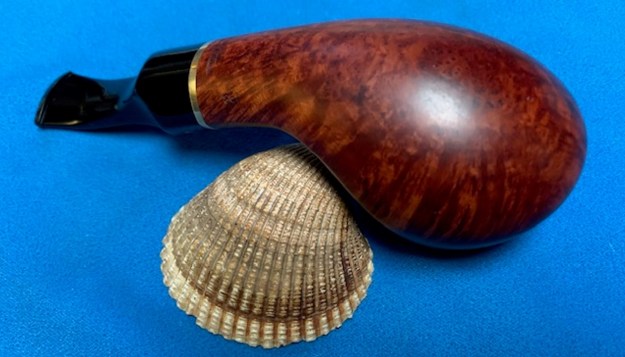
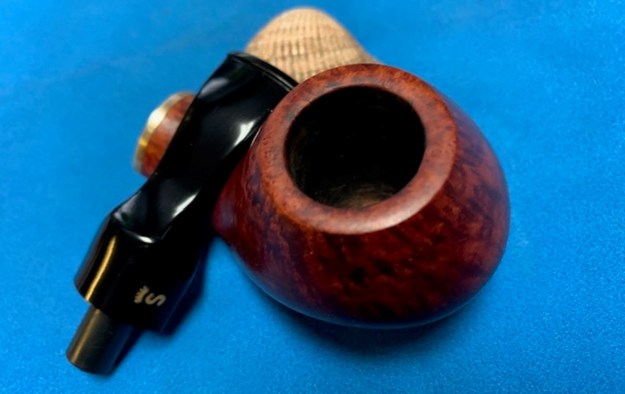
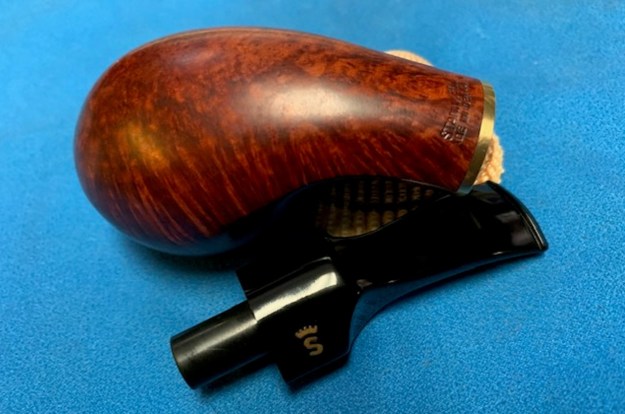
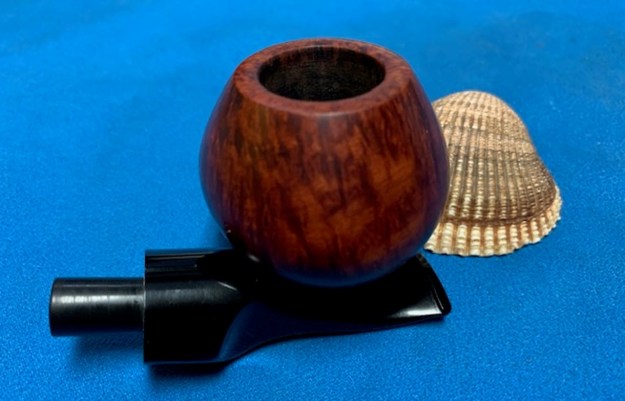
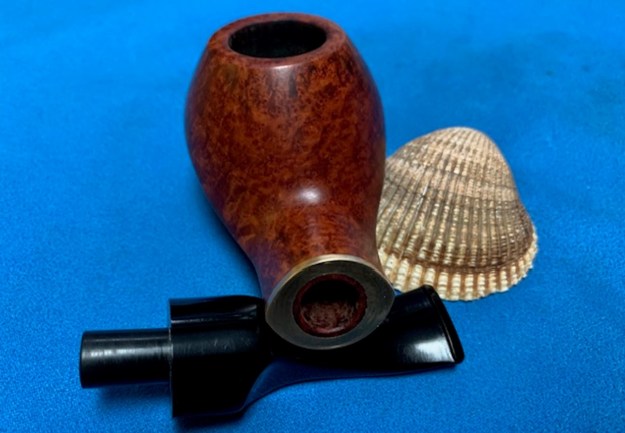
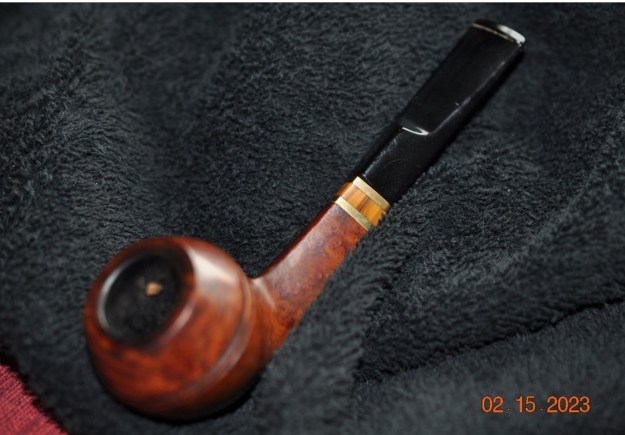
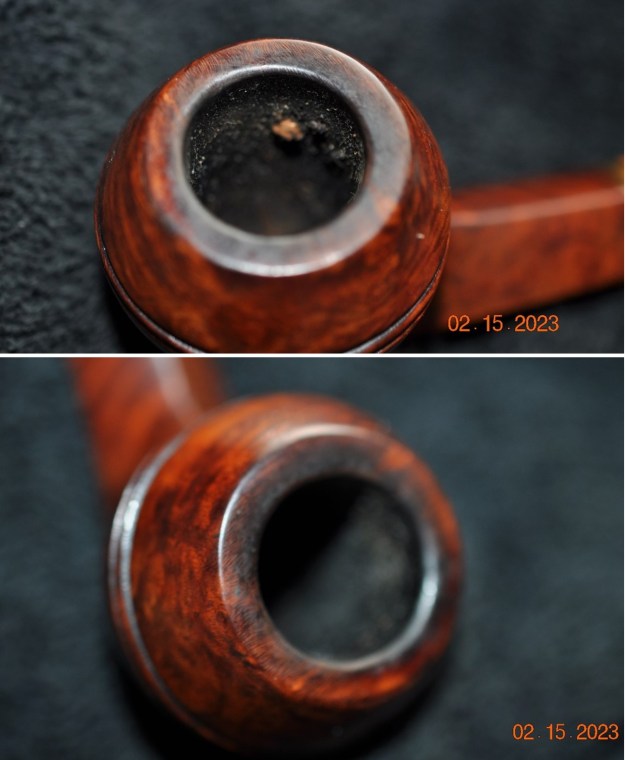
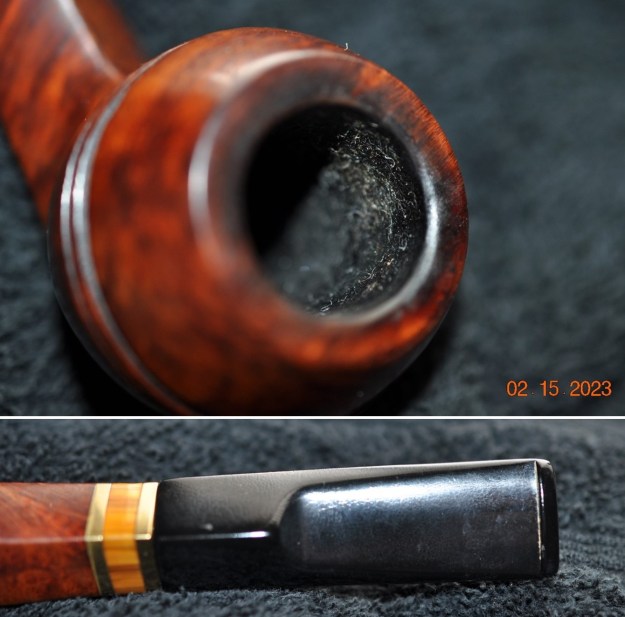
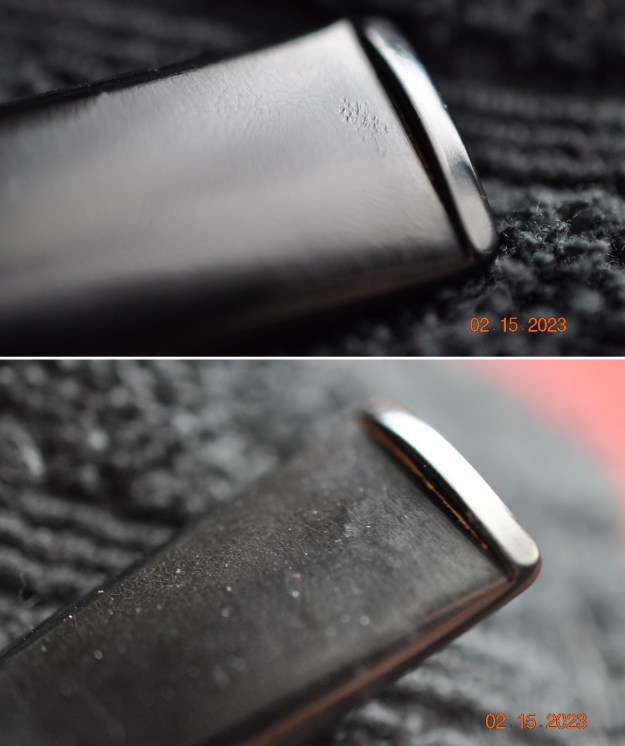
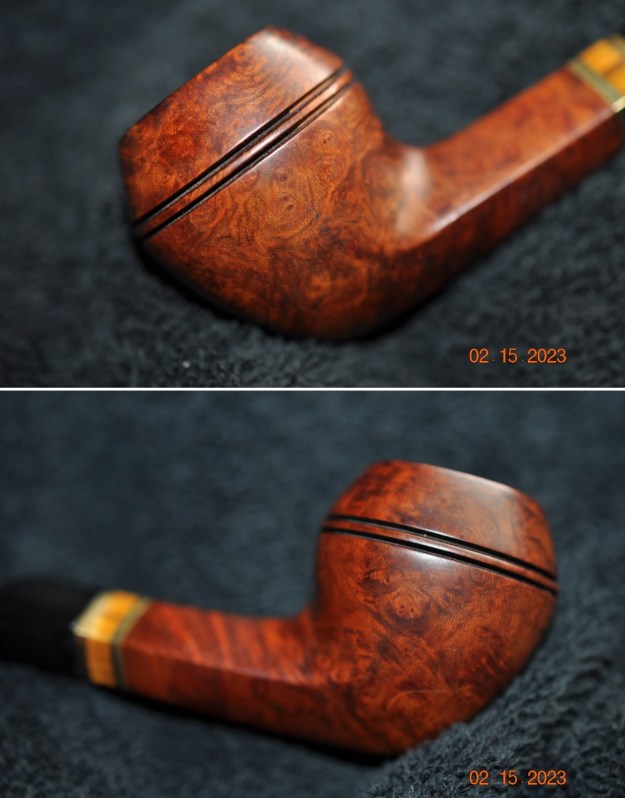
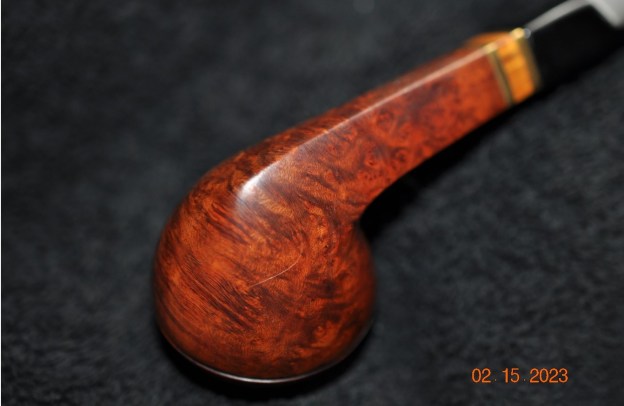
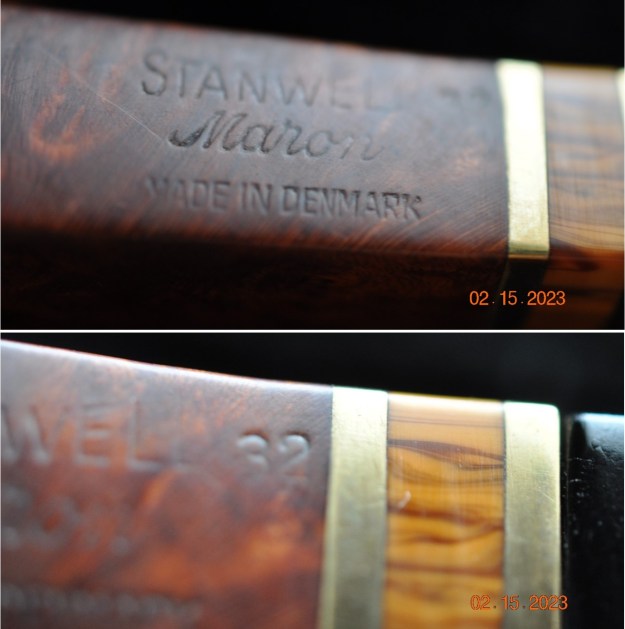
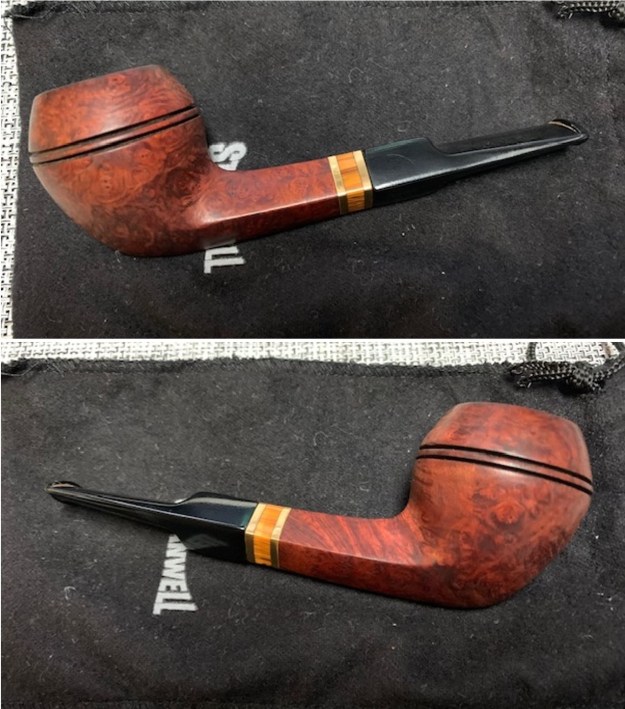
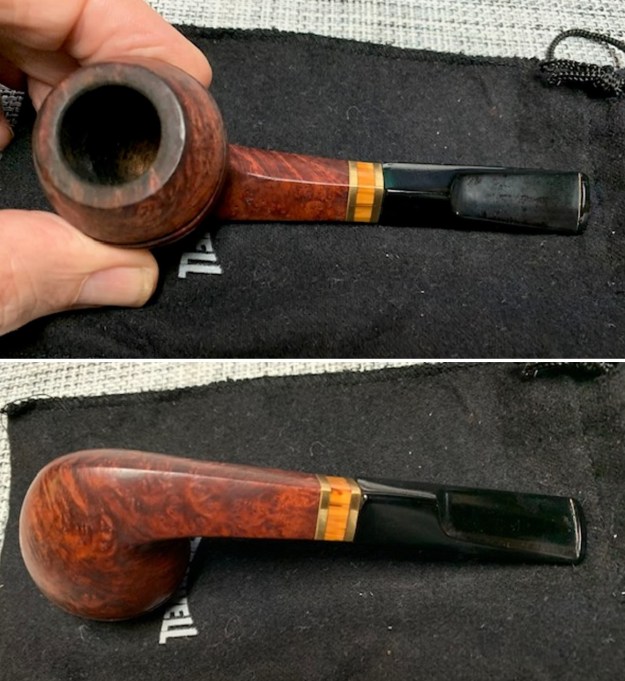
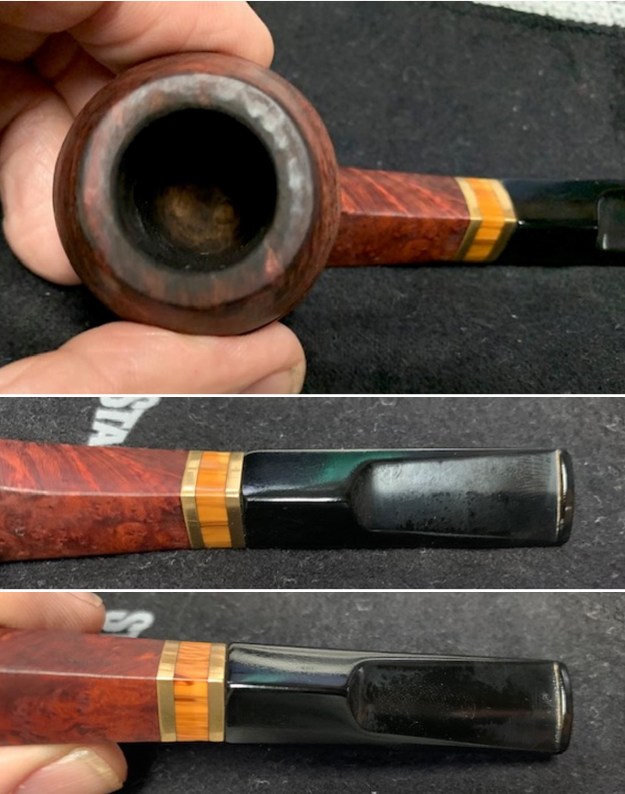
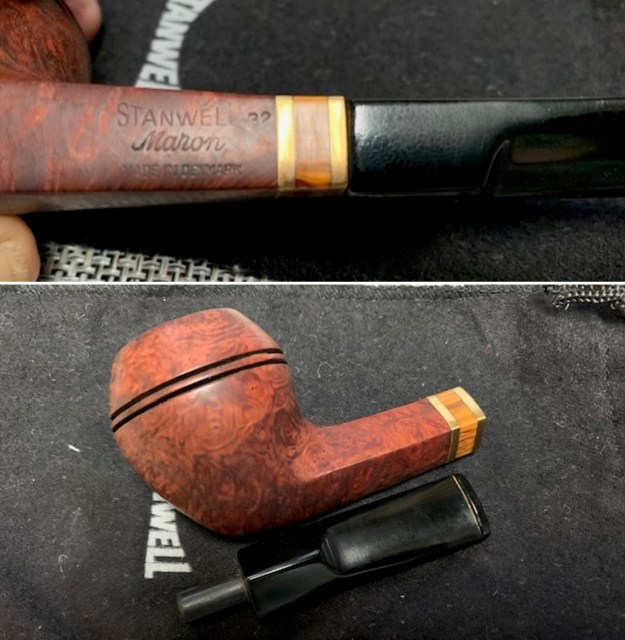
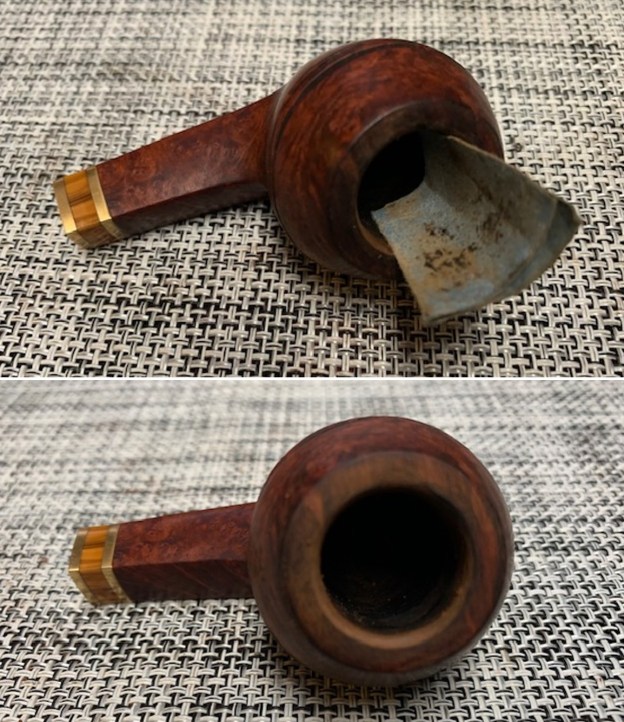
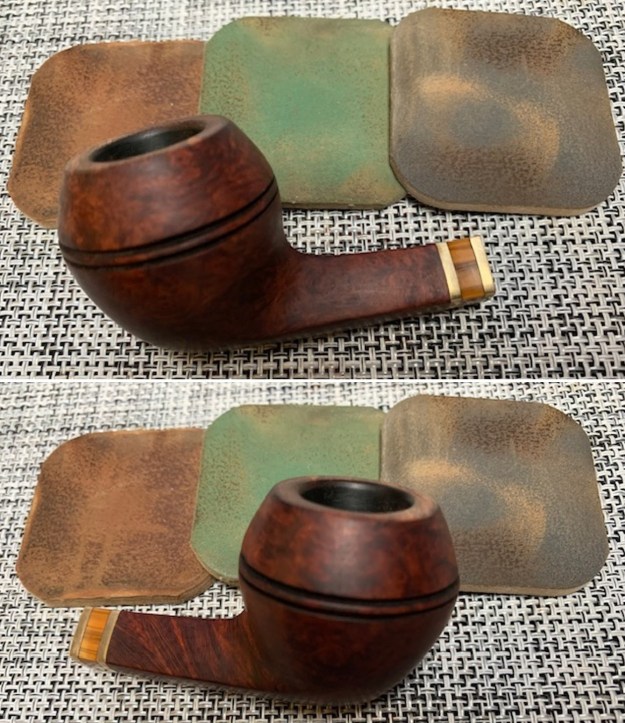
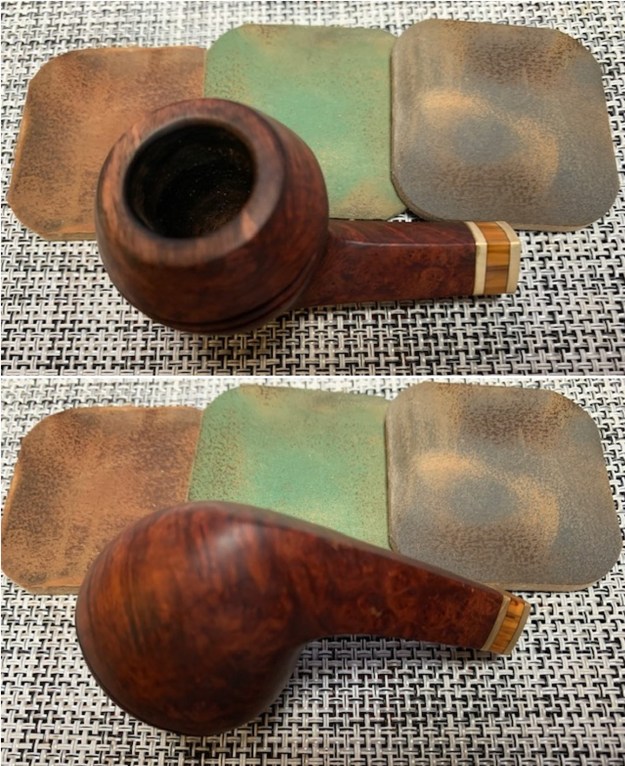
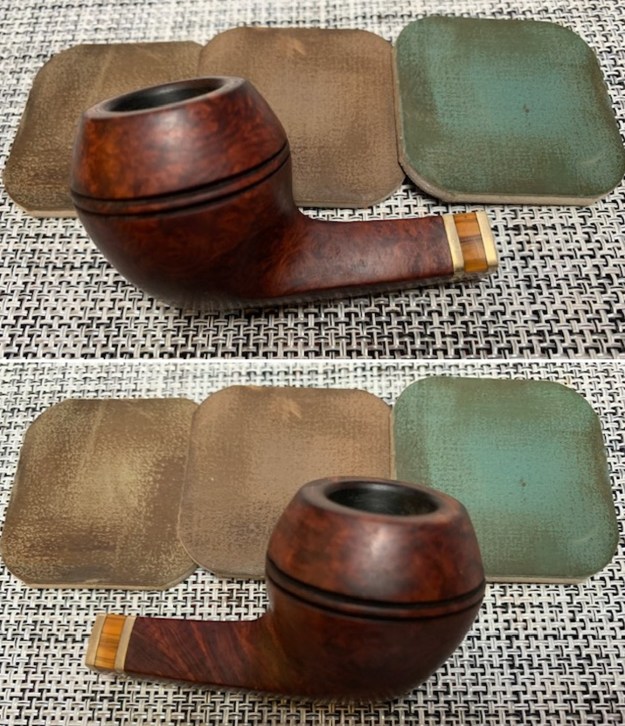
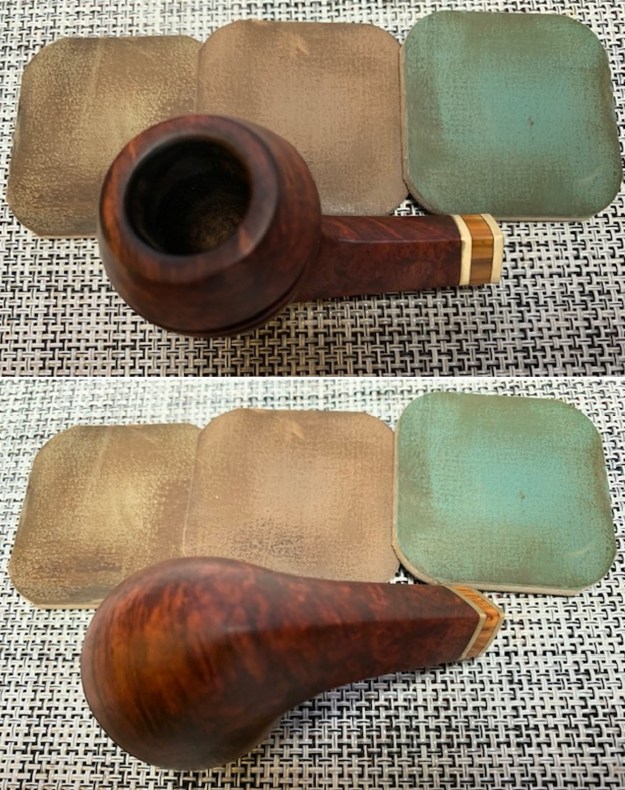
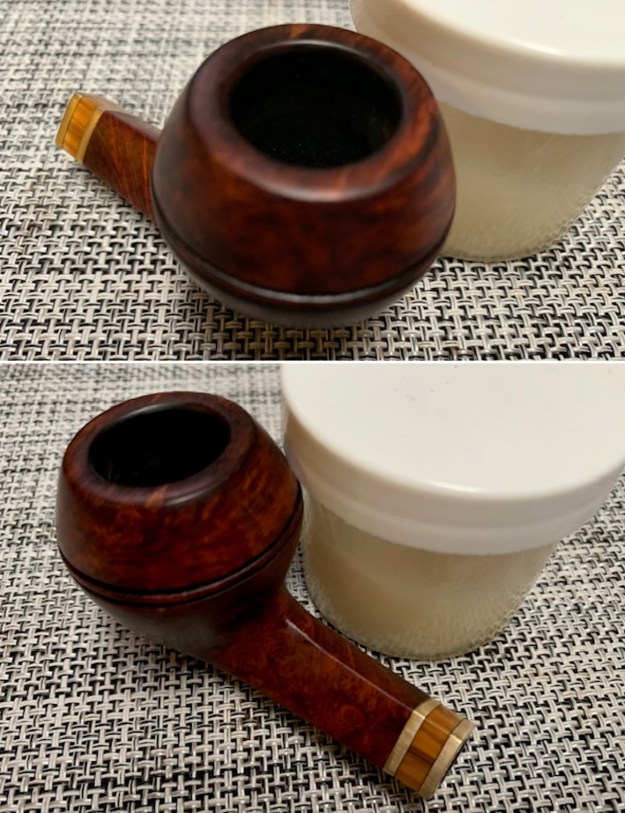
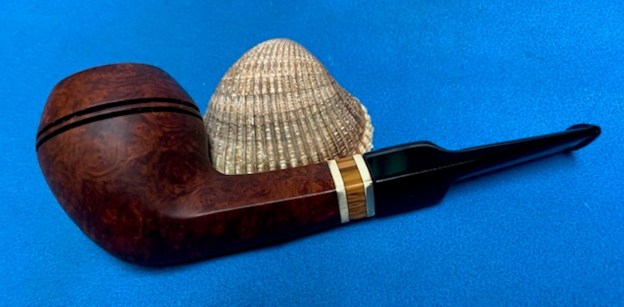
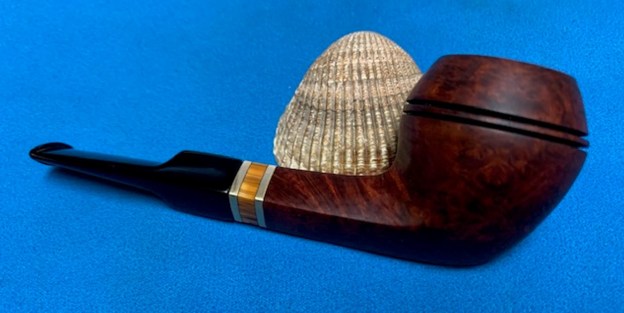
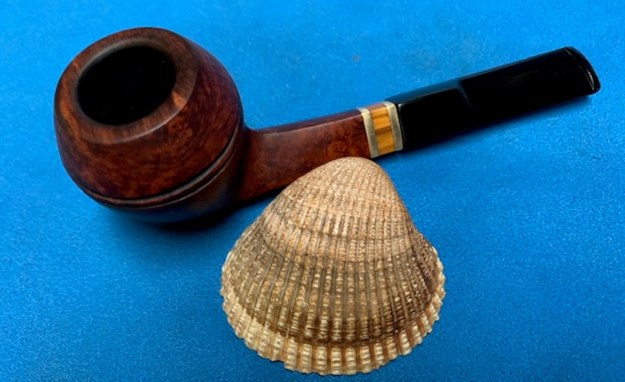
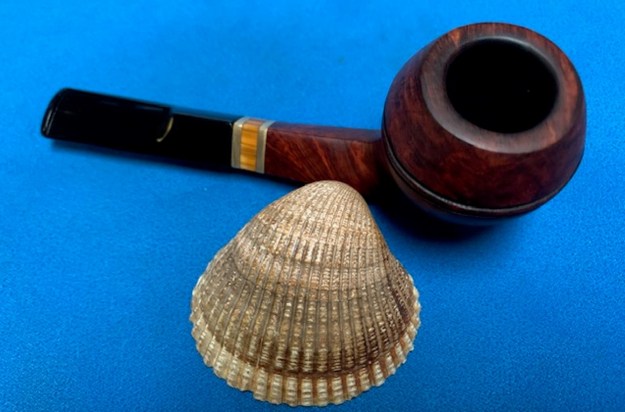
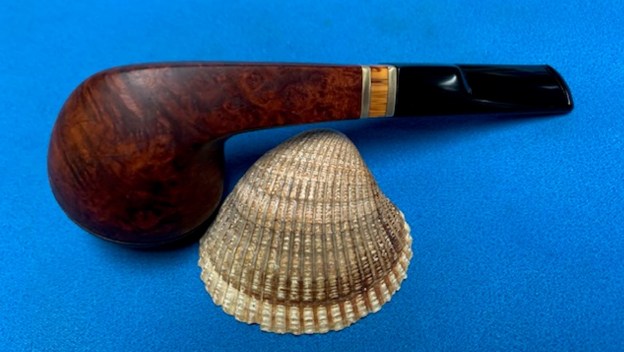
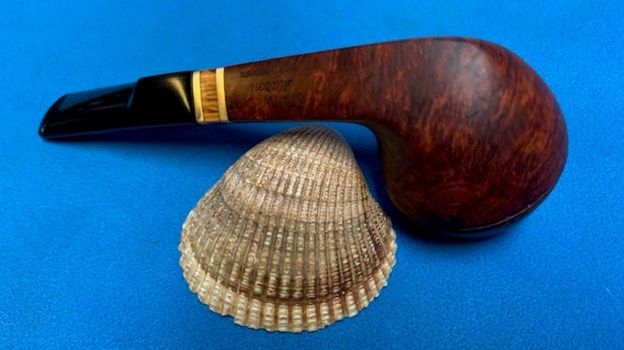
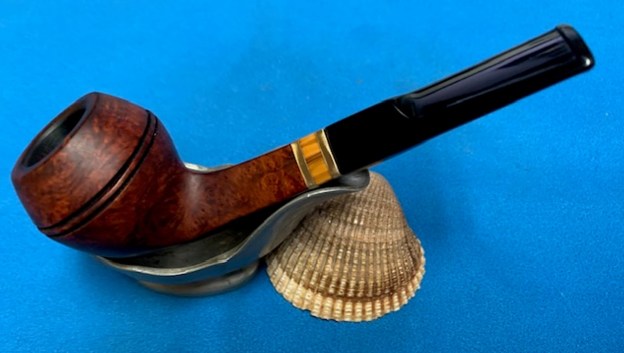
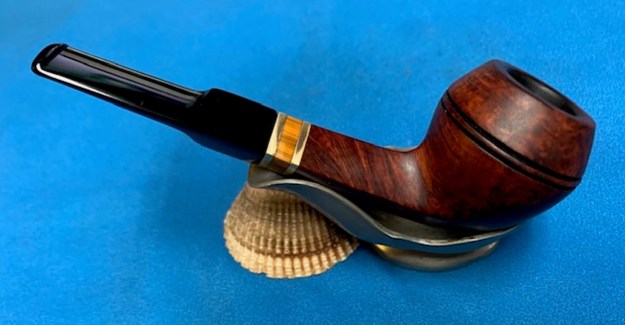
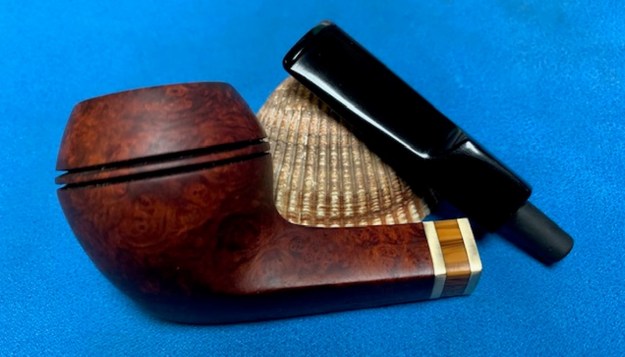
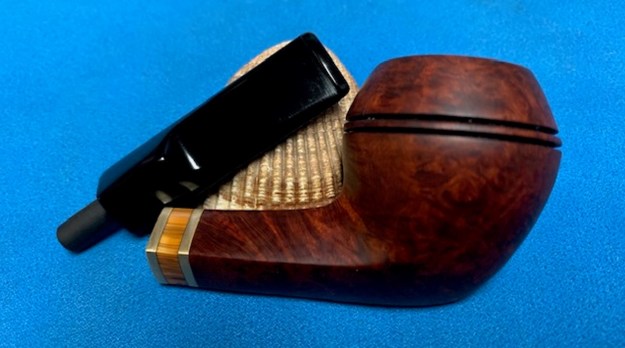
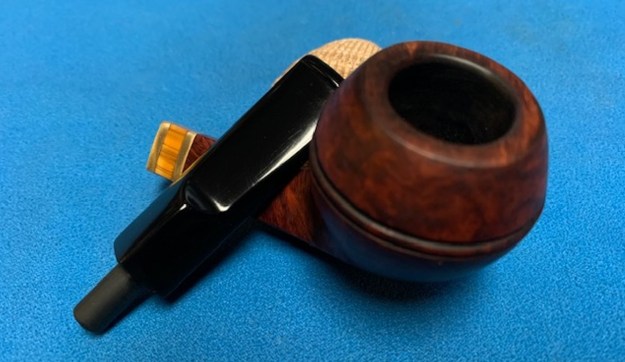
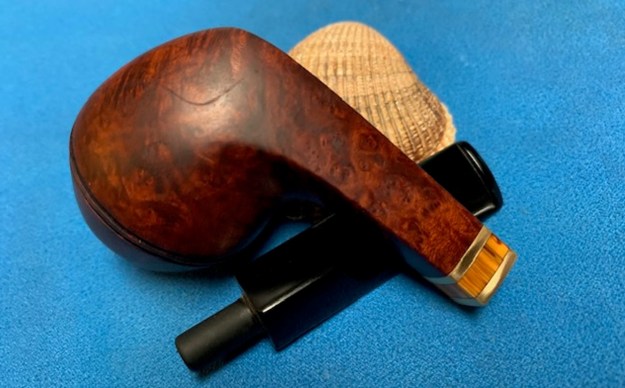
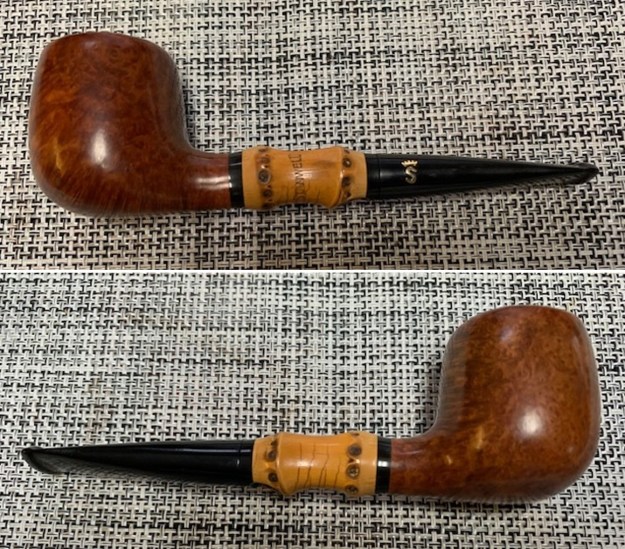
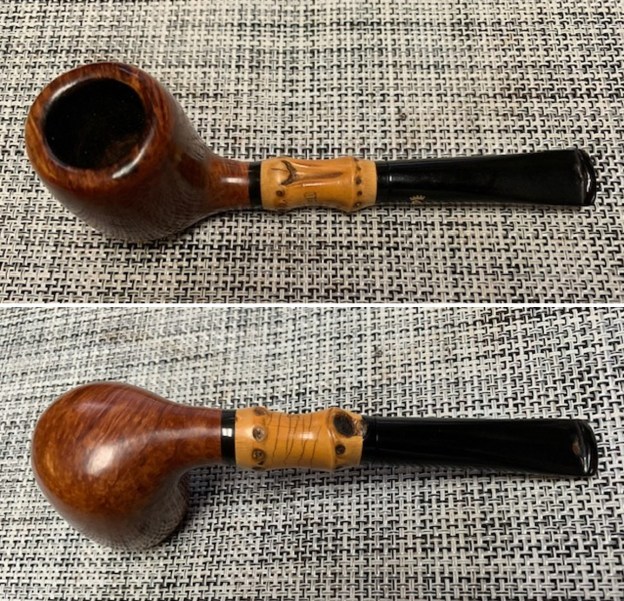
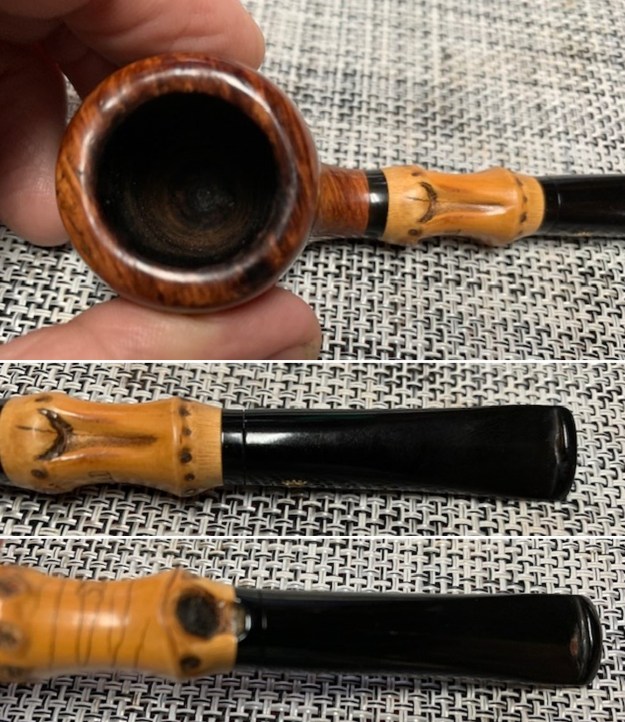
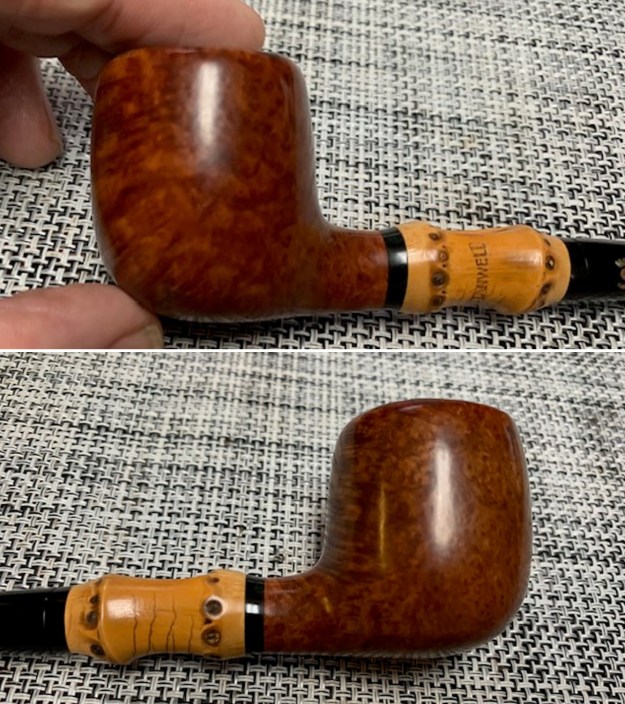
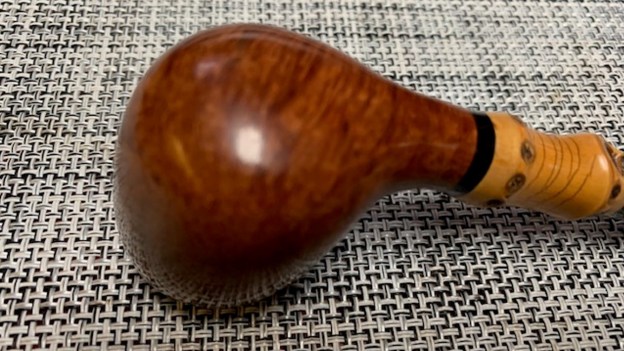
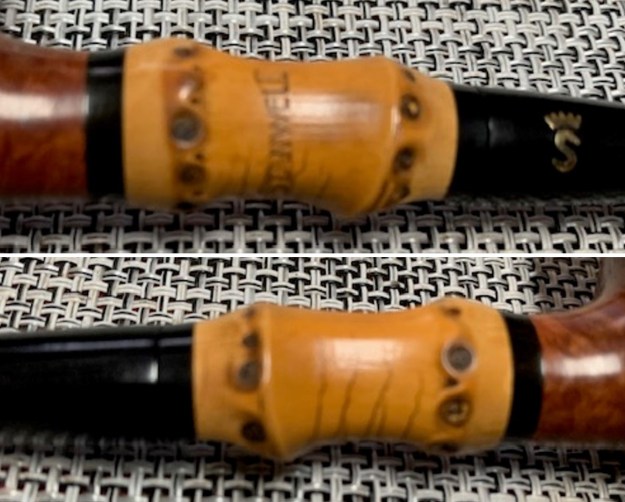
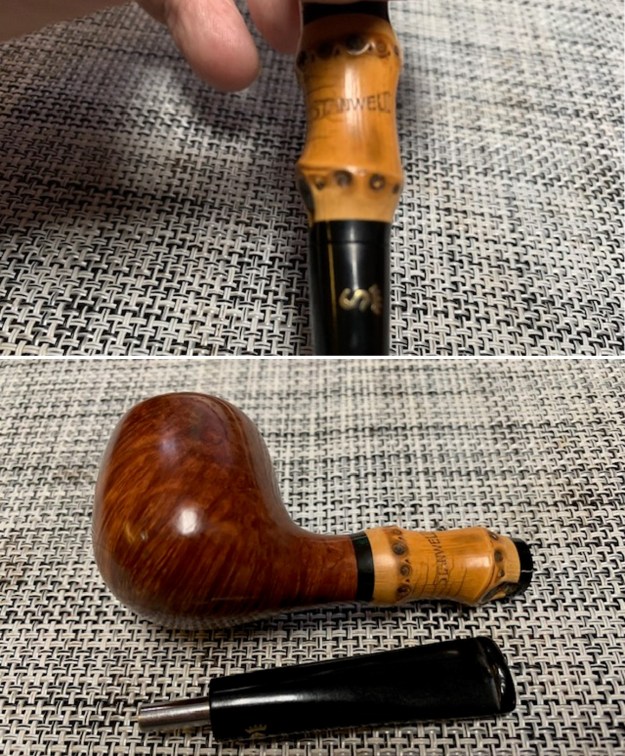
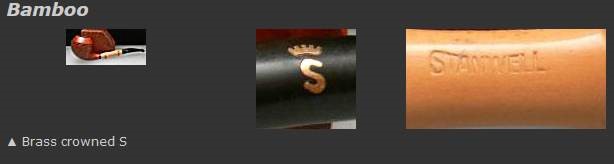
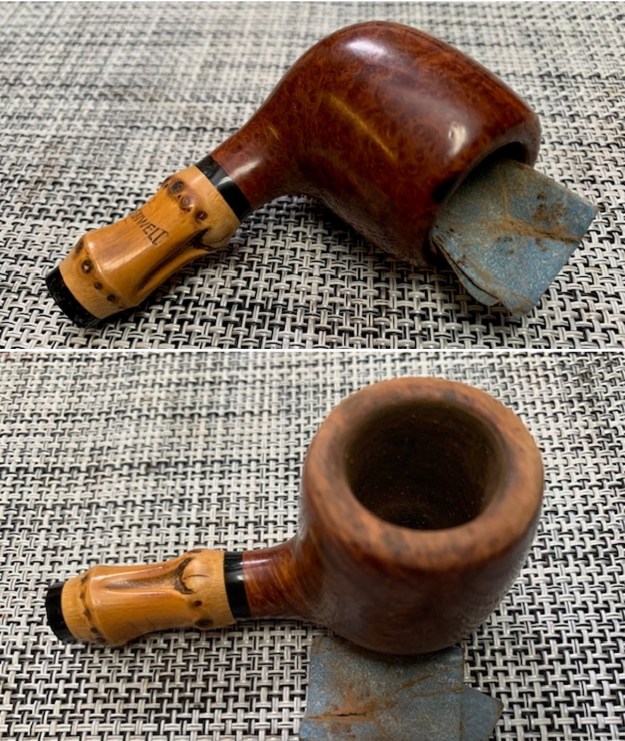
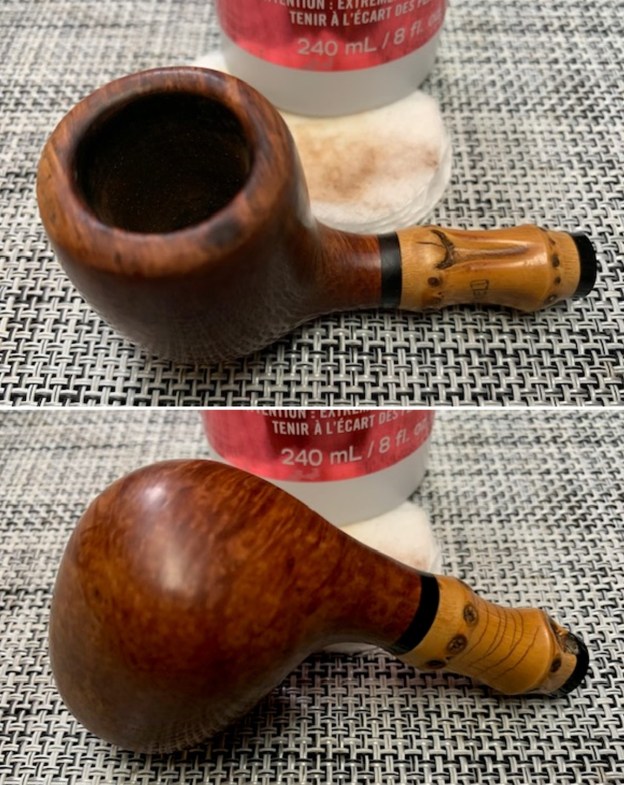
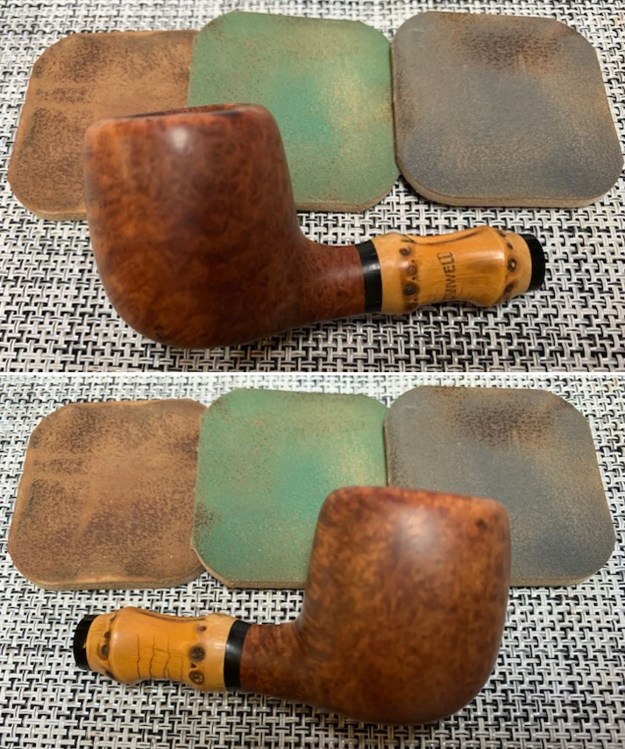
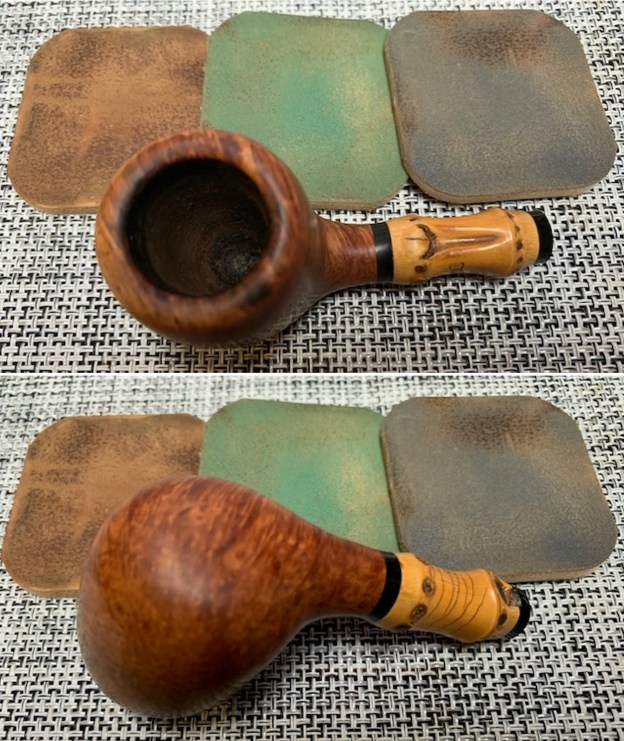
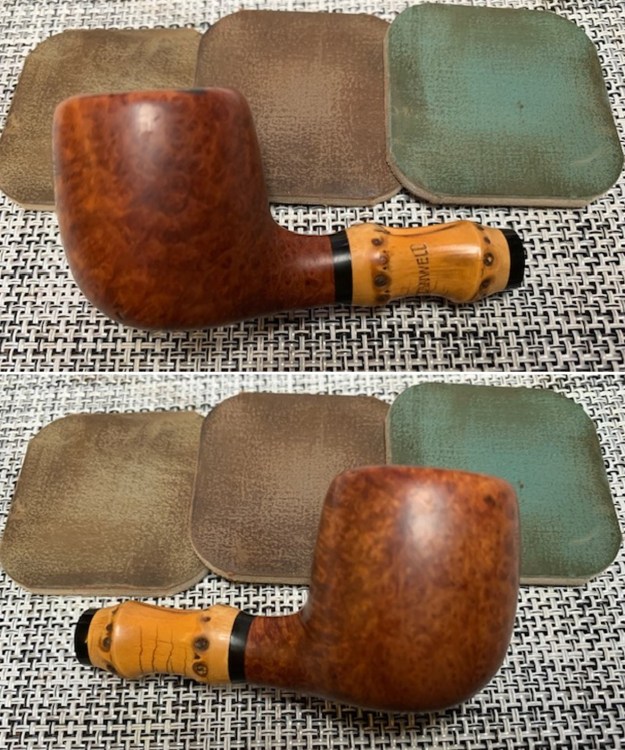
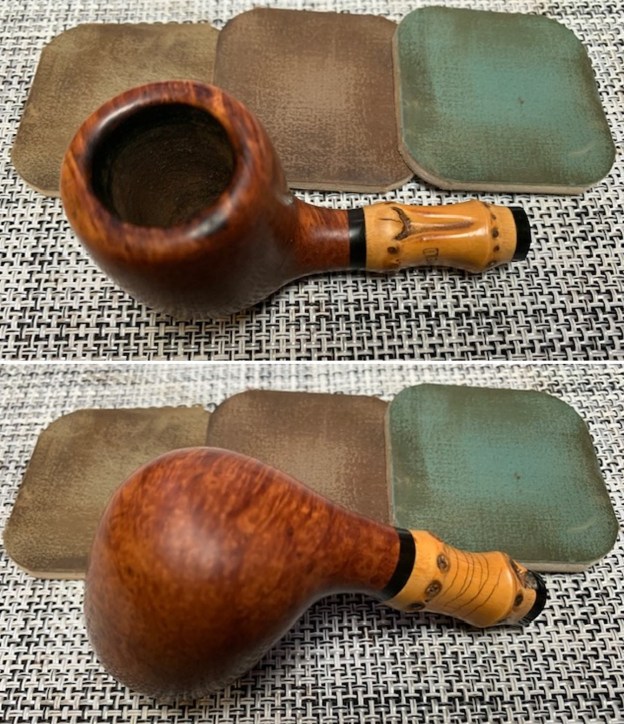
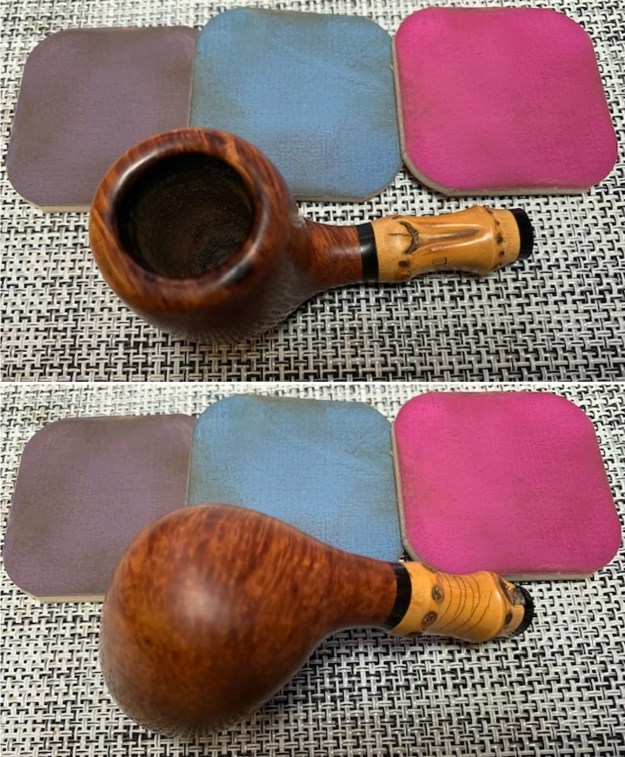
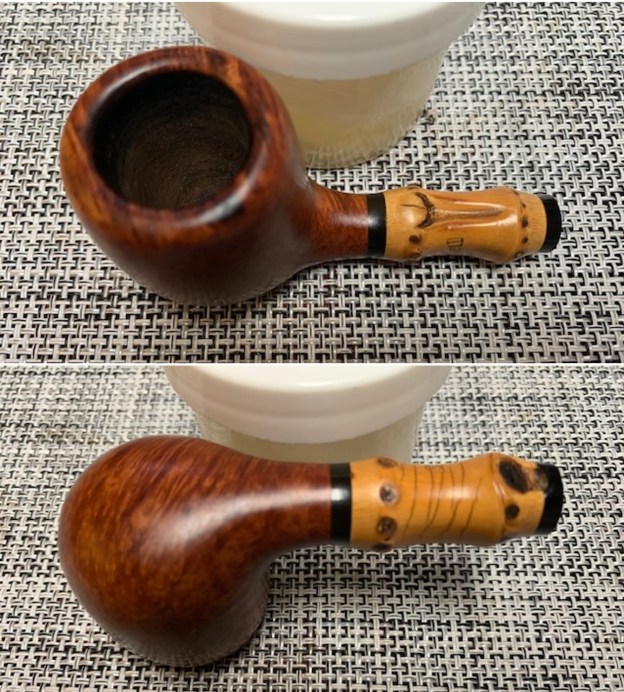
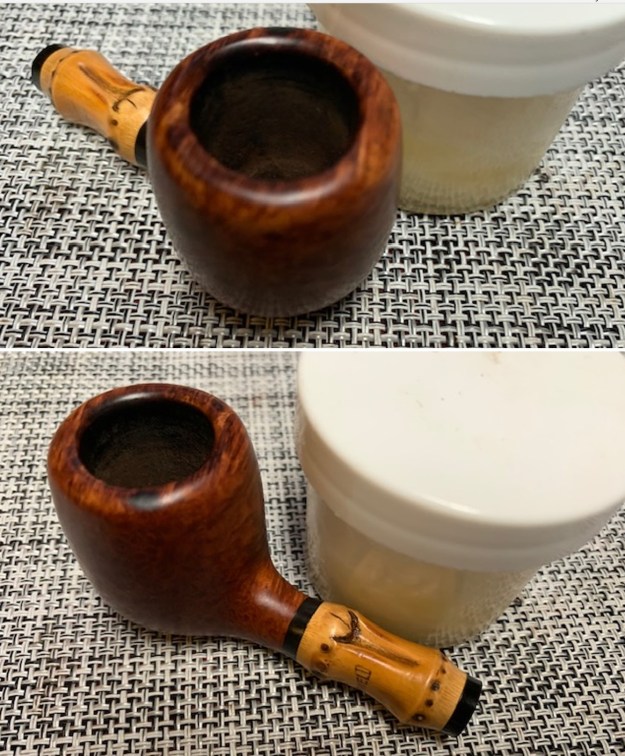
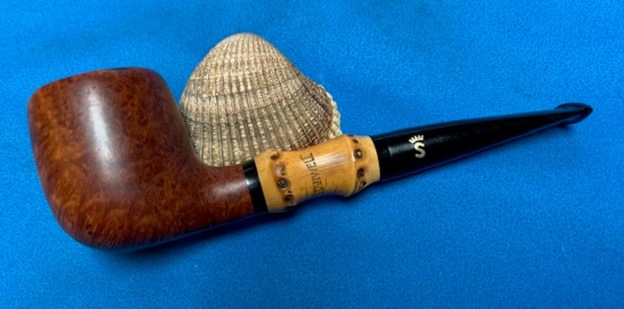
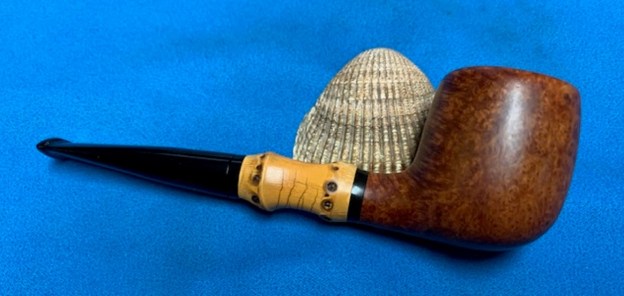
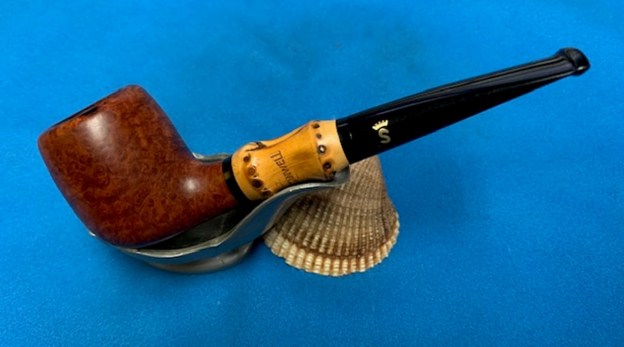
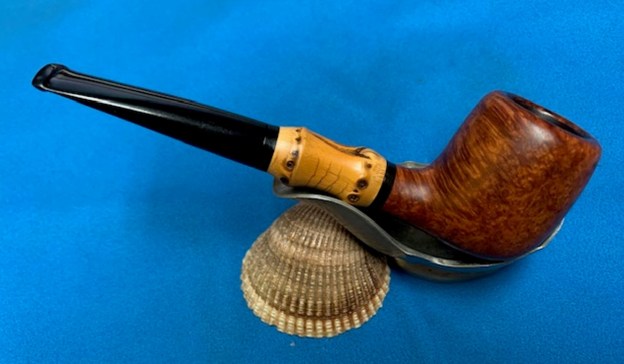
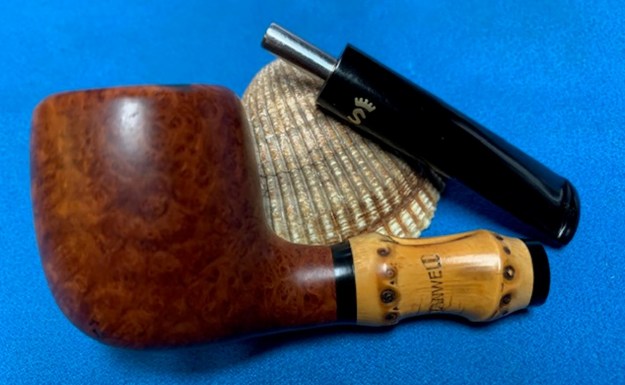
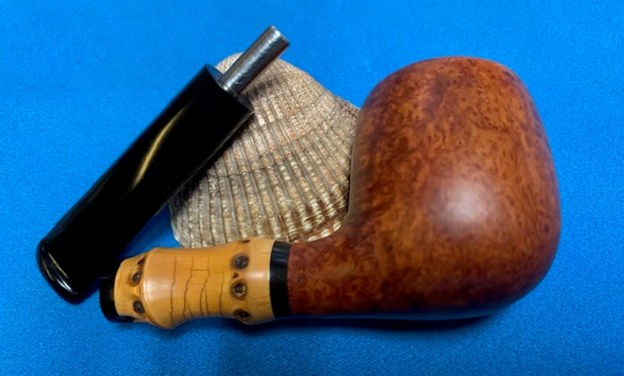
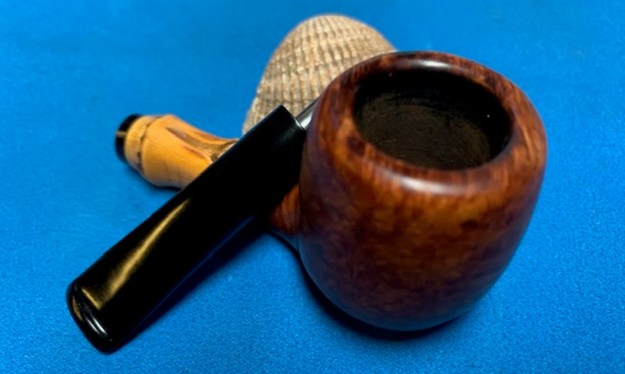
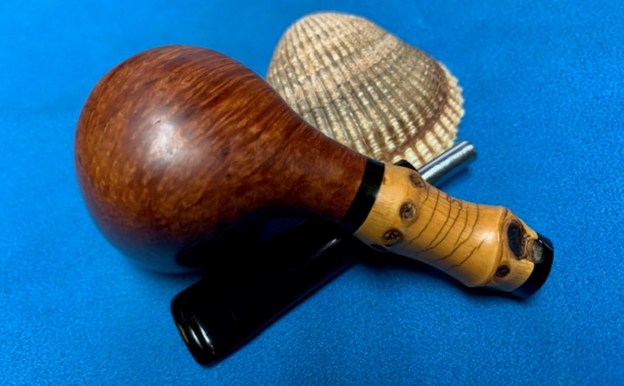
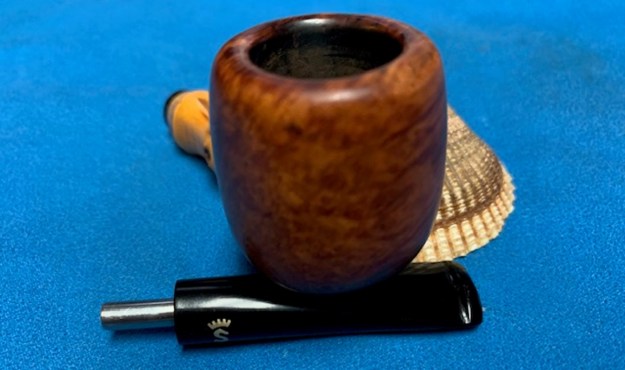
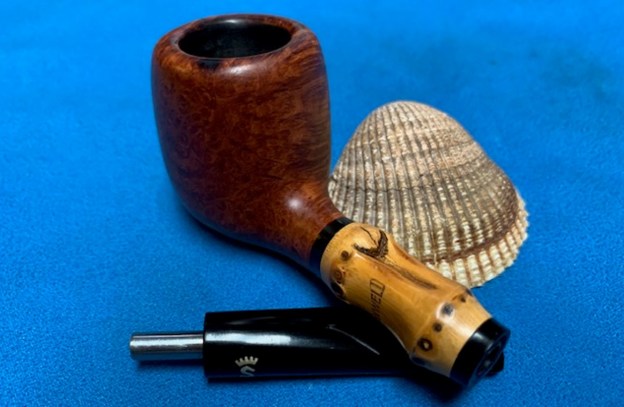
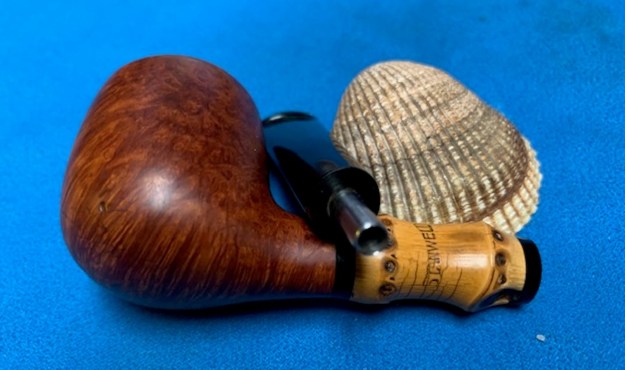
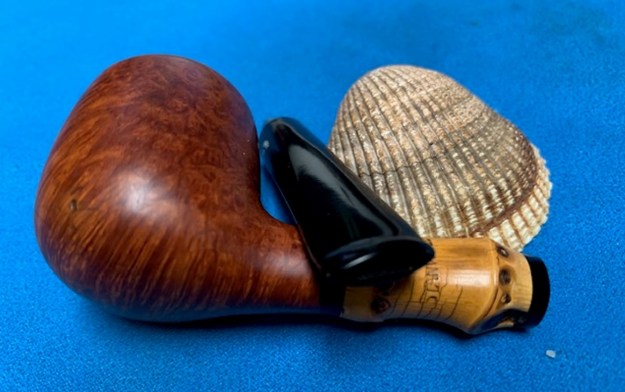
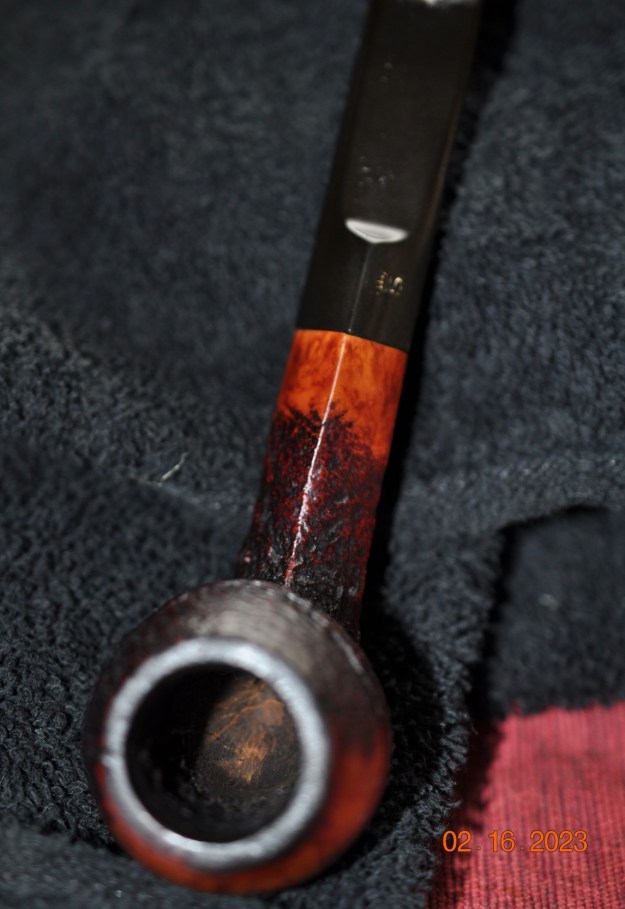
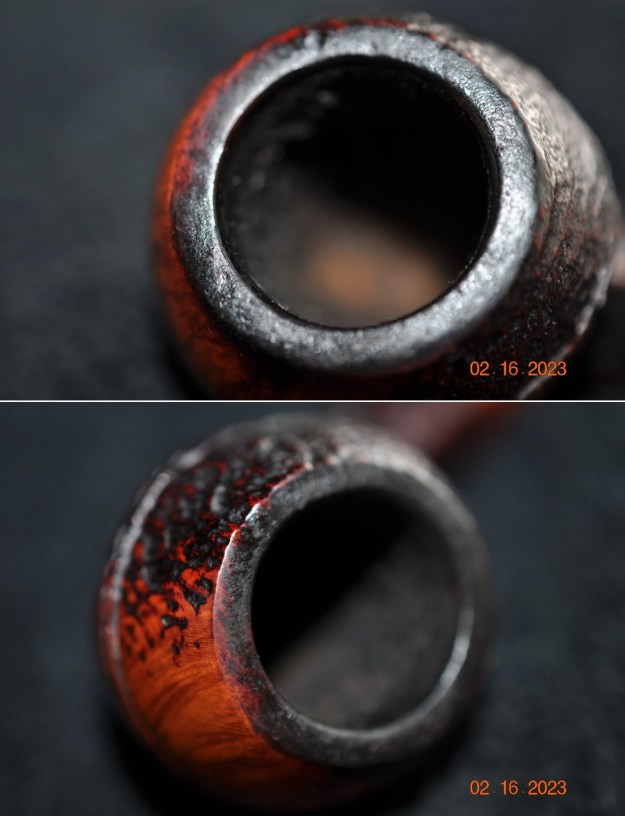
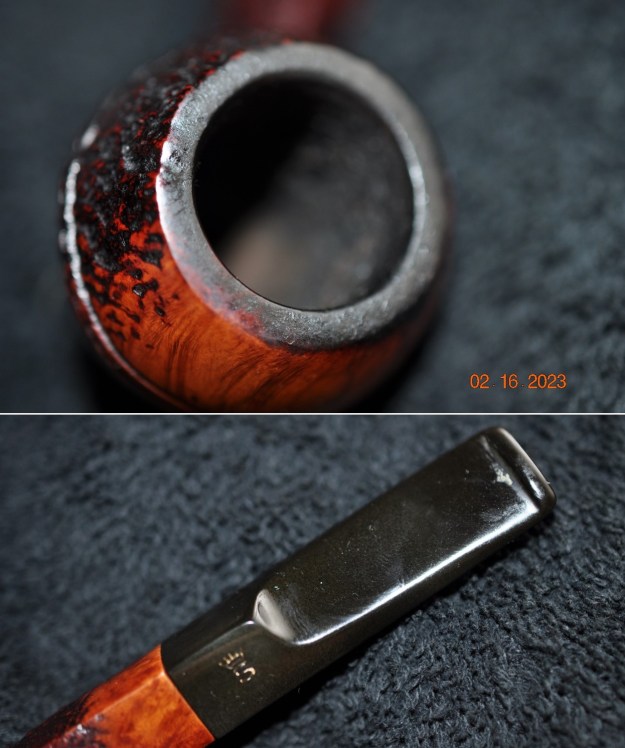
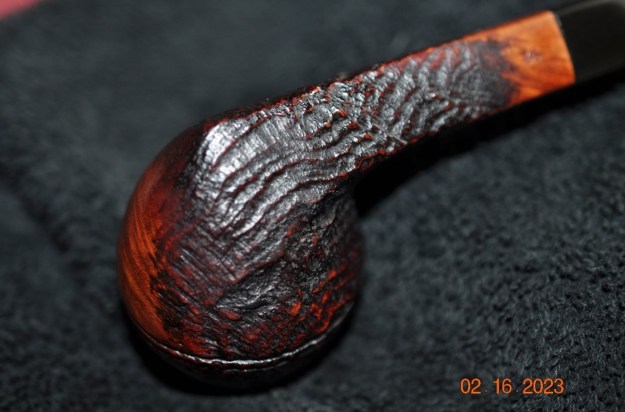
It is a hot day here in Vancouver so I decided to head to the basement where it is cool and work on another pipe. This one was purchased on 11/14/2022 in a lot of pipes that came to us from a seller in Copenhagen, Denmark. It included a group of Stanwell Bamboo pipe that are quite beautiful, combining a briar bowl, a bamboo shank and in this case an acrylic stem. The pipe is a nice looking pot shape. The grain around the bowl and short briar portion of the shank has a mix of cross and birdseye grain. The pipe is stamped on the left side of the bamboo and reads STANWELL vertically between the knuckles. The pipe was a well used pipe when Jeff received it. Someone had given it a coat of varnish so it was quite shiny but there was grime underneath. The mixture of brown stains highlights some beautiful grain under the dirt. The bowl had been reamed and it was clean.  There was some darkening and some nicks on the crowned rim top and one burn mark on the left rear. The inner edge had some darkening and some nicks around the edges. The outer edge on the front of the bowl had been damaged and someone had repaired it somewhere along the journey. It had been sanded smooth and changed the profile of the crowned rim at that point. I would need to rework that area. The stem is acrylic and was dirty with some deep tooth marks on both sides ahead of the button and on the button itself. There is a brass/gold crown S logo inlaid on the left side of the taper stem. I took photos of the pipe before I started the clean up work on it. I took photos of the bowl and rim top to show what they looked like before the clean up. You can see the darkening on the inner edge and top of the rim. It is hard to see but there is damage that is well hidden at this point on the front outer edge of the bowl. I took some of the stem to show the condition of both sides. You can see the deep tooth marks on the top and underside next to the button. They will take some work.The photos of the sides and heel of the bowl show the uniquely stained grain around the bowl and shank. The mixture of black and brown stains adds depth finish on the pipe. Even under the grime it is a real beauty. The two knuckle bamboo shank has a nice patina on it that will only get better with time. It had a black acrylic spacer between the shank and the bamboo and the stem and the bamboo.The stamping on the left side the bamboo is shown in the photo below. It is clear and readable as noted above. It also shows the gold crown S on the stem side. I removed the stem from the shank and took a photo of the pipe to show the flow and cut o the pipe. It is a beauty.I turned to several of the previous blogs that I have written on other Stanwell Bamboos that I have restored. I have included the information from those blogs on the line. I turned to Pipephil to get a quick review of the brand (http://pipephil.eu/logos/en/logo-stanwell.html). The Brass Crowned S inlaid logo on the stem is shown in the photo below. I have included a screen capture of the brand info there.I then turned to Pipedia (https://pipedia.org/wiki/Stanwell) for more information. The article is great and gives a lot of history on the brand. There were also links to catalogues at the bottom of the page. I am including a page from a catalogue on the site below that gives a bit of a glimpse into the brand. Here is the link (http://www.axeljeske.de/Pfeifen/Stanwell_Amager.pdf). The catalogue page gives a great description of the Bamboo line. It reads as follows: Top quality bowls perfectly fitted with porous bamboo shanks for casual elegance.

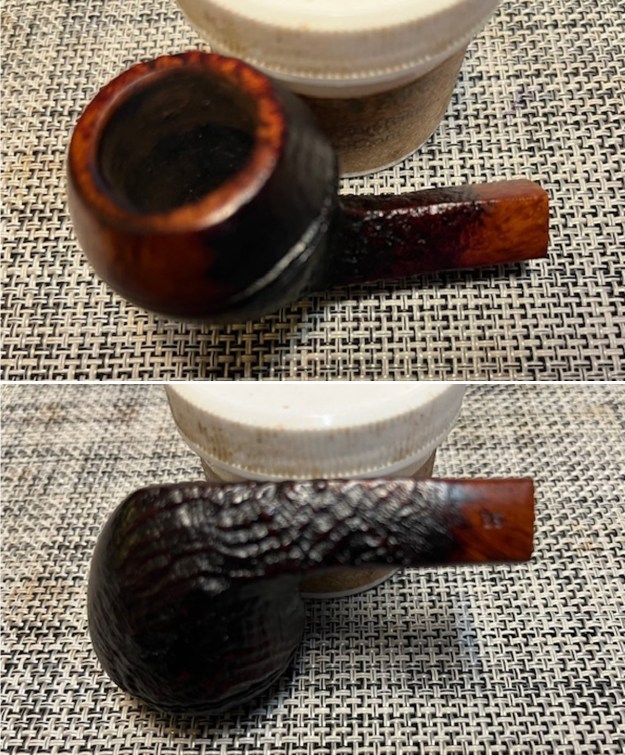
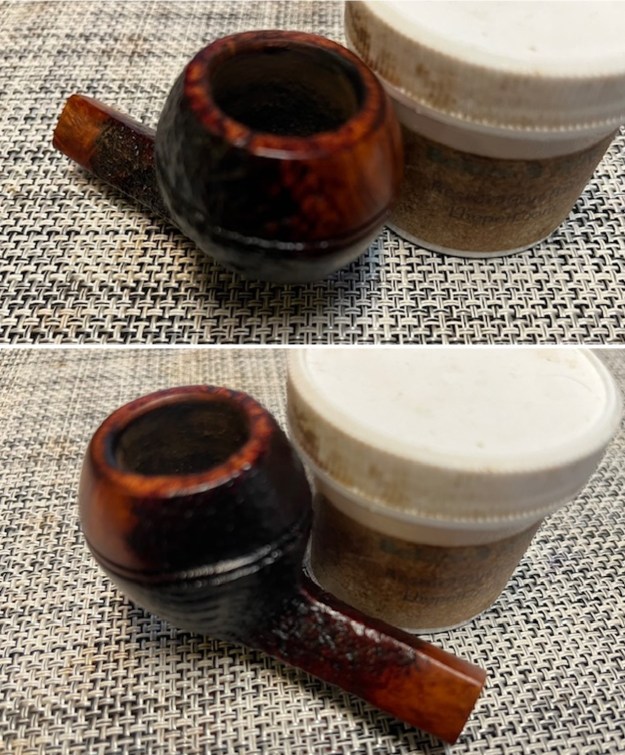
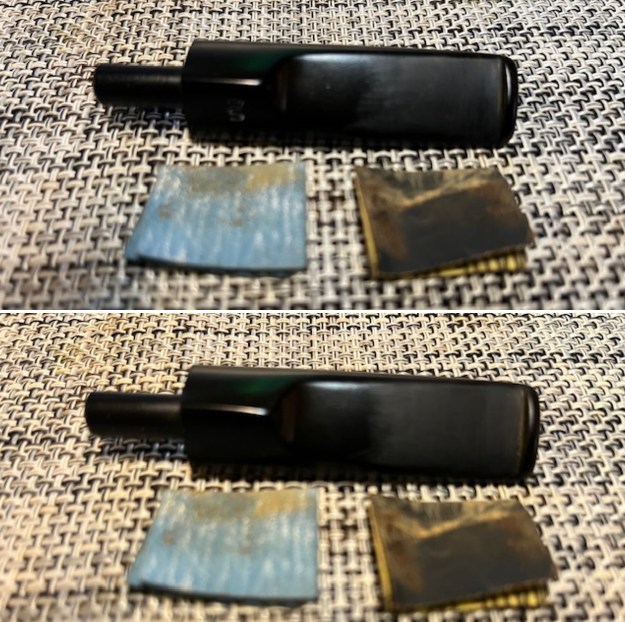
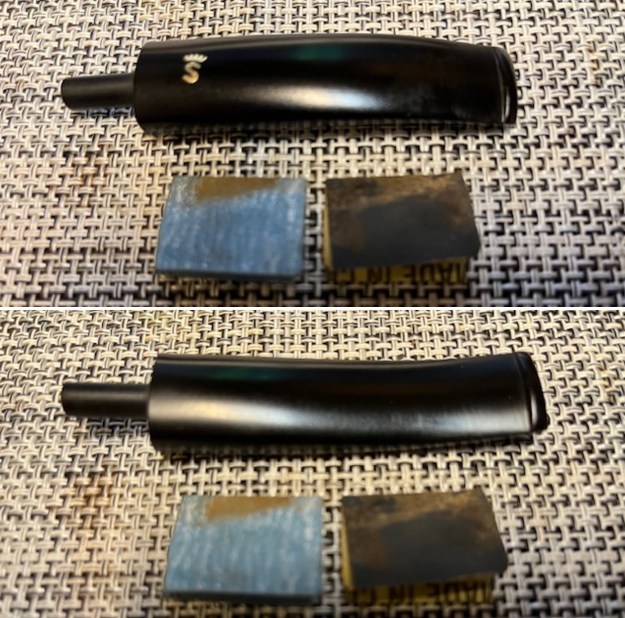
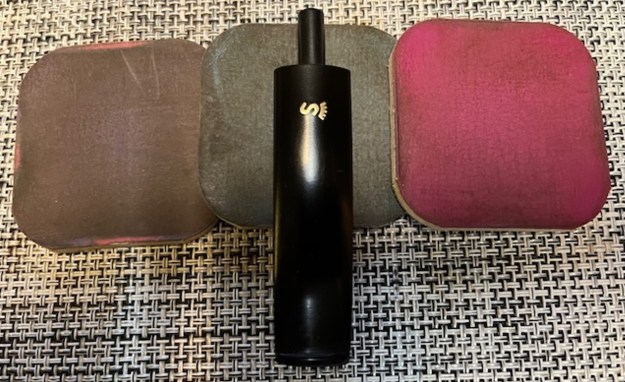
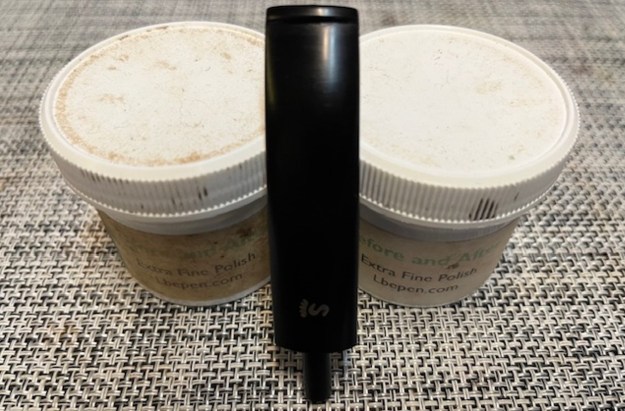
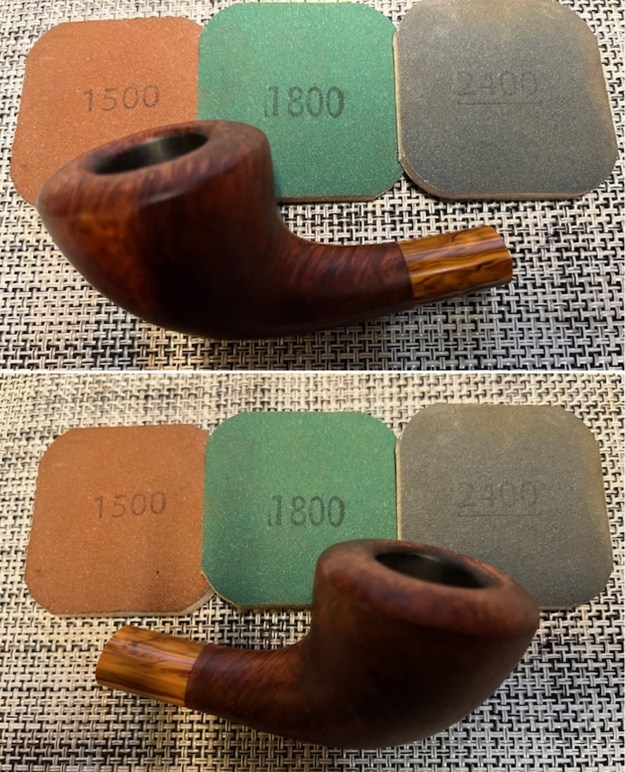
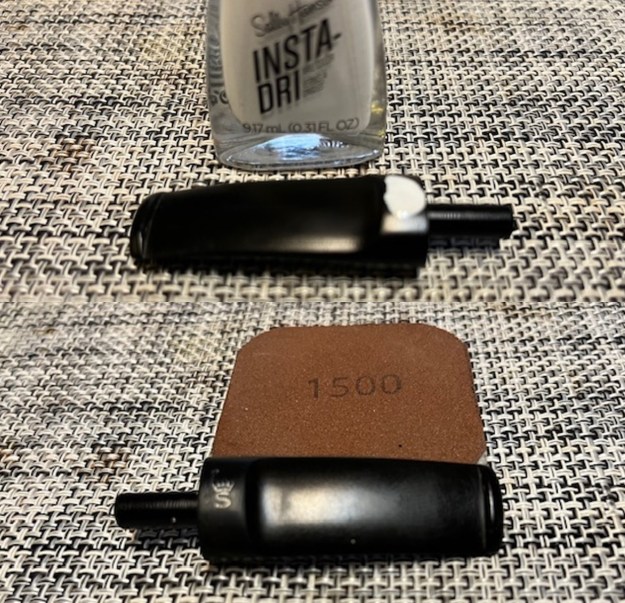
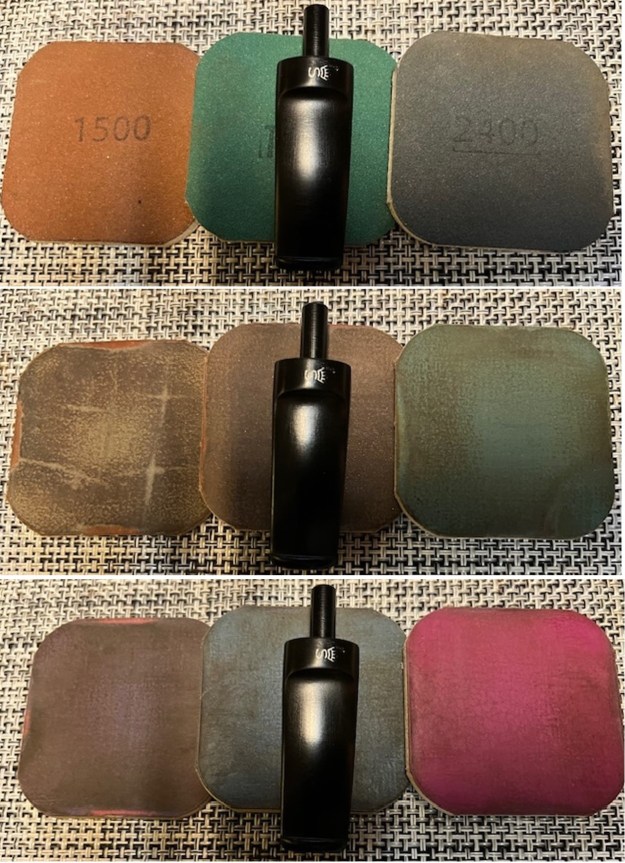
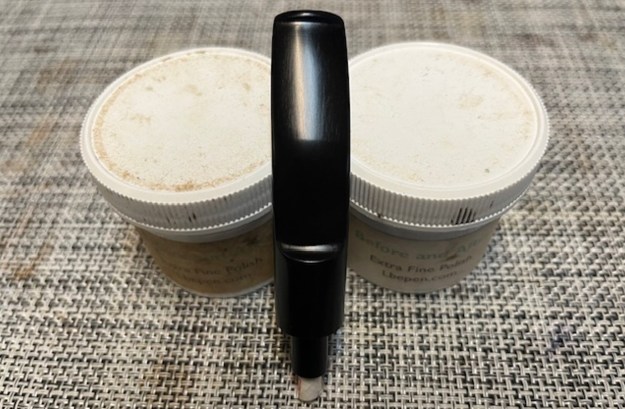
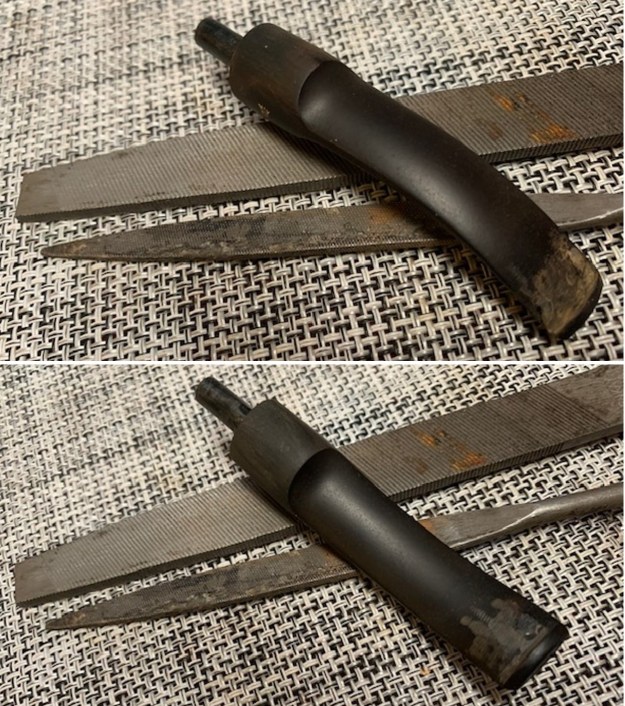
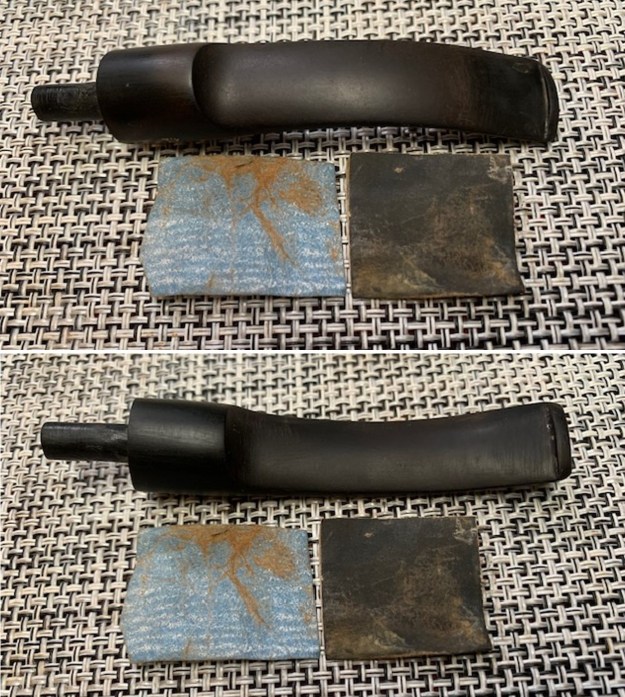
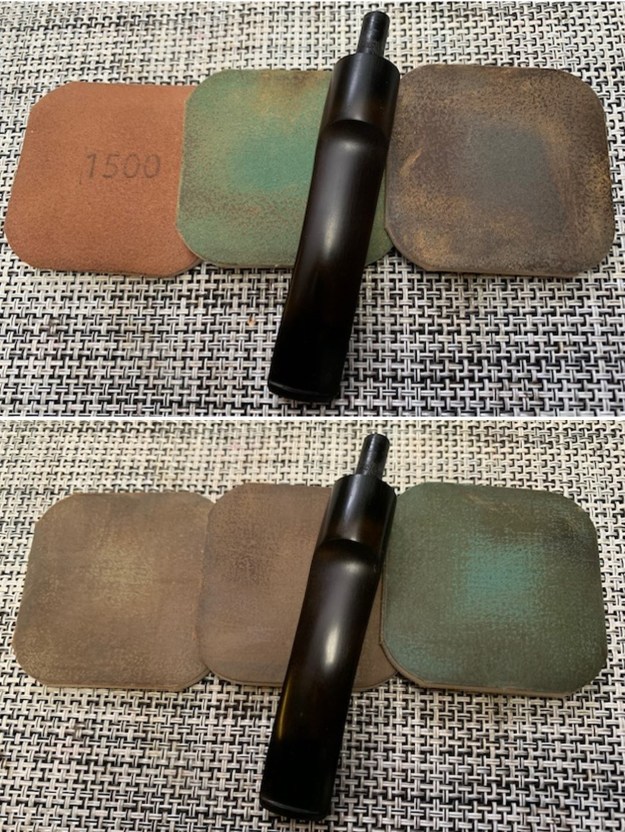
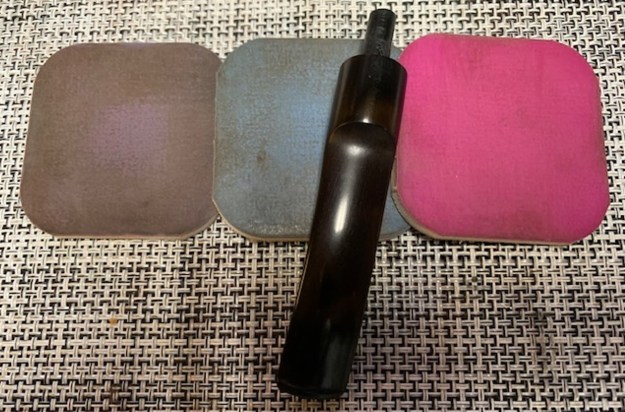
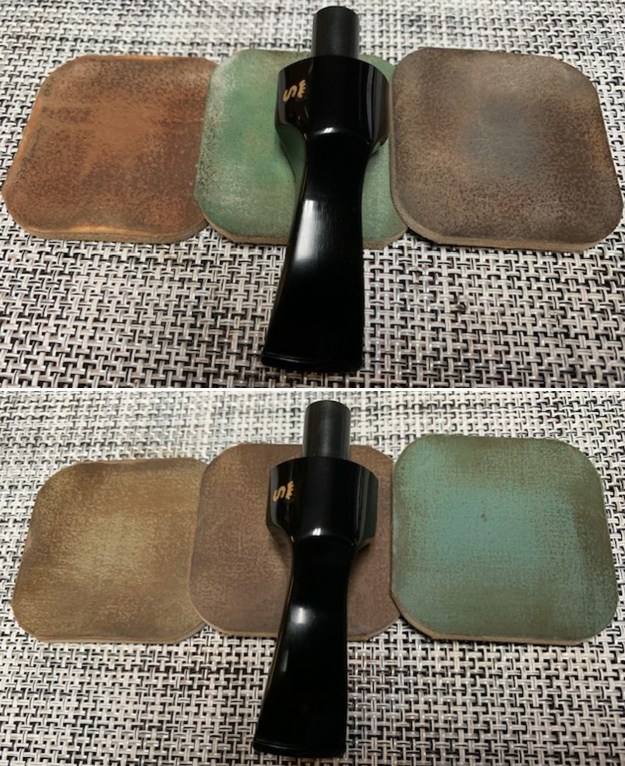
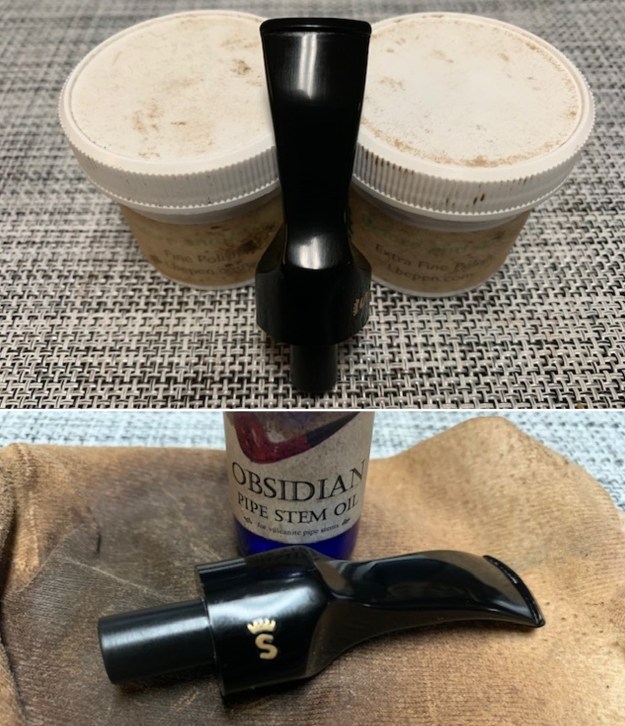
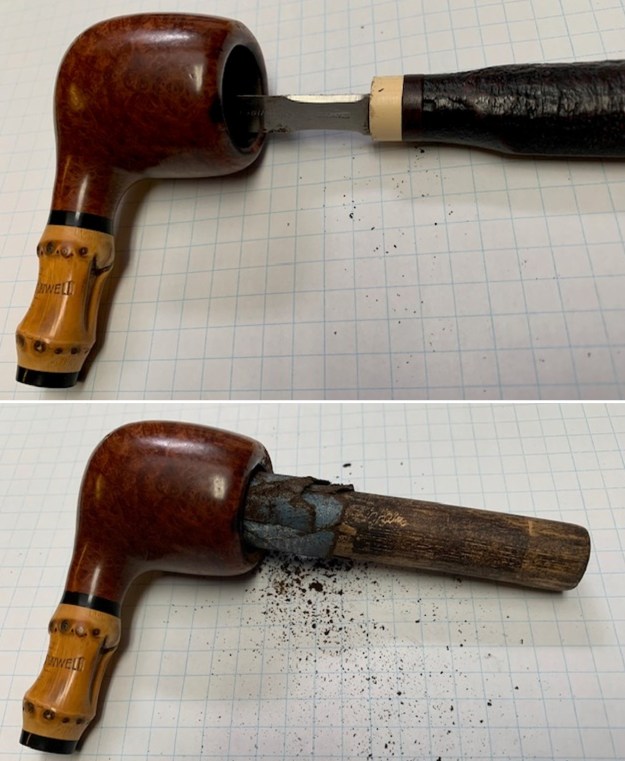
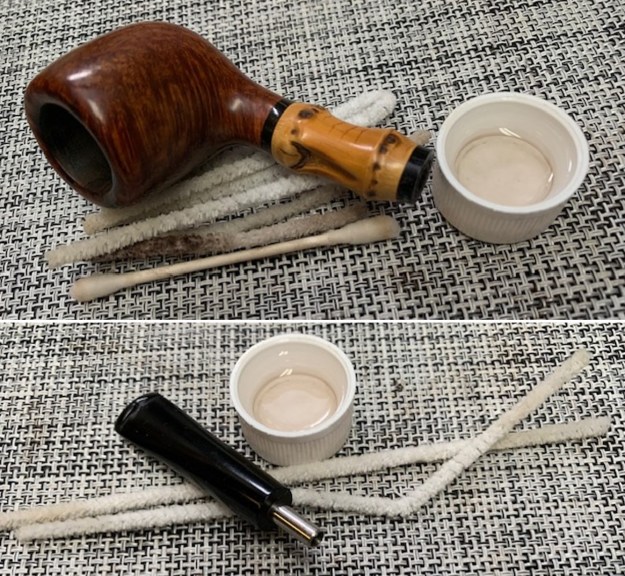
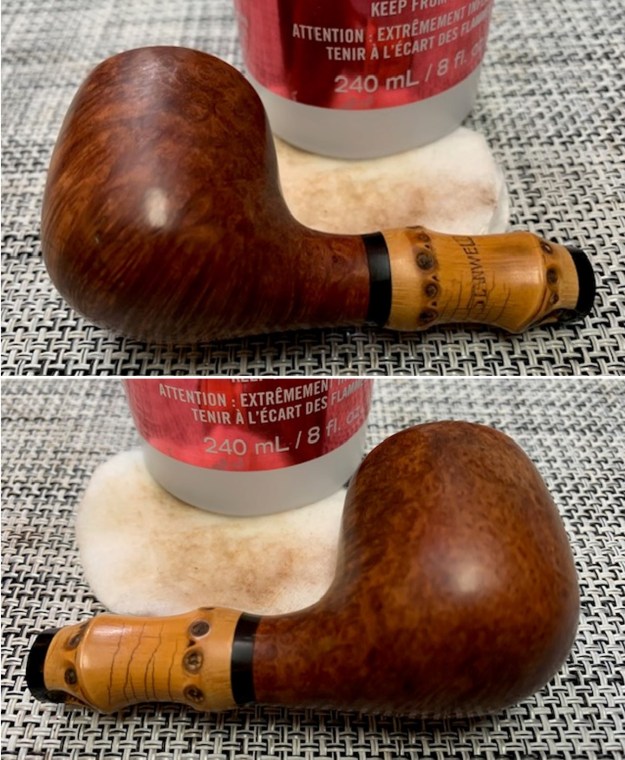
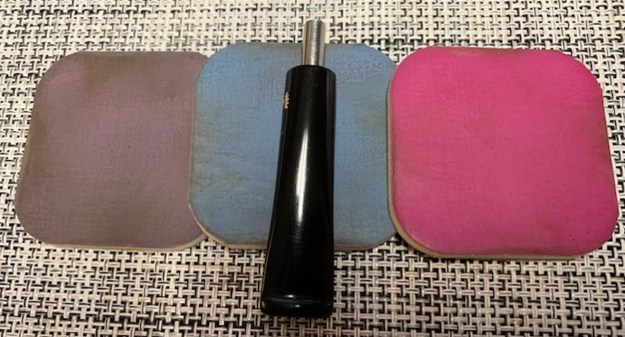
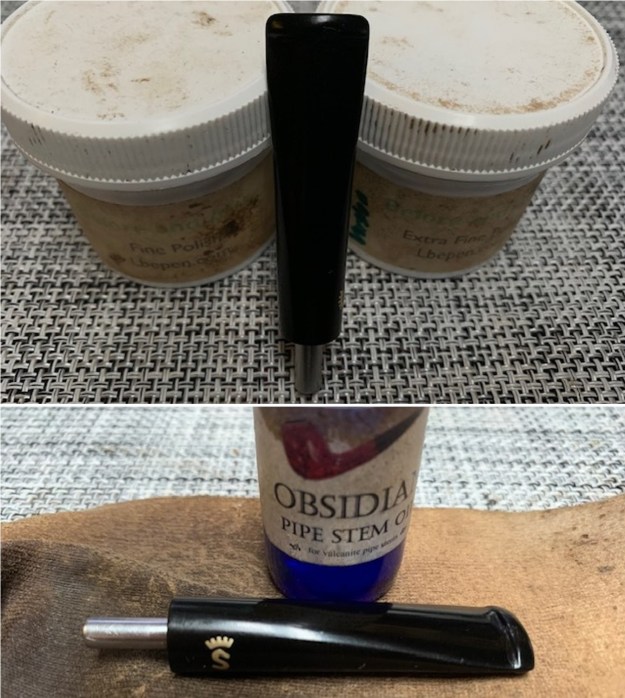
Armed with that information about the pipe it was time to work on the pipe. I scraped out the cake remnants with a Savinelli Fitsall Pipe Knife and sanded the bowl walls with 220 grit sandpaper wrapped around a piece of dowel. I scrubbed out the internals with 99% isopropyl alcohol, cotton swabs and pipe cleaners to remove the oils and tars. While the pipe was fairly clean I was able to remove the remaining oils. I started my work on the pipe by addressing the damage to the inner edge and the rim top with a folded piece of 220 grit sandpaper to bring the edge back into round and it looked much better. I worked over the burn mark on the back left outer edge and top and smoothed it out. I also worked on the previously repaired damage to the front of the bowl outer edge. It had been knocked against something hard and then smoothed out. I reshaped the crown on the outer edge of the bowl. Over all the rim top and edges looked much better.In order to clean up the grime under the varnish coat on the bowl I washed it down with acetone on a cotton pad. I was able to remove the shiny coat and remove the grime in the finish. Once the shiny coat was gone the pipe cleaned up very well. The photos below show the look of the pipe once it was cleaned. I polished the briar with micromesh sanding pads – dry sanding with 1500-12000 grit pads. I wiped the bowl down after each pad to remove the grit. The bowl began to take on a rich shine. It is a beauty. I rubbed the bowl down with Before & After Restoration Balm. I worked it into the briar with my finger tips and into the bamboo with a horsehair shoe brush. I let it sit for 10 minutes and the Balm did its magic. It enlivens, cleans and preserves the briar. It certainly brought this bowl back to life. I buffed it off with a clean cloth and took the following photos. I set the stem aside and turned my attention to the stem. The acrylic stem had deep tooth marks on both sides ahead of the button. Heat would not lift them so they would need to be filled in with black rubberized CA glue. I filled them in and spread the repair with a dental spatula. Once the repair cured I used a small file to recut the button edge and to flatten out the repairs. I used 220 grit sandpaper to blend them into the stem surface and started the polishing with 600 grit wet dry sandpaper. I polished the stem with micromesh sanding pads – 1500-12000 grit pads. I wiped it down with a damp cloth after each sanding pad. I used Before & After Pipe Polish – both Fine and Extra Fine to further polish the stem. I polished it with Before & After Pipe Polish – both the Fine and Extra Fine polishes. I gave it a final coat of oil and set it aside to dry.This Stanwell Bamboo Pot with an acrylic taper stem is a great looking pipe now that it has been restored. The beautiful finish really highlights the grain and the polished finish is stunning. I put the stem back on the bowl and carefully buffed the pipe with Blue Diamond on the buffing wheel. I gave the bowl and the stem multiple coats of carnauba wax on the buffing wheel and followed that by buffing the entire pipe with a clean buffing pad. I hand buffed the pipe with a microfiber cloth to deepen the shine. The finished Stanwell Bamboo Pot fits nicely in the hand and feels great. Give the finished pipe a look in the photos below. The dimensions of the pipe are Length: 5 ½ inches, Height: 1 ½ inches, Outside diameter of the bowl: 1 ¼ inches, Chamber diameter: ¾ of an inch. The weight of the pipe is 37 grams /1.31 ounces. I will be adding the pipe to the Danish Pipe Makers Section of the rebornpipes store. If you are interested in purchasing this pipe send me a message or an email. Thanks for reading this blog and my reflections on the pipe while I worked on it.

Doing a Clean up and Restoration of a Stanwell Revival 105 Bent Apple


Blog by Steve Laug

The next pipe on the work table is one that a fellow just dropped by. He had written to me earlier this week about a Stanwell that he had that needed some work. Here is his first email.

Your name was passed to me by the folks at City Cigar. I was lamenting to them how my decade old Stanwell was not doing well, and they suggested I check in with you. I would love to hear your thoughts on it. — Mike

I replied to him as follows:

Thank you. Can you send me a photo of the pipe on your phone?

He did not waste anytime and sent me an email with the first three pictures below and also a description of what he knew was wrong with the pipe. He wrote as follows:

Thanks for getting back to me so quickly! In the photos you can see that there are stem problems, but also a little crack in the bowl. If I could save this piece, I would so grateful. I just love the shape, as well as the elegant mouthpiece. I haven’t really seen anything else like it. — Thanks, Mike

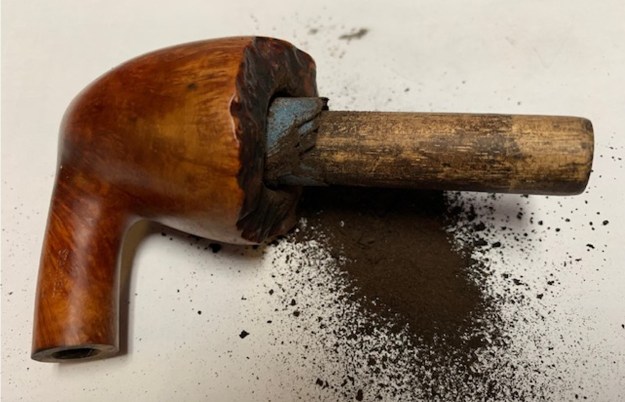
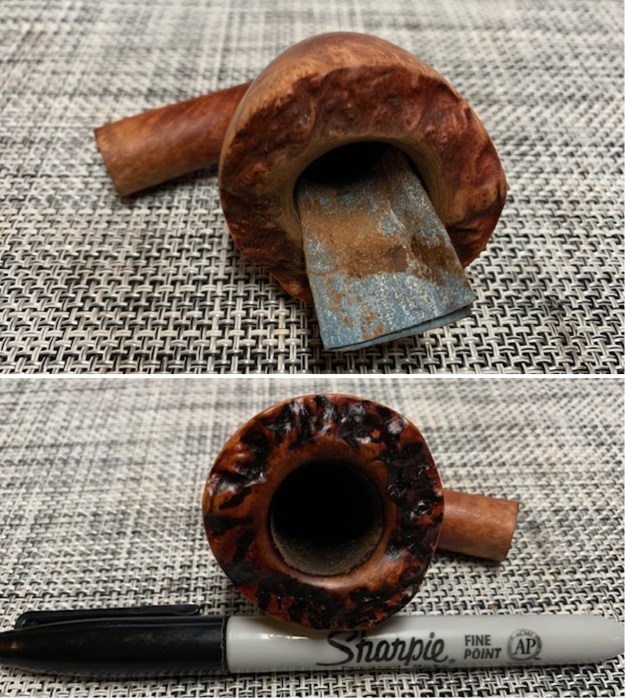
The pipe appeared to be very dirty in the photos that were included. He also circled the crack that was on the top of the shank at the bowl shank joint. The rim top was dirty and worn with some knock out marks on the top edge. The finish was grimy and tired looking. The inner edge of the bowl showed some damage and darkening around the bowl. The stem was wrapped with scotch tape around the end that fit in the shank. I speaking with Mike he stated that it was loose in the shank extension so he had wrapped it to give the stem more of a fit in shank. It was worn out and sticky but it had done the job keeping the stem from falling out of the bowl. After viewing the photos and talking with Mike about the pipe I asked him to drop it by the house so I could work on it. I took photos of the pipe once it was dropped off before I worked on it. My evaluation of the pipe confirmed all of the things that I noted above in my communication with Mike about his pipe. There was one other issue that became visible when it was here. The shank extension was loose in the shank. The glue that had held it in place had broken loose and it turned freely in the shank. It is a uniquely shaped pipe that I really like the looks of and I think that once it is cleaned up it will be a real beauty. I took photos of the bowl and rim top as well as the stem. The rim top shows the thick lava coat on the top and the inner edge of the bowl. It is heavier on the back side than the front. You can also see the tape around the stem diameter to attempt to tighten the fit in the shank extension. You can see the oxidation around the stem sides and the deep tooth marks and chatter on both sides ahead of the button.I took a photo of the stamping on the underside of the shank. It reads as noted above. It is clear and readable. The pipe is quite nice with the stem removed. You can see the flow of the design and the look of the parts.I turned to Pipedia and the section on the Stanwell Shape Numbers and Designers to see what I could find (https://pipedia.org/wiki/Stanwell_Shape_Numbers_and_Designers). I found the following information that I quote below:

  1. ‘Elegance’; Bent apple with an acrylic mount and a long tapered stem. A reinterpretation of Sixten Ivarsson’s shape 08(b), by Sixten Ivarsson (1980s, see catalogue).

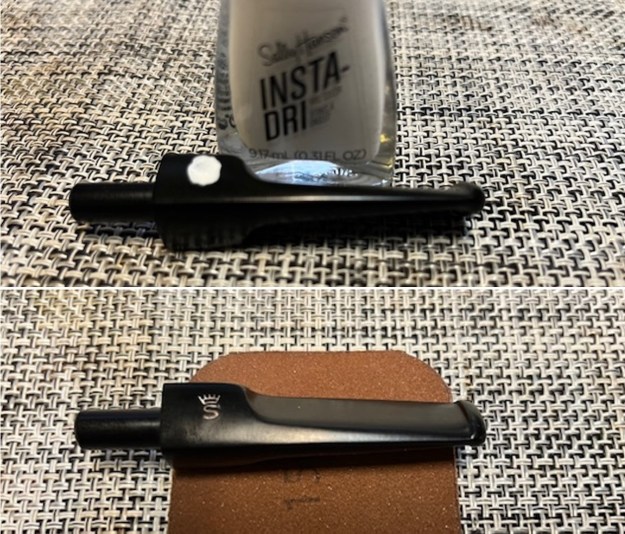
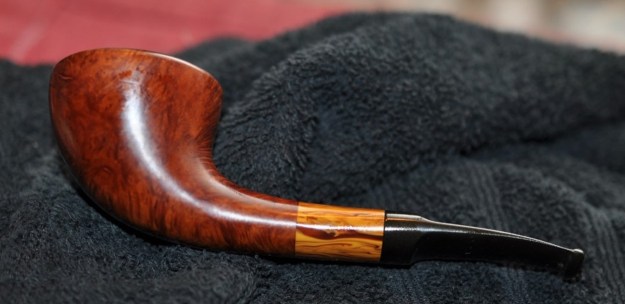
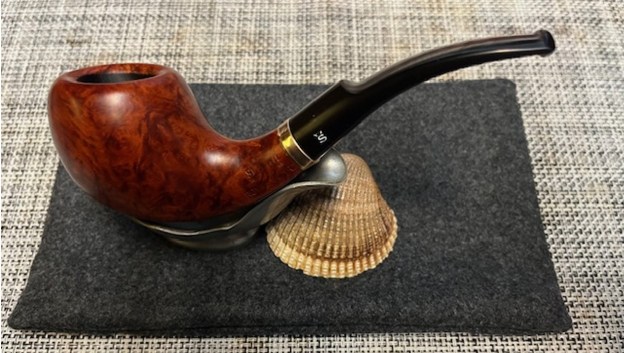
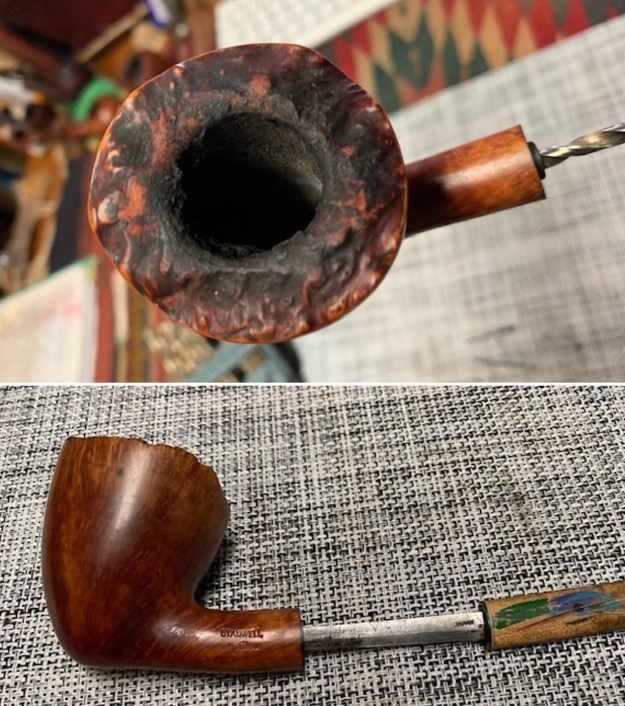
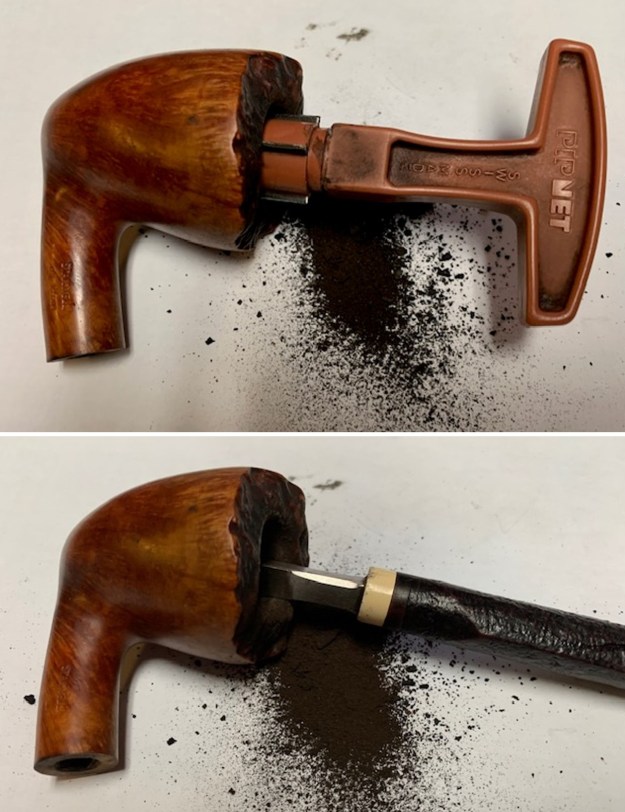
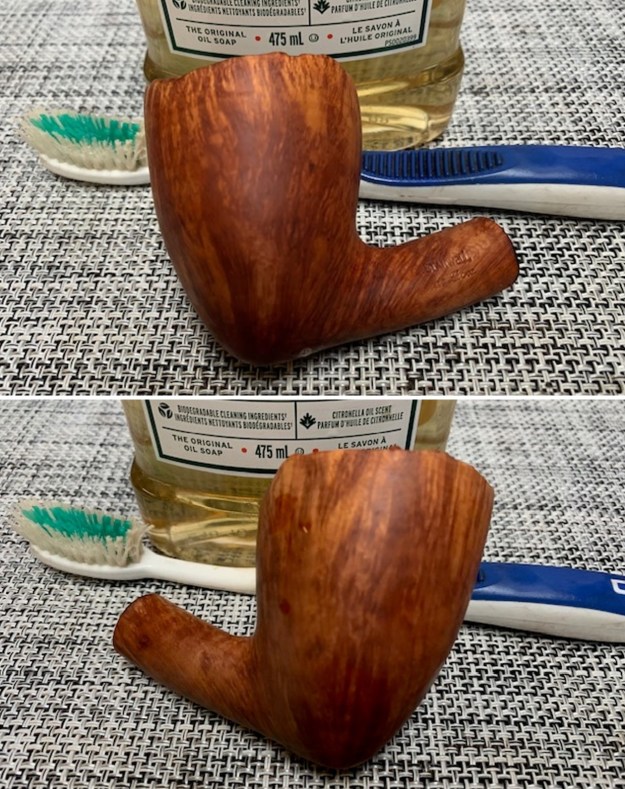
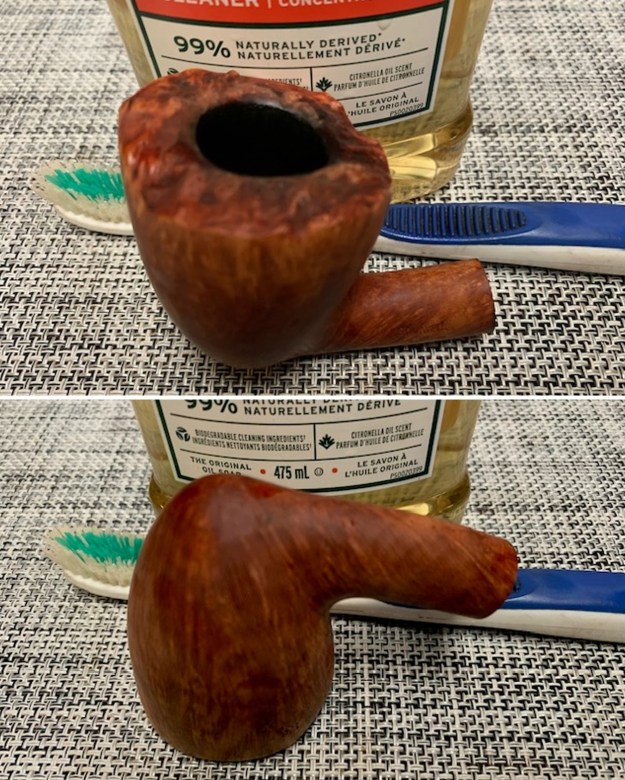
From that I can see that the pipe (105 shape) was a bent apple and was originally designed as a reinterpretation of the Sixten Ivarrson Shape 08b. I have included two pages from the 1980s catalogue below. The first show the 08 and the second page shows the 105. It is called an Elegance on that page rather than a Revival but it is a beauty. I started my work on this pipe by reaming the bowl. I started with a PipNet reamer to clean out the cake in the bowl. I cleaned up the remnants of the cake with a Savinelli Fitsall Pipe Knife. I finished by sanding the walls of the bowl with 220 grit sandpaper wrapped around a piece of dowel to smooth out the interior of the bowl. I cleaned out the internals of the bowl, shank extension and the airway in the stem with alcohol, cotton swabs and pipe cleaners until they were clean. I unwrapped the tape from the stem in order to clean and restore it. I scrubbed the exterior of the bowl with undiluted Murphy’s Oil Soap and a tooth brush. I worked on the bowl and rim top as well as the inner and outer edges of the bowl. It cleaned up really well. I rinsed it with warm water to remove the soap and the grime from the briar. I dried it off with a cotton towel. I took photos of the bowl at this point in the process. With the pipe cleaned up it was time to re-glue the shank extension to the end of the shank. I used some Weld Bond white all-purpose glue to reattach the extension to the shank end. I spread the glue around the tenon on the extension and pushed it in place. I adjusted the fit around the shank until it all aligned. I set it aside to cure. At this point in the process it was time to deal with the crack in the shank at the shank/bowl union. I used a small pinpoint to mark the ends of the crack on both sides of the shank. I drilled a hole in the small mark on each side of the crack end using a microdrill bit.I filled in the crack and the two drill holes in the shank sides with clear CA glue. I spread it into the crack and the holes with a dental spatula. Once it had cured I sanded the repairs smooth with 220 grit sandpaper and followed it up with micromesh as seen in the next photos.I polished the briar with micromesh sanding pads – dry sanding with 1500-12000 grit sanding pads. I wiped the bowl down after each sanding pad with a damp cloth to remove the sanding debris. The bowl began to take on a rich glow. I rubbed down the bowl and shank with Before & After Restoration Balm. It is a paste/balm that is rubbed into the surface of the briar. The product works to deep clean the finish, enliven and protect the briar. I worked it into the briar with my finger tips. I let it sit for 10 minutes then wiped it off with a soft cloth then buffed it with a cotton cloth. The briar really began to have a deep shine in the briar and the grain shines through. The photos I took of the bowl at this point mark the progress in the restoration. It is a gorgeous pipe.  I set the bowl aside and turned to the stem. It was in rough condition with the gummy tape on the end fitting into the shank and deep tooth marks. I painted the surface of the stem with the flame of a Bic lighter to try and lift them. I lifted them but they were still distinctly present. I filled in the marks with Black CA glue and set it aside to cure. Once cured I flattened the repair with a file and then followed that up with a piece of 220 grit sandpaper and started the polishing with 600 grit wet dry sandpaper. It looked much better. I built up the end of the stem with clear acrylic fingernail polish. I spread it around the stem with a dental spatula and set it aside to cure. Once it hardened I polished it with micromesh.I polished the stem with micromesh sanding pads – 1500-12000 grit sanding pads and water to wet sand the stem. I wiped it down after each sanding pad with Obsidian Oil on a cotton rag after each sanding pads. I know that many say Obsidian Oil does nothing for acrylic stems, but I find it does two things – first it gives some protection to the stem from buildup and second it give the sanding pads bite in the polishing process. Fine and Extra Fine stem polish as it seems to really remove the fine scratches in the vulcanite. I rub the Fine Polish on the stem and wipe it off with a paper towel and then repeat the process with the Extra Fine polish. I finish the polishing of the stem down with a final coat of Obsidian Oil and set the stem aside to let the oil absorb. This process gives the stem a shine and also a bit of protection.The final steps in my process involve using the buffer. I buffed the bowl and stem with Blue Diamond to polish out the light scratches in the briar and the vulcanite. I gave the bowl and the stem multiple coats of carnauba wax. I have found that I can get a deeper shine if I follow up the wax buff with a buff with a clean buffing pad. It works to raise the shine and then I hand buff with a microfiber cloth to deepen the shine. It is always fun for me to see what the polished bowl looks like with the polished stem. It really is a nice pipe. The smooth finish around the bowl sides and shank looks great. The oval vulcanite taper stem works well with the pipe. The Stanwell Revival 105 Bent Apple feels great in my hand. It is a well-balanced pipe. Have a look at it with the photos below. The dimensions are Length: 6 ½ inches, Height: 1 ½ inches, Outside diameter of the bowl: 1 ¼ inches, Chamber diameter: ¾ of an inch. The weight of the pipe is 1.31 ounces/38 grams. It is a beautiful pipe that I will soon be giving back to Mike who dropped it off for restoration. I am sure he will enjoy it and it will give many more years of service to him.

As always I encourage your questions and comments as you read the blog. Thanks to each of you who are reading this blog. Remember we are not pipe owners; we are pipe men and women who hold our pipes in trust until they pass on into the trust of those who follow us.

Restoring a Stanwell Royal Briar Regd. No 689-48 Dublinesque Freehand 189


Blog by Steve Laug

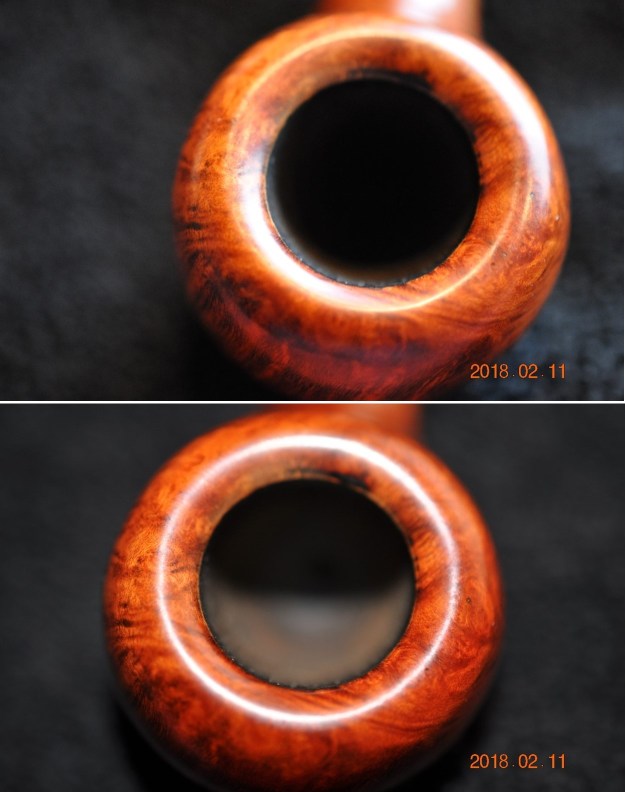
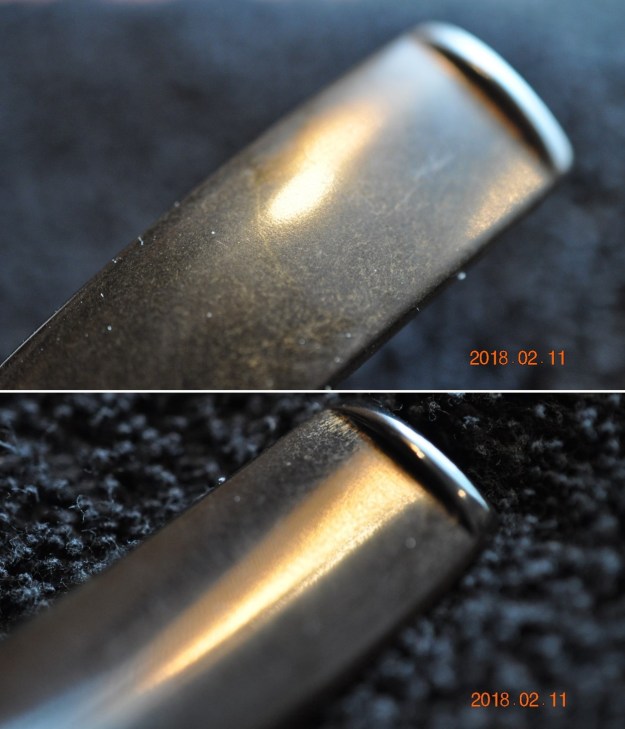
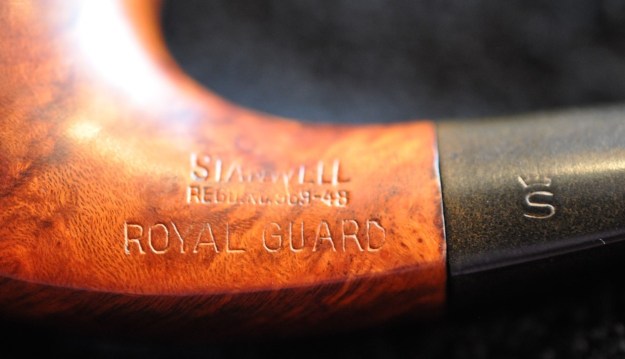
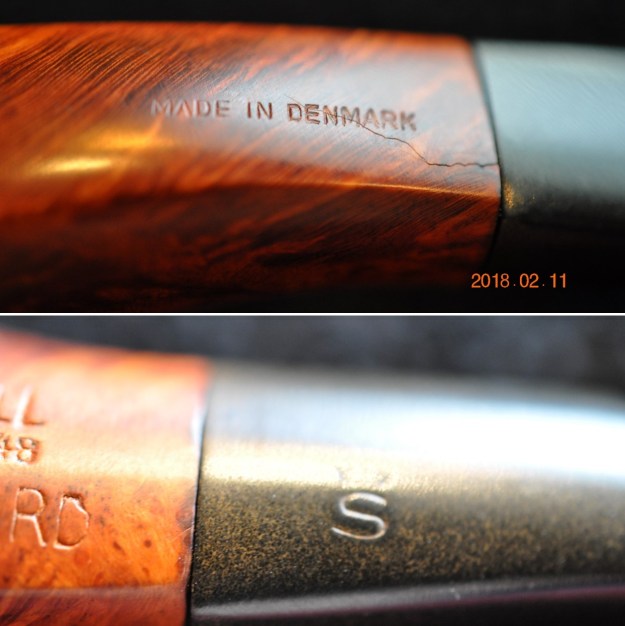
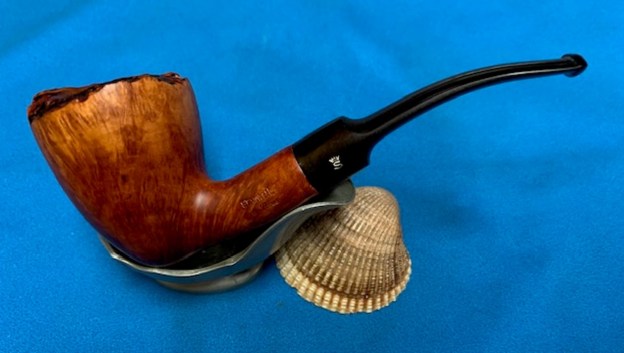
Not long ago I worked a trade with a fellow for these five pipes in exchange for one that I had here. He sent me photos of the pipes and the deal was struck. The pipes he sent are as follows from bottom to top. There is a W.O. Larsen sandblast oval shank Brandy with a hairline crack in the shank and with tooth marks on the button on both sides, a Bertram Cutty that I had traded with him earlier, a Kriswill sandblast Canadian with a cracked shank, a Viby pencil shank Billiard and a Stanwell Royal Briar wide oval shank Dublinesque Freehand with burn damage on the rim edges and top around the bowl and deep tooth marks on the stem.The next of these I chose to work on today is the Stanwell Royal Briar 189 at the top of the photo above. It is a classic Stanwell shape with a some nice grain around the bowl and the shank. The rim top was in good condition and there was some darkening and burn damage on the front inner edge. The outer edge of the rim is in good condition. The bowl had a light cake in the bowl and smells of good Virginia tobacco. There was some grime and grit ground into the surface of the finish. The stamping on the topside of the shank reads Stanwell [over] Regd. No. 689-48 [over] Royal Briar. On the underside it is stamped Made in Denmark [over] the shape number 189. The stain is light/medium brown and goes well with the oval vulcanite saddle stem. Once it is cleaned up and polished the grain around the bowl and shank will shine. The stem is in good condition with some tooth marks on it. The surface just ahead of the button is damaged with some deep bite marks on both sides. The button edge looks good on both sides. I am including several of the photos that were sent to me for viewing. The first shows the front of pipe and the grain around the front. It also gives a look inside the bowl and shows the cake. The second shows the marks on the stem surface that I spoke of above. The third photo shows the pipe from the button forward on the bowl. I took photos of the pipe before I did my clean up work on it to show its condition. The photos confirm what I noted above regarding the condition of the bowl and the stem. It a nice looking pipe that will look better with a bit of work on the stem and bowl.   I took close up photos so that I could have a clearer picture of the condition of the bowl, rim edges and top. The rim top photos confirm my assessment above and show that while there is some darkening and burn damage  on the front top and inner edge. The cake in the bowl is quite moderate and smooth. You can also see the condition of the outer and the inner edge. They appear to be in great condition. This is what I look for when assessing a pipe. The bowl is still round and other than being in a used condition it is in great shape. The issues with the stem are visible in the photos on both sides ahead of the button and on the button itself. I took a photo of the stamping on the underside of the shank. It is clear and readable as noted above.I took the stem off the bowl and took a photo of the pipe to give a sense of proportion of the pipe. You can also see shape of the pipe and some interesting grain around the bowl and shank.Now it was time to work on the pipe itself. I started my work on this one by reaming the bowl with a Savinelli Fitsall Pipe Knife. I followed that up by sanding the bowl walls with 220 grit sandpaper wrapped around a piece of dowel.    I cleaned the internals of the shank and the stem with 99% isopropyl alcohol, cotton swabs and pipe cleaners. I scrubbed it until the shank was clean and the smell was much cleaner smelling.  Before scrubbing the bowl exterior I decided to clean up the darkening and the burn damage on the rim top and inner edge of the bowl. I used some 220 grit sandpaper and a wooden ball to give the bowl a light inward bevel and remove the darkening and the damage. I finished by cleaning it up a bit further with a folded piece of 220 grit sandpaper. It looks much better. I scrubbed the external surface of the briar with a tooth brush and undiluted Murphy’s Oil Soap. I scrubbed it until the finish was clean and then rinsed it off with warm running water to rinse off the soap and the grime from the finish. I dried it off with a soft cloth and took photos of the pipe. I polished the briar with micromesh sanding pads. I choose to dry sand the briar rather than wet sand it. Again it is a matter of personal preference. I prefer to use the pads dry and find they work very well on the briar. I sand with each pad (9 in total) and group them by threes for ease of reference. I wipe the bowl down after each pad with a damp cloth to remove the sanding debris and check the briar. I love seeing the developing shine on the briar as I move through the pads which is why I include so many photos of this step.     I applied some Before & After Restoration Balm to the briar. It is a paste/balm that is rubbed into the surface of the briar. The product works to deep clean finish, enliven and protect the briar. I worked it into the briar with my finger tips. I let it sit for 10 minutes to do its work. I wiped it off with a soft cloth then buffed it with a cotton cloth. The briar really began to have a deep shine in the briar and the grain shone through. The photos I took of the bowl at this point mark the progress in the restoration. It is a gorgeous pipe. I set the bowl aside and turned my attention to the issues with the vulcanite stem. I “painted” the surface of the stem with the flame of a Bic Lighter to lift the tooth marks in the stem surface on both sides as well as the button edges where the marks were deepest. I was able to lift the marks significantly and filled in the remaining marks with clear CA glue. I set the stem aside to allow the repairs to cure. Once the repairs cured, I used a small file to reshape the button edge and flatten them. I sanded them smooth with 220 grit sandpaper and started the polishing with 600 grit wet dry sandpaper. The stem surface and button looked much better. I touched up the Crown S stamping on the top of the saddle portion of the stem with white acrylic fingernail polish. I worked it into the stamp with a tooth pick. I scraped off the excess with the tooth pick. It was ragged looking but readable. When I started polishing, it would clean up well. I continued polishing the stem with micromesh sanding pads – 1500-12000 grit sanding pads and water to wet sand the stem. I wiped it down after each sanding pad with Obsidian Oil on a cotton rag after each sanding pads. But I find it does two things – first it gives some protection to the stem from oxidation and second it give the sanding pads bite in the polishing process.    After finishing with the micromesh pads I rub the stem down with Before & After Fine and Extra Fine stem polish as it seems to really remove the fine scratches in the vulcanite. I rub the Fine Polish on the stem and wipe it off with a paper towel and then repeat the process with the Extra Fine polish. I finish the polishing of the stem down with a final coat of Obsidian Oil and set the stem aside to let the oil absorb. This process gives the stem a shine and also a bit of protection. The final steps in my process involve using the buffer. I put the Stanwell Royal Briar 189 Freehand back together and lightly buffed the bowl and stem with Blue Diamond to polish the finish. I polished the vulcanite stem at the same time to polish out the scratches. I gave the bowl and the stem multiple coats of carnauba wax. I have found that I can get a deeper shine if I follow up the wax buff with a buff with a clean buffing pad. It works to raise the shine and then I hand buff with a microfiber cloth to deepen the shine. It is always fun for me to see what the polished bowl looks like with the polished stem. It really is a nice pipe. The finish around the bowl sides and shank looks great with the rich combination of brown stains. The Stanwell Regd. No. 689-48 Royal Danish Freehand feels great in my hand. It is a well balanced pipe. Have a look at it with the photos below. The dimensions are Length: 5 inches, Height: 1 ¾ inches, Outside diameter of the bowl: 1 ½ inch, Chamber diameter: ¾ of an inch. The weight of the pipe is 1.55 ounces/45 grams. It is a beautiful pipe that functions as a sitter due to the wide heel on the bowl. I will soon be adding to the rebornpipes store in the Danish Pipemakers section. If you would like to add it to your collection let me know. It should be a great smoking pipe. As always I encourage your questions and comments as you read the blog. Thanks to each of you who are reading this blog. Remember we are not pipe owners; we are pipe men and women who hold our pipes in trust until they pass on into the trust of those who follow us.

Restemming and Restoring a Stanwell Danish Star 64 Freehand Dublin


Blog by Steve Laug

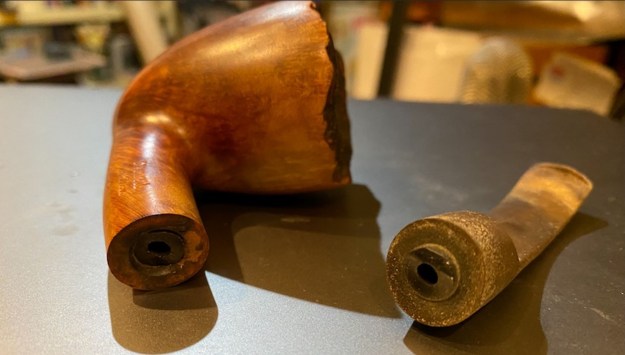
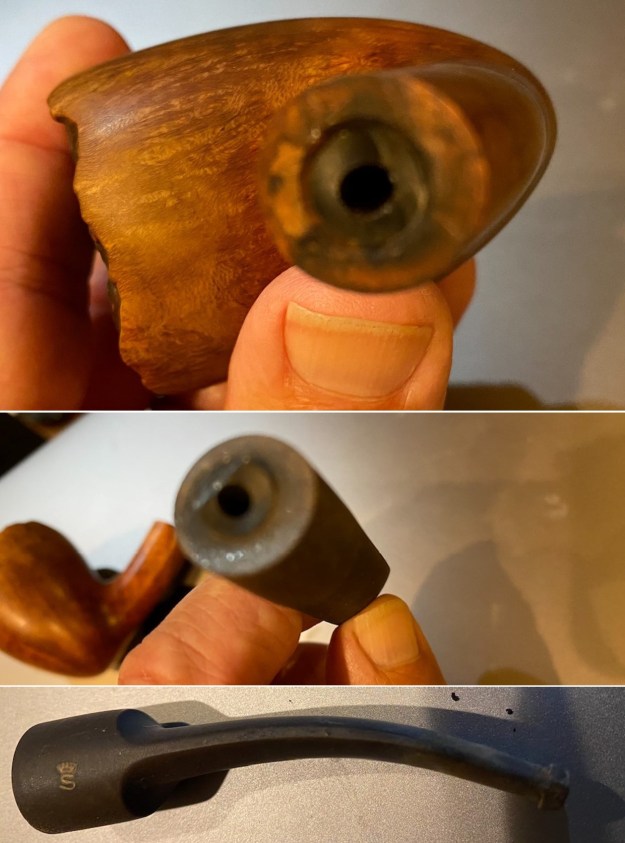
The next pipe on the table is the last of the five pipes that the Vancouver pipe man dropped off for me to work on for him. It was stamped Stanwell Danish Star and had a great flame and straight grain around the bowl and shank with plateau finish on the rim top. It is a Bent Dublin that was finished in a brown stain. It needed restoration on the bowl which was moderately caked and the shank was dirty. It also needed new stem as the current push stem was chewed and broken at the button. It was another pipe that I had restored back in 2016 and he had purchased at that time. I had done a complete restoration and removed the thick cake at that point. The stem had a small hole in the top that was about half the size it is now. The repair worked for at least 6-7 years so I am pleased with that. It is obviously another of his favourites as it is well used. The stem on it was original so I kept it and repaired it the first time. Here is the link to restoration (https://rebornpipes.com/2016/11/30/a-stanwell-danish-star-64/). Here are some photos of the pipe when he picked it up in 2016 to give a bit for context for my latest work. When I took the pipe out of the bag of pipes to work on this afternoon, this is what I saw. The finish on the briar looked very good. It was dirty but the colour had stayed true. It had a bit of patina on the bowl but it was beautiful. The bowl had a moderate cake and the airway in the shank was dirty. The stem was oxidized, calcified and had a large chunk of vulcanite missing on the topside. I took photos of the rim top and stem to show their condition. You can see the moderate cake in the bowl how it looked. The plateau rim top had some lava in the grooves of the finish and some build up around the inside edge of the rim. It will clean up pretty well. The photos of the stem show the condition of the stem. You can see the tooth marks and the large hole on the top of the stem surface. I took photos of the stamping on the sides of the shank. The stamping on the left side of the shank reads Stanwell [over] Danish Star. On the right side it is stamped with the shape number 64. On the underside of the shank it is stamped Made in Denmark. There was a Crown S stamp on the left side of the saddle I removed the stem from the shank to give a sense of the flow of the pipe.  Now it was time to work on the pipe itself. I started my work on the pipe by cleaning and reaming the bowl The cake was quite thick but it can hold residual oils from previous tobaccos and I wanted to check the bowl walls for burn damage or checking. I reamed it with a PipNet pipe reamer to cut cake back to bare briar. I cleaned up the remnants of the cake with a Savinelli Fitsall Pipe knife. I sanded the walls with 220 grit sandpaper wrapped around a piece of dowel. I worked on them until they were smooth. There was no checking or burn damage to the bowl walls. It was quite clean.  I cleaned out the internals with 99% isopropyl alcohol, pipe cleaners and cotton swabs. I worked over the shank and the airway in the new stem. It took some work but once finished it was clean and smelled fresh.  I used a brass bristle wire brush to clean up the plateau and knock off the lava and debris from the grooves and high spots on the rim top. It looked much better.I scrubbed the bowl with undiluted Murphy’s Oil Soap with a tooth brush to remove the oils and grime from the finish. I rinsed the bowl with warm water to rinse off the soap and grime. I dried it off with a soft cloth. I stained the plateau rim top with a Black stain pen. I stained the entire rim top in the valleys and in the plateau. I knock of the stain on the high spots sanding and polishing process I sand off the high spots.I polished the rim top with micromesh sanding pads – dry sanding with 1500-12000 grit pads. I sanded the stain off the high spots on the plateau rim top. I wiped the briar down with a damp cloth after each sanding pad. It took on a real shine by the time I finished with the last sanding pad. I worked some Before & After Restoration Balm into the smooth bowl and the plateau rim top. I worked it into the surface of the briar with my fingertips to clean, enliven and protect the wood. I used a horse hair shoe brush to work it into the crevices and the valleys of the plateau. Once the bowl was covered with the balm I let it sit for about 15 minutes and buffed it off with a soft cotton cloth and the shoe brush. I polished it with a microfiber cloth. I took photos of the pipe at this point in the process to show what the bowl looked like at this point. Now it was time to deal with the replacement stem. I went through my can of stems and found a bent saddle vulcanite stem that was a close fit. It was more bent than the original but with a little straightening it would be perfect. I would also need to remove a little of the diameter of the tenon to get a snug fit in the shank. I put it in the shank as far as it would go before I fitted it correctly but you can see what the pipe will look like with the new stem. It is going to work very well.  To correct the bend in the stem to match the rim top I “painted” it with the flame of a Bic lighter until the vulcanite was flexible. I bent it to the angle of the shank and rim top until I had the right look I was waiting for. It looked good.I used a piece of 220 grit sandpaper to reduce the diameter of the stem and flatten the bottom of the saddle portion to match the shank. I also sanded out the casting marks on the new stem and also the scratches in the vulcanite at the same time. I started polishing the stem with 600 grit wet dry sand paper. I used micromesh sanding pads and water to wet sand the stem with 1500-12000 grit sanding pads. I wiped it down after each sanding pad with Obsidian Oil on a cotton rag after each sanding pad as I find it does two things – first it protects the vulcanite and second it give the sanding pads bite in the polishing process. After finishing with the micromesh pads I rub the stem down with Before & After Fine and Extra Fine stem polish as it seems to really remove the fine scratches in the vulcanite. I rub the Fine Polish on the stem and wipe it off with a paper towel and then repeat the process with the Extra Fine Polish. I finished the polishing of the stem down with a final coat of Obsidian Oil and set the stem aside to let the oil absorb. This process gives the stem a shine and also a bit of protection from oxidizing quickly. I took the finished Stanwell Danish Star 64 Freehand Dublin bowl to wax and polish. I don’t buff the plateau rim top on the wheel as it leaves a lot of grit in the deep grooves of the finish. I polished the bowl and the stem with Blue Diamond on the buffing wheel to polish out the scratches in the briar and vulcanite. I buffed it and gave it multiple coats of carnauba wax to protect and give it a shine. I buffed the pipe with a clean buffing pad to raise the shine. I hand buffed it with a microfiber cloth to deepen the shine. The pipe polished up pretty nicely. The contrast of the dark stain on the briar revealing the grain with the shine of the polished vulcanite saddle stem is quite stunning. The rich finish around the bowl and shank is quite remarkable and the plateau rim top gives the pipe an incredible tactile presence. The Stanwell Danish Star 64 is a nice looking pipe and one that will be a great smoking pipe. The finished pipe is shown in the photos below with each of the stems. The dimensions of the pipe are Length: 6 inches, Height: 2 inches, Outside diameter of the bowl: 1 ¾ inches, Chamber diameter: ¾ of an inch. The weight of the large pipe is a light and comfortable 56 grams/1.98 ounces. It is a beautiful pipe and the last of the five pipes left with me for work. They are finished and ready for him to pick them up and enjoy once more. As always I encourage your questions and comments as you read the blog. Thanks to each of you who are reading this blog. Remember we are not pipe owners; we are pipe men and women who hold our pipes in trust until they pass on into the trust of those who follow us.

Cleaning up another Dark Sandblast Stanwell Sterling Silver Billiard


Blog by Steve Laug

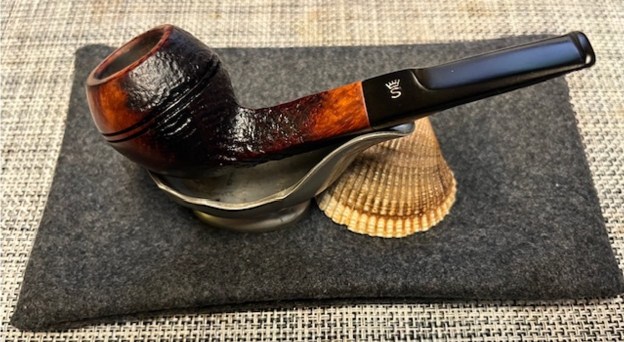
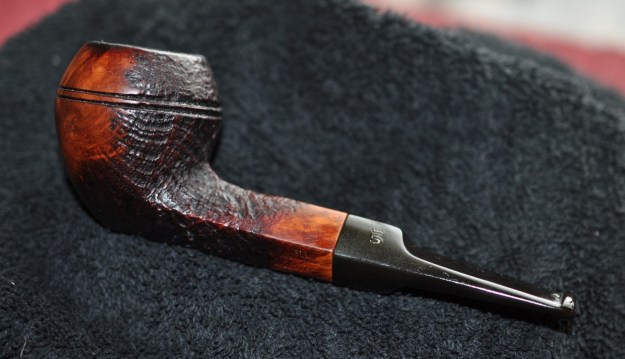
The next pipe I am working on was purchased on 01/10/2023 as part of another group of pipes from a fellow in Copenhagen, Denmark. This was another tired and dirty pipe but it had a great sandblast on the bowl and shank and a smooth rim top. The only mark on the pipe is on the silver band on the shank that reads Stanwell [over] Silver. The pipe is classic Danish Billiard. There were tars and oils ground into the valleys and crevices of the sandblast. The bowl had a thick cake that flowed over the top of the rim in a thin coat of a lava and some damage to the top and inner edge of the bowl. The stem was a black vulcanite taper stem with a silver Crown S logo on the left side. It was oxidized, calcified and had tooth marks and chatter on both sides ahead of the button. I think it would clean up to be a beautiful pipe. Jeff took photos of the pipes before he started his clean up work.  He took photos of the rim and bowl to show the thick cake and lava coat covering the rim top. It really was filthy and a mess. You can also see the rim top and inner edge damage in the photos. He also took photos of the stem surfaces to show its overall condition when it arrived. The photos of the sides and heel of the bowls show beautiful blast around the bowl and shank sides. The rich brown stains highlights the grain and adds depth to the finish. It shows some promise. He also took photos of the stamping on the silver band. It took several photos to capture the stamp on the curve but they were clear and read as noted above. Jeff cleaned up the pipe for me. He reamed the bowl with a PipNet pipe reamer and cleaned it up with a Savinelli Fitsall Pipe Knife. He scrubbed the exterior with Murphy’s Oil Soap and a tooth brush to clean off the grime off the finish and the overflow of lava on the rim top. The cleaning had removed the debris on the rim top. He cleaned up the internals of the shank, mortise and stem with pipe cleaners, cotton swabs and alcohol to remove all of the oils and tars in the pipe. He soaked the stem in Before & After Deoxidizer and was able to remove much of the oxidation, calcification. When it arrived here in Vancouver it was a clean pipe and I knew what I had to work with. I took photos of it before I started my part of the restoration. I took a photo of the rim top and the stem to show their condition once it arrived in Canada. Jeff was able to clean up the cake and the lava overflow that was shown in the rim and bowl photos above. The rim top and the inner edge of the bowl showed some damage to the inner edge and some darkening on the rim top. He was also able to get rid of the grime and grit in the surface of the briar. The stem looked better, though there were tooth marks and chatter on both sides near the button. I tried to capture the Stanwell Sterling on the silver band. It is clearer in person than is shown in the photo. I removed the stem from the shank and took a photo of the parts to give a sense of what the pipe looks like. I started my work on the bowl by working on the damage to the inner edge of the bowl and the darkening on the rim top and outer edge with 220 grit sandpaper. I was able to clean it up nicely.I polished the smooth rim top with micromesh sanding pads – dry sanding with 1500-12000 grit pads. I wiped the briar down after each pad. I rubbed the bowl and shank down with Before & After Restoration Balm to deep clean them. The product works to clean, enliven and protect the briar. I worked it in with my fingers to get it into the briar. I let it sit for 10 minutes then I wiped it off and buffed it with a soft cloth. The briar really began to have a rich shine. I took some photos of the bowl at this point to mark the progress in the restoration. It is a beautiful bowl. I set aside the bowl and turned my attention to the damage on the stem. I “painted” the surface of the stem with the flame of a lighter to lift them as much as possible. I filled in the ones that remained with clear CA glue and set it aside to cure. I used a small file to flatten the repairs and recut the button edge. I sanded the stem smooth with 220 grit sandpaper and started polishing it with 400 grit wet dry sandpaper. I polished the stem with micromesh sanding pads – dry sanding with 1500-12000 grit pads. I wiped the stem down after each pad with a damp cloth to remove the sanding dust. I gave it a further polish with Before & After Stem Polish – both Fine and Extra Fine. I finished by wiping the stem down with a final coat of Obsidian Oil and set it aside to dry. I put the stem back on the Stanwell Sterling Sandblast Billiard and took the pipe to the buffer. I buffed the bowl and stem with Blue Diamond to polish the briar and the vulcanite. Blue Diamond does a great job on the smaller scratches that remain in both. I gave the bowl and the stem several coats of carnauba wax and buffed the pipe with a clean buffing pad to raise the shine. I hand buffed it with a microfiber cloth to deepen the shine. Considering the mess the pipe was when we received it I am amazed at how well it turned out. The finished pipe is shown in the photos below. This is a beautiful Stanwell Sterling Sandblast Billiard – the vulcanite taper stem and rim top and sandblast finish combine to give the pipe a great look. The polished black, vulcanite stem looks really good with the rich grain standing out on the bowl and shank. The dimensions of the pipe are Length: 5 ½ inches, Height: 1 ¾ inches, Outside diameter of the bowl: 1 1/8 inches, Chamber diameter: ¾ of an inch. The weight of the pipe is 1.27 ounces/36 grams. This is another pipe that I will be putting on the rebornpipes online store in the Danish Pipe Pipemaking Companies Section shortly, if you are interested in adding it to your collection. Thanks for walking through the restoration with me on this beauty!

Discovering Beautiful Grain on this dirty Stanwell Sterling Silver 97 Reg. No. 969-48 Liverpool


Blog by Steve Laug

The next pipe I am working on was purchased on 01/10/2023 as part of another group of pipes from a fellow in Copenhagen, Denmark. This was another tired and dirty pipe that was a unique shape. The pipe is stamped on the left side and reads Stanwell [over] Regd. No. 969-48. On the right side it is stamped with the shape number 97. On the underside of the shank it is stamped Made in Denmark. The pipe is an interesting look shape I would call a Liverpool. It is long shank and round with a taper vulcanite stem. There were tars and oils ground into the surface of the briar. The silver band on the shank was original and was stamped Sterling [over] Silver. The bowl had a thick cake that flowed over the top of the rim in a thin coat of a lava and some damage to the inner edge of the bowl. The stem was a black vulcanite taper stem without a logo on the side or top. It was oxidized, calcified and had tooth marks and chatter on both sides ahead of the button. I think it would clean up to be a beautiful pipe. Jeff took photos of the pipes before he started his clean up work.  He took photos of the rim and bowl to show the moderate cake and lava coat covering the rim top. It really was filthy and a mess. You can also see the rim top and inner edge damage in the photos. He also took photos of the stem surfaces to show its overall condition when it arrived. The photos of the sides and heel of the bowls show beautiful grain  around the bowl and shank sides. The rich brown stains highlights the grain and adds depth to the finish. It shows some promise. He also took photos of the stamping on the sides of the shank and the band. They were clear and read as noted above. Jeff cleaned up the pipe for me. He reamed the bowl with a PipNet pipe reamer and cleaned it up with a Savinelli Fitsall Pipe Knife. He scrubbed the exterior with Murphy’s Oil Soap and a tooth brush to clean off the grime off the finish and the heavy overflow of lava on the rim top. The cleaning had removed the thick coat on the rim top. He cleaned up the internals of the shank, mortise and stem with pipe cleaners, cotton swabs and alcohol to remove all of the oils and tars in the pipe. He soaked the stem in Before & After Deoxidizer and was able to remove much of the oxidation, calcification. When it arrived here in Vancouver it was a clean pipe and I knew what I had to work with. I took photos of it before I started my part of the restoration. I took a photo of the rim top and the stem to show their condition once it arrived in Canada. Jeff was able to clean up the cake and the lava overflow that was shown in the rim and bowl photos above. The rim top and the inner edge of the bowl showed some damage to the inner edge and some darkening on the rim top. He was also able to get rid of the grime and grit in the surface of the briar. The stem looked better, though there were tooth marks and chatter on both sides near the button. I took photos of the stamping on the sides of the shank and the underside show that it is clear and readable. I tried to capture the Stanwell Sterling on the silver band (first photo below). It is clearer in person than is shown in the photo.I removed the stem from the shank and took a photo of the parts to give a sense of what the pipe looks like.I started my work on the bowl by working on the damage to the inner edge of the bowl and the darkening on the rim top and outer edge with 220 grit sandpaper. I was able to clean it up nicely.I polished the briar with micromesh sanding pads – dry sanding with 1500-12000 grit pads. I wiped the briar down after each pad. I rubbed the bowl and shank down with Before & After Restoration Balm to deep clean them. The product works to clean, enliven and protect the briar. I worked it in with my fingers to get it into the briar. I let it sit for 10 minutes then I wiped it off and buffed it with a soft cloth. The briar really began to have a rich shine. I took some photos of the bowl at this point to mark the progress in the restoration. It is a beautiful bowl. I set aside the bowl and turned my attention to the damage on the stem. I “painted” the surface of the stem with the flame of a lighter to lift them as much as possible. I filled in the ones that remained with clear CA glue and set it aside to cure. I used a small file to flatten the repairs and recut the button edge. I sanded the stem smooth with 220 grit sandpaper and started polishing it with 400 grit wet dry sandpaper. I polished the stem with micromesh sanding pads – dry sanding with 1500-12000 grit pads. I wiped the stem down after each pad with a damp cloth to remove the sanding dust. I gave it a further polish with Before & After Stem Polish – both Fine and Extra Fine. I finished by wiping the stem down with a final coat of Obsidian Oil and set it aside to dry. I put the stem back on the Stanwell Sterling 97 Lovat Reg. No. 969048 Liverpool pipe and took the pipe to the buffer. I buffed the bowl and stem with Blue Diamond to polish the briar and the vulcanite. Blue Diamond does a great job on the smaller scratches that remain in both. I gave the bowl and the stem several coats of carnauba wax and buffed the pipe with a clean buffing pad to raise the shine. I hand buffed it with a microfiber cloth to deepen the shine. Considering the mess the pipe was when we received it I am amazed at how well it turned out. The finished pipe is shown in the photos below. This is a beautiful Stanwell Sterling 97 Reg. No. 969-48 Lovat – the vulcanite taper stem and rim top and smooth finish combine to give the pipe a great look. The polished black, vulcanite stem looks really good with the rich grain standing out on the bowl and shank. The dimensions of the pipe are Length: 5 inches, Height: 1 ½ inches, Outside diameter of the bowl: 1 1/8 inches, Chamber diameter: ¾ of an inch. The weight of the pipe is .99 ounces/28 grams. This is another pipe that I will be putting on the rebornpipes online store in the Danish Pipe Pipemaking Companies Section shortly, if you are interested in adding it to your collection. Thanks for walking through the restoration with me on this beauty!

Discovering Beauty under the grime on a Stanwell Sterling Silver Billiard


Blog by Steve Laug

The next pipe I am working on was purchased on 01/10/2023 as part of another group of pipes from a fellow in Copenhagen, Denmark. This was another tired and dirty pipe that obviously had been someone’s favourite smoker. The pipe has no stampings on the shank sides. The silver band is stamped Stanwell Sterling. The dark brown sandblast finish was dirty and tired looking but showed some great grain in the blast. There were tars and oils ground into the surface of the briar. The silver band on the shank was original and was stamped Sterling [over] Silver. The bowl had a thick cake that flowed over the top of the rim in a thick coat of a lava in the sandblast top. The stem was a black vulcanite taper stem with a silver Crown S on the left side. It was oxidized, calcified and had tooth marks and chatter on both sides ahead of the button. There was also a small bite through on the top and underside ahead of the button. I think it would clean up to be a beautiful pipe. Jeff took photos of the pipes before he started his clean up work.  He took photos of the rim and bowl to show the moderate cake and lava coat covering the rim top. It really was filthy and a mess. He also took photos of the stem surfaces to show its overall condition when it arrived. You can see the two bite throughs on both sides of the stem. The photos of the sides and heel of the bowls show beautiful grain in the sandblast around the bowl and shank sides. The rich brown stains highlights the grain and adds depth to the finish. It shows some promise. He also took a photo of the stamping on the left side of the Sterling Silver Band and a photo of the inlaid Crown Silver S on the left side of the stem. It read as noted above. Jeff cleaned up the pipe for me. He reamed the bowl with a PipNet pipe reamer and cleaned it up with a Savinelli Fitsall Pipe Knife. He scrubbed the exterior with Murphy’s Oil Soap and a tooth brush to clean off the grime off the finish and the heavy overflow of lava on the rim top. The cleaning had removed the thick coat on the rim top. He cleaned up the internals of the shank, mortise and stem with pipe cleaners, cotton swabs and alcohol to remove all of the oils and tars in the pipe. He soaked the stem in Before & After Deoxidizer and was able to remove much of the oxidation, calcification. When it arrived here in Vancouver it was a clean pipe and I knew what I had to work with. I took photos of it before I started my part of the restoration. I took a photo of the rim top and the stem to show their condition once it arrived in Canada. Jeff was able to clean up the cake and the lava overflow that was shown in the rim and bowl photos above. The rim top and the inner edge of the bowl was in surprisingly good condition. He was also able to get rid of the grime and grit in the surface of the briar around the sandblast. The stem looked better, though there were deep tooth marks and chatter on both sides near the button as well as a small bite through on each side ahead of the button. I took a photo of the stamping on the left side of the Sterling Band. It was clear and readable as noted above.I removed the stem from the shank and took a photo of the parts to give a sense of what the pipe looks like.I started my work on the bowl by going over the sandblasted rim top with a brass bristle wire brush. It removed the remaining dust and debris from the sandblast. It gave the finish a better and cleaner look. I rubbed the bowl and shank down with Before & After Restoration Balm to deep clean them. The product works to clean, enliven and protect the briar. I worked it in with my fingers to get it into the briar. I let it sit for 10 minutes then I wiped it off and buffed it with a soft cloth. The briar really began to have a rich shine. I took some photos of the bowl at this point to mark the progress in the restoration. It is a beautiful bowl. I set aside the bowl and turned my attention to the damage on the stem. I took a photo of the bite through on the top and underside of the stem just ahead of the button. You can see the small bite through on the top of the stem and the larger hole in the underside of the stem. They will need to be filled in and smoothed out and reshaped.I greased a folded pipe cleaner with Vaseline Petroleum Jelly and inserted it into the airway in the button. I filled in the holes on both sides with black CA glue and set it aside for the repairs to cure.I removed the pipe cleaner from the airway and set aside the stem to let the repairs cure. Once they cured, I flattened them out with a flat file and then sanded them with 220 grit sandpaper to blend them into the surface of the stem. I started the polishing with 600 grit wet dry sandpaper. I polished the stem with micromesh sanding pads – dry sanding with 1500-12000 grit pads. I wiped the stem down after each pad with a damp cloth to remove the sanding dust. I gave it a further polish with Before & After Stem Polish – both Fine and Extra Fine. I finished by wiping the stem down with a final coat of Obsidian Oil and set it aside to dry. I put the stem back on the Stanwell Sterling Sandblast Billiard pipe and took the pipe to the buffer. I buffed the bowl and stem with Blue Diamond to polish the briar and the acrylic. Blue Diamond does a great job on the smaller scratches that remain in both. I gave the bowl and the stem several coats of carnauba wax and buffed the pipe with a clean buffing pad to raise the shine. I hand buffed it with a microfiber cloth to deepen the shine. Considering the mess the pipe was when we received it I am amazed at how well it turned out. The finished pipe is shown in the photos below. This is a beautiful Stanwell Sterling Sandblast Billiard – the vulcanite taper stem and rim top and sandblast finish combine to give the pipe a great look. The polished black, vulcanite stem looks really good with the rich browns standing out in the sandblast. The dimensions of the pipe are Length: 5 ¾ inches, Height: 1 ½ inches, Outside diameter of the bowl: 1 ¼ inches, Chamber diameter: ¾ of an inch. The weight of the pipe is 1.23 ounces/36 grams. This is another pipe that I will be putting on the rebornpipes online store in the Danish Pipe Pipemaking Companies Section shortly, if you are interested in adding it to your collection. Thanks for walking through the restoration with me on this beauty!

Discovering Beauty under the Filth of this Stanwell Valby Piben Nr.1 51 Billiard


Blog by Steve Laug

The next pipe I am working on was purchased on 12/13/2022 as part of another group of pipes from a fellow in Copenhagen, Denmark. This was a tired and dirty pipe that obviously had been someone’s favourite smoker. The pipe has an identifying plate on the left side of the shank that reads Valby -[over] Piben Nr.1. On the underside of the shank it was stamped Stanwell [over] Made in Denmark. On the right side of the shank it was stamped with the shape number 51. The dirty reddish finish on this was worn and tired looking but showed some great grain. There were tars and oils ground into the surface of the briar. The thin gold band on the shank was original and distinguishing feature of the Valby. The bowl had a thick cake that flowed over the top of the rim in a thick coat of a lava and showed potential damage on the top and the inner edge. The stem was a black vulcanite taper stem with a gold Crown S on the left side. It was oxidized, calcified and had light tooth marks and chatter on both sides ahead of the button. I think it would clean up to be a beautiful pipe. Jeff took photos of the pipes before he started his clean up work.  He took photos of the rim and bowl to show the heavy cake and thick lava coat covering the rim top. It really was filthy and a mess. He also took photos of the stem surfaces to show its overall condition when it arrived. The photos of the sides and heel of the bowls show beautiful grain around the bowl and shank sides. The rich red stain highlights the grain and adds depth to the finish. It shows some promise. He also took a photo of the stamped gold plate on the left side of the shank. He also took photos of the stamping on the underside as well as the shape number on the right side. It read as noted above. From what I can find online it seems that Valby is one of the cities that Stanwell was made in along with Copenhagen. I wonder if the Piben Nr.1 is to commemorate the first pipe that was originally made in Valby. It could be another commemorative pipe like the pair of Bulldogs I just finished commemorating the 65th Anniversary of Stanwell – 1942-2007. Hard to  know for sure but very likely.

Jeff cleaned up the pipe for me. He reamed the bowl with a PipNet pipe reamer and cleaned it up with a Savinelli Fitsall Pipe Knife. He scrubbed the exterior with Murphy’s Oil Soap and a tooth brush to clean off the grime off the finish and the heavy overflow of lava on the rim top. The cleaning had removed the thick coat on the rim top. He cleaned up the internals of the shank, mortise and stem with pipe cleaners, cotton swabs and alcohol to remove all of the oils and tars in the pipe. He soaked the stem in Before & After Deoxidizer and was able to remove much of the oxidation, calcification. When it arrived here in Vancouver it was a clean pipe and I knew what I had to work with. I took photos of it before I started my part of the restoration. I took a photo of the rim top and the stem to show their condition once it arrived in Canada. Jeff was able to clean up the incredibly thick cake and the lava overflow that was shown in the rim and bowl photos above. The rim top and the inner edge of the bowl looked very good. He was also able to get rid of the grime and grit in the surface of the briar around the sandblast. The stem looked very good.I took a photo of the stamping on the gold plate on the left side of the shank and the underside and the right side of the shank to show that it was readable and undamaged by the cleanup work. I removed the stem from the shank and took a photo of the parts to give a sense of what the pipe looks like.I started my work on the bowl by polishing the briar with micromesh sanding pads. I dry sanded it with 1500-12000 grit pads. I wiped the bowl down after each pad with a damp cloth. The bowl began to take on a rich shine and grain was beginning to stand out. I sanded with all of the pads and wiped the bowl down after each pad with a soft cloth. I rubbed the bowl and shank down with Before & After Restoration Balm to deep clean them. The product works to clean, enliven and protect the briar. I worked it in with my fingers to get it into the briar. I let it sit for 10 minutes then I wiped it off and buffed it with a soft cloth. The briar really began to have a rich shine. I took some photos of the bowl at this point to mark the progress in the restoration. It is a beautiful bowl. I set the bowl aside and worked on the stem at this point in the process. I polished the stem with micromesh sanding pads – dry sanding with 1500-12000 grit pads. I wiped the stem down after each pad with a damp cloth to remove the sanding dust. I gave it a further polish with Before & After Stem Polish – both Fine and Extra Fine. I finished by wiping the stem down with a final coat of Obsidian Oil and set it aside to dry. I put the stem back on the Commemorative Stanwell Valby – Piben Nr.1 shape 51 Billiard pipe and took the pipe to the buffer. I buffed the bowl and stem with Blue Diamond to polish the briar and the acrylic. Blue Diamond does a great job on the smaller scratches that remain in both. I gave the bowl and the stem several coats of carnauba wax and buffed the pipe with a clean buffing pad to raise the shine. I hand buffed it with a microfiber cloth to deepen the shine. Considering the mess the pipe was when we received it I am amazed at how well it turned out. The finished pipe is shown in the photos below. This is a beautiful Stanwell Valby Nr.1 Billiard – the vulcanite saddle stem and crowned rim top and sandblast finish combine to give the pipe a great look. The polished black, vulcanite stem looks really good with the rich browns standing out in the sandblast. The dimensions of the pipe are Length: 5 ¾ inches, Height: 1 ½ inches, Outside diameter of the bowl: 1 ¼ inches, Chamber diameter: ¾ of an inch. The weight of the pipe is 1.23 ounces/36 grams. This is another pipe that I will be putting on the rebornpipes online store in the Danish Pipe Pipemaking Companies Section shortly, if you are interested in adding it to your collection. Thanks for walking through the restoration with me on this beauty!

Restoring a 2007 Limited Edition Set of Stanwell 65th Anniversary No. 01 Straight Bulldogs


Blog by Steve Laug

The next pair of pipes were purchased on 11/10/22 as part of a group of pipes from a fellow in Copenhagen, Denmark. They were both smoked, though the briar one was more heavily used. The lighter Beechwood pipe had been smoked and had a light cake and some darkening around the inner edge of the rim top. The Beechwood pipe is stamped on the left underside of the shank and reads Kyrringe [over] Made in Denmark [over] No. 1. The darker briar pipe had a thick cake and a lava overflow on the rim top. It was stamped on the left underside of the shank and read Stanwell [over] Made in Denmark [over] No. 1. The finish on the Beechwood one showed some nice grain around the bowl and shank and though it was a little dirty it was a nice looking pipe. The Briar one had some rich grain around the bowl and shank and was dirty. Both stems were black acrylic saddle stems. Both have light tooth marks and chatter on both sides of the stem ahead of the button. The Briar one had the Stanwell Crown S on the left side of the saddle stem while the Beechwood had nothing on the stem side. Jeff took photos of the pipes before he started his clean up work.  He took photos of the rim and bowl of both pipes to give a sense of what he was dealing with. He also took photos of the stem surfaces on both to show the condition of the stem when it arrived. The photos of the sides and heel of the bowls show beautiful grain around the bowl and shank sides. The twin rings on both are very nicely done and show no damage. The light natural colour of the Beechwood and the reddish stain on the briar adds depth finish on the pipes and makes the grain really stand out. They are a beautiful pair of pipes. He also took photos of the stamped name on the left underside of each of the shanks. It reads as noted above. Before I started my work on the pipe I turned to Pipephil to see what I could learn about the pair. I knew that Kyrringe was the name of the brand started by Poul Nielsen (later Stanwell)  during WWII (http://pipephil.eu/logos/en/logo-k3.html). I did a screen capture of the information there and also included the sidebar information below that.During WWII Poul Nielsen managed the Kyringe company. They made briar and beech wood pipes (see enlarged views). Some few years after the war Poul Nielsen will create the Stanwell brand.

I turned to Pipedia for some more information and was delighted to read the history of the brand that fleshed out the information I had found on Pipephil (https://pipedia.org/wiki/Stanwell). I quote a section of the article below. If you want more information the article is worth reading.

When pipe smokers talk about pipes that are consistently great smokers, exhibit the creative and beautiful designs that exemplify Danish pipemaking and offer the best value in factory produced pipes, they are talking about Stanwell. We hear time and time again, from customers and top pipe makers from around the world, that Stanwell is the best factory produced pipe in the world. Stanwell maintains the most modern pipe making facility in the world and for many years has enjoyed some unique relationships with many legendary Danish pipe makers. In fact, Stanwell occupies a pivotal place in the history of the world-wide popularity of Danish-made pipes. During WWII, Danish pipe smokers could no longer buy the English made briar pipes they preferred to smoke. In 1942, because of the unavailability of English pipes and raw briar, Poul Nielsen began making pipes from beech wood for Danish customers. At the time, Poul was managing a company called Kyringe, which made various wood products.

At the end of the war, briar became available again, so Nielsen began importing his own briar and started making briar pipes to compete with the English manufacturers. It must be remembered that in 1948, England was the single great center for pipe making. Therefore, Nielsen changed the name of his pipes to “Stanwell”, which sounded much more like a proper English name than “Nielsen”. He also created the horse drawn carriage logo for its English connotations. He later changed his own last name from Nielsen to Stanwell, a testament to his devotion to the pipes he made. Stanwell’s relationships with Danish pipe makers goes back to Sixten Ivarsson, who is considered the originator of modern Danish pipe making. Ivarsson was commissioned to design Stanwell shapes. In 1969, the factory was moved a town called Borup, just outside of Copenhagen to be closer to Ivarsson.

I am also including several photos of the original pair of pipes that were released under the Kyrringe name. They are very similar to the pair that I am working on which were released to honour those early days on the 65th Anniversary of Stanwell.I followed the Google trail further and found a great description of the set that I had in hand on Smokingpipes.com. It described and the pipes and the foundation information on these pipes and their history in the early life of Stanwell and Poul Nielsen during WWII. Here is the link (https://www.smokingpipes.com/pipes/estate/denmark/moreinfo.cfm?product_id=255998). I quote:

These two-pipe sets were made in 2007 to celebrate the 65th anniversary of Stanwell. Stanwell began as Kyringe, a manufacturer of various goods from beech. Given the unavailability of briar during the Second World War, Poul Nielsen, founder of Stanwell, made pipes from beech wood. This, the ’01’, was the very first Stanwell (then Kyringe) shape. It was later redesigned and became the ’32’, but the original version of the shape is presented in this two pipe set, with one from briar and one from beech.

It’s nice to see one of these sets again. We had just two of them when they came out in 2007 and they left our shelves immediately; they were pretty limited as I recall. – Sykes Wilford Jeff cleaned up the pipe for me. He reamed the bowl with a PipNet pipe reamer and cleaned it up with a Savinelli Fitsall Pipe Knife. He scrubbed the exterior with Murphy’s Oil Soap and a tooth brush to clean off the grime off the finish and the heavy overflow of lava on the rim top. The cleaning had removed some of the black stain on the rim top. He cleaned up the internals of the shank, mortise and stem with pipe cleaners, cotton swabs and alcohol to remove all of the oils and tars in the pipe. He soaked the stem in Before & After Deoxidizer and was able to remove much of the oxidation. When it arrived here in Vancouver it was a clean pipe and I knew what I had to work with. I took photos of it before I started my part of the restoration. I took photos of the rim top and the stem to show their condition once it arrived in Canada. Jeff was able to clean up the Beechwood pipe and it looked very good. He also was able to remove the thick cake and lava overflow that was shown in the rim and bowl photos of the Briar bowl above. Both pipes cleaned up very well but had some damage on the inner edge of the rim. The stem looked better on both pipes as can be seen in the photos below. There were tooth marks and chatter on both sides near the button on both pipes. I took a photo of the stamping on the left underside of the diamond shank of both pipes to show that it was readable and undamaged by the cleanup work. I removed the stem from the shank and took a photo of the parts of each pipe to give a sense of what they looked like.I started my work on the inside beveled edge and rim top with a folded piece of 220 grit sandpaper. I was able to remove that darkening on the right front and the back inner edge. It looked much better. I started polishing the bowls of both pipes with micromesh sanding pads. I wet sanded it with 1500-12000 grit pads. I wiped the bowl down after each pad with a damp cloth. The bowl began to take on a rich shine and grain was beginning to stand out. I wet sanded with all of the pads and wiped the bowl down after each pad with a soft cloth. I rubbed the bowls of both down with Before & After Restoration Balm to deep clean the finish on the bowl and shank. The product works to clean, enliven and protect the briar. I worked it in with my fingers to get it into the wood. I let it sit for 10 minutes then I wiped it off and buffed it with a soft cloth. The bowls really began to have a rich shine. I took some photos of them at this point to mark the progress in the restoration. They are beautiful bowls. I set the bowls aside and worked on the stems at this point in the process. I sanded the tooth marks and chatter out of the acrylic stems with a folded piece of 220 sandpaper. I sanded them with 600 grit sandpaper until the marks were gone.I polished the stem with micromesh sanding pads – dry sanding with 1500-12000 grit pads. I wiped the stem down after each pad with a damp cloth to remove the sanding dust. I finished by wiping the stem down with a final coat of Obsidian Oil and set it aside to dry.I put the stems back on each of the Stanwell 65th Anniversary 01 Bulldogs (a Beechwood one and a Briar one and took them to the buffer. I buffed the bowls and acrylic stems with Blue Diamond to polish both. Blue Diamond does a great job on the smaller scratches that remain in both. I gave the bowls and the stems several coats of carnauba wax and buffed the pipes with a clean buffing pad to raise the shine. I hand buffed them with a microfiber cloth to deepen the shine. The pipes polished up really nicely with a great contrast between the Beechwood and the Briar. The finished pipes are shown in the photos below. These are beautiful small Stanwell Bulldogs – the Beechwood is stamped with the original Kyrringe stamp and the Briar with the Stanwell stamp. Both are stamped Made in Denmark and No. 1. Both have acrylic stems though the Stanwell one has the gold Crown S logo on the left side. The polished acrylic stems look really good with the two pipes. The dimensions of the Kyrringe Beechwood pipe are Length: 5 inches, Height: 1 ½ inches, Outside diameter of the bowl: 1 inch, Chamber diameter: ¾ of an inch. The weight of the pipe is .95 ounces/27 grams. The dimensions of the Stanwell Briar pipe are Length: 5 inches, Height: 1 ½ inches, Outside diameter of the bowl: 1 inch, Chamber diameter: ¾ of an inch. The weight of the pipe is .99 ounces/28 grams. This pair of 65th Anniversary pipes (as a pair) will be put on the rebornpipes online store in the Danish Pipemaking Companies Section shortly, if you are interested in adding them to your collection. Thanks for walking through the restoration with me on this set!


Restoring a Nicely Grained Stanwell Royal De Luxe 148 Canadian with internal bowl damage


Blog by Steve Laug

It is a rainy Saturday for me here in Vancouver so I decided to work on another one that was purchased on 01/10/2023 in a lot of pipes that came to us from Copenhagen, Denmark. This is a oval shank Canadian with a smooth finish and a silver band on the shank. It is another Made in Denmark Stanwell. The smooth finish on this pipe, around the bowl and shank has a mix of grain highlighted by the reddish brown stain. The pipe is stamped on the underside of the shank near the stem/shank junction and reads STANWELL [over] Royal De Luxe [over] Made In Denmark. On the underside of the center of the shank it has the shape number 148 stamped. On the silver band there was a 925 stamp on the right side giving the quality of silver in the band. The pipe was a well used pipe when Jeff received it. There was dust and grime ground into the finish which was worn thin on the sides of the bowl. The mixture of brown stains highlights some beautiful grain under the dirt. The bowl was moderately caked and there was a light overflow of lava on the smooth rim top. The inner edge looked worn but okay. There was a trough on the bottom of the bowl that had been worn with repeated use of pipe cleaners. It was not terribly deep but bothersome looking and if left alone could further wear through the heel of the bowl. The saddle stem is vulcanite and was dirty, oxidized and had light tooth marks, chatter and scratches on both sides ahead of the button and on the button itself. There is a Silver Crown S logo inlaid on the topside of the saddle stem. Jeff took photos of the pipe before he started his clean up work on it. He took photos of the bowl and rim top to show what they looked like before his clean up. You can see the scratches in the smooth rim top. The inner edge also shows some damage. He also took some of the stem to show the condition of both sides. The photos of the sides and heel of the bowl show the faded stain and the grain around the bowl and shank. The mixture of brown stains adds depth finish on the pipe. Even under the grime it is a real beauty. You can also see the swirls in the acrylic shank extension. The stamping on this one was around the bamboo horizontally and is shown in the photo below. It is clear and readable as noted above. The second photo shows the white stamped crown S on the stem side. Before I started my work on the pipe I wanted to see if I could find any information that would help me get a sense of the line. I turned to Pipephil to see if there was any listing on the Royal Deluxe Line (http://pipephil.eu/logos/en/logo-stanwell.html). There was nothing listed.
I then turned to Pipedia (https://pipedia.org/wiki/Stanwell) for more information. The article is great and gives a lot of history on the brand. There were also links to a shape article by Bas Stevens that I originally published on rebornpipes. I looked up the 148 shape number to see who had designed that shape (https://pipedia.org/wiki/Stanwell_Shape_Numbers_and_Designers). I quote the information on shape 148.

  1. Canadian, short saddle mouthpiece by Jess Chonowitsch.

Now it was time to work on the pipe.

Jeff had thoroughly cleaned up the pipe. He reamed the pipe with a PipNet Pipe Reamer and cleaned up the remnants with a Savinelli Fitsall Pipe Knife. He scrubbed the bowl with undiluted Murphy’s Oil Soap with a tooth brush. He rinsed it under running warm water to remove the soap and grime. He cleaned out the inside of the shank and the airway in the stem with alcohol, cotton swabs and pipe cleaners. He scrubbed the exterior of the stem with Soft Scrub to remove the grime and calcification. He soaked the stem in Before & After Deoxidizer and rinsed it off with warm water. The pipe looked very good when it arrived here in Vancouver. I took close up photos of the bowl, rim and the stem. You can see the damage on rim top and inner edge. The bowl is quite clean inside with trough worn into the bottom of the bowl visible in the photo below. The vulcanite saddle stem is in good condition with light tooth marks and some chatter as noted above. I took photo of the stamping on the underside of the shank. It is faint but readable as noted. I removed the stem from the shank and took a photo to give a sense of the proportions of the pipe. The briar is quite beautiful and the dark and medium stains really make it stand out.I started my work on the pipe by dealing with the trough in the bottom of the bowl. I decided to use a mixture of Plaster of Paris and water to make a thick paste to fill in the trough in the bottom and up the front side of the bowl. I put a pipe cleaner in the airway to keep it from clogging. I applied the plaster in the bowl with a dental spatula, tamped it down with a tamper and cleaned up the sides and edges of the repair with folded pipe cleaners. While the Plaster repair cured, I worked on the damage to the inner edge and the rim top with a folded piece of 220 grit sandpaper to bring the edge back into round and smooth out the scratches on the top. By the end it looked much better.I wiped down the excess Plaster of Paris with qtips until all that remained was in the bottom and front of the bowl. I let the inside of the bowl repair cure. Once cured I would need to give it a slight bowl coating.I polished the bowl and shank with micromesh sanding pads – dry sanding with 1500-12000 grit pads. I wiped the bowl down after each pad to remove the grit. The bowl began to take on a rich shine. It is a beauty. I rubbed the bowl down with Before & After Restoration Balm. I worked it into the briar with my finger tips. I let it sit for 10 minutes and the Balm did its magic. It enlivens, cleans and preserves the briar. It certainly brought this bowl back to life. I buffed it off with a clean cloth and took the following photos. I coated the bowl with a mixture of sour cream and charcoal powder. The bowl coating is applied over the Plaster of Paris repair on the bottom of the bowl and the walls. I used a dental spatula to mix it up and put a pipe cleaner in the airway to keep it from clogging. I used a folded pipe cleaner to paint it on the bowl bottom and walls. Once finished I set it aside to dry. I set the bowl aside and turned my attention to the stem. I polished the stem with micromesh sanding pads – 1500-12000 grit pads. I wiped it down with a damp cloth after each sanding pad. I used Before & After Pipe Polish – both Fine and Extra Fine to further polish the stem. This Stanwell Royal De Luxe 148 Canadian with a vulcanite saddle stem is a great looking pipe now that it has been restored. The mix of stains once cleaned up really highlights the grain and the polished sandblast finish is stunning. I put the stem back on the bowl and carefully buffed the pipe with Blue Diamond on the buffing wheel. I gave the bowl and the stem multiple coats of carnauba wax on the buffing wheel and followed that by buffing the entire pipe with a clean buffing pad. I hand buffed the pipe with a microfiber cloth to deepen the shine. The finished Stanwell Royal Deluxe 149 Canadian fits nicely in the hand and feels great. Give the finished pipe a look in the photos below. The dimensions of the pipe are Length: 5 ½ inches, Height: 1 ¾ inches, Outside diameter of the bowl: 1 1/8 inch, Chamber diameter: ¾ of an inch. The weight of the pipe is 36 grams / 1.27 ounces. I will be adding the pipe to the Danish Pipe Makers Section of the rebornpipes store. If you are interested in purchasing this pipe send me a message or an email. Thanks for reading this blog and my reflections on the pipe while I worked on it.