Tag Archives: staining

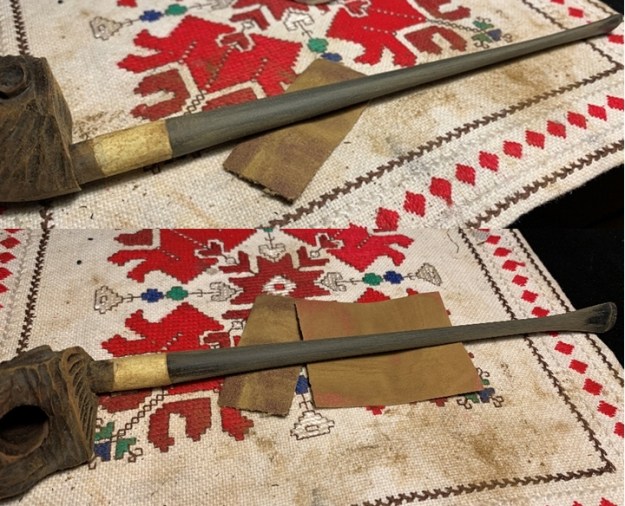
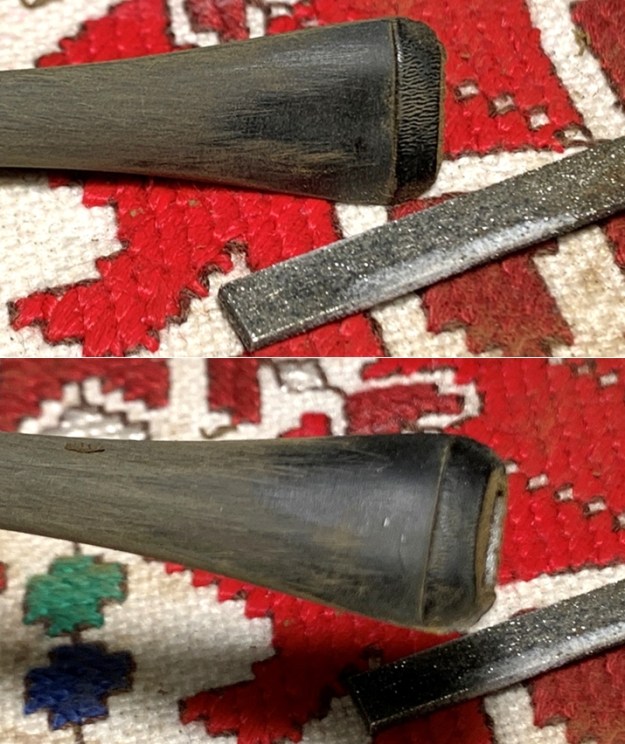
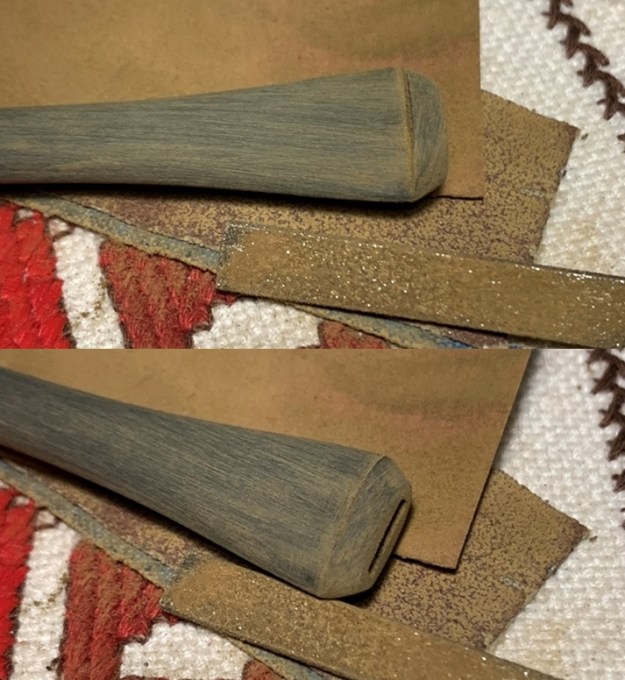
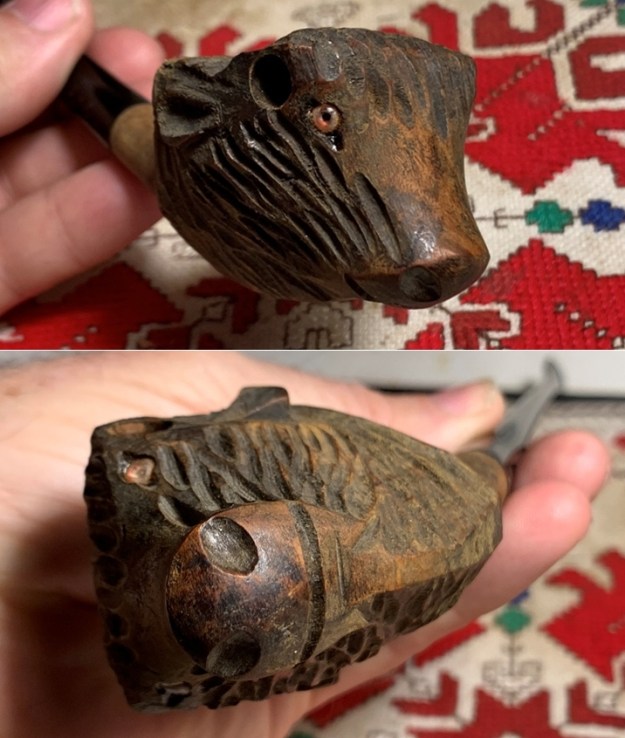
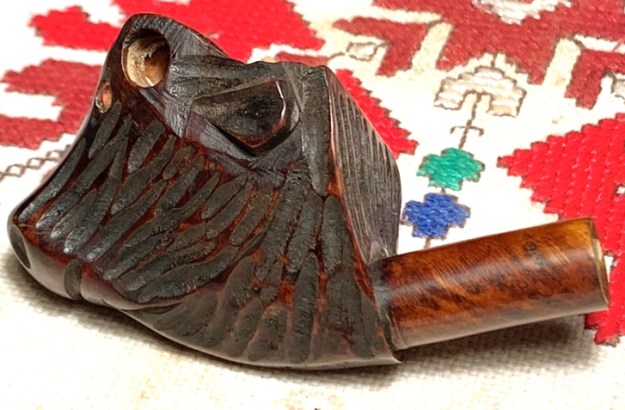
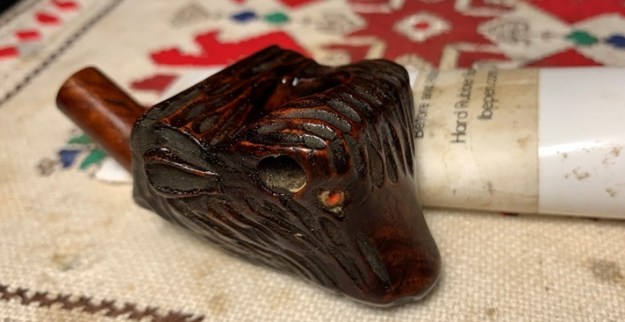
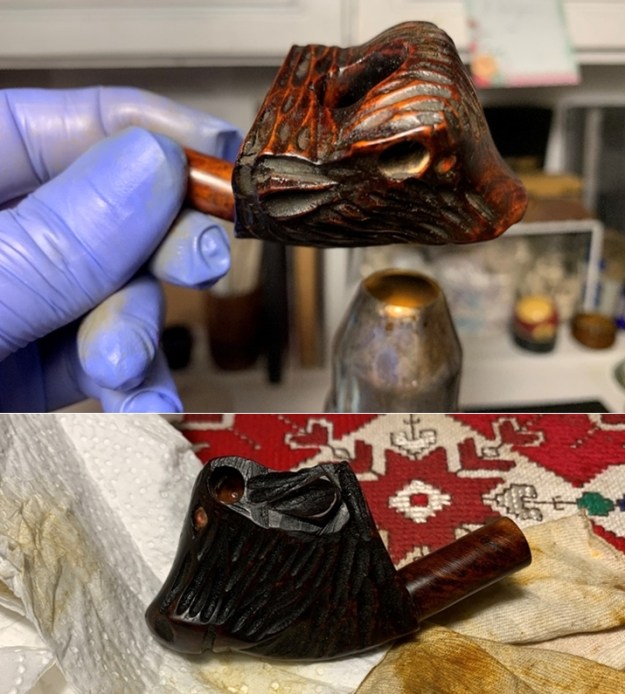
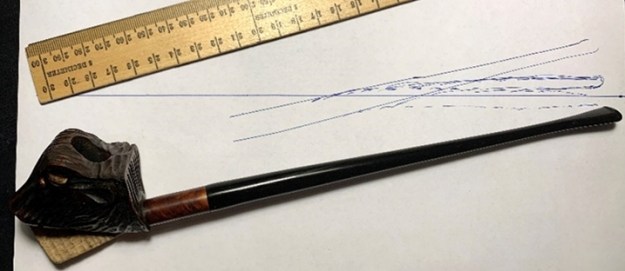
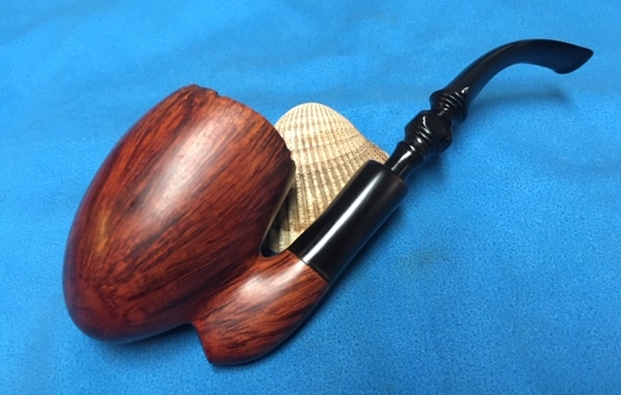
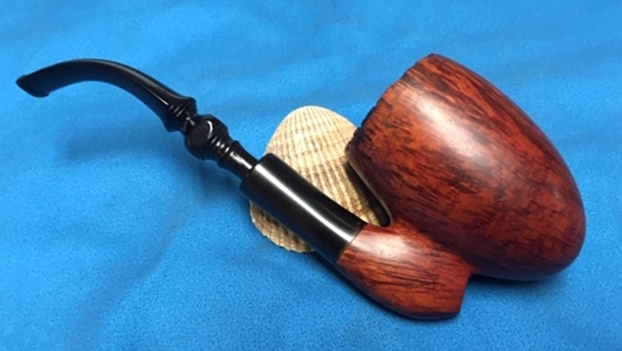
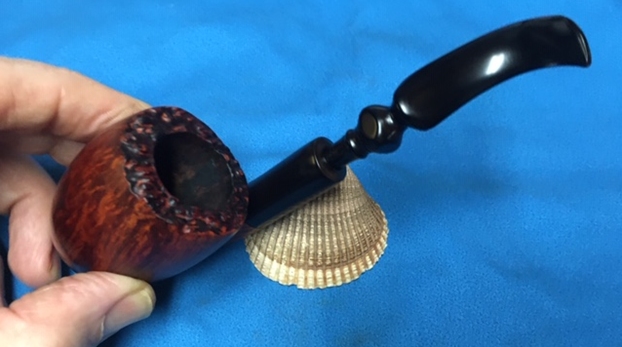
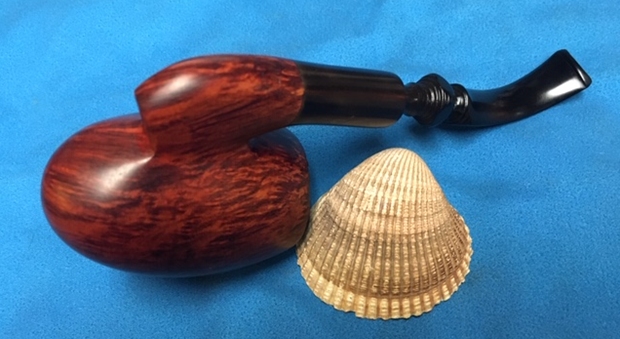
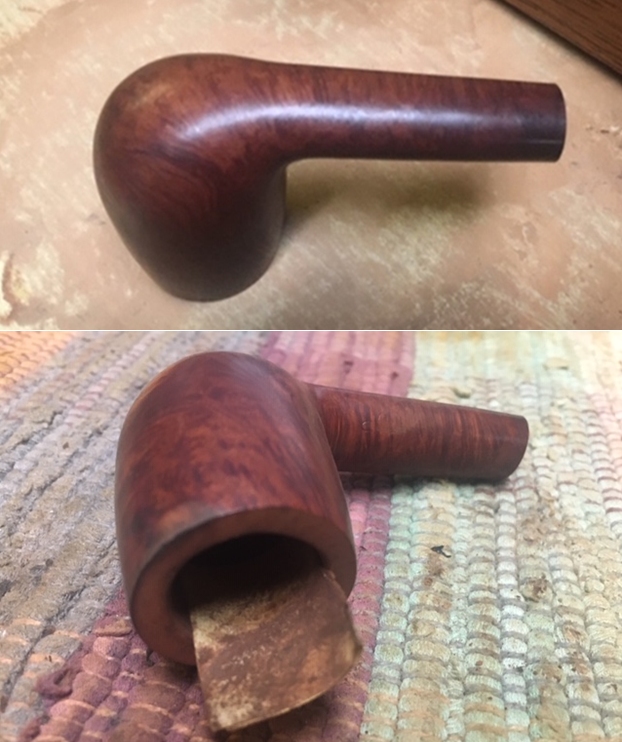
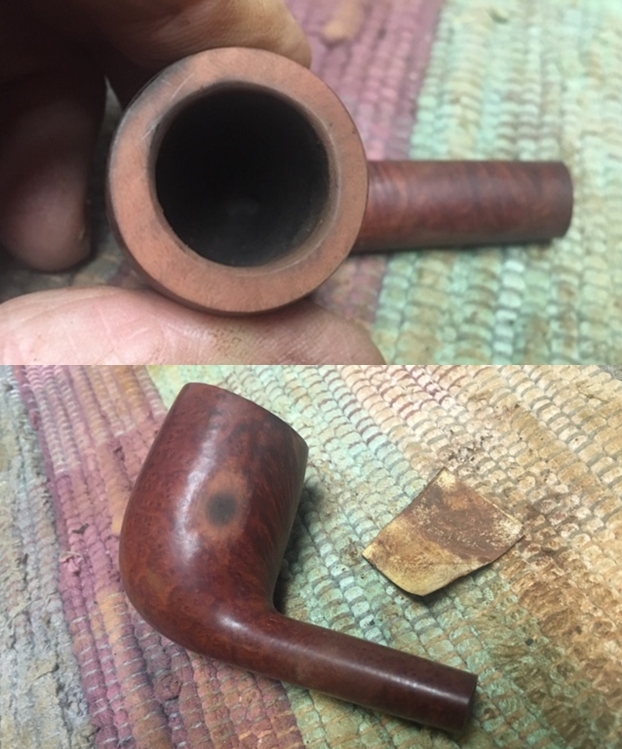
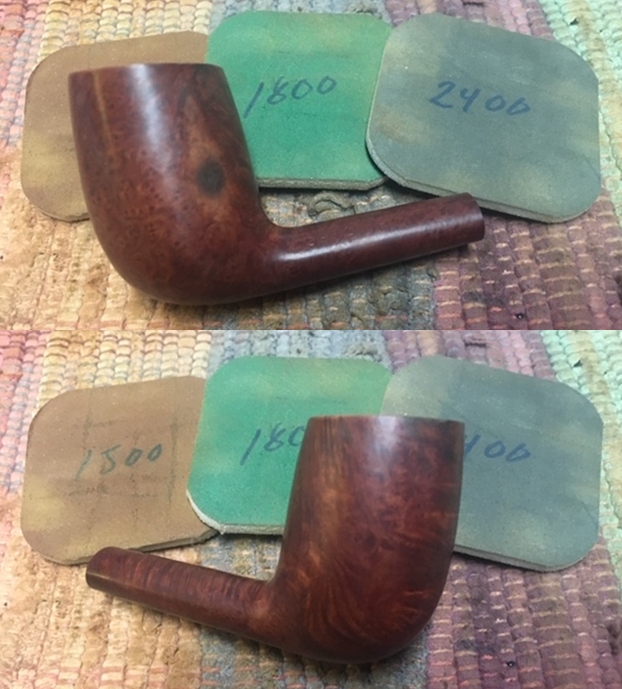
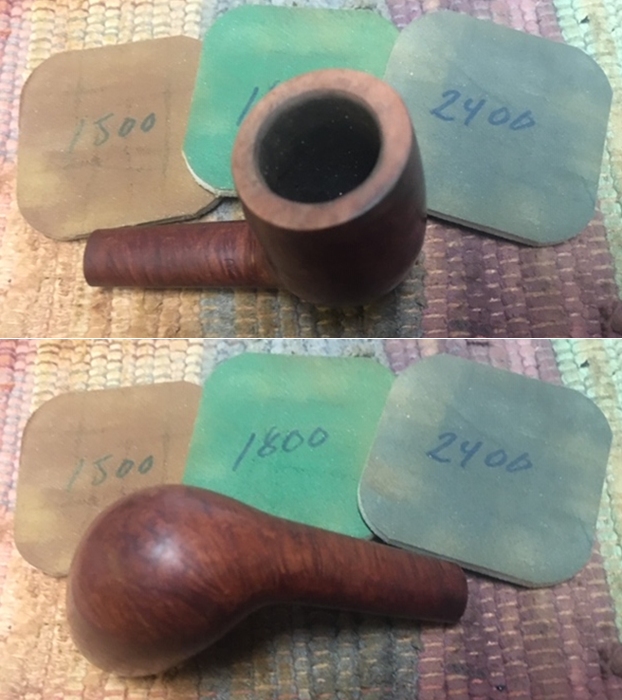
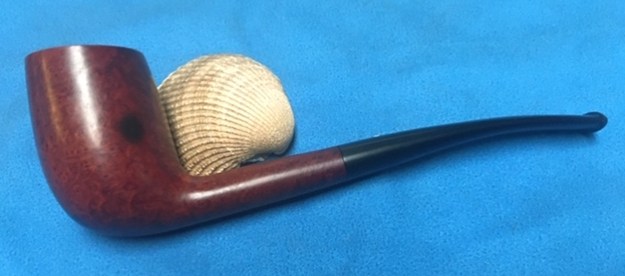
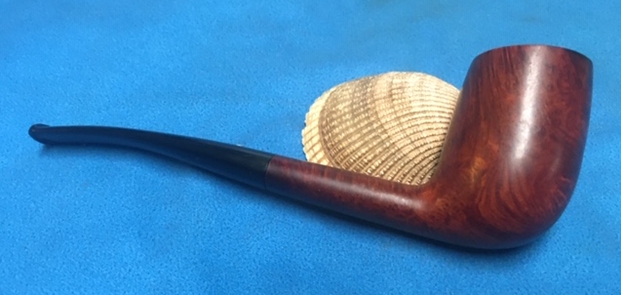
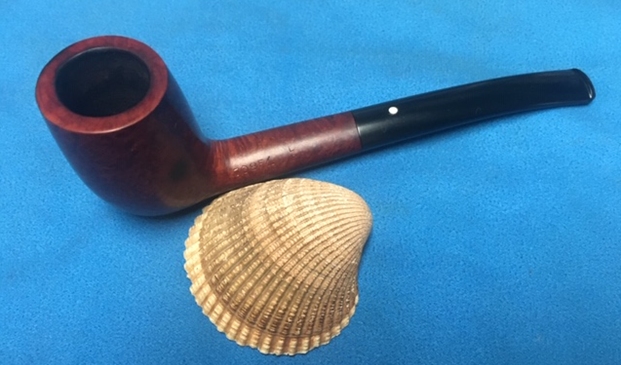
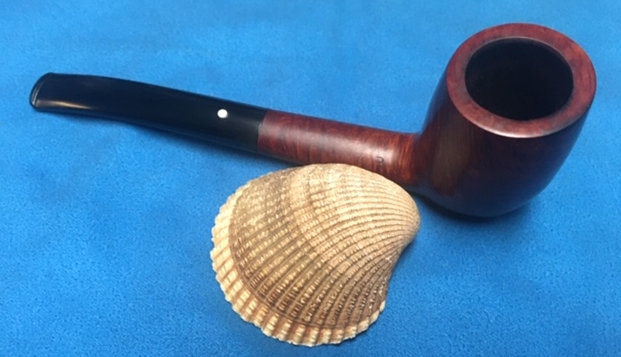
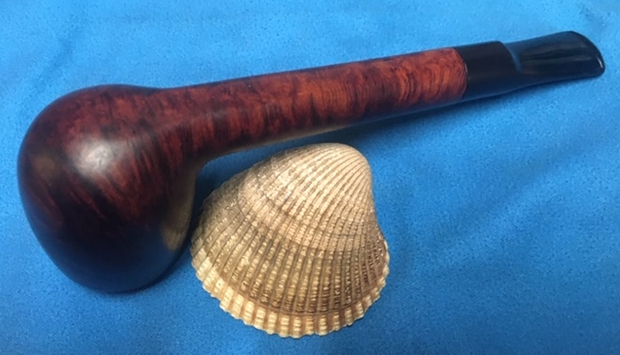
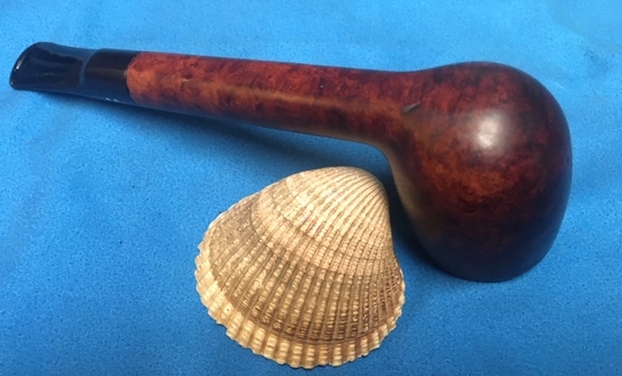
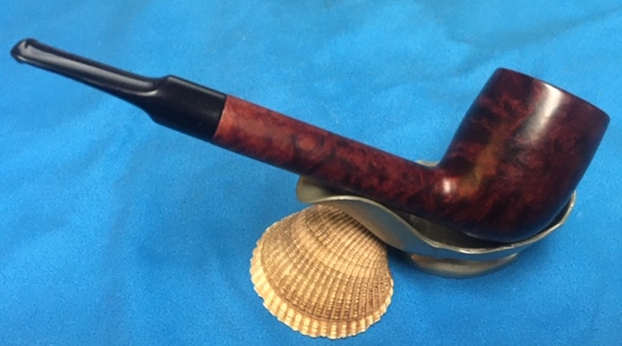
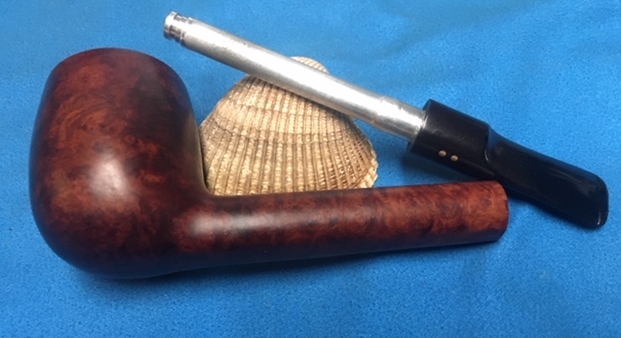
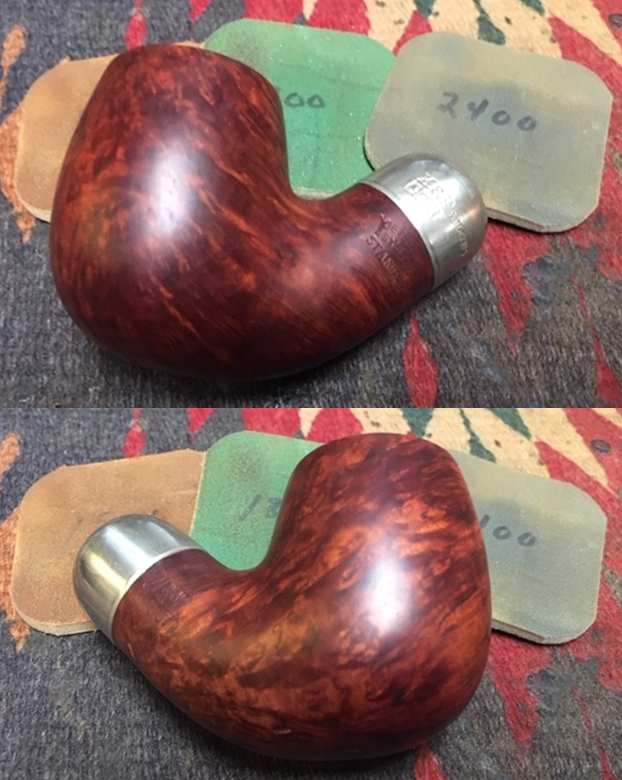
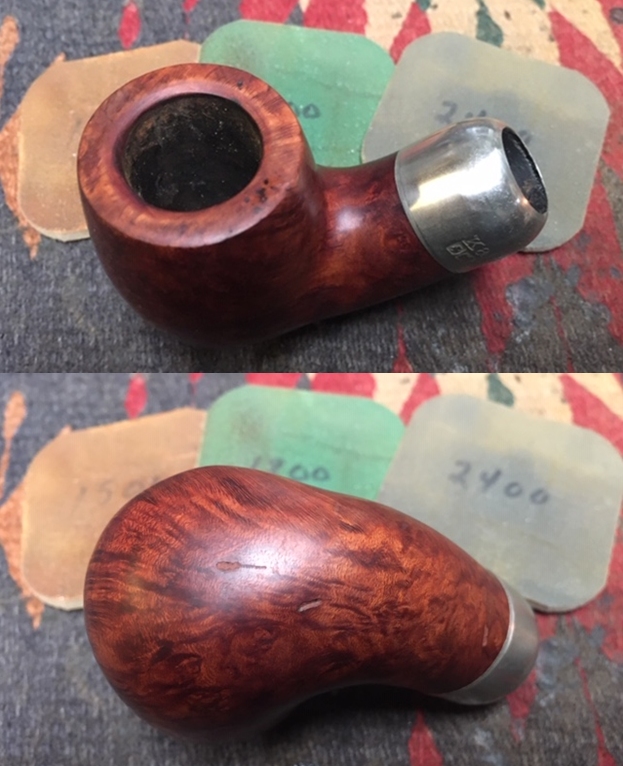
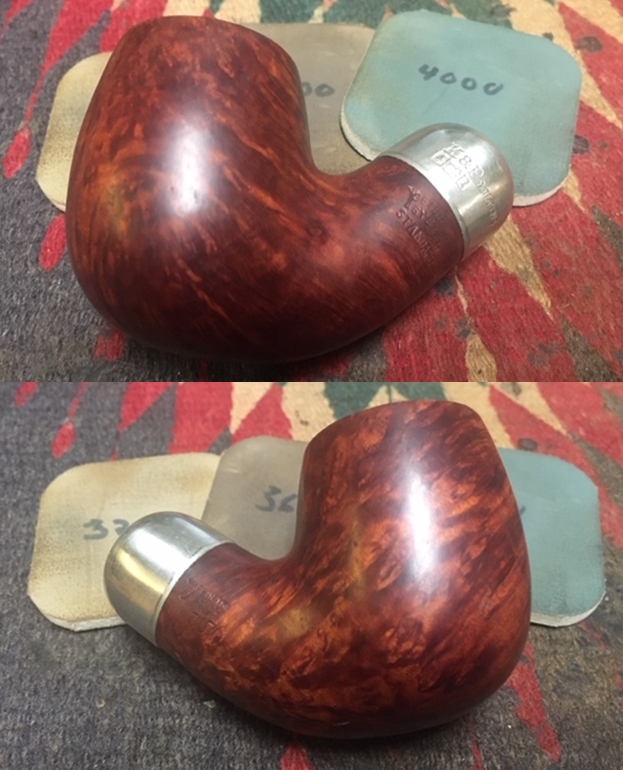
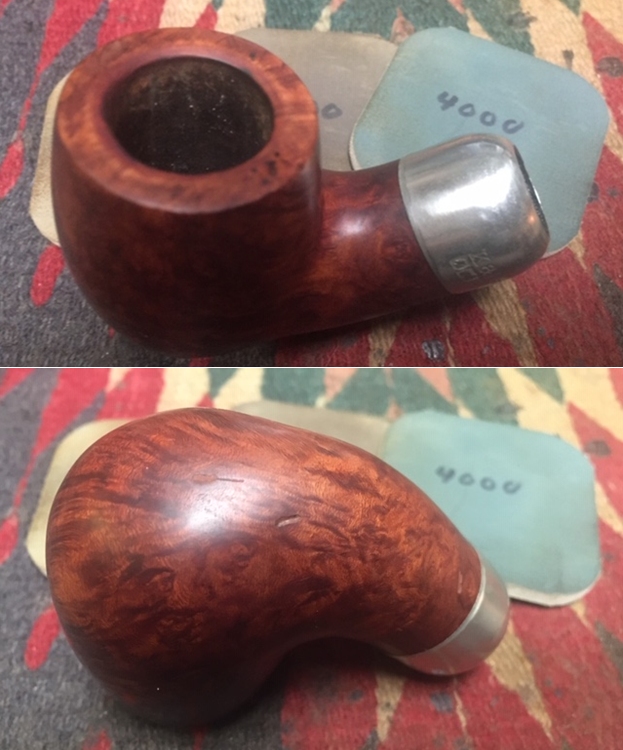
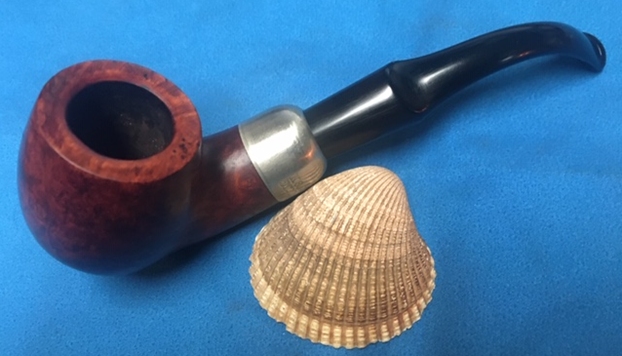
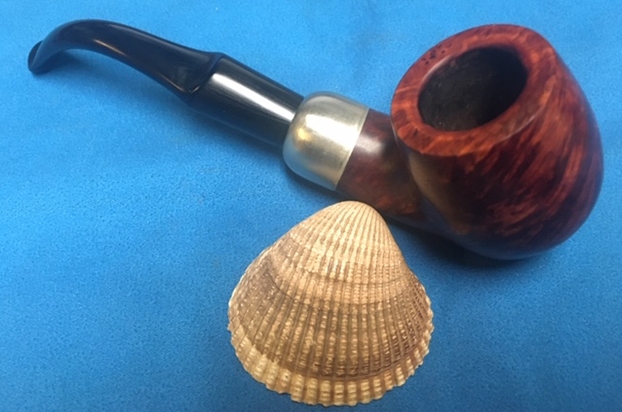
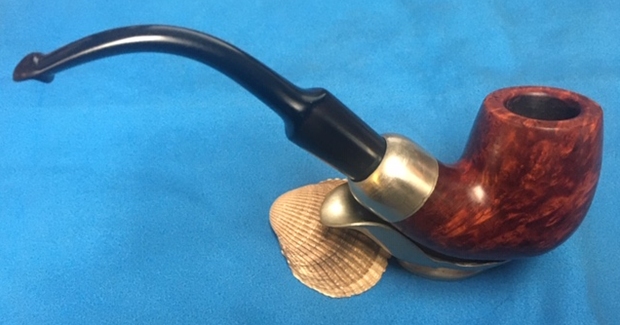
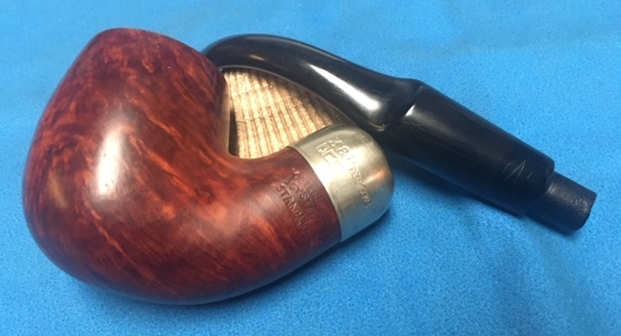
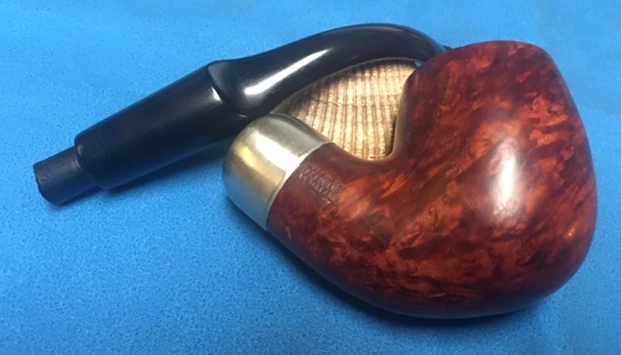
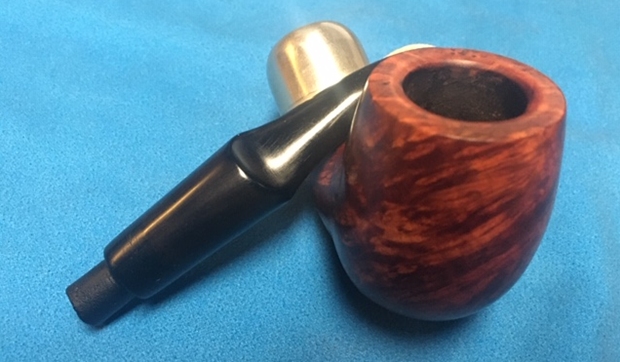
Rebirthing a Stem for Jennifer’s Dad’s Second Champ of Denmark 4 Freehand


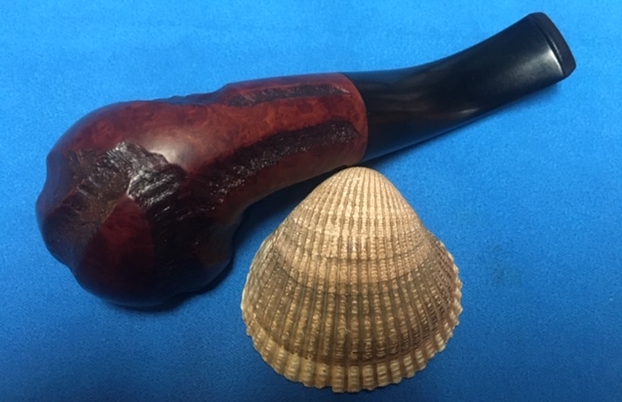
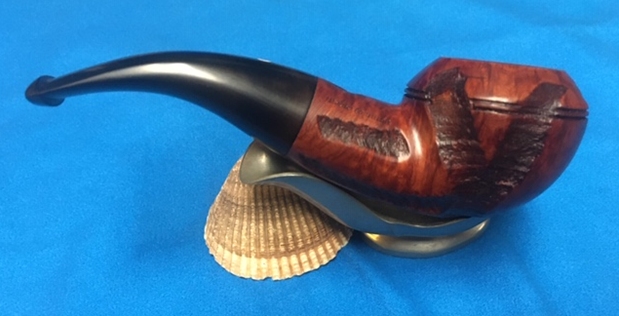
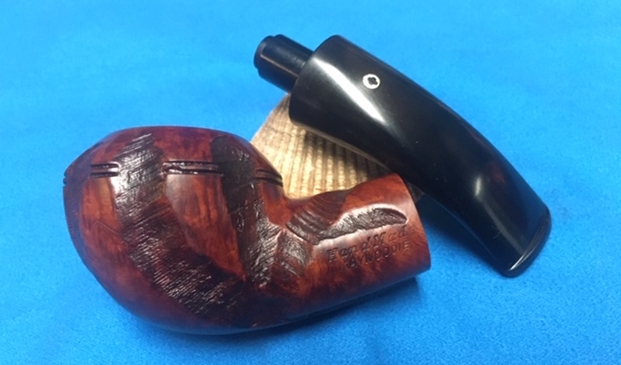
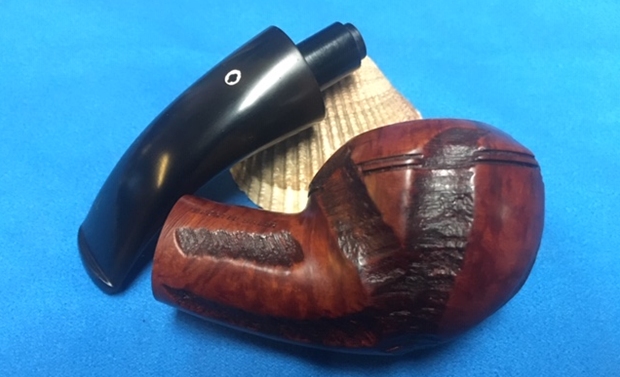
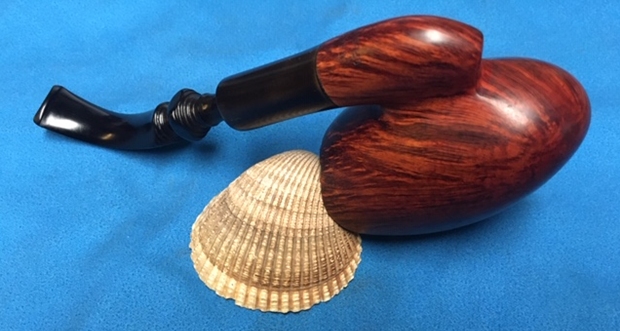
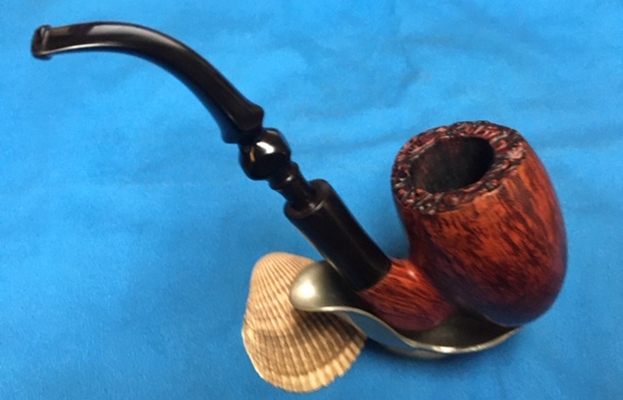
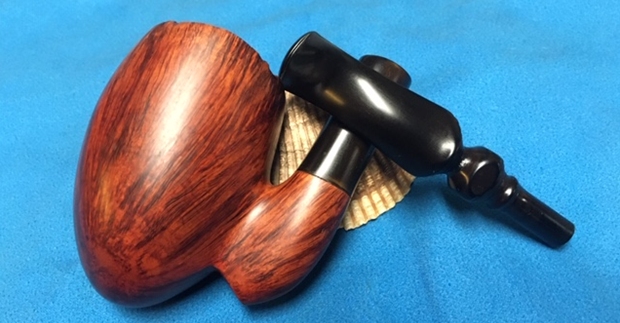
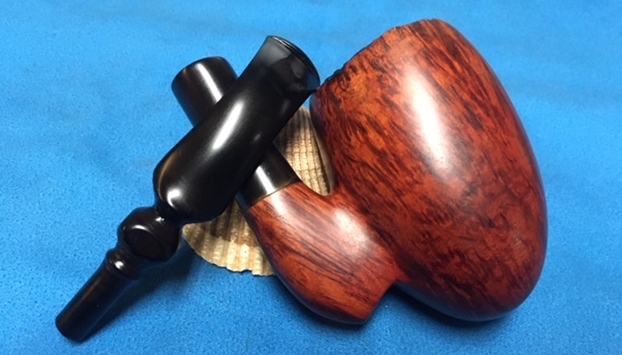
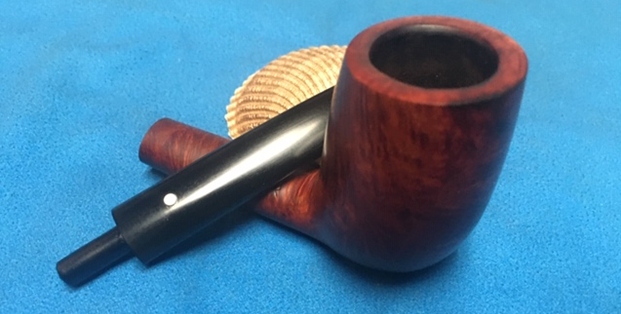
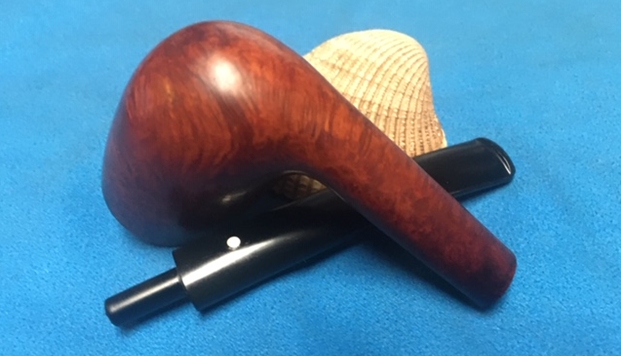
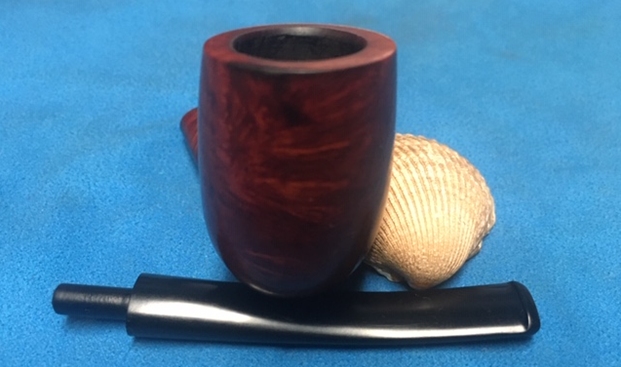
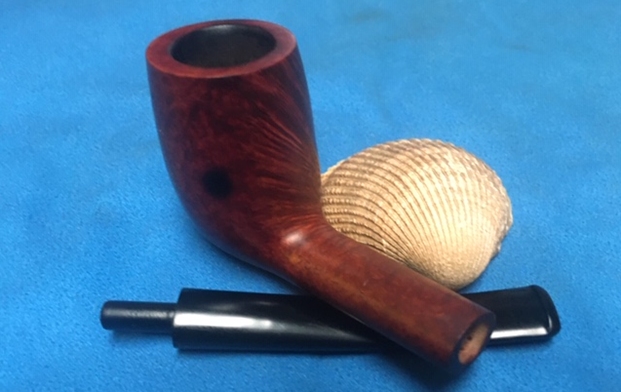
I decided to change things up a bit and work on another of Jennifer’s Dad’s pipes. For the next pipe from the estate of George Rex Leghorn I have chosen a nicely shaped Champ of Denmark Freehand. This one has been sitting for a while now while I debated what to do about the broken stem. I find that sometimes the best solutions come to me when I wait! You may not have read about this estate before, so I will retell the story. I received an email from Jennifer who is a little older than my 64+ years about whether I would be interested in her Dad’s pipes. My brother Jeff and I have been picking up a few estates here and there, so I was interested. Here is the catch – she did not want to sell them to me but to give them to me to clean up, restore and resell. The only requirement she had was that we give a portion of the sales of the pipes to a charity serving women and children. We talked about the organization I work for that deals with trafficking and sexual exploitation of women and their children and she decided that would be a great way to carry on the charitable aspect of her Dad’s character. With some great conversation back and forth she sent the pipes to Jeff and he started the cleanup process on them. Once he had finished cleaning them all he sent them to me to do my work on them.

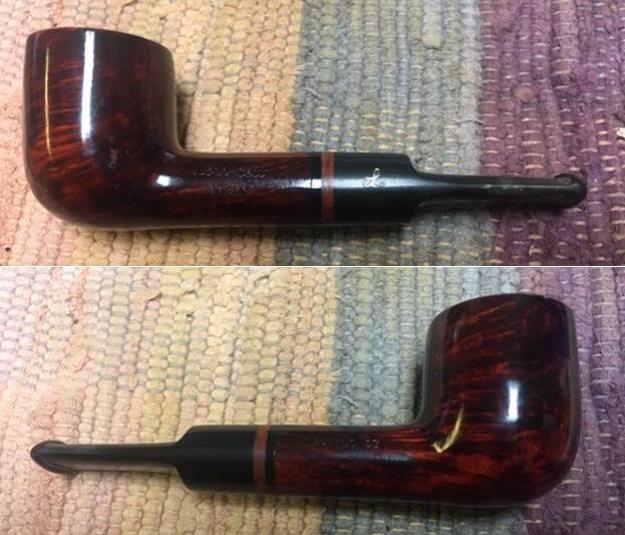
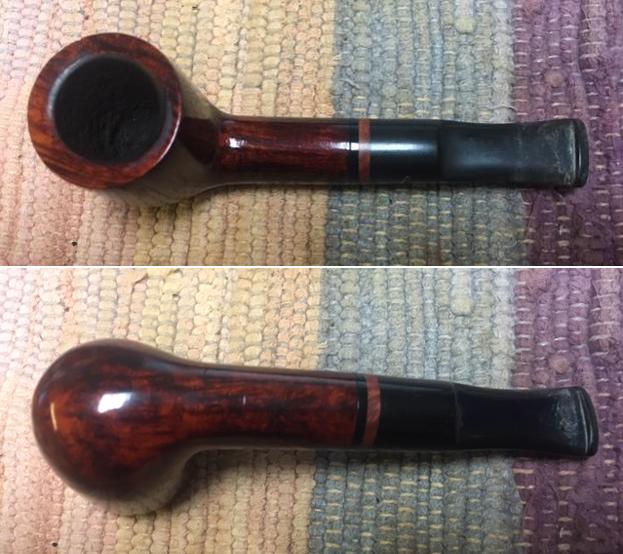
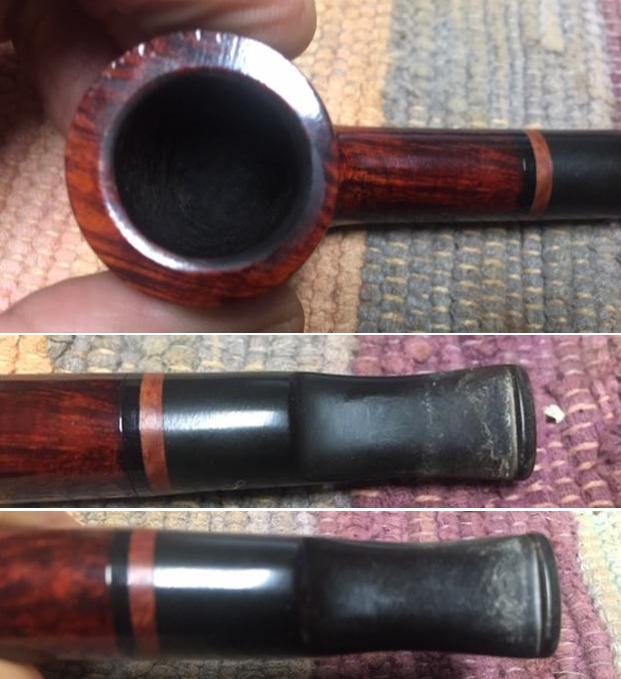
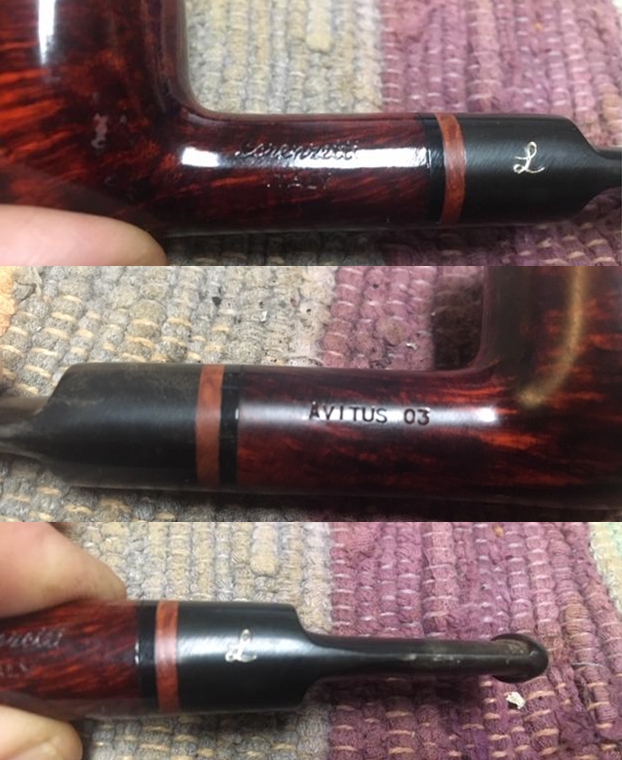
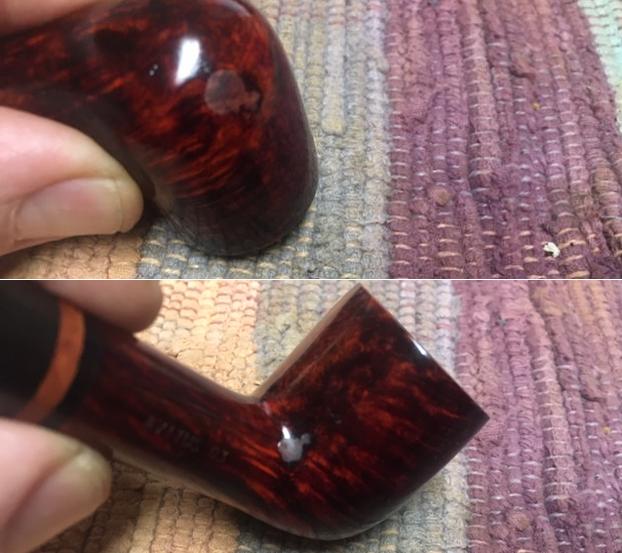
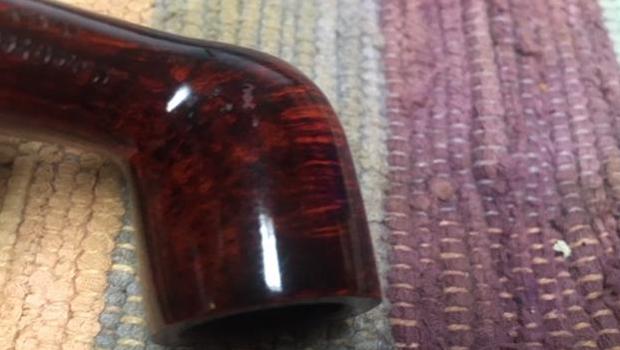
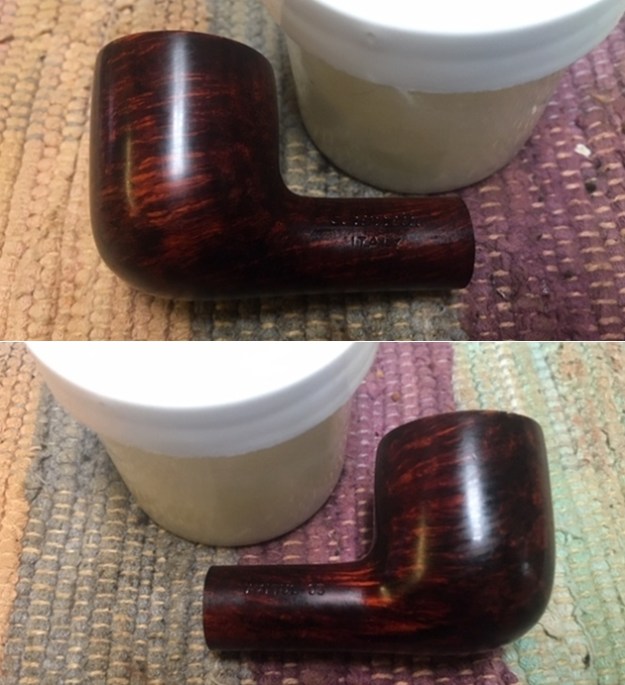
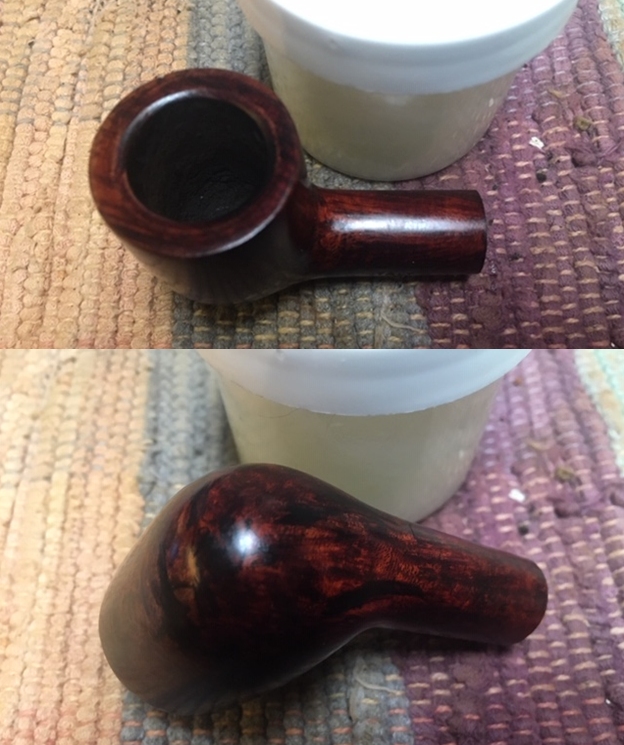
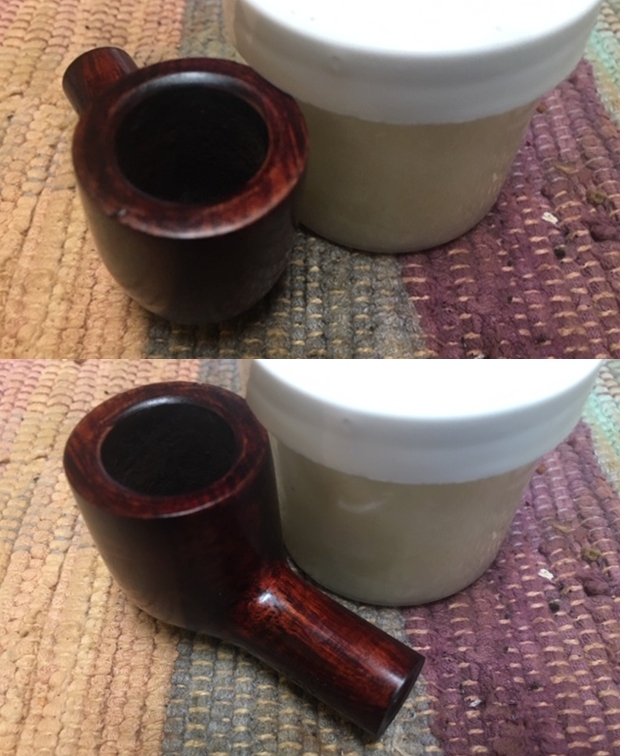
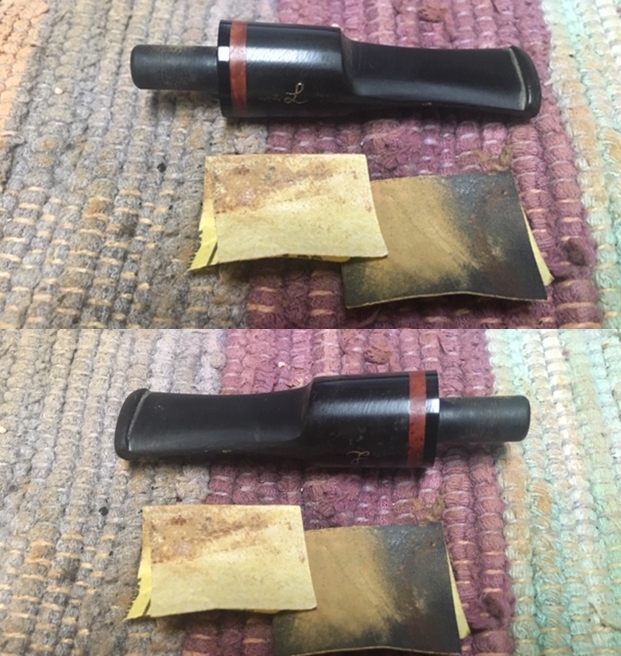
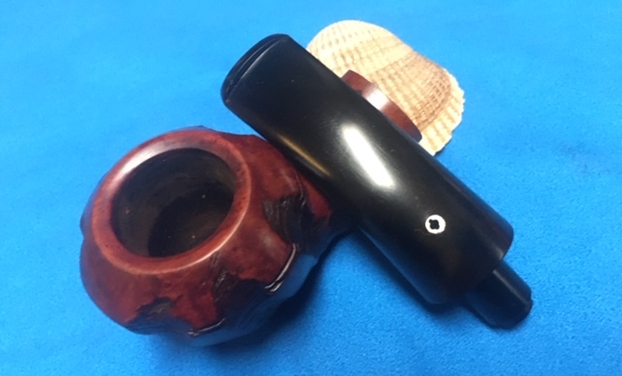
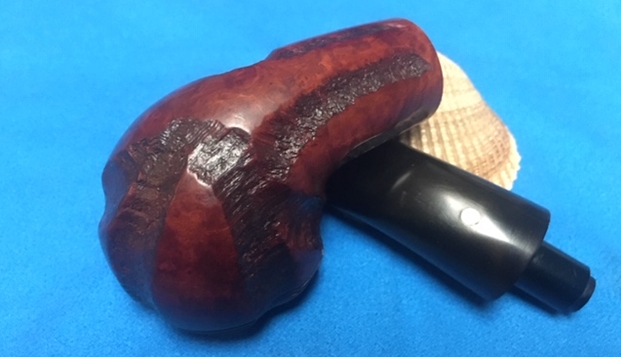
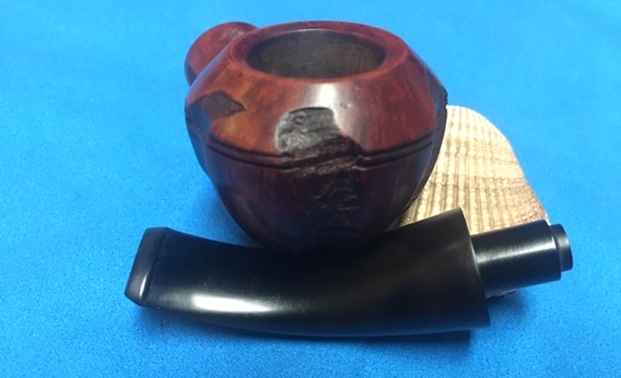
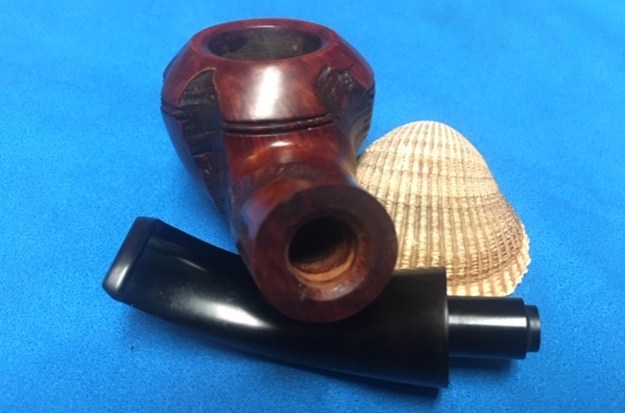
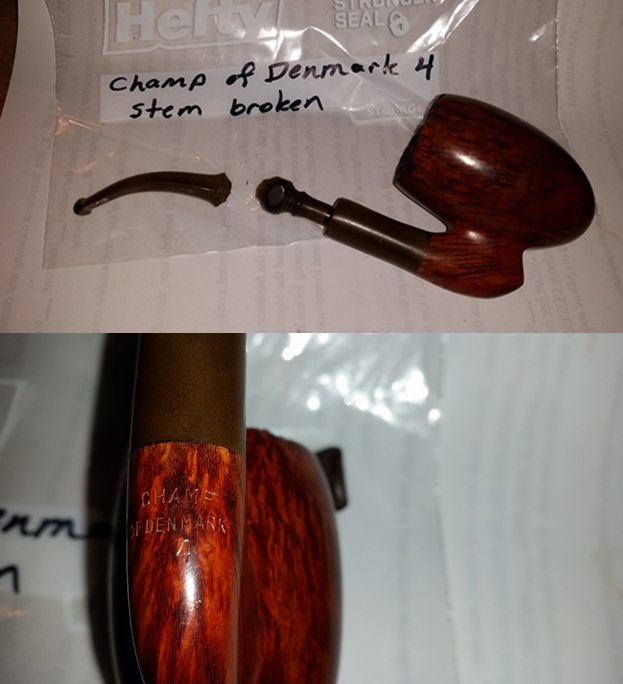
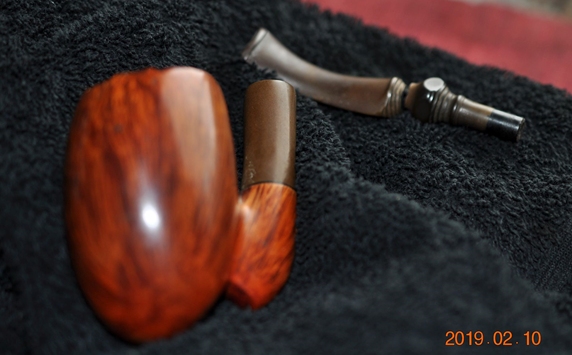
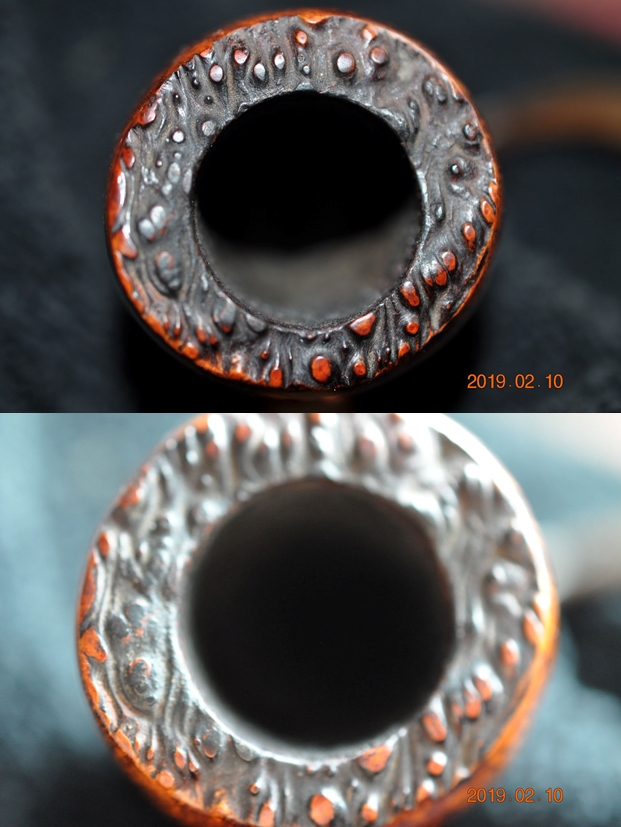
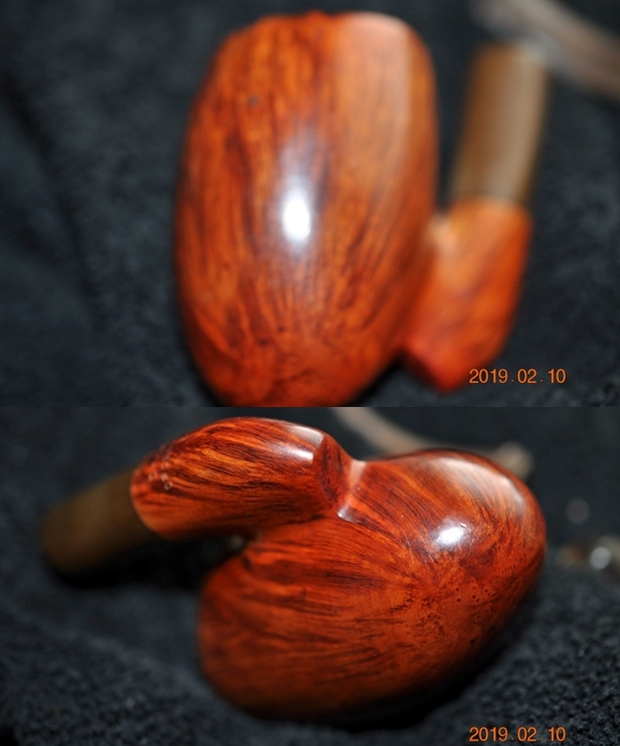
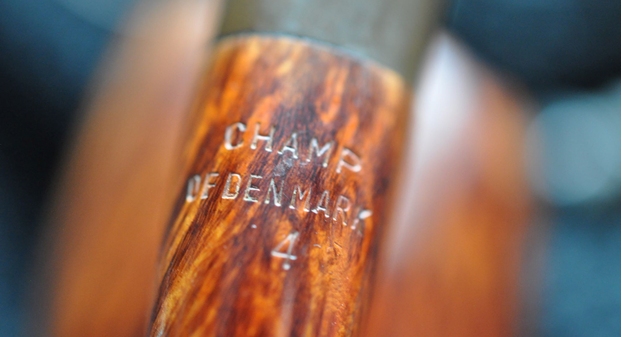
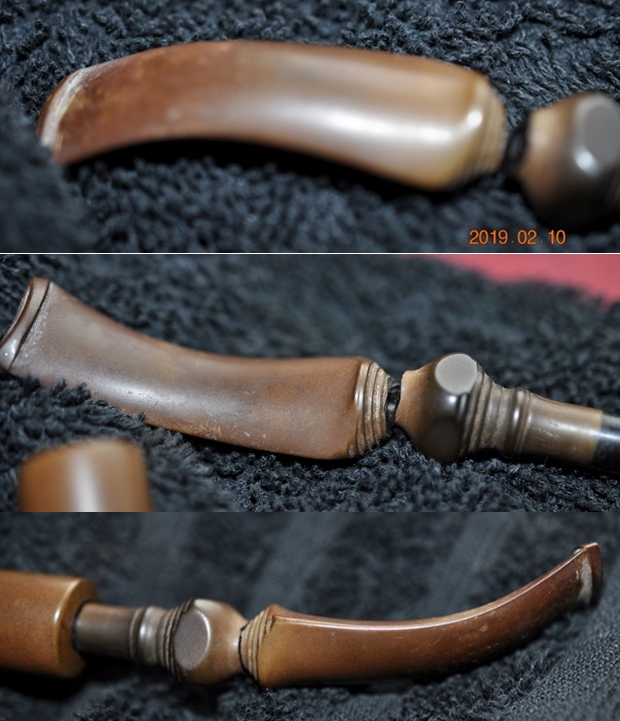
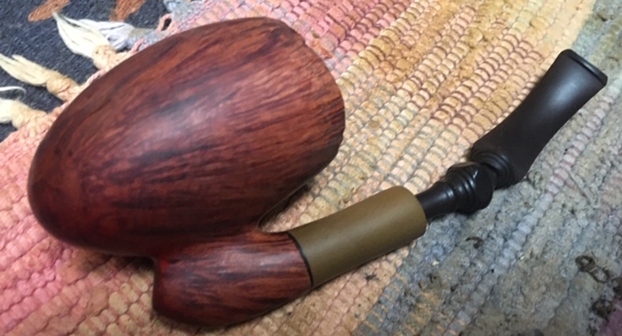
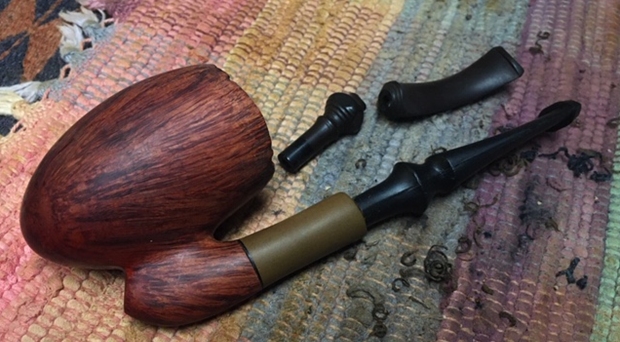
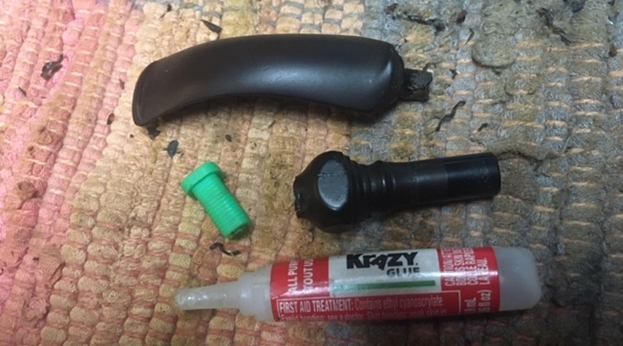
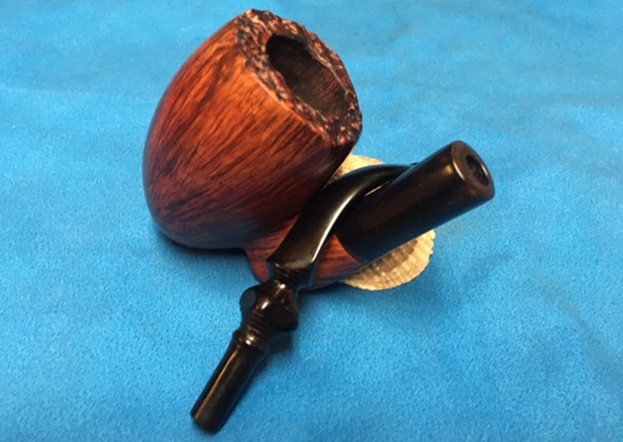
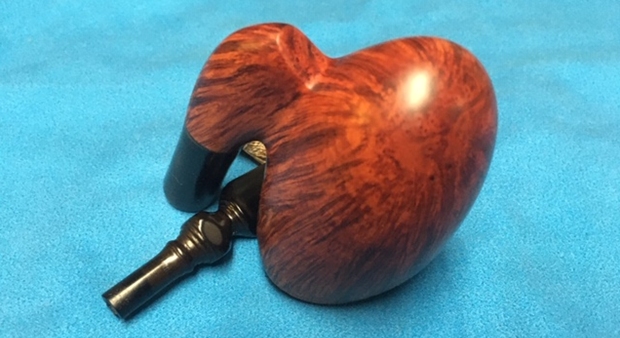
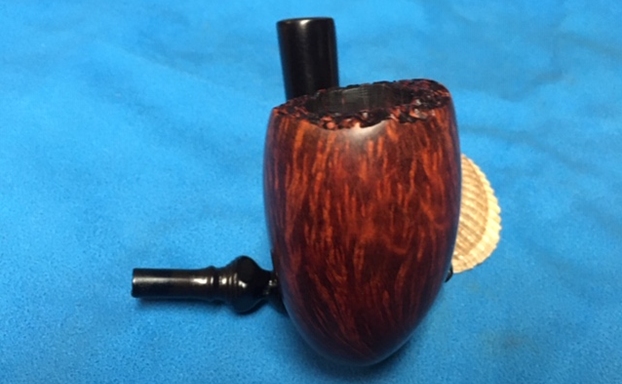
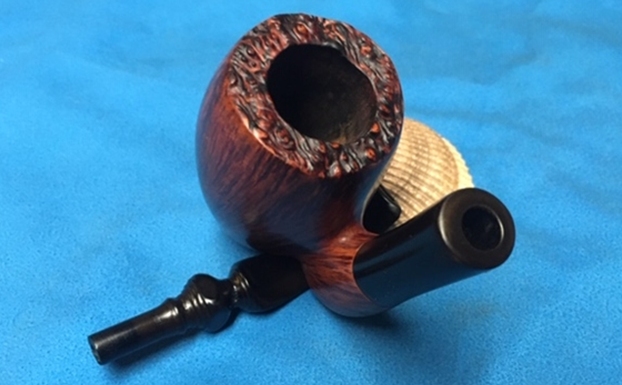
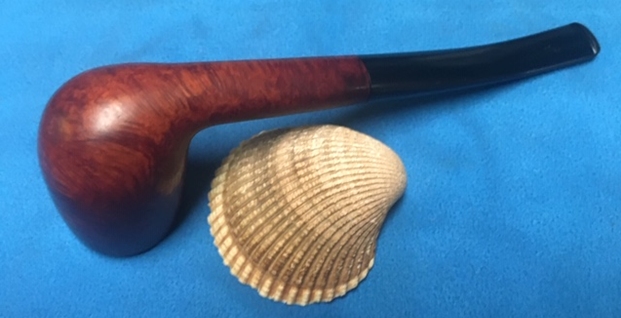
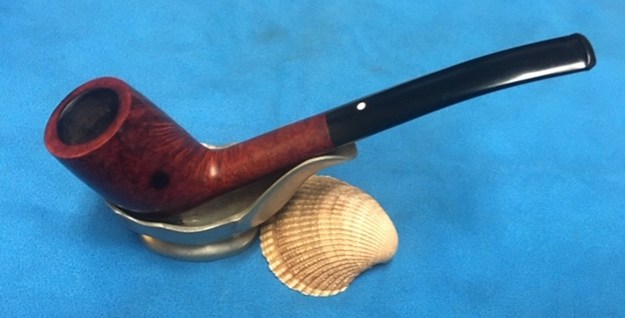
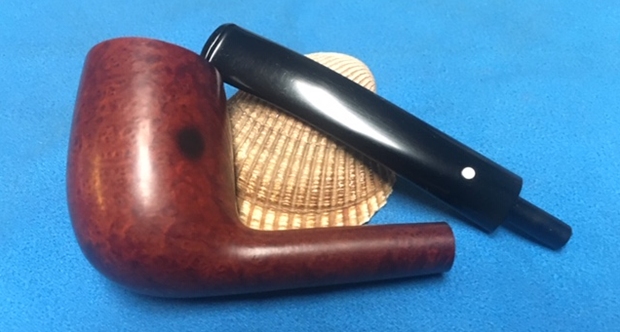
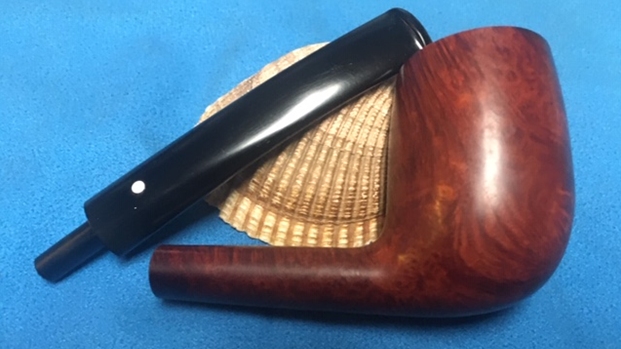
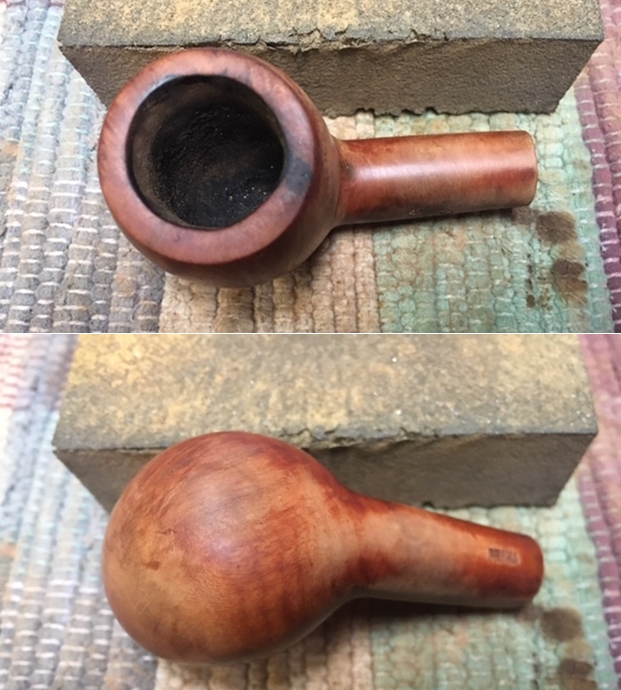
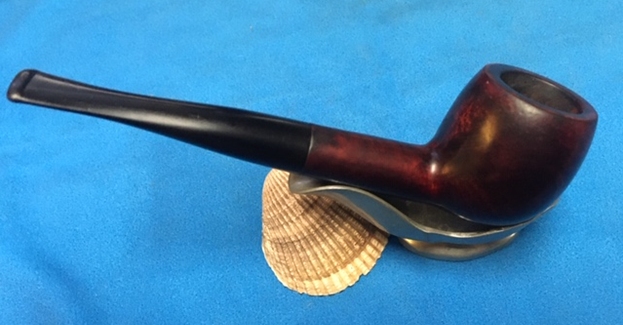
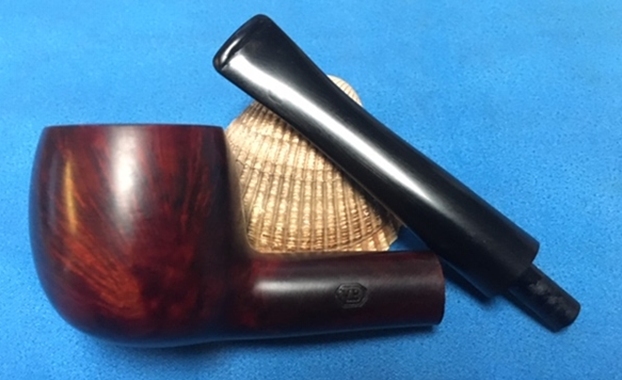
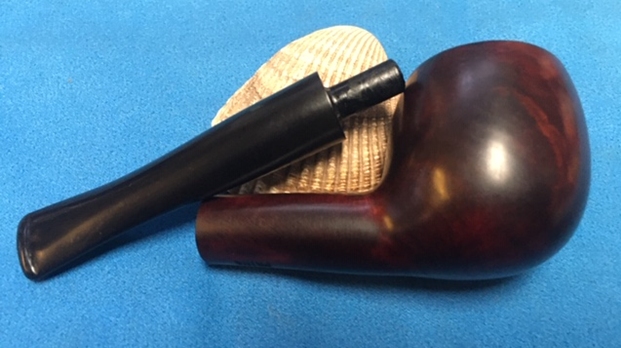
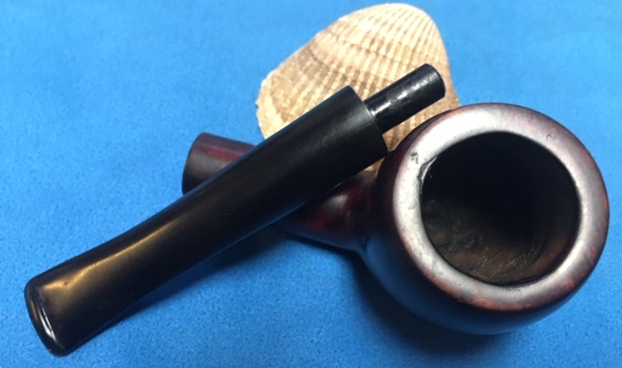
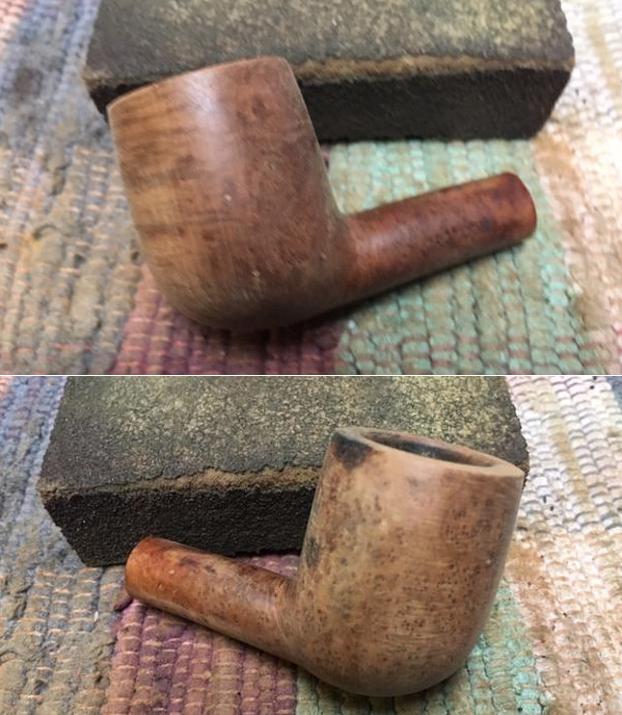
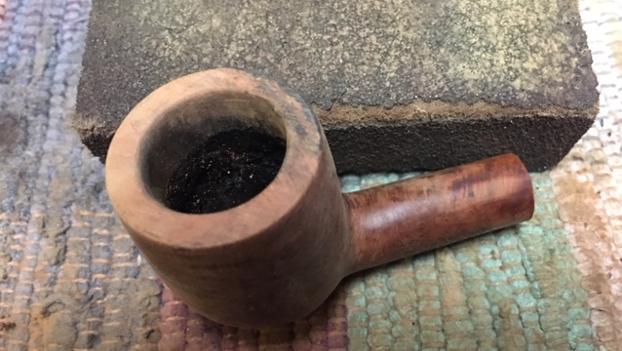
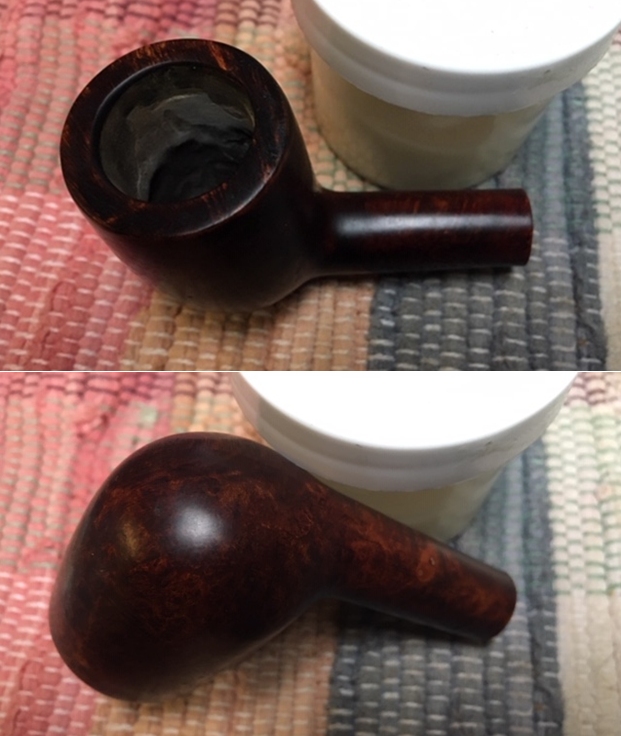
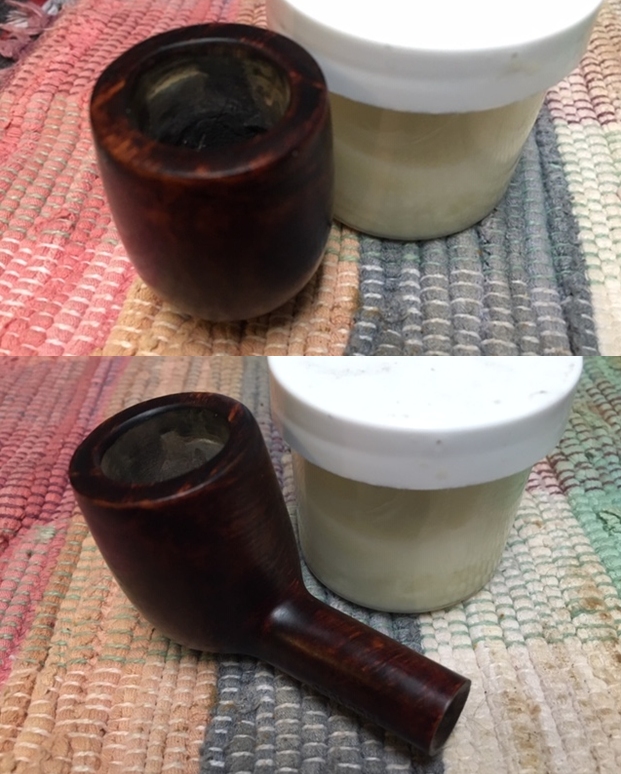
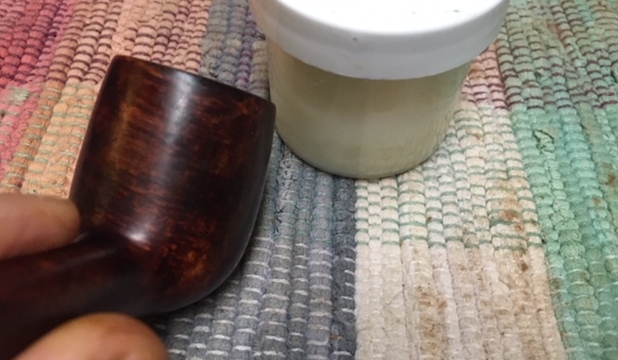
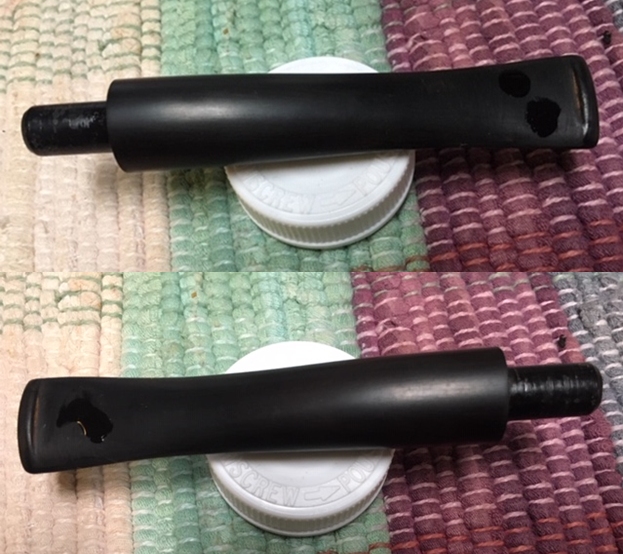
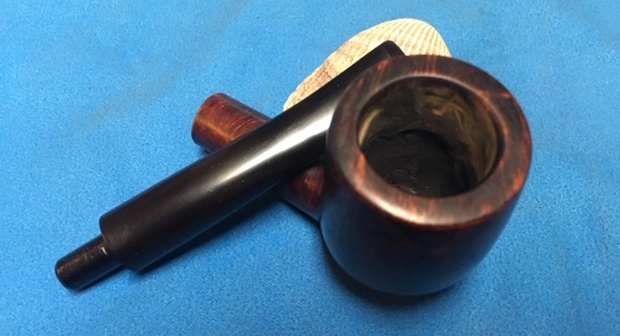
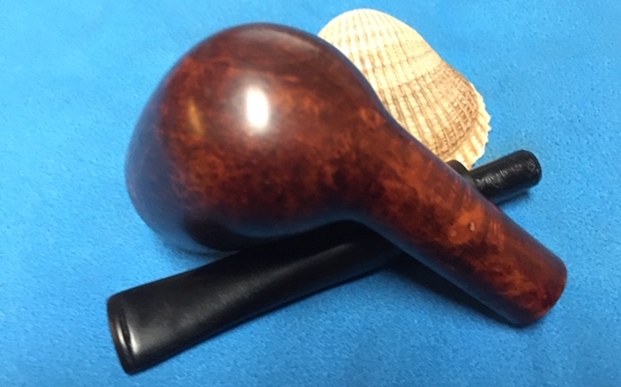
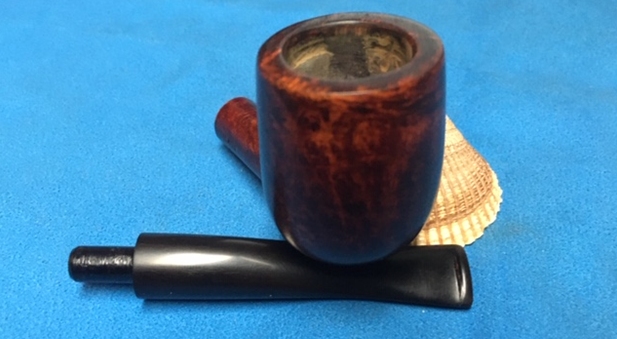
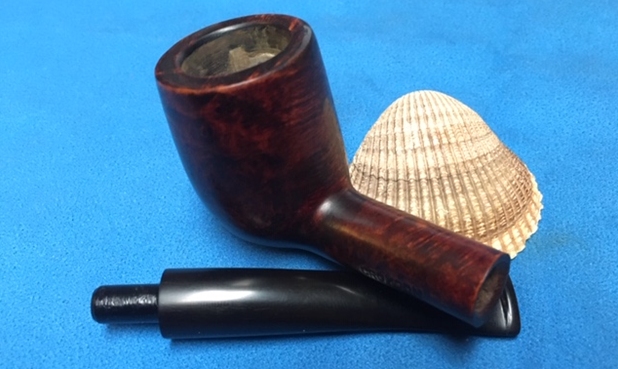
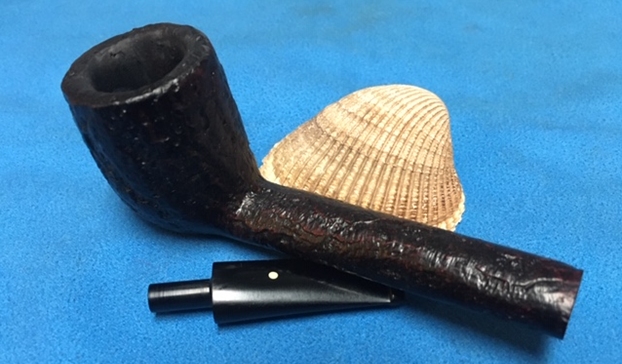
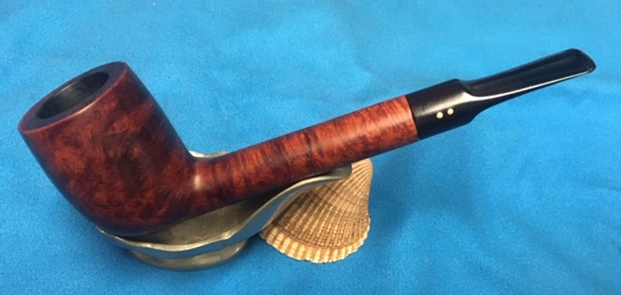
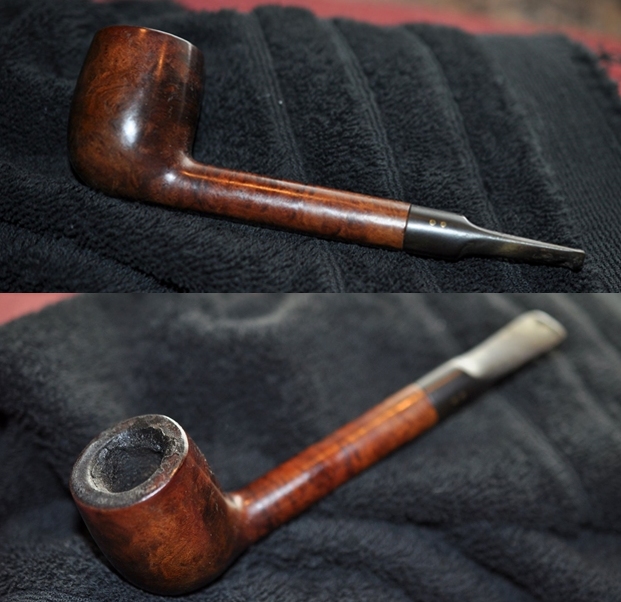
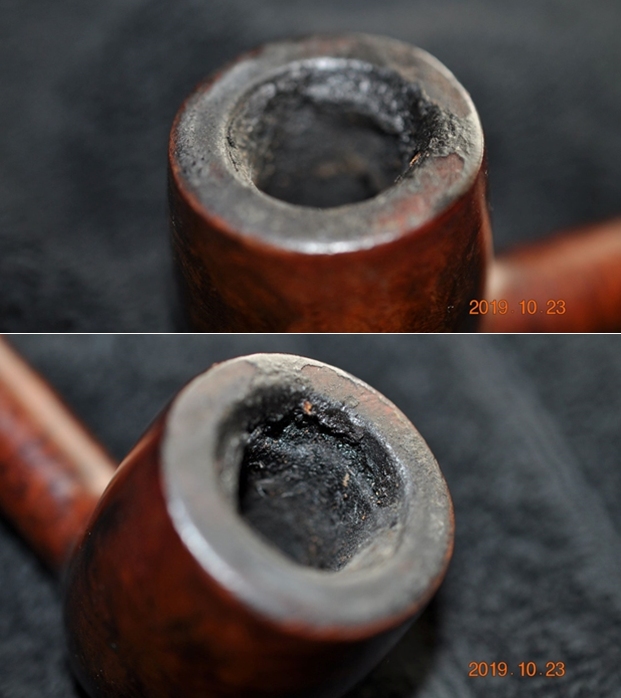
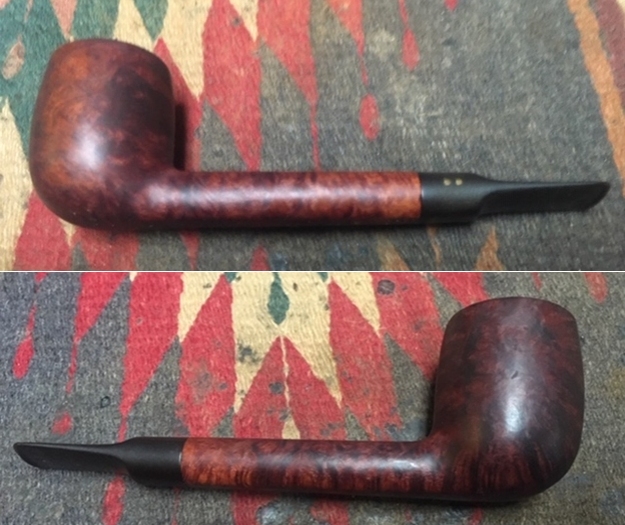
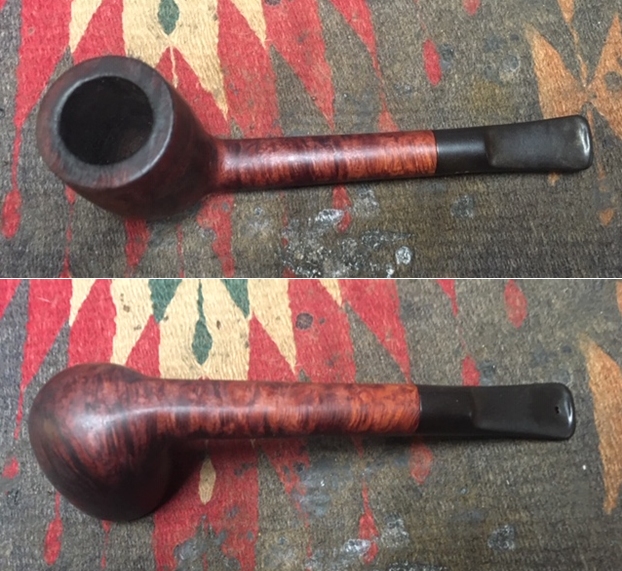
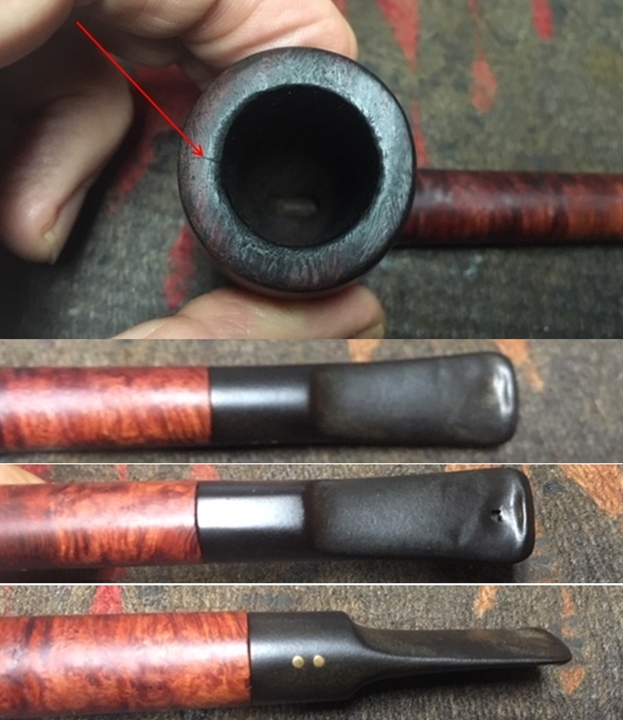
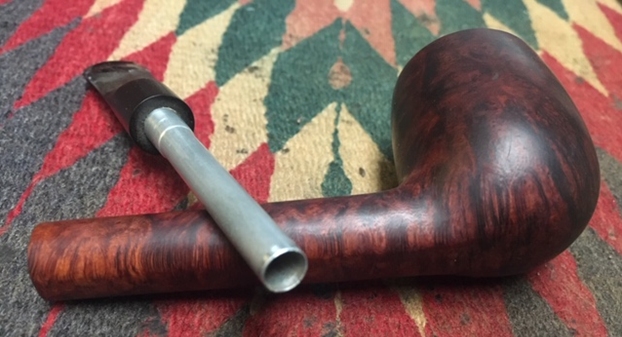
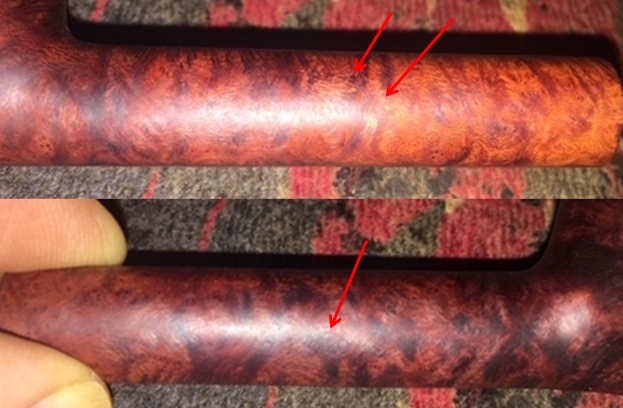
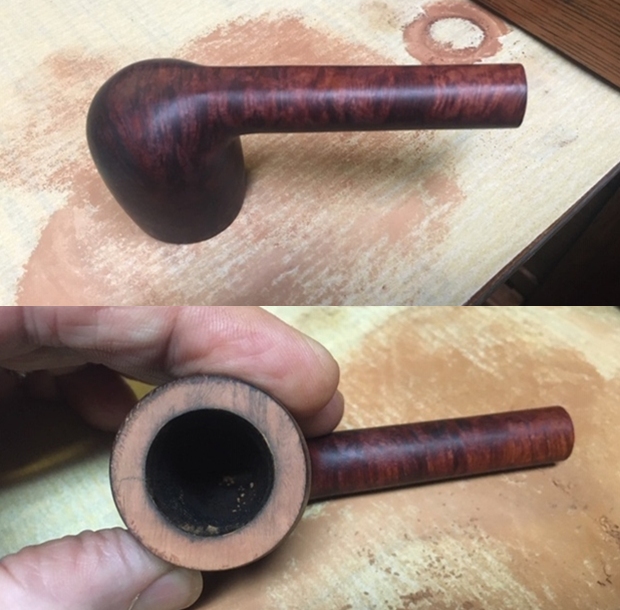
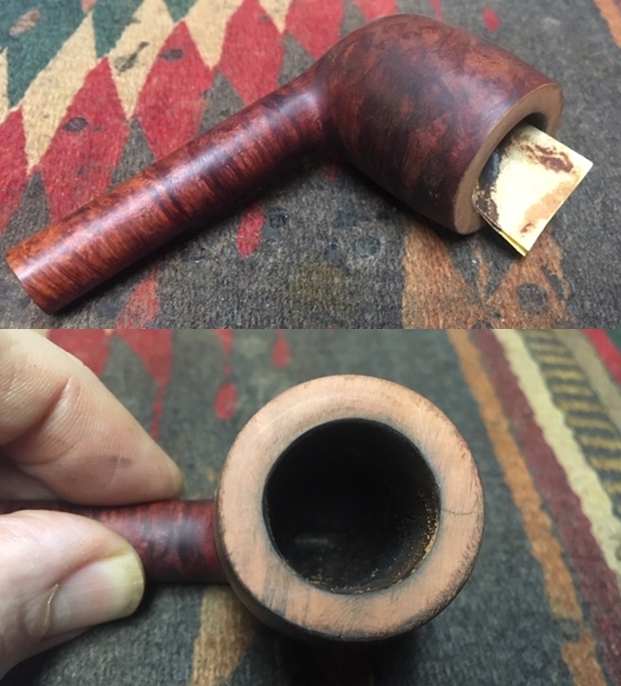
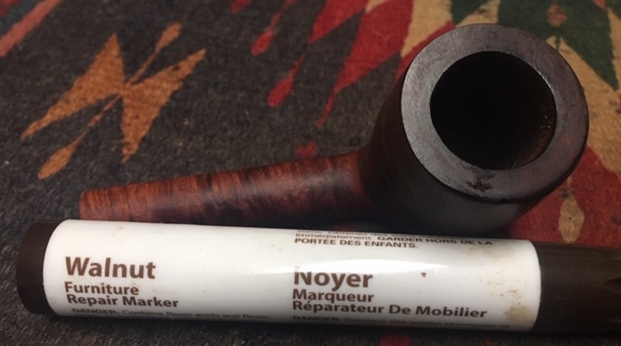
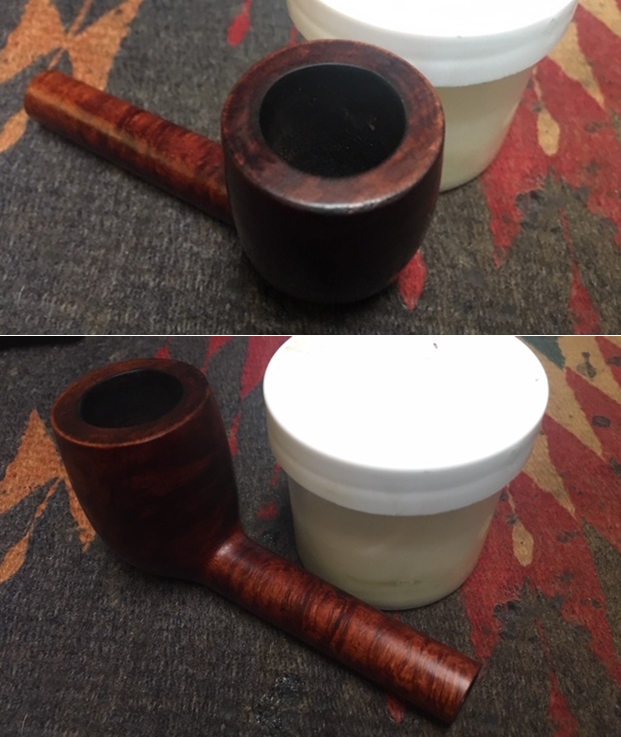
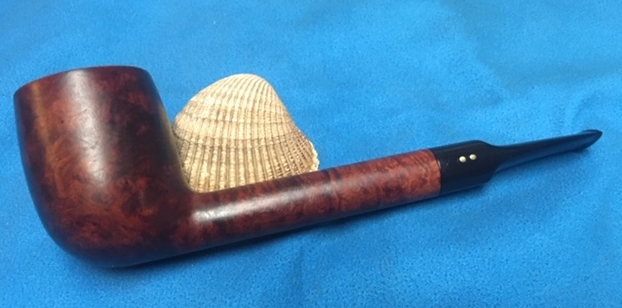
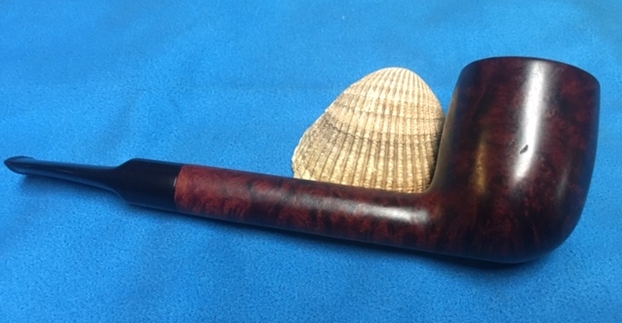
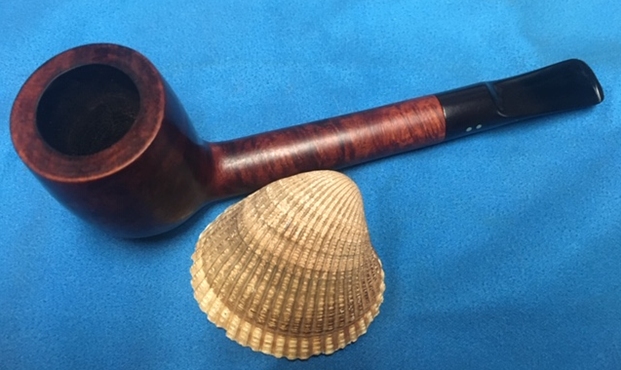
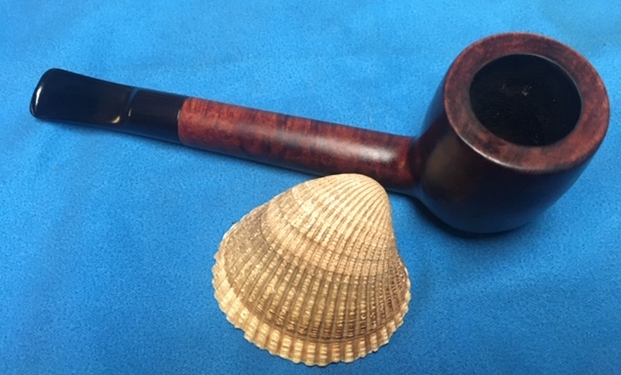
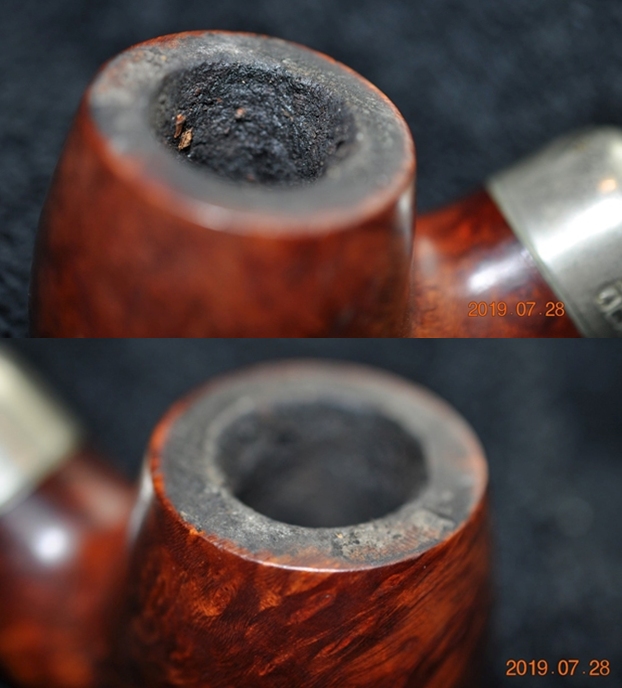
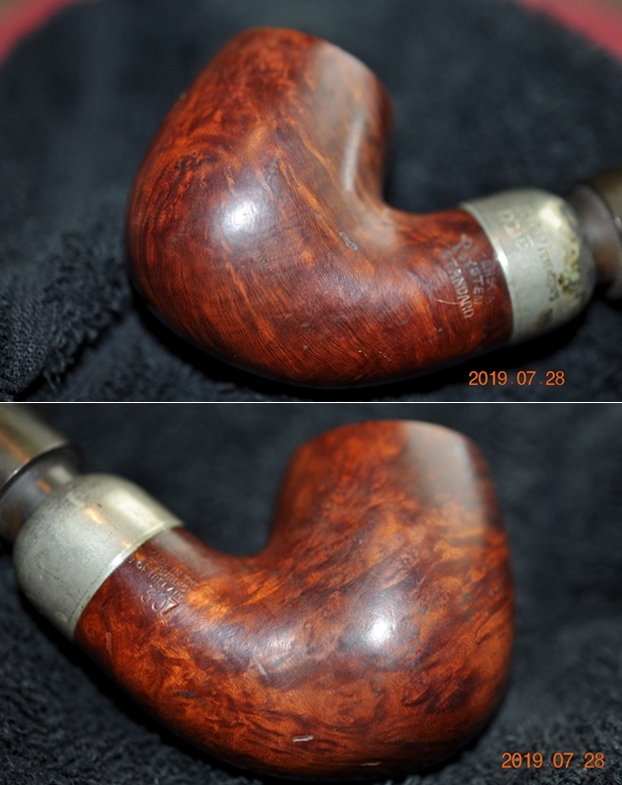
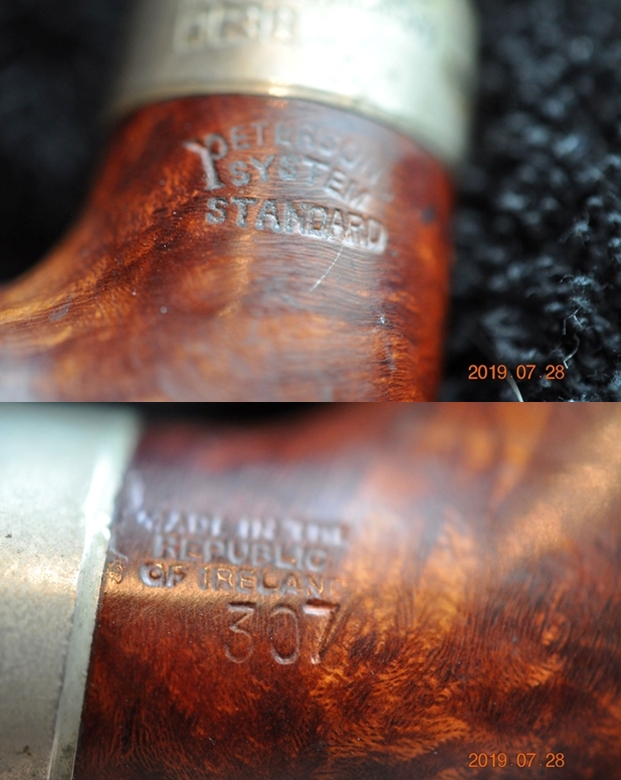
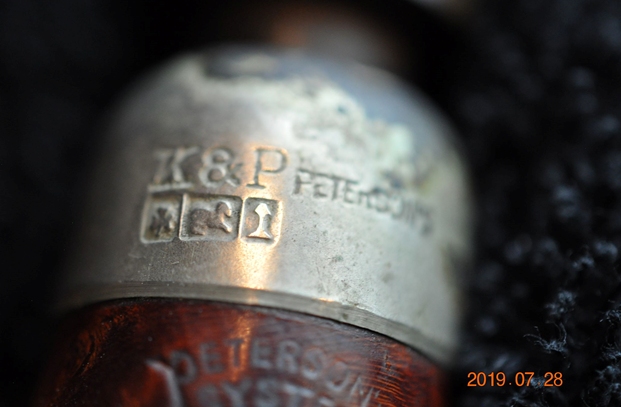
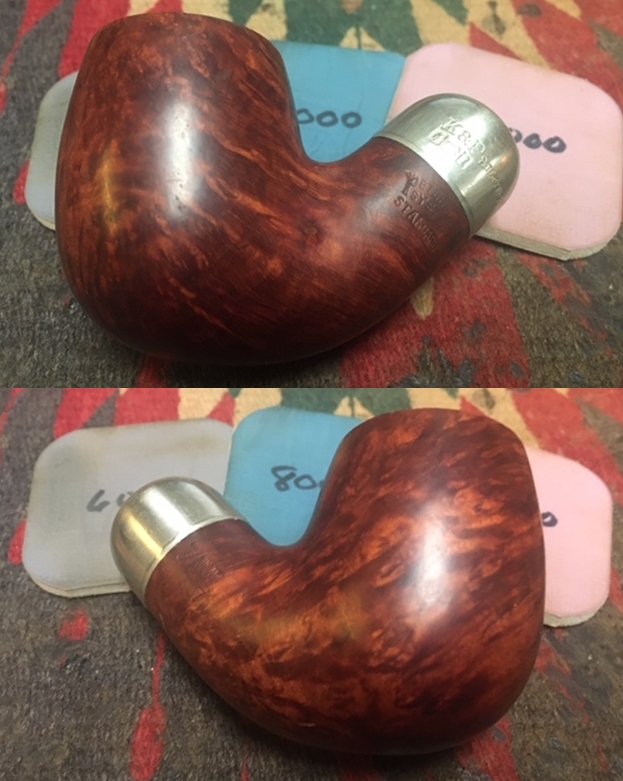
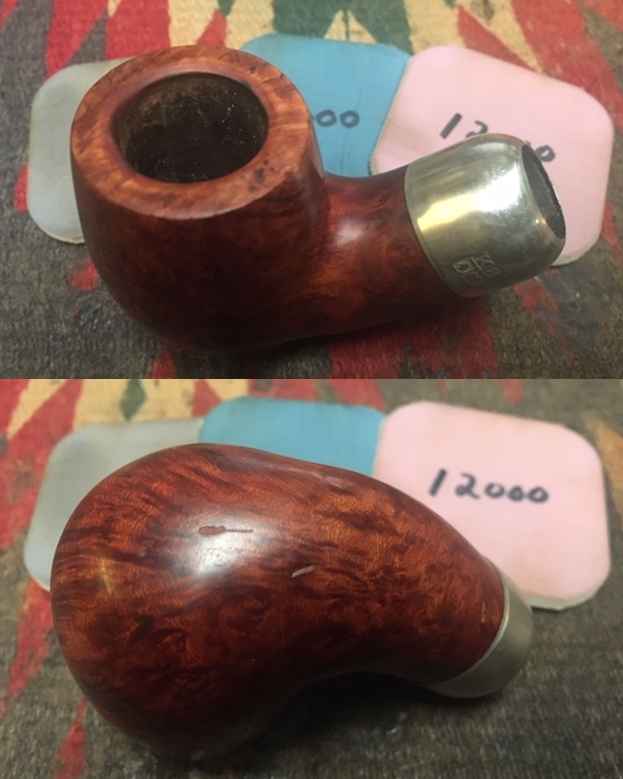
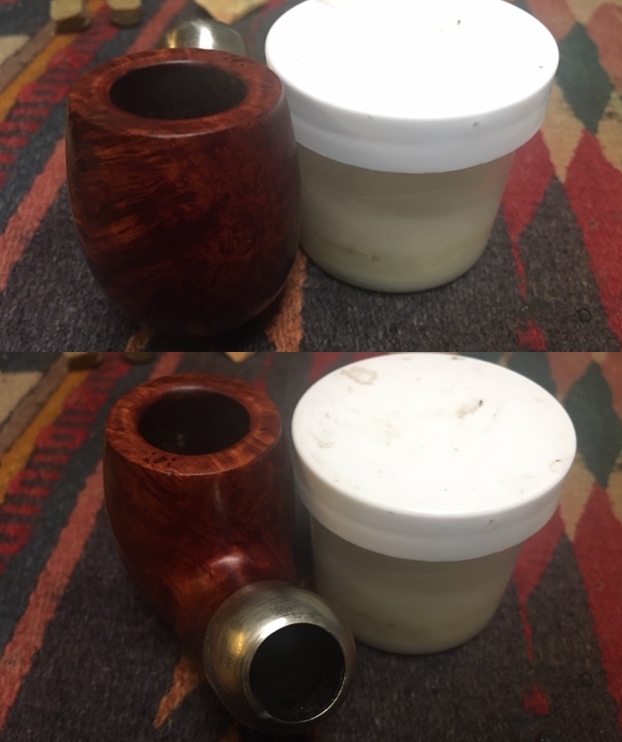
The Champ of Denmark pipe is stamped on the underside of the shank CHAMP over of Denmark and below that is the number 4. It came to us with a broken stem about an inch, inch and ½ above the tenon. The beautiful straight and flame grain around the bowl and up the shank is visible through the very thick coat of grime. It seemed like it had a dark stain but hard to tell. There were oil stains from George’s hands on both sides of the bowl obscuring the grain. It was so dirty that it was hard to see the colour well. There was a thick cake in the bowl and it had overflowed with lava into the plateau on the bowl top and shank end. It was a dirty and tired looking old pipe. The stem was badly oxidized but there were not any tooth marks or chatter on the surface. The button was in good shape. It had been sitting in boxes for a lot of years and it was time to move ahead with the restoration. Jennifer took photos of the pipes she was sending. I have included two she included from this pipe. I had some decisions to make regarding this stem. Should I replace it or should I fiddle with a repair? I would have to think that through.When the box arrived from Jennifer, Jeff opened it and took photos of each pipe before he started his cleanup work on them. There were two Champ of Denmark Freehands in the box – both were in bags and both had broken tenons and stems. There is something about classic Danish Freehands that is intriguing and I like working on them. The shapes seem to really capture the flow of the grain on the briar and this second pipe is no exception. The briar appeared to be in good condition underneath the grime. The finish looked intact under the grime. The bowl had a thick cake that had hardened with time. The lava overflow on the plateau rim but it could very well have protected the rim from damage. We won’t know what is under it until Jeff had cleaned it off. The stem was broken in the middle between the turned four sided decorative bead and the blade. It looked as if it had snapped when George was trying to remove a stuck stem. But that was a piece of the history of the pipe I would never know for certain. Jeff took photos of the pipe before he started working on it. I include those below.Jeff took photos of the bowl and rim top to show the cake in the bowl and the lava build up on the plateau rim top and on the shank end as well. It was thick and hard but hopefully it had protected the rim and edges from damage. The lava coat looks horrible but it points to a well-used, favourite smoking pipe. George must have enjoyed this old timer and when the stem broke he must have been frustrated.Jeff took photos of the sides and heel of the bowl to show the condition of the finish – the grime and grit all over the sides and flat bottom of the bowl. It is a dirty pipe. Jeff took a photo of the stamping on the underside of the shank. It is very clear and readable. It reads as noted above.Jeff took photos of the top and underside of the broken stem showing the scratching, oxidation and tooth chatter on the stem surface. You can also see where the stem snapped – it is a very clean break and it is totally fixable. I will need to see if I have a small piece of tenon that can serve to join the two parts of the stem.When I worked on the previous Champ of Denmark back in June of 2019 I had done some research on the brand (https://rebornpipes.com/2019/06/22/restoring-jennifers-dads-champ-of-denmark-4-freehand/). I turned to that previous blog and quote that here in full:

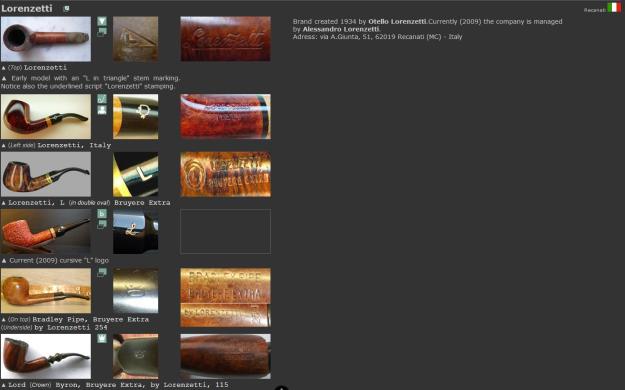
I looked on the Pipephil site to get a quick overview of the brand. In the back of my mind I remembered a connection to Karl Erik. I could not remember the details of the connection (http://www.pipephil.eu/logos/en/logo-c4.html). I did a screen capture of the section on the brand that was shown on the site. I have included it below.In summary it says that the brand was distributed by Larsen & Stigart a tobacconist in Copenhagen, Denmark. The warehouse had a workshop that had such famous carvers as Soren Eric Andersen, Karl Erik Ottendahl and others.

I turned then to Pipedia (https://pipedia.org/wiki/Champ_of_Denmark) to see if I could get a bit more information. I quote in full from that site:

“Champ of Denmark” were made for and distributed by Larsen & Stigart by Karl Erik Ottendahl. Larsen & Stigart had some indoor carvers at certain times, too (e.g. Søren Eric Andersen) and among other things they managed to supply Dunhill with wild Danish fancy pipes.

In an endnote under the article on Karl Erik (https://pipedia.org/wiki/Karl_Erik) I found some more information. I quote the endnote in full.

¹ It is almost impossible to draw a sharp line between some of these brands… Larsen & Stigart – once a famous Copenhagen pipe shop, now almost forgotten – offered pipes produced by KE stamped “Larsen & Stigart” as well as pipes stamped “Larsen & Stigart” + “Champ of Denmark” or “Larsen & Stigart” + “Shelburne”. Almost needless to say, there are pipes stamped “Champ of Denmark” or “Shelburne” only. And the only reason is inconsistent stamping??? (BTW Larsen & Stigart employed own indoor carvers for appr. one decade – e.g. Søren Eric Andersen. They even managed to supply Dunhill with wild Danish fancy pipes.)

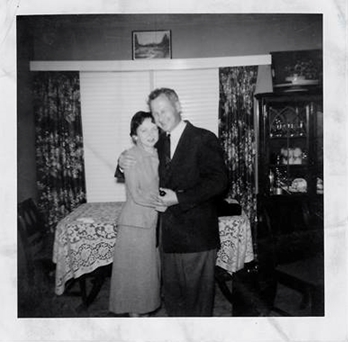
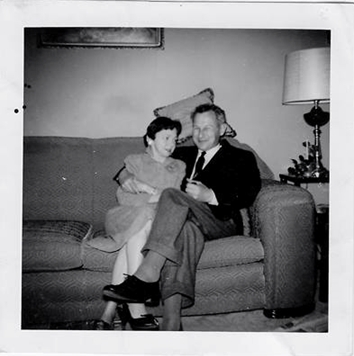
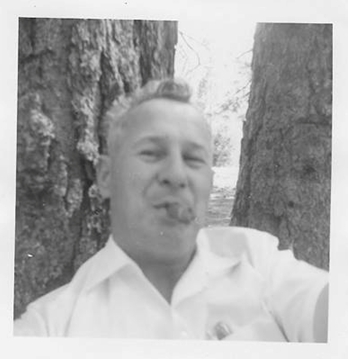
Now I had the verification of the link to Karl Erik Ottendahl. The pipe was most probably made by him for the pipe shop in Copenhagen. Before I get on to cleaning up the pipe I thought I would once again include the tribute that Jennifer wrote to her Dad for the blog. She also sent some photos and an article that her Dad wrote for Jeff and me to be able to get a feel for him. I have included those below. Note in each of them that he is holding a pipe in his left hand. I asked her to also send me an email with a brief tribute to her Dad. Here is her tribute from an email to me.

Steve, I want to thank you again for accepting my dad’s pipes.  They were so much a part of my dad’s life that I could not simply discard them. But as his daughter, I was not about to take up smoking them either. *laughing* I think my dad would like knowing that they will bring pleasure to others.  I know that I do.

I’m not sure what to say about his pipes. I always remember Daddy smoking pipes and cigars.

First a bit about my dad. Though my father, George Rex Leghorn, was American (growing up in Alaska), he managed to join the Canadian Army at the beginning of WWII, but in doing so lost his American citizenship.  He was fortunate to meet a Canadian recruiting officer who told him the alphabet began with “A” and ended with “Zed” not “Zee”, and also told him to say that he was born in a specific town that had all its records destroyed in a fire.  When the US joined the war my dad, and thousands of other Americans who had made the same choice*(see the link below for the article), were given the opportunity to transfer to the US military, and regain their citizenship.

After WWII, my dad, earned his degree at the University of California Berkeley and became a metallurgist. There is even a bit about him on the internet.

He loved taking the family out for a drive, and he smoked his cigars on those trips. (As a child, those were troubling times for my stomach.)

I most remember my father relaxing in his favorite chair with a science fiction book in one hand and a pipe in the other… Sir Walter Raleigh being his favorite tobacco… and the pipes themselves remind me of him in that contented way.  If I interrupted his repose, he’d look up, with a smile on his face, to answer me.

It seemed he smoked his Briarwood pipes the most, though he had others.  At the time, it was only the Briarwood I knew by name because of its distinctive rough shaped bowl.  And it was the Anderson Free Hand Burl Briar, made in Israel, which I chose for his birthday one year, because I thought he might like that particular texture in his hand.

At least two of his pipes, he inherited from his son-in-law, Joe Marino, a retired medical laboratory researcher (my sister Lesley’s late husband)… the long stemmed Jarl (made in Denmark), and the large, white-bowled, Sherlock Holmes style pipe.  I believe Joe had others that went to my dad, but Lesley was only sure about those two.

The Buescher, corncob pipe my older sister Lesley bought for Daddy while on one of her travels around the States.

A note on the spelling of my sister’s name…

My dad met my mother, Regina, during WWII and they married in Omagh, Ireland.  My mother was English and in the military herself.  The English spelling of Lesley is feminine, and Leslie masculine, in the UK… just the opposite of here in the United States.  I guess my mom won out when it came to the spelling of the name.

I’ll send you photos of my dad soon, along with his WWII experience story.

Jennifer

*https://www.thestar.com/news/world/2013/10/22/the_americans_who_died_for_canada_in_wwii.html

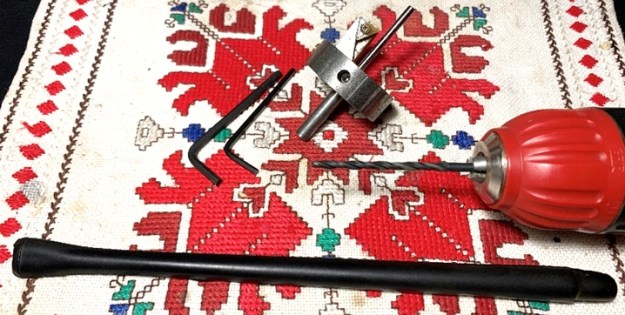
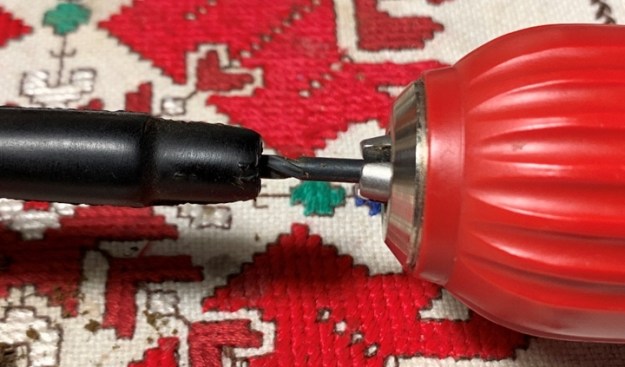
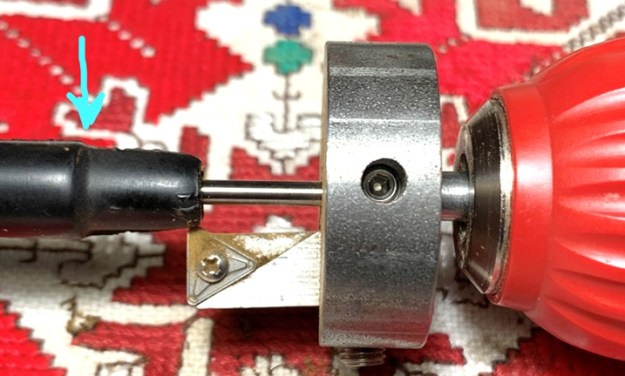
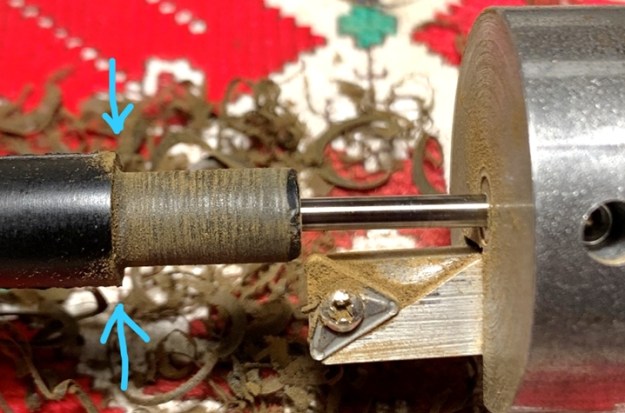
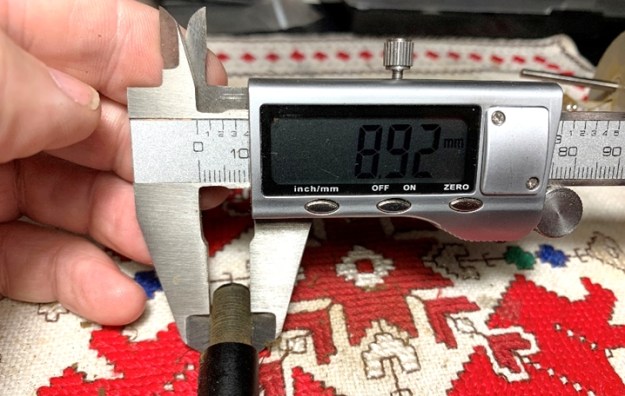
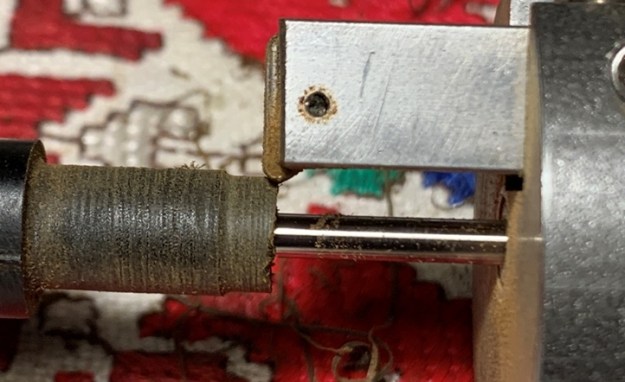
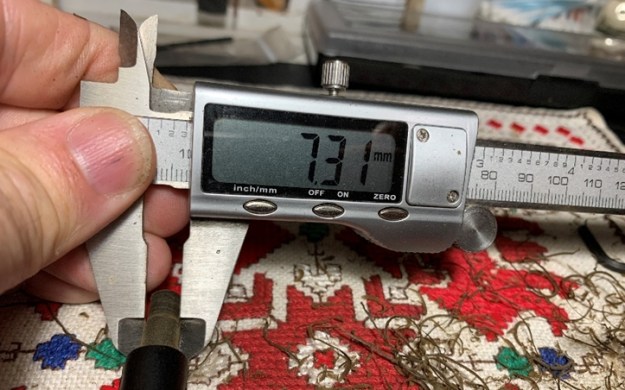
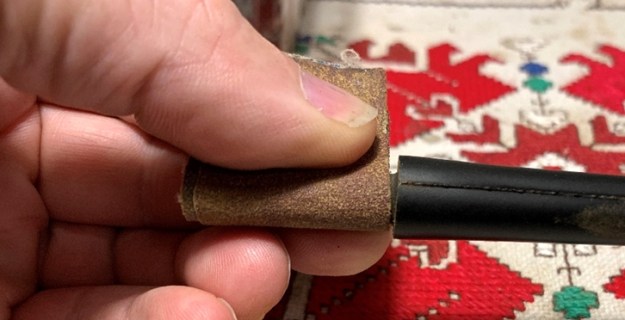
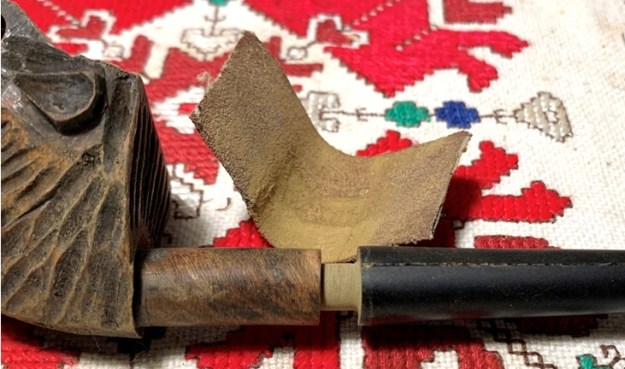
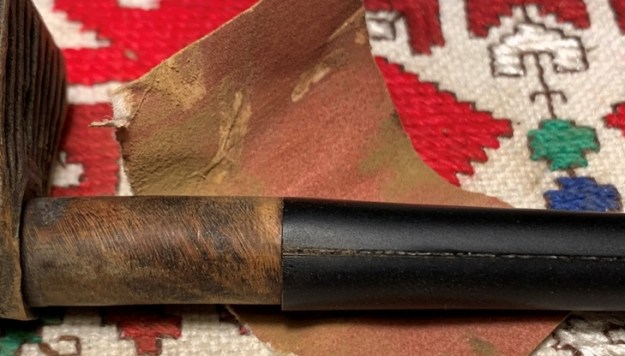
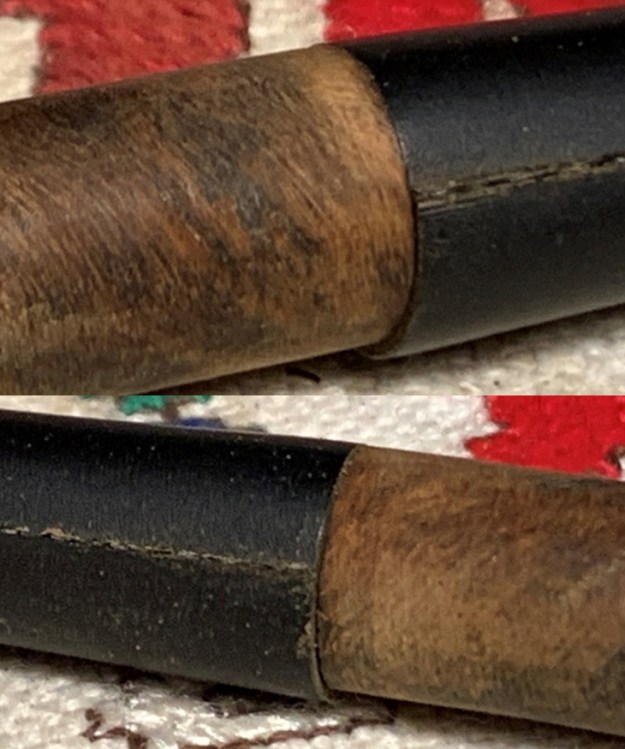
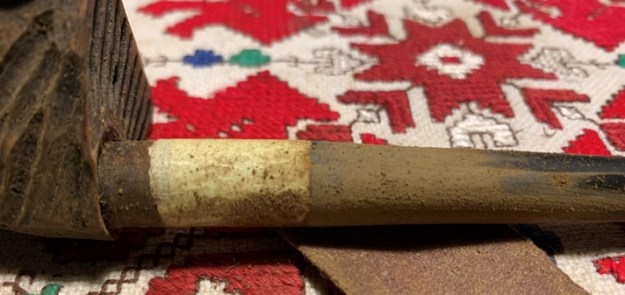
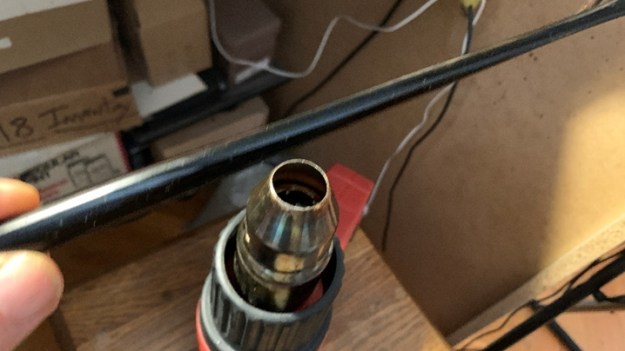
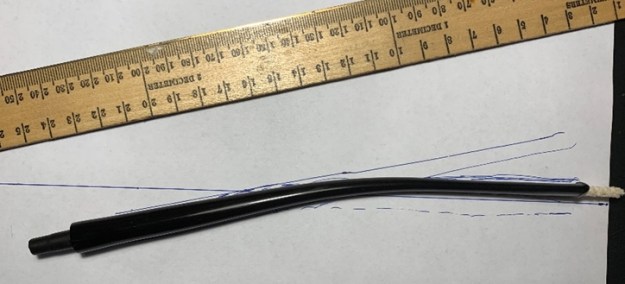
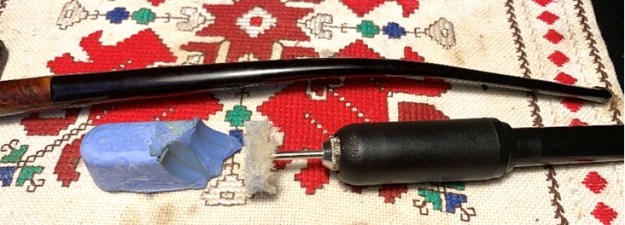
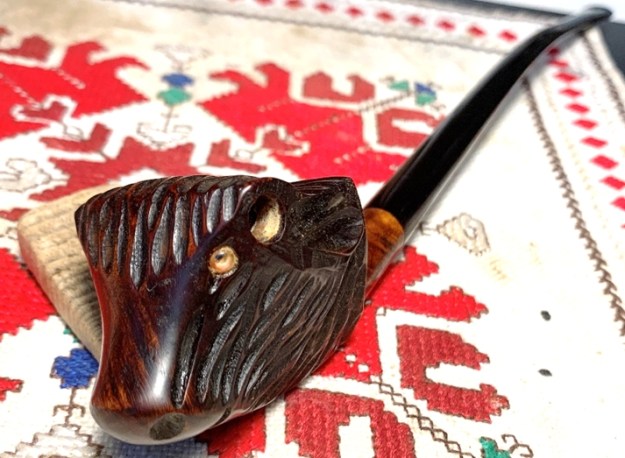
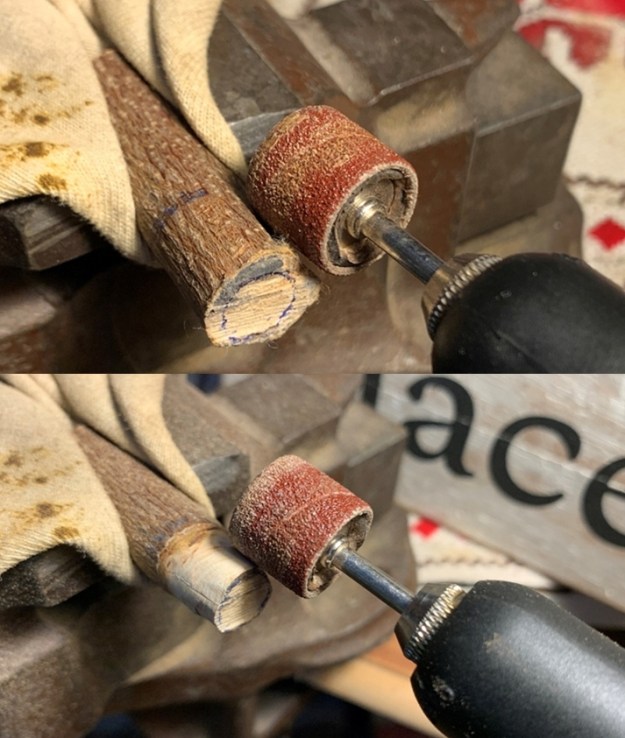
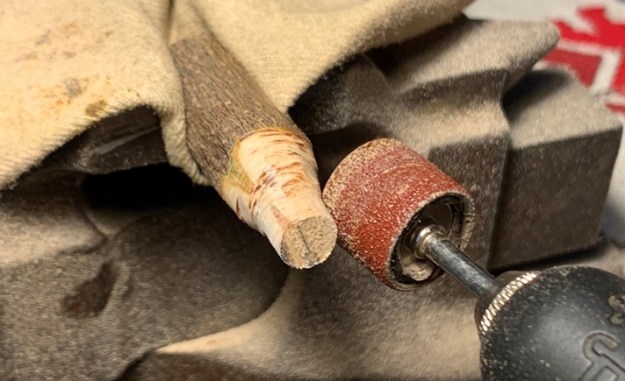
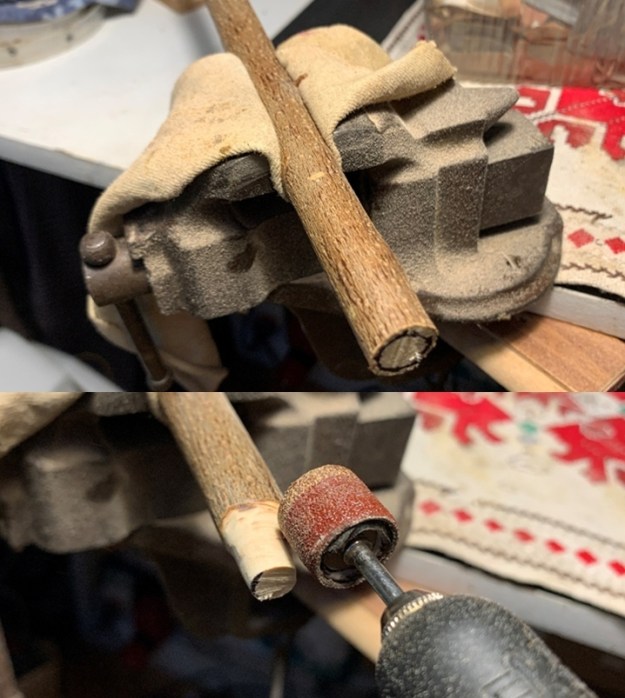
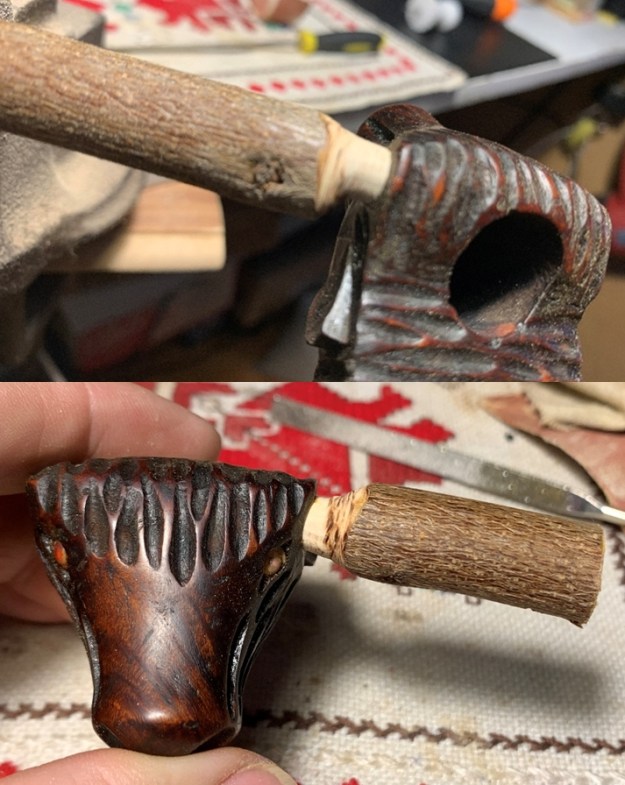
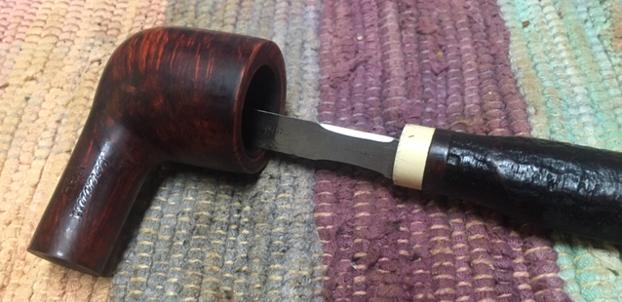
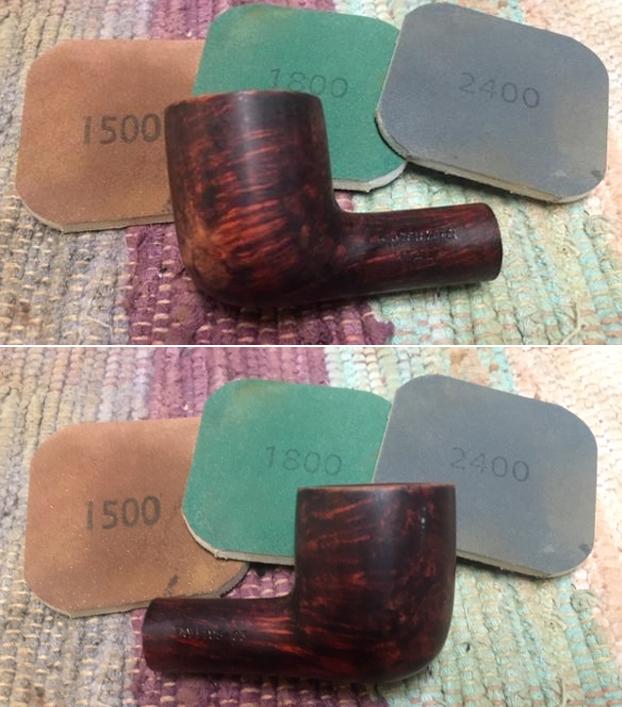
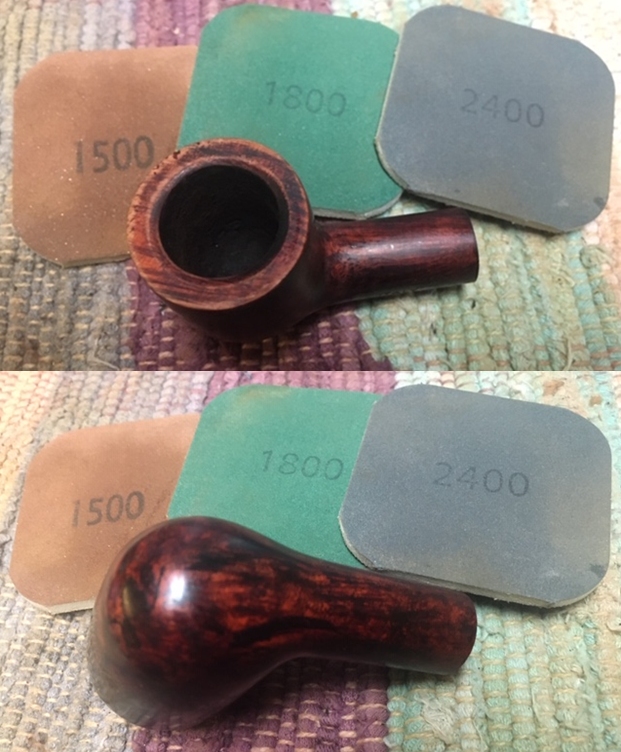
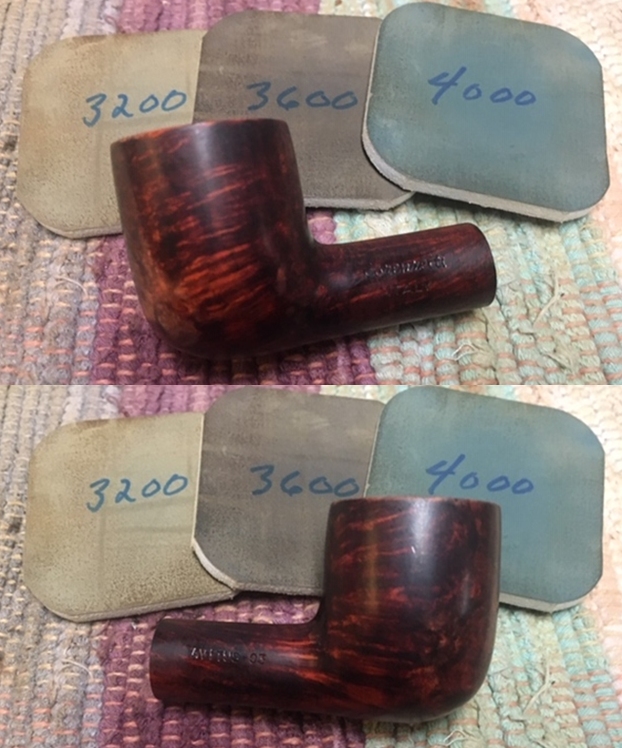
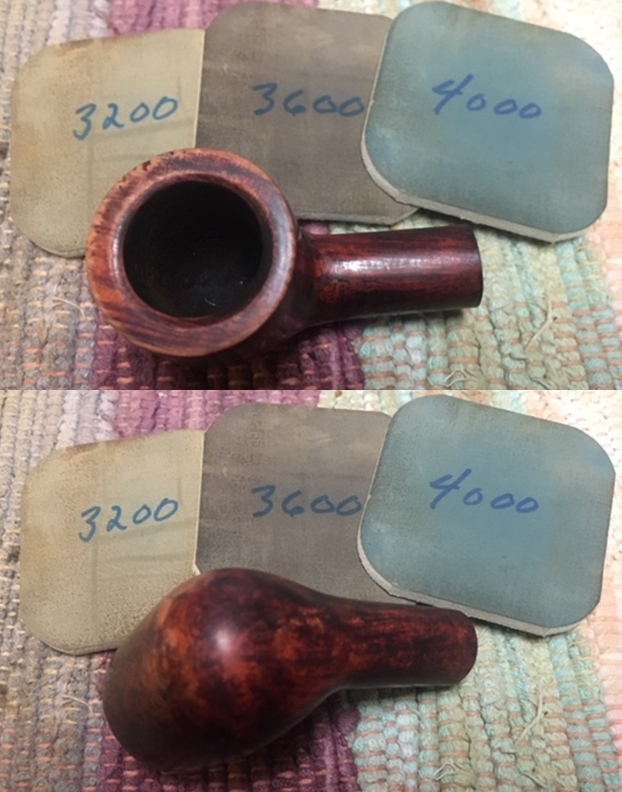
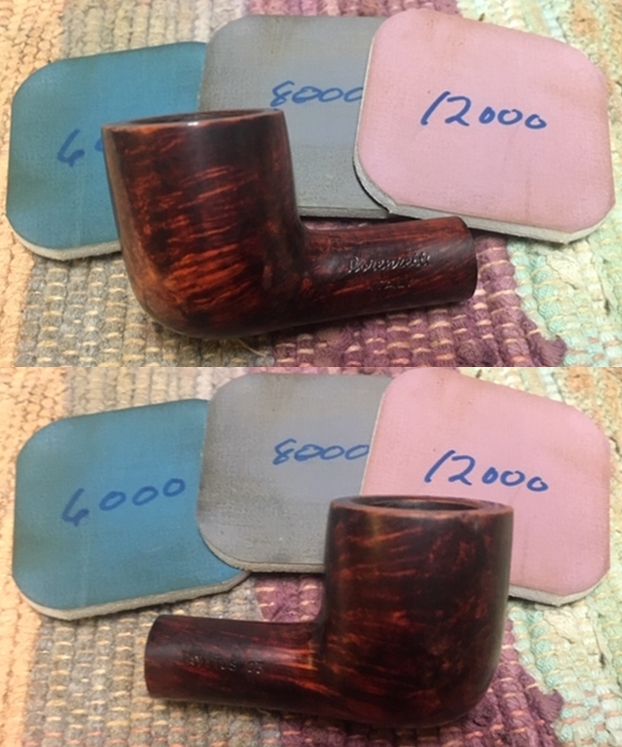
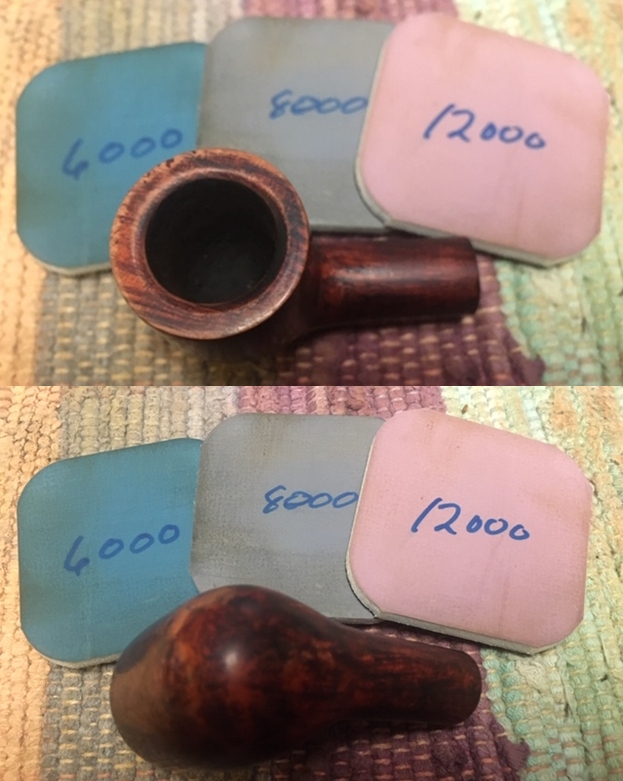
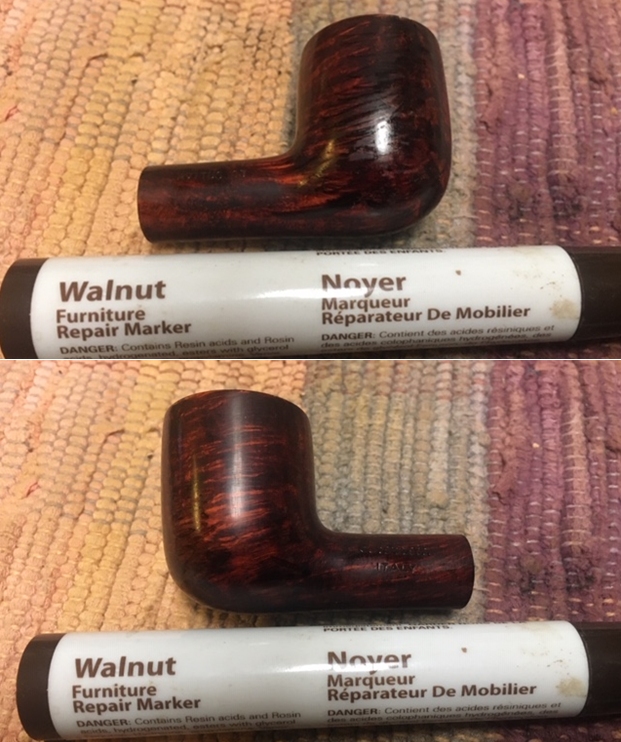
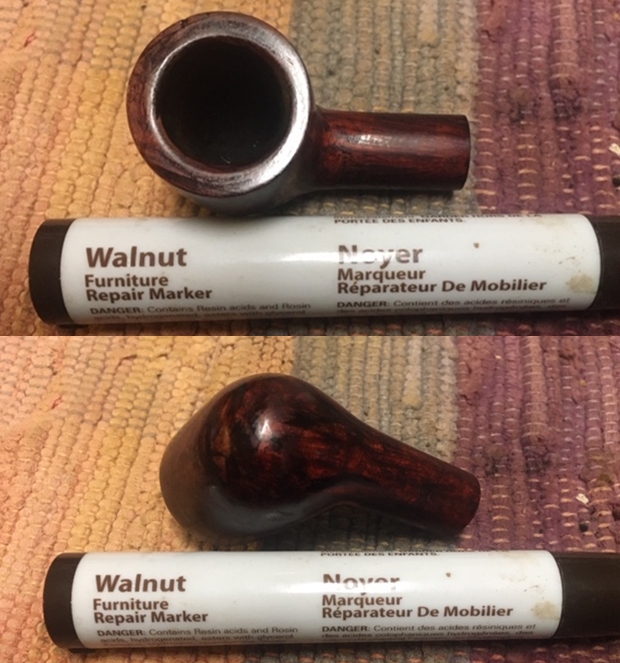
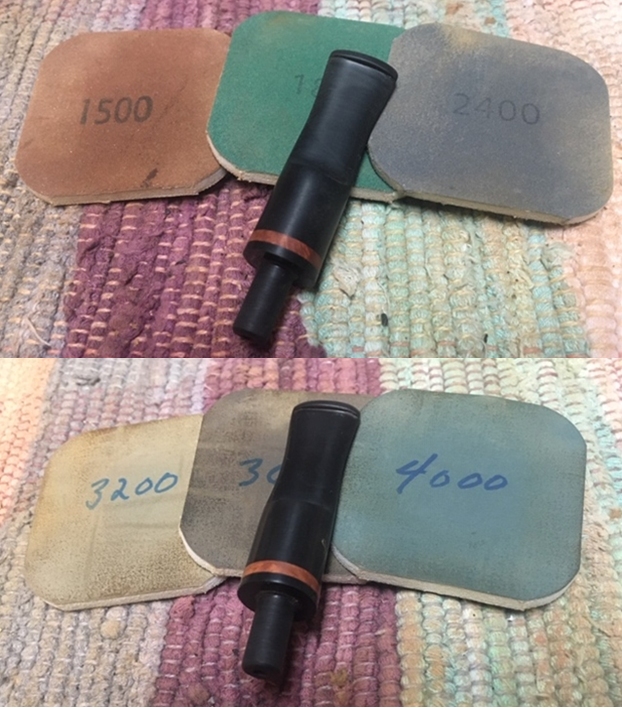
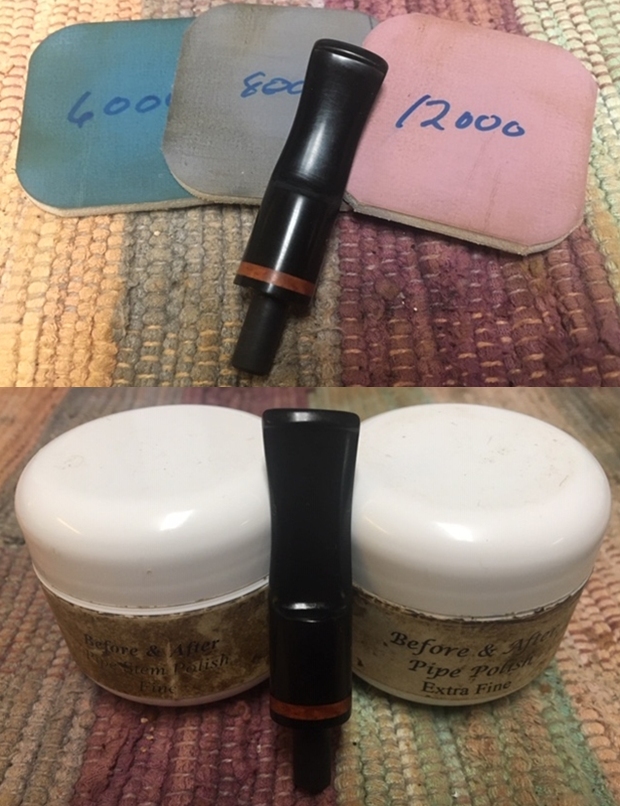
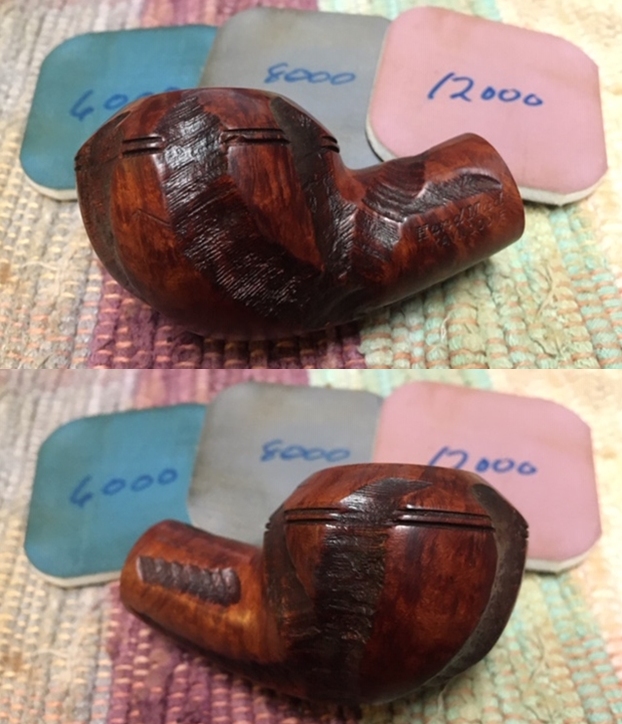
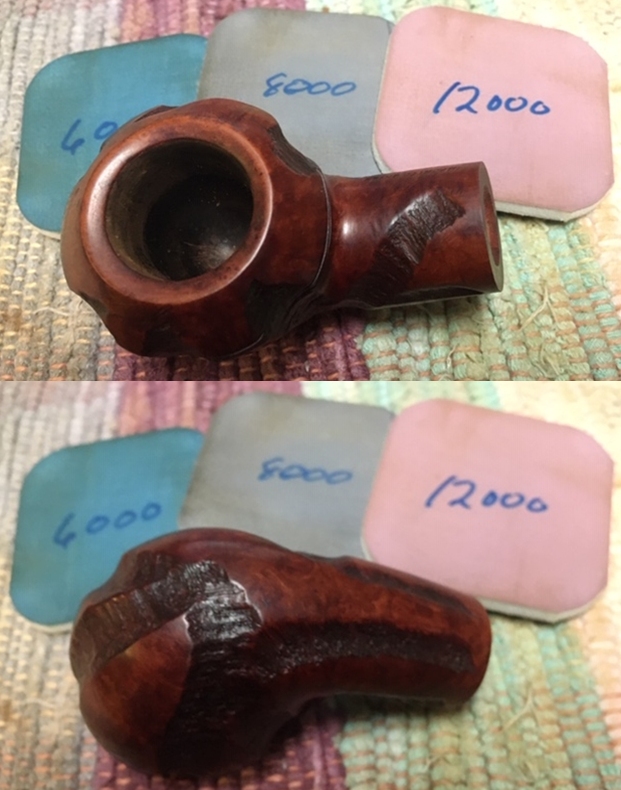
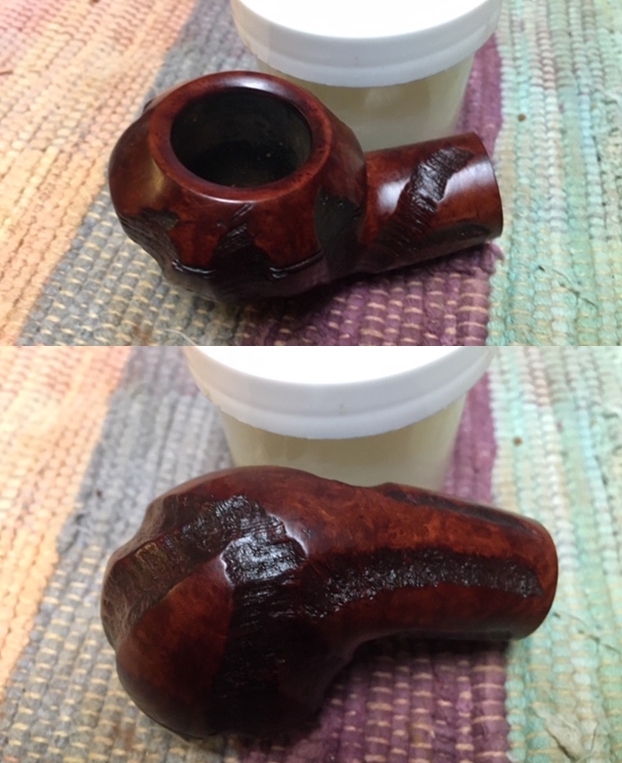
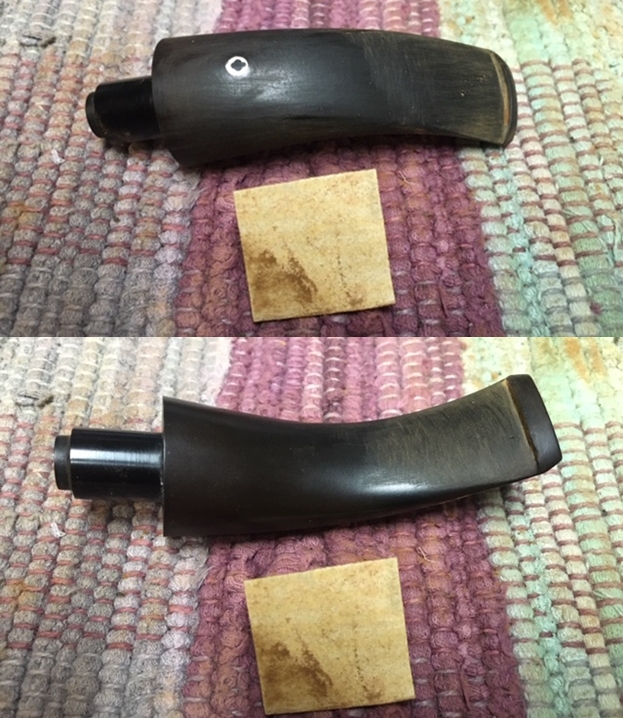
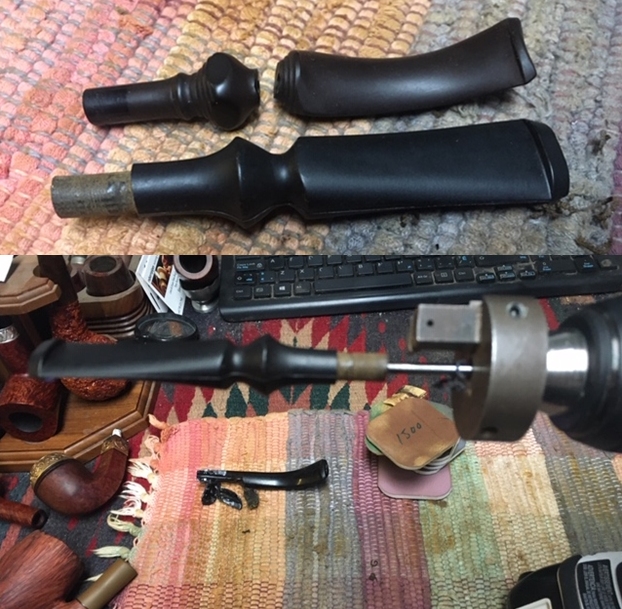
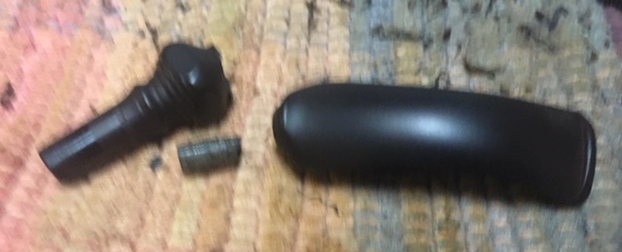
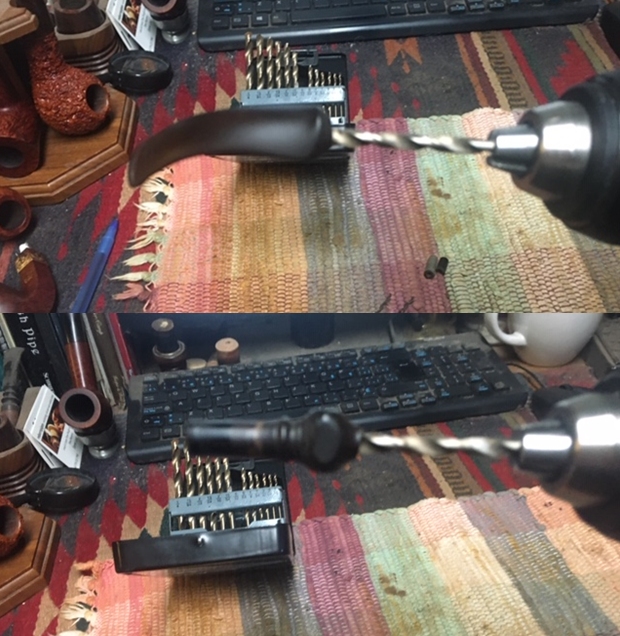
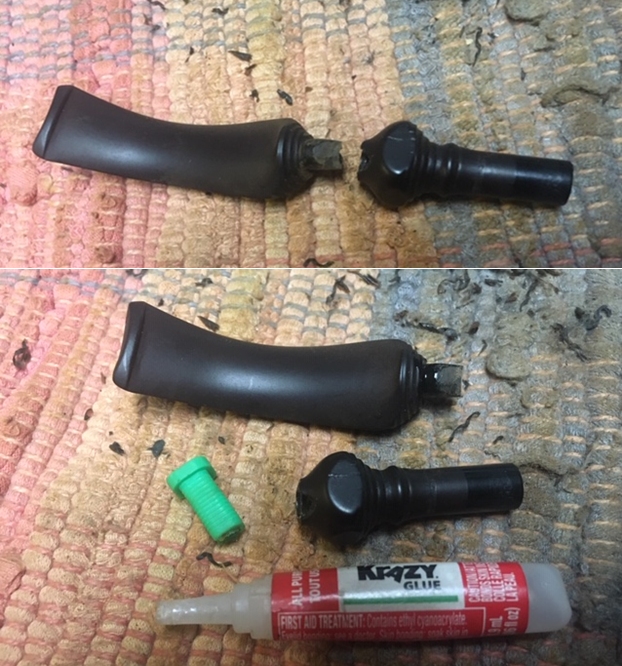
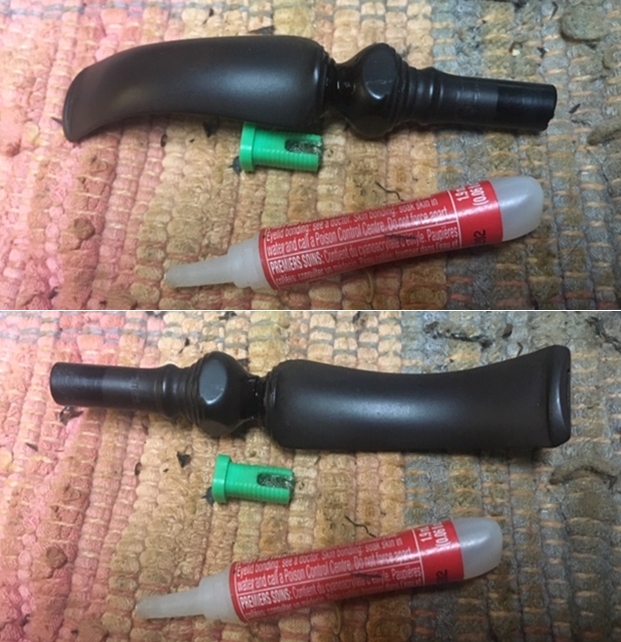
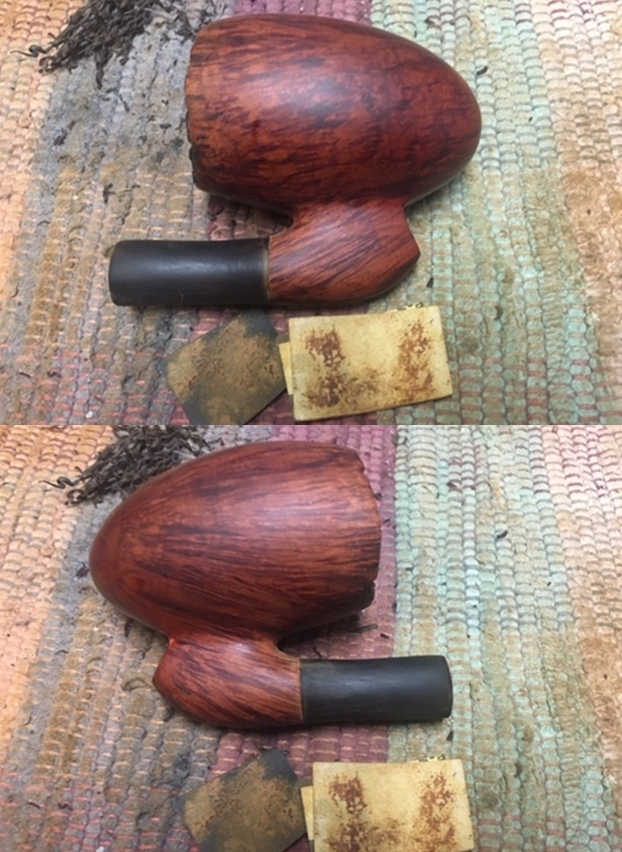
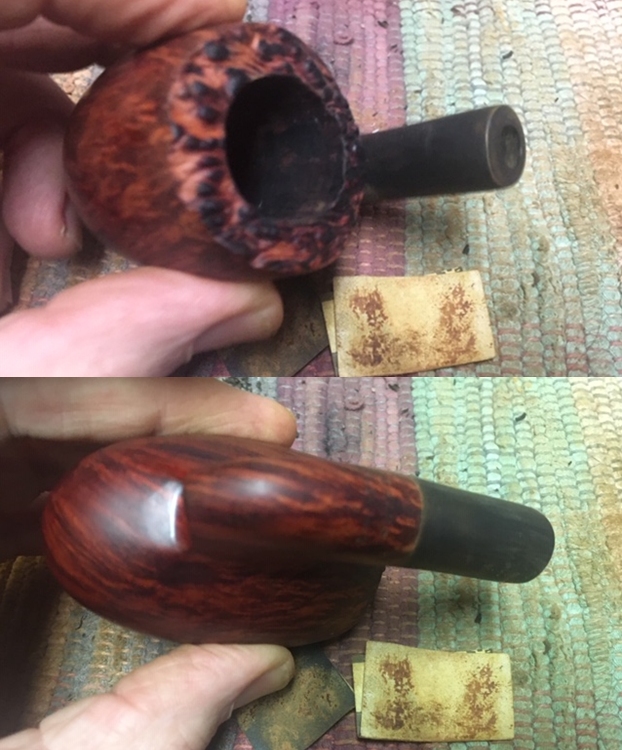
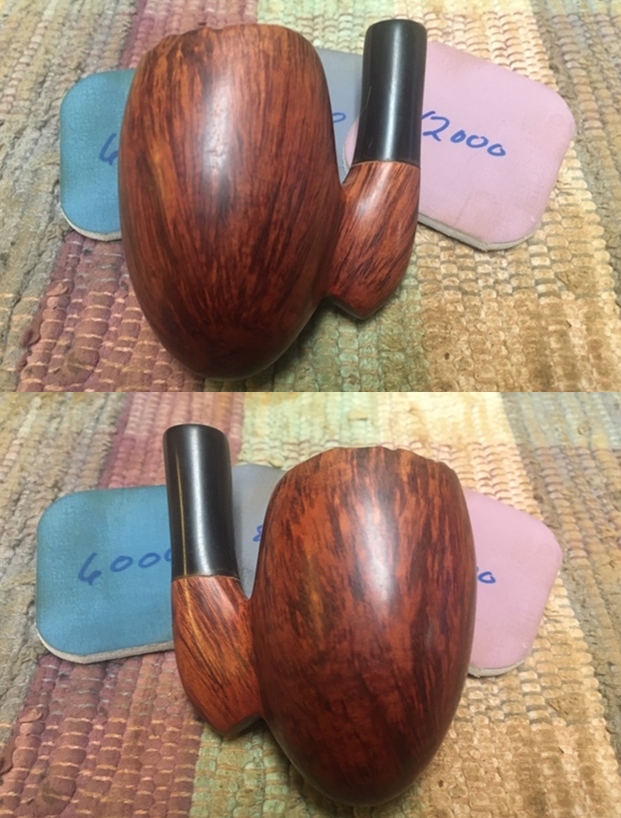
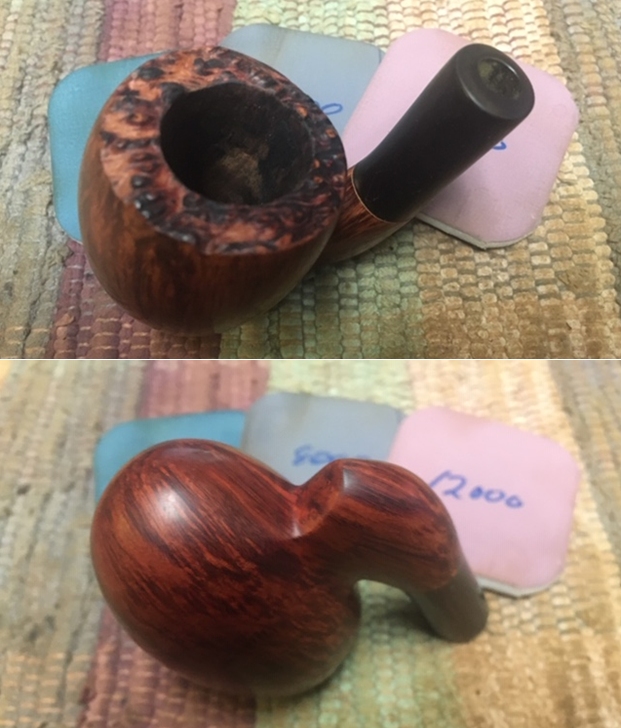
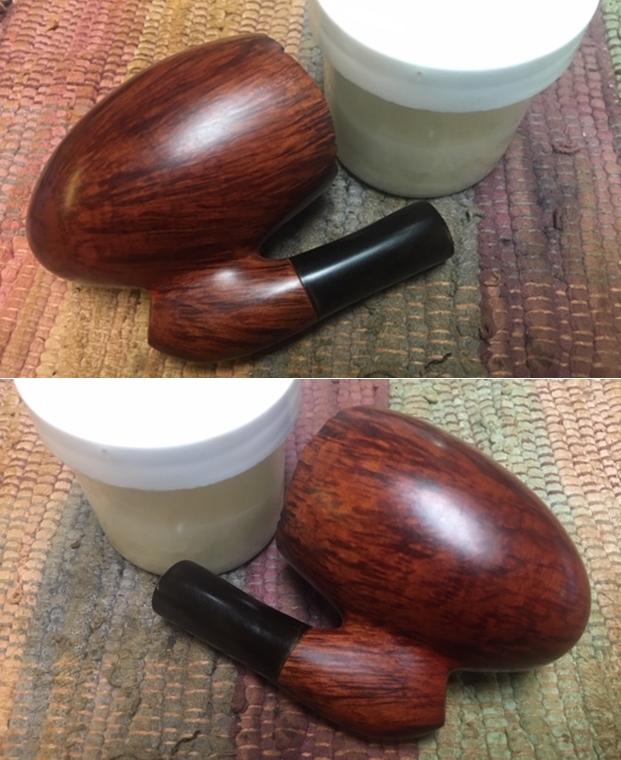
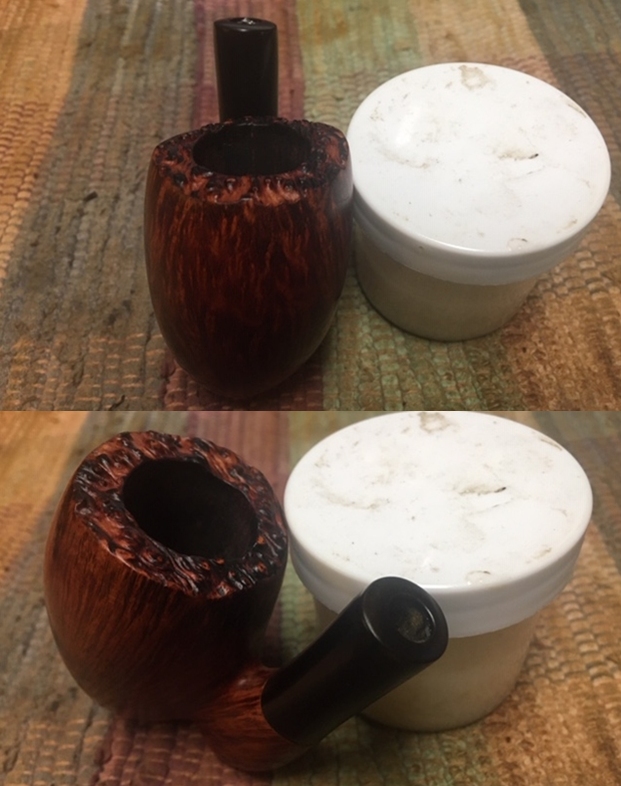
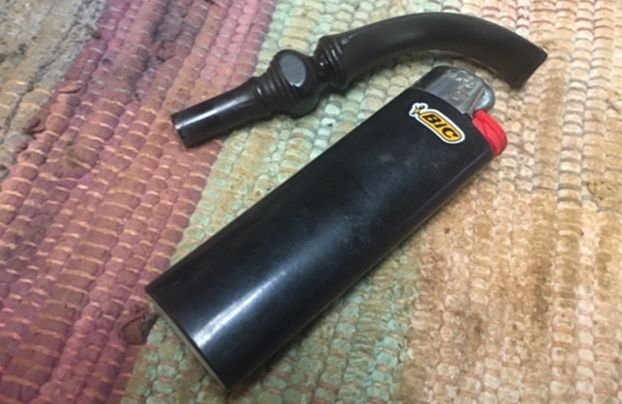
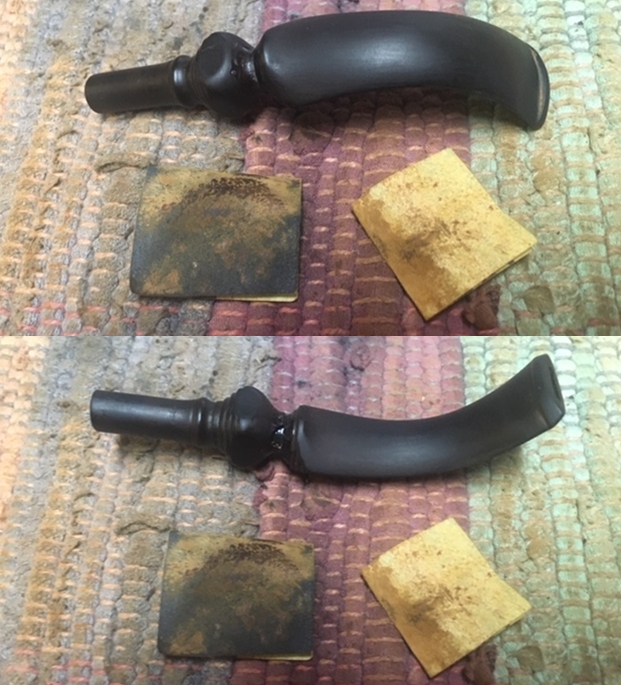
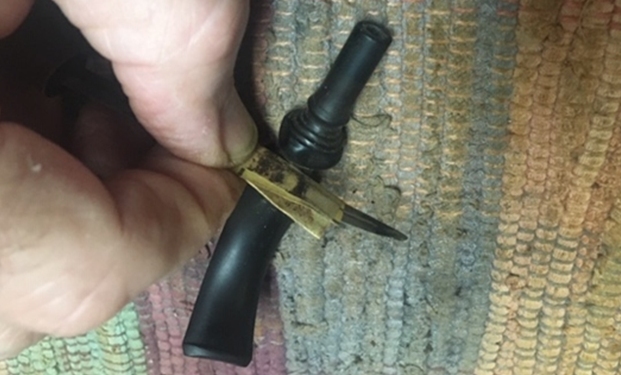
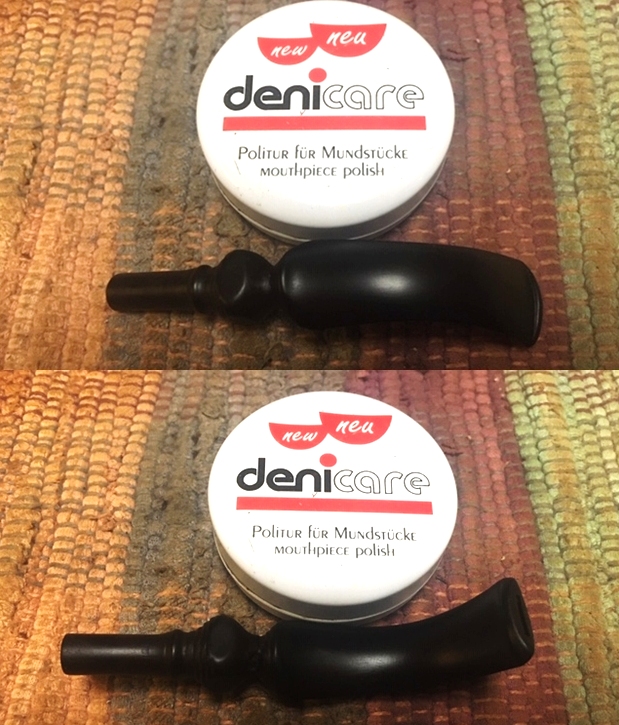
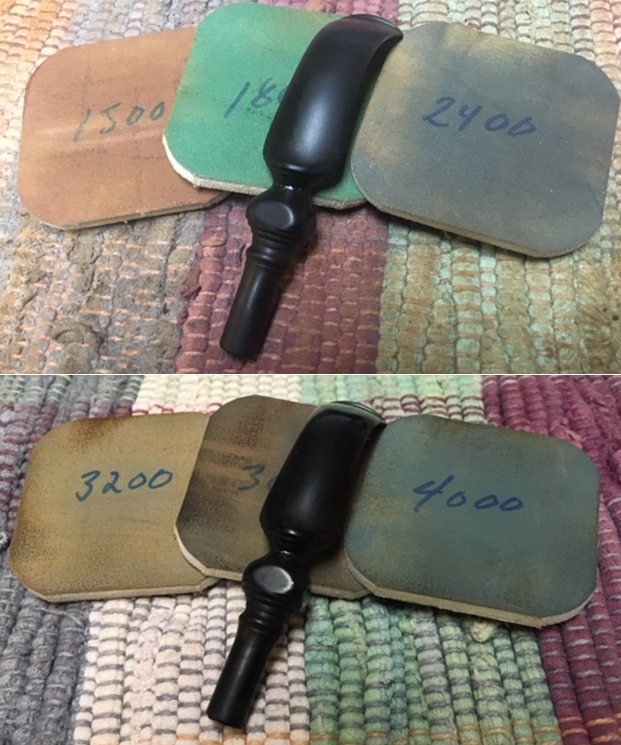
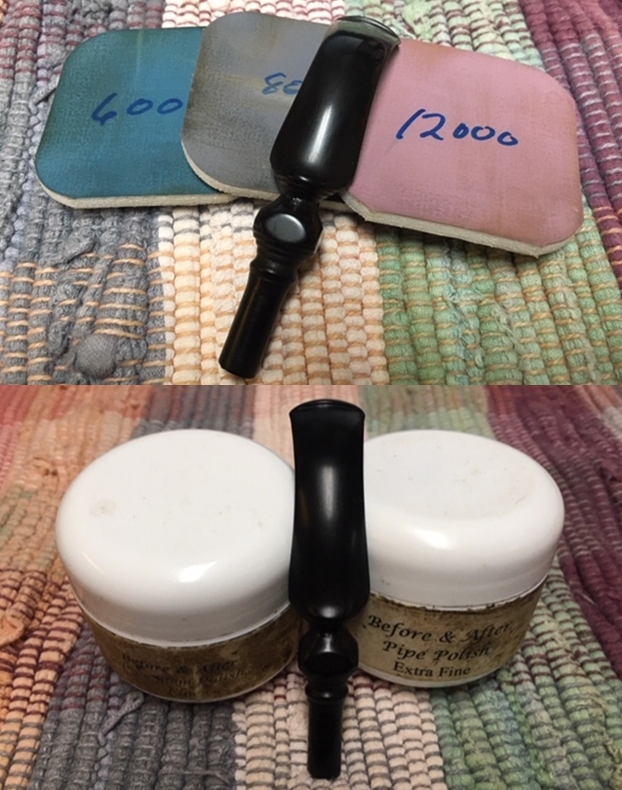
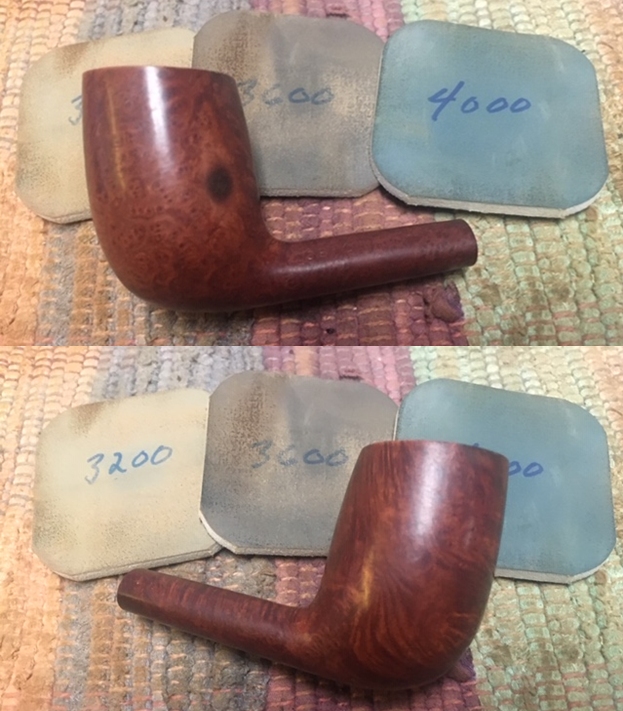
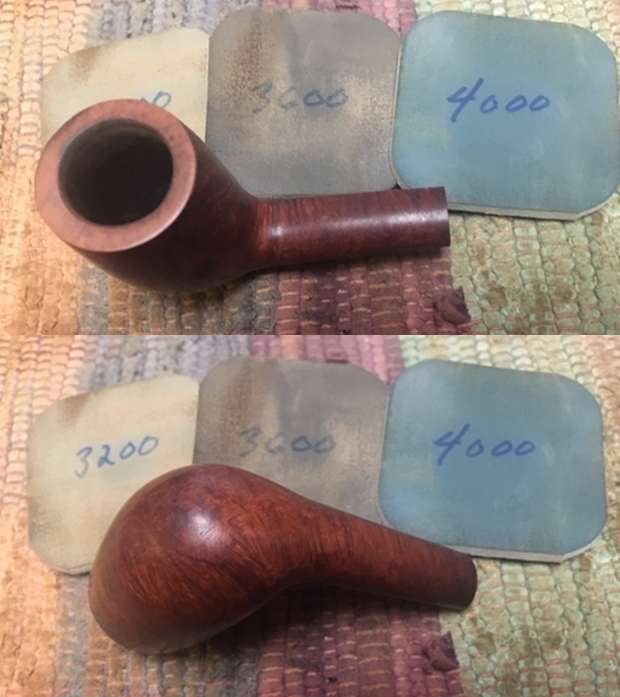
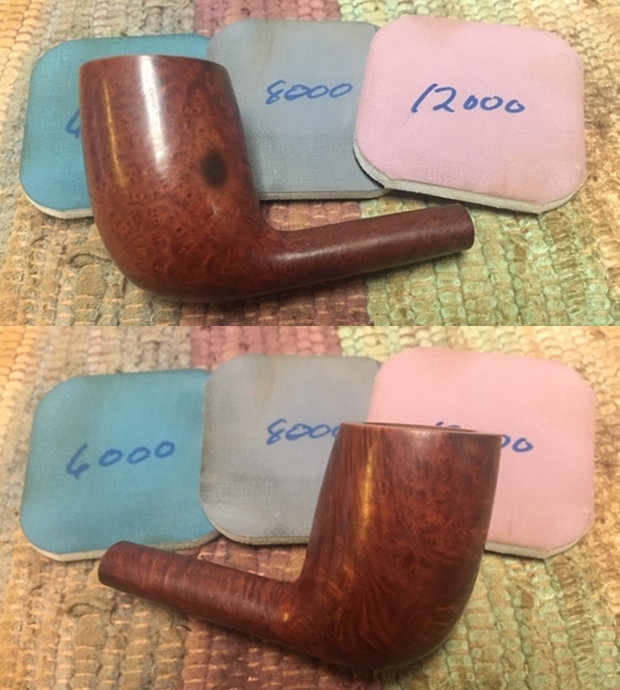
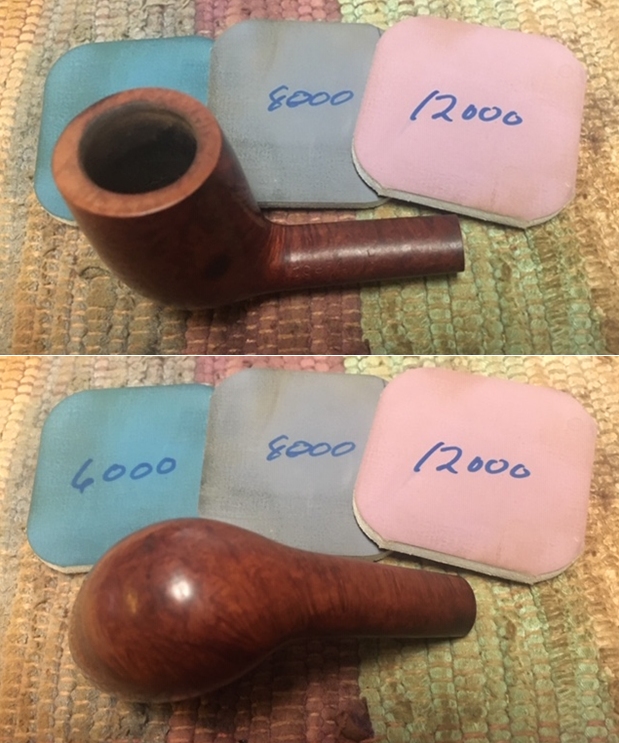
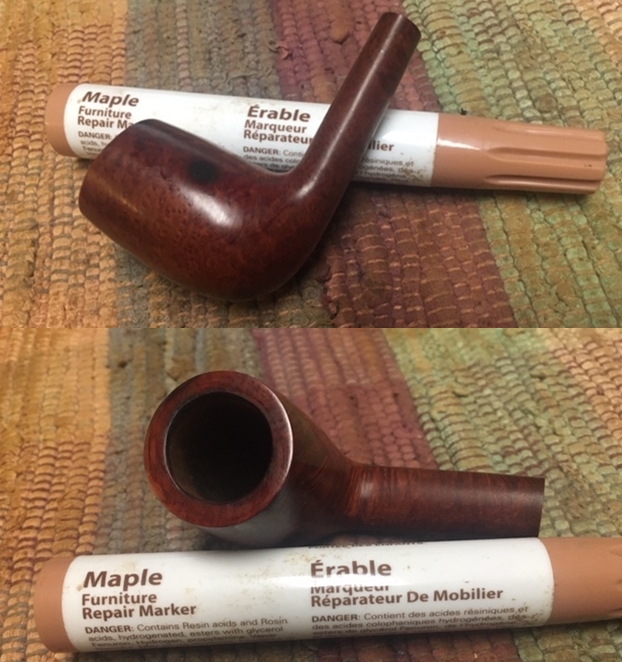
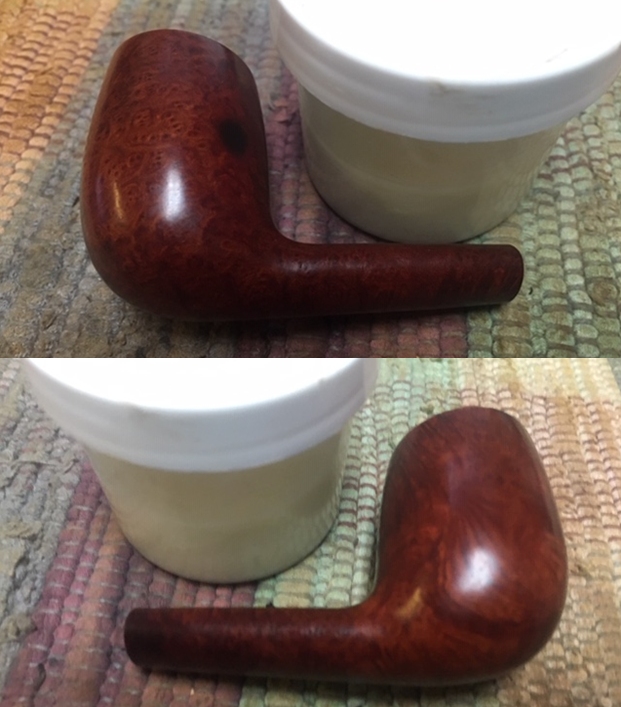
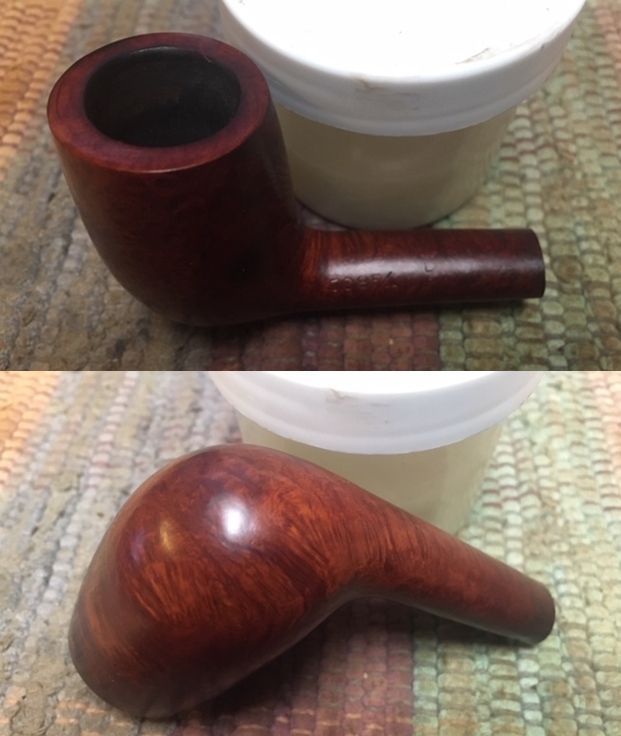
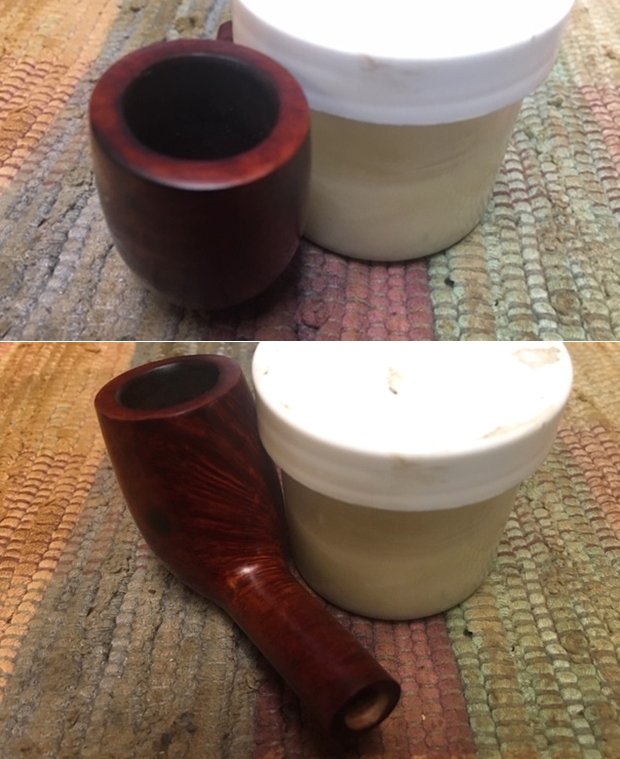
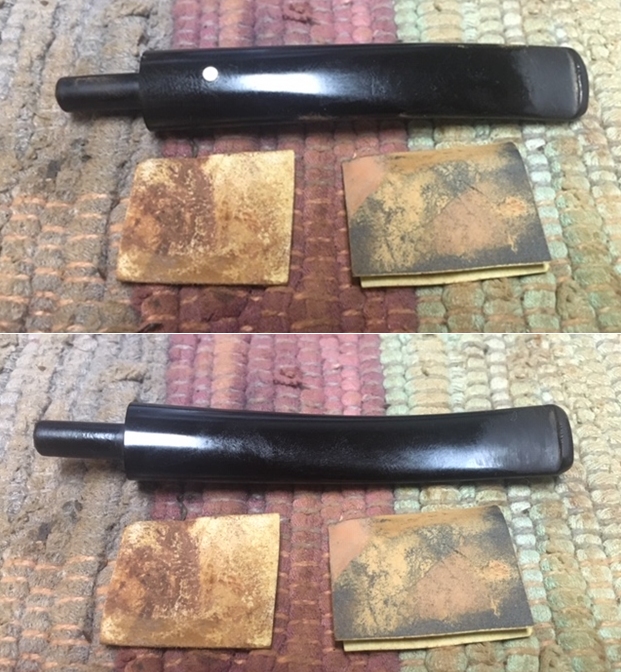
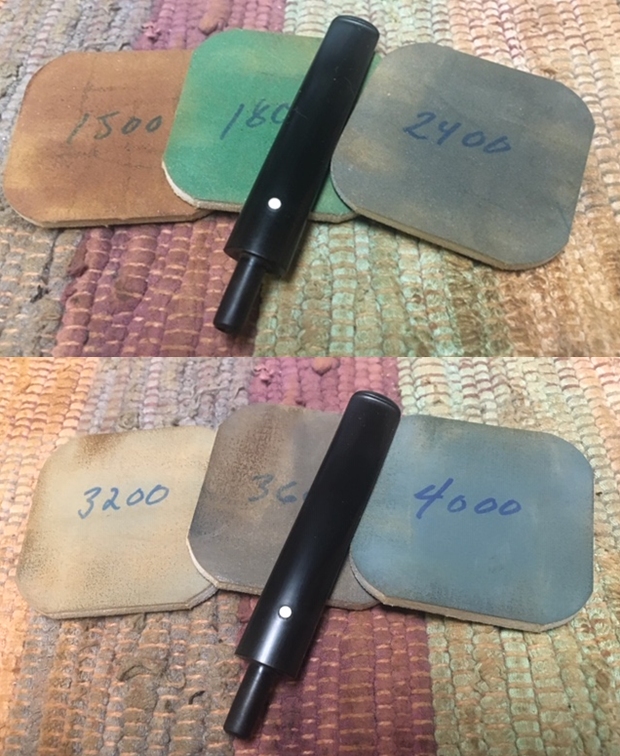
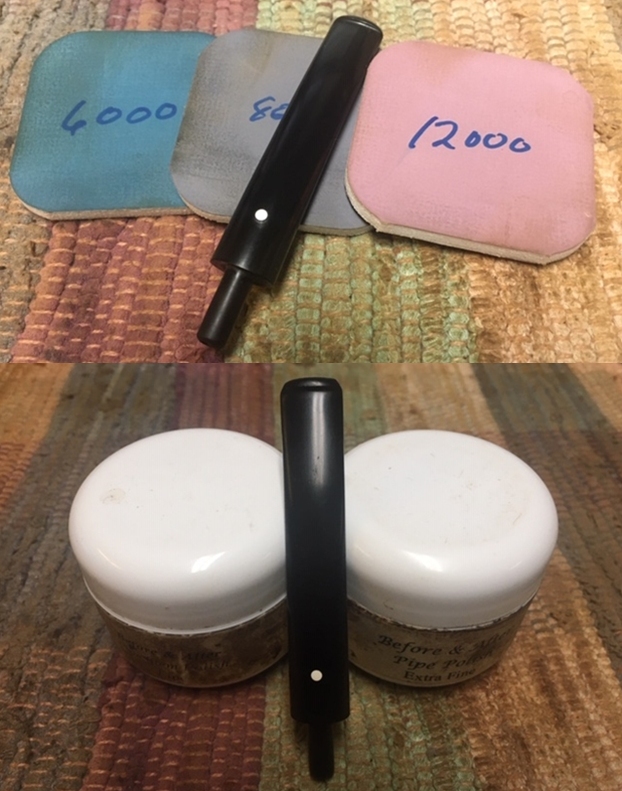
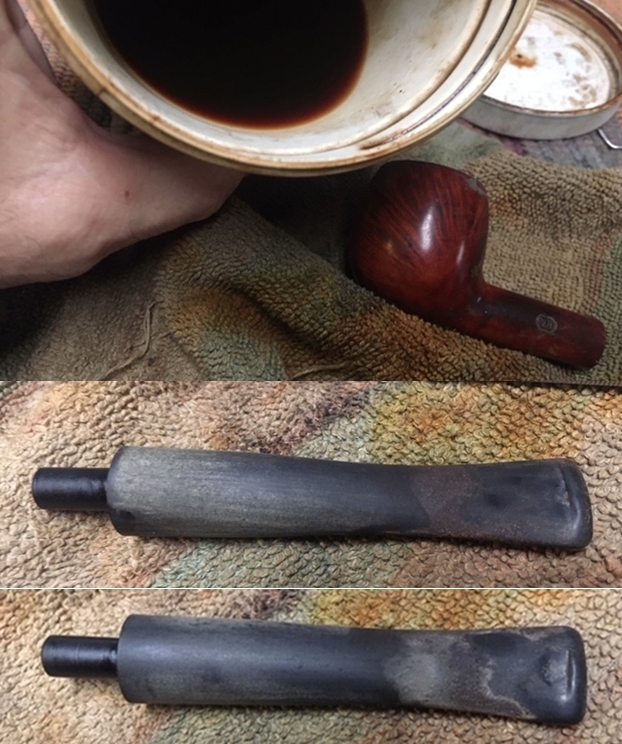
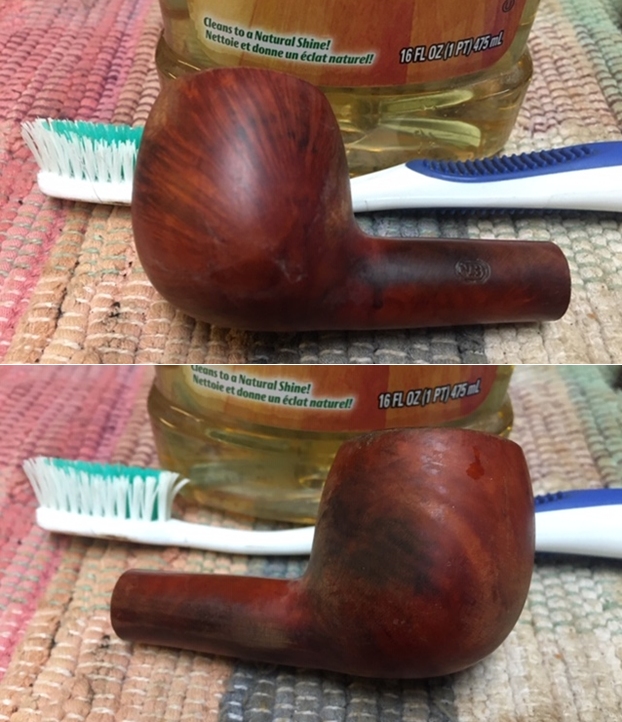
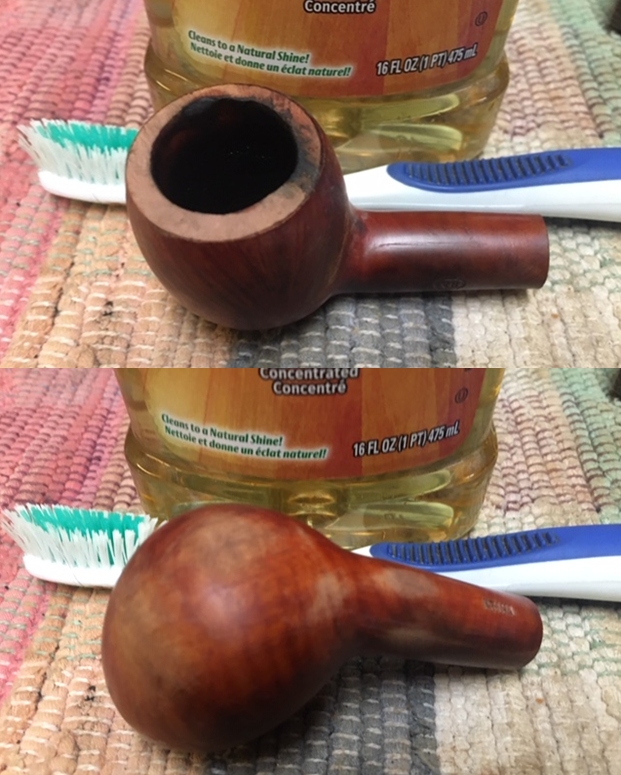
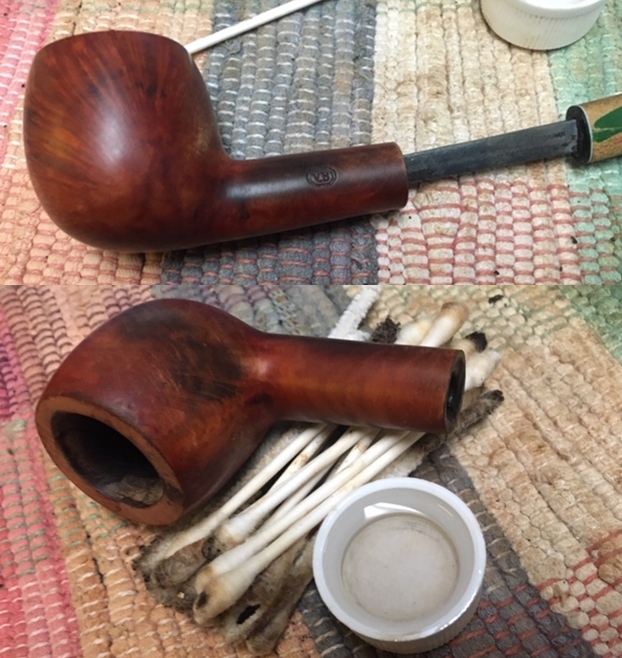
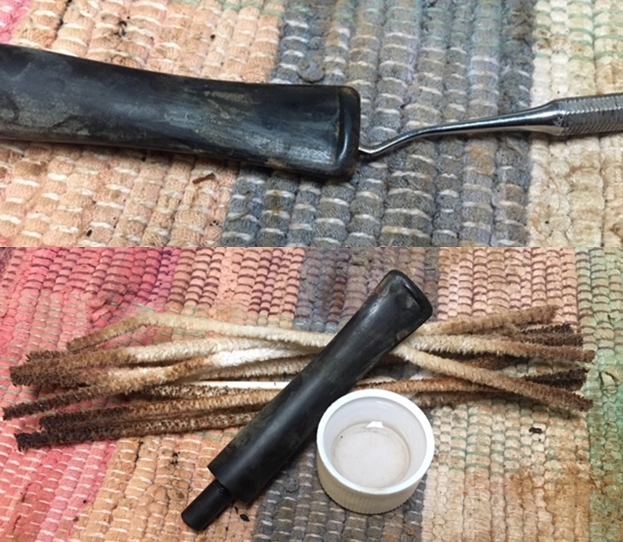
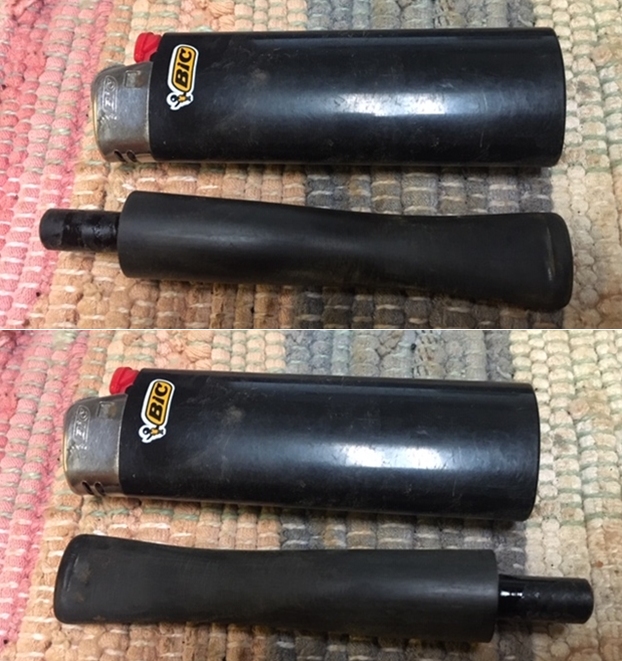
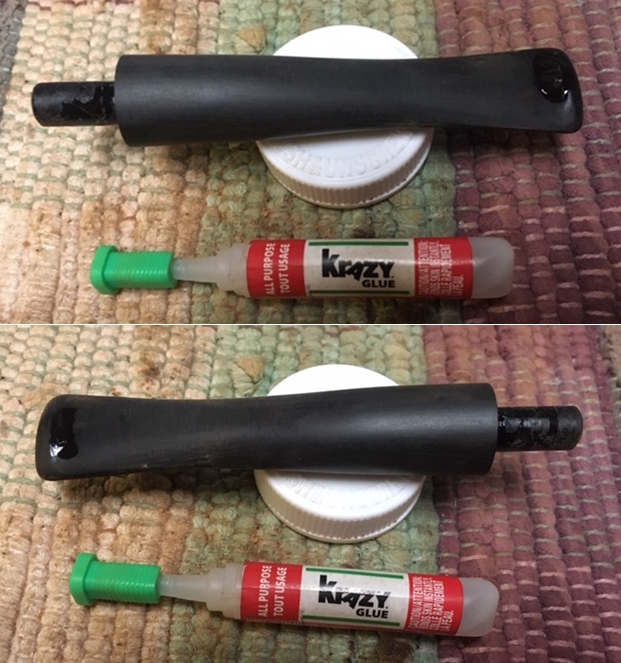
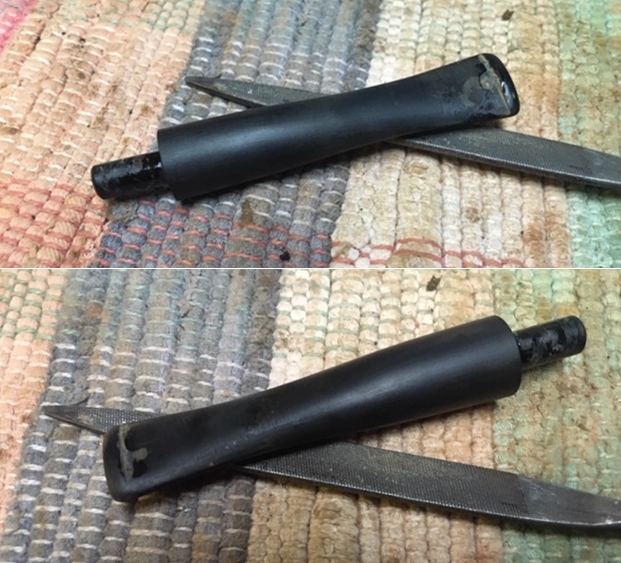
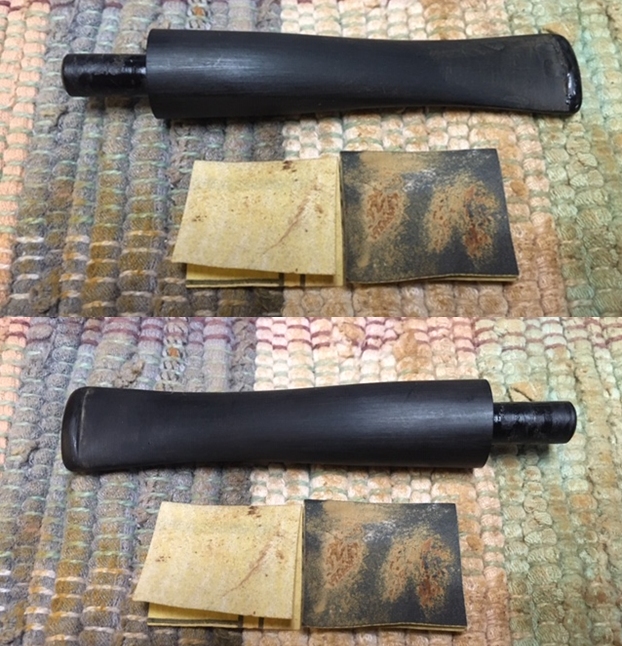
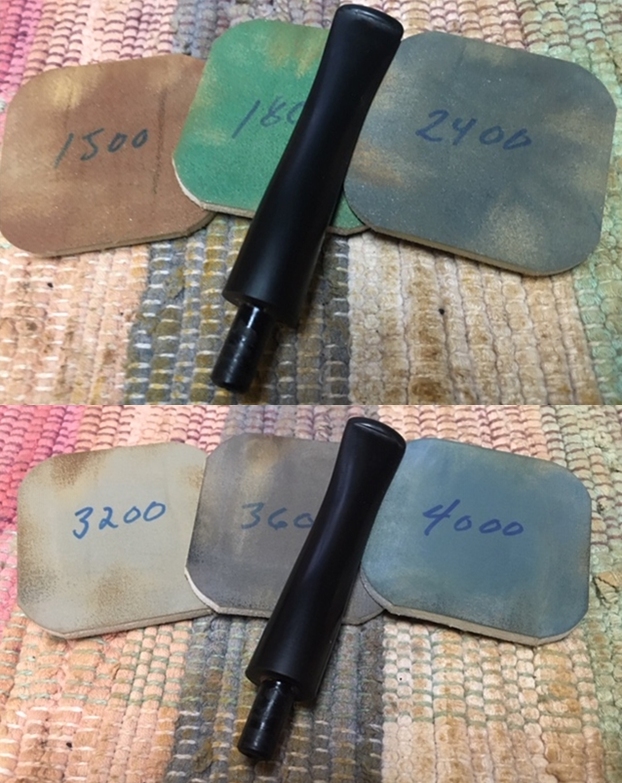
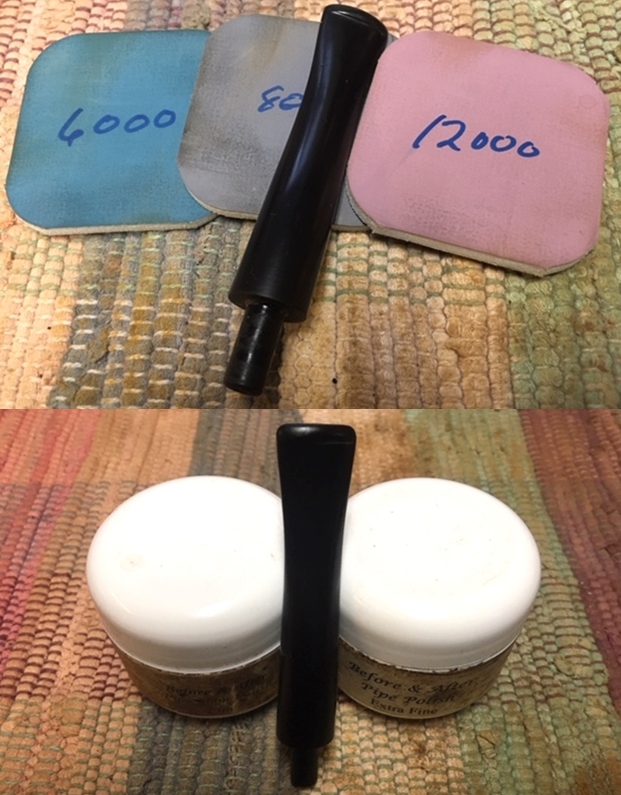
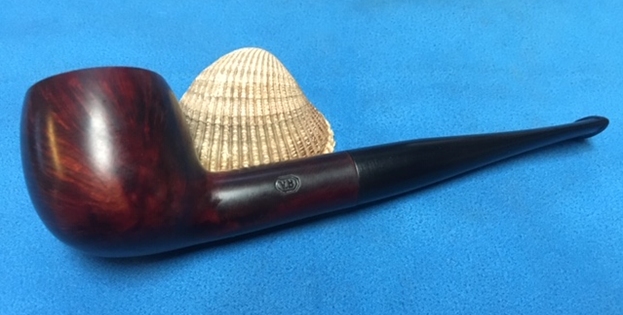
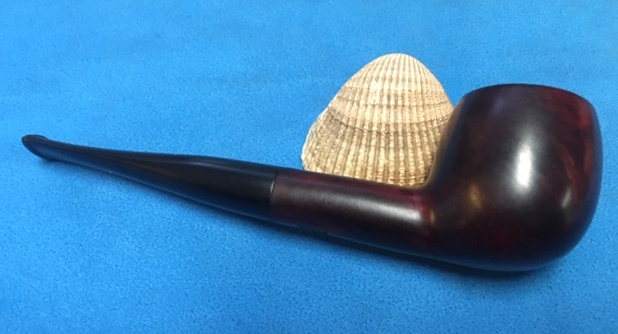
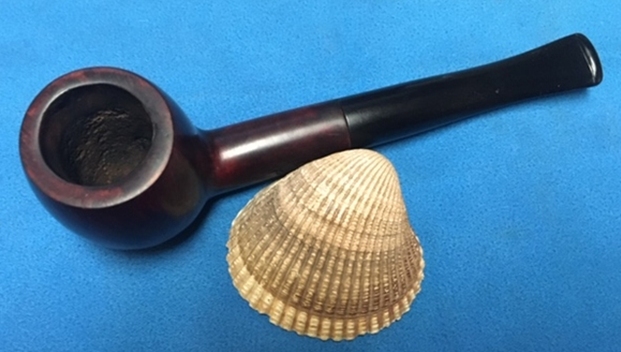
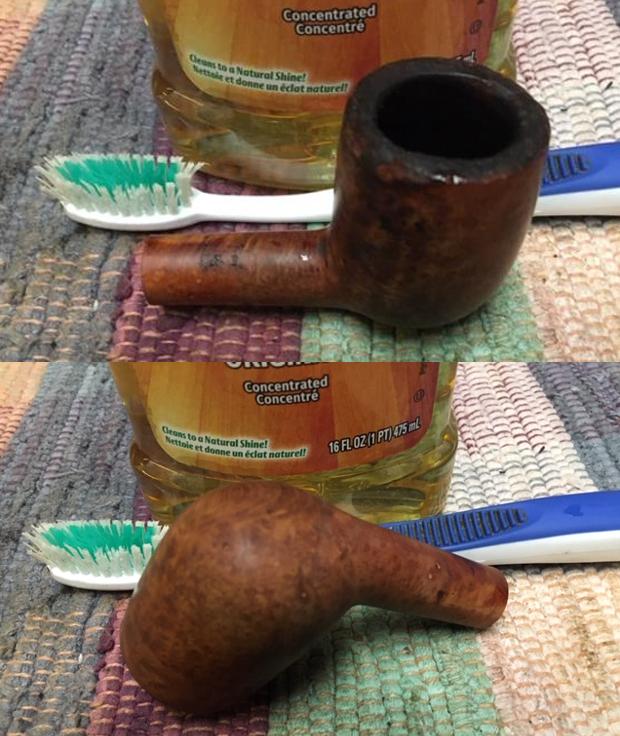
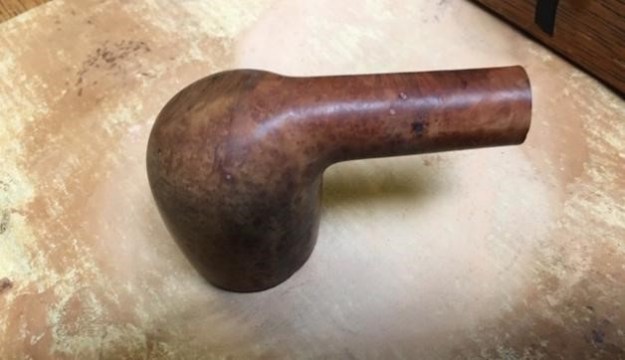
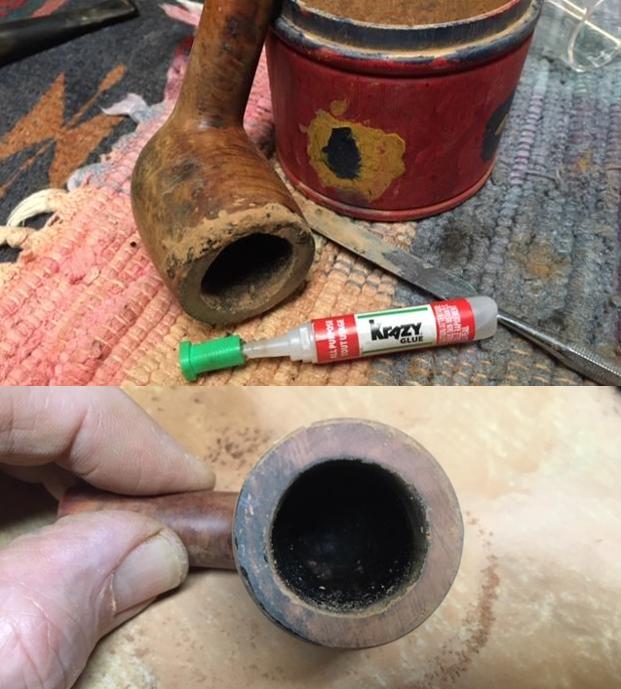
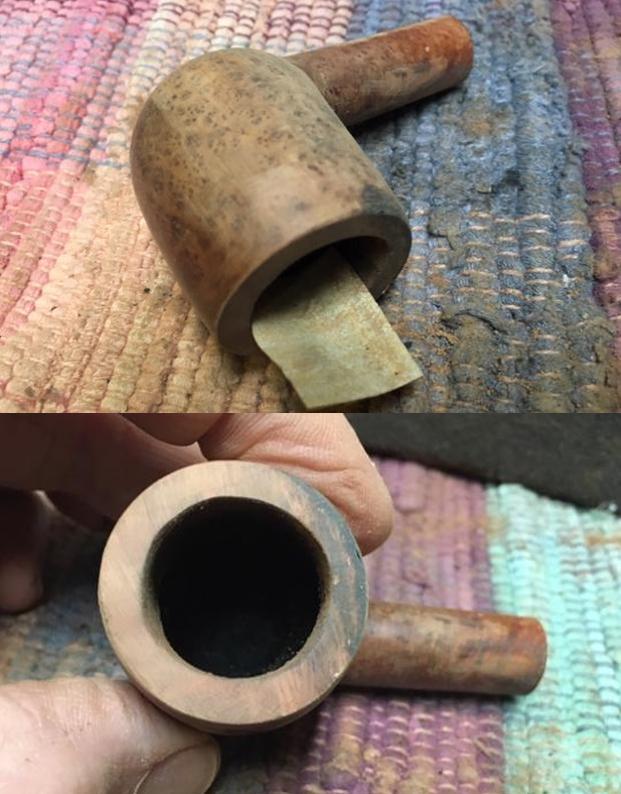
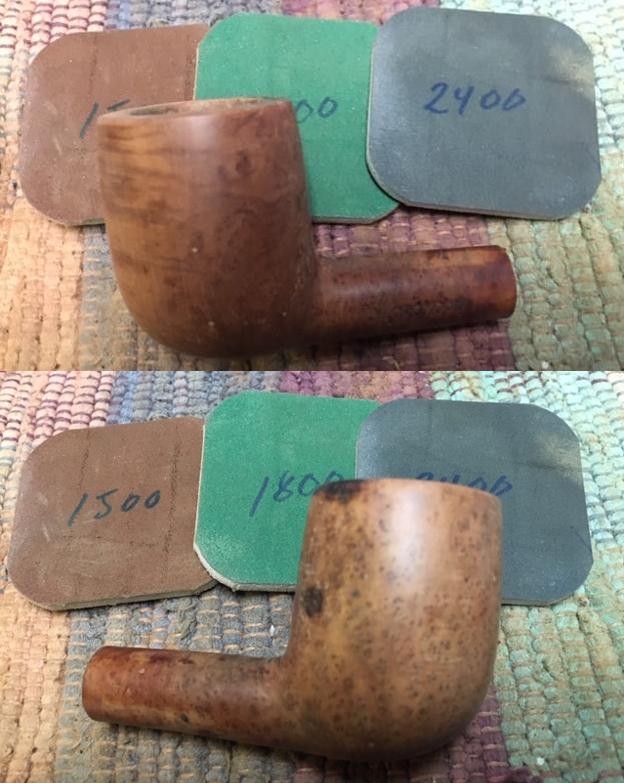
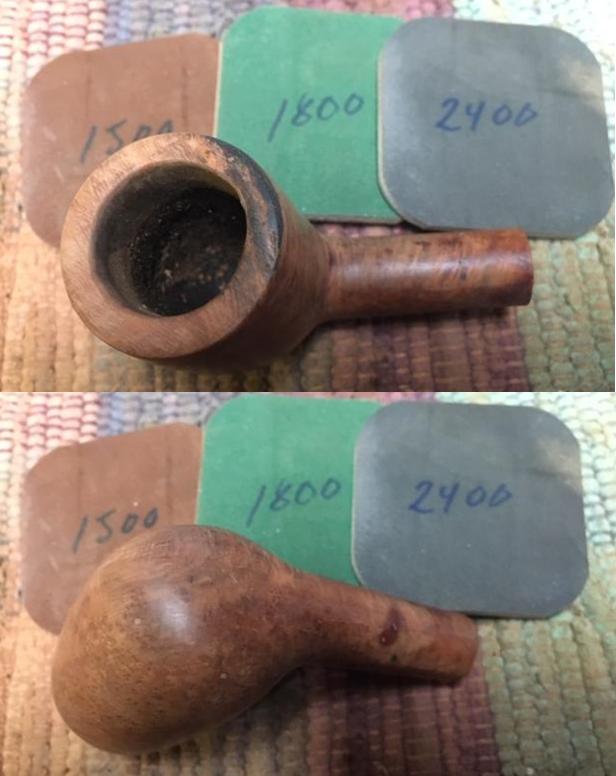
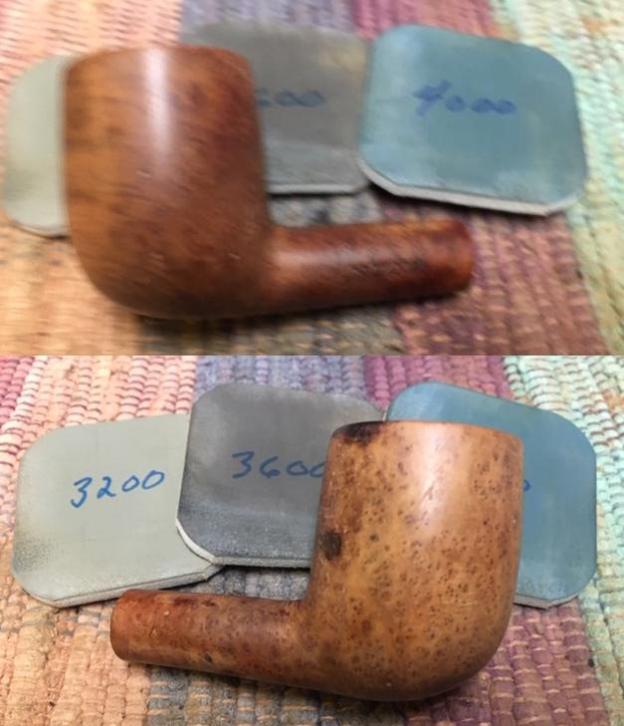
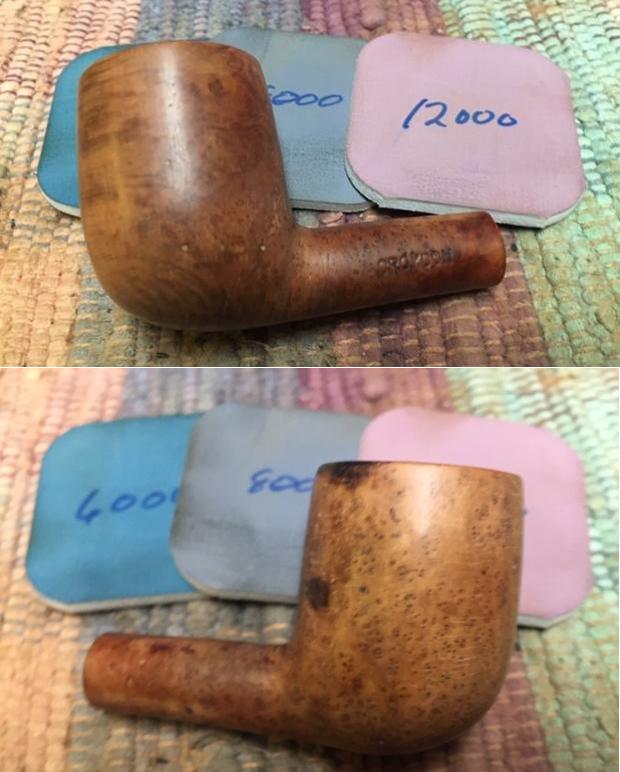
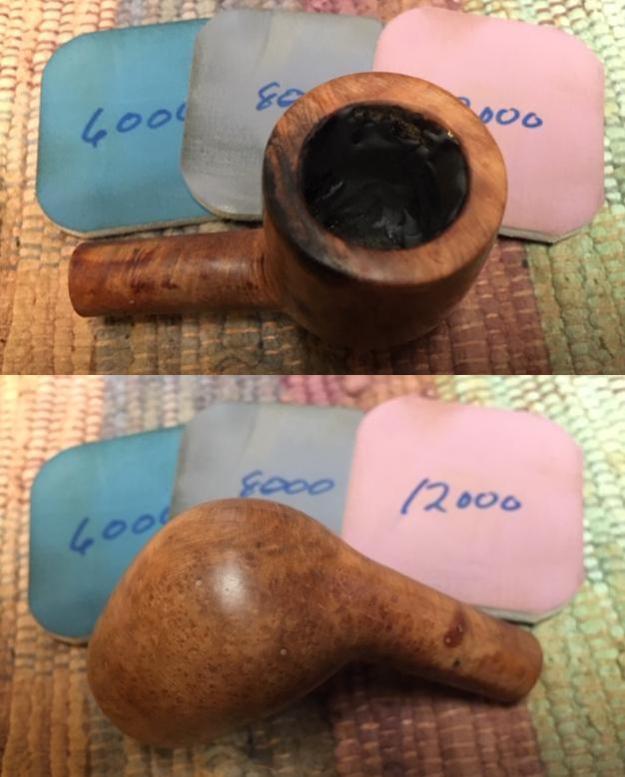
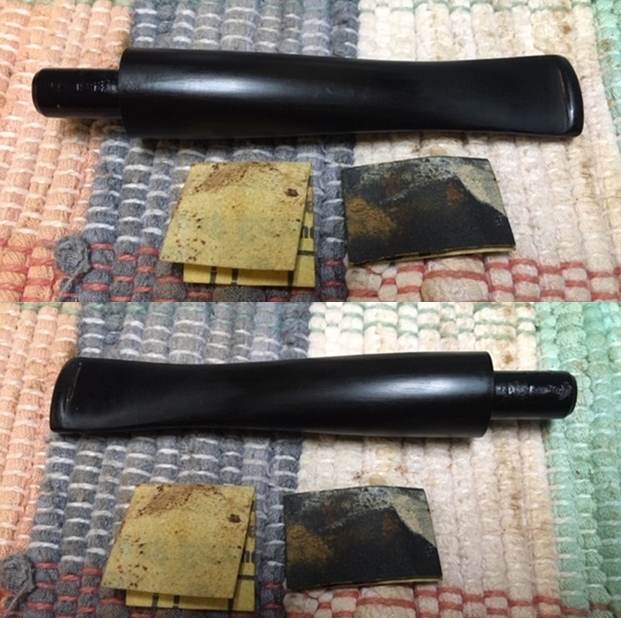
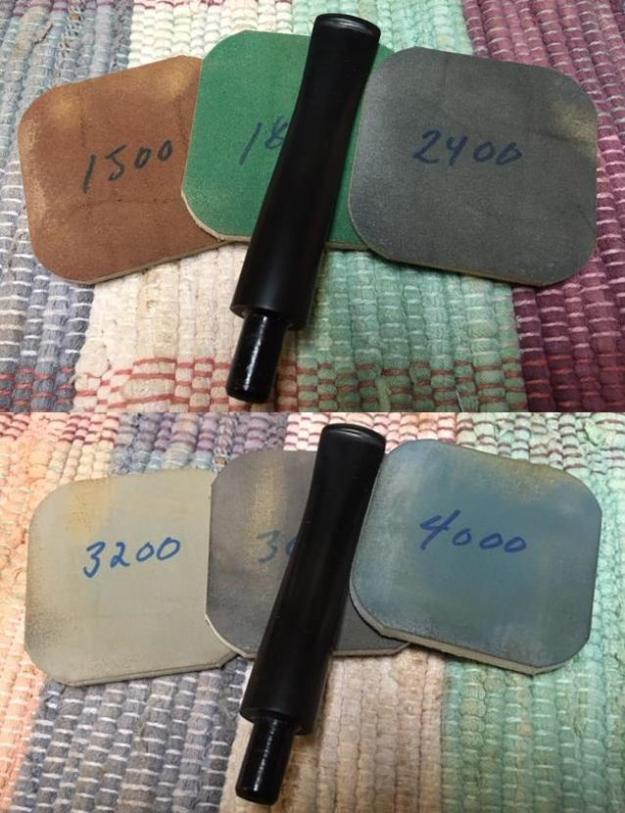
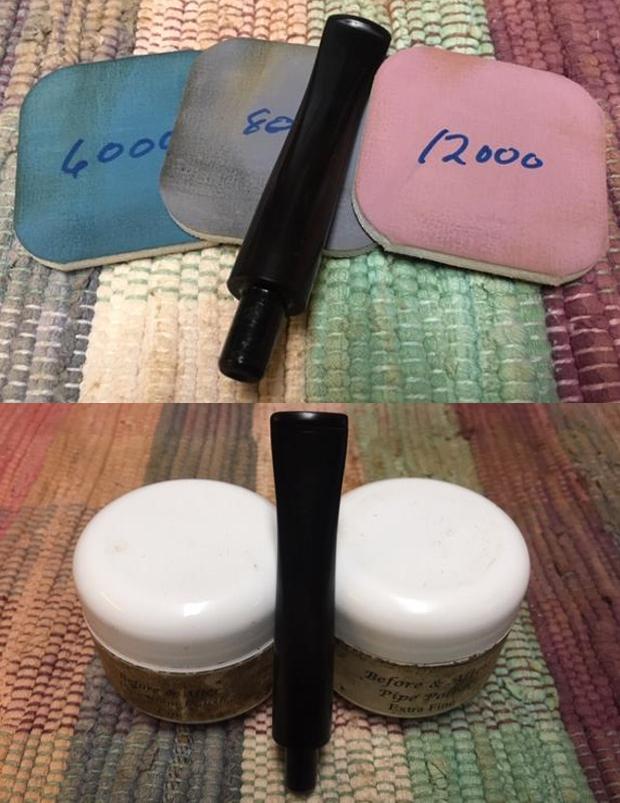
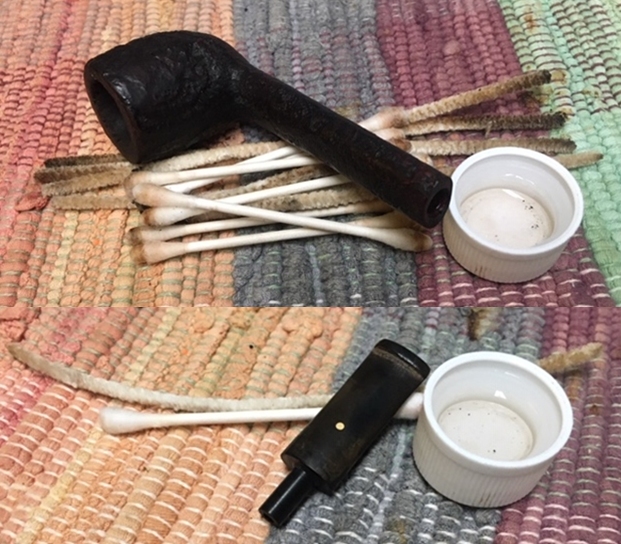
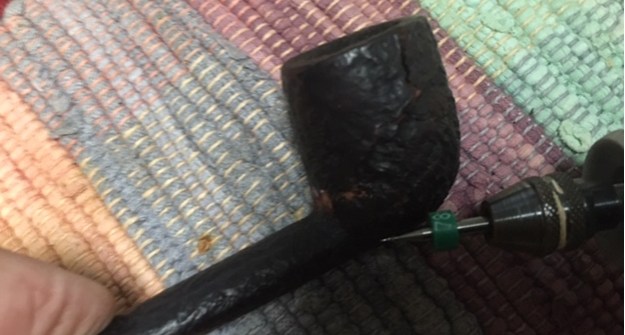
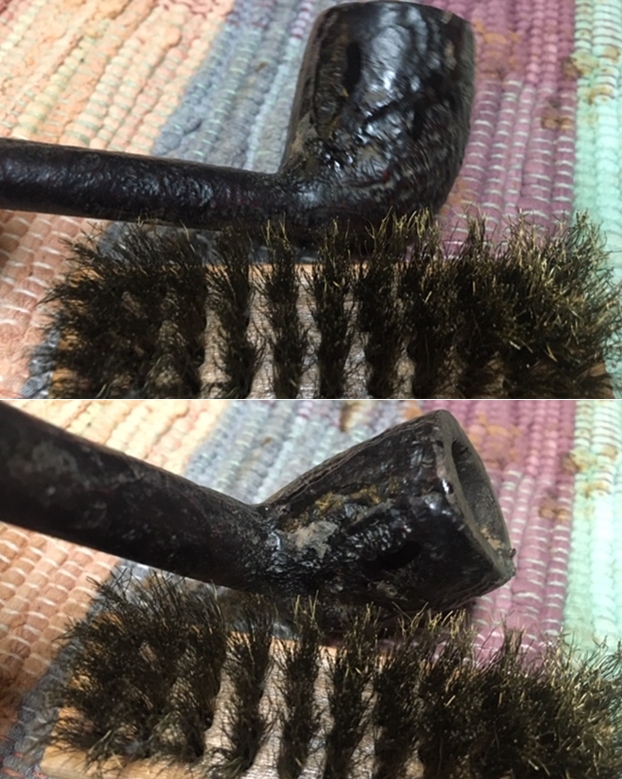
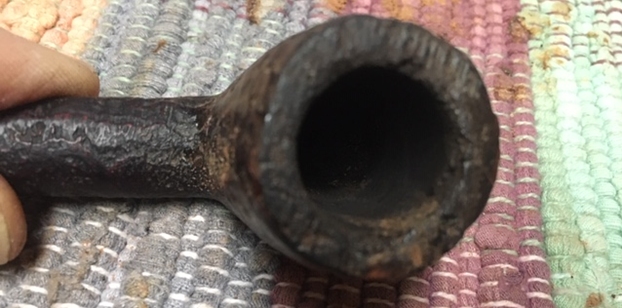
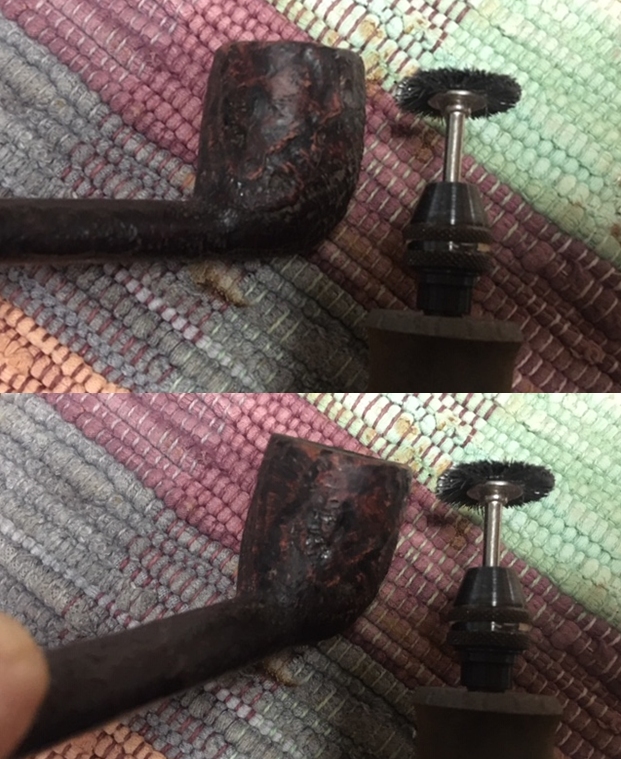
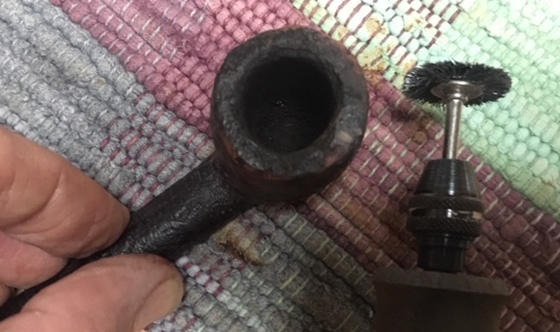
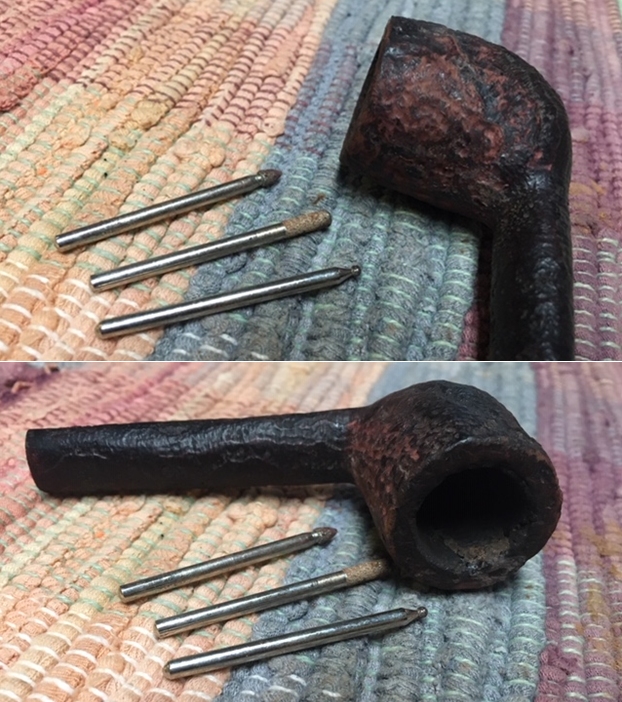
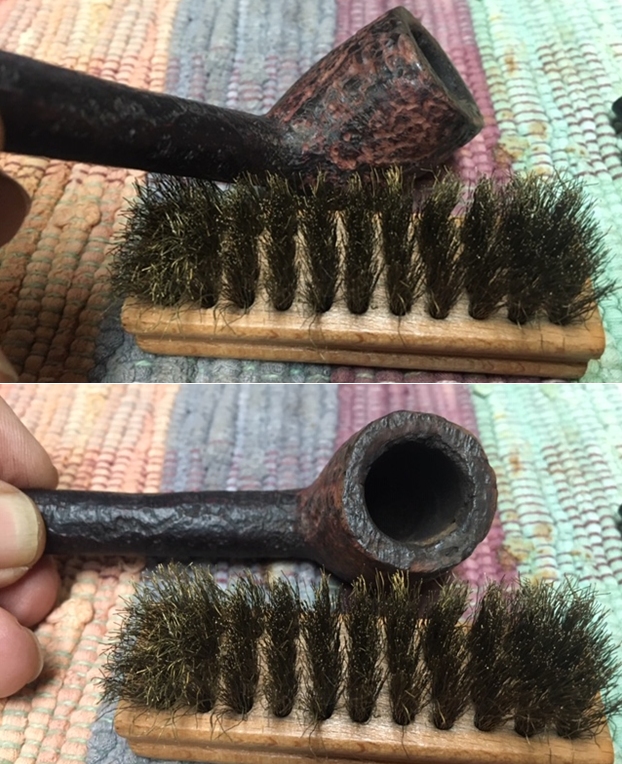
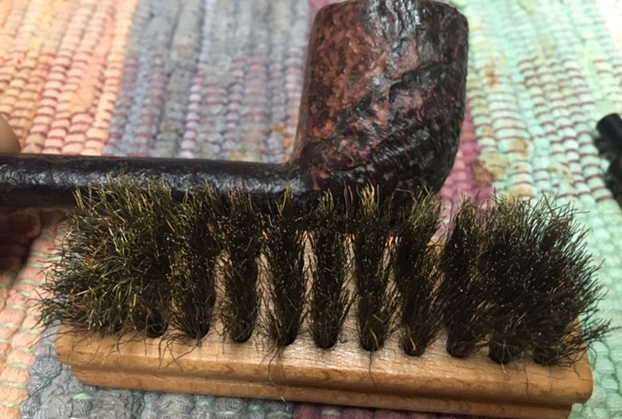
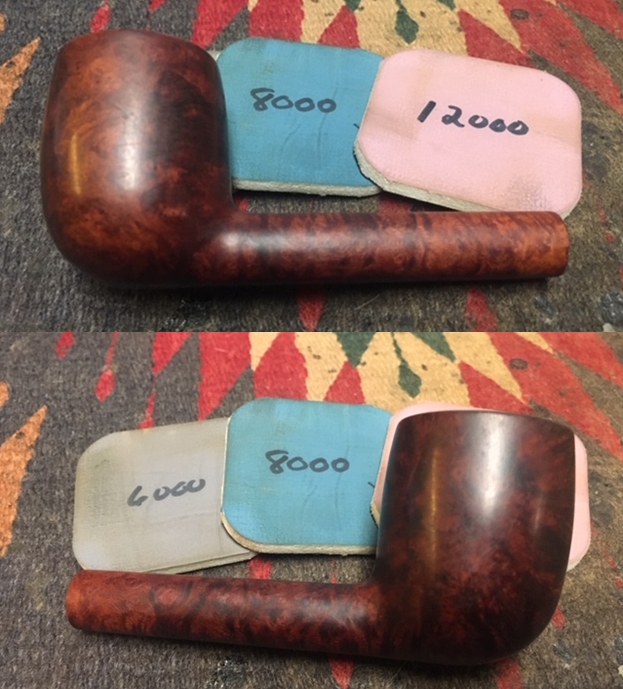
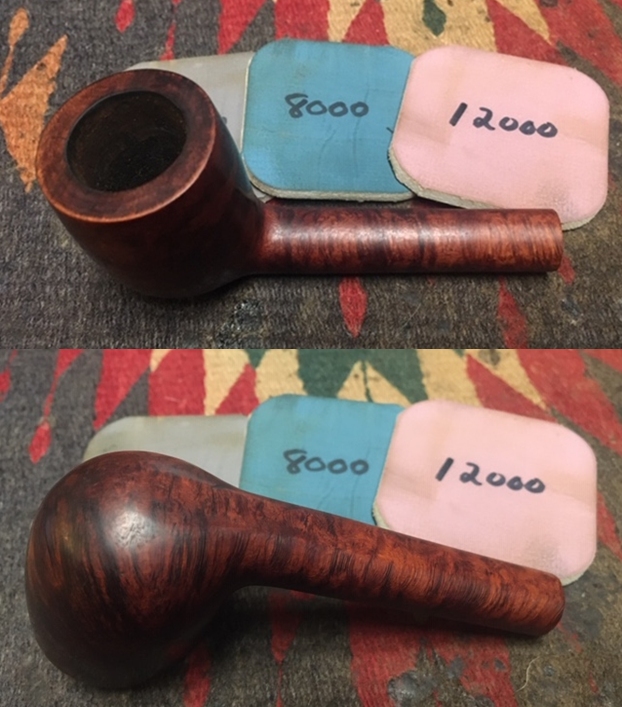
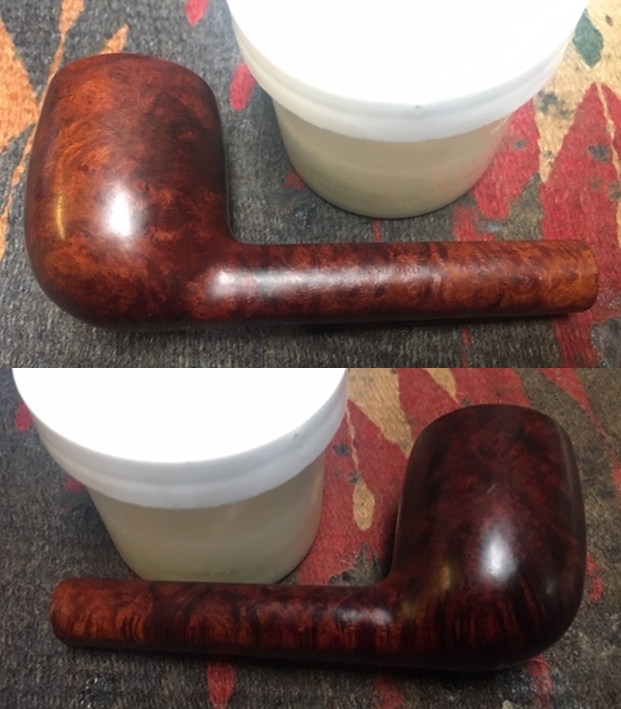
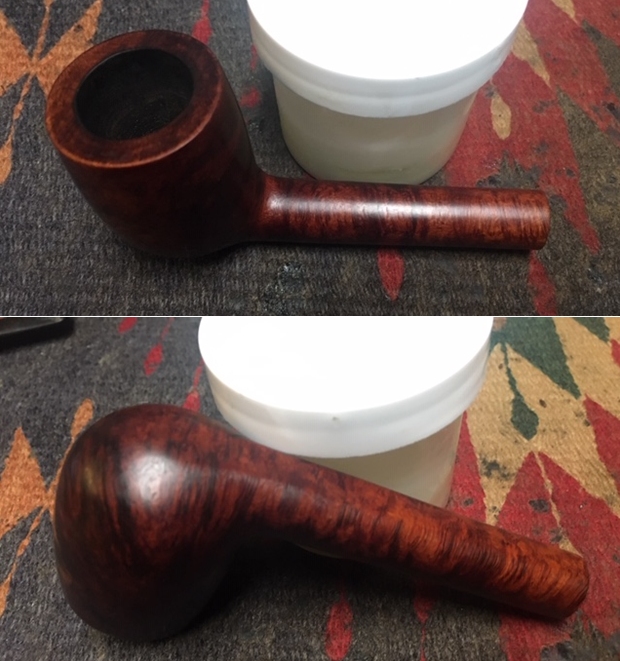
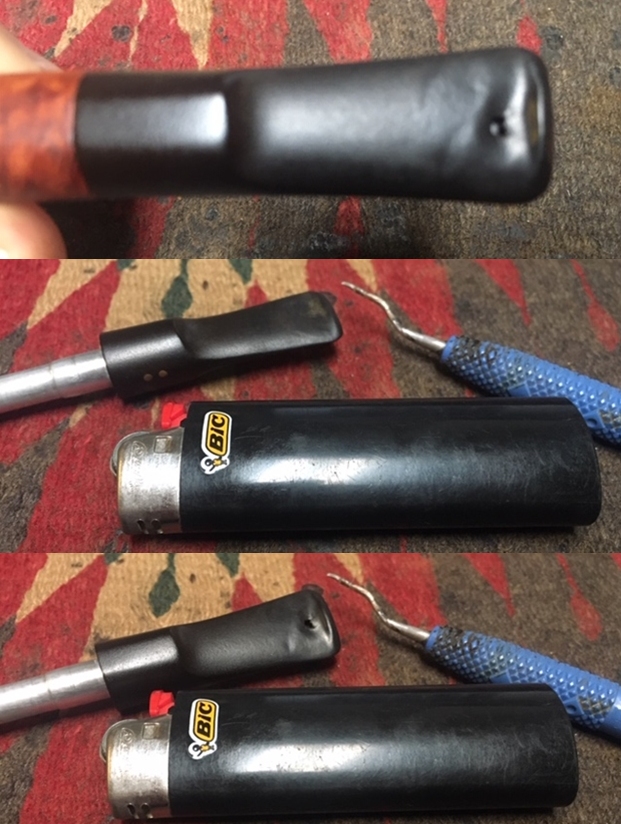
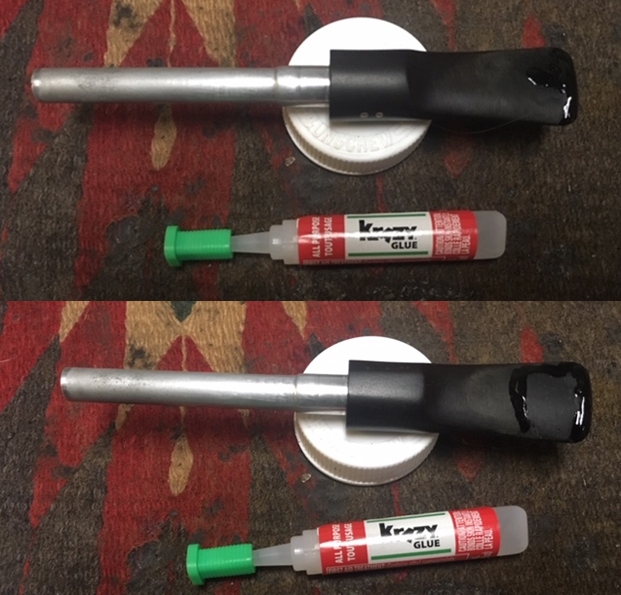
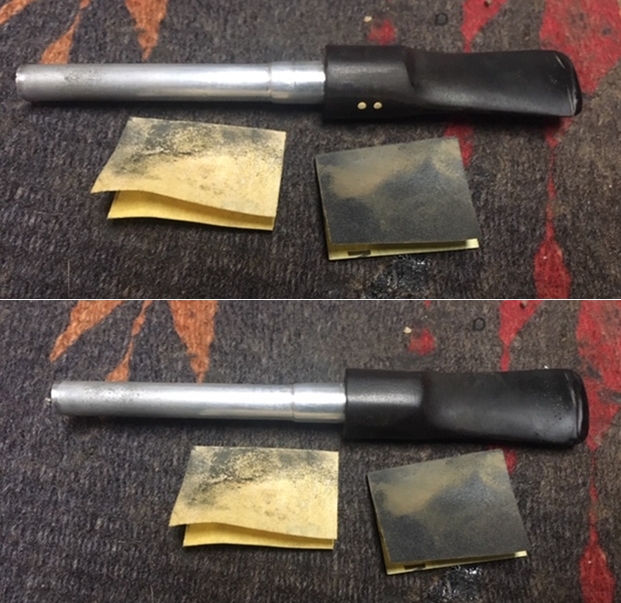
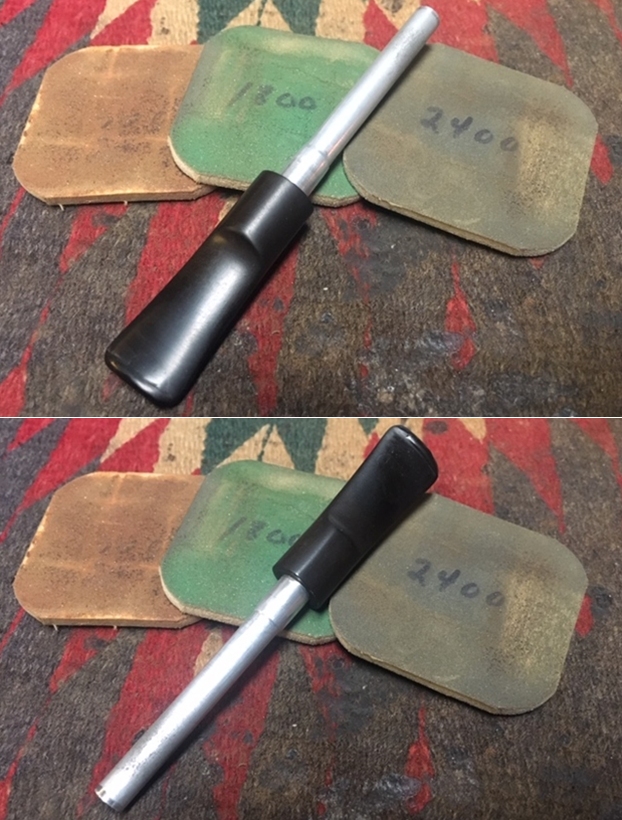
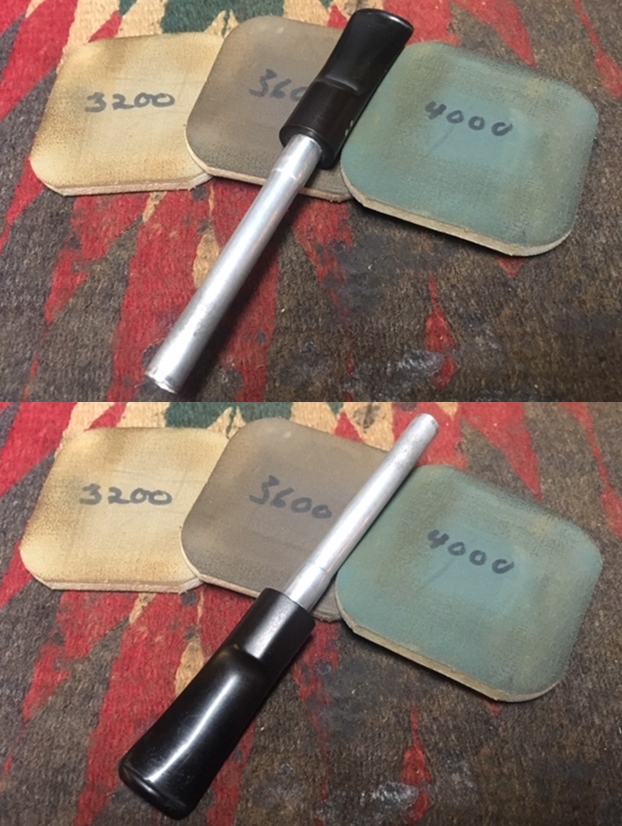
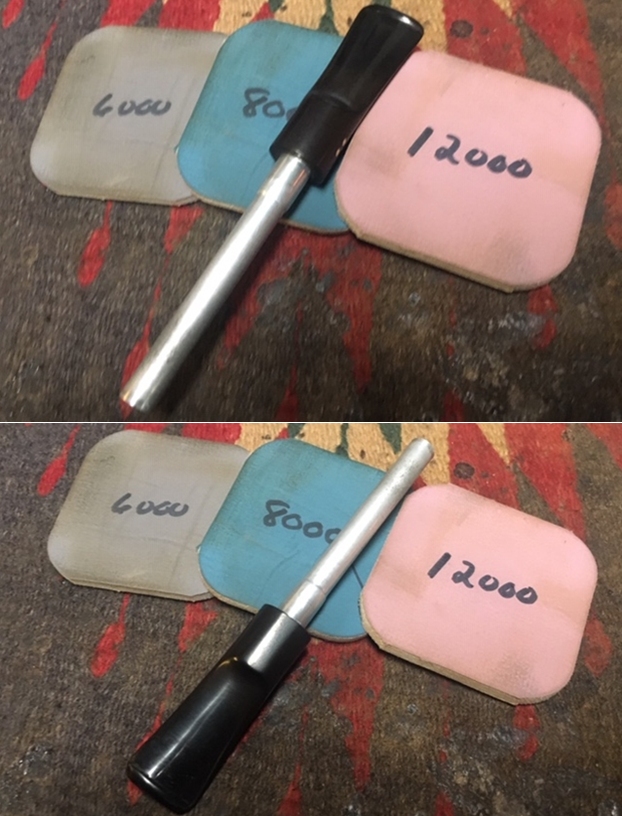
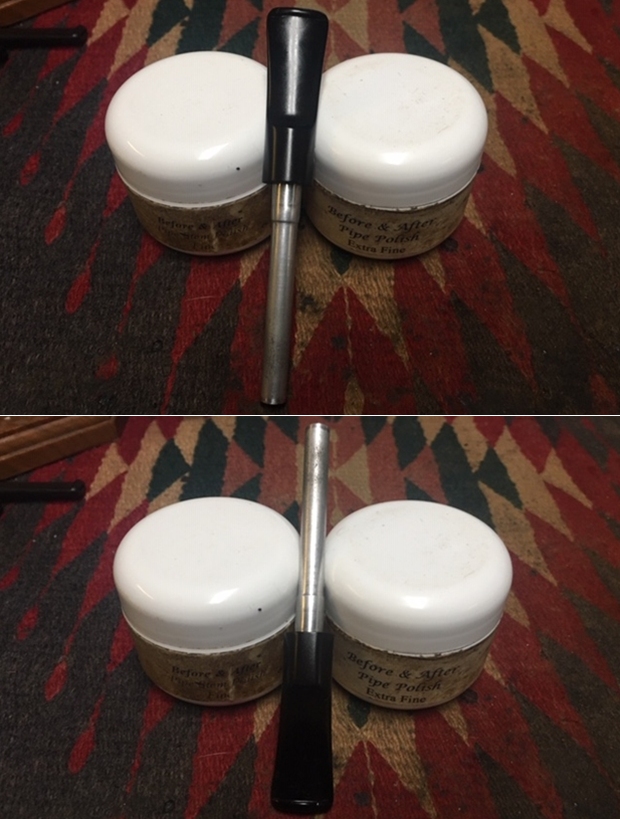
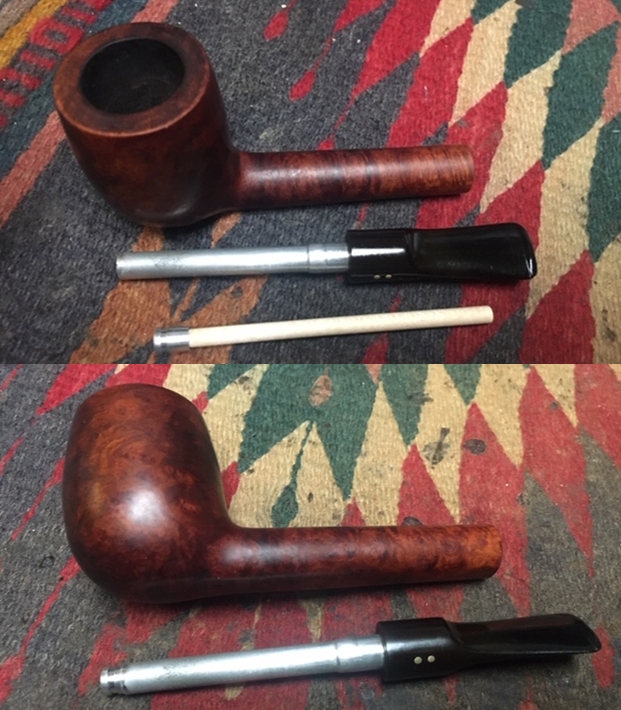
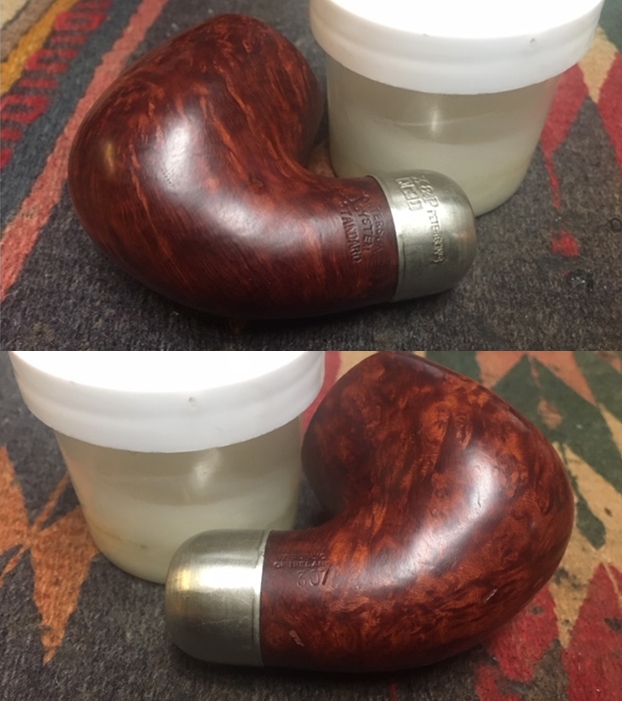
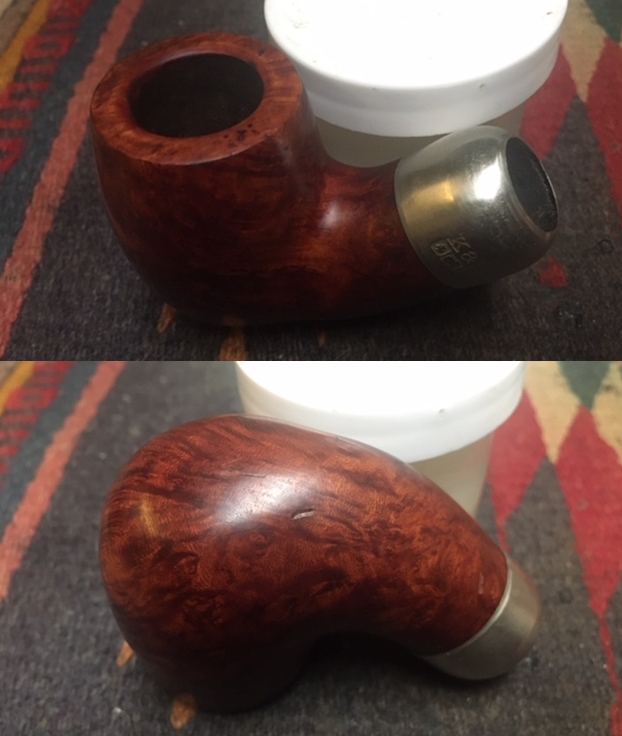
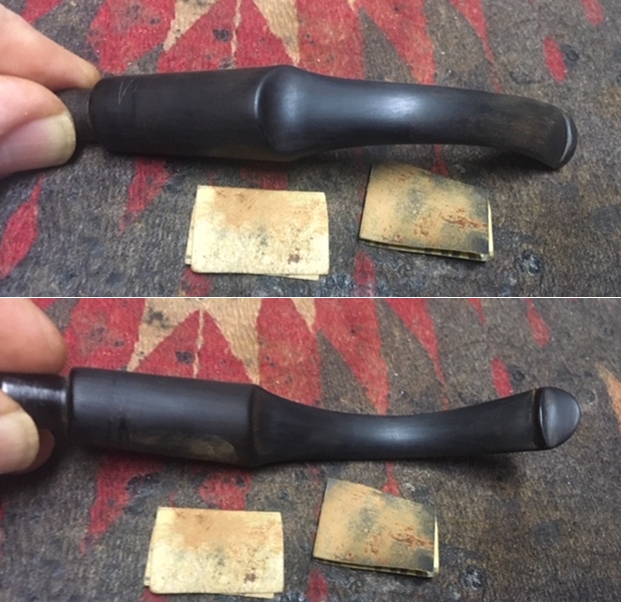
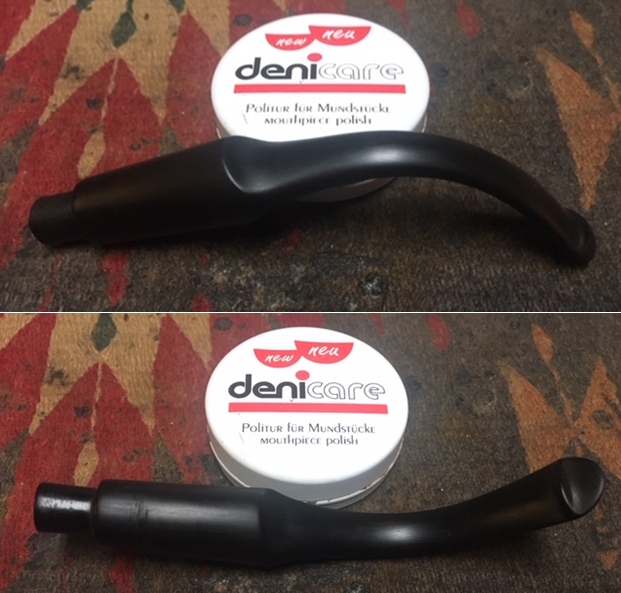
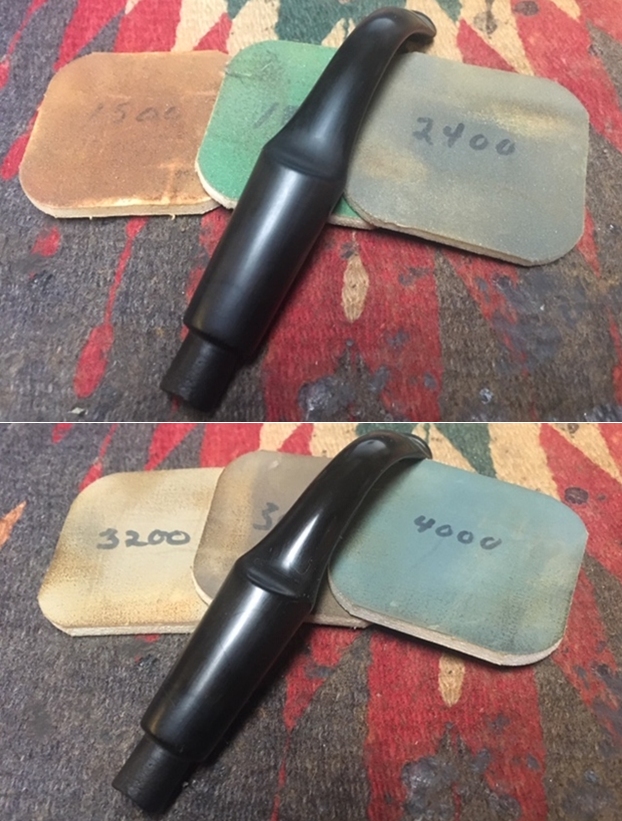
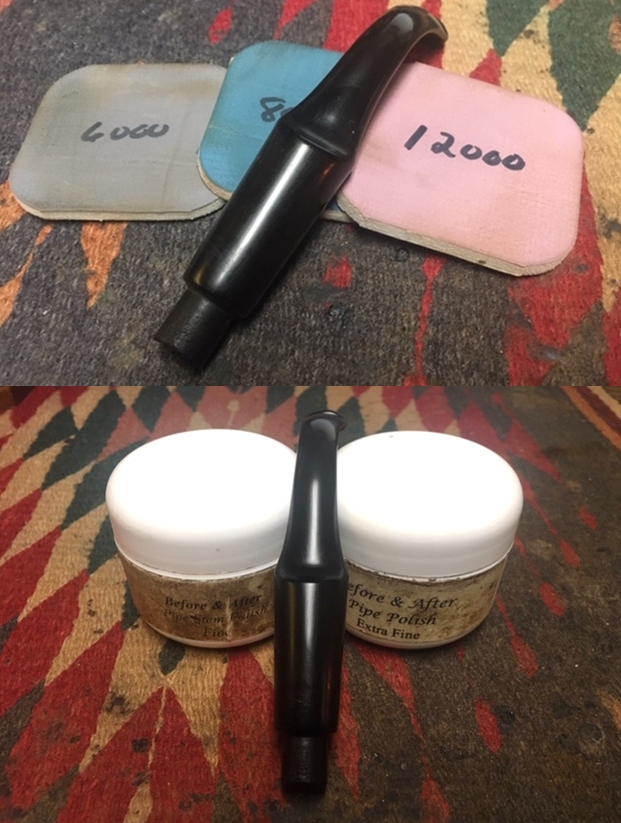
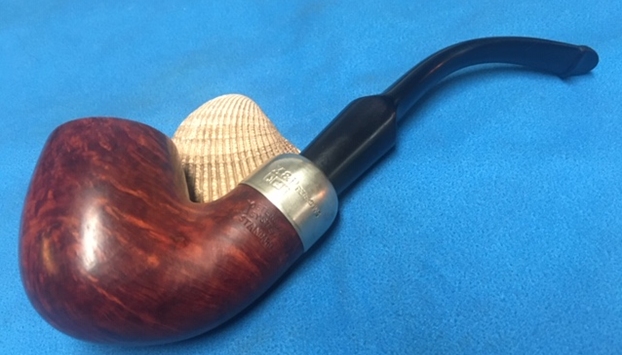
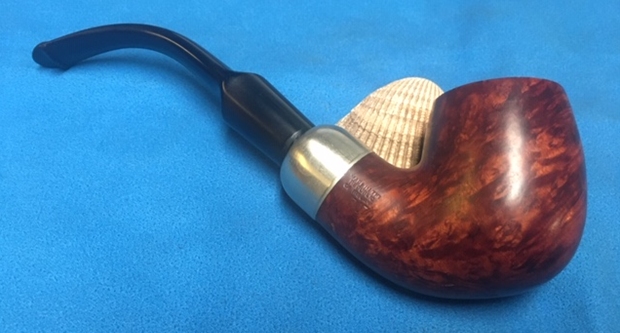
I am getting more and more spoiled on working on pipes that Jeff cleaned up. So much so that when I have to clean them it is a real chore! This pipe was a real mess just like the other ones in the collection. I did not know what to expect when I unwrapped it from his box. He reamed it with a PipNet pipe reamer and cleaned up the reaming with a Savinelli Fitsall Pipe Knife. He scrubbed out the internals with alcohol, pipe cleaners and cotton swabs until the pipe was clean. He scrubbed the exterior of the bowl with Murphy’s Oil Soap and a tooth brush to remove the grime and grit on the briar and the lava on the rim top. The finish looked really good when I got it. The rim top plateau looked lifeless but clean. We were not sure what I would do with the stem so Jeff cleaned the internals and scrubbed the exterior in case I chose to try to repair it. When the pipe arrived here in Vancouver for the second stop of its restoration tour it looked very good. I actually forgot to take many photos before I started my part of the work but I did have one with the pipe and the broken stem. The briar is beautifully grained and clean. The rim top plateau is cleaned as well. It looked good. The shank extension was vulcanite and it was badly oxidized and would need to be sanded and polished.My first thought was to replace the broken stem with another freehand stem. I went through my stems and chose the one that is shown in the photo below. The length was right and the tenon was close. I set up my cordless drill with the PIMO tenon turner and adjusted the diameter of the tenon to fit the shank extension. I put it in the pipe and took a photo of the pipe to get a sense of how it looked. I actually did not like the shape of the stem or the way it looked. I would need to think through how to address the snapped stem. I was not happy with the look of the new stem. It was too think and clunky looking to me to fit the style of the pipe. I decided not to use it so I did not even bother bending it. I turned back to the broken stem and thought long and hard about it. I went upstairs and had a coffee and a short nap before I finally came up with a plan. I headed back downstairs and dug through my parts boxes for broken tenons. I even keep those around when I pull them from a shank. I have a good assortment of them in various diameters. I picked two possibilities and laid them out. From the two I chose the smaller one. Now the plan was beginning to take shape. I was going to drill out the two parts of the stem and rejoin them together with the piece of tenon. (Forgive the blurry photo but you get the idea. I would drill a hole in each end and use the tenon to rejoin them.I started opening the airway in both halves of the stem with a drill bit slightly larger than the airway. I worked my way up to the bit that is shown in the photos. It was the slightly smaller than the piece of tenon that I was going to use for the joint.I reduced the diameter of the short tenon piece with a Dremel and sanding drum. I worked on it until the fit in the drilled airway was perfect. Once that was done I used the Dremel and sanding drum to take down the diameter a bit more on the second half of the tenon. I topped it on the topping board using the blade side as a handle. Once the fit was right on both sides I glued it in the blade side with clear Krazy Glue and pressed it into the hole.  I cleaned up the end of the tenon and coated it with a layer of clear Krazy Glue. I pressed the second half of the stem in place on the tenon insert and aligned the four sided bulb on the tenon end of the stem.I set the stem aside to let the repair cure and turned my attention to the oxidized shank extension. I sanded the oxidation off with a folded piece of 220 grit sandpaper. I started the polishing with 400 grit wet dry sandpaper. The third photo shows the plateau top and how the nooks and crevices look on the rim top. I polished the bowl and rim with micromesh sanding pads. I wet sanded it with 1500-12000 grit pads and wiped it down between pads with a soft cotton cloth. You can see the progress in the shine as you go through the photos. I worked some Before & After Restoration Balm into the finish of the bowl and the plateau on the rim top and shank end with my fingertips and a horsehair shoe brush to clean, enliven and protect it. I find that the balm really makes the briar come alive again. The contrasts in the layers of stain really made the grain stand out. I let the balm sit for a little while and then buffed with a cotton cloth to raise the shine. The pipe really looks good at this point. I am very happy with the way the pipe is looking at this point in the process.  Jeff’s clean up of the rim top looked very good. I decided to leave the darkened areas and darken the remaining valleys in the plateau with a Black Sharpie Pen to give the rim top a contrast look with the high smooth spots. It also gives the plateau more definition and gives it a clean look. The finished rim top looks very good.I set the bowl aside and turned my attention to the stem. I inserted a pipe cleaner in the stem to protect the airway from collapsing when I heated it. I painted the surface of the stem with the flame of a BIC lighter until the vulcanite was soft. Once it was pliable I bent it to match the angle of the bowl top. I held it at that angle and cooled it under cool water to set it.I sanded the stem with 220 grit sandpaper and 400 grit wet dry sandpaper to smooth out the repair in the middle of the stem and to remove the oxidation that remained on the stem surface. I smoothed out the repair in the mid-section of the stem with a piece of 220 grit sandpaper on the edge of my pen knife blade. I followed that with the 400 grit wet dry sandpaper.  I rubbed the stem down with Denicare Mouthpiece Polish and a cotton pad to remove remnants of oxidation and to further blend in the sanding. The stem was showing some promise at this point in the process.I polished the stem with micromesh sanding pads – wet sanding it with 1500-12000 grit pads. I polished it further with Before & After Pipe Stem Polish – both fine and extra fine. I finished by wiping it down with Obsidian Oil after each pad and set it aside to dry. I carefully buffed the stem with Blue Diamond on the buffing wheel and did the same for the bowl and vulcanite shank extension. I gave the bowl and the stem multiple coats of carnauba wax separately as the angle of the stem and shank made buffing this a bit tricky. I buffed the pipe with a clean buffing pad to raise the shine. I hand buffed it with a microfiber cloth to deepen the shine. The polishing of the briar makes the grain really pop. The polished black vulcanite bit seemed to truly come alive with the buffing. This Freehand feels great in my hand and is what I would call and Egg/Oom Paul. It is one that could be clenched and smoked while doing other things as it is very light weight for a pipe this size It must have been a fine smoking pipe judging from the condition it was when we received it from Jennifer. There should be a lot of life left in this Champ of Denmark by Karl Erik. Have a look at it with the photos below. The dimensions are Length: 6 ¼ inches, Height: 2 ½ inches, Outside diameter of the bowl: 1 ½ inches, Chamber diameter: 7/8 of an inch. This is one that will go on the rebornpipes online store shortly. If you want to carry on the pipe trust of George Leghorn let me know. Thank you Jennifer for trusting us with his pipes. Thanks to each of you who are reading this blog. Remember we are not pipe owners, we are pipemen and women who hold our pipes in trust until they pass on into the trust of the next pipeman or woman.

Refreshing a Dunhill Root Briar 708 F/T Oval Shank Canted Stack for Alex


Blog by Steve Laug

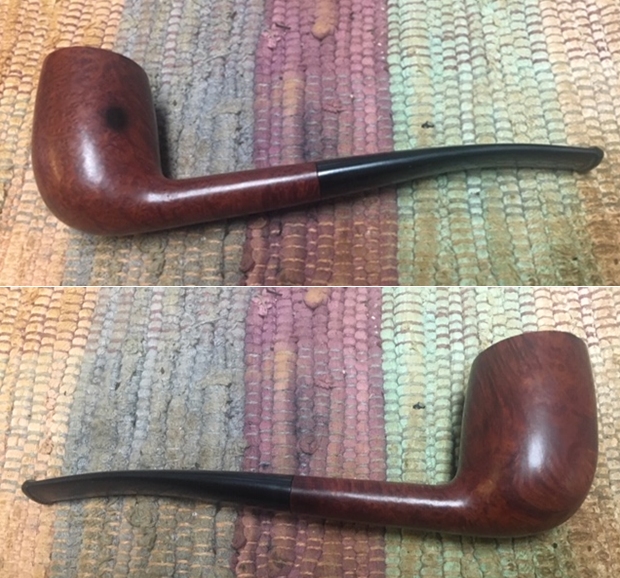
Around Christmas time I got together with Alex to enjoy some great hot cocoa, smoke our pipes and talk about all things pipes. I always have a great time when we get together and this time was no exception. He greeted me at the door with slippers and an old smoking jacket. I took my seat in the living room among his latest pipe finds and was handed a great cup of cocoa. I set it down and we both loaded out pipes with some new Perretti’s tobacco that he had picked up. We touched the flame of the lighter to the tobacco and sat back and blissfully enjoyed the flavour. As we did Alex walked me through his latest finds. There were some amazing pipes to look at and savor. He had found several really nice pipes – 3 different Dunhill pipes that he wanted me to work on for him. I have already written a blog on the Dunhill Wanghee Tan Shell Briar with a Bamboo shank (https://rebornpipes.com/2020/01/08/refreshing-a-dunhill-tanshell-w60-t-1962bamboo-lovat-for-alex/). I have also written a blot on the reconstruction of a nice little Shell Briar Lovat(https://rebornpipes.com/2020/01/11/breathing-life-into-a-worn-and-beat-up-dunhill-shell-briar-ec-canadian-for-alex/). The third Dunhill he had picked up is a shape number I could find little information on – a shape 708F/T Root Briar. For lack of a better title for the shape I have called it a canted stack.

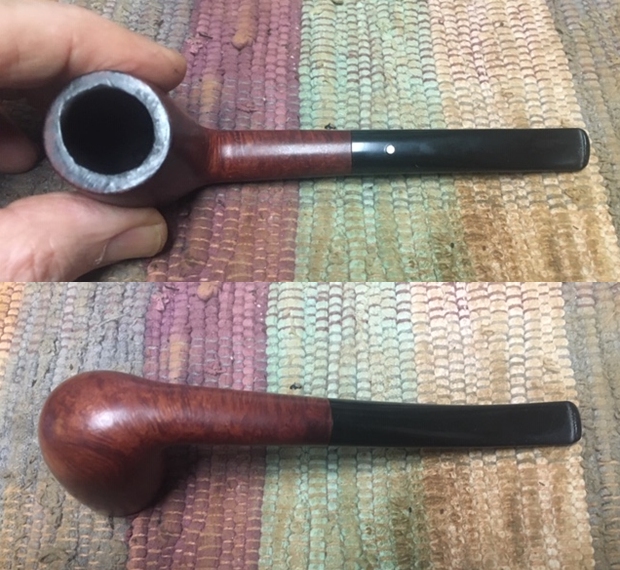
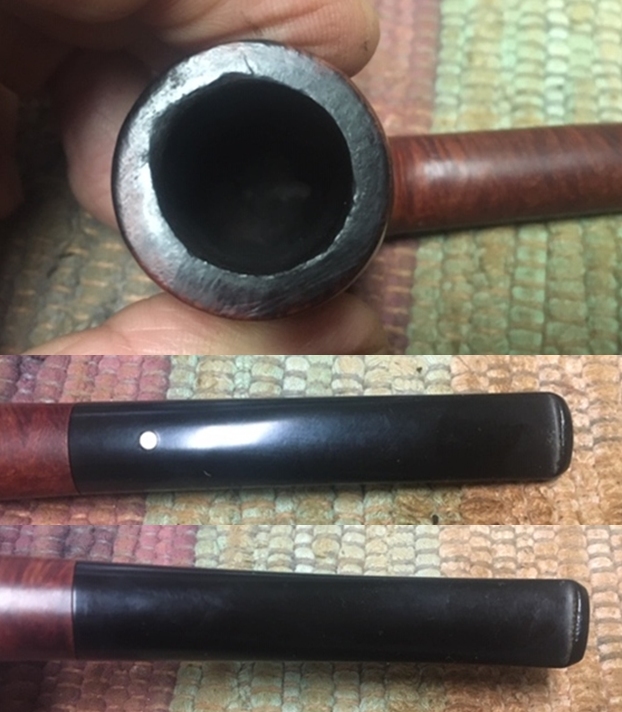
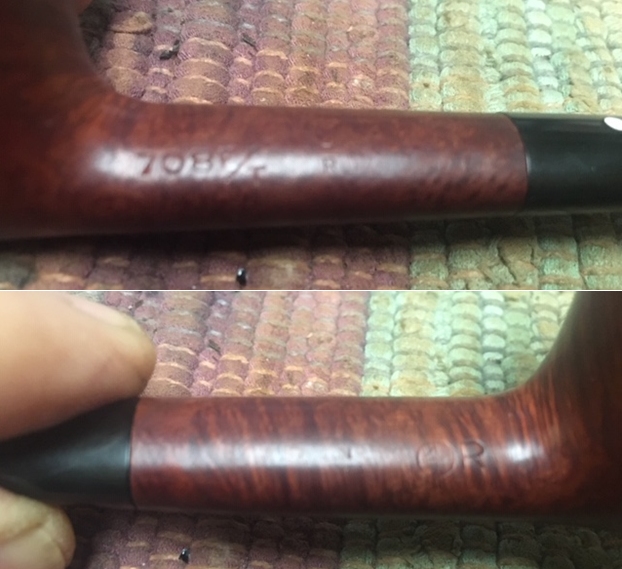
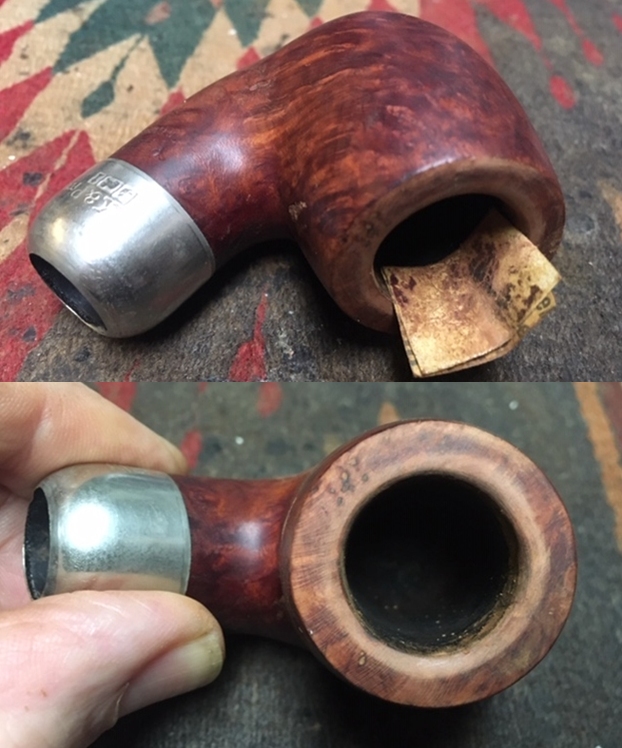
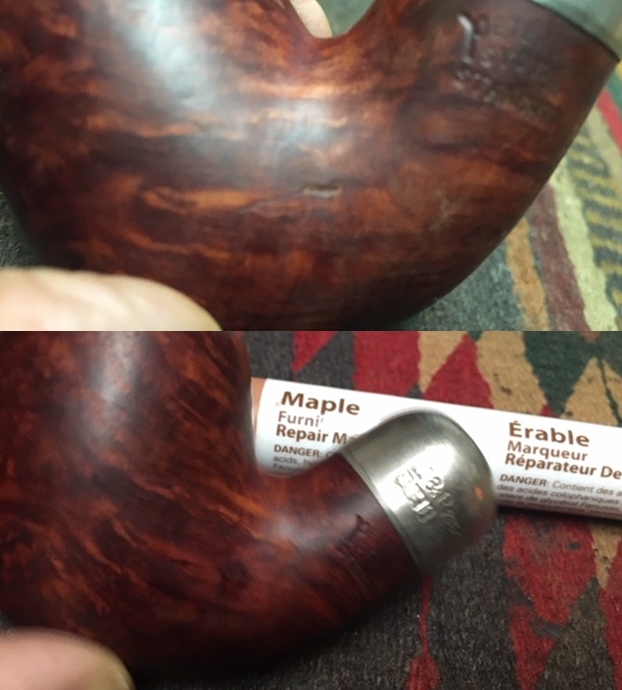
Alex had reamed the pipe and cleaned the pipe very well. The bowl was clean. The rim top had a lot of damage including burn marks and dents. The bowl was also very far out of round with damage around inner edge. There were burn marks on the inner and outer edge toward the right front side of the bowl. The finish looked very good around the bowl other than the burn mark on the left side where it looked like the bowl had been laid in an ash tray against a hot ash. He had already enjoyed smoking it and was hooked on it. He asked if I could take it home with me and see what I could do about the rim top damage and the burn mark on the bowl. I told him I would take it home and have a go at it. The pipe was stamped on the left side of the shank with the following nomenclature: 708F/T at the bowl shank junction followed by Dunhill over Root Briar. The Dunhill Root Briar stamp is faint but readable with a lens and light. The right side reads Made in England followed by what looks like a 2 (another 1962?) and a Circle 4 A. The 4 is the size of the pipe and the A is the designation for Root Briar. The stamping on the right side of the shank is also faint.

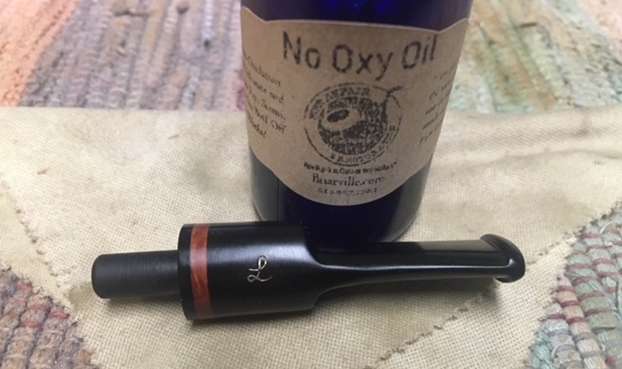
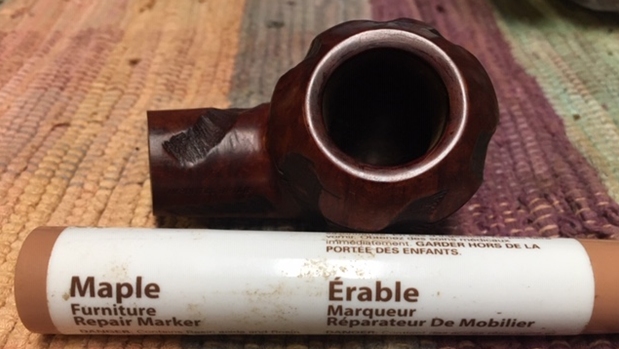
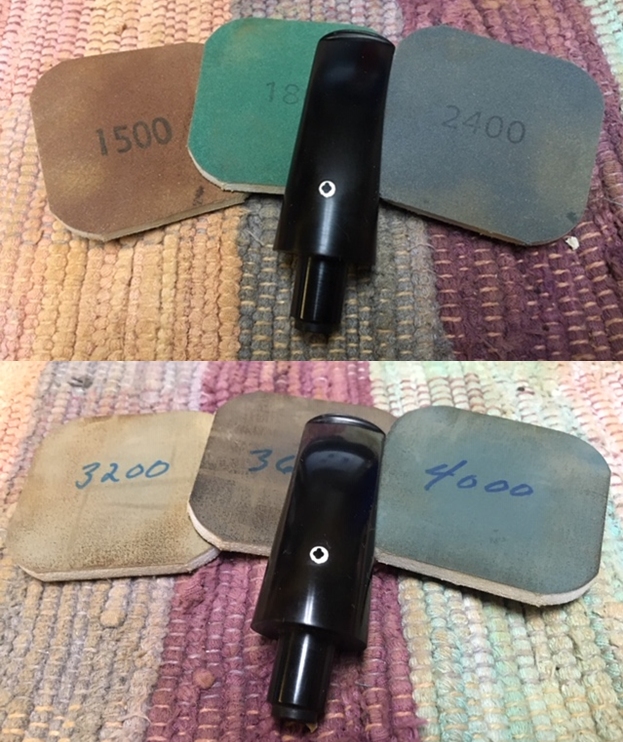
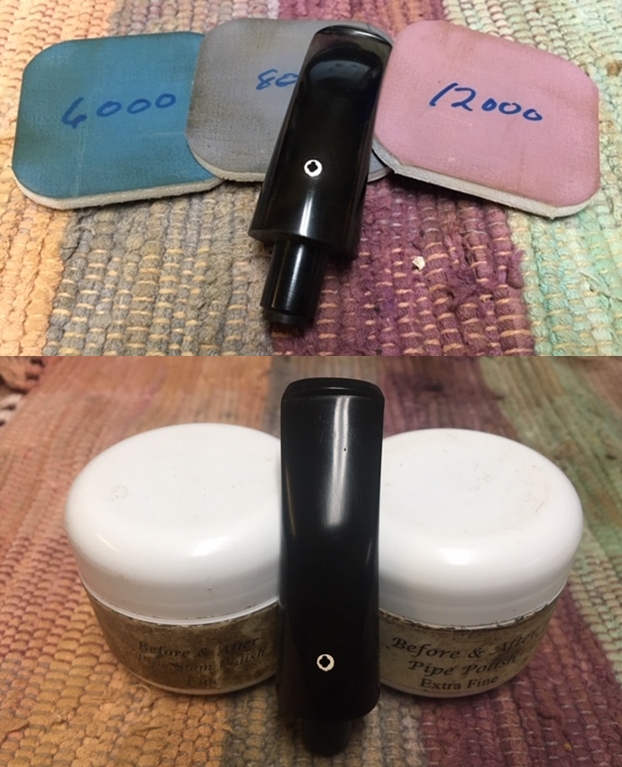
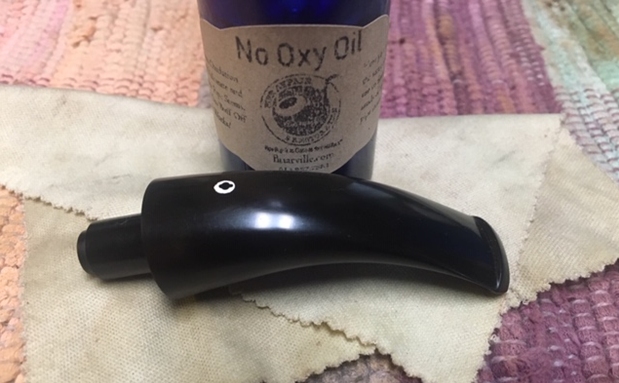
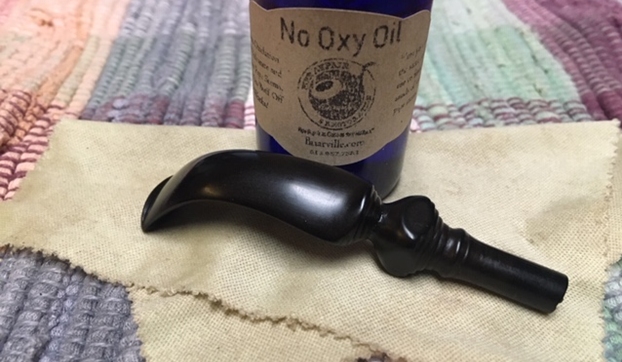
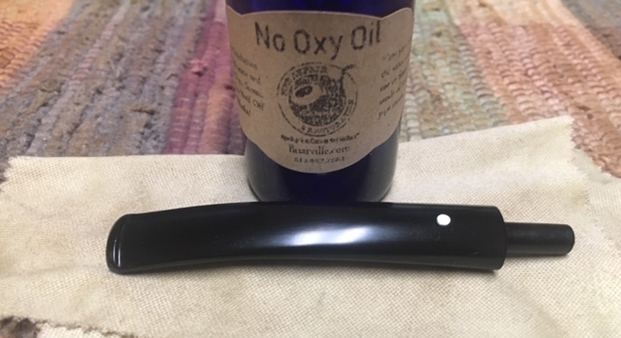
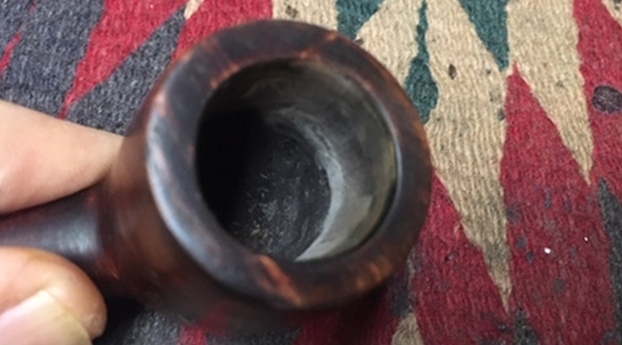
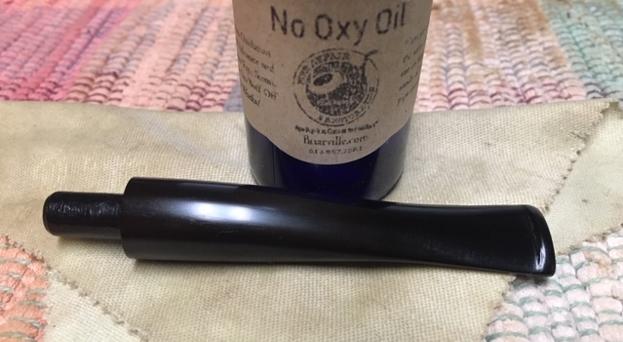
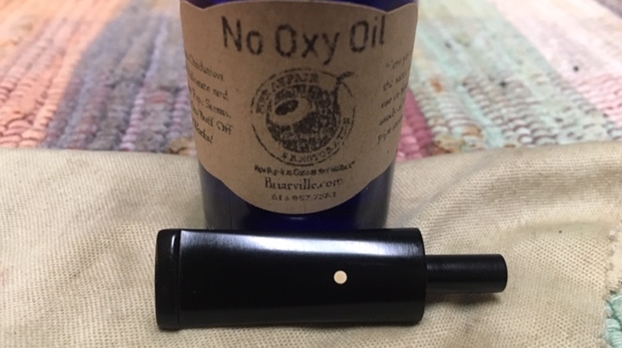
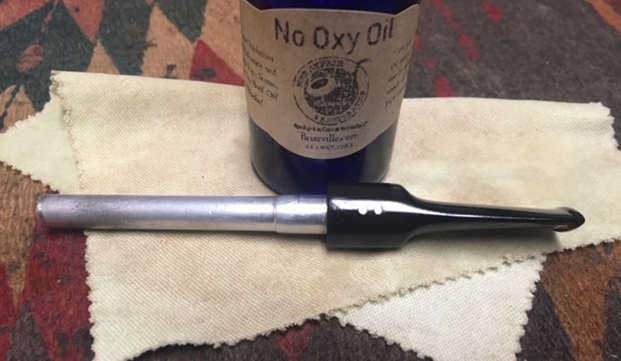
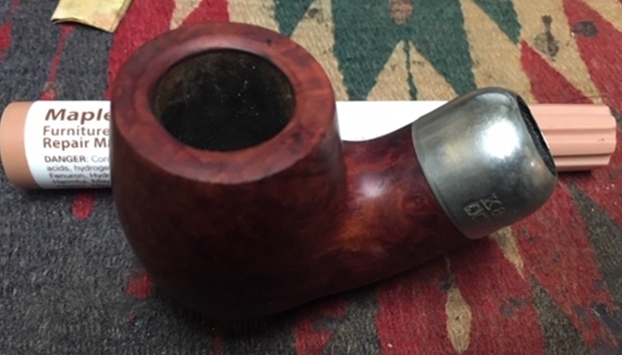
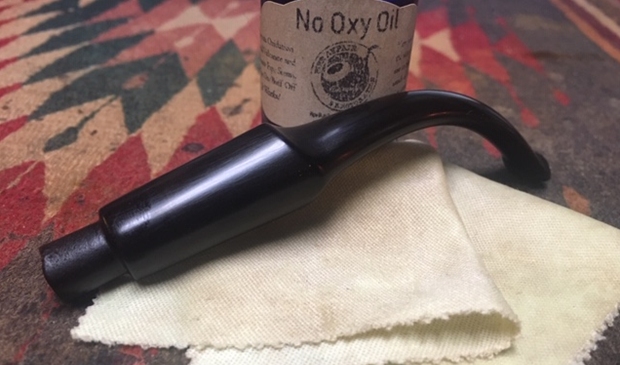
When I got home I laid it aside and today took it up to work on it. I examined the pipe to see what I was working with and took some photos. You can see from the first photo below that there was a burn mark on the left side mid bowl. It was a cosmetic burn marks in the finish but not too deep. It was like the pipe had been laid down in an ashtray. The rim top had significant darkening and damage. The stem was in good condition other than tooth chatter on both sides just ahead of and on the top of the button. Overall the pipe was in good condition. I took a close up photo of the rim top. You can see the darkening on the rim top and the damage on the front inner and outer edge of the bowl. The inner edge was hacked up like it had been poorly reamed with a pocket knife. There were also nicks and deep scratches in the rim top. It was in rough shape. The stem looked pretty good. There was tooth chatter on the top and underside of the stem and on the button surface itself. Otherwise the stem was in very good condition.I took a photo of the stamping on the underside of the bowl. You can see that it reads as noted above. It is indeed faint but with a lens and light it is very readable.I decided to start the refurbishing by addressing the issues with the rim top and inner edge of the bowl. I lightly topped the bowl on a topping board with 220 grit sandpaper. Once it was smooth I worked on the inner edge of the bowl with a folded piece of 220 grit sandpaper. I also cleaned up the burned outer edge on the rim front. I sanded the burn mark on the left side of the bowl with the 220 grit sandpaper and was able to minimize the burn a bit. It was deeper than I initially thought. I polished the rim top and bowl with micromesh sanding pads – wet sanding it with 1500-12000 grit sanding pads. I wiped the bowl down after each sanding pad with a damp cloth to remove the dust and debris left behind by the sanding. I used a Maple Stain Pen to blend the sanded area on the side of the bowl and the rim top with the rest of the finish on the bowl. I have found that this particular stain pen works well to match the stain on the Root Briar.With the finish cleaned I rubbed it down with Before and After Restoration Balm. It is a product developed by Mark Hoover to clean, enliven and protect briar. I worked it into the briar with my fingertips. I let it sit while I went and had some lunch. When I came back I buffed it off with a cotton cloth. You can see the results below. While the burn mark did not disappear it is significantly lighter than when I started. The rim top also looks much better. I set the bowl aside and turned to address the tooth chatter on the stem surface. The stem was in excellent condition other than that so it did not take a lot of work. I used a folded piece of 220 grit sandpaper to sand out the tooth marks and then started the polishing with 400 grit sandpaper.I polished it further with Denicare Mouthpiece Polish – a red paste that does a great job in removing the oxidation remnants in the crease of the button and also polish out some of the lighter tooth chatter.I finished the stem with micromesh sanding pads – wet sanding it with 1500-12000 grit pads and wiping it down after each pad with a damp cotton pad to remove the dust. I polished it with Before and After Pipe Polish – both fine and extra fine. I finished by wiping the stem down with some No Oxy Oil that I received from Briarville Pipe Repair to experiment with. Once I finished I put the stem back on the shank and carefully buffed the pipe and stem with Blue Diamond polish. I wanted to polish out the minute scratches in the briar and the vulcanite. I gave the bowl and the stem several coats of carnauba. I buffed the pipe with a clean buffing pad and hand buffed it with a microfiber cloth. The finished Root Briar pipe is shown in the photos below. It is a great pipe and certainly looks better than when I began the process. The dimensions of the pipe are Length: 5 ½ inches, Height: 1 7/8 inches, Outer Bowl Diameter: 1 1/8 inches, Chamber Diameter: ¾ of an inch. The pipe will soon be heading back to Alex so he can continue to enjoy it. This is a beauty that he can enjoy as he carries on the trust of these Dunhill pipes. Thanks for walking with me through the restoration.

Cleaning Up a Third Wrecked Pipe for a Fellow Pastor in Vancouver – A VB Apple


Blog by Steve Laug

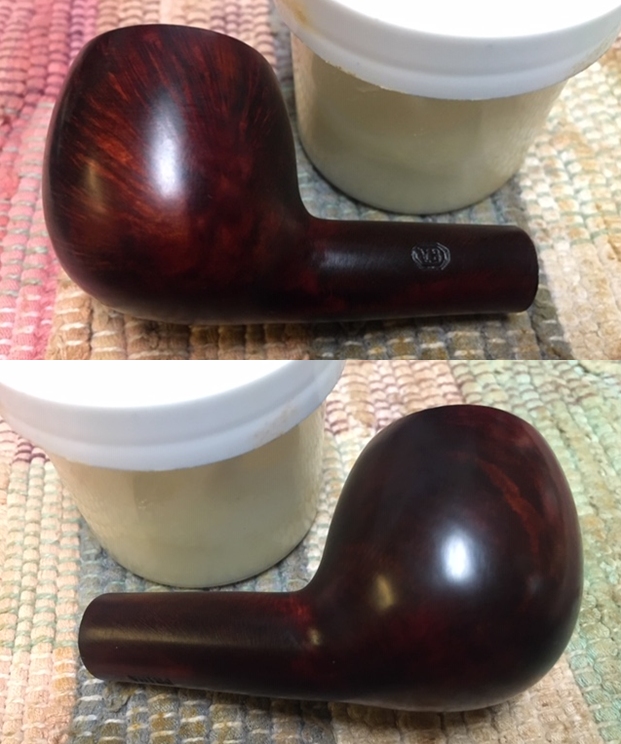
Lately I am not taking on more work for repairs from email or online requests as I am just too busy. I still get the odd referral from the local cigar and pipe shop that I feel obligated to repair or restore. They tend to be spread out a bit so I can fit them in among the other work that I am doing for estates. Earlier this week I received a phone call from a fellow who had been referred to me by the shop. In our conversation he said that he had some pipes that the stems were all loose on and he wanted to know if I would be able to help him. I have learned to not make any arrangements until I have the pipes in hand and have examined them. He came over Friday afternoon to let me have a look at the pipes. He handed me a bag and inside there were four or five extra stems that he had brought for my use. There were also three old and tired pipes. They were in very rough shape. Two were apple shaped pipes stamped VB and one was a Croydon billiard. The stems were indeed loose on two of the pipes and stuck on the third pipe. The bowls were clogged with a thick cake to the degree that I could not even get my little finger in them. The stems had a thick layer of calcification and some tooth marks. They needed a lot of work.

We talked about the pipes and that he had held them for a long time hoping for a repair. He had spoken with the cigar and pipe shop and they had led him to me. Now he could actually have a hope of smoking them again. In the course of the 30 minute or so conversation he asked me what I do for work. I told him I was a Presbyterian minister working with an NGO dealing with the sexual exploitation and trafficking of women and children in 7 countries and 12 cities around the world. We talked about that a bit then he laughed and told me he was a United Church Minister who had taught in a variety of schools as well as pastored various parishes. We had a great conversation and I took the pipes and told him we would connect again once I had them finished.

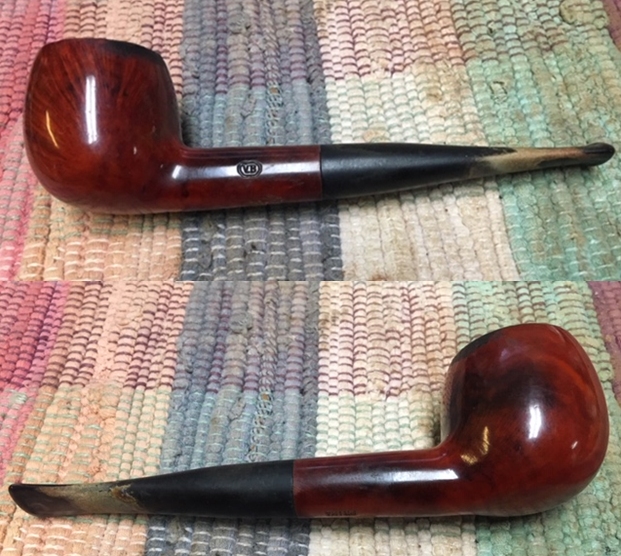
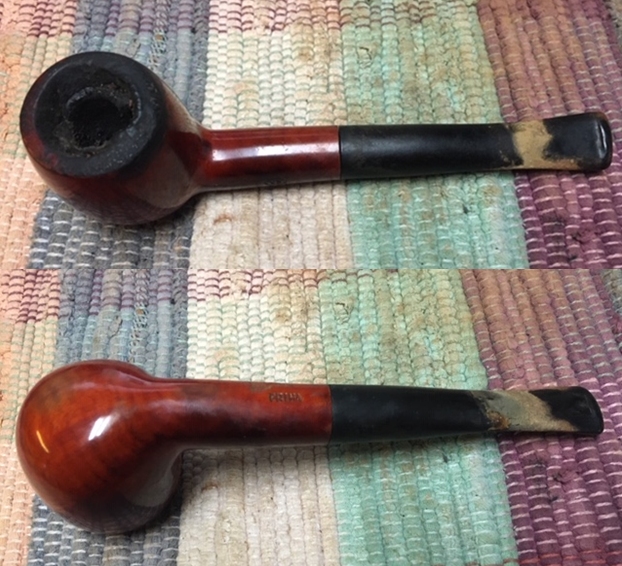
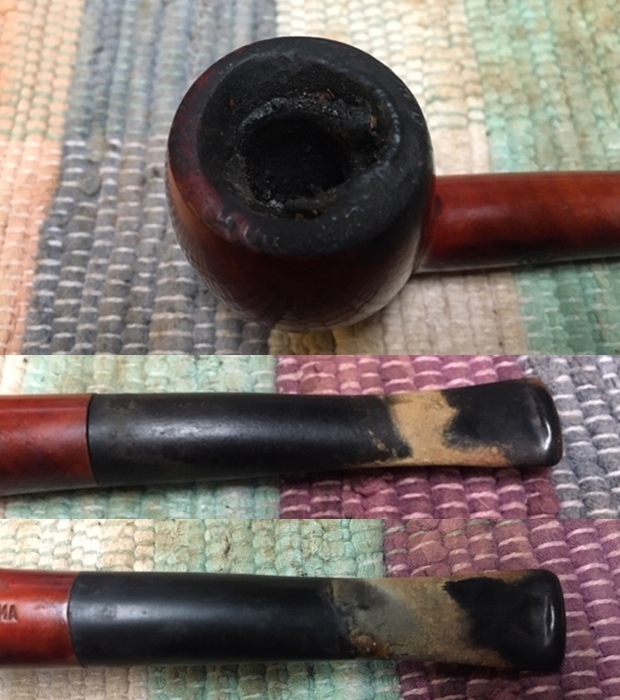
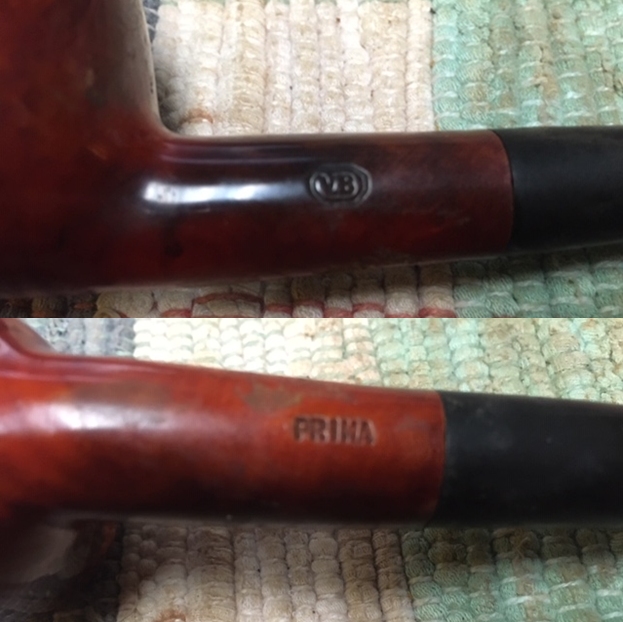
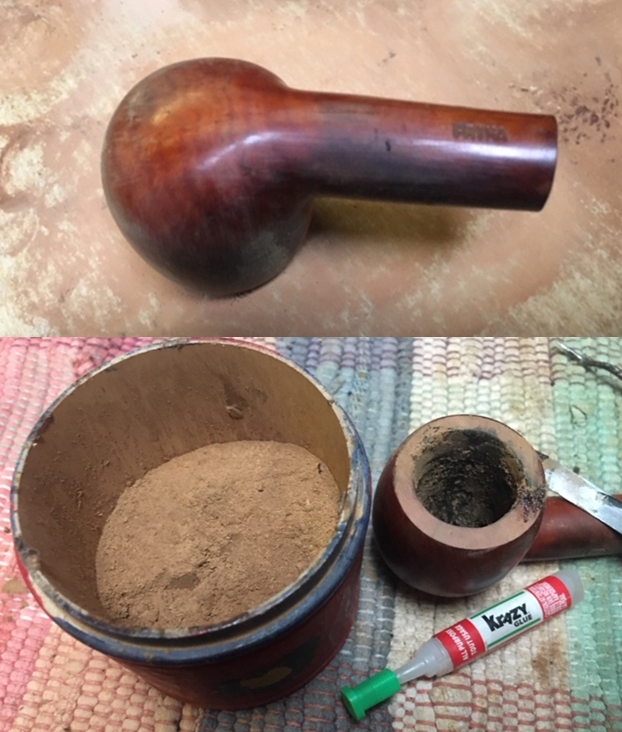
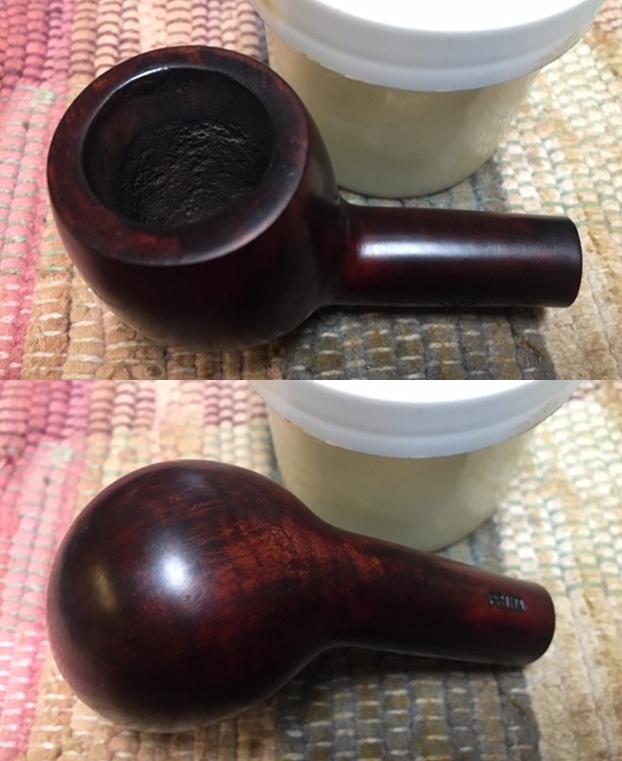
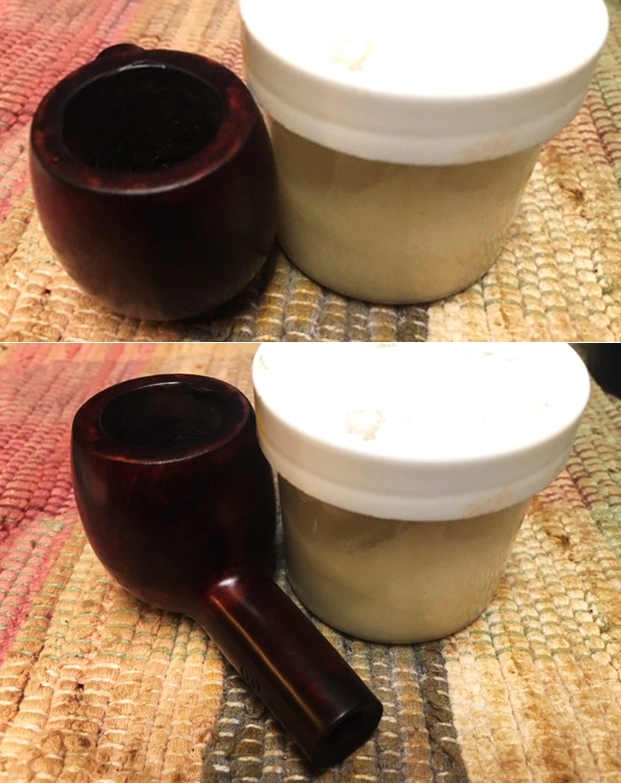
The last pipe from the threesome is on the table now. It was probably in the best shape of the three pipes. It was in rough condition but not as bad as the previous two pipes. The bowl was clogged in precisely the same manner – a thick hard cake and no air would pass through the shank. The finish was shiny with varnish and worn and spotty with blackening on the right side of the bowl and both sides of the shank. It appeared to be an oily black not a burn. The rim top was a real mess with thick hard lava overflowing all around the bowl onto the rim. The stem was loose in the shank and was oxidized with calcification extending for about an inch up the stem from the button. In the midst of the calcification were the same deep tooth marks that appeared to be rounded rather than sharp so I may well be able to lift them out with a lighter flame. The slot in the button was plugged with a pin hole sized airway going through it. This third pipe is exactly like the others and I honestly do not know how this pipe was smoked the last time it was used. This was another of those pipes that I really dreaded working on because I just sensed that one thing would lead to another and the restoration would be almost endless. I took photos of the pipe before I started to record this anxious moment! I took some close up photos of the bowl and stem to show what I was dealing with on this pipe. You can see the density of the cake. It is not totally clear in the photo but the bowl is filled on the second half of the bowl and packed solid. This bowl appeared to be the only one that he had not reamed with a knife. The bowl was not slanted and the cake was evenly heavy all the way around the bowl. The rim top is rough as noted above and looking at the photos it too appears to have been used as a hammer. It is very rough to touch. The stem is a mess as can be seen. There is some oxidation and a thick coat of calcification from the button forward. That too is rock hard. Both the stem and the shank are plugged with no air passing through them.I took a photo of the stamping to show the brand on the pipe. It is a brand I have never heard of or worked on. There is little information available on it. It is stamped VB on the left side of the shank and Prima on the underside.Fortunately it was the same brand as the second pipe that I worked on. The only difference was the stain and the PRIMA stamping on the underside of the shank. I did some digging on the brand to see what I could find out with this additional information and there was nothing more to be found. I am including what I found on the previous VB pipe on Pipephil’s index page (http://www.pipephil.eu/logos/en/index-en.html) I found my first and only clue. Under the section called logos with two letters I found the VB listed. It took me to a listing under Holiday pipes. There was no further information on the country of origin or on the maker other than Holiday. I checked on pipedia as well and there was nothing. I have included a copy of the screen capture of the listing on Pipedia (http://www.pipephil.eu/logos/en/logo-h3.html#holiday).After posting the first VB pipe I received two comments on the blog regarding the stamping. I really appreciate getting information like this so if you ever have info please do not hesitate to send it. Here is what the first commenter, Liebaart sent me:

The VB logo is from the Vinche Company, a Belgian distributor. See their page: https://www.v-k.be/documents/catalog.xml?lang=en&open=NAV%5CPIJPEN%5CVINCHE&from=0

The second commenter, Joris D. Sutter (may be the same gentleman) sent the same information. The V.B logo refers to the company Vinche, a Belgia distributor. Have a look at their website here : https://www.v-k.be/documents/catalog.xml?lang=en&open=NAV%5CPIJPEN%5CVINCHE&from=0

This was very definitive information for me. I now knew that the pipe was from the Vinche Company a Belgian distributor. I am still wondering though if the pipe was made in Holland as suggested previously… the new information does not negate that possibility!

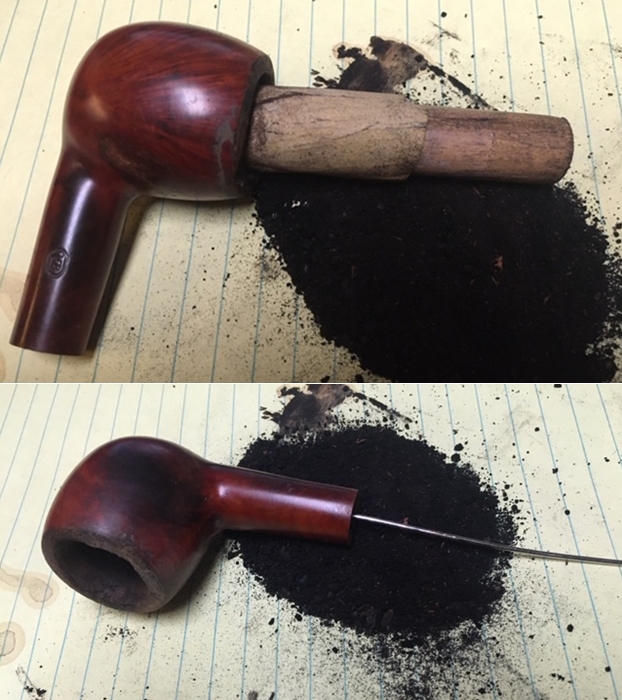
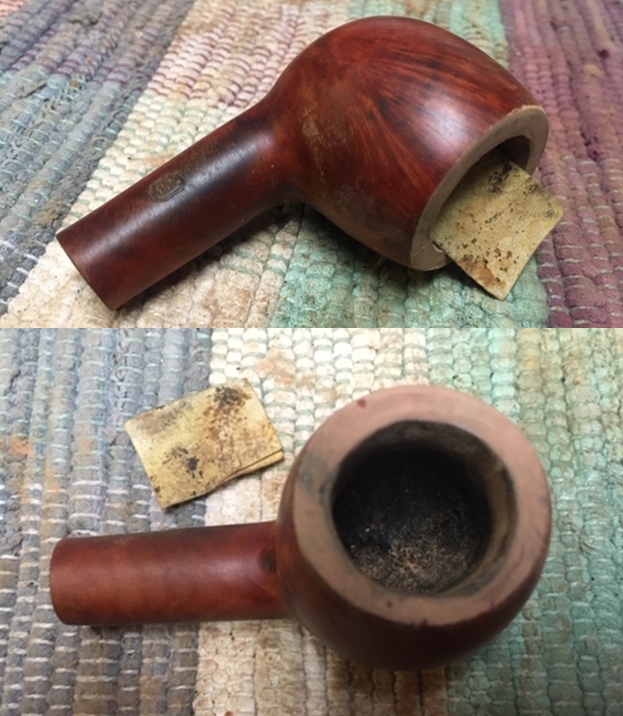
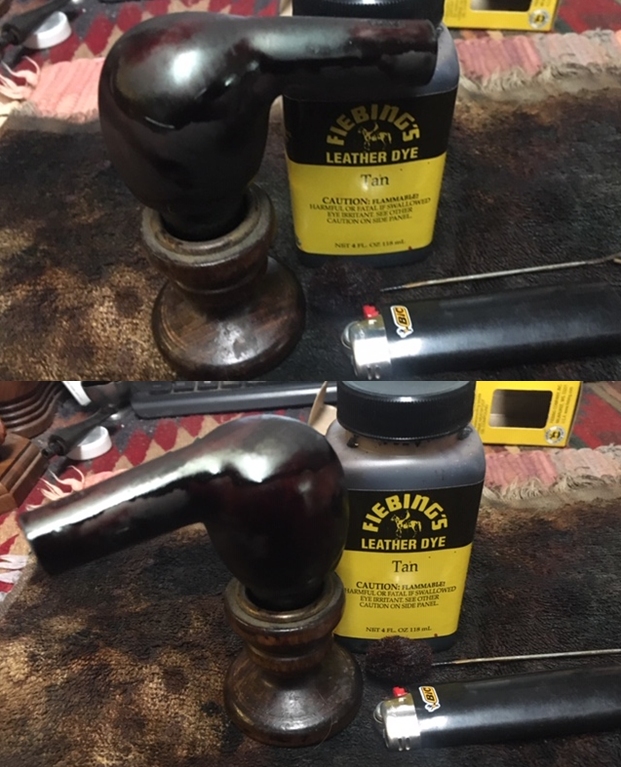
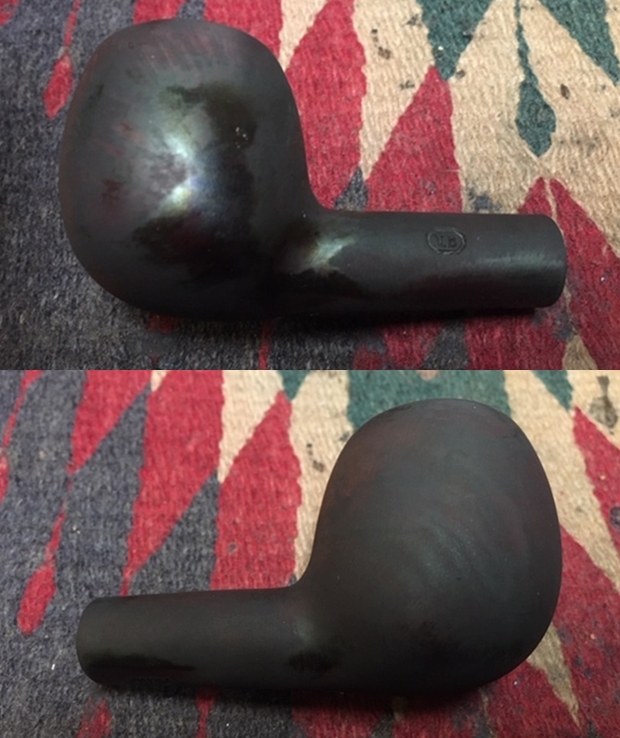
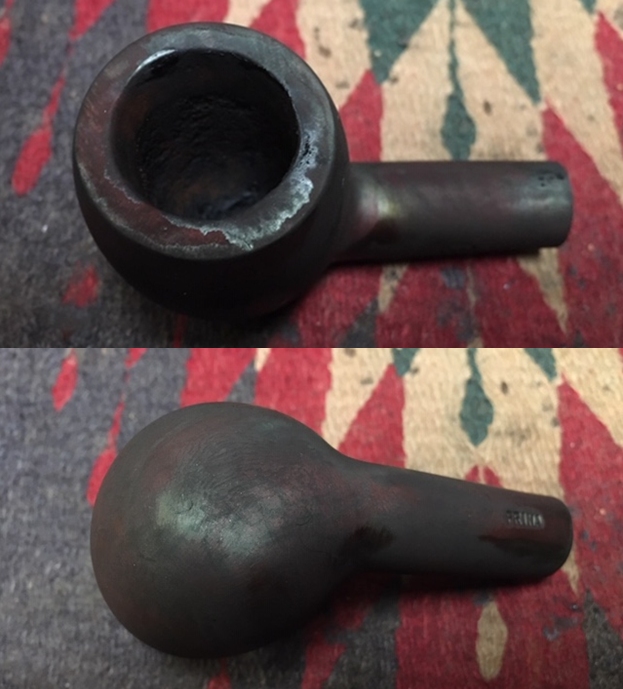
Once again I could no longer postpone starting the work on this old pipe. It was the last of threesome and I could return them to the old pastor. And besides that this is what I do – I am a pipe refurbisher. It was time to get started on this beast. I learned from the previous two pipes in the lot that the cake and calcification were very hard. I dropped the stem in a Oxyclean bath and the bowl in an alcohol bath. I figured while I worked on other pipes the cake and calcification would begin to soften a bit.When the pipe and stem had been soaking for about 4 hours I pulled them out of the respective baths. The bowl looked better externally. The alcohol had cut the shiny finish and removed some of the grime on the bowl. The cake in the bowl was definitely softer so I think it would be easier to remove. The stem came out and the bath had removed much of the oxidation and calcification. It had also softened what remained. The photos below show what I saw.The alcohol bath had softened the hard cake enough that I could directly ream it with the PipNet pipe reamer using the third cutting head. It easily worked through the cake and I was able to take it back to the bare walls of the bowl. I wanted to check and see if there was damage like there had been on the other two pipes. The good news was it was free of damage. I cleaned up the edges and bottom of the bowl with a Savinelli Fitsall Pipe Knife. I sanded the inside of the bowl with 220 grit sandpaper wrapped around a piece of dowel to further smooth out the bowl. I broke through the clogged airway in the shank with a piece of stiff wire. I topped the bowl on a topping board with 220 grit sandpaper and removed the damaged areas on the surface. Once I had finished the rim top was flat now I could deal with the edges of the bowl. I filled in the damage on the edges of the bowl with clear Krazy Glue and Briar dust. Once it dried I cleaned up the topping once again and then used a folded piece of 220 grit sandpaper to smooth out the inner and outer edge of the bowl. With the bowl reamed and the rim top repaired and clean I decided to work on the exterior of the bowl. It was unbelievably grimy and sticky. I scrubbed it with a tooth brush and undiluted Murphy’s Oil Soap. I rinsed it under warm running water to wash away the soap and debris. I repeated the process until the exterior was as clean as I was going to get it at this point. I dried it off with a cotton cloth and took photos to show the result. I cleaned the mortise and the airway in the shank and stem with pipe cleaners, cotton swabs and alcohol. I used the drill bit on a KleenReem tool to clean out the “crud” (hardened tars and oils) in the airway in the shank. I scraped the inside of the mortise with a pen knife. I opened the slot in the button with a dental pick and pushed pipe cleaners through the debris in the stem. I scraped away the majority of the calcification with the pen knife while I was cleaning the stem. Once I had finished – many pipe cleaners and cotton swabs later the airway was unobstructed to the bowl and the pipe had begun to smell clean. I sanded the exterior of the bowl and rim with a medium grit sanding sponge to remove the nicks, scratches and remnants of the original finish. I sanded the strange dark stains on the right side of the bowl and both sides of the shank at the same time. While I w not able to remove them I reduced them enough that I was hoping the stain I was going to use would cover them. I stained the bowl and shank with a Fiebing’s Tan Stain. It has a nice reddish tint to it that shows up once I have buffed and sanded it. I applied the stain, flamed it with a lighter and repeated the process until I was happy with the coverage. I would carry on with the bowl in the morning. The stain would dry overnight.In the morning when I got up I took photos of what the bowl looked like after the stain had cured all night. There are wet looking patches but they are not wet…just shiny! I wet sanded with 1500-12000 grit sanding pads to smooth out the finish on the bowl and prepare it for staining. I wiped the bowl down after each pad with a damp cloth to remove the dust and debris from sanding. I worked some Before & After Restoration Balm into the finish of the bowl, the rim top and shank with my fingertips to clean, enliven and protect it. I find that the balm really makes the briar come alive again. I let the balm sit for a little while and then buffed it with a cotton cloth to raise the shine. The pipe really looks good at this point. It looks much better than when I took it out of the bag. I set the bowl aside and turned my attention to the stem. I “painted” the surface of the stem with the flame of a Bic light to raise the tooth marks. It raised them all some but two small dents remained on both sides of the stem.I filled in the remaining tooth marks with clear Krazy Glue and let it cure. I like the clear glue on this kind of stem as it dries clear and the black of the stem shows through making for a very good blend with the existing material.Once the repairs cured I reshaped the button edge with a needle file. I flattened out the repaired spots at the same time. The stem was beginning to take shape.I sanded the repaired areas on both sides of the stem with 220 grit sandpaper to blend them into the surface of the stem. I followed that by sanding them with a folded piece of 400 grit wet dry sandpaper to begin the polishing.I polished the stem with micromesh sanding pads – wet sanding it with 1500-12000 grit pads. I polished it further with Before & After Pipe Stem Polish – both fine and extra fine. I wiped the stem down with Briarville’s No Oxy Oil to preserve and protect the stem. This was another challenging pipe to work on and I did the heavy work without Jeff. I put the stem back on the bowl and polished the bowl and stem with Blue Diamond polish on the buffing wheel. I gave the bowl and the stem multiple coats of carnauba wax. I buffed the pipe with a clean buffing pad to raise the shine. I hand buffed it with a microfiber cloth to deepen the shine. The grain pops through enough to let us know it is there and my repairs to the rim of the bowl blend in really well. I am pleased with the look of the pipe. It really has exceeded my expectations for it when I first took it out of the bag it was in when dropped off. The contrast between the reddish, tan stain of the briar and the polished black vulcanite stem look very good together. The pipe feels great in my hand and I am sure that it will feel even better radiating the heat of a good smoke. It must have been a fine smoking pipe judging from the condition it was when I received it from the pipeman who dropped it off. Have a look at it with the photos below. The dimensions are Length: 5 ¾ inches, Height: 1 ¾ inches, Outside diameter of the bowl: 1 ¼ inches, Chamber diameter: ¾ of an inch. I am looking forward to what the old clergyman thinks of his second “new” pipe. I think he will enjoy it for many years to come and perhaps it will pass to the next pipeman who will hold it in trust. Thanks to each of you who are reading this blog.

Cleaning Up a Wrecked Croydon Billiard for a Fellow Pastor in Vancouver


Blog by Steve Laug

Currently I am not taking on more work for repairs from email or online requests as I am just too busy. I still get the odd referral from the local Vancouver cigar and pipe shop that I feel obligated to repair or restore. They tend to be spread out a bit so I can fit them in among the other work that I am doing for estates. Earlier this week I received a phone call from a fellow who had been referred to me by the shop. In our conversation he said that he had some pipes that the stems were all loose on and he wanted to know if I would be able to help him. I have learned to not make any arrangements until I have the pipes in hand and have examined them. He came over Friday afternoon to let me have a look at the pipes. He handed me a bag and inside there were four or five extra stems that he had brought for my use. There were also three old and tired pipes. They were in very rough shape. Two were apple shaped pipes stamped VB and one was a Croydon billiard. The stems were indeed loose on two of the pipes and stuck on the third pipe. The bowls were clogged with a thick cake to the degree that I could not even get my little finger in them. The stems had a thick layer of calcification and some tooth marks. They needed a lot of work.

We talked about the pipes and that he had held them for a long time hoping for a repair. He had spoken with the cigar and pipe shop and they had led him to me. Now he could actually have a hope of smoking them again. In the course of the 30 minute or so conversation he asked me what I do for work. I told him I was a Presbyterian minister and was now working with an NGO dealing with the sexual exploitation and trafficking of women and children in 7 countries and 12 cities around the world. We talked about that a bit then he laughed and told me he was a United Church Minister who had taught in a variety of schools as well as pastored various parishes. We had a great conversation and I took the pipes and told him we would connect again once I had them finished.

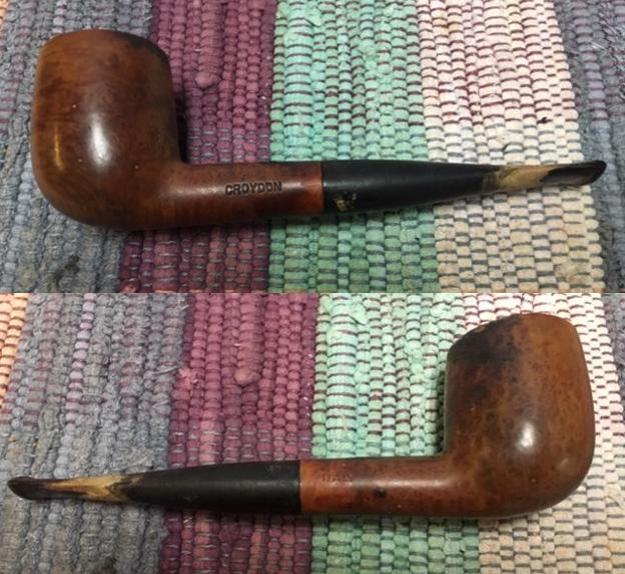
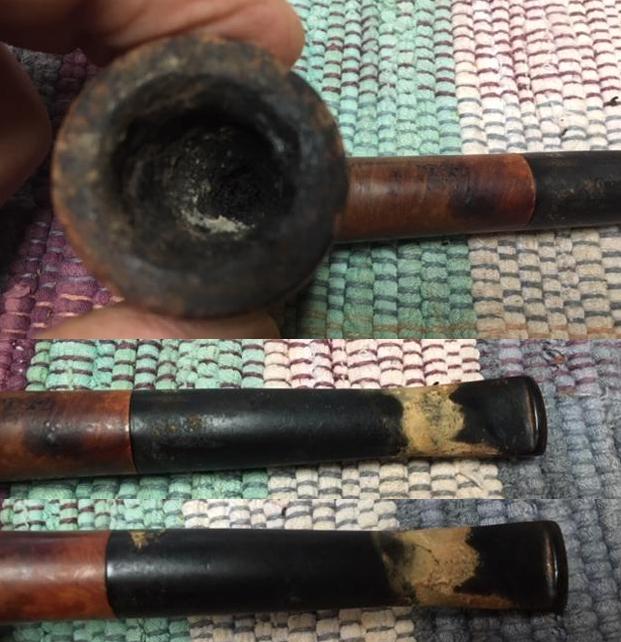
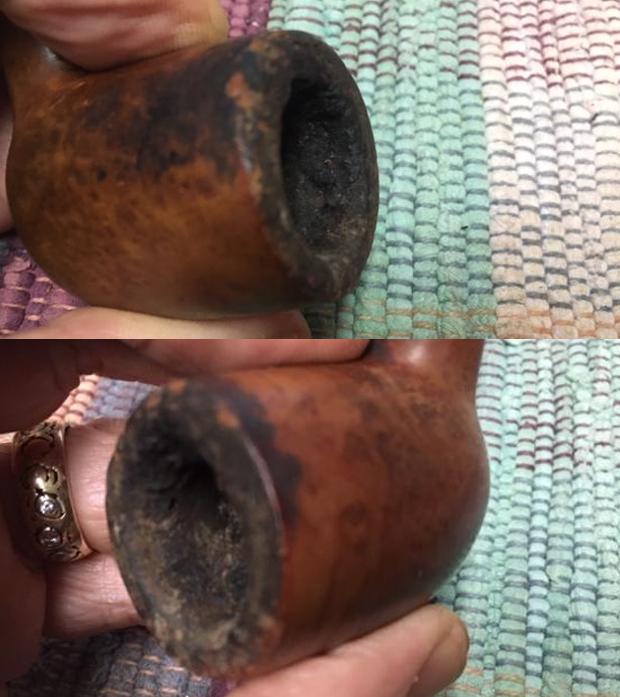
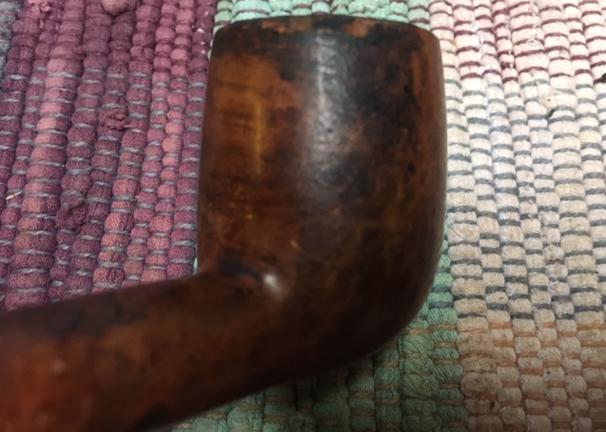
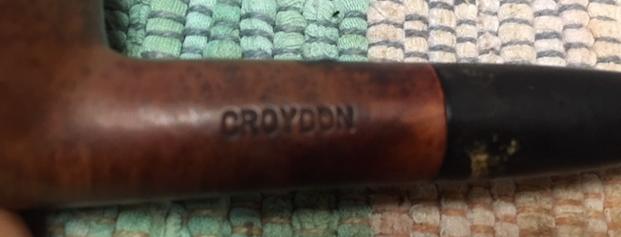
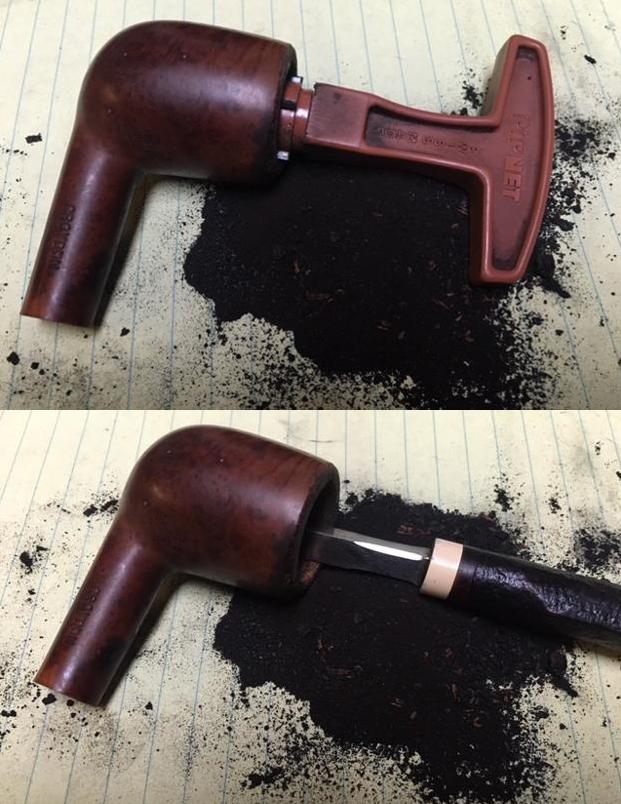
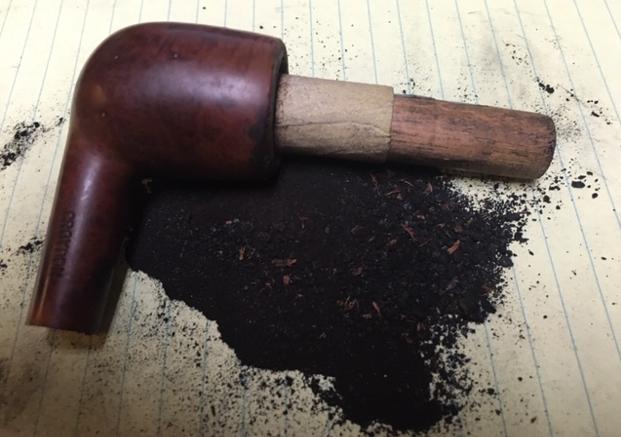
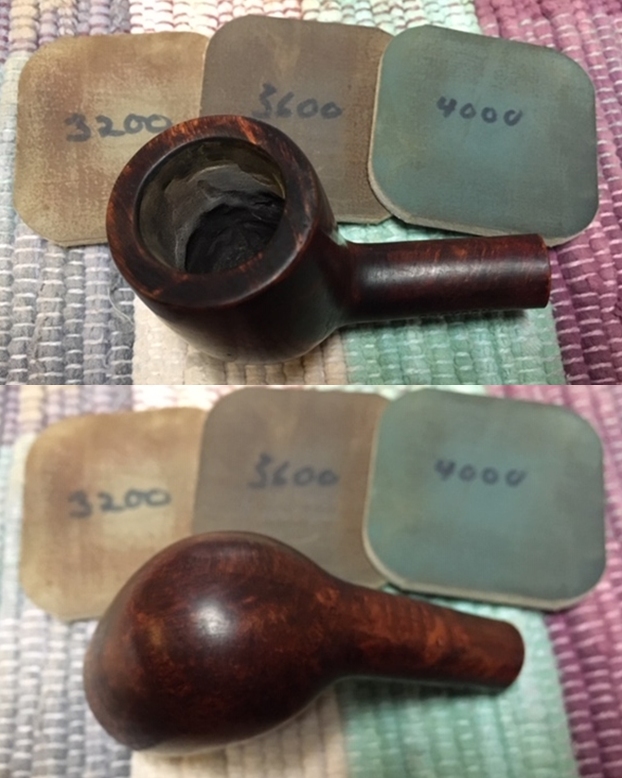
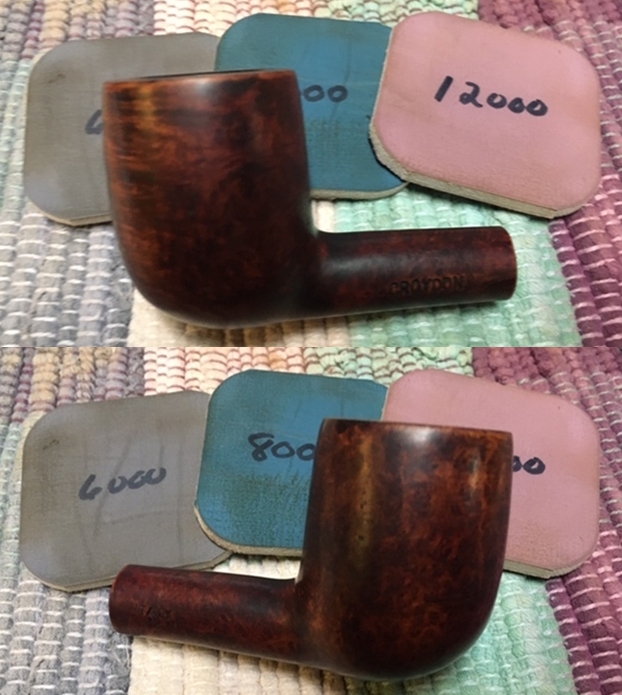
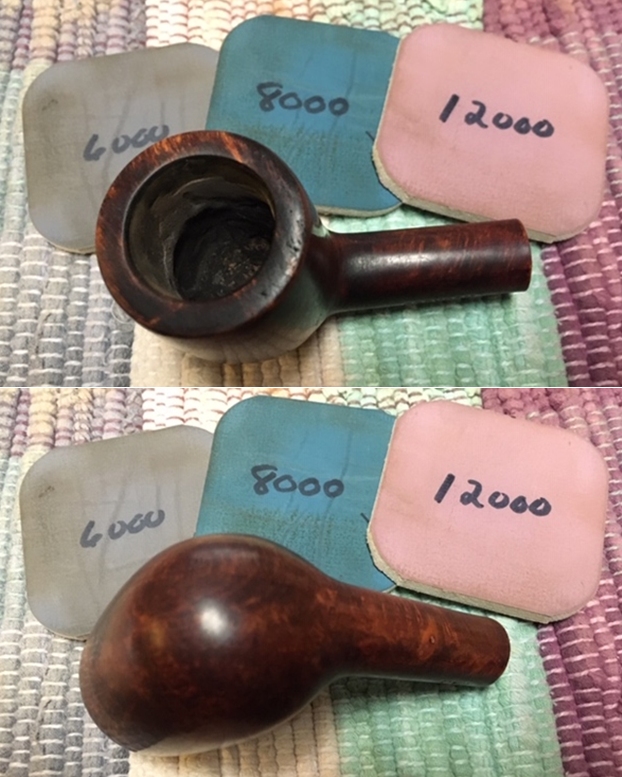
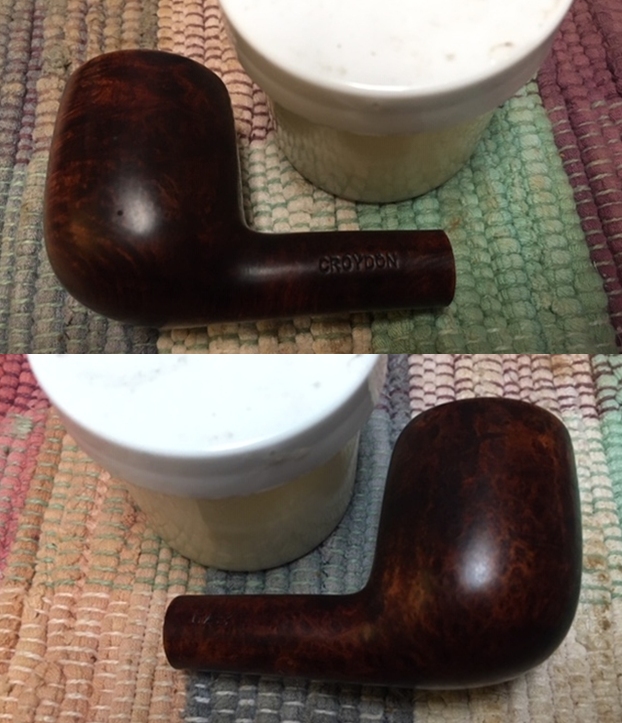
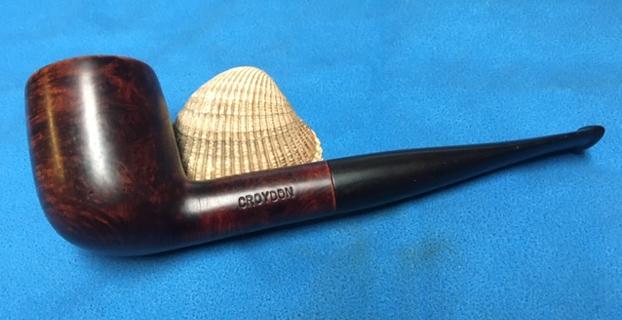
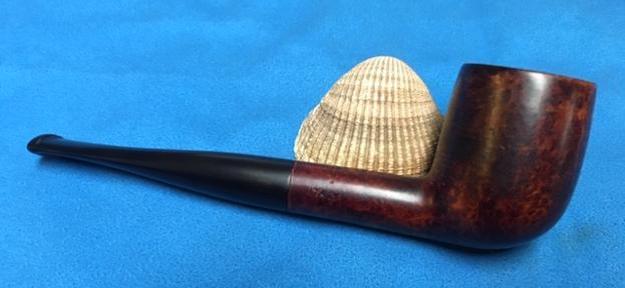
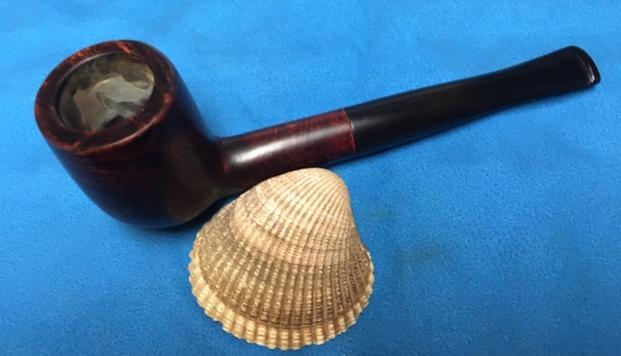
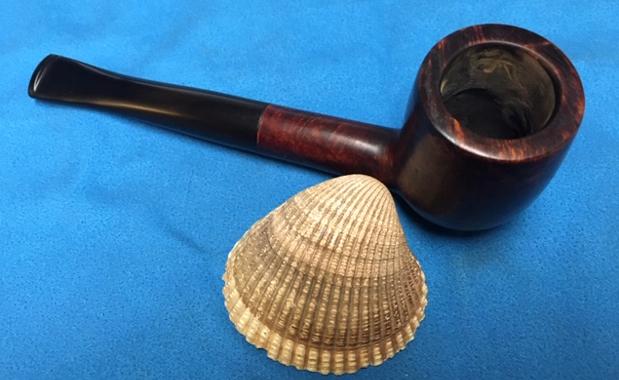
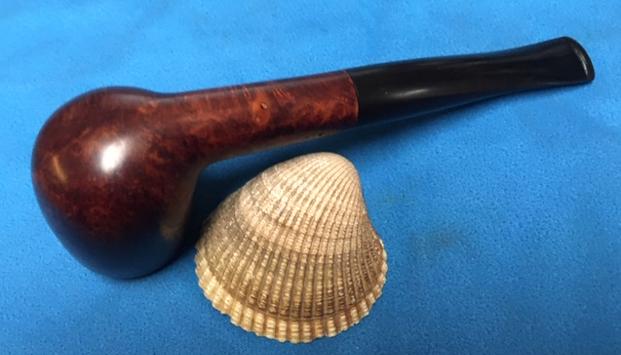
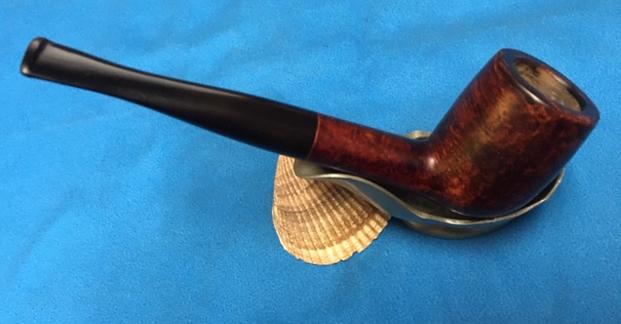
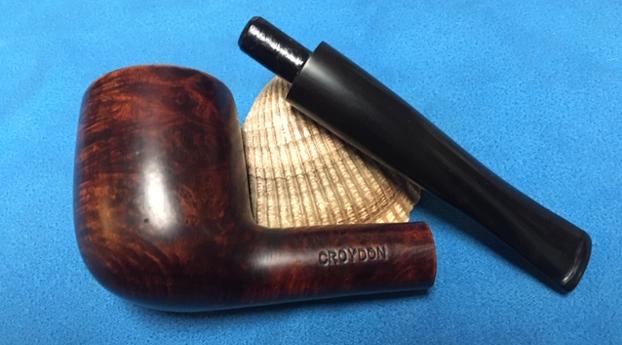
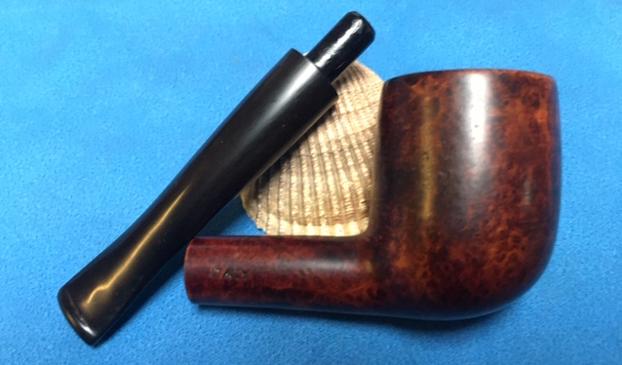
I decided to start with the Croydon billiard. It was in very rough condition. The bowl was clogged with a thick hard cake and no air would pass through the shank. The finish was shot with burn marks and darkening about ½ inch down the back of the bowl. The rim top looked like it had been used for a hammer with the worst damage on the back portion of the bowl and rim top. The darkening was in the chewed up area on the back of the bowl so it would be interesting to see what I could do with that part of the pipe. The stem was oxidized with calcification extending for about an inch up the stem from the button. In the midst of the calcification were deep tooth marks that appeared to be rounded rather than sharp so I may well be able to lift them out with a lighter flame. The slot in the button was plugged with a pin hole sized airway going through it. I honestly do not know how this pipe was smoked the last time it was used. This was one of those pipes that I really dreaded working on because I just sensed that one thing would lead to another and the restoration would be almost endless. I took photos of the pipe before I started to record this anxious moment! I took some close up photos of the bowl and stem to show what I was dealing with on this pipe. You can see the density of the cake. It is not totally clear that the second half of the bowl is packed solid. The bowl also has a slant toward the rear from reaming with a knife. The rim top is the disaster mentioned above. It is very rough to touch. The stem is a mess as can be seen. There is some oxidation and a thick coat of calcification from the button forward. That too is rock hard. Both the stem and the shank are plugged with no air passing through them.I took pictures of the sides of the bowl and rim to give you an idea of the condition of the pipe. I could not believe the old fellow had said that the bowl were in “great shape”! I have no idea how he could call this “great shape”. What do you think? I took a photo o f the stamping to show the brand on the pipe. It is a little known brand with little information. This one reads Croydon on the left side of the shank and Italy on the right side. Sources I have found have hinted at it being from the Netherlands and others from Great Britain. I think the country of manufacture will remain a mystery for now. I have worked on other Croydon pipes in the past and never really been that impressed with them. They have seemed like lower end basket pipes that have a lot of putty fills in the briar and are generally finished with a varnish coat. At least with this one I could start from basically scratch. I did a bit of searching to find the maker of Croydon pipes and came across a short reference to the brand on Pipedia (https://pipedia.org/wiki/Croydon). There was no other information on the brand other than it was made in the Netherlands (does not help explain why this one is stamped Italy, but oh well). There was also a link to Don Bernard pipes in Amsterdam, Netherlands (https://pipedia.org/wiki/Don_Bernard_Pipes. On that link there was the name of the maker and an address for the company. It is Bernard Myburgh, Sumtrakade 1195 1019 RJ Amsterdam, The Netherlands. The website www.donbernardpipes.com did not work for me so I am not sure if it is still a valid company. There was also an email address listed for them (donbernard@upcmail.nl) so I sent an inquiry to them regarding the brand. The email bounced as the contact was no longer valid. At least I now have a connection to the Netherlands but it still does not help me with the Italy stamp on this pipe.

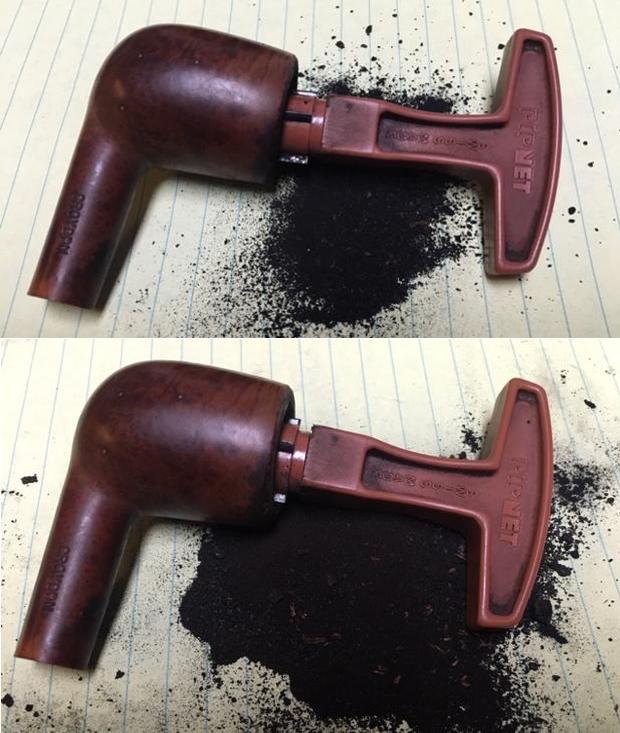
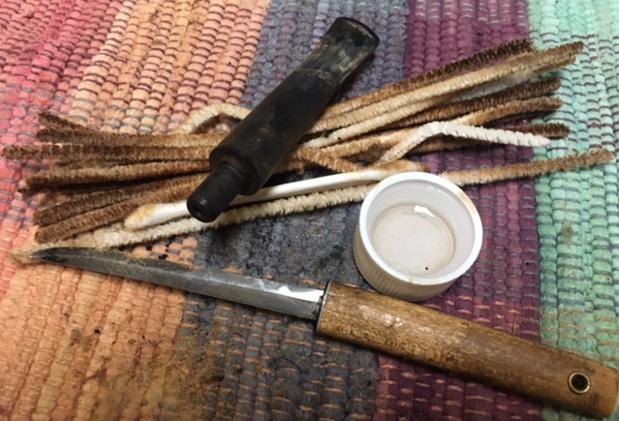
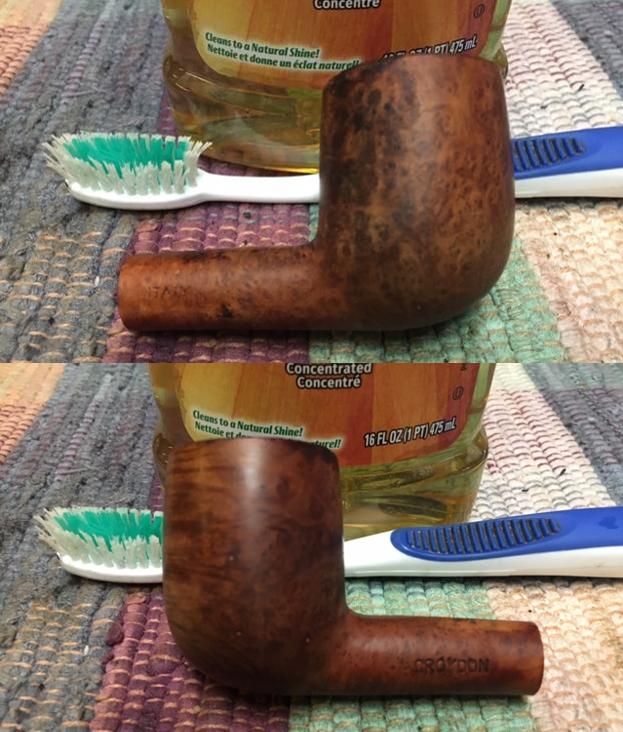
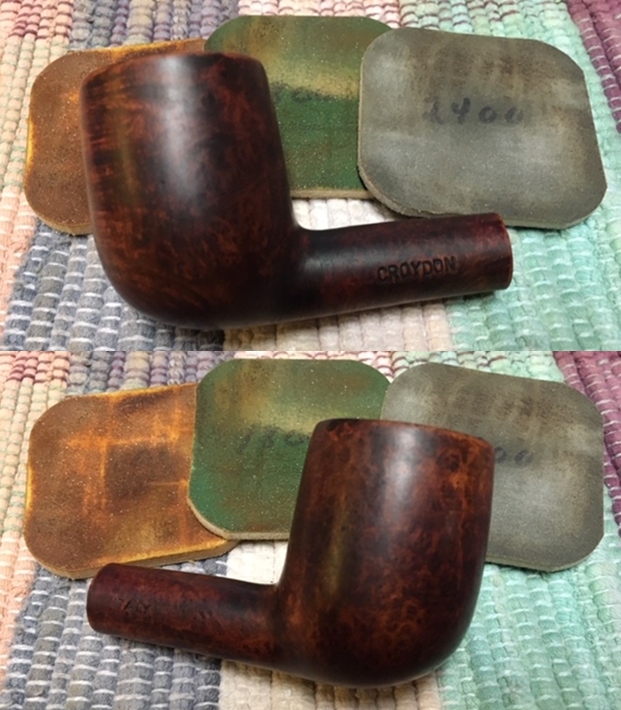
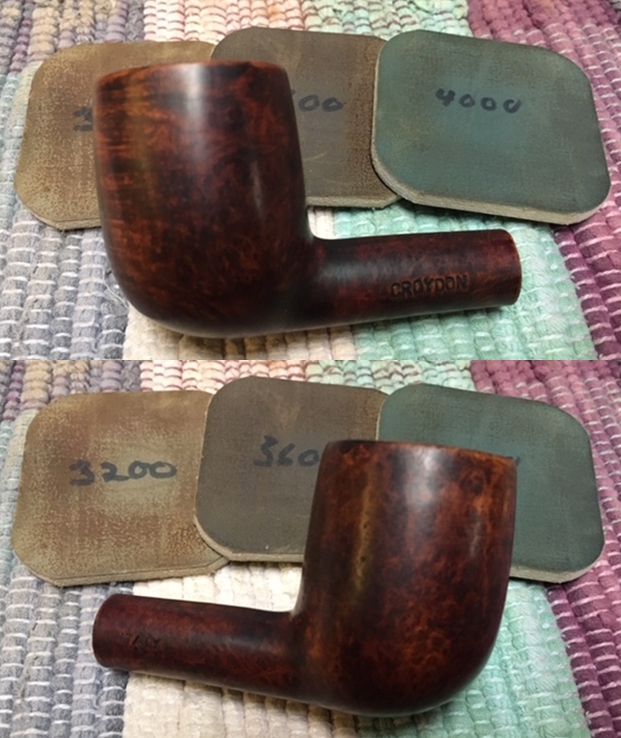
I could no longer postpone starting the work on this old pipe. Since I am a pipe refurbisher I had to get started on this beast. I began the work by reaming the bowl. I started with the smallest PipNet Reamer cutting head so as not to damage the bowl. The old fellow had chipped away enough of the carbon to smoke a little toward the end but he had done so at an angle so there was a nice concave cup in the back wall of the bowl. I had to work carefully through the cutting heads to straighten out the bowl. I used the first three cutting heads to get it reamed out. I took photos of each cutting head to chronicle that work. You can see the growing mound of carbon under the pipe in the photos. It was quite unbelievably hard. I cleaned up the edges and bottom of the bowl with a Savinelli Fitsall Pipe Knife. I sanded the inside of the bowl with 220 grit sandpaper wrapped around a piece of dowel to further smooth out the bowl. It really was one of the worst cakes that I have worked on. Once I was finished reaming it the airway was still clogged going into the bowl because of the tars and oils. I cleaned the mortise and the airway in the shank and stem with pipe cleaners, cotton swabs and alcohol. I opened the airway into the bowl with a sharp straightened paper clip and used the drill bit on a KleenReem tool to clean out the “crud” (hardened tars and oils). I scraped the inside of the mortise with a pen knife. I opened the slot in the button with a dental pick and pushed pipe cleaners through the debris in the stem. I scraped away the majority of the calcification with the pen knife while I was cleaning the stem. Once I had finished – many pipe cleaners and cotton swabs later the airway was unobstructed to the bowl and the pipe had begun to smell clean. With the internals clean it was time to work on the exterior of the bowl. It was unbelievably grimy and sticky. I scrubbed it with a tooth brush and undiluted Murphy’s Oil Soap. I rinsed it under warm running water to wash away the soap and debris. I repeated the process until the exterior was as clean as I was going to get it at this point. I dried it off with a cotton cloth and took photos to show the progress. I knew that topping the bowl would only start to address the issues with the rim top and edges of this pipe. I wanted to have a flat surface to work with and to flatten the edges before addressing the damages. I topped the bowl on a topping board with 220 grit sandpaper and removed the damaged areas on the surface. Once I had finished the rim top was flat now I could deal with the edges of the bowl.The topping had removed much of the damage to the front and sides of the bowl. The slight damage that remained would be taken care of when I gave the rim a slight bevel. I decided to build up the damaged edge on the back of the bowl with Krazy Glue and briar dust. It would dry black but the edge would be smooth and the rim top even once I was finished. I would have to blend the transition with a dark brown stain. I layered the build up on the edge – glue then dust and repeating it until the edge was built up. The first photo below shows the repair before I shaped it with sandpaper and files. I sanded the edge and topped the bowl again to smooth out the rim top and edges. The second and third photo show where the pipe stands at this point. There are still a few spots on the outer edge of the rim but it is looking much better. I used a folded piece of 220 grit sandpaper to smooth out the inner and outer edge of the bowl. The outer edge cleaned up really well. I was quite happy with the finished look. The inner edge would take a bit more work once I had repaired the inside damage to the bowl.I sanded the exterior of the bowl and rim with a medium grit sanding sponge to remove the nicks, scratches and remnants of the original finish. There was still a lot of work to do to finish the pipe as there were also some strange dark stains on the briar and a few fills that I wanted to smooth out. With initial sanding of the bowl finished it was time to address the damage to the inside of the bowl. There were some heat fissures mid bowl on the right side and the backside mid bowl had been carved out and there were fissures there as well. I mixed up a batch of JB Weld. I did not need too much as the damaged areas were very specific and I would not need to coat the whole bowl with the mixture. I blended the two parts together to a dark grey paste and used a dental spatula to apply it to the affected areas of the bowl. I have included two photos of the bowl repair to show the nature of the repair. Remember the majority of the patch will be sanded off leaving just the fissures filled in with the repair mix. I let the repair harden for about 10 minutes before moving on to sand the exterior of the bowl and rim with micromesh sanding pads. I wet sanded with 1500-12000 grit sanding pads to smooth out the finish on the bowl and prepare it for staining. I wiped the bowl down after each pad with a damp cloth to remove the dust and debris from sanding. I used a Dremel and a sanding drum to take down the excess JB Weld in the bowl. I ground it down until the inside was smooth and the weld was in the fissures in the bowl sides. You can see the ring of weld around mid-bowl. That is where the most damage was on the bowl walls.With the scratches smoothed out and the repairs minimized a bit I decided to stain the pipe with a Dark Brown Feibings stain. The stain goes on very dark and covers a multitude of issues but when it is buffed and sanded the colour still allows the grain that is present to shine through clearly. I applied the stain and flamed it to set it in the grain. I repeated the process until I was happy with the coverage on the bowl.In the morning one the stain had cured I sanded the bowl with micromesh sanding pads to remove the excess stain and make the stain coat more transparent. I wet sanded it with 1500-12000 grit pads. I wiped the bowl down with a damp towel after each sanding pad. Each set of three pads brought the transparency to what I was aiming for and still masked the repaired areas on the bowl. I worked some Before & After Restoration Balm into the finish of the bowl, the rim top and shank with my fingertips to clean, enliven and protect it. I find that the balm really makes the briar come alive again. I let the balm sit for a little while and then buffed it with a cotton cloth to raise the shine. The pipe really looks good at this point. I am very happy with the way the pipe is looking at this point in the process. The pipe is looking much better than when I took it out of the bag. I set the bowl aside and turned my attention to the stem. I “painted” the surface of the stem with the flame of a Bic light to raise the tooth marks. It raised them all some but the two on the underside were too deep to come up very much. Overall the stem was looking better.I filled in the remaining tooth marks with clear Krazy Glue and let it cure. I like the clear glue on this kind of stem as it dries clear and the black of the stem shows through making for a very good blend with the existing material.I sanded the repaired areas on both sides of the stem with 220 grit sandpaper to blend them into the surface of the stem. I followed that by sanding them with a folded piece of 400 grit wet dry sandpaper to begin the polishing.I polished the stem with micromesh sanding pads – wet sanding it with 1500-12000 grit pads. I polished it further with Before & After Pipe Stem Polish – both fine and extra fine. I wiped the stem down with Briarville’s No Oxy Oil to preserve and protect the stem. This was a challenging pipe to work on and I did the heavy work without Jeff. I put the stem back on the bowl and polished the bowl and stem with Blue Diamond polish on the buffing wheel. I gave the bowl and the stem multiple coats of carnauba wax. I buffed the pipe with a clean buffing pad to raise the shine. I hand buffed it with a microfiber cloth to deepen the shine. The grain pops through enough to let us know it is there and my repairs to the rim and back of the bowl blend in really well. I am pleased with the look of the pipe. It really has exceeded my expectations for it when I first took it out of the bag it was in when dropped off. The contrast between the dark brown stain of the briar and the polished black vulcanite stem look very good together. The pipe feels great in my hand and I am sure that it will feel even better radiating the heat of a good smoke. It must have been a fine smoking pipe judging from the condition it was when we received it from the pipeman who dropped it off. Have a look at it with the photos below. The dimensions are Length: 5 ½ inches, Height: 2 inches, Outside diameter of the bowl: 1 ¼ inches, Chamber diameter: ¾ of an inch. I am looking forward to what the old clergyman thinks of his “new” pipe. I think he will enjoy it for many years to come and perhaps it will pass to the next pipeman who will hold it in trust. Thanks to each of you who are reading this blog.

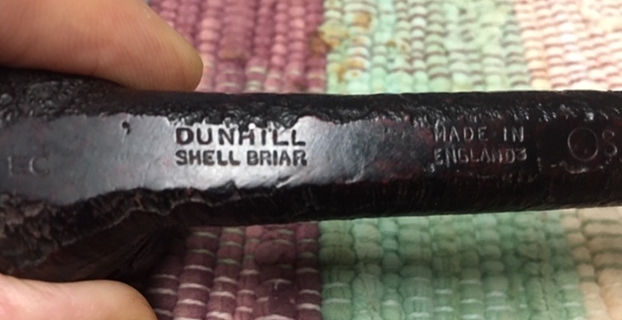
Breathing Life into a Worn and Beat up Dunhill Shell Briar EC Canadian for Alex


Blog by Steve Laug

In a previous blog I mentioned that around Christmas time I got together with Alex to enjoy some great hot cocoa, smoke our pipes and talk about all things pipes. I also gave him a batch of pipes that I had finished from his stash and he gave me a few more to work on for him. I always have a great time when we get together and this time was no exception. He greeted me at the door with slippers and an old smoking jacket. I took my seat in the living room among his latest pipe finds and was handed a great cup of cocoa. I set it down and we both loaded out pipes with some new Perretti’s tobacco that he had picked up. We touched the flame of the lighter to the tobacco and sat back and blissfully enjoyed the flavour. As we did Alex walked me through his latest finds. There were some amazing pipes to look at and savour. I already wrote about the Dunhill Bamboo Tanshell with a lot of nice colour happening around the bowl. I refreshed that pipe for him and wrote about it here – https://rebornpipes.com/2020/01/08/refreshing-a-dunhill-tanshell-w60-t-1962bamboo-lovat-for-alex/.

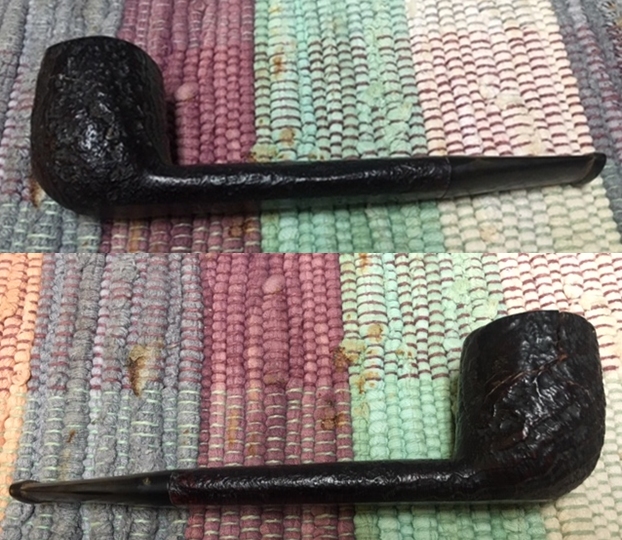
He also pulled another Dunhill from the pile of new pipes that he wanted me to work on. It was the exact opposite of the Bamboo in terms of condition. The Bamboo was relatively clean and he had already enjoyed a few bowls through it so it was a quick and easy refresh. This one was a real mess! It was another sandblast. This time it was a Shell Briar Canadian. I carefully took it in my hands and examined it. It was in very rough shape with many cracks in the briar. Alex knew the issues with the pipe but he wanted to know if I could repair it. I assured him that of course it could be repaired and the current cracks stopped. But all repairs to the cracks would essentially be cosmetic and though he could not see them they were still present. The ones going through into the bowl would need to be treated as well. I have repaired many of the pipes that I smoke in this manner and they continue to serve me undamaged for many years after the repair so I was just giving him the facts. He was fine with that and said to go ahead. So I took it home with me.

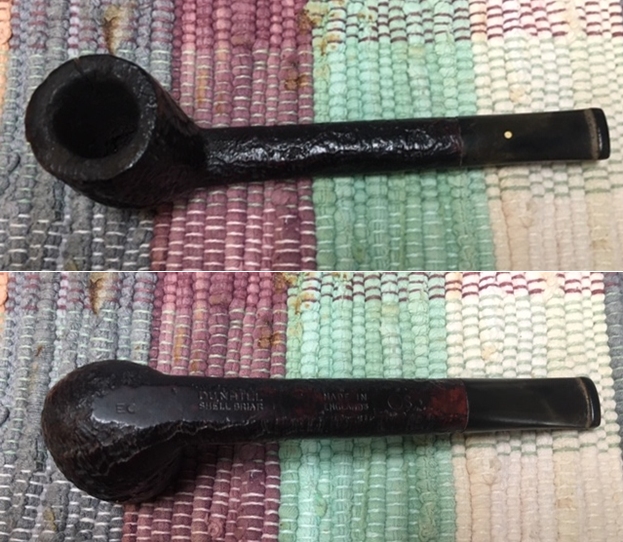
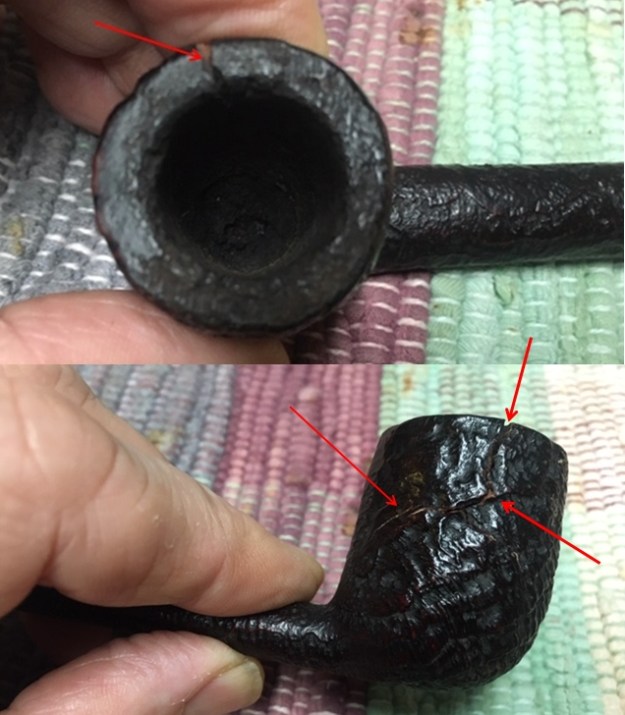
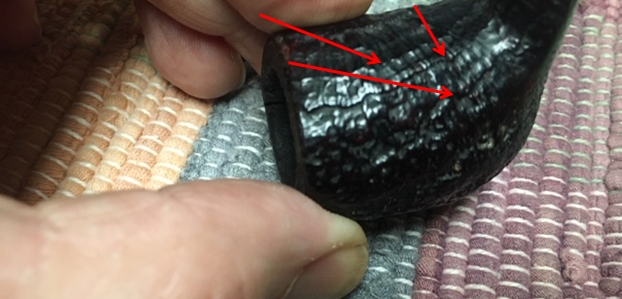
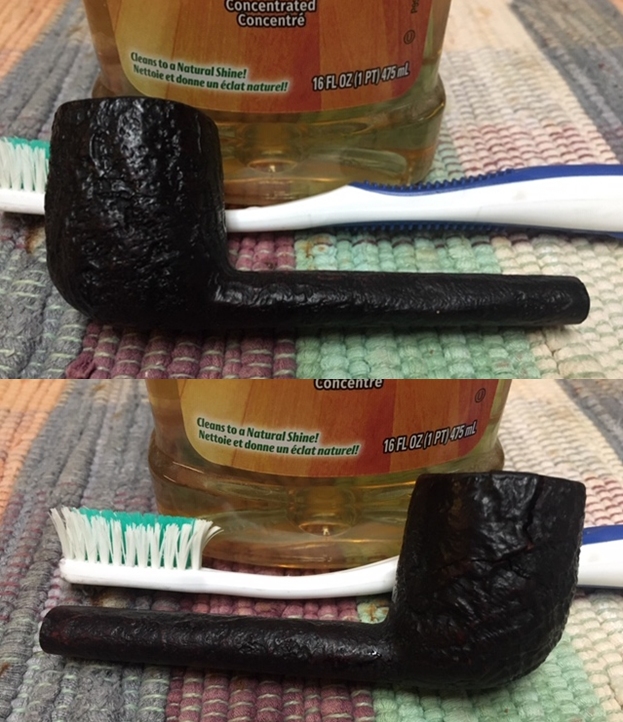
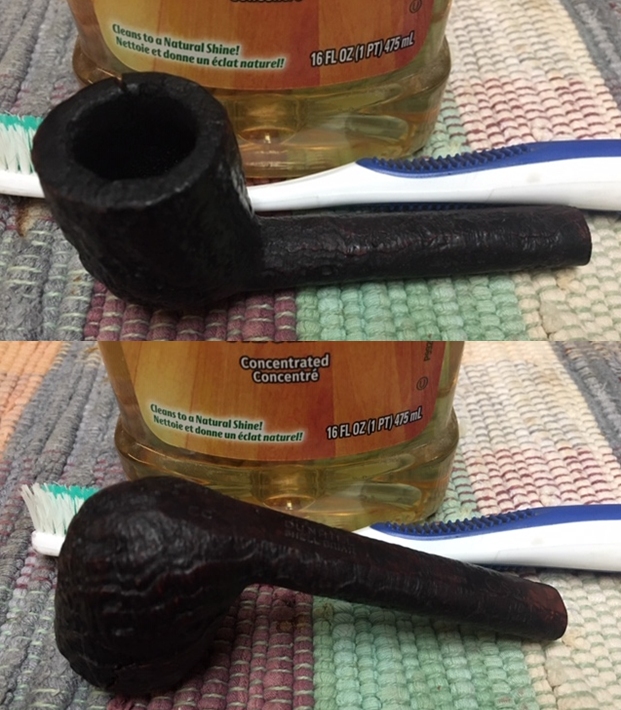
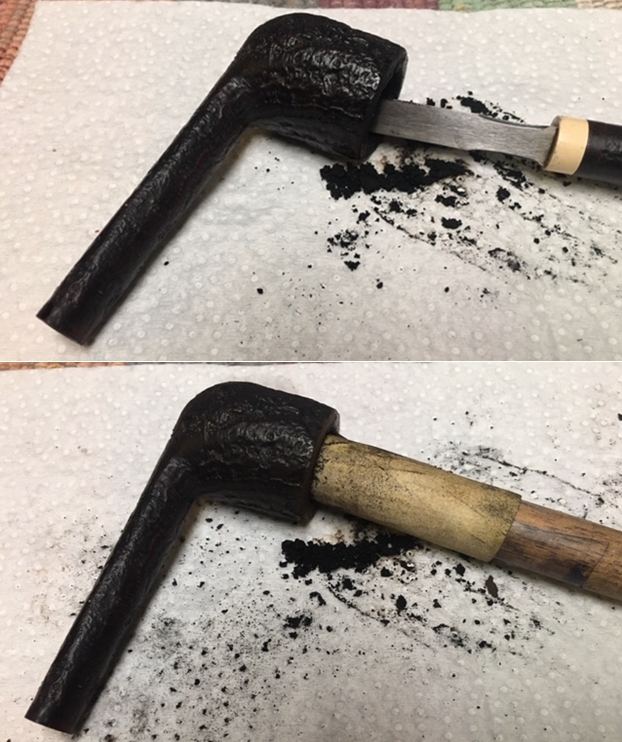
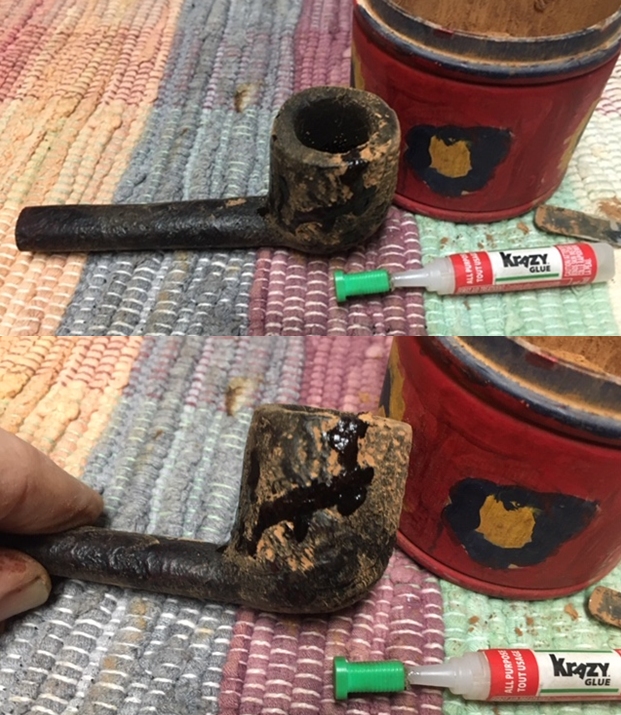
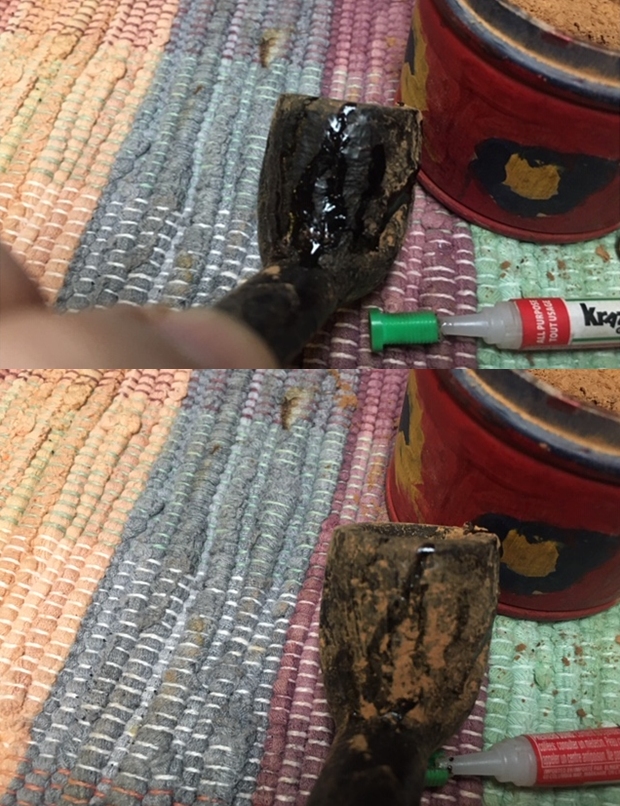
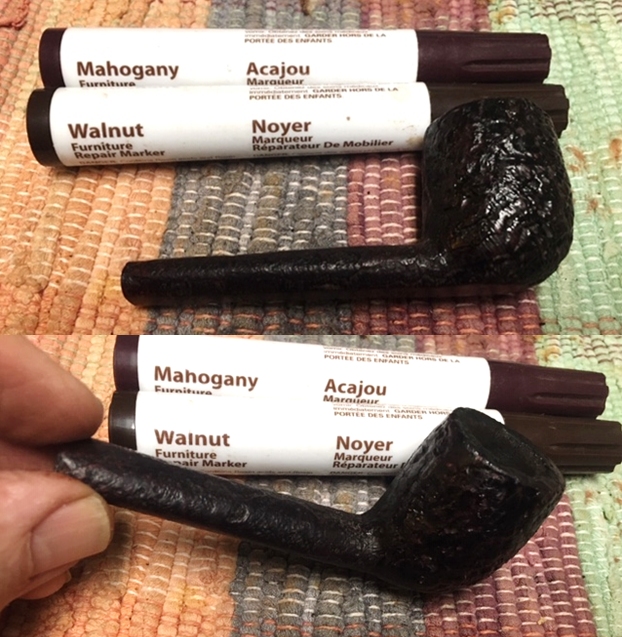
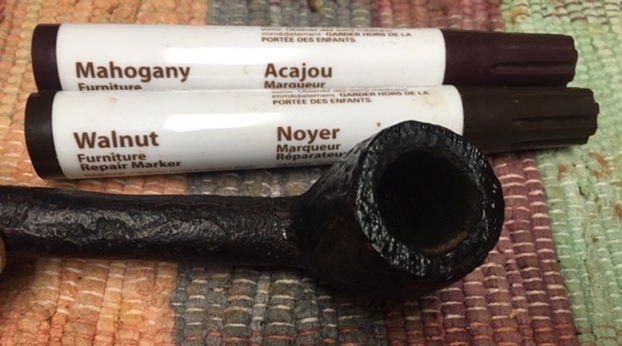
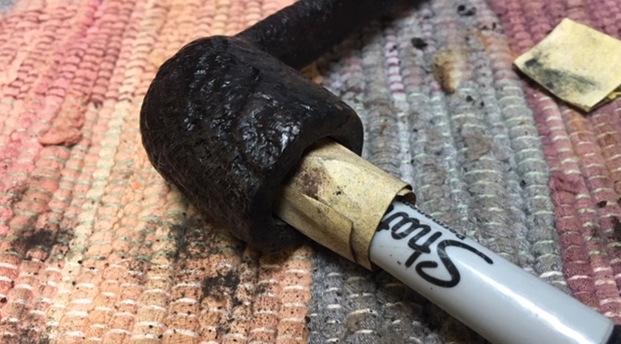
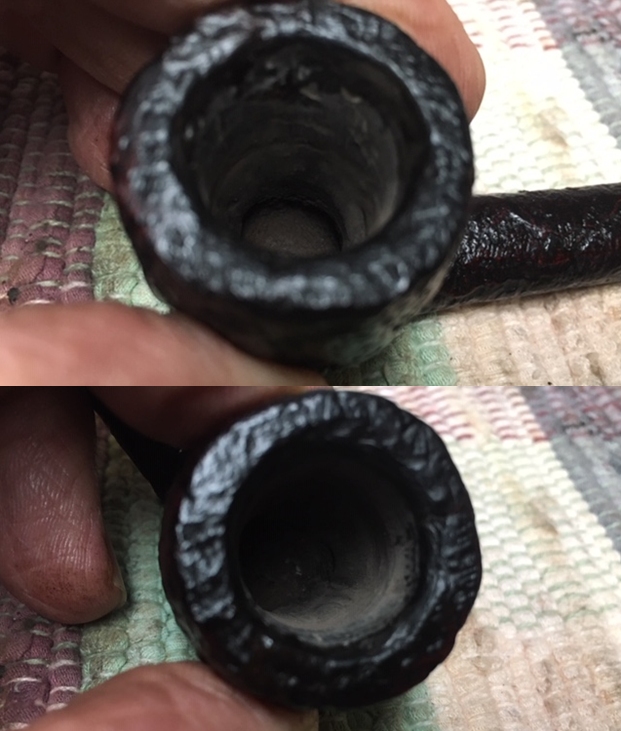
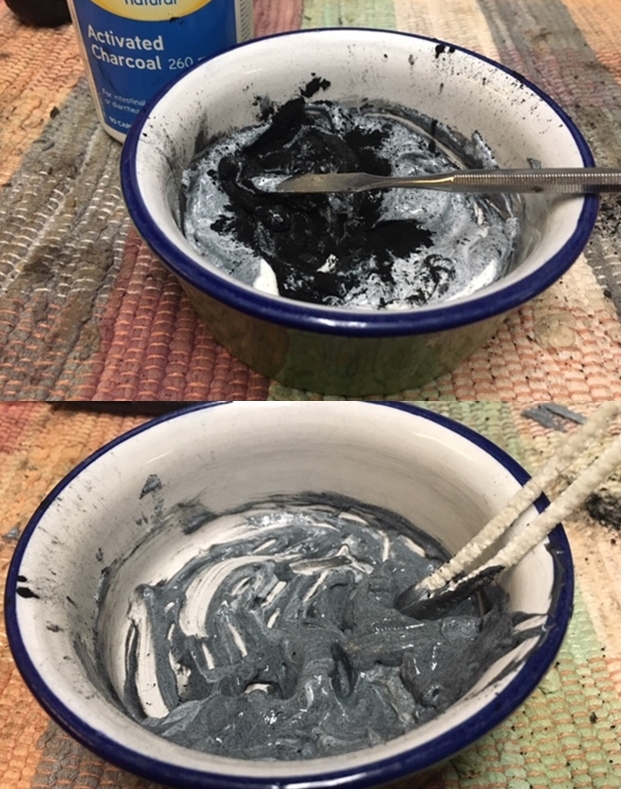
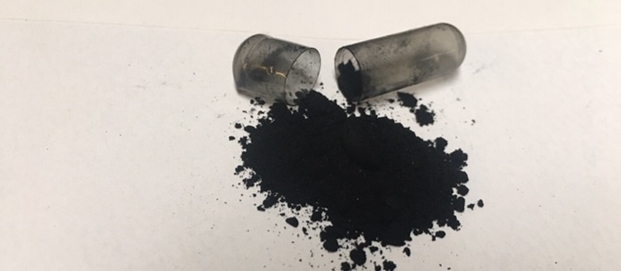
When I got home I laid it aside and tonight took it up to work on it. I examined the pipe to see what I was working with and took some photos. You can see from the first four photos below that there was something redeeming about the pipe. I think that is what Alex saw. It is a really nicely shaped Canadian. The right side of the bowl was dirty but looked very good. The back of the bowl and right side were full of cracks that went virtually the length of the bowl from the rim top to at least shank height. The rim top had significant damage to the inner edge and the crack on the right side went through to the interior and on top. The stem was pockmarked, dirty and oxidized with tooth chatter and marks on both sides just ahead of the button. Overall the pipe a wreck. I took photos of the pipe before I started my cleanup and restoration. Look closely at the second and third photos. You will see the cracks. I took a close up photo of the rim top and the back and right side of the bowl to show the crack damage. I have pointed out the cracks with red arrows for easy identification. The inner edge of the rim also shows burn and poor reaming damage. I took photos of the stem as well. The vulcanite was pitted, oxidized and calcified in the crease of the button. There were some tooth marks and chatter on the stem near the button but otherwise it looked pretty good. The pipe was stamped on the heel and underside of the shank with the following nomenclature: EC (the designation for a Canadian) followed by Dunhill over Shell Briar. That is followed by Made in England with a number 3 in superscript next to the D. This tells me that the pipe was made in 1963. After that there is a circle with a 4 in it designating the size of the pipe followed by the letter S which is the designation for Shell Briar pipes. The stamping was clear and legible which actually surprised me given the condition of the rest of the pipe.I think Jeff has spoiled me with working on clean pipes so I decided to start by cleaning up this one. I wanted it clean even before I began to work on the repairs. I find that the cleaning also helps me see things in the finish that I would otherwise miss. I scrubbed the exterior of the bowl with Murphy’s Oil Soap and a tooth brush to remove the debris from the nooks and crannies of the sand blast as well as from the inside of the cracks. I rinsed the bowl with warm water and dried it off with a cotton cloth. Once that was done the cracks were very clear but so was the natural beauty of this Canadian shape! With the exterior clean I worked on the interior. I reamed the bowl with a Savinelli Fitsall knife. I did not want to risk the pressure that is put on the bowl sides by the PipNet reamer. I scraped the cake out until the walls were clear. I sanded them smooth with a dowel wrapped in 220 grit sandpaper.I cleaned out the mortise and the airway from the shank to the bowl with pipe cleaners, cotton swabs and alcohol. I worked on it until the airway was clean and the pipe smelled clean! I cleaned the stem at the same time working around the buildup on the tenon and stem face as well as the airway and the slot. I used alcohol, pipe cleaners and cotton swabs for this as well. I was surprised at how clean the internals of the stem were. I expected it to be horrid.With the bowl clean it was time to begin the reconstructive surgery on the bowl. I used a lens to trace the cracks to their end. All of them began at the rim and worked downward. I marked the end with a correction pen (thanks for the tip Paresh). Once I had them marked I used a Dremel and microdrill bit to drill a small hole in the end of the crack to stop it from spreading. Once I had the holes drilled I filled them in with briar dust and clear Krazy Glue (CA Glue). The cracks were numerous so I took a few photos to show the extent of the repairs. My method is a bit different from Dal’s due to my glue. I fill in the crack with the glue and press the parts together. It dries quickly and with no internal pressure holds together well. I go back and fill in the cracks in the bowl with briar dust. I use a dental spatula and pick to work them into the cracks. I put a top coat of Krazy Glue to seal it. I repeat the process until the repair is complete. In the case of the large crack that goes into the interior of the bowl I pressed dust into it as well and the glue from the outside held it in place. I will give it a coat of JB Weld to protect it once I finish the bowl. Once the repairs cure I work over the repaired areas with a brass bristle brush to knock of the loose dust and bits of glue that are on the surface. I used my Dremel and sanding drum to smooth out the interior walls of the bowl and the repair to the crack on the right side of the rim top. I think that the repair is starting to look pretty good.With the repairs cured and the interior and high spots smoothed out it was time for some artistry to bring the Shell finish back to the bowl sides and rim top. I started the process by working over the repaired areas with a wire wheel on my Dremel. I worked over the areas around the sides of the bowl and the rim top. It was starting to look right. The shininess of the repairs was reduced and the finish began to show through. Now it was time to etch the surface of the briar with the Dremel and burrs. The photos that follow show the three different burrs that I use to cut the grooves to match the sandblast. The burrs worked to cut a pretty nice match in the briar.I used the wire brush again to clean off the dust left behind by the burrs. It is hard to tell from the photos but the pattern is really close to the surrounding areas of the briar bowl and shank. With the carving done approximating the sandblast finish under the repairs it was time to stain the bowl. I have found that with a Shell Briar finish I have to use a Mahogany and a Walnut stain pen to match the rest of the bowl. I streak on the Mahogany first and fill in the Walnut around the rest of the finish. I blend them together and the finished look is hard to distinguish from the original stain. I moved on to round out the inner edge of the rim and minimize the damage. I used a folded piece of 220 grit sandpaper to carefully give the inner edge a very light bevel. Once I was finished with the shaping I ran a Walnut Stain Pen around the freshly sanded edge to blacken it.With the finish repaired and restained I rubbed it down with Before and After Restoration Balm. It is a product developed by Mark Hoover to clean, enliven and protect briar. I worked it into the briar with my finger tips and a horse hair shoe brush. I let it sit for about 10 minutes and buffed it off with a cotton cloth. You can see the results below. With the exterior finish and the repairs completed it was time to mix up a batch of JB Weld to coat the inside of the bowl and protect the walls where the cracks went through. I mixed the Weld and put a pipe cleaner in the airway to keep the weld from sealing off the airway in the bowl. I applied the mixture to the walls with a dental spatula. Once had the walls covered around the area of the cracks I set the bowl aside to cure. I did not put the mixture in the heel of the bowl as it was solid and had no issues. I set the bowl aside and turned to address the oxidation, tooth marks and chatter on the stem surface. The stem was in good condition with some minor pitting. I used a folded piece of 220 grit sandpaper to sand out the tooth marks, chatter and oxidation. I started the polishing with 400 grit sandpaper. The stem is starting to look very good.I have been using Denicare Mouthpiece Polish as a pre-polishing agent. It is a gritty, red paste that does a great job in removing the oxidation remnants in the crease of the button and also polish out some of the lighter scratches in vulcanite. I rub it on with my finger tips and scrubb it with a cotton pad. I buff it off with another pad.I finished polishing the stem with micromesh sanding pads – wet sanding it with 1500-12000 grit pads and wiping it down after each pad with a damp cotton pad to remove the dust. I polished it with Before and After Pipe Polish – both fine and extra fine. I finished by wiping the stem down with some No Oxy Oil that  received from Briarville Pipe Repair to experiment with. Once the JB Weld repair had cured I sanded the walls of the bowl to remove the excess material and to make sure the mixture was primarily in the damaged areas of the bowl walls. The repair looked very good. I mixed a batch of pipe mud composed of sour cream and charcoal powder and applied a coat of it to the bowl to protect the walls while a cake formed. I know Alex hates bowl coatings as much as I do but this one is essential given the nature of the cracks. It is just a precautionary step and the coating dries neutral and imparts no taste to the tobacco. After a few bowls you do not even know it is there. After mixing it well I applied it to the walls of the bowl with a folded pipe cleaner. I aim for a smooth coating that will dry dark and black and be almost invisible. When it dries the mixture does not have any residual taste. Once it was coated I set the pipe aside to dry. The mix does not take too long to dry. In about an hour it is dry to touch and almost black. After 24 hours it is black and smooth. The last photo below has been drying about two hours. The only remaining damp spot is in the bottom of the bowl. Once I finished I put the stem back on the shank and carefully buffed the pipe with Blue Diamond polish using a lightly loaded pad and a soft touch. I wanted the shine but not the grit filling in the crevices of the sandblast bowl. I gave the stem a vigorous polish being careful around the white spot. I gave the bowl several coats of Conservator’s Wax and the stem several coats of carnauba. I buffed the pipe with a clean buffing pad and hand buffed it with a microfiber cloth. The finished pipe is shown in the photos below. It is a great resurrection pipe for Alex and looks better than when I began the process. The dimensions of the pipe are Length: 5 ½ inches, Height: 1 5/8 inches, Outer Bowl Diameter: 1 ¼ inches, Chamber Diameter: ¾ of an inch. The pipe will soon be heading back to Alex so he can continue to enjoy it. Thanks for walking with me through the restoration.
A Brigham Patent Era Select 2199 Club (Lovat) from Bob Kerr’s Estate


Blog by Steve Laug

As I continue to work through the pipes in Bob Kerr’s Estate I am enjoying choosing different brands that he had to focus on for a bit. He had six different pipes from Brigham in his collection so I decided to work my way through that sub collection of the estate. Out of the 6 pipes, #5 has a ruined bowl with a crack all the way around it as well as a cut off aluminum tenon. #6 went to Paresh Deshpande in India for his collection. That left behind four pipes for me to restore – #1, #2, #3 and #4. Here is the list of what I saw when I examined the 6 pipes.

  1. Brigham 503T Can. Pat. 372982 5 Dot Stack. Stem is oxidized, tooth marks and chatter near the button, some calcification with damage to the button. Finish is dirty, thick cake and lava overflow on the rim top. Rim top has is worn and damage on the back edge. I have finished restoring this one. Here is the link: (https://rebornpipes.com/2019/12/21/a-brigham-patent-era-special-grain-stack-from-bob-kerrs-estate/).
  2. Brigham Made In Canada 691 3 Dot Canadian. Stem is oxidized, tooth marks and chatter near the button, some calcification with damage to the button. Finish is dirty, thick cake and lava overflow on the rim top. Rim top is worn and damaged.
  3. Brigham Made In Canada 2199 2 Dot Lovat. Stem is oxidized, tooth marks and chatter near the button, some calcification with damage to the button. Finish is dirty and worn. Stamping is worn. There is a thick cake and lava overflow on the rim top. Rim top is worn and damaged.
  4. Brigham Made In Canada 1 Dot Bing Crosby Style Pipe. Stem is oxidized, tooth marks and chatter near the button, some calcification with damage to the button. Finish is dirty, thick cake and lava overflow on the rim top. Rim top is worn and damage on the back edge.
  5. Brigham Made In Canada 6 Dot Bent Billiard. Stem is oxidized, tooth marks and chatter near the button, some calcification with damage to the button. The aluminum tenon has been cut off. Finish is dirty and worn with paint on the bowl. There is a thick cake and lava overflow on the rim top. Rim top has a crack on the right side.
  6. Brigham Made In Canada 4 Dot Canadian. Stem is oxidized, tooth marks and chatter near the button, some calcification with damage to the button. Finish is dirty and stamping is worn. There is a thick cake and lava overflow on the rim top. Rim top is worn and edges are damaged.

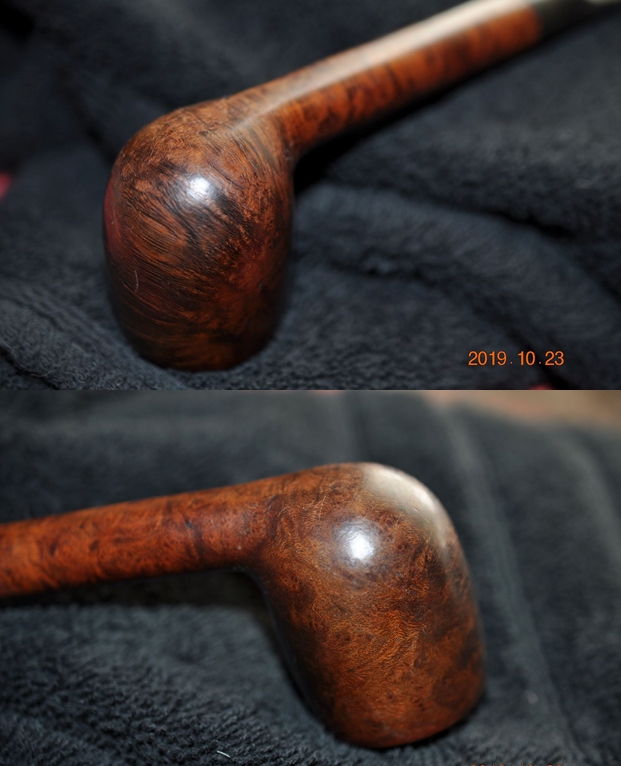
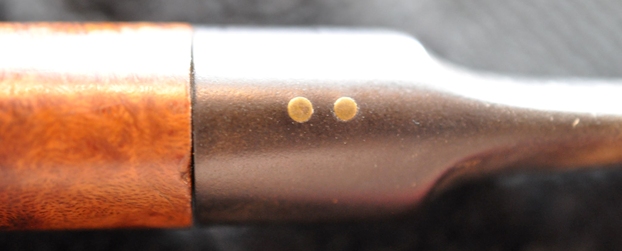
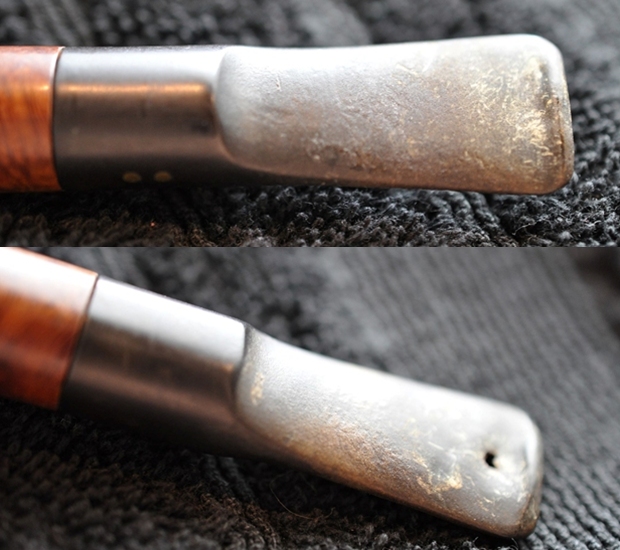
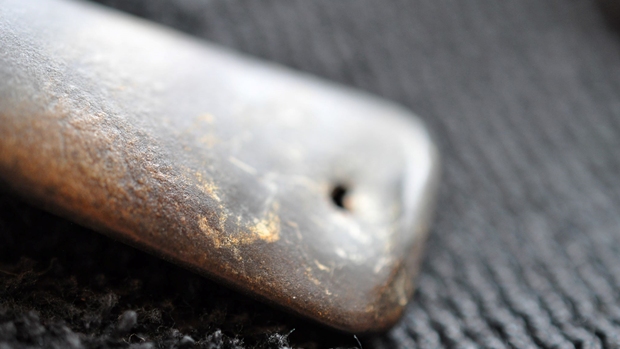
I chose to work on #3 next because of the issue with the stem. It is a Brigham Mixed Grain Lovat. It was stamped on the left side of the shank with faint stamping visible with a lens under light. It reads Brigham over Can. Pat. 372982. On the right side of the shank it was stamped with the shape number 2199. There was a thick cake in the bowl with remnants of tobacco stuck on the walls. There was a lava overflow on the rim. The top and edges of the rim appear to have some damage all the way around the bowl. The grain on the shank and bowl was a combination of grains. Once again, I think that there was a beautiful pipe underneath all of the buildup of years of use. The stem was oxidized and calcified toward the end with some tooth chatter. There were also some tooth marks on both sides of the stem ahead of the button. There was a bite through in the underside of the stem next to the button. There was a pattern of two brass dots on the left side of the saddle stem. Jeff took photos of the pipe before he started his cleanup work on it. Jeff took photos of the bowl and rim top to show the thick, hard cake in the bowl with remnants of tobacco stuck on the walls of the bowl. There was a lava build up on the top of the rim and the edges of the bowl. The rim top looked pretty good but it was hard to know for sure but it appeared that there was damage all around the inner edge. The outer edges of the rim looked to be in decent condition.  Jeff took a photo of the side and heel of the bowl to show the condition of the finish. You can see the beautiful grain around the side of the bowl and shank. Even under the dirt and debris of the years it looked very good. The stamping is very faint and cannot be captured even with a flash. He included a pic of the two brass dots on the stem and a few nicks in the shank edge.Jeff took photos of the top and underside of the stem showing the tooth chatter, scratching and oxidation on the stem surface and wear on the edges of the button. The second photo also shows the bite through on the underside near the button.  The third photo shows a close-up of the hole. I am also including the information from Pipedia’s article on Brigham pipes. It is a great read in terms of the history of the brand (https://pipedia.org/wiki/Brigham_Pipes). Charles Lemon (Dadspipes) is currently working on a book on the history of the brand. Until that is complete this article is a good summary. I have included it below.

Roy Brigham, after serving an apprenticeship under an Austrian pipesmith, started his own pipe repair shop in Toronto, in 1906. By 1918 the business had grown to include five other craftsmen and had developed a reputation across Canada for the high quality of workmanship. After repairing many different brands of pipes over the years, Roy noted certain recurring complaints by pipe smokers, the most common referred to as “tongue bite”. Tongue bite is a burning sensation on the smoker’s tongue, previously thought to be due to the heat of the smoke (i.e. a “hot smoking pipe”).

He soon began manufacturing his own pipes, which were lightweight, yet featured a more rugged construction, strengthening the weak points observed in other pipes. The problem of tongue bite intrigued him, and he decided to make overcoming it a future goal.

About 1938, Roy’s son Herb joined him to assist in the business. The business barely survived the great depression because pipes were considered to be a luxury, not a necessity, and selling pipes was difficult indeed. In approximately 1937 [1], after some experimentation, Roy and Herb discovered that tongue bite was in fact a form of mild chemical burn to the tongue, caused by tars and acids in the smoke. They found that by filtering the smoke, it was possible to retain the flavour of the tobacco and yet remove these impurities and thereby stop the tongue bite.

Just as Thomas Edison had searched far and wide for the perfect material from which to make the first electric light bulb filaments, Roy & Herb began experimenting with many materials, both common and exotic, in the quest for the perfect pipe filter. Results varied wildly. Most of the materials didn’t work at all and some actually imparted their own flavour into the smoke. They eventually found just two materials that were satisfactory in pipes: bamboo and rock maple. As bamboo was obviously not as readily available, rock maple then became the logical choice.

They were able to manufacture a replaceable hollow wooden tube made from rock maple dowelling, which when inserted into a specially made pipe, caused absolutely no restriction to the draw of the pipe, yet extracted many of the impurities which had caused tongue bite. The result was indeed a truly better smoking pipe…

I wrote to Charles Lemon (Dadspipes) and asked him about the stamping on the pipe. He responded with information on all of the foursome. I am including the information on this particular pipe.

Hey Steve! Good to hear from you.

Shape 2199 is what most would call a Lovat. Brigham called it a Club for whatever reason- just to be different, perhaps!…As these are all Patent pipes, it’s more accurate to refer to their grade by name (the post 1980 grading scheme refers to Dots). Here is the original scheme:With the information from Charles’ message and the chart above that he included I knew what I was dealing with in terms of the stamping and the age of this pipe. I learned that this Patent Era 2199 is a Brigham Select (2-Dot) 01 Lovat or what they call a Club. It was made between 1938 and 1955. Most of Bob’s pipes were purchased in the 50s and 60s so my guess is that this is fits that time frame well. Now it was time to work on the pipe.

I am really happy to have Jeff’s help on cleaning up the pipes from Bob’s estate as the 125+ pipes were taking me a long time to do alone. He cleaned this filthy pipe with his usual penchant for thoroughness that I really appreciate. This one was a real mess and I did not know what to expect when I unwrapped it from his box. He reamed it with a PipNet pipe reamer and cleaned up the reaming with a Savinelli Fitsall Pipe Knife. He scrubbed out the internals with alcohol, pipe cleaners and cotton swabs until the pipe was clean. He scrubbed the exterior of the bowl with Murphy’s Oil Soap and a tooth brush to remove the grime and grit on the briar and the lava on the rim top. The finish looks very good with great looking grain around the bowl and shank. Jeff soaked the stem in Before & After Deoxidizer to remove the oxidation on the rubber. When the pipe arrived here in Vancouver for the second stop of its restoration tour I was amazed it looked so good. I took some close up photos of the rim top and also of the stem surface. I wanted to show what an amazing job Jeff did in the cleanup of the rim top. The rim top was darkened with nicks and notches around the top and inner edge. There is a deep scratch in the rim top that looks almost like a crack. I have drawn an arrow to the spot on the rim top. The inner edge was a little rough and looked like the bowl had burned at some time in its life. I also took close up photos of the stem to show the tooth marks and chatter on the stem surface. There was a bite through on the underside of the stem near the button.  I took the stem off the shank to show the aluminum tenon/tube that was used to hold the Brigham Rock Maple Distillator. The original Distillator (filter) had been filthy so after Jeff had cleaned the pipe up he threw it away. I will replace it once I have finished with the restoration.This was a tough pipe to photograph the stamping on because it was very faint. When it starts out faint it is very easy to lose even that remnant of a stamp. But one of the things I appreciate about Jeff’s cleanup is that he works to protect and preserve the nomenclature on the shank of the pipes that he works on. I took some photos to show the stamping. In the first photo the arrow on the left is pointed to where Brigham is stamped and the arrow on the right is pointing to the Can. Pat. Number. In the second photo the arrow points at the shape number.  Thanks Jeff for being so careful in the cleanup. Much appreciated.Since this is another pipe Bob’s estate I am sure that some of you have read at least some of the other restoration work that has been done on the previous pipes. You have also read what I have included about Bob Kerr, the pipeman who held these pipes in trust before I came to work on them (see photo to the left). Also, if you have followed the blog for long you will already know that I like to include background information on the pipeman whose pipes I am restoring. For me, when I am working on an estate I really like to have a sense of the person who held the pipes in trust before I worked on them. It gives me another dimension of the restoration work. Bob’s daughter wrote a short tribute to her father. I thank you Brian and tell your wife thank you as well.

I am delighted to pass on these beloved pipes of my father’s. I hope each user gets many hours of contemplative pleasure as he did. I remember the aroma of tobacco in the rec room, as he put up his feet on his lazy boy. He’d be first at the paper then, no one could touch it before him. Maybe there would be a movie on with an actor smoking a pipe. He would have very definite opinions on whether the performer was a ‘real’ smoker or not, a distinction which I could never see but it would be very clear to him. He worked by day as a sales manager of a paper products company, a job he hated. What he longed for was the life of an artist, so on the weekends and sometimes mid-week evenings he would journey to his workshop and come out with wood sculptures, all of which he declared as crap but every one of them treasured by my sister and myself. Enjoy the pipes, and maybe a little of his creative spirit will enter you!

Now with all of the background on the line and the background on Bob Kerr it was time to get on with the restoration of this next mixed grain Brigham Select Lovat or Club as they call the shape. I am really coming to appreciate the hard cleanup work that Jeff did on these pipes. They were a real mess when I sent them to Jeff and I have to tell you it was great that I did not need to clean this pipe. I decided to start the process by dealing with the damage to the rim top and edges of the bowl. I topped it on a topping board with 220 grit sandpaper. I topped it to remove the deep scratch on the surface of the rim at the front. I was able to remove the scratch. What was left behind was a dark mark on the rim top. Once I stained the rim top that should disappear. I worked on the inner edge with a folded piece of 220 grit sandpaper and gave it a very slight bevel so that it took care of the damage on the inner edge. The photos show the progress. I stained the rim top and edges with a Walnut Stain pen to blend in the colour with the rest of the bowl. It is a good match and once it is polished it will work well!I polished the briar with micromesh sanding pads – wet sanding it with 1500-12000 grit pads and I wiped the bowl down after each sanding pad with a damp cloth.  The grain progressively stood out as I polished the pipe with the pads. I rubbed the bowl and rim down with Before & After Restoration Balm. I worked it into the surface of the briar with my fingertips to clean, enliven and protect it. I let the balm sit for a little while and then buffed with a cotton cloth to raise the shine. I really like watching the Balm do its magic and bring the briar alive.  With the bowl done it was time to address the issues with the stem. The deep dents in the top and underside with a bite through in the middle of the underside would make this a stem with multiple issues to deal with. The first photo shows the bite through. I “painted” the surface of the vulcanite to soften the rubber and then used the tip of a needle file to lift the deepest tooth marks and seek to flatten the stem surface (second and third photos). I was able to lift the tooth dents quite a bit on both sides but I would need to build up the stem surface on both sides.To prepare for the repair I wiped down the surface with alcohol on a cotton pad. I folded a pipe cleaner in half and coated it with Vaseline to make sure that the repair would not fill in the airway in the stem. I inserted it in the slot and slid it under the bit through.I mixed batch of charcoal powder and black superglue putty together on a piece of card. I learned from Dal to put a patch of tape on the card first so that the mix would not harden as quickly. It works like a charm by the way. I mixed the powder and black glue together with a dental spatula to get a thick putty/paste. I applied the putty to the top of the stem on both sides and pressed it into the bite through area. I sprayed the repaired areas on both sides of the stem with an accelerator so that the surface of the repair would be hard.  I slid the pipe cleaner out of the airway and set the stem aside to let the glue cure. When the repair had cured I used a needle file to reshape the button and smooth out the repair. More work would need to be done for it to be correct but the bite through was gone!   I sanded the repaired areas smooth with 220 grit sandpaper to blend them into the rest of the stem surface. As I sanded some small air bubbles appeared in the surface of the repair. I filled them in with clear Krazy Glue and once it had cured sanded the surface again. I started the polishing process with 400 grit wet dry sandpaper. It is starting to look pretty good!  I polished the stem with micromesh sanding pads – wet sanding with 1500-12000 grit pads. I wiped the stem down after each sanding pad with Obsidian Oil. I polished it with Before & After Pipe Stem Polish – both Fine and Extra Fine. Once I had finished the polishing I gave it a coat of a new product I am experimenting with from Briarville Pipe Repair. It is called “No Oxy Oil” and it is made to protect the stem from oxidizing. I set it aside to dry. With the pipe cleaned and ready to polish I put a new Brigham Distillator filter in the stem. The photos show the Distillator out of the tenon and in place in the tenon. It is a Maplewood tube that collects the moisture from the smoke and delivering a dry, cool smoke sans tongue bite. Once again at this point in the restoration process I am excited to be on the homestretch. This is the second Brigham from the four that are in Bob’s estate so I look forward to the final look when it is put back together, polished and waxed. I put the bowl and stem back together. I polished the bowl and stem with Blue Diamond to polish out the scratches in the briar and the vulcanite. I gave the bowl and the stem multiple coats of carnauba wax. I buffed the pipe with a clean buffing pad to raise the shine. I hand buffed it with a microfiber cloth to deepen the shine. The pipe polished up pretty nicely. The grain is quite stunning and really pops with the wax and polish. The repair to the stem surface looked really good and blended into the shiny black vulcanite stem. The black of the vulcanite stem along with the two brass pins is a beautiful contrast to the browns of the bowl and shank. This was another fun pipe to work on thanks to Jeff’s cleanup work. It really is a quite stunning piece of mixed grained briar whose shape follows the flow of the briar. The pipe is comfortable pipe to hold in the hand. The finished pipe is shown in the photos below. The dimensions of the pipe are Length: 5 ¾ inches, Height: 1 ¾ inches, Outside diameter of the bowl: 1 ¼ inches, Chamber diameter: ¾ of an inch. This beautiful pipe will be going on the rebornpipes store in the near future. I have a lot more of Bob’s estate to work on of various brands. Perhaps one of those will catch your attention. Thanks for reading this blog and my reflections on the pipe while I worked on it. This is an interesting estate to bring back to life.

The First of Two Republic Era Peterson’s 307 System Standards from Bob Kerr’s Estate


Blog by Steve Laug

I am working on the last two Peterson’s System Standard pipes from Bob Kerr’s collection of 9 Peterson’s System pipes. I have restored quite a few of his Petersons already so this is kind of subset of the Peterson Collection. You can read about those restorations in previous blogs. To be honest with you I have been dreading working on these 9 because when they arrived they were absolutely filthy and the reservoir in the shank was filled with tars and oils. It looked to me that they had never been cleaned. Jeff cleaned them for me and because of that I have been enjoying working on these Peterson’s particularly because Jeff has done such a thorough cleanup of them before I receive them. When I took it out of the box of the pipes that Jeff had cleaned up and sent back to me, I could see that it was stamped Peterson’s System Standard vertically on the left side of the shank next to the band. The right side of the shank was stamped Made in the Republic of Ireland over the shape number 307. It has some stunning grain around the bowl and shank like the first one that I worked on that can be seen under the thick grime.

There was a thick cake in the bowl with remnants of tobacco stuck on the walls. There was a lava overflow on the rim. The top and edges of the rim appear to have some damage all the way around the bowl. I think that there was a beautiful pipe underneath all of the buildup of years of use. The nickel ferrule on the shank end was oxidized and is stamped on the top and left side K&P Peterson’s over three hallmarks. It is not dented or damaged. The stem was actually one from the Deluxe System Pipe so I swapped the two stems earlier in the restoration process once it arrived in Vancouver. Both stems were oxidized and calcified toward the end with some tooth chatter. There were also some tooth marks on both sides of the stem ahead of the “P-lip’. Jeff took photos of the pipe before he started his cleanup work on it. Jeff took photos of the bowl and rim top to show the thick, hard cake in the bowl with remnants of tobacco stuck on the walls of the bowl. There was a lava build up on the top of the rim and the edges of the bowl. The rim top looked pretty good but it was hard to know for sure but it appeared that there was damage all around the inner edge. The outer edges of the rim appeared to be in good condition.    Jeff took photos of the sides and heel of the bowl to show the condition of the finish. You can see the swirling grain around the sides of the bowl and shank. Even under the dirt and debris of the years it looked very good. Jeff took photos of the stamping on the left side of the bowl and shank. The vertical stamping on the left side was readable as you can see from the photos. It read Peterson’s System Standard. He did not take a photo of the stamp on the right side of the shank but it read Made in the Republic of Ireland with the shape number 307 underneath. The nickel ferrule on the shank end is stamped on the top and left side K&P Peterson’s over three hallmarks – a Shamrock, a shape that looks like a reclining lion and a tower. Typically these hallmarks are not like those in silver that help to date a pipe but are rather marks that make it clear that the pipe was made in Ireland. Jeff took photos of the top and underside of the stem showing the tooth chatter, scratching and oxidation on the stem surface and wear on the edges of the button. There were two deep dents on the top of the stem just ahead of the P-lip.   I have included the information on the shape number on this pipe that I picked up on researching the previous pipes. It is one of two Peterson’s System Standard pipes in Bob’s collection marked with the 307 shape number. I started my hunt for information by turning to a Peterson Catalogue that I have on rebornpipes and looked up the System Standard pipes (https://rebornpipes.com/tag/peterson-hallmark-chart/). I have put a red box around the 307 shown in the catalogue page shown below. That should give a clear picture of the size and shape of the pipe.I am also including the information from Pipedia’s article on Peterson pipes. It is a great read in terms of the history of the brand (https://pipedia.org/wiki/Peterson). I have included a bit of the pertinent history here.

1950 – 1989 The Republic Era  – From 1950 to the present time, the stamp for this era is “Made in the Republic of Ireland” in a block format generally in three lines but two lines have been used with or without Republic being abbreviated.

During the 1950’s and 60’s the Kapp & Peterson company was still in the ownership of the Kapp family. However 1964 saw the retiral of the company Managing Director Frederick Henry(Harry) Kapp.

Pipedia also included a section of information on the System pipes including a diagram of the sytems look (https://pipedia.org/wiki/Peterson#Republic_Era_Pipes). I quote a section of the article in part and include a link to another article on Pipedia on the System pipe.

The Peterson System pipes are the standard bearers of the Peterson pipe family, famous for the excellent smoking pleasure they provide. Often imitated but never equaled, the Peterson System smokes dry, cool and sweet, thanks to the scientific effectiveness of the original design. The heart of the System is the unique graduated bore in the mouthpiece. This makes the suction applied by the smoker 15 times weaker by the time it reaches the tobacco chamber. The result is that all the moisture flows into the reservoir and, thus cannot reach the smoker’s mouth. The Peterson Lip further enhances the effectiveness of the graduated bore by directing the flow of smoke upwards and away from the tongue. This achieves a uniquely even distribution of smoke and virtually eliminates any chance of tonguebite or bitterness. Furthermore, the shape is contoured so that the tongue rests comfortably in the depression under the opening. Each “PLip” mouthpiece is made from Vulcanite. For the Peterson System pipes to work properly, the stem/tenon has to have an extension, the tip of which will pass by the draft hole from the bowl and into the sump. Upon the smoker drawing in smoke, this extension then directs the smoke down and around the sump to dispense a lot of the moisture before the smoke enters the extension and stem. On the System Standards and other less expensive systems, this extension with be made of Vulcanite turned integrally with the stem. On the more expensive System pipes this extension will be made of metal which screws into the Vulcanite stem. This extension on the earlier pipes will be of brass and the newer pipes will be of aluminium. Most smokers not knowing this function of the metal extension, assumes that it is a condenser/stinger and will remove it as they do with the metal condensers of Kaywoodie, etc. Should you have a System pipe with this metal extension, do not remove it for it will make the System function properly and give you a dryer smoke (https://pipedia.org/wiki/A_closer_look_at_the_famous_Peterson_Standard_System_Pipe).

With that information in hand I knew what I was dealing with in terms of the stamping and the age of this pipe. I knew from the information that the pipe was made during the Republic Era between 1950 and 1989. Most of Bob’s pipes were purchased in the 60s so my guess is that this is also a 60’s era pipe. Now it was time to work on the pipe.

I am really happy to have Jeff’s help on cleaning these 9 Peterson’s System Standard pipes as they are a real pain to get clean. He cleaned this filthy pipe with his usual penchant for thoroughness that I really appreciate. This one was a real mess and I did not know what to expect when I unwrapped it from his box. He reamed it with a PipNet pipe reamer and cleaned up the reaming with a Savinelli Fitsall Pipe Knife. He scrubbed out the internals with alcohol, pipe cleaners and cotton swabs until the pipe was clean. He scrubbed the exterior of the bowl with Murphy’s Oil Soap and a tooth brush to remove the grime and grit on the briar and the lava on the rim top. The finish looks very good with great looking grain around the bowl and shank. Jeff soaked the stem in Before & After Deoxidizer to remove the oxidation on the rubber. When the pipe arrived here in Vancouver for the second stop of its restoration tour I was amazed it looked so good.   I took some close up photos of the rim top and also of the stem surface. I wanted to show what an amazing job Jeff did in the cleanup of the rim top. The rim top was darkened with nicks and notches around the top and inner edge. The inner edge was very rough – but not as bad as the other System pipes in the estate. I also took close up photos of the stem to show the tooth marks and chatter on the stem surface. The majority of the marks were on the underside.  One of the things I appreciate about Jeff’s cleanup is that he works to protect and preserve the nomenclature on the shank of the pipes that he works on. The stamping on this one was very faint to start with so I was worried that it would disappear altogether with the cleanup. He was not only able to preserve it but it is clearer than shown in the earlier photos. I took some photos to show the clarity of the stamping. I have noticed that many restorers are not careful to protect the stamping in their cleaning process and often by the end of the restoration the nomenclature is almost destroyed. I would like to encourage all of us to be careful in our work to preserve this as it is a critical piece of pipe restoration!     Since this is another pipe Bob’s estate I am sure that some of you have read at least some of the other restoration work that has been done on the previous pipes. You have also read what I have included about Bob Kerr, the pipeman who held these pipes in trust before I came to work on them (see photo to the left). Also, if you have followed the blog for long you will already know that I like to include background information on the pipeman whose pipes I am restoring. For me, when I am working on an estate I really like to have a sense of the person who held the pipes in trust before I worked on them. It gives me another dimension of the restoration work. I asked Brian if he or his wife would like to write a brief biographical tribute to her father, Bob. His daughter worked on it and I received the following short write up on him and some pictures to go along with the words including one of Bob’s carvings. Once again I thank you Brian and tell your wife thank you as well.

I am delighted to pass on these beloved pipes of my father’s. I hope each user gets many hours of contemplative pleasure as he did. I remember the aroma of tobacco in the rec room, as he put up his feet on his lazy boy. He’d be first at the paper then, no one could touch it before him. Maybe there would be a movie on with an actor smoking a pipe. He would have very definite opinions on whether the performer was a ‘real’ smoker or not, a distinction which I could never see but it would be very clear to him. He worked by day as a sales manager of a paper products company, a job he hated. What he longed for was the life of an artist, so on the weekends and sometimes mid-week evenings he would journey to his workshop and come out with wood sculptures, all of which he declared as crap but every one of them treasured by my sister and myself. Enjoy the pipes, and maybe a little of his creative spirit will enter you!

Now with all of the background on the line and the background on Bob Kerr it was time to get on with the restoration of this next mixed grain Peterson’s System Standard 307 Bent Billiard. I am really coming to appreciate the hard cleanup work that Jeff did on these pipes. They were a real mess when I sent them to Jeff and I have to tell you it was great that I did not need to clean this pipe. I decided to start the process by dealing with the damage to the inner edge and top of the rim. I sanded it with 220 grit sandpaper and worked on the flat surface as well as the inner edge. I gave it a very light bevel so that it took care of the damage on the inner edge. The second photo shows the rim top after the shaping.   There was a deep chip in the shank near the bowl/shank junction on the left side of the shank. It was probably a fill that had fallen out. I wiped the chip out with alcohol on a cotton swab and then filled it in with clear Krazy Glue. I let it cure and then sanded the repair smooth with 220 grit sandpaper to blend it into the rest of the surrounding area. I filled in the deeper nicks on the rim top with Krazy Glue as well and sanded them smooth. I stained the area with a Maple stain pen to match the bowl. I polished the briar with micromesh sanding pads – wet sanding it with 1500-12000 grit pads and I wiped the bowl down after each sanding pad with a damp cloth. The bowl began to take on a finished shine.  I rubbed the bowl and rim down with Before & After Restoration Balm. I worked it into the surface of the briar with my fingertips to clean, enliven and protect it. I let the balm sit for a little while and then buffed with a cotton cloth to raise the shine. I really like watching the Balm do its magic and bring the briar alive.    I sanded the stem with 220 grit sandpaper to remove the oxidation that remained in the vulcanite and also the tooth marks on the top and underside near the button.  I polished it with 400 grit wet dry sandpaper.I rubbed the stem down with Denicare Mouthpiece Polish. I have a few tins of this laying around so I am trying to use them up. It does a pretty good job polishing the stem.  I polished the stem with micromesh sanding pads – wet sanding with 1500-12000 grit pads. I wiped the stem down after each sanding pad with Obsidian Oil. I polished it with Before & After Pipe Stem Polish – both Fine and Extra Fine. Once I had finished the polishing I gave it a coat of a new product I am experimenting with from Briarville Pipe Repair. It is called “No Oxy Oil” and it is made to protect the stem from oxidizing. I set it aside to dry.    Once again at this point in the restoration process I am excited to be on the homestretch. This is the first of two 307’s from Bob’s pipes so I look forward to the final look when it is put back together, polished and waxed. I put the bowl and stem back together. I polished the bowl and stem with Blue Diamond to polish out the scratches in the briar and the vulcanite. I gave the bowl and the stem multiple coats of carnauba wax. I buffed the pipe with a clean buffing pad to raise the shine. I hand buffed it with a microfiber cloth to deepen the shine. The pipe polished up pretty nicely. The grain is quite stunning and really pops with the wax and polish. The shiny black vulcanite stem is a beautiful contrast to the browns of the bowl and thick shank. This is the first of two of Bob’s Peterson’s System Standard 307 Bent Billiards and it was another fun pipe to work on thanks to Jeff’s cleanup work. The polished nickel Ferrule works as a contrast between the stem and the briar and binds it all together. It really is a quite stunning piece of briar whose shape follows the flow of the briar. The pipe is comfortable pipe to hold in the hand. The finished pipe is shown in the photos below. The dimensions of the pipe are Length: 6 ½ inches, Height: 2 inches, Outside diameter of the bowl: 1 3/8 inches, Chamber diameter: ¾ of an inch. This beautiful pipe will be going on the rebornpipes store if you would like to add it to your collection and carry on Bob’s legacy. If not, I have a lot more of Bob’s estate to work on of various brands. Perhaps one of those will catch your attention. Thanks for reading this blog and my reflections on the pipe while I worked on it. This is an interesting estate to bring back to life.


A Republic Era Peterson’s 301 System Standard Pot from Bob Kerr’s Estate


Blog by Steve Laug

I am continuing to work on Bob Kerr’s collection of 9 Peterson’s System pipes that are ready to be restored. The next pipe on the table is a bit different from the other Standard System pipes that I have worked on from his estate. It is a pot shaped bowl with a different style stem. I have restored quite a few of his Petersons already so this is kind of subset of the Peterson Collection. You can read about those restorations in previous blogs. To be honest with you I have been dreading working on these 9 because when they arrived they were absolutely filthy and the reservoir in the shank was filled with tars and oils. It looked to me that they had never been cleaned. Jeff cleaned them for me and because of that I have been enjoying working on these Peterson’s particularly because Jeff has done such a thorough cleanup of them before I receive them. When I took it out of the box of the pipes that Jeff had cleaned up and sent back to me, I could see that it was stamped Peterson’s System Standard vertically on the left side of the shank next to the band. The right side of the shank was stamped Made in the Republic of Ireland over the shape number 301. The stamping is very faint but readable with a lens. It has some stunning grain around the bowl and shank that can be seen under the thick grime. There are also some deep nicks or flaws in the left and front sides of the bowl.

In many ways this was one of the dirtier System pipes if that is possible. There was a thick cake in the bowl with remnants of tobacco stuck on the walls. There was a lava overflow on the rim. The top and edges of the rim appear to have some damage all the way around the bowl. There was some damage on the back outer edge of the rim that looked as if it had been dropped. I think that there was a beautiful pipe underneath all of the buildup of years of use. There was some interesting grain poking through. The nickel ferrule on the shank end was oxidized and dented. The band was loose so it turned on the shank end. It is stamped K&P Petersons. The stem was oxidized and calcified toward the end with some tooth chatter. There were also some tooth marks on both sides of the stem ahead of the “P-lip”. There was also a deep mark mid stem on the underside. Jeff took photos of the pipe before he started his cleanup work on it. Jeff took photos of the bowl and rim top to show the thick, hard cake in the bowl and the lava build up on the top of the rim and the edges of the bowl. The rim top looked pretty good but it was hard to know for sure but it appeared that there was damage all around the inner edge. The outer edges of the rim appeared to have some serious damage on the back of the bowl. It is rough and could have been dropped or knocked out against a hard surface. Jeff took photos of the sides and heel of the bowl to show the condition of the finish. You can see the nicks and pits in the briar around the bowl.  It does have some interesting mixed grain on the sides of the bowl and shank. There is also some cross grain and birdseye for those who love grain. Even under the dirt and debris of the years it looked very good.    Jeff took photos of the stamping on the sides of the bowl and shank. The vertical stamping on the left side was faint but readable as you can see from the photo. It read Peterson’s System Standard. The stamping on the right side of the shank is also faint but it read Made in the Republic of Ireland with the shape number 301 underneath. The nickel ferrule on the shank end is stamped on the top and left side K&P Petersons.  The ferrule has some dents and nicks in it that will need to be addressed.   Jeff took photos of the top and underside of the stem showing the tooth chatter, scratching and oxidation on the stem surface and wear on the edges of the button. You can see the scratch in the vulcanite mid stem in the second photo.   I am including the information from Pipedia’s article on Peterson pipes. It is a great read in terms of the history of the brand (https://pipedia.org/wiki/Peterson). I have included a bit of the pertinent history here.

1950 – 1989 The Republic Era  – From 1950 to the present time, the stamp for this era is “Made in the Republic of Ireland” in a block format generally in three lines but two lines have been used with or without Republic being abbreviated.

During the 1950’s and 60’s the Kapp & Peterson company was still in the ownership of the Kapp family. However 1964 saw the retiral of the company Managing Director Frederick Henry(Harry) Kapp.

Pipedia also included a section of information on the System pipes including a diagram of the sytems look (https://pipedia.org/wiki/Peterson#Republic_Era_Pipes). I quote a section of the article in part and include a link to another article on Pipedia on the System pipe.

The Peterson System pipes are the standard bearers of the Peterson pipe family, famous for the excellent smoking pleasure they provide. Often imitated but never equaled, the Peterson System smokes dry, cool and sweet, thanks to the scientific effectiveness of the original design. The heart of the System is the unique graduated bore in the mouthpiece. This makes the suction applied by the smoker 15 times weaker by the time it reaches the tobacco chamber. The result is that all the moisture flows into the reservoir and, thus cannot reach the smoker’s mouth. The Peterson Lip further enhances the effectiveness of the graduated bore by directing the flow of smoke upwards and away from the tongue. This achieves a uniquely even distribution of smoke and virtually eliminates any chance of tonguebite or bitterness. Furthermore, the shape is contoured so that the tongue rests comfortably in the depression under the opening. Each “PLip” mouthpiece is made from Vulcanite. For the Peterson System pipes to work properly, the stem/tenon has to have an extension, the tip of which will pass by the draft hole from the bowl and into the sump. Upon the smoker drawing in smoke, this extension then directs the smoke down and around the sump to dispense a lot of the moisture before the smoke enters the extension and stem. On the System Standards and other less expensive systems, this extension with be made of Vulcanite turned integrally with the stem. On the more expensive System pipes this extension will be made of metal which screws into the Vulcanite stem. This extension on the earlier pipes will be of brass and the newer pipes will be of aluminium. Most smokers not knowing this function of the metal extension, assumes that it is a condenser/stinger and will remove it as they do with the metal condensers of Kaywoodie, etc. Should you have a System pipe with this metal extension, do not remove it for it will make the System function properly and give you a dryer smoke (https://pipedia.org/wiki/A_closer_look_at_the_famous_Peterson_Standard_System_Pipe).

With that information in hand I knew what I was dealing with in terms of the stamping and the age of this pipe. I knew from the information that the pipe was made during the Republic Era between 1950 and 1989. Most of Bob’s pipes were purchased in the 60s so my guess is that this is also a 60’s era pipe. Now it was time to work on the pipe.

I am really happy to have Jeff’s help on cleaning these 9 Peterson’s System Standard pipes as they are a real pain to get clean. He cleaned this filthy pipe with his usual penchant for thoroughness that I really appreciate. This one was a real mess and I did not know what to expect when I unwrapped it from his box. He reamed it with a PipNet pipe reamer and cleaned up the reaming with a Savinelli Fitsall Pipe Knife. He scrubbed out the internals with alcohol, pipe cleaners and cotton swabs until the pipe was clean. He scrubbed the exterior of the bowl with Murphy’s Oil Soap and a tooth brush to remove the grime and grit on the briar and the lava on the rim top. The finish looks very good with great looking grain around the bowl and shank. Jeff soaked the stem in Before & After Deoxidizer to remove the oxidation on the rubber. When the pipe arrived here in Vancouver for the second stop of its restoration tour I was amazed it looked so good.  Forgive the poor quality pics I took of the pipe at this point… not sure what happened. I took some close up photos of the rim top and also of the stem surface. I wanted to show what an amazing job Jeff did in the cleanup of the rim top. The rim top was darkened with nicks and dents in the top. There were notches around the inner edge almost looked like a knife had been used on it. The back outer edge was worn and rough. I also took close up photos of the stem to show the tooth chatter on the stem surface. There was also the scratch on the underside. It was still lightly oxidized. The P stamp on the left was faint but visible.  You can also see the dents around the nickel ferrule. One of the things I appreciate about Jeff’s cleanup is that he works to protect and preserve the nomenclature on the shank of the pipes that he works on. The stamping on this one was very faint to start with so I was worried that it would disappear altogether with the cleanup. I took some photos to show the clarity of the stamping had neither worsened nor improved. Since this is another pipe Bob’s estate I am sure that some of you have read at least some of the other restoration work that has been done on the previous pipes. You have also read what I have included about Bob Kerr, the pipeman who held these pipes in trust before I came to work on them (see photo to the left). Also, if you have followed the blog for long you will already know that I like to include background information on the pipeman whose pipes I am restoring. For me, when I am working on an estate I really like to have a sense of the person who held the pipes in trust before I worked on them. It gives me another dimension of the restoration work. I asked Brian if he or his wife would like to write a brief biographical tribute to her father, Bob. His daughter worked on it and I received the following short write up on him and some pictures to go along with the words including one of Bob’s carvings. Once again I thank you Brian and tell your wife thank you as well.

I am delighted to pass on these beloved pipes of my father’s. I hope each user gets many hours of contemplative pleasure as he did. I remember the aroma of tobacco in the rec room, as he put up his feet on his lazy boy. He’d be first at the paper then, no one could touch it before him. Maybe there would be a movie on with an actor smoking a pipe. He would have very definite opinions on whether the performer was a ‘real’ smoker or not, a distinction which I could never see but it would be very clear to him. He worked by day as a sales manager of a paper products company, a job he hated. What he longed for was the life of an artist, so on the weekends and sometimes mid-week evenings he would journey to his workshop and come out with wood sculptures, all of which he declared as crap but every one of them treasured by my sister and myself. Enjoy the pipes, and maybe a little of his creative spirit will enter you!

Now with all of the background on the line and the background on Bob Kerr it was time to get on with the restoration of this next mixed grain Peterson’s System Standard 301 Bent Pot. I am really coming to appreciate the hard cleanup work that Jeff did on these pipes. They were a real mess when I sent them to Jeff and I have to tell you it was great that I did not need to clean this pipe. I decided to start the process by dealing with the damage to the inner edge and top of the rim. The first photo below shows what the rim looked like when I started. I sanded it with 220 grit sandpaper and worked on the flat surface as well as the inner edge. I gave it a very light bevel so that it took care of the damage on the inner edge.I filled in the damage on the back edge of the rim and the deep pits in briar on the front and left side with briar dust and clear Krazy Glue. Once the repair had cured I sanded the spots of the repair and topped the bowl with 220 grit sandpaper on a topping board. Unfortunately I did not document what the repairs looked like after sanding or topping but that will become clear in the photos that follow. I heated the briar with a flame of a lighter and stained it with Fiebing’s Dark Brown aniline stain. I applied it and flamed it to burn off the alcohol. I took photos of the bowl after staining. You can see the repaired areas as dark spots on the side and the top of the bowl. These will need to be sanded more but the pipe is looking pretty good at this point. I set the bowl aside to cure for the night, turned out the lights and headed to bed. In the morning I removed the nickel ferrule and buffed the bowl with red Tripoli on the buffing wheel to remove the “crust” on the stain. It was dark but otherwise it looked good. I wiped the bowl down with alcohol on cotton pads to make it more transparent. It is hard to see from the photos but the repairs actually looked good at this point.  To further make the stain transparent I polished the briar with micromesh sanding pads – wet sanding it with 1500-12000 grit pads and I wiped the bowl down after each sanding pad with a damp cloth. The bowl began to take on a finished shine. You can see the repaired area on the rim top and left side of the bowl but they look and feel better to the touch than before.   I used the head of a Robertson style screwdriver to work on the dents in the ferrule. I usually use a piece of broom stick that has the rounded head on it but did not have one here at the moment. I place the head against the inside of the dent and tapped it with a small hammer to smooth it out. I was able to remove the majority of the dents around the ferrule. There are still small spots but it is significantly better than before.I spread some WellBond all purpose glue on the inside of the ferrule with a dental spatula and pressed it in place on the shank. I aligned the K&P Petersons stamp on the left side of the shank with the stamping.I rubbed the bowl and rim down with Before & After Restoration Balm. I worked it into the surface of the briar with my fingertips to clean, enliven and protect it. I let the balm sit for a little while and then buffed with a cotton cloth to raise the shine. I really like watching the Balm do its magic and bring the briar alive. I wiped off the scratch in the vulcanite with alcohol and filled it in with clear Krazy Glue. Once the glue cured I smoothed out the repair on the underside of the stem with 220 grit sandpaper.  I polished it with 400 grit wet dry sandpaper.   I rubbed the stem down with Denicare Mouthpiece Polish. I have a few tins of this laying around so I am trying to use them up. It does a pretty good job polishing the stem.  I used some Papermate Liquid Paper to touch up the stamping on the left side of the saddle stem. I pressed it into the stamped letter “P” and let it dry. I scraped it off with a tooth pick and took a photo of the re-whitened letter.   I polished the stem with micromesh sanding pads – wet sanding with 1500-12000 grit pads. I wiped the stem down after each sanding pad with Obsidian Oil. I polished it with Before & After Pipe Stem Polish – both Fine and Extra Fine. Once I had finished the polishing I gave it a coat of a new product I am experimenting with from Briarville Pipe Repair. It is called “No Oxy Oil” and it is made to protect the stem from oxidizing. I set it aside to dry.    Once again at this point in the restoration process I am excited to be on the homestretch. This is the only Peterson’s System Standard 301 Pot from Bob’s pipes so I look forward to the final look when it is put back together, polished and waxed. I put the bowl and stem back together. I polished the bowl and stem with Blue Diamond to polish out the scratches in the briar and the vulcanite. I gave the bowl and the stem multiple coats of carnauba wax. I buffed the pipe with a clean buffing pad to raise the shine. I hand buffed it with a microfiber cloth to deepen the shine. The pipe polished up pretty nicely. The grain is quite nice and really pops with the wax and polish. The shiny black vulcanite stem is a beautiful contrast to the browns of the bowl and thick shank. This was another fun pipe to work on thanks to Jeff’s cleanup work. The polished nickel Ferrule works as a contrast between the stem and the briar and binds it all together. It really is a quite stunning piece of briar whose shape follows the flow of the briar. The pipe is comfortable pipe to hold in the hand. The finished pipe is shown in the photos below. The dimensions of the pipe are Length: 6 inches, Height: 2 inches, Outside diameter of the bowl: 1 ½ inches, Chamber diameter: 7/8 of an inch. This beautiful pipe will be going on the rebornpipes store if you would like to add it to your collection and carry on Bob’s legacy. If not, I have a lot more of Bob’s estate to work on of various brands. Perhaps one of those will catch your attention. Thanks for reading this blog and my reflections on the pipe while I worked on it. This is an interesting estate to bring back to life.


A Project  Close to My Heart;  Restoring a Dunhill from Farida’s Dad’s Collection


Blog by Paresh Deshpande

The next pipe that I have selected as my new project is a very special pipe for the following reasons:-

(a) Firstly, this pipe was in the trust of an adventurer who has been on expeditions to Antarctica, the Arctic and loved Dunhill pipes (and I happen to carry forward that trust with one of his Dunhill pipes).

(b) Secondly, is the reason why and how this pipe came to me. During one of the many Face Time chats with Steve more than a year ago, I remarked that in spite of the huge collection of British, American and Danish pipes that I had inherited, there was not a single Dunhill pipe in it and that how expensive it was to own one. Steve had then only recently acquired an estate lot that contained, amongst other pipes, seven Dunhills. We discussed each of the Dunhill and I zeroed in on one. A few days later, I received a parcel from Steve that contained the Dunhill pipe that I had selected and along with it came another Dunhill in classic Billiard shape. A call to Steve confirmed that the second pipe was not an error, but a surprise for me. He conveyed that should I decide to and thereafter be able to restore it; I could keep it!!

(c) Thirdly and most importantly, I treat this restoration as a tribute to the daughter who loves her father and desired to share that love and those memories with other pipers who wished to carry forward her father’s trust.

Well, with this as a background, the pipe on my work table once belonged to Late Mr. John Barber. His daughter, Farida had requested Steve to restore her Dad’s pipe and pass them on to others for her. Here is the link to the pipe that I had selected for carrying forward the trust of John Barber:-

https://rebornpipes.com/2018/07/07/faridas-dads-pipes-5-restoring-a-dunhill-root-briar-56-bent-billiard/

The above blog makes for a very interesting read to know the personality of Late Mr. John Barber and his adventures as conveyed by his daughter, Farida. The below picture has been picked from the above blog which Steve had done and the pipe that I had selected from Farida’s Dad collection (indicated with a yellow arrow) and the one now on my work table has been marked in blue circle.As with few other pipes from John Barber’s collection, this pipe too has very worn out and faint stampings. Under magnifying glass and bright light one is able to make out the very faint stamping on the left of the shank as “# 197” followed by “DUNHILL” over “BRUYERE”. On the right side the very faint stamping that is visible is “ENGLAND” and a circled “4” followed by the letter “A”. The high quality vulcanite stem bears the trademark Dunhill white dot.To be very honest, I am not very keen to ascertain the vintage of this pipe and lack of stampings don’t help either, since I know that all the pipes that belonged to Farida’s father are from 1950s to 1970s. Having worked on eight Dunhill pipes from my Mumbai Bonanza and researched each one, I roughly know that a Dunhill Billiard with long tapered bit with shape code # 197, similar to what I have on my work table, is from the period 1950 and 1969. This corresponds with other pipes that Steve had worked on from this collection.

I now move ahead with my initial visual inspection as it helps me chalk out a rough path or sequence that I would follow during restoration and also the processes that I would have to employ at each stage of restoration.
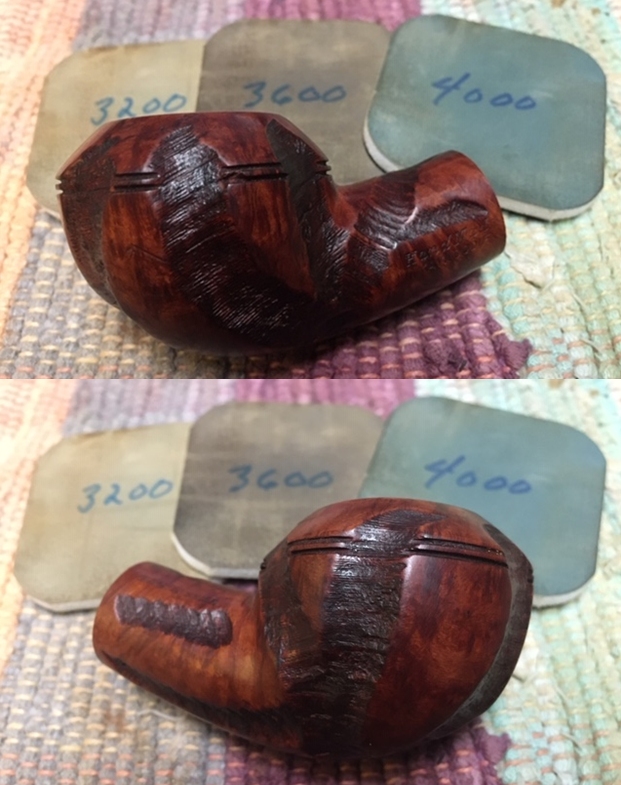
INITIAL VISUAL INSPECTION
This is indeed one pipe which I would have not have selected and worked on in the first place, even though it is a Dunhill, but for the provenance of this pipe and for the reasons mentioned above. The stummel is covered in dirt and grime of decades of uncared for use and storage. The stummel is very sticky to the touch and appears to be smothered in some kind of lard, could it be whale fat or fish oils from the Arctic or Antarctic expeditions that it had accompanied the previous owner? I would not know, but it is all prevalent over the stummel surface. Underneath all this lard, dirt and grime, the highest quality of the briar and solid feel in hand for which Dunhill pipes are renowned, can be seen and be felt. Beautiful cross grains along the shank bottom, front and back of the stummel await to be revealed in all their glory. Similarly, lovely bird’s eye grains on both the sides of the stummel should show up nicely when the surface is cleaned. A distinct patch on the left and right side of the stummel is prominently seen which could have been caused due melting of the lard (?) from the warmth and holding of the stummel while smoking. There is a prominent crack on either sides of the stummel extending downwards from the rim outer edge towards the heel for a few millimeters and is marked in red circle. The front and foot of the stummel is peppered with dents and dings. These should be addressed to a great extent when I sand the stummel surface to get rid of all the sticky substance and grime. Coming on to the assessment of the rim top surface and the chamber, it is immediately apparent that this is where the maximum damage lies!!!! There is an even layer of thick cake and appears to have been partially reamed before being stowed away. The rim top surface also appears to have been topped to address the severe charring to the inner edge of the rim at 6 o’clock and 12 o’clock direction (marked in red circle) and at the outer edge towards the front and back end of the stummel (marked in green semi circle). The inner edge is completely out of round and is at its thinnest in the 6 o’clock direction and along the left side of the chamber. A crack (marked with yellow arrow) is clearly visible on the left side atop the rim top surface in 9 o’clock direction which extend in to the chamber as well as to the outside as described in stummel condition above. The topped rim surface is considerably darkened and appears to have absorbed copious amounts of oils and tars. I plan to extract these oils through a salt and alcohol soaking of the chamber. The condition of the inner walls of the chamber will be ascertained only after the cake has been taken down to the bare briar. However, I envisage heat lines and fissures all over the inner walls what with the pipe being subjected to some serious use! And the smell of St. Bruno tobacco, Farida’s Dad’s favorite tobacco, is all pervading and super strong. The shank and mortise is completely clogged with accumulated oils, tars and grime and air flow is laborious to say the least. The edges of the shank end are out of round resulting in shouldering effect once the stem is seated in to the shank. The seating of the stem also appears to be a bit skewed towards the right side by a minuscule margin though not easily noticeable.The vulcanite stem has calcium depositions on either sides about an inch and a half from the button edge towards the tenon end. There are deeper bite marks on the upper and lower stem surface near the buttons in the bite zone. However, the buttons on either surface is undamaged. The tenon and horizontal slot show heavy deposition of dirt, oils and tars, adversely affecting the air flow.THE PROCESS
The restoration process started with sanding the bite zone of the stem with a folded piece of 220 grit sand paper to remove the calcium deposition and followed by internal cleaning of the tenon, stem air way and the slot with pipe cleaners and isopropyl alcohol. This was followed by cleaning the stem surface of all the oxidation by immersing the stem in “Before and After Stem Deoxidizer” bath overnight. This solution developed by Mark, pulls all the oxidation to the surface and makes the subsequent cleaning a breeze.The next morning, Abha my wife, took the stem out and cleaned all the thick sticky solution from the surface under running warm water. She blew out the solution that had clogged the airway and scrubbed out the raised oxidation with cotton pads and a piece of 0000 grade steel wool. She applied a little quantity of Extra Virgin Olive oil in to the stem to hydrate the vulcanite and set it aside. The initial sanding with a folded piece of 220 grit sand paper had evened out the minor tooth chatter and now that the stem is free of the heavy oxidation, I have a clear understanding of the damage that needs to be addressed, which by the way, is very minimal. I am pleased with the stem appearance at this stage.To raise the deeper bite marks from the upper and lower surface of the stem, I flamed the surface with a lighter flame. I went ahead and sand the raised bite mark with a 220 grit sand paper and sharpened the button edges. With a cotton swab and isopropyl alcohol, I wiped the stem surface to clean it of all the dust. I mixed superglue and activated charcoal powder and filled the bite marks and set it aside to cure. While the stem fill was set aside to cure, I worked the stummel and reamed the chamber with size 3 blade head of PipNet pipe reamer. Using my smaller sized fabricated knife, I removed all the cake from the areas which could not be reached by the reamer head. Very carefully, I removed all the charred briar from the outer and inner edges till I reached solid briar wood. With a folded piece of 220 grit sand paper, I sand the chamber walls to remove the last remaining traces of cake and wiped it with a cotton swab dipped in isopropyl alcohol. I am not very enthusiastic about the way the chamber appears at this stage. The inner edge at the rear has been pushed back significantly thinning the rim top surface. Also, the walls are peppered with numerous minor heat fissures/ lines making a web pattern. The crack, it is now clear, extends in to the chamber over the rim surface and on to the outer stummel surface. Another crack is now evident on the right side of the rim surface, but it’s superficial and not deep. Here is how the chamber appears at this stage, though not very encouraging, I say. Continuing with internal cleaning, I cleaned out the mortise, first by scrapping out the entire dried accumulated gunk with a dental tool. I further cleaned the shank internals with hard and regular pipe cleaners dipped in alcohol. Even after removing the cake from the chamber and cleaning the shank internals, the smells in the chamber are still very strong; in fact, my entire room smells of it!!Before I moved to the next stage in the process, I wanted to access the extent of charring over the outer rim edge. I gently scraped the charred briar from the outer rim edge with a sharp knife. Again not a very encouraging sight as the gaping saddle that was formed at the front and back of the stummel was anything that could be addressed by simply creating a bevel over the outer rim edge. Sad!! I have the option of addressing this issue either by topping the rim top surface or by the way of rebuilding the outer rim edge. I shall decide on the best course of action when I reach that stage.Next I decided to address the copious amounts of oils and tars that have been absorbed by the stummel giving it a considerably darkened appearance and a sticky feel in the hand. I stretched a cotton ball into a thick wick, wound it around a folded pipe cleaner and inserted it in to the shank and pushed it till it came out of the draught hole and packed the chamber, just below the rim, with Kosher salt. I topped the bowl with isopropyl alcohol using a syringe. I topped the bowl with alcohol again after 20 minutes when the alcohol level had gone down and set it aside overnight for the salt and alcohol to do its intended job. The next morning, the salt had turned a dirty and smelly brown and so was the wick and pipe cleaner in the shank. The ghost smells, the rim top dark coloration and the stickiness in the surface were still strong and hence I decided to give it a second salt and alcohol bath. This time around I used cotton balls in place of Kosher salt what with Kosher salt being more expensive and not readily available. I repeated the entire process described above and set the bowl aside overnight. By the next afternoon, the alcohol had drawn out maximum of the remaining oils and tars from the stummel surface and trapped it in the cotton balls. I am satisfied with the condition of the bowl internals with this cleaning.With the internals of the pipe cleaned and sorted, it was time to move to the external cleaning of the stummel. Using a hard bristled tooth brush dipped in undiluted Murphy’s oil soap, I very deliberately scrubbed the stummel, cleaning the surface thoroughly. I was very deliberate on the surface areas which were covered in fat-like sticky substance over which dirt and grime had accumulated over the years. I also cleaned the mortise with a shank brush and dish washing soap. I scrubbed the surface with a pad of Scotch-Brite to rid the surface of the slime. I was surprised to observe the stummel turning greasy white. This would need resorting to some heavy duty and abrasive methods to get rid of this grease from the stummel surface. Here is how the stummel appeared at this stage. I am happy that the salt and alcohol treatment had drawn out all the oils from the pores of the briar as can be seen from the cleaned up rim top surface. Next, I decided to stabilize the cracks that were observed prominently on either sides of the stummel extending downwards from the rim outer edge for a few millimeters. Under a magnifying glass, I marked the end point of the cracks and using a 1 mm drill bit, I drilled a counter hole at the base of the crack taking care that I did not drill a through hole. This ensures that the crack is stabilized and does not spread any further. With a heat gun, I warm the stummel and this expands the crack minutely. I fill this crack with clear CA superglue and firmly press the sides together. Once the superglue had sufficiently hardened, I apply a little superglue along the entire crack (rim top and side of the stummel) and press briar dust over it. This further stabilizes, strengthens and masks the fill in the cracks. I had reached that point in restoration where I had to decide on the way ahead for rim repairs. I could either top the bowl till I had a perfectly even round rim top, compromising on the shape and size or I could go for a complete rebuild. I decided on the latter as topping would significantly reduce the bowl size. Using a worn out piece of 150 grit sand paper, I completely remove the charred briar from the outer and inner rim edges in preparation for rebuilding the rim top. Using the layering technique (layer of glue followed by briar dust pressed on to this layer and repeating till the fill is over and above the intact rim surface), I completely rebuild the rim top and set the stummel aside for the fills to harden. While the rim top rebuild was curing, I decided to address the stem repairs. The stem fills had cured nicely and using a flat head needle file, I sand the fill to achieve a rough match with the surrounding stem surface. I further sand the stem surface with a folded piece of 220 and 320 grit sand papers to further blend in the repairs. However, a minor air pocket was revealed on the lower surface of the stem and I spot filled it with clear superglue and set it aside to cure and turned my attention to the stummel repairs again.The rim rebuilt surface had cured nicely. I could now proceed with reshaping the rim top and the inner rim edge to an even round. I mount a coarse 150 grit sanding drum on to my hand held rotary tool and setting a speed at half, I carefully sand off the excess fill from the rim top surface and the rim inner edge till I had achieved a rough match with the intact portion of the rim top and inner edge. I further top the rim on a 220 grit sand paper to achieve a seamless rim top surface. With a folded piece of 220 grit sand paper, I worked the inner rim to a crisp and perfectly rounded edge. I am very pleased with the rim surface rebuild at this stage in restoration. Staying with the stummel, I next decide to address the greasy white coating of whale fat or blubber or whatever fats that covered the stummel surface (remember all the Arctic and Antarctic expeditions on which this pipe must have accompanied Late Mr. John Barber!!). I sand the entire stummel surface with a piece of 180 grit sand paper. I frequently wiped the stummel with a cloth wetted in hot water to get rid of the loosened fat coating. A lot of elbow grease and few grueling hours later, beautiful bird’s eye grains and swirls began to make an appearance over the stummel surface. With renewed vigor, I completely remove the greasy white coat of fat from the stummel. I was careful not to sand the sides of the shank, but only wiping with hot water in an attempt to preserve the worn out stampings on this pipe. Though the surface has been cleaned up nicely, it appears dry and lackluster. I rub a small quantity of Extra Virgin Olive oil in to stummel to hydrate the briar and set it aside for the oil to be absorbed by the briar. The grains in the stummel now pop out and appear resplendent in their beauty. All the hard work up to this stage was well worth the effort and much more. The following pictures speak for themselves! To further smooth out the rim top, I topped the rim surface over piece of 320 grit followed by 420, 600 and 800 grit sand papers. Even though the cracks have now been exposed as a result of this topping, I am not overly worried as I am confident that the cracks have been solidly filled and stabilized.At this point I decided to work on the inner walls of the chamber. There are heat lines seen on the walls of the chamber and add to that the rebuilt inner edge using superglue and briar dust. To protect the walls and prevent the superglue and briar dust from coming in to direct contact with the burning tobacco, I plan to first coat the rebuilt part and the heat lined surface of the chamber walls with J B Weld followed by a second coat of activated charcoal and yogurt to the entire chamber which would assist in faster cake formation. J B Weld is a two-part epoxy Cold Weld that consists of two parts; hardener and steel which are mixed in two equal parts (ratio of 1:1) with hardening time of 5-6 minutes and complete curing time of 6-8 hours. I poured the contents of the two tubes and mixed it well. With a flat bamboo frond, I applied this mix, as evenly as possible, over the intended areas. I worked fast to ensure an even coat over the chamber walls before the weld could harden. I set the stummel aside for the application to harden and cure overnight. By next afternoon when I got back to working on this pipe, the J B Weld coat had completely cured and hardened considerably. With a folded piece of 150 grit sandpaper, I sand the weld coating to a smooth surface and continued till I had as thin a coat as was essential to protect and insulate the walls from the direct heat of the burning tobacco. Here are pictures of the process and the progress at this stage. Wanting a change, I decided to now tackle the stem fill which had been left curing for the last couple of days. Little did I know at this point that I was still some days away from completing the stem repairs!! I followed the golden rule of pipe restoration; “Less is more” and move ahead with sanding the fill with a piece of 220 grit sand paper without first using a flat head needle file. I followed it up with sanding the entire stem surface with 400, 600 and 800 grit sand papers. I finished the sanding regime with a 0000 grade steel wool. It was at this stage that I noticed the same dreaded air pocket and the fill was peeling out. With a dental pick, I completely removed the old fill and refilled it with a fresh mix of activated charcoal and superglue. I set the stem aside to cure overnight, third fill for the same spot!! With time still on my side before I hit the bed for the night, I decided to work on the stummel which had been set aside to absorb the olive oil. I thoroughly wiped the bowl with an absorbent paper towel to remove all the excess oils from the bowl surface. I polished the stummel, including the newly rebuilt rim top surface, wet sanding with 1500 to 12000 grit micromesh pads. I wiped the surface with a moist cloth to remove all the sanding dust left behind by the pads. I was very careful with the stamping as I desired to preserve as much of the worn out stampings as was possible. Though the rebuilt rim surface and outer rim edges stand out as sore thumb at this stage, I intend to mask the same with a dark stain. The stummel surface appears promising and I am absolutely in love the bird’s eye grains on this pipe. Next, I rub a small quantity of “Before and After Restoration Balm” in to the briar with my finger tips and let it rest for a few minutes. The balm almost immediately works its magic and the briar now has a nice vibrant appearance with the beautiful darkened grain patterns on full display. I further buff it with a horse hair shoe brush. While the stummel was set aside for the balm to be absorbed, I worked the stem fill which had cured over 24 hours. I sand the fill with a used and worn piece of 180 grits sandpaper and followed it with wet sanding the entire stem with 1500 to 12000 grade micromesh pads. I wiped the stem with a moist cloth to remove the dust and monitor the progress being made after every three grit pads. The stem polished up nicely and has a rich deep black shine to it. I applied a little Extra Virgin Olive oil to rehydrate the vulcanite and set the stem aside.Though the stummel had cleaned up nicely with a deep color to the briar, it was nowhere near the deep reddish brown coloration associated with the Bruyere line of Dunhill pipes; in fact it was much lighter. While restoring a Dunhill Bruyere from my Mumbai Bonanza (https://rebornpipes.com/2019/03/13/reconstructing-a-broken-stem-on-dunhill-bruyere-51671/), I had stained the stummel in cherry red stain and though the end results were great, it was not the original color associated with a Bruyere. The comments and suggestions received from esteemed readers of the write up pointed me in the direction of achieving this color!!! I decided to first apply a coat of DB followed by a final coat of red stain. However, when I went through my stains, I realized that I did not have Dark brown stain; the Feibing’s stain bottle had mysteriously dried out!!!!! The next best option available was the Cordovan. I consulted Steve and though he was not sure about the color, he encouraged me to go ahead and that is exactly what I did. I heated the stummel surface with my heat gun to open up the pores on the stummel so that the stain is well set while being careful that I do not overheat the fill, a lesson learned while restoring Steve’s Alexander Zavvos pipe. I dipped a folded pipe cleaner in Feibing’s Cordovan leather dye and liberally applied it over the heated surface of the stummel, flaming it with a lighter as I progressed. This helps in the setting of the stain in the grain of the briar. I set the stummel aside overnight for the stain to set. The next afternoon, I mounted a felt cloth buffing wheel on to my hand held rotary tool and proceed, as my dear friend Dal Stanton likes to say “unwrap the coat of stain to reveal the grains” on the stummel surface. Alas, there was no revelation of any sorts!! All that I saw was a dark stummel. You must understand my disappointment at this stage. I realized that the stain coat was too thick. I needed to lighten it up a bit and hence, with a cotton swab wetted in isopropyl alcohol, I wiped the entire stummel surface. Though the stain has lightened a bit, it was not the result that I desired. Here is how the stummel appeared at this stage. To further lighten the stain and “reveal” the stummel grains, I dry sand the entire stummel with 1500 to 12000 grit micromesh pads. The grains are now clearly visible. However, the trademark color of Bruyere line is still an illusion……it was browner than the reddish brown stain that I was looking for. I decided on giving the stummel a stain wash with a Cherry Red stain as suggested by Steve. I diluted the Cherry Red stain powder in 99.9% isopropyl alcohol in approx ratio of 1:4. With a cotton swab, I dabbed the diluted stain over the stummel surface, letting it set for a few moments and thereafter wiping it off with a dry clean cotton swab. I repeated the process till I had achieved the desired coloration. I am pleased with the color of the stummel which is as close as I could achieve, to the original Bruyere color. This time around, even the fills had absorbed the stain and blended in nicely with the rest of the stummel. To complete the restoration, I reattach the stem with the stummel. I mount a cotton cloth buffing wheel on to my hand held rotary tool and applied several coats of carnauba wax. I finished the restoration by giving the entire pipe a rigorous hand buffing using a microfiber cloth to raise the shine further. This dude has definitely come a long way from the condition it was in at the start.Now that the cosmetic aspects of this pipe have dealt with, all that remained was the functional aspect that needs to be taken care of. The minor heat lines and the J B Weld coated surface needs to be protected from the direct heat of the burning tobacco and for this; I coat the complete chamber walls with a mix of activated charcoal and yogurt and set it aside to harden naturally.I shared a few pictures of the pipe with my mentor, Steve, expecting some hearty praises on this restoration!! However, his keen eyes noticed an issue which had missed mine. He very gently pointed that a sterling silver band at the shank end would mask the shouldering that was inadvertently created!! This remark of his left me shocked!! Not at the remark as such, but at the fact that I had shouldered the shank end during the restoration process. Still smarting at being chided by my teacher, I revisited all the pictures and true enough, this issue already existed and I had missed out mentioning it in my initial inspection in the write up and hence missed it out during the entire process. I made necessary amendments to the post and had to keep the pipe aside till I reached back home during my leave where my local silversmith would fabricate one such ring for me.
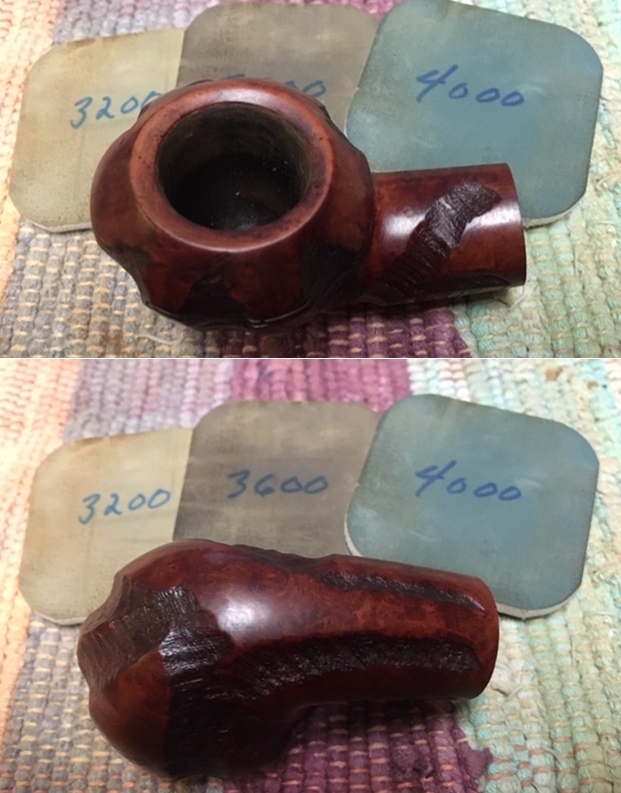
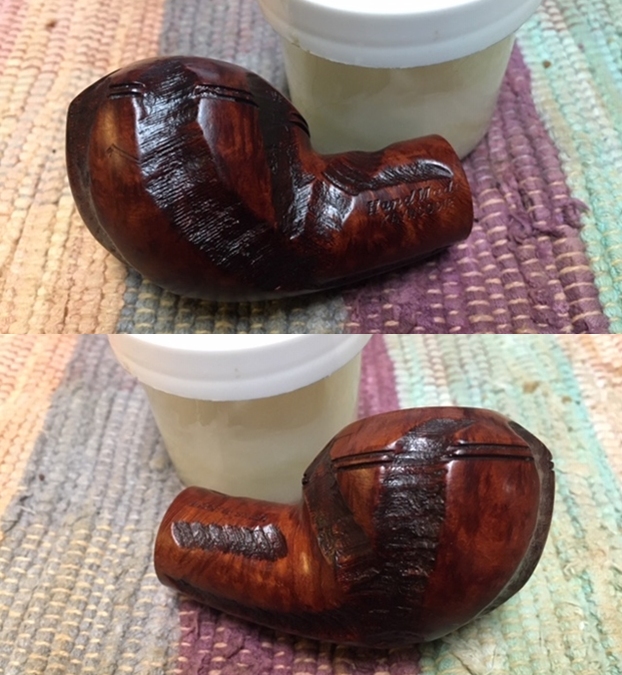
I revisited the small, dingy and unsophisticated shop with rudimentary tools where the craftsman had built me a Sterling Silver ring for an Alfred Massin Meerschaum cutty that I had restored two months ago (https://rebornpipes.com/2019/10/09/complicating-a-simple-restoration-of-a-cutty-meerschaum/). The craftsman at the shop made me a perfect ring for the Dunhill shank end. This ring not only masks the shouldering, it also adds a touch of class while breaking the monotony of the pipe. I refreshed the bowl coating with activated charcoal yogurt mix and completed this project with a vigorous hand buffing with a microfiber cloth. How I wish I had carried my hand held rotary tool and some carnauba wax for a final polish while on leave!!! Nevertheless, the finished pipe has received a fresh lease on life and is now all set to stay with me for the rest of my time on this earth as part of my Dunhill rotation. The repairs are solid and blended in well with the surrounding surfaces. All that now remains is to load a nice English blend and enjoy a quite peaceful smoke… P.S. This perhaps would be the longest write up that I ever have posted on rebornpipes.com!! Apart from the Alfred Massin Meerschaum pipe that I have mentioned above, this project extended over a period of two months, just for the want of sterling silver band. Nonetheless, it was one project that I enjoyed working on and hope that my Guru and mentor Steve gives me passing marks on this test project (remember that it was a sort of test put forth by Steve for me!).
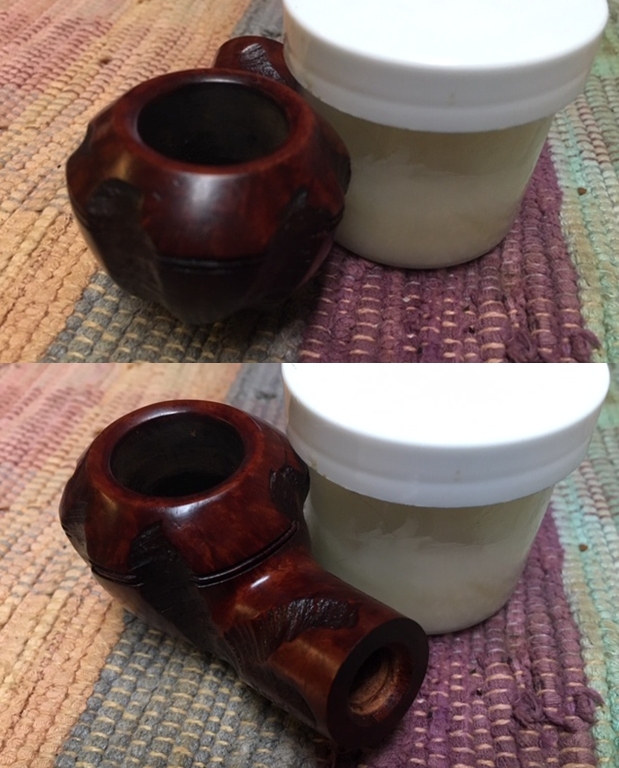
The most important aspect of this restoration was being able to live up to the belief and faith that Farida had entrusted in Steve and through him, in me, to carry forth the trust of her Father. It is while working on this project that I fully comprehend and understand what and why Dal Stanton calls himself Pipe Steward!! A perfect term coined by this well read gentleman, I say.

Farida, if at all you read this write up, I wish to let you know that it has been a privilege to have been afforded an opportunity to carry forward the trust of your father. As I puffed on this Dunhill, I could conjure up images of your father and his dogs amidst all the snow and loneliness…. A MAN, HIS FAITHFUL PIPE AND HIS BELOVED DOGS!! Thank you Steve and Farida…… and the pipe has a new friend!!

New Life for a Stunning Malaga Bent Billiard from Kathy’s Dad’s Pipes


Blog by Steve Laug

This is another of the Malaga pipes from George Koch’s estate that Alex added to the box of pipes I had set aside for him. There are quite a few of them to work on so I go back to them quite regularly to work on one of them. The next Malaga is a shape I would define as a bent billiard. It has some great cross and birdseye grain and a tapered vulcanite stem. The grain around the bowl and shank combined with the stem make it a stunning pipe. It is one of the many Malaga pipes that came to my brother and me in several shipments of pipes from George’s daughter Kathy. When Jeff got each box the pipes were well wrapped and packed. Jeff unwrapped them and took the following photo to give an idea of the volume of the pipes that we purchased. This Malaga came in mixed in a box of pipes much like the one below.In each of the previous blogs that I have written on the restoration of George’s pipes I have told his story. If you have followed the restorations you will have read the information and the background piece that Kathy did on her father. Here is a link to one of the previous blogs on his Malaga pipes where I included her tribute in full (https://rebornpipes.com/2019/01/26/back-to-kathys-dads-pipes-restoring-a-%c2%bc-bent-malaga-author/). You can also read the bio on her Dad, George Koch. It is an interesting read and one that shows just how far our pipe collecting passion can go when we find a brand of pipes that we enjoy. I am going to only include the portion on the Malagas at this point. If you wish to read the rest follow the link above.

Kathy writes…We lived in Livonia, and that’s where his love for Malaga pipes began. After a few years he returned to Allis Chalmers and we moved back to Springfield. I remember that when we went back to Michigan to visit friends, Dad had to go to the Malaga store and acquire a few new pipes. Many a year I wrote to Malaga and they picked out a pipe for me to purchase that I could give Dad for a Christmas or birthday present. He was always pleased. His favorites were the straight stemmed medium sized bowl pipes, but he liked them all. 

He had some other pipes, but the Malagas were his favorites. I remember him smoking them sitting in his easy chair after work, with feet up on the ledge by the fire burning in the fireplace.  Growing up it was my job to clean them and he liked the inner bowl and stem coated with Watkins vanilla, leaving a little of that liquid in the bowl to soak in when I put them back on the rack…I’m very happy they are being restored by you and your brother and hope they find homes who enjoy them as much as Dad did. Thank-you for your care and interest. — Kathy, the oldest daughter

The next “Malaga” Bent Billiard on the table is another classic bent shape. The carver did a great job of shaping the pipe to follow the grain on the briar. The bowl, round shank and bent tapered vulcanite stem look very good. The bowl had a thick cake that overflowed with lava onto the rim and there was significant burn damage on the top front inner of the bowl. The sides of the bowl and shank are very dirty with grime and oils from prolonged use. The stamping on the left side of the shank read “MALAGA” and on the right side it read Imported Briar. The vulcanite stem had tooth dents and chatter on the top and the underside of the stem. The button was worn almost smooth Jeff took these photos before he started the cleanup work on the pipe. Jeff took a close up photo of the bowl and rim to capture the condition of the pipe before he started his cleanup work. The rim top had some lava overflow and darkening on the back of the bowl and some serious burn damage to the inner edge on the bowl front. The burn marks appeared to be quite deep on the inner edge on the right front side of the grimy pipe.He also took photos of the sides and bottom of the bowl and shank to show the beautiful grain around the bowl. The photos show the general condition of the bowl and wear on the finish. It is very dirty but this is another beautiful pipe.Jeff took a photo to capture the stamping on the shank. The photos show the stamping “MALAGA” on the left side of the shank and Imported Briar on the right side. The stamping is very readable.The next photos show the stem surface. There is oxidation and calcification on the stem. There are tooth marks and chatter on both sides near the button and wear on the button surface and edges. The button surfaces and edges are worn and almost smooth.I am also including the link to a blog that I wrote that gives some of the history of the Malaga brand and the Malaga Pipe Shop in Royal Oak, Michigan in the USA. I have written an earlier blog to give a little history of the Malaga Brand and the pipemaker, George Khoubesser. Here is the link – https://rebornpipes.com/tag/malaga-pipes/.That blog also includes links to a catalogue and the history of the pipemaker George Khoubesser. Follow the link to get a feel for the brand and the pipemaker.

Jeff reamed the bowl with a PipNet pipe reamer and followed up with a Savinelli Fitsall pipe knife to remove the cake. He scrubbed out the mortise and the airway in the shank and the stem with alcohol, cotton swabs and pipe cleaners. He scrubbed the exterior of the bowl, rim, shank and stem with a tooth brush and Murphy’s Oil Soap to remove the oils and tars on the rim and the grime on the finish of the bowl. He rinsed it under running water. He dried it off with a soft cloth. He was able to remove the lava build up on the rim top and the flat surface of the rim looked very good. The inner edge of the rim has some serious burn damage on the front right side. The outer edge looked very good. He soaked the stem in Before & After Deoxidizer and rinsed it with hot water. I took photos of the pipe to show its condition before I started my work on it. I took close up photos of the bowl and rim top as well as the stem. You can see the condition of the rim top and bowl in the first photo. Jeff was able to remove all of the tar and oils but you can now see the damage on the inside rim edge. The edge is out of round. There is a burn mark that extends across the front and the back edge of the rim top at that point. The vulcanite stem had tooth chatter on both sides near and on the button surface there was also a large deep bite mark on the underside of the stem.I took a photo of the stamping on the shank to show how good the condition is. It shows the “MALAGA” stamp on the left side and Imported Briar on the right side. The stamping is very legible.I decided to address the rim top first. I topped the bowl on a topping board with 220 grit sandpaper. I wanted to remove the damage on the top front edge and remove the darkening all the way around the inner edge of the bowl. I took a close up photo the rim top before I started to give a clear picture of the condition of the pipe. I used a folded piece of 220 grit sandpaper to clean up the damage on the right rear inner edge of the bowl. I gave the inner edge a slight bevel to repair the damage. I polished the edge with 400 grit wet dry sandpaper. The rim top and edges really looked better.I polished the rim top and the briar with micromesh sanding pads. I wet sanded the bowl with 1500-12000 grit sanding pads. I wiped the bowl down after each pad with a damp cloth to remove the sanding dust. I restained the rim top and edges with an Oak Stain Pen. I was able to blend it into the rest of the bowl. I scrubbed the briar with Murphy’s Oil Soap and a tooth brush. I rubbed it into the surface of the briar with my finger tips and let it sit for a few minutes then scrubbed it off with a tooth brush and running water. I dried it off with a soft cloth. I worked some Before & After Restoration Balm into the surface of the briar with my fingertips to clean, enliven and protect it. I let the balm sit for a little while and then buffed with a cotton cloth to raise the shine. The following photos show the bowl at this point in the restoration process. I am very happy with the results. I turned to the stem to address the issues on the surface of both sides at the button. I used a needle file to recut the edges of the button. They had been chewed to the point of no edge remaining so I used the file to cut it and sharpen the edges. I smoothed out the top and bottom surfaces of the button on both sides.Once I had the button edge reshaped I decided to address the tooth marks and dents in the button and just ahead of the button. I “painted” the surface of the stem with the flame of a lighter to lift the tooth chatter and marks. The light marks on the top side disappeared quickly and the larger indentation on the underside lifted until the remaining small marks could be dealt with by sanding the stem.I sanded both sides smooth with 220 grit sandpaper to remove the deep oxidation on the surfaces. I finished this initial polishing with 400 grit sandpaper to smooth out the scratches in the stem surface. As I sanded and reshaped the button and stem surface the stem began to look very good. I polished the stem with Denicare Mouthpiece Polish from a tin of it I have in the drawer here. It is a gritty red paste that I rub on with my finger tips and work into the surface of the stem and button and buff off with a cotton pad. It gives me a bit of a head start on the polishing work plus I have a tin to use up!I polished the stem with micromesh sanding pads – wet sanding with 1500-12000 grit sanding pads. I wiped it down after each sanding pad Obsidian Oil. I finished by polishing it with Before & After Pipe Stem Polish both fine and extra Fine and then wiped it down with a final coat of Obsidian Oil. This is another, slightly larger Malaga Bent Billiard with a vulcanite tapered stem. It has a great grain around the bowl and the carver really maximized that with the shape of the pipe. Everything about the pipe – the shape of the bowl, the beveled rim top and the cut of the briar work well to highlight the grain around the bowl sides. I polished stem and the bowl with Blue Diamond polish on the buffing wheel and the grain just popped and came alive. I gave the bowl and the stem multiple coats of carnauba wax. I buffed the pipe with a clean buffing pad to raise the shine. I hand buffed it with a microfiber cloth to deepen the shine. The pipe polished up pretty nicely. The grain took on life with the buffing. The rich oil cured colour works well with the polished vulcanite stem. The finished pipe has a rich look that is quite catching. Have a look at it with the photos below. The shape, finish and flow of the pipe and stem are very well done. The dimensions are Length: 6 inches, Height: 2 inches, Outside diameter of the bowl: 1 ¼ inches, Chamber diameter: ¾ of an inch. I will be adding the pipe to the finished Malaga pipes that I have set aside for Alex. I am glad that he is carrying on the trust for George Koch. Thanks for walking through the restoration with me as I worked over another one of Kathy’s Dad’s Pipes.