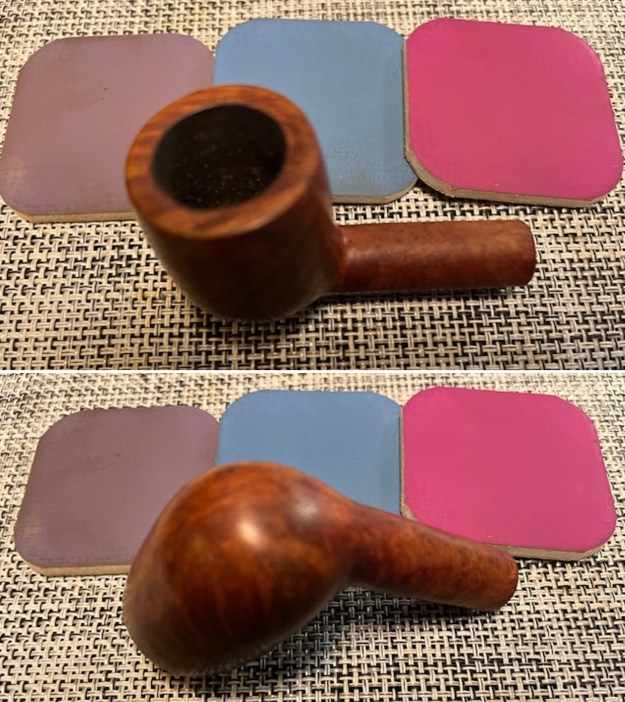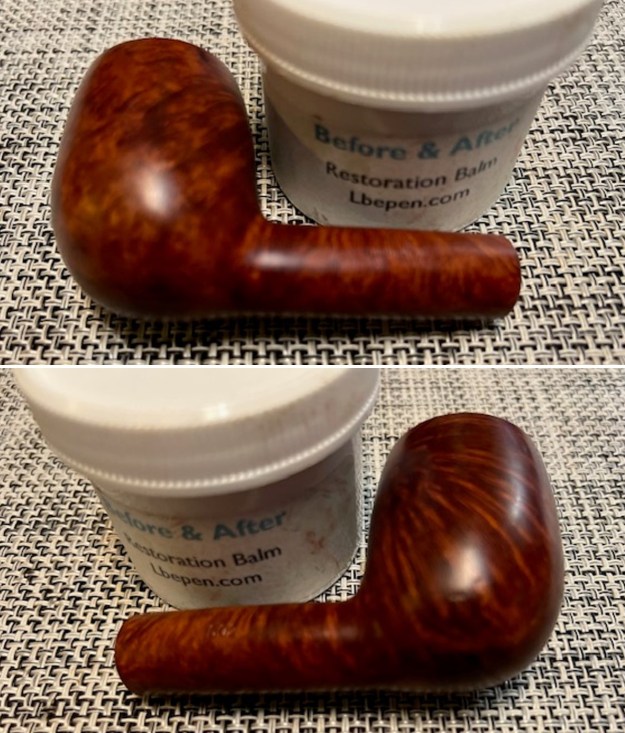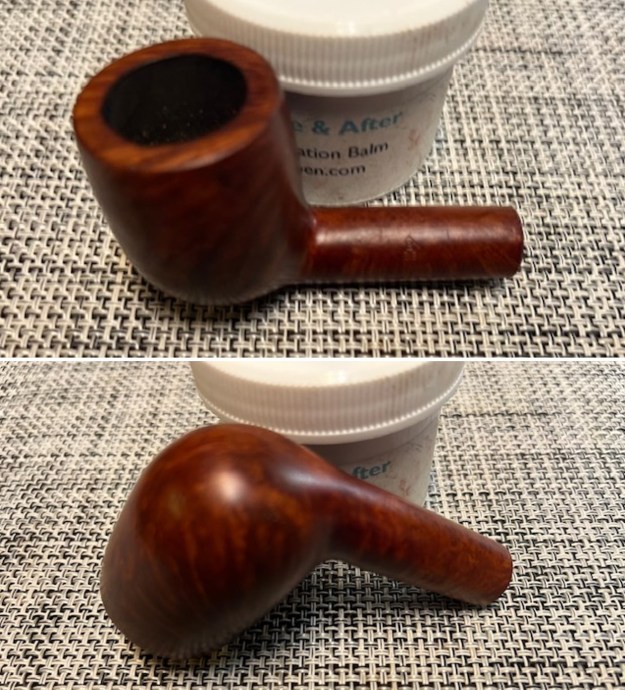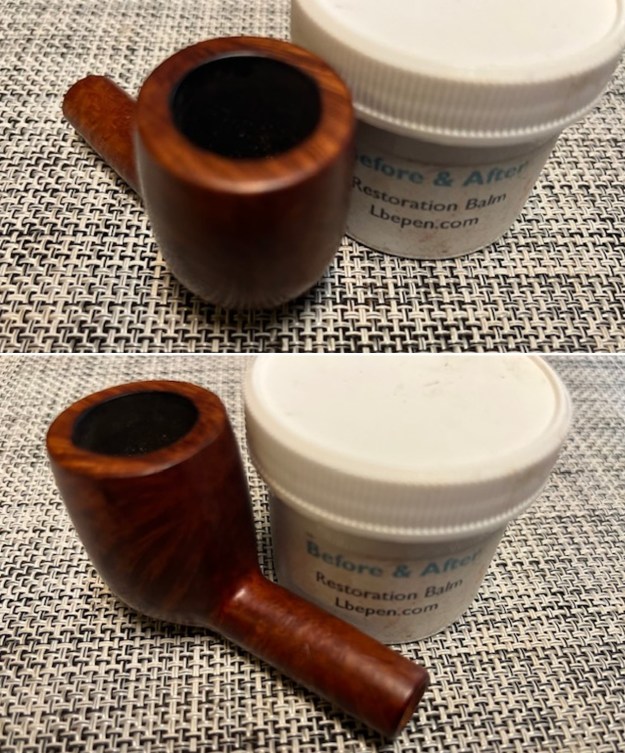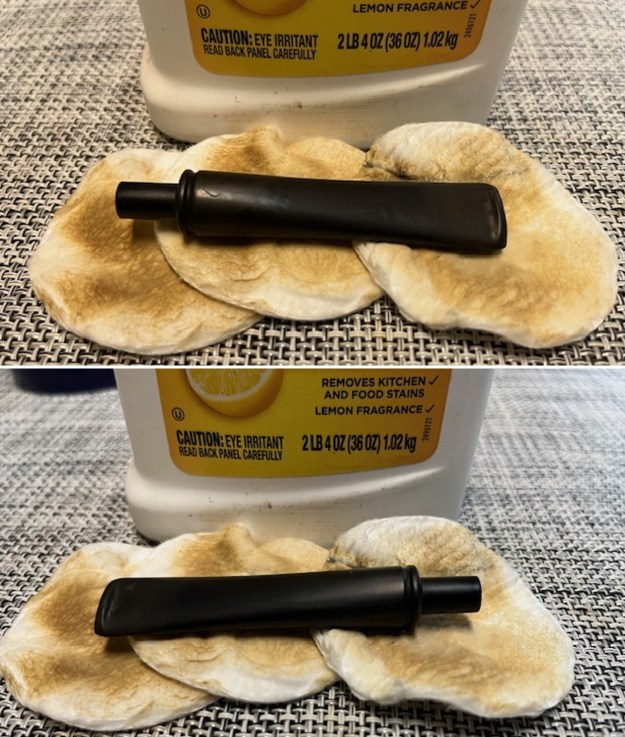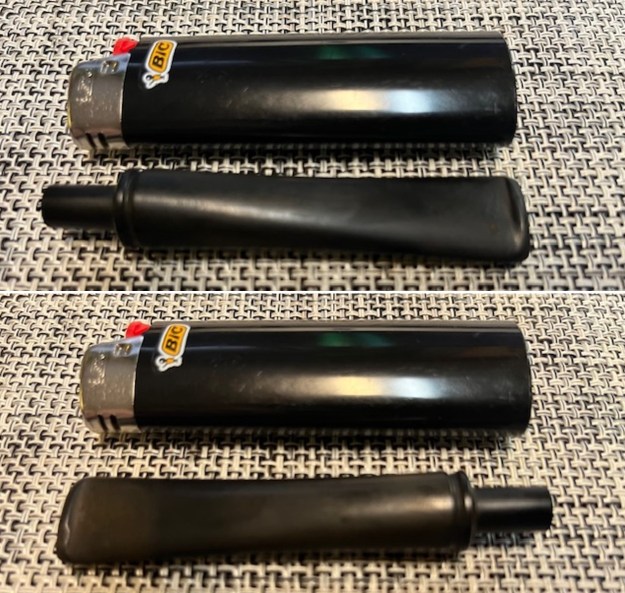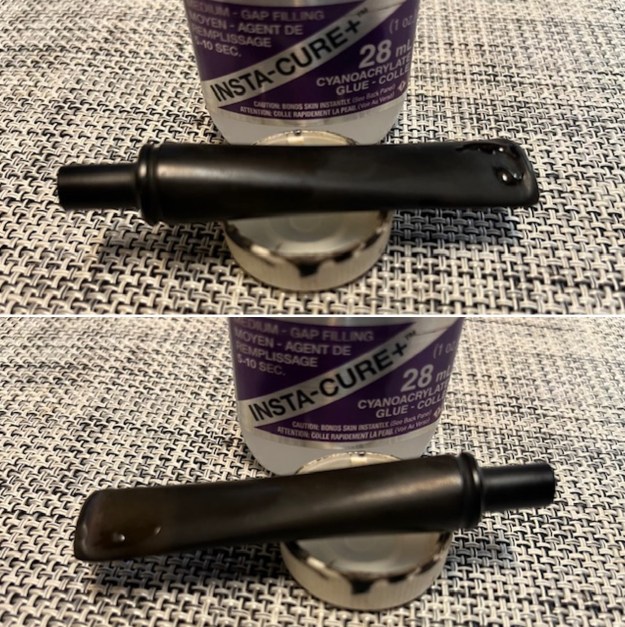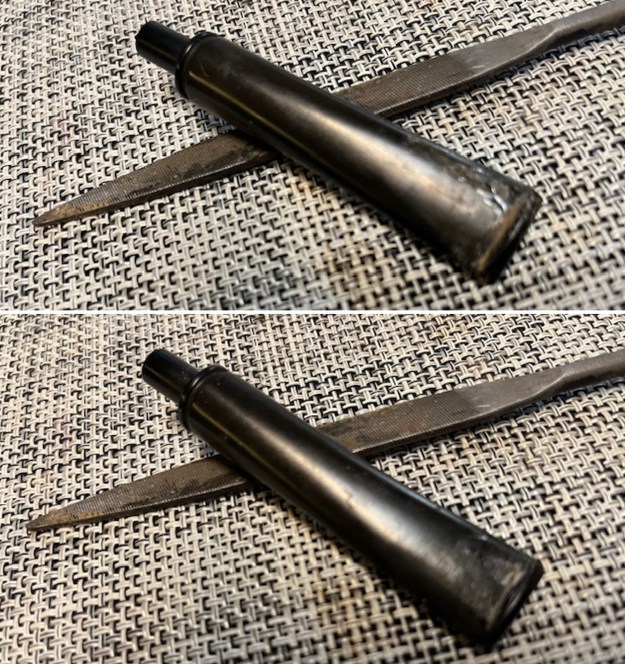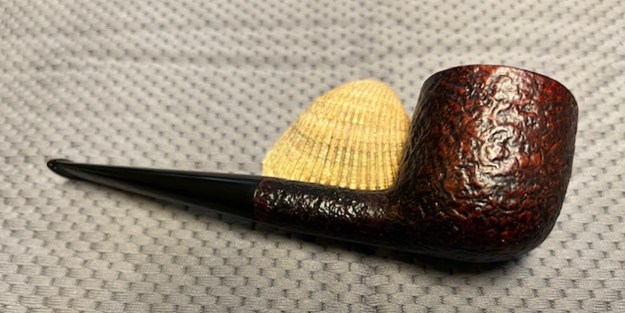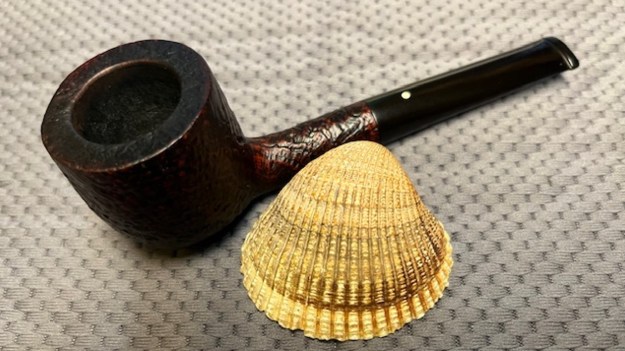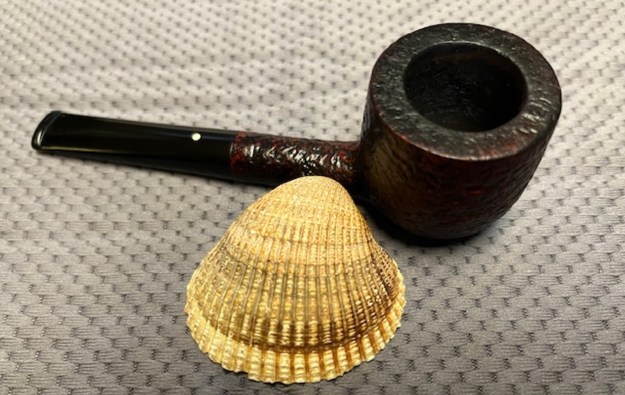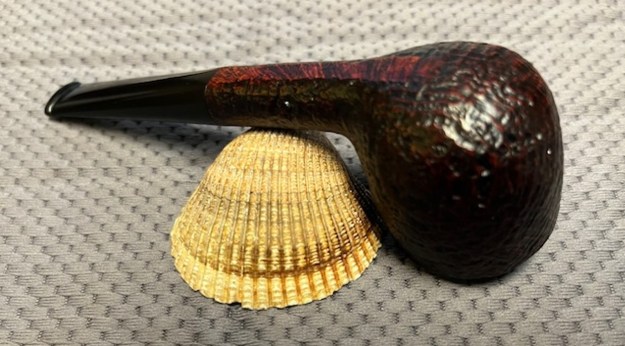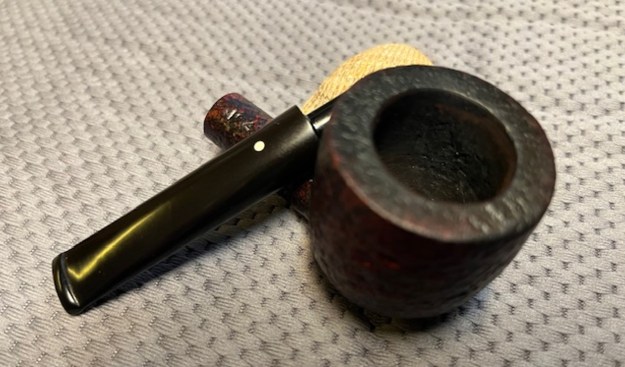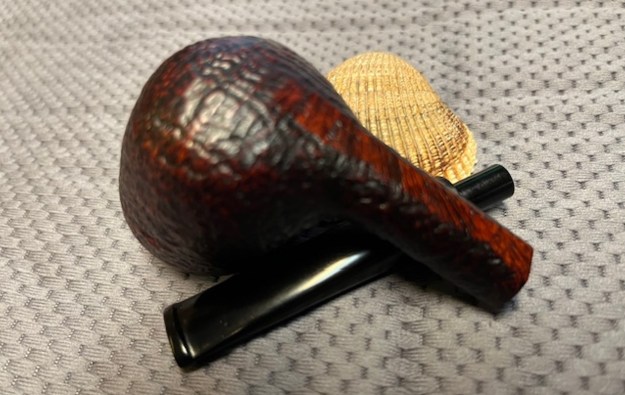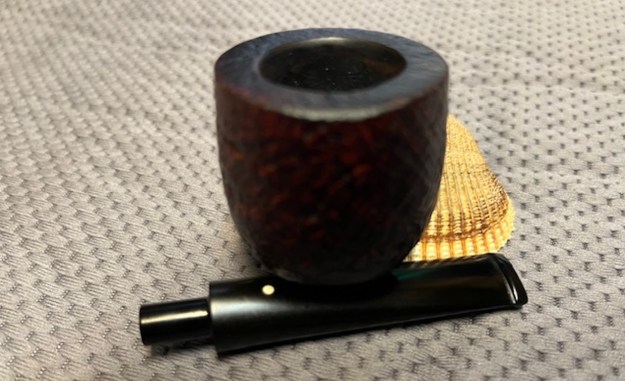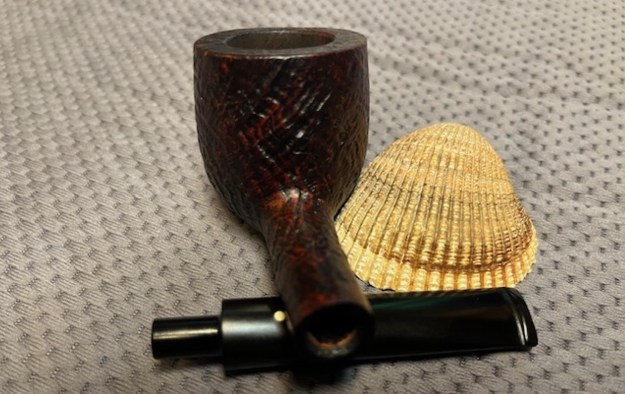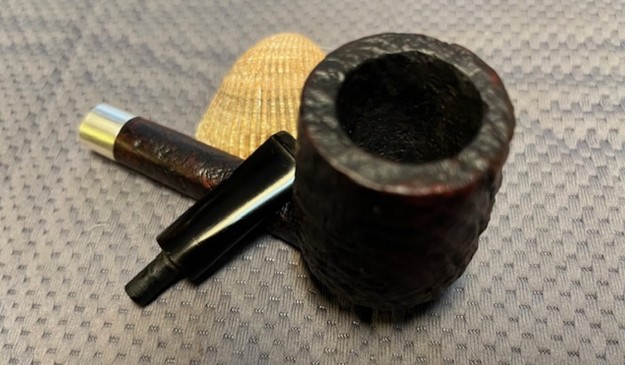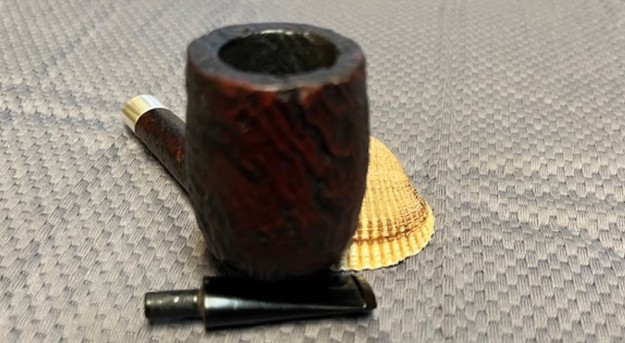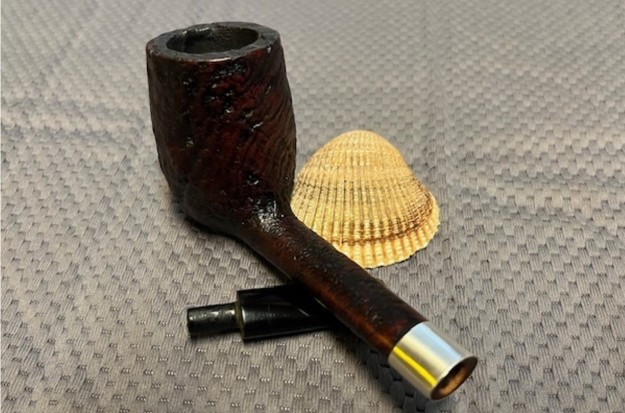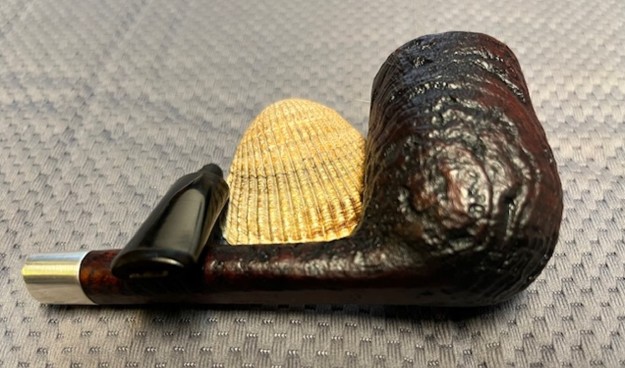
Tag Archives: shaping a stem

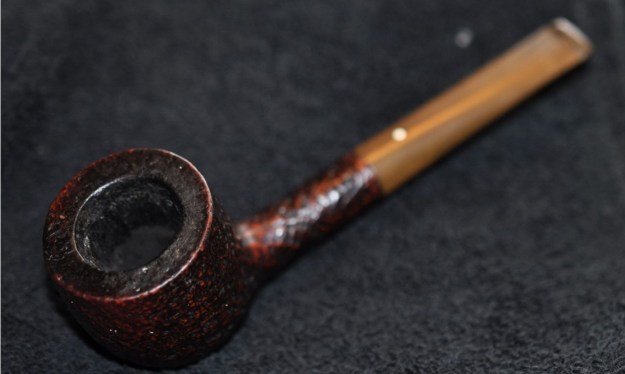
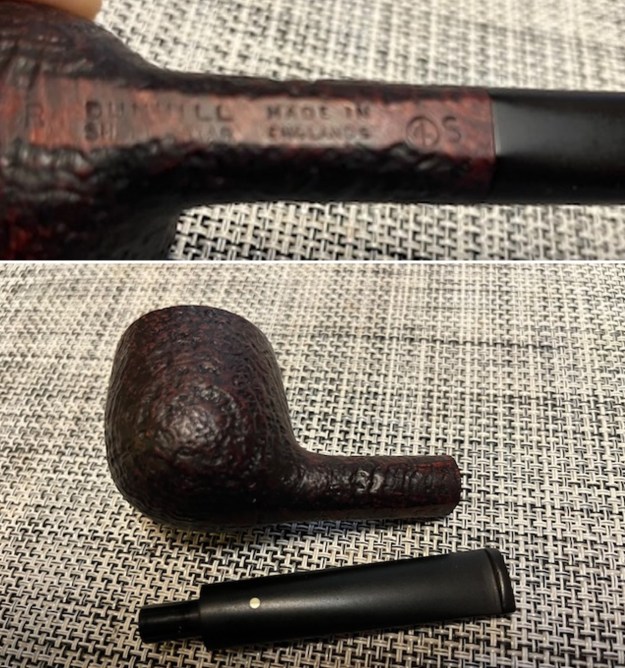
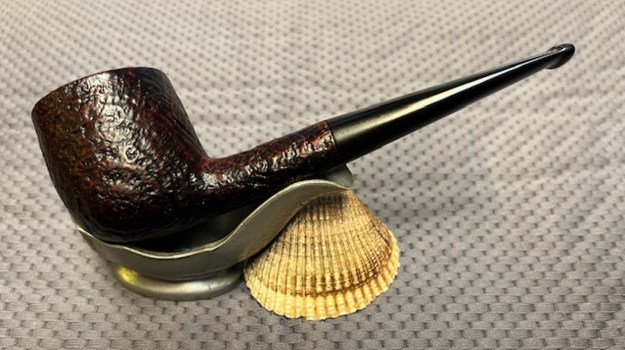
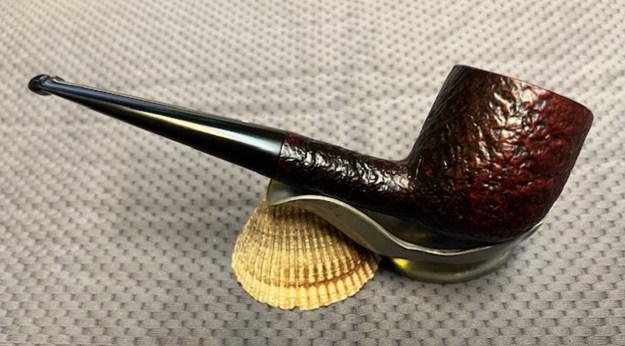
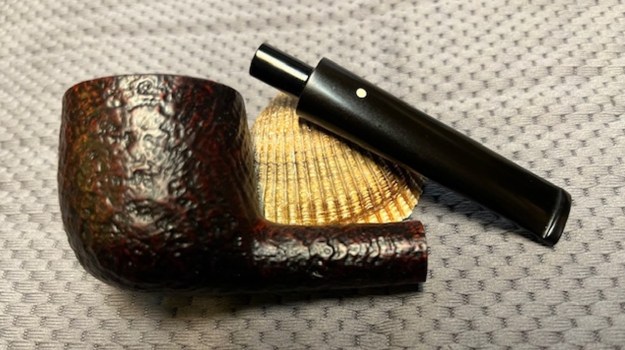
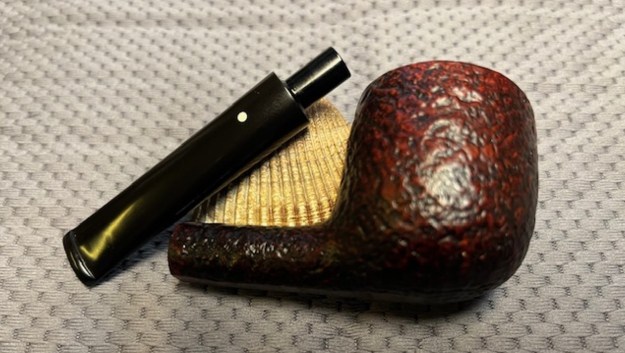
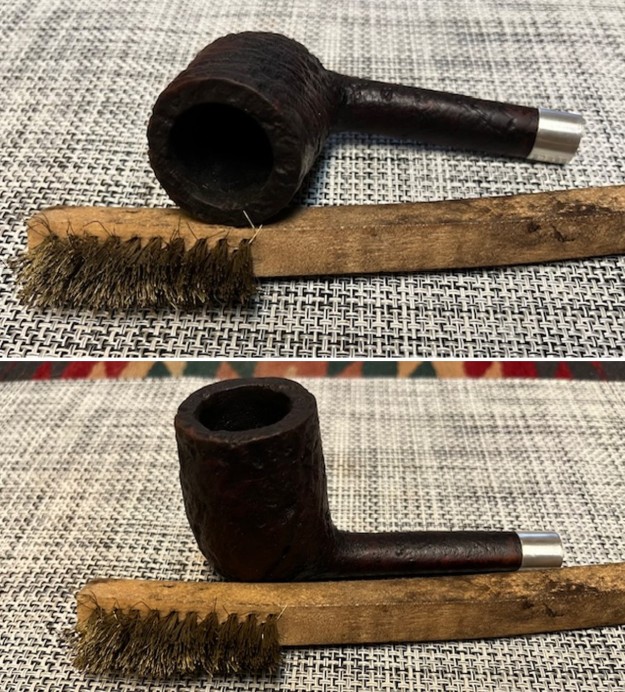
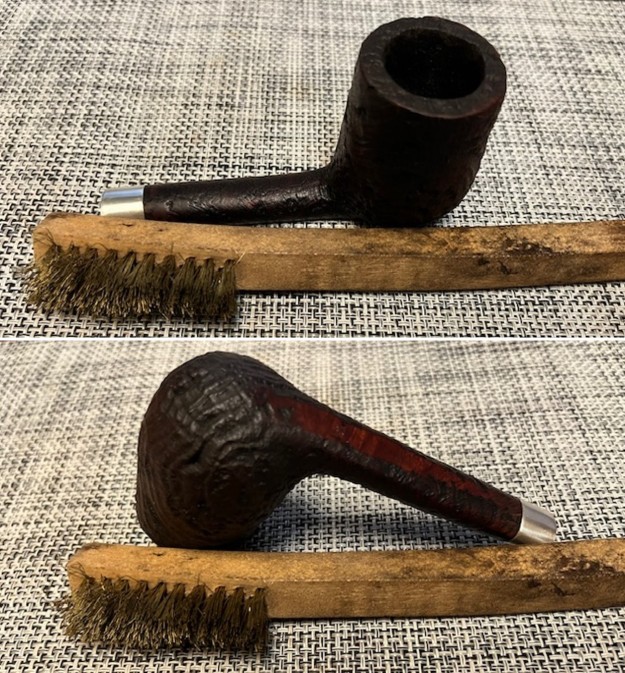
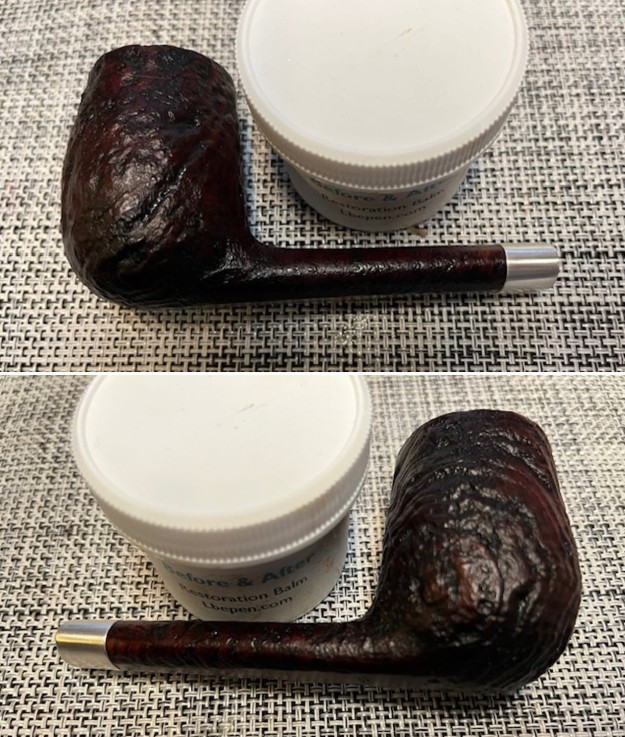
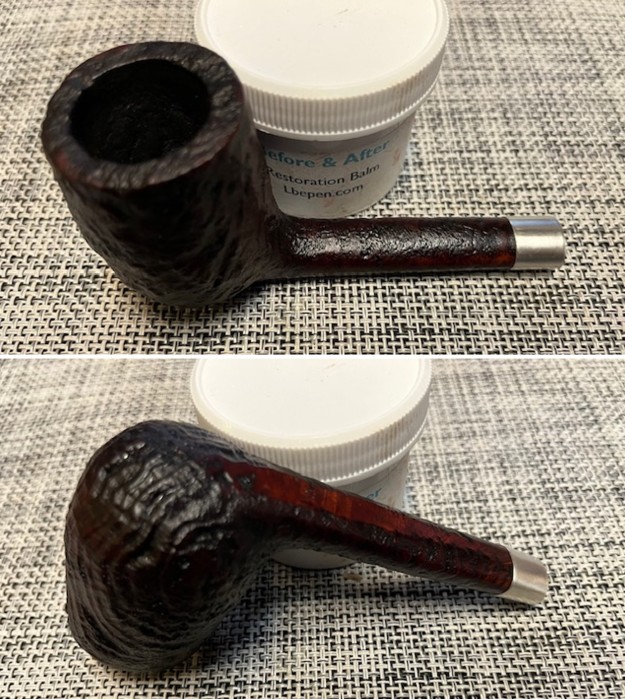
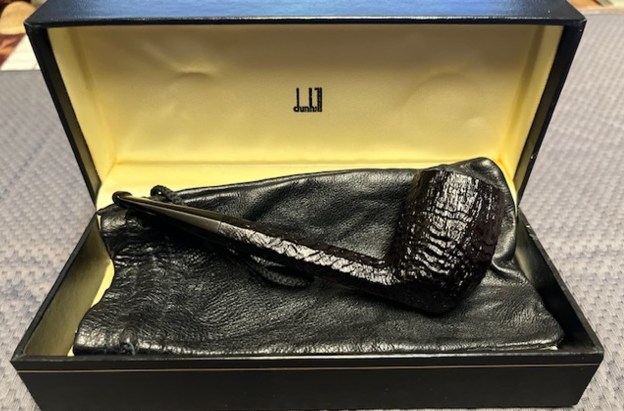
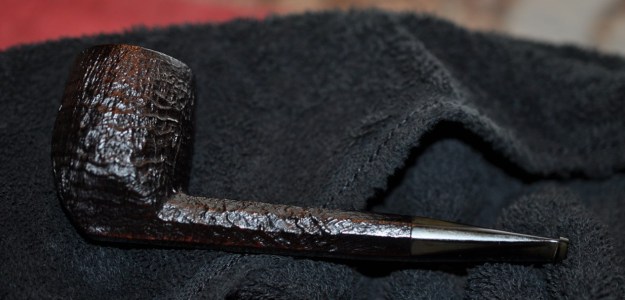
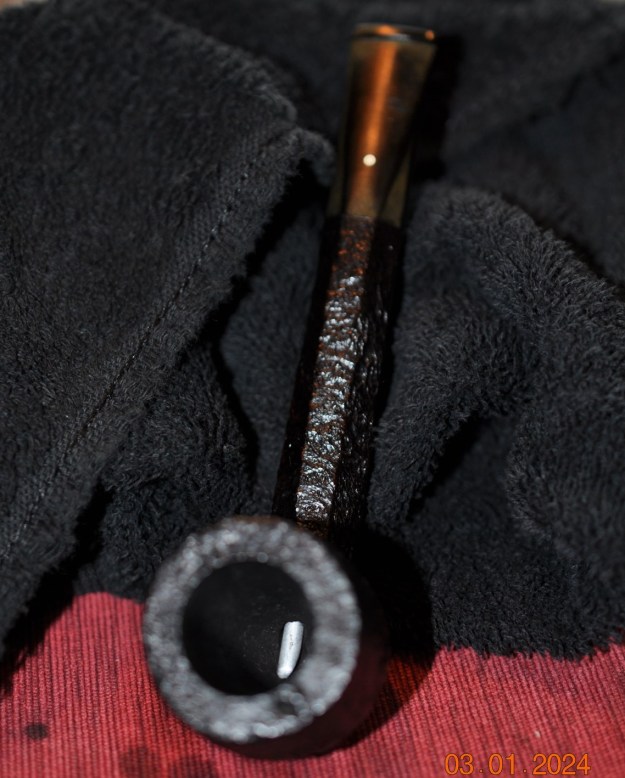
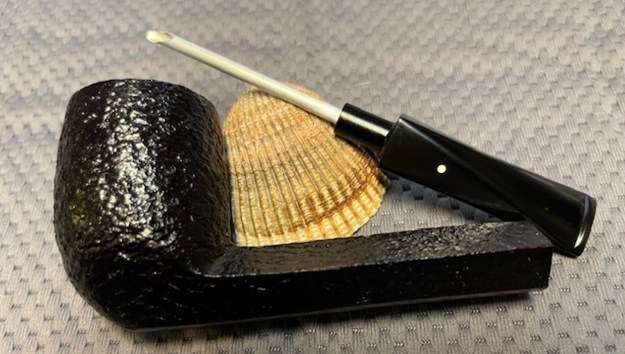
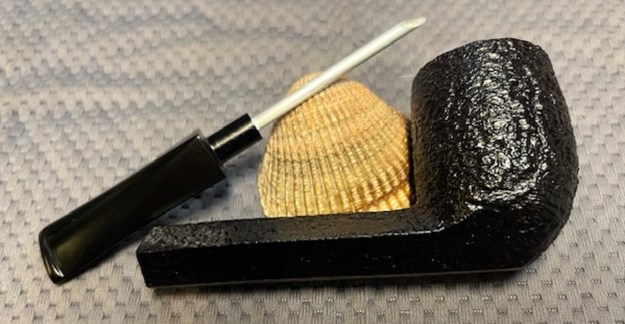
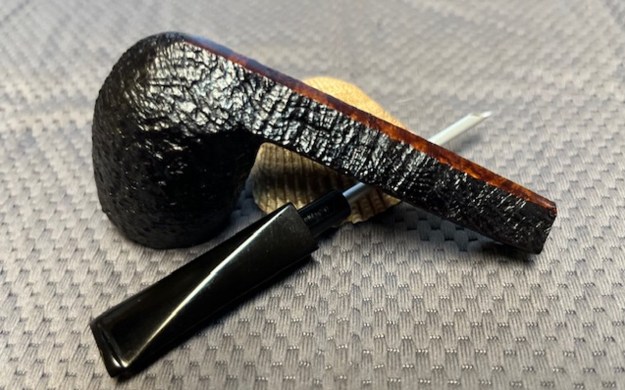
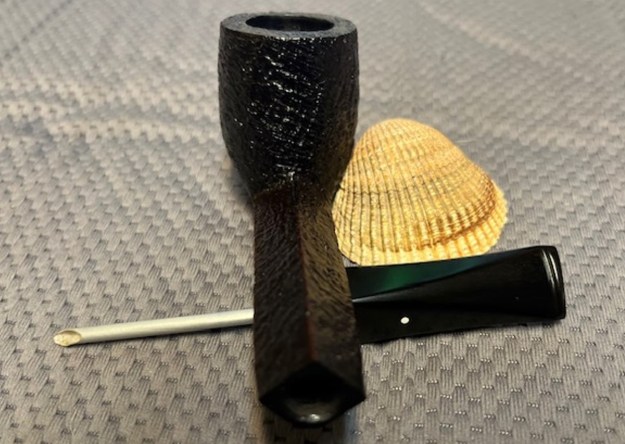
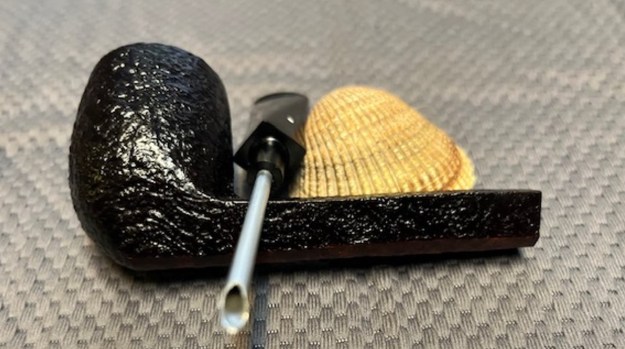
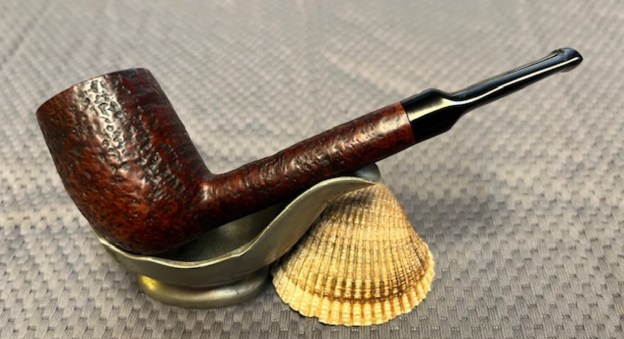
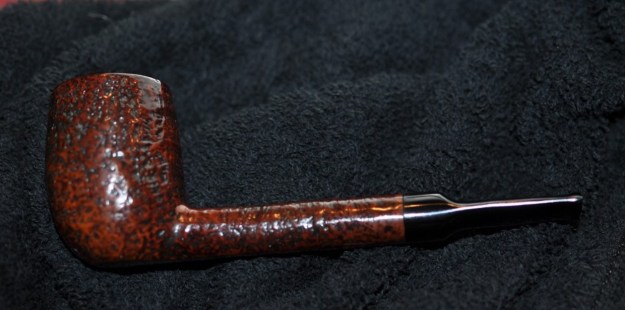
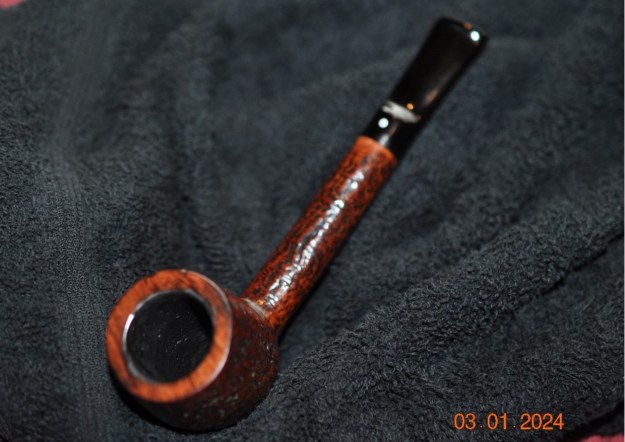
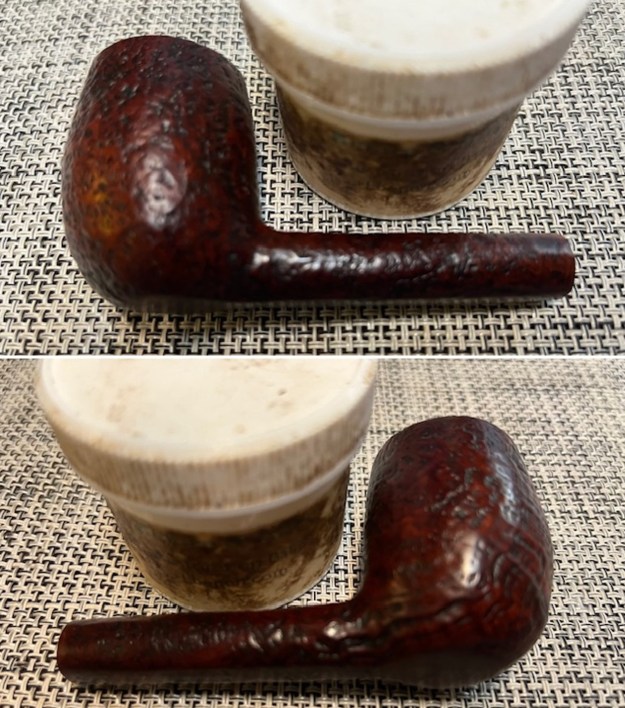
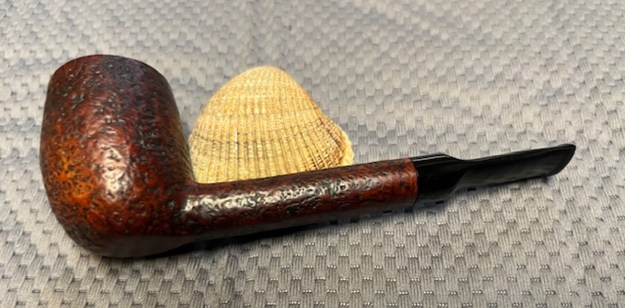
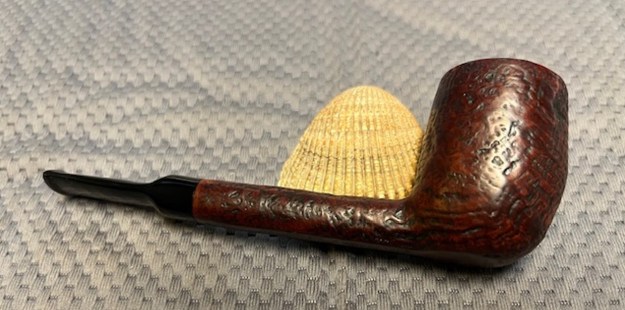
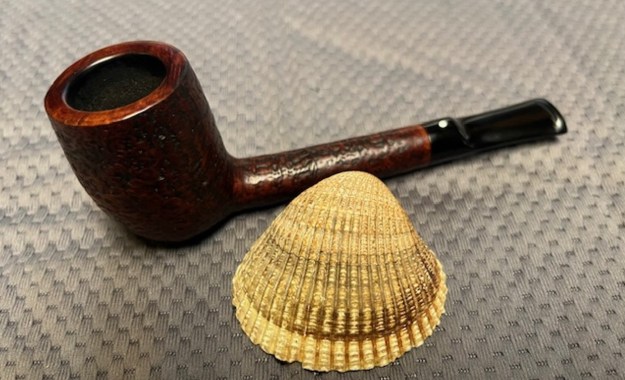
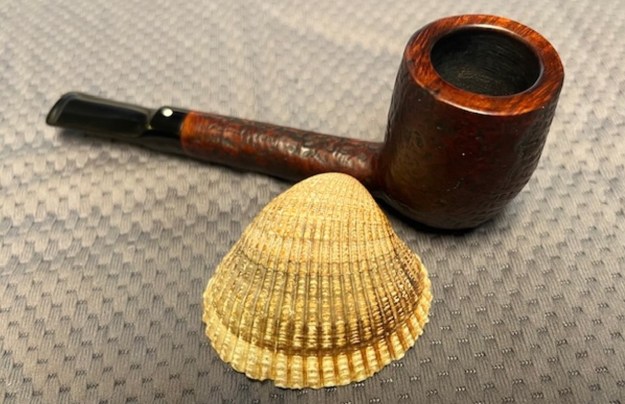
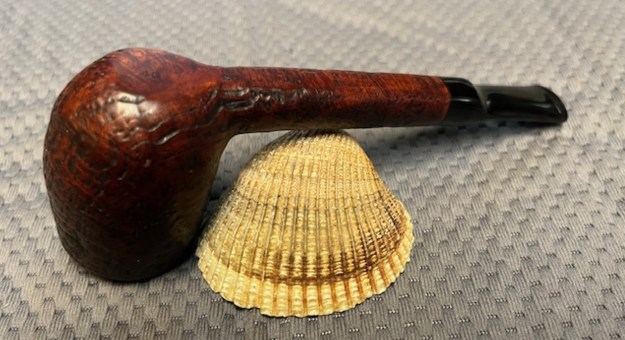
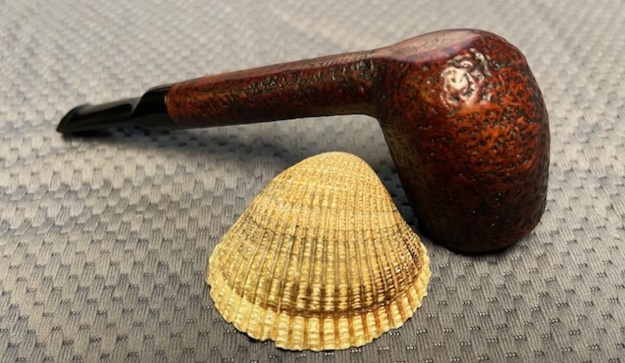
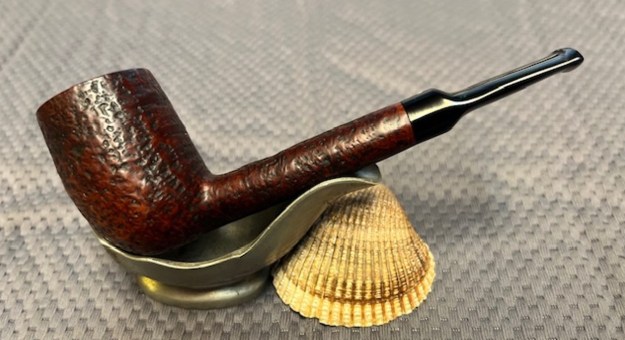
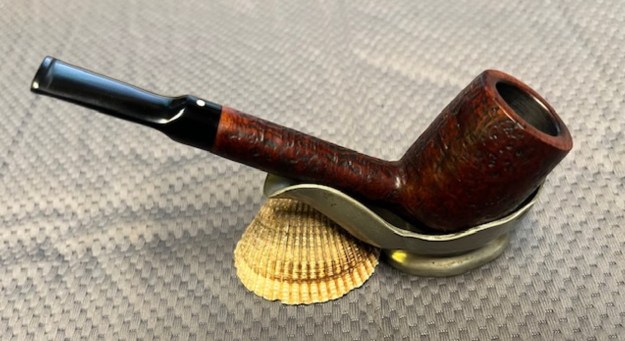
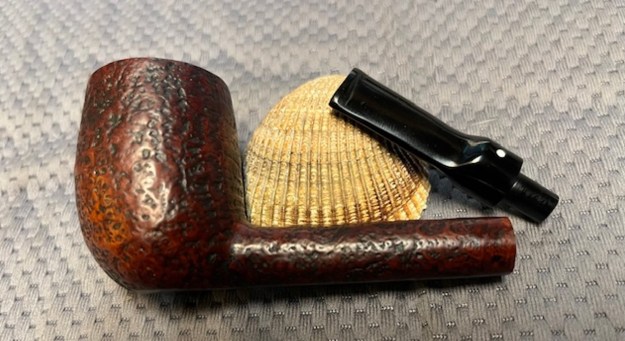
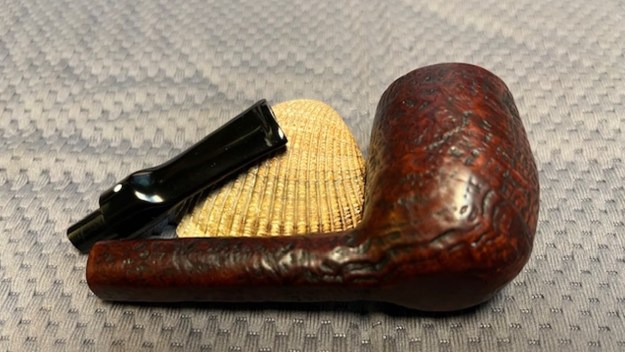
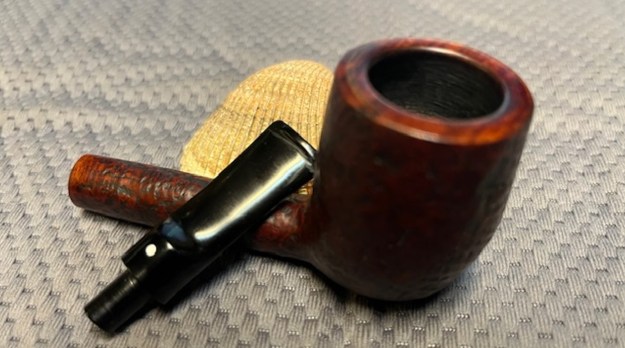
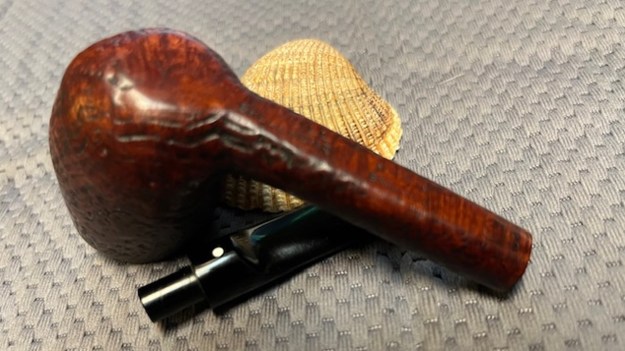
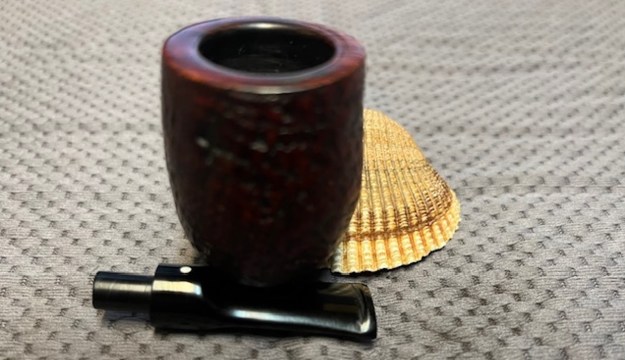
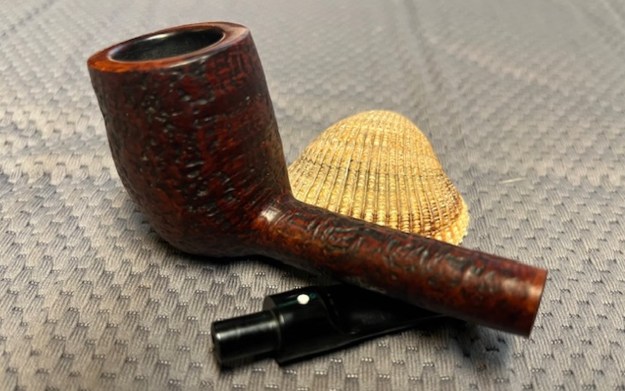
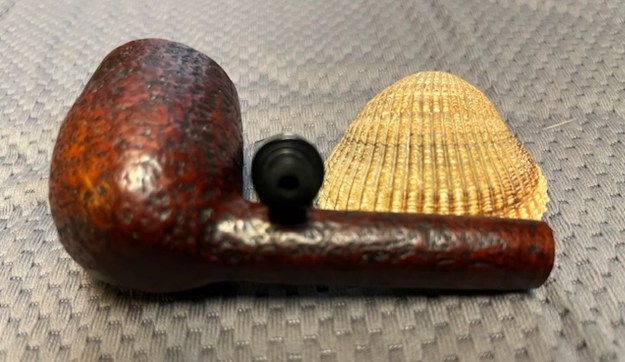
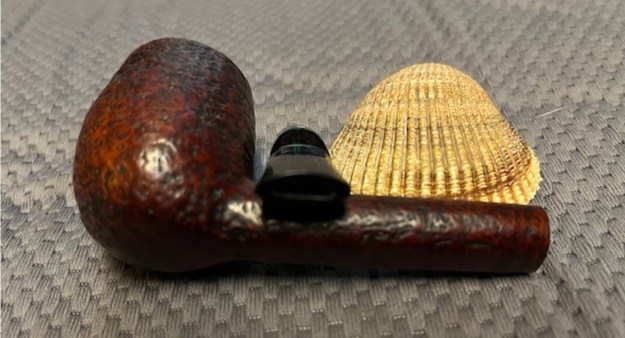
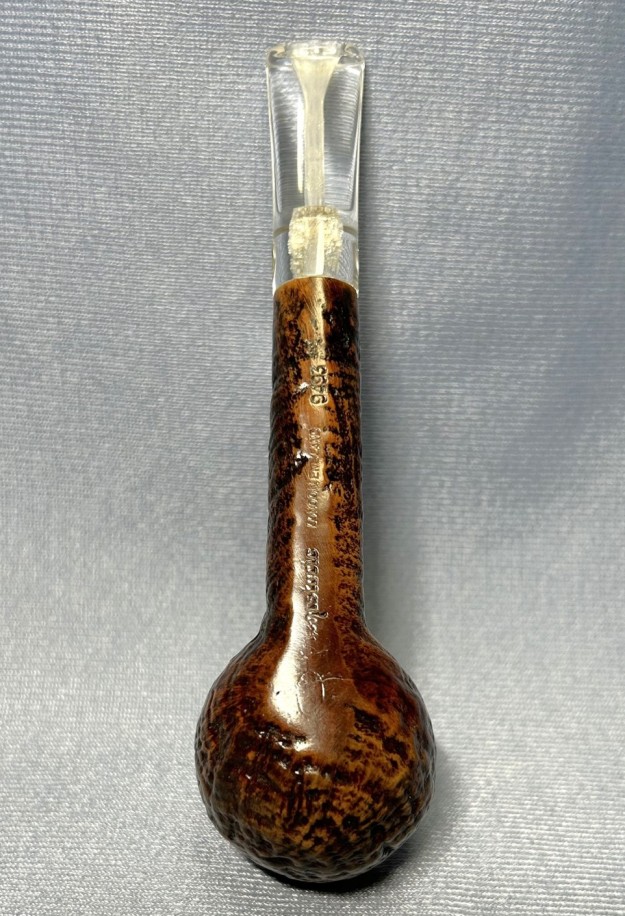
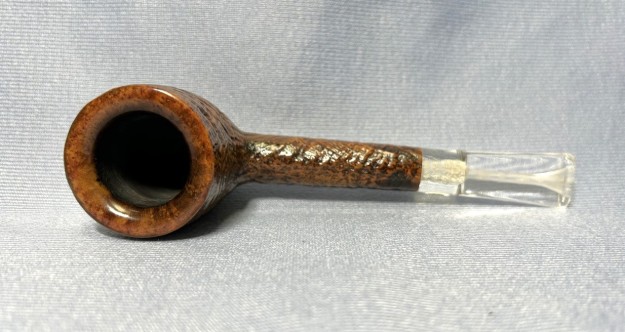
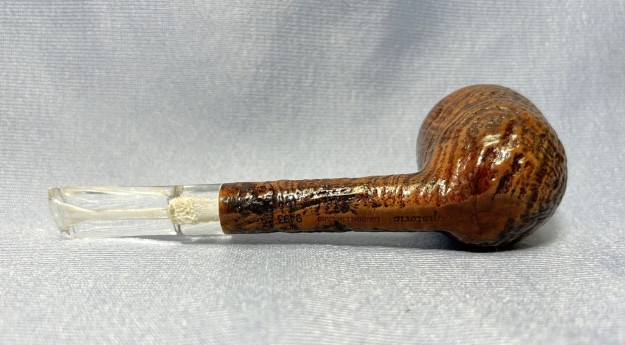
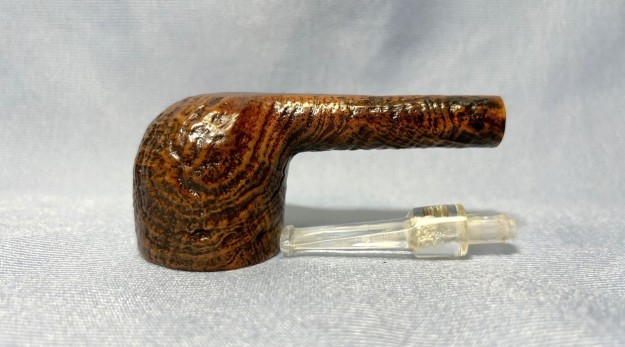
Restoring a Great Looking 1967 Dunhill Tanshell P F/T 4T Half Bent Bulldog


Blog by Steve Laug

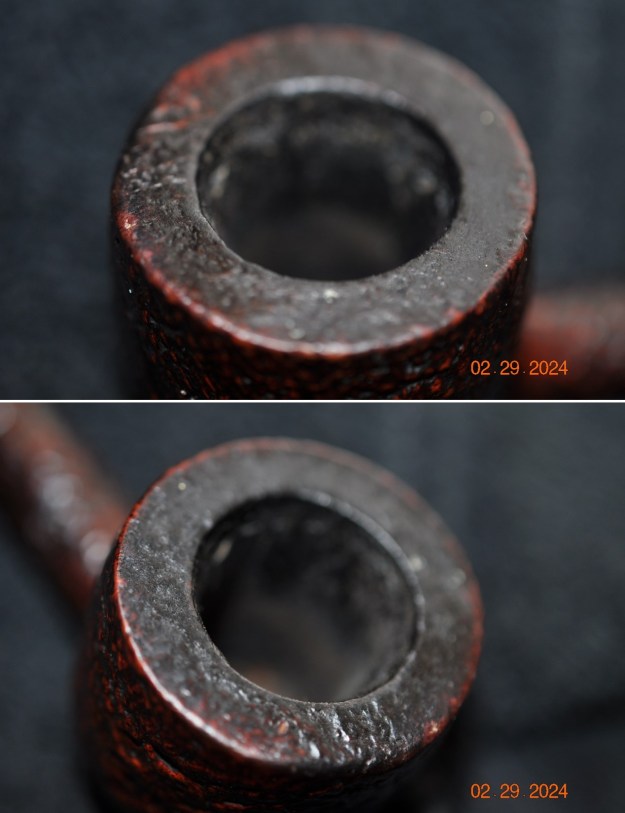
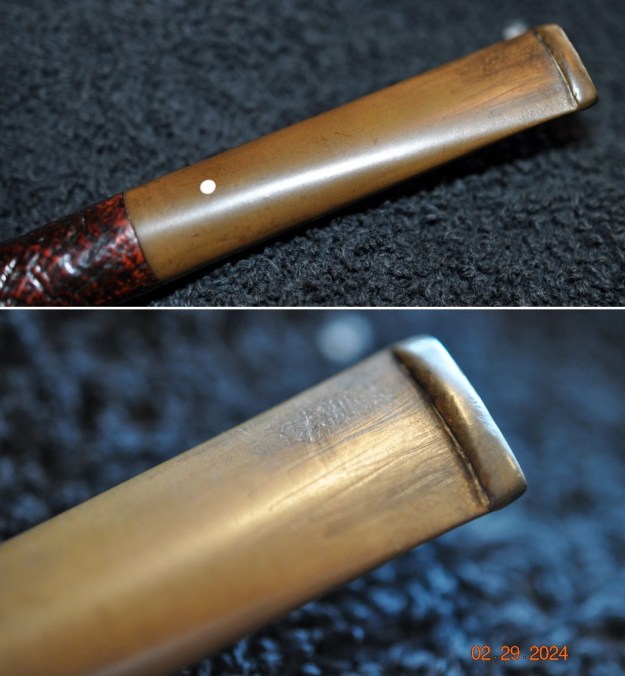
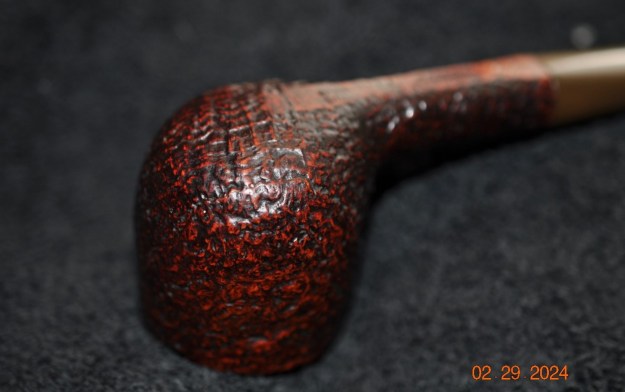
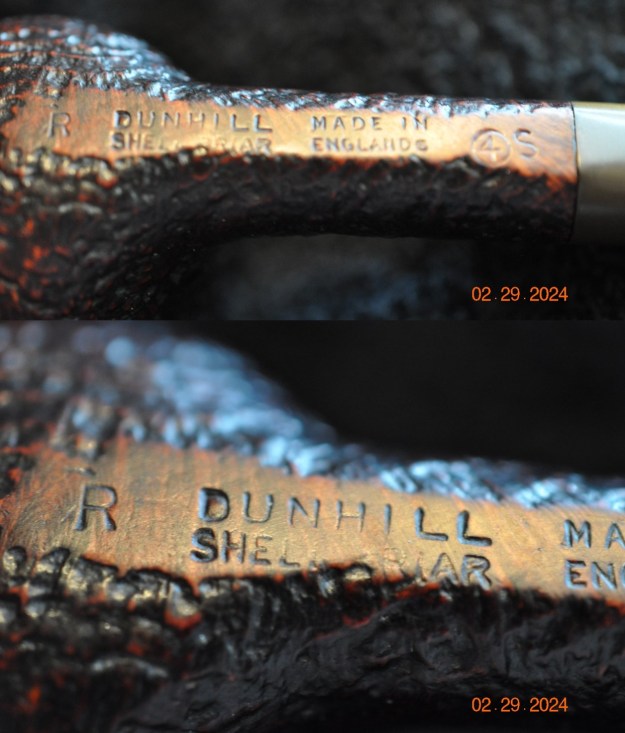
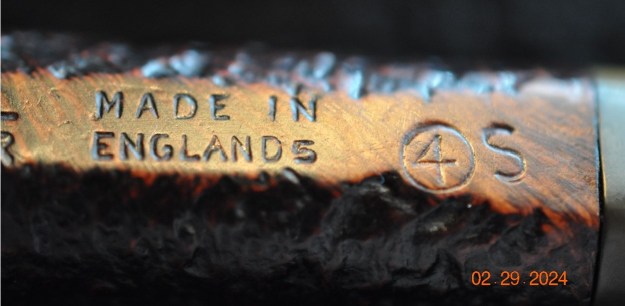
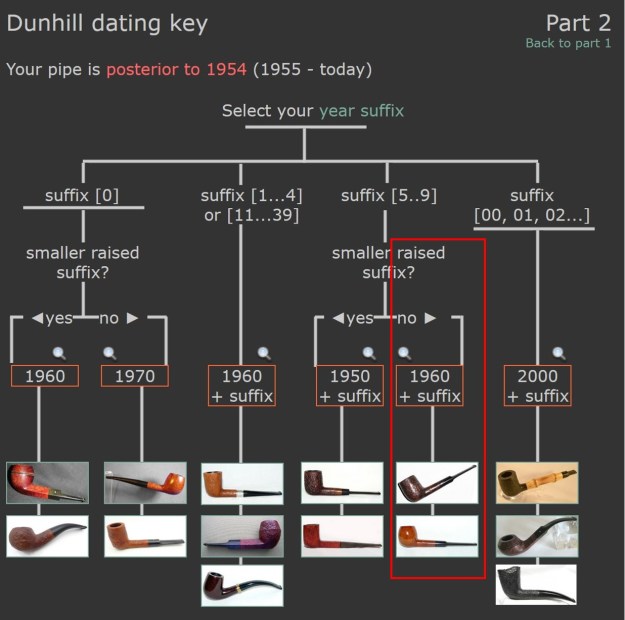
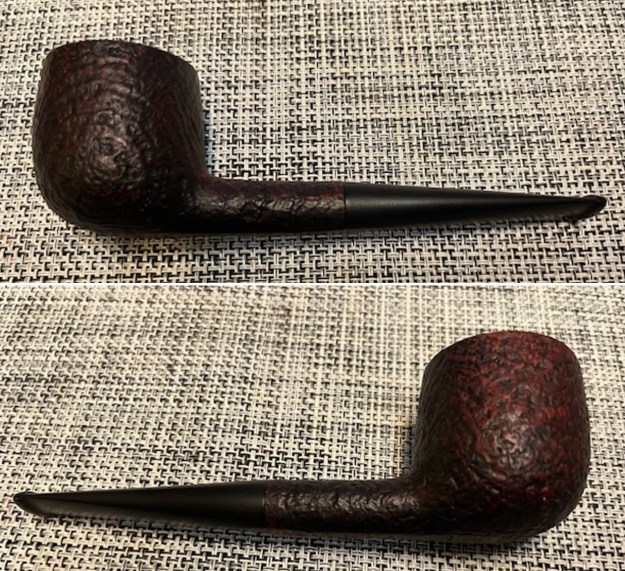
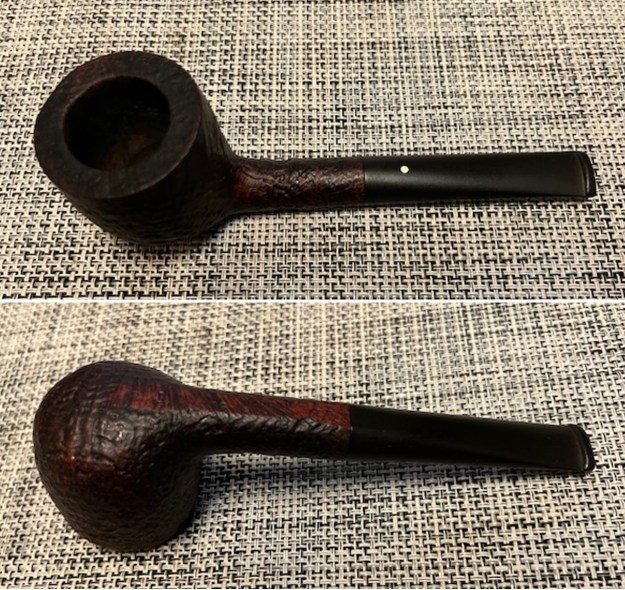
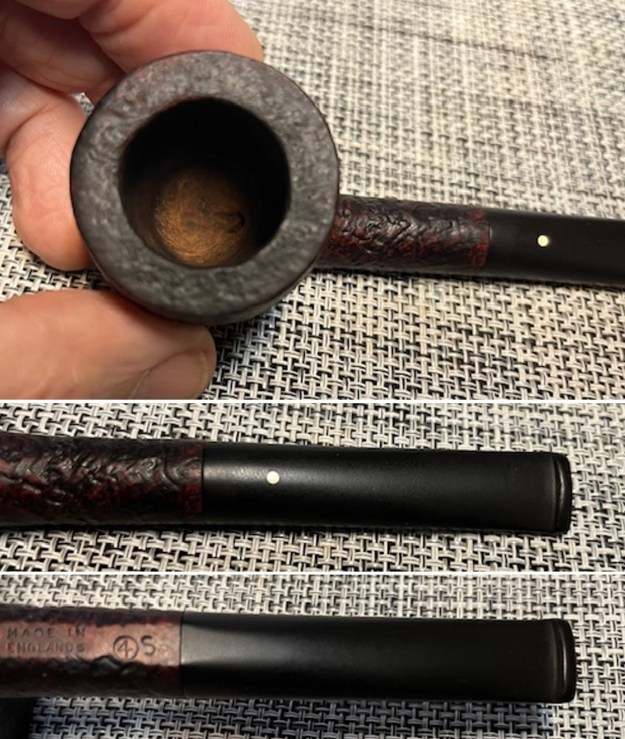
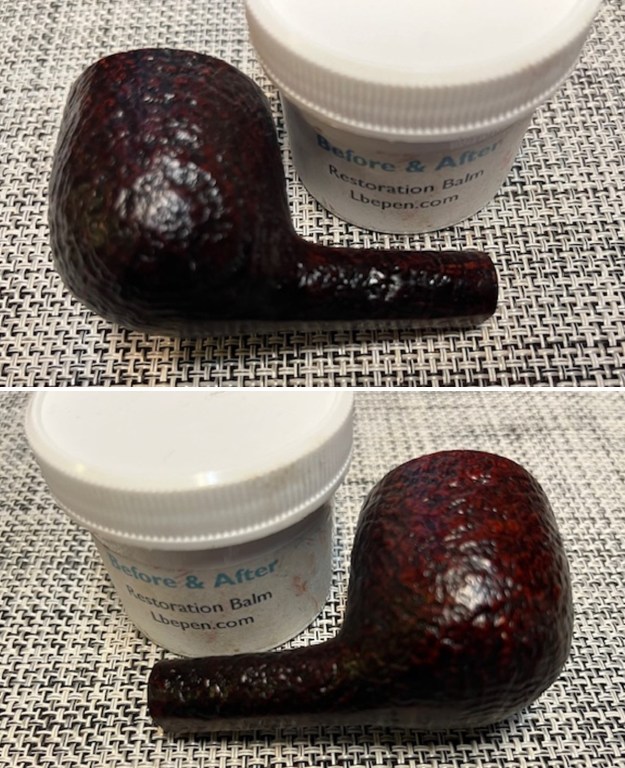
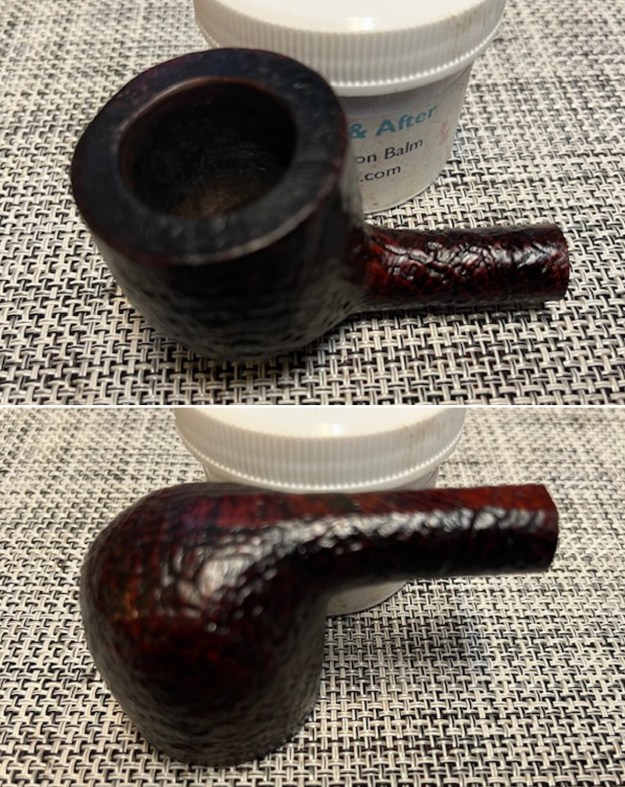
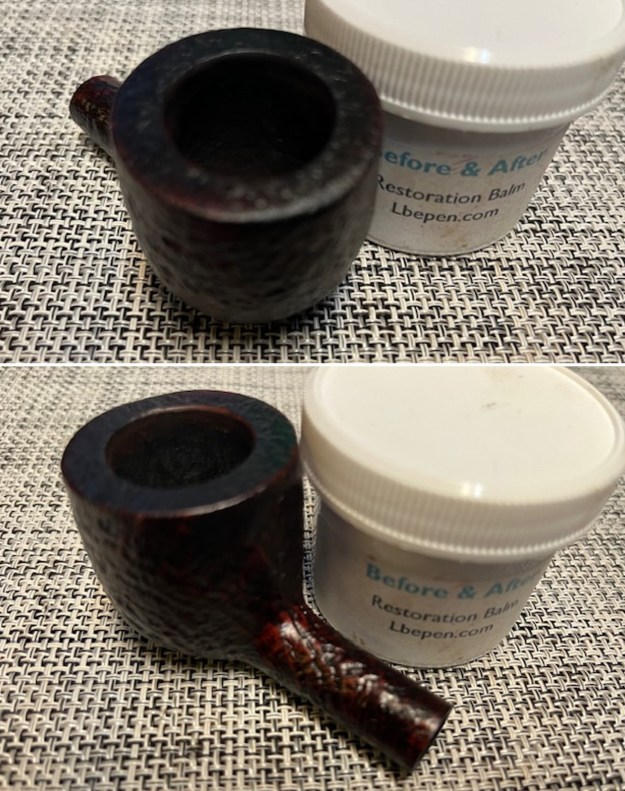
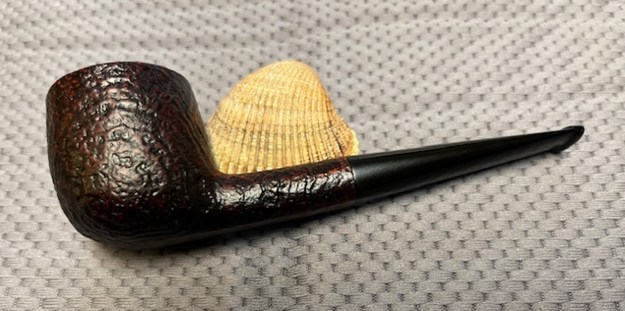
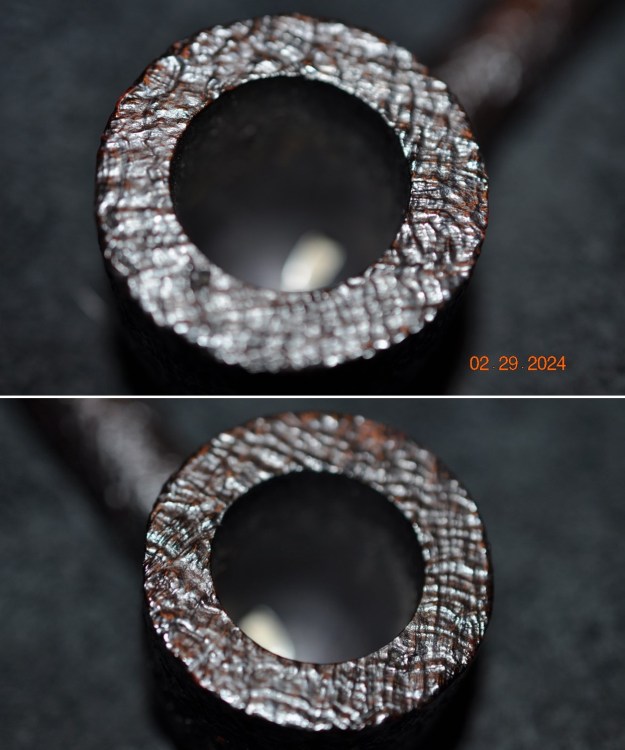
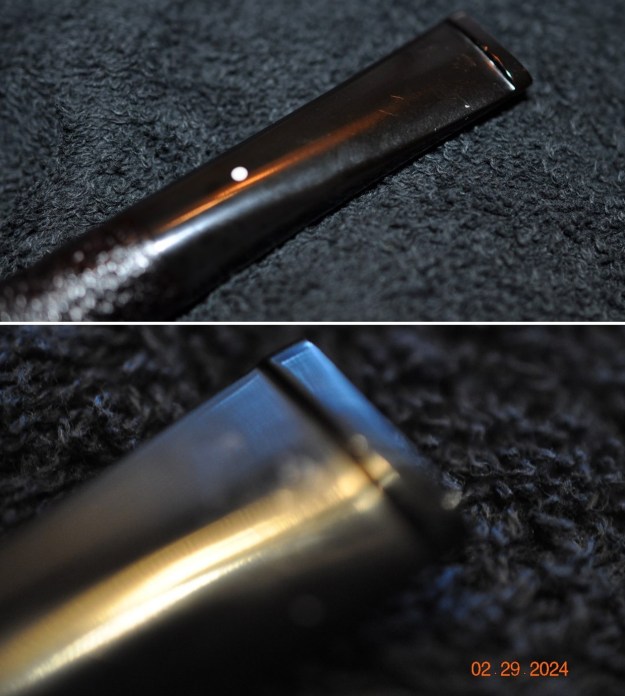
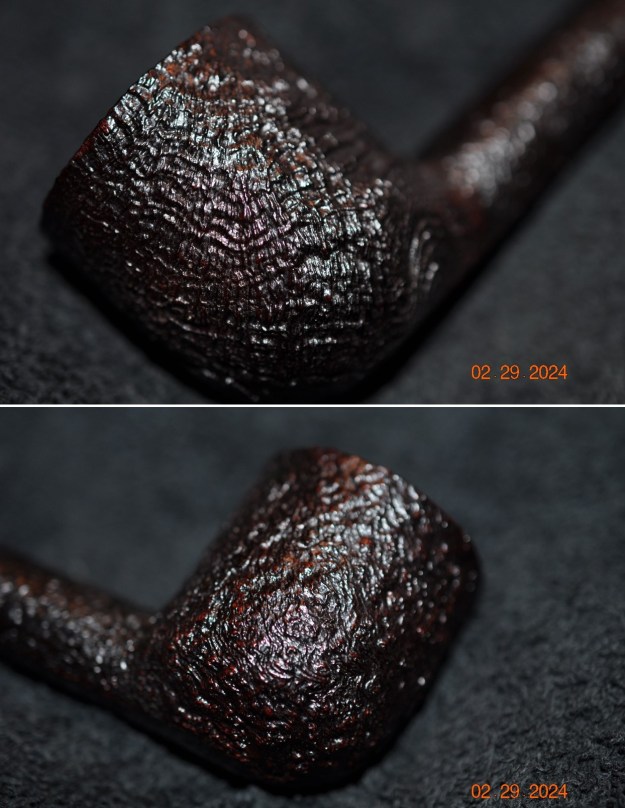
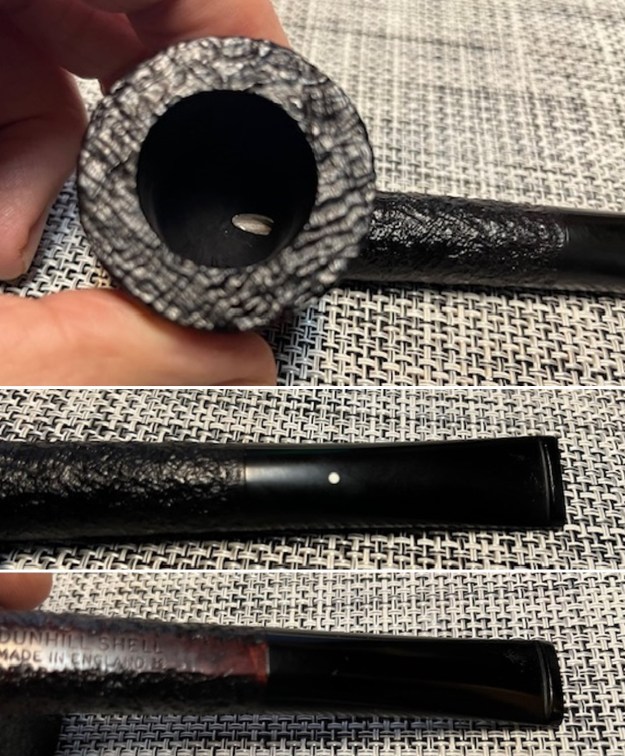
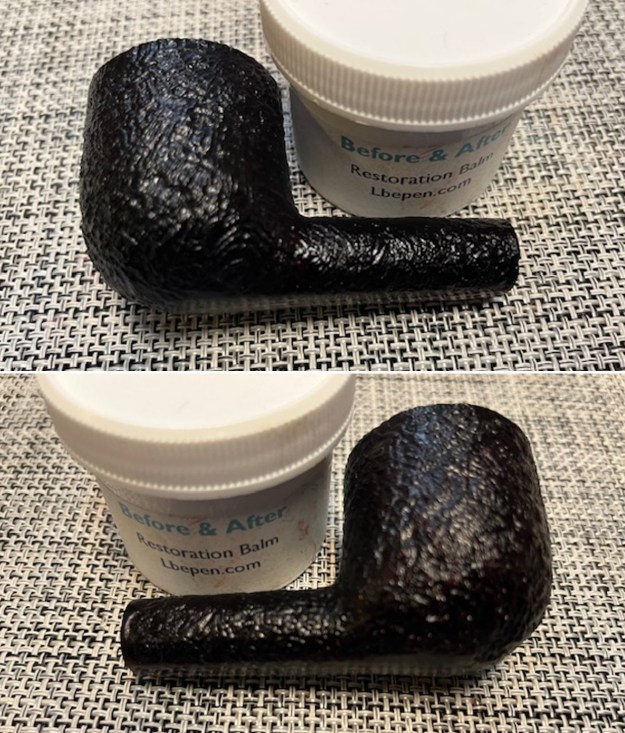
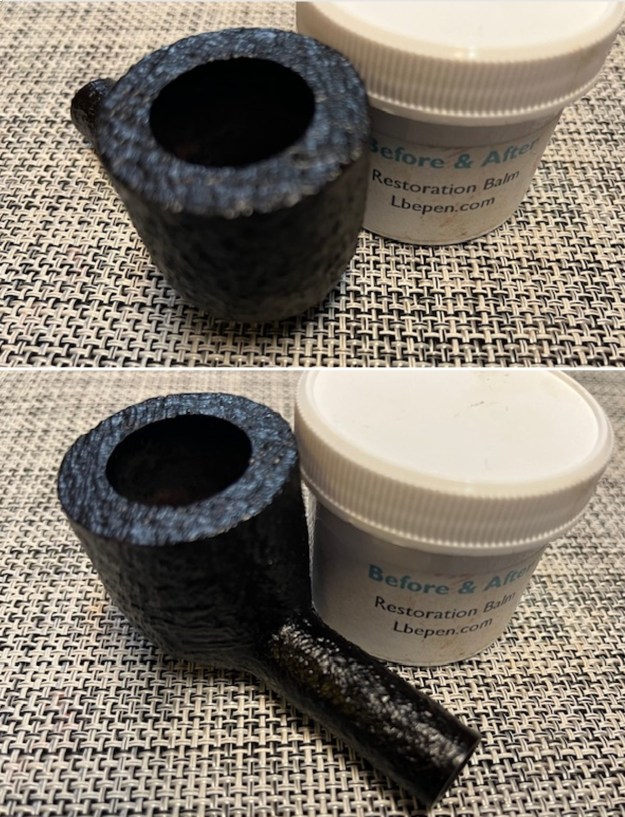
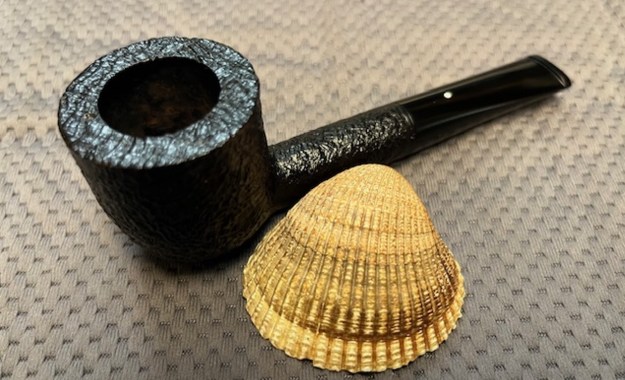
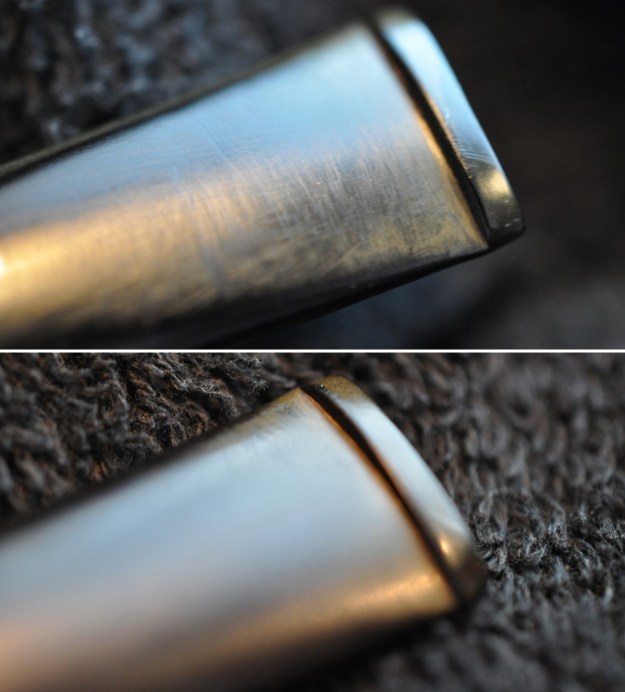
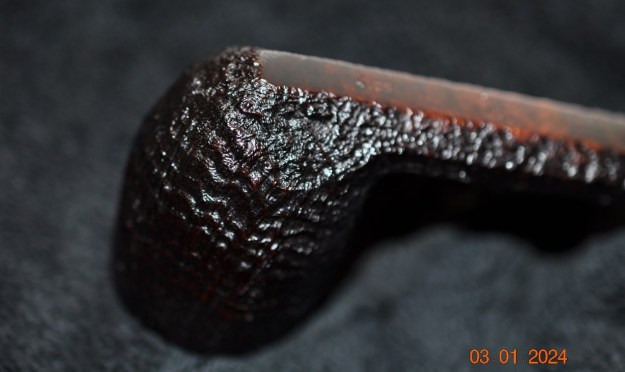
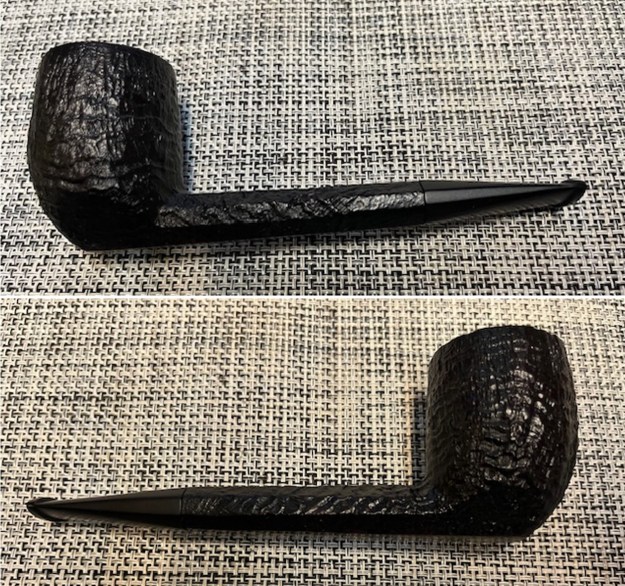
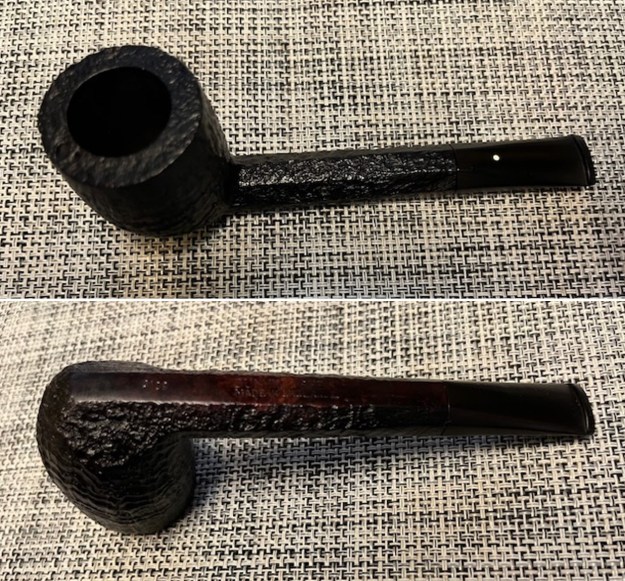
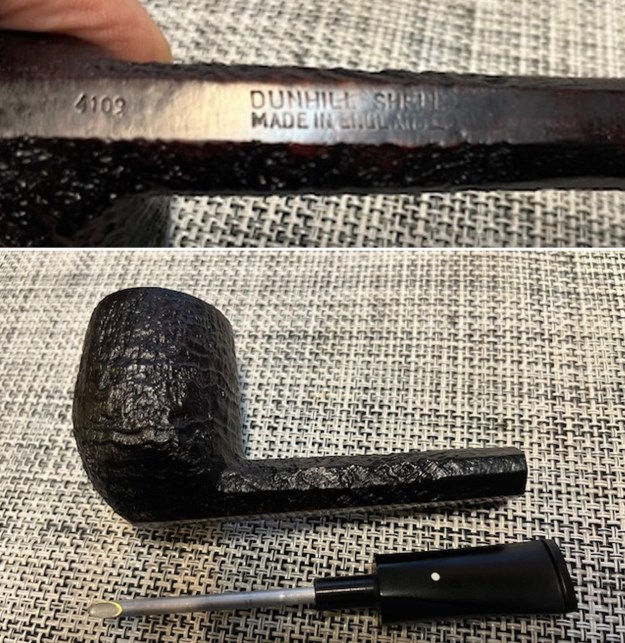
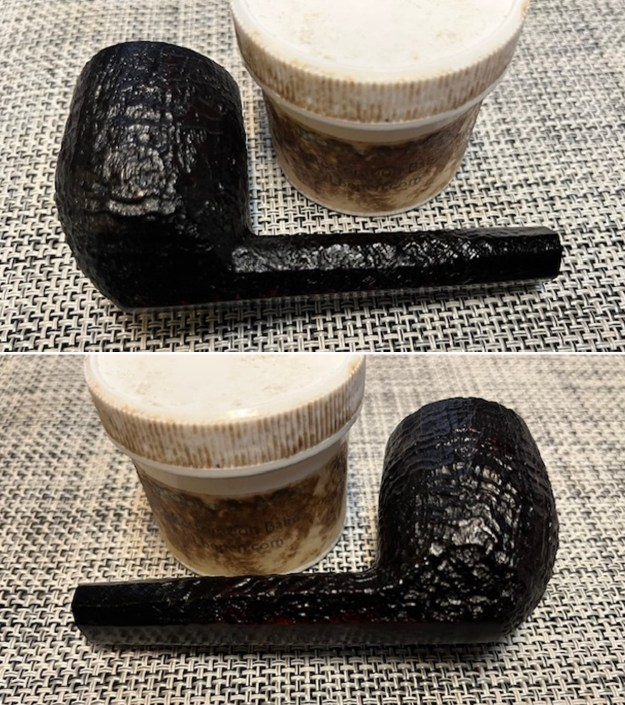
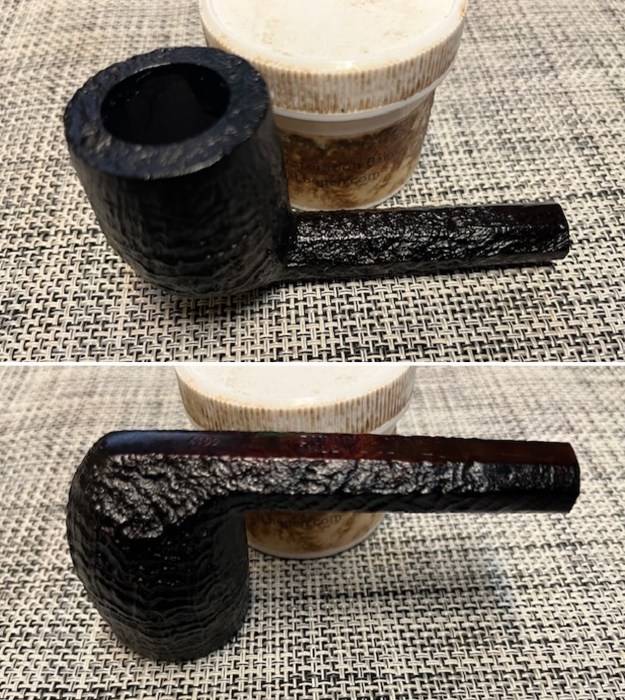
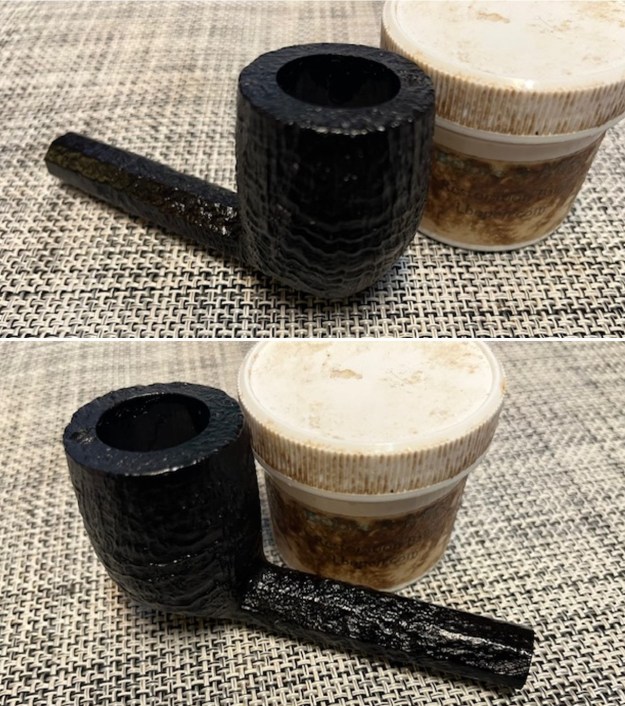
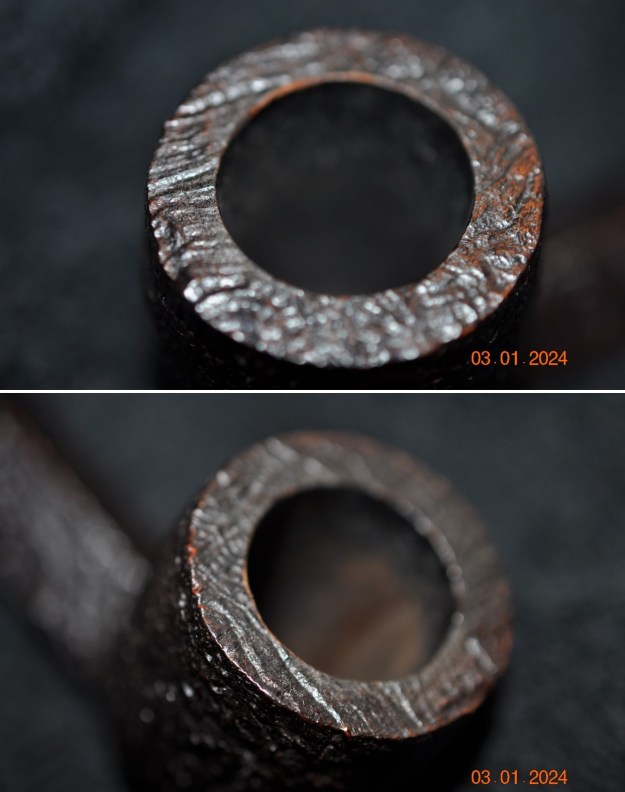
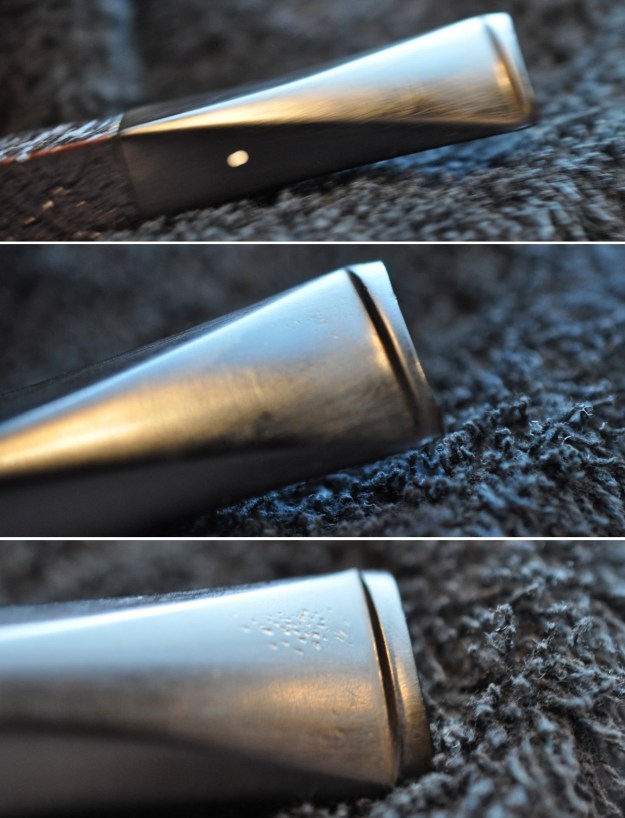
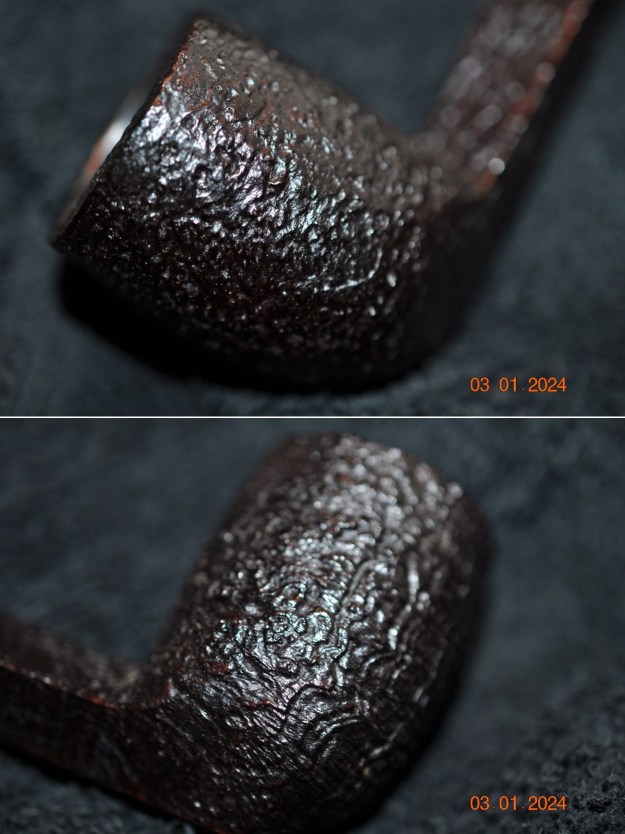
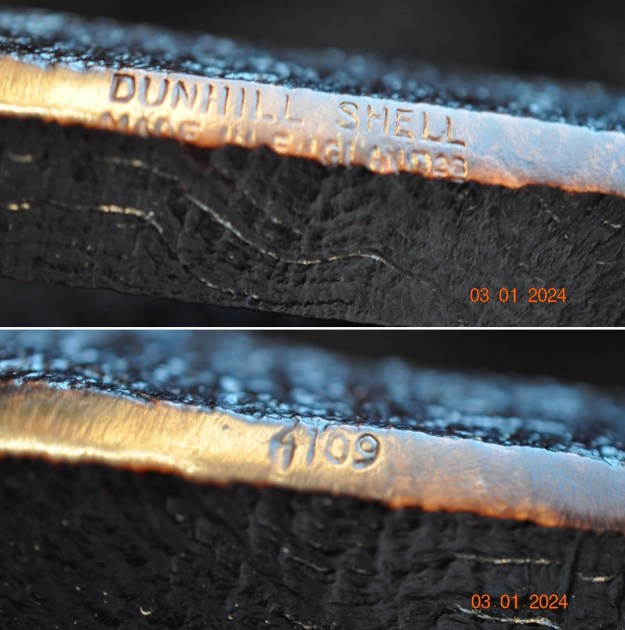
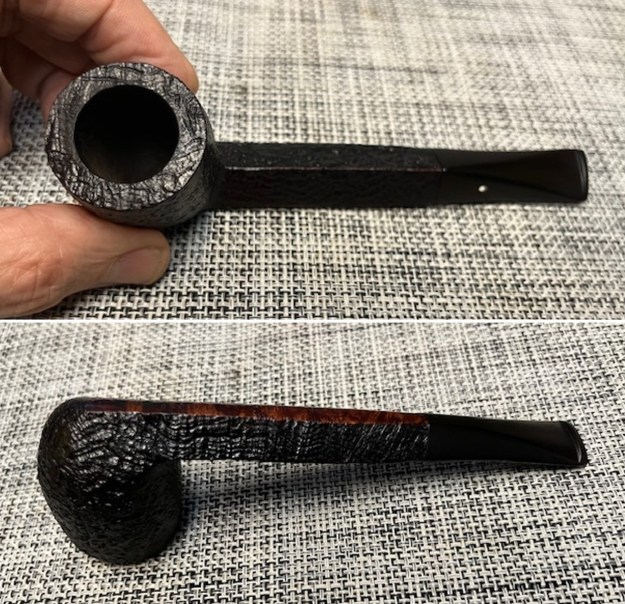
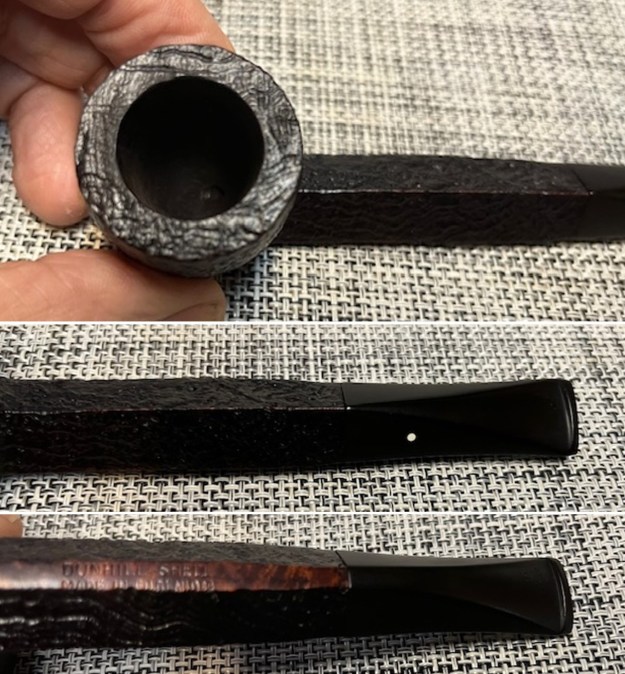
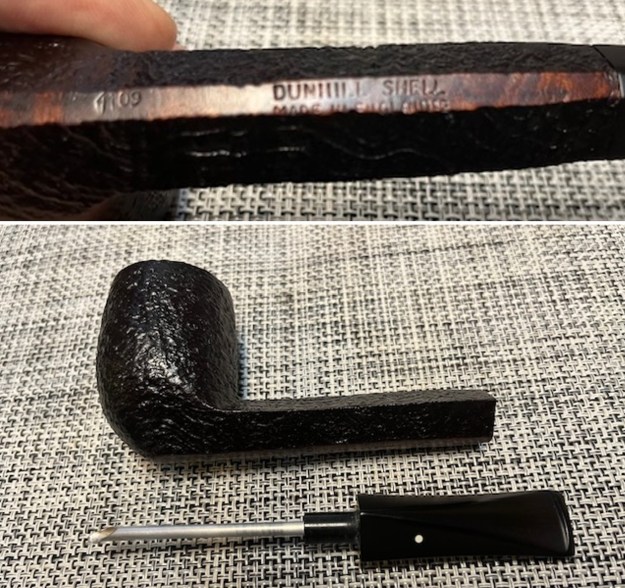
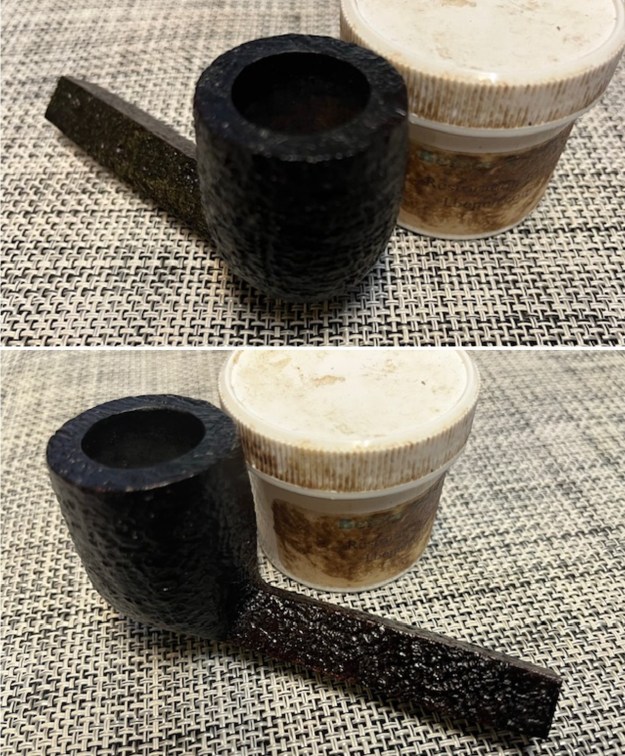
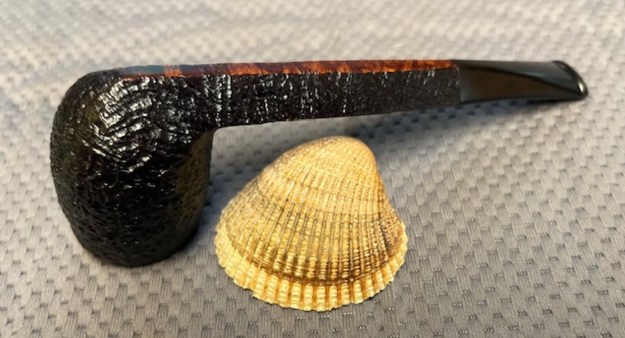
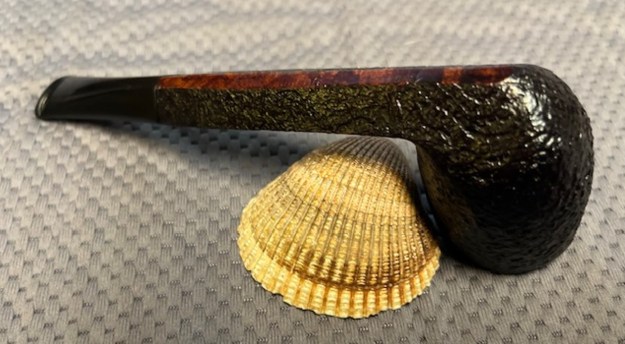
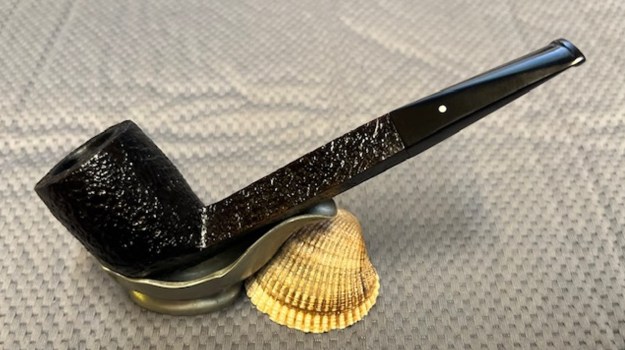
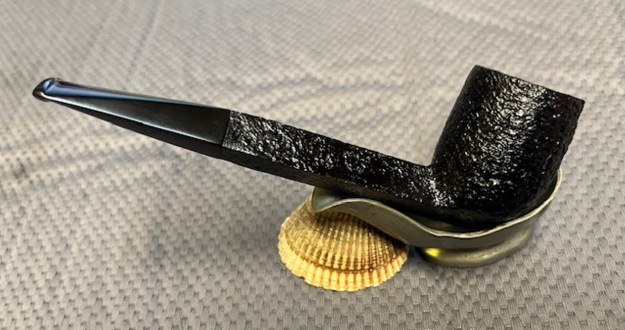
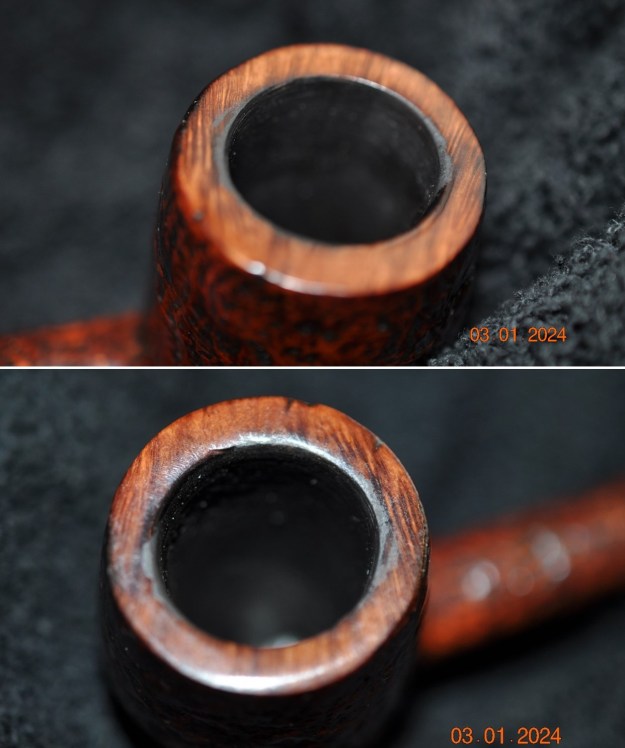
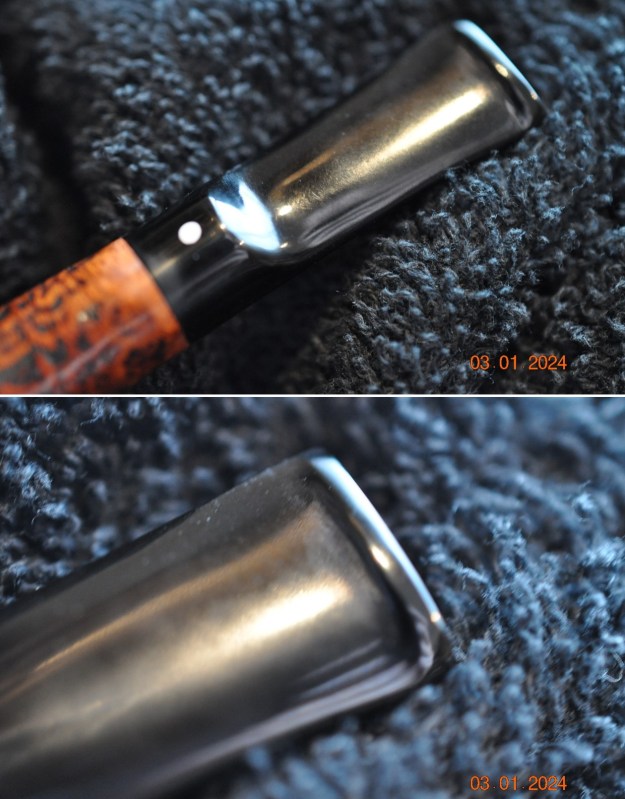
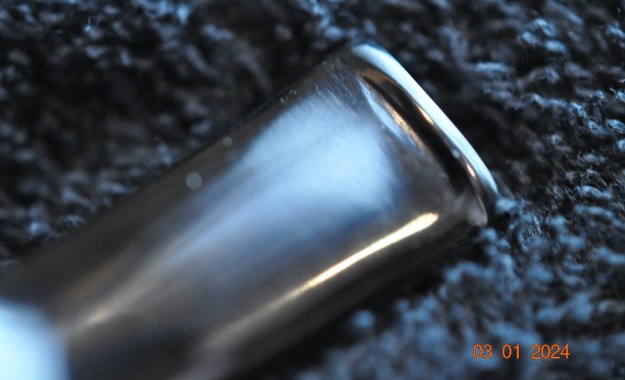
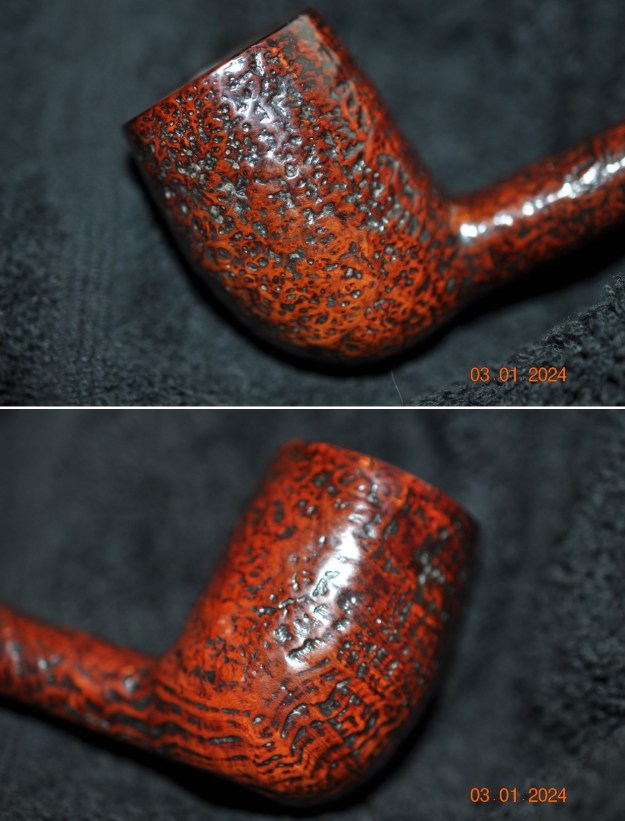
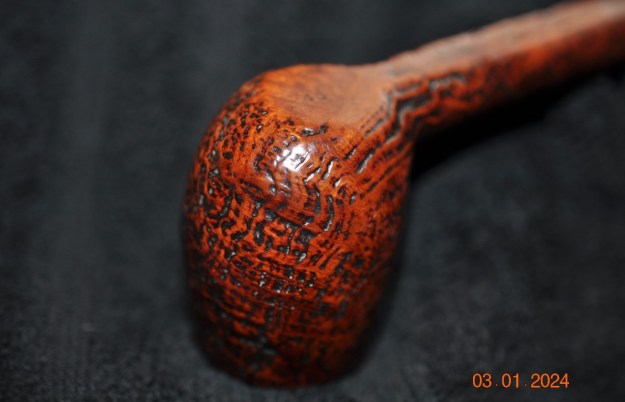
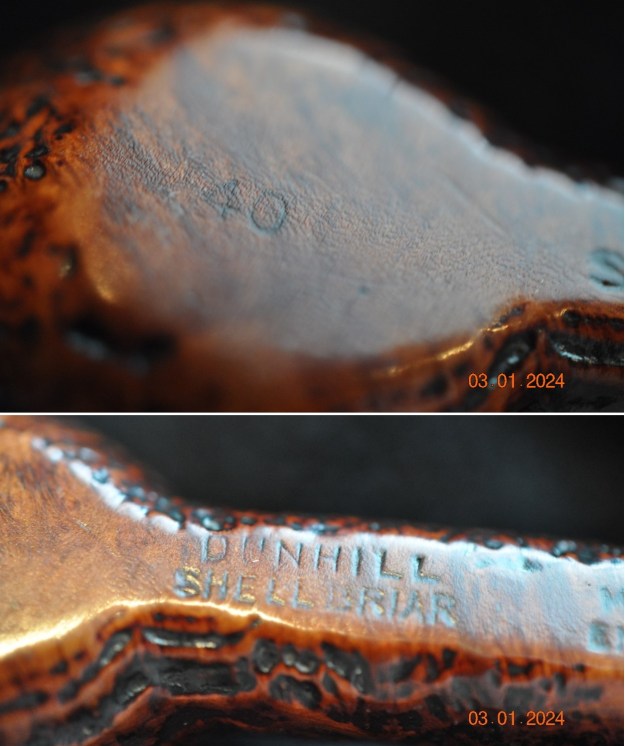
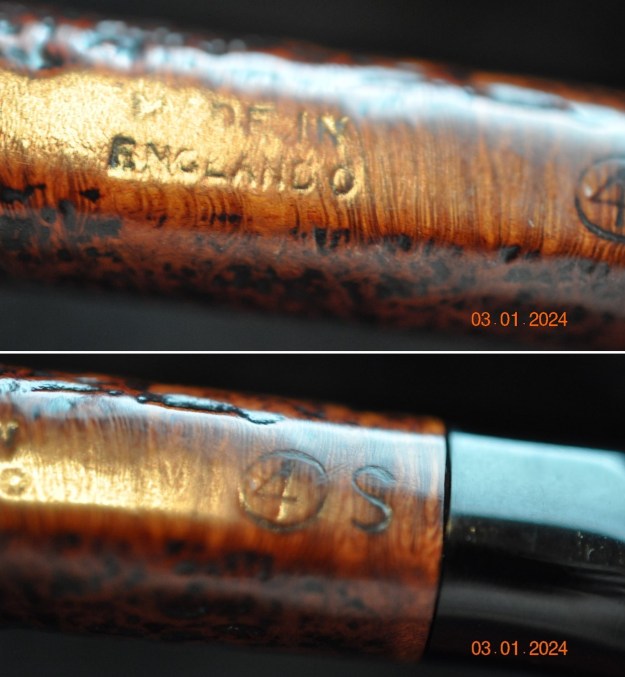
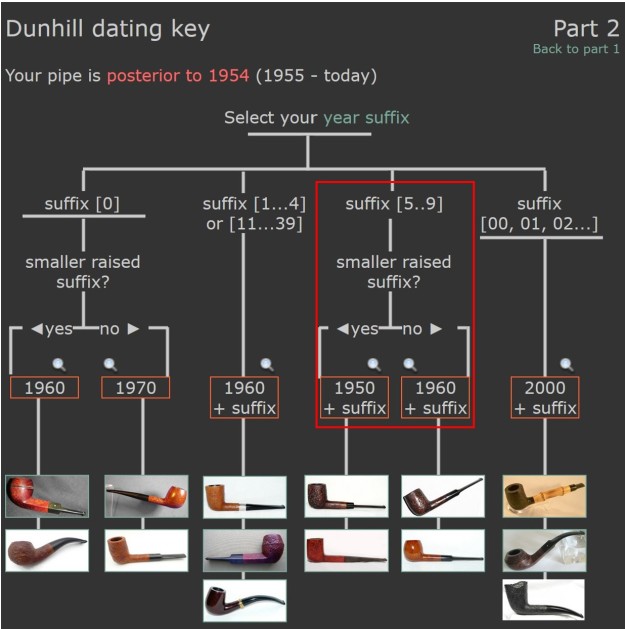
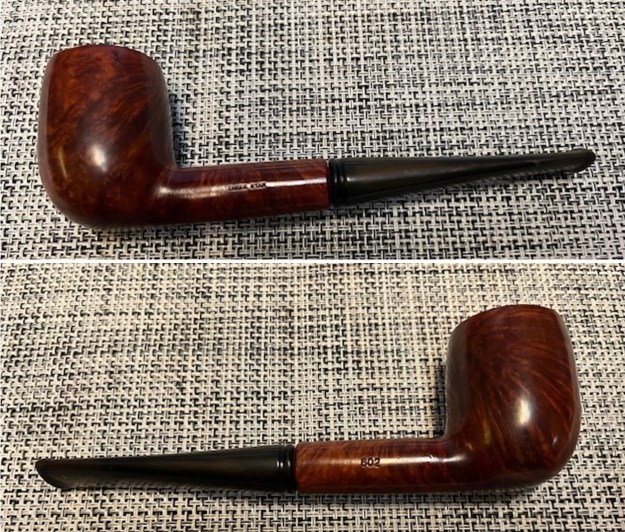
The next pipe on the table came to us from a group of pipes that Jeff and I purchased from a fellow in Copenhagen, Denmark on January 8, 2024. It is a Dunhill Tanshell Bent Bulldog that is in good condition. It is stamped on a smooth panel on the underside of the shank with the shape number P F/T followed by Dunhill [over] Tanshell. That is followed by Made in [over] England. Next to the D in England it is stamped the date number 7. Stamped after that is a 4 in a circle followed by a T. The stamping is clear and readable as noted above. The pipe has a tan or light brown stain on a sandblast finish and some amazing grain that the shape follows well. The finish was dusty around the nooks and crannies of the sandblast but otherwise fairly clean. It also had some darkening on the bowl sides where hand oils had darkened it and on the rim top. The bowl had a thick cake and there was some light lava on the sandblasted rim top or edges. The taper stem was oxidized, calcified, dirty and had tooth marks and chatter ahead of the button. Jeff took photos of the pipe to show what it looked like before he started working on it. He took photos of the bowl and rim top to show their condition and of the stem to show the condition of both sides of the stem. The photos of the sides and heel of the bowl show the deep sandblast grain on the pipe. It is a beauty.The stamping on the underside of the shank is shown in the photo below. It looks very good and faint but readable. It reads as noted and explained above. Jeff captured the detail in the photos below. One of the first things I like to do is to unpack the stamping and understand each element in it. I turned to Pipephil helpful site (http://pipephil.eu/logos/en/dunhill/tanshell1.html). The stamping is interpreted as follows: The number P is the shape number for a Half Bent Bulldog and the F/T is for a fishtail stem. The Dunhill Tanshell is the finish. The number 7 following the D of England gives the date the pipe as 1967.Pipephil also has some helpful dating keys on the site that are basically flow charts that you can walk through to date your pipe (http://pipephil.eu/logos/en/dunhill/cledat-en1.html). I turned to Part 1 of the Dating Key and followed the chart. This pipe has a suffix of underlined, superscript 22 following the D in England. That number took me to the section on the chart below (column one) which instructed me that the pipe could be dated as being made posterior to 1954.I followed the link following the “Your pipe is posterior to 1954. Narrow down your dating”. That took me to Page 2 of the dating key (http://pipephil.eu/logos/en/dunhill/cledat-en1a.html).   The third column (suffix 5…9) led me to the section that sections suffix. There was a directive for dating the pipe spelled out as follows: 1960 + suffix which gives the pipe a date of 1967.I then turned to Pipedia’s section on Dunhill Root Briar to get a bit of background on the Dunhill finishes (https://pipedia.org/wiki/Dunhill#Root_Briar). I quote:

The Tanshell

The first lot was distributed in 1952 (usually made using Sardinian briar). The prototype was called “Root Shell “, produced in 1951. The Tanshell is a light tan sandblast. Sardinian briar was used for this sandblast. There is a distinct contrast in the sandblasts using Sardinian as opposed to Algerian briar. The Sardinian is much denser and much harder. The resulting pattern, when blasted, is far more even and regular both in terms of the surface texture and the finish.

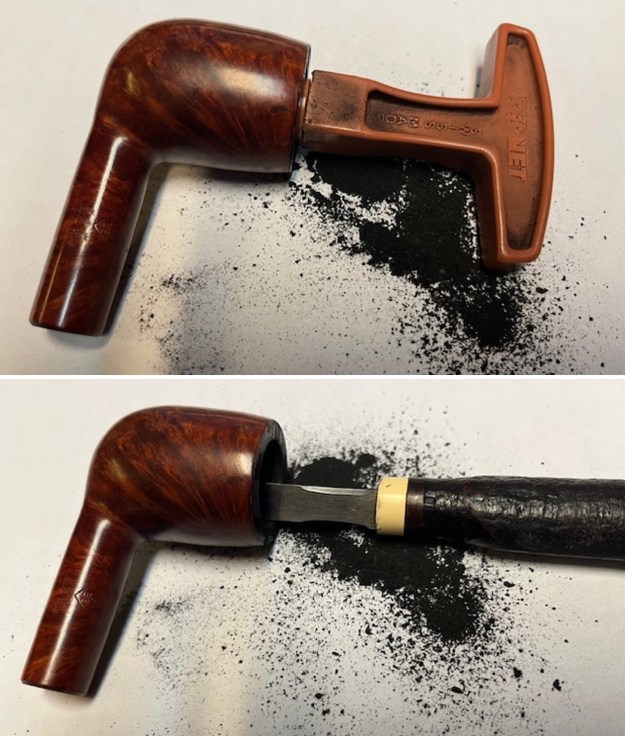
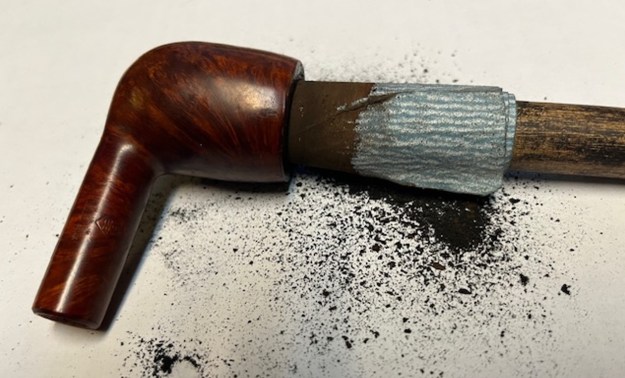
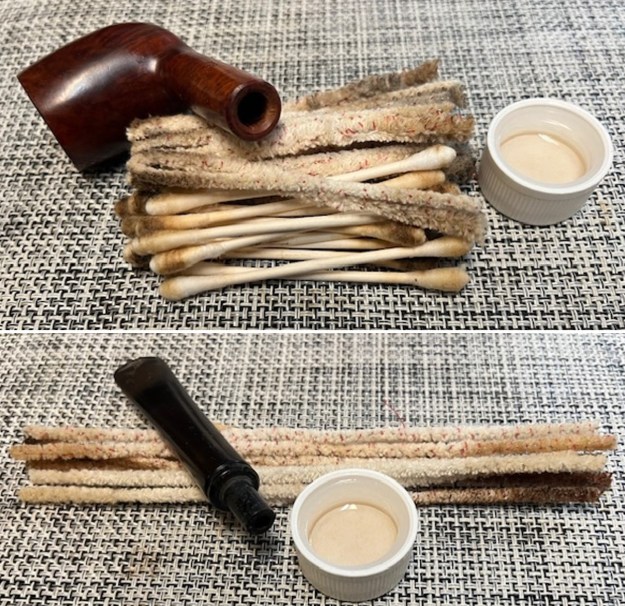
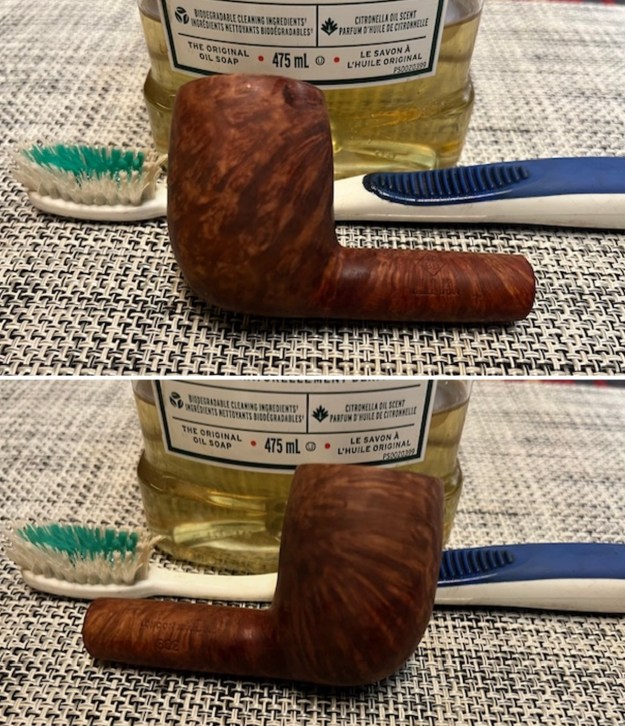
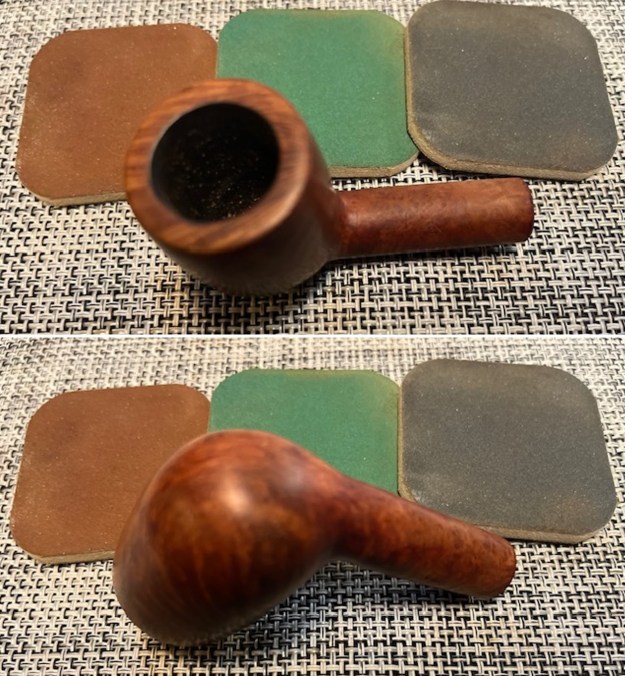
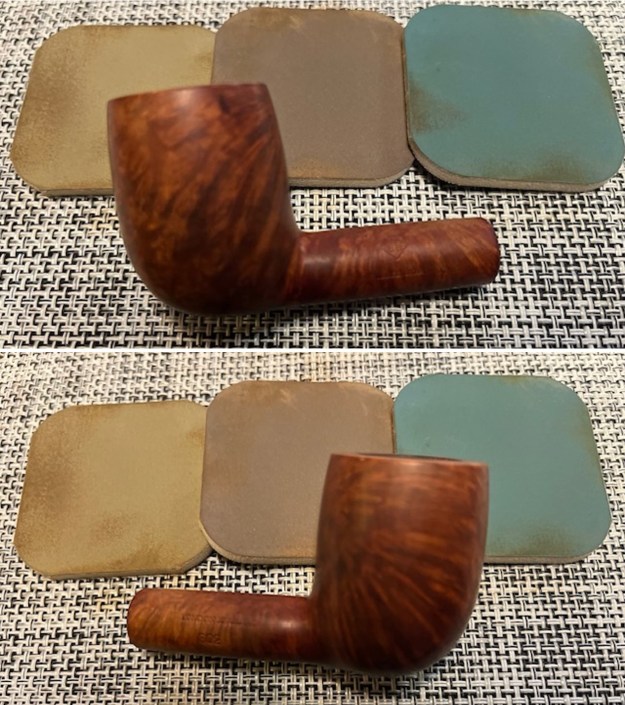
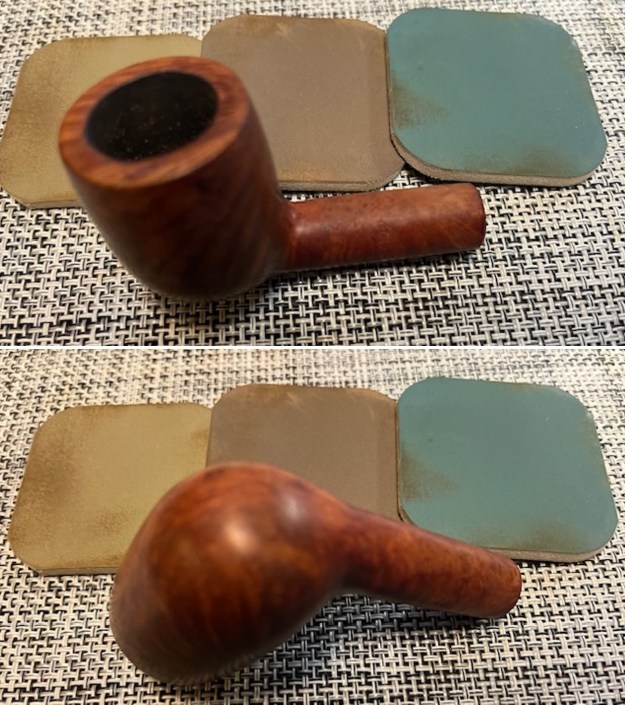
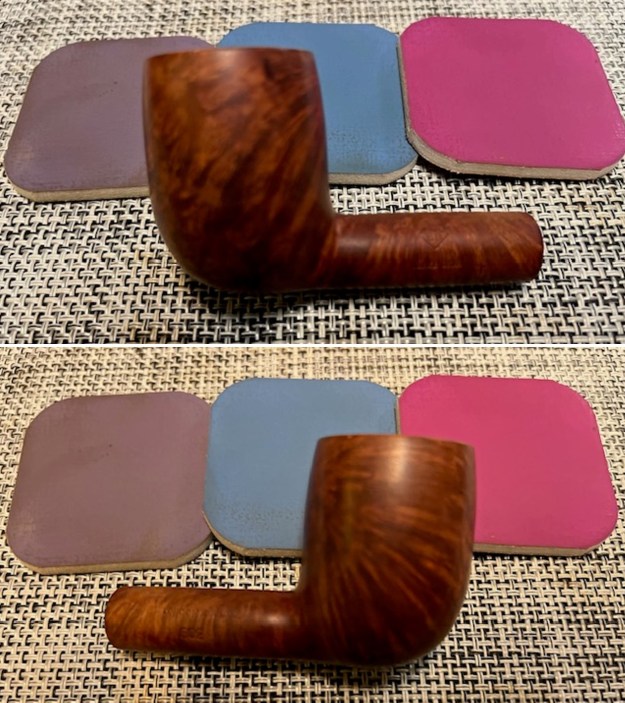
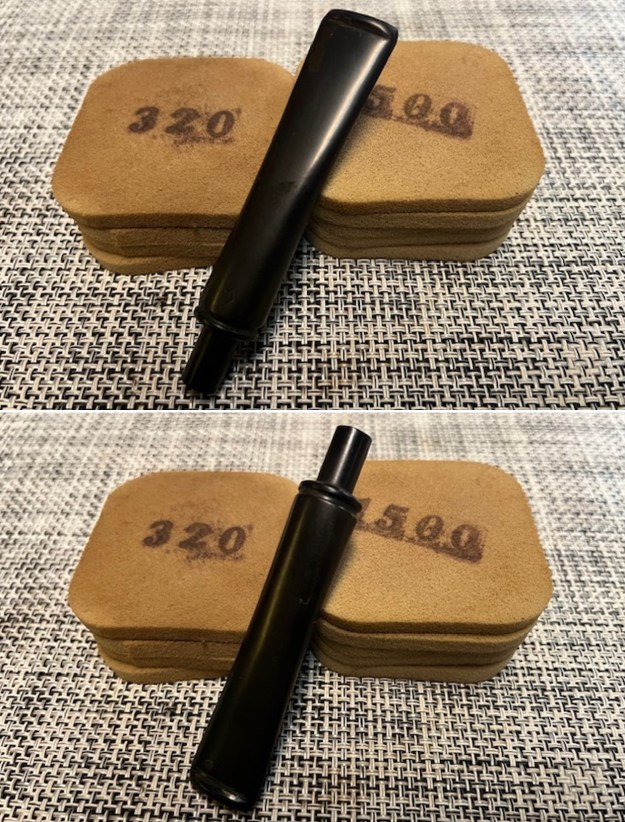
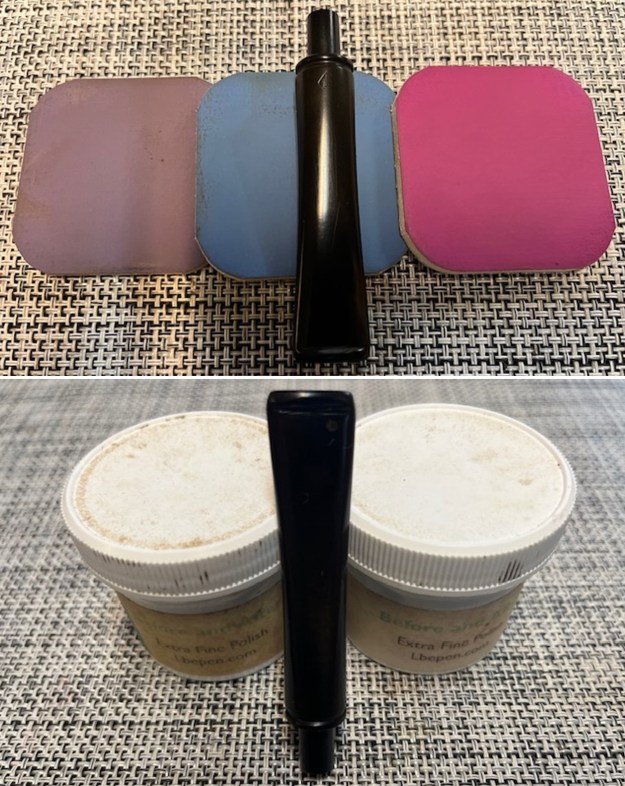
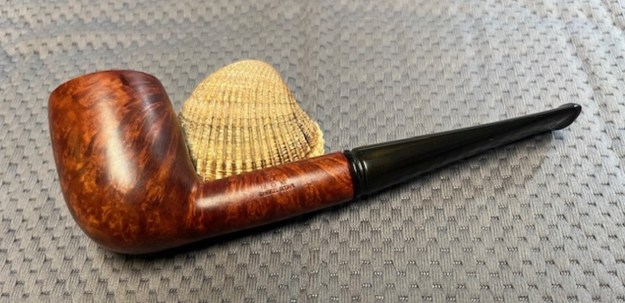
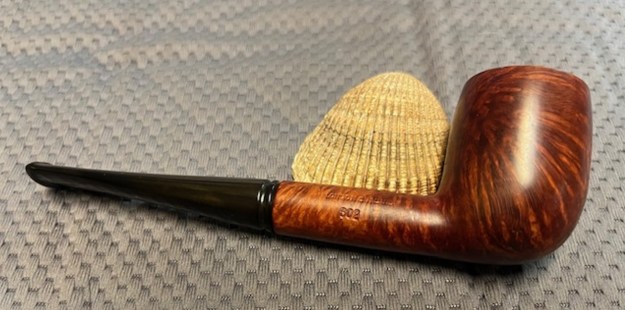
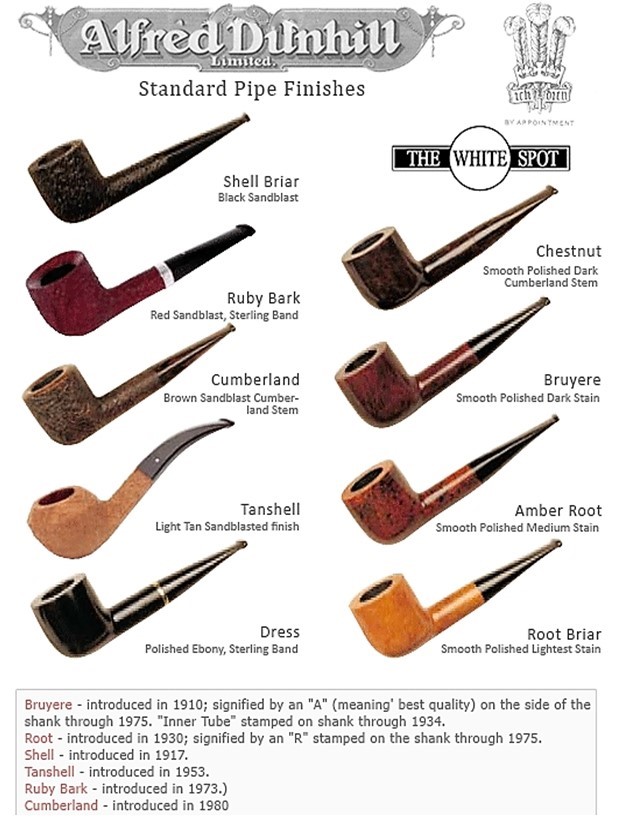
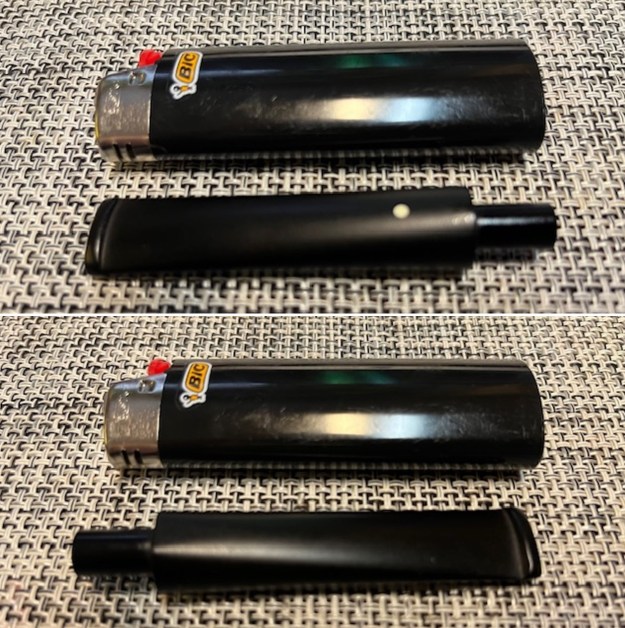
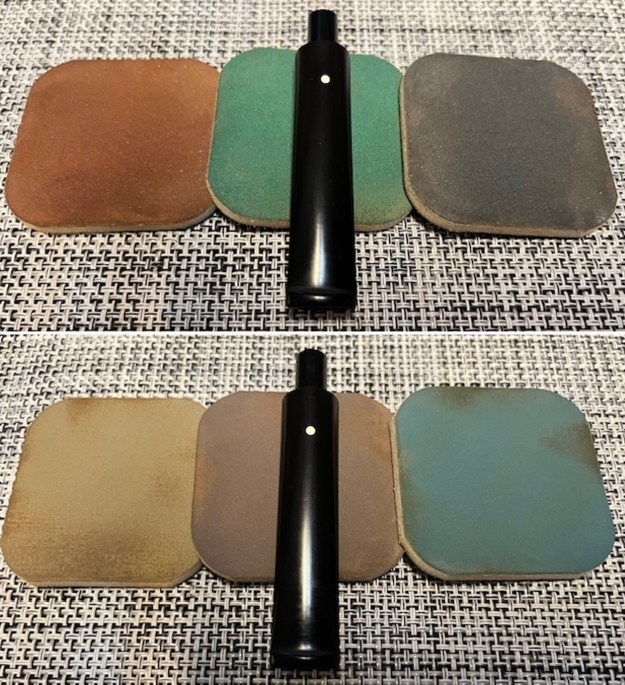
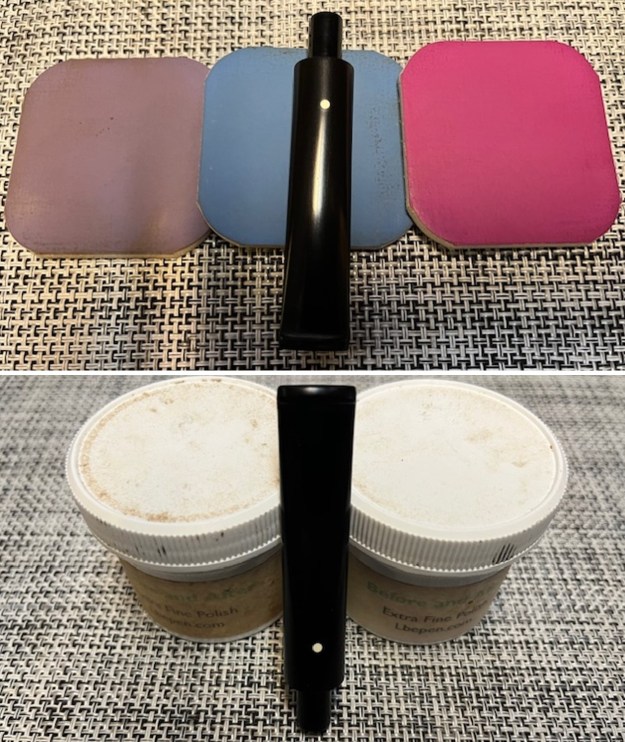
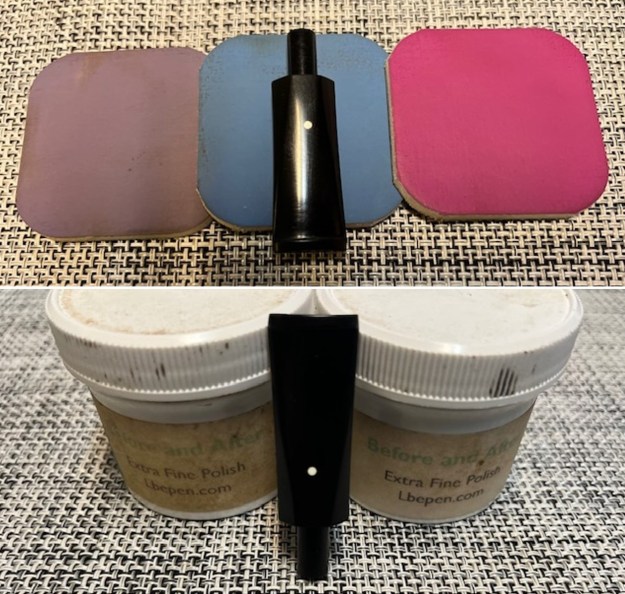
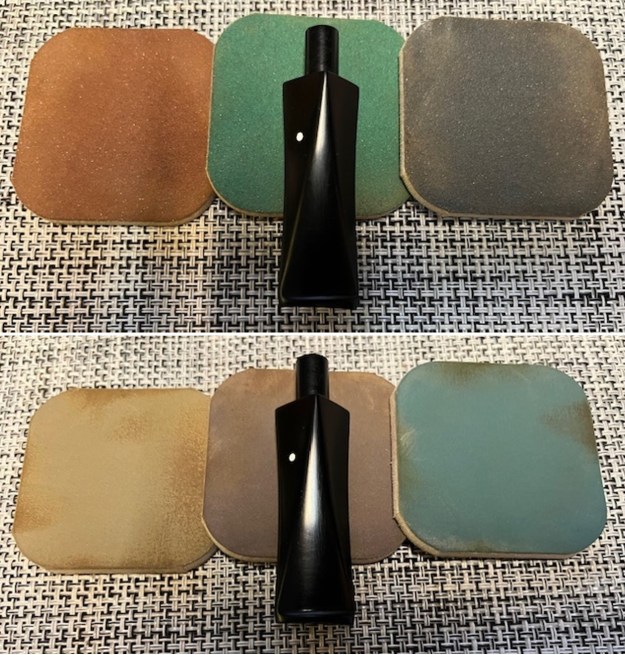
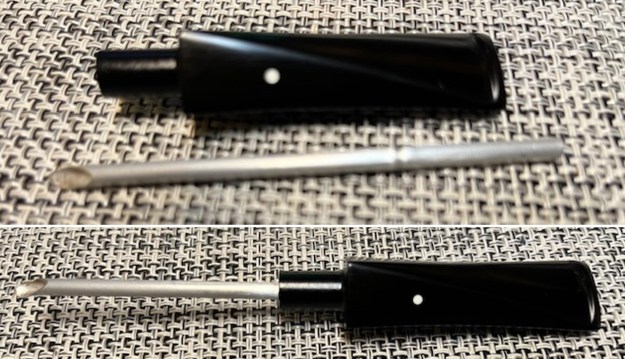
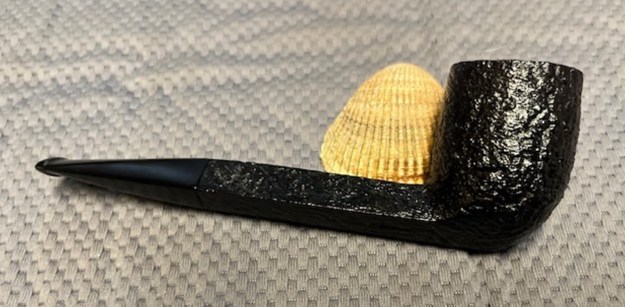
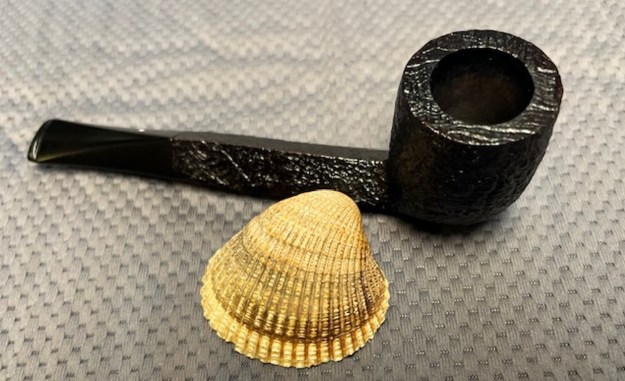
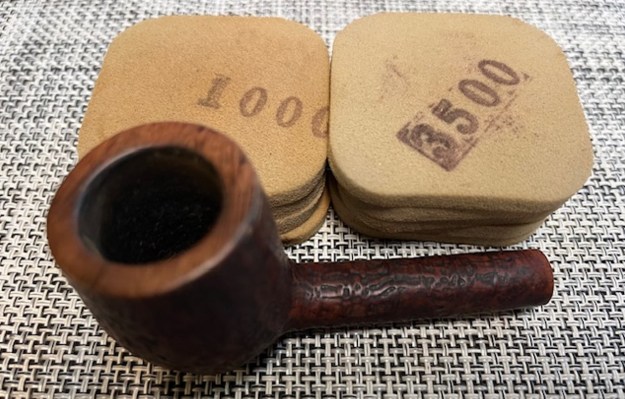
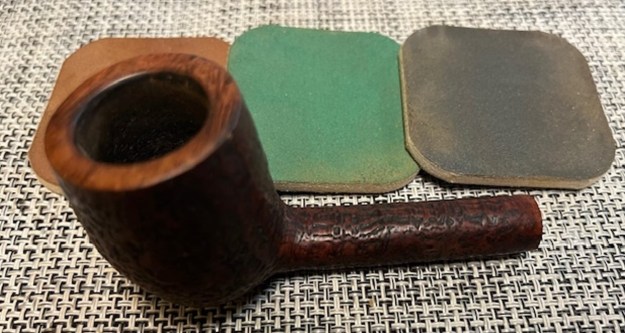
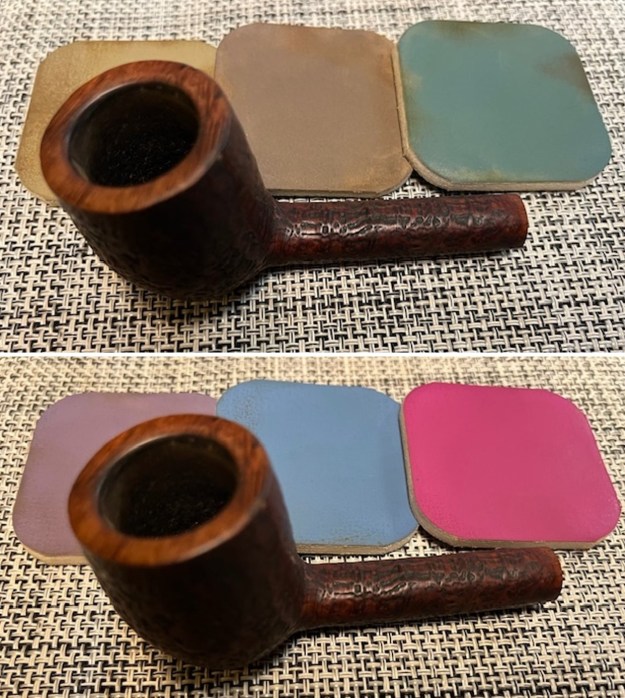
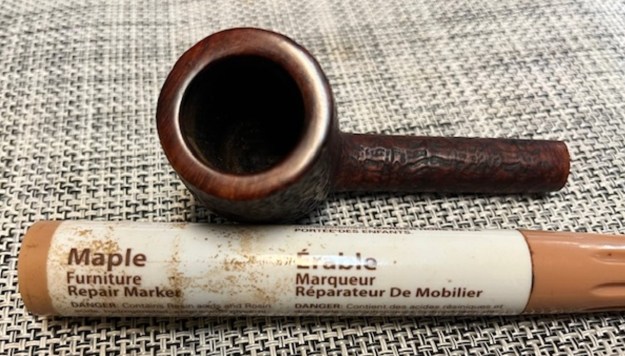
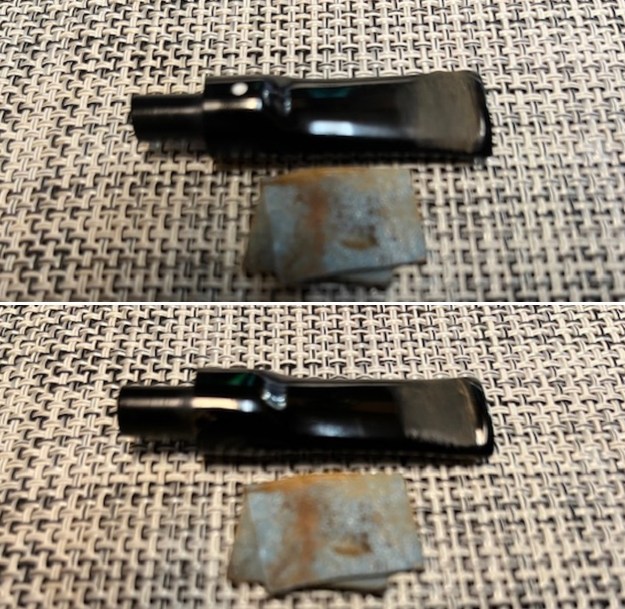
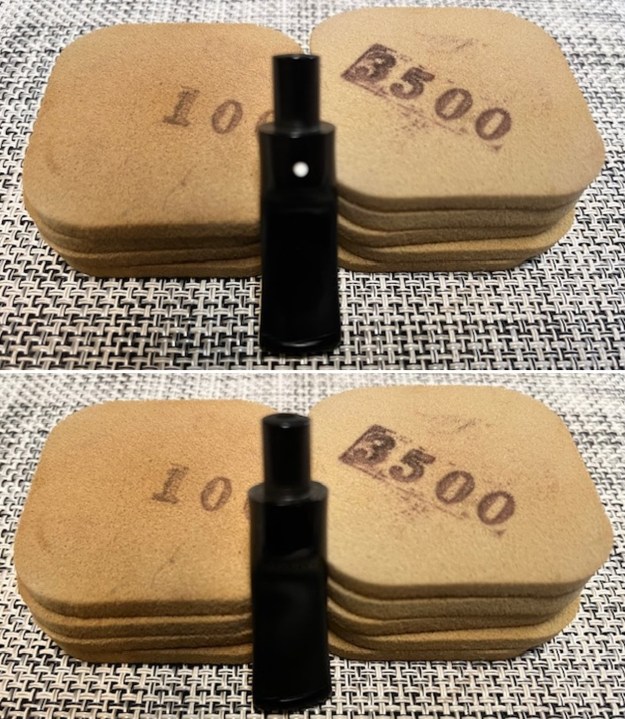
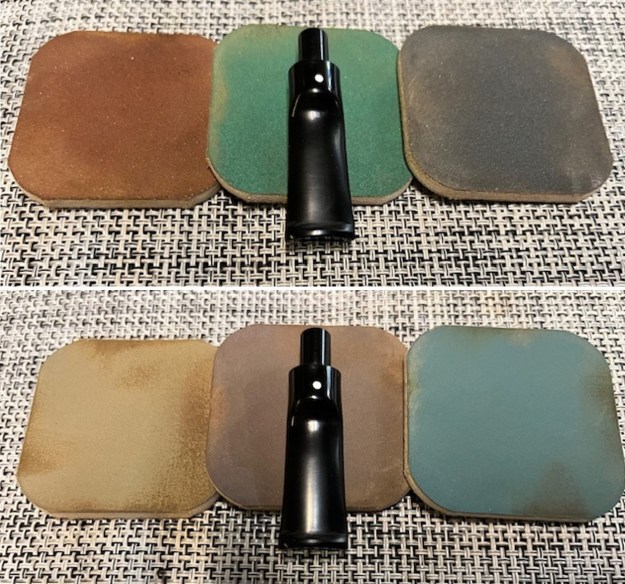
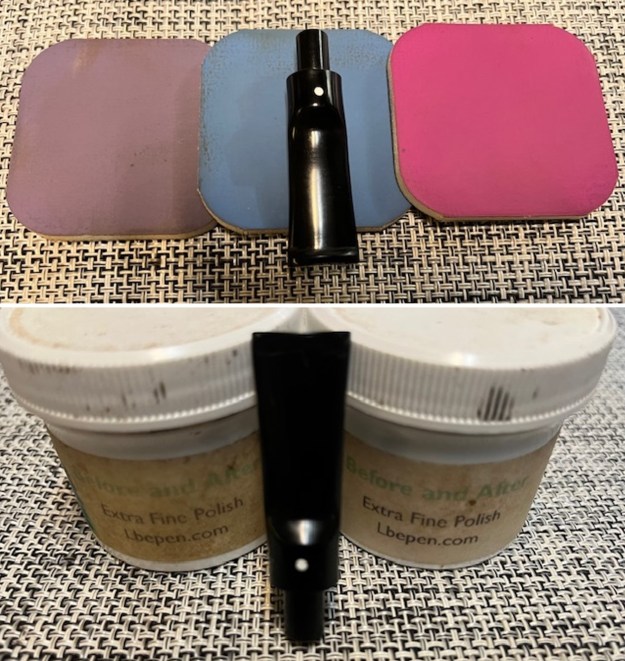
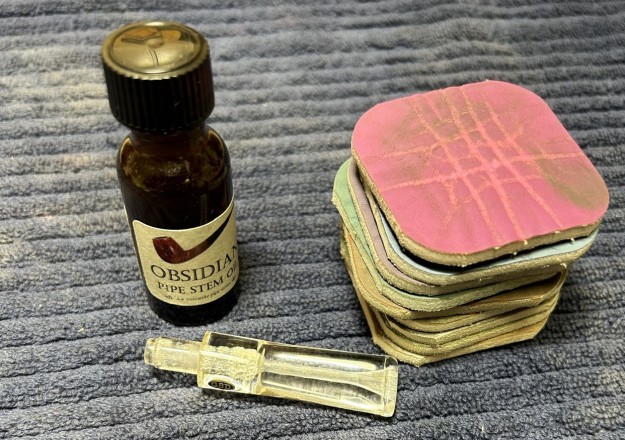
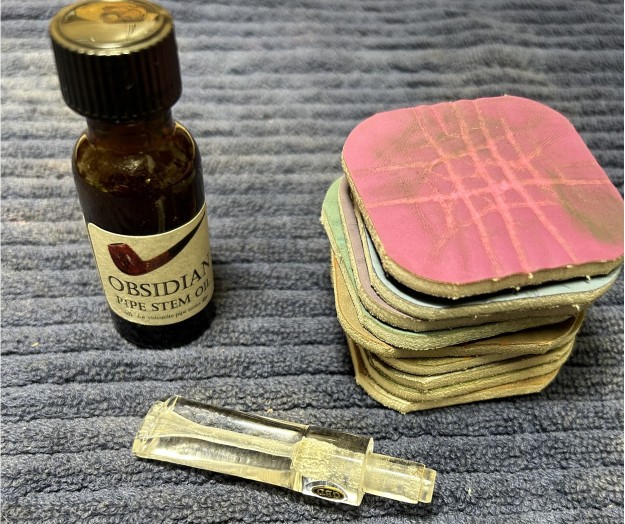
“The TanShell was Dunhill’s fourth finish and its first major post-war line addition. Introduced in 1951/1952 the TanShell was a naturally stained sandblasted pipe made exclusively from Sardinian briar through the 1960s. The TanShell apparently was not simply a light stained Shell but rather was also the product of “certain processes [unrevealed] not previously employed.” Initially, it appears that the pipe was to be named the Root Shell and a stamp to that effect was ordered and received by Dunhill in May 1951. Ultimately, however, the name TanShell was settled upon but the stamp for the TanShell name was not received by Dunhill until the beginning of December. Thus while the Tanshell was in production in 1951 it appears that most if not all TanShells made in that year did not enter into retail distribution until 1952 and were given a 1952 date code.” Loring, J. C., The Dunhill Briar Pipe, The Patent Years and After (self-published, Chicago, 1998). I have also included a chart from the site from Dunhill spelling out the Standard Pipe Finishes and giving short information and a timeline. I turned to work on the pipe itself. Jeff had done an amazing cleanup of the pipe. He reamed the light cake with a PipNet reamer and cleaned up that with a Savinelli Fitsall Pipe Knife. He scrubbed the internals of the bowl and stem with alcohol, cotton swabs and pipe cleaners. He scrubbed the externals with undiluted Murphy’s Oil Soap and rinsed the bowl off with running water. He soaked the stem in Briarville’s Pipe stem Deoxidizer and once it had soaked rinsed it off with warm water to remove the residual solution. He dried it off and rubbed it down to remove any oxidation that was still on the stem. The pipe looked very good when I received it. I took a photo of the rim top to show the condition. You can see the clean bowl. The bowl is in excellent condition and looks very good. There is some darkening on the rim top and some light damage to the front inner edge of the bowl. The stem came out looking quite good. There are some tooth marks and chatter on both sides ahead of the button.I took a photo of the underside of the shank to show the stamping. The photo clearly shows the stamping and is actually more readable in person. I removed the stem from the shank and took a photo of the pipe parts to show what I was working with. It is a nice looking pipe.I worked over the sandblast finish with a brass bristle brush to clean up the darkening on the rim top and in blast on the sides of the bowl. I scrubbed the rim top and the darkening on the cap and the sides of the bowl with some Before & After Briar Cleaner that Mark Hoover recently sent me. It worked well to remove the darkening on the briar. It looked much cleaner with the darkening lightened. I worked on the inner edge of the bowl to bring it back to round using a folded piece of 220 grit sandpaper. I gave it a slight bevel to accommodate the damage. I stained the top, edge and cap of the bowl with a Maple stain pen to match the rest of the bowl.The bowl was in such good condition that I had to do some minimal work with it. I rubbed the briar down with Before & After Restoration Balm. I worked it into the briar with my fingertips and a horsehair shoe brush to work it into the nooks and crannies of the sandblast finish. The product works to clean, enliven and preserve the briar. I let it sit for 10 minutes then I buffed it with a cotton cloth to deepen the shine. The briar really comes alive with the balm. I set the bowl aside and turned my attention to the stem. The tenon was in great condition and it appeared to have been made for a Dunhill filter. I tried a 6mm filter and it was too large. I painted the surface of the stem with the flame of Bic lighter to lift the tooth marks. I was able to lift them significantly. I filled in what remained with clear CA glue. Once the repair had cured I sanded it smooth to blend it into the surface of the vulcanite with 320-3500 grit sanding pads. It worked well to smooth things out and once finished the stem looked much better.I polished the vulcanite with micromesh sanding pads – 1500-12000 grit pads. I wiped it down with Obsidian Oil after each sanding pad. I used Before & After Pipe Polish – both Fine and Extra Fine to further polish the stem. This 1967 Dunhill Tanshell P Half Bent Bulldog with a Taper Stem has a beautiful, unique Dunhill Sandblast finish that is very deep and craggy. The rich brown/red finish highlights some great grain around the bowl and shank. It has some great rugged sandblast that Dunhill specialized in making. The polished black vulcanite taper stem adds to the mix. I put the stem back on the bowl and buffed the pipe with Blue Diamond on the buffing wheel being careful to not buff the stamping. I gave the bowl multiple coats of Conservator’s Wax and the stem multiple coats of carnauba wax on the buffing wheel and followed that by buffing it with a clean buffing pad. I hand buffed the pipe with a microfiber cloth to deepen the shine. The finished Dunhill Tanshell P Half Bent Bulldog is quite nice and feels great in the hand. Give the finished pipe a look in the photos below. The dimensions of the pipe are Length: 5 ½ inches, Height: 1 ¾ inches, Outside diameter of the bowl: 1 ½ inches, Chamber diameter: 7/8 of an inch. The weight of the pipe is 1.45 ounces/41 grams. Thanks for walking through the restoration with me as I worked over another beautiful pipe. If you are interested in adding it to your collection I will be adding it to the British Pipe Makers Section of the rebornpipes store. Thanks for your time.
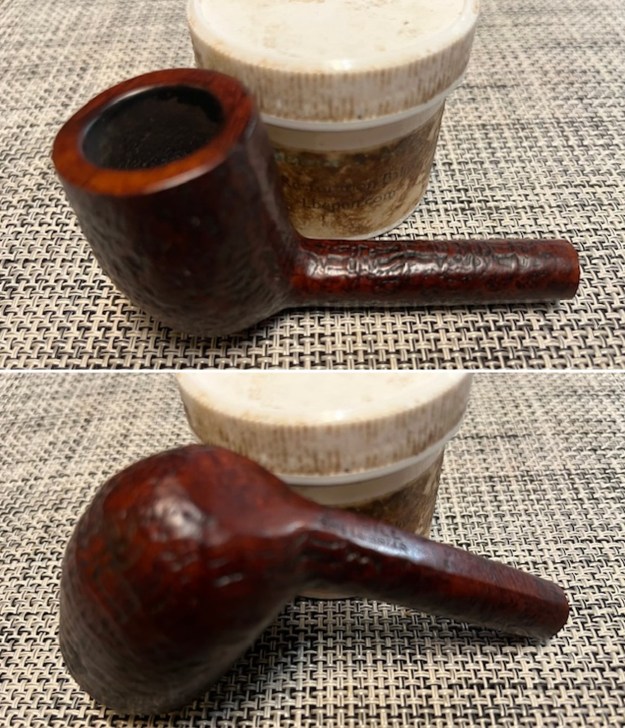
Restoring a Lovely 1982 Dunhill Shell 31101 Liverpool


Blog by Steve Laug

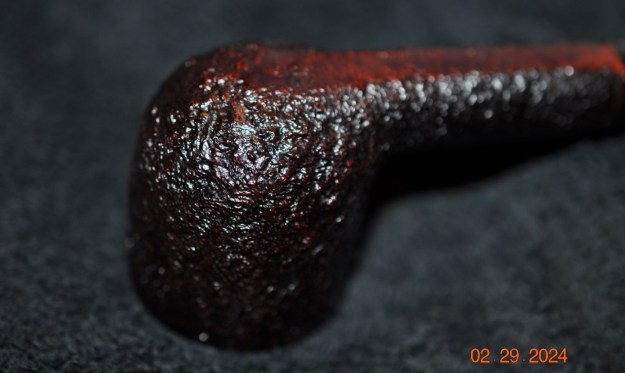
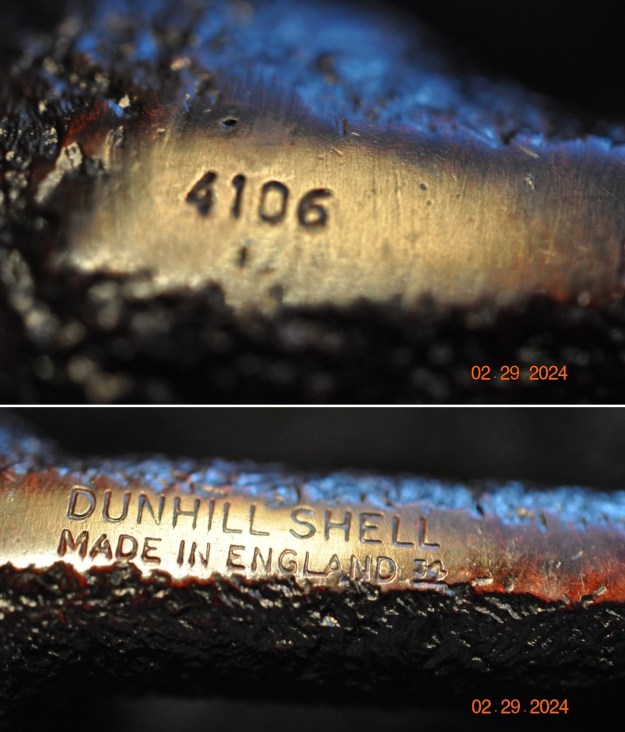
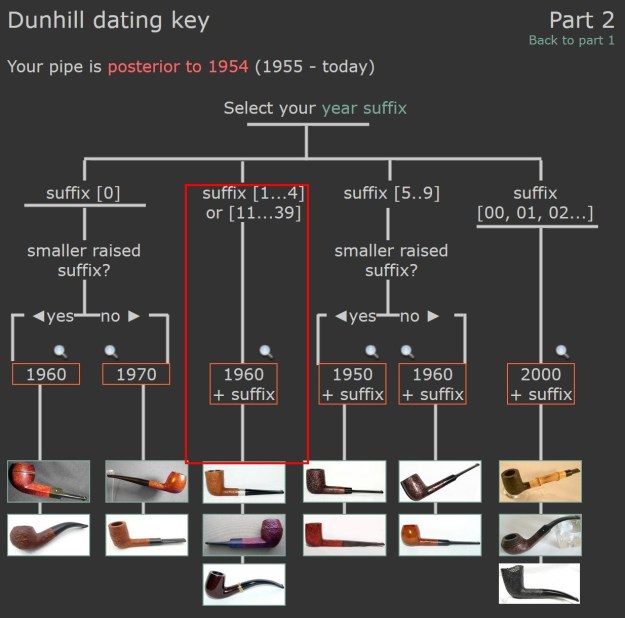
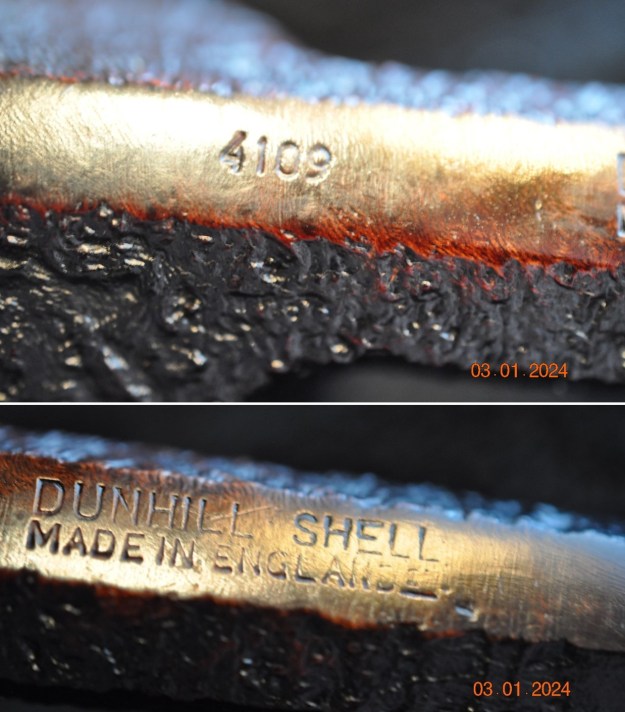
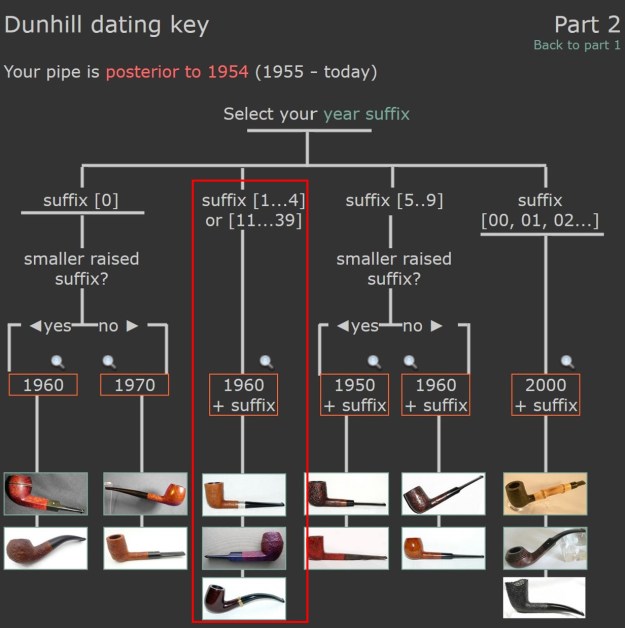
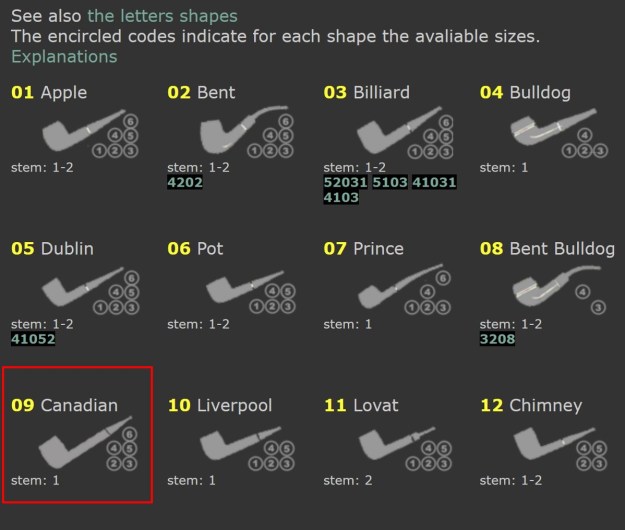
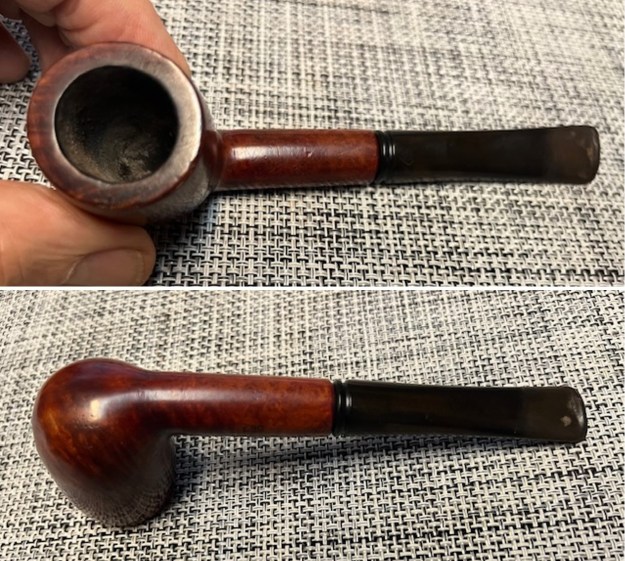
The next pipe on the table came to us from a group of pipes that Jeff and I purchased from a fellow in Copenhagen, Denmark on December 9, 2023. It is a Dunhill Shell Liverpool that is in good condition. It is stamped on a smooth panel on the underside of the shank with the shape number 31101 followed by Dunhill Shell [over] Made in England. Next to the D in England it is stamped the date number 22. The second number is faint but I believe it is a 2. There is nothing stamped after that – no circle number or letter. The stamping is clear and readable as noted above. The pipe has a mix of black, cordovan and brown stains on a sandblast finish and some amazing grain that the shape follows well. The finish was dusty around the nooks and crannies of the sandblast but otherwise fairly clean. The bowl had a thick cake and there was some light lava on the sandblasted rim top or edges. The taper stem was oxidized, calcified, dirty and had light tooth marks and chatter ahead of the button. Jeff took photos of the pipe to show what it looked like before he started working on it. He took photos of the bowl and rim top to show their condition and of the stem to show the condition of both sides of the stem. The photos of the sides and heel of the bowl show the deep sandblast grain on the pipe. It is a beauty. The stamping on the underside of the shank is shown in the photo below. It looks very good and faint but readable. It reads as noted and explained above. Jeff captured the detail in the photos below. One of the first things I like to do is to unpack the stamping and understand each element in it. I turned to Pipephil helpful site (http://pipephil.eu/logos/en/dunhill/shell-briar1.html). The stamping is interpreted as follows: The number 31101 is the shape number for a Liverpool. The Dunhill Shell is the finish. The shape number tells me that the bowl size is 3, the 11 tells me it is a Liverpool shape and the 01taper stem. The superscript, underlined 22 following the D of England gives the date the pipe as 1982. Pipephil also has some helpful dating keys on the site that are basically flow charts that you can walk through to date your pipe (http://pipephil.eu/logos/en/dunhill/cledat-en1.html). I turned to Part 1 of the Dating Key and followed the chart. This pipe has a suffix of underlined, superscript 22 following the D in England. That number took me to the section on the chart below (column one) which instructed me that the pipe could be dated as being made posterior to 1954.I followed the link following the “Your pipe is posterior to 1954. Narrow down your dating”. That took me to Page 2 of the dating key (http://pipephil.eu/logos/en/dunhill/cledat-en1a.html).   The second column (suffix 1…4 or 11…39) led me to the section the 22 suffix. There was a directive for dating the pipe spelled out as follows: 1960 + suffix which gives the pipe a date of 1982.I then turned to Pipedia’s section on Dunhill Root Briar to get a bit of background on the Dunhill finishes (https://pipedia.org/wiki/Dunhill#Root_Briar). I quote:

Shell
A deep craggy sandblast with a black stain finish (usually made using Algerian briar) – the color of the stain used has varied over the years. Although there is some doubt as to them being the first to sandblast pipes, Dunhill’s Shell pipes, and the sandblasting techniques developed to create them are considered one of Dunhill’s greatest and most lasting contributions to the art of pipe making.

The documented history of Dunhill’s inception of the Shell is largely limited to patent applications — there are no catalog pages or advertisements promoting blasted pipes at the time. The preliminary work on the English patent (No. 1484/17) was submitted on October 13, 1917. The patent submission was completed half a year later, on April 12, 1918, followed by the granting of the English patent on October 14, 1918. This was less than a month before the end of The Great War on November 11th.

In 1986 Dunhill released a line of premium Shell finish pipes – “RING GRAIN”. These are high-quality straight grain pipes which are sandblasted. Initially only Ring Grain, but now in two different finishes. In 1995 the “Shilling” was introduced with Cumberland finish – it is an extremely rare series. These pipes exhibit a deeper blast characteristic of that of the 1930’s – mid-1960’s (and the limited ‘deep blast’ pipes of the early 1980s) and show a fine graining pattern. These are considered the best new Dunhills by many enthusiasts today and are very rare. The finish is sometimes described as tasting like vanilla at first, with the taste becoming more normal or good as the pipe breaks in.

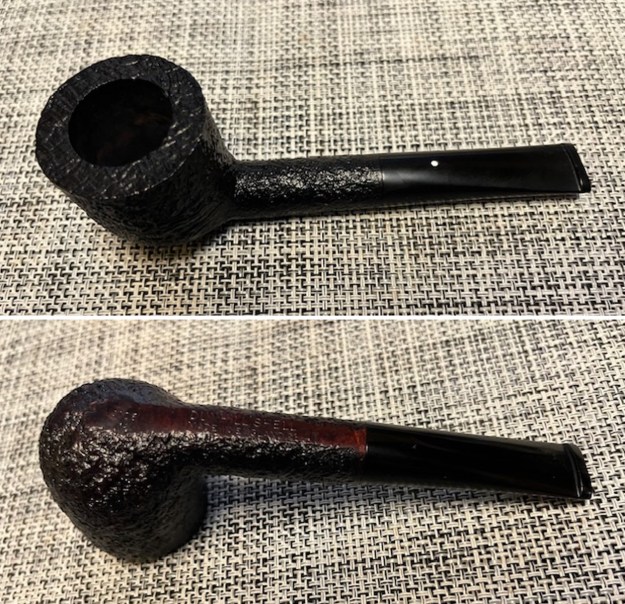
I have also included a chart from the site from Dunhill spelling out the Standard Pipe Finishes and giving short information and a timeline. I turned to work on the pipe itself. Jeff had done an amazing cleanup of the pipe. He reamed the light cake with a PipNet reamer and cleaned up that with a Savinelli Fitsall Pipe Knife. He scrubbed the internals of the bowl and stem with alcohol, cotton swabs and pipe cleaners. He scrubbed the externals with undiluted Murphy’s Oil Soap and rinsed the bowl off with running water. He soaked the stem in Briarville’s Pipe stem Deoxidizer and once it had soaked rinsed it off with warm water to remove the residual solution. He dried it off and rubbed it down to remove any oxidation that was still on the stem. The pipe looked very good when I received it. I took a photo of the rim top to show the condition. You can see the clean bowl. The bowl is in excellent condition and looks very good. The stem came out looking quite good. There are some light tooth marks and chatter on both sides ahead of the button. I took a photo of the underside of the shank to show the stamping. The photo clearly shows the stamping and is actually more readable in person. I removed the stem from the shank and took a photo of the pipe parts to show what I was working with. It is a nice looking pipe.I worked on the inner edge of the bowl to bring it back to round using a folded piece of 220 grit sandpaper. I gave it a slight bevel to accommodate the damage. I stained the edge of the bowl with a Walnut stain pen to match the rest of the bowl.The bowl was in such good condition that I had to do some minimal work with it. I rubbed the briar down with Before & After Restoration Balm. I worked it into the briar with my fingertips and a horsehair shoe brush to work it into the nooks and crannies of the sandblast finish. The product works to clean, enliven and preserve the briar. I let it sit for 10 minutes then I buffed it with a cotton cloth to deepen the shine. The briar really comes alive with the balm. The stem marks were light enough that I polished the vulcanite with micromesh sanding pads – 1500-12000 grit pads. I wiped it down with Obsidian Oil after each sanding pad. I used Before & After Pipe Polish – both Fine and Extra Fine to further polish the stem. This 1982 Dunhill Shell Briar 31101 Taper Stem Liverpool has a beautiful, unique Dunhill Sandblast finish that is very deep and craggy. The dark mixed black/brown/red finish highlights some great grain around the bowl and shank. It has some great rugged sandblast that Dunhill specialized in making. The polished black vulcanite taper stem adds to the mix. I put the stem back on the bowl and buffed the pipe with Blue Diamond on the buffing wheel being careful to not buff the stamping. I gave the bowl multiple coats of Conservator’s Wax and the stem multiple coats of carnauba wax on the buffing wheel and followed that by buffing it with a clean buffing pad. I hand buffed the pipe with a microfiber cloth to deepen the shine. The finished Dunhill Shell Briar 31101 Liverpool is quite nice and feels great in the hand. Give the finished pipe a look in the photos below. The dimensions of the pipe are Length: 5 inches, Height: 1 ¾ inches, Outside diameter of the bowl: 1 1/8 inches, Chamber diameter: ¾ of an inch. The weight of the pipe is .81 ounces/23 grams. Thanks for walking through the restoration with me as I worked over another beautiful pipe. If you are interested in adding it to your collection I will be adding it to the British Pipe Makers Section of the rebornpipes store. Thanks for your time.
New Life for a “Malaga” Apple with a Taper Vulcanite Stem


Blog by Steve Laug

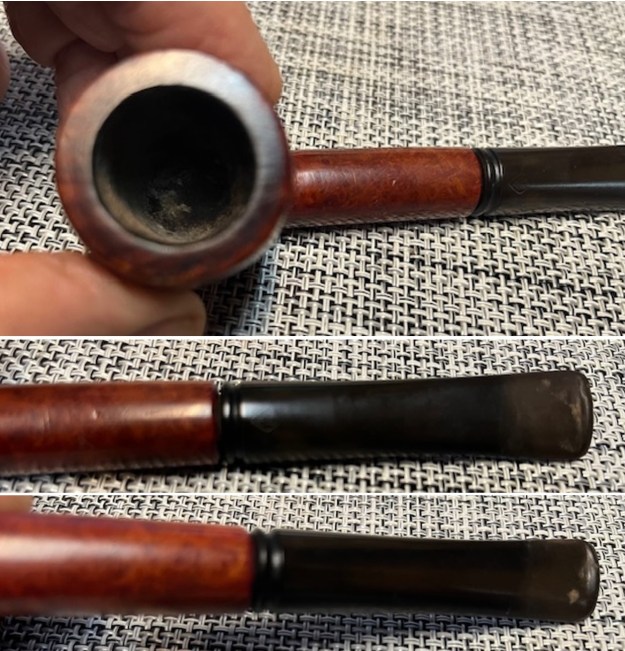
I have three more Malaga Pipes that Jeff sent me to work on. The third of those on the table this afternoon is an interesting Malaga shape I would call an Apple. Jeff saw it on eBay and purchased it on 12/15/2023 from a seller in Tecumseh, Michigan, USA. The grain on this pipe is quite nice. Once again it was obviously someone’s favourite smoker. It is stamped on the left side of the shank and read “MALAGA” and on the right side it is stamped Imported Briar. The smooth bowl and shank were dirty and worn. There were tars and oils ground into the surface of the briar. The bowl had a thick cake that flowed over the top of the smooth rim in a spotty lava coat. There were also nicks and dents in the rim top surface. It was hard to clearly assess the condition of the inner edge. The condition of the rim edge and top would become clear in the cleaning process. The outer edge looked very good. The taper stem was vulcanite. There were light tooth marks on the top and the underside of the stem ahead of the button. Jeff took photos of the pipes before he started his clean up work. Jeff took photos of the rim and bowl to show the cake and the spotty lava on the rim top and edges. The inner edge of the rim showed thick cake coming up to the top and flowing over the edge. The outer edge showed some deep damage on the back side of the bowl. It was a dirty pipe but still a beauty. The vulcanite taper stem had deep tooth marks and chatter on the top and underside of the stem ahead of the button. The photos of the sides and heel of the bowl show some stunning and unique grain all around the pipe. The oil curing/finish makes the grain really stand out on the bowl and shank. Jeff took a photo of the stamping on the left side of the shank. On the left it read MALAGA as noted above. He did not take a photo of the right side but it read Imported Briar. The stamping was clear and readable.For those of you who are unfamiliar with the brand, I am also including the link to a blog that I wrote that gives some of the history of the Malaga brand and the Malaga Pipe Shop in Royal Oak, Michigan in the USA. Here is the link – https://rebornpipes.com/2013/02/09/george-khoubesser-and-malaga-pipes/. That blog also includes links to a catalogue and the history of the pipemaker George Khoubesser. If you are interested to learn more then I invite you to follow the link to get a feel for the brand and the pipemaker.

I am also am including a link to some printed material on the Malaga brand that came to me from the daughter of George Koch (we purchased George’s pipes from his daughter) to help identify the particular stamping on the pipe. The link takes you to the entire collection of materials that were sent to me (https://rebornpipes.com/2019/02/27/malaga-pipes-catalogue-of-pipes-and-tobaccos/).

Jeff had cleaned up the pipe using his usual procedure. He reamed the pipe with a PipNet pipe reamer and removed the rest of it with a Savinelli Fitsall Pipe Knife. He scrubbed the bowl with undiluted Murphy’s Oil Soap with a tooth brush. He rinsed it under running warm water to remove the soap and grime from around the bowl sides. It looked much better. He cleaned out the inside of the shank and the airway with alcohol, cotton swabs and pipe cleaners. The stem looked much better and the light tooth marks on both sides were still visible and would need a little work. I took photos of the pipe once I received it.  I took a photo of the rim top and the stem to show their condition. Jeff was able to clean up the cake and the lava overflow that was shown in the rim and bowl photos above. The rim top was clean and looked good. There was some darkening and damage on the rim top and inner and outer edges of the bowl (particularly on the back side of the bowl). The grain on it was quite nice. The stem looked better, though there were deep tooth marks and chatter on both sides ahead of the button. I took photos of the stamping on the shank to show that the clean up had not damaged them at all. It looked good. I removed the stem from the shank and took a photo of the parts to give a sense of what the pipe looks like. I started my work on the pipe by addressing the damage on the back outer edge and the rim top. I sanded the inner edge of the bowl and the top surface with a folded piece of 220 grit sandpaper. I was able to remove some of the darkening. I repaired the damage on the back of the bowl with briar dust and clear CA glue. I lightly topped the bowl on a topping board with 220 grit sand paper and blended the repairs on the top. I also sanded the repair on the back of the bowl. I sanded the bowl and the repairs with the 2 inch square 320-3500 grit sanding pads. I wiped down the briar after each sanding pad. I was able to smooth out the repair and blend them into the rest of the bowl and it looked very good. I restained the rim top with a Maple Stain Pen. The colour of the stain matched the rest of the bowl exterior. Once the stain cured I continued polishing the bowl and the stem with micromesh sanding pads. I polished the bowl sides and the smooth rim top with micromesh sanding pads. I dry sanded it with 1500-12000 grit micromesh pads. I wiped it down after each pad. It really began to be beautiful. I rubbed the bowl and shank down with Before & After Restoration Balm to deep clean the finish on the bowl and shank. The product works to clean, enliven and protect the briar. I worked it in with my fingers to get it into the briar. I worked it into the twin rings in the bowl cap with a shoe brush to get deep in the grooves. I let it sit for 10 minutes then I wiped it off and buffed it with a soft cloth. The briar really began to have a rich shine. I took some photos of the bowl at this point to mark the progress in the restoration. It is a beautiful bowl. I set the bowl aside and turned my attention to the stem. There were several deep tooth marks that I filled with black CA glue. I also built up the sharp edge of the button as well. Once the glue hardened I recut the button edge and flattened the repairs with a small file. I sanded them with 220 grit sandpaper to blend them further into the surface of the stem. I sanded the stem with the 2 inch square 320-3500 grit sanding pads. I wiped down the stem after each sanding pad. I was able blend in the repairs on both sides with the pads. The stem looked very good.I polished the stem with micromesh sanding pads – dry sanding with 1500-12000 grit pads. I wiped the stem down after each sanding pad with Obsidian Oil. I did a final hand polish of the stem with Before & After Pipe Stem Polish – both Fine and Extra Fine. I gave it a coat of Obsidian Pipe Stem Oil. It works to protect the stem from oxidizing. I set it aside to dry. I put the stem back on the “MALAGA” Imported Briar Apple and took it to the buffer. I buffed the bowl and stem with Blue Diamond to polish the briar and the vulcanite. Blue Diamond does a great job on the smaller scratches that remain in both. I gave the bowl and the stem several coats of carnauba wax and buffed the pipe with a clean buffing pad to raise the shine. I hand buffed it with a microfiber cloth to deepen the shine. I am amazed at how well it turned out. The finished pipe is shown in the photos below. This is beautiful smooth finished “MALAGA” Imported Briar Apple and the vulcanite taper stem combine to give the pipe a great look. The dimensions of the pipe are Length: 6 inches, Height: 1 ½ inches, Outside diameter of the bowl: 1 ¼ inches, Chamber diameter: ¾ of an inch. The weight of the pipe is 1.27 ounces/36 grams. This is another pipe that I will be putting on the rebornpipes online store in the American Pipe Makers and Pipemaking Companies Section shortly, if you are interested in adding it to your collection. Thanks for walking through the restoration with me on this beauty!
As always, I encourage your questions and comments as you read the blog. Thanks to each of you who are reading this blog. Remember we are not pipe owners; we are pipe men and women who hold our pipes in trust until they pass on into the trust of those who follow us.

What an Interesting Malaga Imported Briar Rhodesian


Blog by Steve Laug

I have three more Malaga Pipes that Jeff sent me to work on. The second of those on the table this afternoon is an interesting Malaga I would call a Rhodesian. Jeff saw it on eBay and purchased the threesome on 12/22/2023 from a seller in Greensboro, North Carolina, USA. The grain on this pipe is quite nice. Once again it was obviously someone’s favourite smoker. It is stamped on the left side of the shank and read “MALAGA” and on the right side it is stamped Imported Briar. The smooth bowl and shank were dirty and worn. There were tars and oils ground into the surface of the briar. The bowl had a thick cake that flowed over the top of the smooth rim in a spotty lava coat. It was hard to clearly assess the condition of the inner edge. The condition of the rim edge and top would become clear in the cleaning process. The outer edge looked very good. The taper stem was vulcanite. There were light tooth marks on the top and the underside of the stem ahead of the button. Jeff took photos of the pipes before he started his clean up work. Jeff took photos of the rim and bowl to show the cake and the spotty lava on the rim top and edges. The inner edge of the rim showed thick cake coming up to the top and flowing over the edge. It was a dirty pipe but still a beauty. The vulcanite taper stem had light tooth marks and chatter on the top and underside of the stem ahead of the button. The photos of the sides and heel of the bowl show some stunning and unique grain all around the pipe. The oil curing/finish makes the grain really stand out on the bowl and shank. Jeff took photos of the stamping on the sides of the shank. On the left it read MALAGA as noted above. On the right it read Imported Briar. The stamping was clear and readable.For those of you who are unfamiliar with the brand, I am also including the link to a blog that I wrote that gives some of the history of the Malaga brand and the Malaga Pipe Shop in Royal Oak, Michigan in the USA. Here is the link – https://rebornpipes.com/2013/02/09/george-khoubesser-and-malaga-pipes/. That blog also includes links to a catalogue and the history of the pipemaker George Khoubesser. If you are interested to learn more then I invite you to follow the link to get a feel for the brand and the pipemaker.

I am also am including a link to some printed material on the Malaga brand that came to me from the daughter of George Koch (we purchased George’s pipes from his daughter) to help identify the particular stamping on the pipe. The link takes you to the entire collection of materials that were sent to me (https://rebornpipes.com/2019/02/27/malaga-pipes-catalogue-of-pipes-and-tobaccos/).

Jeff had cleaned up the pipe using his usual procedure. He reamed the pipe with a PipNet pipe reamer and removed the rest of it with a Savinelli Fitsall Pipe Knife. He scrubbed the bowl with undiluted Murphy’s Oil Soap with a tooth brush. He rinsed it under running warm water to remove the soap and grime from around the bowl sides. It looked much better. He cleaned out the inside of the shank and the airway with alcohol, cotton swabs and pipe cleaners. The stem looked much better and the light tooth marks on both sides were still visible and would need a little work. I took photos of the pipe once I received it.  I took a photo of the rim top and the stem to show their condition. Jeff was able to clean up the cake and the lava overflow that was shown in the rim and bowl photos above. The rim top was clean and looked very good. There was some darkening on the front outer edge. The grain on it was quite nice. The stem looked better, though there were tooth marks and chatter on both sides ahead of the button. I took photos of the stamping on the shank to show that the clean up had not damaged them at all. It looked good. I removed the stem from the shank and took a photo of the parts to give a sense of what the pipe looks like. I started my work on the pipe by addressing the damage on the front inner edge and the rim top. I sanded the inner edge of the bowl and the top surface with a folded piece of 220 grit sandpaper. I was able to remove some of the darkening. I lightly topped the bowl on a topping board with 220 grit sand paper and removed the rest of the damage. I polished the bowl sides and the smooth rim top with micromesh sanding pads. I dry sanded it with 1500-12000 grit micromesh pads. I wiped it down after each pad. It really began to be beautiful.I paused the polishing after the 2400 grit sanding pad and restained the rim top with a Maple Stain Pen. The colour of the stain matched the rest of the bowl exterior. Once the stain cured I continued polishing the bowl and the stem with micromesh sanding pads. I rubbed the bowl and shank down with Before & After Restoration Balm to deep clean the finish on the bowl and shank. The product works to clean, enliven and protect the briar. I worked it in with my fingers to get it into the briar. I worked it into the twin rings in the bowl cap with a shoe brush to get deep in the grooves. I let it sit for 10 minutes then I wiped it off and buffed it with a soft cloth. The briar really began to have a rich shine. I took some photos of the bowl at this point to mark the progress in the restoration. It is a beautiful bowl. I set the bowl aside and turned my attention to the stem. I “painted” the tooth marks with the flame of a lighter to lift them. I was able to lift them significantly. There were several deeper ones that I filled with clear CA glue. Once the glue hardened I flattened them with a small file. I sanded them with 220 grit sandpaper to blend them further into the surface of the stem. I sanded the stem with the 2 inch square 320-3500 grit sanding pads. I wiped down the stem after each sanding pad. I was able to remove the tooth marks and chatter on both sides with the pads. The stem looked very good.I polished the stem with micromesh sanding pads – dry sanding with 1500-12000 grit pads. I wiped the stem down after each sanding pad with Obsidian Oil. I did a final hand polish of the stem with Before & After Pipe Stem Polish – both Fine and Extra Fine. I gave it a coat of Obsidian Pipe Stem Oil. It works to protect the stem from oxidizing. I set it aside to dry. I put the stem back on the “MALAGA” Imported Briar Rhodesian and took it to the buffer. I buffed the bowl and stem with Blue Diamond to polish the briar and the vulcanite. Blue Diamond does a great job on the smaller scratches that remain in both. I gave the bowl and the stem several coats of carnauba wax and buffed the pipe with a clean buffing pad to raise the shine. I hand buffed it with a microfiber cloth to deepen the shine. I am amazed at how well it turned out. The finished pipe is shown in the photos below. This is beautiful smooth finished “MALAGA” Imported Briar Rhodesian and the vulcanite taper stem combine to give the pipe a great look. The dimensions of the pipe are Length: 6 inches, Height: 1 ¾ inches, Outside diameter of the bowl: 1 ¼ inches, Chamber diameter: ¾ of an inch. The weight of the pipe is 1.13 ounces/32 grams. This is another pipe that I will be putting on the rebornpipes online store in the American Pipe Makers and Pipemaking Companies Section shortly, if you are interested in adding it to your collection. Thanks for walking through the restoration with me on this beauty!

As always, I encourage your questions and comments as you read the blog. Thanks to each of you who are reading this blog. Remember we are not pipe owners; we are pipe men and women who hold our pipes in trust until they pass on into the trust of those who follow us.

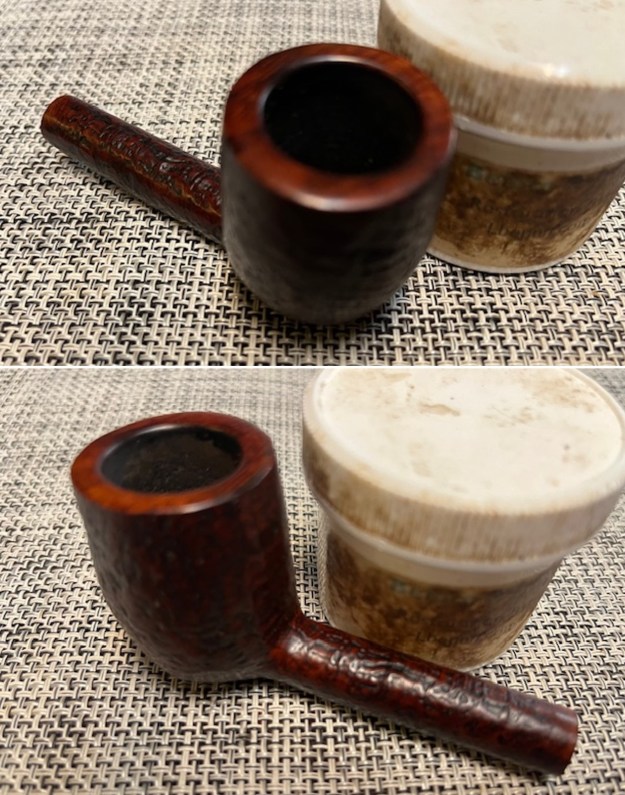
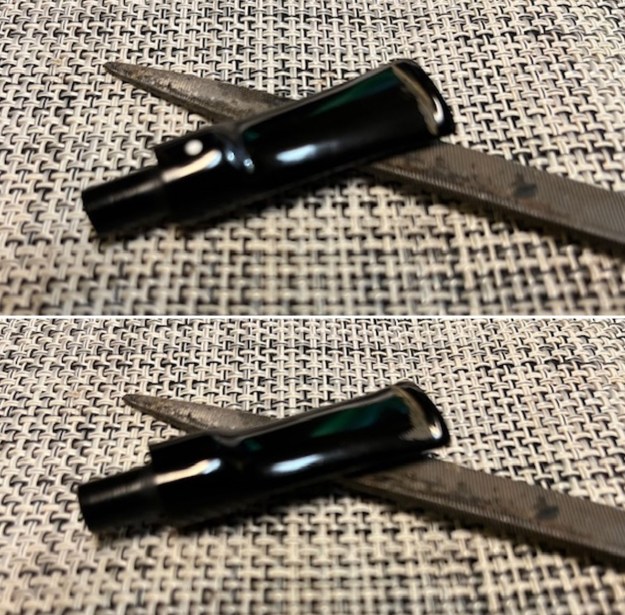
Would you call it a Bent Volcano?


Blog by Steve Laug

I have three more Malaga Pipes that Jeff sent me to work on. The first of those on the table this afternoon is an interesting Malaga in a shape I would call a Volcano. Jeff saw it on eBay and purchased the threesome on 12/22/2023 from a seller in Greensboro, North Carolina, USA. The grain on this pipe is quite nice. Once again it was obviously someone’s favourite smoker. The pipe is stamped on the underside of the shank and reads MALAGA. The smooth bowl and shank were dirty and worn. There were tars and oils ground into the surface of the briar. The bowl had a moderate cake that flowed over the top of the smooth rim in a spotty lava coat. The cake in the bowl extended up to the top of the rim. It was hard to clearly assess the condition of the inner edge. The condition of the rim edge and top would become clear in the cleaning process. The outer edge looked very good. The taper stem was vulcanite. It had originally been bent and when it sat as a sitter the stem would have angled to match the rim top. However, over time the stem had straightened a lot and would need to be bent again. There were light tooth marks on the top and the underside of the stem ahead of the button. Jeff took photos of the pipes before he started his clean up work. Jeff took photos of the rim and bowl to show the cake and the spotty lava on the rim top and edges. The inner edge of the rim showed thick cake coming up to the top and flowing over the edge. It was a dirty pipe but still a beauty. The vulcanite taper stem had light tooth marks and chatter on the top and underside of the stem ahead of the button. The photos of the sides and heel of the bowl show some stunning and unique grain all around the pipe. There are also two carved “leaves” or loose lines on the right side and the front of the bowl at the bottom edge. The oil curing/finish makes the grain really stand out on the bowl and shank. Jeff took a photo of the stamping on the underside of the shank. It read MALAGA as noted above. The stamping was clear and readable.For those of you who are unfamiliar with the brand, I am also including the link to a blog that I wrote that gives some of the history of the Malaga brand and the Malaga Pipe Shop in Royal Oak, Michigan in the USA. Here is the link – https://rebornpipes.com/2013/02/09/george-khoubesser-and-malaga-pipes/. That blog also includes links to a catalogue and the history of the pipemaker George Khoubesser. If you are interested to learn more then I invite you to follow the link to get a feel for the brand and the pipemaker.

I am also am including a link to some printed material on the Malaga brand that came to me from the daughter of George Koch (we purchased George’s pipes from his daughter) to help identify the particular stamping on the pipe. The link takes you to the entire collection of materials that were sent to me (https://rebornpipes.com/2019/02/27/malaga-pipes-catalogue-of-pipes-and-tobaccos/).

Jeff had cleaned up the pipe using his usual procedure. He reamed the pipe with a PipNet pipe reamer and removed the rest of it with a Savinelli Fitsall Pipe Knife. He scrubbed the bowl with undiluted Murphy’s Oil Soap with a tooth brush. He rinsed it under running warm water to remove the soap and grime from around the bowl sides. It looked much better. He cleaned out the inside of the shank and the airway with alcohol, cotton swabs and pipe cleaners. The stem looked much better and the light tooth marks on both sides were still visible and would need a little work. I took photos of the pipe once I received it. I took a photo of the rim top and the stem to show their condition. Jeff was able to clean up the cake and the lava overflow that was shown in the rim and bowl photos above. The rim top was clean and looked very good. There was some darkening on the front outer edge. The grain on it was quite nice. The stem looked better, though there were tooth marks and chatter on both sides ahead of the button. I removed the stem from the shank and took a photo of the parts to give a sense of what the pipe looks like.I polished the bowl sides and the smooth rim top with micromesh sanding pads. I dry sanded it with 1500-12000 grit micromesh pads. I wiped it down after each pad. It really began to be beautiful. I rubbed the bowl and shank down with Before & After Restoration Balm to deep clean the finish on the bowl and shank. The product works to clean, enliven and protect the briar. I worked it in with my fingers to get it into the briar. I let it sit for 10 minutes then I wiped it off and buffed it with a soft cloth. The briar really began to have a rich shine. I took some photos of the bowl at this point to mark the progress in the restoration. It is a beautiful bowl.  I set the bowl aside and turned my attention to the stem. I polished the stem with micromesh sanding pads – dry sanding with 1500-12000 grit pads. I wiped the stem down after each sanding pad with Obsidian Oil. Before polishing the stem with the final polished I decided to bend it. I heated the stem with the flame of a lighter to soften the vulcanite and once soft I bent the stem to match the flow of the top of the bowl.I did a final hand polish of the stem with Before & After Pipe Stem Polish – both Fine and Extra Fine. I gave it a coat of Obsidian Pipe Stem Oil. It works to protect the stem from oxidizing. I set it aside to dry.I put the stem back on the MALAGA Bent Volcano and took it to the buffer. I buffed the bowl and stem with Blue Diamond to polish the briar and the vulcanite. Blue Diamond does a great job on the smaller scratches that remain in both. I gave the bowl and the stem several coats of carnauba wax and buffed the pipe with a clean buffing pad to raise the shine. I hand buffed it with a microfiber cloth to deepen the shine. I am amazed at how well it turned out. The finished pipe is shown in the photos below. This is beautiful smooth finished MALAGA Bent Volcano and the vulcanite taper stem combines to give the pipe a great look. The dimensions of the pipe are Length: 5 inches, Height: 1 ¼ inches, Outside diameter of the bowl: 1 1/8 inches, Chamber diameter: ¾ of an inch. The weight of the pipe is 1.23 ounces/35 grams. This is another pipe that I will be putting on the rebornpipes online store in the American Pipe Makers and Pipemaking Companies Section shortly, if you are interested in adding it to your collection. Thanks for walking through the restoration with me on this beauty!

As always, I encourage your questions and comments as you read the blog. Thanks to each of you who are reading this blog. Remember we are not pipe owners; we are pipe men and women who hold our pipes in trust until they pass on into the trust of those who follow us.

What a beautiful Hans Original Hand Made UFO


Blog by Steve Laug

This interesting UFO/Flying Saucer/Disc shaped pipe was purchased from a sell in Chicago, Illinois, USA on 06/05/2021. It is a darkly stained briar with great grain around the bowl and shank. There is a thin 14K gold band on the shank and a vulcanite saddle stem. The smooth finished bowl has some great grain on it under the heavy grime on the surface. The bowl was thickly caked with a light lava coat on the rim top. It was hard to know the condition of the inner edge and rim top underneath the lava but cleaning that up will tell the story. The pipe is stamped on the underside of the shank and reads in script etching Hans Original [over] 6 [over] Hand Made. The “E” on Made is under the band. The gold band is stamped 14K on the topside. The vulcanite stem ha two brass dots side by side on the left side of the saddle. It had light tooth marks and chatter on both sides ahead of the button. It had a flattened heel on the bowl that allowed the pipe to sit on a desk top. Jeff took photos of it before he worked his magic in the cleanup process.The exterior of the pipe was very dirty – grime and grit ground in from years of use and sitting. The rim top was covered with a coat of thick lava that overflowed the bowl. There was also some darkening and lava on the rim top. The bowl itself had a thick cake with flecks of tobacco stuck in the cake on the sides. The vulcanite saddle stem surface was dirty and had some tooth marks and chatter on both sides. Jeff took photos of the sides of the bowl and shank to give a better feel for the condition of the bowl. You can see the interesting grain on the bowl side and front.The next photos show the stamping on the underside of the shank, the gold band and the twin brass dots on the left side of the stem. It is clear and is very readable as noted above. This pipe is a bit of a mystery in terms of the name of the maker. Han’s is not clear in terms of who it refers to. There is no identify COM stamp to point to a country of origin. It is a nice-looking Hand Made pipe that I know nothing about. If any of you who are reading this can help unravel the mystery please contact me. Thanks.

Jeff reamed it with a PipNet pipe reamer and cleaned up the remaining cake in the bowl with a Savinelli Fitsall Pipe Knife. He scrubbed out the internals with alcohol, pipe cleaners and cotton swabs until the pipe was clean. He scrubbed the exterior of the bowl with Murphy’s Oil Soap and a tooth brush to remove the grime and grit on the briar and the lava on the rim top. The finish looks very good with good looking grain around the bowl and shank. The rim top looked very good.  He scrubbed the stem with Soft Scrub and soaked it in Briarville’s Pipe Stem Deoxidizer to remove the grime on the acrylic. When the pipe arrived here in Vancouver for the second stop of its restoration tour it looked a lot better. I took photos before I started my part of the work. I took a photo of the bowl and rim top to show how well it had cleaned up. The top and the edges of the bowl are in very good condition. There does not seem to be any damage on either the inner or outer edges and the rim top. The stem had some tooth marks and chatter on both sides ahead of the button.I took photos of the stamping on the left side and underside of the shank. It is clear and readable.I removed the stem from the shank and took a photo. I wanted to give a sense of the proportion of the pipe and I think the photos gives a sense of that. I wiped off the spotty shiny varnish coat on the briar with cotton pads and acetone. It took a bit of scrubbing but I was able to remove all of the shiny coat on the bowl and the grain really shone through once it was gone. I started my work on the pipe by polishing the bowl and rim top with micromesh sanding pads – dry sanding with 1500-12000 grit pads. I wiped the bowl with a damp cotton pad after each sanding pad. The surface began to take on a nice shine. I worked Before & After Restoration Balm deep into the smooth finish to clean, enliven and protect the briar. I hand rubbed it with my fingers and worked it into the finish. I set it aside to dry for 10-15 minutes. I wiped it off with a soft cloth. I buffed the bowl with a cotton cloth to polish it. It really began to have a deep shine in the briar. I took some photos of the bowl at this point to mark the progress in the restoration. The grain on the bowl stands out with interesting lines moving across the sides of the bowl. I set the bowl aside and turned my attention to the stem. I “painted” the surface of the stem with the flame of a Bic lighter. I was able to lift the majority of the tooth marks. I filled in what remained with black CA glue. Once the repairs cured I sanded them smooth with 220 grit sandpaper to blend them into the surface of the stem. I sanded the repairs and the rest of the stem with the 2 inch square 320-3500 grit sanding pads. I wiped down the stem after each sanding pad. I was able to remove the tooth marks and chatter on both sides with the pads. The stem looked very good.I polished the vulcanite stem with micromesh sanding pads – dry sanding it with 1500-12000 grit pads. I wiped the stem down after each sanding pad with Obsidian Oil and set it aside to dry. I polished it further with Before & After Pipe Polish – using both the Fine and Extra Fine Polishes. I gave it a rubdown with Obsidian Oil one last time and set it aside. I put the Han’s Original Hand Made Saucer back together and worked the pipe over on the buffing wheel using Blue Diamond to lightly polish the bowl and the acrylic stem. I buffed the bowl and stem to raise the gloss on the briar and the acrylic. I gave the pipe multiple coats of carnauba wax. I buffed the entire pipe with a clean buffing pad to raise the shine. I hand buffed it with a microfiber cloth to deepen the shine. The finished the Han’s Original Hand Made Saucer is shown in the photos below. The medium brown stains on the smooth Saucer shaped bowl works well with the rich bronze Italian acrylic stem. The dimensions of the pipe are: Length: 5 ½ inches, Height: 1 ½ inches, Outside Diameter: 1 ¼ inches, Diameter of the chamber: ¾ of an inch. The weight of the pipe is 52 grams/1.83 ounces. This is an interesting piece of briar, cross grain and birdseye on the bowl and shank. I really like how the briar and the vulcanite work well together. This one will soon be on the rebornpipes store in the Pipes from Various Makers Section. If you are interested in adding this Han’s to your collection this may well be the one for you. Thanks for walking with me through the restoration process.

What a Beautiful Square Shank Saddle Stem Apple from the House of Robertson


Blog by Steve Laug

The next pipe on the work table is the last of the House of Robertson pipes we picked up. It was separate purchase from the previous five HOR pipes. It another beautiful Apple with a square shank and saddle stem. We bought off eBay on 08/03/2023 from the same seller as the others in Niles, Michigan, USA. It is a classic shaped pipe. The name House of Robertson is roughly hand-etched on the left side of the square shank with an engraving tool. This pipe is a well shaped Apple with a square shank so the pipe sits nicely on the desk top as a sitter. The bowl has some interesting mixed grain on the sides of the bowl and shank. The bowl is thickly caked with some lava overflow on the rim top. The outer and inner edges of the rim look to be in good condition. The pipe was dirty but underneath all of the grime it appears to be in excellent condition. It is definitely an interesting pipe and should clean up very well. The fit of the stem to the shank was good. The saddle stem was oxidized and calcified. There are light tooth marks and chatter on both sides near the button. Jeff took photos of the pipe before he started the cleanup. Jeff took photos of the pipe before he started his clean up work. Jeff took photos show the condition of the bowl and the stem. The photos of the bowl and rim show the cake in the bowl and the lava overflowing onto the rim top. The grain on the top of the bowl and the inner and outer edge of the rim are pretty well covered in lava. It was hard to know what the edges and top really looked like until we cleaned it. The square saddle stem was oxidized, calcified and had tooth chatter and marks on both sides of the stem near the button. The photos of the sides and heel of the bowl show some stunning and unique grain all around the pipe. The finish makes the grain really stand out on the bowl and shank. The next photo shows the etched name on the left side of shank on the shank. It reads House of Robertson. Jeff also took a photo of the nicks in the shank on the top right side of the square shank. The clean up had shrunken them a bit but they are still visible. My plan was to leave them as part of the story of the pipe’s  journey.I am including the information that I found when I received my first of the House of Robertson Pipes. I found a link on Pipedia that gave me the only information I could find on the brand. I include that in total as it is interesting to read.

“House of Robertson” was in business for many years, but alas, closed their doors in 1999. They were located in Boise, Idaho. They are noted for making rather large and interesting pipes. Thayne Robertson was a Master Mason, AF & AM, and started the shop about 1947 and his son Jon started working there in 1970 when he finished college, along with Thayne’s daughter. Thayne and his son started making the big pipes at that time, and made them together until 1987 when Thayne passed away. Jon kept the store and his sister moved on to other things. The House of Robertson appears to have closed around 1999 (https://pipedia.org/wiki/Robertson).

Since then I have worked on a lot of House of Robertson pipes and have been able to track down more information. I am including a link to a Catalogue that I picked up on eBay. Click on the link and have a look at this interesting book of information on the brand and the pipe maker himself (https://rebornpipes.com/2022/12/11/a-house-of-robertson-catalogue-filled-with-great-examples-of-thayne-robertsons-work/).

I am also including a biography of Thayne Robertson that I found on Facebook from a fellow in Boise, Idaho. It is an interesting read into the mind of the pipe maker. Make sure to take time to read it (https://rebornpipes.com/2021/10/31/house-of-robertson-pipes-boise-pipe-carver-thayne-robertson/).

Now it was time to work on the pipe itself. When it gets to Vancouver it my turn to contribute to its restoration. Jeff did a great job cleaning the pipe on the inside and outside. He reamed the bowl with a PipNet pipe reamer and cleaned up the remnants with the Savinelli Fitsall Pipe Knife. He scrubbed out the mortise and the airway in the shank and stem with alcohol, cotton swabs and pipe cleaners. He scrubbed the exterior of the bowl with a tooth brush and Murphy’s Oil Soap to remove the dust in the rustication on the bowl and shank as well as the smooth portions. He rinsed it under running water. He dried it off with a soft cloth. Once the dust and debris were removed the finish was dull but appeared to be in excellent condition. He soaked the stem in Briarville’s Pipe Stem Deoxidizer and rinsed it under warm water to remove the deoxidizer gel solution. I took photos of the pipe to show its condition before I started my work on it. I took a photo of the bowl and rim top to show how well it had cleaned up. There is some rim darkening but you can see the interesting grain on the top of the bowl. The stem tooth marks and chatter are very light.I took a photo of the engraving on the left side of the shank. It is clear and reads as noted above. I also took the stem off the pipe and took a photo of the parts to give a sense of the proportions of the pipe. It is a beauty.I started my work on the pipe by dealing with the darkening on the inner edge of the rim and the darkening on the rim top with a folded piece of 220 grit sandpaper. It looked much better when finished.I polished the bowl and shank with micromesh sanding pads – dry sanding with 1500-12000 grit pads. I wiped the bowl with a damp cotton pad after each sanding pad. The surface began to take on a nice shine. I worked Before & After Restoration Balm deep into the smooth finish to clean, enliven and protect the briar. I hand rubbed it with my fingers and worked it into the finish then set it aside to dry for 10-15 minutes. I wiped it off with a soft cloth. I buffed the bowl with a cotton cloth to polish it. It really began to have a deep shine in the briar. I took some photos of the bowl at this point to mark the progress in the restoration. The grain on the bowl stands out with interesting lines moving across the sides of the bowl and the shank. I set the bowl aside and sanded the stem with the 2 inch square 320-3500 grit sanding pads. I wiped down the stem after each sanding pad. I was able to remove the tooth marks and chatter on both sides with the pads. The stem looked very good.I polished the vulcanite stem with micromesh sanding pads – dry sanding it with 1500-12000 grit pads. I wiped the stem down after each sanding pad with Obsidian Oil and set it aside to dry. I polished it further with Before & After Pipe Polish – using both the Fine and Extra Fine Polishes. I gave it a rubdown with Obsidian Oil one last time and set it aside. I put the House of Robertson Square Shank Saddle Stem Apple back together and worked the pipe over on the buffing wheel using Blue Diamond to lightly polish the stem. I buffed the bowl and stem to raise the gloss on the briar and the vulcanite. I gave the pipe multiple coats of carnauba wax. I buffed the entire pipe with a clean buffing pad to raise the shine. I hand buffed it with a microfiber cloth to deepen the shine. The finished the House of Robertson Apple is shown in the photos below. The medium brown stains on the smooth Billiard shaped bowl works well with the rich black of the vulcanite stem. The dimensions of the pipe are: Length: 5 ½ inches, Height: 1 ¾ inches, Outside Diameter: 1 ¼ inches, Diameter of the chamber: ¾ inches. The weight of the pipe is 42 grams/1.45 ounces. This is an interesting piece of briar, cross grain and birdseye on the bowl and shank. I really like how the briar and the vulcanite work well together. This one will soon be on the rebornpipes store. If you are interested in adding a House of Robertson to your collection this may well be the one for you. Thanks for walking with me through the restoration process.
Cleaning Up an Interesting Paradis Star Freehand Pot


Blog by Kenneth Lieblich

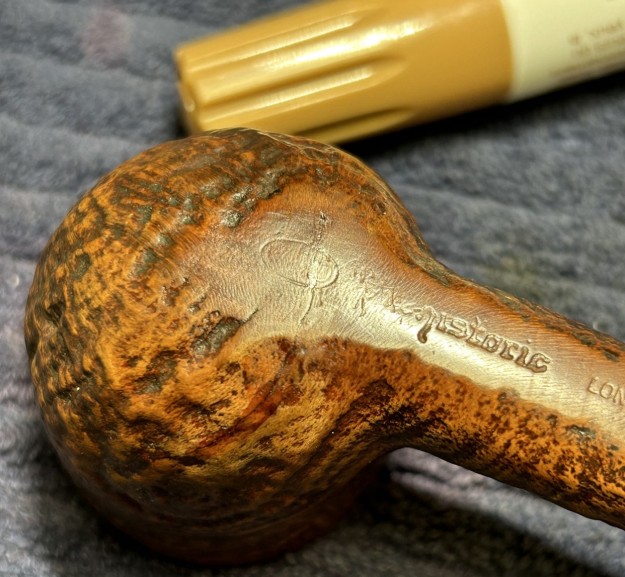
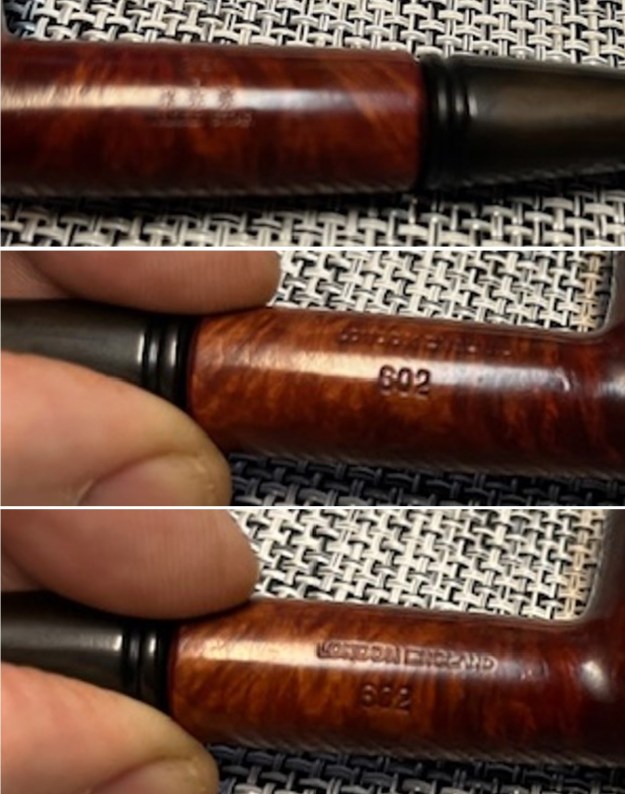
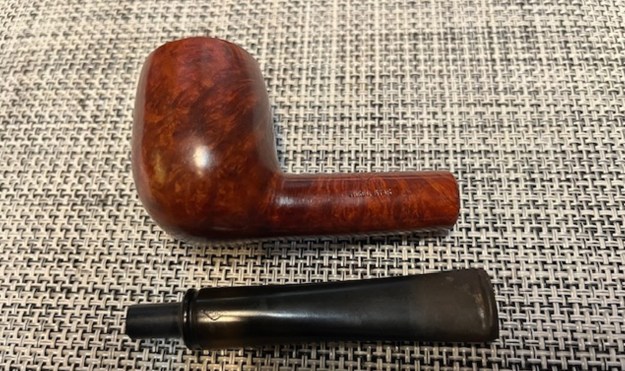
A fine gentleman from out east contacted me asking for this pipe to be restored. Naturally, I obliged and managed a relatively quick job on it. This is just a quick-and-dirty report because it was really more of a cleaning job than a repair job – and I missed out on a few photos. This pipe is a Paradis Star 72 Freehand Pot. The markings on the pipe are as follows: the left side of the shank read Paradis [over] Star; on the right side of the shank read the number 72 – the shape number; and on the left side of the stem was the word Filter. This pipe did indeed have a 6 mm filter and so that makes sense. I knew Paradis Pipes to be a Canadian pipe company, based in Montréal, but I went over to Pipedia and Pipephil to seek out more information. Here’s some of what I found (after correcting the many spelling errors):

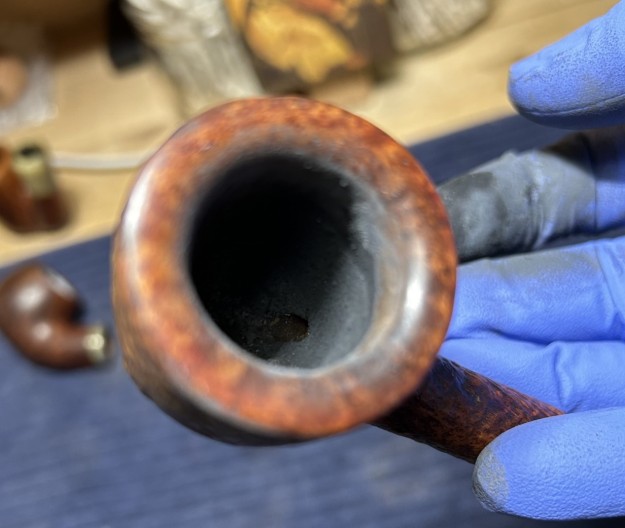
Paradis Pipes is the Canadian brand of the brothers Gilles and Fernand Paradis. In 1922 the Paradis family moved to the USA, when Lucien Paradis (1906-1979) was 16 years old. It was at this age that he started as an apprentice at his uncle’s pipe factory: Joseph B. Desjardins, maker of (JD) pipes, in Fall River, MA. Joseph Desjardins was issued two patents during this period, one for a new machine for making pipe stems and another for a new design of pipe reamer. The company employed 60 workers at one stage. In 1930, due to the Great Depressions, Lucien lost his job and returned to Quebec to work in the agricultural machine industry. In his spare time, be made pipes, selling them door to door. Three years later the rest of the family joined him, and Lucien founded a pipe factory with two of his brothers. The company eventually employed 18 workers and in the 1960s produced over 50,000 pipes a year, under brads like JBL, Dr. Thomas, Fernand Gignac, S.C. Pipes, New London Golfer, and Jo Thomassin. Paradis was founded in 1978, at the Salon of Quebec Artisans, and is available in tobacconists all over the country today. The brand produces 8,000 pipes a year (400 “handmade”), with Greek briar.The pipe was in decent condition. It had been well-smoked, and the bowl and shank were fairly dirty. The bowl had some cake on the inside and a bit of lava on the rim. But there was clearly some burning there too. The brass ring around the bowl was in good condition, just a bit scratched up. Meanwhile, the stem was relatively dirty. It was made of acrylic, so no oxidation to speak of, but there were what I would describe as “typical” tooth scratches on the bit. Fortunately, no dents – but someone did leave a heavily used filter behind. Delicious. The stem was first on my list. I wiped the outside down with Murphy’s Oil Soap on some cotton pads. I cleaned out the insides with lemon-infused isopropyl alcohol and some pipe cleaners and cotton swabs.I then used all nine Micromesh pads (1,500 through 12,000 grit) to make the swirling colours of the stem’s acrylic shine again. I also used Obsidian Pipe Stem Oil in between each pad scrubbing (from 3,600 onward).

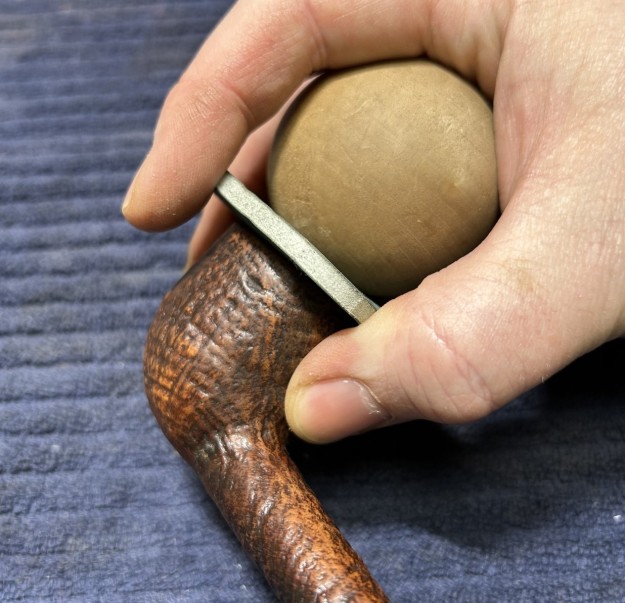
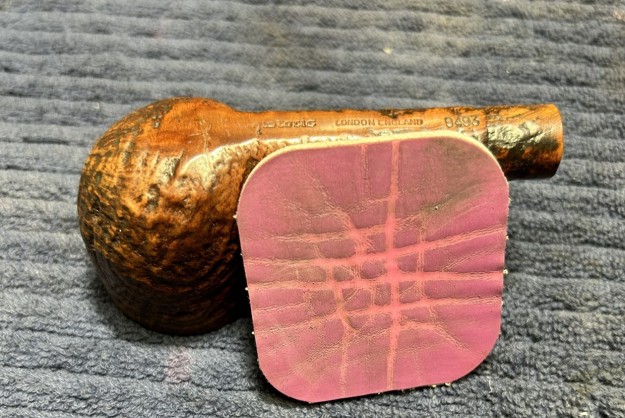
Now for the stummel. I reamed out the bowl to remove the built-up cake and followed that with 220-grit sandpaper taped to a dowel to eliminate as much as I could. I took the chamber down to bare briar, as I wanted to ensure there were no hidden flaws in the wall. Fortunately, there were none.I then proceeded to clean out the insides of the shank with Q-tips, pipe cleaners, and lemon-infused isopropyl alcohol. There was quite a bit of filth inside this stummel and it took a fair amount of cotton to get it clean. I used cotton rounds and some Murphy’s Oil Soap to wipe the outside of the stummel. I also used my toothbrush on the rim to see if I could lift some the burn marks there. Only so much was cleaned up. I followed that up by cleaning the insides of the stummel with some Castile soap and tube brushes. Next, I decided to de-ghost the pipe in order to remove any lingering smells of the past. I thrust cotton balls into the bowl and the shank and saturated them with 99% isopropyl alcohol. I let the stummel sit overnight. This caused any remaining oils, tars and smells to leach out into the cotton. The bowl was nice and clean after this.In order to safely remove the damage on the rim, I used a piece of 220-grit sandpaper wrapped round a wooden sphere. This effectively removed the damage, without altering the look of the pipe. This worked very well and I was pleased with the results. I tidied up some of the lost colour with one of my furniture pens. Then I sanded the rim down with all nine Micromesh pads (1,500 through 12,000 grit). I also made sure to use the Micromesh pads on the brass ring, in order to remove some scratches and bring back its shine. Finally, I applied some Before & After Restoration Balm and buffed it with a microfiber cloth. I then took the pipe to my bench polisher and buffed it with White Diamond and a few coats of carnauba wax. Wow – the pipe looks much improved.This unusual Paradis Star 72 Freehand Pot will suit the buyer very well and I’m sure that he will enjoy smoking it for many years to come. I hope you enjoyed reading the story of this pipe as much I as I did restoring it. If you are interested in more of my work, please follow me here on Steve’s website or email me directly at kenneth@knightsofthepipe.com. Thank you very much for reading and, as always, I welcome and encourage your comments.

What a Beautiful taper stem Apple from the House of Robertson


Blog by Steve Laug

The next pipe on the work table is a change of pace for me. It was purchased along with the three pipes I have worked on recently and two additional pipes. The one I have chosen to work on is an beautiful Apple with a taper stem. We bought the five pipes off eBay on 07/28/2023 from Niles, Michigan, USA. They are all classic shaped pipes. The name House of Robertson is roughly hand-etched on the left side of the shank with an engraving tool. This pipe is a well shaped taper stem Apple with the bottom of the shank flat so the pipe sits nicely on the desk top as a sitter. The bowl has some interesting mixed grain on the sides of the bowl and shank. The bowl is thickly caked with some lava overflow on the rim top. The outer and inner edges of the rim look to be in good condition. The pipe was dirty but underneath all of the grime it appears to be in excellent condition. It is definitely an interesting pipe and should clean up very well. The fit of the stem to the shank was good. The taper stem was oxidized and calcified. There are light tooth marks and chatter on both sides near the button. Jeff took photos of the pipe before he started the cleanup. Jeff took photos of the pipe before he started his clean up work. Jeff took photos show the condition of the bowl and the stem. The photos of the bowl and rim show the cake in the bowl and the lava overflowing onto the rim top. The grain on the top of the bowl and the inner and outer edge of the rim looks really good. It was hard to know what the edges and top really looked like until we cleaned it. The square taper stem was oxidized, calcified and had tooth chatter and marks on both sides of the stem near the button. The photos of the sides and heel of the bowl show some stunning and unique grain all around the pipe. The finish makes the grain really stand out on the bowl and shank. The next photo shows the etched name on the left side of shank on the shank. It reads House of Robertson.I am including the information that I found when I received my first of the House of Robertson Pipes. I found a link on Pipedia that gave me the only information I could find on the brand. I include that in total as it is interesting to read.

“House of Robertson” was in business for many years, but alas, closed their doors in 1999. They were located in Boise, Idaho. They are noted for making rather large and interesting pipes. Thayne Robertson was a Master Mason, AF & AM, and started the shop about 1947 and his son Jon started working there in 1970 when he finished college, along with Thayne’s daughter. Thayne and his son started making the big pipes at that time, and made them together until 1987 when Thayne passed away. Jon kept the store and his sister moved on to other things. The House of Robertson appears to have closed around 1999 (https://pipedia.org/wiki/Robertson).

Since then I have worked on a lot of House of Robertson pipes and have been able to track down more information. I am including a link to a Catalogue that I picked up on eBay. Click on the link and have a look at this interesting book of information on the brand and the pipe maker himself (https://rebornpipes.com/2022/12/11/a-house-of-robertson-catalogue-filled-with-great-examples-of-thayne-robertsons-work/).

I am also including a biography of Thayne Robertson that I found on Facebook from a fellow in Boise, Idaho. It is an interesting read into the mind of the pipe maker. Make sure to take time to read it (https://rebornpipes.com/2021/10/31/house-of-robertson-pipes-boise-pipe-carver-thayne-robertson/).

Now it was time to work on the pipe itself. When it gets to Vancouver it my turn to contribute to its restoration. Jeff did a great job cleaning the pipe on the inside and outside. He reamed the bowl with a PipNet pipe reamer and cleaned up the remnants with the Savinelli Fitsall Pipe Knife. He scrubbed out the mortise and the airway in the shank and stem with alcohol, cotton swabs and pipe cleaners. He scrubbed the exterior of the bowl with a tooth brush and Murphy’s Oil Soap to remove the dust in the rustication on the bowl and shank as well as the smooth portions. He rinsed it under running water. He dried it off with a soft cloth. Once the dust and debris were removed the finish was dull but appeared to be in excellent condition. He soaked the stem in Briarville’s Pipe Stem Deoxidizer and rinsed it under warm water to remove the deoxidizer gel solution. I took photos of the pipe to show its condition before I started my work on it. I took a photo of the bowl and rim top to show how well it had cleaned up. There is some rim darkening but you can see the interesting grain on the top of the bowl. The stem tooth marks and chatter are very light.I took a photo of the engraving on the left side of the shank. It is clear and reads as noted above. I also took the stem off the pipe and took a photo of the parts to give a sense of the proportions of the pipe. It is a beauty.I started my work on the pipe by dealing with the darkening on the inner edge of the rim and the darkening on the rim top with a folded piece of 220 grit sandpaper. It looked much better when finished.I polished the bowl and shank with micromesh sanding pads – dry sanding with 1500-12000 grit pads. I wiped the bowl with a damp cotton pad after each sanding pad. The surface began to take on a nice shine. I worked Before & After Restoration Balm deep into the smooth finish to clean, enliven and protect the briar. I hand rubbed it with my fingers and worked it into the finish then set it aside to dry for 10-15 minutes. I wiped it off with a soft cloth. I buffed the bowl with a cotton cloth to polish it. It really began to have a deep shine in the briar. I took some photos of the bowl at this point to mark the progress in the restoration. The grain on the bowl stands out with interesting lines moving across the sides of the bowl and the shank. I set the bowl aside and sanded the stem with the 2 inch square 320-3500 grit sanding pads. I wiped down the stem after each sanding pad. I was able to remove the tooth marks and chatter on both sides with the pads. The stem looked very good.I polished the vulcanite stem with micromesh sanding pads – dry sanding it with 1500-12000 grit pads. I wiped the stem down after each sanding pad with Obsidian Oil and set it aside to dry. I polished it further with Before & After Pipe Polish – using both the Fine and Extra Fine Polishes. I gave it a rubdown with Obsidian Oil one last time and set it aside.I put the House of Robertson Taper Stem Apple back together and worked the pipe over on the buffing wheel using Blue Diamond to lightly polish the stem. I buffed the bowl and stem to raise the gloss on the briar and the vulcanite. I gave the pipe multiple coats of carnauba wax. I buffed the entire pipe with a clean buffing pad to raise the shine. I hand buffed it with a microfiber cloth to deepen the shine. The finished the House of Robertson Apple is shown in the photos below. The medium brown stains on the smooth Billiard shaped bowl works well with the rich black of the vulcanite stem. The dimensions of the pipe are: Length: 5 ¾ inches, Height: 1 ¾ inches, Outside Diameter: 1 ¼ inches, Diameter of the chamber: ¾ inches. The weight of the pipe is 48 grams/1.69 ounces. This is an interesting piece of briar, cross grain and birdseye on the bowl and shank. The patterns on the sides are almost circular. I really like how the briar and the vulcanite work well together. This one will soon be on the rebornpipes store. If you are interested in adding a House of Robertson to your collection this may well be the one for you. Thanks for walking with me through the restoration process.
What a Beautiful Octagonal Square Shank Billiard from the House of Robertson


Blog by Steve Laug

The next pipe on the work table is a change of pace for me. It was purchased along with the three pipes I have worked on recently and two additional pipes. The one I have chosen to work on is an octagonal bowl, square shank billiard. We bought the five pipes off eBay on 07/28/2023 from Niles, Michigan, USA. It was one of five House of Robertson pipes we purchased on that date. They are all classic shaped pipes. The name House of Robertson is roughly hand-etched on the left side of the shank with an engraving tool. This pipe is a well shaped taper stem octagonal square shank Billiard with the bottom of the bowl/shank flat so the pipe sits nicely on the desk top as a sitter. The bowl has some interesting mixed grain on the sides of the bowl and shank. The bowl is thickly caked with some lava overflow on the rim top. The outer and inner edges of the rim look to be in good condition. The pipe was dirty but underneath all of the grime it appears to be in excellent condition. It is definitely an interesting pipe and should clean up very well. The fit of the stem to the shank was good. The taper stem was oxidized and calcified. There are light tooth marks and chatter on both sides near the button. Jeff took photos of the pipe before he started the cleanup. Jeff took photos of the pipe before he started his clean up work. Jeff took photos show the condition of the bowl and the stem. The photos of the bowl and rim show the cake in the bowl and the lava overflowing onto the rim top. The grain on the top of the bowl and the inner and outer edge of the rim looks really good. It was hard to know what the edges and top really looked like until we cleaned it. The square taper stem was oxidized, calcified and had tooth chatter and marks on both sides of the stem near the button. The photos of the sides and heel of the bowl show some stunning and unique grain all around the pipe. The finish makes the grain really stand out on the bowl and shank. The next photo shows the etched name on the left side of shank on the shank. It reads House of Robertson.I am including the information that I found when I received my first of the House of Robertson Pipes. I found a link on Pipedia that gave me the only information I could find on the brand. I include that in total as it is interesting to read.

“House of Robertson” was in business for many years, but alas, closed their doors in 1999. They were located in Boise, Idaho. They are noted for making rather large and interesting pipes. Thayne Robertson was a Master Mason, AF & AM, and started the shop about 1947 and his son Jon started working there in 1970 when he finished college, along with Thayne’s daughter. Thayne and his son started making the big pipes at that time, and made them together until 1987 when Thayne passed away. Jon kept the store and his sister moved on to other things. The House of Robertson appears to have closed around 1999 (https://pipedia.org/wiki/Robertson).

Since then I have worked on a lot of House of Robertson pipes and have been able to track down more information. I am including a link to a Catalogue that I picked up on eBay. Click on the link and have a look at this interesting book of information on the brand and the pipe maker himself (https://rebornpipes.com/2022/12/11/a-house-of-robertson-catalogue-filled-with-great-examples-of-thayne-robertsons-work/).

I am also including a biography of Thayne Robertson that I found on Facebook from a fellow in Boise, Idaho. It is an interesting read into the mind of the pipe maker. Make sure to take time to read it (https://rebornpipes.com/2021/10/31/house-of-robertson-pipes-boise-pipe-carver-thayne-robertson/).

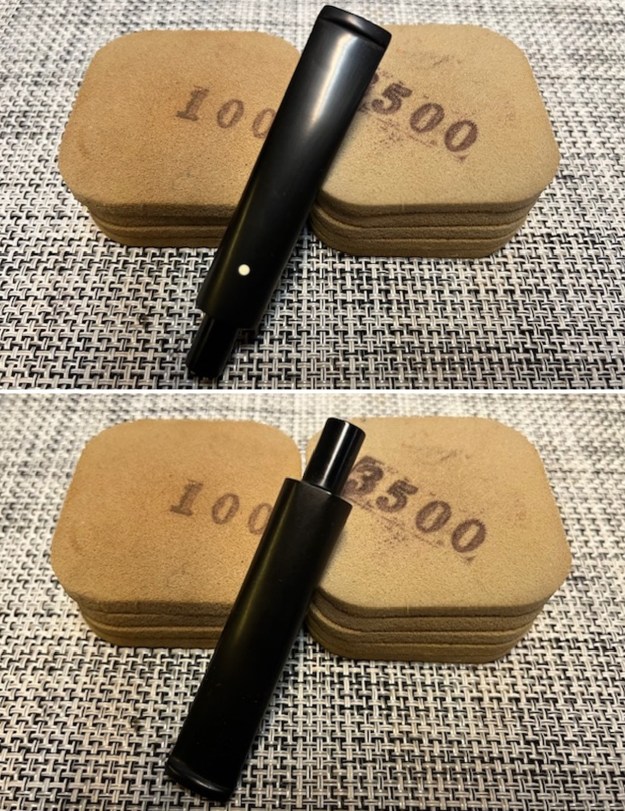
Now it was time to work on the pipe itself. When it gets to Vancouver it my turn to contribute to its restoration. Jeff did a great job cleaning the pipe on the inside and outside. He reamed the bowl with a PipNet pipe reamer and cleaned up the remnants with the Savinelli Fitsall Pipe Knife. He scrubbed out the mortise and the airway in the shank and stem with alcohol, cotton swabs and pipe cleaners. He scrubbed the exterior of the bowl with a tooth brush and Murphy’s Oil Soap to remove the dust in the rustication on the bowl and shank as well as the smooth portions. He rinsed it under running water. He dried it off with a soft cloth. Once the dust and debris were removed the finish was dull but appeared to be in excellent condition. He soaked the stem in Briarville’s Pipe Stem Deoxidizer and rinsed it under warm water to remove the deoxidizer gel solution. I took photos of the pipe to show its condition before I started my work on it. I took a photo of the bowl and rim top to show how well it had cleaned up. There is some rim darkening but you can see the interesting grain on the top of the bowl. The stem tooth marks and chatter are very light.I took a photo of the engraving on the left side of the shank. It is clear and reads as noted above. I also took the stem off the pipe and took a photo of the parts to give a sense of the proportions of the pipe. It is a beauty.I started my work on the pipe by dealing with the darkening on the inner edge of the rim and the darkening on the rim top with a folded piece of 220 grit sandpaper. It looked much better when finished.I polished the bowl and shank with micromesh sanding pads – dry sanding with 1500-12000 grit pads. I wiped the bowl with a damp cotton pad after each sanding pad. The surface began to take on a nice shine. I worked Before & After Restoration Balm deep into the smooth finish to clean, enliven and protect the briar. I hand rubbed it with my fingers and worked it into the finish then set it aside to dry for 10-15 minutes. I wiped it off with a soft cloth. I buffed the bowl with a cotton cloth to polish it. It really began to have a deep shine in the briar. I took some photos of the bowl at this point to mark the progress in the restoration. The grain on the bowl stands out with interesting lines moving across the sides of the bowl and the shank. I set the bowl aside and sanded the stem with the 2 inch square 320-3500 grit sanding pads. I wiped down the stem after each sanding pad. I was able to remove the tooth marks and chatter on both sides with the pads. The stem looked very good.I polished the vulcanite stem with micromesh sanding pads – dry sanding it with 1500-12000 grit pads. I wiped the stem down after each sanding pad with Obsidian Oil and set it aside to dry. I polished it further with Before & After Pipe Polish – using both the Fine and Extra Fine Polishes. I gave it a rubdown with Obsidian Oil one last time and set it aside. I put the House of Robertson Octagonal Square Shank Taper Stem Billiard back together and worked the pipe over on the buffing wheel using Blue Diamond to lightly polish the stem. I buffed the bowl and stem to raise the gloss on the briar and the vulcanite. I gave the pipe multiple coats of carnauba wax. I buffed the entire pipe with a clean buffing pad to raise the shine. I hand buffed it with a microfiber cloth to deepen the shine. The finished the House of Robertson Octagonal Billiard is shown in the photos below. The medium brown stains on the smooth Billiard shaped bowl works well with the rich black of the vulcanite stem. The dimensions of the pipe are: Length: 5 ½ inches, Height: 1 ½ inches, Outside Diameter: 1 ¼ inches, Diameter of the chamber: ¾ inches. The weight of the pipe is 38 grams/1.34 ounces. This is an interesting piece of briar, cross grain and birdseye on the bowl and shank. The patterns on the sides are almost circular. I really like how the briar and the vulcanite work well together. This one will soon be on the rebornpipes store in the American (US) Pipemakers section. If you are interested in adding a House of Robertson to your collection this may well be the one for you. Thanks for walking with me through the restoration process.