Tag Archives: shaping a stem

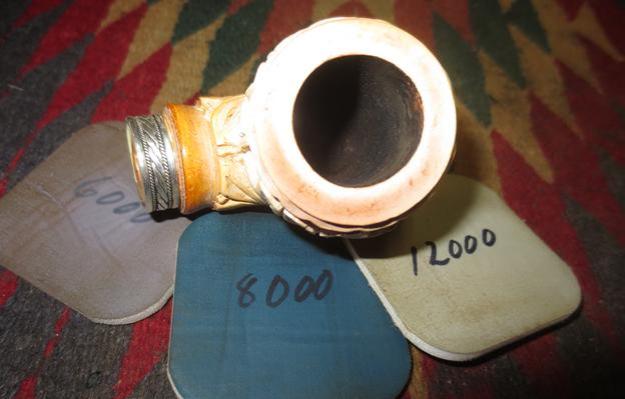
Restoring a Unique Motorist Patent Bulldog


Blog by Steve Laug

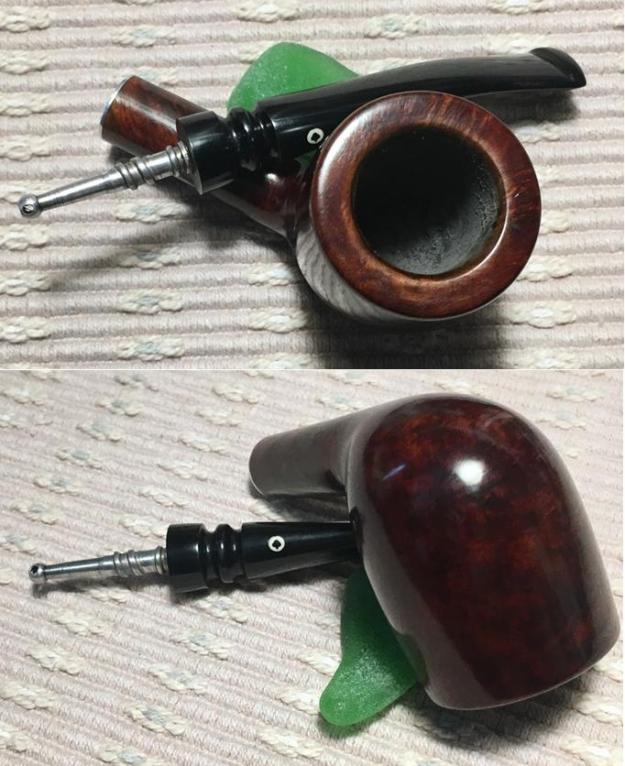
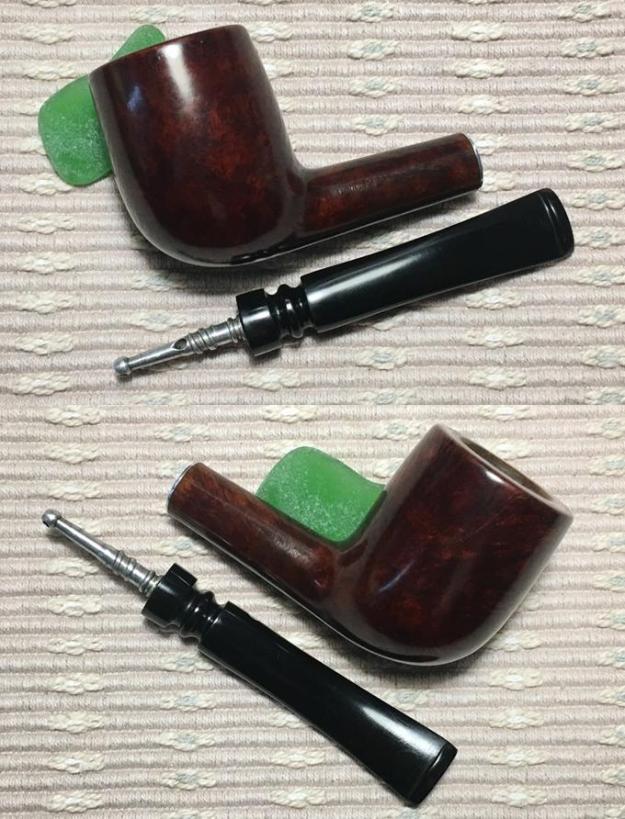
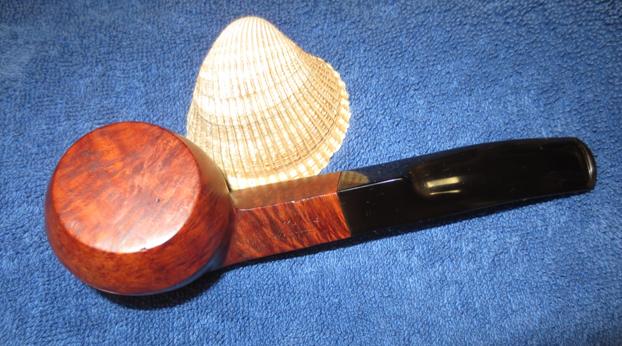
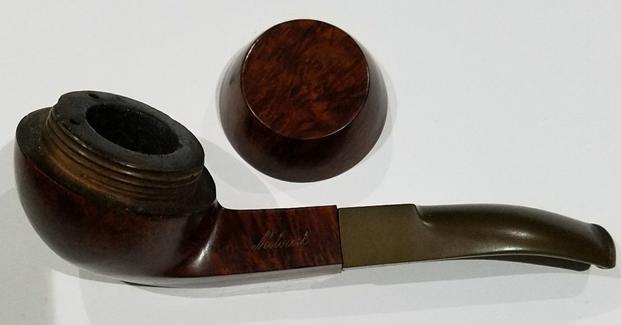
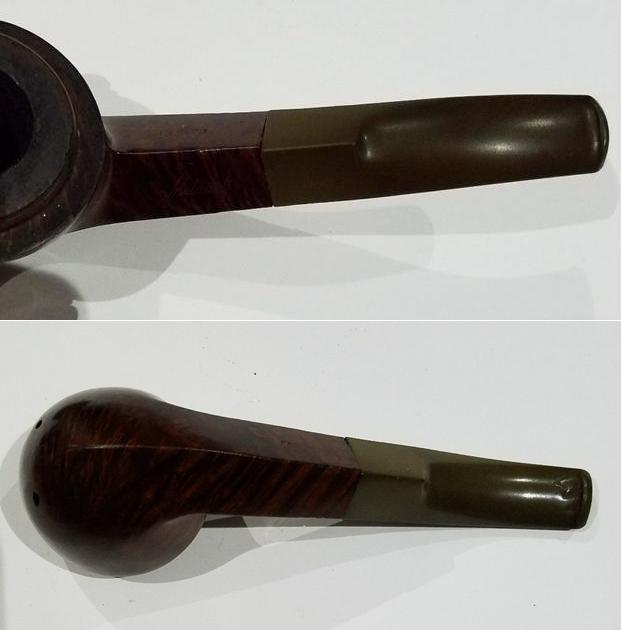
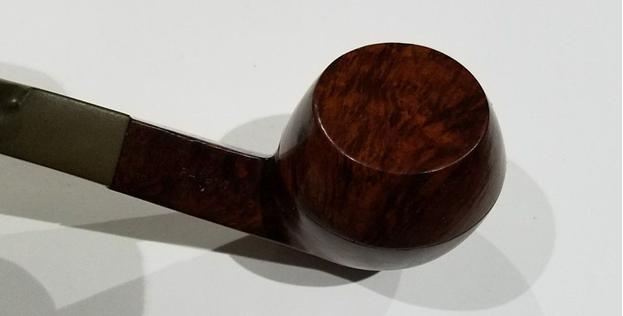
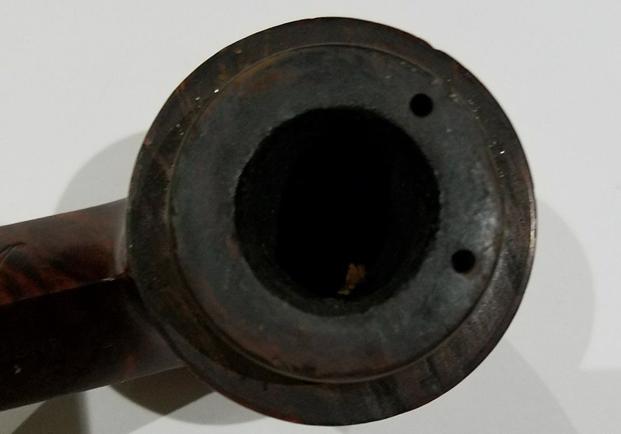
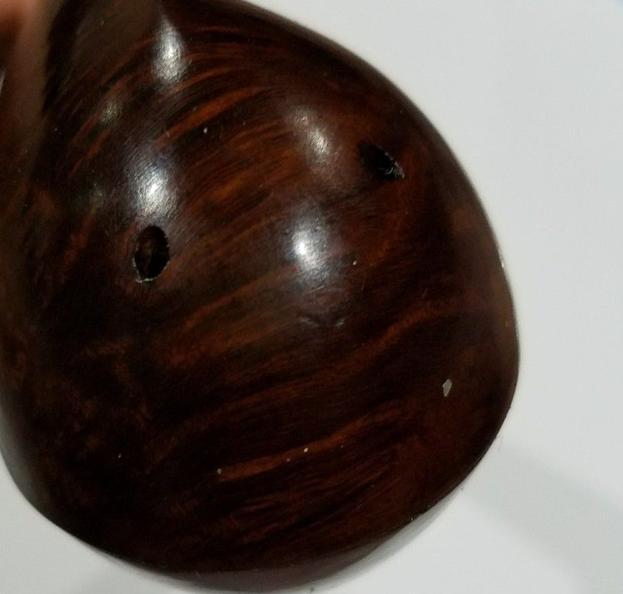
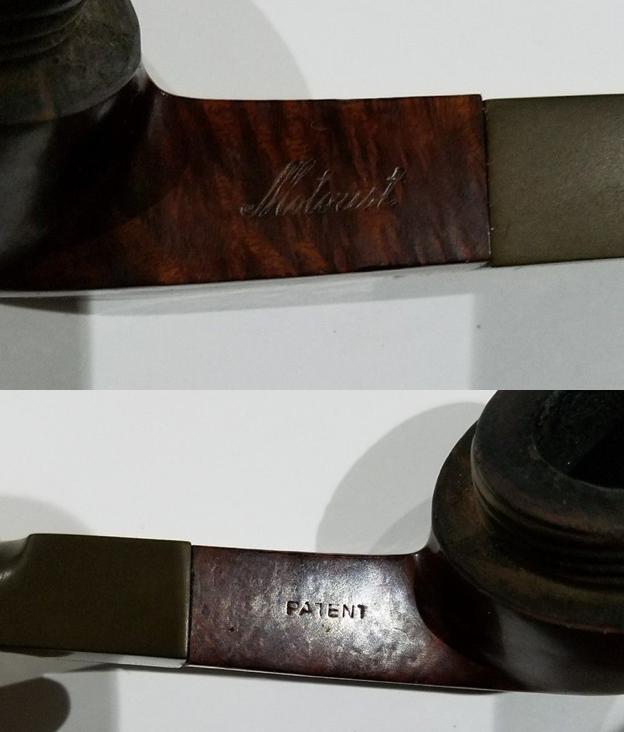
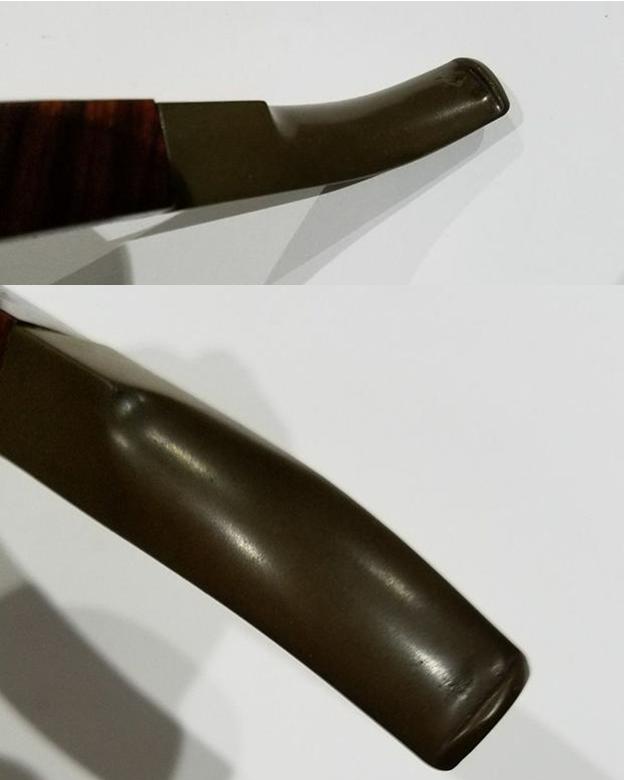
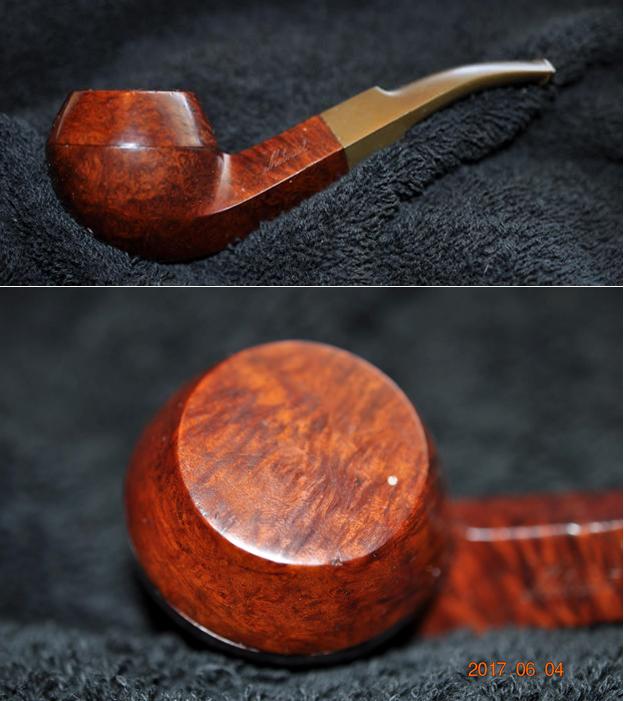
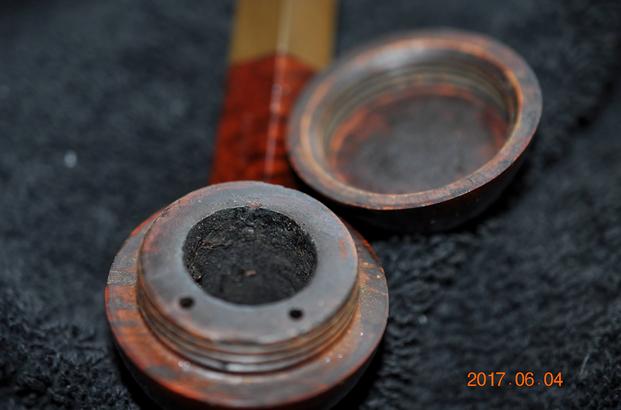
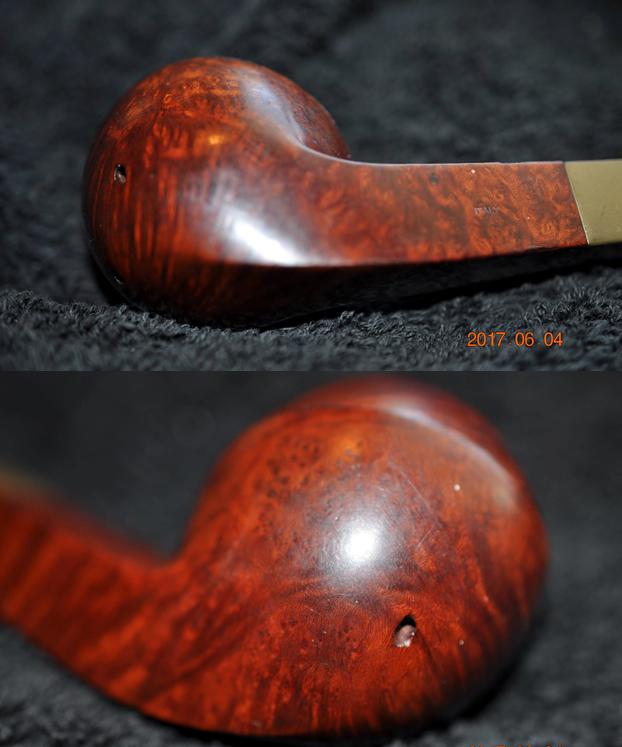
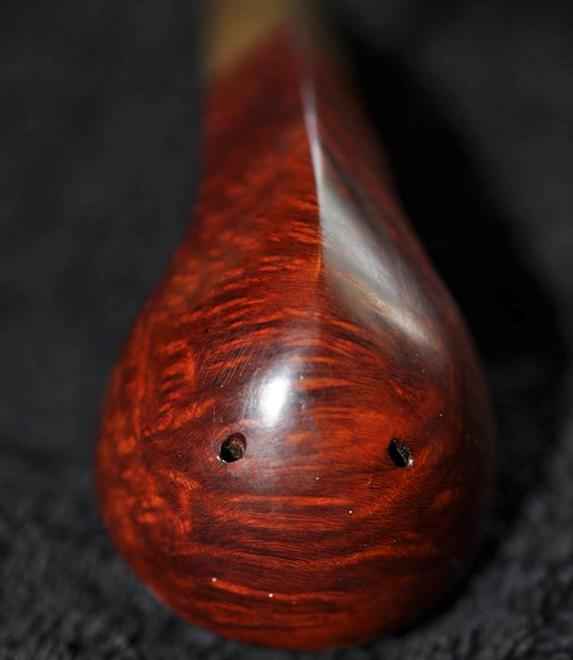
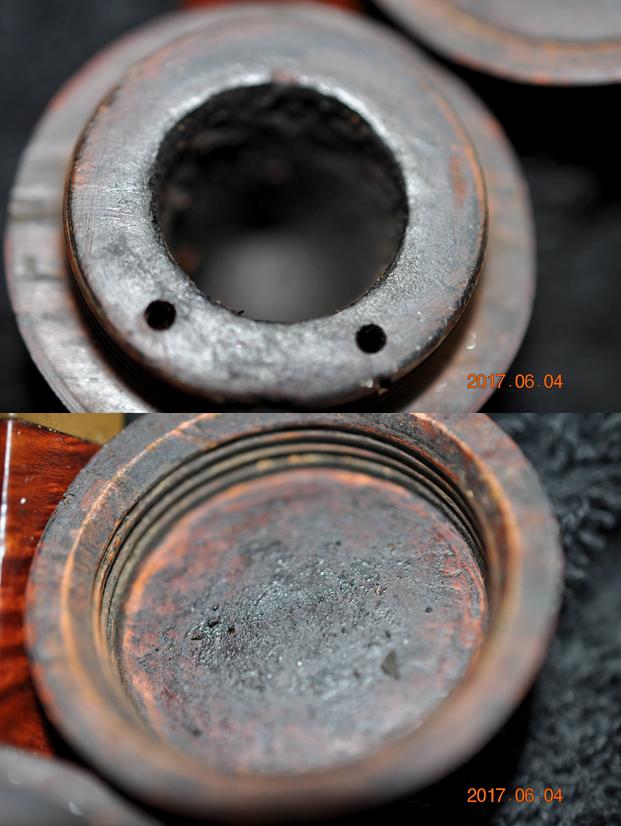
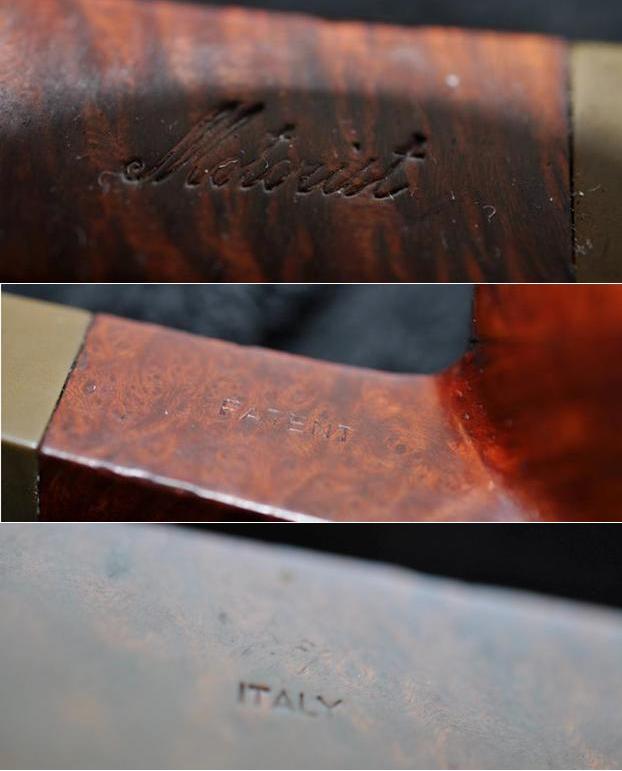
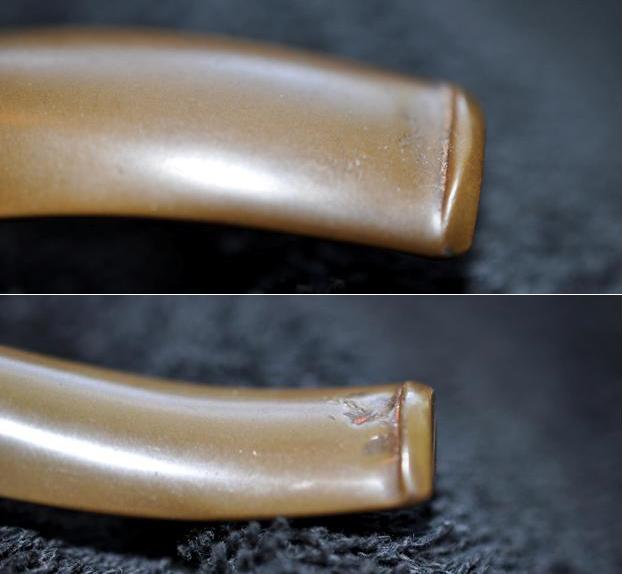
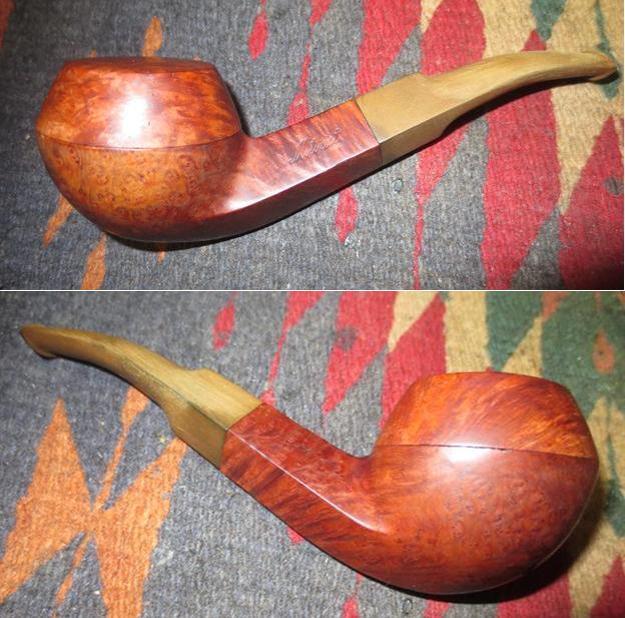
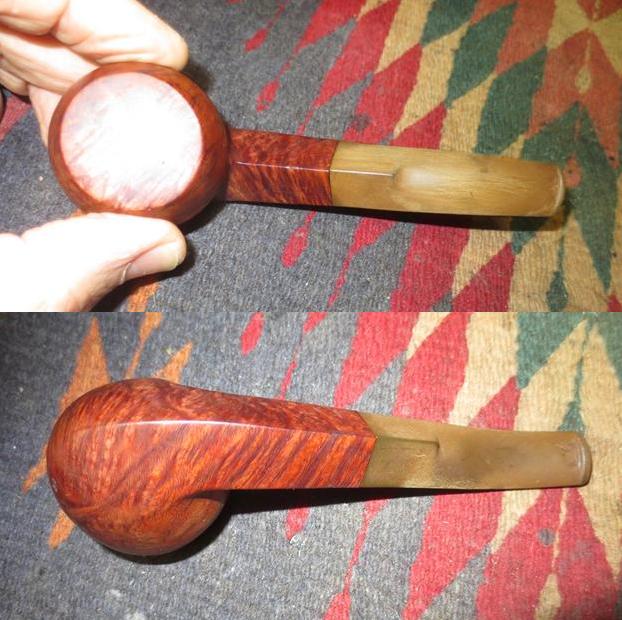
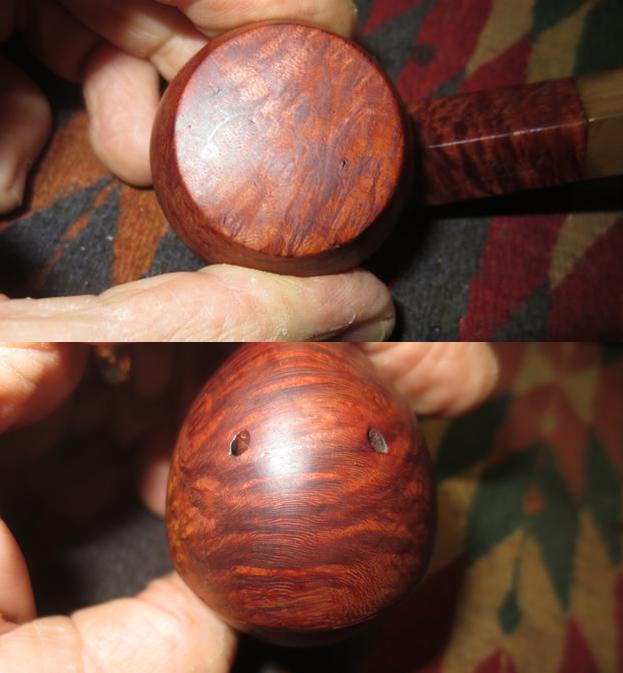
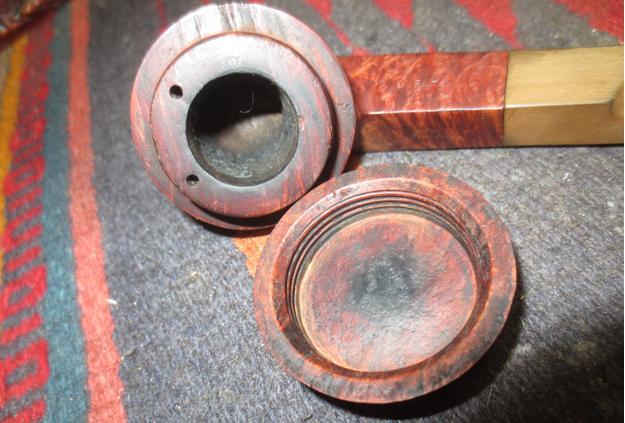
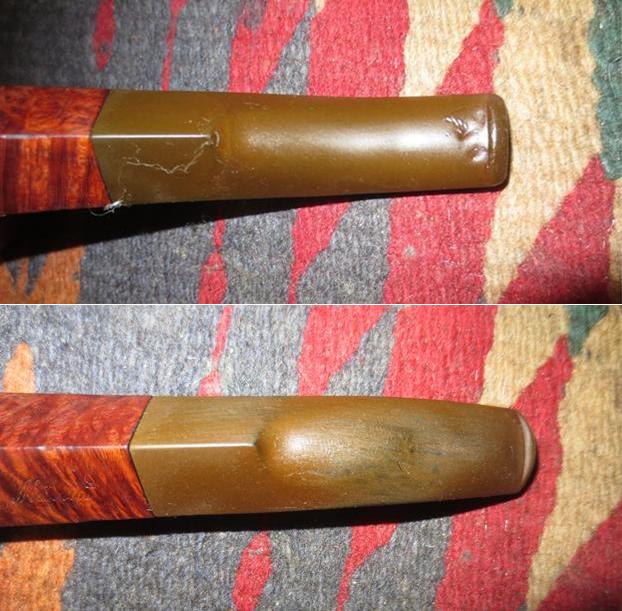
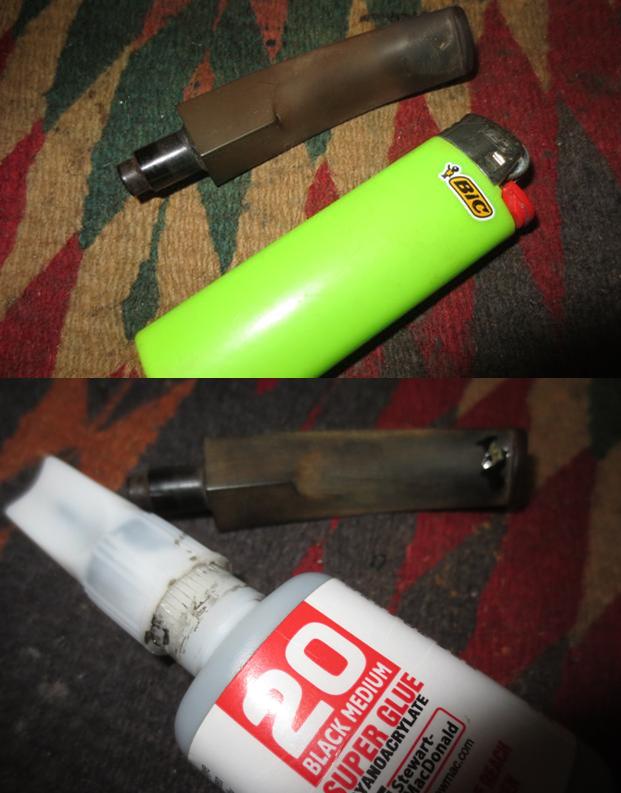
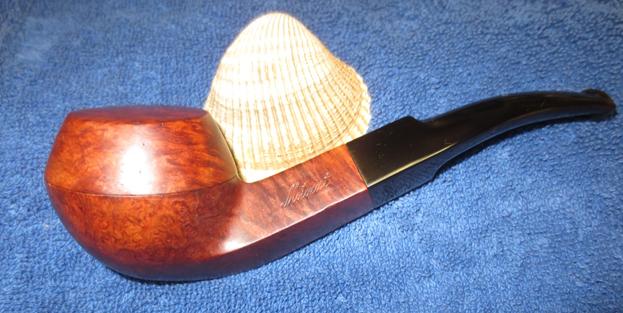
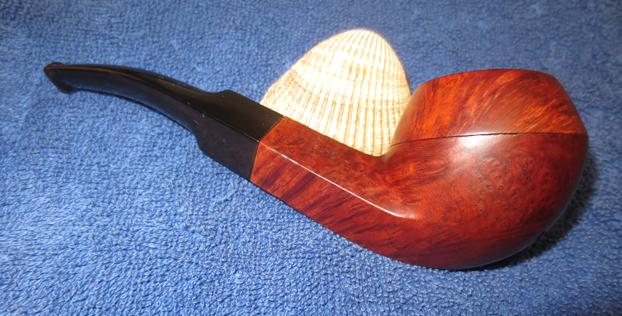
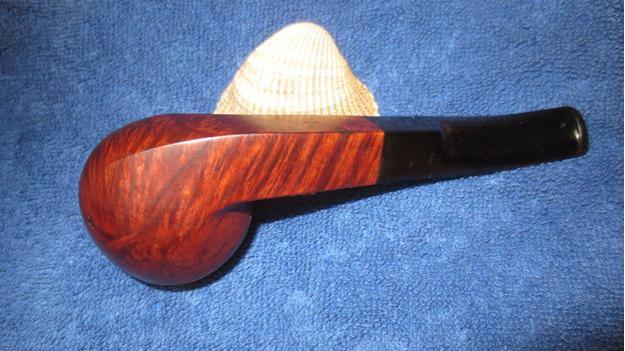
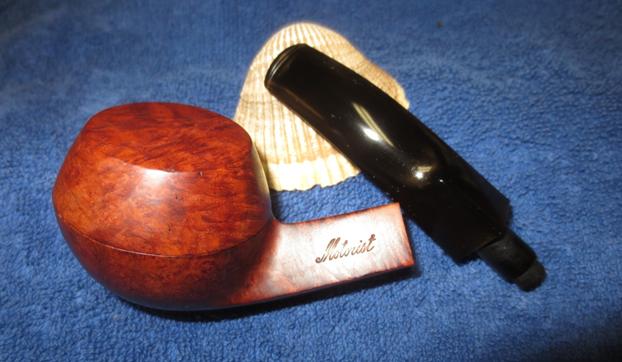
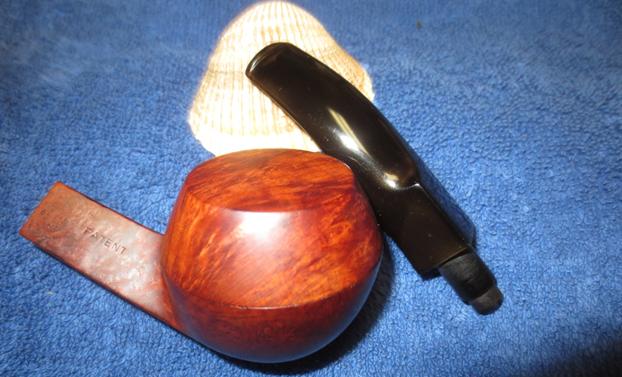
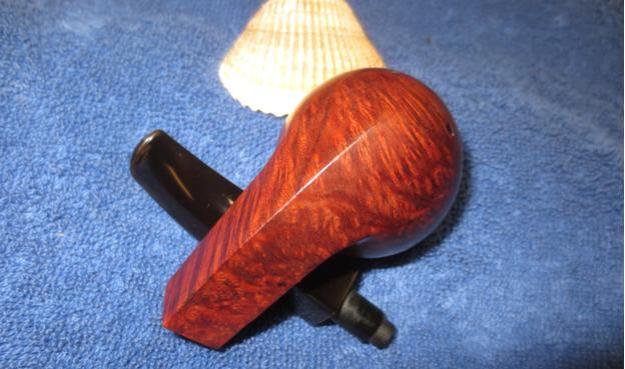
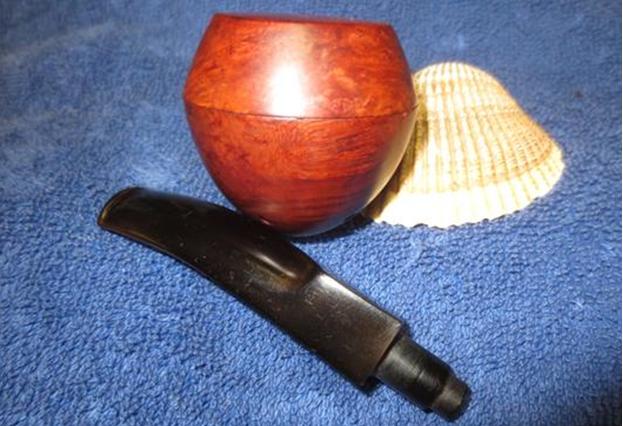
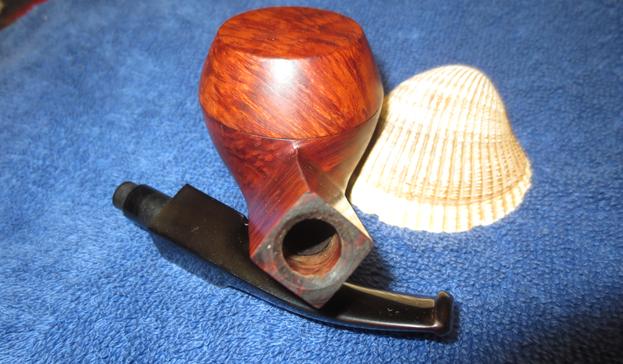
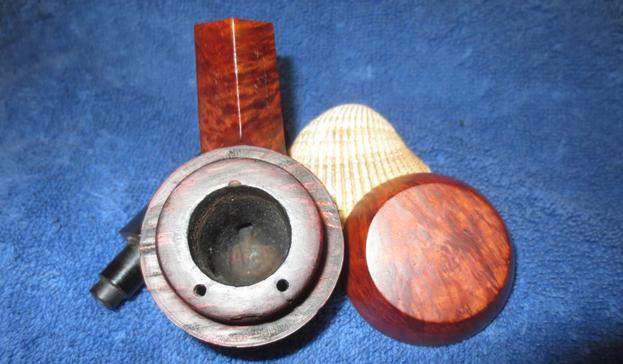
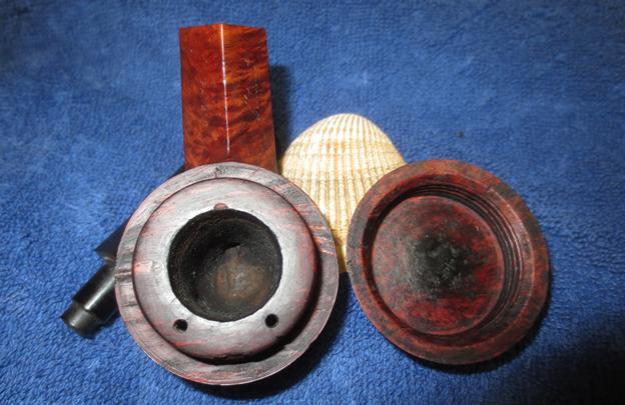
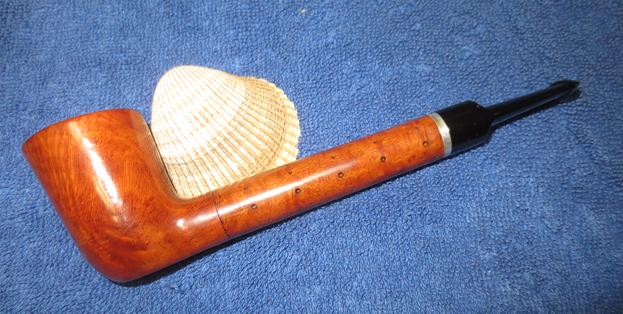
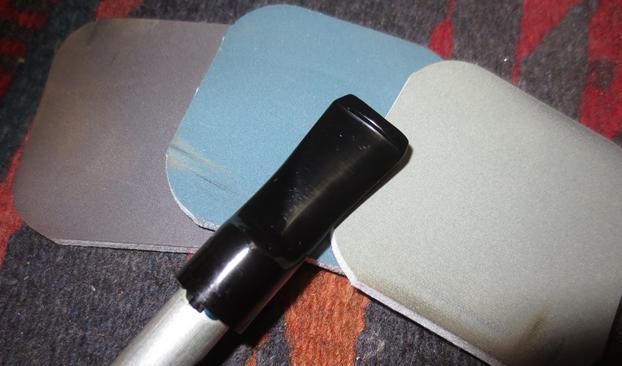
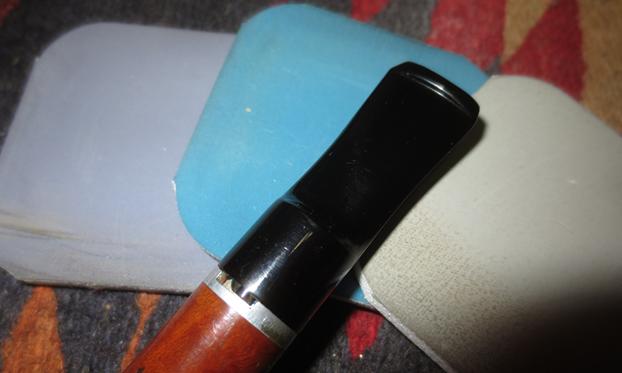
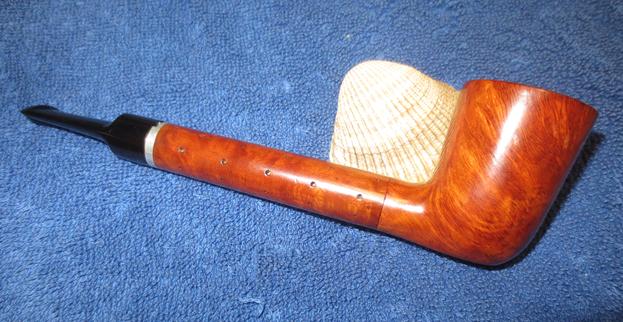
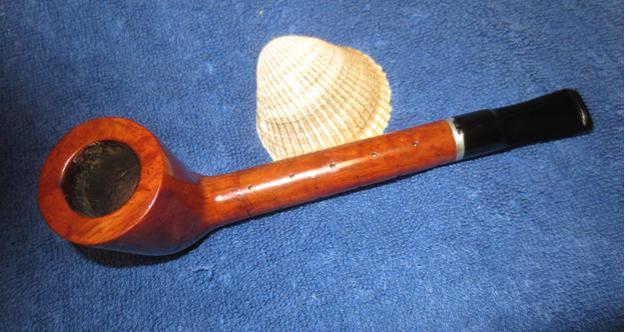
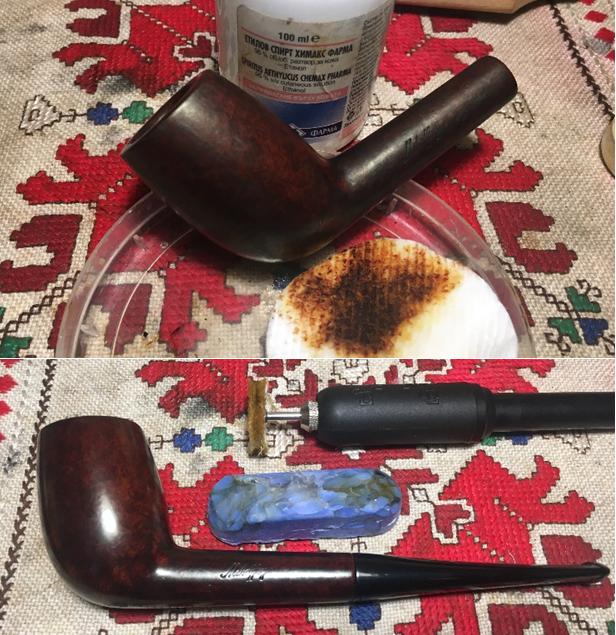
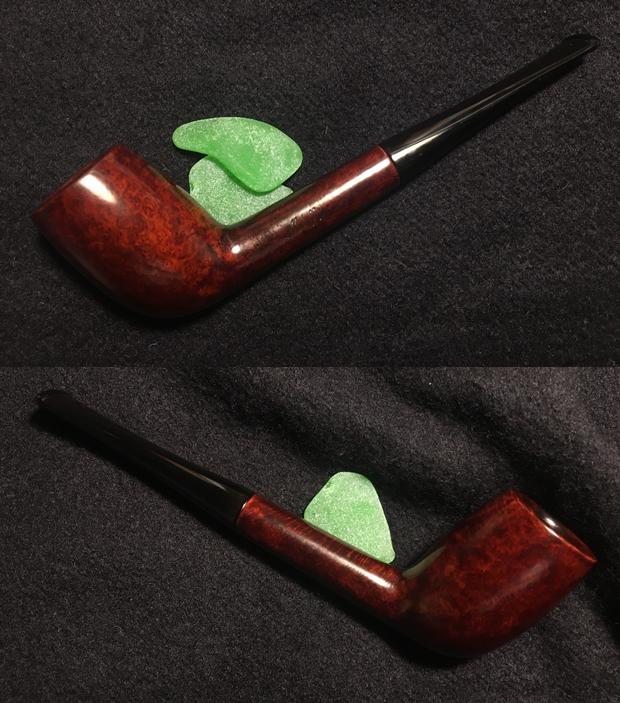
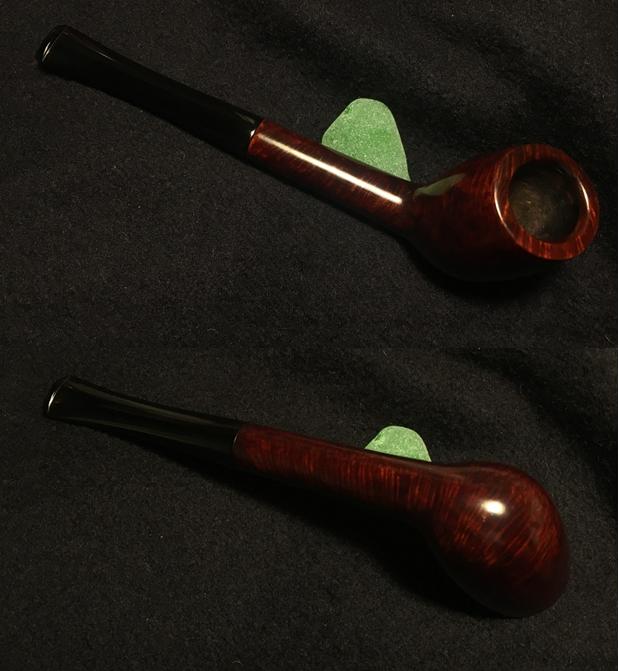
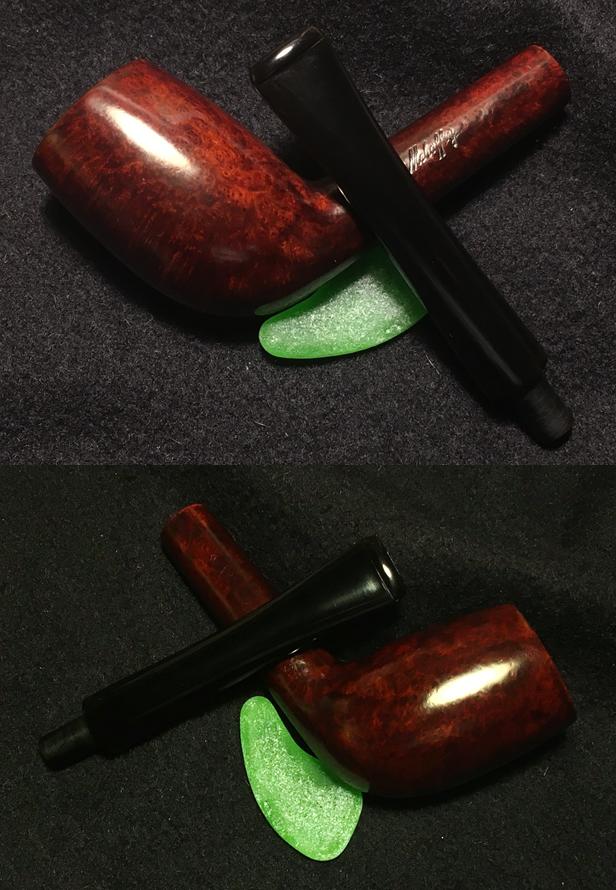
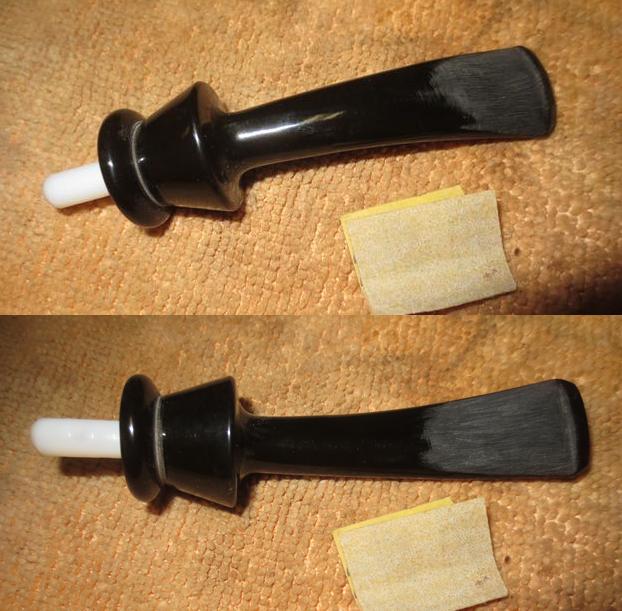
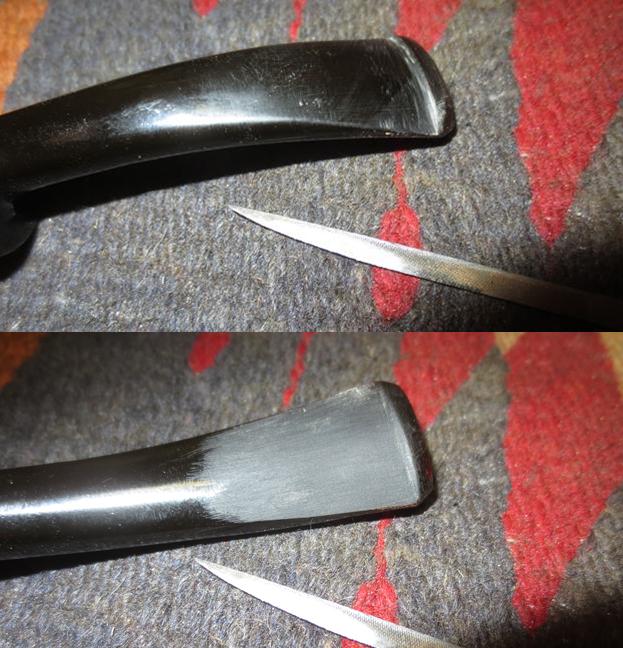
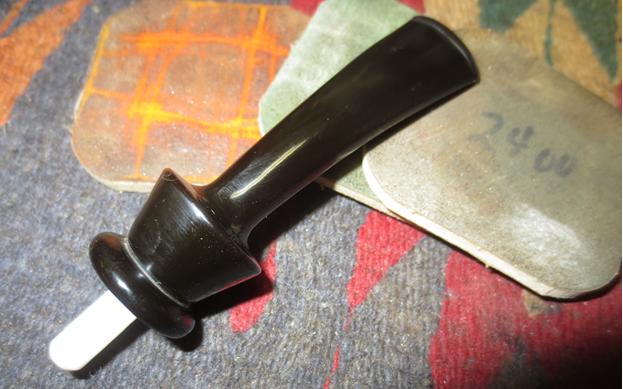
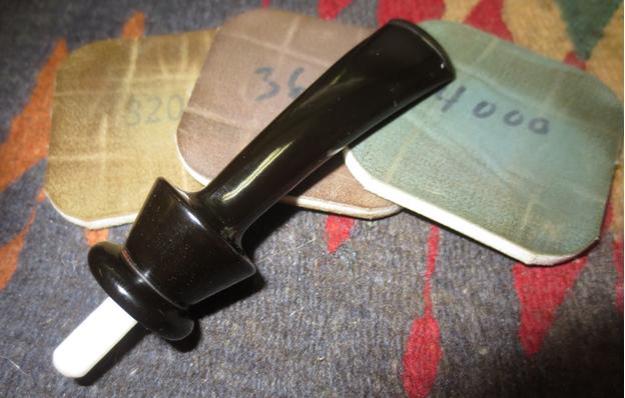
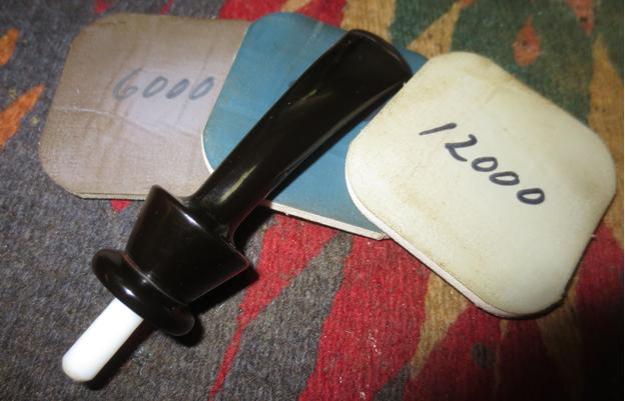
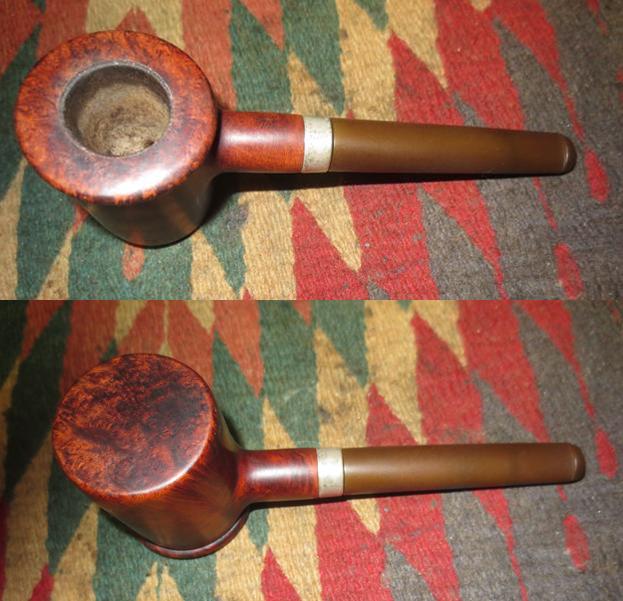
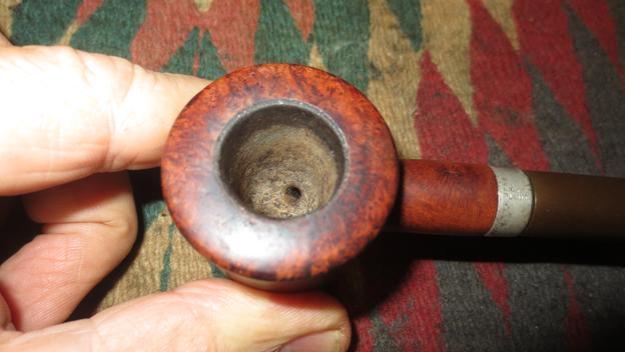
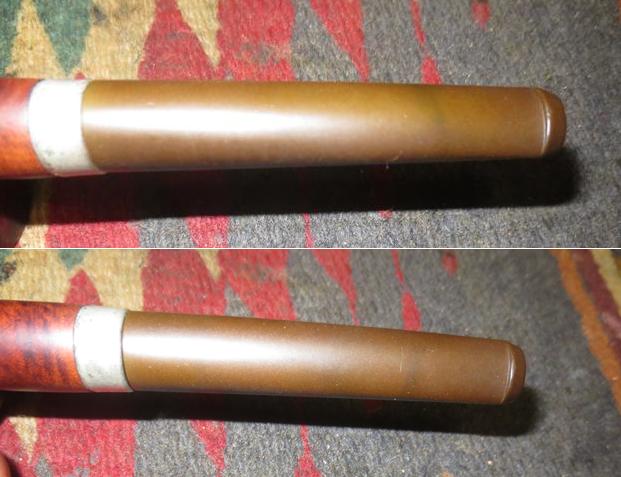
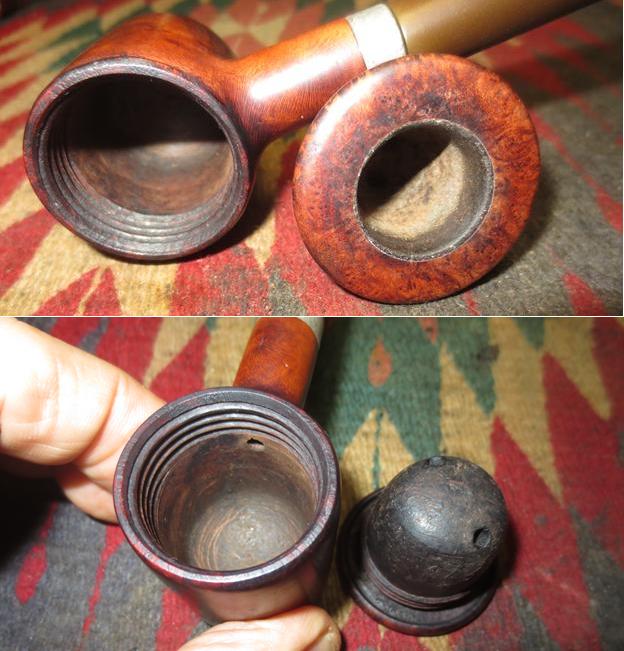
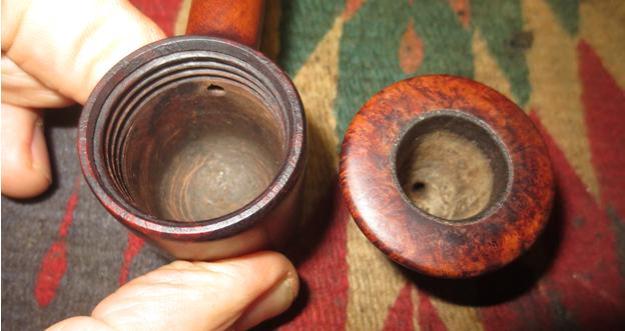
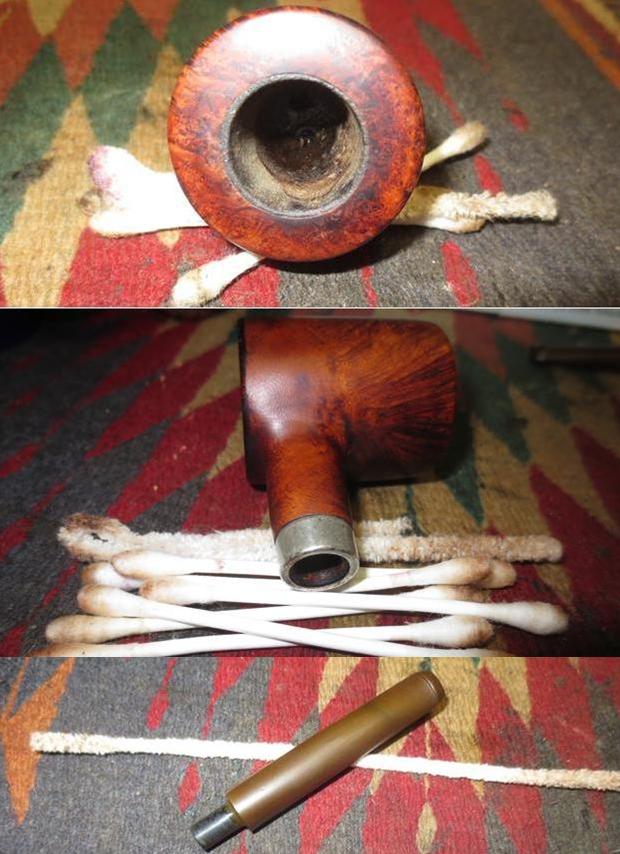
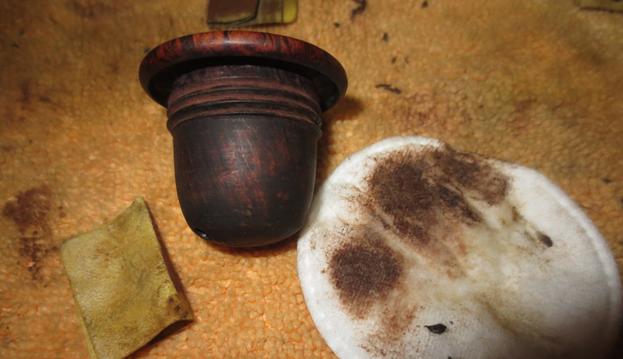
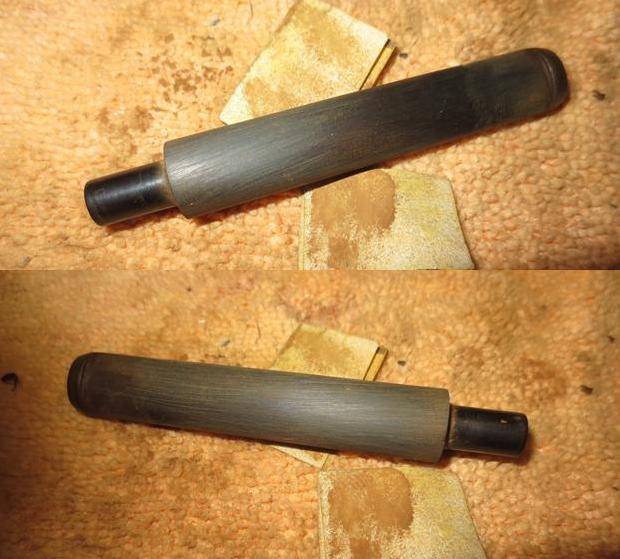
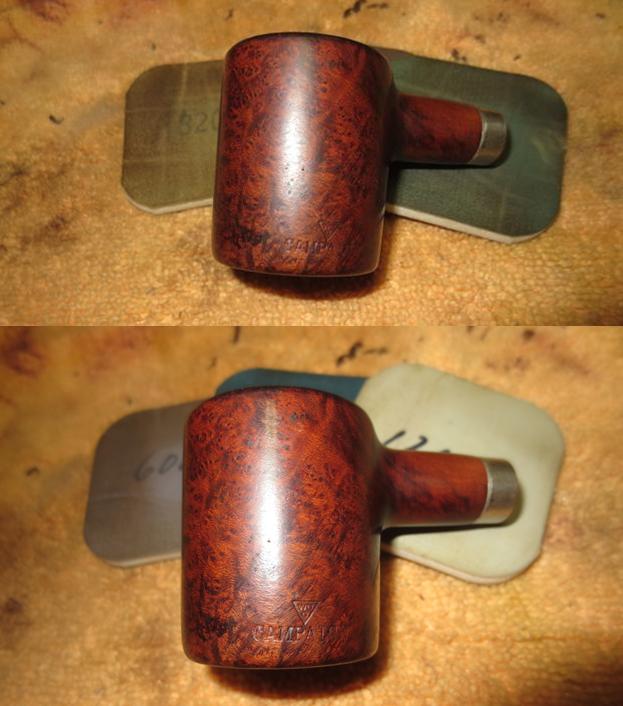
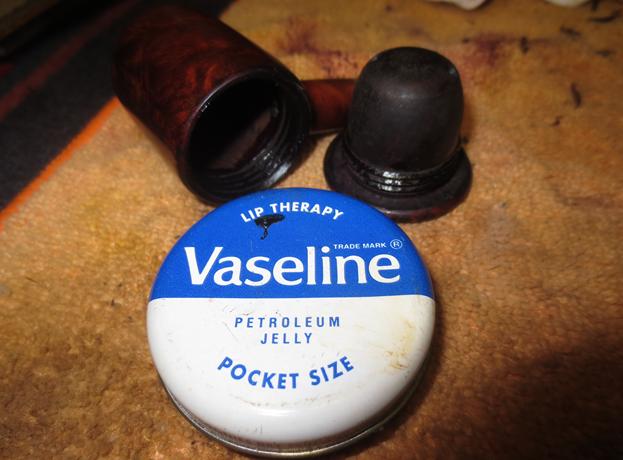
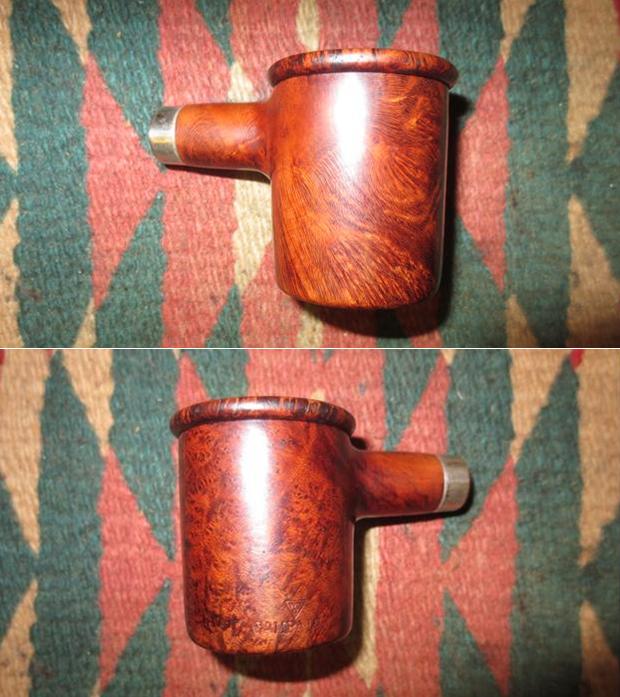
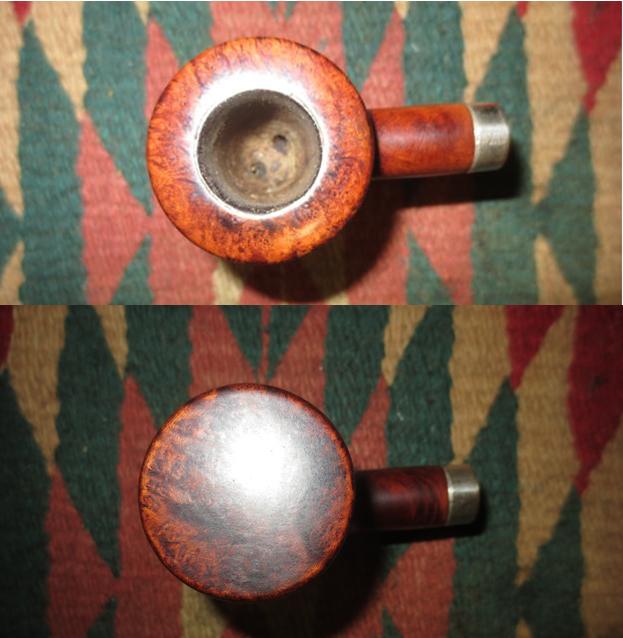
My brother Jeff has an eye for unique pipes. He seems to find more of them than I ever picked up on my own. The next pipe on my work table is classic example of one of his finds. It is a beautiful Bulldog with nice grain around the bowl and when the top cap is in place it looks like it was not drilled. It is stamped Motorist on the left shank in script and Patent on the right shank. On the underside of the right shank it is stamped Italy. I can find no information on the make of the brand but it is possible that it was made in Italy for either Wally Frank or Mastercraft, both had a broad reach of makers that they imported. I am not sure it will ever become clear who made the pipe but it is an interesting piece of pipe history that is well worth restoring. There was a cake in the bowl and lava on top of the bowl once the cap was removed. The inside of the cap was also dirty. The threads on both the cap and the bowl were not damaged. The next set of photos came from the seller’s EBay listing.It has always puzzled me why sellers do not align the stem before they take photos. Often a crooked stem can be a problem but this one appears to have been misaligned. We will know more once it arrives.The finish on the pipe looks to be in pretty good shape underneath the grime and paint specks on the surface.On the top of the rim there were two drilled holes that went through from the rim (first photo below) to the bottom front edge of the bowl (second photo below). I believe they were drilled to draw air into the bowl and help the tobacco burn. The first photo shows the cake in the bowl and the buildup on the rim top. It is a dirty pipe.On the front underside of the bowl you can see the other end of the holes in the rim. They go straight down from the rim and out the front bottom edge. They run between the outer and inner bowl for the airflow into the bowl. I wonder if in some strange way they also cool the bowl.The threaded cap is much the same shape as the cap above the twin rings on a regular bulldog pipe. The cap has threads on the inside that match the threads on the bowl itself. The briar is a pretty piece. There is a small fill on the front edge that blends in very well. The inside of the cap has some tars and carbon on the top portion but there is no burning to the briar.The bowl is stamped Motorist on the left side as shown in the first photo below. The second photo shows the stamping Patent on the right side of the shank.The stem was oxidized and there were some deeper tooth marks and chatter on the underside near the button and chatter on the top side near the button. The edge of the button was worn on the top side.When the pipe arrived in Idaho my brother took some better photos of it to show the finish and the condition of the pipe. You can see the paint flecks on the briar and the general grime that is even in the stamping on the shank sides.His photo of the rim top and the cake in the bowl is clear and shows that the cake is quite thick. The lava overflow on the rim top is also thick and continues onto the shelf that the cap rests on when it is screwed in place.The first two photos below show the sides of the bowl and also show the drilled air holes in the bowl sides on the left and right. The third photo below shows the underside of the bowl and both air holes. The grain on the briar is really nice and follows the flow of the bowl. Jeff took close up photos of the rim top and the inside of the cap to show the carbon buildup on those two areas.The next three photos show the stamping on the pipe as noted above. Notice the debris that is ground into the grooves of the stamping.He took photos to show the condition of the stem. The chatter on the top side was not as bad as I had expected but the marks on the underside were very deep and had sharp edges.Jeff did his usual thorough clean up and when I received the pipe there was little for me to work on in terms of cleaning. He reamed the bowl with a PipNet reamer and cleaned it up with a Savinelli Fitsall Pipe Knife. He scrubbed out the mortise and the airway in the shank and stem with pipe cleaners, cotton swabs and alcohol. He scrubbed the surface of the bowl with Murphy’s Oil Soap and rinsed it with warm water. He soaked the stem in OxiClean to soften the oxidation and bring it to the surface. All that remained was for me to breathe some life into it through the restoration process. I took the following photos to show the condition of the pipe when it arrived in Vancouver. The oxidation on the stem was now on the surface, thanks to the OxiClean soak. The tooth marks were also very clear so now it would not take much to repair them and restore the stem to its original black lustre.The lovely grain on the bowl cap and the bowl are well laid out. There are some small sandpits on the cap that do not detract from the beauty. The twin air holes in the bottom front of the bowl are aligned well and are a distinctive feature of the pipe.When I removed the cap from the top of the bowl I could see how well my brother had cleaned up the inside of the bowl, the rim top and the inside of the cap.I wiped the stem down with Before & After Pipe Stem Deoxidizer to remove some of the oxidation and though it did not work well it did clean up the area around the tooth marks. I “painted” the bite marks with the flame of a Bic lighter to raise them as much as possible. Many of the surface bite marks lifted, but the deeper ones I filled in with Black Super Glue. I sprayed it with an accelerator to dry it and allow me to work on it more quickly. Once it had dried I was ready to clean up the stem and smooth out the repair. I ran a pipe cleaner dipped in isopropyl alcohol through the mortise and the airway in the shank and stem and worked on the slot with a dental pick. It did not take too much work to leave both the bowl and the stem clean.I scrubbed the stem surface with Brebbia Stem Polish and a cotton pad to remove more of the oxidation. While it removed a lot more of the oxidation there was still some in the curves of the saddle stem that needed more work. I worked those over with 220 grit sandpaper to get more of the oxidation off the stem.I polished the curved portion of the saddle on the stem with micromesh sanding pads to remove the oxidation further. I wet sanded it with 1500-2400 grit sanding pads. As I cleaned up the underside of the stem at the saddle there was a small piece of metal embedded in the rubber which pointed to a wartime manufacture date for the pipe (WW2). I have read that they used rubber from old tires to make stems in that era. I rubbed the stem down with Obsidian Oil and let it sit to dry.I polished it more with 3200-4000 grit pads and rubbed it down with Obsidian Oil. There was still some oxidation in the curves on the transition between the saddle and the blade of the stem.I buffed the saddle area with red Tripoli and Blue Diamond on the buffing wheel to remove the last of the oxidation and to polish it. I polished it further with 6000-12000 grit micromesh sanding pads. I finally had conquered the oxidation and the stem shone.I buffed the finished pipe with Blue Diamond once more to polish the pipe and gave it multiple coats of carnauba wax. I buffed it with a clean buffing pad to raise the shine on the pipe. I hand buffed it with a microfiber cloth to deepen the shine. The finished pipe is shown in the photos that follow. It is not only an interesting piece of pipe history it is also a beautifully made pipe. The contrast between the rich reddish, brown stain and the black of the vulcanite stem work really well together. Thanks for walking with me through the restoration process.

A Unique Bing Crosby Thermostatic Filtration System Pipe


Blog by Steve Laug

I am a fan of Bing Crosby and have watched most of his films over the years. A tradition in our family during the Advent Season and over New Year’s involves enjoying White Christmas, The Bells of Saint Mary’s and Holiday Inn. As a pipeman I enjoy watching how he incorporates his pipe into the ebb and flow of the movies. On top of that the crooner can sing! I have a number of his albums in my collection and follow him on Spotify. The variety of music he sings has always been fun to listen to.

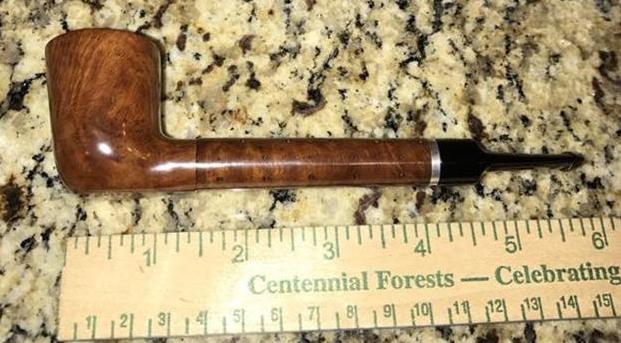
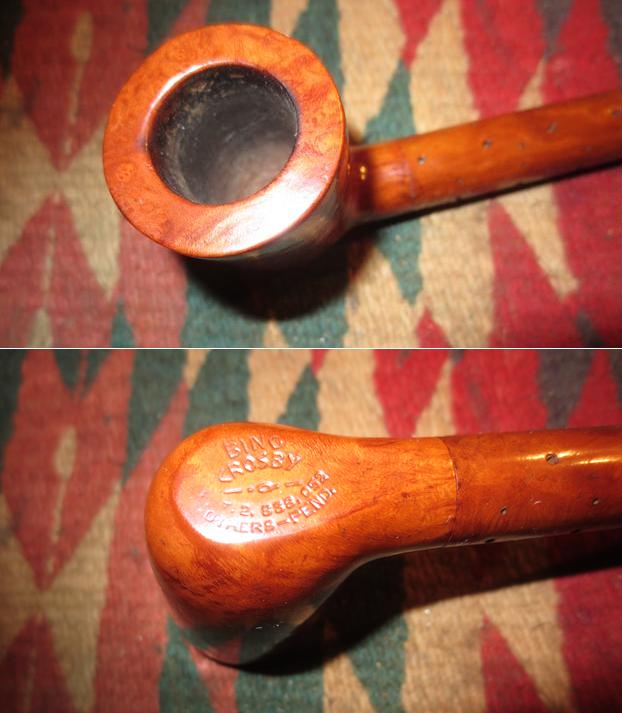
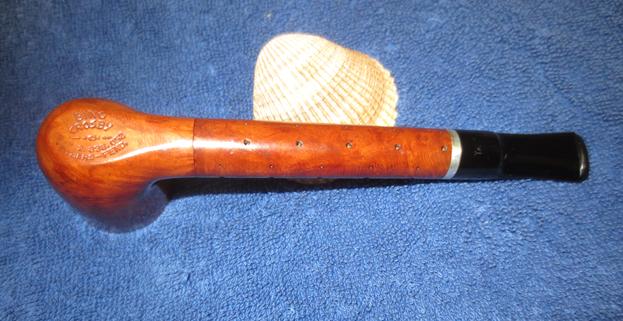
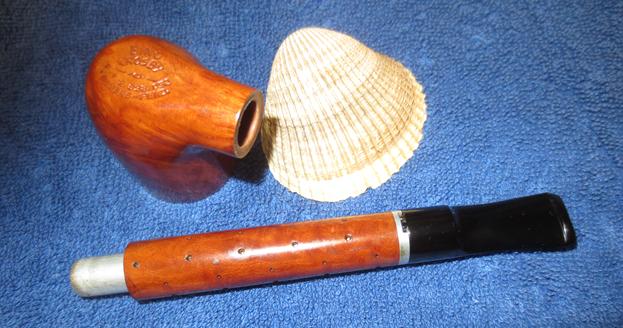
Over the years I have seen quite a few long, pencil-shanked Bing pipes – made by diverse makers from Savinelli to various artisan made renditions. All of them have the characteristic look of the pipe in the photo to the right. My research for blogs on Mastercraft pipes led me to information that Bing had been involved in the business of the pipe company and certainly could be seen in many of their advertisements. I have included one of them I found on Pipedia from 1945 advertisement courtesy Doug Valitchka.When my brother sent me some pictures of the next pipe he had picked up on EBay I was hooked before I even had it in hand. The seller had described the pipe as follows: A Rare Bing Crosby Swiss Cheese Pipe Made in Italy. There it was – a Bing Crosby Pipe. However it was unlike any other Crosby pipe I had ever seen. He continued his description as follows: Stem rotates to open holes and to produce a cooler smoke. Stem is stamped Italy. Pipe is stamped Bing Crosby with some kind of Maker’s Mark Pat 2.838.052 Others Pend.

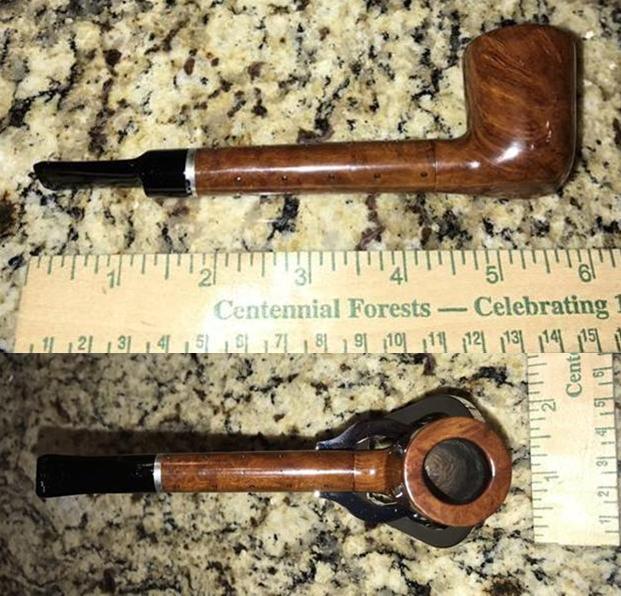
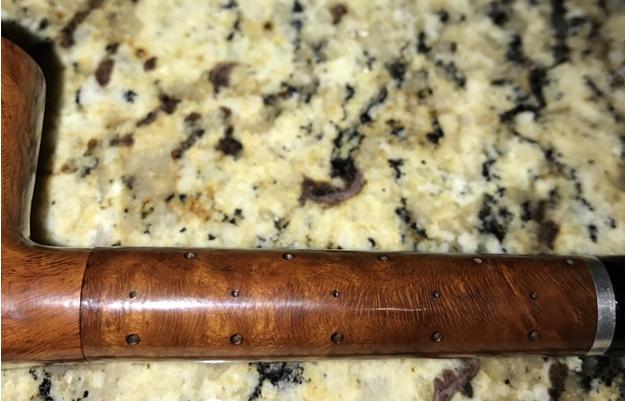
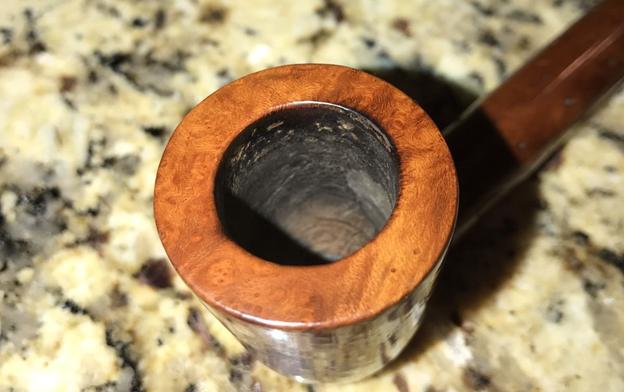
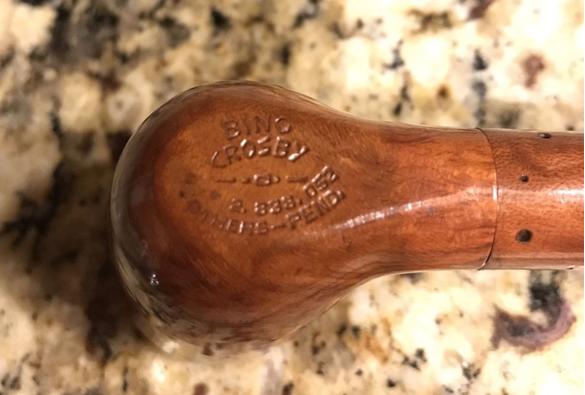
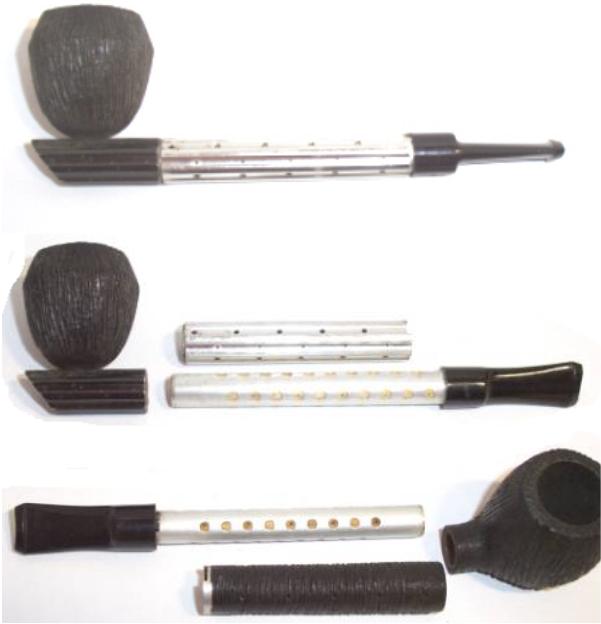
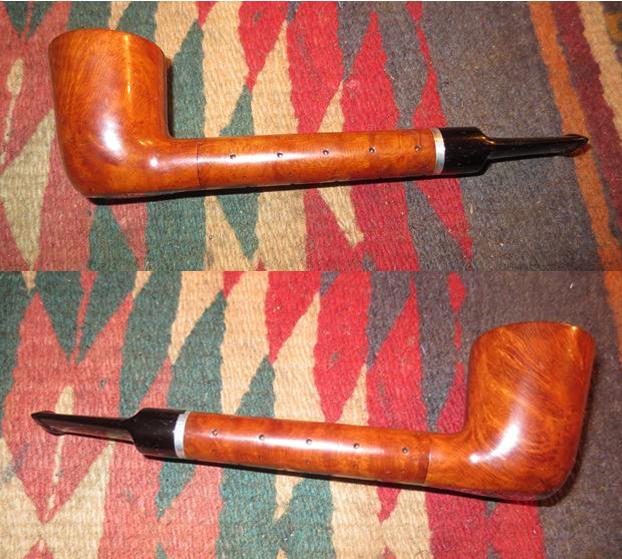
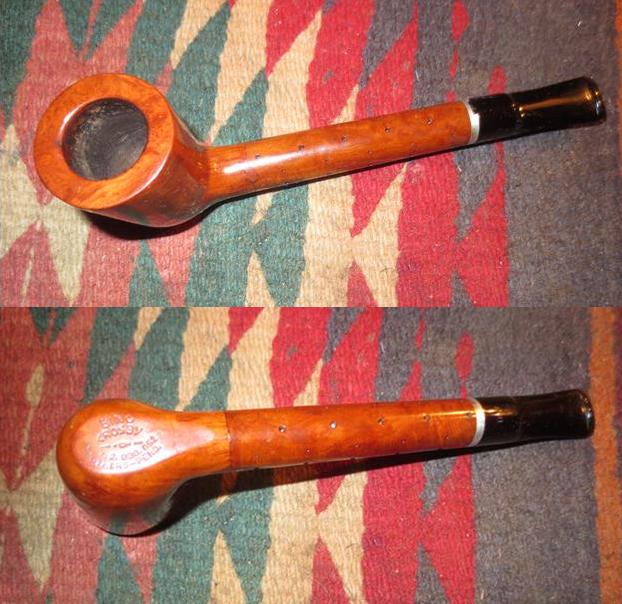
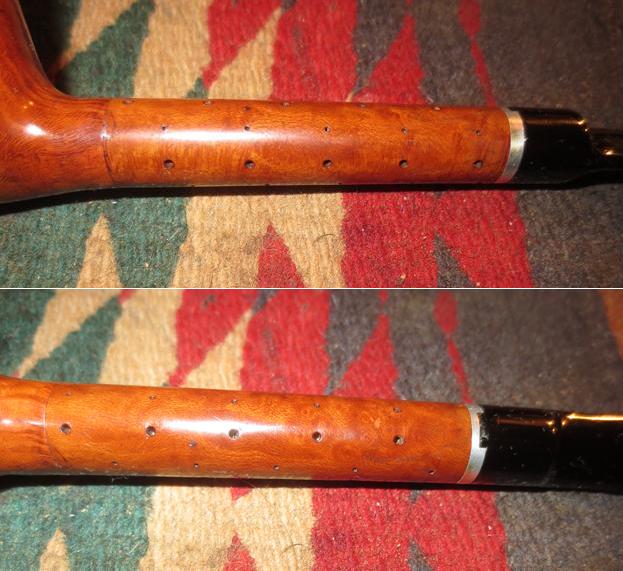
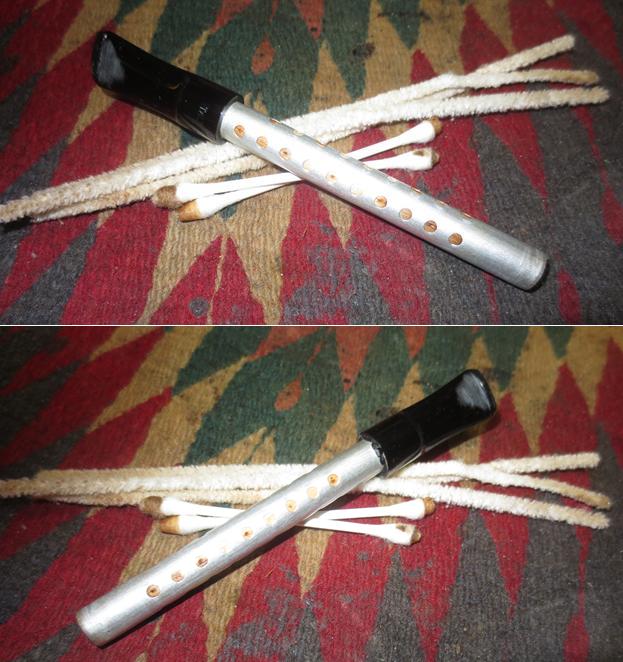
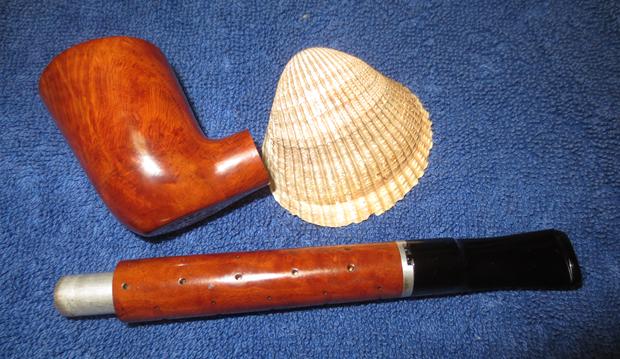
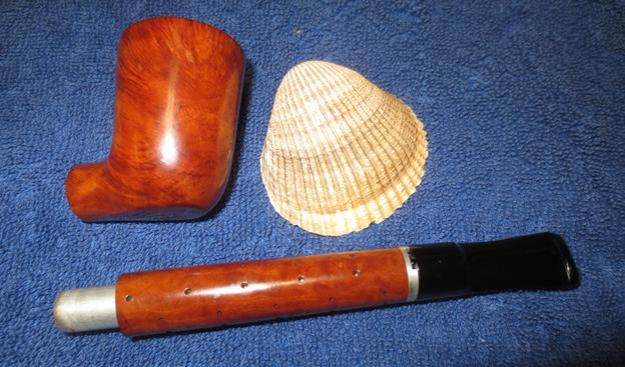
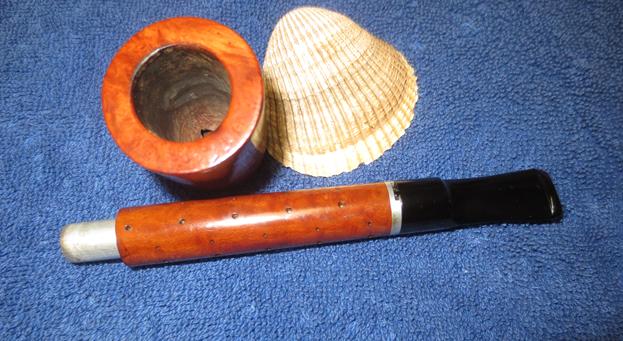
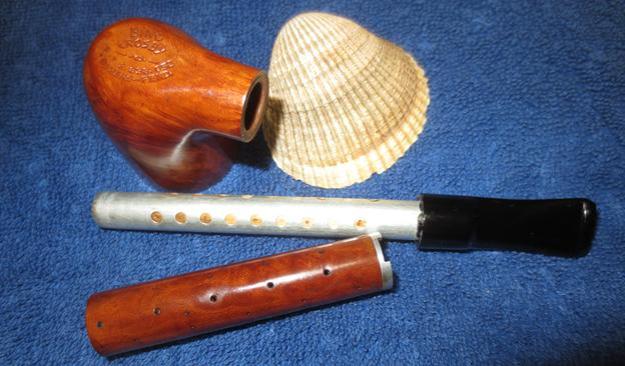
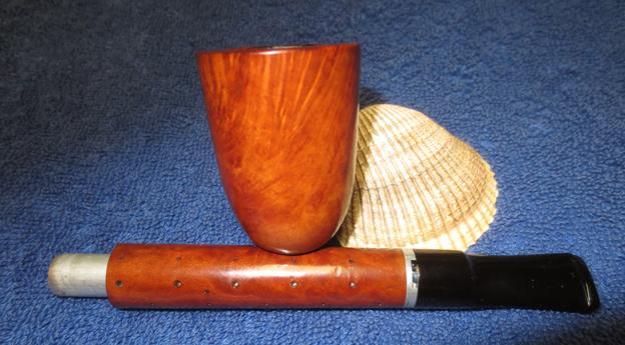
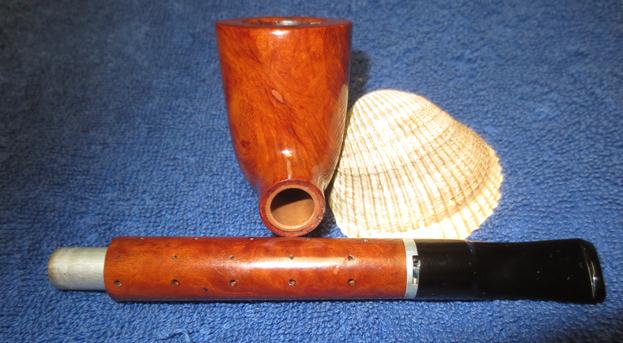
Here are the photos the seller included. The pipe appeared to be in excellent condition. The finish looked like it was flawless. The bowl was lightly caked and the perforated shank looked really interesting. There was a silver band on the end of the shank and the stem was clean except for light tooth marks and chatter on the top and the underside near the button. The seller included a close up photo of the perforated shank that he said rotated. It had 20 larger perforations that ran in four columns the length of the shank. There were also 20 smaller perforations between the larger columns. The band had a notch and the stem had a raised portion that rotated in the notch to align the various air holes and control the airflow into the shank of the pipe. The seller did not include any photos of the internal parts of the pipe. That would have to wait until I had it in hand to find out. The close up of the rim gave a clear picture of the thickness of the light cake in the bowl and the condition of the rim top. He also included a close up photo of the stamping on the underside of the bowl. It was clear and readable. The left side (toward the front of the bowl bottom) stamping is lighter but still readable. It reads: Bing Crosby in an arch over a symbol spacer. Arched underneath that spacer it reads: Pat. 2,838,052 over Others – Pend. Italy is stamped on the underside of the stem. I am not sure if it refers to the vulcanite coming from there or the manufacture of the pipe itself being done in Italy.As expected, information was somewhat scarce on the pipe. I did find that one of my favourite go to sites, SmokingMetals had information on the brand. I quote the information and have included the photos that I found on that site:

Several variants, but basically the inner stem consists of a filtering device integral with the bit. The outer sleeve comes in several designs. Twisting the perforated outer stem alters the smoke flow/air mixture. These examples here under the Bing Crosby name, but another derivative came under the name of Trailblazer, by “Pipes by Lee Inc.”. The Medico Ventilator appears to incorporate the same principle. I dug a little deeper in the web and found that there was a thread on the Pipesmokers Forum. Here is the link if you would like to follow the entire discussion on the thread. https://pipesmokersforum.com/community/threads/a-bing-crosby.45689/ I quote two of the respondents regarding the pipe.

It’s my understanding that the “swiss cheese stem” was designed to give the pipe a cooler smoke. When you twist the pipe shank it either closes the holes or opens them – thus providing a cooler or warmer smoke. I am more interested in knowing if Bing really had a hand in its design or if the whole thing was a gimmick

…SO – the filtration system is called “thermostatic” – and the wood inside the aluminum sleeve on mine definitely looks to be balsa wood. Now if I could just get one of those magnetic drying chamber thingies.

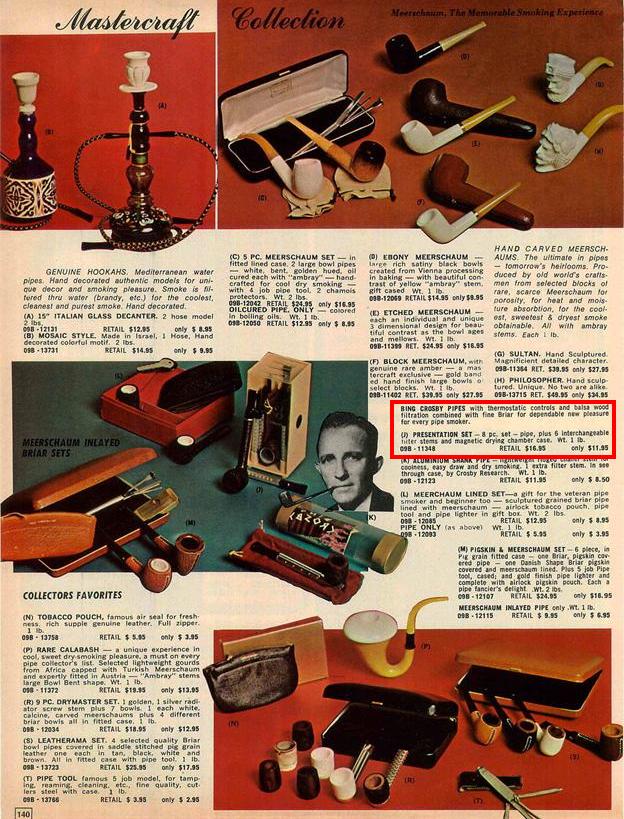
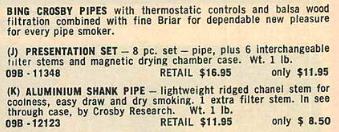
The information I was finding in my research on the pipe was fascinating. I was getting excited about being able to work on it when it arrived in Vancouver. I was beginning to wonder if the pipe was not sold by Mastercraft. There were several links in the thread referring to articles and information on Bing Crosby himself and one that took me to an advertisement that appears to come from a Mastercraft Pipe Catalogue or from a magazine that included this pipe along with a selection of Mastercraft pipes. http://www.ebay.ca/itm/1971-ADVERTISEMENT-Bing-Crosby-Smoking-Pipes-Rolls-Royce-Bank-Tie-Rack-/151568646383?rmvSB=trueI have inserted a red box around the description of the pipe in the catalogue page and also included a magnified photo of the section that I highlighted. You can see it to the left. It reads: Bing Crosby pipes with thermostatic controls and balsa wood filtration combined with fine Briar for dependable new pleasure for every pipe smoker. In the photo item (J) and (K) show variations on the Crosby Pipe. The first is a presentation set with a pipe and 6 interchangeable filter stems and a magnetic drying chamber case where the stems and filters can be stored. Interestingly both sets bear the designation that the pipes are offered by Crosby Research. (That organization will be something I will look into at a later date.)

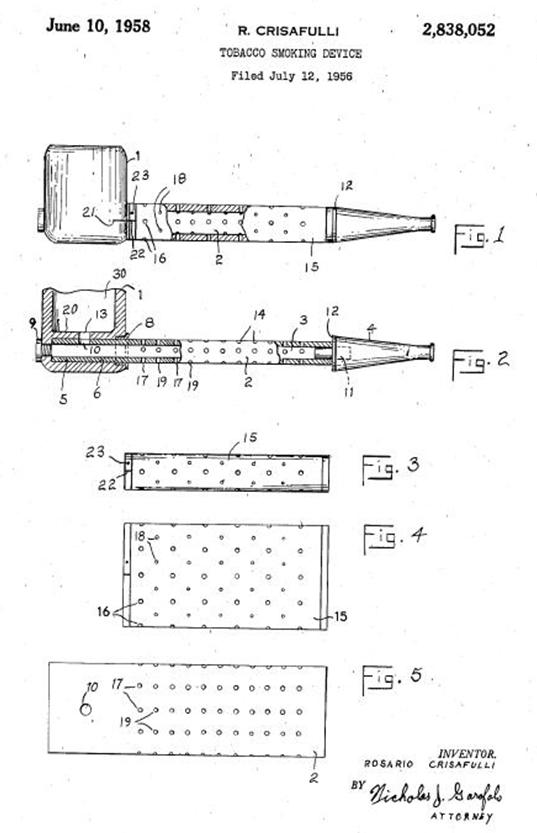
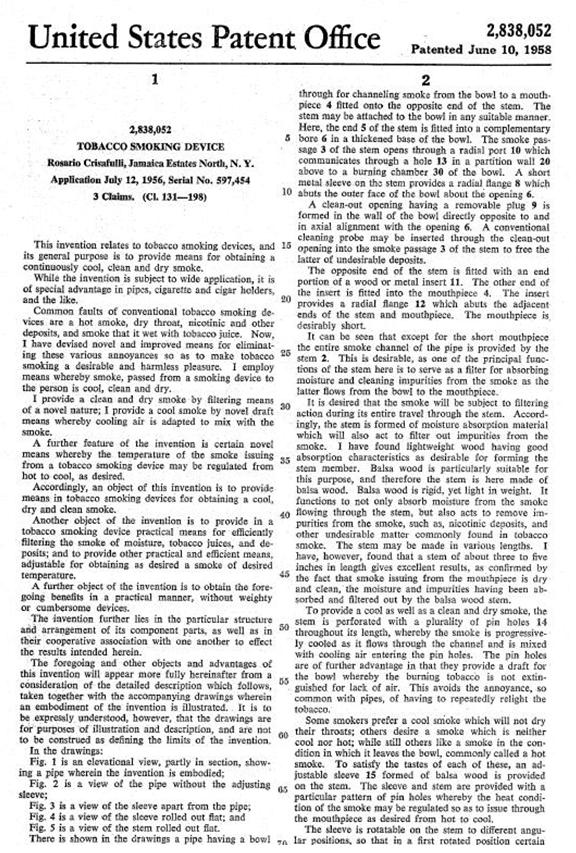
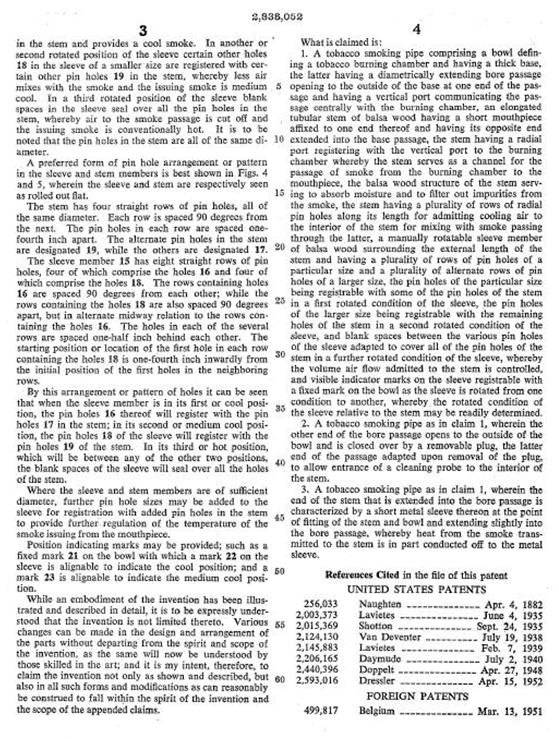
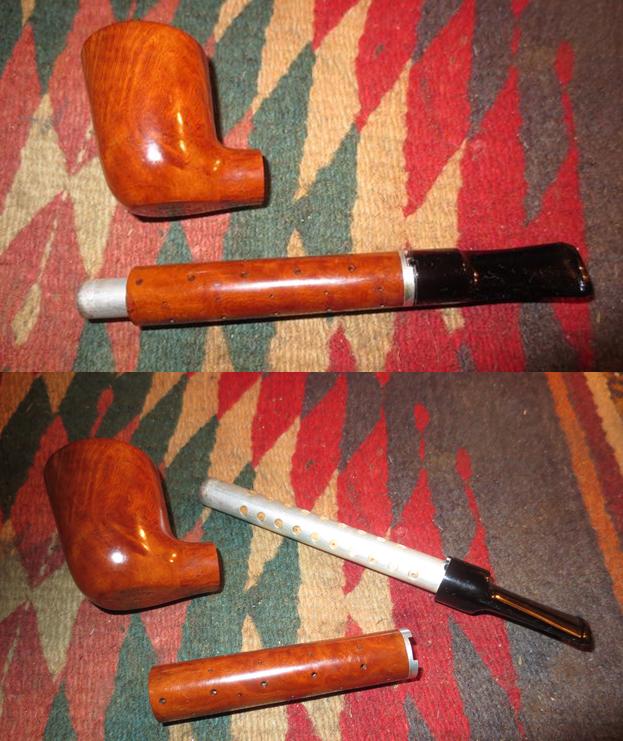
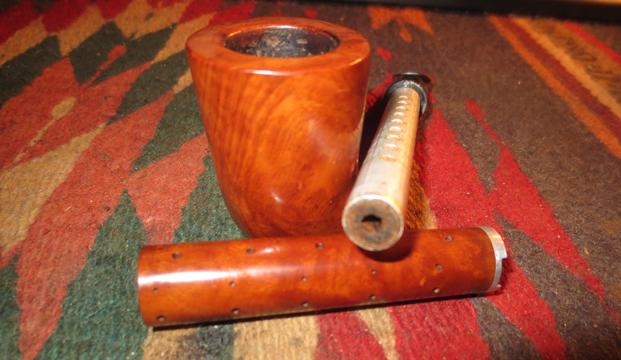
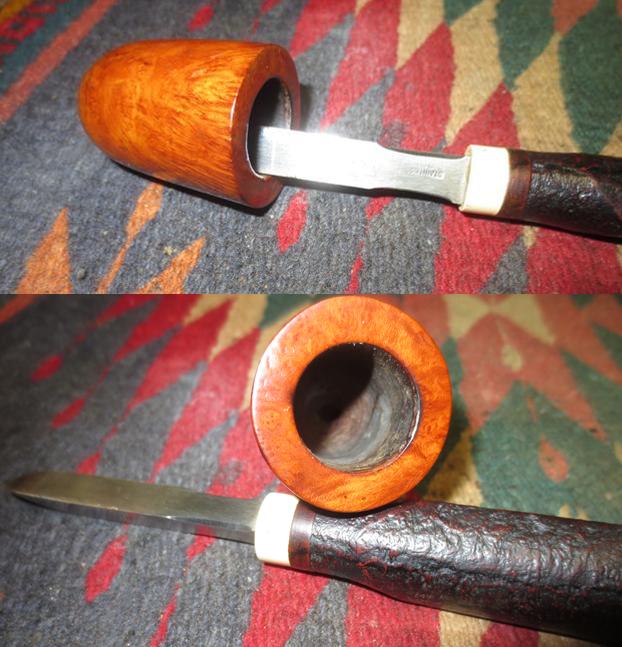
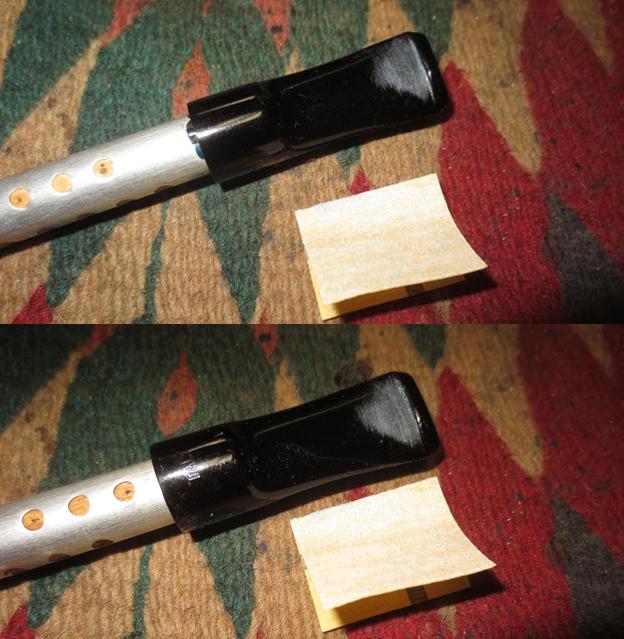
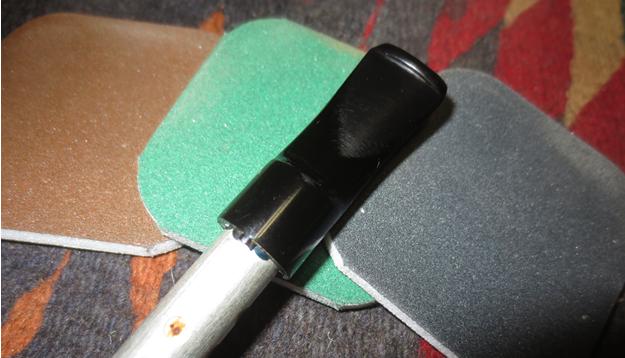
I used the patent number on the bottom of the bowl to hunt down the patent on the US Patent website. I have included the patent drawing and documentation that was submitted with the descriptions of the innovations of this pipe. The pipe was invented by Rosario Crisafulli of Jamaica Estates North, New York and was filed with the US Patent Office on July 12, 1956. The patent was granted almost two years later on June 10, 1958. I made an unexpected trip to Idaho last week to visit my parents and brothers and brought the pipe back to Vancouver with me last evening. I took some photos of it before I cleaned it up. I took some close up photos to confirm the condition of the pipe. The first shows the bowl, rim top and edges. They were in pretty good shape. There was some minor denting on the rim top. The second shows the stamping on the bottom of the bowl, confirming the information that was given above.The next two photos show the perforated shank from the left side and the top (the other two sides are identical). In the second photo of the top of the shank you can see the notch and slot for adjusting the airflow into the stem.The stem was in excellent condition except for a tooth mark on the top and the underside next to the button. They are hard to see in the photos but they are not too deep. The underside of the stem is also stamped Italy as noted earlier in the blog.The shank encloses an aluminum tube with matching perforations to the shank. It is an integral part of the stem. Inside of the tube is a hollow balsa wood filter much like the hard maple filter found in Brigham pipes. In this case the smoke is drawn through the shank and air from outside is mixed with the smoke to either keep it warm or cool it so a clean dry smoke is enjoyed by the pipe smoker. In the earlier noted advertisement the stem and filter unit were one unit and were sold with replacements. The next photos show the pipe taken apart. I used a Savinelli Fitsall Pipe Knife to scrape out the light cake in the bowl and clean up the inside edge of the rim.I cleaned out the inside of each part of the pipe with pipe cleaners, cotton swabs and alcohol. In the mortise in the short shank on the bowl there was quite a bit of tarry buildup that came out quite quickly. In the outer tube of the shank there was also some tars. I used a sharp dental pick to clean out each perforation in the shank tube. I cleaned out the airway in the stem and the filtration tube with pipe cleaners and alcohol. I cleaned the end of the filter with cotton swabs and alcohol. I used cotton swabs to clean each spot of balsa wood that was underneath the perforations in the aluminum tube. I sanded out the tooth marks on both sides of the stem with 220 grit sandpaper and polished it with micromesh sanding pads. I wet sanded with 1500-2400 grit pads and dry sanded with 3200-12000 grit pads. I wiped the stem down with Obsidian Oil after each pad and set the stem aside to dry after the final wipe down with oil. I buffed the pipe and stem with Blue Diamond on the buffing wheel and gave the pipe multiple coats of carnauba wax. I was careful in buffing the shank so as not to fill the perforations in the shank with polish or wax. I buffed the pipe with a clean buffing pad to raise the shine and then hand buffed it with a microfiber cloth to deepen the shine. The finished pipe is shown in the photos below. It is truly an oddity but it is an interesting piece of pipe history. It is one more unique attempt to deliver the perfect cool and flavourful smoke. Thanks for walking with me through this refurb and through the associated information I was able to find. Cheers.


Jen’s Trove No. 7 – A Trident Blasted Bent Billiard with a Question of History


Blog by Dal Stanton

This pipe represents the 7th of 8 pipes that Jen rescued from my ‘Help Me!’ baskets.  She’s leaving Bulgaria very soon returning to the US after working with us for a few years.  She is not returning without gifts!  She has chosen a trove of pipes that have garnered her attention to give as gifts to the men in her family.  Each of these gifts has the added benefit of helping the Daughters of Bulgaria, our work here in Bulgaria with women and girls who have been sexually exploited and trafficked in Europe.  My love of restoring pipes as The Pipe Steward is a way of shining a light on the tragedy of those caught in this modern-day slavery.

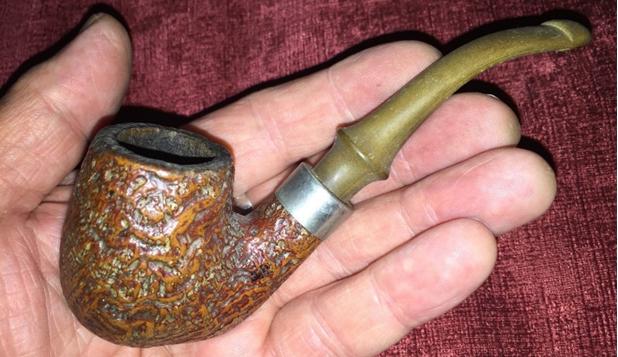
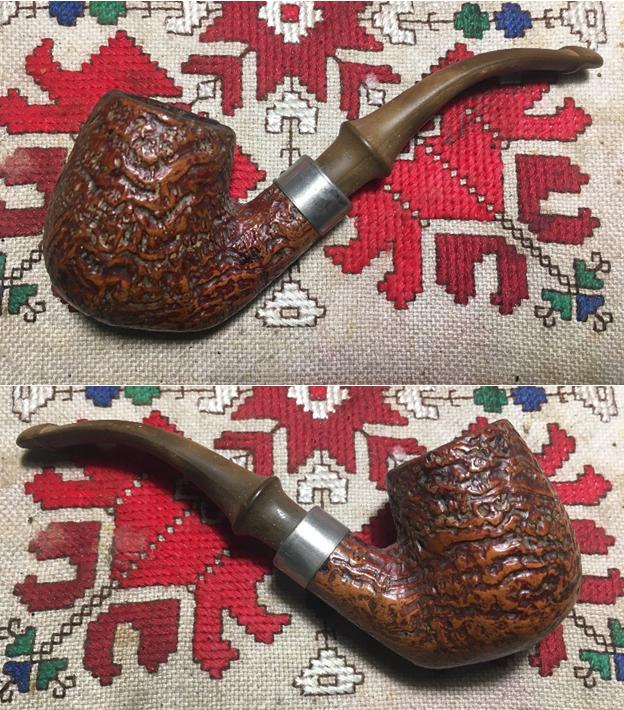
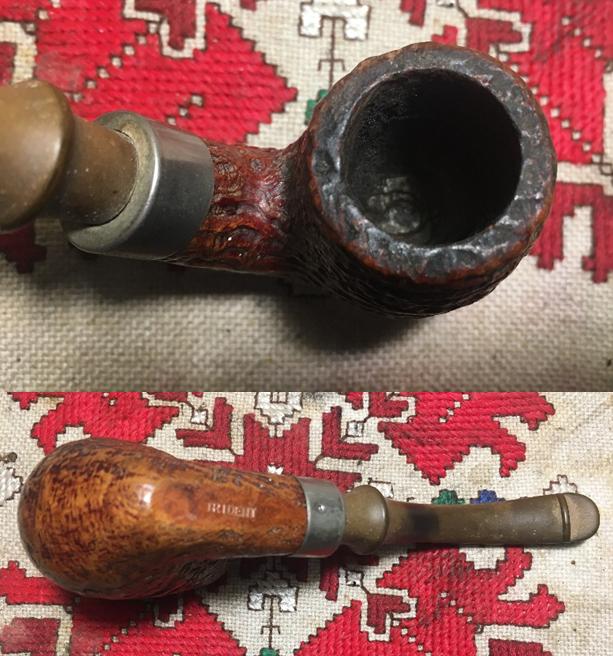
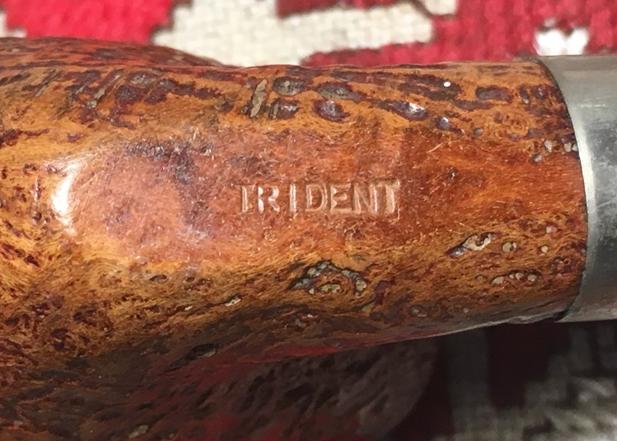
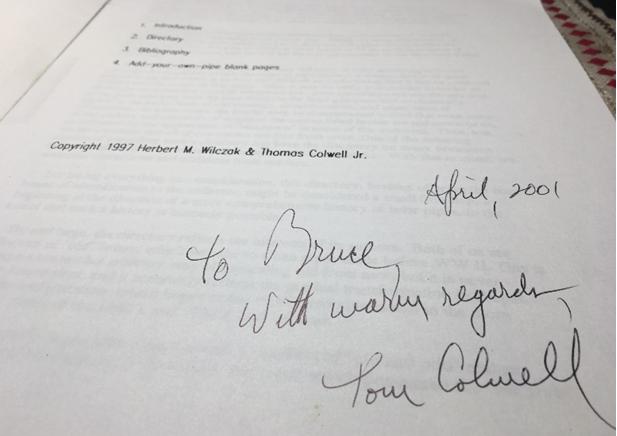
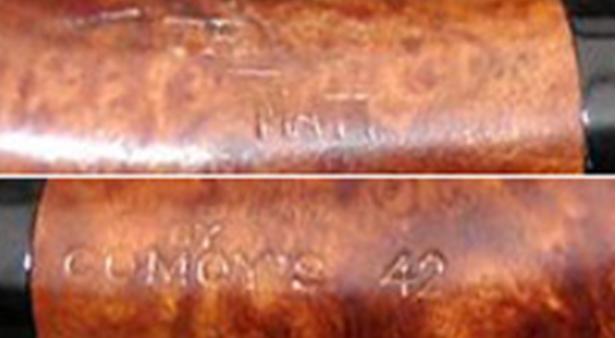
The ¾ Bent Billiard got Jen’s attention I believe, because of the blasted finish.  The only stamping is under the shank and it is marked, “TRIDENT”.  However, when I saw this pipe from an eBay seller in the UK, my attention was drawn also to the old-style P-Lip military stem and the old vintage feel of the pipe overall.  Here’s what I saw on eBay UK:This seller had other offerings which I also placed bids to take advantage of combined shipping from UK to Bulgaria.  With the Trident, I added a Hardcastle ‘Deluxe’ No. 12, and a Bewlay ‘The General’ to my basket for restoration.  Now, on my work table on the 10th floor apartment of a formerly Communist apartment block, I look at the Trident with the question, ‘Is this pipe actually vintage old or does it just look old?’  I take more pictures to fill in the gap. My first action was to look in my autographed copy of my eBay acquired copy of, ‘Who Made That Pipe?’ by Herb Wilczak & Tom Colwell.  It’s not autographed to me, but still cool!In ‘WMTP?’ the name ‘TRIDENT’ was associated with two names, ‘E Deguingand & Son/ H. Comoy’.  Country of origin, ENGL.  First looking at Pipedia’s article on Comoy’s, I discover that ‘Trident’ is a second made by Comoy’s – one among many!  Looking at PipePhil.eu, I found an example of this Comoy second which still displayed the ‘Comoy’s’ stamping and nomenclature.  The Trident before me carries no other markings and for this reason, I’m dubious of it being from the Comoy’s line of seconds.Then I turn to ‘E Deguingand & Son’ to see what I can find.  Pipedia has a helpful article that collates information about the name.

Deguingand & Son

Emile Deguingand & Son, Ltd. was a briar pipe maker in London at the end of the 19th and beginning of the 20th centuries. Originally they manufactured pipes in London, on Hamsell Street in Cripplegate, but that entire area was destroyed in the fire of 1897. Deguingand began selling at 5 Colonial Avenue, Minories, East London beginning in 1897. That same year Emile Deguingand purchased a pipe factory built by Charles Cayron in 1885 and 1886 at a place called Sur les Etapes in St. Claude, France. The factory in St. Claude was raised and enlarged in 1900 and 1902.

In 1906 Deguingand was granted a patent in France for a pipe consisting of a removable combustion chamber over a lower chamber filled with asbestos into which the airway ran.

In 1910, E. Deguingand & Son, known in France as E. Deguingand et Fils, became S.A. des anciens Etablissements Deguingand et Fils with Francis and Paul Deguingand’s entry into the business. While the plant doubled in size in approximately 1926, it was closed around 1930 and later converted to a commercial warehouse.

One pipe line known to have been sold by Deguingand was the Trident.

The last line is interesting in terms of the exclusivity it seems to imply.  The article is helpful but leaves out much and creates more questions.  When Deguingand opened operation in St. Claude, France, 1897, the same year opening another location in London after the fire of 1897, the assumption I believe, that is true, is that operations continued in both London and St. Claude under the Deguingand name.  The indication is that the operation in France closed in 1930, but there is no indication that operation in London ceased as well.  The challenge I am left with is that I can find precious little about production of Deguingand pipes or ‘Trident’ through the 1900s other than this early century reference by Pipedia.  If theories can be developed from silence, the E. Deguingand & Son Company is NOT listed in the 1949 Tobacco Retailers’ Almanac found at Chris’ Pipe Pages.  Can one deduce from this that pipes were no longer produced under the name?

The only other finding in my research that sheds some light on the E. Deguingand & Son name, comes from ‘Company Search Made Simple’ website. Here I find that E. Deguingand & Sons was incorporated, at least as an English entity, 3/12/1912, and was dissolved 7/30/1996.  The address was listed as 20 VANGUARD WAY, SHOEBURYNESS, SOUTHEND ON SEA, ESSEX, SS3 9RA.  The Director of the corporation was listed a John James Adler, from 8/1/1991 to 7/30/1996 – the same date as the dissolution of the corporation.  Of interest to me, but probably not a surprise for others more informed (!), was when I was trolling around the corporate bones of the corporate umbrellas created to manage sales and acquisitions of pipe names in much of pipedom in England and France – I discovered, Cadogan.  On this site, I compiled this list of well-known names in the pipe world that were started at different times, but all were, 1) dissolved on the same date (7/30/1996, with the exception of Kaywoodie, a few weeks later), 2) who shared the same address (Southend On The Sea) and, 3) had the same Director.  Here’s the list I compiled.What this tells me is that E. Deguingand & Son, Limited, existed at least as a corporate entity in the Cadogan consortium until 1996, but I have no indication that pipes were produced under the corporate name from the 1930s to 1996.  I’m growing in my understanding of the name, but is the Trident before me of a vintage that dates to the early 1900s?  I’m not sure, but one thing about the Trident that creates question – Does the P-Lip Military style stem help place this pipe?  It looks older to me, but my question lingers.

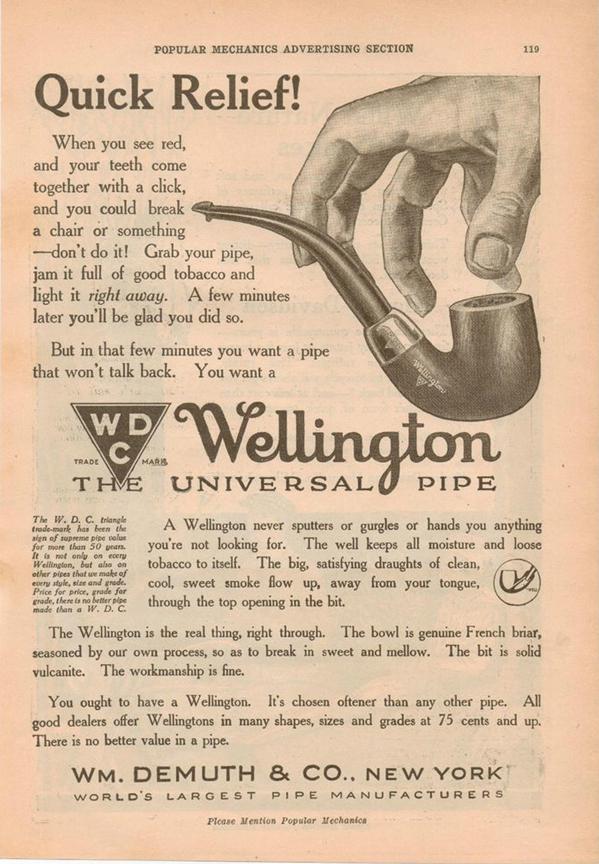
When the well runs dry in my research, I send questions to Steve to help prime the pump.  I share with him some of the research related above and some pictures of the Trident, but my specific question is, “Can a P-Lip stem indicate the age of a pipe – or contribute to its age placement?”  Steve’s first response was helpful in clueing me into the probability that the Trident before me could very well be of an early 1900s vintage.  His response was: “It looks a lot like the Wellington that WDC made in the early 1910-1920s.”  It was not difficult to find these artifacts in Pipedia’s article about the William Demuth Co. and the WDC Wellington – a WDC mainstay over the years. With the uncannily similar Wellington pictured above, courtesy of Doug Valitchka from Pipedia, the Trident lookalike before me could very well be of an early century vintage and a product of E. Deguingand & Son, Limited.

My second inquiry to Steve was how it all worked.  Did WDC make pipes (Wellington styled) for E. Deguingand and E. Deguingand marked them with ‘Trident’ though made by WDC?  Steve’s next response was even more to point questioning the accuracy of attributing the Trident to E. Deguingand.  He said,

I wonder if the E. Deguingand is correct. I wonder if WDC in NYC did not make a Trident pipe. I would do some digging in old WDC catalogues and see if you can’t find it. It has the same style band, same style faux p-lip with the air hole in the end of the button rather than on top. WDC did that I think to avoid issues with Peterson.

I did as Steve recommended and looked at several old WDC catalogs I could find online.  One forum was helpful in providing a WDC Master List.  Unfortunately, no ‘Trident’ listing was evident there or anywhere else I looked indicating a William Demuth Company source. I come up empty finding a direct connection between WDC and the Trident.  If anyone can help solve this mystery, I would be grateful!

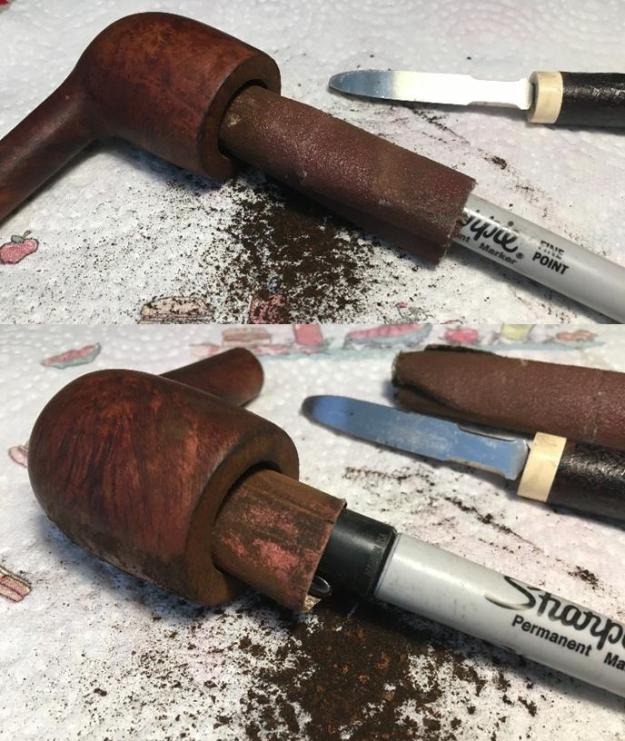
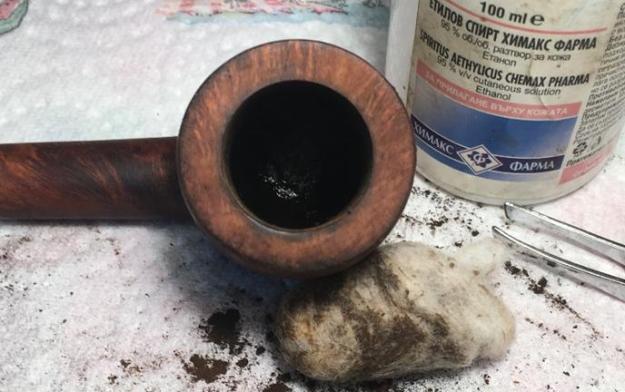
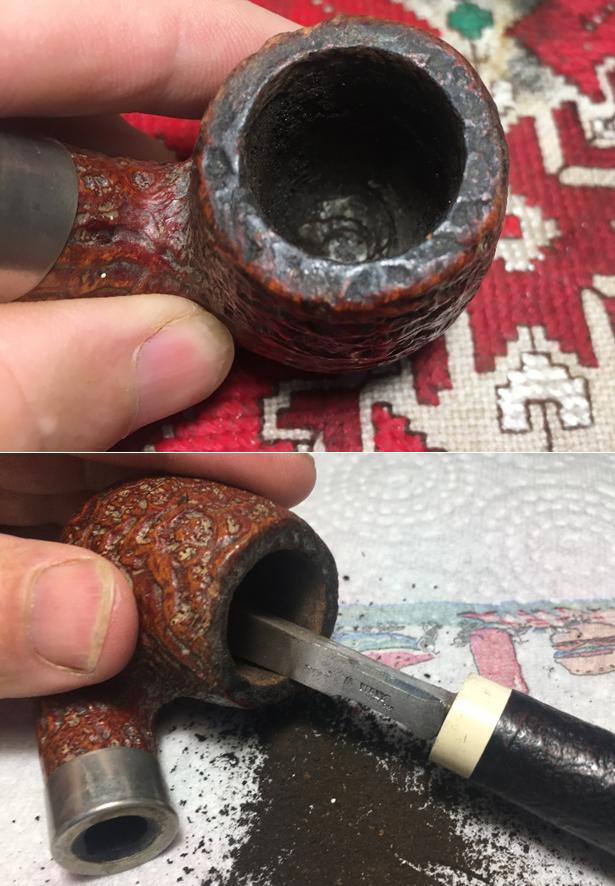
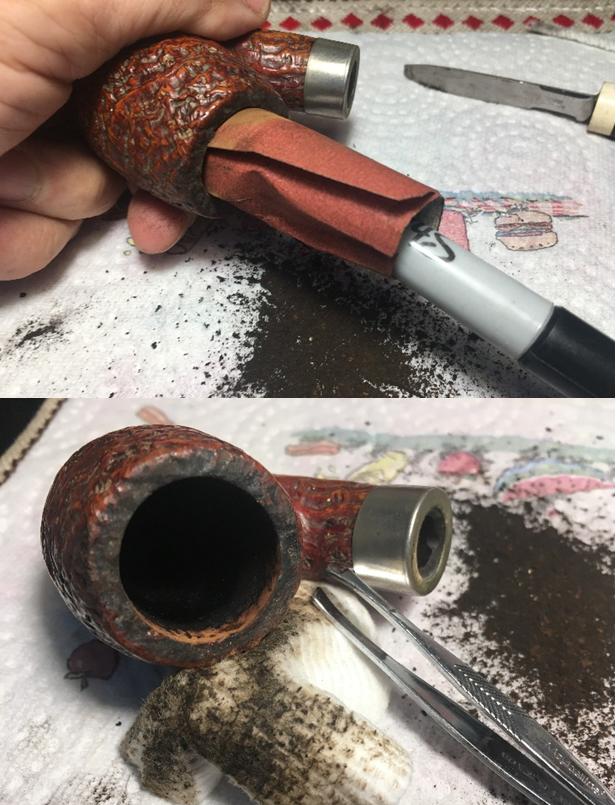
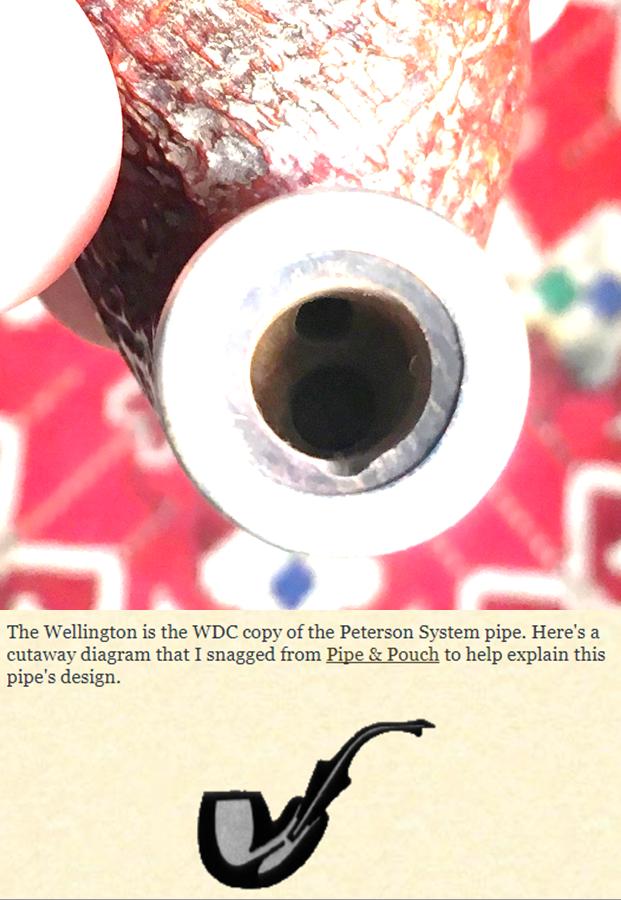
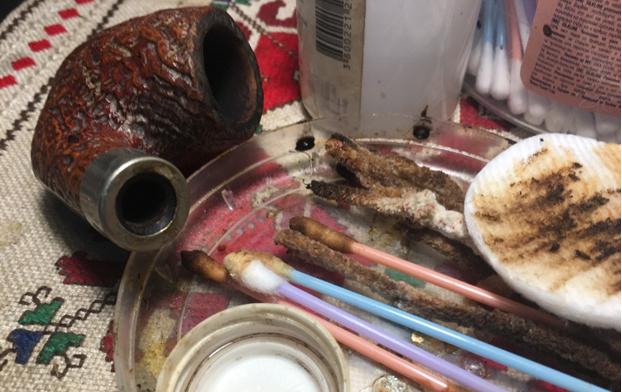
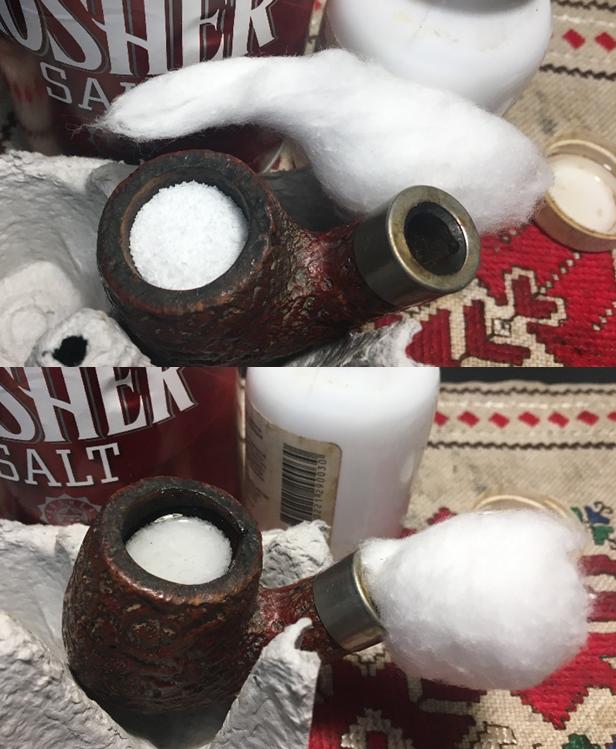
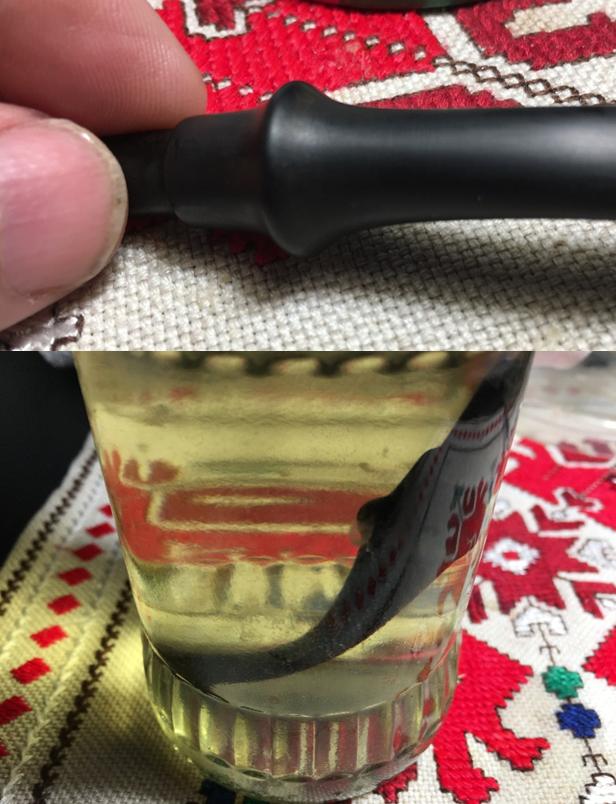
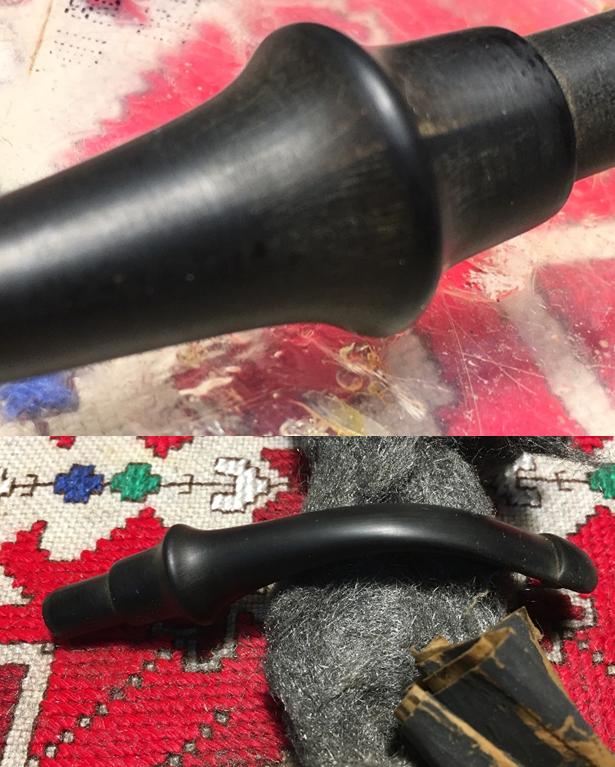
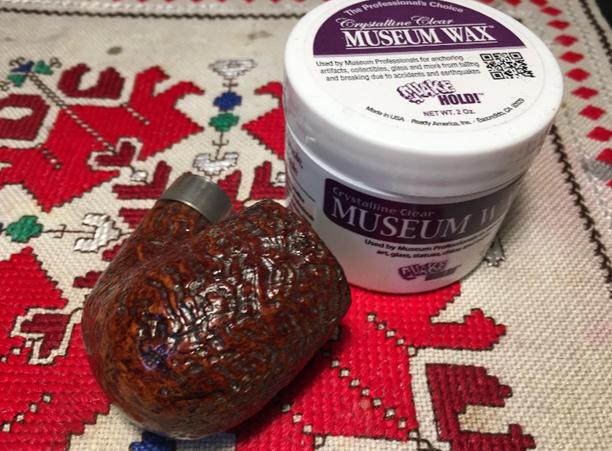
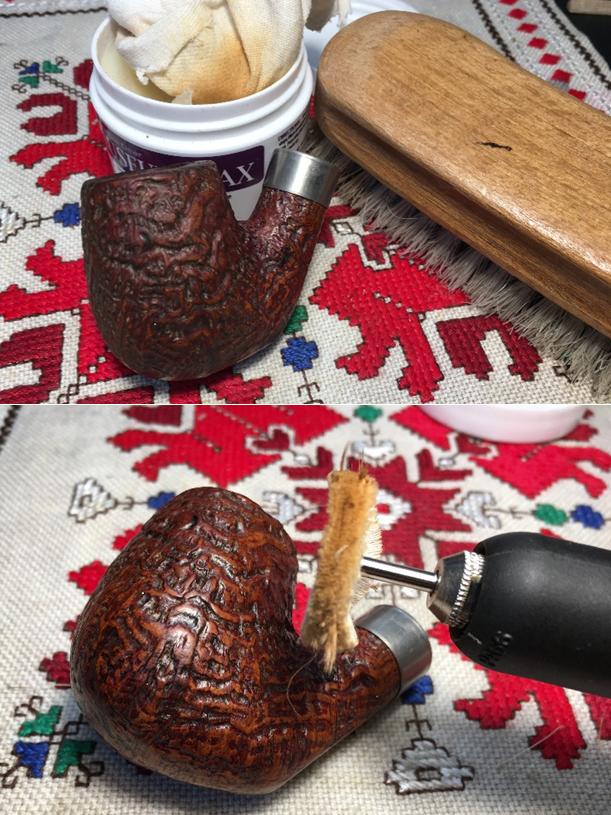
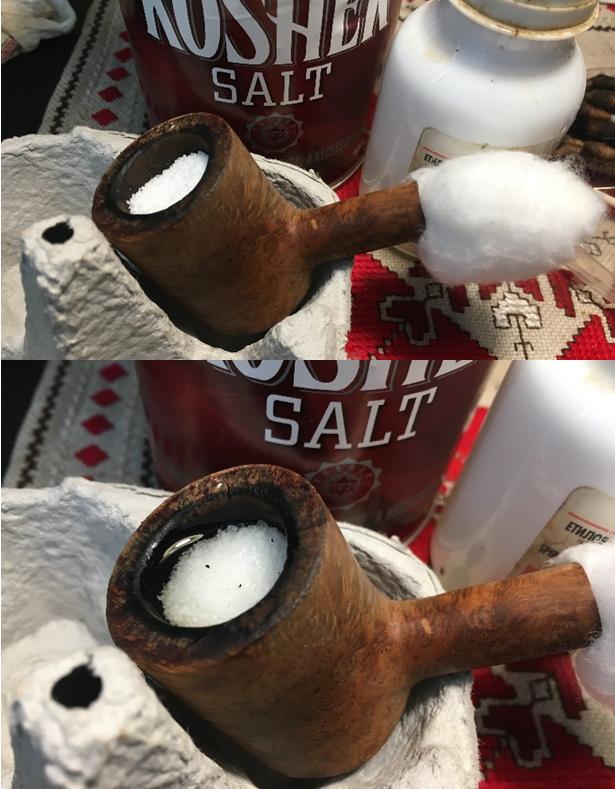
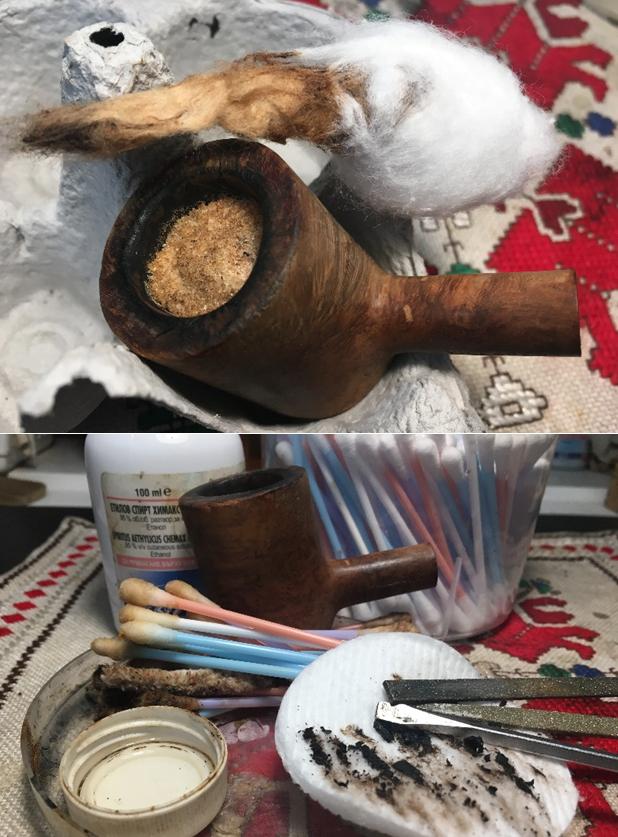
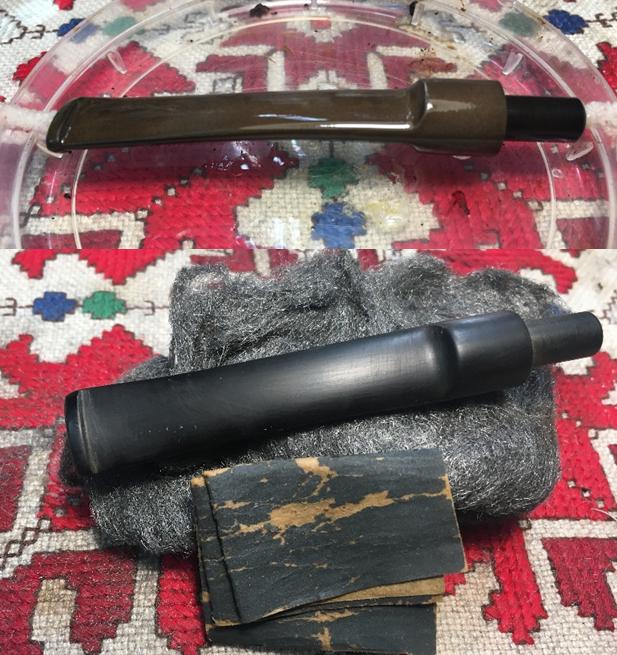
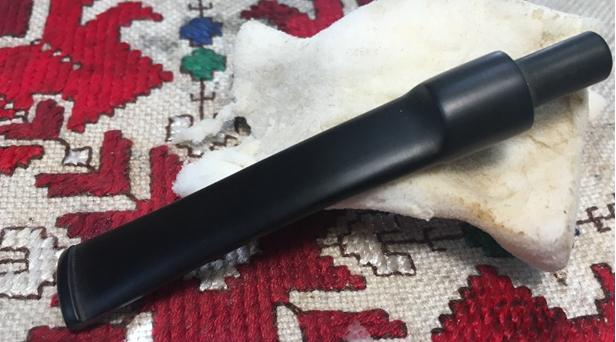
I approach the restoration of this Trident as an early vintage 1900s vintage and will seek to maintain that.   Not knowing at this point if this is an early E. Deguingand Trident or a WDC made Trident, I appreciate the fact that I do have an ‘Ole Timer’ and will handle him with care!  The ‘faux’ P-Lip Military style stem is heavily oxidized and this will be addressed.  The chamber has moderate cake and this will be removed to reveal fresh briar.  The rim has some lava but is in good shape overall.  The stummel needs cleaning of the grime and band polished.  With an appreciation for the Trident before me, I begin the clean-up by putting the P-Lip stem into the OxiClean bath to start dealing with the heavy oxidation. With the stummel in hand, the fire chamber has light carbon cake build up.  I use the Savinelli Pipe Knife to ream the chamber.  It does the job very quickly.  I then wrap 240 grit sanding paper around a Sharpie Pen and sand the chamber wall to remove more residue carbon.  I conclude the chamber clean up by wiping with a cotton pad wetted with alcohol to remove residue carbon dust.  The pictures show the progress. With the chamber reamed and cleaned I turn to the internals.  Using cotton swabs, pipe cleaners dipped in alcohol and needle files to scrape the edge of the mortise, I work on cleaning the internals of the stummel.  The internal architecture of the mortise has two internal holes drilled.  The upper hole is the airway leading to the draft hole.  Underneath this, a hole is drilled to create a reservoir for moisture to collect.  I take a picture of this and include a cut-away of a WDC Wellington from The Briar Files discussion of WDC Wellingtons After some effort working on the gunk removal, and with the growing need to attend to other obligations not having to do with pipes or their restorations, I decide to continue the cleaning job using the kosher salt/alcohol soak.  I fill the chamber with kosher salt that leaves no aftertaste, and twist and stretch a cotton ball to insert into the mortise, acting as a wick to draw out the oil and tar.  I use a large eye dropper and fill the bowl with alcohol until is surfaces over the salt.  I set it aside and let it do it work.Later, I remove the very oxidized P-Lip Military stem from the OxiClean bath and the bath did the job of raising the oxidation to the surface.  The stem is now a light grey color not the usual dark olive green.  I go to work removing the oxidation using a barrage of tools.  I wet sand the stem in warm to hot water for about 30 minutes using 600 grit paper!  Oxidation is very stubborn in the edges of the P-Lip orific button lips.  I utilize hard edges to wedge the sand paper in the corners.  I then use 0000 grade steel wool to work over the entire stem including the hard to reach corners and curves.  Finally, I use Mr. Clean MagicEraser to put the oxidation to rest.  This phase looks good – it didn’t come easily!I go directly to cleaning the internals of the stem with pipe cleaners dipped in isopropyl 95%.  It did the job quickly.After some time, I return to the stummel that is having a salt/alcohol soak. The salt has darkened showing that it has done its part.  I remove the expended salt and cotton wick and clean the stummel with paper towel to remove residue salt.  I return to cotton swabs and pipe cleaners, also using long bristled brushes to finish the job. With internals clean, I take another look at the stummel surface.  I use undiluted Murphy’s Oil Soap to remove the grime in the crevices of the blast and on the rim top.  I utilize cotton pads and a bristled tooth brush.  The rim has mild cake and I use a mild kitchen scrub pad to gently clean it.  I also clean and polish the band while I was at it. Because there was normal wear around the rim, the cleaning leaves lightened areas devoid of finish, though the blasted architecture of the rim is intact.  Using the lightest stain stick I have in the basket (Furniture Repair Marker – Oak), I color in the rim.  I like the way it darkened and complimented the texture of the hues.  I decide to use the stick on the stummel as well to highlight and deepen the peaks of the blasted surface.  I like how it turns out overall – nice.  I set the stummel aside to dry thoroughly. I take the stem to begin the micromesh pad cycles and to my chagrin, I see that the oxidation is peeking through – mainly around the curves leading to the crest of the military stem (I’m not sure if there is a technical name for that part of the stem!).  Ugh!  It’s already late so I elect again to put the stem in the OxiClean bath to see if it will do the job.  I heat the OxiClean solution in the microwave until it’s warm and plop the stem back in and turn out the lights!The next morning, I go straightaway to the stem in the bath, fish it out, wet sand the problem, oxidized areas with 600 grit paper then with 0000 steel wool.  I’m hoping that the oxidation is now removed as much as it can be removed.  I move on to wet sanding using micromesh pad 1500 to 2400, then dry sanding with pads 3200 to 4000 then 6000 to 12000.  I follow each cycle with an application of Obsidian Oil to revitalize the once oxidized Military, Faux P-Lip style stem.  I’m pleased with the pop of the vulcanite – it looks good. I put the stem aside to fully absorb the Obsidian Oil and to dry. Next, I apply Museum Wax to the bowl with a small cotton cloth – working the wax in the blasted surface landscape.  Then, I buff the bowl with a shoe brush to assimilate the Museum Wax into the surface and begin the shining process.  Turning to the Dremel, I mount a clean cotton cloth buffing wheel and set at speed 2 (40% full power) and more fully buff the stummel.  The buffing wheel does a good job working the wax in more thoroughly and bringing out a deep, resonate shine.  The pictures show the progress. With the Dremel already in use, I load the cotton cloth wheel dedicated to applying Blue Diamond compound. Using the wheel, I apply the compound to the nickel-plated band to bring out the shine.  As hoped, the buffing does the job well.  The Trident is dressing up well! Taking the stem, I mount the cotton cloth buffing wheel dedicated to applying carnauba wax.  I apply the wax to the stem to bring out the shine and protect it.  After applying a few coats of carnauba wax, I then reunite the stummel with the Military style stem and give the entire pipe a rigorous hand buffing using a microfiber cloth to raise the shine of the Trident even more.

Only two things leave me a bit wanting with the restoration and recommissioning of this Trident Blasted 3/4 Bent Billiard – the distinguished Military stem still holds some small traces of oxidation around the concave curves of the stem’s crown or horn.  Yet, my, my, it looks good mounted on the blasted stummel with its newly polished band!  The other item was not being able to identify clearly the maker of this Trident – whether E. Deguingand according to Wilczak and Colwell or the Wm. Demuth Co. as Steve suspects because of the preponderance of similarities between the Trident and WDC’s mainstay of the same style pipe, the Wellington.  In whatever way this question is ultimately settled, the Trident’s vintage status seems to place him in the 1910 to 1930 age range.  Truly, an ole timer who is now ready for another lifetime serving a new steward – gifted to one of Jen’s family members as she soon returns to the US from Bulgaria.  Her gifting helps to benefit the Daughters of Bulgaria, our work here in Bulgaria with those women and girls who have been sexually exploited and trafficked in Europe.  For more information about this, and why I do what I do, check out my blog at The Pipe Steward.  Thanks for joining me!

Jen’s Trove No. 5: Recommissioning a Mehaffey Cutty 6


Blog by Dal Stanton

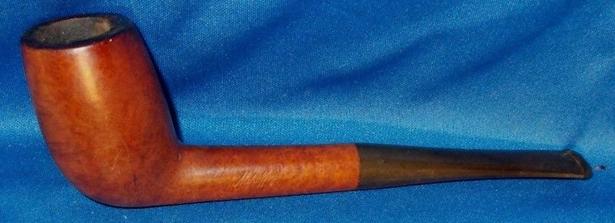
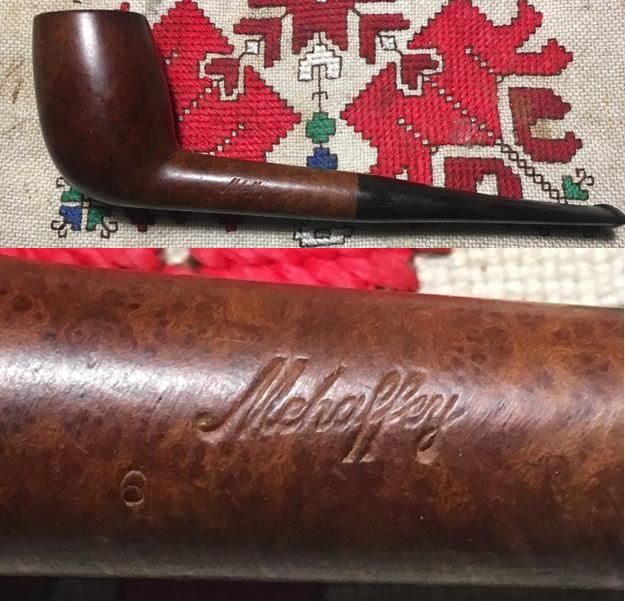
When I first saw this pipe on eBay, what drew my attention was the canted bowl.  I wasn’t sure then what shape it was, and when Jen recently pulled it out of the “Help Me!” basket to add to her trove of pipes she was collecting for restoration to give as gifts to men in her family, I still didn’t know.  After pulling it out on my work table, I took another look and started looking at my ‘go to’ sites for shapes charts.  My thinking was, “Chimney” because of the taller than usual bowl that can be canted, but “Cutty” was also in the running mainly because of the forward canted bowl.  When I sent my thoughts about the shapes and a picture to Steve for his input, his verdict was a ‘Cutty’ shape.  The forward canted bowl was the clincher and that my pipe’s bowl was tall, but not reaching ‘Chimney’ proportions.  Here is what I saw on eBay and what I sent to Steve:I enjoyed TobaccoPipes description of this very old pipe shape having its genesis in the clay world:As far as we can tell, the Cutty is the oldest pipe shape that is still available today.  

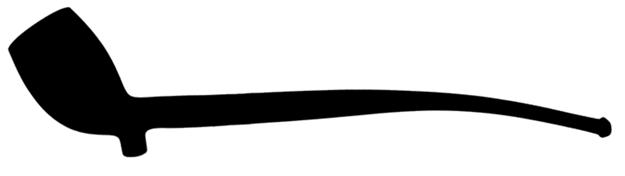
 As early as the 16th century, pipe smokers would settle in at their favorite tavern and–if they had a high enough social status–would pull out a long clay pipe, almost always a Cutty shape.  This shape was common because it was easy to craft in the molds used for clay pipes (William Goldring, The Pipe Book: A History and How to: 1973).  

Clay Cutty pipes, up until about a century ago, always included a “spur” or “boot” of extra material at the bottom of the bowl.  When smoking the same clay pipe all day long, the bowl tends to get pretty hot.  The spur allowed the smoker to grasp the base of the pipe without burning his hand.  Today, some Cutty’s keep the spur attachment, but not many.

A modern example of a Cutty pipe is the Savinelli Petite 402 model.

 Like the Dublin family this pipe falls in, the Cutty has a conical shaped chamber, which means the diameter of the chamber tapers down the closer you move to the bowl.  The largest difference between a Dublin and a Cutty is that while a Dublin has evenly thick chamber walls that move down the bowl, the Cutty has more of a rounded shape, in some ways resembling an Egg.  As pointed out by G.L. Pease, the Cutty has an exaggerated forward cant, originally purposed to keep the heat and smoke away from the smoker’s face.  

Typically, Cutty pipes have a very slight bent stem, but this is not a strict qualification. In many instances, we see modern Cutty with straight stems and deep bent stems.

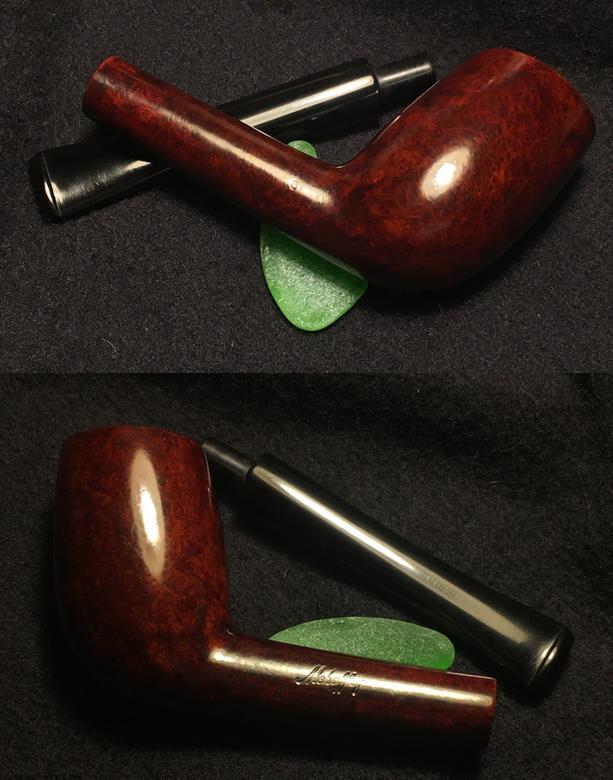
On my work table, I took these additional pictures to fill in the gaps and show some of the needs. The stamping on the left side of the shank reads ‘Mehaffey’ [over] ‘6’.  The right side of the shank also has the number ‘6’ stamped – I assume this is the shape number.  While one can find Mehaffey pipes on the internet, unfortunately, the one factoid that is repeated in many places can be found in Pipedia’s single reference to this pipe maker:

E.A. Mehaffey operated a pipe & tobacco shop in Wheaton, Maryland. He used to make pipes for many years but as legend has it, his house tobacco mixtures were much more prestigious than his pipes. Mehaffey was in business up to the 1980’s.

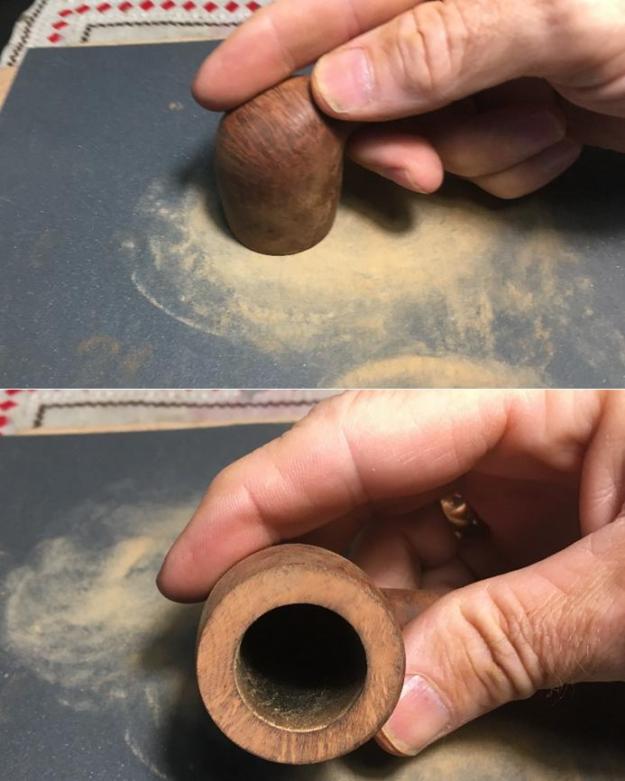
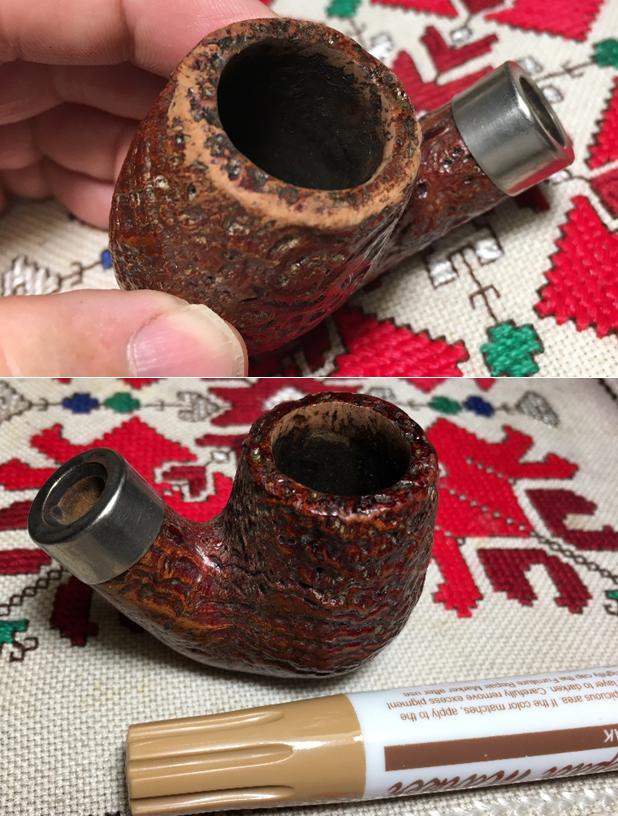
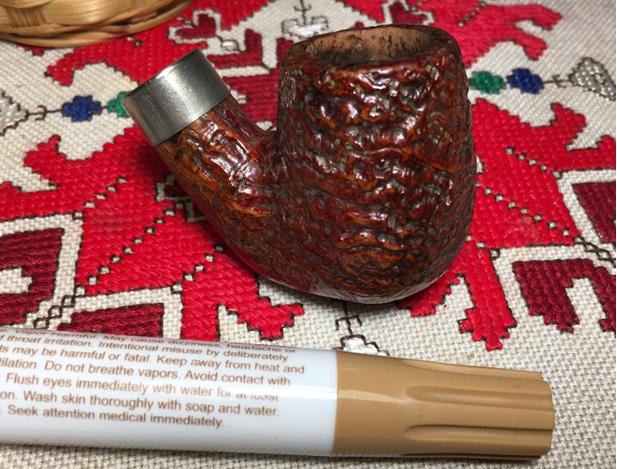
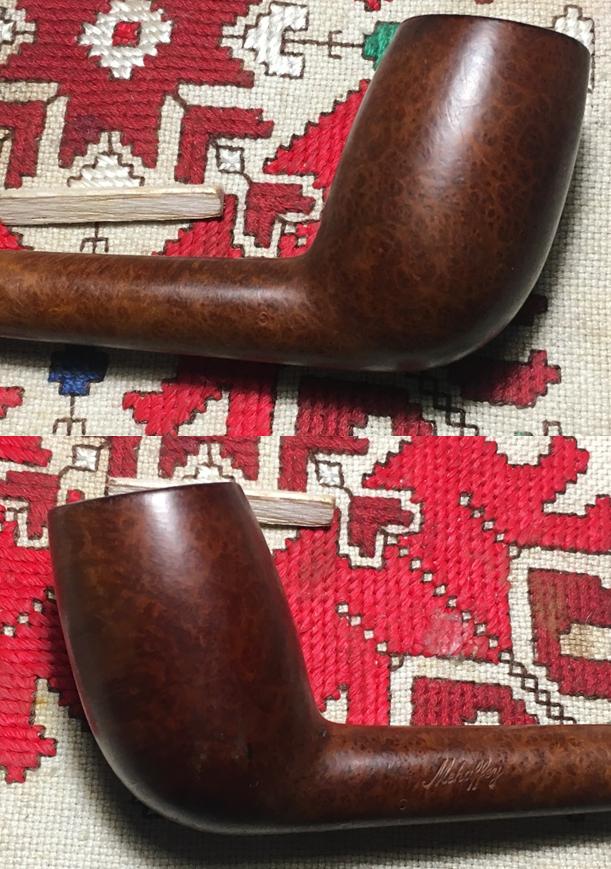
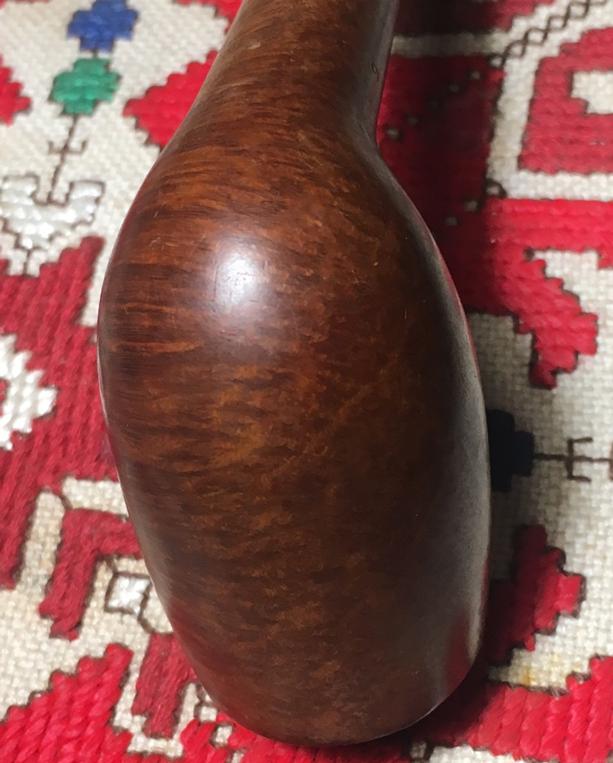
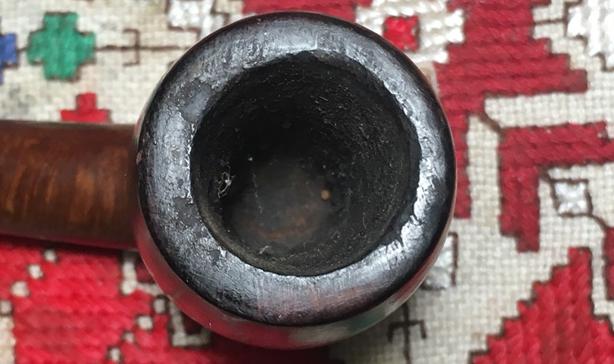
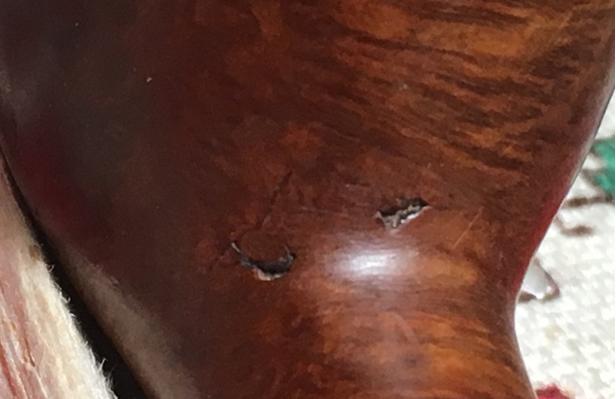
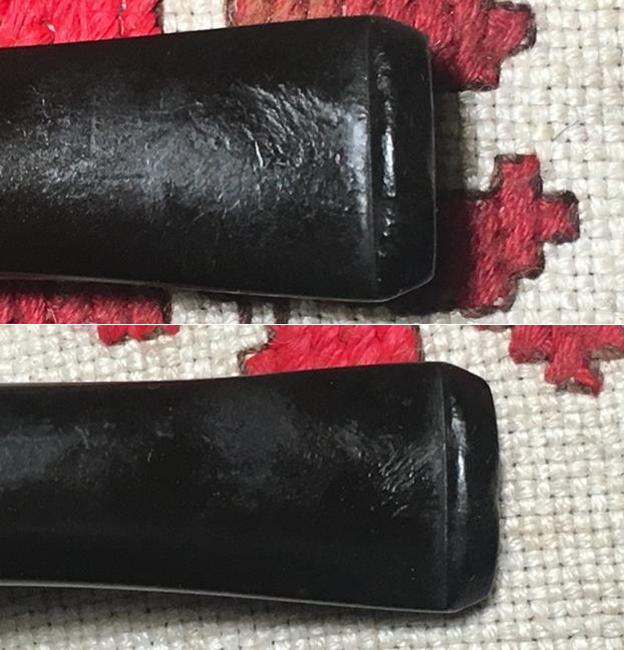
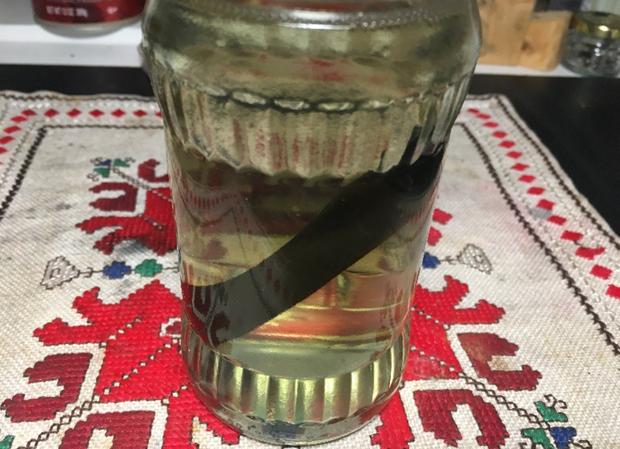
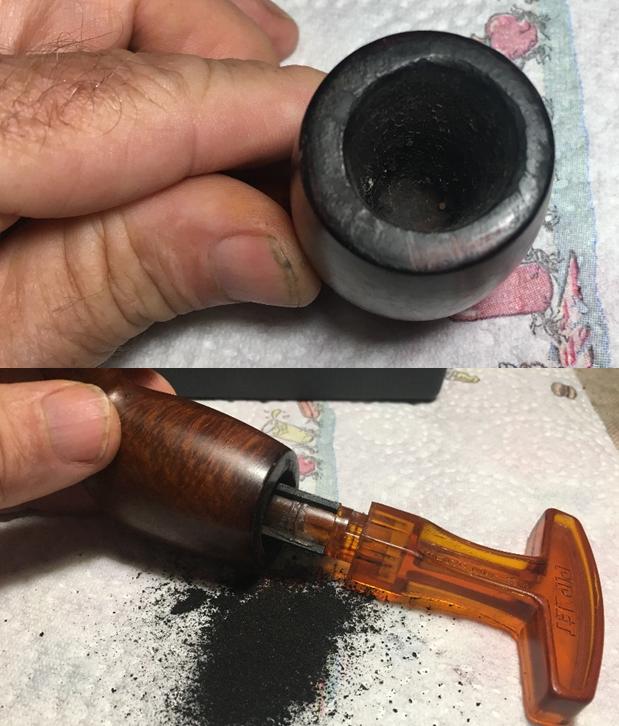
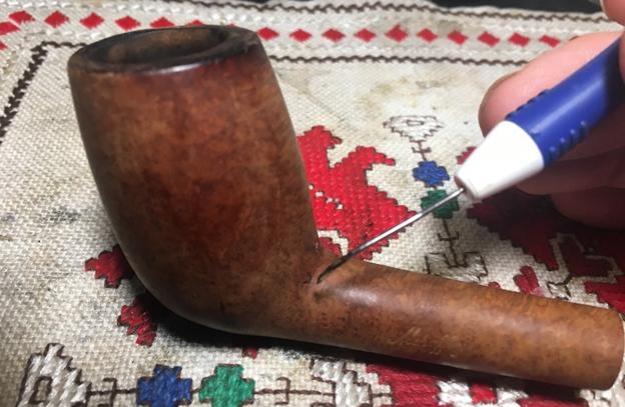
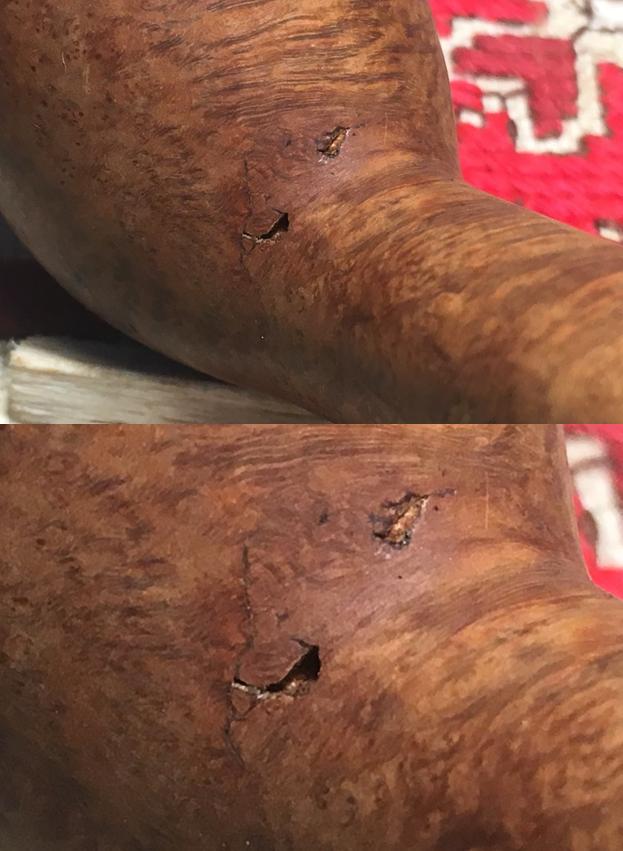
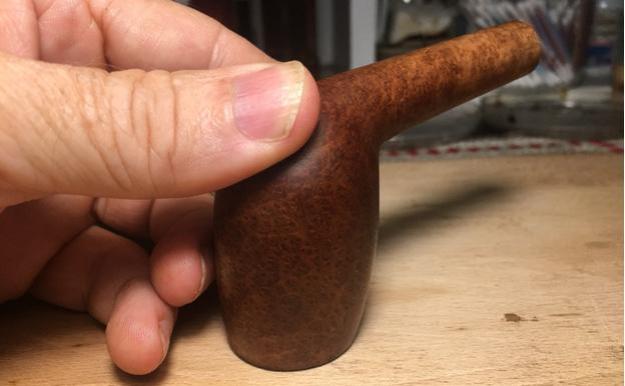
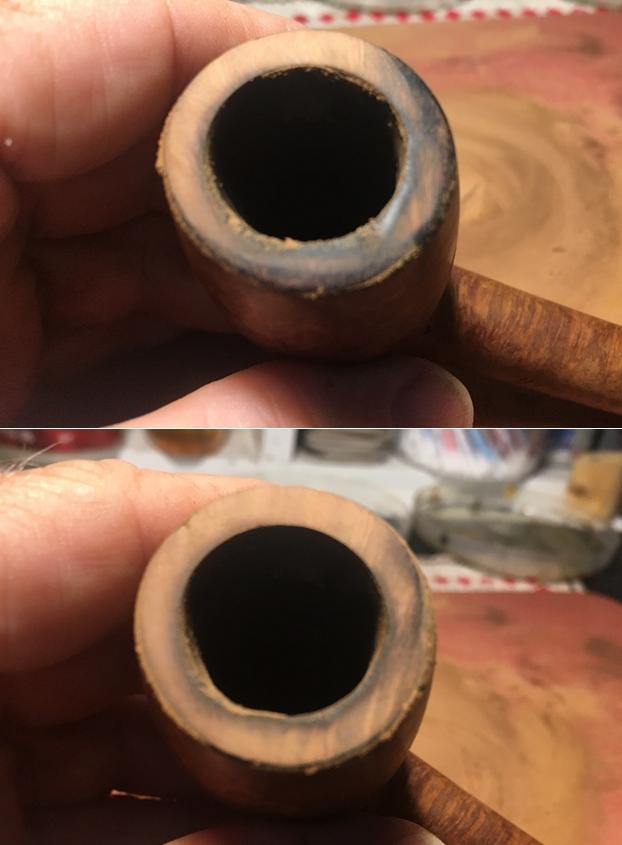
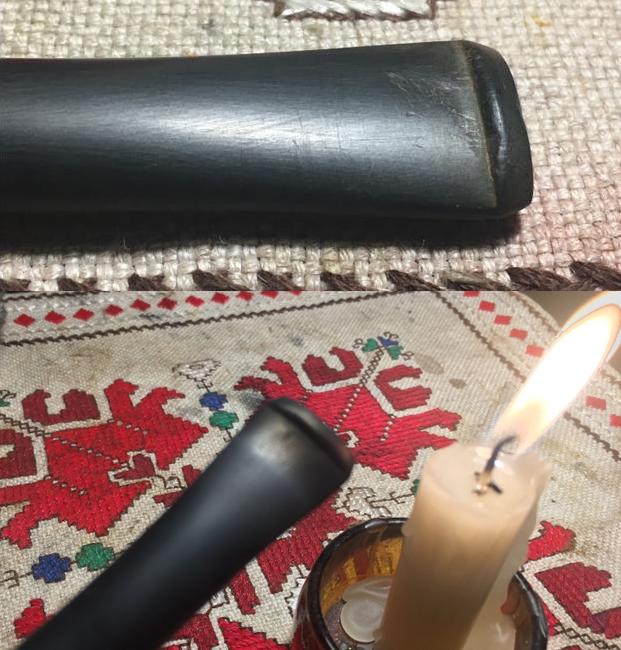
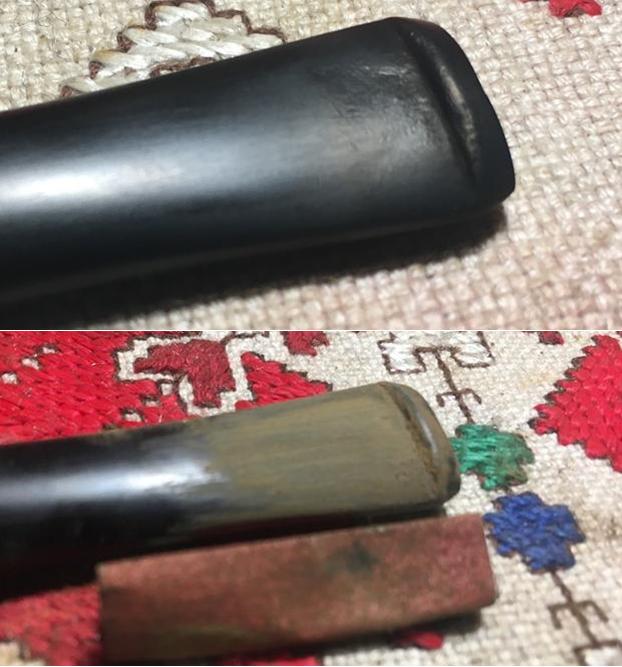
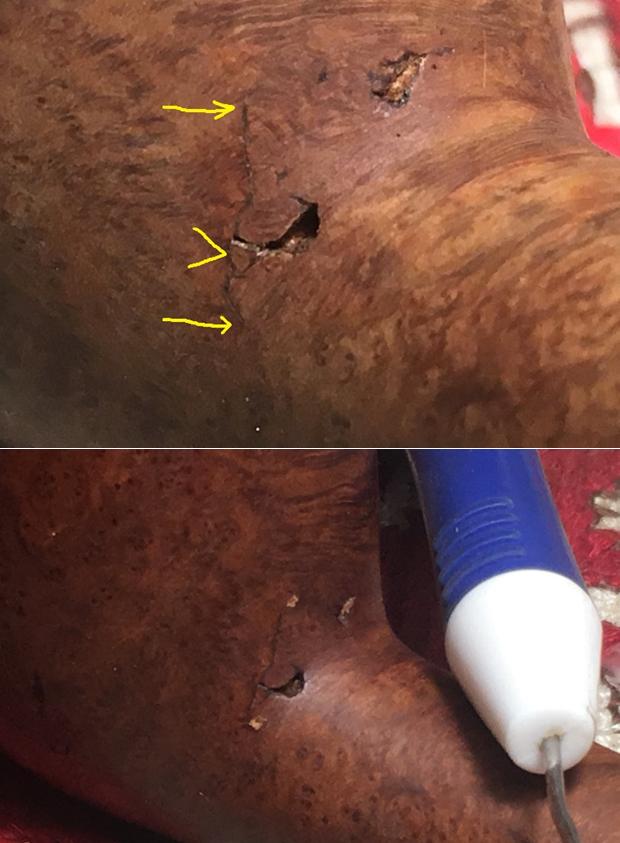
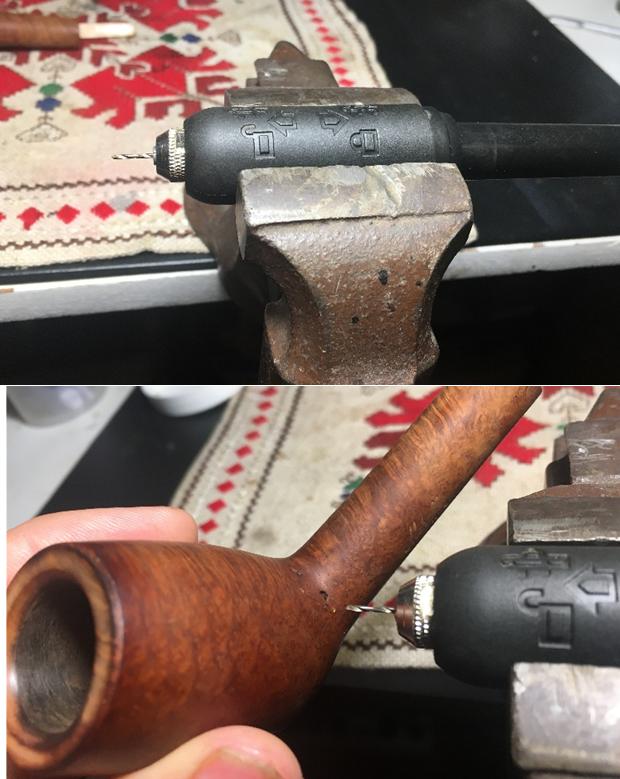
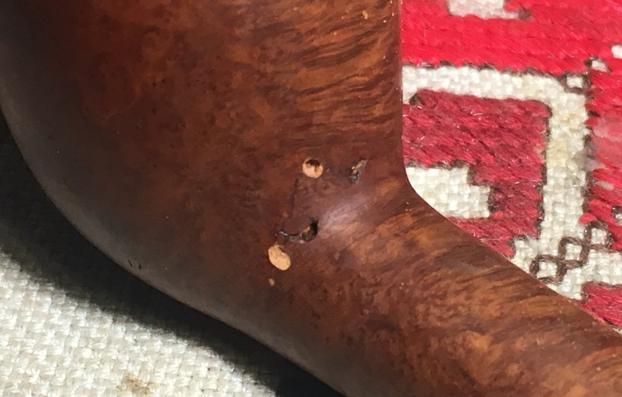
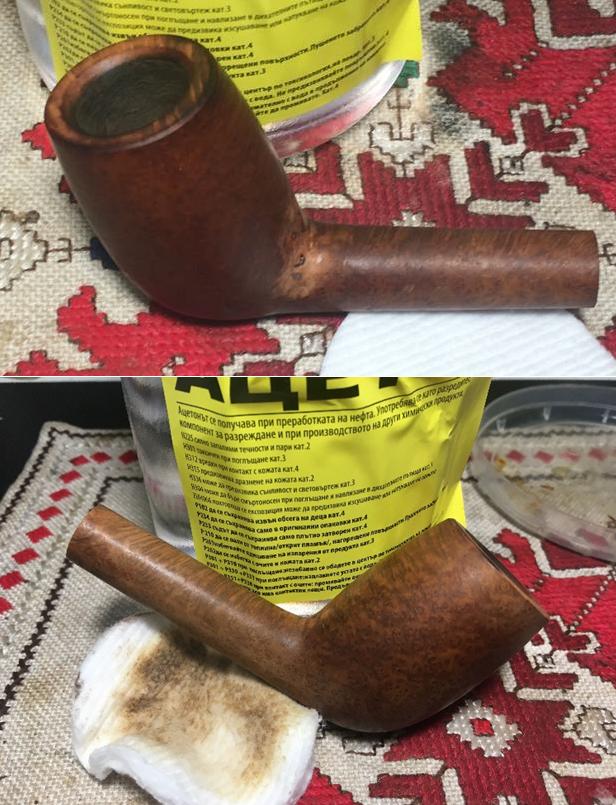
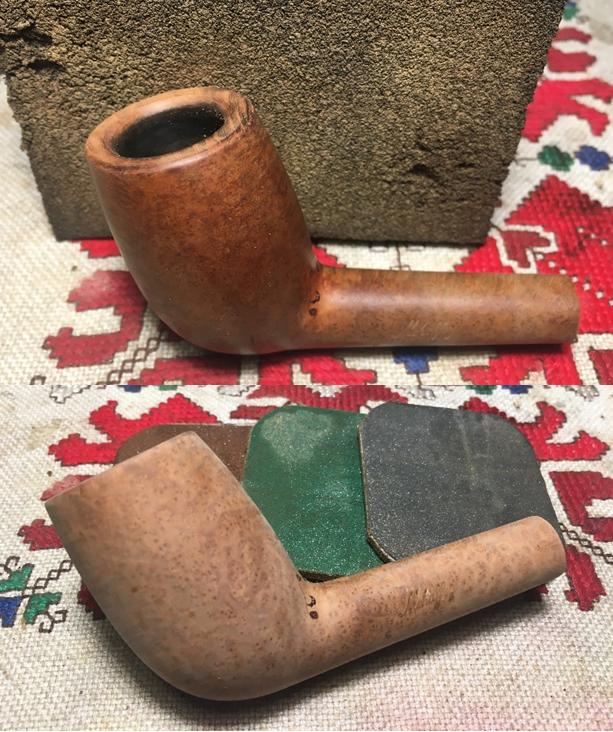
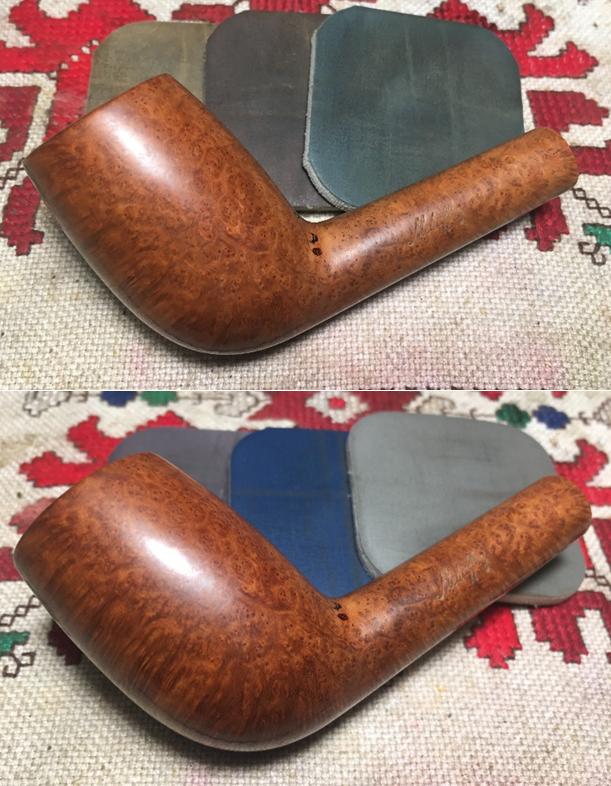
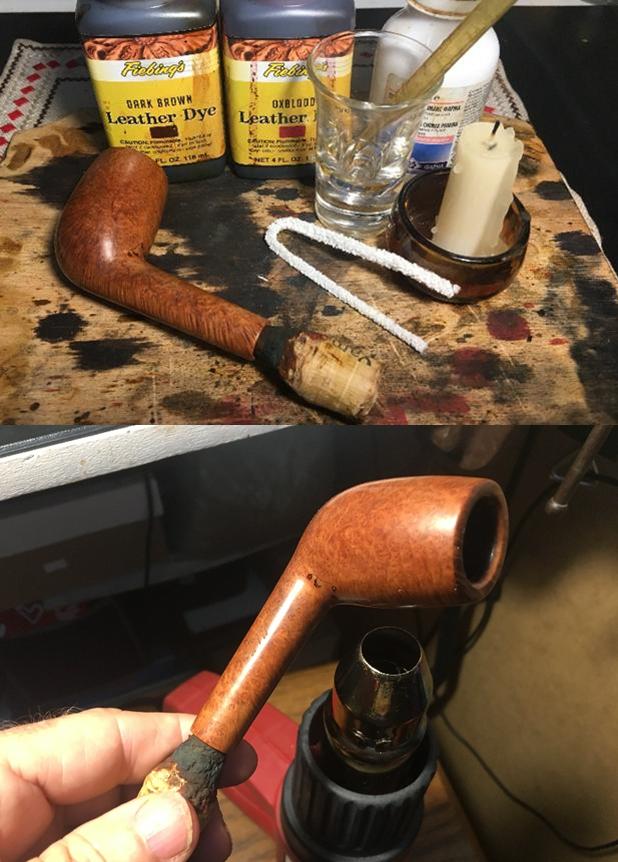
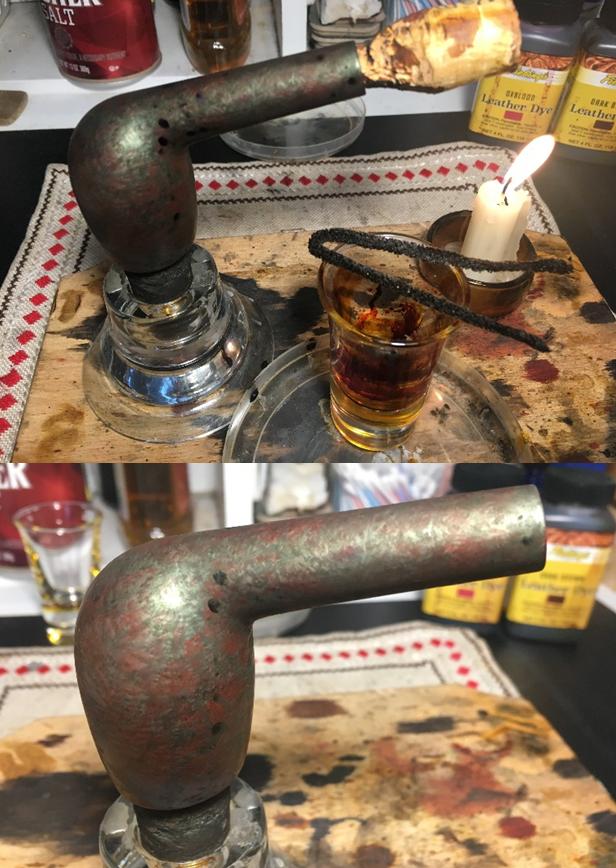
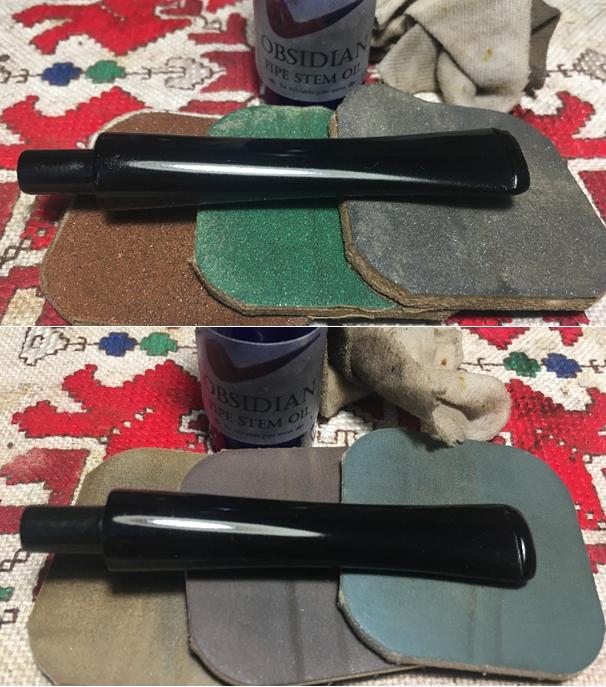
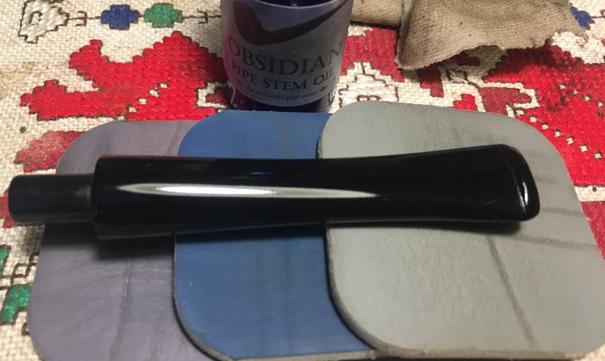
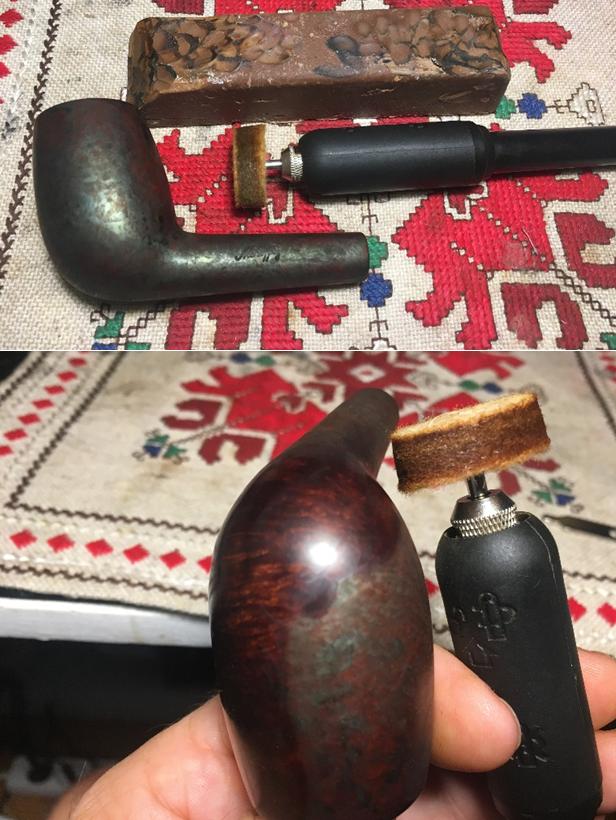
While this statement does not engender enthusiasm for E. A. Mehaffey’s pipe production, the Cutty before me boasts a very attractive, large piece of briar.  With the taller than usual bowl, both sides of the bowl showcase tight bird’s eye grain patterns, which offer a perpendicular disposition toward the grain.  On both the front and the back of the bowl, as one might expect, horizontal grain is evident – the parallel perspective of the grain.  If one thinks of a rope as grain, the horizontal grain is looking at the side-length of the rope.  Whereas, the bird’s eye grain is looking at the ends of the rope ends after they are cut.  This is a beautifully styled and positioned Cutty shape with this fine piece of briar.  Complementing the forward canted bowl, the long shank and tapered stem adds to the perception of styled length.  I’m liking it! Looking at the pipe, the needs start with a moderate build-up of carbon cake in the chamber which needs to be removed down to the fresh briar.  The rim has lava flow and black crusting which needs removal.  I see no fills on the stummel. One area of problem is at the upper junction of shank and bowl.  There are what appear to be two punctures and what appears to be a crack running perpendicularly off the left puncture.  It is difficult to guess what caused these.  I will probe the holes to make sure they are only superficial and make sure the crack is not growing.The tapered stem has mild oxidation and a good bit of tooth chatter on the upper and lower bit. I begin the recommissioning of this Mehaffey Cutty by plopping the stem into the Oxi-Clean bath to soak and to raise the oxidation from the vulcanite. Using the Pipnet Reaming Kit, I address the cake in the bowl.  After spreading paper towel to catch the exhumed carbon, I use the smallest blade first.  I realize very quickly that the smallest will be the only reaming blade I use and switch to using the Savinelli Pipe Knife.  The conical chamber narrows toward the base so the Savinelli Pipe Knife does the job.  After removing the carbon cake, I wrap a piece of 240 grit sanding paper around a Sharpie Pen and sand the chamber.  Following this, I clean the chamber using a cotton pad wetted with alcohol to remove the carbon dust.   While I want to start on the external briar, I like to take care of the dirty stuff first!  Using cotton swabs and pipe cleaners wetted with isopropyl 95% and go to work on the internals.  I like working on a clean pipe.  I discover that a metal tube is providing the airway through the long shank.  With the use of a long, bristled brush I’m able to clean the internals of the mortise very quickly.  Not bad!Now to the external briar surface.  I use undiluted Murphy’s Oil Soap with cotton pads and a bristle tooth brush to clean the bowl of the grime.  I also work on the rim using a brass bristled brush.  With a cleaned up stummel, I take another close look at the rim.  I love the tight canted look of the bowl and I hate the thought of removing any briar real estate from the profile of this Cutty.  Yet, I’ll need to remove some, just enough to remove the damaged briar and to restore fresh lines.  I look again at the problems at the upper junction of the shank and bowl.  I first use a sharp dental probe to clean out the holes of collected debris.  I’m careful with the hole on the left, looking at it very closely it appears to be prone to crumble.  As I look at the crack running to the left of this more fragile problem area, the question in my mind is whether to do a full crack repair, drilling ‘back-holes’ on either side of the crack to block any possibility of the crack enlarging.  Or, avoiding the added trauma to the briar by drilling, would simply laying a line of thin CA glue seep into the crack and sufficiently close it down?  I sent these questions and the second and third picture below to Steve for his input. While I wait for Steve’s response, I’ll focus now on the rim repair.  I begin by using 240 grit sanding paper on a chopping board to create my topping board.  Before putting paper on the board, I invert the stummel on the board and eyeball it free standing.  I want to make sure that I top it keeping the angle of the rim parallel to the board.  Damaged, scorched wood tends to be softer.  I have learned by unfortunate experience that it’s easy to start angling into the softer wood and be left with an angled rim plane.  Not pretty!  As I free stand the inverted stummel, I discover there is a rock – the rim is already dipping.  I determine by looking at which part of the rim is healthy, which part of the rim needs to guide the topping while not dipping into the worn area – softer part of the rim. The pictures that follow show the progression of the topping.  Notice the first picture is only after a few rotations on the topping board staying on the healthy part of the rim.  The dark areas are lower and so don’t engage the paper.  As the topping progresses in the subsequent pictures, the dark areas gradually are engaged by the sanding paper as the rim moves toward the paper at the different points.  The final picture shows switching to 600 grit paper to smooth the topping.  The rim plane looks good and is level! Now I remove the damaged briar on the internal rim’s edge and create an internal bevel to balance the look of the rim – blending the damaged area with the healthier area. In the first picture below, the damaged area is in the 2 to 3 o’clock area.  A bevel looks good too by creating lines that, to me, are classy.   Using a rolled-up piece of 120 grit sanding paper I fashion the internal bevel.  Then I follow with rolled pieces of 240 grit and 600 grit papers to smooth the bevel.After the internal bevel is completed, I take a look at the external edge of the rim.  It also has some heat damage and has a dark ring.  I use 240 grit paper rolled and create a gentle bevel around the outer edge.  I don’t need much – just enough to clean up the briar. I follow the 240 grit paper with 600 grit.  The rim looks good.I put the bowl aside for a time and take the stem out of the OxiClean bath.  The oxidation has risen to the surface.  I reconnect the stem and stummel placing a plastic disc between the two.  I do this to avoid shouldering the stem by rounding the shank edge of the stem.  I use 600 grit paper and wet sand the stem in warm water.  I follow this by using 0000 steel wool to buff out the sanding lines and shine the stem.Turning now to the tooth chatter and tooth dents, I start with the upper bit.  The tooth static is not serious and I sand it out using 240 grit paper.  I also sand out a slight dent on the button lip.  I then erase the 240 grit lines using 600 grit paper followed by 0000 grade steel wool.  The upper bit looks good. The lower bit is a bit more problematic with a significant tooth dent in the center of the bit.  It also has significant tooth chatter and a small dent on the button.  I use the heating method by lighting a candle and I pass the affected area over the flame – I keep the stem moving back and forth over the flame.  This heats the vulcanite and the expansion of the rubber seeks its original shape.  This method works well.  The damaged area did expand so that I am able to sand out the rough areas using 240 grit paper, then 600 to remove the scratch traces of the 240, then 0000 grade steel wool to buff our the remainder of the 600 residue marks and shine the stem.  I also sand out the dent on the button. I receive word back from Steve about the approach to the stummel problems.  His recommendation to do the full ‘surgery’ on the crack by drilling holes at the end points of the crack and filling these along with the holes together is the strategy.  As I was already aware, Steve urged caution around the left hole that appears up close to be crumbling.  The first picture below shows two arrows pointing to the end of the crack where I will drill holes.  The carrot in the middle is marking the obvious area of concern.  I want to keep this area intact so that I can fill it with a putty made from briar dust and CA glue.  First, I use the sharp dental probe to mark the points for the drill – creating a guide hole so that I don’t create unintended rustification!  I utilize a magnifying glass to do this!Historically, it hasn’t been easy to drill these holes with precision.  Using a handheld Dremel with a 1mm drill bit mounted in the hand extender (the cable extension) needs a steady hand!  I decide to try something different.  I attach the Dremel hand extender to a miniature vice.  If I stabilize half of the equation that improves my odds!  With the drill stationary, I can bring the stummel to the drill with more control.  With Dremel readied with a 1mm drill bit, I put my plan in motion.  The first hole I do, the lower one, I had a little wobble so the hole wasn’t as crisp as hoped.  The upper hole was much better.  Of course, the drilling does not go through to the internals!  The depth is only a few millimeters. Overall, this was a better setup. With holes drilled, I mix briar dust and Special ‘T’ thick, CA glue to form a putty to fill the drill holes as well as the holes.  I scoop a small mound of briar dust on a plastic lid and next to it I make a puddle of CA glue.  I gradually mix the dust into the CA glue until I arrive at the viscosity I desire – I want it to be a bit on the wet side so that the putty will better penetrate the holes, cracks and crevices.  I use a dental spade tool to tamp the putty down while I spread it over the damaged area.  I place more than needed so that when I sand the patch mounds down, they will blend well.  The day has turned to night, and it’s time to turn out the lights!Having cured overnight, I’m ready to file and sand the briar dust putty patch.  Using first flat and rounded needle files I slowly and gradually file the patch mounds down so that they are very close to being level with the briar surface. The aim is to keep the files on the patch material and not on briar.  For the fine tuning, I use 240 grit paper to bring the patch flush with the surface, aiming to remove putty from the unaffected surface area – blending the patch.  I take some pictures to show the file progressing. Next, I use 240 grit sanding paper to take the patches down to the briar surface and remove superfluous briar putty from the briar surface.  I roll the paper into more of a roll, and move it in a circular motion over the patch material.  The briar putty is easy to distinguish from briar in that it sands up into a white powder whereas briar doesn’t.  The first picture below shows this well.  I take pictures to show the 240 grit paper progress.  When I come to the place where only the filled patches remain, flush with the briar surface, I then switch to 600 grit sanding paper and smooth out the surface further.  The patches come out very well.  The pictures show the progress. During the repair, I was thinking about the next steps for finishing the stummel.  With the rim repairs, darker scorched areas around the rim, and the crack/holes repair on the stummel surface, I decide to darken the finish on the Mehaffey Cutty to blend these areas more effectively.  Again, with aniline dyes (alcohol based), the opportunity to lighten the hue is an option by wiping the surface with alcohol.  To prepare the surface, I decide to remove the old finish with acetone and cotton pads so that the staining process will have more uniform results.  The acetone removes the old worn finish very quickly and now I’m down to the raw briar.The briar surface is in good shape so I begin with using a light grade sanding sponge to smooth out the nicks.  After the sanding sponge, I wet sand using micromesh pads 1500 to 2400.  Following the wet sanding, I dry sand using micromesh pads 3200 to 4000 then 6000 to 12000.  Oh my.  What emerges through the micromesh cycles is an extraordinary piece of briar works.  Mehaffey may not have been known for his pipes, but I have little doubt that when this Cutty was on the Mehaffey shelf with a price tag on him, it was an upper shelf pipe being offered.  Other than the repair work done, there are no imperfections or fills of any sort that I can discern, and the grain…, oh my! I continue to work on the beautiful Cutty stummel now to apply the stain.  I decide to mix 1 to 1 ratio of Fiebing’s Dark Brown Leather Dye to alcohol.  During the micromesh process, I also decide to add a pinch – just a pinch, of Fiebing’s Oxblood Leather Dye to add a little rich attitude to this proud Cutty! I take a picture of the staining set-up, then wipe the stummel down with alcohol to clean the surface.  With a large eye dropper, I mix the dyes in a shot glass. I then warm the stummel using the hot air gun, expanding the grain and making it more receptive to the dye.  After warmed, I liberally apply the dye over the stummel, using a cork inserted into the mortise as a handle.  After I achieve full coverage, I fire the wet dye using a lit candle which immediately burns off the alcohol in the dye, setting the stain in the grain.  After cooling a few minutes, I repeat the process and set the stummel aside to rest for several hours.  The pictures show the staining process. With the newly stained bowl resting, I take up the stem to complete the sanding process.  Using micromesh pads 1500 to 2400, I wet sand the stem.  I follow this with dry sanding using pads 3200 to 4000 then 6000 to 12000, applying Obsidian Oil after each cycle of three to help the vulcanite regain luster and vitality.  I love that vulcanite pop! I set the stem aside to dry. Time to unwrap the stained Mehaffey Cutty and see the results.  I mount a felt buffing wheel on the Dremel and set the speed at the slowest.  After purging the wheel with the Dremel’s metal tightening wrench, using Tripoli compound, I apply the more abrasive compound by moving the wheel in a circular motion over the surface removing the fired crust.  After completing application of Tripoli, I wet a cotton pad with isopropyl 95% and wipe the surface down to blend the dye evenly over the briar.  I then mount the cotton cloth buffing wheel on the Dremel and add speed up to 2, with the fastest being 5.  I then apply a lesser abrasive compound, Blue Diamond, in the same fashion as the Tripoli compound.  When I complete applying Blue Diamond to the stummel, I reunite the stem and stummel and use Blue Diamond on the tapered stem.  I complete the application of compounds by hand buffing stem and stummel with a soft felt cloth to remove the compound dust from the surface in preparation for applying carnauba wax.  The pictures show the progress – looking very, very nice! With the finish line in sight, I mount a cotton cloth wheel on the Dremel for carnauba wax and I apply it to stem and stummel at the same speed.  After applying several coats of wax, I mount a clean cotton cloth wheel and further buff the surface to make sure the wax has deiminated into the briar and increase the shine.  I then rigorously hand buff the Cutty with a microfiber cloth.

I’m pleased with the results.  This Mehaffey Cutty with the canted bowl is complemented well with the shade of the finish – a rich deep brown and I can see the slight accent of the Oxblood I added to the mix.  The grain is a showcase of bird’s eye and horizontal flow.  The crack and hole repair is all but invisible.  I think Jenny will be pleased to give this Cutty to a special member of her family.  Her gift becomes a help to benefit our work here in Bulgaria with the Daughters of Bulgaria.  Thanks Jenny!  For more about this and why I do what I do, check out my blog, The Pipe Steward.  Thanks for joining me!

Addendum: In case anyone noticed, I forgot to clean the internal airway of the stem!  Rest assured it will be done before a new steward packs his first bowl!

Jen’s Trove #5: A ‘Savinelli’? Villager Grecian Poker Rescued


Blog by Dal Stanton

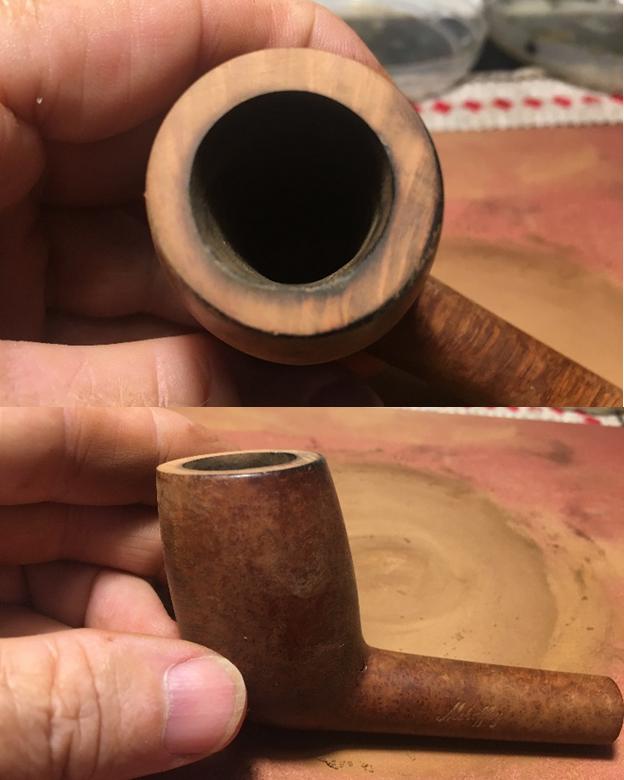
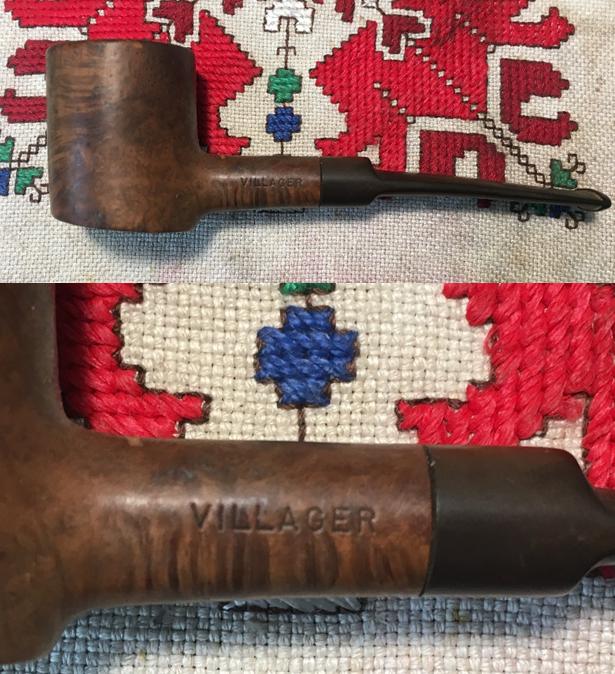
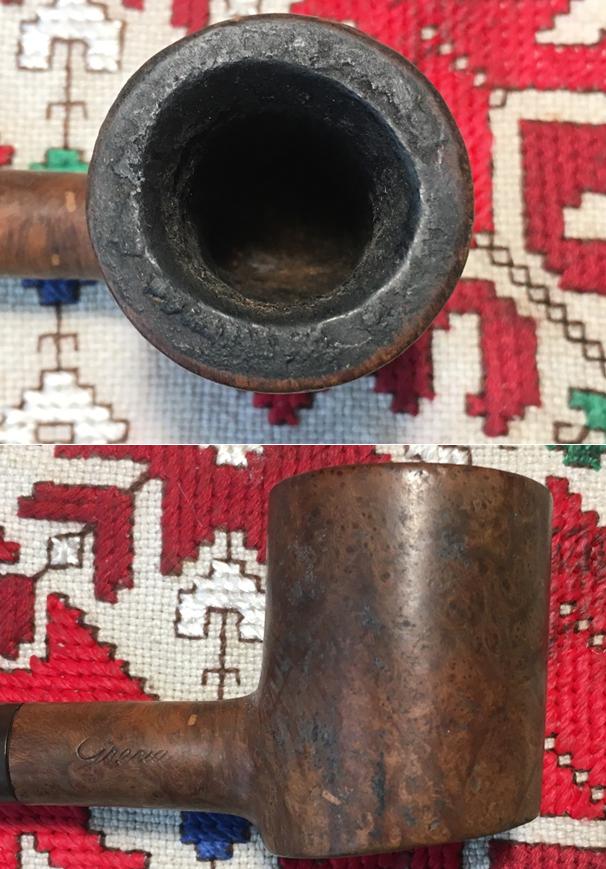
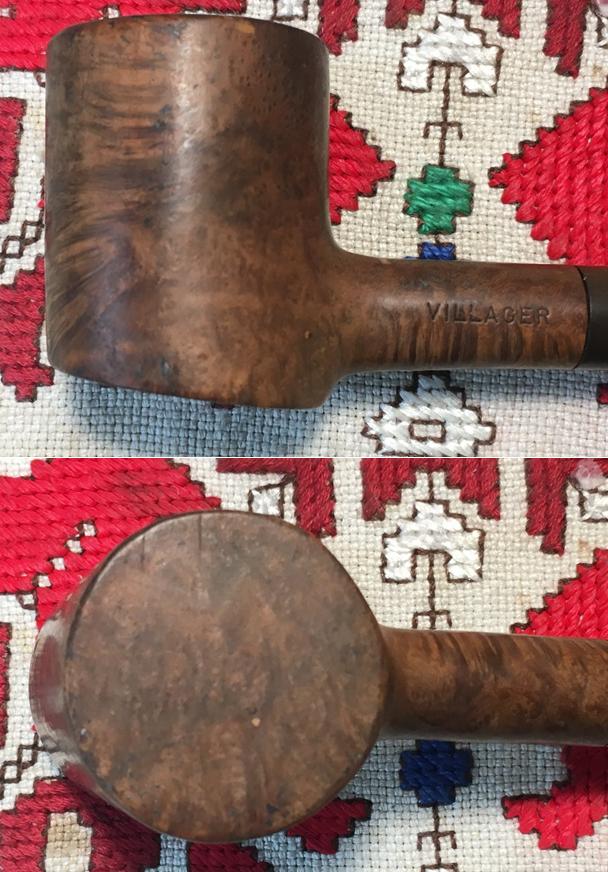
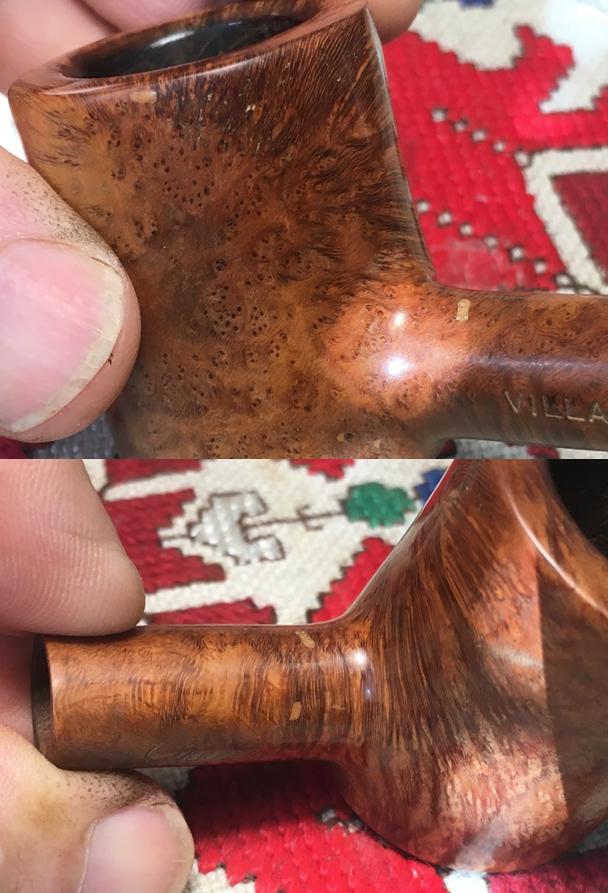
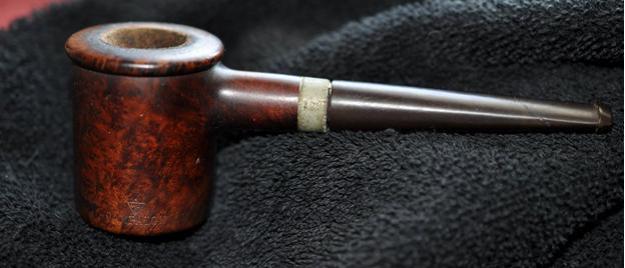
When Jenny fished this iconic shaped Poker out of my ‘Help Me!’ basket, her time of consideration was very short.  She added it to her Trove of pipes that she asked me to restore to gift the men her family when she returns to the US at summer’s end.  She has worked here in Bulgaria with us for the past few years and she will be missed!  All her Trove pipes benefit the work we do with the Daughters of Bulgaria, women and girls who have been sexually exploited and trafficked in Europe.  I really like the Poker shape.  It always elicits a ‘down home’ Mark Twain feel for me – I can easily imagine a vintage gathering of card players sitting around a poker table, dealing hands on a riverboat, and one old crust chewing on his ‘Poker’ as he considers his hand.  Taking a puff, then placing the sitter on the table, he changes 2 cards in hope of his fortune changing!  All that by looking at this pipe?  For me, yes!  This Poker got my attention on the eBay auction block and it’s now on my work table here on the 10th floor of our former Communist apartment ‘blok’.  Here is what I see. On the left side of the shank is stamped ‘Villager’ and on the right, ‘Grecian’ in a cursive script. The only reference to a ‘Villager’ in Herb Wilczak and Tom Colwell’s, ‘Who Made That Pipe?’ is to the renown Italian name, Savinelli.  While Savinelli does boast a Poker shape in its Shapes Chart I found in Pipedia, this Villager is lacking some of the usual indicators of the Savinelli brand (Savinelli stamping, stem shield, etc.).  Neither is ‘Villager’ included in the extensive list of Savinelli made sub-brands, seconds & order productions in Pipedia’s Savinelli article.  I’m dubious of the Savinelli origin of this Poker, yet I was not able to find an example of a Savinelli ‘Villager’ line to compare.  The only other marking is on the right side of the shank, ‘Grecian’.  I’m assuming this is pointing to ‘Grecian Briar’ which I’ve seen marked on pipes’ right shank sides.  After searching the ‘Villager Grecian’ together, I come up with nothing that helps to identify or disqualify (Savinelli) the origins of this Poker.  I would welcome any leads!  The one thing I can deduce with great certainty about this Villager Poker, is that it was a well-loved and smoked pipe!  But it needs help!

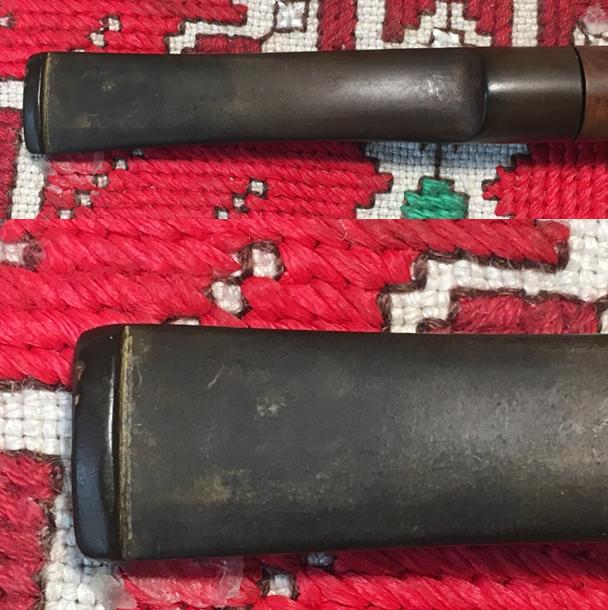
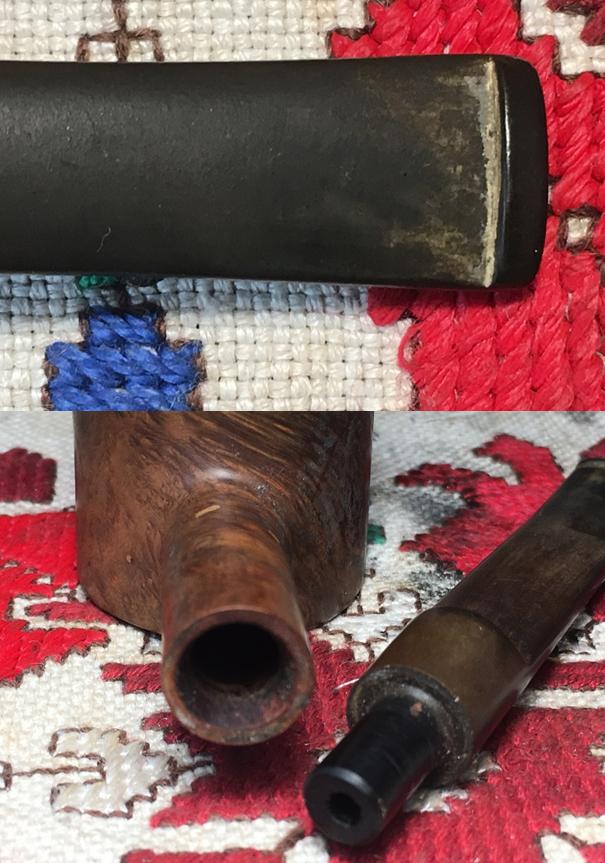
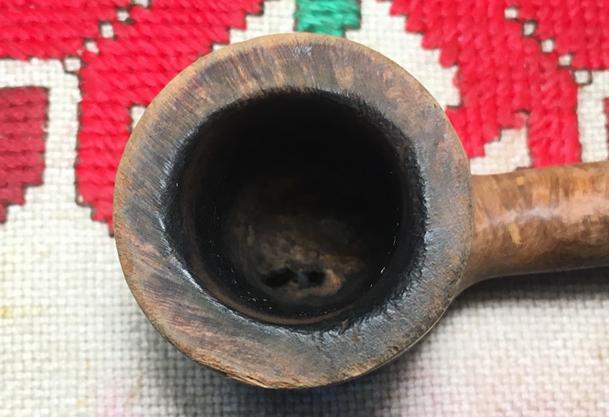
There is heavy build-up of carbon cake in the chamber and the rim is well-crusted from lava and oils.  The back-left side of the rim appears to have borne the brunt of the former stewards lighting activities – it is burned and the internal rim shape is out of round because of it.  The stummel has normal grime coverage and sports a few small fills which have lightened over time and needing attention. The ‘seat’ of this Poker has been used and shows some wear.  The stem has heavy oxidation and has been chewed on a bit and will need work.  I’m anxious to recommission this Villager Poker for Jenny’s menfolk!

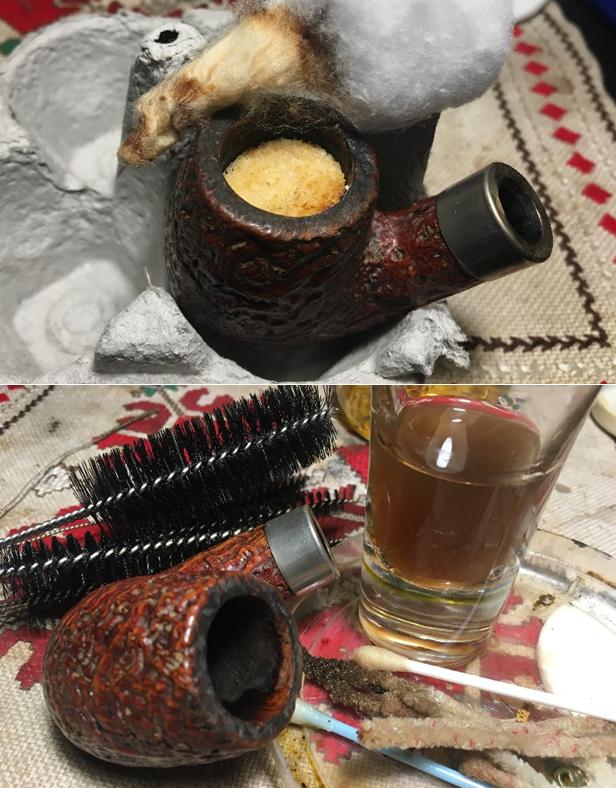
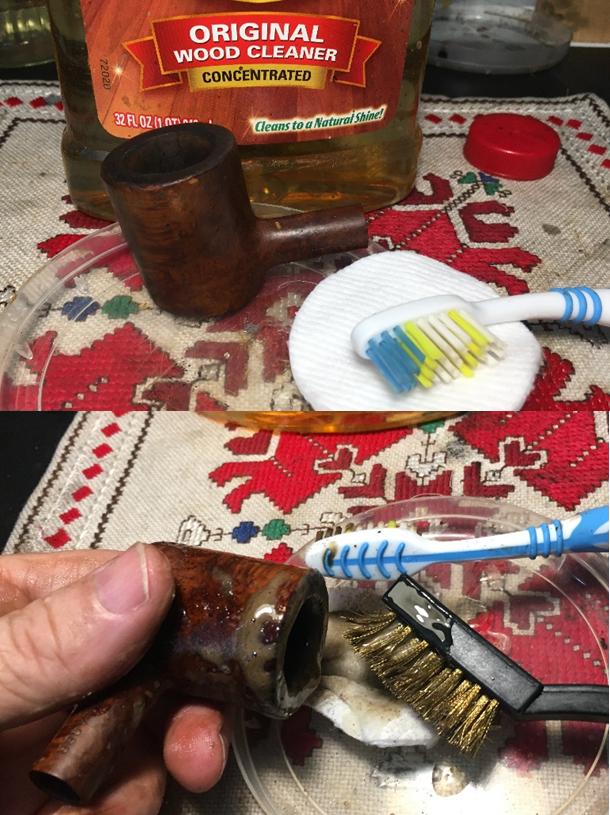
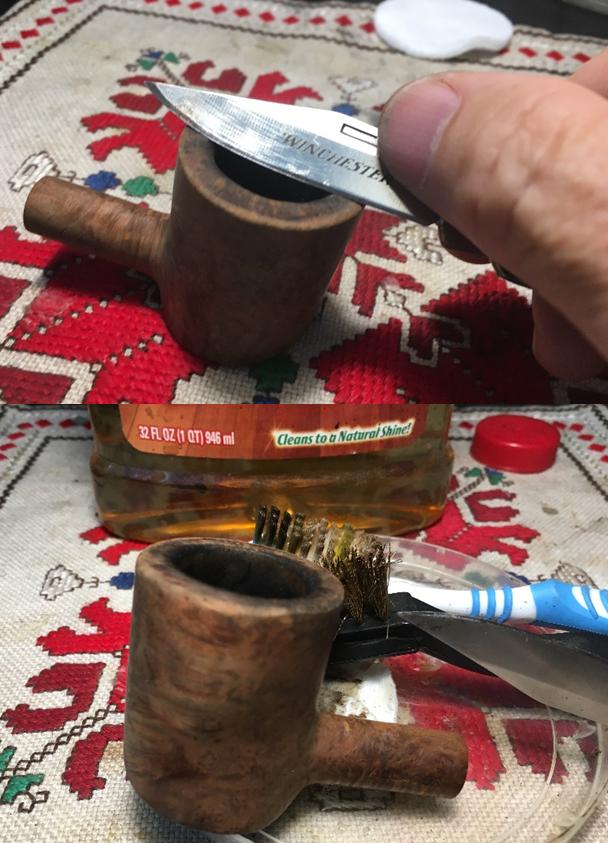
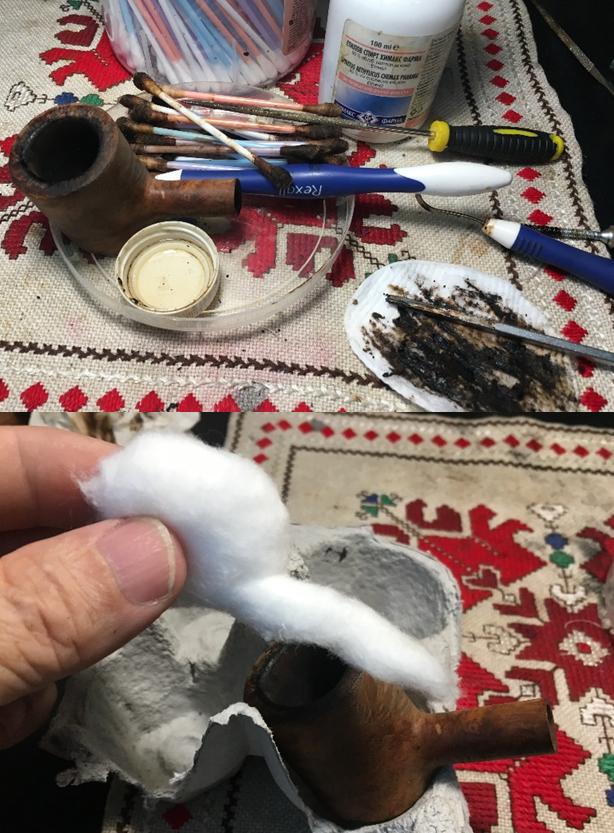
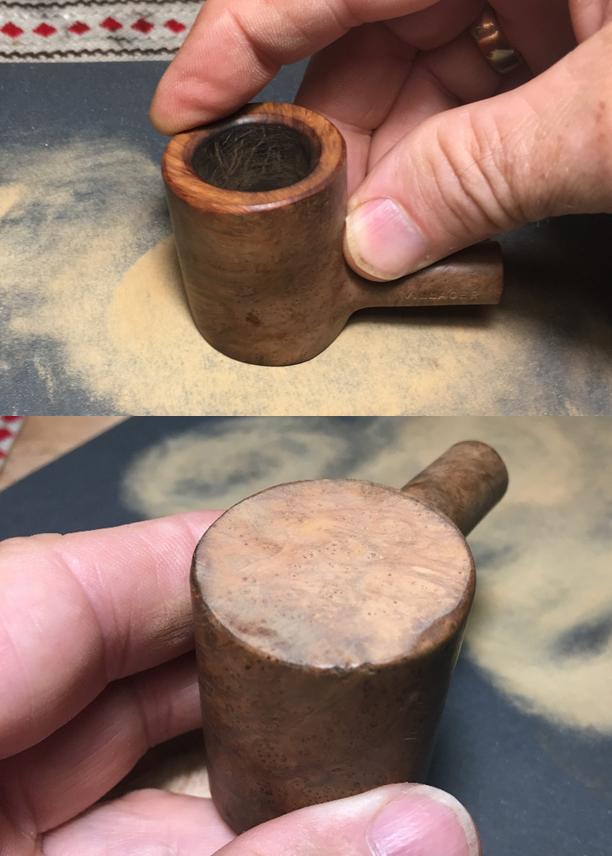
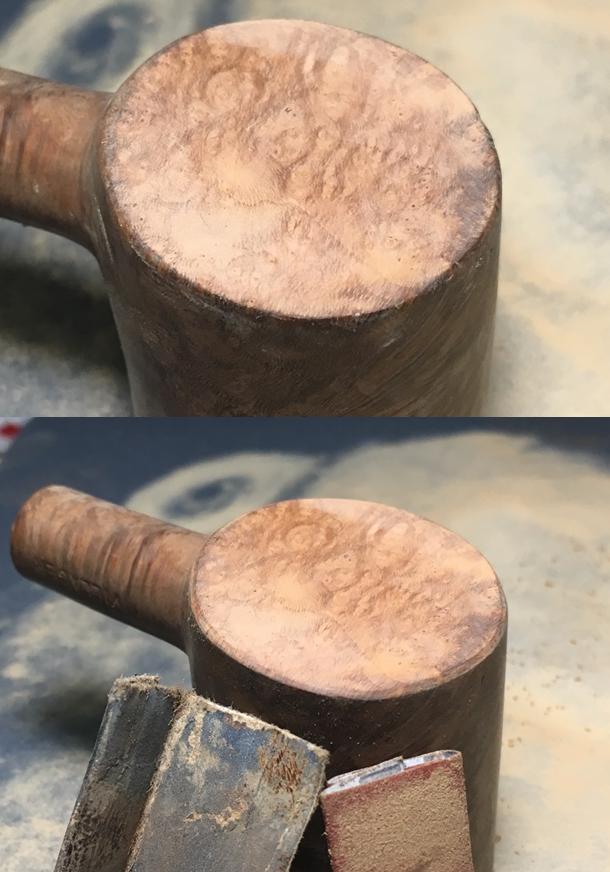
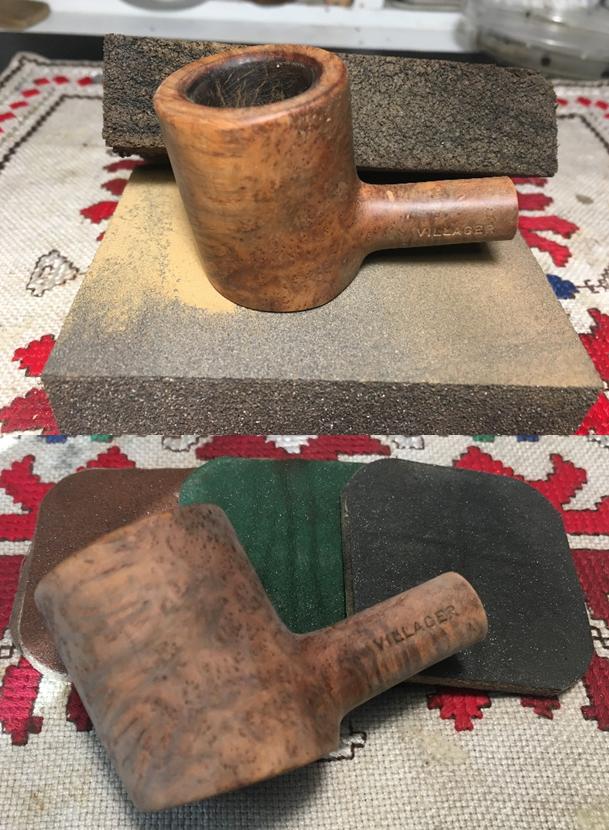
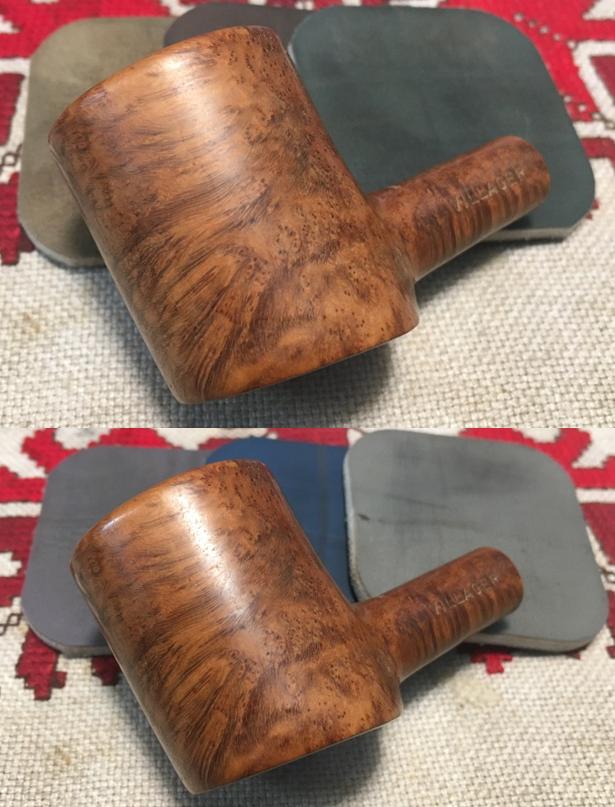
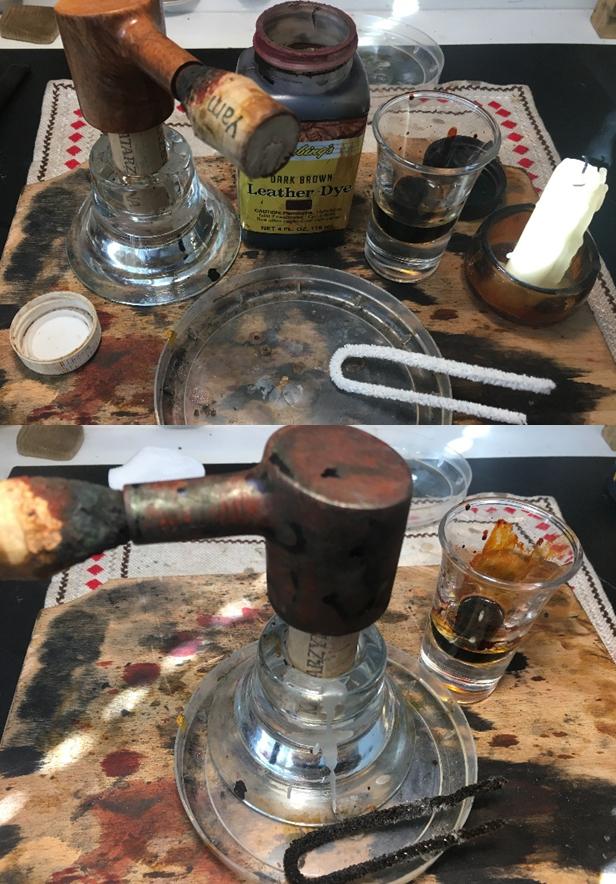
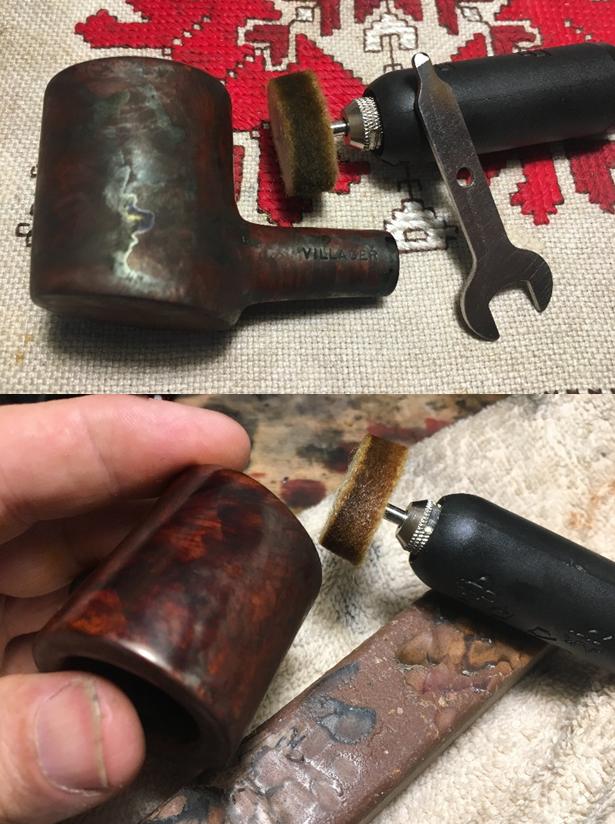
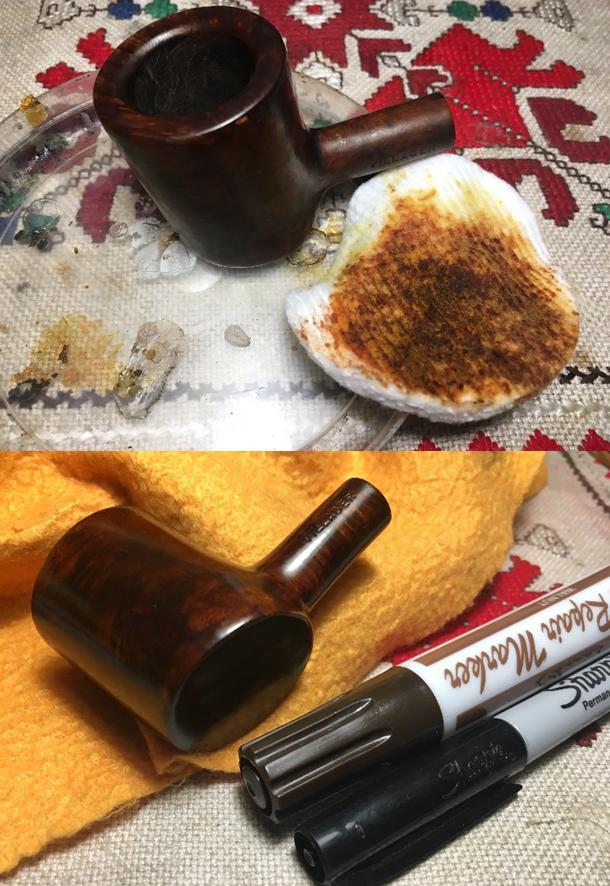
I begin by placing the stem into the OxiClean bath to raise the oxidation.  I let it stew for several hours. Starting on the stummel, I use the Pipnet Reaming Kit to remove the heavy cake from the chamber.  I will not be able to inspect the chamber wall for integrity until this is done.  I take another picture of the chamber to mark the progress. After putting down paper towel to shorten the cleanup, I employ the smallest blade first then use the next two larger sizes.  To fine tune the ream, I then utilize the Savinelli Pipe Knife to remove more carbon.  After this, I roll up a piece of 240 grit paper around a Sharpie Pen and sand the chamber removing more carbon build up seeking a fresh briar surface.  Finally, I wipe the chamber out with a cotton pad wetted with isopropyl 95% to remove the carbon dust.  I do not see any problems with the internal fire chamber’s integrity.  The pictures show the progress. With Murphy’s Oil Soap, I begin working on cleaning the rim and stummel of the grime and oils.  I use cotton pads and a bristled tooth brush to work around the stummel and rim.  Into the scrubbing, I also use a brass bristled brush on the rim – this will not damage the wood.  After rinsing off with warm tap water, I use the flat edge of my Winchester Knife to scrape more carbon off the rim surface.  After rinsing off again with warm tap water, I look at the rim condition.  I am left without any question regarding the need to top this Poker to remove the damaged briar and repair the inner-rim roundness.   Pictures show the progress. Before I move to the external stummel repairs, I turn to the internal cleaning.  I use cotton swabs and pipe cleaners dipped in isopropyl 95% to do the job.  I also utilized needle files and a small flat head screw driver to scrape the sides of the mortise to remove the plethora of tars and oil that have built up.  After some time doing this, and with other commitments with my life on the horizon, I decide to utilize a salt/alcohol soak to continue to wage war even though I’m off doing other things!  I use Kosher Salt, which does not leave an after-taste unlike iodized salt, to fill the bowl and after covering the bowl with my palm, I give the stummel a few shakes to displace and settle the salt.  Then, I stretch and twist a cotton ball to form a wick which is inserted and pushed down into the mortise using a piece of metal coat hanger.  As a wick, it acts to draw out the oils and tars as the alcohol and salt interact.  I then place the stummel in an egg carton to stabilize it and position it at a slight angle and fill the bowl with isopropyl 95% until is surfaces over the salt.  I wait a few minutes as the alcohol is drawn into the mortise and top the alcohol again. The Trojan Horse strategy commences.  Returning several hours later, the salt is discolored and the wick shows the fruit of its labors.  I toss the expended salt in the waste, clean the bowl with paper towel, and use long bristled brushes to rid the mortise of left-over salt crystals.  I return to using cotton swabs and pipe cleaners to complete the internal cleanup job.  Surprisingly, I am still scraping gunk off the mortise walls with small flat edged tools!  This stummel is a nasty little bugger.  Finally, the gunk is removed and cotton swabs are coming out clean.  Mission accomplished!  Pictures show the gunk removal. Turning now to the stem, I remove it from the Oxi-Clean bath and the oxidation has been effectively raised on the vulcanite surface.  Using 600 grade sanding paper, I wet sand the stem removing the mother share of the oxidation.  I follow with 0000 steel wool and then Mr. Clean Magic Eraser to finish the oxidation removal.  Pictures show the process. Using pipe cleaners, I now attack the internals of the stem.  Dipping pipe cleaners in isopropyl 95%, it did not take long before the airway was clean.  The picture shows the results.Turning now to the stummel, I take another closer look at the rim.  The damaged wood needs to be removed and the rim repaired.  I take 240 grit paper and put it on a chopping board to form my topping board.  Inverting the stummel, I rotate it over the paper taking off only as much briar as is needed to refresh the rim.  I check the progress often to make sure I’m not dipping into softer damaged wood – keeping the top true.  I take some pictures to show the progress.  The 4th picture below shows the thinner area at the 2 o’clock section of the rim because of the scorching.  I finish with the 240 grit paper, and I follow by topping it lightly with 600 grit paper.  To shape a more balanced and rounded rim, I create an angled internal bevel of the rim using 120 grit paper.  My aim is to create a bevel that evens out and blends with the angle created by the damaged area as much as possible.  I also create a bevel on the external rim edge to take away damage as well as encourage more balance.  I follow up the 120 grit paper by using 240 and 600 on both the internal and external rim bevels.  I think the beveling looks good and succeeds in masking the problem areas on the rim.  The pictures show the rim restoration. With the rim repair complete, I look to the stummel.  With all the wear nicks and cuts that this loved Poker has endured, I decide to remove the old finish to get down to the natural briar.  To do this I use cotton pads wetted with acetone and work on the surface.  The acetone works very efficiently and the finish comes off easily.  As I inspect the heel of the stummel, I see nicks on the edge.  I decide to lightly ‘top’ the bottom of the stummel with 600 grit paper. I am surprised by how ‘not flat’ the bottom is as I top it.  After finishing the topping of the seat of this sitter, I used rolled-up 240 and 600 grit papers respectively to bevel the bottom edge very lightly.  This removed some remaining dents on the edge that the bevel did not remove.  It looks good.  The pictures show the progress. Next, using a medium grade sanding sponge I sand the stummel removing the nicks and cuts.  I follow using a light grade sanding sponge.  Looking at the fills on the stummel, I dig at them with a sharp dental probe to see if they are solid.  They seem good, but I’ll need to darken them later.  I move directly into the micromesh pad cycles.  Using pads 1500 to 2400 I wet sand the stummel.  Following this, I dry sand with pads 3200 to 4000 then 6000 to 12000.  I take pictures showing the progress of bringing out the briar grain on this venerable Villager Poker.  This part is one of my favorites in restoring pipes – seeing the grain emerge with the hidden beauty displayed! At this point, I take cherry and walnut stain markers and touch up the lighter fills so that they will blend better.  After touching up, I lightly feather dabbed the stained fills with a cotton pad with a lightly wetted with alcohol.  This blended the fills more.  The pictures show the progress. To cover the repairs and to blend increasingly a darkened part of the rim that had been scorched, I decide to go a bit darker in the staining of the stummel.  Yet, I want to keep it lighter.  To do this I mix at a 50% ratio Fiebing’s Dark Brown Leather Dye and alcohol in a shot glass.  I want to start a bit darker, but have the option to lighten it by wiping the finish down with alcohol and cotton pad.  After I mix the dye, I fit a cork in the shank to act as a handle.  I first warm the stummel using a hot air gun to open the grain to receive the dye.  Using a folded over pipe cleaner, I apply dye to the stummel thoroughly, aiming for complete coverage.  I then ‘fire’ the stummel using a lit candle.  This burns off the alcohol in the dye and sets the stain in the grain.  After a few minutes, I repeat the process and then set the stummel aside to rest.With the stained stummel resting, I turn to the stem.  Using micromesh pads, I wet sand the stem using pads 1500 to 2400.  Then I dry sand using pads 3200 to 4000 then 6000 to 12000.  After each cycle, I apply Obsidian Oil to the stem to revitalize the vulcanite.  When completed, I set the stem aside to dry. The pictures show the progress. Turning again to the stummel, it is time to ‘unwrap’ the fire crusting to reveal the grain.  Using a felt buffing wheel mounted on the Dremel, set at the slowest speed, I first purge the wheel using the Dremel’s metal adjustment wrench against the felt surface.  This removes old compound and restores suppleness to the wheel.  Then, I apply the abrasive compound Tripoli to the surface by rotating the buffing wheel methodically over sections at a time, removing the fire crusting.  After completing the Tripoli cycle, I wet a cotton pad with alcohol and wipe down the stummel.  I do this primarily to blend the dye more evenly over the surface. I don’t rub too much because I do not want to lighten the hue – it looks good.  I then mount a cotton cloth buffing wheel on the Dremel, increase the speed a bit, and apply a slightly less abrasive compound to the surface, Blue Diamond. After the Blue Diamond compound, I buff the stummel with a felt cloth to remove the compound dust from the surface.  I also notice that the fills that I had colored earlier had lightened again through the staining process and the alcohol wipe down (see third pictures below).  I touched those up again with a black sharpie pen and a dark stain stick.  The pictures show the progress. I reunite the Villager Poker’s stem and stummel to apply wax.  With the cotton cloth buffing wheel dedicated to applying carnauba wax mounted on the Dremel, I apply several coats over the stummel and stem surface.  I follow this with a clean cotton cloth buffing wheel on the Dremel and then a rigorous hand buffing with a microfiber cloth to raise the shine more.

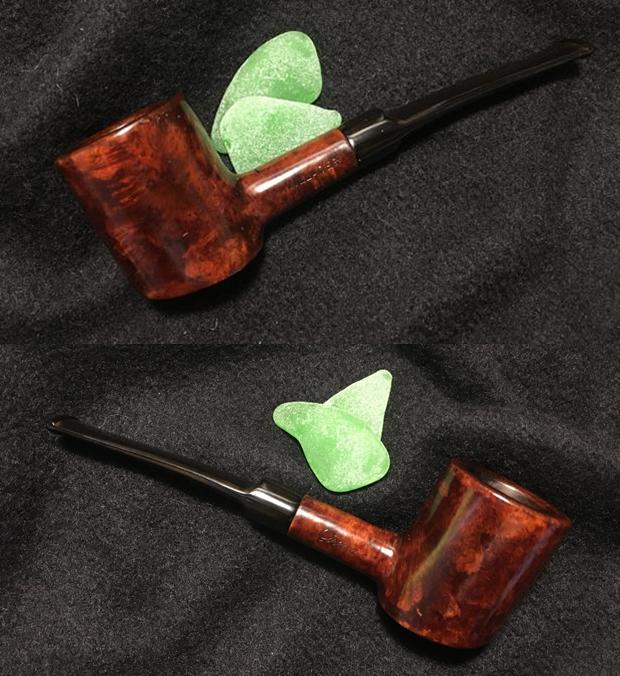
The only direct identification of the name, ‘Villager’, pointed to a pipe bearing the Italian name, Savinelli.  I was dubious that this Villager Grecian Poker rose to the quality one expects from Savinelli craftsmanship.  Yet, I am very pleased with how this iconic Poker cleaned up.  The rich depth of the briar tones and the variety of grain movement makes this ‘Ole Boy Poker’ a keeper and ready for his next steward, who will enjoy him as much as the last.  Jen’s gifting this Villager Poker to one of her menfolk benefits the work we do with the Daughters of Bulgaria.  For more information about this and my other restorations, take a look at my blog, The Pipe Steward.  Thanks for joining me!

Jen’s Trove No. 4 – Reclaiming a Kaywoodie ‘Flame/Super Grain’ #11 Large Billiard


Blog by Dal Stanton

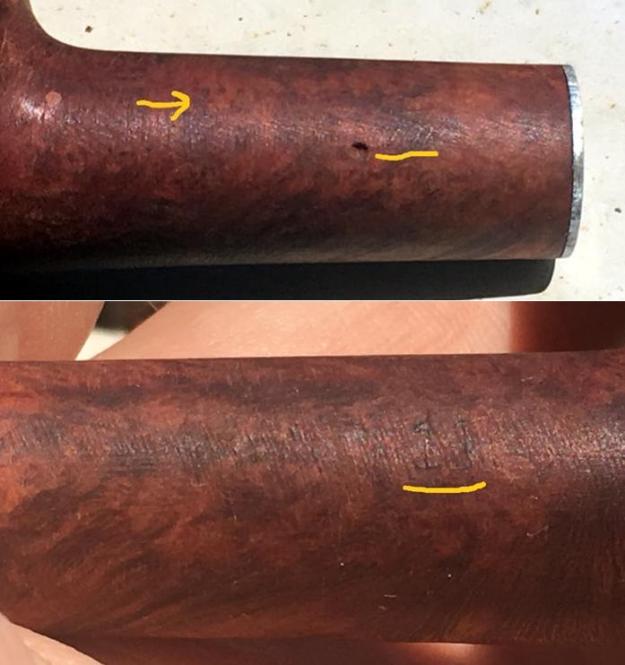
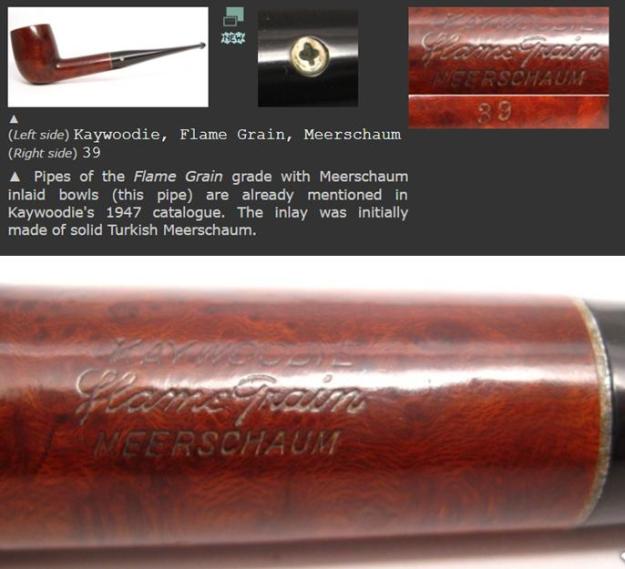
I think the reason this Kaywoodie stood out to Jen as she was rummaging through my baskets and boxes of ‘Help Me!’ pipes, was the ‘fancy stem’ and the strong, full look of the stummel.  The grain is impressive and it will clean up nicely.  Jen is leaving Bulgaria soon after working with us for a few years.  She’s taking a trove of pipes back to the US to give to the men in her family.  For her too, is the fact that each pipe she purchases will benefit our work with the Daughters of Bulgaria – helping women and girls who have been trafficked in Europe and sexually exploited.  This is the second Kaywoodie she has chosen.  The first was a beautiful Kaywoodie Author (See: LINK) that needed extensive rim repair.  The Kaywoodie now on the work table got my attention too, on the eBay auction block from a seller in North Carolina.  After Jenny rescued it from the basket, I take some pictures of the Kaywoodie she chose. Generally, the pipe is in pretty good shape other than normal time wear and tear issues, but the stem bit might need some work.  The rim and fire chamber are both in good shape, but in need of cleaning and the removal the light carbon cake to bring it to fresh briar for a new start.  In the picture immediately above shows two fills – one filled and one emptied.  The hole looks like a drill hole and I first suspected it was part of a cracked shank repair, but no cracks are evident.  Only these two fills on the stummel will need to be refilled and I’ll see if the other needs to be replaced.  The ‘Fancy Stem’ (I spent time trying to find a name for this type of stem and this is what I came up with via Steve’s assistance!) has serious tooth dents on the upper button lip and a significant dent and chatter on the lower bit.  I also detected that the classic Kaywoodie Synchro-Stem threaded tenon is underclocked a bit – which over time, I discovered, is a normal happening with metal threaded tenons (See from Reborn Pipes: About Stem/Bit Shapes).The nomenclature on the sides of the shank are in bad shape – almost warn off and beyond history’s grasp.  I had to take several looks at the stamping with a magnifying glass at different angles of light – lamp light and sunlight outside on my ‘Man Cave’ balcony on the 10th floor of our former Communist Blok apartment building.  What I can decipher with much effort, is a phantom “Kaywoodie” [over] “***in” offset to the far right of the Kaywoodie stamping above it (under the ‘-die’).  On the shank’s right side, I make a guess at ‘11’ which is a shape number.  These two pictures try to show what I can barely see!  I mark with yellow pen where the ‘K’ starts of Kaywoodie and I underline the ‘***in’ and the 11 in the second picture.With a passion to understand as much as I can about the provenance of the pipes I restore, I know that I’m on a steep learning curve with this only being my second Kaywoodie.  I’ve benefited much from Troy’s expertise, of Baccy Pipes, with Kaywoodie pipes and his help on this Kaywoodie.  I’ve picked up some of the markers that help establish a Kaywoodie’s identity.  The first thing to look at is, what is the “***in” refer to?  Identifying the Kaywoodie line, at least partially, can help place a pipe.  It did not take long as I search Pipedia for a listing of the names of the Kaywoodie lines (see LINK).  What I found is that throughout the years, Kaywoodie has put forward several lines with the word “Grain” making sense of my mystery “***in”:  Straight Grain, Super Grain, Flame Grain, Bird’s Eye Grain, Relief Grain, and Custom Grain – were the Kaywoodie lines that I cataloged from Pipedia.  My next step was to go to the Kaywoodie section of Pipe Phil’s inventory of examples and to see if I could find an example of what appears to be the same script style for the ‘Kaywoodie’ [over] ‘*** Grain’ in cursive, simply to visualize.  The only example I found of the same script for both ‘Kaywoodie’ and ‘Grain’ was this Flame Grain, Meerschaum from the 1947 catalogue that Kaywoodie produced.  A close look of the script follows in picture two.  I think this is a pretty good visual match of the nomenclature style.So, I think it’s safe to say that the Kaywoodie before me was a line suffixed by ‘Grain’.  I don’t know how rare or common the use of the cursive script was with Kaywoodie ‘Grain’ lines, but it could possibly help in identification if one knew.  Another concrete marker I identified was the shape number, ‘11’ which is identified as a ‘Large Billiard’ in the Pipedia Kaywoodie Shapes Guide.   This description seems to be right on with the Kaywoodie before me – a handful of wonderful Billiard briar!  The other marker that I was aware of was the iconic Kaywoodie stem shamrock or club.  From PipePhil.eu, I found this concise description that indicates that the black shamrock in the white dot started to emerge on pipes since 1937:
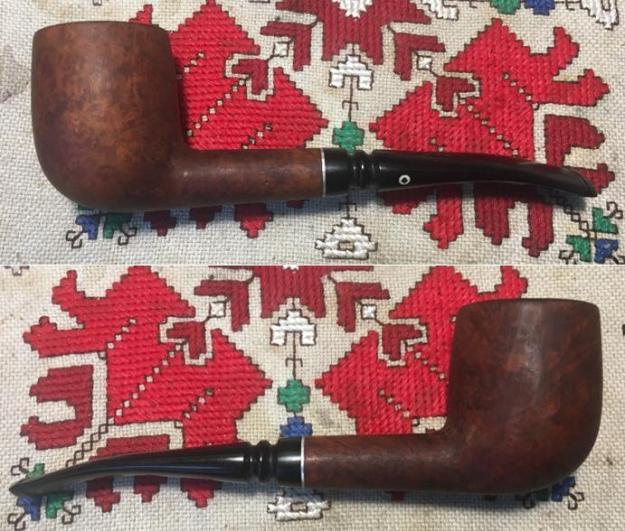
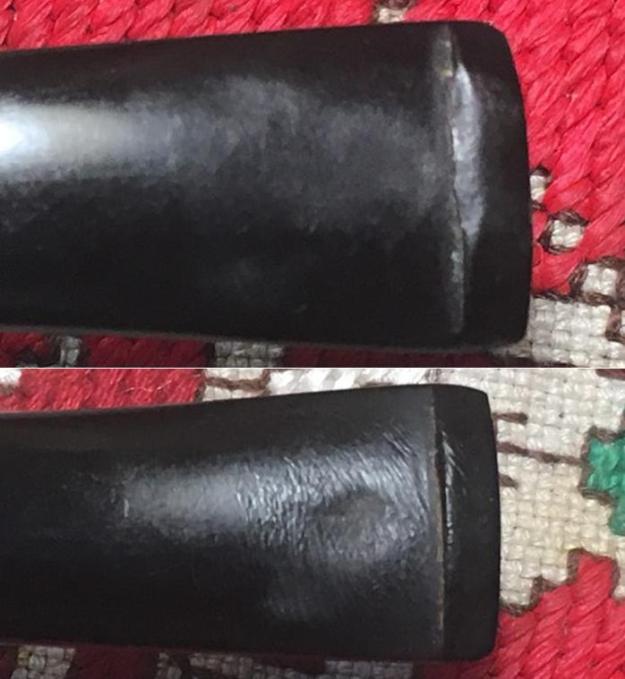
The cloverleaf logo: the round logo (black cloverleaf in white circle or white cloverleaf in black circle) was first used in 1937. Up until the late 40’s this logo was used on all of the upper grades pipes. The concomitant use of the plain white cloverleaf and the disk inlaid logo continued until the early 80’s.

Up until the late 1940’s/early 50’s, the logo was on top of the stem. After that the logo was moved to the side of the stem (exceptions exist).

The other solid marker that I investigated was the No. ‘11’ shape number.   In Pipedia’s Kaywoodie Shapes Number section, shape number 11 is described:

Shape # Description Years Produced
11 Large billiard 1935-1972

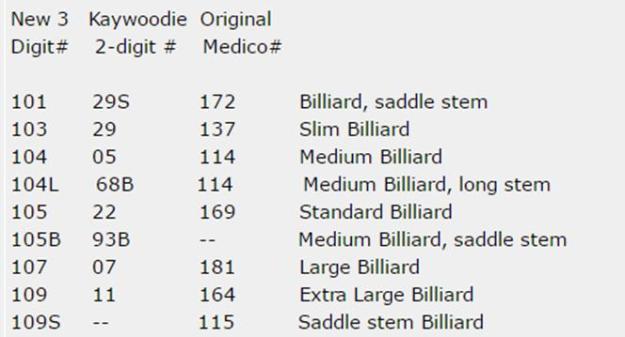
Troy later sent me another helpful link from Kaywoodie My Free Forum that allowed me to see all the Kaywoodie Billiard offerings with the comparison of 2 and 3-digit shape numbers.From the same Forum article, the center column reflects the 2-digit system employed from 1927 to 1972, when the system was changed to a 3-digit system when pipe production (for Kaywoodie, Yello-Bole and Medico) was moved to the Medico factory in Richmond Hill Queens NY as plans for new plant were in process.  The left-hand column above was the 3 digit numbers used during this period for all Kaywoodie and Medico pipes, from 1972 to 1980.  The same article indicated that the 2-digit numbers were only for Kaywoodies produced in the US – that Kaywoodie of London to Cadogan had their own three-digit system.
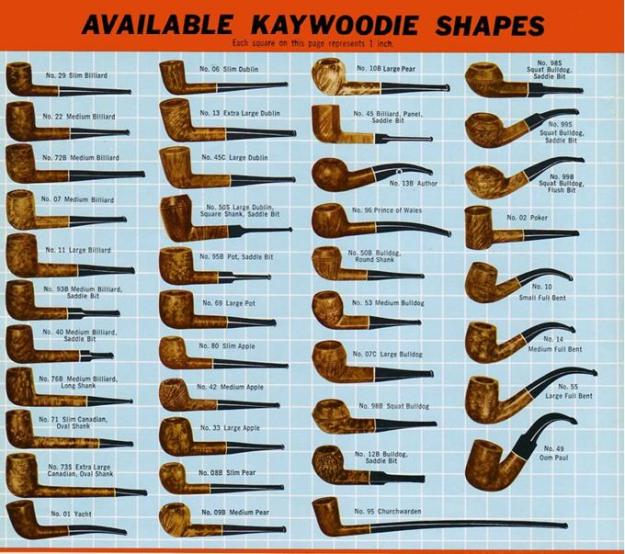
I took my search for a Kaywoodie ‘Something Grain’, shape #11 to the latest Kaywoodie Catalog that would have a representation of the #11 Billiard at Chris’ Pipe Pages that is consistent with the older Kaywoodie catalogues leading up to it (See: LINK).  See the 5th pipe down on the left:That is the Large Billiard stummel on my work table.  There is one thing that doesn’t line up. The Fancy Stem. I spend extensive time trying to find the No. 11 with a fancy stem flipping through all the Kaywoodie catalogs (referenced above) and found no specimen – not even on another shape.  During this exploration, I sent my forensic findings and some pictures to Troy whose experience with Kaywoodies is extensive.  I wanted to know what I might be missing.  After an enjoyable time of communicating back and forth – pipe restorers’ cyber fellowship, Troy’s experience with Kaywoodie pipes cut through my fog quickly.  Regarding the nomenclature of the Kaywoodie Jenny chose as part of her trove, I’ll let Troy’s observations conclude this Kaywoodie origins adventure!  Thanks Troy!
if the shank is straight then the only thing I can think of is someone took a pre-1972 #11 and re-stemmed it with a 1970’s type quarter bent stem.  If that is the case then it’s a 1955-1972 #11 Flame Grain with a different stem…. Or it could be a Super Grain (1955-1972) with a later Flame Grain type stem.

With a better understanding of this Kaywoodie in front of me, I start the restoration by reaming the fire chamber.  Since the cake is so thin, I use the Savinelli Pipe Knife to do the job.  After spreading out paper towel to catch the carbon, I employ the knife and it makes short work of the cake.  I follow by sanding the fire chamber with a coarse 120 grade paper, then a 240 grade paper – in both cases wrapped around a Sharpie Pen.  I finish by wiping the bowl with cotton wetted with isopropyl 95% to remove the residue carbon dust.  The pictures show the initial clean up.
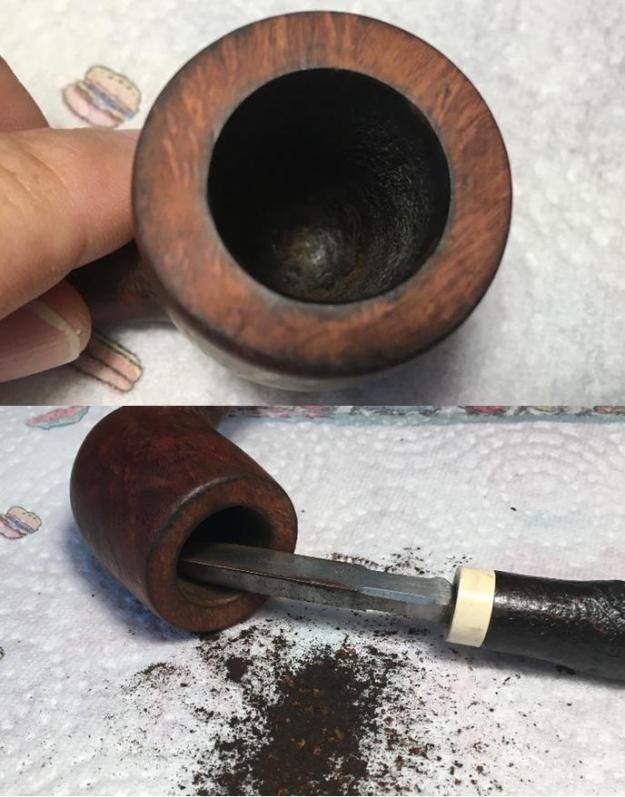
Next, using undiluted Murphy’s Oil Soap I address the grime on the stummel using cotton cloth pads.  After scrubbing, I rinse the soap off the stummel with cool tap water, not allowing water in the internals. While the stummel is still wet, I probe the fill on the left side of the shank to see if it had softened and might come out.  It was solid.  The pictures show the progress. I now turn to cleaning the stummel internals because I like working on clean pipes.  Using pipe cleaners and cotton swabs dipped in isopropyl 95%, I go to work.  The internal gunk is thick – I use a curved, spaded dental probe to scrape the sides of the mortise and I remove a lot of old tars and oil built up. After some time working like this, I decide to switch tactics and use a retort to clean the internals and make more efficient headway!  After setting up the system, putting a cotton ball in the bowl, and lighting a candle to heat the alcohol in the capped test tube, the alcohol heats and eventually boils.  When it boils, the expansion forces the hot fluid into the stummel.  Much of the alcohol is initially absorbed into cotton ball so I replenish the alcohol and continue the process.  The rhythm of boil, expansion and then removing from the flame and tipping the stummel so that the expanded alcohol runs back into the test tube, is repeated several times. I pour off the first cycle into a Lord of the Rings commemorative shot glass to compare.  I refill the test tube with alcohol, and continue several more cycles, pouring out the expended alcohol in another shot glass and refilling with fresh alcohol for a 3rd and final cycle.  There is a gradual lightening of the expended alcohol as I picture all three for comparison.  After finishing use of the retort, I finish up again using pipe cleaners and cotton swabs.  The pictures show the progress. Looking at the stummel surface, the old finish does not look uniform so I use cotton pads and wipe down the stummel with acetone to remove vestiges of the old finish.  The acetone worked very quickly.  I again look at the suspect fill on the left side of the shank, and this time I detect a gap on the edge of it. I use the sharp dental probe to remove the old fill. Looking now more closely at the rim, there is a dark ring around the external edge simply indicating wear.  I take a picture of the right side of the rim that shows more wear.  To freshen the rim lines, I decide to lightly top the KW Billiard.  Using a chopping board topped with 240 grit paper I evenly rotate the inverted stummel, checking to make sure I’m staying true. After making sufficient progress with the 240, I switch to 600 grade to smooth further the top surface.  The pictures show the topping progress. With the topping completed, I fine tune the rim freshening by beveling the internal edge of the rim.  I use 120 grit paper rolled tightly to cut the initial angle of the bevel.  I follow the 120 with a rolled piece of 240, then 600.  To me an internal bevel adds class to a stummel.  This #11 Large Billiard stummel looks good.  I also lightly sand around the edge external rim.  This softens the lines.  The pictures show this rim fine-tuning process.To address the small holes on the left side of the shank, using a toothpick, I drop fill the holes using HOT STUFF Special ‘T’ – thick CA glue.  I put a little CA glue on close to the end of the toothpick and allow gravity to run it to the tip to allow a surgical application of the glue.  After applying the thick CA glue, I spray it with an accelerator to cure it more rapidly.  In a few minutes, using a flat needle file then a rolled-up piece of 240 grit paper, I bring the CA patch mound down to the briar surface. I finish by using a rolled-up piece of 600 grit paper to smooth the patches more and blend.  The pictures show the process. To prepare the stummel for sanding, to preserve what is the precious little of this Kaywoodie’s nomenclature, I cut small pieces of masking tape to cover the remnants.  First using a medium grade sanding sponge, I sand the stummel gently removing very small nicks and pits to smooth the stummel.  I follow with a light weight sanding sponge.  Using strategically placed thumb and fingers the masking tape guards did the job.Now to the micromesh pad cycles to bring out the grain on this already attractive Kaywoodie Large Billiard.  Using pads 1500 to 2400 I wet sand the stummel, followed by dry sanding with 3200 to 4000 and then 6000 to 12000 – throughout, guarding the nomenclature.  I am impressed by the quality of the briar grain emerging in the Kaywoodie Large Billiard.  The pictures show what I’m seeing. Putting the stummel aside, it’s time to tackle the Fancy Stem.  Using pipe cleaners dipped in isopropyl 95% I work on the internals.  I also employ the use of long wired brushes that more easily work up into the Kaywoodie 3-hole stinger/tenon system.  Following this, I use a brass bristle brush on the exterior of the stinger/tenon and finish with shining it with 0000 steel wool.With stem internals clean, I look again at the work needed on the upper and lower bit.  The upper button area has tooth chatter but more significant is the compression on the button lip that may need rebuilding.  Looking at the upper lip from the slot side, the lip has a dent that compresses toward the slot.  The lower bit has a significant tooth dent and chatter.  The lower button lip is in better shape.  I take some pictures to mark the problem areas. I decide to use the heating method first to see if this will minimize the damage.  By heating the vulcanite over a flame, the expansion of the rubber will seek out its original shape – at least in part.  I’ll give it a try, then move to sanding and filling.  With a candle lit, I pass the button area over the flame – back and forth several times.  The technique helps on the lower bit but not sufficiently.  The upper bit, button repair was not helped much.  So, using 240 grit paper, I work on the lower and upper bit. Using a flat needle file, I also try to remove dents from the upper button lip.  Pictures show the progress. The first pictures below show the sanding/filing progress on the upper lip.  I’m not satisfied with the results as I will need to remove more of the button than I want to remove the dents.  I wanted to see if I could repair the lip without rebuilding the lip, but this will not be possible.  I’ll need to mix activated charcoal powder with CA glue to rebuild the upper button lip and fill the dent on the lower bit.I open one capsule of activated charcoal and mix it with Hot Stuff Special ‘T’ CA glue. This CA glue is extra thick.  After cleaning the patch areas with a cotton ball and isopropyl 95%, I place a small puddle of ‘T’ CA glue on an index card, and use a toothpick as a mixer and trowel. After reaching a molasses-like viscosity with the mixture, I apply the mixture to the dent and the upper button lip.  I apply more mixture than necessary to enable later sanding down, shaping and blending the patches.  To shorten the curing time for the patches, I spray each with an accelerator.  The pictures show the progress. Back to filing and sanding.  Using a flat needle file, I file the patches down.  I follow by using 240 grit paper to fine tune bringing the lower bit dent patch down to surface level.  I blend the patch further using 600 grit paper. I do the same with the lower button lip.  After shaping the bit with the flat needle file, I use 240, 600 grit papers. The process with the button is a gradual filing, sanding and shaping until the button emerges and looks balanced.  Pictures show the progress. Above the slot, during the sanding, I notice a pinhole – what appears to be a small air pocket.  There are also very small air pockets on the upper button lip repair.  This is normal and I use a toothpick and drop-fill the hole with CA glue. I then paint a thin coat of CA glue over the button lip to fill the air holes.  I quickly spray the glue with an accelerator to shorten the curing.  I then finish the button sanding out the air pocket fills. I complete this phase of repair by using 0000 steel wool to the upper and lower bit.   The lower bit patch will blend more as I polish the stem.  The button looks good.  The pictures show progress. With the repair to the bit completed, I now turn to the Fancy Stem.  Even though there is no oxidation, I use 0000 steel wool to buff the entire stem to remove many small nicks and scratches on the surface.  I then begin the micromesh pad process by wet sanding with pads 1500 to 2400.  I follow by dry sanding with pads 3200 to 4000 then 6000 to 12000.   After each cycle, I apply Obsidian Oil to revitalize the vulcanite.  The Fancy Stem is looking good.  The pictures show the progress. I again take the stummel after completing the stem sanding.  During the stem work, I had in the back of my mind the consideration of the next step working with the Kaywoodie ‘Flame/Super Grain’ stummel.  The stummel’s natural briar color is dark and rich with grain flow – horizontal, bird’s eye and flame.  My idea is to add some pop to the grain by staining the stummel with a light brown dye.  This will not darken the stummel, but perhaps it will lighten the softer wood grains.  We’ll see!  I take a few pictures of the stummel to mark the progress.  Using a cotton pad wetted with isopropyl 95%, I wipe the stummel down to assure it’s clean. I use a cork inserted into the bowl to use as a handle and I warm the stummel using the heat gun to warm and expand the grain helping it to be more receptive to the dye.  I then apply a generous amount of Fiebing’s Light Brown Leather Dye to the stummel using a folded pipe cleaner.  When covered thoroughly with dye, I ‘flame’ the stummel with a lit candle which immediately burns off the alcohol in the aniline based dye.  This sets the hue in the grain.  After a few minutes, I repeat the process again and then set the stummel aside to rest.  The pictures show the process. After several hours, the stummel is ready to ‘unwrap’.  Using the Dremel, mounting a felt buffing wheel, at the slowest speed, I apply Tripoli compound to the surface to remove the fired crust.  I take a picture to show the contrast from the crust, and the emerging grain.  After the Tripoli, I lightly wipe the stummel with a cotton pad wetted with isopropyl 95% to blend the dye further.  After this, using a cotton cloth buffing wheel mounted on the Dremel, and notching up the speed to ‘2’ (fastest is 5), I apply the slightly less abrasive compound, Blue Diamond.  I love to see the rich tones of the briar grain emerge during this process.   Before I apply the carnauba wax to the stummel, I have a couple of corrections to apply.  The first is to correct the under-clocked stem.  Using a lit candle, I heat the metal tenon so that the vulcanite loosens its grip and I quickly screw the tenon in until it tightens and I apply pressure carefully to advance the stem.  I repeated the heating process a few times until I reached the desired stem position.  The pictures show the process. The second thing I wanted to do before applying the carnauba wax was to coat the fire chamber with pipe mud.  I have this tutorial bookmarked on Reborn Pipes here: LINK.  I noticed minor heat fissures in fire chamber earlier which is shown in the first picture below.  Applying a coat of pipe mud will simply coat the chamber, filling the fissures, and provide the foundation for a new cake to develop.  To create the pipe mud, I use a mixture of cigar ash (thanks to my colleague, Gary!) and water.  I make sure that the cigar ash is finely ground using the flat end of a pipe nail and I remove any solid debris.  I put ash in a shot glass and water in a small bottle and I add water using a large eye-dropper and mix with the pipe nail until I achieve a paste like viscosity.  I then use a pipe cleaner to paint the mud to the chamber wall and tamp it using the spoon end of the pipe nail tool.  I’ll wait about an hour for the mud to fully set up.  The pictures show the process. Now for the home stretch.  With stummel and stem reconnected, I apply several coats of carnauba wax to the Large Billiard stummel of this Kaywoodie Flame/Super Grain.  I use a cotton cloth buffing wheel mounted on the Dremel at the same speed (2) and methodically apply the carnauba using the sheen reflection on the surface to guide my application.  After applying carnauba, I change to a clean cotton cloth buffing wheel and go over the surface again to bring out the shine and more fully blend the wax.  Finally, I hand buff the pipe with a microfiber cloth to raise the shine more.
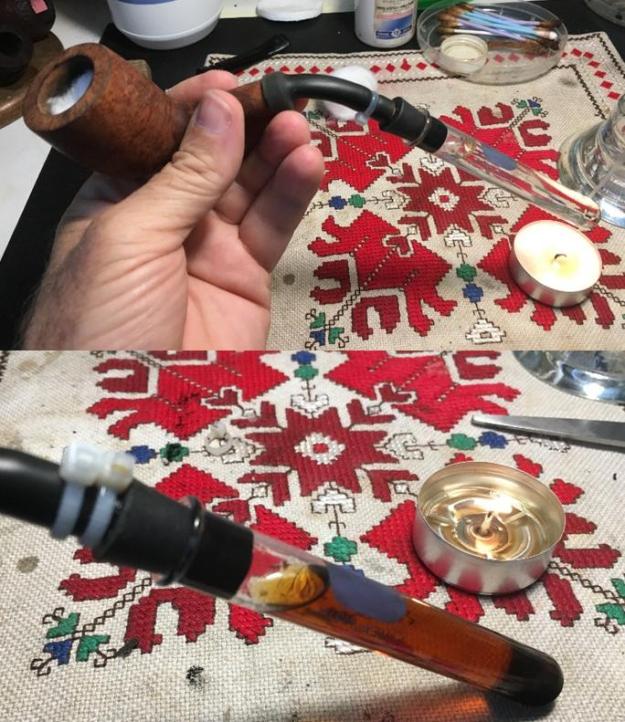
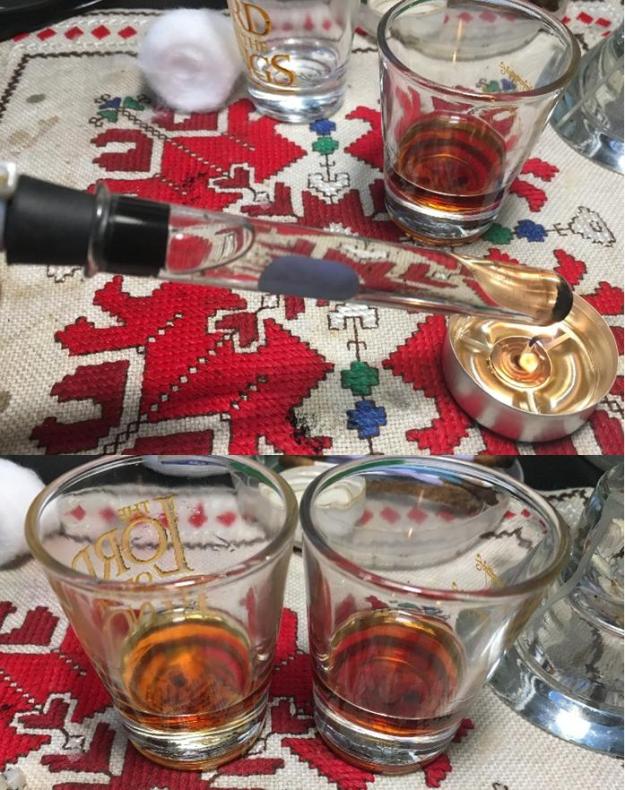
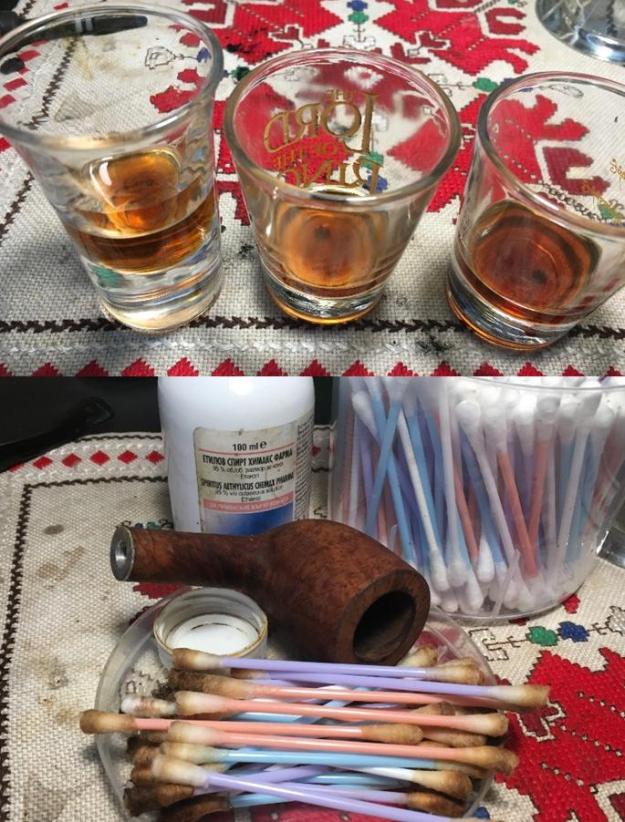
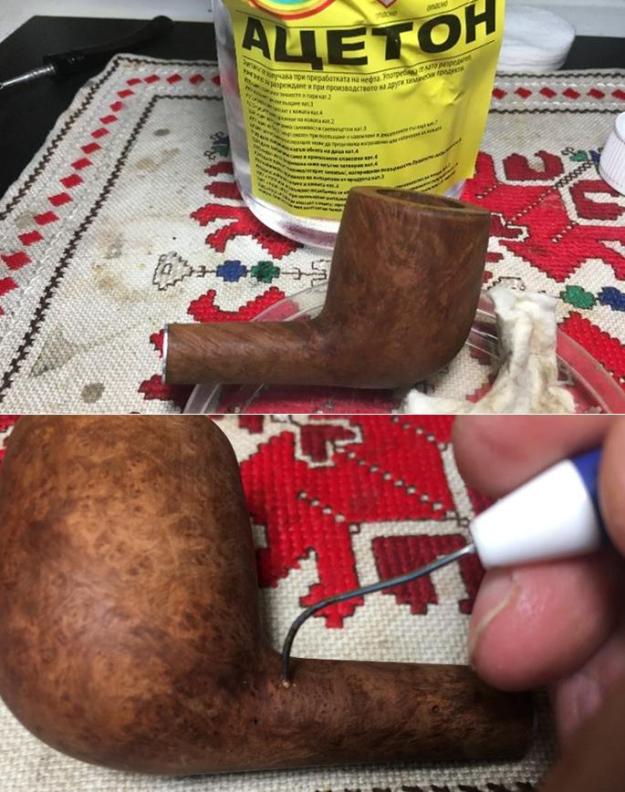
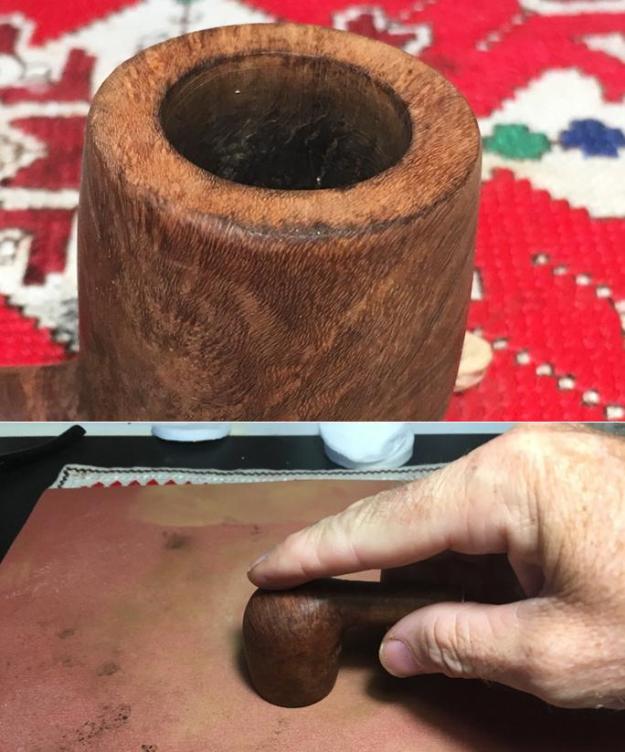
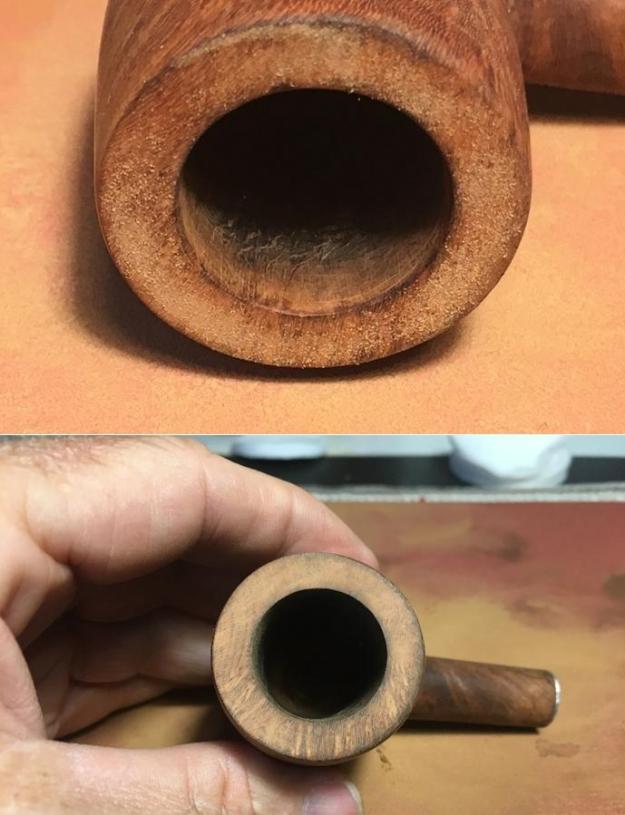
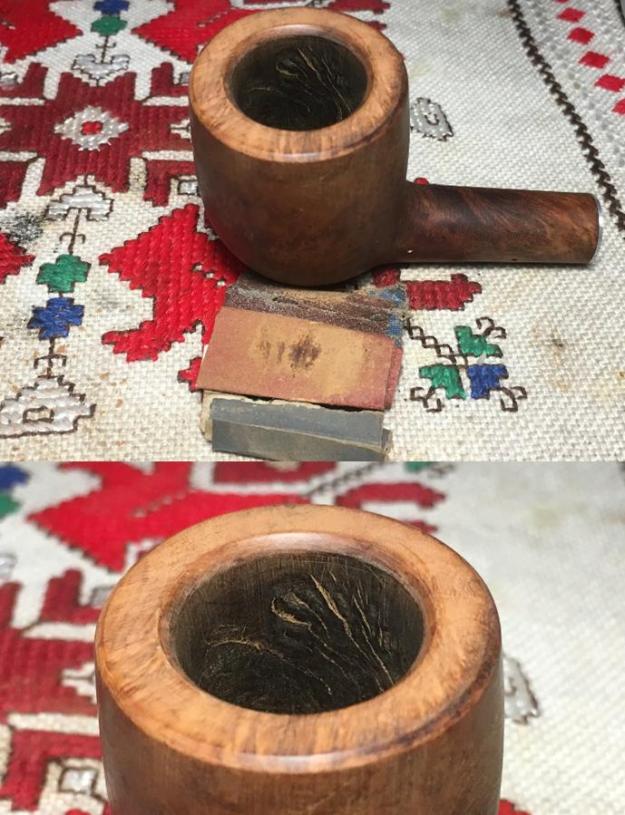
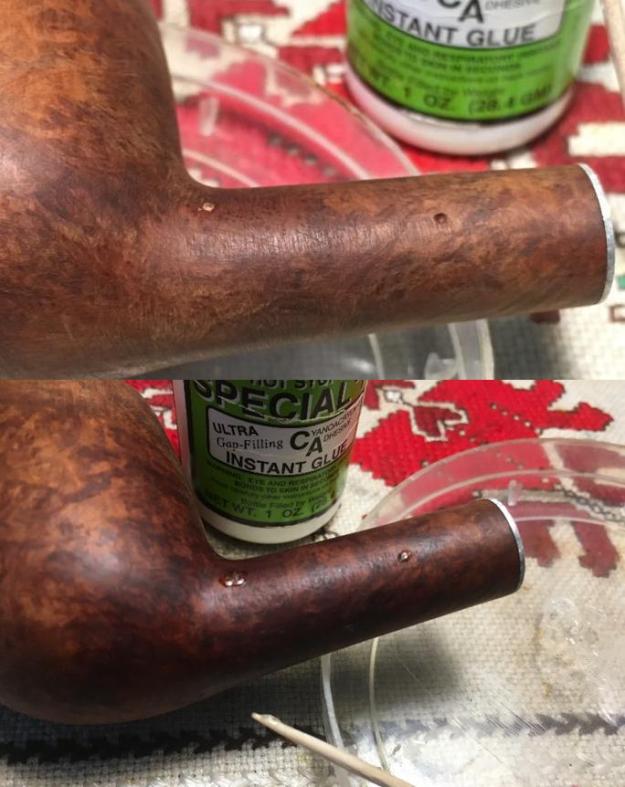
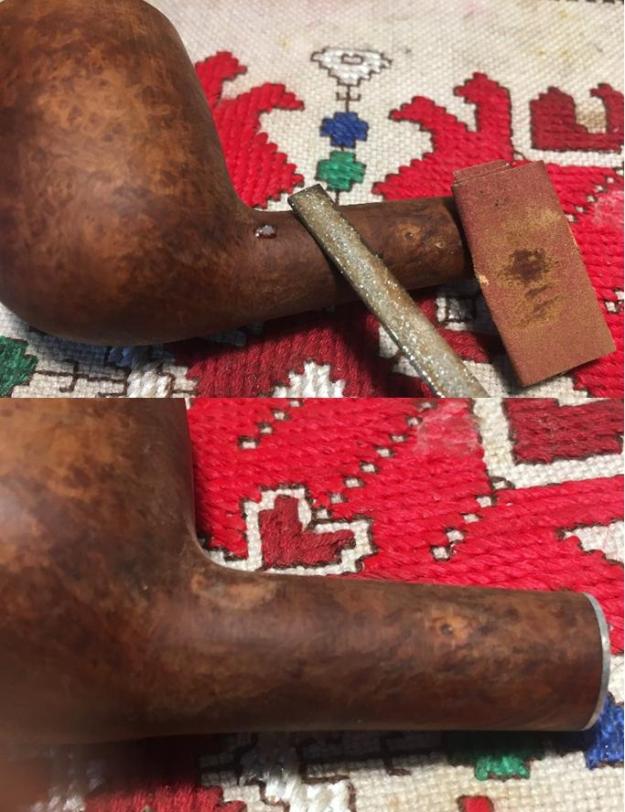
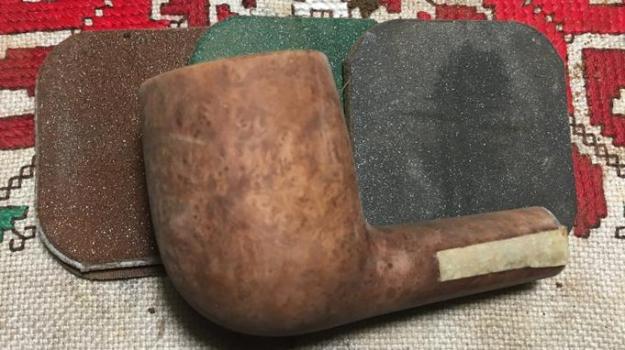
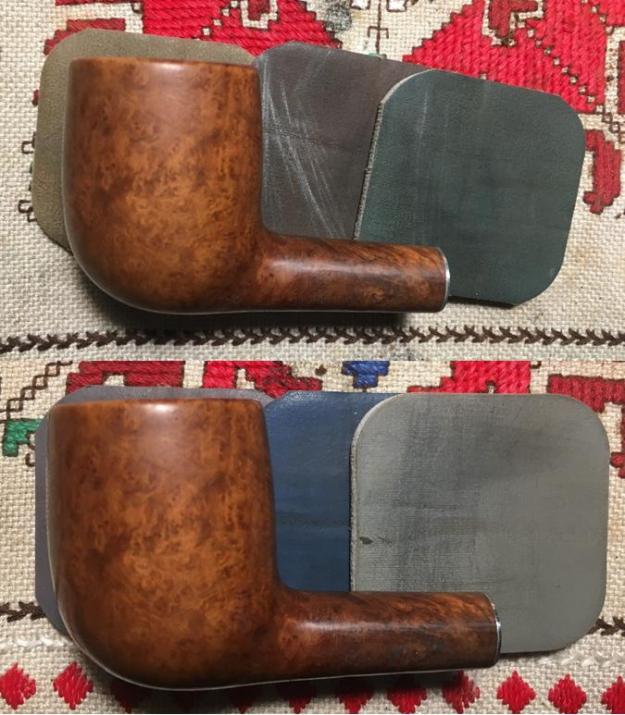
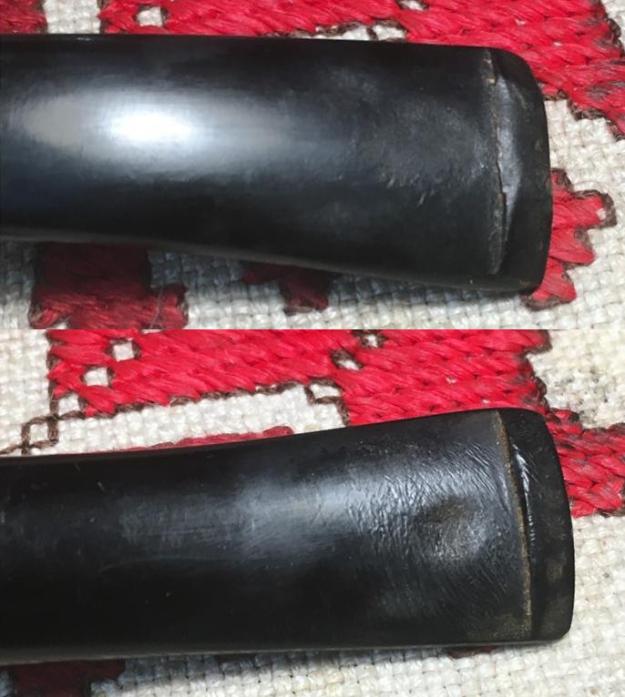
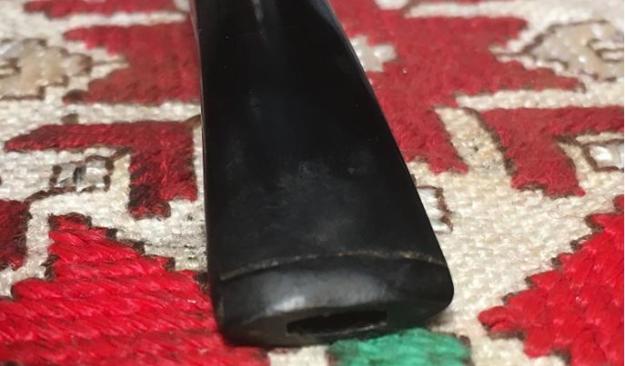
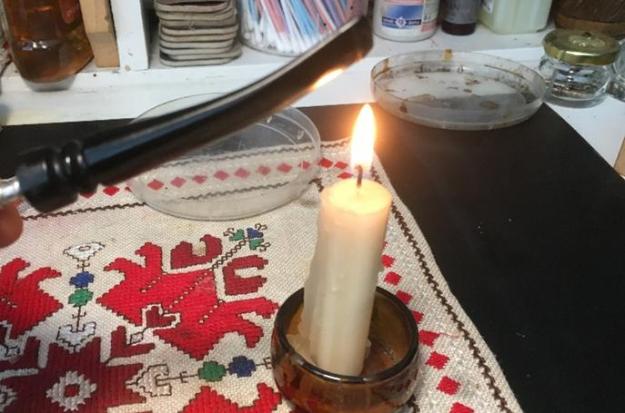
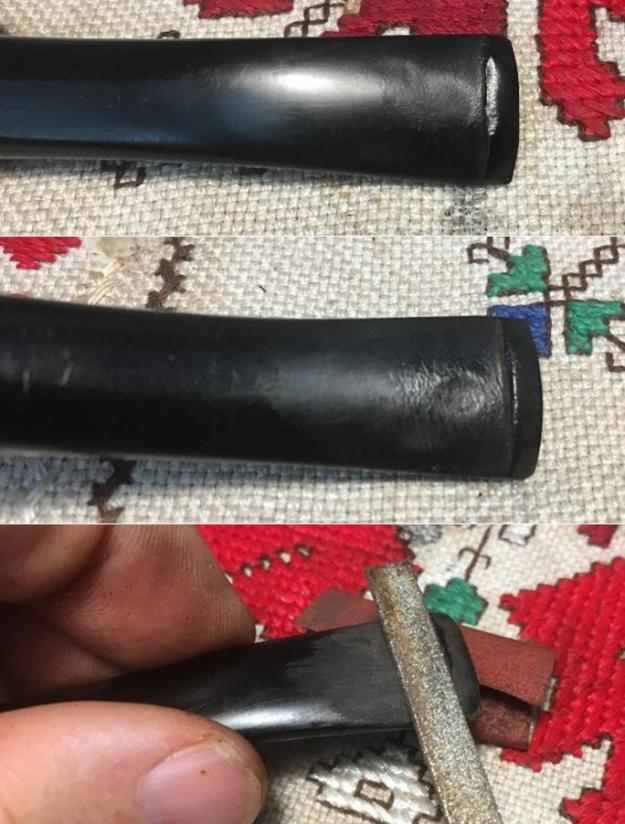
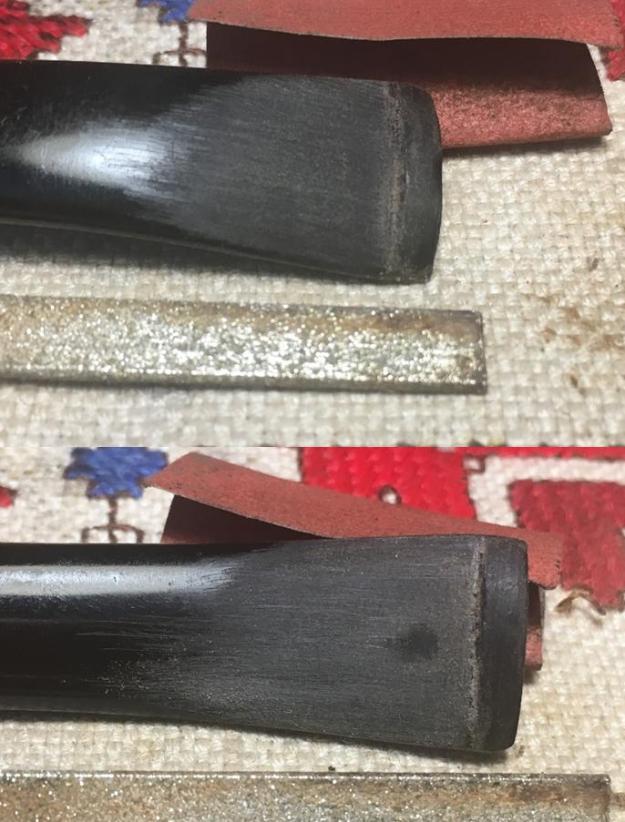
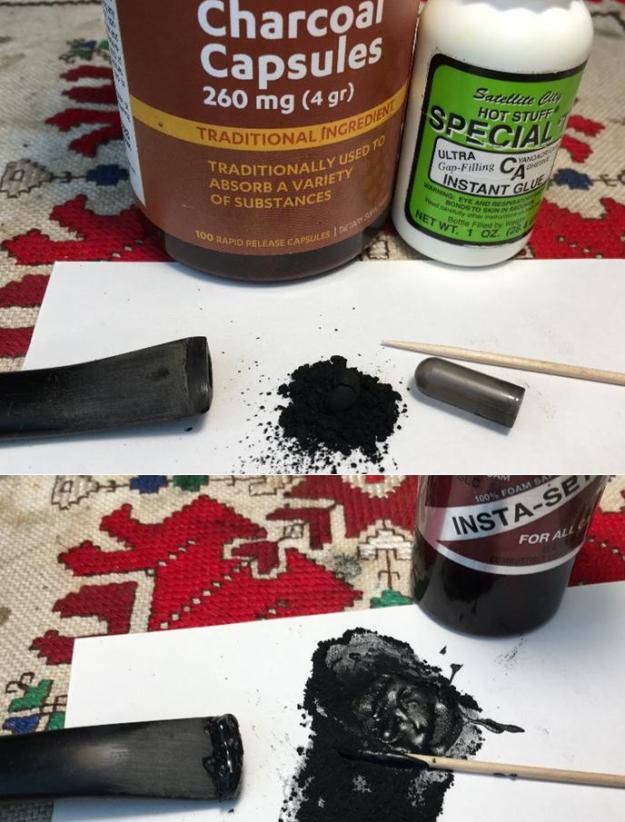
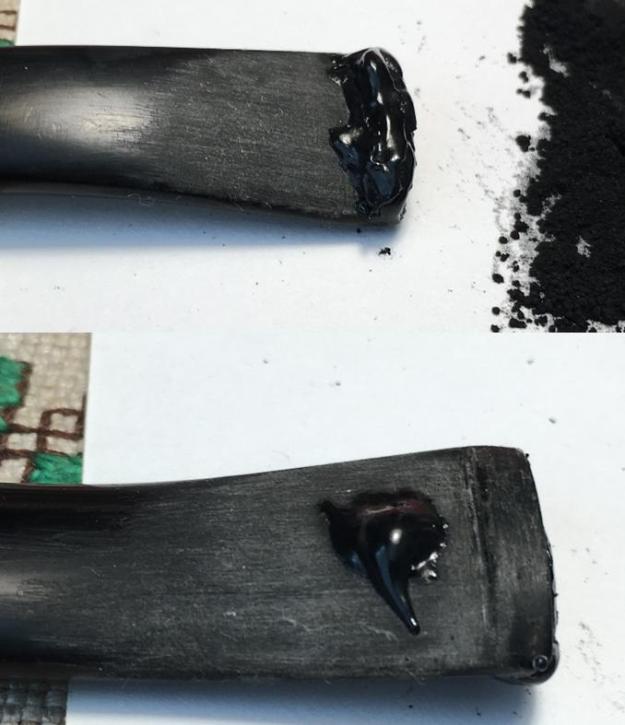
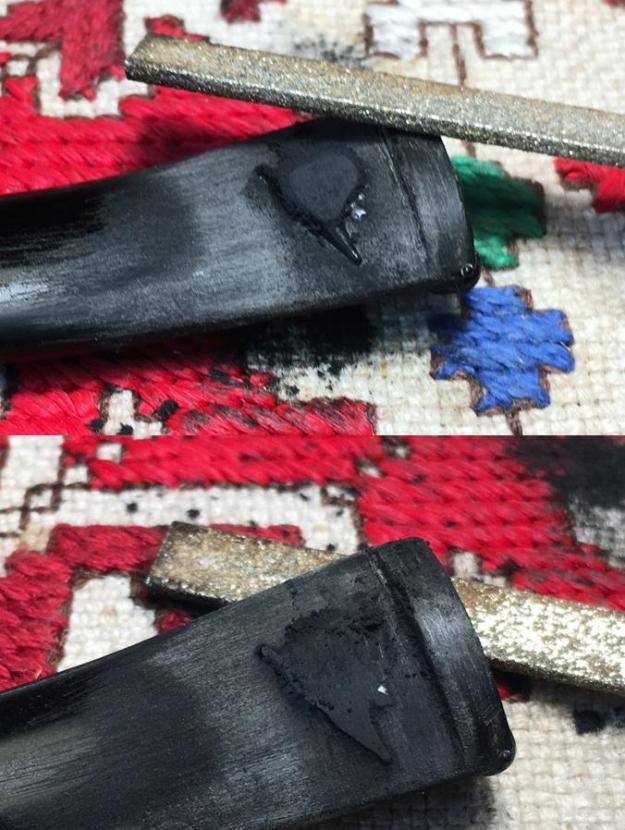
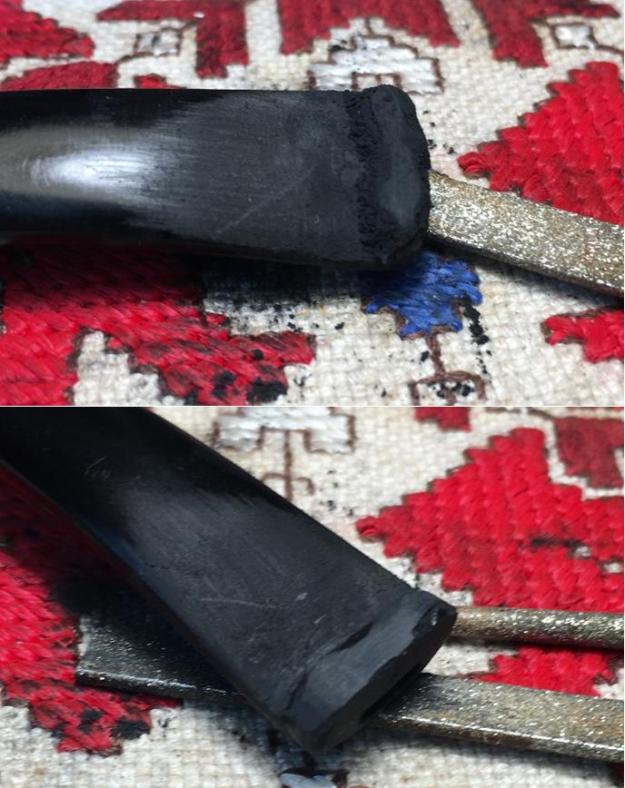
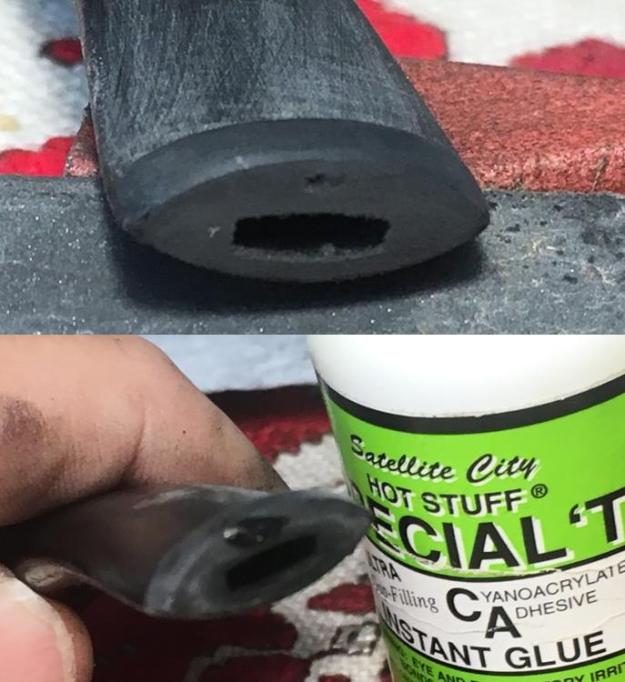
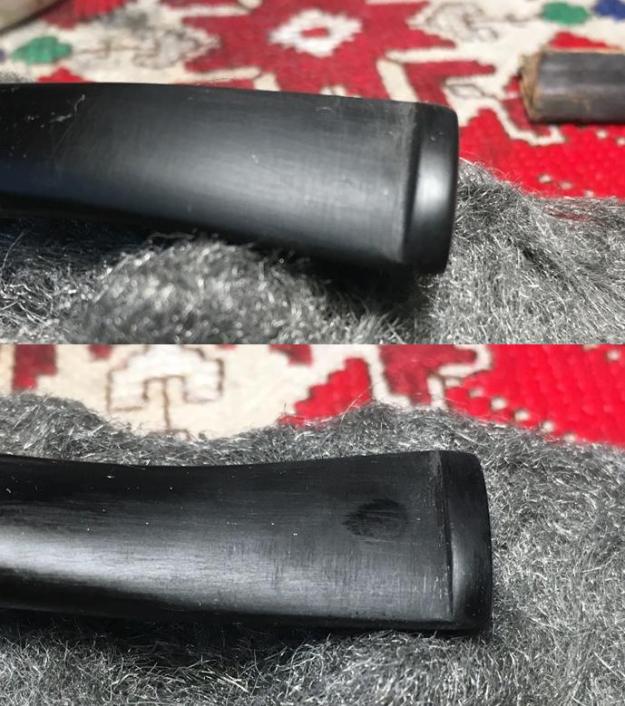
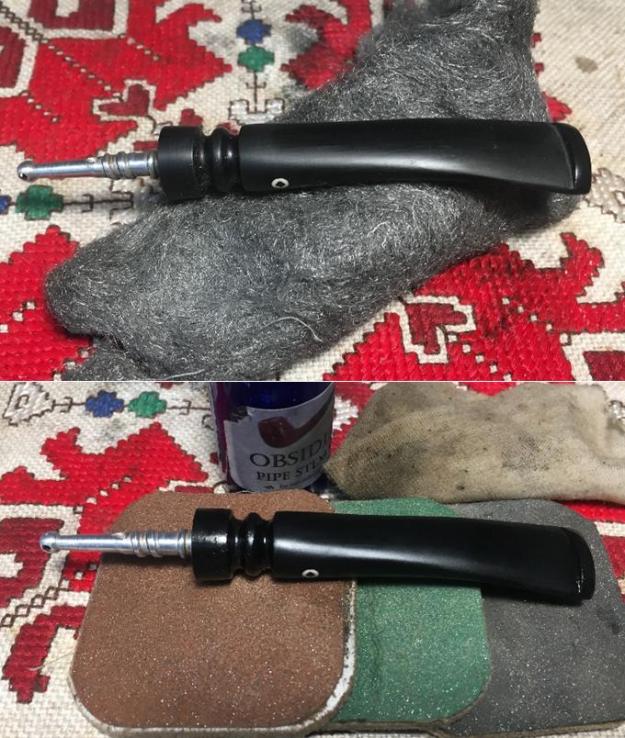
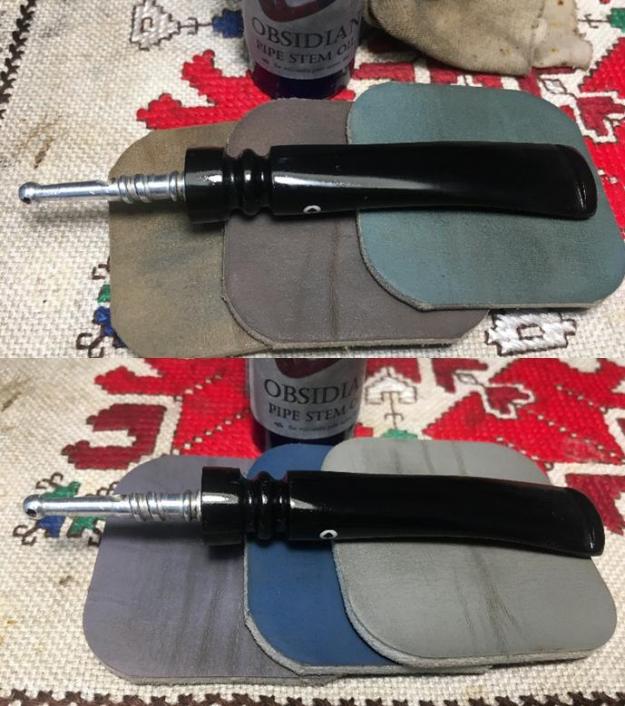
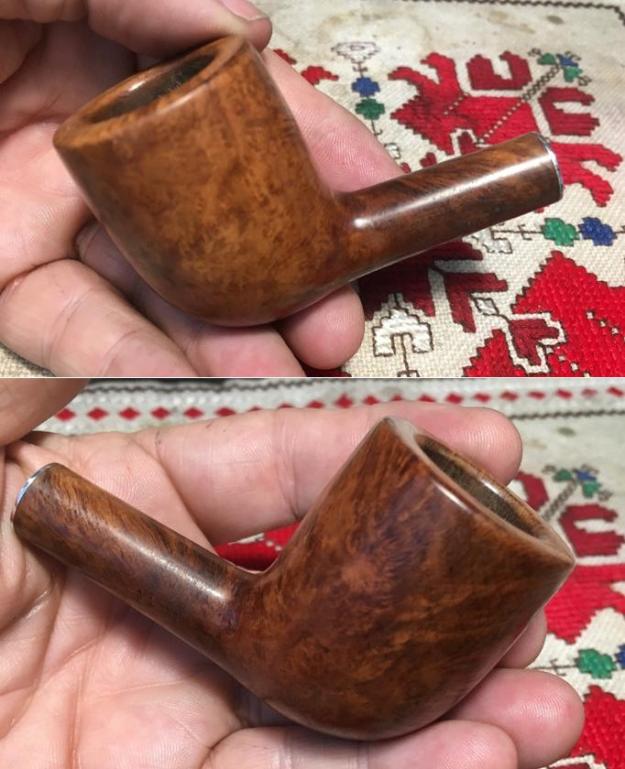
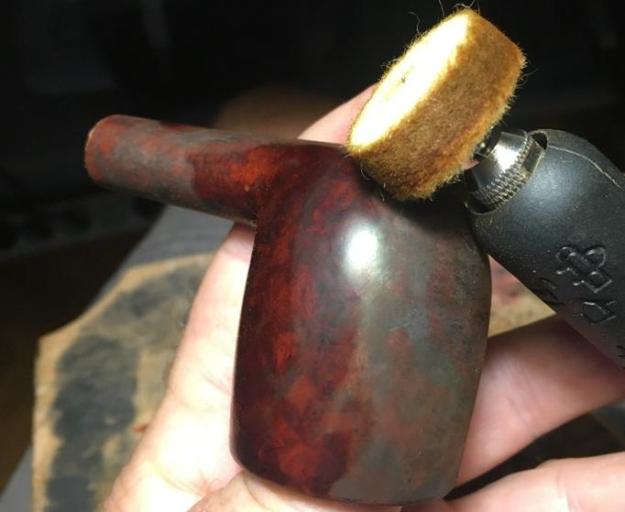
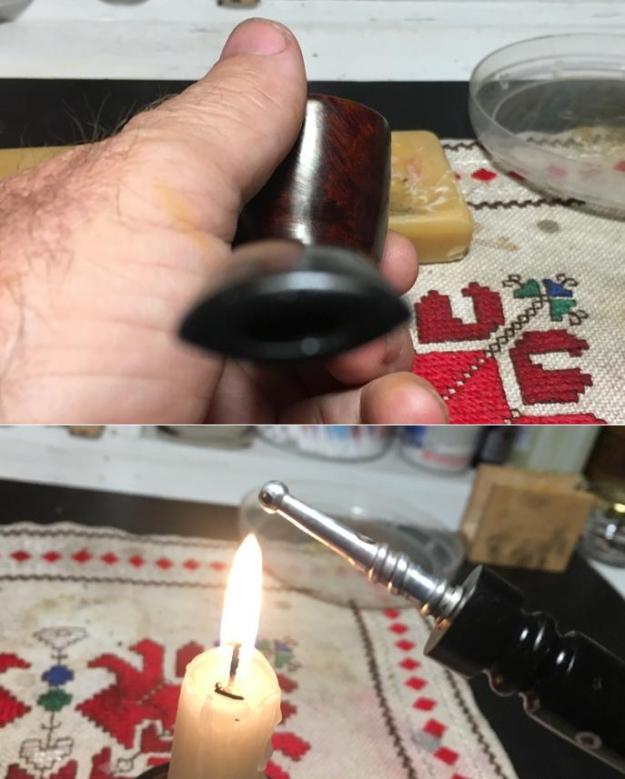
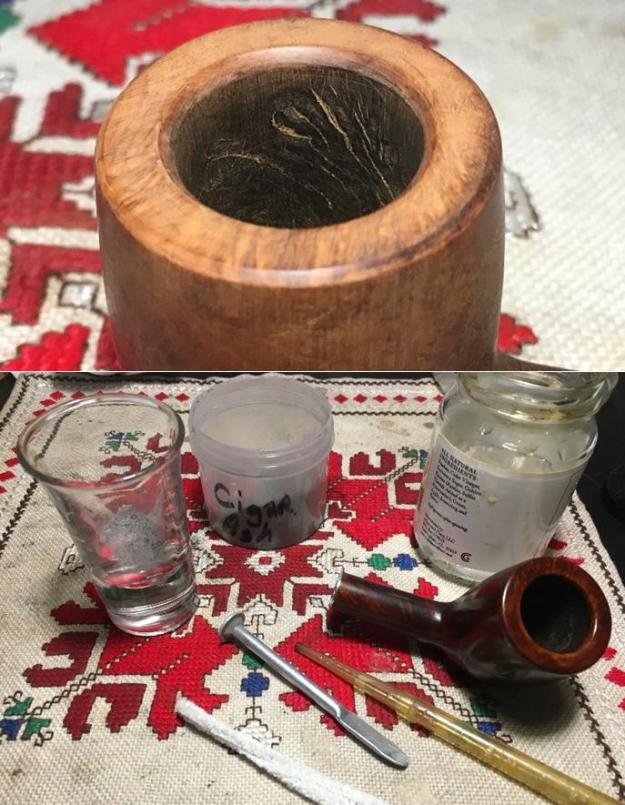
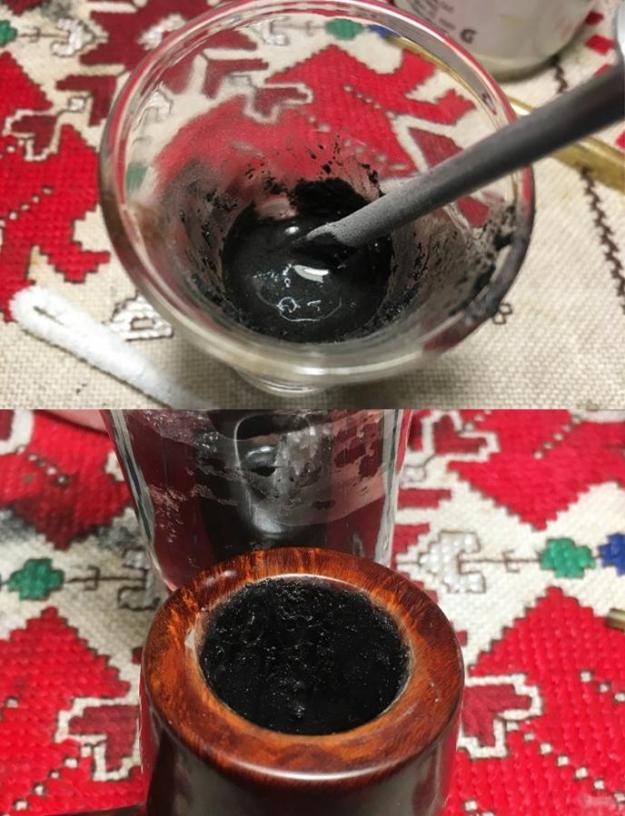
While we don’t know with 100% certainty whether this Kaywoodie #11 Large Billiard is a Flame Grain or a Super Grain, I believe the grain is a cut above the norm looking at its quality.  It has a beautiful flow of grains and is quite attractive.  The Large Billiard fills the hand well with an interesting, tapered Fancy Stem, that probably came later and is not original with the older #11 stummel.  I’m happy to provide this Kaywoodie to add to Jenny gift trove as she goes back to the US.  Jen’s purchase benefits the Daughters of Bulgaria, our work here in Bulgaria with women and girls sexually exploited and trafficked.  For more information about this work, take a look at The Pipe Steward.  Thanks for joining me!
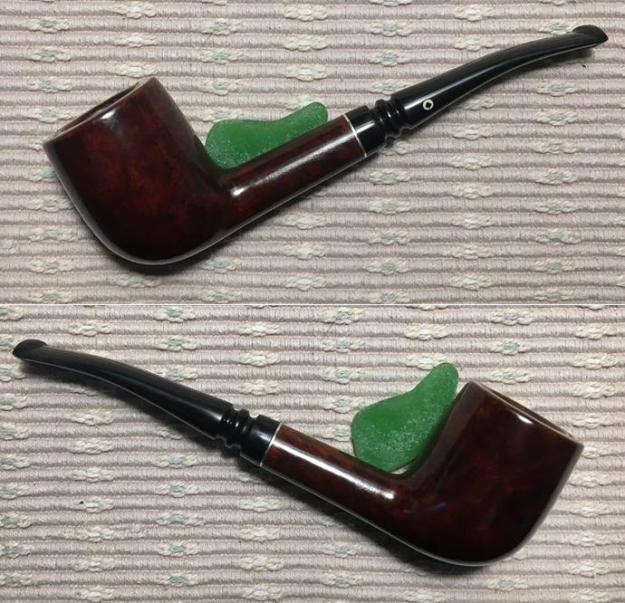
 

Rejuvenating a Beautiful Koncak Pegasus Carved Meerschaum


Blog by Steve Laug

The next pipe I chose to work on today is a nicely carved meerschaum by Koncak. I have never really collected meerschaum pipes so I do not have much knowledge of the various makers or carvers. I did some looking in some of the references I have here in the shop and found that Koncak is a Turkish meerschaum pipe brand. The meerschaum factory was founded by Ekrem Koncak in 1934 in Eskiehir, Turkey. It is one of that country’s oldest producing meerschaum pipe factories. They carve some highly unusual shapes. In 1974, Ekrem was succeeded by his son, Sadat, and in 1980 his daughter, Nurham took over the running of the company. In the meantime, Sedat Koncak bought the Austrian brand Bauer, and the two companies have maintained close commercial ties (from Pipes, Artisans and Trademarks, by José Manuel Lopes).

Jeff bought the pipe on EBay because the carving and shape stood out to him as beautiful. It is a large bowled unique. The sides and back of the bowl are carved with fronds of leaves possibly tobacco leaves. The front of the bowl is carved with reclining Pegasus – winged horse with some pock-marked stone around him. The end of the shank is smooth culminating in a silver band with a rope twist and a single line and a beaded line on each side of the rope. The shank is lined with Delrin and the push tenon is either Delrin or nylon. The stem is Lucite/acrylic and had a saddle and a wide blade that has tooth marks and file marks on both the top and bottom sides in front of the button.

The first photos below on the green background were taken by the seller. I include them here so that you can appreciate what caught my brother’s eye when he saw this beauty.

The photos on EBay show the dirty condition of the pipe but also show that it is in excellent shape under the grime and the dirt. My brother was wise in bidding and winning this beautiful example of Koncak workmanship. The photo of the bowl front shows the winged horse, Pegasus in a reclining position. The carving is quite well done. The details of the feathers on the wings, the mane on the horse’s head and the surrounding foliage around Pegasus are well done.

The bowl was shown with a thick cake that was spread throughout the bowl and there was an overflow of lava on the top. The shank and the underside of the bowl was already beginning to show a golden colouration and once the bowl was scrubbed clean I was pretty certain that the rim top and edge would also show the same kind of developing colour. My brother did very well in his purchase of this one. Now I just need to decide whether I keep it or let it go on the rebornpipes store. I guess that by the time I finish the pipe and do this write up for the blog the decision will have been made. I will let you know once the post has been completed. Thanks.

The EBay sellers photos also showed the condition of the stem (at least from the top view).When the pipe arrived in Idaho, Jeff took some more photos of it so that I could see the condition of the pipe. While it looked much like the seller’s photos it was both in better condition and worse condition at the same time.The case it came in was well fitted to the pipe. It was in good condition though there were places that the leather cover would need to be reglued. (When it arrived in Vancouver this was the first thing I took care of and set the case aside to let the glue cure.) There was a sewn in Koncak logo on the inside top of the case. The dirtiness of the pipe was as shown in the seller’s photos and surprisingly there were no areas that were damaged or broken. I was grateful that the pipe was in dirty but undamaged state.The next two photos show the condition of the cake in the bowl and the lava overflow on the rim top. The cake was thicker than it had appeared in the seller’s photos and the lava overflow was heavier and thicker.The next series of photos show the ornate leaf carvings around the bowl and shank leaving the centre of the front piece open for the carving of Pegasus, the winged horse. The next two photos show the stem and band work on the pipe. The silver band is quite beautiful and really stands out against the colouring meerschaum shank. The next photos that my brother took show the condition of the stem far better than the seller’s photos had. It had a lot of tooth chatter and dents on both the top and underside near the button extending about one inch up the stem. Jeff reamed the bowl carefully with a PipNet reamer and a Savinelli Fitsall Pipe Knife scrapping the cake back to the meerschaum wall of the bowl. He scrubbed the exterior of the pipe and rim with Murphy’s Oil Soap and was able to remove the entire lava overflow on the rim and the dust and grime from the nooks and crannies of the carving. He cleaned the internals with pipe cleaners, cotton swabs and alcohol until the surface was clean and refreshed. I took photos of the pipe when it arrived in Vancouver to show his craftsmanship in the cleanup phase of refurbishing. He does very good work and it makes my job much easier on this end. His work on the rim top is an example of how clean he gets the pipes. He was able to remove all of the lava overflow and leave behind a bit of patina.He had cleaned up the tooth chatter with the soap and scrubbing and what tooth chatter was left behind was minimal. There were also some tooth marks that would need to be addressed.I sanded out the tooth chatter and the tooth marks with 220 grit sandpaper to clean them up as much as possible. I wiped down the surface of the stem with a damp cotton pad to remove the sanding dust. I filled in the deeper tooth marks with clear super glue and set the stem aside to wait for the repair to cure. While the repairs cured I worked on polishing the bowl. I used micromesh sanding pads to polish the smooth portions of the pipe. I wet sanded them with 1500-2400 grit pads and wiped the bowl down with a damp cotton pad between each grit of micromesh. I dry sanded it with 3200-12000 grit pads and repeated the wipe down after each pad. By this time the glue had cured so I sanded the repairs on the stem smooth with 220 grit sandpaper blending them into the surface of the stem on both the top and bottom sides. At this point the stem is looking really good. Still work to do in reshaping the button but the repairs are getting there.I recut the sharp edge of the button with a needle file and smoothed out the edge with the thin edge of the file. The button was looking right. Now I needed to polish the stem.I polished the stem with micromesh sanding pads – wet sanding it with 1500-2400 grit pads. I wiped the stem down with a damp cotton pad to remove the dust. I buffed the stem with red Tripoli on the buffing wheel before continuing to polish it with micromesh sanding pads – dry sanding with 3200-12000 grit pads. When I had finished the polishing I wiped it down with a damp pad and gave it several coats of Conservator’s Wax. I buffed the stem with a microfiber cloth to deepen the shine. I gave the bowl a coat of softened white beeswax called Clapham’s Beeswax Polish and hand buffed it with a shoe brush. I hand buffed it with a microfiber cloth to deepen the shine. It is a large pipe whose dimensions are length: 6 inches, height: 2 ½ inches, outer diameter of the bowl: 1 ½ inches, chamber diameter: 7/8 inches. The finished pipe is shown in the photos below. Well the decision has been made as I hoped it would by this time in the write up of the restoration. While working on the pipe and cleaning it up I realized that it is too big for my liking and thus I will part with it on the rebornpipes store. I will list it shortly and if it is a pipe that you want to add to your collection you can email me at slaug@uniserve.com or send me a private message on Facebook. It truly is a stunning pipe. Thanks for walking with me through the cleanup.

Restoring a Unique Alternative Wood C.P.F. Tulip


Blog by Steve Laug

This is yet another unique older C.P.F. pipe find from our Virtual Pipe Hunt in Montana. It is amazing the number of older C.P.F. and other brands we found in that antique shop. Even more amazing is the sheer number of shapes that I have never seen or worked on before. This one is a C.P.F. that is made in two parts – a bowl that is screwed onto a base. The wood is not briar. The bowl is olivewood and the base is cherry. The pipe has the C.P.F. in an oval stamp on the left side of the shank. It is also stamped on the band with the faux hallmarks from that era and the logo. The stem is made of horn. It is a graceful and elegant looking pipe and one that I look forward to working on. My brother took quite a few photos of the pipe before he cleaned it up to show the details of the carving and the wood. I have included them at the beginning of the blog. My guess is that this pipe also comes from the mid-1880s to the early 1890s like the other C.P.F. pipes in the lot.The pipe was in pretty rough shape. The bowl had a thick cake with lava overflowing the rim. The finish was very dirty though appeared to look good underneath the grime. The screw in bowl was stuck in place on the base and we were uncertain that it would even come off. It looked like it originally was a separate piece but the grime and grit had locked it in place. The grooves in the base were filled with grime and the silver band was tarnished. The gold C.P.F. logo on the shank was faint. The horn stem had the usual tooth chatter and marks but other than that was in decent condition. With a little work this would be a beautiful pipe.

If you would like to read a bit of history on the brand you can have a look at a blog I wrote concerning C.P.F. or the Colossus Pipe Company https://rebornpipes.com/2013/04/14/some-reflection-on-the-historical-background-on-cpf-pipes/.The next series of photos show the condition of the bowl before cleaning. It was very dirty and there appeared to be cracks in the backside of the bowl. I would not be certain until it was cleaned and I had it in hand. The next photos show some of the detail on the base of the pipe. It is an interesting piece of carving. I have never seen one like it in either the old C.P.F. catalogues or in my online research regarding the brand. The bottom of the base shows the grain on this portion. Notice how well the carver centered the grain pattern on the base. It is a beautiful piece of wood. I am guessing cherry but I am not certain. You can see from the unique vertical grain on the bowl portion of the pipe that it is not briar. My thoughts are that it is olivewood but I could be wrong. Note also the buildup of grime around where the bowl sits on the base.The C.P.F. oval logo can be seen on the left side of the shank and also on the silver band. You can see from the photo that the band appears to be loose. Later photos reveal that it was indeed loose and could be slipped on and off the pipe.The next two photos show the shank with the band sitting under it and the threaded bone tenon on the horn stem. It is really dirty looking in the shank and mortise.The stem was probably in the best condition of the entire pipe. The graceful curve of the horn was undamaged. The striations were not separating and the variation in colour was stunning. The overall condition was really good. There was some light tooth chatter and marks near the button on each side but otherwise it was clean. The button was not chewed and the orific airhole in the centre of the button looked good. Jeff cleaned up the pipe – reaming the bowl with a PipNet reamer and cleaning up the reaming with a Savinelli Fitsall Pipe Reamer. He took the cake back to bare wood. He scrubbed the exterior of the pipe with Murphy’s Oil Soap and rinsed the soap and grime off the pipe. He removed the band and scrubbed under that as well with the soap. He cleaned out the mortise and the airway in the shank and the stem with pipe cleaners, cotton swabs and alcohol. He cleaned the horn stem with some oil soap as well. I took these pictures when the pipe arrived in Vancouver. It was in better shape than when we picked it up. Jeff had not been able to unscrew the bowl from the base as it was stuck with the goop that had covered the bowl and base. The rim top still had some darkening and spotty damage to the surface. Jeff and I were talking last evening on FaceTime and I decided that I would tackle the restoration on this old timer next. While we were chatting I held the base in one hand and wiggled the bowl with the other. After a few moments I was able to turn it from the base. What was underneath was absolutely gross. It looked like someone had packed the base with some kind of coarse material to act as a filter to trap any moisture that came from the combustion of the tobacco above. I also noticed that the bowl bottom had three airholes and one was entirely plugged and could not be seen from the inside of the bowl. The bowl had some dark staining and build up on the bottom of the bowl. I put the junk back in the bowl and set the pipe aside for the night.In the morning I took the pipe apart again to clean out the bowl base. I used a dental pick and a spatula to clear out the debris and hard build up in the base. I scraped out the threads on the bowl and the base to remove the debris. I scraped out the rounded base bottom to also remove the debris. I twisted the tip of a dental pick through the clogged third hole in the bottom of the bowl. I worked it from both the inside and the outside of the bowl until I had cleaned out the blockage. Once again the bowl had three holes that worked.I scrubbed the base and the bottom of the bowl with alcohol and cotton swabs. I scrubbed until it was absolutely clean. I scraped out the ledges on the inside of the base to remove the buildup that was there as well.I painted the shank end with Weldbond white glue so that I could put the band back in place. The band had a split on the right side that would need to be worked on as well. I put the band on the glue and held it in place until the glue had dried. I sanded the split in the band with 220 grit sandpaper and filled it in with clear super glue. There were also cracks in the bottom of the base just below the threads that matched the grooves carved on the outside of the shank. Once the glue dried I sanded the inside of the base smooth. With the repairs done to the base I turned to what had appeared to be cracks in the bowl sides and base. I sanded the stained and dirty base and the part of the bowl that had been seated in the base behind the leaves. I used clear super glue to fill in the small cracks on the bowl sides and bottom. They were very tight and did not move when I worked them with a dental pick. When the glue dried I sanded the bowl with 220 grit sandpaper until they were smooth and blended in well with the surface of the olivewood. I lightly topped the bowl with 220 grit sandpaper on a topping board until all of the damaged areas were removed and the rim top was smooth once again. I polished the olivewood with micromesh sanding pads – wet sanding it with 1500-2400 grit pads and dry sanding it with 3200-12000 grit pads. I wiped the bowl down after each of the micromesh sanding pads with a damp cotton pad to remove the sanding dust. The photos below show the progress of the polishing. I sanded the stem to remove the tooth chatter on the top and underside near the button. There was one deep tooth mark on the underside that I could not remove by sanding. I filled it in with clear super glue and let it dry. Once it had cured I sanded it smooth with 220 grit sandpaper to blend it into the rest of the stem surface. It was smooth but a bit lighter in colour than the surrounding area. Thankfully it was on the underside.When the stem was turned on to the shank it was slightly underclocked and there was no give in the stem to get the alignment correct. I carefully heated the bone tenon without burning it to soften the glue that held it in place. While it was still warm I was able to screw it in and align the stem properly.Now that things were aligned it was time to polish the stem. I polished the stem with micromesh sanding pads – wet sanding it with 1500-2400 grit pads and dry sanding it with 3200-12000 grit pads. I wiped the stem down after each of the micromesh sanding pads with Obsidian Oil to remove the sanding dust and give it more life. The photos below show the progress of the polishing. I love polishing horn stems because as you work them over they seem to take on a life of their own with a deep and resilient sheen. I took the pipe apart and buffed the parts. I buffed the bowl and the bottom and sides with Blue Diamond on the buffing wheel. I buffed the stem with Blue Diamond as well to polish out the tiny scratches that were left behind by the micromesh. I gave the parts multiple coats of carnauba wax and buffed them with a clean buffing pad to raise the shine. I hand buffed all of the parts with a microfiber cloth and put the pipe back together. I hand buffed it once again to finish the restoration. The finished pipe is shown in the photos below. It is a remarkable example of pipe making at the end of the 19th Century. The wood and the shape work well with the beautifully striated and gracefully bent horn stem. The silver band with the hallmarks and C.P.F. logo is a nice transition between the stem and the cherry wood base. Thanks for walking with me through this restoration.

Restoring a Unique Horn Stem W.E. Hooker System Pipe


Blog by Steve Laug

Another one of the pipes found on the Virtual Pipe Hunt in Montana was this interesting old piece. It is an oddity and I was sure when we found it that it was another example of the eternal hunt for the dry, perfect smoke. I joking call it a camel pipe for the humps it has from a side view. This old timer is stamped on the left side of the shank with the words W.E. Hooker and on the right side of the shank it is stamped Patented over May 17, 1910. The pipe was in pretty rough shape at first glance with wear and tear to the finish and the rim caked with lava flowing over to the top. The inner edge of the bowl was out of round and there was some damage to the surface. There were some small sandpits on the right side of the bowl and on the top of the shank. The vulcanite cap in the middle of the shank perplexed me a bit so I was curious what we would find beneath the cap. The stem was horn and it had a lot of tooth damage to the top and underside at the button as well as some significant damage to the button itself and the edges around it. It looked as if someone had taken a knife to it and done some whittling on the horn. It had originally had what looked like a faux P-lip as the airway left the button on the end rather than the top. It was going to be a fun one to clean up.My brother Jeff took quite a few photos of the bow from various angles to give an idea of the overall condition of the pipe.The function of the cap on the top of the shank intrigued me and the overall airflow of the pipe was a mystery. When I put a pipe cleaner in the shank it came out in the sump under the cap. There were two other holes in the sump – one at the top front that connected to the airway as it entered the bowl and one at the top back that went back into the shank and the stem. When I pushed a pipe cleaner through the stem it stopped at the bottom of the sump under the cap. Now I really wanted to know how this worked. I Googled W.E. Hooker tobacco smoking pipe and came up with a patent number 958,398. The inventor was a William E. Hooker of Buffalo, New York. He filed the patent October 13, 1909 and it was patented on May 17, 1910 (just like the stamping on the right side of the shank). I have copied that information below. Note the airflow in the diagram accompanying the patent, I have inserted red arrows how it flowed through the pipe.

I have included the complete text of the patent below. It explains the letters A-H in the above diagram.

W.E. HOOKER- TOBACCO SMOKING PIPE.

APPLICATION FILED OCT. 13, 1909.

Patented May 17, 1910.

PHOTOLITHOGRAPHER: WILLIAM  E. HOOKER, OF BUFFALO, NEW YORK.

TOBACCO-SMOKING- PIPE.


Specification of Letters Patent.

Application filed October 13, 1909. Serial No. 522,496.

To all whom it may concern:

Be it known that I, WILLIAM E. HOOKER, a citizen of the United States, residing at the city of Buffalo, in the county of Erie and State of New York, have invented a new and useful Tobacco-Smoking Pipe, of which the following is a specification.

My invention relates to certain improvements in a tobacco smoking pipe and I do hereby declare the following to be a full, clear, and exact description of my invention such as will enable others skilled in the art to which it appertains to make and use the same, reference being had to the accompanying drawings and to figures and letters of reference marked thereon, which form a part of this specification.

The objects of my improvements are: First: To provide a chamber or receptacle wherein can be collected all the moisture, nicotine and other foul secretions usually present in a tobacco smoking pipe and prevent the said moisture, nicotine and foul secretions from reaching the mouth of the smoker by means of the aforesaid chamber or receptacle and smoke channels, thereby insuring a clean and sanitary smoke. Second: By means of this chamber or receptacle and smoke channels and drainage channels, to prevent all moisture or saliva that might collect in the pipe stem from flowing into the pipe bowl. Third: To provide ample and easy facilities and means for cleaning the pipe. I attain these results by the position and location in which the nicotine receptacle or chamber and the smoke and drainage channels, are constructed or drilled in the pipe bowl, as illustrated in the accompanying drawings and which forms a part of this specification.

The accompanying drawing is a central vertical longitudinal section of my pipe embodying my invention.

A is an ordinary pipe bowl. B is a chamber or receptacle, for the purpose of collecting nicotine, moisture and other foul secretions, situated between the pipe bowl A and the pipe stem H, in a vertical position and parallel with the pipe bowl A, with an opening at the top. I prefer to have said chamber or receptacle in a vertical position as indicated and parallel with the pipe bowl, to insure the best results with my invention, although it is not absolutely essential that the chamber or receptacle aforesaid, should be nearer to the pipe bowl than to the pipe stem, but the vertical position and location of the chamber or receptacle is essential and necessary. This chamber or receptacle in the position or location described, serves as a collector of all moisture, nicotine and foul secretions which might flow through channels D and E and also has for its purpose the conveying of smoke from channel D to channel E. The opening at top of the aforesaid chamber permits of the easy cleaning of the nicotine and moisture chamber B, and the smoke channels D and E.

C is the well or socket, into which the mouth-piece or stem H fits and also serves as a smoke conductor from channel E, to stem H and as a conductor of any moisture or nicotine which might collect in said well, to the bottom of chamber or receptacle B, through channel F.

D is a smoke channel leading from the bottom of pipe bowl A to the top of chamber or receptacle B and serves as a smoke passage to convey the smoke from the bottom of pipe bowl A to the top of chamber B, thence across said chamber B into and through smoke channel E into the well C and thence to the mouth of the smoker through stem H.

E is a smoke channel leading from the top of chamber B into well or socket C and terminating midway between the end of well or socket C and where the pipe stem or mouth piece H enters said well or socket, and is a conductor of smoke from top of chamber B to the well.

F is a drainage channel to convey saliva, moisture, nicotine and foul secretions which might form in the well or socket C, from said well to the bottom of chamber or receptacle B. By the particular position and location of this drainage channel F, any moisture, saliva, nicotine or secretions, which might form and collect in said well or socket C, pass through this drainage channel and into the bottom of the chamber or receptacle B, and a free and unobstructed draft is thus obtained.

G is a cap which can be removed and it screws into the top of chamber B, to close opening of said chamber and can be easily removed for the purpose of cleaning chamber B and smoke channels D and E.

H is a pipe-stem or mouth piece.

I am aware that prior to my invention, Patented May 17, 1910. tobacco smoking pipes have been made with nicotine chambers or receptacles. I therefore do not claim the invention of a nicotine receptacle; but having thus fully described my invention, I claim: In a tobacco smoking pipe, a moisture or nicotine receptacle, situated or located between the pipe bowl and pipe stem

 or mouth piece, in a vertical position and parallel with the pipe bowl, having an opening at the top of said moisture or nicotine receptacle or chamber, with two smoke channels entering said receptacle or chamber at the top and a drainage channel entering said receptacle or chamber at the bottom as substantially set forth herein and for the purposes specified. In testimony whereof, I have hereunto subscribed my name in the presence of two witnesses, this 11th day of October, 1909. WILLIAM E. HOOKER. Witnesses: Himmler BOWEN, CHAUNCY W. ABBOTT.

Now, I had it in the words of the inventor himself – he designed a different kind of sump vertically in line between the bowl and the stem. That made his invention different from the sump in a Peterson System pipe designed to accomplish the same thing. This is truly a complicated piece of tobaciana.

My brother took close up photos of various angles showing the grain of the pipe, the structure and the pipe taken apart. These give a clear picture of what we would have to deal with in the restoration process. The rim top photo shows the cake in the bowl and the overflow of lava on to the rim top. You can also see the damage to the inner edge of the bowl at the back of the pipe.The next series of photos show the hard rubber cap on top of the entrance to the sump on the shank. It is threaded and can be removed by unscrewing it from the briar shank. The horn stem was held onto the shank by a threaded bone tenon that screwed into the threaded mortise in the briar. Both threaded portions were in excellent condition. The second photo below shows the view of the pipe with the three openings showing from the shank to the bowl.The stamping on both sides of the were faint but readable. As mentioned above the left side read W.E. Hooker and the right side read Patented over May 17,1910. I was dealing with an old pipe.The horn stem had tooth chatter and tooth marks as well as some nicks from a knife that had been used to try and reshape the stem. The next photos tell the story. Jeff did a pretty thorough job cleaning this old timer up. The finish was really rough and dirty and the cake in the bowl foretold a very dirty interior. He reamed the bowl with a PipNet reamer and took the cake back to briar. He cleaned the interior of the bowl with alcohol, cotton swabs and pipe cleaners. He worked through the various channels and airways in the shank and the stem until they were clean. I took the photos below to show the condition of the pipe when it arrived in Vancouver, clean and ready for me to work on. I took a close up photo of the bowl with the sump cap on and off. Note the nicks out of the inside edge of the bowl leaving it out of round.I took some photos of the stem to show the cleanness of the horn and the damage to the various parts – sides near the button, the button surface and the stem next to the button on the top and underside.I worked on the inner edge of the bowl to smooth out the damaged areas and even out the rim top. I wanted to work as much as possible to bring the bowl back into round. Once I had sanded the edge I mixed some putty of clear super glue and briar dust to build up the back edge of the rim. Fortunately the damage did not go deep into the bowl but was concentrated at the top.I sanded the repaired area with 180 and 220 grit sandpaper and took the following photo. I still needed to do more sanding but the rim top is taking shape.I wiped down the bowl and rim with cotton pads and alcohol to remove the sanding debris and any remaining finish on the bowl. I did that in preparation for repairing the filled areas on the right side of the bowl and the top of the shank. I put drops of clear super glue in the fills and sandpit areas on the bottom of the bowl and right side. Once they had dried I put some in the sandpits on the top of the shank near the stem shank junction. I sanded the repairs smooth with 220 grit sandpaper and blended them into the surface of the surrounding briar. I wet sanded the areas with 1500-2400 grit micromesh sanding pads. I used the needle file to reshape the stem edges and button and smooth out the damage that had been caused by the knife. I smoothed out the flow of the P-lip style button and recut the ledge on the underside of the stem.I cleaned the airways in of the pipe and stem with pipe cleaners and alcohol. I cleaned out the sump area with cotton swabs and alcohol. There was still some sludge in the bottom of the sump that came out with coaxing. I cleaned out the mortise as well for good measure.I continued to reshape the stem some more with 220 grit sandpaper. I really wanted to have it smooth to touch and closer in appearance to what it must have looked like when it left the factory. When I was done with the sanding the shape was looking much better.I touched up the repaired areas of the bowl and rim with a dark brown aniline stain pen. The colour matched perfectly with the existing stain. I wiped the bowl down with a light coat of olive oil and took the following photos to show where things stood at this point in the process. With the bowl finished I went to work polishing the stem with micromesh sanding pads – I wet sanded with 1500-2400 grit pads and dry sanded with 3200-12000 grit pads. I rubbed the stem down with Obsidian Oil after each pad. It is always amazing to me to see the horn begin to develop a deep glow and shine. I polished the hard rubber sump cap with the micromesh once I finished the stem. I buffed the pipe and stem with Blue Diamond on the buffing wheel to remove any minute scratches that remained in the stem and the briar. I gave the pipe multiple coats of carnauba wax and buffed it with a clean buffing pad to raise a shine. I hand buffed it with a microfiber cloth to deepen the shine on the briar and horn. The finished pipe is shown in the photos below. I am really having a bit of a dilemma with these old pipes – in all of my time refurbishing and restoring old pipe I have never seen pipes like these… I am so tempted to hang on to the lot of the old C.P.F. pipes and the rest that come from that era as I probably will never see them again… ah well definitely a first world problem. Time will tell. Thanks for coming with me on this interesting old restoration. It was a fun one to work on.
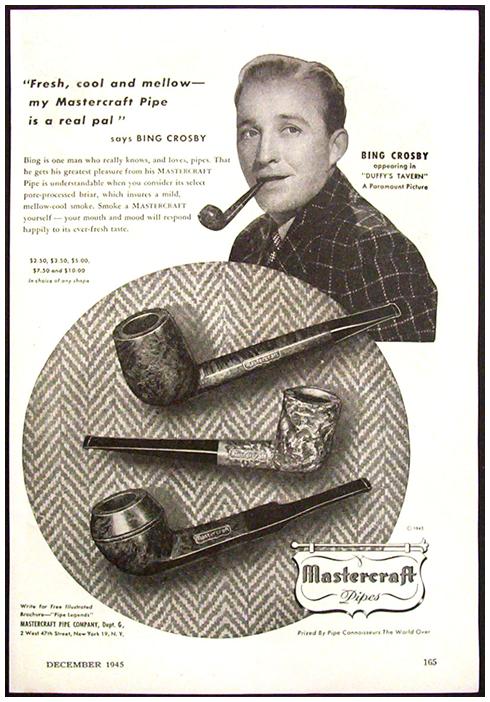
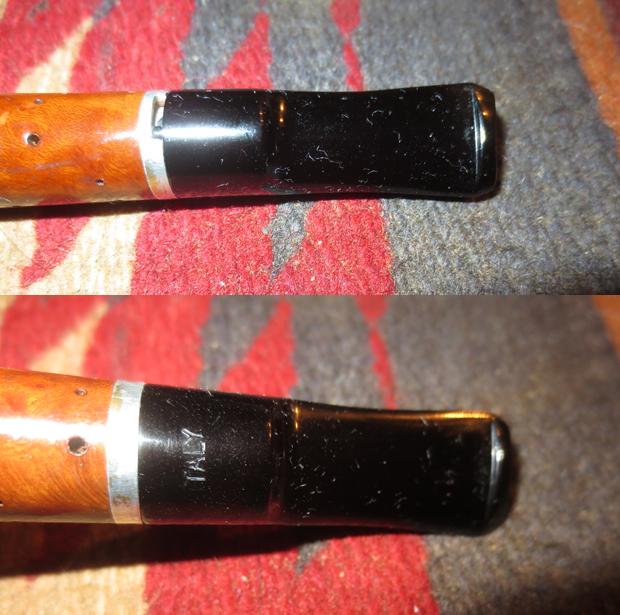
Loving the old WDC Campaign Pipe


Blog by Steve Laug

Another of the pipes found during the Virtual Pipe Hunt in Montana was one stamped on the lower left side of the out bowl with the WDC triangle logo over the word CAMPAIGN. There was no other stamping on the pipe. The bowl was like a calabash bowl and screwed into the outer bowl. The entirety was made out of briar. The grain on the bowl and rim top is quite stunning with a lot of birdseye grain on the sides and mixed grain over the rest of the bowl. There was a nickel band on the shank but there was no shank stamping. The band was stamped PLATED NICKEL. The stem was lightly oxidized and the fit against the end of the shank was not tight. There was a gap caused by what I presumed was the tars built up in the mortise area.My brother, Jeff took quite a few photos of the unique old pipe because it really was a beauty. There would need to be some significant cleanup work but the grain and the shape were both unique and quite stunning. The bowl was thickly caked and a thick buildup of tars and oils had flowed over to the top of the rim. The bowl had twin airways in the bottom of the calabash cup directing airflow into the external bowl. The airway in the outer bowl enters the shank at the top of the bowl. Smoke would have been drawn from the calabash cup into the interior of the outer bowl and up the back side to the airway into the shank and through that to the stem and button into the mouth of the smoker. I did a bit of digging online and found a brief interchange on a Google group. Here is the link if you would like to read it in context and in its entirety. It has some helpful information regarding the brand and the particular pipe that I wanted to know more about. https://groups.google.com/forum/#!topic/alt.smokers.pipes/kpkpd3zXoiwExcerpt from pipedia.org

To a request for information regarding the WDC Campaign pipe on the Google Group there was quite a long string of answers. I am quoting two of those in full…

Respondent 1: While I can’t say anything about this pipe specifically, I have a hazy memory of that shape listed in a book about pipes; (I may be totally misremembering this, but here goes) the shape being called the “Dawes”, named after Harding’s Vice President?  Anyone else remember this? Sounds like an interesting pipe, whatever it’s called…

Respondent 2: From Weber’s Guide to Pipes: “The Dawes Pipe (more correctly named the Lyons, after its inventor, Charles Herbert Lyons) happened to be the favorite pipe of General Charles G. Dawes, Vice-President of the USA from 1925 to 1929. General Dawes smoked the curious pipe incessantly and it became popularly known as the Dawes Underslung, because the shank joined the bowl near its rim.”

I looked on Pipedia, https://pipedia.org/wiki/William_Demuth_Company and I quote in part from the article on the William Demuth Company.

The Demuth Company is probably well known for the famous trademark, WDC in an inverted equilateral triangle. William commissioned the figurative meerschaum Presidential series, 29 precision-carved likenesses of John Adams, the second president of the United States (1797-1801) to Herbert Hoover, the 30th president (1929-1933), and “Columbus Landing in America,” a 32-inch-long centennial meerschaum masterpiece that took two years to complete and was exhibited at the World’s Columbian Exposition in Chicago in 1893.

The Presidential series was the result of Demuth’s friendship with President James A. Garfield, a connoisseur of meerschaum pipes. Demuth presented two pipes to Garfield at his inauguration in 1881, one in his likeness, the other in the likeness of the President’s wife. Later, Demuth arranged for another figurative matching the others to be added to the collection as each new president acceded to the White House, terminating with President Hoover.

From the above information I learned some significant details about the Campaign pipe. It was invented by Charles Herbert Lyons and was the favourite pipe of General Charles G. Dawes who was the Vice President of the USA under President Harding from 1925-1929. It fits nicely into that period when WDC was having Presidential Pipes commissioned ending in 1933. That places this old pipe in the time period between the late 1920s and early 1930s.

My brother took the following photos of the pipe to show what it looked like when it arrived in Idaho before he started his cleanup work. The cake in the calabash bowl was quite thick and the overflow onto the rim top was also thick. The finish while pretty decent was soiled and spotty with buildup and dirt. Jeff unscrewed the briar calabash bowl insert and removed it from outer bowl. The threads on both looked to be in very good condition. The out bowl was dirty and had a lot of dried tobacco oils and juices along the walls and bottom. The underside of the calabash bowl was dark and dirty with dried oils. It would need to be cleaned up. The next two photos show the stamping on the left side of the outer bowl. It is clearly stamped with the WDC logo in the inverted triangle and under that reads CAMPAIGN. In these photos you can see the beautiful grain of the briar. Even the bottom of the outer bowl has some nice grain. The next two photos show the wear on the finish of the shank and the oxidation on the nickel band on the shank. The band is stamped NICKEL PLATED. The stem does not sit tight against the shank and I am assuming that there is a lot of buildup in the mortise that is keeping it from seating properly.The stem was oxidized and there was some were to the sharp edge of the button. There were some light tooth marks on the surface of the button on both sides.My brother did his usual masterful cleanup on the pipe. When I received it things were much cleaner than the photos above. He had reamed back the calabash bowl to bare briar. He had scrubbed the rim top off and was able to remove the lava coat. He scrubbed the internals of the outer bowl as well. The briar had been scrubbed with Murphy’s Oil Soap and rinsed to remove all of the grime. The oxidation on the band was better than in the above photos. The stem was oxidized but it now sat properly in the mortise. I took the following photos before I started my final cleanup and restoration. I took some close up photos of the condition of the bowl and rim top. It looked far better than before his cleanup work. The stem also looked really good other than the oxidation. I took the calabash bowl out of the outer bowl and took some photos of the various parts of the pipe. It is an interesting piece of pipe history and it is in excellent condition for a pipe of its age. I did a bit more scrubbing of the internals to remove any remaining oils and tars. I used pipe cleaners, cotton swabs and alcohol to clean out the mortise and the airway in the shank and the stem. I scrubbed out the inside of the outer bowl and the inner bowl with alcohol and cotton swabs. I pushed pipe cleaners through the two airholes in the bottom of the calabash bowl. I sanded the bottom of the internal bowl to remove the last of the buildup and wiped it down with alcohol on a cotton pad. I sanded the oxidized stem and reshaped the edge of the button with 220 grit sandpaper to clean things up and bring it back to the original black vulcanite. I scrubbed it with some Before & After Stem Deoxidizer to remove the loosened oxidation. I wiped off the scrub and resanded the stem to remove the remaining oxidation. The photos below show the progress of the stem cleanup. I used a folded piece of 220 sandpaper to smooth out the inner edge of the calabash bowl and remove the remaining debris along the edge. I sanded the inside of the bowl to clean it up as well. I polished the rim top with micromesh sanding pads – wet sanding with 1500-2400 grit pads and dry sanding it with 3200-12000 grit pads. I wiped the rim top down with a damp cloth to remove the sanding debris. The photos show the progress of the polishing. I polished the outer bowl with micromesh sanding pads – wet sanding with 1500-2400 grit pads and dry sanding it with 3200-12000 grit pads. I wiped the bowl with a damp cloth to remove the sanding debris. The photos show the progress of the polishing. To preserve the threads on the calabash bowl and the outer bowl I use a small dab of Vaseline to lubricate both. I rub it into the threads by hand and wipe it down lightly with a cotton pad. I screw the two parts together and find that it removes friction and makes the cap turn easily into the outer bowl. I hand buffed the bowl with a microfibre cloth, polished the nickel band with a jeweler’s cloth and took photos of the pipe at this point in the process. I polished the stem with micromesh sanding pads – wet sanding with 1500-2400 grit pads and dry sanding it with 3200-12000 grit pads. I wiped the stem down with Obsidian Oil to bring life back to the vulcanite and protect it. The photos show the progress of the polishing. I buffed the stem with red Tripoli to polish out the last oxidation and scratching. I buffed the pipe – stem and bowl – with Blue Diamond on buffing wheel and gave it multiple coats of carnauba wax. I buffed it with a clean buffing pad to raise a shine. I hand buffed it with a microfiber cloth to deepen the shine. The finished pipe is shown in the photos below. One thing that shows through in the photos is some red along the crease of the button – I am pretty sure it is red Tripoli that is left behind from the initial buffing of the stem. After I took the photos I wiped that area down with some alcohol on a cotton pad. It removed the red Tripoli around the stem. It looks far better now that it is finished. Thanks for walking through this refurbish with me.