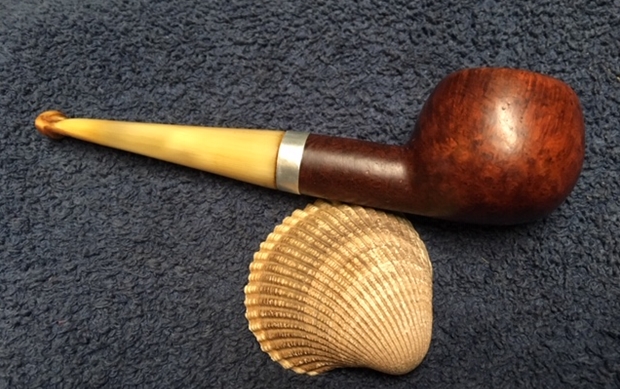
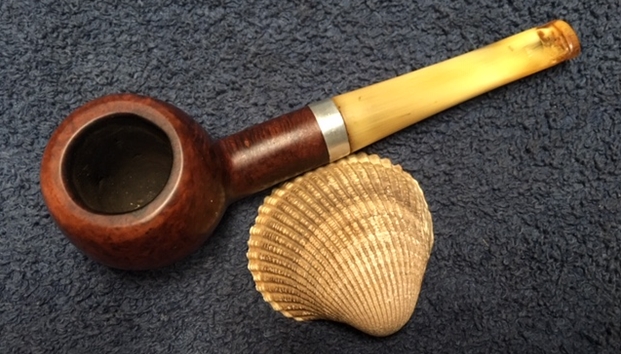
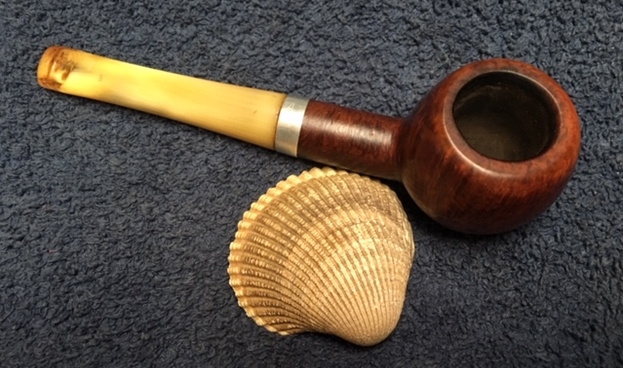
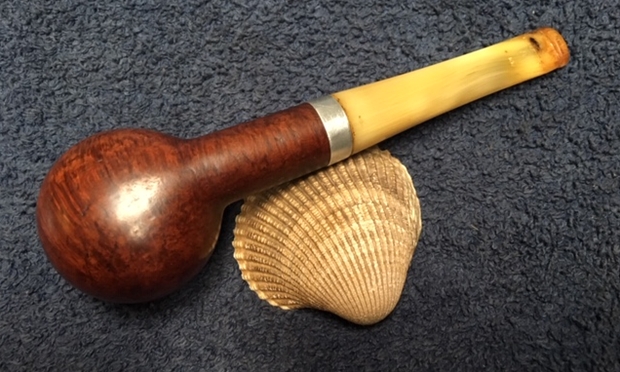
Tag Archives: shaping a stem

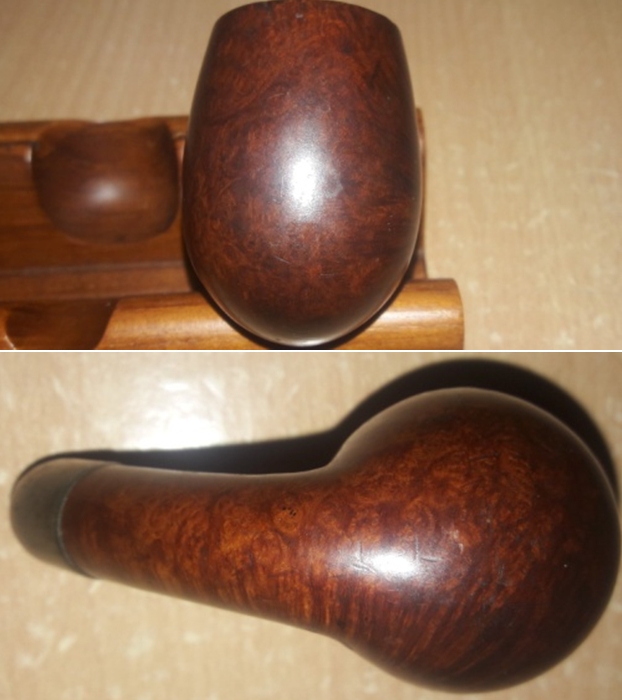
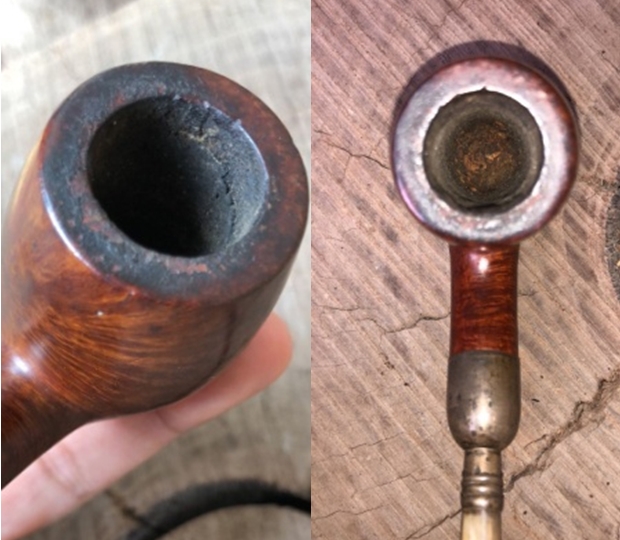
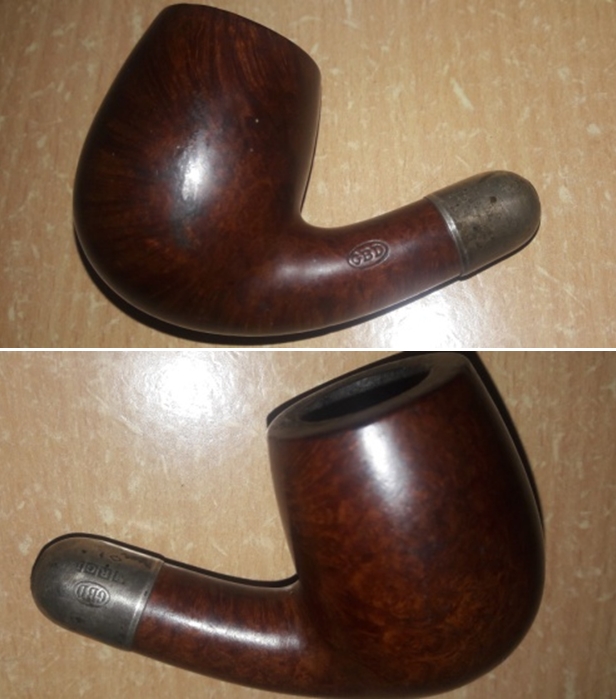
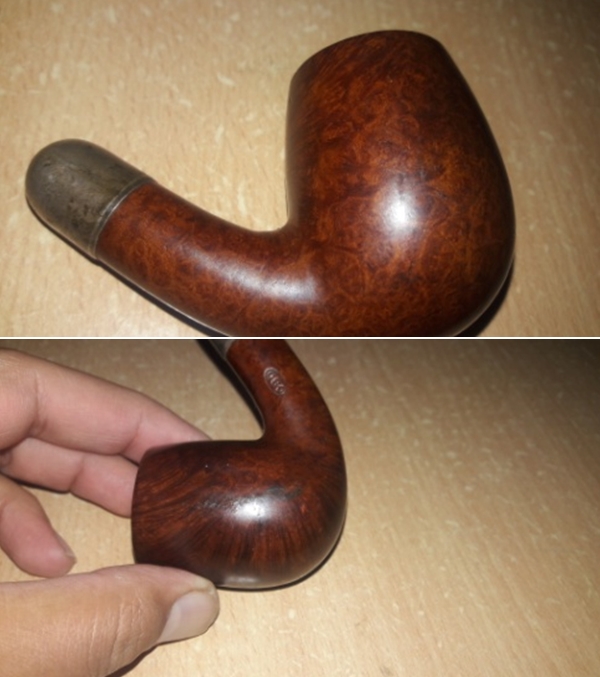
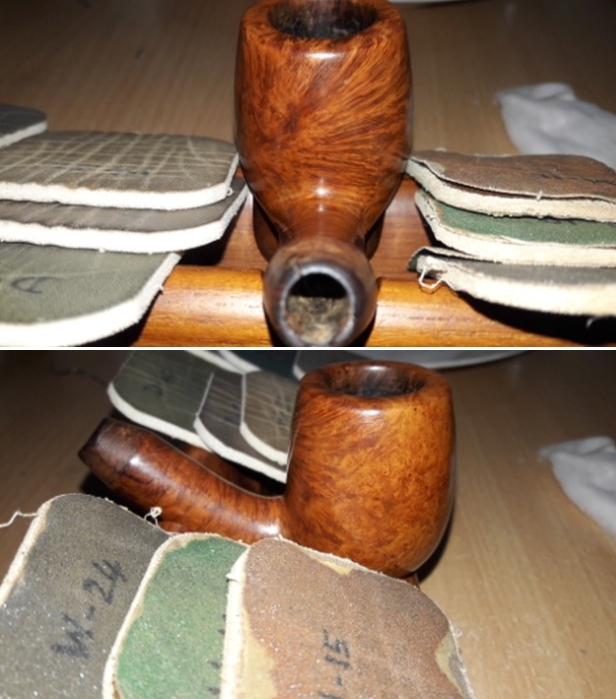
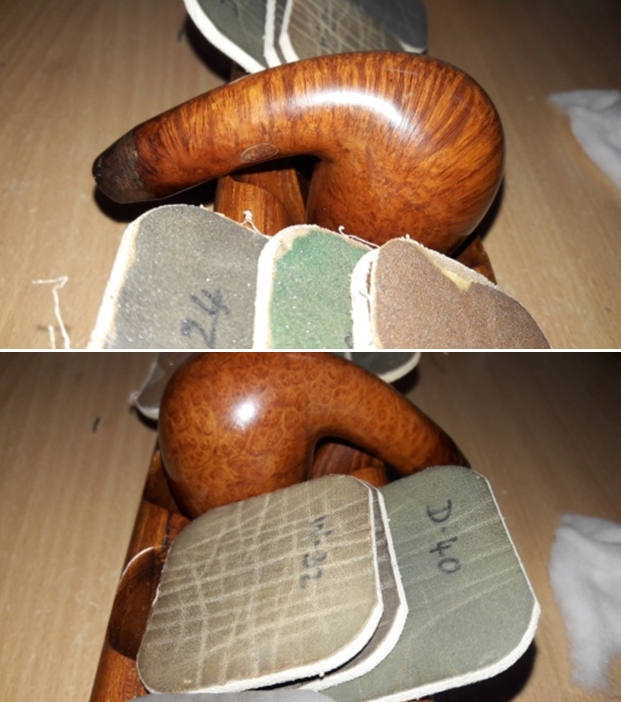
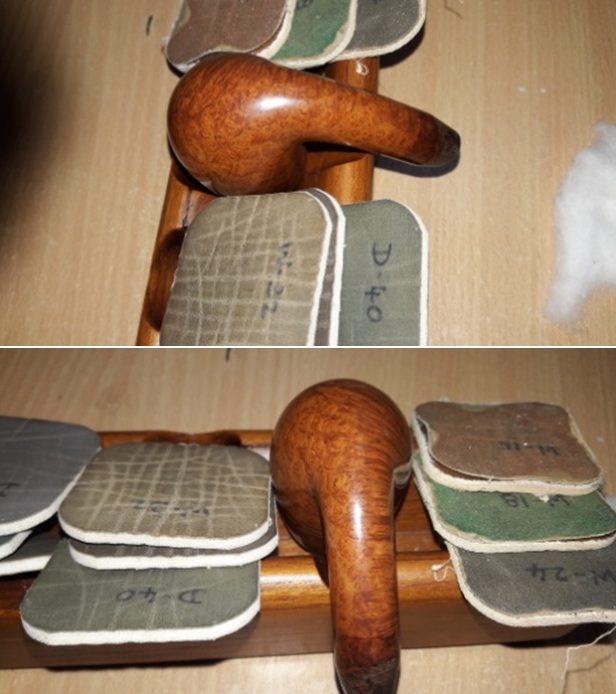
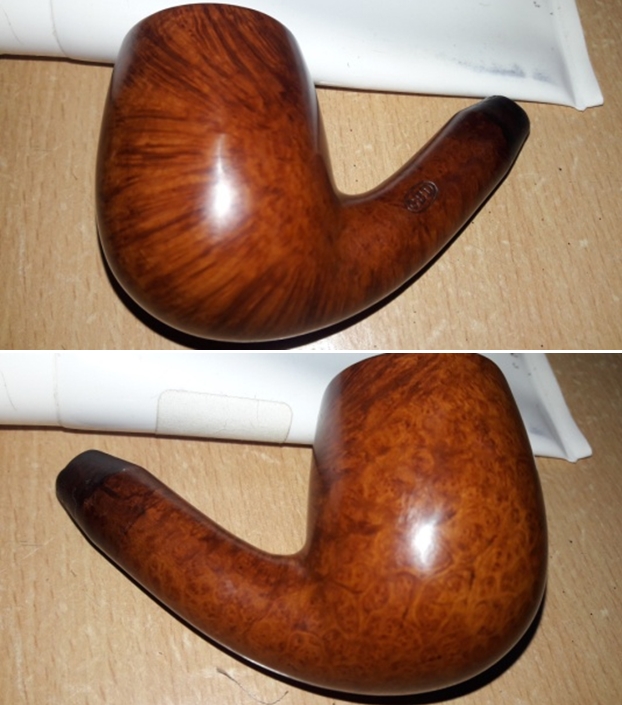
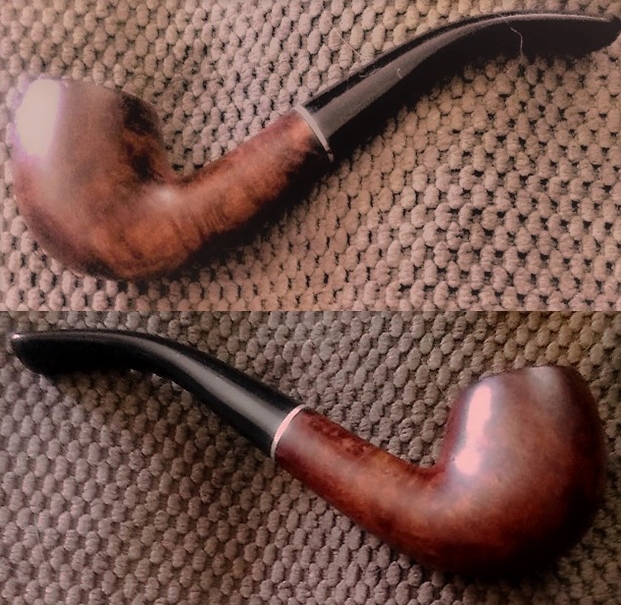
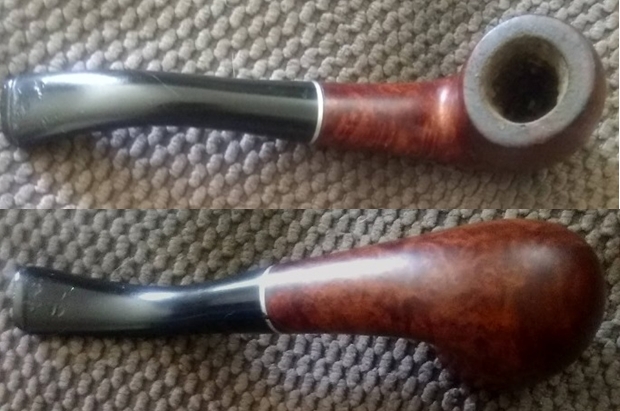
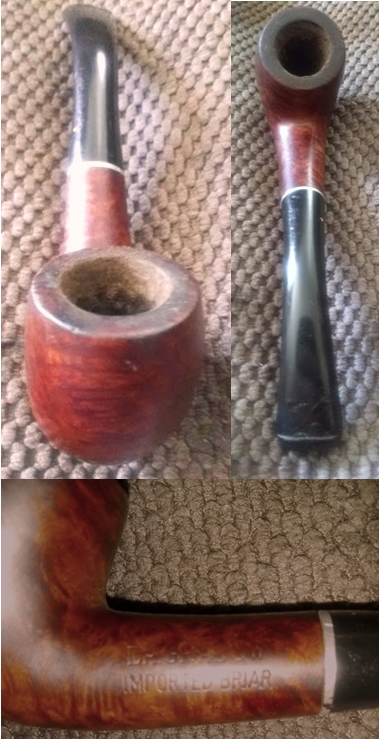
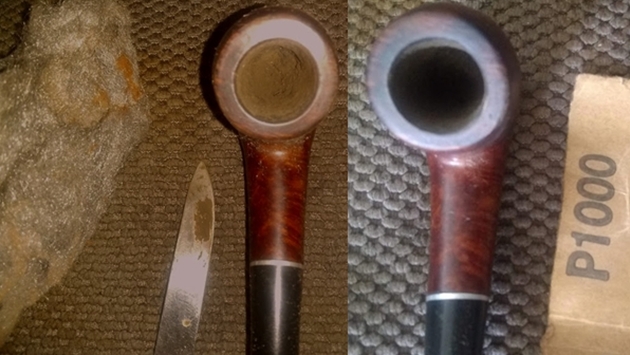
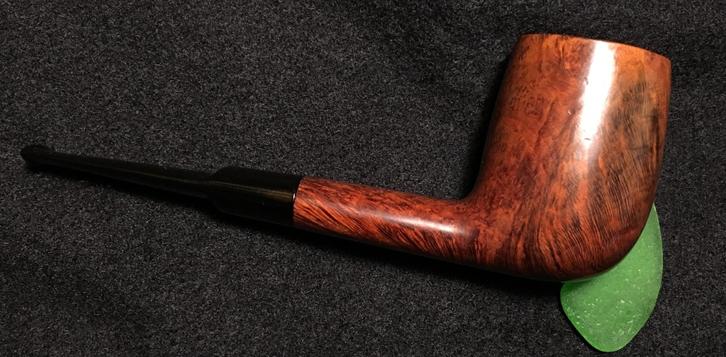
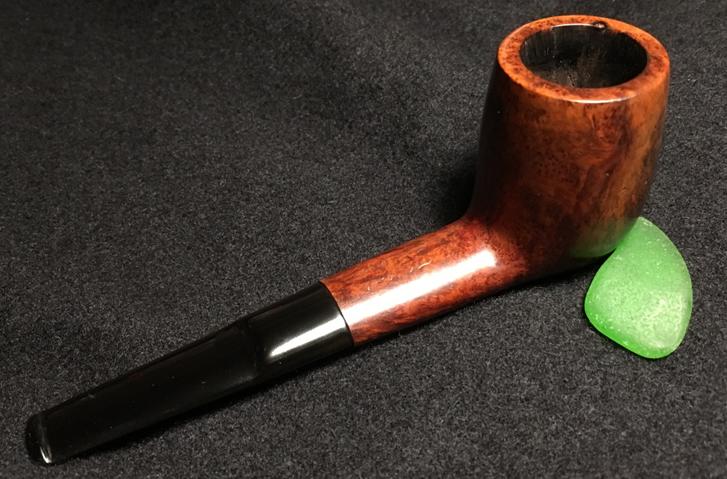
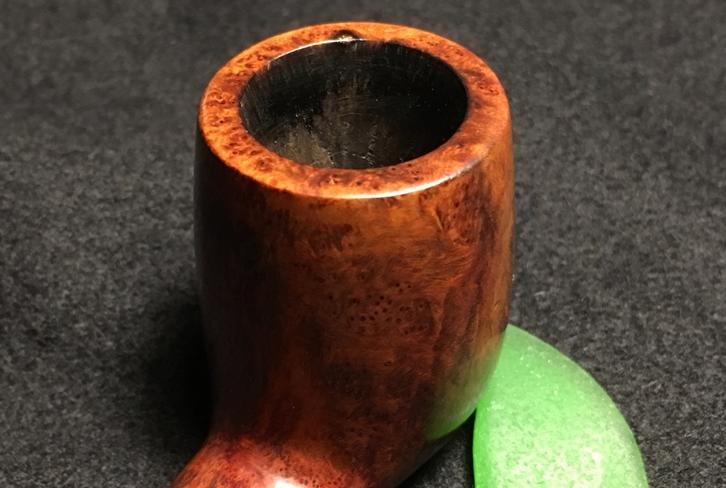
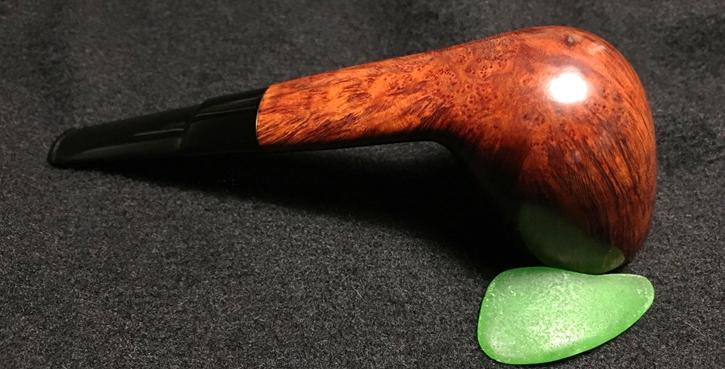
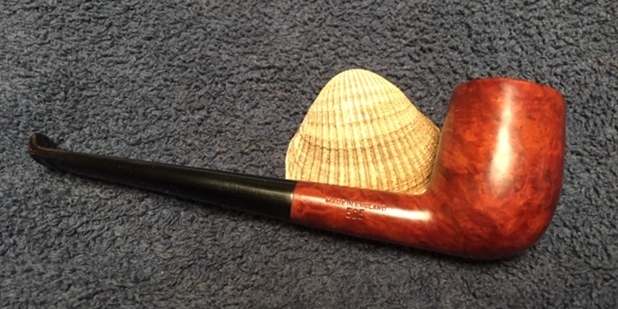
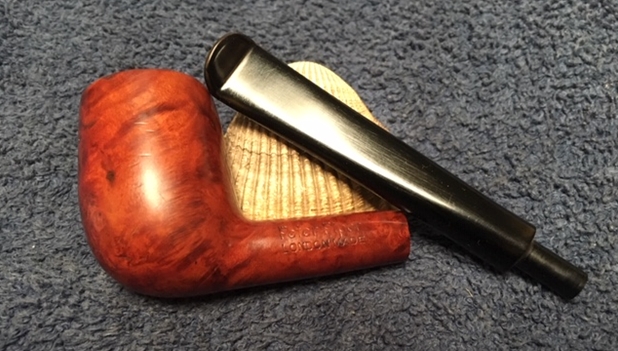
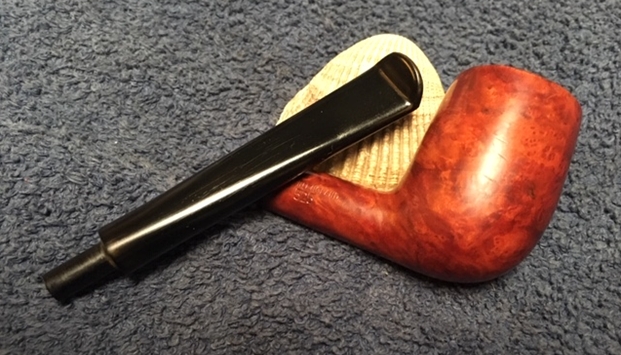
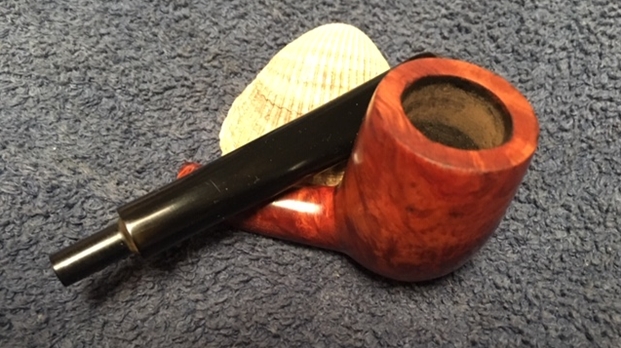
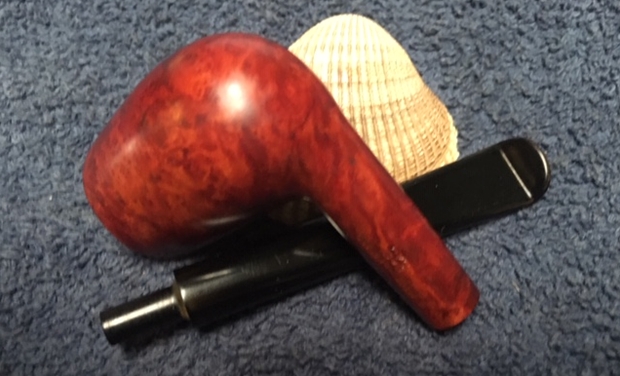
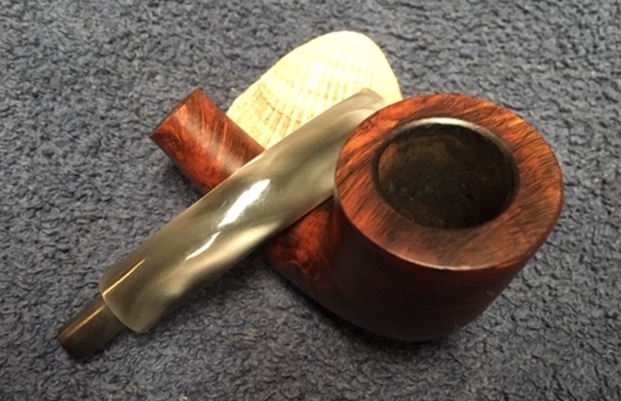
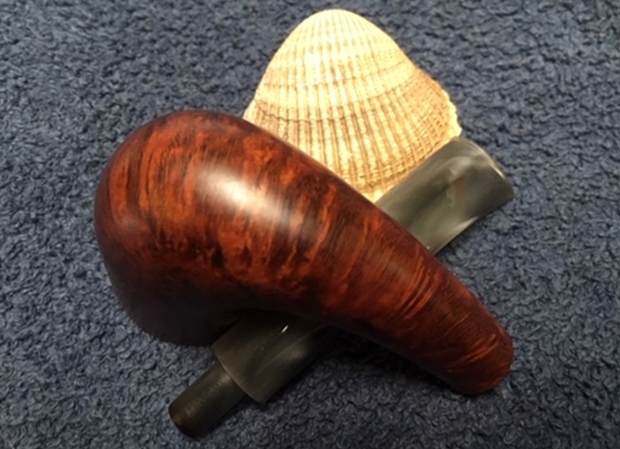
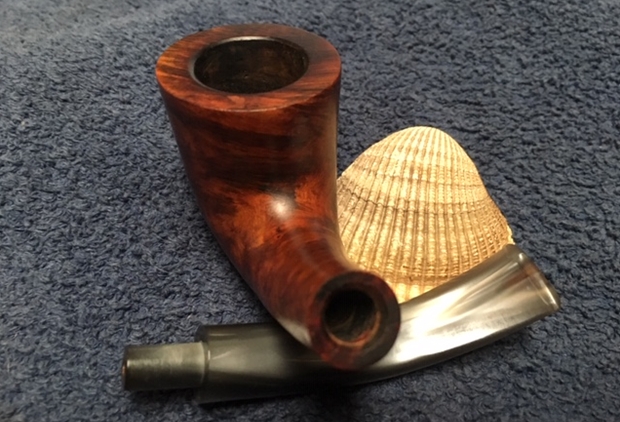
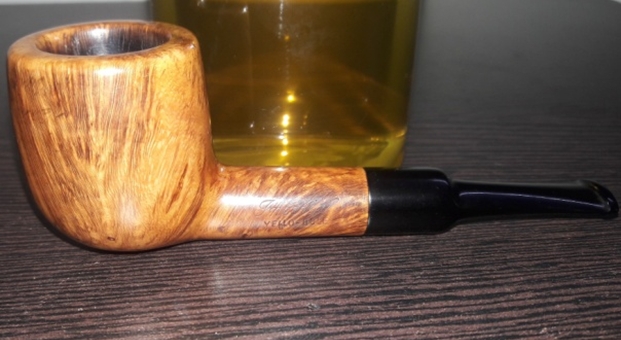
Refreshing a Comoy’s Made in London, England Bent Bulldog


Blog by Dal Stanton

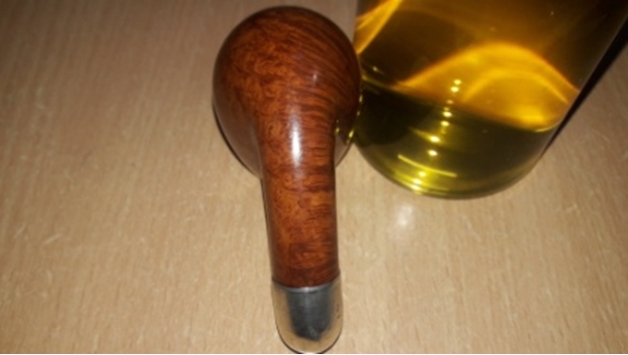
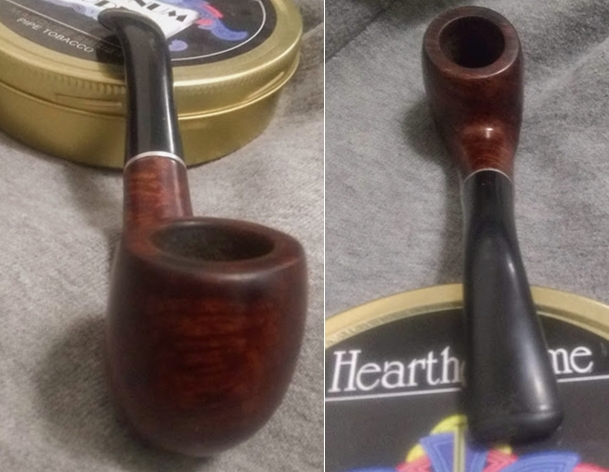
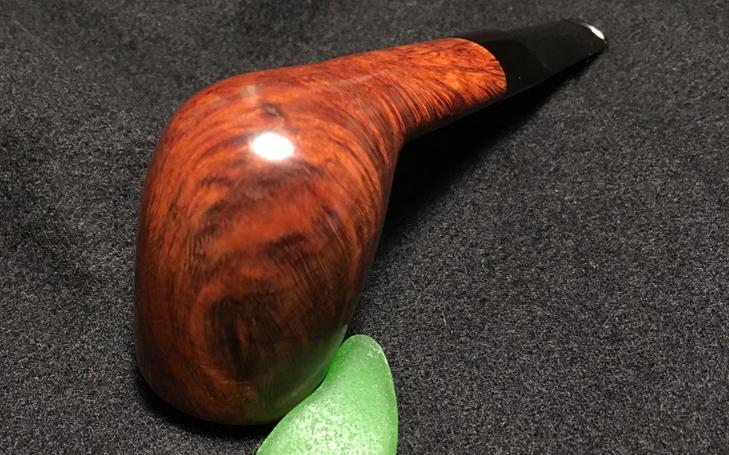
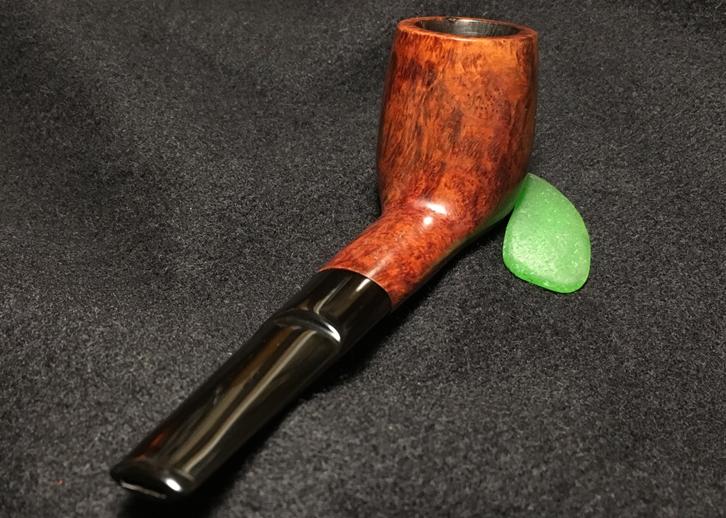
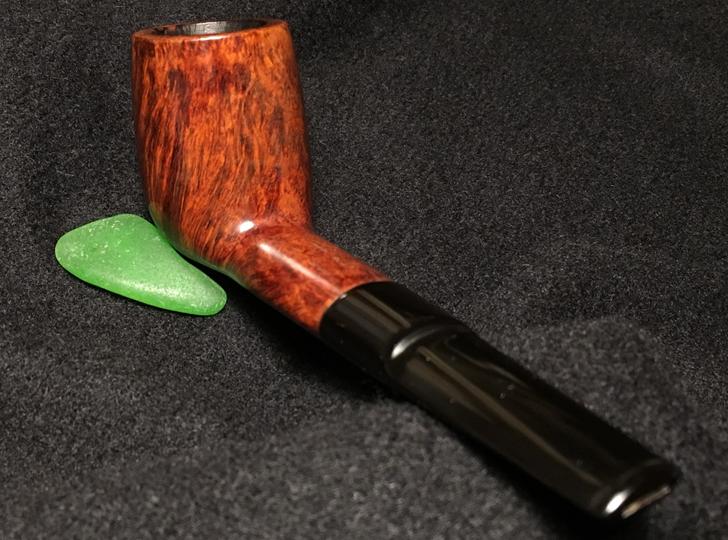
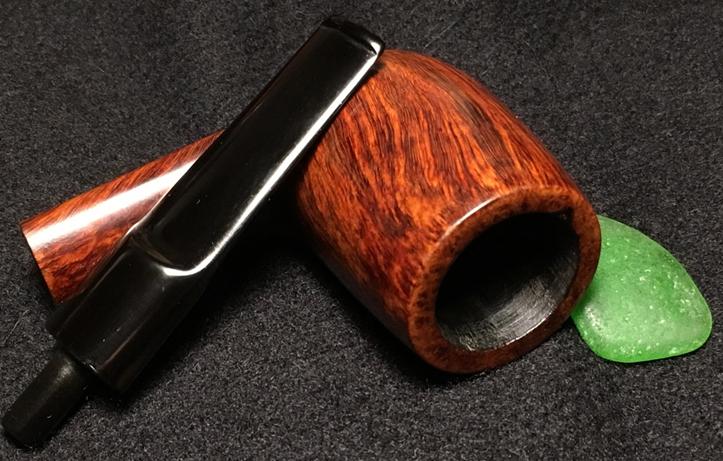
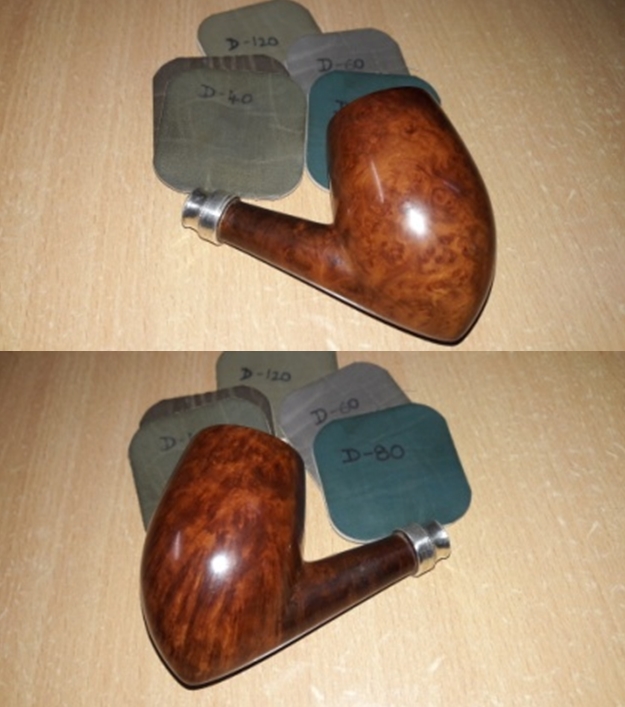
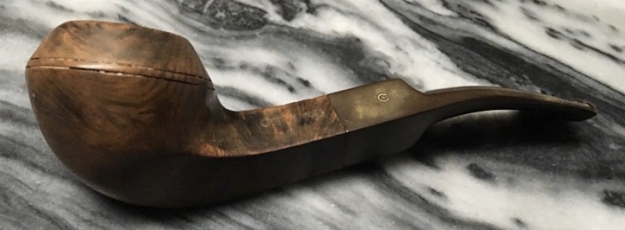
I saw this Comoy’s Bent Bulldog as a charity listing on eBay for the Akron Art Museum, in Akron, Ohio.  The seller, like me, was providing pipes for a good cause and I like that.  I also liked the Bulldog I saw in the pictures the seller provided and by the description, it seemed the seller was a pipe person.  The nuts and bolts description:

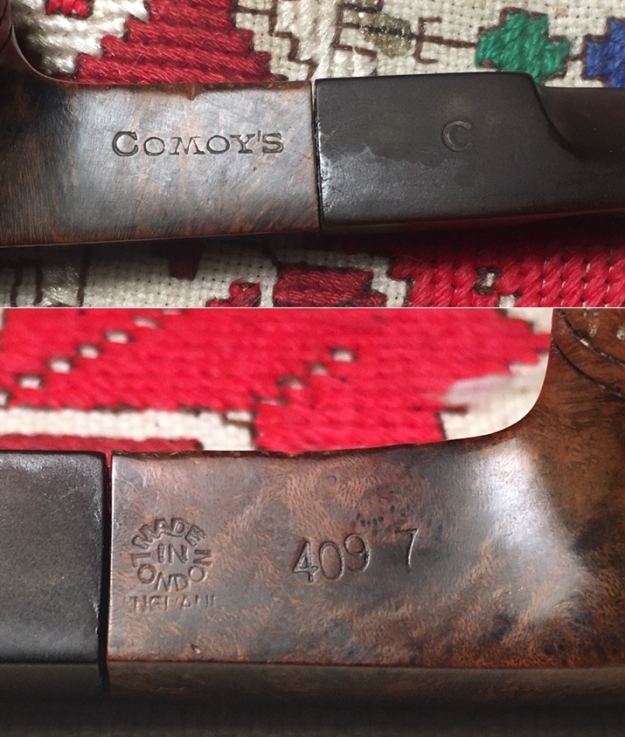
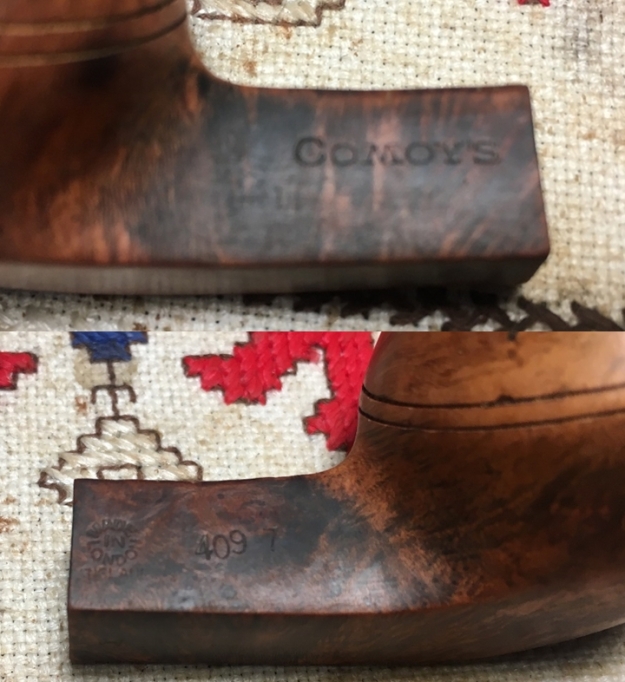
A classic bulldog! About 5 1/4” long, bowl is 1 1/2” tall, 1 5/8” wide tapering to 1 1/8” at rim. ID 13/16”, depth 1 5/16”. Marked on one side of shank COMOY’S, other side MADE IN LONDON ENGLAND in circular fashion 4097, beneath shank a capital H. A capital C stamped on side of bit. No other marks detected.

Diamond saddle bit is well-seated push fit, cleaned and polished, showing some bite wear but no holes through. Some oxidation as well. Stummel is well hand worn and smoothed, some dings and scratches, scorch on rim, light cake in bowl. Though the pipe is smokable as is, this one has the possibility of being a real beauty with some TLC!

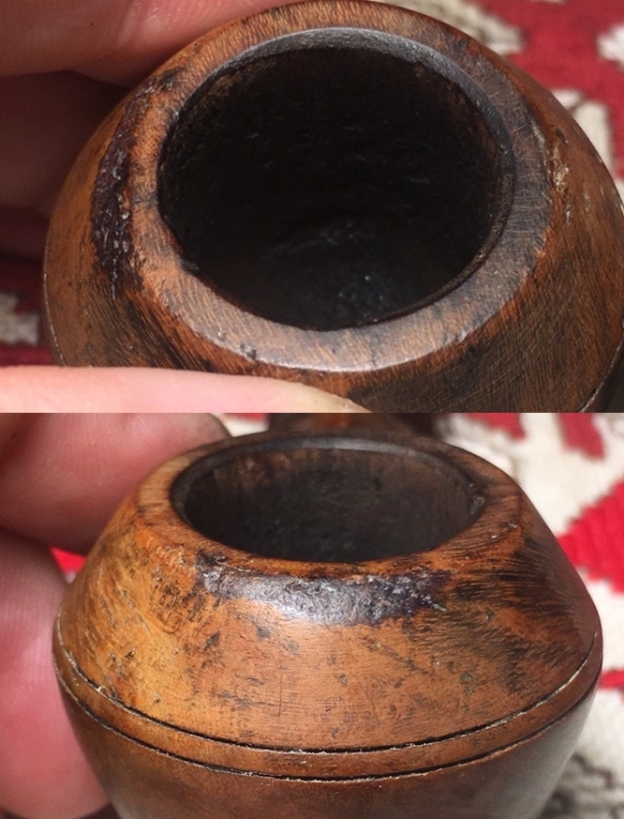
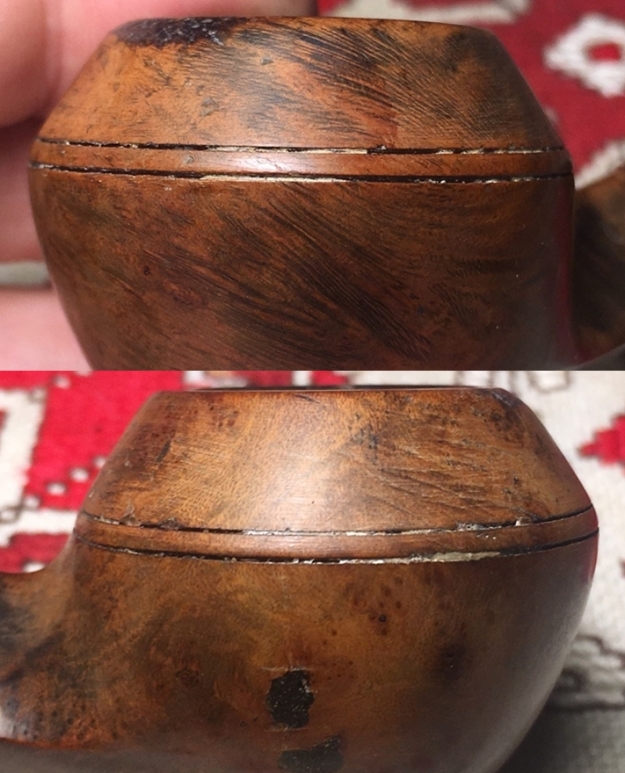
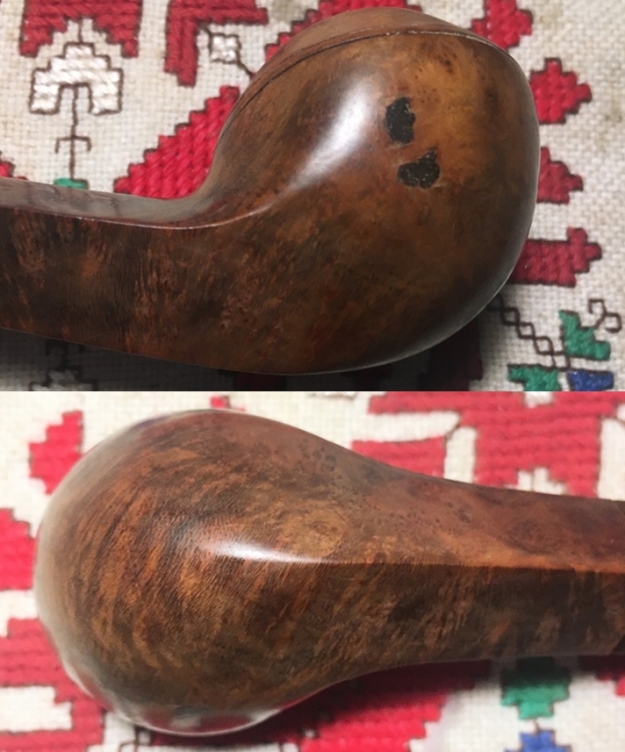
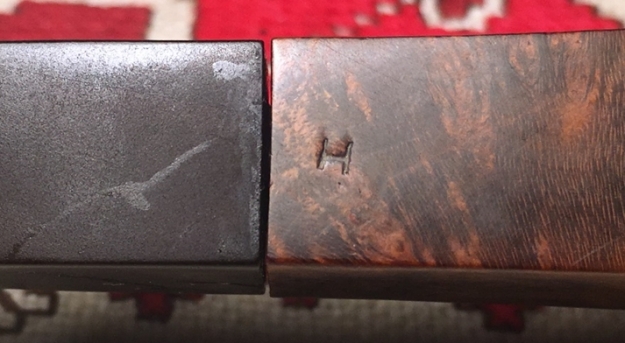
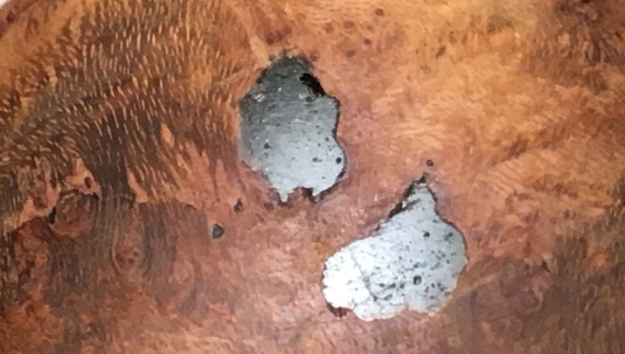
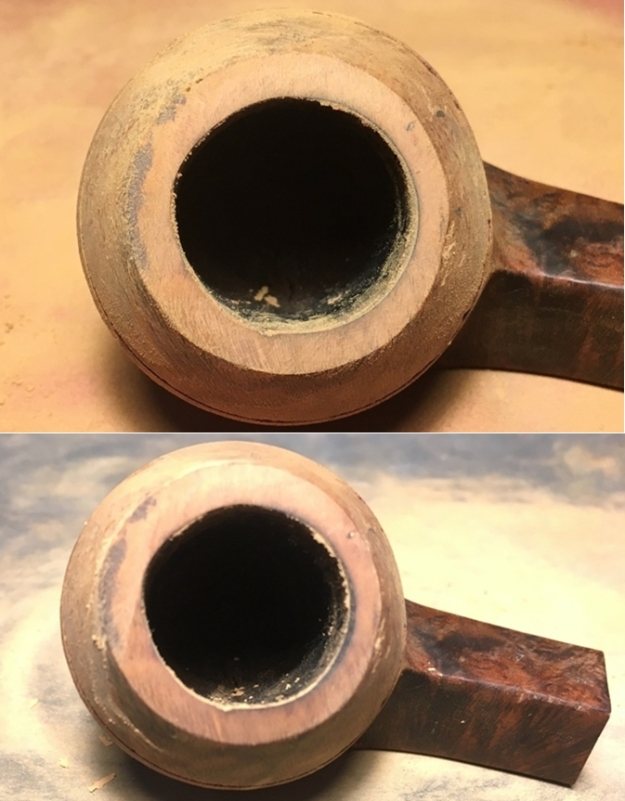
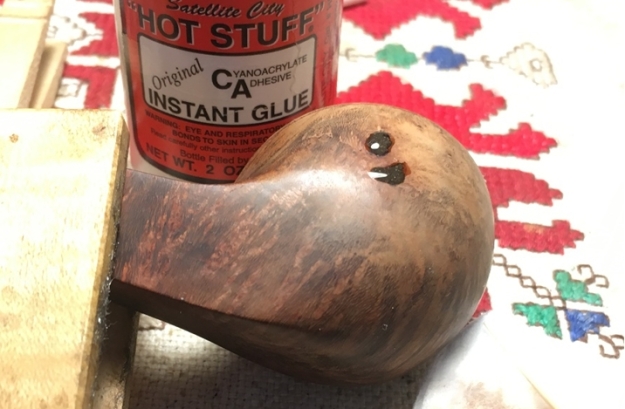
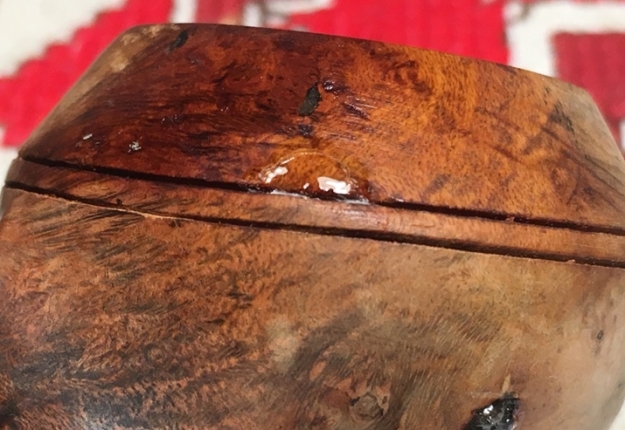
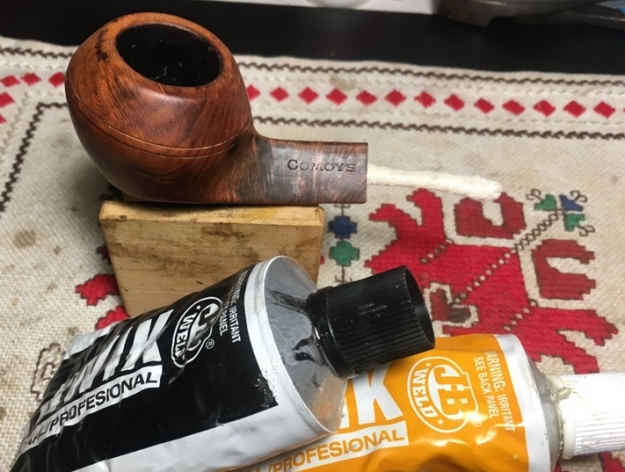
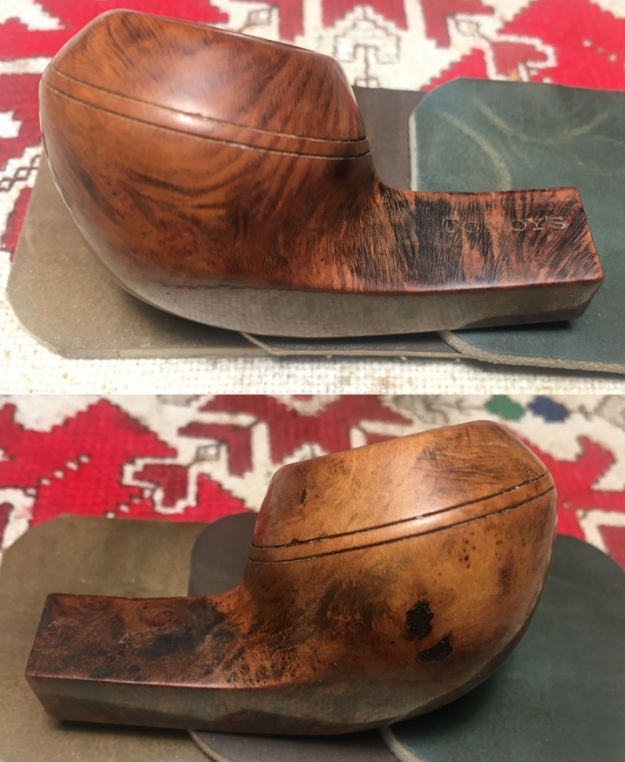
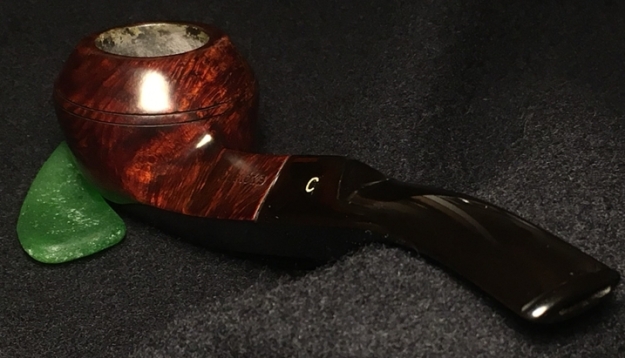
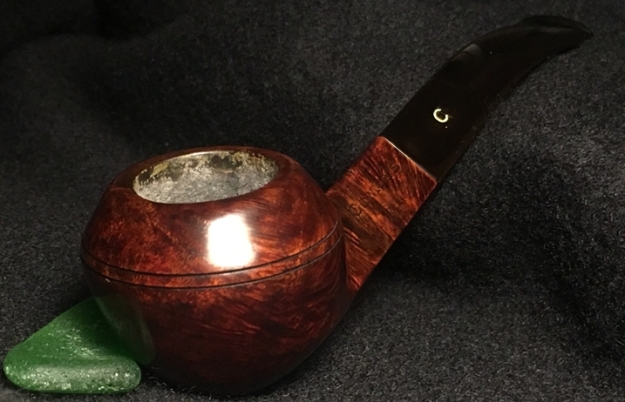
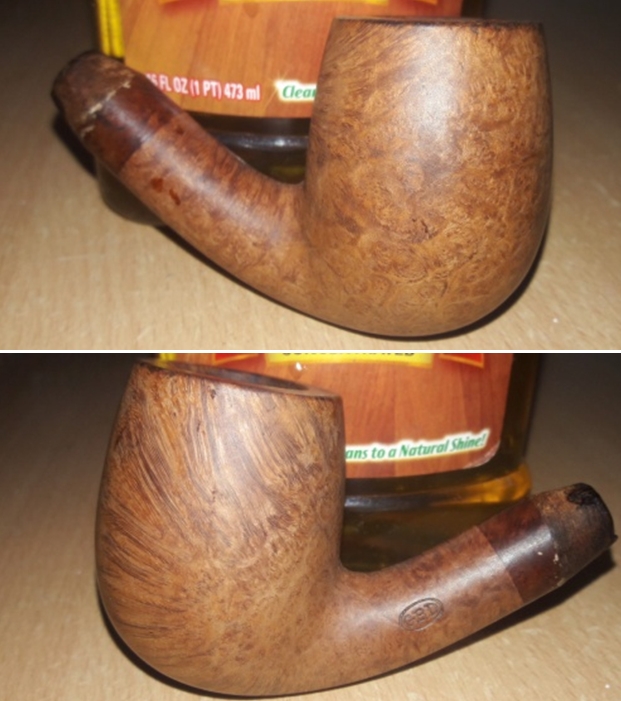
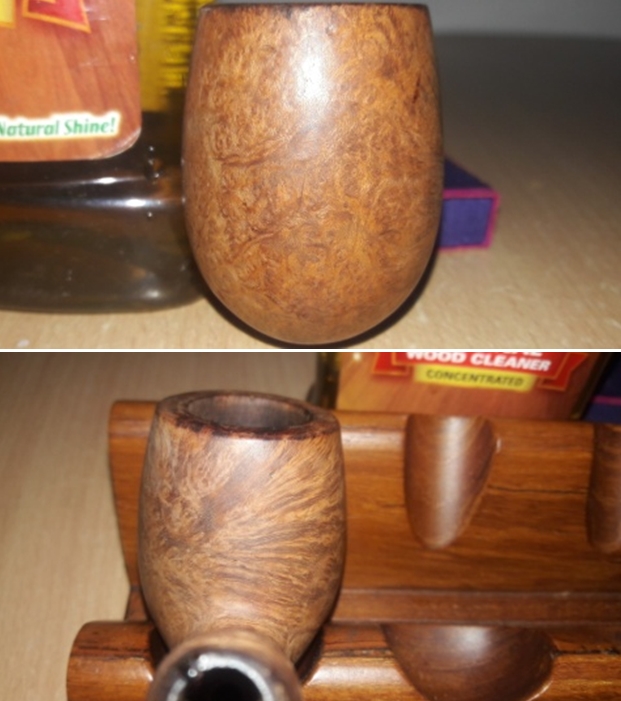
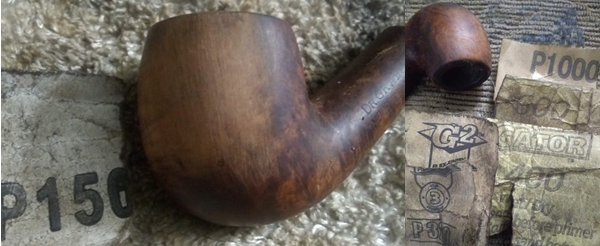
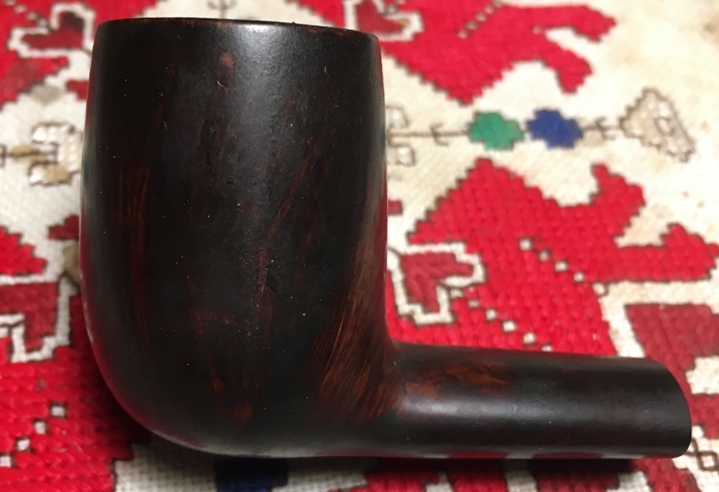
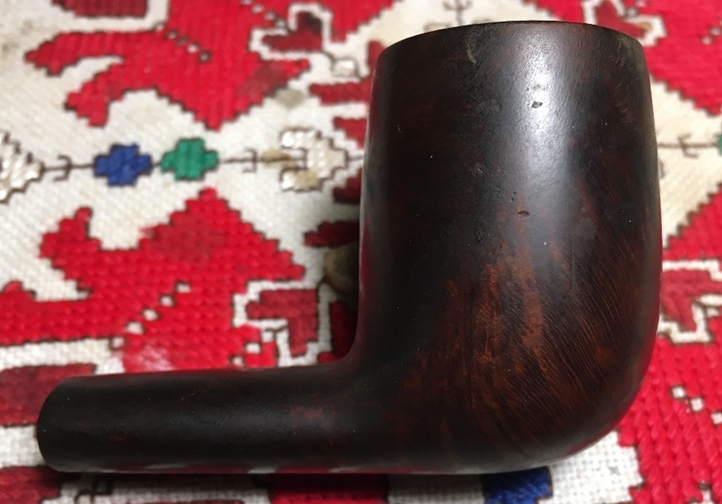
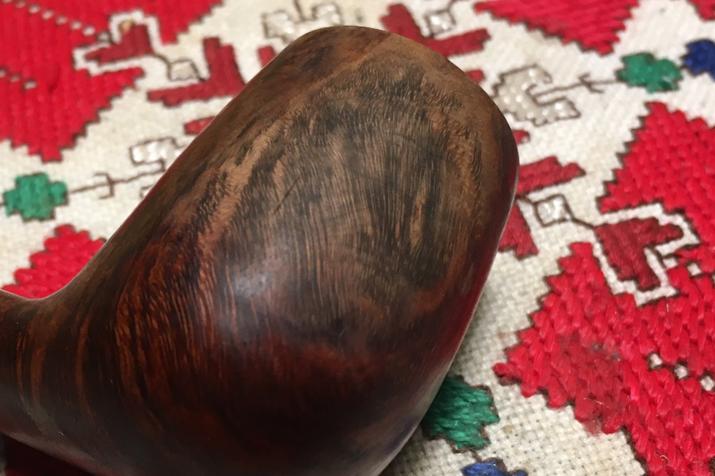
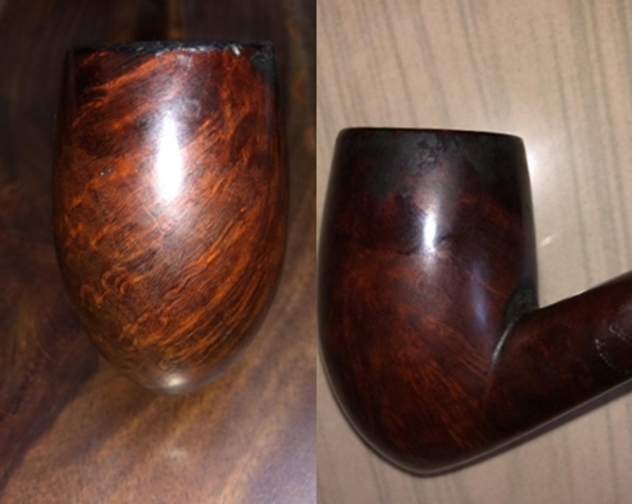
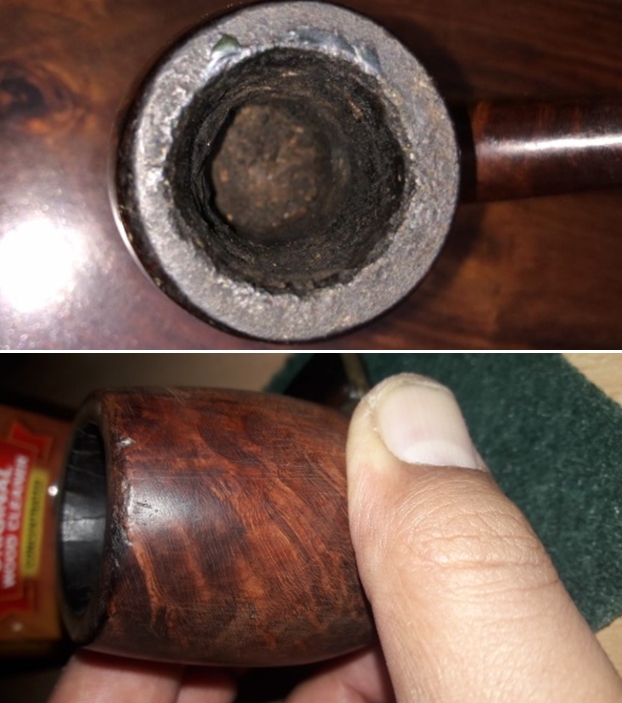
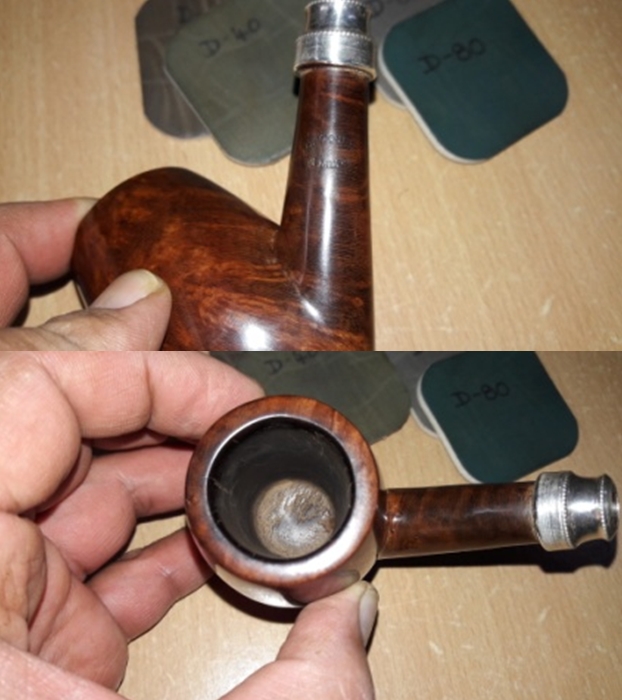
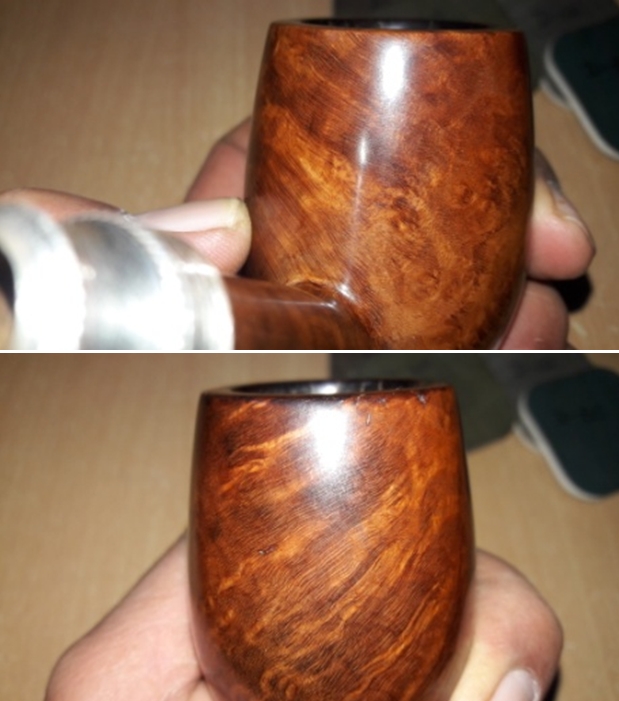
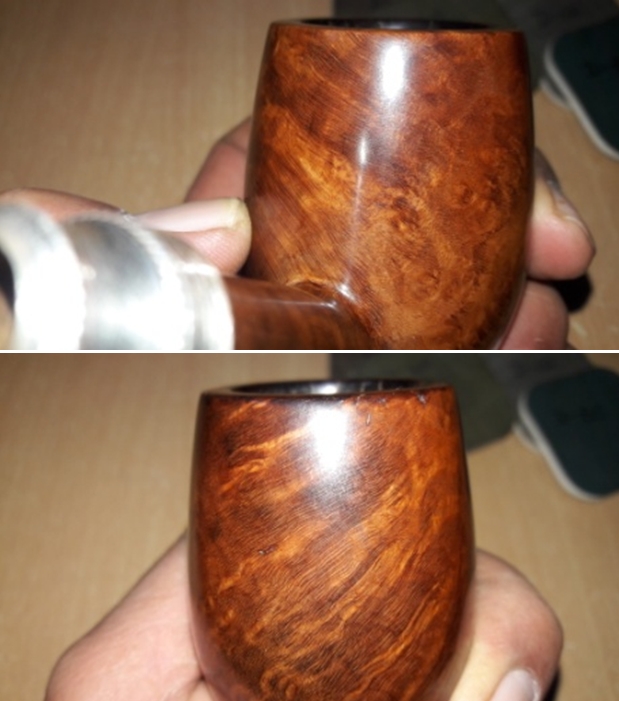
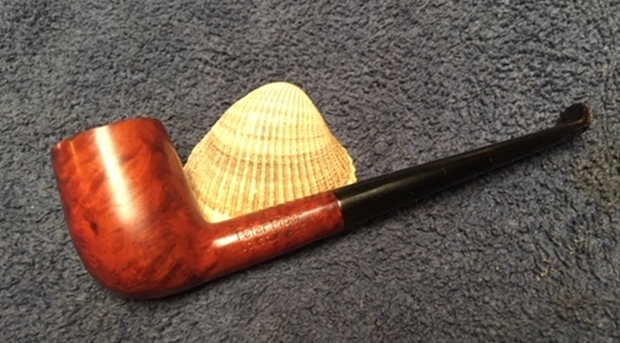
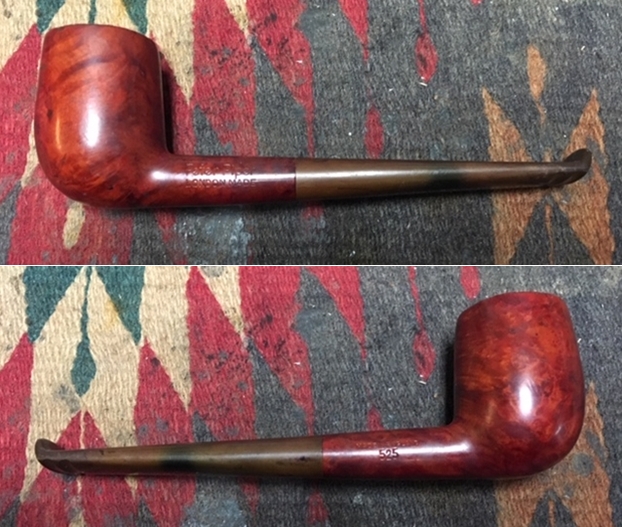
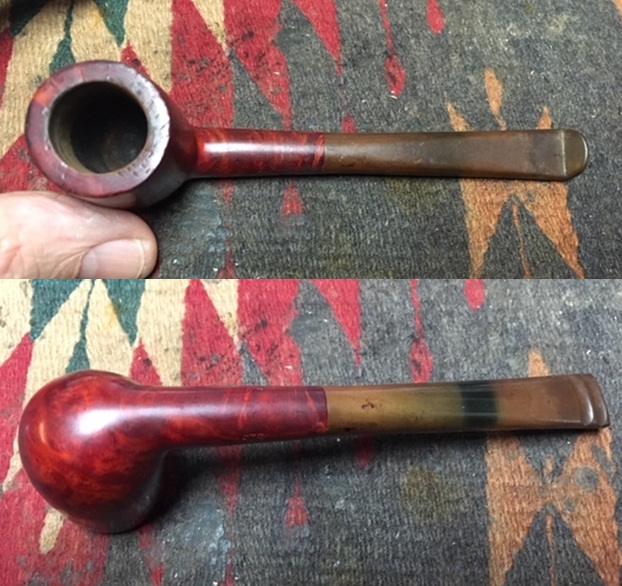
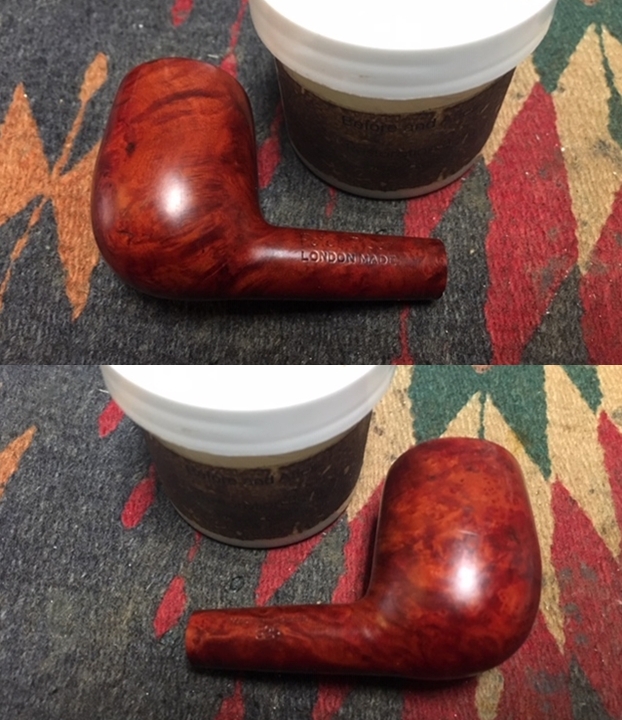
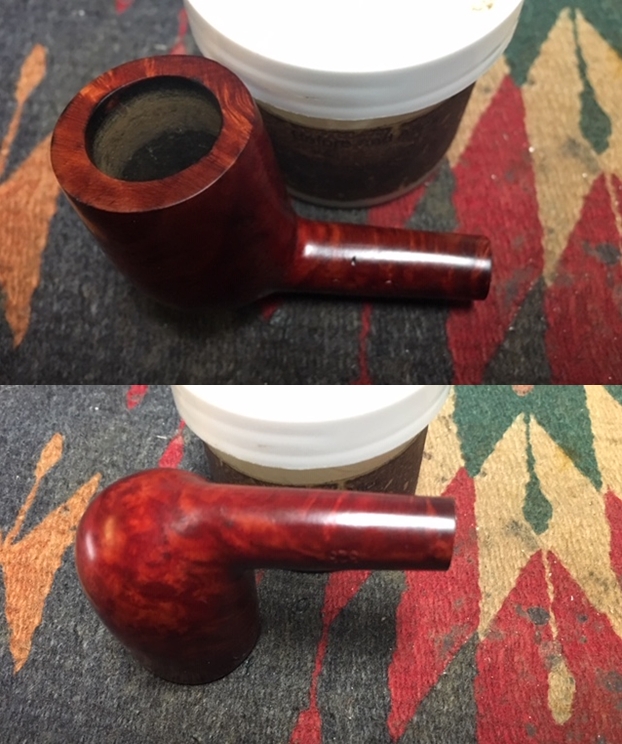
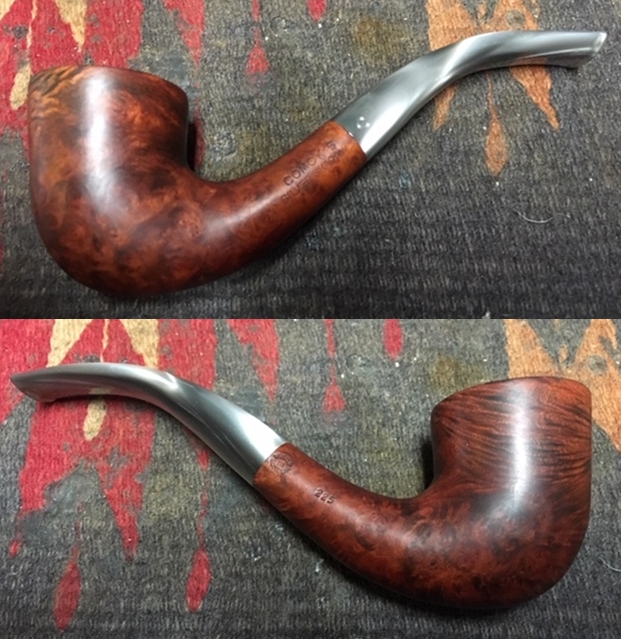
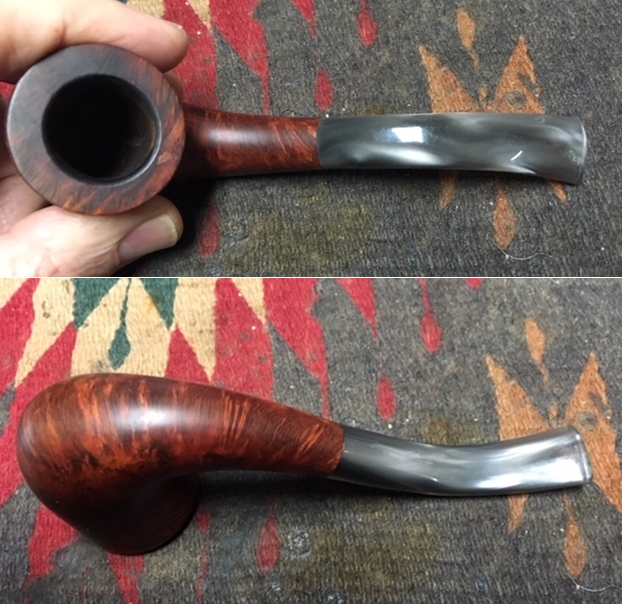
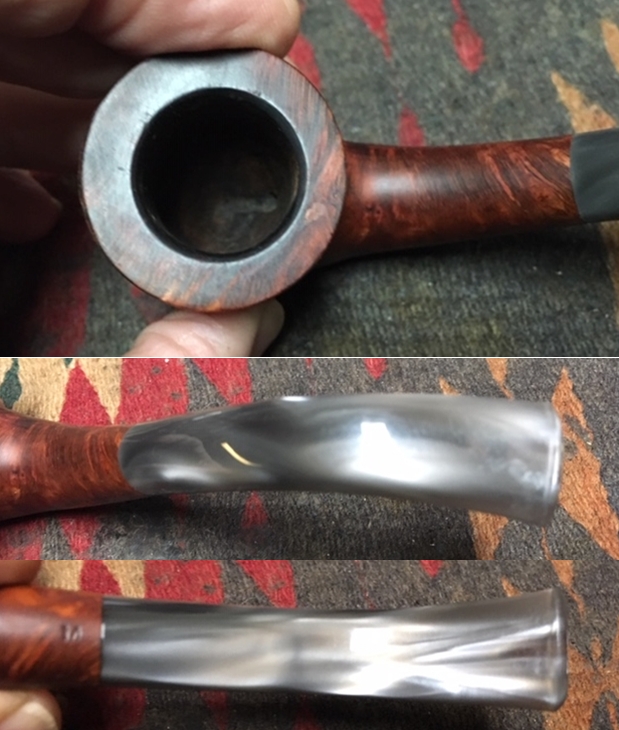
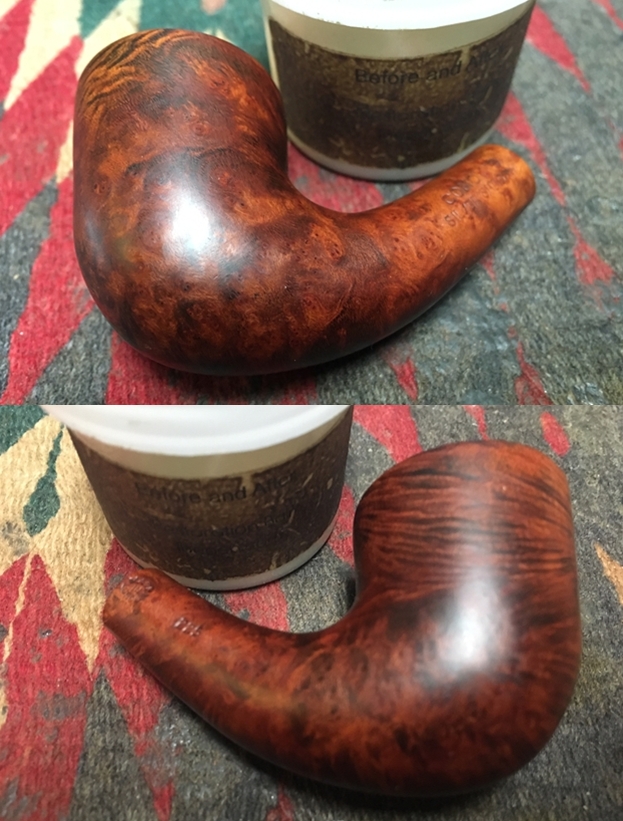
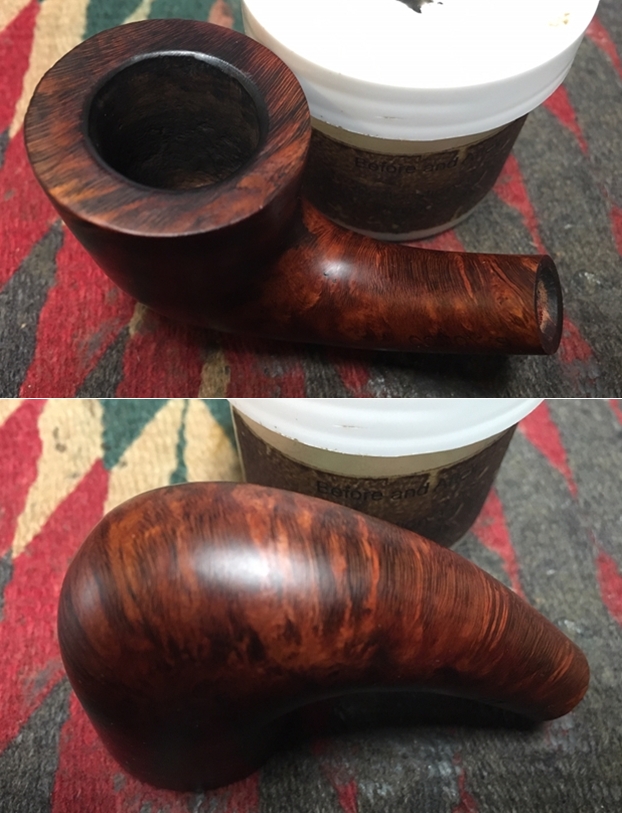
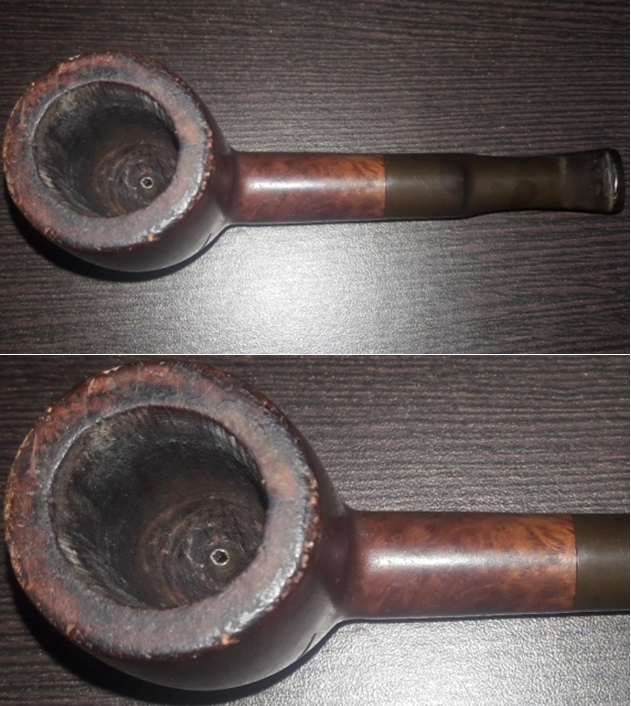
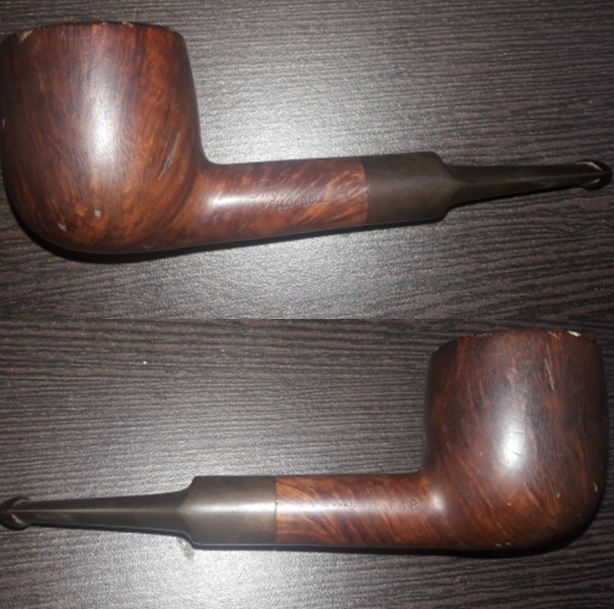
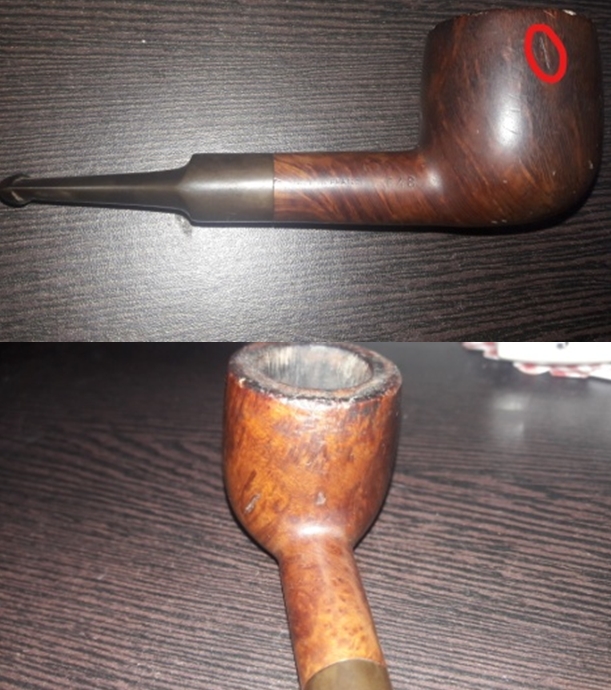
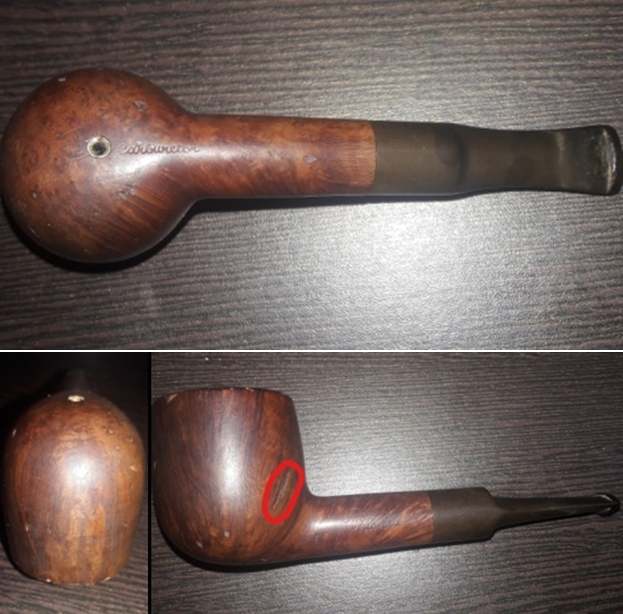
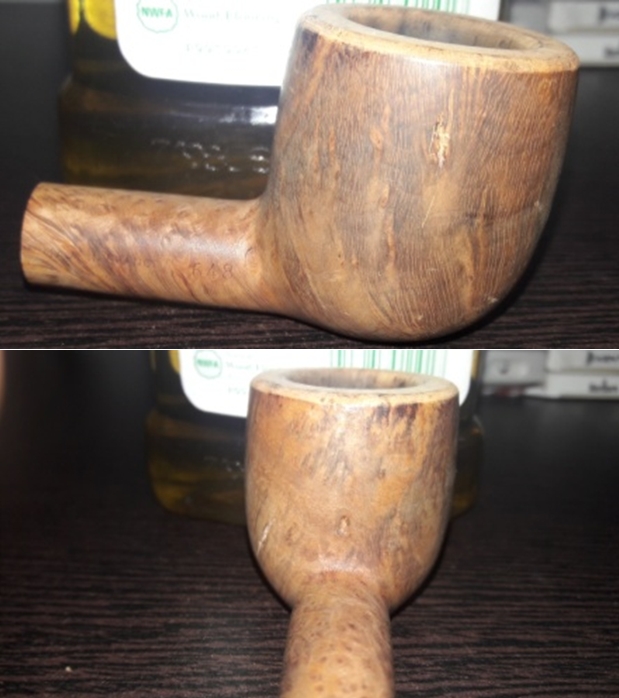
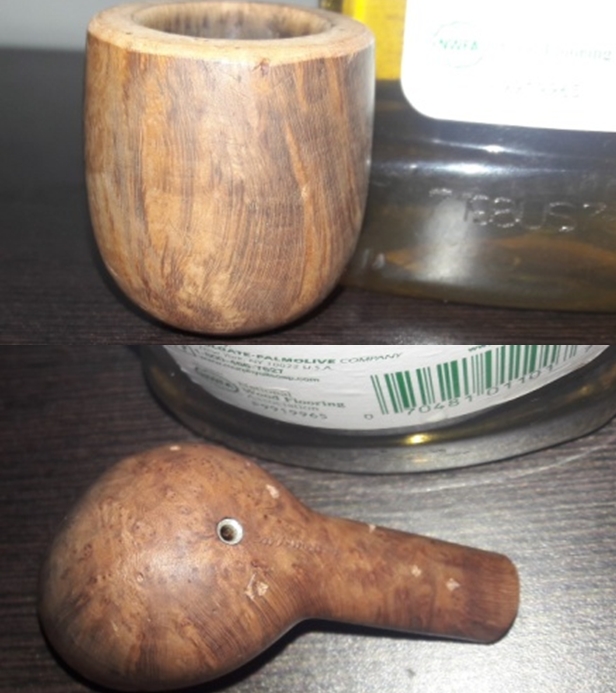
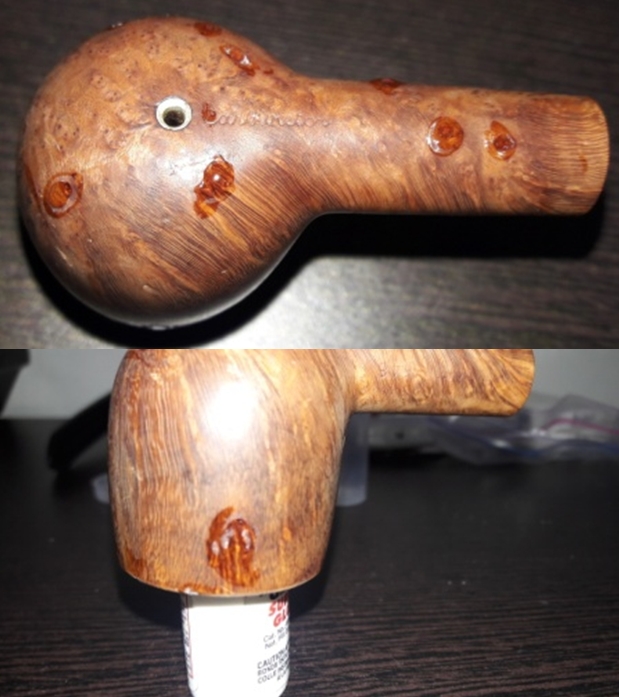
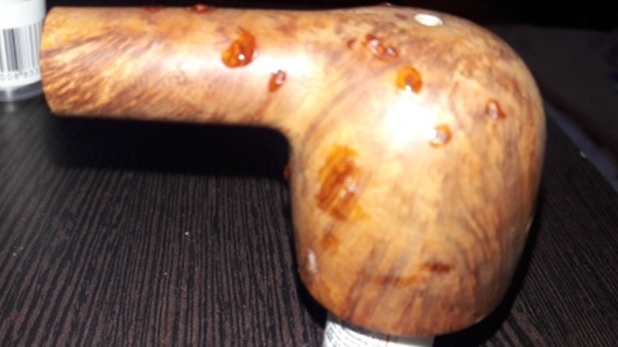
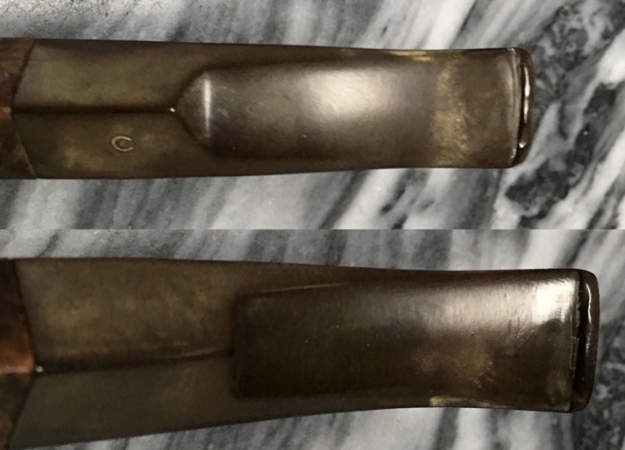
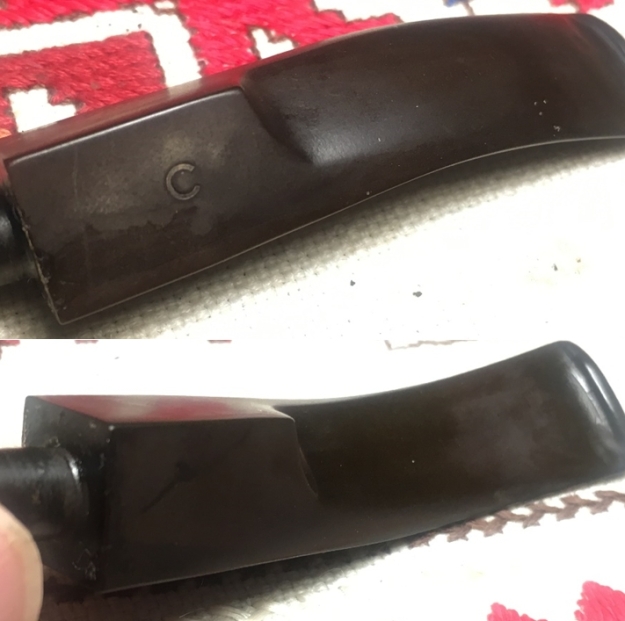
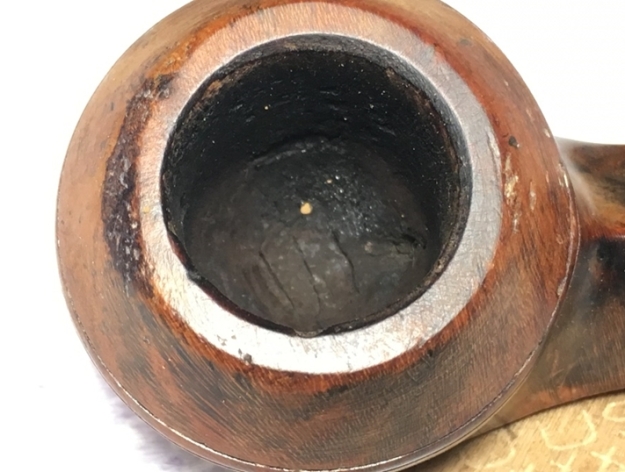
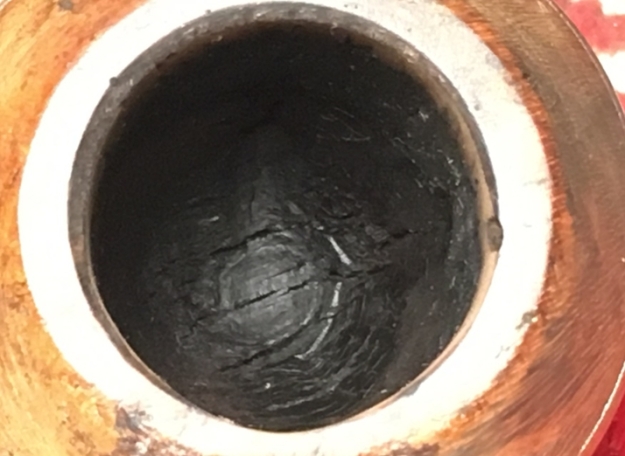
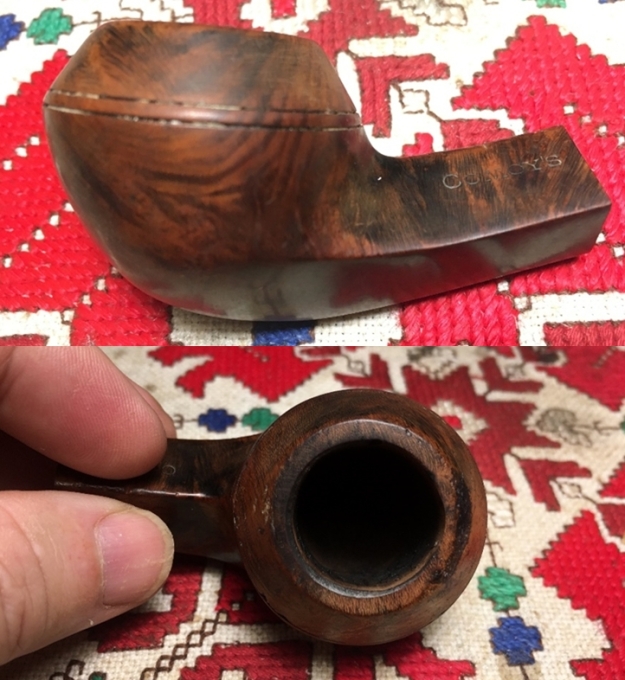
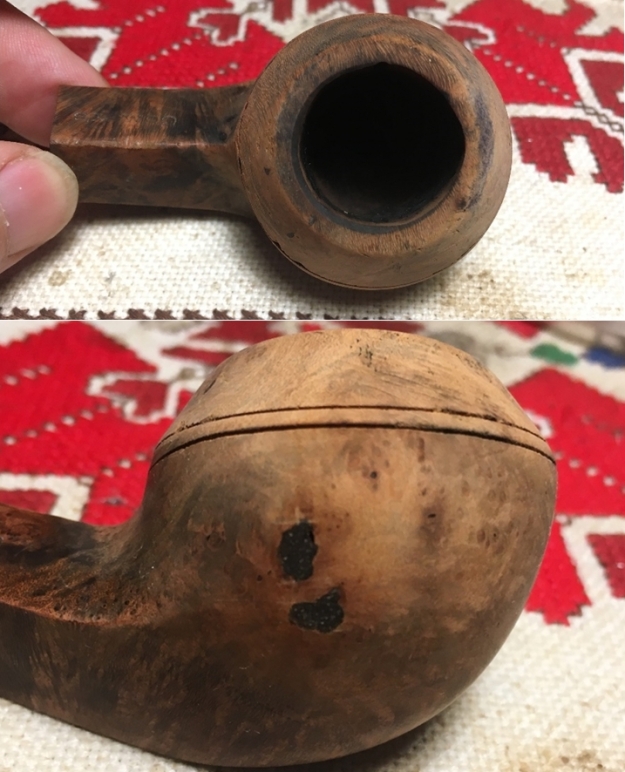
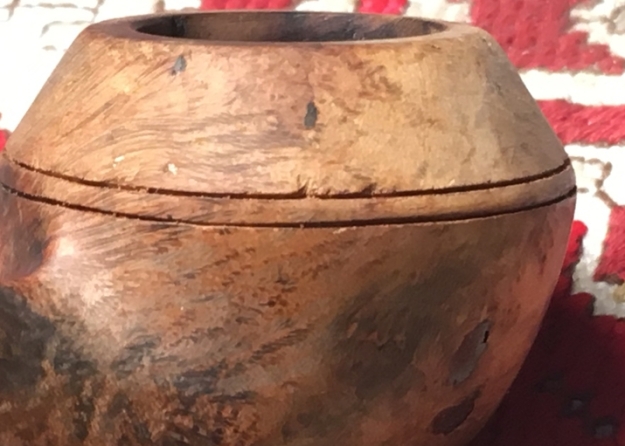
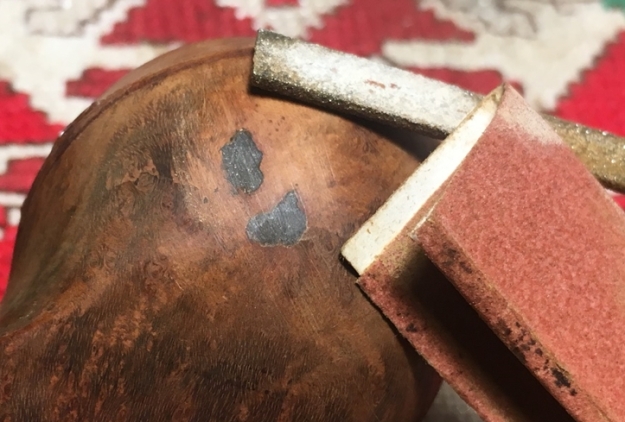
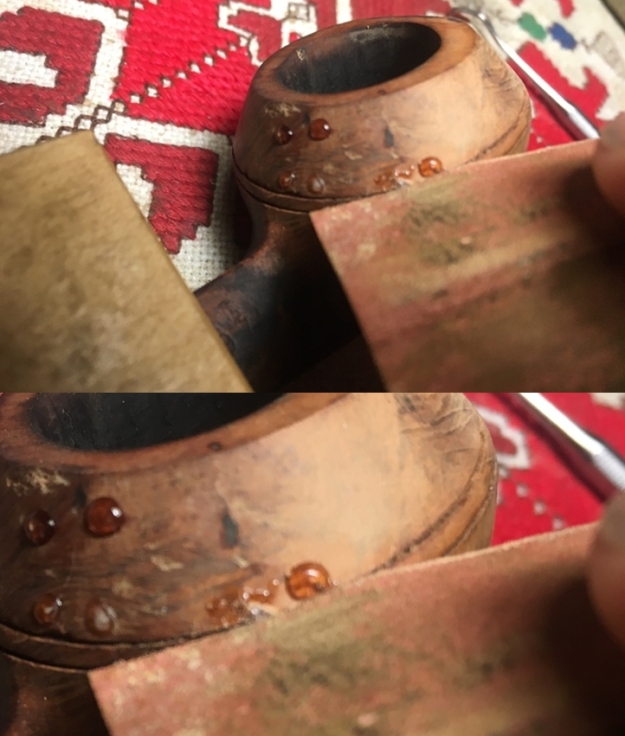
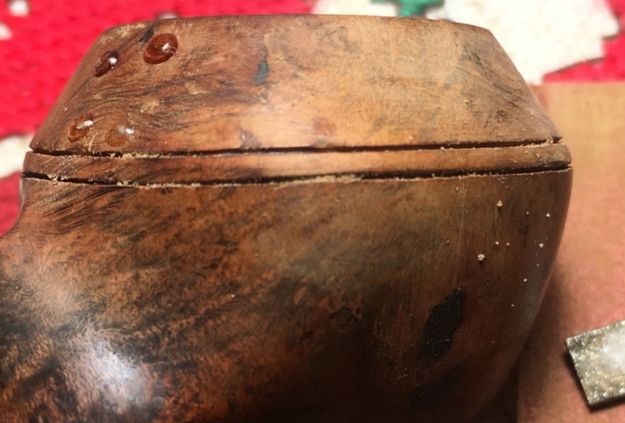
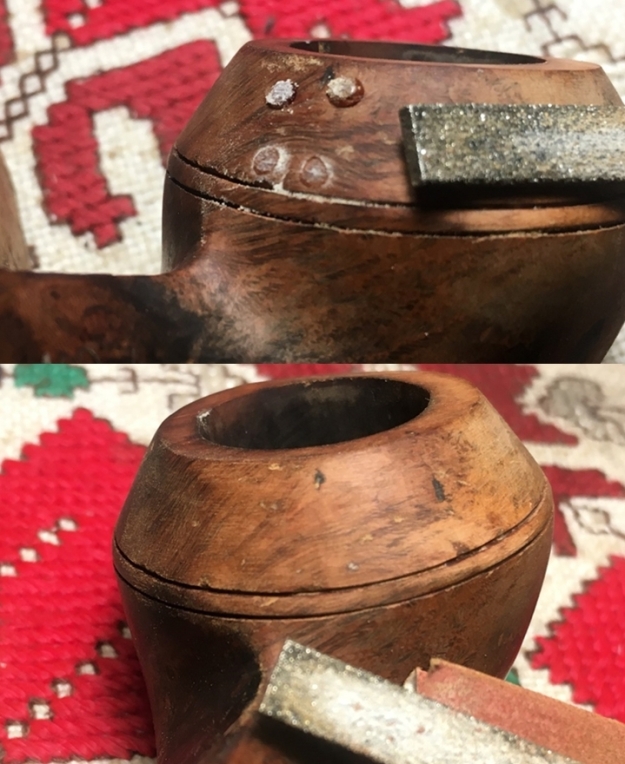
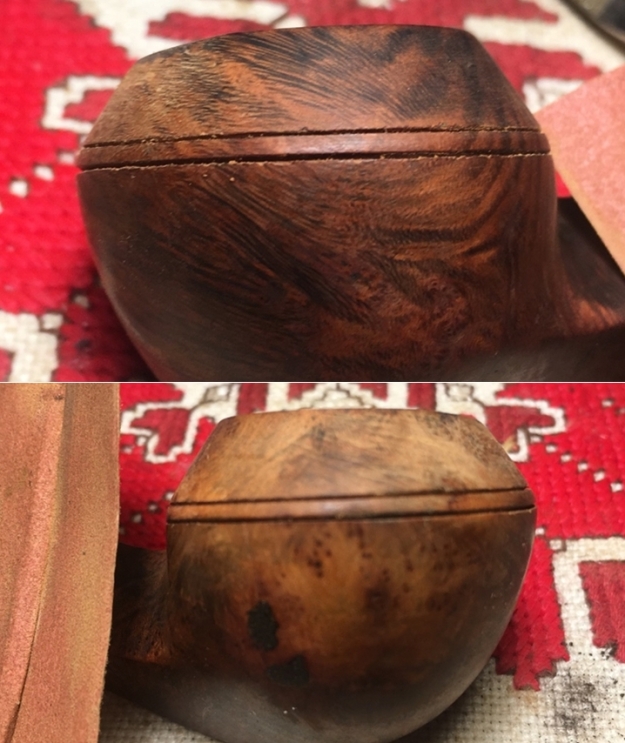
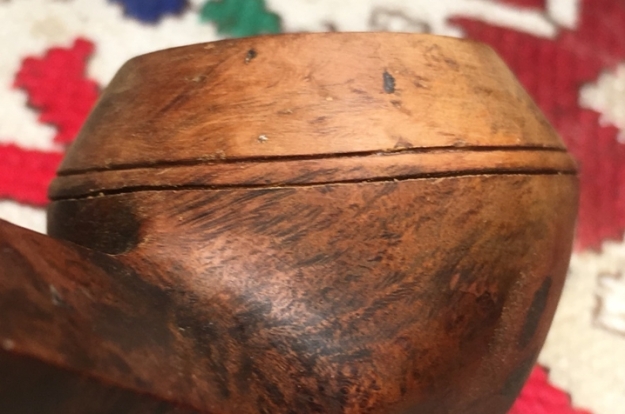
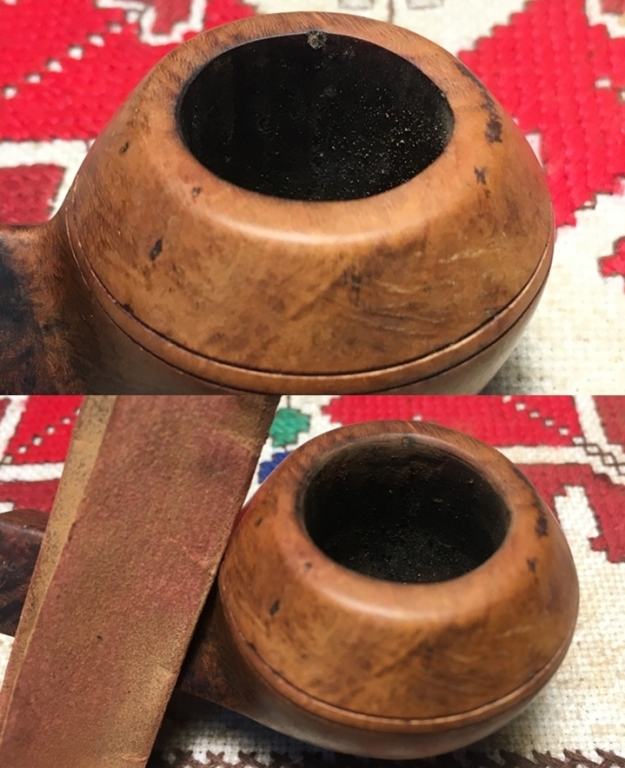
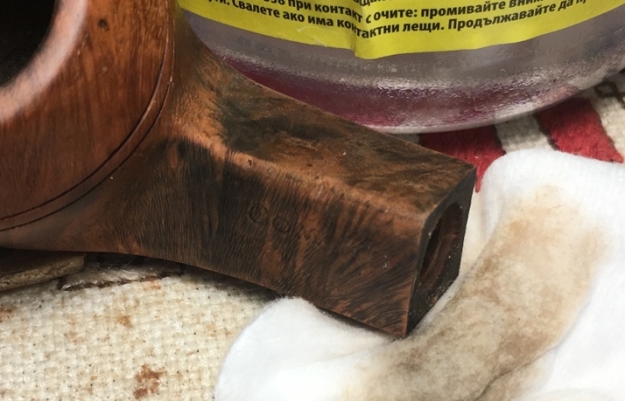
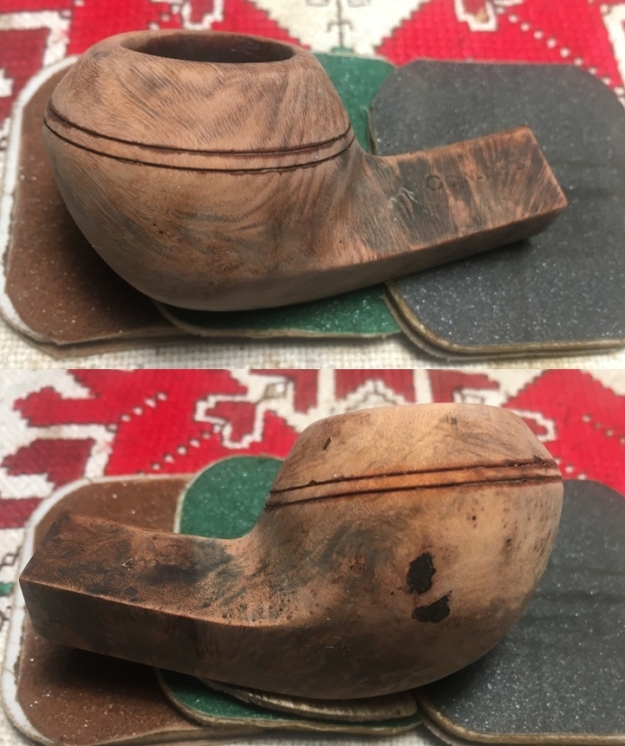
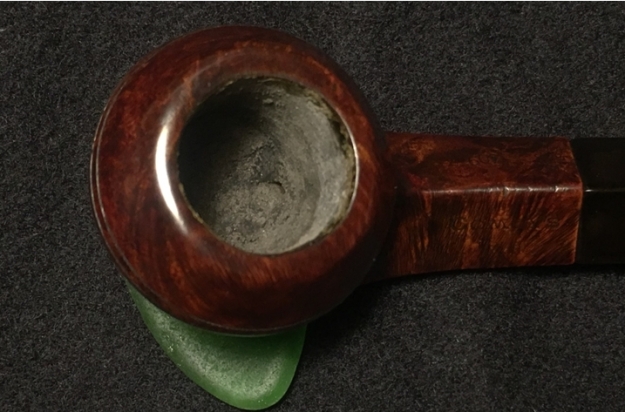
I took the gambit dangled in the last sentence regarding this Bulldog’s possible condition with some TLC.  My bid on the auction block was sufficient, I supported the Akron Art Museum, and now this Comoy’s Bent Bulldog is on the worktable here in Sofia, Bulgaria, on track to benefit the Daughters of Bulgaria, my favorite cause.  This was the second pipe that Stephen commissioned along with a Custom-Bilt Rusticated Panel.  Here’s the picture I saw on eBay which got Stephen’s attention in the For ‘Pipe Dreamers’ Only! collection:Now on my worktable, I take more pictures to get a closer look at the condition of this Comoy’s Bent Bulldog. The nomenclature on the Bulldog’s diamond shank is clear.  On the upper left shank is stamped ‘Comoy’s’.  The right upper shank has encircled, ‘MADE’ with ‘IN’ in the center and ‘LONDON’ on the bottom.  Underneath the circle is ‘ENGLAND’ in straight script.  To the right is shape number ‘409 7’.  Underneath this on the lower right shank panel is stamped ‘H’.  All indicators of the nomenclature point to a Cadogan era pipe which began in 1979 with the merger absorbing Comoy’s.  The simple ‘C’ stem stamp confirms this without the classic 3 piece inlaid ‘C’.  The shape number of 409 has historically indicated a Bulldog on earlier shape charts with a slight quarter bend.  The addition of the ‘7’ on this Bulldog I’m not clear on this, except that during the Cadogan era they added a 4th number to the shapes according to the Pipepedia article on shapes. I would say that this Comoy’s Bent Bulldog has been lovingly enjoyed over the years.  He’s got quite a few scrapes and bruises for the wear, mainly on his dome and circling the double grooves.  I took quite a few pictures of these above.  I’ll need to do some repairs especially on the back side of the dome where there are several small concentrated dents.  The front of the rim has been scorched from lighting practices it appears.  The dome grooves need to be cleaned and I detect a few chips of briar on the back-right side along the grooves.  Also, of interest are two huge fills on the right side of the bowl as it tapers down.  I’ll need to take a good long look at these.  The stem has oxidation and typical tooth chatter and compression dents on the button lip and just before the button.  The former steward was a clencher.
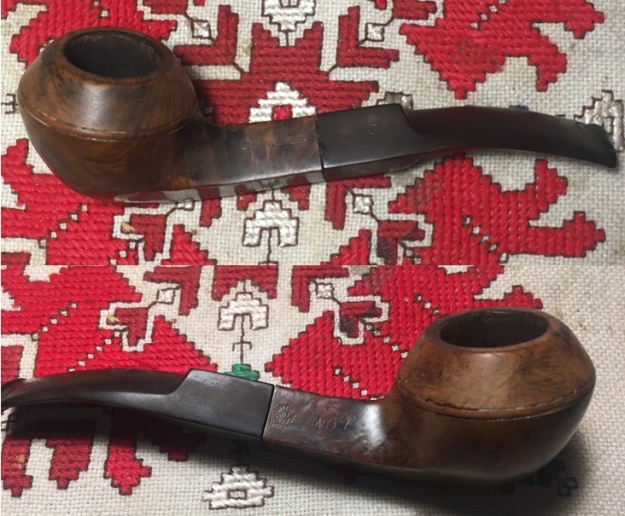
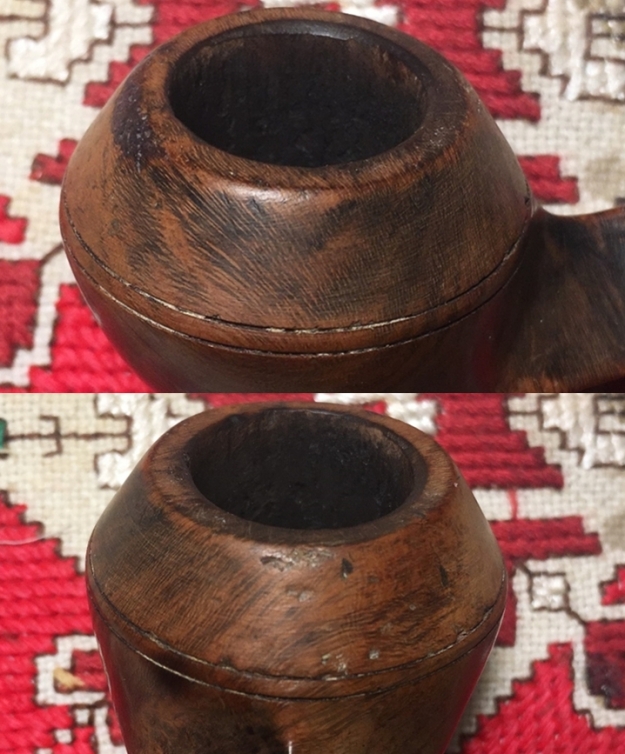

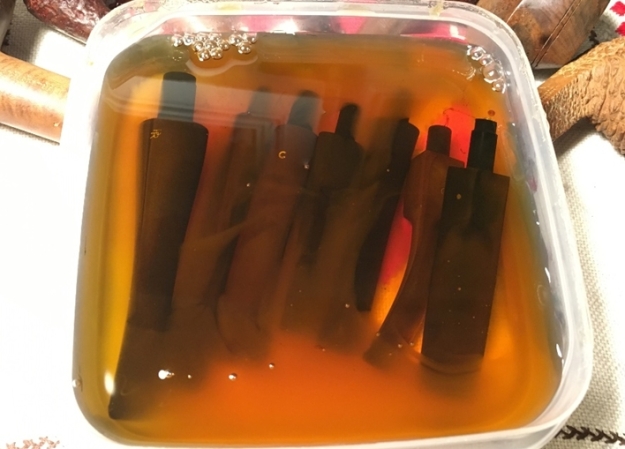
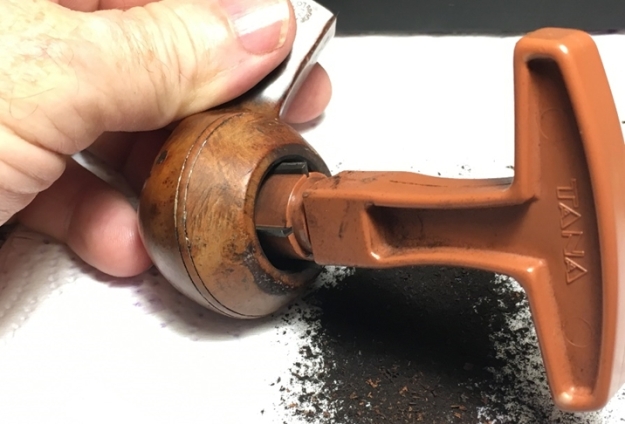
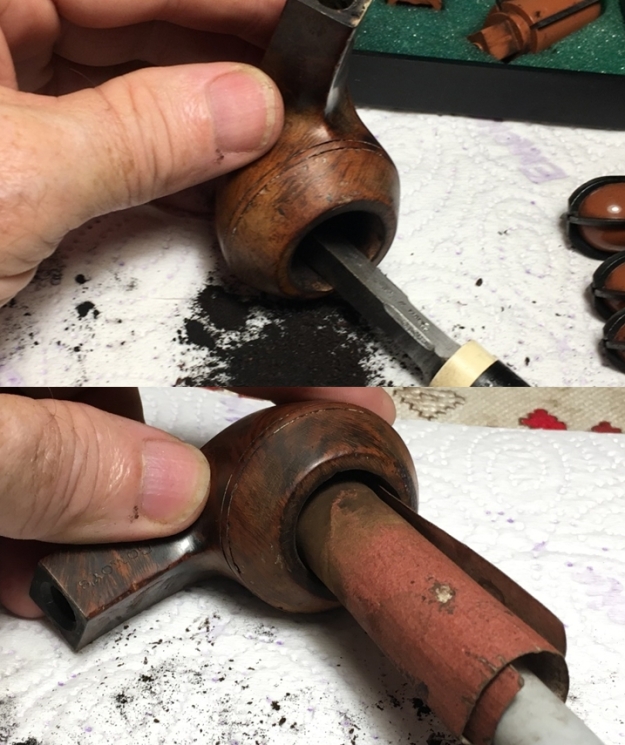
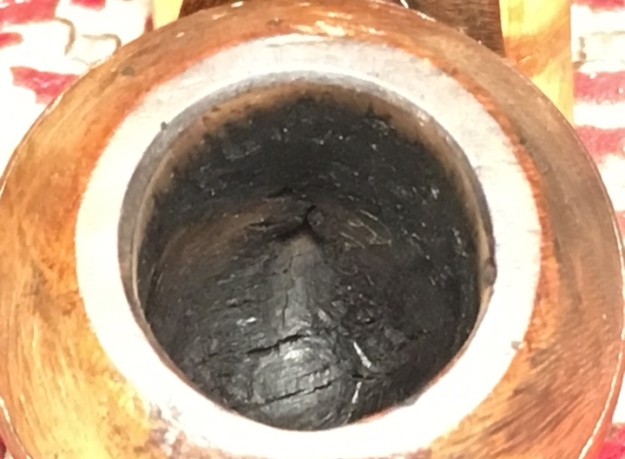
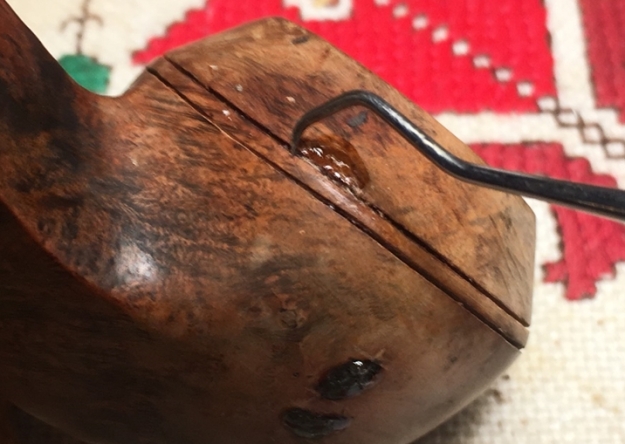
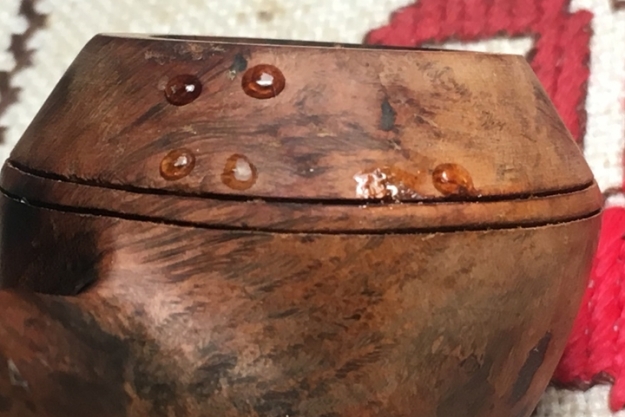
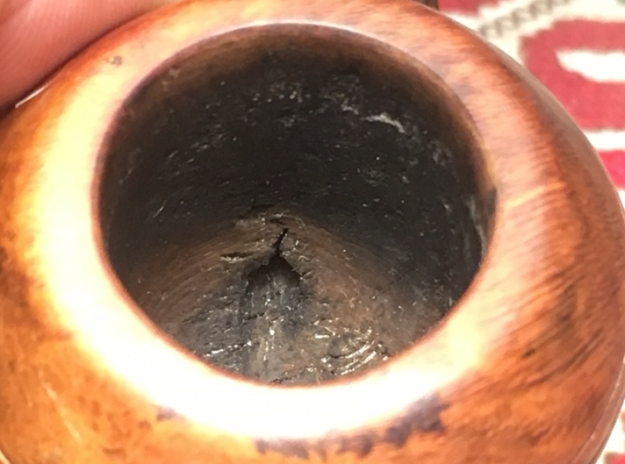
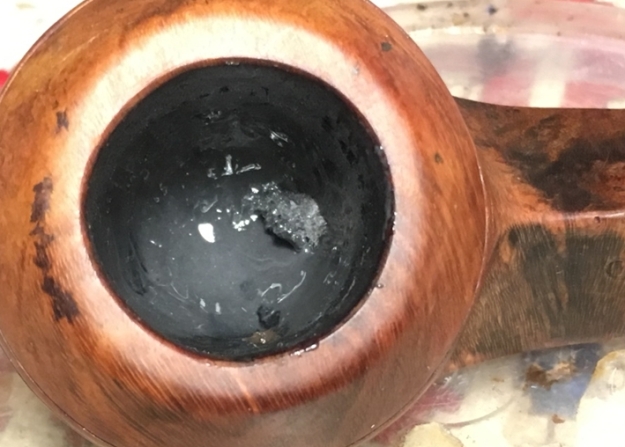
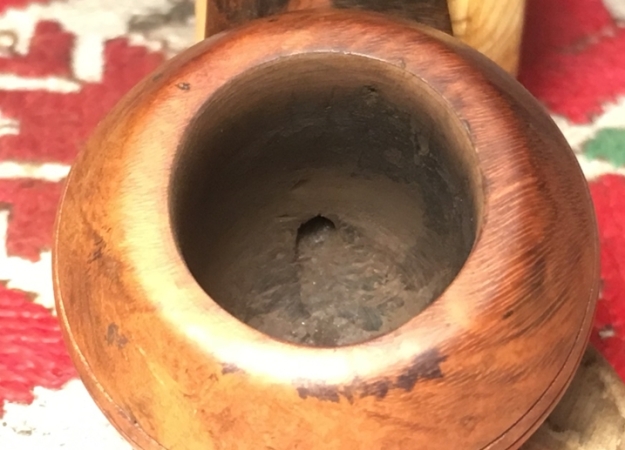
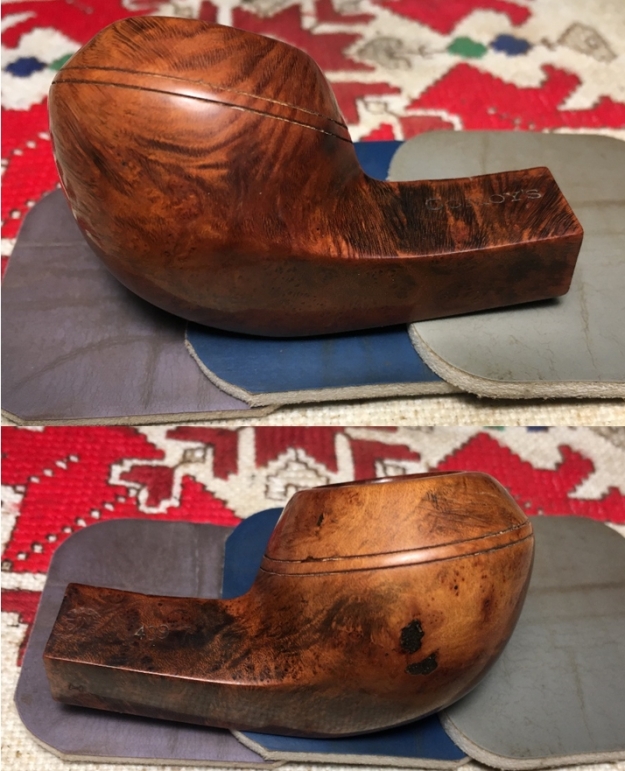
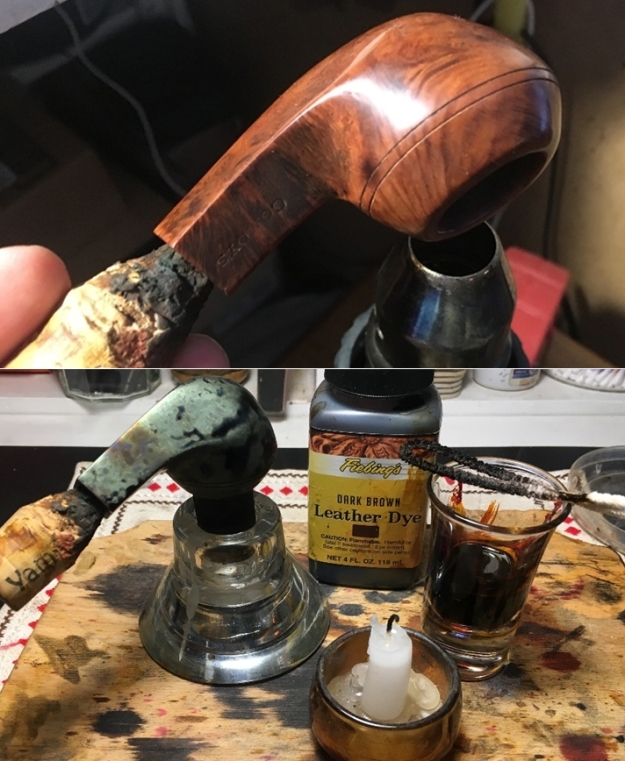
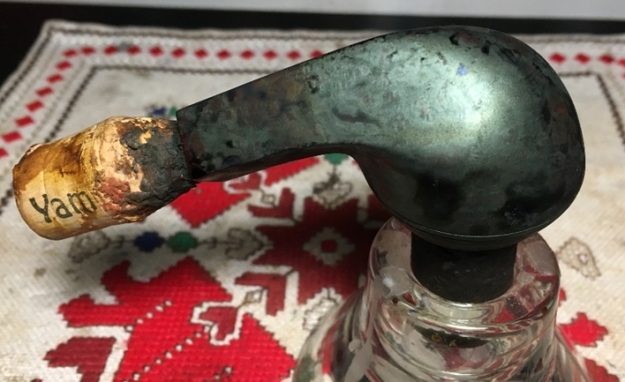
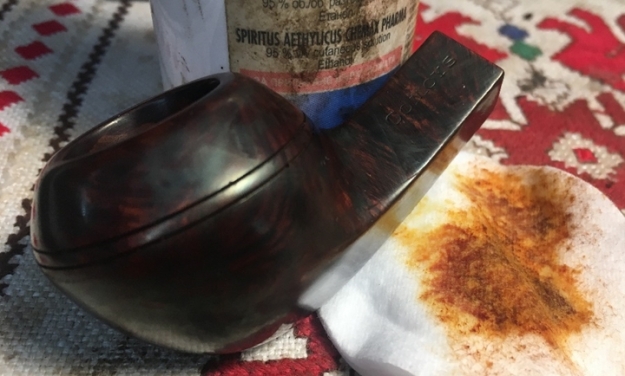
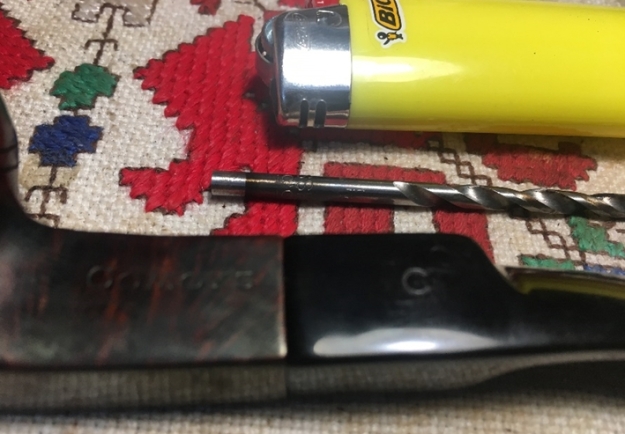
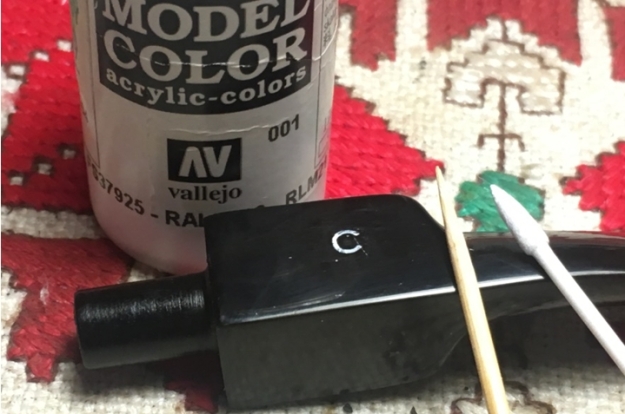
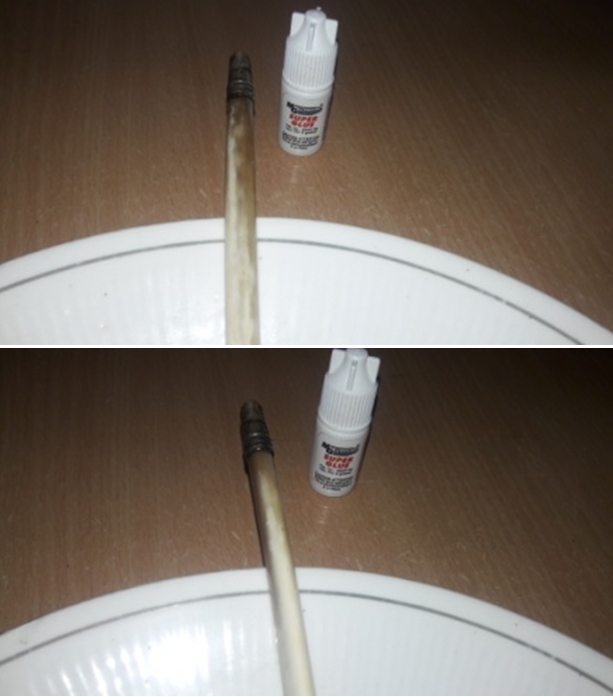
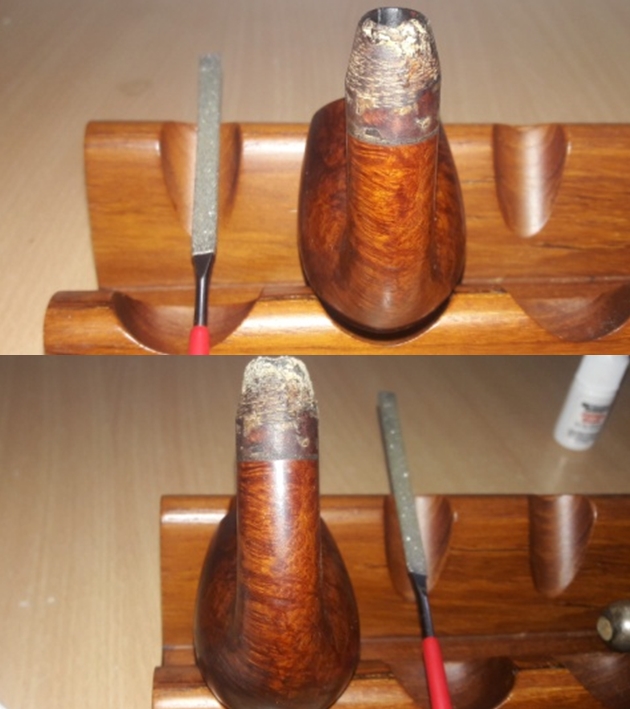
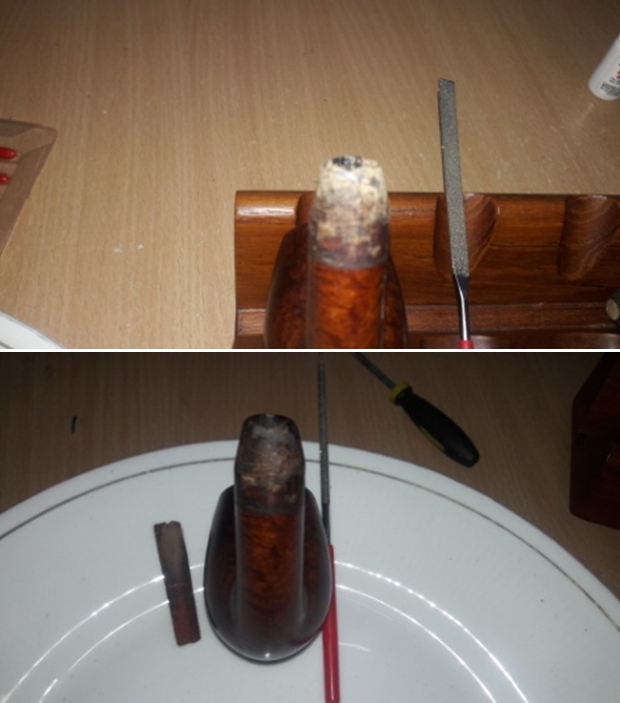
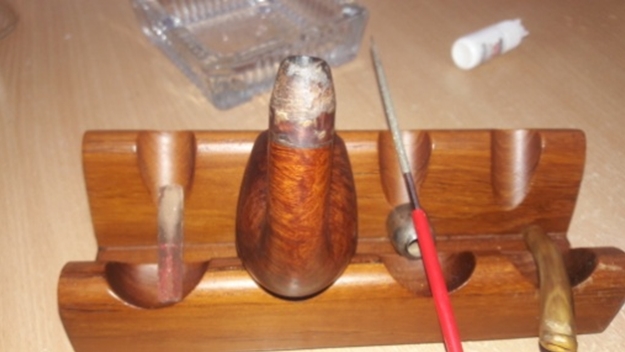
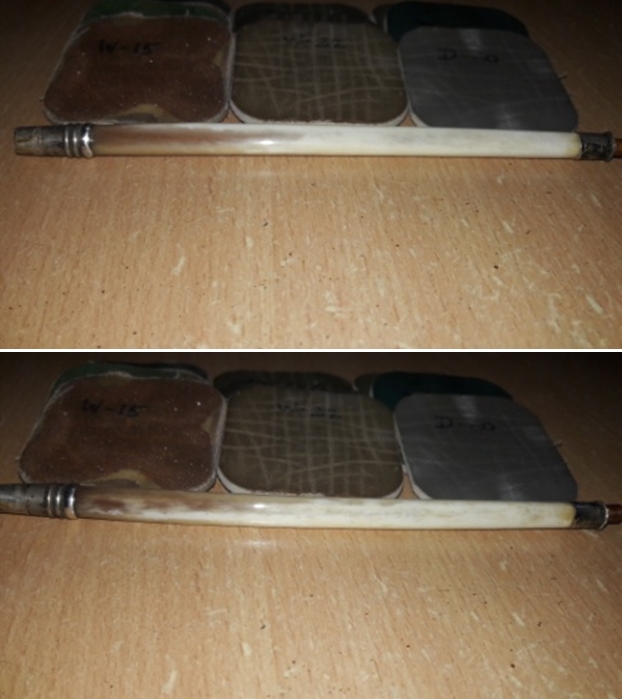
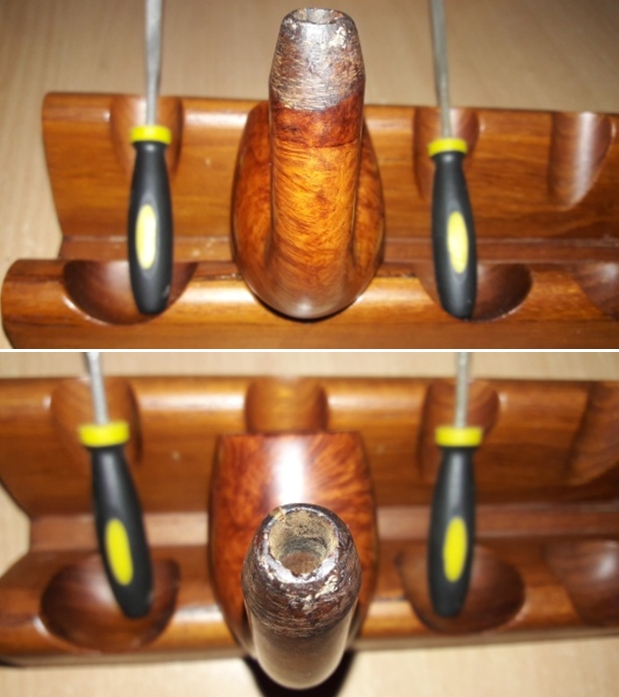
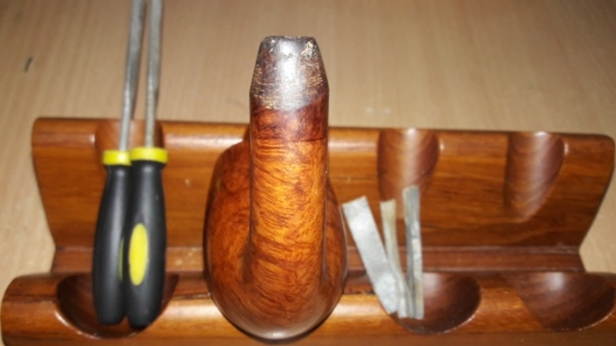
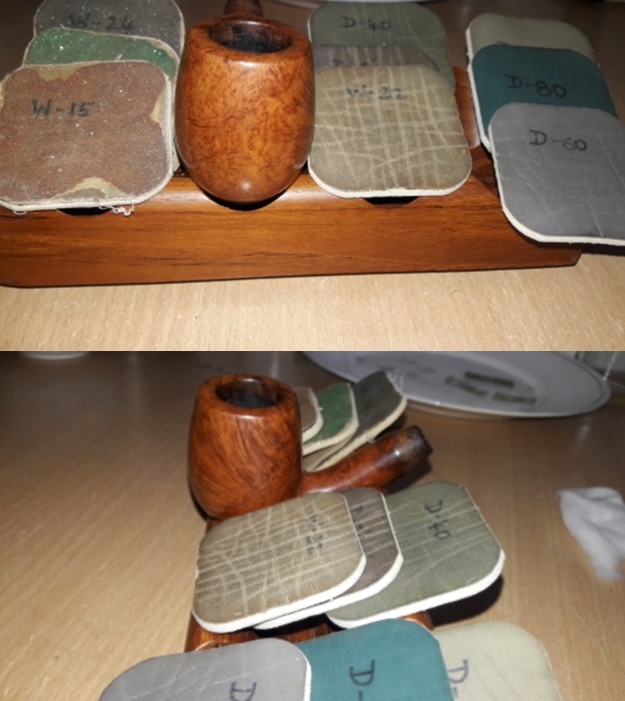
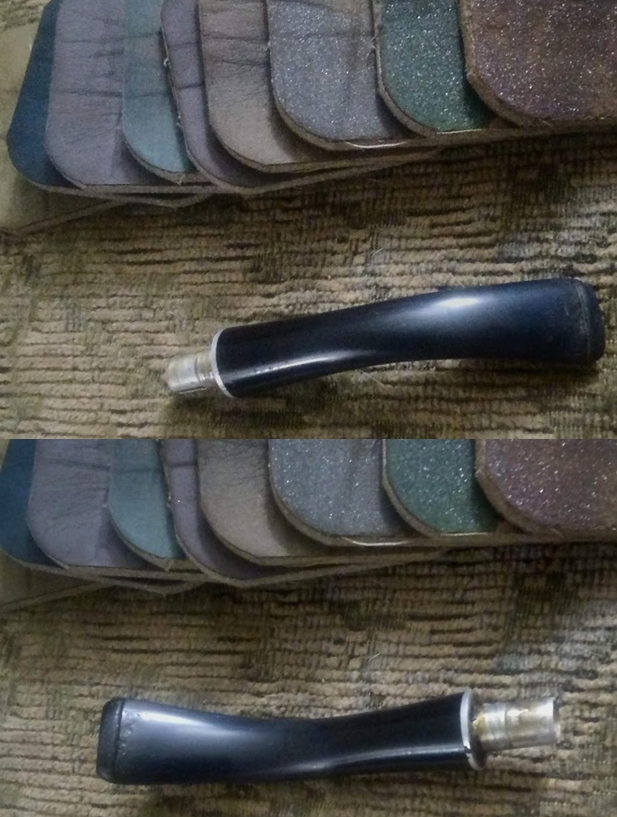
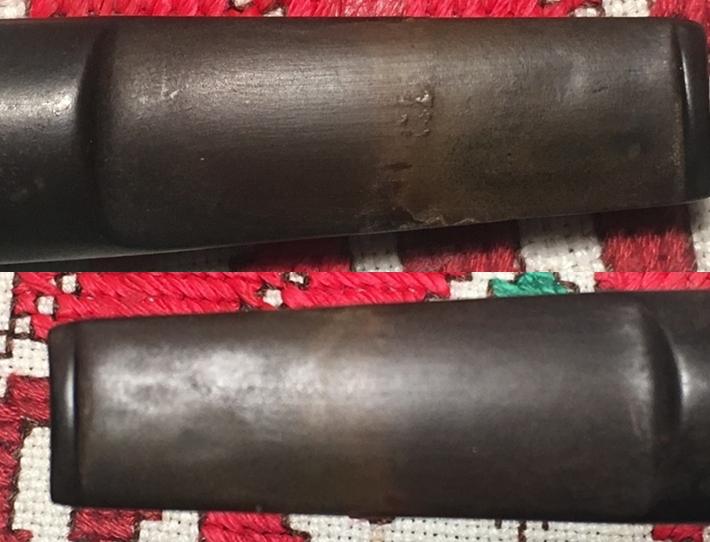
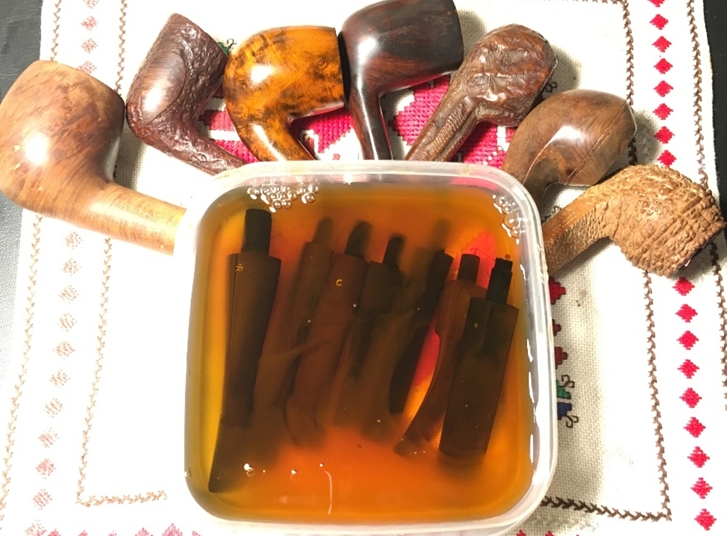
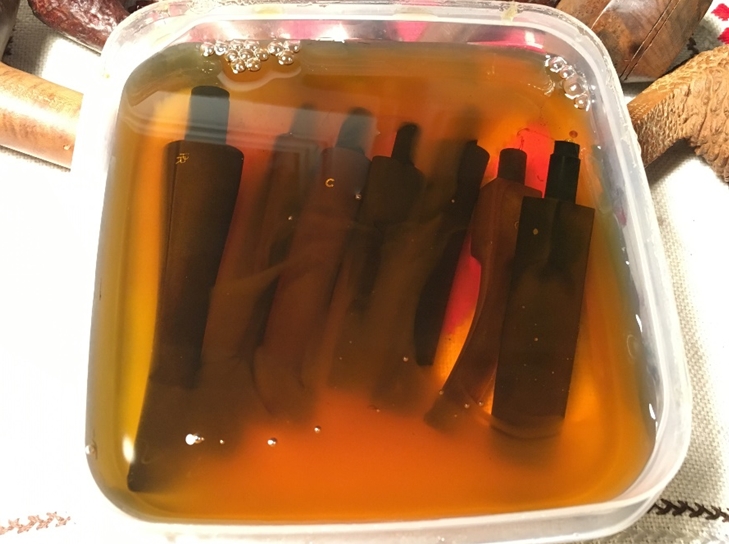
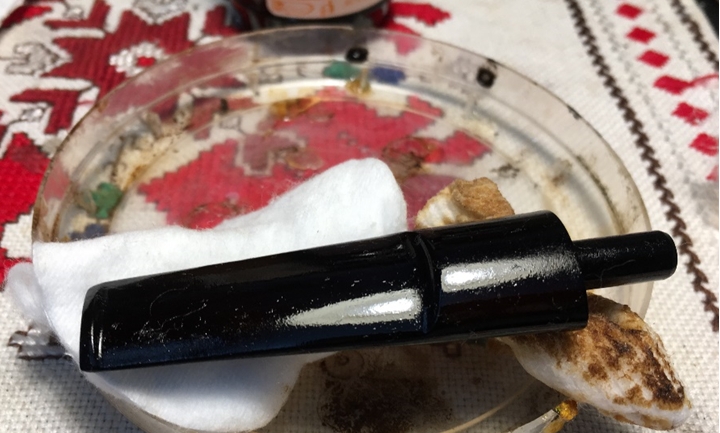
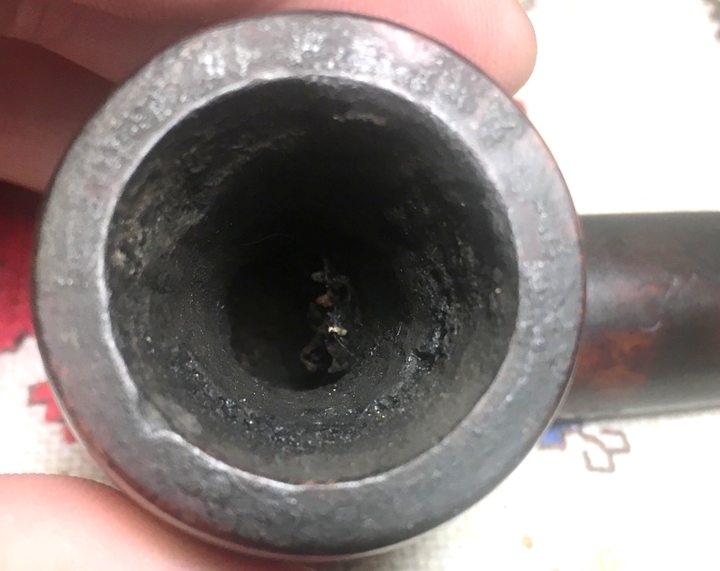
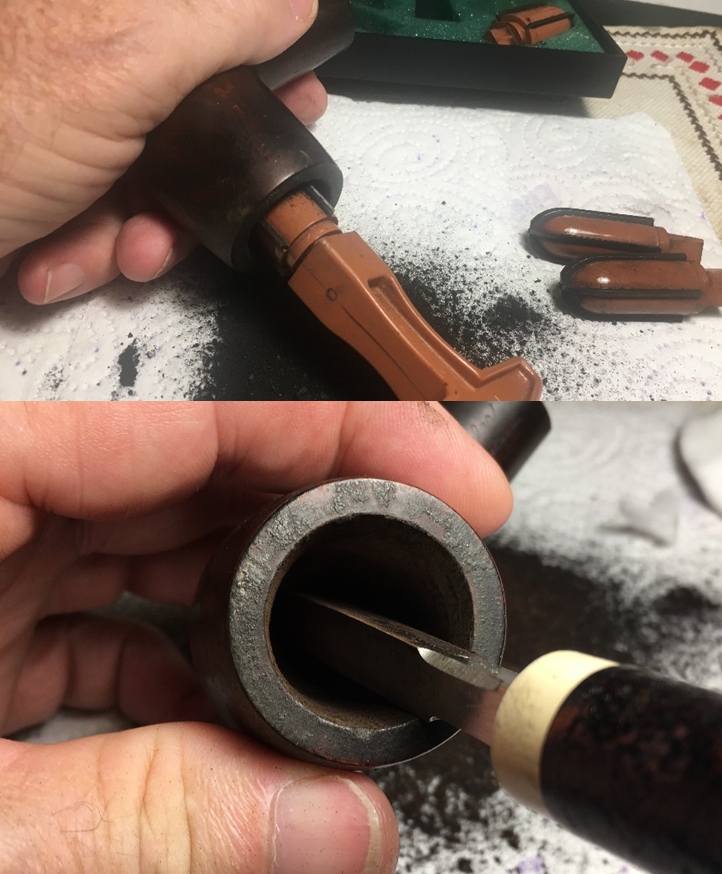
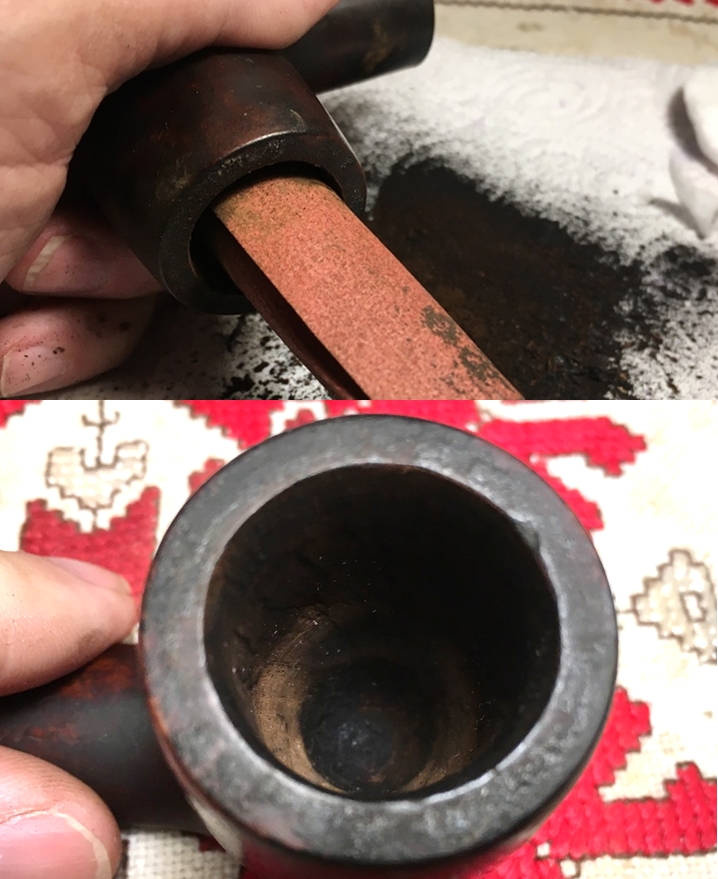
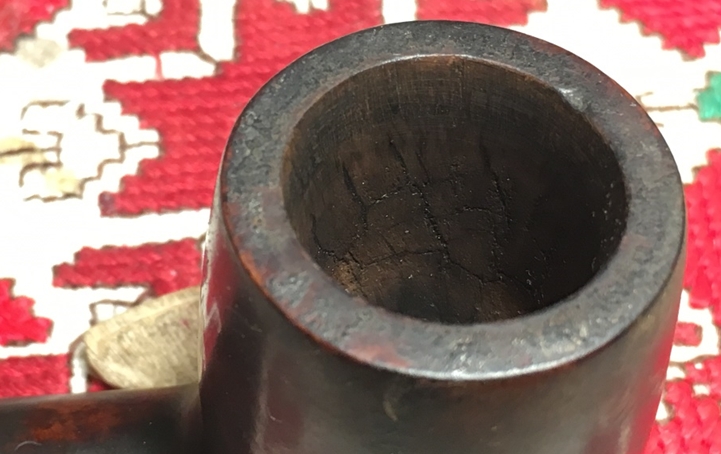
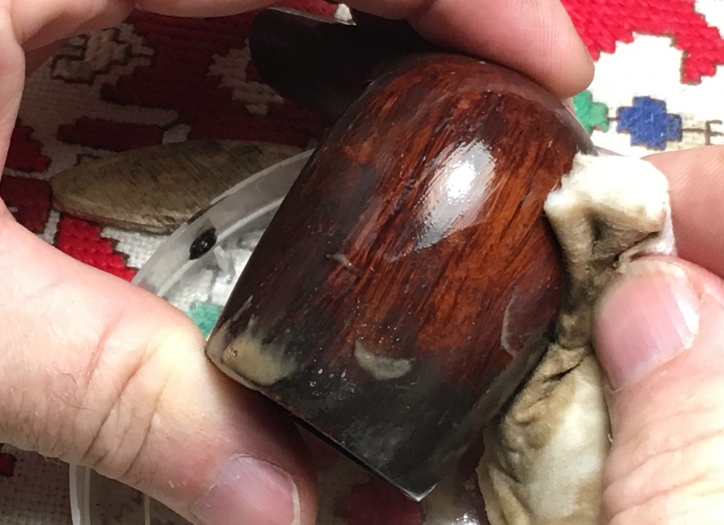
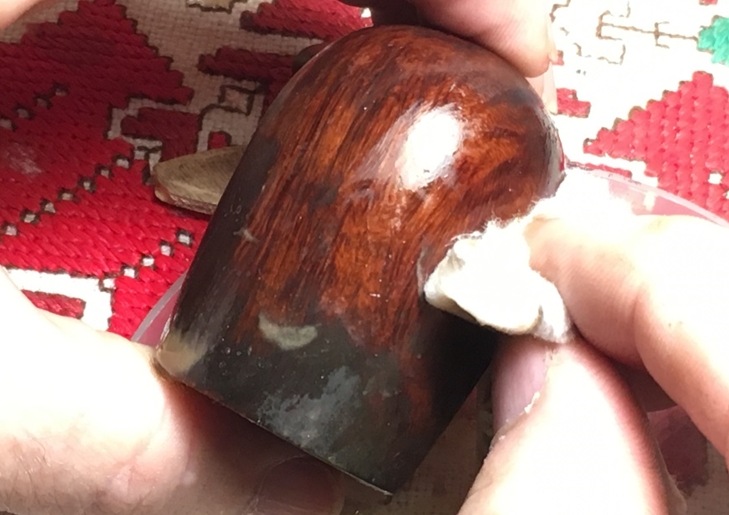
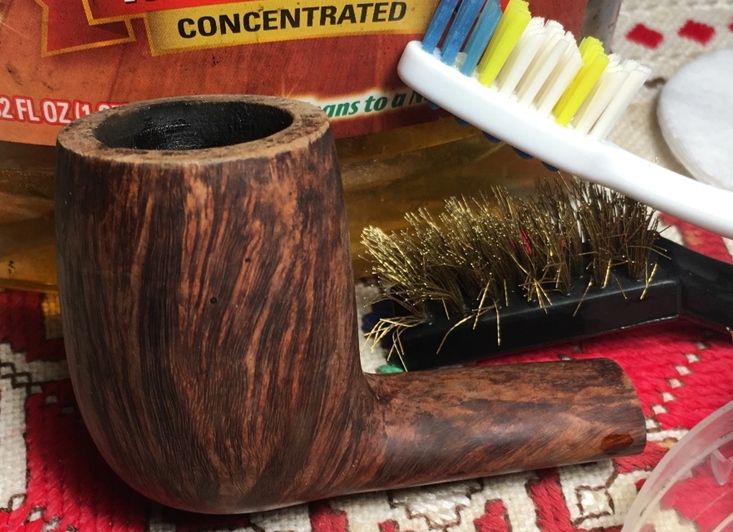
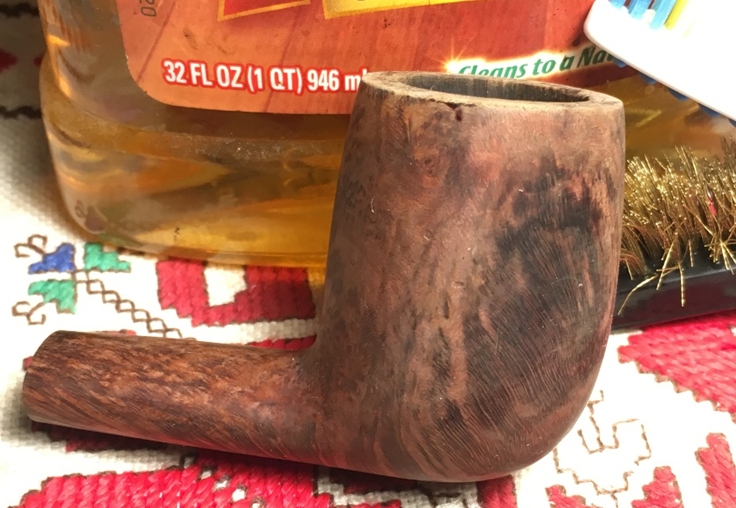
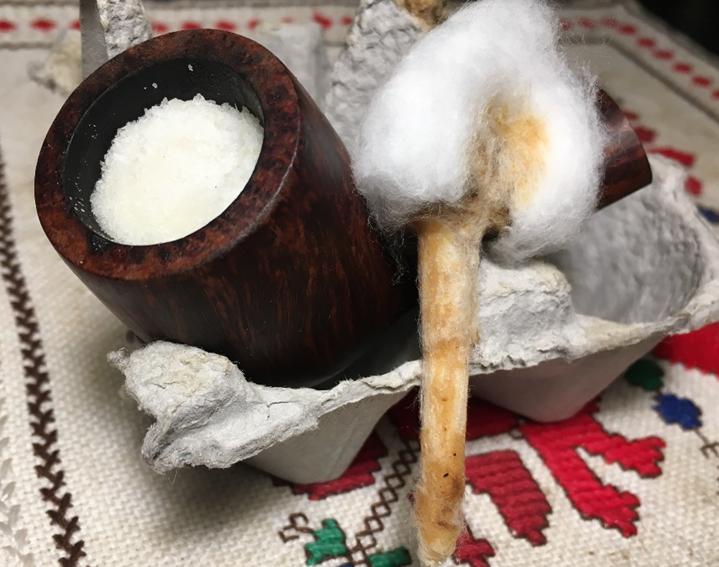
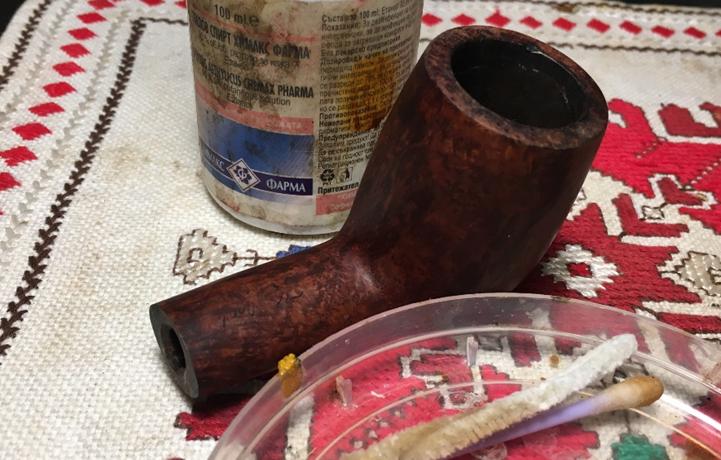
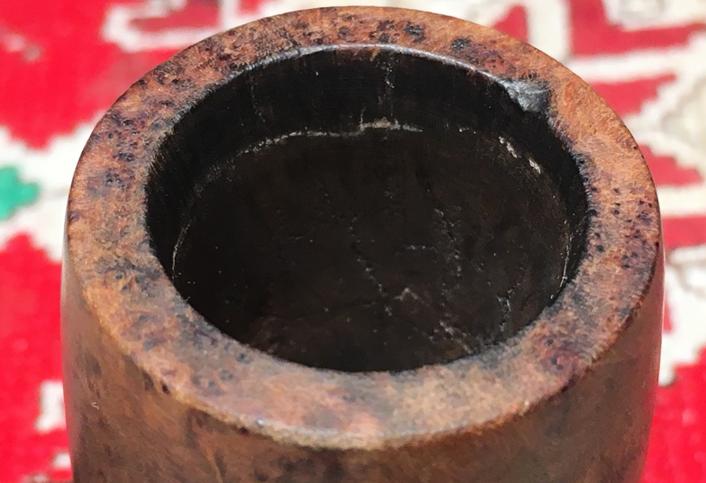
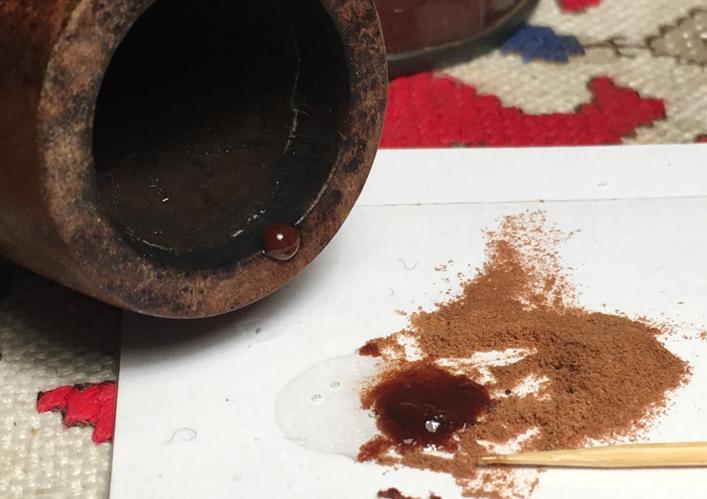
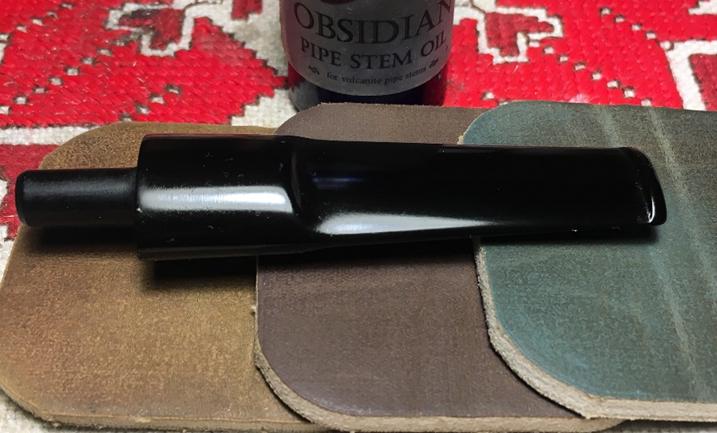
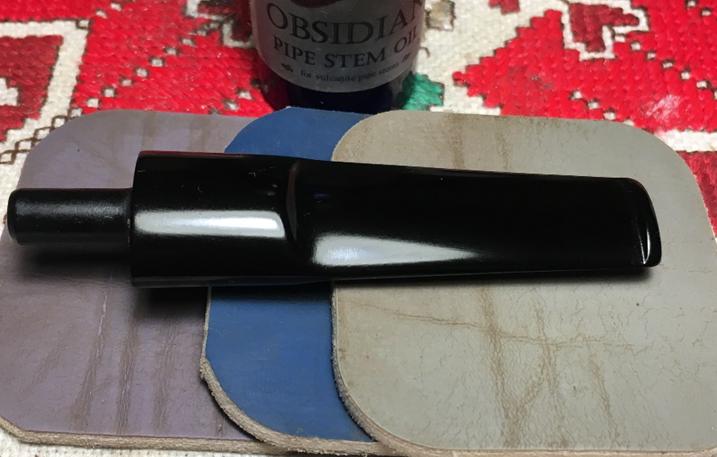
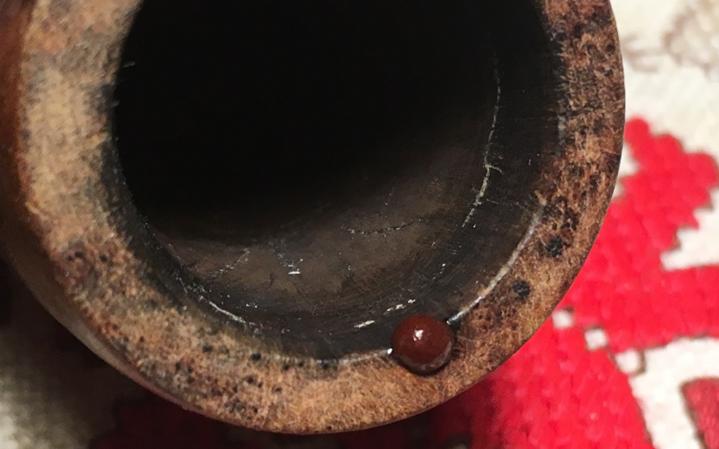
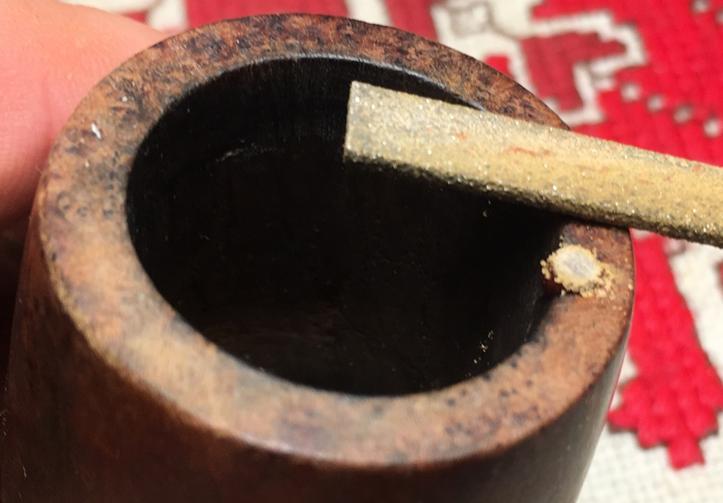
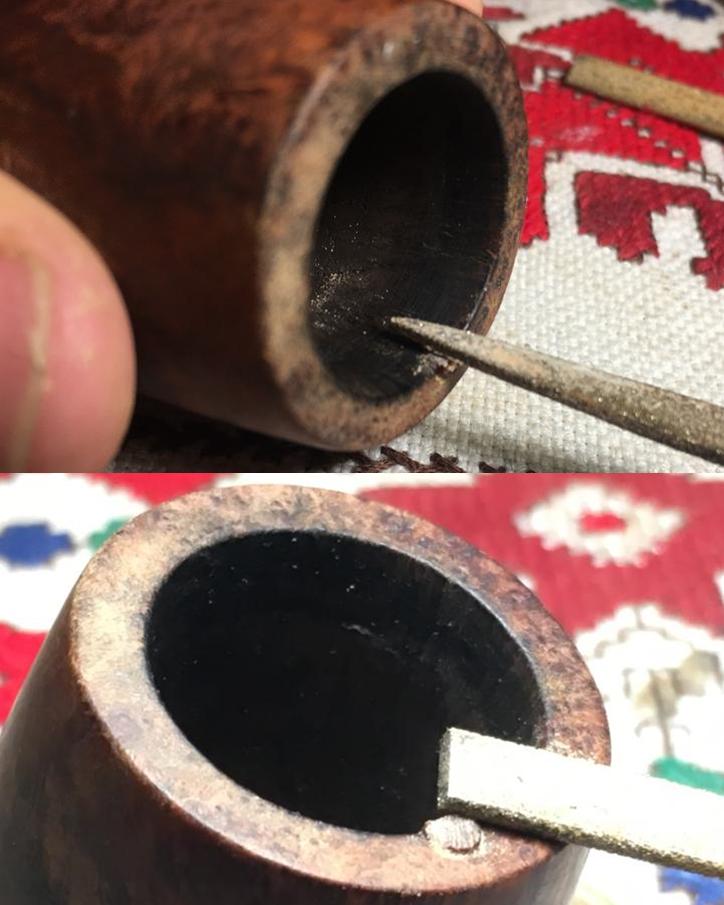
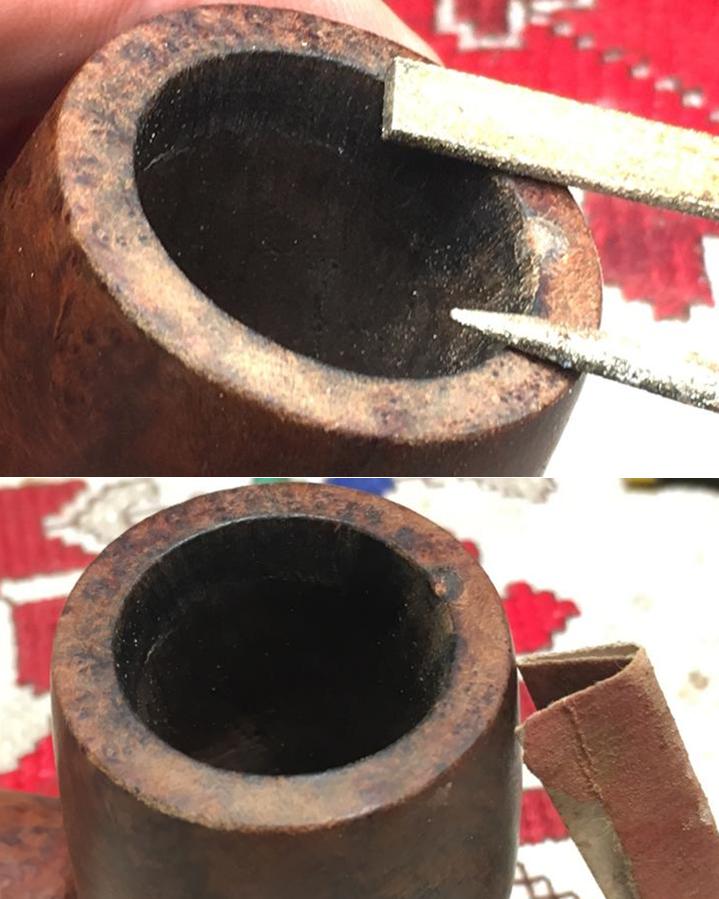
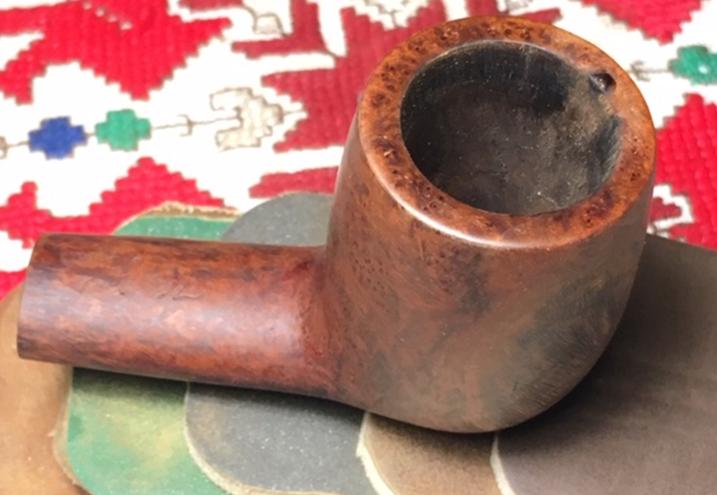
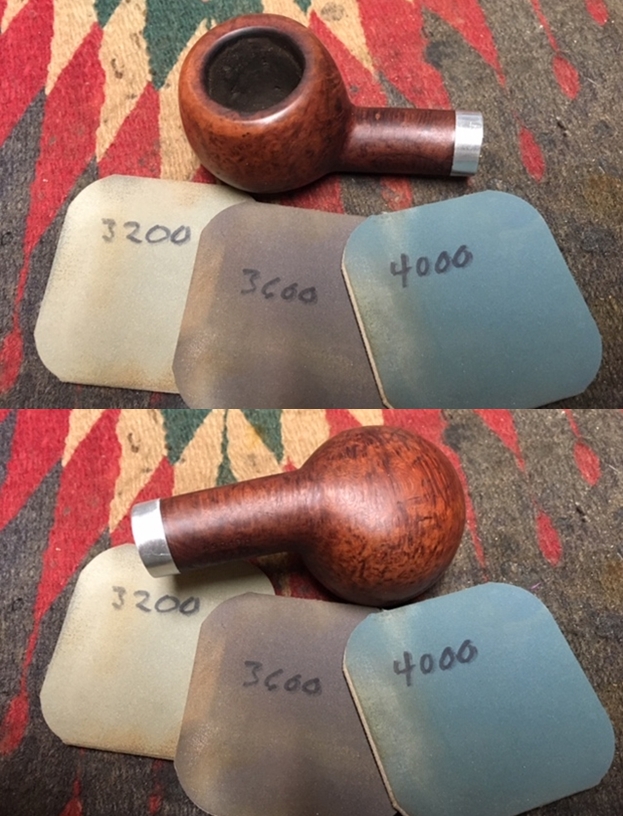
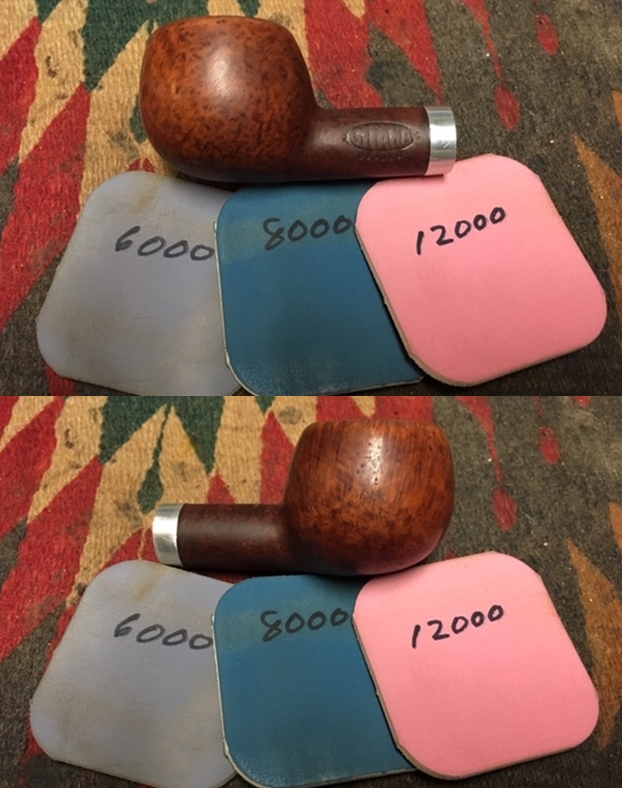
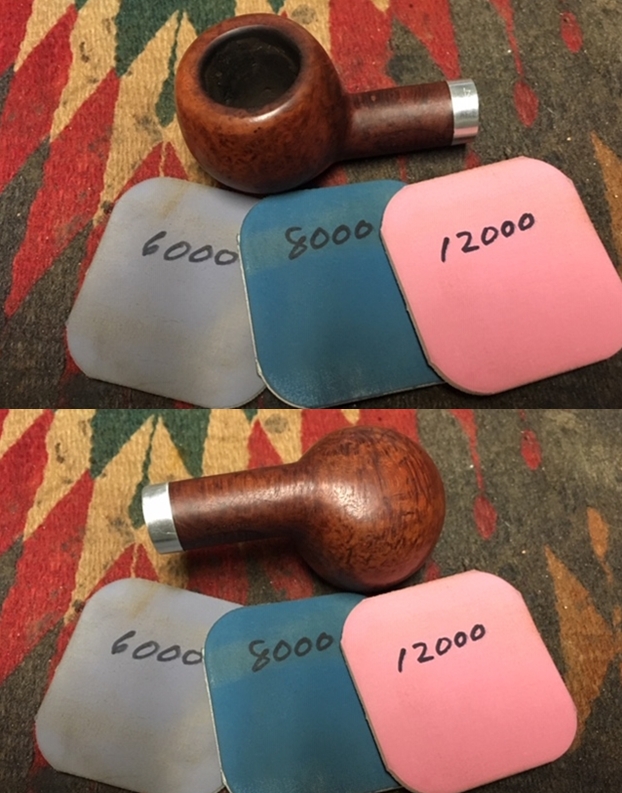
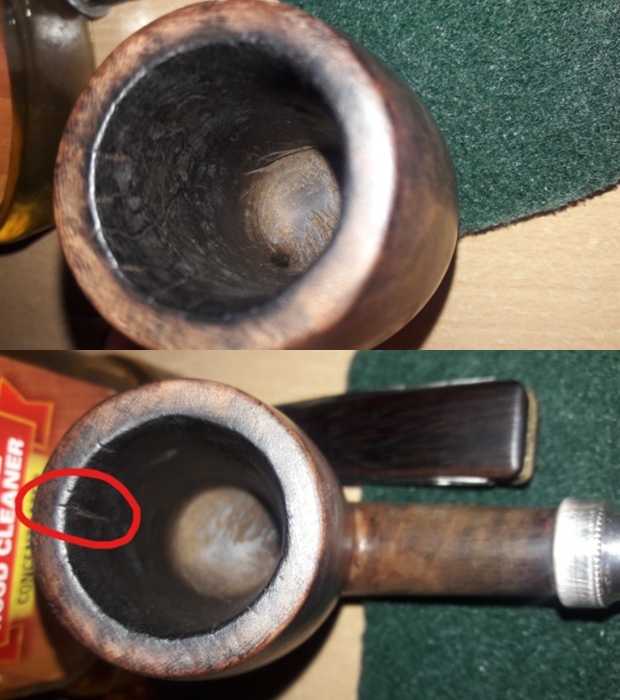
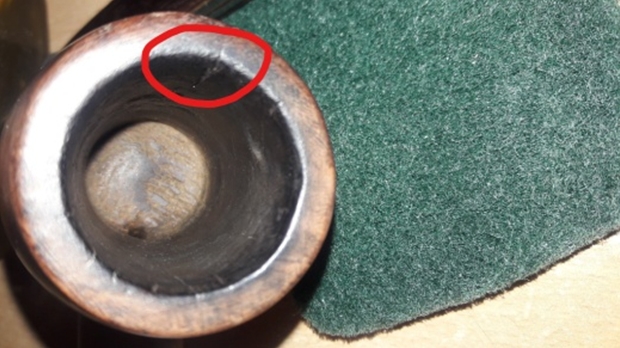
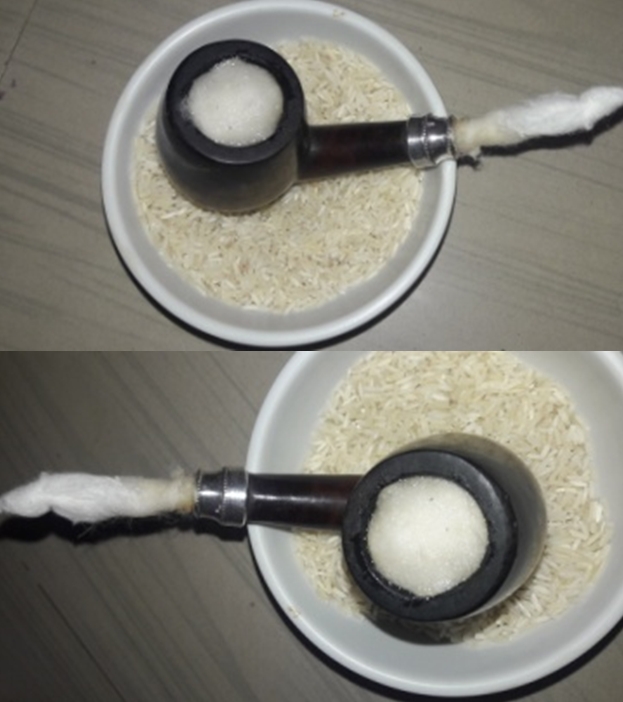
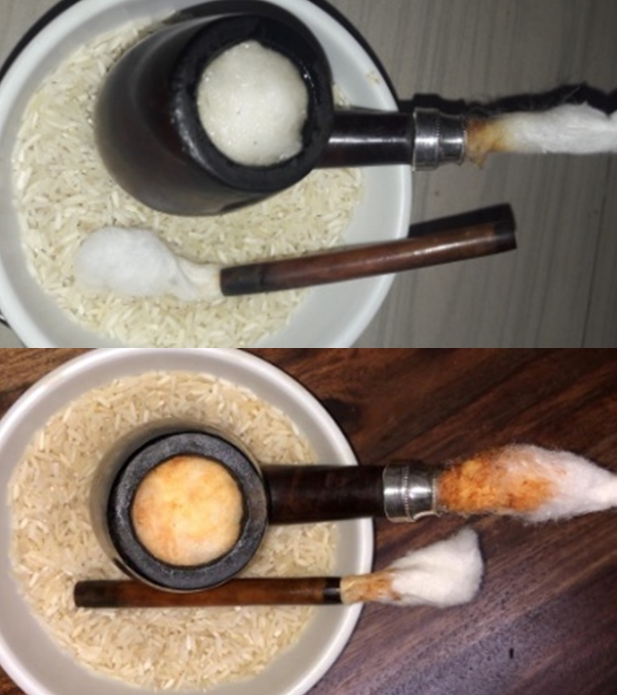
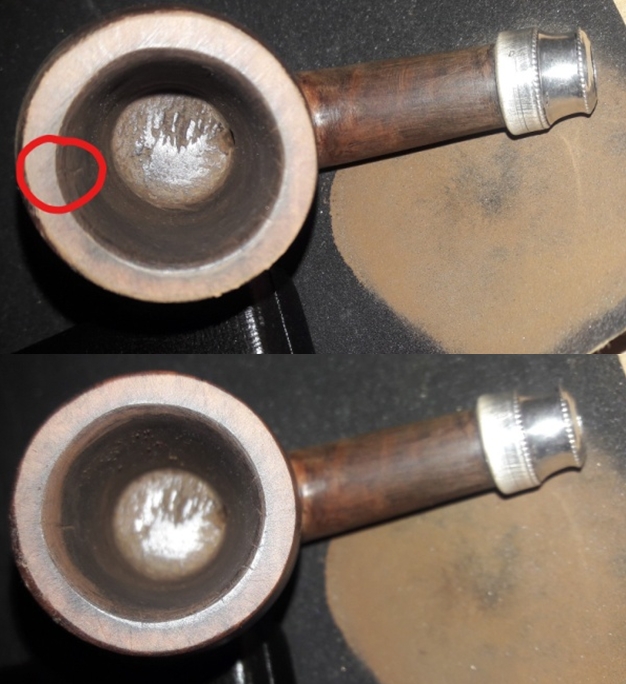
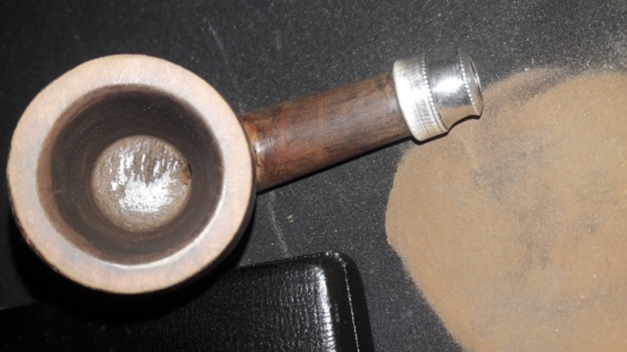
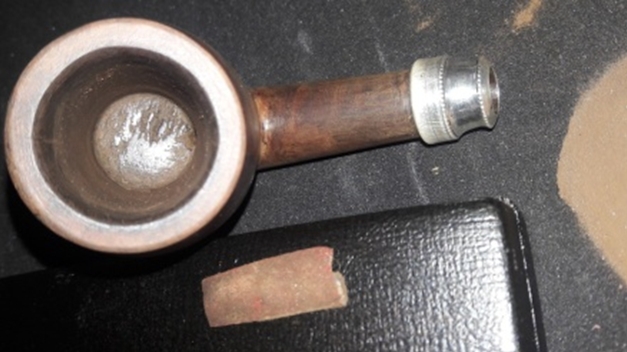
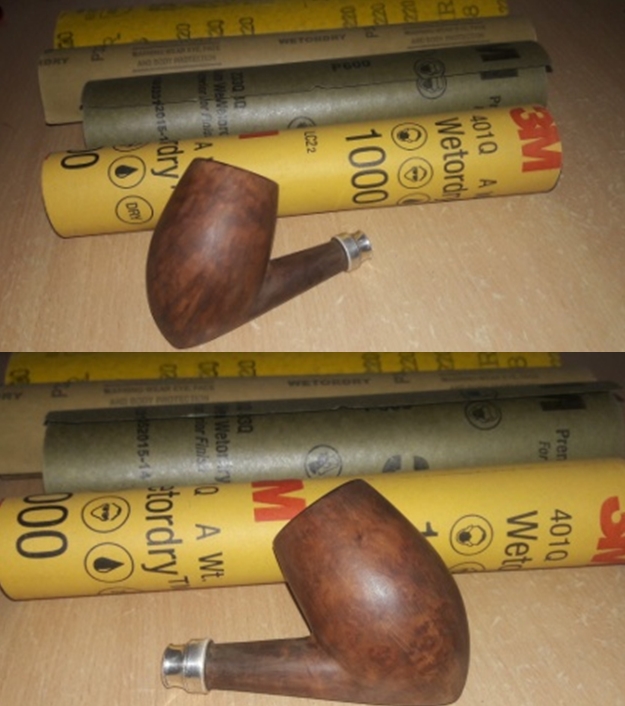
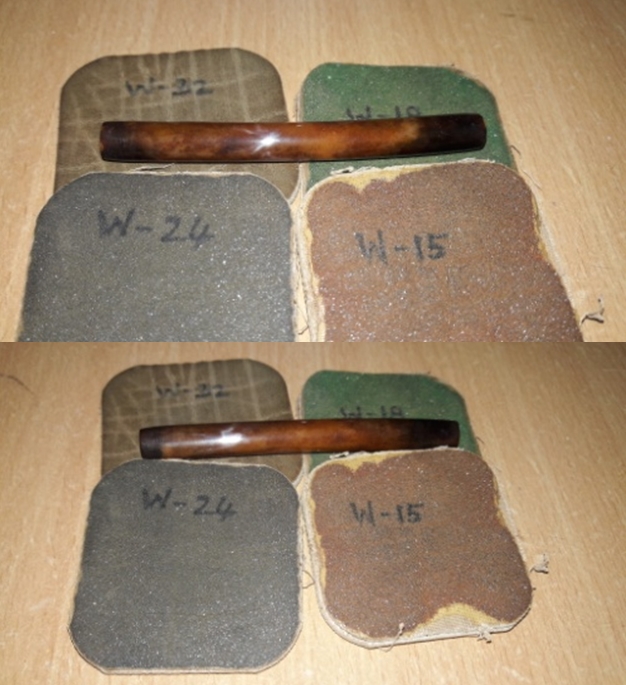
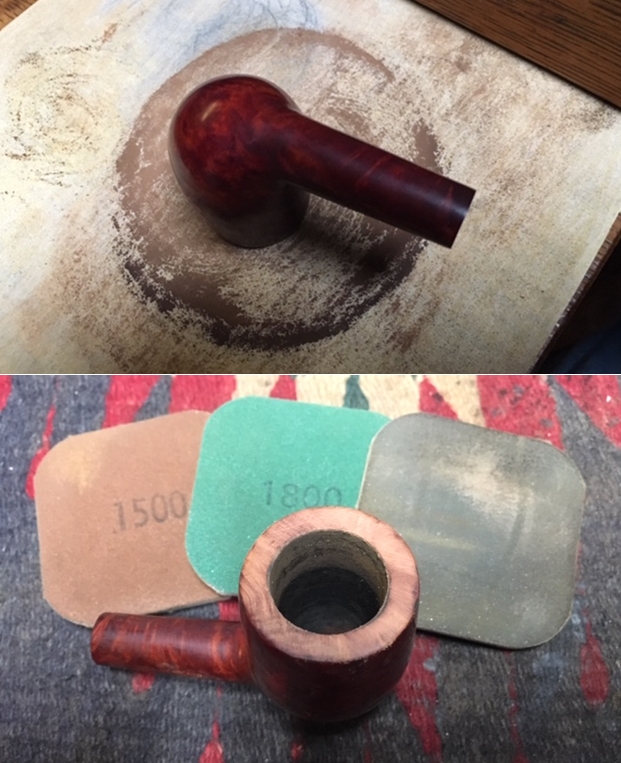
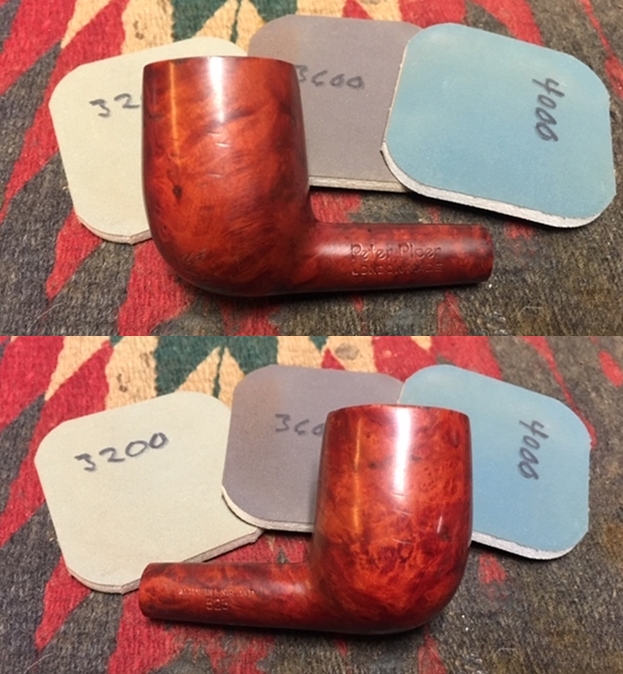
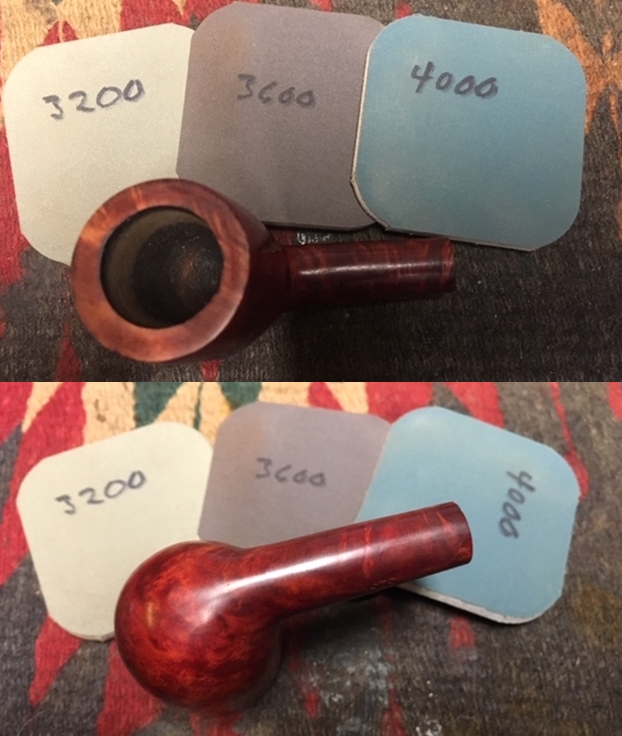
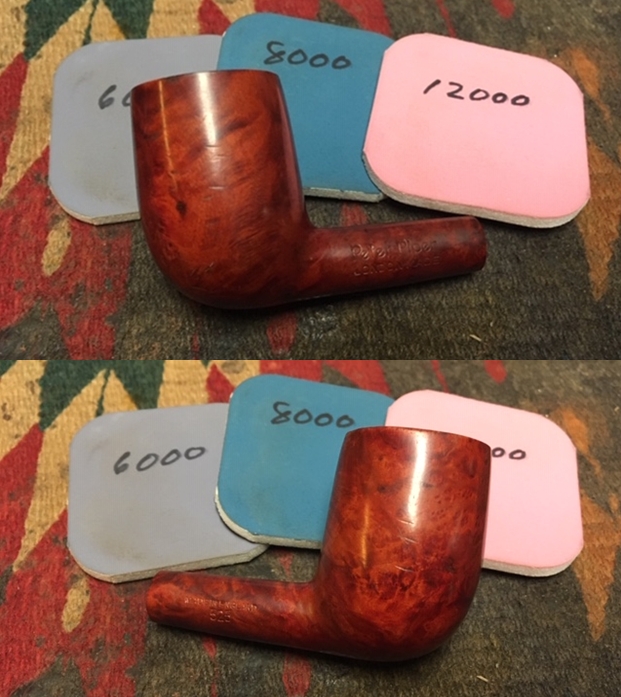
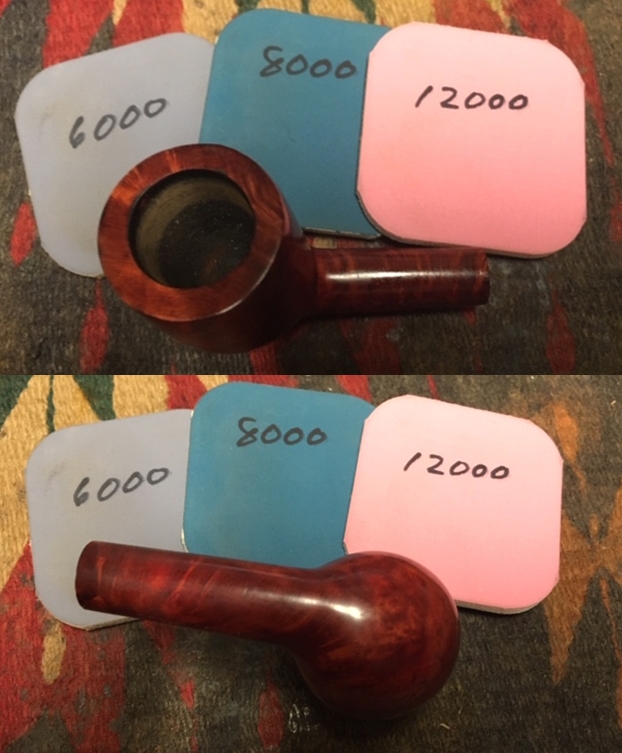
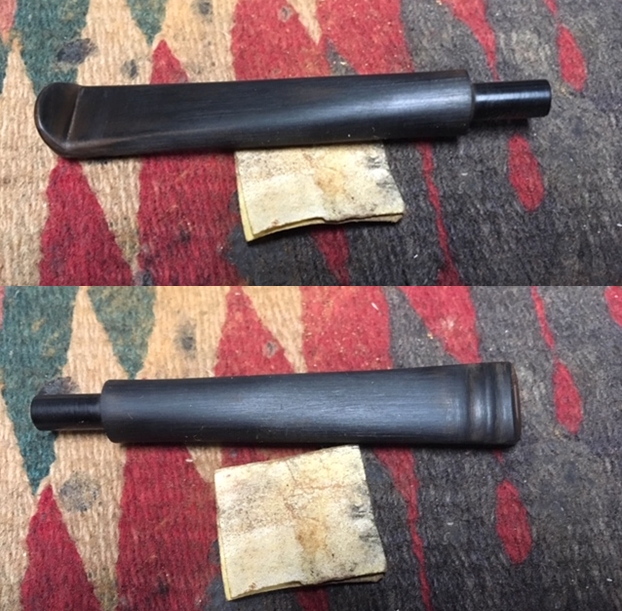
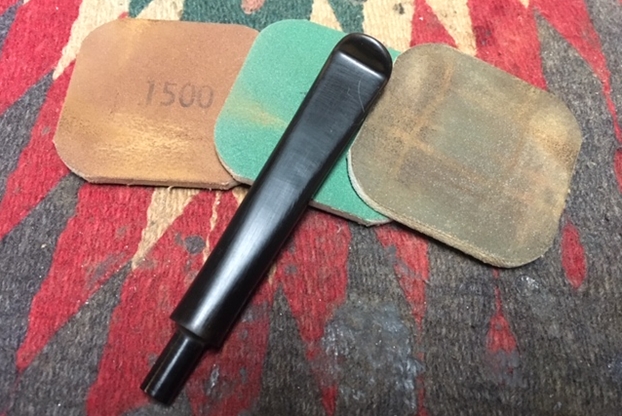
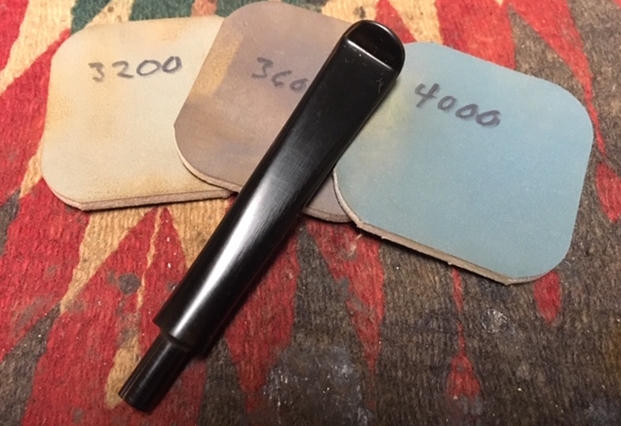
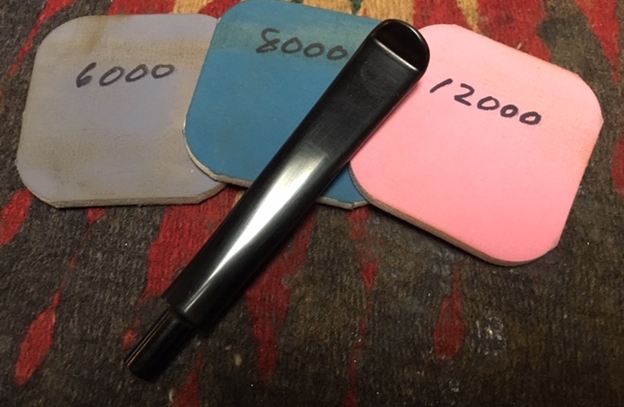
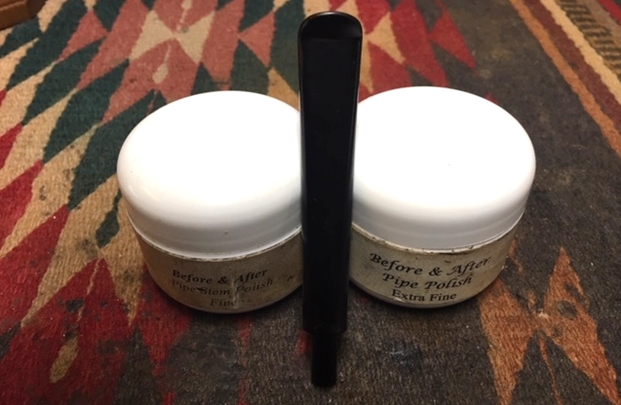
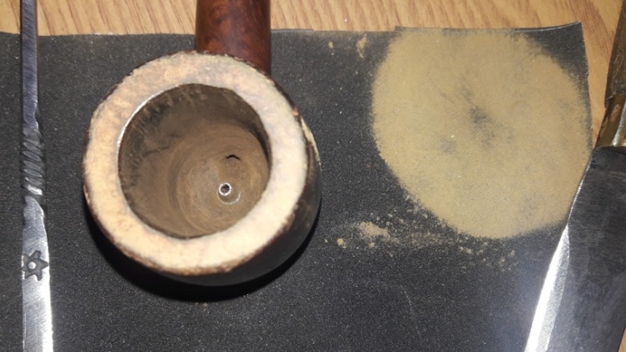
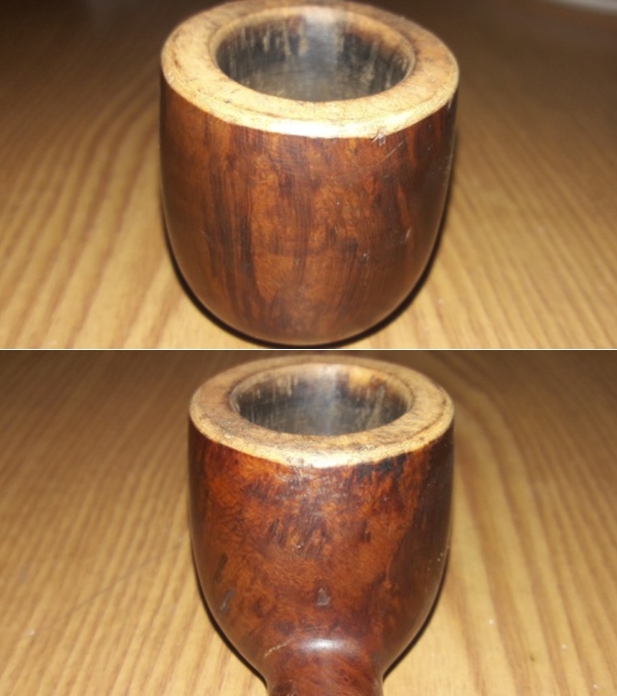
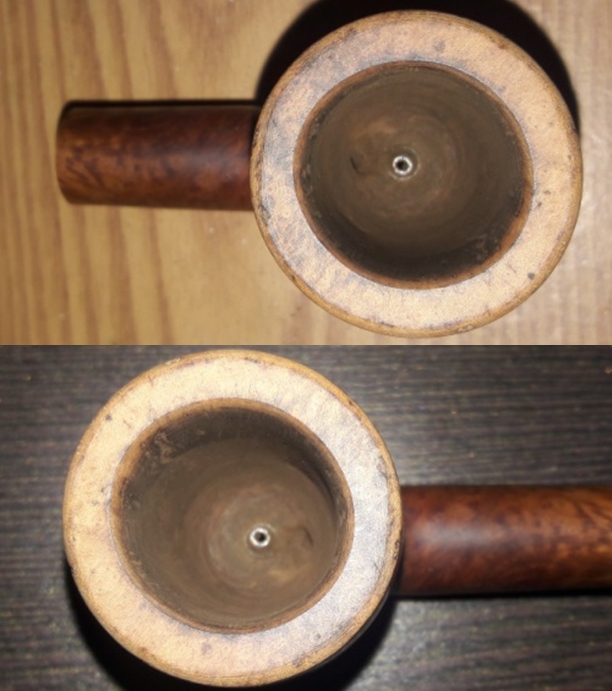
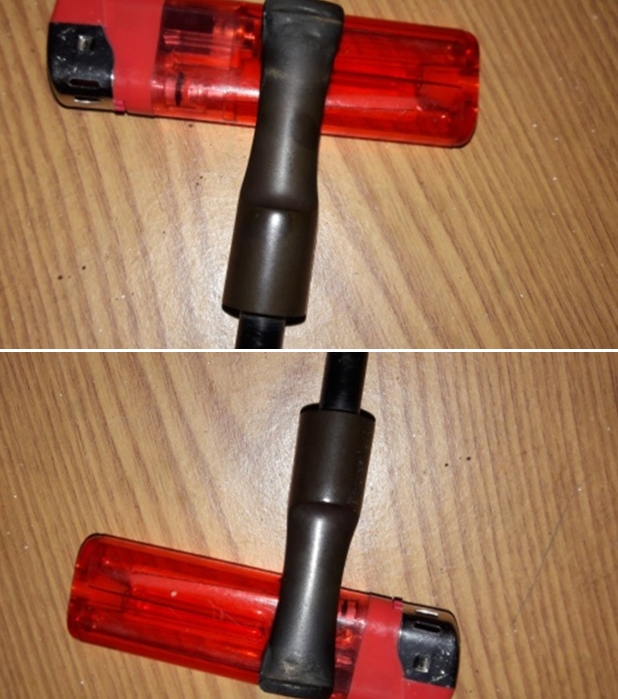
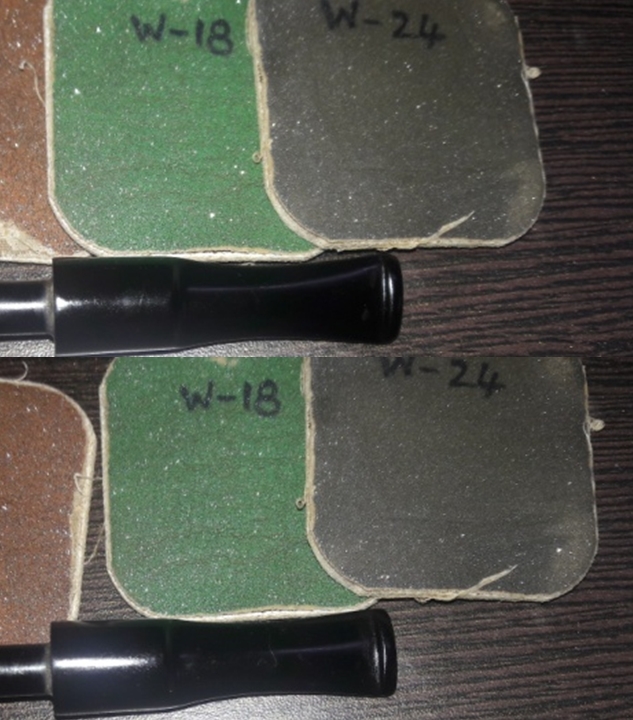
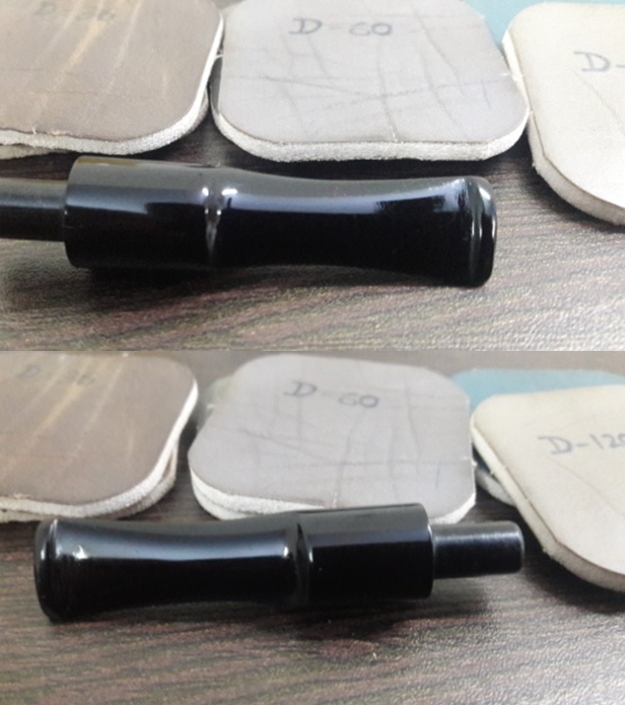
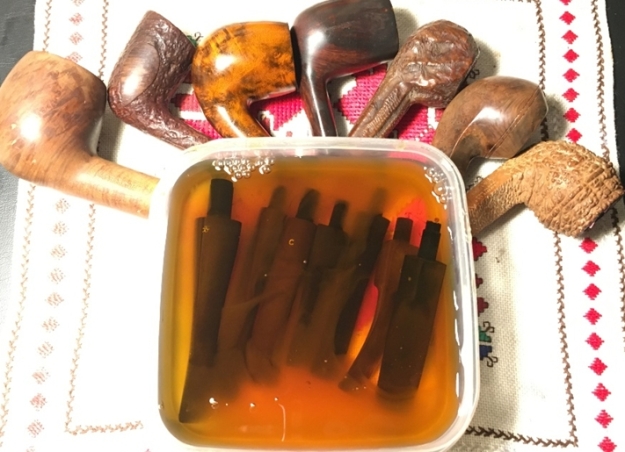
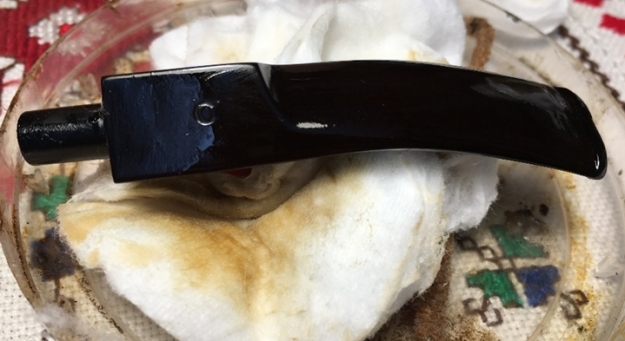
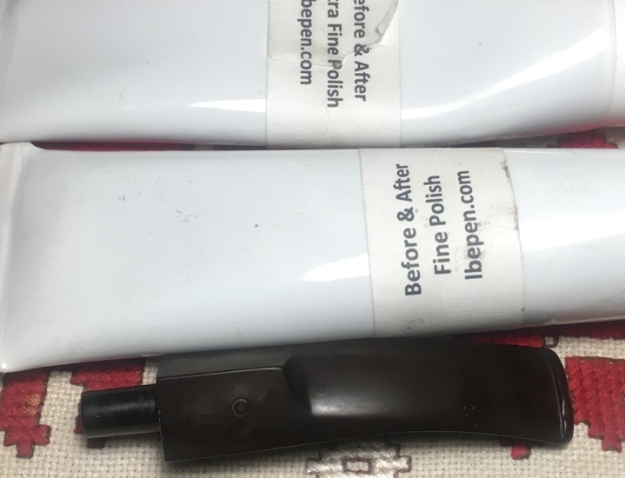
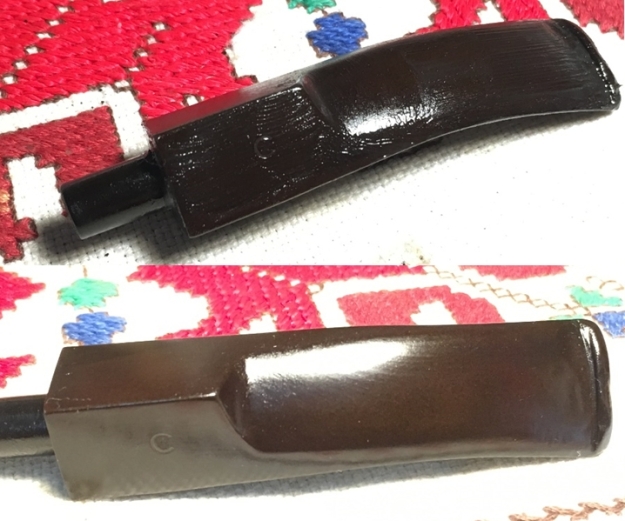
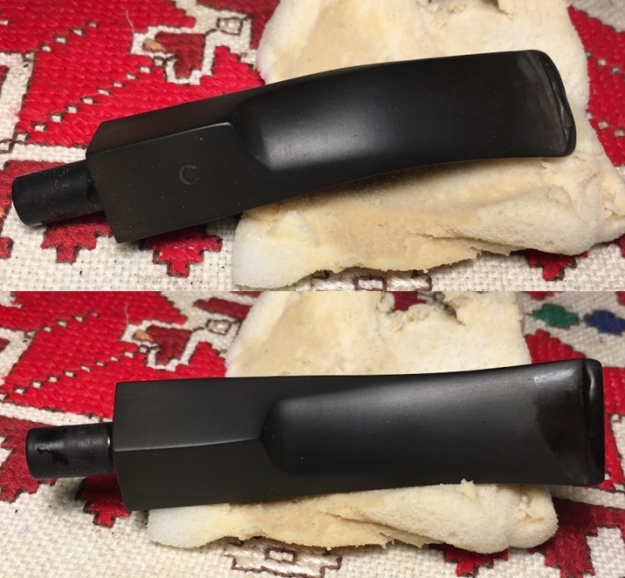
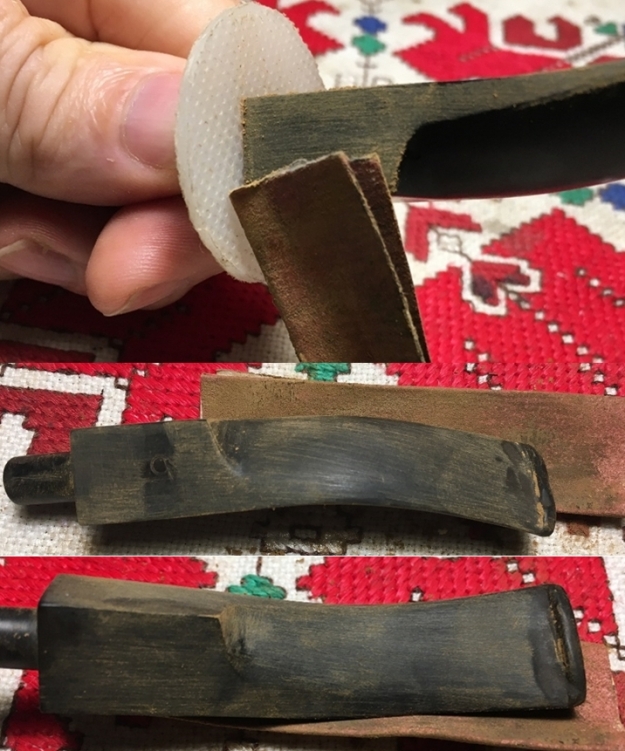
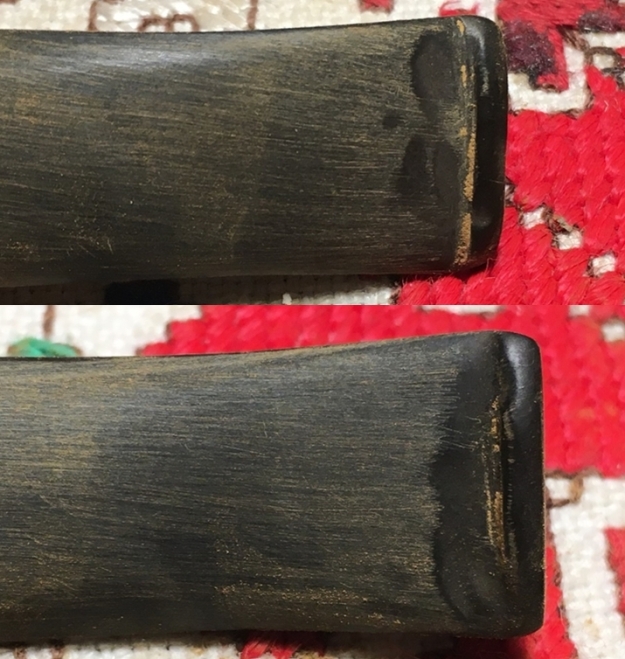
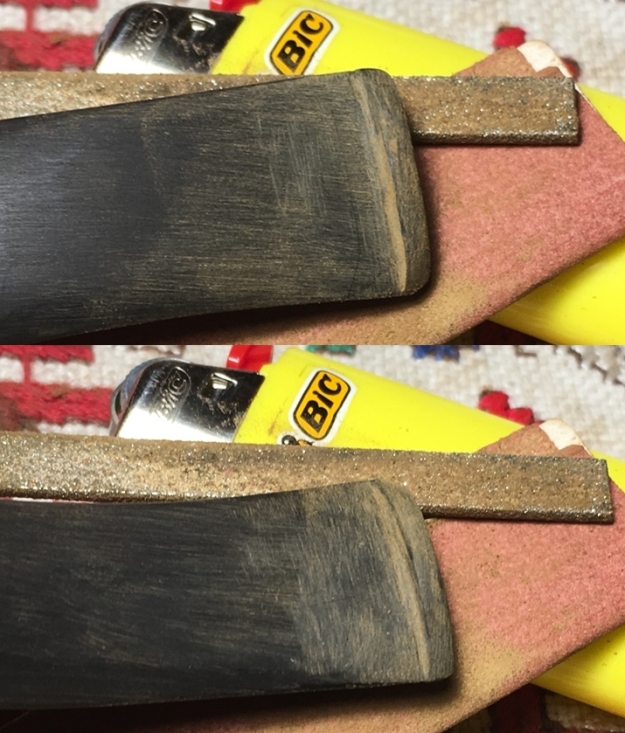
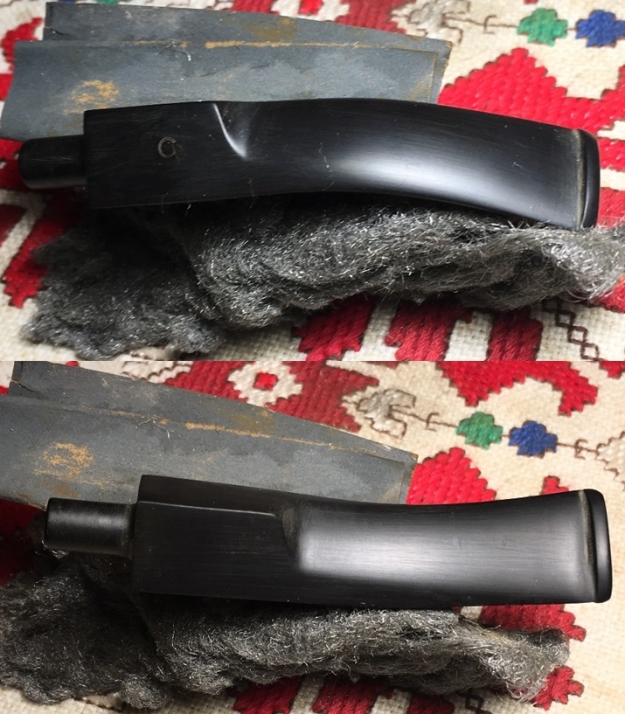
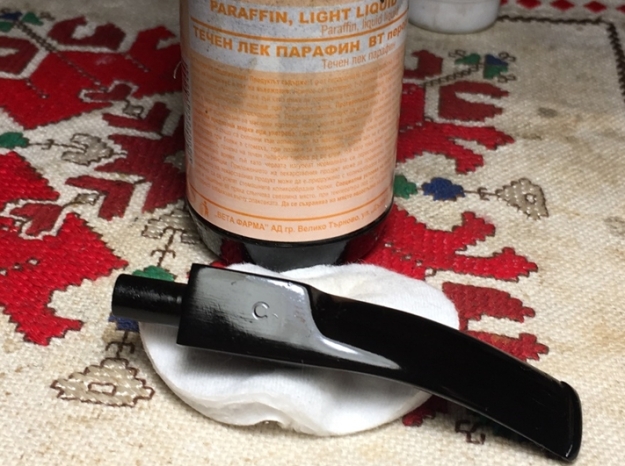
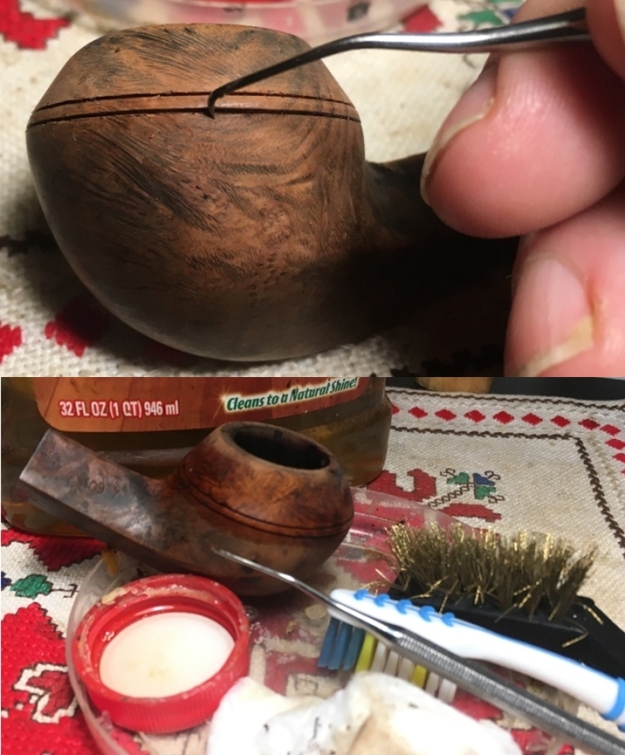
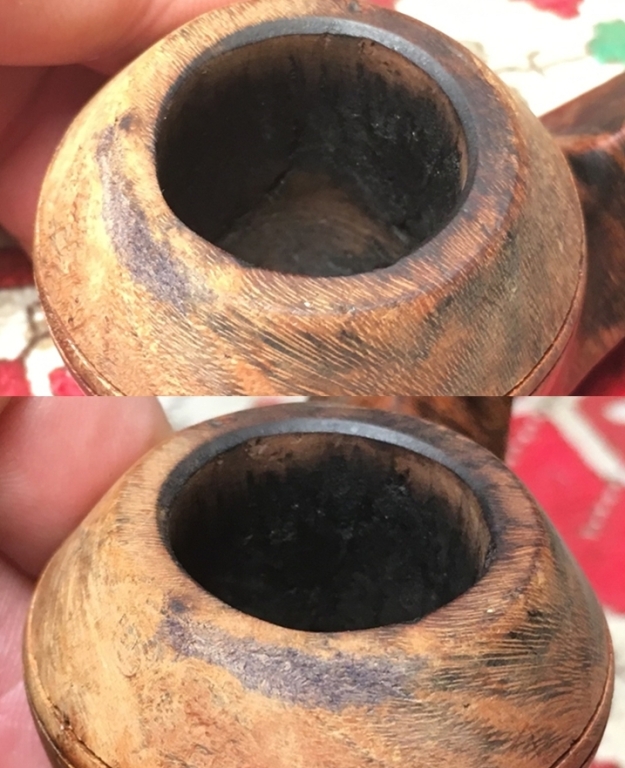
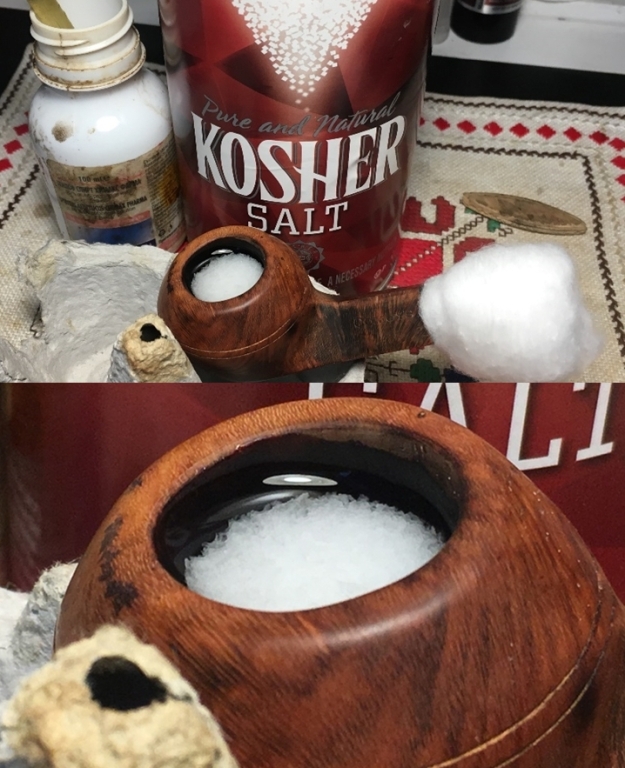
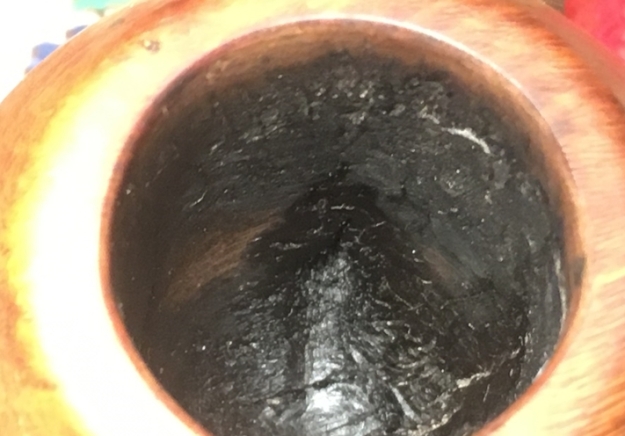
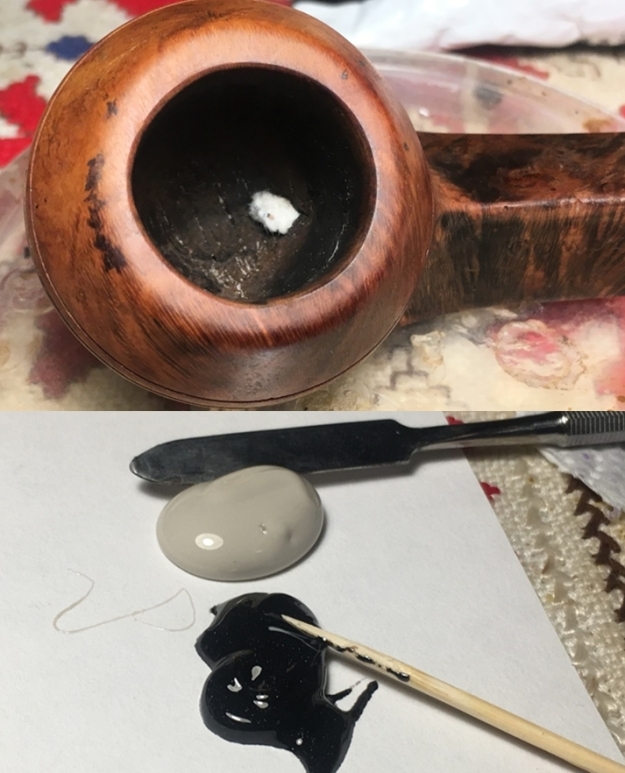
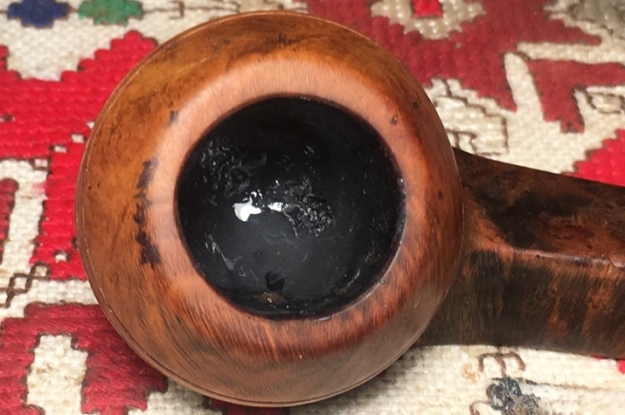
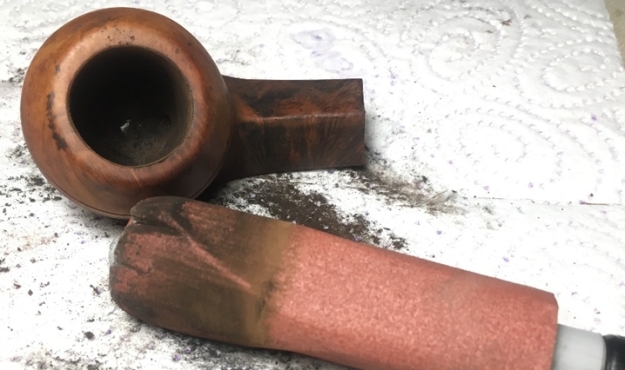
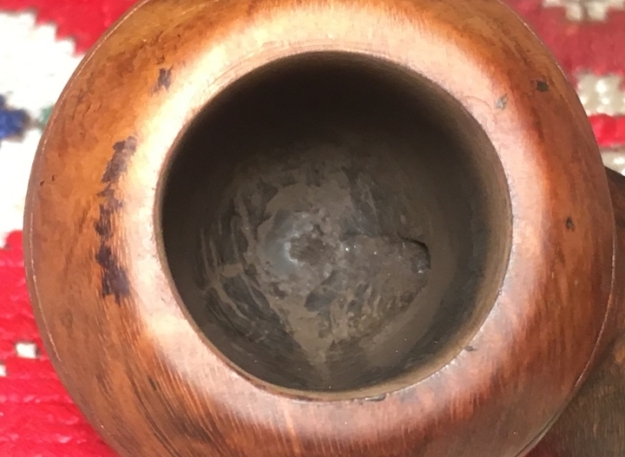
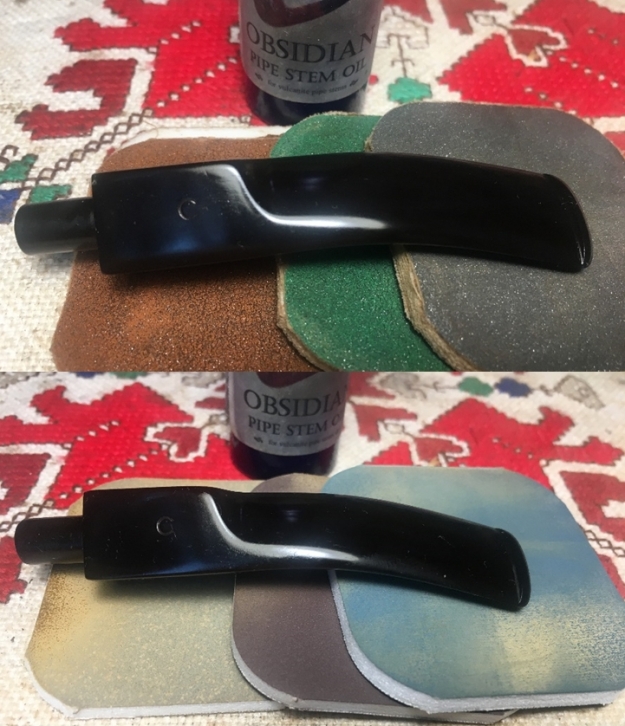
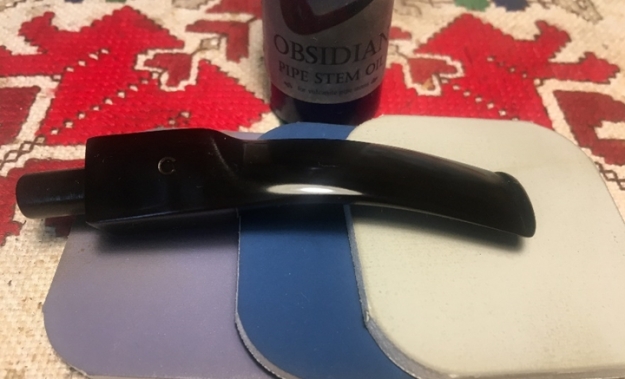
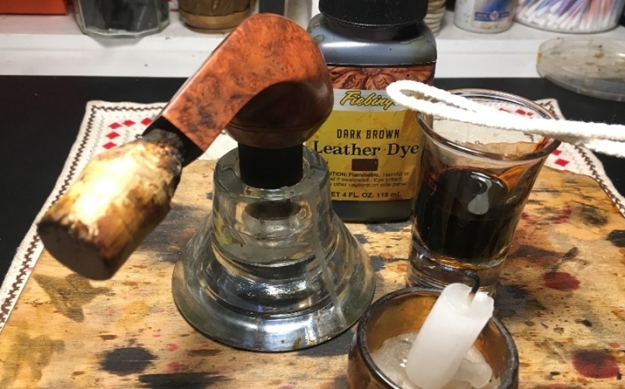
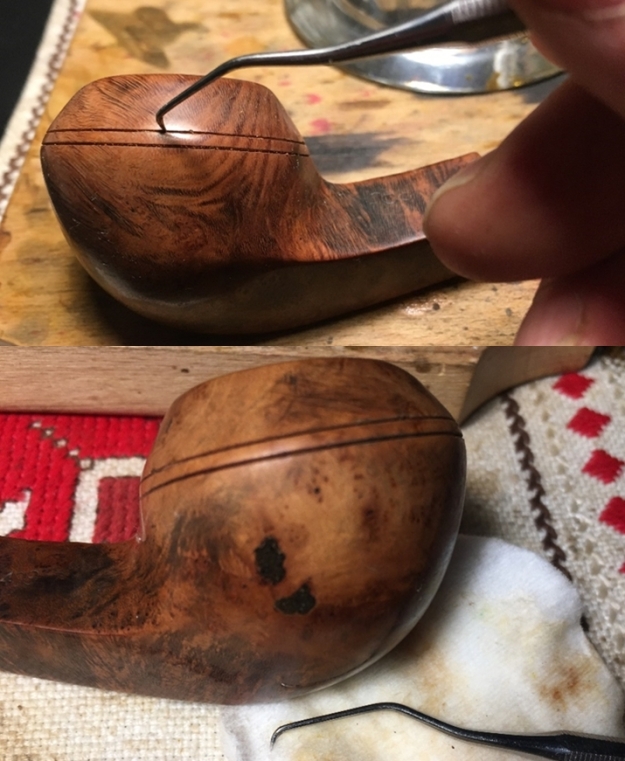
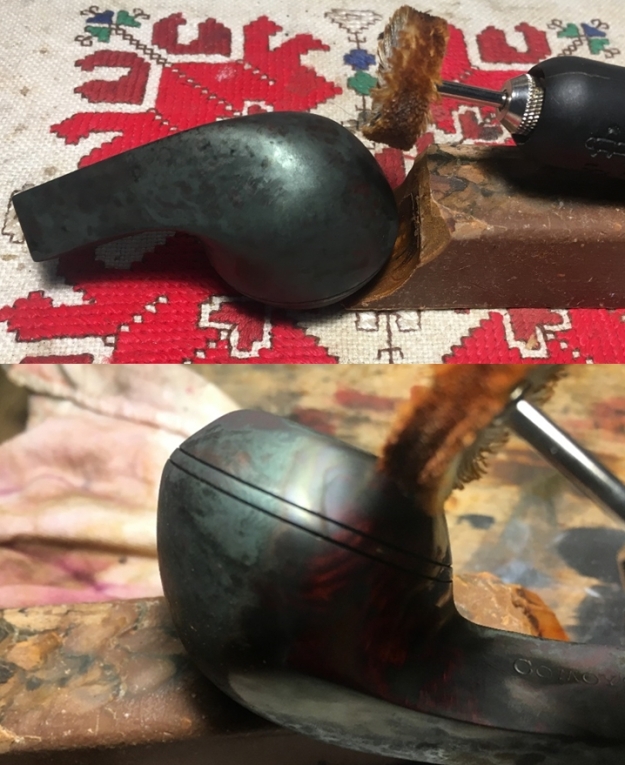
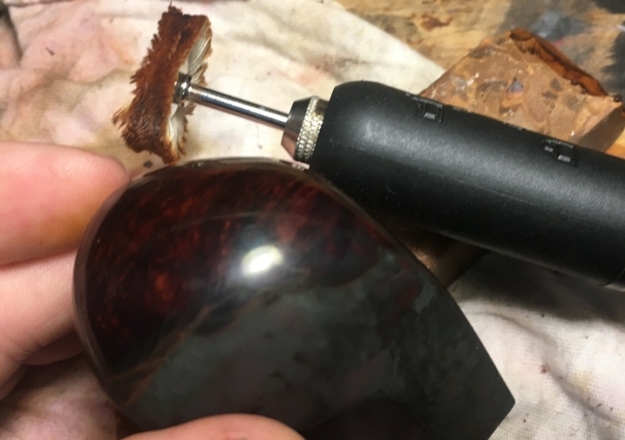
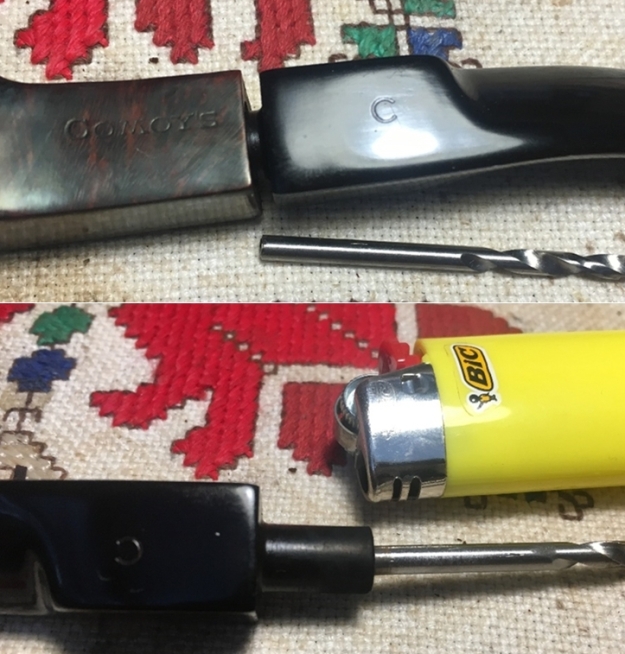
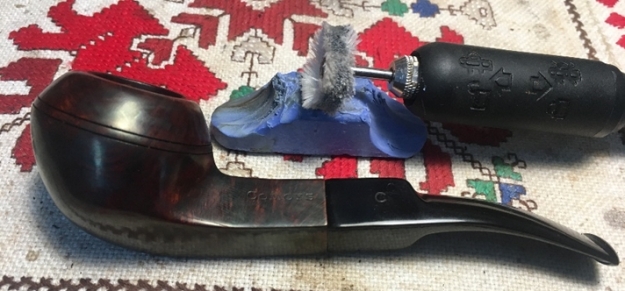
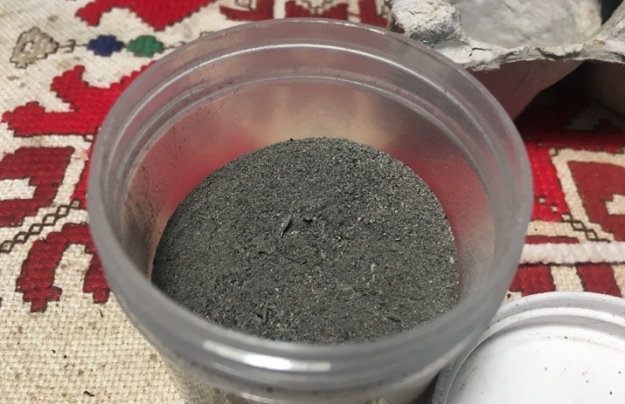
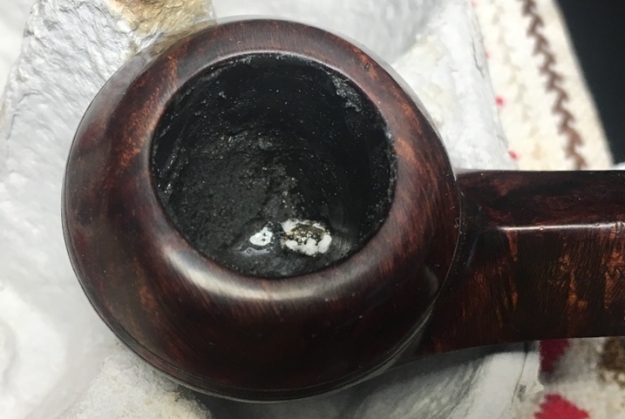
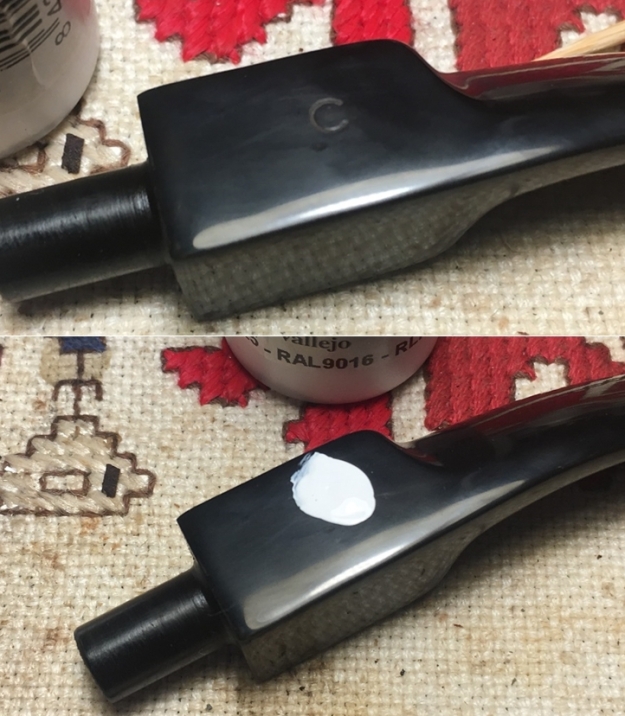
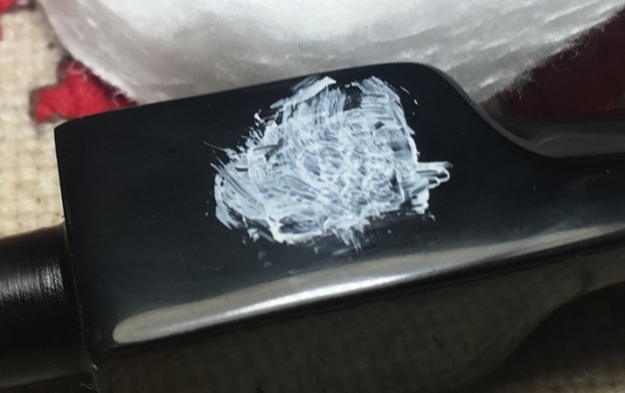
I begin the restoration of this Comoy’s Bulldog by placing the stem in a soak of Before & After Deoxidizer along with other pipes and stems in the queue.  Whoops, I include the original seller’s pictures – I forgot to take pictures of the original stem’s condition before putting the stem into the soak. After some hours of soaking, I remove the Bulldog stem and using a cotton cloth wetted with alcohol, I wipe down the stem removing the raised oxidation.  I follow this by wetting a cotton pad with light paraffin oil (mineral oil) and continue to wipe off the oxidation and the oil helps rejuvenate the vulcanite.After the soak wiping and the stem dries, I can still detect oxidation on the stem which requires more attention.  Before I start sanding the stem, I use Before & After Fine and Extra Fine Polishes to work on the oxidation.  It is advertised to continue the raising process of oxidation.  I start first with the Fine Polish by putting some on my finger and rubbing it in the vulcanite.  I also work it in well around the ‘C’ stamping to clean it more.  After applying, I allow it to stand for some time and then wipe off.  I do the same with the Extra Fine Polish.  After I’ve finished, I still see a deep greenish hue indicating the oxidation is still holding on.  The last picture below tries to capture what I see with the naked eye – it doesn’t do a very good job! One more noninvasive approach to the oxidation I’ll try.  I scrub the stem surface using Magic Eraser.  After working the white sponge over the entire surface, it did do a good job.  More oxidation was removed, but not enough to make me happy!  I still see oxidation especially on the ‘saddle’ of the saddle stem.  The pictures show the progression.Next, I sand the stem starting first with 240 grit paper.  I do not like going through the fine tune buffing with micromesh pads and start seeing oxidation!  So, I sand the entire stem, avoiding the Comoy’s ‘C’ stamping.  I also use at disc to sand against at the stank side of the stem.  The disc helps to guard against shouldering the stem so that the edges are not sharp as the stem joins the shank.  This sanding is primarily for dealing with the oxidation.  In the pictures below, you can see the bit area compressions that are left untouched by the sanding.Before proceeding further with the sanding of the stem, I use the heating method to raise the compressions in the vulcanite in the bit area.  Using a Bic lighter, I paint the bit and button to heat the vulcanite which causes it to expand.  The hope is that this will cause the indentations perhaps to go away or lessen in their impact so that they will then sand out more easily. After painting the bit with the open flame, it helped to minimize some, but it did not erase the dents and compressions on the bit and on the button lips.  I follow with a flat needle file to file the button to refresh and shape the edges.  I follow again with 240 grit paper continuing to sand the dents on the bit.  Using the Bic lighter to raise the dents helps and I’m able to sand out all the dents and compressions from biting. Before proceeding further with the sanding of the stem, I use the heating method to raise the compressions in the vulcanite in the bit area.  Using a Bic lighter, I paint the bit and button to heat the vulcanite which causes it to expand.  The hope is that this will cause the indentations perhaps to go away or lessen in their impact so that they will then sand out more easily. After painting the bit with the open flame, it helped to minimize some, but it did not erase the dents and compressions on the bit and on the button lips.  I follow with a flat needle file to file the button to refresh and shape the edges.  I follow again with 240 grit paper continuing to sand the dents on the bit.  Using the Bic lighter to raise the dents helps and I’m able to sand out all the dents and compressions from biting.  Next, I wet sand the entire stem using 600 grade paper and follow this by buffing with 0000 steel wool. One last thing at this point before turning to the stummel, I give the stem a coat of light paraffin oil to help revitalize it.  I put the stem aside to absorb the oil and dry. With the stummel in hand, I begin the internal cleaning by reaming the light cake build up in the chamber.  I use 3 of the 4 blade heads available from the Pipnet Reaming Kit.  I then use the Savinelli Fitsall Pipe Tool to reach the hard to reach places in the chamber.  I then sand the chamber with 240 grade paper wrapped around a Sharpie Pen followed by wiping the bowl with a cotton pad wetted with alcohol to clean the carbon dust left behind.  Inspection of the chamber reveals some heat fissures on the floor of the chamber.  There also appears to be a small fissure creeping up just above the draft hole.  I take a few pictures that show what I’m seeing.  Are these fissures severe enough to warrant a durable patch or perhaps apply a pipe mud to enhance the growth of a protective cake?  That’s what I’ll be considering.  Continuing the cleaning, I use undiluted Murphy’s Soap on the external briar surface.  To work on the grit lodged in the grooves I use a bristled tooth brush.  I also use a brass wire brush to work around the dome and rim to clear away the old oils. Using a sharp dental probe, I painstakingly clean both dome groves, scraping packed dirt out.  I’m careful not to jump ‘track’ out of the grooves and scratching the briar surface.  The picture shows the cleaning progress. With the externals cleaned up, I turn now to the internal mortise and airway.  Using pipe cleaners and cotton buds dipped in isopropyl 95% I go to work. I quicken the work by scraping the mortise with a dental spatula.  In time, the cotton buds and pipe cleaners were coming out clean.  I’ll continue cleaning later using a kosher salt and alcohol soak.Turning again to the stummel surface, the rim and dome cleaned up well but show the dents and pockets from knocks and drops.  There remains a scorched area at the front of the rim/dome area.  There are small chips in several places around the circumference of the dome grooves.  I believe they’re all too small to patch, but with sanding I’m hoping that most should disappear or be minimized.  The most daunting aspect of the briar landscape is a huge, double fill patch on the right lower side of the stummel.  I take two pictures of the fills to show the position and a super close-up to show the appearance of the fills.  I poked the fills with a dental probe and both fills are rock solid.  Yet, as the close-up picture reveals, there are small air pocket holes in the fills and gaping around the fills.  I’ll leave the fills in place but touch them up with thin, clear CA glue and then sand to blend.  These fills will pretty well drive the boat regarding the finished look of the Comoy’s Bulldog.  The finish needs to be darker in order to mask the fills as much as possible, though even a dark stain will not hide these giants.   Looking again around the dome grooves, on the back-right quadrant there may be at least 2 candidates for a patch before sanding.  I take a picture of this area.  To the top left of the groove chips, there are also a few small holes that I’ll fill with a spot-drop of CA glue.  In this picture there are also two other small fills that seem to be in good shape.Before I begin sanding and patching, I start from the top and work my way down!  Topping the stummel will re-define the rim and address the front quadrant of the rim/dome where the former burn damage has thinned the rim.  I take some pictures to show these issues and mark the start. I put 240 grade paper on the chopping board and rotate the inverted stummel several times, checking as I go to make sure I’m staying level and not leaning into soft spots in the briar. When enough of the top is removed, I then switch the paper to 600 grade paper and turn the stummel a few more rotations. I take pictures to show the progress.  Now to the patching party!  I first wipe the stummel with a cotton pad wetted with alcohol to clean the area. I start with the two large fills by spot dropping a small amount of thin CA glue over the fills and spreading the glue over the entire fill – filling the pockets and gaps.  To move the work along faster, since these are not ‘weight bearing’ patches, I use an accelerator to quicken the curing process.   For the groove patch, I insert a piece of an index card into the groove to create a flow barrier for the CA glue.  I then spot-drop a small amount of CA glue slightly above the chip and draw the glue over the chipped area with a toothpick.  Again, I use an accelerator to solidify the glue.  After a few minutes, I pull the index card away and use a sharp dental probe to make sure the groove is clear of CA glue seepage.  Next, I apply small drops to four other small pits near the grooves and above them – again, I use an accelerator.  I decide also to apply a small drop to the right of the primary groove repair.   The repairs look a mess now, but I’m hopeful that the sanding will prove to reveal a more pleasing surface!Next, I begin the filing and sanding of the two large fill patches down to the surface level.  I use a flat needle file to do this initially when the patch mound is more distinct, then follow with 240 grade paper as the sanding nears the briar surface.  The gaps and pits in the original patch filled nicely, blending better with the surrounding briar.To both clean and sharpen the grooves at the groove patch repair, I insert 240 grade paper into the groove itself.  The groove is only large enough to accommodate a single sheet, so I must flip the paper to sand both the upper and lower edges of the groove.  I use a sawing motion with the paper while in the groove and I flex the paper up to apply a little more sanding action to the groove edge.  This technique does a good job redefining and cleaning up groove edges, especially at the point of the CA glue repair.After filing, sanding the groove patch repairs, and ‘groove sanding’ the groove repair looks great!  The patch has blended, and the groove is cleaner and smarter.Next, I move on to filing and sanding the 4 patches to the left of the groove repair on the dome.  I file the patch mounds down until near the briar surface and then take over with 240 grit paper.  I sand the area of the patches to blend.  It looks good – not pristine, but much less ragged!  The battered stummel is showing some signs of life!I follow by ‘groove sanding’ this area.  I like the results of this technique, so I decide to continue the groove sanding around the entire circumference of the dome for both the upper and lower grooves.  Since I’m able only to do one directional sanding on the grooves, it requires four circuits around the dome to do the job!  I refined the technique as I work – by flexing the paper somewhat I can sand more directly chips encountered on the groove edge as I slowly work around the dome.  The pictures show the groove sanding progress and results – much cleaner and crisper for this Comoy’s Bulldog! I continue preparing the external briar surface by sponge sanding starting first with the coarse sanding sponge.  I then use a medium grade sponge then finish with a light grade sanding sponge.  I avoid totally the upper shank panels with the nomenclature.  Sanding sponges help to clean the surface of the minor nicks and cuts and soften the look without an overly intrusive sanding effect.  The pictures show the results of the 3 sponges. As I sponge sand the dome of the Bulldog, I notice a chip in the inner lip of the rim that became more distinct during the sanding process.  To erase this small divot, I introduce a very gentle inner bevel to the rim using 240 grade paper rolled.  This dispatched the divot quickly. Earlier, I avoided using the sanding sponges on the nomenclature panels in order not to diminish the Comoy’s stampings.   I do want to clean the panels more to rid the old residue finish before applying a fresh stained finish.  To remove the old finish and to clean the panel I apply acetone to a cotton pad and wipe the panels.  This does the job. With the time of my departure for the work day rapidly approaching, I continue the internal cleaning of the mortise and airway using a kosher salt and alcohol soak.  After forming a wick by stretching and twisting a cotton ball, I insert it down the mortise and airway using a stiff wire.  The wick acts to draw out the tars and oils.  I then add kosher salt (no aftertaste) to the chamber and place the stummel in an egg crate for stability.  With a large eyedropper, I add isopropyl 95% to the chamber until is surfaces over the salt.  After a few minutes, after the alcohol has absorbed into the chamber, I top off the alcohol and set the stummel aside to soak for the day.Arriving home several hours later, the soak did the job of finishing the internal cleaning.  I clean the expended salt from the chamber with paper towel and shank brushes as well as blowing through the mortise.  I run an additional pipe cleaner and cotton bud wetted with alcohol to assure the internals were clean.  They are, now moving on!Before proceeding further with the external stummel preparation, I’ve come to a decision point regarding the chamber issues that I saw earlier.  The floor of the chamber has heat fissures which the first picture shows.  The second picture shows the fissure immediately above the draft hole.  The upper chamber shows some heating issues with small, more normal chamber wear.  Earlier, my question had been, do the fissures on the floor of the chamber need a more durable response than simply applying a pipe mud mixture to enhance the growth of a protective cake?  The floor of the chamber has experience overheating issues and I believe at this point would benefit from applying J-B Weld to prevent further damage and to reinforce the resistance of the chamber floor.J-B Weld comes with two components that are mixed together and once mixed harden to form a heat resistant bond.  I’ll mix a small amount and apply it to the floor of the chamber then spread it over the area, including above the draft hole, filling the fissures with the Weld.  After it hardens and cures, I’ll sand the excess. I first wipe the chamber with alcohol and put a pipe cleaner through the airway to block seepage into the draft hole.  After I mix J-B Weld components in equal parts, I apply a small amount on the floor of the chamber and spread it with a dental spatula and my finger. I rotate the pipe cleaner so that it is not stuck but I leave it in place – I don’t want to pull it out while the J-B Weld is wet leaving the mixture in the mortise.  I put the stummel aside for the J-B Weld to cure.  After the repair cured overnight, I take a picture of the sanding process using 240 grade paper wrapped around a Sharpie Pen.  I concentrate on removing the excess J-B Weld so that all that is left of the weld is what has filled the fissures and cracks. The next pictures show a much healthier chamber.  At the floor of the chamber in the first pictures and concentrating on the area immediately above the draft hole in the second picture, you still see what appears to be rough spots, but it is now smooth to the touch in large measure.  The Weld filled the cracks and reinforced the area.  The application of J-B Weld and the additional sanding on the floor and the walls of the chamber cleaned it up nicely.  Putting the stummel aside, I take the stem and wet sand using micromesh pads 1500 to 2400.  I follow by dry sanding with pads 3200 to 4000 and 6000 to 12000.  Between each set of 3 pads I apply Obsidian Oil to revitalize the vulcanite. With the stem waiting in the wings, I continue with the stummel by wet sanding with micromesh pads 1500 to 2400.  I follow this by dry sanding with pads 3200 to 4000 and 6000 to 12000.  I take pictures of both sides of the stummel to show the huge fills on the right side.  If it weren’t for these unavoidable fills, the fantastic recovery the stummel has made would encourage me to leave the original, natural grain finish in place.  The briar surface had many issues, but the results of the micromesh sanding reveal a very attractive grain presentation.  The next step is to apply a dark stain to the Comoy’s Bulldog that will serve to help mask the issues prevalent on the surface.  Without question, my plan is to apply Fiebing’s Dark Brown Leather Dye to the stummel surface.  I assemble all the needed components on the table to apply the stain.  First, using a sharp dental probe I carefully dig out and scrape the dome grooves to make sure the debris is gone.  After wiping the stummel with alcohol to clean and prepare the surface, I fit the stummel with a cork I’ve fashioned as a handle inserted into the mortise.  Next, I heat the stummel with a hot air gun to expand the briar grain.  This aids the briar in absorbing the dye pigment.  Using a folded over pipe cleaner, I apply the dye to the stummel.  After a thorough application, I flame the stummel with a lit candle and the alcohol-based aniline dye combusts and sets the dye in the grain.  After a few minutes, I apply the dye again and flame again to make sure there is an even coverage.  I then set the stummel aside for the dyed stummel to rest. After resting for several hours through the night, it’s time to unwrap the fire-crusted Comoy’s stummel.  Over time, I have developed my own techniques for use with the Dremel since this is my main and only work horse tool on the 10th floor flat of a formerly Communist block apartment building!  My usual method for ‘unwrapping’ has been with the use of a felt buffing wheel, which is more abrasive than cotton, applying Tripoli compound.  I love this technique because the result reveals a more brilliant grain pattern as it lightens the grain veins leaving them in contrast to the softer briar wood which absorbs more of the dye.  However, I have found that using the felt buffing wheel lightens the entire stummel.  With the large dark fills on this stummel in need of remaining masked for better blending, I use a cotton cloth buffing wheel with Tripoli compound to unwrap the flamed crust.  The softer cotton wheel isn’t as abrasive and leaves a darker dyed hue on the briar surface.  After mounting a cotton cloth wheel on the Dremel, I set the speed at the lowest RPM and I apply Tripoli to the stummel. I take a couple staged pictures to show the contrast between the flamed crust and the surface that has been ‘unwrapped’ and buffed with compound.  After completing with the Tripoli, I wet a cotton pad with alcohol to wipe the stummel not so much to lighten but to blend the new stained finish. Next, I rejoin the stem and stummel to apply Blue Diamond compound.  I discover that the junction between the tenon and mortise has loosened through the cleaning process – a common thing in my experience.  To remedy this, I take a drill bit the next size larger than will fit through the tenon airway.  I use a Bic lighter and heat the tenon and after a bit, the vulcanite tenon becomes supple and allows me gradually to insert the drill bit end into the airway.  This expands the tenon and tightens the connection.  This works like a charm!  With the stem now fitting snuggly, I continue to apply Blue Diamond to the stummel and stem.  I mount a cotton cloth buffing wheel to the Dremel and increase the speed to about 40% full power.  I apply Blue Diamond compound to both stem and stummel.Before moving on to applying carnauba wax to the pipe, I have two more projects to do.  The first is to apply white acrylic paint to refresh the Comoy’s ‘C’ stamping on the stem.  The second is to apply pipe mud to the chamber.  I decide to do the latter first.  After the repair done to the chamber, to enhance the healthy development of a protective cake (which should be maintained at about the width of a US dime coin) I use a mixture called pipe mud – a combination of cigar ash and water.  This mixture, once applied to the chamber and dries, hardens to create a starter surface for the cake to develop.  My colleague, Gary, who lives in Plovdiv, Bulgaria, is the cigar man who saves his ash for my use. Thanks, Gary!  I mix some water with ash in a plastic dish and mix it with my pipe nail until it starts to thicken. At this point, I apply it in the chamber with the nail and my finger.  It doesn’t dry quickly so there’s time to spread it evenly over the chamber.  After spread, I insert a pipe cleaner through the draft hole to keep it clear of the mud.  I then put the stummel aside in the egg cart for the mud to cure. Turning now to the Comoy’s ‘C’ stem stamp, I put a drop of white acrylic paint over the ‘C’ and absorb the excess with a cotton pad and ‘dob’ it out so that the paint thins and dries.  I then use a toothpick’s flat edge to gently scrape the excess paint off after it dries.  I have to reapply paint a few times to get it right.  The pictures show the process. After allowing the pipe mud to cure, I rejoin stem and stummel and once more, run the sharp dental probe in the grooves around the circumference of the dome then buff the pipe with a felt cloth clearing away the compound dust before applying wax.  I then mount a cotton cloth buffing wheel to the Dremel, keep the speed at about 40% full power and apply a few coats of carnauba wax to the pipe.  I finish the restoration by using a microfiber cloth to give the pipe a rigorous hand buffing to raise the shine.
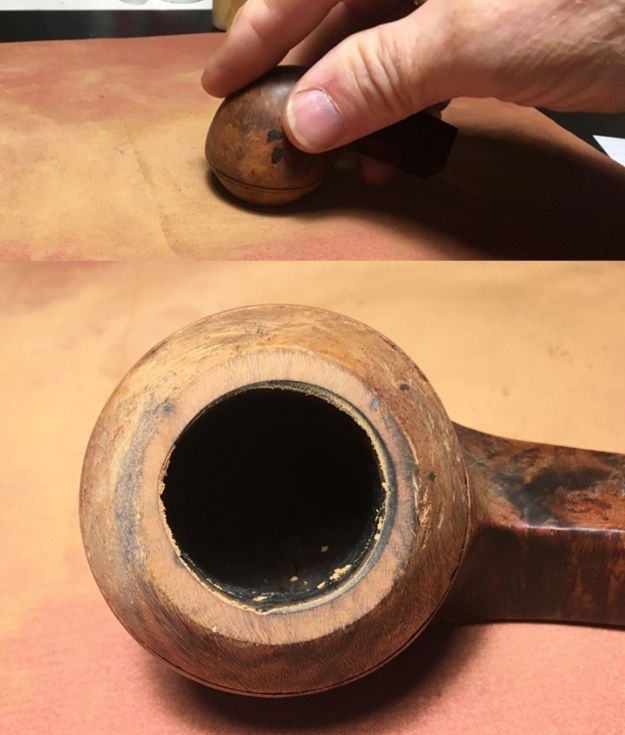
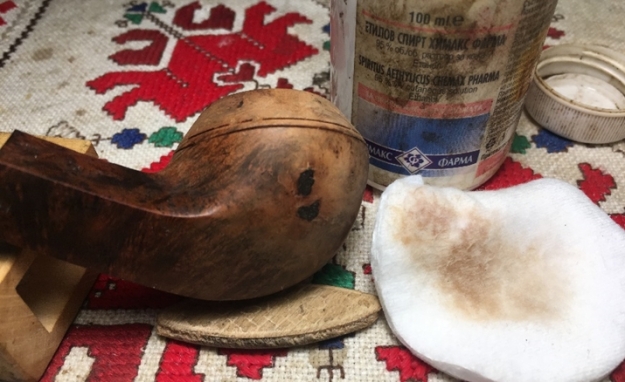
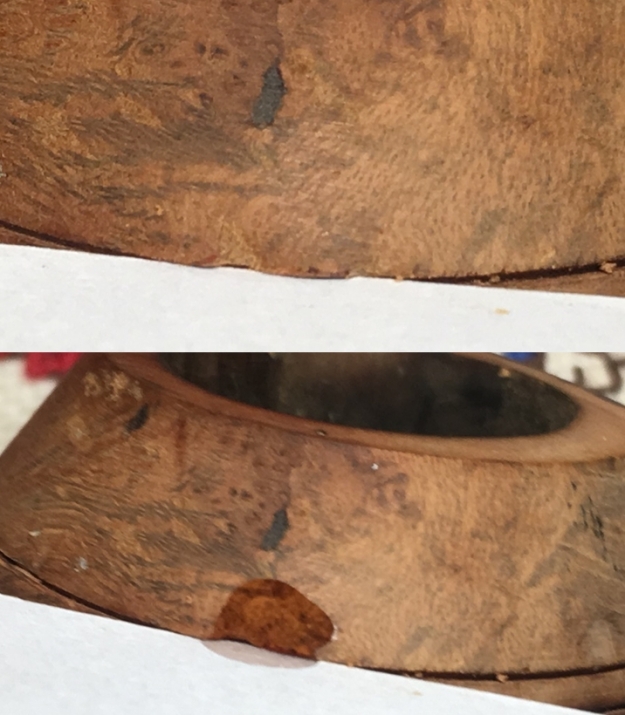
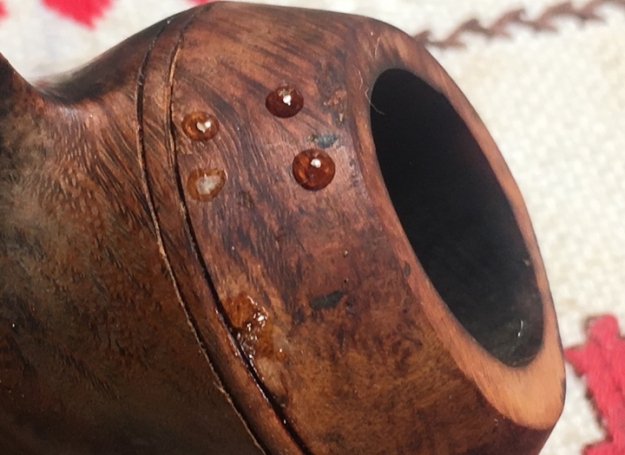
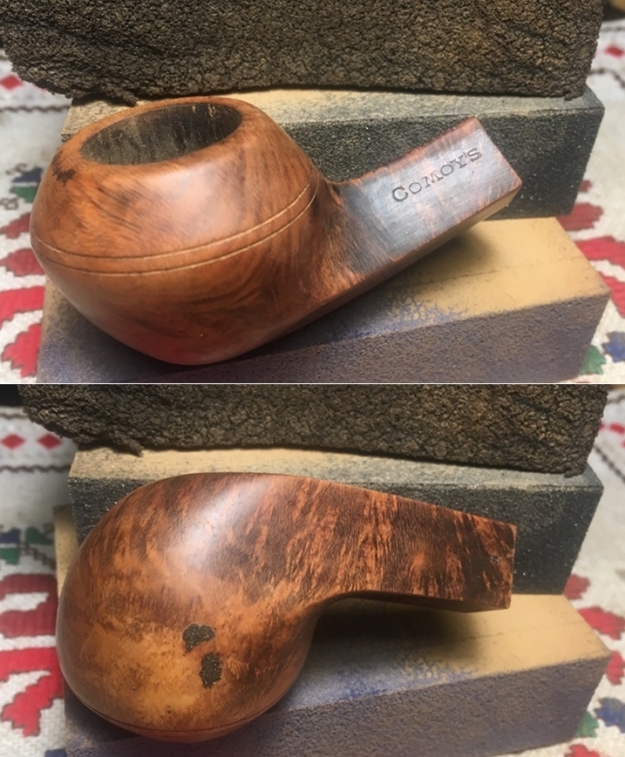
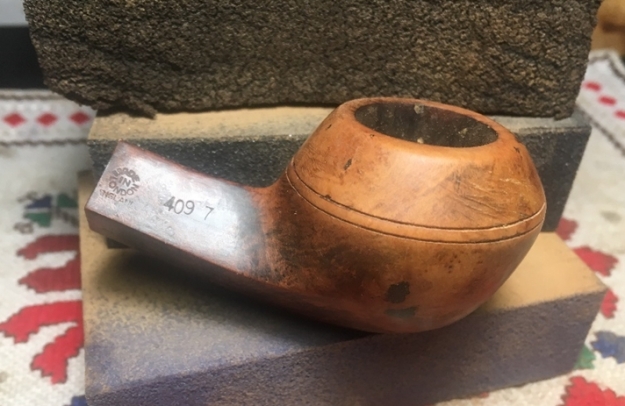
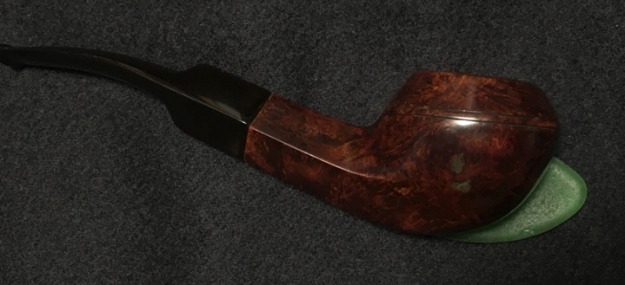
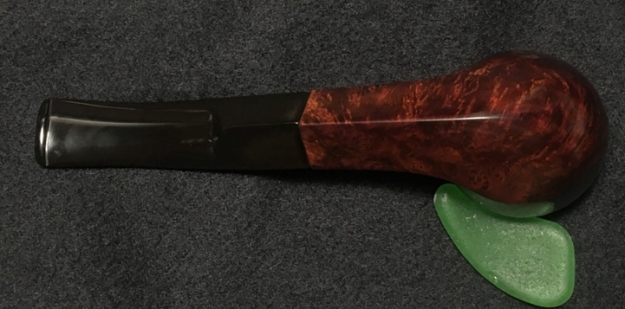
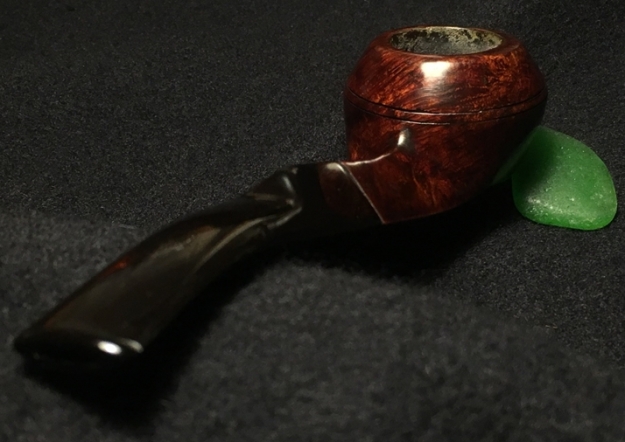
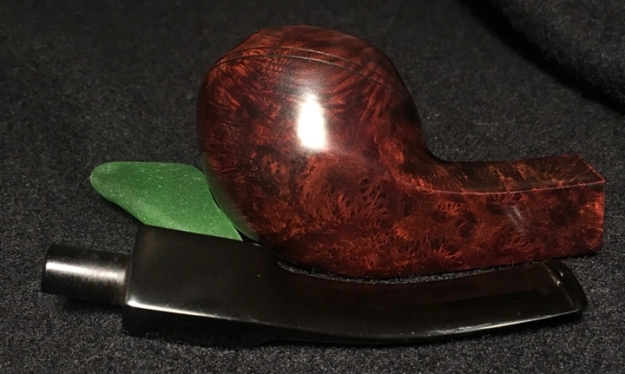
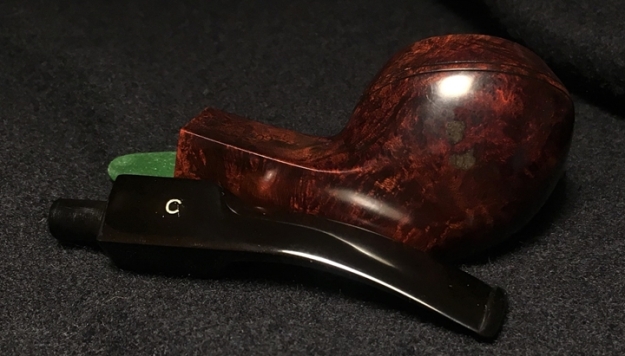
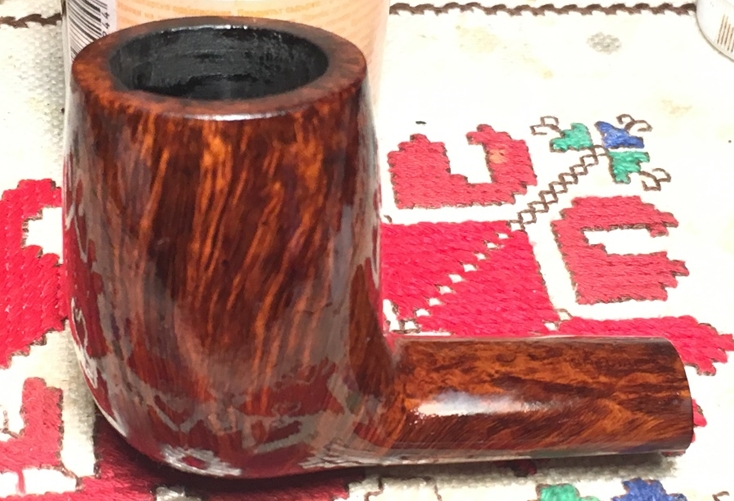
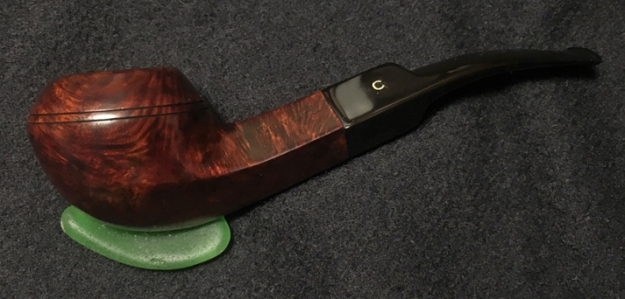
I’m pleased with the results of this Comoy’s Made in London, England, Bent Bulldog.  The restoration was fought in the trenches!  The many repairs done to the stummel surface came out well, though the two large fills are still evident, but not as overt. The dark brown dye came out beautifully and the groove patches and repairs have all but disappeared.  I’m glad I also addressed the heat fissure issues in the chamber.  This Comoy’s Bent Bulldog will provide many more years of service to a new steward.  Stephen commissioned this Comoy’s and will have first opportunity to acquire it in the Pipe Steward Store and this pipe benefits the Daughters of Bulgaria – women and girls who have been trafficked and sexually abused.  Thanks for joining me!
 

The Challenge Continues… Restoring a Vintage Era GBD


Blog by Paresh Deshpande

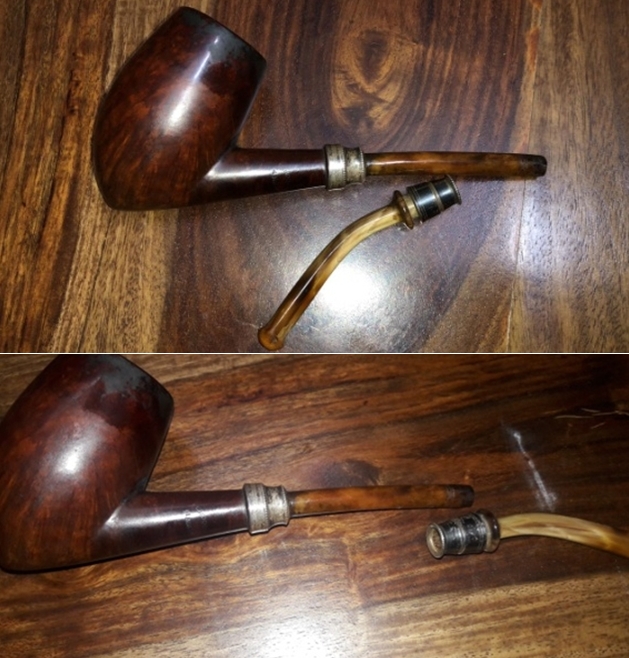
As I had remarked earlier in my write up on the late 1850s era FIRST CHOQUIN, A METZ (https://rebornpipes.com/2018/11/17/a-challenging-restoration-of-vintage-era-first-choquin-a-metz/),I could not contain my curiosity to open the third, and the last, box of my inherited pipes. In addition to the regular collection of Barlings, Charatans,Comoys and other assorted collection, I came across two pipes which caught my fancy!!!!!

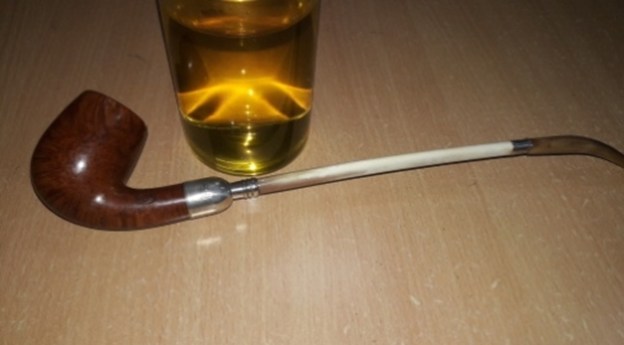
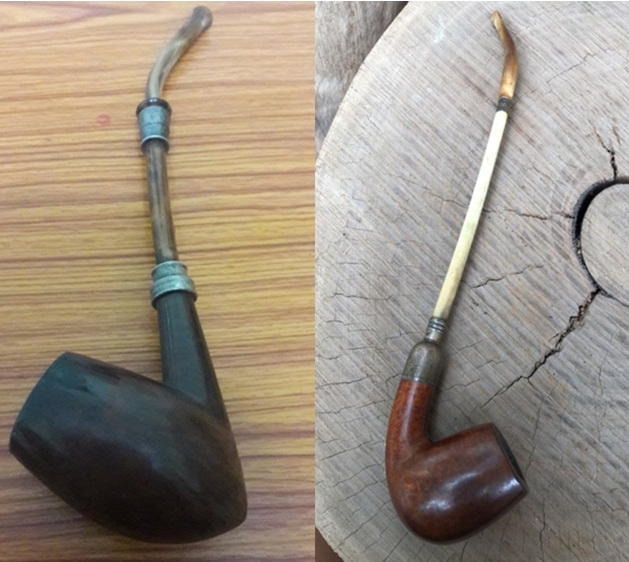
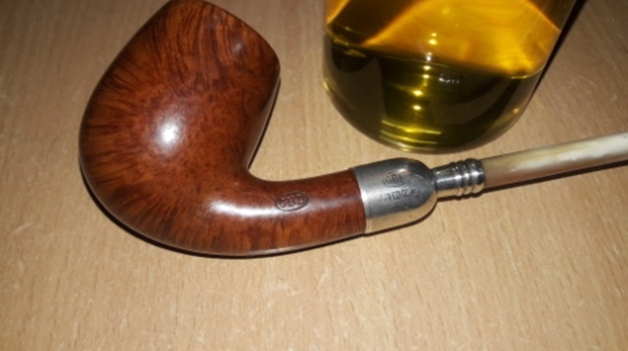
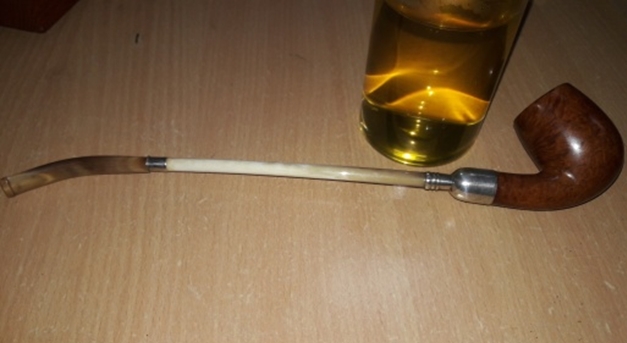
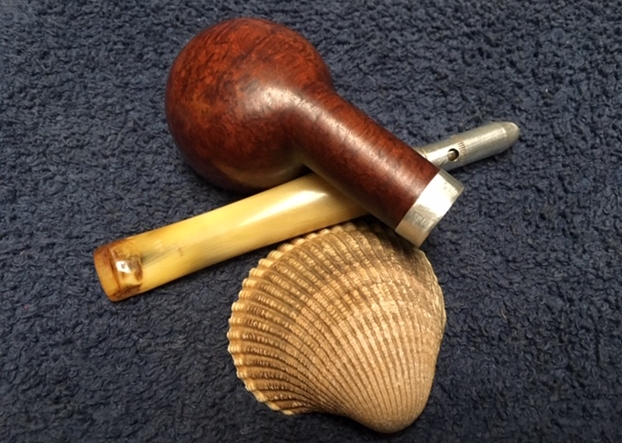
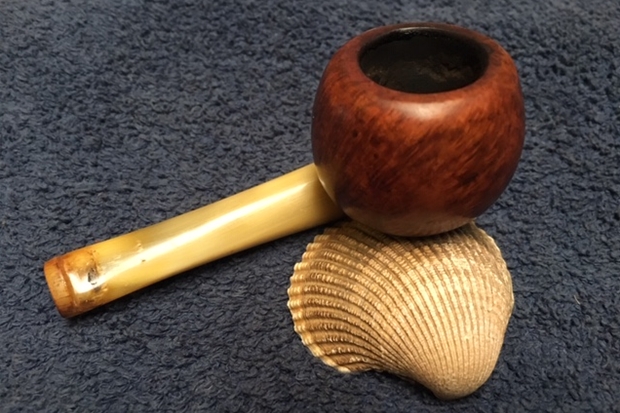
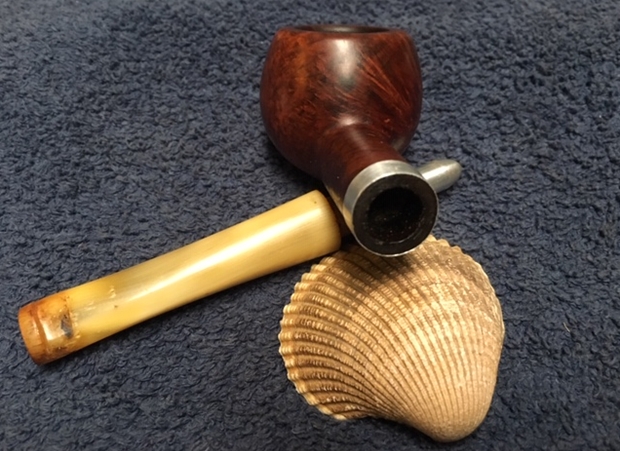
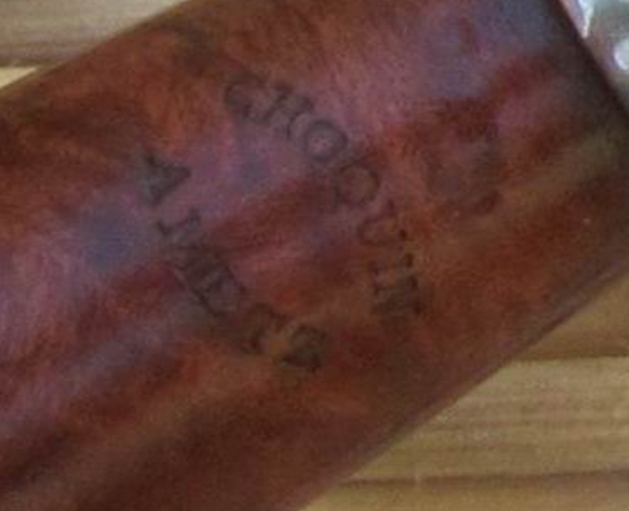
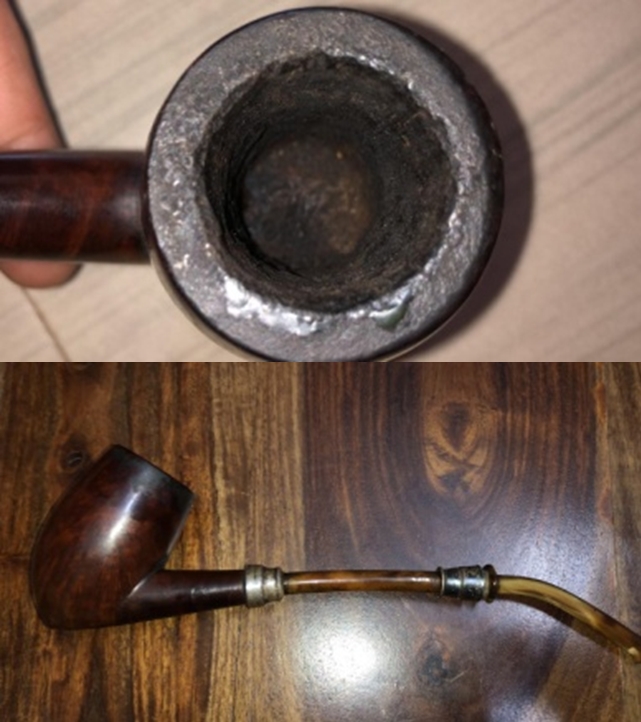
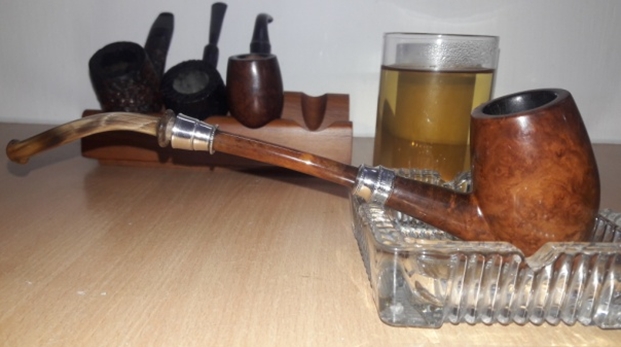
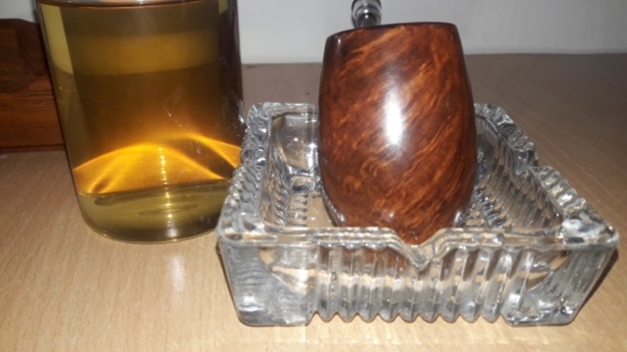
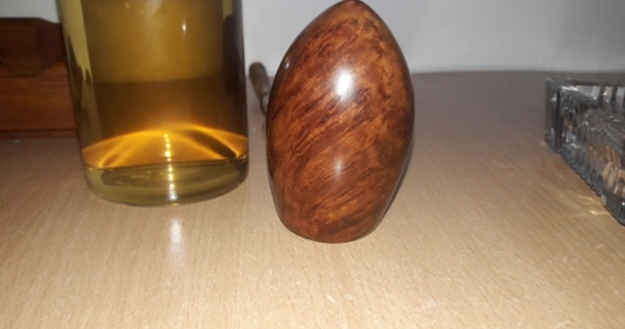
The pipe on the left bears a football stamp that reads “CHOQUIN” over “A METZ” and the one on the right side simply reads “GBD”  (there are other stampings on the silver ferrule, details of which will be highlighted when it comes up for restoration). Both of these pipes looked vintage and unique enough that I immediately Facetimed with Mr. Steve of rebornpipes. His admission that he is willing for a trade off with me for these two pipes was an indication enough for me to know and understand their uniqueness!!! Thus these two pipes moved to the top of my unorganized and chaotic list of restoration. 

Having now restored the CHOQUIN and experienced the challenges that these vintage pipes pose, I was faced with a dilemma of whether I should consider restoring the GBD or take a break and restore another unique and interesting pipe. Mr. Steve suggested the latter and hence I decided to undertake the restoration of the GBD amidst my hectic schedule.  

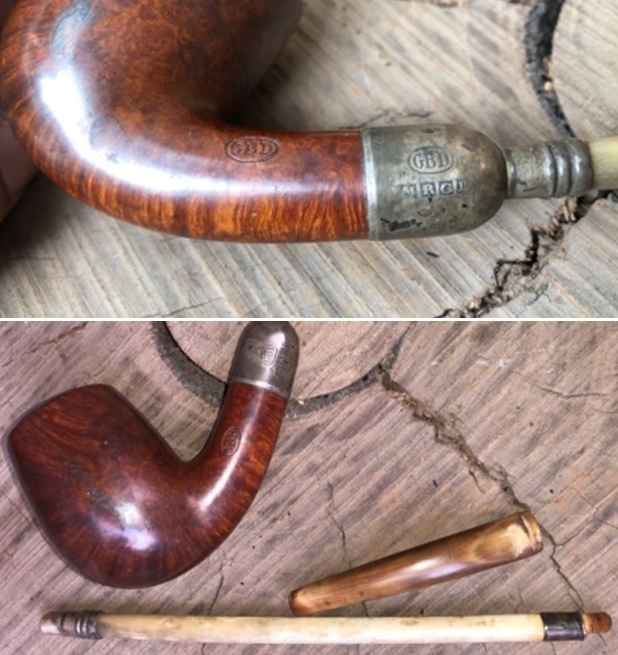
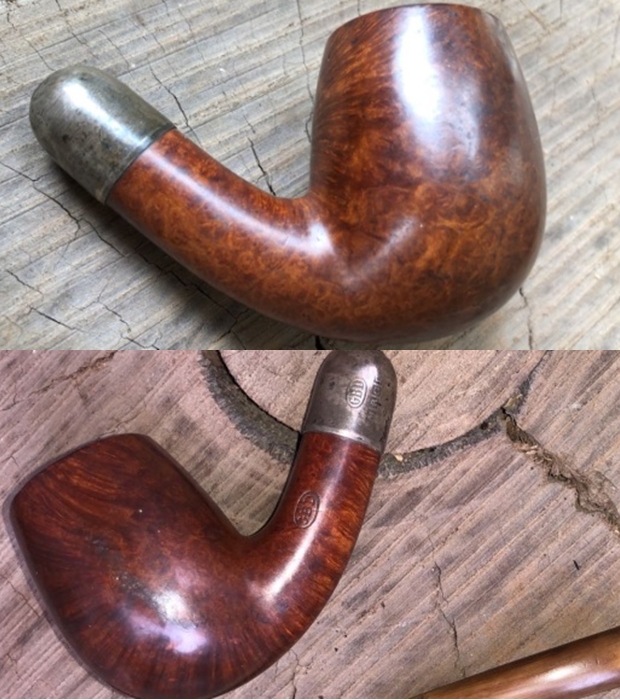
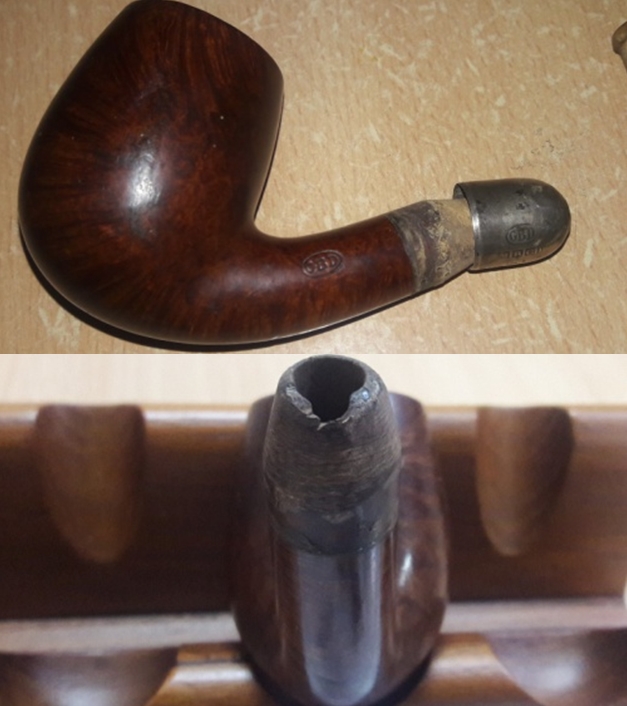
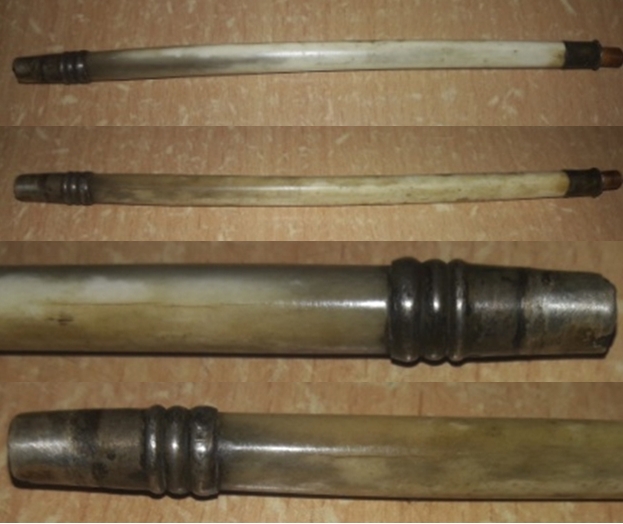
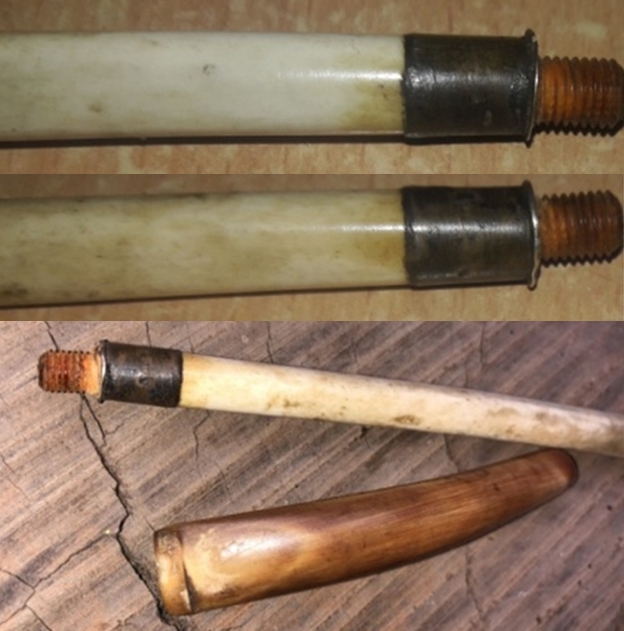
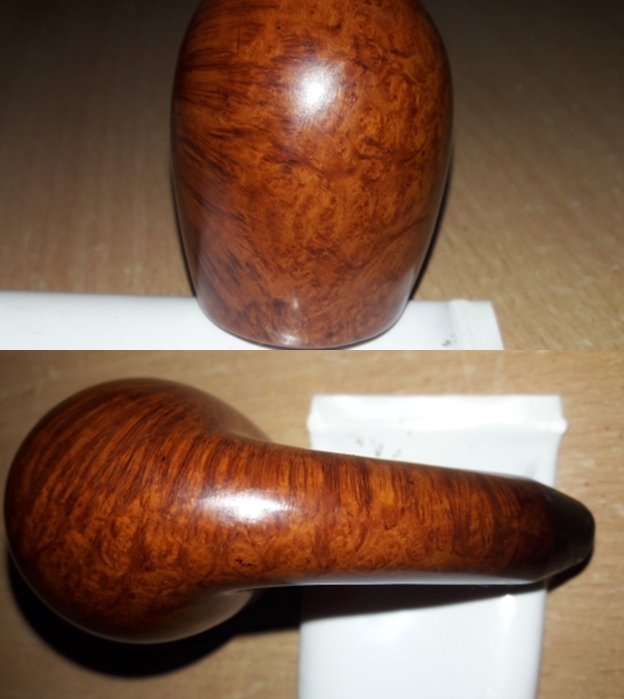
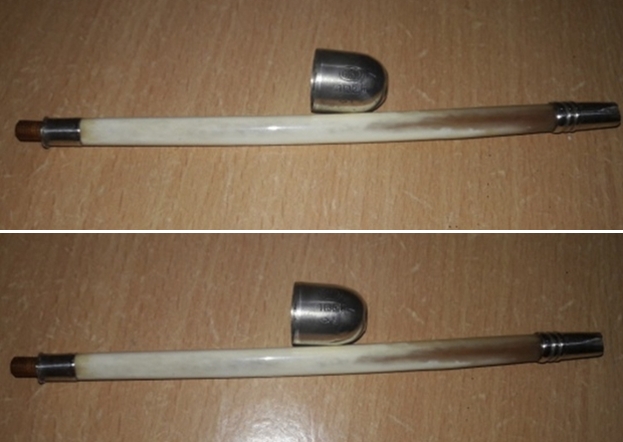
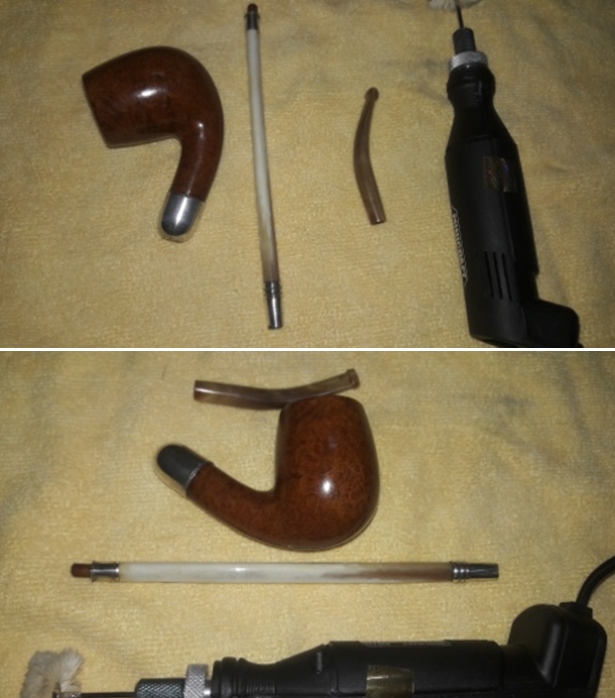
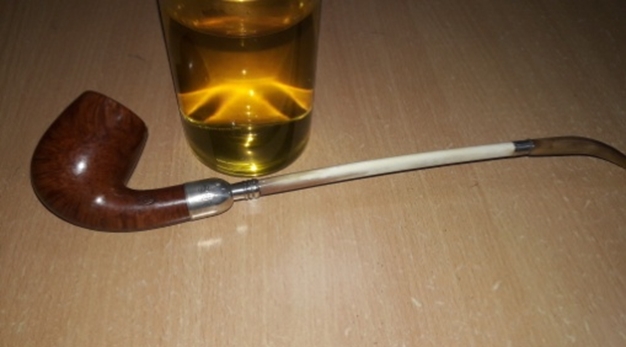
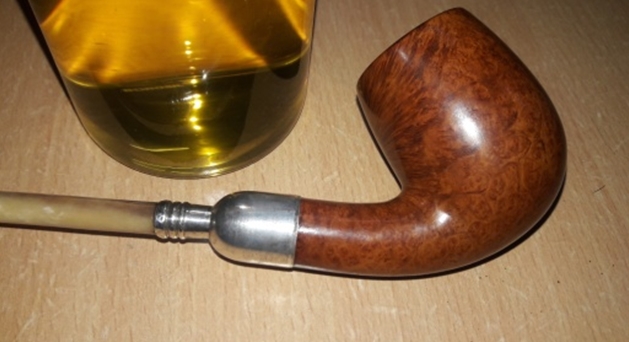
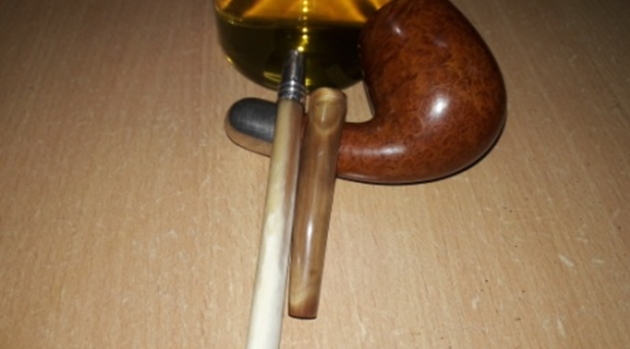
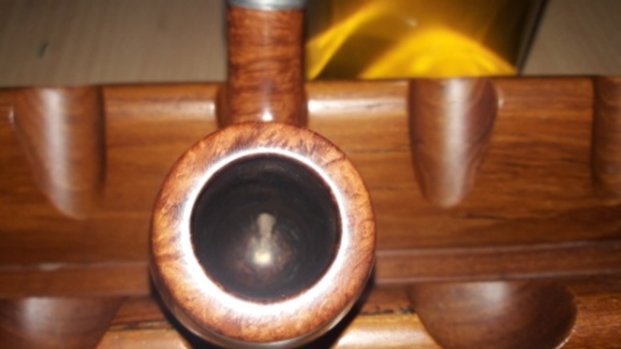
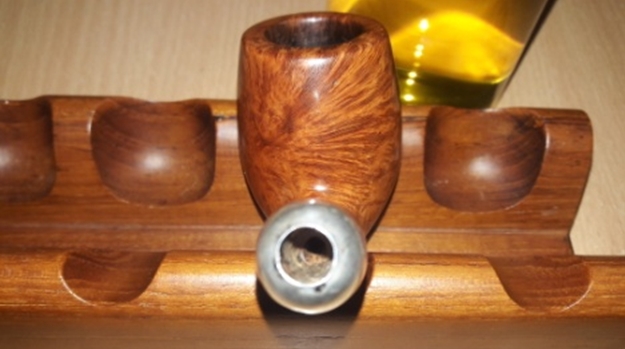
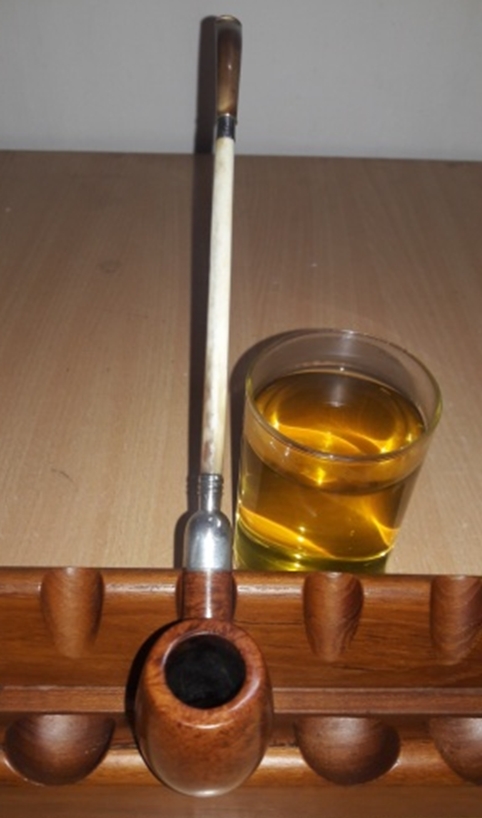
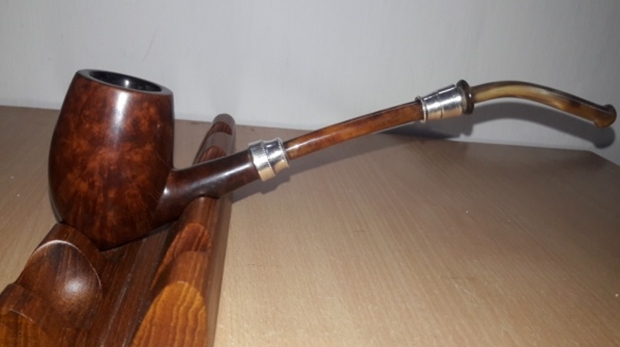
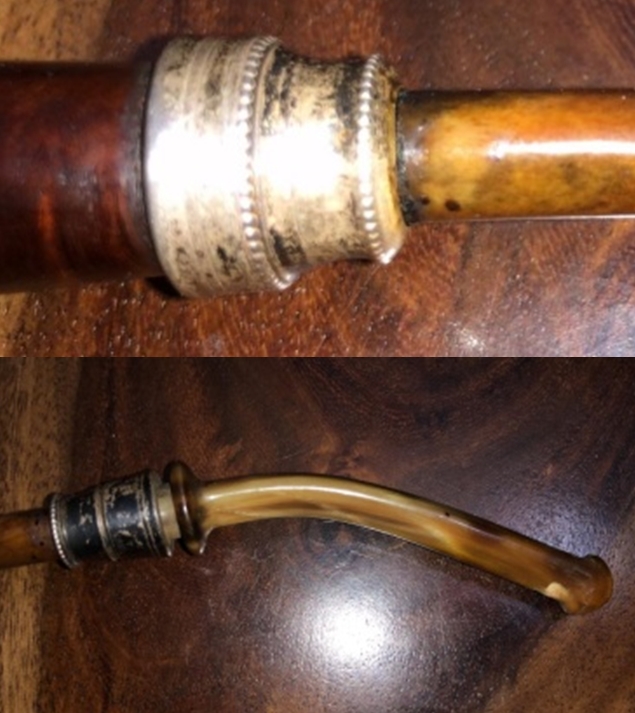
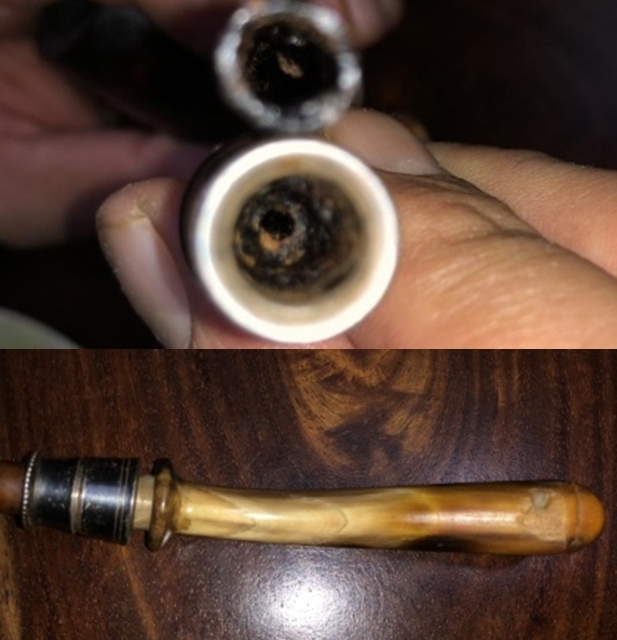
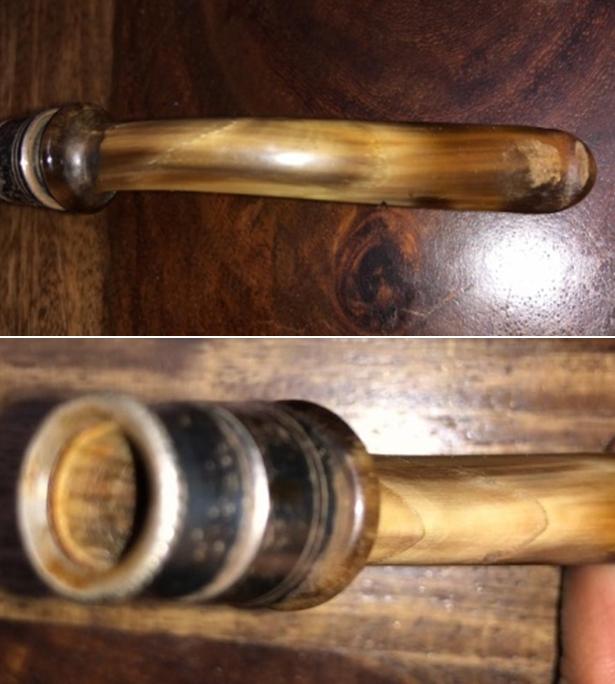
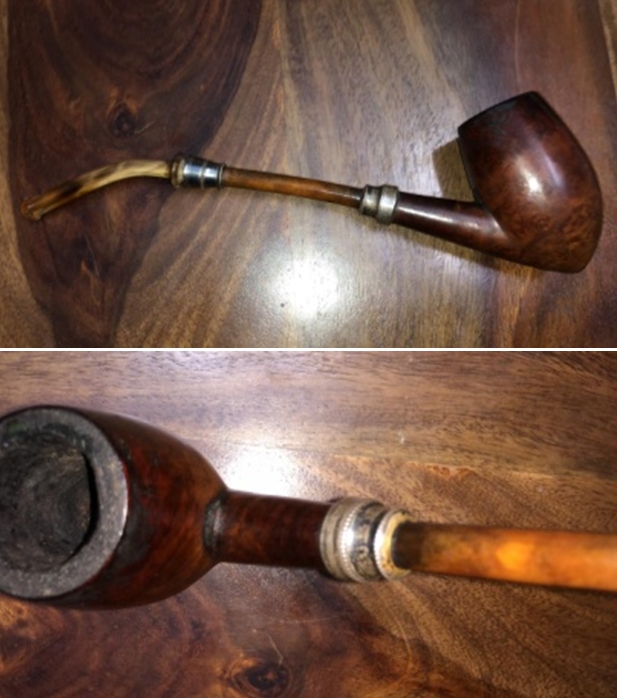
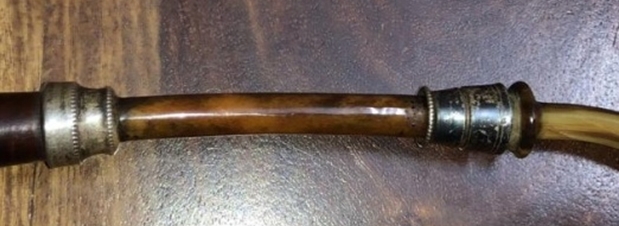
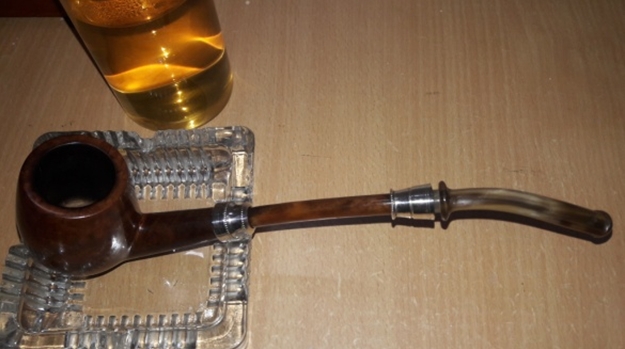
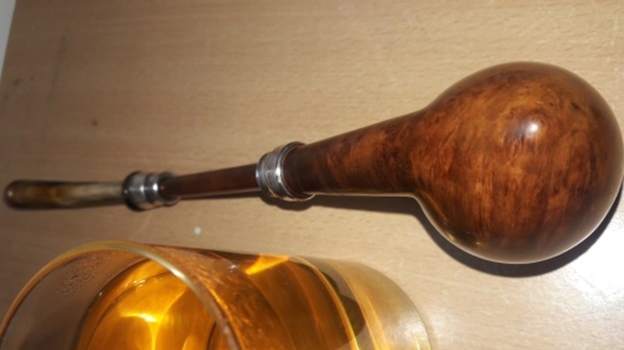
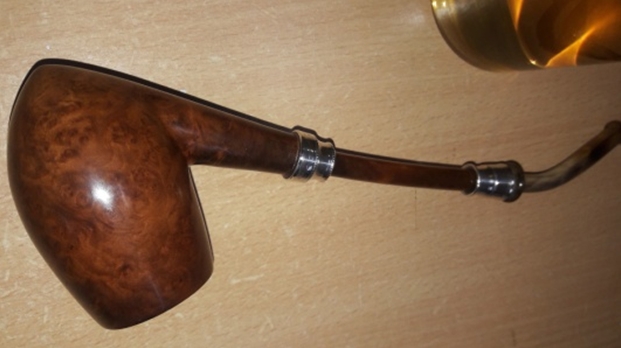
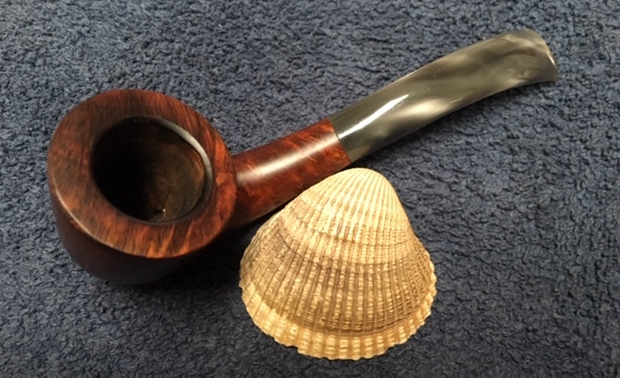
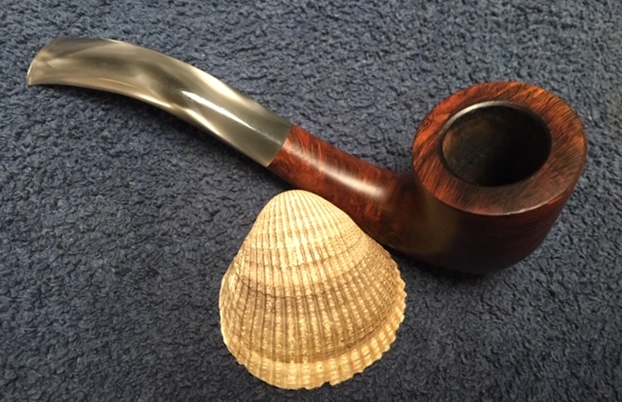
This GBD is a long and large pipe with a fairly large and deep smooth briar bowl and a steeply raking shank, the end of which is adorned by a sterling silver ferrule.The horn stem is connected with the shank by a long and hollow Albatross wing bone extension having sterling silver end caps at either end, most probably to strengthen it. The stem attaches itself to the wing bone extension by screw-in type tenon which is attached to this extension. The bowl is stamped on the left side of the shank as “GBD” in an oval encirclement and is the only stamping seen on the stummel. The Sterling silver ferrule at the shank end bears the oval stamp of “GBD” over “M R C LTD”,all in separate squares, over a rhombus which in all likelihood, enclosed the faded number “925” for Sterling silver. For its age, the stamping is crisp and clear.

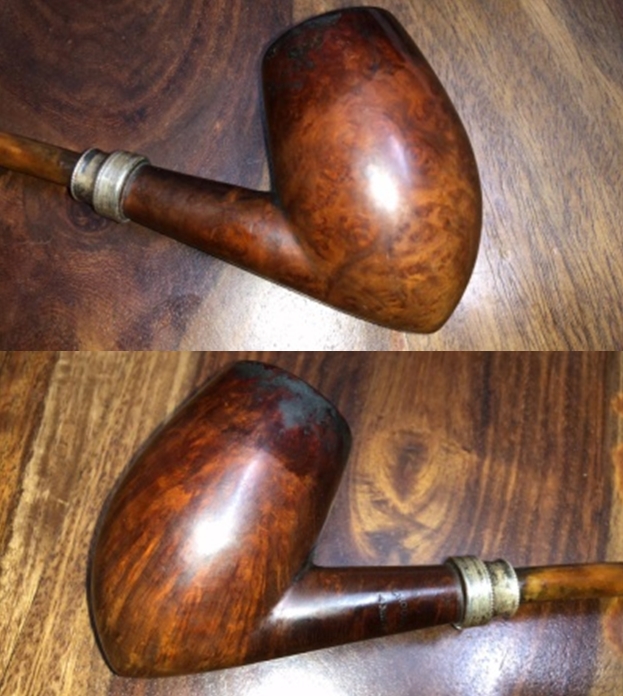
The large bowl shows beautiful, densely packed birdseye grain on the right side and extending to the front of the bowl,while a combination of tightly packed straight and cross grain adorns the left side and back of the bowl. The shank on the bottom surface appears to be divided into two exact halves, the right side with closely packed birdseye while the left side has tight straight grains. These grains on either side of the shank extend neatly in a straight line to the front of the bowl dividing the grains in symmetrical equal halves.

I searched Pipedia for information on this brand and this model in particular. Even though I could neither find any pictures or mention of this particular pipe that I was working on, I did find some important snippets of information which helped me making an intelligent guess as to the vintage of the pipe. I have reproduced the information that I had gleaned from Pipedia:

A HISTORY OF GBD

In 1850 three gentlemen got together in Paristo establish a firm dedicated to the fabrication of Meerschaum pipes – a courageous step in politically restless times. Ganneval probably came from the area of Saint-Claude where he had learned making wooden pipes. Bondier’s family obviously came from Paris and had immigrated in 1789 to Geneva. He himself had worked as a wood turner in the clay and china pipe industry in and around Saint-Claude making stem extensions etc. Donninger was an Austrian or Swiss and had worked in Vienna, the world’s center of the Meerschaum pipe. They agreed on the acronym GBD selecting the initials of their surnames.

There is a very simple explanation for GBD’s program to turn more”British”: GBD became a British company soon after the turn of the century! In 1902 Marechal and Ruchon sold GBD to A. Oppenheimer & Co.in London.

The business relation to GBD in Paris began as early as 1870. Being the most important customer in the English speaking world, Oppenheimer & Co. were designated as sole distributor for Great Britain, the USA and Canada in 1897.Especially Adolphe Oppenheimer had a burning interest in the pipe business, and Louis’ son James Adler shared that. He should play the most important role in the amicable merger of GBD. A. Marechal, Ruchon and Cie. in Paris was now Marechal, Ruchon & Co. Ltd. (see Marechal Ruchon & Cie. page) – a British firm with four directors: Adolphe Oppenheimer and James Adler had their seat in the head office in London while Auguste Marechal and Ferdinand Ruchon went on leading the GBD factory in the Rue des Balkan in Paris, which was considerably extended and modernised. Ruchon acted as CEO.

Marechal Ruchon & Cie. was a company owned by Auguste Marechal and Ferdinand Ruchon (“& Cie” is the french equivalent of “& Co”) which owned the GBD brand from the end of the 19th century until 1902 when they sold Marechal, Ruchon & Cie. to Oppenheimer Pipe,which in turn changed the name of the company to Marechal, Ruchon & Co., Ltd. Upon the creation of Cadogan, however, the brand was no more, remembered only in the name of the GBD Marcee pipes made until just after the Second World War.

Cadogan Investments Limited is a subsidiary of A. Oppenheimer& Co. Limited. It was formed by Oppenheimer Pipe in 1920 as a holding company for its many recent acquisitions, including BBB,Loewe & Co.,two pipe factories in St. Claude and others. It continued to acquire pipe brands and makers for decades, adding GBD and others to their marquee.

It is from the last two paragraphs above, that I can judge that this pipe was made somewhere between 1902 and 1920!!!!!!

INITIAL VISUAL INSPECTION

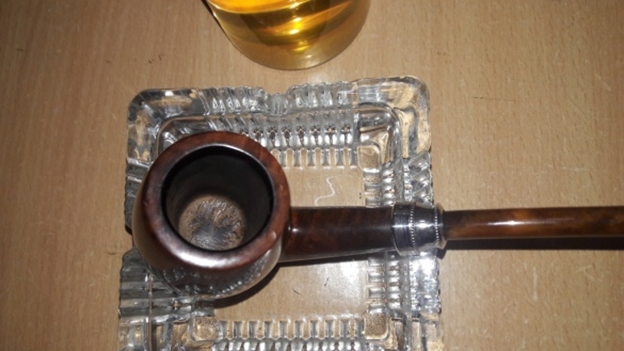
The large, deep chamber shows a decent amount of cake build up with overflow of tars and tobacco oils on the surface of the rim top. The condition of the inner walls of the chamber will be ascertained once the cake has been reamed back to the bare briar. The inner and outer edges of the rim show a few odd minute dings. Once I have scraped the lava overflow from the rim top, I shall decide on the method to tackle them and may even decide to let them be. I do not envisage any major surprises inside the chamber as the bowl feels solid to the touch from outside.Air flow is laborious and constricted through the shank and will improve once the internals are cleaned.

The surface of the stummel is covered in oils and tars from the overflowing lava and is sticky to the touch. There are a few dings to the surface of the stummel, more particularly near heel of the bowl and bottom surface of the shank. Should I address them by sanding, I am not sure, as I fear losing the patina during the abrasive process of sanding with sandpaper.

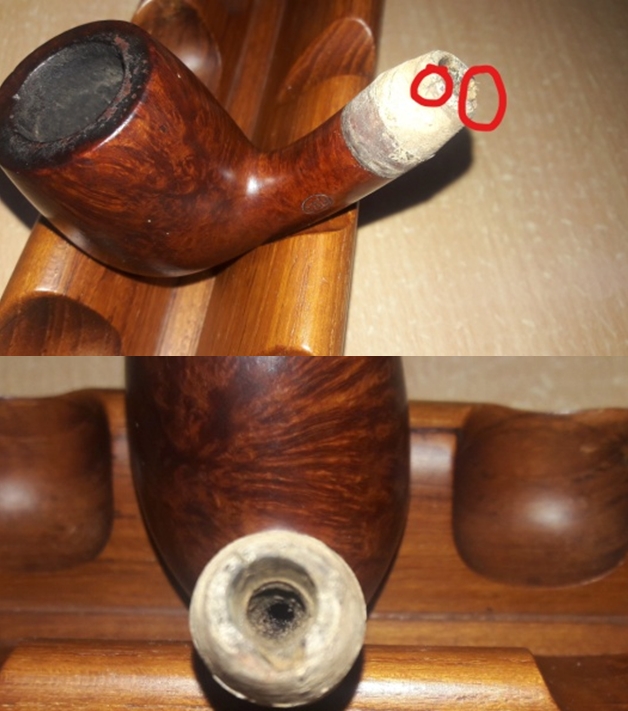
While I was handling the stummel, I realized that the sterling silver ferrule at the shank end had come loose. I removed the ferrule and what was revealed turned my stomach inside out. The glue was hard and dry and the briar had totally dried out and the shank end opening was uneven. I could even make out one small crack running down from the lip of the shank opening. Talk about challenges!!!! This will have to be addressed without fail.

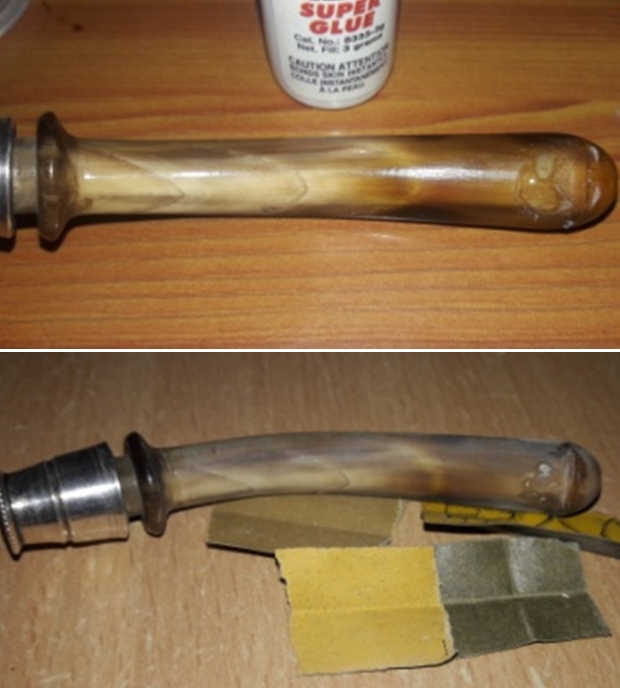
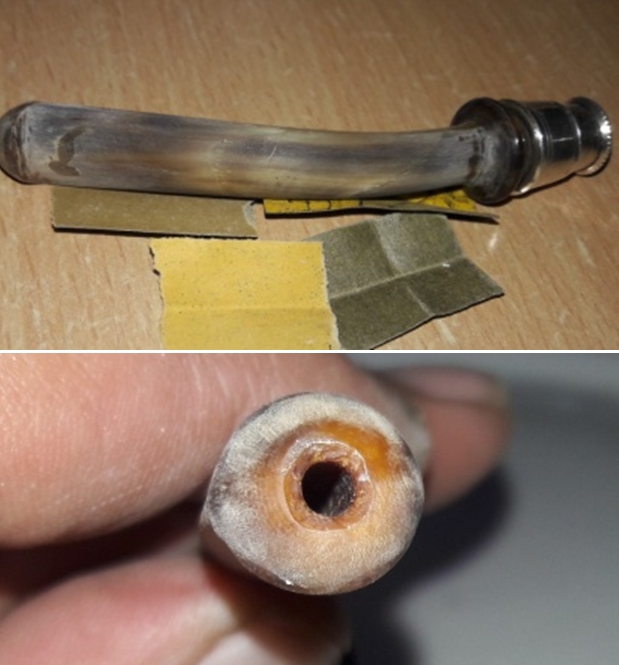
The Albatross wing bone extension is dirty and covered in dirt and grime. There are two superficial cracks on either side near the shank end. I        know these cracks are superficial as the bone surface around it is solid and without any give. These cracks will have to be addressed. The sterling silver end cap towards the tenon end has a flared out rim which is uneven. This causes the bone stem to sit unevenly on the rim. Air flow through the shank extension is clean and full.

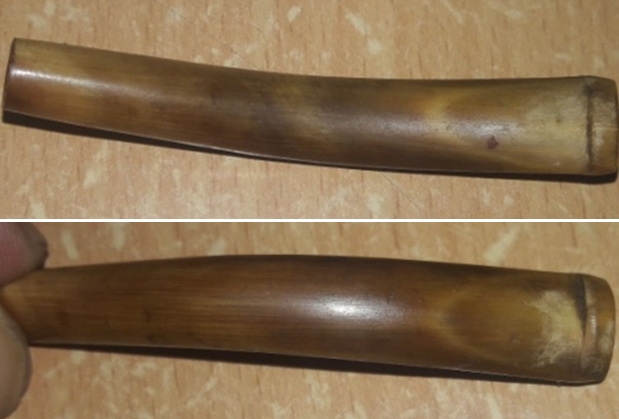
The horn stem shows some minor tooth chatter on both the top and underside, but more prominently on the top surface. This should be taken care of by sanding with a 220 or higher grade sand paper. All in all, the stem appears to be pretty solid. The edge of the lip on both upper and lower surface is slightly damaged and will need to be sharpened. Air flow through the stem is open and full.

The sterling silver ferrule and bone shank end caps are deeply oxidized and show the patina normal for its age. Once they are cleaned and shining they will add a class to this pipe.

THE PROCESS

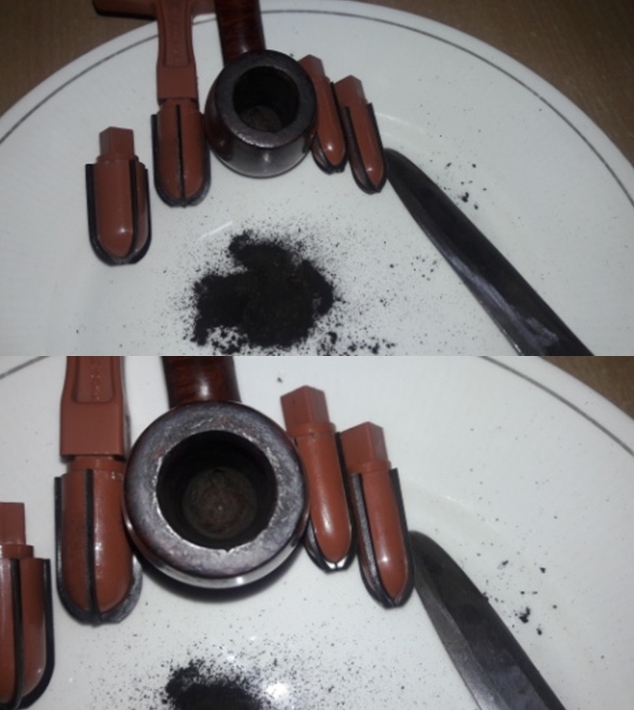
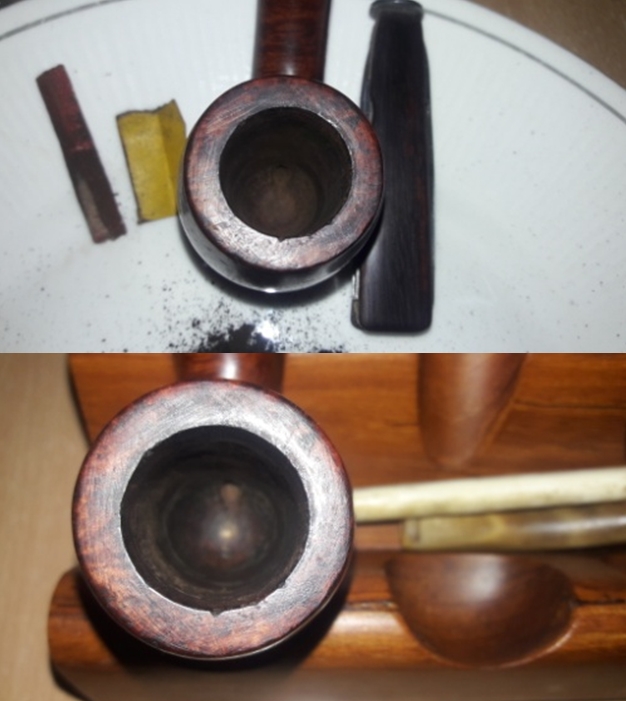
I started the process of restoration by reaming the chamber with size two of the PipNet reamer head and progressing through to size three. I followed up the reaming with scraping the remnants of the cake from the walls of the chamber and the rim top surface with my fabricated knife.Once the cake was reamed back to the bare briar, I used a 150 grit sand paper followed by 220 grit sand paper to remove all the traces of remaining cake and also to smooth the inner walls of the chamber surface. Finally, to remove the carbon dust, I wiped the chamber with a cotton pad wetted with isopropyl 99%. I gently scraped the rim top surface with a sharp knife. Removing all the cake from the chamber and rim top revealed that firstly, the rim was well rounded with no charring and only a minor chip and secondly, as I had anticipated,there was no damage to the inner walls of the chamber.

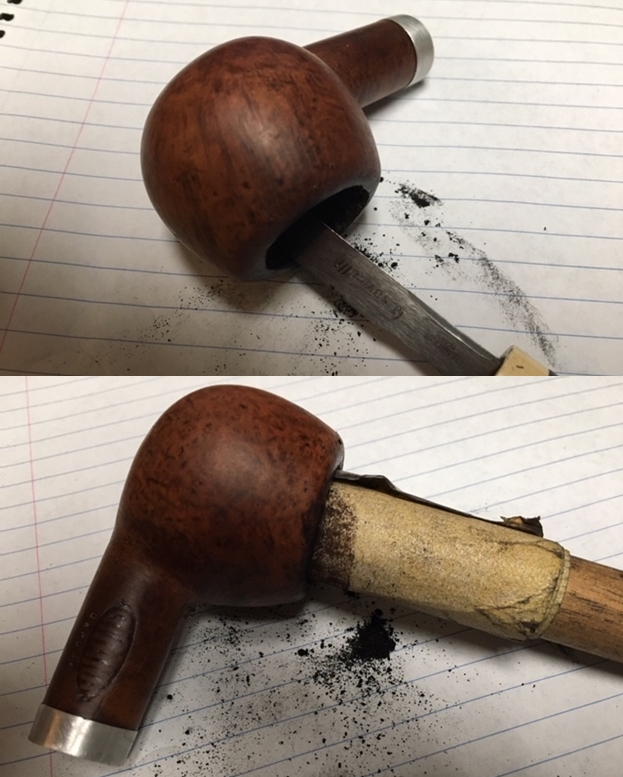
With 220 grit sand paper, I cleaned the internal and the external surfaces of the shank end opening, which until now was covered by the sterling silver ferrule, to remove all the carbon build-up, oils, tars,grime, dried briar wood and the dried glue. This process results in even more dried briar crumbling off, leaving behind a gaping hole. This needed to be restored as the damage is to that portion which supports the Albatross wing bone extension where it sits in to the shank. I conferred with Mr. Steve and it was decided to reconstruct the damaged portion by layering the gap with superglue and briar dust as the glue hardened immediately on coming in contact with the briar dust.

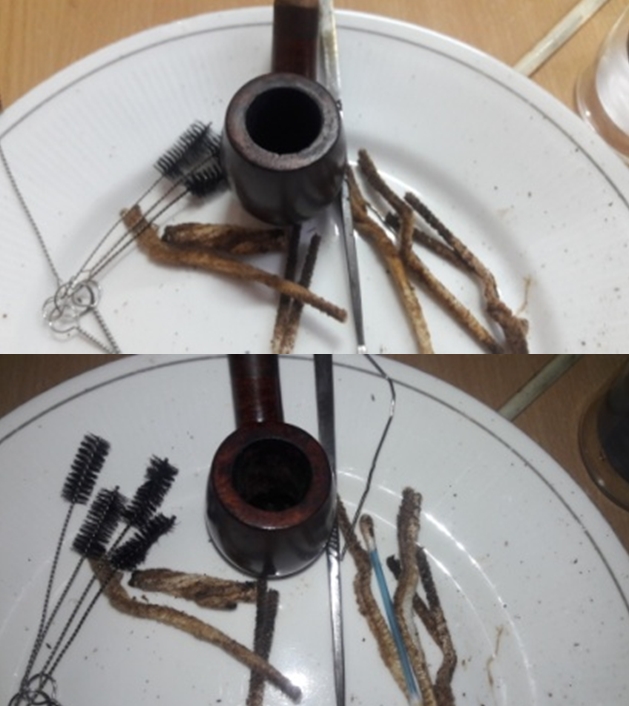
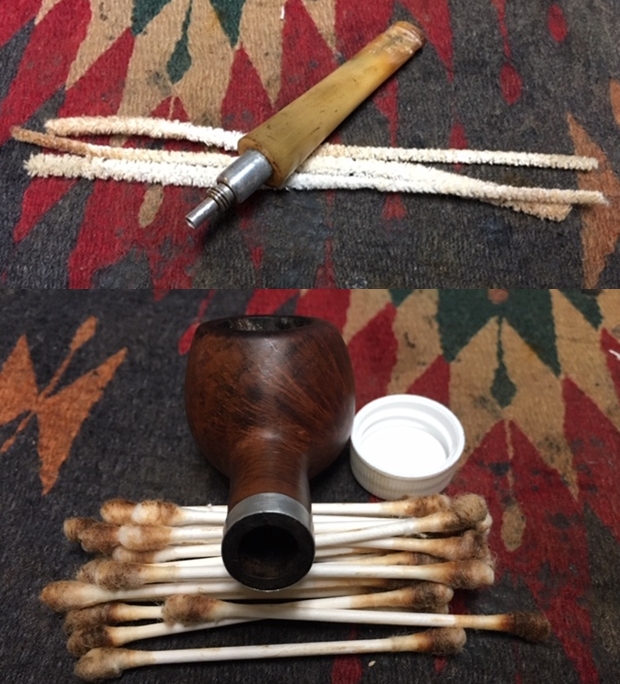
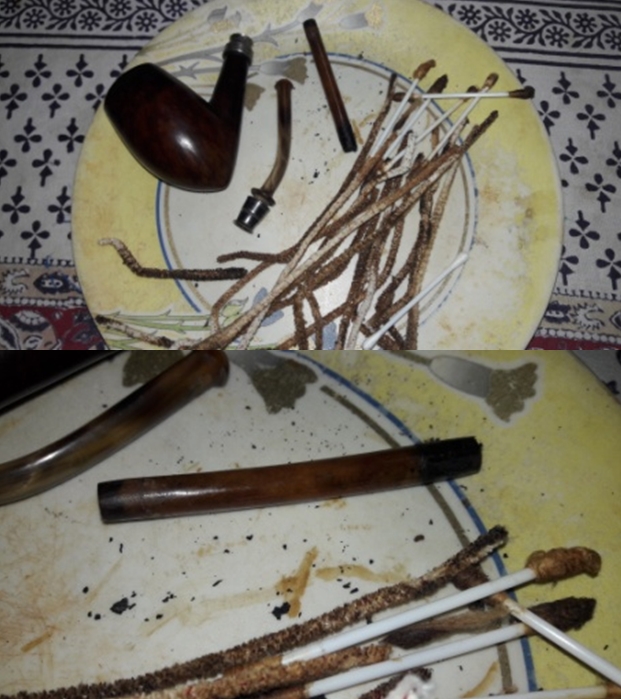
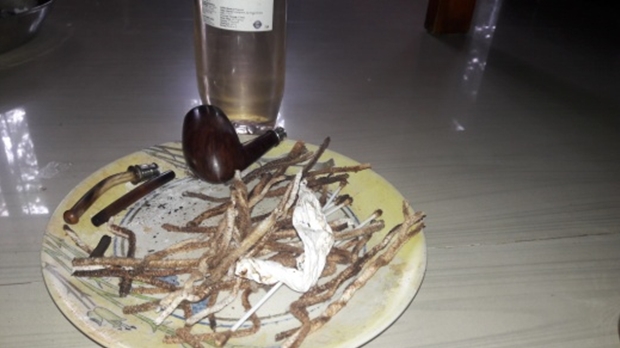
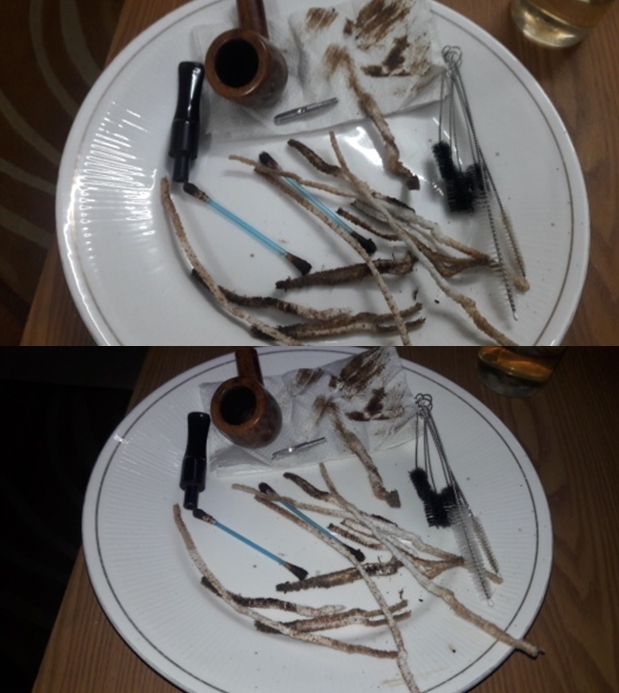
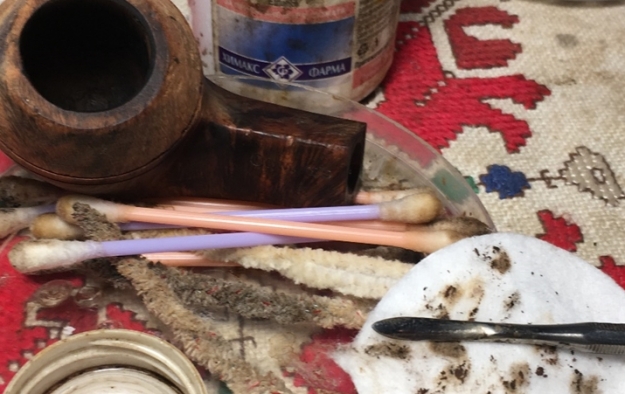
Before beginning the reconstruction of the broken shank end, I cleaned the internals of the shank, using hard bristled and regular pipe cleaners, q-tips, shank brushes, all generously dipped in isopropyl alcohol. The pipe cleaners would not pass through the mortise airway and the draught hole and so had to resort to more invasive methods. I straightened a paper clip and curving it, probed the insides of the mortise and the airway. After some efforts, I was able to dislodge the block. I scraped the inner walls of the mortise with a fabricated dental spatula. I gave a final cleaning with pipe cleaners dipped in isopropyl alcohol till the pipe cleaners came out, well, clean!!!  The heap of pipe cleaners and q-tips that are seen in these pictures are just the proverbial tip of the iceberg. I must have gone through an entire packet of 50 of both types of pipe cleaners, in addition to the q-tips and brush cleaning!!!!!

I, thereafter, began the process of reconstructing the broken portion of the shank end. I folded a pipe cleaner to fit snugly in to the opening of the shank end. Once I was satisfied with the fit, I smeared the pipe cleaner with Vaseline jelly and inserted it in to the opening.I applied first layer of superglue and pressed a little briar dust over it and let it set for a few minutes. This is followed by another layering and continued this process till I was satisfied with the reconstruction. I set the stummel aside overnight for the reconstruction to cure.

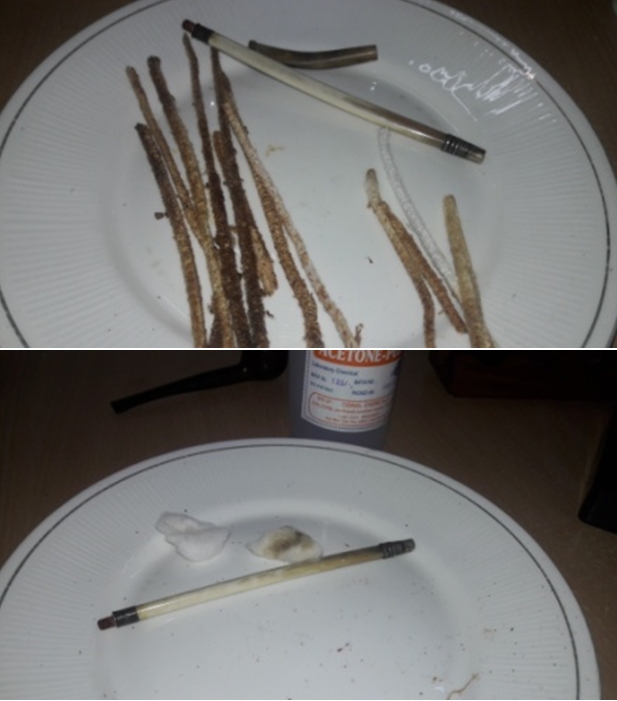
As the shank end reconstruction was curing, I initiated the repair and clean up of the Albatross wing bone extension and the horn bone stem. I cleaned the internals of the wing bone extension and the horn stem with bristled and normal pipe cleaners dipped in isopropyl alcohol.Once the internals were clean, I cleaned the external surface of the extension with cotton swabs dipped in Acetone and finely applied superglue over the superficial crack. This was done primarily to stabilize, strengthen and prevent further spreading of the superficial crack and obviate any chances of air escaping from these cracks in future. I set the wing bone extension to cure overnight along with the shank end repair.

As I had remarked during my initial visual inspection, I felt that the tooth chatter on the lower and upper surface of the horn bone stem should be taken care with sanding it down with a 220 grit sandpaper. How wrong was I! After sanding the upper and lower surfaces of the horn stem, I realized that the tooth chatter was deeper than I had anticipated and would have to be addressed with a fill of clear superglue. And so I filled these tooth chatters with superglue and the stem too joined the ranks of the shank end repair and wing bone extension on the rack for curing overnight.

The next evening, after a hectic and tiring day in office, I decided to work on the shank end reconstruction. I filed the external repaired area with a flat head needle file and carefully matched the profile of the fill with that of the surrounding area so as not to adversely affect the fit of the ferrule at a later stage. I frequently checked the progress by fitting the ferrule over the shank end. I achieved a perfect profile match by sanding the shank end with a used 150 grit sand paper. Once the external profile was matched, I worked on the internal adjustment of the reconstruction to match the seating of the wing bone extension in to the mortise using a round needle file. I frequently checked the seating of the extension in to the mortise and making necessary adjustments by filing till I was able to achieve a perfect fit. To be honest, it was not as easy as it appears while reading it.The amount of time and concentration required cannot be described in words.

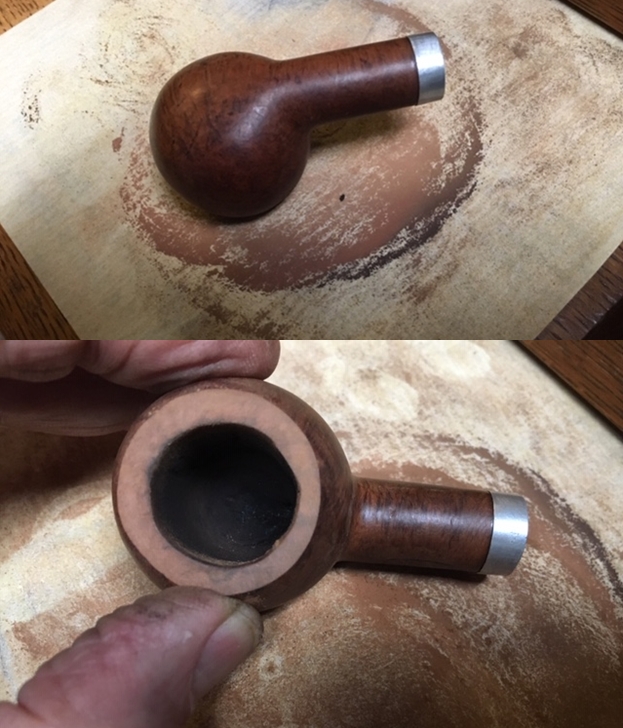
Staying on the stummel restoration, I cleaned the external surface of the stummel and the rim top surface with undiluted Murphy’s oil soap and a hard bristled toothbrush and rinsed it under running tap water, taking care that water does not enter the chamber and the mortise. I dried the stummel using paper towels and soft, absorbent cotton cloth and set it aside to dry out naturally. The beautiful grain really stands out at this stage with the symmetrical division of grains on the lower surface of the shank, more distinct and clear. It is easily one of the best grained pipes that I have in my collection. Somehow, I was not satisfied with the way the rim top surface had cleaned up and I again sought the advice of my mentor, Mr. Steve, and received his reply, in his peculiar style, as “I would”, that’s all he had remarked!!!!!!

And so my initial plan for not topping the rim top was shelved and I decided to carefully top the rim surface. This would also help to address the one single chip on the rim’s top surface and also to remove traces of lava overflow. I topped the rim surface with 220 grit sand paper.Though it is recommended to have a wooden board with the 220 grit sand paper firmly fixed over it, I just keep the sand paper on a flat table top, holding it firmly with my left hand and rotating the stummel rim top over it with my right hand. I have come to realize that this set up gives me lot more freedom of movement, better control and convenience of storage. The single chip was addressed to a great extent, but was still an eye sore. Using a folded 150 grits and paper pinched between my thumb and forefinger, I created a very light bevel to mask the chip. Though the bevel is not easily discernible, it helped address the issue of the chipped rim inner edge.

I followed it up by micromesh polishing pads,wet sanding with 1500 to 2400 grit pads. Again, I wiped the bowl with a moist cotton cloth after each pad. I used the 3200 to 12000 grit pads to dry sand the stummel to a nice shine. It was at this stage that DISASTER struck!!!!! The stummel slipped from hands and crashed to the ground, shattering the reconstructed shank end and sustain a big ding to the heel of the stummel. Oh my!!! What agony it would be to reconstruct,re-profile the exterior and readjust the seating of the extension in to the mortise. But at this stage of restoration, I was left with no recourse but to reconstruct.

 This time around, I slightly tweaked the process. I wound a cotton rag around the complete stummel, less area to be repaired, so that the glue and briar dust does not spill over rest of the stummel and create more work for me. I completely sanded the earlier reconstructed portion and applied a layer of superglue and let it cure for a few minutes. Once the glue had hardened, I applied second layer of super glue and pressed some briar dust over it. I repeated this process of layering till I had achieved a matching top surface. I applied a final layer of superglue over the complete reconstruction and set it aside to cure overnight.

The next evening, I worked on the wing bone extension and the horn stem. I sanded the fills on the shank extension and the stem with a 220 grit sand paper. I sharpened the edges on the lip with the help of a flat head needle file and a folded piece of 220 grit sand paper. When the fills were matched with rest of the surface, I progressed to micromesh polishing, wet sanding with 1500 to 2400 grit pads and dry sanding with 3200 to 12000 grit pads. I wiped the shank extension and the stem with a moist cloth after every pad and rubbed a little extra virgin olive oil on the surface after every three pads. The Albatross wing bone extension and the horn stem is nice, smooth and clean. The wing bone extension has retained its natural coloration and there is nothing one can do anything about it. I finished the restoration of the wing bone extension by polishing the sterling silver end caps with cigar ash. At this stage, the entire assembly of the extension and screw-in type of bone stem looks beautiful, smooth, shiny and classic. I call it a day and decide to work on the stummel the next evening.

I start work on the stummel by filing the external surface with a flat head needle file and go through the entire process described earlier to match the exterior and internal surface with the sterling silver ferrule and seating of the Albatross wing bone extension respectively. I was extra careful this time around while working the stummel. You may find it amusing, but I sat on my double bed while I worked on the stummel!!!! Such a fright this incident had caused.

Then there was the issue of a dent near the heel in the stummel surface. Mr. Steve suggested adopting the steaming method to address this dent. Though theoretically I was well conversed with this method, I had never attempted it before and now to attempt it on a pipe of such vintage, beauty and value, had me in doubts. Added to this, I did not have any electric iron in my room as all the laundry, including ironing, is done by the washer man (I do enjoy certain privileges that come at my seniority in my organization). But seeing no other way out, I decided to give it a go. I improvised a bit and heated my trusted fabricated knife on a candle flame, soaked a thick Turkish hand towel and placed it on the dent. When I felt that the knife was sufficiently hot (well, I got it nicely hot!!!), placed it over the hand towel and over the dent. When there was a nice sizzling sound and a thick whiff of steam, I immediately removed the knife away from the surface and with a thumping heart, removed the hand towel to inspect the results, and boy was I pleased!!! The dent was reduced to nothing with the briar expanding nicely to lift the dent due to the steam, but it did leave behind a stark discoloration around the area. After a brief discussion with Mr. Steve and exchange of pictures, he suggested to rub some ‘Before and After’ balm in to the affected area to see if this would help in addressing the issue. Fortunately, it did!!!!Since I had attempted this steaming method for the first time, I was too preoccupied and missed out on taking pictures, my sincere apology to all those who were looking forward to these pictures.

To match the repaired surface with the rest of the stummel, I went through the complete micromesh polish cycle again.

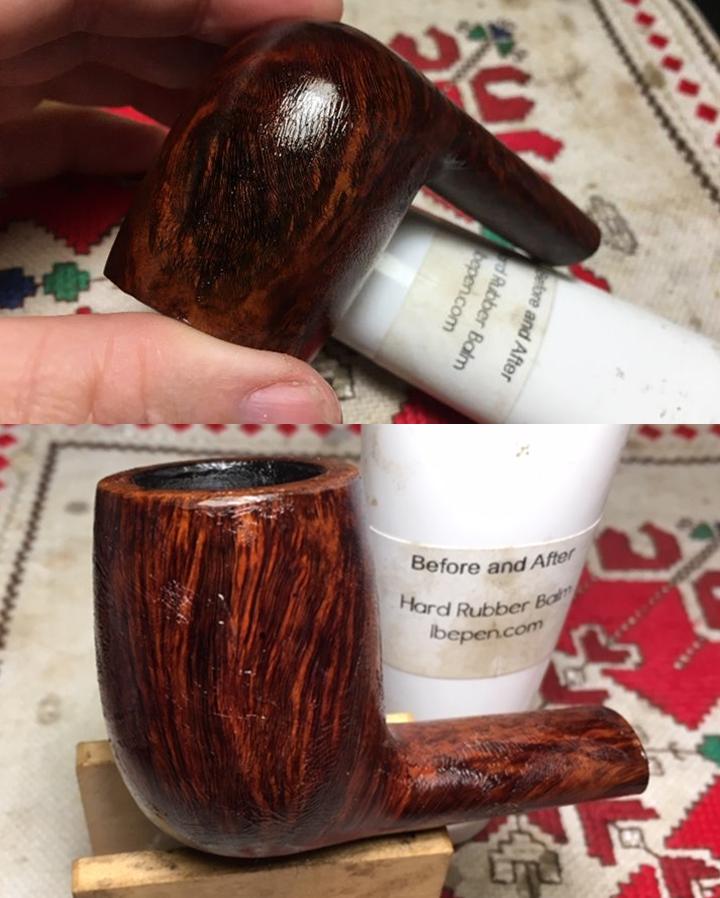
At the end of 12000 grit pad, I rubbed a little quantity of ‘Before and After’ restoration balm in to the stummel with my fingers and set it aside for 10-15 minutes while I polished the sterling silver ferrule. The transformation in the briar is amazing to say the least!!!!! I buffed the stummel with a soft cotton cloth. I finish this stage of restoration by re-attaching the nicely polished and shining sterling silver ferrule over the shank end using super glue.

To finish the restoration, I mounted a cotton cloth buffing wheel to the Dremel (actually it is not the brand machine, but a local machine which is similar).  I set the speed at about 40% full power and applied White Diamond compound to the entire pipe.  Afterwards, I wiped/buffed the pipe with a soft cotton cloth to clear it of any leftover compound dust. I then mounted another cotton cloth wheel to the polishing machine,maintaining 40% speed and applied several coats of carnauba wax.

I finished the restoration by giving the entire pipe a rigorous hand buffing using a microfiber cloth to raise the shine further. The completed pipe looks lovely, fresh and vibrant. Thank you for having the patience to reach this far while reading the write up. Your comments are of utmost importance to me for improving my skills in restoration process as well as writing about it. Cheers!!!

PS. During the journey of restoring this beauty, my Guru and mentor, Mr. Steve was always around with his words of wisdom and encouragement to egg me on towards completing this project. It felt like he was holding my hand and helping me take my first baby steps around towards completing this restoration. Thank you once again, Mr. Steve.

The Filthiest Pipe I’ve Ever Seen


Blog by Robert M. Boughton
Copyright © Reborn Pipes and the Author except as cited
https://www.roadrunnerpipes2k.com/
https://www.facebook.com/roadrunnerpipes/

You can’t judge a book by its binding.
— From the journal American Speech, 1944

INTRODUCTION
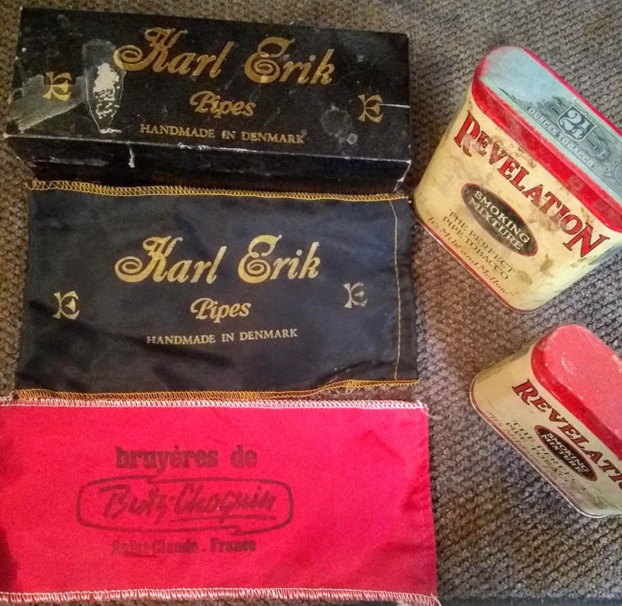
The Dr. Grabow easy bent smooth billiard I came by in a foolish case of mistaken identity on eBay looked normal enough on the outside, other than an apparent crack that wasn’t visible in any of the seller’s few photos.  The zigzag flaw extended from the top front of the bowl almost halfway down, which of course was not a good sign in a pipe when the intent was to sell it – and I definitely did not want to keep it for my own collection.  The dubious pipe came as part of a lot with two others of its ilk; an old Karl Erik box; two very nice choice sleeves – one that was also for a Karl Erik and the other for a Butz-Choquin – and two Revelation Smoking Mixture tins of indeterminate age.  Venturing a guess, I’d say they’re no newer than the pipes.

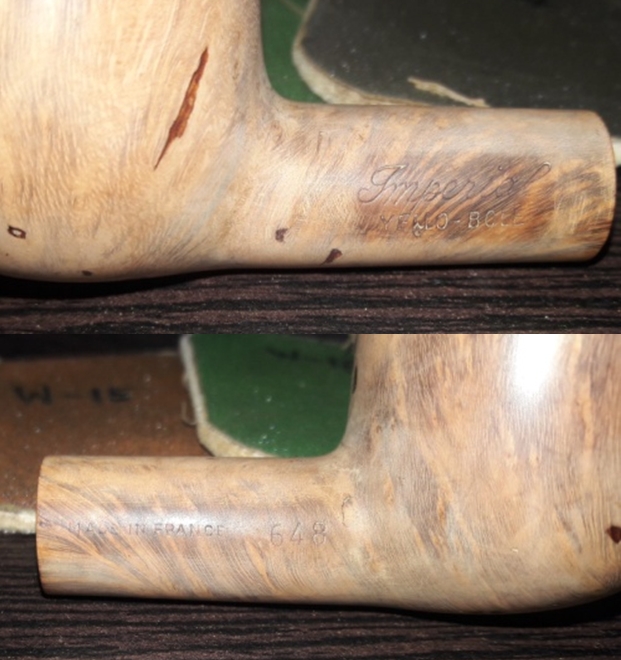
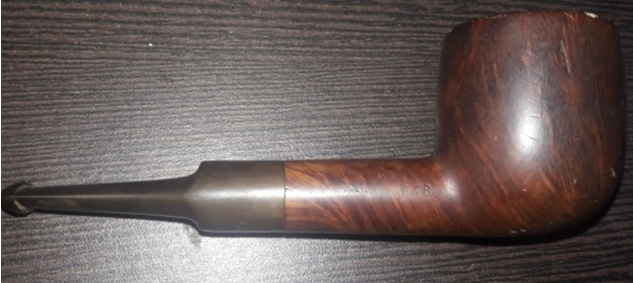
My haul, minus the Dr. G, Yello-Bole and MedicoMy impression from the poor photos provided online was that one of the pipes must have been a Butz-Choquin.  You see, the only descriptions of the pipes given in the listing were that they were “vintage,” and you guessed it, I fell for the deliberate obfuscation, and Buy Now to boot.  As the only measure of self-defense I can muster, at least I only paid about $10, with shipping included.  They turned out to be this Dr. Grabow and two Yello-Boles, one a Spartan.  The Spartan did clean up purty compared to how it was.The Dr. G. is six inches long but otherwise very small.  The height is 1.5” and the inner bowl diameter is ⅝” x 1”  As a rule, unless the particular pipe is very old or has some other special attribute, I shy away from this name and Medicos and the like, although I’ve found almost anything will sell to someone who is a fan of a given brand.  In fact, just last week at my monthly pipe meeting I sold the Spartan with a stem logo of a yellow Y in a circle to a friend who happens to be my best customer.

The friend has accumulated some great pipes from me – such as a late 1930s Kaywoodie Super Grain and a Ropp last month – and an amazing collection of antiques including a few KB&B beauties, but he admits to having a weakness for vintage Yello-Boles.  I estimated the Spartan dated to the 1960s, and my friend somehow traced it on his cell phone to 1966.  That’s what I call a Yello-Bole devotee.

At any rate, the Dr. G. billiard remained quarantined in a box for more than a year with others that are so tragic I’m sure I’ll end up using them as examples of pipes never to buy.  In short, only when it was the last pipe I had to work on did I gather the gumption to go for it.

But as I already noted, all outward appearances showed nothing I couldn’t handle without too much effort, including the odd zigzag on the bowl.  The inside turned out to be a different matter altogether, one for the books as far as I’m concerned.

RESTORATION

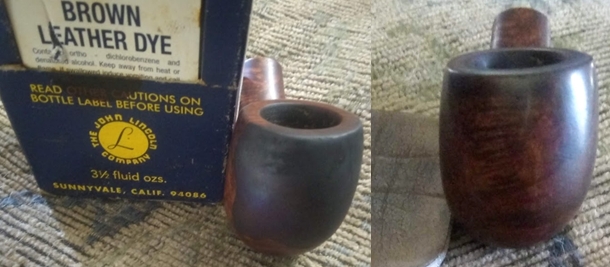
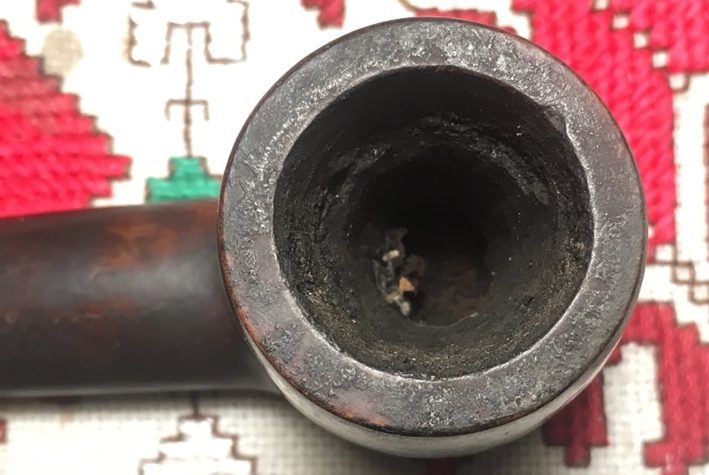
I wanted to get the pipe in a basic clean order before tackling the crack.  Starting with the light rim char and cake in the chamber, I used super fine “0000” steel wool on the rim to begin and a pen knife around the walls of the chamber that was too small to insert a reamer – meaning the one size I have.  Then I sanded the rim with 1000-grit paper and the chamber using a pinkie and 150- and 220-grit papers. I cleaned off the old blackness from the shank opening with the same steel wool and wiped down the entire stummel with purified water on a paper towel.Now the crack I mentioned is apparent.  Knowing it wouldn’t get rid of the crack, I sanded the outside of the wood with 1000-grit paper to remove the other small but pervasive blemishes. With the pipe more or less spiffed up, I could see the crack was hairline, so to speak, not penetrating the bowl in any visible way.  That was a relief as I knew I could make it go away altogether with sanding.  I tried 150-grit paper, and that looked like the end of the ostensible crack.  I followed up with 320-, 400-, 600- and 1000-grit papers.A full micro mesh progression left the briar looking absolutely fabulous, or abfab, as British interior designers like to gush about wood.  To be serious, though, which I often try not to be, knowing it drives some readers nuts but keeps me sane, the micro mesh step – if I had to choose just one from all of the routine tasks in a pipe restoration – is my favorite.  Seeing the resilience of wood, or briar anyway, that allows it to bounce back from ruin is to me what sunshine was to John Denver.  Well, not exactly, but you get the idea. The front shot above, I’m sorry to say, doesn’t show how pale most of that side was even after micro meshing.  Suffice it to say, a spot stain was necessary with Lincoln brown leather dye.  I took a little more joy in staining and flaming it. Looks like everything is going great, doesn’t it?  That’s rhetorical.  Only after thinking I was almost finished did I commence the part that turned into a singular horror the like of which I never before experienced.  Without exaggerating at all, I admit I was sure I had found a pipe that could not be cleared of all impurities, no way, no how.  I’m sure this sounds like more of my melodramatic foolery, but for once I am being as serious as I get.  I suspect I may have some kind of world record, if people registered such statistics, but no doubt Steve, if perhaps no one else, has a worse story or stories to tell.  I’d love to hear them!

To wit, I found myself at the point of having to deal with the inside of the billiard.  Nothing prepared me for the almost human resistance and downright orneriness I encountered, not to mention the smoking implement’s physical manifestation of the common human psychological condition of filthiness.

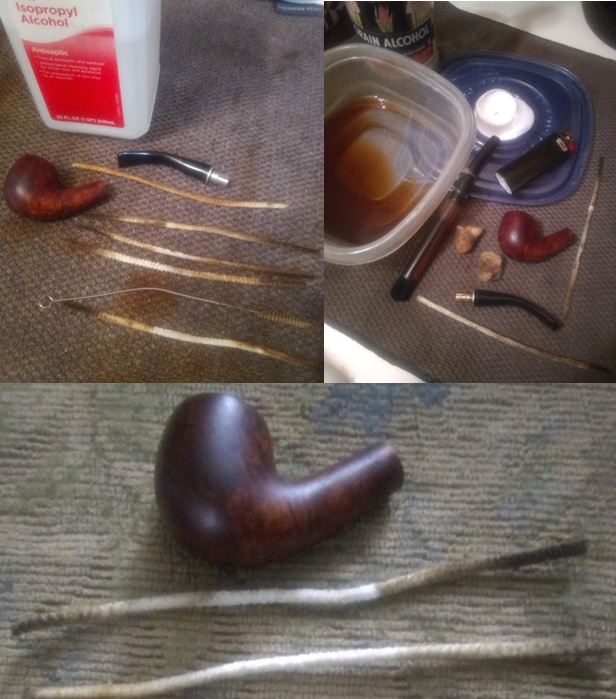
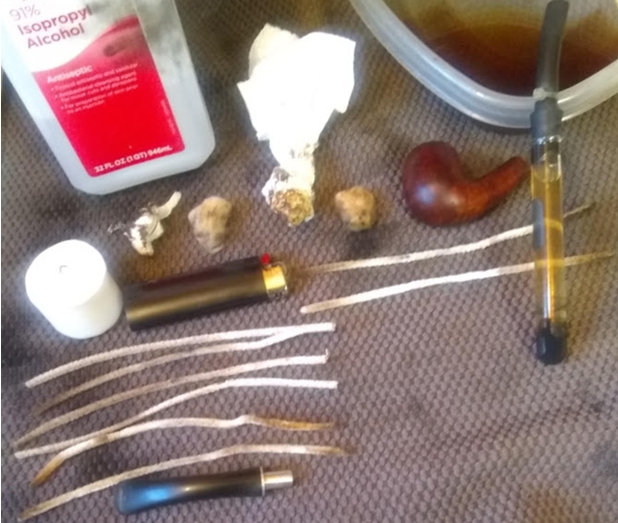
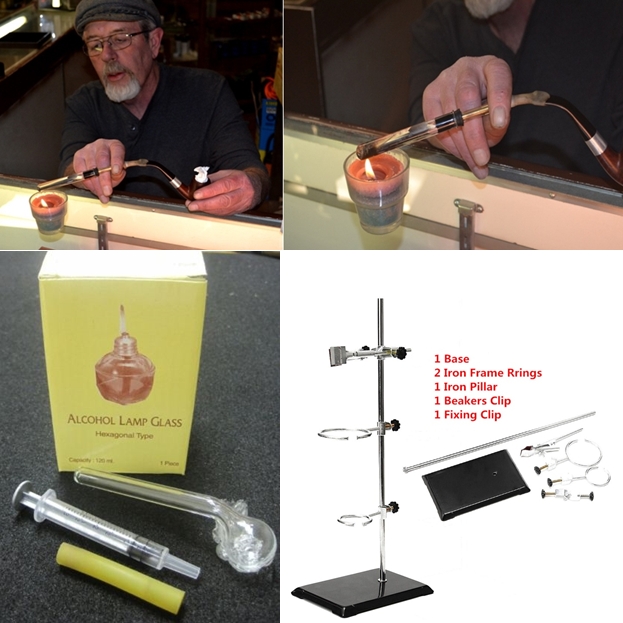
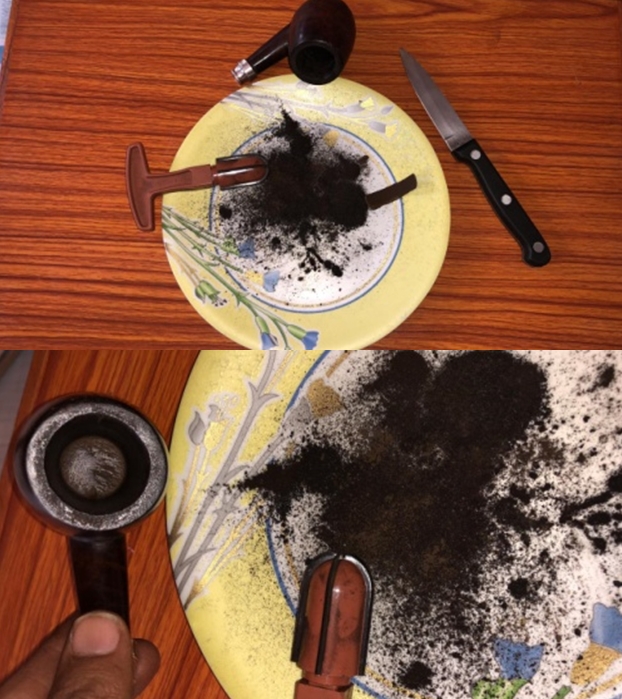
The pictures that follow, showing the pre-cleaning, retort and aftermath of all that, with nine pipe cleaners, a nylon bristle cleaner, two cotton plugs and a wasted (in the colloquial sense) candle, don’t approximate the work and time already expended on cleaning and sanitizing the inner passageways of the pipe.  I included the Tupperware with spent alcohol as a clue to how much I boiled through the guts of the thing, with the wholly unsatisfying and unacceptable final Pyrex tube as dark as every other, but it still isn’t sufficient to understand my frustration, so I’ll tell you.  I had already used up 13 tubes of alcohol, getting nowhere.I knew I could use any number of pipe cleaners dipped in alcohol on the shank and it would do no good.  And so I started again, with a fresh retort (and candle and two more cotton plugs).  After nine more tubes boiled through the pipe – that’s a total of 22 – I at last achieved a clear enough result that didn’t get darker after three trips through the bowels of the Grabow.I don’t know, maybe this isn’t so unusual.  Or maybe I need a better retort system, as I’ve been looking forward to buying, something like the first one below, probably self-made by my friend Chuck Richards, or even the other I found online.

Hand-held laboratory-style retort system made by tbus6906, eBay, and an actual lab setup from best collection999 at eBay

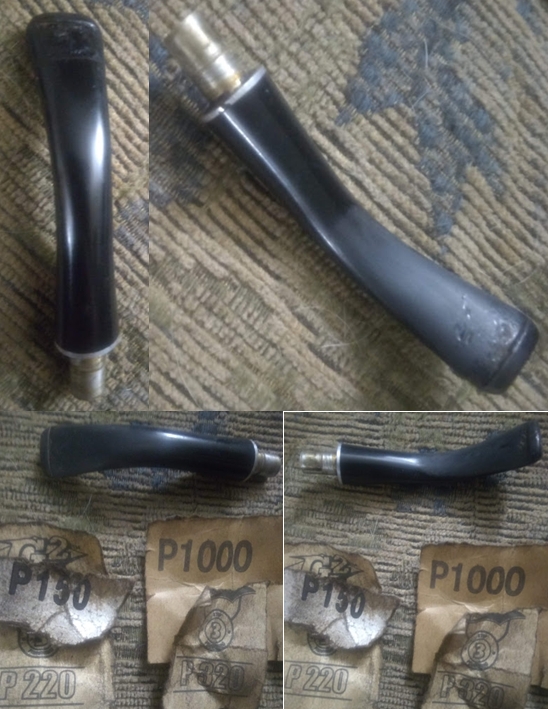
And now for the stem, starting as it appeared when I got it and after the various phases of smoothing and buffing. And here is the finished pipe, the stem machine buffed with red and white Tripoli and the stummel with White Diamond and Carnauba. That’s a Medico filter in the stem, BTW, because it’s all I have and it fits!  Besides, whoever buys the Grabow will probably toss it.

CONCLUSION
This was an unusual restore for me for a couple of reasons. One, I set out thinking the big deal was going to be fixing a bad crack, and two, the real problem ended up being hidden within.  My previous record for the number of Pyrex tubes of alcohol I had to run through a pipe was nine, for a pipe I haven’t blogged yet.  I thought that was bad until I was faced with the harsh reality of this dainty little Grabow!  It’s the right size for most women (no sexism intended but I’ll probably get flack for that), but only a man could have smoked a pipe for possibly 40 years without ever really cleaning it.  Maybe that will get me off the hook with any female smokers who read this.

Oh, yes, a note about Revelation Pipe Mixture.  Never having heard of it and suspecting it’s out of production, I found I was correct about the latter part.  It was blended by House of Windsor, which still makes about 20 mixes, mostly aromatics, in the U.S.  Revelation was a coarse-cut (based on the photo I found, despite the description as ribbon cut) American blend of bright flake and red flake Virginias, cube cut burley, Kentucky, latakia, perique and “citrus/misc.”  It seems to have been somewhat popular given a 3.1 out of 4 rating at TobaccoReviews.com.  Legend says this was Albert Einstein’s go-to mix, so it couldn’t be all that bad.  It seems a reincarnation of this tobacco is being made in bulk form and true ribbon cut, from the same ingredients.  The link to the source is below for anyone interested.  Revelation was made by Philip Morris Co. Ltd. Inc. and distributed by Continental Tobacco Co.  I guess the tins are pretty old because companies aren’t named like that anymore.

SOURCES
https://www.ebay.com/itm/Professional-Pipe-Retort-Kit-/252292269562
https://www.ebay.com/itm/50cm-Lab-Laboratory-Retort-Stands-Support-Clamp-Flask-Platform-Alcohol-Bottle-Tu/113144136090?_trkparms=aid%3D555018%26algo%3DPL.SIM%26ao%3D1%26asc%3D20131003132420%26meid%3Dea98143cf6974165b8baaa44c36acc79%26pid%3D100005%26rk%3D3%26rkt%3D8%26sd%3D312302738289%26itm%3D113144136090&_trksid=p2047675.c100005.m1851
http://www.tobaccoreviews.com/blend/1219/house-of-windsor-revelation
http://www.tobaccoreviews.com/search?Blender=House%20of%20Windsor
http://wvsmokeshop.com/revelationalternativebytheounce.aspx

Rescue of a Stately Stanwell Henley Special, Made in Denmark, Oval Shank Billiard


Blog by Dal Stanton

I have been looking forward to this project ever since I landed three Stanwell Henley Special pipes on the eBay block from a seller in Maryland.  The seller provided helpful information that only helped urged me to place a bid:

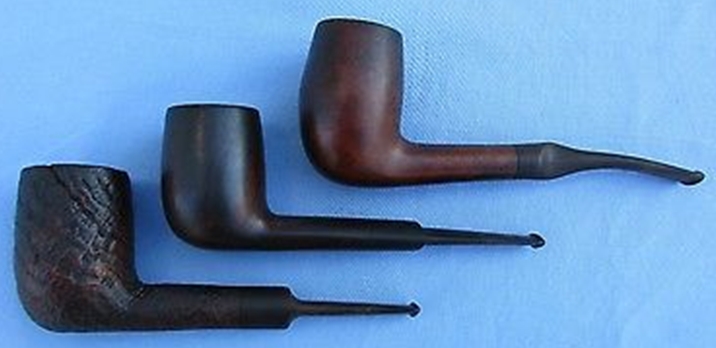
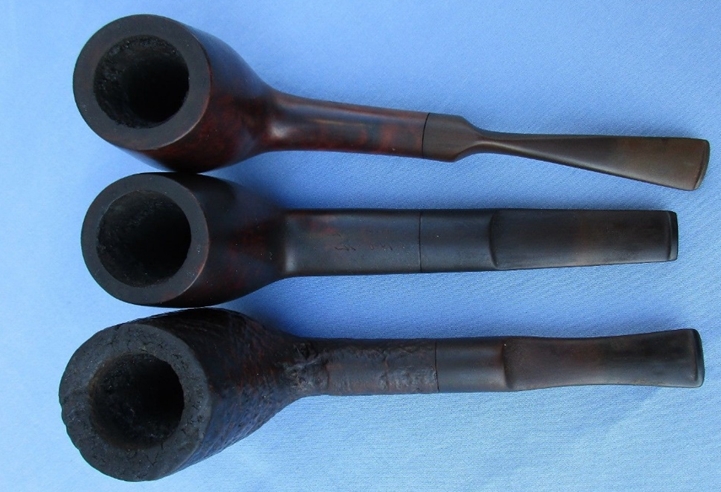
This auction is for three vintage Stanwell, Henley Line estate pipes from the 1950’s-60’s era. All are in good pre-owned condition. The stems are primarily free from teeth marks. The stems do have some fading. All of the stems fit snug and the wooden bowls are free from outstanding blemishes. As seen from top to bottom, the first pipe reads Henley Special #57, the second and third read Henley Special without any numbers seen. All of the pipes read Made in Denmark.

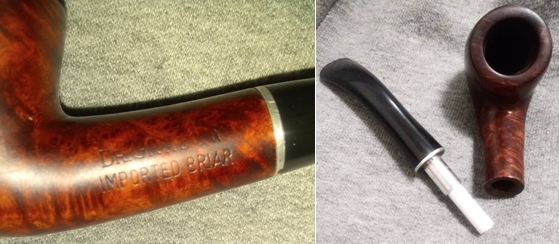
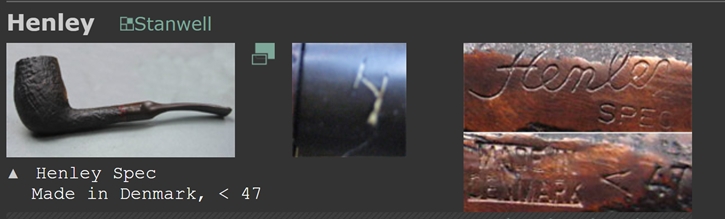
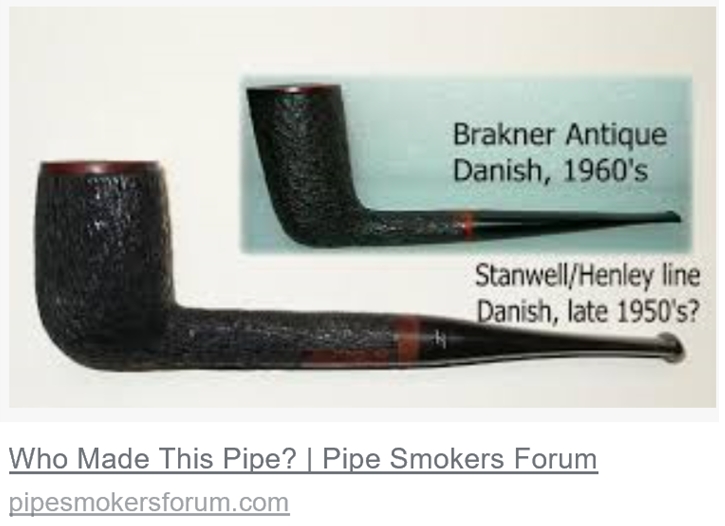
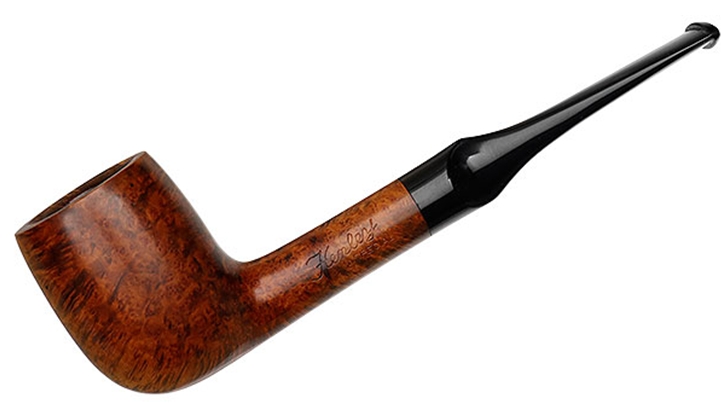
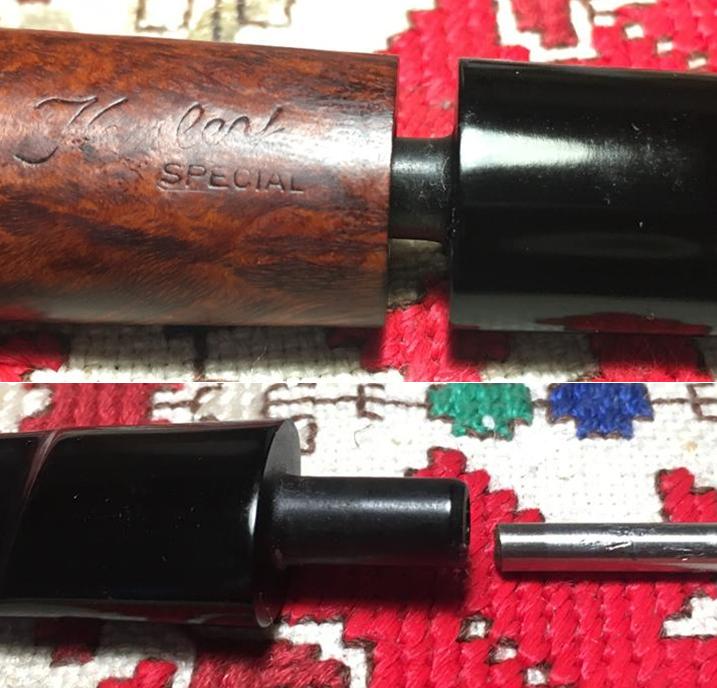
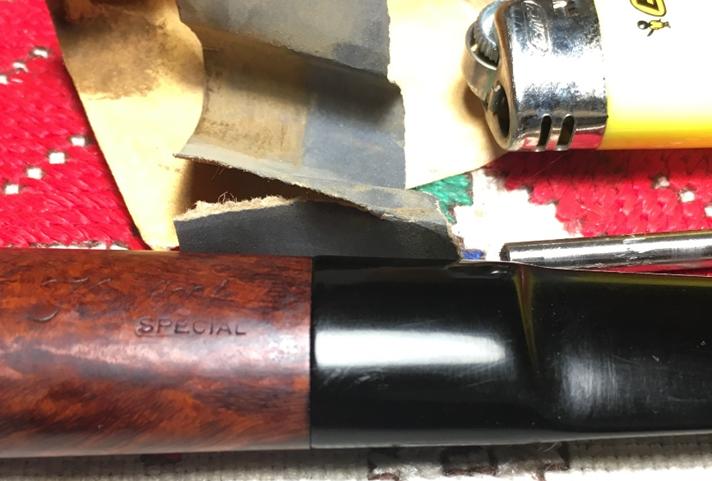
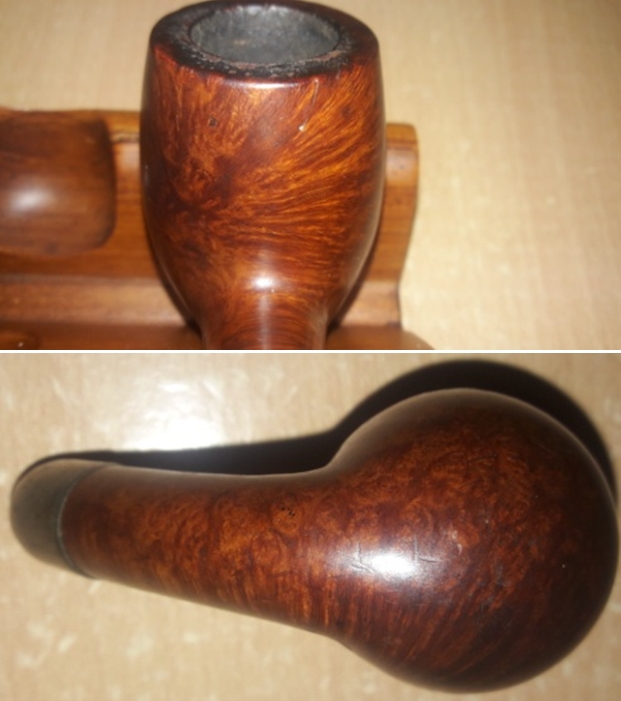
Since I started collecting and restoring pipes, I’ve grown in my appreciation for Danish made pipes.  They tend to be stout, well made pipes.  The stems are also interesting – the ‘pinched saddle’ fish tail is unique.  When I saw the 3 Henley Specials, I was attracted to the line-up but had never heard of ‘Henley’.  When I read the sellers description I was sold – I was especially drawn to the ‘Chimney’ on the top of the group below, sporting a pinched saddle fishtail stem.  The Stanwell Henley on my workbench now is the classic Oval Shank Billiard in the center.  Along with a Comoy’s Moorgate, Jim saw the Henley Special in the For ‘Pipe Dreamers’ Only! collection and commissioned him.  He saw what I also see in these classic Danish pipes.  As with frosting on the cake, this pipe benefits the Daughters of Bulgaria, our work here in Bulgaria helping women and girls who have been trafficked and sexually exploited.  The pictures show what I saw on eBay. Unfortunately, I cannot find much online regarding the Henley line.  Pipedia’s article on Stanwell pipes simply places the Henley Special line in the list of Stanwell second brands.  Pipephil.eu provided more information with a Henley much like the slightly bent, Chimney above with the characteristic bulging midsection, but with a blasted finish.  It also show a ‘H’ stem stamp.  If the Henley on my worktable had one, it is now long gone.The only information I found that gave any reference to dating is spurious at best. I found the following picture on Google images but the link to pipesmokersforum.com is now a dead end.  “Who made this pipe?”  I would have loved to read the thread that discussed the dating of the discontinued Stanwell second, Henley Special.  The picture puts a question mark in the late 50s.  Looking at all the 3 Henley Specials I acquired, the look and feel of them lends toward this dating, but…. This picture and the eBay seller’s description placing the pipes in the 50s or 60s are anecdotal, but seem to me to be accurate.  Oh, for the return of the now defunct, Chris’ Pages website, to look through the old catalogs! One very interesting find was a Stanwell Henley Special for sale in the listings of SmokingPipes.com in restored state – very nice.  It gives me an idea of what might be under the older, tired finish of all three Henleys in my collection.Taking a closer look at the Henley Special Oval Shank Billiard on my worktable, I take these pictures for a closer look. The nomenclature is found on the upper side of the oval shank.  A very thin, worn ‘Henley’ (in cursive script) [over] offset ‘SPECIAL’.  On the underside is the COM, ‘MADE IN DENMARK’. As with the other two Stanwell Henley pipes I acquired at the same time, the finish is extremely dark from years of grime and oil build up.  The uniformity of the darkened state of the pipes lends to a common period of manufacturing, which I’m guessing to be in the 1950s or 60s.  Even though I know it’s not an exact science, the feel of the pipes seems older.  I need first to clean the briar surface before I can see what is going on with the briar – the condition or even the look of the grain.  The oval saddle stem has oxidation, tooth chatter and dents which need attention.  The cake in the chamber is thick and will be removed to give the briar a fresh start.  The rim has significant lava flow and I detect a divot on the internal lip of the rim which needs attention.

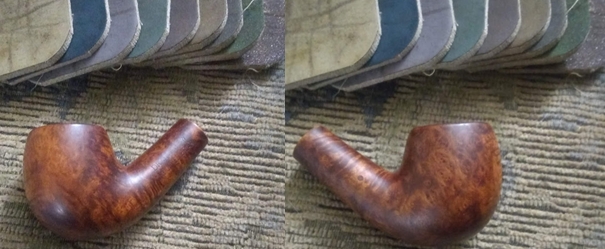
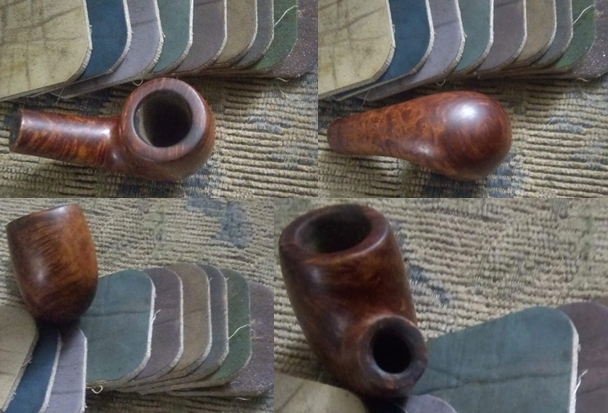
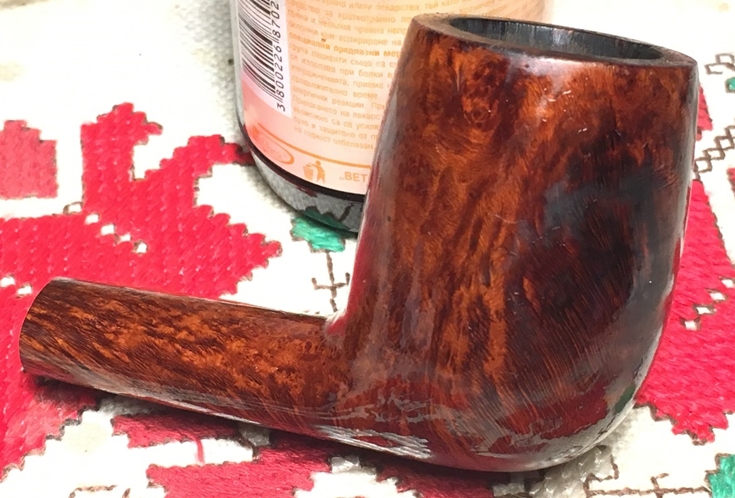
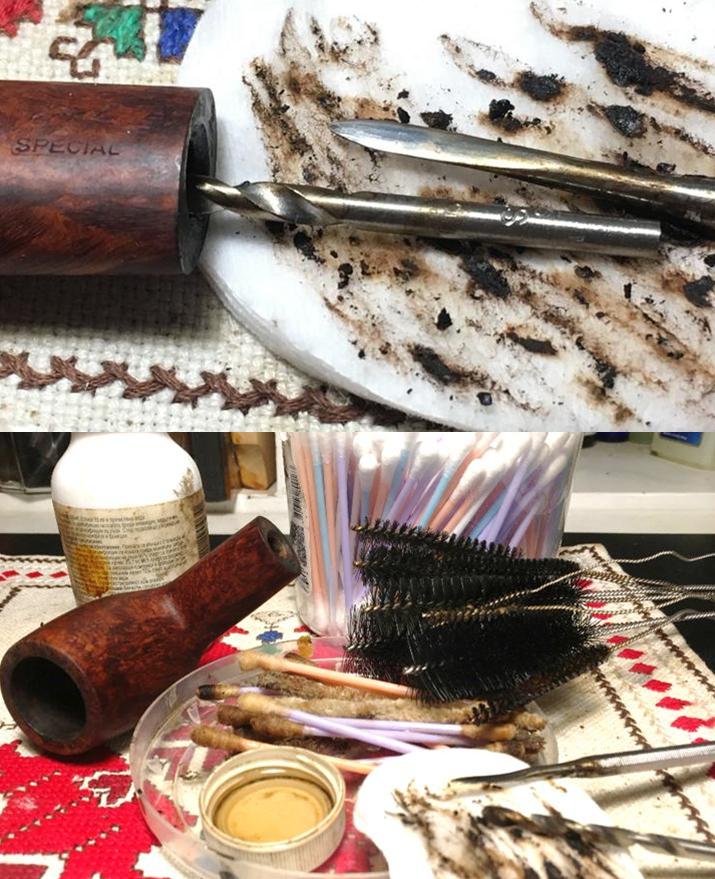
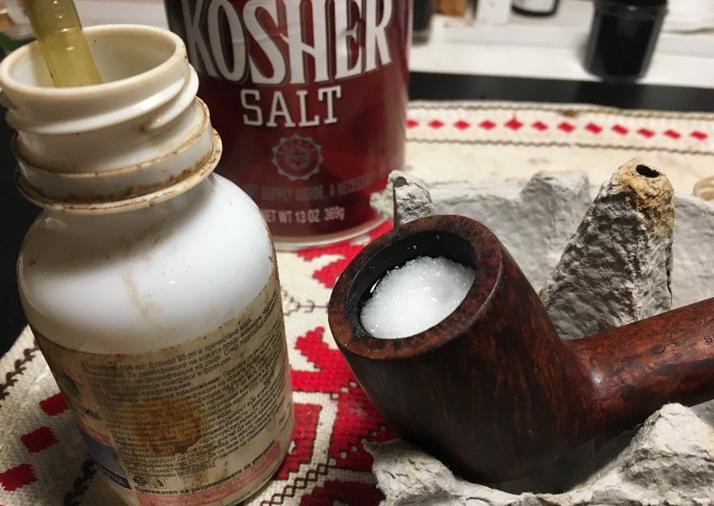
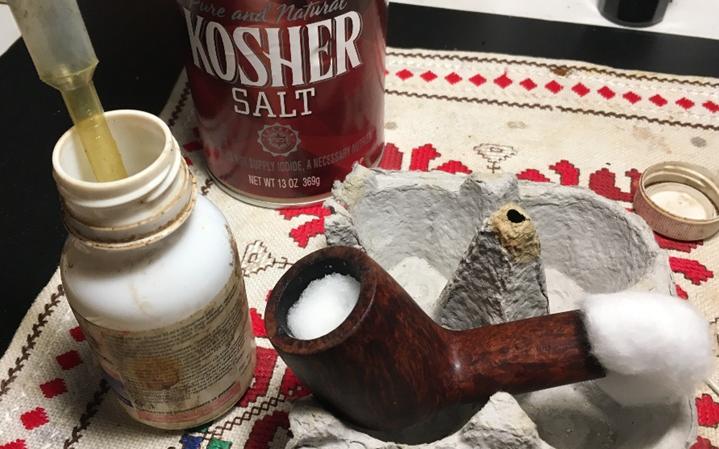
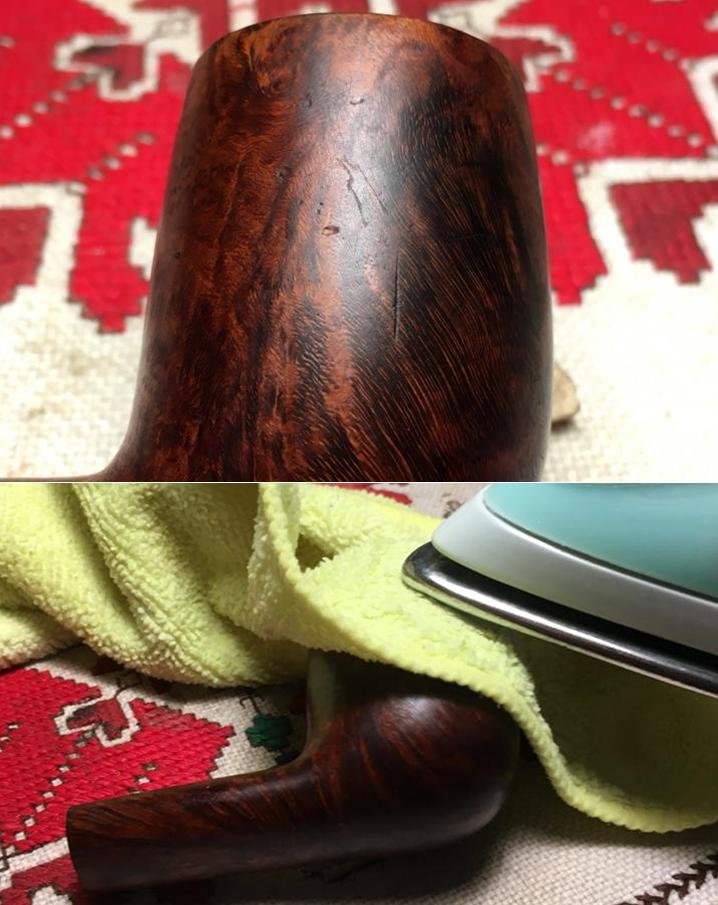
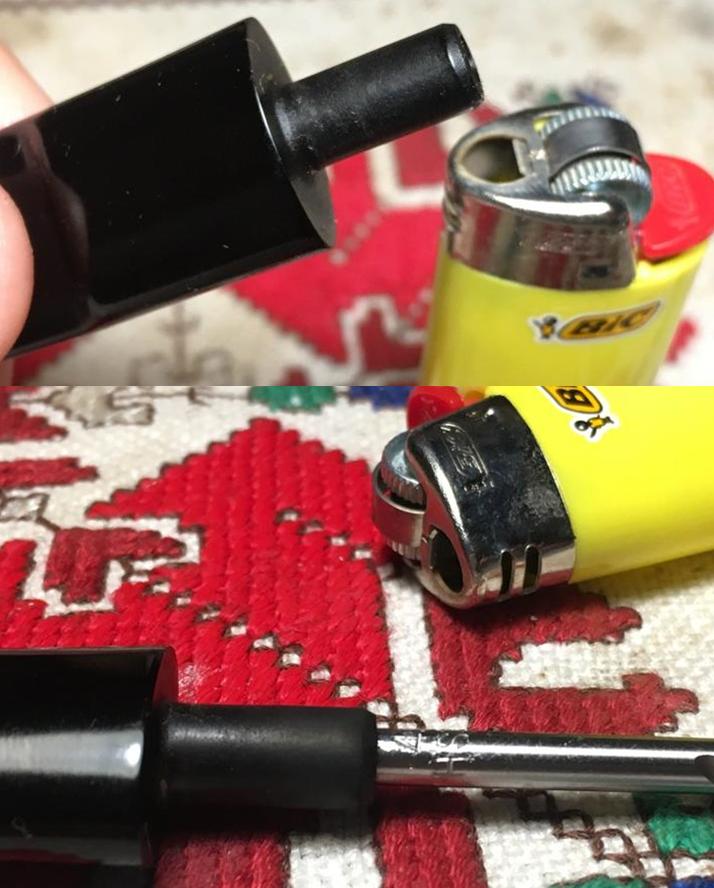
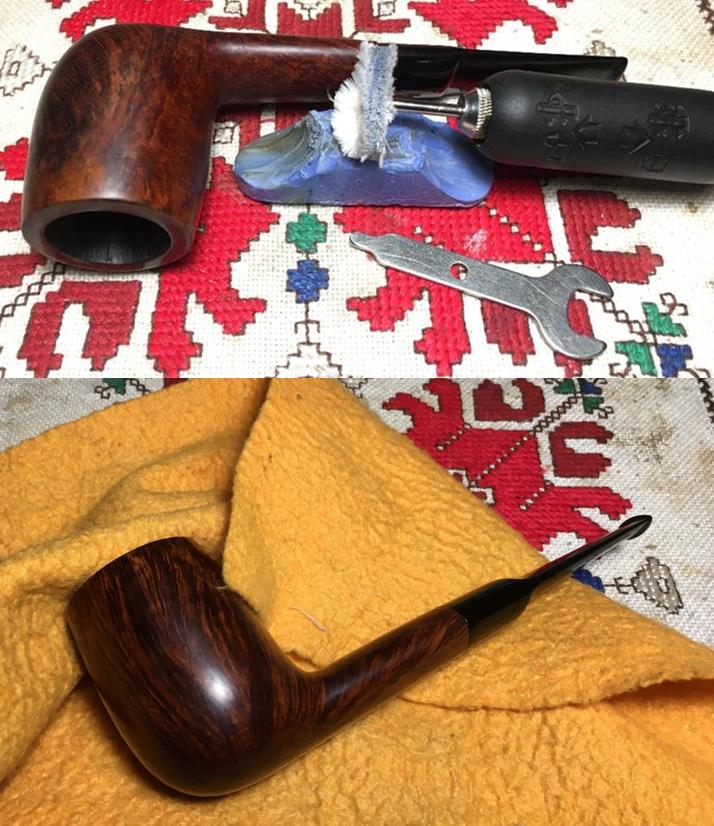
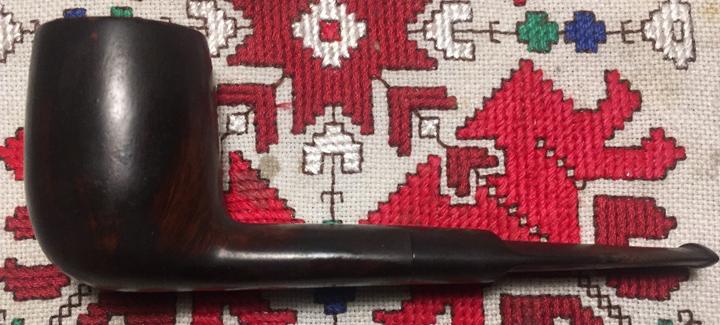
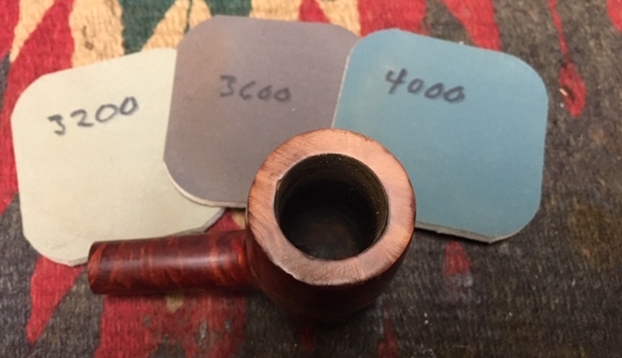
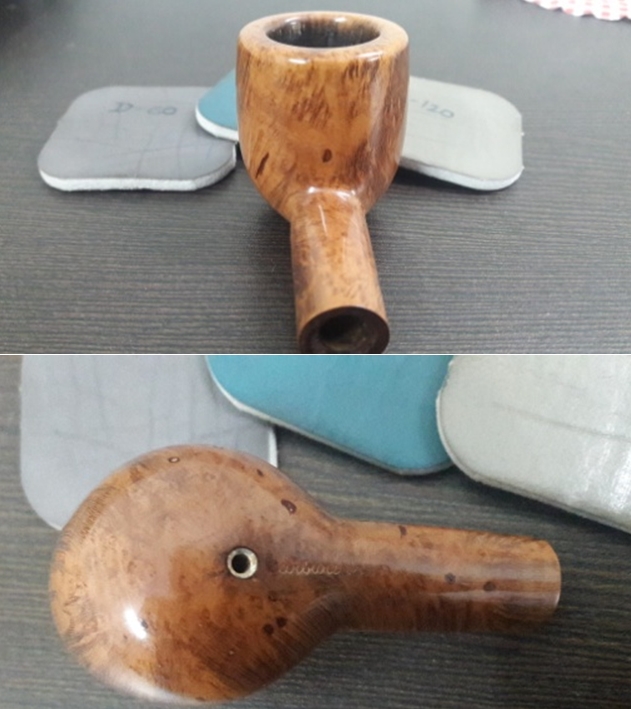
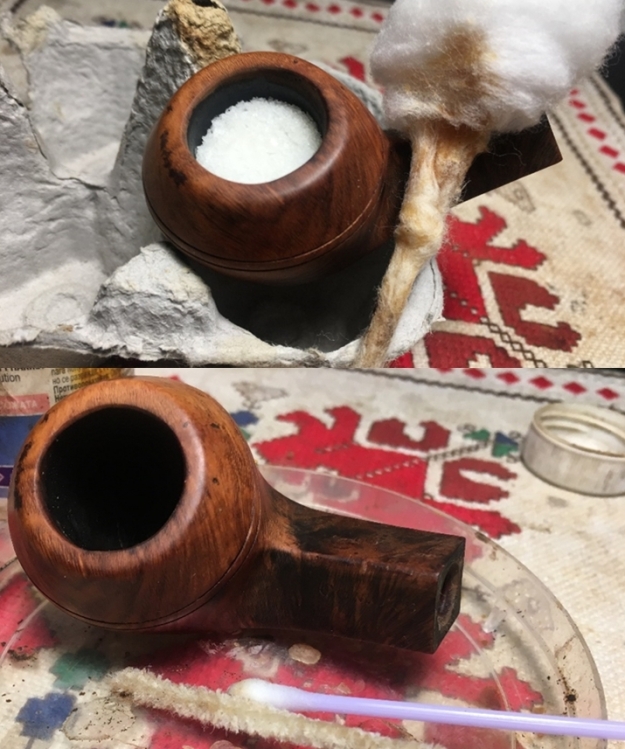
To begin the restoration of this vintage Stanwell Henley Special Oval Shank Billiard, I run a pipe cleaner dipped in isopropyl 95% through the airway to clean it up.  I then add the oval saddle stem to a soak of Before & After Deoxidizer with other pipes and stems in the queue.  I leave it in the soak for several hours and fish it out, letting the Deoxidizer drain off the stem.  I then wipe the raised oxidation with cotton pads wetted with alcohol.  I follow the alcohol by wiping the stem with a pad wetted with light paraffin oil. Turning now to the bowl, I begin by reaming the chamber.  There is heavy cake in the chamber tightens as it descends in the chamber.  Using the Pipnet Reaming Kit, I start with the smallest of the 4 available blade heads.  After putting some paper towel on the table, I go to work.  I use 3 blade heads of the 4 and then transition to the Savinelli Fitsall Pipe Tool. With the Fitsall tool I continue scraping the chamber wall and fine-tuning the reaming and reaching to the difficult angles.  Then, wrapping 240 grade paper around a Sharpie Pen, I sand the chamber removing more carbon and revealing fresh briar.  To complete the chamber cleanup, I wipe it with a cotton pad and alcohol to clear the carbon dust.  With the carbon cake cleared, an inspection of the chamber reveals no problems with cracks or heat fissures. The pictures show the progress. Turning now to the external surface, I use undiluted Murphy’s Soap on cotton pads.  I’m anxious to see what the Murphy’s Soap does on this very dark, aged briar surface. As I use the cotton pad, I very quickly begin to see what beauty was waiting underneath.  I called my wife to take some pictures as I scrubbed the ancient layer of oils and tars that have cocooned the briar underneath.  I also use a bristled tooth brush and a brass wire brush on the rim.  My, oh my!  I’ve never seen a pipe clean up to such a pristine condition.  I rinse the bowl with tap water and literally marvel at what is in my hand.  The rim is still darkened a bit from lava flow, but the flame grain that dominates the bowl’s external surface is striking.  I take two pictures after the cleaning to mark the progress.  As I look at the stummel, I decide to hydrate the briar using light paraffin oil (mineral oil) which also gives me a sneak peek at a finished stummel.  The before and after pictures tell the story. Turning now to the internals of the stummel, I use cotton buds and pipe cleaners dipped in isopropyl 95% to clean the mortise and airway. I also utilize long shank brushes to save on pipe cleaners.  To loosen up the tars and oils, I employ a dental spatula to scrape the mortise wall and reach into the airway.  A drill bit effectively excavates crud out of the airway. To do this, I use a bit the size of the airway and hand turn the bit so that it proceeds down the airway.  The bit grabs the buildup and removes it.  After some time excavating and scraping, pipe cleaners and cotton buds start coming out clean.  The pictures show the tools and the progress.I continue the internal cleaning with a kosher salt and alcohol soak.  After twisting and stretching a cotton ball to form a wick, I stuff it down the mortise/airway to draw the oils and tars.  Following this, I fill the bowl with kosher salt (kosher salt has no residual after-taste as does iodized salt) and set it in an egg crate.  Using a large eye dropper, the bowl fills with isopropyl 95% until the alcohol surfaces over the salt.  After a few minutes the alcohol is absorbed, and I top off the alcohol and set the stummel aside for the night. The next morning, the soak did the work.  I toss the expended salt in the waste and wipe the bowl with paper towel to remove the salt.  I also use a shank brush in the chamber and down the mortise to remove any remaining salt.  Finally, I blow through the mortise.  To make sure all is clean, I finish by wetting a pipe cleaner and cotton bud with isopropyl 95% and running them through the mortise.  I declare the stummel to be cleaned. With the pipe cleaned, I look again at the stummel surface which almost appears to have been protected by the layer cocooning it.  My task will be to preserve the patina of the briar’s finish by not introducing sanding that will be too invasive and remove the aged surface.  I sent a note off to Steve of rebornpipes, just to make sure my plan received his concurrence before moving further with the Henley.  My plan is to first repair the divot on the inside of the rim lip, shown at the 2 o’clock position on the first picture below.  I could introduce an internal bevel to mask the divot, but I would rather salvage the rim real estate with this vintage pipe.  I make a patch of briar dust and thick CA glue and mix a small amount of putty with it.  After wiping the area with alcohol to clean it, I mix the CA glue and briar dust until it reaches the viscosity of molasses and apply the putty to the divot using a toothpick.  It takes very little.  I put the stummel aside to allow the patch to cure. With the patch curing, I look at the stem and take some close ups of the bit area.  The chatter is light with some bites.  I begin by using the flame method to raise the indentations in the vulcanite.  With a Bic lighter, I paint the button area.  The physics of vulcanite – a compound rubber, expands when heated.  The heating causes the bites and chatter to lessen in the intensity.  As I heat, it does lessen but is not fully removed.  I next use 240 grit paper and sand out the chatter and dents remaining.  I also use the flat needle file to redefine the button lips – upper and lower.  The pictures show the progress. Following the 240 paper and filing, I use 600 grade paper and wet sand the entire stem.  I follow this using 0000 steel wool to sand/buff the stem.  The pictures show the progress.Next, using micromesh pads 1500 to 2400, I wet sand the stem.  I follow by dry sanding using pads 3200 to 4000 and 6000 to 12000.  Between each set of 3 pads, I apply a coat of Obsidian Oil to the stem to revitalize the vulcanite.  The pictures show the progress of restoring that glossy pop.  I like it! With the stem drying, I look again to the stummel.  The briar dust patch is cured, and time to be file and sand the patch mound.  I use both a flat and a half-rounded needle file to gently and patiently file the patch mound on the top of the rim and on the inside lip.  I’m careful not to impact the surrounding rim briar.  After some time filing, I use a piece of 240 tightly rolled to finish the sanding, bringing the patch flush with the briar on the top and inside.  I chronicle the progress. Next, I gently clean the whole rim surface by lightly sanding it starting with micromesh pad 1500 and completing with pad 3600.  The rim looks good.To preserve the patina in the old finish, I’m willing to allow some scratches and dents to pass as badges of this Stanwell Henley’s past walk in life.  I did want to try raising some in an area where I identified a concentration of these.  I take a picture to show a closeup of the area.  I then take my wife’s iron (she always raises her eyebrows when I ask for permission and my response to her question regarding what use HER iron will be to the art of pipe restoration! 😊) and wet a rag with tap water and place the rag over the briar area to be addressed.  After the iron is heated, I place the iron over the rag which heats both water and wood creating a steaming effect on the dents and scratches.  The effect of the heating and moisture causes the briar to absorb the moisture and expand, helping to close the wounds.  This technique helped, but there remain some badges of the past for the Henley Special! Following this heating technique, I apply Before & After Restoration Balm to the entire briar surface working it in well.  I apply some to my fingers and massage the Balm into the briar.  The Balm begins with the texture of a light oil but thickens into a heavy wax as it is worked into the briar.  After the Balm absorbs for a few minutes I wipe it off the stummel surface with a microfiber cloth.  As I wipe, the Balm-treated surface loosens, and it becomes more of a buffing.  I like what the Before & After Restoration Balm does to bring out and enrich the briar. The water spot (above) disappeared as the Balm did its job.At this point, I rejoin the stummel and stem and often I find that the cleaning process has loosened the connection.  To remedy this, I choose a drill bit that is the next size larger than the bit easily fitting down the airway of the mortise. I heat the vulcanite of the tenon by painting it with a lit Bic lighter.  As the vulcanite heats, it becomes supple allowing me to work the drill bit into the tenon thus expanding the tenon’s diameter microscopically and securing a tighter fit for the tenon in the mortise.  The expansion worked so well, that I needed to loosen the tenon a bit using 470 and 600 grade papers and then 0000 steel wool.  The fit now is good. With the tenon now fitting the mortise snugly, I mount the Dremel with a cotton cloth buffing wheel, set the speed at about 40% full power and apply Blue Diamond to the entire pipe.  With this compound being the only abrasive, I’m applying to the bowl, I spend extra time working the compound over the briar.  The compound doesn’t remove the ‘badges’ I’ve left behind, but it buffs out the very fine lines in the briar surface creating that natural briar shine.   When I add wax to this natural shine, it’s like frosting on a cake!  After applying the Blue Diamond is complete, I hand buff the entire pipe with a felt cloth to remove the excess compound dust left behind before applying carnauba.I now mount another cotton cloth buffing wheel to the Dremel, maintaining the same speed, and apply a few coats of carnauba wax to the stem and stummel.  I finish the restoration by giving the pipe a rigorous hand buffing with a micromesh cloth which raises the gloss even more.

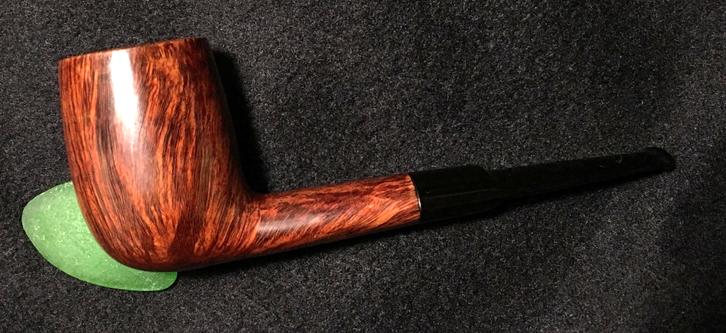
Oh my!  When Jim commissioned this Stanwell Henley from the For ‘Pipe Dreamers’ Only! collection, could he have possibly seen what was hidden in this stately Oval Shank Billiard, Made in Denmark?  The grain and patina are beautiful.  I called the pipe, ‘stately’.  It’s remarkable, how so much beauty is hidden underneath the surface appearance and neglect of years.  Yet, as the vertical, flame grain cascades upwardly to the rim, if one looks closely at the rim, revealed there are the small bird’s eye grains formed by the cut cross-sections of the vertical grain.  I’m pleased with the small, seemingly insignificant internal lip patch to the rim – it blends well and joins the ensemble without notice.  With the bowl’s striking grain revealed, the oval shank now compliments well as it flows to the saddle stem.  I fear I’m waxing too much at this point!  Jim has the first opportunity to acquire this 1950s or 60’s Stanwell Henley Special from The Pipe Steward Store and this benefits the work we do here in Bulgaria with the Daughters of Bulgaria – women and girls who have been trafficked and sexually exploited.  Lest we forget, I begin with a ‘before’ picture for the striking contrast. Thanks for joining me!
 

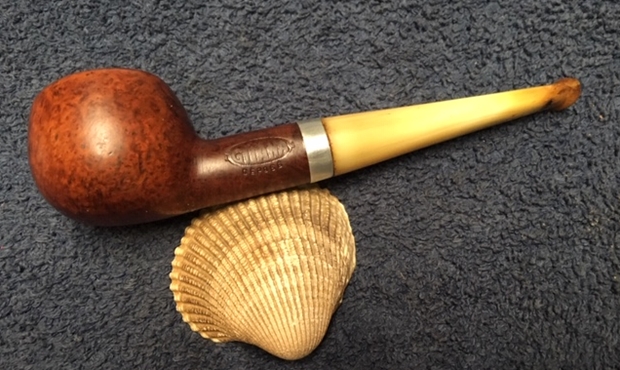
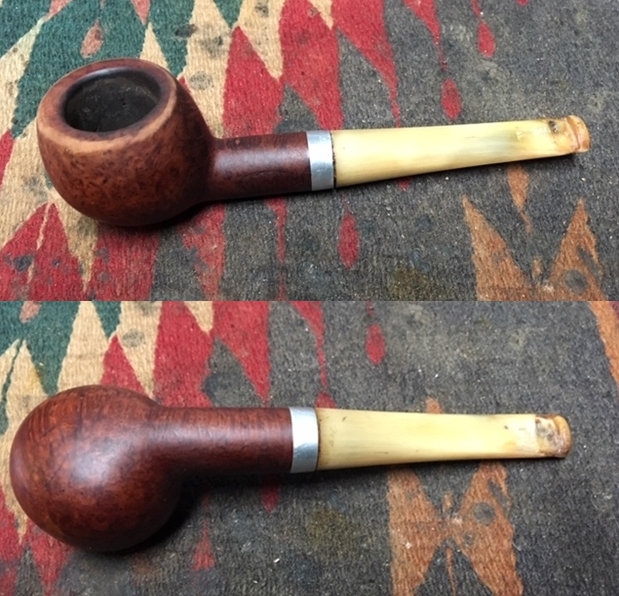
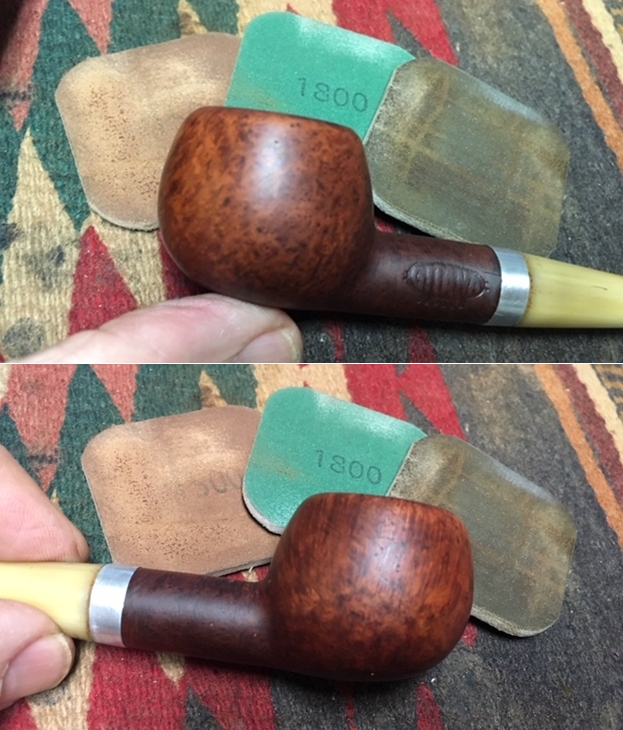
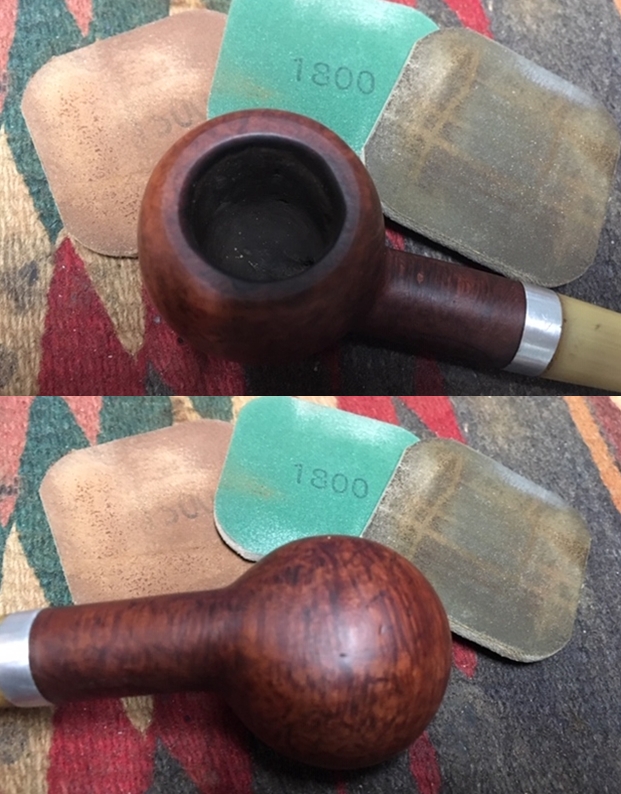
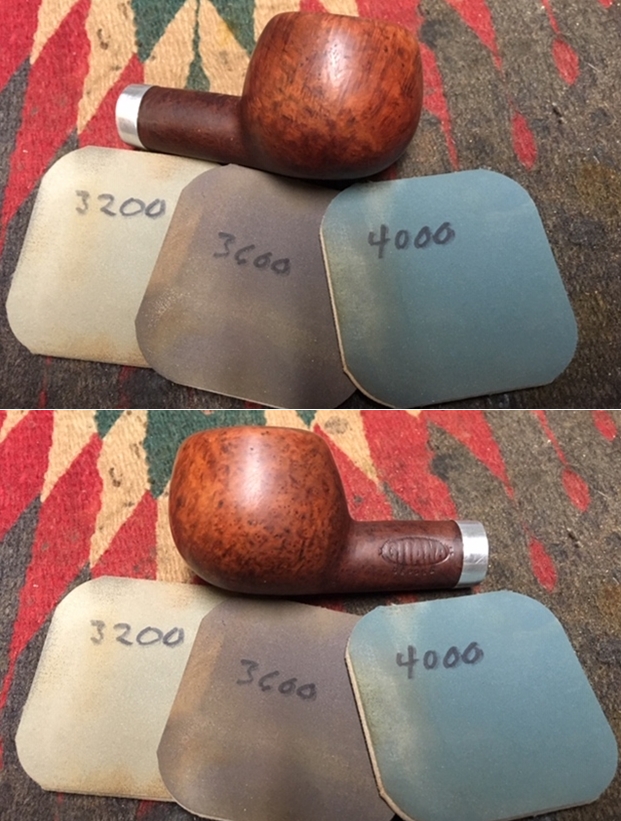
Restoring Life to a Early 20th Century Gitana Depose Apple


Blog by Steve Laug

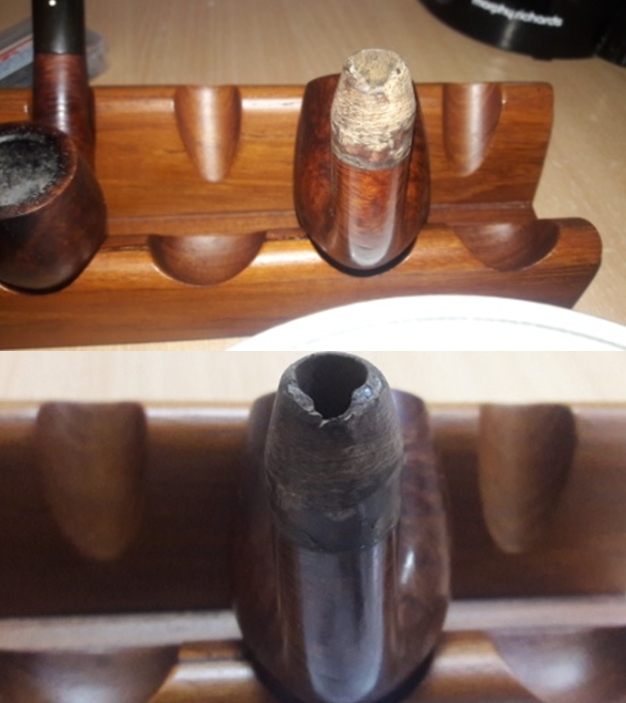
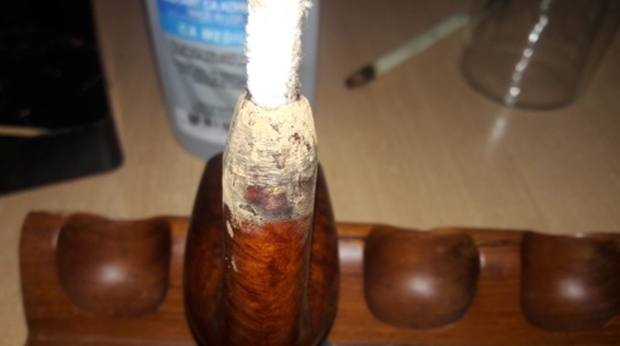
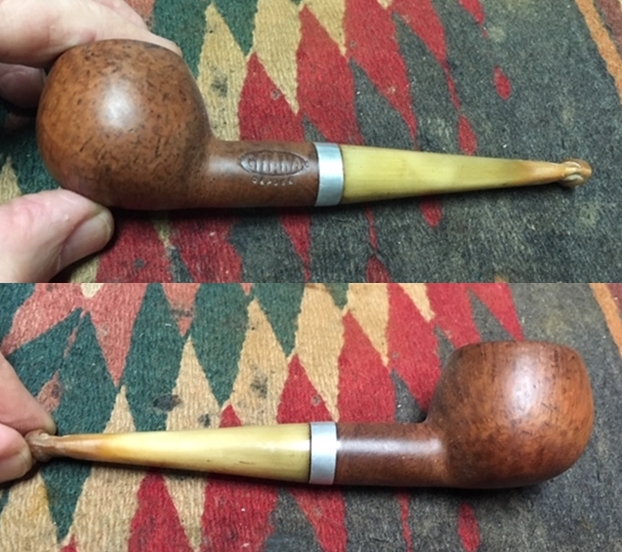
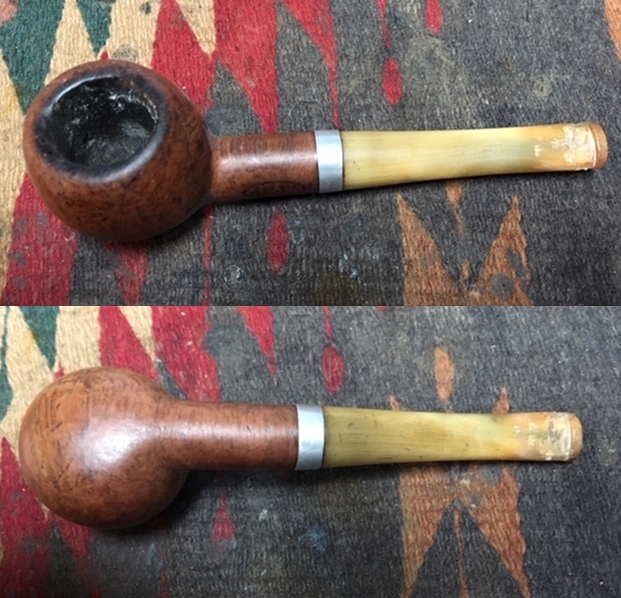
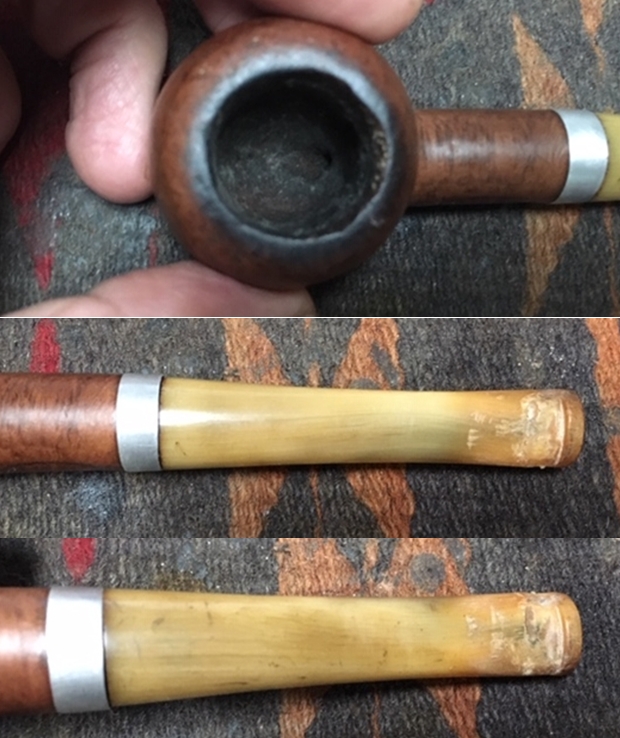
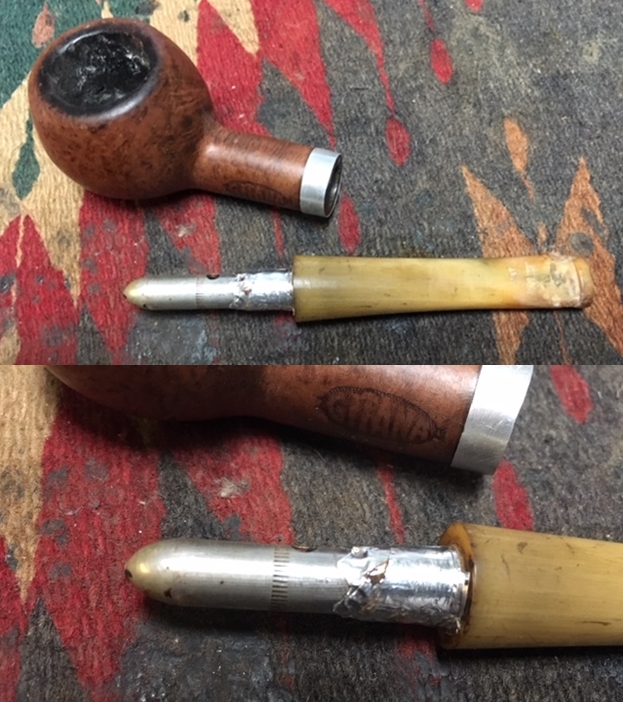
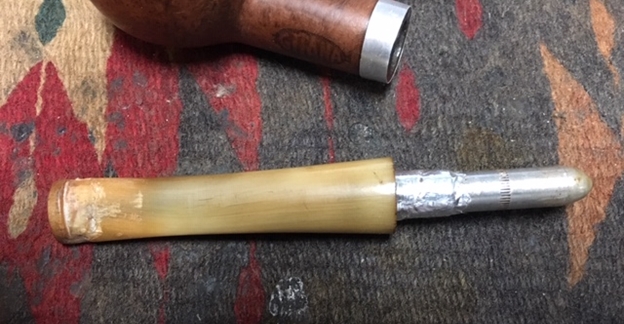
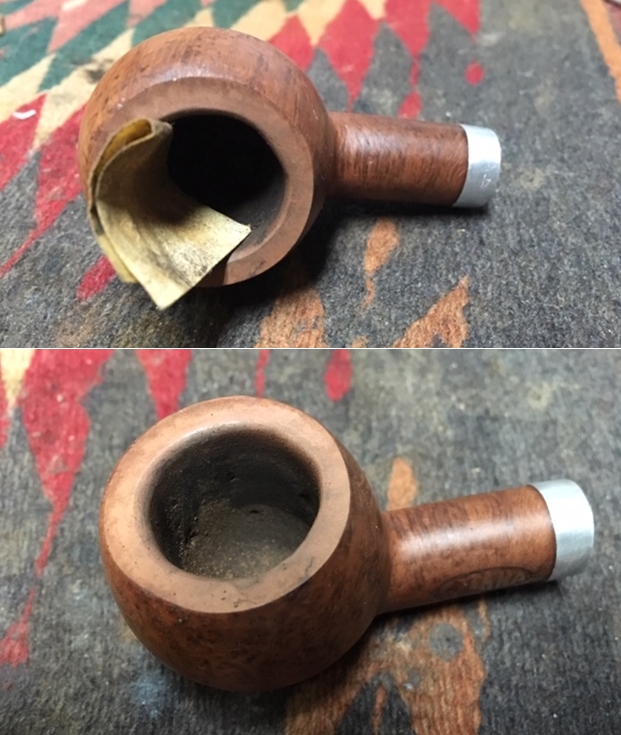
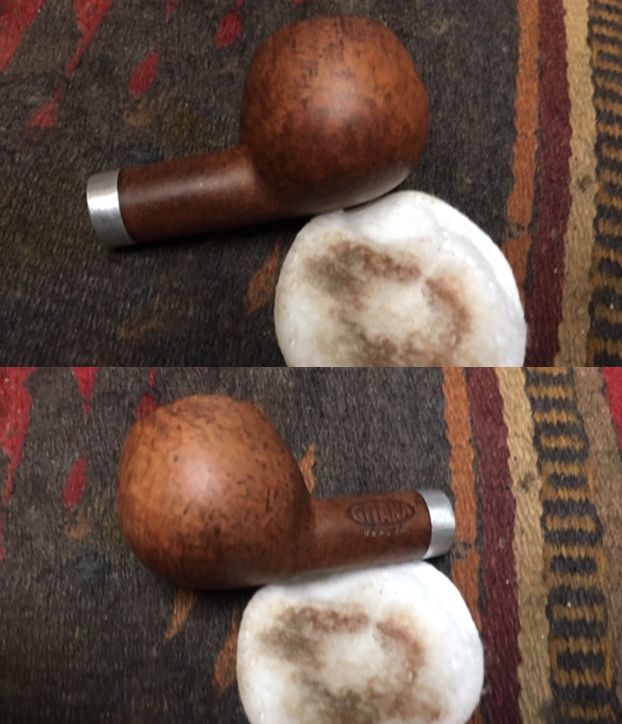
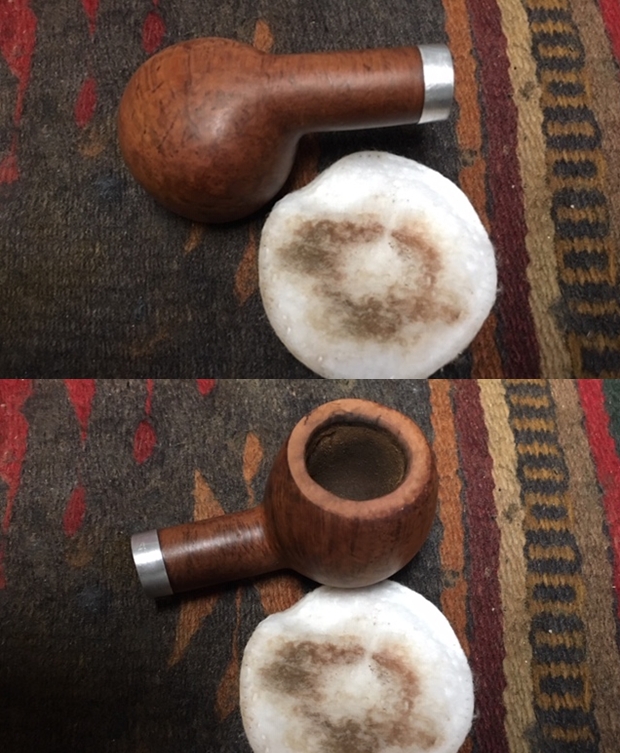
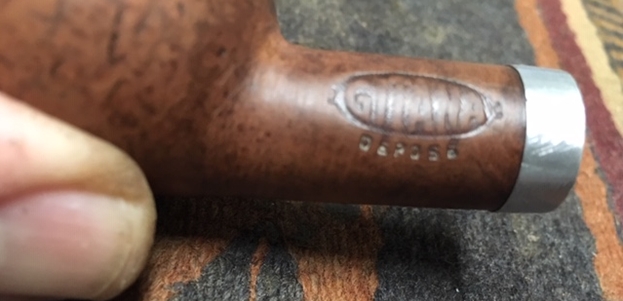
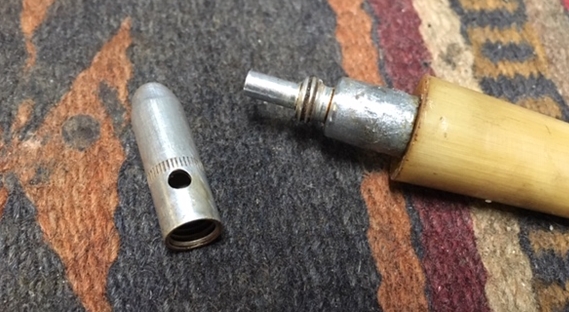
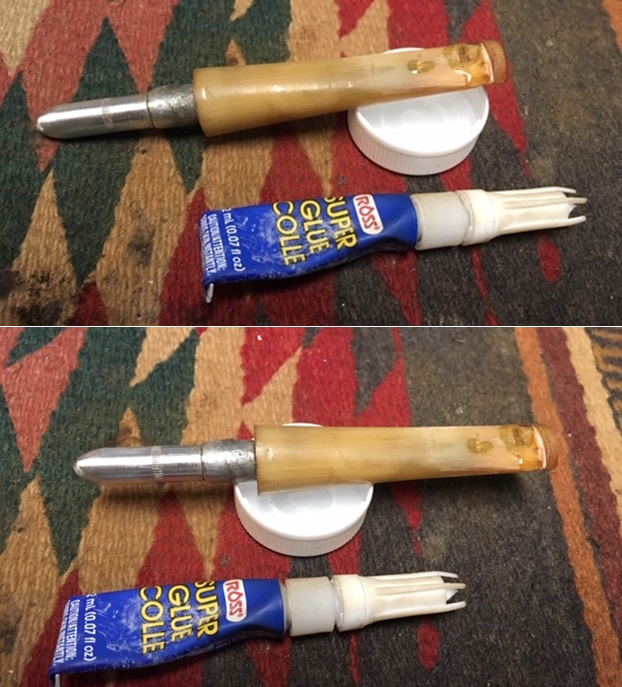
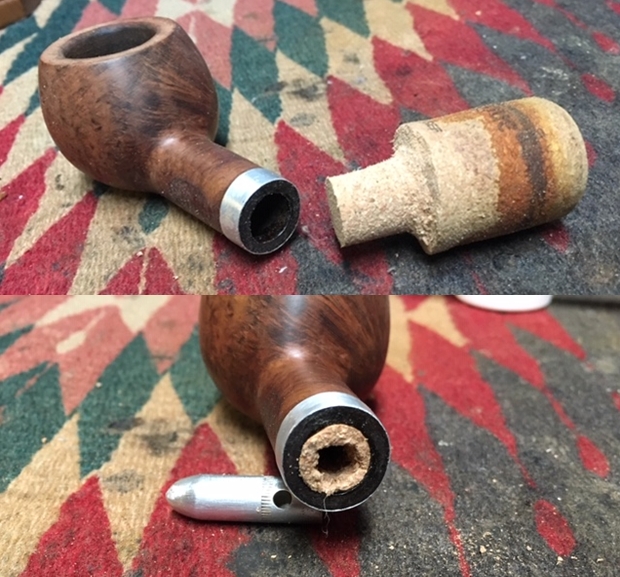
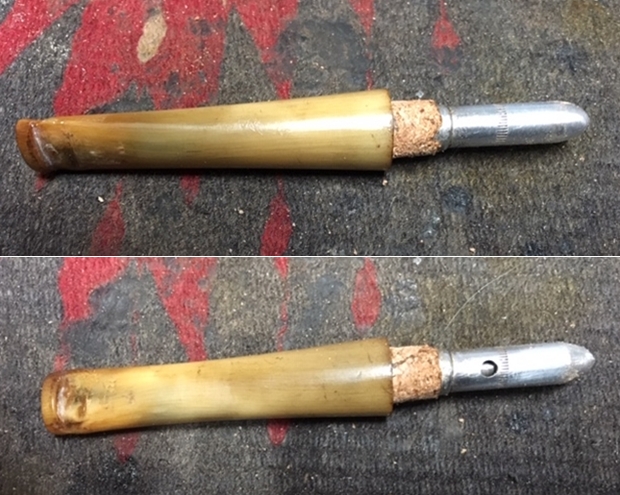
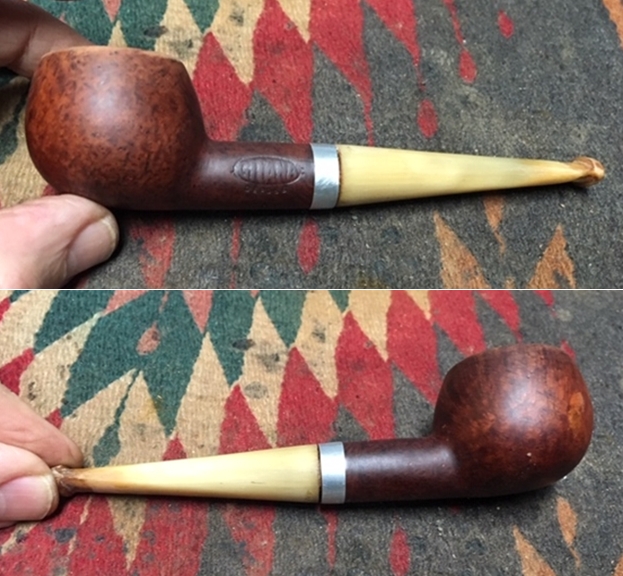
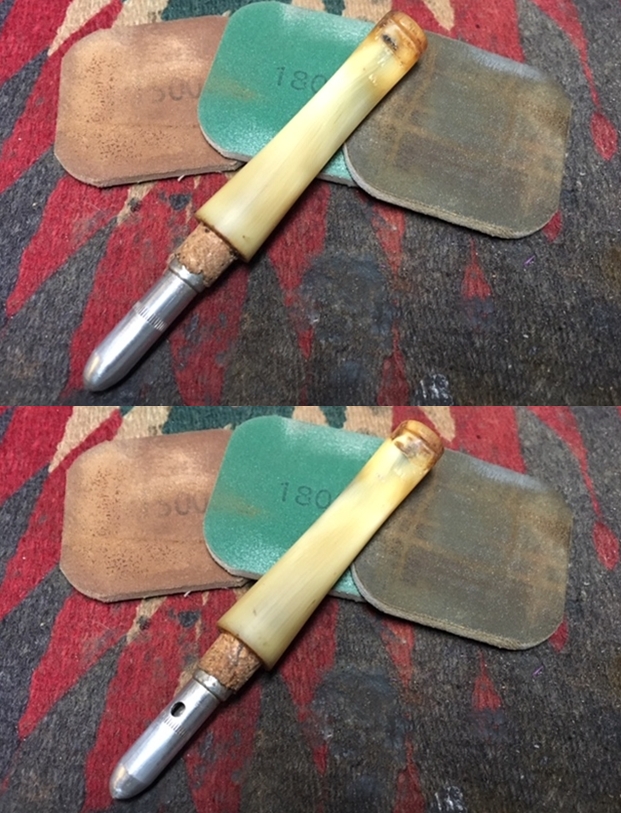
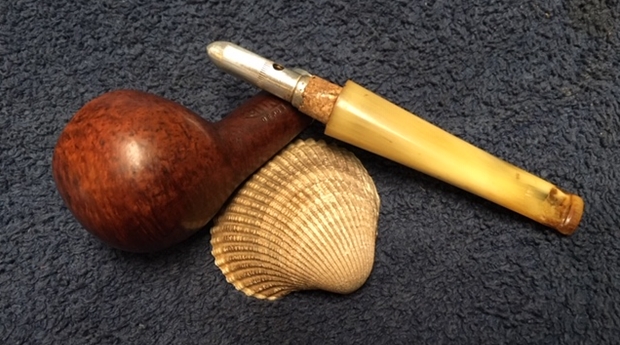
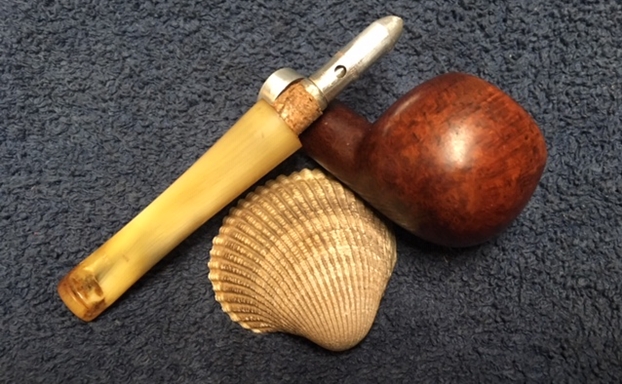
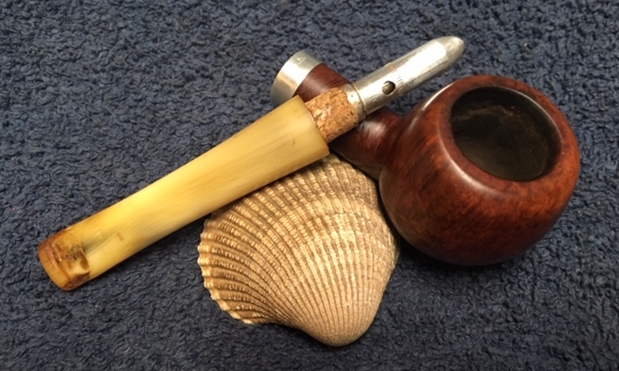
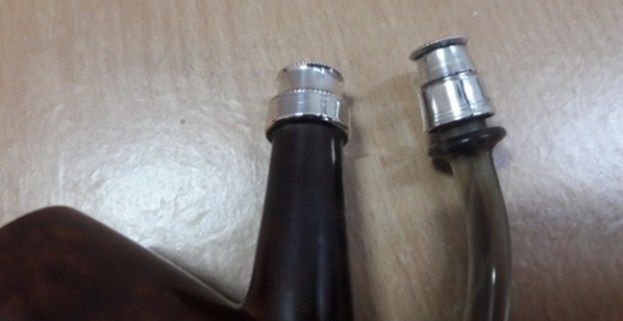
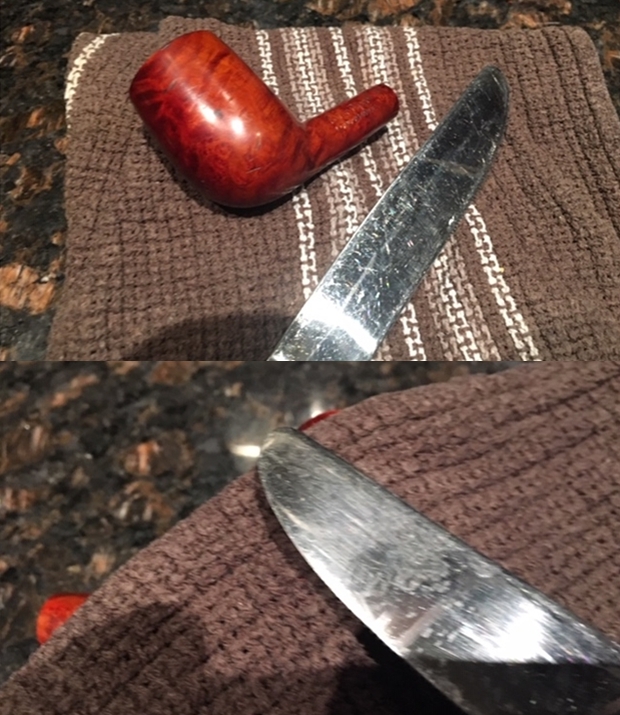
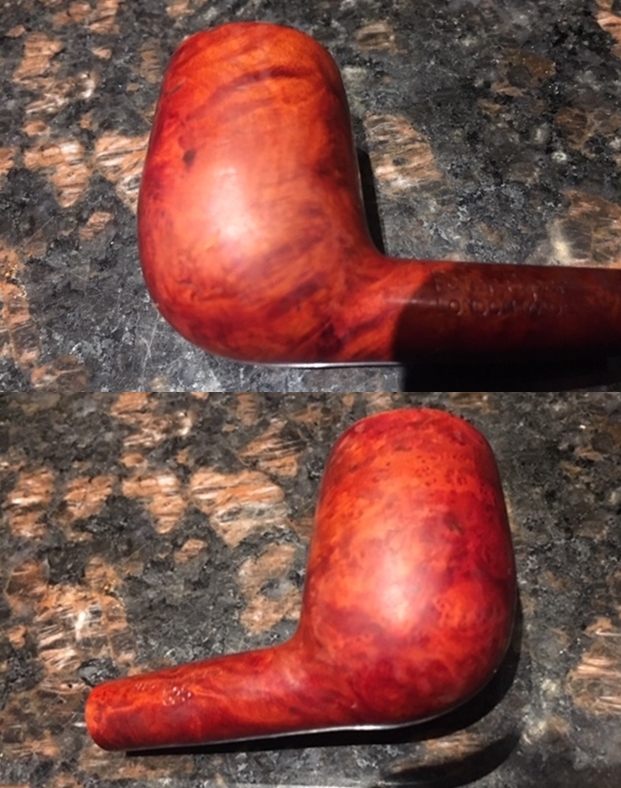
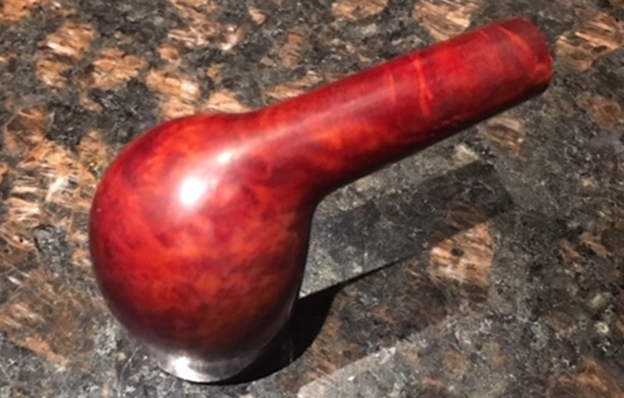
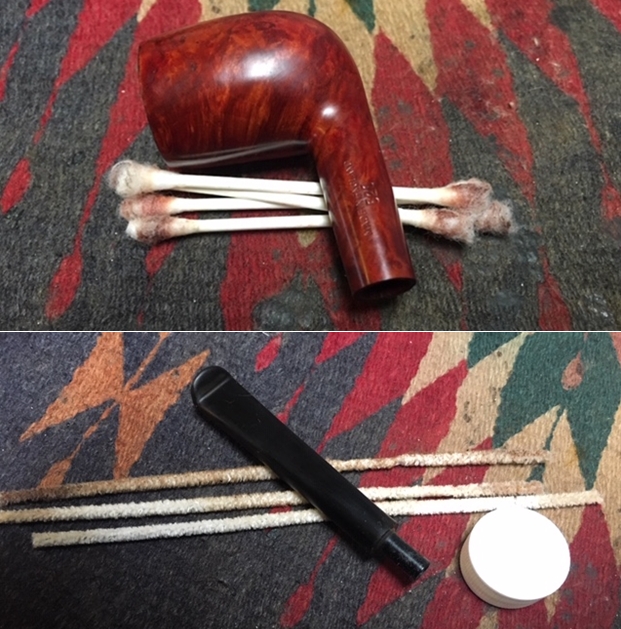
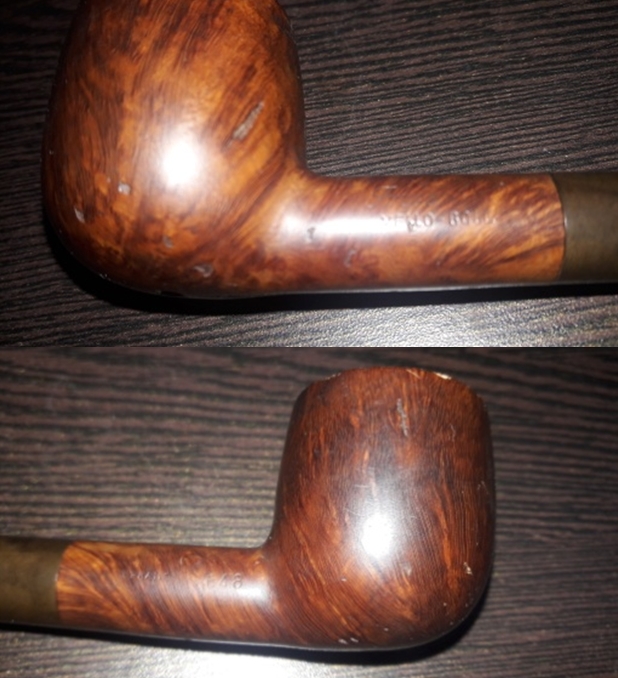
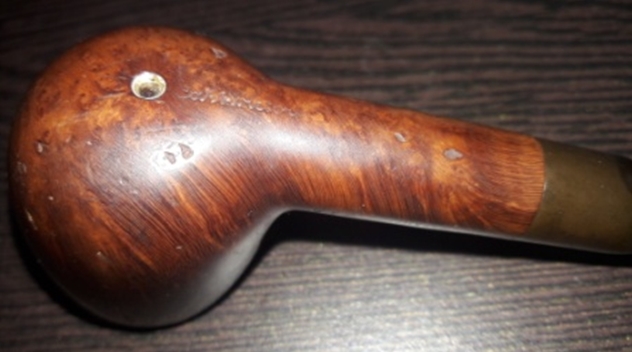
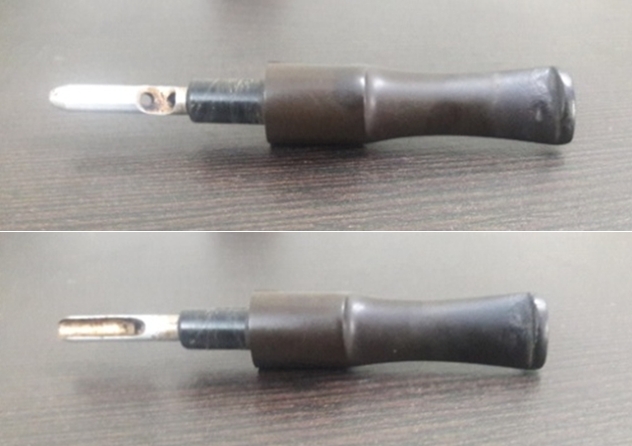
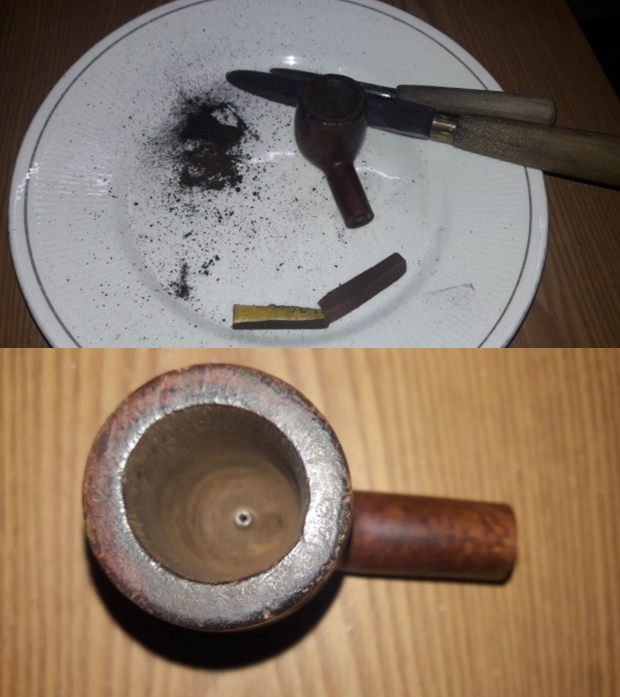
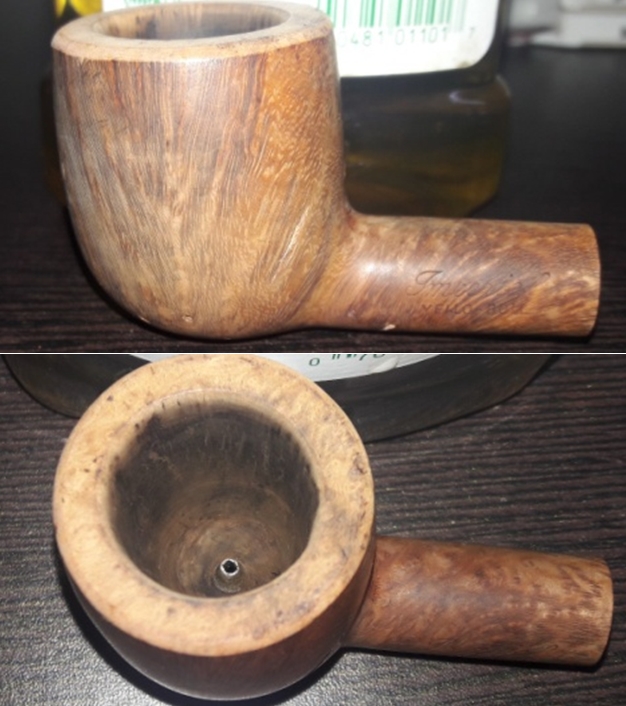
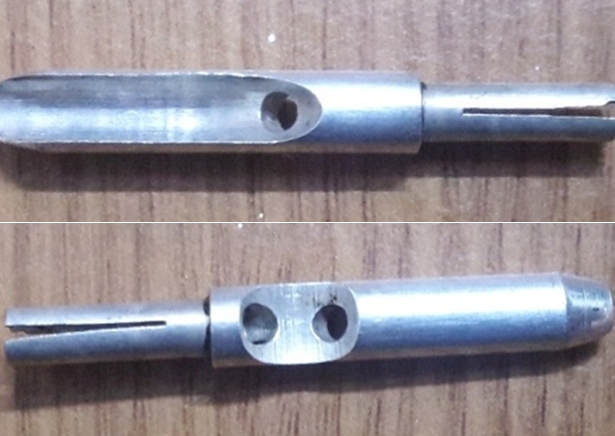
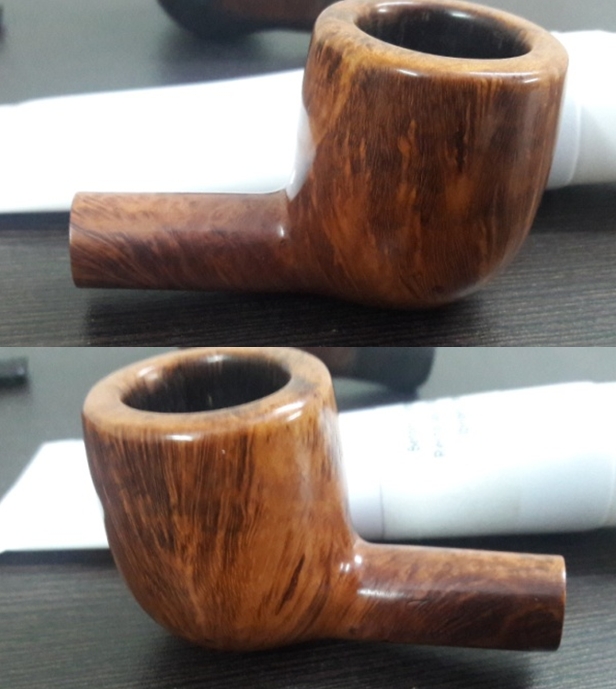
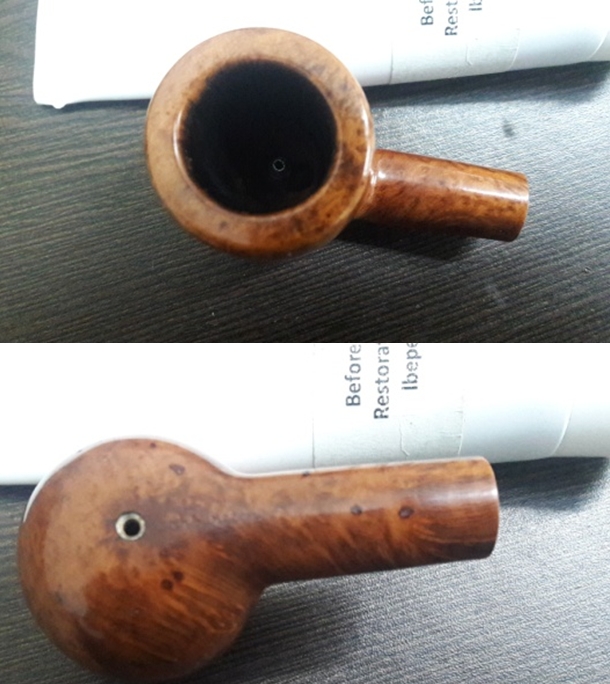
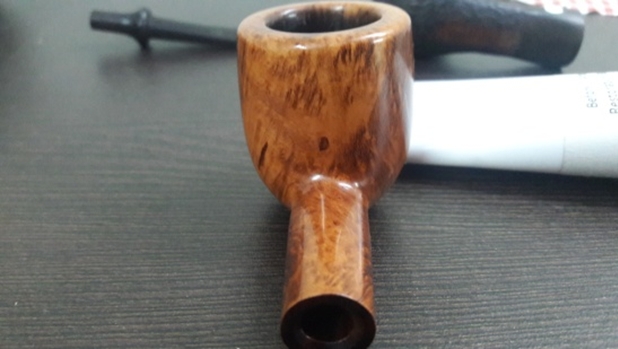
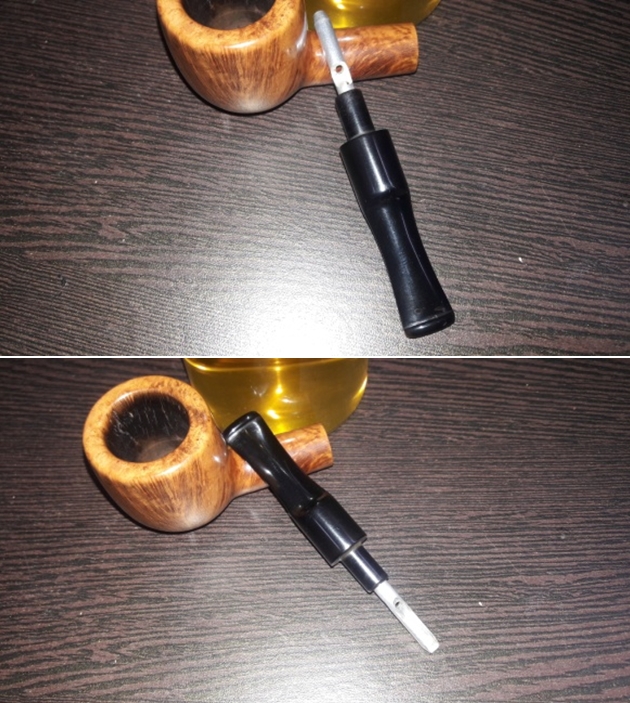
I was going through boxes of old pipes here, sorting and getting them ready to sell as grab bags. In the process I came across this pipe. It is stamped Gitana in an oval with an L on the left of the oval and G on the right side of the oval. Underneath the oval stamp is the word Depose. There is a polished aluminum band on the end of the shank. The briar is quite nice with birdseye around the bowl. The stem is horn and has a lot of tooth damage next to the button on both sides. There are deep troughs carved by the teeth in the horn material on both sides. The rim had a lot of damage from burn marks and the inner edge had been damaged by reaming with a knife. There was a white waxy substance on the inside of the bowl from the edge down about a ½ inch. There was a light cake in the bowl and some light lava on the bowl top. I took a close up photo of the rim top to show the damage to the inner edge of the bowl from the reaming job. The cake on the bowl sides and the tarry oil on the rim top are also visible. The briar at the top is quite damaged and will take some work to remove the knife cuts and deep gouges in the briar. The stem is also shown with the chewed damage on both sides.  I removed the stem from the shank and was a bit surprised by the aluminum system that was inside. The tenon was aluminum and had a bullet shaped cap on the end of it. The cap had a hole in the top that allowed the smoke to be drawn through the airway in the stem. The previous own had wrapped the aluminum portion of the tenon with what looked like aluminum foil to build it up to fit tightly in the shank. The photos below show the tenon and the system. I was unfamiliar with the brand and was surprised by the tenon system. I did some searching online and could find nothing on the Gitana brand or the Gitana Depose brand. I did happen across a similar pipe on Smokingpipes.com. The writer who described the pipe for the site wrote the following which contained some really helpful information. I quote:

We were able to ascertain a little information about La Gitana, which was a French brand created by Chapel Frés…but this relic from the early 20th century still sports its original horn stem, coupled with a novel aluminum tenon arrangement that we can only assume is meant to trap moisture. Although we aren’t sure how well it achieves this, it does do quite well at looking like an old-school James Bond accessory. It fits securely within a cork-lined mortise, which many briars of this period tended to have. https://www.smokingpipes.com/pipes/estate/france/moreinfo.cfm?product_id=196840

From that I learned that the brand was called La Gitana. It was a French made pipe from a company called Chapel Frés. It was made in the early 20th century and the author had described the tenon system like the one I had.  I also learned that the mortise had originally been cork lined to facilitate holding the tenon snuggly in the shank. This was what was missing in the pipe I had and it had been replaced with the foil mess that is seen in the above photos.

Armed with the name Chapel Frés I looked on Pipedia under French Pipe Companies and found the brand there. It stated that it came from that factory and the brand had been founded in 1904 in Saint-Claude, France. Here is the link https://pipedia.org/wiki/Chapel_Fr%C3%A9s.

Armed with that information I started my cleanup of the stem. I scraped away the foil that was wrapped around the tenon. I examined the bullet shaped cap on the tenon and figured out that it unscrewed from the tenon. I cleaned the metal underneath alcohol, cotton swabs, pipe cleaners and steel wool. I cleaned out the airway in the shank at the same time. The tube in the end of the tenon looked clean. I used alcohol, cotton swabs and pipe cleaners to clean out the inside of the bullet cap. I cleaned out the walls in the shank with pipe cleaners, cotton swabs and alcohol. It was a very dirty pipe that once it was clean had an interesting look to it. I cleaned up the inside of the bowl with a Savinelli Fitsall Pipe Knife. I scraped the walls clean of the carbon build up. I sanded the walls of the bowl with a piece of dowel wrapped with 220 grit sandpaper.To remove the damage on the rim top I topped the bowl until the damaged areas were removed and the rim top was clean. I used a folded piece of sandpaper to smooth out the inner edge of the rim and bring it back to round as much as I could. I washed down the exterior of the bowl with acetone on a cotton pad to remove the finish and the grim on the briar. The pipe looked really good at this point. I needed to round down the outer edges to bring it back to the shape it was when I started but for now it was clean. I took a photo of the stamping on the left side of the shank. The stamping is quite readable and clear.The tenon had some sticky substance for the glue on the foil on the tenon end. The tenon and threads still needed more cleaning to remove the oils.I filled in the tooth marks and troughs in the surface of the horn with clear super glue. I set the stem aside to dry.I decided to try to fit a cork in the shank to line it as suggested above. I cut away some of the excess cork from a wine cork I had. I trimmed it down with a Dremel and sanding drum until the diameter was close to the inside of the shank. I drilled it out with a series of drill bits starting small and working my way up to one that was close to the size of the tenon. I sanded down the cork exterior until it was a fit in the shank. I pressed it in place in the shank.I used a needle file to thin down the inner walls of the cork lining. It needed to be very thin to allow the tenon to fit in the shank. I tried to put the tenon in the shank. The fit was still not right. The cork was too thick to allow a fit. I pulled it out of the shank and slid it over the tenon. I sanded it down with sandpaper and files until it was a good fit. I glued the cork on the tenon and let it dry. When it cured I rubbed the cork down with Vaseline to soften it and allow it to slide into the shank. The fit was very good. I took some photos to show what the pipe looked like at this point in the restoration (I had also started the shaping on the bowl top). I polished the briar with micromesh sanding pads – wet sanding it with 1500-2400 grit pads and dry sanding with 3200-12000 grit pads. I wiped it down with a clean cloth after each pad. The grain began to pop and really stand out. Once the glue repairs cured I sanded them with 220 grit sandpaper to smooth out the repairs. I sanded them to blend them into the surface of the horn. I polished the stem with micromesh sanding pads – wet sanding with 1500-2400 and dry sanding them with 3200-12000 grit pads. I wiped the stem down with Obsidian Oil after each pad. I gave it a final coat and let it dry. The following photos show both sides of the stem. I worked Before & After Restoration Balm into the briar and the horn stem with my fingertips to clean, enliven and protect the wood and the horn. I let the balm sit for about 20 minutes and buffed it off with a soft cotton cloth. I took photos of the pipe at this point in the process to show what the bowl and stem looked like. I am happy with the look of the pipe. I polished the bowl and stem with Blue Diamond to polish out the scratches in the briar and horn. I gave the bowl and the stem multiple coats of carnauba wax. I buffed the pipe with a clean buffing pad to raise the shine. I hand buffed it with a microfiber cloth to deepen the shine. The pipe polished up pretty nicely. The original patina on the bowl came alive with the buffing and worked well with the polished striated horn stem. The pipe has a rich look. The finished pipe is shown in the photos below. The shape, finish and flow of the pipe and stem work give the pipe a very classic look. The dimensions of the pipe are Length: 5 1/2 inches, Height: 1 1/2 inches, Outside diameter of the bowl: 1 1/2 inches, Chamber diameter: 3/4 of an inch. Thanks for reading this while I worked on it. It was interesting and unusual piece to restore and I really enjoyed the work.

A Challenging Restoration of Vintage Era First Choquin “A Metz”


Blog by Paresh Deshpande

I had been on a short leave to my home town last month and that is where this happened!!!!! Even though there are still a number of pipes from the two of the three inherited boxes of pipes waiting their turn for restoration, curiosity got the better of me and I could not resist the temptations of opening the third box. What happened thereafter is that I had to unpack all the pipes earmarked to accompany me to my work place for restoration in my free time which in turn invited the wrath of my wife who had helped in packing in the first place, and repack the newly selected pipes from the third box!!!!!! In addition to the regular collection of Barling’s, Charatan’s, Comoy’s and other assorted collection, I came across two pipes which caught my fancy!!!!!The pipe on the left bears a football stamp that reads “CHOQUIN” over “A METZ” and the one on the right side simply reads “GBD”  (there are other stampings on the silver ferrule, details of which will be highlighted when it comes up for restoration). Both these pipes looked vintage and unique enough that I immediately Facetimed with Mr. Steve of rebornpipes. His admission that he is willing for a trade with me for these two pipes was an indication enough for me to know and understand their uniqueness!!! Thus these two pipes moved to the top of my unorganized and chaotic list of restoration.
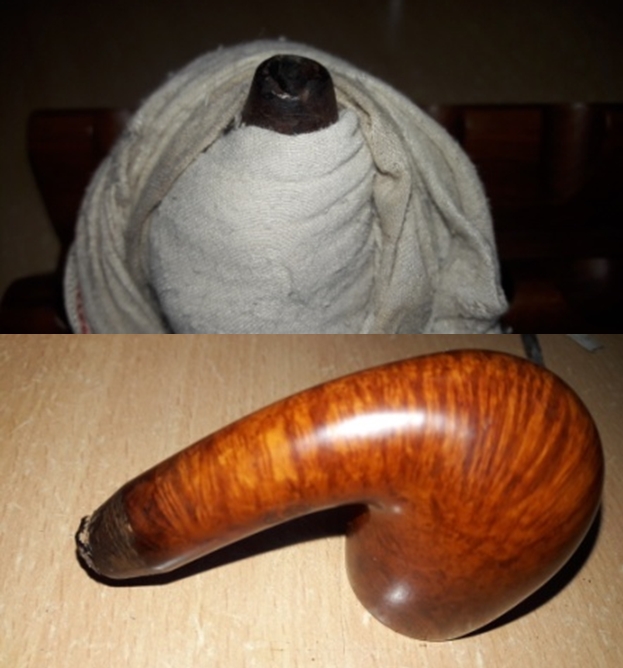
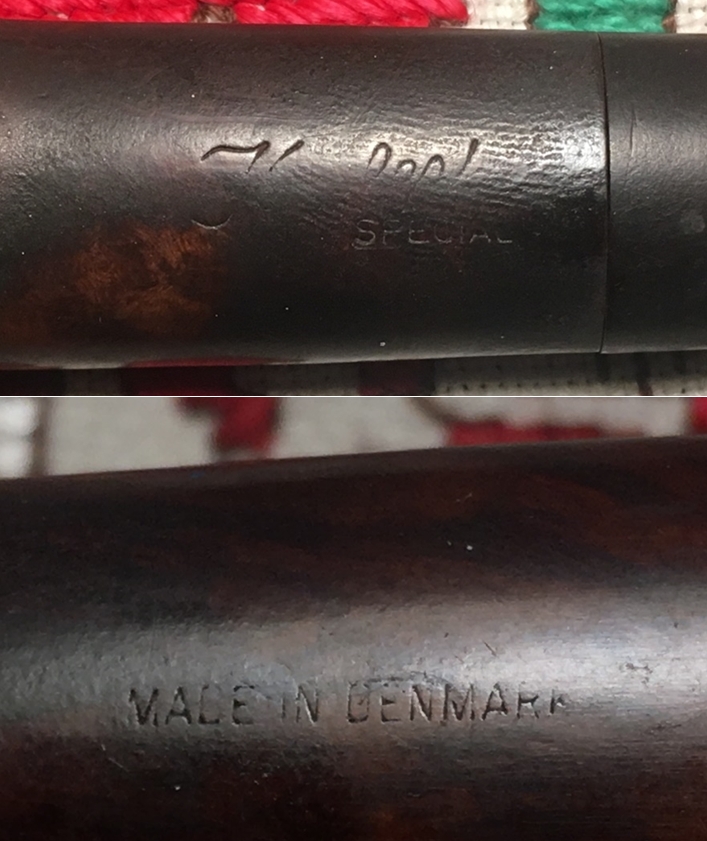
The pipe first on my work table is the CHOQUIN. It is a huge pipe with a humongous acorn shaped smooth briar bowl with a steeply raking shank, the end of which is adorned by a fixed sterling silver ornamented ferrule. This similarly designed sterling silver also masks the tenon of the horn stem.The shank and the horn stem are connected by a push-fit type bone extension. The huge acorn bowl shows beautiful, large and loosely packed birdseye grain on the right side while mixed grain adorns the left side. The stummel on the front, back and the shank displays densely packed straight grains. The only stamping that is seen on this pipe is the football stamp on the left side of the shank and reads “CHOQUIN” over “A METZ”. For its age, the stamping is crisp and clear.This time around, before commencing the restoration process, I posted the pictures of this pipe on the Tobacco Pipe Restorers group on Facebook as my next project. In addition to input from my mentor, Mr. Steve, I collected a lot of valuable information from all the knowledgeable stalwarts. From all the input that I have gathered, the flat bottom bowl, the stamping, the sterling silver adornments, the bone shank extension and horn stem, I can safely place this piece as being one of the first A Metz pipes from the 1858 era!!!!!

INITIAL VISUAL INSPECTION
Well, even before I could start my initial visual inspection, I faced the first of the many numerous hurdles that I had to overcome during the restoration of this pipe. The shank extension and the stem would not budge even a millimeter to separate from the shank and the bone extension respectively. I remembered Mr. Steve referring to the technique of freezing the stuck parts in the freezer for a couple of hours for easy separation. I followed his advice and had to put the complete pipe in the freezer for a couple of hours as it could not be dismantled. True enough, the horn stem separated from the shank extension with the application of a little force, but the extension would not budge from the shank!!!! So I went back to Mr. Steve to tap in to his wealth of knowledge and experience. He suggested that I should apply the method of “Hot and Cold” shock treatment in which you gently and carefully heat the stuck part using a heat gun and then get it back in to the freezer. This process may need to be repeated a number of times before the parts separate. Well, I did exactly that, albeit heating with a hair dryer as I did not have a heat gun, and after 3/4 attempts, the extension finally separated from the shank!!!!The first thing that I noticed was that the shank extension and the mortise were completely filled with oils, tars and grime. The shank extension was filled to an extent that a pipe cleaner would not pass through!!!! How very much typical of my Old Man!!!!!!! Through all this muck, just a swipe of the bone extension with a cotton swab dipped in isopropyl alcohol revealed no apparent damage to the shank extension. Cleaning this would need to be a very careful, meticulous, time consuming and a tedious process given the delicate structure of such a vintage bone. Likewise, the tenon also was filled with oils and grime. Air flow through the stem was laborious to say the least!!! Both the upper and lower surface of the horn stem shows significant damage. The lower surface is peppered with 3-4 worm holes with one significantly larger than the other. Thankfully, it had not migrated through the upper surface!!!! The tenon is completely and permanently encased in the sterling silver ornament. The condition of the stummel was an equally horrendous story. Firstly, the rim top is heavily covered in overflowing lava. The overflow is so heavy that it has accumulated over the rim surface in blobs of dried tar and tobacco oil which can be seen in the subsequent pictures. This overflow had not restricted itself to accumulation on the rim top, but has spilled on to the stummel surface covering the stummel in sticky grime which has attracted more dirt and dust giving the stummel a dull and lackluster appearance. The overflowing lava has even accumulated in the junction where the shank and bowl are joined.  Some dents and dings are seen on the surface through the overflow and I do not envisage any major issue like the ones I faced while working on an Imperial Yello-Bole Carburetor that I had I restored. However through all this dirt, tar, oil, grime and damage, lovely grains can be seen on the sides and the shank. It will be a challenge to address these issues and make the grains to reveal themselves in all glory. The chamber is no different story!!! There is a thick build up of cake in the chamber. The inner edge of the rim is covered under the thick cake and as such, its condition can be commented upon only after the cake has been scrapped. The outer edge of the rim, however, shows significant damage in the form of dents, dings and deep scratches to the front in 12 o’clock direction. The cause for this damage is….. Oh, forget it, let’s not even go there!!!! The condition of the inner walls of the chamber can be ascertained only after the chamber has been completely reamed devoid of any cake, but I do not foresee any major damages here as the stummel feels solid to the touch and this huge solid piece of briar can sustain some serious damage. You have to feel the stummel in your hand to understand what I am trying to write. It is one heavy and handful of a pipe!!!!The sterling silver ferrule and tenon ornament was black as is typically seen in heavily oxidized silver. However through all this discoloration, delicate, intricate decorative design can be appreciated. This is another pointer towards the vintage of this pipe.THE PROCESS
I started the process of restoration by polishing the sterling silver ornaments at the shank end and tenon with pipe ash as suggested by Mr. Steve. This was followed by reaming the chamber with size two of the PipNet reamer head and progressing through to size four. Yes Sirs, there is no typo error!!! It is indeed PipNet and not a Kleen Reem reamer as you have gotten used to reading in my write ups !!!!!! Mr. Steve has sent me a set along with some beautiful pipes that I had got from him. I followed up the reaming with scrapping the remnants of the cake from the walls, flat bottom of the chamber and the rim top surface with my fabricated knife (Oh, how I long for a Sav Fitsall reaming knife!!! Hope you are reading this Steve Sir). The cake was so hard, that I invariably ended up scratching the flat bottom surface while scraping. Once the cake was reamed back to the bare briar, I used a 150 grit sand paper followed by 220 grit sand paper to remove all the traces of remaining cake and also to smooth the inner walls of the chamber surface. Finally, to remove the carbon dust, I wipe the chamber with a cotton pad wetted with isopropyl 99%. I gently scrapped the rim top surface with a sharp knife. Removing all the cake from the chamber and rim top revealed that firstly, the rim was out of round and secondly was a web of fissures along the internal walls. There was one crack, which showed prominently after a cleanup with Murphy’s oil soap, bothered me and can be seen in the pictures below which has been highlighted by a red circle. I shared these images with Mr. Steve and Mr. Dal Stanton for their opinion as to the extent of damage and further repairs. They too expressed fears that the crack may have migrated through the stummel. Mr. Steve suggested picking the crack on the top of the rim using a toothpick and filling it with CA superglue. I decided that I would address this issue later after further investigations. I cleaned the internals of the shank, shank extension and the stem using hard bristled and regular pipe cleaners, q-tips, shank brushes, all generously dipped in isopropyl alcohol. I had never used such drastic measures like initially cleaning the bone shank extension by carefully inserting a round needle file for creating an opening through which pipe cleaners could pass through for subsequent cleaning. The heap of pipe cleaners and q-tips that are seen in these pictures are just the proverbial tip of the iceberg. I must have gone through an entire packet of 50 of both types of pipe cleaners, in addition to the q-tips and brush cleaning!!!!! To further deep clean and refresh the internals, I used cotton and alcohol soaks. Using a cotton ball to create a wick, I inserted it through the mortise and into the airway. I then stuffed the bowl with tightly packed cotton balls and placed it in bowl filled with rice grains to provide stability. Similarly I made a tight cotton wick and inserted it through the bone shank extension to further remove all the oils, tars and smells. With a large eye dropper, I then filled the bowl and the bone shank extension with isopropyl 99% until it surfaced over the cotton. I refilled the alcohol in a few minutes after it was absorbed into the cotton balls. I put the stummel and the bone shank extension aside for several hours to soak. After some time, the cotton and the wick were soiled. I discarded the expended cotton and wiped the bowl and the bone shank extension with paper towel. To make sure all was clean, I used a cotton bud and pipe cleaner dipped in isopropyl 99% and they came out clean. I cleaned the stummel with undiluted Murphy’s oil soap and Scotch- Brite pad and rinsed the stummel under running tap water. This cleaning helps in bringing to the fore any other damage which could be hidden under all the dirt and grime. Fortunately, there were no major dents, dings or gouges to the stummel. There were a few minor ones which I think would be addressed when I would sand the stummel surface and subsequent micromesh polish. I dried the bowl with a paper towel and soft cotton cloth. Initially I had decided that I would not be topping the rim top and maintain its original profile. However, in order to ascertain if the crack had migrated through the stummel, I decided to top the rim surface. This would also help to address the numerous dents, dings and scratches on the rim’s top surface and also to remove traces of lava overflow. I topped the rim surface on a 220 grit sand paper. Though it is recommended to have a wooden board with the 220 grit sand paper firmly fixed over it, I just keep the sand paper on a flat table top, holding it firmly with my left hand and rotating the stummel rim top over it with my right hand. I have come to realize that this set up gives me lot more freedom of movement, better control and convenience of storage. Fortunately, it was revealed that the supposed crack was superficial and had not migrated through. Staying with the rim, the next issue that I addressed was the inner rim edge. With a folded piece of 180 grit sand paper pinched between my thumb and fore finger, I created a light bevel on the inner edge. This addressed the issue of uneven and out of round inner edge. The damage to the outer edge was addressed to a great extent when I had topped the rim top surface. Whatever little dents and nicks that remained on the outer edge were very minor, though visible, and I decided to let them be.I sand the stummel surface with a 220, 320, 600 and 1000 grit sand paper, in that order, to remove the minor scratches and marks on the rim and stummel surface. I frequently wiped the sanded surface with a moist cloth to remove the briar dust and also to check the progress of my work. Once I was satisfied with the match, I followed it up by micromesh polishing pads, wet sanding with 1500 to 2400 grit pads. Again, I wiped the bowl with a moist cotton cloth after each pad. I used the 3200 to 12000 grit pads to dry sand the stummel to a nice shine. I was disappointed when after all my efforts up to this stage; there were some very minute chips that were visible in pictures. But overall, at this stage of restoration, the entire bowl, rim top surface and shank is looking fresh and clean. Even though some of the dents and chips could not be completely addressed and are visible only on very close visual scrutiny, in my view, they lend this pipe a battle scarred warrior like a character. I rubbed a small quantity of “Before and After Restoration Balm” with my fingers deep in to the stummel surface. What this balm does is it revitalizes the briar wood and breathes a new life in to the briar. It’s amazing to see the transformation as the balm works its magic on the briar wood. I further buff it with a horse hair shoe brush. Turning my attention to the horn stem, I cleaned the stem surface, including the worm holes, with q-tips dipped in isopropyl alcohol to remove all the dirt and dust before the fill. I filled the worm hole on the bottom and top surface with clear CA superglue and set it aside to cure.  Once the superglue had cured, I sanded the fills with a flat head needle file. To further match the fills with the surface of the stem, I sanded it with 220, 320, 600 and 1000 grit sand paper. I wiped the stem with cotton pad dipped in alcohol to remove the resultant dust. I rubbed some extra virgin olive oil in to the stem and set it aside to be absorbed in to stem. A few minutes later, I polished the stem and also the bone shank extension with micromesh pads, wet sanding with 1500 to 2400 grit pads and dry sanding with 3200 to 12000. I rubbed a little extra virgin olive oil in to both after every three pads. The stem is now nice, smooth and shiny while the extension though smooth and shiny, still had the golden brownish hues of the tobacco oils and tars. I was wondering as to next course of action, Mr. David Goostree, an experienced member from The Tobacco Pipe Restorer group on FB, provided valuable information that the bone is similar to a Meer and absorbs oils from the tobacco and colours just like a meerschaum. Another issue taken care of!!! To finish the restoration, I mounted a cotton cloth buffing wheel to the Dremel (actually it is not the brand machine, but a local machine which is similar).  I set the speed at about 40% full power and applied White Diamond compound to the entire pipe.  Afterwards, I wiped/ buffed the pipe with a soft cotton cloth to clear it of any leftover compound dust. I then mounted another cotton cloth wheel to the polishing machine, maintaining 40% speed and applied several coats of carnauba wax.  I finished the restoration by giving the entire pipe a rigorous hand buffing using a microfiber cloth to raise the shine further. In my excitement mixed with apprehension in using the polishing and waxes for the first time, I completely missed out on taking any pictures. The completed pipe looks lovely, fresh and vibrant. Thank you for having the patience to reach this far while reading the write up. Your comments are of utmost importance to me for improving my skills in restoration process as well as writing about it. Cheers!!!!!

PS: – During this journey of restoring this beauty, I had, on occasions felt low and demoralized as issues kept cropping up like the supposed crack to the stummel, the shank extension not supposedly cleaning up as I had incorrectly anticipated and the 2/3 occasions when the my polishing machine slipped on the surface and caused very minor scratches on the stummel. However, my Guru and mentor, Mr. Steve was always around with his words of wisdom and encouragement to egg me on towards completing this project. Thank you once again, Mr. Steve. I would like to thank all the esteemed members of “The Tobacco Pipe Restorer” group on FB for their interest and valuable inputs, which made this project interesting.

Restoring a Brand I had never heard of before – A Peter Piper 525 Billiard


Blog by Steve Laug

Alex dropped by the other night to drop off a pipe off and to pick up one I was working on for him. He also brought this little billiard with him for me to work on. It is stamped Peter Piper over London Made on the left side of the shank and on the right it is stamped Made in England over the shape number 525. It is a brand I had not heard of and it was an interesting little pipe. It is a reddish coloured billiard. There are some scars and nicks on the surface that are part of the pipe’s story. The finish was worn and there were sticky marks on the shank and sides of the bowl that could have come from a sales label. The rim top had marks on it that looked like it had been tapped out on a hard surface and damaged the briar. The stem had a dental bit made for a pipe smoker with dentures. It had a tall lip on the topside of the stem that could be held behind the top denture. On the underside were two grooves cast in the surface that could be held with the bottom teeth. It gives the pipe a unique look. I took some photos of the pipe at this point to show its condition before I started the cleanup. I took some close up photos of the rim top and the stem to give a clearer picture of the condition of the pipe. The photo of the rim top show the nicks and damage clearly as well as damage to the inner and outer edge of the rim. The stem is very oxidized but there are no tooth marks or chatter on the surface.I wanted to try to figure out where the pipe had come from and who had made it. It was a stamping I was not familiar with. The London Made stamp on the left side and the Made in England stamp on the right side seemed to point to an English pipe making company. I have seen some anomalies in the past where pipes stamped this way were actually made in France. I was curious to see what was behind this pipe.

I turned first to Pipedia.org to see if there was any information on the site about the brand. I check under pipes Made in England and found nothing there. I entered the Peter Piper name in the search box on the site and it took me to the list of French Pipe Makers. Sure enough on the list there was the Peter Piper name. I clicked on that name to see what I could find and it gave me the following information.

The Peter Piper trademark was first applied to a pipe in 1925, and granted on June 1, 1926 to Cadogan France Limited, whose offices were in London. Despite this, the pipe was made at the Marechal Ruchon factory in St. Claude, France. And, despite this, as the pipe was often stamped with London nomenclature. An excellent example of how blurred international borders became where Oppenheimer and Cadogan were involved. For more information see GBD. https://pipedia.org/wiki/Peter_Piper

I followed the link to the “for more information see GBD” statement at the end. I quote that below in part.

Other brands of this time were marketed with even larger independence. The Dr. Plumb’s had been developed by the Parisian sales manager J.B. Rubinovich in 1925 when GBD France needed “a cheap line of pipes” especially for the Canadian market. In fact, the new brand was nicknamed for Mr. Rubinovich’s secretary Leslie W. Plumb, whose most important business was “to doctor figure” the ledgers. Dr. Plumb’s made their way not only in Canada. – The Peter Piper, as well as the Dr. Plumb’s produced in Saint-Claude, is another great example that stampings like “London made” or “London England” are not always totally trustworthy also on older pipes! Not only today numberless brands are made in Saint Claude and stamped with whatever the buyer wants to be stamped… https://pipedia.org/wiki/GBD

I turned to the Pipephil website to see if there was any further information on the brand and found the follow confirmatory information:

… the pipes were stamped “London England” in a straight line, even if they were sometimes crafted in France. http://www.pipephil.eu/logos/en/logo-gbd.html

Now I knew what I was dealing with. Interestingly it was a French Made pipe stamped London Made and Made in England. It was made by GBD France for the Canadian Market to be sold alongside of the Dr. Plumb brand. I love the bit of intrigue that is mentioned above – that the Dr. Plumb brand was named after a secretary, Leslie Plumb whose job was to doctor the ledgers. These pipes made their way to Canada as well as other countries. It is also great proof that the stamping may not always tell the full story.

Armed with this information I started the process of restoration. I topped the bowl with 220 grit sandpaper on a board. I worked the top in a circular motion on the sandpaper to remove the damaged surface and the edges of the bowl. I was so engaged in this restoration that I forgot to take a picture of the rim top after topping. I moved quickly into polishing the rim with the micromesh sanding pads. I wet sanded it with 1500-2400 grit pads and dry sanded it with 3200-4000 grit pads. I wiped it down after each sanding pad. Once I had polished it through the 4000 grit pad I stopped and stained the top with a Maple stain pen to match the rest of the finish. The rim top matched well but still needed to be buffed and polished to blend the stain into the finish of the bowl.I polished the exterior of the bowl and rim with micromesh sanding pads – wet sanding it with 1500-2400 grit pads and dry sanding with 3200-12000 grit pads. After the polishing I could see the dents and scratches in the bowl sides and bottom. It was time to apply a little steam and see what I could do to raise them. Unlike those who have steam irons that they abscond from their wives to steam their pipes I use a knife and wet cloth. I heat the knife over the flame of a burner on our gas stove until it is hot. I put the wet cloth over the dents and apply the hot knife to the cloth. I repeat the process until the dents have been raised. In this case it worked pretty well. I was able to get the majority of them out of the briar. The photos tell the story. With the externals cleaned I needed to clean the internals. I had forgotten to do the cleaning until now. The pipe looked pretty clean… in fact I kind of wondered if it had been smoked very much. I cleaned the mortise and shank with alcohol, pipe cleaners and cotton swabs. I cleaned the airway in the stem at the same time (you will notice that the stem is quite black at this point. I had already sanded it with 220 grit sandpaper as noted below).I worked Before & After Restoration Balm into the briar with my fingertips to clean, enliven and protect the wood. I let the balm sit for about 20 minutes and buffed it off with a soft cotton cloth. I took photos of the pipe at this point in the process to show what the bowl and rim looked like. I am happy with the stain match on the rim top. I sanded the stem surface with 220 grit sandpaper to remove the oxidation. I worked on the angles of the dental bit and the grooves on the underside of the stem until I had removed oxidation.I polished it with the micromesh sanding pads – wet sanding it with 1500-2400 grit pads and dry sanding with 3200-12000 grit pads. I rubbed it down with Obsidian Oil between each pad. I polished it further with Before & After Pipe Polish – both Fine and Extra Fine. I gave it a final coat of Obsidian Oil and set it aside. I polished the bowl and stem with Blue Diamond to polish out the scratches in the briar and rubber. I gave the bowl and the stem multiple coats of carnauba wax. I buffed the pipe with a clean buffing pad to raise the shine. I hand buffed it with a microfiber cloth to deepen the shine. The pipe polished up pretty nicely. The original patina on the bowl came alive with the buffing and worked well with the polished black vulcanite stem. The pipe has a rich look. The finished pipe is shown in the photos below. The shape, finish and flow of the pipe and stem work together like other GBD pipes. The dimensions of the pipe are Length: 5 1/2 inches, Height: 1 3/4 inches, Outside diameter of the bowl: 1 1/8 inches, Chamber diameter: 5/8 of an inch. I have one other pipe to finish restoring for this fellow before it will go back to him. I look forward to seeing what he thinks of it.

Converting a Zettervig Freehand into a Churchwarden


Blog by Steve Laug

Sometime pipes come back to you. I had restored and restemmed this pipe for a fellow here in Vancouver not too long ago and made a freehand stem for it. I had also worked on converting a broken shanked Brigham into a churchwarden. The other night he dropped by and we sat and chatted for a bit. He pulled four pipes out of his bag for me to look at. One was a new find from a junk store. The other three were pipes that I had already done for him. The first two were churchwardens and he decided that they just were not for him. He also took the freehand stem out of the Zettervig and put it in the Brigham and said that he had been smoking it that way and really liked it a lot. We talked about options – restemming all three, using the stem from the Zettervig on the Brigham, restemming the churchwardens with shorter stems or just selling the pipes. The one churchwarden would be just a cleanup. The other was a little more involved. It meant fitting the existing churchwarden stem on the Zettervig pipe and seeing if that would move it. We chose the last option selling the two pipes as churchwardens to someone who really wanted them.

Here are some pictures of the Zettervig as it was when I sent it home with him. I thought they would give us a base for the change. The pictures give a clear picture of the beauty of the pipe. The stamping on the pipe is on the underside of the shank and reads Zettervig over Copenhagen over Handmade. Under that it is stamped with the shape number 351 followed by Denmark. As a reminder I quote from the blog on the Zettervig to summarize the history of the brand for you all. Here is the link to the blog: https://rebornpipes.com/2018/07/28/restoring-and-restemming-a-zettervig-handmade-351-freehand/

In the 1960’s and into the early 1970’s Ole Zettervig had a shop in Copenhagen, Denmark where he was carving high quality pipes equal to Stanwell, Larsen, Anne Julie, Thurmann, Bang and others. These early pipes were marked “Copenhagen” and are very collectible. He sold his shop at some point in the 70’s and moved to Kolding and continued to produce pipes as a hobby, but the quality of briar and workmanship is said to not equal the early production. The later pipes he now marked as Kobenhaven rather than Copenhagen, and these were sold by Ole at flea markets throughout Europe.

http://www.pipephil.eu/logos/en/logo-z.html

I took the churchwarden stem from the Brigham and reworked it for the Zettervig. I needed to trim the tenon down slightly and reshape the shank end of the stem. I worked on it until the fit was perfect in the shank. I rounded the area above the tenon to fit into the angled plateau on the end of the shank. I used 220 grit sandpaper to shape the tenon and stem. Unfortunately I was on a roll and forgot to take pictures of that part of the process.

I lit a votive candle and used it to heat the stem. I inserted a long pipe cleaner in the stem and turned it over and over until the vulcanite was pliable. I checked the pliability repeatedly and when it was finally bendable I bent it over a round jar to give it an even bend that matched the flow of the bowl and shank. I held it in place until the bend was set. The stem was used by the Vancouver fellow so I needed to remove the light tooth chatter on the top and underside near the button and also clean it to remove the light tars. I cleaned the stem with alcohol and long pipe cleaners. Once the cleaners came out clean that part was finished.I polished the vulcanite with micromesh sanding pads – wet sanding with 1500-2400 grit pads and dry sanding with 3200-12000 grit pads. I wiped down the stem with Obsidian Oil after each pad to protect and polish it. I gave it a final polish with Before & After Pipe Stem Polish – both Fine and Extra Fine. I gave it a final coat of Obsidian Oil and set it aside to dry. The Zettervig bowl had been smoked more than the churchwarden stem from the Brigham. It was dirt in the shank and airway. It also had a light buildup of carbon in the bowl and it was dirty. The finish was also dull so that would need to be address. I cleaned out the shank and airway with pipe cleaners, cotton swabs and alcohol until they were clean. I cleaned out the carbon on the bowl walls with a Savinelli Fitsall Pipe Knife to smooth out the interior of the bowl. I rubbed down the smooth briar with Before & After Restoration Balm. I worked it into the smooth surface of the briar on the sides and the bottom of the bowl and shank with my fingertips. I worked it into the plateau on the rim top and shank end with my finger tips and worked it in with a horsehair shoe brush. I wanted to make sure that the balm got deep into the briar to do its work. The balm works to clean, enliven and protect the briar. I let it sit for a little while and then buffed with a cotton cloth to raise the shine. The following photos show the bowl at this point in the restoration process. The rim looks much better than when I started but still needs to be polished and buffed to raise a shine on it. I the buffed stem and the bowl with Blue Diamond on the buffing wheel to polish out the remaining small scratches and raise the shine. I carefully avoided the stamping on the underside of the shank. I gave both the bowl and the stem multiple coats of carnauba wax and buffed the pipe with a clean buffing pad to raise the shine. I hand buffed it with a microfiber cloth to deepen the shine. The pipe polished up pretty nicely. This turned out to be a beautiful pipe in terms of shape and finish. The combination of the Danish Zettervig bowl and the vulcanite churchwarden stem looks very good. The finished pipe is shown in the photos below. The dimensions are Length: 11 inches, Height: 2 inches, Outside diameter of the bowl: 1 3/8 inches, Chamber diameter: ¾ of an inch. Thanks for walking through the conversion of this bowl to a churchwarden with me.

Cleaning up a Cadogan Era Comoy’s Silver Shadow 225


Blog by Steve Laug

Jeff picked this Comoy’s Silver Shadow up from a friend on Facebook who was selling a batch of pipes that he picked up. When it arrived several of the pipes were unsmoked and in excellent condition. This Comoy’s was very nice but had tooth marks on the stem and was lightly smoked. There was some light cake in the bowl and the finish was dull. Jeff cleaned up the pipes with his usual thoroughness – reaming the bowl and scrubbing the internals with alcohol, cotton swabs and pipe cleaners. He scrubbed the exterior with Murphy’s Oil Soap to clean off the dust and grime on the finish. Jeff sent it to me recently in a batch of pipes that were ready to restore. I took photos of the pipe when I unpacked it. The bowl and rim are very clean. There is a light fill on the backside of the bowl that is solid and tight. The finish was clean and the pipe needed to be polished. The stem had bite and tooth marks on both the top and underside near the button.I took photos of the stamping on the sides of the shank and the underside. The left side is stamped Comoy’s over Silver Shadow. On the right side it is stamped with the shape number 225 and the COM stamp – Made in London in a circle over England. The underside of the shank is stamped with an upper case M.I started with the clean up on the stem first. I used a needle file to clean up the straight edge of the button and smooth out the wear on the button. I sanded the tooth marks out of the surface of the acrylic stem with 220 grit sandpaper.I polished the stem with micromesh sanding pads – dry sanding it with 1500-2400 grit pads and dry sanding it with 3200-12000 grit micromesh pads. I wiped it down with a damp cloth after each sanding pad. I set the stem aside and turned my attention to the bowl. I worked Before & After Restoration Balm into the briar with my fingertips to clean, enliven and protect the wood. I let the balm sit for about 20 minutes and buffed it off with a soft cotton cloth. I took photos of the pipe at this point in the process to show what the bowl and rim looked like. It looks really good after the balm and buffing. I polished the bowl and stem with Blue Diamond to polish out the scratches in the briar and acrylic. I gave the bowl and the stem multiple coats of carnauba wax. I buffed the pipe with a clean buffing pad to raise the shine. I hand buffed it with a microfiber cloth to deepen the shine. The pipe polished up pretty nicely. The original patina on the bowl came alive with the buffing and worked well with the polished silver swirled acrylic stem. The pipe has a rich look. The finished pipe is shown in the photo below. The shape, finish and flow of the pipe and stem is beautiful and combine very well. This should make a great smoking pipe and it is comfortable in both hand and mouth. The dimensions of the pipe are Length: 5 1/2 inches, Height: 1 7/8 inches, Outside diameter of the bowl: 1 1/2 inches, Chamber diameter: 3/4 of an inch. Thanks for walking through the restoration with me as I worked over this beautiful Comoy’s Silver Shadow. I will be putting it on the rebornpipes store shortly.


Reclaiming a Yello-Bole “Imperial Carburator” Vest Pipe


Blog by Paresh Despande

Having worked on the four Free Hand pipes that I had purchased on eBay, it was time again to work on one of my grandfather’s pipe from my inheritance. I chose to work on the second “Imperial Yello-Bole Carburetor” from his collection. The first had a cracked shank and was restored by my Guru and mentor, Mr. Steve of rebornpipes, here is the link for the write up (https://rebornpipes.com/2018/04/15/pareshs-grandfathers-pipe-2-a-yello-bole-carburetor-4522-billiard/).

This particular pipe was in a battered condition with significant damage to the inner and outer edges of the rim, a large number of chips, dents and dings to the bowl and shank, two deep gouges to the bowl and a heavily oxidized stem. I was not very sure if at all I should attempt at its restoration as I knew that to mask the repairs/ fills to the gouges and chips on the bowl and the shank, I would need to stain it with a darker stain followed by a delicate polish to make the grains pop and here I was, with neither materials nor experience to carry out staining and subsequent polishing. However, Mr. Steve encouraged me to go ahead and restore it nevertheless and keep the natural finish of the pipe and the scars of the repairs as a testimony of the pipe’s journey till date!!!! Well, it always pays to follow the advice of your mentor and I embarked upon this journey to give a fresh lease of life to this old and battered war-horse!!!

The pipe is stamped on the left side of the shank as “Imperial” in fancy cursive hand over “YELLO-BOLE” in block letters while the right side of the shank bears the stamp of “MADE IN FRANCE” starting from the shank end towards the bowl and followed by the model(?) number “648” or is it “64 B”? I have this doubt since I could find a match to this shape and size during my research as per the latter stamp, but the stamp appears as former to my eyes!!!! The center bottom of the pipe has a single hole, lined by an aluminum cone, open at both ends, which protrudes into the chamber. This is followed by “carburetor” in fancy cursive small letters. The stem is devoid of any stampings or logo. Before commencing the restoration, I decided to refresh my memory about Yello-Bole pipe brand and in particular, the Carburetor model, by visiting the blog written by Mr. Steve while restoring my first Yello-Bole. The first thing that struck me as odd was the difference in stampings seen on the pipe which is on my work table!!! The pipe currently on my work table is sans the stamp of KBB in clover leaf, U.S. patent number details, Cured with real honey, stem logo of a yellow circular ring and has shape number in three digits as against four on the one restored by Mr. Steve. However, the biggest and most significant difference which has me flummoxed was the stamping “MADE IN FRANCE”!!!!!!! No amount of research and surfing the internet provided me any clue as regards the origin and dating of this piece of briar.

INITIAL VISUAL INSPECTION
The first and foremost significant visual damage is seen to the rim top, inner and outer edges. It appears that the rim has been repeatedly banged against a hard surface to remove residual dottle over a prolonged period of time!!!! The damage to the rim top is in the form of dings and scratches while significant chipping and cinching is seen on the outer edge. The inner edge of the rim is out of round, apparently caused by use of a knife to remove the carbon cake. The overflow of lava from the rim top appears to be removed by scrapping the surface with a knife and in the process causing all the scratches and dings to the surface. There is a thin layer of cake on the bottom half of the chamber and appears to be a victim of over reamed chamber. The carburetor hole at the bottom of the chamber is clogged and will require to be cleaned. The condition of the inner walls of the chamber will be ascertained only after the chamber has been stripped completely of the existing cake layer.The second most significantly damaged part of the pipe is the stummel. It is covered in oils, dirt and grime of all these years of smoking and subsequent uncared for storage. The stummel surface is sticky to the touch, giving the stummel a dull, lifeless and lackluster appearance. It is peppered with a large number of chips, dents and dings. There are two significant gouges on the stummel; one on the left hand side towards the bottom and the second one is one the right hand side about an inch below the rim top. Overall, the stummel has sustained massive damage over the years due to both, rough usage and careless storage. However through all this dirt, tar, oil, grime and damage, lovely densely packed straight grains can be seen on the sides and shank. It will be a challenge to address these issues and make the grains to reveal themselves in all glory. The shank too is peppered with numerous minor dents and chips on the bottom surface as well as on the right side of the shank. The mortise is clogged and the air flow is constricted and the draw is laborious. This will need to be addressed by thorough cleaning of the same. The saddle stem is heavily oxidized with bite marks on both upper and lower surface of the stem. The lip too shows bite marks and will need to be redefined. The aluminum stinger is firmly attached inside the tenon and could not be removed. It is covered in oils, tars and grime from all the years of smoking and it appears that it has hardened, fixing the stinger inside the tenon.THE PROCESS
I started the process of restoration by reaming the chamber with my fabricated knife as the protruding aluminum cone of the carburetor prevented use of the Kleen Reem pipe reamer. Once the cake was reamed back to the bare briar, I used a 150 grit sand paper followed by 220 grit sand paper to remove all the traces of remaining cake and also to smooth the inner walls of the chamber surface. It was a big relief to note that there was no issue of heat fissures or cracks seen on the surface.To address the numerous dents, dings and scratches on the rim’s top surface and also to remove traces of lava overflow, I topped the rim surface on a 220 grit sand paper. Since the damage to the rim top was significant, I had applied more pressure than usual. Though it is recommended to have a wooden board with the 220 grit sand paper firmly fixed over it, I just keep the sand paper on a flat table top, holding it firmly with my left hand and rotating the stummel rim top over it with my right hand. I have come to realize that this set up gives me lot more freedom of movement, better control and convenience of storage.Staying with the rim, the next issue that I addressed was the rim edges, both inner and outer. With a folded piece of 180 grit sand paper pinched between my thumb and fore finger, I created a bevel on the inner edge. This addressed the issue of uneven and out of round inner edge. For addressing the outer edge, I had two options; first was to top the rim surface till the entire damaged outer rim surface was sanded out, maintaining the straight rim edge profile of the stummel. The disadvantage of this would be a significant loss of briar estate!!! The second (and easier too!!!) option was to create a bevel on the outer edge, sacrificing the original profile of the stummel. However, I envisaged that the bevel to the outer edge would add a new depth and dimension to the profile of the pipe while saving loss of briar. That decided, I created a bevel on the outer edge. Both the inner and outer edges now look much better and add a new dimension to the otherwise plain-Jane billiard shape of the bowl. I cleaned the stummel with Murphy’s oil soap and hard bristled toothbrush and rinsed the stummel under running tap water. This cleaning helps in bringing to the fore any other damage which could be hidden under all the dirt and grime. I dried the bowl with a paper towel and soft cotton cloth. With a thin, sharp and pointed knife, I cleaned out all the fills and gouges. I scrubbed the stummel surface clean with isopropyl alcohol to have a clean surface for a fresh fill. I decided to move ahead with only CA superglue for filling the chips and gouges. I spot filled these chips and gouges with superglue and set it aside for curing. Turning my attention to the stem, I flamed the surface with a Bic lighter to raise the tooth chatter and deeper bite marks to the surface as much as is possible. I followed it up with sanding the stem surface with a 220 grit sand paper to match the raised bite marks with the stem surface and also remove the oxidation before the fill. The deeper bite marks were filled with CA superglue and set aside to cure. After the fills on the stummel had completely cured, I sanded these with a flat head needle file to match them with the stummel surface. This was followed by sanding the fills and the stummel surface to achieve a match as well as remove the minor scratches and cinches on the surface. I frequently wiped the sanded surface with a moist cloth to remove the briar dust and also to check the progress of my work. Once I was satisfied with the match, I followed it up by micromesh polishing pads, wet sanding with 1500 to 2400 grit pads. Again, I wiped the bowl with a moist cotton cloth after each pad. I used the 3200 to 12000 grit pads to dry sand the stummel to a nice shine. At this stage of restoration, the entire bowl, rim top surface and shank is now looking fresh and clean with beautiful densely packed straight grains popping out in all their glory!!!! Even though the fills are prominently visible, in my view, they lend a battle scarred warrior like character to the pipe. While I worked the stummel, the fillings in the stem had cured. I sanded the fills with a flat head needle file. To further match the fills with the surface of the stem, I sanded it with 220, 400 and 800 grit sand paper. I wiped the stem with cotton pad dipped in alcohol to remove the resultant dust. I rubbed some extra virgin olive oil in to the stem and set it aside to be absorbed in to stem. I polished the stem with micromesh pads, wet sanding with 1500 to 2400 grit pads and dry sanding with 3200 to 12000. I rub a little extra virgin olive oil in to the stem after every three pads. I finish the polishing of the stem by rubbing a small quantity of Paragon wax and giving it a final polish with a soft cotton cloth. The stem is now nice, smooth and shiny. Now with the external restoration and cleaning of both the stummel and the stem completed, I proceeded to cleaning the internals of the stem and the shank. As I had observed during my initial visual inspection, the stinger was very firmly attached inside the tenon. To clean the stem air way, I had to separate the stinger from the tenon. I was certain that the stinger was a push-fit type and much easy to deal with. I carefully heated the stinger with the flame of a Bic lighter and wrapping a cloth on the stinger, with careful anti-clock wise rotations, dislodged the stinger from the tenon. I cleaned the internals of the shank with cue-tips, regular and bristled pipe cleaners dipped in alcohol. The mortise was cleaned using a shank brush. With a fabricated dental spatula, I scrapped the walls of the mortise and further cleaned with pipe cleaners till they came out white. Similarly, I cleaned the air way in the stem with pipe cleaners and alcohol. I cleaned the stinger of all the accumulated oils and tars with paper towels after soaking the stinger in isopropyl alcohol and reattached it in the tenon. The internals are now clean and the draw is full, easy and open. I was really not surprised at how dirty were the internals of the shank and stem as can be seen from the condition of the pipe cleaners in these pictures. To finish the restoration, I rub a small quantity of “Before and After Restoration Balm” in to briar and let it rest for a few minutes. The balm almost immediately works its magic and the briar now has a nice vibrant appearance. I further buff it with a horse hair shoe brush. Using a cotton cloth and brute muscle power, I gave it a final polish. I re-attach the stem with the stummel. The completed pipe looks lovely, fresh and vibrant; the photographs speak for themselves. Thank you for having the patience to reach this far while reading the write up. Your comments are of utmost importance to me for improving my skills in restoration process as well as writing about it. Cheers!!!!!