Tag Archives: shaping a stem

A Few Adjustments to a Lightly Smoked Savinelli Product Bent Pot


Blog by Steve Laug

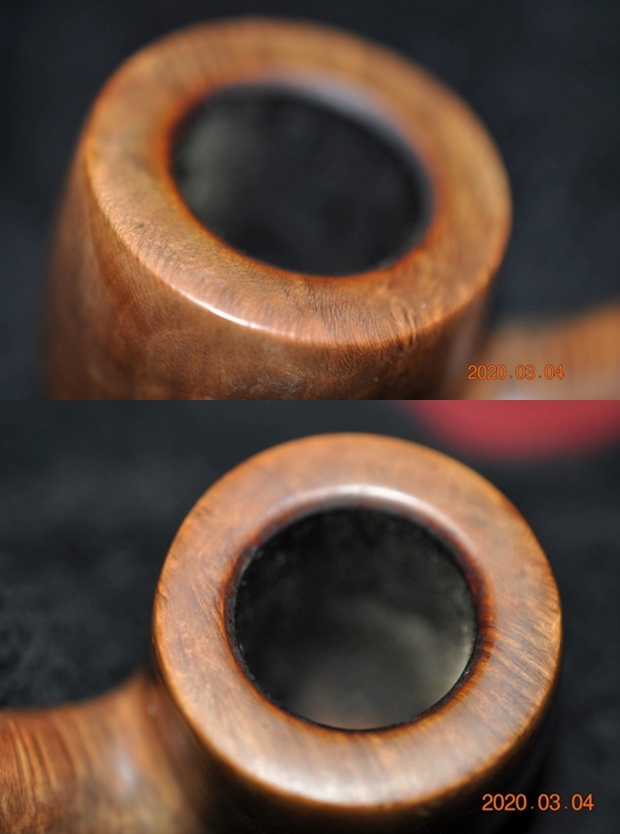
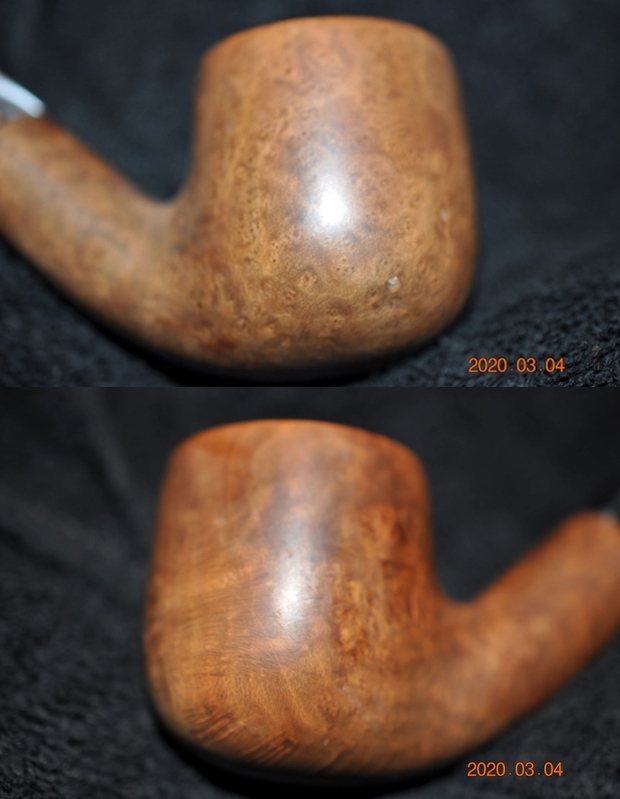
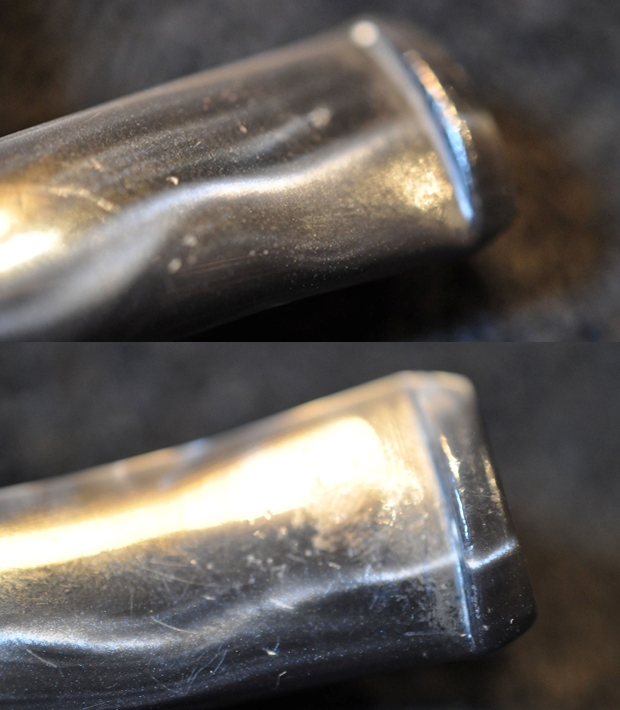
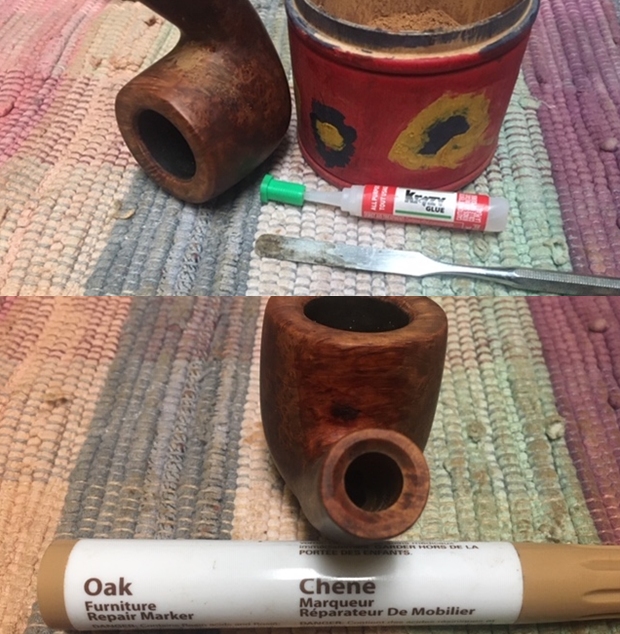
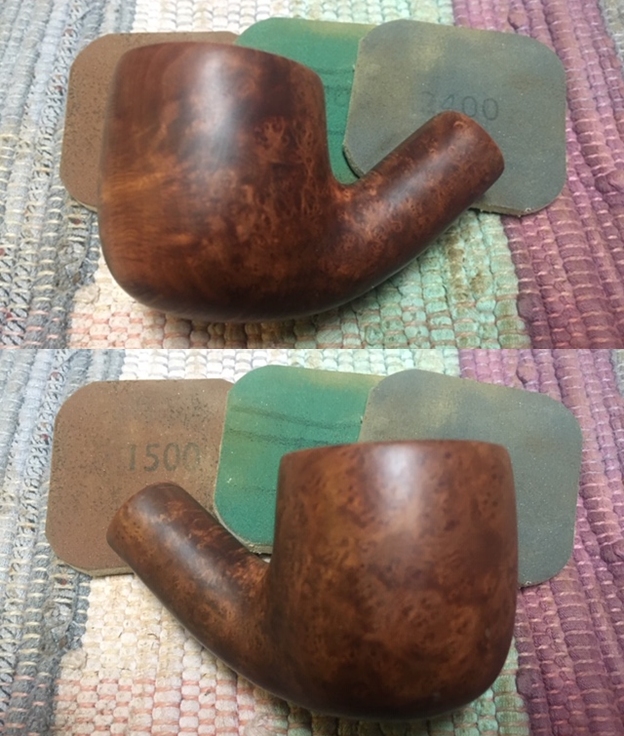
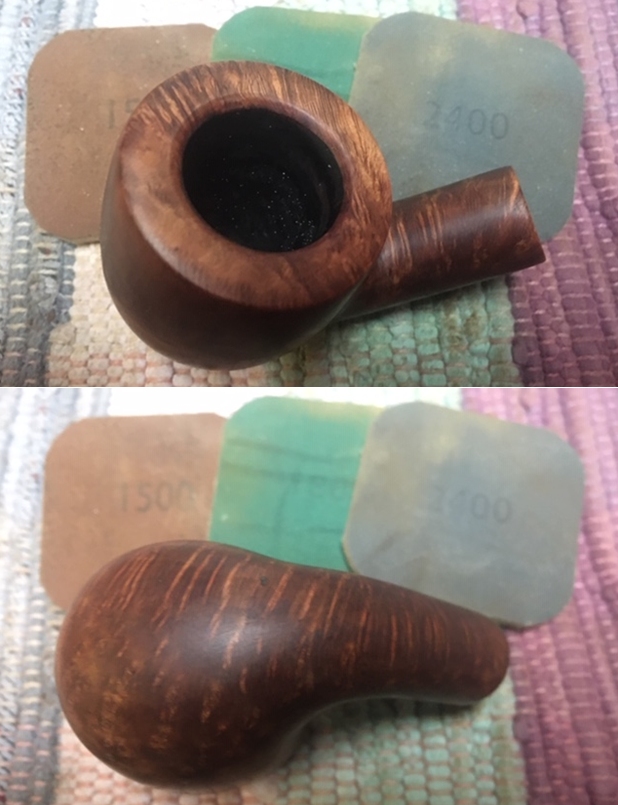
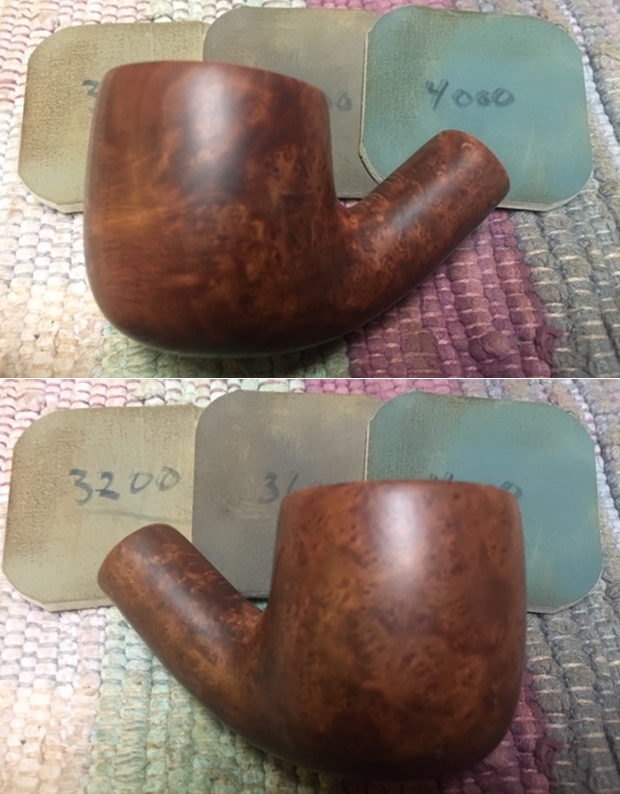
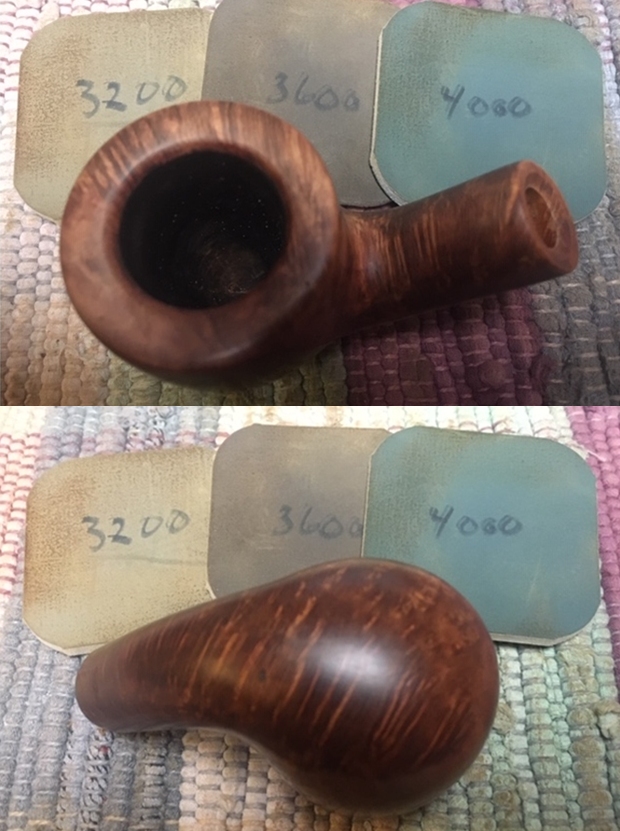
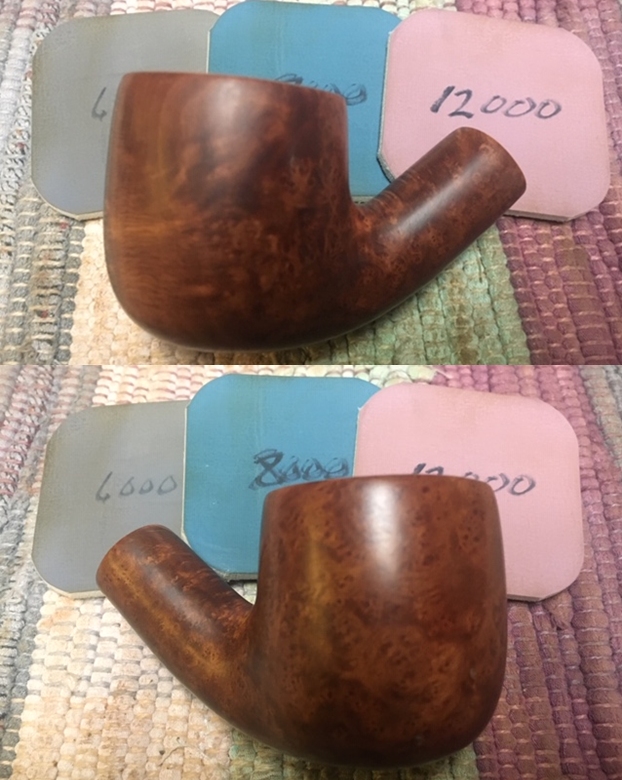
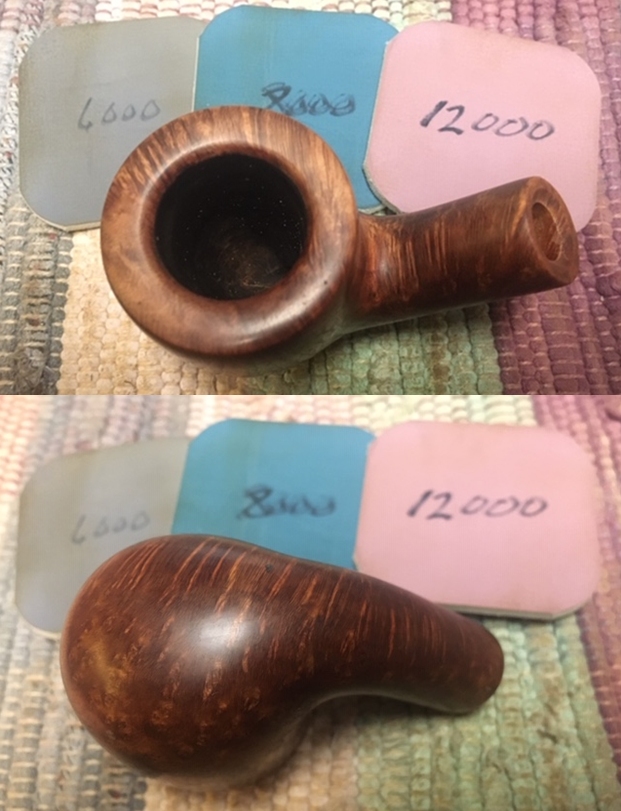
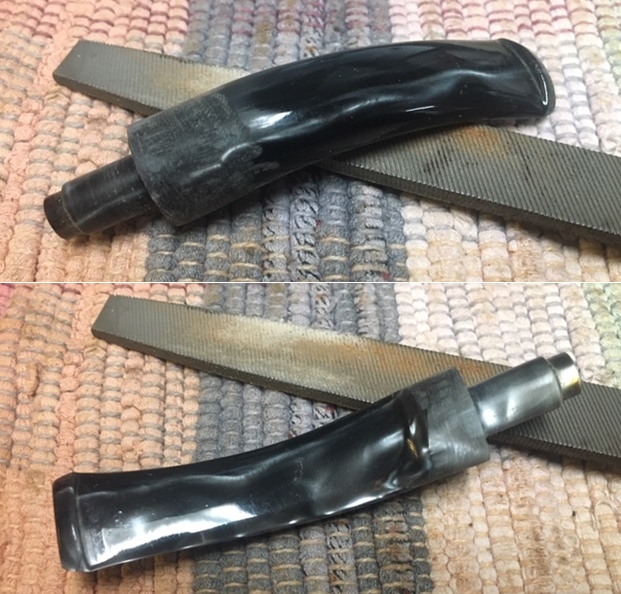
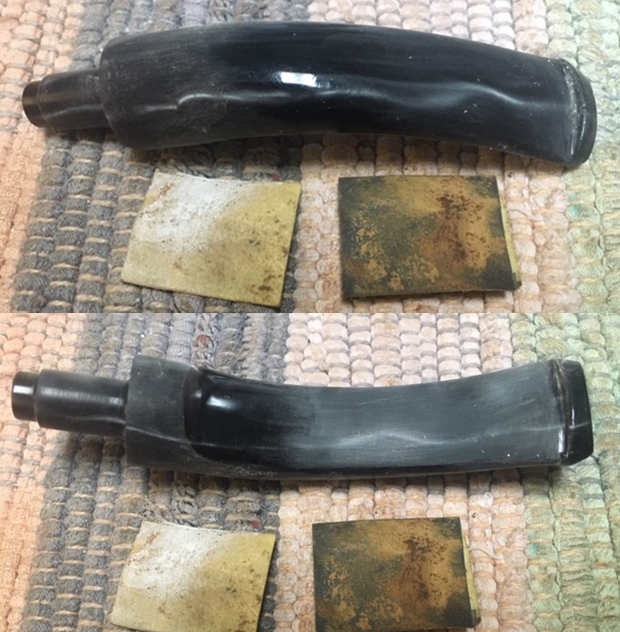
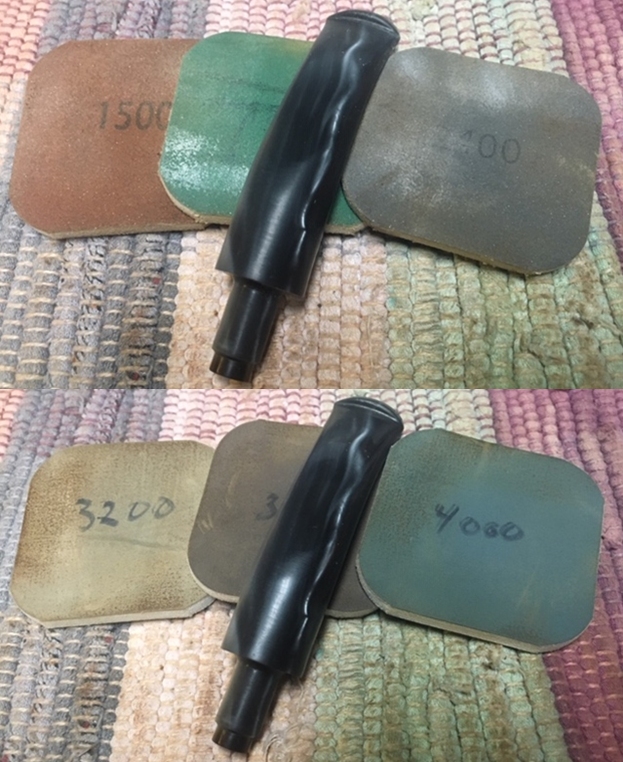
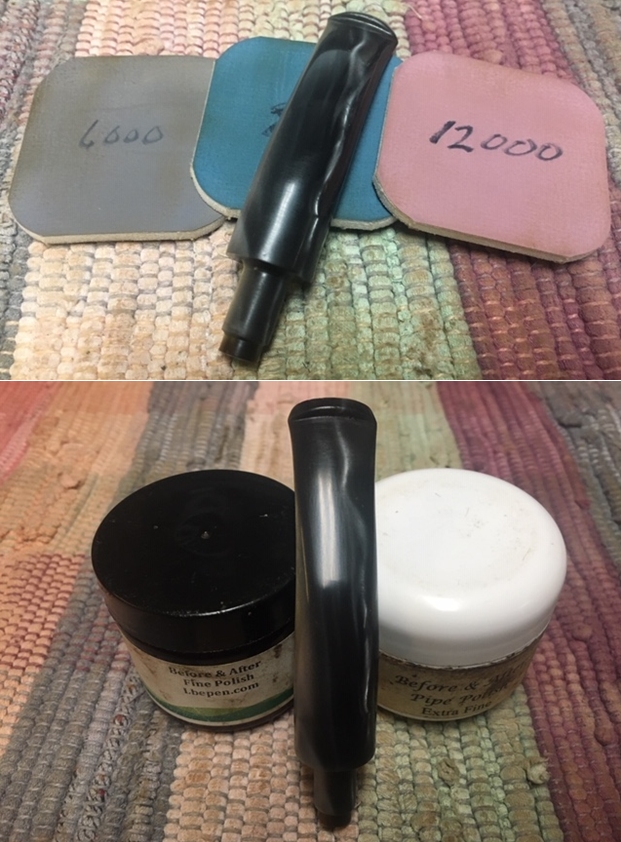
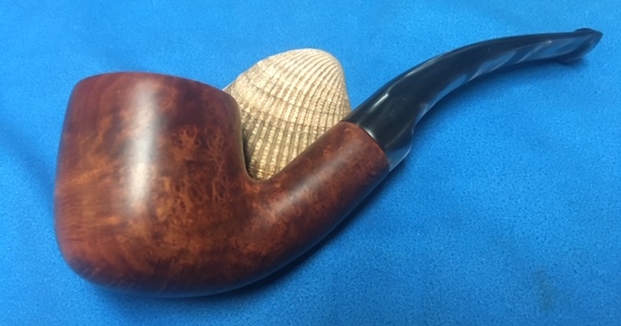
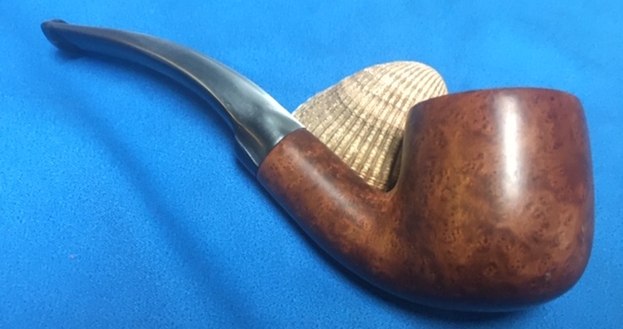
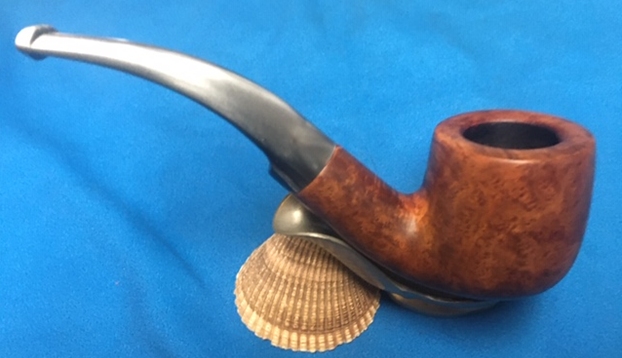
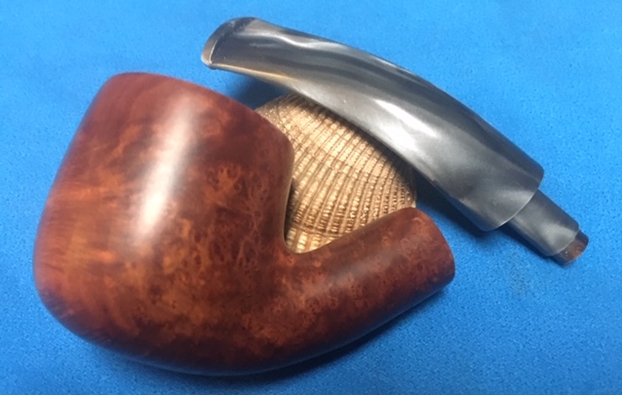
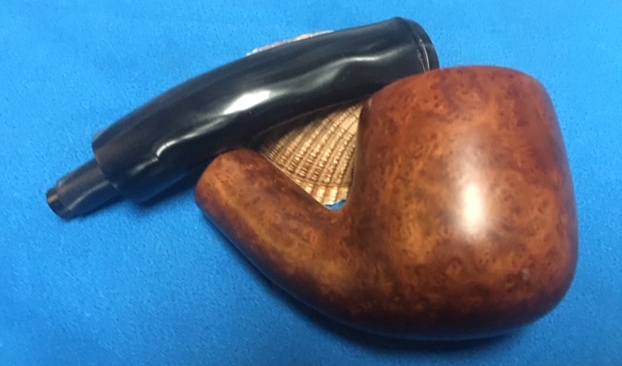
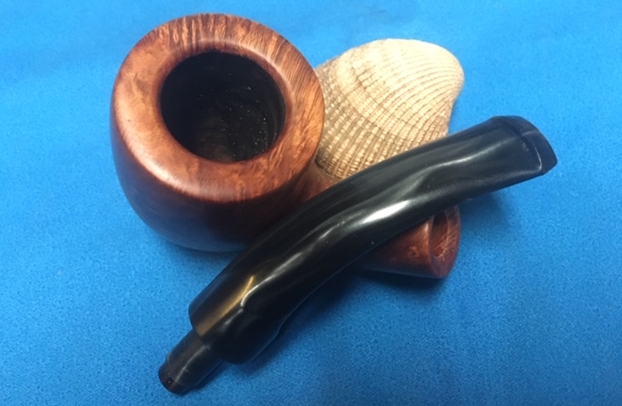
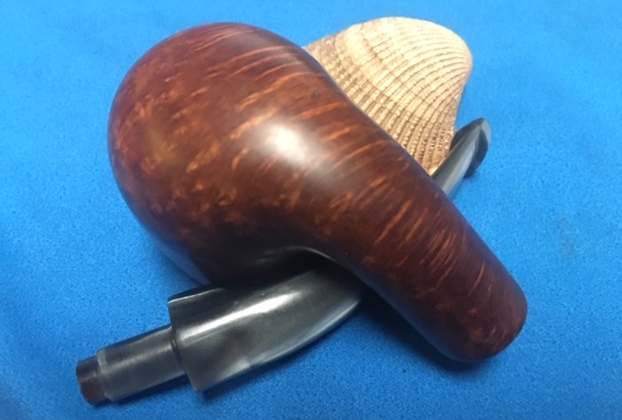
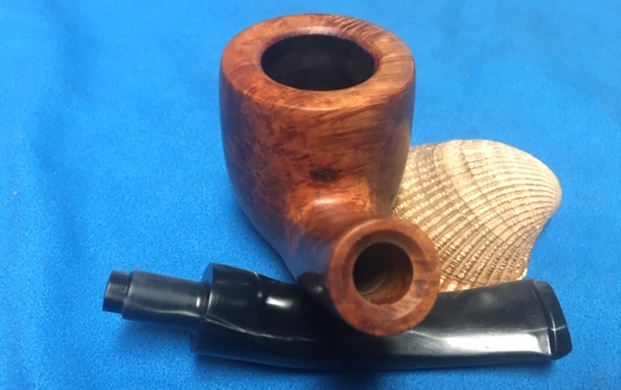
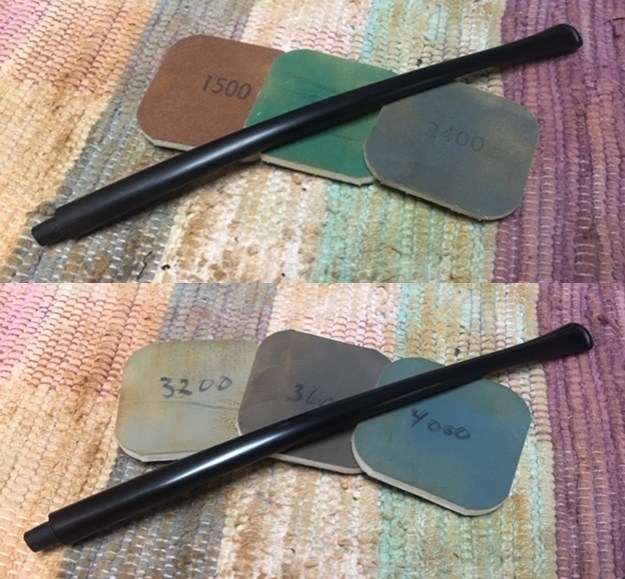
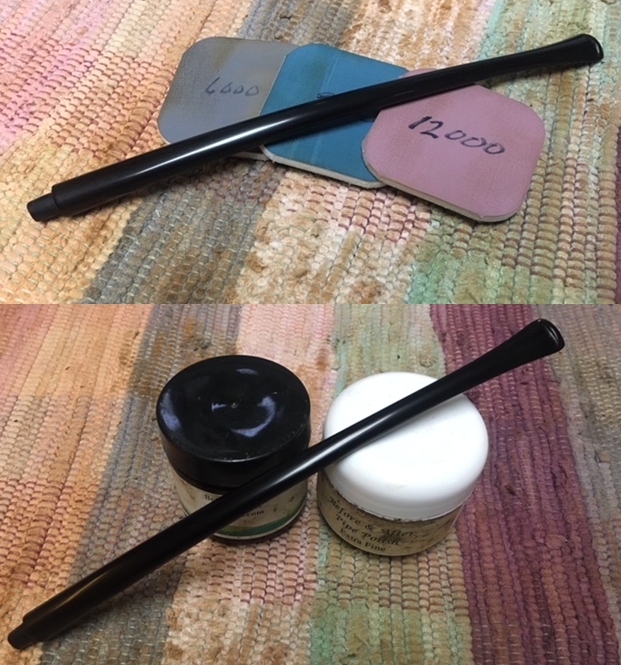
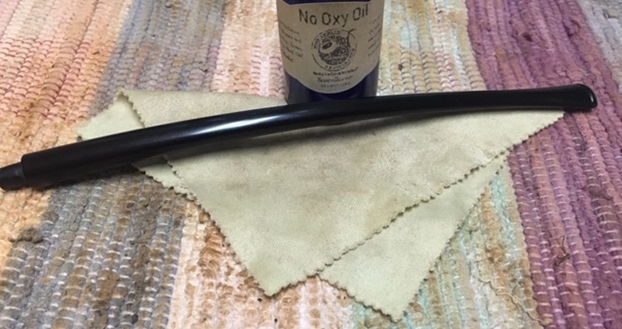
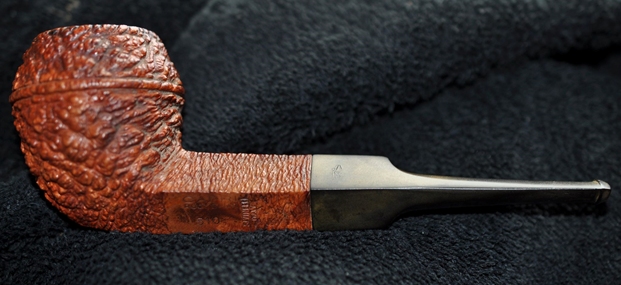
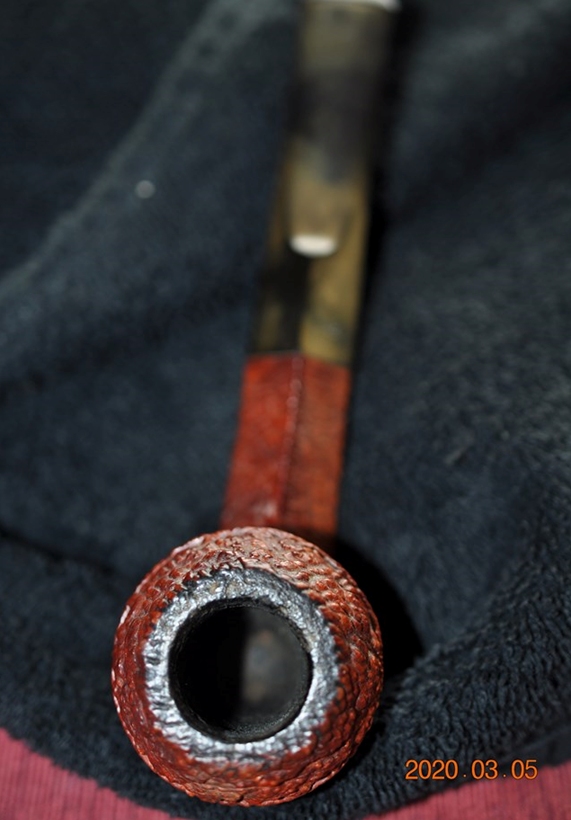
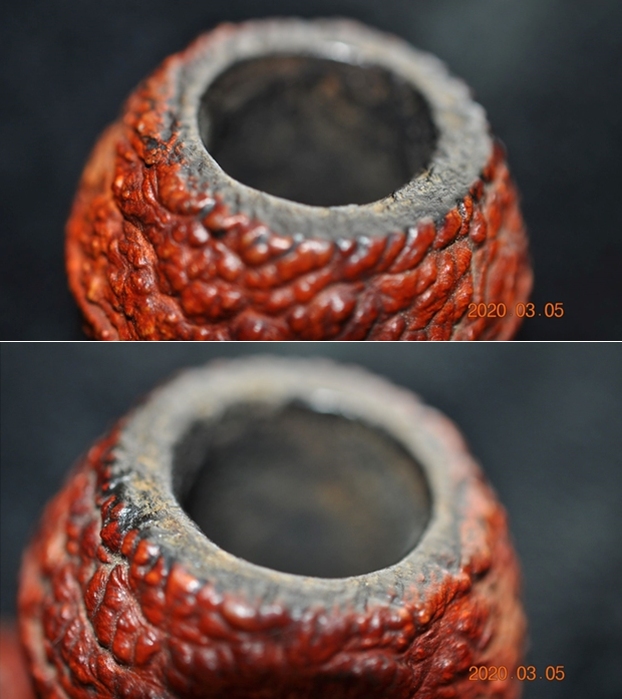
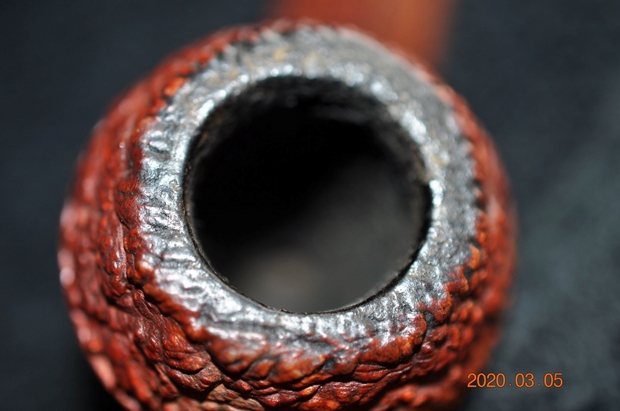
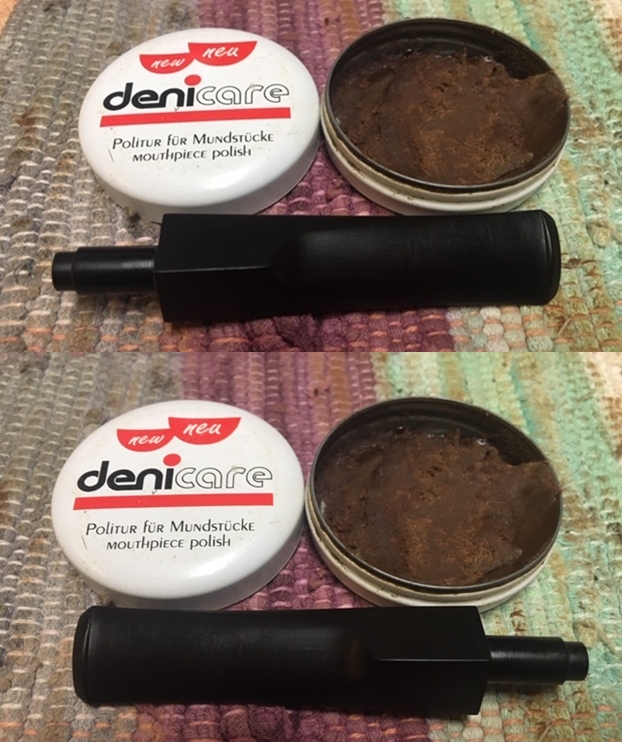
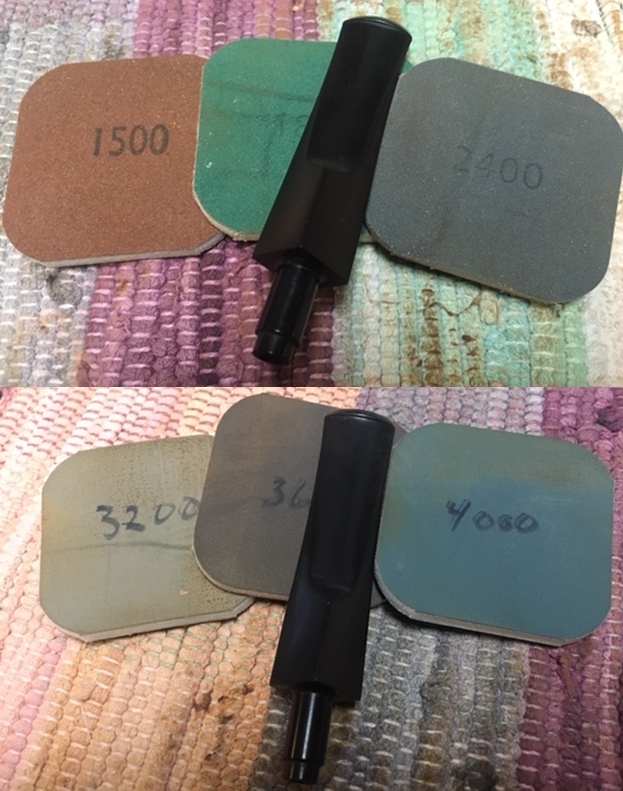
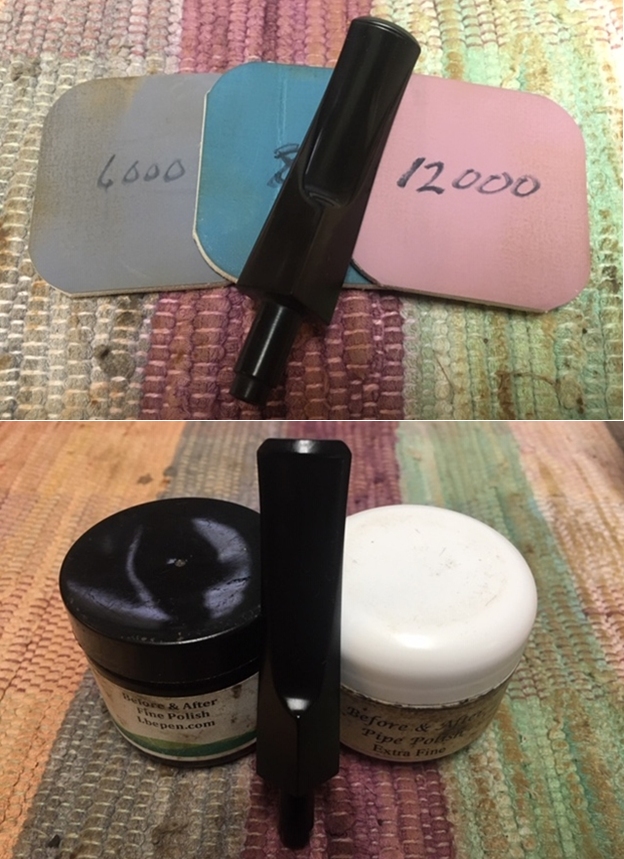
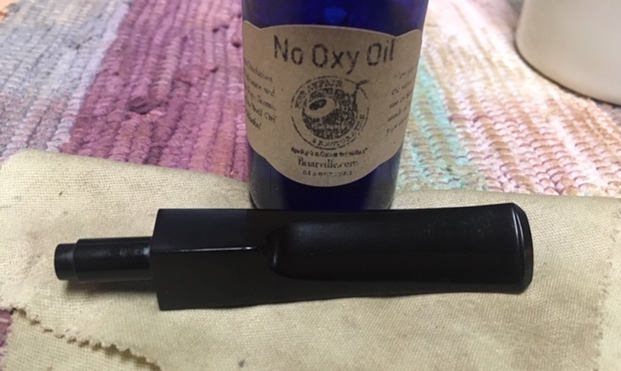
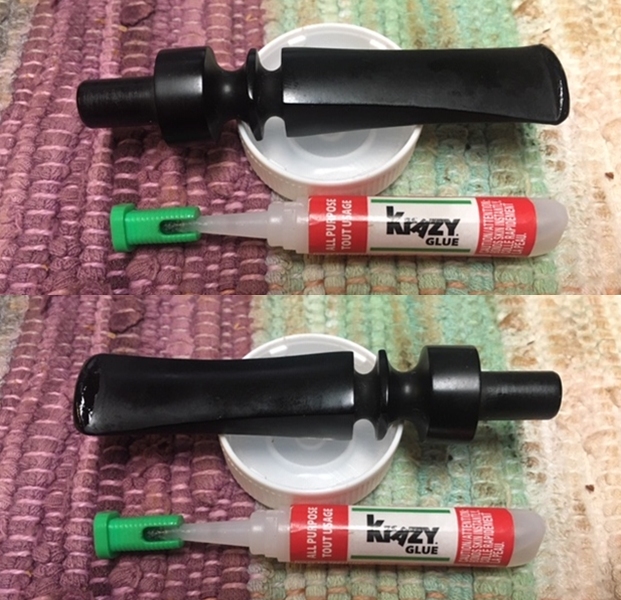
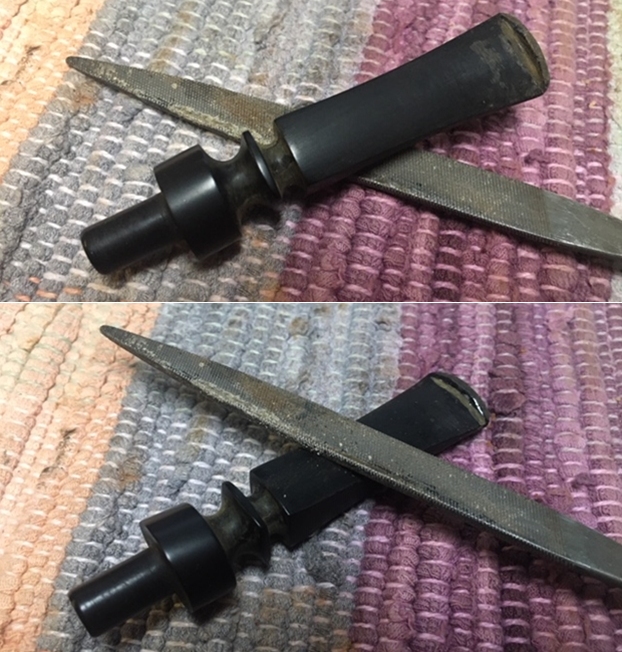
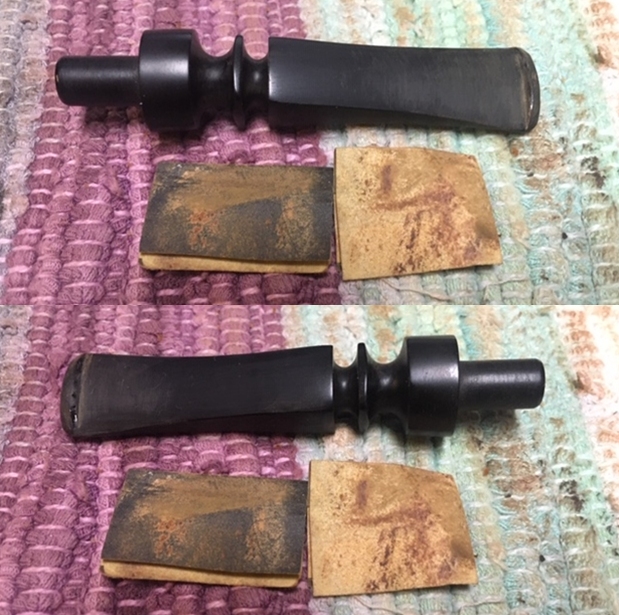
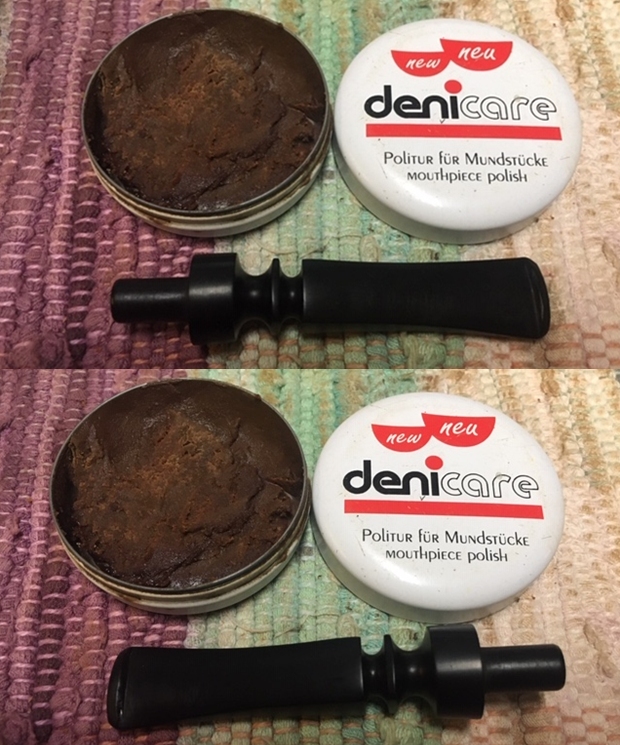
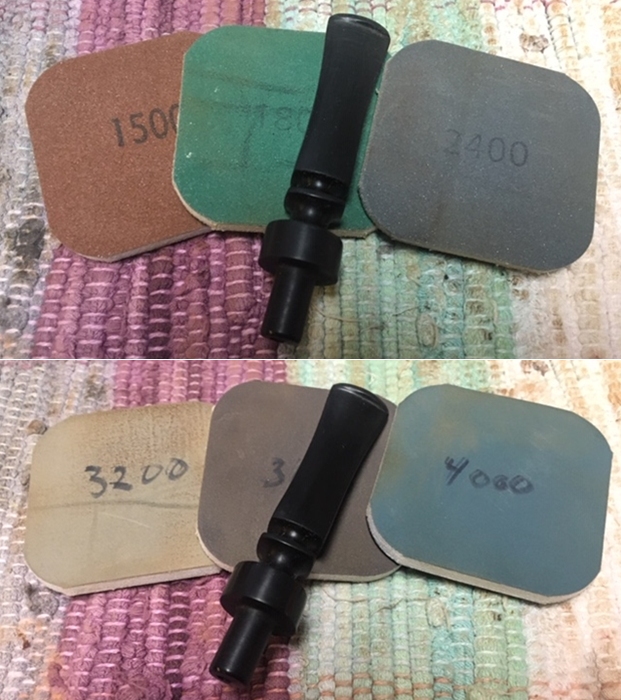
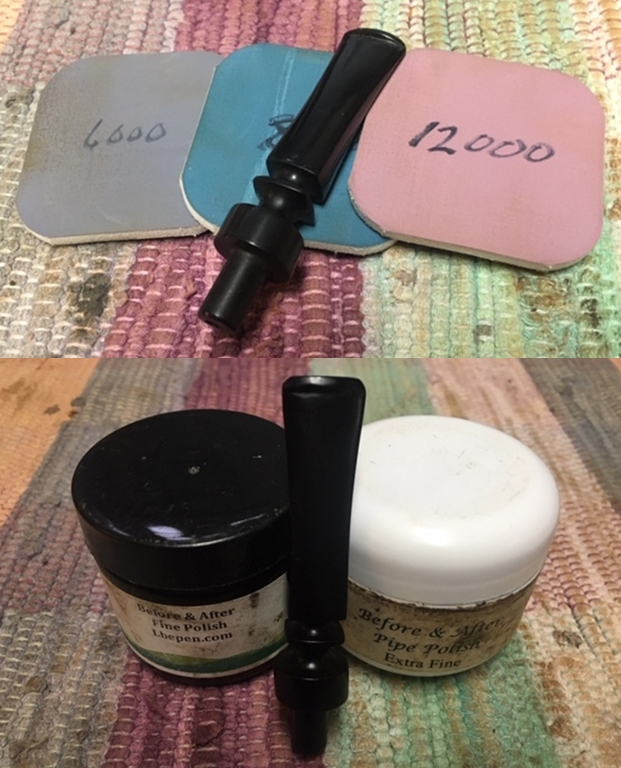
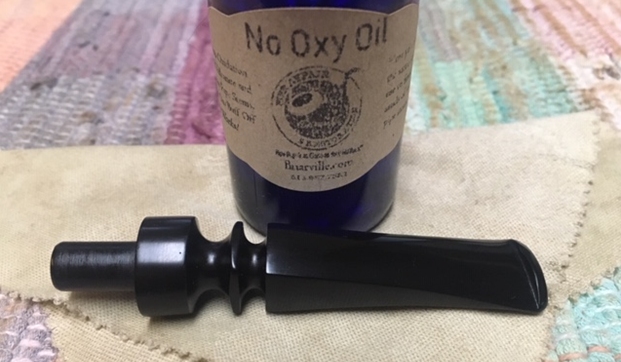
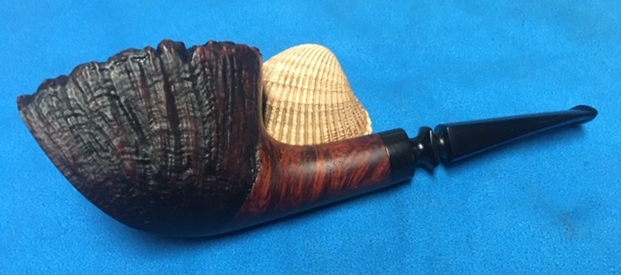
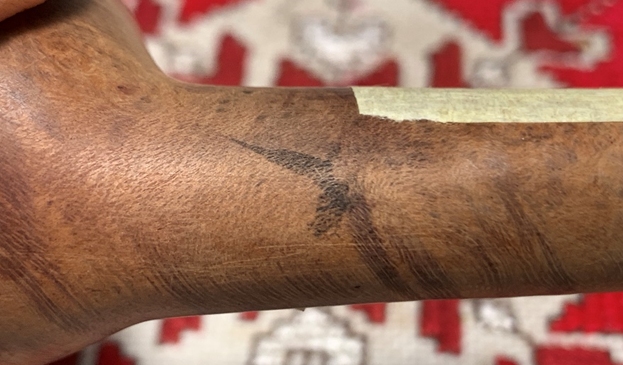
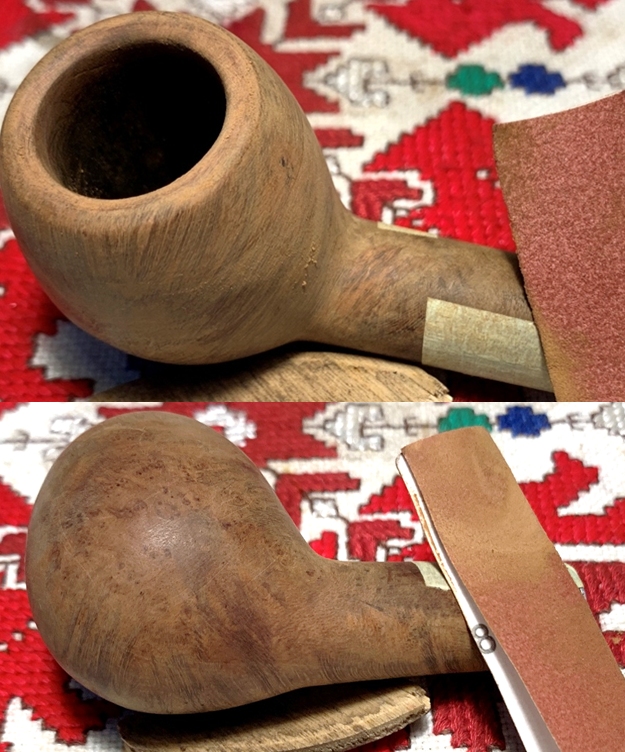
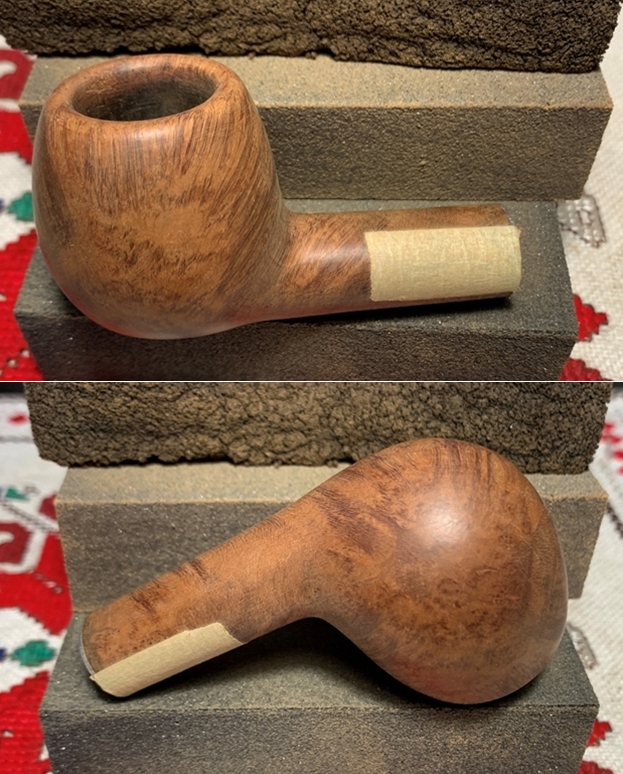
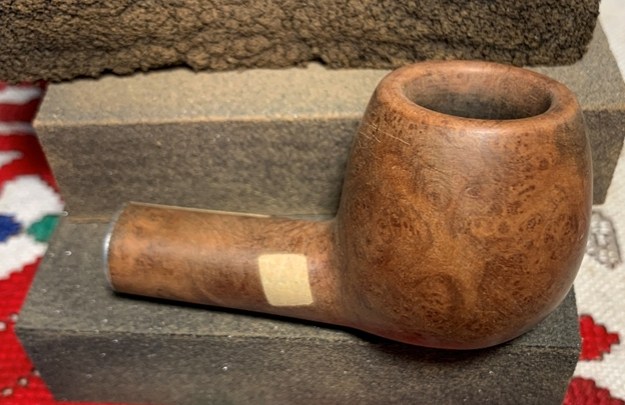
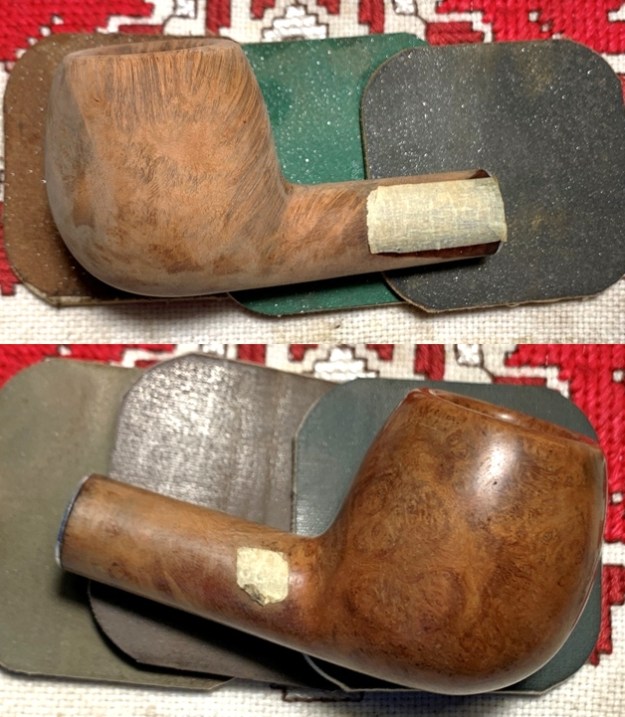
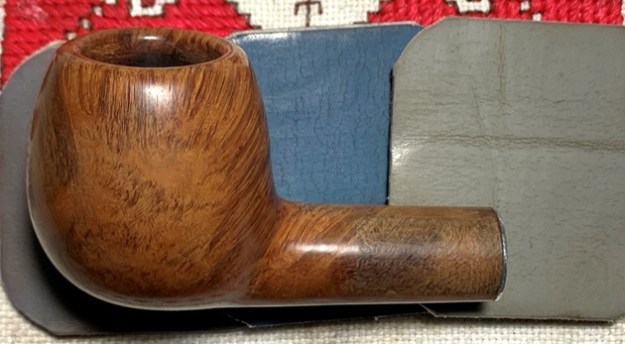
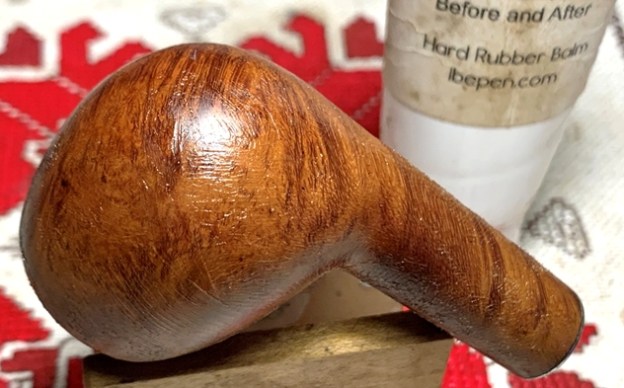
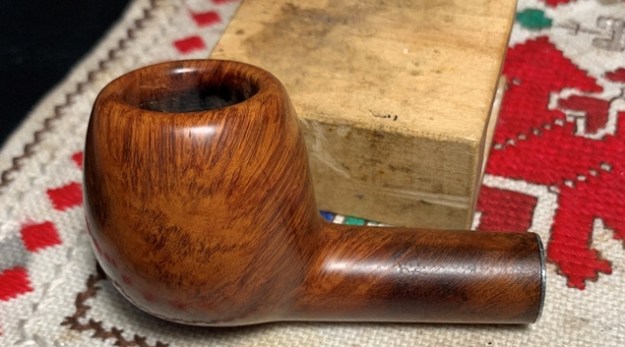
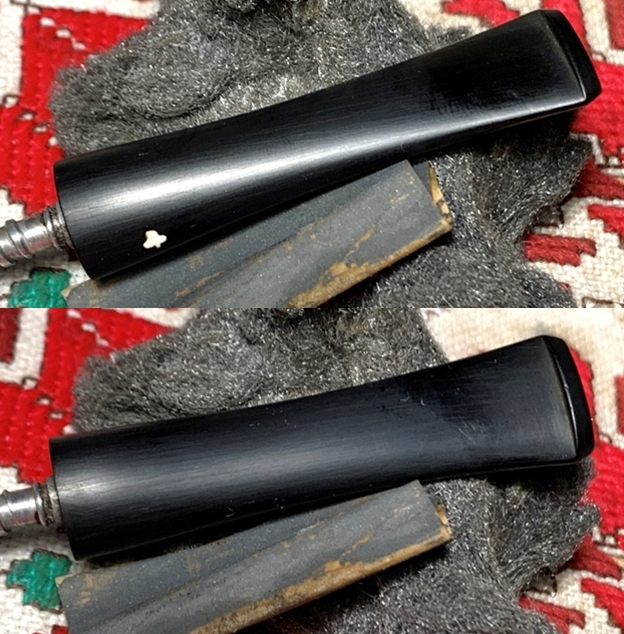
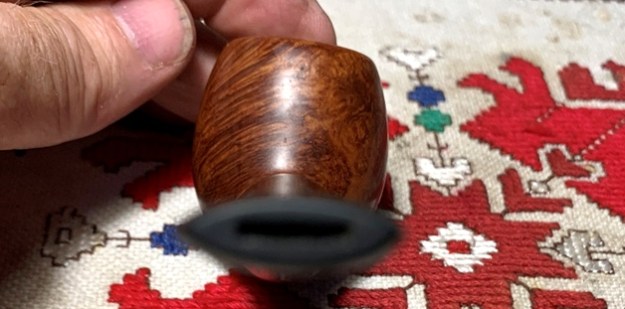
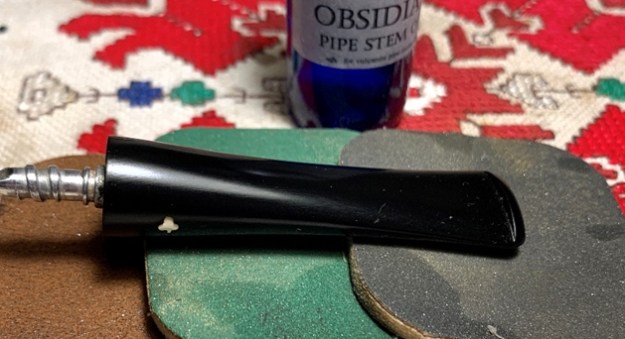
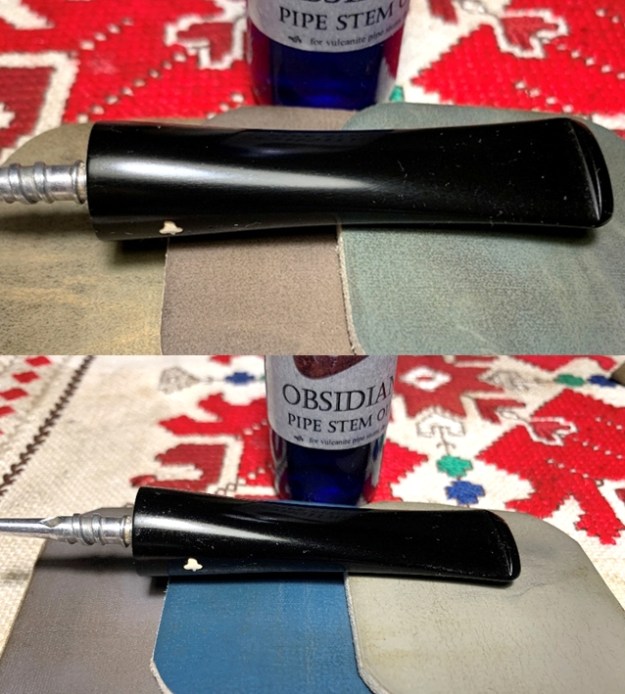
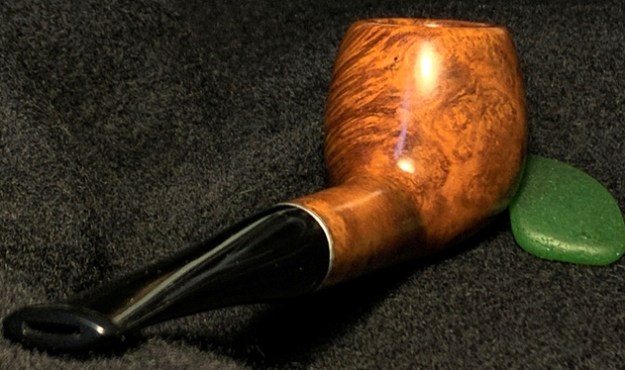
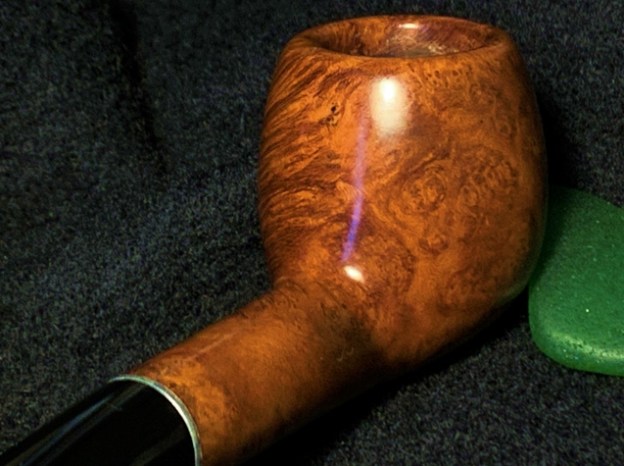
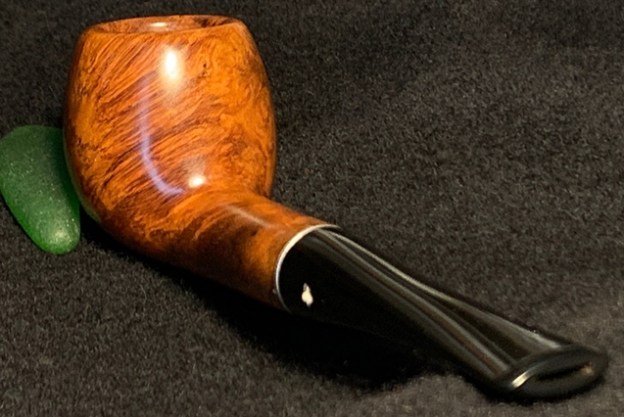
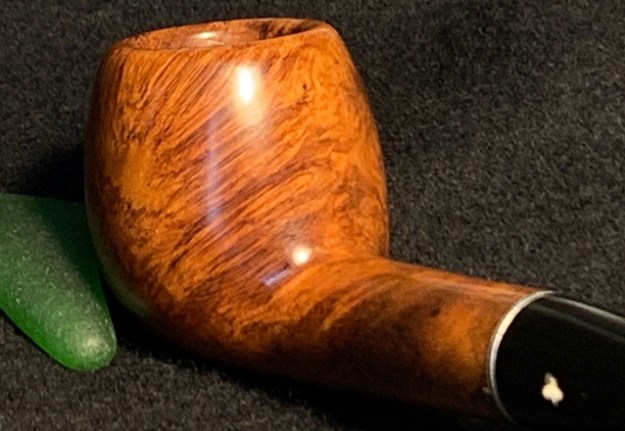
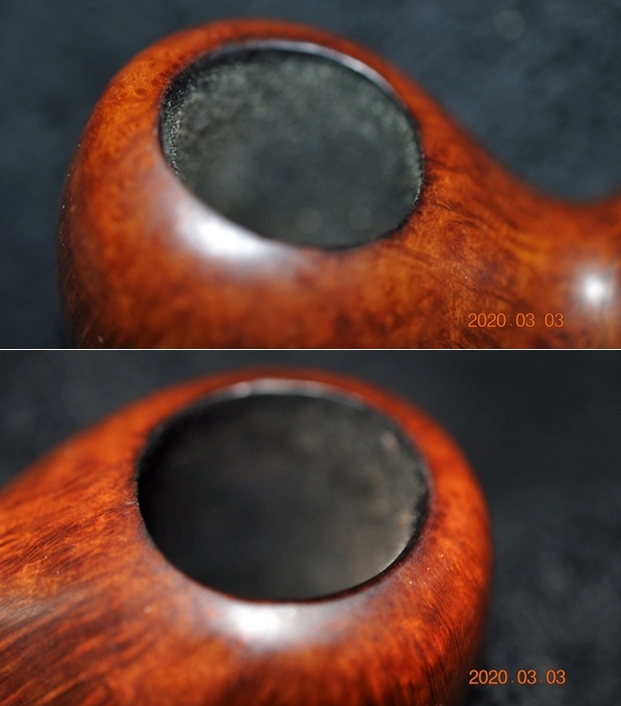
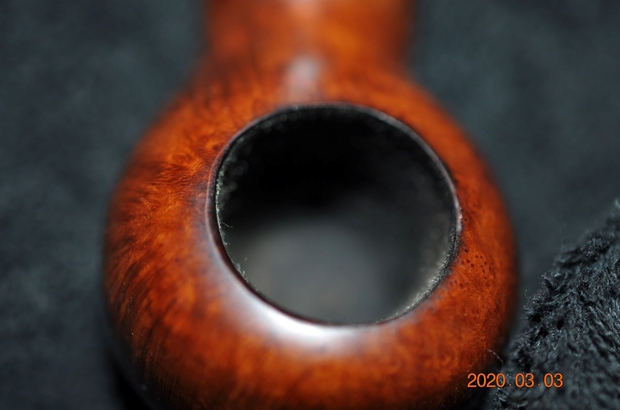
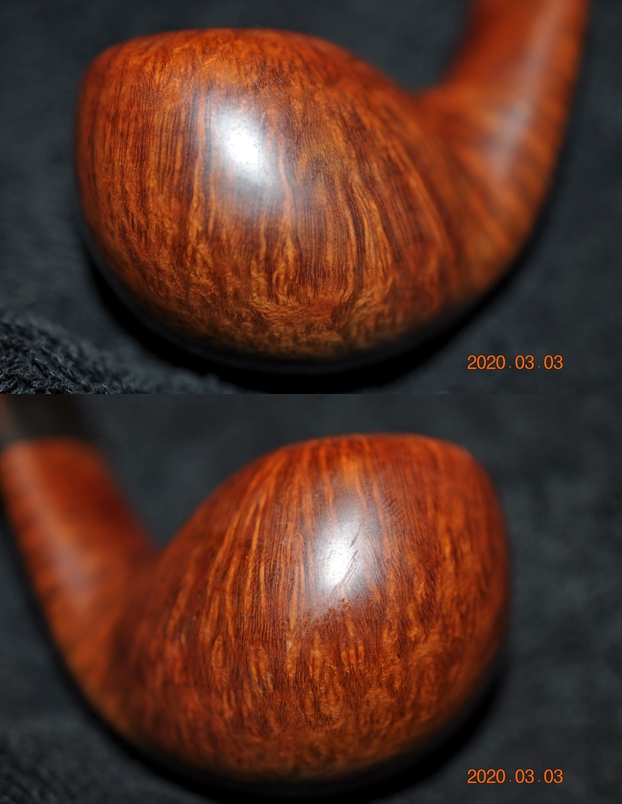
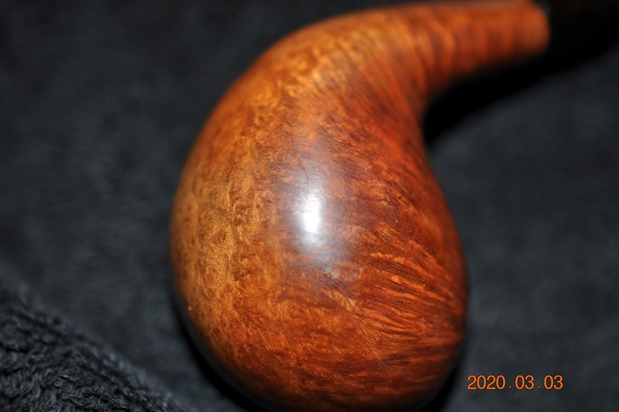
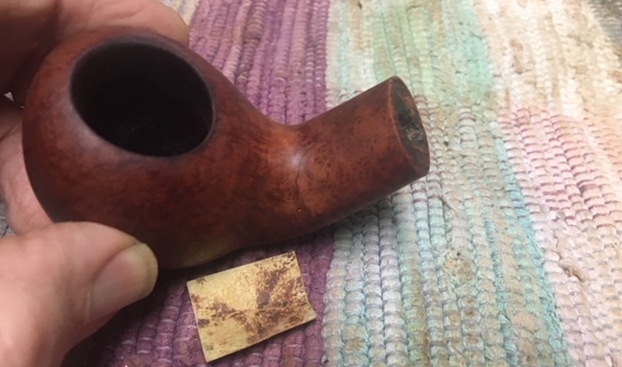
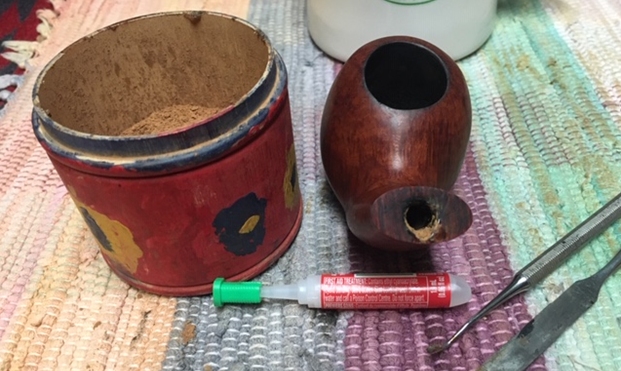
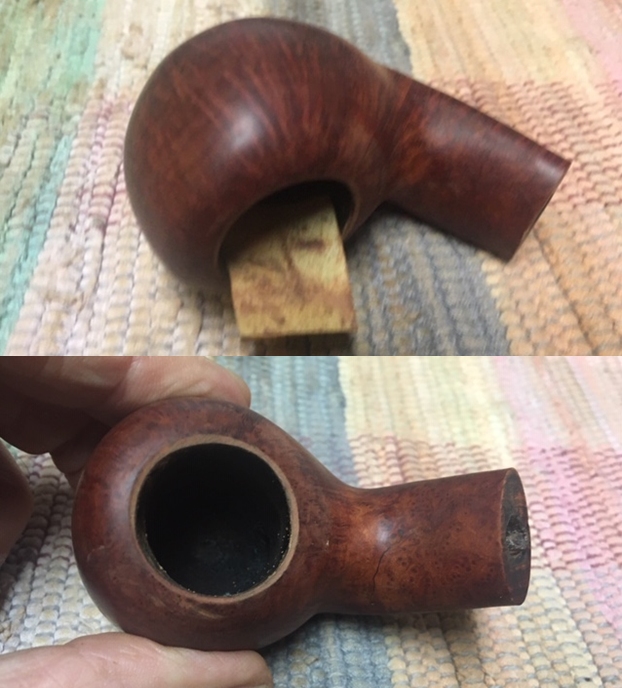
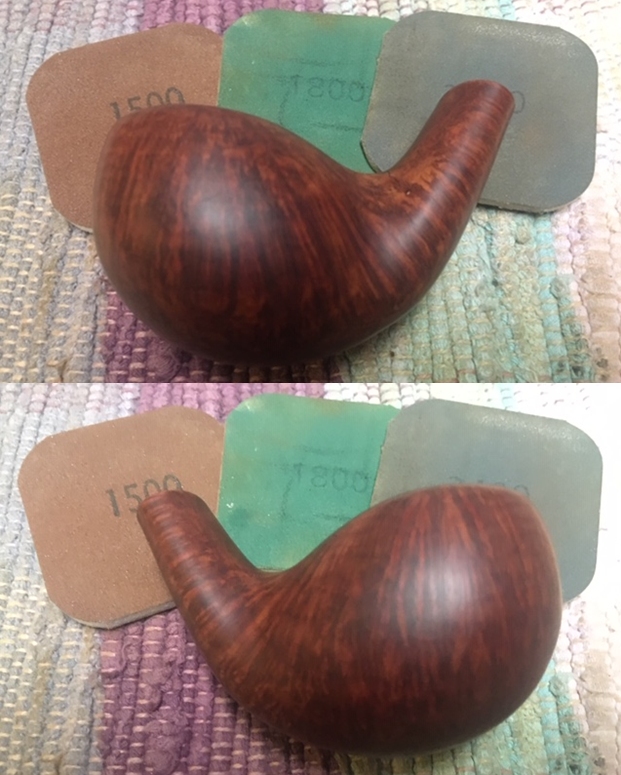
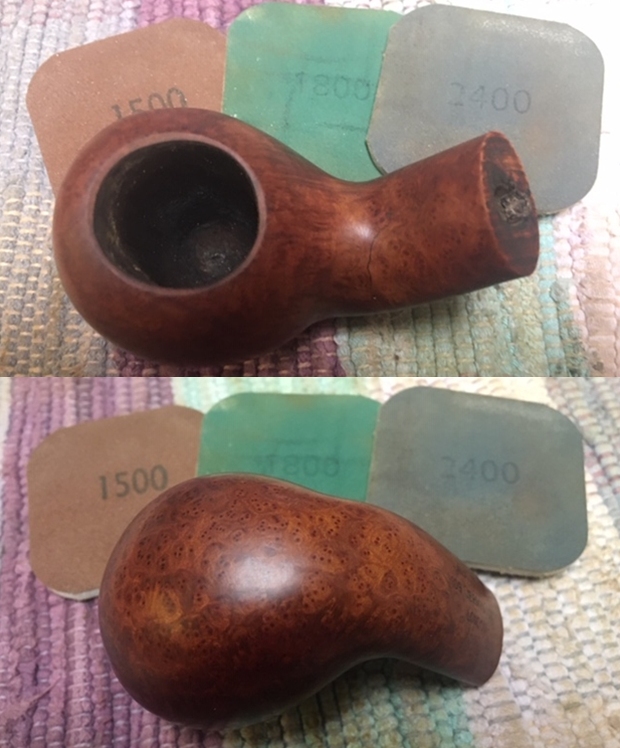
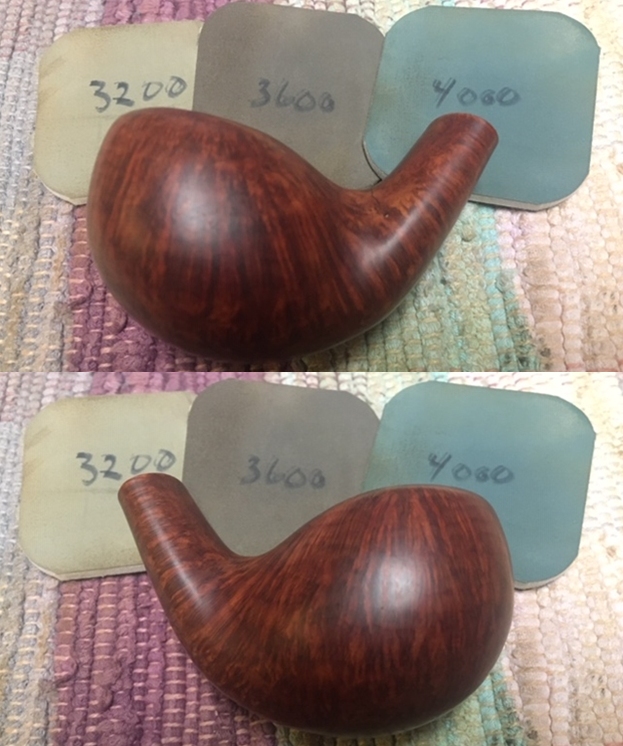
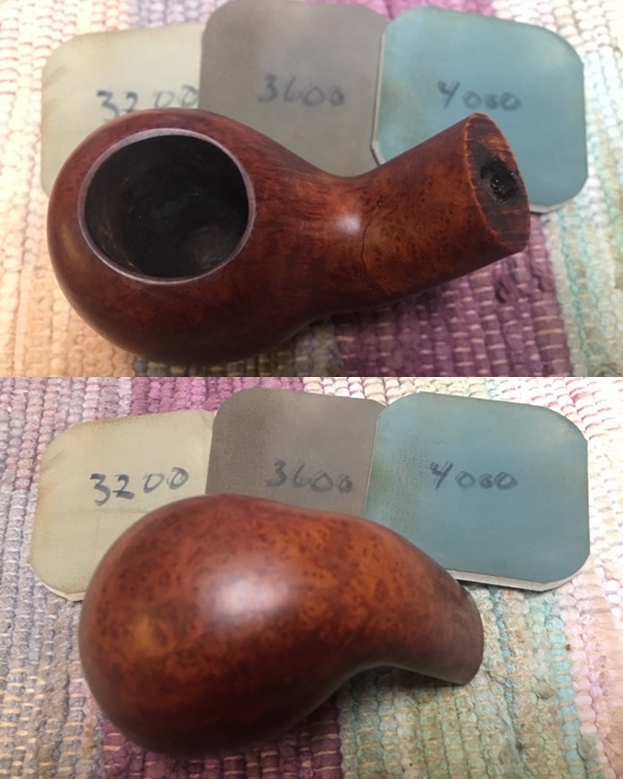
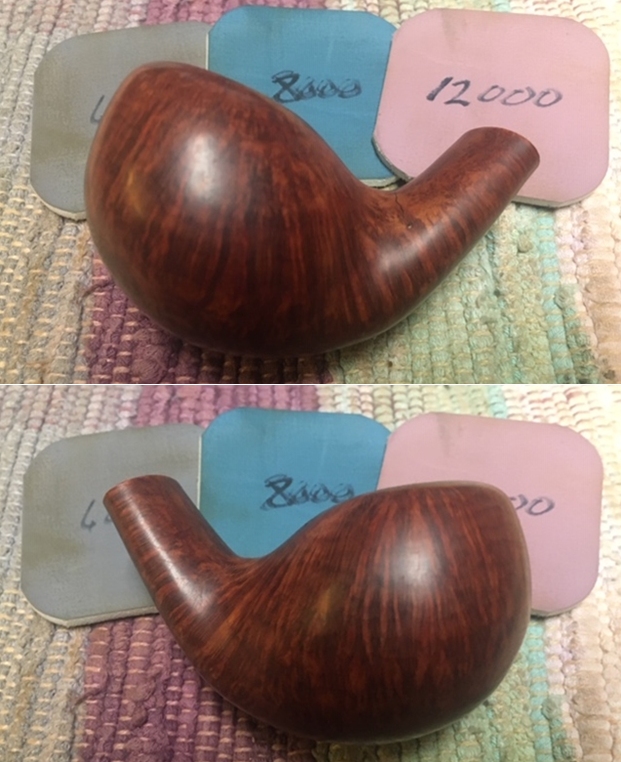
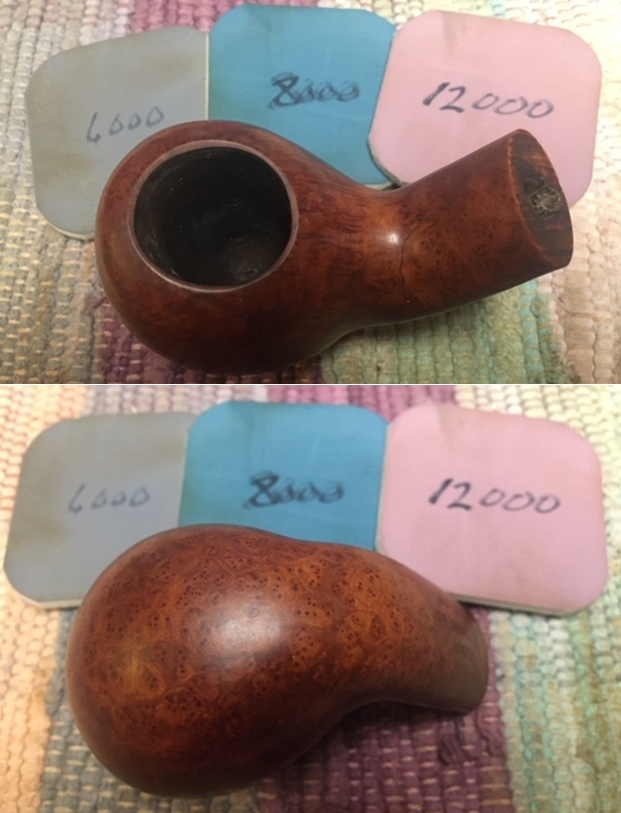
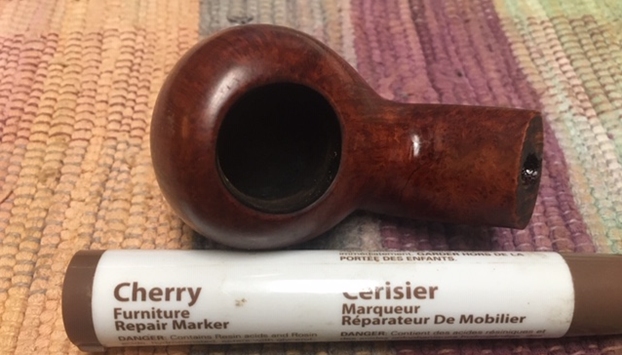
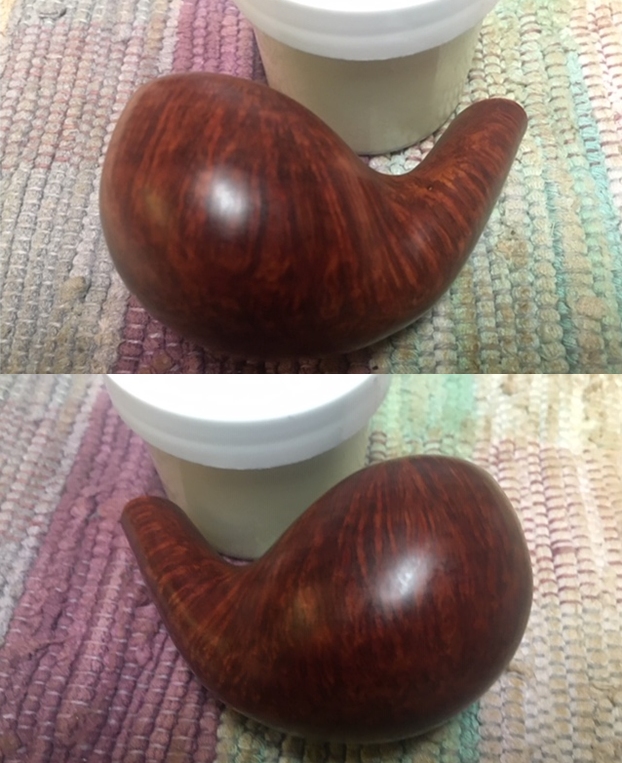
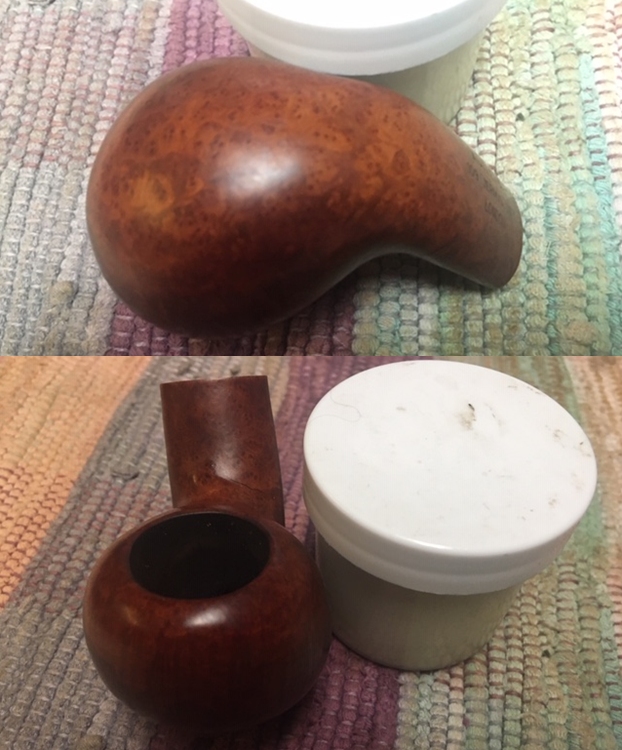
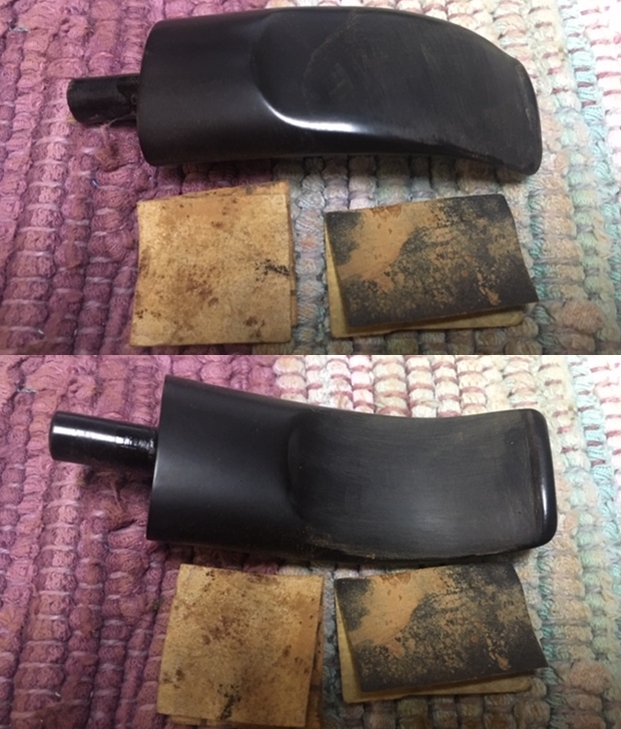
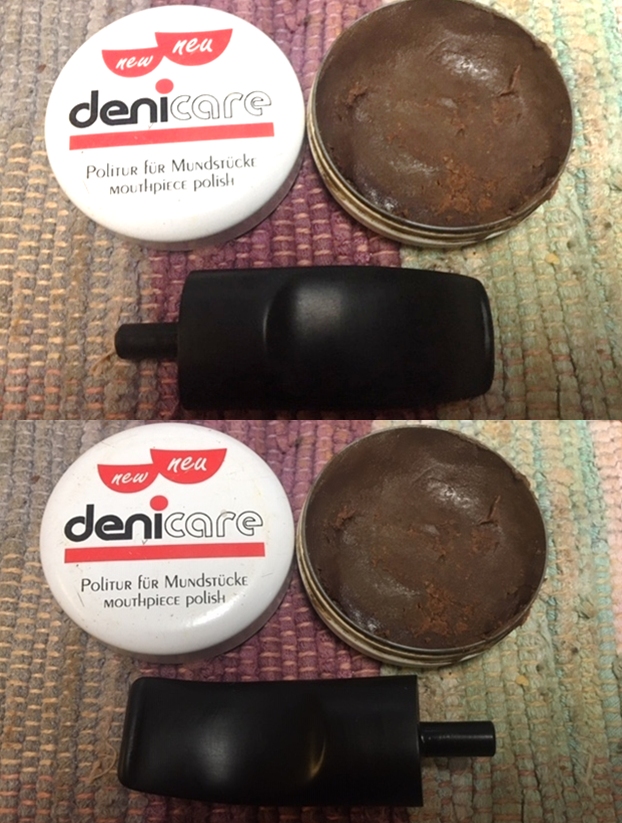
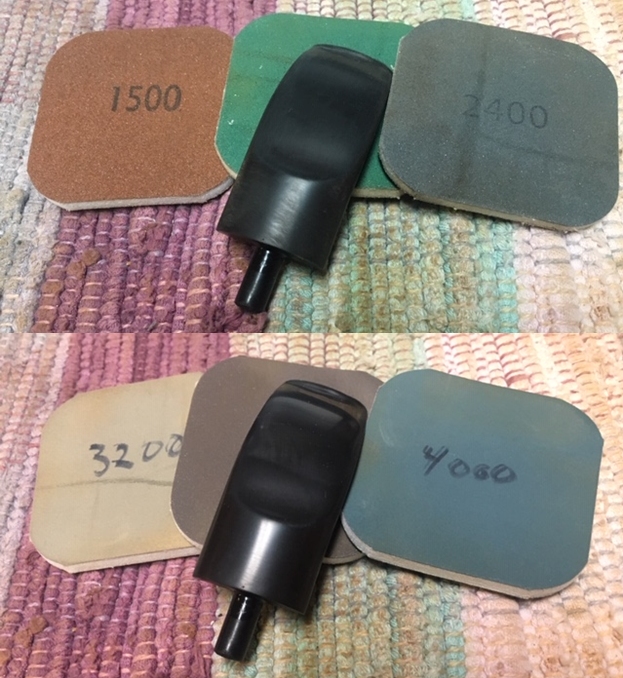
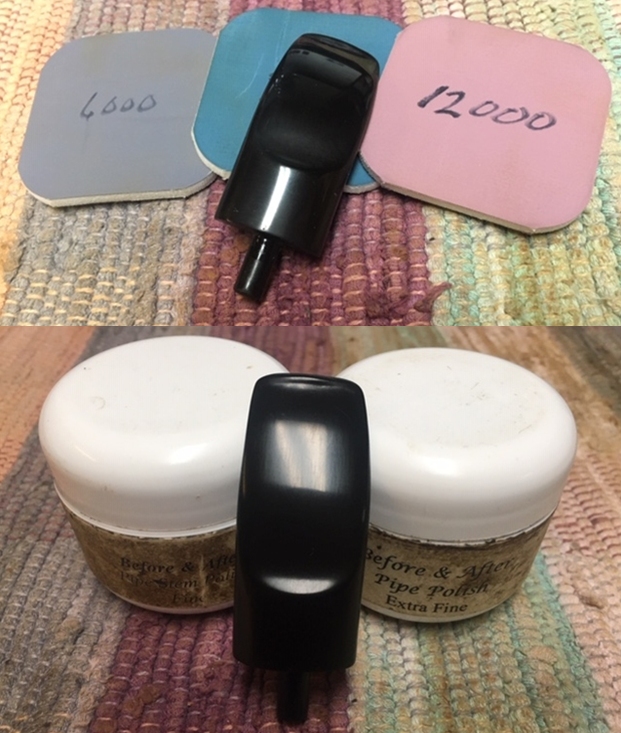
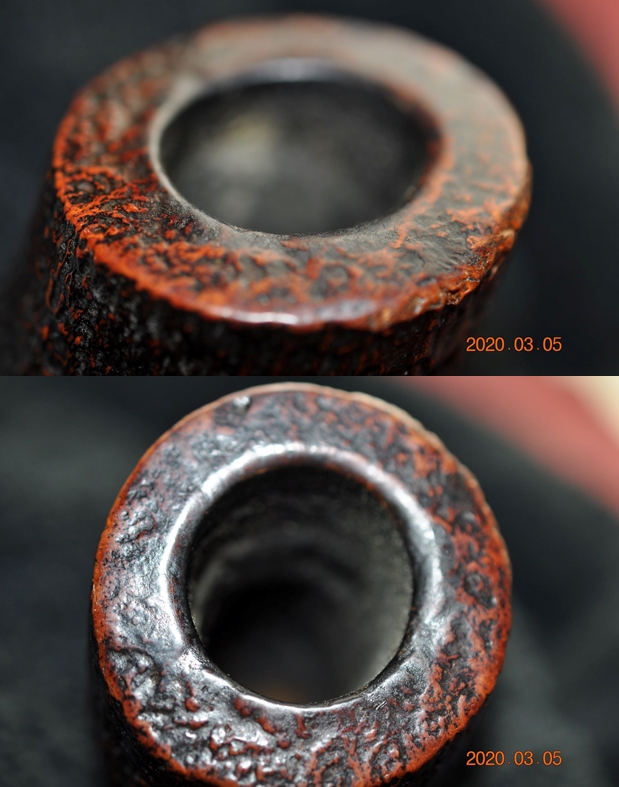
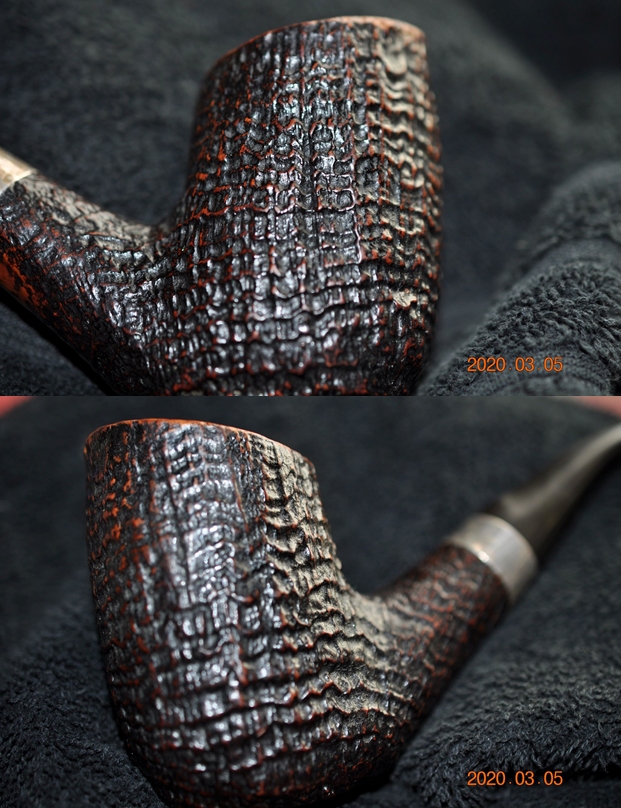
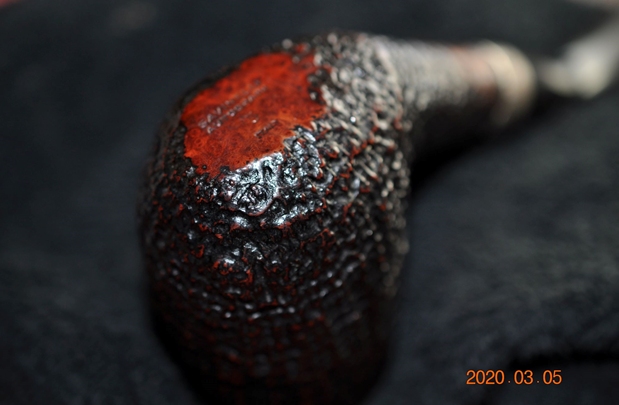
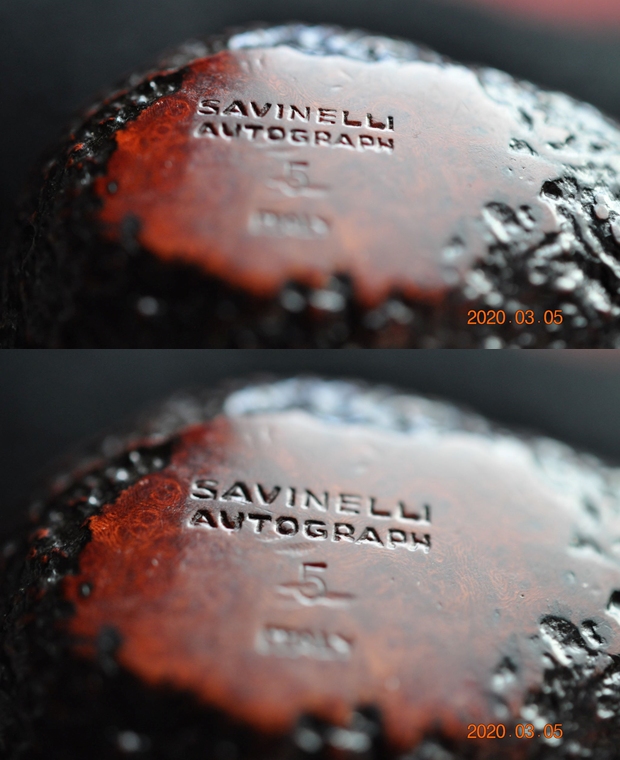
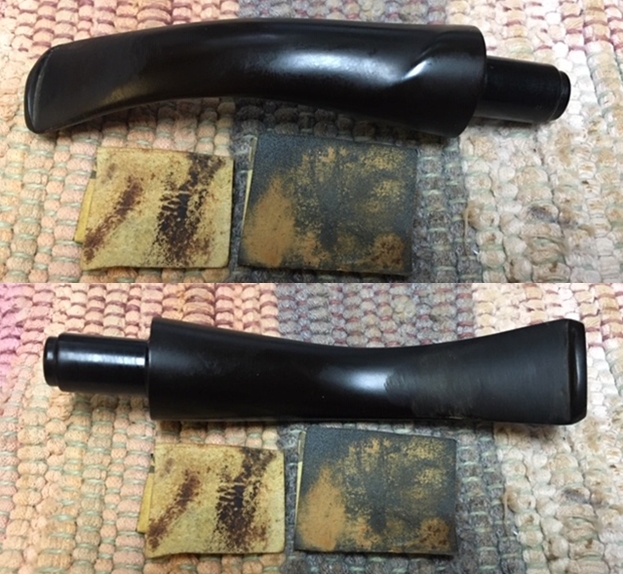
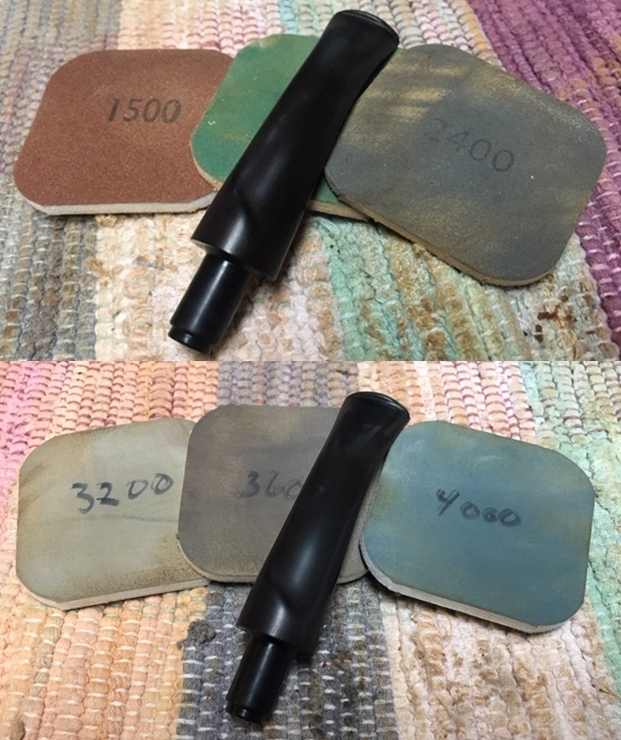
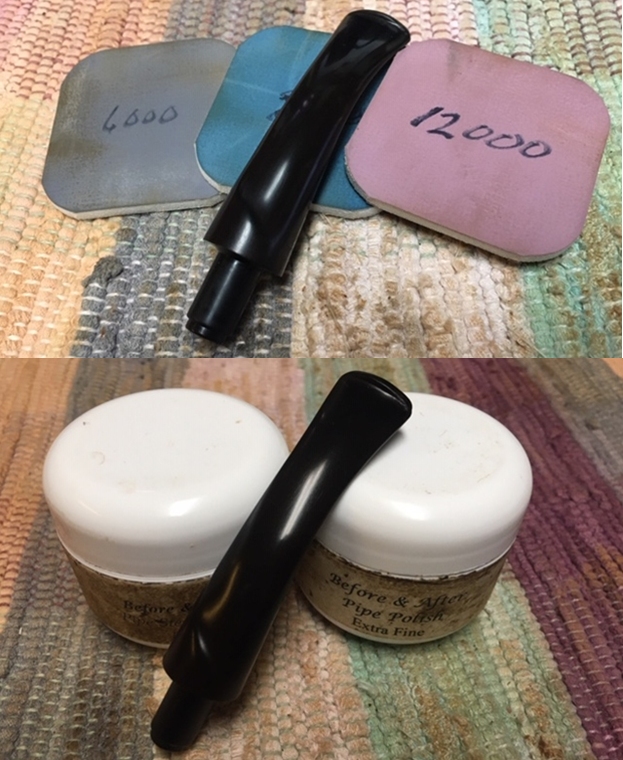
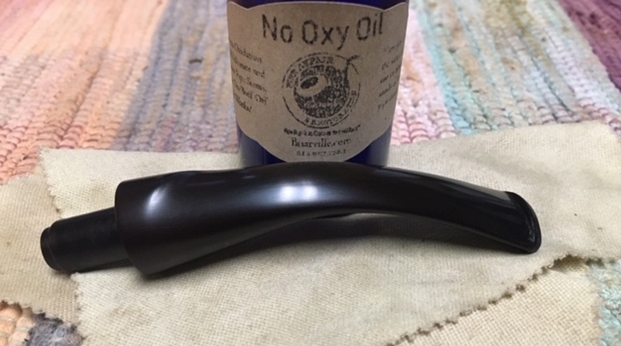
The next pipe on my table is another Savinelli Product pipe. It is stamped on the underside of the shank with the Savinelli “S” Shield and Italy. It is a dirty pipe but has some great grain that the carver built the shape around. It has a natural finish that is in good shape under the dirt and even the rim top looks good. The inner edge of the rim is darkened but the bowl is in good shape. There was no burn damage to the inner edge. There is a medium cake in the bowl but no lava coat on the rim top. The variegated silver/grey acrylic stem was not well fitted to the shank. It is the original stem but it is a pretty sloppy fit. There were light tooth marks and chatter on both sides ahead of the button. Jeff took these photos before he cleaned the pipe. Jeff took photos of the rim top from various angles to give a clear picture of the condition of the bowl and rim. It is dirty but there is no lava coat on the top and the rim edges look very good.The grain around the sides and heel of the bowl is quite interesting. It is a combination of cross grain, swirled and birdseye grain. There are some small fills on the sides and back of the bowl. Most of them seem to be solid.  The stamping on the shank is very readable as can be seen in the next photo.The acrylic stem shows tooth marks and chatter on both sides near the button. There is some wear on the edge of the button as well. The stem shows a great profile. It was time to get working on the pipe itself and see what I had to do with it. It had come back amazingly clean. Jeff had done his normal thorough clean up – reaming, scrubbing, soaking and the result was evident in the pipe when I unpacked it. I took photos of the pipe before I started my work on it. I took some photos of the rim top to show the condition of the edges and the bowl. It looked very good. The stem actually looked much better than I expected and the tooth chatter seemed to have disappeared. There were some light tooth marks just next to the button edge on both sides. I would also need to fit the stem to the shank by reduce the diameter of the stem to match the shank and adjust the fit.I took photos of the stem shank junction to show the difference in diameter. The stem is significantly wider than the shank. It fit tight to the shank but the rest of the fit was very poorly done.The bowl was going to be quite easy to work on so I started with it. The fills on the right side of the bowl were sound and tight fitting. There was a damaged fill that was pitted on the back of the bowl just above the shank bowl junction. I cleaned it out with a cotton swab and alcohol and filled it in with super glue and briar dust. When the repair had cured I sanded it smooth with a folded piece of 220 grit sandpaper. Once it was smooth I stained it with an oak stain pen to blend it into the surrounding briar.I polished the briar with micromesh sanding pads – wet sanding with 1500-12000 grit pads. I wiped the bowl down after each pad with a damp cloth to remove the dust.     I worked some Before & After Restoration Balm into the briar with my fingertips. I let the balm sit on the briar for 10 minutes the buffed it off with a soft cloth. The balm enlivens, enriches and protects the briar while giving it a deep glow. I set the bowl aside and turned my attention to the stem. I used the Dremel and a sanding drum to take off as much of the excess diameter of the stem as possible while it was on the shank. I then removed the stem and worked on it with a rasp and file to remove the rest of the excess material.I sanded the stem with 220 grit sandpaper to remove the file marks and Dremel marks on the reduced shank. I also sanded out the tooth marks and the remaining chatter on the button end of the stem. I started the polishing with 400 grit wet dry sandpaper.I polished the stem with micromesh sanding pads – wet sanding with 1500-12000 grit sanding pads. I wiped it down after each sanding pad with a damp cloth. I polished it with Before & After Pipe Stem Polish – both Fine and Extra Fine. I buffed the stem with a soft cloth to raise the shine. Once again I am at my favourite part of a restoration – finishing up a pipe! This Savinelli Made Bent Pot came out really well considering the issues with the fit of the stem when I started. I put the pipe back together and buffed it with Blue Diamond polish on the buffing wheel. I polished it with multiple coats of carnauba wax on both the bowl and stem. I buffed it with a clean buffing pad and with a hand buff with a microfibre cloth. The mix of colours and the buffing made the grain really pop once it was waxed. The mixed grain is quite stunning. The variegated silver acrylic half-saddle stem stands out in great contrast to the briar. It is a nice looking pipe. Have a look at the photos below of the finished pipe. Its dimensions are Length: 6 inches, Height: 2 inches, Outside Diameter of the Bowl: 1¼ inches, Diameter of the Chamber: ¾ of an inch. The bent pot feels great in the hand. This one will be going on the rebornpipes store later today. You can add it to your collection and carry on the trust. Let me know if you are interested in adding it. Thanks for your time.

Sprucing Up a Meerschaum Teardrop Lattice Billiard


Blog Dal Stanton

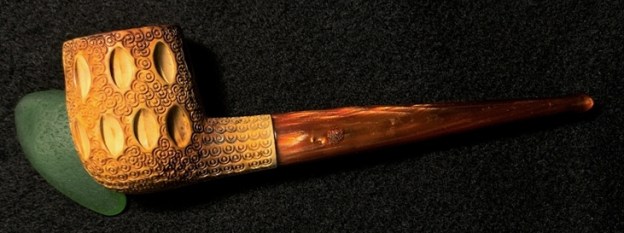
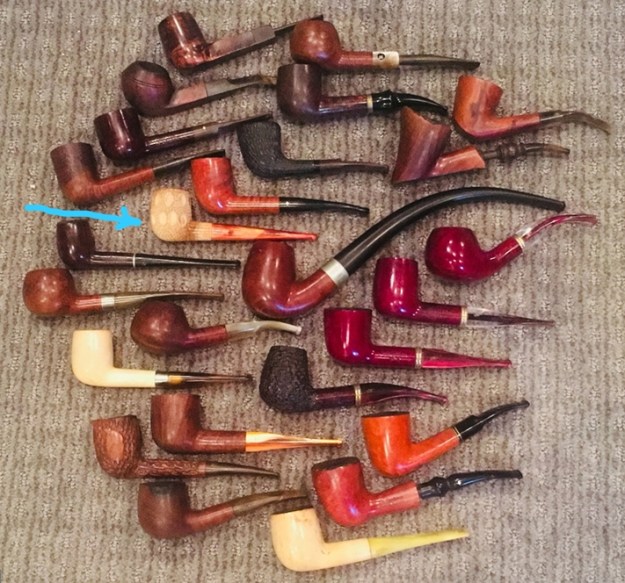
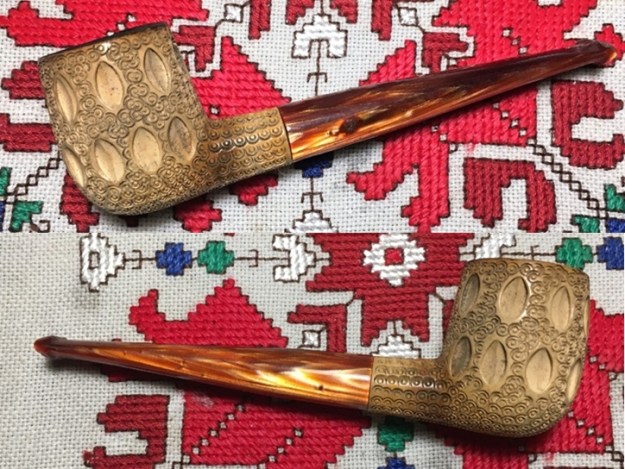
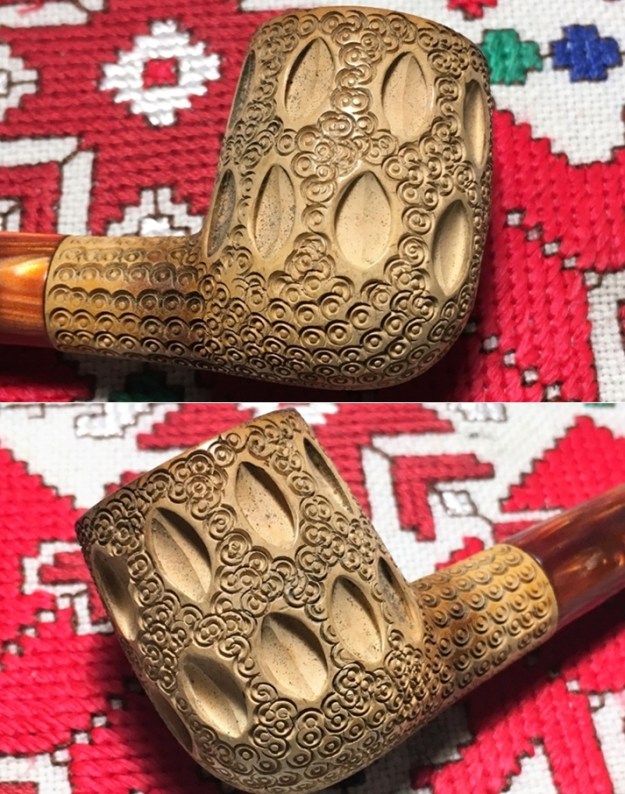
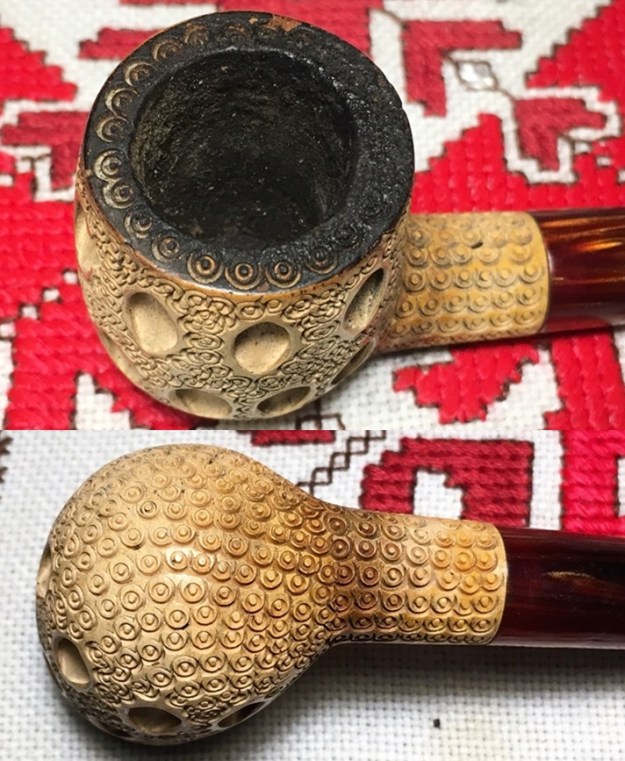
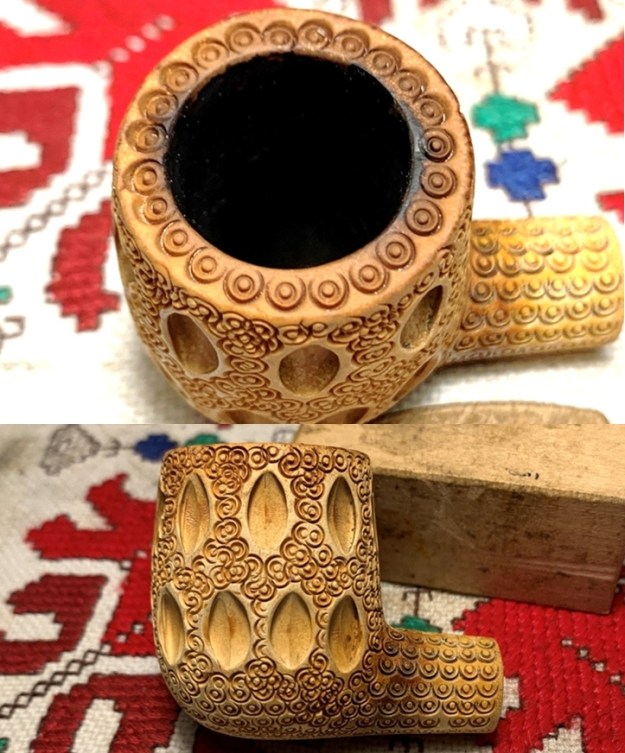
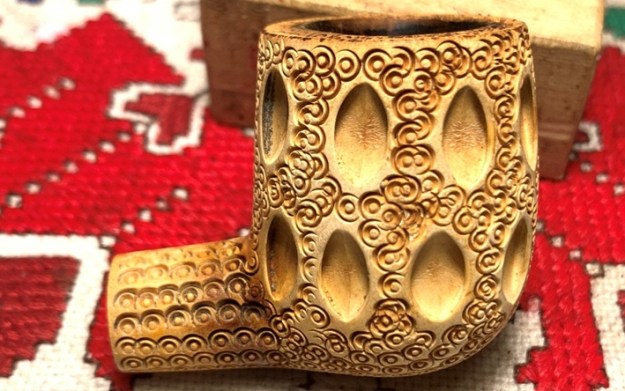
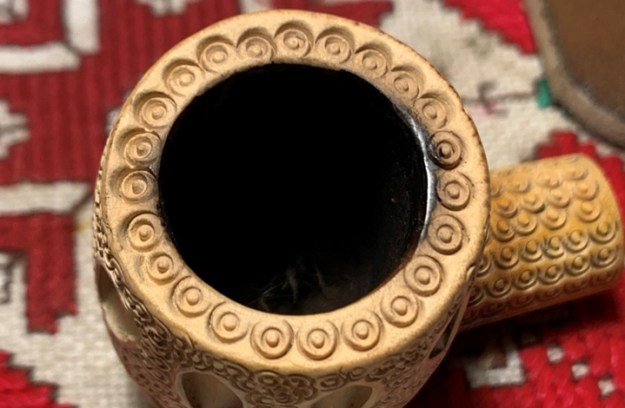
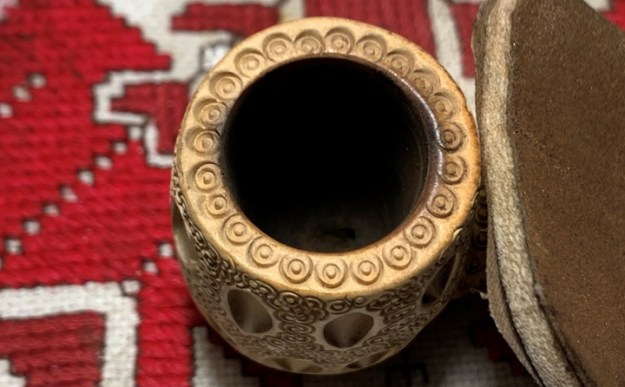
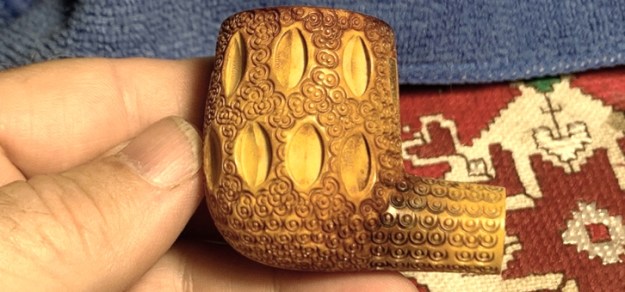
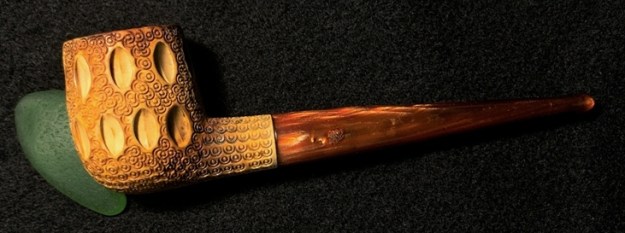
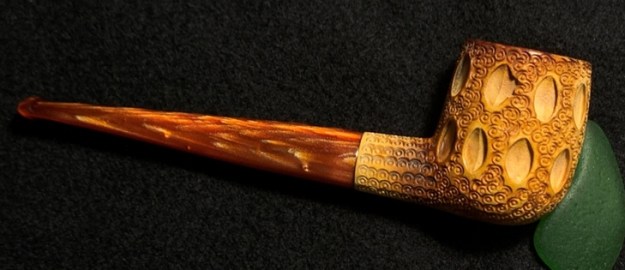
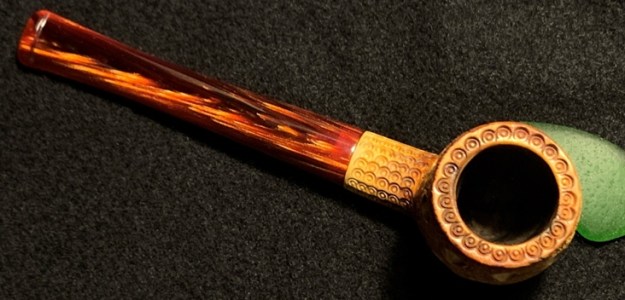
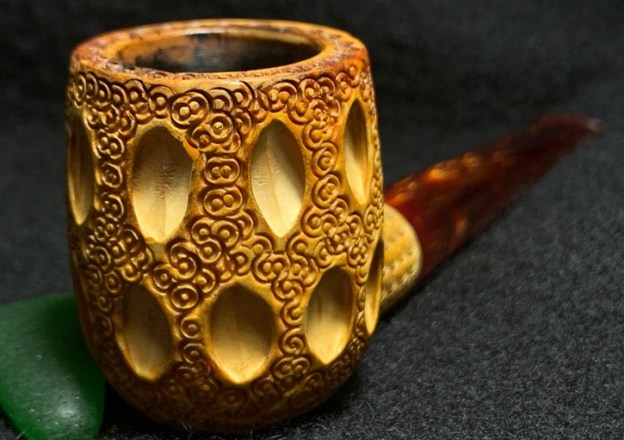
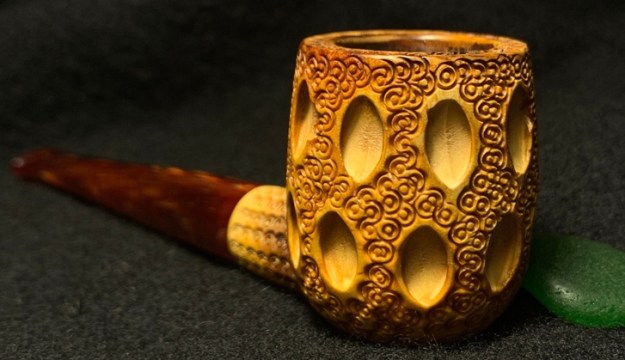
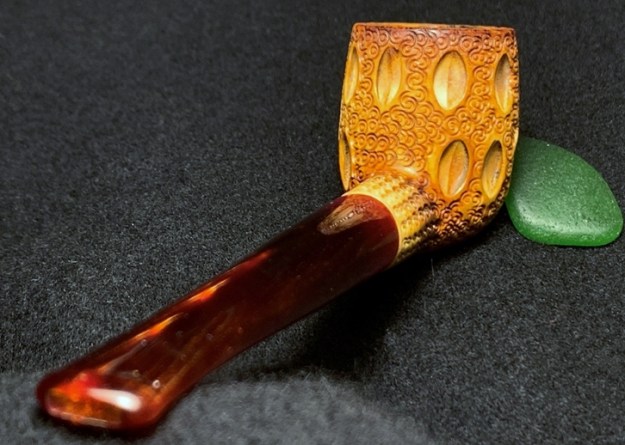
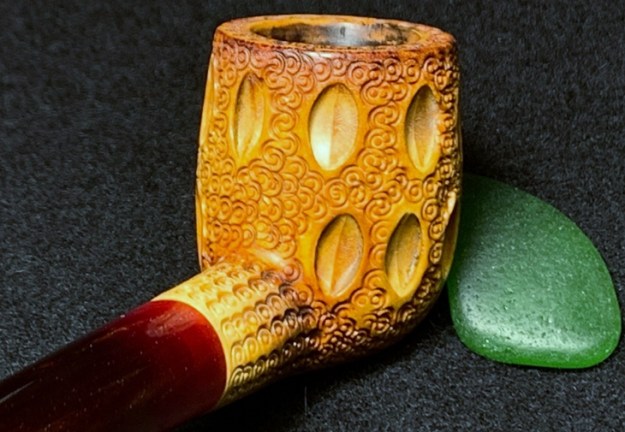
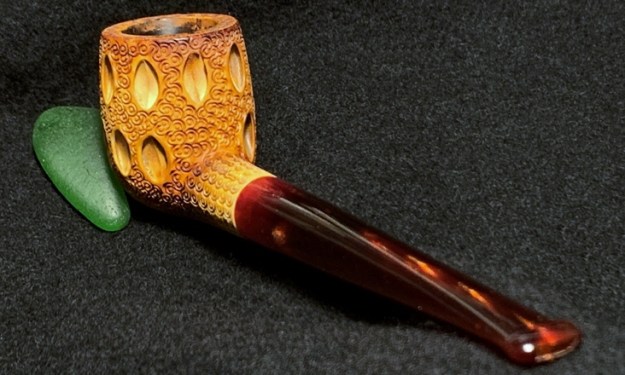
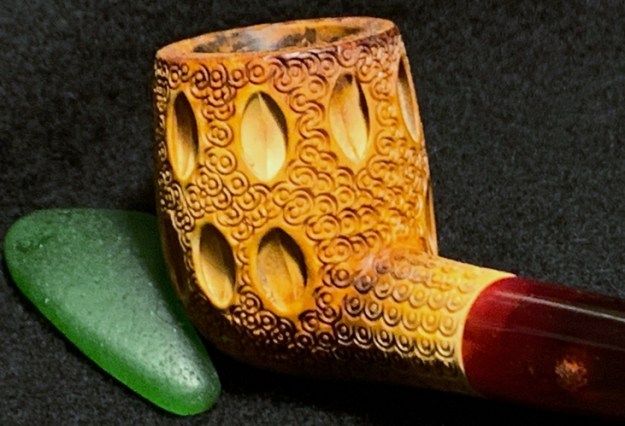
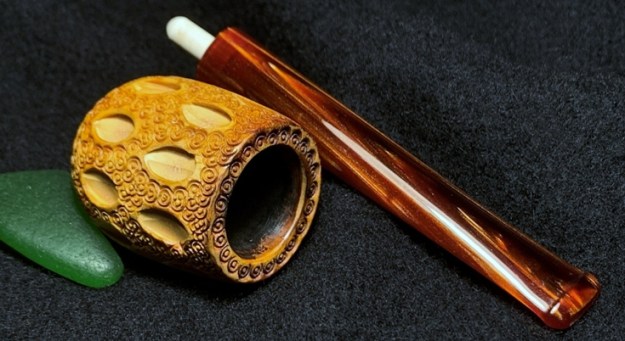
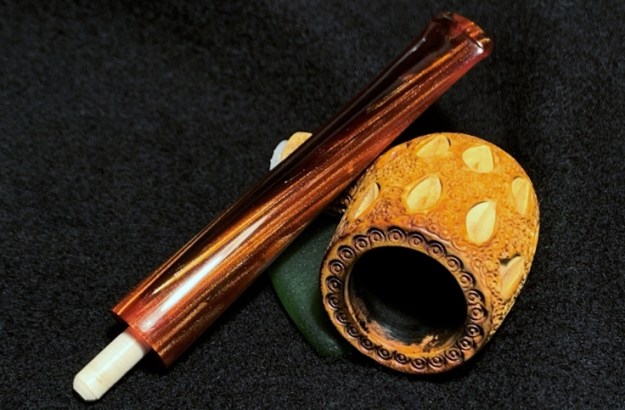
I just completed an Aldo Velani from what I’ve called the St. Louis Lot of 26 (See: Refreshing a Saucy Italian Aldo Velani Trio Bent Apple) and the next pipe in queue is also from this Lot.  The Meerschaum just above the giant Champion Churchwarden’s bowl is on the worktable now.  My son, Josiah found this lot in an antique shop in St. Louis where he was studying.  He sent me a text here in Bulgaria about his find with pictures.  We went in together to purchase the lot with the provision that my son’s part of the purchase would be for me to pick a pipe out of the lot as a Christmas present from him.  I chose the giant Champion Churchwarden!  Other pipe men and women have chosen other pipes from this lot of treasures which are posted in the online collection, For “Pipe Dreamers” Only! .This is where Jeremiah, from the state of California, saw the Meerschaum and commissioned him back when my wife and I were enjoying the Black Sea during our summer R&R.  I appreciate Jeremiah’s patience as his pipe worked up the queue!  Here are more pictures taking a closer look at the Meerschaum Teardrop Lattice Billiard. There are no markings on the pipe.  The size of the Billiard shape is Length 5 5/16 inches, Height 1 5/8 inches, Rim width 1 1/8 inches, Chamber width 3/4 inches, Chamber depth 1 3/8 inches. What is unique about this Meerschaum Teardrop Lattice design are the size of the tear drops, or the egg-shaped carvings – they are large.  The fine circular scallop carvings are in comparison, small and tight.  The Meer is set-up with a basic push/pull tenon which appears to have a crack in the mortise insert (pictured above).  The tenon insert is worn and discolored.  The pipe itself appears to be in great shape in need of cleaning.  The chamber has some carbon build up which is not needed or desired in a Meer chamber.  One of the great things about Meerschaums is that they do not need to rest between uses as with briars.  There is a bit of the coveted patina developing around the scalloped shank and climbing toward the back of the bowl.  This is good.  This brief description from Meerschaum.com that I’ve previously cited is helpful to understand the nature of Meerschaum:

Meerschaum is a very rare mineral, a kind of hard white clay. Light and porous structure of the pipe keeps the smoke cool and soft. The pipe itself is a natural filter which absorbs the nicotine. Because of this peculiarity, meerschaum pipes slowly change their colors to different tones of gold and dark brown. This adds an esthetic enjoyment to its great smoking pleasure. The longer a pipe is smoked the more valuable it becomes due to the color change. Today many old and rare meerschaums have found a permanent place in museums and private collections.

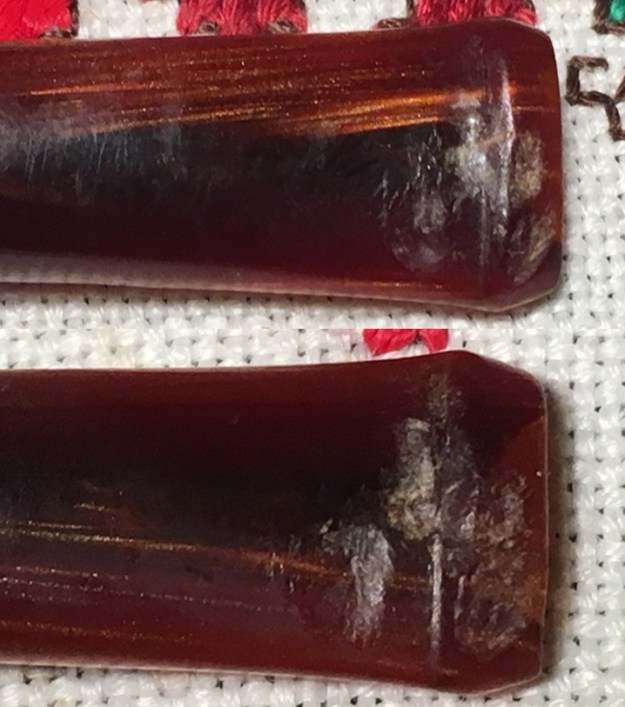
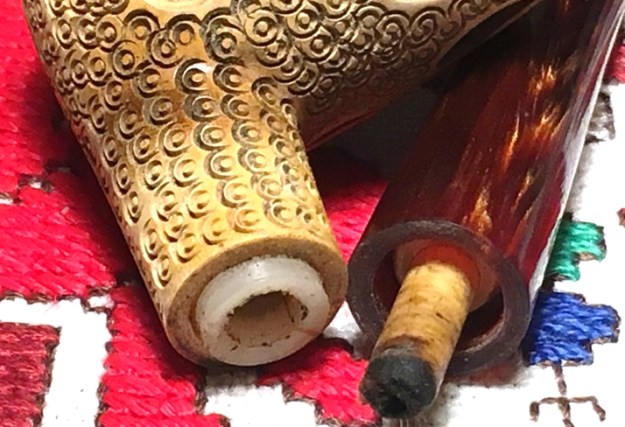
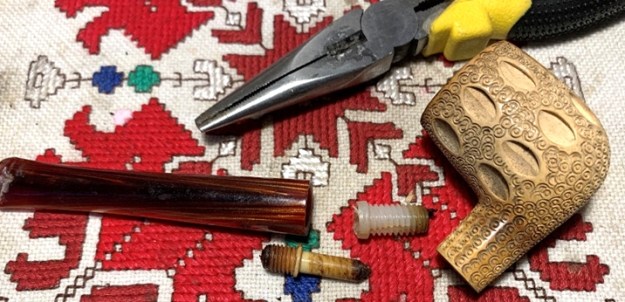
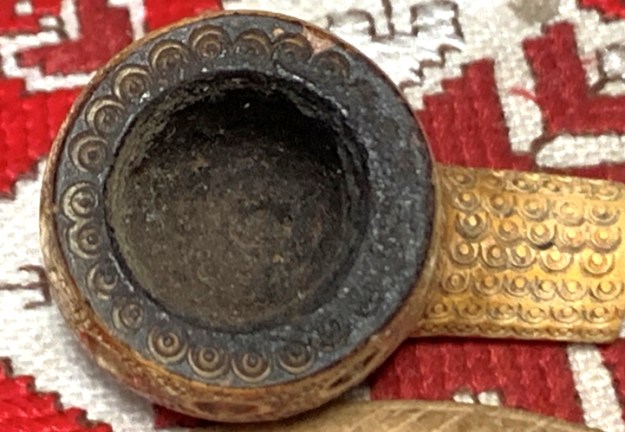
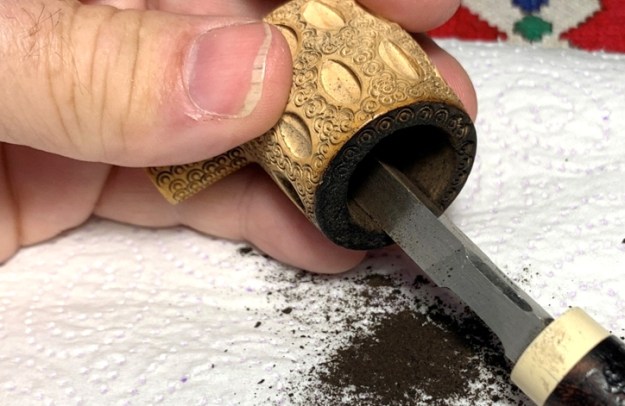
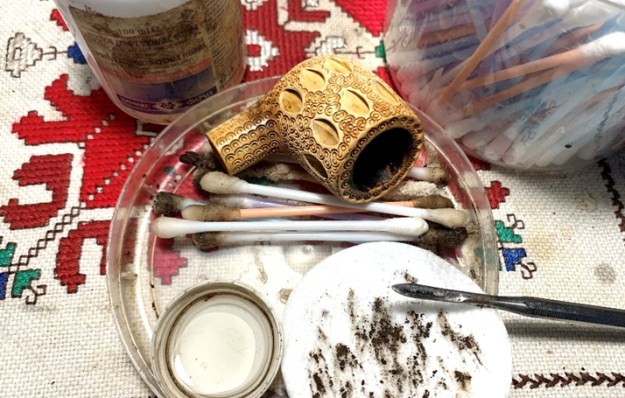
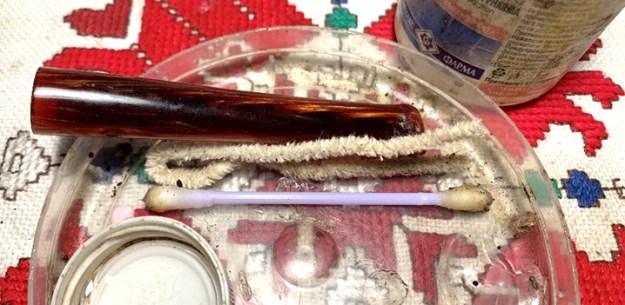
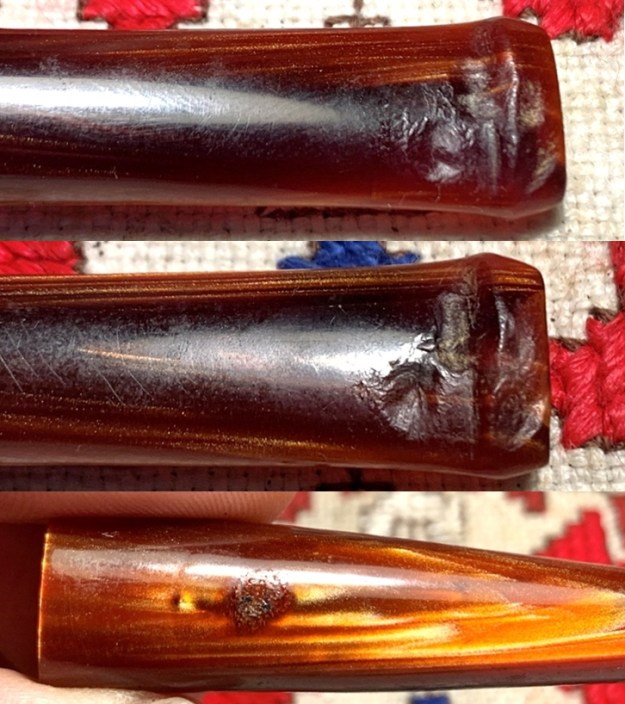
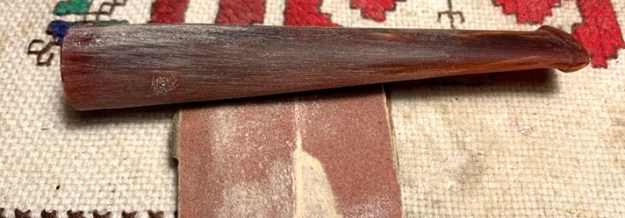
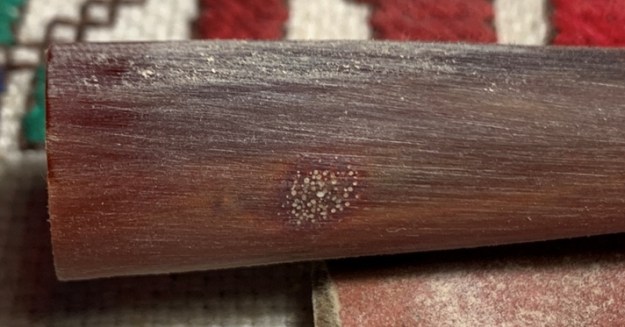
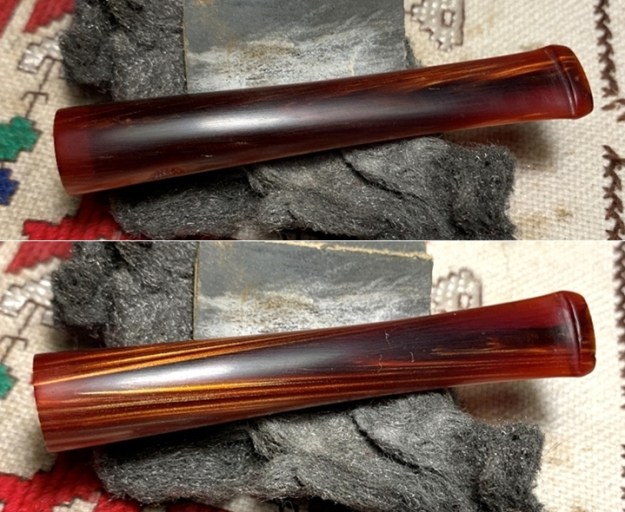
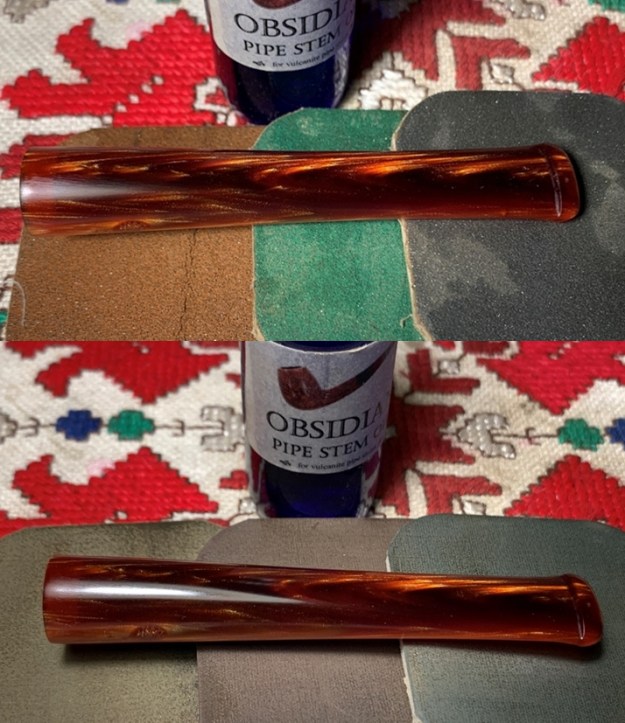
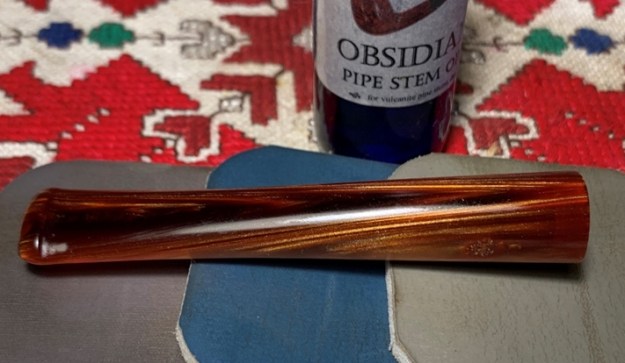
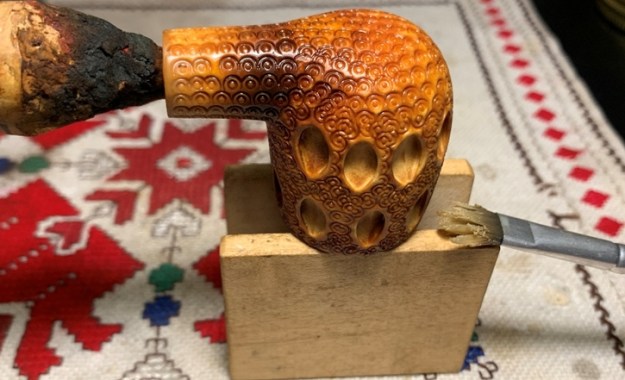
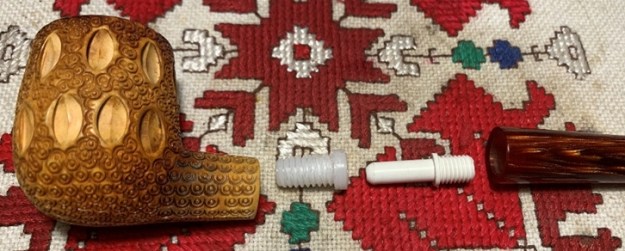
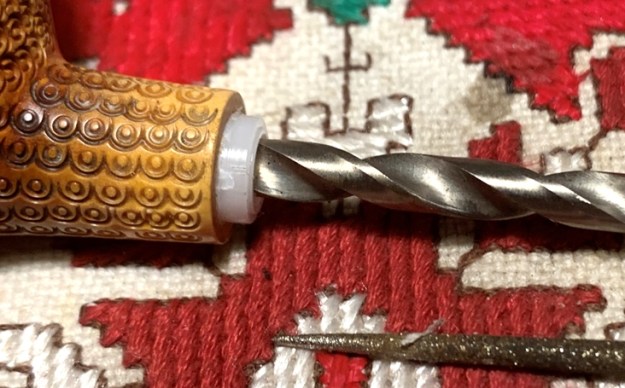
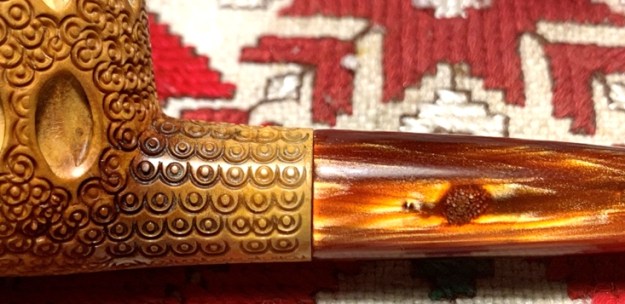
I begin the restoration of this Meerschaum by disassembling the component parts.  This helps with the cleaning.  I also plan to replace the push/pull tenon.  With the help of a pair of needle nose pliers, the push/pull components are easily removed.Taking the stummel in hand, the chamber has moderate carbon cake build up which will be removed.I don’t use the reaming kit with Meerschaum because it produces too much indiscriminate torque on the Meer chamber wall.  A more gentle and strategic approach is the use of the Savinelli Fitsall tool.  I’m able to scrape the chamber walls with the tool in a way that removes carbon buildup but is mindful of the Meerschaum.Following the wall scraping, the chamber wall is sanded with 240 grade paper wrapped around a Sharpie Pen.  This does a good job of removing the last vestiges of carbon build up.  A Meerschaum chamber does not need a cake protection like a briar chamber.An inspection of the chamber after cleaning looks good.  The Meer is still colored but it is clean and smooth to the touch.Cleaning the external surface of the Meerschaum starts with the rim which has lava caked on it, especially on the aft quadrant where most of the lighting occurred.  Using undiluted Murphy’s Oil Soap, I begin on the rim to soften and break up the lava without damaging the scalloped rim carvings.  I am patient to allow the solvents to break up the cake on the rim.  I also gently utilize a brass wired brush on the rim but most of the scrubbing is done with a bristled toothbrush.  I use the toothbrush to clean the rim as well as work into all the carvings of the bowl.  I take the bowl to the kitchen sink and continue cleaning with a cotton pad and toothbrush under warm water.  Not pictured is something I tried for the first time.  I have a Soft-Scrub product here in Bulgaria called CIT which has a gentle bleach and abrasion composition.  I put a small amount on a cotton pad and continue to work on the rim’s darkened condition.  After a thorough rinsing with warm water, the stummel returns to the worktable.I’m very pleased with the cleaning results. The stummel will lighten more because it’s still damp from the cleaning. The rim cleaned up very nicely.  One blackened area remains on the extreme edge of the aft rim quadrant.  Later, I may be able to clean this with very strategic sanding. The patina gathering at the bowl/shank crook remains through the cleaning. Moving now to cleaning the internals, I use cotton buds and pipe cleaners dipped in isopropyl 95%.  I also employ a small dental spoon to scrape the internal walls of old oils and tars.  The more excavated, the faster the cotton buds can clean.  In time the buds emerge in a lightened state and the job is completed.It took no time to dispatch the internal cleaning of the acrylic stem.Focusing now on the stem repairs, I like the brown tone acrylic.  It will clean up well.  The stem bit has significant biting damage to both upper and lower bit that will require patches from the start.  The button is damaged as well.  It appears this stem was the victim of mauling, not just biting.  There is also what appears to be a burn on the side of the stem – that’s the only thing I can think it would be. It is rough to the touch so sanding should help this blemish later.I use regular CA glue to fill the compressions on one side first.  An accelerator is also used to hold the glue in place and to quicken the curing process.After the CA glue cures, I use the flat needle file to remove the excess patch material and to shape and refresh the button lips – both upper and lower.  The first two pictures are the upper.Next the lower.Next, with the filing completed, I continue to sand with 240 grade paper on the upper and lower bit.From the bit, I also sand the entire stem and focus on the burn or blemish on the side of the stem.As I look at the mark on the side of the stem, I believe now it’s simply a blemish in the acrylic.  It is not just surface but seems to go deeper.  I can only sand it out as much as possible.After sanding with 240 paper, I transition to wet sanding the entire stem with 600 grade paper then the 000 grade steel wool fine tunes the acrylic stem – it’s looking great.Transitioning now to the full regimen of micromesh pads, I wet sand with pads 1500 to 2400 and follow with dry sanding with pads 3200 to 4000 and 6000 to 12000.  Between each set of 3 pads Obsidian Oil is applied.  I like the fire in this acrylic stem. I want to strategically sand the burn spot on the extreme back of the inner rim edge.  I use a very light 240 grade paper and follow with a dry 1500 micromesh pad.I think it looks good.  The darkness is not erased but it is reduced.  To enrich and encourage the coveted patina in the Meerschaum, the age-old approach is a beeswax treatment.  Using a hot air gun, the beeswax in the Mason jar is heated until it liquefies.  I also heat the Meer bowl with the gun and then apply the liquefied beeswax to the stummel – painting thoroughly all the nooks and crannies of the sculpting.  During the painting process, I have the hot air gun propped in such a way as to continue to blow hot air on the stummel as I’m painting it.  This helps to keep the wax thin and it is more easily absorbed into the porous Meerschaum.After the stummel is thoroughly coated in beeswax, I put it aside for the stummel to cool.After cooling, I buff the stummel with a microfiber cloth to remove excess wax and to raise the shine.  The Meerschaum literally drank in the beeswax!I decided earlier to replace the old push/pull tenon system with a new set.  The shank acrylic fitment and the stem tenon both screwed in with no problem. When I tried inserting the tenon into the shank receptor, the fit was very tight – too tight to fit without me being nervous about cracking something.  To remedy this, I hand turn a drill bit just a bit larger than the hole and it bores out a slightly more comfortable fit.  This works like a charm. With the stem and stummel reunited, after mounting a cotton cloth buffing wheel to the Dremel and set the speed at 40% full power and Blue Diamond compound is applied only to the acrylic stem.  Following the compound, after wiping the stem with a felt cloth to clean it of compound dust, the same procedure is followed with another cotton cloth buffing wheel and carnauba wax is applied to the acrylic stem.  After this, the entire Meerschaum Teardrop Lattice Billiard is hand buffed to raise the shine.

The design of this Meerschaum is a classic carvers’ template in this genre of pipe.  The patina on the Meerschaum has a good start with the honey honed hues which complement beautifully the fire waves of the acrylic stem.  Jeremiah wanted to add a Meerschaum to his growing collection, and he will have the first opportunity to add this Teardrop Lattice Billiard from The Pipe Steward Store benefiting the Daughters of Bulgaria – women and girls who have been trafficked and sexually exploited.  Thanks for joining me!

A Repair and Restore for Jennifer’s Dad’s Jarl TV pipe


Blog by Steve Laug

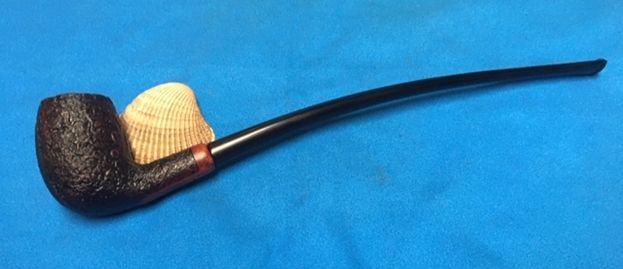
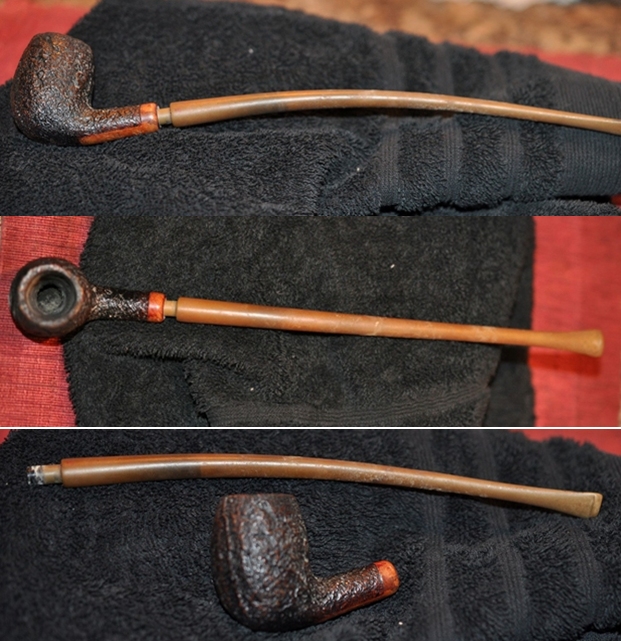
I decided to change things up a bit and work on another of Jennifer’s Dad’s pipes. For the next pipe from the estate of George Rex Leghorn I have chosen a shape I would call a Churchwarden. You may not have read about this estate before, so I will retell the story. I received an email from Jennifer about whether I would be interested in her Dad’s pipes. My brother Jeff and I have been picking up a few estates here and there, so I was interested. Here is the catch – she did not want to sell them to me but to give them to me to clean up, restore and resell. The only requirement she had was that we give a portion of the sales of the pipes to a charity serving women and children. We talked about the organization I work for that deals with trafficking and sexual exploitation of women and their children and she decided that would be a great way to carry on the charitable aspect of her Dad’s character. With some great conversation back and forth she sent the pipes to Jeff and he started the cleanup process on them. Once he had finished cleaning them all he sent them to me to do my work on them.

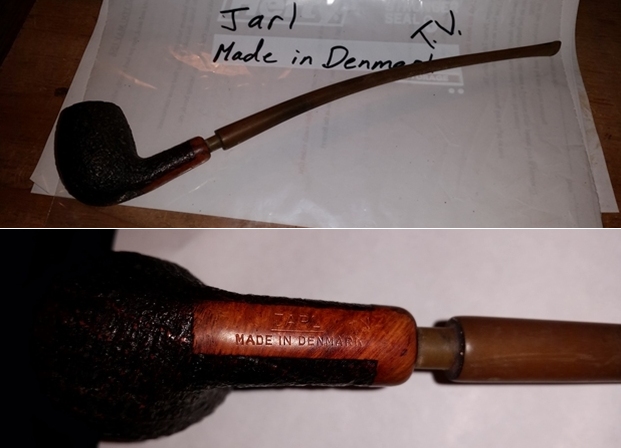
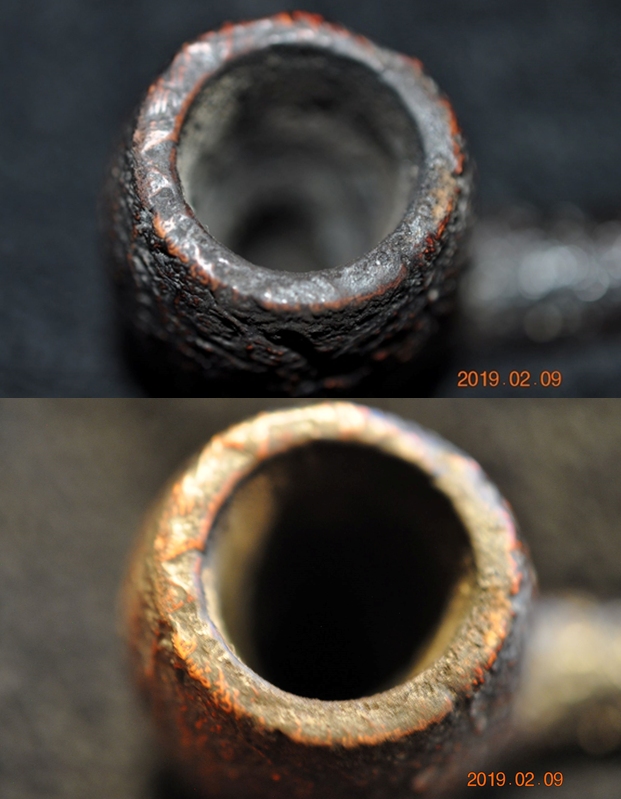
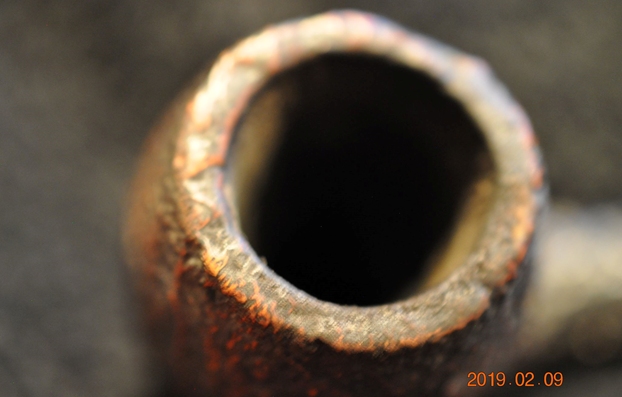
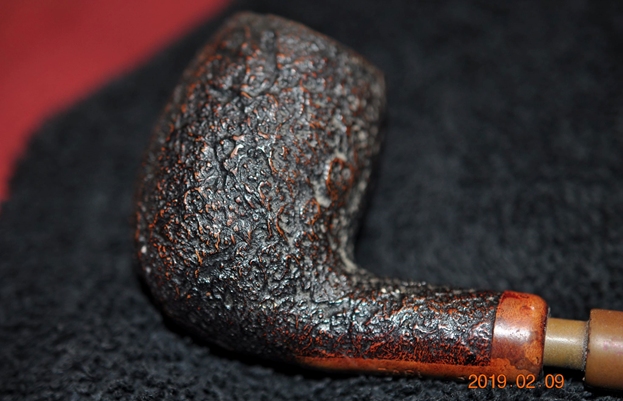
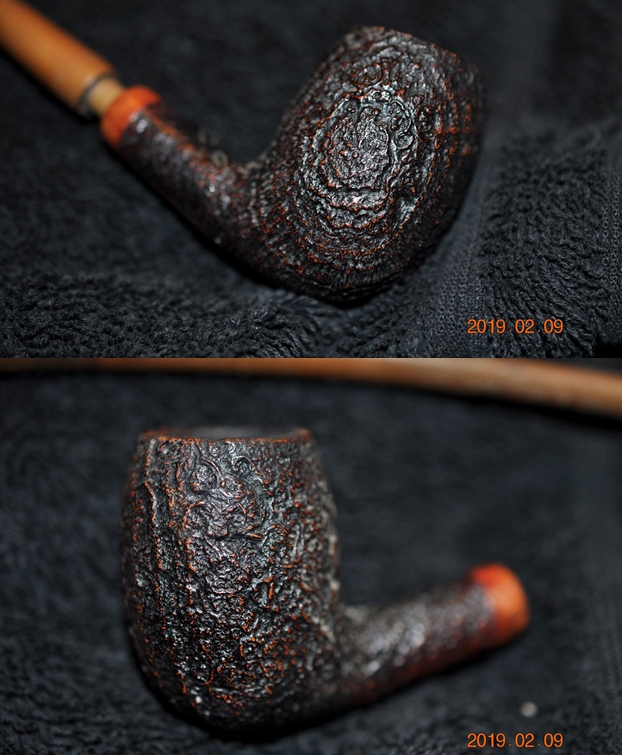
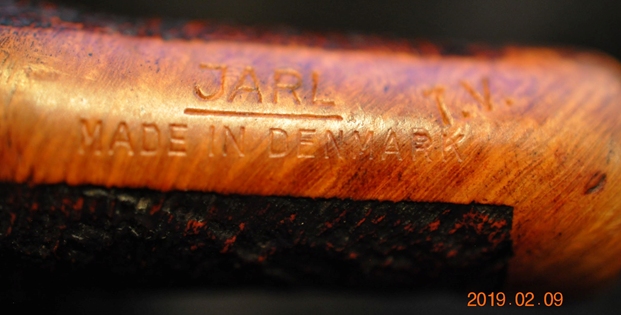
The pipe on the table is stamped on a smooth panel on the underside Jarl Made in Denmark T.V. The bowl is sandblasted with a smooth band on the rounded shank end and panel underneath for the stamping. The finish was very dirty, making it hard to see beyond that to the nice grain underneath that. There was a thick cake in the bowl and it had overflowed with lava onto the rim top. It was hard to know at this point the condition of the rim edges. The pipe was a dirty and tired looking old pipe. The stem was badly oxidized and there were George’s usual tooth marks and chatter on both sides just ahead of the button. Due to the dirtiness of the pipe the stem did not seat in the shank. It had been sitting in boxes for a lot of years and it was time to move ahead with the restoration. Jennifer took photos of the pipes she was sending. I have included the two photos of this pipe below. When the box arrived from Jennifer, Jeff opened it and took photos of each pipe before he started his cleanup work on them. This Jarl T.V.pipe was a nicely shaped pipe. The shape was interesting and though I have worked on quite a few Jarl pipes over the years this is the first one that I have seen marked T.V. pipe. It is really a nice little Churchwarden. This was going to be an interesting restoration. Jarl pipes are well made and I have found that they not mentioned much in the online pipe communities that I frequent. I enjoy working on them. The sandblast finish on the pipe looks really good on this piece of briar. The shank end is rounded and the stem is smaller and sits against the end of the shank. The briar appeared to be in good condition underneath the grime. The finish looked intact under the grime and oils on the bowl sides from George’s hands. The bowl had a thick cake that had hardened with time. The lava overflow on the rim top filled in much of the sand blast. It was very thick but it could very well have protected the rim from damage. We won’t know what is under it until Jeff had cleaned it off. The stem was heavily oxidized and there were deep tooth marks on both sides just ahead of the button. Jeff took photos of the pipe before he started working on it. I include those below.  Jeff took photos of the bowl and rim top to show the cake in the bowl and the lava build up on the rim top and dust and grime on the bowl. It was thick and hard but hopefully it had protected the rim and edges from damage. The lava coat looks horrible but it points to a well-used, favourite smoking pipe. George must have enjoyed this old timer a lot judging from the condition of the pipe.    Jeff took a photo of the side and heel of the bowl to show the condition of the finish – the grime and grit all over the sides and bottom of the bowl. The sand blast is deep and dirty but it is interesting. Jeff took a photo of the stamping on the left side of the shank. It is very clear and readable. It reads Jarl Made in Denmark T.V.Jeff took photos of the top and underside of the stem showing the scratching, oxidation and tooth marks on the stem surface and button. The tooth marks are quite deep on both sides of the stem.I turned to Pipephil’s site for a quick review of the brand (http://www.pipephil.eu/logos/en/logo-j1.html). I did a screen capture of the section of the site that showed the Jarl T.V. pipe. It says that the brand was carved by Jorgen Larsen. I turned then to Pipedia to gather further information regarding the brand (https://pipedia.org/wiki/Jarl).   :

In December of 2010 Ellen Jarl wrote that Jarl pipes were made by her grandfather, Niels Mogens Jørgensen in a little factory in the town of Bramdrupdam, just outside Kolding, Denmark. We have no reason to doubt that Niels Mogens Jørgensen is the maker of these pipes.

There was a difference regarding the maker of the pipes. Pipephil identified the maker as Jorgen Larsen and Pipedia says it is Niels Mogens Jorgensen. It appears that the information on Pipedia has more proof that the maker is Niels Mogens Jorgensen. I am proceeding with that information in this restoration.

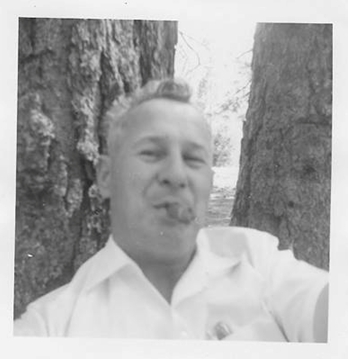
Before I get on to cleaning up the pipe I thought I would once again include the tribute that Jennifer wrote to her Dad for the blog. She also sent some photos and an article that her Dad wrote for Jeff and me to be able to get a feel for him. I have included those below. Note in each of them that he is holding a pipe in his left hand. I asked her to also send me an email with a brief tribute to her Dad. Here is her tribute from an email to me.

Steve, I want to thank you again for accepting my dad’s pipes.  They were so much a part of my dad’s life that I could not simply discard them. But as his daughter, I was not about to take up smoking them either. *laughing* I think my dad would like knowing that they will bring pleasure to others.  I know that I do.

I’m not sure what to say about his pipes. I always remember Daddy smoking pipes and cigars.

First a bit about my dad. Though my father, George Rex Leghorn, was American (growing up in Alaska), he managed to join the Canadian Army at the beginning of WWII, but in doing so lost his American citizenship.  He was fortunate to meet a Canadian recruiting officer who told him the alphabet began with “A” and ended with “Zed” not “Zee”, and also told him to say that he was born in a specific town that had all its records destroyed in a fire.  When the US joined the war my dad, and thousands of other Americans who had made the same choice*(see the link below for the article), were given the opportunity to transfer to the US military, and regain their citizenship.

After WWII, my dad, earned his degree at the University of California Berkeley and became a metallurgist. There is even a bit about him on the internet.

He loved taking the family out for a drive, and he smoked his cigars on those trips. (As a child, those were troubling times for my stomach.)

I most remember my father relaxing in his favorite chair with a science fiction book in one hand and a pipe in the other… Sir Walter Raleigh being his favorite tobacco… and the pipes themselves remind me of him in that contented way.  If I interrupted his repose, he’d look up, with a smile on his face, to answer me.

It seemed he smoked his Briarwood pipes the most, though he had others.  At the time, it was only the Briarwood I knew by name because of its distinctive rough shaped bowl.  And it was the Anderson Free Hand Burl Briar, made in Israel, which I chose for his birthday one year, because I thought he might like that particular texture in his hand.

At least two of his pipes, he inherited from his son-in-law, Joe Marino, a retired medical laboratory researcher (my sister Lesley’s late husband)… the long stemmed Jarl (made in Denmark), and the large, white-bowled, Sherlock Holmes style pipe.  I believe Joe had others that went to my dad, but Lesley was only sure about those two.

The Buescher, corncob pipe my older sister Lesley bought for Daddy while on one of her travels around the States.

A note on the spelling of my sister’s name…

My dad met my mother, Regina, during WWII and they married in Omagh, Ireland.  My mother was English and in the military herself.  The English spelling of Lesley is feminine, and Leslie masculine, in the UK… just the opposite of here in the United States.  I guess my mom won out when it came to the spelling of the name…

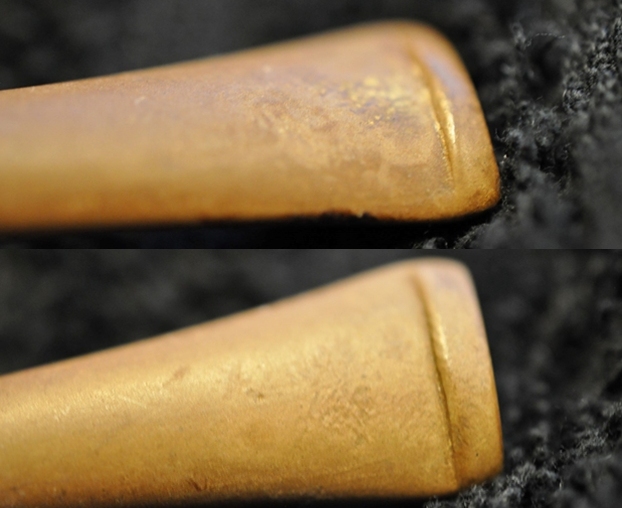
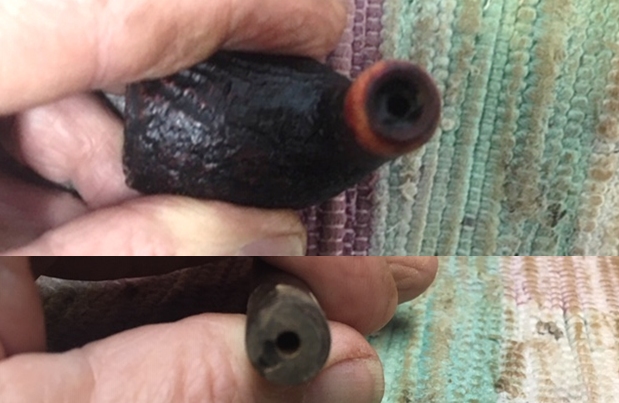
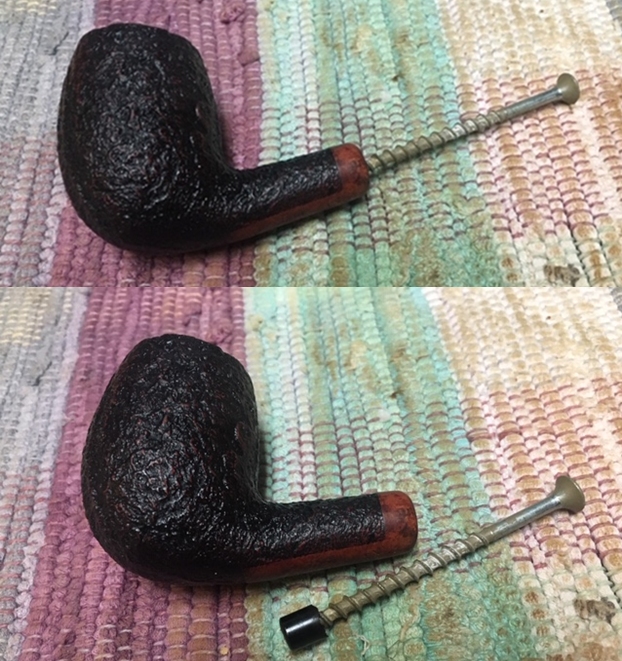
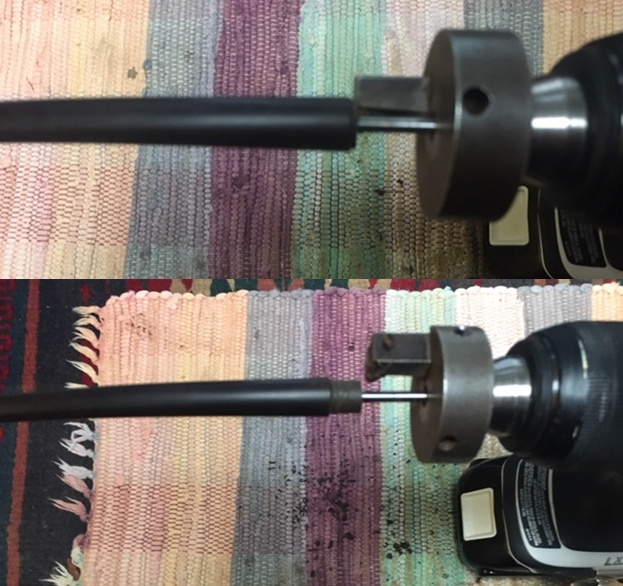
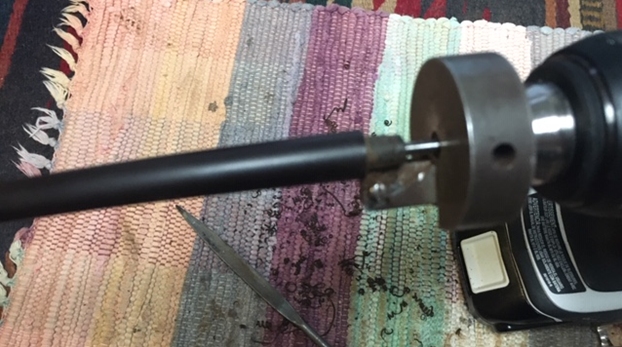
This pipe was a real mess just like the other ones in the collection. Somewhere in the process of cleaning it the tenon snapped off in the shank of the pipe. I remember Jeff telling me when it happened but don’t remember the circumstances. Needless to say that will need to be addressed in the restoration of this pipe. Other than that I did not know what to expect when I unwrapped it from his box. He reamed it with a PipNet pipe reamer and cleaned up the reaming with a Savinelli Fitsall Pipe Knife. He scrubbed out the internals with alcohol, pipe cleaners and cotton swabs until the pipe was clean. He scrubbed the exterior of the bowl with Murphy’s Oil Soap and a tooth brush to remove the grime and grit on the briar and the lava on the rim top. The finish on the bowl looked really good when I got it. The rim top looked much better and the inner and outer edges were flawless. Jeff had cleaned the internals and scrubbed the exterior of the stem and soaked them in Before & After Deoxidizer bath to remove the oxidation. The stem looked very good other than a few tooth marks and chatter in the surface. When the pipe arrived here in Vancouver for the second stop of its restoration tour it looked very good. I took photos of the pipe before I started my part of the restoration. I took photos of the bowl and rim top to show how well it had cleaned up. The edges and top were very clean and in excellent condition. The stem had some tooth chatter and light marks just ahead of the button.I decided to address the broken tenon first. The first photo below shows the shank end with the broken tenon in place. The broken tenon was pretty close to the end of the stem. I used a Dremel and sanding drum to smooth out the sharp edges of the tenon on the stem end. I put the bowl in the freezer and let it sit for 30 minutes. When I took it out of the freezer I turned a drywall screw into the airway on the tenon in the shank and wiggled it free of the shank.   You can see from the broken tenon that it was quite short. I decided that rather than drilling out the stem and inserting a replacement tenon I would just turn the stem end a create an integral tenon. I set up the PIMO tenon turning tool and slowly cut back the diameter of the end of the stem to create a tenon. I adjusted the cutting head on the tool to take back the first cut. The second photo shows the stem after that cut. I adjusted the cutting head again and took the cut back to as close to the diameter of the tenon as I could. The third photo shows the tenon after that cut. The rest would be hand fitting. I fine tuned the fit of the tenon in the shank with a needle file. I carefully took an equal amount of material all the way around the new tenon. It is getting close at this point.I sanded the tenon with a rolled piece of 220 grit sandpaper to smooth it out. Once I had it adjusted the fit in the shank was perfect. The first photo shows the tenon. The following photos show the stem in place on the shank. The fit of the tenon in the mortise is perfect. The pipe looks pretty good at this point.   With the tenon turned I set the stem aside and directed my attention to the bowl. Since it was clean and in good condition I worked some Before & After Restoration Balm into the finish of the bowl and the rim top and shank with my fingertips and a horsehair shoe brush to clean, enliven and protect it. I find that the balm really makes the briar come alive again. The contrasts in the layers of stain really made the grain stand out. I let the balm sit for a little while and then buffed with a cotton cloth to raise the shine. The bowl really looks good at this point. I set the bowl aside and went back to the stem. I sanded the stem to remove the oxidation that was on the surface and the tooth marks and chatter neat the button. I used a folded piece of 220 grit sandpaper and a piece of 400 grit wet dry sandpaper. At this point the stem is looking better and the tooth marks are gone.  I rubbed the stem down with Denicare Mouthpiece Polish and a cotton pad to remove remnants of oxidation and to further blend in the sanding. The stem was showing some promise at this point in the process. I polished the stem with micromesh sanding pads – wet sanding it with 1500-12000 grit pads. I polished it further with Before & After Pipe Stem Polish – both fine and extra fine. I finished by wiping it down with Briarville’s No Oxy Oil and buffing it to a shine.    I always look forward to this part of the restoration when all the pieces are put back together. I put the pipe back together and buffed the bowl and stem with Blue Diamond on the buffing wheel. I gave the bowl multiple coats of Conservator’s Wax and the stem multiple coats of carnauba wax. I buffed the pipe with a clean buffing pad to raise the shine. I hand buffed it with a microfiber cloth to deepen the shine. It is fun to see what the polished bowl looks like with the sandblast standing out clearly and the smooth rounded shank end contrasting well. The newly fitted black vulcanite stem stands out as a shiny black contrast to the colours of the bowl. This Jarl T.V. pipe or Churchwarden is beautiful and feels great in my hand. It is one that could be clenched and smoked while doing other things as it is very light weight and well balanced. It must have been a fine smoking pipe judging from the condition it was when we received it from Jennifer. Have a look at it with the photos below. The dimensions are Length: 10 inches, Height: 2 inches, Outside diameter of the bowl: 1 1/8 inches, Chamber diameter: ¾ of an inch. This is one that will go on the rebornpipes online store shortly. If you want to carry on the pipe trust of George Rex Leghorn let me know. Thank you Jennifer for trusting us with his pipes. Thanks to each of you who are reading this blog. Remember we are not pipe owners; we are pipemen and women who hold our pipes in trust until they pass on into the trust of the next pipeman or woman.

New Life for a Savinelli Capri Root Briar 510 Bulldog


Blog by Steve Laug

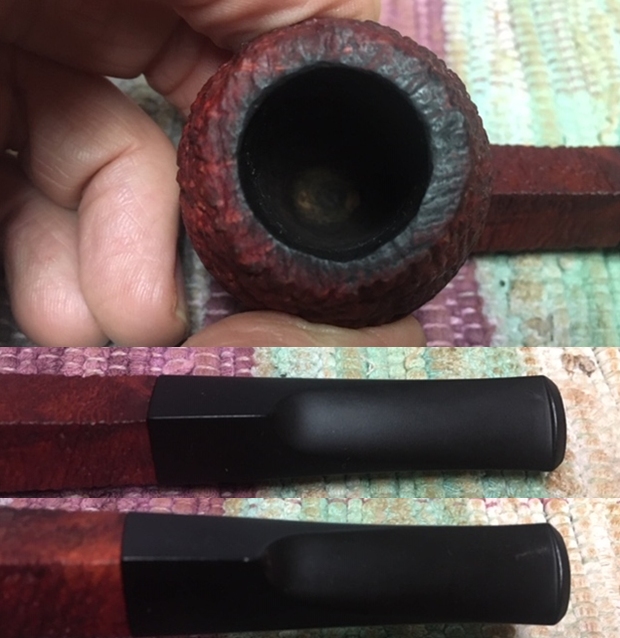
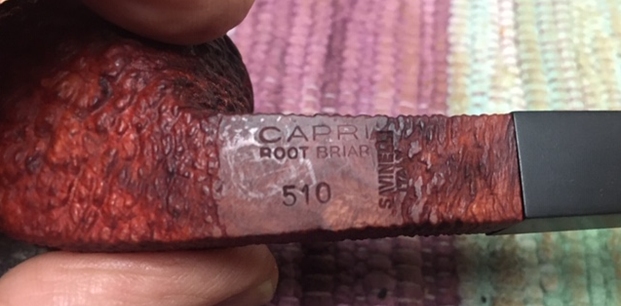
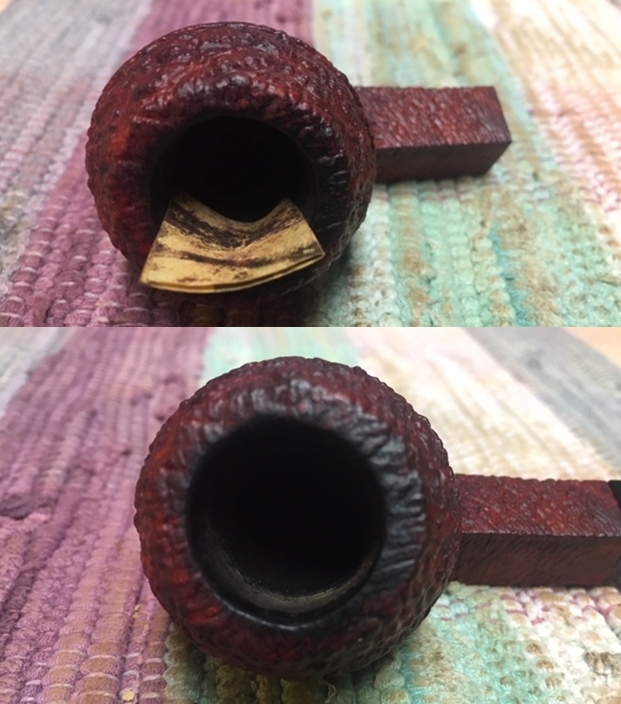
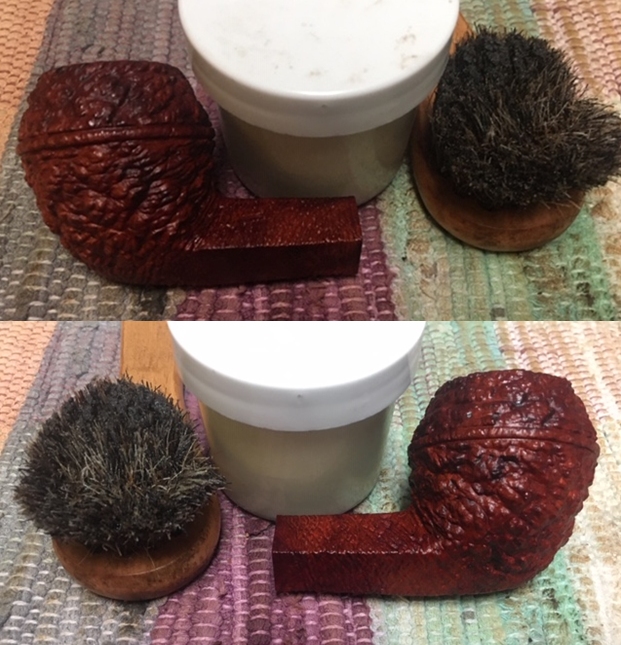
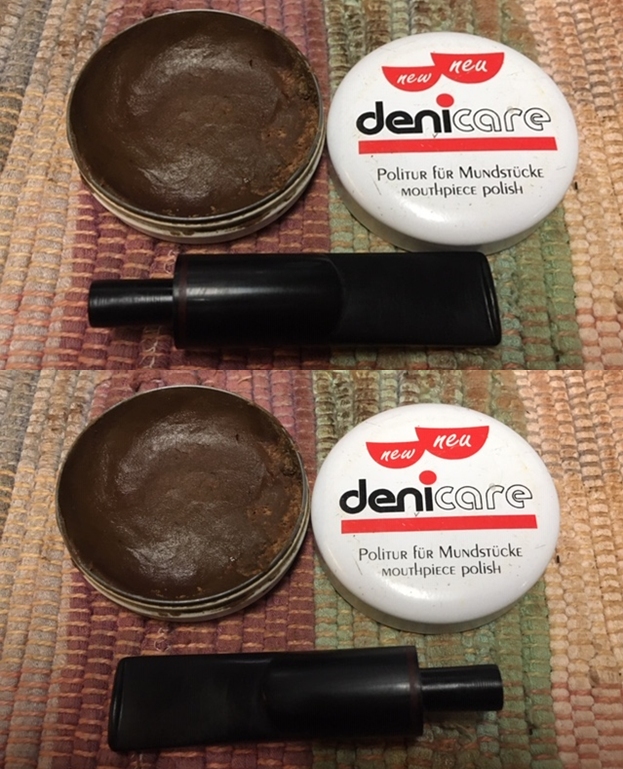
The next pipe on the work table is a Savinelli Capri Bulldog. This Capri Bulldog has a Sea Rock finish on the bowl and shank. There are twin rings separating the cap from the bowl. The diamond shank flows well into diamond saddle.  I really like this style of rustication and the tactile nature of the pipe in your hand. It only gets better as the briar is heated during a smoke. The pipe is stamped on a smooth panel on the left underside of the shank and reads Capri over Root Briar over the shape number 510. Next that is stamped Savinelli Italy. The rim top is rusticated and it is filled in with a lava overflow. It was hard to know what the inner edge looked like due to the cake and lava. There was a thick cake in the bowl. The pipe was dirty and dusty in all of the nooks and crannies of the rustication. The saddle stem was vulcanite and had tooth marks and chatter on both sides near the button. It was oxidized and had some calcification on the end. Jeff took some photos of the pipe to show the general condition of the pipe before he started his clean up. Jeff took some close-up photos of the rim top and bowl from various angles to show the overall condition. There is thick coat of lava in f the grooves and almost flattening the rustication. You can also see the cake in the bowl. It was a well loved pipe and smoked a lot by the previous pipe man. Jeff took some photos of the sides and heel of the bowl to show the condition of the finish on the pipe. The photos show the beautiful sea rock style rustication around the bowl. Under the dust and grime it was a nice looking bowl. I think it will be a beautiful bulldog pipe once it is restored. He took a photo of the stamping on the left underside of the shank. On the shank it was stamped Capri over Root Briar over the shape number 510. Running perpendicular to that it was stamped Savinelli over Italy.The next two photos show the top and underside of the stem. It is dirty and has calcification on both sides at the button. There is also some tooth chatter and some light tooth marks with some damage to the button edge. The third photo shows the flow of the stem and shank. You can also see a remnant of the Savinelli S Shield logo on the stem.I have always like the Savinelli Capri Root Briar finish so I was glad to be working on this one. When I received it Jeff had once again done an amazing job cleaning the pipe. He reamed it with a PipNet pipe reamer and got rid of the cake. He cleaned up the reaming with a Savinelli Fitsall Pipe Knife so that we could see the walls of the bowl and assess for damage. He cleaned the internals of the shank and stem with alcohol, pipe cleaners and alcohol. He scrubbed the exterior with undiluted Murphy’s Oil Soap and a tooth brush. He rinsed the pipe under warm water. He dried it off with a cloth and then let it air dry. The stem was scrubbed with Soft Scrub and soaked in Before & After Deoxidizer. It came out looking very good. The finish on the bowl and the rim top cleaned up beyond my expectations. I took pictures of the pipe to show how it looked when I unpacked it. I took a close up photo of the rim top to show how clean it was. Jeff had been able to remove the entire thick lava coat and the rim looked very good. The inner edge of the rim and the ridges and valleys of the plateau looked good. The stem looked good just some light tooth chatter and several deeper tooth marks on the button.Even the stamping cleaned up well and is still very clear and readable. Because the pipe was rusticated and so clean my work was pretty minimal. I cleaned up some of the darkening and smoothed out the inner edge of the rim with a folded piece of 220 grit sandpaper.I worked some Before & After Restoration Balm into the smooth briar with my fingertips and the plateau and sandblasted side with a horsehair shoe brush. The product is a great addition to the restoration work. It enlivens, enriches and protects the briar while giving it a deep glow. I appreciate Mark Hoover’s work in developing this product. I set the bowl aside and turned my attention to addressing the issues with the stem. I “painted” the tooth marks with the flame of a Bic lighter to try and raise them a bit. Remember vulcanite has “memory” and if the marks are not sharp edge the heat well raise them. In this case while they came up some on the blade there were still two deep marks. I filled in the remaining tooth marks on the button edge with clear CA glue and set the stem aside to dry.I sanded the surface of the stem with 220 grit sandpaper to further blend in the repairs. I started the polishing process with 400 grit wet dry sandpaper.I polished the stem with Denicare Mouthpiece Polish from a tin of it I have in the drawer here. It is a gritty red paste (similar in grit to red Tripoli) that I rub on with my finger tips and work it into the surface of the stem and button and buff it off with a cotton pad. It gives me a bit of a head start on the polishing work.I polished the stem with micromesh sanding pads – wet sanding with 1500-12000 grit sanding pads. I wiped it down after each sanding pad with Obsidian Oil. I polished it with Before & After Pipe Stem Polish – both Fine and Extra Fine. I buffed the stem with a soft cloth to raise the shine. I wiped the stem down with Briarville’s No Oxy Oil to preserve and protect the stem surface. I am on the homestretch with this Savinelli Made Capri Root Briar Bulldog 510! As always I am excited to finish a pipe that I am working on. I put the pipe back together and buffed it with Blue Diamond on the buffing wheel. I used a gentle touch to keep the polish from building up in the rustication of the bowl. I gave the bowl multiple coats of Conservator’s Wax and the stem multiple coats of carnauba wax. I buffed the pipe with a clean buffing pad and hand buffed it to raise the shine. It is fun to see what the polished bowl looks like along with the polished vulcanite stem. This Capri Bulldog is a nice looking pipe. It is quite comfortable in hand and should be so when smoking. It is quite light and well balanced. Have a look at it with the photos below. The dimensions are Length: 5 ½ inches, Height: 2 inches, Outside diameter of the bowl: 1 ¼ inches, Chamber diameter: ¾ of an inch. It is another beautiful pipe and one that will be on the rebornpipes store soon. You can find it in the section of Pipes by Italian Pipe Makers. If you are interested in adding it to your collection let me know. Thanks for walking through the restoration with me as I worked over this pipe. Thanks to each of you who are reading this blog.

Fresh Life for a Bari Matador Freehand


Blog by Steve Laug

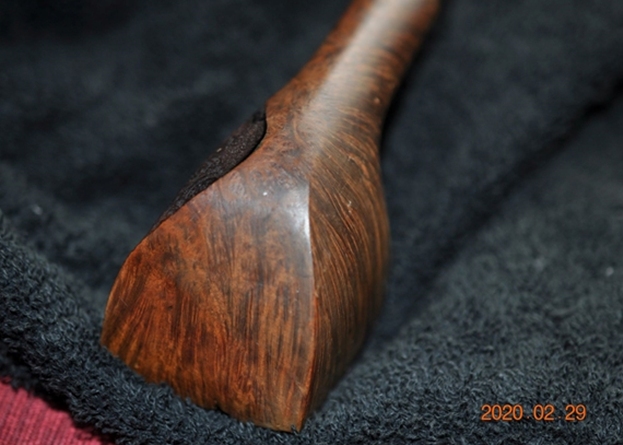
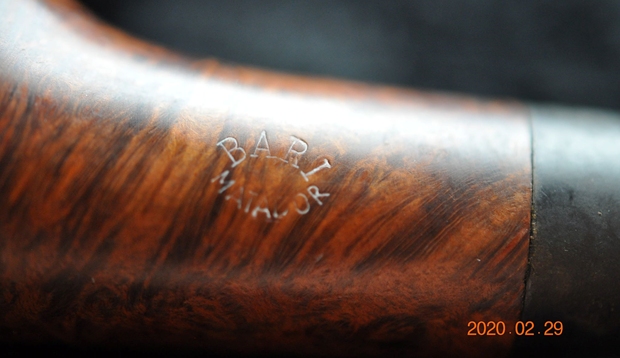
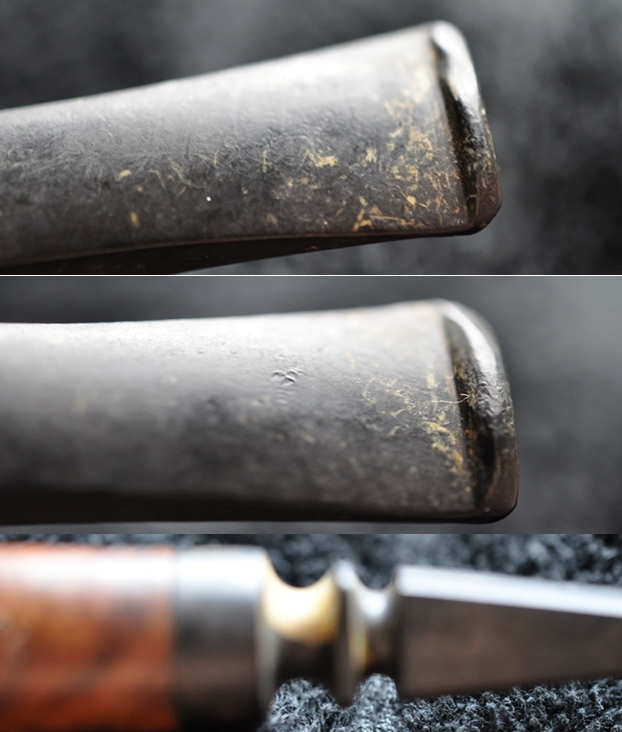
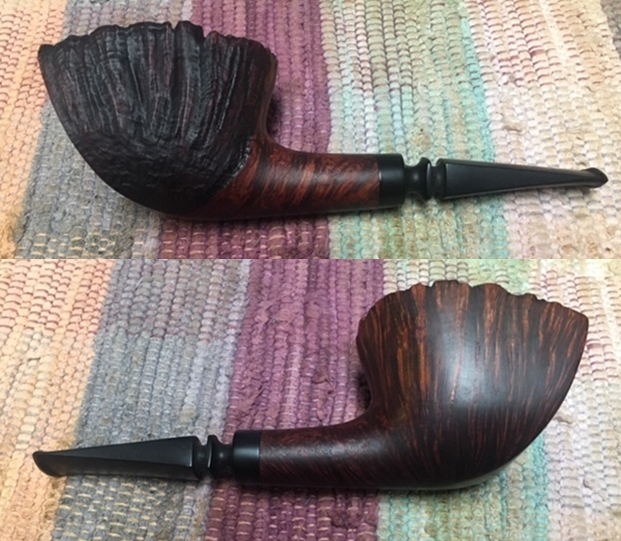
The next pipe on the work table is a pipe that came to me from Joe in Georgia. He was selling an estate for a family and sent me a list that had a Bari Matador pipe listed. I had him send me some photos of the pipe so I could see what it looked like. I was initially interested in the pipe and once I saw it we struck a deal and the pipe was on its way to Jeff. Often when I buy pipes from the US I have the sellers send them to Jeff and he cleans them for me before sending them up to me for the rest of the restoration work. It was an intriguing pipe with a combination of sandblast and smooth finishes. The left side of the bowl is sandblasted and the rest of the bowl is smooth. The rim top of the bowl is a plateau finish. The stem was a fancy turned stem with a paneled taper.This Freehand shaped Bari is interesting in that it borders on being a panel. The front and sides are flat making the pipe rectangular while the shank is round. The panel idea follows through to the stem after the fancy turning. The blade of the stem is square. It is stamped on the left side of the shank and reads Bari over Matador in a football shape. On the right side it reads Handmade In Denmark. The finish is smooth on three sides of the pipe (right, front and back) and is sandblasted on the left side of the bowl. It has some great grain around the smooth sides of the bowl and shank. The blast is deep and rugged with some great grain as well. The rim top is plateau and is craggy. The pipe was dirty and the finish flat. There were some dings and scratches in the briar but otherwise it was in good condition. The bowl was lightly caked and the inner edge of the rim looked to be in good condition. The fancy saddle stem was vulcanite and had tooth marks and chatter on both sides near the button. It was oxidized and had some calcification on the end. Jeff took some photos of the pipe to show the general condition of the pipe before he started his clean up. Jeff took some close-up photos of the rim top and bowl to show the overall condition. There is some light lava in some of the grooves but overall it is just dusty. The edges look very good.Jeff took some photos of the sides and heel of the bowl to show the condition of the finish on the pipe. The photos show the beautiful grain around the bowl. Under the dust and grime it was a nice looking bowl. I think it will be a beautiful Freehand pipe once it is restored. He took a photo of the stamping on the left side of the shank. On the shank it was stamped Bari over Matador in the football shape as noted above. In my examination of the pipe when it arrived I could see that it was also stamped on the right side Handmade in Denmark but it was very faint.The next two photos show the top and underside of the stem. It is dirty and has calcification on both sides at the button. There is also some tooth chatter and some light tooth marks with some damage to the button edge. The third photo shows the fancy turning on the shank end of the stem.Paresh has restored a similar Bari Matador and written about it on a blog. It is an informative piece so I have included the link to it here (https://rebornpipes.com/2019/05/15/a-simple-refurbishing-of-a-bari-matador/).

I also have worked on quite a few Bari’s in the past and did the work on the brand information so rather than rework all of that I am including the information I found while working on a Bari De Luxe Freehand. I quoted a section from Pipedia on Bari pipes (https://pipedia.org/wiki/Bari). I am including the material that I found previously on the brand. It is good to be reminded of the fact that Viggo Nielsen was the pipe maker. I quote:

Pipedia states that Bari Piber was founded by Viggo Nielsen in Kolding, Denmark around the turn of 1950/51. His sons Kai and Jørgen both grew into their father’s business from a very young age and worked there till 1975. Both have become successful pipe makers.

Bari successfully adapted the new Danish design that had been started mainly by Stanwell for its own models. Bari was sold in 1978 to Van Eicken Tobaccos in Hamburg, Germany though the pipes were still made in Denmark. From 1978 to 1993 Åge Bogelund and Helmer Thomsen headed Bari’s pipe production.

Helmer Thomson bought the company in 1993 re-naming it to “Bari Piber Helmer Thomsen”. The workshop moved to more convenient buildings in Vejen. Bogelund, who created very respectable freehands of his own during the time at Bari got lost somehow after 1993. Bari’s basic conception fundamentally stayed the same for decades: series pipes pre-worked by machines and carefully finished by hand – thus no spectacular highgrades but solid, reliable every day’s companions were what they turned out. The most famous series are the smooth “Classic Diamond” and the blasted “Wiking”.

Now that I was reminded about the Viggo Nielsen connection it was time to work on the pipe on my end. When I received it Jeff had once again done an amazing job cleaning the pipe. He reamed it with a PipNet pipe reamer and got rid of the cake. He cleaned up the reaming with a Savinelli Fitsall Pipe Knife so that we could see the walls of the bowl and assess for damage. He cleaned the internals of the shank and stem with alcohol, pipe cleaners and alcohol. He scrubbed the exterior with undiluted Murphy’s Oil Soap and a tooth brush. He rinsed the pipe under warm water. He dried it off with a cloth and then let it air dry. The stem was scrubbed with Soft Scrub and soaked in Before & After Deoxidizer. It came out looking very good. The finish on the bowl and the rim top cleaned up nicely. I took pictures of the pipe to show how it looked when I unpacked it. I took a close up photo of the plateau rim top to show how clean it was. The inner edge of the rim and the ridges and valleys of the plateau looked good. The stem looked good just some light tooth chatter and several deeper tooth marks on the button.The pipe was in decent condition so I started with the bowl. I polished the smooth portions of the briar with micromesh sanding pads – wet sanding with 1500-12000 grit pads and wiping down the briar after each sanding pad with a damp cloth. The briar began to shine. I worked some Before & After Restoration Balm into the smooth briar with my fingertips and the plateau and sandblasted side with a horsehair shoe brush. The product is a great addition to the restoration work. It enlivens, enriches and protects the briar while giving it a deep glow. I appreciate Mark Hoover’s work in developing this product. I buffed the pipe with a micro fiber cloth to raise the shine and took photos of it at this point it the process. It is a beautiful looking pipe. I set the bowl aside and turned my attention to the stem. I “painted” the tooth marks with the flame of a Bic lighter to try and raise them a bit. Remember vulcanite has “memory” and if the marks are not sharp edge the heat well raise them. In this case while they came up some on the blade so that none remained. The damage on the button edge came up a little but it would need to be repaired.I filled in the remaining tooth marks on the button edge with clear CA glue and set the stem aside to dry.Once the repairs cured I used a needle file to flatten them out and recut the sharp edge of the button.I sanded the surface of the stem with 220 grit sandpaper to further blend in the repairs. I started the polishing process with 400 grit wet dry sandpaper.I polished the stem with Denicare Mouthpiece Polish from a tin of it I have in the drawer here. It is a gritty red paste (similar in grit to red Tripoli) that I rub on with my finger tips and work it into the surface of the stem and button and buff it off with a cotton pad. It gives me a bit of a head start on the polishing work.I polished the stem with micromesh sanding pads – wet sanding with 1500-12000 grit sanding pads. I wiped it down after each sanding pad with Obsidian Oil. I polished it with Before & After Pipe Stem Polish – both Fine and Extra Fine. I buffed the stem with a soft cloth to raise the shine. I wiped the stem down with Briarville’s No Oxy Oil to preserve and protect the stem surface. I am on the homestretch with this Bari Matador! As always I am excited to finish a pipe that I am working on. I put the pipe back together and buffed it with Blue Diamond on the buffing wheel. I used a gentle touch on the sandblast portion of the bowl. I gave the bowl and the stem multiple coats of carnauba wax. I buffed the pipe with a clean buffing pad and hand buffed it to raise the shine. It is fun to see what the polished bowl looks like along with the polished vulcanite stem. This Bari Matador is a nice looking pipe. It is quite comfortable in hand and should be so when smoking. It is quite light and well balanced. Have a look at it with the photos below. The dimensions are Length: 6 inches, Height: 2 inches, Outside diameter of the bowl: 2×2 1/2 inches, Chamber diameter: ¾ of an inch. It is another beautiful pipe and one that will be on the rebornpipes store soon. You can find it in the section of Pipes by Danish Pipe Makers. If you are interested in adding it to your collection let me know. Thanks for walking through the restoration with me as I worked over this pipe. Thanks to each of you who are reading this blog.

New Life for a Kaywoodie Standard Apple for a Special Pipe Woman


Blog by Dal Stanton

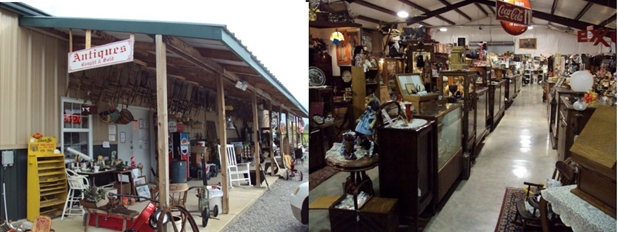
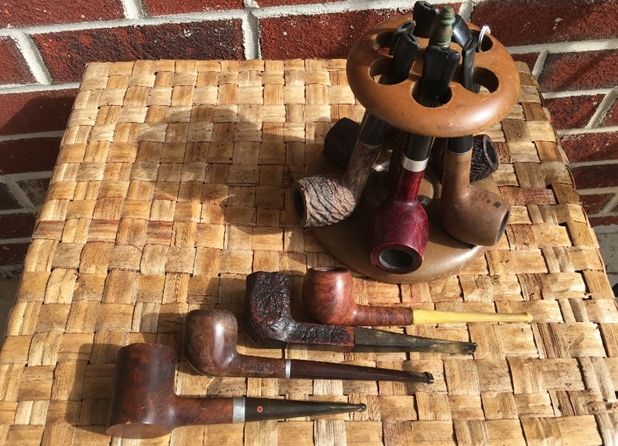
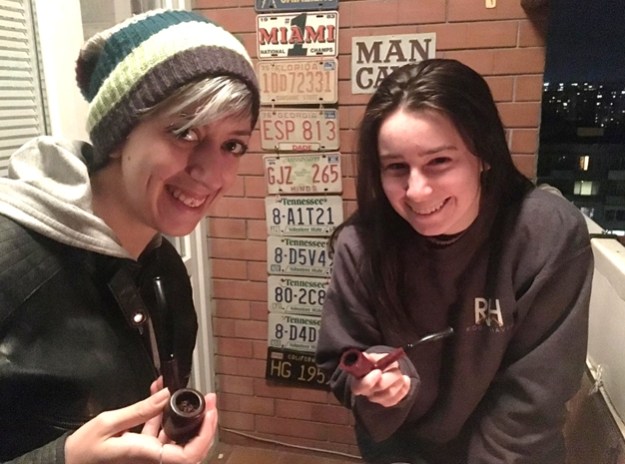
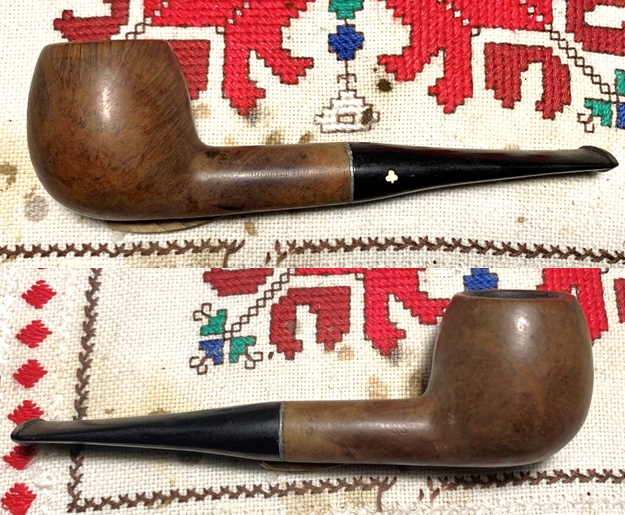
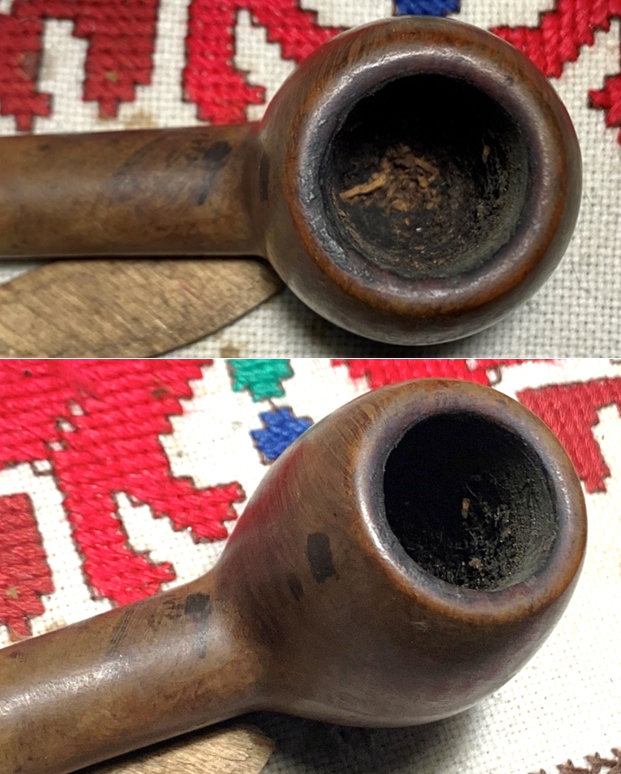
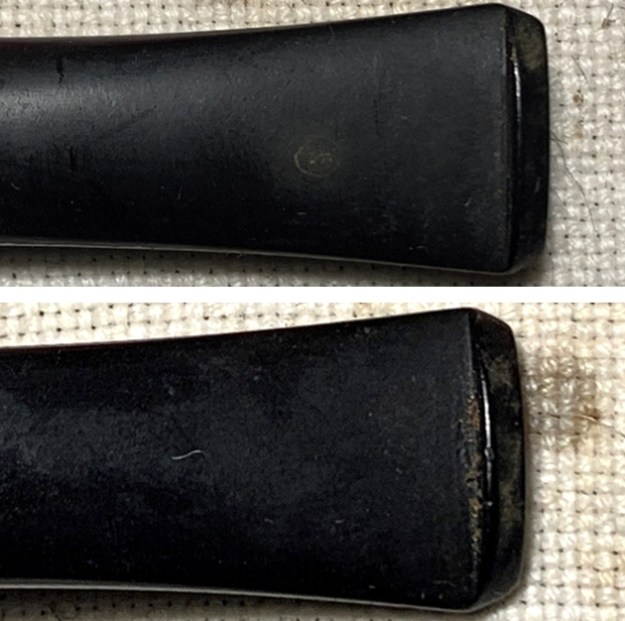
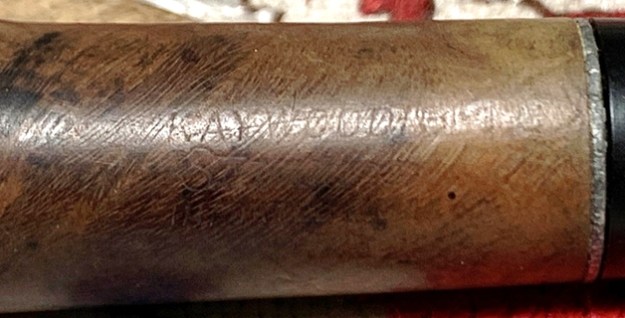
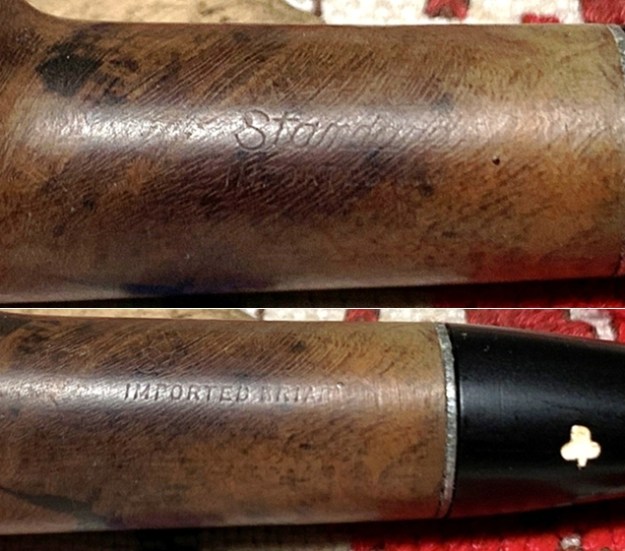
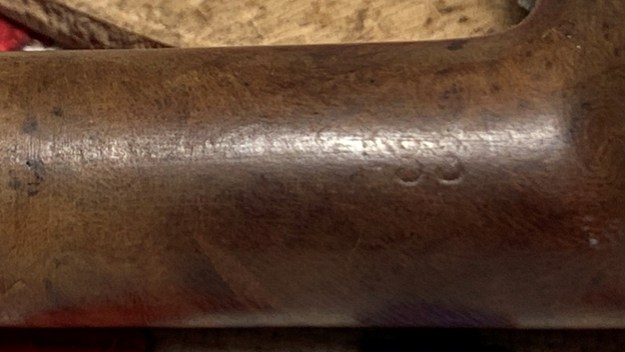
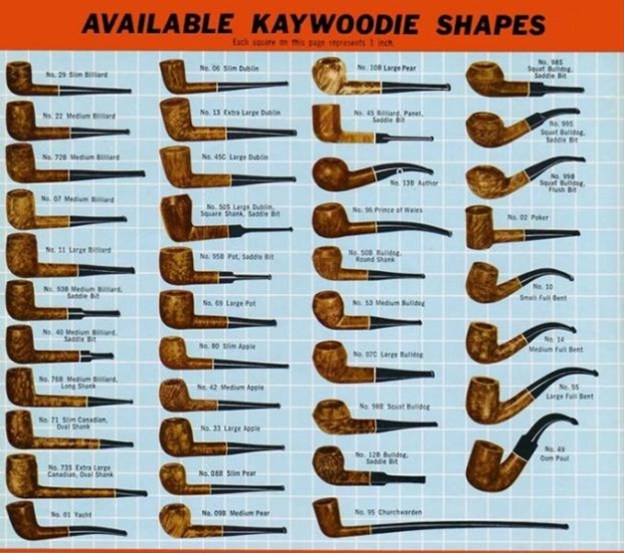
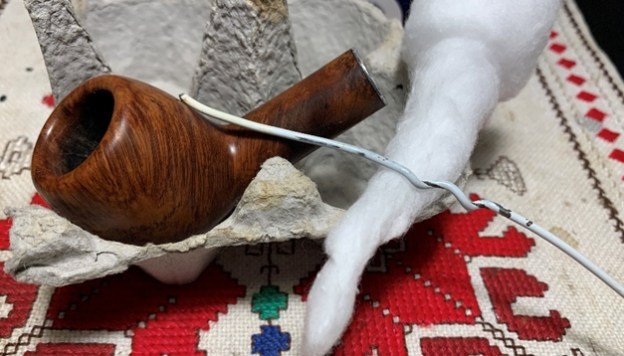
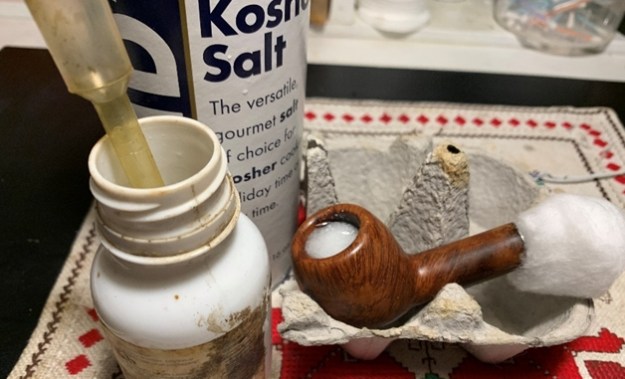
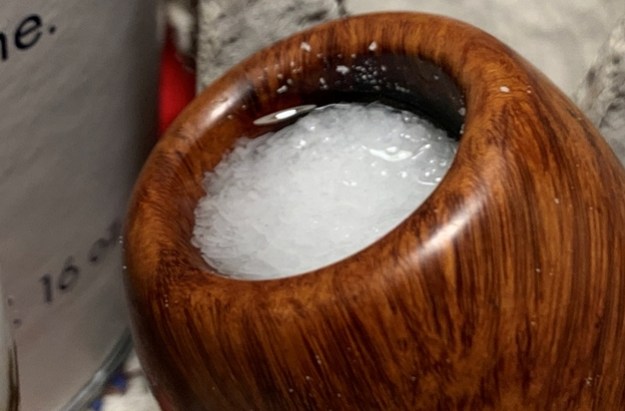
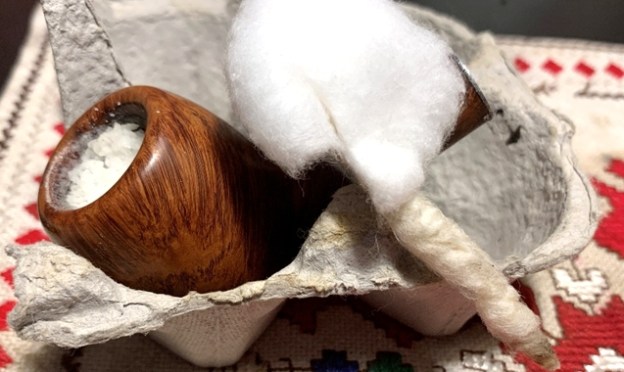
I remember well where I came into possession of the Kaywoodie now on my worktable.  My wife and I were in the US for the wedding of our youngest child, our daughter, who was married near Nashville, Tennessee.  After the wedding, driving along US Interstate 24 heading back toward Atlanta, a billboard sign beckoned us like a Siren to heed the next exit – it said: “Antiques”!  We exited and found Madeline’s Antiques & Uniques near Manchester, Tennessee.  It was the real deal for pipe picking and picked I did!It was at Madeline’s that I found my first Dunhill in the wild (Another Wedding Trip Pick: A 1961 DUNHILL EK Shell Briar Made in England 1 4S).  Along with some other very nice finds, the Kaywoodie Standard Apple also made its way to Bulgaria and was posted in my online collection called For “Pipe Dreamers” Only! where pipe men and pipe women can find a pipe and commission benefiting the Daughters of Bulgaria – women and girls who have been trafficked and sexually exploited.  The Kaywoodie is standing in the rack on the right.The Kaywoodie got the attention of one special young lady, Grace, a budding pipe woman.  One of the joys of living and serving in Bulgaria is that we encounter gifted young adults who come to serve with us for a time living and working in a culture much different from the US.  Grace was one such young lady.  She has been to Bulgaria twice now and on one of her deployments my wife and I were host to her as she lived with us in our flat.  It was then that her aspirations as a pipe woman were born as she tried a pipe on my ‘Man Cave’ – my 10th floor balcony where smoking pipes is allowed!  In the picture below Grace is on the right with a Zulu in tow along with a special Bulgarian friend, Kari, who also has her pipe that she commissioned from The Pipe Steward. Last time that Grace was with us, she went through the many ‘Help Me!’ baskets and found the Kaywoodie.  I asked her if it was a gift for someone and she replied somewhat demurely, no, that it was for her 😊.  Here are more pictures of the classic Kaywoodie Standard Apple that got Grace’s attention. The 3-holed stinger of this Kaywoodie Apple marks it as having a date at least from the 1960s when Kaywoodie transitioned from 4-holed to 3-holed stingers (LINK).The nomenclature on the shank is holding on as a wisp in the wind.  It is so thin that only with a direct angle of reflection am I able to discern it.  The stamping is KAYWOODIE [over] Standard (in fancy cursive script) [over] IMPORTED BRIAR.  The stem has the older, inlaid clover. The next picture in this set shows the Kaywoodie shape number ‘33’ on the right flank of the shank which points to the designation of a ‘Large Apple’ from the US production of Kaywoodie pipes (LINK).  According to this discussion on Tapatalk.com, the 2-digit system, employed from 1927 to 1972 when the system was changed to a 3-digit system, was when pipe production (for Kaywoodie, Yello-Bole and Medico) was moved to the Medico factory in Richmond Hill Queens NY as plans for new plant were in process.  The 3-digit numbers was used during this period for all Kaywoodie and Medico pipes, from 1972 to 1980.  The same article indicated that the 2-digit numbers were only for Kaywoodies produced in the US – that Kaywoodie of London (Cadogan) had their own three-digit system.  Putting all the information together, this Kaywoodie Apple is most likely a 1960s vintage.  According to the Kaywoodie Discussion at MyFreeForum the ‘Standard’ line of Kaywoodie started in the 1950s, but with the 2 digit shape number and the 3 hole stinger, the evidence points to the 1960s dating.The Kaywoodie shape number 33 is pictured in this 1970s listing from the now defunk Chris’ Pipe Pages which I had saved from a previous restoration.  The 33 is in the second column, third from the bottom.As I look more closely at the pipe itself, the chamber is relatively clear of carbon cake and the rim has minor lava crusting on the rim. The finish is old, faded and thin.  There is grime on the stummel surface and dark spots/blots that I’m hopeful will clean.  The stem has oxidation but the bit has no detectable tooth chatter. The stem is not in alignment.  It is under-clocked by a few degrees. Kaywoodie is perhaps the quintessential American pipe name and I welcome restoring this Kaywoodie Standard Apple for Grace.  Starting with the stem, with pipe cleaners wetted with isopropyl 95%, I clean the internal airway.  I also use a shank brush to get into the smaller airway of the 3 holed stinger.With the airway cleaned, the Kaywoodie joins other pipes’ stems in a Before & After Deoxidizer soak.  The stems soak in the Deoxidizer for a few hours.After fishing the Kaywoodie stem out of the Deoxidizer, I squeegee the liquid with my fingers and use cotton pads wetted with alcohol to wipe off the raised oxidation.  I also use pipe cleaners to clear the Deoxidizer liquid form the internal airway and stinger.To rejuvenate the vulcanite, paraffin oil is also applied to the stem and put aside to soak.Turning to the Kaywoodie Apple bowl, I use the Pipnet Reaming Kit to clean the light carbon cake in the chamber.  I employ 2 of the 4 blade heads available in the kit, then transition to scraping the chamber wall with the Savinelli Fitsall Tool.  Finally, after wrapping 240 grade paper around the Sharpie Pen, the chamber is sanded to remove the final vestiges of carbon.  After wiping the chamber with a cotton pad wetted with alcohol to remove the carbon dust, an inspection of the chamber reveals healthy briar with no heating issues.Transitioning now to the external briar surface, undiluted Murphy’s Oil Soap is used on a cotton pad.  I’m anxious to see what the cleaning does to the dark spots/blots on the surface. Along with the cotton pad, a brass wired brush helps on the rim as well as focusing on the dark spots.  The bowl is then transferred to the kitchen sink to focus on the internals.  Using a shank brush with anti-oil liquid dish soap, the internal mortise is addressed as well as using my fingernail on the dark spots.  After a thorough rinsing, the bowl goes back to the worktable.I use 000 grade steel wool to clean the nickel shank facing as well.  The spotting on the aft side of the bowl, top of the shank and shank underside are still present but perhaps lessened.  They will need sanding to eradicate.Next, continuing with the internal cleaning, pipe cleaners and cotton buds dipped in isopropyl 95% work on the mortise.  The metal threaded shank facing makes cleaning the internals a bit tricky.  I reach into the mortise with a small dental spoon and excavate old oils and tars by scraping the mortise walls.  This was quite a battle! At the end of the excavating and pipe cleaners and cotton buds, more of a truce was called – not a victory.  I will continue the internal cleaning later with a kosher salt and alcohol soak!Not wanting to contribute to the further demise of the Kaywoodie nomenclature, masking tape is placed over the markings on both sides of the shank.The darkened areas on the rim and the spotting areas are addressed with a light sanding with 240 grade paper.  First, before pictures and after sanding. After sanding the spots are erased.Next, to clean the entire stummel of scratches, cuts and nicks, I utilize sanding sponges.  First, a coarse sponge is used followed by medium and light grade sponges.  I like the appearance of the grain on this Apple bowl.  The grain is showing a lot of flow with some bird’s eye.  It appears this block of briar was taken toward the edge of the bole. Next, using the full regimen of micromesh pads, I wet sand with pads 1500 to 2400 and then dry sand with pads 3200 to 4000 and 6000 to 12000.  I remove the masking tape in the last set of three to allow some blending without much in the way of sanding. I’m anxious to see how a treatment of Mark Hoover’s Before & After Restoration Balm works on this Kaywoodie stummel.  I am especially interested in the shank areas where the masking tape covered the briar to protect the nomenclature and is a somewhat different hue.  I’m hopeful that the Balm might even out the contrast in these areas.  After putting some of the Balm on my fingers, I work the Balm into the briar surface.  The Balm begins with a cream-like consistency but then thickens to a wax-like texture as it’s worked into the surface.  After applying the Balm, I let the bowl set for several minutes for the Balm to do its thing.  I then remove the excess Balm with a cloth and follow by buffing the surface with a microfiber cloth.The Balm does a great job, but the only way to remove the darker hue over the nomenclature is to destroy the nomenclature and this I’m unwilling to do!  The nomenclature is a pipes heritage and part of its story.Looking now to the stem, first the metal tenon’s 3-holes are clogged.  Using a sharp dental probe, this is cleaned out.Using 000 grade steel wool I then clean and polish what I assume is a nickel tenon/stinger.The stem surface is in good shape.  There is a small imperfection near the clover leaf.I decide to sand the entire stem with 240 grade paper to remove the small divot but also to address potential residual oxidation.Following the 240 paper, wet sanding with 600 grade paper followed by applying 000 grade steel wool leaves the stem in good stead.Earlier I had commented that the stem was not in alignment and that it was under-clocked.  I rejoin the stem with the stummel and screw it in.  It appears that the cleaning corrected the alignment.  It looks good now.Next, the stem receives the full regimen of 9 micromesh pads.  I wet sand beginning with pads 1500 to 2400 then dry sand with pads 3200 to 4000 and 6000 to 12000.  Between each set of 3 pads, Obsidian Oil is applied to rejuvenate the stem and to guard it against oxidation. Before applying Blue Diamond and wax, I continue the internal cleaning of the stummel using a kosher salt and alcohol soak.  This refreshes the pipe for a new steward and penetrates the internal briar walls to clean further. A wick is created by pulling and twisting a cotton ball.  The wick serves to draw oils and tars from the internals.  Using a stiff wire, the wick is forced down the mortise as far as it will reach. After this, the bowl is filled with kosher salt which leaves no aftertaste.  After filled, the bowl is placed in an egg carton to provide stability.  Next, the bowl is filled with isopropyl 95% alcohol with a large eye dropper until it surfaces over the salt.  After a few minutes, the alcohol is drawn into the salt and cotton wick.  I top off the alcohol and set it aside to soak for several hours – through the night. The next morning, I find the salt and cotton wick unsoiled.  Doubtful that this was an accurate indicator of the clean condition of the internals, I follow with additional pipe cleaners and cotton buds wetted with alcohol.  My guess is that the metal fitment hindered the wick from making it to raw briar to then draw out the tars and oils.I was correct – many more cotton buds were necessary with additional scraping with the dental spoon to achieve satisfactory results!  I move on.Now on the home stretch.  With the Kaywoodie stem and stummel reunited, a cotton cloth buffing wheel is mounted to the Dremel set at about 40% full power and Blue Diamond compound is applied to the entire pipe.  After completing the Blue Diamond, I wipe/buff the pipe with a felt cloth to remove the carbon dust.  Then, after mounting another dedicated cotton buffing wheel onto the Dremel, set at the same speed, a few coats of carnauba wax are applied to the briar surface.  After completed, I give the pipe a rigorous hand buffing to raise the shine.

There is a large following of Kaywoodie pipes from what I’ve read and the following is increasing.  I’m pleased with how this 1960s vintage Kaywoodie Standard Apple has turned out.  The briar grain works well around the Apple shape. It has much movement and action.  The nomenclature is still surviving, and this pipe is ready for a new steward.  I’m pleased that pipe women Grace commissioned this Kaywoodie and has the first opportunity to acquire him from The Pipe Steward Store.  This Kaywoodie benefits the Daughters of Bulgaria.  Thanks for joining me!

More work than I expected – an Astleys 109 Jermyn Street London Scoop


Blog by Steve Laug

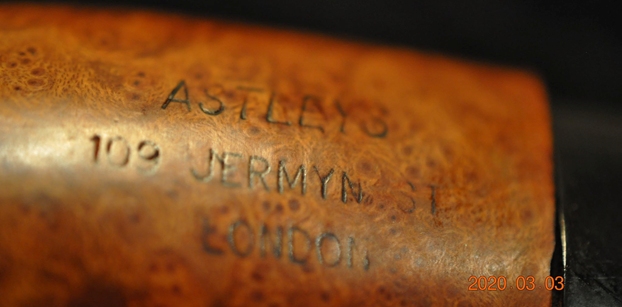
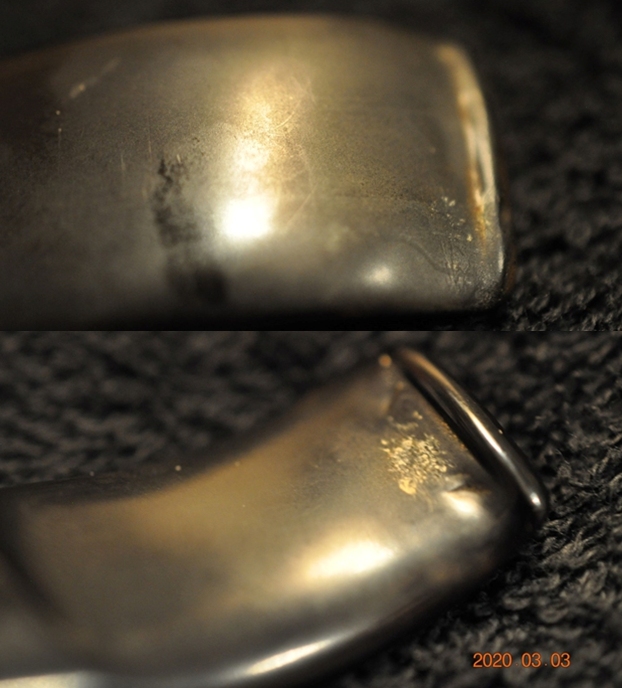
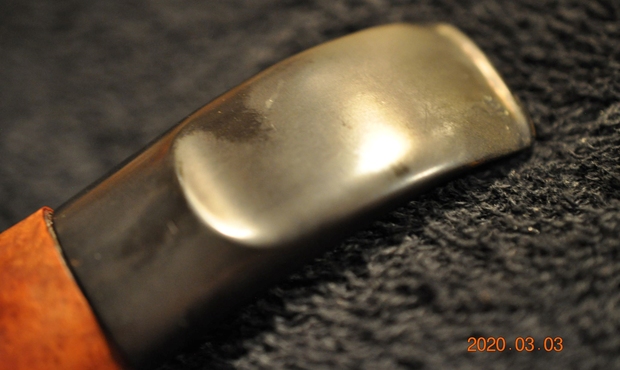
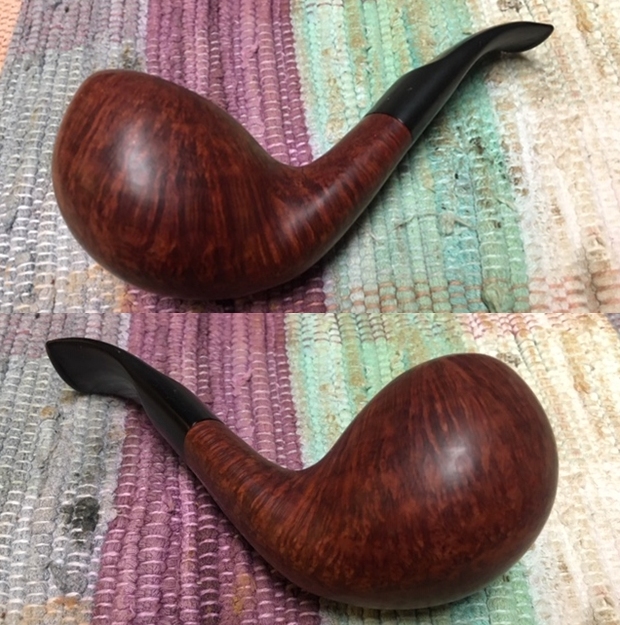
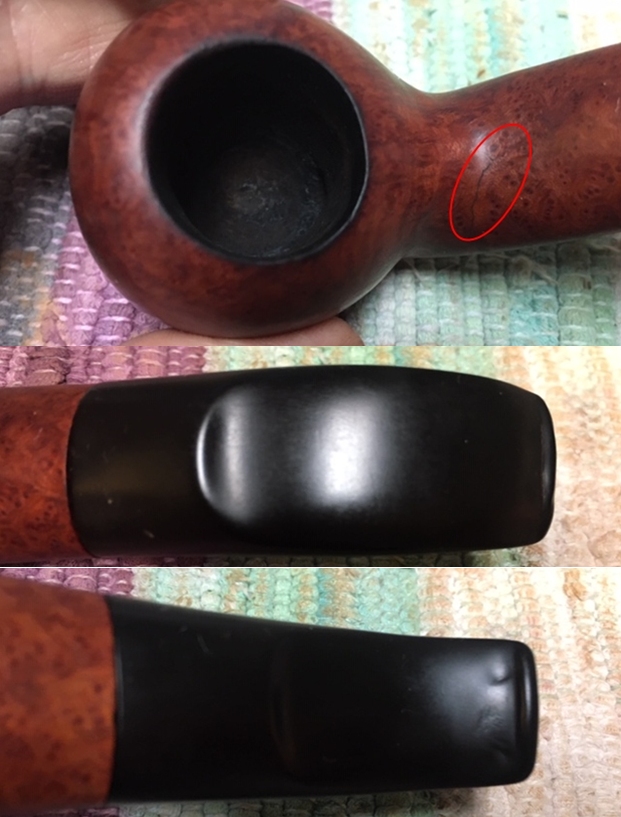
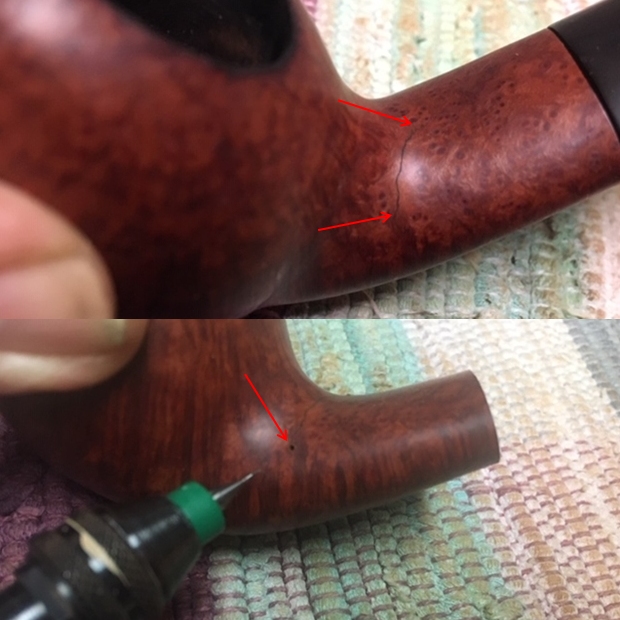
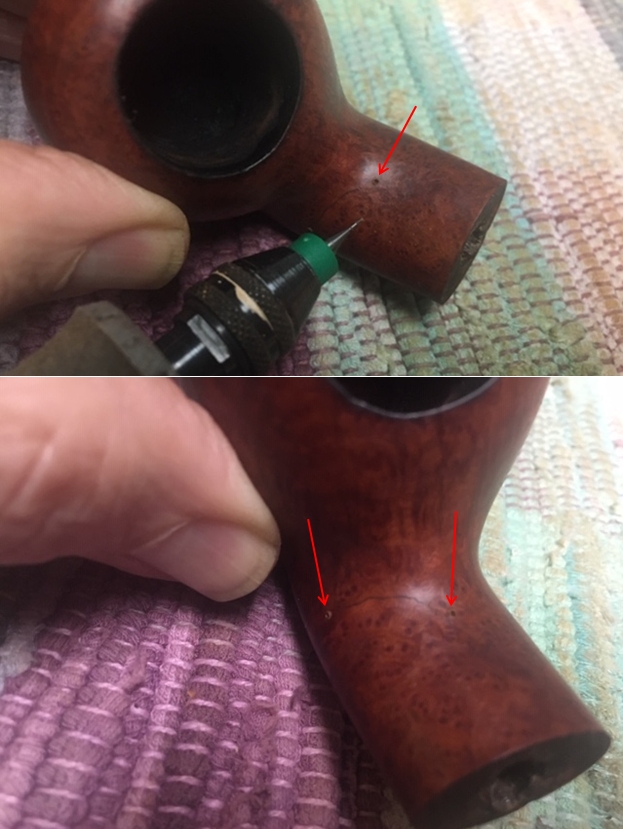
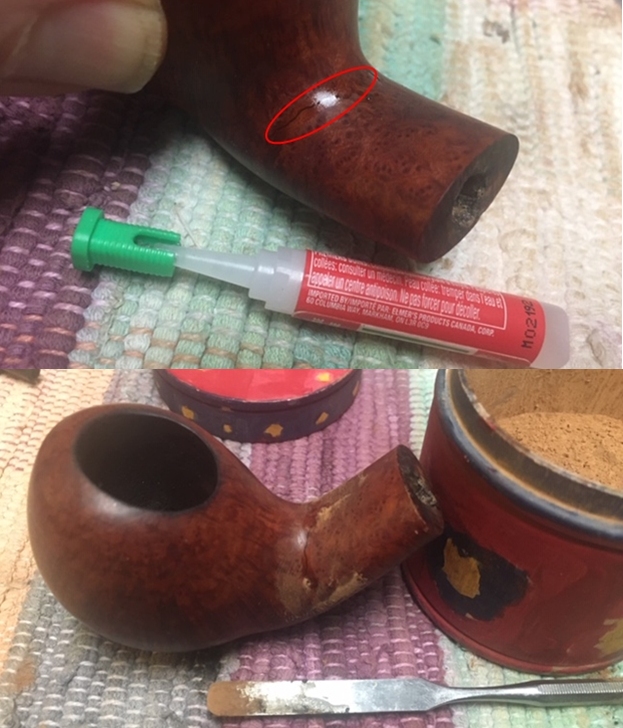
The next pipe on the work table is a bit of a strange one to me. It is almost an egg shape on its side with a stem that should have been bent a bit more to fit the angles of the pipe. It has an oval shank and an oval saddle stem. It is stamped on the underside of the shank and reads Astleys over 109 Jermyn St over London. There is no other shape numbers on the pipe. The finish is smooth and has some great grain around the sides, top and bottom of the bowl and shank. It was quite dirty and the rim top had an overflow of lava on the beveled inner rim top. The bowl was thickly caked and the inner edge of the rim had some darkening. The saddle stem was vulcanite and had tooth marks and chatter on both sides near the button. The stem was oxidized and had some calcification on the end. Jeff took some photos of the pipe to show the general condition of the pipe before he started his clean up. He took some photos of the rim top and bowl from various angles to give me a clear picture of the condition of the rim top and bowl. You can see the cake in the bowl and the darkening around the inner edge of the rim. Jeff took some photos of the sides and heel of the bowl to show the condition of the finish on the pipe. The photos show the beautiful grain around the bowl. Under the oils and grime it was a nice looking bowl. I think it will be a really nice looking pipe once it is restored. He took a photo of the stamping on the underside of the shank. On the shank it was stamped Astley’s over 109 Jermyn St over London. As noted there was not a shape number.The next two photos show the top and underside of the stem. It is dirty and has calcification on both sides at the button. There is also some tooth chatter and some light tooth marks. The third photo shows the condition of the slot while the final photo shows the curve of the full stem. Jeff once again did an amazing job cleaning the pipe. He reamed it with a PipNet pipe reamer and got rid of the cake. He cleaned up the reaming with a Savinelli Fitsall Pipe Knife so that we could see the walls of the bowl and assess for damage. He cleaned the internals of the shank and stem with alcohol, pipe cleaners and alcohol. He scrubbed the exterior with undiluted Murphy’s Oil Soap and a tooth brush. He rinsed the pipe under warm water. He dried it off with a cloth and then let it air dry. The stem was scrubbed with Soft Scrub and it came out looking very good. The finish on the bowl and the rim top cleaned up nicely. I took pictures of the pipe to show how it looked when I unpacked it. I took a close up photo of the rim top to show how clean it was. There was some damage and darkening on the inner edge of the rim. It was slightly out of round from the damage. You can also see the crack on the top of the shank (Jeff had mentioned this to me in our conversations today). I have circled it in red in the photo below. The stem looked good just some light tooth chatter and several deeper tooth marks near the button.I decided to address the hairline crack in the top of the shank. It was not a deep crack and it did not go all the way around the shank. It was only on the top of the shank. You can see the totality of it in the first photo below. I used a microdrill bit on my Dremel to drill a small hole at each end of the crack to stop it from spreading further. I located the end of the crack with lens and marked it. I drilled a hole at each end (photos 2 and 3). The fourth photo shows both ends of the crack with the pilot holes. I wiped down the surface of the crack. I cleaned it out with a dental pick to open it slightly. I filled in the crack and the pilot holes with clear super glue. I used a dental spatula to spread briar dust over the pilot holes and the crack.Once the repair had cured I sanded the surface of the shank around and over the crack with a folded piece of 220 grit sandpaper and smoothed the repair out and blended it into the surface of the surrounding briar. I was able to blend it in fairly well. While it is still visible in the photo below it is solid and repaired.When I examined the end of the shank, the angled drilling of the airway into the bowl left a thin area at the bottom of the mortise opening. I put a few drops of super glue in the airway and put some briar dust on top of the glue to build up the mortise in that area. Once it was cured I sanded it smooth with a small sanding stick.I decided to address the damage to the inner edge of the rim. I used a folded piece of 220 grit sandpaper to smooth out the rim edge and give it a bevel to minimize the damage to the edge.. I was able to remove the damage and bring the bowl back into round.I polished the briar with micromesh sanding pads – wet sanding with 1500-12000 grit pads and wiping down the briar after each sanding pad with a damp cloth. The briar began to shine. I touched up the stain around the sanded area of the repair with a Cherry stain pen and blended the repair into the surrounding briar. The result looks very good.I worked some Before & After Restoration Balm into the briar with my fingertips. The product is a great addition to the restoration work. It enlivens, enriches and protects the briar while giving it a deep glow. I appreciate Mark Hoover’s work in developing this product. I set the bowl aside and turned my attention to the stem. I “painted” the tooth marks with the flame of a Bic lighter to try and raise them a bit. Remember vulcanite has “memory” and if the marks are not sharp edge the heat well raise them. In this case while they came up some there was still significant damage.I filled in the remaining tooth marks with clear CA glue and set the stem aside to dry.Once the repairs cured I used a needle file to flatten them out and recut the sharp edge of the button.I sanded the surface of the stem with 220 grit sandpaper to further blend in the repairs. I started the polishing process with 400 grit wet dry sandpaper.I polished the stem with Denicare Mouthpiece Polish from a tin of it I have in the drawer here. It is a gritty red paste that I rub on with my finger tips and work it into the surface of the stem and button and buff it off with a cotton pad. It gives me a bit of a head start on the polishing work.I polished the stem with micromesh sanding pads – wet sanding with 1500-12000 grit sanding pads. I wiped it down after each sanding pad with Obsidian Oil. I polished it with Before & After Pipe Stem Polish – both Fine and Extra Fine. I buffed the stem with a soft cloth to raise the shine. I wiped the stem down with Briarville’s No Oxy Oil to preserve and protect the stem surface. As always I am excited to finish a pipe that I am working on. I put the Astley’s pipe back together and buffed it with Blue Diamond on the buffing wheel. I gave the bowl and the stem multiple coats of carnauba wax. I buffed the pipe with a clean buffing pad and hand buffed it to raise the shine. It is fun to see what the polished bowl looks like along with the polished vulcanite stem. This is nice looking pipe and I am sure that it will be comfortable in hand when smoking as it is light and well balanced. Have a look at it with the photos below. The dimensions are Length: 5 ½ inches, Height: 1 ¾ inches, Outside diameter of the bowl: 1 ½ inches, Chamber diameter: 7/8 of an inch. It is another beautiful pipe and one that will be on the rebornpipes store soon. You can find it in the section of Pipes by English Pipe Makers. If you are interested in adding it to your collection let me know. Thanks for walking through the restoration with me as I worked over this pipe. Thanks to each of you who are reading this blog.


Bringing Life Back to a Heritage Antique 86 Blasted Apple  


Blog by Dal Stanton

A few years ago I landed a large lot of pipes on the eBay auction block from a seller in Georgetown, Texas.  The seller was actually a charitable organization called the Georgetown Caring Place operating some thrift stores mainly manned by volunteers – elderly.  I liked it from the start!  The description on the ‘Lot of 66’ said it all:

Huge Lot Of 66 Smoking Pipes, Pre-Owned, Loved, Pre-Smoked, Many different makers styles and Brands, We will not be able to list specifics on these pipes, We are not pipe people, You are buying one person’s collection

Undoubtedly, an estate collection of a pipe man’s collection that the family donated to benefit the Caring Place. My bid won the Lot of 66 and helped a good cause.  It also placed the former steward’s pipes in my charge, and it has been a joy for me to discover many treasures in the Lot of 66 and to enable these pipes to continue to serve many new stewards for years to come.  Here’s the Lot of 66 that I saw on eBay.Pipe man Todd, who has commissioned and received several pipes from The Pipe Steward before, all benefiting the Daughters of Bulgaria, saw one of the Lot of 66 waiting, an unassuming ‘Heritage Blasted Apple’ listed in my online inventory called For “Pipe Dreamers” Only! and he commissioned it along with 2 others (See: Borge Mortensen of Denmark and Ehrlich Special Chimney of Boston). Todd has a knack for seeing good pipes with ‘Pipe Dreamer’ eyes!  Here are the pictures he saw that got his attention despite the cardboard presentation background! The nomenclature, what there is, is/would be located on the bottom panel.  My initial pictures held little promise of identifying any markings.  In this picture, ‘86’ is discernible – a shape number. The next picture, which is a picture I recently took to get a better look, ‘ANTIQUE’ is discernible on the lower part of the panel.  When I first looked at these pictures, I wanted to see lettering all over the panel, but most would be phantom suggestions.  Yet, above ‘ANTIQUE’ I want to see more lettering on a diagonal, but nothing is discernible without question.The stem provides the first strong clue of identifying this mystery ‘Antique’ Blasted Apple.  A quick trip to Pipephil.eu identifies the double diamond inlay as a ‘Heritage’.  The panel information identified a ‘Heritage Pipe Inc.’ which had closed in 1971 as a submark of the S.M. Frank pipe conglomeration.  The double diamond stem inlay was a match.The next stop at Pipedia brought more clarity to the Heritage name and origins.  In the ‘Collector’s Guide to Kaywoodie Pipes’ (LINK) there was a section devoted to “Other” Kaywoodie Pipes which provides great information.  I include the introductory paragraph and then the information related directly to the ‘Heritage’ brand.

NOTES ON “OTHER” KAYWOODIE PIPES

Kaywoodie Stembiter and Chinrester, courtesy ChrisKeene.com

The previous sections of this Chapter summarize information taken from eight Kaywoodie Catalogs from the period 1936 to 1969. Because of the gaps in the catalogs, it is highly likely that many “holes” exist in the material presented in this monograph. This section presents a brief overview of some Kaywoodie Pipes that did not appear in any of the catalogs consulted in this research. The information on these pipes was provided by W.R. “Bill” Lowndes (a well-known Kaywoodie Collector from California).

Heritage. Lowndes suggests that the Heritage pipes were introduced in the 1960’s to compete with Dunhill. No fitments. Smooth finish called “Heirloom”, sandblast called “Antique”. Lowndes notes that there was a carved Heritage similar to Barling Quaints. Pipes were not marked “Kaywoodie”, and logo on bit is a double diamond. Lowndes notes that the Heritage pipes in his collection are small to medium-­size pipes and have Kaywoodie shape numbers. Lowndes suggests there may have been a special Heritage catalog.

I love it when research begins to back up the forensics of the pipe on your worktable!  “Antique”, which I could barely make out on the lower panel is the sandblasted line of Heritage pipes, a line introduced by Frank to compete with Dunhill.  Not a bad aspiration!

The article provided by Pipedia on the S. M. Frank & Co. adds more information:

The history of S. M. Frank & Co. spans nearly a century and half of pipe making, supporting its claim as the “oldest pipe house in America.” S. M. Frank, as it exists today, is a combination of some of the biggest names in pipe making from the early part of the 20th. century. The pipe names KaywoodieYello-BoleReiss-PremierWilliam Demuth CompanyMedico, Heritage (Heritage Pipes Inc.), and Frank are familiar to generations of pipe smokers.

In May of 1960, S. M. Frank started a subsidiary company called Heritage Pipes. The Heritage pipes were an upscale line of push bit pipes meant to compliment the Kaywoodie line. Although not hugely successful, Heritage produced some fine pipes that are still in the collections of many pipe smokers. This company was dissolved on December 31, 1971.

The article references an article about Heritage Pipes Inc. does not add new information but has examples of Heritage pipes which give a clue to the nomenclature and the marking design of the Blasted Apple on my table.  The picture on the top shows the way ‘Antique’ was below the fancy script ‘Heritage’ above it and diagonal – as I was trying to make out on the panel of the Blasted Apple.  The shape number to the left, beneath the bowl proper, is the design which I’m seeing – or, barely seeing.  The upscale Heritage pipe subsidiary of Frank was started in May of 1960 and the company closed its doors in December of 1971.  The look and feel of the pipe on my table I would guess ranges toward the early of these years.  The look and wear it has endured, with much dignity, gives it an older cast to me.

As if frosting were needed on the Heritage Antique cake, the reference to ChrisKeene.com.  In the introductory paragraph to the “Collectors Guide to Kaywoodie Pipe” was a reference to Chris Keen’s Pipe Pages.  This site has been down for some time and I miss the information that was on this site.  Here’s the paragraph:

This is an ongoing effort to adapt information from the Collector’s Guide to Kaywoodie Pipes into Pipedia articles. The Guide was first compiled by Chris Keene for his pipe pages at ChrisKeene.com. Chris used source material from Robert W. Stokes, Ph.D and additional support materials from Bill Feuerbach III, of the S.M. Frank Co.. Many thanks to these dedicated pipemen for their work in compiling this material.

Without expecting too much, I followed the ChrisKeene.com link to see what I might find.  What I found appears to be links to ALL the information that was formerly compiled in the now defunk Pipe Pages site.  Oh my!  There are 100s of links to catalogues and brochures listed.  They are not categorized but the links gives some identifying information.  I went down the long list of links and pulled out four pictures that had ‘Heritage’ referenced.  A brochure of ‘Heritage – Briar Pipes of Rarest Beauty’ emerged with great information about this line of pipes – included is the ‘Antique’ line and the shape number of 86 – a large Apple.  I enjoyed the motto given for the ‘Double-Diamond’: “Symbol of FINEST, RAREST PIPES of IMPORTED BRIAR”.

I love historic brochures and catalogs!  With a better understanding of the Heritage Antique name and history, I take a closer look at the Blasted Apple on my worktable.  The chamber has moderately heavy cake build up which needs to be removed to give the briar a fresh start.  The rim has grime as you would expect, but most notable are the divots out of the internal rim lip.  The damage to the rim is significant.  The left-aft quadrant of the rim is in especially poor shape where it appears that lighting practices caused the chamber wall to deteriorate so that it’s now thinner at this point.The blasted briar surface is dirty and has grime build-up, but the blasted surface has a look of quality about it. The stem has oxidation and the bit has biting.  There are compressions on the upper and lower bit, but the button appears to be in good shape.  Interestingly, the left side of the stem has a cut where a wedge of vulcanite has been removed.I start the restoration of this Heritage Antique Blasted Apple by cleaning the stem’s airway using a pipe cleaner wetted with alcohol. To address the oxidation, I use a soak of Before & After Deoxidizer along with the Ehrlich stem.  I leave the stems in the soak for a few hours.After fishing out the Heritage stem, I squeegee the liquid off with my fingers and run a pipe cleaner wetted with alcohol through the airway to clean it of the Deoxidizer.  I use cotton pads wetted with isopropyl 95% to wipe off the raised oxidation.  The Deoxidizer did a good job dealing with the oxidation.To help rejuvenate the vulcanite stem, paraffin oil is applied with a cloth for that purpose.Turning now to the stummel, to ream the chamber I use the Pipnet Reaming Kit.  After putting paper towel down for easier cleanup, I use the two smaller blade heads of the four available.  I follow the reaming by scraping the chamber wall with the Savinelli Fitsall Tool and then sanding by wrapping 240 grade paper around a Sharpie Pen.  Finally, after wiping the bowl with a cotton pad wetted with alcohol, an inspection reveals a healthy chamber.Continuing with cleaning, using undiluted Murphy’s Oil Soap, the external blasted surface is cleaned using a cotton pad and bristled toothbrush.  For the rim, I employ the brass wire brush to clean it of minor lava flow.Next, taking the stummel to the kitchen sink, I use shank brushes to clean the mortise with anti-oil dish soap.  After rinsing well, I return to the worktable.Continuing with the internal cleaning, I find that it is clean and pipe cleaner and cotton bud wetted with isopropyl 95% are not soiled indicating that the internals are clean.After the cleaning is completed, I look at the stummel.  The old finish has been removed during the cleaning process.  I’ll need to give some consideration to how to proceed down the path regarding re-staining the blasted surface.  With the original coloring emulating the Dunhill look – S. M. Frank’s marketing strategy, I hope to oblige.  I decide to send my fellow restorer and good friend in India, Paresh, an email asking for advice.  I know that in his past restorations of Dunhills, he has worked on techniques in restoring the Dunhill hue.  With an email written including pictures, I’ll await Paresh’s advice. Turning now to the rim, it’s in bad shape.  There are some significant divots out of the internal rim edge.  In the picture below with 12 o’clock being up, a small divot is at 12 o’clock, and larger divots at 3:30, 4:30 and 5:30.  The 2 o’clock region suffers from some burning degradation with a slight compression in the rim plane because of it.  The questions in my mind focus on restoring this Heritage close to its original design – a challenge to Dunhill!  The coloring is an issue and the remnants of blasting on the rim are evident especially at the 4 o’clock region.  I have not done much in the way of rustication processes to emulate the blasting and to repair the rim will undoubtedly mean topping it and therefore, removing the blasting on the rim as a result.  The question would then be how to restore it?  With this question in my mind, I send an email off to Steve with the full weight of rebornpipes.com experience behind him, to see what light he could shed on an approach.As I await responses from my fellow restorers, I move forward with the structural issues of the rim that must be addressed either way.  As I look at it, there is no way around having to top the bowl to provide a new rim foundation from which to work.  Starting with 240 grade paper on the chopping board, I give only a few rotations.  The picture below reveals the contouring in the rim with the flat surface of the topping board not touching the areas that are compressed.  The upper (in the picture) area that I referenced above is compressed.  The divots are more distinctly defined as well. After several more rotations on 240 grade paper, the compression is minimized.  The divots from 3:30 to 5:30 are also growing less distinct.I come to the terminal point in using 240 grade paper.  I only take off what is needful because we can’t replace briar!  My goal was to erase the degraded area at the 1 to 2 o’clock area.  That has been done.  In the process, the major divots no longer appear as divots but areas of the rim that are thinner.After replacing the 240 paper with 600 grade paper, the stummel is rotated several more times to smooth and erase the scratching of the 240 papers. With the topping completed, the small divot at the top should be dispatched with sanding.  On the lower quadrant, from 3:30 to 7 o’clock, the rim is noticeably thinner.  To see the lower quadrant from different angles to demonstrate what I can see, I take a few more pictures looking from the left, then the right.  As I see it, I have two options of approach.  First, to even out the entire circumference of the rim internal edge and to blend the thinning on the lower quadrant in the pictures, I can sand the entire circumference of the internal rim to smooth to even out the different rim depths.  Or, secondly, I can build up the lower quadrant with briar dust putty and sand it down to blend with more balance with the entire rim.I decide to do the latter – seek to build up the thinning area with briar dust putty.  Since the application will be only on the very upper part of the chamber, I’m not concerned about issues of heating.  I use the plastic disk that serves as a mixing pallet and cover a portion with scotch tape to ease the cleanup.  I scoop a small mound of briar dust on the pallet. Following this, I place next to the briar dust a small puddle of Extra Thick CA glue and with a toothpick, I pull briar dust into the glue.As briar dust is pulled into the glue, it is mixed with the developing putty.  I aim for the thickness of molasses – not runny and if it gets too thick, it will set up and harden spontaneously – with a little smoke for excitement!  The putty needs to be pliable enough to adhere to the chamber/rim edge.  When it’s thick enough, I trowel the putty onto the target area.I set the bowl aside to allow the briar dust putty to cure thoroughly.  It looks good.  In the picture below you can see how it adheres to the contours of the damaged area.After a few hours, the briar dust putty is ready to go.  The process of removing the excess patch material and shaping starts with a half circle needle file focusing on the center of the patch to shape out the curved pitch of the rim. After a few minutes of filing, I remember that I have a Dremel and attach a sanding drum!  With the speed set to low, the Dremel quickens the job of removing the excess and shaping the curve.  I do go slowly and patiently not to take off too much too quickly.After the sanding drum does its job, I switch back to filing to fine tune the removal of excess patch and shaping. When the needle file brings the patch down near to flush to the briar chamber, I switch and use 240 grade paper wrapped around a Sharpie Pen.  This works well to continue a nice curve and to give more leverage to removing excess patch material.  My goal is to feel no transition from the patch to the chamber wall.This is achieved after the sanding.  I like what I see.Transitioning now to the rim surface, using a flat needle file the patch excess is removed and smoothed to blend with the rim surface.After using the file, I use 240 then 600 grade paper to fine tune.  I also sand around the full circumference of the rim to remove other smaller nicks.I’m pleased with the progress of the rim’s restoration.  The rim rebuild with briar dust putty will be invisible after the rim is dyed and I figure out an approach to introduce an emulated blasted surface on the rim!Well, I received Steve’s response regarding his thoughts about how to approach the rim.  His counsel was not to top the stummel and to blend repairs and blemishes using burrs from the Dremel.  His counsel arrived a bit late but using burrs to emulate a ‘blasted’ rim surface is the direction I’ll take.  Since I’ve not had a lot of experience with the use of burrs and what effects they produce, I practice on a discarded stummel destined for the briar dust container.After testing different burrs and saw what they do, I chose an approach and apply it to the Heritage’s rim.  I start with a cylindrical burr and finish with a sharper, cone-like burr to get the effect that I practiced. Still not sure if I will stain or leave the stummel as it is, I decide to hydrate the stummel as well as get a sneak peek at what the stummel would look like more in a finished state.  I apply paraffin oil to the stummel, not the rim.  The stummel darkens nicely, but the finish is uneven – patches of lighter on the lower side which darkens going up.  Still thinking….With the stummel darkened, I need to darken the raw rim briar to match where the stummel is.  I use two dye sticks to do the job.  The under coat is with a walnut stain, then over that, a mahogany.  Then, in order to give the new fresh rim surface a more weathered look, I use three mid-range micromesh pads and lightly sand the rim.I heard back from my good friend, Paresh in India, about his approach to achieving a Dunhill color tone.  His basic approach is to apply a dark brown undercoat in the normal way – flamed and then ‘unwrap’ after several hours.  Then, the key part of the process is when Paresh stain washes with a cherry red dye, applying with cotton pad and immediately wiping until the hue that is wanted is reached.  He also sent a link to his great write up on rebornpipes describing the process: A Project Close to My Hear: Restoring a Dunhill From Farida’s Dad’s Collection.  With Paresh’s encouragement, I decide to give Paresh’s approach a try with this Dunhill minded Heritage Antique Blasted Apple.  Not long ago, thankfully, I acquired some red concentrated dye solution that I’ll be able to employ for the first time.  To start, I assemble my desktop staining ensemble.  After wiping the bowl with a cotton pad wetted with alcohol to clean, I warm the stummel using a hot air gun.  This has the effect of expanding the briar and helping it to be more receptive to the dye. Using a fashioned cork as a handle, I then apply Fiebing’s Dark Brown Leather Dye, per Paresh’s directions.  I use a folded over pipe cleaner to do this.  After ‘painting’ a section, I immediately ‘flame’ the alcohol-based dye with a lit candle.  The combustion burns off the alcohol leaving behind the embedded hue absorbed into the briar. After completing this process with a thorough painting and flaming of the entire stummel, I put it aside for several hours for the new dye to rest.  This helps to solidify the new dye.With the newly dyed stummel resting, I turn my attention to the stem.  Taking a closer look, the compressions on the upper bit and lower bit are significant.  There is also a divot of vulcanite sliced off the left side of the stem.  I’m not sure how something like this would happen – perhaps a lit match?  I’ll work on blending this in by sanding.  First, using the heating method, I paint the compressions with the flame of a Bic lighter.  This heats and expands the rubber helping it to regain its original disposition – or closer to it.  The goal is to raise the compressions sufficiently enough so that simple sanding will then be all that is needed to erase them – hopefully avoiding patching.   Before and after pictures of upper and then lower show the results.  First, the upper: And the lower:I believe that the lower bit may now be sanded out.  I’m not so sure about the upper bit – the compression next to the button is still significantly deep.  Before sanding, I fill this compression with black CA glue to be on the safe side and fill up against the button.  When the patch cures, this will make sure that the compression is addressed in conjunction with the button lip edge.After the patch cures, a flat needle file goes to work on bringing the excess CA glue down to the stem’s surface level on both the upper and lower sides.  The change in the background is explained by me moving out onto my 10th floor balcony ‘Man Cave’ to enjoy the warmth of the day!As I was filing the lower side, it became apparent that the compression was too pronounced for filing and sanding to remove.  It would require too much to dig that deep.  Switching gears, I decide to detour a bit and fill the compression with black CA glue.After cleaning it with alcohol, I place a drop of black CA glue on the lower side compression.What I missed taking a picture of was that during the detour, I also decided to apply some black CA glue to the wedge on the left side of the stem.  I used an accelerator to hold the glue in place and to quicken the curing time.After both of the ‘tour patches’ cure, I used the flat needle file on both to remove excess and to bring the patches down to stem level.After filing, the sanding continues with 240 grade paper on the upper and lower.Sanding is continued after the 240 grade paper with wet sanding using 600 grade paper on the entire stem along with applying 000 grade steel wool.Continuing to the micromesh process, I wet sand with pad 1500 to 2400 and dry sand with pads 3200 to 4000 and 6000 to 12000.  Between each set of three pads Obsidian Oil is applied to freshen as well as to protect the vulcanite against oxidation.  I’m pleased with the repairs.  The large fill on the upper side is solid but still visible.  We still live in an imperfect world! Turning back to the newly stained stummel, it has been resting now for several hours and it’s time to ‘unwrap’ the flame crusted surface.  To remove the crusted surface, a felt buffing wheel is mounted onto the Dremel with the speed set almost to the slowest to avoid excess heating with the friction created by the felt on the briar surface.  With the felt wheel, the coarser Tripoli compound is applied to the blasted briar surface.  With my wife’s help taking some pictures while my hands are full, it shows the ‘unwrapping’ process.  The second close-up shows the line between the crusted part and the unwrapped part.The stummel has been unwrapped revealing the dark brown undercoat.  Next, the stain wash with a red dye applied until the desired hue is reached – hopefully!The red dye concentrate I acquired not long ago prescribes a ratio of 1 fluid ounce per quart of either water or alcohol.  For my smaller purposes of application, I pour some isopropyl 95% in a small jar – about 1/3 filled and add several drops of the red tint concentrate until it looks good. Then, using a folded pipe cleaner, I wash the stummel with the red dye and wipe it with a cotton pad.  Since I haven’t done this before, I’m going by the ‘seat of my pants’ to see how the briar takes the wash and what the effect will be.Satisfied at this point, not sure whether I’m achieving the ‘Dunhill’ look, I set the stummel aside to rest for several hours through the night.The next morning, the red dye wash has had time to settle.  The next step to unwrap the stummel a second time.  For this, I mount the Dremel with a softer cotton cloth buffing wheel, set at the normal 40% speed, and apply the lesser abrasive compound, Blue Diamond.  Again, my wife assists with a picture of this process.DISASTER AVOIDED!  When I reached for the stem to rejoin it to the stummel to apply Blue Diamond to it, I noticed that the double diamond inlay was missing!  Oh my!  Miracle of miracles, I looked down and amazingly saw the diamonds.  To remedy this near disaster, using a toothpick, I dab a bit of CA glue in the diamond cavities on the stem and with tweezers replace the double diamond inlay.  The process was not as easy as it sounds as small as the double diamonds are and not getting excess CA glue on the finished stem surface…. With Double Diamonds reattached, and the stem and stummel reunited, I continue the application of Blue Diamond compound to the stem.  I do change buffing wheels because of the dye unwrapping.Before applying wax, I do a ‘heat’ buffing.  To help minimize dye leaching off on the hands of the new steward, I use the heat gun to warm the stummel, emulating the heating of a pipe in service, and use a cotton cloth to wipe it during the heated state.  This helps to stabilize the new dyed briar surface.After reuniting stem and stummel, I mount another cotton cloth buffing wheel to the Dremel, set at 40% full power, and apply carnauba wax to the pipe.  When completed, a microfiber cloth provides a rigorous hand buffing to raise the shine.

Wow!  With Paresh’s help, I think I nailed it!  The depth and richness of this blasted finish has that ‘Dunhill’ look to it I believe.  Thanks, Paresh!  The blasted landscape of this Heritage Antique Blasted Apple jumps out with the 3-dimensional contours of the briar grain contours.  I can’t get over the red notes in the finish – it gives it a depth and richness that is something to enjoy.  The technical challenges with the rim repairs and stem patches turned out great.  I’m pleased with this restoration and Todd, who commissioned it, will have the first opportunity in The Pipe Steward Store to acquire the Heritage Antique benefiting the Daughters of Bulgaria – women and girls who have been trafficked and sexually exploited.  Thanks for joining me!

Restoring a Savinelli Autograph 5 Freehand Style Bent Sitter


Blog by Steve Laug

As you might have figured out from the title I am working on another pipe from Italy. This one is a Savinelli Autograph 5. It reads Savinelli over Autograph on the underside of the bowl on a smooth panel. It is also stamped with the Grade number 5 and Italy. The pipe has a beautiful sandblast on the bowl, rim top and shank. The bowl is canted from front to rear. The rim top was filled in with lava and there was thick cake in the bowl. The outer edge of the bowl had some nicks and scratches particularly at the front. There was Sterling Silver band on the shank that was a previous repair to a crack. The crack had been repaired but there was still cosmetic damage on the underside of the shank. The autograph stamp on the vulcanite stem was worn away and non-existent anymore. The twist to the stem confirms that the stem is original. The pipe was dirty but it showed a lot of promise. Jeff took photos of the pipe before I started my work on it. Jeff took close up photos of the bowl and rim top to show the condition of the pipe at this point. The bowl has a light cake and some debris in the bottom of the bowl. The rim top is dirty but undamaged. The stem looks pretty good with the autograph stamp readable. There is tooth chatter and marks on the top and underside just ahead of the button on both sides. He took photos of the sides of the bowl and the heel of the bowl showing the great grain showing through the sandblast finish.   He took a photo of the smooth underside of the bowl/heel. You can see the stamping – Savinelli Autograph 5 over Italy. It is stamped on a smooth portion of the heel while leaving the other portion sandblasted.     He also took photos of the Sterling Silver band on the shank as well as the crack in the underside of the shank. The next photos show the top and underside of the stem. There is a chip out of the top left edge of the button. The overall stem is deeply oxidized and has calcification on both sides at the button. There is also some tooth chatter and some light tooth marks. The final photo shows the curve of the full stem. I wanted to remind myself a bit about the Autograph line from Savinelli so I reread a blog I had written on a previous Autograph restoration (https://rebornpipes.com/2019/01/05/restoring-a-savinelli-autograph-3-rhodesian-dublin-long-shank/). I quote that portion of the blog now:
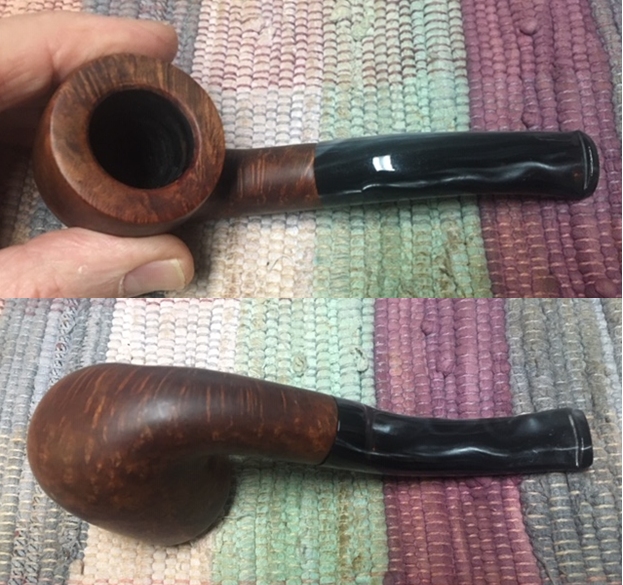
I turned first to the Pipephil website (http://www.pipephil.eu/logos/en/logo-savinelli1.html) to get a brief overview of the Autograph line. There I found out that the Autographs were hand made and unique. The Autograph Grading system is ascending: 3, 4, … 8, 0, 00, 000.

I turned then to Pipedia to get a more background on the Autograph line. I had the outline I needed from pipephil for the pipe but wanted more (https://pipedia.org/wiki/Savinelli). I quote in part from the article on that site.

While Savinelli’s serially produced pipes account for around 98% of annual production, the marque also creates a number of artisanal, handmade pieces as well. The Autographs, the Creativity line, and the Mr. A. line are all the result of Savinelli’s unique handmade process, with the Autographs reflecting the larger Freehand aesthetic, the Creativity line delving into more complex hand carving, and the Mr. A. line sidestepping the standard shape chart for remarkable and unusual pipes.

All of the briar for Savinelli’s Autographs and other freehand pipes is sourced specifically for those pieces. While the majority of the marque’s serial production is made from extra grade ebauchon blocks, Savinelli keeps a separate supply of Extra Extra plateau blocks for Freehands. This variety of briar is much larger, and of a higher quality, which explains why so many Autographs and Savinelli handmades are naturally larger designs.

These handmade pieces are shaped much like traditional Danish Freehands: they are shaped first and drilled second. Using this method, Savinelli’s team of artisans is able to showcase their own creativity, as it maximizes flexibility and facilitates a more grain-centric approach to shaping. The resulting Freehand designs are at once both a departure from the marque’s classical standard shapes, yet very much still “Savinelli” in their nature—i.e. proportioned so that the bowl is the visual focus when viewed from the profile, juxtaposed by the comparatively trim lines of the shank and stem. To provide a little more insight into the differences between Savinelli’s standard production and freehand lines, Luisa Bozzetti comments:

“When we choose to make Freehand pipes we must stop production on the standard shapes. The process for Freehands is much more involved and takes much more time. Finding the best people from the production line and pulling them to make Freehands is challenging since it’s not an assembly line, but rather a one or two man operation.

After the rough shaping of the stummel, we must get together and brainstorm which style of stem will be paired before the pipe can be finished since we do not use pre-shaped stems. All accents and stems for the Freehands are cut from rod here in the factory. A lot of care goes into the few pieces lucky enough to make the cut; to end up with a certain number of Autographs, for instance, means that many, many more will be made, and only the few will be selected.”

The quality control process for Savinelli handmades is even more rigorous than that employed in the standard lineup. Many blocks are started and later discarded because of pits or defects. While Savinelli’s briar sourcing is a constant process, working with some of Italy’s top cutters to ensure only the finest and most suitable blocks make their way to the factory, it’s impossible to source plateau briar that’s completely free from flaws. That’s just nature. Savinelli creates the standard for quality by working through the rough (a very high-quality rough, mind you) to find that shining diamond with the potential to become a Savinelli handmade.

It looks like the Autograph 5 I am working is pretty high in the hierarchy of the line. Like other autographs I have worked on in the past this one has a unique twist to the vulcanite stem. Jeff once again did an amazing job cleaning the pipe. He reamed it with a PipNet pipe reamer and got rid of the cake so that we could see the walls of the bowl and assess for damage. He cleaned the internals of the shank and stem with alcohol, pipe cleaners and alcohol. He scrubbed the exterior with undiluted Murphy’s Oil Soap and a tooth brush to get into the grooves and valleys of the rustication. He rinsed the pipe under warm water. He dried it off with a cloth and then let it air dry. The stem was scrubbed with Soft Scrub and then soaked in Before & After Deoxidizer. It came out looking pretty good with a light coat of oxidation still present. The finish on the bowl and the rim top cleaned up pretty good. I took pictures of the pipe to show how it looked when I unpacked it.     I took a close up photo of the rim top to show how clean it was. There was some damage to the finish on the rim top and some damage to the inner edge of the rim. The stem looked good just the chip on the top edge of the button and some light tooth marks. Overall the pipe looked impressive at this point in comparison to where it had started. The band was firmly glued and pressed in place. The crack was seal and solid when I picked at it with a dental pick. I cleaned it out with alcohol and a cotton swab to remove any debris in the surface area. I filled in the crack with clear super glue to seal it further and minimize the damage to the shank area.Once the repair cured I sanded the filled area with a folded piece of 220 grit sandpaper. I work to smooth out the repair and blend it into the surface of the surrounding briar. I was very happy with the way in which the repair blended into the surrounding sandblast.  I decided to address the damage to the inner edge of the rim. I used a folded piece of 220 grit sandpaper to smooth out the rim edge and cleanup the slight bevel that was there. I was able to minimize the damaged area. I stained the inner edge with a black stain pen and mixed the stain with a Walnut stain to blend it into the rest of the rim top. I also stained the damage to the outer edge at the same time.   I worked some Before & After Restoration Balm into the briar with my finger tips and a horsehair shoe brush. The product is a great addition to the restoration work. It enlivens, enriches and protects the briar while giving it a deep glow. It is a product I use on every pipe I work on.   I set the bowl aside and worked on the stem. I rebuilt the chip out of the top left side of the button with clear super glue. I built it up and reshaped the button edge with 220 grit sandpaper and polished it when I did the rest of the stem.I sanded out the tooth marks and chatter on both sides of the stem with 220 grit sandpaper. I polished the sanding marks with 400 grit wet dry sandpaper. The photos show the stem at this point.    I polished the stem with Denicare Mouthpiece Polish from a tin of it I have in the drawer here. It is a gritty red paste that I rub on with my finger tips and work it into the surface of the stem and button and buff it off with a cotton pad. It gives me a bit of a head start on the polishing work. I wet sanded the tooth chatter on both sides of the stem with 1500 -12000 grit micromesh pads to polish it. I wiped it down with Obsidian Oil on a cloth after each sanding pad. I finished polishing the stem with Before & After Pipe Polish – both Fine and Extra Fine polishes. I rubbed it down with Briarville’s No Oxy Oil as a final preservative measure to protect the stem.    I put the bowl and stem back together. I polished the smooth part of the bowl and stem with Blue Diamond to polish out the scratches in the briar and the vulcanite. I gave the sandblasted bowl and shank several coats of Conservator’s Wax and the stem multiple coats of carnauba wax. I buffed the pipe with a clean buffing pad to raise the shine. I hand buffed it with a microfiber cloth to deepen the shine. The pipe polished up pretty nicely. The contrast of the beautiful dark and medium brown stains and the smooth and sandblast finish worked amazingly well with the polished black vulcanite stem. The sandblast was deep and craggy on the bowl and shank and looks quite remarkable. This is truly a beautiful Freehand pipe. The finished pipe is shown in the photos below. The dimensions of the pipe are Length: 6 1/2 inches, Height: 3 inches, Outside diameter of the bowl: 1 ¾ inches, Chamber diameter: 7/8 of an inch. I have restored quite a few Autographs over the years and this estate is another rare beauty. I will be putting it on the rebornpipes store shortly. Thanks for walking through the restoration with me. Cheers. 
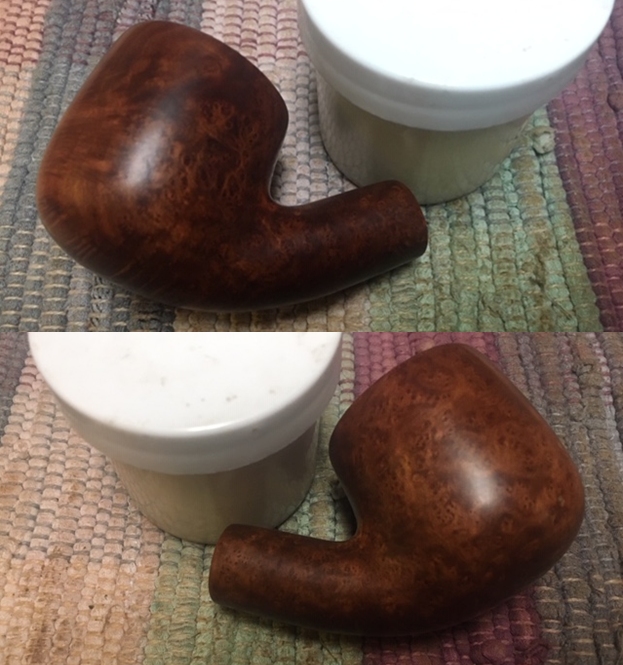
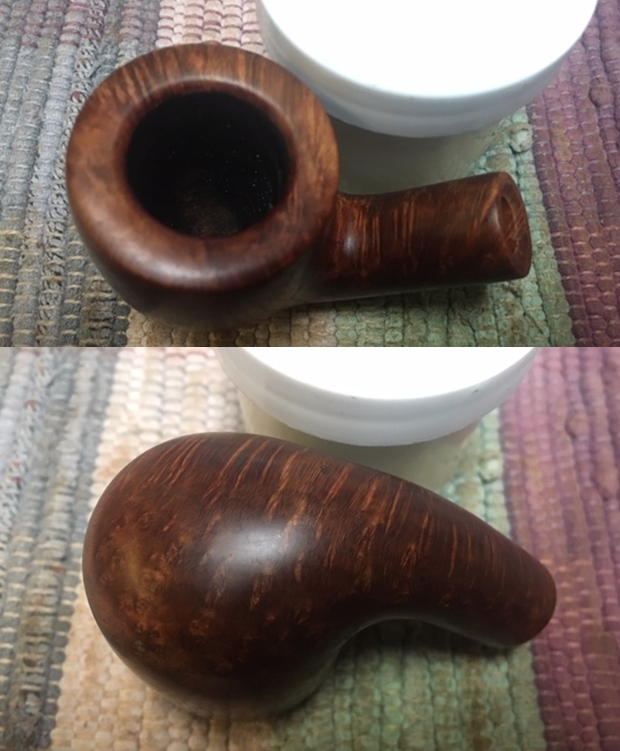
Repairing, Banding and Restoring a Damaged Hand Made Ascorti Business Billiard


Blog by Steve Laug

Not too long ago I received an email from an online friend and contributor to rebornpipes, Joe. He had picked up a great estate that he was cleaning and selling for the family. He sent me a list of the pipes. I purchased a nice Bari Freehand pipe from the lot. We came to an agreement on the price and I paid him for it. In the email interaction he talked about one of the Ascorti Business pipes that he was cleaning. He wrote:

…Now, I have a question. When cleaning one of the Ascorti Business, I found two cracks in the stummel. I know you have fixed cracks before. I’m attaching photos. Is it repairable and how much would it cost?

I looked at the photos that he attached which I have included to the left of this paragraph for you to see. The next paragraph of the email he came up with an interesting possibility.

Second thought. If I ship it with the Bari, would you be interested in fixing it and selling it?… (He went on to make a business proposition regarding the sale of the pipe.)

We struck a deal and the Bari I purchased and the Ascorti were in the mail to my brother Jeff’s place so he could work his magic on the pipe.

When the pipe arrived Jeff showed me the pipe while we were on Facetime. He showed the entirety of the pipe and also the shank end. It looked to both of us that there were actually three cracks in the shank. The stem was very loose fitting because the cracks had opened the mortise enough that it would not snugly hold the stem in place. The rusticated finish was quite dirty and the rim top had an overflow of lava on the smooth crown. The bowl was caked and between that and the lava I was not sure what to expect of the inner edge of the bowl underneath the grime. Time would tell. Jeff took some photos of the pipe to show the general condition of the pipe before he started his clean up. He took some photos of the rim top and bowl from various angles to give me a clear picture of the condition of the rim top and bowl. You can see the cake in the bowl and the thickness of the lava coat. It also looks like these is some damage on the inner edge and bevel in the photos. Jeff took some photos of the sides and heel of the bowl to show the condition of the rusticated finish on the pipe. Under the oils and grime it was a nice looking bowl. I think it was well worth the effort to repair the shank as there was a lot of life left in this old timer. He took some photos of the stamping on the sides of the shank. On the left side is the Ascorti logo with a pipe forming a “t” in the brand name. On the left side of the saddle stem was the Ascorti slanted A stamp. On the right side it was stamped Hand Made over Italy. You can also see part of the crack on the left of the third photo. Jeff took several photos of the cracks in the shank. Interestingly they both are on or alongside of the smooth panels on the sides of the shank.The next two photos show the top and underside of the stem. It is good condition with tooth chatter and some light tooth marks. It should clean up nicely.Before I started my part of the repair and restoration I wanted to have a clear picture of what the stem logo looked like on the Ascorti Business pipe. I turned to Pipephil as he often has some photos that give me the information that I am looking for (http://www.pipephil.eu/logos/en/logo-a8.html). Sure enough he had a photo showing the rough stamped A on the stem. It is white and it is rough which is exactly how this one looks. Hopefully in the restoration process I can get it back a bit. I did a screen capture of the picture on the site and include it below.Jeff once again did an amazing job cleaning the pipe. He reamed it with a PipNet pipe reamer and got rid of the cake so that we could see the walls of the bowl and assess for damage. He cleaned the internals of the shank and stem with alcohol, pipe cleaners and alcohol. He scrubbed the exterior with undiluted Murphy’s Oil Soap and rinsed the pipe under warm water. He dried it off with a cloth and then let it air dry. The rim top cleaned up pretty well and there was indeed some damage to the crowned top and inner edge of the bowl. I took pictures of the pipe to show how it looked when I unpacked it. I took a close up photo of the rim top to show the damage to the rim. You can see the damage on the back crowned rim top and on the inner edge on both the front and the back. There is some roughness and marks on the surface of the rim top as well.I took photos of the cracks in the shank sides and also of the shank end. I have circled the three cracks in red on the last photo of the shank end.I opened the cracks with a dental pick and pressed CA glue into the cracked areas. I clamped them together until the CA cured. I went through a bag or brass bands that I picked up through a friend online. I had one that was a perfect fit and when pressed onto the shank would fully bind the glue. I heated the band with a lighter and pressed it onto the shank. I put the stem in place and it was snug! The repair had cured the cracks and the loose fitting stem. I took a photo of the pipe with the band and the stem in place to have a look.  I took the stem off and set it aside so that I could work on the crowned rim and inner edge damage. I used a folded piece of 220 grit sandpaper to clean up the inner edge and the top of the crowned rim. It was slow and tedious but the results were what I was hoping for. I polished the smooth panels on the sides of the shank and the rim top with micromesh sanding pads. I wet sanded with 1500-12000 grit pads. I wiped the rim down with a damp cloth after each sanding pad to remove the sanding debris. I worked some Before & After Restoration Balm into the smooth portions with my finger tips and the rustication with a horsehair shoe brush. The product is a great addition to the restoration work. It enlivens, enriches and protects the briar while giving it a deep glow. It is a product I use on every pipe I work on. I set the bowl aside and turned my attention to the stem. I sanded out the tooth chatter and marks in the acrylic with a folded piece of 220 grit sandpaper and polished out the scratches with 440 grit wet dry sandpaper.I polished the stem with Denicare Mouthpiece Polish from a tin of it I have in the drawer here. It is a gritty red paste that I rub on with my finger tips and work into the surface of the stem and button and buff off with a cotton pad. It gives me a bit of a head start on the polishing work.I used some Paper Mate Liquid Paper to repair the white in the A stamp on the left side of the shank. Once it dried I used a 2400 grit micromesh sanding pad to remove the excess. While not flawless it definitely looks better.I polished the stem with micromesh sanding pads – wet sanding with 1500-12000 grit sanding pads. I wiped it down after each sanding pad with Obsidian Oil. I polished it with Before & After Pipe Stem Polish – both Fine and Extra Fine. I buffed the stem with a soft cloth to raise the shine. Looking forward to hearing what Joe thinks of the restoration on this Ascorti Business pipe that he sent to me. As always I am excited to finish a pipe that I am working on. I put the pipe back together and buffed it using a light touch with Blue Diamond on the buffing wheel. I gave the bowl several coats of Conservator’s Wax and the stem multiple coats of carnauba wax. I buffed the pipe with a clean buffing pad and hand buffed it to raise the shine. It is fun to see what the polished bowl looks like with the grain popping through on the rim top and the variations of colour in the rustication around the bowl and shank. Added to that the polished black acrylic stem with the briar band on the saddle was beautiful. The new brass band sets off the bowl and stem really well and I am pleased with the classy look it gives to the pipe. The shank repair and band take care of the cracked shank and it should work well for a long time. This is nice looking pipe and I am sure that the tactile nature of the rustication will feel great as the bowl warms up during smoking. It is light and well balanced. Have a look at it with the photos below. The dimensions are Length: 5 ¾ inches, Height: 2 inches, Outside diameter of the bowl: 1 ½ inches, Chamber diameter: 7/8 of an inch. It is a beautiful pipe and one that will be on the rebornpipes store soon. If you are interested in adding it to your collection let me know. Thanks for walking through the restoration with me as I worked over this pipe. Thanks to each of you who are reading this blog. I want to keep reminding us of the fact that we are not pipe owners; we are pipemen and women who hold our pipes in trust until they pass on into the trust of the next pipeman or woman.