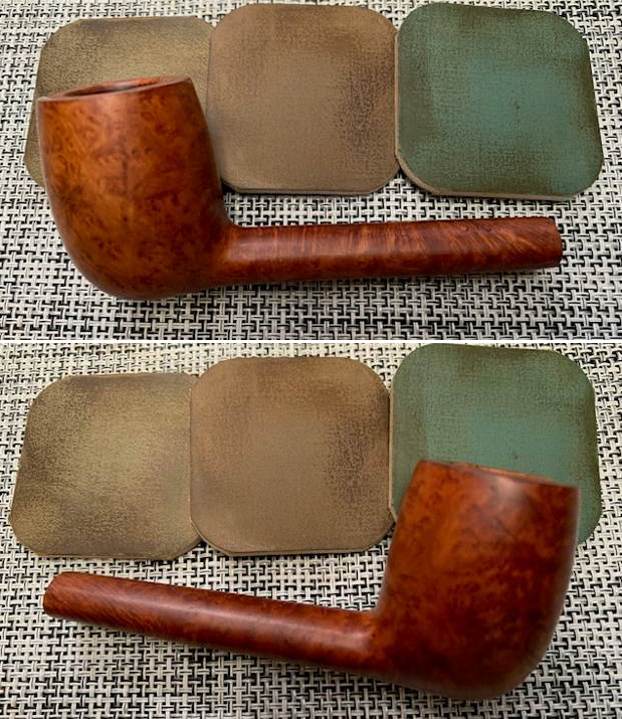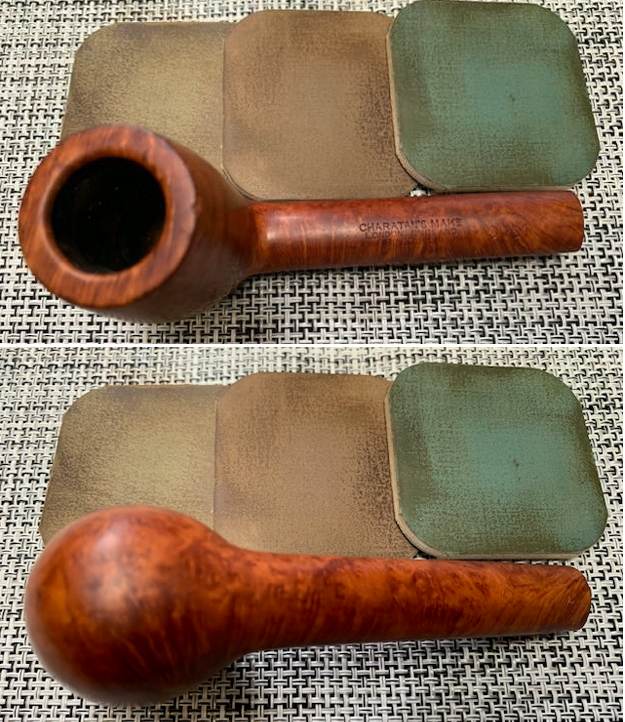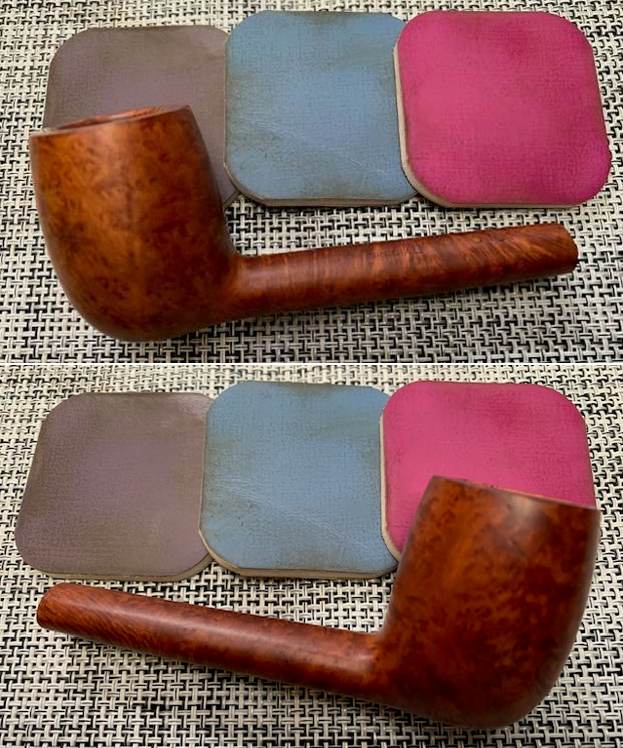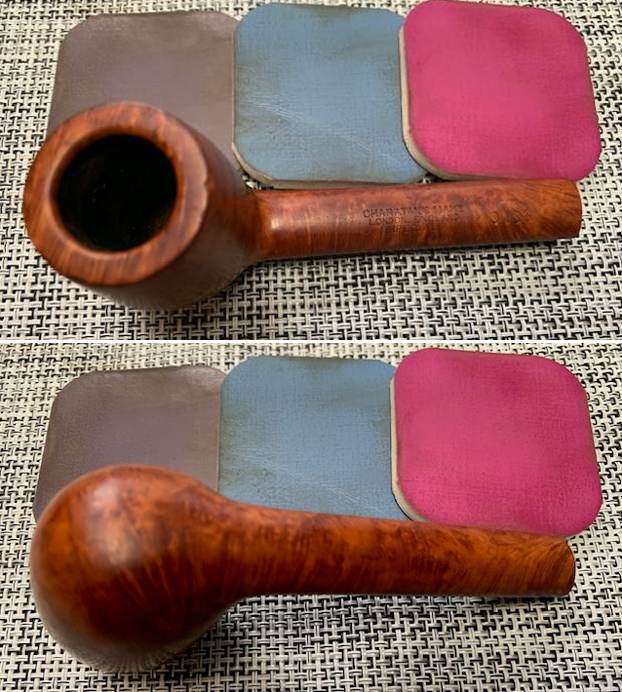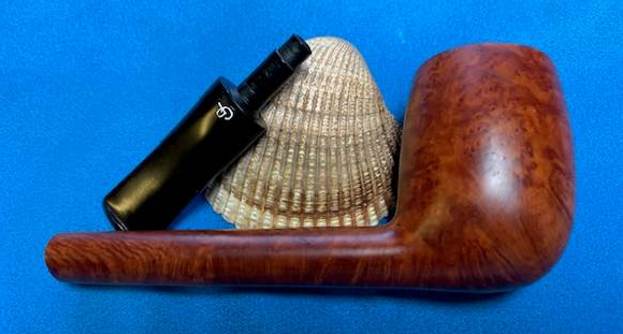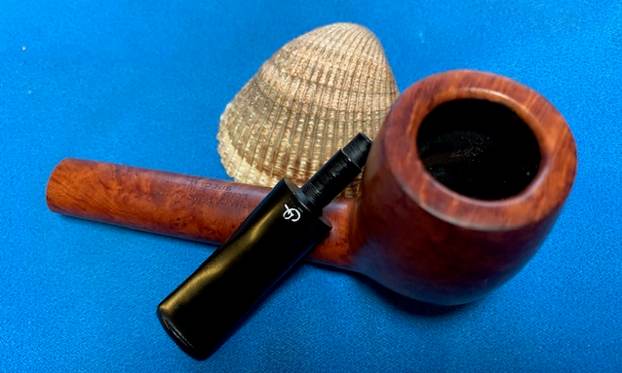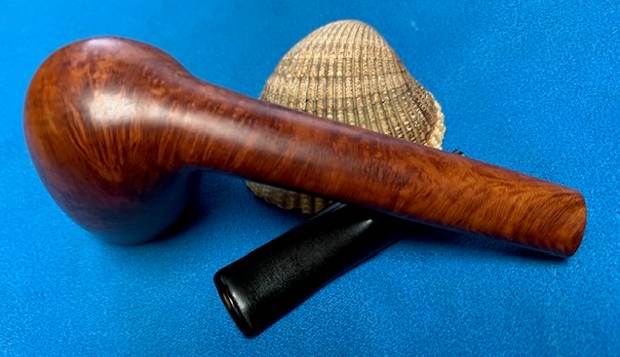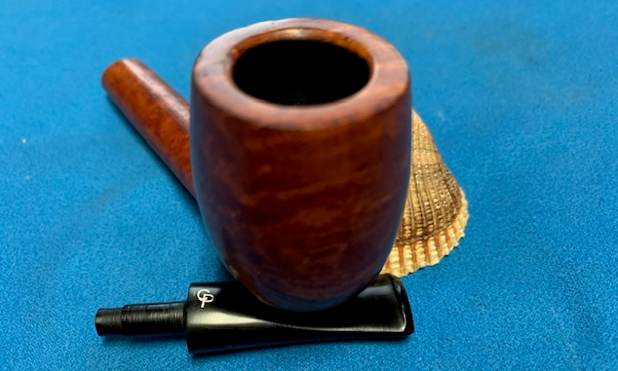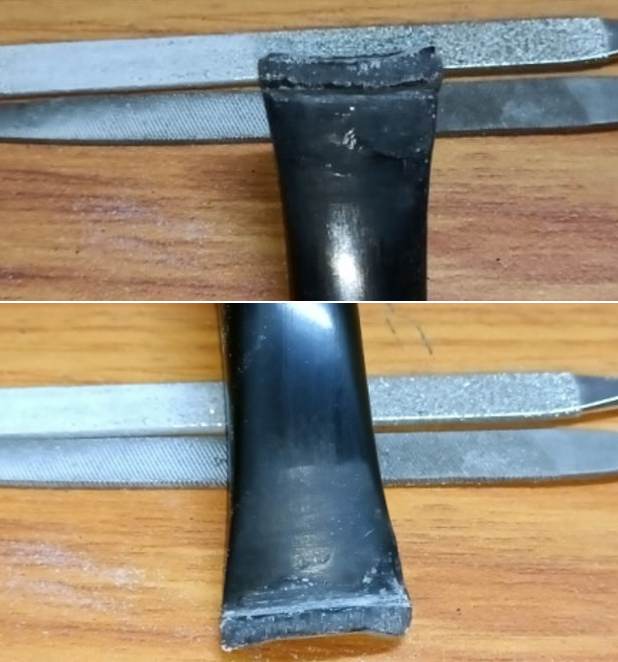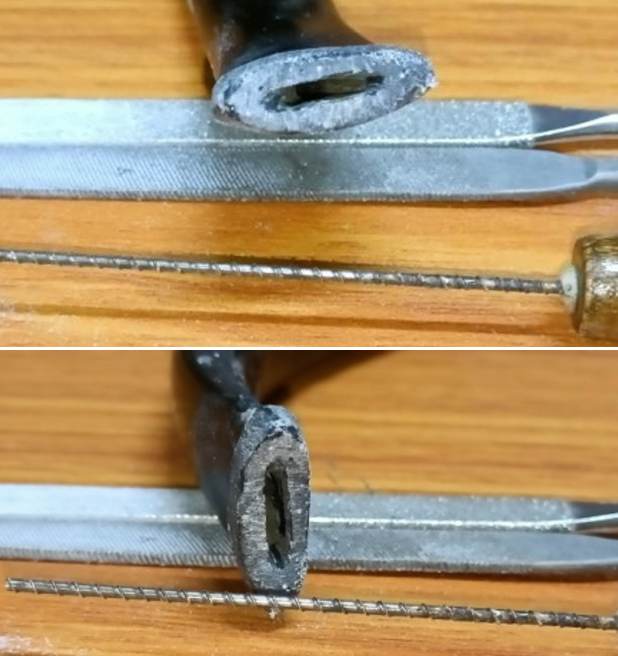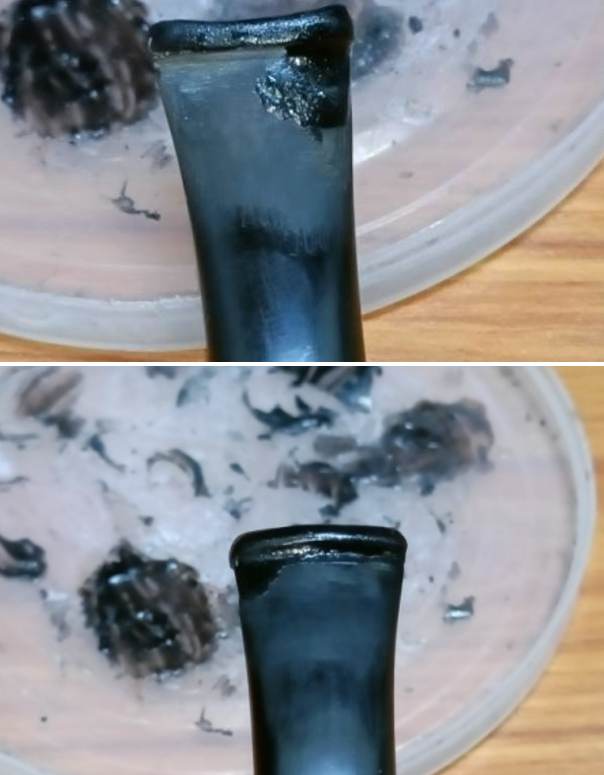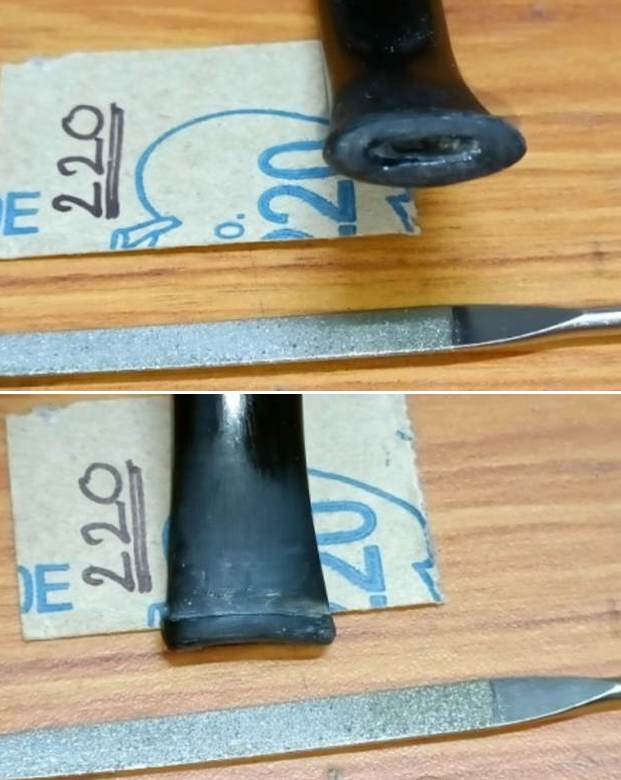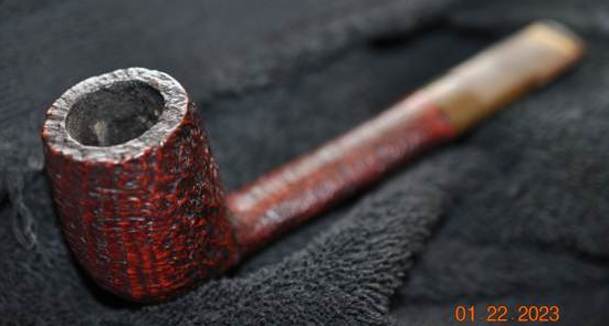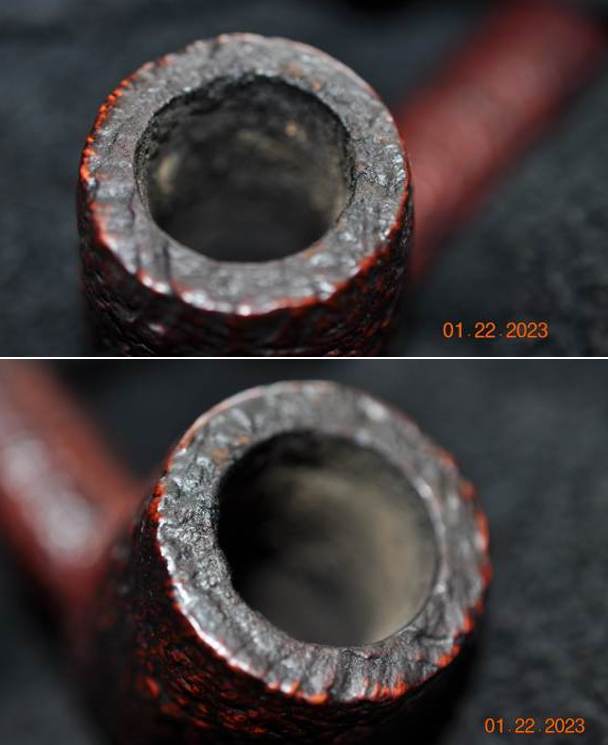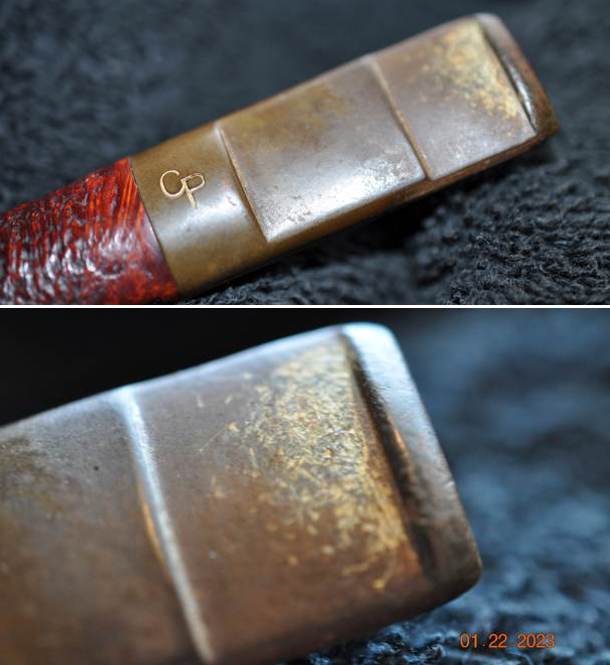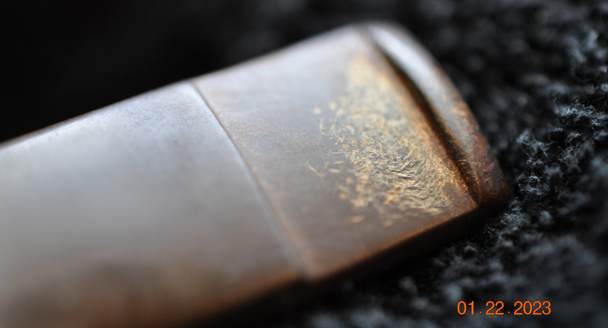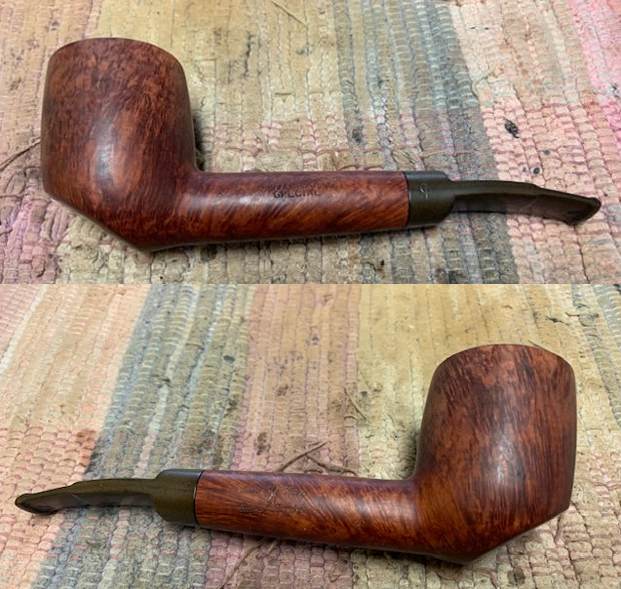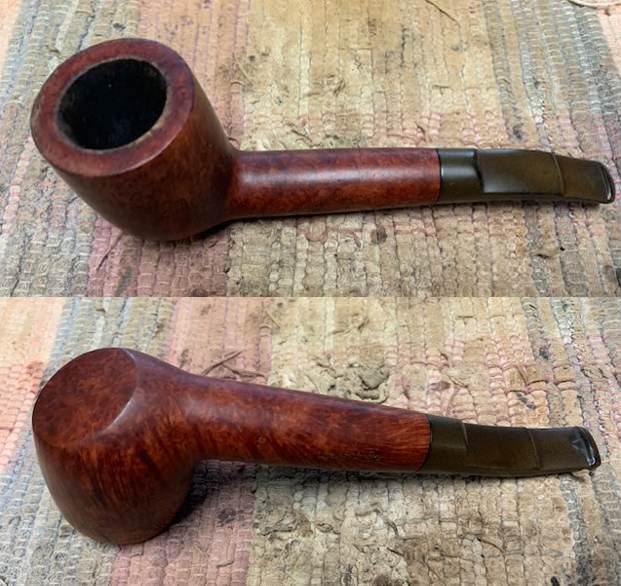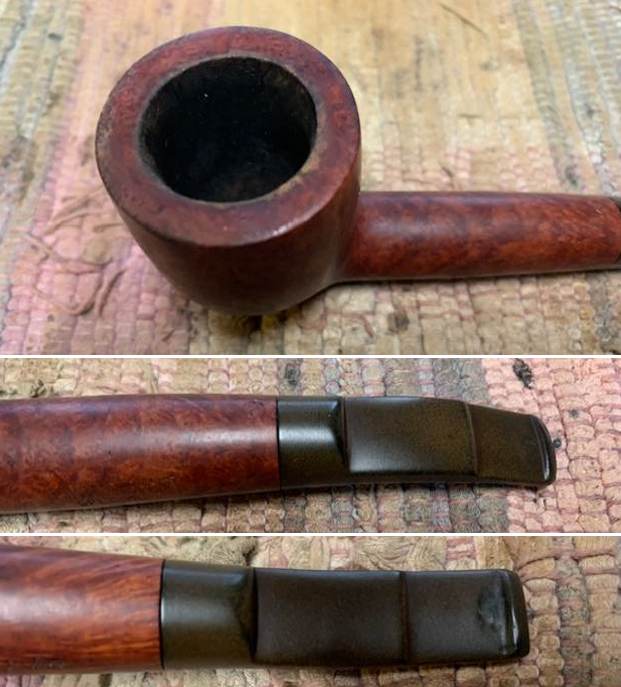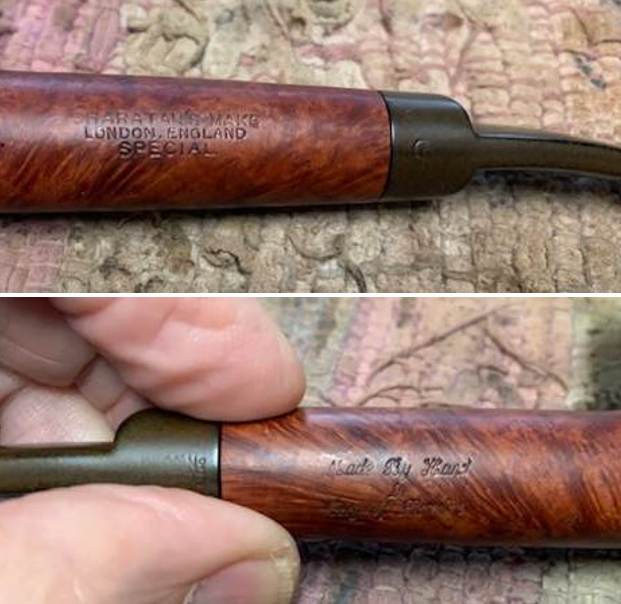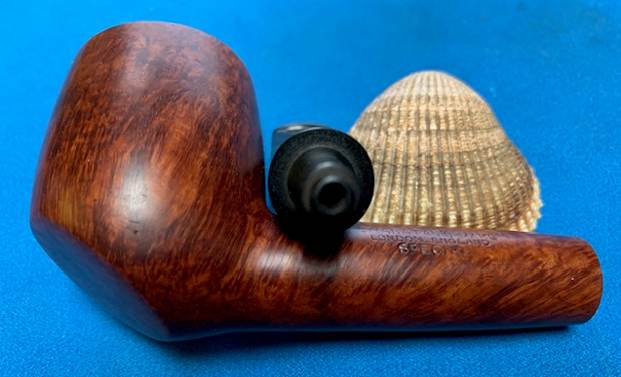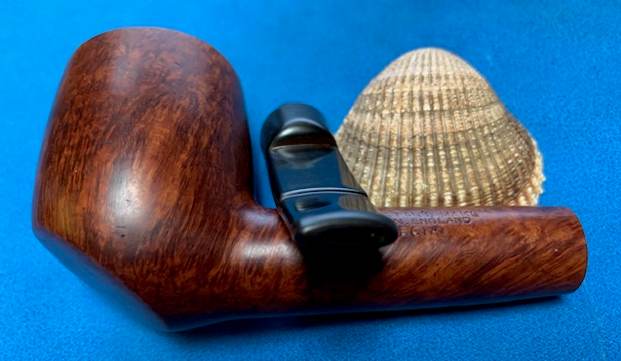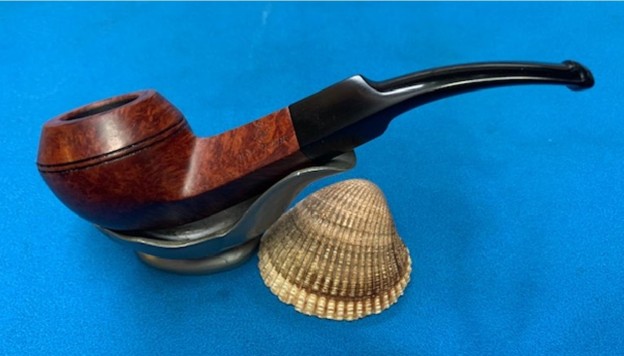
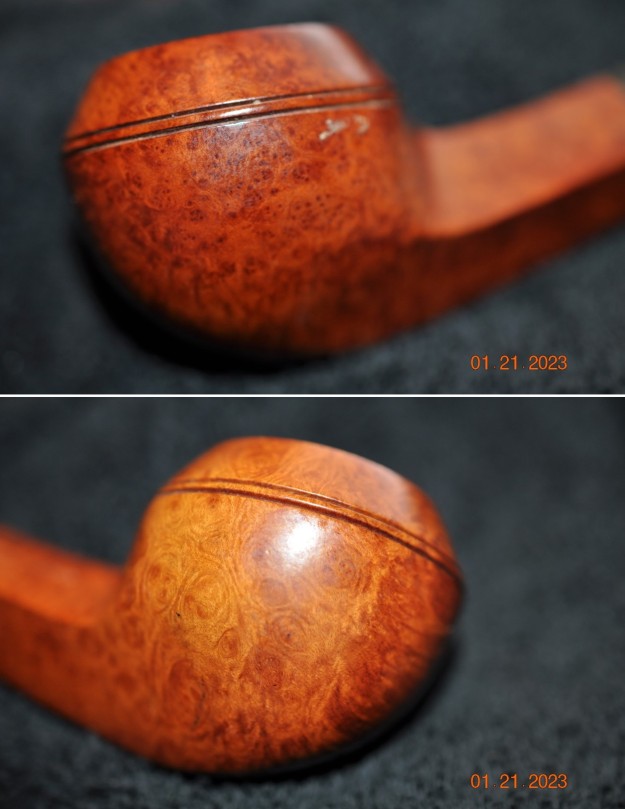
Tag Archives: sanding a stem

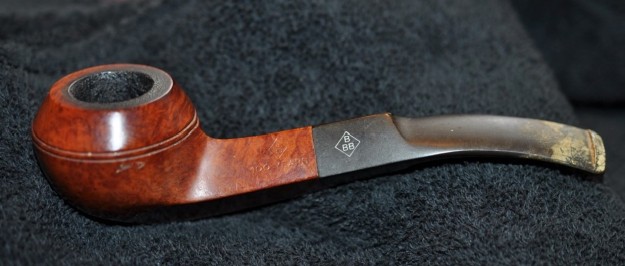
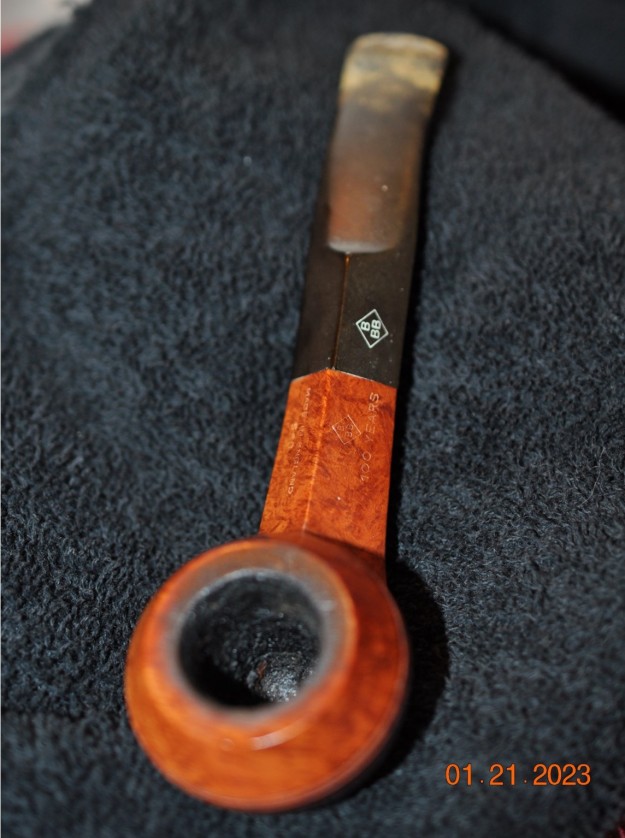
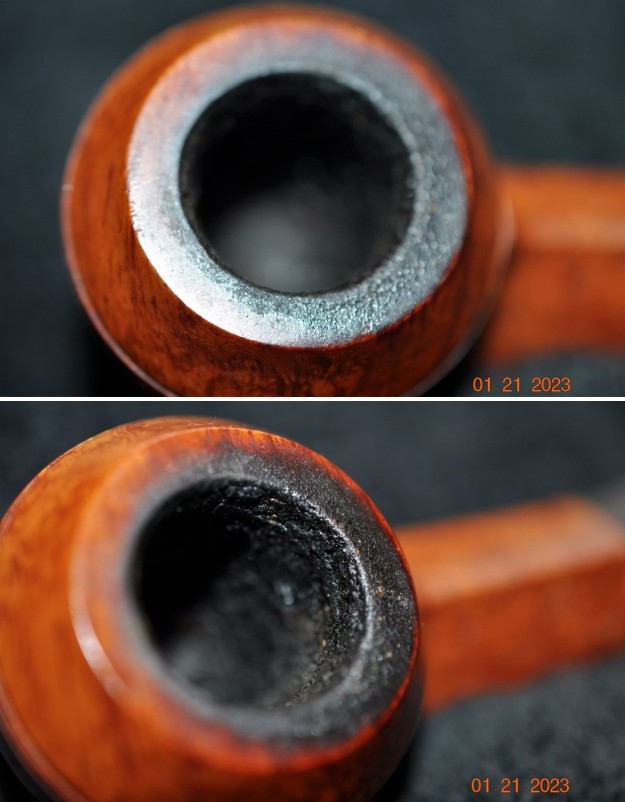
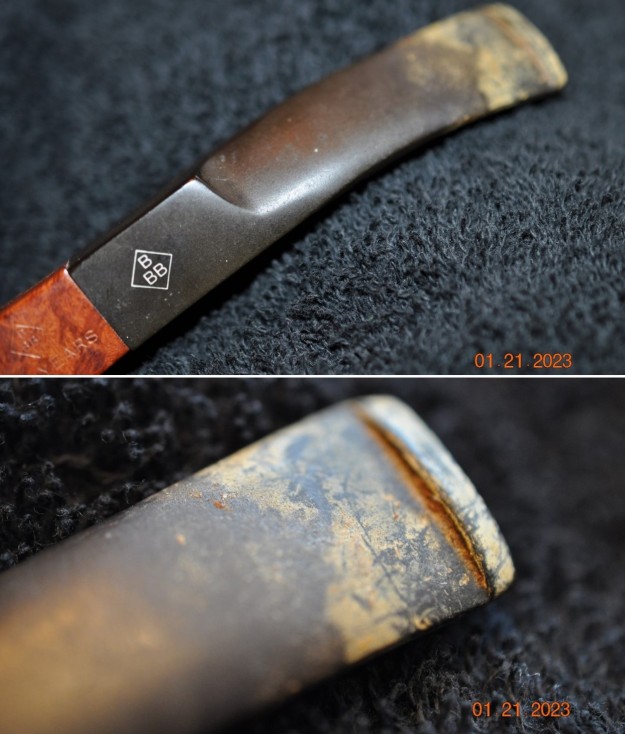
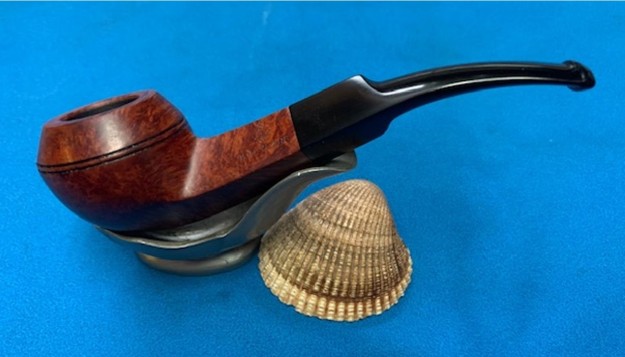
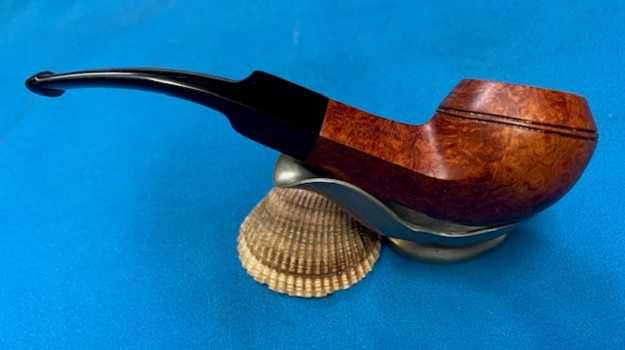
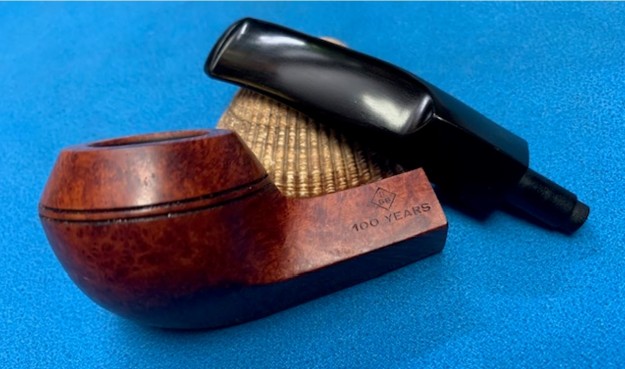
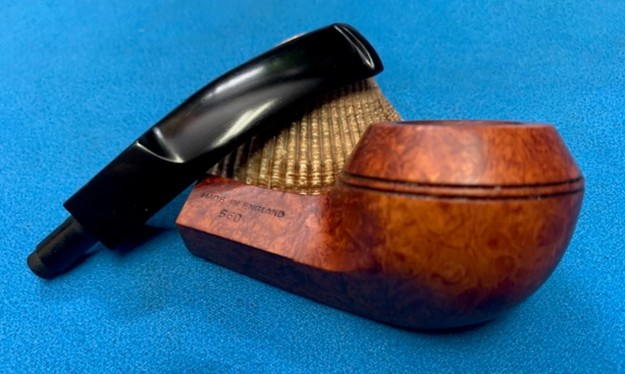
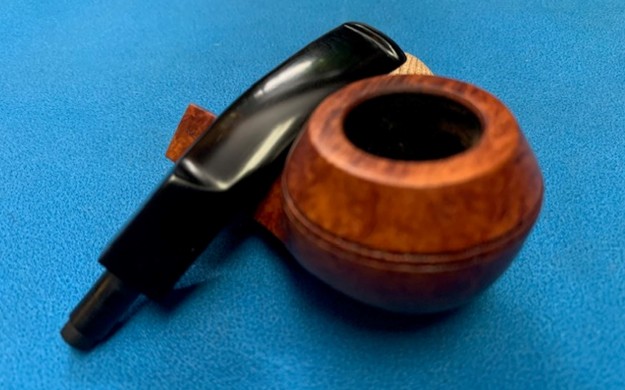
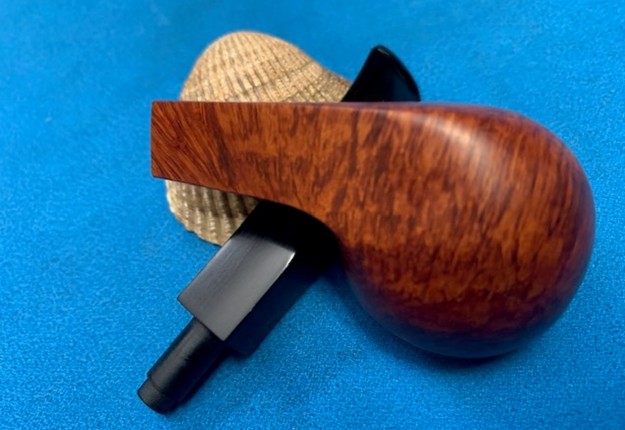
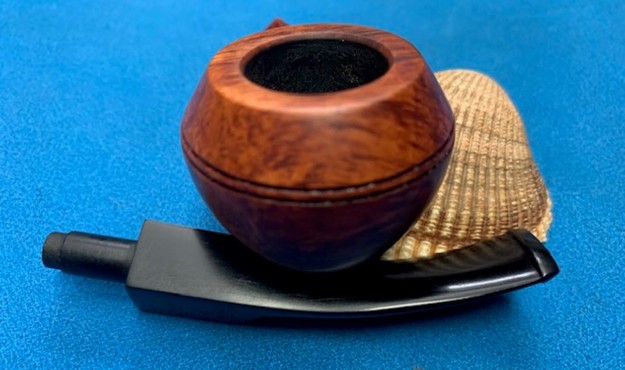
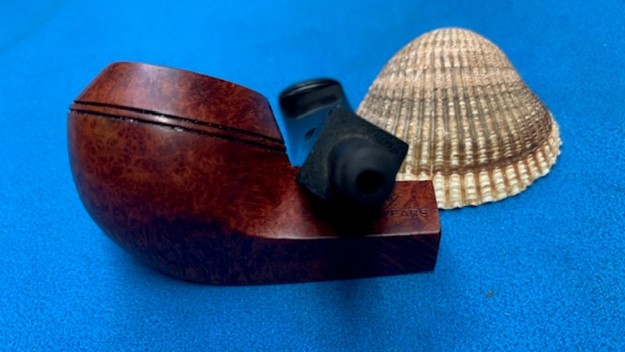
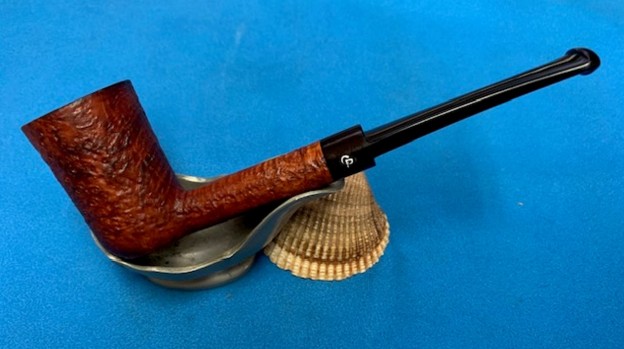
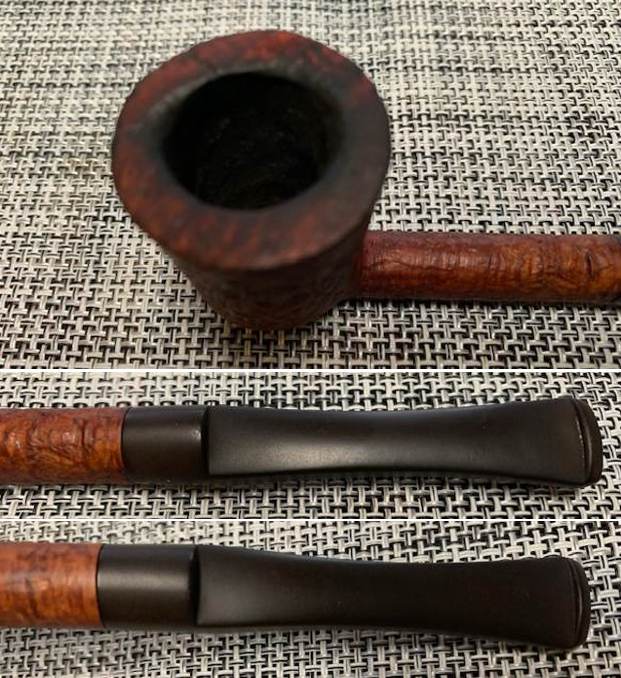
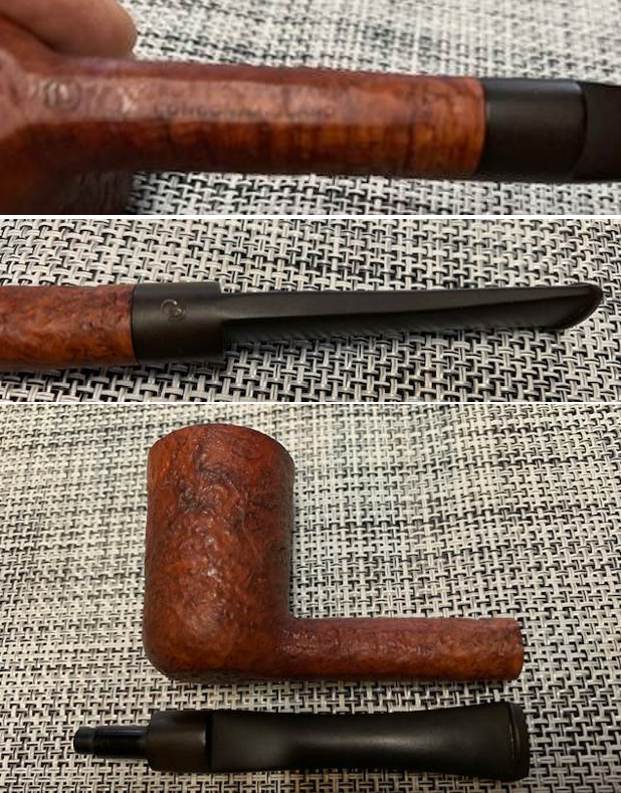
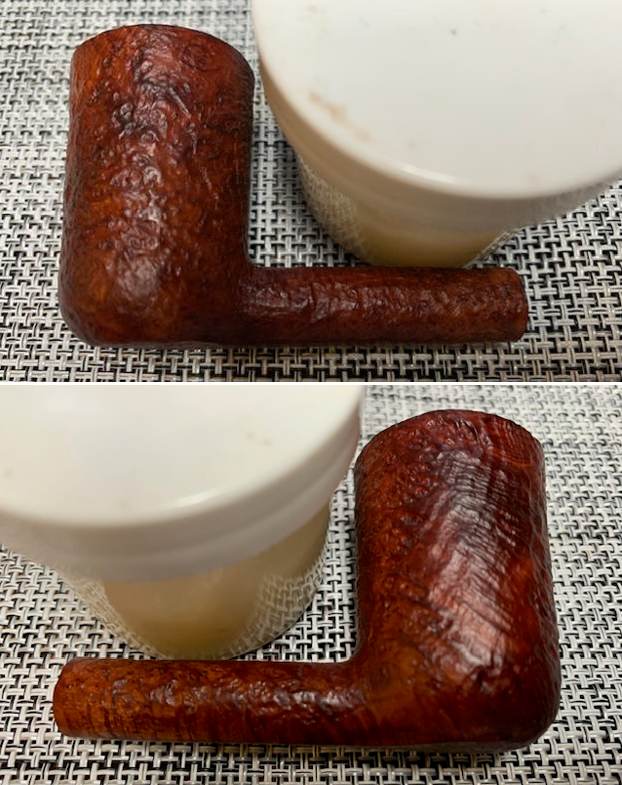
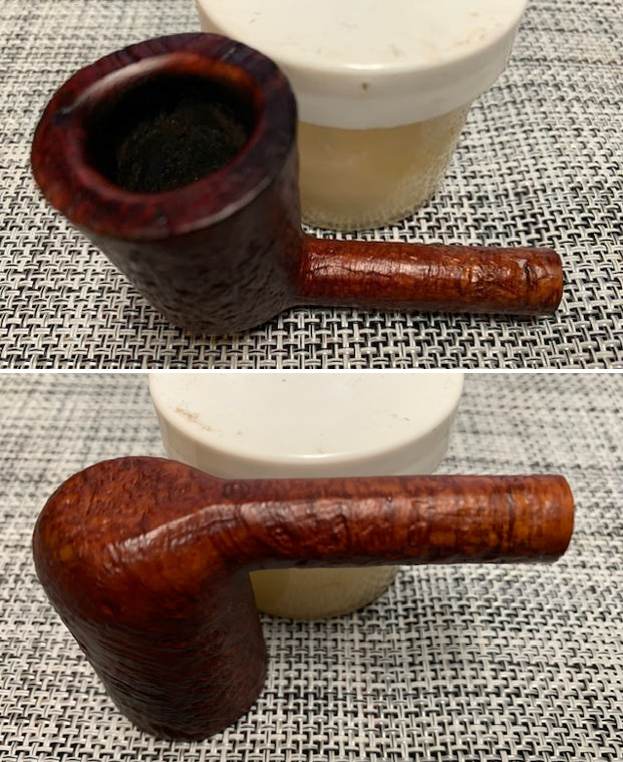
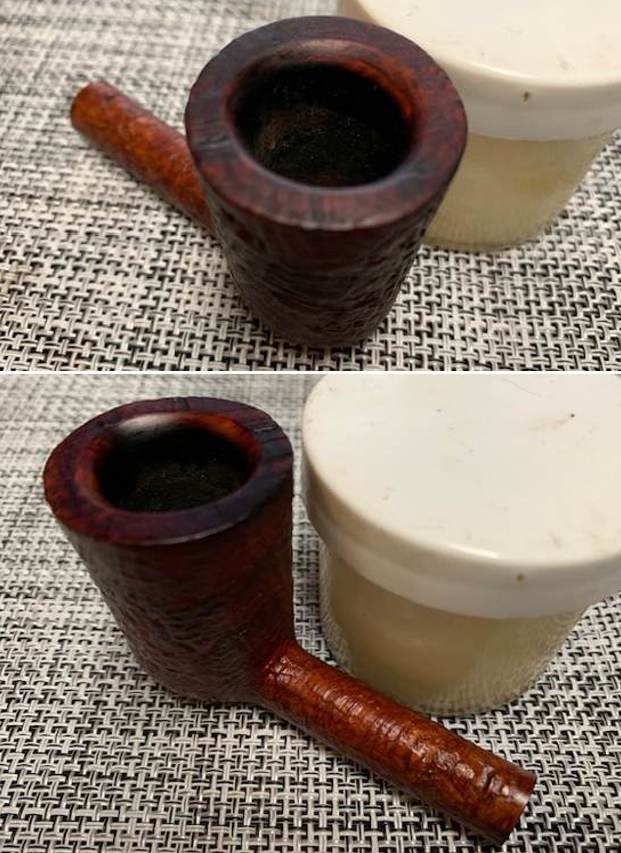
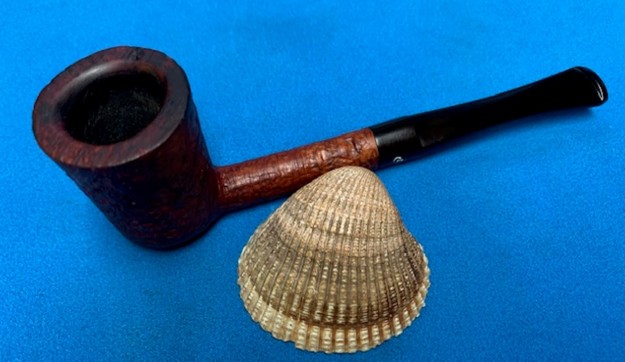
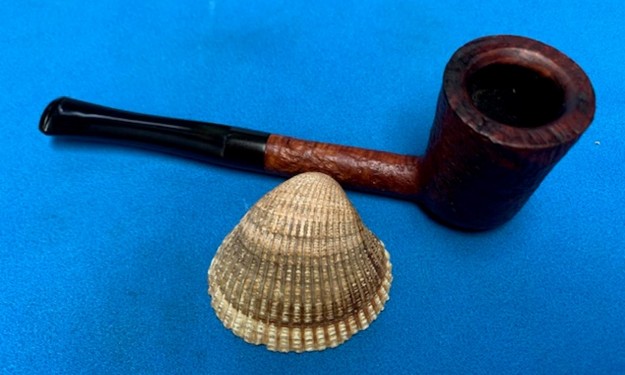
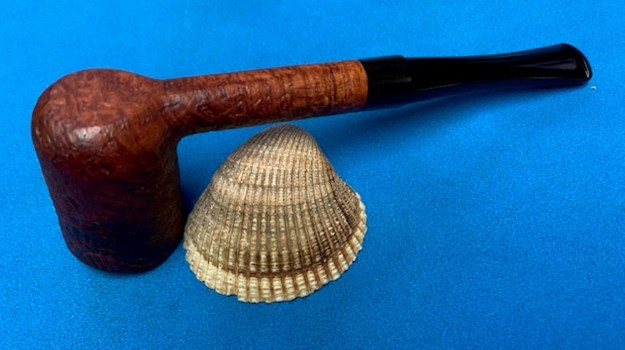
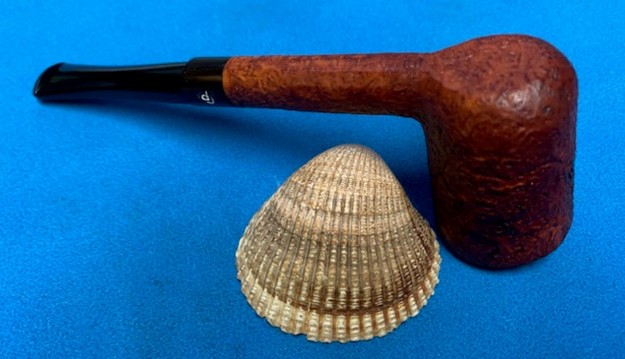
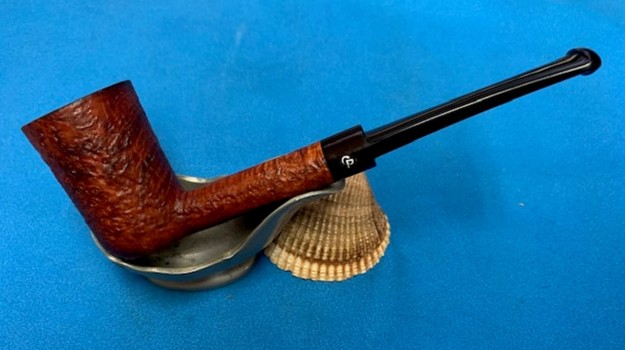
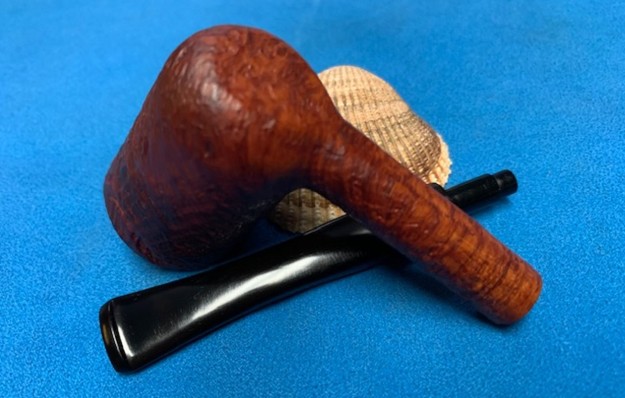
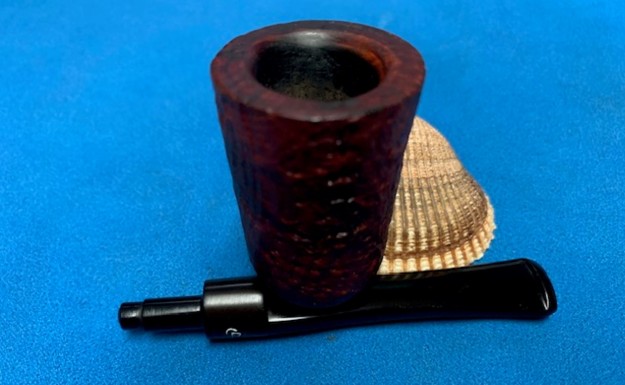
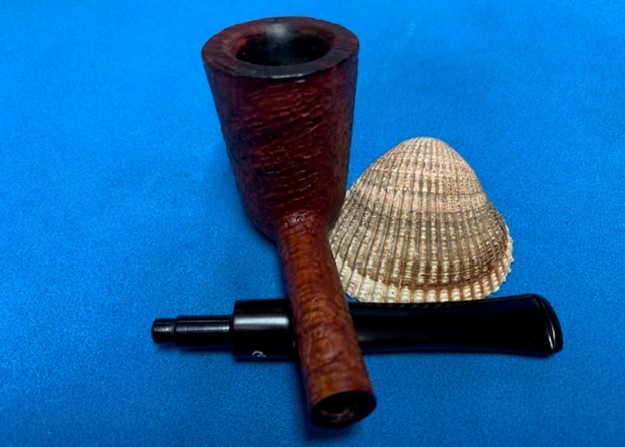
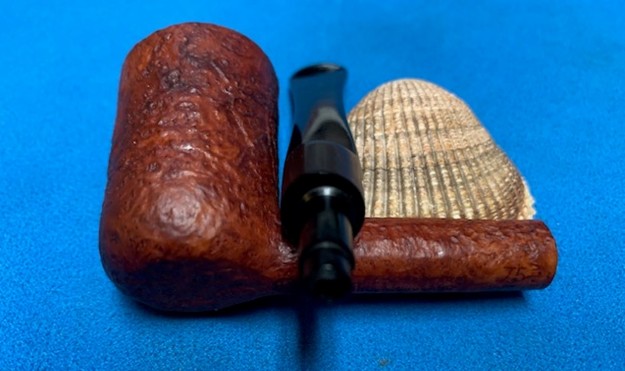
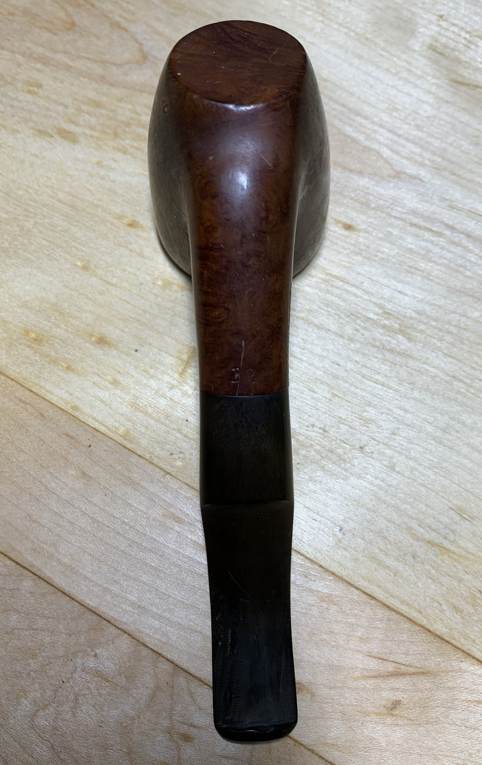
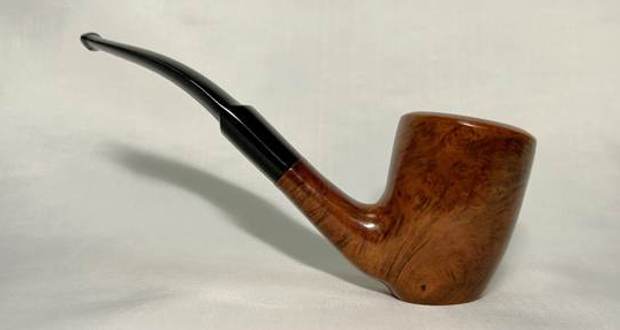
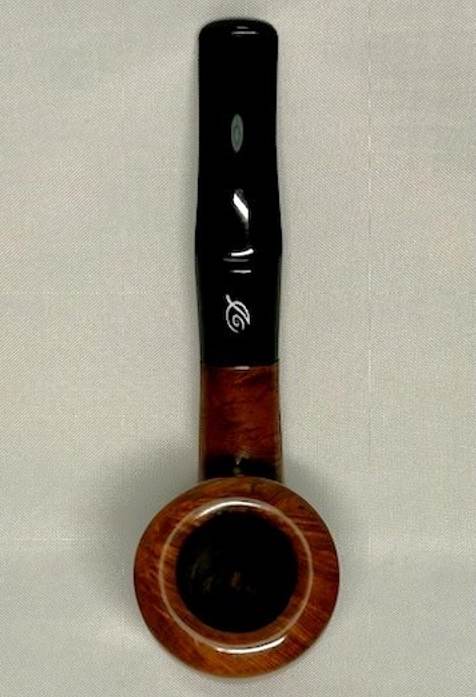
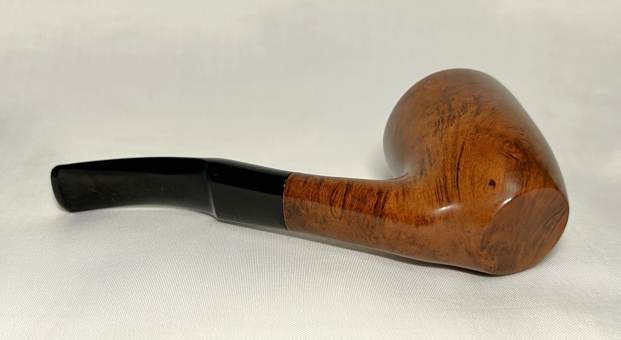
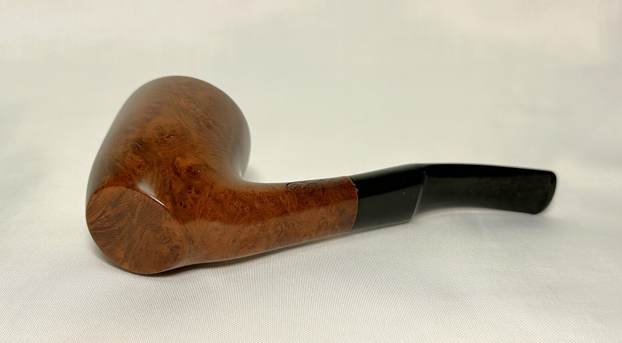
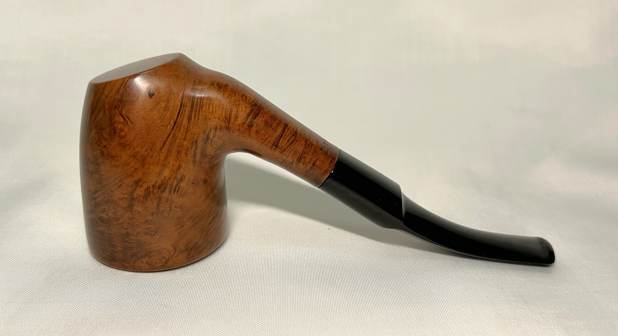
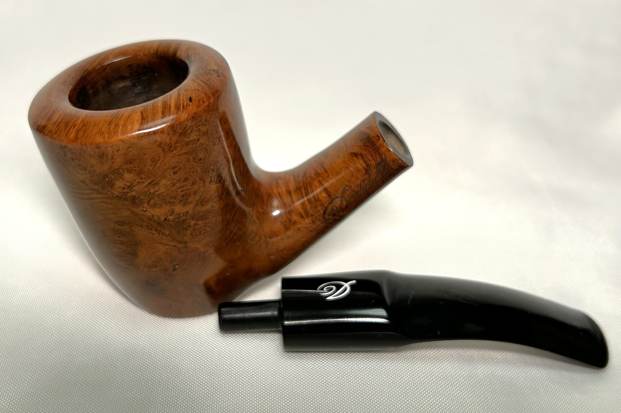
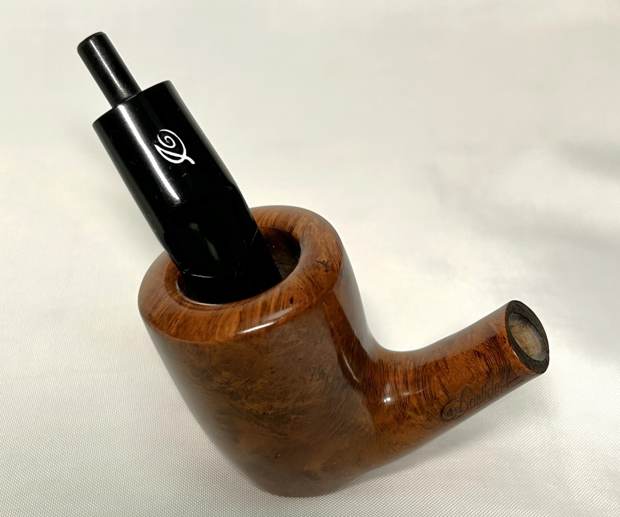
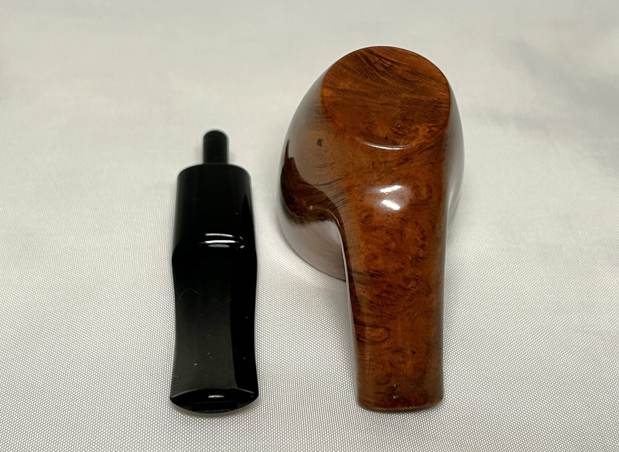
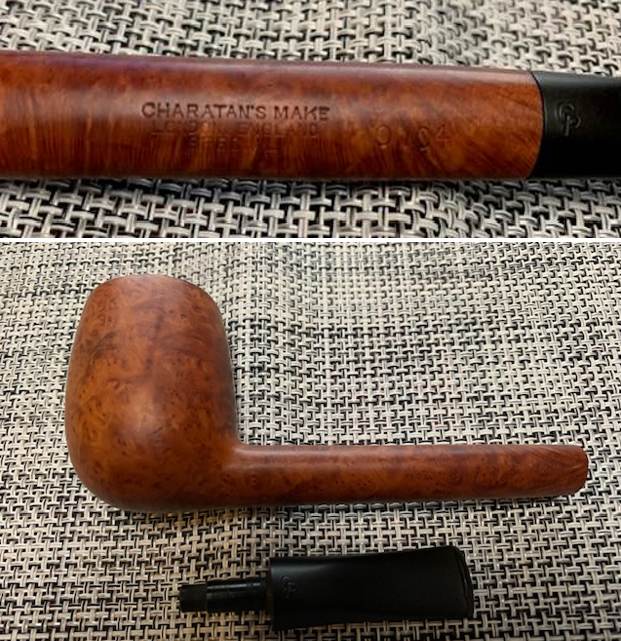
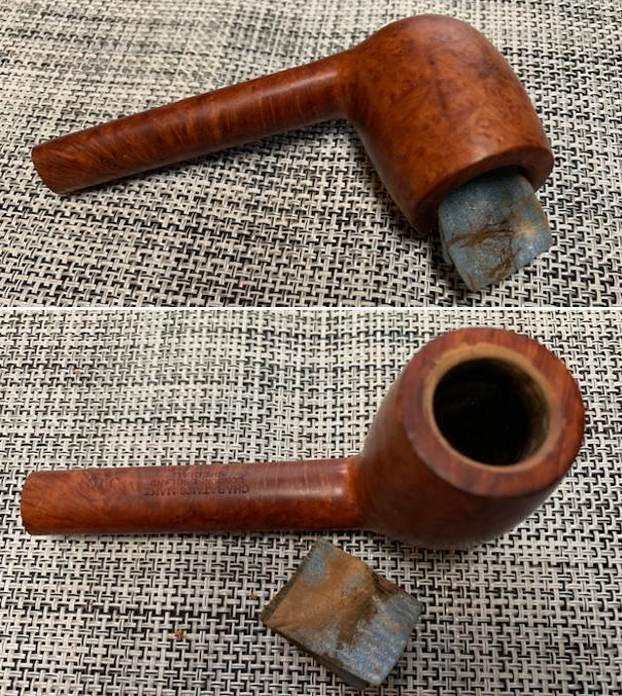
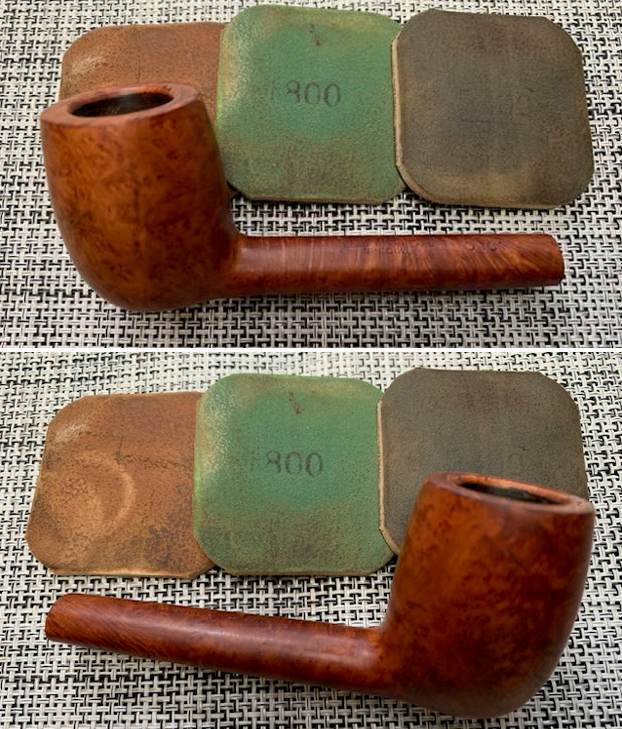
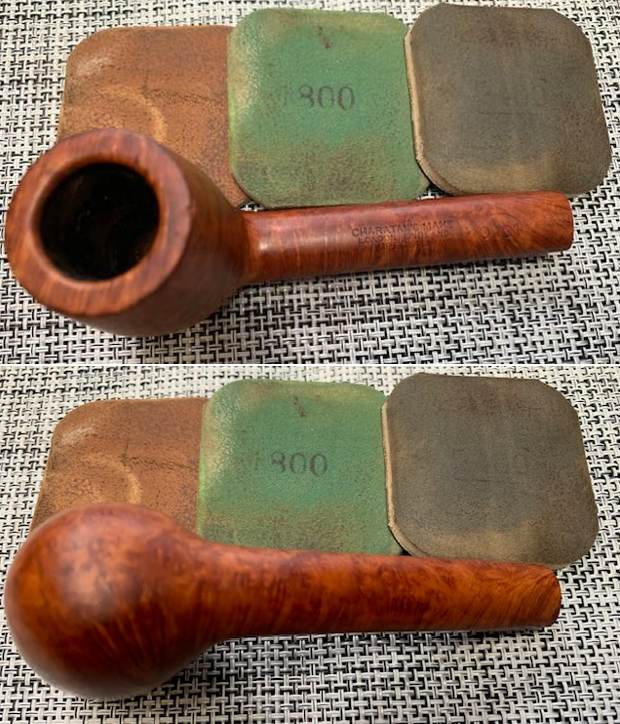
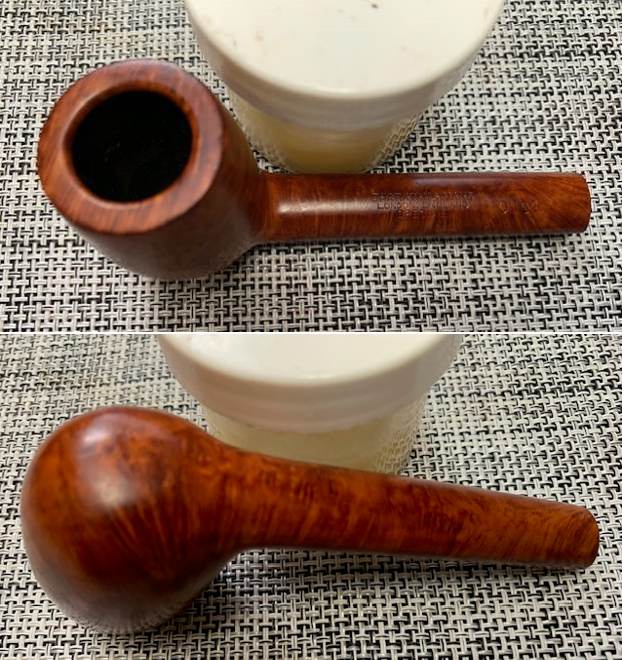
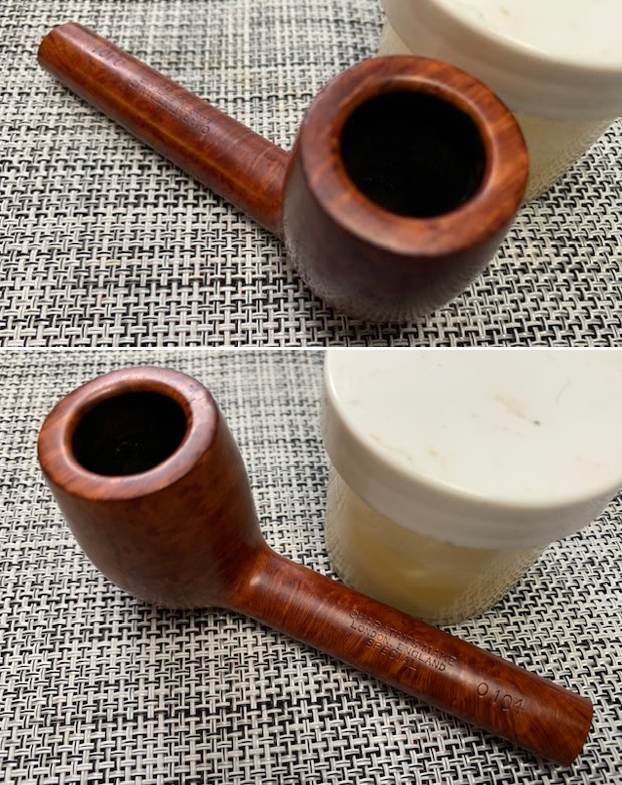
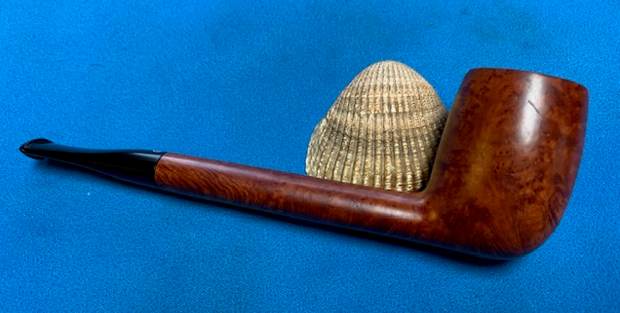
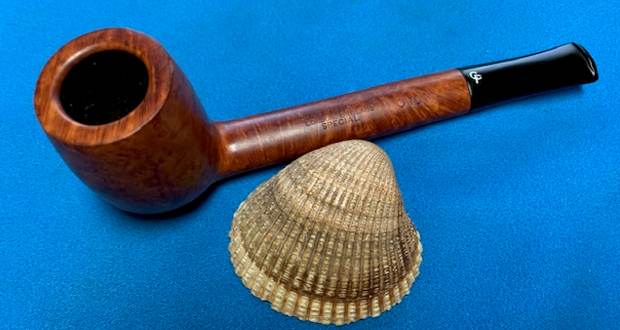
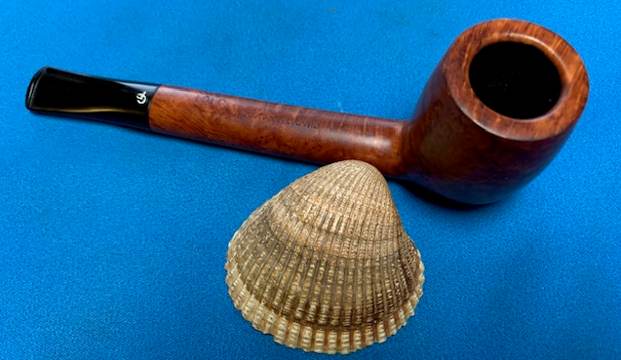
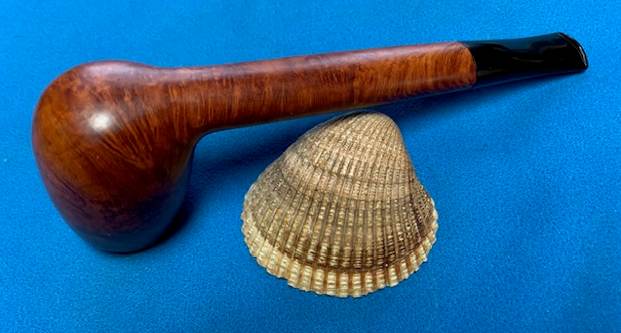
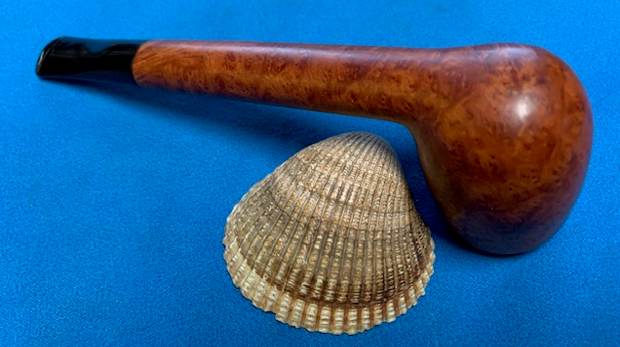
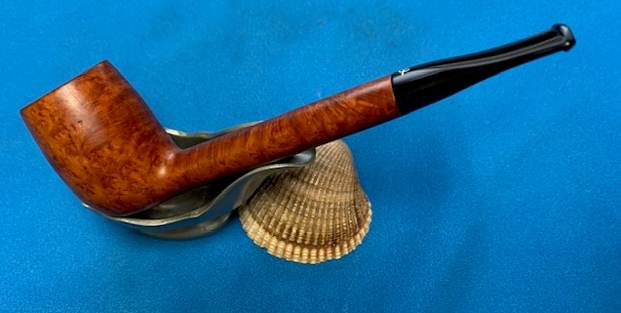
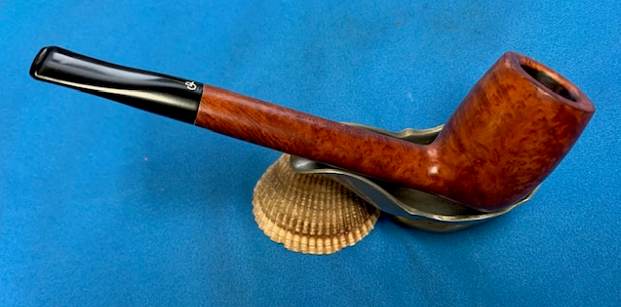
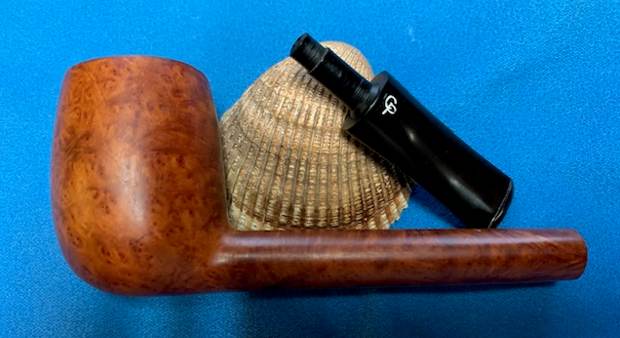
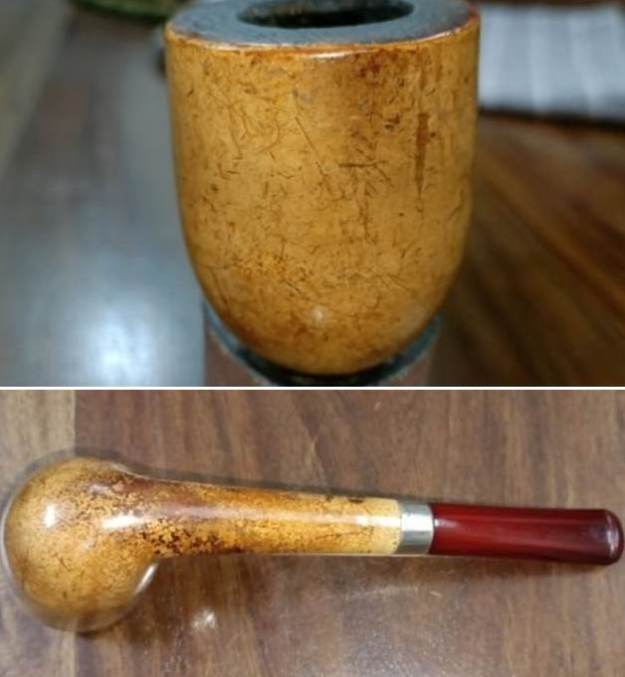
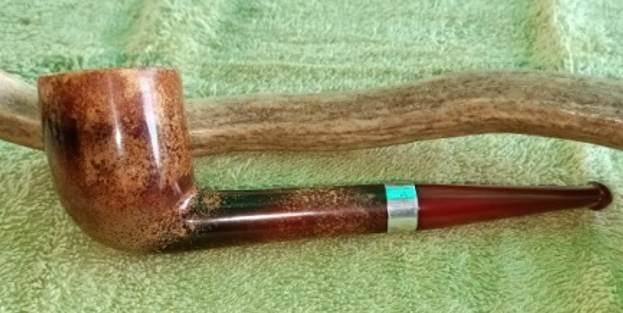
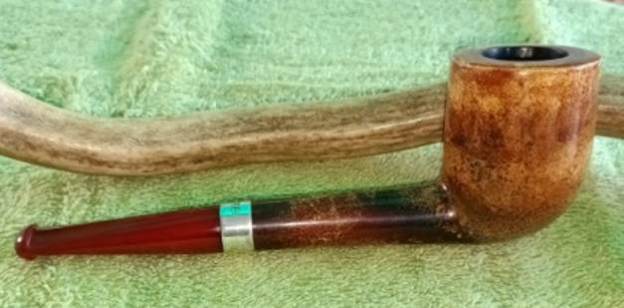
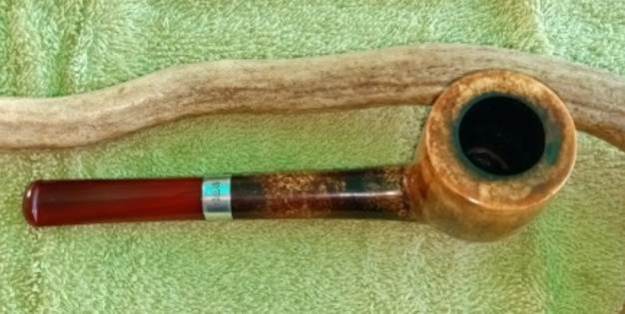
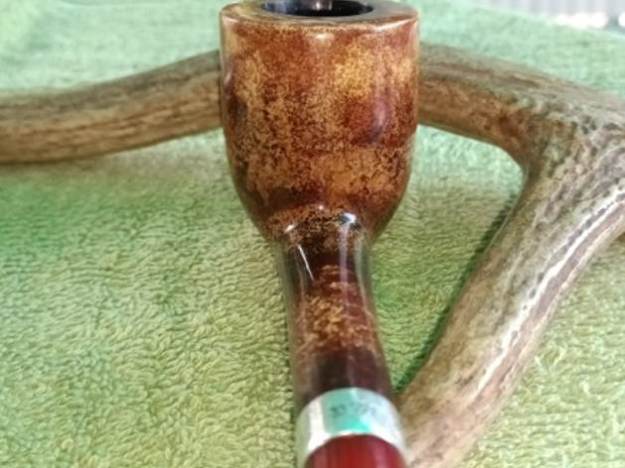
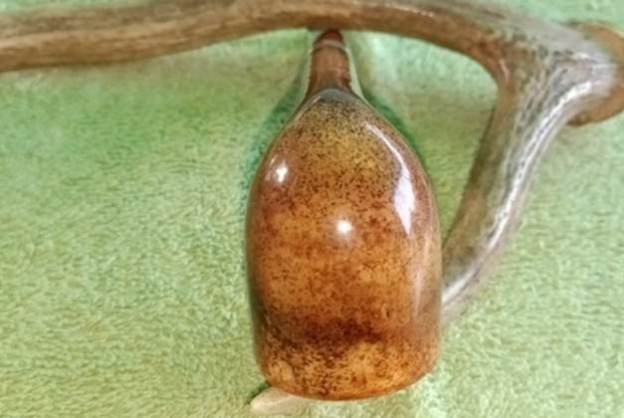
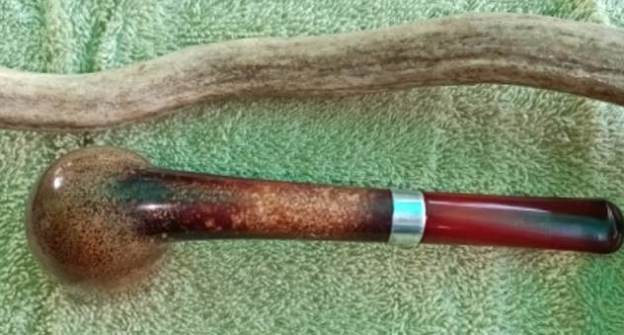
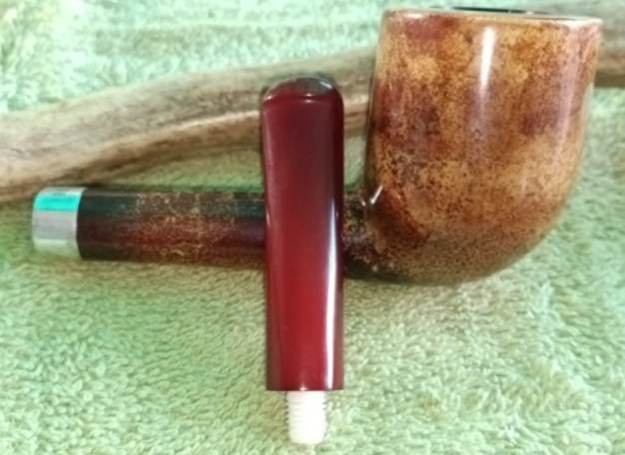
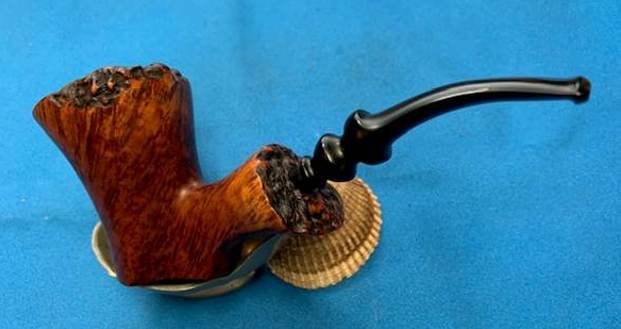
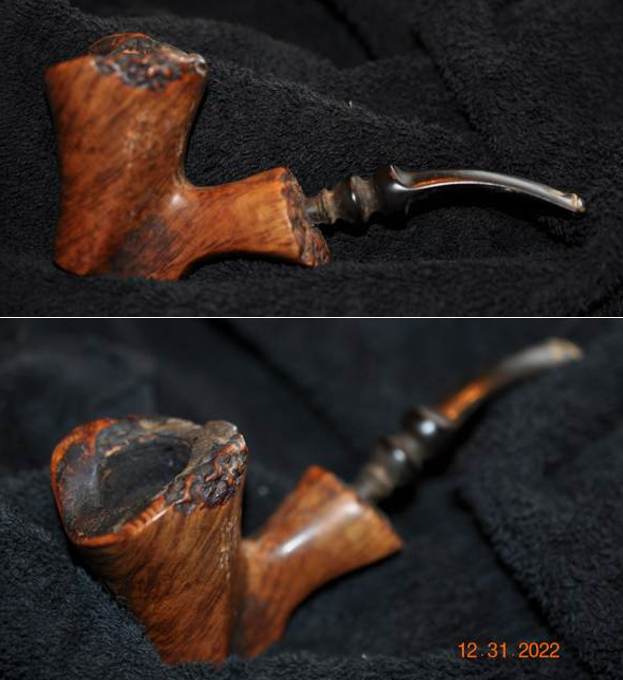
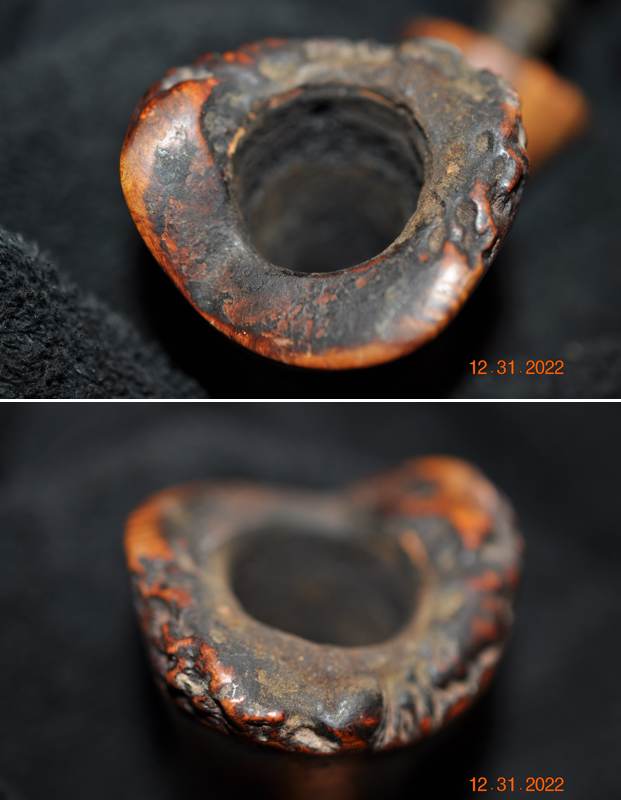
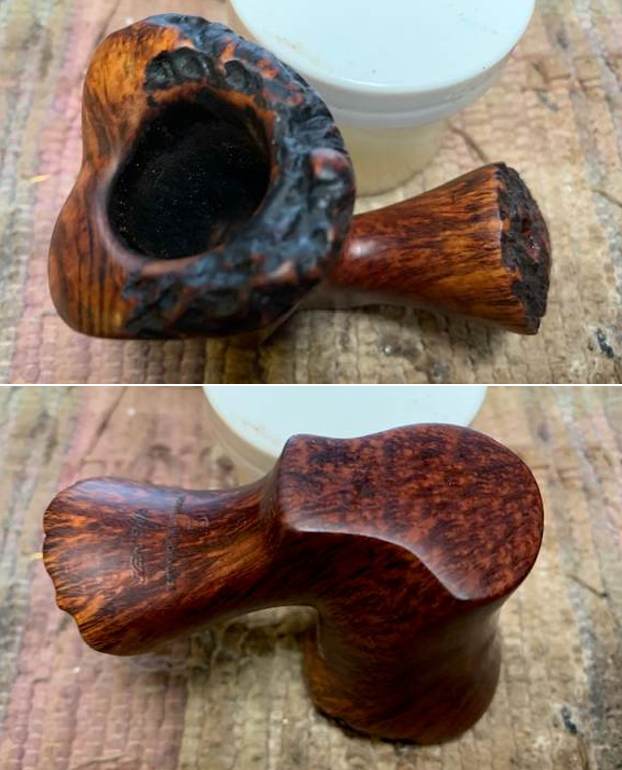
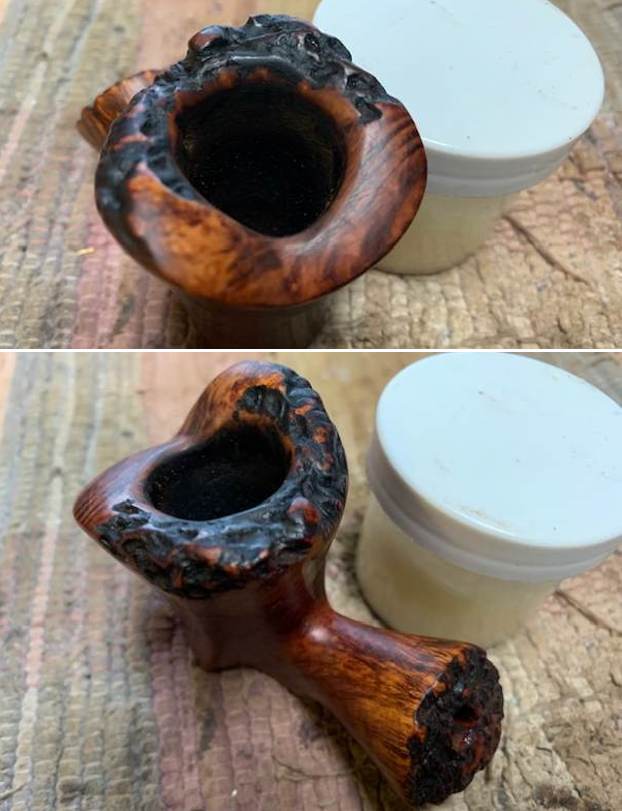
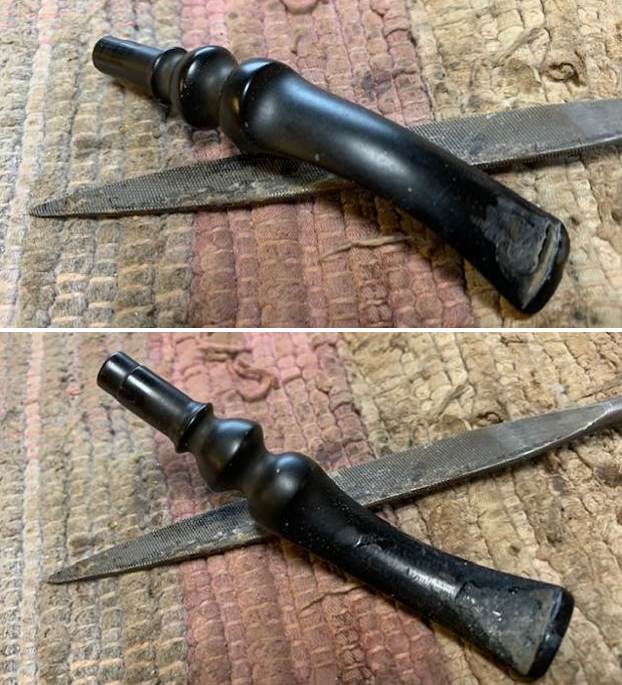
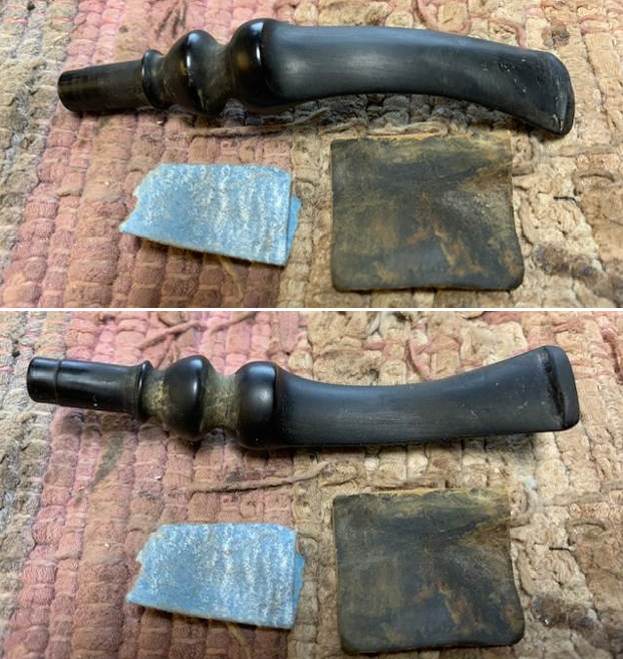
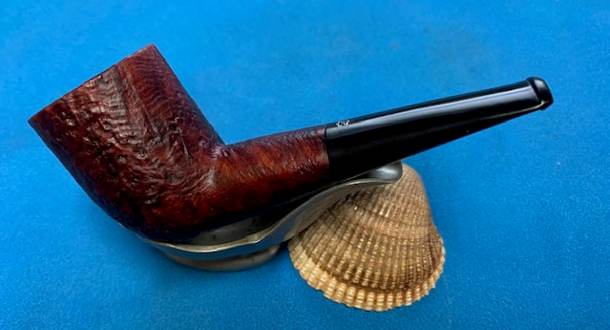
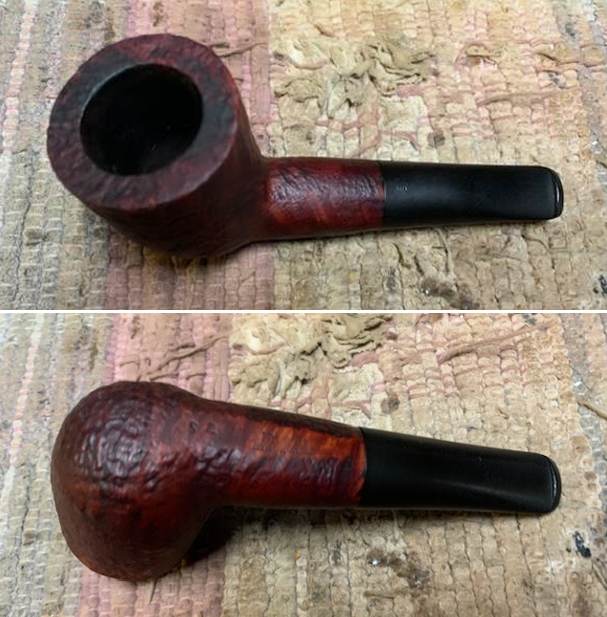
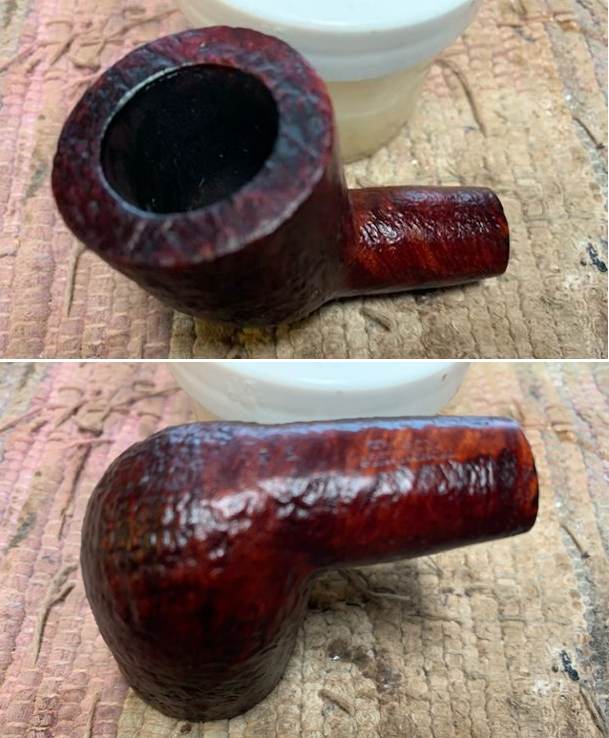
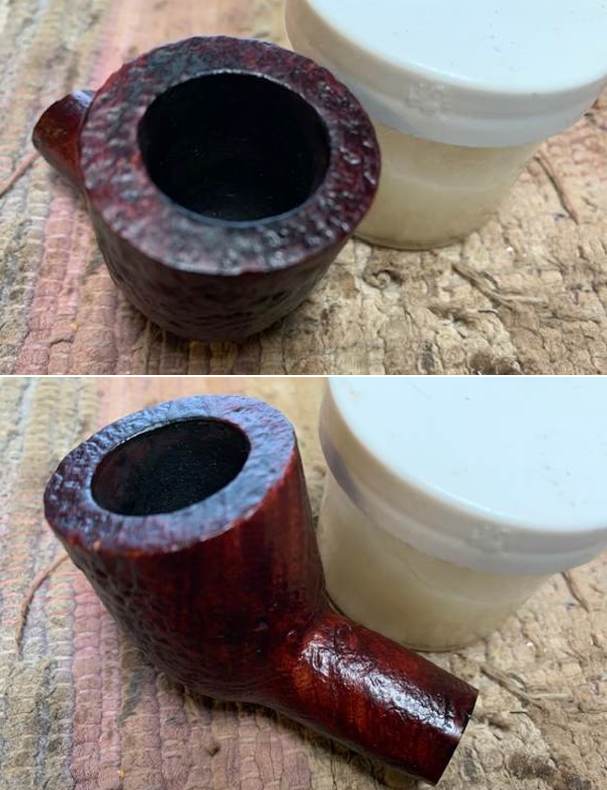
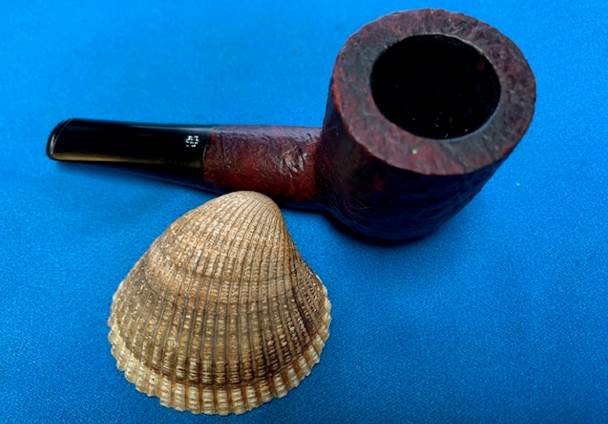
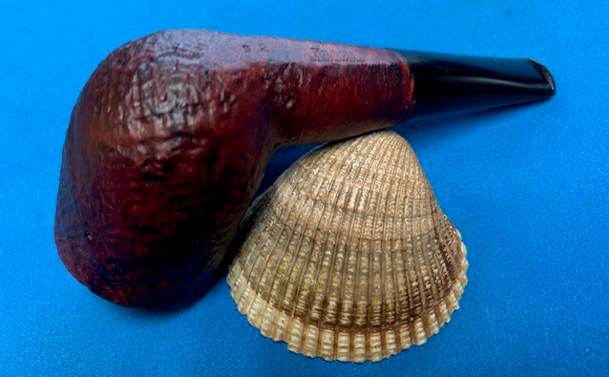
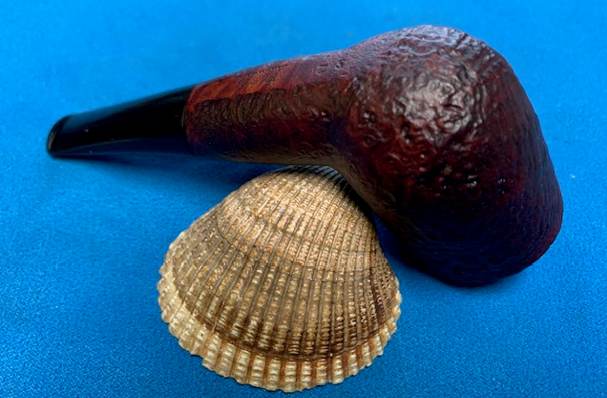
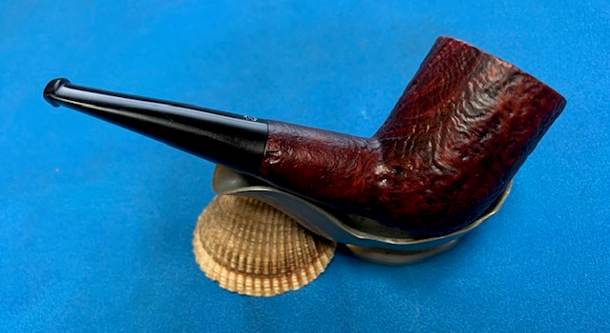
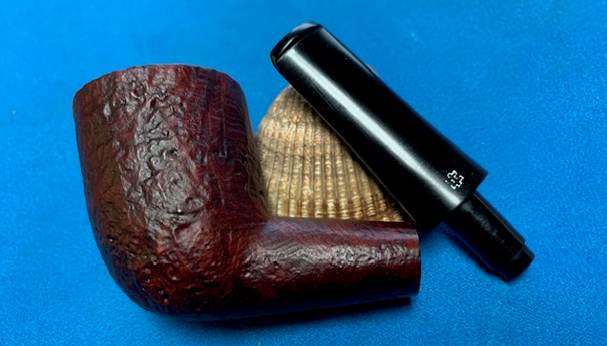
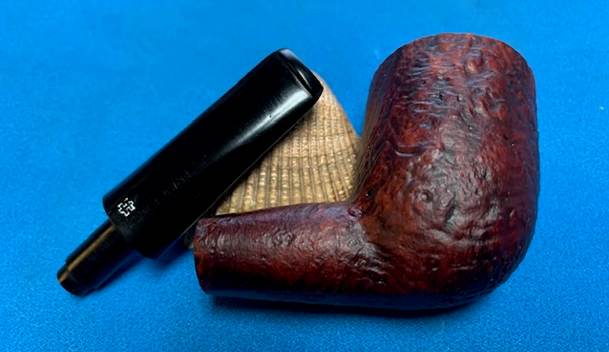
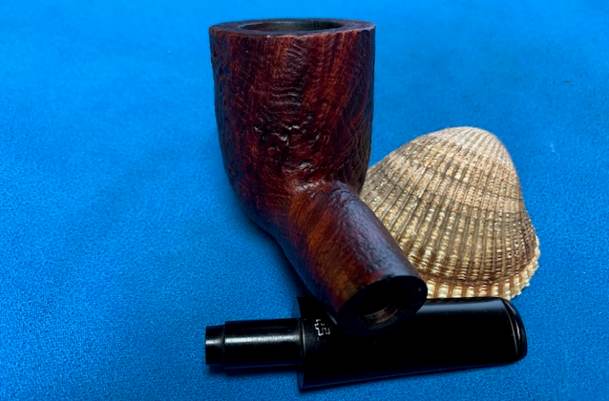
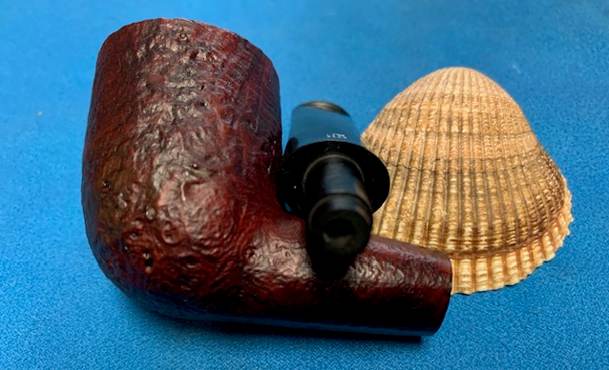
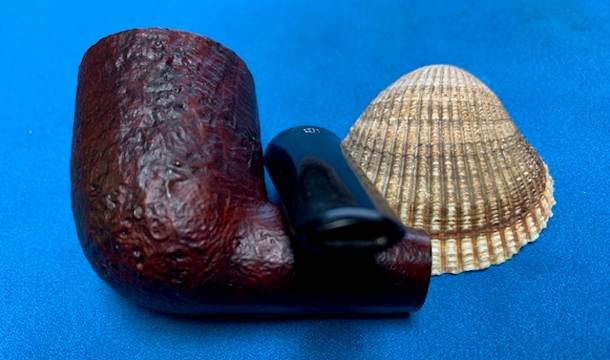
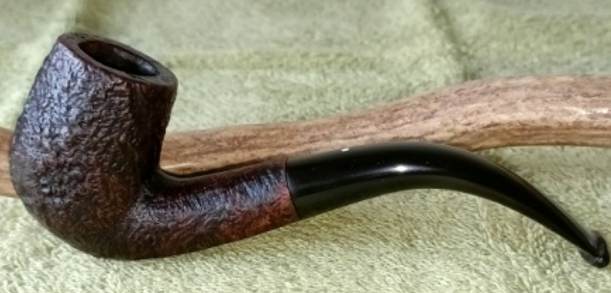
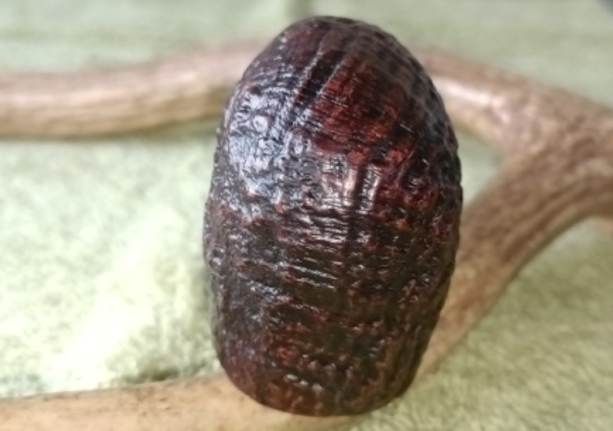
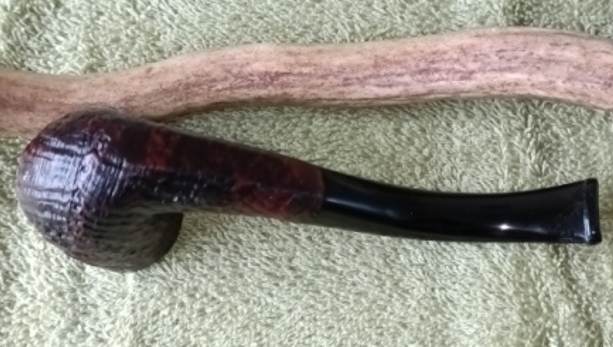
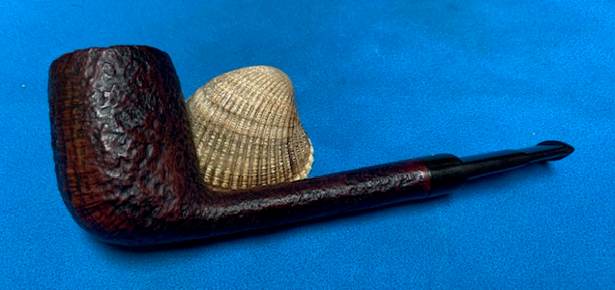
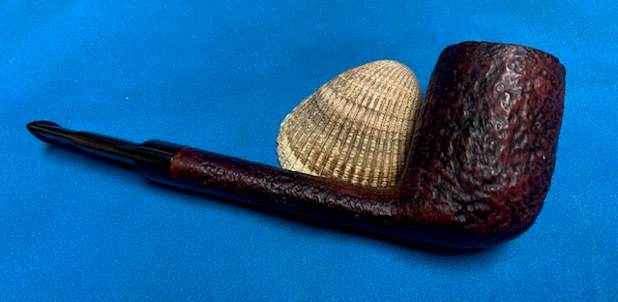
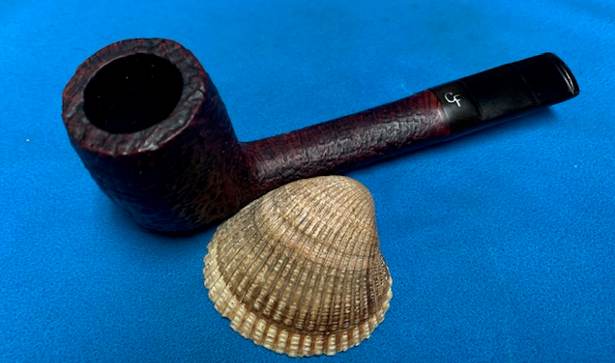
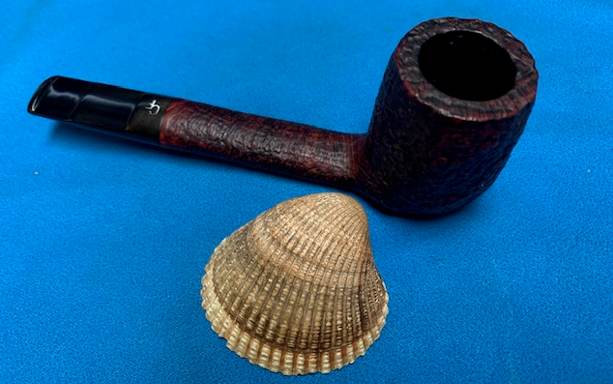
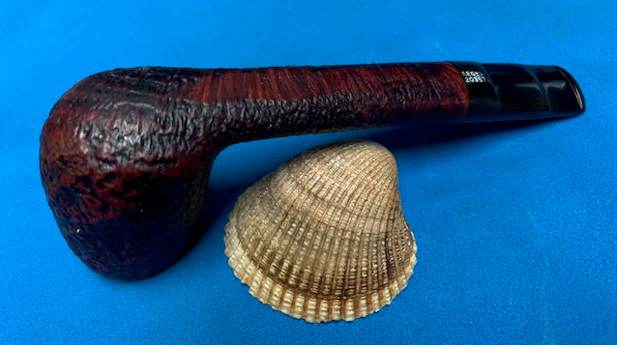
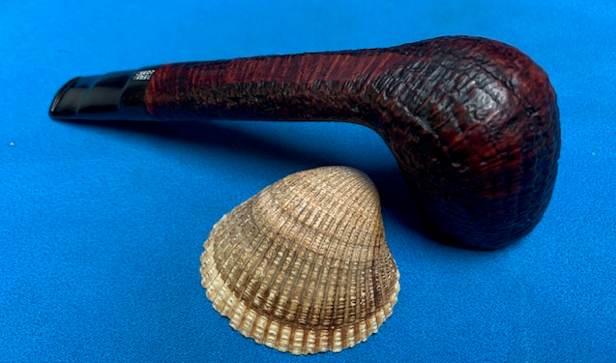
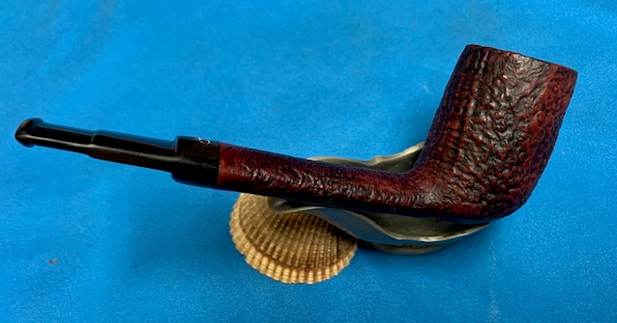
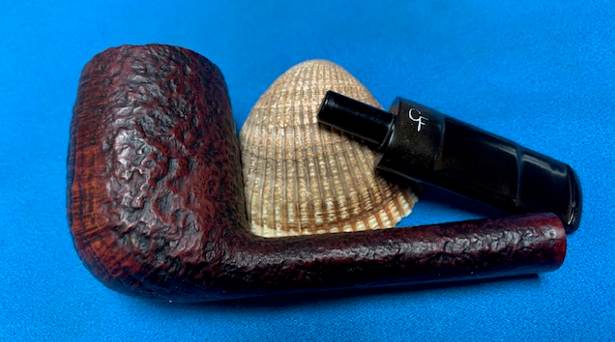
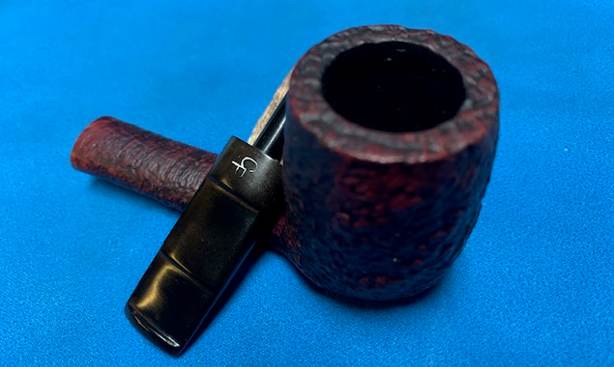
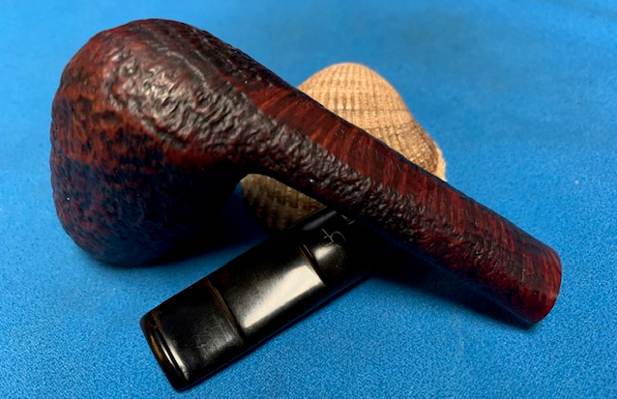
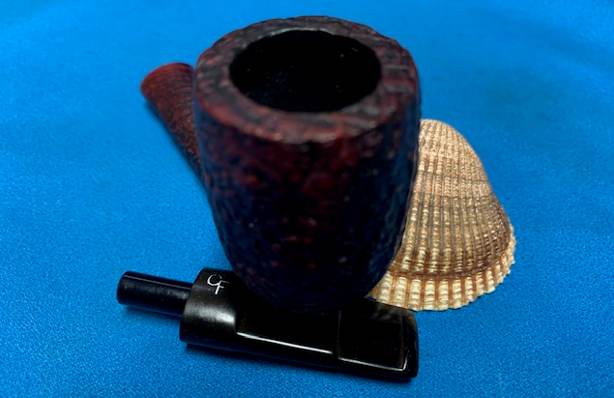
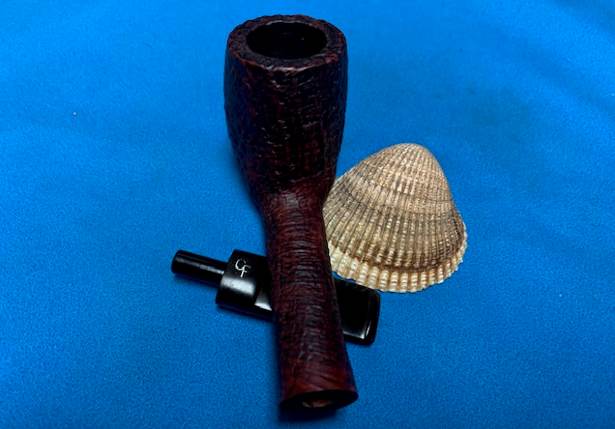
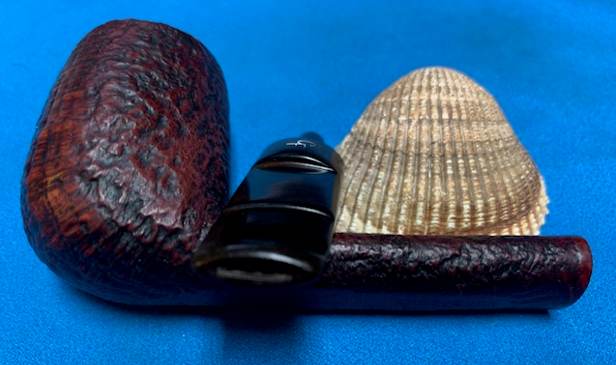
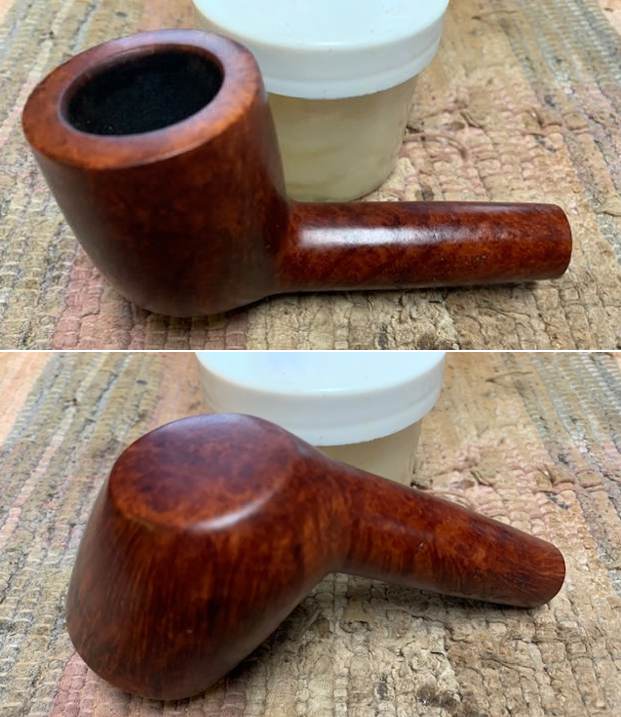
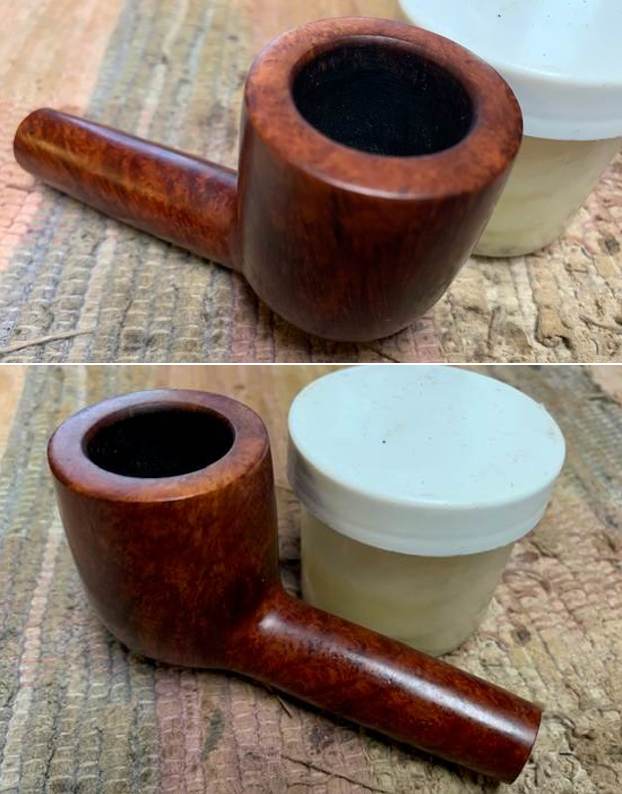
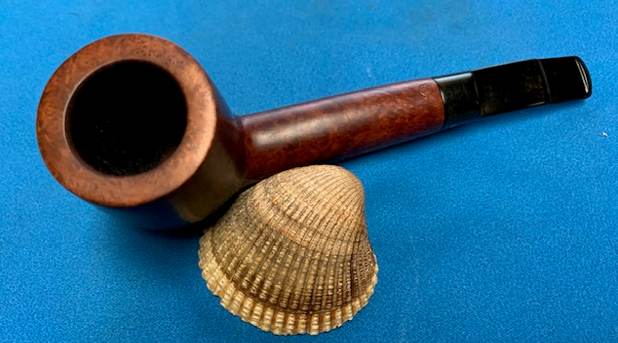
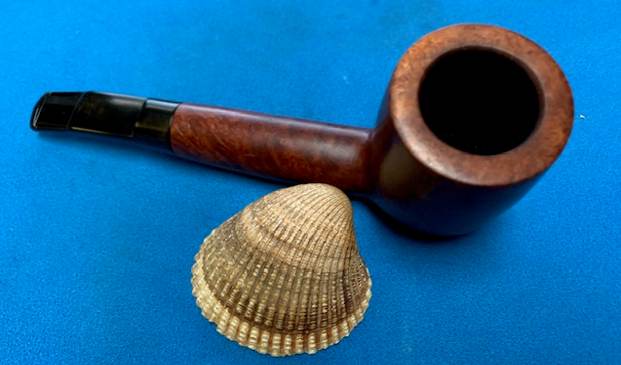
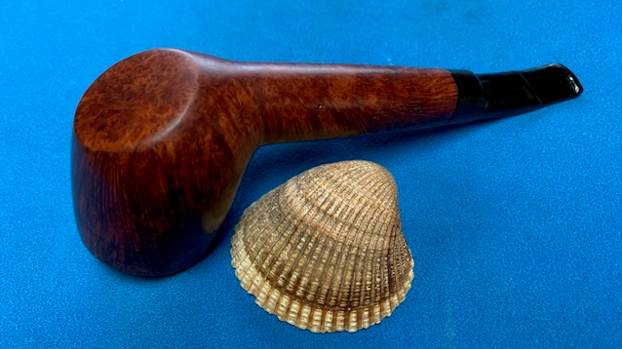
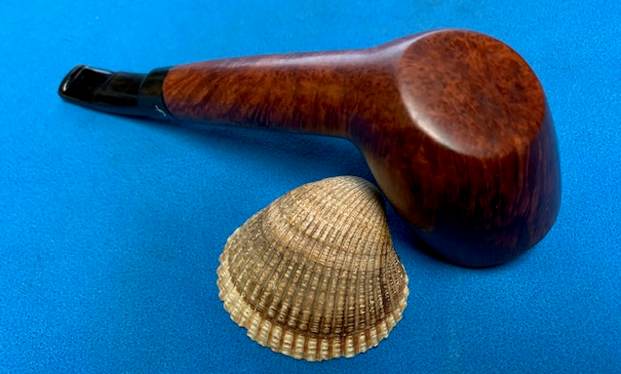
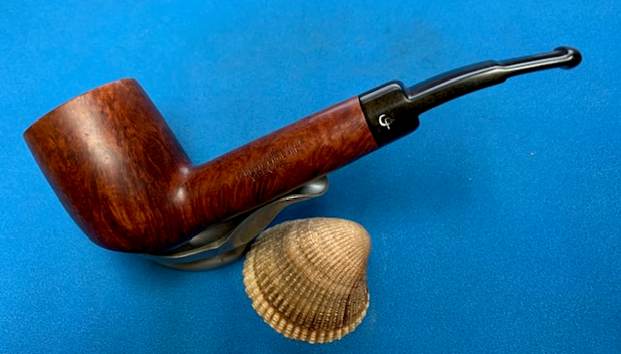
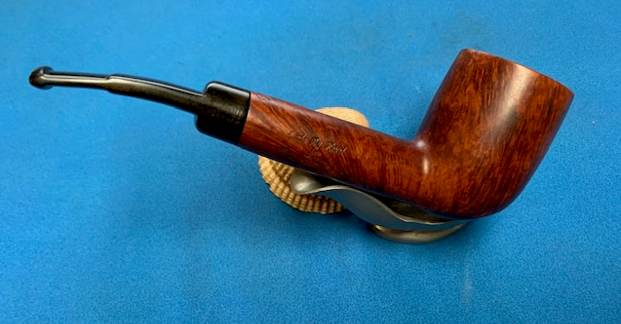
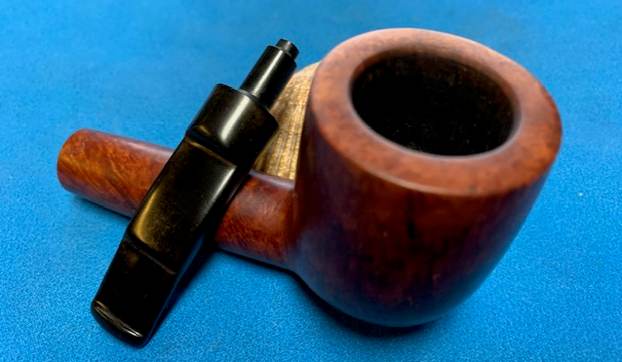
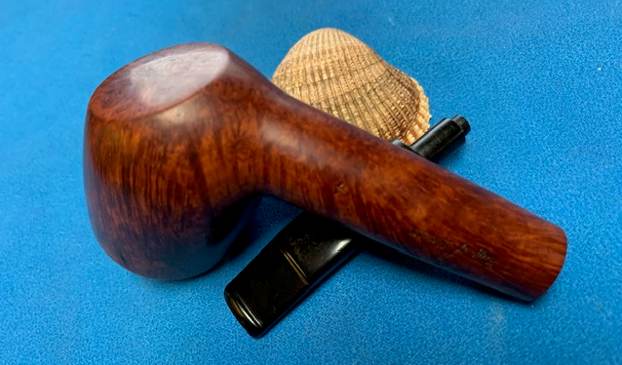
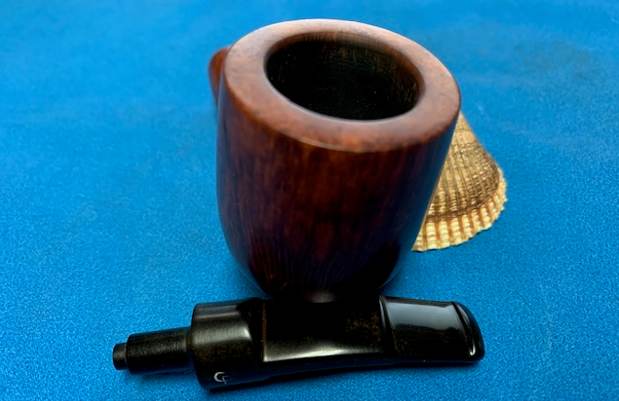
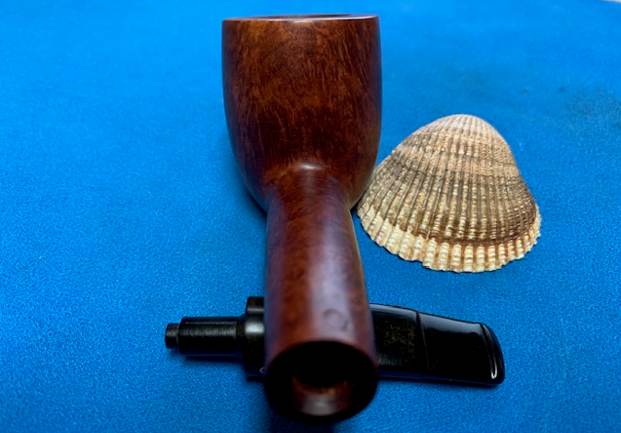
Life for a Sandblast Sasieni 4 Dot Ruff Root Dark 1 Bent Billiard Sitter


Blog by Steve Laug

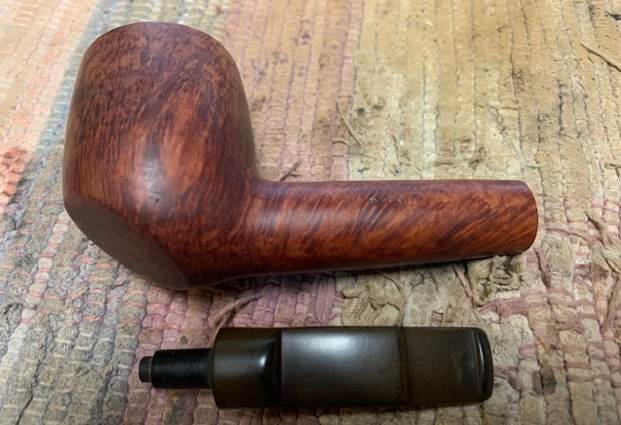
I thought it might be helpful to take you through my process of working on each pipe that we purchase. Jeff has set up a spread sheet to track where the pipe came from, the date of purchase and what we paid for it so that we know what we have invested in the pipe before we even work on it. This takes a lot of the guess work out of the process. This particular pipe was purchased on 08/06/2022 from a seller in Manorville, New York, USA. I also want you to understand why we take the photos we do. If you have followed for a while then you will see the familiar pattern of the photos we include both in the before and midstream process of working on a pipe. It is not accidental or chance as the photos have been taken to help me make an assessment of the pipe Jeff sees before he starts his clean up work. We do this to record the condition that the pipe was in when received it and to assess what kind of work will need to be done on. When I look at these photos this is what I see.

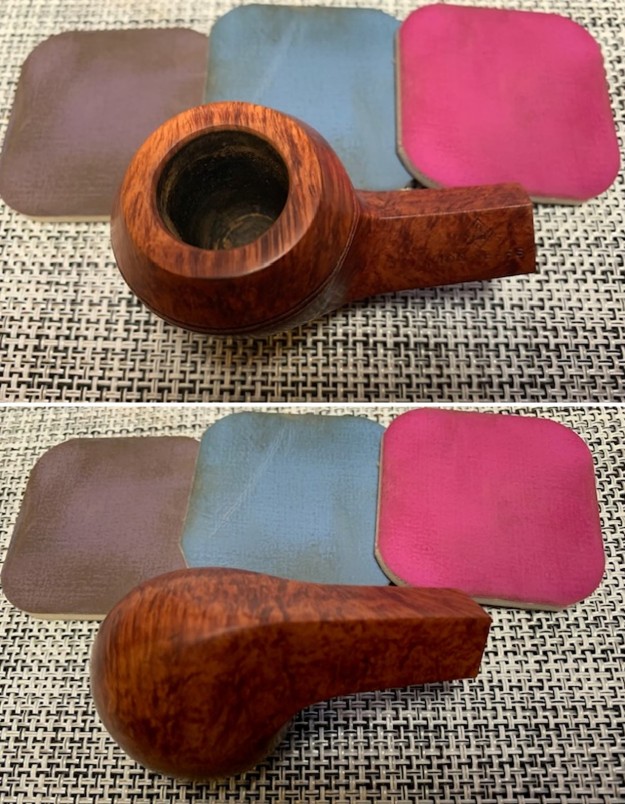
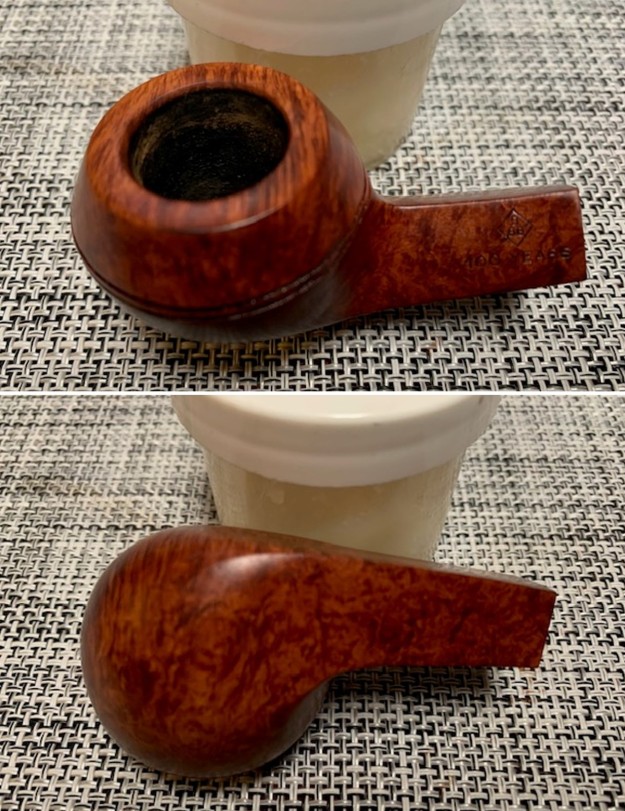
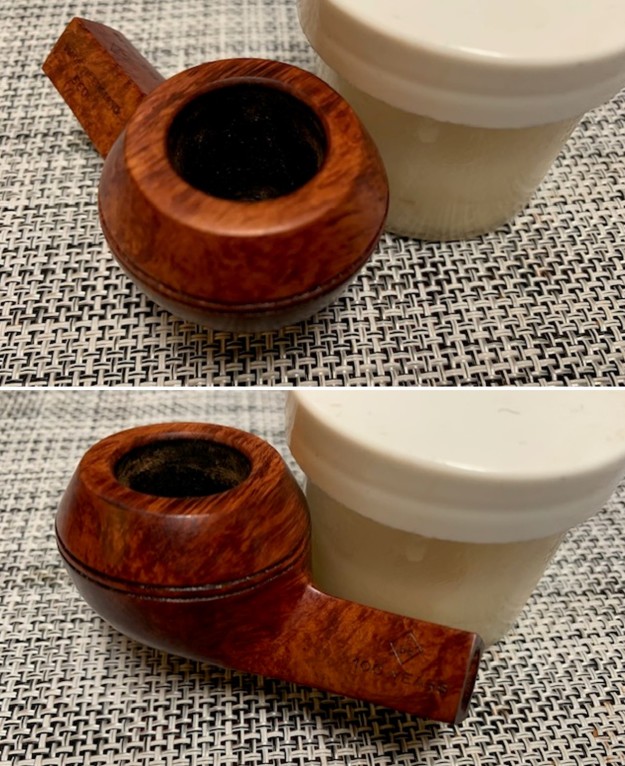
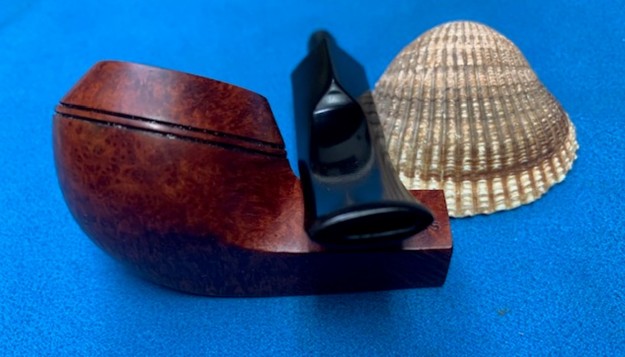
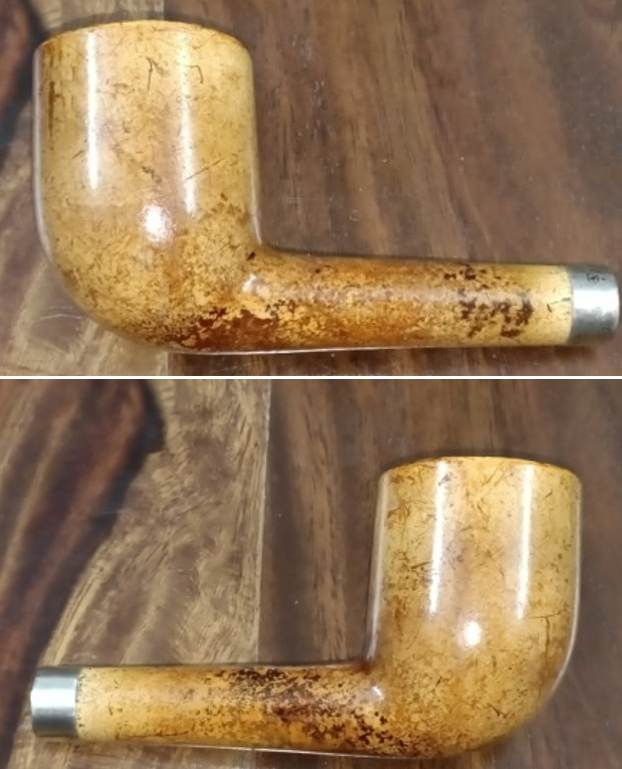
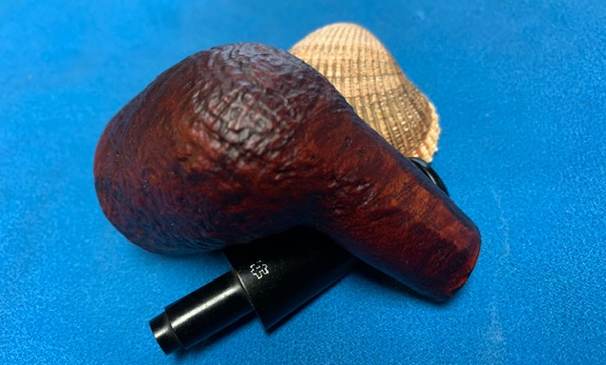
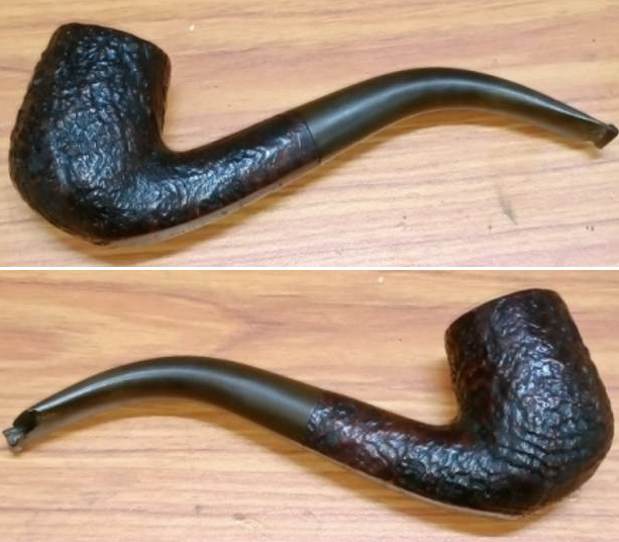
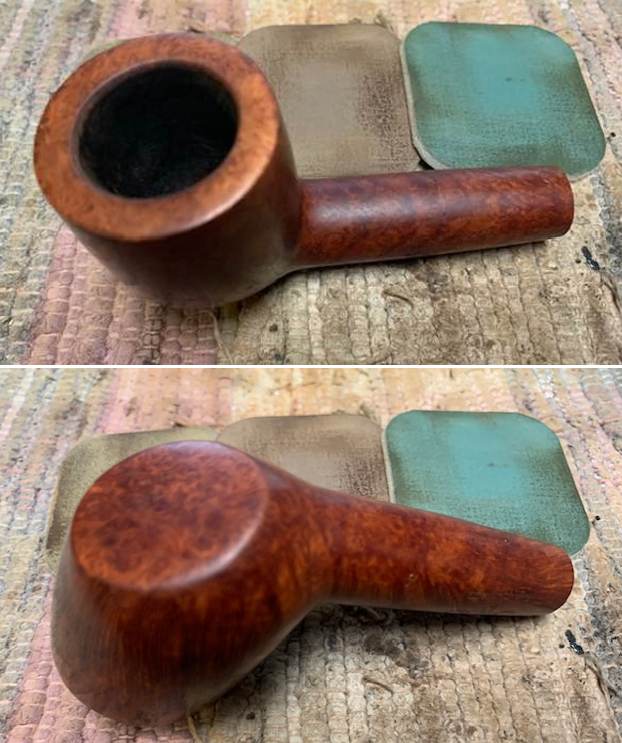
  1. The first thing I see is the flattened bottom front of the bowl that made it function as a standing sitter. It is well proportioned and well made with a classic English shaped Billiard.
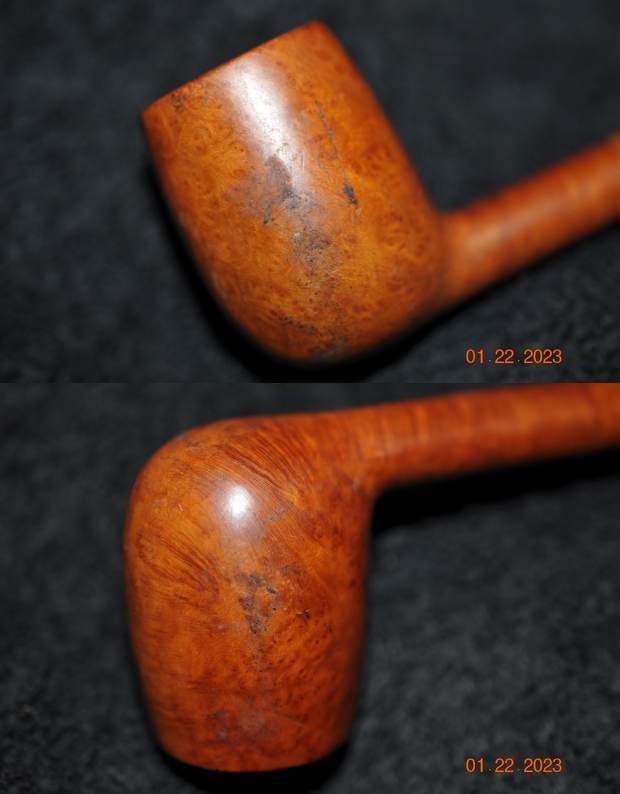
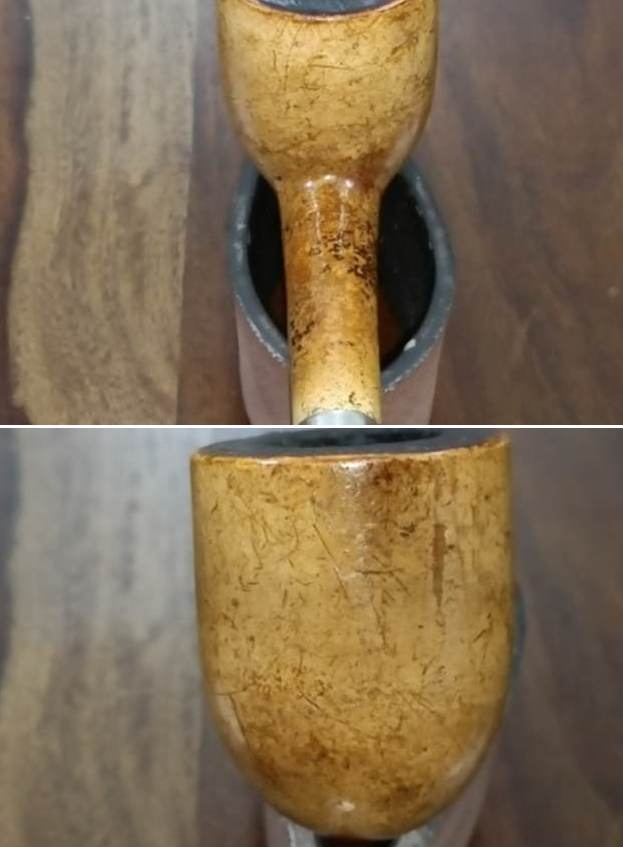
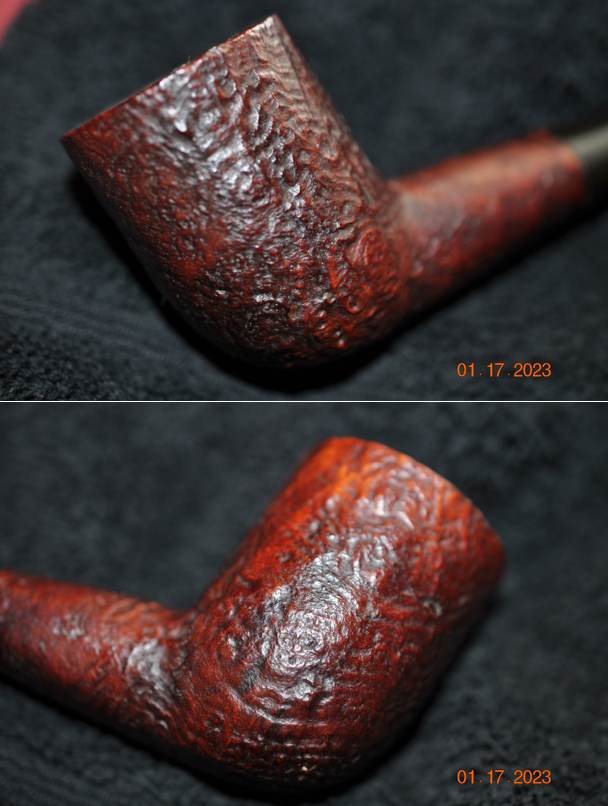
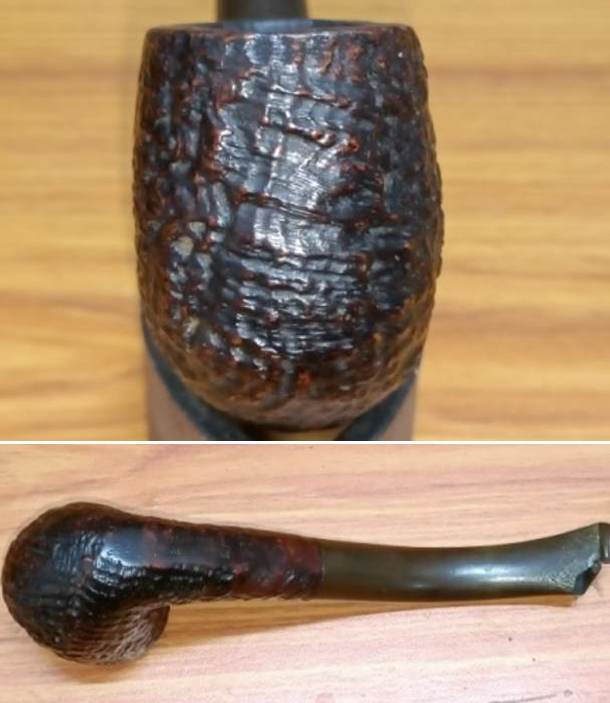
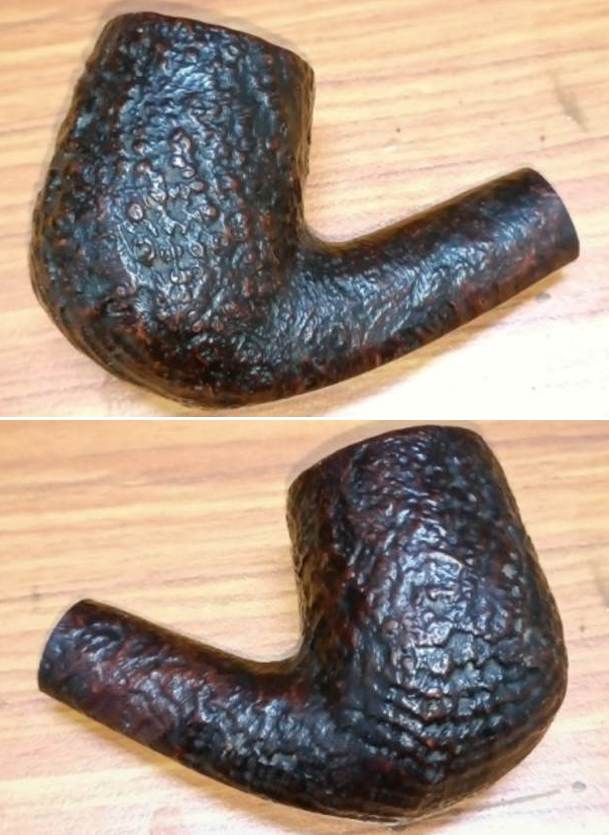
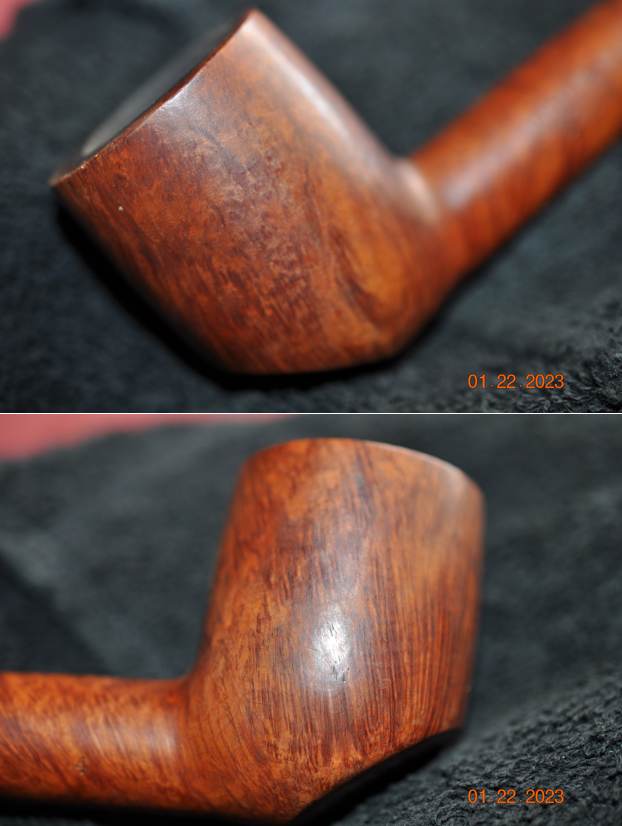
  2. The finish is dirty and there is grime and grit ground into the sides of the bowl. There is grime ground into the finish that fills in much of the sandblast grooves in the finish.
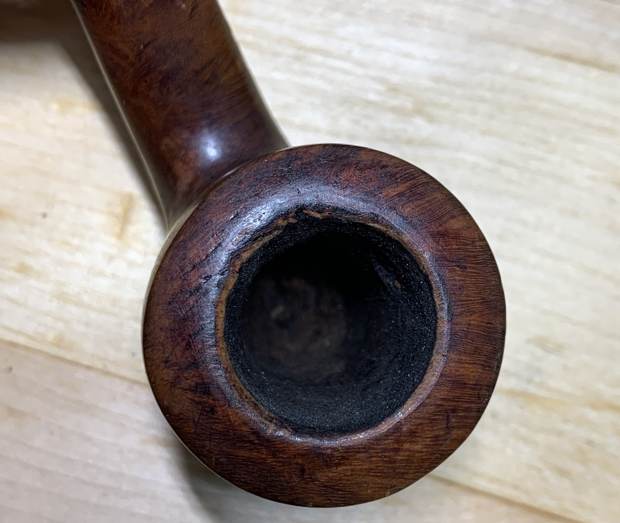
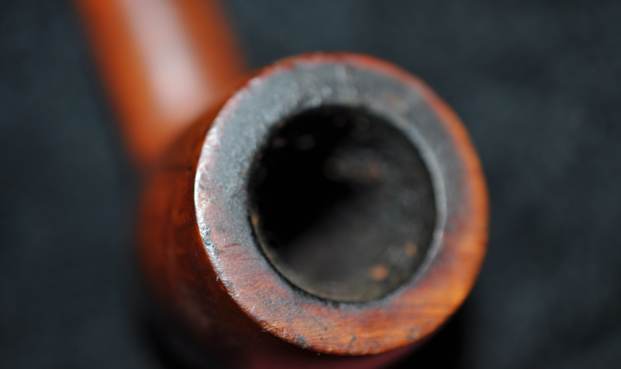
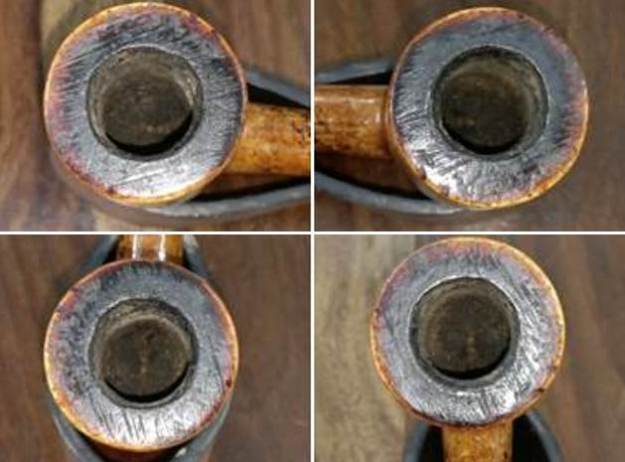
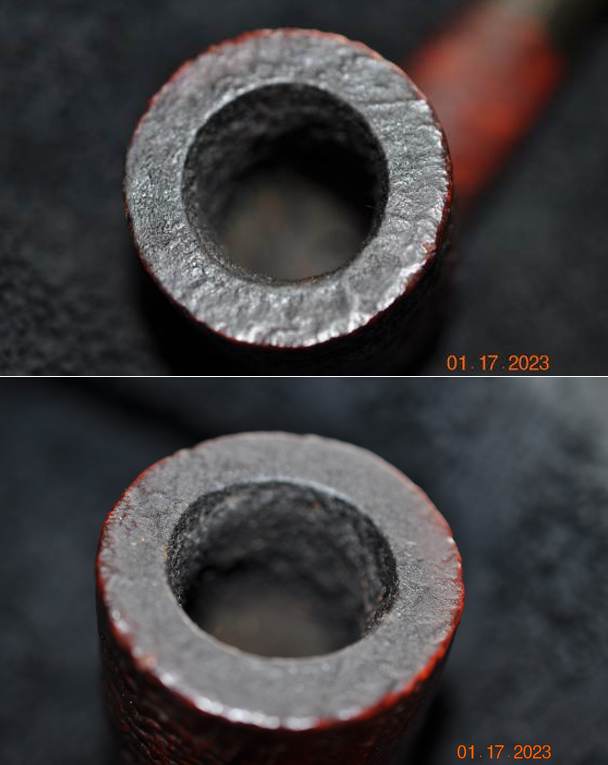
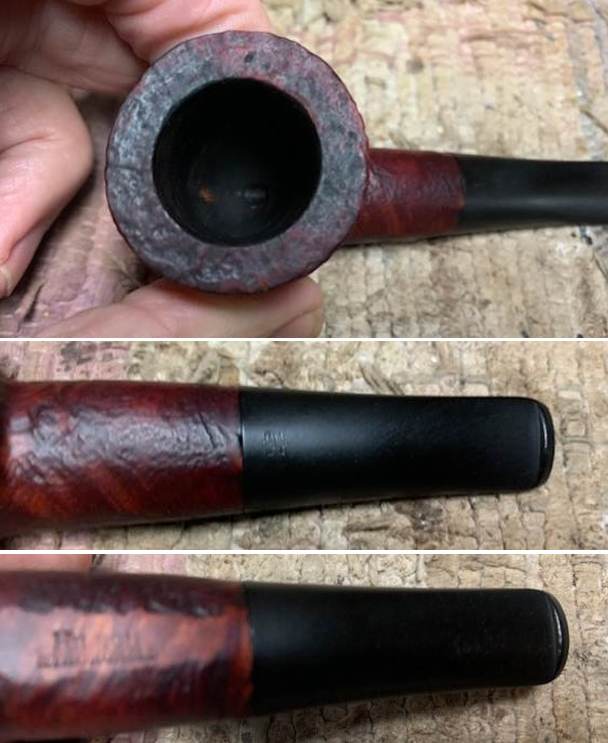
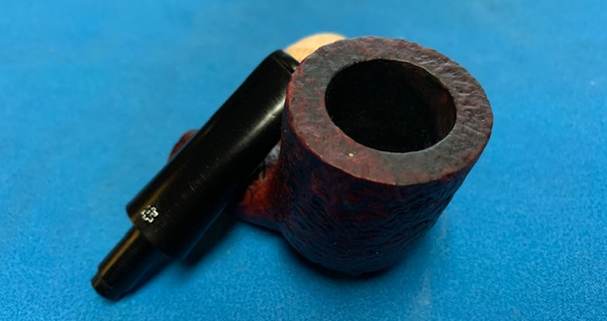
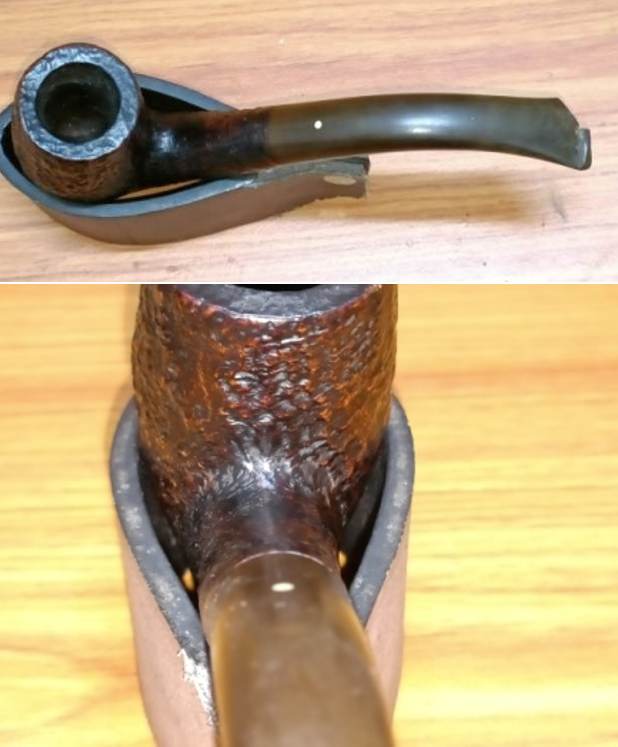
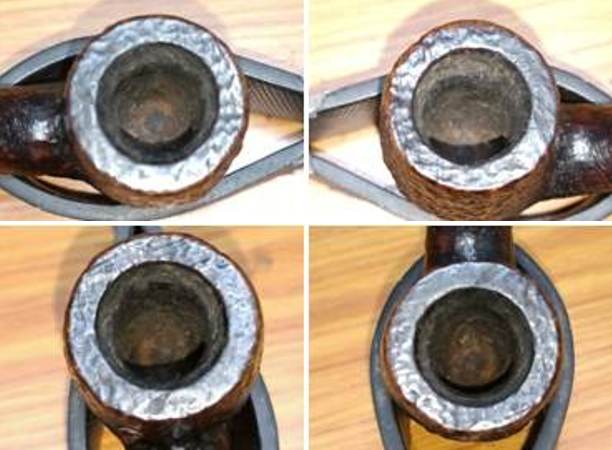
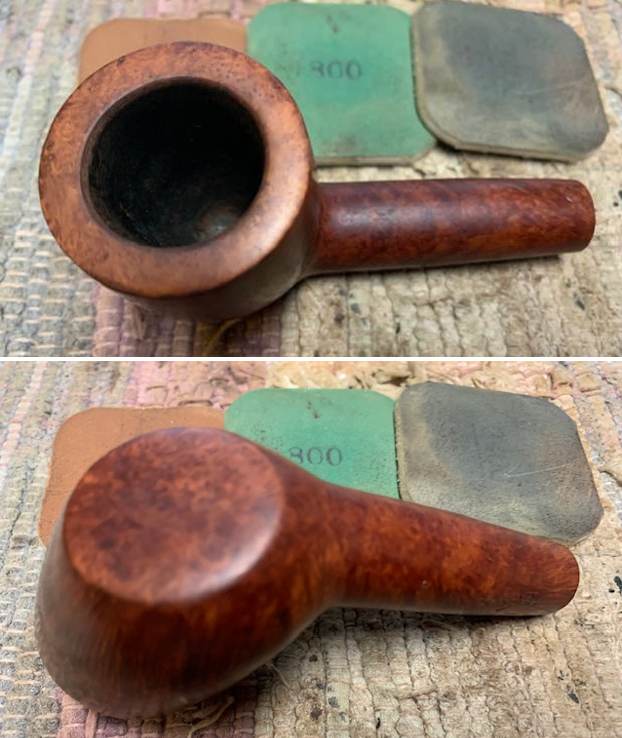
  3. The rim top had a thick lava overflow from the cake in the bowl. The beveled edge and top have a lot of lava in the finish. Sometimes the lava protects the rim top and edges and sometime it hides issues. Its is very dirty looking but cleaning will reveal that.
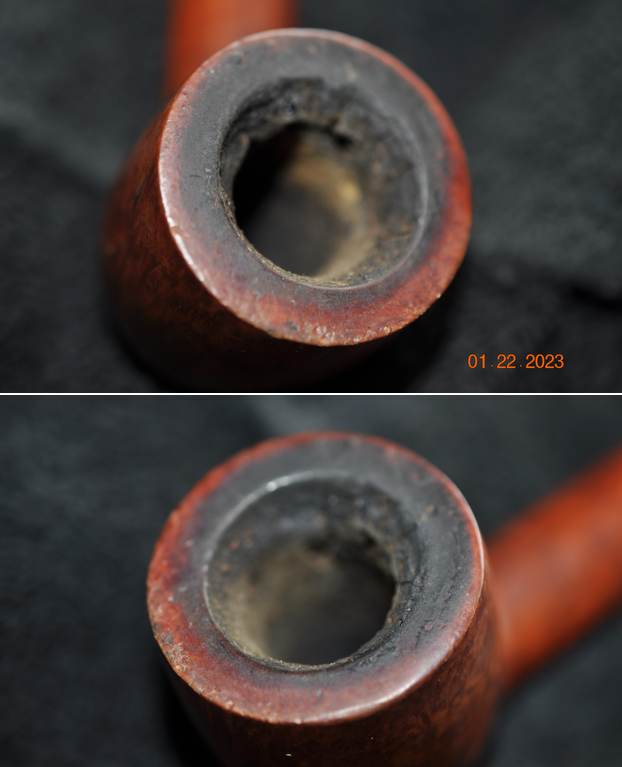
  4. The bowl has a thick cake in it that hides the walls and the inner edge of the bowl but once it is clean we will know what the edges look like. The outer edges look good and there does not appear to be any obvious burn damage to the top or bowl edges.
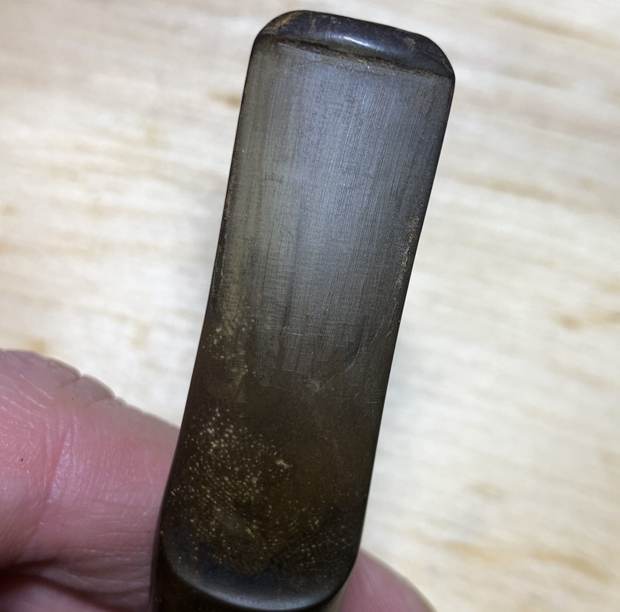
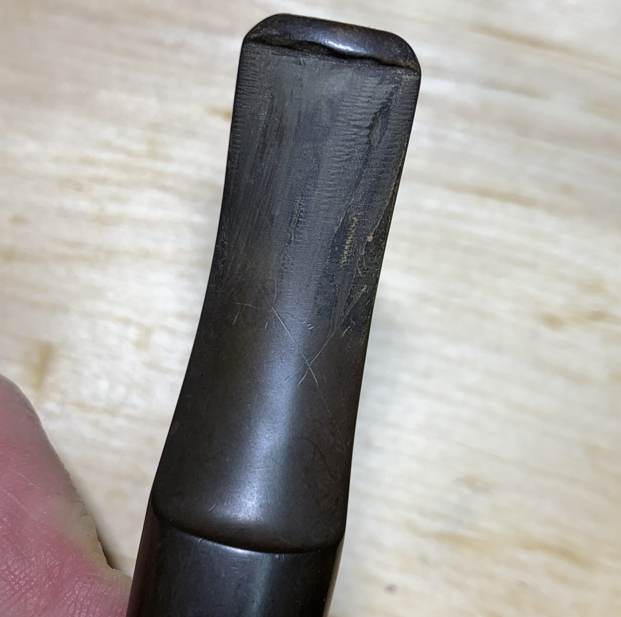
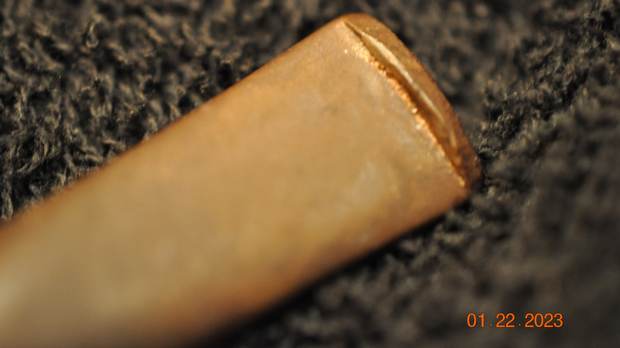
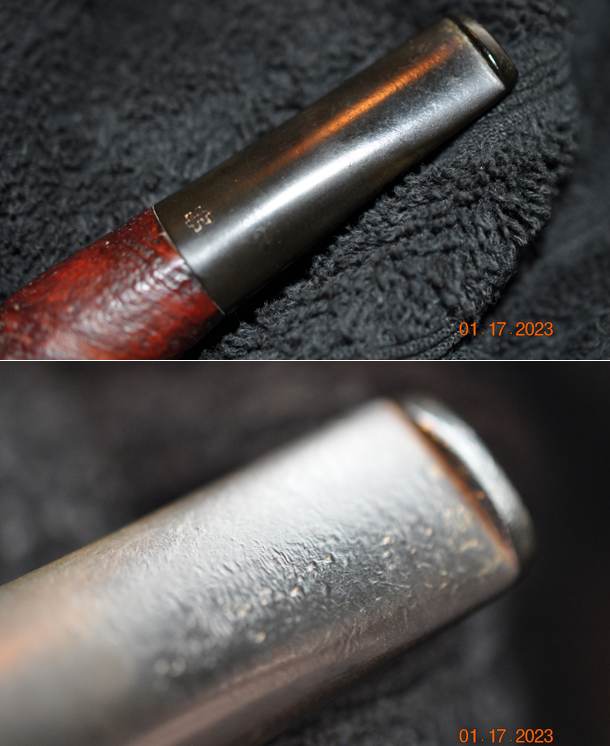
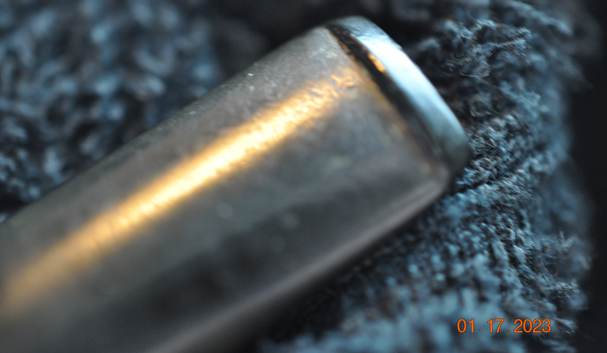
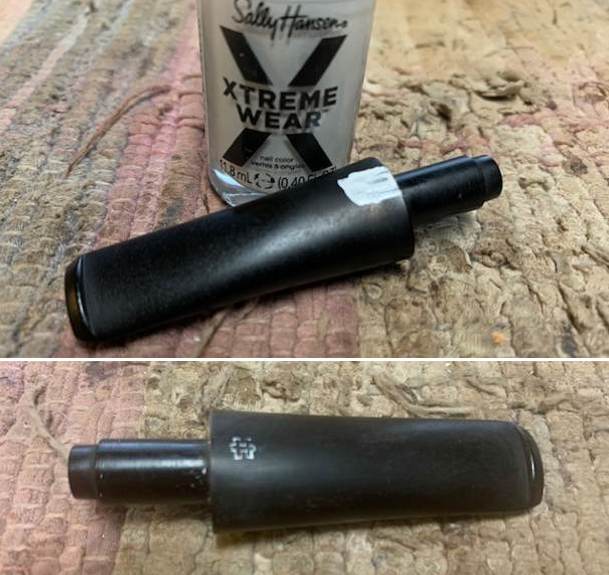
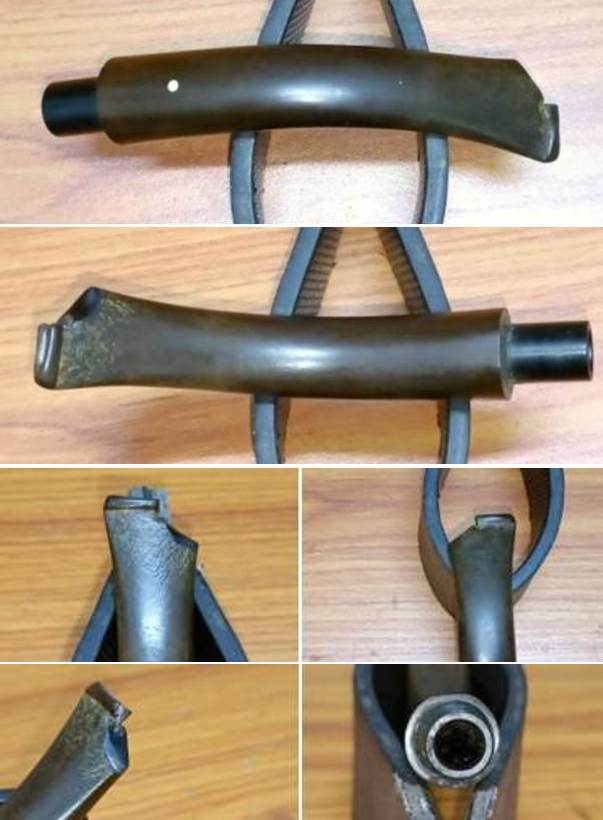
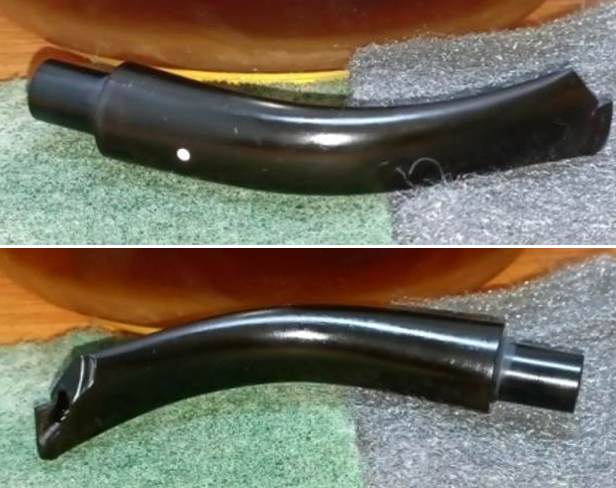
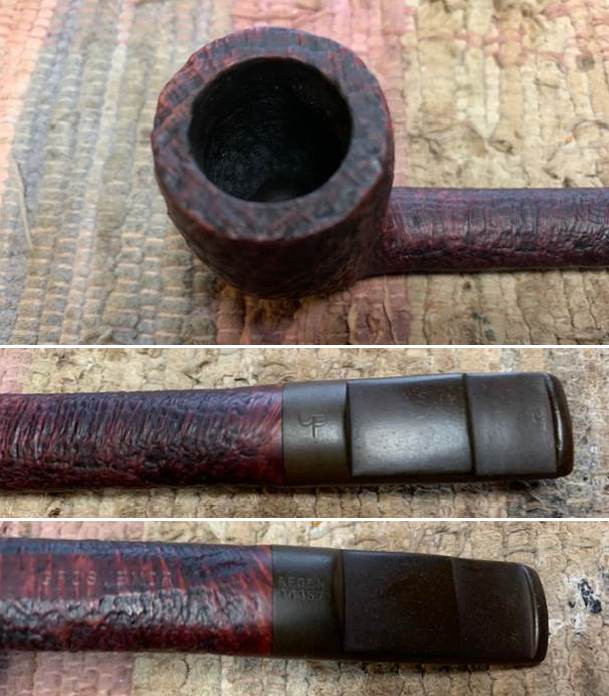
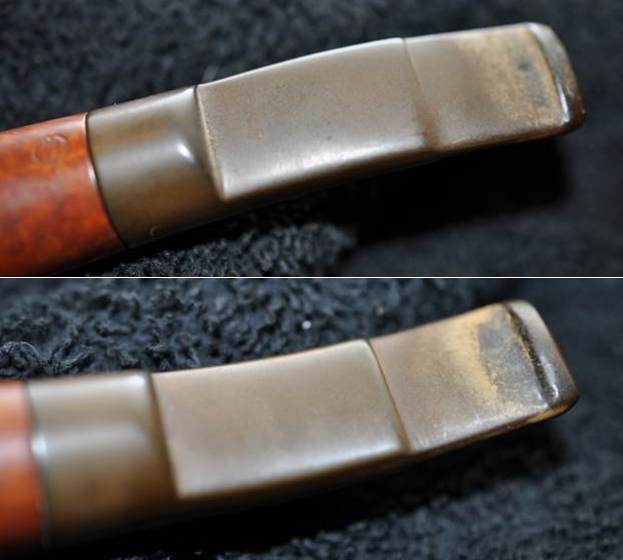
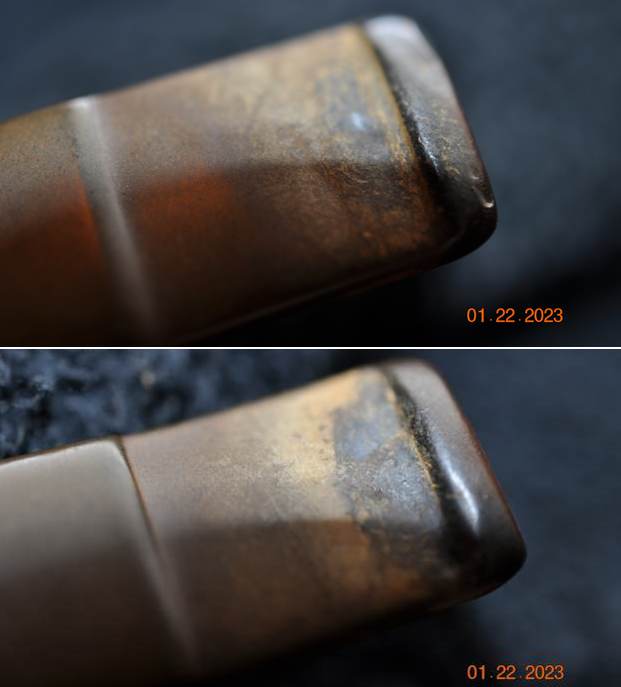
  5. The vulcanite taper stem is in good condition – dirty, oxidized, calcified and has light tooth chatter and marks on both sides. There is a blue Four Dot logo on the left side of the stem.

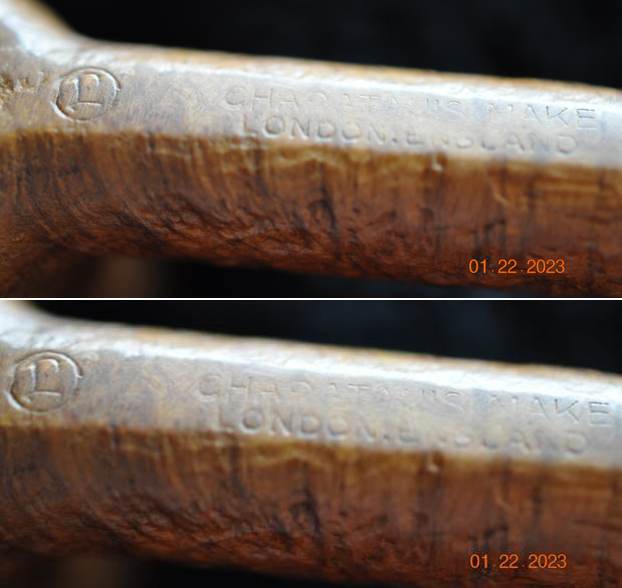
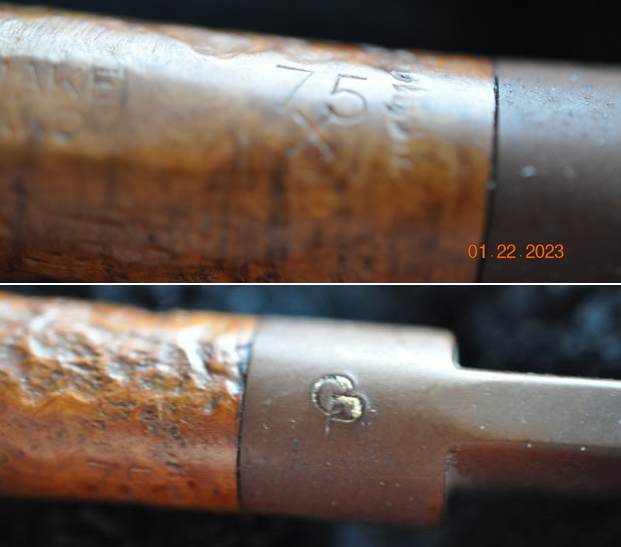
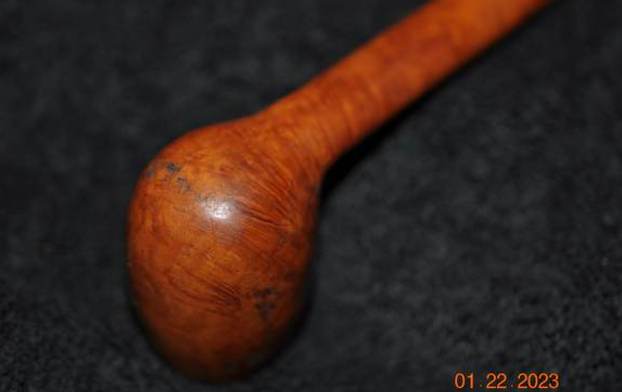
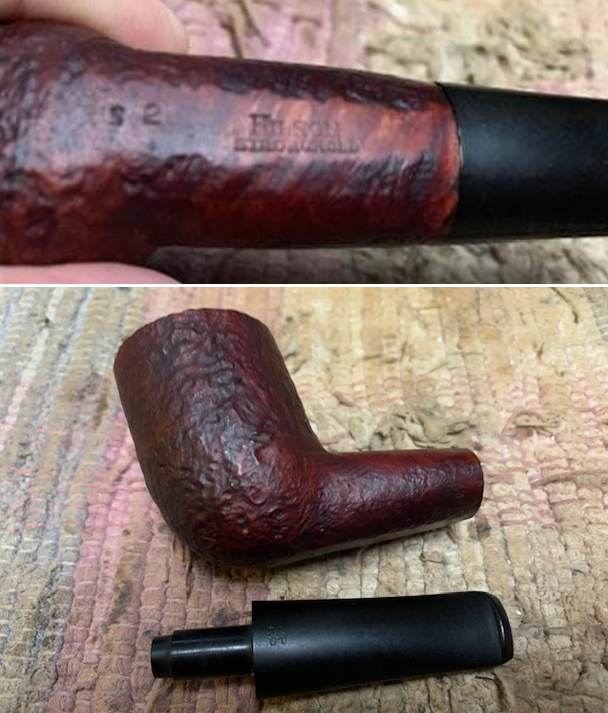
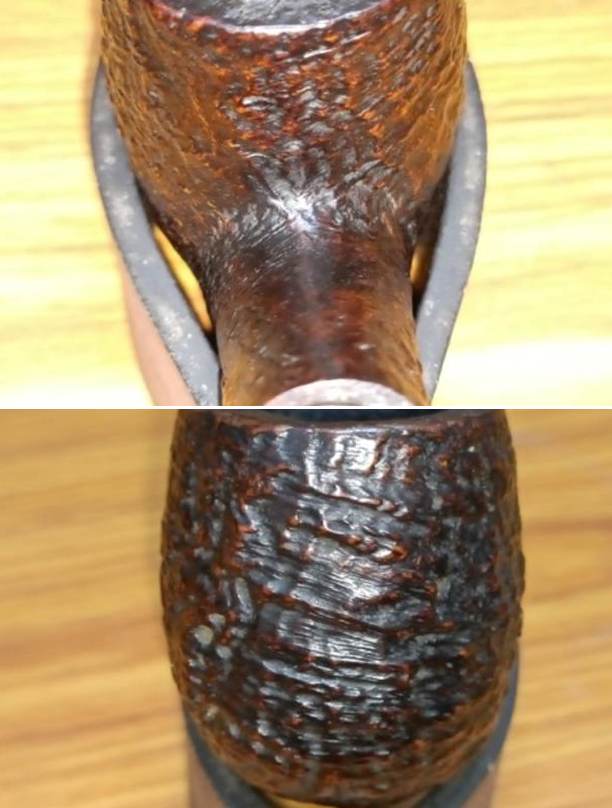
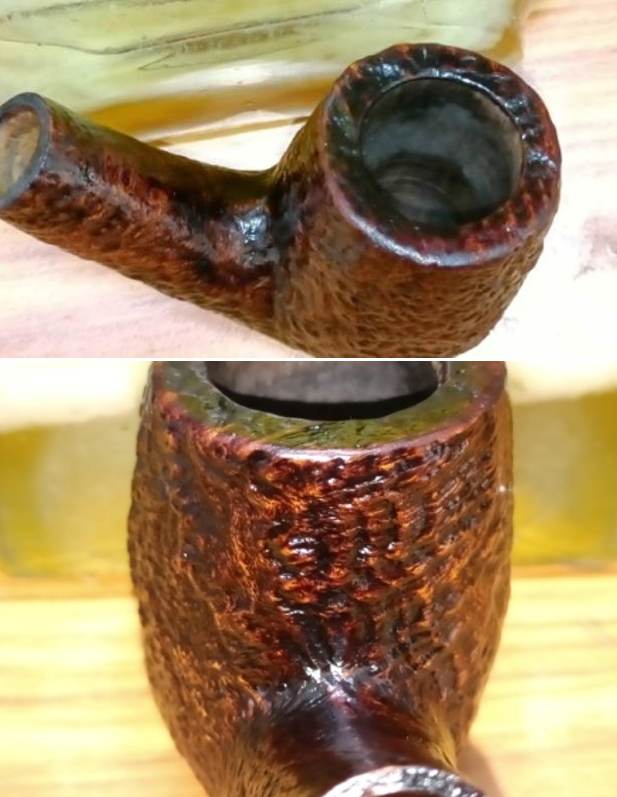
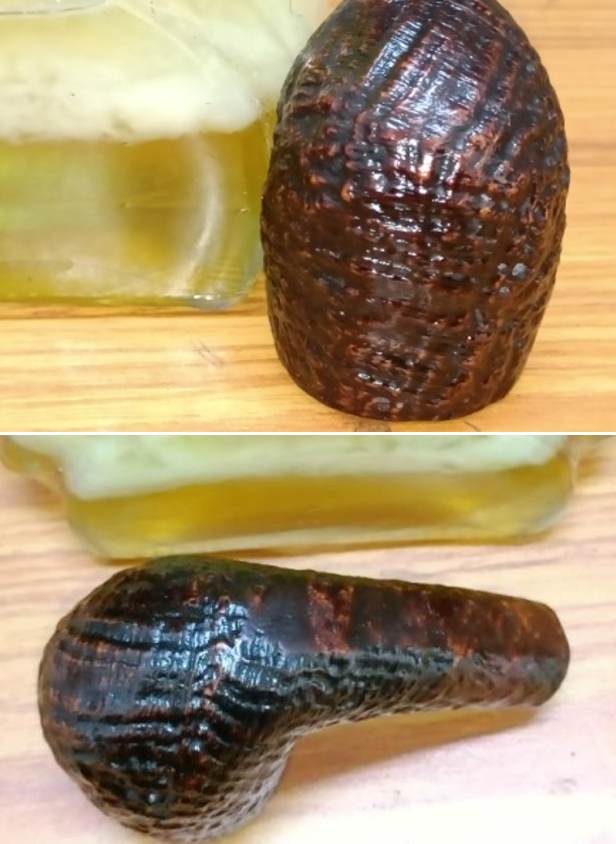
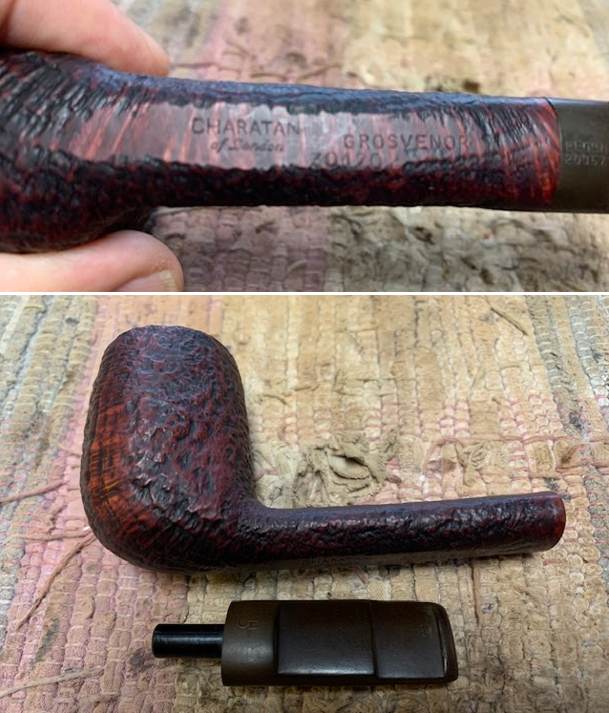
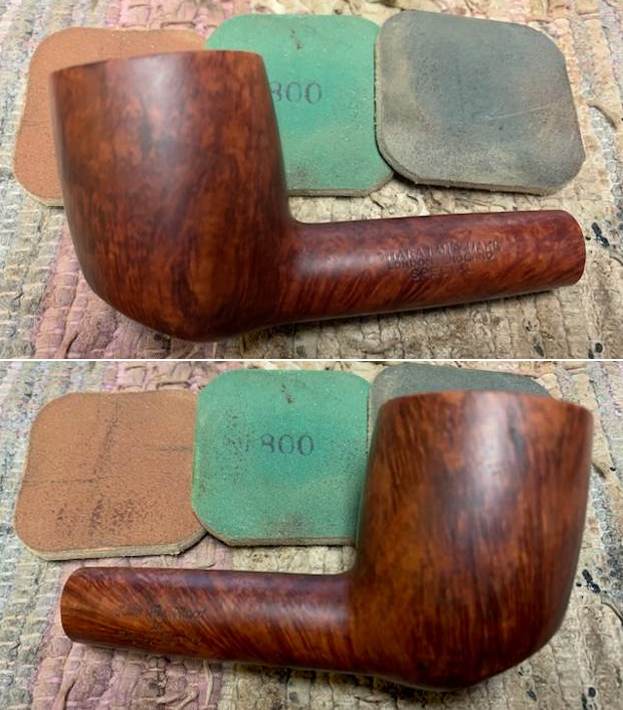
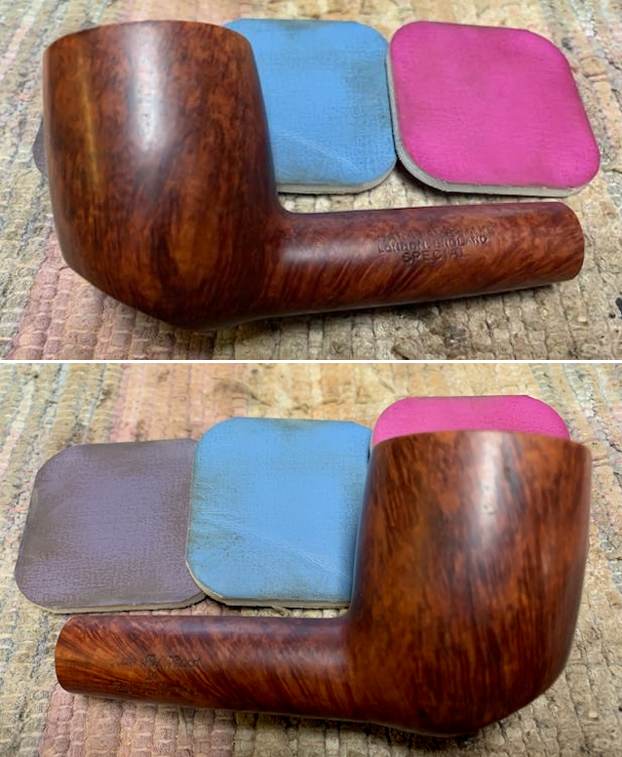
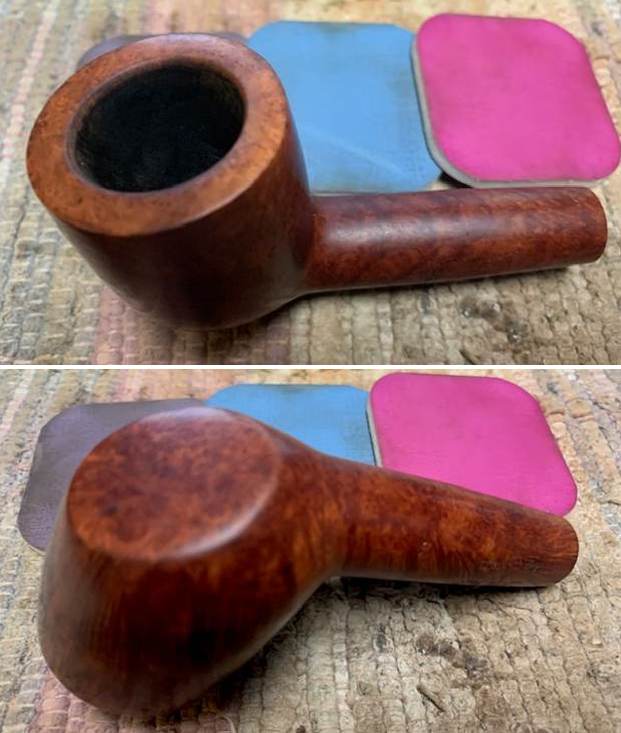
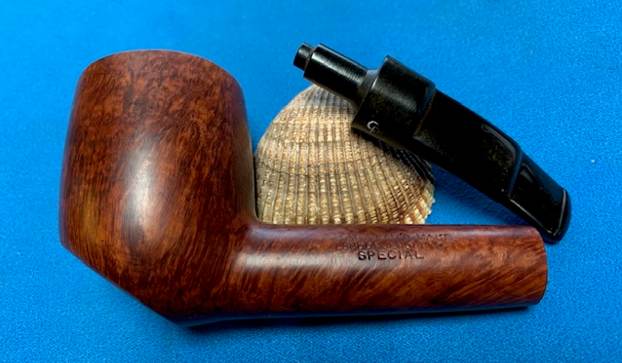
Overall my impressions of this pipe is that it is a beauty that once cleaned up will look pretty amazing. The flattened sitter bottom front of the bowl is something I have not seen before but it is quite interesting. The exterior of the bowl does not show any hot spots or darkening. The pipe is very English looking and is a classic short Bent Billiard shape that I have seen on other Sasieni pipes (without the flattened bowl front). The photos below confirm the assessment above. Jeff took close up photos so that I could have a clearer picture of the condition of the bowl, rim edges and top. The rim top photos confirm my assessment above. The cake in the bowl is quite thick and the rim top has lava and debris on it. You can also see the condition of the outer edge but the inner edge is a bit of a mystery at this point. This is what I look for when assessing a pipe. While there is lava and darkening there is no visible burn damage at this point. The bowl is still fairly round. The photos of the stem surface from various angles confirmed my assessment of its condition. You can see the oxidation and calcification on the stem surface toward the button. The surface though dirty does not appear to have deep tooth marks – chatter yes, but no deep marks. The stem is quite dirty but otherwise undamaged. The next photos show the amazing grain around the heel and the sides of the bowl. Tell me what you see? Are there any visible problems that stand out to you? Are the cracks or scratches? Are there visible flaws or fissures in the briar? What kind of grain stands out around the bowl and heel? Any visible issues on the heel of the bowl? Even the questions should help you to see what I am looking for when I see these photos. You have read it a few times now in the previous blogs. What am I looking for when I look at the shank stamp? In this case it is stamped on a smooth panel on the underside and reads Sasieni 4 Dot [over] Ruff Root Dark [over] 1 in three lines. The underside of the stem is stamped and reads FRANCE. How does the stamping look to you? Is it clear and readable? Is it faint in spots or is it uniform? I know you are looking at photos but so do I at this point in the process. I decided to do some work on the stamping of this pipe to get an idea of the time period it was carved. I turned first to Pipephil’s site to see what I could learn (http://pipephil.eu/logos/en/logo-sasieni.html). I found a pipe that was stamped similarly to the one I am working on. It is stamped on the underside of the shank and reads like the first two lines on the one in the screen capture photo below. Mine is stamped the same way Sasieni in script without the fish tail. It is followed by 4 DOT [over] Ruff Root Dark [over] 1. I included the side bar notes below the picture. From that I knew that the pipe was made during Post-transition Period 1986-today.Post transition, 1986 – today, “4 dot”. Ruff Root Dark: Name for a sandblasted finish. Notice the 4DOT stamping replacing the FOUR DOT from 1986.
I then turned to Pipedia for more detailed information (https://pipedia.org/wiki/Sasieni). I quote a section of that article below. It refers to the Patent Number that is on the pipe I have on the table. The underlined  portion below is particular pertinent to this pipe.

To begin with, there are three main elements to dating the Sasieni pipe, the patent number, the style of the name “Sasieni” as it appears on the shank, and the Dots themselves. Naturally, there are exceptions to these rules (this hobby would be boring without them), but for the most part these guidelines apply better than 95% of the time. All Sasieni One, Four, and Eight Dot pipes made before W.W.II and destined for the U. S. market carried a patent number on the shank which usually started with the numbers “15″, with 150221/20 and 1513428 being representative of the group. Also, the name “Sasieni” was stamped on the shank in a very florid manner, with the tail of the last “i” sweeping underneath the name forming a shape which has been compared to a fish by more than one collector. This script was discontinued by Alfred almost immediately after he took over the company, so this alone tells you your pipe is pre W.W.II. Underneath in block lettering are the words “London Made”, with the patent number making the third line…

…The nomenclature changed again in 1986, with the sale of the company to the Post-Transition firm. The three line nomenclature was changed to two lines, with the first reading “Sasieni 4 Dot” and the second identifying the finish, e.g. Natural, Walnut, or Ruff Root. Note how 4 Dot is spelled, using an Arabic numeral 4, as opposed to spelling out the word “four”. This is the easiest way to spot a Post-Transition Sasieni, as the new company has used both script and block lettering to spell the word “Sasieni” on the shank.

The pipe I have is one that does not have a flourished “i” as that was discontinued by Alfred so that confirms that the pipe was made Post-transition, 1986 forward. The stamping shows the Sasieni name and the 4 Dot stamp on one line. Underneath is bears the finish Ruff Root Dark stamp. With all that information I knew that my pipe was from the period after the transition (Post Transition) so it was a newer one.

I am sure many of you will shake your head and ask maybe even out loud, “Why is he including this again?” However, please remember that the point of these blogs is not to wow your with the work or make you shake your heads but I want you to know the details of the work we do so you can do your own. Back in 2020 Jeff wrote a blog about his cleaning process. I am including a link to that now so you can see what I mean about his process. Do not skip it! Give it a read (https://rebornpipes.com/2020/01/20/got-a-filthy-estate-pipe-that-you-need-to-clean/). Here is the introduction to that blog and it is very true even to this day.

Several have asked about Jeff’s cleaning regimen as I generally summarize it in the blogs that I post rather than give a detailed procedure. I have had the question asked enough that I asked Jeff to put together this blog so that you can get a clear picture of the process he uses. Like everything else in our hobby, people have different methods they swear by. Some may question the method and that is fine. But it works very well for us and has for many years. Some of his steps may surprise you but I know that when I get the pipes from him for my part of the restoration they are impeccably clean and sanitized. I have come to appreciate the thoroughness of the process he has developed because I really like working on clean pipe!

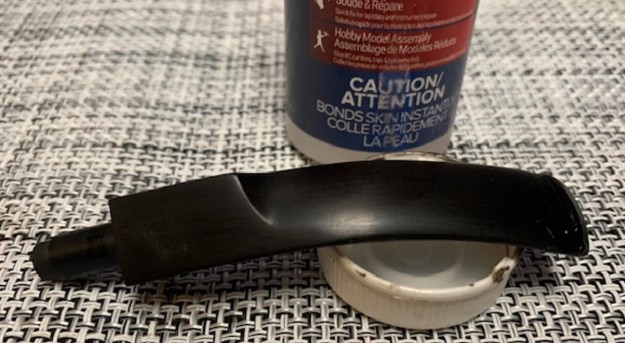
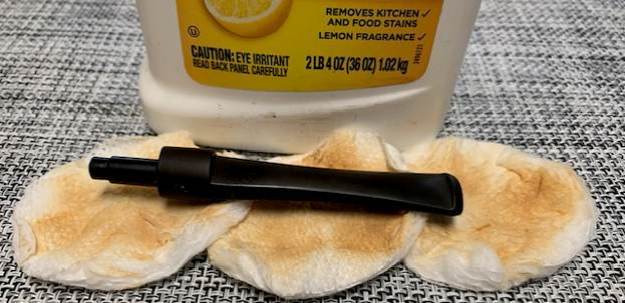
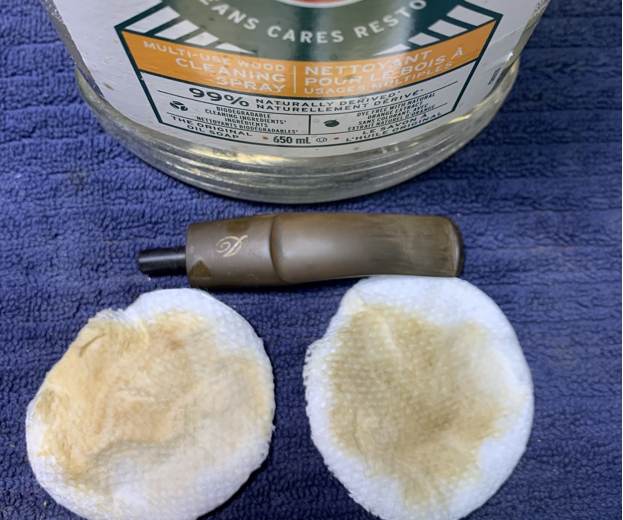
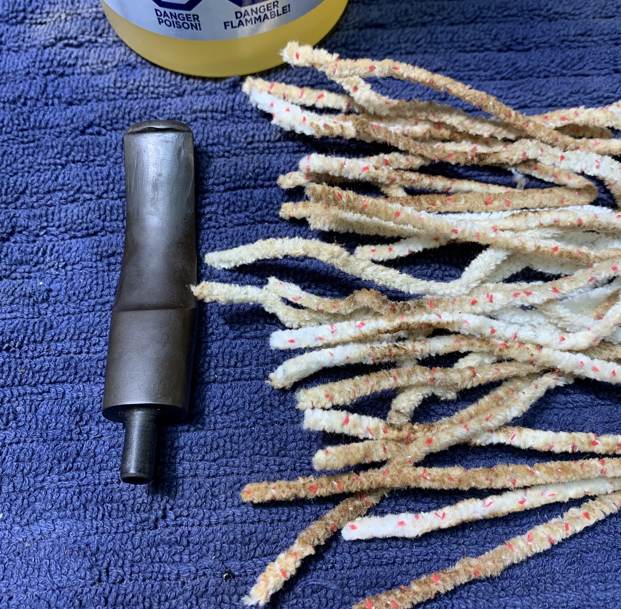
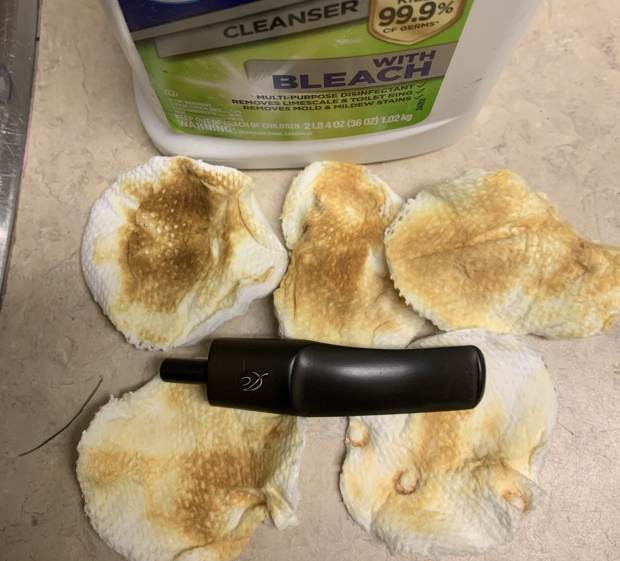
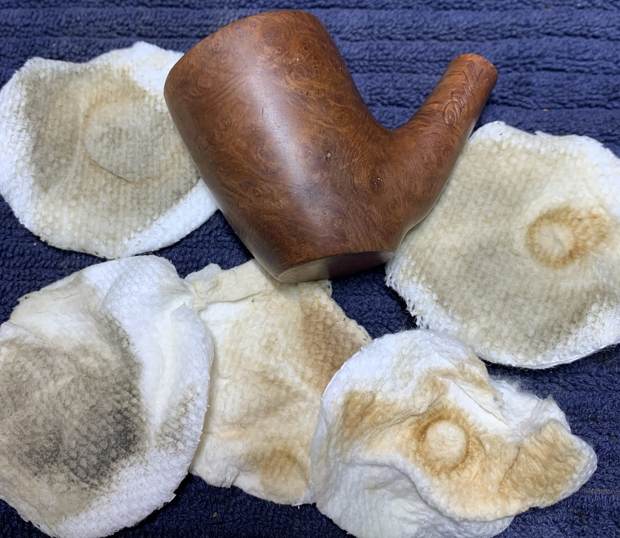
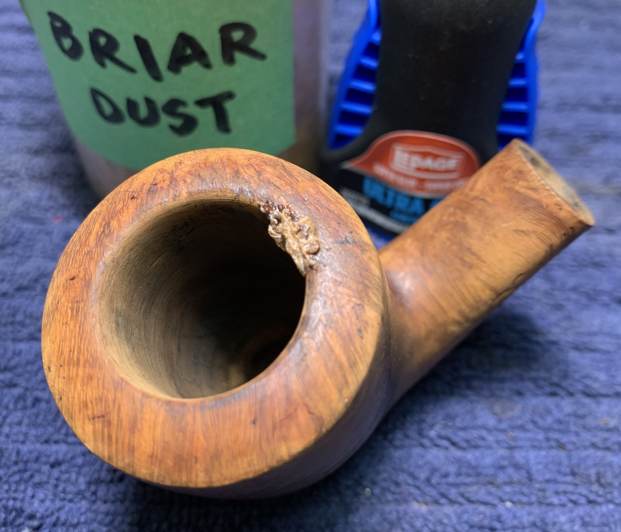
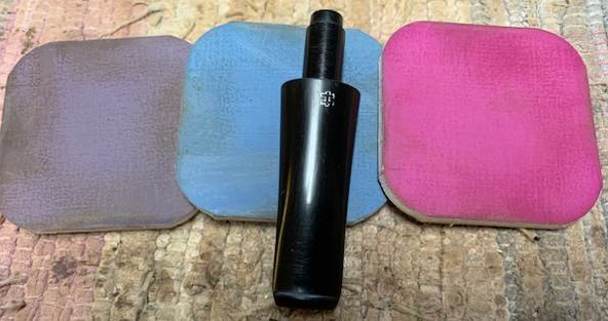
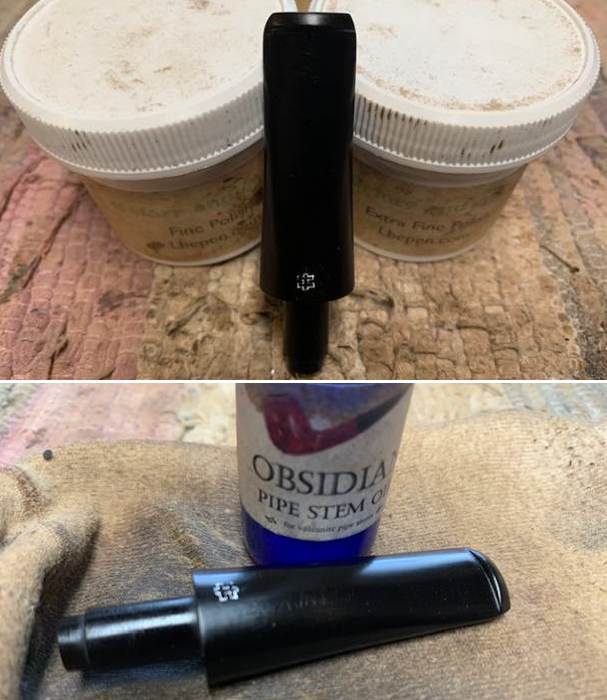
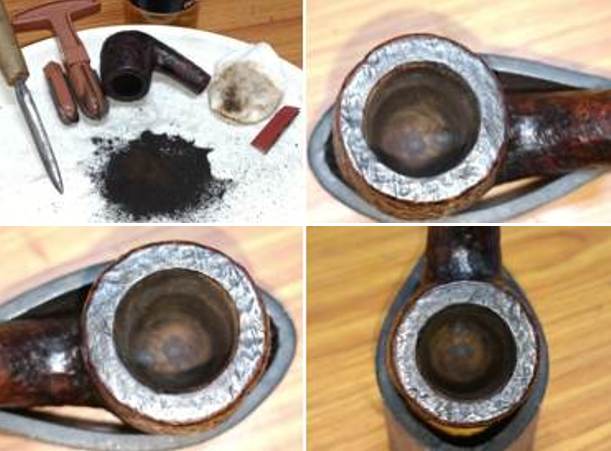
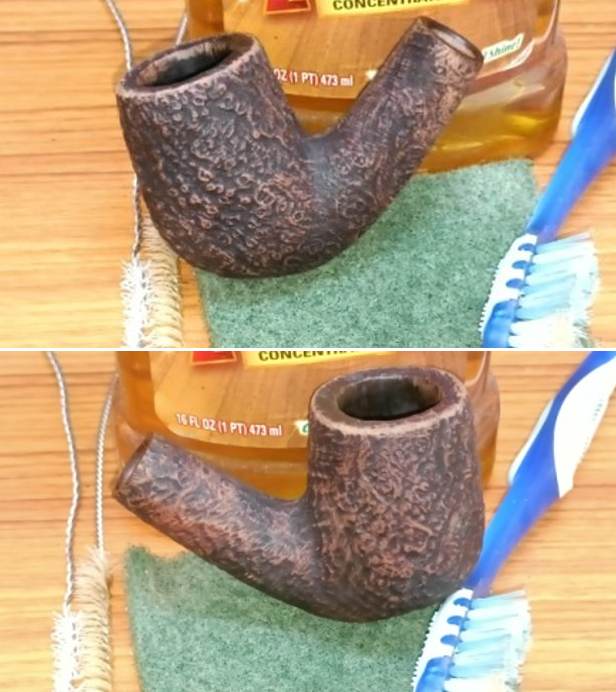
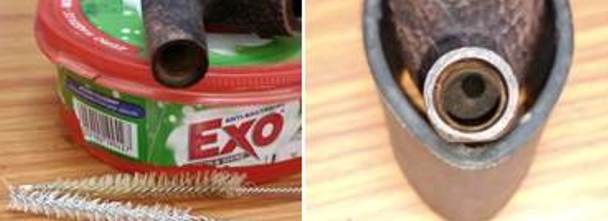
For the benefit of some of you who may be unfamiliar with some of the products he uses I have included photos of three of the items that Jeff mentions in his list. This will make it easier for recognition. These three are definitely North American Products so you will need to find suitable replacements or order these directly on Amazon. The makeup pads are fairly universal as we were able to pick some up in India when we were with Paresh and his family.

In the blog itself he breaks his process down into two parts – cleaning the stem and cleaning the bowl. Each one has a large number of steps that he methodically does every time. I know because I have watched him do the work and I have seen the pipes after his work on them. He followed this process step by step and when the pipe got to me it was spotlessly clean and ready for my work. The inside of the stem, shank and bowl were clean and to me that is an amazing gift as it means that my work on this end is with a clean pipe! I cannot tell you how much difference that makes for my work.

When the pipe arrives here in Vancouver I have a clean pipe and I go over it keeping in mind my assessment shared in the opening paragraph above. Now that I have it in hand I am looking for confirmation of what I saw in the photos as well as any significant structural changes in the bowl and finish as I go over it.

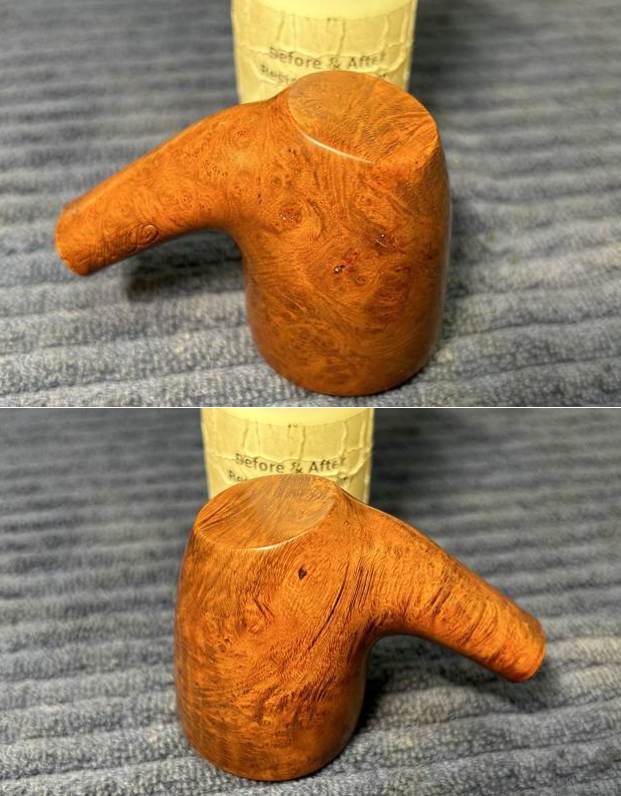
  1. The flattened front of the bowl toward the bottom of the bowl. It does stand like a sitter as I expected. It looks very good and is well proportioned and have a classic English Bent Billiard shape.
  2. The finish is clean and the grime and grit have been removed from the finish on the bowl. There is some great grain showing through in the sandblast.
  3. The lava coat on the rim top has been removed and it looks to be in good condition on the top and edges of the bowl.
  4. The walls of the bowl are clean and I do not see any checking or burn damage. The beveled inner edge of the bowl looks good. The outer edges look good and there does not appear to be any obvious burn damage there.
  5. The vulcanite taper stem is clean and has light tooth chatter and marks on both sides. There is a 4 Blue Dots logo on the left side of the stem are in great condition.

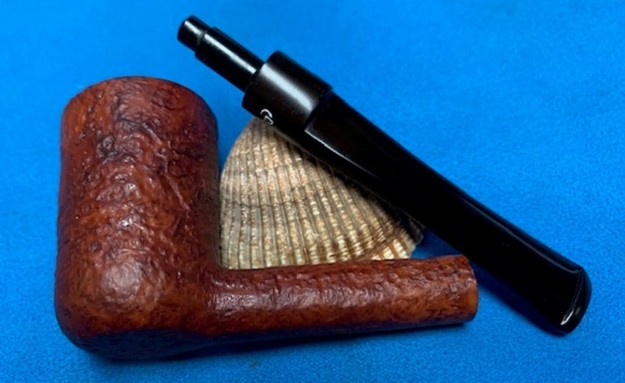
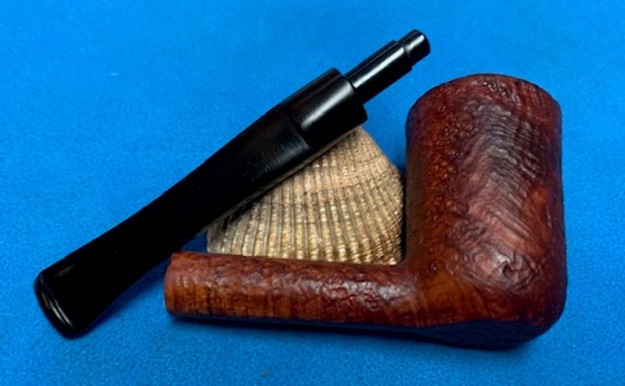
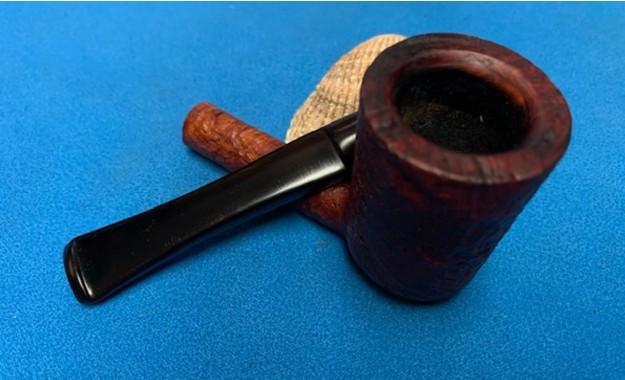
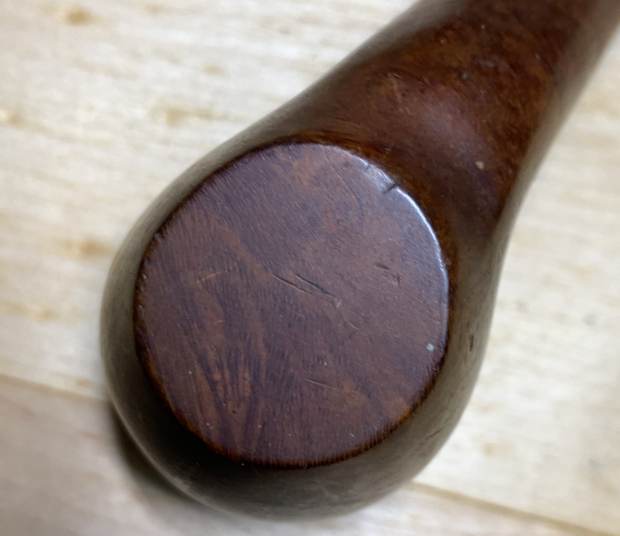
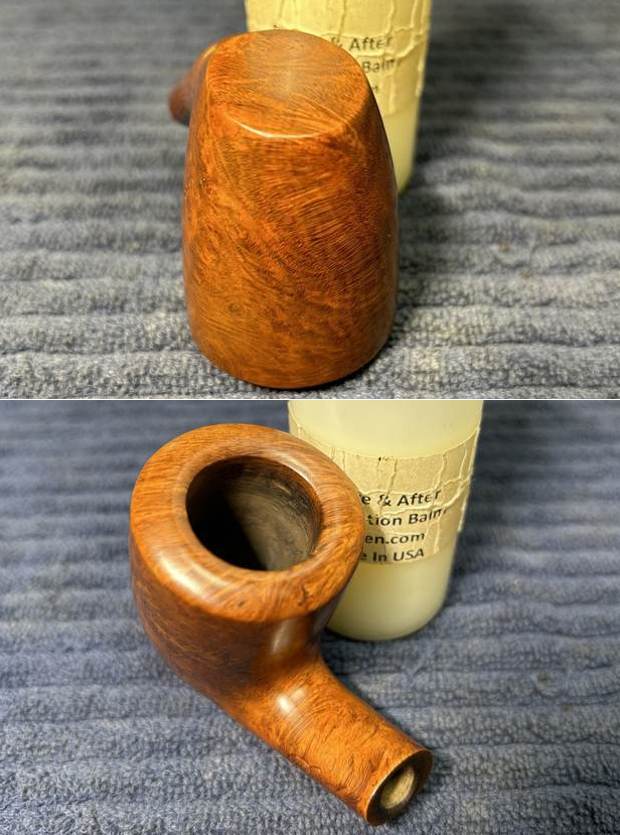
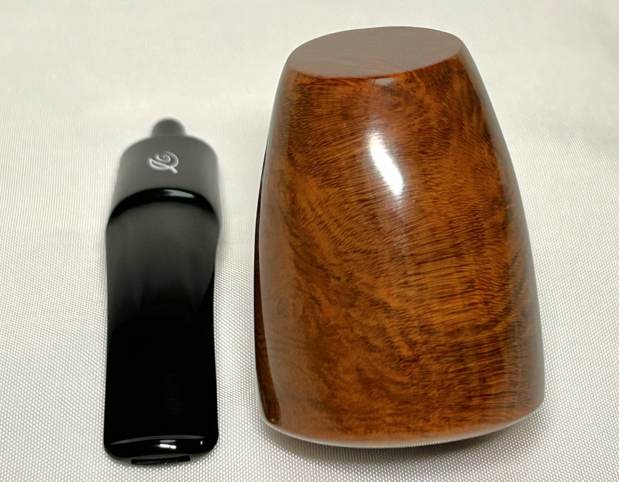
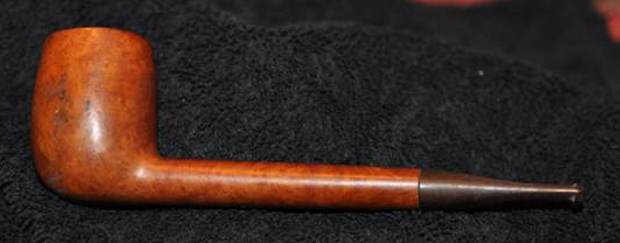
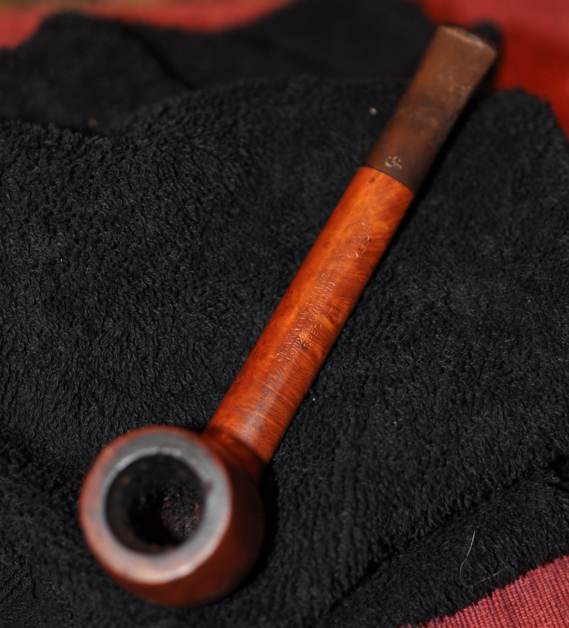
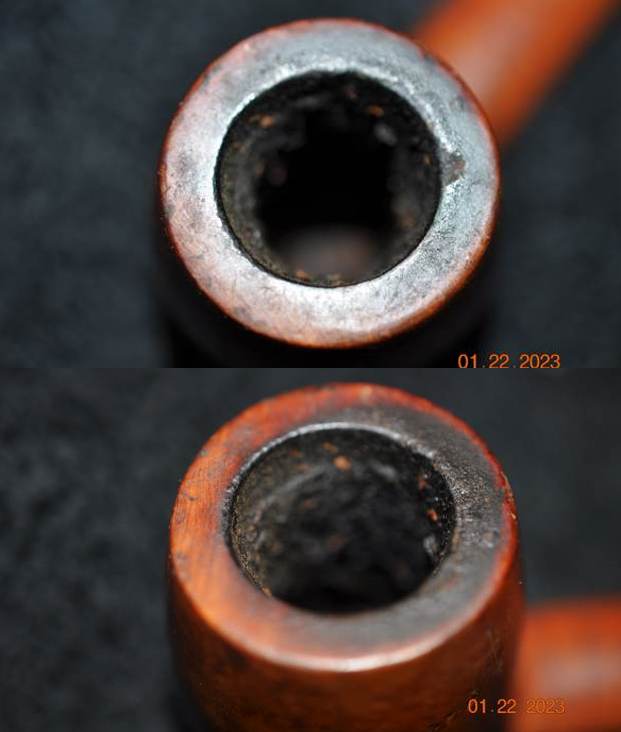
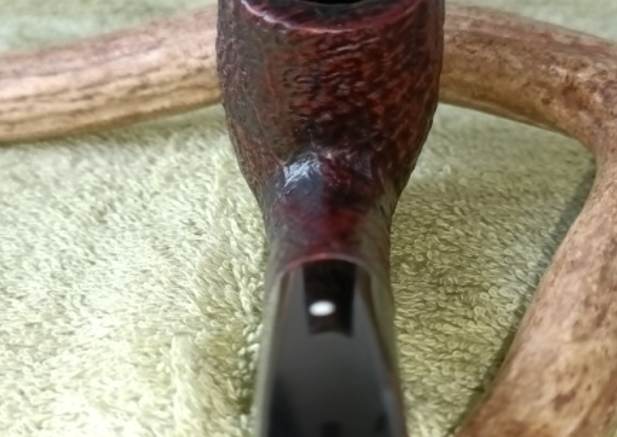
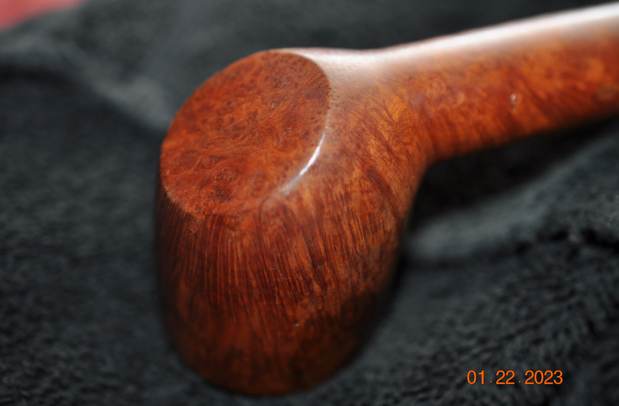
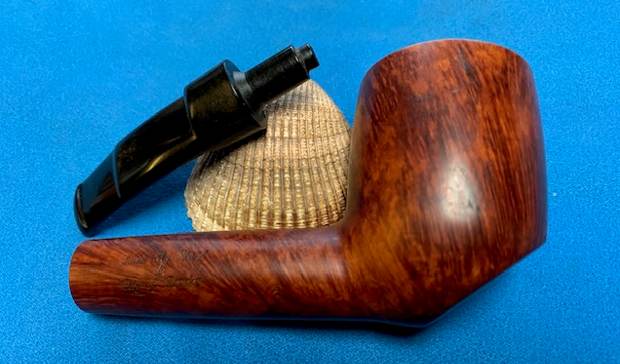
Hopefully the steps above show you both what I look for when I go over the pipe when I bring it to the work table and also what I see when I look at the pipe in my hands. They also clearly spell out a restoration plan in short form. My work is clear and addressing it will be the next steps. I took photos of the whole pipe to give you a picture of what I see when I have it on the table. This is important to me in that it also shows that there was no damage done during the clean up work or the transit of the pipe from Idaho to here in Vancouver.     I carefully went over the bowl and rim top to get a sense of what is happening there. In this case once the lava was removed the rim top and edges looked very good. There was no damage on the edges or the sandblast top of the rim. It is clean should come back to its original beauty quite easily. I also go over the stem carefully. There were no tooth marks or dents in the stem. I took photos of the rim top and stem sides to show as best as I can what I see when I look at them.I always check to make sure that the clean up work did not damage the stamping on the shank in any way. It is in excellent condition and is very clear and readable. I always appreciate the handiwork of the carvers at Sasieni who turn a piece raw briar into a beautiful pipe. I love just looking at the beauty of the lay of the pipe with the grain and the proportion of the hand made pipes. I like to remove the stem from the shank to get a sense of what was in the mind of the pipe maker when he crafted the pipe. I took a photo of the flattened bowl front to show how it is in relation to the rest of the bowl. It is a beauty in flow and shape. By this time you should know that I almost always start with the bowl in my restoration because I truly do not like the tedious work of stem repairs and polishing. I always leave that until last even though I know that it needs to be done. For me the encouragement of seeing a rejuvenated bowl is the impetus I need to attack the stem work.

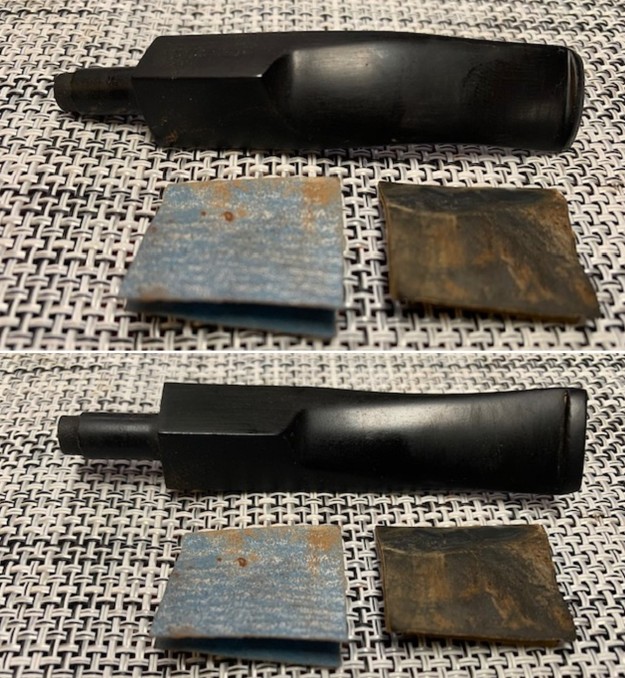
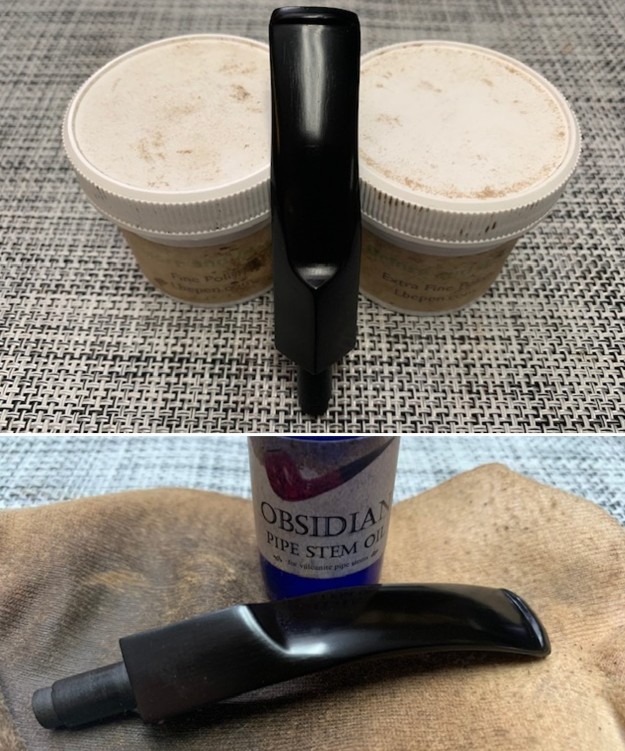
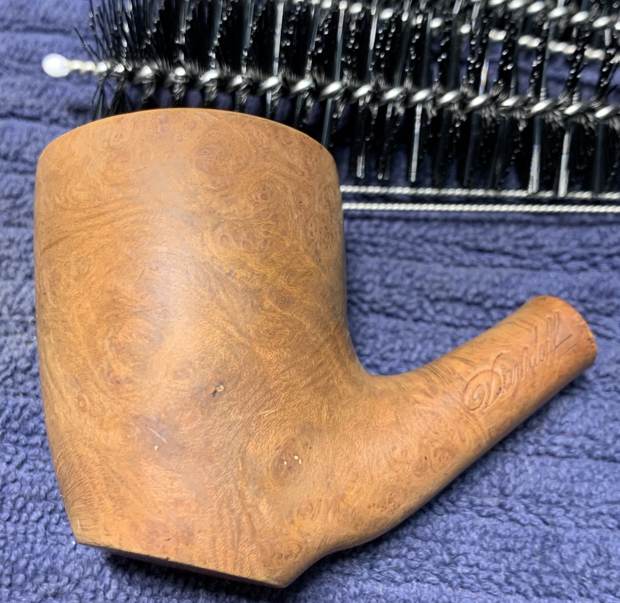
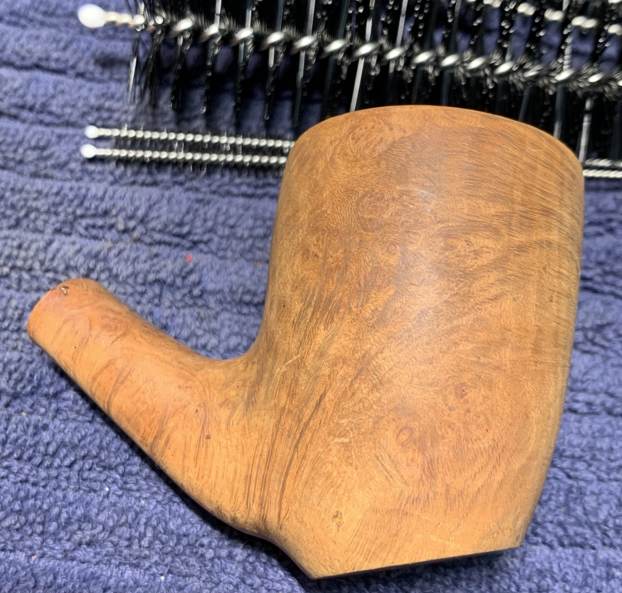
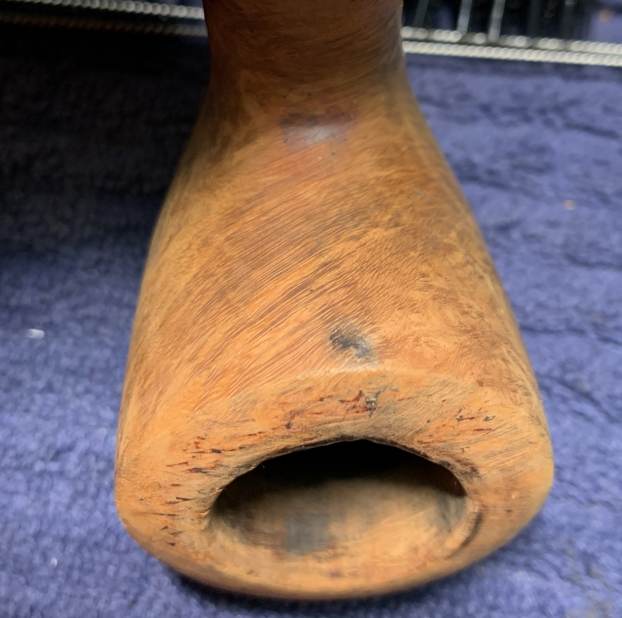
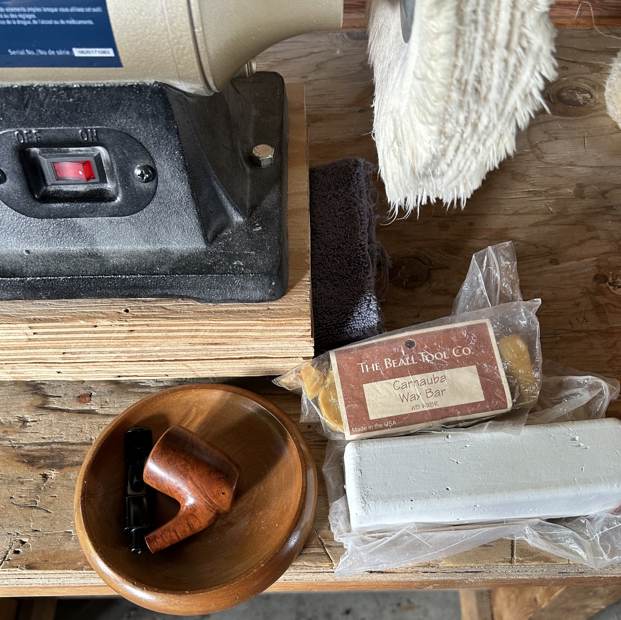
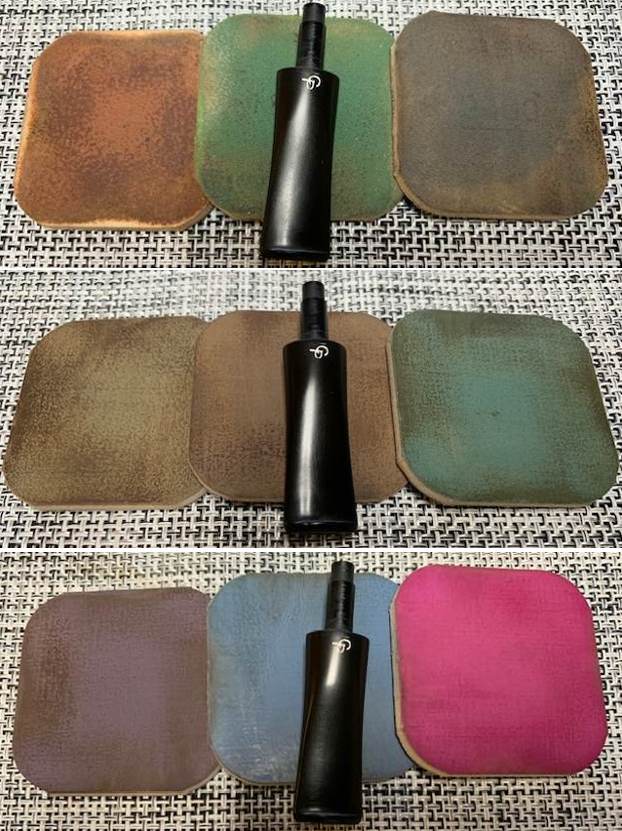
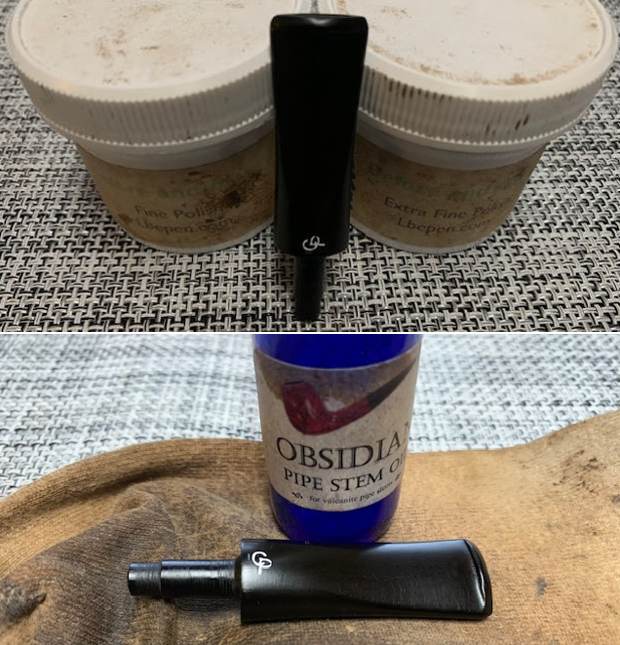
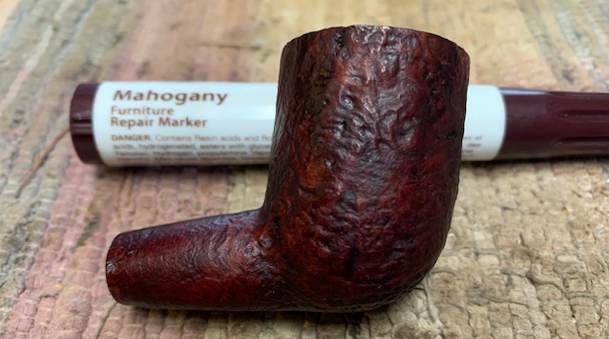
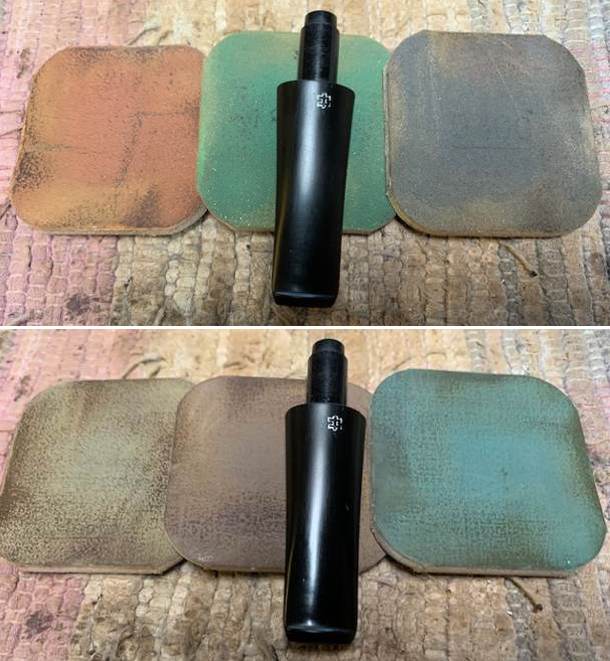
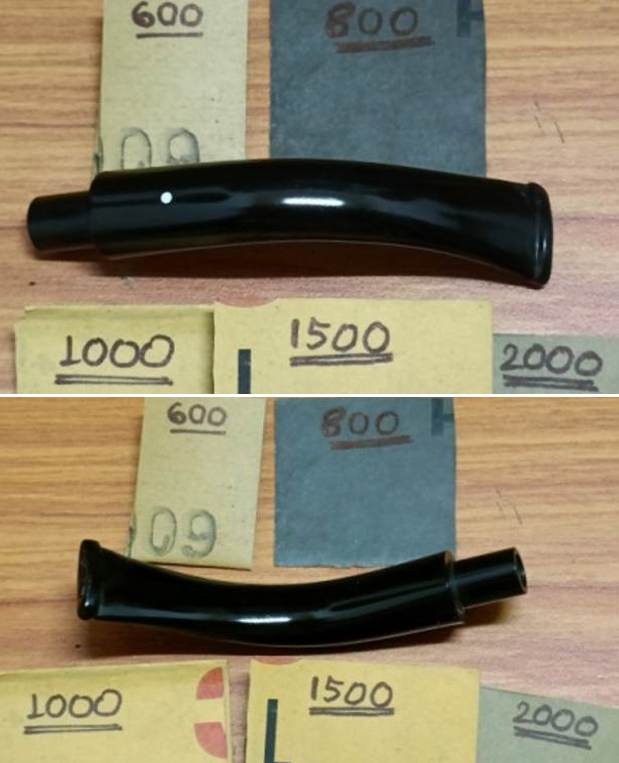
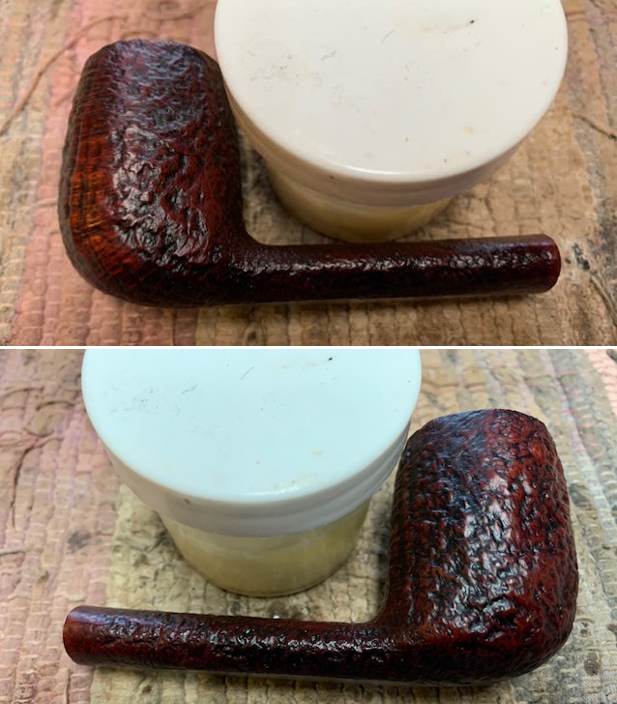
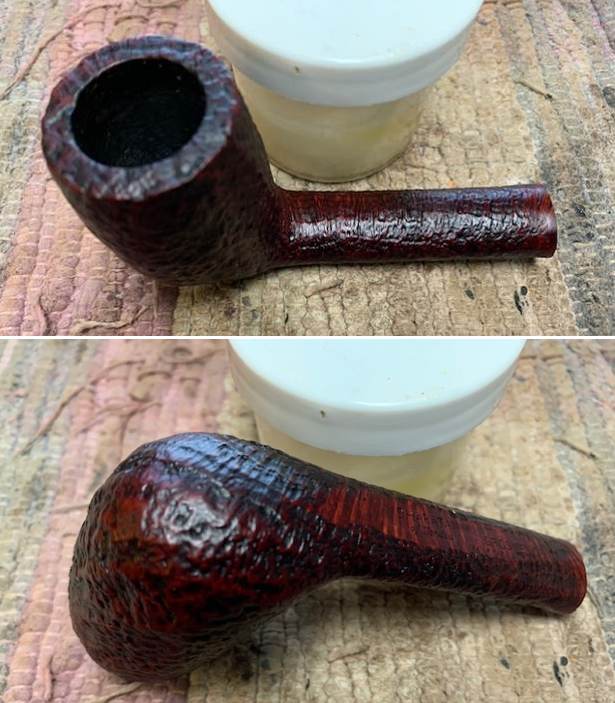
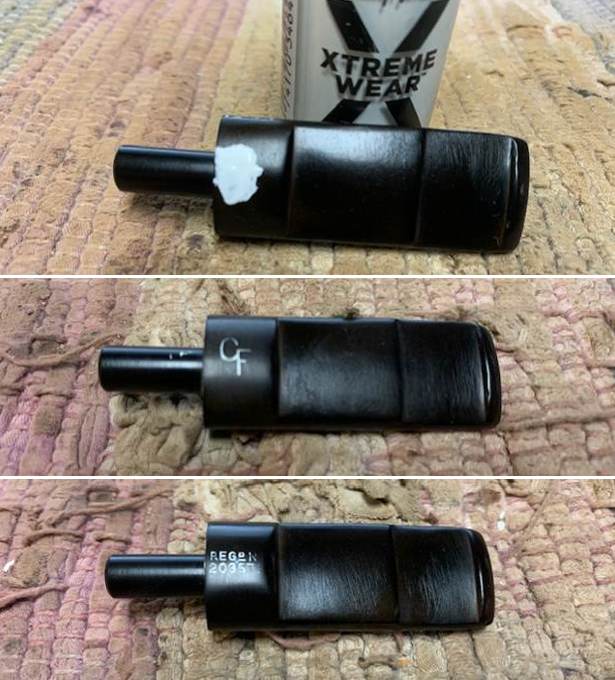
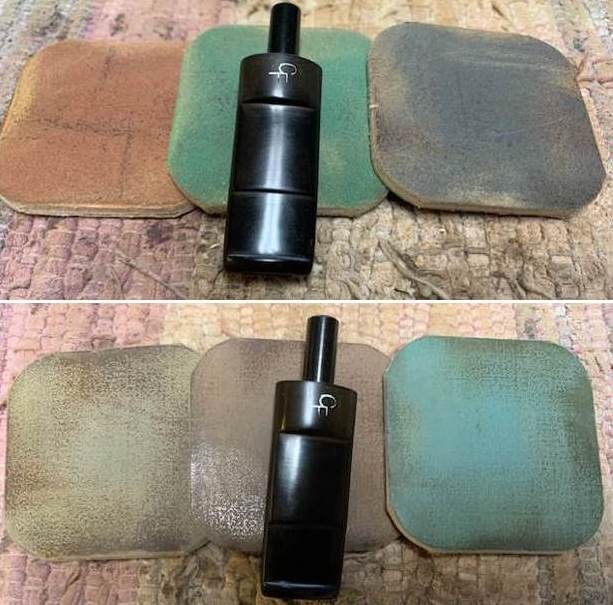
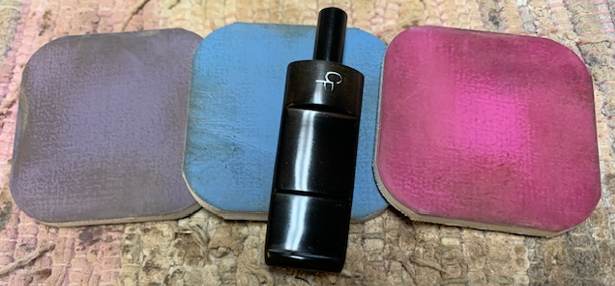
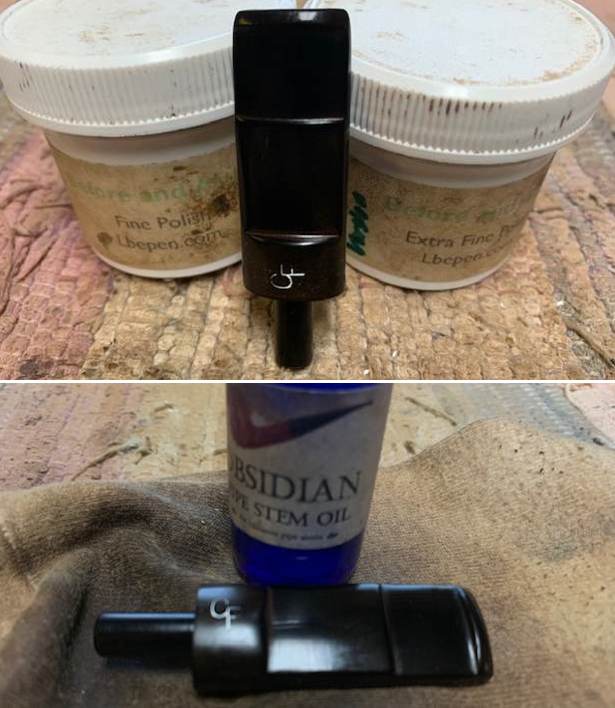
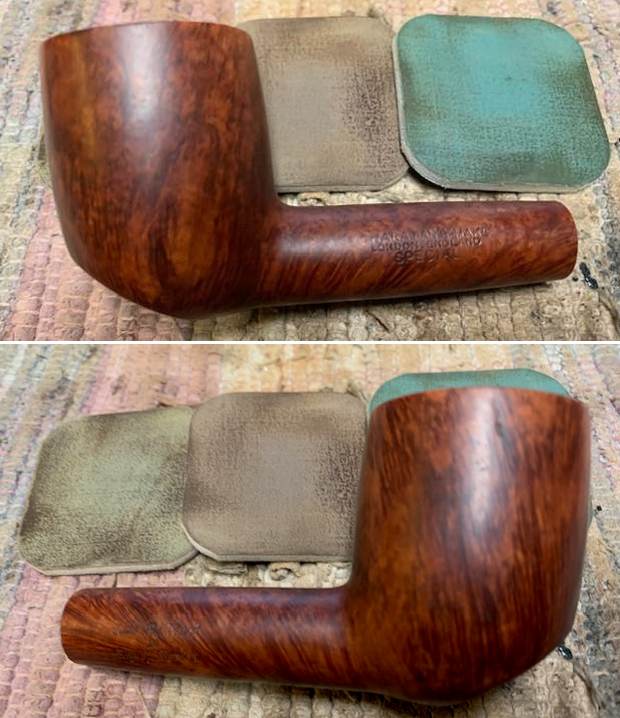
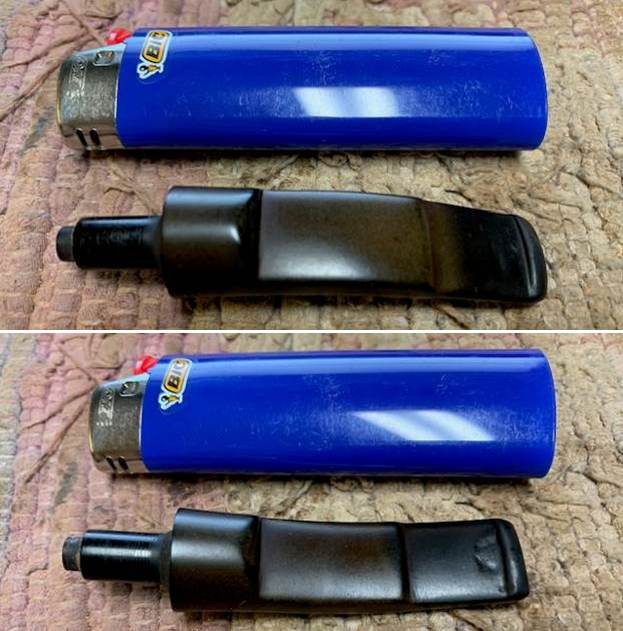
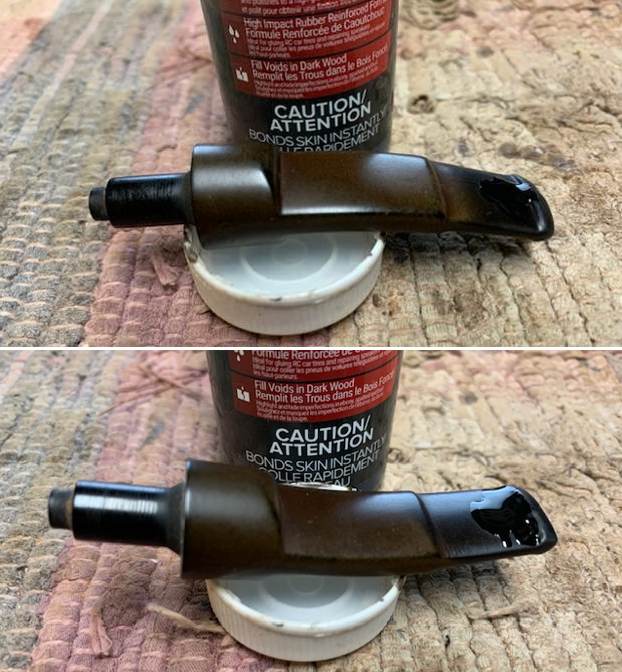
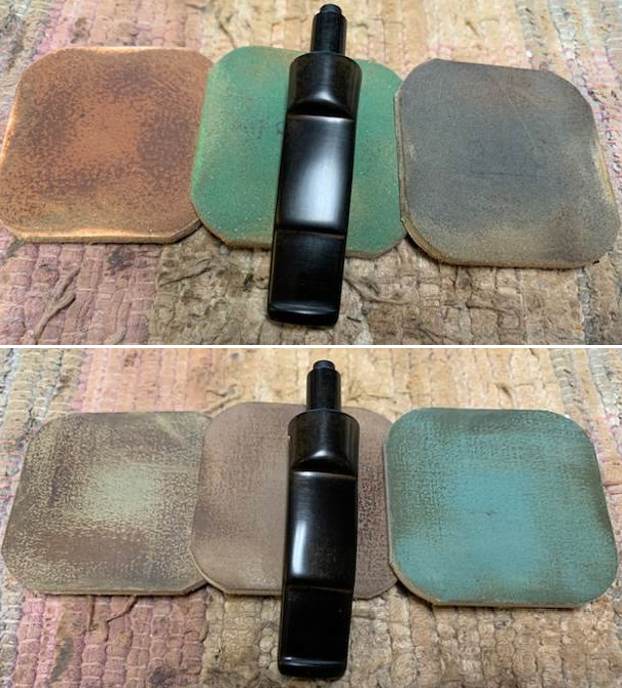
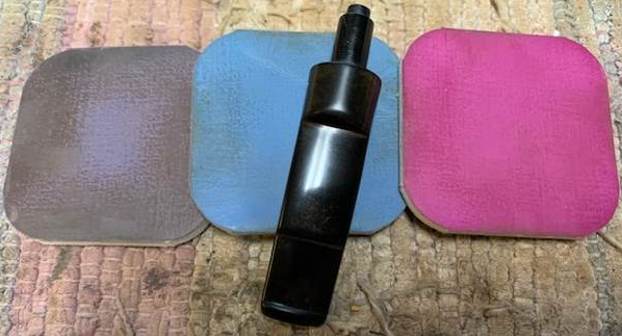
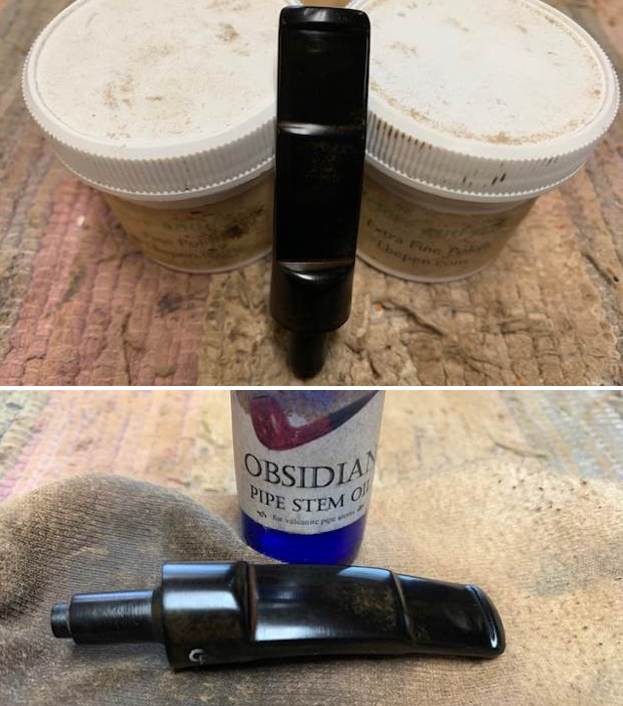
Today I started working on this pipe by turning to the bowl. It was in good shape and the edges were in excellent condition. The finish was in excellent condition so I started by using Before & After Restoration Balm. It is a paste/balm that is rubbed into the surface of the briar and the plateau. The product works to deep clean the nooks and crannies of finish, enliven and protect the briar. I worked it into the briar with my finger tips and a horsehair shoe brush. I let it sit for 10 minutes to do its work. I wiped it off with a soft cloth then buffed it with a cotton cloth. The briar really began to have a deep shine in the briar and the grain through the blast. The photos I took of the bowl at this point mark the progress in the restoration. It is a gorgeous pipe.  Now it was time to address the part of the restoration I leave until last. I set the bowl aside and turned my attention to the stem. I sanded the stem with 220 grit sandpaper to remove the tooth marks and chatter. I started the polishing of the stem with 600 grit wet dry sandpaper. It looks good!I use micromesh sanding pads and water to wet sand the stem with 1500-12000 grit sanding pads. I wiped it down after each sanding pad with Obsidian Oil on a cotton rag after each sanding pad as I find it does two things – first it protects the vulcanite and second it give the sanding pads bite in the polishing process. After finishing with the micromesh pads I rub the stem down with Before & After Fine and Extra Fine stem polish as it seems to really remove the fine scratches in the vulcanite. I rub the Fine Polish on the stem and wipe it off with a paper towel and then repeat the process with the extra fine polish. I finish the polishing of the stem down with a final coat of Obsidian Oil and set the stem aside to let the oil absorb. This process gives the stem a shine and also a bit of protection from oxidizing quickly. The final steps in my process involve using the buffer. I first buff the stem and the briar with Blue Diamond on the buffing wheel. Blue Diamond is a plastic polish but I find that it works very well to polish out the light scratches in the vulcanite and the briar. I work the pipe over on the wheel with my finger or thumb in the bowl to keep it from becoming airborne. I keep a light touch on the briar so as not to to build up the polish in the blast. It works well and I am able to carefully move forward with the buffing. The briar and stem just shone!

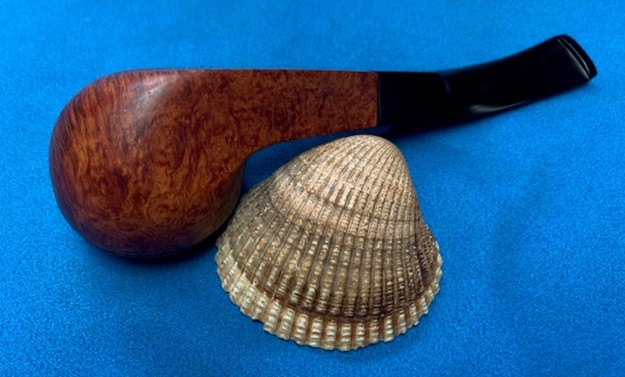
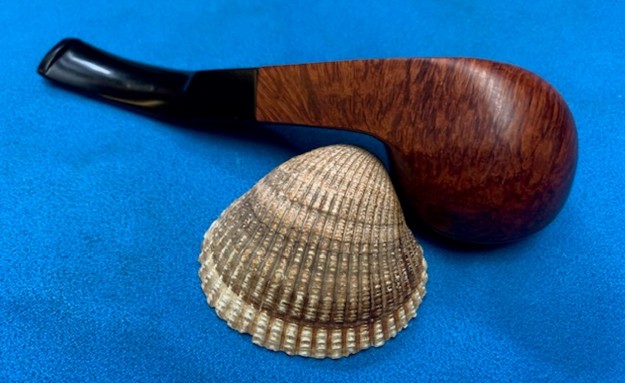
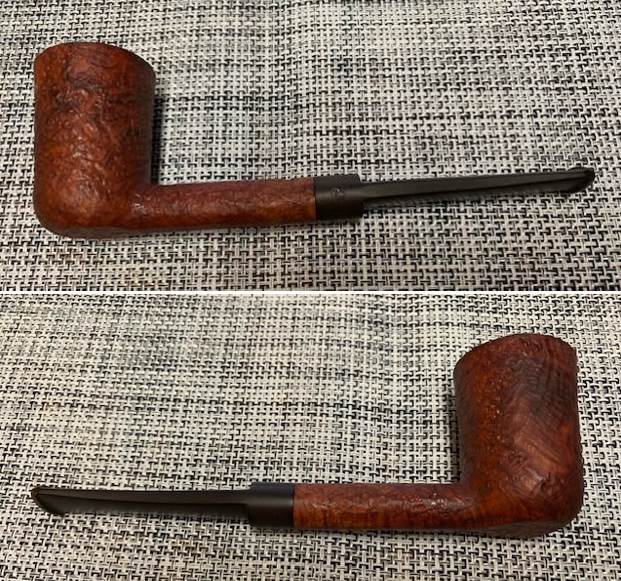
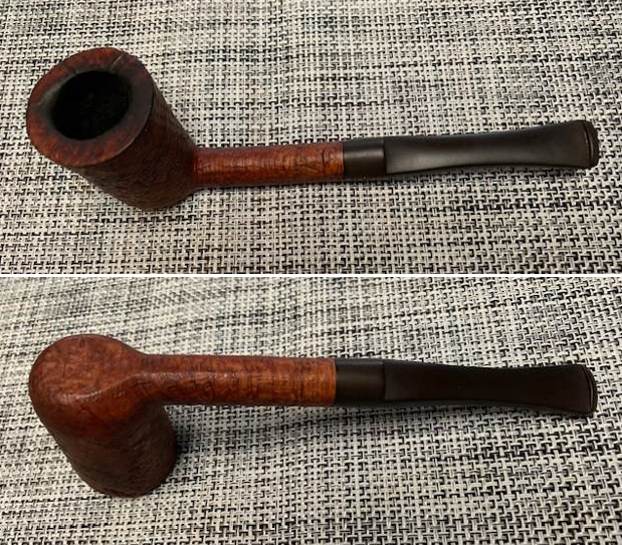
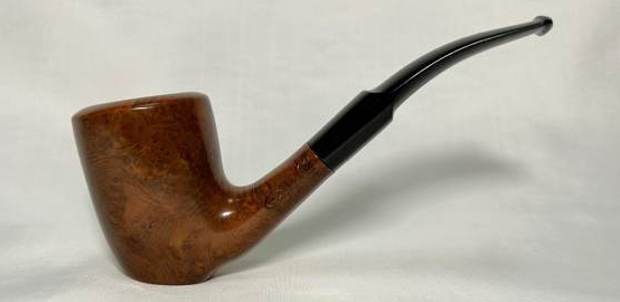
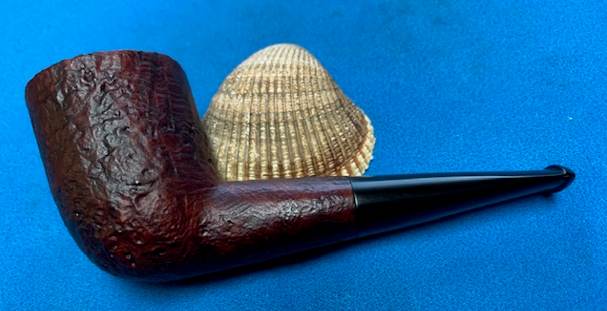
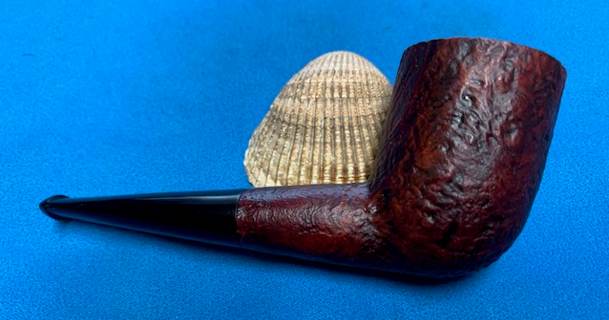
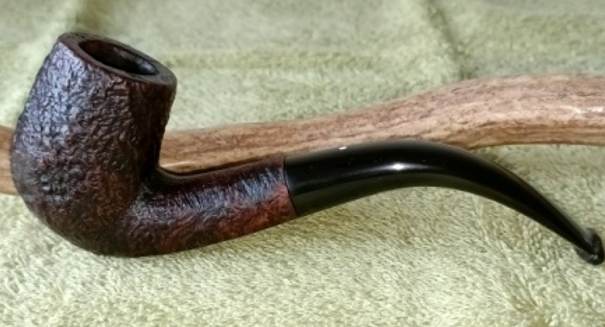
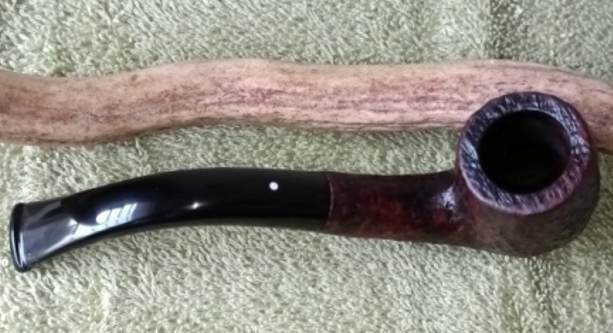
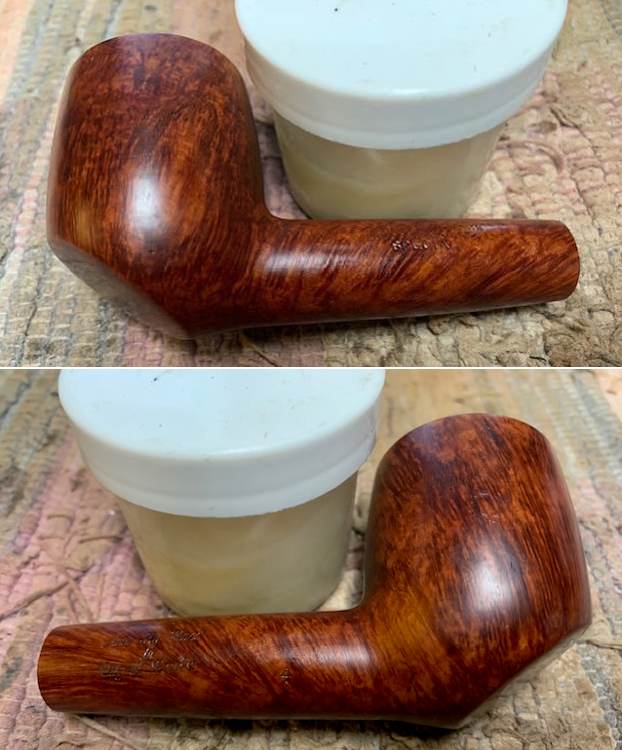
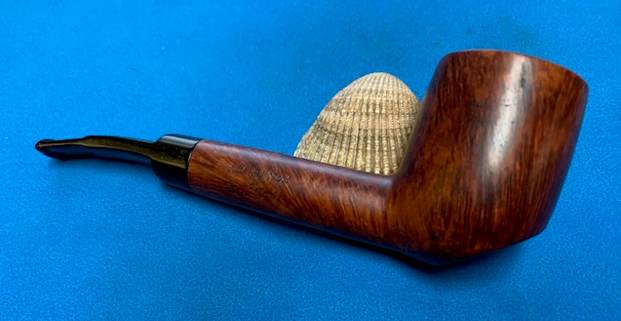
I finished with the Blue Diamond and moved on to buffing with carnauba wax. Once I have a good shine in the briar and vulcanite I always give the bowl multiple coats of Conservator’s Wax and the stem multiple coats of carnauba wax. I have found that I can get a deeper shine if I following up the wax buff with a clean buffing pad. It works to raise the shine and then I follow that up with a hand buff with a microfiber cloth to deepen the shine. It is always fun for me to see what the polished bowl looks like with the polished vulcanite stem. It really is a beautiful pipe. The smooth finish around the bowl sides and shank show the grain shining through the rich brown stains of this Sasieni Post Transition 4 Dot Ruff Root Dark Bent Billiard Sitter. The finished pipe feels great in my hand. It is light and well balanced. Have a look at it with the photos below. The dimensions are Length: 6 inches, Height: 2 inches, Outside diameter of the bowl: 1 ¼ inches, Chamber diameter: ¾ of an inch. The weight of the pipe is 1.41 ounces/40 grams. It is a beautiful pipe and one that I will be putting on the rebornpipes store in the British Pipe Maker section.

Hopefully the shape writing this blog is helpful to you in some way. In it I wanted to show both what I am looking for and how I move forward in addressing what I see when work on a pipe. Let me know if it is helpful to you. It is probably the most straightforward detailed description of my work process that I have done. As always I encourage your questions and comments as you read the blog. Thanks to each of you who are reading this blog. Remember we are not pipe owners; we are pipemen and women who hold our pipes in trust until they pass on into the trust of those who follow us.

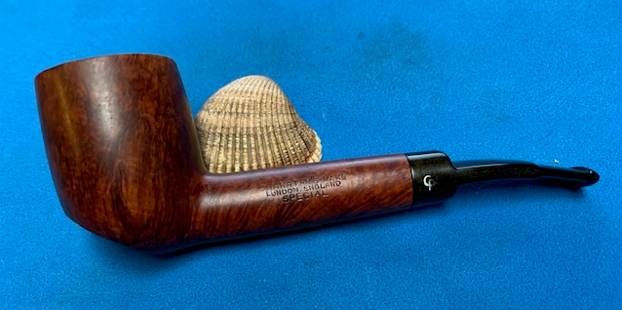
New Life for a Petite Sasieni Four Dot Natural London Made Wingate Pot


Blog by Steve Laug

I thought it might be helpful to take you through my process of working on each pipe that we purchase. Jeff has set up a spread sheet to track where the pipe came from, the date of purchase and what we paid for it so that we know what we have invested in the pipe before we even work on it. This takes a lot of the guess work out of the process. This particular pipe was purchased on 04/09/2022 from seller in Cleveland, Ohio, USA. I also want you to understand why we take the photos we do. If you have followed for a while then you will see the familiar pattern of the photos we include both in the before and midstream process of working on a pipe. It is not accidental or chance as the photos have been taken to help me make an assessment of the pipe Jeff sees before he starts his clean up work. We do this to record the condition that the pipe was in when received it and to assess what kind of work will need to be done on. When I look at these photos this is what I see.

  1. The first thing I see is the small/petite Pot shaped pipe with a generous bowl. It is well proportioned and well made with a classic English shape.
  2. The finish is dirty and there are oils from the smoker’s hands on both side of the bowl. There is grime ground into the finish as well but even so there is also some great grain peeking through.
  3. The rim top had a thick lava overflow from the cake in the bowl, particularly thick on the back side of the top. There is some burn damage on the front inner edge and top but it is hard to know if there is darkening or damage under the lava. Sometimes the lava protects the rim top and edges and sometime it hides issues. Its is very dirty looking.
  4. The bowl has a thick cake in it that hides the walls and the inner edge of the bowl but once it is clean we will know what is going on in those spots. There are a some possible nicks in the inner edge of the bowl at the back but that too will become clearer when the pipe is cleaned. The outer edges look good and there does not appear to be any obvious burn damage to the top or bowl edges.
  5. The vulcanite saddle stem is in good condition – dirty, oxidized, calcified and has tooth chatter and marks on both sides. There 4 Dots of the Sasieni Logo are visible on the left side of the saddle.

Overall my impressions of this pipe is that it is a beauty that once cleaned up will look pretty amazing. The exterior of the bowl does not show any hot spots or darkening. The pipe is very English looking and is a classic short Pot shape that I have seen on other Sasieni pipes. The photos below confirm the assessment above. Jeff took close up photos so that I could have a clearer picture of the condition of the bowl, rim edges and top. The rim top photos confirm my assessment above. The cake in the bowl is quite thick and the rim top has lava and debris on it. You can also see the condition of the outer edge but the inner edge is a bit of a mystery at this point. There appears to be some burn damage at front inner edge and rim top. The bowl is still fairly round. This is what I look for when assessing a pipe. The photos of the stem surface from various angles confirmed my assessment of its condition. You can see the oxidation and the fit against the shank end. The stem surface though dirty does not appear to have tooth marks on the bit surface – chatter yes, but no deep marks. There is some damage to the button surface on the top right side and lesser damage on the underside. The stem is quite dirty but otherwise undamaged. The next photos show the amazing grain around the heel and the sides of the bowl. Tell me what you see? Are there any visible problems that stand out to you? Are the cracks or scratches? Are there visible flaws or fissures in the briar? What kind of grain stands out around the bowl and heel? Any visible issues on the heel of the bowl? Even the questions should help you to see what I am looking for when I see these photos. You have read it a few times now in the previous blogs. What am I looking for when I look at the shank stamp? In this case it is stamped on the left side and reads Sasieni[over] Four Dot Natural [over] London Made in three lines. To the left next to the bowl is the classic Sasien Made in England stamp. On the right side it is stamped Wingate. How does the stamping look to you? Is it clear and readable? Is it faint in spots or is it uniform? I know you are looking at photos but so do I at this point in the process. There is also a FRANCE stamp on the underside of the stem. The same questions apply here as well. I decided to do some work on the stamping of this pipe to get an idea of the time period it was carved. I turned first to Pipephil’s site to see what I could learn (http://pipephil.eu/logos/en/logo-sasieni.html). I found a pipe that was stamped the same way as the one I am working on. I is stamped on the left side of the shank like the one in the screen capture photo below. Mine is stamped the same way Sasieni in script without the fish tail. Underneath it is stamped FOUR DOT NATURAL [over] London Made. Next to the shank is also the Made In England Stamp like the one below. On the right side mine does not have the “Danzey” stamp but rather the Wingate stamp in the same place. It also does not have the XS stamp. I included the side bar notes below the picture. From that I knew that the pipe was made during Pre-transition Period 1946-1979.Pre-transition, 1946 – 1979. Four dot. Natural: Name for a smooth finish
I then turned to Pipedia for more detailed information (https://pipedia.org/wiki/Sasieni). I quote a section of that article below. It refers to the Patent Number that is on the pipe I have on the table. The underlined  portion below is particular pertinent to this pipe.

To begin with, there are three main elements to dating the Sasieni pipe, the patent number, the style of the name “Sasieni” as it appears on the shank, and the Dots themselves. Naturally, there are exceptions to these rules (this hobby would be boring without them), but for the most part these guidelines apply better than 95% of the time. All Sasieni One, Four, and Eight Dot pipes made before W.W.II and destined for the U. S. market carried a patent number on the shank which usually started with the numbers “15″, with 150221/20 and 1513428 being representative of the group. Also, the name “Sasieni” was stamped on the shank in a very florid manner, with the tail of the last “i” sweeping underneath the name forming a shape which has been compared to a fish by more than one collector. This script was discontinued by Alfred almost immediately after he took over the company, so this alone tells you your pipe is pre W.W.II. Underneath in block lettering are the words “London Made”, with the patent number making the third line.

The dots will help you narrow this down further. As we mentioned, the short lived U. S. market One Dot was introduced around 1920, and was replaced by the early to mid 1920’s by the Four Dot. The 1920’s Four Dot is distinguishable by the florid Sasieni script, a patent number, and four blue dots, which are quite small compared to the pipes of post war years. Furthermore, by 1935 Sasieni began stamping pipes, based on the shape, with their own names, which were usually, but not always, English towns. For example, apples were stamped “Hurlingham”, bulldogs were “Grosvenor” or “Danzey”, and panels were “Lincoln”. One rare and interesting variation of this was the large bent, dubbed “Viscount Lascelles”. Even in this soft Sasieni market, these pipes regularly sell for $150 in their rare appearances in mailers.

The pipe I have is one does not have a patent number so it was not made for the US market. The flourished “i” was discontinued by Alfred so that confirms that the pipe was made Pre-transition, 1946 – 1979. The third line stamped is London Made in block lettering. With all that information I knew that my pipe was from the period before the transition (Pre Transition) so it was an older one.

I am sure many of you will shake your head and ask maybe even out loud, “Why is he including this again?” However, please remember that the point of these blogs is not to wow your with the work or make you shake your heads but I want you to know the details of the work we do so you can do your own. Back in 2020 Jeff wrote a blog about his cleaning process. I am including a link to that now so you can see what I mean about his process. Do not skip it! Give it a read (https://rebornpipes.com/2020/01/20/got-a-filthy-estate-pipe-that-you-need-to-clean/). Here is the introduction to that blog and it is very true even to this day.

Several have asked about Jeff’s cleaning regimen as I generally summarize it in the blogs that I post rather than give a detailed procedure. I have had the question asked enough that I asked Jeff to put together this blog so that you can get a clear picture of the process he uses. Like everything else in our hobby, people have different methods they swear by. Some may question the method and that is fine. But it works very well for us and has for many years. Some of his steps may surprise you but I know that when I get the pipes from him for my part of the restoration they are impeccably clean and sanitized. I have come to appreciate the thoroughness of the process he has developed because I really like working on clean pipe!

For the benefit of some of you who may be unfamiliar with some of the products he uses I have included photos of three of the items that Jeff mentions in his list. This will make it easier for recognition. These three are definitely North American Products so you will need to find suitable replacements or order these directly on Amazon. The makeup pads are fairly universal as we were able to pick some up in India when we were with Paresh and his family.

In the blog itself he breaks his process down into two parts – cleaning the stem and cleaning the bowl. Each one has a large number of steps that he methodically does every time. I know because I have watched him do the work and I have seen the pipes after his work on them. He followed this process step by step and when the pipe got to me it was spotlessly clean and ready for my work. The inside of the stem, shank and bowl were clean and to me that is an amazing gift as it means that my work on this end is with a clean pipe! I cannot tell you how much difference that makes for my work.

When the pipe arrives here in Vancouver I have a clean pipe and I go over it keeping in mind my assessment shared in the opening paragraph above. Now that I have it in hand I am looking for confirmation of what I saw in the photos as well as any significant structural changes in the bowl and finish as I go over it.

  1. This small Petite Pot has a generous bowl and the pipe is well proportioned. It has a classic English Sasieni shape.
  2. The finish is clean and the oils have been removed from both sides of the bowl. The grime ground into the finish is gone and there is some great grain around the bowl sides.
  3. The thick lava coat on the rim top has been removed and there is some nicks and burn damage on the top and inner edges of the bowl (particularly toward the front). There is some darkening and damage on the back side of the inner edge and top as well but not as extensive.
  4. The cake had been totally removed and the walls of the bowl are clean. There is not any checking or burn damage on the interior walls of the bowl.
  5. The vulcanite saddle stem is clean and has light tooth chatter and marks on both sides. The four dots (Sasieni logo) on the left side of the saddle look very good. There is also an aluminum stinger in the tenon that is very clean.

Hopefully the steps above show you both what I look for when I go over the pipe when I bring it to the work table and also what I see when I look at the pipe in my hands. They also clearly spell out a restoration plan in short form. My work is clear and addressing it will be the next steps. I took photos of the whole pipe to give you a picture of what I see when I have it on the table. This is important to me in that it also shows that there was no damage done during the clean up work or the transit of the pipe from Idaho to here in Vancouver.    I carefully went over the bowl and rim top to get a sense of what is happening there. In this case once the lava was removed damage to the edge and top was revealed. It is burn damage to the front inner beveled edge and rim top. There is also some damage on the back inner edge and darkening on the rim top. It is clean but will need to be worked on to bring it back to normal. I also go over the stem carefully. There were no tooth marks or dents other than on the button edges on both sides of the stem. I took photos of the rim top and stem sides to show as best as I can what I see when I look at them.I always check to make sure that the clean up work did not damage the stamping on the shank in any way. It looks good but is faint in some parts – particularly the edges of the stamp. I always appreciate the handiwork of the carvers at Sasieni who turn a piece raw briar into a beautiful pipe. I love just looking at the beauty of the lay of the pipe with the grain and the proportion of the pipes. I like to remove the stem from the shank to get a sense of what was in the mind of the pipe maker when he crafted the pipe. It is a beauty in flow and shape. By this time you should know that I almost always start with the bowl in my restoration because I truly do not like the tedious work of stem repairs and polishing. I always leave that until last even though I know that it needs to be done. For me the encouragement of seeing a rejuvenated bowl is the impetus I need to attack the stem work.
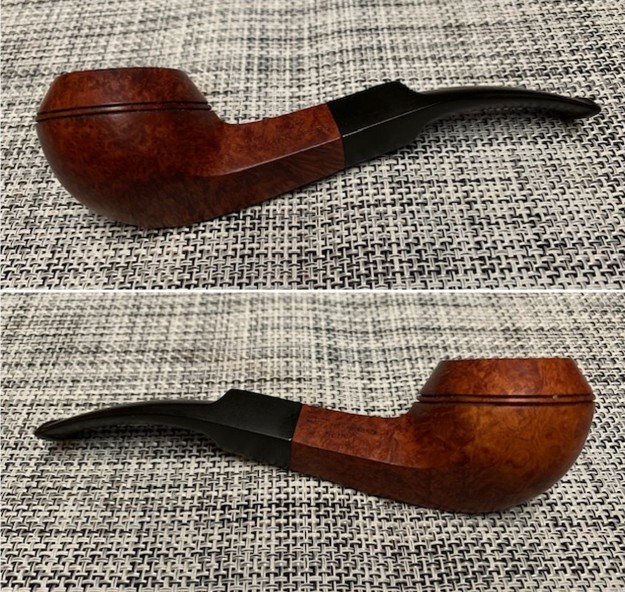
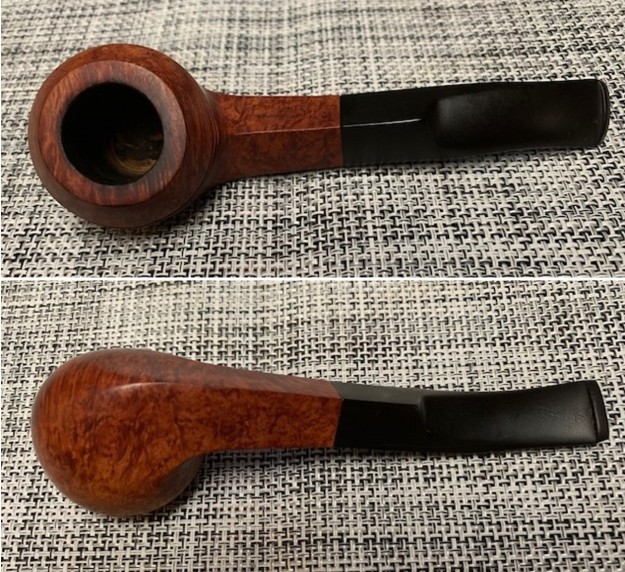
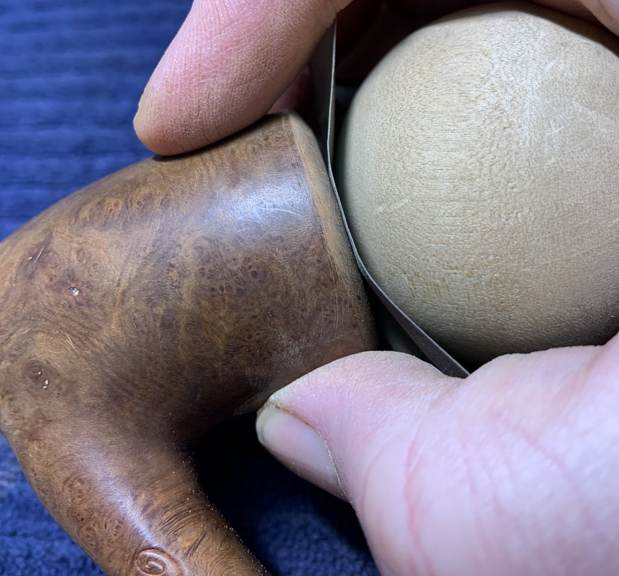
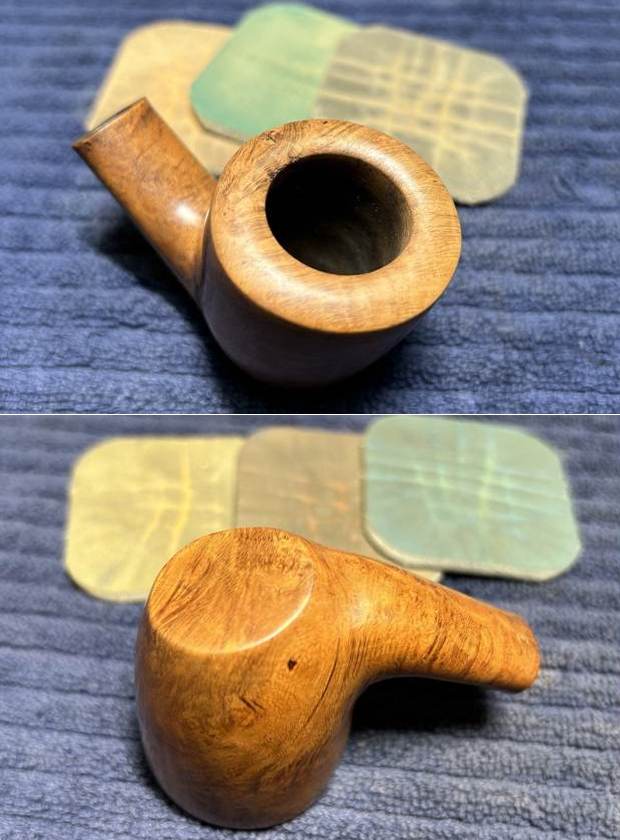
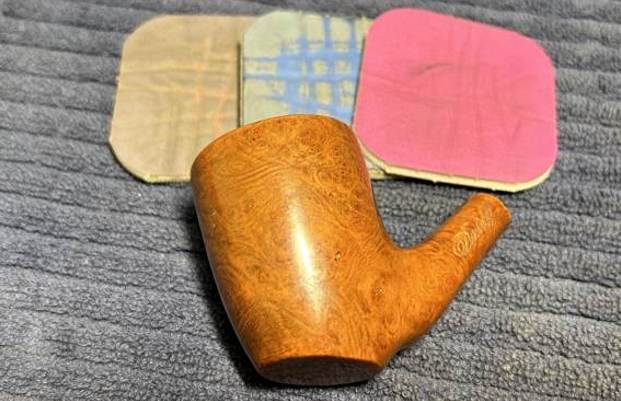
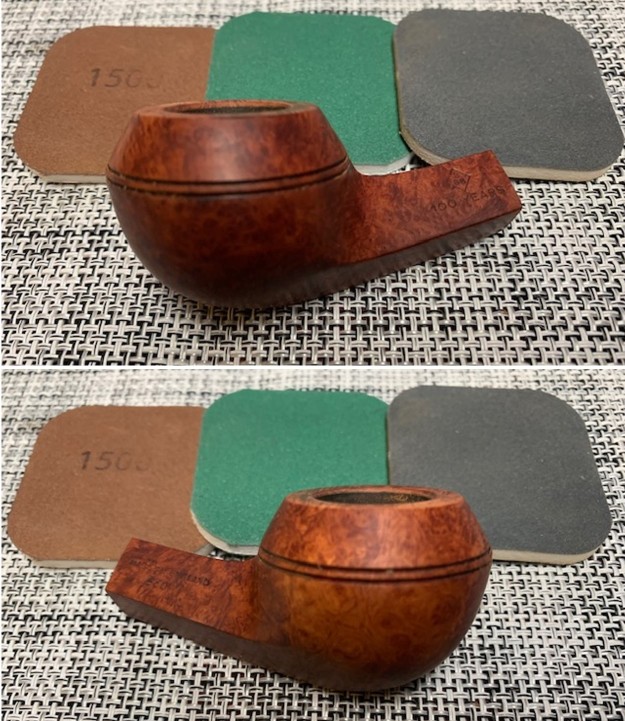
Today I started working on this pipe by turning to the bowl. I chose to deal with the darkening and burn damage on the rim edges and top. I used a piece of 220 grit sandpaper and a wooden sphere to reshape and remove the damage on the top and the inner edge. It took a little work but I was able to remove most of the damage. I used a folded piece of 220 grit paper to work on it some more. There is a little left at the back side of the inner edge. The front edge looks much better. It is a beautiful piece of briar with some great grain.  I forgot to take a photo of the rim top after the clean up but it looked much better. You can see it in the stained rim top photo below. I stained it with an Oak stain pen to match the surrounding briar. I polished the briar with micromesh sanding pads. I choose to dry sand the briar rather than wet sand it. Again it is a matter of personal preference. I prefer to use the pads dry and find they work very well on the briar. I sand with each pad (9 in total) and group them by threes for ease of reference. I also work over the sanded rim top and edges with the pads. I wiped the bowl down after each pad with a damp cloth to remove the sanding debris and check the briar. I love seeing the developing shine on the briar as I move through the pads which is why I include so many photos of this step. For the past few years now I have been using a product developed by Mark Hoover called Before & After Restoration Balm. It is a paste/balm that is rubbed into the surface of the briar. The product works to deep clean the finish, enliven and protect the briar. I worked it into the briar with my finger tips and let it sit for 10 minutes to do its work. I wiped it off with a soft cloth then buffed it with a cotton cloth. The briar really began to shine and the grain shone through. The photos I took of the bowl at this point mark the progress in the restoration. It is a gorgeous pipe. Now it was time to address the part of the restoration I leave until last. I set the bowl aside and turned my attention to the stem. I heated the stinger and removed it from the shank. I would put it back in after clean up. I fit the stem in the shank to take get measurements of the pipe. When I finished I removed the stem from the shank the tenon shattered in the shank and was stuck. This is great – just what I needed. Now I would need to replace the tenon and refit it. I pulled the broken tenon from the shank with a knife blade. I went through my tenons and chose one that was close to the diameter of the broken tenon. I flattened the broken portion on the stem surface with a Dremel and sanding drum. I chose not to drill it out for the stinger as it made the walls of the tenon very thin. I sanded the diameter of the new tenon with a Dremel and sanding drum to reduce it for a snug fit in the shank.I drilled out the stem to receive the new tenon. I used a series of drill bits from one the size of the airway in the stem and up to the point it fit in the stem. I glued it in place in the stem with super glue and set aside to cure. I gave the tenon a light coat of clear CA glue to smooth it out. Once I sanded it would be smooth. I examined the shank end and saw that when the tenon broke it left a nick in the surface of the shank end. I decided to use a thin brass band to flatten the shank end and clean up the fit against the shank. I glued the band on the shank end and it looked very good. The bonus was that the stem fit very well. I stated with the tooth marks. I “painted” the surface dents with a Bic light flame and was able to lift them significantly I paused at this point and put the stem in the shank. It was at this point the tenon broke. With the new tenon in place I sanded the stem with 220 grit sandpaper to further blend them into the vulcanite. I started the polishing of the stem with 600 grit wet dry sandpaper. I use micromesh sanding pads and water to wet sand the stem and tenon with 1500-12000 grit sanding pads. I wiped it down after each sanding pad with Obsidian Oil on a cotton rag after each sanding pad as I find it does two things – first it protects the vulcanite and second it give the sanding pads bite in the polishing process. After finishing with the micromesh pads I rubbed the stem down with Before & After Fine and Extra Fine stem polish as it seems to really remove the fine scratches in the vulcanite. I rub the Fine Polish on the stem and wipe it off with a paper towel and then repeat the process with the Extra Fine polish. I finish the polishing of the stem down with a final coat of Obsidian Oil and set the stem aside to let the oil absorb. This process gives the stem a shine and also a bit of protection from oxidizing quickly.The final steps in my process involve using the buffer. I buff the stem and the briar with Blue Diamond on the buffing wheel. It is a plastic polish but I find that it works very well to polish out the light scratches in the vulcanite and the briar. I work the pipe over on the wheel with my finger or thumb in the bowl to keep the pipe from becoming airborne. I buffed the pipe with multiple coats of carnauba wax. I have found that I can get a deeper shine if I follow up the wax buff with a clean buffing pad. It works to raise the shine and then I follow that up with a hand buff with a microfiber cloth to deepen the shine. It is always fun for me to see what the polished bowl looks like with the polished vulcanite stem. It really is a beautiful pipe. The smooth finish around the bowl sides and shank show the grain shining through the rich brown stains of this Pre-Transition Sasieni Four Dot London Made Wingate Pot. The thin brass band on the shank fits well and looks classy. The finished pipe feels great in my hand. It is light and well balanced. Have a look at it with the photos below. The dimensions are Length: 5 inches, Height: 1 ½ inches, Outside diameter of the bowl: 1 3/8 inches, Chamber diameter: ¾ of an inch. The weight of the pipe is .99 ounces/28 grams. It is a beautiful pipe and one that I will be putting on the rebornpipes store in the British Pipe Maker section.
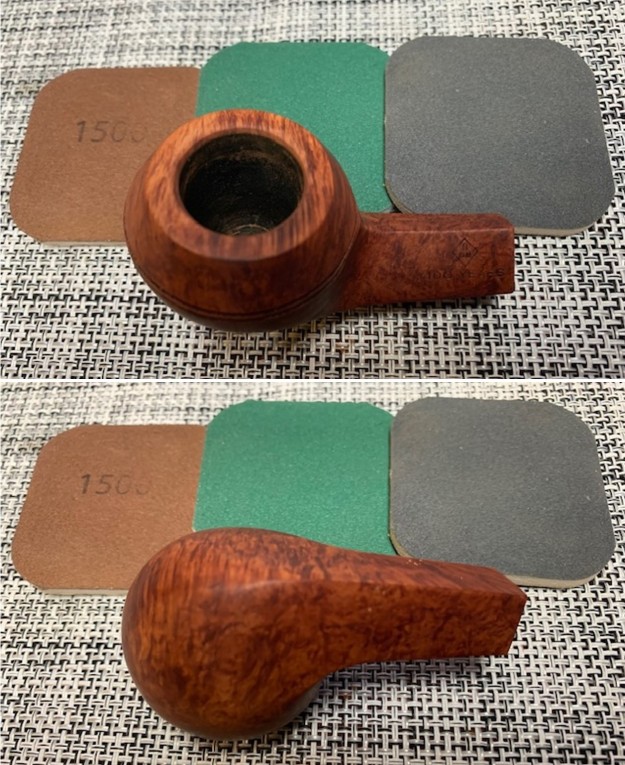
Hopefully the shape writing this blog is helpful to you in some way. In it I wanted to show both what I am looking for and how I move forward in addressing what I see when work on a pipe. Let me know if it is helpful to you. It is probably the most straightforward detailed description of my work process that I have done. As always I encourage your questions and comments as you read the blog. Thanks to each of you who are reading this blog. Remember we are not pipe owners; we are pipemen and women who hold our pipes in trust until they pass on into the trust of those who follow us.

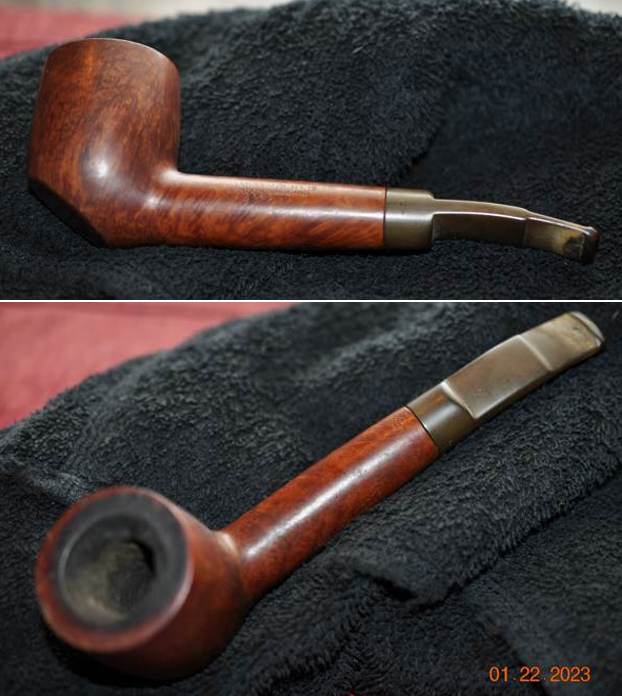
Restemming and Restoring a Stanwell Danish Star 64 Freehand Dublin


Blog by Steve Laug

The next pipe on the table is the last of the five pipes that the Vancouver pipe man dropped off for me to work on for him. It was stamped Stanwell Danish Star and had a great flame and straight grain around the bowl and shank with plateau finish on the rim top. It is a Bent Dublin that was finished in a brown stain. It needed restoration on the bowl which was moderately caked and the shank was dirty. It also needed new stem as the current push stem was chewed and broken at the button. It was another pipe that I had restored back in 2016 and he had purchased at that time. I had done a complete restoration and removed the thick cake at that point. The stem had a small hole in the top that was about half the size it is now. The repair worked for at least 6-7 years so I am pleased with that. It is obviously another of his favourites as it is well used. The stem on it was original so I kept it and repaired it the first time. Here is the link to restoration (https://rebornpipes.com/2016/11/30/a-stanwell-danish-star-64/). Here are some photos of the pipe when he picked it up in 2016 to give a bit for context for my latest work. When I took the pipe out of the bag of pipes to work on this afternoon, this is what I saw. The finish on the briar looked very good. It was dirty but the colour had stayed true. It had a bit of patina on the bowl but it was beautiful. The bowl had a moderate cake and the airway in the shank was dirty. The stem was oxidized, calcified and had a large chunk of vulcanite missing on the topside. I took photos of the rim top and stem to show their condition. You can see the moderate cake in the bowl how it looked. The plateau rim top had some lava in the grooves of the finish and some build up around the inside edge of the rim. It will clean up pretty well. The photos of the stem show the condition of the stem. You can see the tooth marks and the large hole on the top of the stem surface. I took photos of the stamping on the sides of the shank. The stamping on the left side of the shank reads Stanwell [over] Danish Star. On the right side it is stamped with the shape number 64. On the underside of the shank it is stamped Made in Denmark. There was a Crown S stamp on the left side of the saddle I removed the stem from the shank to give a sense of the flow of the pipe.  Now it was time to work on the pipe itself. I started my work on the pipe by cleaning and reaming the bowl The cake was quite thick but it can hold residual oils from previous tobaccos and I wanted to check the bowl walls for burn damage or checking. I reamed it with a PipNet pipe reamer to cut cake back to bare briar. I cleaned up the remnants of the cake with a Savinelli Fitsall Pipe knife. I sanded the walls with 220 grit sandpaper wrapped around a piece of dowel. I worked on them until they were smooth. There was no checking or burn damage to the bowl walls. It was quite clean.  I cleaned out the internals with 99% isopropyl alcohol, pipe cleaners and cotton swabs. I worked over the shank and the airway in the new stem. It took some work but once finished it was clean and smelled fresh.  I used a brass bristle wire brush to clean up the plateau and knock off the lava and debris from the grooves and high spots on the rim top. It looked much better.I scrubbed the bowl with undiluted Murphy’s Oil Soap with a tooth brush to remove the oils and grime from the finish. I rinsed the bowl with warm water to rinse off the soap and grime. I dried it off with a soft cloth. I stained the plateau rim top with a Black stain pen. I stained the entire rim top in the valleys and in the plateau. I knock of the stain on the high spots sanding and polishing process I sand off the high spots.I polished the rim top with micromesh sanding pads – dry sanding with 1500-12000 grit pads. I sanded the stain off the high spots on the plateau rim top. I wiped the briar down with a damp cloth after each sanding pad. It took on a real shine by the time I finished with the last sanding pad. I worked some Before & After Restoration Balm into the smooth bowl and the plateau rim top. I worked it into the surface of the briar with my fingertips to clean, enliven and protect the wood. I used a horse hair shoe brush to work it into the crevices and the valleys of the plateau. Once the bowl was covered with the balm I let it sit for about 15 minutes and buffed it off with a soft cotton cloth and the shoe brush. I polished it with a microfiber cloth. I took photos of the pipe at this point in the process to show what the bowl looked like at this point. Now it was time to deal with the replacement stem. I went through my can of stems and found a bent saddle vulcanite stem that was a close fit. It was more bent than the original but with a little straightening it would be perfect. I would also need to remove a little of the diameter of the tenon to get a snug fit in the shank. I put it in the shank as far as it would go before I fitted it correctly but you can see what the pipe will look like with the new stem. It is going to work very well.  To correct the bend in the stem to match the rim top I “painted” it with the flame of a Bic lighter until the vulcanite was flexible. I bent it to the angle of the shank and rim top until I had the right look I was waiting for. It looked good.I used a piece of 220 grit sandpaper to reduce the diameter of the stem and flatten the bottom of the saddle portion to match the shank. I also sanded out the casting marks on the new stem and also the scratches in the vulcanite at the same time. I started polishing the stem with 600 grit wet dry sand paper. I used micromesh sanding pads and water to wet sand the stem with 1500-12000 grit sanding pads. I wiped it down after each sanding pad with Obsidian Oil on a cotton rag after each sanding pad as I find it does two things – first it protects the vulcanite and second it give the sanding pads bite in the polishing process. After finishing with the micromesh pads I rub the stem down with Before & After Fine and Extra Fine stem polish as it seems to really remove the fine scratches in the vulcanite. I rub the Fine Polish on the stem and wipe it off with a paper towel and then repeat the process with the Extra Fine Polish. I finished the polishing of the stem down with a final coat of Obsidian Oil and set the stem aside to let the oil absorb. This process gives the stem a shine and also a bit of protection from oxidizing quickly. I took the finished Stanwell Danish Star 64 Freehand Dublin bowl to wax and polish. I don’t buff the plateau rim top on the wheel as it leaves a lot of grit in the deep grooves of the finish. I polished the bowl and the stem with Blue Diamond on the buffing wheel to polish out the scratches in the briar and vulcanite. I buffed it and gave it multiple coats of carnauba wax to protect and give it a shine. I buffed the pipe with a clean buffing pad to raise the shine. I hand buffed it with a microfiber cloth to deepen the shine. The pipe polished up pretty nicely. The contrast of the dark stain on the briar revealing the grain with the shine of the polished vulcanite saddle stem is quite stunning. The rich finish around the bowl and shank is quite remarkable and the plateau rim top gives the pipe an incredible tactile presence. The Stanwell Danish Star 64 is a nice looking pipe and one that will be a great smoking pipe. The finished pipe is shown in the photos below with each of the stems. The dimensions of the pipe are Length: 6 inches, Height: 2 inches, Outside diameter of the bowl: 1 ¾ inches, Chamber diameter: ¾ of an inch. The weight of the large pipe is a light and comfortable 56 grams/1.98 ounces. It is a beautiful pipe and the last of the five pipes left with me for work. They are finished and ready for him to pick them up and enjoy once more. As always I encourage your questions and comments as you read the blog. Thanks to each of you who are reading this blog. Remember we are not pipe owners; we are pipe men and women who hold our pipes in trust until they pass on into the trust of those who follow us.

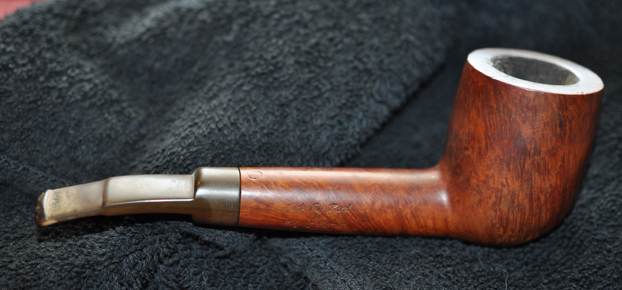
Restoring a No Name Natural Finished Oom Paul


Blog by Steve Laug

The next pipe I have chosen to work on is a Natural Finish smooth Oom Paul with a bent saddle stem that I picked up in a lot of 10 pipes from a fellow on Vancouver Island who was selling his collection. This is the final pipe of the 10 so it has been a fun journey to clean them up. There is no stamping on the shank on either side. It is unmarked and a no name. The saddle stem has a no stamping either. The pipe is a nice looking pipe with some mixed grain around the bowl and shank. There are some small fills in the briar but not to ugly. It has a natural finish. It is light weight and comfortable pipe to hold. I brought it to the work table and turned it over in my hands. This is what I saw when I over the pipe.

  1. The natural finish was okay with some hand oils on the sides of the bowl and grime ground into the finish around the bowl sides. The finish is rough and unfinished. It looks dull but the it really highlights the grain around the bowl sides and shank. There are some fills on the bowl – right side toward the top front, back of the rim top and one on the top of the full bent shank.
  2. The smooth rim top was okay and the inner and outer edges looked good. There was no lava build on the top and the beveled inner edge. There was some grime on the rim top and a burn mark on the top front of the rim and the bevel.
  3. There was a light cake in the bowl. It held the aroma of the tobaccos smoked in it – fortunately not aromatic. The walls looked to be undamaged but once I removed the light cake I could confirm that.
  4. The vulcanite saddle stem is in good condition with just some oxidation and light tooth marks and chatter on the top and underside ahead of the button.
  5. The heel of the bowl has a sanded spot that is flat and has not been sanded or smoothed out. It was made to be a sitter but it had not been finished out.

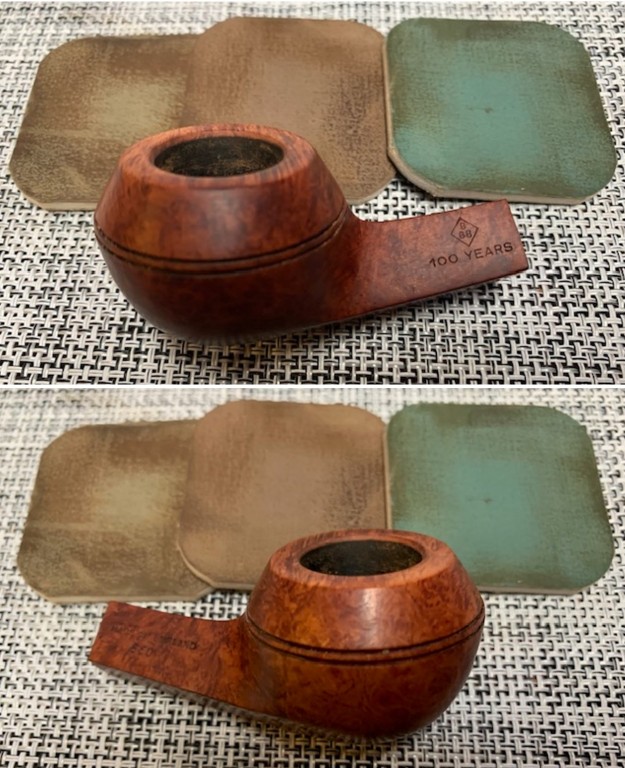
To summarize what I saw – this no name Oom Paul is a well made pipe. It is a dirty but otherwise in good condition. The stem is lightly tooth marked but otherwise undamaged. There does not appear to be any calcification, only some light oxidation on the stem surface. The look and feel of the pipe in the hand is great. It is going to clean up very well. Here are photos of the pipe before I started my clean up.   The bowl of the pipe looked good. The rim top is clean but there is some darkening on the beveled inner edge of the bowl on the back right side. There was a burn mark on the rim top at the front of the bowl. There does not seem to be any damage to the smooth finish. I see no warning signs in the rim top or the edges of the bowl. I took photos of the stem to show the condition of it. Though hard to see there are light tooth chatter on the surface of both sides ahead of the button but it should clean up easily with polishing. The next photo captures the flattened heel of the bowl. It is still roughly finished and will need some sanding. I removed the stem from the shank and took a photo of it to give a sense of proportion. Now it was time to work on the pipe itself. I started my work on the pipe by cleaning the internals. The cake was quite thin but it can hold residual oils from previous tobaccos and I wanted to check the bowl walls for burn damage or checking. I reamed it with a Savinelli Fitsall Pipe knife and took the cake back to bare briar. I sanded the walls with 220 grit sandpaper wrapped around a piece of dowel. I worked on them until they were smooth. There was no checking or burn damage to the bowl walls. It was quite clean. I cleaned out the internals of the shank and the airway in the stem with 99% isopropyl alcohol, cotton swabs and pipe cleaners. I worked them over until they were clean.  I scrubbed the bowl with acetone and a cotton pad to remove the oils on the sides of the bowl and spottiness from the bowl and shank. It looked much better once it dried off.  I polished the briar with micromesh sanding pads. I choose to dry sand the briar rather than wet sand it. Again it is a matter of personal preference. I prefer to use the pads dry and find they work very well on the briar. I sand with each pad (9 in total) and group them by threes for ease of reference. I wipe the bowl down after each pad with a damp cloth to remove the sanding debris and check the briar. I love seeing the developing shine on the briar as I move through the pads which is why I include so many photos of this step. I worked some Before & After Restoration Balm into the finish on the bowl and shank. I worked it into the surface of the briar with my fingertips to clean, enliven and protect the wood. Once the bowl was covered with the balm I let it sit for about 15 minutes and buffed it off with a soft cotton cloth and the shoe brush. I polished it with a microfiber cloth. I took photos of the pipe at this point in the process to show what the bowl looked like at this point. It is really a beauty. I set the bowl aside and worked on the stem. I dry sanded both sides of the stem with 1500-12000 grit pads to polish it further. I wiped it down with a cloth impregnated with Obsidian Oil after each sanding pad. Though I know that it does not do much with the acrylic I find that it still adds depth to the final shine on the stem which grew deeper with each sanding pad.  I finished polishing the stem with Before & After Pipe Polish – both Fine and Extra Fine polishes. I wiped the stem down with some Obsidian Oil afterwards and buffed it with a soft microfiber cloth. I took the No Name Oom Paul to the buffer to wax and polish. I buffed the bowl and stem with Blue Diamond polish on the wheel to polish out the scratches in the vulcanite. I gave the pipe multiple coats of carnauba wax on the wheel and then buffed the pipe with a clean buffing pad to raise the shine. I hand buffed it with a microfiber cloth to deepen the shine. The pipe polished up pretty nicely. The Natural finish used on the briar brings out the grain and the bowl looks excellent with the shine and the bent saddle stem. The rich finish around the bowl and shank is quite remarkable and gives the pipe a great look. The No Name Oom Paul is a beautiful pipe and one that will be a great smoking pipe. The finished pipe is shown in the photos below with each of the stems. The dimensions of the pipe are Length: 5 inches, Height: 2 inches, Outside diameter of the bowl: 1 ¼ inches, Chamber diameter: ¾ of an inch. The weight of the large pipe is a light and comfortable 55 grams/1.94 ounces. This is a great looking Natural Finish Oom Paul. I will be adding it to the rebornpipes store in the American Pipe Makers Section. If you want to add it to your rack let me know. Thanks for walking through the restoration with me. Cheers.
Fixing Up a Hardcastle Apple


Blog by Kenneth Lieblich

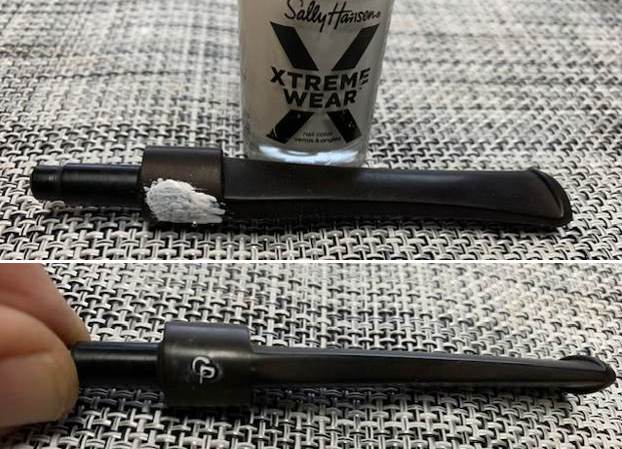
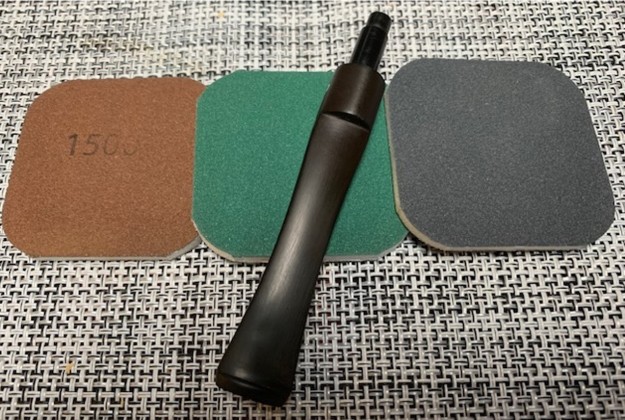
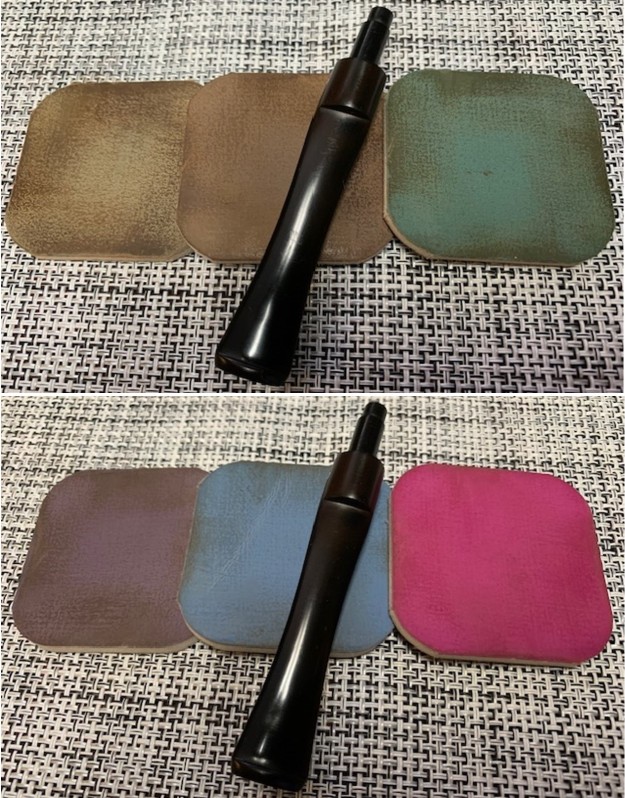
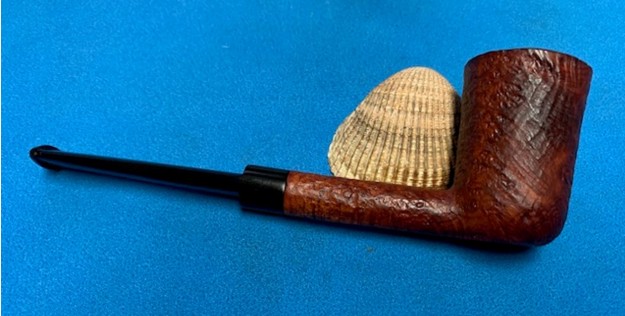
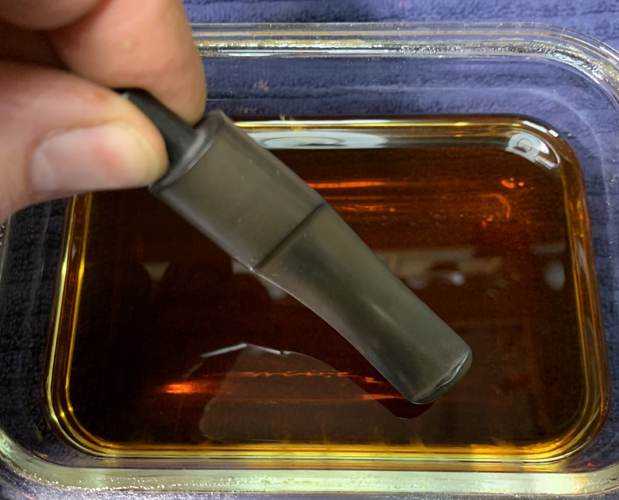
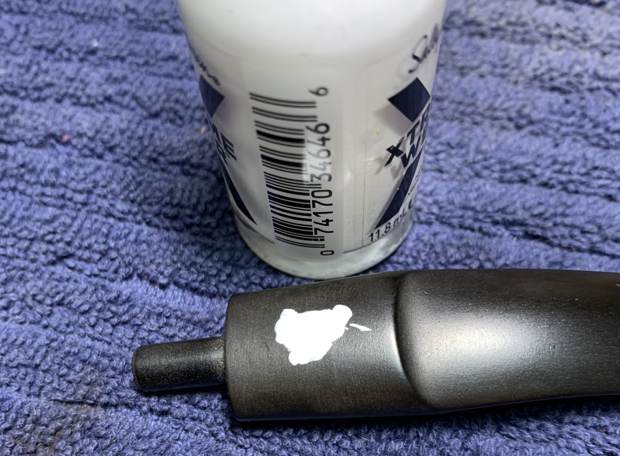
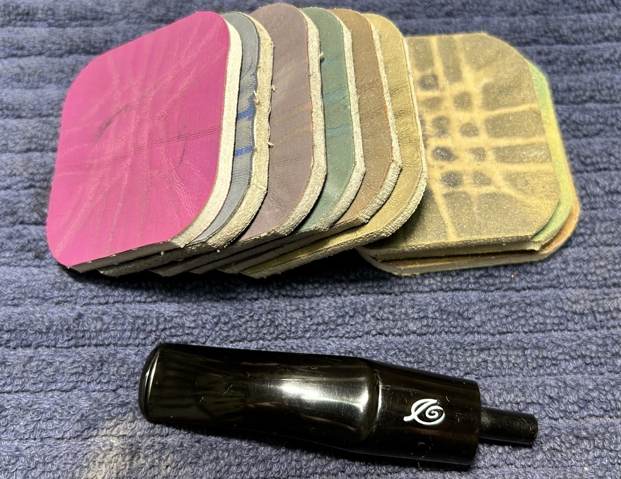
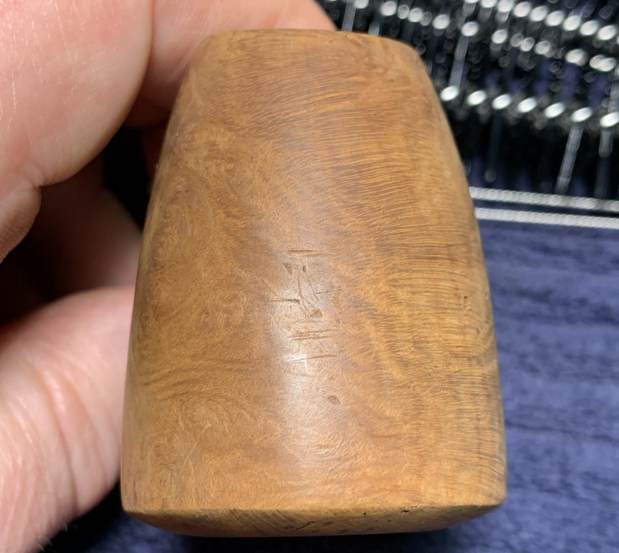
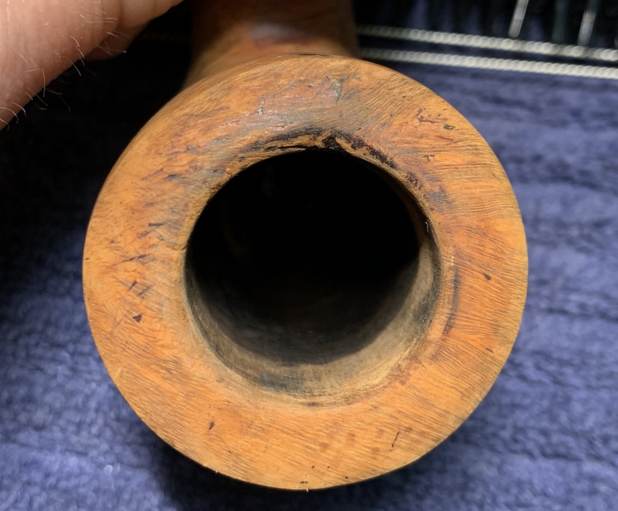
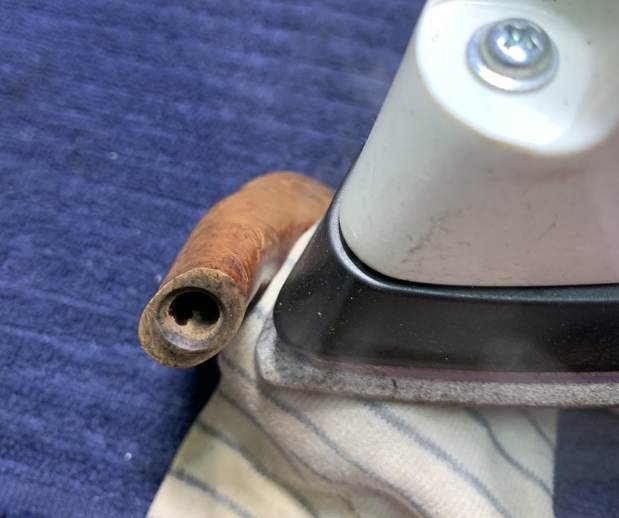
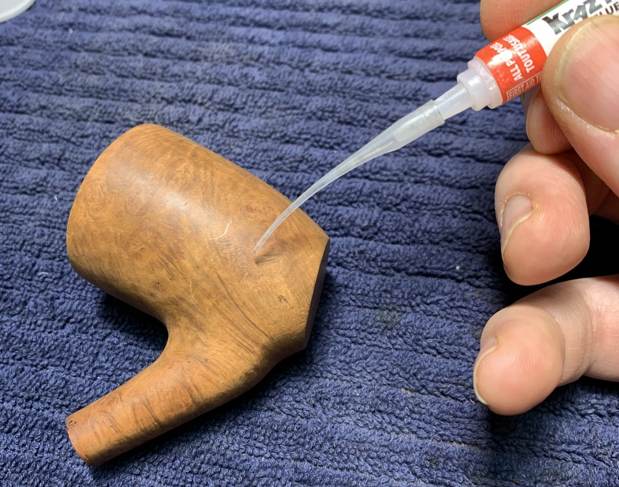
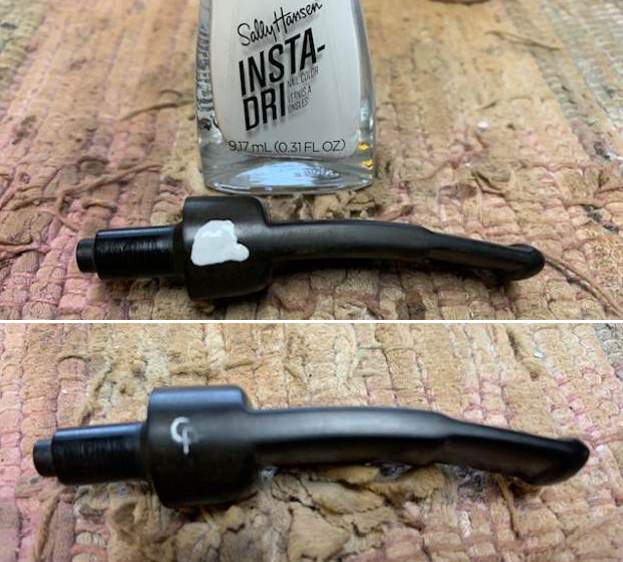
Next on the chopping block is a handsome and gently-bent Hardcastle Lightweight apple, acquired from a local gentleman who’d sadly given up the hobby. It was well used, but it had a certain charm and I felt I could tease out its beauty from under the grime. The markings read as follows. On the left side of the shank: Hardcastle’s [over] British Made [over] Lightweight. On the left of the stem is the stylized “H”, of the Hardcastle company.The Hardcastle name has been around for 120 years and has an interesting history. As usual, I went to Pipedia and Pipephil to see more. Pipepedia has a good article, which I recommend you read here. Meanwhile, Pipephil provided the following information:On to the pipe. There was plenty of cake and lava on the stummel, and the opening of the bowl was slightly out of round, possibly due to bad reaming. The outside of the bowl had a couple of fills, and numerous scratches and nicks. It’s clearly been roughly manhandled during its life. The stem was in far worse shape than the photographs show – the mouthpiece had calcification and some oxidation, and there were many tooth marks and scratches, a deep tooth dent on the underside, and the bit was also badly dented. Time to get this pipe cleaned up. The stem was first on my list. I cleaned out the inside with pipe cleaners and isopropyl alcohol. It was fairly dirty but didn’t take too long to clean out. Then I wiped the outside down with Murphy’s Oil Soap on some cotton pads. I also took a BIC lighter and “painted” the stem with its flame to lift the few bite marks and dents. This was moderately successful in raising some of the damage. I then wiped down the stem with SoftScrub cleaner to remove surface oxidation. Once this process was done, the stem went for an overnight soak in the Pipe Stem Oxidation Remover. The next day, I used SoftScrub again with some cotton rounds. After this, I used some nail polish to restore the logo on the stem. I painted the area carefully and let it fully set before proceeding. I also built up the dents on the stem with black cyanoacrylate adhesive and let them fully cure. Forgot to snap a picture of that.I then sanded the adhesive down with 220- and 400-grit sandpapers and used all nine Micromesh pads (1,500 through 12,000 grit) to bring out the lovely black lustre on the stem. I also used Obsidian Pipe Stem Oil in between each pad scrubbing. This stem has had a hard life, and the result was not perfect – but it is a vast improvement on its condition when I got it.Now for the stummel. Firstly, I decided to ream out the bowl. I used the PipNet Reamer and the KleenReem to remove the built-up cake and followed that with 220-grit sandpaper taped to a dowel to eliminate as much as I could. I took the chamber down to bare briar, as I wanted to ensure there were no hidden flaws in the wall. Fortunately, there were none. I then proceeded to clean out the insides of the shank with Q-tips, pipe cleaners, and lemon-infused isopropyl alcohol. There was a bit of filth inside this stummel and it took a fair amount of cotton to get it clean. I followed that up by cleaning the insides with some dish soap and tube brushes. I used cotton rounds and some Murphy’s Oil Soap to scrub the outside of the stummel and a toothbrush with Murphy’s for the lava on the rim of the pipe. Having completed that, I was able to address the small nicks on the rim and the bowl. I dug out my iron and a damp cloth to try to raise the nicks. The hot and moist steam can often cause the wood to swell slightly and return to shape. This worked very well and many of the scratches were corrected with this method.Now I could tackle the burn on the rim. I used a piece of tool steel to gently scrape away the burn residue, but the burns were more serious than I’d hoped. So, I “topped” the pipe – that is, I gently and evenly sanded the rim on a piece of 220-grit sandpaper. This effectively removed the damage without altering the look of the pipe.Due to the burning on the rim of the pipe, I used my wood sphere, wrapped in 220-grit sandpaper, to create a beautiful, chamfered edge on the rim. This also helped return the opening of the bowl to round.  I think the results turned out very nicely. Unaccountably, I ran out of cotton balls with which to ghost the pipe. So, in a pinch, I used the old trick of replacing it with salt (in this case, pickling salt). Long ago, Steve had told me that he much preferred cotton balls to salt, and I simply took him at his word, not knowing any better. Having now used salt myself, I am wholeheartedly in agreement with Steve. What a pain in the gluteus maximus! Oh, it works just fine, but it’s a mess and the salt can (potentially) damage the wood. Now it was time to repair the tiny fills on the bowl. I repaired them with a mixture of briar dust and cyanoacrylate adhesive. This ensures a strong repair and one that looks similar to the surrounding wood. As you can see, I made a mess, to begin with, but I sanded the repair down with 200- and 400-grit sandpaper until it was level with the surrounding briar. Then, I used all nine Micromesh pads (1,500 through 12,000 grit) on the stummel to finish it off. Much improved. I applied some Before & After Restoration Balm to moisturize the wood and draw out its beauty. Finally, I took it to my bench buffer. A dose of White Diamond and a few coats of carnauba wax were just what this pipe needed. This Hardcastle much improved and is ready to be enjoyed again by the next owner. I am pleased to announce that this pipe is for sale! If you are interested in acquiring it for your collection, please have a look in the British pipe section of the store here on Steve’s website. You can also email me directly at kenneth@knightsofthepipe.com. The approximate dimensions of the pipe are as follows: length 5⅜ in. (137 mm); height 1⅜ in. (35 mm); bowl diameter 1¼ in. (32 mm); chamber diameter ⅝ in. (16 mm). The weight of the pipe is ⅝ oz. (20 g). I hope you enjoyed reading the story of this pipe’s restoration as much as I did restoring it. If you are interested in more of my work, please follow me here on Steve’s website or send me an email. Thank you very much for reading and, as always, I welcome and encourage your comments.

Restoring a Black Falcon Base with a Meerschaum Bowl and a Dental Bit


Blog by Steve Laug

The next pipe I have chosen to work on is a nice looking Meerschaum Bowl Black Falcon with a a vulcanite dental bit stem that I picked up in a lot of 10 pipes from a fellow on Vancouver Island who was selling his collection. The stamping on a heel of the bowl reads Falcon [over] Made in [over] England. The vulcanite dental taper stem has a stamped Falcon logo on the topside. The pipe is a nice looking Meerschaum. It is light weight and comfortable to hold. I brought pipe to the work desk and turned it over in my hands. It was in good condition.

This is what I saw when I examined it.

  1. The finish on the smooth meerschaum was very good with a light patina developing around the rim top of the bowl. The fit and finish on the bowl and stem is very good.
  2. The smooth rim top looked very good with some light patina developing. There was no lava build on the top and the edges were clean and undamaged.
  3. There was no cake in the bowl. It held the aroma of the tobaccos smoked in it – fortunately not aromatic. My guess is that when I remove the bowl from the base that will be solved. The walls looked to be undamaged but once I removed the light cake I could confirm that.
  4. The bowl sits snug in the base with no gaps or signs of leakage around the joint.
  5. The vulcanite dental bit has a Falcon stamped on top that identifies it as a Falcon pipe. It is in excellent condition with no tooth chatter and marks on the top and underside ahead of the button.

To summarize what I saw – the Black Falcon Meerschaum Bowled pipe is in excellent condition. It is a little dusty but otherwise looks good. The vulcanite dental bit is clean and no marks are on the ridges of the bit. The look and feel of the pipe in the hand is great. It is going to clean up very well. Here are photos of the pipe before I started my clean up. The bowl of the pipe looked very good. The rim top is clean does not seem to have any damage to the smooth finish. The edges of the bowl were undamaged and looked very good. I took photos of the stem to show the condition of each one. Though hard to see there was light tooth chatter on the surface of both sides ahead of the button but it should clean up easily with micromesh pads.The next photo captures the stamping a smooth patch on the underside of the base. It read as I have noted above. I took a photo of the logo on the topside of the stem as well.I removed the bowl from the base and took some photos. There was a pipe cleaner ring in the bottom of the base that was used as a Falcon filter ring. It absorbed the tars and oils from the smoke. It was stiff and dirty. The base underneath is also dirty.I took photos of the bowl to show the condition. The top looked very good in the photos and it has some developing patina. There were no nicks or scratches in the meerschaum bowl – top, sides or base. The base is quite unique and not one I had seen before. There was a nylon threaded ring around the meerschaum end. Around the top of the nylon base there was a rubber “O-ring”. I took photos of the base. The painted black base and shank is clean and undamaged. Like other Falcons I have worked on the stem is pressed into place and is not easily removable. It looks to be in good condition.I used a dental pick to remove the pipe cleaner ring from the bottom of the base. Once it was out of the bowl you can see the oils and debris in the base. I cleaned it out with alcohol, cotton swabs and pipe cleaners. I used pipe cleaners to clean out the shank and the stem. I polished the meerschaum rim top and bowl sides with micromesh sanding pads – dry sanding with 1500-12000 grit pads. I wiped the meer down after each sanding pad using a damp cloth to remove the sanding debris. It took on a rich shine. I set the bowl aside and turned my attention to the stem. It was new so it only needed to be polished. I use micromesh sanding pads and water to wet sand the stem with 1500-12000 grit sanding pads. I wiped it down after each sanding pad with Obsidian Oil on a cotton rag after each sanding pad as I find it does two things – first it protects the vulcanite and second it give the sanding pads bite in the polishing process. After finishing with the micromesh pads I rub the stem down with Before & After Fine and Extra Fine stem polish as it seems to really remove the fine scratches in the vulcanite. I rub the Fine Polish on the stem and wipe it off with a paper towel and then repeat the process with the Extra Fine Polish. I finished the polishing of the stem down with a final coat of Obsidian Oil and set the stem aside to let the oil absorb. This process gives the stem a shine and also a bit of protection from oxidizing quickly.   I took the Black Falcon with a Meerschaum bowl to wax and polish. I buffed the bowl and stem with Blue Diamond on the buffing wheel to polish out the scratches in the acrylic. I gave the bowl and stem several coats of carnauba wax on the wheel. I buffed the pipe with a clean buffing pad to raise the shine. I hand buffed it with a microfiber cloth to deepen the shine. The pipe polished up pretty nicely. The contrast of the natural colour of the meerschaum bowl with the shine of the polished black base and stem is stunning. The smooth finish around the bowl and shank is quite remarkable and gives the pipe a beautiful look. The Falcon Meerschaum is a nice looking pipe and one that will be a great smoking pipe. The finished pipe is shown in the photos below with each of the stems. The dimensions of the pipe are Length: 6 inches, Height: 1 ½ inches, Outside diameter of the bowl: 1 ¾ inches, Chamber diameter: ¾ of an inch. The weight of the large pipe is a light and comfortable 35 grams/1.23 ounces. It is an interesting Freehand that I wish I could learn more about but as it is it should be a fun smoke. I will be putting it on the rebornpipes store in the British Pipe Makers Section. As always I encourage your questions and comments as you read the blog. Thanks to each of you who are reading this blog. Remember we are not pipe owners; we are pipemen and women who hold our pipes in trust until they pass on into the trust of those who follow us.
Restemming and Restoring a Brigham Voyageur 165 Bent Acorn


Blog by Steve Laug

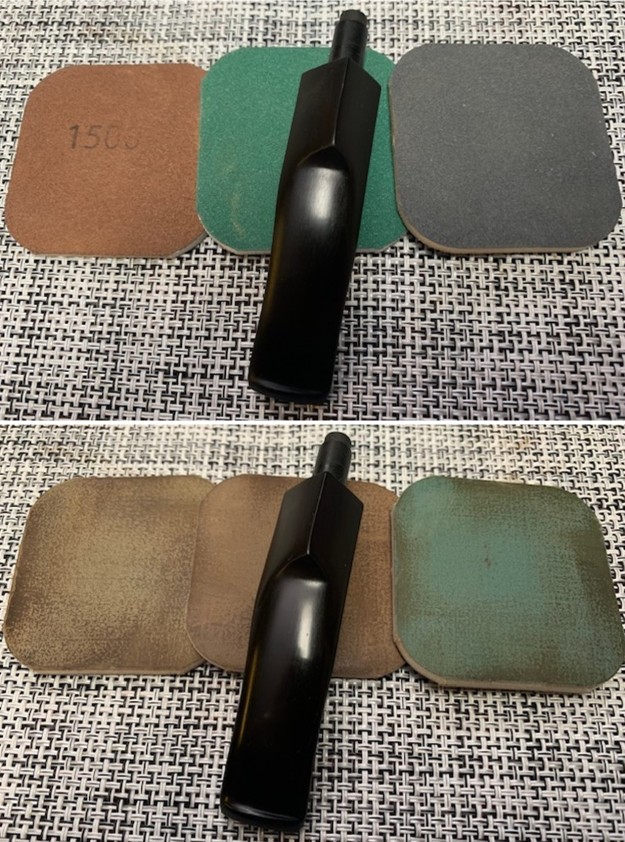
The next pipe on the table is another that the Vancouver pipe man dropped off for me to work on for him. It was stamped Brigham Voyageur 165 and had a mixed finish of smooth top and rusticated bowl and shank. It is a Bent Acorn that was finished in a brown stain. It needed restoration on the bowl which was moderately caked and the shank was dirty. It also needed new stem as the current push stem was chewed and broken at the button. It was another pipe that I had previously repaired for him back in 2017. At that point it needed had done a complete restoration and fitted a regular push stem as requested. It had a thick cake at that point as well and was well used. The original stem had nylon Brigham system tenon that was broken as well. Here is the link to that restoration. (https://rebornpipes.com/2017/04/02/restemming-and-reconditioning-a-brigham-voyageur-165/). Here are some photos of the pipe when he picked it up in 2017 to give a bit for context for my work. When I took the pipe out of the bag of pipes he brought for me to work on it last evening this is what I saw. The finish on the briar looked very good. It was dirty but the colour had stayed true. It had a bit of patina on the bowl but it was beautiful. The bowl had a moderate cake and the airway in the shank was dirty. The stem was oxidized, calcified and had a large chunk of vulcanite missing on the underside. I took photos of the rim top and the thick cake in the bowl to show how it looked. There was also tobacco debris on the walls. The rim top had some darkening and there were nicks around the inner edge of the bowl. It will clean up pretty well. The photos of the stem show the condition of the stem. You can see the tooth marks and chatter under the calcification on the stem surface.I took a photo of the stamping on the smooth panel on the left side of the shank. You can see it is clear and readable and reads as noted above. I removed the stem from the shank to give a sense of the flow of the pipe.Now it was time to work on the pipe itself. I started my work on the pipe by cleaning and reaming the bowl The cake was quite thick but it can hold residual oils from previous tobaccos and I wanted to check the bowl walls for burn damage or checking. I reamed it with a PipNet pipe reamer to cut cake back to bare briar. I cleaned up the remnants of the cake with a Savinelli Fitsall Pipe knife. I sanded the walls with 220 grit sandpaper wrapped around a piece of dowel. I worked on them until they were smooth. There was no checking or burn damage to the bowl walls. It was quite clean. I cleaned out the internals with 99% isopropyl alcohol, pipe cleaners and cotton swabs. I worked over the shank and the airway in the stem. It took some work but once finished it was clean and smelled fresh.I polished the rim top with micromesh sanding pads – dry sanding with 1500-12000 grit pads. I wiped the briar down with a damp cloth after each sanding pad. It took on a real shine by the time I finished with the last sanding pad. I worked some Before & After Restoration Balm into the smooth rim and the rusticated finish on the bowl and shank. I worked it into the surface of the briar with my fingertips to clean, enliven and protect the wood. I used a horse hair shoe brush to work it into the crevices and keep from building up in the valleys and crevices of the finish. Once the bowl was covered with the balm I let it sit for about 15 minutes and buffed it off with a soft cotton cloth and the shoe brush. I polished it with a microfiber cloth. I took photos of the pipe at this point in the process to show what the bowl looked like at this point. Now it was time to deal with the replacement stem. I went through my can of stems and found an interesting bent taper vulcanite stem that was a perfect fit. It was a 6 dot Brigham stem that someone had cut off to be a push stem. It would not hold a filter so it was relegated to my can. Since the pipeman wanted a replacement push stem I would be able to modify it to work perfectly. Because the modified Brigham stem was made for the Hardrock Maple filter it was a wide open draw. I used a piece of Delrin tubing to make a converter to fit in the tenon and change it to a regular bore. I used a Dremel and sanding drum to reduce the diameter of the Delrin so that it would fit into the tenon. It worked well as can be seen in the second photo below. It is longer than necessary in the photos below but I cut it and shaped the end like other converters that have been used on Savinelli pipes.I build up the damage to the button edge on the top and the marks in the top and underside of the stem with black CA rubberized glue. Once it had cured I used a small file to recut the button edged and flattened the repairs. I smoothed out the repairs and worked on the stem diameter at the shank with 220 grit sandpaper to get a good seat. I started polishing the stem with 600 grit wet dry sand paper. I use micromesh sanding pads and water to wet sand the stem with 1500-12000 grit sanding pads. I wiped it down after each sanding pad with Obsidian Oil on a cotton rag after each sanding pad as I find it does two things – first it protects the vulcanite and second it give the sanding pads bite in the polishing process. After finishing with the micromesh pads I rub the stem down with Before & After Fine and Extra Fine stem polish as it seems to really remove the fine scratches in the vulcanite. I rub the Fine Polish on the stem and wipe it off with a paper towel and then repeat the process with the Extra Fine Polish. I finished the polishing of the stem down with a final coat of Obsidian Oil and set the stem aside to let the oil absorb. This process gives the stem a shine and also a bit of protection from oxidizing quickly.I took the Brigham Voyageur 165 Bent Acorn bowl to wax and polish. I don’t buff the rusticated bowl on the wheel as it leaves a lot of grit in the deep grooves of the finis. I gave the bowl and shank multiple coats of Conservator’s Wax and buffed it with a shoe brush to raise the shine. The wax is great protection and I love using it on sandblast finishes because it does not build up in the grooves and valleys like carnauba wax does. I buffed it by hand with a microfiber cloth to finish the shine. I polished the stem with Blue Diamond on the buffing wheel to polish out the scratches in the acrylic. I buffed the pipe with a clean buffing pad to raise the shine. I hand buffed it with a microfiber cloth to deepen the shine. The pipe polished up pretty nicely. The contrast of the dark stain on the briar with the shine of the polished acrylic stem is quite stunning. The rich sandblast finish around the bowl and shank is quite remarkable and gives the pipe an incredible tactile presence. The Brigham Voyageur Bent Acorn is a nice looking pipe and one that will be a great smoking pipe. The finished pipe is shown in the photos below with each of the stems. The dimensions of the pipe are Length: 6 inches, Height: 2 inches, Outside diameter of the bowl: 1 ¼ inches, Chamber diameter: ¾ of an inch. The weight of the large pipe is a light and comfortable 51 grams/1.80 ounces. It is a beautiful pipe and the fourth of the five pipes left with me for work. Once I am finished with the lot he will get them back to enjoy once more. As always I encourage your questions and comments as you read the blog. Thanks to each of you who are reading this blog. Remember we are not pipe owners; we are pipemen and women who hold our pipes in trust until they pass on into the trust of those who follow us.
Restoring a Lightly Smoked Peterson’s Donegal Rocky 150 Straight Bulldog with 2 stems


Blog by Steve Laug

The next pipe I have chosen to work on is a nice looking rusticated reddish brown straight Bulldog with a silver band/adornment and a P-lip and a Standard vulcanite stem that I picked up in a lot of 10 pipes from a fellow on Vancouver Island who was selling his collection. The stamping on a smooth patch on the underside of the shank reads Peterson’s [arched over] of Dublin [over] Donegal [over] Rocky [over] the shape number 150. The silver band on the shank is stamped Peterson [arched over] P [over] of Dublin. The pair of vulcanite saddle stems have no stamping or marks. The pipe is a nice looking rusticated one. It is light weight and comfortable to hold. The pipe came in a pipe sock stamped Peterson of Dublin. I took the pipe out of the sock and turned it over in my hands. It was in good condition.This is what I saw when I took it out of the pipe sock.

  1. The finish was dusty in the grooves and valleys of the rustication. Otherwise it looked very good.
  2. The rusticated rim top looked very good other than the grime in the sandblast. There was no lava build on the top and the edges were clean and undamaged.
  3. There was a light cake in the bowl. It held the aroma of the tobaccos smoked in it – fortunately not aromatic. The walls looked to be undamaged but once I removed the light cake I could confirm that.
  4. The band is silver coloured and the stamping is very clear. I don’t think that it is silver more probably nickel. It is undamaged and clean.
  5. The two vulcanite saddle stem had no identifying logos or stamping. There was light tooth chatter and marks on both sides of both stems.
  6. The P-lip stem does not fit correctly in the shank. The tenon is too large to fit into the shank of the pipe clearly.

To summarize what I saw – this Peterson’s of Dublin Donegal Rocky 150 Bulldog is a well made pipe. It is dusty but otherwise in good condition. The two stems are lightly marked but otherwise undamaged. There does not appear to be any oxidation or calcification on the stem surface. The look and feel of the pipe in the hand is great. It is going to clean up very well. Here are photos of the pipe before I started my clean up. The first four photos show it with the standard fishtail stem. I took a photo of the pipe with the P-Lip style stem and the way it fit in the shank. The tenon was large at the back half of the tenon at the stem junction. I sanded the tenon with so a folded piece of 220 grit sandpaper to reduce it for a snug fit.I put the stem on the shank and took photos of the pipe with the P-Lip stem. I like the way it looks better with this stem! The bowl of the pipe looked very good. The rusticated rim top is clean does not seem to have any debris in the rustication. The edges of the bowl were undamaged and looked very good. I see no warning signs in the rim top or the edges of the bowl. I took photos of the stems to show the condition of each one. Though hard to see there are light tooth marks and chatter on both pipes on the surface of both sides ahead of the button but it should clean up easily with sandpaper. The next photo captures the stamping on the left underside of the diamond shank. They read as I have noted above. I removed the stem from the shank and took a photo of it to give a sense of proportion. Now it was time to work on the pipe itself. I started my work on the pipe by cleaning the internals. The cake was quite thin but it can hold residual oils from previous tobaccos and I wanted to check the bowl walls for burn damage or checking. I reamed it with a Savinelli Fitsall Pipe knife and took the cake back to bare briar. I sanded the walls with 220 grit sandpaper wrapped around a piece of dowel. I worked on them until they were smooth. There was no checking or burn damage to the bowl walls. It was quite clean.I cleaned out the internals of the shank and the airway in the stem with 99% isopropyl alcohol, cotton swabs and pipe cleaners. I worked them over until they were clean. I worked some Before & After Restoration Balm into the rusticated finish on the bowl and shank and the rim top. I worked it into the surface of the briar with my fingertips to clean, enliven and protect the wood. I used a horse hair shoe brush to work it into the crevices and rings around bowl cap. Once the bowl was covered with the balm I let it sit for about 15 minutes and buffed it off with a soft cotton cloth and the shoe brush. I polished it with a microfiber cloth. I took photos of the pipe at this point in the process to show what the bowl looked like at this point. The Donegal Rocky finish looks very good and has a real touch of beauty. I set the bowl aside and worked on the stems. I sanded out the tooth marks and chatter with 220 grit sandpaper. I started polishing it with 600 grit wet dry sandpaper. The stems certainly looked much better. I dry sanded both sides of the stems with 1500-12000 grit pads to polish it further. I wiped them down with a cloth impregnated with Obsidian Oil after each sanding pad. The shine grew deeper with each sanding pad. I finished polishing the stem with Before & After Pipe Polish – both Fine and Extra Fine polishes. I wiped the stem down with some Obsidian Oil afterwards and buffed it with a soft microfiber cloth. I put the Peterson’s Donegal Rocky 150 Straight Bulldog back together. I don’t buff the rusticated bowl on the wheel as it leaves a lot of grit in the deep grooves of the finis. I gave the bowl and shank multiple coats of Conservator’s Wax and buffed it with a shoe brush to raise the shine. The wax is great protection and I love using it on sandblast finishes because it does not build up in the grooves and valleys like carnauba wax does. I buffed it by hand with a microfiber cloth to finish the shine.I polished the stem with Blue Diamond on the buffing wheel to polish out the scratches in the acrylic. I buffed the pipe with a clean buffing pad to raise the shine. I hand buffed it with a microfiber cloth to deepen the shine. The pipe polished up pretty nicely. The contrast of the browns and reds of the stain on the briar with the shine of the polished vulcanite stems is quite stunning. The rich rusticated finish around the bowl and shank is quite remarkable and gives the pipe an incredible tactile presence. I polished the stem with Blue Diamond on the buffing wheel to polish out the scratches in the acrylic. I buffed the pipe with a clean buffing pad to raise the shine. I hand buffed it with a microfiber cloth to deepen the shine. The pipe polished up pretty nicely. The contrast of the browns and reds of the stain on the briar with the shine of the polished vulcanite stems is quite stunning. The rich rusticated finish around the bowl and shank is quite remarkable and gives the pipe an incredible tactile presence. The Peterson’s Donegal Rocky 150 Bulldog is a beautiful pipe and one that will be a great smoking pipe. The finished pipe is shown in the photos below with each of the stems. The dimensions of the pipe with the P-Lip stem are Length: 5 ½ inches, Height: 1 ¾ inches, Outside diameter of the bowl: 1 ¼ inches, Chamber diameter: ¾ of an inch. The weight of the large pipe is a light and comfortable 45 grams/1.62 ounces. The dimensions of the pipe with the fishtail stem are Length: 5 ½ inches, Height: 1 ¾ inches, Outside diameter of the bowl: 1 ¼ inches, Chamber diameter: ¾ of an inch. The weight of the large pipe is a light and comfortable 47 grams/1.66 ounces. This is a great looking Peterson’s Donnegal Rocky pipe. I will be adding it to the rebornpipes store in the Irish Pipe Makers Section. If you want to add it to your rack let me know. Thanks for walking through the restoration with me. Cheers.

Repairing a Cracked Shank and Banding a Jost’s Supreme Diamond Shank Bent Billiard


Blog by Steve Laug

The next pipe on the table is another that the Vancouver pipe man dropped off for me to work on for him. It was stamped Jost’s Supreme and had a natural finish around the bowl. It is a bent diamond shank Billiard with some interesting grain. It needed restoration on the bowl which was heavily caked and the shank had the remnants of a paper wrap that had been used to hold the stem in place due to the crack in the shank. It also needed a repair to the crack on a pipe that I had originally worked on back in 2016. When I originally had worked on it the pipe had a thick cake and was well used. Here is the link to that restoration that I did back when I first picked it up (https://rebornpipes.com/2016/11/11/restoring-the-fourth-classic-find-a-josts-supreme-diamond-shank-bent-billiard/).The stem had tooth marks, tooth chatter and a lot of oxidation and calcification on the stem. Here are some photos of the pipe when he picked it up in 2016 to give a bit for context for my work. When I took the pipe out of the bag to work on this morning this is what I saw. The finish on the briar looked very good. It was dirty and the natural finish looked dried out. There was a crack on the lower right side of the diamond shank. The stem was very loose in the shank and the tenon appeared to have been wrapped in paper to tighten it. The bowl had a very thick cake and the airway in the shank was dirty. I would need to be cleaned up before I worked on the shank repair and the fit of the stem in the shank. The stem was oxidized, calcified and had tooth marks and chatter on both sides ahead of the button. I took photos of the rim top and the thick cake in the bowl to show how it looked. The rim top had some darkening around the inner edge of the bowl. It will clean up pretty well. The photos of the stem show the condition of the stem. You can see the tooth marks and chatter under the calcification on the stem surface.I took a photo of the stamping on both sides of the shank. It is clear and readable as noted above. I took the stem off the shank and photographed the look of the pipe as a whole. It is a nice looking Diamond Shank Bent Billiard. I went back and reread the previous restoration blog that I written on the restoration the previous time I had worked on the pipe. I also was very interested to read the back story and history on the brand. I quote from the blog below.

In earlier blogs I have written about restoring another Jost’s pipe that I found. When I restored that pipe it was a brand I had heard of but was unfamiliar with. I researched the web to find some information about the brand. Here is a link to the blog I wrote on the Jost’s Olde English Deluxe: https://rebornpipes.com/2016/09/03/josts-olde-english-de-luxesupreme-overstamped-j214-bent-billiard/. I am quoting several of the paragraphs that summarize what I learned about the brand.

I looked up Jost’s pipes on the Pipephil site and found a pipe that had the same stamping on the left side of the shank as the one I was working on. The right side had slightly different stamping in that it had the classic COM stamp circle where the one I had was two lines Made in over England. It also had a picture of the circle J stamp on the stem. There was a note there the tobacco shop proprietor was Mrs. Henry A. Jost. Her resident carver was Harvey Raspberry.”

I also found a blog that is called ClassicPipeShop that even had a catalogue of the pipes made by the Jost’s Shop or were imported by them for their store. I quote that blog once more as it places the new pipe that I am working on now.

“I did some more hunting online and I found a blog that did a great write up on Jost’s Pipe Shop and gave some definitive information on the brand and grades of the pipes. Here is the link if you wish to read a well written history of the brand and also some interesting details about shop blends of tobacco. http://classicpipeshop.blogspot.ca/2015/03/josts-pipe-shop-201-north-6th-street-st.html

 “I have included the section of the blog on the pipes. It covers a lot of information regarding the source of the pipes and the levels/grades of pipes. Remember that the one I am working on is a De Luxe/Supreme. I quote:”

“Jost’s Pipes are closely tied to Comoy’s. Many of Jost’s pipes have the standard Comoy’s shape number and the “Made in England” in a circle. If the Jost’s pipe doesn’t have the “Made in England” it is probably made by Harvey Raspberry.”

“If the pipe has a shape number that is preceded by a “J” that is a Comoy’s product without question.  Typically these will have the words “Made in London England” on the reverse side of the shank from where the Jost stamp is made.  There are always exceptions to the rule but 95% of the time, this is accurate.”

“Many different levels of pipes were offered by Jost’s Pipe Shop.  From a 1950s catalog I have the following available:”

Jost Old English De Luxe: $85.00

These were typically of the highest… Grain is stunning and the briar is flawless.  These are the grade you should look out for as they are great smokers.

*Jost Old English Supreme: (no pricing available)

The majority of the Old English version pipes you see are marked Supreme.  These are stained in a darker color and are presumably from the same Algerian aged Briar as the De Luxe brothers.  These are also of the highest quality available. *(The current pipe I am working on is stamped Jost’s Supreme on the left side of the shank with no shape number and no Made in London England stamp.  If I read the information correctly it was one that was made by Harvey Raspberry, who was the shop pipe maker.)

Jost Virgin Briar Supreme: $35.00

Don’t see too many marked as Virgin Briar Supreme but you will often find “Supreme” Jost pipes on the second hand market (see above).  Excellent quality briar and displays the lighter toned finish of the De Luxe above.  Grain is not as flashy or desirable as the De Luxe model.

Jost Thames Briars: $25.00

I’ve seen these offered as blasted / rusticated pipes and look quite nice.  Most of the smooth finish Thames pipes are riddled with fills.  Good smokers but not much to look at (smooth).

Jost Sandblast Briars: $25.00

These are a great value.  The shop made sand-blasted pipes are usually quite large and snapped up very quickly by collectors.  The Comoy’s versions (with J shape #s) are of excellent quality and typically rather small compared to the shop-made variety.

Dukes Briars: $15.00

These come up very rarely.  The two I’ve seen in recent years are rather small in size.  Smooth finish with light / honey stain color.  Not sure what the story is behind these.

Now I knew the background on the pipe. I knew that the Supreme pipe was one of the higher end Jost’s in the Old English line. It was time to work on the pipe!

I decided clean up the pipe before I repaired the cracked shank. I reamed the bowl back to bare briar with a Pipenet Pipe Reamer using the third cutting head. I cleaned up the reaming with a Savinelli Fitsall Pipe Knife. I finished the bowl clean up with 220 grit sandpaper wrapped around a piece of dowel. The walls were smooth and there was no sign of burning or checking. It looked very good.   I cleaned out the internals with 99% isopropyl alcohol, pipe cleaners and cotton swabs. I worked over the shank and the airway in the stem. It took some work but once finished it was clean and smelled fresh. With the internals clean it was time to work on the cracked shank. I drilled a small pinhole at the end of the crack on the right underside of the shank. I do this to stop the crack from further spreading. I fill in the pinhole with clear CA glue and built up the surface of the crack at the same time. I squeezed the crack together and held it until the glue set. I spread the glue with a dental spatula and pressed into the shank crack. Once the repair cured I sanded it smooth with 220 grit sandpaper. I went through my bands and found a shank band/ferrule in nickel that was a snug fit on the shank. It was crowned and slightly dome so that would need to be flattened. I put the band a piece of dowel and used a ball peen hammer to flatten the top of the dome for a better fit with the stem.I heated the band with a lighter and pressed it onto the shank end. The fit of the ferrule to the shank was tight and it pulled the crack together even more than my clamping. It covered much of the stamping but the crack was quite long and I wanted some strong coverage. I put the stem on the shank and took photos of the new look of the pipe. I sanded the damage on the rim top and edges with 220 grit sandpaper. I was able to remove the majority of it with the sanding. There was some remaining darkening on the back inner edge of the bowl. I polished the bowl rim top with micromesh sanding pads – dry sanding with 1500-12000 grit pads. I wiped the briar down with a damp cloth after each sanding pad. It took on a real shine by the time I finished with the last sanding pad. I worked some Before & After Restoration Balm into the smooth rim and the sandblast finish on the bowl and shank. I worked it into the surface of the briar with my fingertips to clean, enliven and protect the wood. I used a horse hair shoe brush to work it into the crevices and keep from building up in the valleys and crevices of the finish. Once the bowl was covered with the balm I let it sit for about 15 minutes and buffed it off with a soft cotton cloth and the shoe brush. I polished it with a microfiber cloth. I took photos of the pipe at this point in the process to show what the bowl looked like at this point. I used a topping board with 220 grit sandpaper to try and flatten the remaining crown on the shank band/ferrule.Now it was time to address the part of the restoration I leave until last. I set the bowl aside and turned my attention to the stem. I filled in the deep grooves in the tenon to build it up and make it even. Once the repair cured I sanded it smooth to make it round and even once more. Once finished it looked better and the fit in the shank was very good. I wanted to adjust the bent in the stem as it had straightened a bit over time. I heated the blade with the flame of a Bic lighter. Once the vulcanite had softened I bent it to the correct angle and set the bend with cool water. It looks much better. I took the newly bent stem off the shank and worked on the stem surface to deal with the tooth marks and chatter. I used a folded piece of 220 grit sandpaper to remove the oxidation and calcification off the surface of the stem. I build up the damage to the top of the button edge with black CA rubberized glue. Once it had cured I recut the button edge and flattened the repairs. I smoothed out the repairs with 220 grit sandpaper and started polishing the stem with 600 grit wet dry sand paper. I use micromesh sanding pads and water to wet sand the stem with 1500-12000 grit sanding pads. I wiped it down after each sanding pad with Obsidian Oil on a cotton rag after each sanding pad as I find it does two things – first it protects the vulcanite and second it give the sanding pads bite in the polishing process. After finishing with the micromesh pads I rub the stem down with Before & After Fine and Extra Fine stem polish as it seems to really remove the fine scratches in the vulcanite. I rub the Fine Polish on the stem and wipe it off with a paper towel and then repeat the process with the Extra Fine Polish. I finished the polishing of the stem down with a final coat of Obsidian Oil and set the stem aside to let the oil absorb. This process gives the stem a shine and also a bit of protection from oxidizing quickly. The final steps in my process involve using the buffer. I first buff the stem and the briar with Blue Diamond on the buffing wheel. Blue Diamond is a plastic polish but I find that it works very well to polish out the light scratches in the vulcanite and the briar. I work the pipe over on the wheel with my finger or thumb in the bowl to keep it from becoming airborne. It works well and I am able to carefully move forward with the buffing. The briar and stem just shone!   I finished with the Blue Diamond and moved on to buffing with carnauba wax. Once I have a good shine in the briar and vulcanite I always give the bowl and the stem multiple coats of carnauba wax. I have found that I can get a deeper shine if I following up the wax buff with a clean buffing pad. It works to raise the shine and then I follow that up with a hand buff with a microfiber cloth to deepen the shine. It is always fun for me to see what the polished bowl looks like with the polished vulcanite stem. It really is a beautiful pipe. The smooth finish around the shows the grain shining through the buffed natural finish of this Jost’s Supreme Diamond Shank Bent Billiard. The finished pipe feels great in my hand. It is light and well balanced. Have a look at it with the photos below. The dimensions are Length: 5 ½ inches, Height: 2 inches, Outside diameter of the bowl: 1 ½ inches, Chamber diameter: 7/8 of an inch. The weight of the pipe is 1.62 ounces/46 grams. It is a beautiful pipe and the third of the five pipes for repair that I have ahead of me. Once I am finished with the lot he will get them back to enjoy once more. As always I encourage your questions and comments as you read the blog. Thanks to each of you who are reading this blog. Remember we are not pipe owners; we are pipemen and women who hold our pipes in trust until they pass on into the trust of those who follow us.
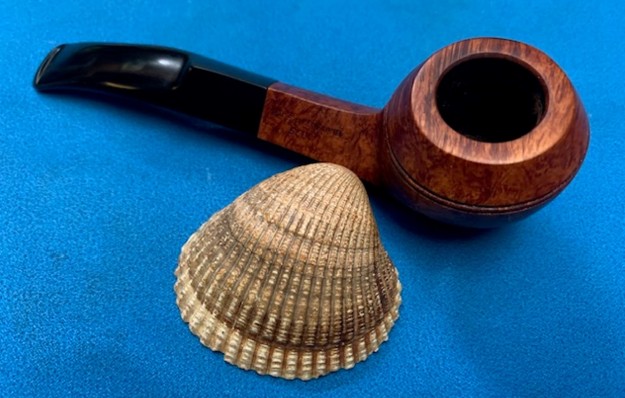
Restoring a Lightly Smoked Joe Case 2013 Hand Made Poker


Blog by Steve Laug

The next pipe I have chosen to work on is a nice looking rusticated Joe Case Poker that I picked up in a lot of 10 pipes from a fellow on Vancouver Island who was selling his collection. The stamping on the smooth heel of the bowl reads JC interlocked [over] the signature of Joe Case [over] 2013 followed by USA. The variegated silver acrylic saddle stem has no stamping or marks. There is a silver coloured (Stainless?) band on the shank that is decorative. It has four thin silver bands with the space between the final two painted black. The heel of the bowl and the rim top were smooth while the rest of the pipe is rusticated. The pipe came in a no name pipe sock. I took the pipe out of the sock and turned it over in my hands. It was in pretty good condition. This is what I saw
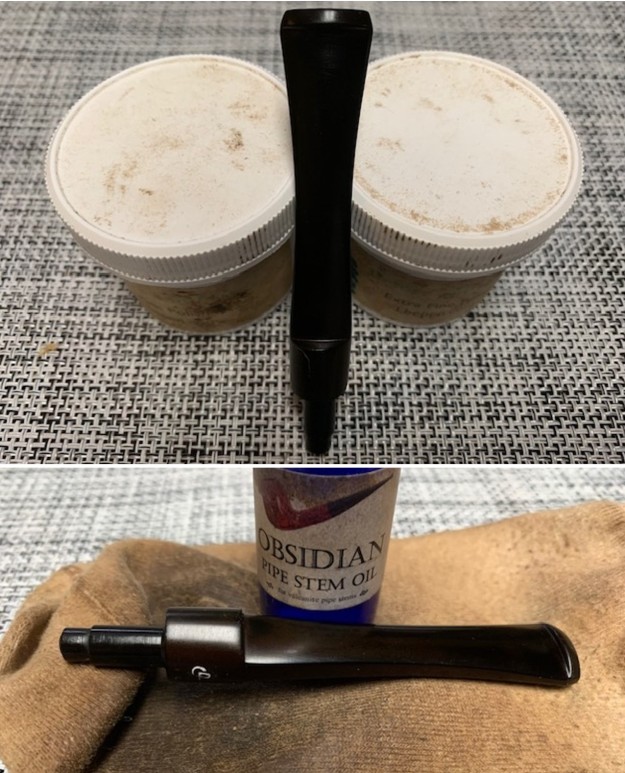
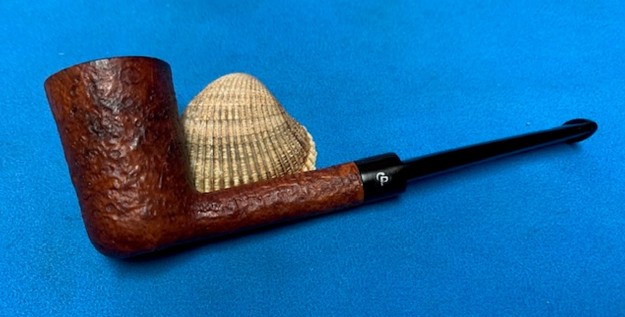
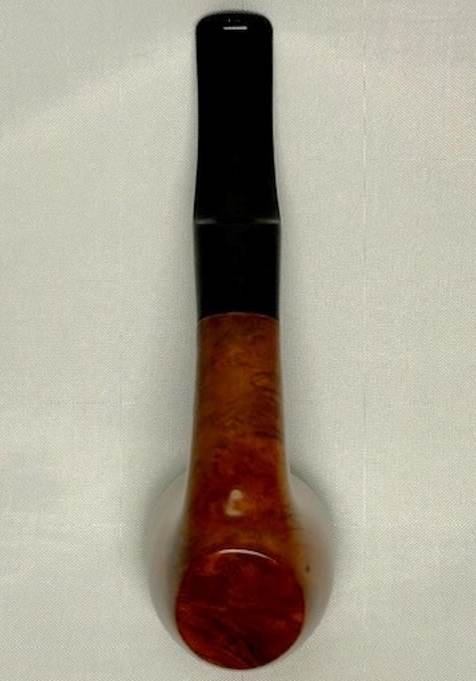
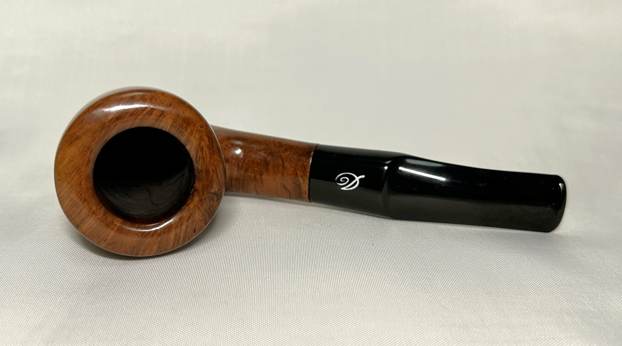
  1. The finish was dusty and dirty in the grooves and valleys of the bark like rusticated finish. Otherwise the finish looked very good.
  2. The smooth rim top showed some light darkening on the crowned top. There was no lava build on the rim top and the inner and outer edges of the bowl were clean and undamaged.
  3. There was a light cake in the bowl. It held the aroma of the tobaccos smoked in it but fortunately they were not aromatic. The walls looked to be undamaged but once I removed the light cake I would know more about that.
  4. The variegated grey/black acrylic saddle stem had no identifying logos or stamping. There was light tooth chatter and marks on both sides but nothing deep.

To summarize what I saw – this Joe Case Poker is a well made pipe as to be expected. It is dusty but otherwise in good condition. The acrylic stem is lightly marked but otherwise undamaged. The look and feel of the pipe is great in the hand and the rustication is well done. It is going to clean up very well. Here are photos of the pipe before I started my clean up. What do you see when you examine it?  The bowl of the pipe looked very good. The crowned rim top is clean other than a little darkening toward the back of the bowl. The edges of the bowl were undamaged and looked very good. I see no warning signs in the rim top or the edges of the bowl. I took photos of the acrylic stem to show its condition. Though hard to see there are light tooth marks and chatter on the surface of both sides ahead of the button but it should clean up easily with sandpaper.The next photo captures the stamping on the heel of the bowl. They read as I have noted above. I removed the stem from the shank and took a photo of the parts to give a sense of proportion.Joe Case made some of the most sought after, hand-crafted, custom pipes in America. They are truly works of art if you can find them. Joe died 12/22/21 in Nashville, Tennessee, USA. It is fascinating to me that he was not only a pipe maker but also a pastor who specialized in planting new churches (some thing we have in common as that is what I did for many years). He made beautiful pipes that are all on the larger size. The one I am working on is a large one – both tall and big. His pipes still come up now and again on eBay and other online sales sites and command a good price as they are limited in number since his death.

I found and interesting interview with Joe Case on Tobaccopipes.com that gives a great introduction to Joe and his philosophy of pipe carving. It also gives a good clue to the influences that moved him as a pipemaker. Here is the link – take time to give it a read (https://www.tobaccopipes.com/blog/joe-case-leads-a-wave-of-exciting-southern-pipe-makers-interview/).

I have also included a YouTube video that I found on the sight with Joe himself speaking with regard to his pipe making design and concepts. Give it a watch.

Armed with that information and renewing my knowledge of the brand it was time to work on the pipe. I started my work on the pipe by cleaning the internals. The cake was quite thin but it can hold residual oils from previous tobaccos and I wanted to check the bowl walls for burn damage or checking. I reamed it with a Savinelli Fitsall Pipe knife and took the cake back to bare briar. I sanded the walls with 220 grit sandpaper wrapped around a piece of dowel. I worked on them until they were smooth. There was no checking or burn damage to the bowl walls. It was quite clean.I cleaned out the internals of the shank and the airway in the stem with 99% isopropyl alcohol, cotton swabs and pipe cleaners. I worked them over until they were clean.  I scrubbed the externals of the bowl and shank with undiluted Murphy’s Oil Soap and a tooth brush. I worked the soap into the grooves and valleys in the finish. I rinsed it off with warm running water. I dried it with a soft cotton towel. The bowl looks much better at this point in the process of recovery. The band was loose on the shank so I gave the shank end a few drops of Weld Bond all purpose glue. I pressed it into place wiped off the excess.I polished the smooth crowned rim top with micromesh sanding pads – dry sanding with 1500-12000 grit  pads. I wiped the briar down with a damp cloth after each sanding pad. The rim top began to take on a rich shine. I worked some Before & After Restoration Balm into the rusticated finish on the bowl and shank and the smooth rim top. I worked it into the surface of the briar with my fingertips to clean, enliven and protect the wood. I used a horse hair shoe brush to work it into the crevices and keep from building up in the valleys and crevices of the finish. Once the bowl was covered with the balm I let it sit for about 15 minutes and buffed it off with a soft cotton cloth and the shoe brush. I polished it with a microfiber cloth. I took photos of the pipe at this point in the process to show what the bowl looked like at this point. I polished the silver band with a jewelers cloth. It is impregnated with an anti-tarnishing compound and polish. I rubbed the shank end band down with the cloth to polish and protect the band. It came out with a rich glow and shine. I set the bowl aside and worked on the stem. I dry sanded both sides of the stem with 1500-12000 grit pads to polish it further. I wiped it down with a damp cloth after each sanding pad. The shine grew deeper with each sanding pad. I finished polishing the stem with Before & After Pipe Polish – both Fine and Extra Fine polishes. I wiped the stem down with a damp cotton pad afterwards and buffed it with a soft microfiber cloth. I put the bowl and stem back together. I don’t buff the rusticated bowl on the wheel as it leaves a lot of grit in the deep grooves of the rustication. I gave the bowl and shank multiple coats of Conservator’s Wax and buffed it with a shoe brush to raise the shine. The wax is great protection and I love using it on rusticated and sandblast finishes because it does not build up in the grooves and valleys like carnauba wax does. I buffed it by hand with a microfiber cloth to finish the shine. I polished the stem with Blue Diamond on the buffing wheel to polish out the scratches in the vulcanite. I buffed the pipe with a clean buffing pad to raise the shine. I hand buffed it with a microfiber cloth to deepen the shine. The pipe polished up pretty nicely. The contrast of the blacks, dark browns and reds of the stain on the briar with the shine of the polished vulcanite stem is quite stunning. The dark and shallow rustication around the bowl and shank is quite remarkable and gives the pipe an incredible tactile presence. The smooth rim top is a great addition. This is truly a beautiful pipe and one that will be a great smoking pipe. The finished pipe is shown in the photos below. The dimensions of the pipe are Length: 5 ½ inches, Height: 2 ¼ inches, Outside diameter of the bowl: 1 ½ inches, Chamber diameter: ¾ of an inch. The weight of the pipe is a light and comfortable pipe for its size: 78 grams/2.75 ounces. This is the first Joe Case pipe that I have worked on. I will be putting it on the rebornpipes store in the American Pipe makers Section of the store. If you are interested in adding it to your collection let me know. Thanks for walking through the restoration with me. Cheers.