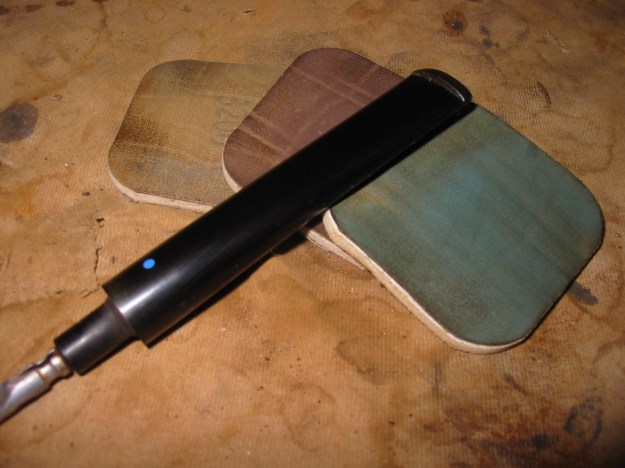
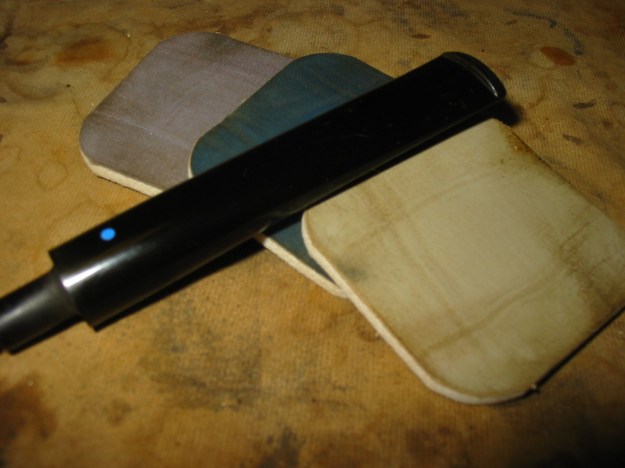
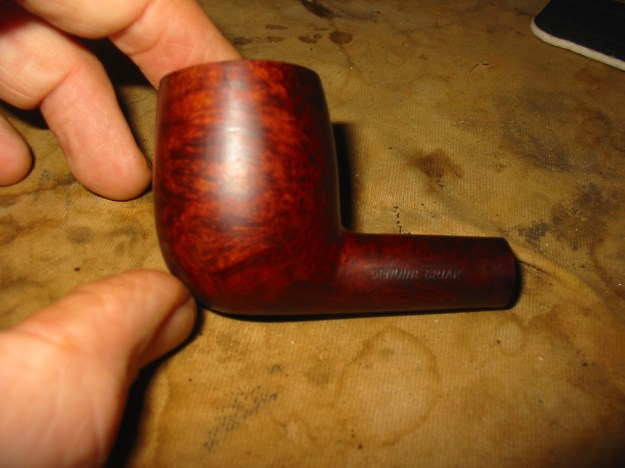
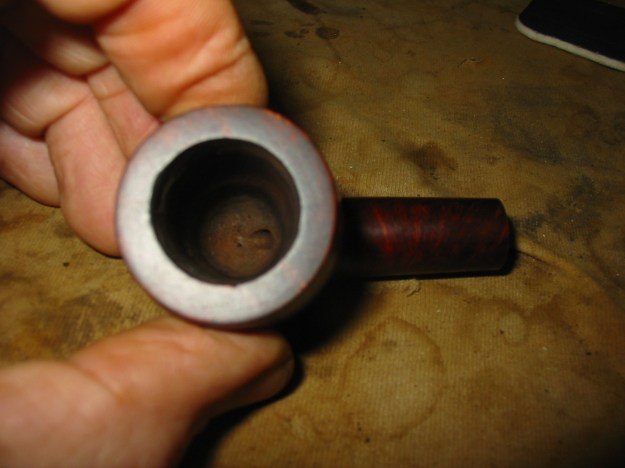
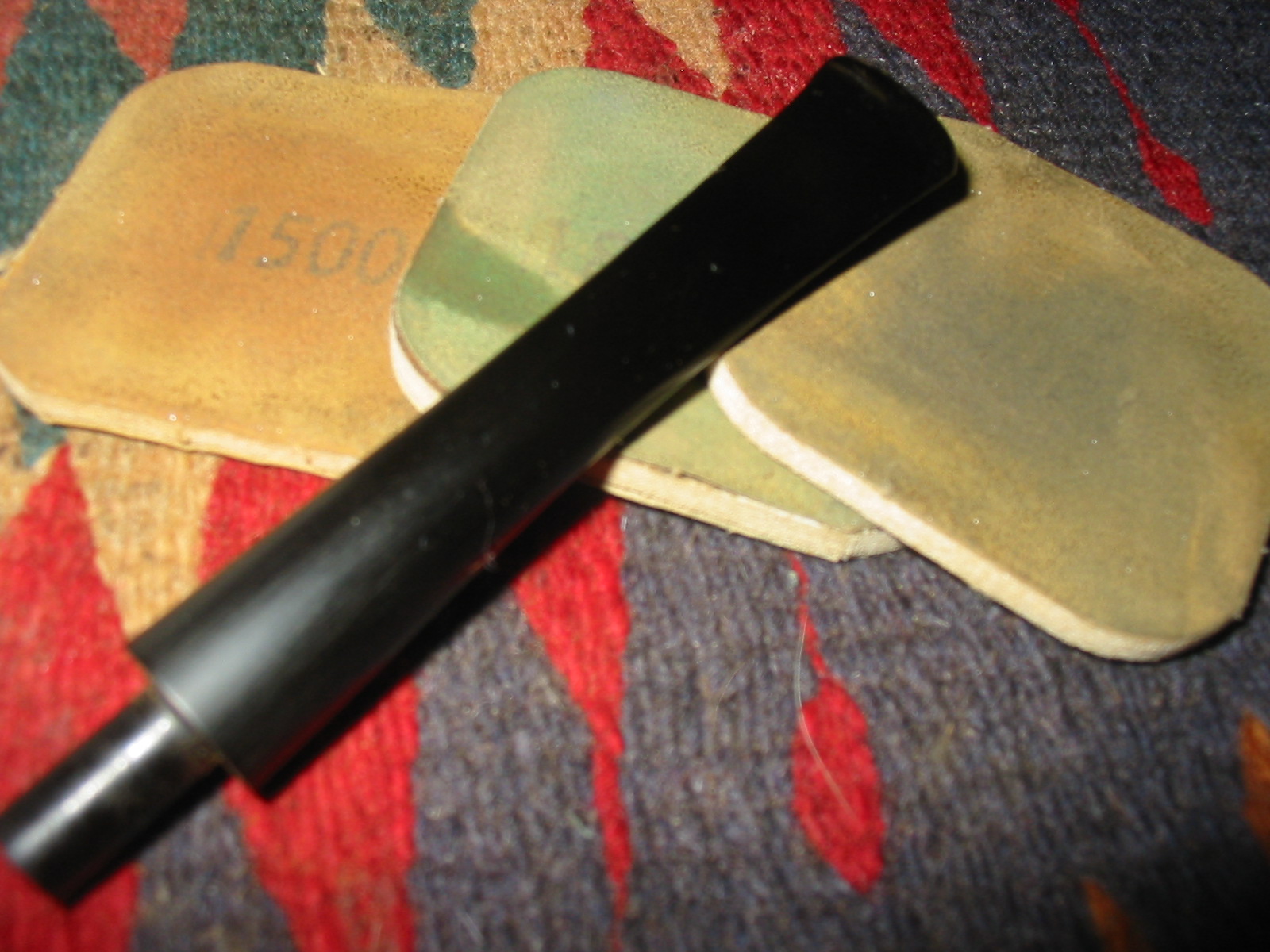
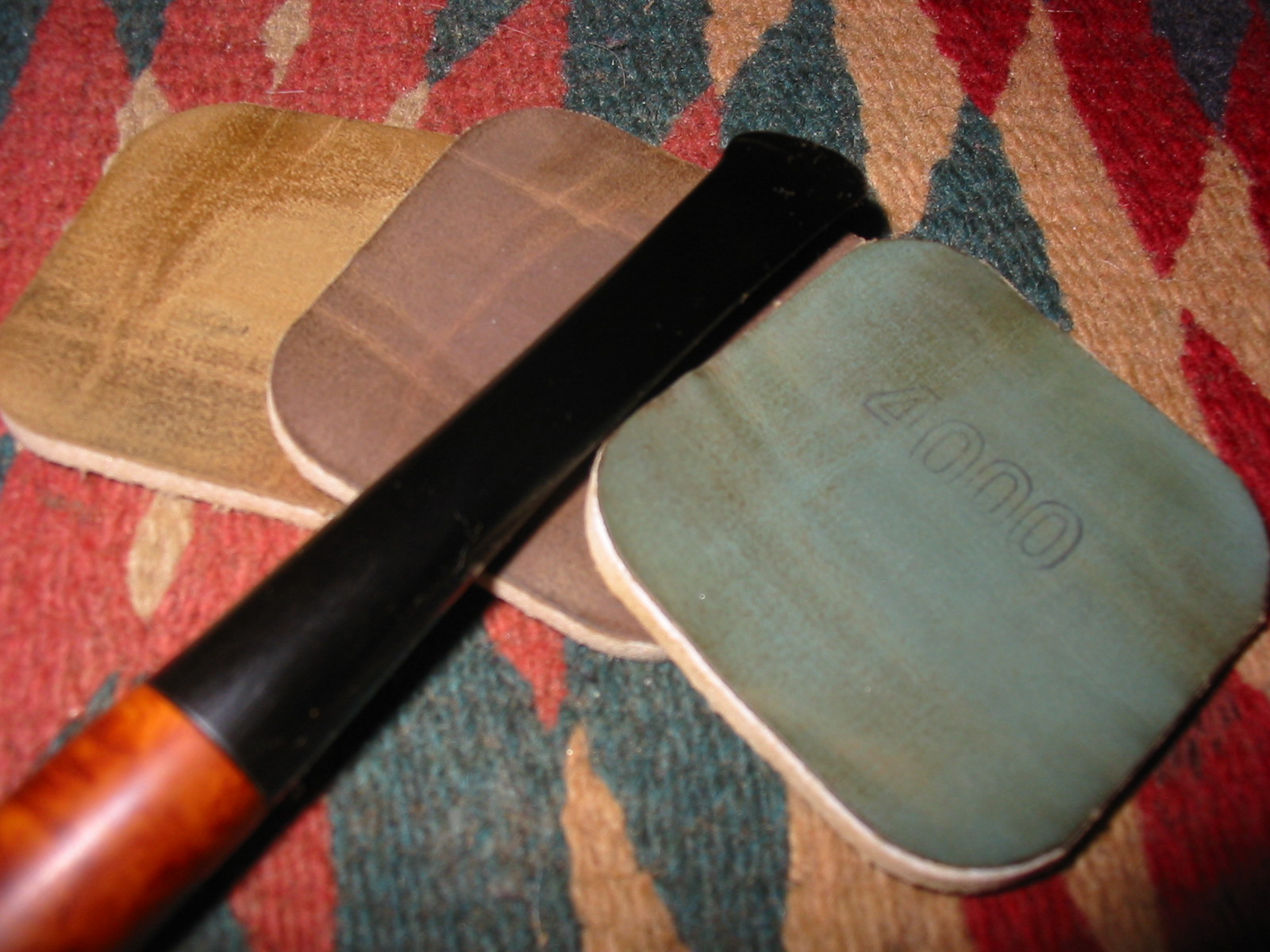
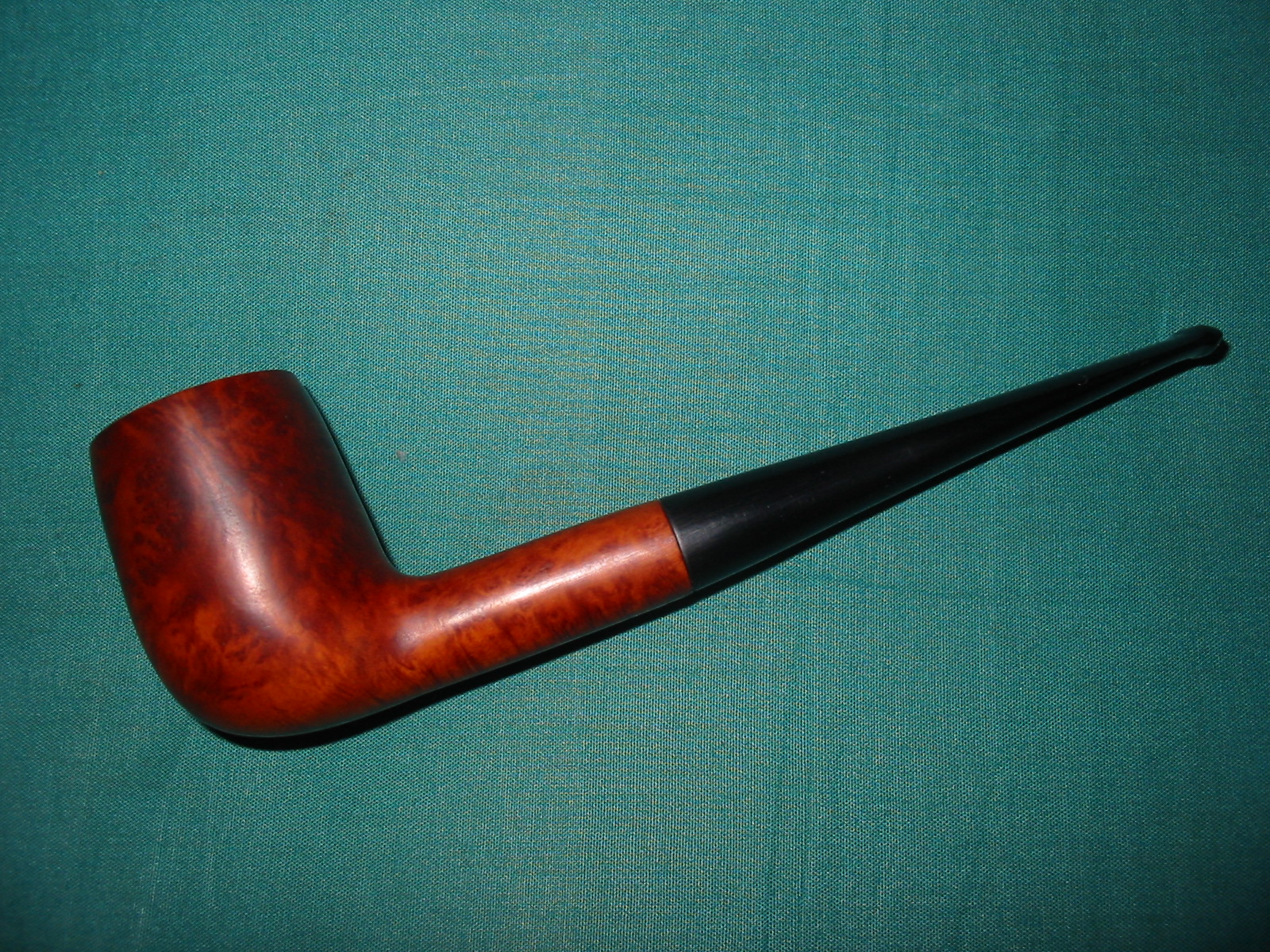
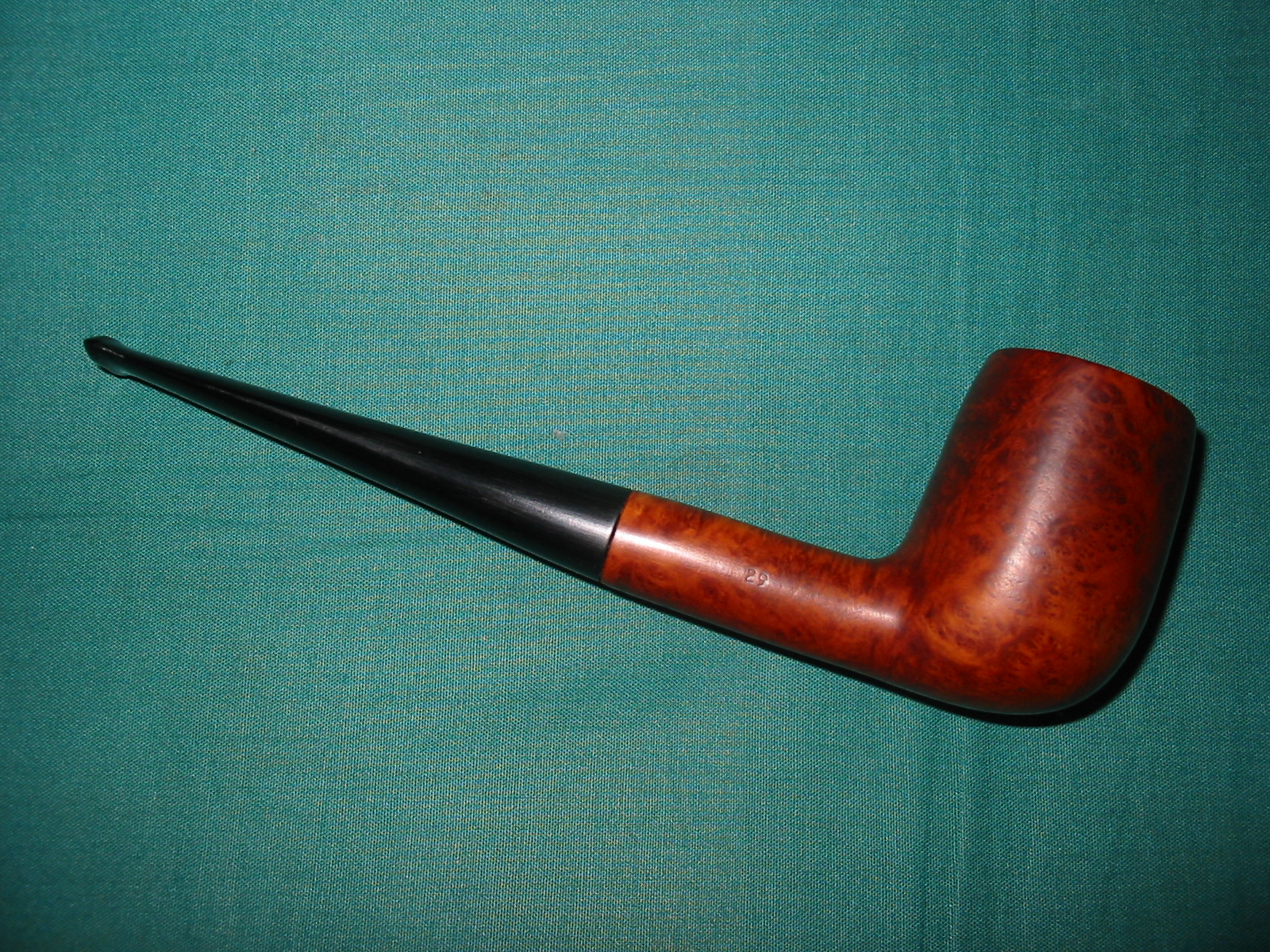
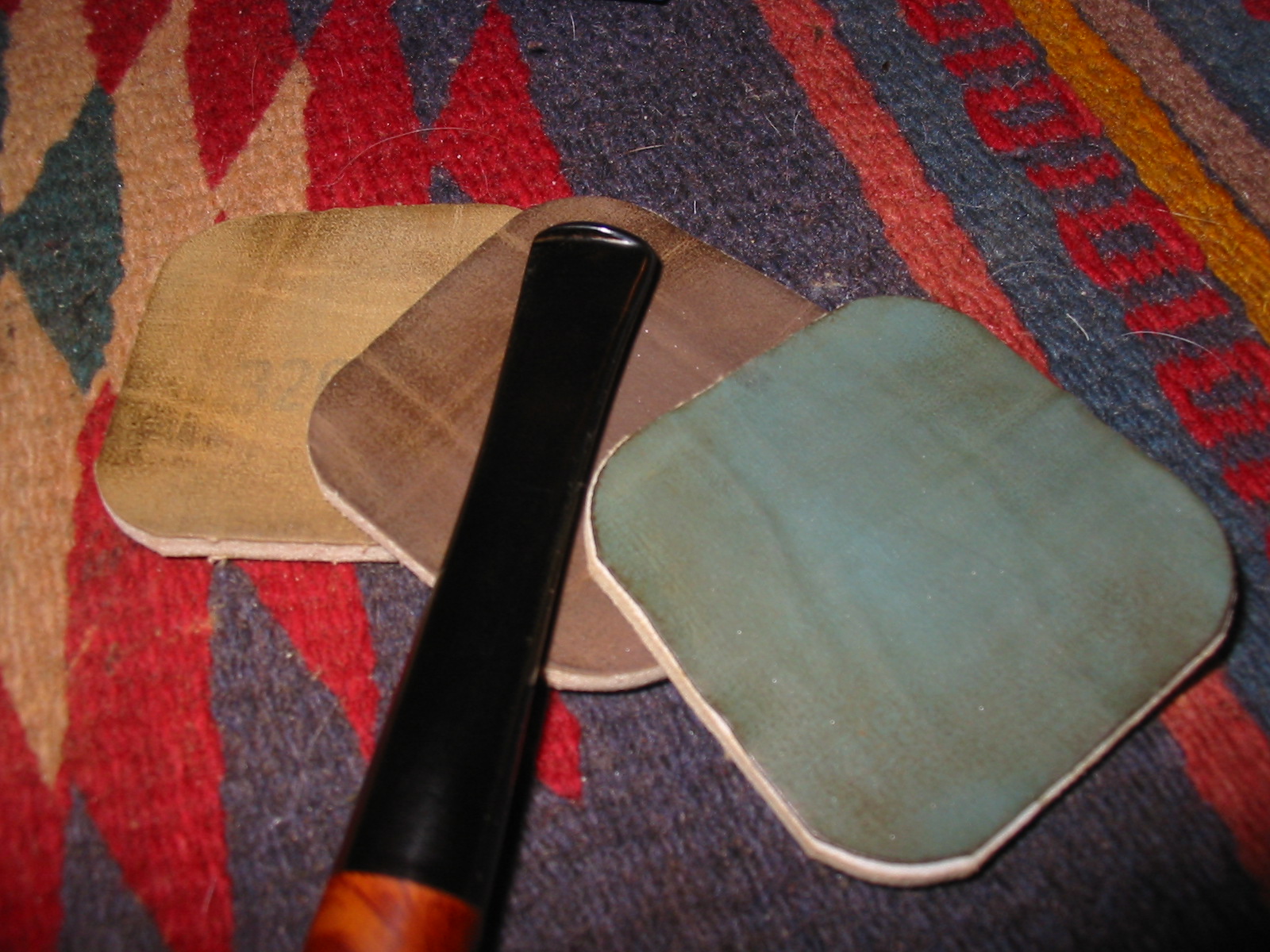
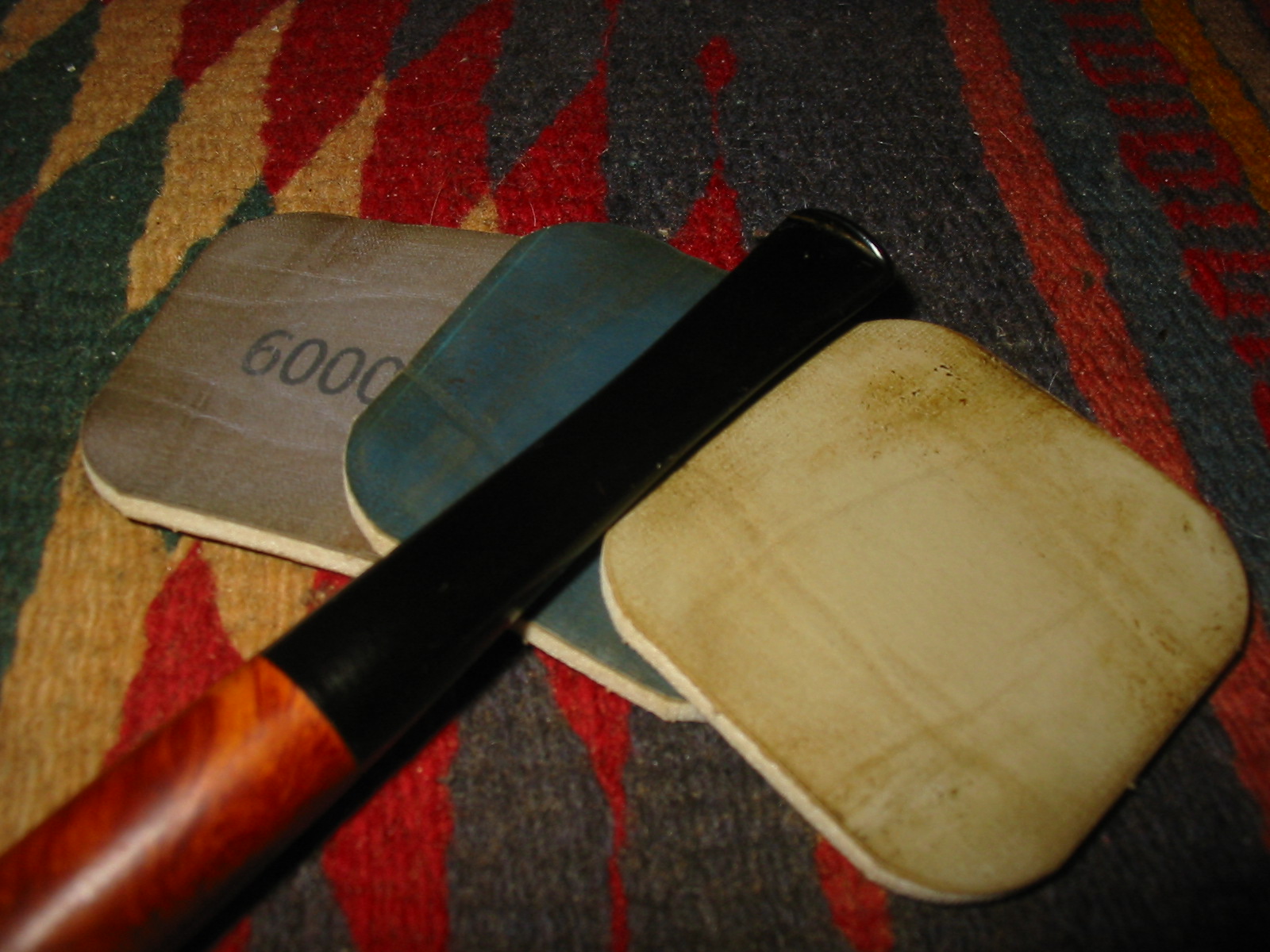
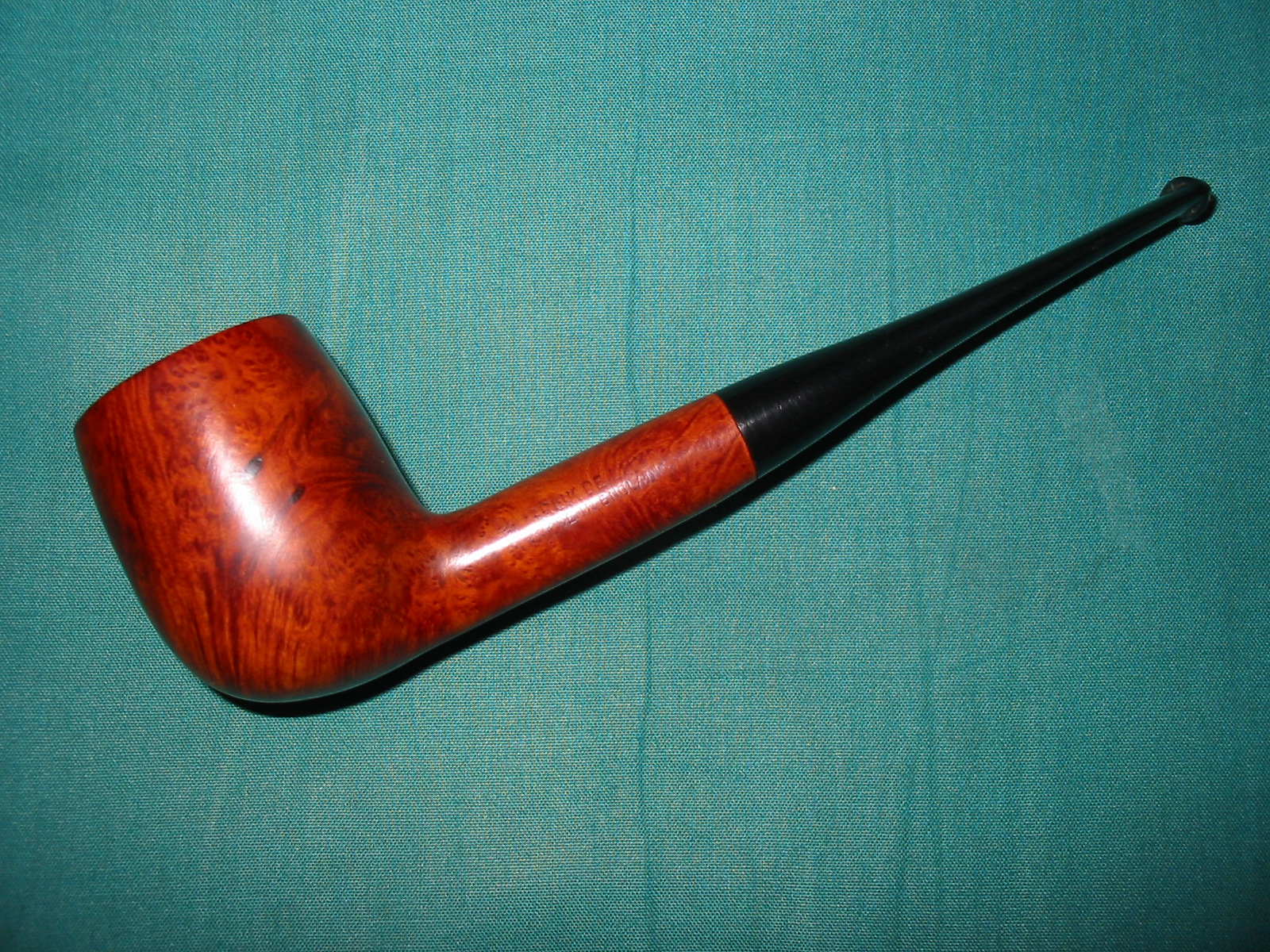
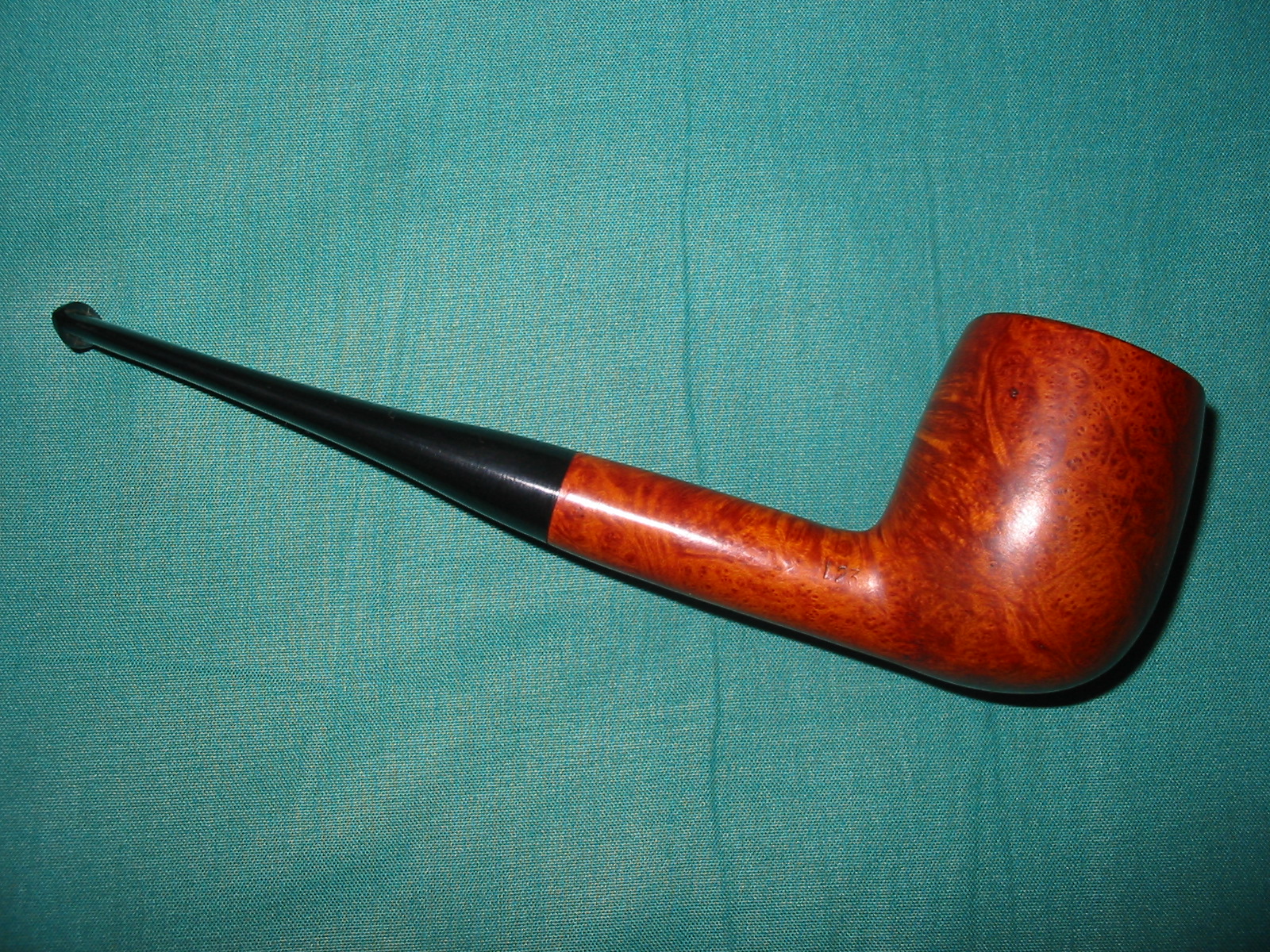
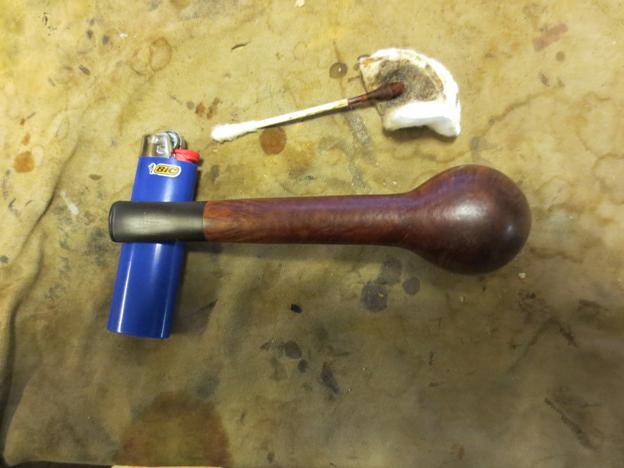
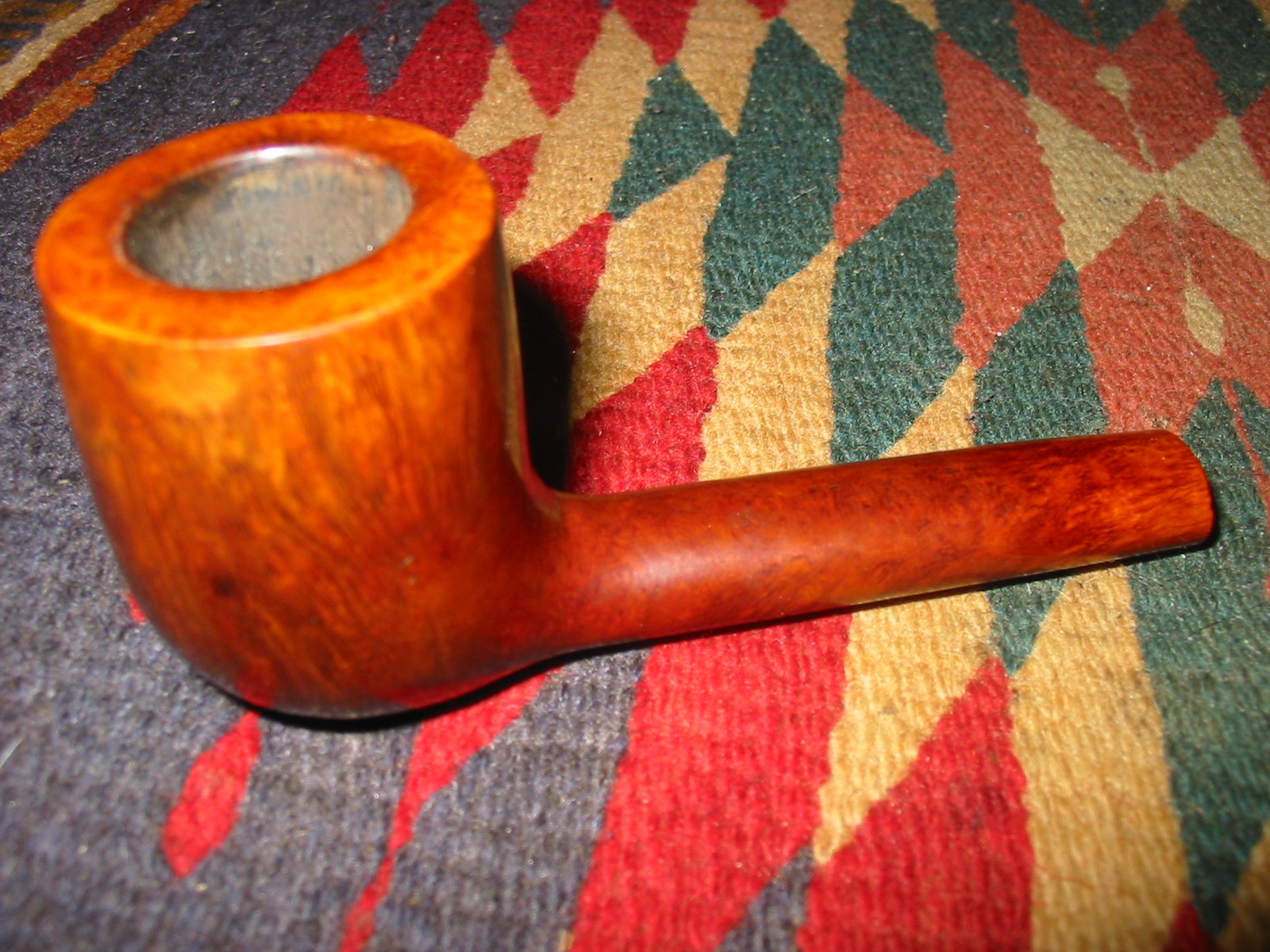
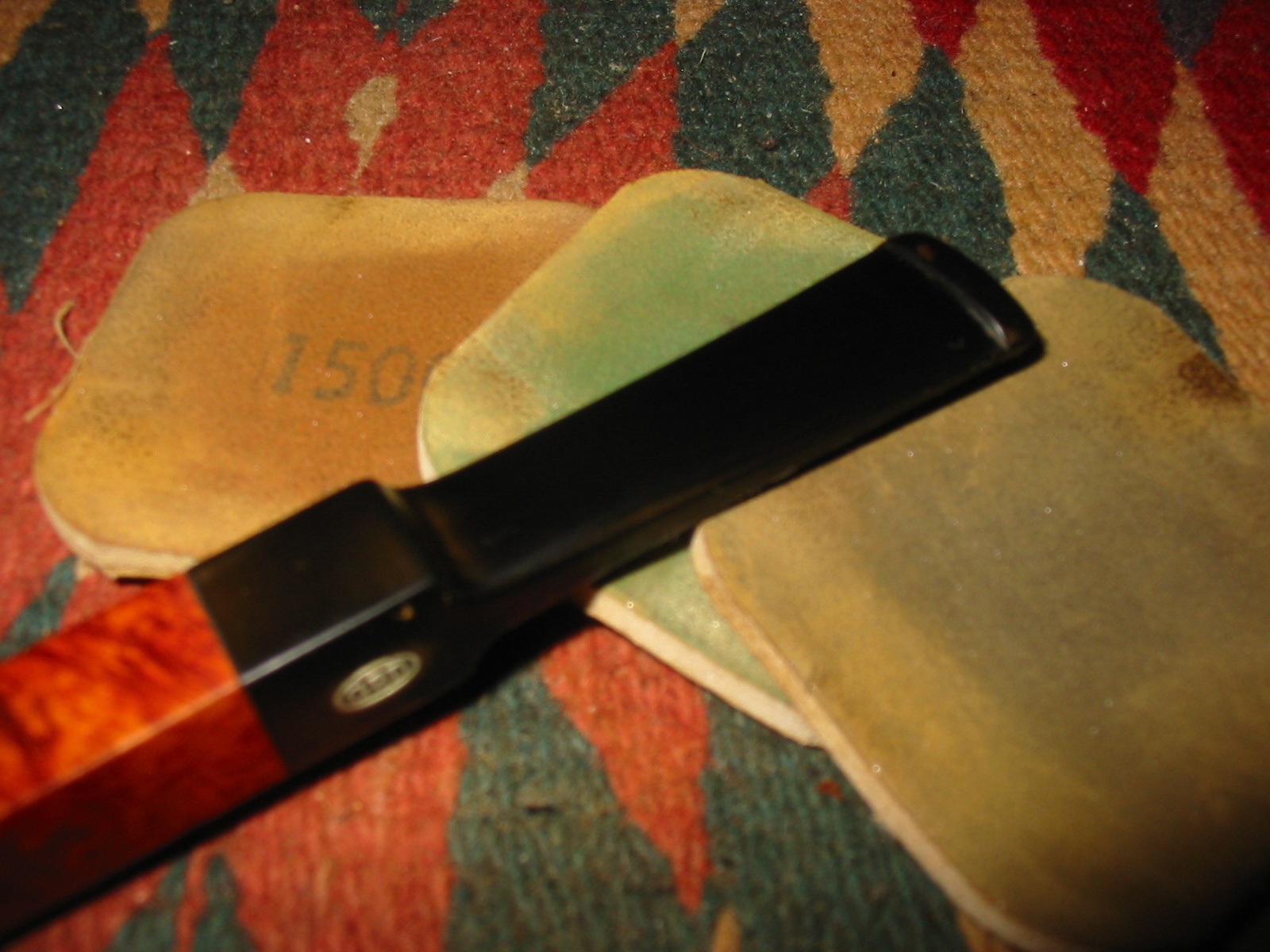
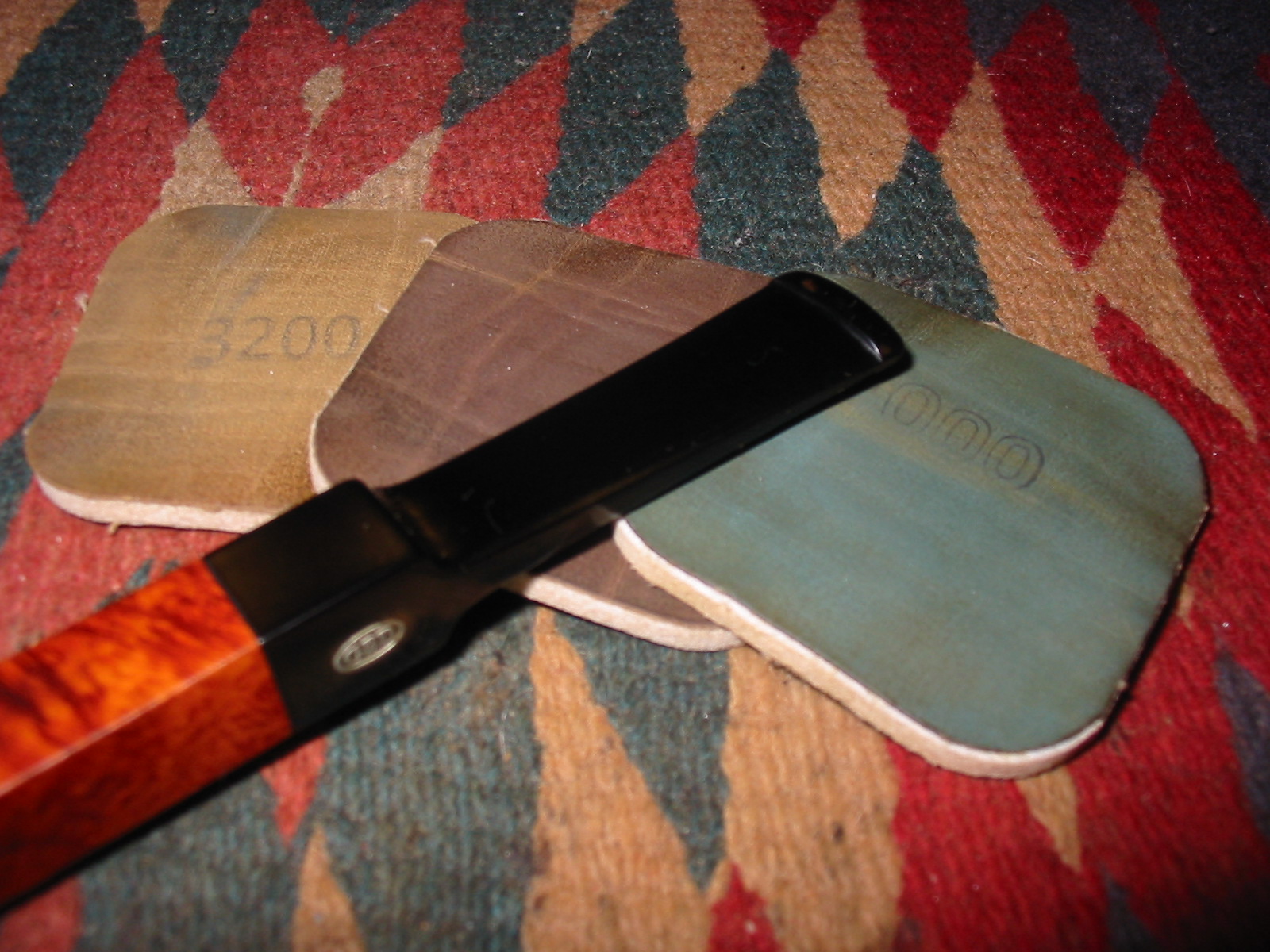
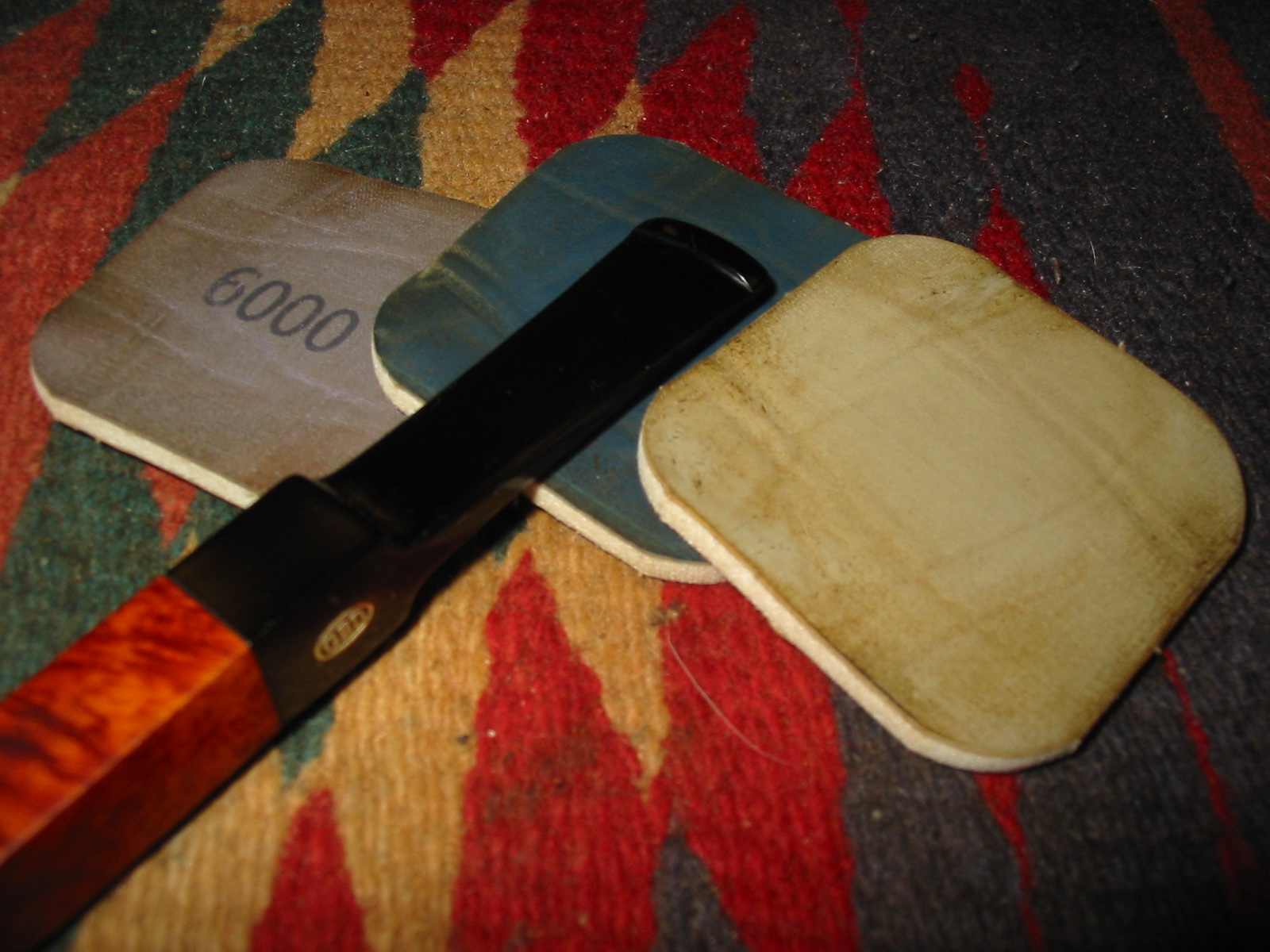
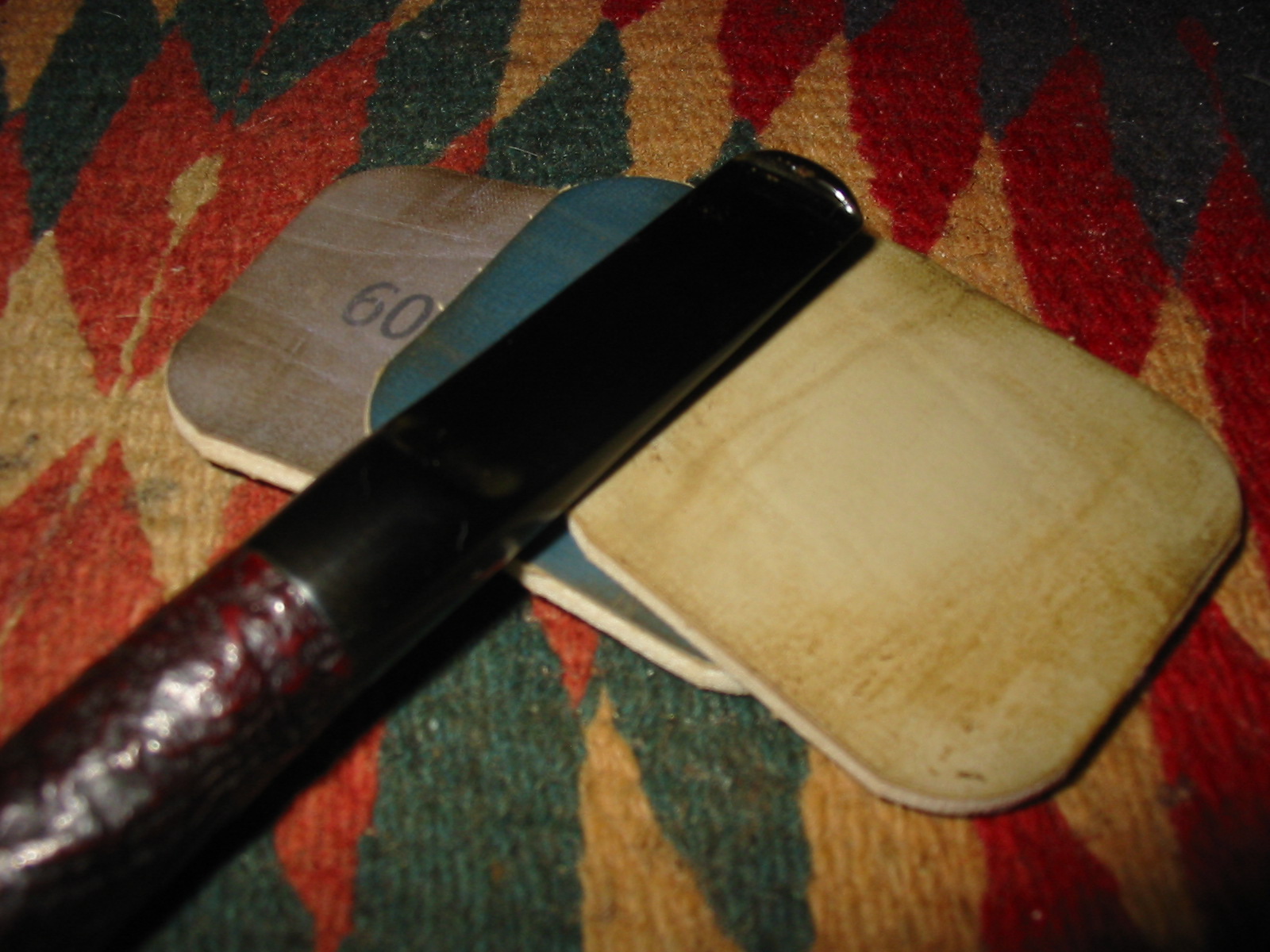
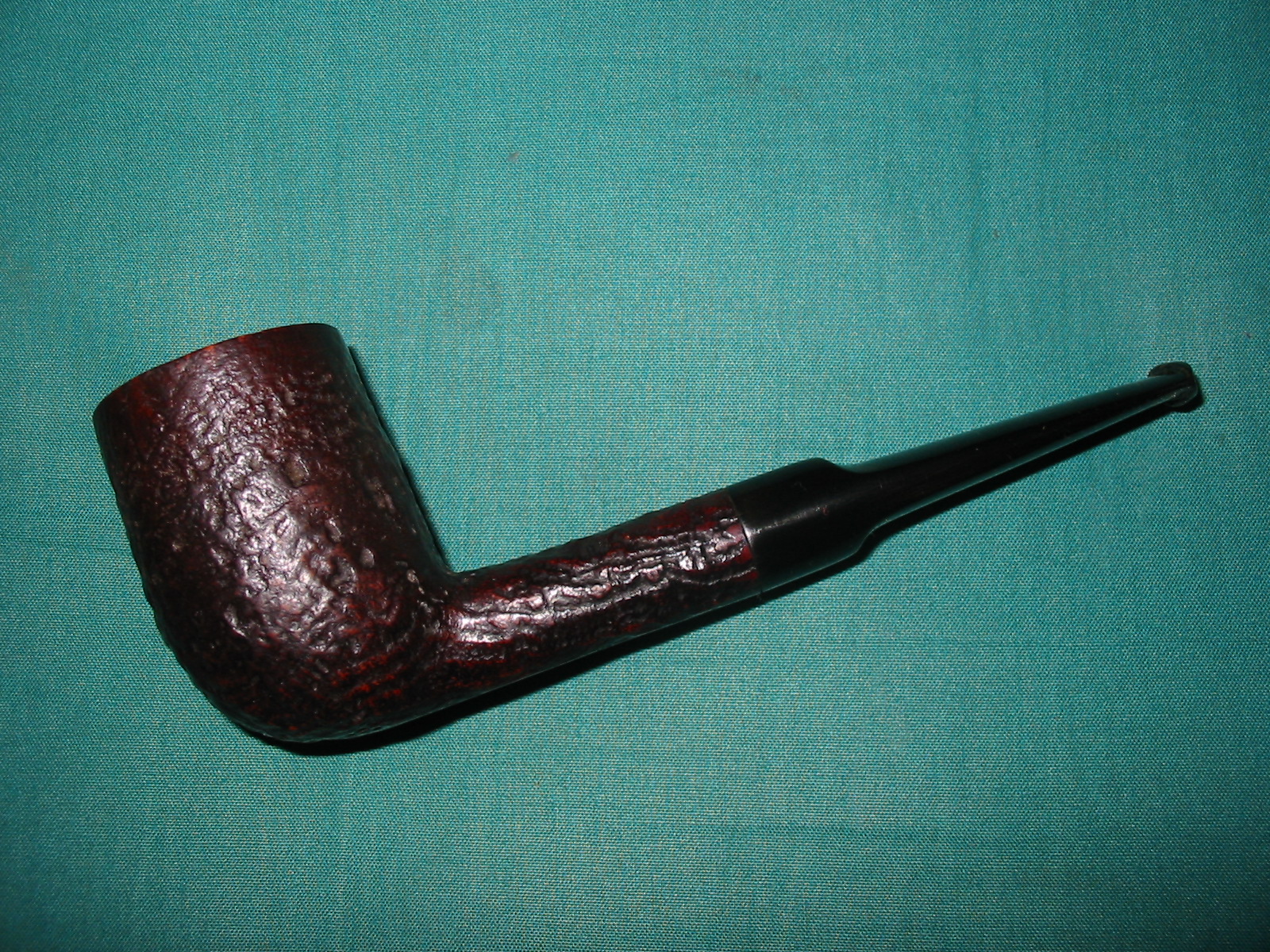
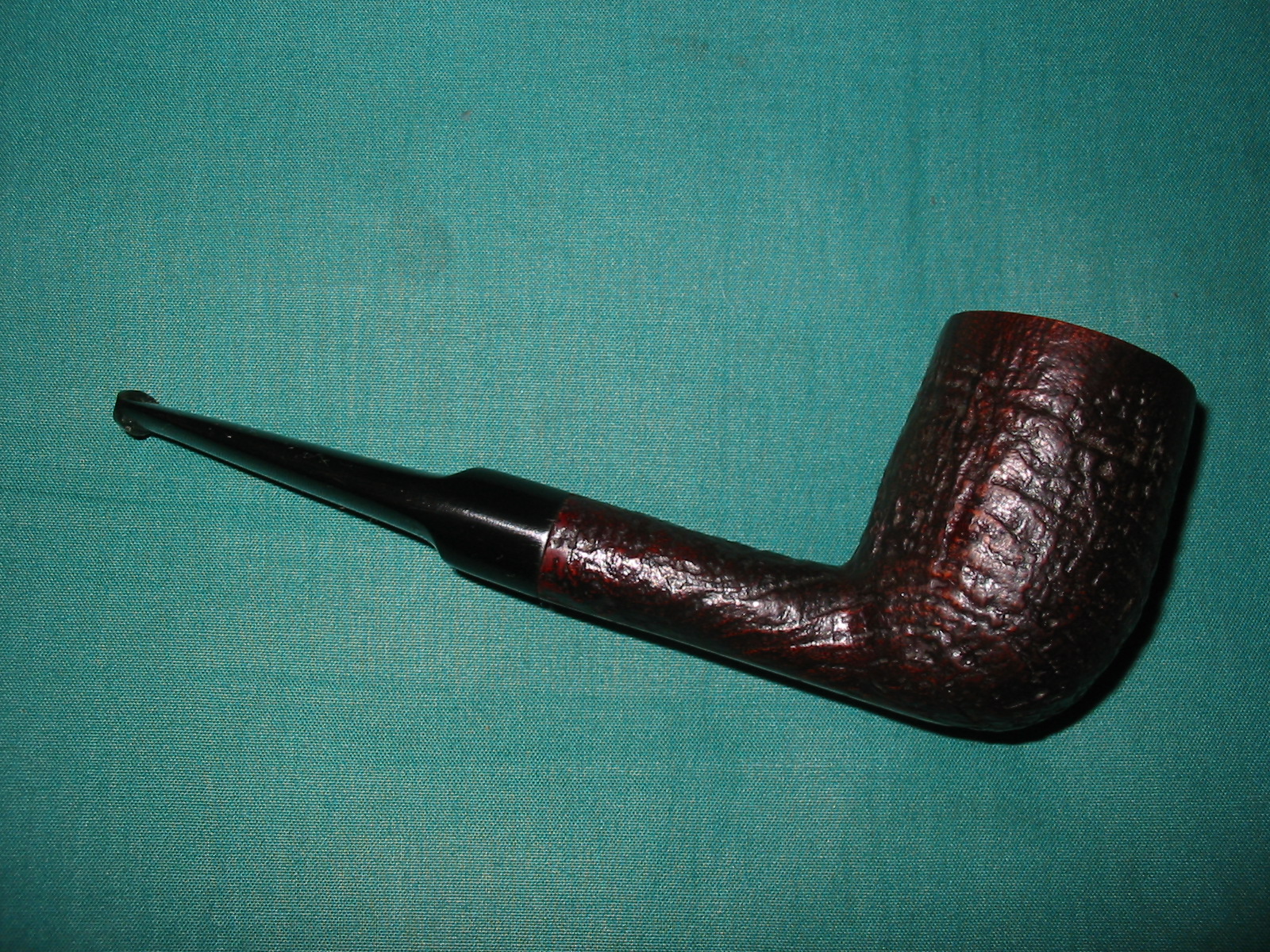
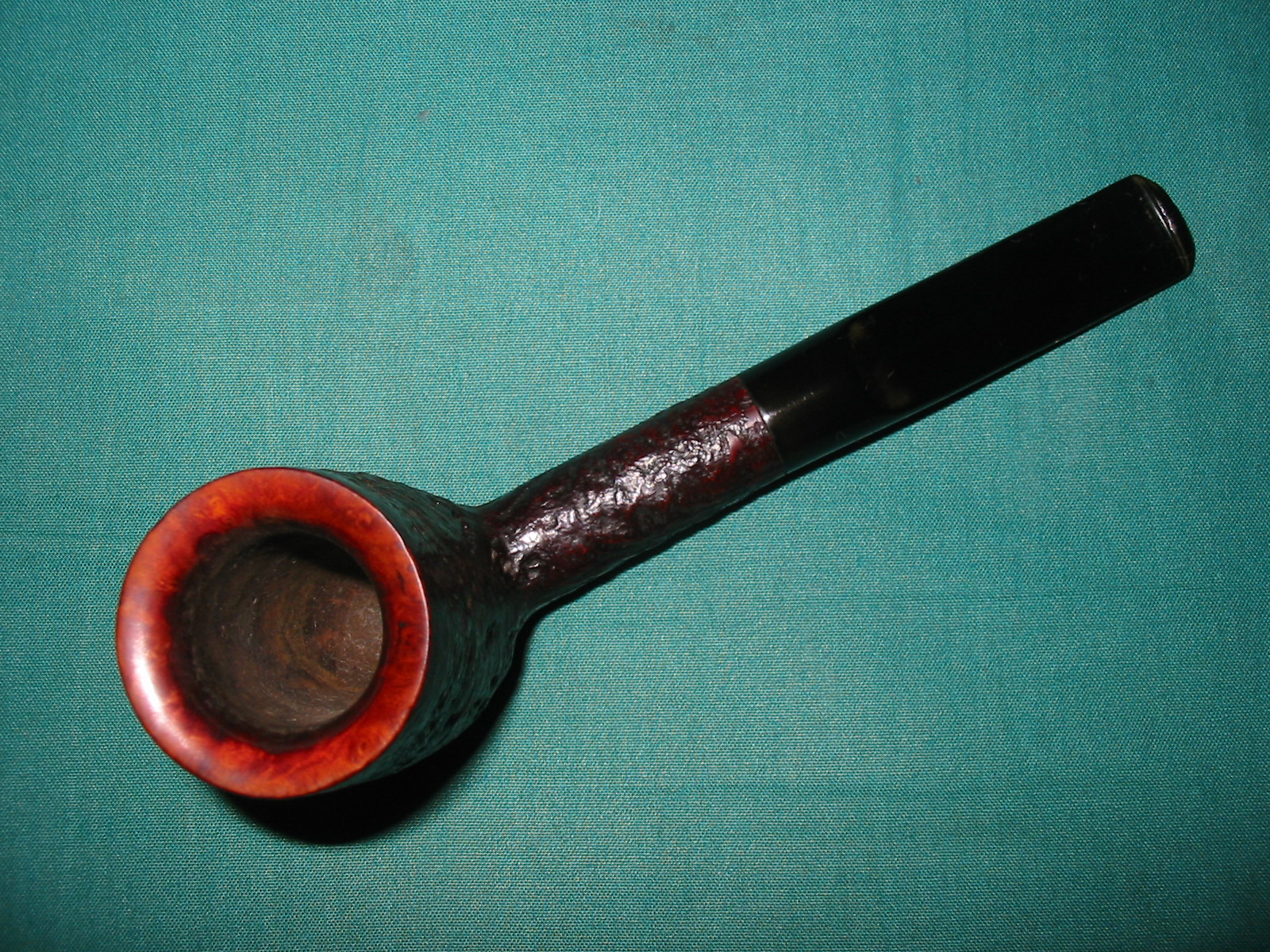
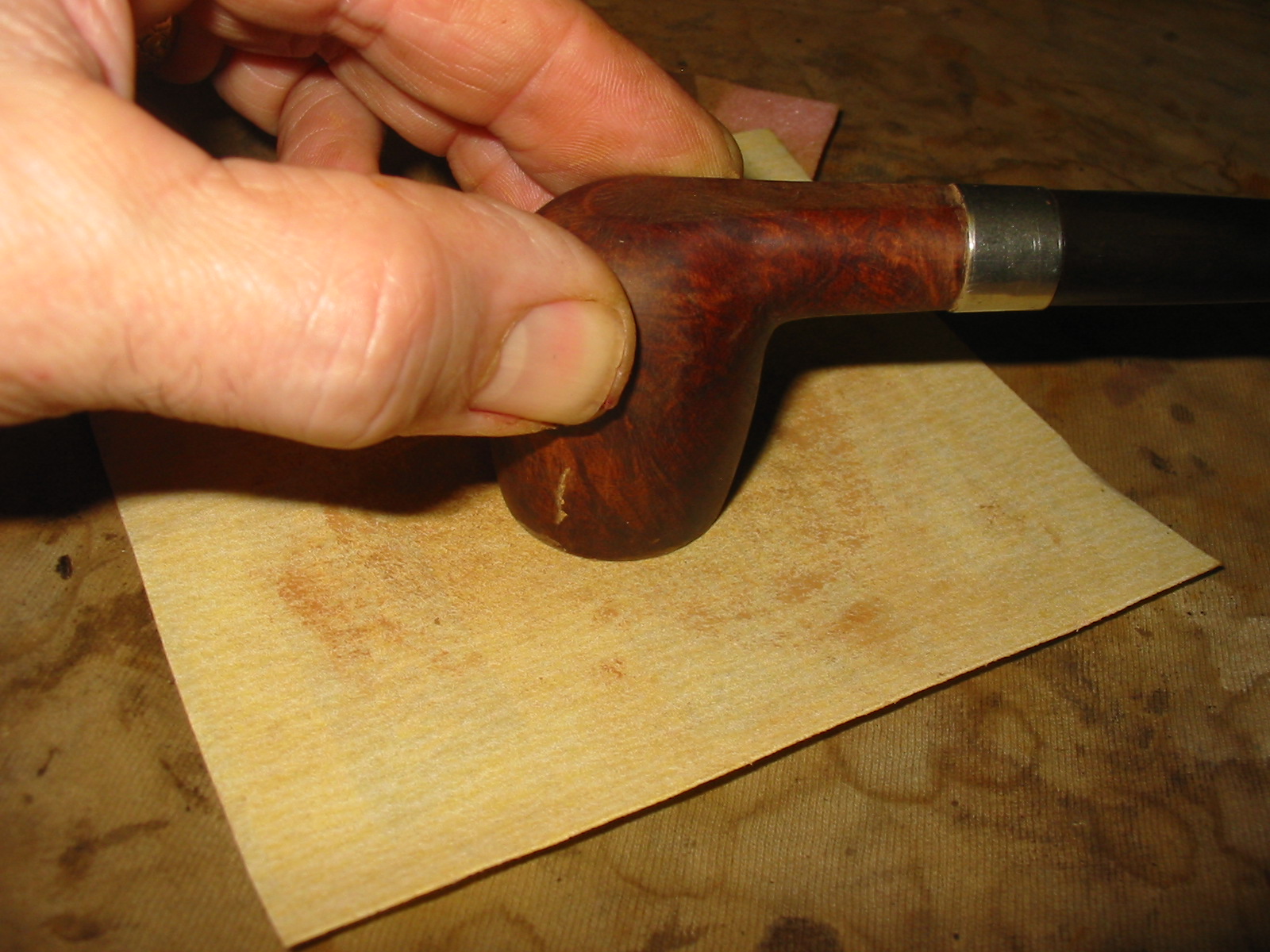
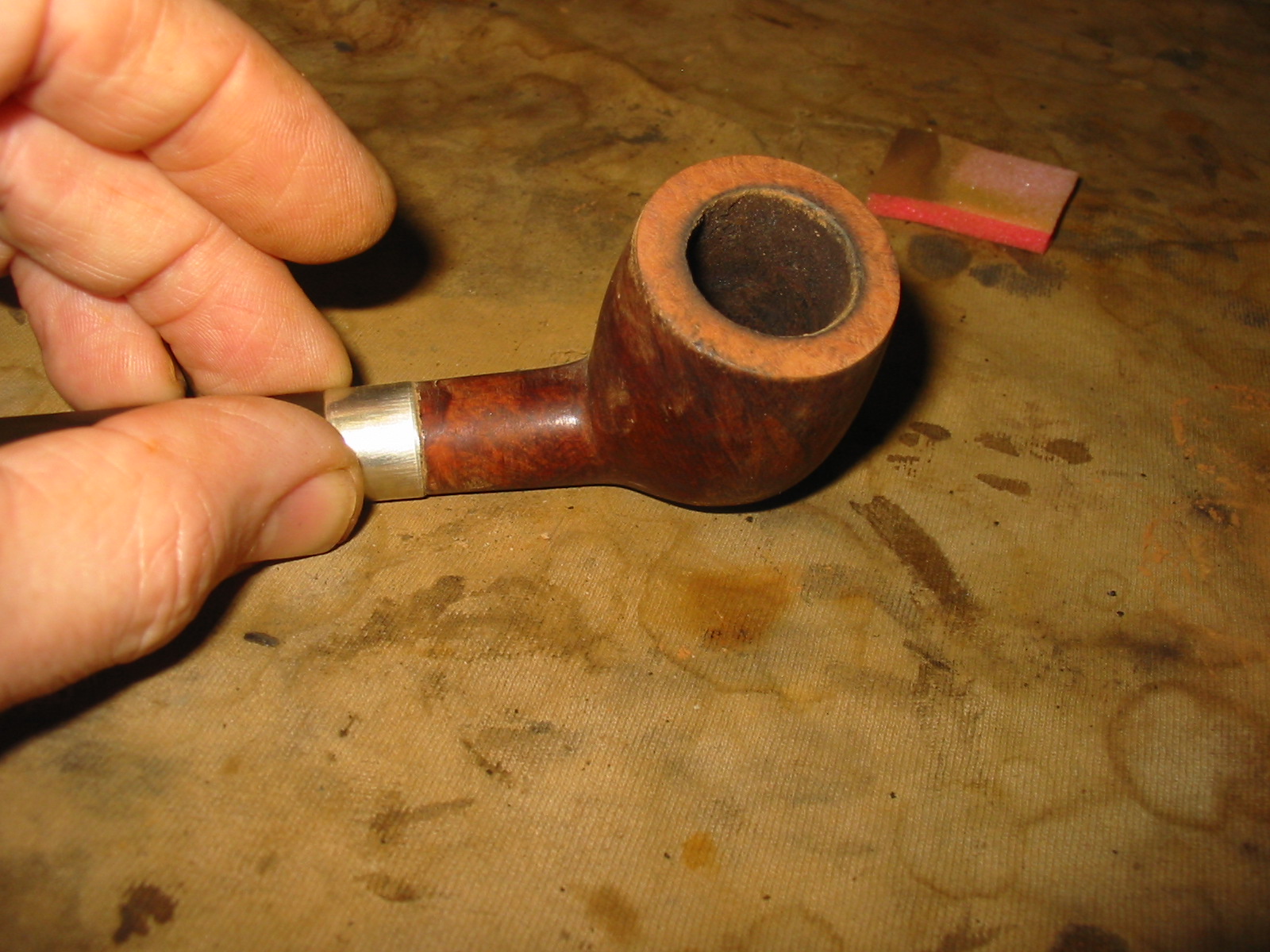
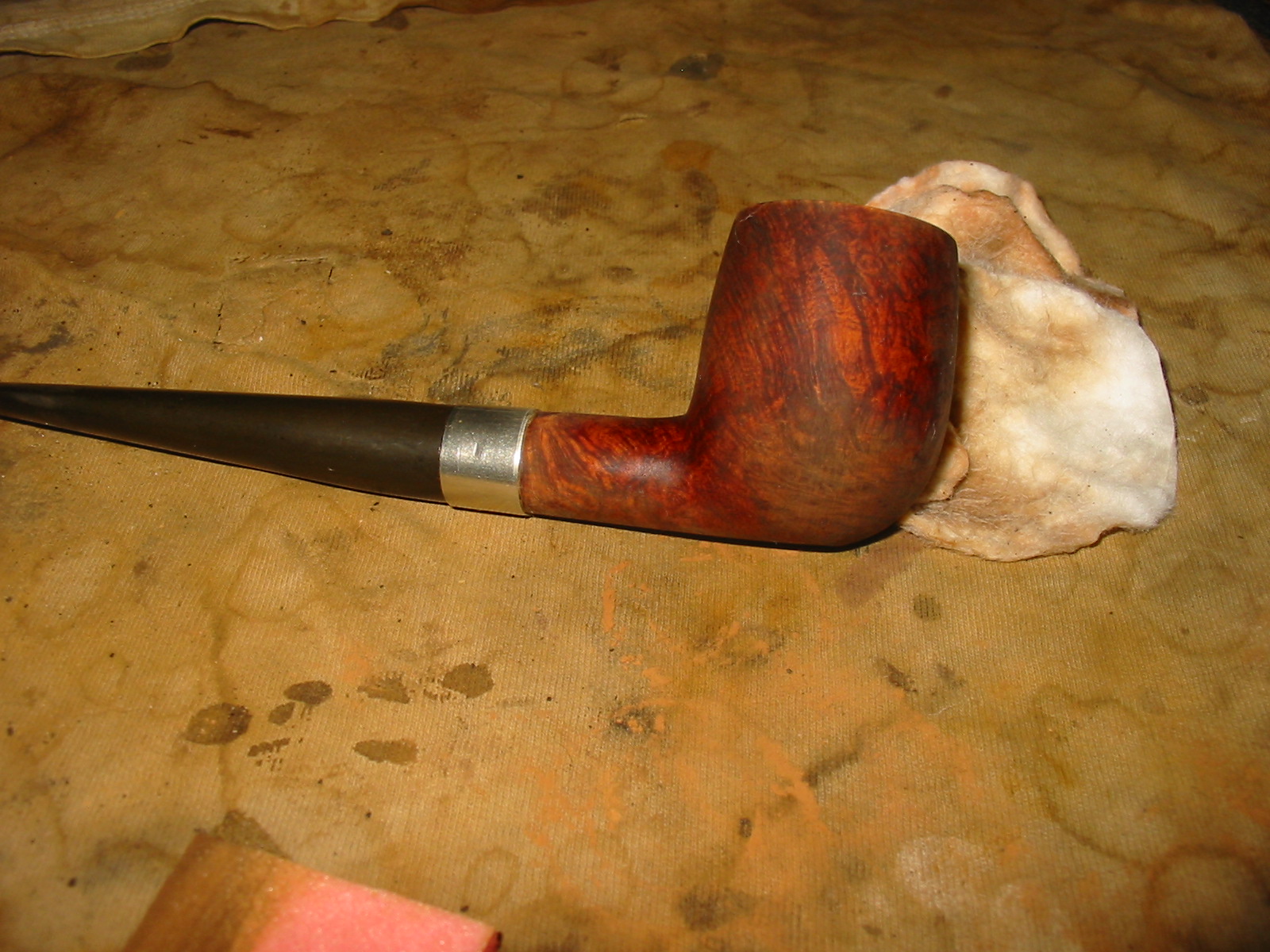
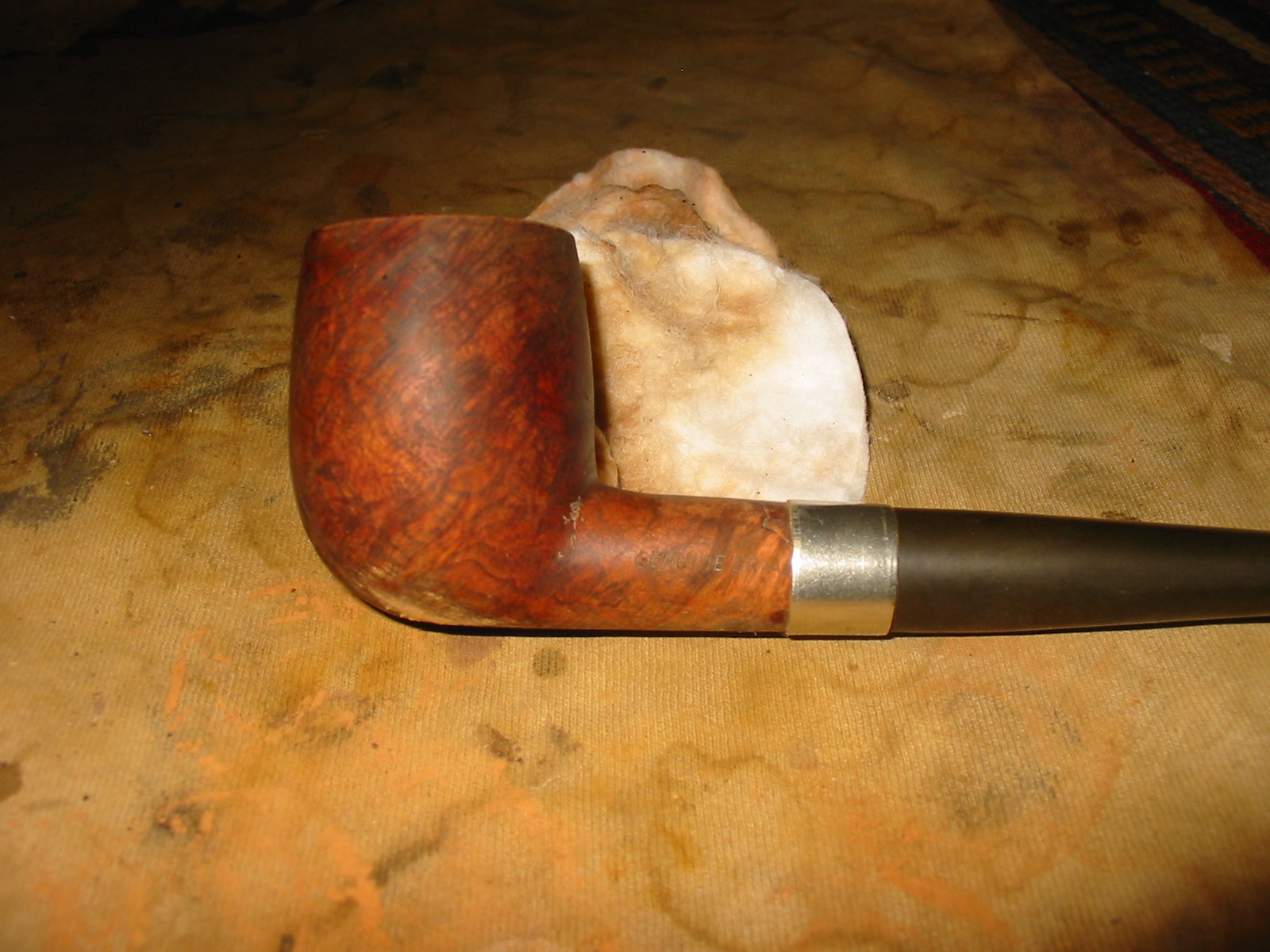
Tag Archives: sanding a stem

An Ultrasonic Stem Cleaning Experiment – AJ Verstraten (aka Bananabox-Ninja)


What follows is another article by AJ on his use of the ultrasonic cleaning machine. He has written it in response to the many who asked to hear more about it after his first article here on rebornpipes. I wish to thank AJ for his contributions to the blog and to encourage him to continue to write for us. It is a pleasure to post his next contribution. Thank you AJ.

Greetings, when using a new technique I can’t help but experiment like a mad scientist. So when I heard of the ultra sonic cleaning from my fellow cleaner on the PRF (The Dutch Flemish pipe smoking forum) named ‘Meindert’ I dove into it, because science! One of the first try-outs was posted in my first article and I was carefully optimistic about the end result. During the course of this clean-up I learned why I was not completely happy about it.

When I read the comments on my first article, Mark Domingues mentioned the Oxyclean method. To be honest I never heard of Oxyclean but it triggered a mention done by another fellow PRF-er named ‘annie69’. Who once told me he used hand warm water and Oxi-Action to remove the heavy oxidation on a stem. I tried this method a few months ago, but was not very happy with the end results as it left the stems slippery and gooey, which in my eyes prevented the rest of the oxy-water reaching the stem.

As an ultrasonic vibrates the water I thought: “What if the water is in motion, would it remove the goo from the stem during the soak and so give a deeper penetration?” followed by: “What if I combine the oxy-method with the ultrasonic?” So I set up a test with two almost similar oxidized stems which are from my ‘bit-box’ of pipe heads and stems that are missing their counterpart.

Oh, I should mention I work for a company that supplies laboratory equipment and some of the tools are old stock that was distributed to personnel, hence the use of a magnetic stirrer.

First the stems: The one on the left for the ultrasonic, the one on the right for the stirrer.
001 The stems

The stirrer setup: A glass on a magnetic stirrer, hand warm water, stirrer, amount of Oxi-Action and the stem.
002 Stirrer set up

To keep the stem in the liquid I used a bent electric wire and hung it in the glass.
003 Stem holder

So I poured the hand warm water, the Oxi-Action, and the stirrer in the glass, hung the stem in the mixture and set the timer for 20 minutes.
004 Here we go

005 20Minutes later

What happens is that a rotating magnetic field lets the stir bar rotate in the liquid, creating a whirlpool inside the glass. Thus the water is in motion and hopefully rinses off the goo that is formed on the stem by the Oxi-Action.

When I retrieved the stem and it was as I expected, greenish brown from the Oxi-Action. But not as gooey as before, so it worked to some degree.
006 Dried

Then I put the stem to the grind wheel and it came out as normal.
007 after the grind

The light brown patches are hard to reach for the wheel and I normally do those by hand.
To be honest, I was not really happy with the end result and did not finish all the way through with polishing and buffing the stem. In all it only saved me a little time and was a headache to set up right.

While I worked the previous stem on the grind wheel I let the ultrasonic do its thing. Again the setup: Warm water, ultrasonic with Oxi-Action and the stem.
008 Ultrasnic setup

The ultrasonic in action.
009 Look at her go

The stem just removed from the bath.
010 On to something

When I retrieved the stem I was blown away by the result, the stem came out cleaner than with the normal soak method and less gooey as with the stirring method. (However the photo did not show this, so I had to lighten it to make it clearer.) Also when I put the stem to the grind wheel I found that the liquid was a deeper brown colour instead of the golden light-brown colour I usually get when grinding.

The result after grinding.
011 After the grind

Was I on to something or was it a fluke with this particular stem? I decided to leave the stems as is, find another stem in my ‘bit-box’ and try the ultrasonic again to see if I could duplicate the result. I found a stem without its tenon and dunked it in the ultrasonic.
012 Before

While this was going on I Googled about ultrasonic cleaning and I stumbled on a very well written site: http://www.tmasc.com/qa%20process.htm by an unknown author. In it I found a certain line that made me stop the ultrasonic and reconfigure it, namely this:

‘Parts should be racked in a basket or work holder designed to handle your specific part. This is very important in high-end cleaning systems where you want the cleanest part possible. You should always use a stainless steel basket, as softer materials will absorb the ultrasonic energy. Never use plastic or other soft materials. If your part is easily damaged or scratched, stainless steel racks with Nylobond or Teflon coatings are available.’

Now if you look in the previous pictures you will notice I left the basket out of the cleaner thinking it was not needed for my purposes. Boy was I wrong. Having the stems in contact with the bottom meant that the sonic vibrations were interrupted and as such the cleaning was not optimum. Whoops. So I put the basket that came with the cleaner, put the stem in and let it go for 8 minutes. The end result really surprised me.

013 After

When I used the grind wheel on it the liquid was almost black. Here are the stems next to each other.
014 All three stems

You can clearly see that the middle one has had more oxidation removed than the other two and in the case of the upper stem I blame my inexperience with the ultrasonic. Still the end result for me was quite exciting and I wanted to try it in a complete cleaning process. So I rummaged through my pipe- and bit-boxes to find almost equally oxidized stems. I found a ‘Belmont Grain London Style’ pipe and a loose stem.
015 Pipe and stem

First I cleaned the inside using 96% alcohol and pipe cleaners, they came out pretty clean indicating that the stems were not heavily used.
016 Cleaning inside

Then I set up the ultrasonic again with the Oxi-Action solution, warm water and the basket in place. The stems were placed in the basket and I let her go for 8 minutes.
017 Setup

018 In they go

019 Retrieved

When I retrieved the stems, the first thing I noticed was that they were not as gooey as I was used to and the water smelled rather…..well….like oxidation but more moist. There is no good way to describe it.

I put the stems to the grind wheel and the oxidation came off way faster than if I would not have soaked them. Also the liquid that came off the wheel and stems was way darker as I mentioned before. At this time I also sanded the hard to get edges with 600 grit paper wrapped around a modelling file.
020 After the grind

021 After sanding

Then I proceeded to empty the ultrasonic and put in the 50-50 alcohol and water mixture with a dash of disinfectant.
022 Ultra cleaning

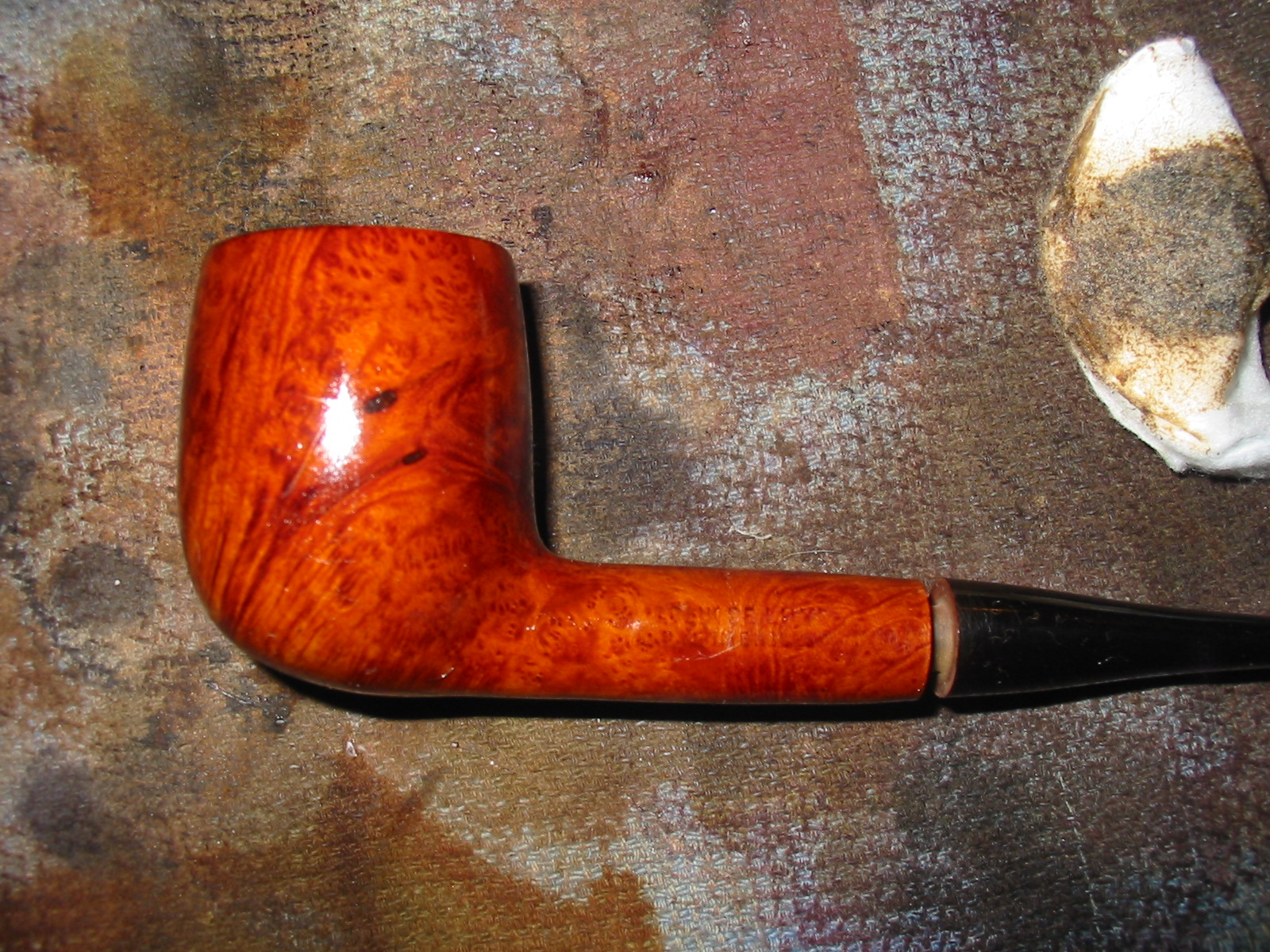
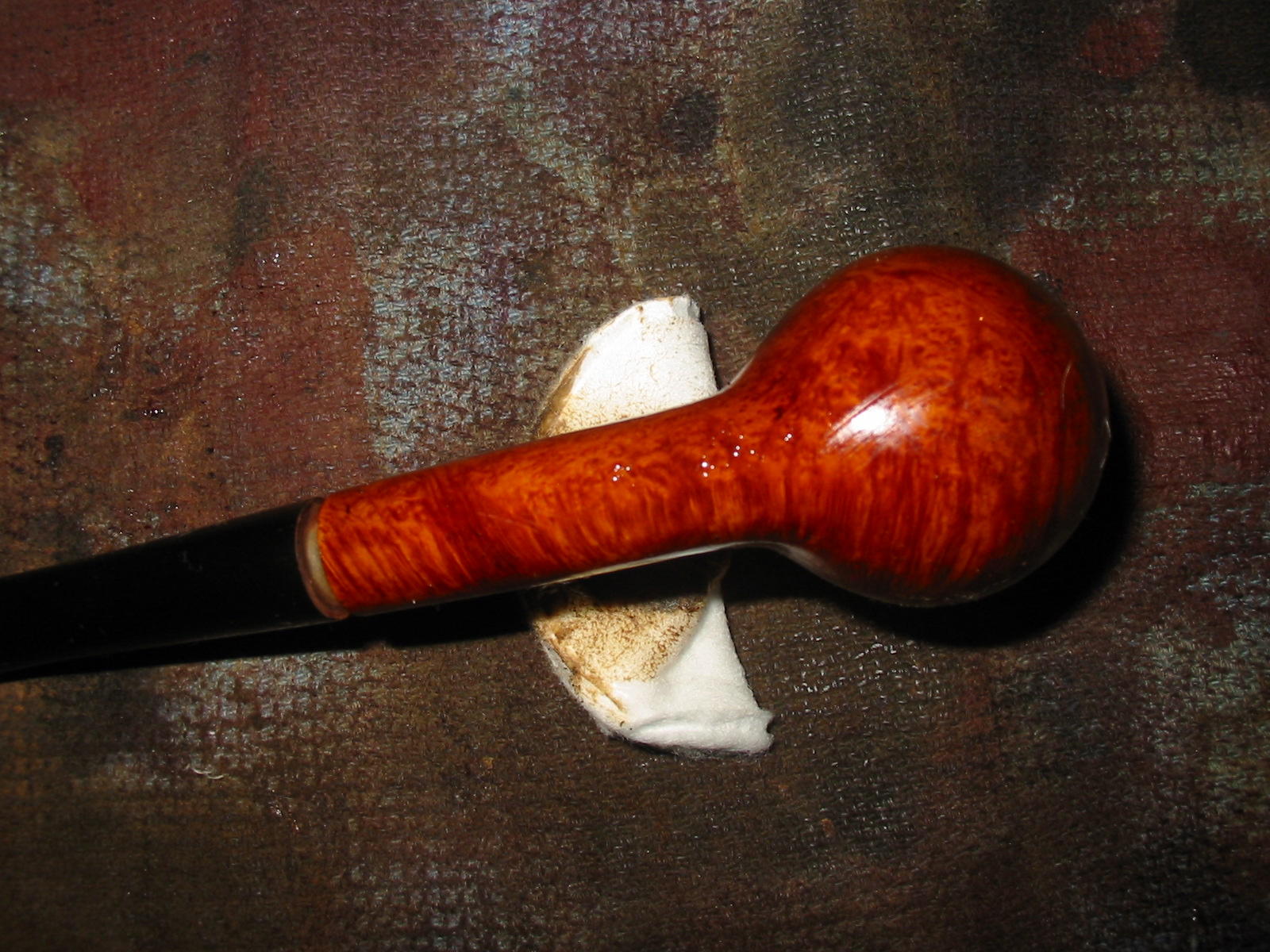
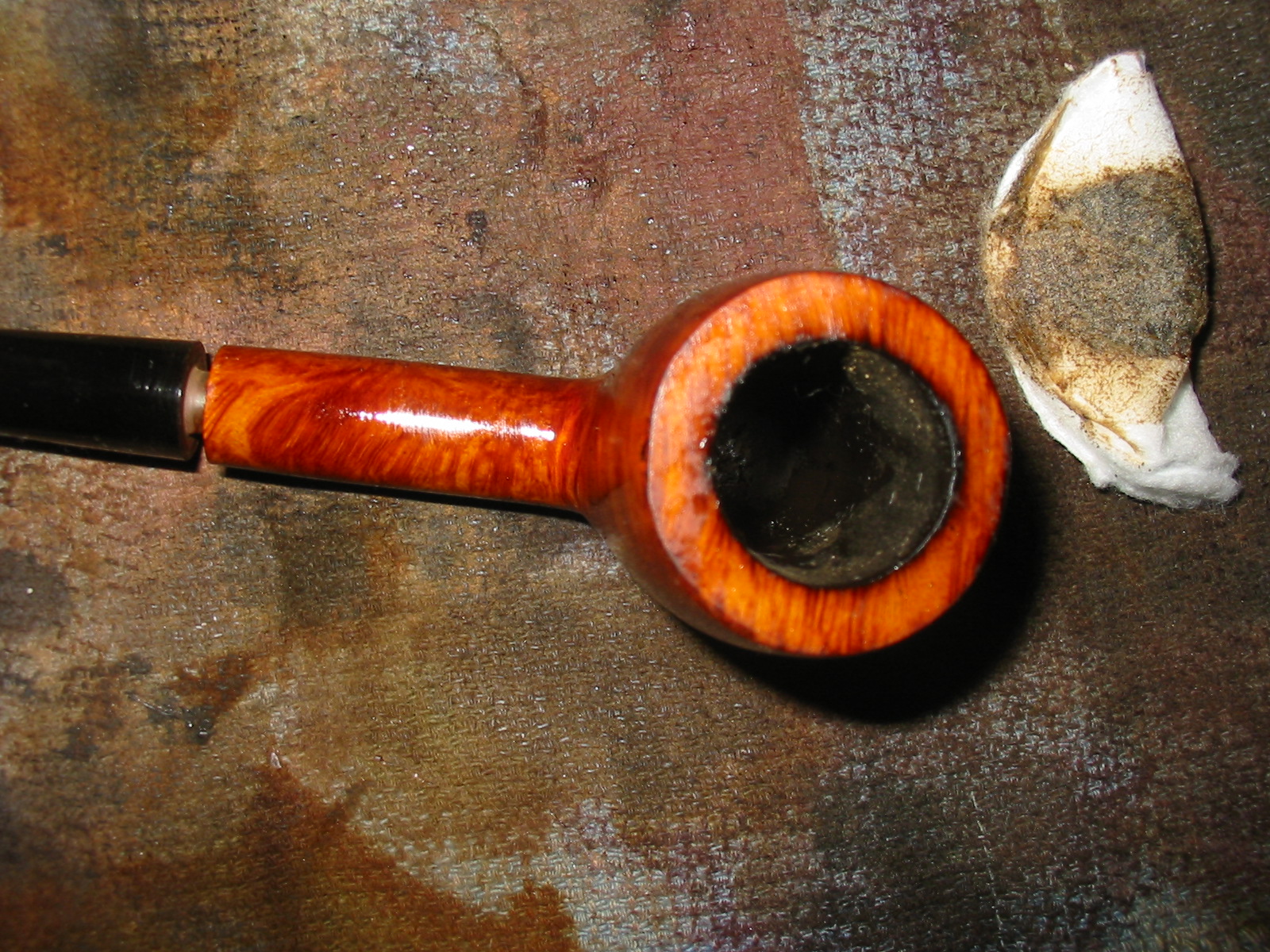
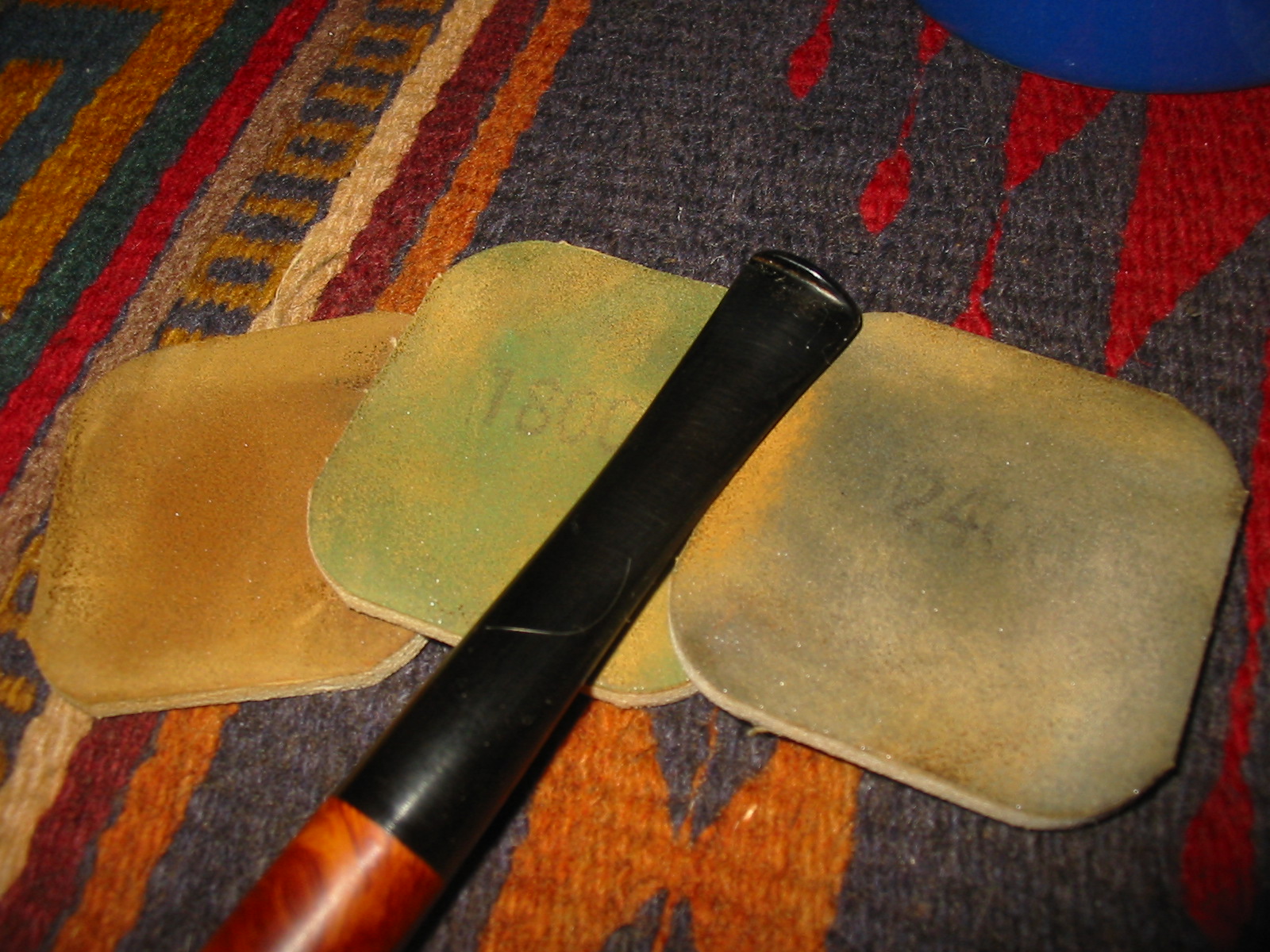
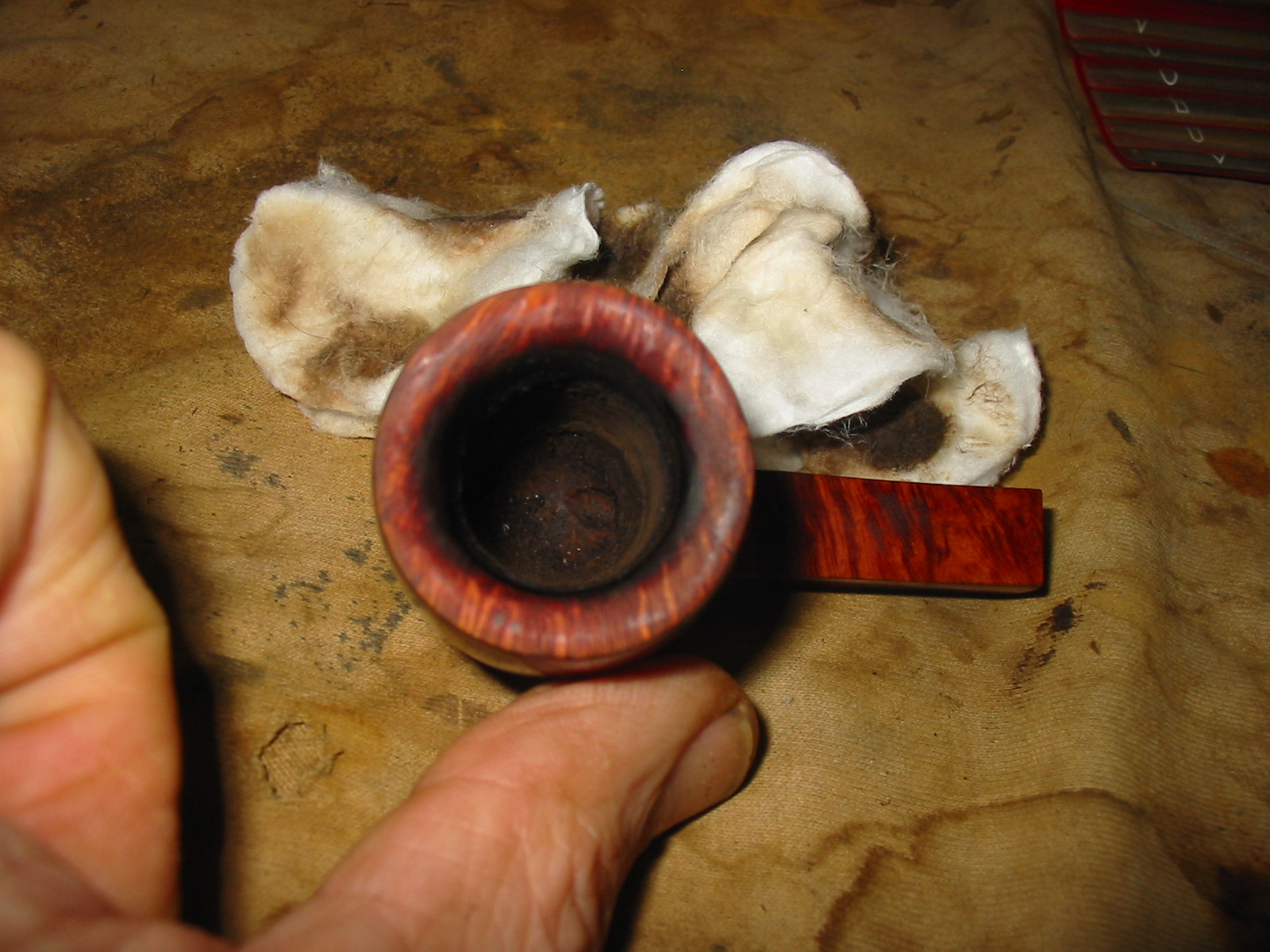
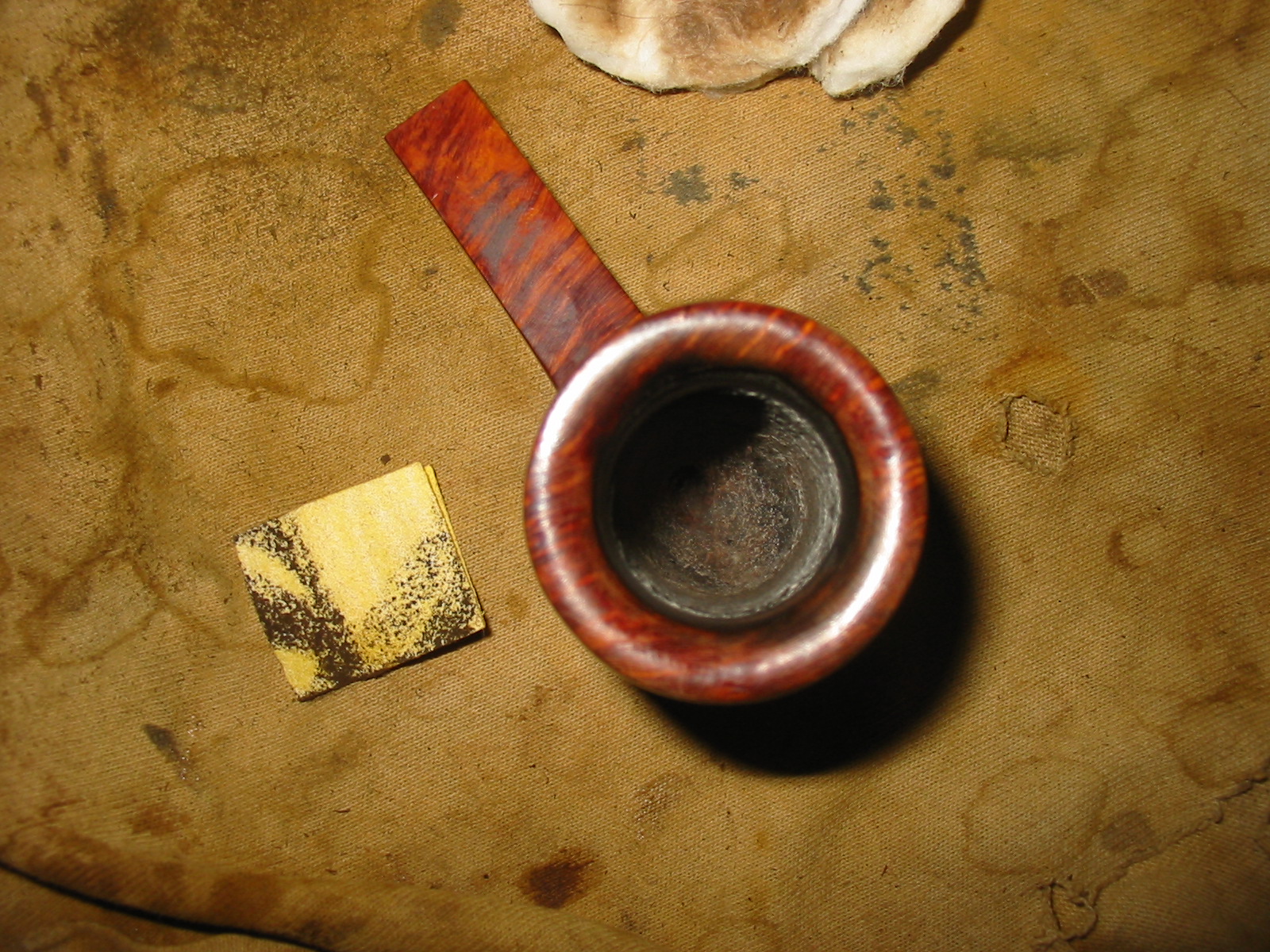
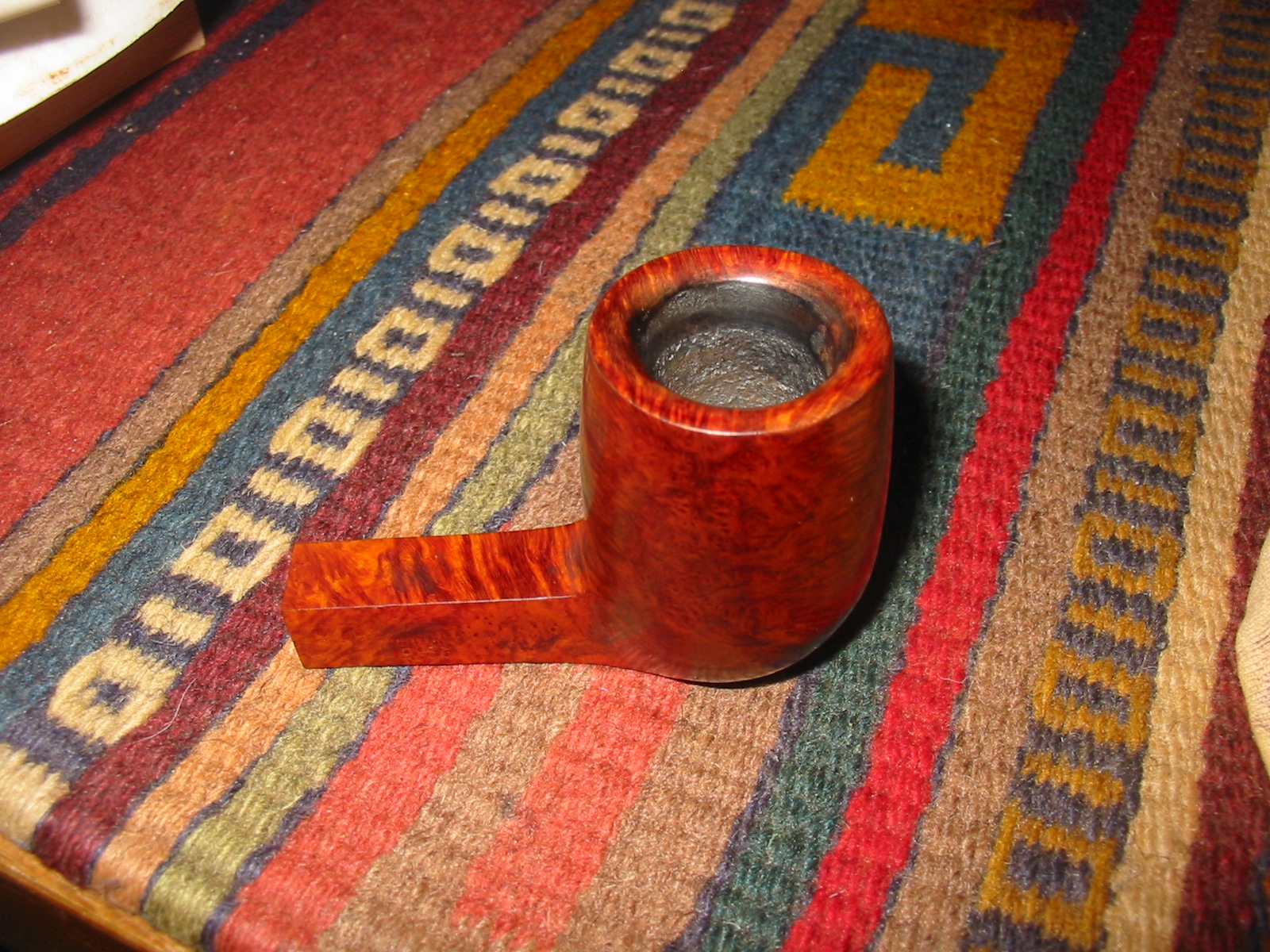
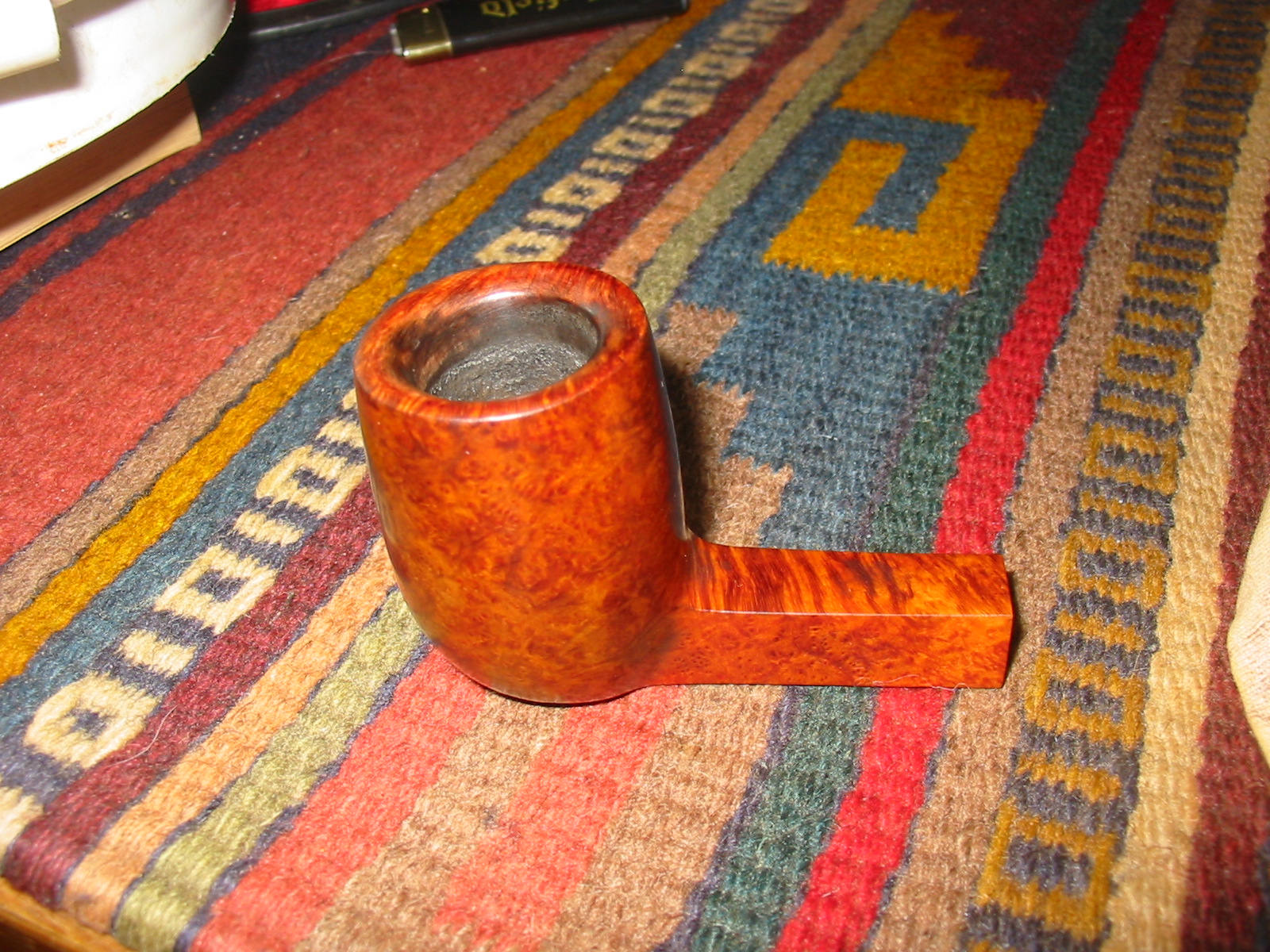
One of the positive things of the ultrasonic is that it goes on a timer and you have your hand free to do another thing until it is done, so I proceeded to clear the top of the bowl of its soot using a sock, salvia and the abrasive pads. Using the sock I got most of the soot build-up off the bowl and used the 1800 grit to get the thicker and harder pieces off.
023 Bowl before

024 Bowl after

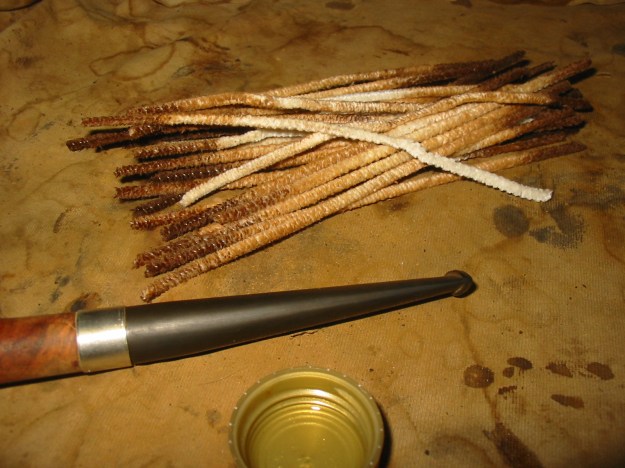
Then it was time to retrieve the stems. They came out nice and clean and when dried were a little dull. I pulled pipe cleaners through them and as you can see they were only a little brown at the beginning (right side).
025 Pipe cleaners

Replacing the stem on the pipe I used the muslin buff wheels and polishing wheels to buff the stems to get a nice shine on them.
026 Attached

027 Done

And the final pictures of the tools used in the experiment and the cleaning.
028 Tools used in experiment

029 Tools used

So far I am optimistic and happy with the end results using the ultrasonic cleaner with the Oxi-Action cleaning solution. The oxidation gets off rather well using the grinding wheel and it saves me roughly 30 minutes of work. This means a relief for my tennis elbow I have in both arms. So for me it is quite a pleasant addition in the cleaning process.

The negative aspect so far encountered was that this particular model ultrasonic bath is not very drain friendly, in this I mean that getting the liquid out is rather a messy business. Also I have no idea what will happen in the long run with the stem if you use it for a prolonged time. As I read that some items can turn brittle when used too much in an ultrasonic cleaner. But so far I have not found any evidence this is happening with the stems. And there is of course the fact that Vulcanite tends to bend back to its original form when heated too hot, so far this has not happened but I can imagine that if using water that is too hot in combination with the ultrasonic vibrations that add extra heat it can happen.
All-in-all an experiment that opened my eyes to two cleaning methods and I hope it was as informative for you to read as it was for me to do.

Link

One of the pipes that I had been given years ago was stamped SmokeMaster Series 200 and was an acorn shaped rusticated bow with a smooth side on each side of the shank for stamping and a smooth rim. The left side bore the name and series number and the right side was stamped Imported Briar. The stem had been well chewed and the internal apparatus was missing. It was not useable on this pipe. I would have to restem it. I knew nothing of the brand name. My search on the internet gave me some information on the brand.

On the Dr. Grabow site ( http://drgrabows.myfreeforum.org/sutra13181.php ) I found some interesting information. I quote this post by Dave Whitney, the author of Old Briar, a book on refurbishing. “Smokemaster was a Briarcraft pipe. Richard Kliethermes Sr. was the founder of Briarcraft. First located on Pipetown Hill Rd, Spring Valley, NY, it moved later to 66 Central Ave., Spring Valley, NY. After the death of RK Sr., the business was run by Richard Kliethermes Jr. († 1943) and was quite prosperous between 1920 and 1940. The company closed in 1950. Briarcraft seconds are as follows: Airo, Arcadian, Briarmeer, Smokemaster, Cavalcade, Hallmark, Sterling Hall, and Wimbledon. The Orange off-center diamond was one of their logos.”

The link also had the following scan that shows the original design for the stems and the unique folded pipe cleaner filtration system of the original pipe. I decided to restem the pipe with a stem of my own choice rather than hunt down an original stem.
Smokemaster Patent Stem

Please forgive the poor focus on the next three photos but they still give the idea of what the pipe looked like when it arrived to my work table. It was in rough shape. The bowl finish was spotty and the varnish was coming off. The rim was out of round and the back edge of the inner rim and top were beat up and rough. The stem was gnawed off and the short length would not work with this old pipe. The cake was thick and uneven with large flakes of tobacco stuck to the inner walls of the bowl.
IMG_1015

IMG_1016

IMG_1017

I went through my stash of stems and found an old saddle stem with a built in brass band that would approximate the aluminum one on the original stem. I would need to do some work on the tenon length and the diameter of the saddle portion of the stem to get a correct fit but it was workable as the new stem.
IMG_1018

I reamed the bowl with a PipNet reamer (Photo 1 below) and a plumber’s wire brush (Photo 2 below) to clean out the debris. I used a sharp knife (Photo 3 below) to reshape the inner edge of the bowl and bring it back to round. Photo 4 shows the reshaped and cleaned bowl. I would have to top the bowl to repair the roughness to the top of the rim.
IMG_1027

IMG_1028

IMG_1029

IMG_1030

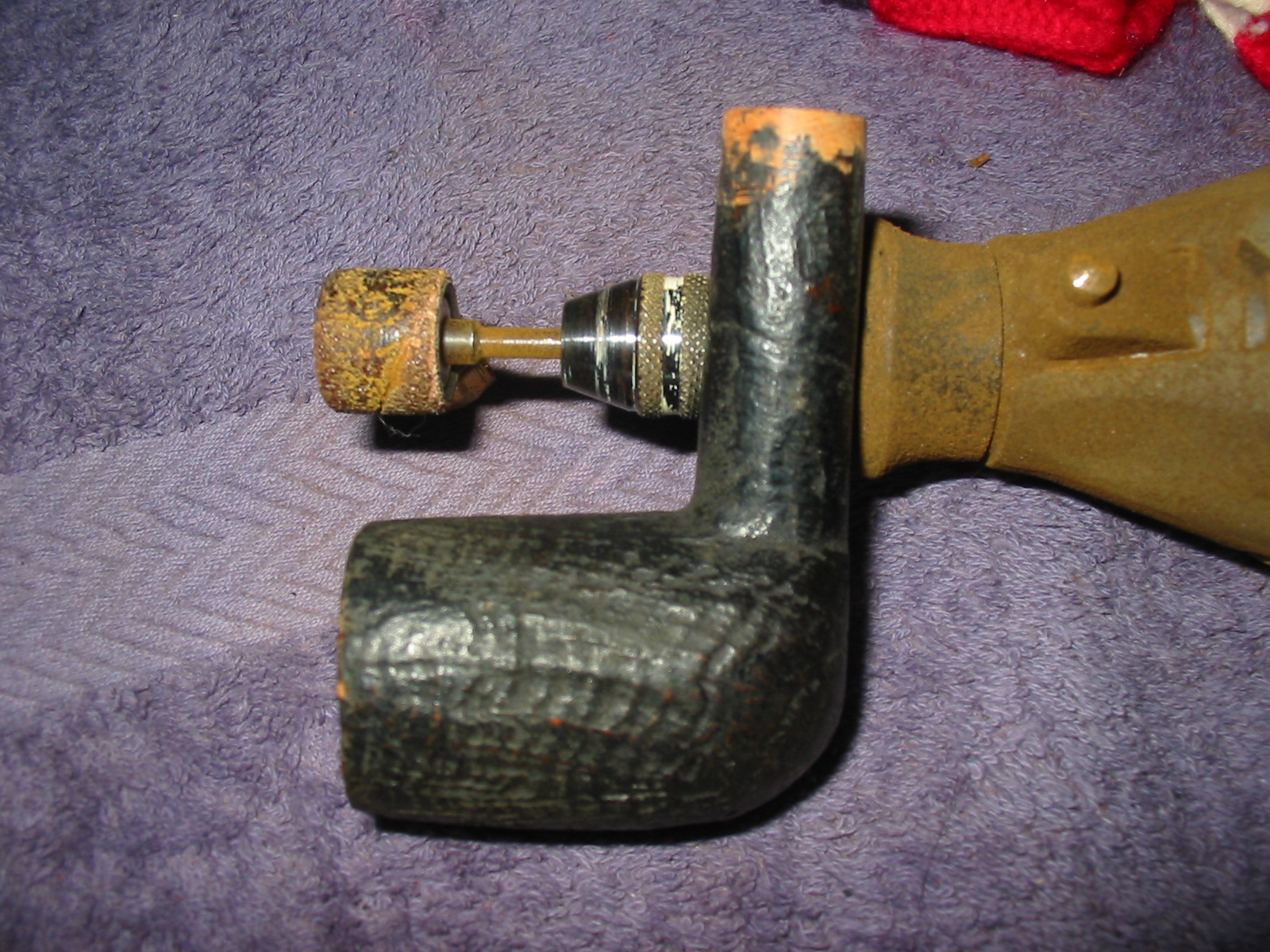
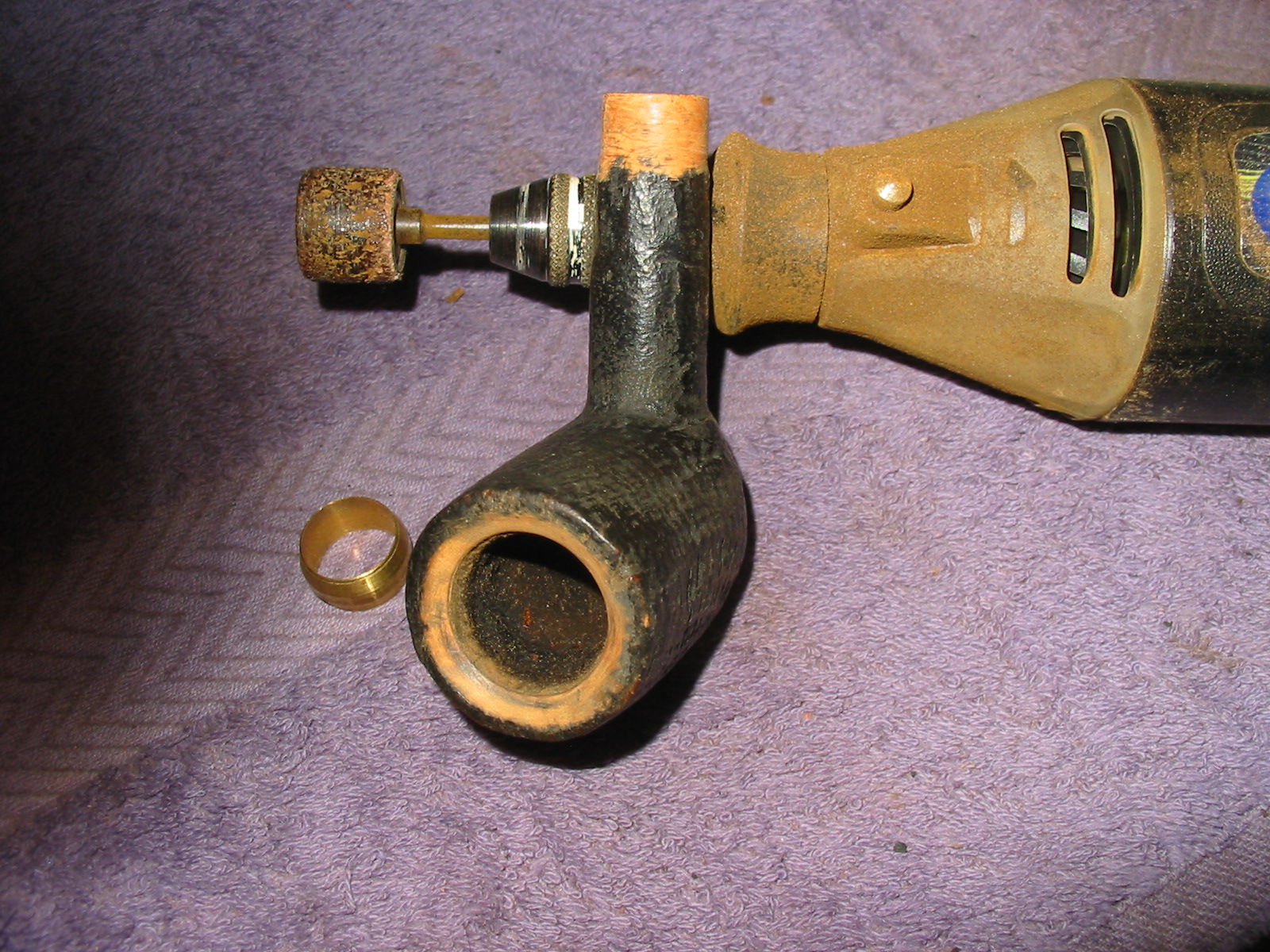
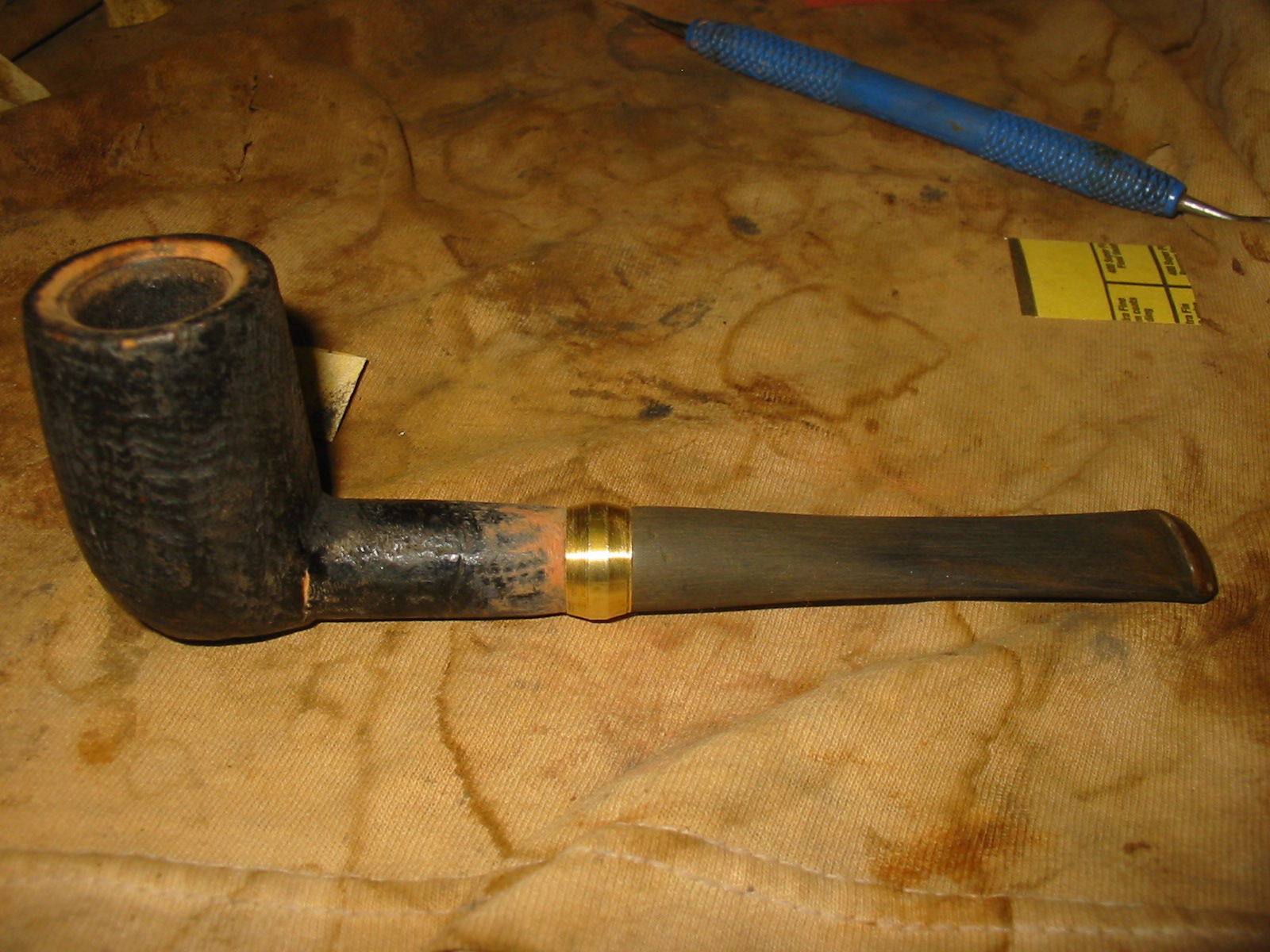
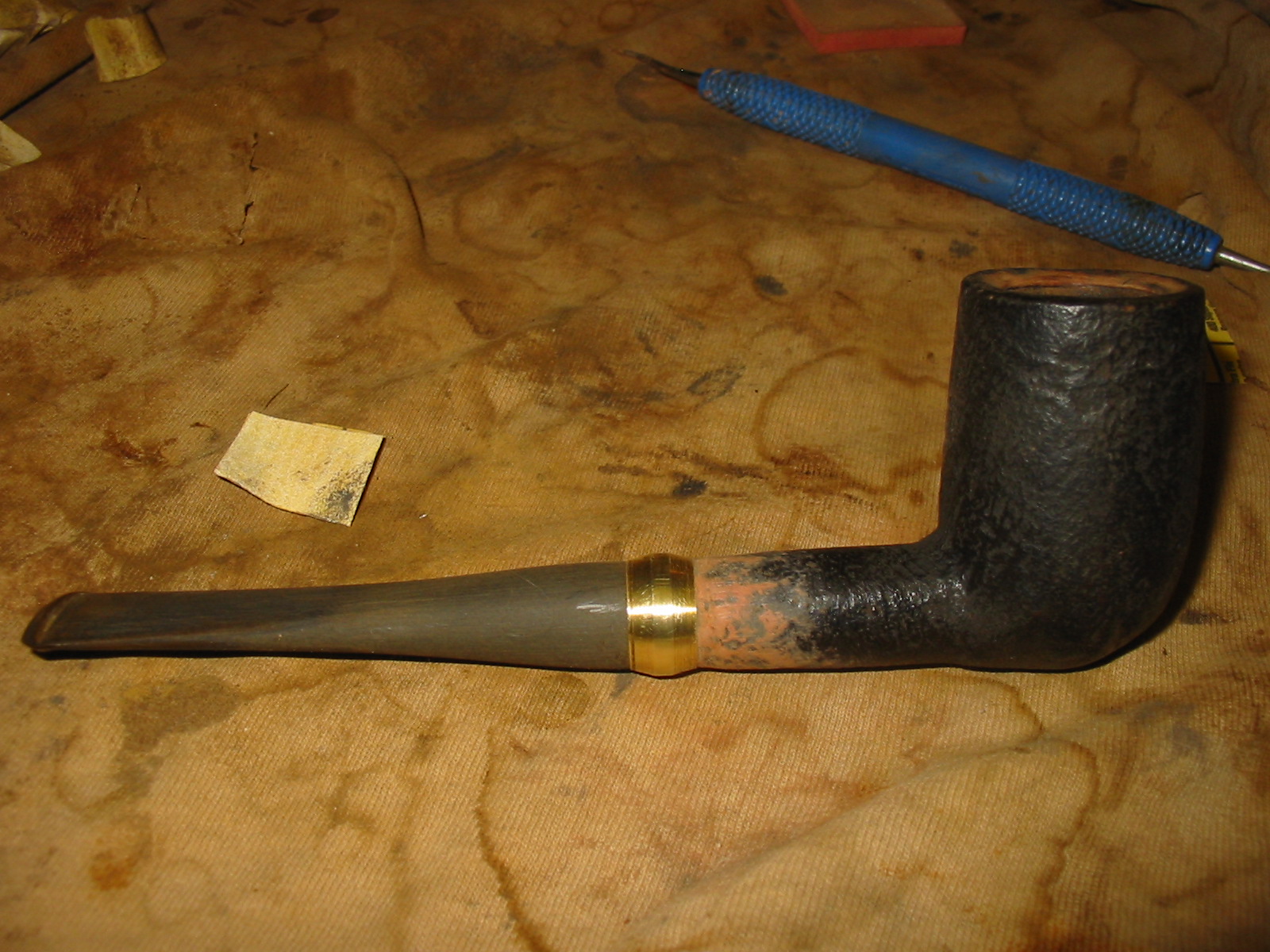
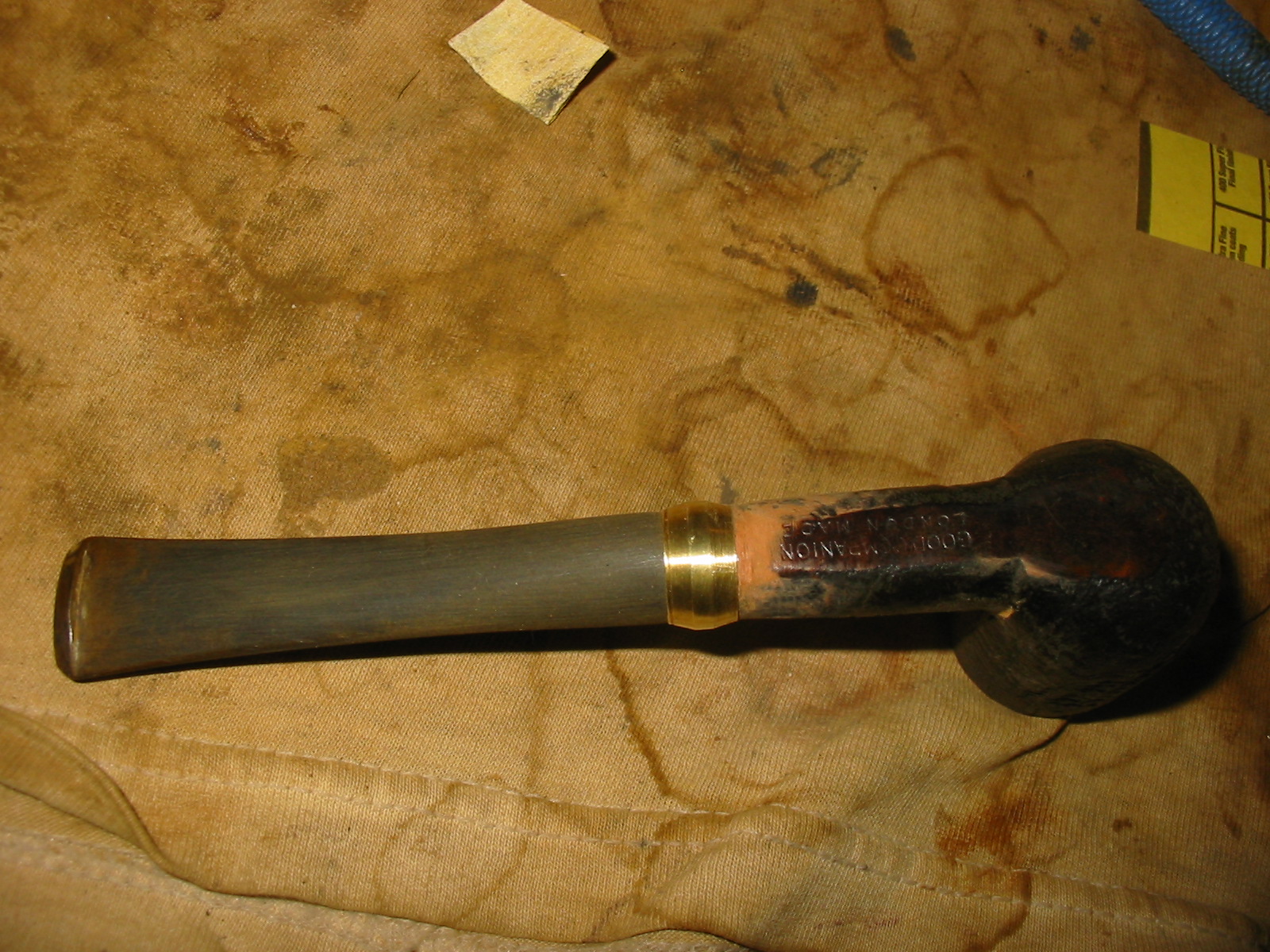
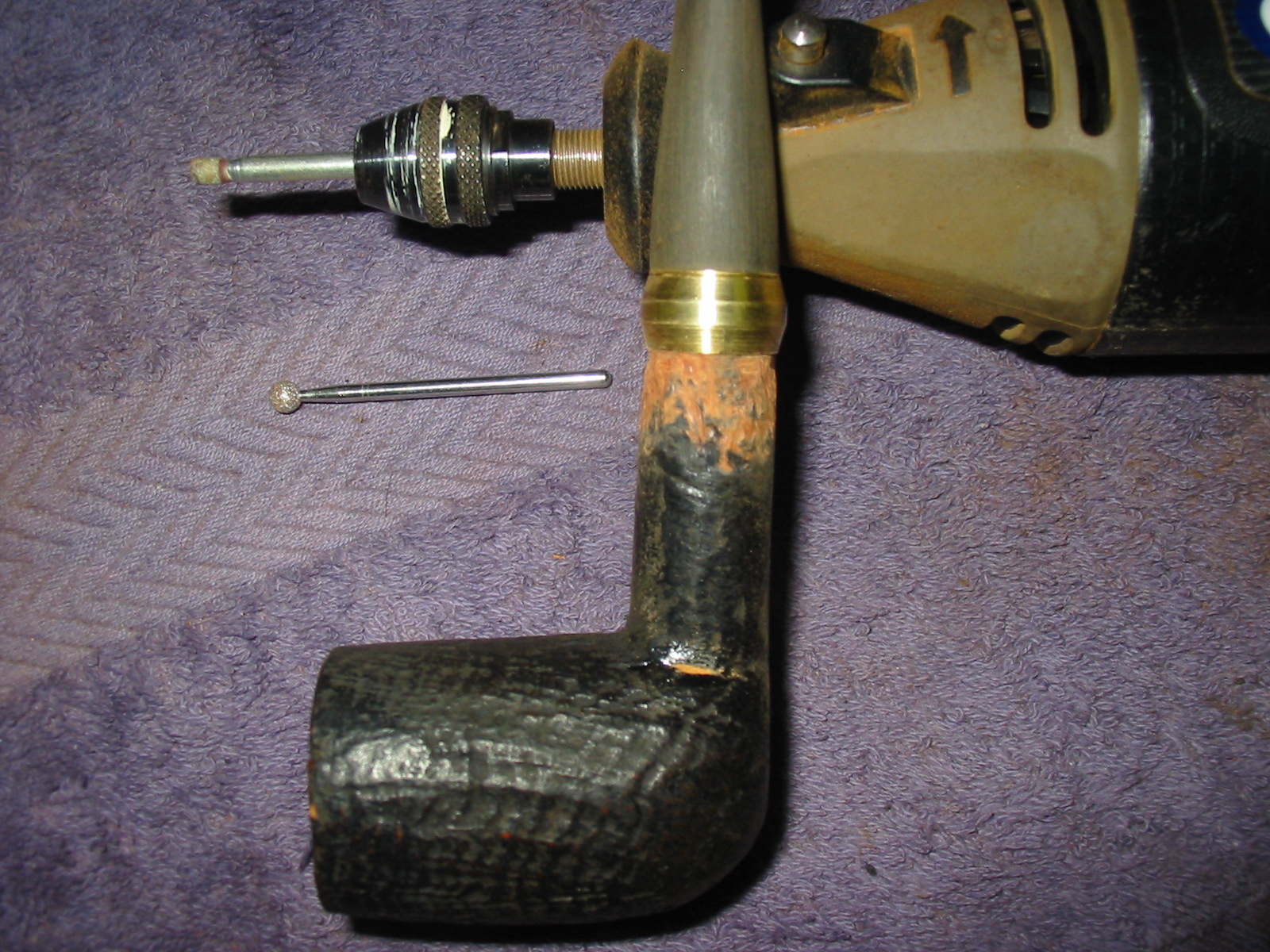
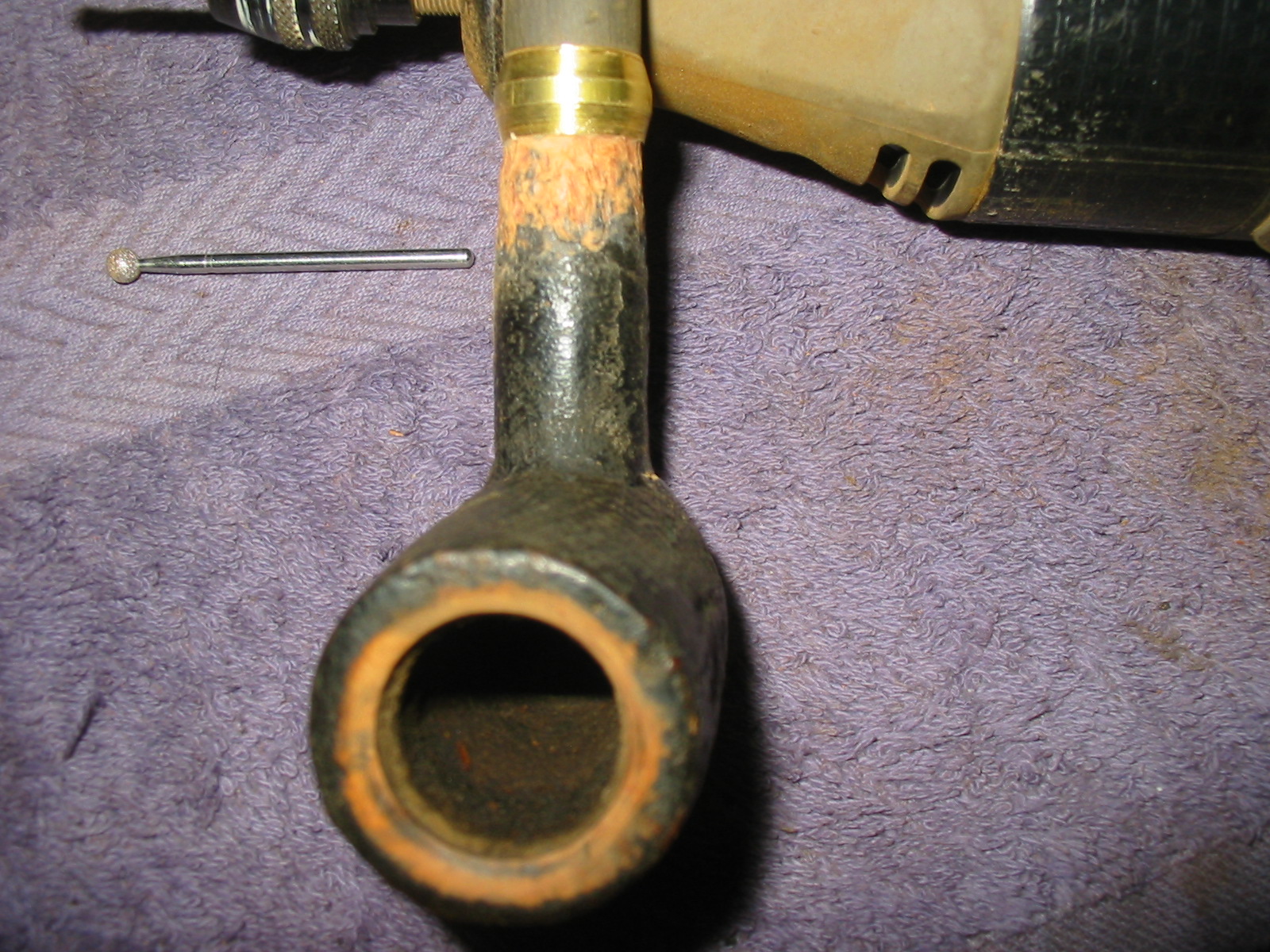
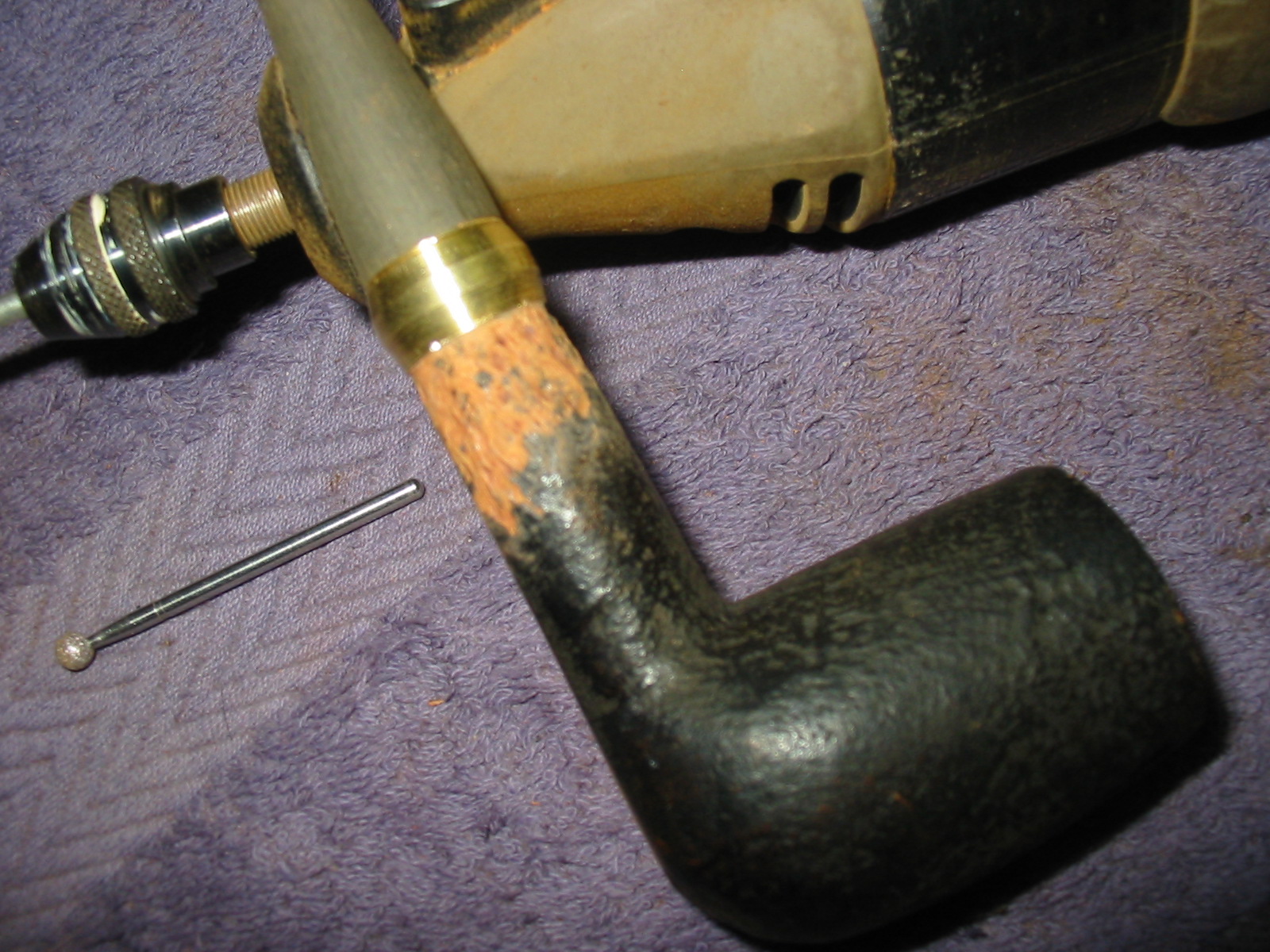
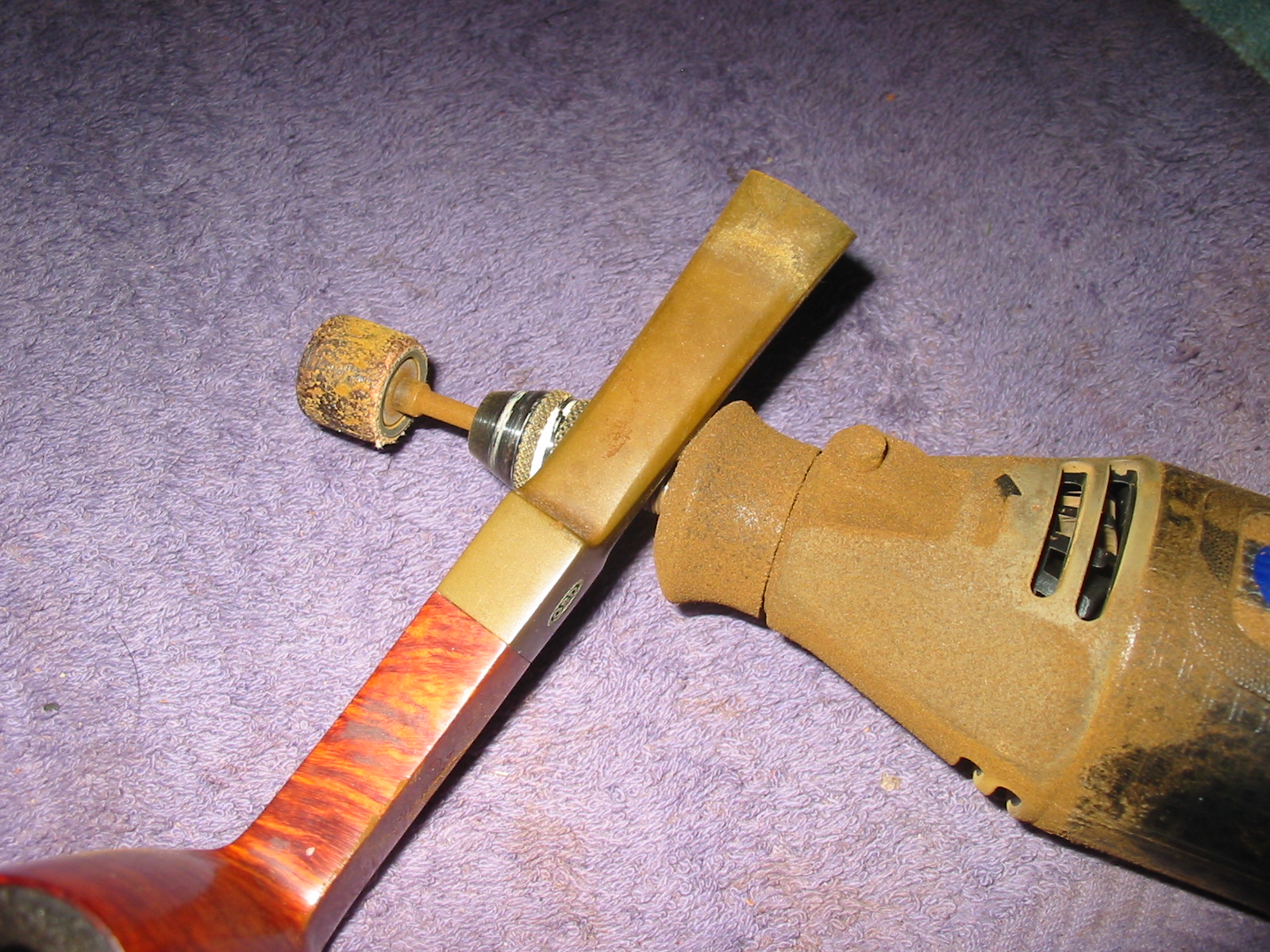
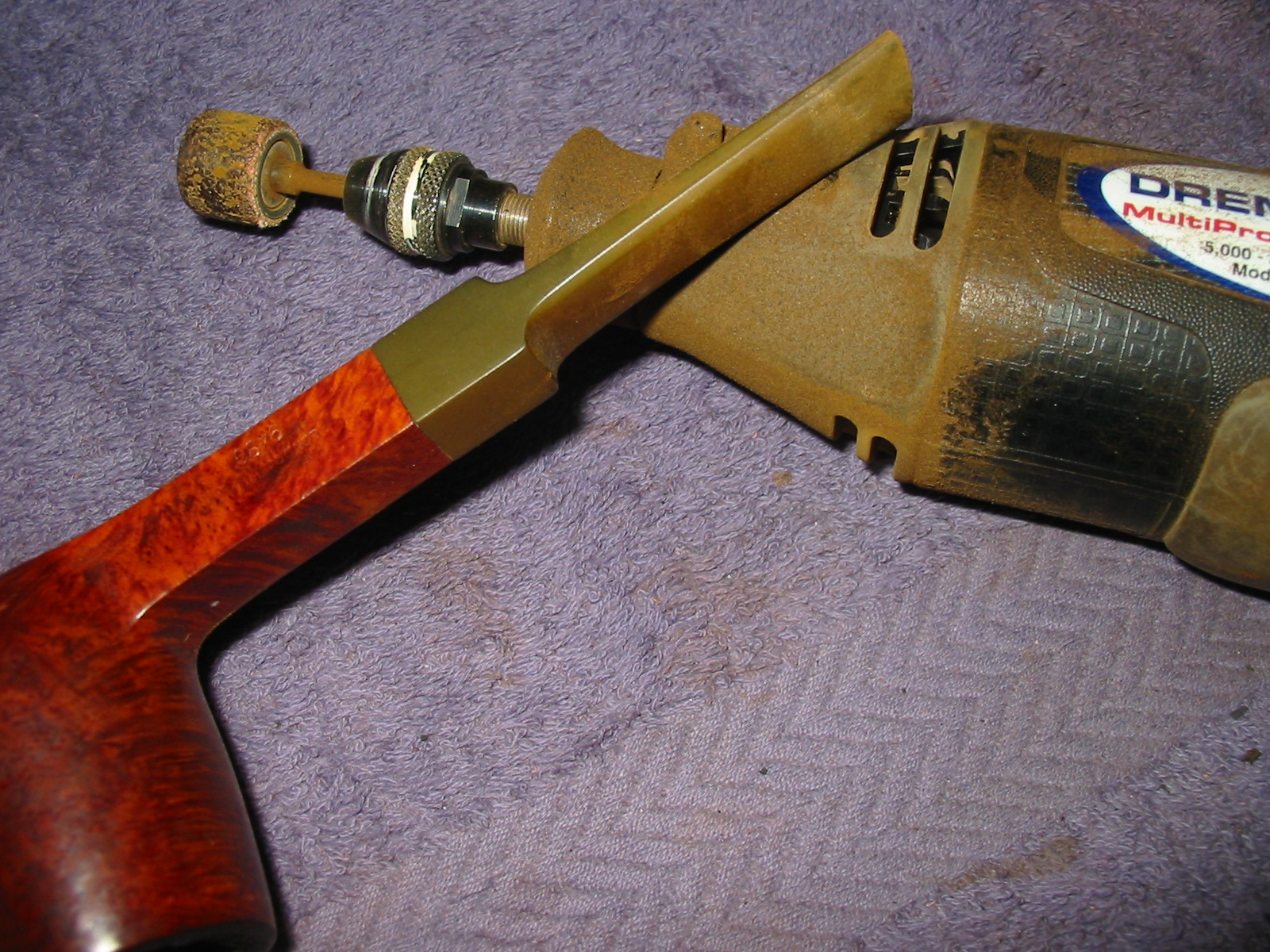
I used a sanding drum on a Dremel to shape the saddle diameter to meet that of the shank. The sanding drum worked well on the vulcanite and the brass. Due to the difference in hardness of the two materials I had to be careful to not cut the vulcanite deeper than the brass. The idea was to make a smooth transition between the two materials on the stem.
IMG_2276

IMG_2277

IMG_2279

The next photo shows the condition of the top rim of the bowl. I decided to top the bowl and then rework the rounded edge to keep the acorn shape intact. I set up a piece of sandpaper on my flat board and turned the bowl into the sandpaper. I worked it and sanded it, repeatedly checking the flatness of the rim and also the amount of briar I was removing from the rim.
IMG_2278

IMG_2280

IMG_2281

Once the roughness was smoothed out I sanded the rim with 220 grit sandpaper and a medium grit sanding block to smooth out the top and to round the outer edge of the rim to make it less abrupt and more like the original shape. The next two photos show the rim after the sanding and shaping with the sanding block.
IMG_2282

IMG_2284

At this point in the process I put the bowl into an alcohol bath and let it soak overnight to remove the varnish finish that was spotty and damaged. The next morning I took it out of the bath, dried it off and cleaned out the shank and the shank. The first photo below shows the bowl after I removed it from the bath. The second, third and fourth photos show the bowl after drying.
IMG_2286

IMG_2287

IMG_2288

IMG_2290

I restained the pipe with a Danish Oil Cherry stain applied with a cotton pad. I need to be able to work the stain into the deep rustication and also on to the smooth portions of the shank and rim. The rim took several applications to match the rest of the bowl.
IMG_2291

IMG_2292

IMG_2293

IMG_2294

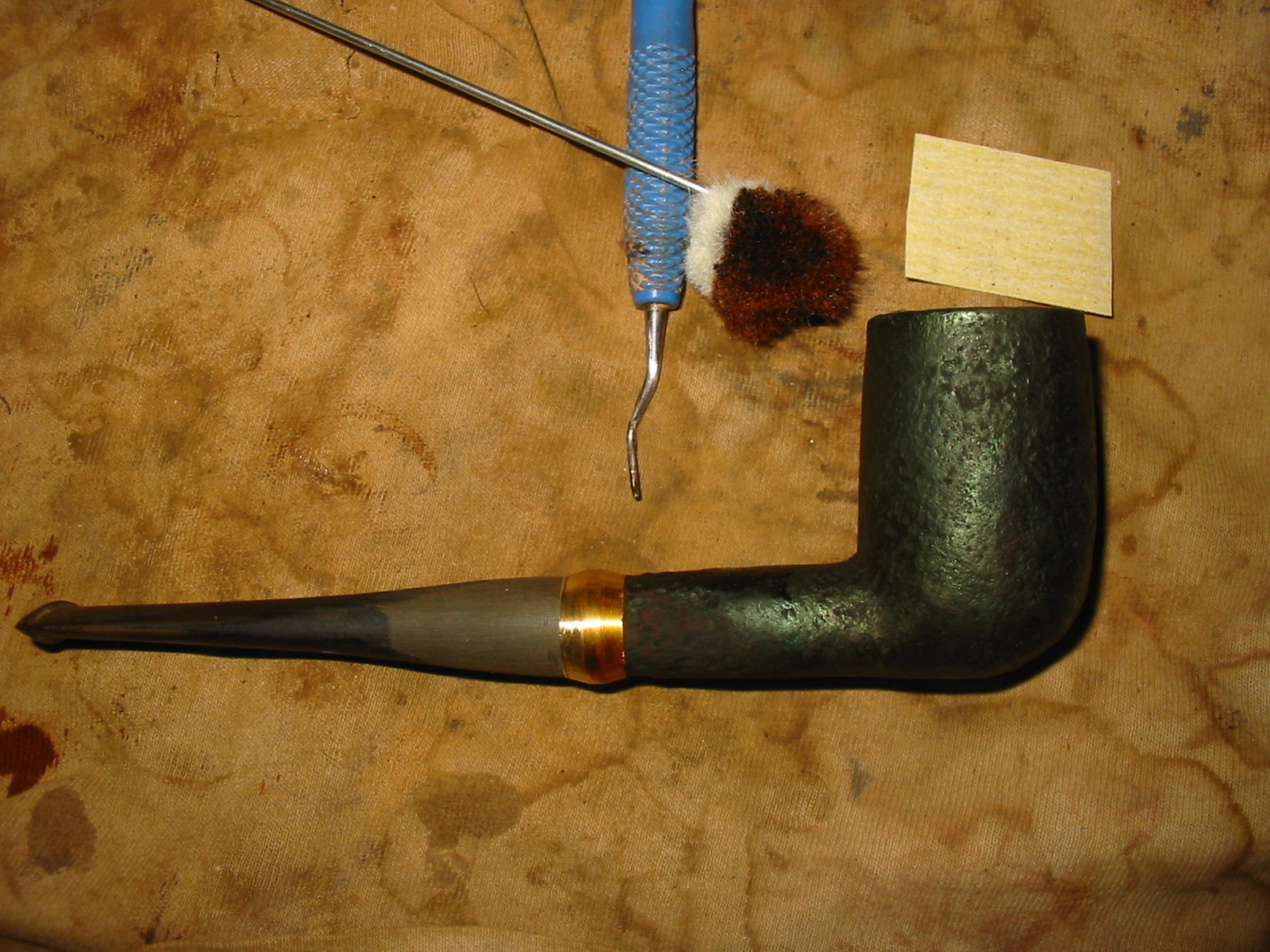
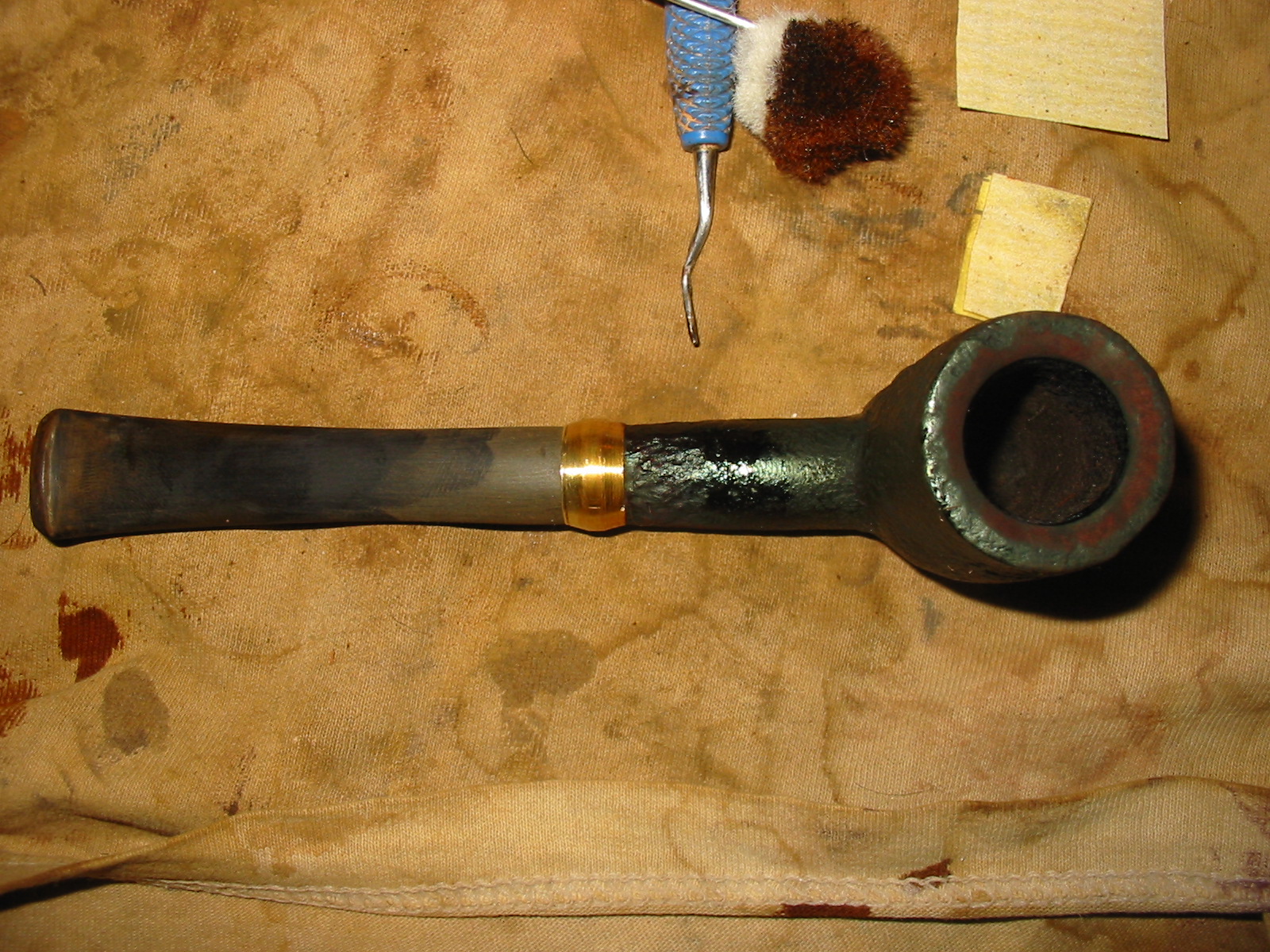
I put the bowl aside to dry and worked on the stem. I sanded out the remaining scratches around the brass band on the stem with 220 grit sandpaper and then reworked it with the medium grit sanding block. Once the scratches were no longer evident I worked on the stem using the micromesh sanding pads from 1500-12,000 grit to polish the stem and prepare it for waxing and buffing. Once I finished with the 12,000 grit pad I gave the stem a coat of Obsidian Oil to seal the surface and to soak deeply into vulcanite. I buffed the stem with White Diamond to finish the shine and then reinserted it into the shank.
IMG_2295

IMG_2296

IMG_2297

I buffed the entire pipe with White Diamond and gave it a coat of Halcyon II wax for rusticated pipes. I then buffed it again with a clean flannel buff to raise the shine. The photos below show the finished pipe.
IMG_2302

IMG_2303

IMG_2300

IMG_2301

Repairing Deep Tooth Marks and Bite Throughs on Vulcanite Stems – AJ Verstraten


Blog by AJ Verstraten

It is with pleasure that I post AJ’s second post on rebornpipes. AJ is known to the online community as Bananabox-Ninja.

Greetings, today a small post about the use of black super glue on a few pipes I had previously cleaned and refurbished; before I found Rebornpipes. This did give me a small problem as I did not extensively take pictures of the process as I had no reason to share the process at that moment and as such I am missing a few ‘before’ pictures.

The pipes I revisited for this project were:
– 11 Wahl Filtro
– Lorenzo Elba
– Machiavelli Como
– BBB Medina
– Spitfire by Lorenzo Riviera
All of them had bite marks on the mouthpiece and the Riviera had even been bitten clean through.

Lorenzo is a good Italian brand that is quite popular in Germany. The BBB Medina is an old English made pipe that has a good reputation here in the Dutchlands. The Wahl and the Machiavelli pipes are a mystery to me. I can find some eBay listings for them but I cannot pinpoint their true origin.

First up the pictures I did have of the before process.

BBB Medina
001 BBB Before

Lorenzo Elba
002 Lorenzo before

11 Wahl
003 11 Wahl Filtro before

As these pipes had already been waxed I first removed the wax layer using my motor, water and grinding wheel. This only took a few moments, after which I used a cotton swab and some alcohol to really clean the surface of the mouthpiece.
004 Wax removed

The following steps I repeated a few times as I found I was a little impatient in the drying process, I advise to let the glue set for a night just to be sure it is dry to the core.

Using a piece of cardboard dipped in Vaseline (sorry no pictures) I closed the hole in the Riviera mouthpiece and with cotton swabs and toothpicks applied the glue to the bite marks on all the other mouthpieces.
005 Glue applied

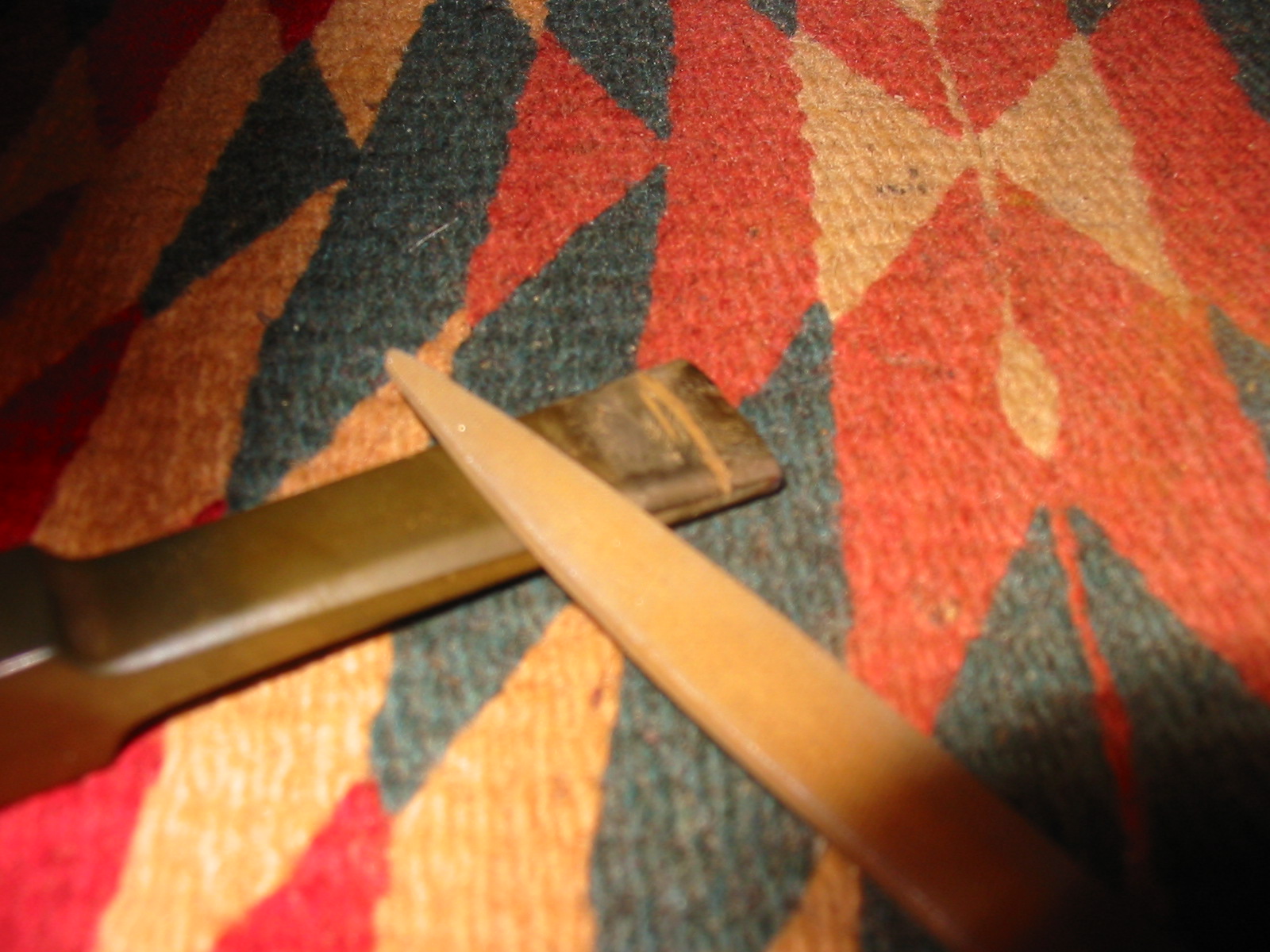
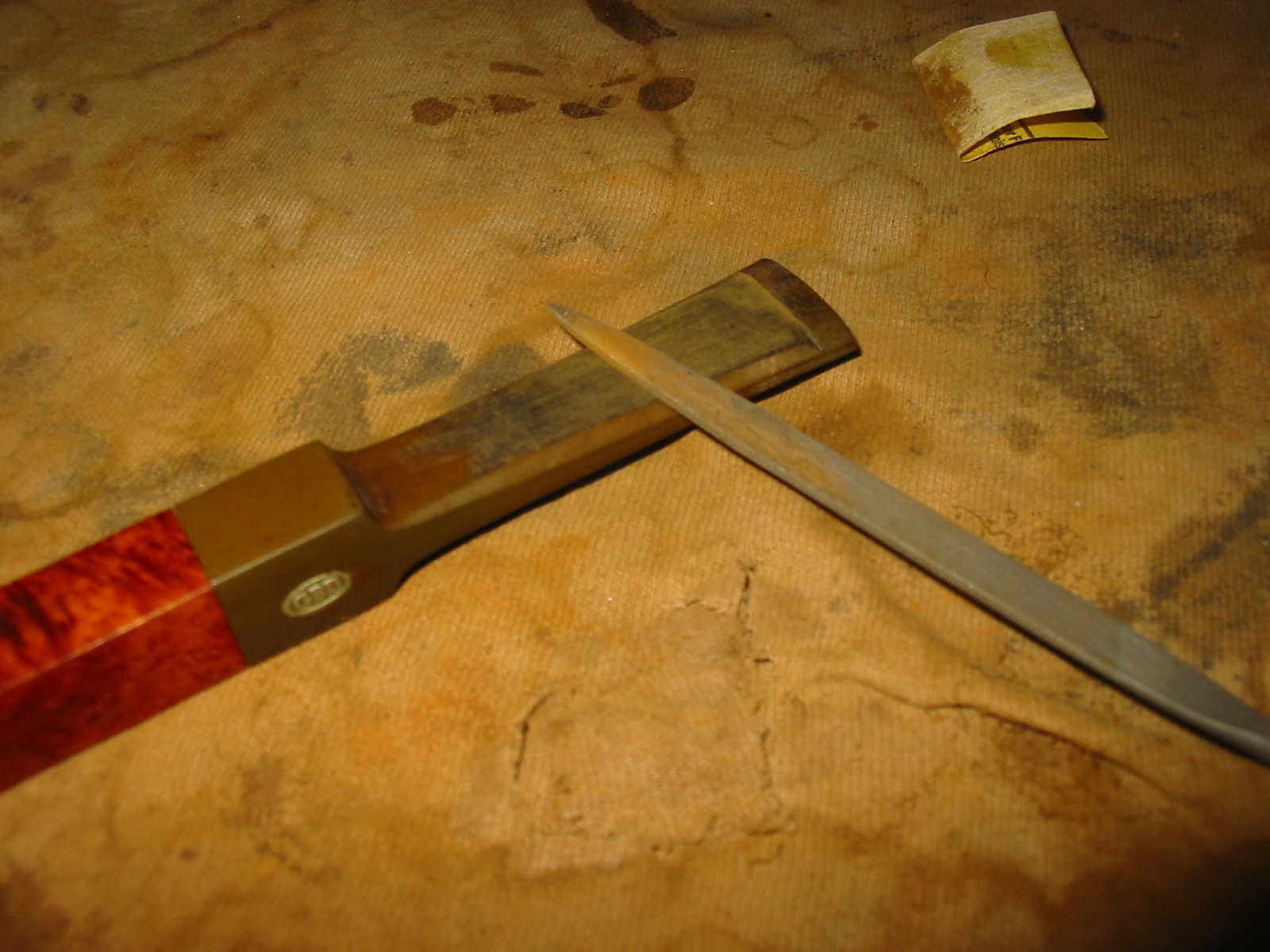
When the glue had dried I used 600 and 1000 grit sanding paper wrapped around a model file to sand off the excess glue and smooth the mouthpiece.
006 Top and bottom after sanding

I checked the smoothness using my mouth and tongue and although in all cases it felt smooth I noticed that in taking the pictures of the finished product the glue spots are visible. This bothered me, like when I sand a round shoulder or edge on the stem. A casual observer will not notice this, but I know it is there and it will bother me. However I decided against re-sanding them in the hopes of getting them perfect. Because in the end it is my lips and tongue that are handling the mouthpiece the most, not my eyes 

To finalize this short post here are the finished mouthpieces, pipes and the tools I used for this project.

11 Wahl Filtro
007 11 Wahl Filtro

008 11 Wahl Filtro

Lorenzo Elba
009 Elba mouthpice finished

010 Lorenzo Elba

Machiavelli Como
011 MAchiavelli Como finished mouthpiece

012 Machiavelli Como

BBB Medina
013 BBB Mouthpiece finished

014 BBB Medina

Spitfire by Lorenzo Riviera
015 Spitfire by Lorenzo Riviera Mouthpiece

016 Spitfire by Lorenzo Riviera

Tools used during this project
017 Tools used

Restoring an Old Amphora X-tra 509 Pot


Blog by Steve Laug

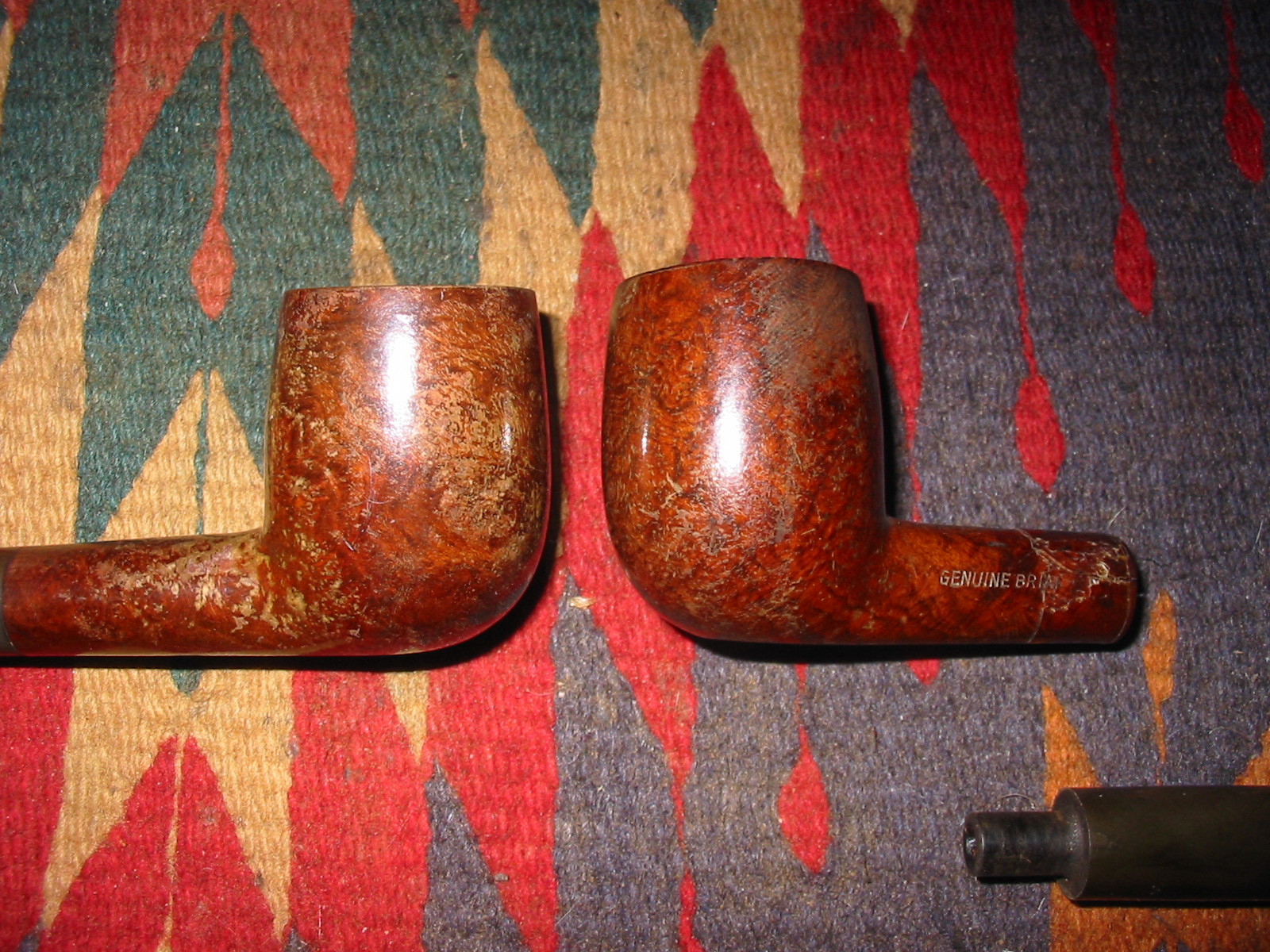
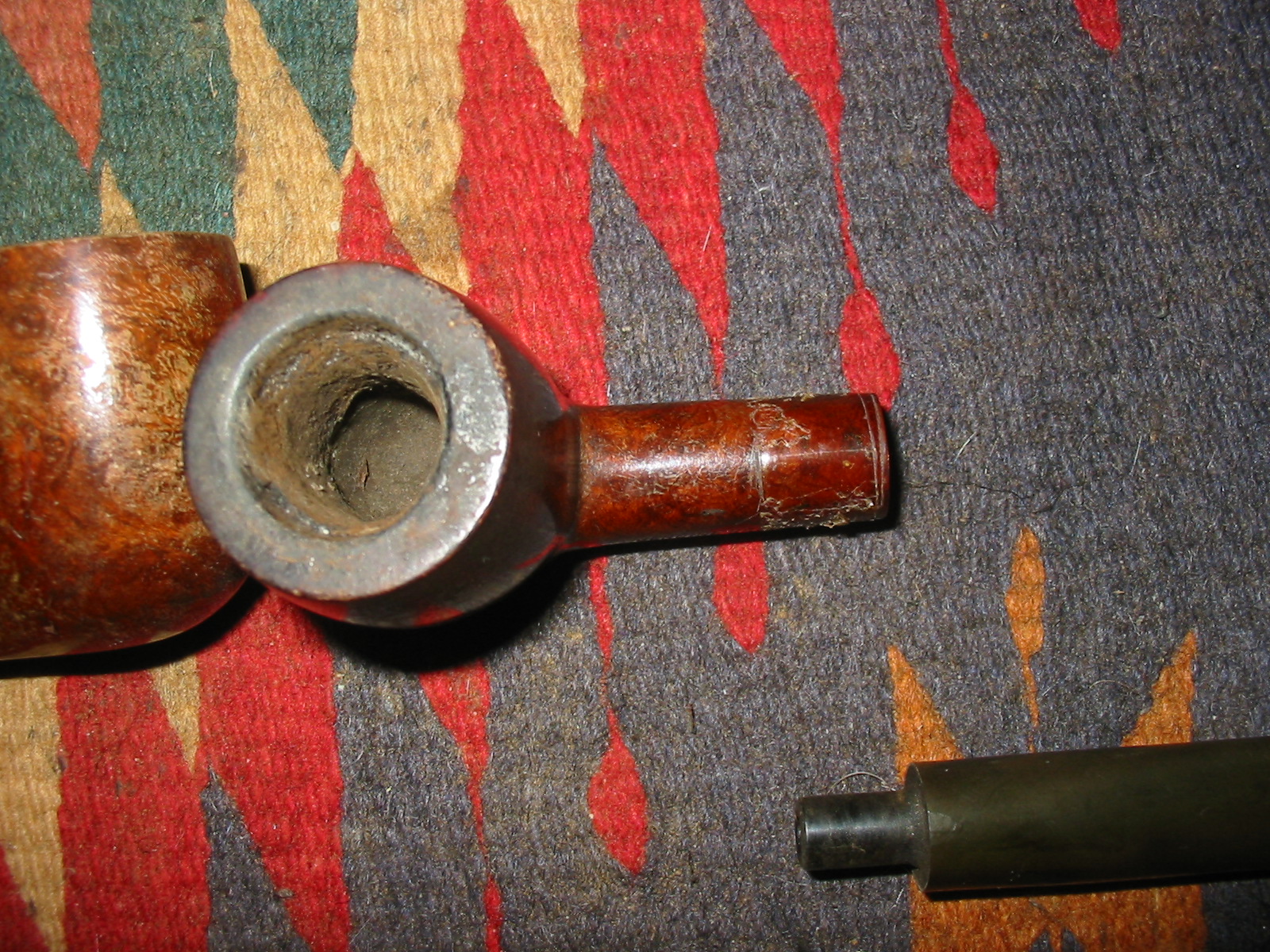
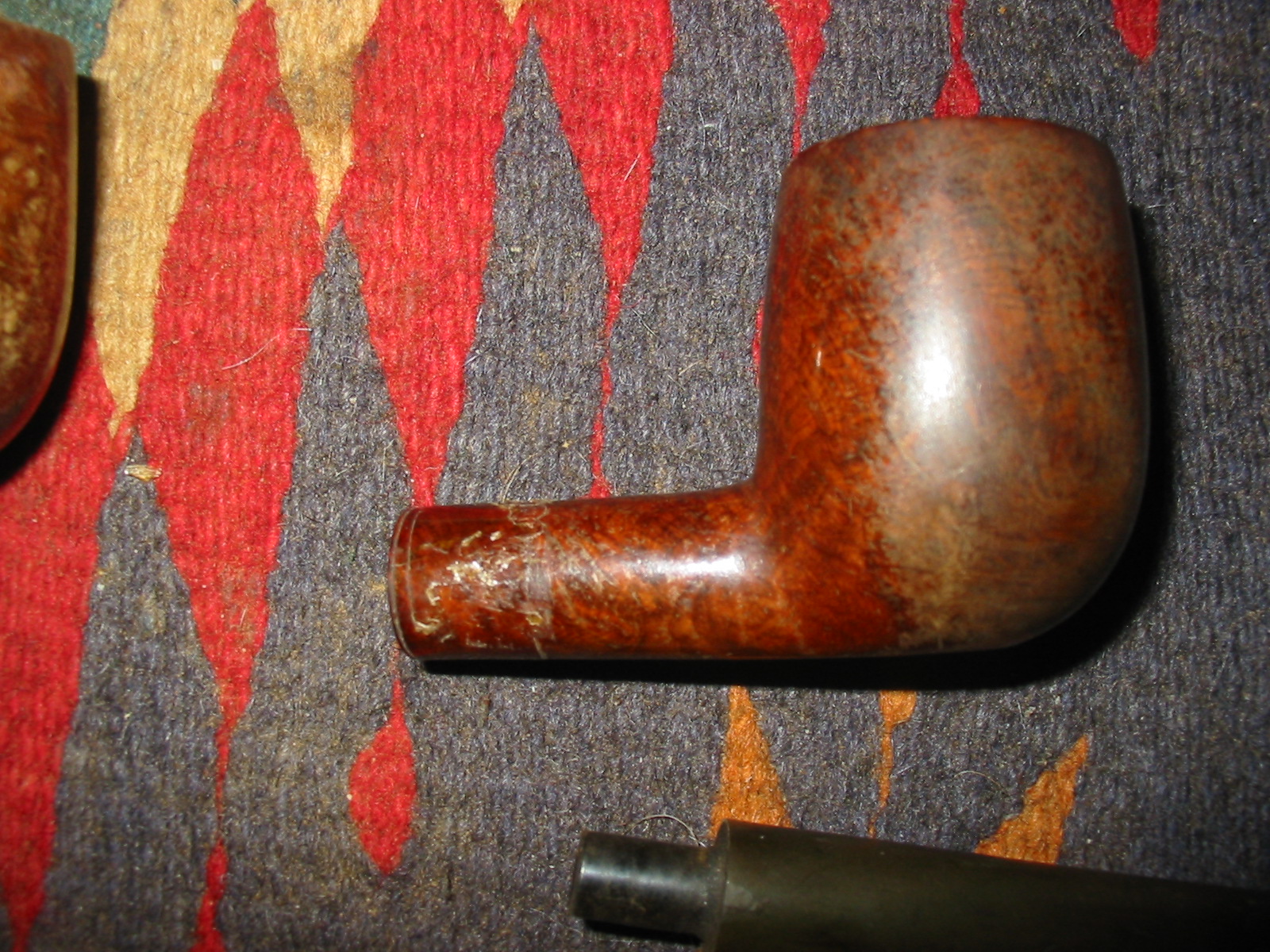
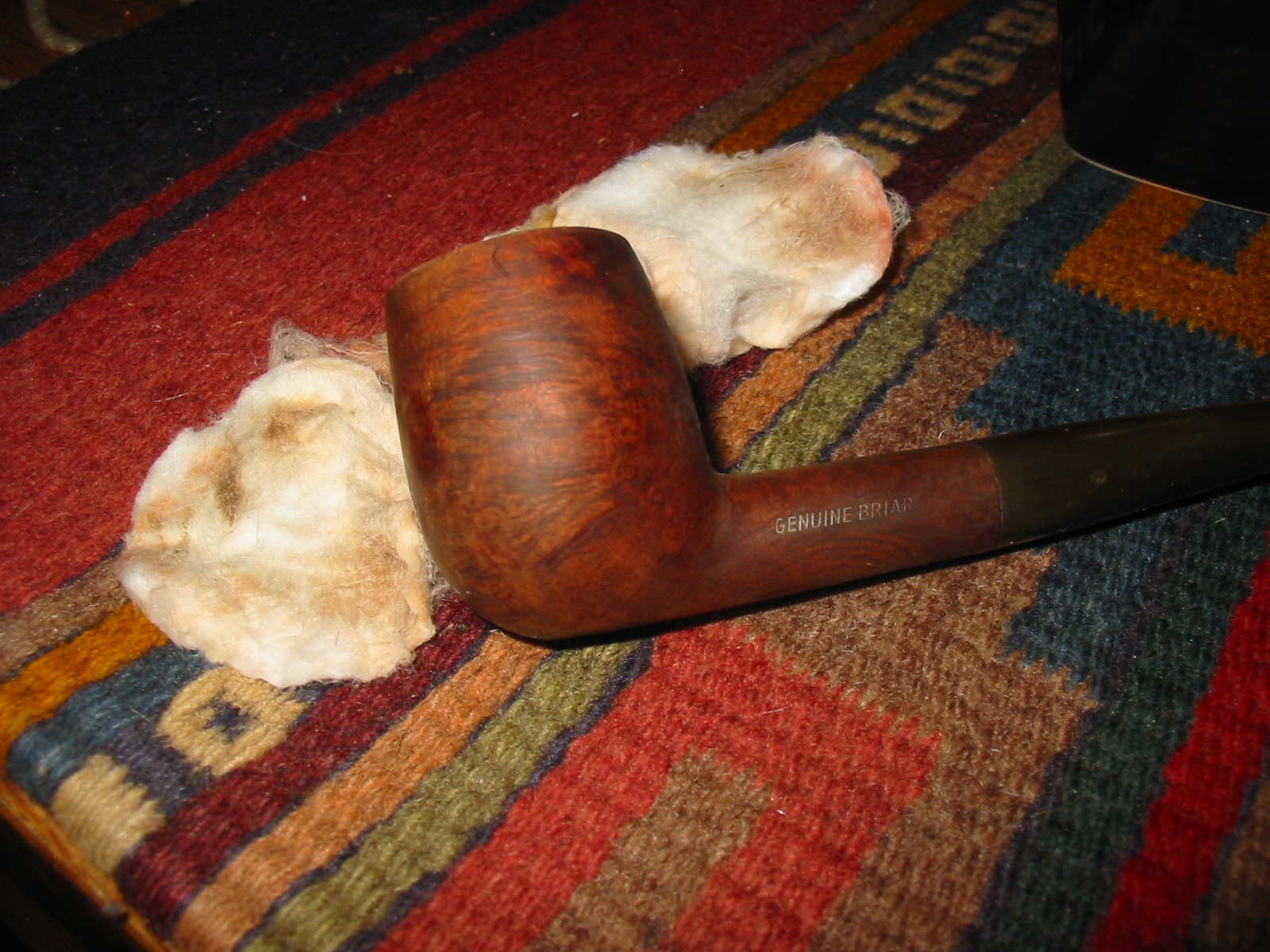
This is the last of the lot I found while on a recent trip in Northern Alberta, Canada. It is stamped Amphora X-tra 509 on the left side of the shank and on the right side it is stamped Genuine Briar over Made in Holland. The stem has an AA in a circle stamped on it (not a stamping for Amphora pipes I was familiar with). The pipe was in good shape. The rim was dirty and had a slight bit of build up on the surface. The bowl had a thin cake that was crumbly. The outside of the bowl was soiled and had some white paint on the surface. The stem was dirty and very slightly oxidized. There were no teeth marks on it so it was just dirty. The insides were also dirty. The inside of the shank and the stem were caked with a tarry buildup. There was an inner tube inserted in the tenon that extended into the shank almost as far as the airway at the bottom of the bowl.
IMG_1889

IMG_1890

IMG_1891

I used a PipNet reamer and started with the smallest cutting head and took back the cake. I followed that with the next size of cutting head and took the cake back to the bare wood in the bowl. The bottom of the bowl had some gouges in it and looked like someone had done a reaming with a knife.
IMG_2067

IMG_2054

IMG_2057

IMG_2056

IMG_2055

I removed the stem and dropped the bowl into an alcohol bath to soak overnight.
IMG_2066

I mixed a batch of Oxyclean and put the stem together with others I was working on into the bath of Oxy clean to soak at the same time.
IMG_2068

In the morning I took out the bowl and dried it off with a soft cloth. The finish was clean and the surface of the bowl free of the paint and grime that was present when I placed them in the bath. I took the stems out of the bath of Oxyclean and dried them off as well. The oxidation on the stem was softened and the stem was dark (it is the top stem in the second photo below).
IMG_2071

IMG_2080

I wiped down the bowl with acetone on a cotton pad to clean off the remaining finish. In the photo above of the bowl it appeared to have a fill on the bowl side. As I scrubbed it the surface cleaned up and the area was not a fill. The piece of briar has some great birdseye grain and a some cross grain on the front right side and the top of the bowl and shank. I also cleaned out the shank and the stem with pipe cleaners and Everclear. I scrubbed the rim to remove the tars and buildup.
IMG_2260

IMG_2261

IMG_2262

IMG_2264

I wanted to highlight the grain on this one so I decided to stain it using some Cherry Danish Oil which is Linseed oil and stain. I rubbed on the stain, rubbed it off and rubbed it on a second time. I set it aside to dry. Once it was dry I buffed it with White Diamond.
IMG_2265

While it was drying I used micromesh sanding pads from 1500-12,000 grit to work on the stem. I worked around the double AA on the stem logo. It is faint but still visible. Once I had finished sanding I rubbed it down with Obsidian Oil and let it dry. When it was dry I rubbed it with a soft cloth to buff it by hand.
IMG_2266

IMG_2267

IMG_2268

IMG_2269

I polished the aluminum inner tube with 0000 steel wool to remove all grime that was remaining on the aluminum. I gave it a coat of wax and polished it off with a clean soft cloth.
IMG_2270

I buffed the pipe and stem with White Diamond and then gave it multiple coats of carnauba wax and then with a soft flannel buff to give it a shine. The final photos below show the finished pipe.
IMG_2272

IMG_2273

IMG_2274

IMG_2275

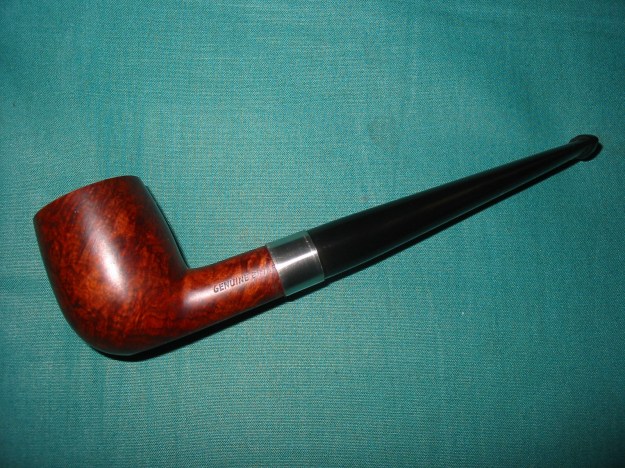
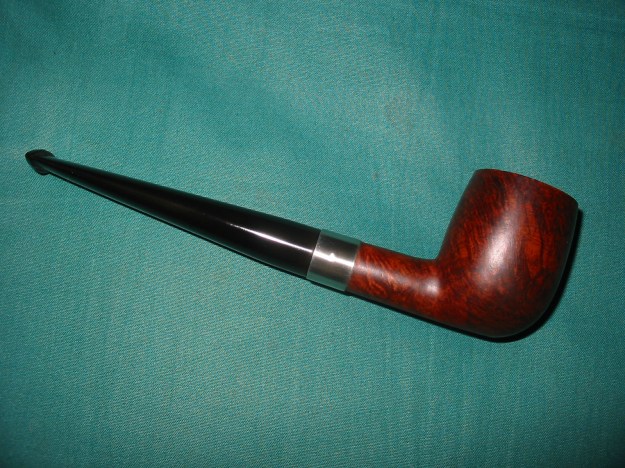
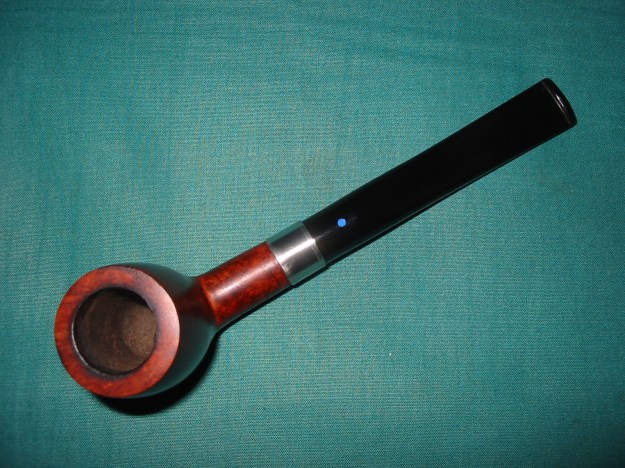
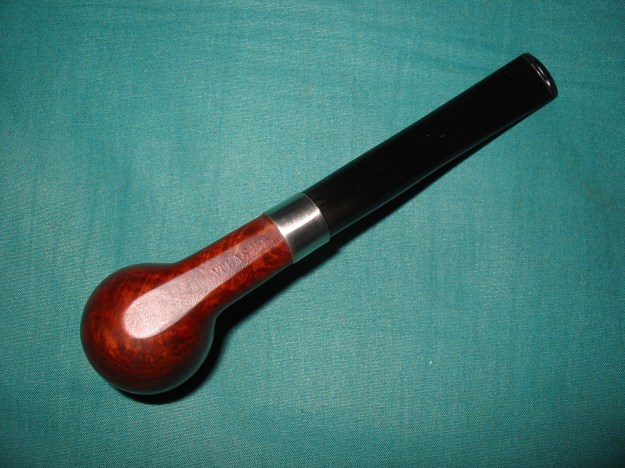
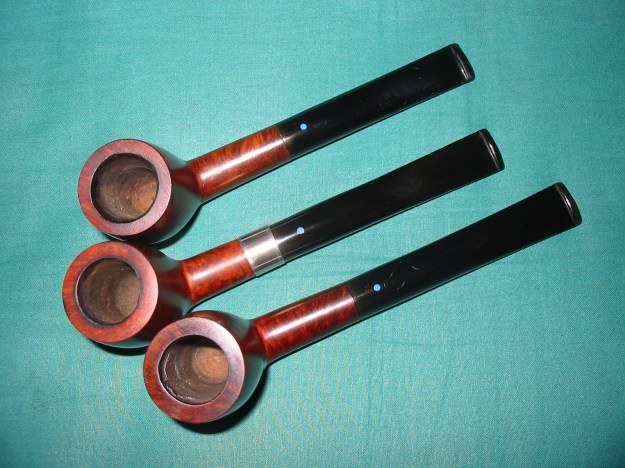
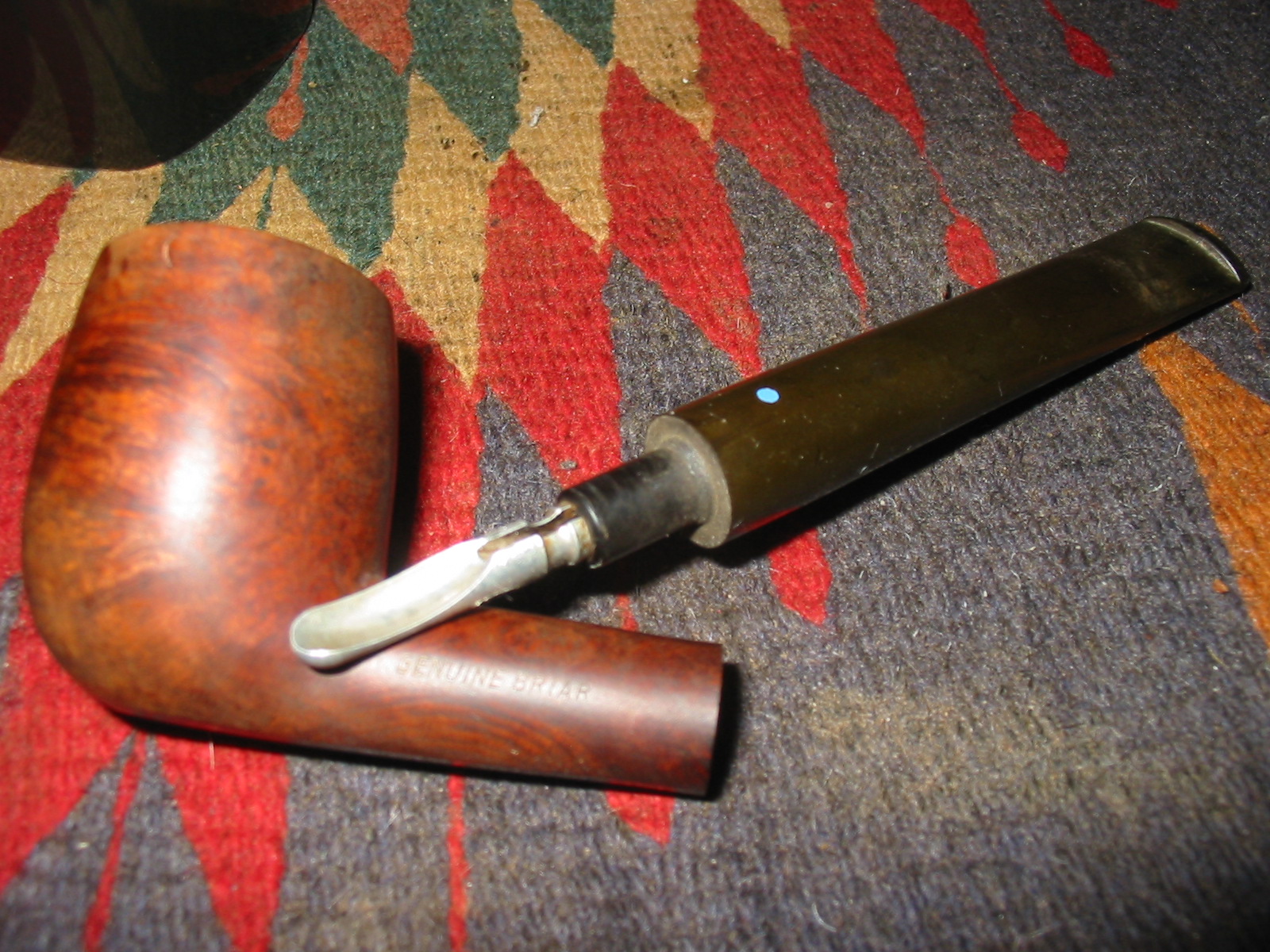
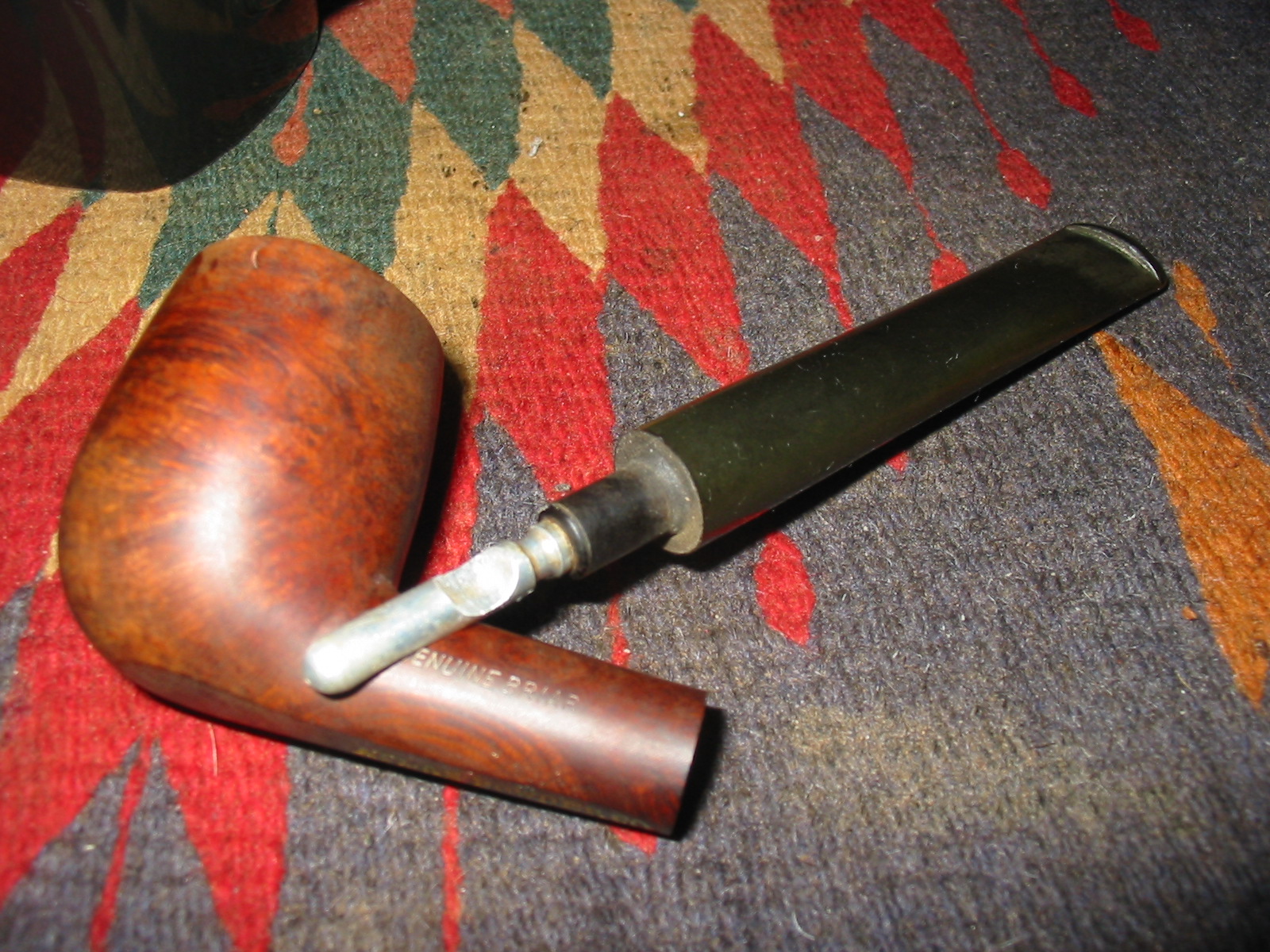
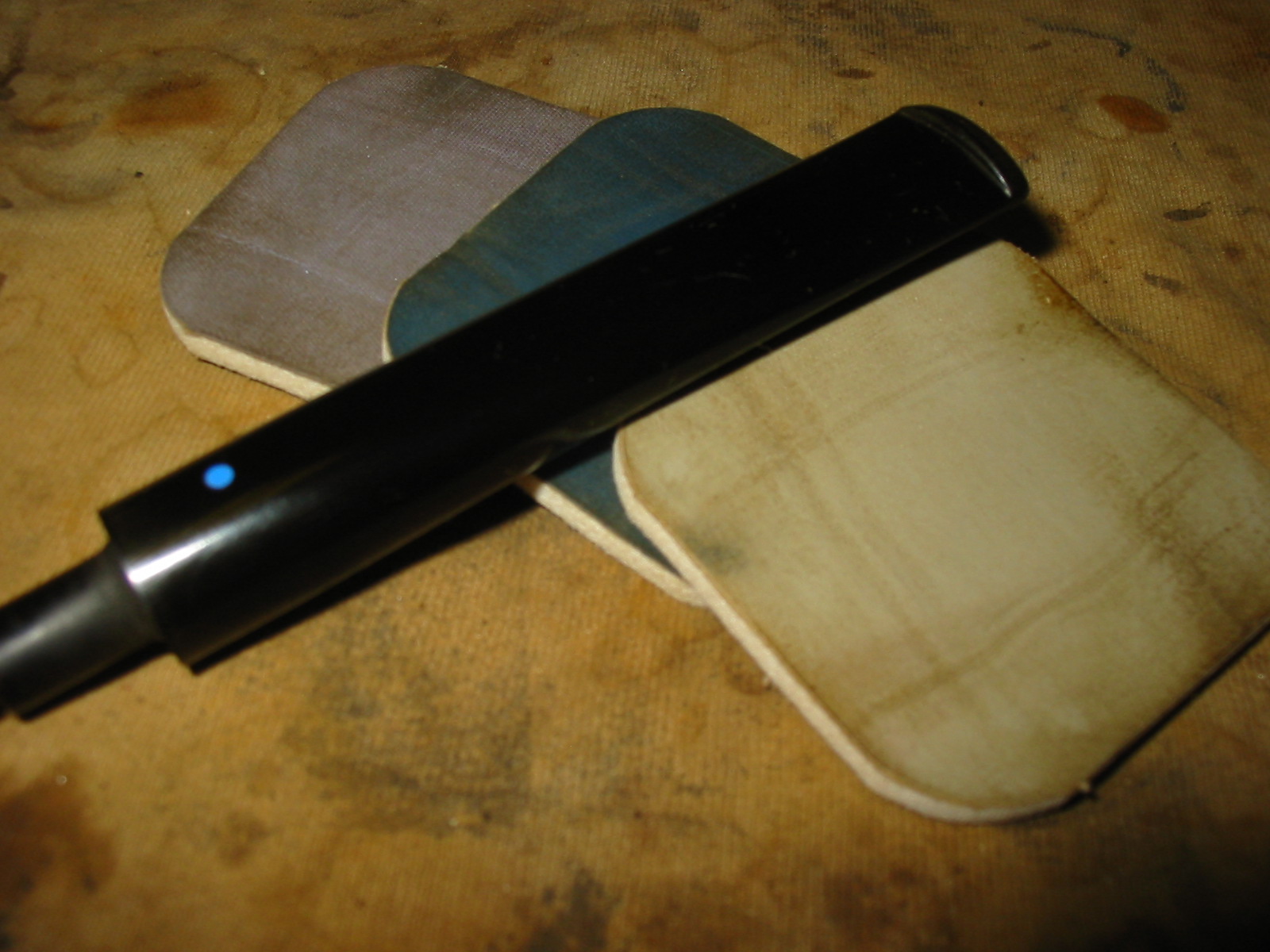
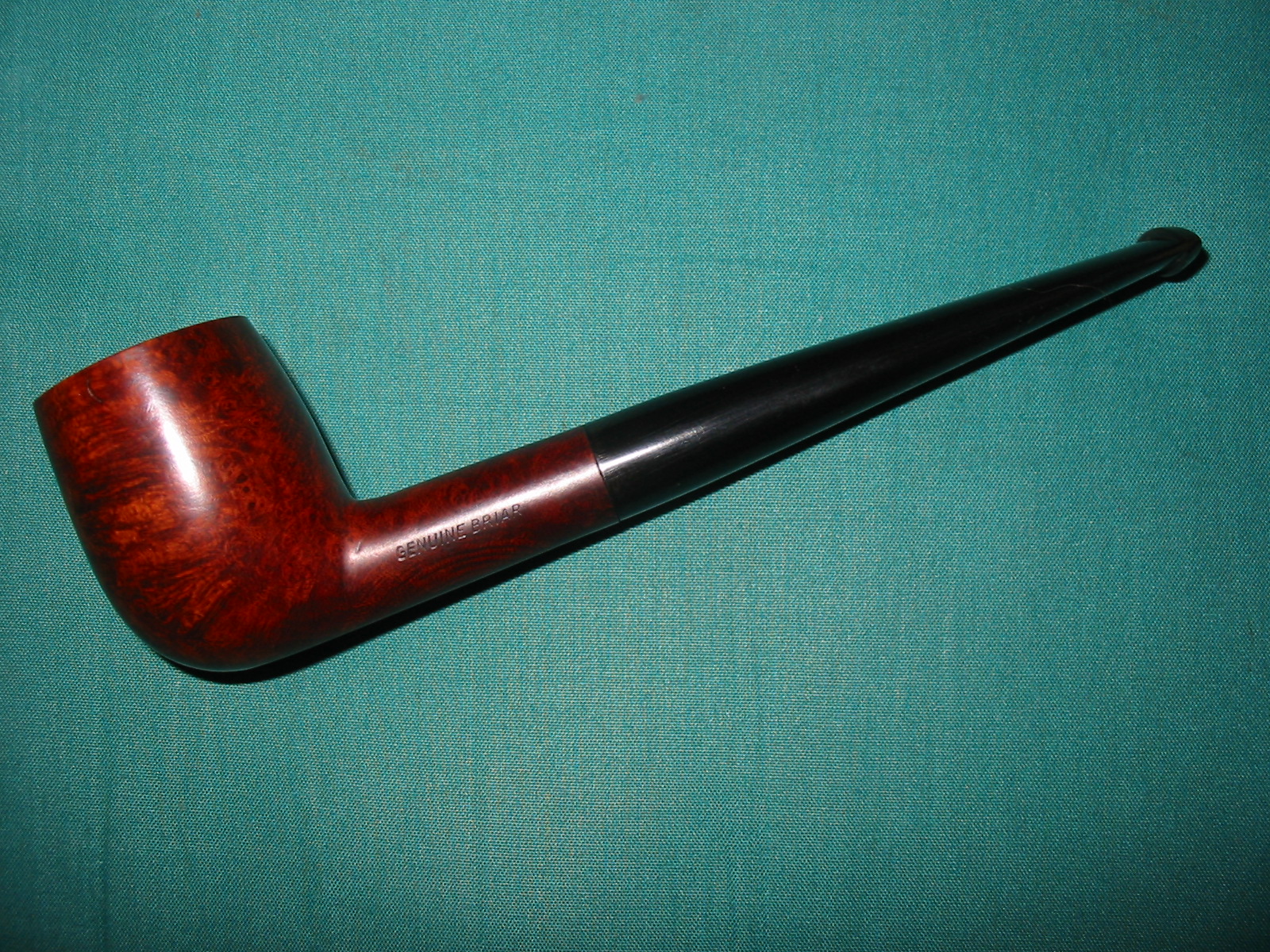
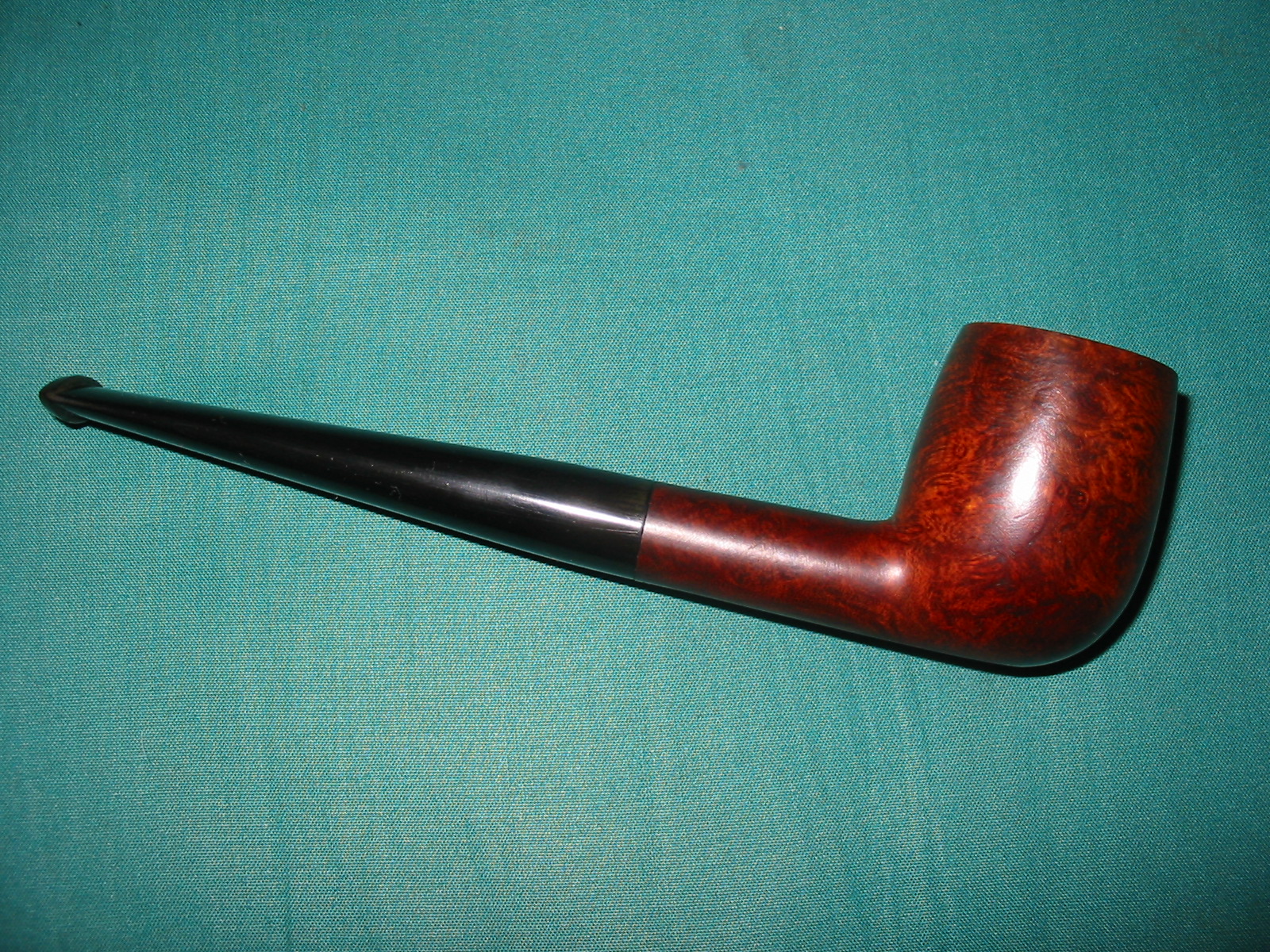
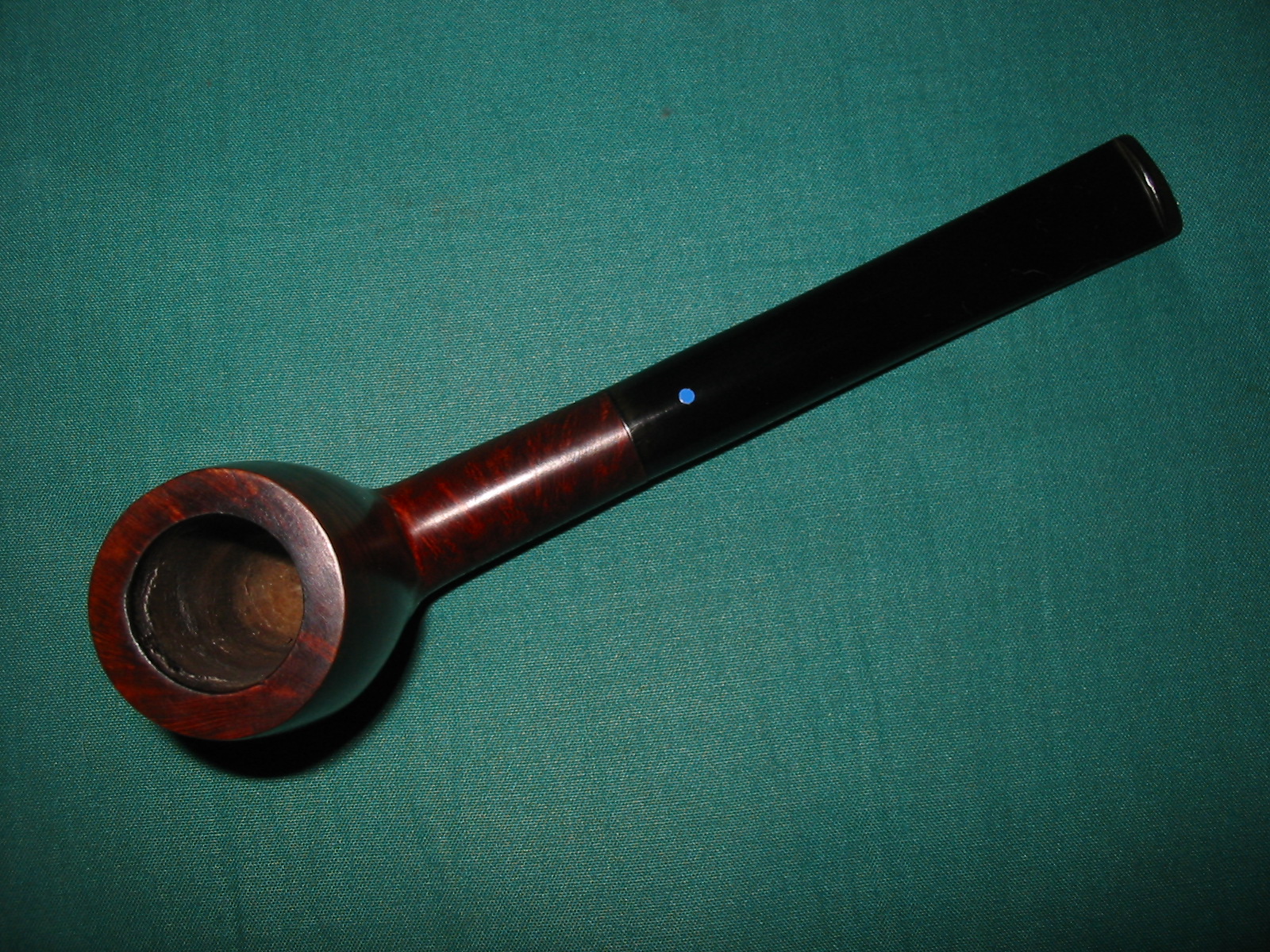
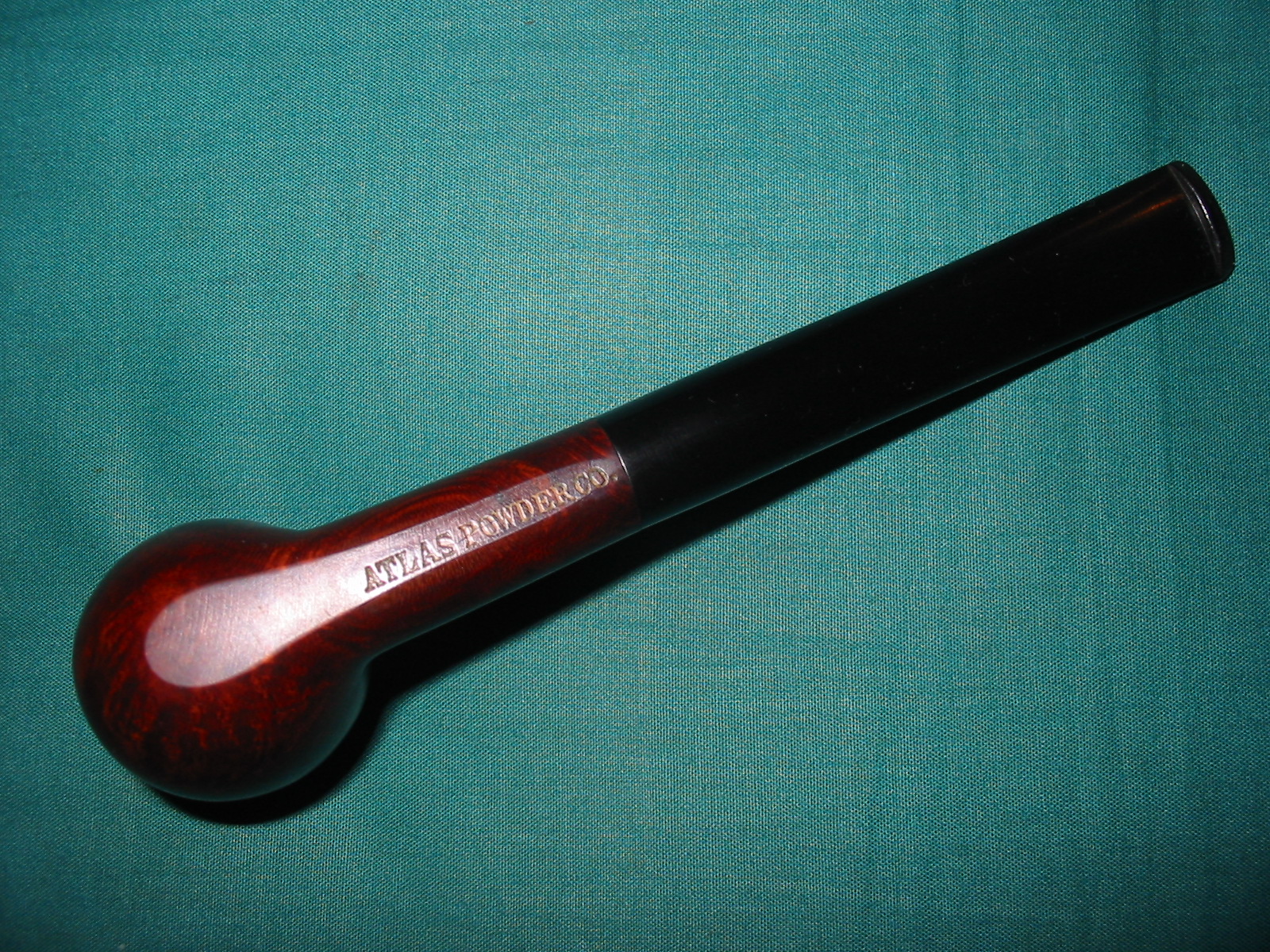
When I saw it I thought it was a Sasieni one dot billiard


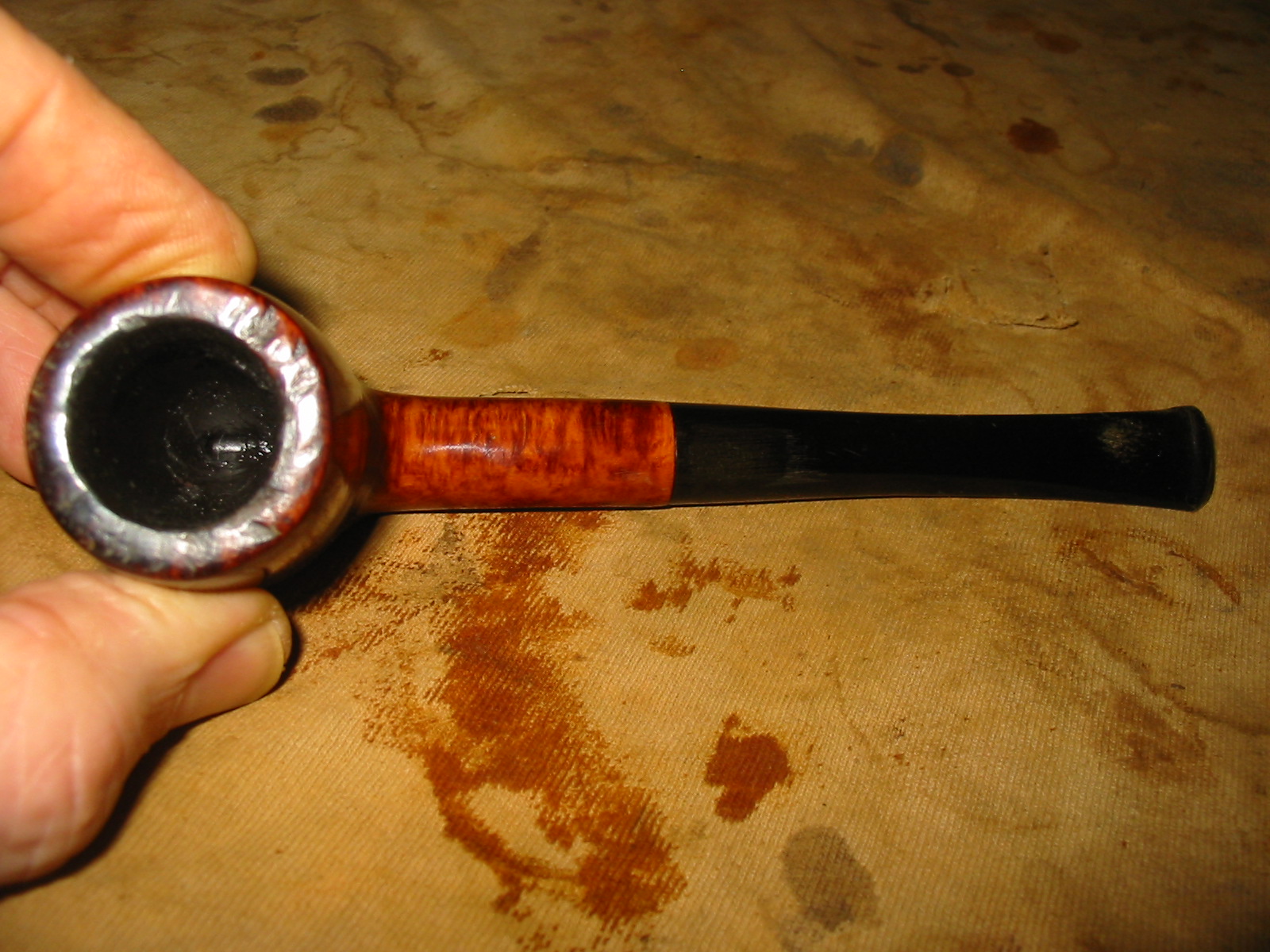
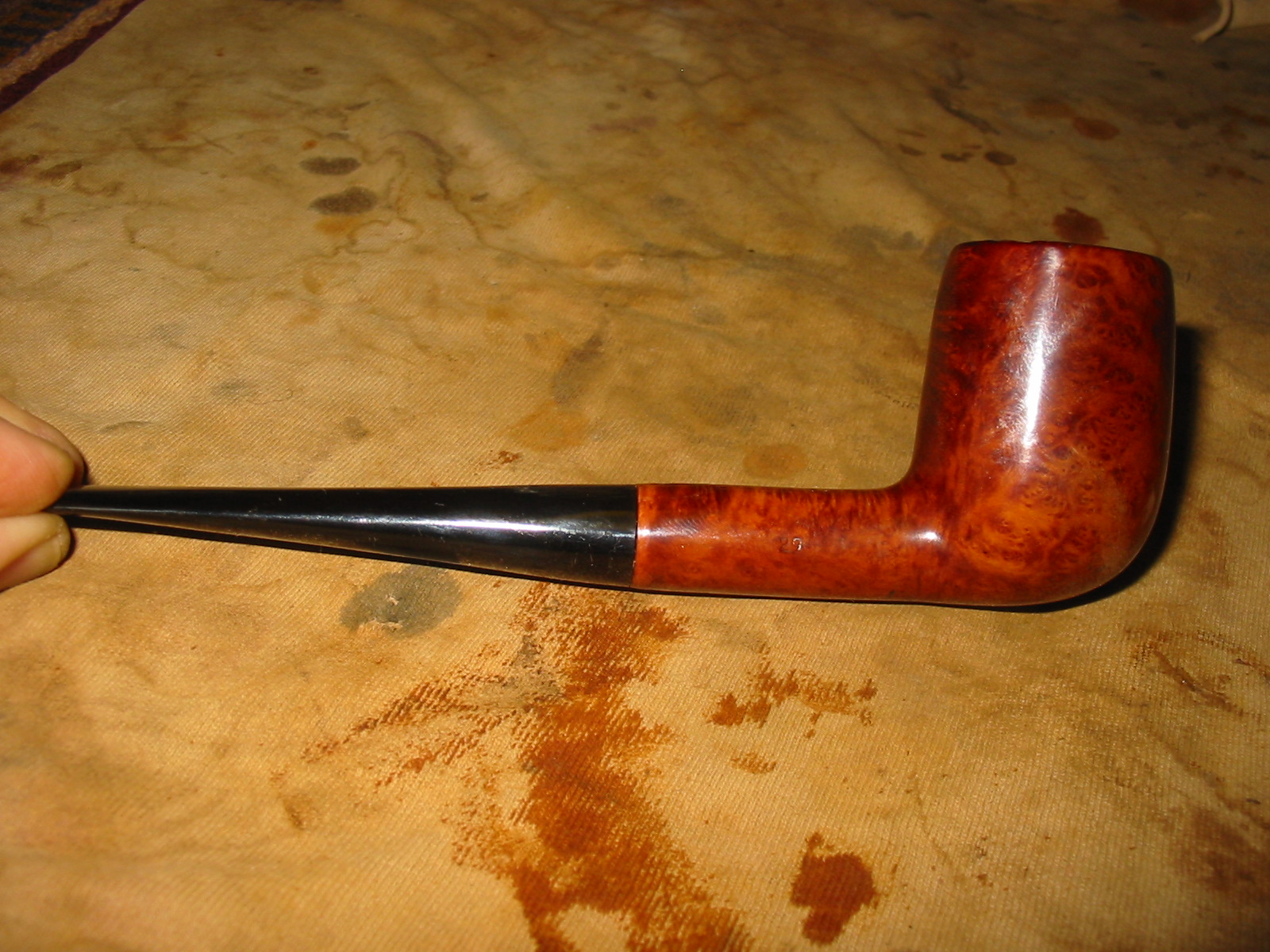
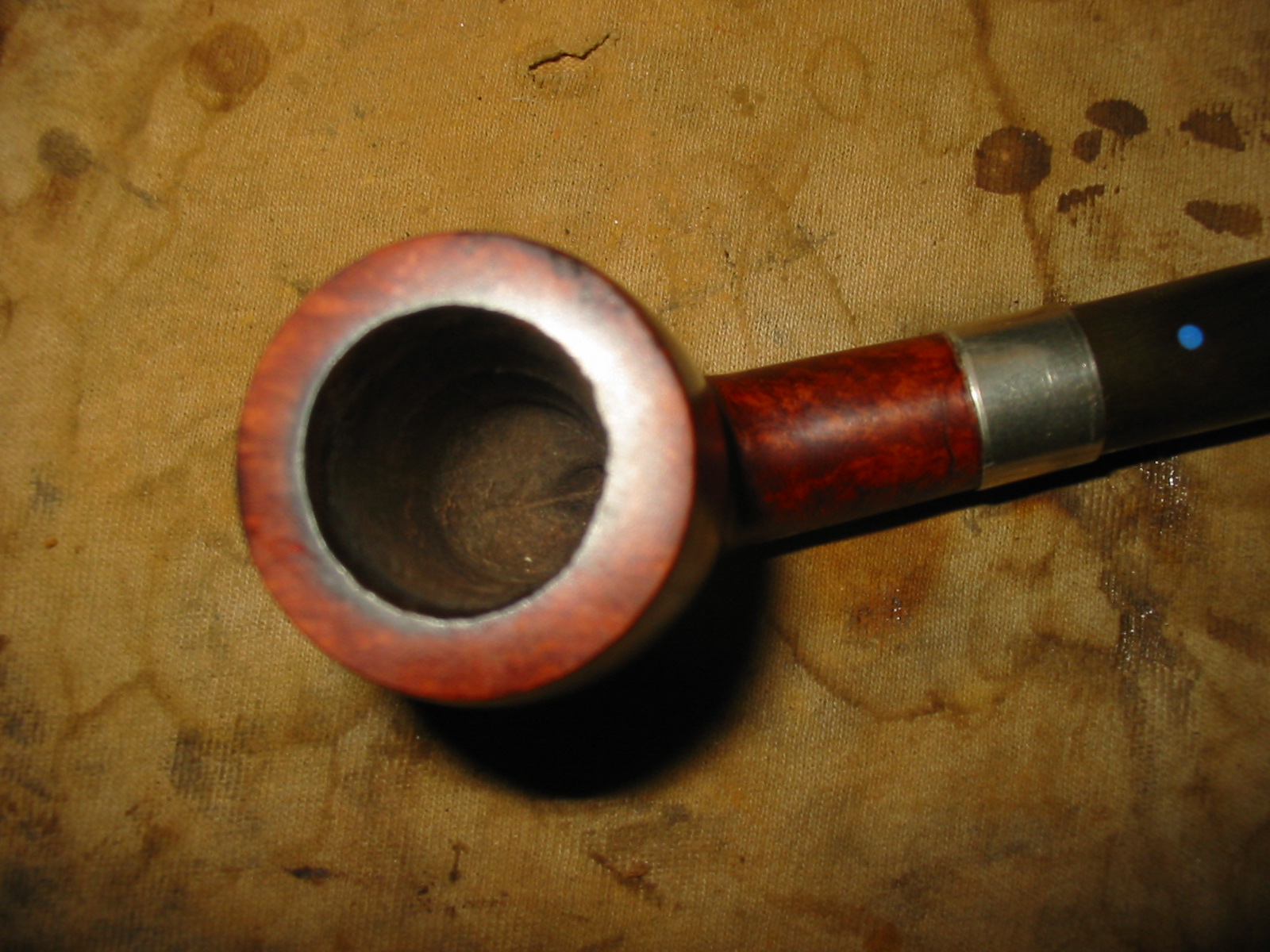
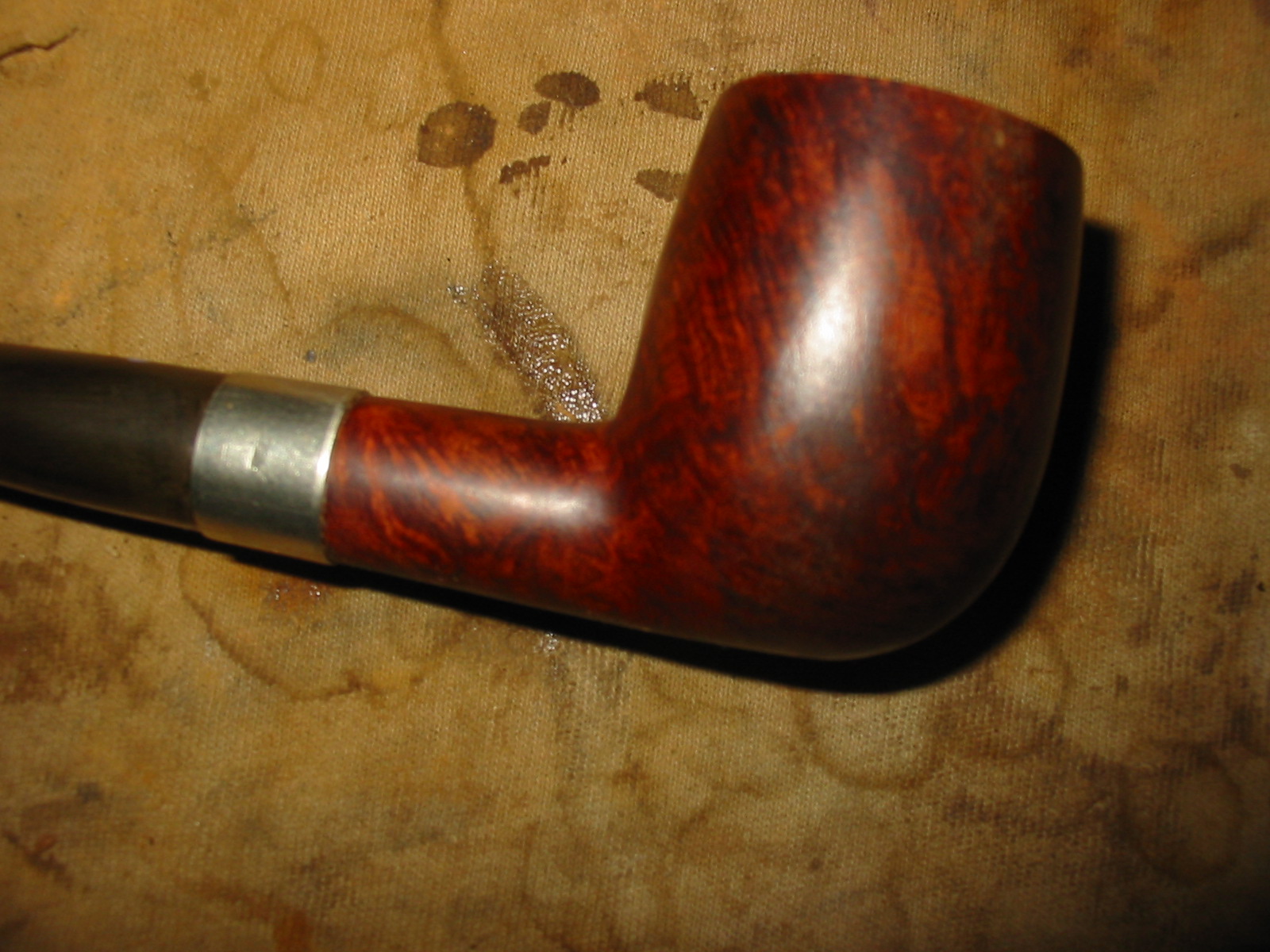
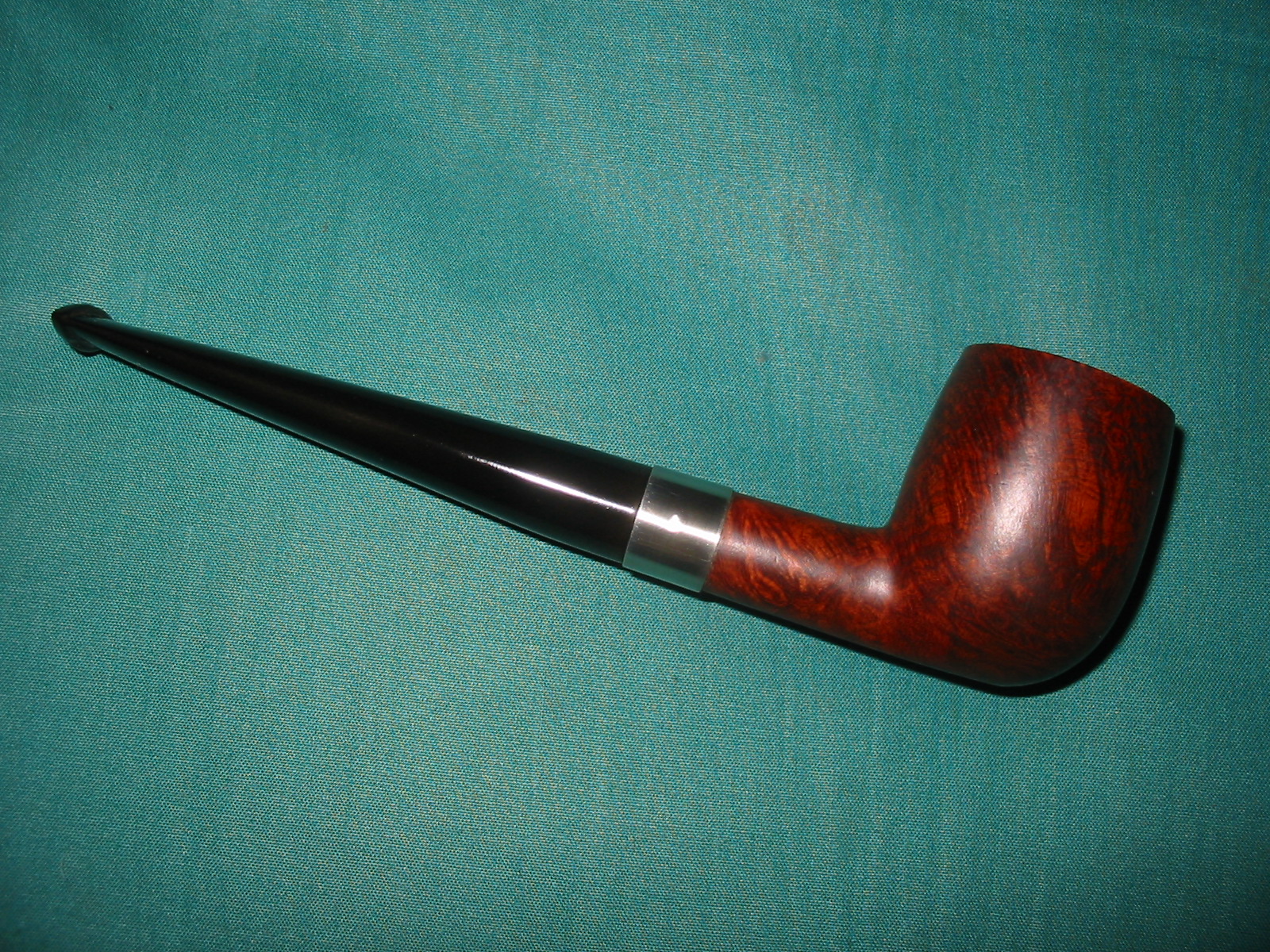
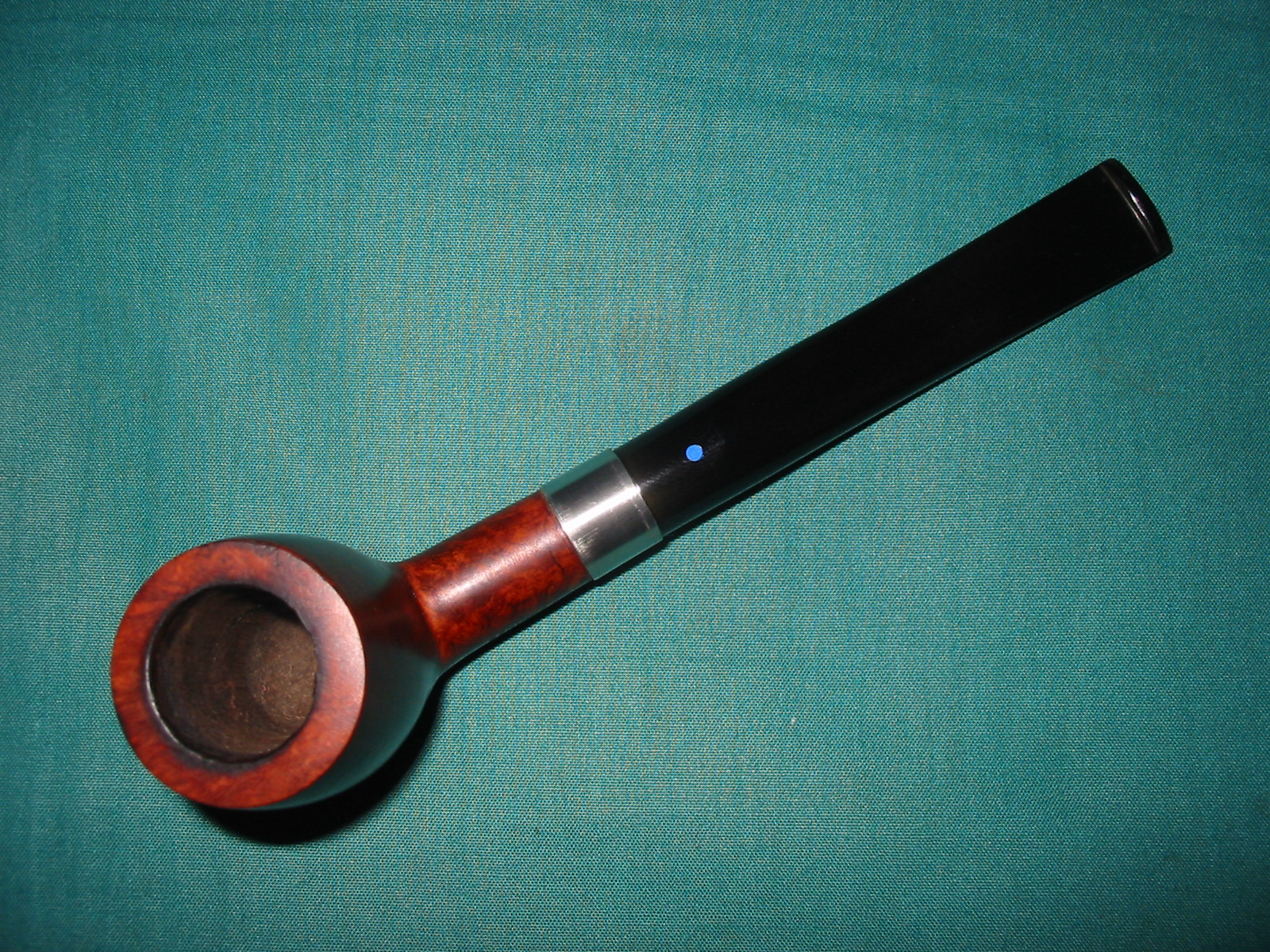
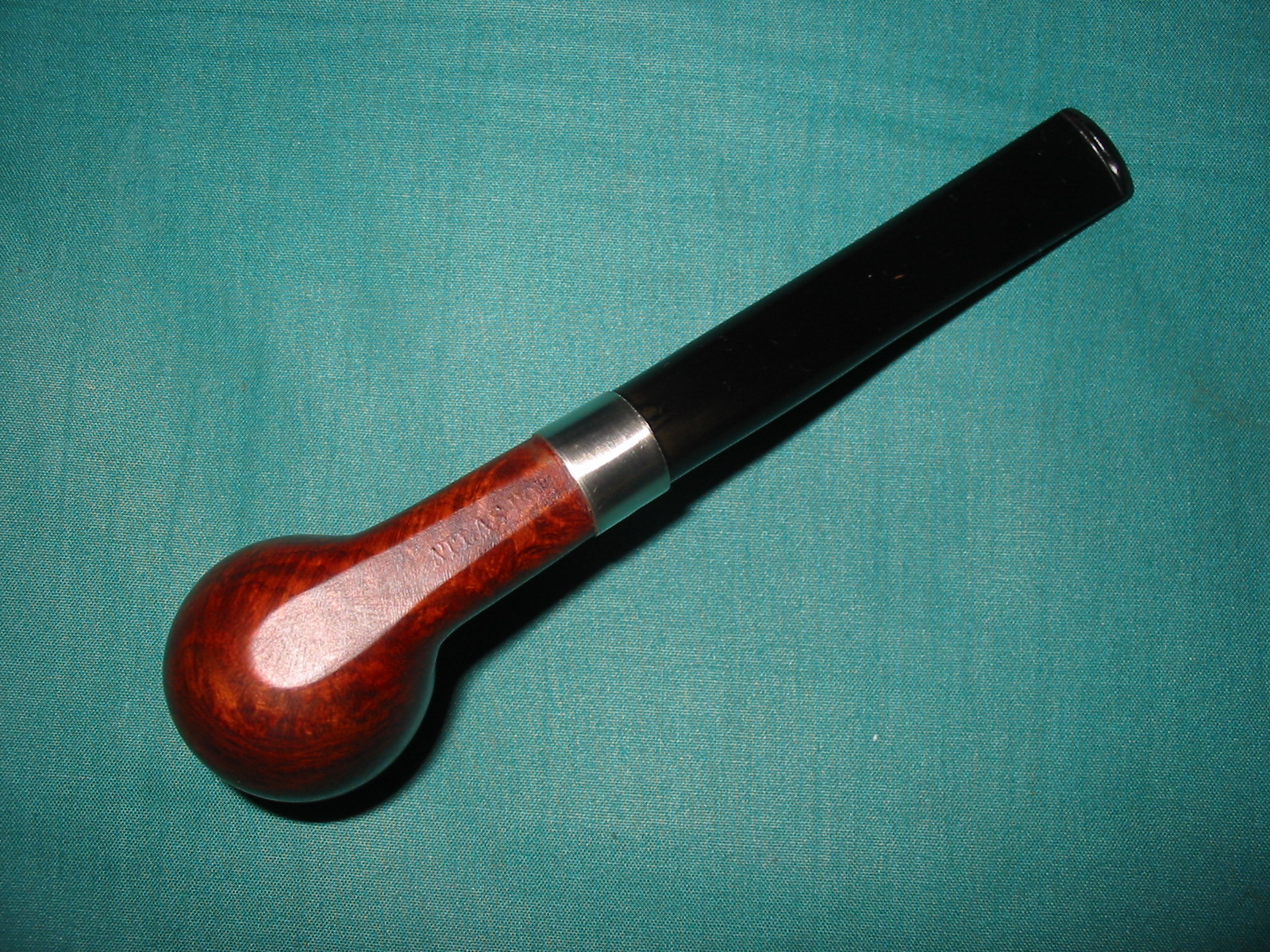
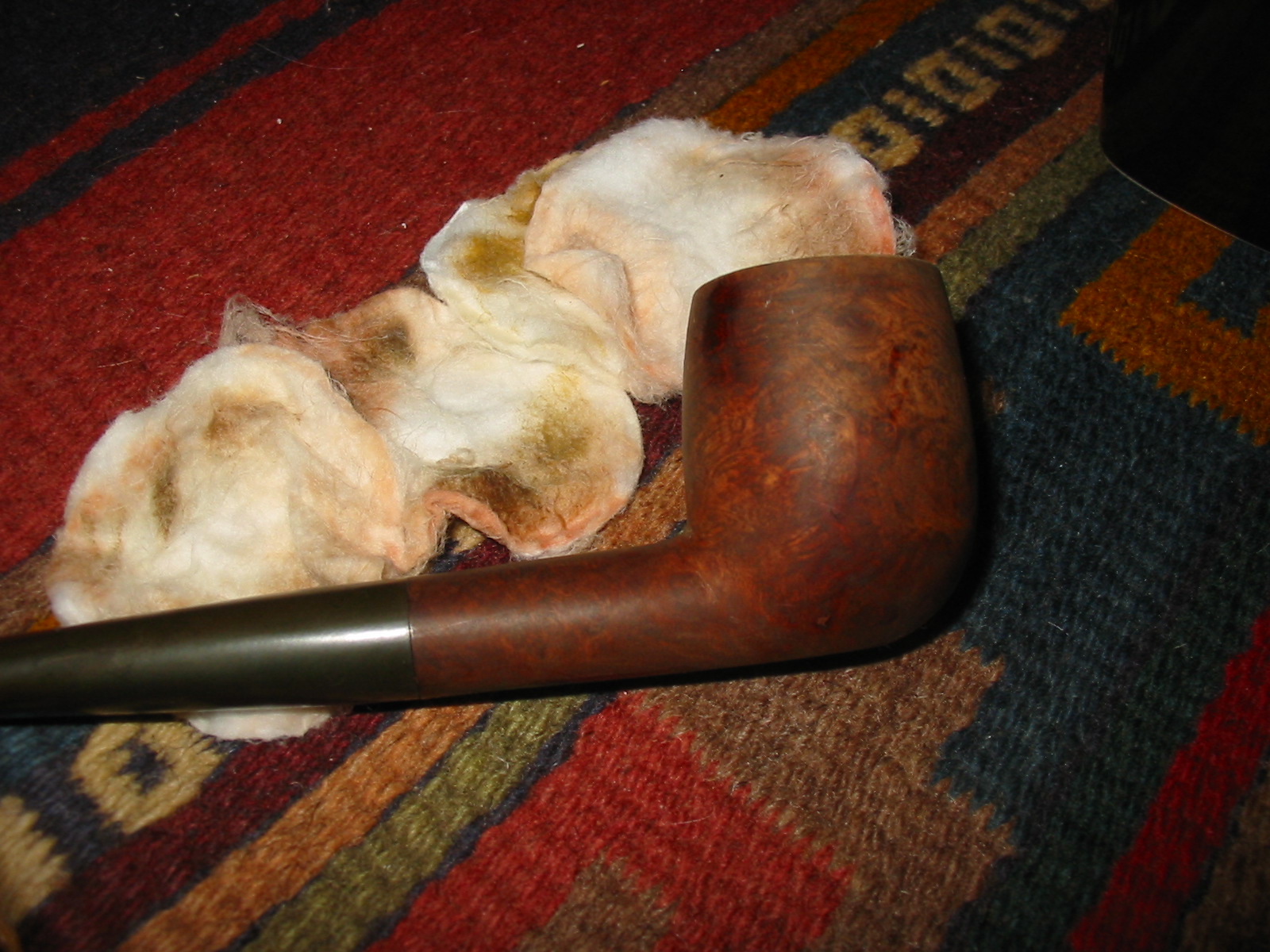
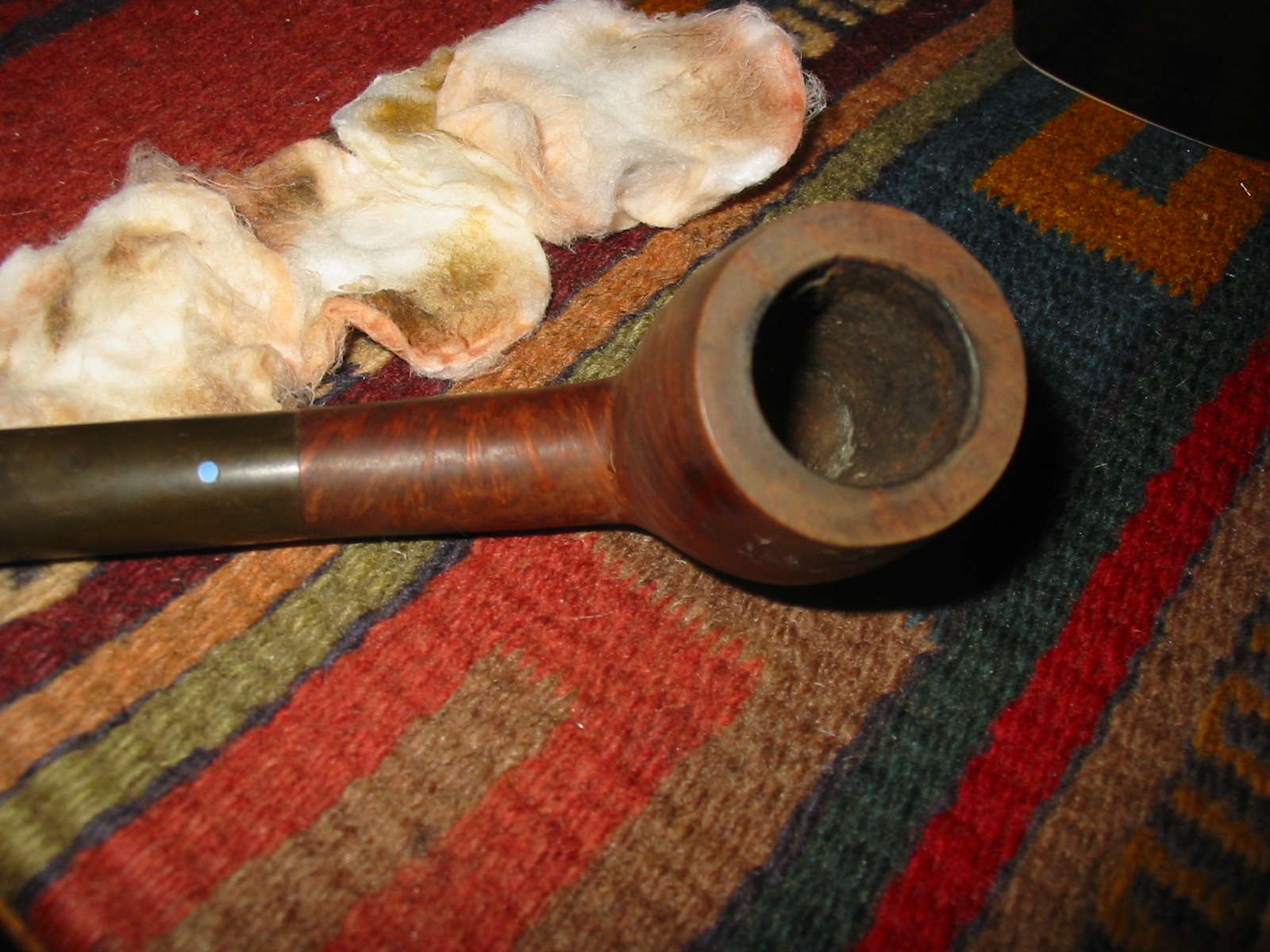
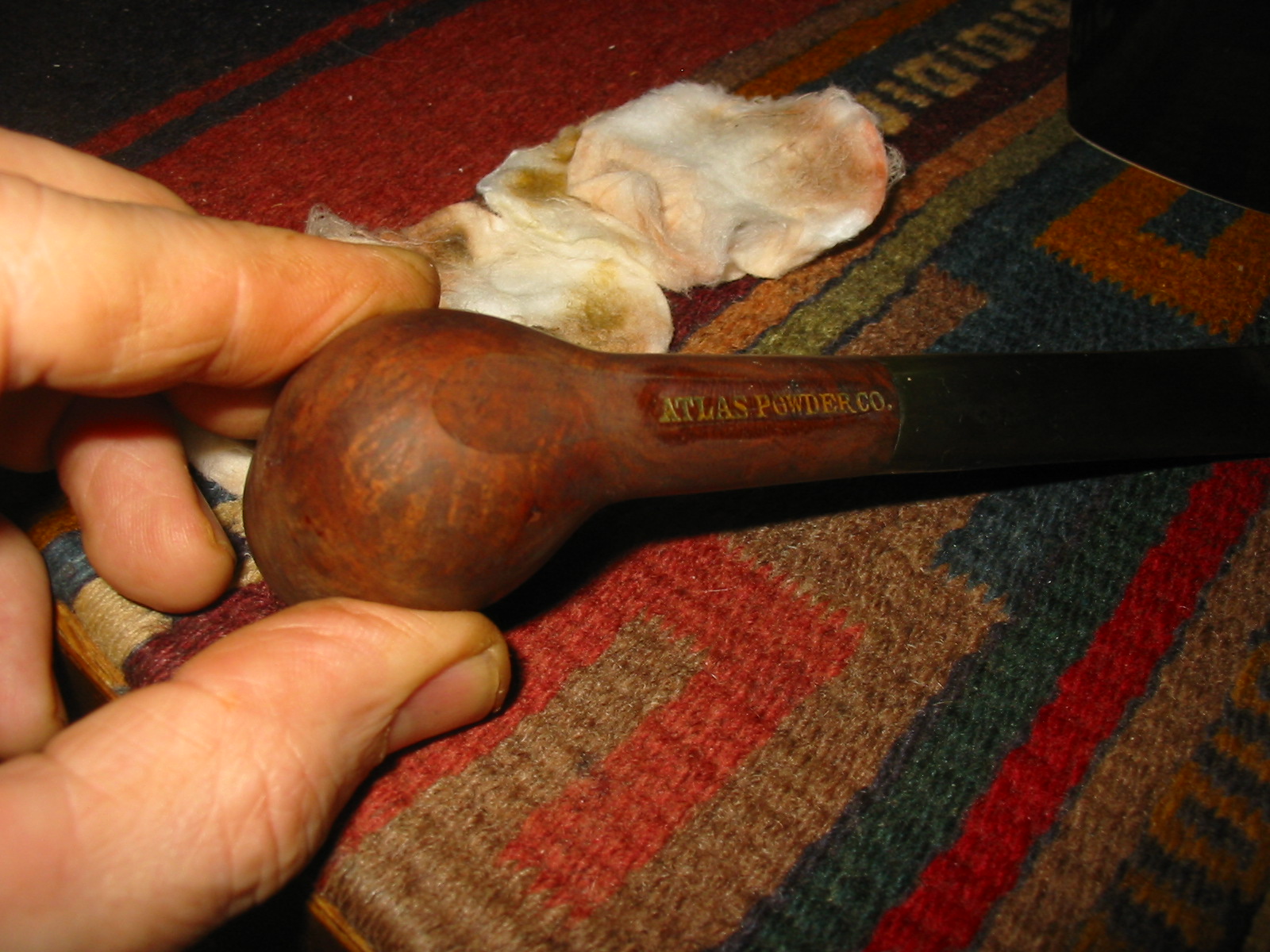
I came across this little billiard in an antique shop last weekend and when I saw the blue dot on the stem and saw the classic English shape of the bowl I truly thought I had found an elusive Sasieni one dot pipe. Lots of things about it seemed to signal that is what I had. The stamping was hard to see under the grime but there were i’s and an e. I was hopeful and I guess also wishful in my thinking. The pipe was dirty as can be seen below. The stem had obviously been damaged and cut off by the previous owner and a new button filed into the stem. The bowl was badly caked and the rim was damaged with dents and chips. I took the picture below while I was relaxing in a pub near the shop and looking over the finds of the afternoon.
IMG_0489

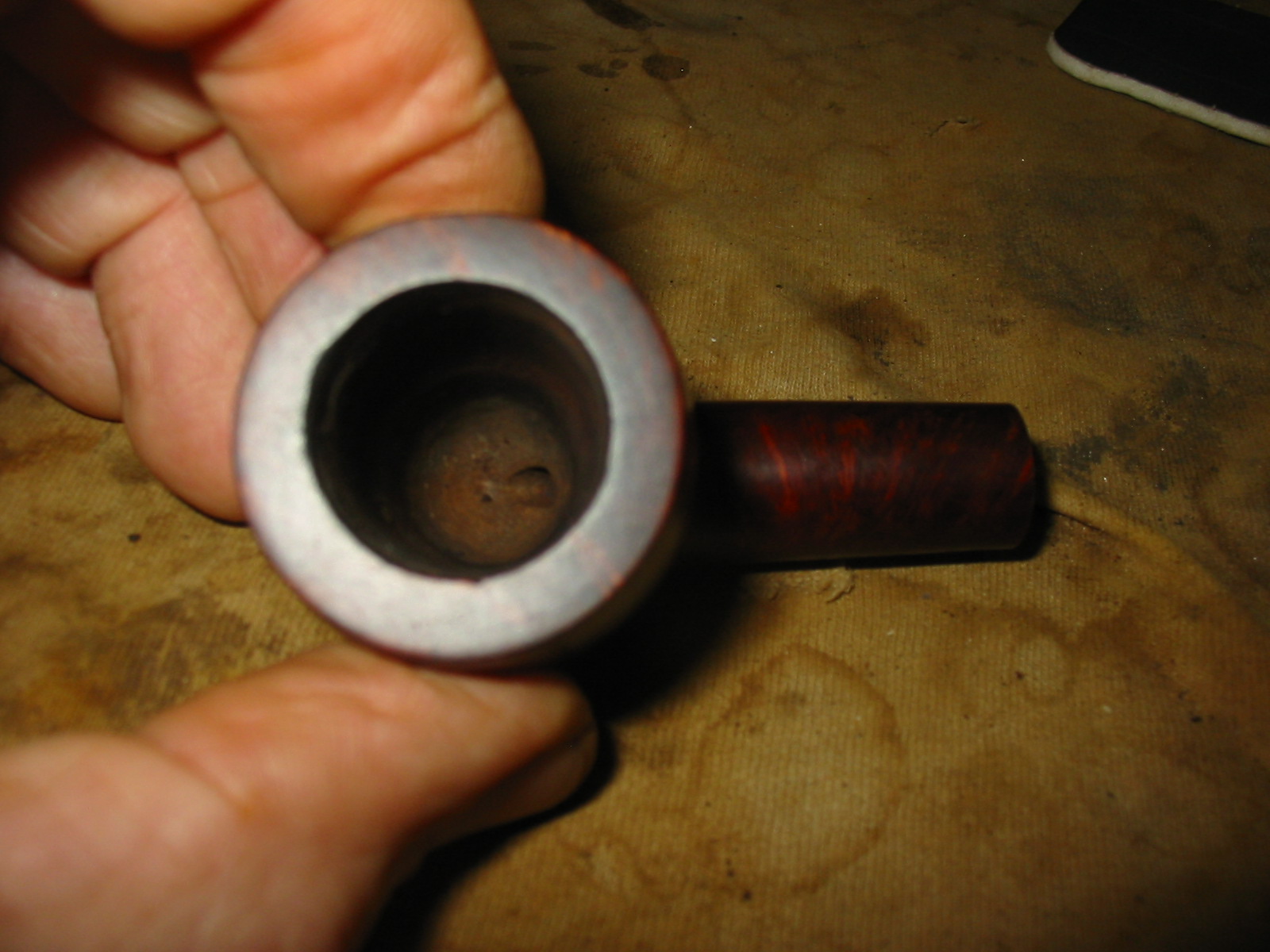
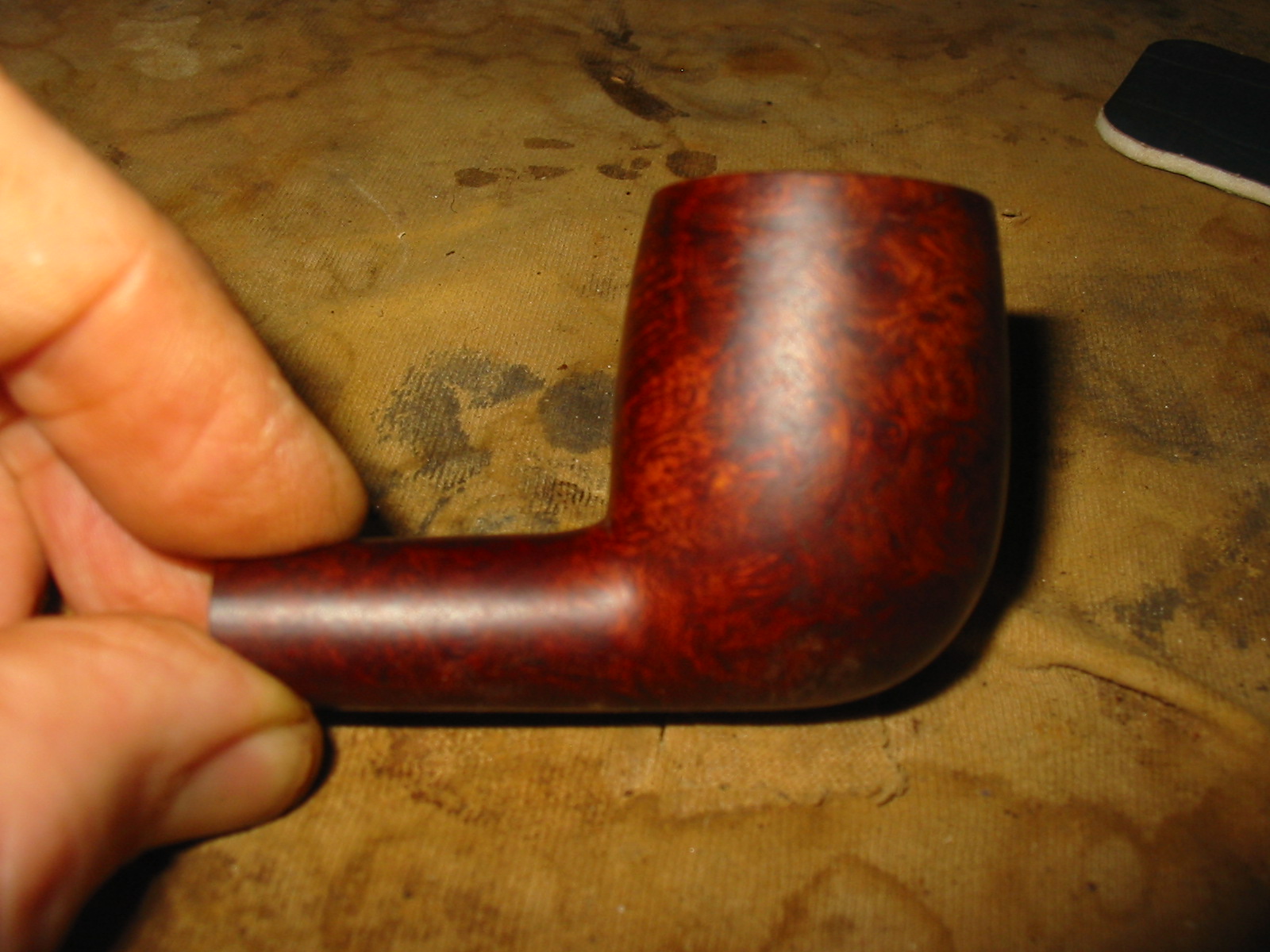
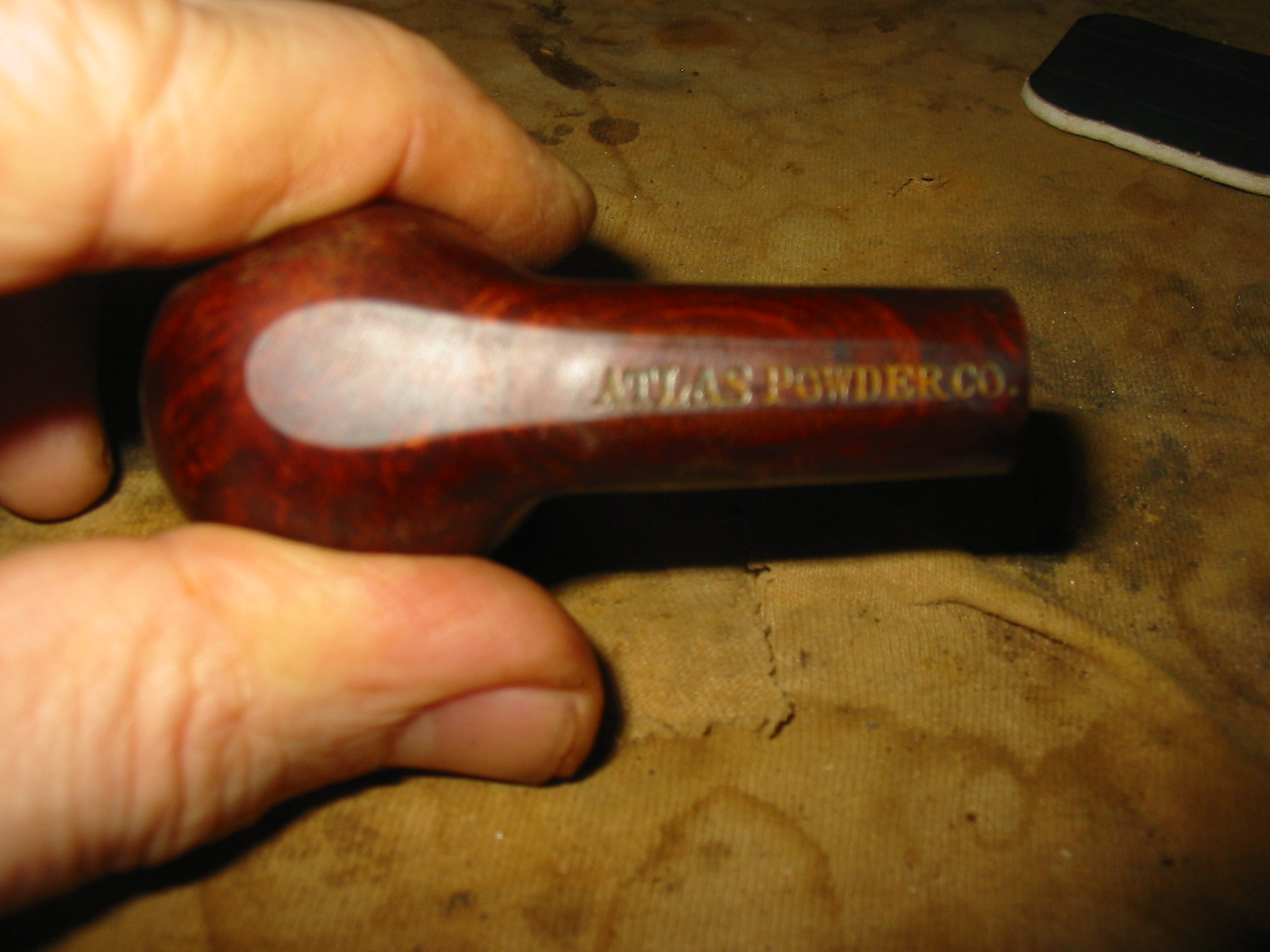
When I got home I took it to the basement and wiped down the bowl with acetone on a cotton pad to remove some of the grime. Once the outside was wiped down I tried to read the stamping with a magnifying lens. I could not make out the stamping – it was too faint. There was no stamping on the right side of the shank. On the underside it appeared that there had been stamping but it was no longer visible. The next three photos give a good idea of what the pipe looked like before I did a cleanup on the bowl and stem.
IMG_2192

IMG_2193

IMG_2194

I reamed the bowl with a PipNet reamer and took it back to bare wood. I picked at the inside of the bowl to check out the solidity of the walls and to check for potential burns. Everything looked and felt like it was solid so I dropped the bowl in an alcohol bath to soak over night.
IMG_2066

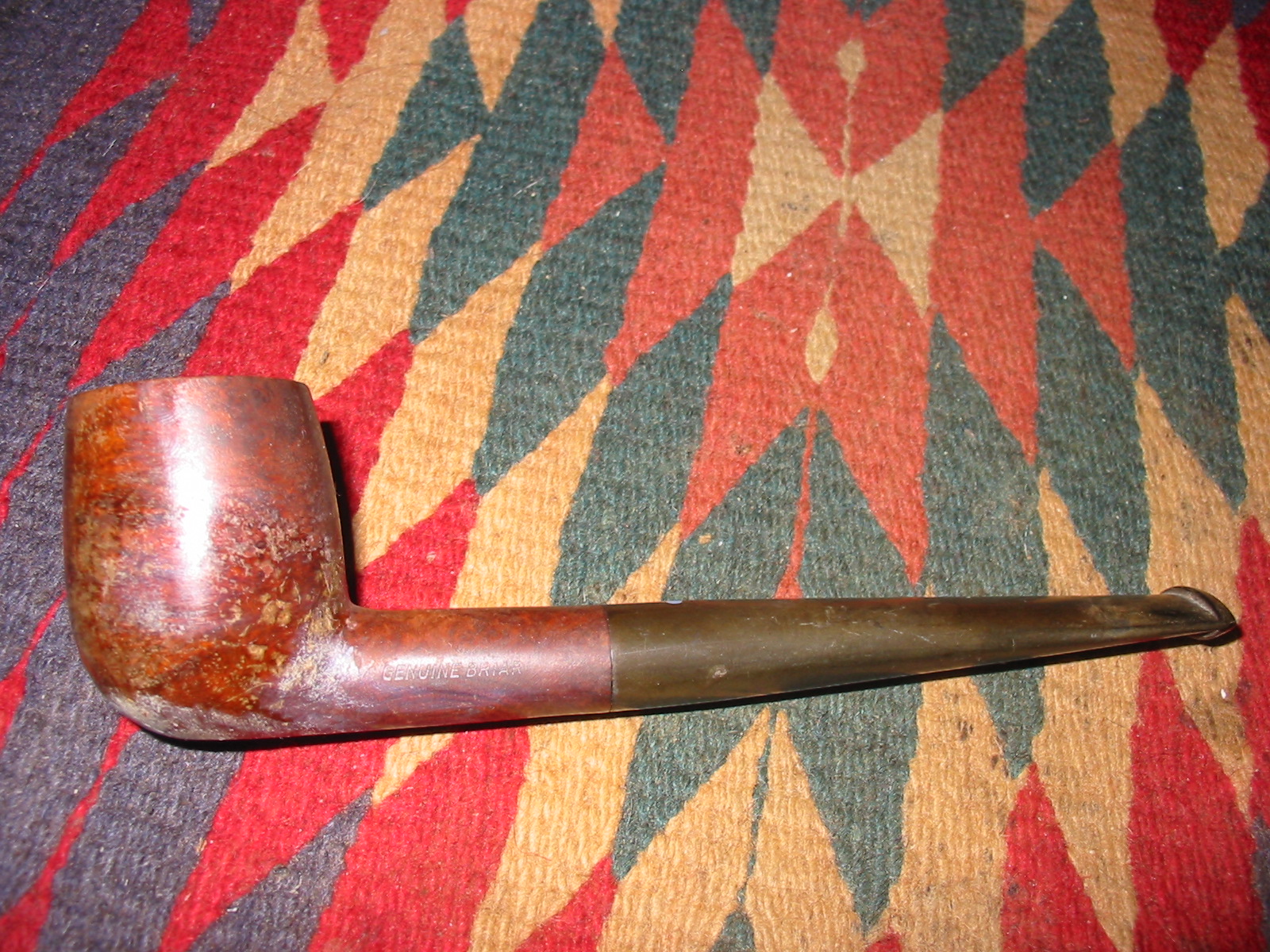
The next day I took it out of the bath and dried it off. The bath had removed the old finish for the most part. I finished by once again wiping it down with acetone on a cotton pad. After soaking part of the stamping had become visible. I was disappointed that it appeared that the pipe was not a Sasieni. The stamping that showed up after it was dry read Genuine Briar, which seemed to point to an American made pipe post WW2. I believe it is post war as that is when it became necessary to identify genuine imported briar in contrast to the Manzanita and other alternatives used by American manufacturers during the war years due to a shortage in briar. The briar was a nice piece – birdseye on one side, nice grain on other parts of the pipe and a clean shape to the bowl. I knew it would clean up nicely.
IMG_2217

IMG_2218

IMG_2219

IMG_2220

I topped the bowl using my normal method of anchoring a piece of sandpaper on a flat board and twisting the top of the bowl into the sandpaper until the top is smooth. I started with 220 grit sandpaper and then used a medium and fine grit sanding block to smooth out the rim.
IMG_2221

IMG_2222

When I had finished topping the bowl I wiped it down with acetone and a soft cotton pad to remove the sanding dust and the grime from the topping process.
IMG_2223

IMG_2224

IMG_2225

The stem had a poorly cut button on the end and the button as well as the taper on the stem needed to be reworked. I used a rasp and file to shape the taper on the stem and to take out the pinched look of the angle to the 90 degree cut on the button. The button was also not straight and not squarely cut so I also straightened out the flat edge of the button while I worked with the rasp and files. The next three photos show only the initial work on the stem and not the finished work. I removed quite a bit of the material and smooth out the slope of the taper so that it flowed evenly into the button on both the top and the bottom of the stem.
IMG_2226

IMG_2227

IMG_2228

I sanded the newly shaped stem with 220 grit sandpaper and a medium grit sanding sponge to remove the scratches left by the rasp and files. Once I had the basic shape in place I decided to restain the bowl. I warmed the briar and then gave it several coats of a dark brown aniline stain thinned 1:1 with isopropyl alcohol. I flamed it between each coats to set the stain. The rim took extra coats to match the colour of the rest of the bowl.
IMG_2240

IMG_2241

IMG_2242

IMG_2244

I buffed the newly stained bowl lightly with White Diamond and then gave it a coat of a light cherry coloured Danish Oil. Once dry I buffed it by hand and then also gave it a light buff with White Diamond to polish it.
IMG_2245

IMG_2246

IMG_2247

I then removed the stem and worked on the slot in the button. When the end of the stem had been cut off some of the flair of the original airway remained leaving the end of the button with a small rectangular opening. I used needle files to open the flair and widen the slot into more of an oval that extended the width and height of the button end.
IMG_2248

IMG_2251

IMG_2252

Once I had the slot opened the way I like it I sanded the inner edges with a folded piece of sandpaper to smooth it out. I also did some more shaping with files to the taper of the stems. I sanded it with 220 grit sandpaper until I had the slope well-defined from the tenon back to the button. I also shaped the externals of the button to clean up the angle at the point the button and stem taper met. I also sanded it with a medium grit sanding sponge to remove the scratches left behind and to also remove the oxidation at the stem shank junction.
IMG_2249

IMG_2250

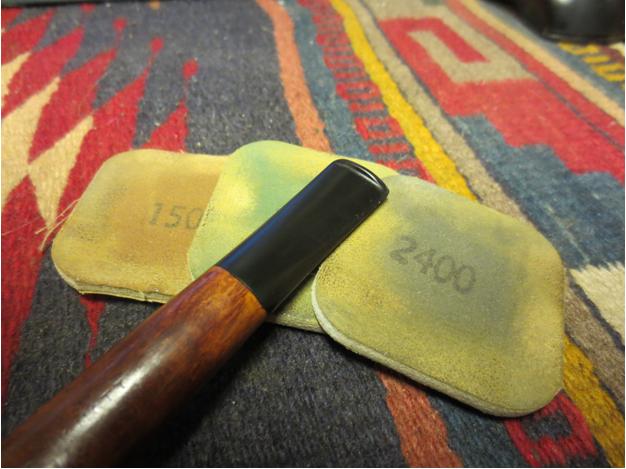
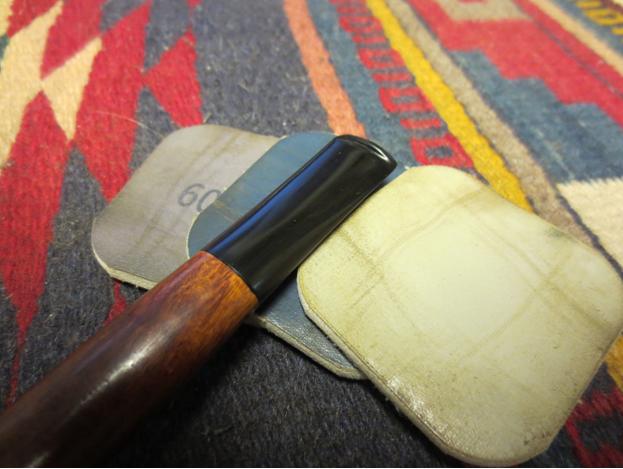
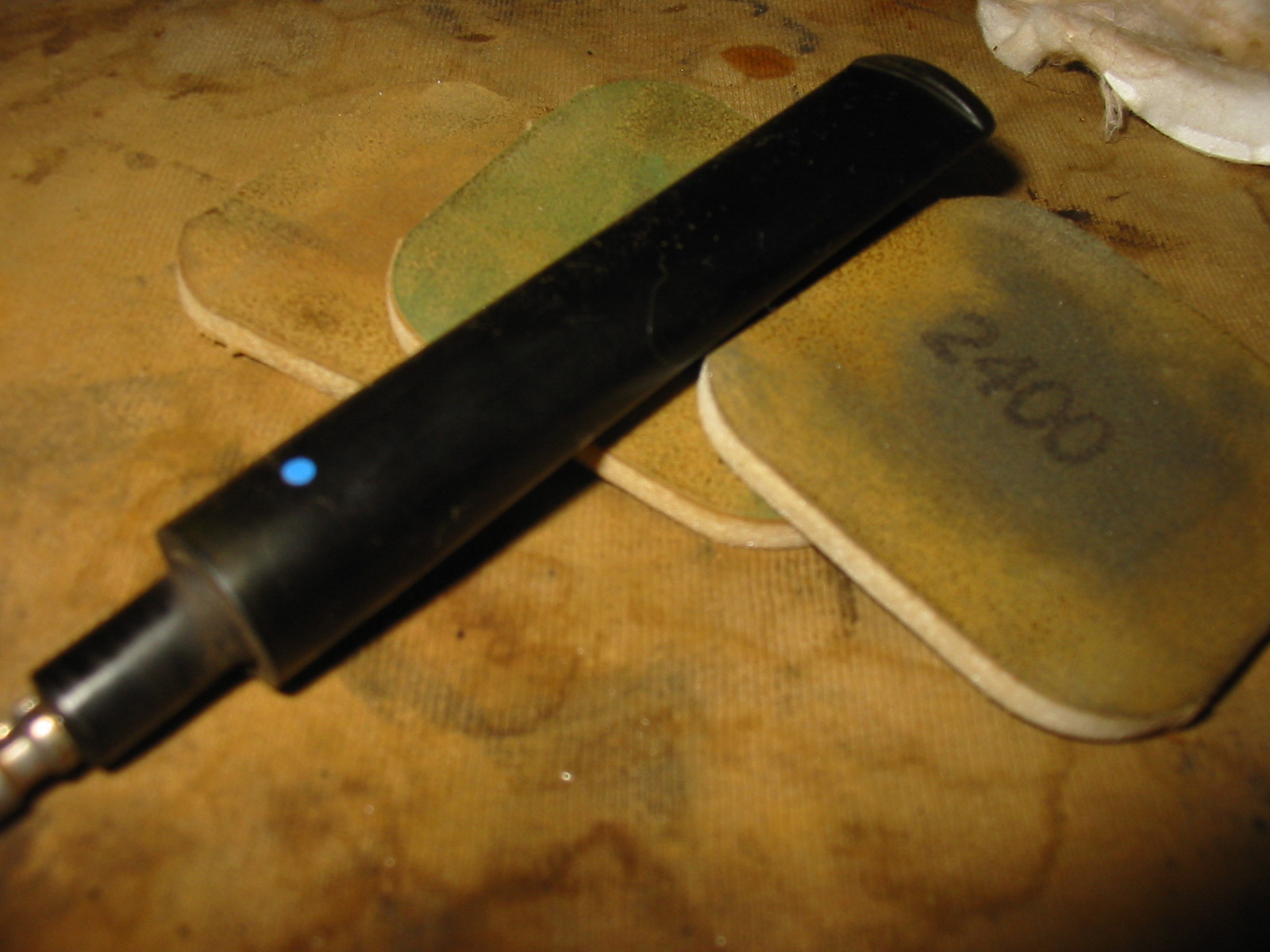
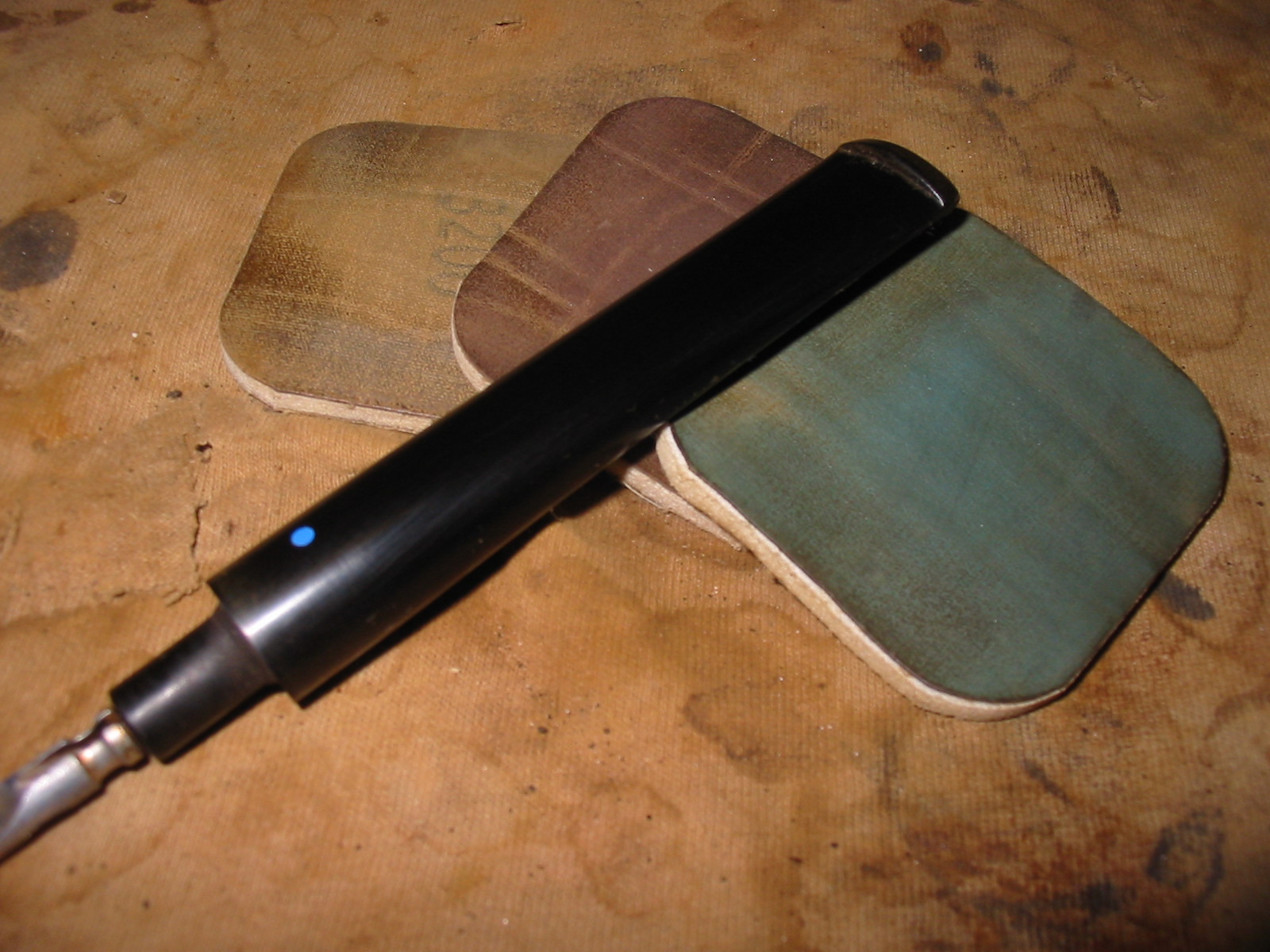
When I had the scratches removed as far as possible with the sanding sponge I went on to sand the stem with micromesh sanding pads. I wet sanded the stem with 1500, 1800 and 2400 grit sanding pads and the dry sanded with the remaining grits.
IMG_2253

IMG_2254

IMG_2255

I rubbed the stem down with Obsidian Oil and rubbed it into the surface of the vulcanite. I took it to the buffer and buffed the stem with White Diamond. I gave the bowl and the stem multiple coats of carnauba wax and polished the pipe with a clean flannel buff to bring up the shine. The finished pipe is pictured below. I still wish I knew what the stamping says in full. That blue dot certainly is a symbol of some unknown to me brand of pipe. The mystery remains but in the mean time I have a great little billiard to enjoy.
IMG_2256

IMG_2257

IMG_2258

IMG_2259

A Handmade Denmark Dublin Reborn


Blog by Greg Wolford

A week or so ago I went into a local antique shop that houses a variety of vendors. In the past I have found a few decent pipes here so I always have high hopes when I go there. This trip yielded a nice little haul of four pipes which I plan to restore over the next few weeks as i have time. The first two have already been started one: one completed and one still in the process. This post will mainly focus on a Dublin shape that is stamped on the shank Handmade over Denmark, with no other information on the pipe or stem. This is the pipe as it looked when I got it home:
Image

ImageImageImage

As you can see, it was heavily caked and had what I thought were some deep scratches on it, the rim was charred and damaged from knocking out the dottle, the finish was gone, and the stem was oxidized but had little chatter on it. I decided to start with reaming the back the cake. This bowl is a tapered one, as many Dublins are, and required the use of all four of the bits on my Castleford reamer. After reaming the cake back considerably, to an even, thin layer, I decided to sanitize it with my retort. And since one of the other of the lot I picked up needed very little work other than cleaning (or so I thought at the time) I decided to go ahead and retort it (no reaming needed on this one) while I had the equipment out and also do both stems at this time, too. The Dublin took several “runs” with the retort to produce a clean tube of alcohol at the end; the cherrywood that I was also doing only took two tubes, but I knew it hadn’t been used much and wouldn’t be very dirty.

After I finished the work with the retort I dropped the stems in a OxyClean bath and left them to soak while I cleaned the shanks out. The retort had done a nice job of taking out most of the gunk in the shank of the Dublin; it took comparatively fewer pipe cleaners and cotton swabs than most restorations. I expected the shank from the cherrywood to be all but clean with one or two passes and it sort of was; instead of tar I found the alcohol had “raised” a mahogany-like stain inside the shank – and a lot of it. I then noticed that there was some of this same color on the outside, bottom edge of the shank. The pipe itself wasn’t a reddish color but a more maple, orange-ish one and I hadn’t planned on refinishing it since the color was nice and I didn’t really see a need – until now. Once I noticed the red color it had to come off the outside and out of the shank. Now the entire finish was going to have to be removed so both pipes got wiped down several time with acetone and then put into the alcohol bath overnight.

Several hours later I removed the stems from their soak to begin to make them look new again. I was disappointed to see that the thin layer of petroleum jelly I’d put over the logo on the cherrywood’s stem had washed away and the “white” which had been there was now gone; the stem logo had only been about 60% colored and I’d have had to apply more white anyway so I suppose it wasn’t that big of a deal. I washed the stem well with dish soap and then sprayed them with some liquid Bar Keeper’s Friend, a new product to me (I’ve tried the powdered form before but not the spray). I scrubbed them off with a Miracle Eraser hoping for the good results I had gotten last time I used the eraser but they weren’t as good, though a lot of the oxidation had softened and been removed.

ImageImage

I now moved onto using the micro mesh pads, wet sanding them with 1500 & 1800 grit. At this point I noticed there was some oxidation that hadn’t come out well so I took some 400 grit wet/dry paper to the stems, then “painted” them with a Bic lighter, and then back to the 400 grit paper until the oxidation spots were gone. I then went back to wet sanding with the micro mesh 1500-3200 grits. After the 3200 grit I polished the stems with plastic polish and then dry sanded with the remaining grits through 12,000. Here are a few photos of the shine progression:

IMG_7744  IMG_7745IMG_7746

I now set the stems aside until the next day when the stummels would come out of their bath.

After removing the stummels from the alcohol bath I wiped them down and them dry a bit. Then I began cleaning the shanks again to make sure all the tar, gunk, and stain were gone.  I also cleaned as much gunk off the rims as I could so I could see what their condition really was; fair on the cherrywood and poor on the Dublin.  I decided to top the bowl of the Dublin and set the cherrywood aside to finish later. This what the Dublin looked like at this point:

IMG_7748 IMG_7749 IMG_7750 IMG_7751

You can see much better the condition of the rim here. You can also see that the “scratches” I referred to earlier are in reality fills that have fallen out; I scraped them with my dental pick to be 100% certain. These would have to be dealt with after I topped the bowl.

I used 400 girt wet.dry paper to top the bowl, checking it often to see how it progressed. The char marks wouldn’t come out completely but were reduced substantially. And the dings in the rim were nearly sanded out, in good enough shape that I was happy with them; the one on the outside edge would require me to sand at least another 1/16″ off the entire bowl and I didn’t want to remove anymore material than I already had.

IMG_7752

Now I turned my attention back to the fills. Taking the dental pick, I picked out the remaining fill material. I recently picked up a new product that I wanted to try on fills made by DAP and I thought this would be a good opportunity.IMG_7757

These sticks are a wax-like substance that softens with heat/friction. I chose the darkest of the four sticks and rubbed it into the two largest fill areas. The sticks worked easily into the areas that needed filled:

IMG_7758 IMG_7759

I buffed the excess off lightly with an old cotton rag, getting it into the fill well and just below the surface. I then put a bit of super glue over the new fills and let it dry. After it dried I sanded the fills back down to flush. There were also some areas that needed small scratches/marks sanded out on the bottom of the stummel so I did that at this time, too.

IMG_7764 IMG_7765 IMG_7766

I avoided sanding around the nomenclature and the shank in general. As you can see, the spot sanding left some obvious differences in the finish. But I didn’t want to sand any more than I needed to and knew that as it was I’d have to blend the stain. I decided to use the new-to-me wood stain markers for this job as well as the bowl’s rim. I applied the stain from the marker in small sections and blended it immediately with my finger after I put it on; I did this with all of the fills, spot sanding and the rim. The stain from the markers is very easy to apply in just the area you want it and blending by “finger” was very smooth and didn’t take long at all. I think that the pens did a great job and they have earned a permanent place in my restoration arsenal!

IMG_7767 IMG_7768 IMG_7773

I know took the entire pipe to the buffer and buffed the stummel with Tripoli and then the pipe with white diamond and carnauba wax, finishing with a few passes on a clean soft buff. This is the finished pipe:

20131023-160821.jpg20131023-160835.jpg

20131023-160848.jpg  20131023-160901.jpg

The DAP fill sticks did a pretty good job I think. In retrospect, I should have, perhaps, used a lighter color; the fills were so near the grain I thought darker would be better. I do think that they are something that I will explore using further and believe they have potential for some good results.

Medico Ventilator — Unventilated (Thanks Ed for the idea)


When I read this post by Ed James (Ozark southpaw) on Pipe Smoker Unlimited. This is the link to his post: http://pipesmokerunlimited.com/showthread.php?3186-Medico-Ventilator-unventilated I thought I would love to try that as well. Here is Ed’s first post in that thread that got me started thinking about the project. Ed also is a refurbisher of long standing and does excellent work. Here is his website: http://www.ozarksouthpawpipes.com/index.html

On PSU Ed wrote; “I’ve had a few of these and they smoke fine, although sometimes it was hard to get the filter seated so the pipe will draw as it should. If you’re not familiar with the Ventilators, they cannot be smoked without a filter. I smoke mostly filtered pipes, but thought I would see if I could make a Ventilator filterless. Accomplished it by turning a piece of briar the length of the shank and epoxying it in place. For the stem I used a vulcanite blank after replacing the tenon with delrin and adding a ring of tortoise shell acrylic. On my third bowl in it and it is smoking fine.”

Here is the pipe – pictured below. It is a nice looking sandblast that Ed “unventilated”.
Un-Ventilated Ventilator 2013-08-27 001 (1280x960)

Un-Ventilated Ventilator 2013-08-27 003 (1280x712)

Un-Ventilated Ventilator 2013-08-27 005 (1280x1013)

So today was the day that I got to finally work on “unventilating” one of my own. Mark Domingues (dogtalker) recently sent me a few old bowls and pipe parts that needed some work. In that package was a Medico Ventilator. It was not as nice as the one Ed worked on, pictured above, but it was a Ventilator sans stem nonetheless and it was the opportunity I was looking for to try my hand at unventilating the Ventilator. This bowl was absolutely clean. I don’t think that it had been smoked other than maybe the first light or so. The bottom 2/3s of the bowl was still virgin briar. The bowl had the typical Medico lacquer coat and there were carved leaves all around the outside of the bowl. I decided to leave the finish alone and rework it as it stood. One day I may remove the finish but for now it will remain as it is.
IMG_2148

I have kept a few unredeemable bowls around in my box of stuff and they came in handy this time. I took two different bowls out of the box and used a hack saw to cut off the shank as close as I could to the back side of the bowl. My plan was to follow Ed’s instructions noted above about turning a piece of briar to fit inside the Ventilator tube. I do not have a lathe so I decided to repurpose some briar shanks to do the same job.
IMG_2151

IMG_2152

IMG_2153

IMG_2154

After cutting them off the bowl they were ready for me to begin shaping them. I used a Dremel and sanding drum to take the diameter of the cut off shanks down to the diameter of the tube on the Medico. The next seven photos show the process of removing the excess briar. I used two different pieces of slightly different lengths that could be used depending on the stem I chose to use. The one pictured in the first seven photos below was about ½ inch shorter than the length of the tube. I thought about using a plug in the bottom of the tube but later decided to use the longer of the two briar tubes.
IMG_2155

IMG_2156

IMG_2157

IMG_2174

IMG_2171

IMG_2172

IMG_2173

I used both the Dremel and 220 grit sandpaper to shape the briar tube to fit in the Ventilator. The first one was just briar. The second one was off of a screw mount shank. I decided to leave the aluminum in the shank and use that to but up against the aluminum seat in the Ventilator tube.
IMG_2158

IMG_2159

IMG_2160

I sanded both tubes so that I could try both and see which one I wanted to use. I chose the long of the two with the aluminum base. I inserted it in the shank of the Ventilator with the aluminum end in first. I pressed it into place in the tube. It is a pressure fit so I did not need to glue it to fasten it in place. I chose not to use epoxy or glue to hold it in place and opted instead for a tight fit. Once in place it was slightly longer than the tube. The aluminum was tight against the interior and could go no further. I used the Dremel with the sanding drum on it to remove the excess briar. Once was flush against the aluminum it was time to fit a new stem to the shank.
IMG_2161

IMG_2162

I had several saddle stems in my can of stems that would work on the new shank insert. I turned the tenon down with a PIMO tenon turner until it was close to the right size and then finished with sandpaper and files. I used a file to shape the seat in the insert so that the stem would sit well against the tube. The next three photos show the newly seated stem in place.
IMG_2164

IMG_2165

IMG_2168

I took the photo below to show the fit of the briar tube in the aluminum shank. There was a small divot out of the edge that is visible at about the ten o’clock position on the shank. This would be smoothed out as I beveled the inner edge of the shank inward.
IMG_2169

I beveled the shank inward with small round needle files to give the stem a proper seat in the shank. I used some cherry aniline stain to stain the briar shank inset in the fins on the aluminum. I applied the stain with a cotton swab and wiped it off. I sanded the aluminum with micromesh sanding pads. I used the 1500 and 1800 grit to polish the aluminum and remove the scratches that were present on the shank.
IMG_2170

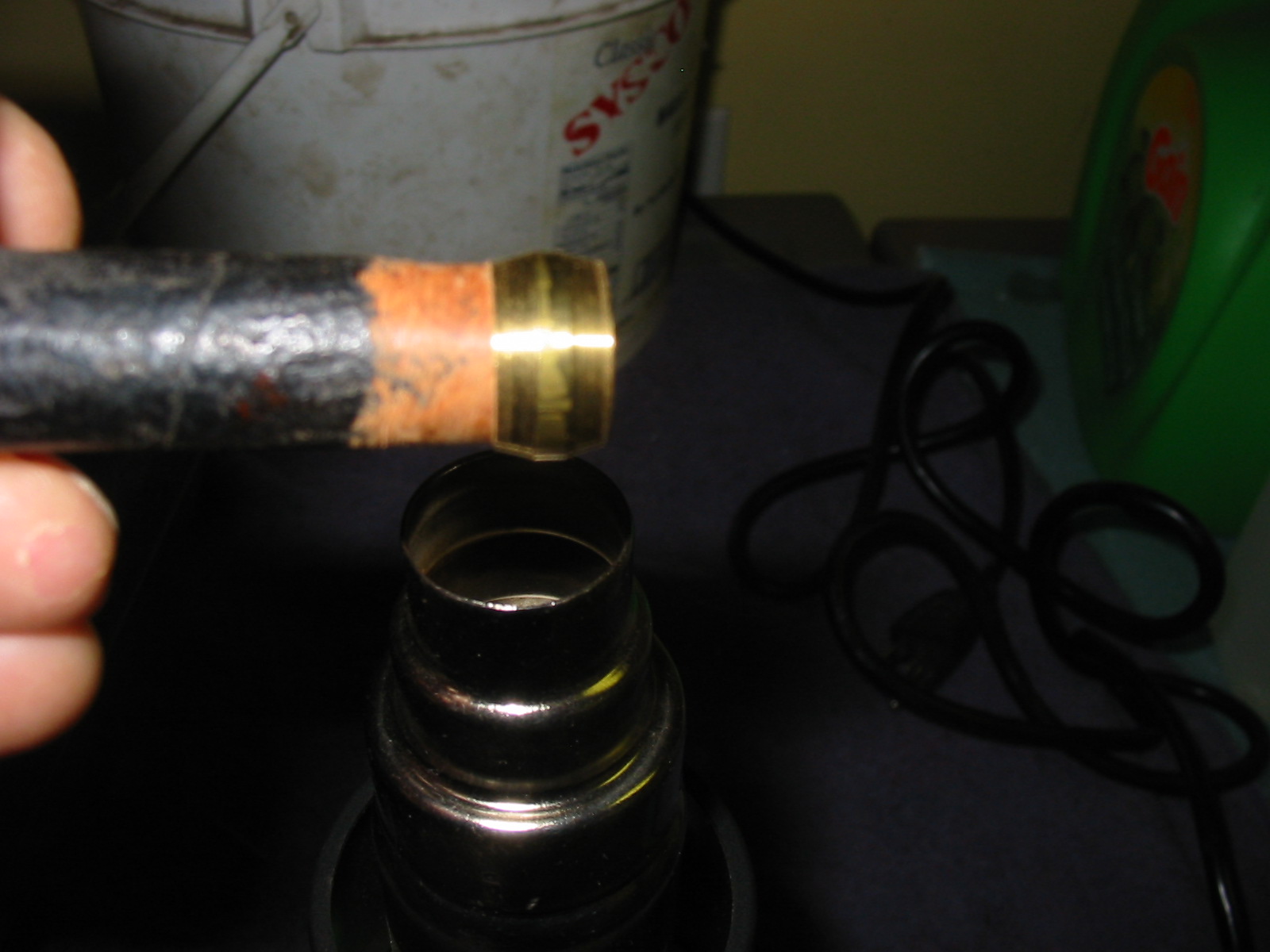
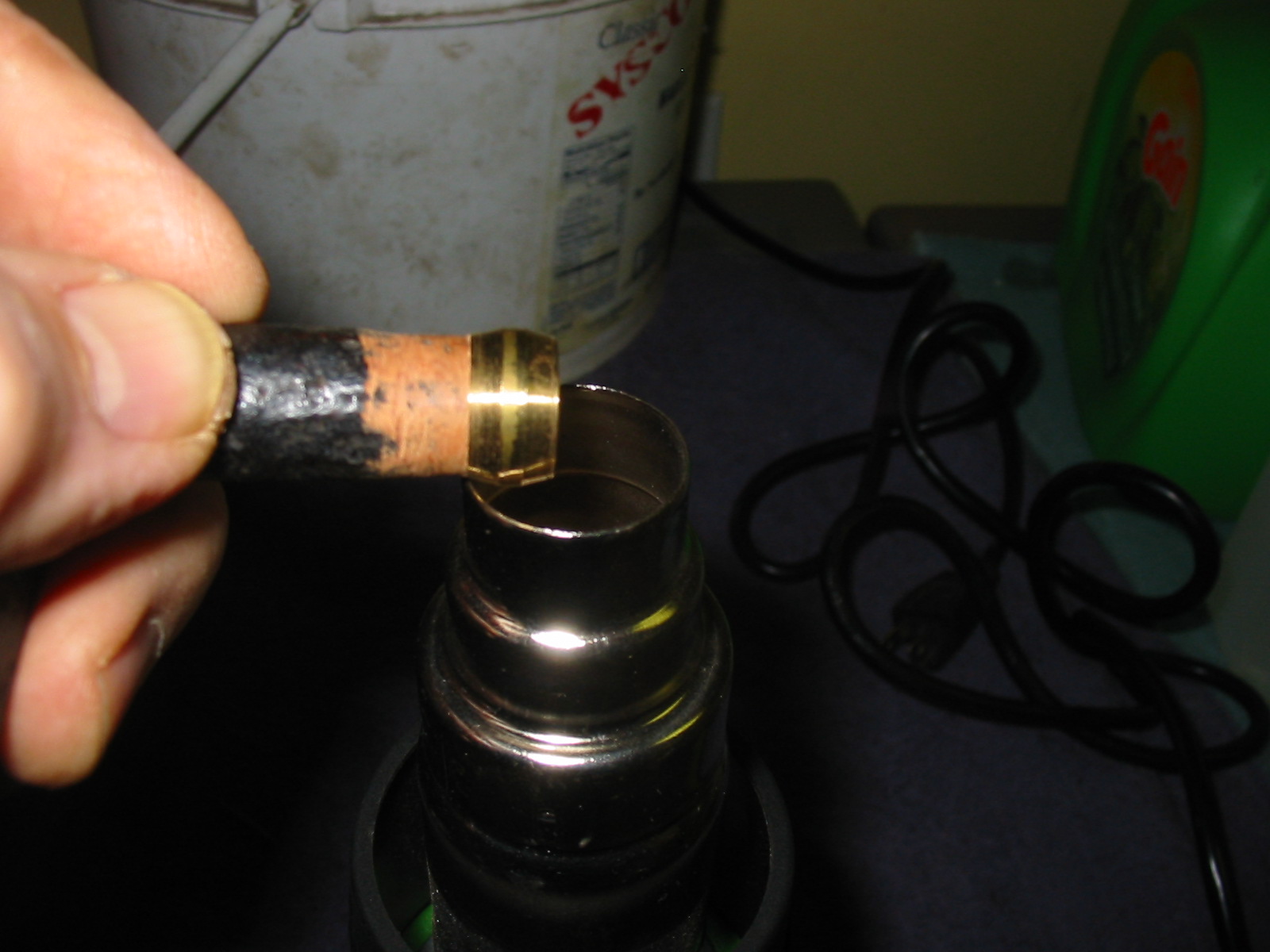
I sanded the stem with a Dremel and sanding drum and then with 220 grit sandpaper to bring the diameter down to match the shank. I continued to sand until the scratches were minimized. Then I progressed to sanding with the micromesh sanding pads. I wet sanded with 1500 and 1800 grit and then dry sanded with the remaining grits of pads from 2400-12,000 grit. I decided to fit an acrylic ring on the stem with a slight ridge to match the slight ridge at the junction of the aluminum and the briar near the bowl. I liked the look of the black blue ring so I epoxied it in place. It began as a square piece of acrylic that had been a spacer on another stem. I shaped it with a Dremel to build a slight ridge that would parallel the one on the front of the aluminum shank.
IMG_2177

IMG_2178

IMG_2179

IMG_2180

IMG_2183

IMG_2184

IMG_2185

With the spacer glued in place the new look of the stem was more complete to my eye. The stem still needed a lot of sanding and shaping. I used the 1500 and 1800 grit micromesh sanding pads once again to sand the newly added ring and the stem. I worked through 2400 and 3200 grit sanding pads to give yet more polish to the stem. I wet sanded right through 3200 grit this time, something I rarely do to polish the ring and the stem. I continued to dry sand the stem to a shine with the remaining grits of micromesh sanding pads (3600-12,000).
IMG_2186

IMG_2187

Once the sanding was finished I buffed the stem with White Diamond on the buffing wheel and then gave the pipe and stem several coats of carnauba wax and buffed with a clean flannel buff to give it a shine. The finished pipe is pictured below. It is now a working pipe – an “unventilated” Ventilator. Thanks Ed, for the great idea on doing this Ed. It was fun to figure out how to make it work. Your “groundbreaking” made it much easier however!! Again I say thank you.
IMG_2188

IMG_2189

IMG_2190

IMG_2191

I had no idea Douwe Egberts made pipes


Blog by Steve Laug

When I posted the find of this pipe on Twitter, I received an email from Al Jones (upshallfan) that pretty well summarized my thinking. I post a bit of that email here: Douwe Egberts pipe??? We used them for our restaurant coffee program for many years (they provide the on-demand brewers used by Burger Kings as well). They are now owned by Sara-Lee. Who knew they made pipes! I’ll look forward to that restore and history lesson… If I had thought a bit more about it I would have remembered that Amphora tobacco was once made by Douwe Egberts but I did not remember that.

The one I picked up is a nice rusticated briar billiard. It is stamped Douwe Egberts X-tra 819. The stem also has a logo – an upward pointing white arrow-head. The bowl had a thick cake and the rim had a buildup of cake and tars. The bowl had what appears to be a combination of sandblasted and rusticated finish. The shank is sandblasted and it appears that the bowl was rusticated first and then sandblasted afterwards. The rustication has a rough edge appearance to it like it was blasted after the patterns were cut. The finish was dirty and worn and the stem had hints of oxidation under the grit and grime. There was minor tooth chatter on the top and bottom of the stem near the button. In the photo below, taken on my iPhone the pipe I am speaking about is the second one down from the top of the photo. (I apologize for the blurriness of the photo.)
IMG_0470

Wikipedia states that Douwe Egberts (often abbreviated as DE) is a Dutch corporation that processes and trades coffee, tea, and other groceries. Its full name is Douwe Egberts Koninklijke Tabaksfabriek-Koffiebranderijen-Theehandel NV, which translates as “Douwe Egberts Royal Tobacco Factory – Coffee Roasters – Tea Traders, Plc.” http://en.wikipedia.org/wiki/Douwe_Egberts

The late Bob Runowski (Morelysson) had this to say about the brand: Douwe Egbert was a conglomerate which used to manufacture Amphora. I don’t recall if the conglomerate ever owned pipe manufacturing. DE offered pipes as a premium for coupons in Amphora Pipe Tobacco, I think in the ’60s. Strange to me, though, because their Amphora pipes were always stamped “Amphora”. I did smoke a fair amount of Amphora Brown in my time. It was quite common for most tobacco firms to offer some inducement for the smoker to continue to buy their products. One of the better known was the Reynolds offerings for PA and CH users. H&H used to include a pipe tool (tamper/knife).
As Bob spoke of above, I have seen DE offering pipes with Amphora coupons. But those pipes were consistently stamped Amphora –and sometimes X-tra as the DE one I have is stamped. Generally they also bore the Made in Holland stamp as well. This pipe is not stamped with any other than the Douwe Egberts stamp.

I reamed the bowl with a PipNet reamer to remove the cake, taking it back to bare wood. This pipe had a heavy aromatic smell so I decided to go back to the beginning and clean it out. Once I had reamed it I dropped it in an alcohol bath to soak for several hours.
IMG_2067

IMG_2066

I dropped the stem in a Oxyclean bath while the bowl was soaking. The Oxyclean softens the oxidation and makes it much easier to remove.
IMG_2068

After a two hour soak, I took the bowl and the stem out of their respective baths and dried them off. In the first photo below you can see the oxidation has all risen to the surface of the DE stem. It is the third stem from the top in the photo.
IMG_2080

I pushed the stem back into the shank once the shank had dried out and took some pictures to show the state of the pipe after the soaks.
IMG_2118

IMG_2119

IMG_2120

IMG_2121

I scrubbed the exterior bowl and shank down with a soft bristle tooth brush and Murphy’s Oil Soap to remove the grime and build up in the grooves of the finish. I also scrubbed top of the rim with the tooth brush and used a dental pick to remove the buildup from the grooves of the finish. Once I had scrubbed the bowl I rinsed it with warm water under the tap. I scrubbed it with the warm water to remove the soap and then dried it with a soft cloth.
IMG_2122

I wiped the bowl down with acetone on cotton pads to clean off the remainder of the finish on the pipe. I worked on the rim until it was clean and free of the buildup that was deep in the grooves.
IMG_2123

I restained the bowl and shank with a dark brown aniline stain, flamed it and then gave it a coat of Linseed oil with a light cherry stain.
IMG_2124

IMG_2125

IMG_2127

This time around in the cleaning process I had gotten ahead of myself and stained the pipe before I had thoroughly cleaned out the interior of the pipe. IT WAS AN ERROR. Normally I clean and scrub the interior the same time I do the outside. It makes the cleaning with Everclear much easier and if the alcohol drips on the surface no harm is done. Doing it after the staining made the cleaner process fussy and I had to be careful not to harm the finish of the newly stained bowl and shank.
IMG_2128

Once the interior was cleaned I set the bowl aside and worked on the stem. I sanded the stem with a fine grit sanding sponge to remove the surface oxidation. The Oxyclean had done a great job in bringing it all to the surface.
IMG_2129

IMG_2130

IMG_2131

I put the stem back in the shank and did some work on the tooth marks on the top and bottom of the stem. I flamed them with a Bic lighter to lift them as much as possible. On the top side the marks disappeared altogether between the light sanding and the flame of the lighter. On the underside one deeper bite mark remained. I continued to flame it and sand until I had minimized its appearance on the stem.
IMG_2132

IMG_2133

I dry sanded the stem with micromesh sanding pads from 1500-12,000 grit. Each successive grit removed more of the scratches on the vulcanite and brought a deeper shine to the stem.
IMG_2134

IMG_2135

IMG_2136

I rubbed down the stem with Obsidian Oil and set it aside to dry and soak into the stem and buffed it by hand.
IMG_2137

IMG_2138

IMG_2139

IMG_2140

I took it to the buffer and buffed it with White Diamond and then with carnauba wax. I gave it multiple coats of wax and then buffed the pipe with a soft flannel buffing pad to give it a shine. The finished pipe is pictured below.
IMG_2142

IMG_2144

IMG_2143

IMG_2146

Louis Blumfeld 1901 BBB Bent Billiard – by James Gilliam of jsecpipes.com


When James posted his work on this pipe on the pipe forums I was amazed at how beautiful it looked. Wow a 1901 BBB – one of my favourite pipe makes and one of the old ones as well. Imagine the surprise when I got an email at the same time asking if I would like a write up and photos of the restemming for the blog. I did not have to think twice to answer that email. I quickly fired back an affirmative and what you have below is the story from James. Thanks again James for taking the time to document your work on this old timer. Enjoy smoking that great piece of pipe history. Below is his tale.

Every story has a beginning and this one even has a pre-story. The excerpt below was posted on several forums I’m a member of so I thought I would repeat it just for those that haven’t seen the posts.

“As some of you know I attend the 100km van Ieper in Belgium nearly every year since 2002. It’s a walk around the WWI Battlefields that consumed Ieper. I’ve been bitten by the pipe making bug, and how and along the way dabbled in restorations just because, but my search for a pre-WWI era pipe is finally over. I ended up getting this piece of history from Alan at Reborn Briar. Now he did the pipe restoration.. and a brilliant job he did, the only thing the pipe was missing was a stem.. well I can do that… I decided not to bore out the mortise and left it threaded, made a threaded tenon out of horn, since I don’t have any workable bone, and decided against using Ivory…… and went with Cumberland for my stem material.. I’m happy…Happy Columbus Day everybody”

Now for the rest of the story. What sticks around in usable condition for over 100 years… not too much, but since I’m kinda into this pipe thing, tobacco related history rates up there for my interest factor. This past July I was able to attend the Newark (UK) Pipe show, set up a table and sell some pipes. You never really sale (or at least I don’t) all the pipes you want to sale, but you do get to meet a lot of really interesting people, and the next table over was Alan Chestnutt from Reborn Briar. I’m always amazed at the folks like Steve and Alan that get into the restoration business. I’ve done a few, even wrote an article about it, but creation is where my passion lies.

Anyway, talking with Alan pre-World War I pipes came up, and fast forward to September he had one that he was going to restore but without a stem. As I mentioned above, stems are no problem…. that’s the making/creating/using machinery aspect I like. When the pipe arrived I was amazed at how well it looked. I mean wow, 1901, and all that.

The only real thing that threw me was the threaded mortise. Looking around the shop I pickup up a few of my mistake mouthpieces and tried fitting a few. The 7mm tenon fit without a problem, as it just slid into the mortise. But later that night while sitting around thinking about the mouthpiece I figured I’d make it as close to the original as I could. The stems profile was already in the leather case. So what do we know at this point.. 1900’s meant ivory, bone, or the like type of tenon. I don’t have any bone to use and didn’t really want to use ivory……but being a pipe maker I do have horn. I usually end up keeping the horn points after using the remainder of the material for a shank extension.

So horn it was to be. I shaped the tenon, drilled and set out to thread the tenon. I’m sitting with a 8mm tenon drilled to 4mm for the airway and went about threading the horn. Unfortunately it crushed under the pressure of my die, but I guess it only made sense… so I made another, except this time I threaded it first and then drilled it… And here is where the pictures come into play.

Threaded tenon, prior to drilling
Jogli1

And it fits just like it is supposed to. Looking right above the pipe you can see my trial delrin tenon with new threads.
Jogli2

Mouthpiece rough cut and drilled. The mortise is also threaded. I cleaned up the junction end before the next steps, so the fit would be flush
Jogli3

Epoxy’d and left to rest a while.
Jogli4

And it fits. So at least the scary parts are now done.
Jogli5

Drawing on the Cumberland to get my bearings at to decide where I want the saddle to sit. The line closest to the junction was chosen.
Jogli6

Jogli7

Time to sand a bit with a machine.
Jogli8

And done
Jogli9

Now it’s file time.
Jogli10

Now it’s sandpaper time.
Jogli11

And more sandpaper… I probably left a step or two out here…just to save the pictures, but my process is machine, medium cut file, fine cut file, another fine cut file, nail files, 180, 220, 320, 400, 600, 800, 1200 sandpaper, buffing paste, more sanding, high glass paste (Sometimes more sanding to remove scratches I missed) and a final buff. Here you can see the stem is bent to its final form.
Jogli12

And now it’s all shiny.
Jogli13

And here are the final pictures. Alan did the bowl, I did the stem and I have a pipe that is twice my age… gotta love it. Hope you enjoyed my story.
Jogli14

Jogli15

Jogli16

Jogli17

Cleaning a Bristol Mat Geante – by AJ Verstraten (AKA Bananabox-Ninja)


This post has been written by a Dutch reader of the blog, AJ Verstraten who contacted me a few weeks ago. Several emails later and we had exchanged a lot of ideas and tips. I thought it would be of interest for others here to read about AJ’s ultrasonic cleaner addition to the process. It was one I had not heard of before so I asked him to write up a piece on it with pictures of a pipe that he put through his process. AJ was graciously willing to write it up and submit it for posting here. Thanks AJ for your willingness to do this. It is great to hear from others about the methods they are using and how they work. The photos are well done and the words well written. Without further ado here is AJ’s article.

Greetings, my name is AJ and I hail from the Dutch city of Dordrecht. I go by the internet name of ‘Bananabox-Ninja’ and I am more easily found under that name then under AJ.

A few weeks ago I broke my knee in a motorcycle accident and it was put in a plaster cast with the instruction to let it rest and heal up. In this time I stumbled upon Steve’s website through ‘Het Pijprokersforum’ a forum of Dutch and Belgium pipe smokers.

As I like to refurbish pipes myself and I had time to kill I went through his whole website and learned many, many new things. In the weeks that followed I tried to get a hold of the things Steve used and tried them myself, like the black superglue and the grinding pads for example. Blown away by how well some things worked out I sent an email thanking Steve for all the tips and asking if he had ever used an ultrasonic cleaner. He replied that he had not but that he was interested to know in the workings and would I like to write about it?

So this weekend I cleaned a pipe from my ‘project-box’ and snapped pictures from beginning to end including the ultrasonic cleaning method I currently use. (The numerical key below the photo identifies the tools in the photo.)

These are the tools I tend to use in the cleaning/refurbishing of a pipe, currently I have some tools on order and they have not come in yet.
001 Tools LR

1 – Polishing wheels and waxes
2 – Sanding paper (600 & 1000), sanding pads (1500 to 12000) and modeling files.
3 – Ultrasonic cleaner
4 – Old socks (but clean)
5 – Vaseline and 96% alcohol
6 – Hard and soft bristled pipe cleaners
7 – Q-tips (cotton swabs)
8 – Pliers
9 – Assortment of drills
10 – Senior pipe reamer
11 – Games Workshop paint
12 – Electric motor (0-2000 RPM) with grinding wheel (1500)
13 – Toothpicks

The pipe I chose to work on and record is a nice straight, big chambered Bristol Mat Geante, I presume the Geante is for its size as the chamber is rather big or as we say in Dutch a ‘Speciekuip’ (mortar trough). As far as I can tell Bristol a B-brand from France but I am unable to pinpoint exactly. I personally like the bird’s-eyes all over the left and right side of the bowl.
002 The Pipe LR

As you can see the stem has oxidation all over and the bowl itself is rather dull. Not visible on this photo are the 2 bite marks on the stem.

First I cleaned the pipe on the inside with alcohol and pipe cleaners until they came out almost white. If there is a thick layer of tar in the air canal I use the drills to scrape the inside out lightly using drills of various diameters. Tar will give way far more easily than the ebonite or acrylic it is in.

In this case it was not needed as the pipe’s previous owner was very tidy or had not smoked it much.

Then with just water and the grinding wheel I removed the heavy oxidation from the stem, careful not to create a round shoulder or to grind off too much for it to create a ridge.

003 Set up LR

004 Half way LR

005 Full LR

Using the sanding paper wrapped around a file I removed the hard to reach oxidation on the mouth bit.
006 Filing and sanding LR

007 Sanding wrap LR

008 Sanding result LR

And afterwards to fill the bite marks using the superglue, q-tips and toothpick.
009 Superglue LR

010 Filled SG LR

011 Sanded SG LR

Now the stem was ready for the ultrasonic bath. This is a new method I have only recently started using and so far I am positive on the results. Using a mixture of 50-50 water and alcohol with a teaspoon of disinfection agent, place the stem in the liquid and let the bath go at it for 8 minutes.

This bath can also heat up to 40 degrees but seeing as ebonite tends to bend back to it’s original shape if heated too much I leave that feature off.

You’ll notice in the last picture that the stem looks almost the same as it went in, however when you pull a pipe cleaner through it, there will be some mild discoloration coming out of the stem.

This method of cleaning is a good way to get the last remaining specks of dirt out of those hard to reach places, I myself was skeptical at first but I was swayed when I pulled the pipe cleaner through it after the bath I found that it did do its job.

It does not however remove oxidation completely, I tried with an unprepared stem and it came out browner than going in.

So as an extra step I find it a great addition to my cleaning process.
012 Sonic cleaning fluids LR

013 Turn on LR

014 Waiting LR

015 Sonic done LR

In the mean time I cleaned some of the soot from the top of the bowl with some spit and the old sock. Especially the part of the sock that fits over your ankle is rather coarse and excellent for this process. The chamber had a nice smooth coal layer in it so I left it in there.

After the bath I gave the inside of the stem few more scrubs with the pipe cleaner and the outside another run with the grinding wheel.

Then I started polishing with the wheels and the waxes.
016 Polishing LR

First a pre-polish with brown, followed by white, a coat of carnauba wax and a final buff.

The end result as you can see below:
017 Pipe done LR