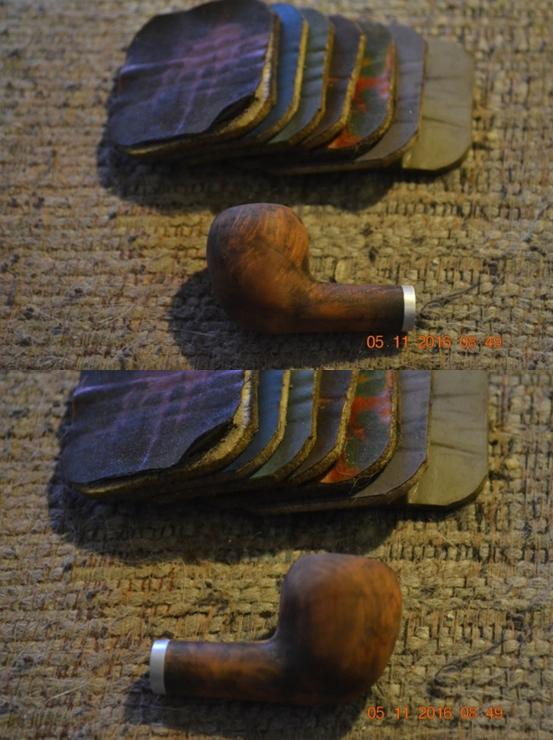
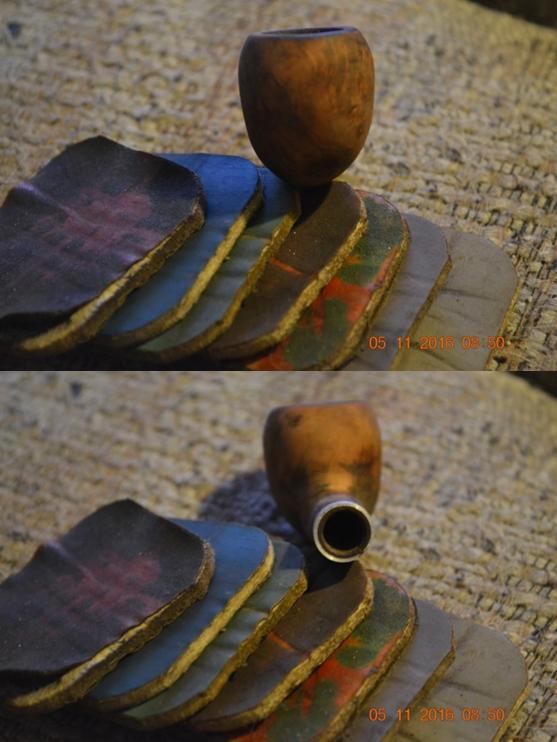
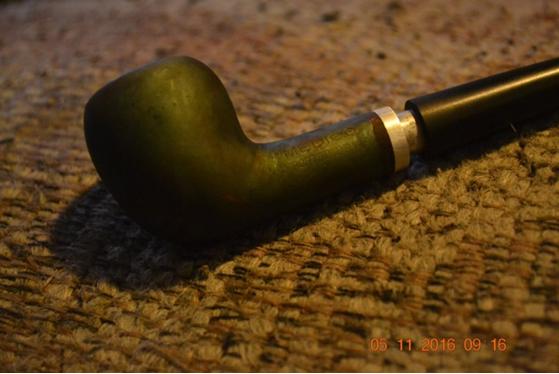
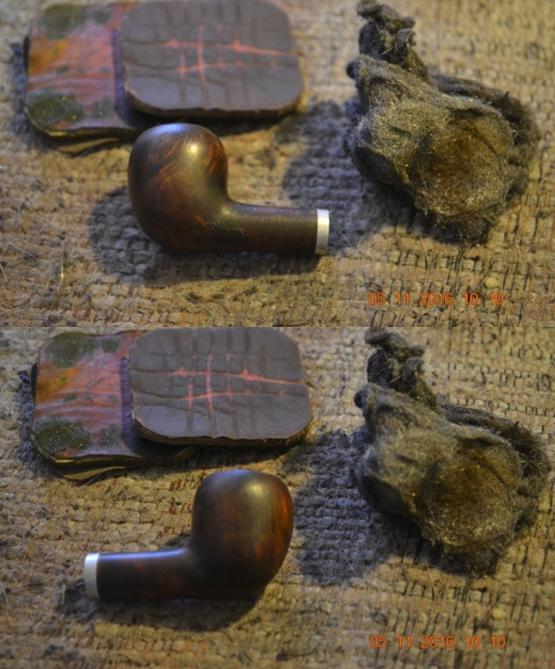
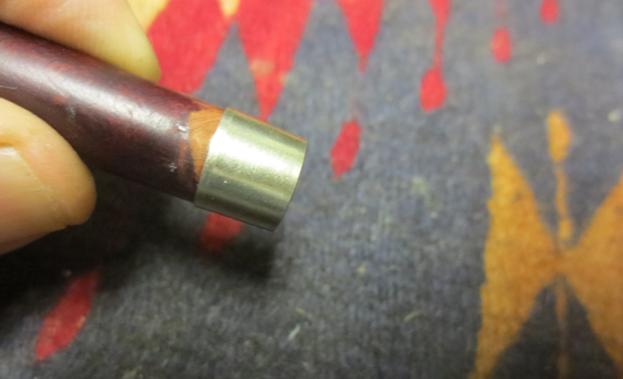
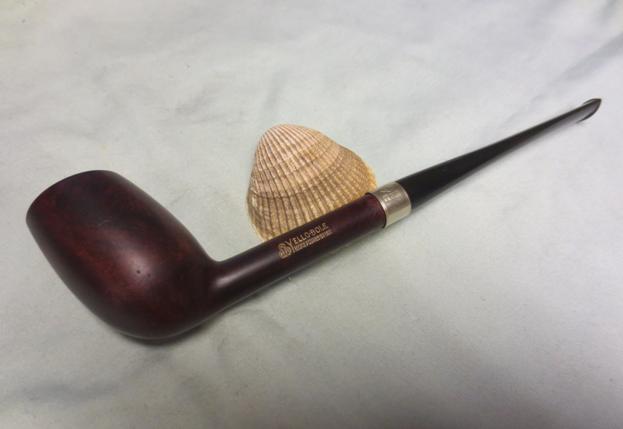
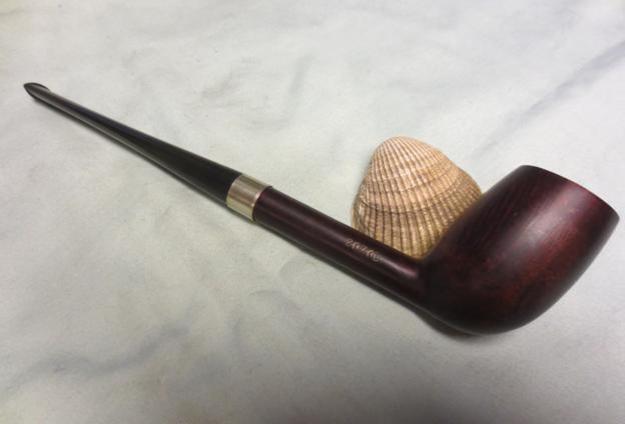
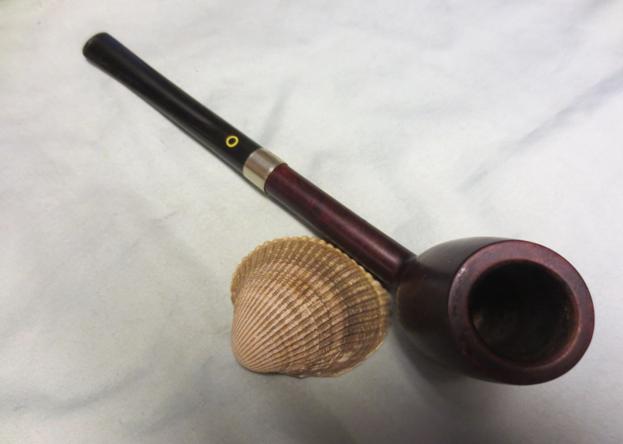
Tag Archives: sanding a stem

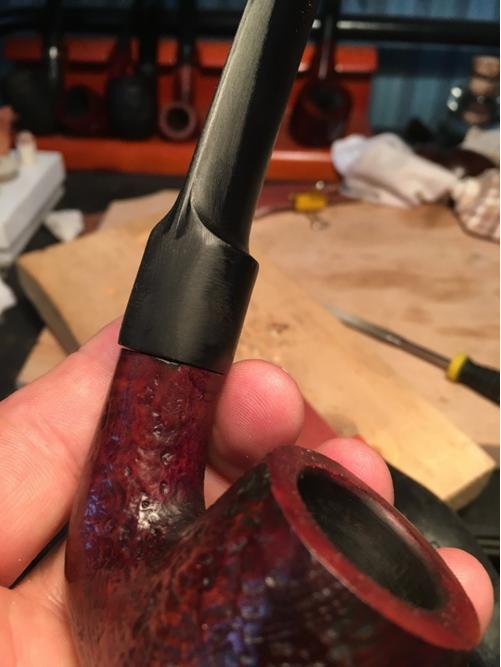
Replacing a Broken Tenon & Repairing a Cracked Shank on a Radice Brown Canadian


Blog by Steve Laug

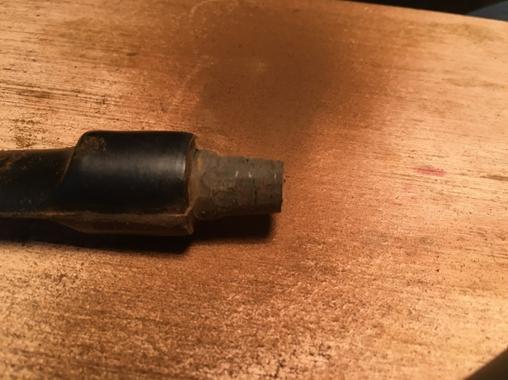
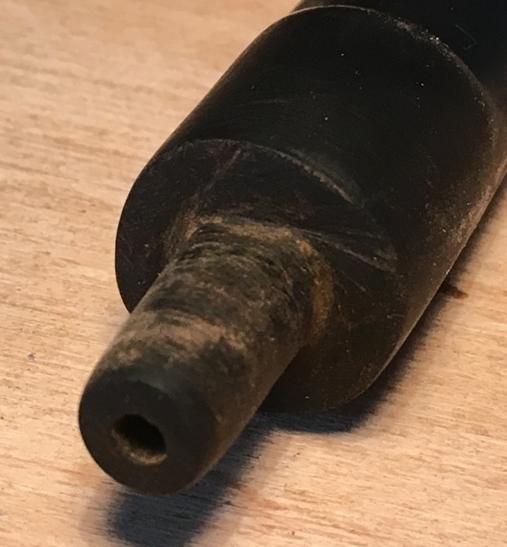
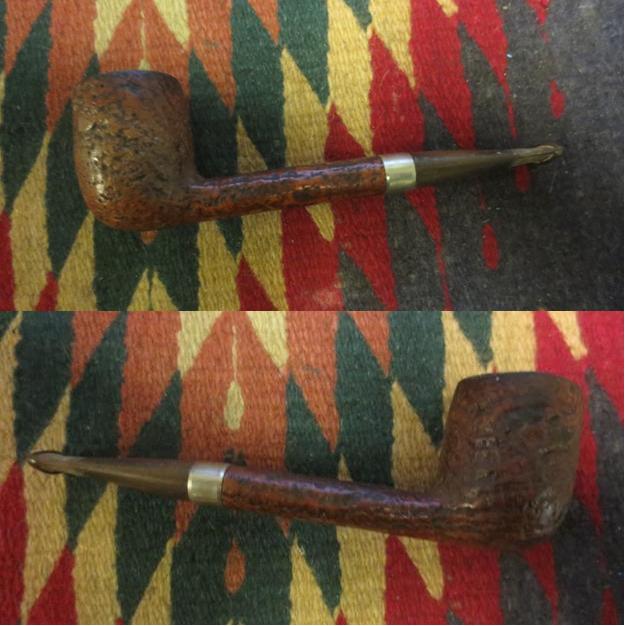
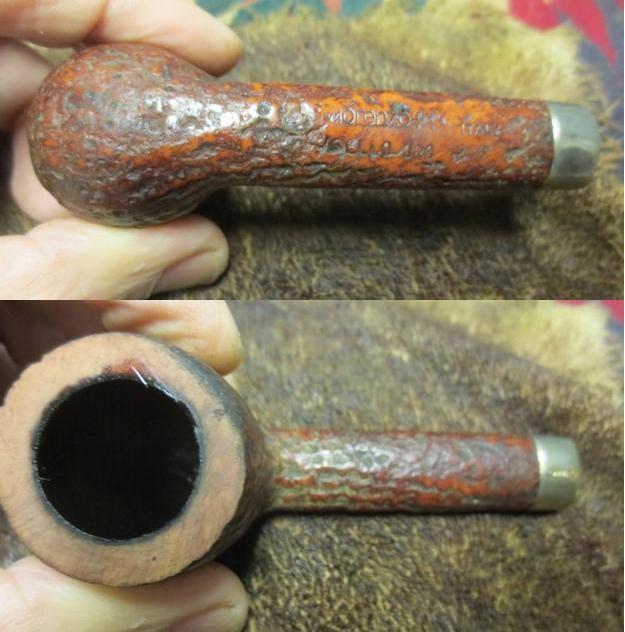
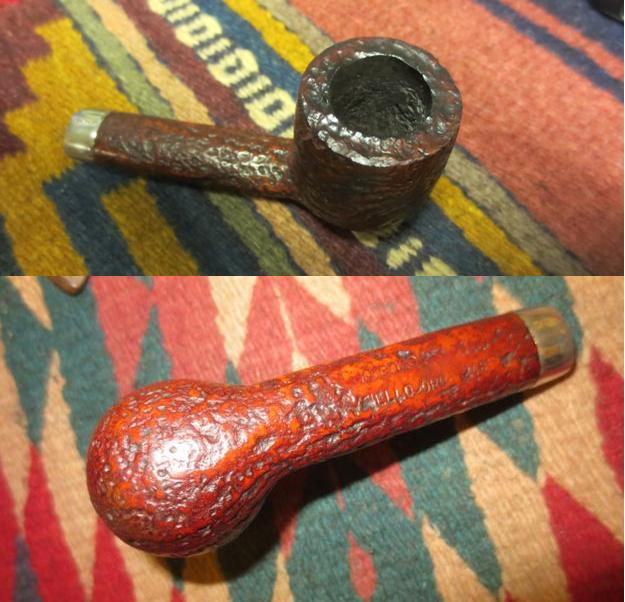
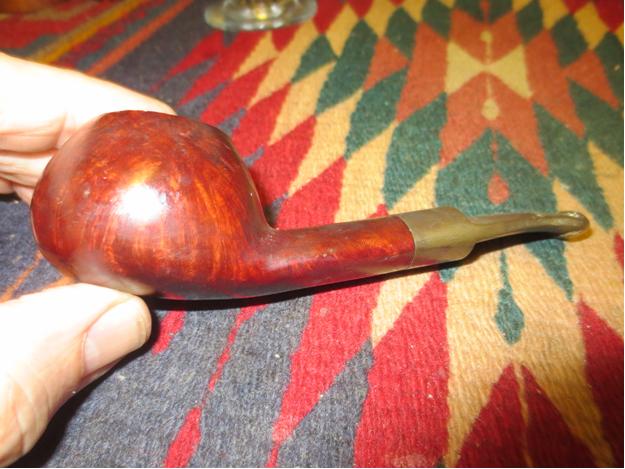
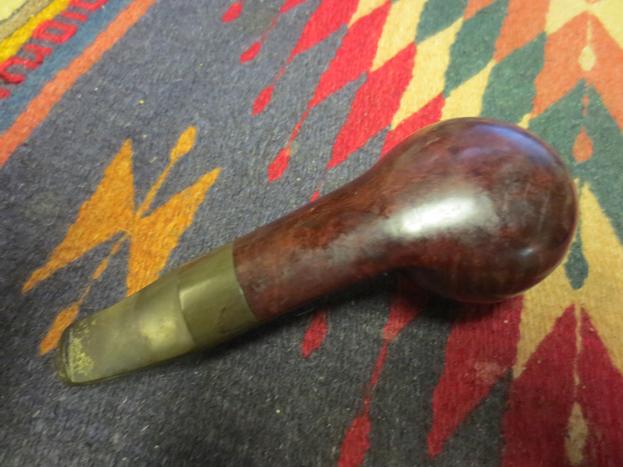
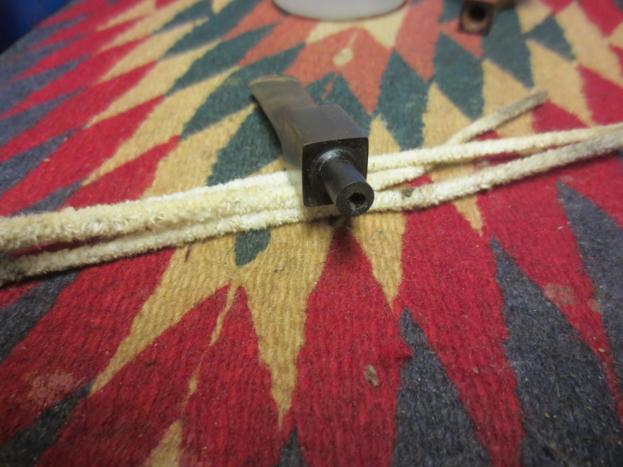
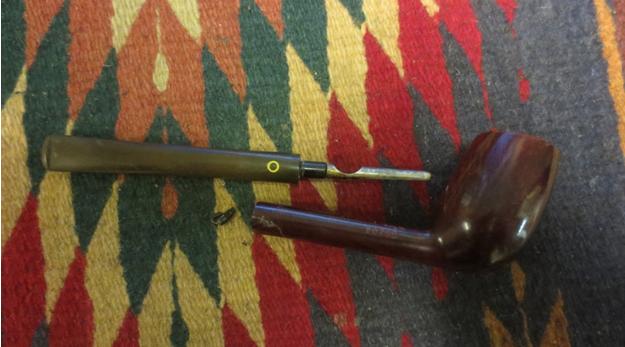
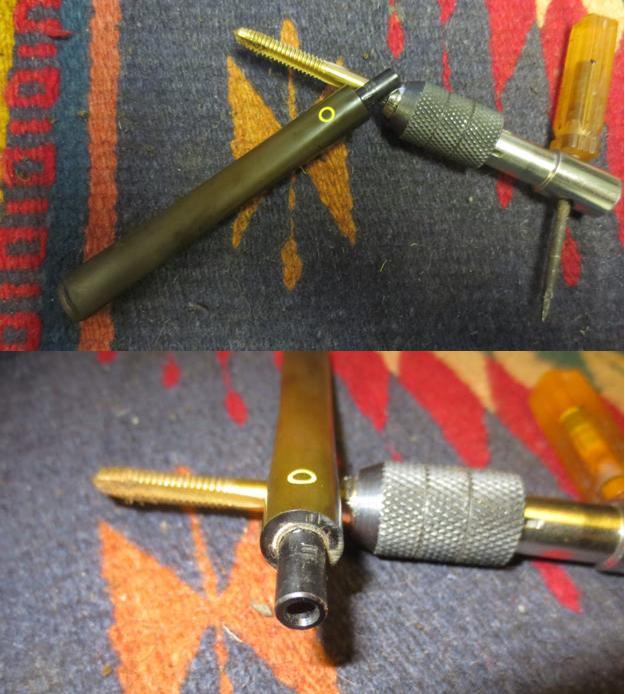
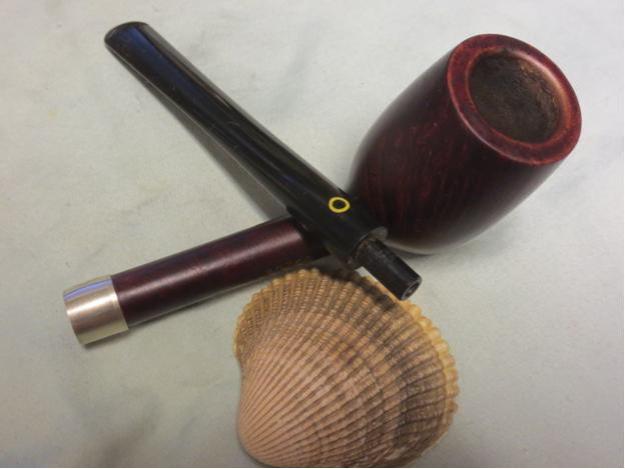
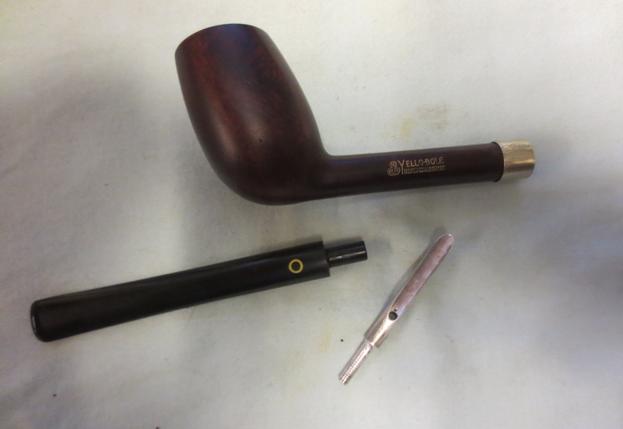
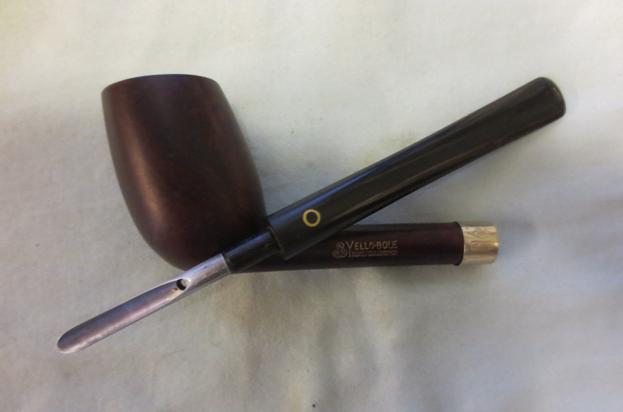
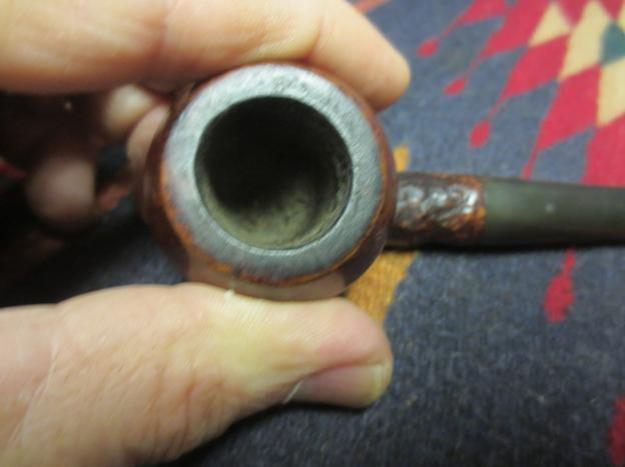
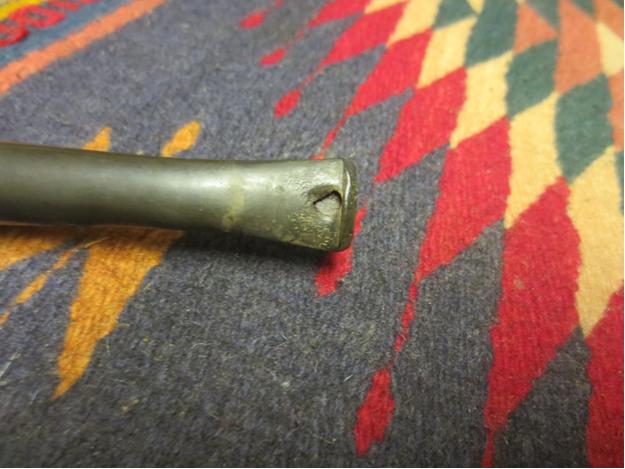
A friend on Facebook messaged me not long ago with a proposition. I had repaired a pipe for a friend of his before Christmas and now he had one for me. He would send it up with some pipes to add to my refurbishing box. The one he had for me to repair was a Radice Brown Canadian with a gold band. The pipe arrived with the broken tenon stuck in the shank. In looking it over I could also see a small crack coming out from under the band that would need to be addressed. I used my usual tenon pulling method and was able to wiggle it free of the shank. The tenon was Delrin and was threaded so that it screwed into the stem. It had broken off leaving two full threads remaining on the end of the tenon. The second photo below shows the pulled tenon and the broken remainder of the tenon in the stem.Radice1

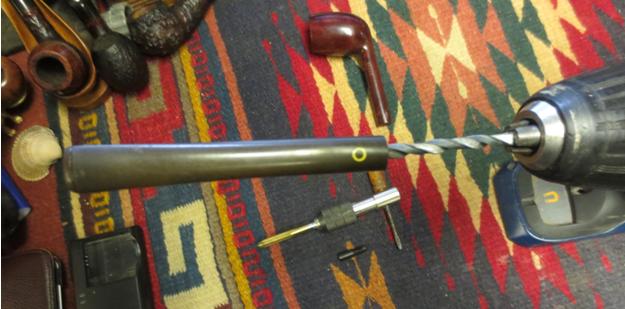
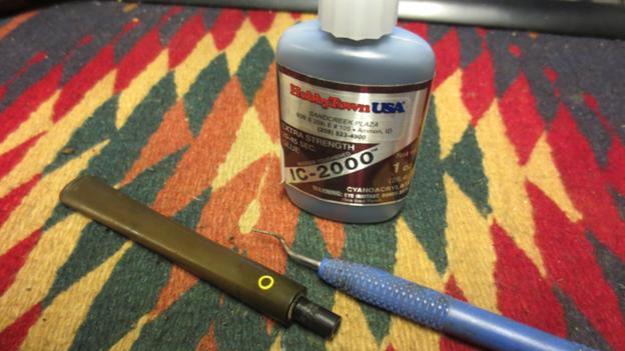
Radice2 I drilled out the broken tenon using a drill bit slightly smaller than the diameter of the hole in the stem. As I drilled it the broken tenon stuck on the drill bit and I was able to unscrew it from the stem. The photo below shows the freshly drilled stem. There was a lot of clutter left behind by the drill that I would need to clean out. I used a dental pick and pipe cleaners to remove all the debris and open up the airway in the stem. I noticed that there was a ridge on the inside of the bowl toward the bottom from whoever had reamed it before I received it.Radice3 Once I had the tenon out of the shank and the stem drilled and cleaned I examined the pipe carefully. From experience I have seen that when a tenon snaps there can also be collateral damage such as a cracked shank. The band on the pipe was loose so I slid it off and examined the shank. From the end view photo below you can see a crack at about 11 o’clock. It ran up the shank for about ¼ inch and then turned downward along the side of the shank. It extended for almost an inch along the side of the shank. There was a slight crack that split off of it and headed backward toward the end of the shank as well. I used a microdrill bit on the Dremel and drilled a small pin hole at the end of each branch of the crack.Radice4

Radice5 I put a light line of white all purpose glue around the shank and pressed the band in place. I cleaned up the overage of the white glue.Radice6 I used a dental pick to guide super glue drops into the drill holes and along the crack.Radice7

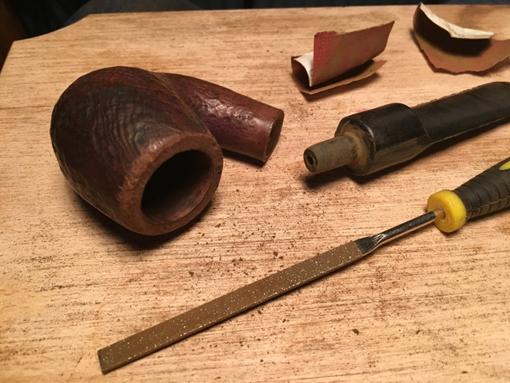
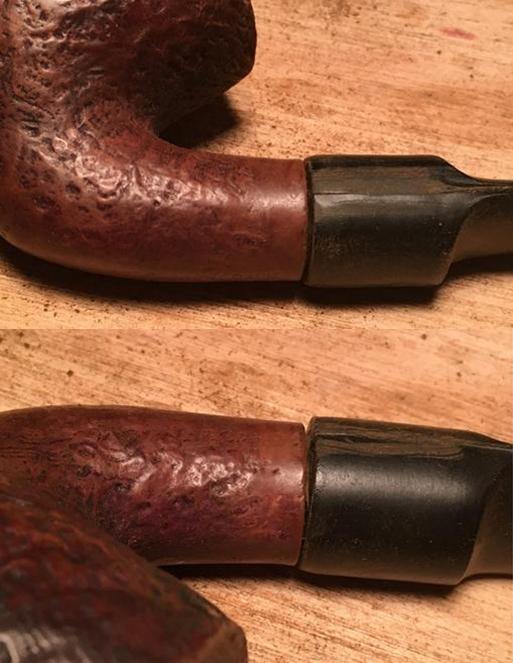
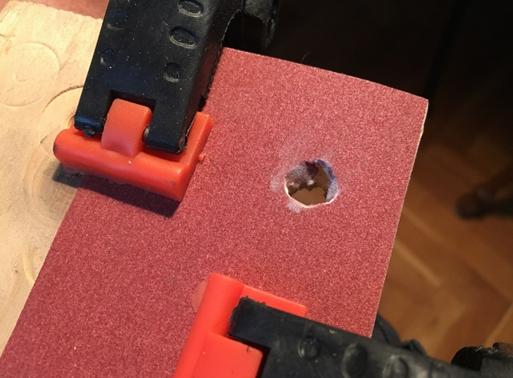
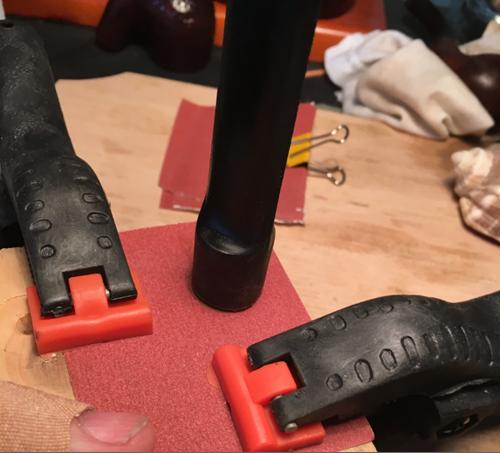
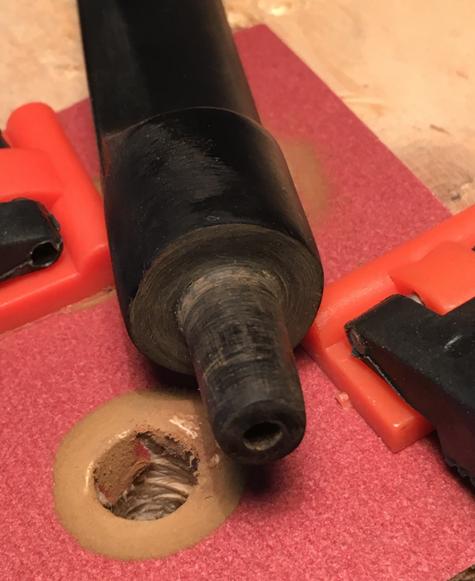
Radice8 I sanded the repair I had made to the cracked shank with 220 grit sandpaper and then with a medium and a fine grit sanding sponge.Radice9 I sanded the repair area with 1500-2400 grit micromesh sanding pads and then stained it with a light coloured stain touch up pen. The colour matched the rest of the bowl and shank and once it was polished blended in well. The two dark spots on the side of the shank were the filled drill holes. They are smooth to touch.Radice10 I used a needle file to smooth out the ridge at the bottom of the bowl and blended it in with the sides of the bowl as much as possible. I cleaned out the shank with pipe cleaners, cotton swabs and alcohol. I used a dental pick to clean out the slot on the stem and then ran pipe cleaners and cotton swabs through it to clean up the threads in the tenon end and the airway throughout the pipe.Radice11 I set the bowl aside and began to work on the stem. I decided to fill the missing dot on the top of the stem before I replaced the tenon. I screwed the broken tenon in to give me something to hold onto while I worked on the stem. I used a knitting needle that was ivory coloured and cut it down with the Dremel until I had a piece that would fit in the hole in the stem. I glued it in place with super glue and then cut off the body of the needle leaving just a small piece in the hole. I sanded it with the sanding drum on the Dremel and brought it as close to flush with the surface of the stem as possible without damaging the stem.Radice12

Radice13

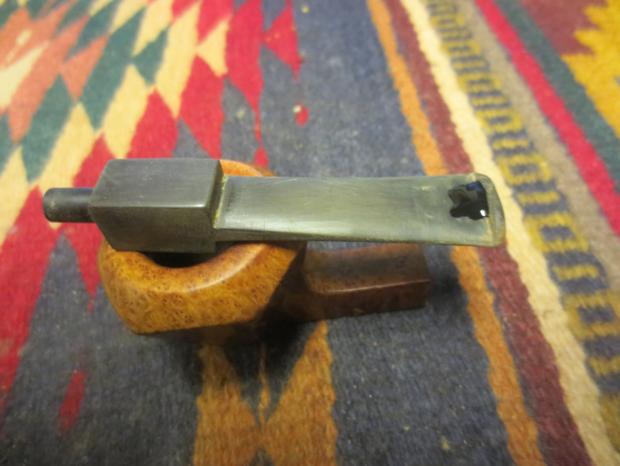
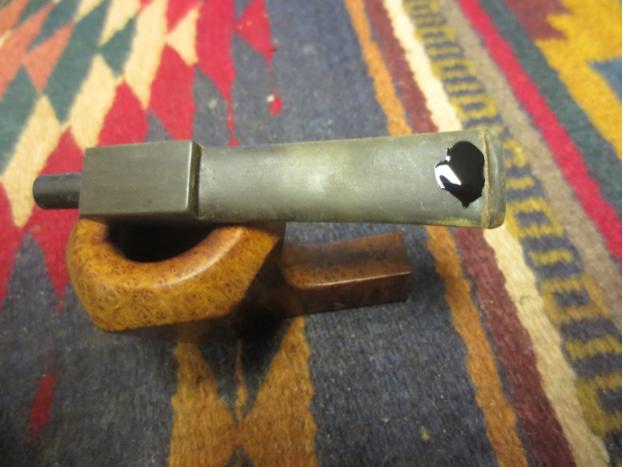
Radice14 I sanded the dot flush with the surface of the stem with sandpaper and then with the sanding sponges and micromesh pads. I removed the broken tenon and prepared to cut a new tenon. For the material I used a small stem that I have been cannibalizing for tenon repairs.Radice15 I cut off a piece of the stem that would give me material to work with using a hacksaw.Radice16 I used the Dremel and sanding drum and two different rasps to reduce the diameter of the end of the newly cut tenon that would insert into the stem. It had to be the same diameter as the threaded end of the old tenon.Radice17 When I had the tenon fit I cut the length back to match the length of the previous tenon. I put some clear super glue on the small end of the tenon and pressed it into the stem. I ran a bead of clear super glue around the insertion point of the new tenon to make an air tight fit. The photo below shows the new tenon in place in the stem sitting next to the broken one.Radice18 I sanded the new tenon with micromesh sanding pads to polish it and readied it for the shank. Once it was clean I pushed the stem into the shank and took a series of photos to show the newly stemmed pipe. I quickly sanded the gold band with 6000-12000 grit micromesh pads to remove the scratching and grooves that had been present when I received the pipe.Radice19

Radice20

Radice21

Radice22

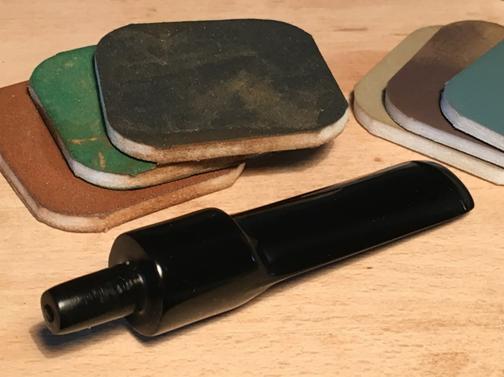
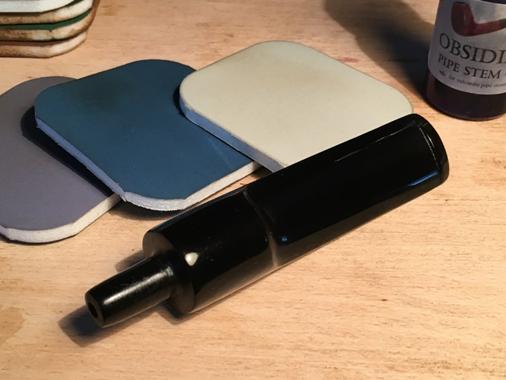
Radice23 I sanded the stem with micromesh sanding pads – wet sanding with 1500-2400 grit pads and wiping down the stem with Obsidian Oil. I dry sanded with 3200-4000 grit pads and then gave it another coat of oil. I finished sanding with 6000-12000 grit pads and then gave it a final coat to wipe off the sanding dust.Radice24

Radice25

Radice25a I buffed the pipe and stem with Blue Diamond on the wheel and then gave it multiple coats of carnauba wax. I buffed it with a clean flannel buff. I hand buffed it with a microfibre cloth and then set it aside for photographs. I hand polished the band with a jeweler’s cloth to give it a shine to match the stem.Radice26

Radice27

Radice28

Radice29

Radice30

Radice31

Radice32

A Peterson’s Product 268 Zulu Restemmed and Restored


Blog by Steve Laug

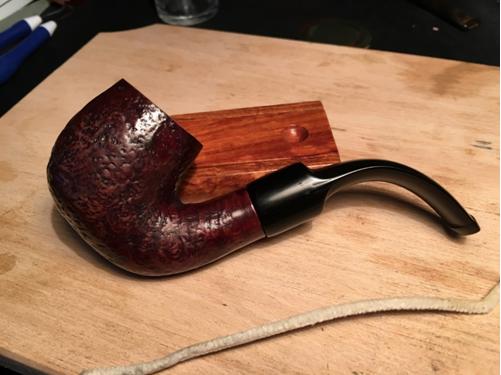
This pipe came to me with the Meerschaum Sultan that I restemmed. It is stamped Shamrock on the top of the shank and “A Peterson’s Product” Made in the Republic of Ireland on the underside. On the right side near the bowl shank union it was stamped 268. I looked the number up and it is the shape number for a Zulu shape. The gentleman in Chile wrote: “I only have the bowl (I’m not acquainted with the minor brand) with an inappropriate mouthpiece which makes it impossible to smoke. I don’t remember how it got into my collection and certainly it’s not a pipe I purchased myself. It has a heavy cake and is a second-hand. If a proper mouthpiece could be made and a proper tune-up, it could make a fine pipe.” He included the following pictures.Shamrock1 When it arrived I took it out of the box to deal with when I had finished repairing the Sultan Meerschaum pipe. It was a nice piece of briar with mixed grain and a worn finish. The stamping on the top of the shank was clear and sharp. The stamping on the underside showed clearly on the left side as you read it but as you got to the right side it was fainter. The rim was dirty and had a flaky coat of lava overflowing from the inside of the bowl and the thick cake there. The inner and outer rim looked good with no dents or chips. The bowl sides, front and back had some light dents in the finish. The stem was a billiard stem that had been stuck in the shank. It fit snugly but absolutely did not match the oval shank.Shamrock2
Shamrock3

Shamrock4

Shamrock5 I took a close up photo of the rim and the bowl to show the thickness of the cake. Toward the bottom of the bowl it got thicker and reduced the size of the bowl at the airway.Shamrock6 I looked at several Peterson shape # 268 Zulus to get an idea of what the stem looked like originally on this pipe. I went through my can of stems and found several that would work on this pipe. The one that was the closest to matching the diameter of the shank of the pipe was a brand new stem blank that still had the castings on the sides and end of the button. The slot was constricted but the length and shape would be easy to match to the shank.Shamrock7 I drilled open the airway to accept the rod of the PIMO tenon tool. And then set up the tenon tool on a cordless drill. The current tenon was too long for the tool to cut all the way to the end of the tenon so I used the Dremel and sanding drum to shorten the tenon. I put it on the tool and adjusted the set screws and took off the first round of material. I did three adjustments to turn the tenon down to a fit in the mortise. I fine tuned the fit with 220 grit sandpaper.Shamrock8

Shamrock9

Shamrock10 The fit in the mortise was snug. The diameter of the new stem was large on the sides and the bottom. The top would take the least adjustment to get the fit correct.Shamrock11

Shamrock12

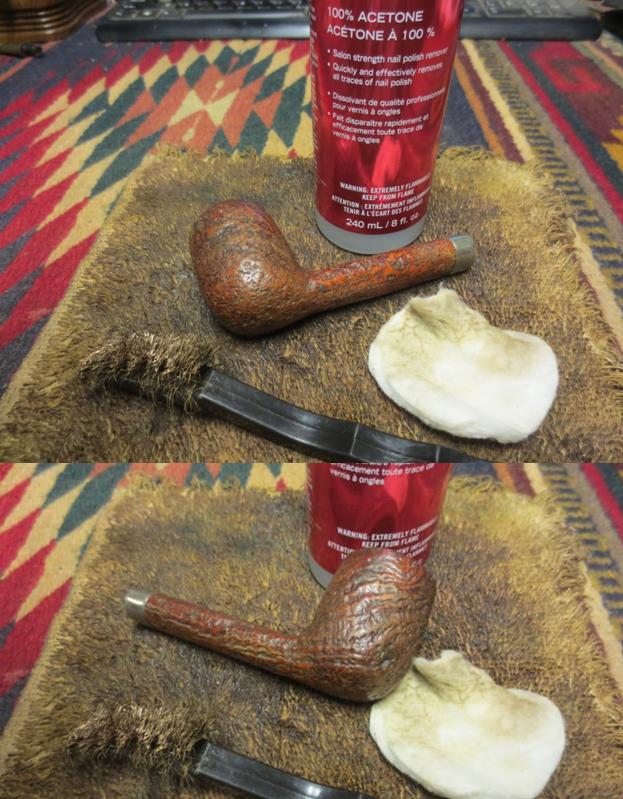
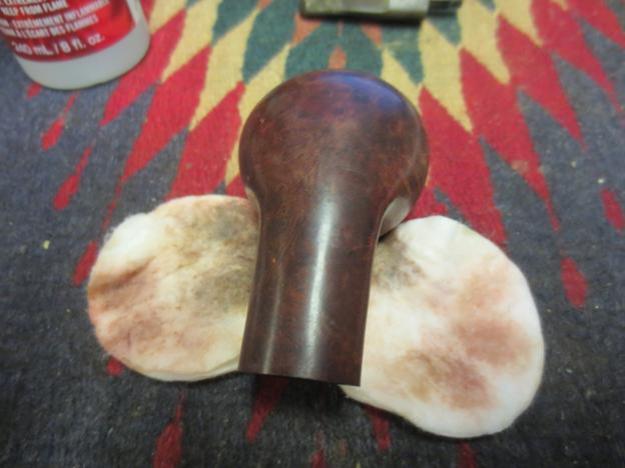
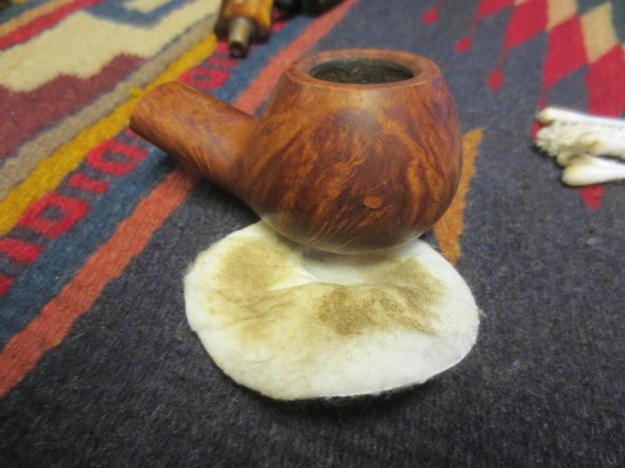
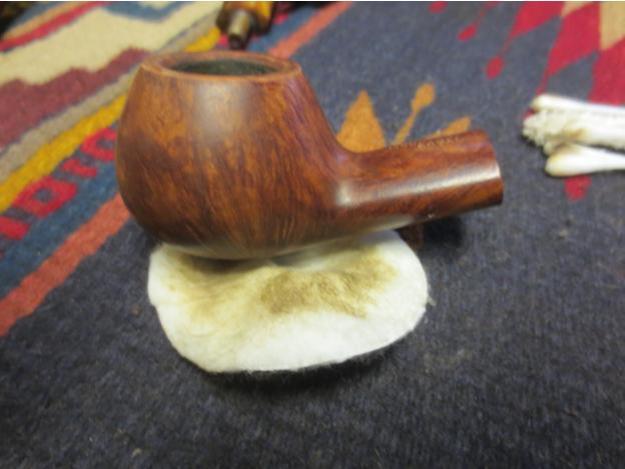
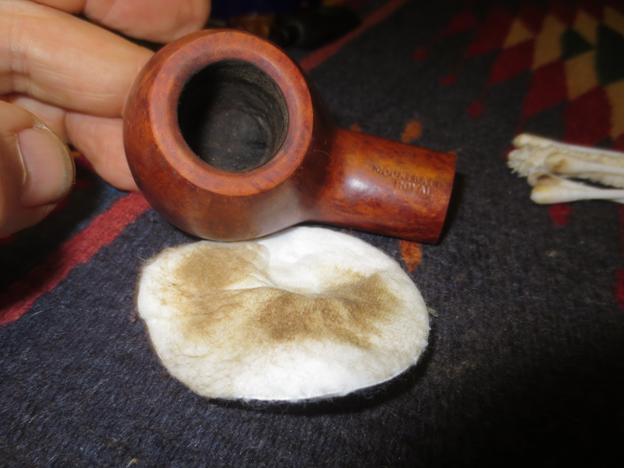
Shamrock13 I took off the majority of the excess vulcanite with the Dremel and sanding drum. I put it back in the shank and the fit was better. The rest of the work would have to be done by hand sanding.Shamrock14 I hand sanded the stem until it was smooth and the transition between the shank and stem needed some fine tuning then set the stem aside and worked on the bowl. Contrary to my normal pattern I wiped off the outside of the bowl and shank with acetone on cotton pads to remove the finish and the grime that had been ground into the briar. Once it was gone there was some nice grain showing through.Shamrock15

Shamrock16

Shamrock17

Shamrock18 I put the stem in place and took a few photos so that I could see where I stood at this point in the process. The pipe was looking good and with a few tweaks would look even better.Shamrock19

Shamrock20

Shamrock21

Shamrock22 The top of the bowl was caked and the lava was very hard. I tried to scrape it carefully with a pen knife and gave up. I resorted to lightly topping the bowl on the topping board to remove the thick lava build up.Shamrock23

Shamrock24 I reamed the bowl with a PipNet reamer starting with the first cutting head. I finished with the second cutting head which was the same diameter as the inside of the bowl. I cut the cake back to bare briar so I could assess the inner bowl walls. They looked very good with little burn or damage. The cake had protected them.Shamrock25

Shamrock26 I fine tuned the sanding on the stem and shank fit with 220 grit sandpaper and shaped the stem to match the oval of the shank. The flow of the bowl and stem were looking really good at this point in the process.Shamrock27

Shamrock28

Shamrock29

Shamrock30 I cleaned out the inside of the mortise and the airway in the stem and shank with alcohol, cotton swabs and pipe cleaners.Shamrock31 I used the dark brown stain pen to touch up the rim and the end of the shank to match the stain colour on the rest of the pipe. I rubbed it down with a light coat of olive oil to give some life to the dry wood. I gave the bowl a quick buff with Blue Diamond and then gave it one coat of carnauba wax and hand buffed it with a microfibre cloth. The “new” look of the bowl is shown in the photos below.Shamrock32

Shamrock33

Shamrock34

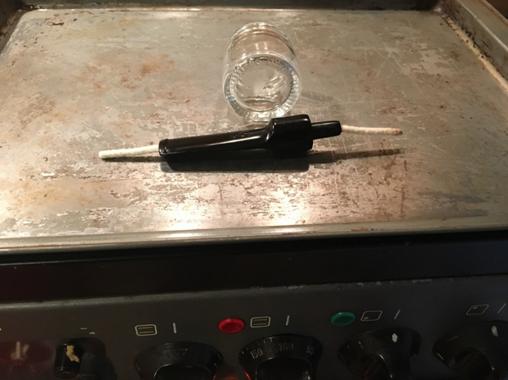
Shamrock35 With the bowl stained and oiled I used a heat gun to bend the stem and get the proper angles that I had found online on the 268 shaped pipes. I heated the stem until it was pliable and then bent it over a round can to get a smooth angle. I took photos of the pipe with a bent stem to give a feel for the finished look.Shamrock36

Shamrock37

Shamrock38 I fine tuned the fit of the stem to the shank by beveling the inner edge of the mortise in the shank and then cleaning the area around the tenon stem joint. I wet sanded the stem with 1500-2400 grit micromesh and then rubbed the stem down with Obsidian Oil. I dry sanded it with 3200-4000 grit micromesh pads and gave it another coat of oil. I finished sanding with 6000-12000 grit micromesh pads and gave it a final coat of Obsidian Oil. I laid the stem aside to dry.Shamrock39

Shamrock40

Shamrock41 I put the stem on the pipe and buffed the entirety with Blue Diamond and then gave it multiple coats of carnauba wax. I buffed it with a clean buffing pad and then by hand with a microfibre cloth. The finished pipe is shown in the photos below. It is ready to go back to Chile. Sometime early this week I will pack the two repaired pipes up and make the trip to FEDEX to send them back. I look forward to hearing what the two of them smoke like for the Chilean pipeman. I like the new looks of both of these pipes and I think he will as well. But I have to tell you I am a sucker for the Zulu shaped Petersons. This one is a beauty!Shamrock42

Shamrock43

Shamrock44

Shamrock45

Shamrock46

Shamrock47

Shamrock48

Fixing a Botched Repair on a Bearded Sultan Meerschaum


Blog by Steve Laug

I received and email from a pipe smoker in Chile regarding a meerschaum and a Shamrock pipe that he had that needed repairs and he was wondering if I would be interested in working on them. The Shamrock was straightforward in that all it needed was a cleanup and a new stem. The meerschaum though had some real issues. He wrote me explaining the details of the meerschaum’s problems as follows:

Actually – I now realize – the mouthpiece IS broken at the band. Though the slice seems clean, I realize it is not perfect. The band looks nice though I don’t know if it came that way originally or not. It does cover the slice of the stem. The whole mouthpiece is amber; nothing holds it together except the band. Not glued nor cemented.

The misalignment isn’t only due to the slice but even if I make an effort at aligning the pieces once screwed in, it just won’t be straight.

The pipe needs a new mouthpiece, apart from cleaning. I don’t know if a new beeswax dip is a good idea…It seems dry as marble…no glow… There is a small chip on the rim of the bowl, but the rest seems to be OK.

It’s not your everyday meerschaum but it doesn’t seem unsmokable. I did smoke it once years ago and as I said, it leaks, leaves a mess. I realize why now, but I don’t think it’s only due to the broken stem but also at the screw point.

Can you help me? You tell me. He included the next photos.Sultan1 I wrote him back and said I believed I could help.

He sent the package to me by FEDEX and I picked it up this morning. When I opened the package and looked over the meerschaum pipe that was sent repair. I made a list of the issues that I was looking at with this pipe. It was actually far worse and far better than I thought when we corresponded.
1. The stem indeed was broken about one inch up from the shank. It almost looked like it was sliced rather than broken.

2. The broken piece with the metal stinger apparatus obviously had broken into further pieces when the tenon insert was put into it. There were several smaller chips that had come off the broken piece and had been glued on. The smaller cracks still showed.

3. The stem is not amber at all, but appears to be Bakelite or some kind of acrylic material. That explains the clean break on the piece and the rest of the stem.

4. The stem that I was looking at was not the original stem. It is actually an oval stem while the shank of the meer is round. Someone fiddled with the stem to make a poor fit.

5. The “silver band” serves two purposes on this stem – first it is cosmetic to cover the broken stem and secondly it hides the fact that the stem is not round.

6. The shank had been cut off – probably had cracks in it as there are still several that have been repaired showing. Looking at the end of the shank with a lens shows rough meerschaum.

7. Sometime during the lifetime of the pipe someone had threaded a metal mortise into the shank of the pipe. It is like the ones that can be found in Kaywoodie pipes or Willard pipes – those that have a threaded tenon and a metal shank insert. In turning it into the shank the meerschaum had split on one side and slivered on the other. This had been repaired when the insert was glued in place.

8. The threaded tenon apparatus matches the insert in the mortise but is misaligned. It also has been epoxied in place so it is not movable. It is obviously not the correct tenon for this kind of pipe. I am pretty certain that both the mortise insert and tenon are incorrect and were later additions on this pipe. The original would have had either a threaded tenon or I think, more likely in this pipe due to age, a nylon insert and a push tenon. Both were replaced when the original stem was lost.

9. The carving on the face was actually quite nice but the sides and smooth portions were not nearly as well done. The back edge of the turban and beard still had carving marks that are usually removed by the better carvers.

10. The bowl had a chip out of the front edge of the rim as noted and had scratches and rim darkening.

11. The meerschaum itself was actually very dirty and dry. There was a fine metallic dust on the grooves of the turban and the beard. It was silver coloured and gave the meerschaum a grey look.

With that long list of issues with the pipe I wrote to the shipper with my suggestion. I concurred with his assessment that it needed to be restemmed. It would be an interesting challenge as I could not remove the metal shank insert without damage to the meerschaum so I would have to figure out some kind of compromise that would work with that mortise. I suggested a stem that I had that came with a meerschaum pipe similar to this one. It is a yellow unique stem with a push tenon. I tried it with the metal mortise insert to see if it would work and it fits really well. The new stem was about an inch longer than the one that arrived with the pipe and looked really good on the pipe.

I took some photos of the pipe with the stem attached so that you could see the state of the fit of the stem when it arrived. You can see that the band is also quite poorly done – all the edges are not even or smooth.Sultan2

Sultan3

Sultan4

Sultan5 I also removed the stem and took the pieces apart. The stem was indeed broken under the band. It definitely was not amber. You can see the sliced piece and the remainder of the stem as well as the metal mortise edges in the shank in the photo below.Sultan6 I took a photo of the end of the broken piece to show that it was oval while the shank was round. The second photo below shows the cracks and chips that had been repaired on the piece underneath the metal band. Obviously this is not the original stem. The third photo shows the end of the shank – it is round – and the metal threaded mortise insert.Sultan7

Sultan8

Sultan9 I took the next two photos to show the damage to the shank and the poorly done job of adding the threaded mortise insert. The small crack is about a half inch long and can be seen running from the metal insert edge about mid-shank edge on the left side. There are also chips of meerschaum that had been reglued.Sultan10

Sultan11 I went through my can of stems and found a new stem whose length and shape was right for this pipe. The diameter of the stem at the shank was slightly larger than the shank on the right side and top. It would also need to be bent slightly more but I liked the look of the pipe with the new stem.Sultan12

Sultan13 I used a topping board to flatten the metal disk on the top of the mortise insert as it had curled at the edges and would not allow the new stem to seat against it properly. I sanded the sides of the stem on the saddle with 220 grit sandpaper to align it with the diameter of the shank of the pipe. I removed the push tenon from the stem and cleaned out the airway with cotton swabs, pipe cleaners and alcohol to remove all of the tars and staining on the inside. It looked like a dark brown striped up the middle of the stem when I started and when I was finished it looked very clean.Sultan14

Sultan15 I heated the stem with a heat gun until it was flexible and then bent it to match the curve of the shank and allowed the pipe to sit horizontally when in the mouth.Sultan16 I set the bend with cool water and then pushed it into the mortise insert and took the following photo to show the new look of the pipe.Sultan17 I scrubbed the meerschaum with a soft tooth brush and Murphy’s Oil Soap. I rinsed it carefully with cool water to remove the soap and scum. I dried it off with cotton pads and was able to remove more of the grime in the grooves.Sultan18

Sultan19

Sultan20

Sultan21

Sultan22 I waxed the meer with white beeswax and hand buffed it with a shoe brush. It has begun to take on the glow that comes to a well waxed meerschaum. I took the full facial photo to show the clean look of the pipe.Sultan23 With the bowl cleaned I turned my attention to the new stem. I had sanded the saddle area with 220 grit sandpaper and needed to polish that portion. I used a medium and a fine grit sanding sponge to remove the scratches. I wet sanded the stem with 1500-2400 grit micromesh and then dry sanded it with 3200-12000 grit pads.Sultan24

Sultan25

Sultan26 I buffed the stem with Blue Diamond and hand buffed the pipe with some beeswax and a shoe brush. I took the photos below of the finished pipe. Considering the many issues of this pipe when I started working on it, the finished pipe looks really good. I left many of the gouges and scratches in the meerschaum as they add character and to remove them would change the shape of the carving. I like the new stem – the bend is perfect for it to hang effortlessly in the mouth when smoking. The draw is wide open and should smoke really well. The push tenon works well with the metal mortise and sits snug against the shank. Soon it will go back to Chile and it owner. He will have the pleasure of finally smoking this old pipe and enjoying it.Sultan27

Sultan28

Sultan29

Sultan30

Sultan31

Sultan32

Sultan33

Restemming and restoring an oval shank billiard with issues


Blog by Steve Laug

I was gifted an oval shank billiard with a broken tenon and no stem by a fellow pipe refurbisher. He knows I like a challenge so he thought that maybe this would be a fun one for me to fiddle with. I looked at it when I unpacked it and spent more time looking at it over the weekend. When I first picked it up I put it in the bin of pipe to be refurbished and pretty much figured it would be one of those that I picked up when I had nothing else to work on. I have a few of those sitting in the bottom of the box. On Sunday I was going through the box trying to decide which pipe I would work on next and picked it up. There was something about it that drew me to work on it next. I can’t tell you what that was; I have no words to describe it. I know though that those of you who refurbish pipes know the feeling and the call of certain pipes. This was one of those. So it came to my work table.

Now that I had made a decision to work on it I took time to look it over and assess it. That is what I always do when I work on a pipe. I look it over and list out what needs to be addressed if I am to bring this pipe back to life. I like to enter into the work with a clear idea of what needs to be done. Doing this keeps me from finding those issues that surprise you in the process – at least most of the time it does. There will always be exceptions to the rule. For this pipe it was pretty straight forward.
Here is a list of the issues:

1. The finish was very rough and the darkening of the briar around the middle of the bowl was worrisome. It was hard to tell if it was potential burnout starting to happen – thus darkening the briar or if it was dirt and grime. I was pretty sure it was just soiled and stained but could not tell for sure until I had reamed the bowl.

2. There were scratches and dents all over the surface of the bowl.

3. There was one large fill on the right side of the bowl, mid-bowl that would need some work. I would either need to pick it out and refill it or repair it.

4. There was a burn mark on the underside of the shank mid-shank.

5. There appeared to be a small crack on the bottom of the shank at the place the stem and shank meet. It extends inward about a quarter inch. It was hard to see as it was hidden in the dings on the bottom of the shank from when the pipe had been dropped and the stem broken.

6. The bowl had a thick cake in it to the point that the tip of my little finger was about all that would fit in the bowl.

7. The rim had nicks and damage to the surface as well as a lava overflow from the cake in the bowl.

8. The stamping was virtually nonexistent. All that remained was a faint stamp on the left top side of the shank near the end – it read Made in London. It would definitely disappear if I banded the pipe to deal with the crack.

9. The airway in the shank and mortise was dirty and clogged. I could push air through it but barely when I blew through the end of the shank.

10. There was a broken tenon stuck in the shank. Generally these are pretty straight forward so I was not too worried about removing it.

11. There was no stem to work from as a model and the oval shank would make matching it a challenge.

Here is what the pipe looked like when I brought it to the work table.Bill1

Bill2

Bill3

Bill4

Bill5 I started the cleanup by pulling the broken tenon. I used the normal drywall screw and had the tools handy. In this case I threaded the screw in gently and was able to pull the tenon out by hand very easily.Bill6

Bill7 I turned to my can of stems for a potential stem. I actually had one that was a decent fit. The tenon was perfect and the fit against the shank end was ideal. The diameter of the stem on the bottom of the oval was too big and would need to be sanded to a correct fit. It happened to be the only oval stem I had at the moment and it was a twin bore bite proof stem. I was careful in fitting the stem because of the small crack in the shank.Bill8

Bill9

Bill10

Bill11 I used the Dremel and sanding drum to take off the excess rubber on the bottom of the stem.Bill12 This may be a funny thing to say but as I examined the stem after I fit it to the shank I noticed it had a small hole near the button. When I turned it over to check it out then I noticed that I was dealing with a bite proof stem – a stem with two airholes coming out of the button from the single airway in the stem. Picture the letter Y and you have a good picture of the stem.Bill13 I inserted a greased pipe cleaner in the airway on left airhole and then repaired the hole in the underside of the stem. I used black super glue to fill it and built it up to give a good base. When it dried I sanded it smooth with 220 grit sandpaper to blend it into the surface of the stem.Bill14

Bill15 Reaming the bowl took some effort and several different reamers. I used the PipNet reamer to start and then worked on the bowl with a KLEENREEM reamer. I finished by using a pen knife to clean out the last remnant of carbon in the bowl. I cleaned out the airway in the shank and the stem with pipe cleaners, cotton swabs and alcohol.Bill16

Bill17 I topped the bowl on my sanding board and lightly sanded the cracked area and damage on the bottom of the shank end.Bill18

Bill19 I sanded the stem with 220 grit sandpaper and then with a medium sanding sponge to smooth out the scratches. I wiped the bowl down with acetone on cotton pads to remove the grime and the remaining finish. The new stem fit really well and I only wished that the shank did not have the small crack that mad banding a necessity.Bill20

Bill21

Bill22

Bill23 I cleaned the area around the fill on the right side and repaired it with super glue. I sanded it smooth and then sanded the bowl with a medium grit sanding sponge.Bill24 I heated the briar with a heat gun and then applied a coat of cherry stain to it. The stain took well and sat deeply in the grain of the bowl.Bill25

Bill26

Bill27 With the stain in place the crack on the underside of the shank was very visible. It was mid shank and extended about ¼ inch. At this point I had to decide how to address this crack. I could do a shank insert and do an internal repair or I could band it. In looking over the shank I realized that the tenon was already quite thin and I would be hard pressed to make it smaller to fit inside of a shank insert. I would need to band the pipe.Bill28 I had a round band that would fit once I flattened it. I opened the crack with a dental pick and filled it with glue to repair the crack and then pressed the band into place on the shank.Bill30

Bill31

Bill32 I lightly sanded the tenon as the band made the fit in the shank too tight. I put the stem in place and took the next photo to get an idea of the new look.Bill33 I set the bowl aside and worked on the stem. I sanded it with micromesh sanding pads. I did my usual routine with the micromesh pads – wet sanding with the 1500-2400 grit and dry sanding with the rest of the pads up to 12000 grit. I used Obsidian Oil as usual.Bill34

Bill35

Bill36 I buffed the nickel band with a jeweller’s cloth and buffed the pipe on the wheel with Blue Diamond polish. I gave the bowl and stem multiple coats of carnauba wax. I buffed it on a clean flannel buffing wheel and then by hand with a microfibre cloth to raise the shine. The finished pipe is shown below. I think that taking the time to recondition and restore this pipe paid off with a beautiful oval shank billiard. Thanks for looking.Bill37

Bill38

Bill39

Bill40

Bill41

Bill42

Bill43

Who Made Benson and Hedges Pipes – Reclaiming a B&H Acorn


Blog by Steve Laug

My brother sent me a little acorn shaped pipe that was stamped on the left side of the shank, Benson & Hedges and on the right side, Imported Briar over 84 and next to that in a smaller sized font 18. I have had several of these pipes on the work table over the years but this is a beautiful little pipe (5 inches long). The briar is nice and there are no fills or sandpits in it that I can see. The rim was dirty and had some cut marks in it. There was a cake in the bowl that was uneven – thick in some places and thin in others. The stem was badly oxidized and on the underside near the button there was a small tooth mark. Here is what it looked like when I brought it to the table to work on it.B1

B2

B3

B4 I have included a close up photo of the rim to show the damage and the thickness of the cake.B5 I was curious about the maker of the pipe so I did some searching. In Who Made that Pipe it says that the pipe is English Made. In Pipedia says that it was likely made by Comoy for the London Tobacco Company. Then it lists the following stamping “London Made”. http://pipedia.org/wiki/British_Pipe_Brands_%26_Makers_A_-_D There was one other note that Orlik made pipes that were stamped with the Benson and Hedges label. Nowhere in the listings that I could find did anyone mention the stamping on this one: Imported Briar. That stamping tells me that it was made for the American Market. The number stamp on the right side of the shank fits both Comoy and Orlik numbering systems and point to either as possible makers of the pipe. I guess this is one mystery that I can go no further in unraveling.

I reamed the bowl of the uneven cake with a PipNet reamer using the first two cutting heads. I took the cake back to bare briar. It was crumbly and soft so it was an easy reaming job.B6

B7 I lightly topped the bowl on the topping board to take of the rim damage and clean it up.B8

B9 Sometimes I think that my readers probably could tell me the next step but I write it anyway. I scrubbed down the bowl with alcohol and cotton pads to remove the grime and the light varnish coat that seemed to be on the bowl.B10 I scrubbed the mortise with cotton swabs and alcohol to clean out the grime. I used a shank brush and pipe cleaners to clean out the airway. I cleaned out the airway on the stem with pipe cleaners and alcohol.B12

B13 I could have let the stem sit in Oxyclean but did not feel like doing that this morning so I put a plastic washer between the shank and the stem and worked on the oxidation with 220 grit sandpaper. I also sanded and removed the tooth mark on the underside of the stem near the button. I sanded it with a medium and a fine grit sanding sponge as well to remove the scratching in the rubber.B14

B15 I wet sanded the stem with 1500-2400 grit micromesh pads and rubbed it down with Obsidian Oil. I dry sanded with 3200-4000 grit pads and gave it another coat of oil. I finished sanding with 6000-12000 grit pads. I gave it a final rubdown of Obsidian Oil and let it dry.B16

B17

B18 I buffed bowl and stem with Blue Diamond on the wheel and gave the entire pipe multiple coats of carnauba wax. I buffed it with a clean flannel buff to raise a shine and then again by hand with the microfibre cloth. The finished pipe is shown in the photos below. It is a pretty little pipe that is lightweight and charming looking. Thanks for looking.B19

B20

B21

B22

B23

Cleaning up a WDC Milano Hesson 1925 Long stem Billiard


Blog by Steve Laug

One of the pipes my brother sent me this past week was this long stemmed little billiard. The stem was over clocked almost ½ a turn in the shank and the stem was frozen in the shank. It was dark coloured and the finish was dingy. The rim was covered with an overflow of cake from the bowl but it did not look to be damaged either on the inside or outside edge. The bowl itself had a broken cake lining it – thicker in the middle and the back edge than at the top or the bottom fo the bowl. There was some small pin prick sized marks around the back side of the bowl near the top edge but they were not rough. The stem itself was quite clean – good rubber so it had hardly oxidized. There were two small tooth marks – one on each side of the stem. The WDC white triangle in the stem had lifted and would need to be repaired. The stamping on the shank of the pipe is what got my attention. On the left side it had the WDC in a triangle logo over MILANO. I have seen quite a few WDC Milano pipes over the years. On the other side it is stamped Hesson over Pat’d Dec 22, 1925 and the shape number 1527.Hesson1

Hesson2

Hesson3

Hesson4 I was not sure what kind of connection I was dealing with on the tenon on this old Milano. Other ones I had worked on were push aluminum tenons and sat in the shank. The aluminum oxidized and the tenons often were bound to the shank when I got them. But there was something about this one that was different. I could not turn it either direction so I put it in the freezer overnight and let the different expansion/contraction rates of briar and metal do their work. In the morning I carefully worked it back and forth and it seemed to give a little. I decided to see if it was a threaded tenon so I held the shank tightly next to the stem and the turned the stem counter clockwise and it came free. Once it was out I could see that I was dealing with a slightly older Milano Hesson system than any of the previous ones I had worked on. This one had a threaded tenon with a long tube attached to the end. The tube extended right up to the entry of the airway in the bottom of the bowl. The shank was also was threaded but the threads had been cut into the briar. There was no mortise insert in the shank.Hesson5 I looked at the documents I had from the other WDC Milano Hesson pipes that I had restored. This one was slightly different. I have included the Patent drawing for your comparison. The differences are readily notable. The patent is from 1932 and the pipe is stamped 1925. The major difference that I see is the internal of the shank and the tube on the tenon in the 1925 edition.Hessiona I decided to use my tried and true method for correcting over clocked stems. I heated the tenon with the flame of the lighter and tried to turn it. It did not work. No matter how long I held the lighter in place it did not heat the glue in the stem enough to allow me to align the stem with the shank. I set up a heat gun and heated the tenon on low heat. It did not take long and I was able to screw it into the shank and align the stem properly. I set it aside and let it cool with the stem in place while the glue hardened again. I took the following three photos to show the properly aligned stem.Hesson6

Hesson7

Hesson8 I cleaned out the shank with cotton swabs and alcohol until it was clean. I ran a pipe cleaner through at the entry of the airway into the bowl. The end of the metal tube sat against the entry so it was pretty clean. Most of the grit and grime were in the threads on the walls of the mortise.Hesson9 I reamed the bowl with a PipNet reamer and the smallest cutting head to take the cake back to the briar.Hesson10

Hesson11 With the inside clean I worked on the bowl finish. It was dirty but it also had a coat of varnish on the surface that had gone opaque. The grain was invisible underneath it. I lightly sanded the bowl and rim with 1500 grit micromesh to break up the surface of the varnish and then wiped the bowl down with acetone on cotton pads until I had removed the grime and varnish coat and the grain was visible. The stain on the pipe was oxblood so it had a rich, deep red hue to it.Hesson12

Hesson13

Hesson14

Hesson15 I scrubbed the metal tube with 1500 grit micromesh and used a brass tire brush on the threads to clean up the grime and oxidation that was present on it. I cleaned out the inside with pipe cleaners, cotton swabs and alcohol.Hesson16 I buffed the bowl with White Diamond (very lightly around the stamping on the shank) and gave it a coat of carnauba wax.Hesson17
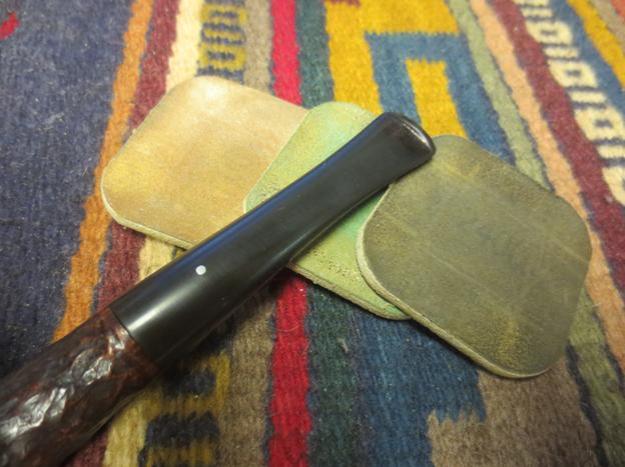
Hesson18

Hesson19

Hesson20 I took close up photos of the stamping on the shank. The left side shows in the first photo. The right side of the shank is shown in the second. It is sharp and very legible.Hesson21

Hesson22 I worked on the stem with 220 grit sandpaper to remove the small tooth marks on the top and the bottom sides. I then sanded it with a medium and fine grit sanding sponge to minimize the scratching.Hesson23

Hesson24

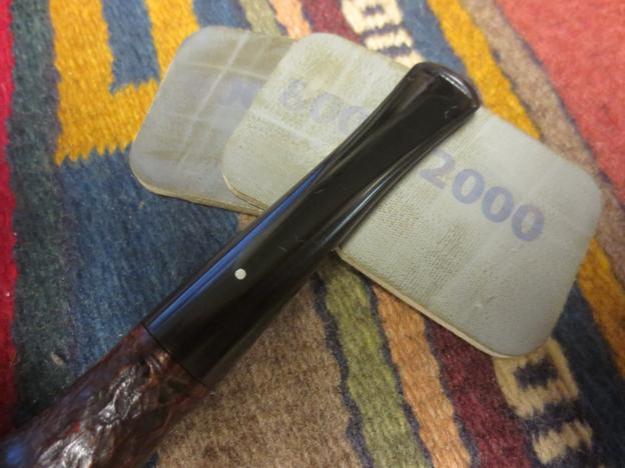
Hesson25 I started to polish the stem with micromesh sanding pads. I wet sanded with 1500-2400 grit pads and then rubbed the stem down with Obsidian Oil. I was just starting to sand with a 3200 grit pad when the edge of the pad hit the edge of the triangle (it sat high on the stem as it appeared to have lifted) and sent it flying. The white triangle was nowhere to be found so now I faced a new dilemma.Hesson26 I filled in the empty triangle in the stem with liquid paper. It is the same white as the previous triangle. It shrinks as it dries so once it was dry I put a drop of clear super glue on top of it to form a bubble. Once it dried I could sand it down to the surface of the stem and I would be good to go with the replacement triangle.Hesson27 Once the glue dried I sanded the fill down to match the surface of the stem and the new triangle looked pretty good. I cleaned out the threads on the tenon with alcohol and a cotton pad and then screwed it back into the mortise. I sanded the newly filled and area with 1500-2400 grit pads and then continued with 3200-4000 grit pads. I rubbed the stem down with Obsidian Oil and then dry sanded with 6000-12000 grit pads. I gave it a final coat of Obsidian Oil and let it dry.Hesson28
Hesson29 I buffed the stem and bowl with Blue Diamond on the wheel and then gave it multiple coats of carnauba wax. I buffed it with a clean flannel buff to raise the shine and then hand buffed it with a microfibre cloth. The finished pipe is shown in the photos below. It does not look too bad for a pipe from Dec. 22, 1925. Thanks for looking.Hesson30

Hesson31

Hesson32

Hesson33

Hesson34

Hesson35

Hesson36

My Second C.A. Sander of Swansea Bent Bulldog Restemmed and Restored


Blog by Steve Laug

When I was working on the previous C.A. Sander of Swansea straight bulldog that I restored (https://rebornpipes.com/2015/12/13/an-interesting-welsh-pipe-find-a-c-a-sanders-sandhurst-bent-bulldog/) I was looking for information on the brand. In my search on the internet I came upon this small bulldog bowl on eBay. I had found that there were at least two different names stamped on these pipes – both the ones I found were sandblast finishes. The earlier one was stamped Sandhurst and this one is stamped Oxford. Other than that the stamping on both is the same – the name then CA Sander over Swansea. I wrote the seller to see if he had any information on the brand and he replied that he did not. I put a bid on the pipe and ended up winning it. It arrived here on Tuesday this week. I have included the photos that the seller had posted on eBay below. It appeared to be in very good shape even though it did not have a stem.CA1

CA2

CA3

CA4

CA5 When the pipe arrived it was in excellent shape. The seller’s photos were absolutely correct. The bowl had a light cake in it and the rim was dirty with lava overflow and carbon. The shank was dirty and the finish had dust in the crevices of the blast. The stamping was exactly the same as the Sandhurst I restored other than the Oxford name that was present. I took the next series of photos to show the pipe on arrival before I started working on it.CA6

CA7

CA8

CA9

CA10 I went through my can of stems to find one that would work on this bowl. Diamond shanks are notoriously hard to match a stem to as each side and angle is very individual and hardly ever align with used or estate stems. I would have to find one that had a close fit and modify it to match the angles. With that in mind I found several stems that could have worked. In looking at the tapered stems I pulled all seemed too long to go with the petite size of this bowl. None quite aligned at the shank and modifying them was not an option as one or more of the sides did not have enough material to modify. I had several saddle stems that had the same issues. Then in the bottom of my can I remembered that I had a Lucite saddle stem that might very well work. I took it out and measured the sides of the diamond. I have to tell you I was very surprised – this stem was almost a perfect fit. I would need to shorten the tenon slightly and take a little material off to get a snug fit. Only the bottom right side was a little larger than the shank. Everything else matched. The stem is a pearlised cream coloured Lucite that actually would go well with the colour of the bowl once I had it cleaned up.CA11 I used the PIMO tenon turning tool to reduce the diameter of the tenon to get a close match and finished the fit by hand sanding. I shortened the length of the tenon with a Dremel and sanding drum to the same length as the mortise. In doing so I removed the damaged end of the tenon and the rounded right side. Once I had the work done I put the stem in place in the shank and took the photos below. You can see the great fit that the stem had in terms of the width of the sides of the diamond. I was fortunate in terms of the amount of work that would need to be done to fine tune this one. It would take very little work to make a good fit.CA12

CA13

CA14

CA15 I took a photo of the end of the shank and the end of the stem and put them side by side for comparison sake to show how close the two diamonds came to matching each other. This is a very rare occurrence in my experience.CA16 I sanded the bottom right side with 220 grit sandpaper to adjust the fit on that side. I needed to remove enough material to align the bottom of the diamond with the bottom of the diamond on the shank. All others point on the diamond aligned perfectly but this one. It did not take too much sanding before I had the alignment and the fit against the side of the shank perfect.CA17 I reamed the cake in the bowl with a PipNet reamer and took it back to bare briar.CA18 I scrubbed the bowl with Murphy’s Oil Soap and a tooth brush on the sides and bottom of the bowl and shank and with a brass tire brush on the rim.CA19
CA20

CA21

CA22

CA23

CA24 I put the stem on the bowl, put a cotton ball in the bowl and then set up the retort to clean out the internals of the pipe. I boiled alcohol through the pipe and after two tubes of alcohol the airways were clean. The retort also removed some of the staining in the stem airway. I removed the retort and scrubbed the internals of the bowl and shank with pipe cleaners and cotton swabs to remove the remaining alcohol and grime in the shank. In the end the shank and airway were clean and the pipe smelled fresh.CA24A I cleaned the stem with pipe cleaners and alcohol and also pipe cleaners dipped in Bar Keepers Friend powder to scrub out the tar stains in the airway. It took a lot of scrubbing but I got the majority of the stains out. I did not want to darken the stain on the bowl but wanted to highlight the contrasts in the finish. The combination of dark brown and medium brown on the high spots worked well for me. To keep that and add life to the bowl I wiped it down with a light coat of olive oil and rubbed it into the blast pattern. I took the following photos with the stem in place on the bowl. The pipe is taking shape.CA25

CA26

CA27

CA28 The stains at the button were stubborn and hard to remove. I found that there was a small lip where the slot in the button met the airway in the stem and it collected tars and oils. The pipe cleaners and scrubbing did not touch that as it did not reach into the small crevice there. I used a needle file to flatten out the lip at the junction. With that gone I was able to remove more of the stain from the stem. All that remain was a small spot on the top and the bottom that I could not get out no matter how hard I worked it.CA29 I sanded the stem with micromesh sanding pads to polish and remove the scratching. I wet sanded with 1500-2400 grit pads and dry sanded with 3200-12000 grit pads. As I sanded the stem with each successive micromesh pad it left a richer luster in the pearlised stem.CA30

CA31

CA32 I buffed the bowl and stem with Blue Diamond on the wheel (lightly on the sandblast bowl as I did not want to flatten the blast) and gave the stem several coats of carnauba wax. I hand waxed the bowl with Halcyon II wax and then buffed the bowl and stem with a shoe brush and a microfibre cloth to raise the shine. The finished pipe is shown in the photos below. It is a petite bulldog – only 5 inches long from bowl to button and 1 3/8 inches tall from rim to point on the bowl bottom. The drilling on the bowl is 5/8 inches. I like the contrast that the Lucite stem gives with the blast on the bowl. The colours work well for me. The stem length works on this bowl and the overall effect is a balanced small sandblast pipe that looks great. At least it does to me! Thanks for looking.CA33

CA34

CA35

CA36

Addendum: 06/06/18 I received an email from Andrew  in answer to a question I asked in my two blogs on CA Sander pipes. I quote in full his email because of the information that it includes.

Comment: You asked about C A Sander

C A Sander were tobacconists based in Wind Street Swansea. I don’t know exactly when the business started but it it passed to my Grandfather from his father (both were C A Sander) and by the 1920 was a successful and well established retail business with shops all over south wales. They were importers and blenders (if that is the term) of tobacco and the shops sold smoking paraphernalia. At my grandfathers retirement late 60’s to business went to my uncle again C A Sander but known generally as Jim. He developed a business supplying cigarette machines around South Wales and moved out of retail he eventually sold the business to Rothermans and went into other business ventures, I expect that was when the limited company you found was formed. Uncle Jim has now retired but still lives in the area.

Hope this helps with your research.

Andrew I received this followup email from someone who would like to get in touch with you. Here is her email

Hi there – I stumbled upon your website when looking for anything to do with C.A. Sander tobacco shop and I saw the pipe you restored – which is amazing! and then saw the comment below left by Andrew. Since that shop was owned by my grandfather, and Andrew’s grandfather – it would seem that we are cousins – but we have never met. I would love to get into contact with Andrew. Would you be able to assist in that? If possible, could you ask him to contact me at my email address pianokey88@hotmail.com?
Many thanks for your help! Georgina


A Dr. Grabow Color Duke Billiard Renewed

Blog by Steve Laug

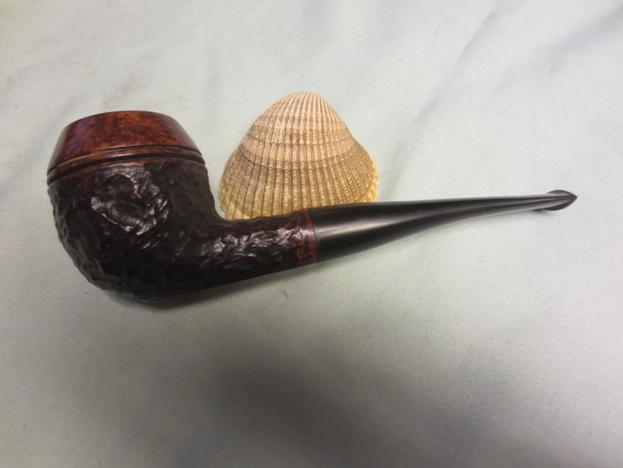
Most of the Dr. Grabow Color Duke pipes that have come across my worktable have been in rough shape. The paint has been chipped and the finish ruined. This is the second one lately that I have worked on. The first was the Cherry Apple Red Dr. Grabow Viscount that my brother found for me. This second one is a White Billiard with a saddle stem. It is one that was made for a paper filter rather than a stinger/spoon apparatus. The pipe is stamped Color Duke over Dr. Grabow on the left side of the shank and Imported Briar over Adjustomatic over Pat. 2461905. The Patent Number is for the Adjustomatic tenon.
The pipe came to me from a friend quite awhile ago and I just got around to working on it. It was in pretty decent shape other than being dirty. The finish has some dents in the bottom of the bowl on the right side. There was some staining on the right side of the shank at the stem/shank junction. The rim was dirty and had some darkening and a few spots where the finish was worn off. The bowl had a cake that would need to be removed. The screw in tenon was dirty but the stem aligned with the shank perfectly. The stem itself was dirty inside and out. There was tooth chatter on the top and underside of the stem near the button. On the underside was a deep tooth mark in the center about ½ inches from the button. The next photos show the pipe when I brought it to the work table.Duke1

Duke2

Duke3

Duke4 I took some close-up pictures of the rim and the dents on the bottom of the bowl to give a clear picture of the issues with this pipe.Duke5

Duke6 I reamed the bowl with a PipNet reamer and took the cake back to the bare briar. I used a pen knife to clean up remaining cake that the reamer left behind.Duke7

Duke8 I scrubbed the finish with cotton pads and Murphy’s Oil Soap as I did not want to use anything that potentially would damage the painted finish on the bowl. My intent was to get the grime off the finish and to remove as much of the rim darkening as possible without compromising the paint on the rim or edges.Duke9

Duke10 I rinsed the bowl with warm water and dried it off with a towel. Here are some photos of the cleaned bowl.Duke11

Duke12

Duke13

Duke14 I cleaned the inside of the shank and the stem with pipe cleaners, cotton swabs and alcohol until they came out clean.Duke15 With the bowl cleaned inside and out it was time to address the stem. I sanded the surface of the stem to clean off the dirt and tooth chatter. I wiped it down with a cotton swab and alcohol to remove the dust and to examine the dent on the underside.Duke16 After the deep dent was cleaned I filled it with a few drops of clear super glue.Duke17 Once the glue dried I sanded the repair to make it flush with the stem surface using 220 grit sandpaper.Duke18 I sanded the entire stem with medium and fine grit sanding sponges. The repair spot is beginning to blend in very well.Duke19

Duke20 I sanded the stem with micromesh sanding pads – wet sanding with 1500-2400 grit pads and then rubbing it down with Obsidian Oil. I dry sanded with 3200-4000 grit pads and gave it another coat of oil. I finished by dry sanding it with 6000-12000 grit pads. I gave it a final coat of Obsidian Oil and let it dry.Duke21

Duke22

Duke23 In the past buffing the painted bowls and the Grabow stems has caused me a lot of grief. I have found that these stems can take very little heat that the buffing pads generate so I hand buff them with Paragon Wax and a shoe buffer. I buff the bowls the same way using the shoe buffing brush and a microfibre cloth. The finished pipe is shown in the photos below. If you are interested in this pipe email or message me and make an offer. It could easily join your rack. Thanks for looking.Duke24

Duke25

Duke26

Duke27

Duke28

Duke29

A Passion for Rhodies and Dogs – Stem Repair on a Dunhill 52081 Rhodesian


Blog by Dutch Holland

With this blog it is my pleasure to introduce you to the work of Dutch Holland. His work comes highly recommended to us by Dave Gossett who has been a contributor to rebornpipes for a while now. Welcome to the blog Dutch. It is great to have you here.

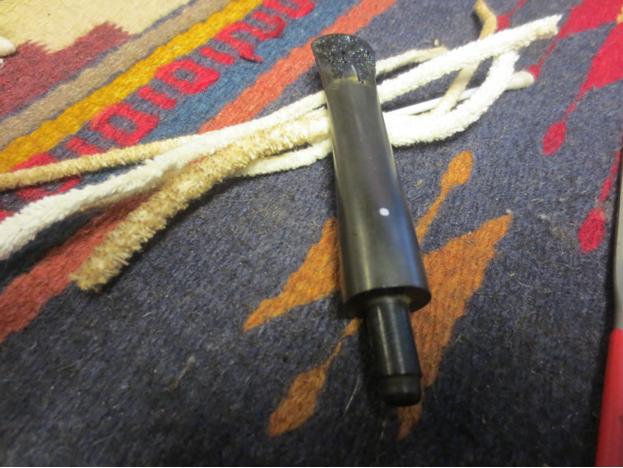
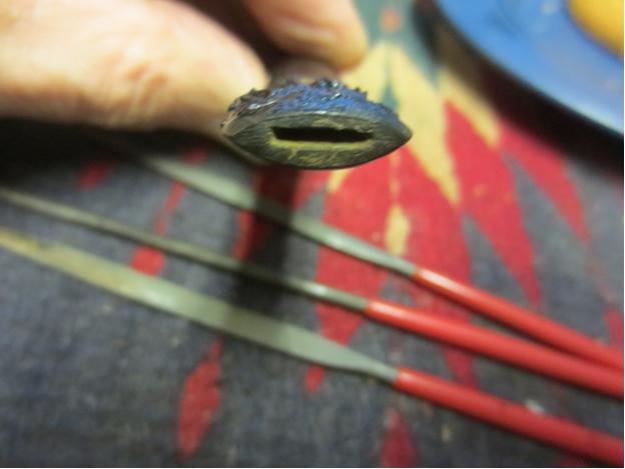
Dutch1A number of years back I had the good fortune to acquire a Dunhill 52081 Bent Rhodesian. I readily admit to a passion for Rhodies and Dogs that borders on obsession. Several years later I came across a second pipe of the same year and style but a different finish. The temptation was overwhelming and I succumbed. The problem was this second pipe not only had been poorly used but it had a nasty chip in the top center of the bit at the button. But the price was right and at worst, I could always invest in a replacement bit. These Rhodies were only offered for a few years and they don’t come on the market very often so I made the decision to buy. That pipe sat in the “Awaiting Action” box in my shop for a number of years. I really wasn’t sure just how to deal with the repair but last year I decided to give it a shot and to my pleasant surprise found it was neither difficult nor complicated. As you can see from the picture above it’s all but invisible. It requires very close inspection by a knowledgeable eye to detect.

I’ve broken the process down into steps outlined below. Being able to fix a broken bit can do for you what it’s done for me, allowed me to rescue a pipe I really wanted. So here’s one way to do it.

Repairing damage to a pipe stem is an easy five step process. This kind of repair can be done by the hobbyist and makes an old pipe serviceable again at a very modest cost. The outcome is very dependent on the skill of the repairman so a few tries on an old stem for practice is recommended. The better your skill set, the better the final result but it’s neither difficult nor complicated, just time consuming. Some question the durability of this kind of repair but my experience is that they hold up to normal use quite well. I don’t recommend the use of harsh chemicals for cleaning but with reasonable care the repair will last a very long time and for the hobbyist it’s more than adequate for your average project.

What you will need:

Supplies
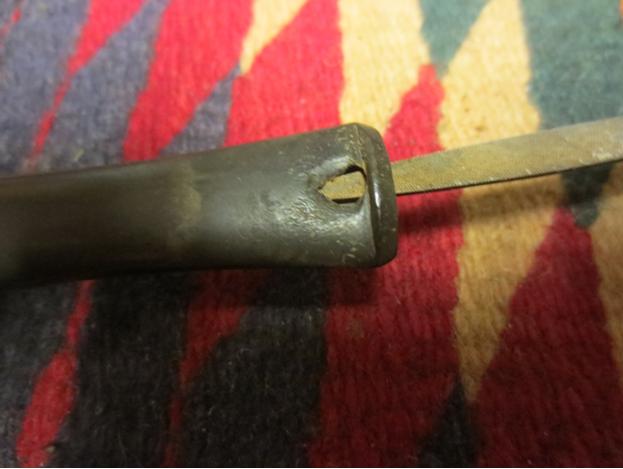
CA Glue, Activated Charcoal, a small drink bottle cap, light cardboard, Pipe cleaners, Scotch tape and some tooth picks

Tools
A small file set, Sandpaper (400, 600 & 1000 grit) and a set or Micro-Mesh pads (1500 to 12,000 grit)

The Process

Step 1, Rough Sanding.
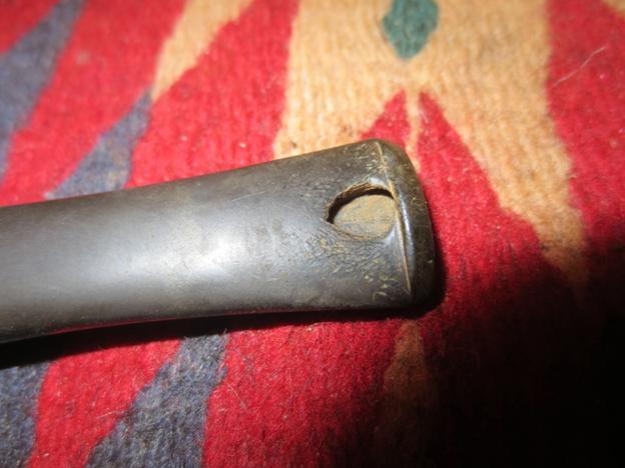
Sand the area to be repaired with the 400 grit sandpaper, beveling the area of the break to provide the maximum bonding area for the repair mixture. I like the courser grade as it scores the area around the break and reduces the stark contrast between the repair area and the rest of the bits surface making the repair difficult to detect. Clean the area to be repaired well and make sure it is free of any contaminants which might inhibit the bond of the glue/charcoal mixture. I usually use a high proof alcohol (Wild Turkey 101)

Step 2, Support the repair.
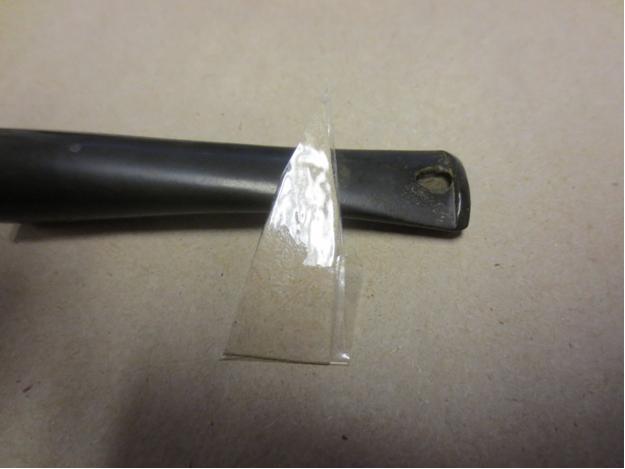
Insert support into the airway to prevent the mixture from invading it. A piece of light cardboard will do the trick. First rap the cardboard in Scotch tape (mixture won’t stick to the tape) and slide it into the slot. Then slide a pipe cleaner into the slot under the cardboard to force a snug fit up against the repair area.

Step 3, Making and applying the repair mixture.
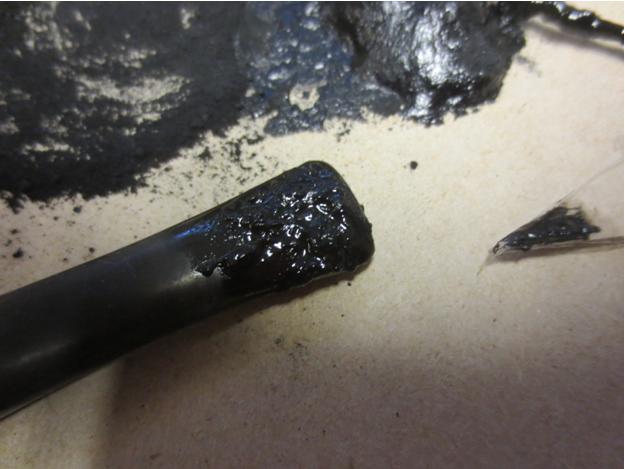
Place a portion of the activated charcoal in the drink cap. I use a spoon on a Czech pipe tool as about the right amount. To that I add the CA glue until I have about a 50% Glue mixture and then gently stir until the charcoal is completely mixed with the glue. I like to let the mixture set for 15 seconds to allow any air bubbles caused by the mixing to escape. Using the tooth pick apply the mixture to the repair area until the build-up is higher than the bit surface. There is some shrinkage when the mixture dries so extra depth is essential to getting a smooth, flat surface when finished. Work quickly as the CA glue thickens rapidly. If necessary repeat this step to get the surface level to where you want it. In the example shown below I added mixture twice. First to fill the gap and a second time to rebuild the button area.

Step 4, Rough sanding & Shaping
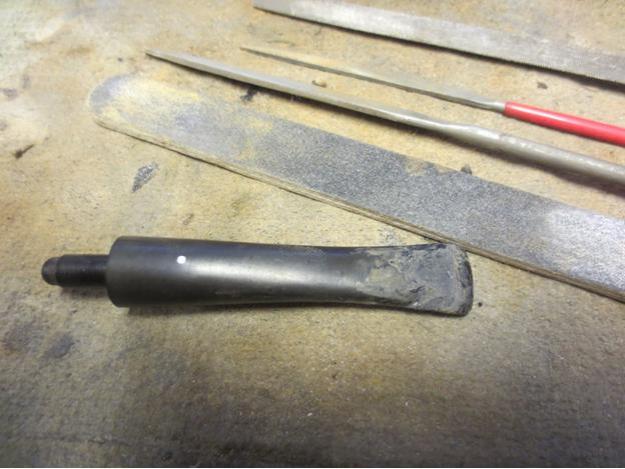
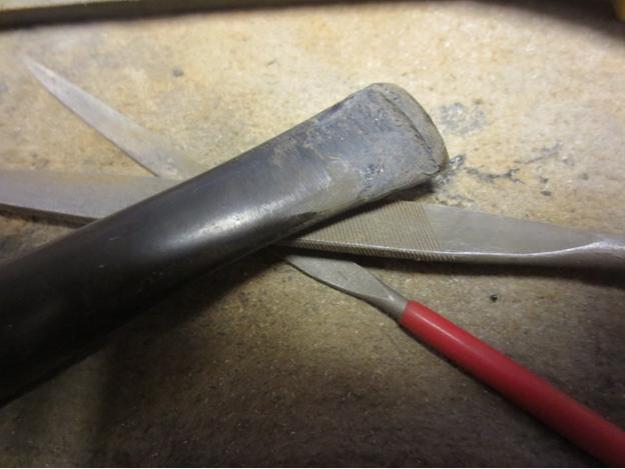
Once the repair mixture has cured, (I usually leave it for several hours, probably overkill but I find it shapes better if it’s well cured) start with the files and reduce the excess mixture and get a rough shape. Do not try to get a close finish to the shape you want as the files are quite course and will leave significant scratches on the surface. Allow for this by leaving some surplus material in place. Now with the sandpaper progressively contour the surface starting with the 400 and moving to 600 and then 1000 grits. Slow, careful sanding works best using the sandpaper to contour the fine details. Sometimes air bubbles get caught in the repair mixture and will leave a tiny void in the surface. Should this happen add a thin touch of the CA glue to the void and re-sand. The imperfection will become un-noticeable. Keep in mind that any irregularities in the surface will become traps for contaminants so don’t be too forgiving of them.

Step 5, Finishing the bit
Now you’re ready to restore luster to the bit. Here Micro-Mesh is a great solution for the task. Progressively sand the bit starting with the 1500 grit and progressing up to the 12,000 grit. The human eye cannot detect scratches left by the 12,000 grit pad so the surface looks shiny. I don’t recommend buffing as an alternative. You can quickly undo all the painstaking work you have just completed. As a final step in the process a light buff with white diamond followed some carnauba wax will give you a great shine and inhibit future oxidation.
So there you have it. Give it a try. You can’t make a broken bit much worse than it already is so there’s little at risk. Who knows, you might like the results and there’s something very satisfying about being able to rescue a pipe others would consider a lost cause. This technique was shared with me by Dave G and it works well so I pass it on with my recommendation.

Note
In subsequent tries I’ve found this solution works invisibly Vulcanite but is more detectable on acrylics.Dutch2

Wm Wales Billiard Restemmed and Restored


Blog by Steve Laug

Wm1This is yet another pipe that my brother Jeff picked up in Montana and sent my way. It is stamped Wm Wales on the left side of the shank and on the right side it is stamped Grecian in script. The stamping though a different script than that found on the Carey Magic Inch pipes is similar in the way it is stamped and the stamping of Grecian on the right side of the shank. I did some digging on the internet and found nothing about the brand other than several pipes with the same stamping for sale. There is nothing about the brand on the various pipe information websites. There is nothing about the brand on Who Made That Pipe or in Lopes book so I am left with a bit of a mystery.

The pipe has some pretty decent grain on it. The sides of the bowl have some interesting birdseye grain and the front and the back of the bowl have cross grain on them. The stem is a mix of grains. The finish was worn and dirty. The rim had a cake of tar and grit on the top of the bowl. The inside of the bowl had a hard, thick cake that almost filled the bowl. The rim itself was undamaged and showed no burn marks or damage to either the outside edge of the rim or the inside bevel of the rim. The stem was at first glance workable but upon examination it had a crack in the centre of the button on both the top and bottom sides. There were also tooth marks that were deep and one split the button. The surface of the stem was wavy and rippled from the way it had been buffed. The slot in the stem was clogged and no air would go through the airway.

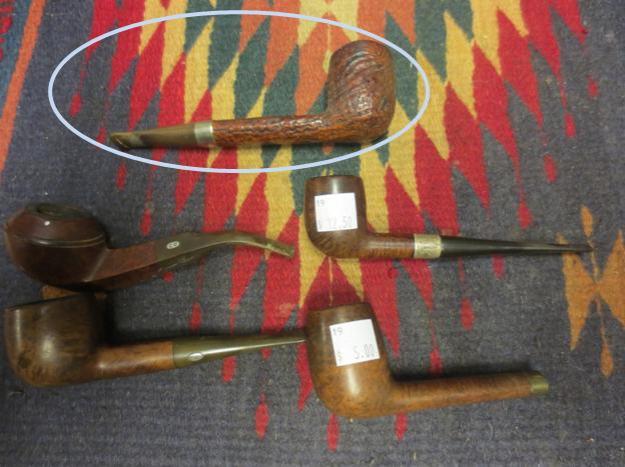
In the photo above to the left the pipe is the second one down from the top. The next set of four photos show the pipe as was when it arrived at my work table.Wm2

Wm3

Wm4

Wm5 I took a close up photo of the bowl and rim to give a clear picture of what I started with in my clean up. The two photos following that give a good view of the stamping on the shank.Wm6

Wm7

Wm8 The next two photos show the damage to the stem. The more I looked at the damage the more I realized that a replacement stem would be less work than fiddling around with repairing the damage on that one.Wm9

Wm10 I tried to ream the bowl with a PipNet reamer and found that the cake was so hard that reamer did not even cut into the surface of the cake. I tried a KLEENREEM reamer and made no headway either so I dropped the bowl in an alcohol bath to soak. It would soften the cake and clean up the grime on the finish of the rim and bowl as a bonus.Wm11 While it soaked I looked for a new stem in my can of stems and found one that would work quite well. It was a little larger in diameter but once I fit it to the stem some sanding and shaping would take care of that.Wm12 In the morning I took the bowl out of the alcohol bath and worked on it to ream it. I used the PipNet and the KLEENREEM reamer on the bowl. I also used a pen knife to work at cutting away the hard cake. In the process of reaming I found that the bowl was conical in shape rather than U shaped. I used the drill bit from the KLEENREEM tool to open the airway in the shank.Wm13

Wm14

Wm15 Once I had cleaned out the shank and the bowl with alcohol, pipe cleaners and cotton swabs I fit the new stem to the shank. I sanded it with 220 grit sandpaper to clean up the tooth chatter and the oxidation. I sanded it with a medium and a fine grit sanding sponge to further remove the scratching and oxidation. I wiped the stem down with Obsidian Oil.Wm16

Wm17

Wm18

Wm19

Wm20 I scrubbed the briar with acetone on cotton pads to remove the finish and the remaining grime on the rim and bowl.Wm21

Wm22

Wm23

Wm24 I sanded the stem with micromesh sanding pads – wet sanding with 1500-2400 grit pads on the briar and the stem and then rubbed down the stem with Obsidian Oil. I dry sanded with 3200-4000 grit pads and gave it another coat of oil. I finished by dry sanding the stem with 6000-12000 grit pads and gave it a final coat of Obsidian Oil.Wm25

Wm26

Wm27 I buffed the bowl and stem with Blue Diamond polish on the wheel and then gave it multiple coats of carnauba wax. I buffed it with a clean flannel buff to raise the shine. The finished pipe is shown in the photos below. The grain really shines through in the photos. It is a beautiful piece of briar. I would love to know more about the history of the brand to give more depth to my understanding of the pipe.Wm28

Wm29

Wm30

Wm31 I took a few close-up photos of the stem and the bowl showing the grain of the briar and the shape and look of the stem. Thanks for looking.Wm32

Wm33

Wm34