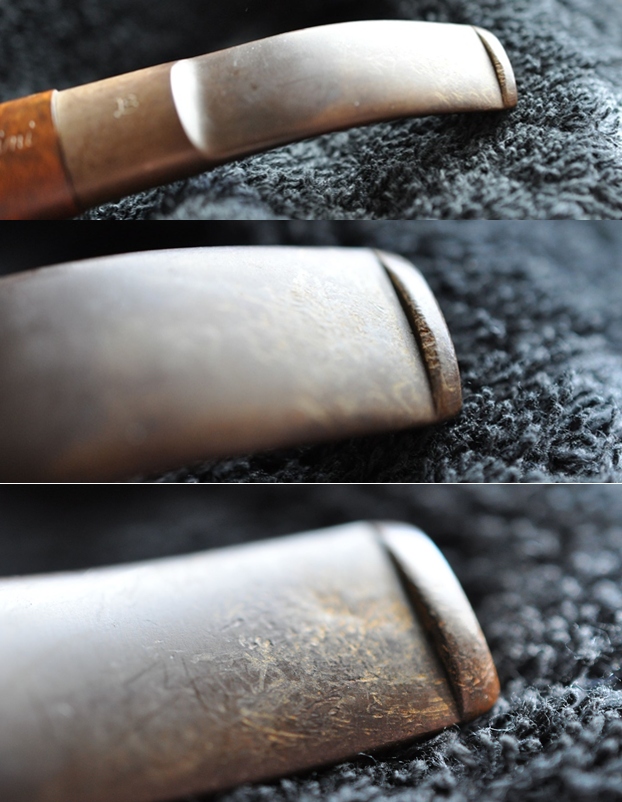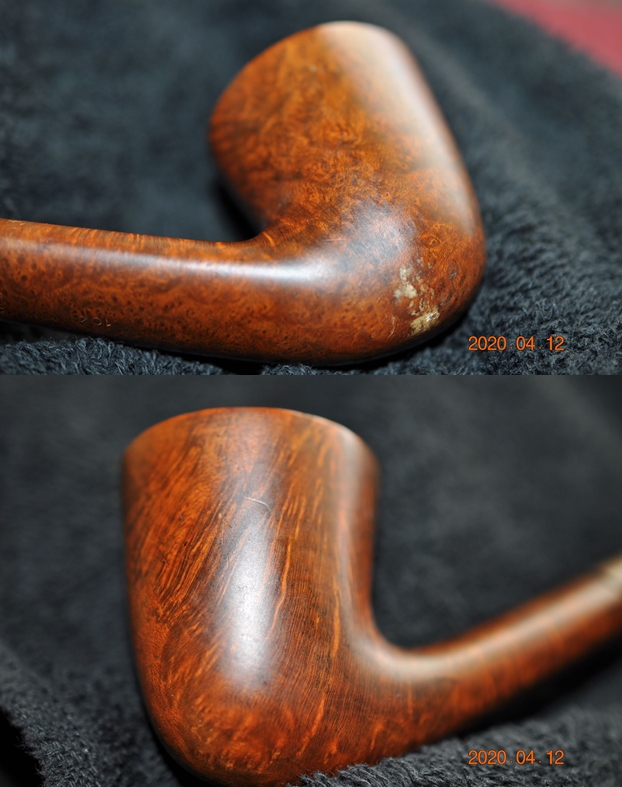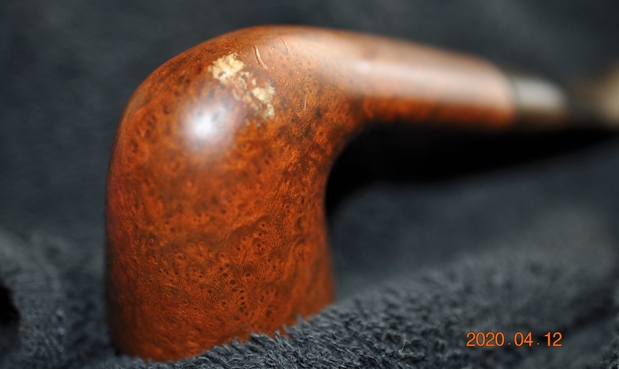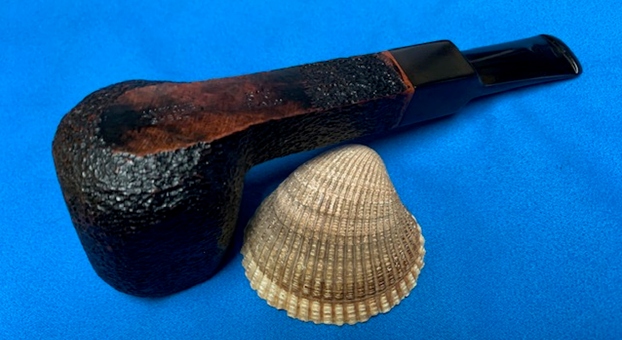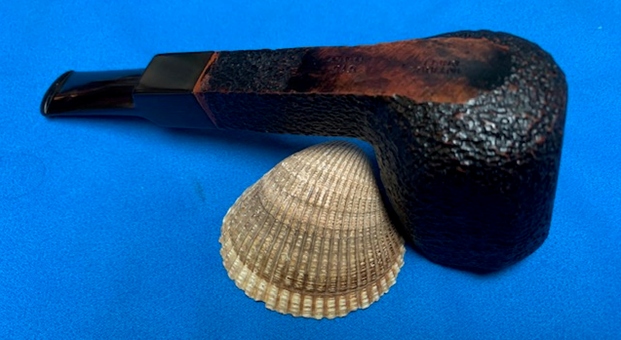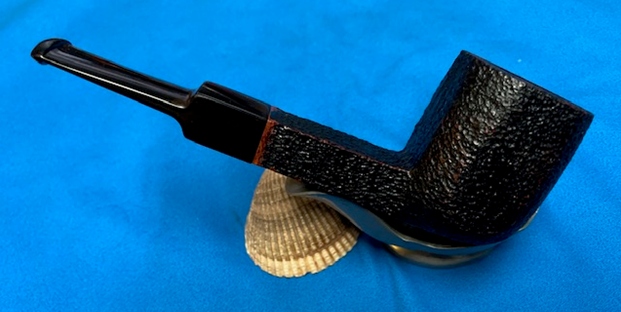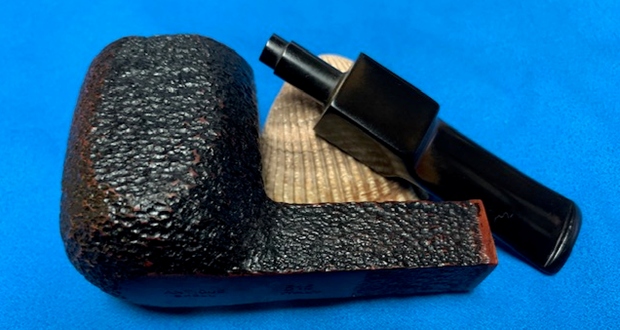
Tag Archives: sanding a stem

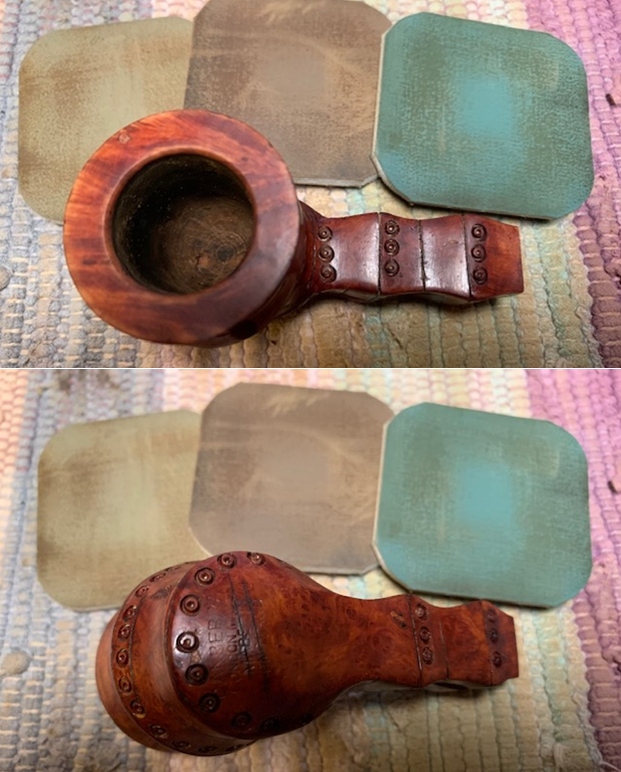
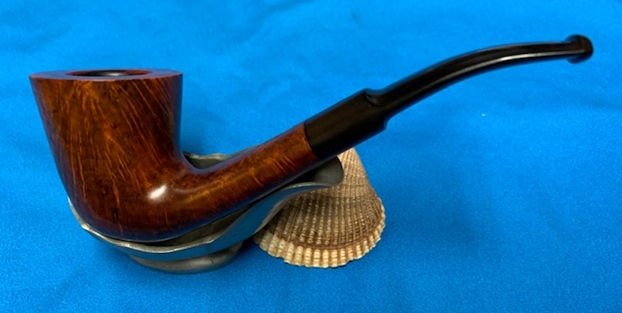
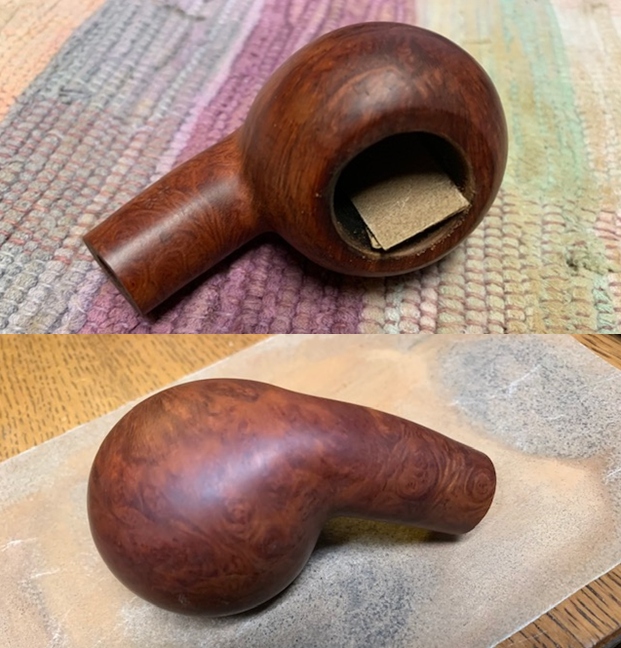
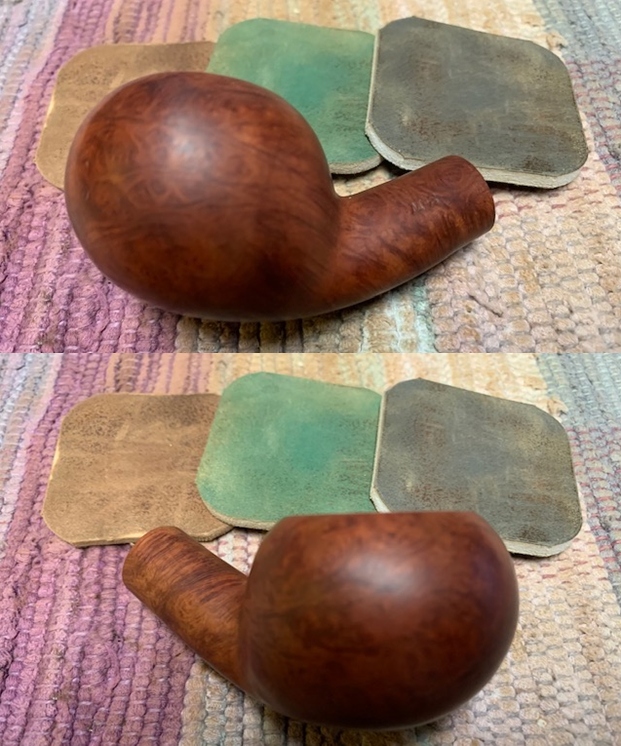
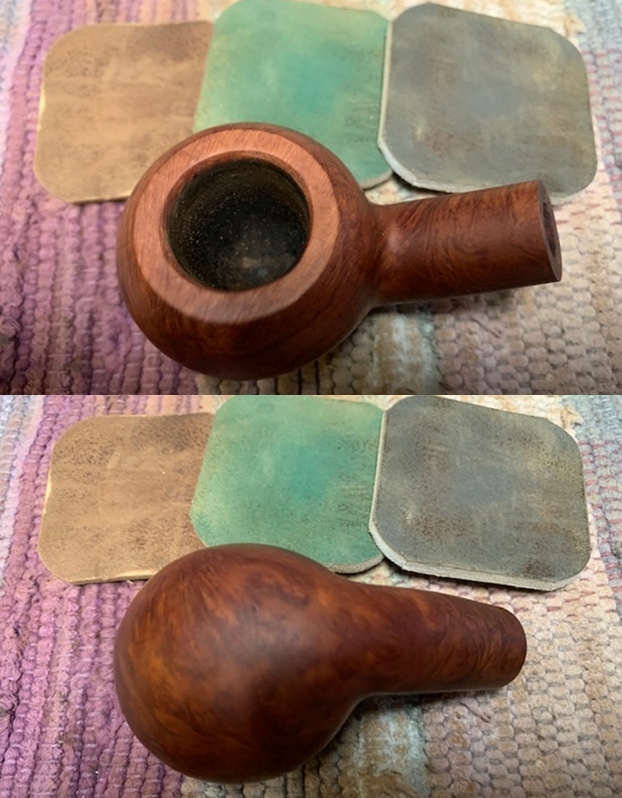
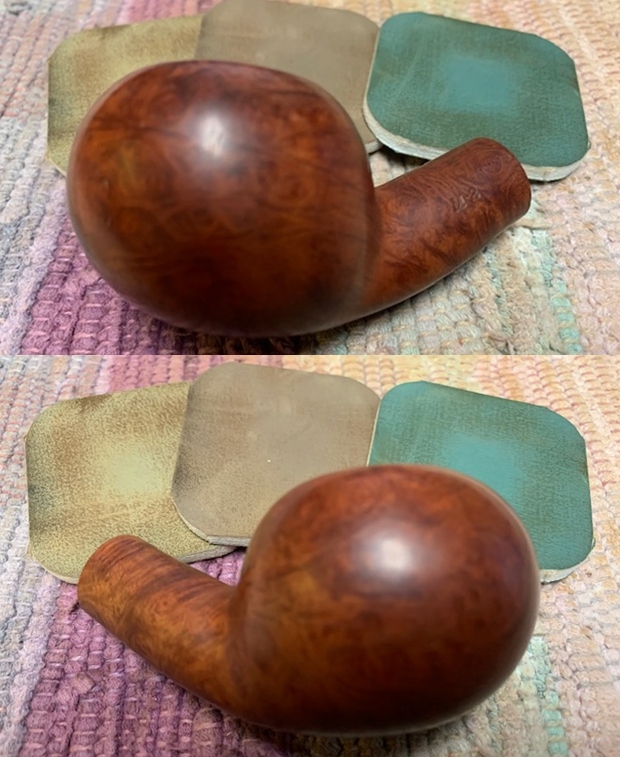
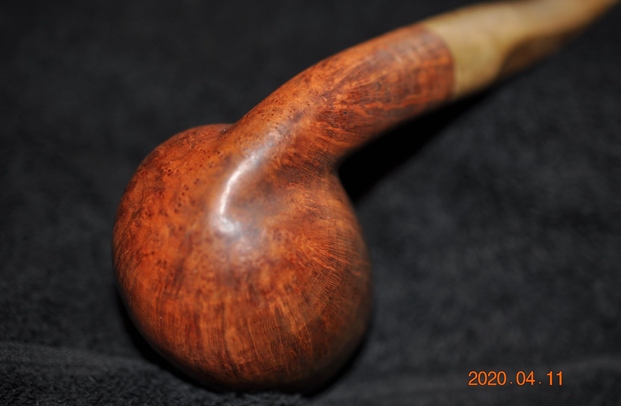
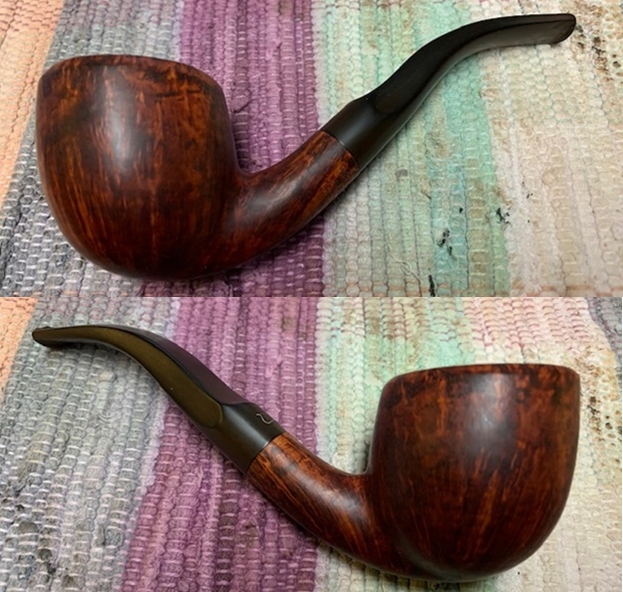
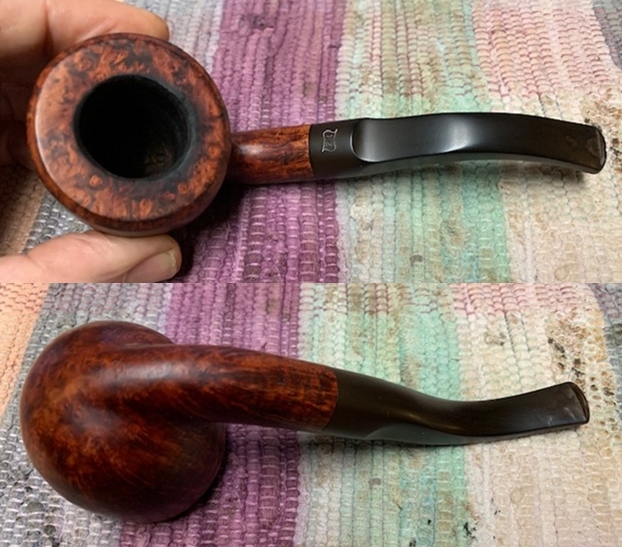
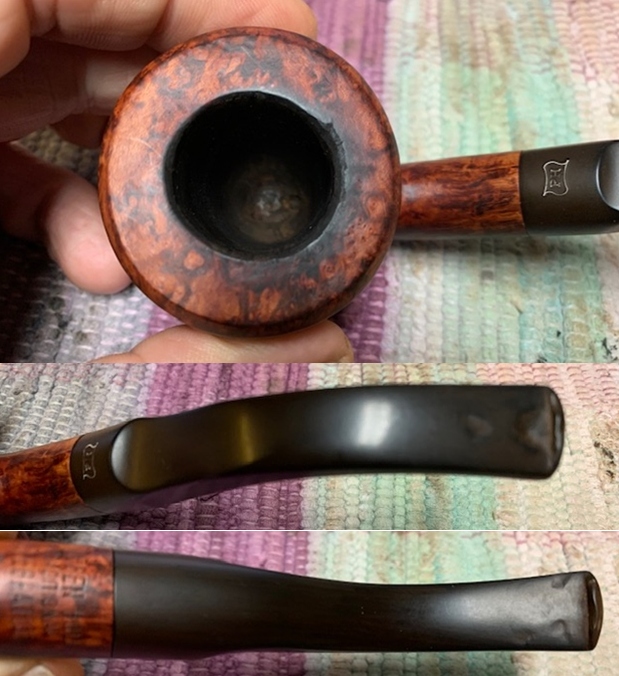
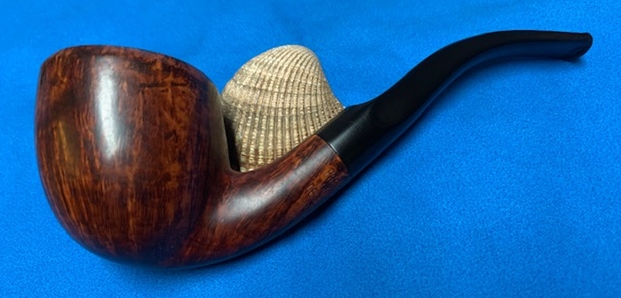
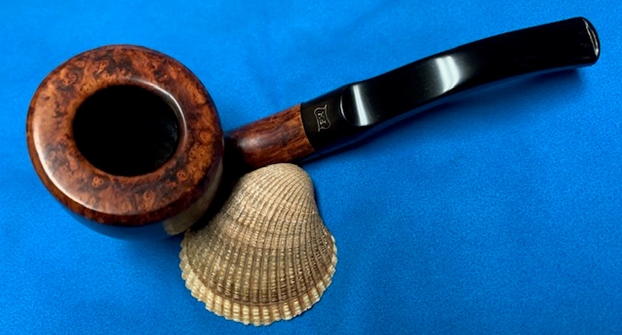
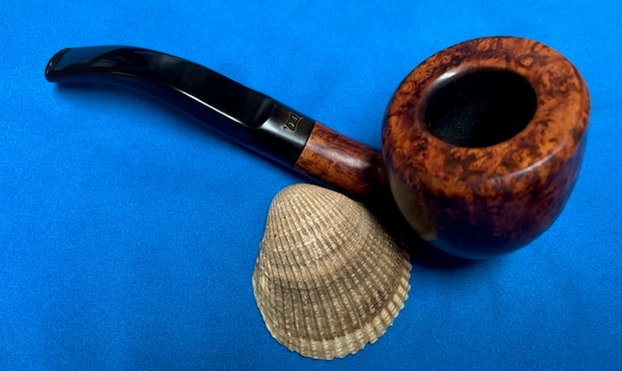
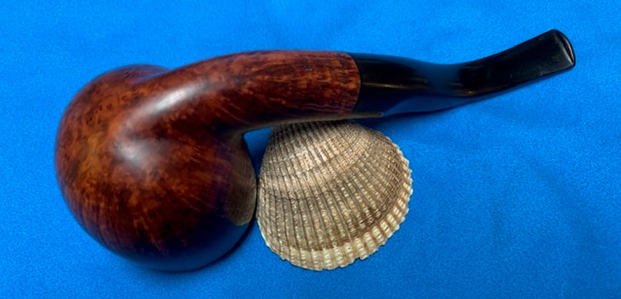
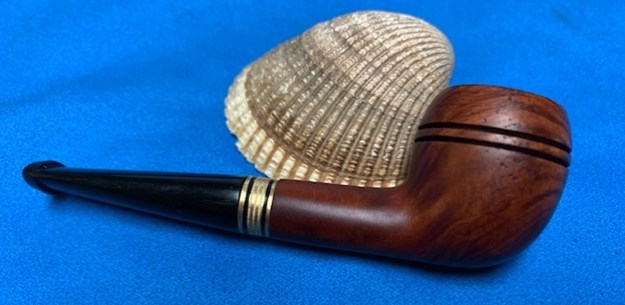
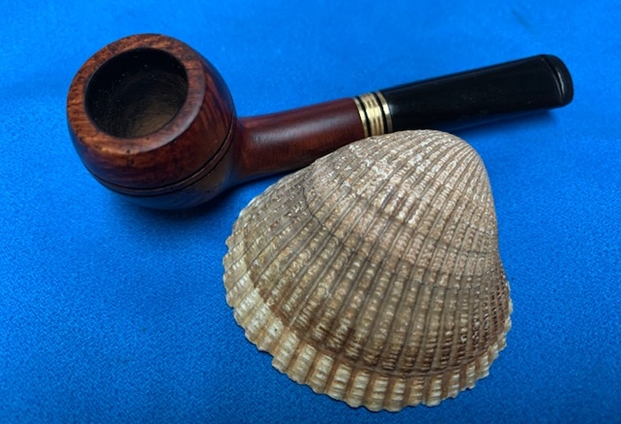
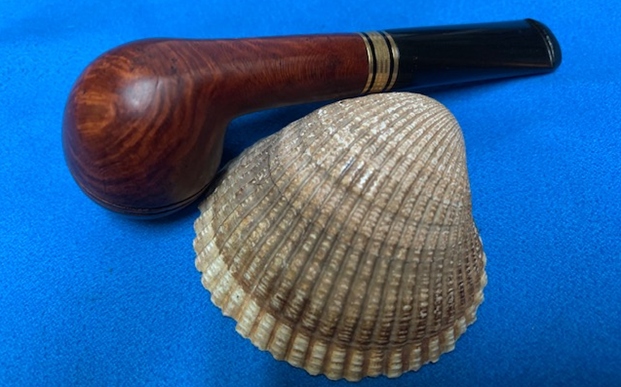
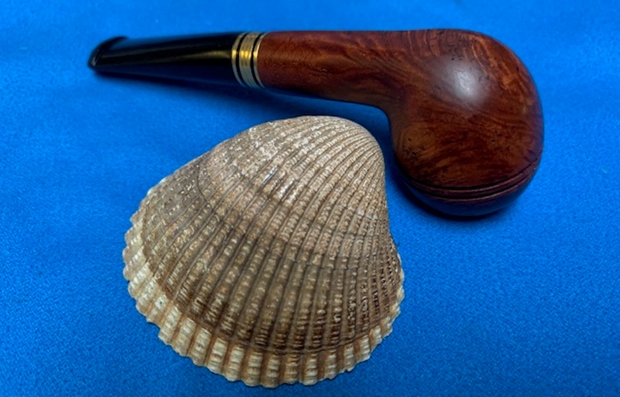
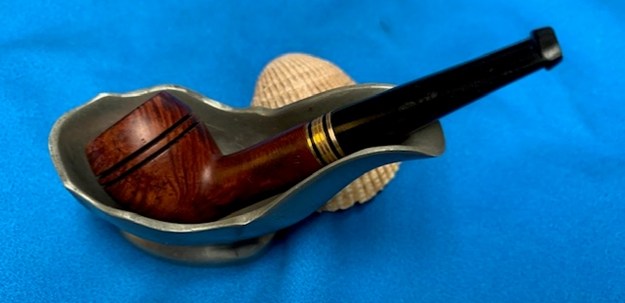
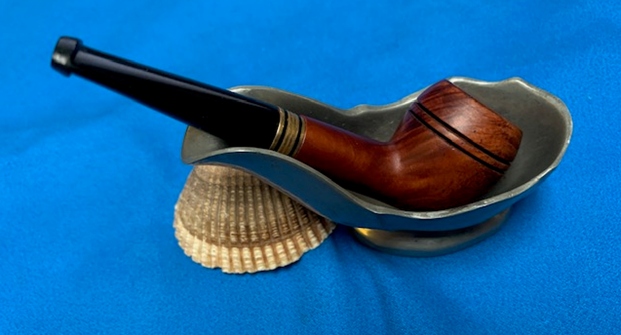
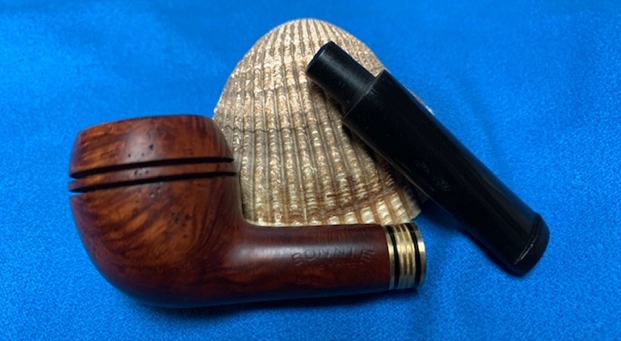
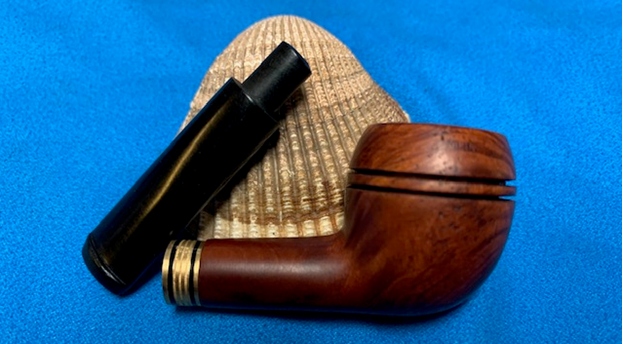
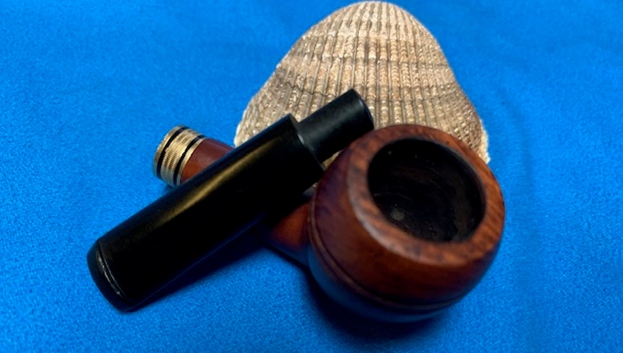
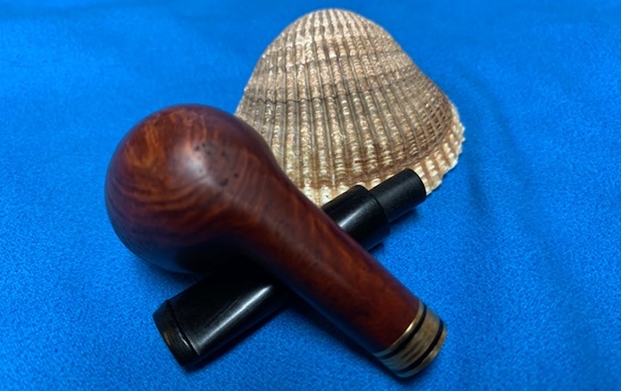
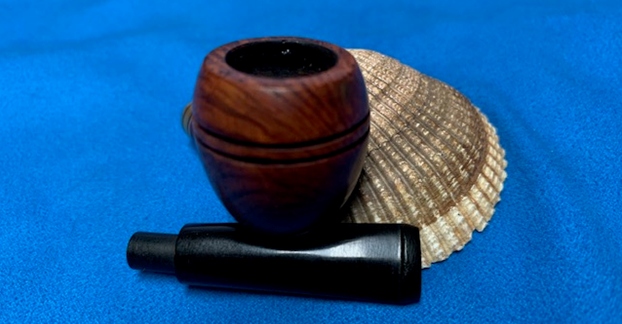
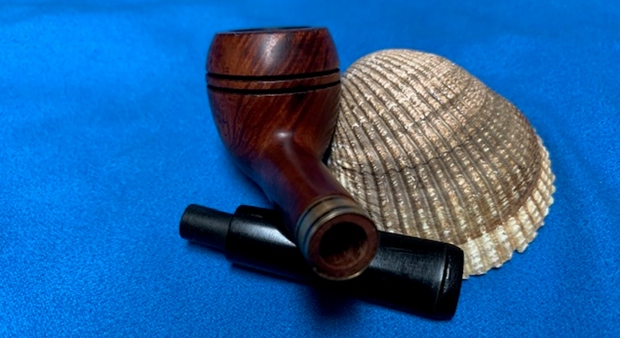
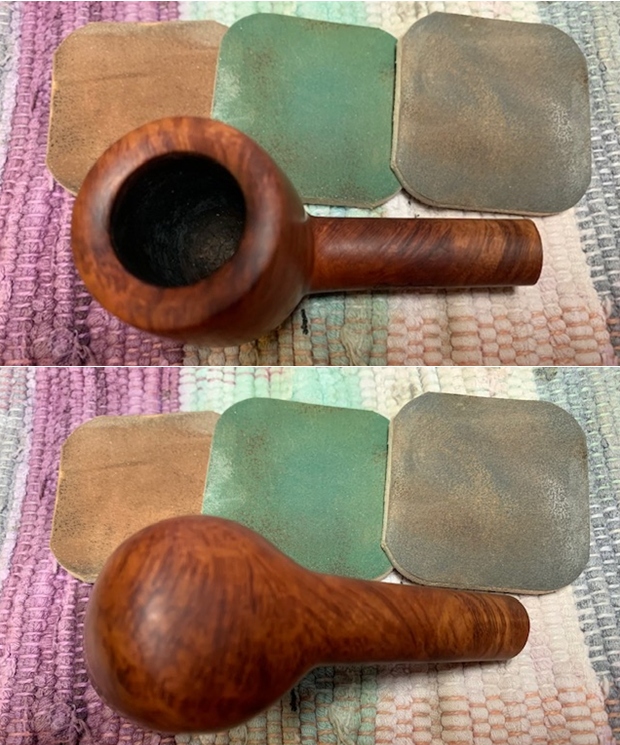
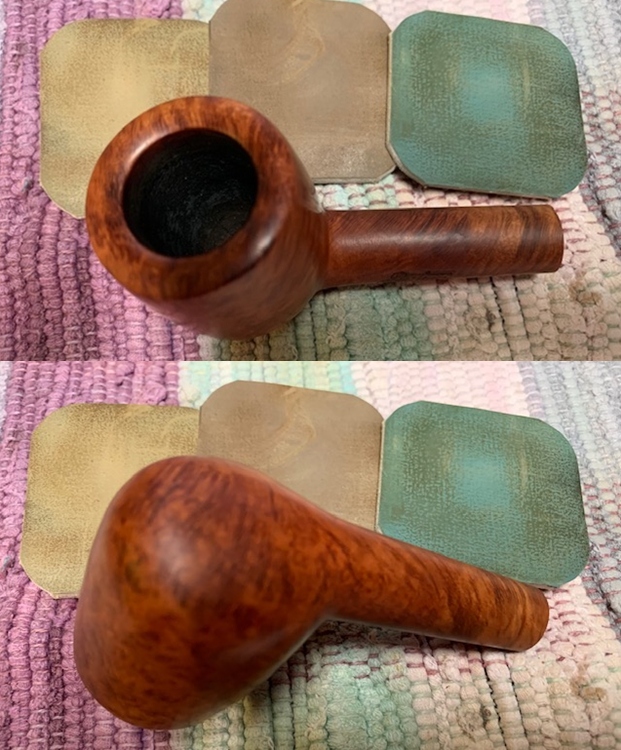
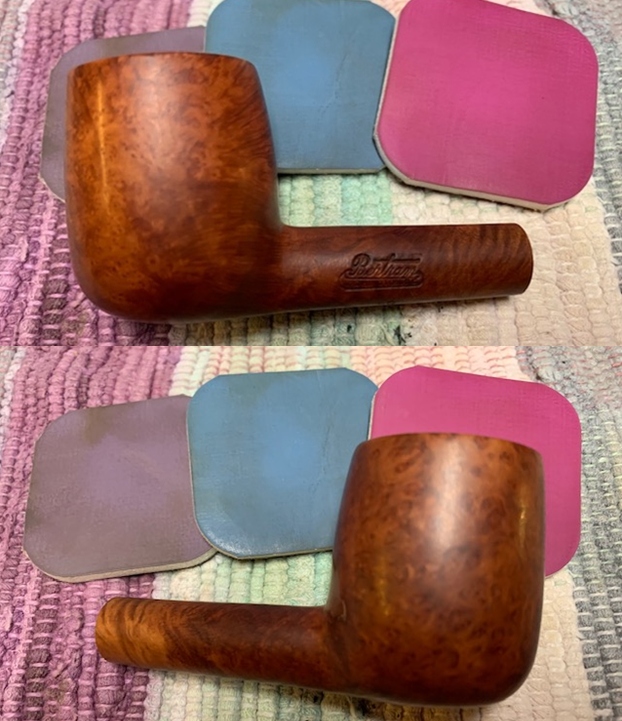
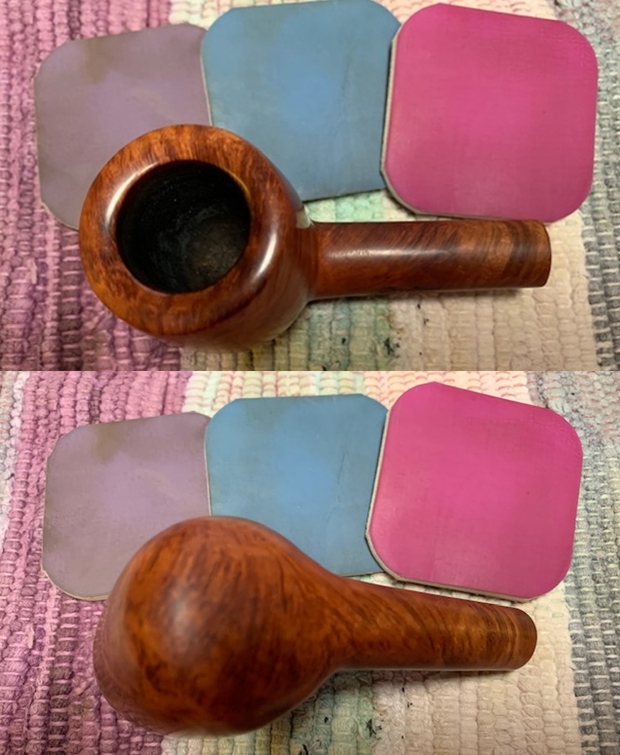
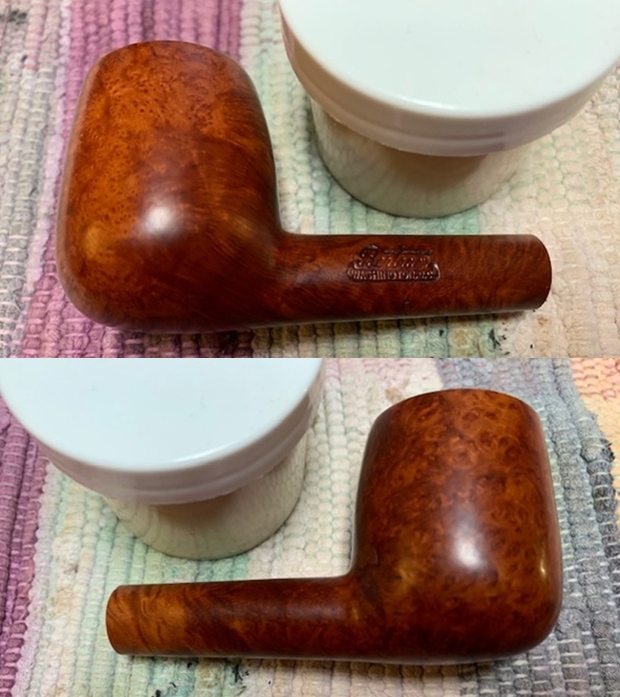
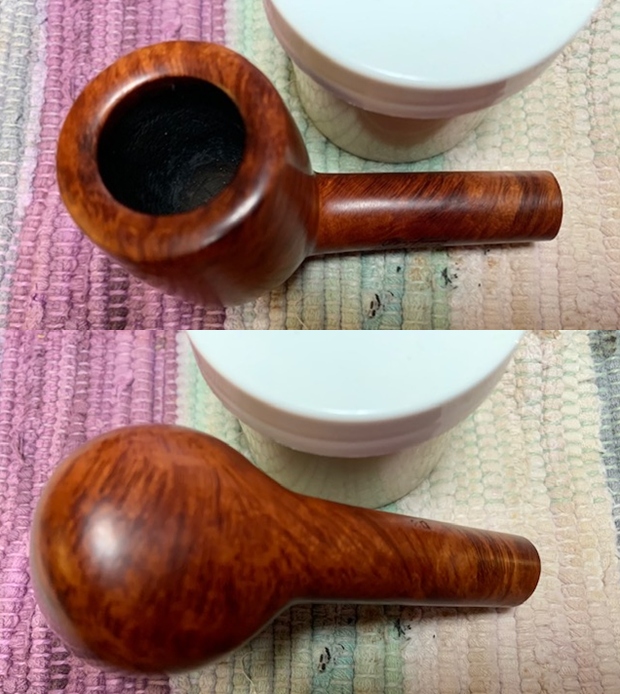
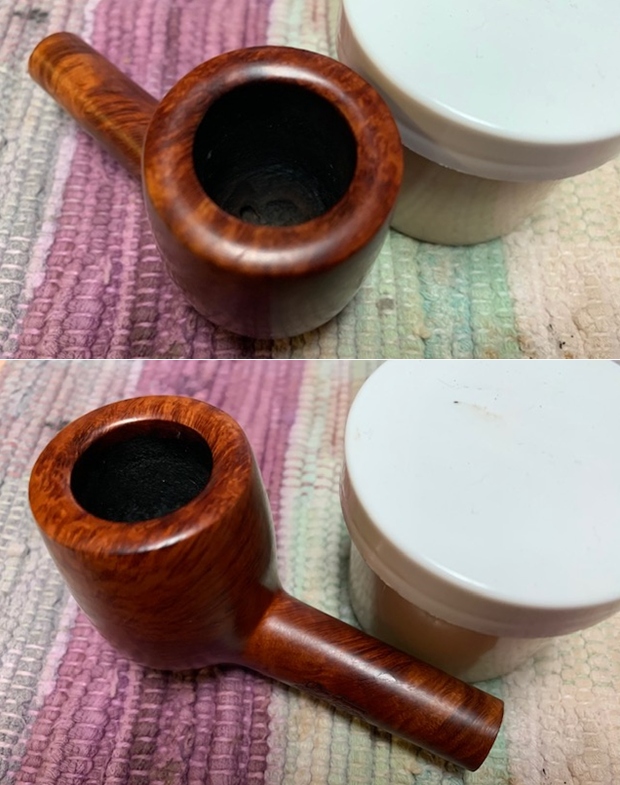
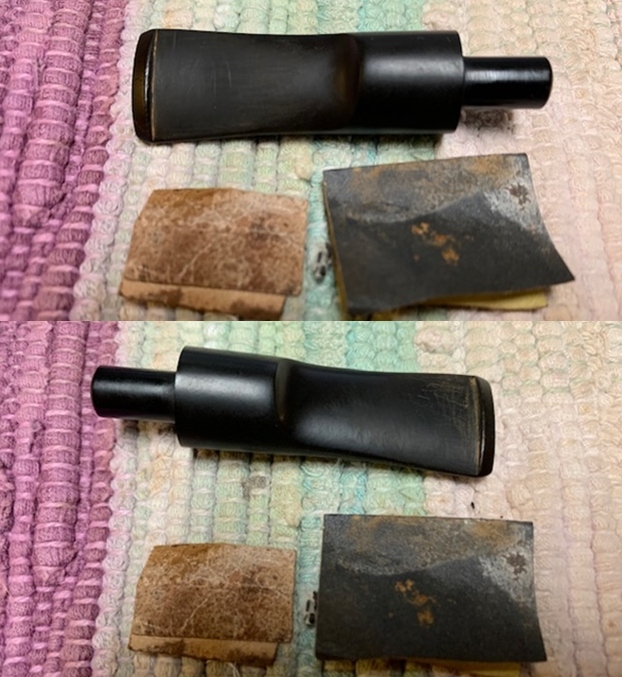
Breathing Life into a Made In Denmark Bent Brandy


Blog by Steve Laug

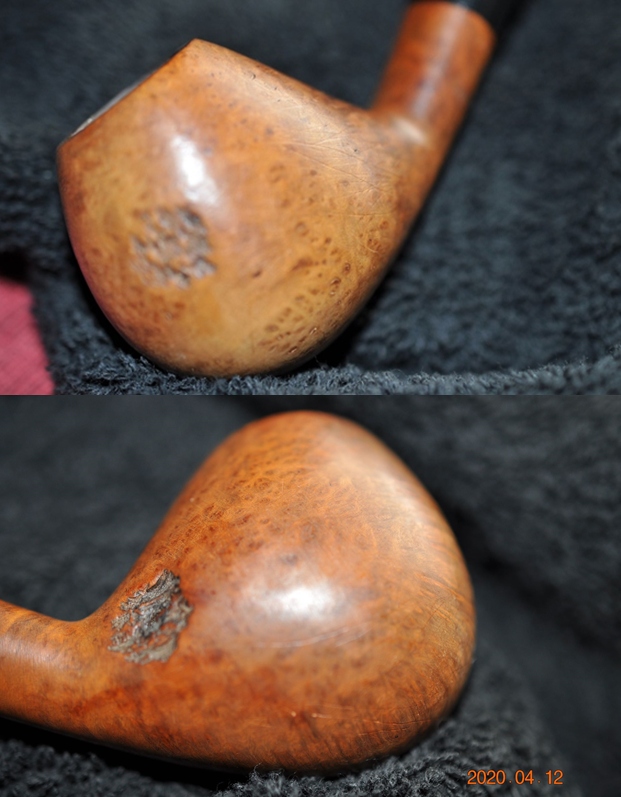
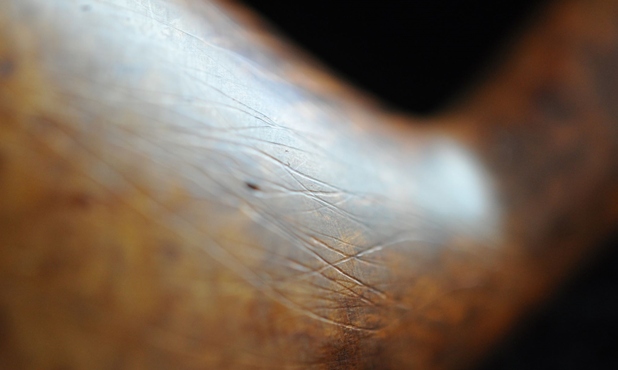
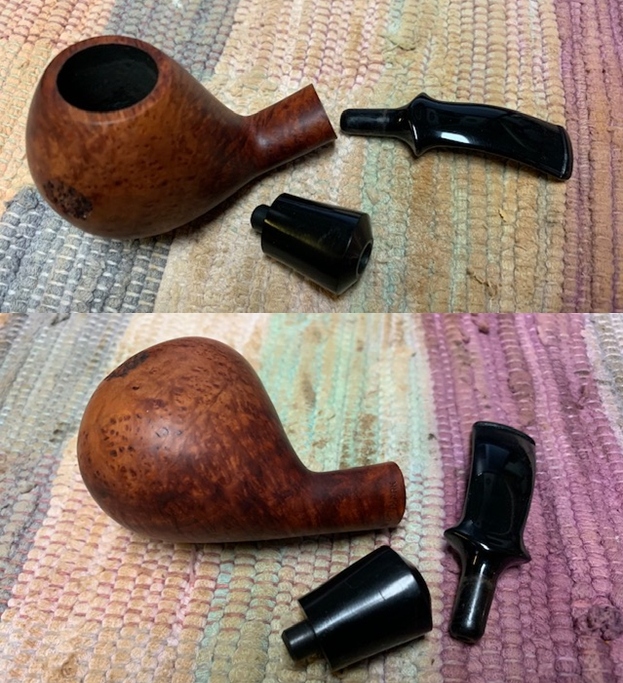
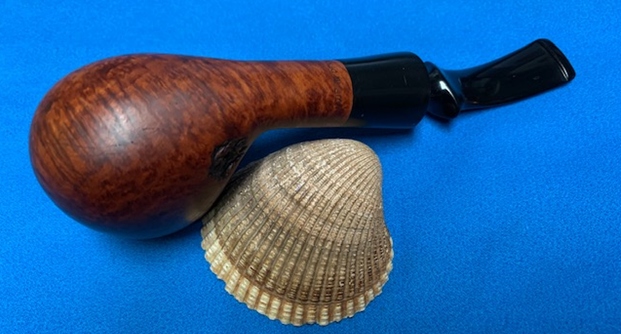
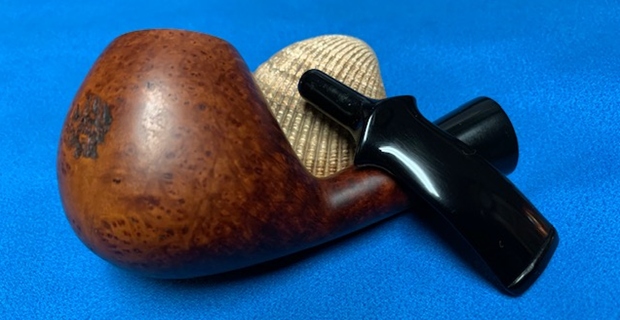
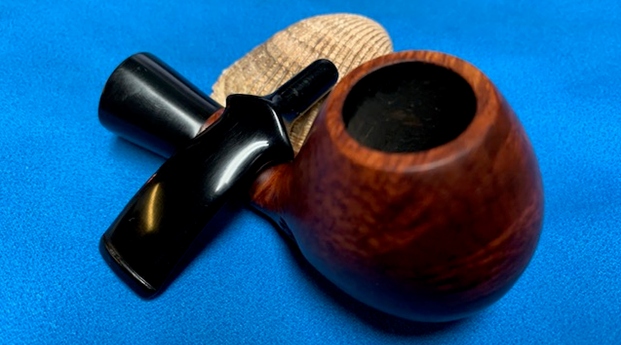
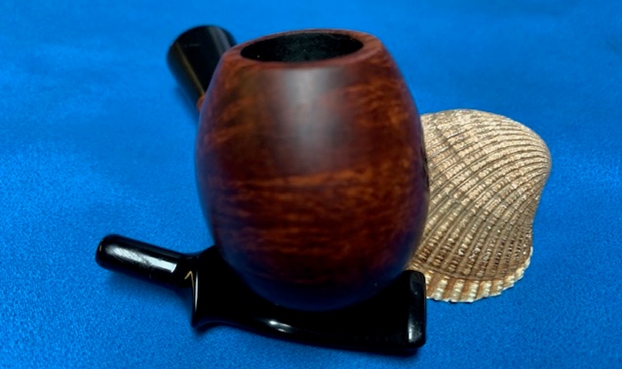
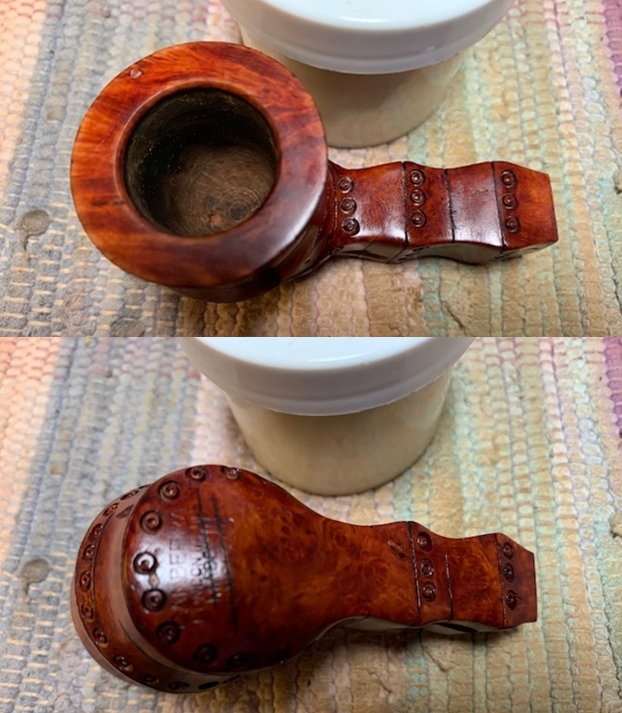
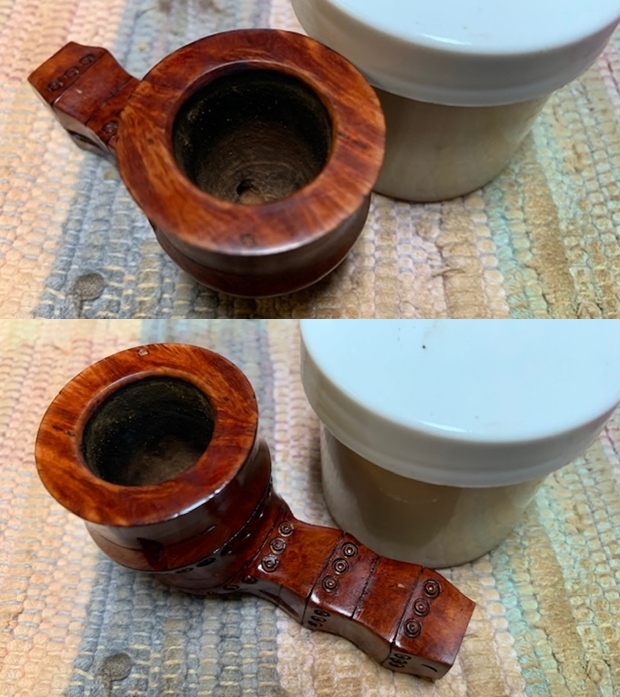
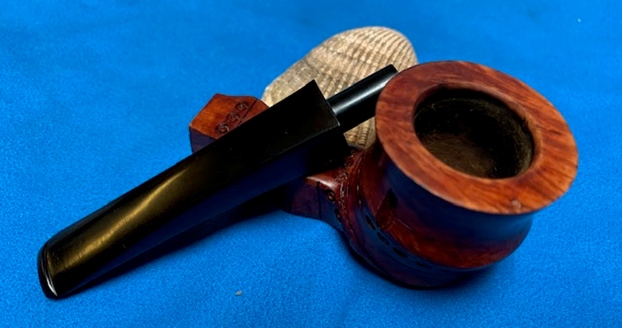
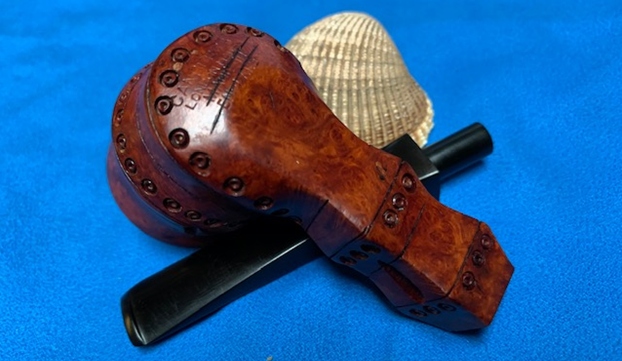
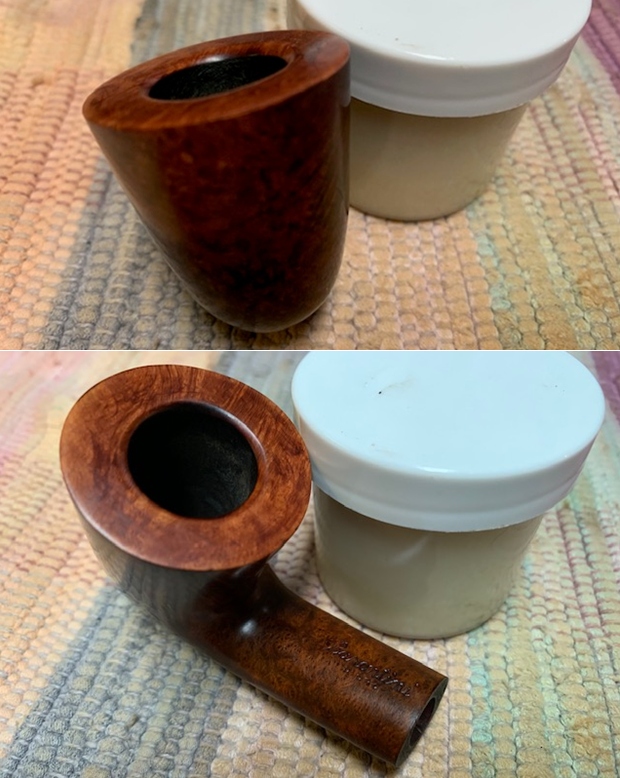
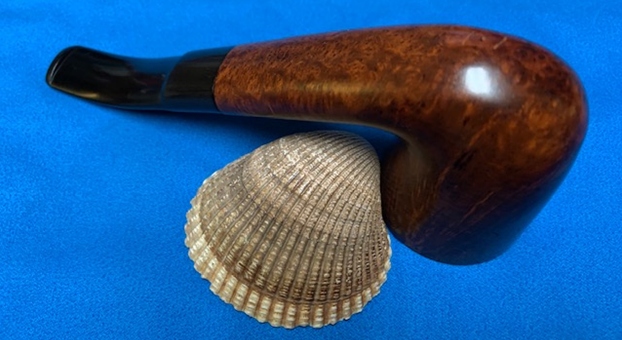
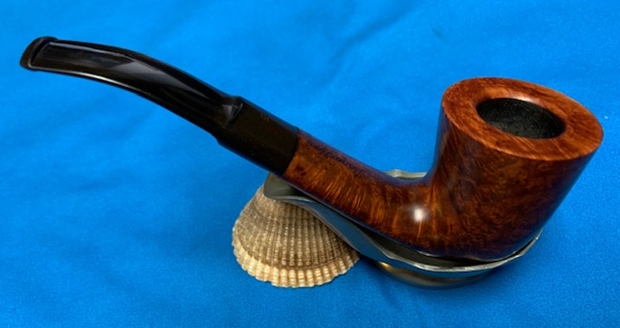
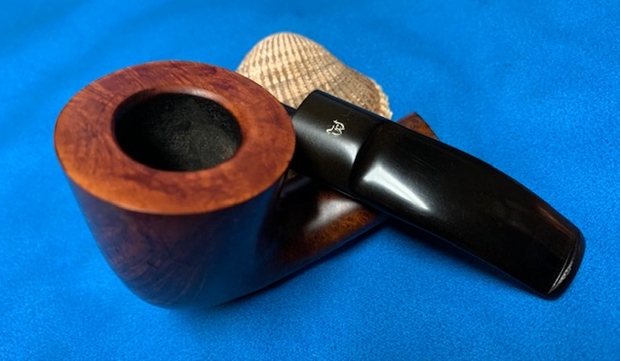
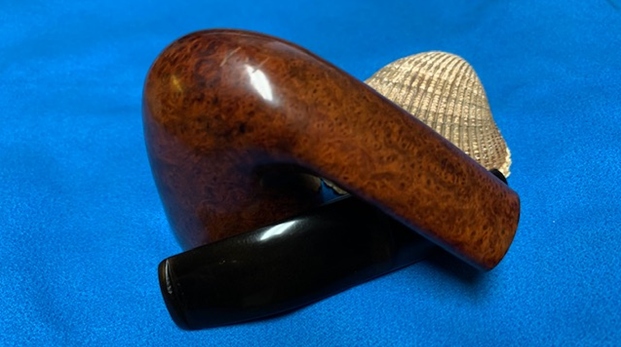
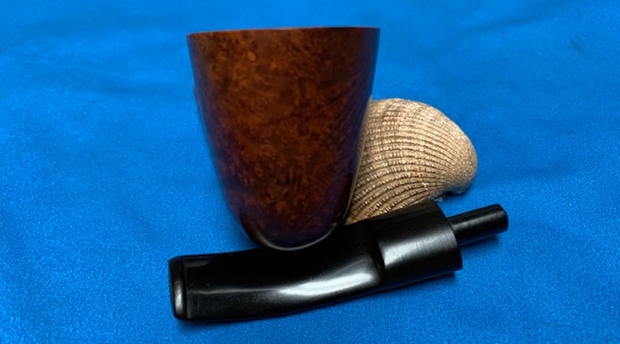
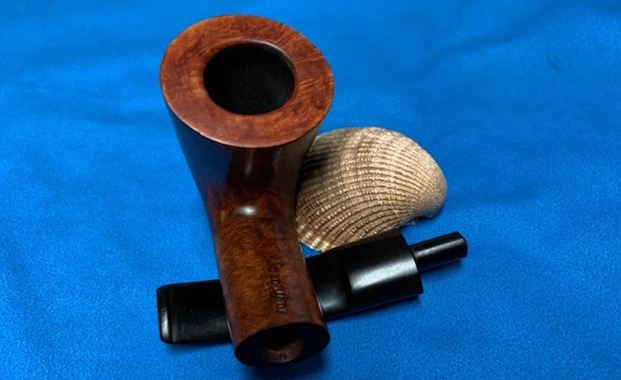
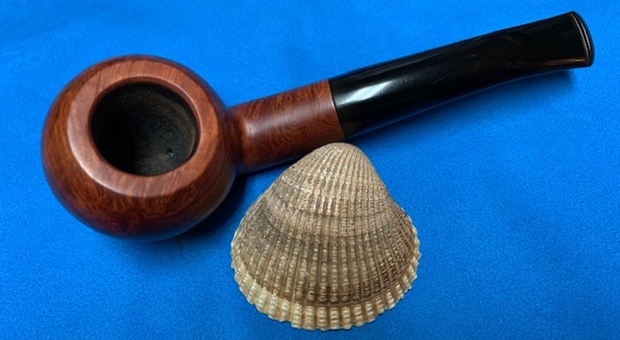
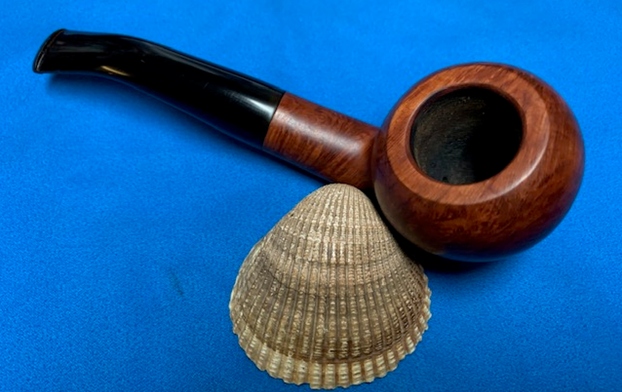
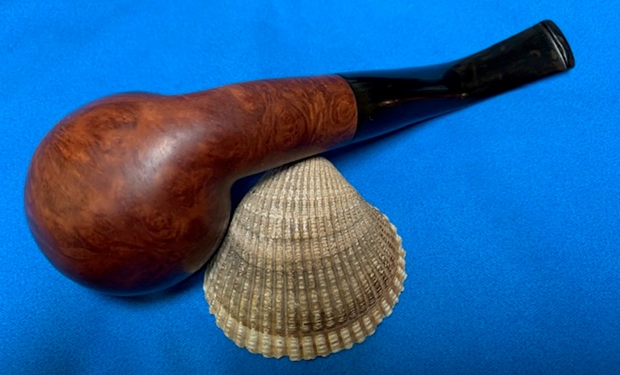
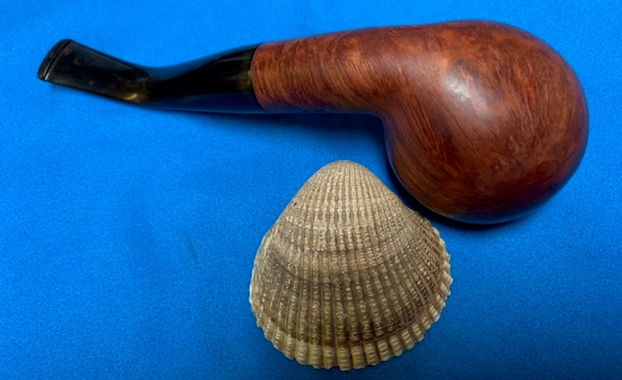
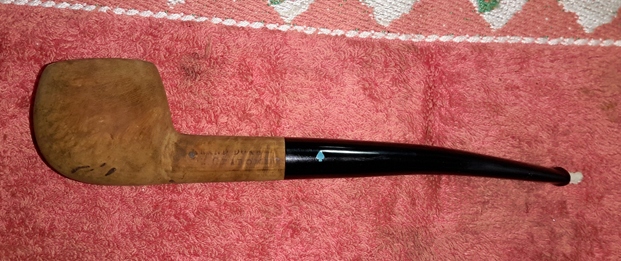
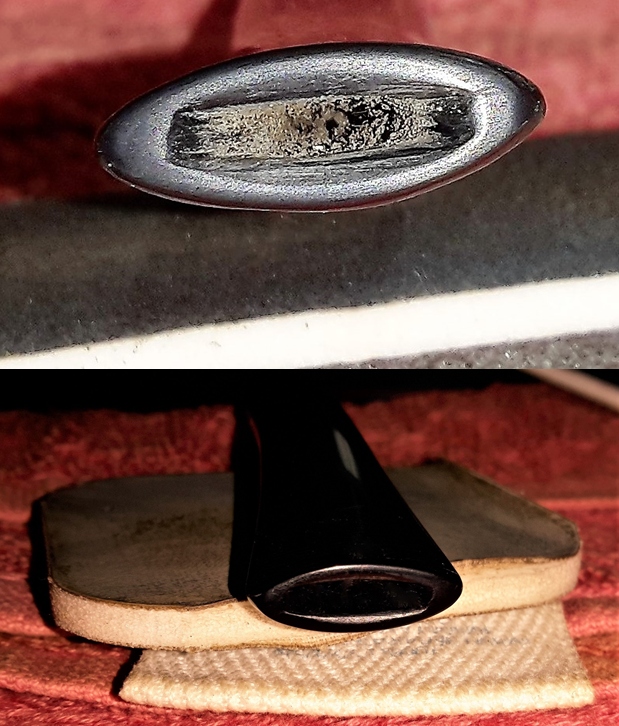
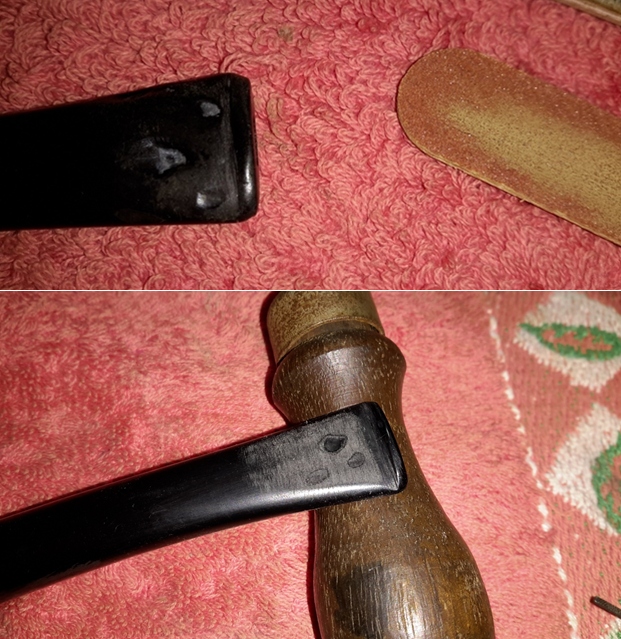
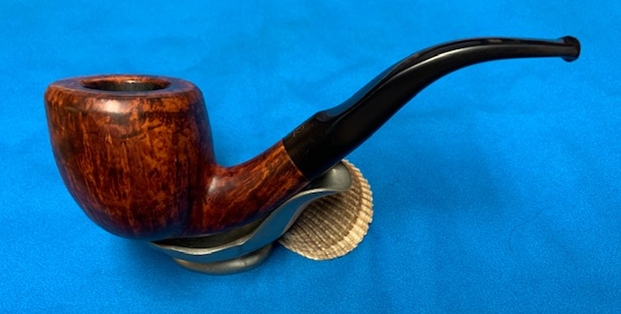
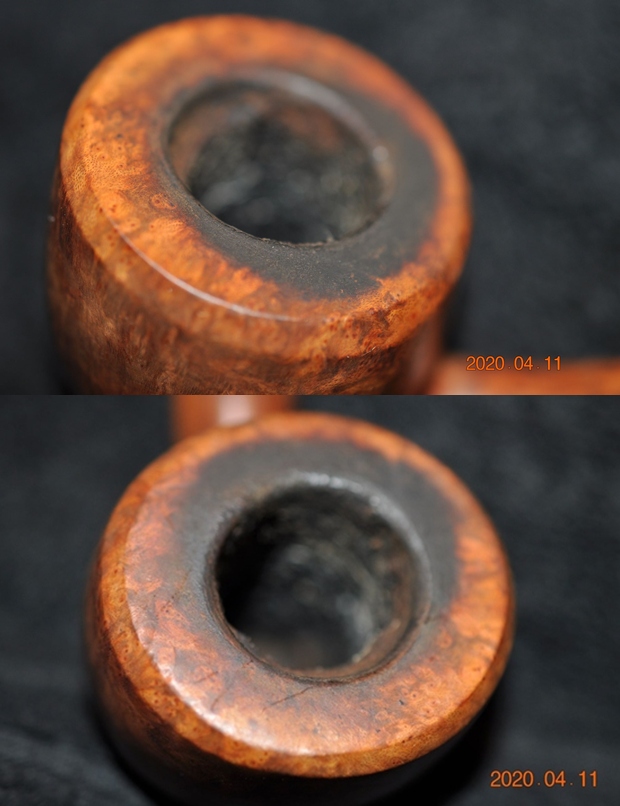
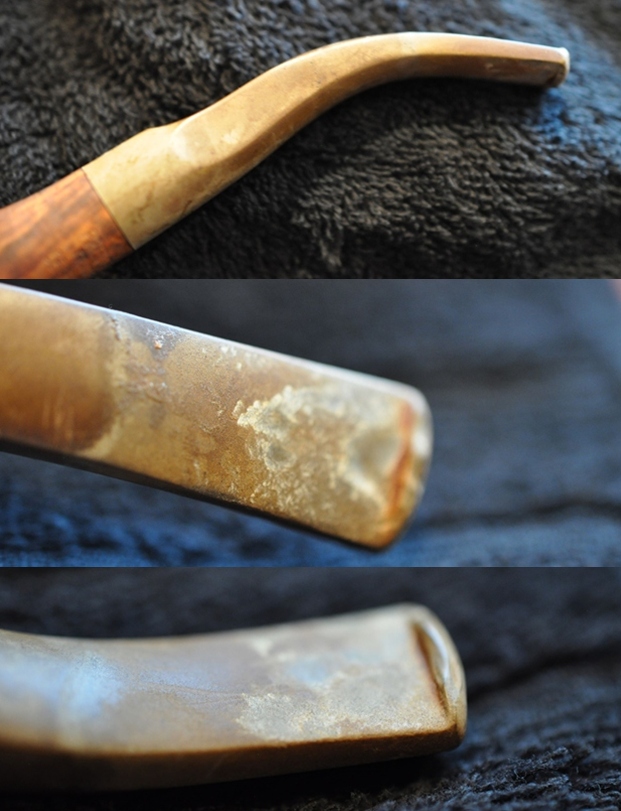
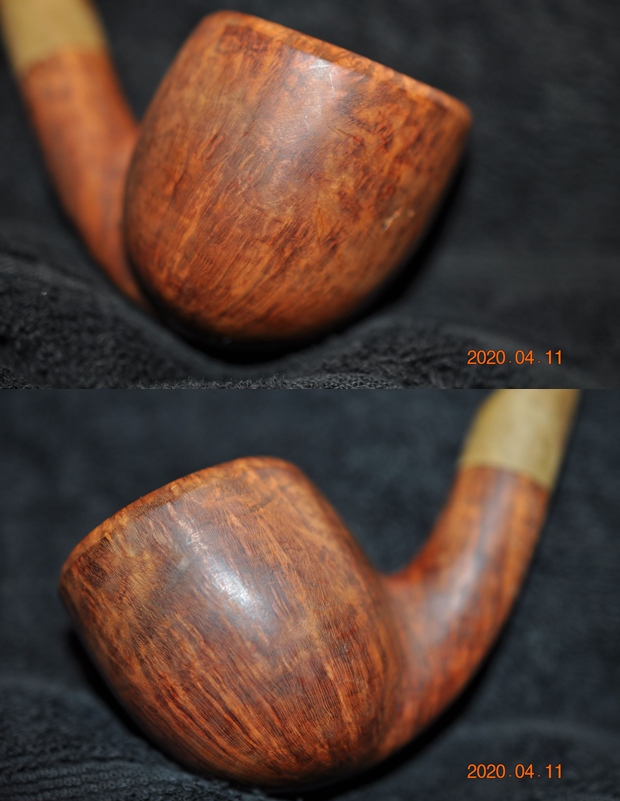
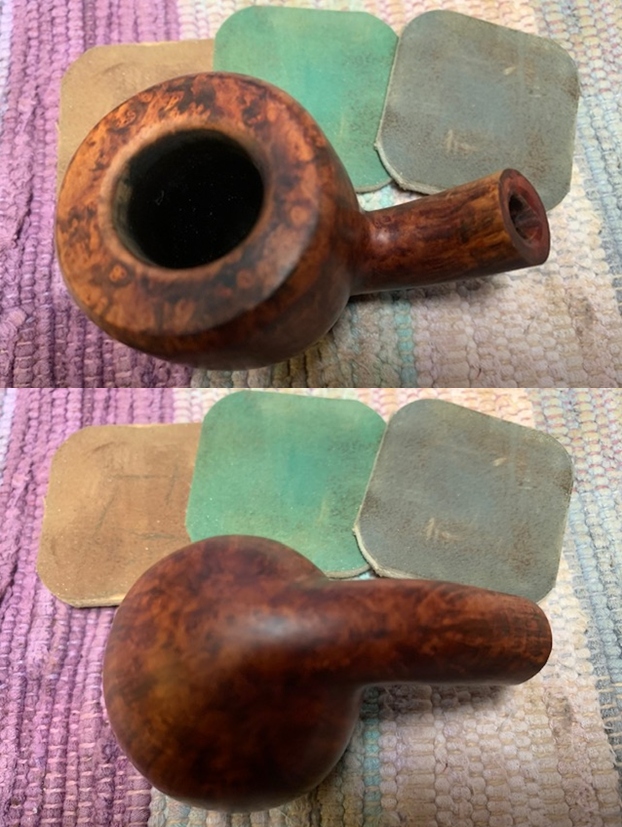
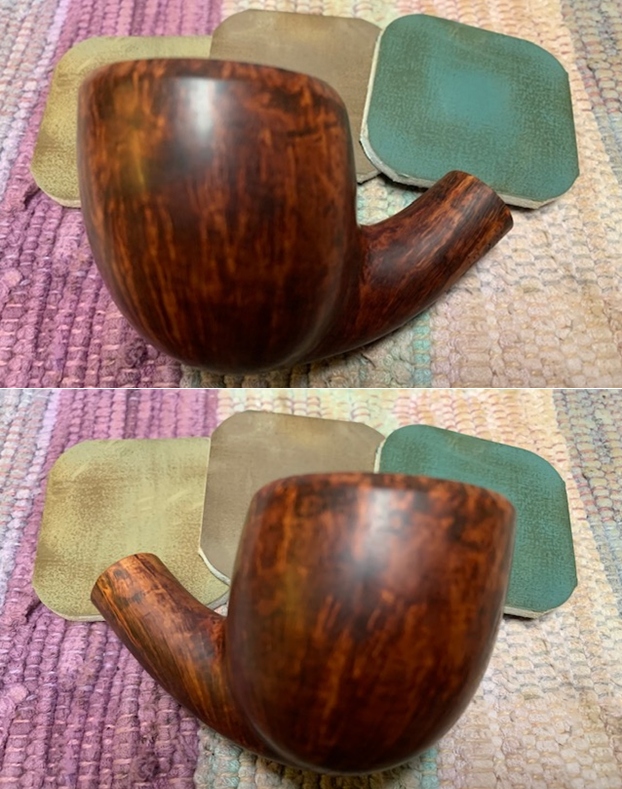
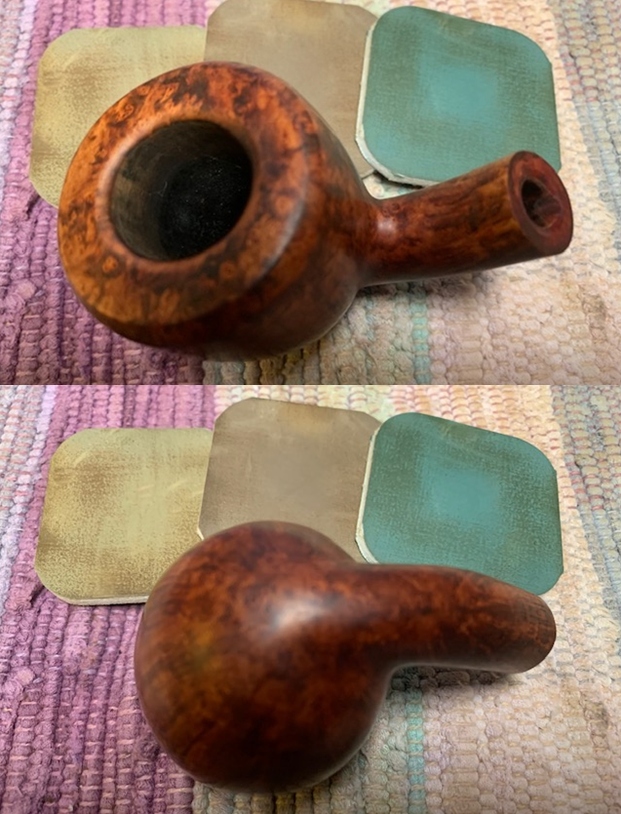
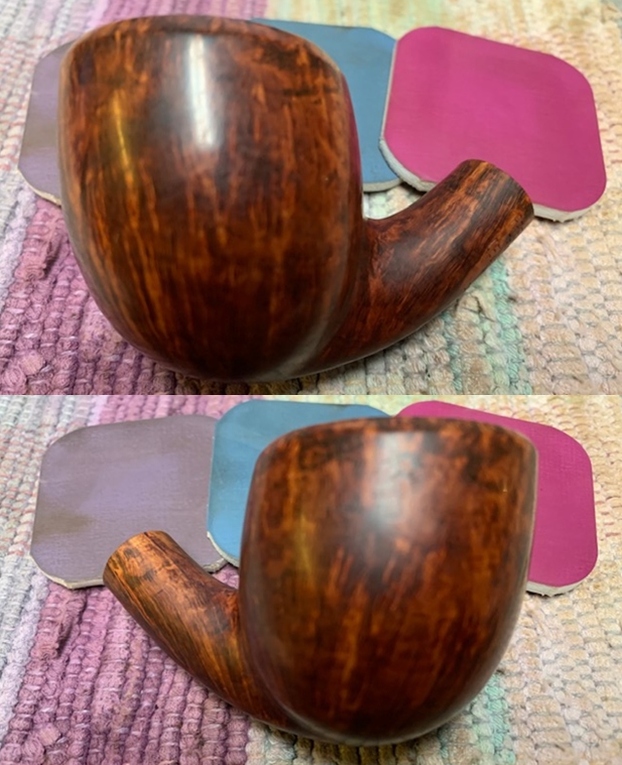
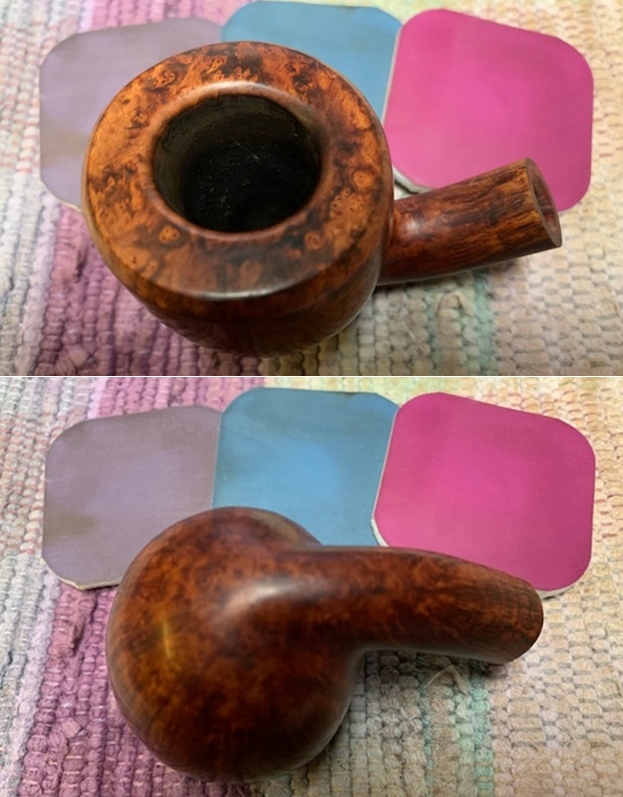
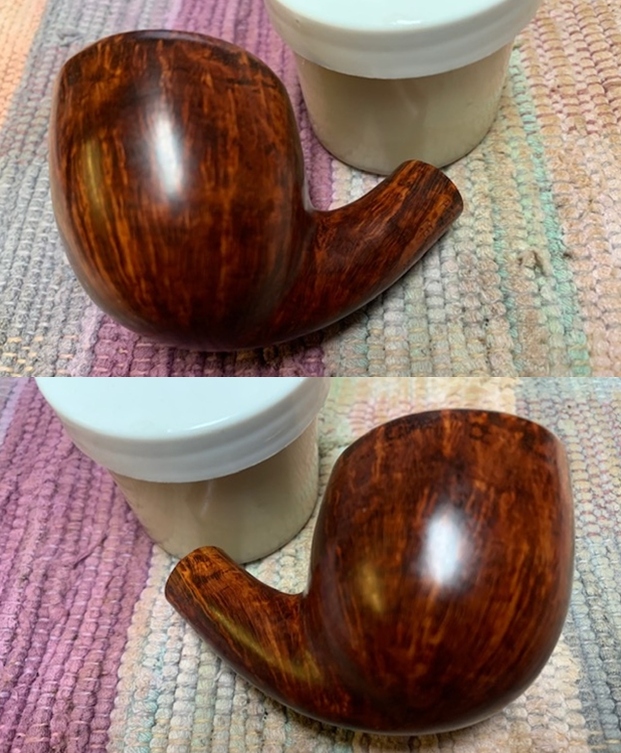
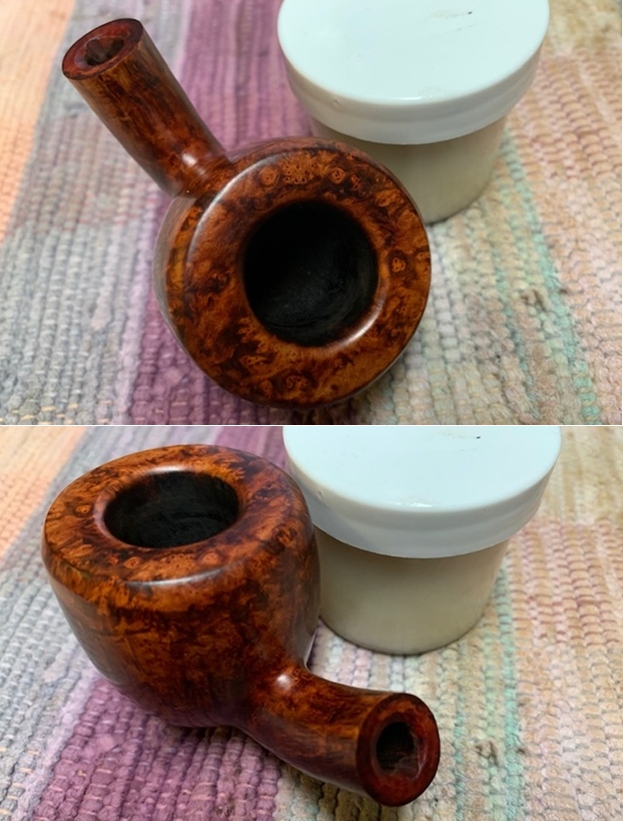
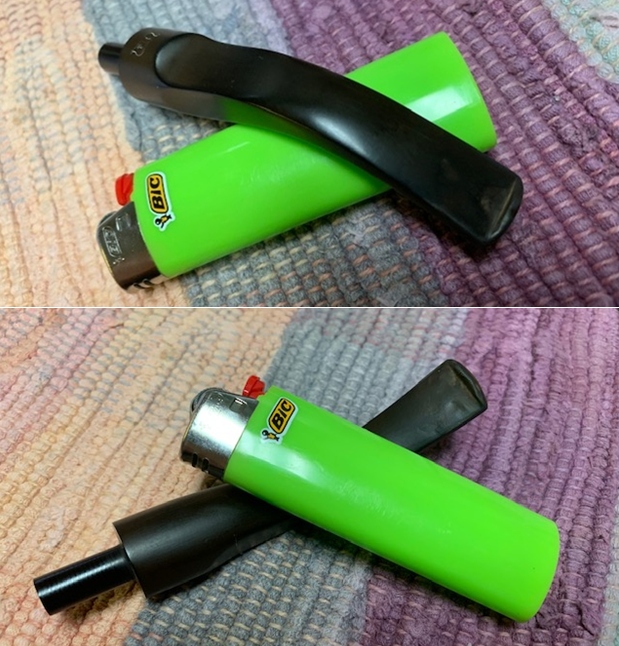
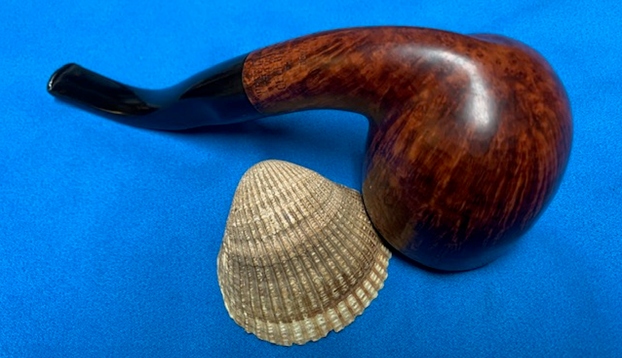
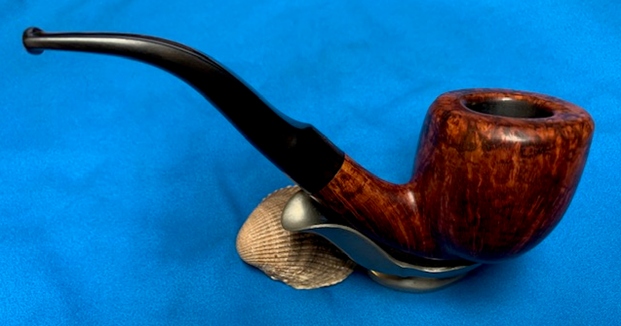
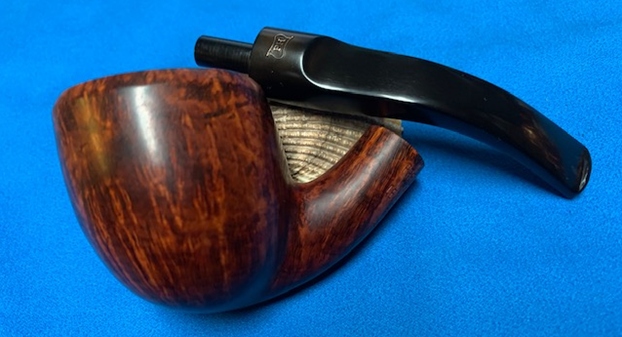
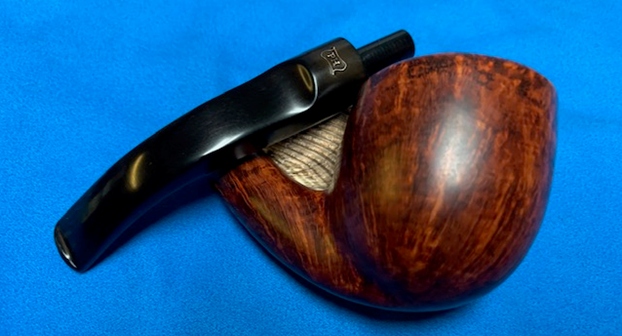
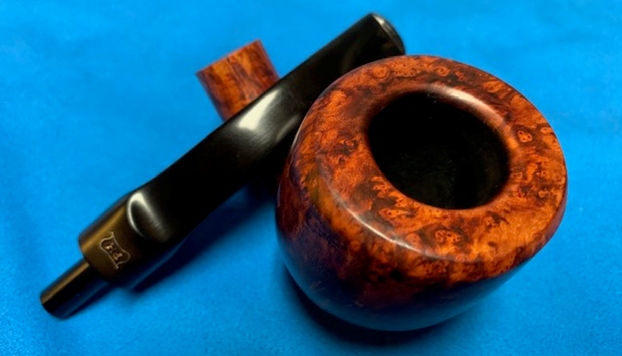
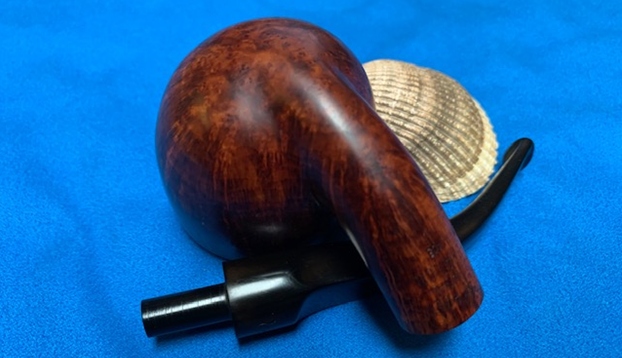
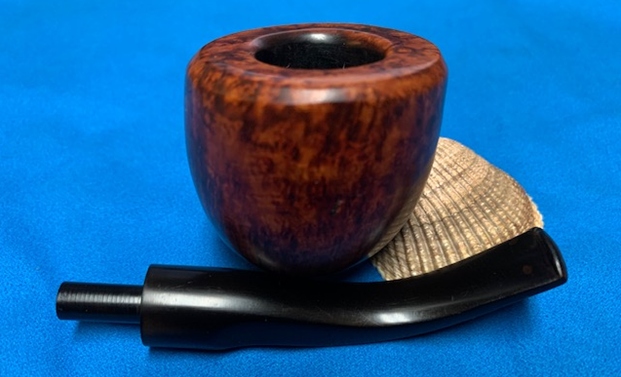
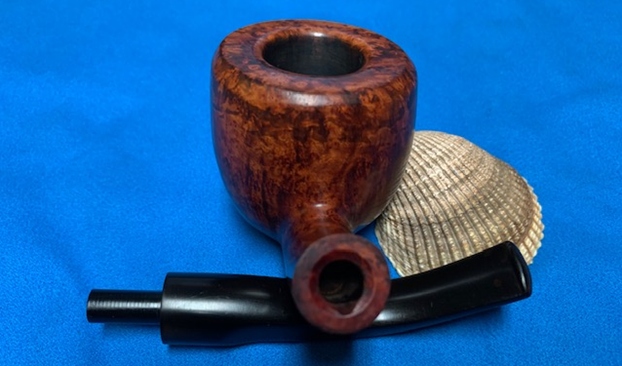
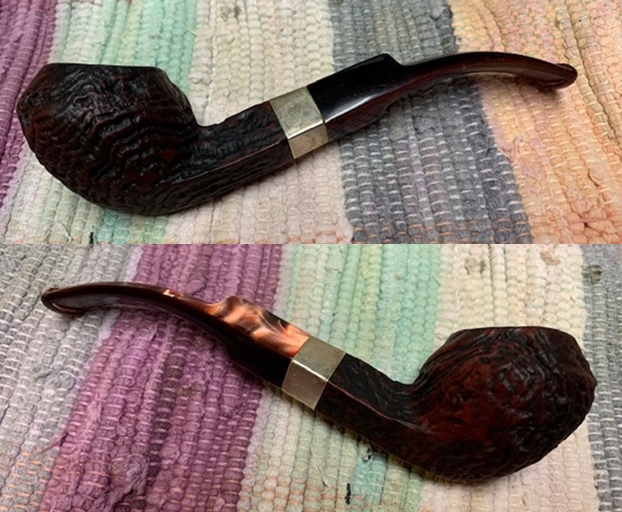
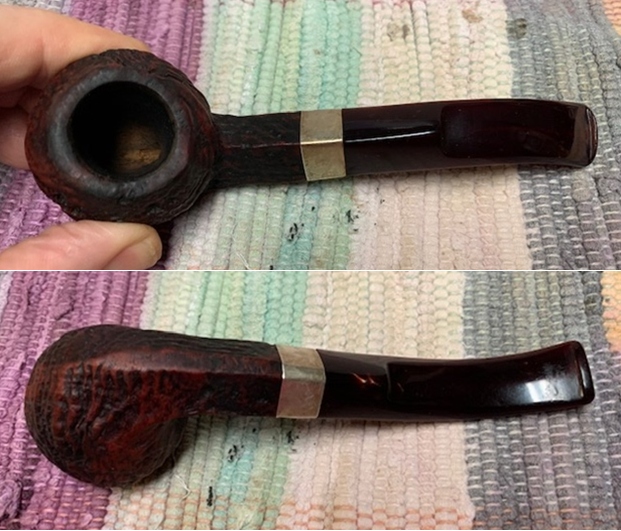
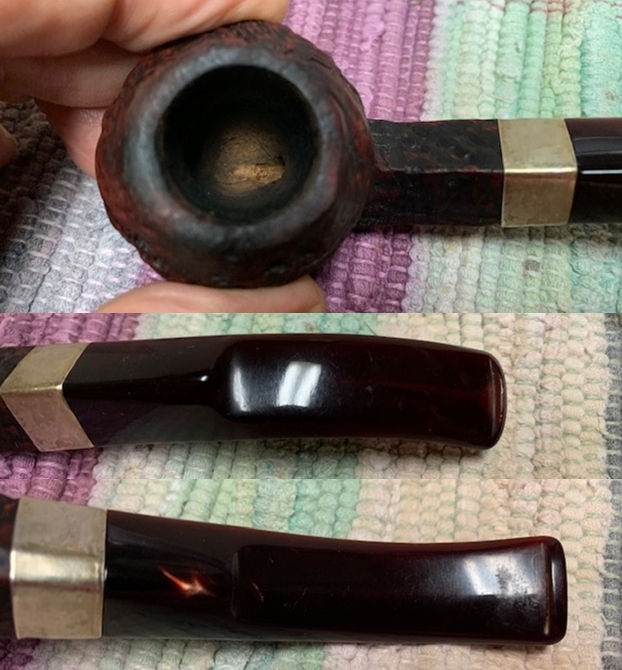
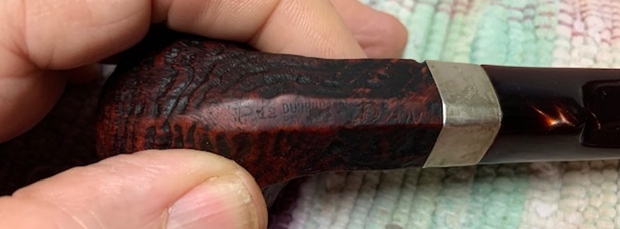
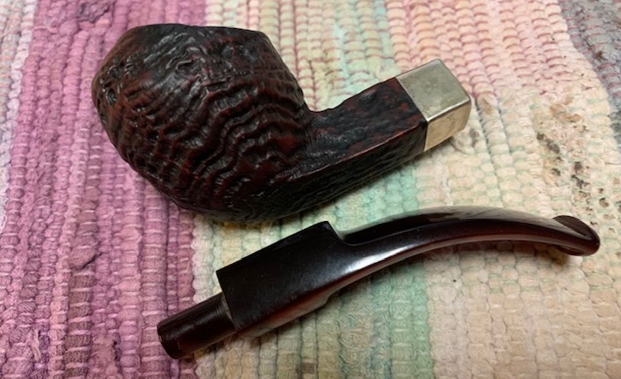
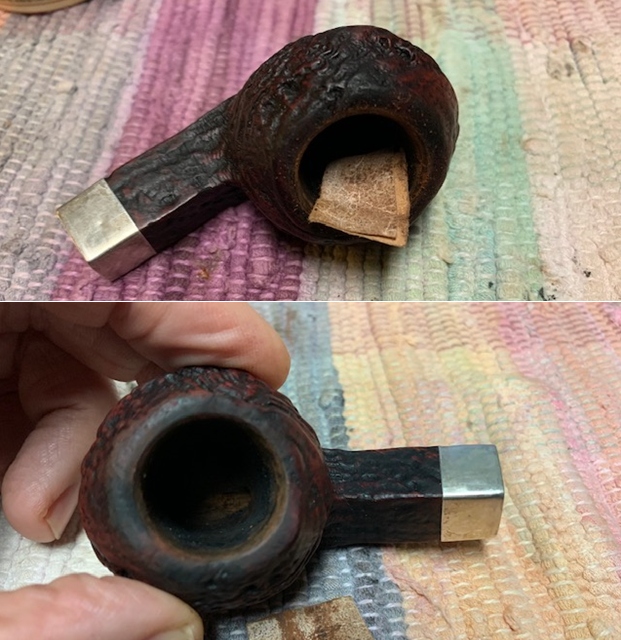
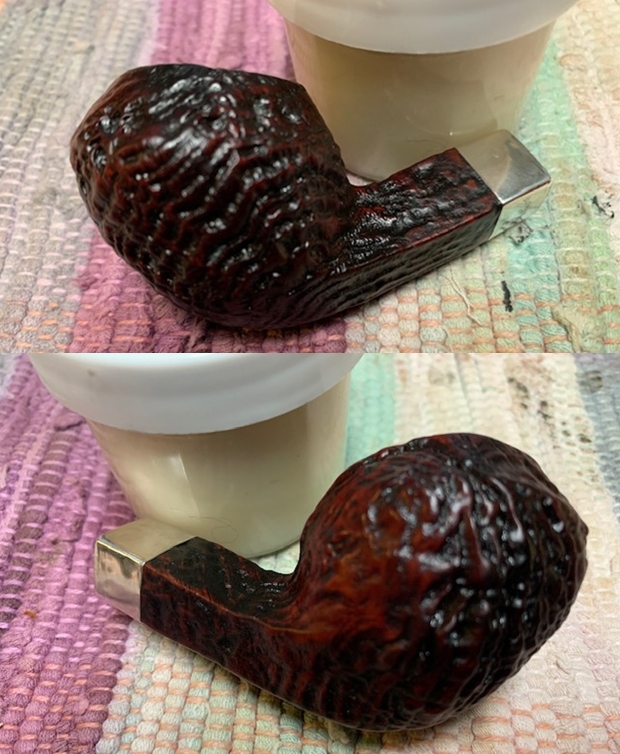
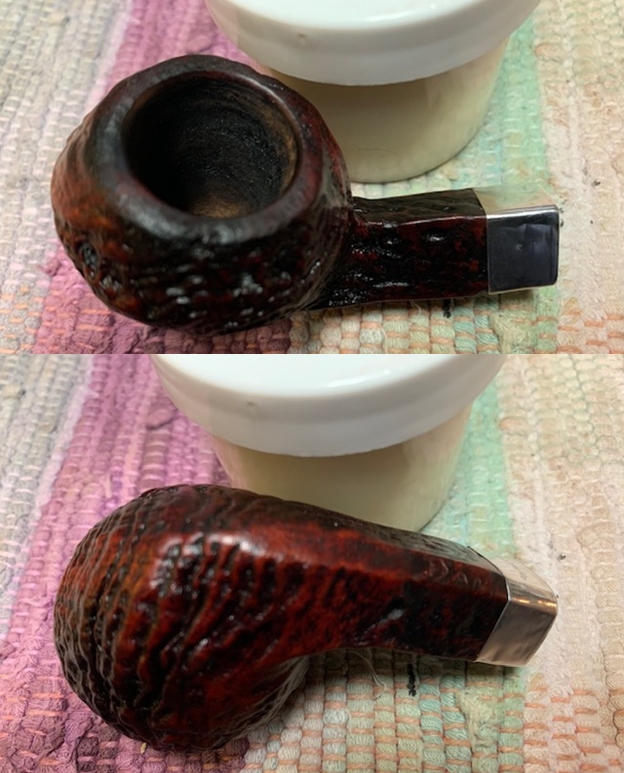
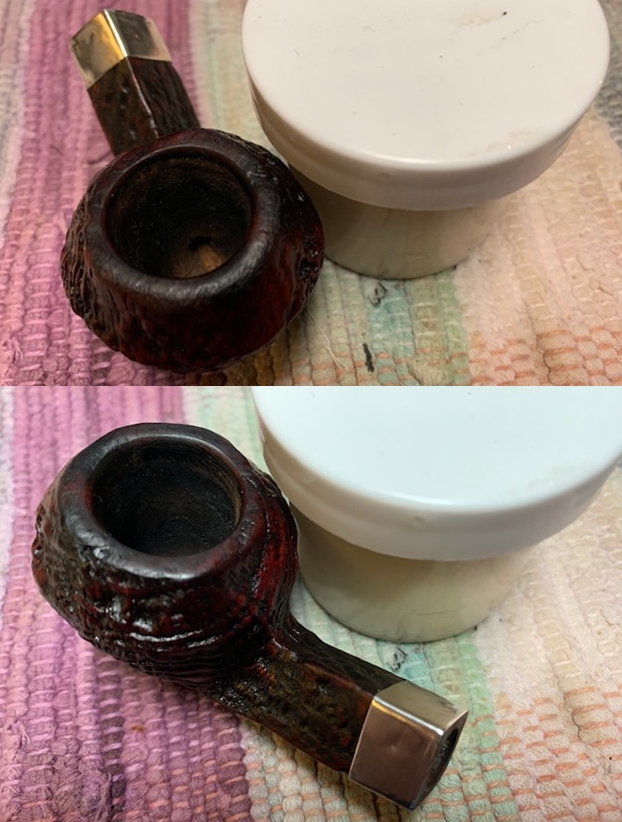
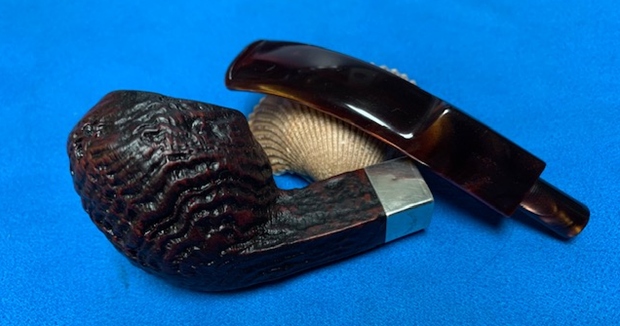
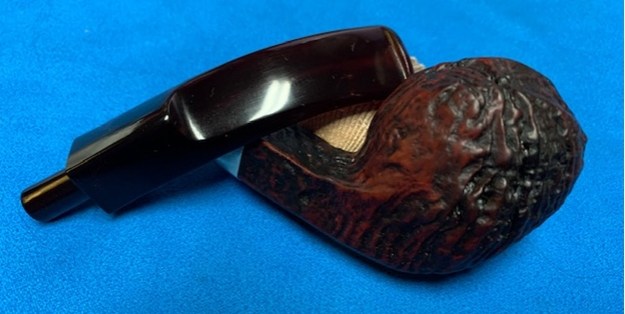
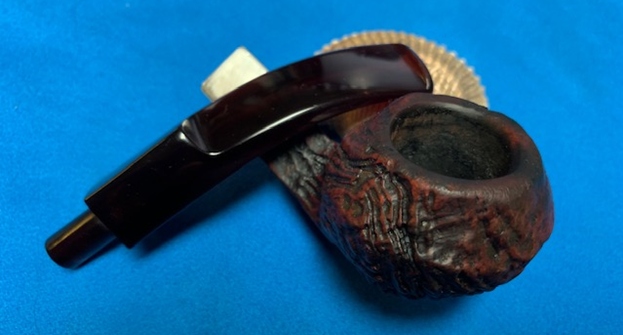
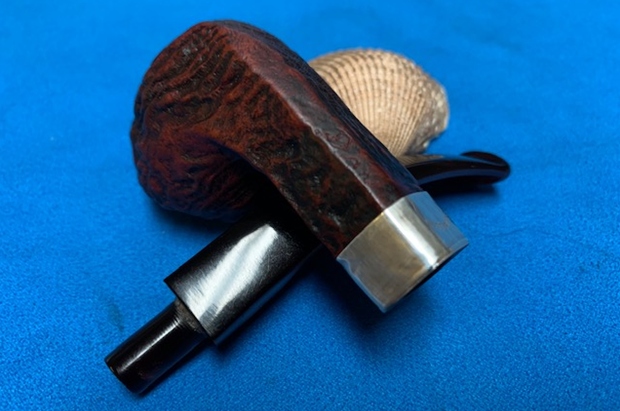
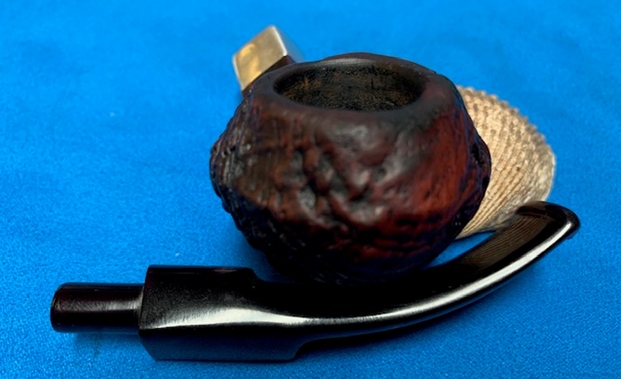
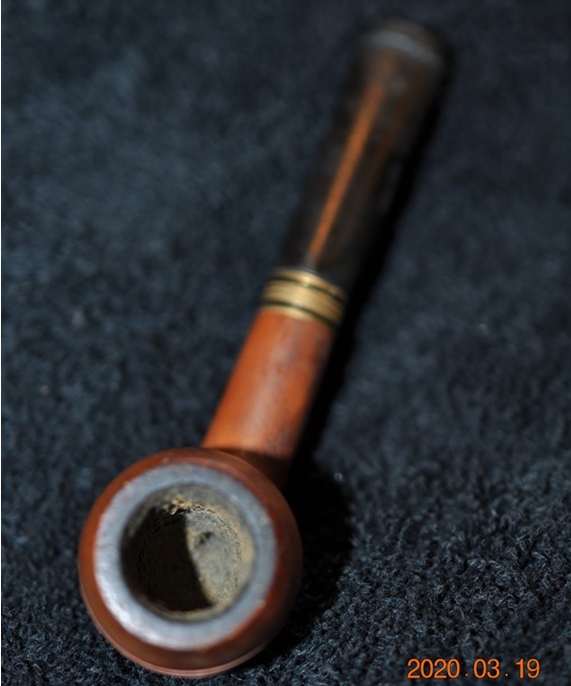
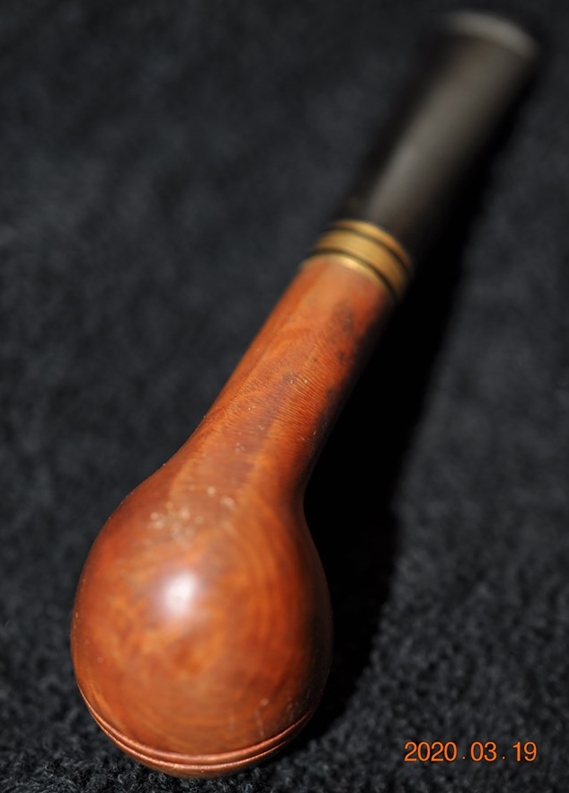
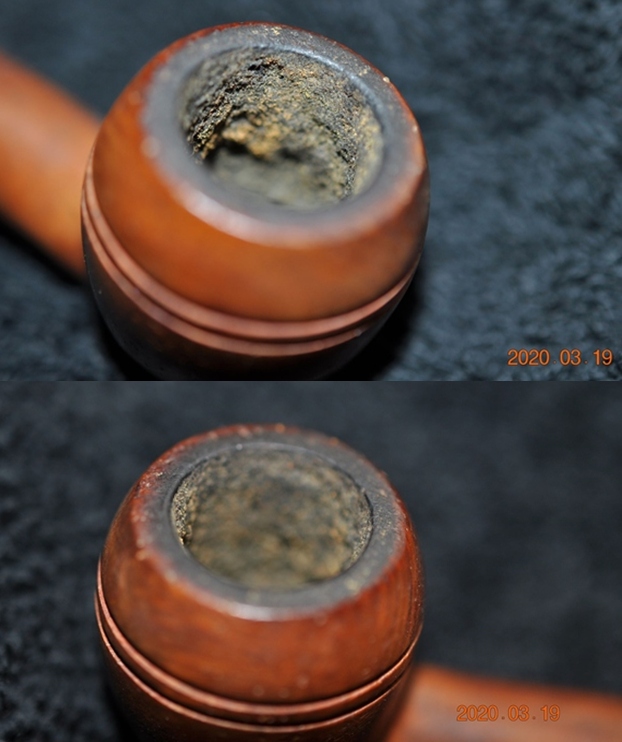
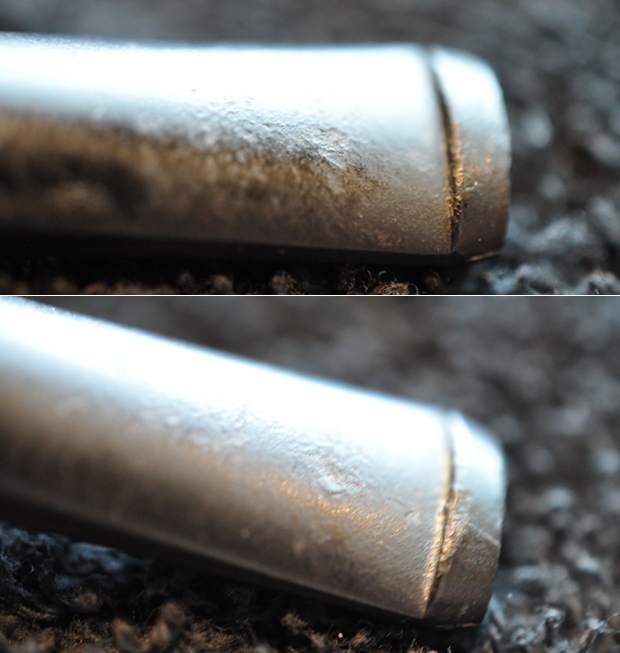
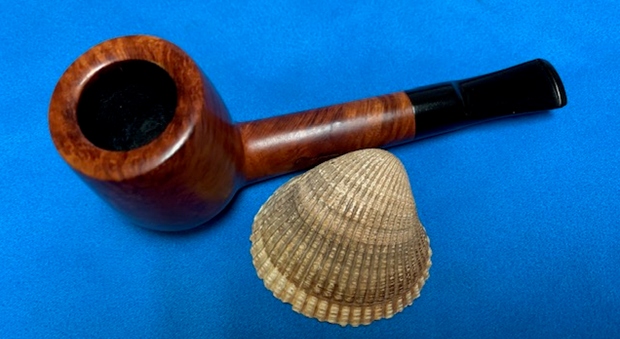
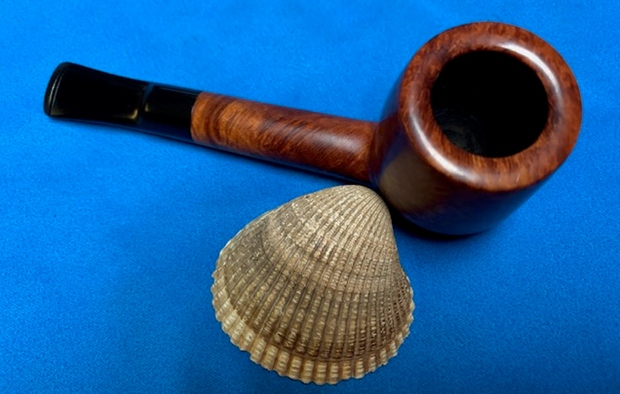
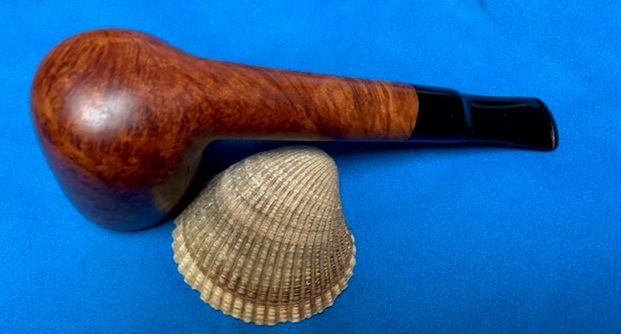
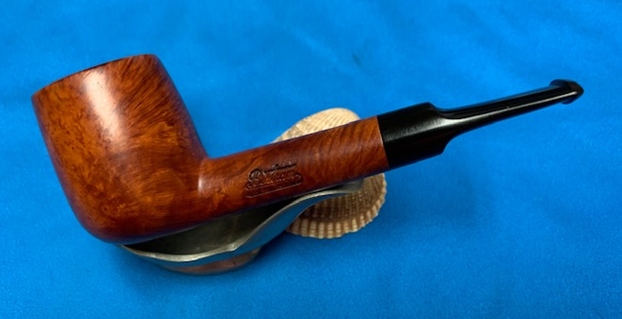
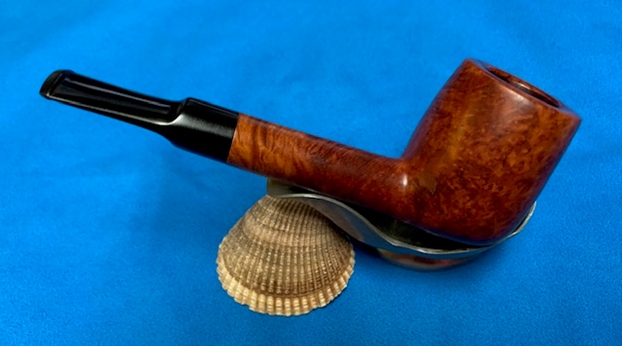
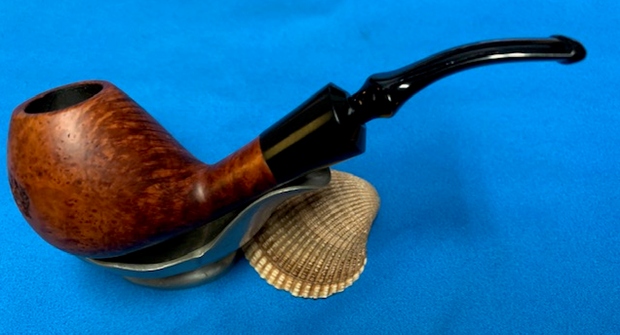
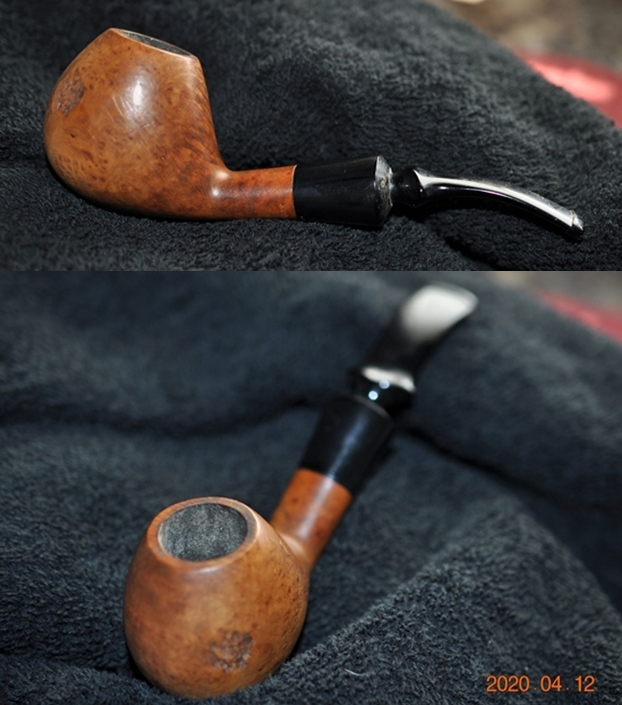
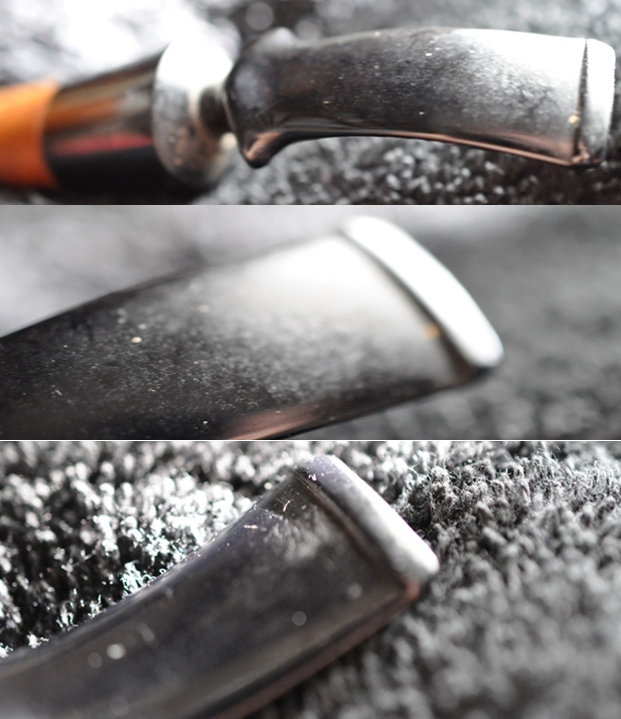
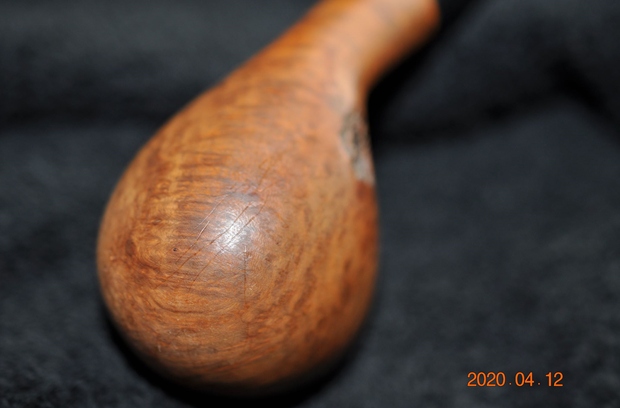
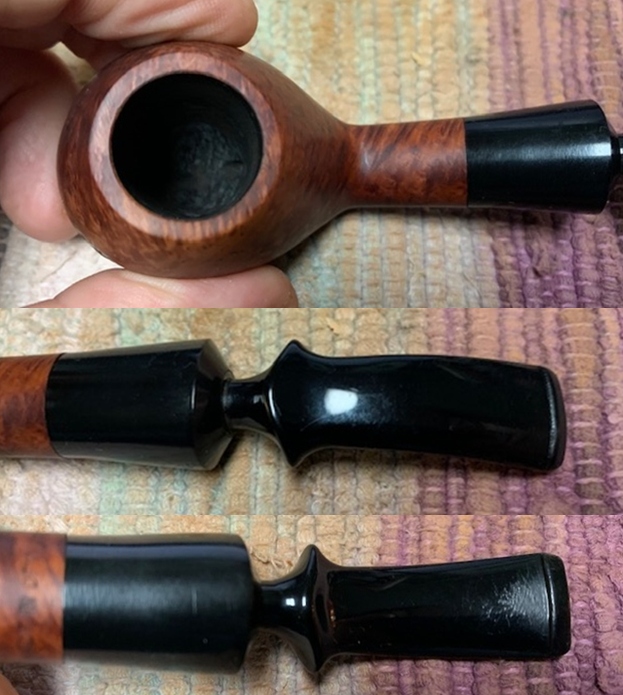
The next pipe on the work table came to us from an online auction out of Ottawa, Illinois, USA.  It is a variation on a Brandy shaped pipe with a shank extension and a freehand stem. The bowl had some rusticated spots on each side of the bowl – one on the left front and one on the right shank bowl junction. It has a rich reddish brown colour combination that highlights the grain and a darker stain in the rusticated spots. The acrylic shank extension was loose from the shank end and fell off during the cleanup. This pipe is stamped on the underside of the shank and reads Made in Denmark. There is a thick cake in the bowl and a light overflow of lava on the rim top. The inner and the outer edge of the bowl look very good. The acrylic shank extension and the acrylic stem were clean but dirty. There were some light tooth marks and chatter on both sides of the stem near the button. The pipe looks to be in decent condition under the grime. Jeff took photos of the pipe before he started his cleanup.   He took photos of the rim top to show the cake and the light lava coat. It is another dirty pipe. He also captured the shape of the stem and the tooth marks and chatter on the top and underside of the stem near the button.    He took photos of the sides and heel of the bowl to show the grain and the rusticated spot on the bowl. You can see the grime in the rustication and ground into the surface of the briar. The bowl had a lot of scratches in the surface of the briar. The photo below captures some of the scratching on the back of the bowl.He took photos of the stamping on the underside of the shank. It is clear and readable as noted above. Jeff took two photos of the shank to capture the stamping.I turned to Pipephil and Pipedia to see if I could find a line on the Made in Denmark stamp. There was nothing that helped me to pin down the maker. Now it was time to work on the pipe.
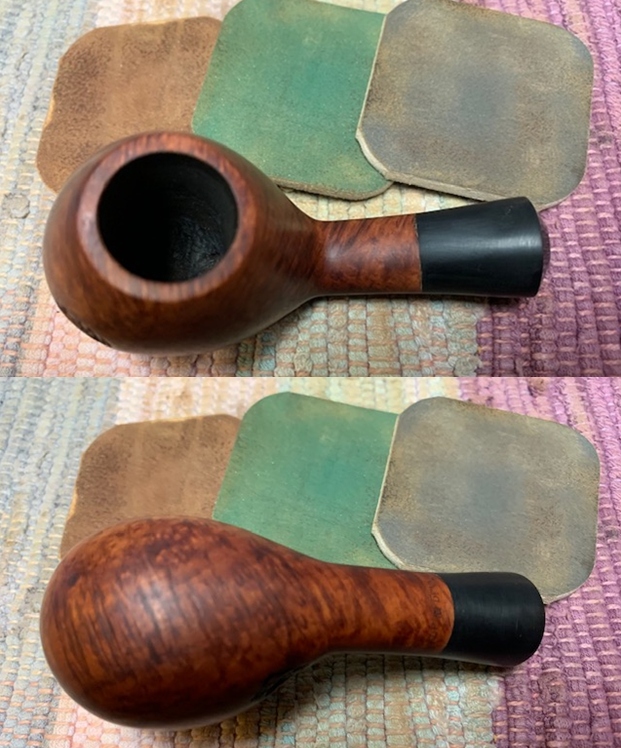
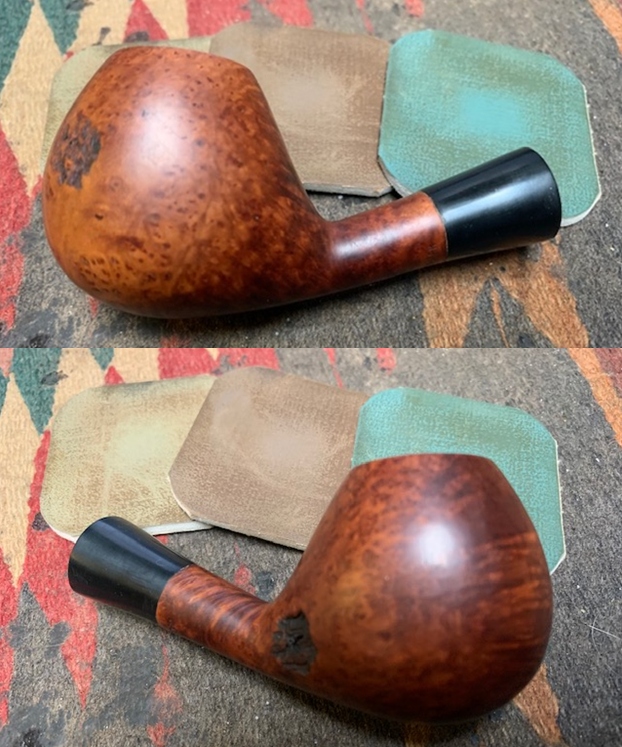
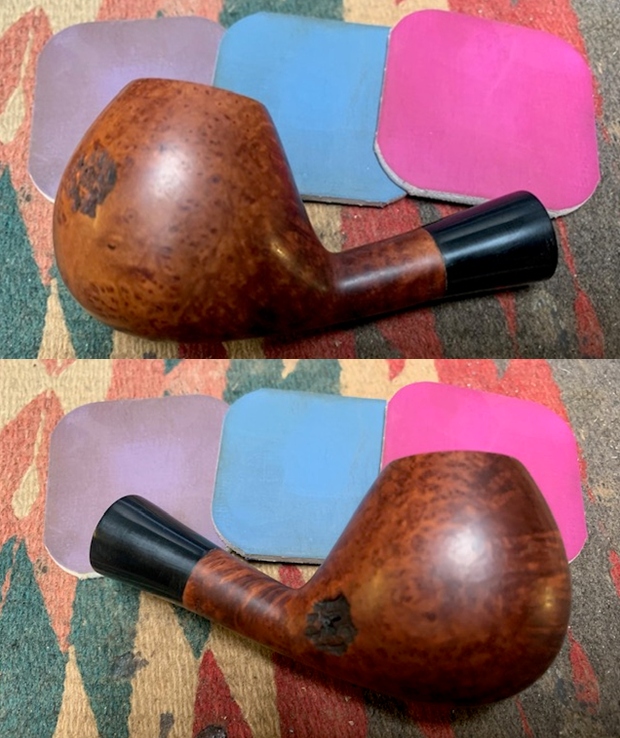
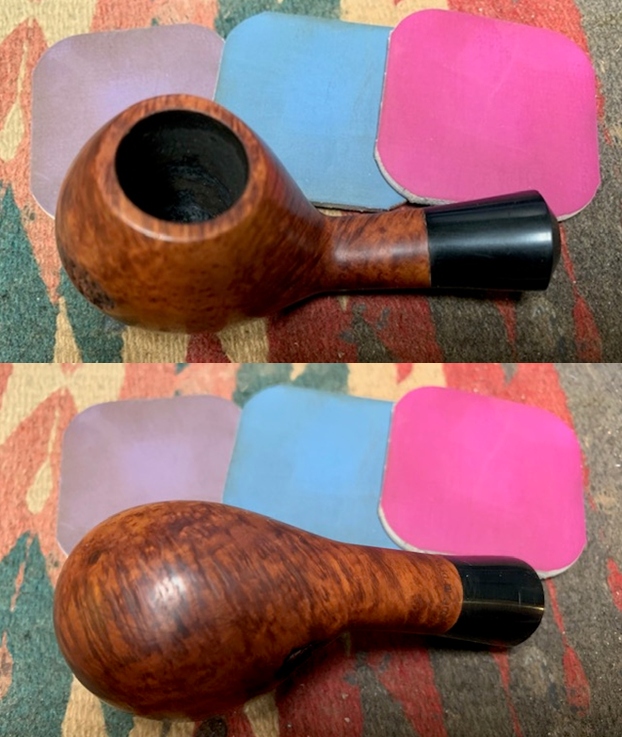
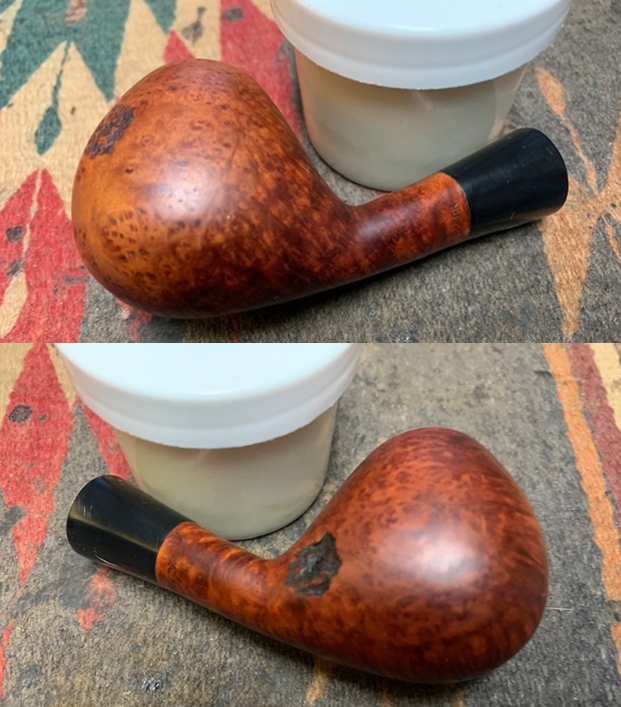
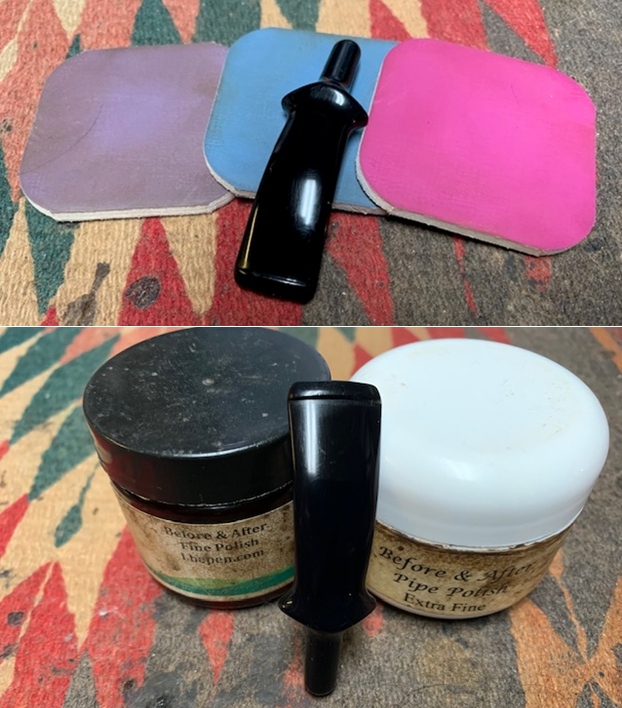
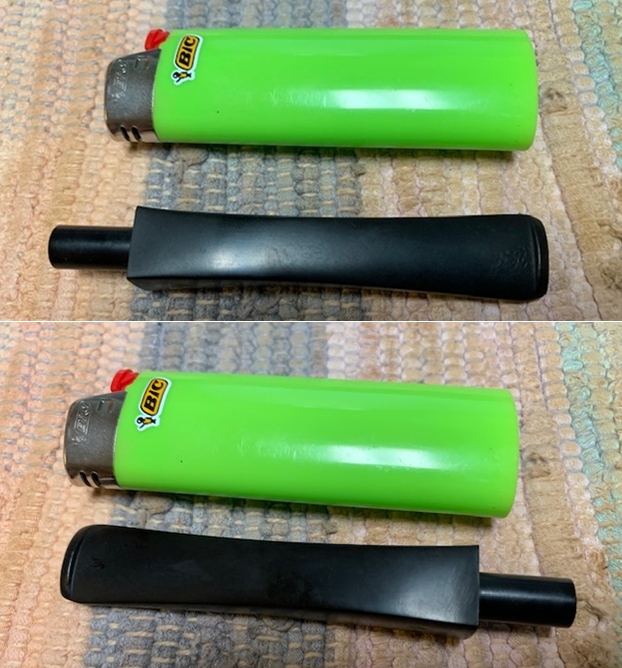
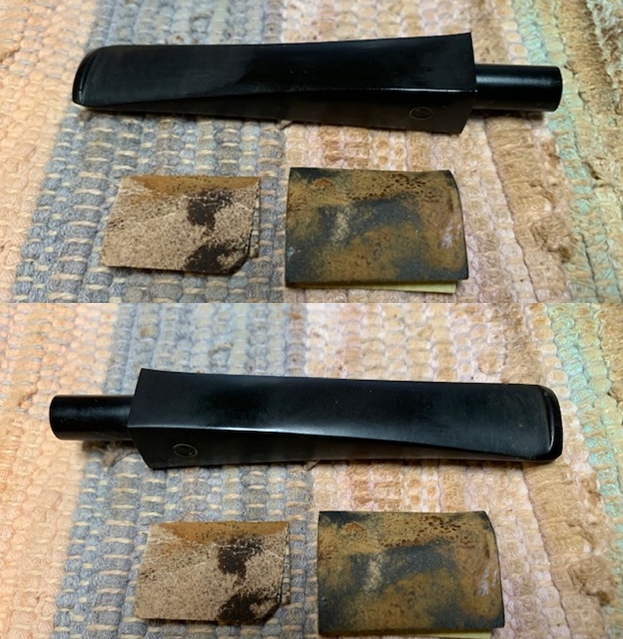
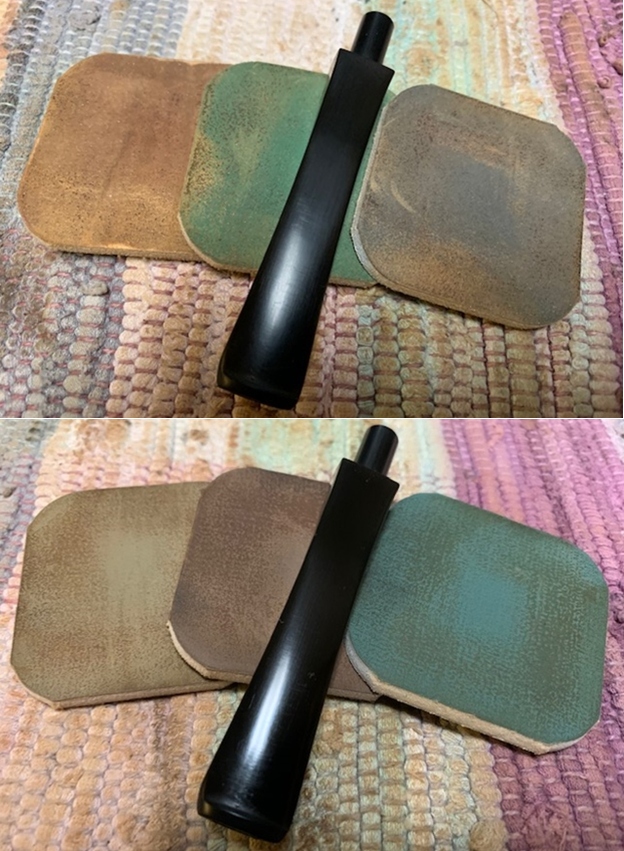
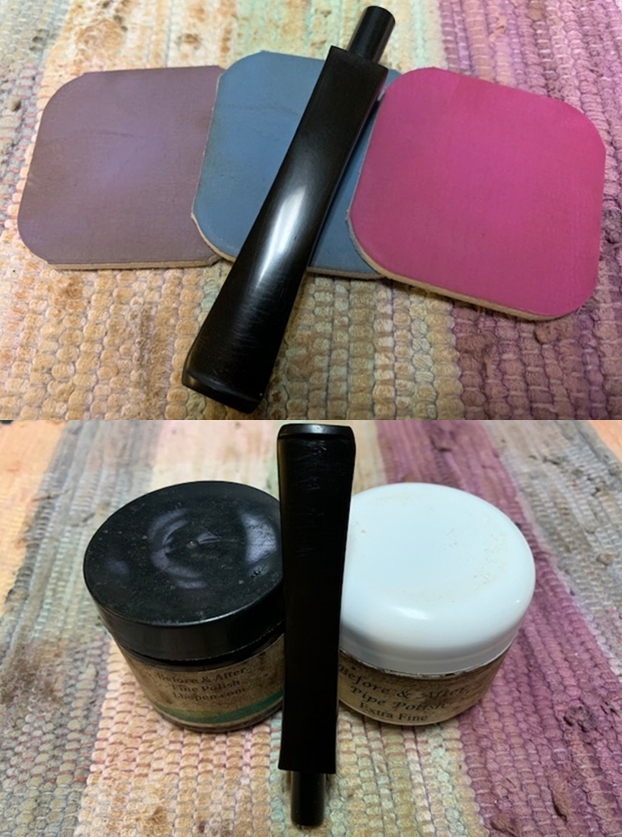
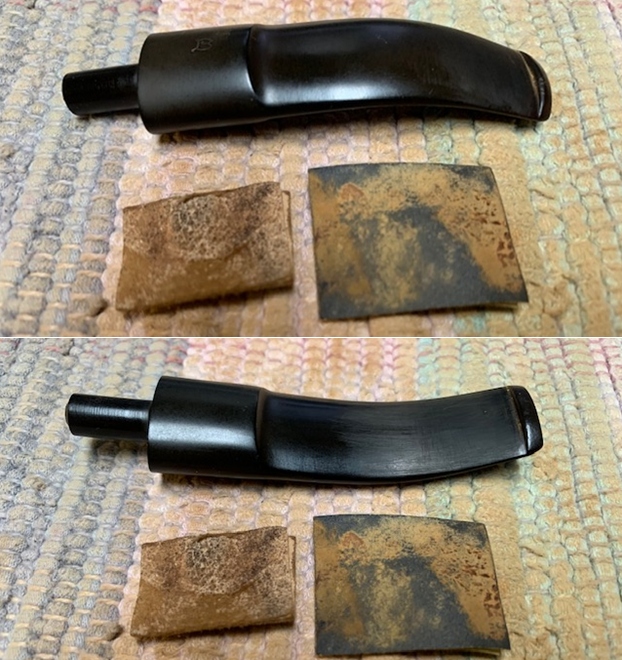
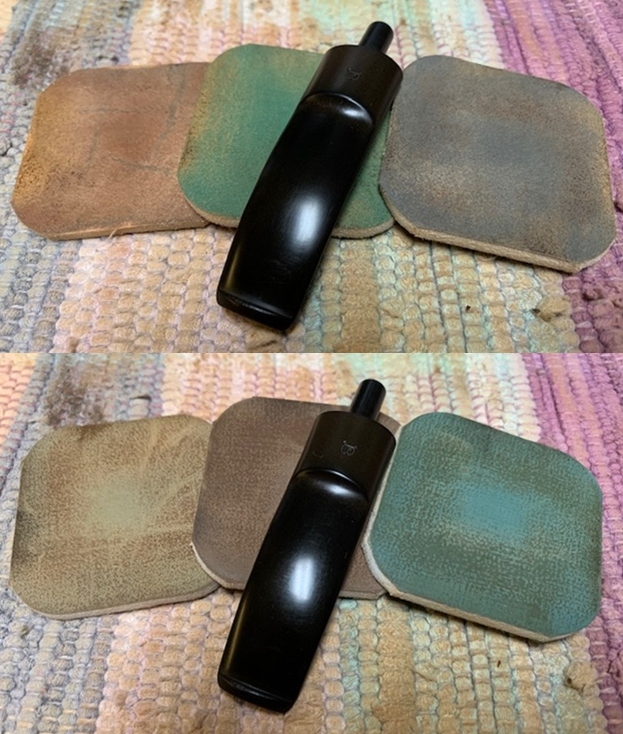
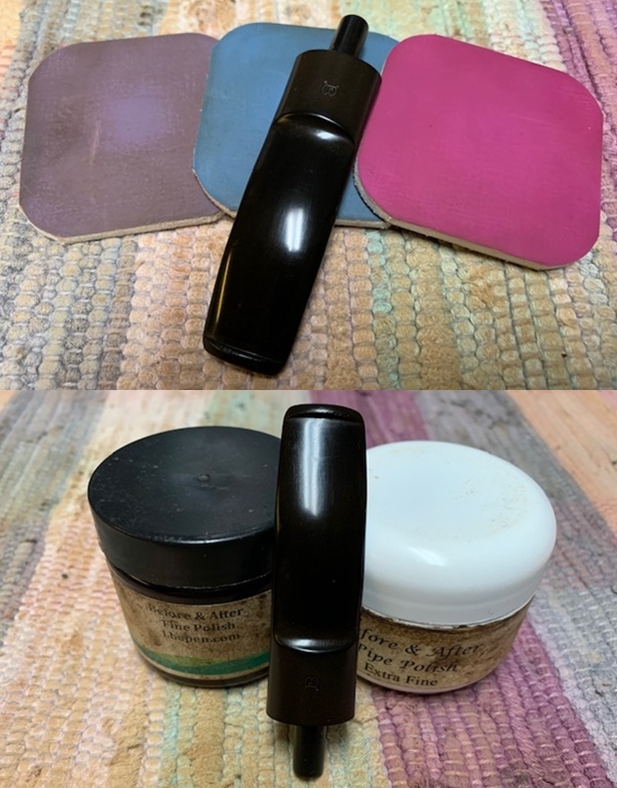
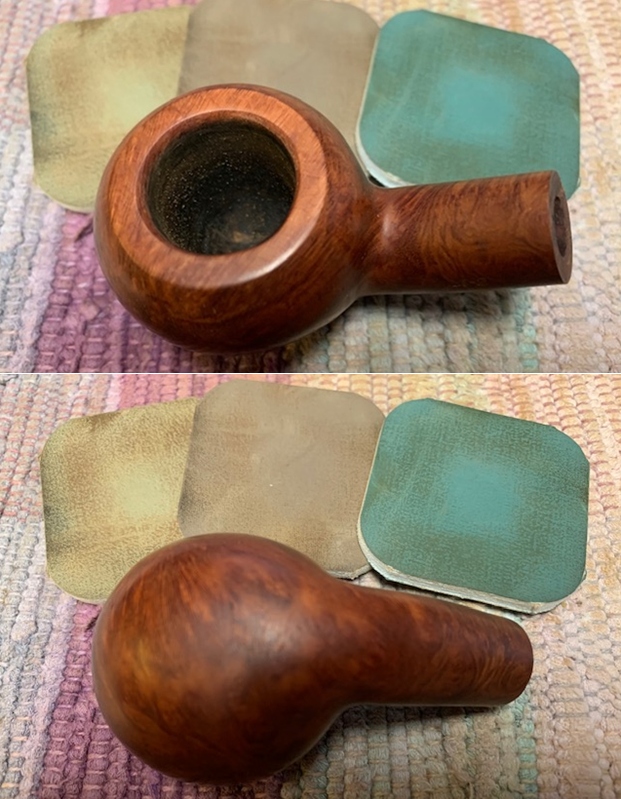
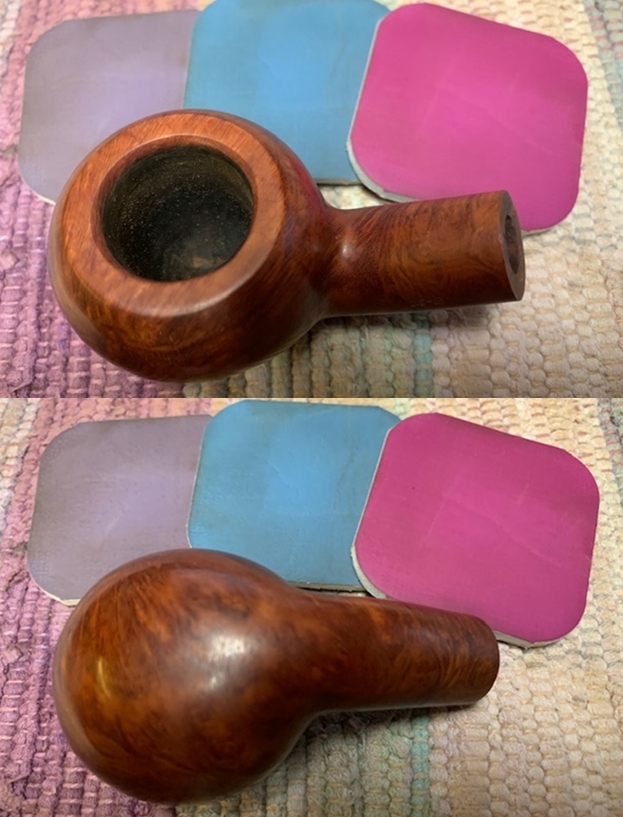
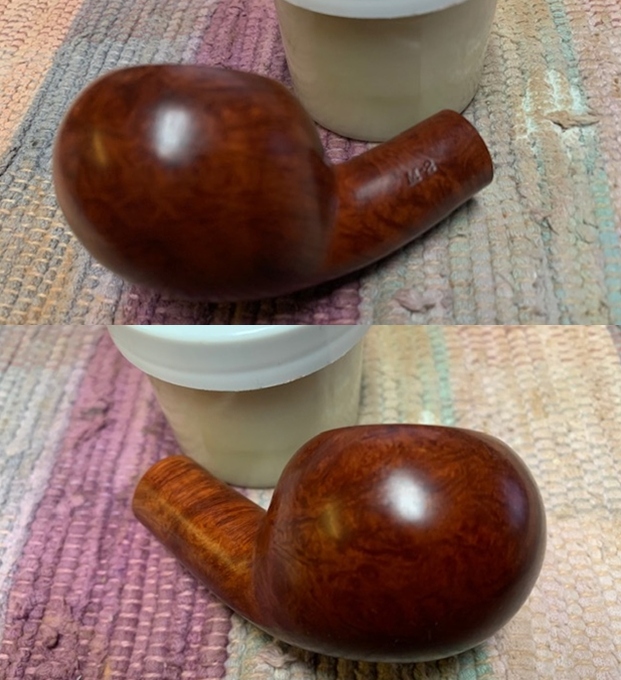
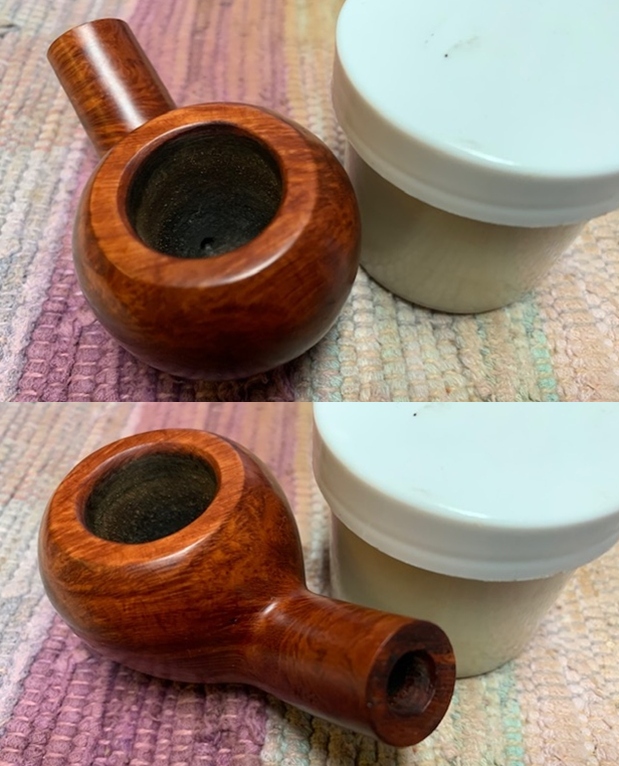
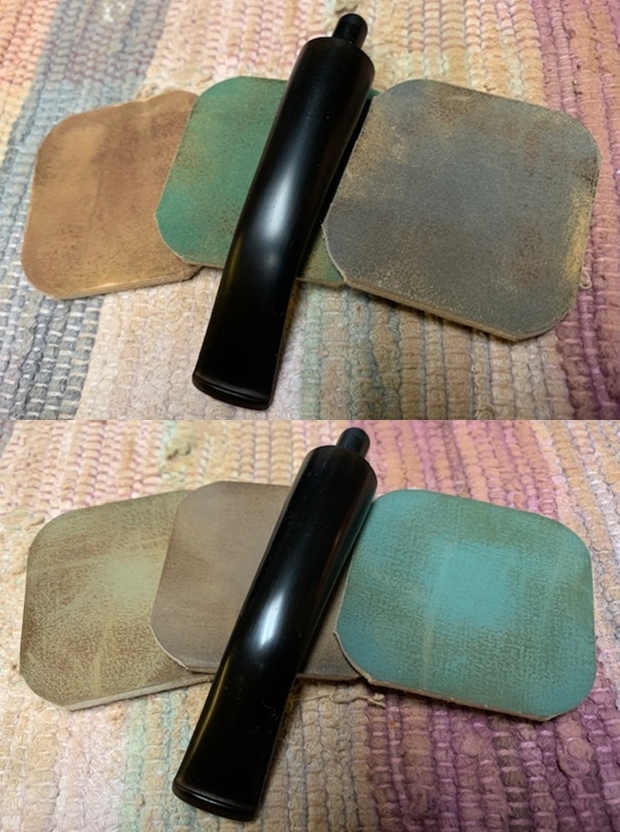
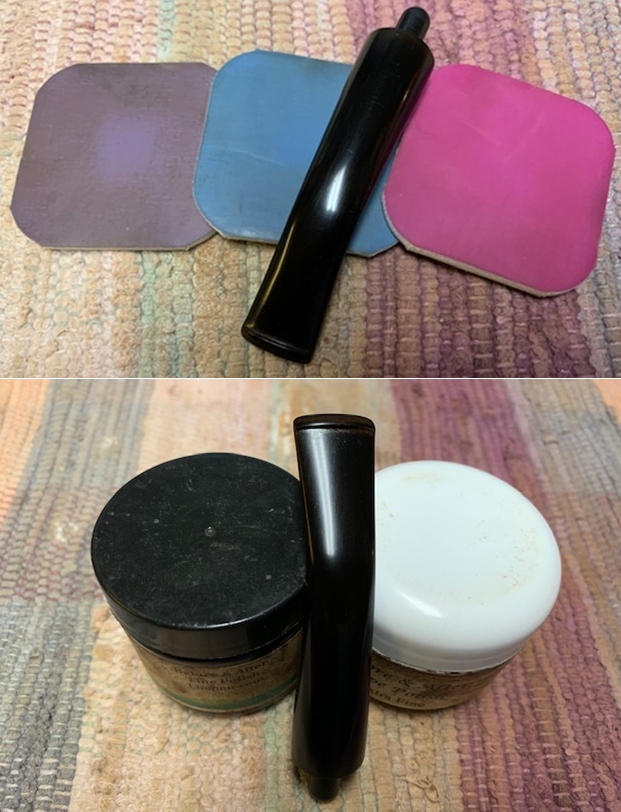
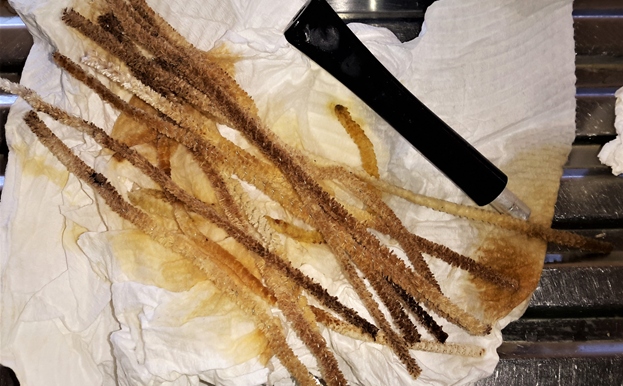
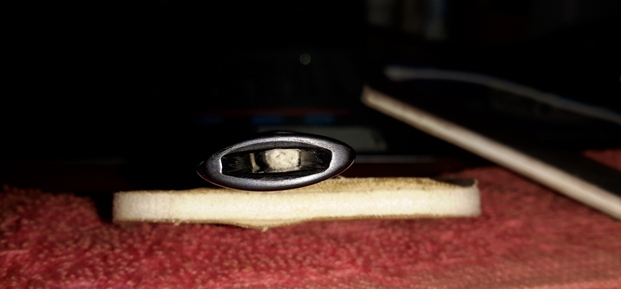
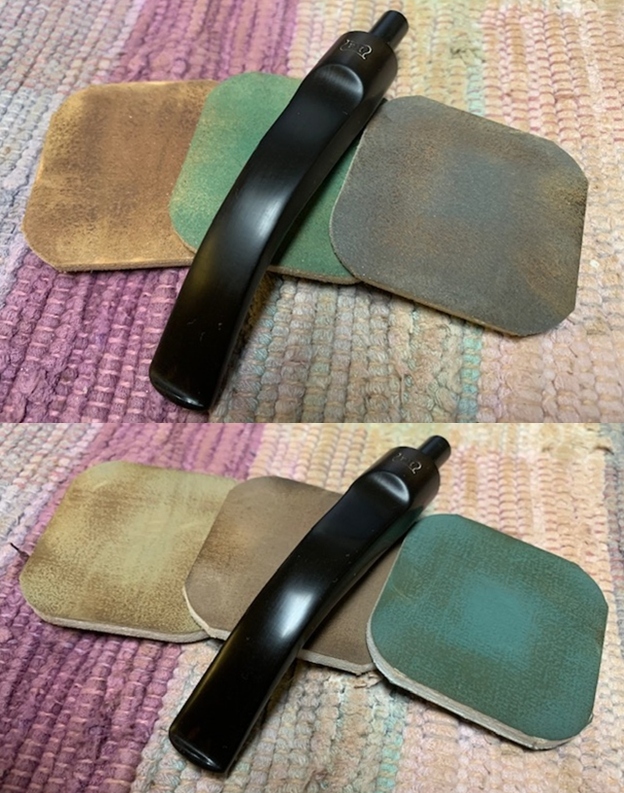
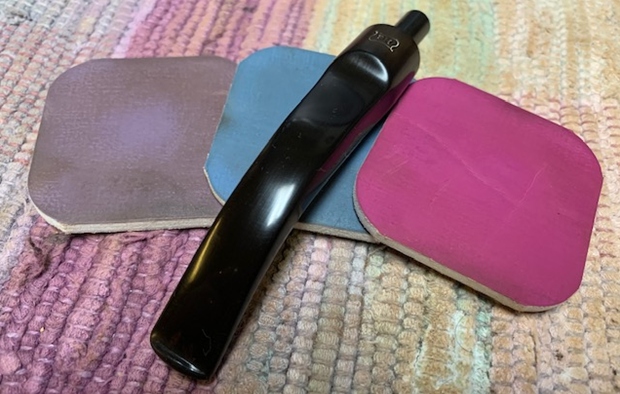
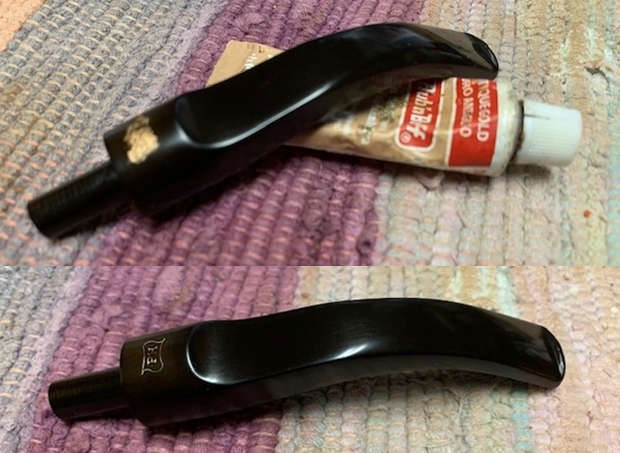
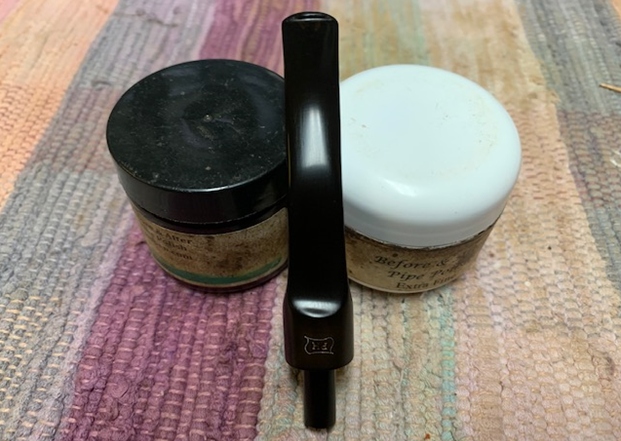
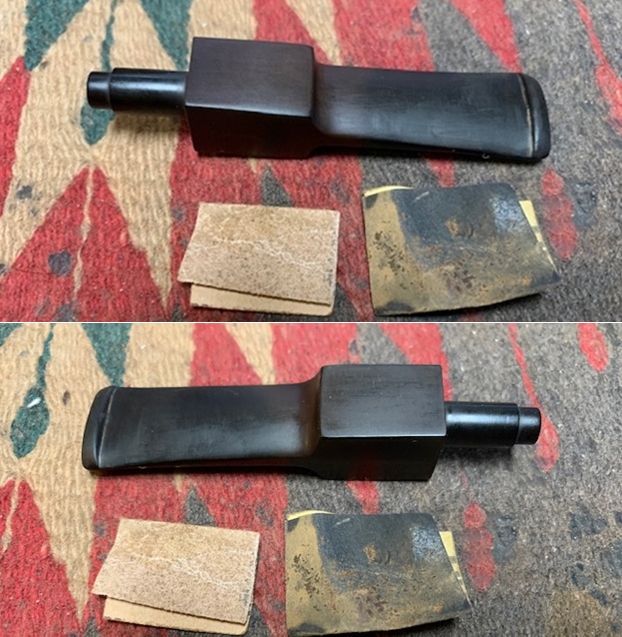
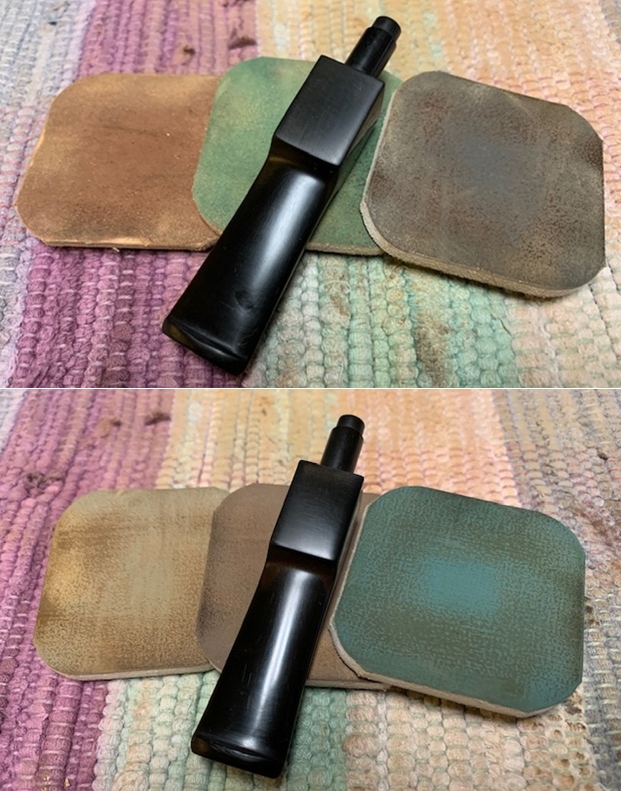
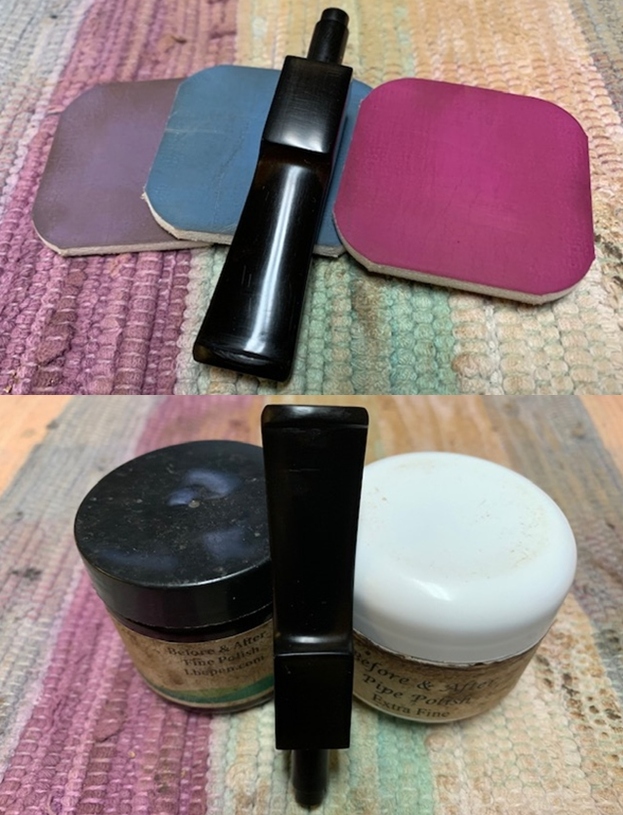
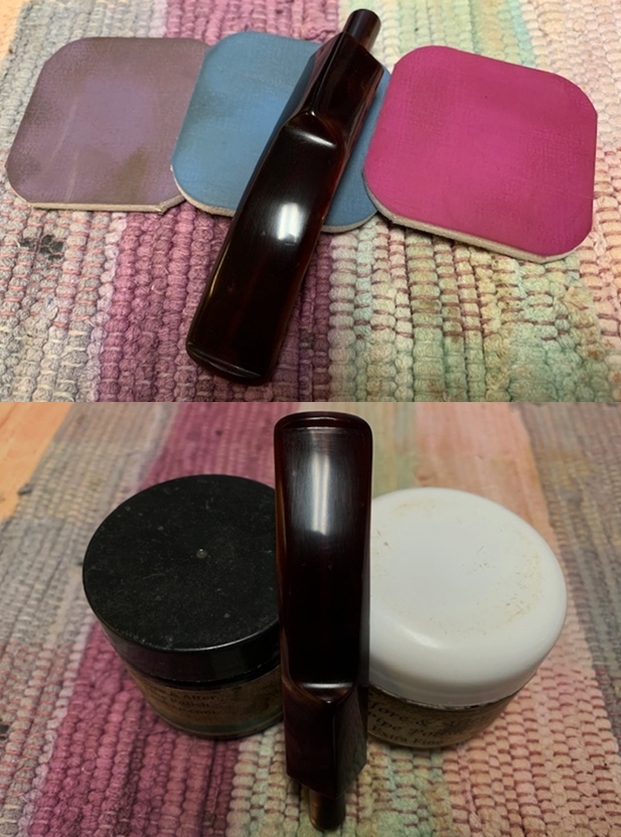
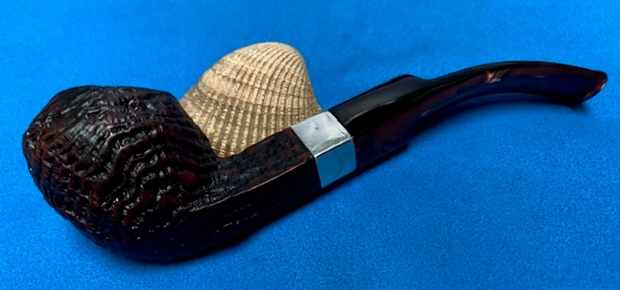
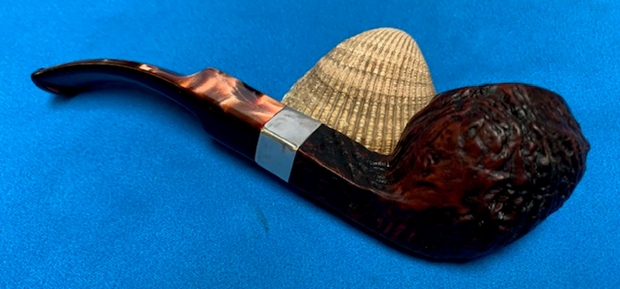
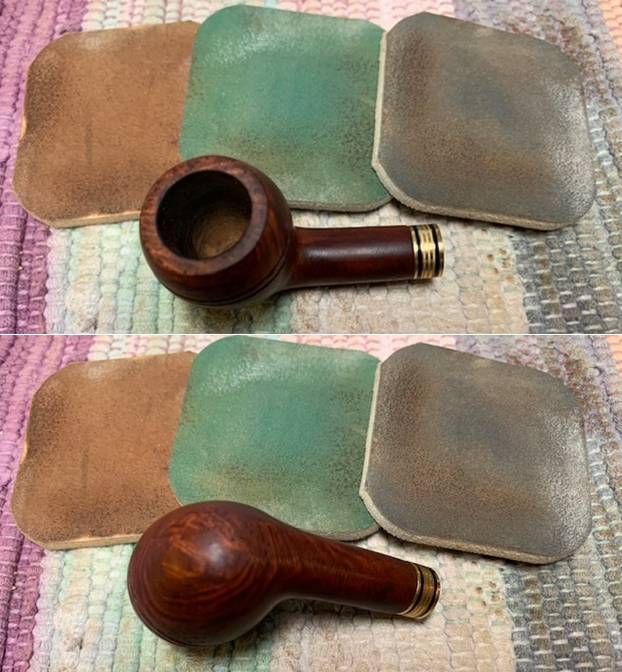
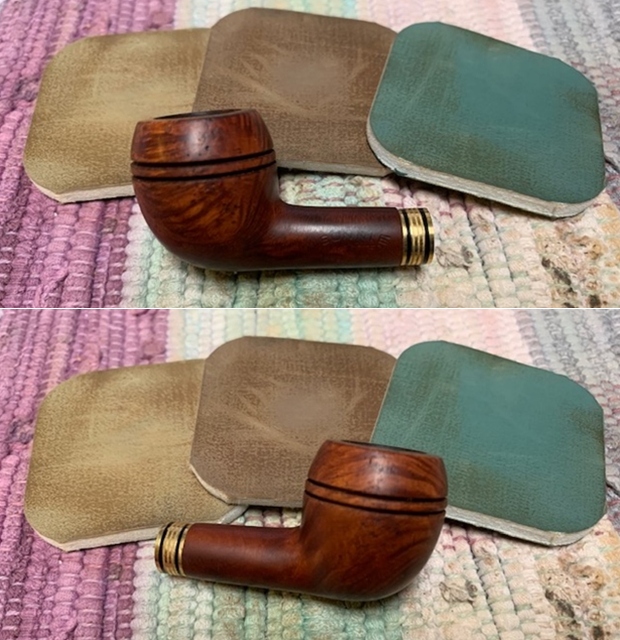
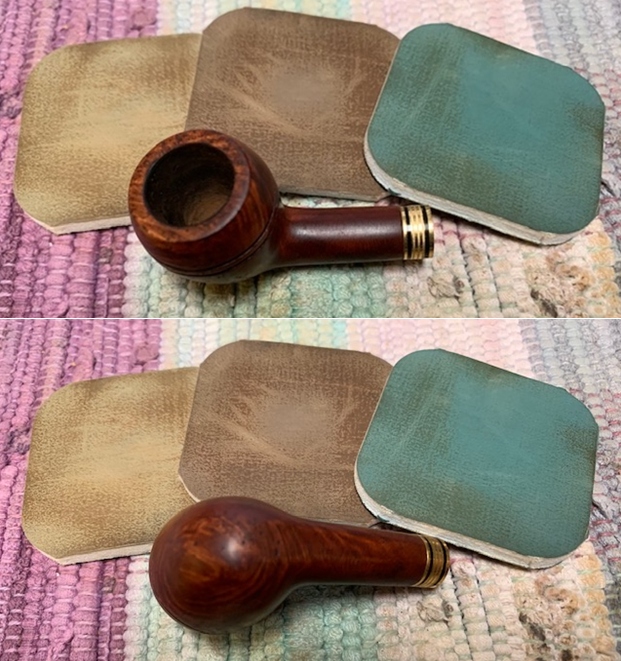
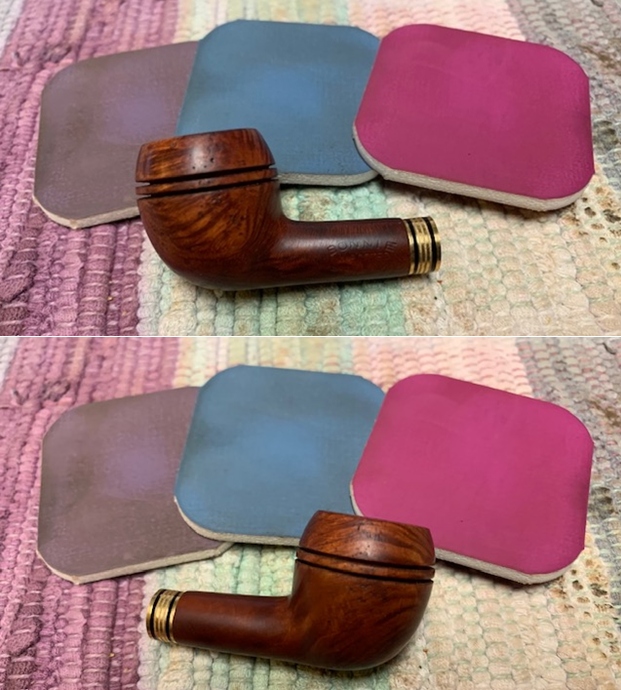
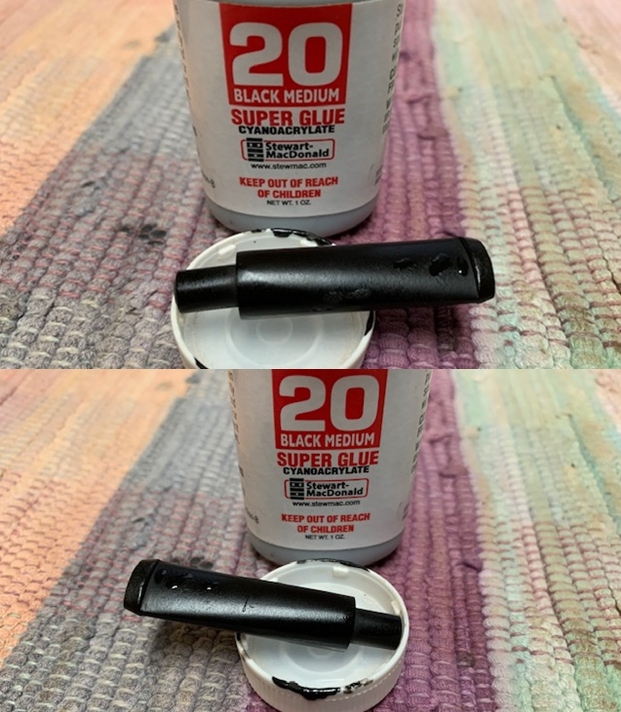
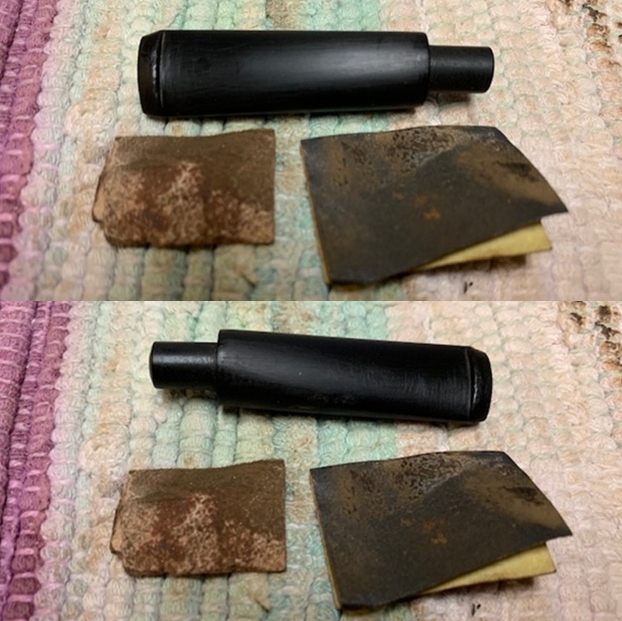
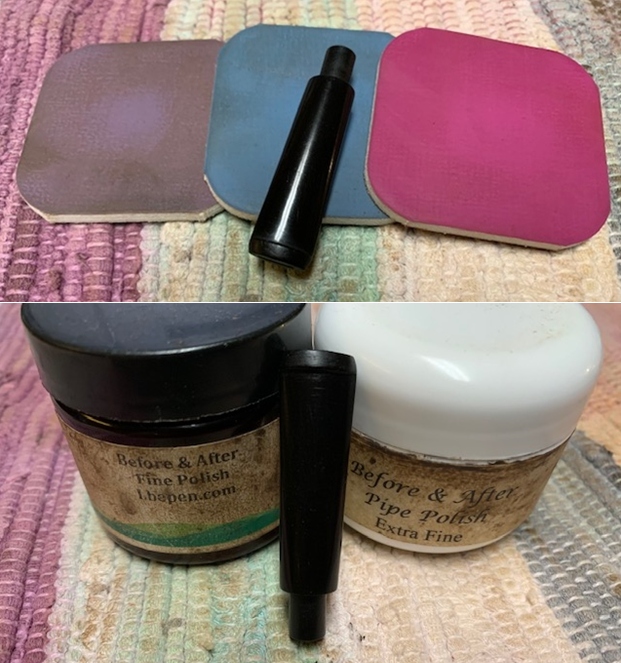
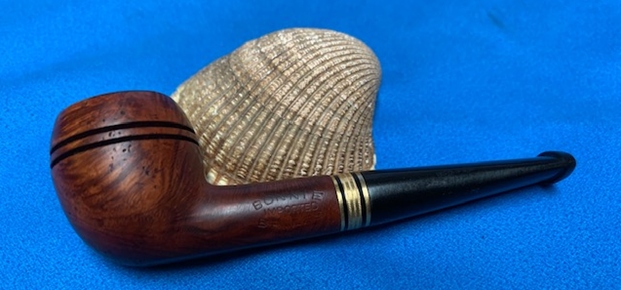
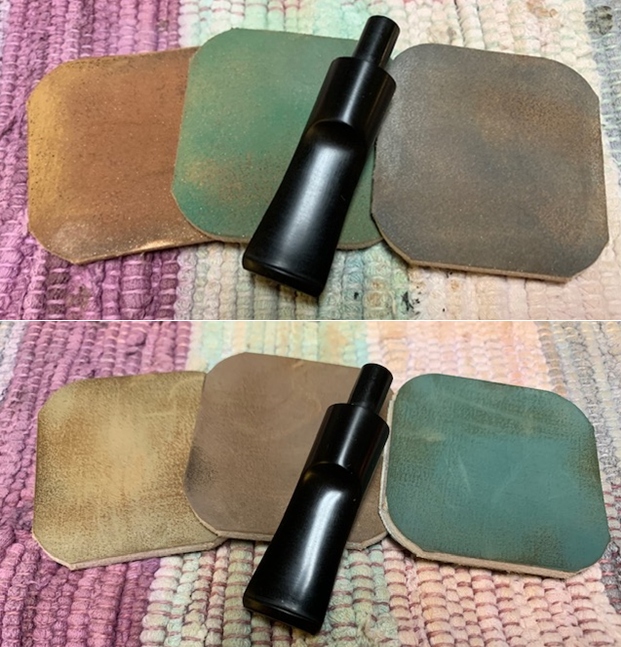
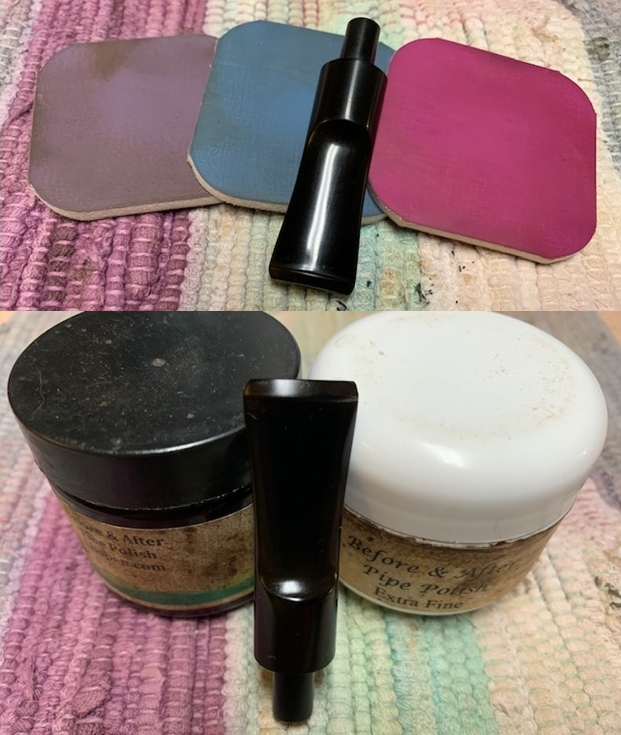
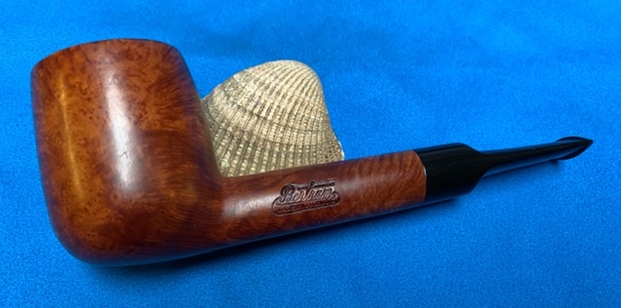
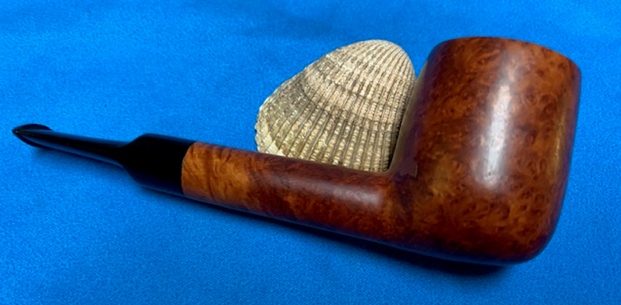
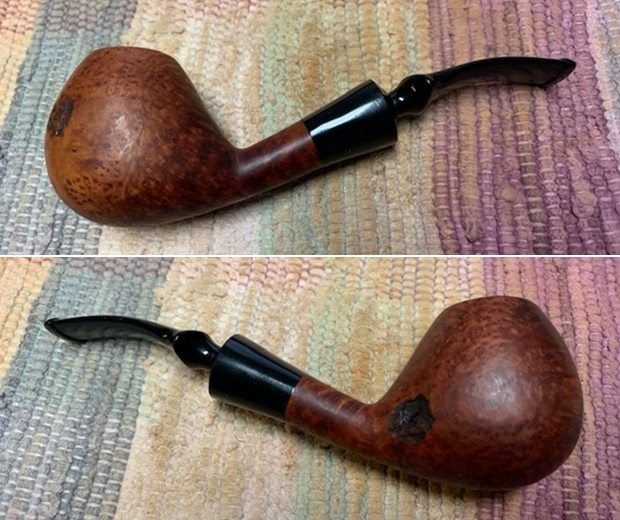
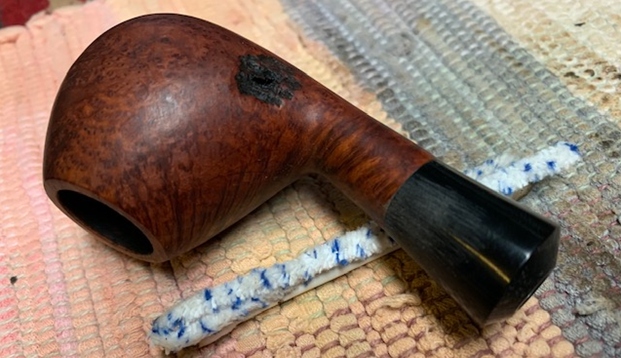
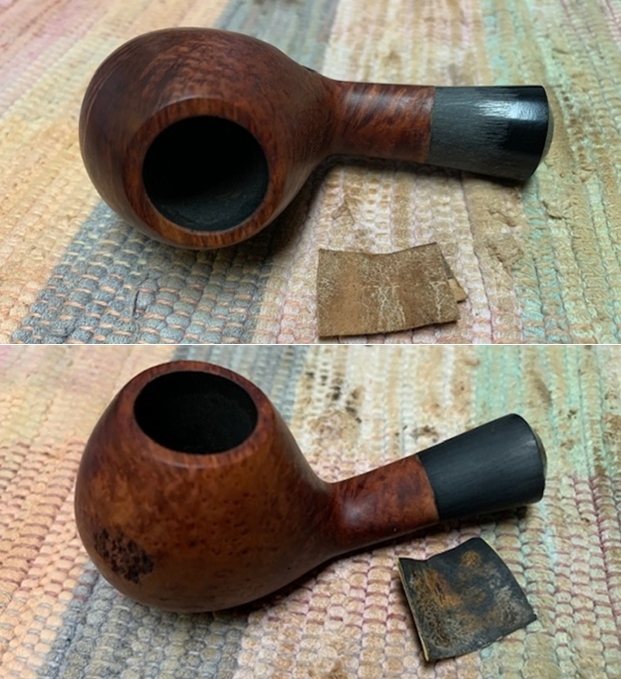
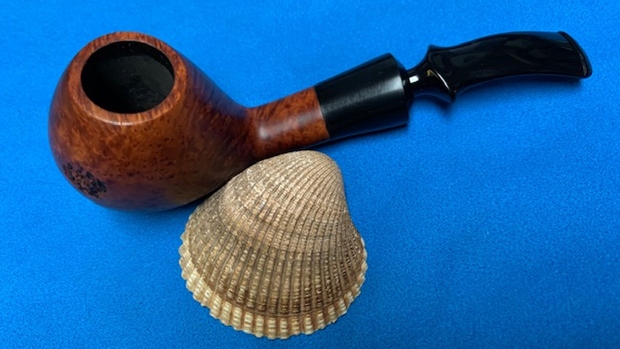
As usual Jeff had done a thorough cleanup on the pipe. He reamed the bowl with a PipNet pipe reamer and followed up with a Savinelli Fitsall pipe knife to remove the cake. He scrubbed out the mortise and the airway in the shank and the stem with alcohol, cotton swabs and pipe cleaners. He scrubbed the exterior of the bowl, rim, shank and stem with a tooth brush and Murphy’s Oil Soap to remove the oils and tars on the rim and the grime on the finish of the bowl. He rinsed it under running water. He dried it off with a soft cloth. He cleaned the internals and externals of the stem with alcohol, pipe cleaners and cotton swabs. He soaked the stem in Before & After Deoxidizer and rinsed it off with warm water and cleaned out the airway in the stem with alcohol. The pipe looked very good.   I took a photo of the rim top and stem to show the condition. They cleaned up really well and the top of the rim looked very good. The inner edge of the bowl showed chipping and burn damage all around. The vulcanite taper stem had light tooth chatter and marks on both sides ahead of the button and on the button edges.  I removed the stem and the extension from the shank and took a photo of the pipe to give a sense of the whole. It is a Brandy shape or maybe and egg that should be interesting once it is put back together.   Now it was time to do my work on the pipe. I started by reattaching the shank extension the shank. The glue had dried out and it was no longer attached. I cleaned out the glue in the shank with a cotton swab and alcohol. Once it was clean I used some black super glue to put it in place. I swabbed the tenon end with glue and then put it on the shank. Adjusting it was a trick as the shank is not a perfect oval and neither is the extension. When it was aligned I set it aside to let the glue cure.  Once the glue had set I used a pipe cleaner to clean out the shank of any debris. I then sanded the shank/extension joint with 220 grit sandpaper to smooth out the transition. Once that was smooth I started the polishing with 400 grit wet dry sandpaper. I polished the briar and acrylic shank extension with micromesh sanding pads – wet sanding with 1500-12000 grit pads and wiped down the bowl after each sanding pad.  Interestingly when Jeff did the clean up with Murphy’s Oil Soap and water most of the scratching in the briar raised. I polished out the remaining scratches with micromesh. I rubbed the bowl and shank down with Before & After Restoration Balm. I worked it into the surface of the bowl sides and shank with my fingertips to clean, enliven and protect the briar. I let the balm sit for a little while and then buffed with a cotton cloth to raise the shine. The Balm did its magic and the grain stood out.    I set the bowl aside and turned my attention to the stem. I sanded out the tooth marks on the stem with 220 grit sandpaper and started the polishing process with 400 grit wet dry sandpaper.I polished the acrylic stem with micromesh sanding pads – 1500-12000 grit pads. I wiped it down with a damp cloth after each sanding pad. I used Before & After Pipe Polish – both Fine and Extra Fine to further polish the stem. The photo below shows the polished stem. This carved Made in Denmark Brandy/Egg with an acrylic shank extension and fancy saddle stem is a great looking pipe now that it has been restored. The briar around the bowl is clean and quite nicely grained. The rich brown stains of the smooth finish came alive with the polishing and waxing. The grain really popped. The acrylic shank extension looks very good with the briar. I put the acrylic stem back on the bowl and carefully buffed the pipe with Blue Diamond on the buffing wheel using a light touch on the briar. I gave the bowl and the stem multiple coats of carnauba wax on the buffing wheel. I buffed the pipe with a clean buffing pad to raise the shine. I hand buffed the pipe with a microfiber cloth to deepen the shine. The finished Made in Denmark Brandy is a beauty and feels in the hand and looks very good. Give the finished pipe a look in the photos below. The dimensions of the pipe are Length: 5 ½ inches, Height: 1 ¾ inches, Outside diameter of the bowl: 1 ¼ inches, Chamber diameter: ¾ of an inch. Thanks for reading this blog and my reflections on the pipe while I worked on it. There are many more to come!

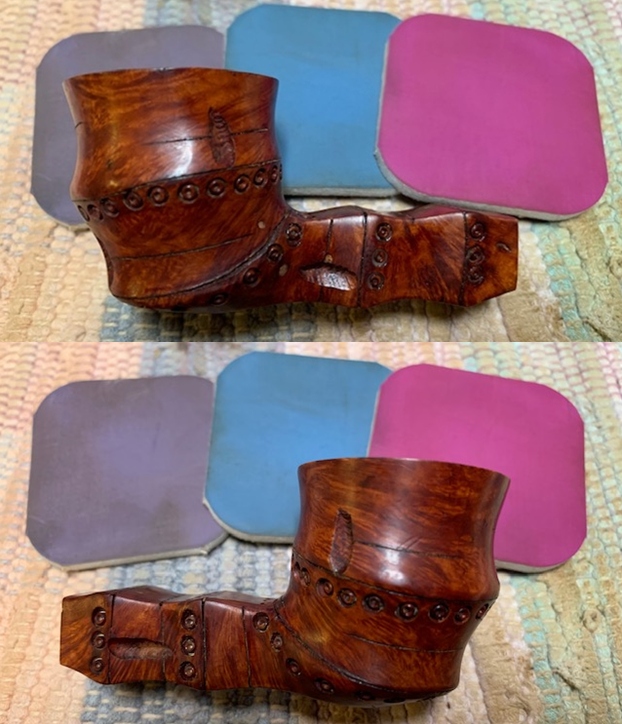
New Life for a Canberra London Made Bamboo Carved Billiard


Blog by Steve Laug

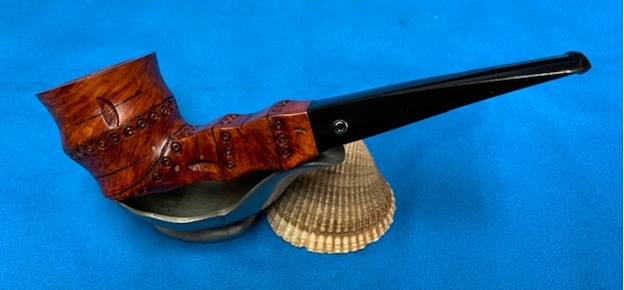
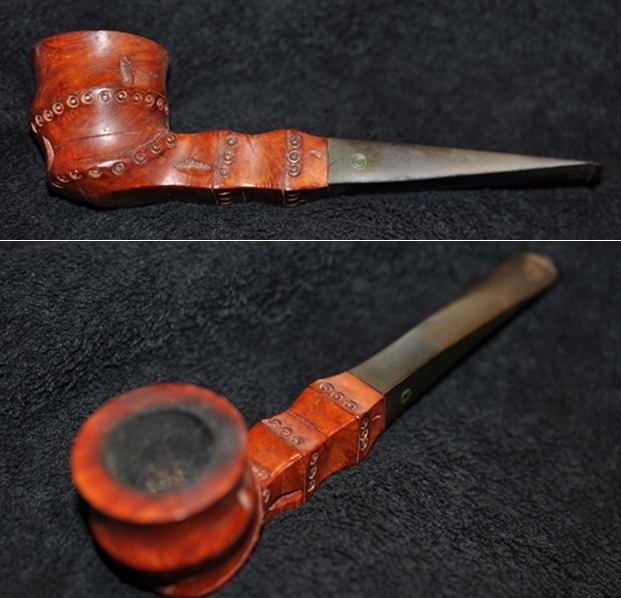
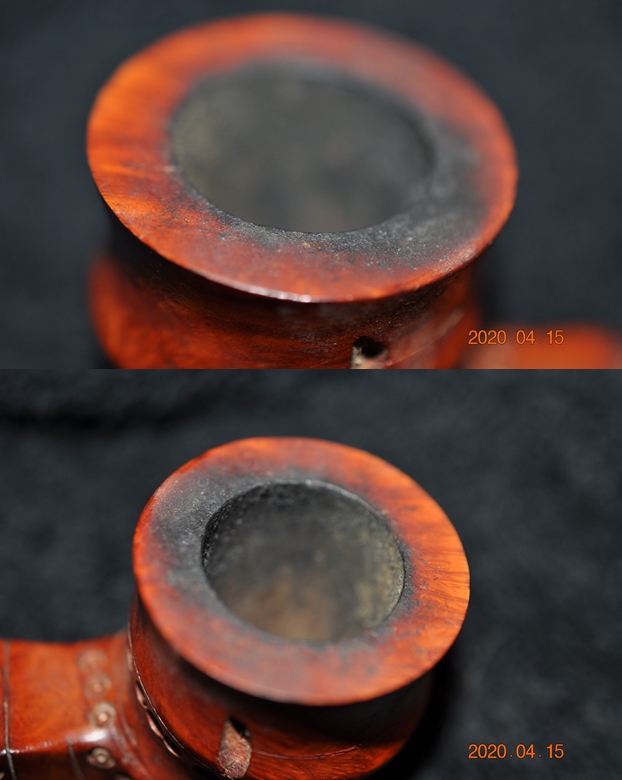
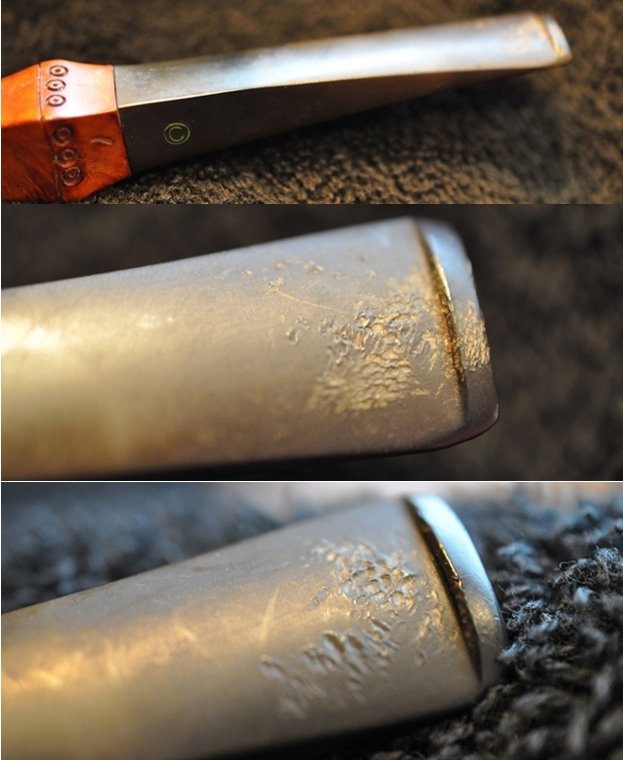
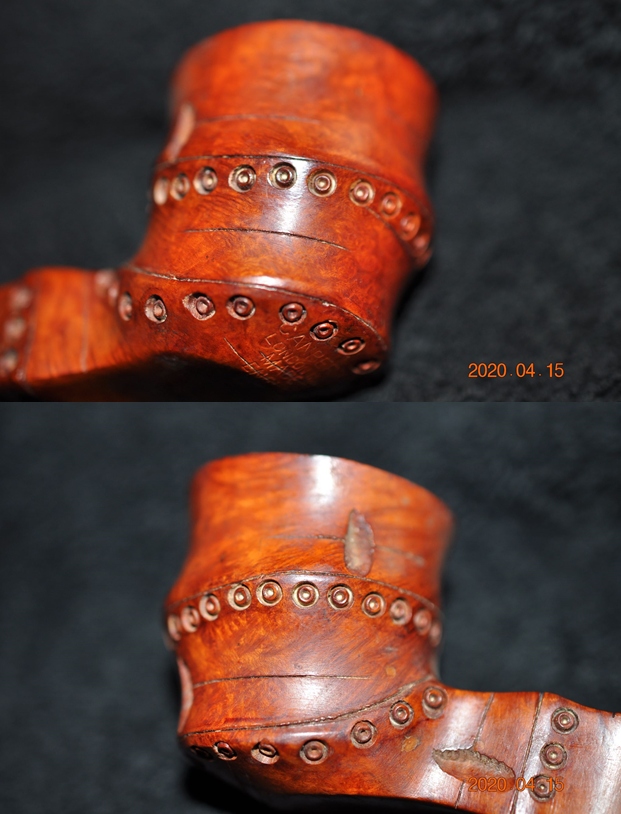
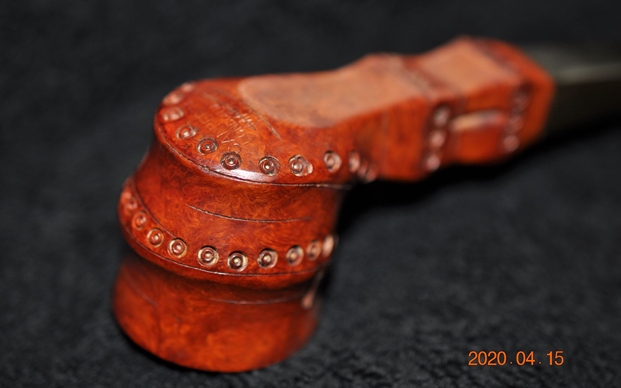
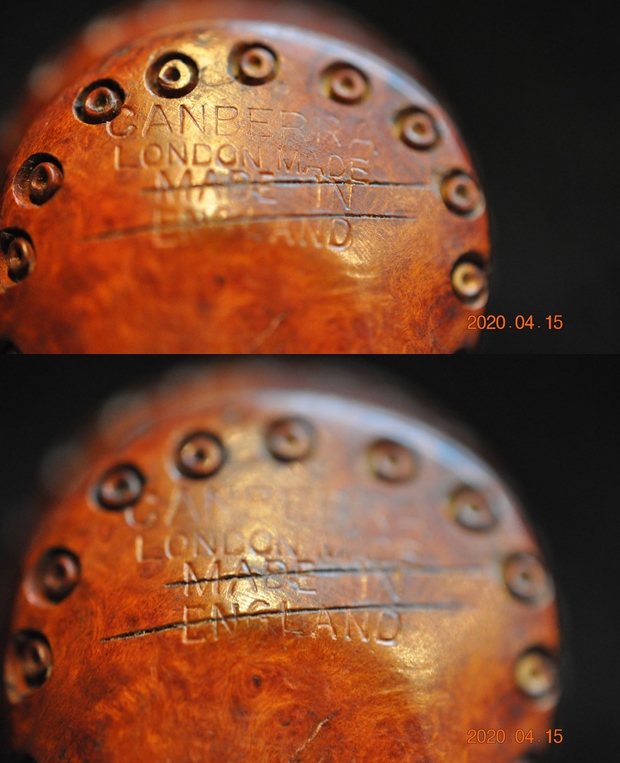
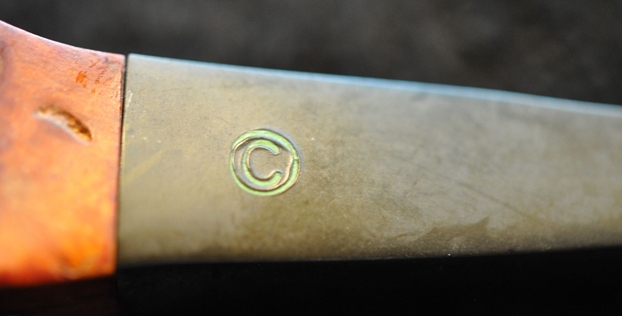
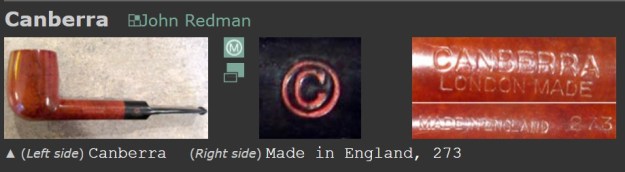
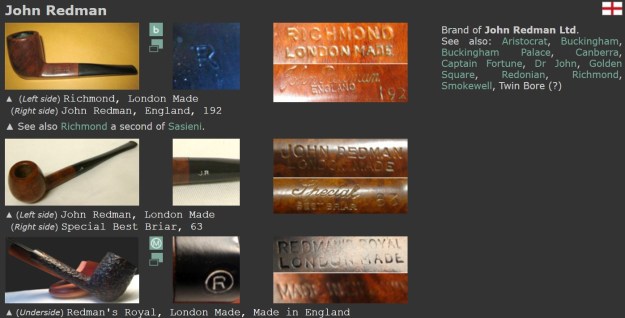
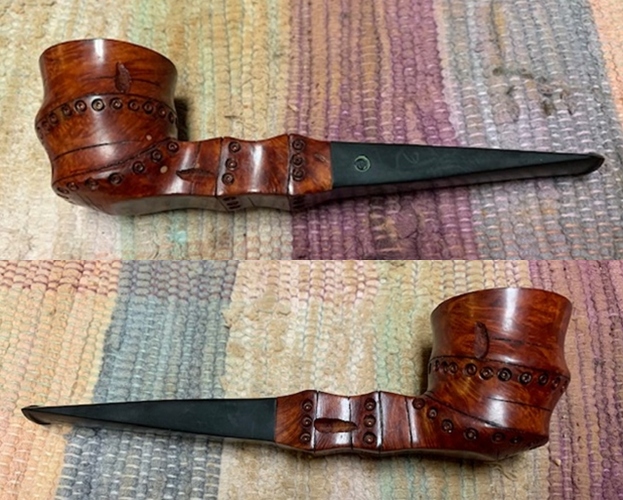
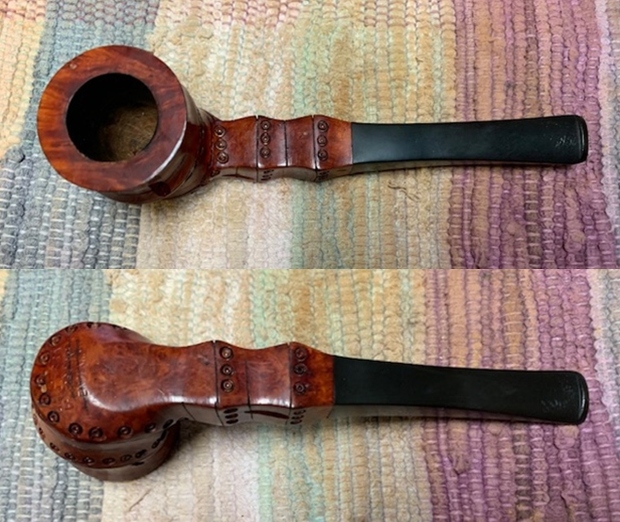
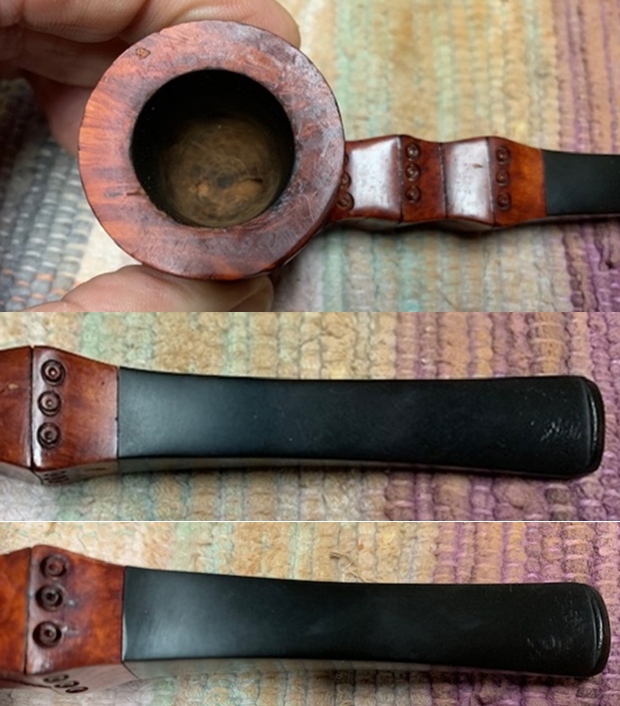
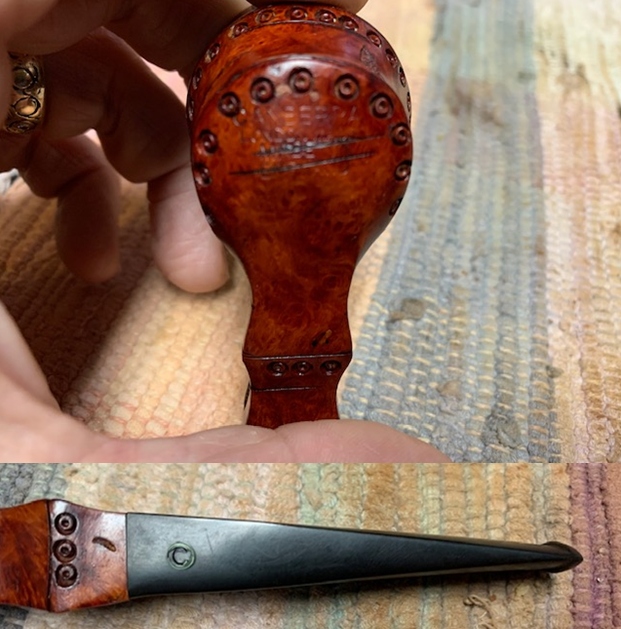
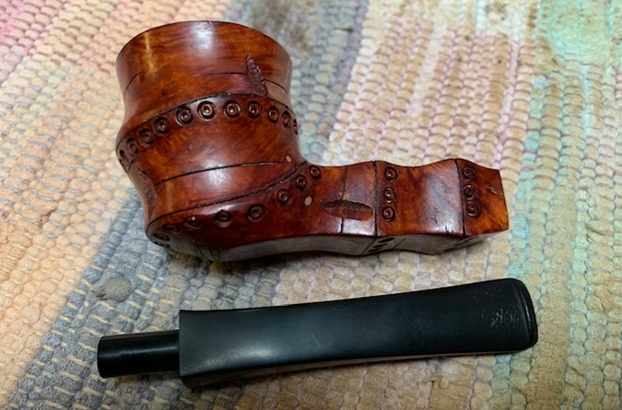
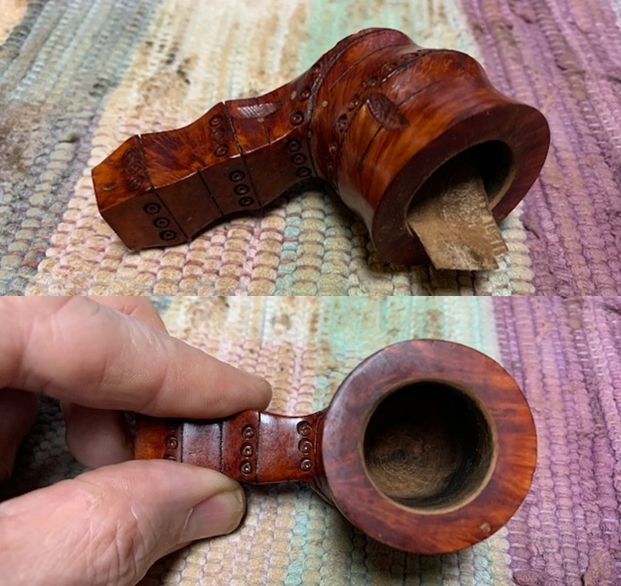
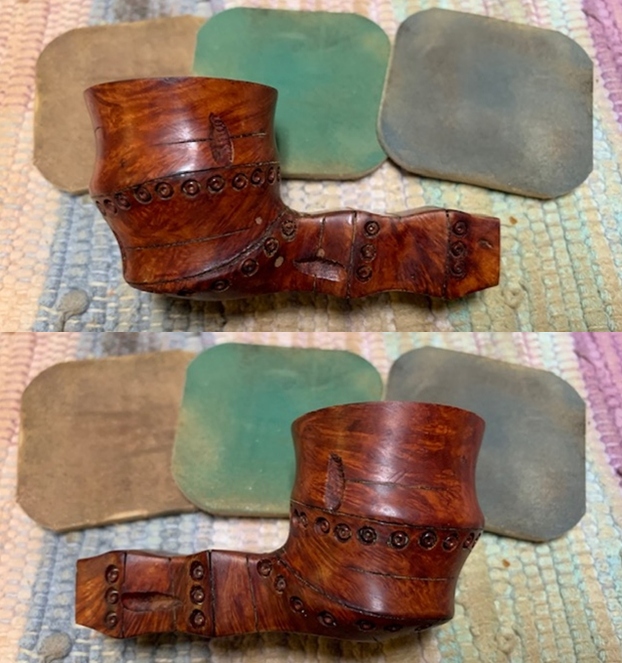
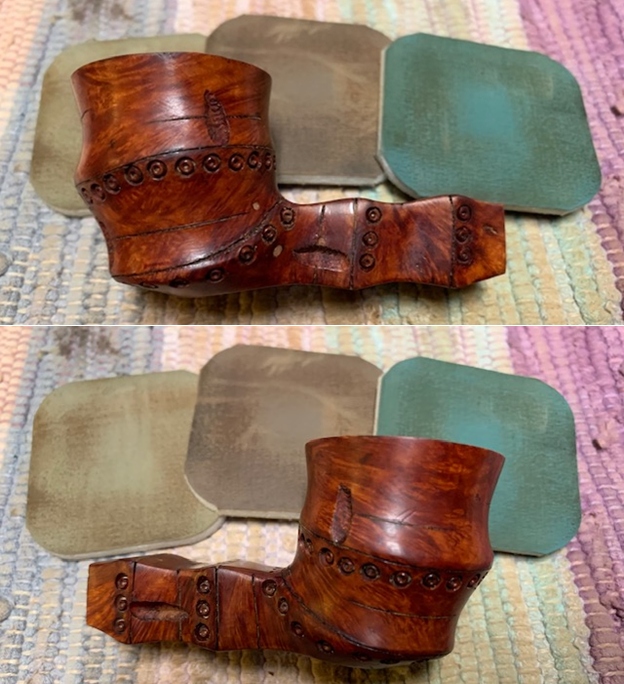
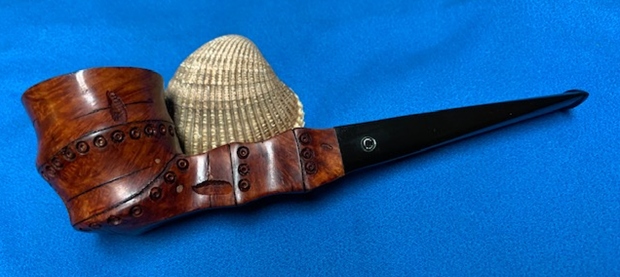
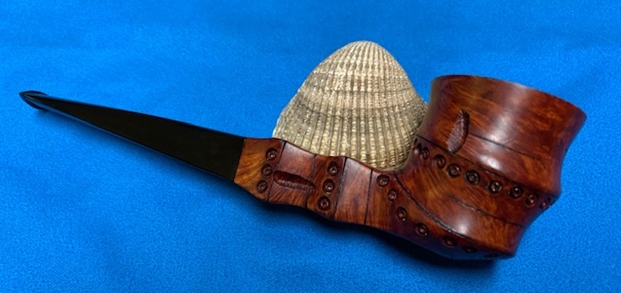
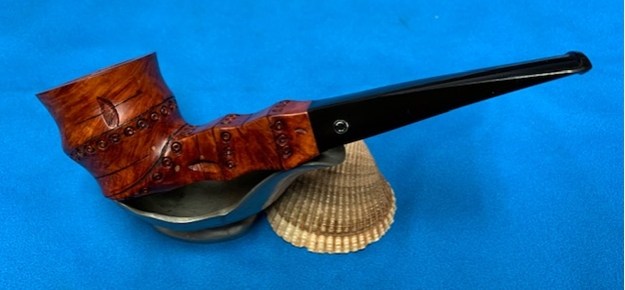
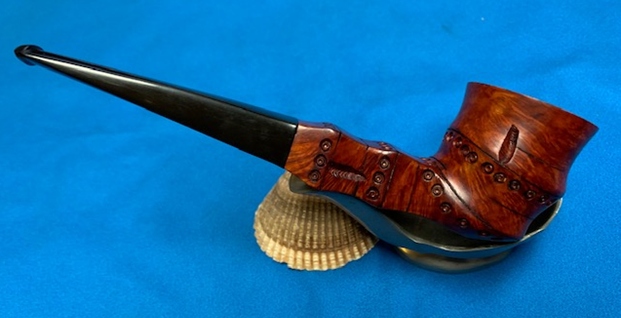
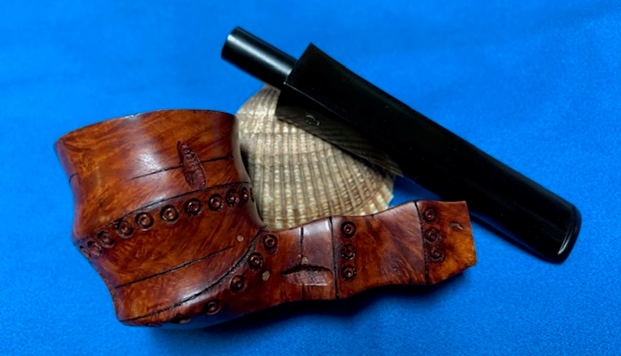
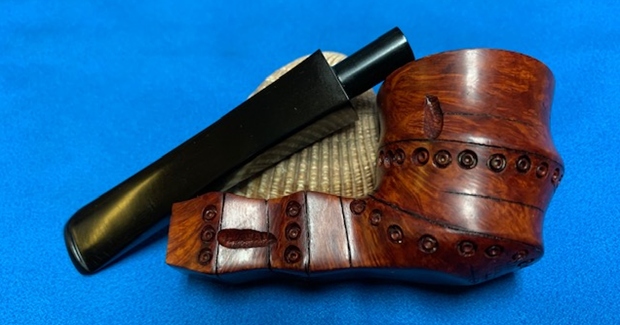
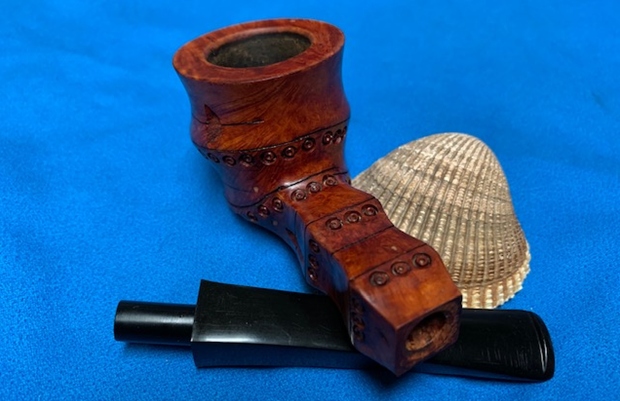
The next pipe on the work table came to us from an online auction out of Columbus, MI, USA.    It is a variation on a billiard with a square shank and square taper stem. The bowl and shank have been carved to look like Bamboo with the notches and growth nodules. It has a rich reddish brown colour combination that highlights the grain. There are a few small fills in the bowl that have been worked into the carving around the bowl so they are less visible. I have worked on a few Bamboo carved pipes throughout the years that have come from Spain but this one comes from London England. This pipe is stamped on the heel of the bowl and reads Canberra [over] London Made [over] Made in England. There is also a “C” in a circle logo stamped on the left side of the stem. There is a thick cake in the bowl and an overflow of lava on the back rim top. It appears that there is some damage to the inner edge of the rim in that area as well. The outer edge of the bowl looks very good. The square vulcanite taper stem was oxidized, calcified and had light tooth marks and chatter on both sides of the stem near the button. The pipe looks to be in decent condition under the grime. Jeff took photos of the pipe before he started his cleanup. He took photos of the rim top to show the cake and the light lava coat. It is another dirty pipe. He also captured the shape of the stem and the deep tooth marks and chatter on the top and underside of the stem near the button.      He took photos of the sides and heel of the bowl to show the bamboo like carving and grooves in the briar around the bowl and the amount of grime ground into the surface of the briar.    He took a photo of the stamping on the heel of the bowl and it is clear and readable as noted above. The lines carved in the briar through the stamping are like the others carved around the bowl sides and add to the bamboo look. The “C” in a circle logo on the left side of the stem is also readable.   I turned to Pipephil to get a quick overview of the brand (http://www.pipephil.eu/logos/en/logo-c2.html). I was surprised to see the connection to the John Redman brand.I followed the link on the page to John Redman and did a screen capture of the section (http://www.pipephil.eu/logos/en/logo-j3.html#johnredman). Listed on the last column was the Canberra line.I then turned to Pipedia for a bit more history on the John Redman Company (https://pipedia.org/wiki/John_Redman_Ltd./British_Empire_Pipe_Co.). The Canberra line is noted in the list on the page and there is a photo that also includes the same stamping as the pipe I am working on. I quote the list below below:
John Redman Ltd. and British Empire Pipe Co. Other lines include Aristocrat, Buckingham, Buckingham Palace, Canberra, Captain Fortune, Dr John, Golden Square, Redonian, Richmond (not Sasieni), Twin Bore. Former factory located at 3-11 Westland Place, Hackney, London N1 7LP

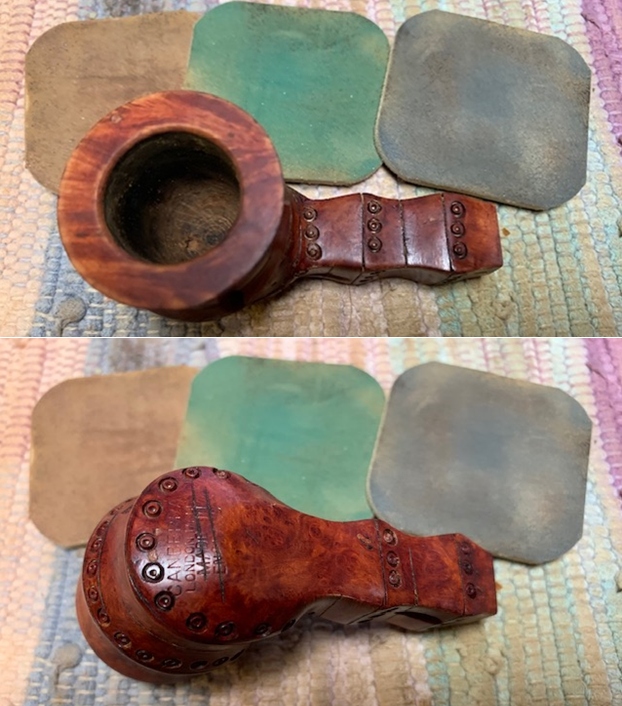
Now it was time to work on the pipe. As usual Jeff had done a thorough cleanup on the pipe. He reamed the bowl with a PipNet pipe reamer and followed up with a Savinelli Fitsall pipe knife to remove the cake. He scrubbed out the mortise and the airway in the shank and the stem with alcohol, cotton swabs and pipe cleaners. He scrubbed the exterior of the bowl, rim, shank and stem with a tooth brush and Murphy’s Oil Soap to remove the oils and tars on the rim and the grime on the finish of the bowl. He rinsed it under running water. He dried it off with a soft cloth. He cleaned the internals and externals of the stem with alcohol, pipe cleaners and cotton swabs. He soaked the stem in Before & After Deoxidizer and rinsed it off with warm water and cleaned out the airway in the stem with alcohol. The pipe looked very good. I took a photo of the rim top and stem to show the condition. They cleaned up really well and the top of the rim looked very good. The inner edge of the bowl showed chipping and burn damage all around. The vulcanite taper stem had light tooth chatter and marks on both sides ahead of the button and on the button edges.     I took photos of the stamping on the heel of the bowl and the logo on the stem. It read as noted above.   I removed the stem and took a photo of the pipe to give a sense of the whole. It is a carved Bamboo style square shank Billiard that looks great.Now it was time to do my work on the pipe. I started by working over the damage on the inside rim. I used a folded piece of 220 grit sandpaper to give the inner edge a bevel to clean up the edges of bowl.  I polished the briar with micromesh sanding pads – wet sanding with 1500-12000 grit pads and wiped down the bowl after each sanding pad.    I rubbed the bowl and shank down with Before & After Restoration Balm. I worked it into the surface of the bowl sides and shank with my fingertips to clean, enliven and protect the briar. I let the balm sit for a little while and then buffed with a cotton cloth to raise the shine. The Balm did its magic and the grain stood out.  I set the bowl aside and turned my attention to the stem. I started by “painting” the surface of the stem with the flame of a Bic lighter to lift  the tooth marks. It removed the majority of the marks. What was left behind after the flame, I sanded out the tooth marks on the stem with 220 grit sandpaper and started the polishing process with 400 grit wet dry sandpaper.  I polished the vulcanite stem with micromesh sanding pads – 1500-12000 grit pads. I wiped it down with Obsidian Oil after each sanding pad. I used Before & After Pipe Polish – both Fine and Extra Fine to further polish the stem. The photo below shows the polished stem.  I touched up the “C” stamp with Paper Mate Liquid Paper. I pressed it into the stamped letter with a tooth pick. Once it cured I scraped off the excess with the tooth pick.  This carved Bamboo like briar Canberra London Made Billiard with a vulcanite taper stem is a great looking pipe now that it has been restored. There are fills around the bowl that blend in nicely with the finish on the bowl. The rich brown stains of the Bamboo finish came alive with the polishing and waxing. The grain really popped. I put the stem back on the bowl and carefully buffed the pipe with Blue Diamond on the buffing wheel using a light touch on the briar. I gave the bowl and the stem multiple coats of carnauba wax on the buffing wheel. I buffed the pipe with a clean buffing pad to raise the shine. I hand buffed the pipe with a microfiber cloth to deepen the shine. The finished Canberra Square Shank Bamboo Carved Billiard is a beauty and fits nicely in the hand and looks very good. Give the finished pipe a look in the photos below. The dimensions of the pipe are Length: 5 ½ inches, Height: 1 ¾ inches, Outside diameter of the bowl: 1 ½ inches, Chamber diameter: ¾ of an inch. Thanks for reading this blog and my reflections on the pipe while I worked on it. There are many more to come!
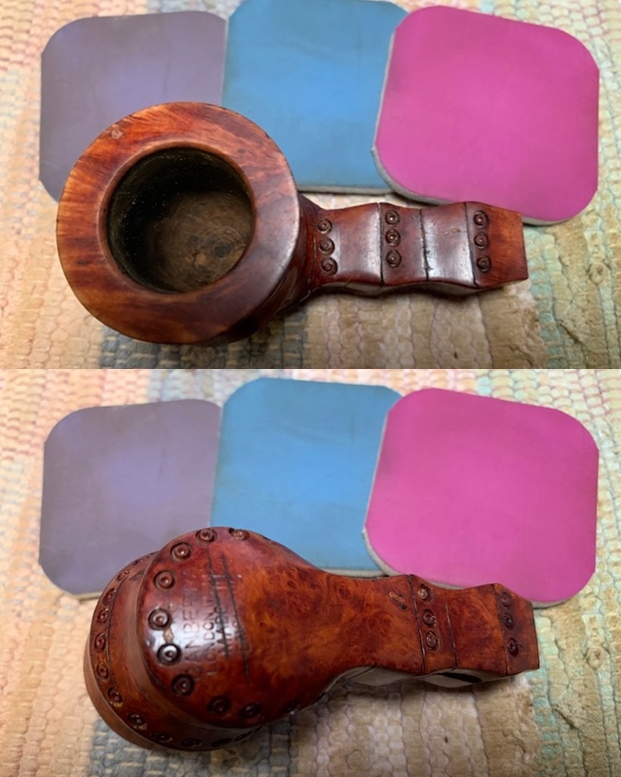
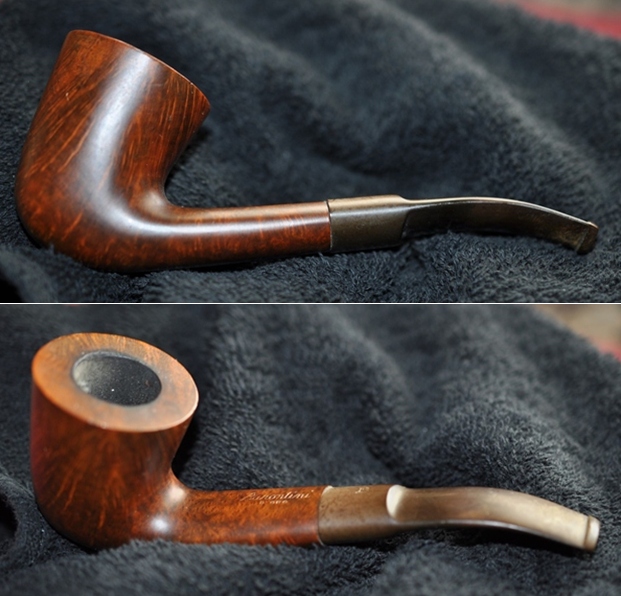
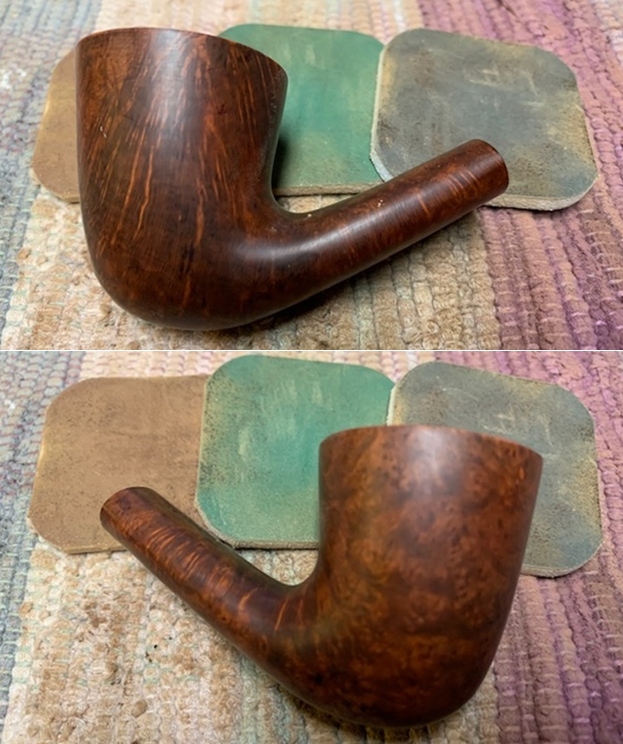
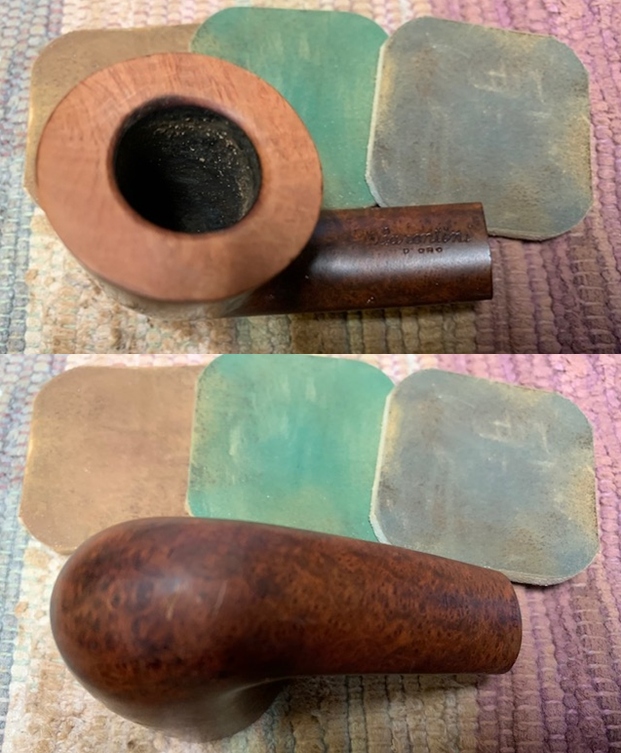
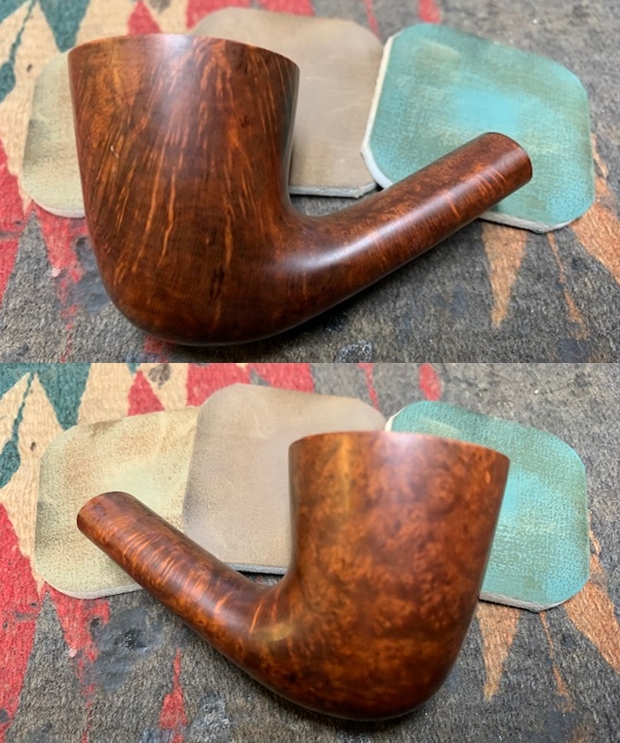
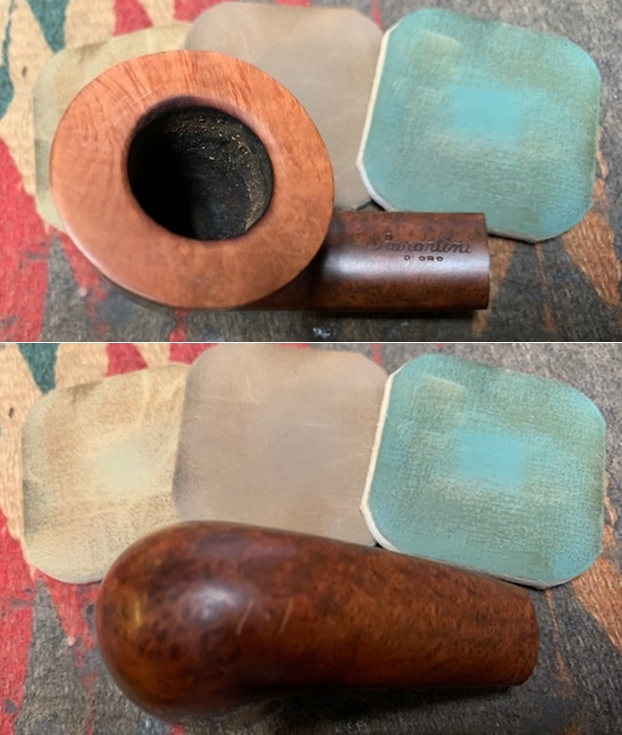
New Life for a Barontini d’Oro 104 Oval Shank Bent Dublin


Blog by Steve Laug

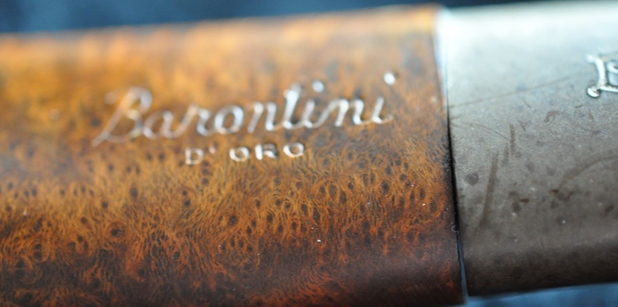
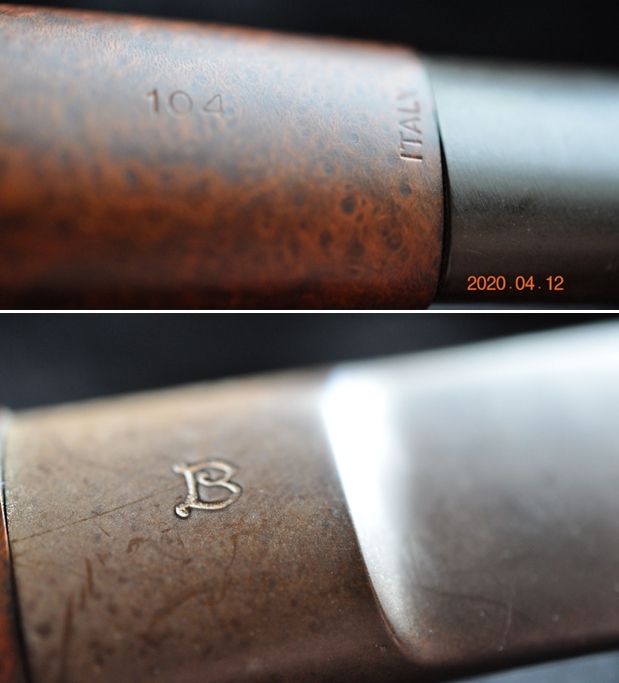
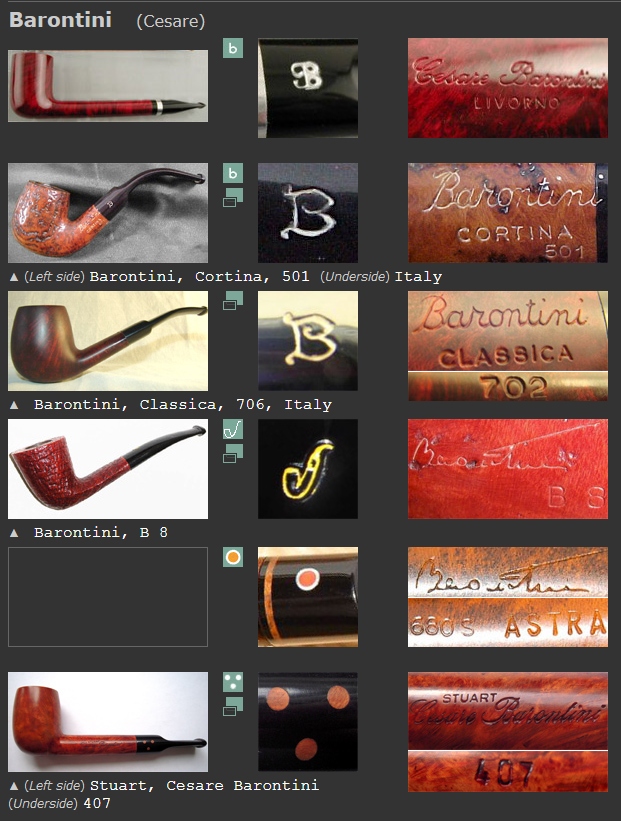
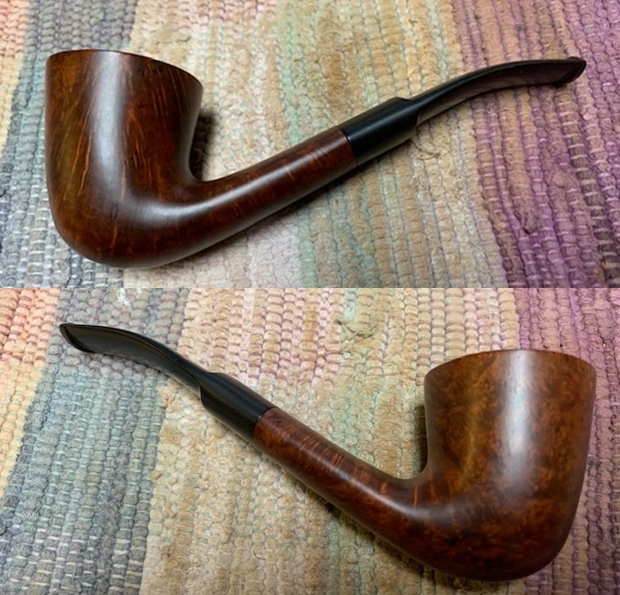
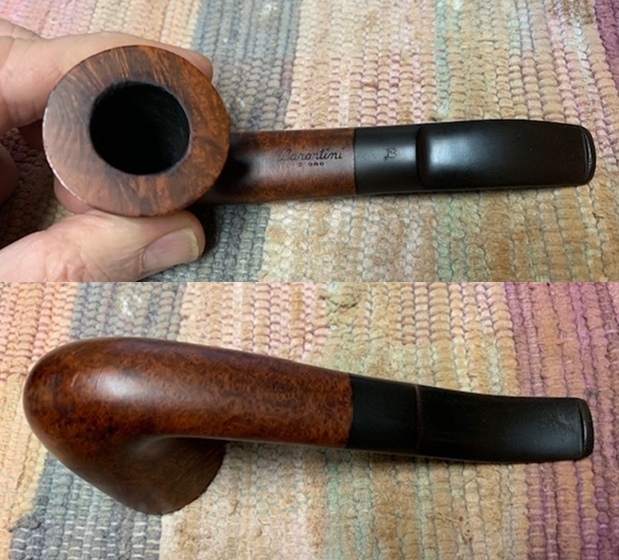
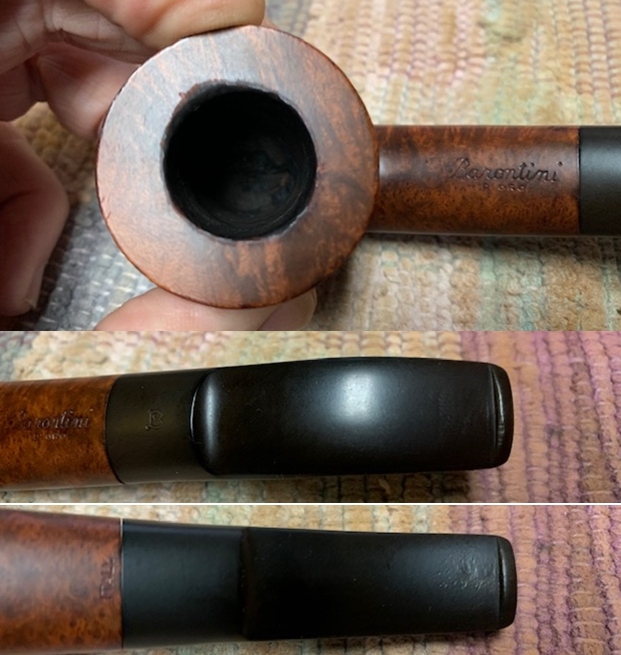
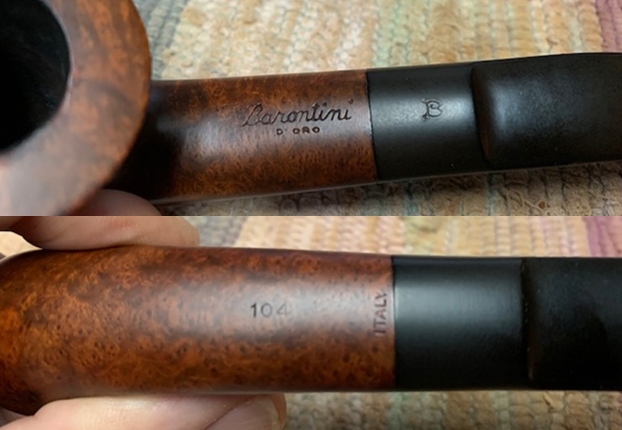
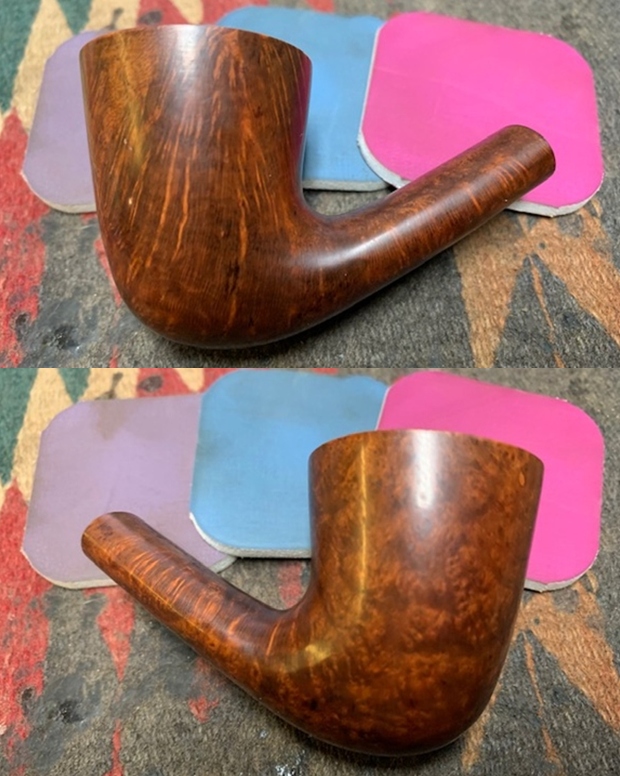
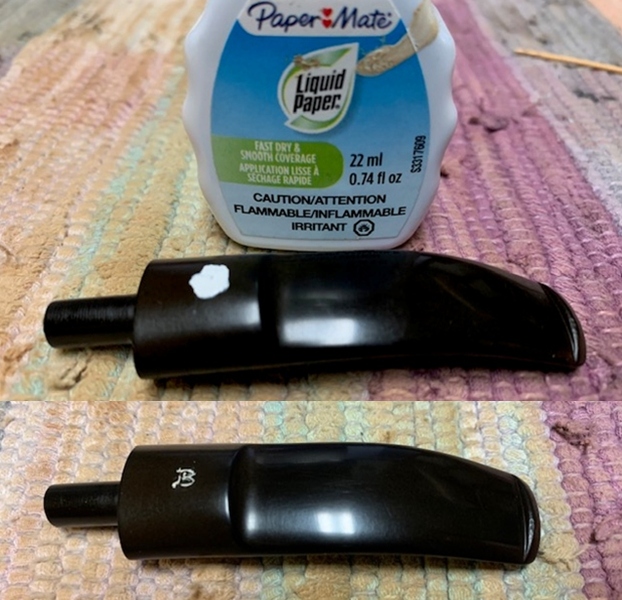
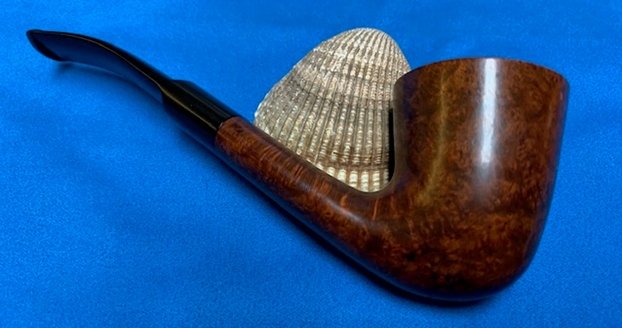
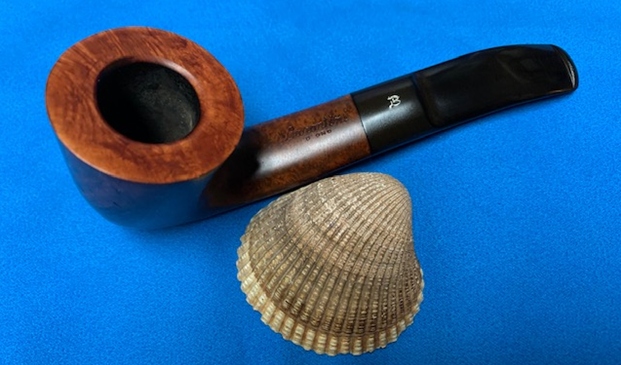
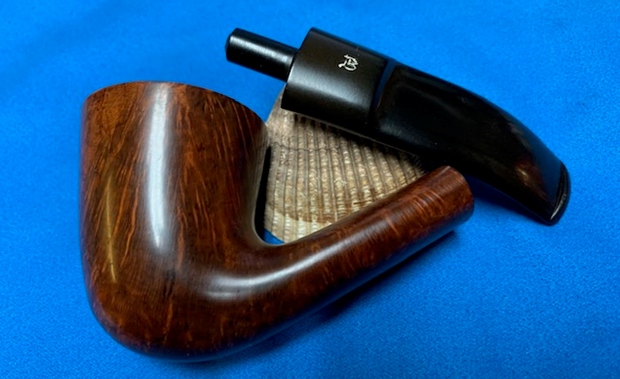
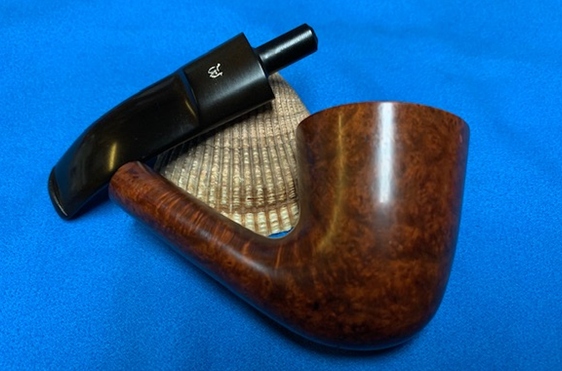
The next pipe on the work table came to us from an online auction out of Ottawa, Illinois, USA. It is a nicely shaped ½ bent Dublin with an oval shank. It has a saddle vulcanite stem and beautiful grain showing through the grime around the bowl. It has a rich brown colour combination that highlights the grain. I have worked on a few Barontini pipes throughout the years but this one looks more English than Italian made. This pipe is stamped on the topside of the shank and reads Barontini [over] D’ Oro. On the underside it is stamped 104 and Italy next to the stem/shank junction. There is also a “B” logo stamped on the top of the stem. There is a thick cake in the bowl and a light overflow of lava on the back rim top. It appears that there is some damage to the inner edge of the rim in that area as well. The outer edge of the bowl looks very good. The saddle vulcanite stem was oxidized, calcified and had light tooth marks and chatter on both sides of the stem near the button. The pipe looks to be in decent condition under the grime. Jeff took photos of the pipe before he started his cleanup. He took photos of the rim top to show the cake and the light lava coat. It is another dirty pipe. He also captured the shape of the stem and the deep tooth marks and chatter on the top and underside of the stem near the button. He took photos of the sides and heel of the bowl to show the beautiful grain around the bowl and the amount of grime ground into the surface of the briar.  He took a photo of the stamping on the top and underside of the shank and it is clear and readable as noted above.  The B on the stem top is also readable. I turned to Pipephil to get a quick overview of the brand (http://www.pipephil.eu/logos/en/logo-b2.html). I remembered the connection to the Cesare brand pipe that I had worked on recently. The Barontini’s are carved by Cesare.I then turned to Pipedia for a bit more history (https://pipedia.org/wiki/Barontini,_Cesare. I quote below:

In 1890 Turildo Barontini opened a factory for the production of briar. In 1925 his son Bruno began to produce the first pipes. Cesare Barontini, son of Bruno, started direction of the factory in 1955, and still runs it together with his daughters Barbara and Silvia.

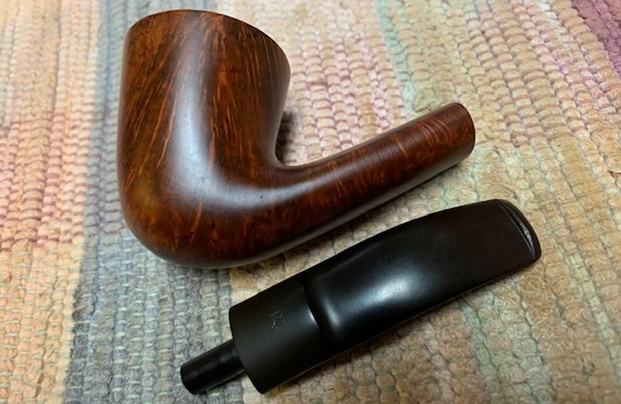
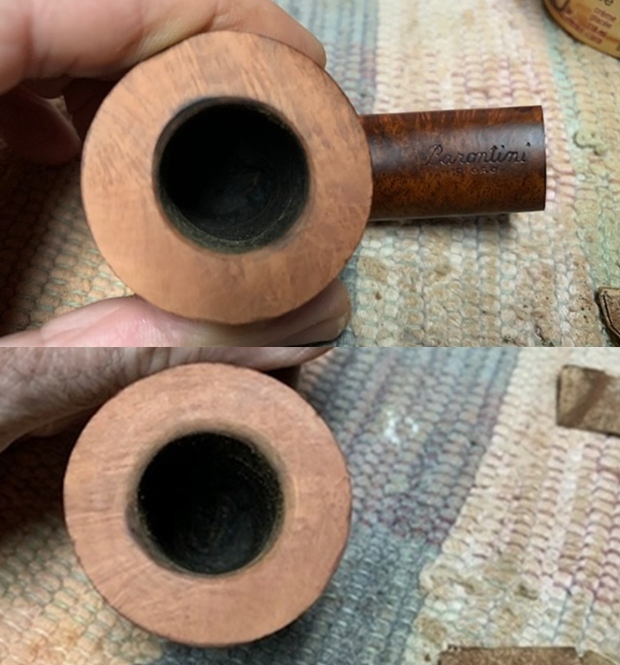
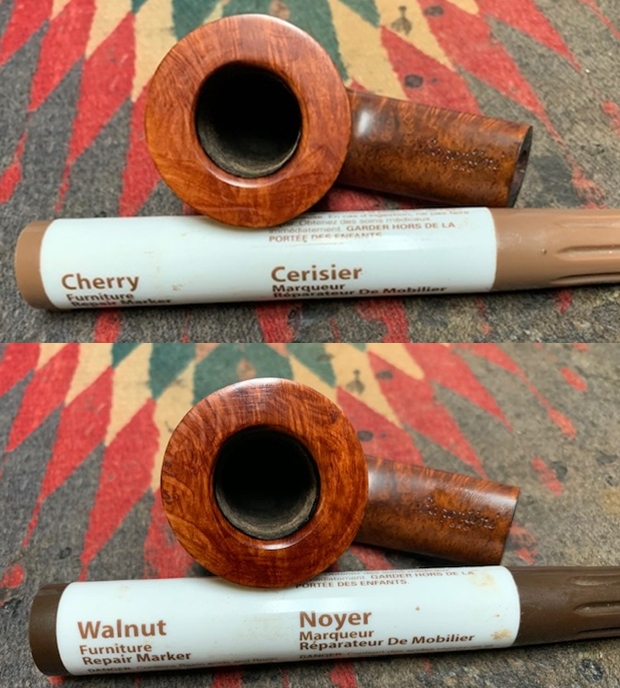
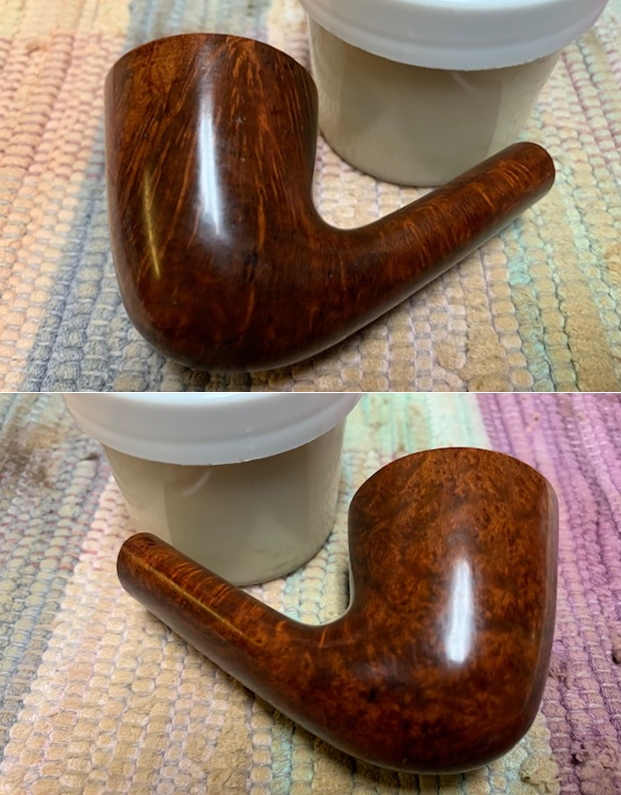
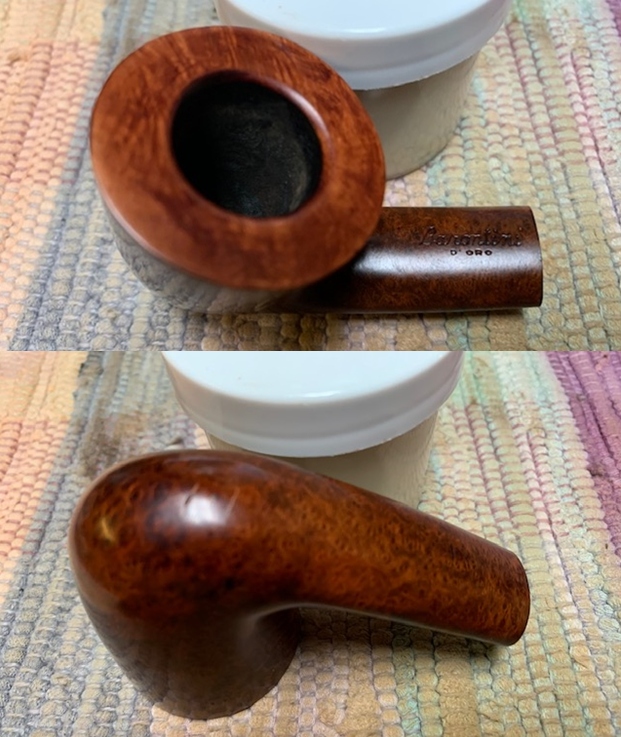
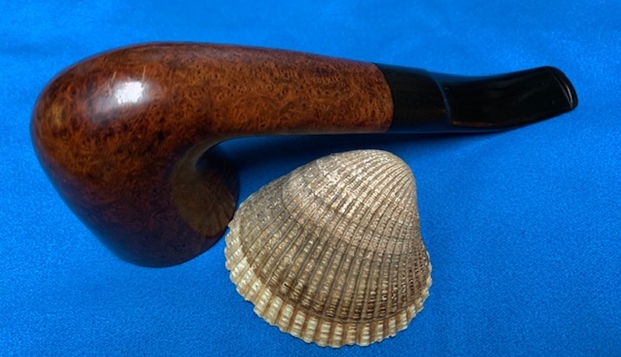
Now it was time to work on the pipe. As usual Jeff had done a thorough cleanup on the pipe. He reamed the bowl with a PipNet pipe reamer and followed up with a Savinelli Fitsall pipe knife to remove the cake. He scrubbed out the mortise and the airway in the shank and the stem with alcohol, cotton swabs and pipe cleaners. He scrubbed the exterior of the bowl, rim, shank and stem with a tooth brush and Murphy’s Oil Soap to remove the oils and tars on the rim and the grime on the finish of the bowl. He rinsed it under running water. He dried it off with a soft cloth. He cleaned the internals and externals of the stem with alcohol, pipe cleaners and cotton swabs. He soaked the stem in Before & After Deoxidizer and rinsed it off with warm water and cleaned out the airway in the stem with alcohol. The pipe looked very good.   I took a photo of the rim top and stem to show the condition. They cleaned up really well and the top of the rim looked very good. The inner edge of the bowl showed chipping and burn damage all around. The vulcanite saddle stem had light tooth chatter and marks on both sides ahead of the button and on the button edges.      I took a photo of the stamping on the top and underside of the shank. It read as noted above. I removed the stem and took a photo of the pipe to give a sense of the whole. It is a well shaped Author that looks great. Now it was time to do my work on the pipe. I started by working over the damage on the inside rim. I topped the bowl on a topping board with 220 grit sandpaper to smooth out the damage to the rim surface. I used a folded piece of 220 grit sandpaper to give the inner edge a bevel to take care of the burn and clean up the edges of bowl.  I polished the briar with micromesh sanding pads – wet sanding with 1500-12000 grit pads and wiped down the bowl after each sanding pad.    I stained the rim with a combination of Cherry and Walnut stain pens to get a match with the colour of the stain on the bowl. Once it was buffed it would blend in very well.  I rubbed the bowl and shank down with Before & After Restoration Balm. I worked it into the surface of the bowl sides and shank with my fingertips to clean, enliven and protect the briar. I let the balm sit for a little while and then buffed with a cotton cloth to raise the shine. The Balm did its magic and the grain stood out.    I set the bowl aside and turned my attention to the stem. I sanded out the tooth marks on the stem with 220 grit sandpaper and started the polishing process with 400 grit wet dry sandpaper.   I polished the vulcanite stem with micromesh sanding pads – 1500-12000 grit pads. I wiped it down with Obsidian Oil after each sanding pad. I used Before & After Pipe Polish – both Fine and Extra Fine to further polish the stem. The photo below shows the polished stem.  I touched up the “B” stamp with Paper Mate Liquid Paper. I pressed it into the stamped letter with a tooth pick. Once it cured I scraped off the excess with the tooth pick.  This nicely grained Barontini D’ Oro 104 Dubin with a vulcanite saddle stem is a great looking pipe now that it has been restored. There are fills around the bowl that blend in nicely with the finish on the bowl. The rich brown stains of the finish came alive with the polishing and waxing. The grain really popped. I put the stem back on the bowl and carefully buffed the pipe with Blue Diamond on the buffing wheel using a light touch on the briar. I gave the bowl and the stem multiple coats of carnauba wax on the buffing wheel. I buffed the pipe with a clean buffing pad to raise the shine. I hand buffed the pipe with a microfiber cloth to deepen the shine. The finished Barontini Bent Dublin is a beauty and fits nicely in the hand and looks very good. Give the finished pipe a look in the photos below. The dimensions of the pipe are Length: 5 ½ inches, Height: 2 inches, Outside diameter of the bowl: 1 ½ inches, Chamber diameter: ¾ of an inch. Thanks for reading this blog and my reflections on the pipe while I worked on it. There are many more to come!


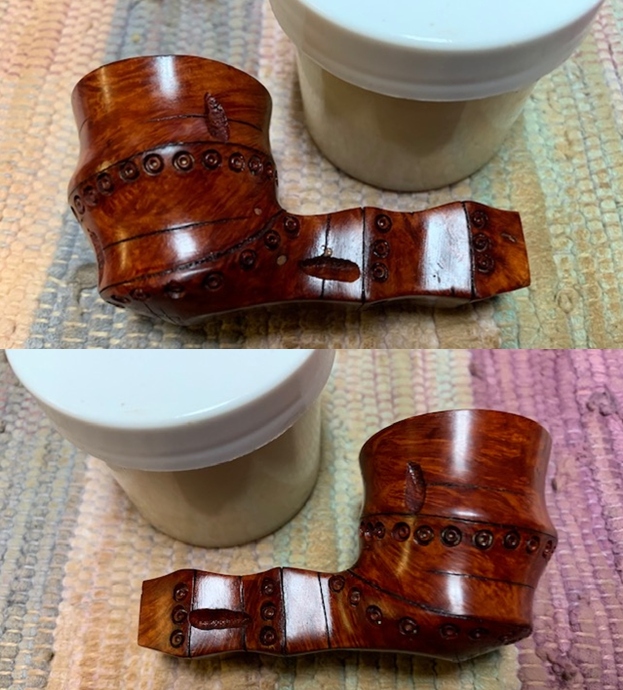
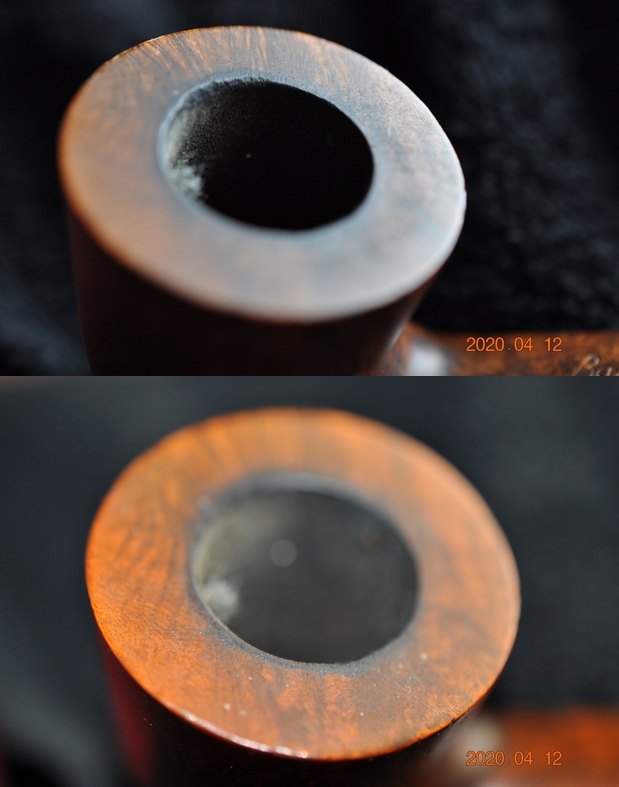
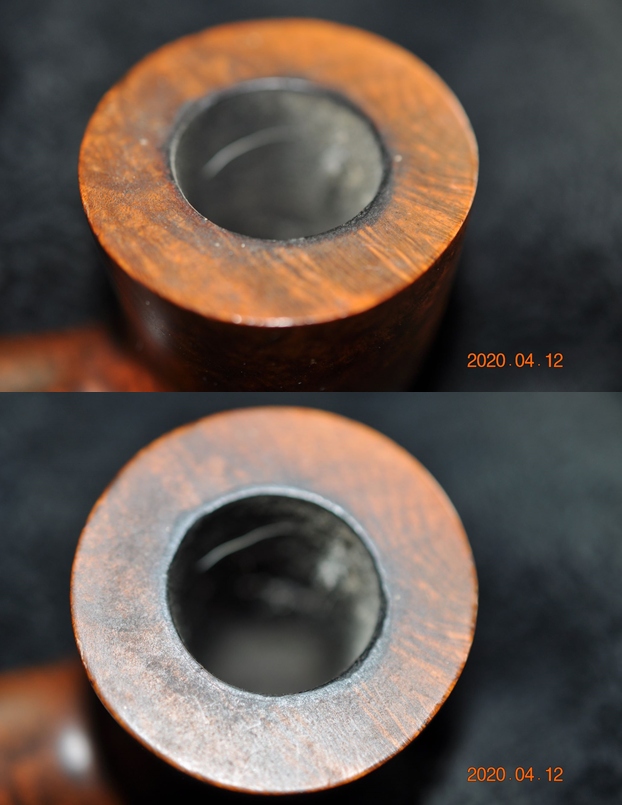
New Life for a Malaga Second M-2 Author


Blog by Steve Laug

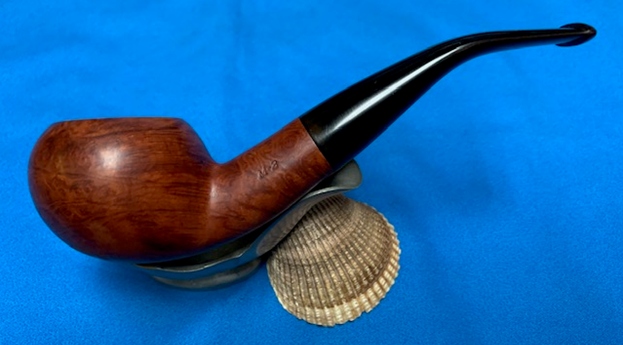
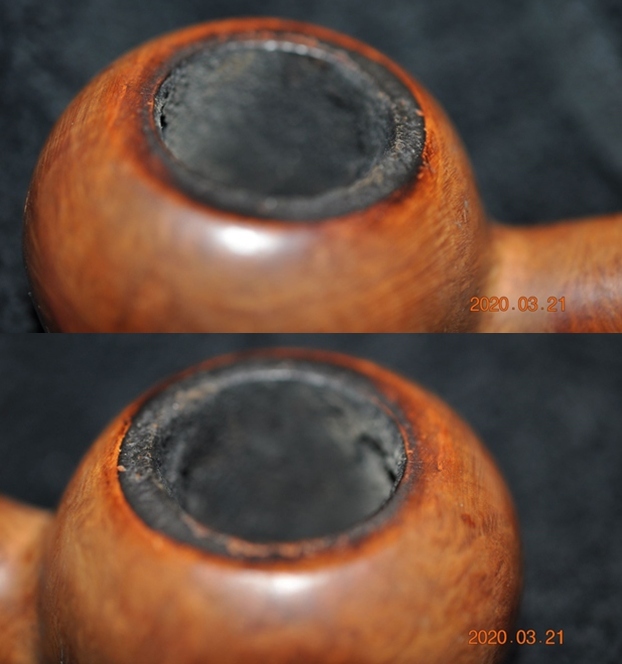
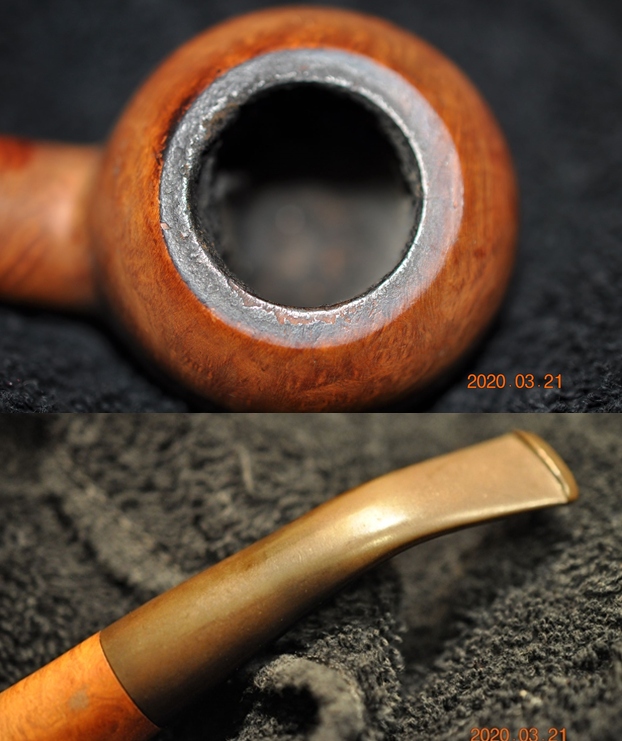
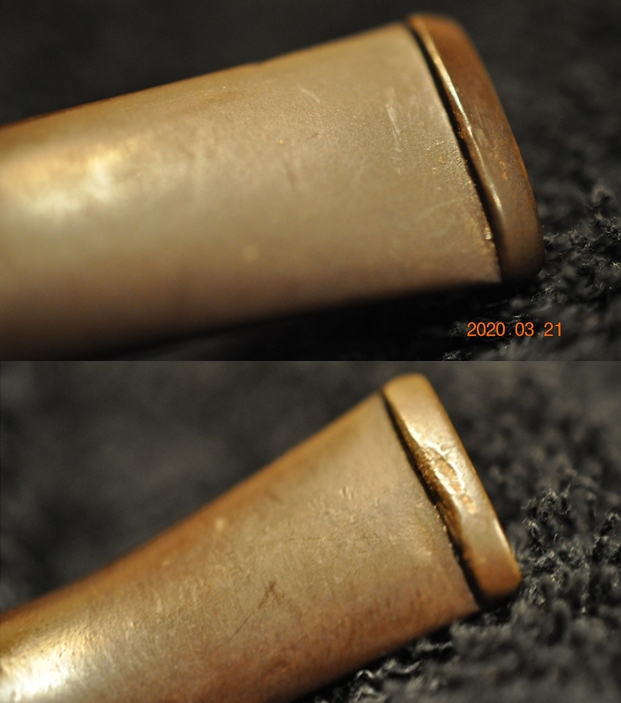
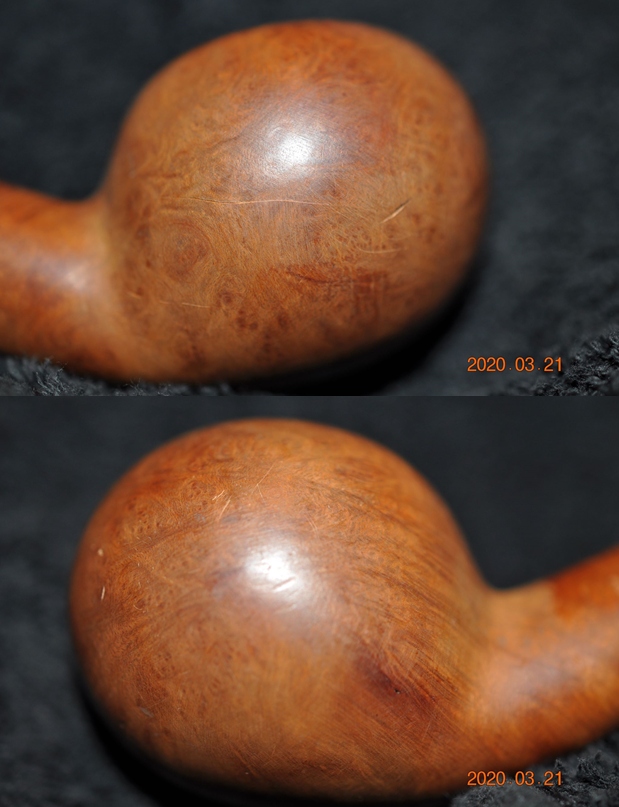
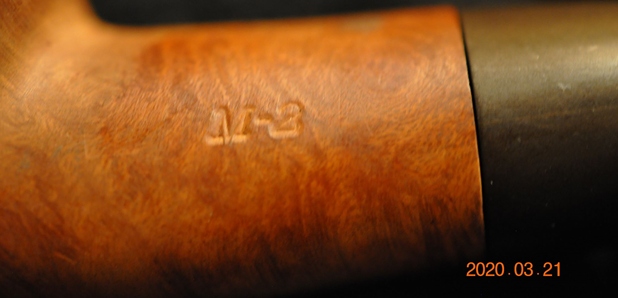
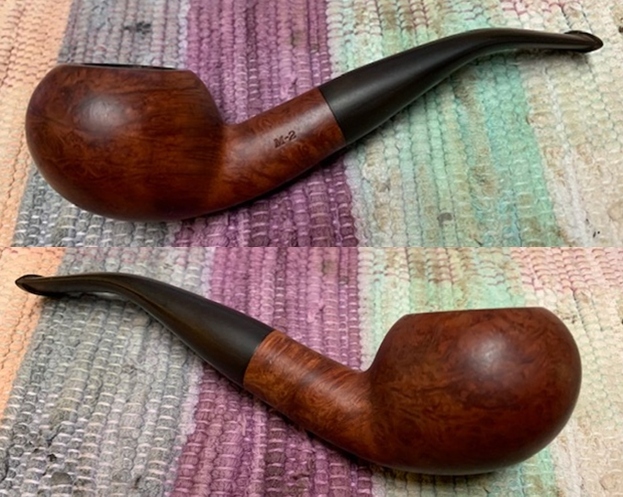
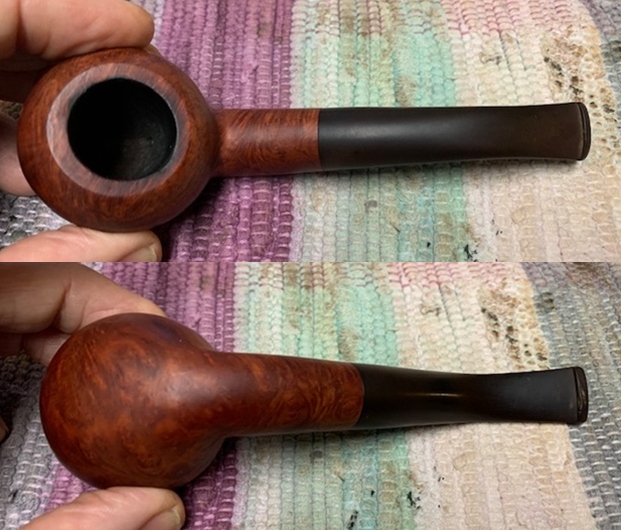
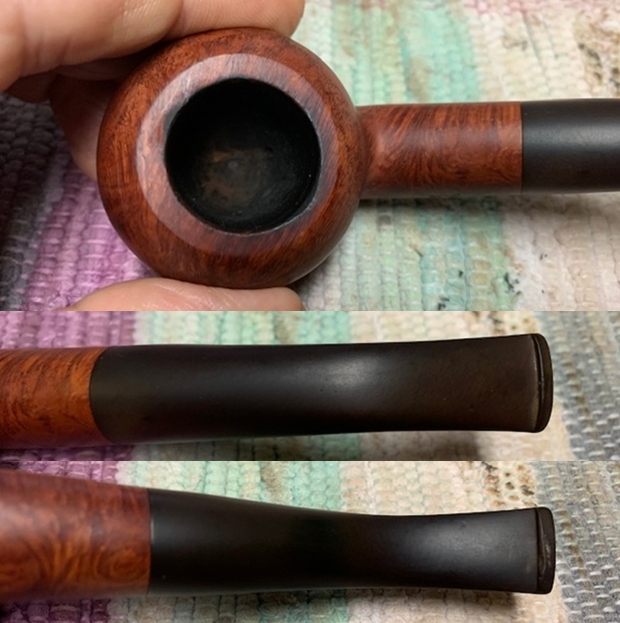
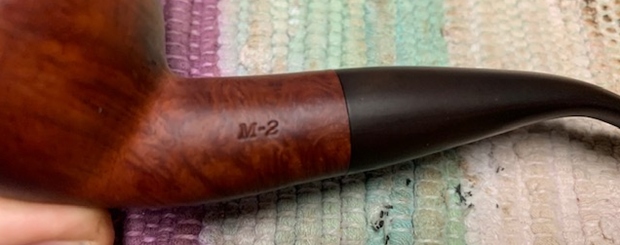
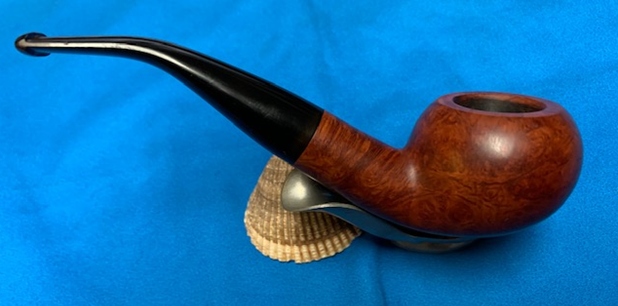
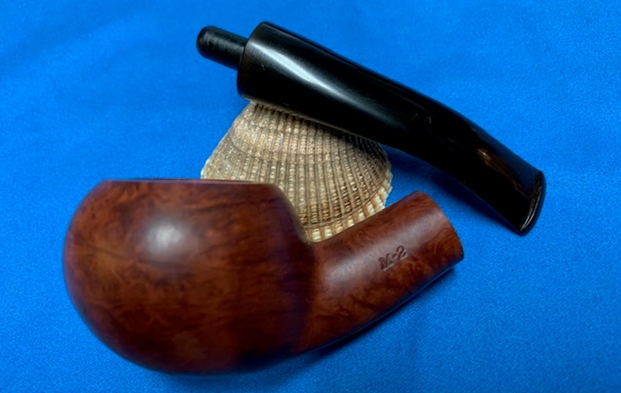
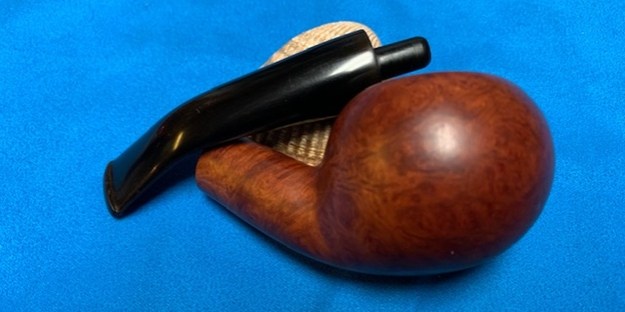
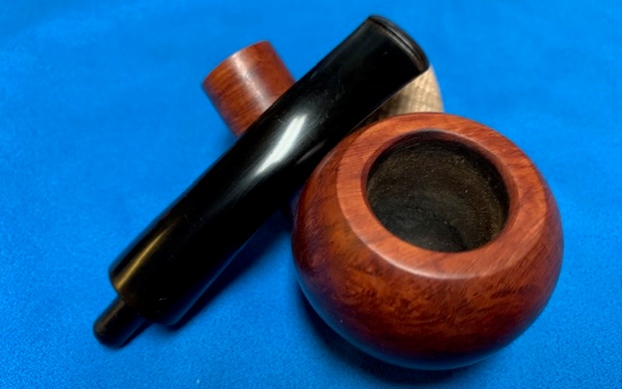
The next pipe on the work table came to us from a fellow in Michigan, USA. It is a nicely shaped author. It has a taper vulcanite stem and beautiful grain showing through the grime around the bowl. It has the usual Malaga Oil Curing. I have worked on quite a few Malaga pipes throughout the years and have always found the fit and finish very well done. This pipe is stamped on the left side of the shank and reads M-2 which is the stamp or a Malaga Second. There is a thick cake in the bowl and a thick overflow of lava on the back rim top. It appears that there is some damage to the inner edge of the rim in that area as well. The outer edge of the bowl looks very good. The taper vulcanite stem was oxidized, calcified and had light tooth marks and chatter on both sides of the stem near the button. The pipe looks to be in decent condition under the grime. Jeff took photos of the pipe before he started his cleanup. He took photos of the rim top to show the cake and the lava coat. It is another dirty pipe. He also captured the shape of the stem and the deep tooth marks and chatter on the top and underside of the stem near the button.   He took photos of the sides and heel of the bowl to show the beautiful grain around the bowl and the amount of grime ground into the surface of the briar.  He took a photo of the stamping on the left side of the shank and it is clear and readable as noted above.I am also including the link to a blog that I wrote that gives some of the history of the Malaga brand and the Malaga Pipe Shop in Royal Oak, Michigan in the USA. I have written an earlier blog to give a little history of the Malaga Brand and the pipemaker, George Khoubesser. Here is the link – https://rebornpipes.com/tag/malaga-pipes/. That blog also includes links to a catalogue and the history of the pipemaker George Khoubesser. Follow the link to get a feel for the brand and the pipemaker.

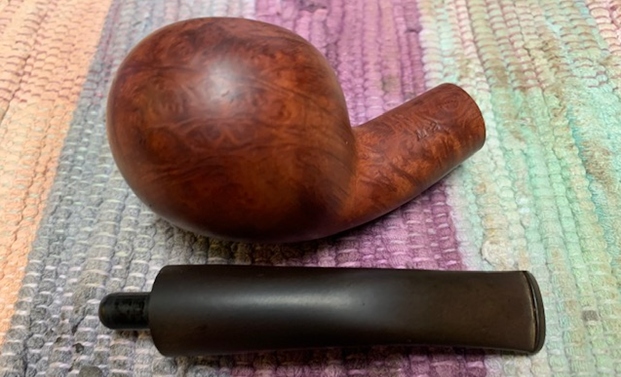
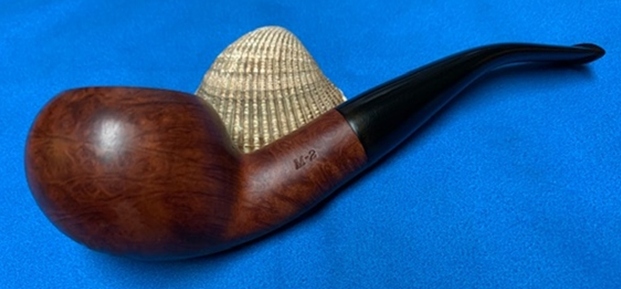
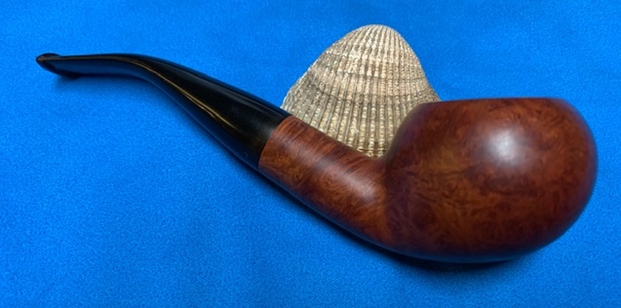
Jeff had done his usual thorough cleanup on the pipe. He reamed the bowl with a PipNet pipe reamer and followed up with a Savinelli Fitsall pipe knife to remove the cake. He scrubbed out the mortise and the airway in the shank and the stem with alcohol, cotton swabs and pipe cleaners. He scrubbed the exterior of the bowl, rim, shank and stem with a tooth brush and Murphy’s Oil Soap to remove the oils and tars on the rim and the grime on the finish of the bowl. He rinsed it under running water. He dried it off with a soft cloth. He cleaned the internals and externals of the stem with alcohol, pipe cleaners and cotton swabs. He soaked the stem in Before & After Deoxidizer and rinsed it off with warm water and cleaned out the airway in the stem with alcohol. The pipe looked very good. I took a photo of the rim top and stem to show the condition. They cleaned up really well and the top of the rim looked very good. The inner edge of the bowl showed chipping and burn damage on the back inner edge. The vulcanite stem had light tooth chatter and marks on both sides ahead of the button and on the button edges.      I took a photo of the stamping on the left side of the shank. It read as noted above.  I removed the stem and took a photo of the pipe to give a sense of the whole. It is a well shaped Author that looks great. Now it was time to do my work on the pipe. I started by working over the damage from the burn on the inside rim. I used a folded piece of 220 grit sandpaper to give the inner edge a bevel to take care of the burn and clean up the edges of bowl. I topped the bowl on a topping board with 220 grit sandpaper to smooth out the damage to the rim surface. (I took a photo of the cleaned up rim top but it was too blurry to include. The bevel will be very visible in the polishing photos.)   I polished the briar with micromesh sanding pads – wet sanding with 1500-12000 grit pads and wiped down the bowl after each sanding pad.  I rubbed the bowl and shank down with Before & After Restoration Balm. I worked it into the surface of the bowl and shank with my fingertips to clean, enliven and protect the briar. I let the balm sit for a little while and then buffed with a cotton cloth to raise the shine. The Balm did its magic and the grain stood out.  I set the bowl aside and turned my attention to the stem. I polished the vulcanite stem with micromesh sanding pads – 1500-12000 grit pads. I wiped it down with Obsidian Oil after each sanding pad. I used Before & After Pipe Polish – both Fine and Extra Fine to further polish the stem. The photo below shows the polished stem.  This nicely grained Malaga Second M-2 Author with a vulcanite taper stem is a great looking pipe now that it has been restored. The rich oil cured finish came alive with the polishing and waxing. The grain really popped. I put the stem back on the bowl and carefully buffed the pipe with Blue Diamond on the buffing wheel using a light touch on the briar. I gave the bowl and the stem multiple coats of carnauba wax on the buffing wheel. I buffed the pipe with a clean buffing pad to raise the shine. I hand buffed the pipe with a microfiber cloth to deepen the shine. The finished M-2 Author is a beauty and fits nicely in the hand and looks very good. Give the finished pipe a look in the photos below. The dimensions of the pipe are Length: 6 inches, Height: 1 ½ inches, Outside diameter of the bowl: 1 ½ inches, Chamber diameter: 7/8 of an inch. Thanks for reading this blog and my reflections on the pipe while I worked on it. There are many more to come!

A Dr Grabow Grand Duke Prince


I received an email from Kevin in Australia asking if he could share some of his work with us on rebornpipes. This Dr. Grabow restoration and photos not only tell the story of the pipe but also give some information on Kevin. Thanks Kevin and welcome to rebornpipes!

Story and photos by Kevin Pallett — Australia.

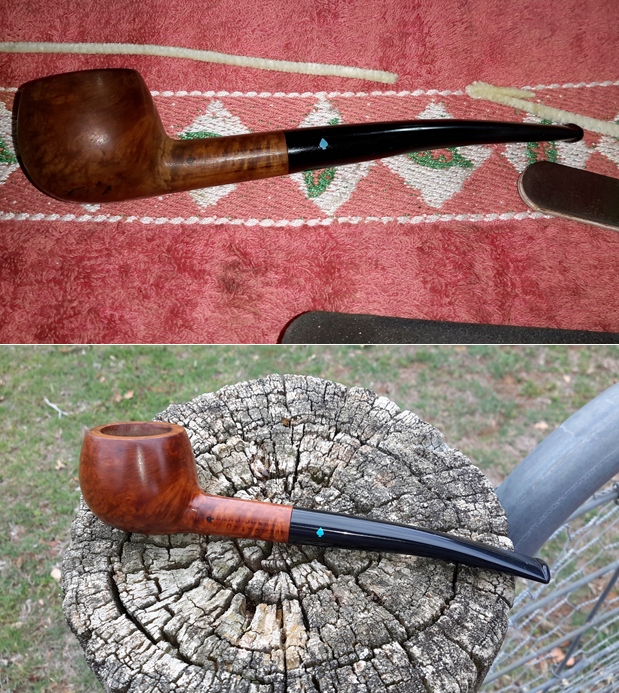
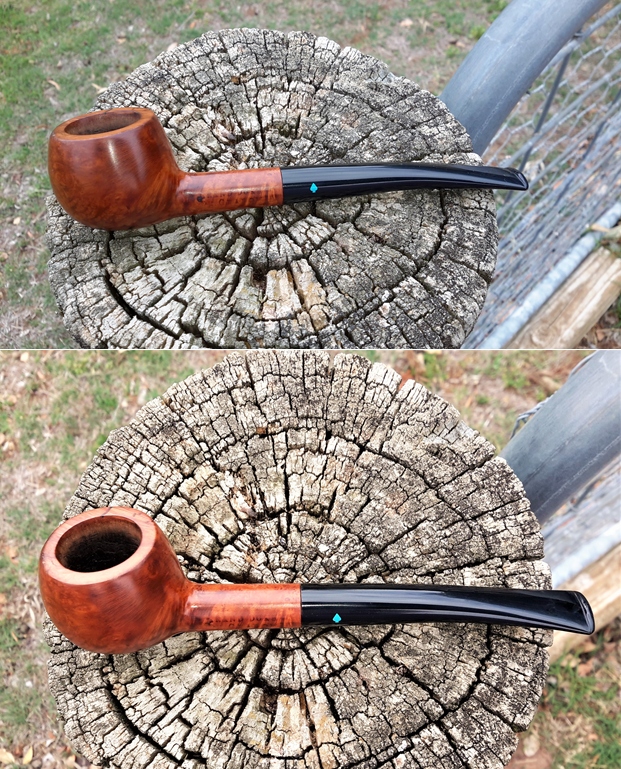
I have a few favourite pipe shapes, one of them being the Prince. There are a few variations on that theme but for me the standard shape will always take the prize. A friend of mine who is also a pipe maker was selling a bunch of estate pipes that he purchased from Ebay (The American Ebay. We live in Australia) and was looking to sell some of them. He sent me a few pics of what he had and one of them was a Dr Grabow Prince. A Grand Duke in particular. It was in bad shape with the ubiquitous bite marks and chocked up bowl. The end of the stem was horrible and how anyone would put it in their mouth was beyond me. After deciding how I was going to start on this Grand Duke, I put Vaseline on the little blue spade on the stem and put the stem into a diluted bleach bath and let it do its thing. While that was going on, I turned my attention to the stummel. It was in a bad way. Not the worst I have seen but pretty funky and in need of some de caking. Believe it or not I soaked the whole stummel in alcohol for almost 6 hours. The cake was like glass when I tried to ream it and the harder I tried the harder it got. After being soaked the cake practically fell out as I used a small picking tool to remove it. I then sanded the inside of the bowl back with a few different grades of sandpaper and then sanded the outside of the stummel to the bare briar. I was happy with the way it looked and there were no major divots to replace and it looked even better when I sanded the top of the bowl flat. A lot of the grime on top of the rim came off in the alcohol and made it easier to sand it back to the way it should look. Whoever owned it would, by the look of it bang the rim on something hard to remove old tobacco but never cleaned it out thoroughly. No cracks either, always a good sign.This was followed with a salt and alcohol treatment. Then onto the stem again. It had what look like saliva stains on the end of it. Like it had sat in someone’s mouth for hours, hence the chew marks I would guess.  After it came out of the bleach Bath, I started to clean and reshape the air hole. Although it was more of a small rectangle, and once I started to file it out, I found that it was still full of all the original swarf (or filings). It took a bit of mucking around but eventually a small bundle of vulcanite filing came out. I now knew why I couldn’t get a pipe cleaner through it, so I don’t know how the owner ever smoked it properly, or if they cleaned it out at all. It’s always nice to work with vulcanite. I know that acrylic is durable and harder to mark with teeth, but vulcanite is so easy to file, sand, buff and generally work with.

The inside of the stem was quite gross and took a lot of pipe cleaners to eventually come out clean. Perhaps these were the first pipe cleaners to go through it. As a youngster and teenager, back in the 1960’s and early to mid-1970’s, I can clearly remember the older men (Grandfather, uncles and my Dad’s friends) smoking pipes that looked like they’d been used to build a house. And if they weren’t constantly dropping out of their shirt pocket when not being used, they were hooked into the belt loop of their trousers. Thinking back now pipes didn’t have quite the collectable want or care factor back then. They were just a replaceable method of enjoying tobacco. So why would you bother going to the extreme of cleaning them on a regular basis. I first began enjoying pipe smoking as a late teen and I have to say I had the one pipe for years (a Dr Plumb full bent billiard) although I was pretty meticulous when it came to keeping it functional.

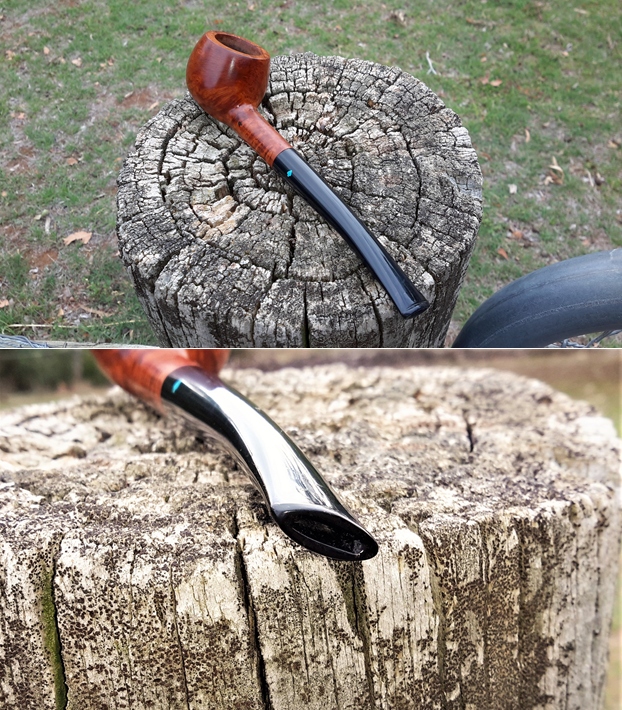
Anyway, I continued making the air hole more to my liking. You can see in the accompanying photo what I mean.  I find this shape opening makes it easier to keep clean, get a pipe cleaner through and I think it just looks and feels better. After that I put some drops of CA glue into the chew marks and filed them down. Wet and dry paper got the surface back to smooth and I buffed the surface with micro mesh pads. I love using these little pads. The tenon on these Grabow stems is a metal arrangement to house the Grabow filters which I’ve not used as they are not readily available if at all in Australia and not worth the effort of ordering. Just a little information on tobacco in Australia. For pipe smokers down here, it is not an easy hobby to pursue. 50 grams of any tobacco is $100 and higher and there is no such thing as tobacconists anymore. We have tobacco shops, but they are more like a bank of lockable cupboards. It’s illegal to display anything that might imply that the contents contain a tobacco product and the packaging itself is covered in pictures of photo shopped diseased body parts. All very charming. It’s illegal to order any tobacco product from overseas. If it’s intercepted by boarder control, it is confiscated and apparently destroyed. It’s illegal to grow your own tobacco. So, I guess you’d have to think that the authorities are trying to tell us something.

So, back to the point. I didn’t have anything left to do to the stem until I used the buffing wheels. Back to the stummel.

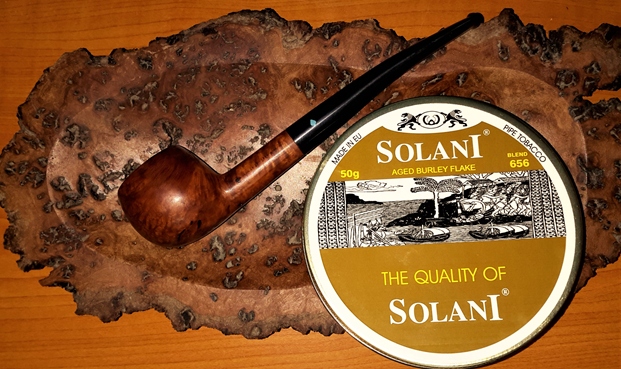
As I mentioned above, the stummel was in good order on the outside so I started on it with the micro mesh pads. By the time I got through all the grits it had a nice lustre to it. I did discover a few small fills, but I wasn’t going to worry about them. And by the time I’d buffed it you couldn’t really see them. I was really pleased with the way it came together and it is now one of my favourite pipes to smoke. It’s light to use and the bowl isn’t so big that you can’t fill it to the top. Which I do. It’s not a fussy pipe, it’s happy with any tobacco. I find it’s great for Burley flakes in particular. I hope you enjoyed my small account of this particular pipe. Thanks for reading if you did. Ciao, Kevin.

New Life for a Preben Holm Traditional Celebration Danish Hand Made


Blog by Steve Laug

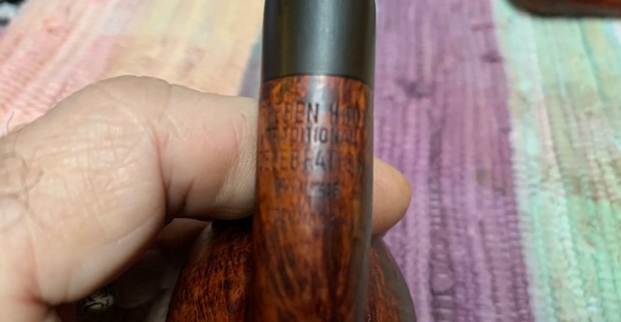
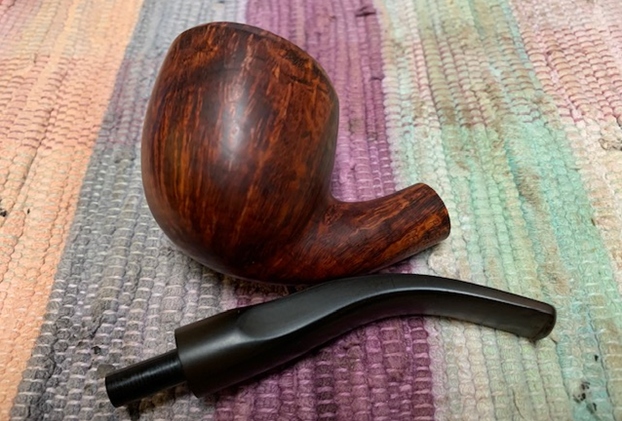
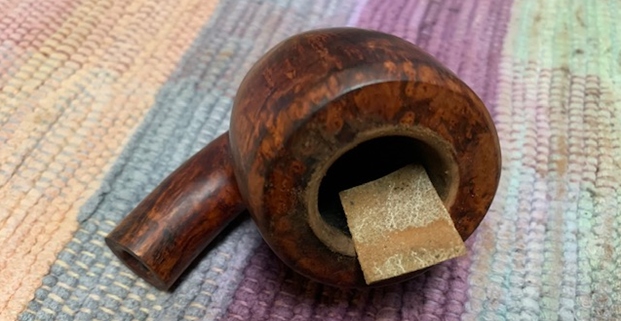
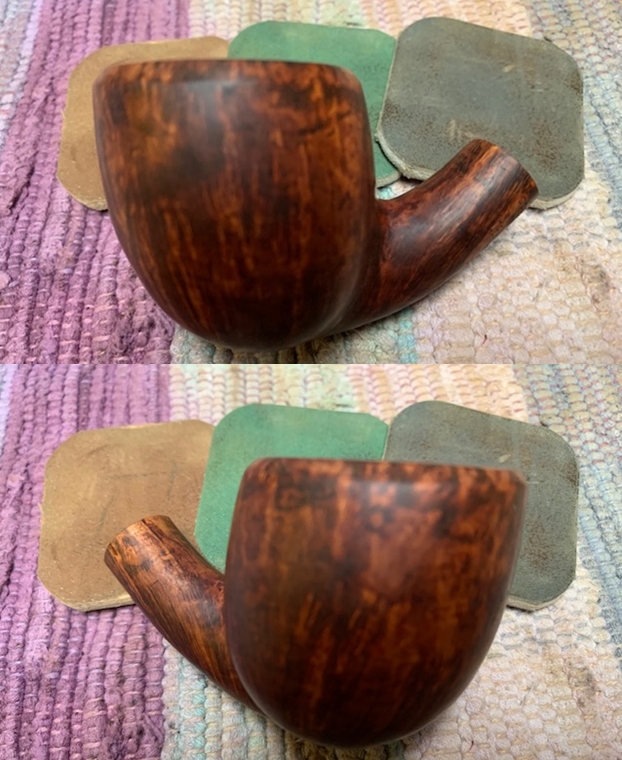
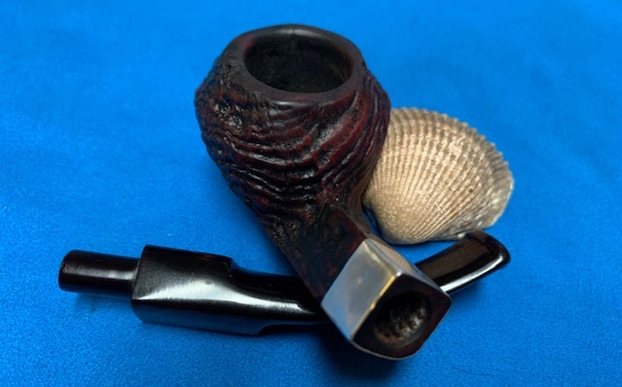
The next pipe on the work table came to us from a fellow in St. Leonard, Maryland, USA. It is a uniquely shaped Dublin with a fancy vulcanite saddle stem and beautiful grain showing through the grime around the bowl. It has a finish of contrasting brown stains that highlights the grain. I have worked on quite a few Preben Holm pipes throughout the years and have always found the fit and finish very well done. This pipe is stamped on the underside of the shank and reads Preben Holm [over] Traditional [over] Celebration [over] Hand Made in Denmark. There is a thick cake in the bowl and an overflow of lava on the back rim top. It appears that there is some damage to the inner edge of the rim in that area as well. The rim top as a whole has scratching and nicks in the flat surface. The beveled outer edge looks to be in good condition. The fancy saddle vulcanite stem was oxidized, calcified and had deep tooth marks and chatter on both sides of the stem near the button. There is also a logo stamp on the top of the stem – a PH in a banner. The pipe looks to be in decent condition under the grime. Jeff took photos of the pipe before he started his cleanup. He took photos of the rim top to show the cake and the lava coat. It is another dirty pipe. He also captured the shape of the stem and the deep tooth marks and chatter on the top and underside of the stem near the button.    He took photos of the sides and heel of the bowl to show the beautiful grain around the bowl and the amount of grime ground into the surface of the briar.    He took photos of the stamping on the underside of the shank and the shooting star logo on the left side of the stem. It is faint but still present. I turned Pipephil’s section on Preben Holm pipes and found the brand listed there with and an example of the stamping on the underside of the shank and the stem. The stamping matches the one that I am working on (http://www.pipephil.eu/logos/en/logo-p5.html). It is like the stamping and logo that is shown in the second pipe below.I turned to Pipedia and reread the history of the brand (https://pipedia.org/wiki/Holm,_Preben). It is fascinating in that it is a first person account. It is a great read. I could not find any specific information on the Traditional Celebration. It was now time to work on this pipe.

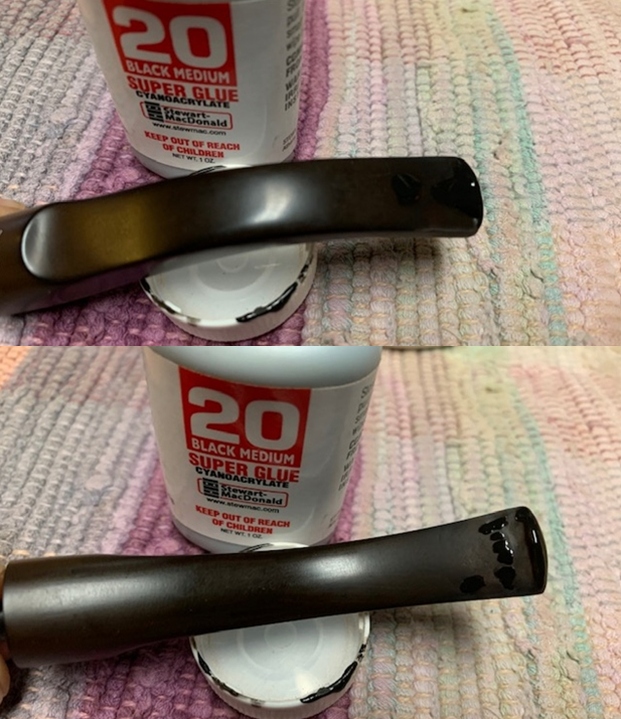
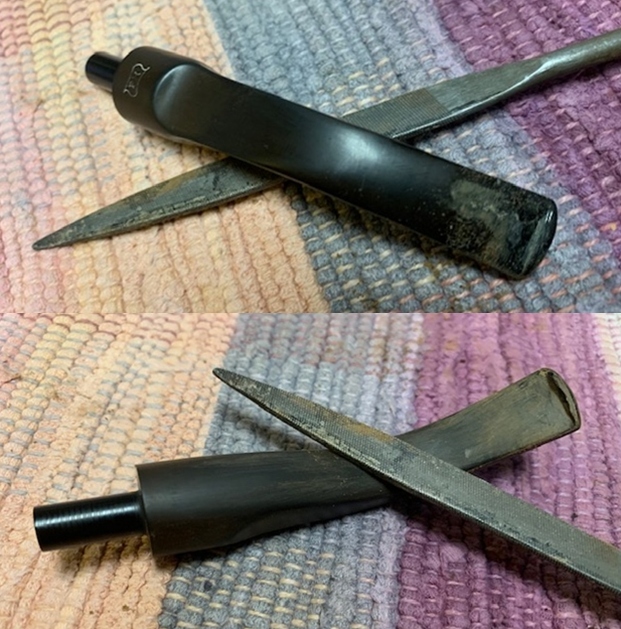
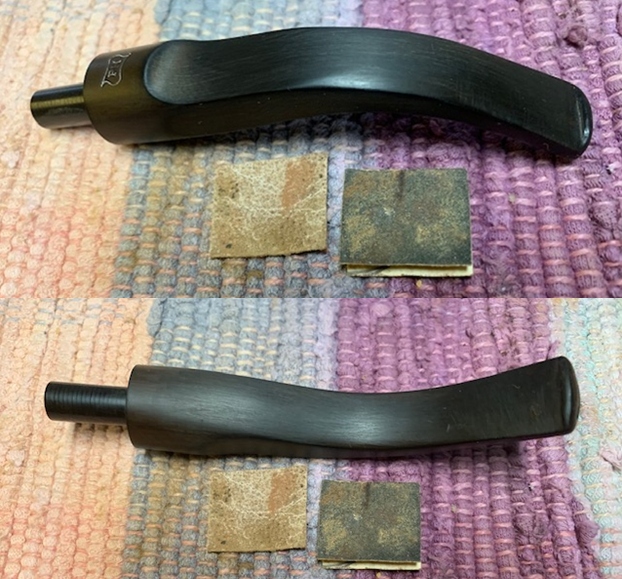
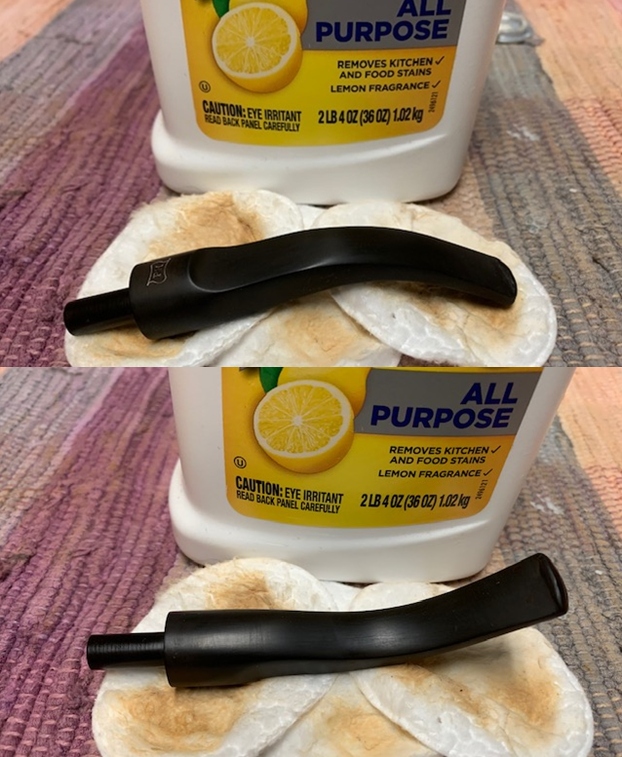
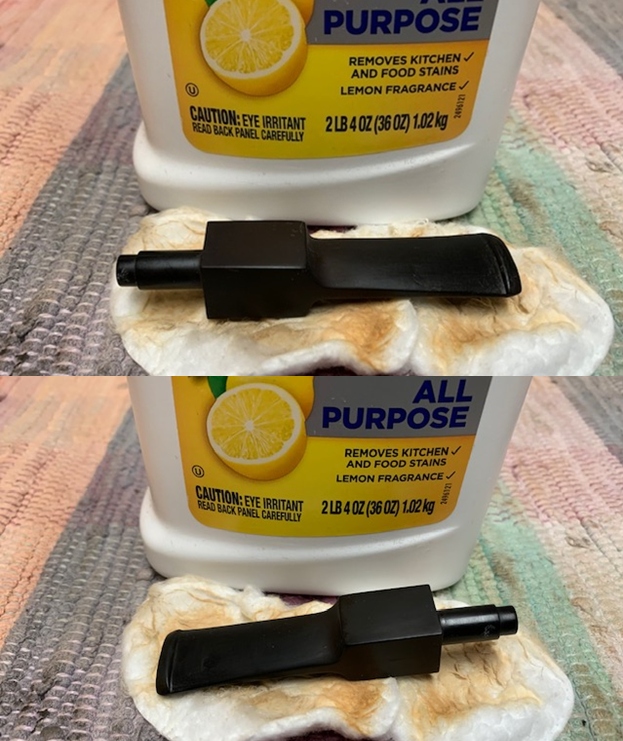
Jeff had done his usual thorough cleanup on the pipe. He reamed the bowl with a PipNet pipe reamer and followed up with a Savinelli Fitsall pipe knife to remove the cake. He scrubbed out the mortise and the airway in the shank and the stem with alcohol, cotton swabs and pipe cleaners. He scrubbed the exterior of the bowl, rim, shank and stem with a tooth brush and Murphy’s Oil Soap to remove the oils and tars on the rim and the grime on the finish of the bowl. He rinsed it under running water. He dried it off with a soft cloth. He cleaned the internals and externals of the stem with alcohol, pipe cleaners and cotton swabs. He soaked the stem in Before & After Deoxidizer and rinsed it off with warm water and cleaned out the airway in the stem with alcohol. The pipe looked very good.   I took a photo of the rim top and stem to show the condition. They cleaned up really well and the top of the rim looked very good. The inner edge of the bowl showed chipping and burn damage on the back inner edge. The vulcanite saddle stem had tooth chatter and deep marks on both sides ahead of the button and on the button edges.  I took a photo of the stamping on the underside of the shank. It read as noted above.  I removed the stem and took a photo of the pipe to give a sense of the whole. It is a well shaped Wide Dublin that looks great. Now it was time to do my work on the pipe. I started by working over the damage from the burn on the inside rim. I used a folded piece of 220 grit sandpaper to give the inner edge a bevel to take care of the burn and clean up the edges of bowl. I polished it with 400 grit wet dry sandpaper. I wiped the bowl down with a damp cloth to remove the sanding dust. (I forgot to take a photo of the cleaned up rim top. The bevel will be very visible in the polishing photos.)I polished the briar with micromesh sanding pads – wet sanding with 1500-12000 grit pads and wiped down the bowl after each sanding pad. I rubbed the bowl and shank down with Before & After Restoration Balm. I worked it into the surface of the sandblast bowl sides and shank with my fingertips to clean, enliven and protect the briar. I let the balm sit for a little while and then buffed with a cotton cloth to raise the shine. The Balm did its magic and the grain stood out. I set the bowl aside and turned my attention to the stem. I painted the stem with the flame of a Bic lighter to raise the tooth dents in the vulcanite. I filled in the dents with black super glue to repair them. Once the repairs had cured I recut the button and smoothed out the repairs with a needle file.    I used 220 grit sandpaper to smooth out the tooth chatter and marks and blend them into the stem surface. I started the polishing with 400 grit wet dry sandpaper.  I scrubbed off the remaining oxidation with Soft Scrub All Purpose Cleaner. I polished the vulcanite stem with micromesh sanding pads – 1500-12000 grit pads. I wiped it down with Obsidian Oil after each sanding pad. I touched up the stamping on the top of saddle with Rub’n Buff Antique Gold. I pushed it into the stamping and buffed it off with a cotton pad.I used Before & After Pipe Polish – both Fine and Extra Fine to further polish the stem. The photo below shows the polished stem.This beautifully grained Preben Holm Traditional Celebration Wide Dublin with a fancy vulcanite saddle stem is a great looking pipe now that it has been restored. The rich Antique Shell coloured finish came alive with the polishing and waxing. The dimensions of the rustication really popped. I put the stem back on the bowl and carefully buffed the pipe with Blue Diamond on the buffing wheel using a light touch on the briar. I gave the bowl multiple coats of Conservator’s Wax and the stem multiple coats of carnauba wax on the buffing wheel. I buffed the pipe with a clean buffing pad to raise the shine. I hand buffed the pipe with a microfiber cloth to deepen the shine. The finished PH Traditional Celebration is a beauty and fits nicely in the hand and looks very good. Give the finished pipe a look in the photos below. The dimensions of the pipe are Length: 6 ½ inches, Height: 2 inches, Outside diameter of the bowl: 2 inches, Chamber diameter: 7/8 of an inch. Thanks for reading this blog and my reflections on the pipe while I worked on it. There are many more to come!
Cleaning up a Savinelli Made Antique Shell 515 Panel Billiard


Blog by Steve Laug

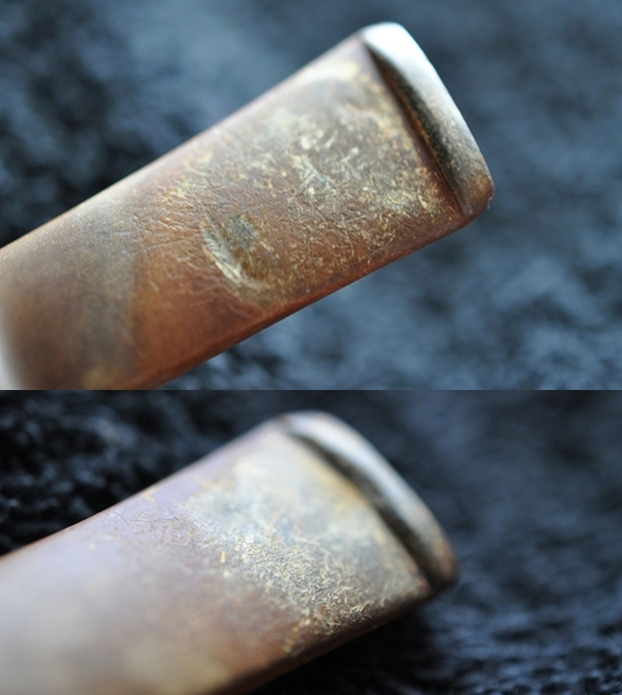
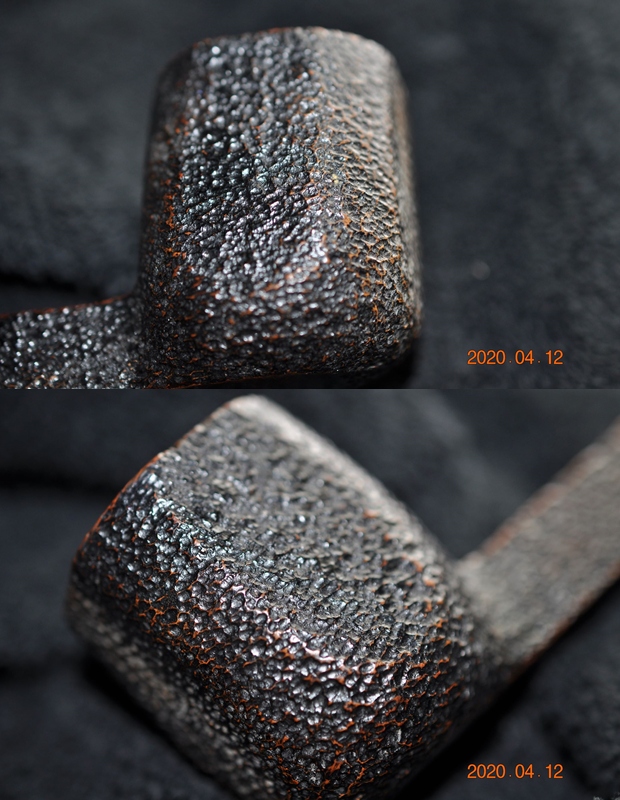
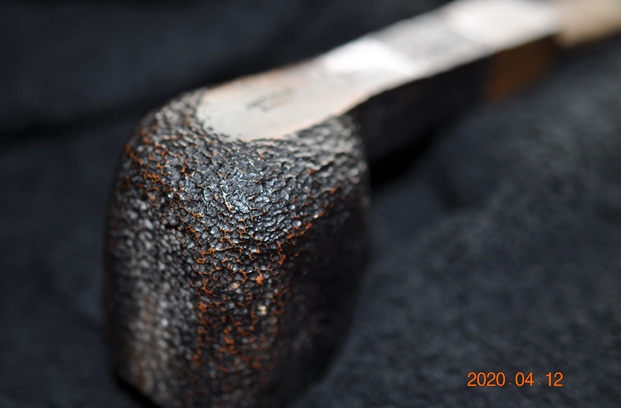
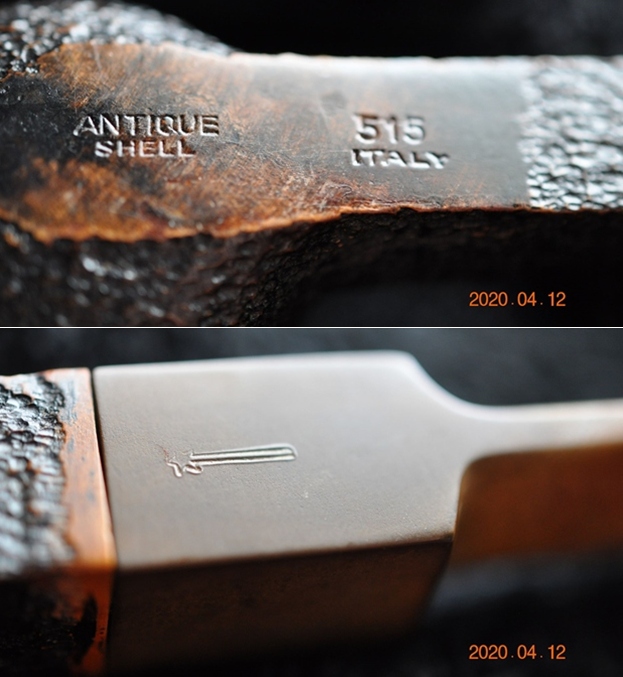
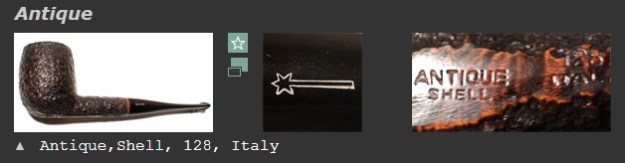
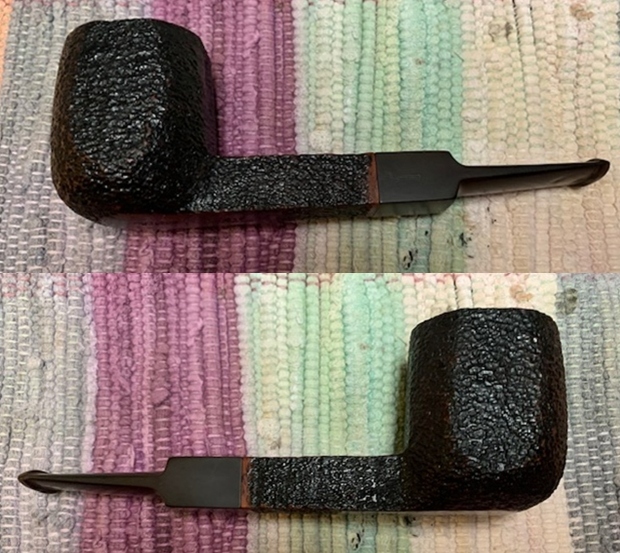
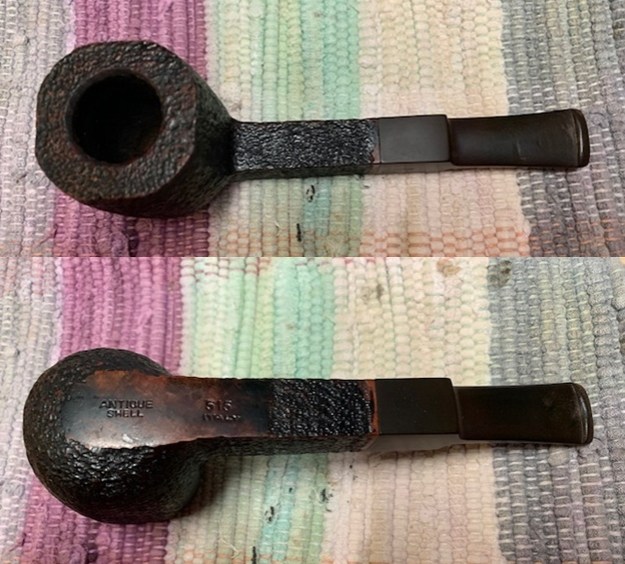
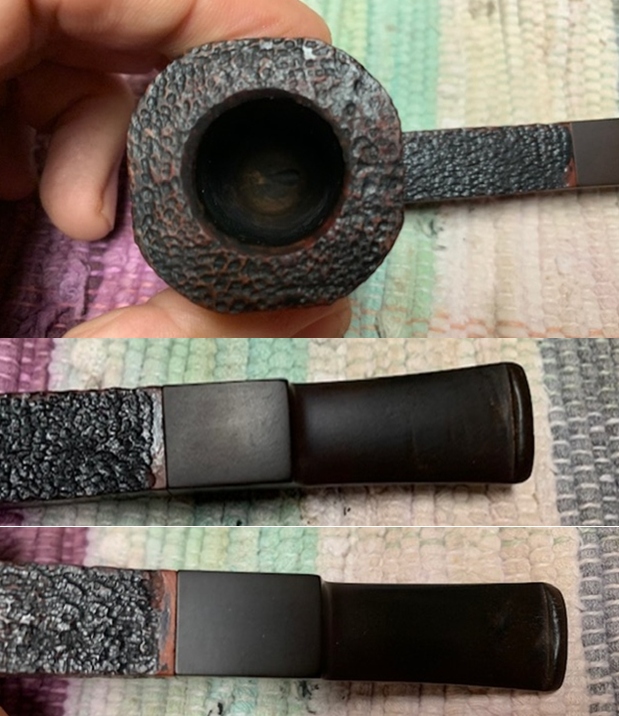
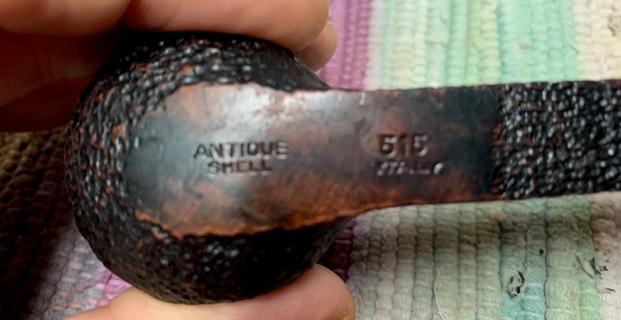
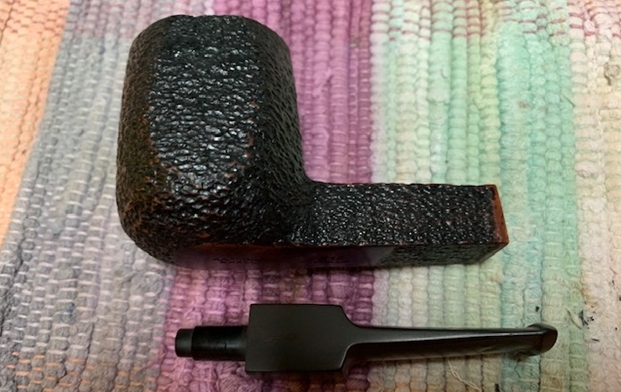
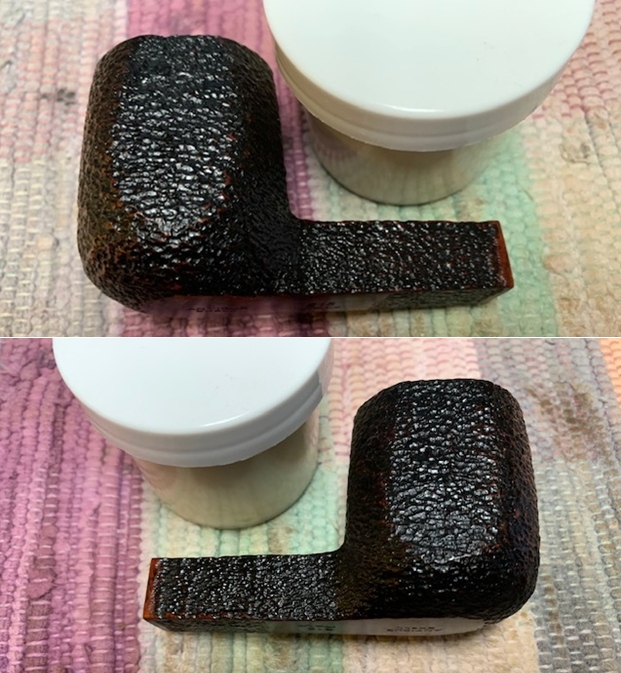
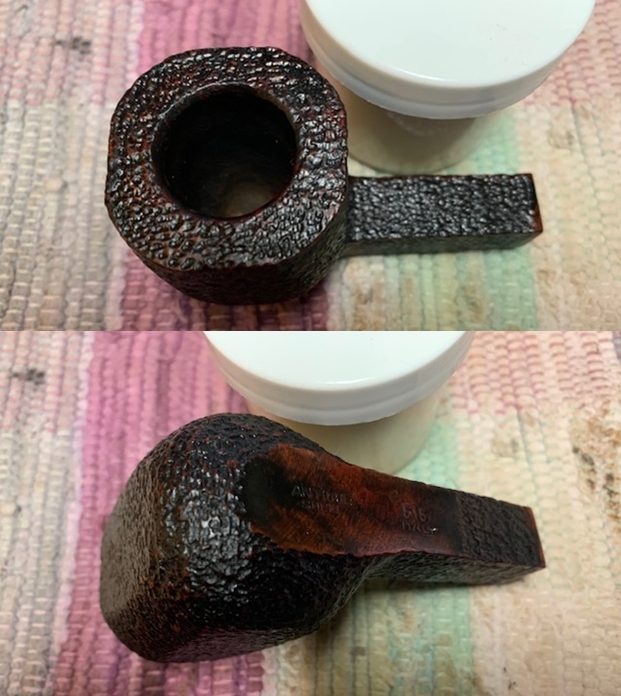
The next pipe on the work table came to us from and online auction from Ohio, USA. It is a rusticated Panel Billiard with a vulcanite saddle stem and a tight, unique rustication around the bowl. It has a brown and black finish that highlights the details of the rustication. I have worked on several Antique Shell pipes from Savinelli over the years and have always found the fit and finish very well done. This pipe is stamped on the flat underside of the heel and shank and reads Antique [over] Shell followed by the shape number 515 [over] Italy. The square, saddle vulcanite stem was oxidized, calcified and had tooth marks and chatter on both sides of the stem near the button. The pipe looks to be in decent condition under the grime. Jeff took photos of the pipe before he started his cleanup. He took photos of the rim top to show the cake and the dust in the rustication on the top. It is another dirty pipe. He also captured the tooth marks on the top and underside of the stem near the button.    He took photos of the sides and heel of the bowl to show the rustication around the bowl and the amount of grime ground into the surface of the briar.     He took photos of the stamping on the underside of the shank and the shooting star logo on the left side of the stem. It is faint but still present. I turned Pipephil’s section on Savinelli pipes and found the Antique Shell listed there with and an example of the stamping on both the shank and the stem. The stamping matches the one that I am working on (http://www.pipephil.eu/logos/en/logo-savinelli1.html). I turned to Pipedia and looked up the specifics of the Antique Shell line from Savinelli and read through the article. There were several pictures of the stamping but nothing on the details (https://pipedia.org/wiki/Savinelli).

I knew that I was working on a Savinelli Made Panel that had the unique Antique Shell rustication. Now it was time to work on the pipe.

Jeff had done his usual thorough cleanup on the pipe. He reamed the bowl with a PipNet pipe reamer and followed up with a Savinelli Fitsall pipe knife to remove the cake. He scrubbed out the mortise and the airway in the shank and the stem with alcohol, cotton swabs and pipe cleaners. He scrubbed the exterior of the bowl, rim, shank and stem with a tooth brush and Murphy’s Oil Soap to remove the oils and tars on the rim and the grime on the finish of the bowl. He rinsed it under running water. He dried it off with a soft cloth. He cleaned the internals and externals of the stem with alcohol, pipe cleaners and cotton swabs. He soaked the stem in Before & After Deoxidizer and rinsed it off with warm water and cleaned out the airway in the stem with alcohol. The pipe looked very good.   I took a photo of the rim top and stem to show the condition. They cleaned up really well and the top of the rim looked very good. The inner edge of the bowl was in great condition. The vulcanite saddle stem had tooth chatter and marks on both sides ahead of the button and on the button edges.  I took a photo of the stamping on the underside of the shank. It read as noted above.  I removed the stem and took a photo of the pipe to give a sense of the whole. It is a well shaped Panel Billiard that looks great. Now it was time to do my work on the pipe. Since it was clean and looked good I rubbed the bowl and shank down with Before & After Restoration Balm. I worked it into the surface of the sandblast bowl sides and shank with my fingertips and a horsehair shoe brush to clean, enliven and protect the briar. I let the balm sit for a little while and then buffed with a cotton cloth to raise the shine. It helped to give depth to the tight rustication around the bowl.  The final buffing would bring the pipe alive. I set the bowl aside and turned my attention to the stem. I painted the stem with the flame of a Bic lighter to raise the tooth dents in the vulcanite.     I filled in the dents with black super glue to repair them. Once the repairs had cured I recut the button and smoothed out the repairs with a needle file.  I used 220 grit sandpaper to smooth out the tooth chatter and marks and blend them into the stem surface. I started the polishing with 400 grit wet dry sandpaper.  I scrubbed off the remaining oxidation with Soft Scrub All Purpose Cleaner. I polished the vulcanite stem with micromesh sanding pads – 1500-12000 grit pads. I wiped it down with a damp cloth after each sanding pad. I used Before & After Pipe Polish – both Fine and Extra Fine to further polish the stem.      This beautiful tightly rusticated Savinelli Made Antique Shell 515 Panel Billiard with a vulcanite saddle stem is a great looking pipe now that it has been restored. The rich Antique Shell coloured finish came alive with the polishing and waxing. The dimensions of the rustication really popped. I put the stem back on the bowl and carefully buffed the pipe with Blue Diamond on the buffing wheel using a light touch on the briar. I gave the bowl multiple coats of Conservator’s Wax and the stem multiple coats of carnauba wax on the buffing wheel. I buffed the pipe with a clean buffing pad to raise the shine. I hand buffed the pipe with a microfiber cloth to deepen the shine. The finished Antique Shell Panel Billiard is a beauty and fits nicely in the hand and looks very good. Give the finished pipe a look in the photos below. The dimensions of the pipe are Length: 5 ½ inches, Height: 2 inches, Outside diameter of the bowl: 1 ½ inches, Chamber diameter: 7/8 of an inch. If you are interested in adding this pipe to your collection send me a message or an email. Thanks for reading this blog and my reflections on the pipe while I worked on it. There are many more to come!

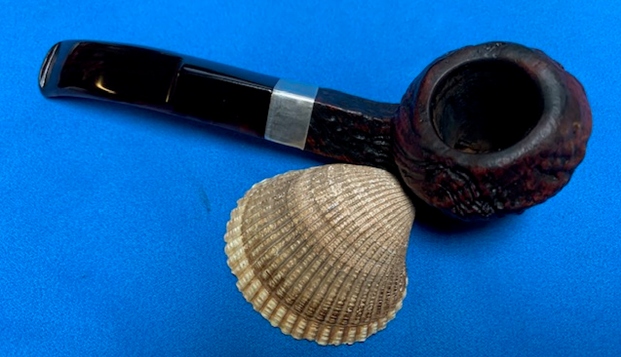
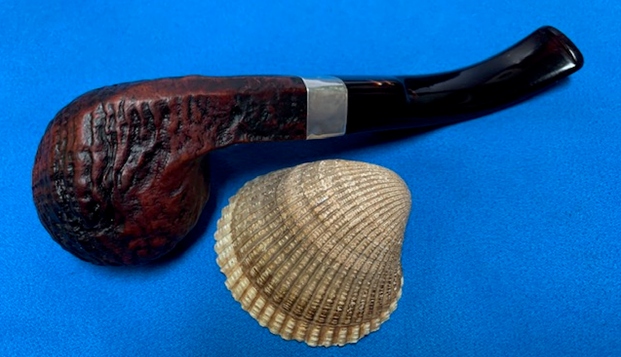
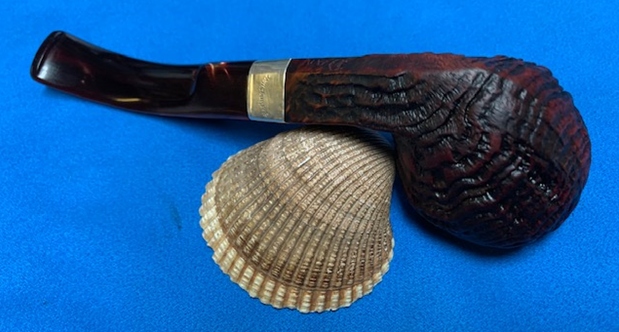
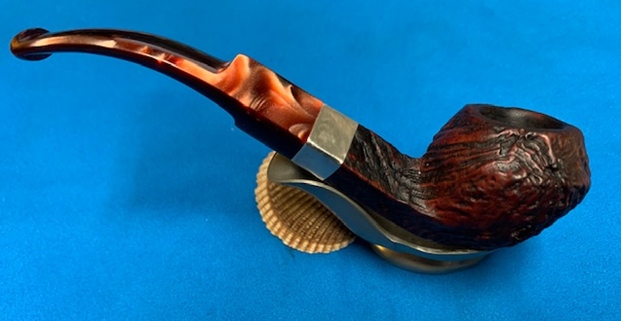
Restoring a Tired and Cobbled Dunhill Shell Patent Era Bulldog


Blog by Steve Laug

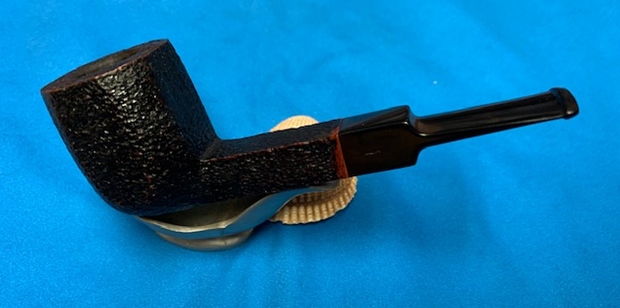
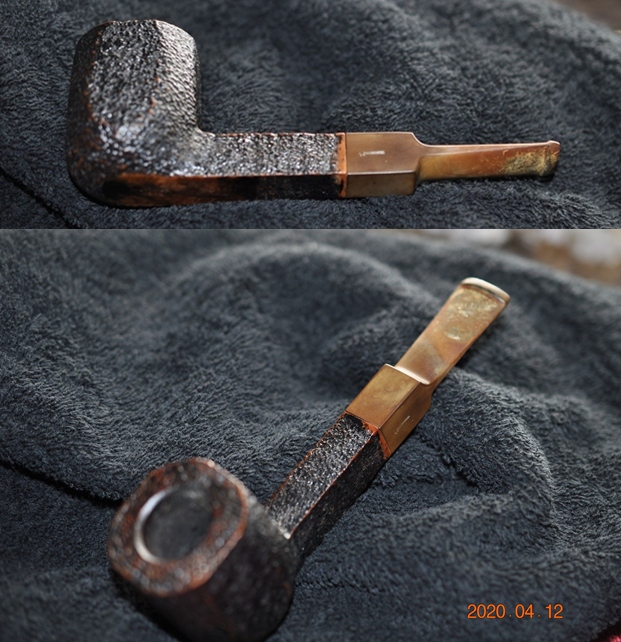
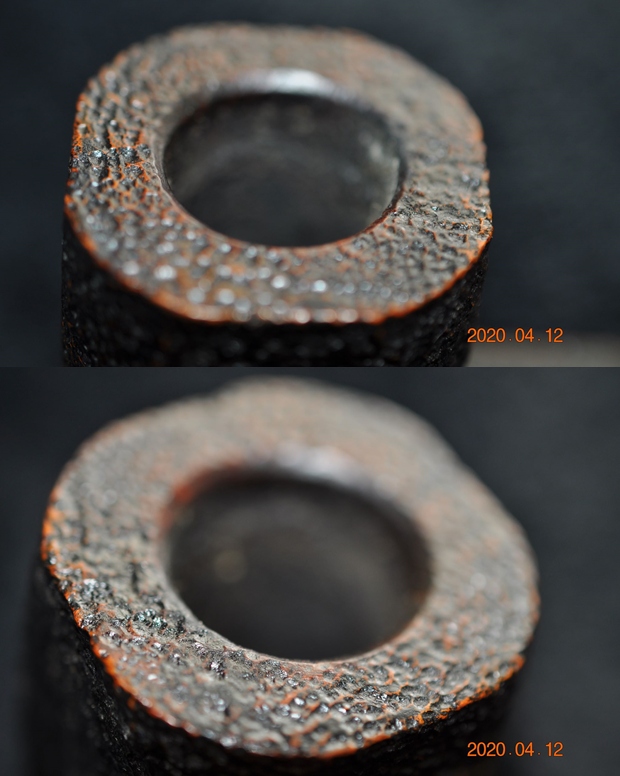
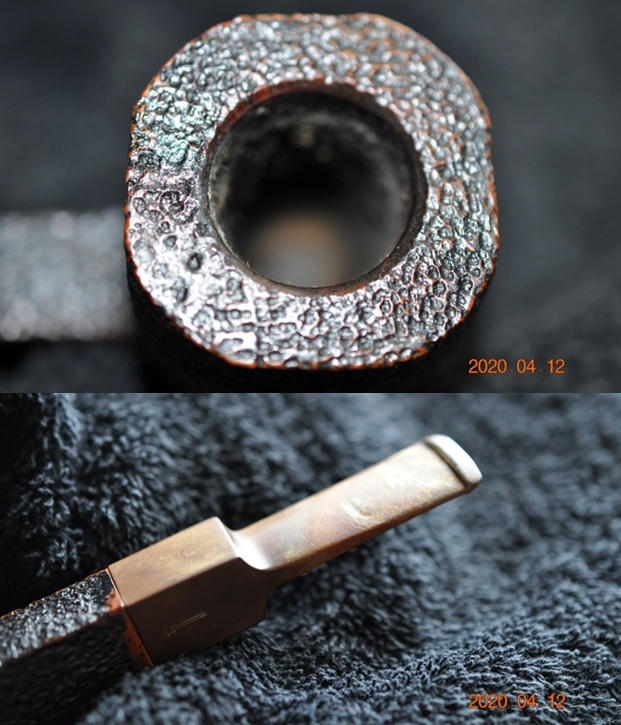
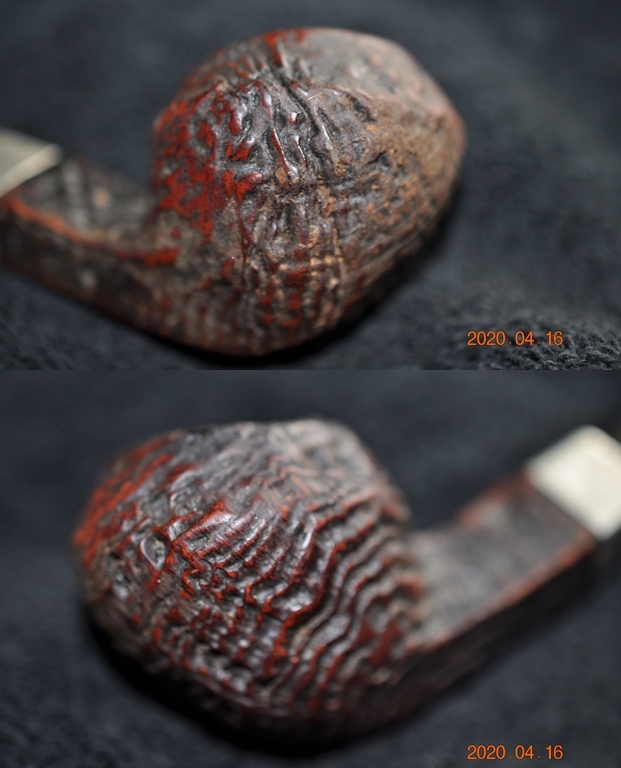
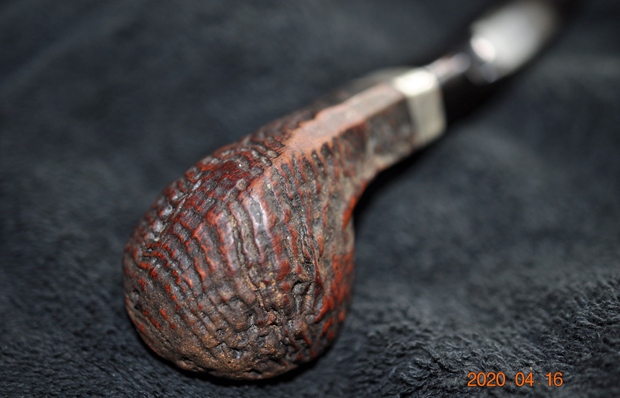
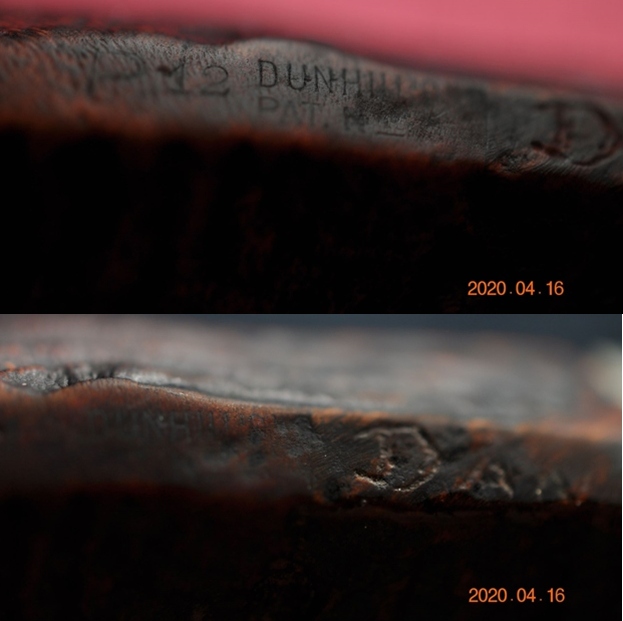
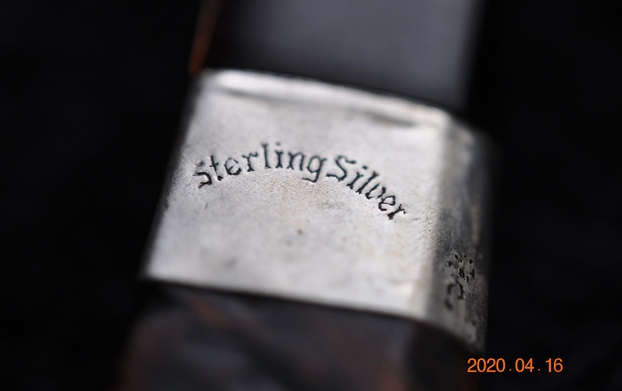
The next pipe on the work table came to us from one of Jeff’s hunts. It is a Bent Bulldog with a copper/brown variegated acrylic stem and a rugged sandblast around the bowl. It has an oxblood/brown/black finish that highlights the grain in the sandblast. When I first took the pipe out of the box to work on it this morning I thought that the blast reminded me of early Dunhill pipes but the band and the acrylic stem made me not connect it to Dunhill. Later when I turned the pipe over to try to decipher the stamping with a light and lens I was surprised that it was indeed a Dunhill. It is stamped on the flat underside of the shank and reads P12 followed by Dunhill Shell [over] Pat. No. with the numbers and the rest of the stamping blurred out with what looks like the previous owner’s initials DAV or DAN carved by hand.  So it is a Patent Shell with no way of dating it and having an aftermarket band and acrylic stem. The acrylic stem and silver band were well fitted to the shank and matched the angles. From my experience it is unusual to see this kind of workmanship in an aftermarket stem and band. It is always a shame to me when a very old and well-made pipe is changed this much! Jeff took photos of the pipe before he started his cleanup.He took photos of the rim top to show the thick cake and the heavy lava overflow on the top. It is an incredibly dirty pipe. He also captured the tooth marks on the top and underside of the stem near the button.    He took photos of the sides and heel of the bowl to show the deep blast around the bowl and the amount of grime ground into the surface of the briar. He took photos of the stamping on the underside of the shank and the carved initials near the stem/shank junction. He also took a photo of the stamping on the silver band on the shank. I turned Pipephil’s helpful Dunhill section to see if I could at least establish parameters for the age of the pipe (http://www.pipephil.eu/logos/en/dunhill/index.html).

From there I knew that the Dunhill Shell was introduced in 1917 and the Patent stamped lasted from 1920 until 1954.

From the shape lettering chart I learned that the P stamp was correct for a ½ Bent Bulldog (http://www.pipephil.eu/logos/en/dunhill/shapes-l.html_).

I turned to Pipedia and looked up the specifics of the Shell line. (https://pipedia.org/wiki/Dunhill#Shell)

Shell – A deep craggy sandblast with a black stain finish (usually made using Algerian briar) – the color of the stain used has varied over the years. Although there is some doubt as to them being the first to sandblast pipes, Dunhill’s Shell pipes, and the sandblasting techniques developed to create them are considered one of Dunhill’s greatest and most lasting contributions to the art of pipe making.

The documented history of Dunhill’s inception of the Shell is largely limited to patent applications — there are no catalog pages or advertisements promoting blasted pipes at the time. The preliminary work on the English patent (No. 1484/17) was submitted on October 13, 1917. The patent submission was completed half a year later, on April 12, 1918, followed by the granting of the English patent on October 14, 1918. This was less than a month before the end of The Great War on November 11th.

In 1986 Dunhill released a line of premium Shell finish pipes – “RING GRAIN”. These are high-quality straight grain pipes which are sandblasted. Initially only Ring Grain, but now in two different finishes. In 1995 the “Shilling” was introduced with Cumberland finish – it is an extremely rare series. These pipes exhibit a deeper blast characteristic of that of the 1930’s – mid-1960’s (and the limited ‘deep blast’ pipes of the early 1980s) and show a fine graining pattern. These are considered the best new Dunhills by many enthusiasts today and are very rare. The finish is sometimes described as tasting like vanilla at first, with the taste becoming more normal or good as the pipe breaks in.

I knew that the Dunhill Shell pipe I was working was made between 1920-1954. I probably would not get much closer than that for a date on the pipe. I also knew that the previous owner had not only personalized the pipe with his initials but had also added a Sterling Silver band for decoration (no cracks or damage to the shank visible) and a variegated acrylic stem that looked very 1970s. Now it was time to work on the pipe.

Jeff had done his usual thorough cleanup on the pipe. He reamed the bowl with a PipNet pipe reamer and followed up with a Savinelli Fitsall pipe knife to remove the cake. He scrubbed out the mortise and the airway in the shank and the stem with alcohol, cotton swabs and pipe cleaners. He scrubbed the exterior of the bowl, rim, shank and stem with a tooth brush and Murphy’s Oil Soap to remove the oils and tars on the rim and the grime on the finish of the bowl. He rinsed it under running water. He dried it off with a soft cloth. He cleaned the internals and externals of the stem with alcohol, pipe cleaners and cotton swabs. I took a photo of the rim top and stem to show the condition. They cleaned up really well and the burn damage on the top of the rim at the front and left side are visible. The rest of the rim top is worn with the sandblast smoothed out. The inner edge of the bowl had some low spots and damage that would need to be addressed. The acrylic replacement stem was well crafted and fit very well with the shank and angles of the shank. The stem surface looked very good with light tooth chatter and marks on both sides ahead of the button.  I took a photo of the stamping on the left and underside of the shank. It read as noted above.  You can see the wear on the stamping and the DAV initials just ahead of the tarnish silver band.I removed the stem and took a photo of the pipe to give a sense of the whole. It is a well shaped bent Bulldog shape that looks craggy and inviting.Now it was time to do my work on the pipe. I cleaned up the inner edge of the bowl and gave it a slight bevel to minimize the damage. It also brought the bowl back into round.   Since it was clean and looked good I rubbed the bowl and shank down with Before & After Restoration Balm. I worked it into the surface of the sandblast bowl sides and shank with my fingertips and a horsehair shoe brush to clean, enliven and protect the briar. I let the balm sit for a little while and then buffed with a cotton cloth to raise the shine. It helped to give depth to the stain around the bowl.  The final buffing would bring the pipe alive. I polished the Sterling Silver band with a jeweler’s cloth to remove the remaining oxidation that was on the silver.  I set the bowl aside and turned my attention to the stem. I used 220 grit sandpaper to smooth out the tooth chatter and marks and blend them into the stem surface. I started the polishing with 400 grit wet dry sandpaper.   I polished the acrylic stem with micromesh sanding pads – 1500-12000 grit pads. I wiped it down with a damp cloth after each sanding pad. I used Before & After Pipe Polish – both Fine and Extra Fine to further polish the stem. This beautifully sandblasted Dunhill Shell Bent Bulldog with a variegated copper and brown acrylic replacement saddle stem is a great looking pipe now that it has been restored. I was able to minimize damages on the edge of the bowl and rim. I gave a bevel to the inside edge of the bowl to remove the burn damage and out of round bowl. The rich Shell coloured finish came alive with the polishing and waxing. The dimensions of the sandblast really popped. I put the stem back on the bowl and carefully buffed the pipe with Blue Diamond on the buffing wheel using a light touch on the briar. I gave the bowl multiple coats of Conservator’s Wax and the stem multiple coats of carnauba wax on the buffing wheel. I buffed the pipe with a clean buffing pad to raise the shine. I hand buffed the pipe with a microfiber cloth to deepen the shine. The finished Dunhill Shell Bulldog is a beauty and fits nicely in the hand and looks very good. Even though the stem and band are aftermarket it still looks good. Give the finished pipe a look in the photos below. The dimensions of the pipe are Length: 6 inches, Height: 1 ½ inches, Outside diameter of the bowl: 1 ½ inches, Chamber diameter: ¾ of an inch. If you are interested in adding this pipe to your collection send me a message or an email. Thanks for reading this blog and my reflections on the pipe while I worked on it. There are many more to come!
Restoring a Tiny Bonnie Brier Rhodesian


Blog by Steve Laug

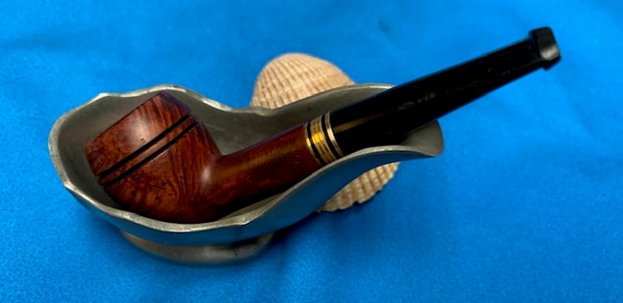
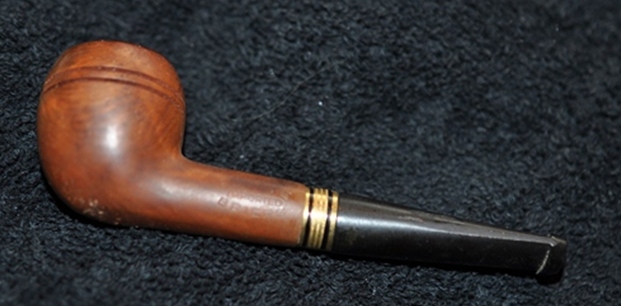
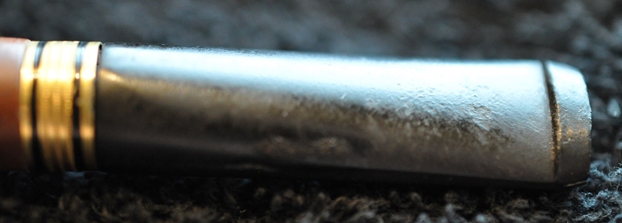
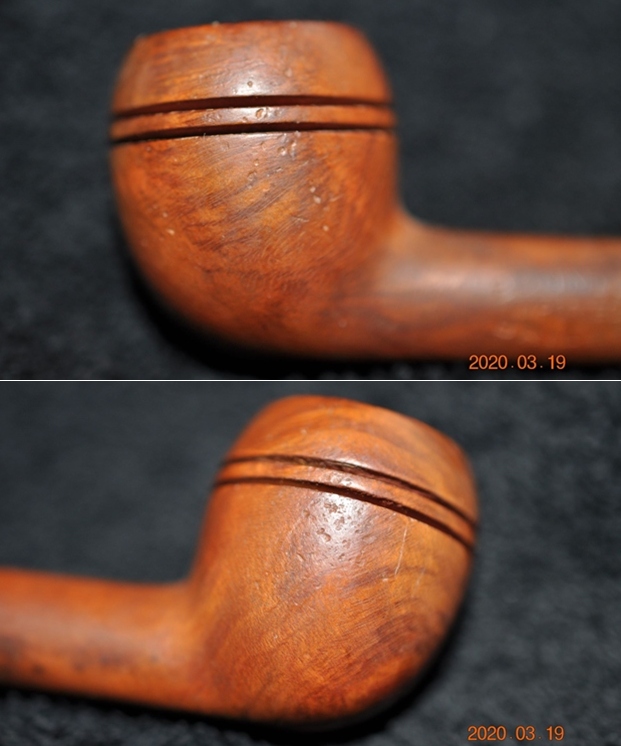
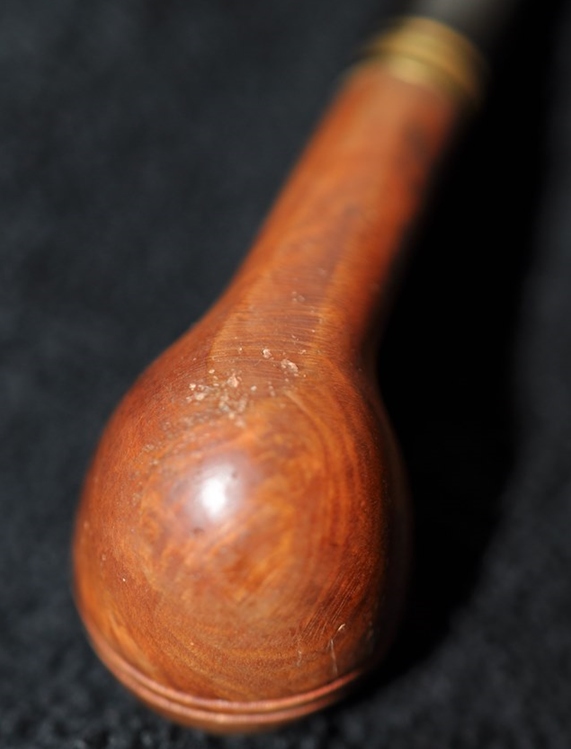
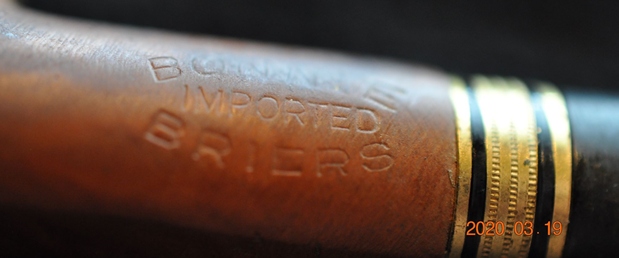
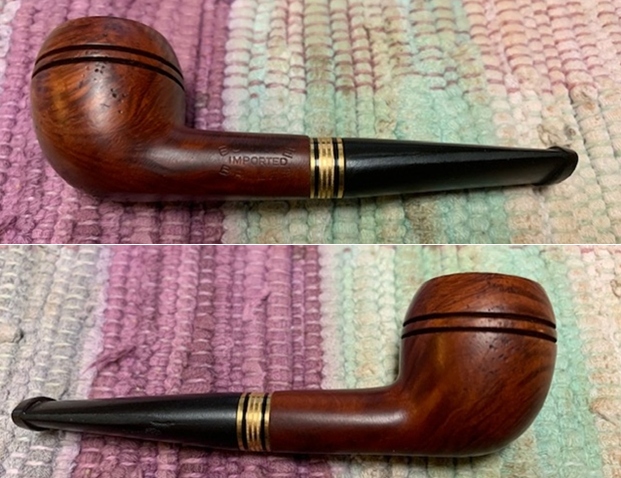
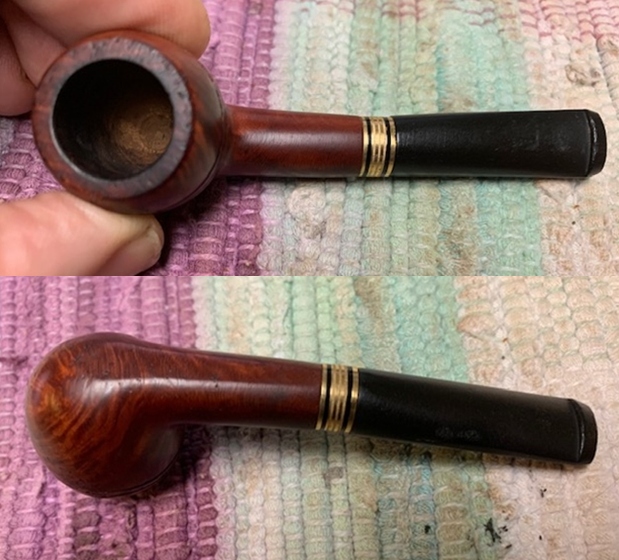
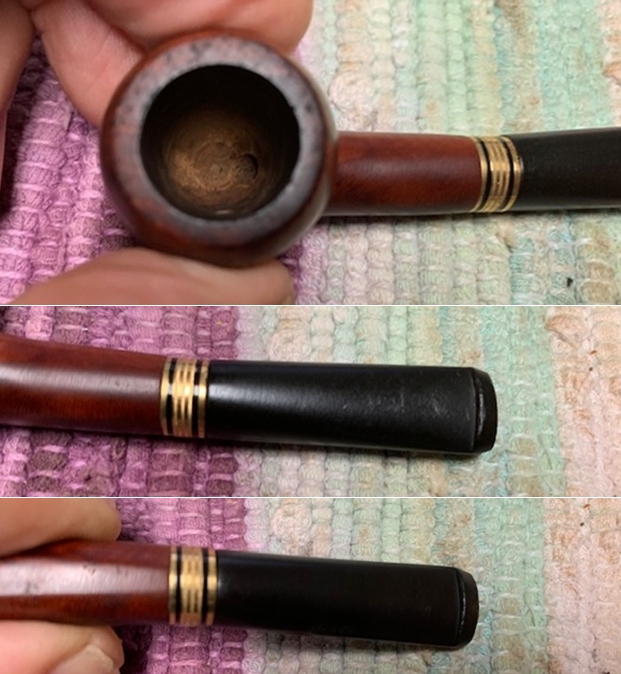
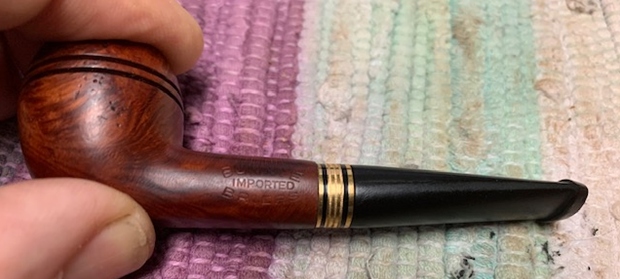
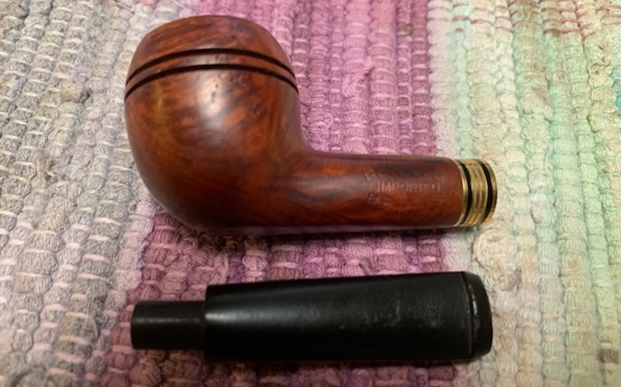
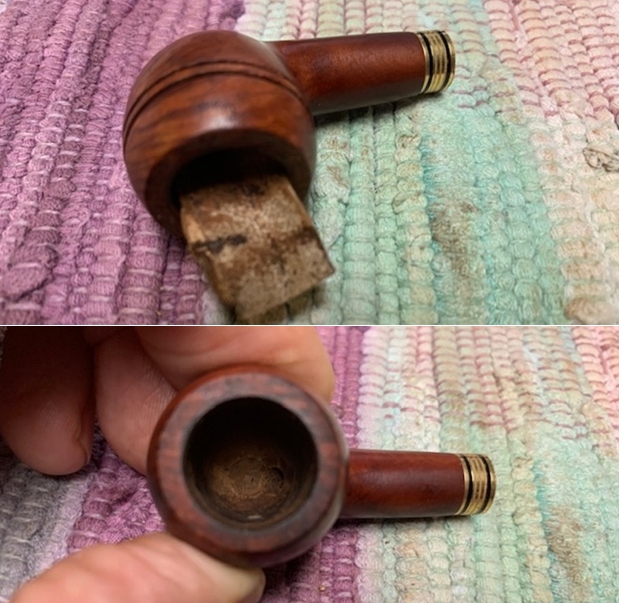
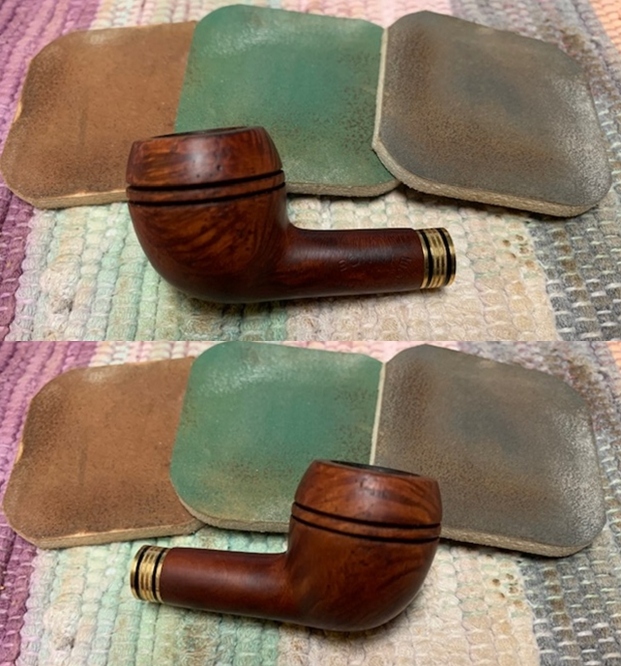
The next pipe on the work table is a tiny little straight Rhodesian with a fancy band on the shank and a vulcanite stem. The pipe reminds me of a small size Salesman’s pipe that was carried as a sample by pipe salesmen. It has a brown smooth finish that highlights the grain around the bowl sides and shank. When I first took the pipe out of the box to work on it this morning I was surprised by how small of a pipe it really was. It is stamped on the left side of the shank and reads Bonnie in an arch [over] Imported [over] Brier arched below it.  The tiny pipe had definitely been smoked and the stem had tooth marks in the vulcanite. The finish was very good around the bowl sides but the rim top had some darkening. There was a lot of grime ground into the bowl and in the rings around the cap. The bowl was heavily caked and there was a lava coat on the top of the rim. The inner edge of the bowl was covered with thick lava but it appeared to me that there was damage and burning around the edges. The vulcanite taper stem was oxidized and had tooth marks and chatter on both sides near the button. The tiny pipe had promise but it was very dirty. Jeff took photos of the pipe before he started his cleanup work. He took photos of the rim top and bowl to give a clear picture of the thickness of the cake and the condition of the rim top and edges. To me it is unbelievable that a pipe this tiny was smoked this much! The pipe is only 3 ½ inches long and 1 inch tall. He also took photos of the top and underside of the stem to show the horrible condition of the chatter and tooth marks.   Jeff took photos of the sides and heel of the bowl to give a picture of what the briar around the pipe looked like. There is some interesting grain under the grime and nicks on the bowl sides. Jeff took a photo of the stamping on the side of the shank. It read as noted above.  I turned Pipephil’s section on Bonnie Brier Pipes to see if I could get a sense of the brand before I started working on it (http://www.pipephil.eu/logos/en/logo-b6.html). These are all regular sized pipes while the one on the table is a mini!I turned to Pipedia and looked up the specifics on the Bonnie Brier pipes (https://pipedia.org/wiki/Bonnie_Brier).

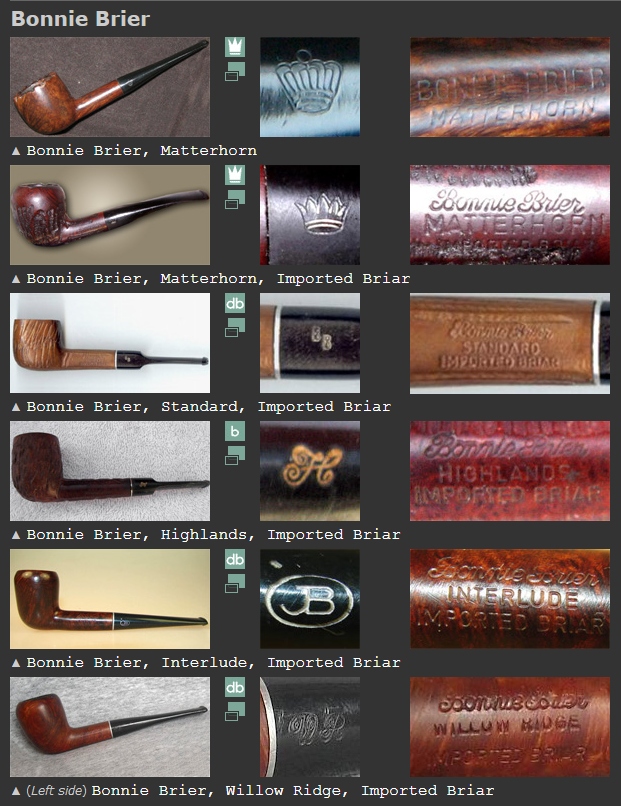
Bonnie Brier is a trademark of Finsbury Products, Inc. of Elmsford, NY. The trademark was registered in November of 1976, and expired in August of 1997. The pipes are signed “Bonnie Brier” in script with the name of the model line underneath and “Imported Briar” below. There are several model lines with different makers marks on the stem or shank: Matterhorn (a crown), Standard, Highlands (script “H”), Interlude (stylized “JB” in an oval) and Willow Ridge (script “W R”).

I knew that the tiny Bonnie Brier Imported Rhodesian pipe I was working was made between 1976-1997. I probably would not get much closer than that for a date on the pipe. It may well have been a salesman’s pipe that was carried as a sample of the brand carried by salesmen. Now it was time to work on the pipe.

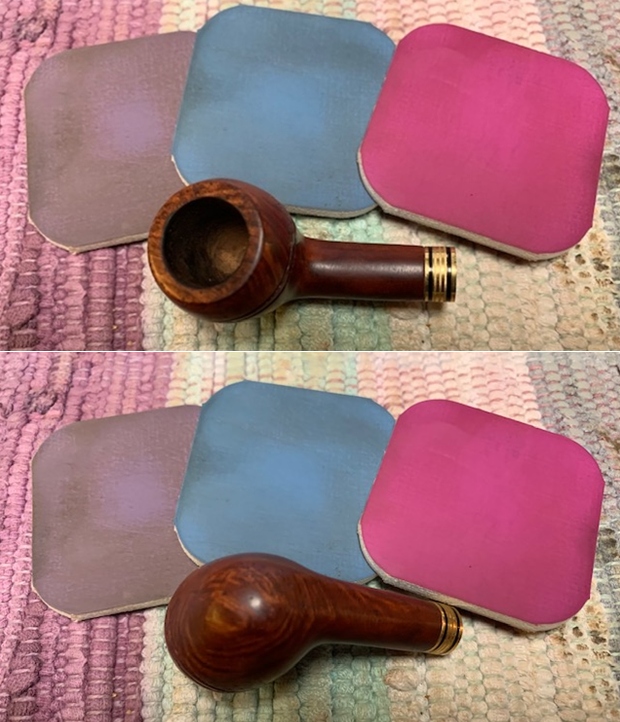
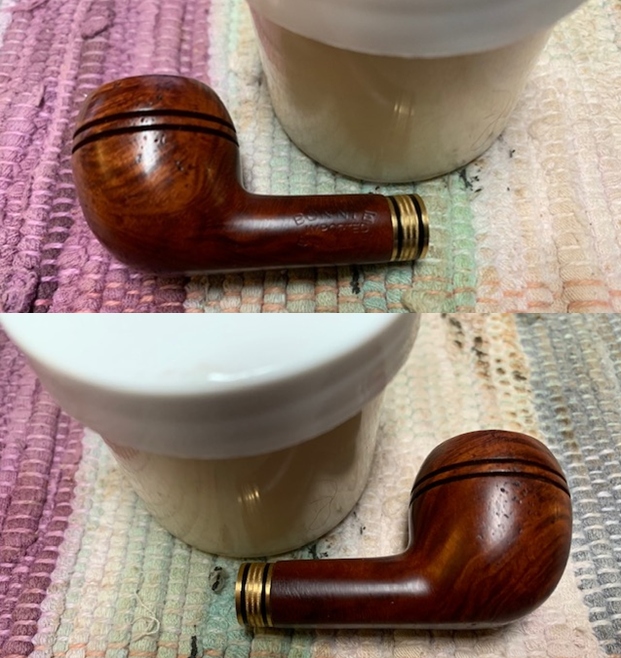
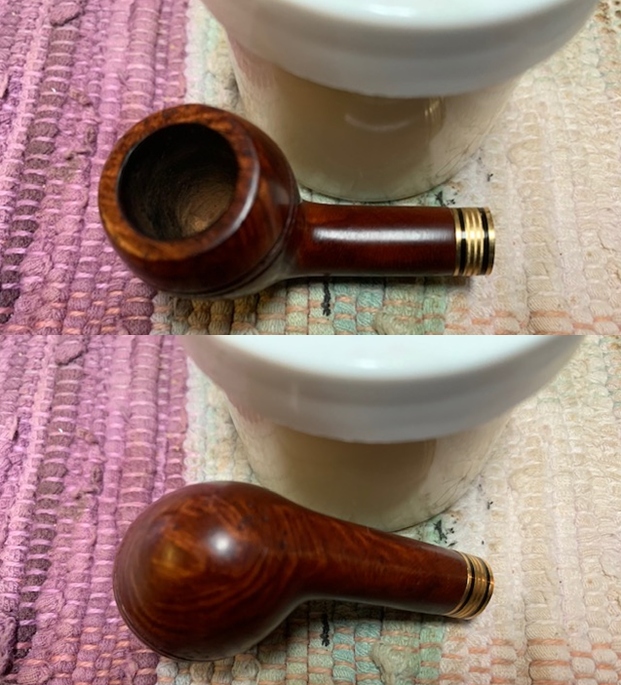
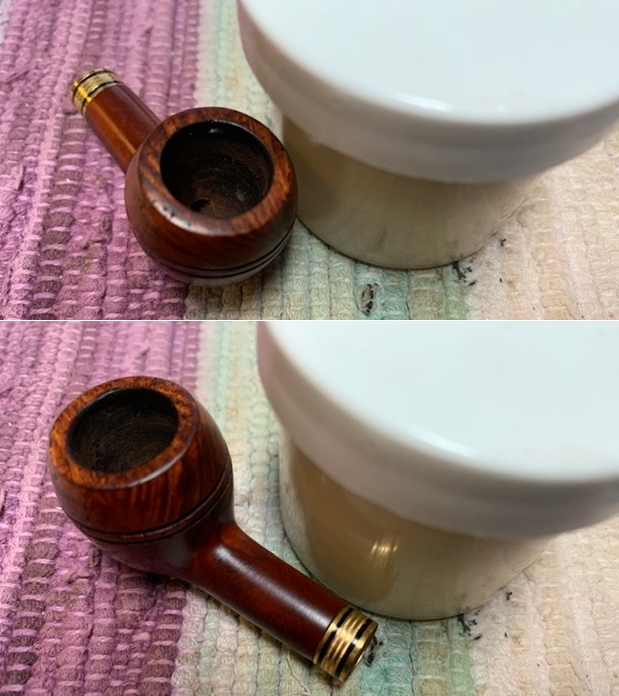
Since Jeff follows the same pattern of work in his cleanup we do not include photos but rather just a simple summary. Jeff reamed the bowl with a Savinelli Fitsall pipe knife to remove the cake. He scrubbed out the mortise and the airway in the shank and the stem with alcohol, cotton swabs and pipe cleaners. He scrubbed the exterior of the bowl, rim, shank and stem with a tooth brush and Murphy’s Oil Soap to remove the oils and tars on the rim and the grime on the finish of the bowl. He rinsed it under running water. He dried it off with a soft cloth. He cleaned the internals and externals of the stem with alcohol, pipe cleaners and cotton swabs. The stem was clean and you could clearly see the tooth marks on the top and underside. I took photos of what the pipe looked like when I brought to my worktable. The bowl and rim top cleaned up really well. The edges look good with just a few nicks on inner edge. The rim top has some darkening and nicks in the surface. The small short vulcanite stem surface looked very good with light tooth chatter and marks on both sides ahead of the button.  I took a photo of the stamping on the left and underside of the shank. It read as noted above.  I removed the stem and took a photo of the pipe to give a sense of the whole. It is a well shaped Rhodesian that is proportionally well done.Now it was time to do my work on the pipe. I cleaned up the inner edge of the bowl and gave it a slight bevel to minimize the damage.     I polished the briar with micromesh sanding pads. I wet sanded it with 1500-12000 grit pads and wiped it down after each pad with a damp cloth. I decided to leave the nicks and pits in the bowl as part of the story of the pipe. I rubbed the bowl and shank down with Before & After Restoration Balm. I worked it into the surface of the bowl sides and shank with my fingertips to clean, enliven and protect the briar. I let the balm sit for a little while and then buffed with a cotton cloth to raise the shine. It helped to give depth to the stain around the bowl.  The final buffing would bring the pipe alive. I polished the band with a jeweler’s cloth to remove the remaining oxidation that was on the metal.     I set the bowl aside and turned my attention to the stem. I filled in the deep tooth marks with black super glue and set the stem aside to let the repairs cure.    I used 220 grit sandpaper to smooth out the repairs on the surface and the tooth chatter and marks and blend them into the stem surface. I started the polishing with 400 grit wet dry sandpaper. I polished the acrylic stem with micromesh sanding pads – 1500-12000 grit pads. I wiped it down with a damp cloth after each sanding pad. I used Before & After Pipe Polish – both Fine and Extra Fine to further polish the stem.     This tiny, well constructed Bonnie Brier Imported Rhodesian with a black and gold band on the shank and the taper vulcanite stem is a great looking pipe now that it has been restored. I was able to minimize damages on the edge of the bowl and rim. The rich brown stain came alive with the polishing and waxing. I put the stem back on the bowl and carefully buffed the pipe with Blue Diamond on the buffing wheel using a light touch on the briar. I gave the bowl and the stem multiple coats of carnauba wax on the buffing wheel. I buffed the pipe with a clean buffing pad to raise the shine. I hand buffed the pipe with a microfiber cloth to deepen the shine. The finished Mini Rhodesian Salesman Pipe is a beauty and looks very good for a tiny pipe. Give the finished pipe a look in the photos below. The dimensions of the pipe are Length: 3 ½ inches, Height: 1 inch, Outside diameter of the bowl: 1 inch, Chamber diameter: ½ inch. If you are interested in adding this pipe to your collection send me a message or an email. Thanks for reading this blog and my reflections on the pipe while I worked on it. There are many more to come!
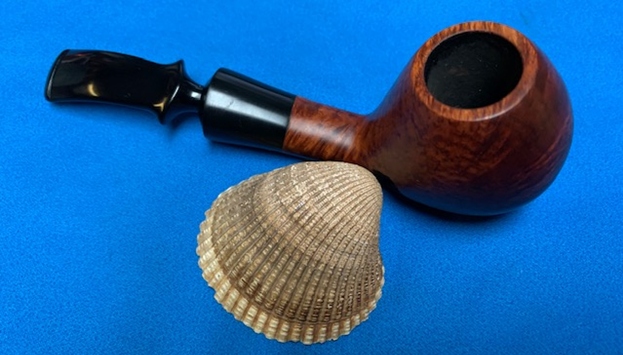
Yes indeed another Bertram Washington DC Pipe – a Grade 20 Lovat


Blog by Steve Laug

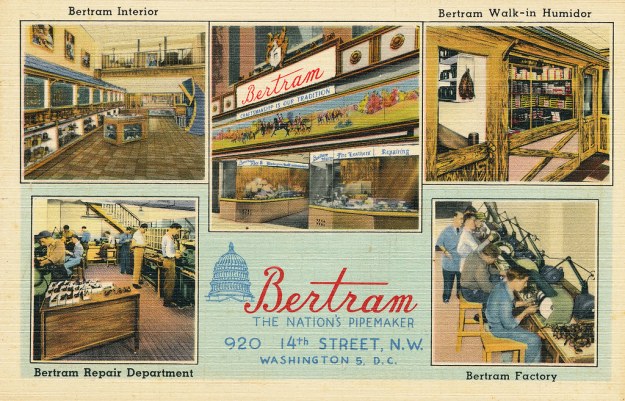
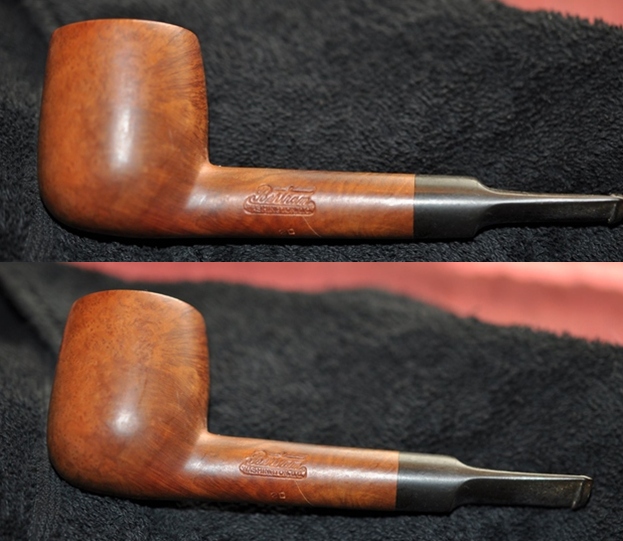
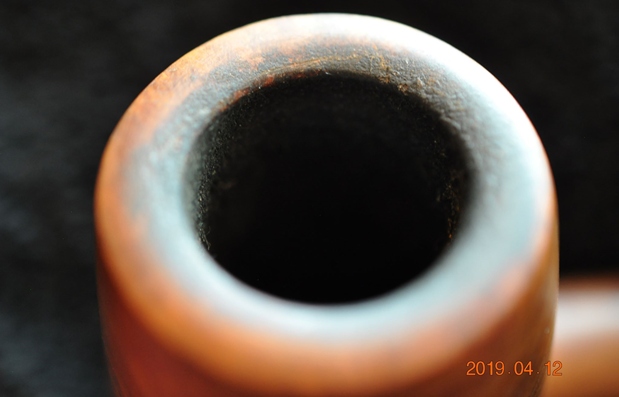
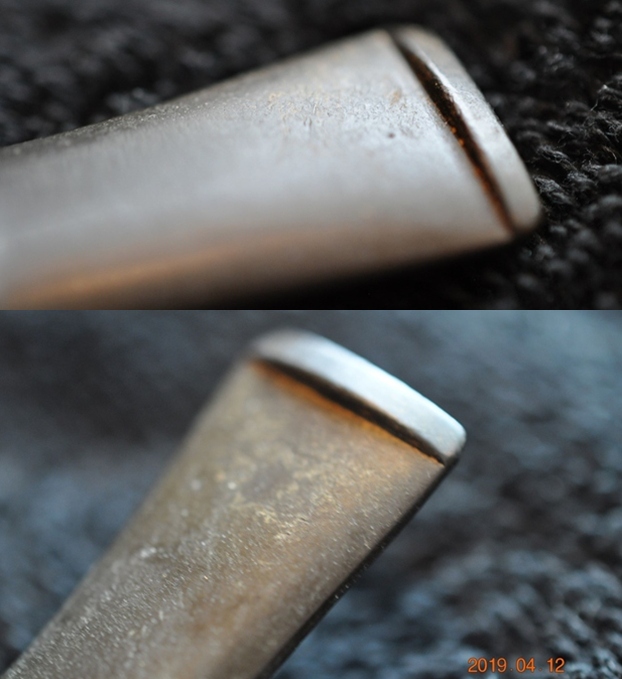
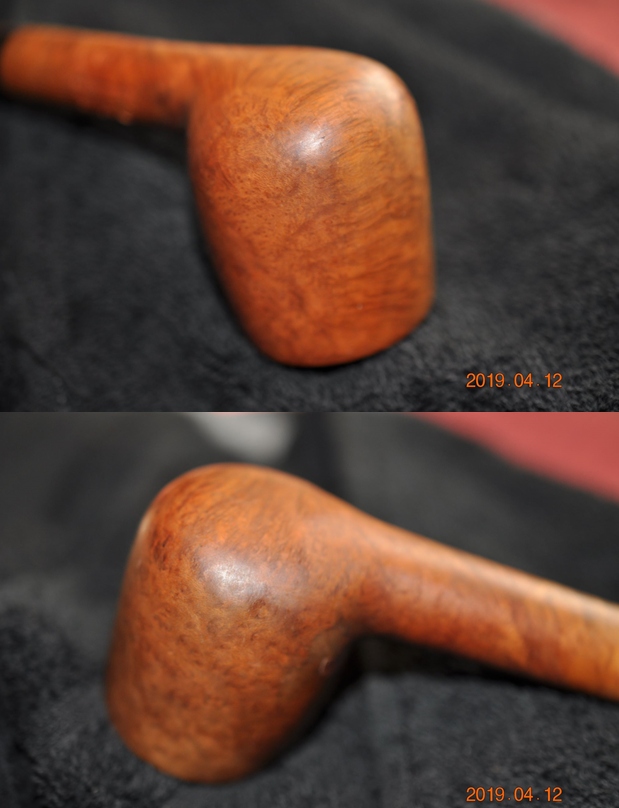
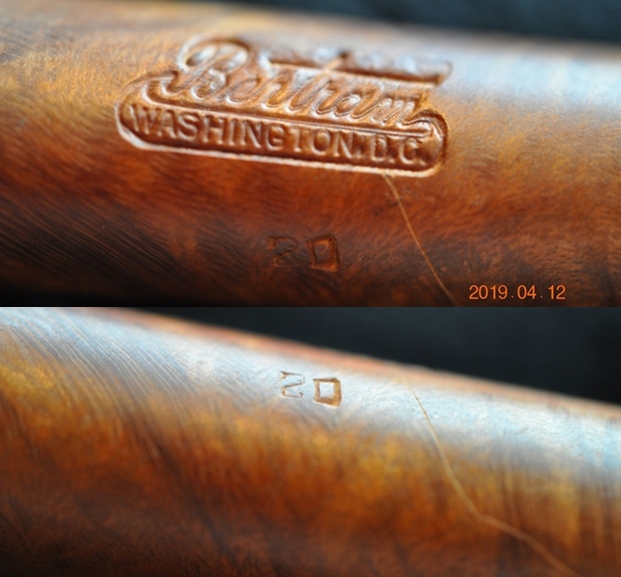
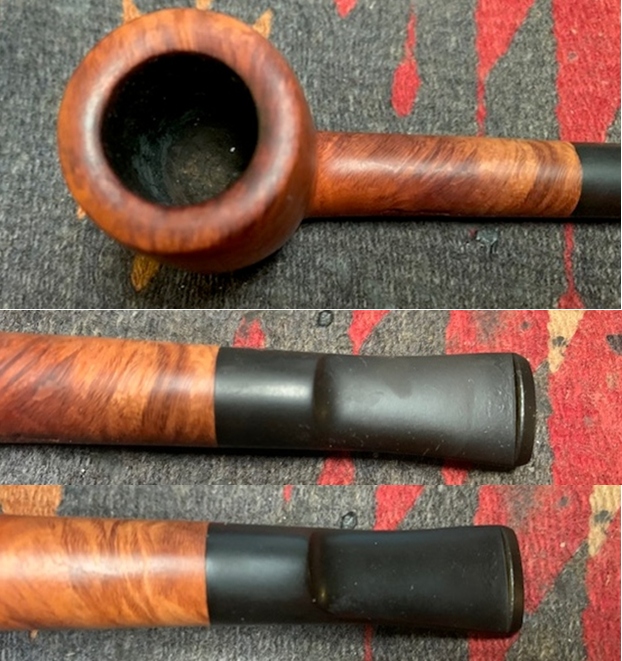
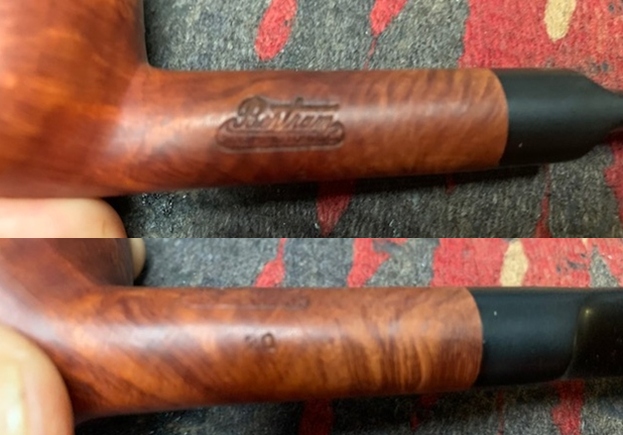
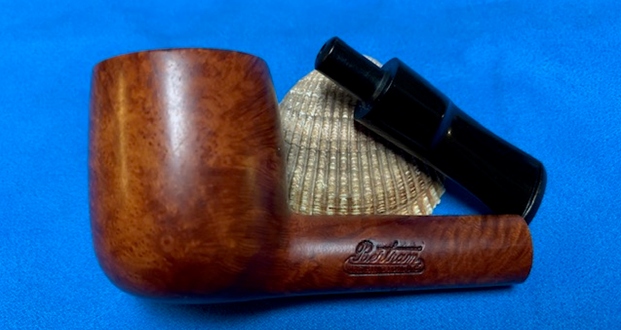
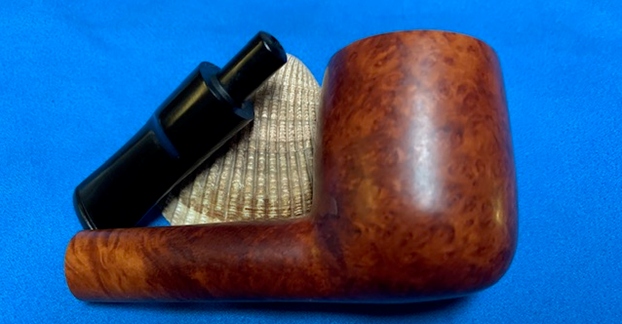
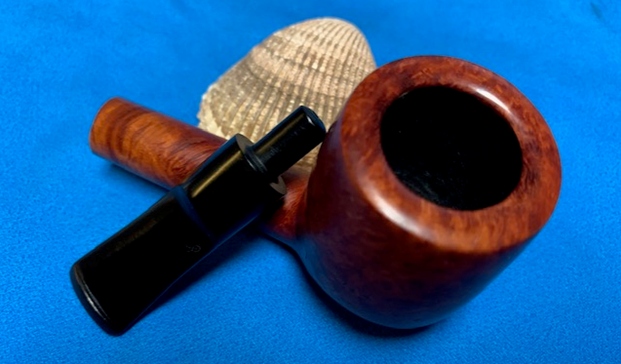
The next pipe on the work table came to me from one of our estate purchases. Between us we pick up quite a few pipes for restoration. I try to work them into the restoration queue so that I can keep them moving. We picked up over 120 Bertram pipes from an estate that a fellow on the east coast of the US was selling. The post card below was sent to me by one of the readers of the blog. It is a nice memento of the old shop. I thank him for thinking of us.This next one is from that estate – a beautifully grained large bowl Lovat Grade 20 Bertram with a vulcanite saddle stem. The pipe is stamped on the top side and reads Bertram [over] Washington D.C. centered on the shank. On the underside of the shank is the Grade 20 number. The finish had a lot of grime ground into the smooth finish on the bowl and some darkening around the sides of the bowl. The bowl was caked with an overflowing lava coat on the top of the rim, heavier toward the back of the bowl. The rim top had a slight crown that gave it a unique look. The edges looked okay other than some potential burn damage on the back inner edge. The stem was lightly oxidized, dirty and had light tooth chatter and marks on the top and underside near the button. There were not markings or a logo on the taper stem. Like the rest of the Bertrams in this lot the pipe had promise but it was very dirty. Jeff took photos of the pipe before he started his cleanup work. He took photos of the rim top and bowl to give a clear picture of the thickness of the cake and the lava on the rim top. The lava was thicker toward the back of the rim and there were remnants of tobacco on the walls of the thickly caked bowl. He also took photos of the top and underside of the stem to show the chatter and tooth marks. Otherwise the stem is quite clean. Jeff took photos of the sides and heel of the bowl to give a picture of what the briar around the pipe looked like. There is some stunning grain under the grime.   He took photos of the stamping on the left and underside of the shank. It reads as noted above and is clear and readable. The grade number is 20.  You can also see the scratch on the side of the shank.As I have worked on Bertrams I have written on the brand and have included the following information. If you have read it in past blogs, you can skip over it. If you have not, I have included the link to Bertram history and information. I would recommend that if you don’t know much about them take some time to read the background. I include a link to the write up on Pipedia (http://pipedia.org/wiki/Bertram). Bertram pipes were based out of Washington DC. They were popular among famous politicians and celebrities of the time. They made many products for them from FDR’s cigarette holders to Joseph Stalin’s favorite pipe. They were considered some of the best America had to offer till they finally closed their doors in the 70s. Bertram graded their pipes by 10s and sometimes with a 5 added (15, 25, 55 etc.), the higher the grade the better. Above 60s are uncommon and 80-90s are quite rare. I have worked on one 120 Grade billiard. I have several blogs that I have written on rebornpipes that give some history and background to Bertram pipes. (https://rebornpipes.com/2015/06/16/an-easy-restoration-of-a-bertram-grade-60-217-poker/).

I have included the following link to give a bit of historical information on the pipe company. It is a well written article that gives a glimpse of the heart of the company. http://www.streetsofwashington.com/2012/01/bertrams-pipe-shop-on-14th-street.html#

From this information I learned that all of these Bertrams were made before the closure of the shop in the 1970s. This Bertram large bowl Lovat has a stunning a mix of grain around the bowl. This pipe has a 20 Grade stamp on it which I am sure explains the quality of the briar. There are fills in the shank and at the bowl/shank junction. But like many of these Bertrams the Grading system is a mystery to me.

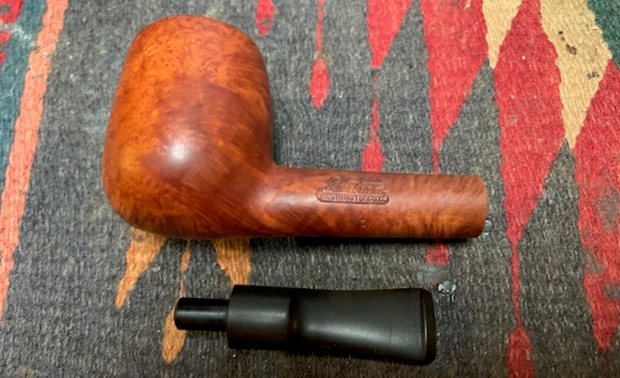
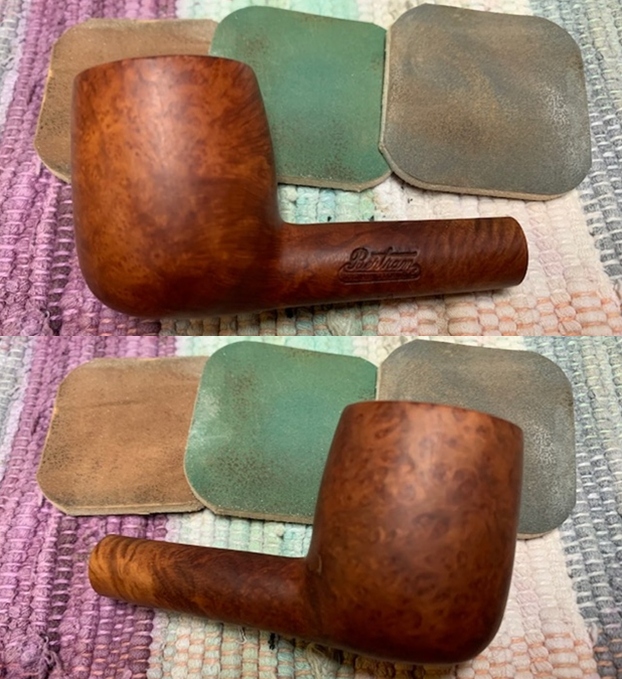
Jeff had cleaned up the pipe with his usual penchant for thoroughness. He reamed the pipe with a PipNet Pipe Reamer and cleaned up the remnants with a Savinelli Fitsall Pipe Knife.  He scrubbed the bowl with undiluted Murphy’s Oil Soap with a tooth brush. He rinsed it under running warm water to remove the soap and grime. The crowned rim top cleaned up very well. The fills in the briar are visible but are solid and well blended. He cleaned out the inside of the shank and the airway in the stem with alcohol, cotton swabs and pipe cleaners. He soaked the stem in Before & After Deoxidizer and rinsed it off with warm water. I took photos of the pipe once I received it. The crowned rim top looked very good. The inner edge of the rim also looked surprisingly good. There was no damage to the edges. The stem surface looked very good with a few small tooth marks and chatter on both sides near the button. I took photos of the stamping on the shank. The Bertram Washington DC is on the  left side mid shank. On the underside of the shank it is stamped with the Grade 20 number.  I removed the stem and took a photo of the pipe to give a sense of the whole. The stem is a saddle style with a flared button.Now it was time to do my work on the pipe. I polished the bowl and the rim top, sides and shank with micromesh sanding pads – wet sanding with 1500-12000 grit pads and wiping it down after each pad with a damp cloth.  I rubbed the bowl and shank down with Before & After Restoration Balm. I worked it into the surface of the bowl sides and shank with my fingertips to clean, enliven and protect the briar. I let the balm sit for a little while and then buffed with a cotton cloth to raise the shine. I sanded out the tooth marks with 220 grit sandpaper and started polishing it with 400 grit wet dry sandpaper.    I polished the vulcanite stem with micromesh sanding pads – 1500-12000 grit pads. I wiped it down with a damp cloth after each sanding pad. I used Before & After Pipe Polish – both Fine and Extra Fine to further polish the stem. This Bertram Washington DC Grade 20 Large Bowl Lovat with a vulcanite saddle stem is a great looking pipe now that it has been restored. I put the stem back on the bowl and carefully buffed the pipe with Blue Diamond on the buffing wheel using a light touch on the briar. I gave the bowl and the stem multiple coats of carnauba wax on the buffing wheel and followed that by buffing the entire pipe with a clean buffing pad. I hand buffed the pipe with a microfiber cloth to deepen the shine. The finished Bertram 20 Lovat fits nicely in the hand and feels great. Give the finished pipe a look in the photos below. The dimensions of the pipe are Length: 5 ¼ inches, Height: 2 inches, Outside diameter of the bowl: 1 ½ inches, Chamber diameter: ¾ of an inch. If you are interested in adding this pipe to your collection send me a message or an email. Thanks for reading this blog and my reflections on the pipe while I worked on it. There are many more to come!