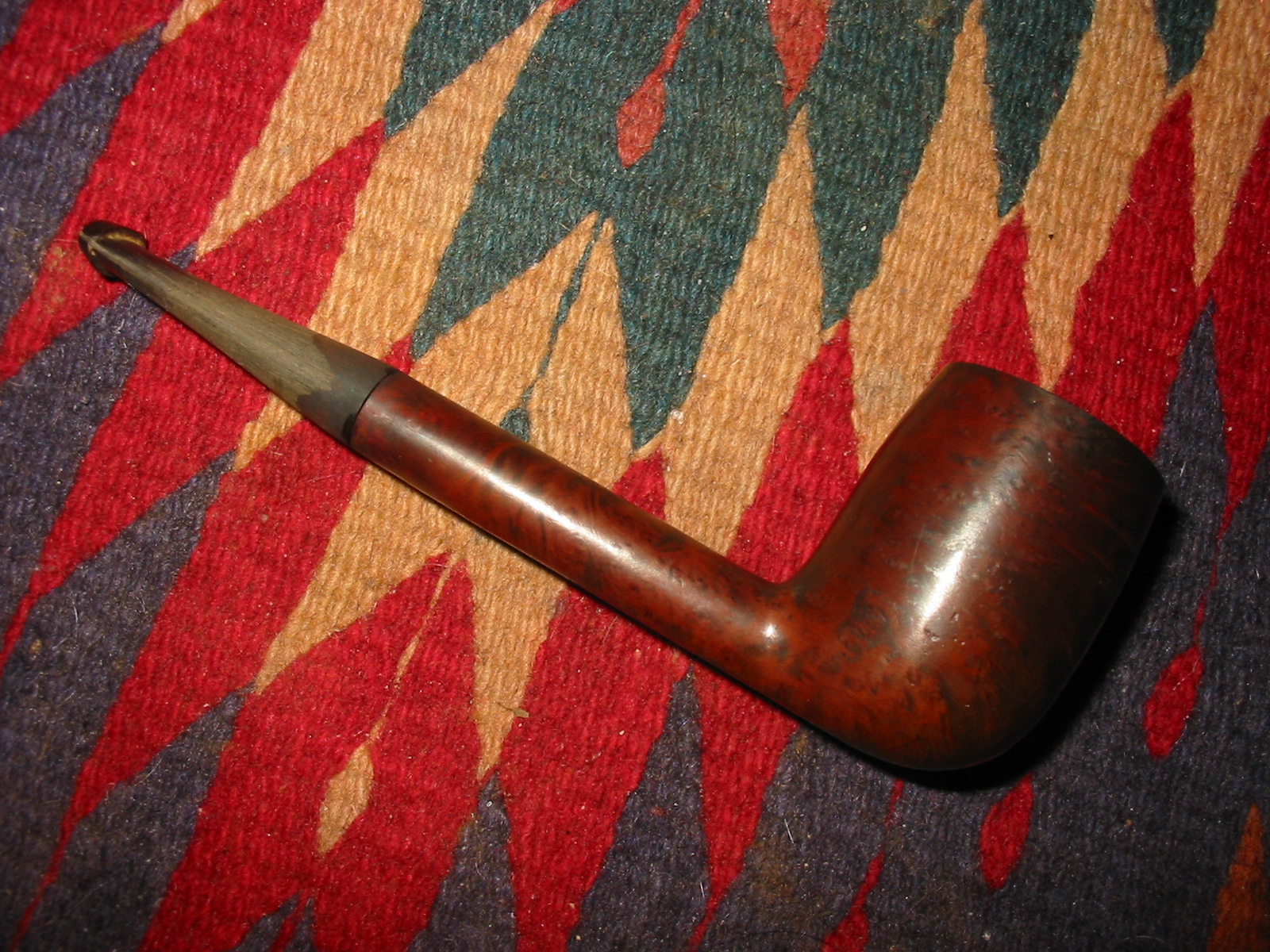
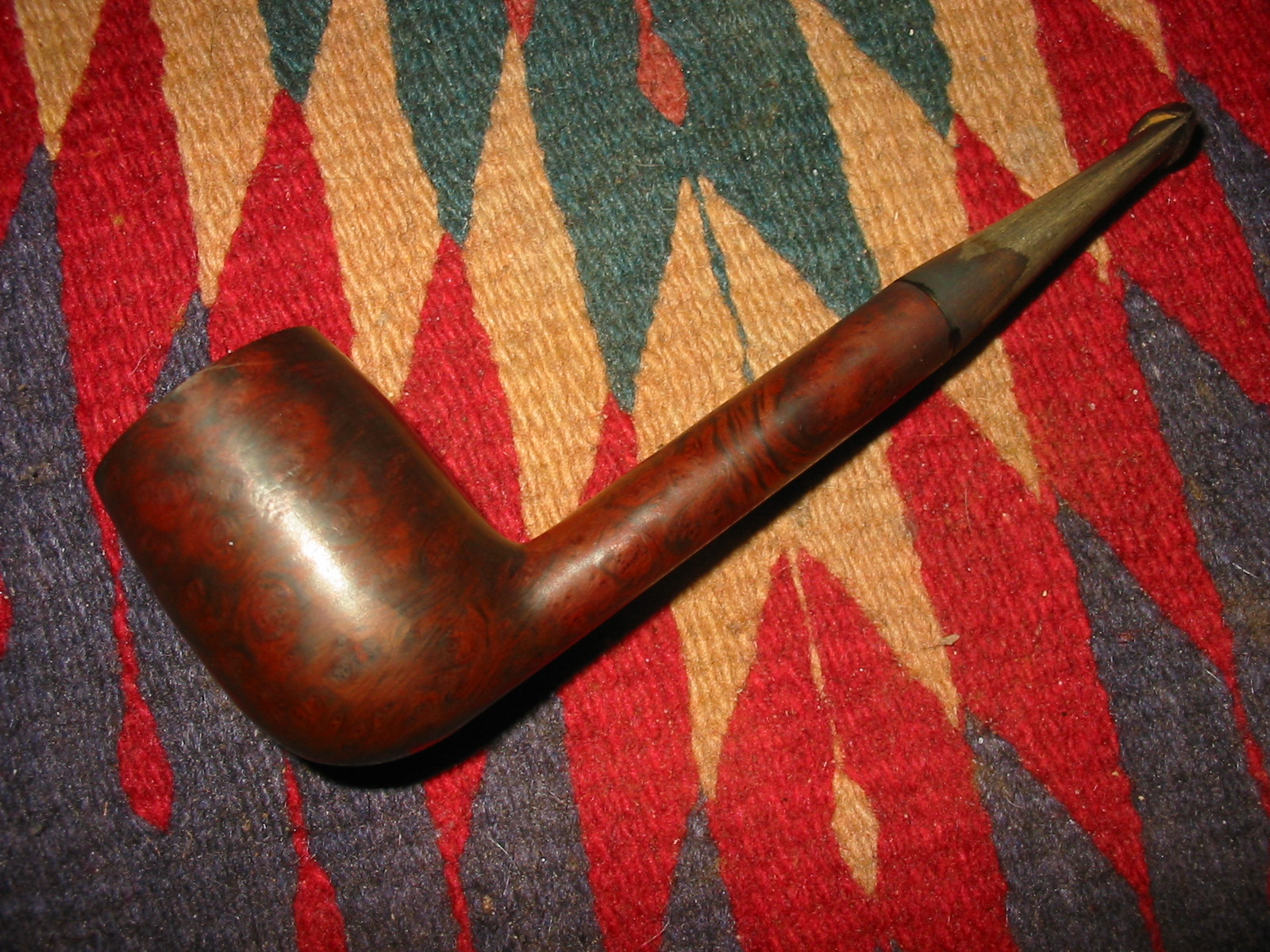
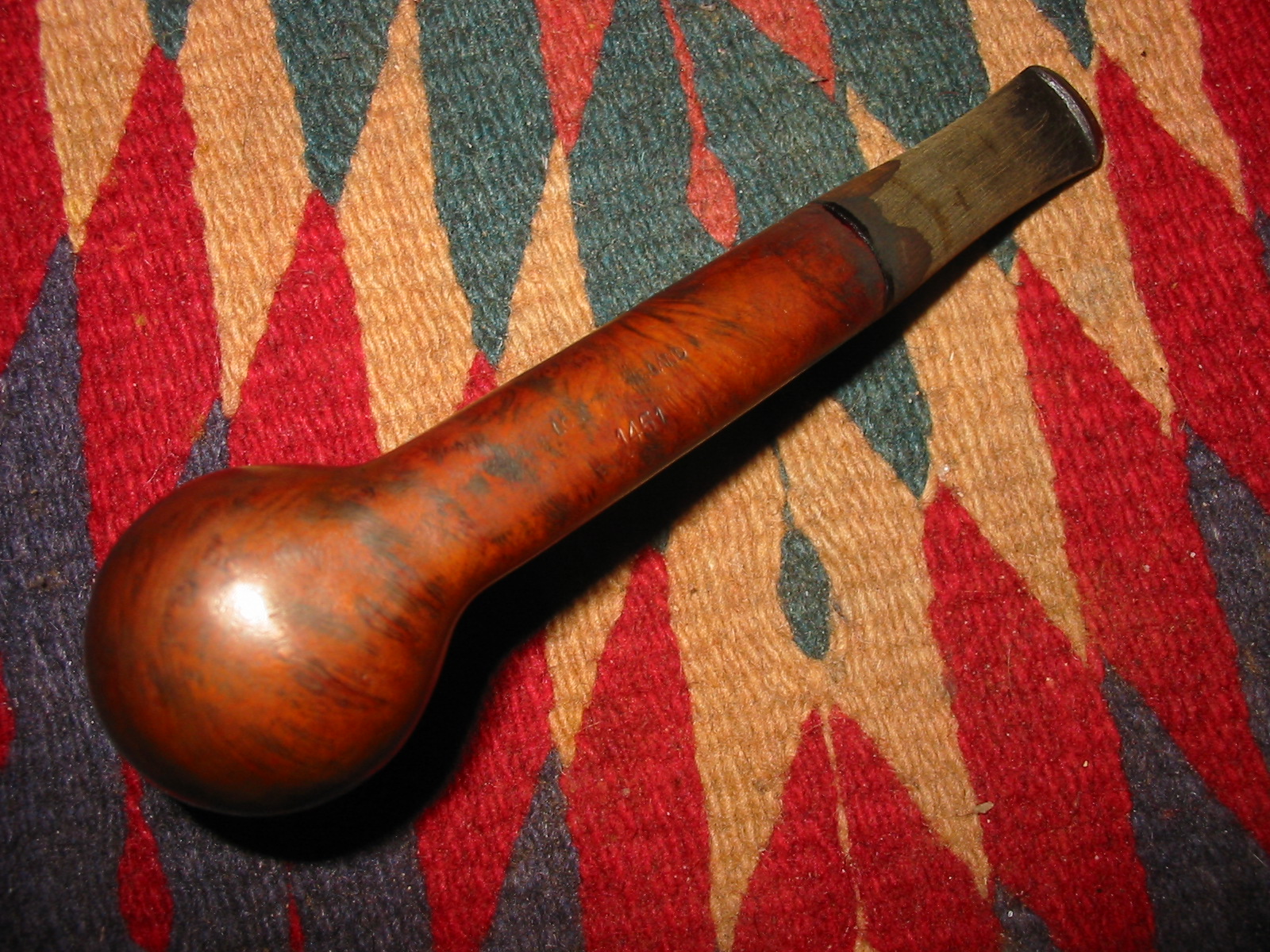
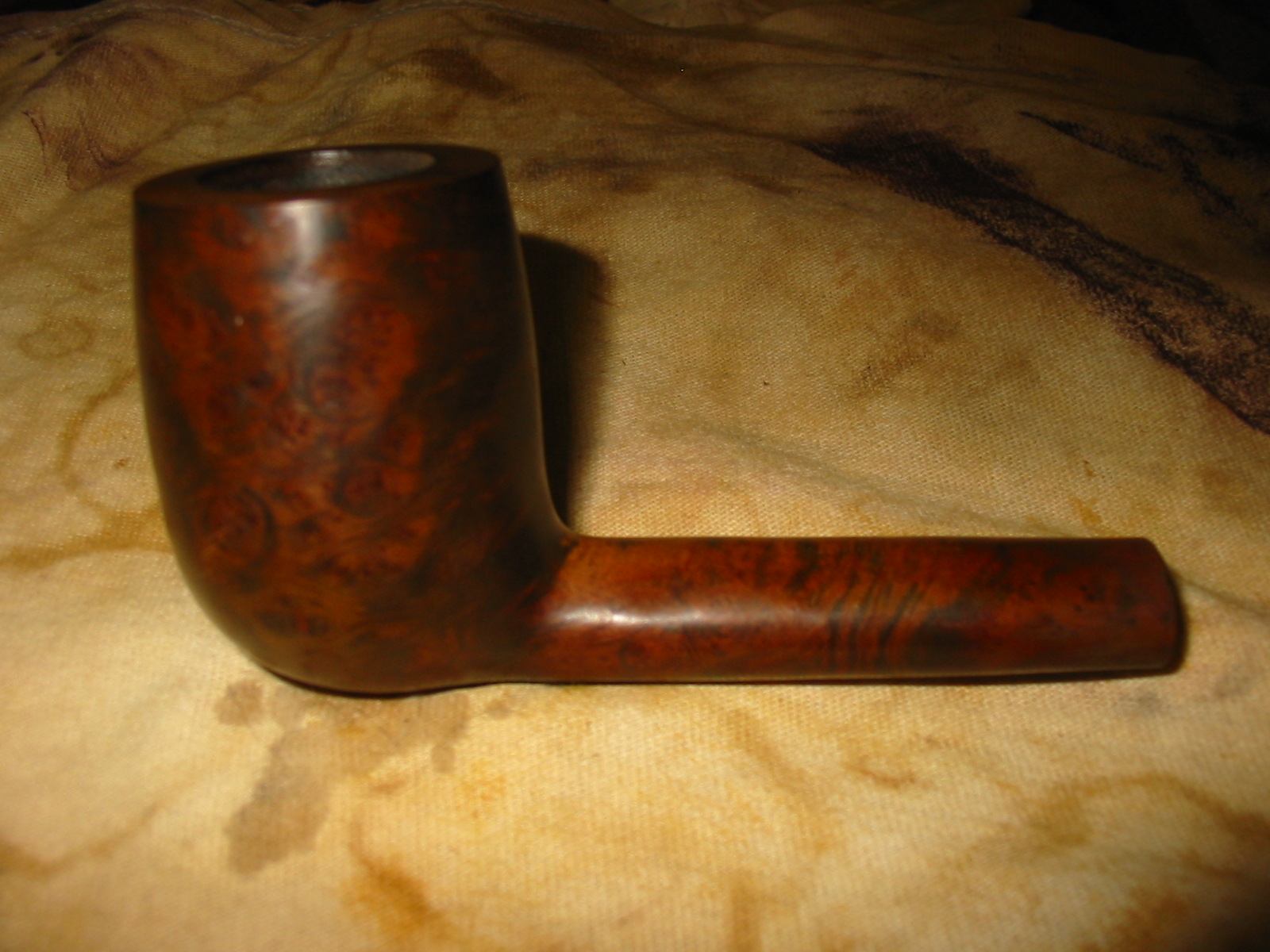
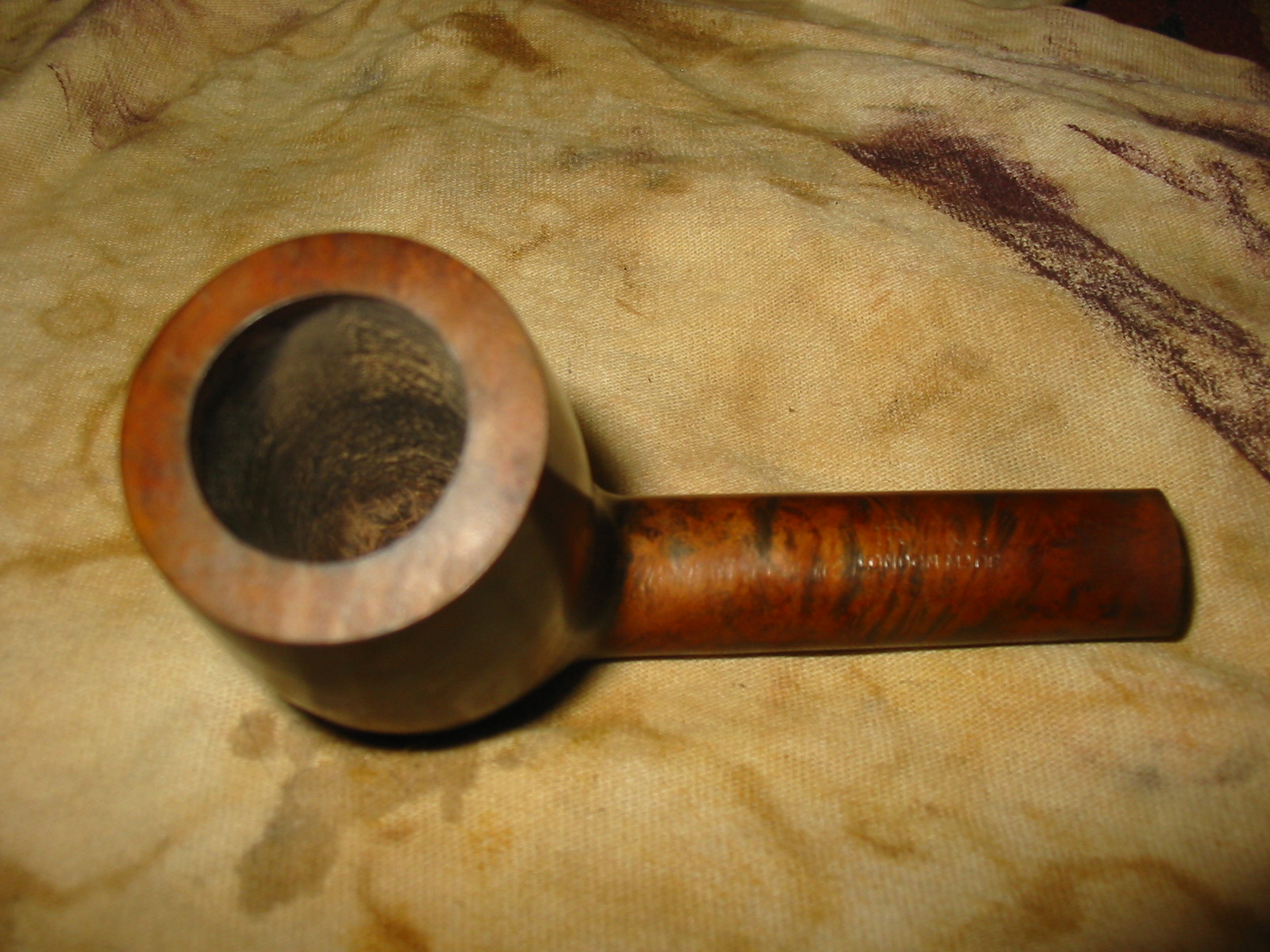
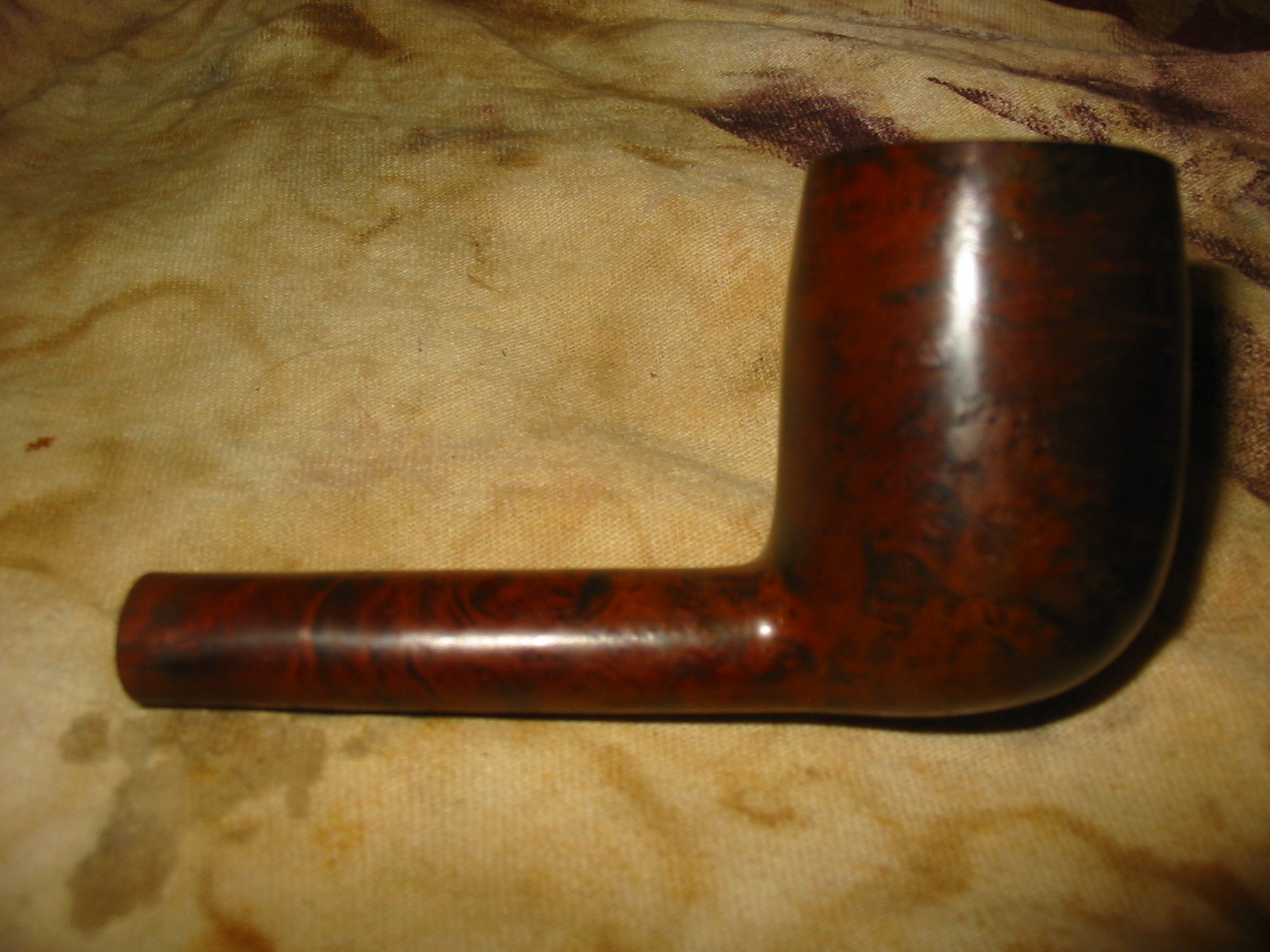
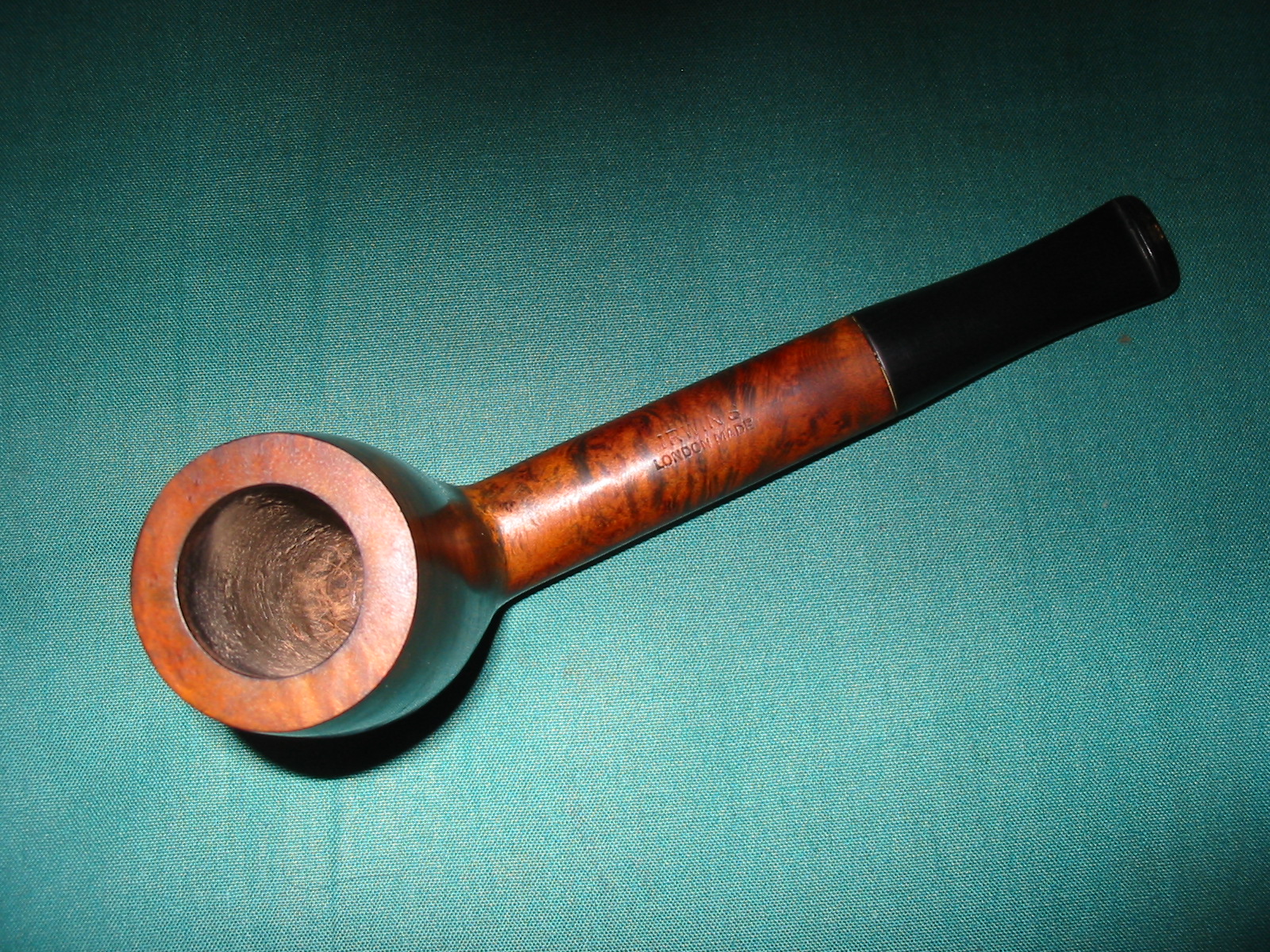
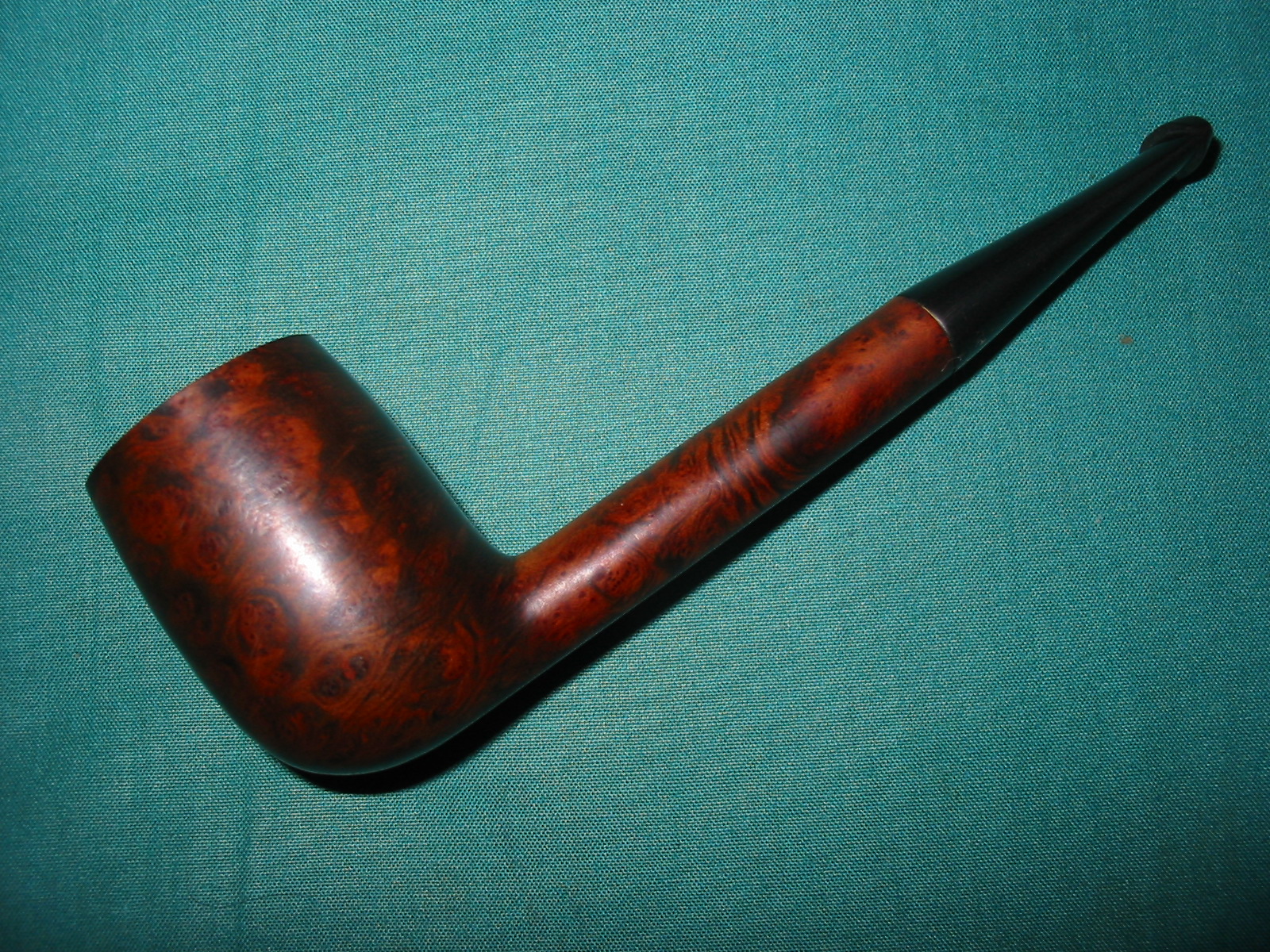
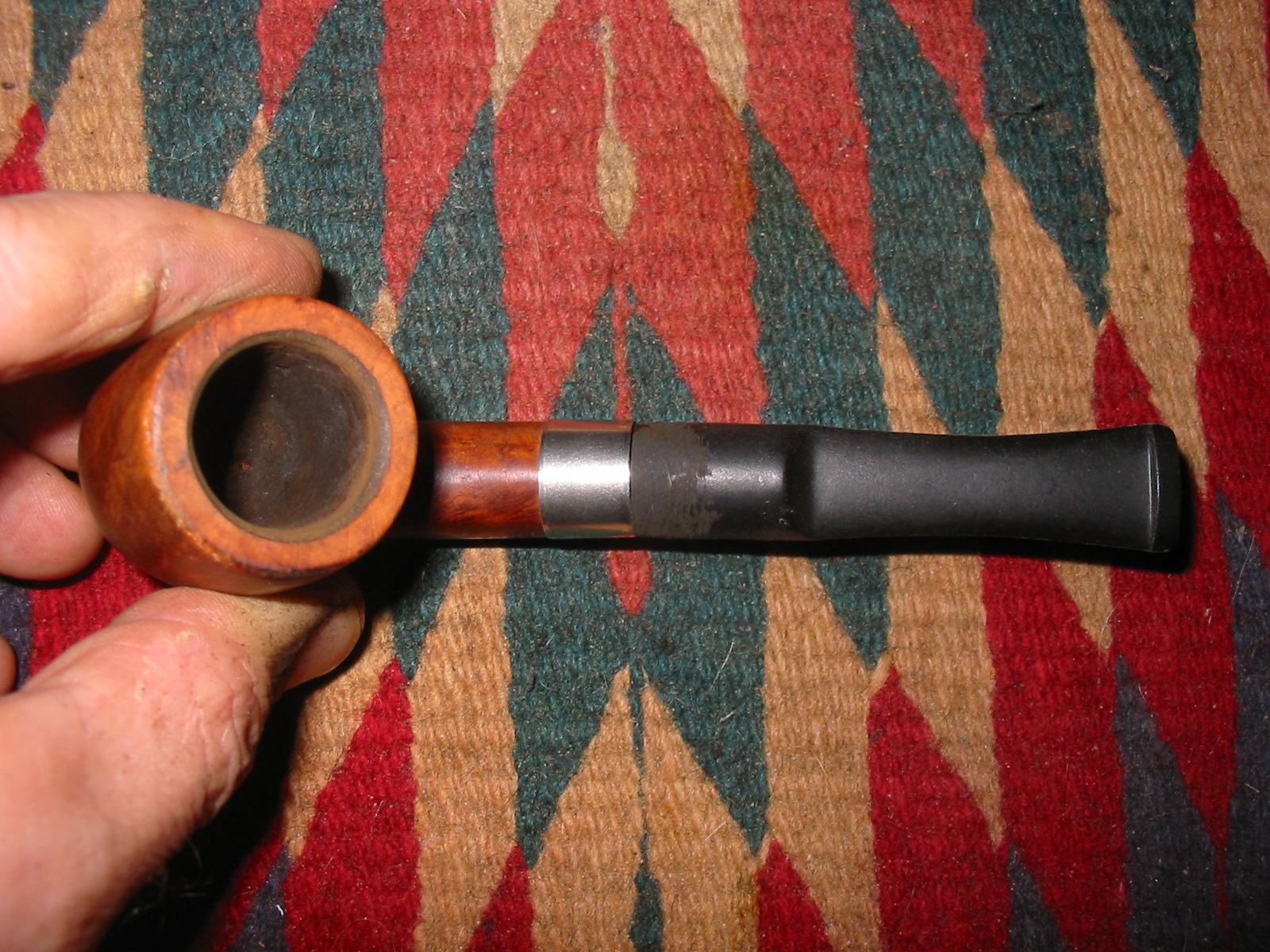
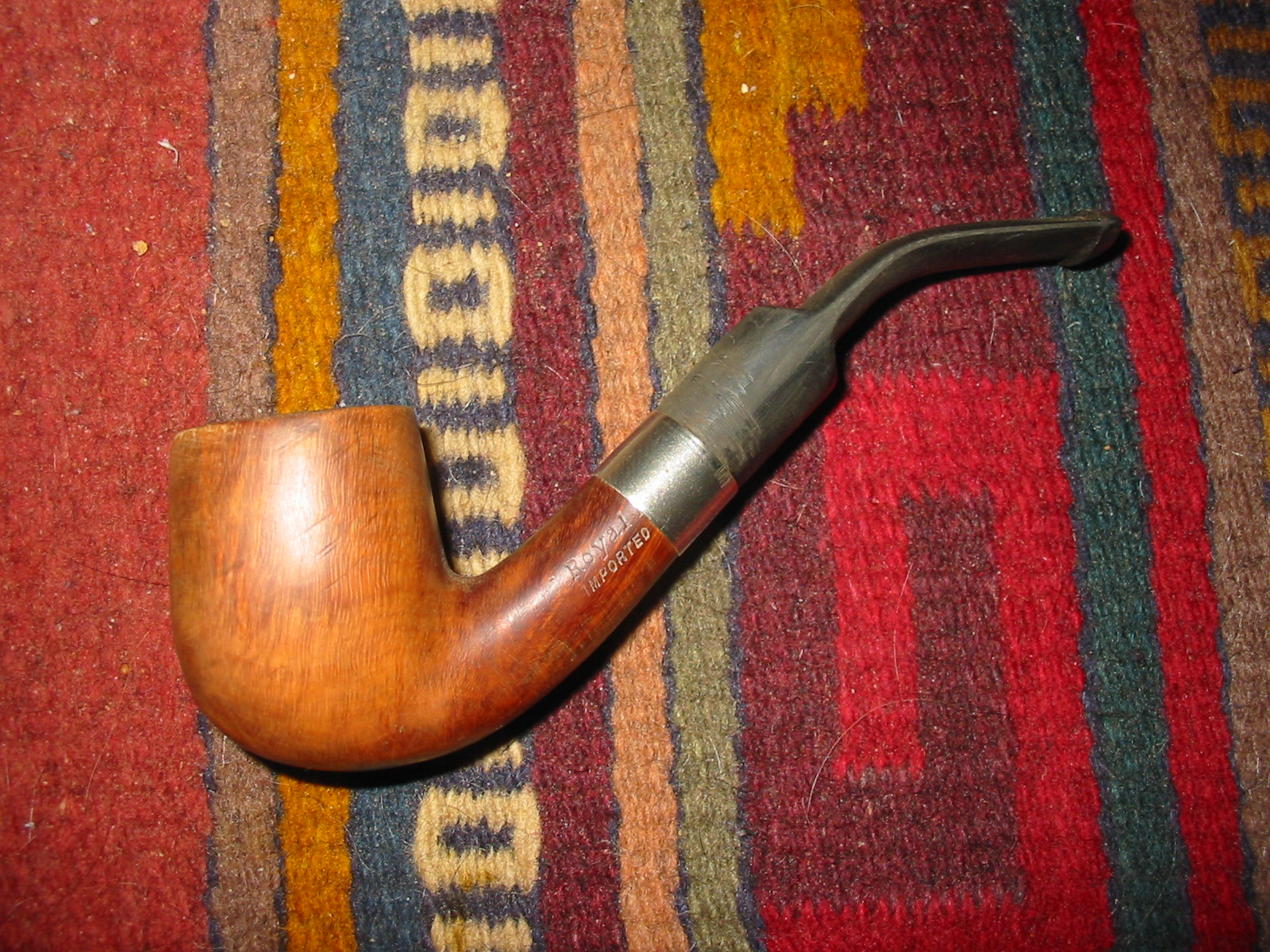
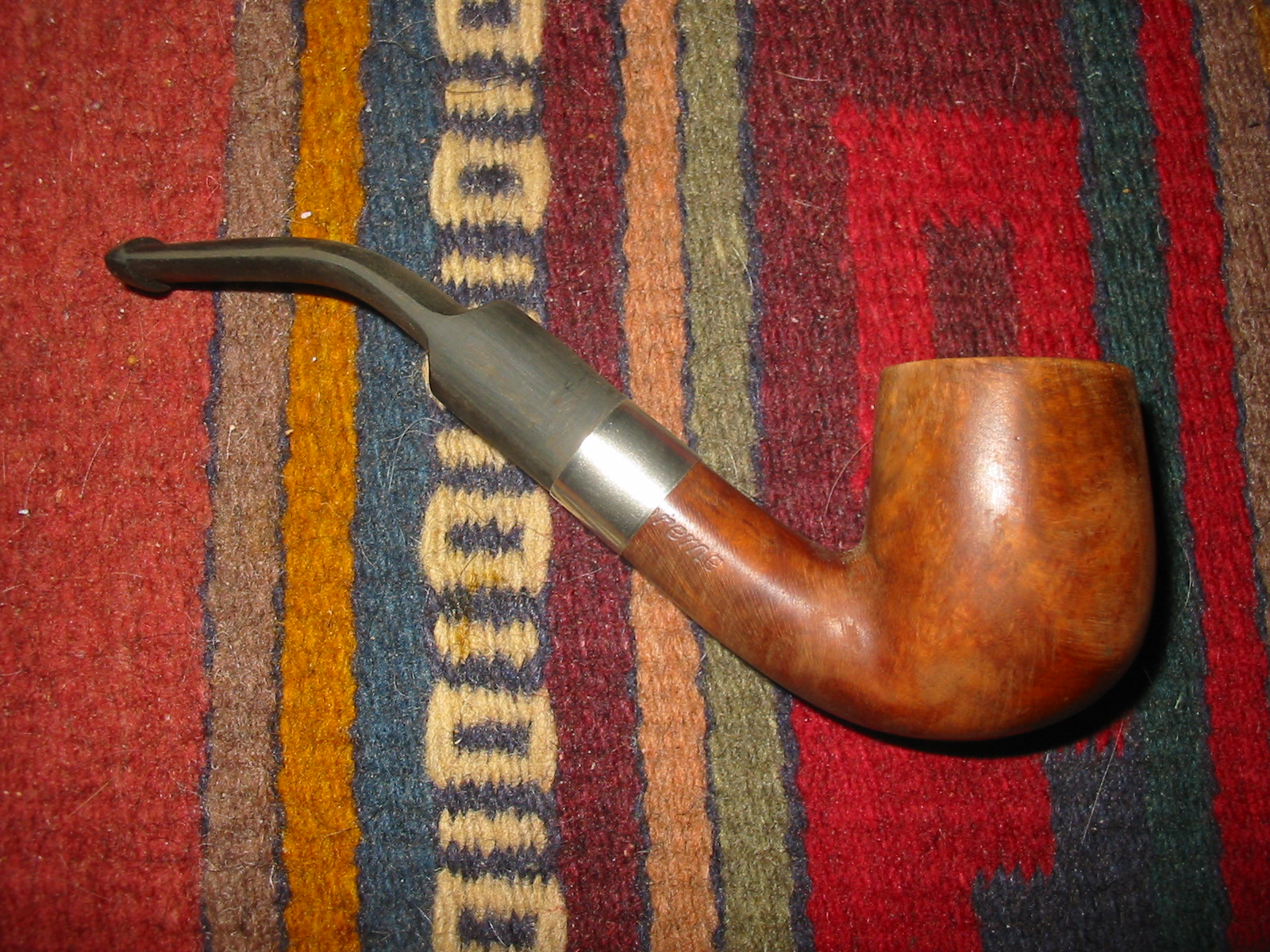
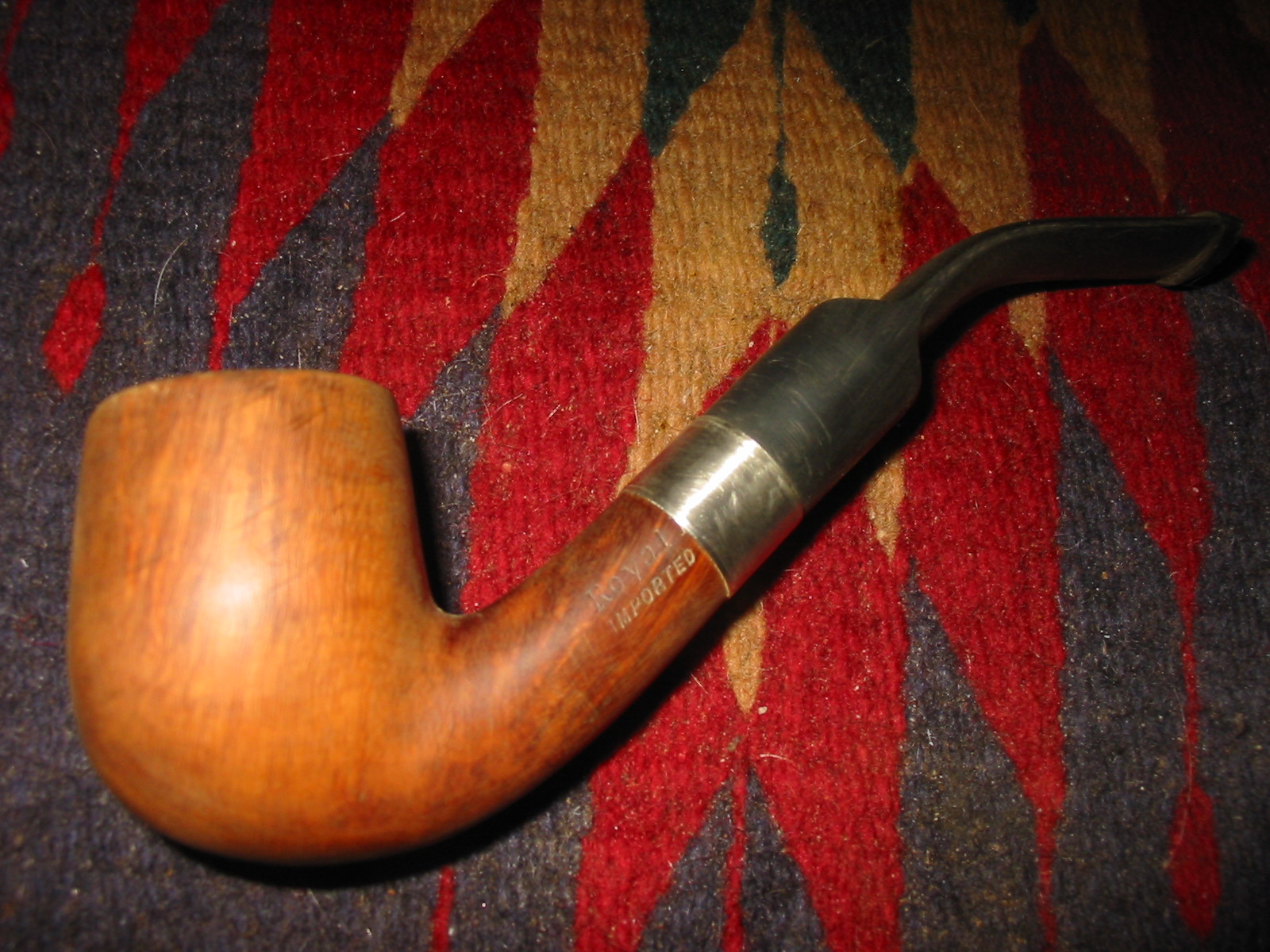
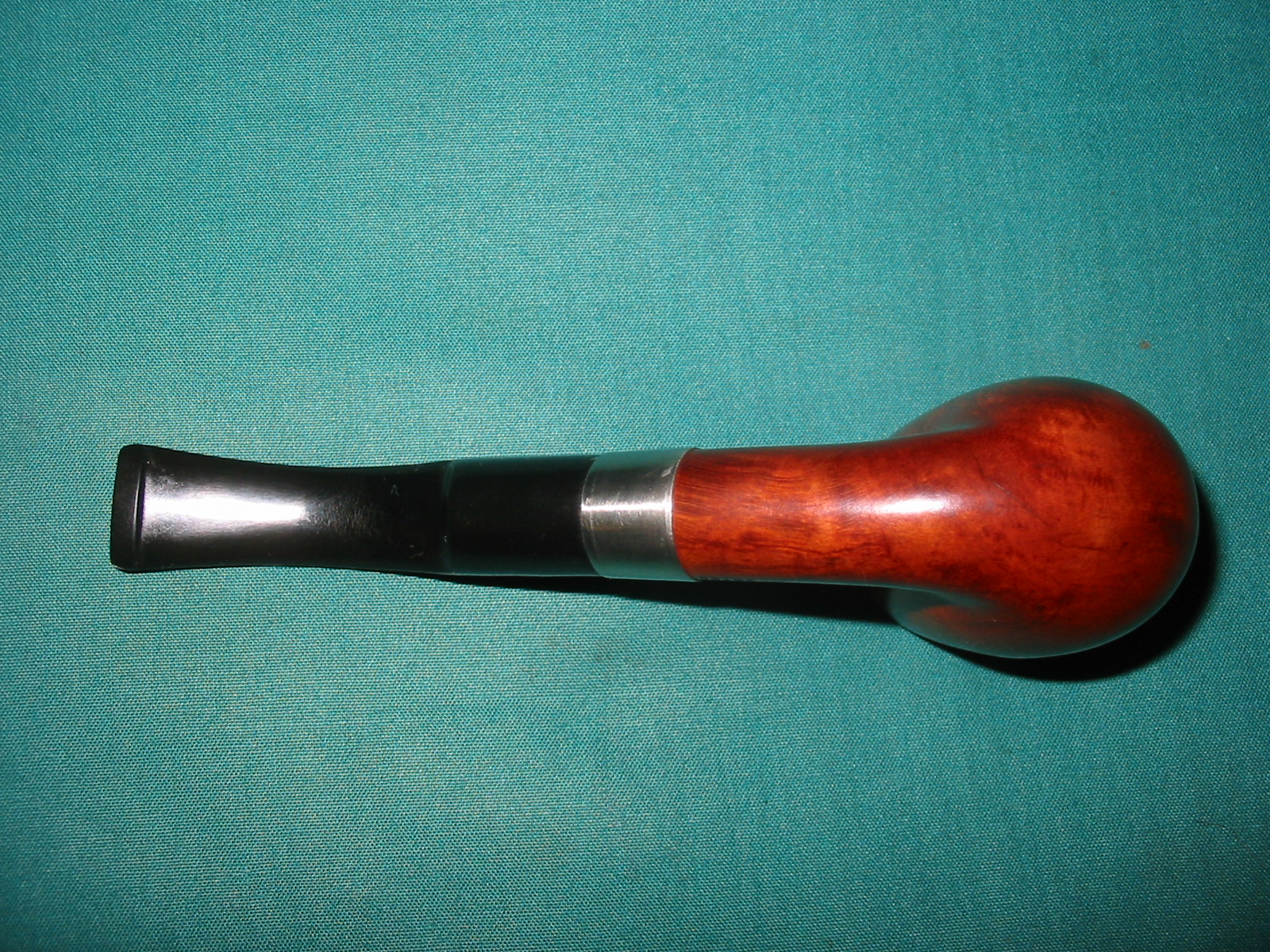
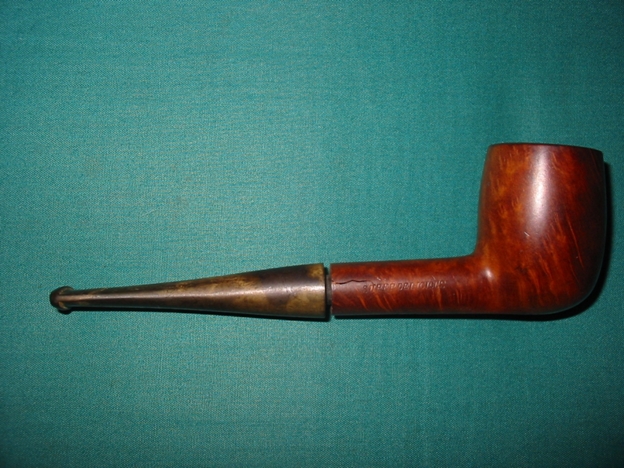
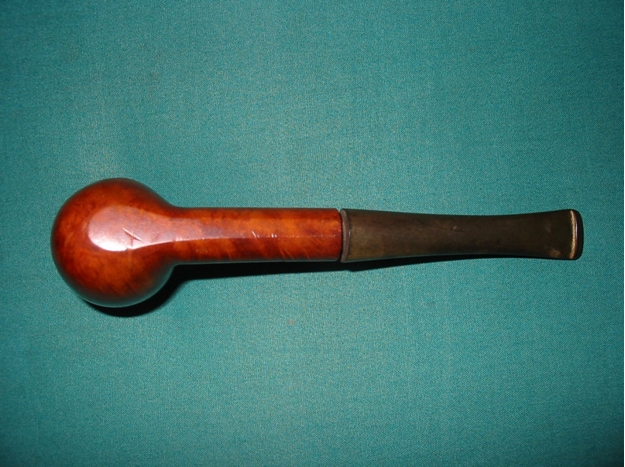
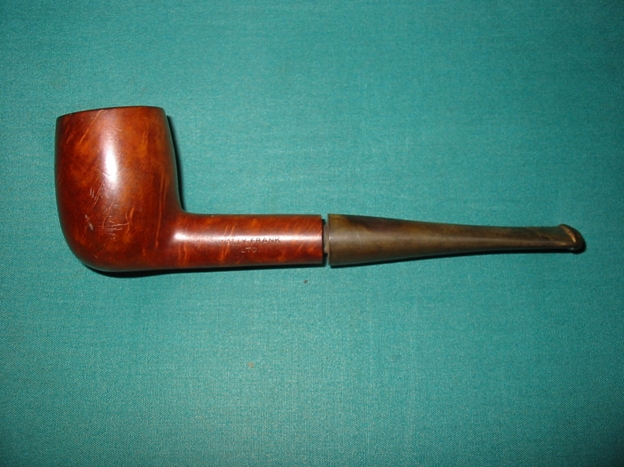
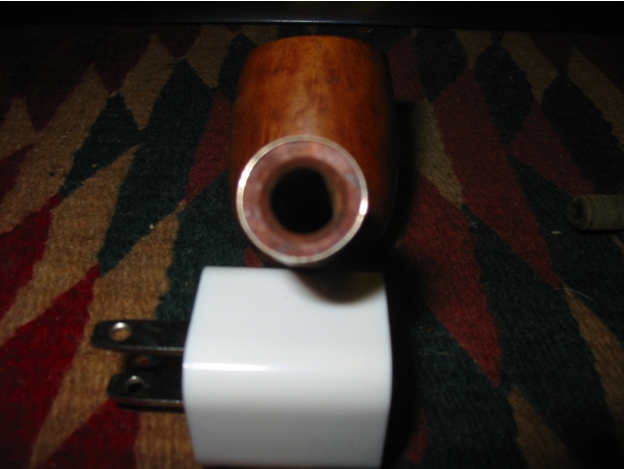
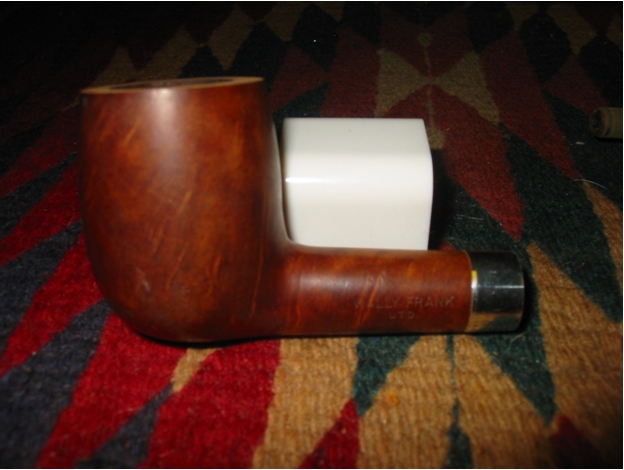
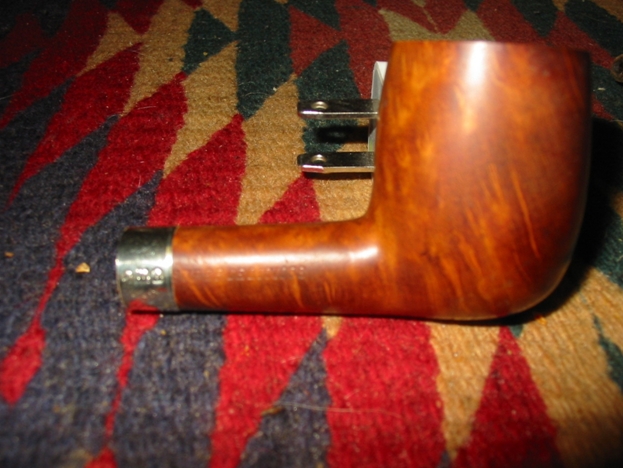
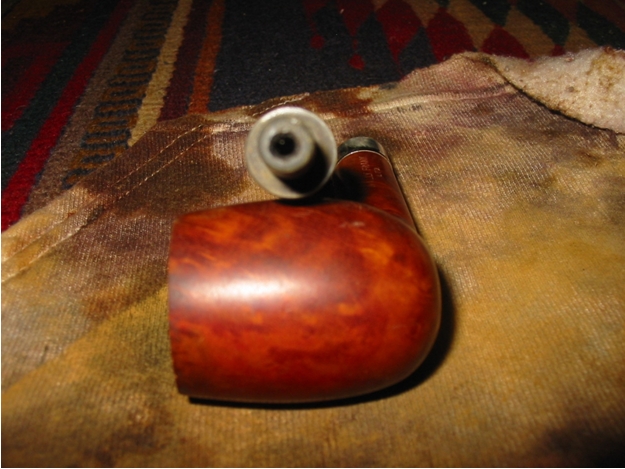
Tag Archives: restemming a pipe

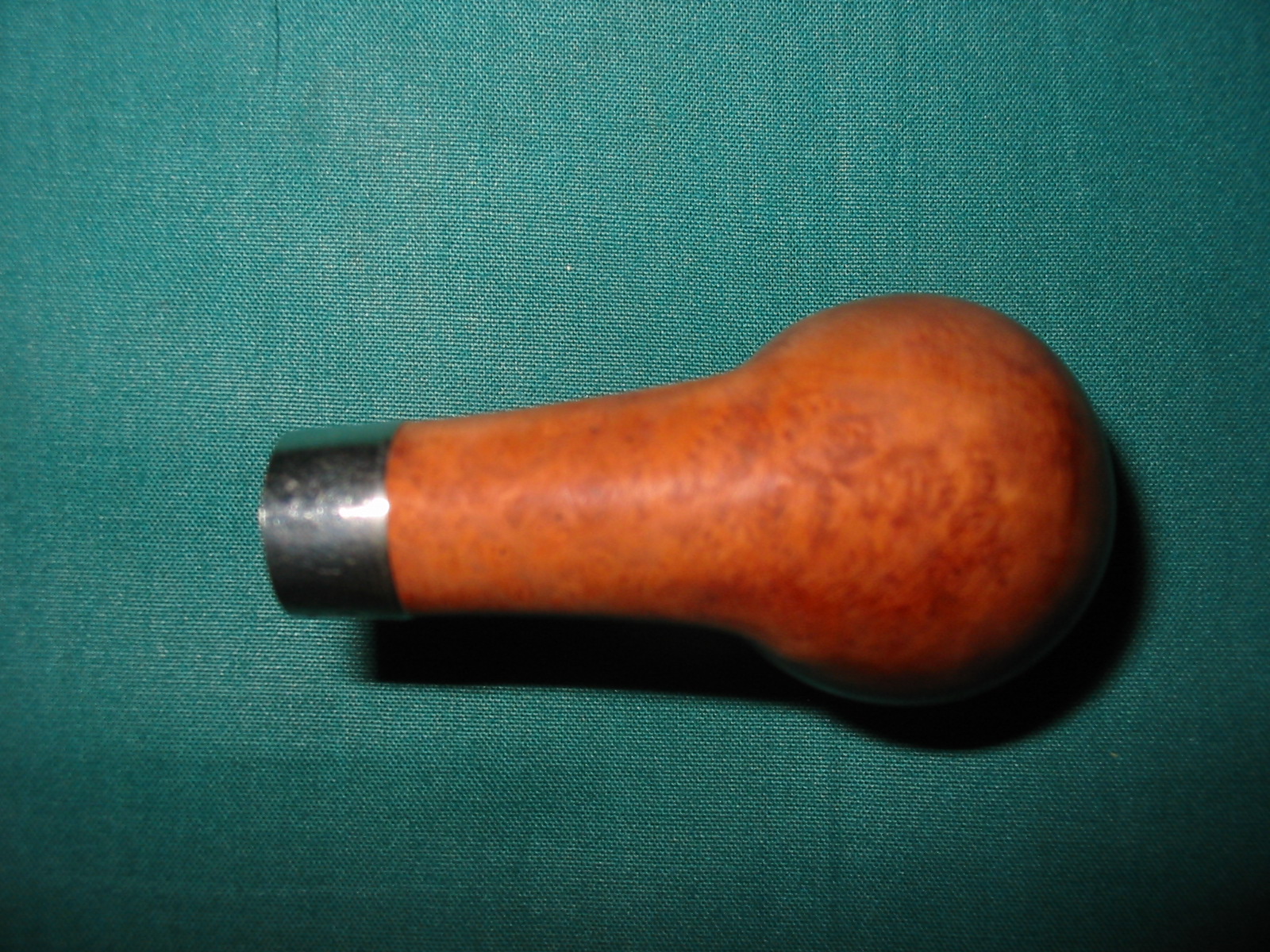
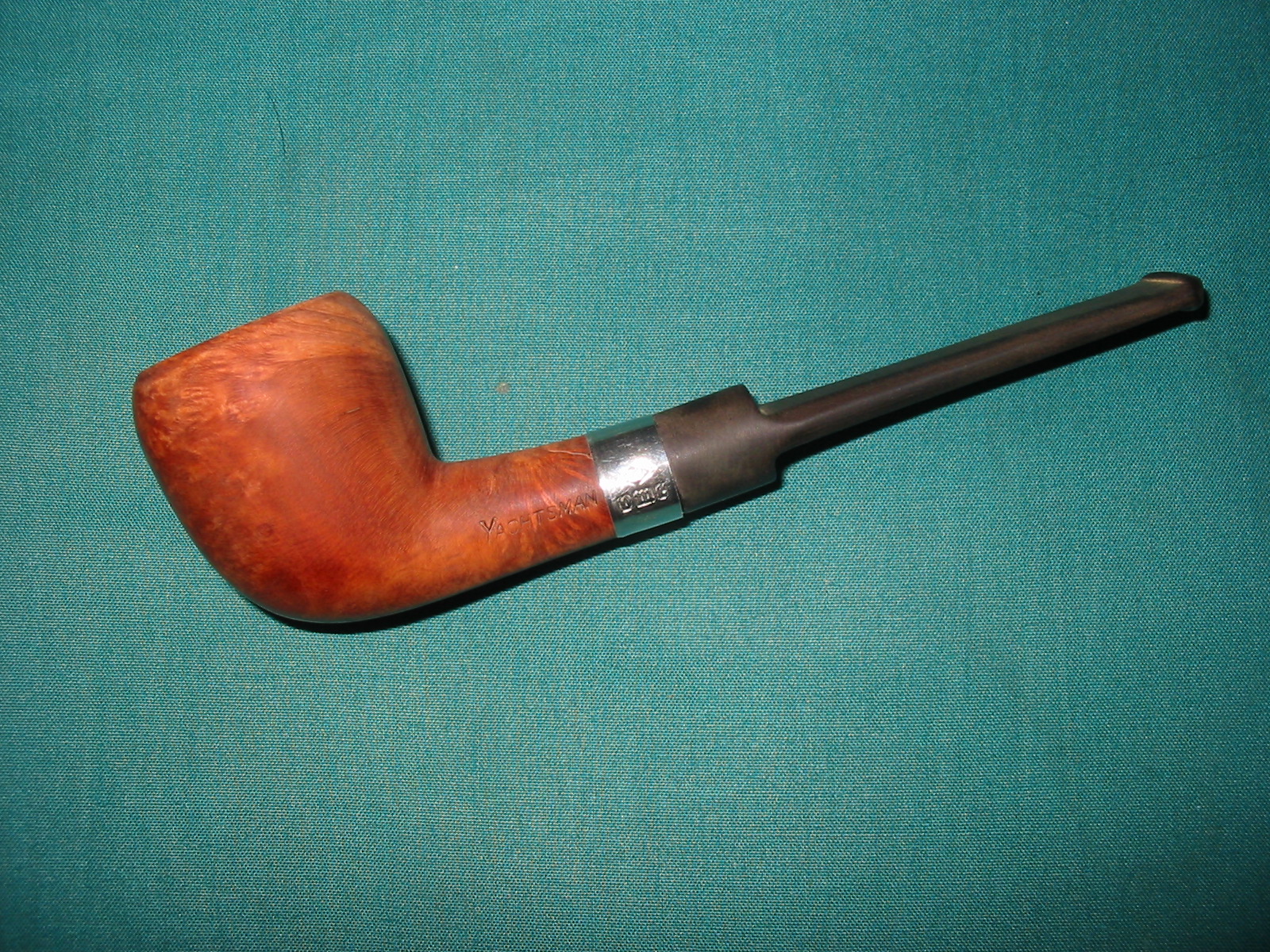
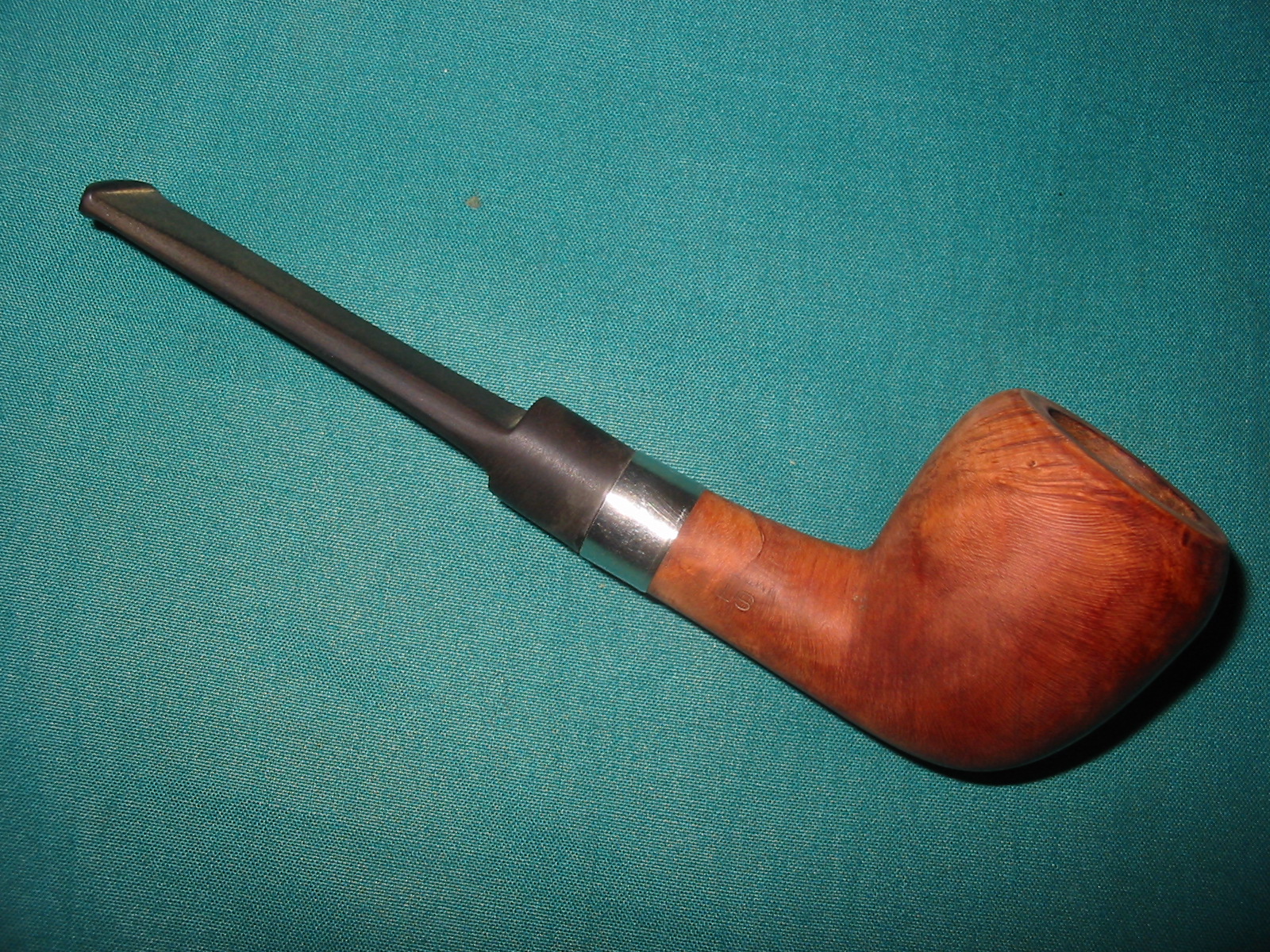
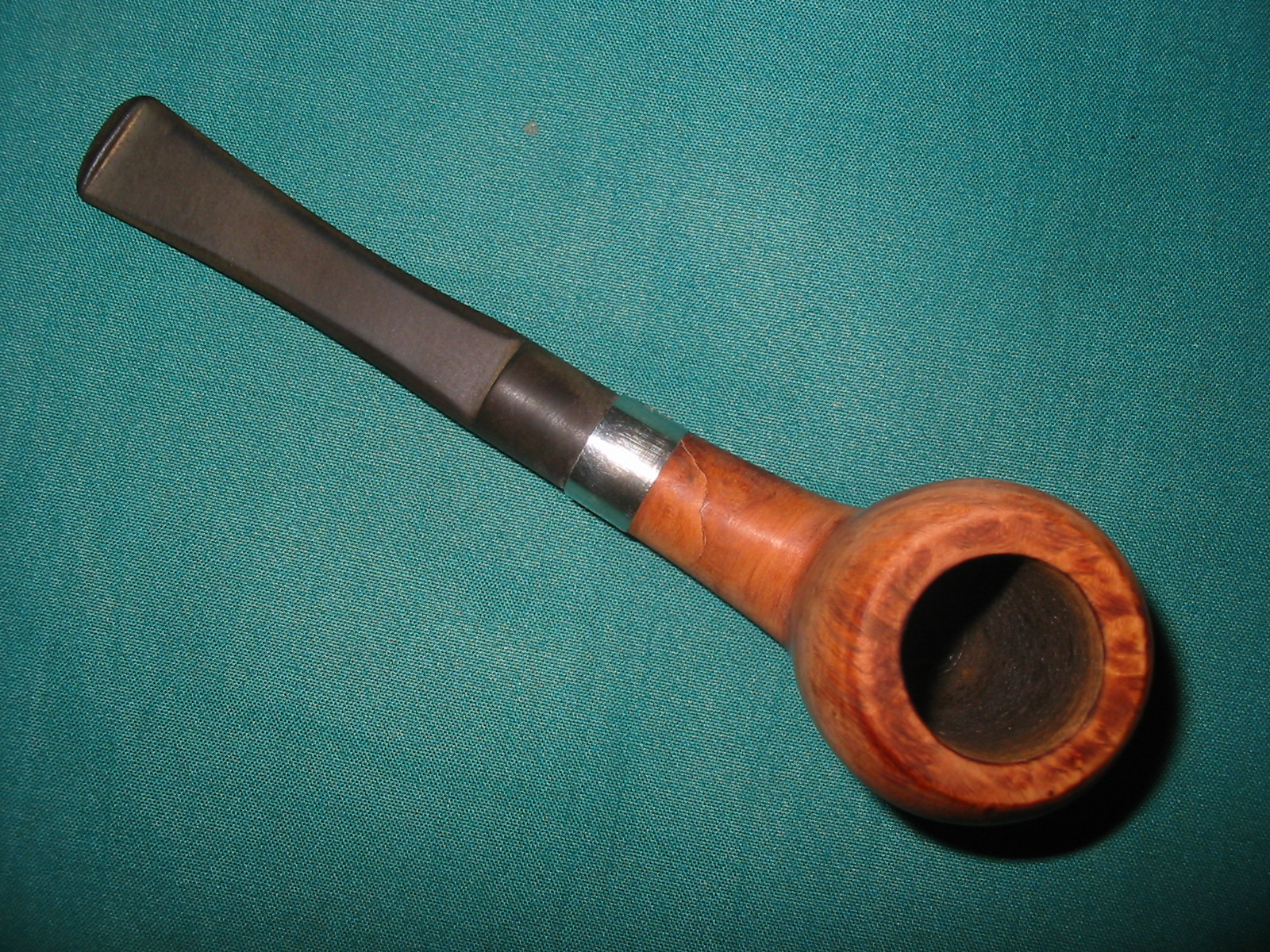
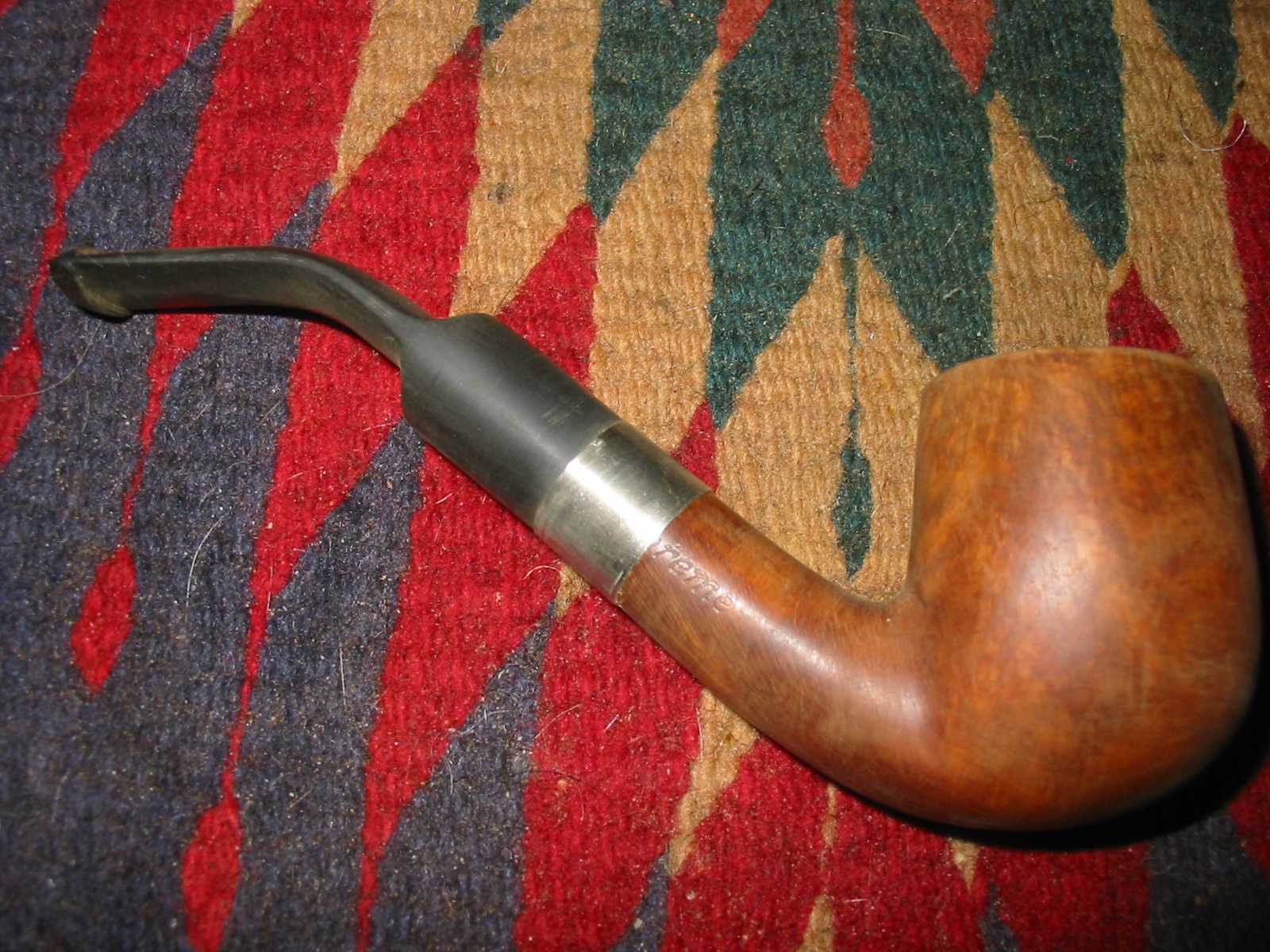
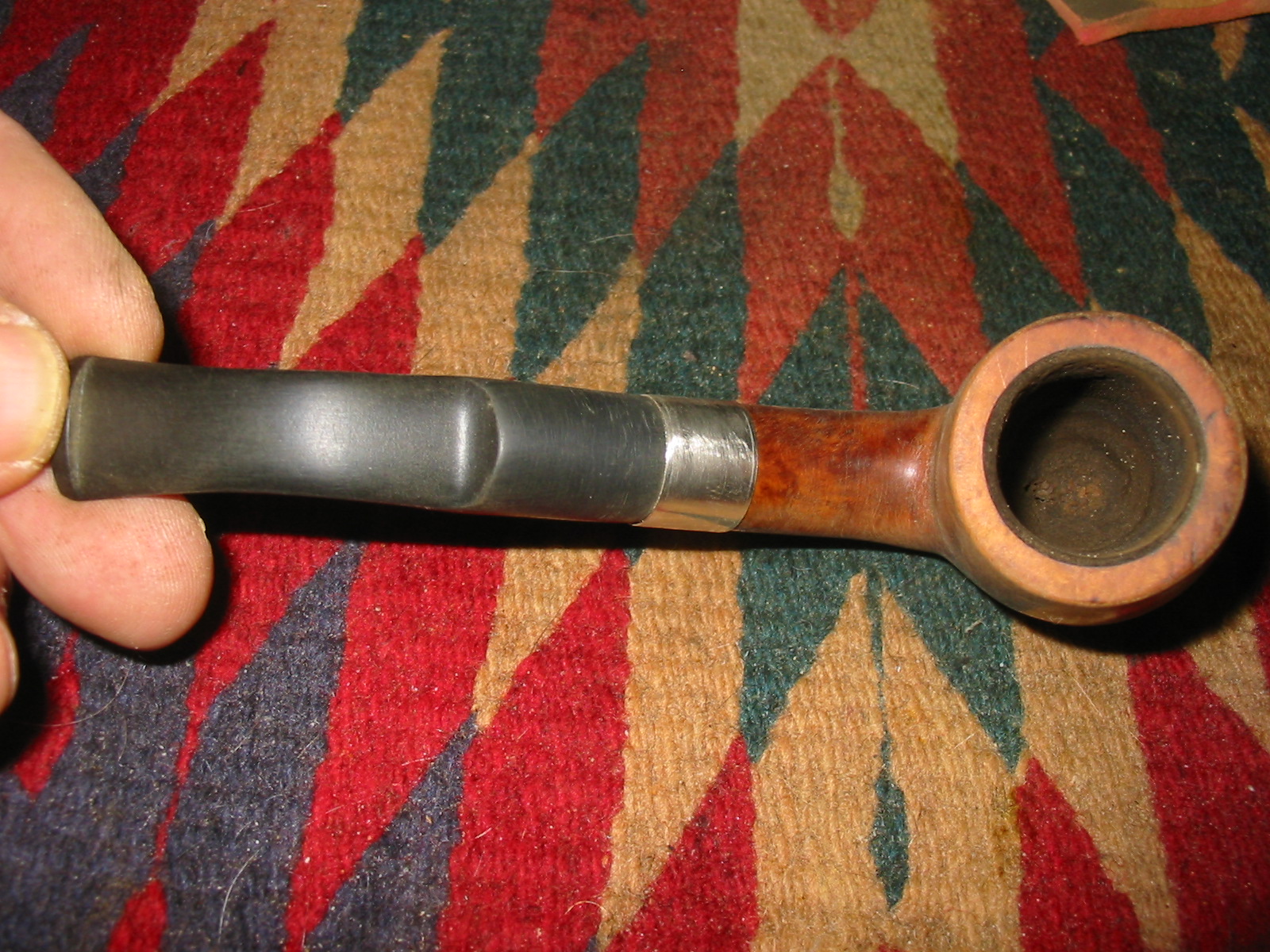
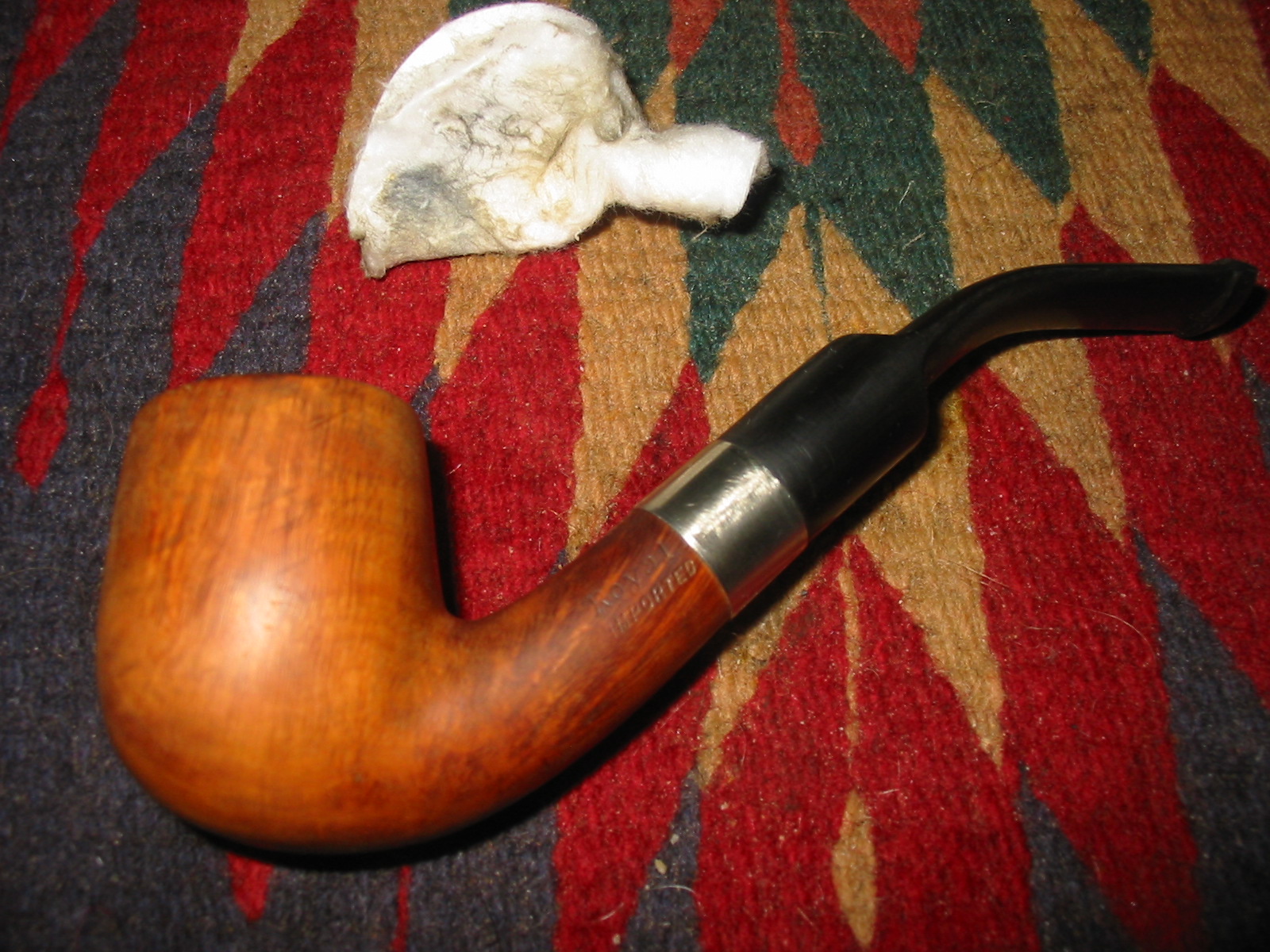
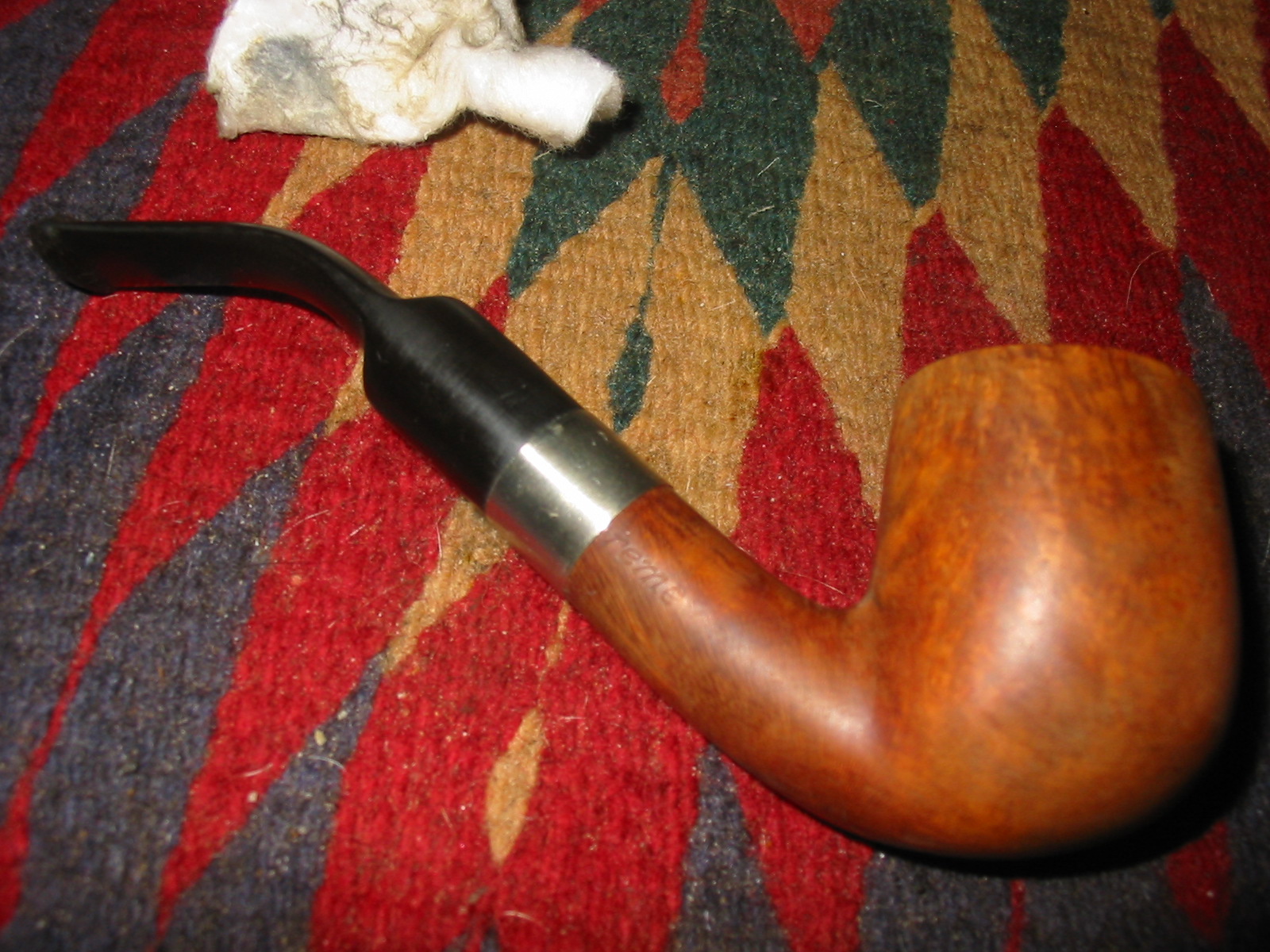
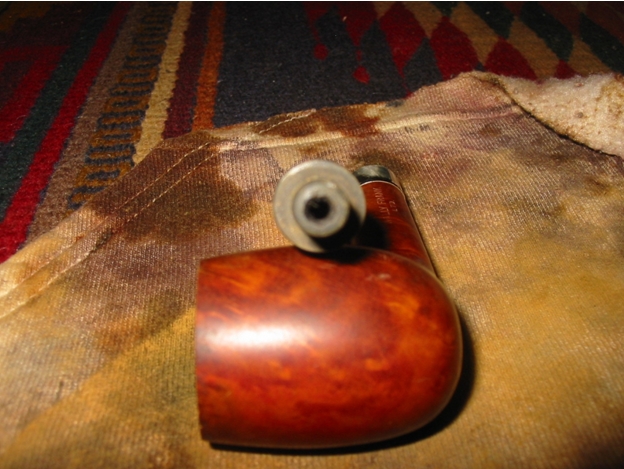
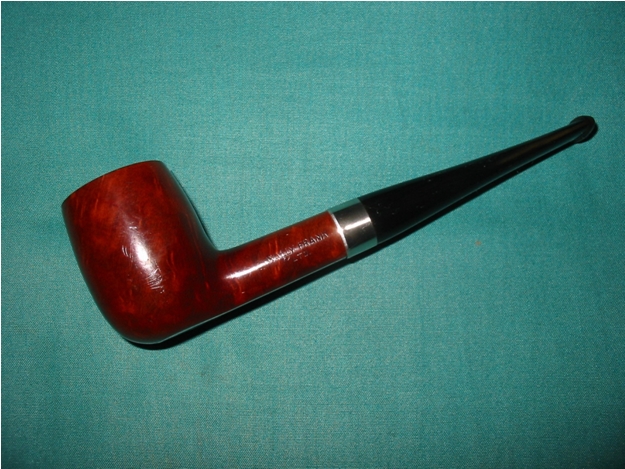
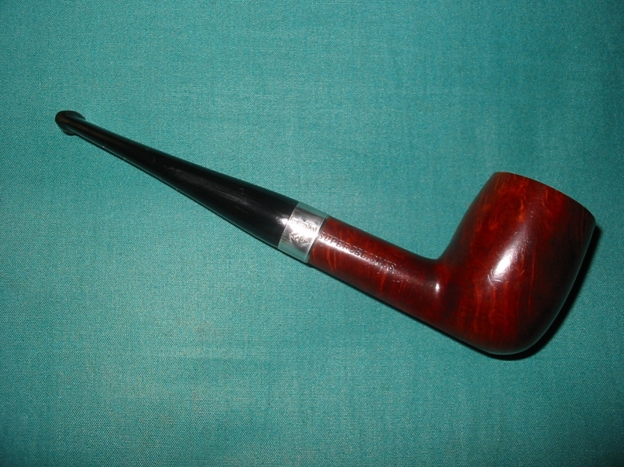
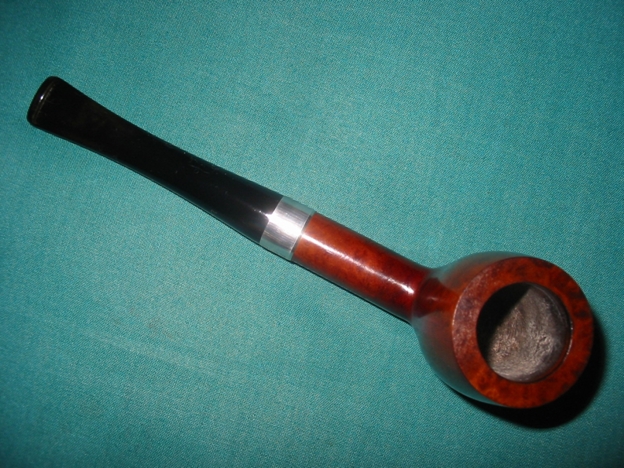
A Reborn Real Briar Prince – Restemmed and Restored


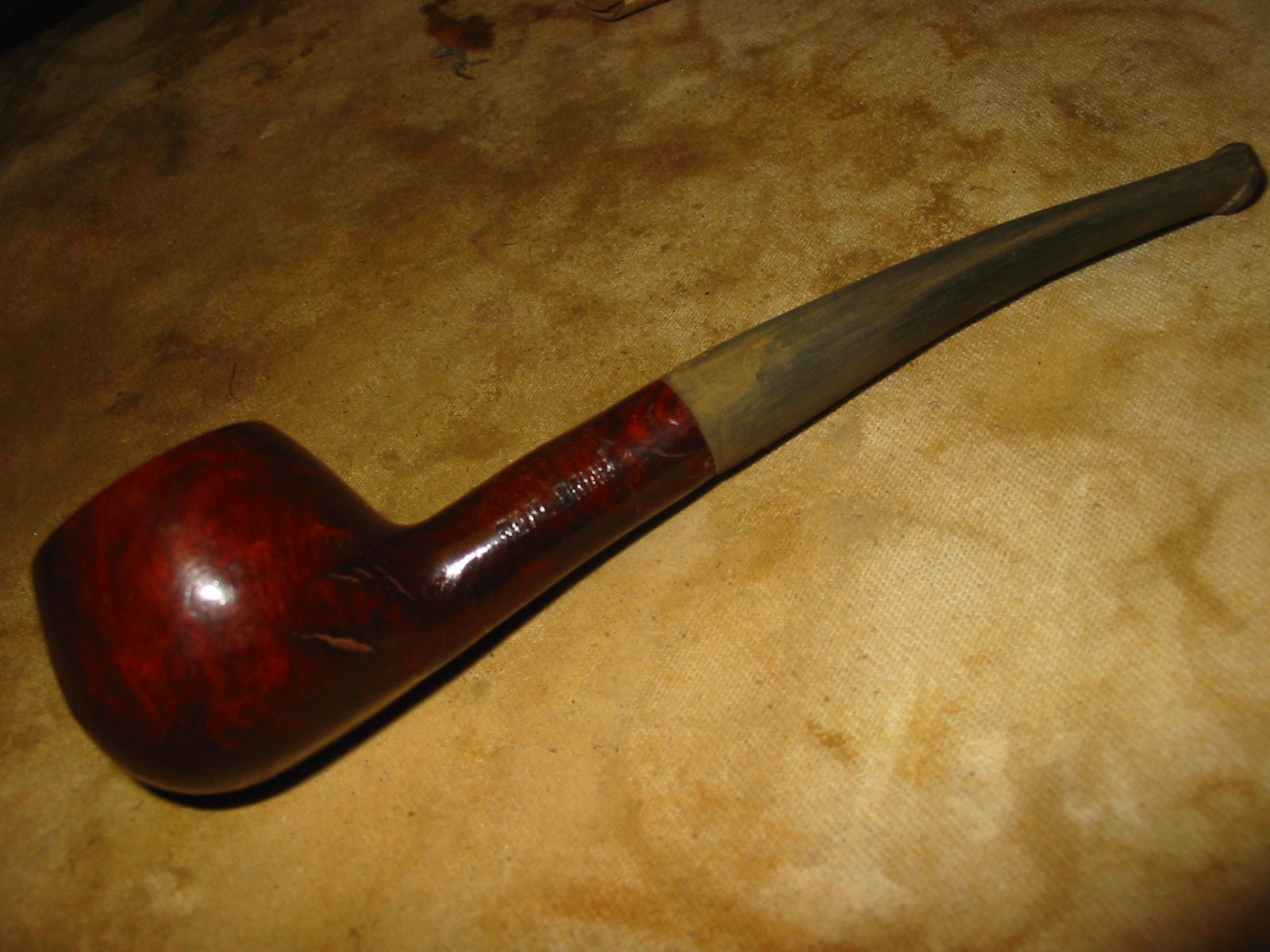
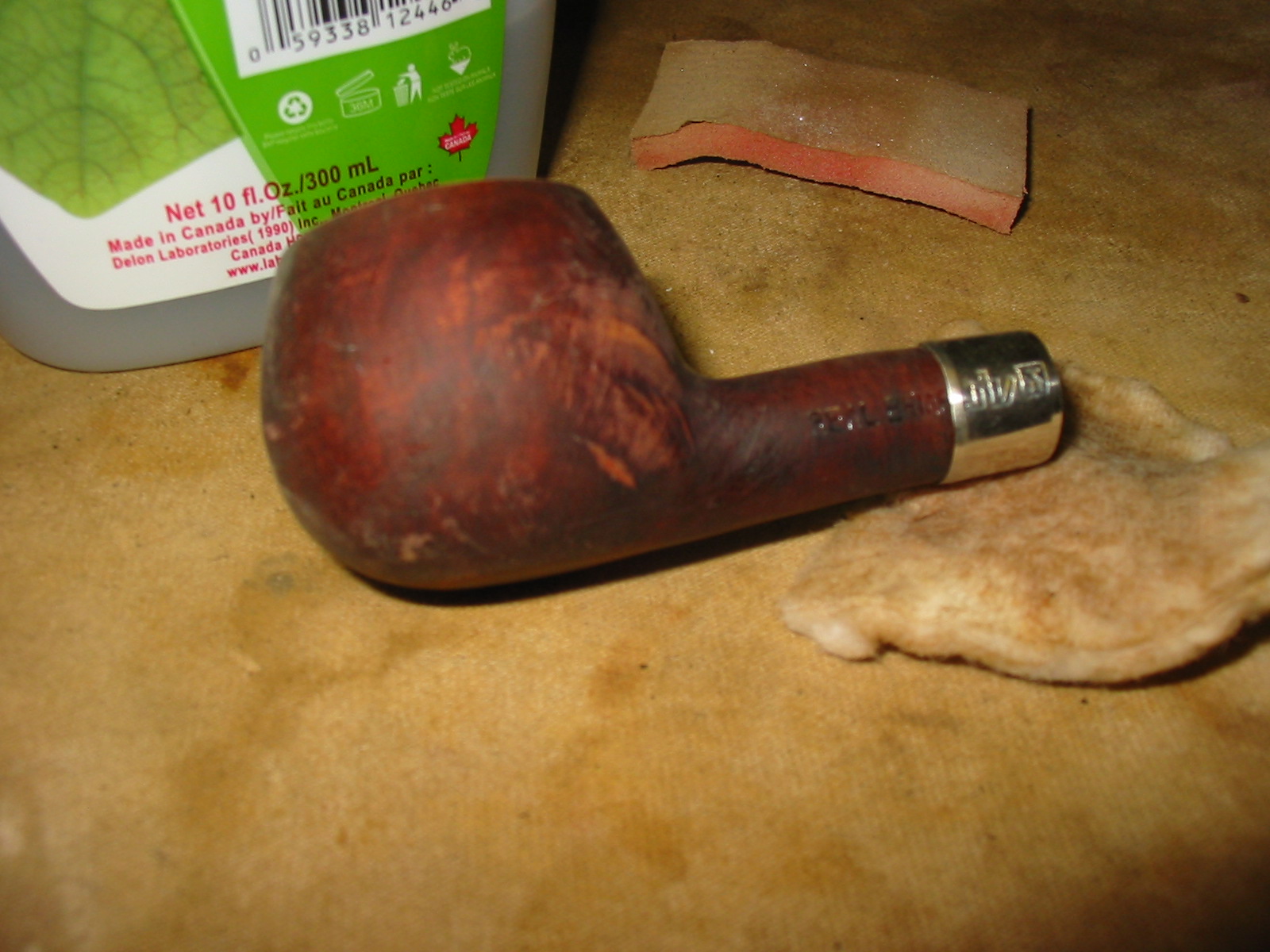
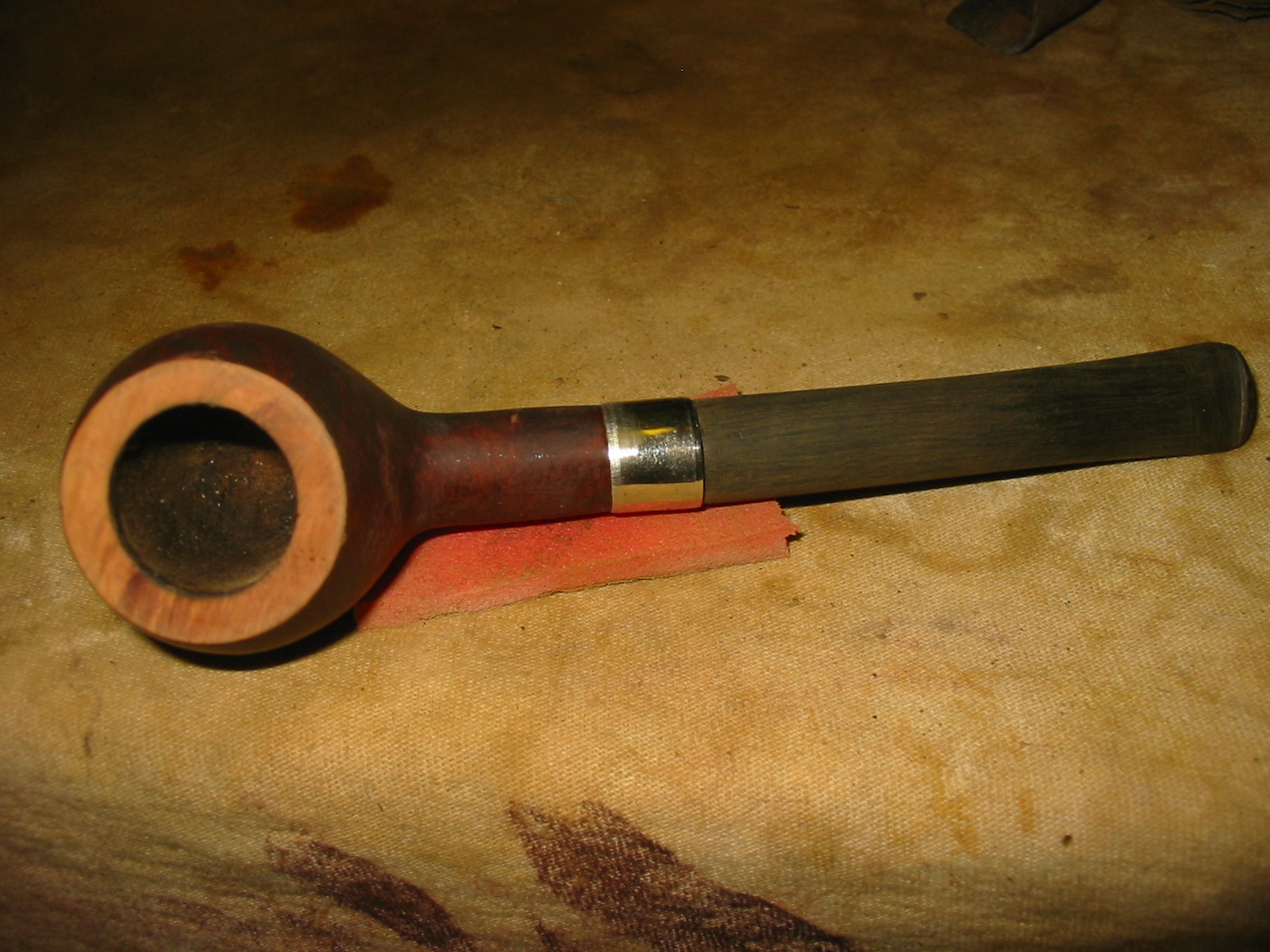
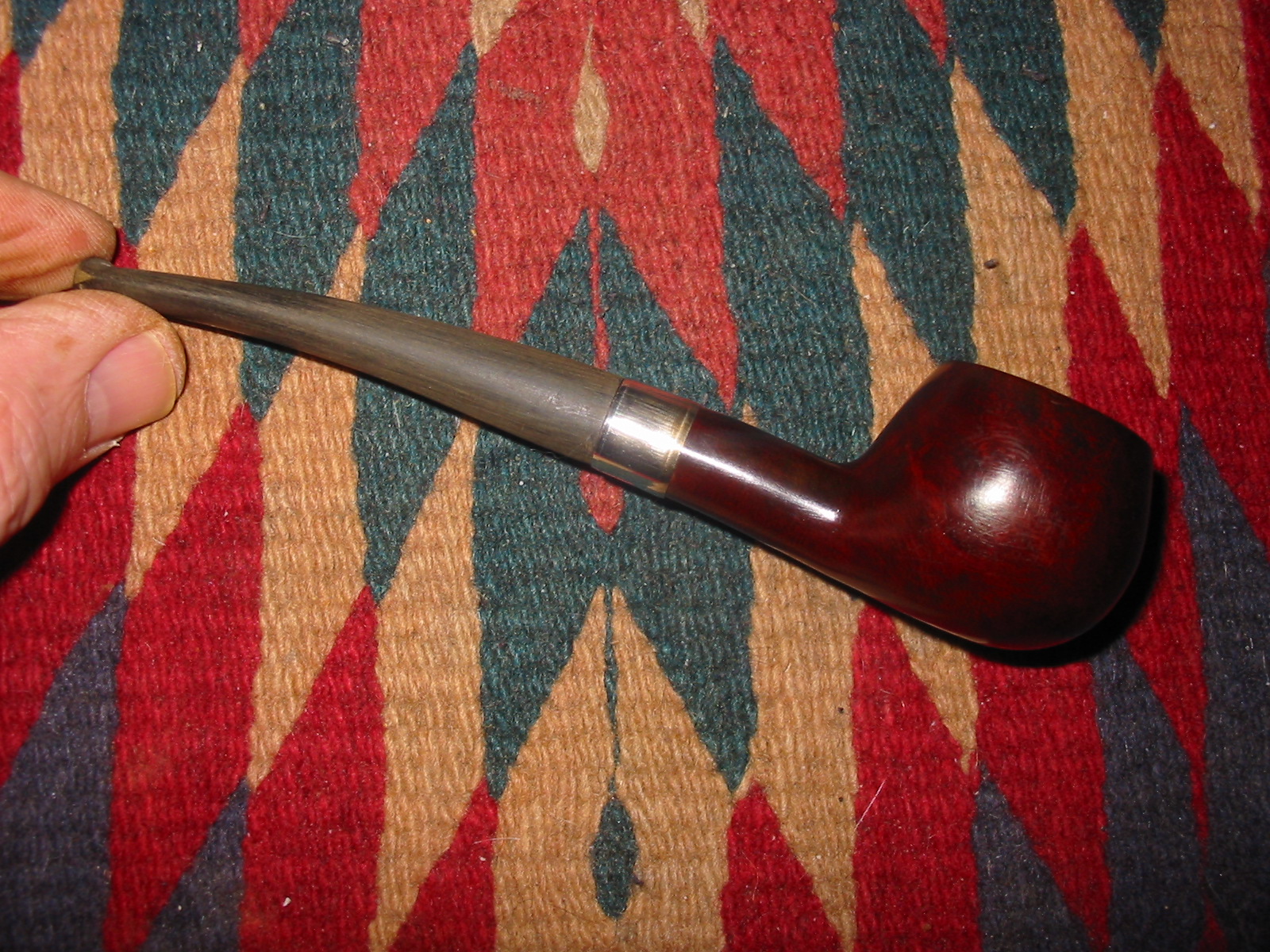
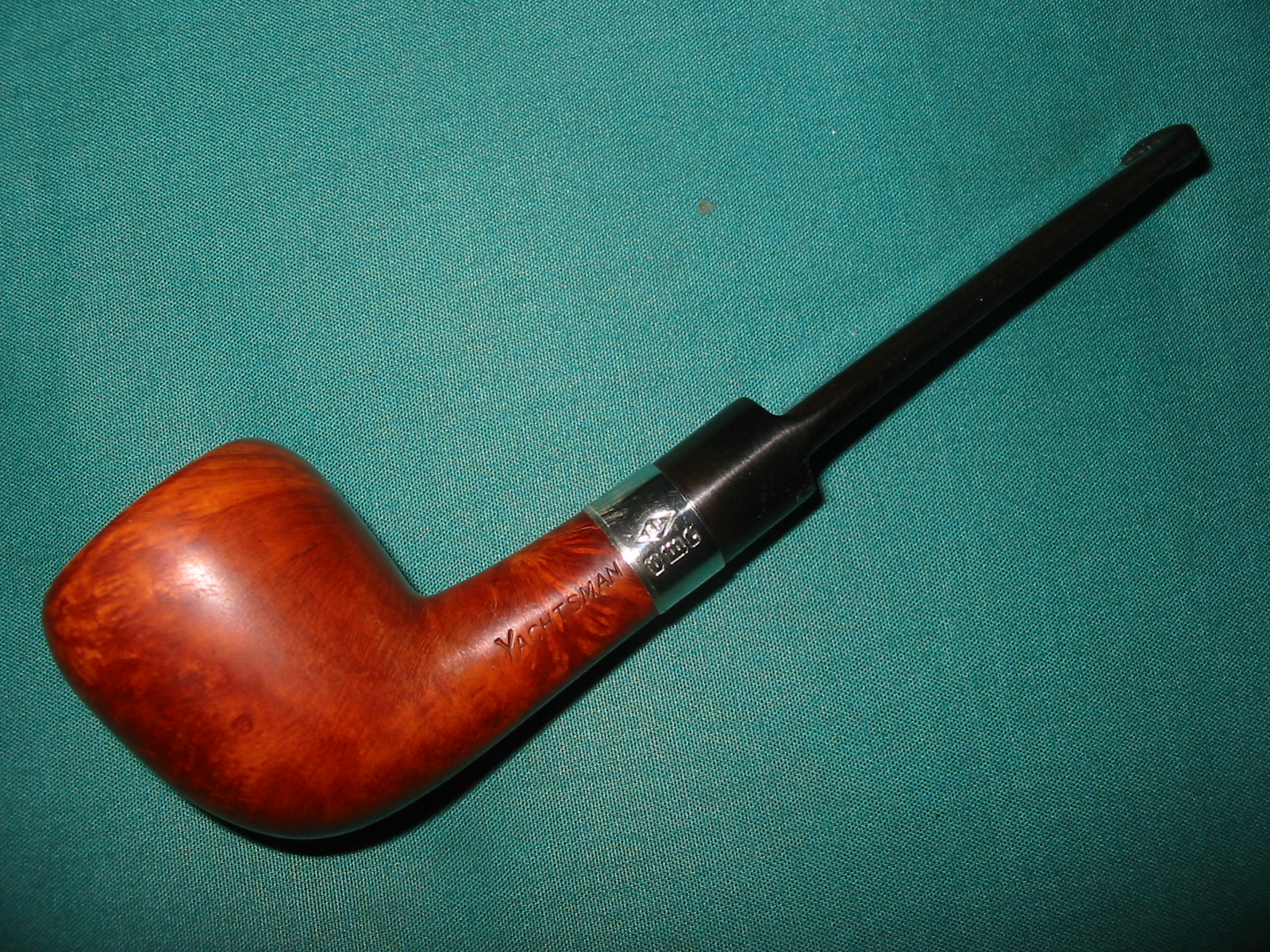
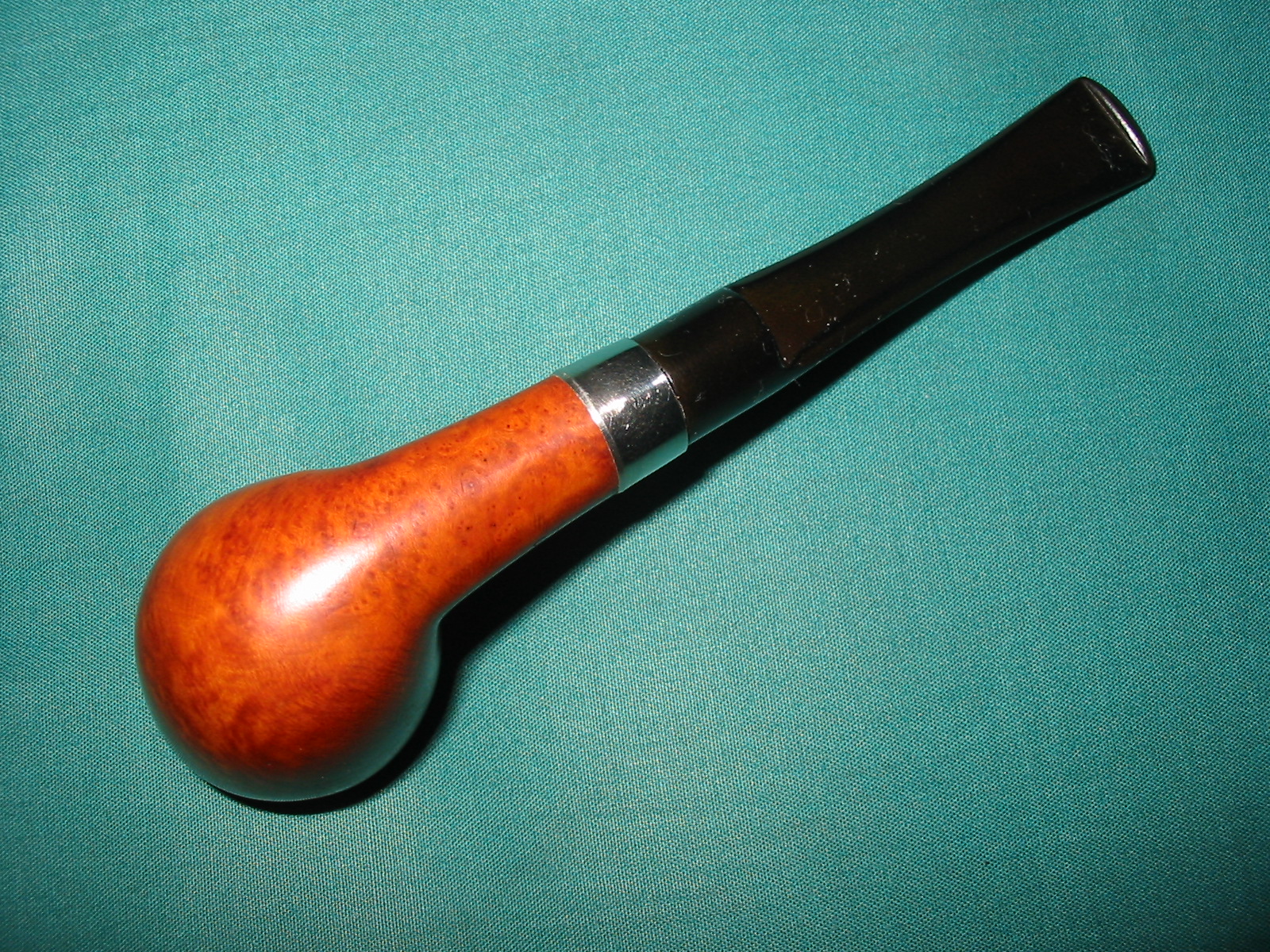
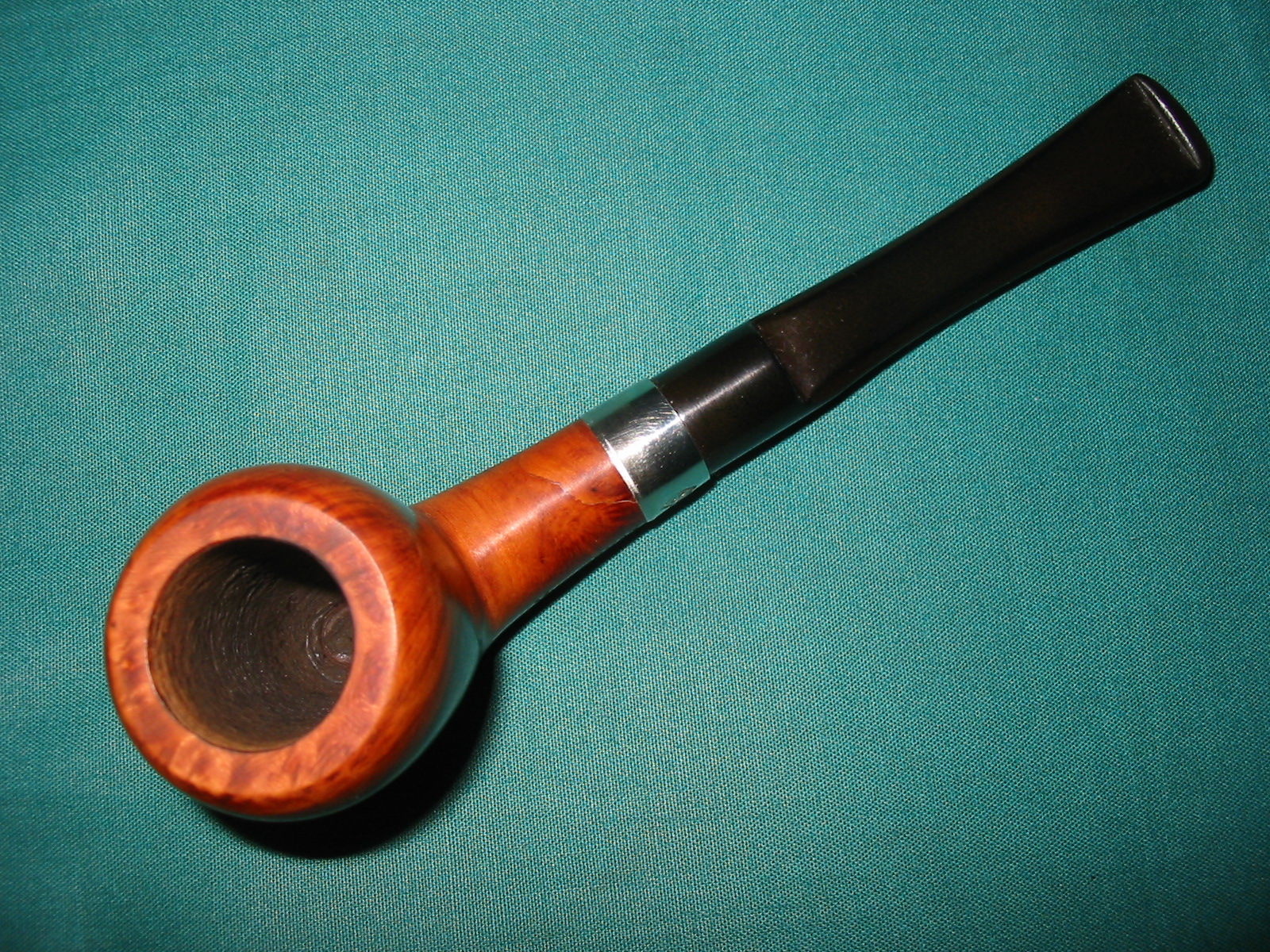
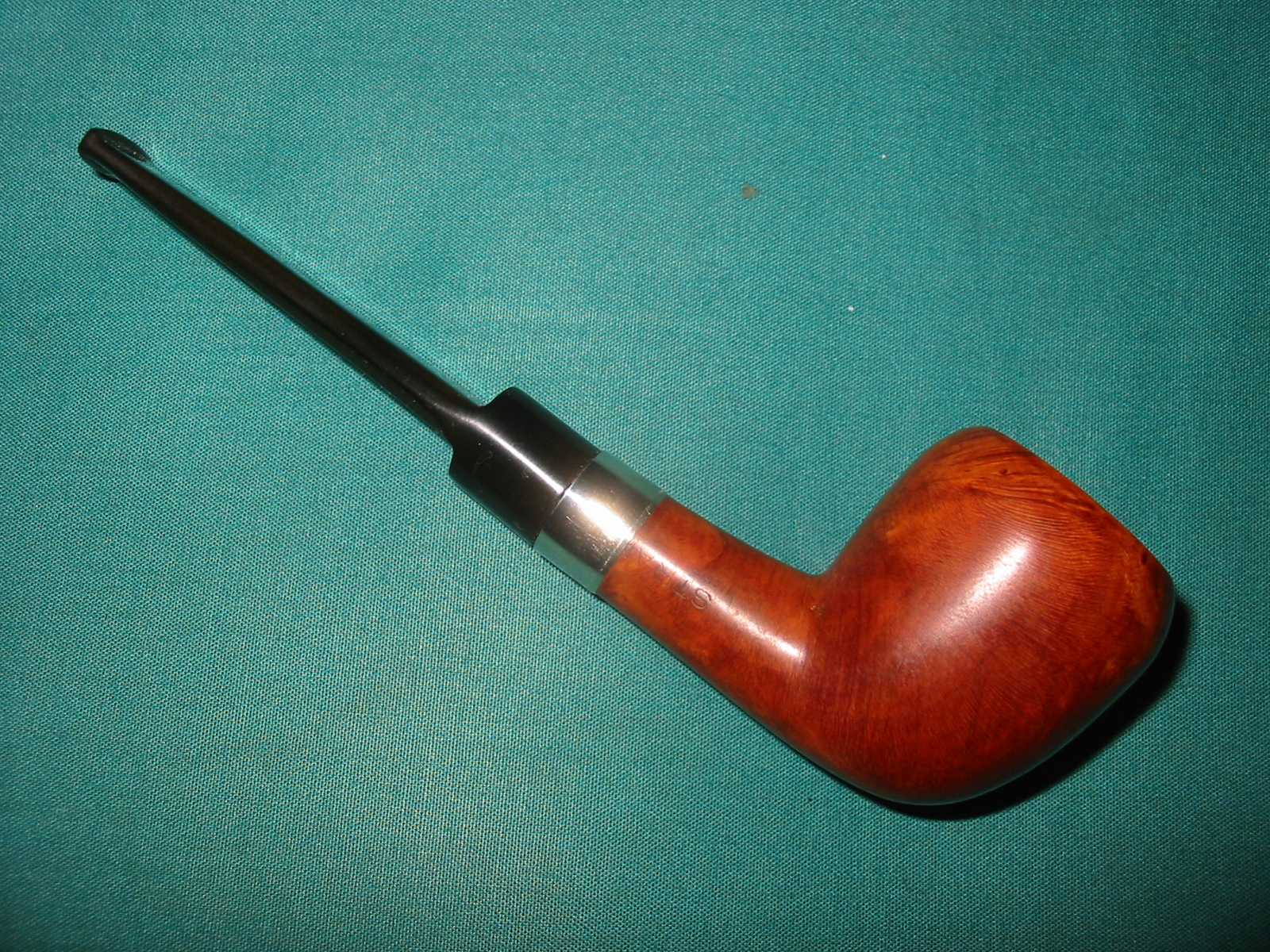
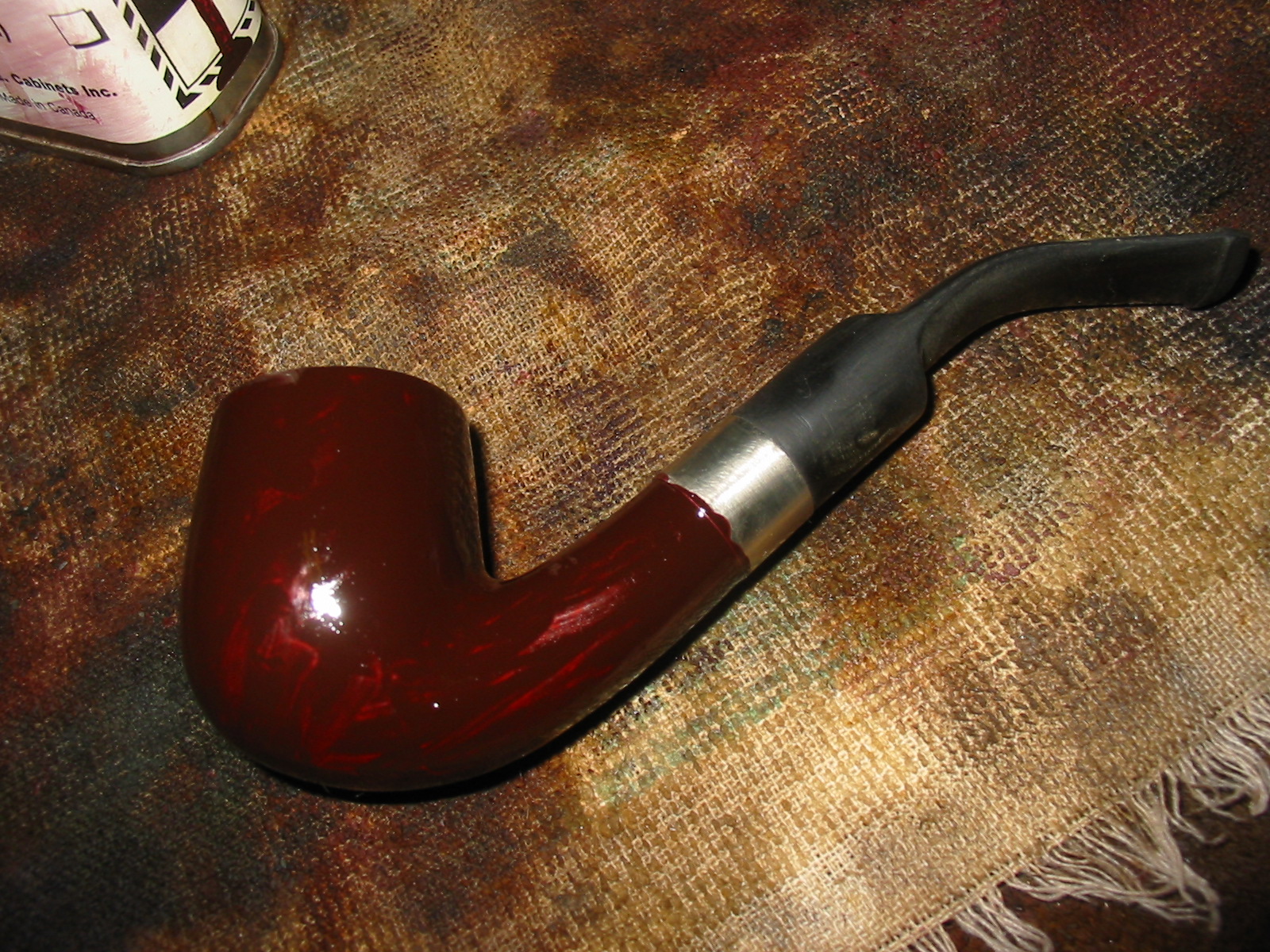
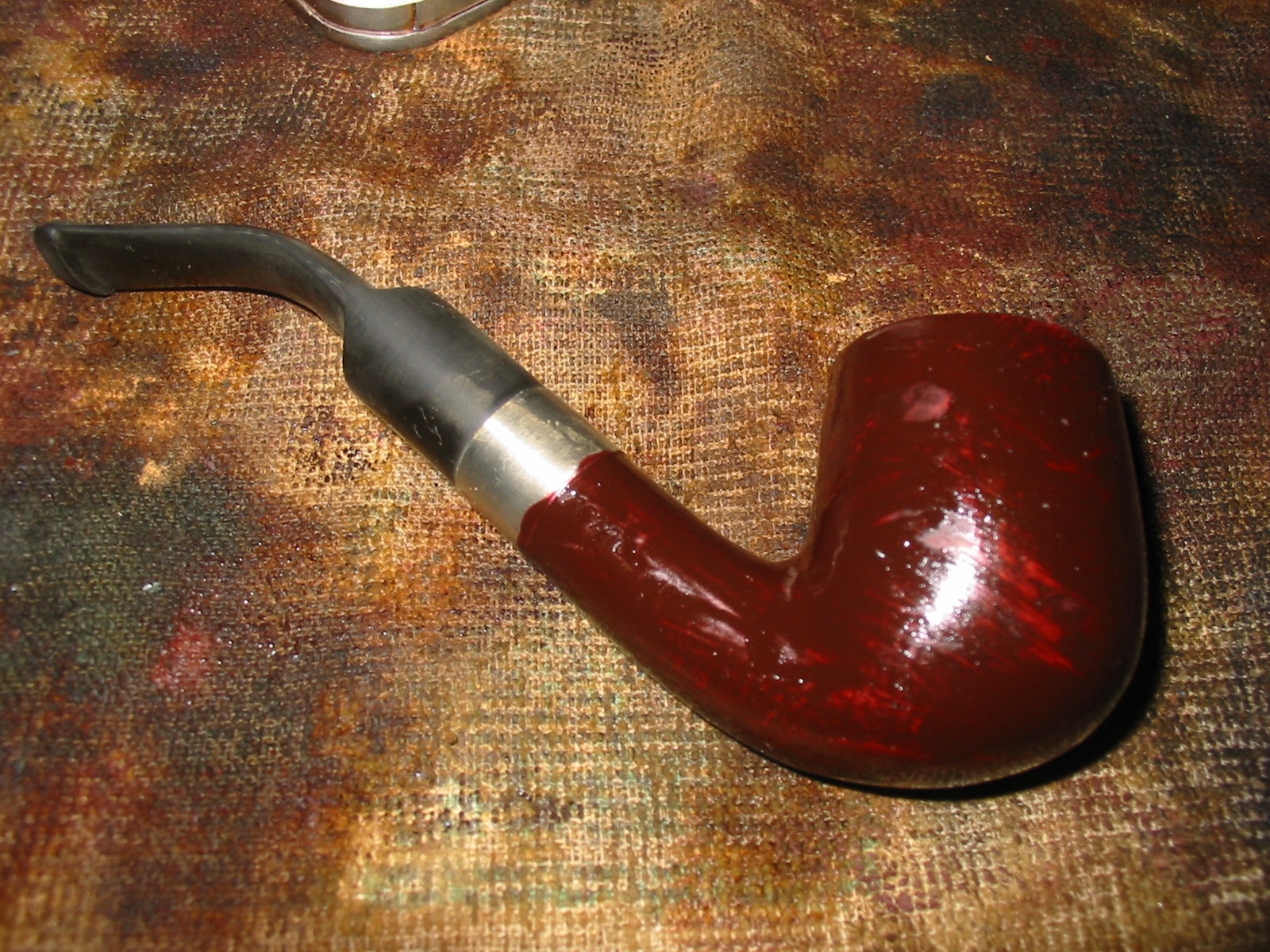
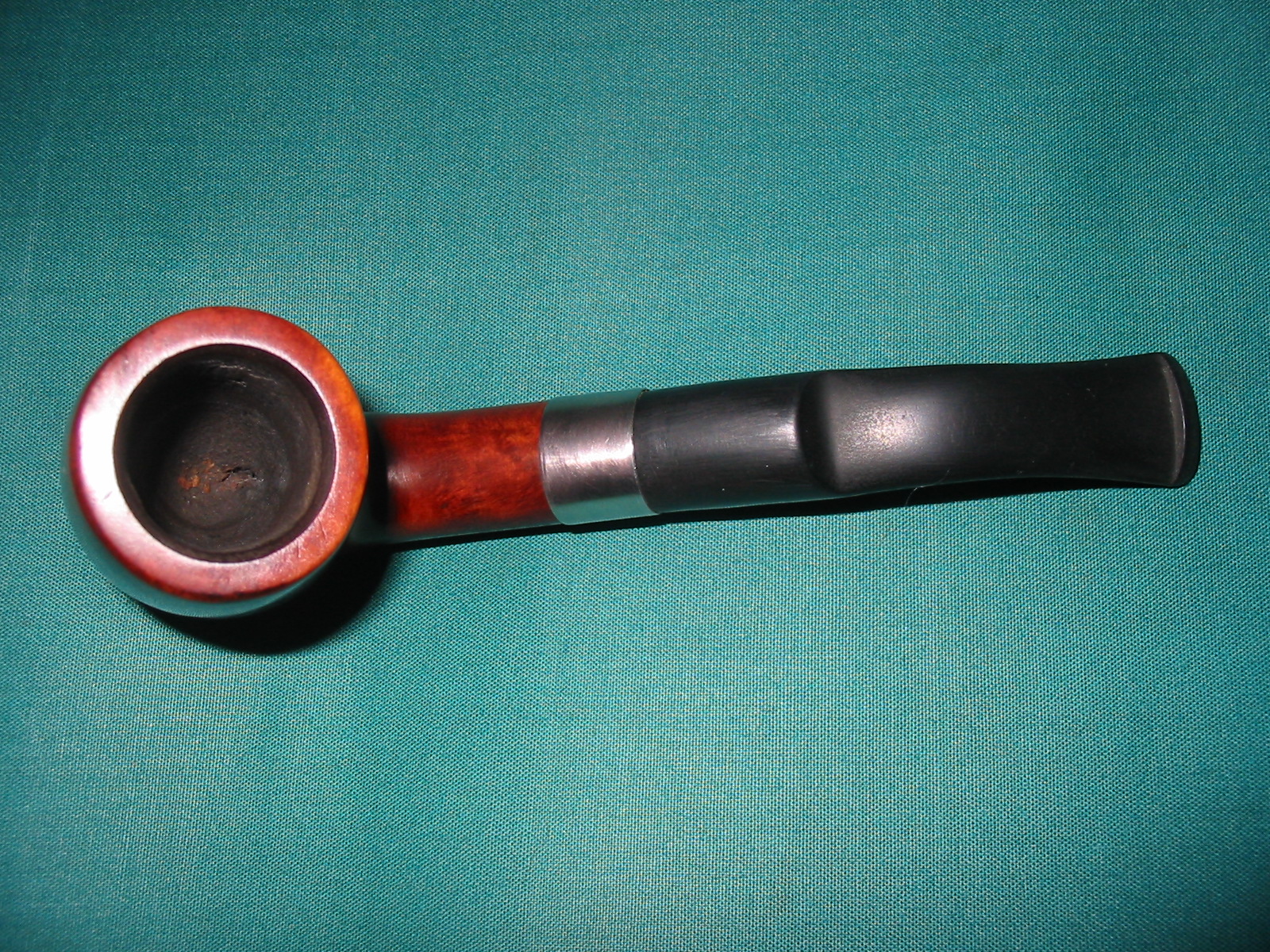
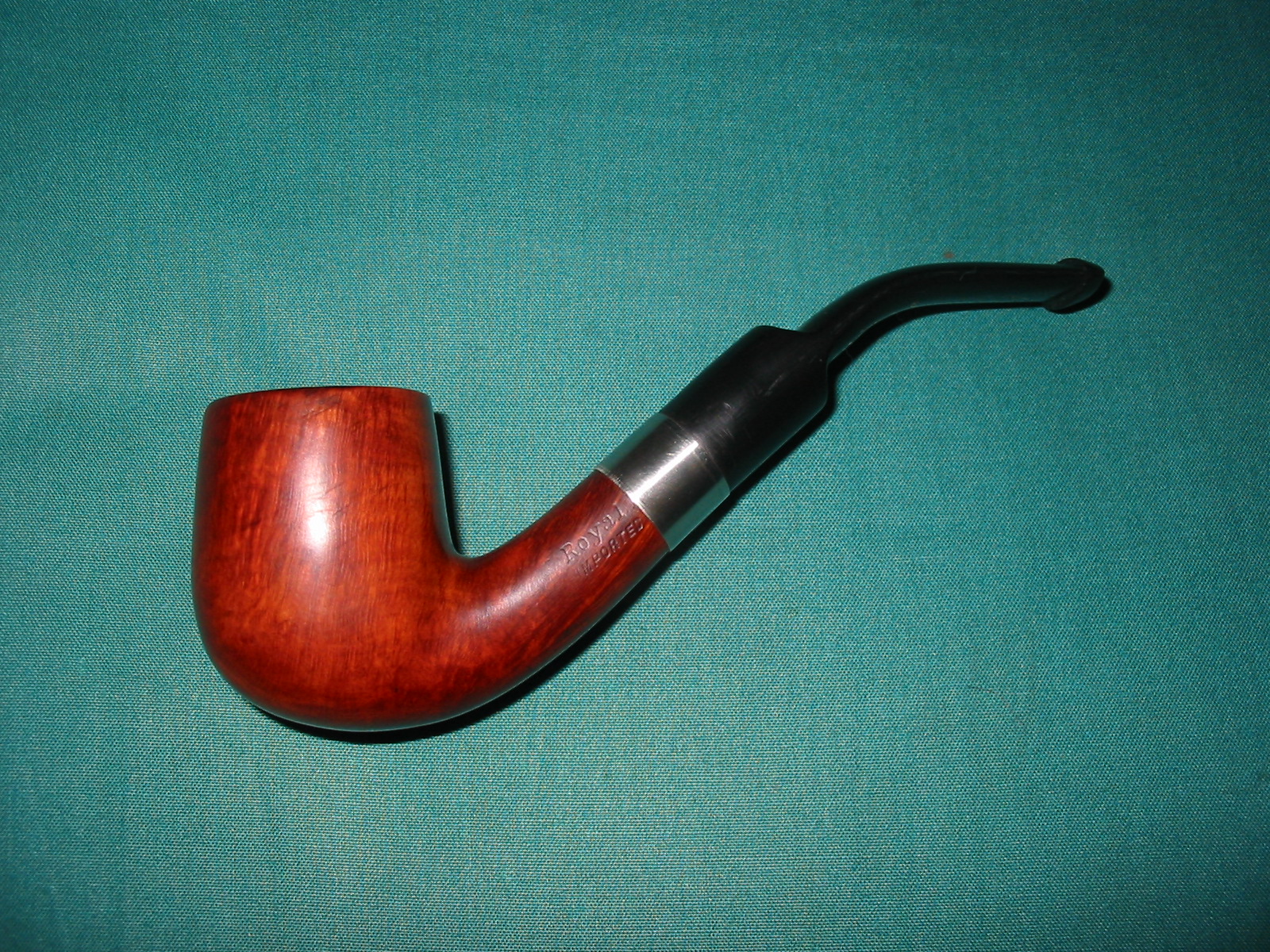
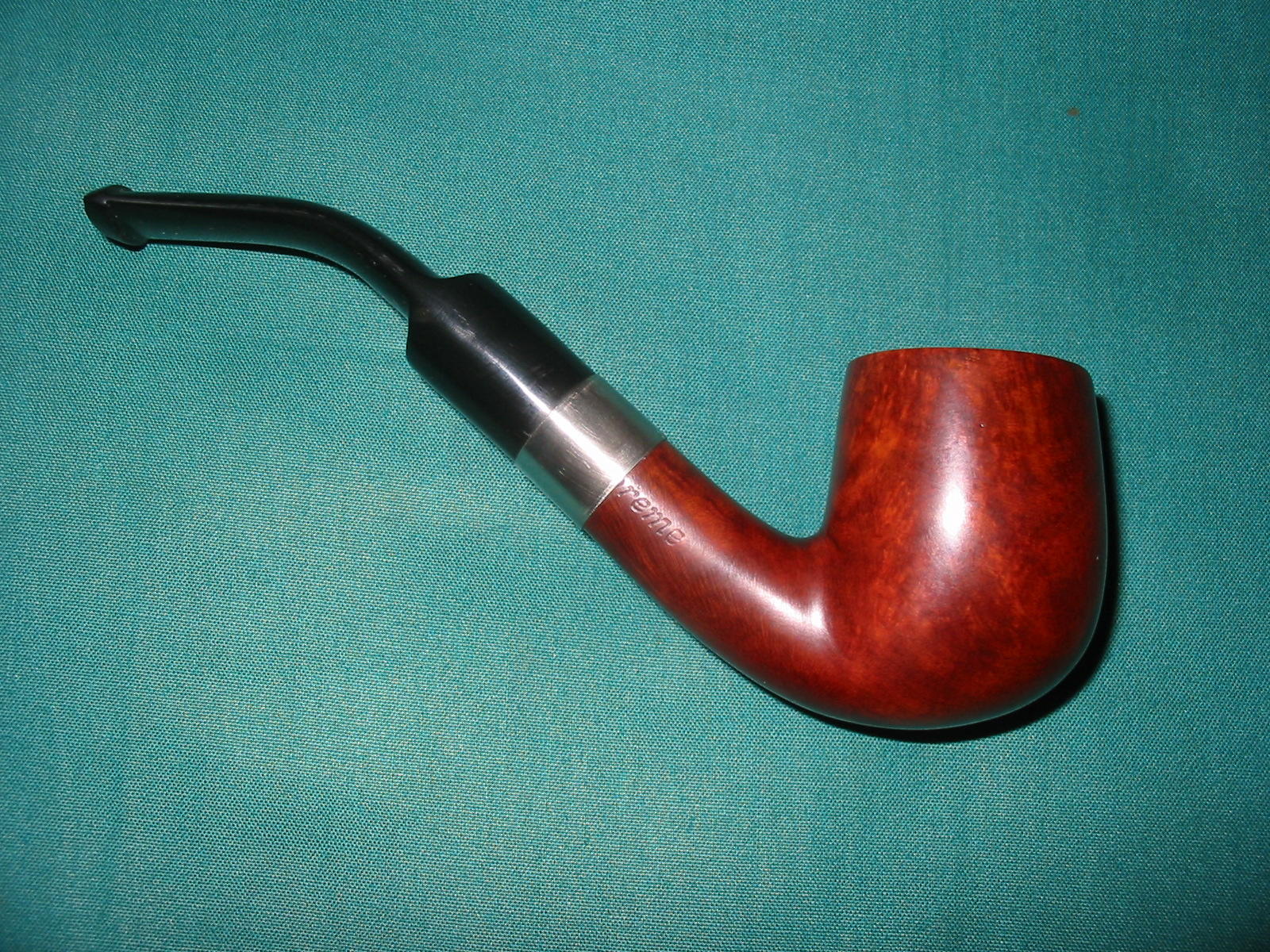
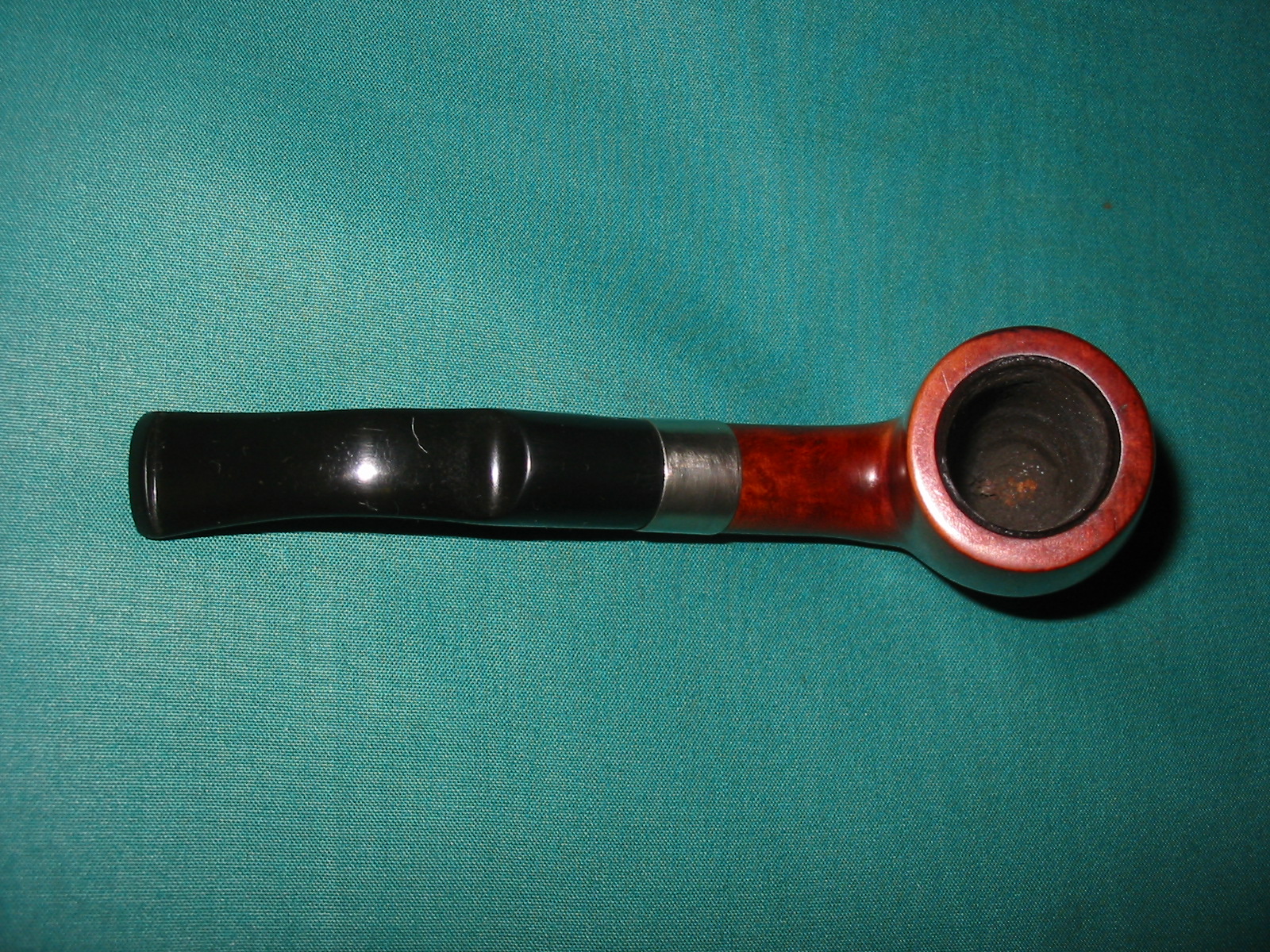
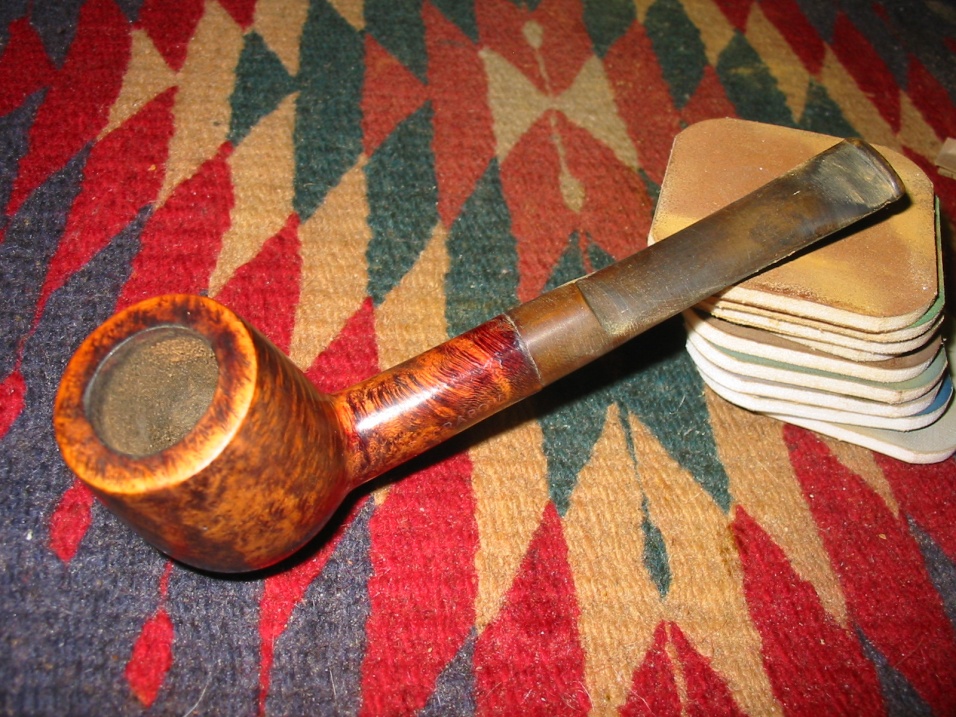
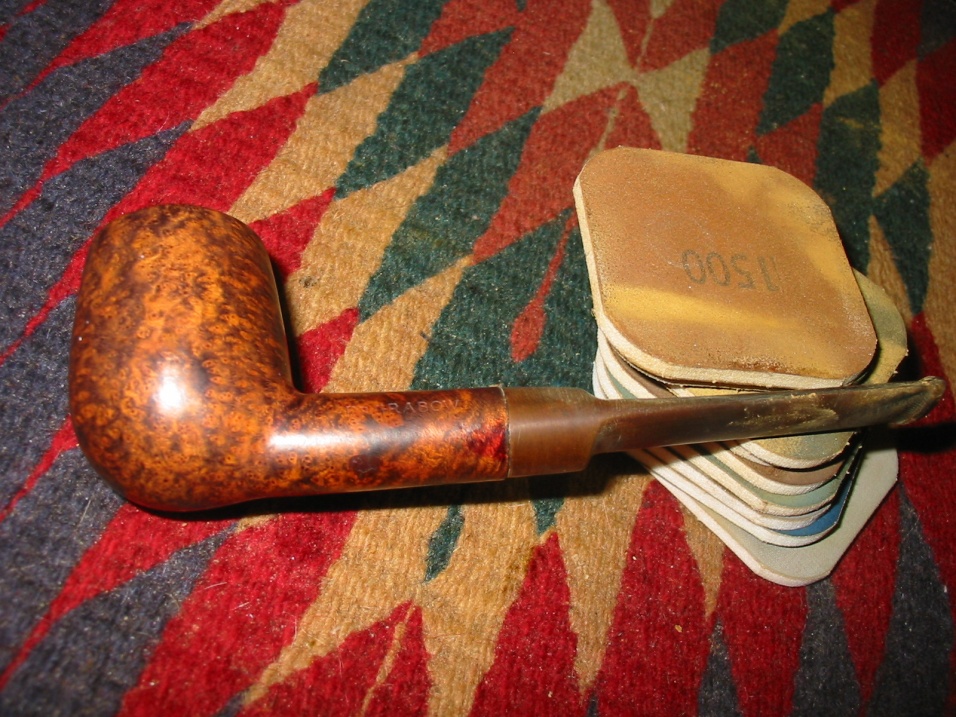
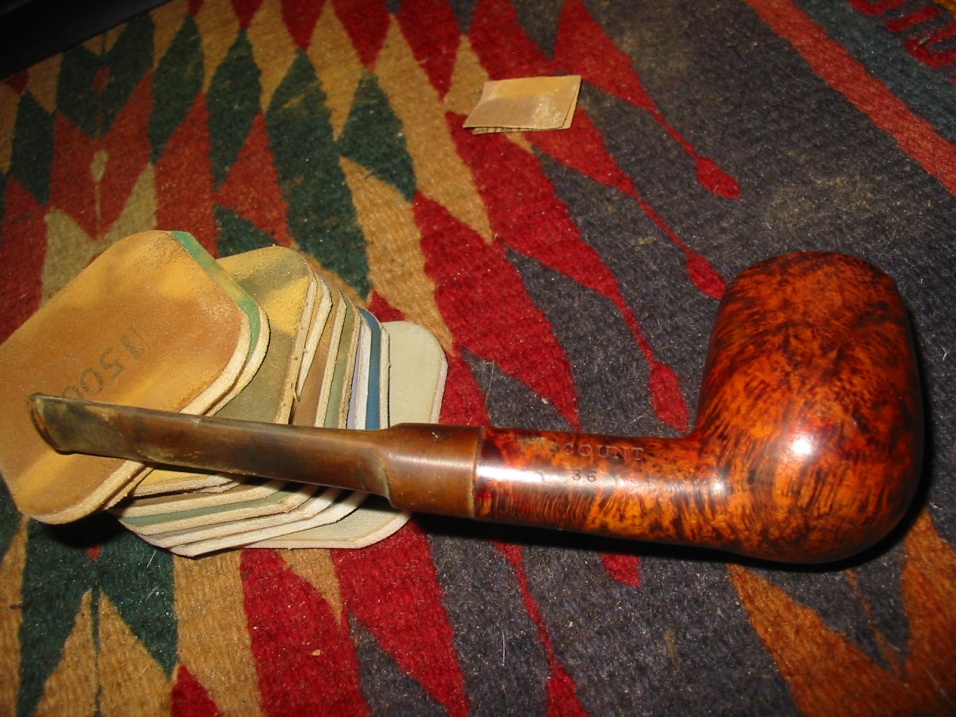
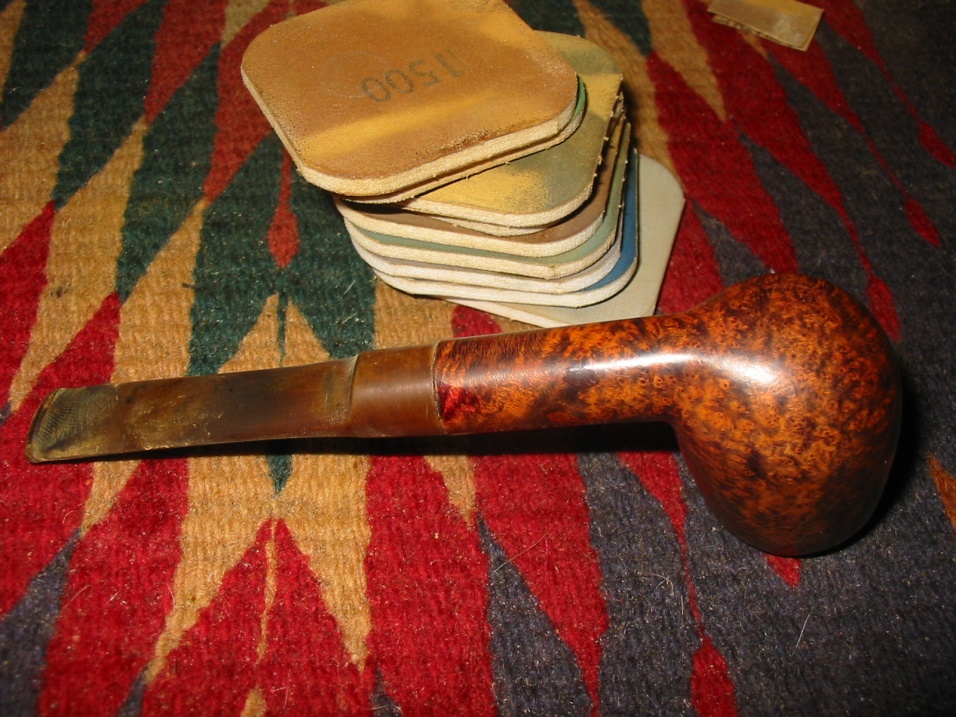
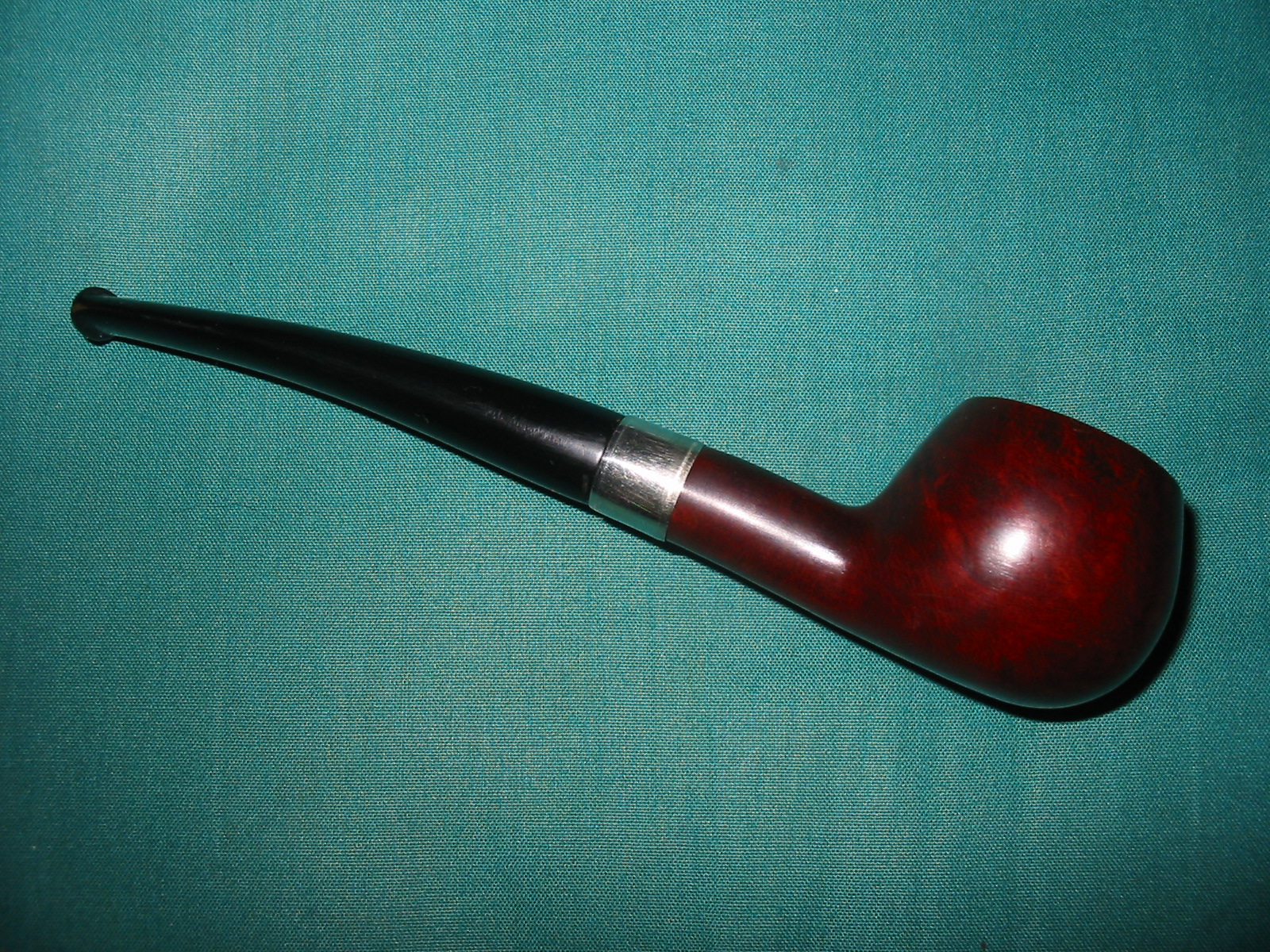
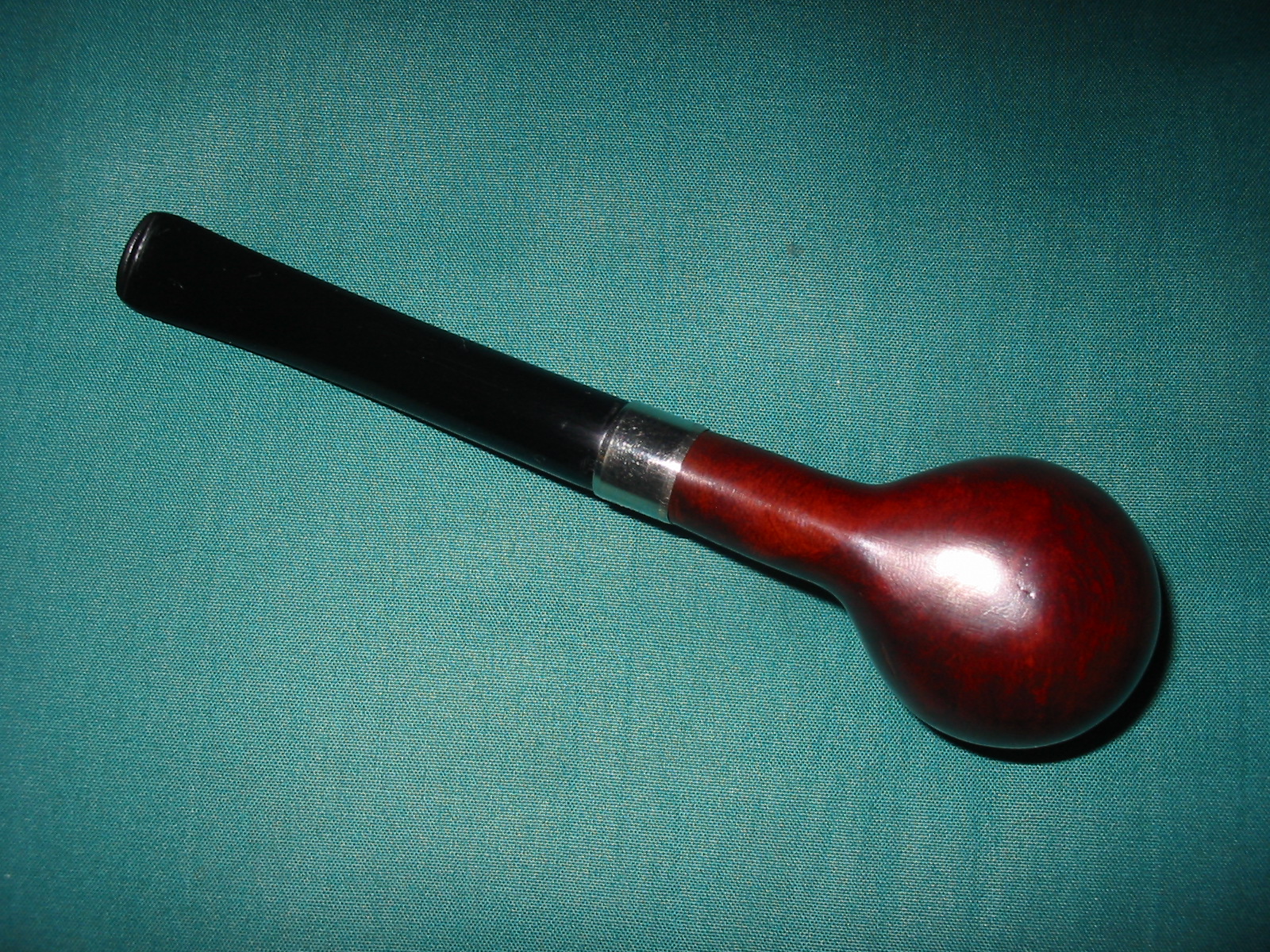
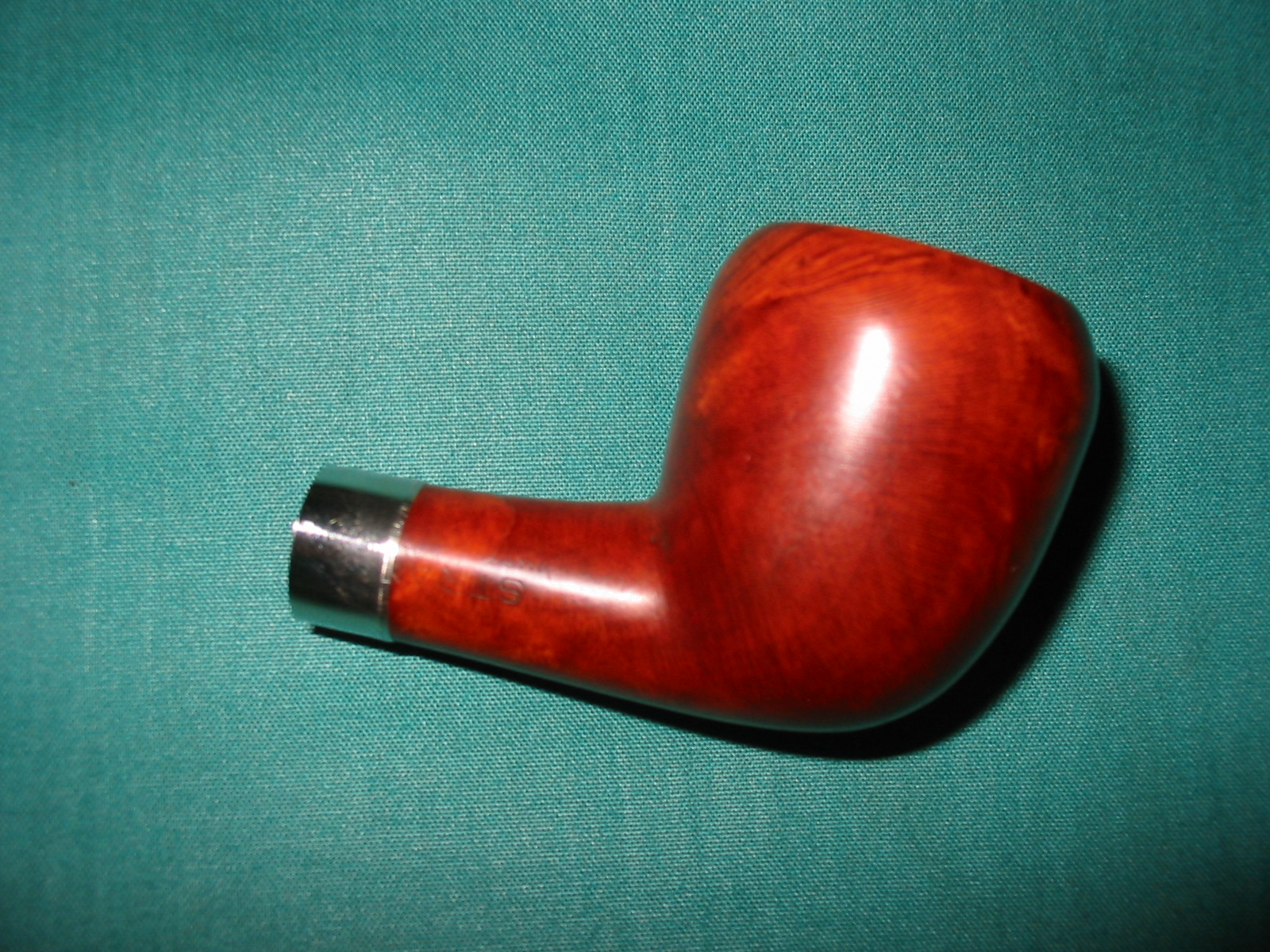
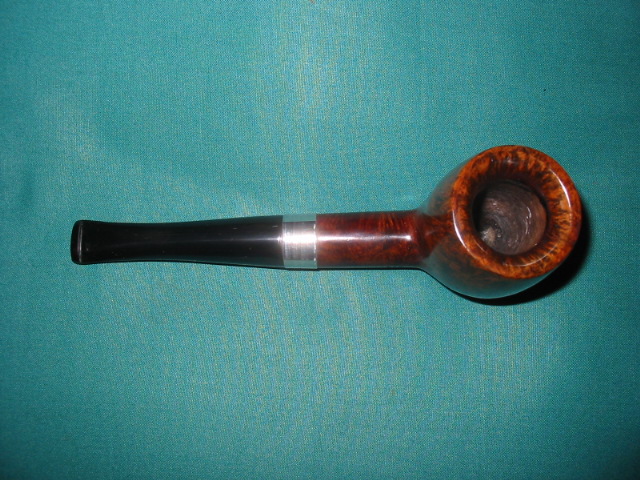
Quite a few of the old stummels in my box for restemming are stamped Real Briar over Made in Italy. This one caught my eye. It had a great classic shape of a Prince. I dug through my can of stems and found an old stem that would work on this little prince with some work. The bowl was coated with tars and needed to be reamed. The rim was tarred and the cake overflowed the bowl onto the rim. On the bottom left side of the bowl near the shank were several fills that were visible and ugly. The shank was plugged with tars and oils and I could not pass a pipe cleaner through it. The old stem I picked had the right shape but was also badly oxidized and coated with a calcification that was white and hard. The button had a single hole drilled in the centre but it had been damaged and had been worn toward the top of the button. This one was going to be a challenge but it was something I wanted to give a shot.
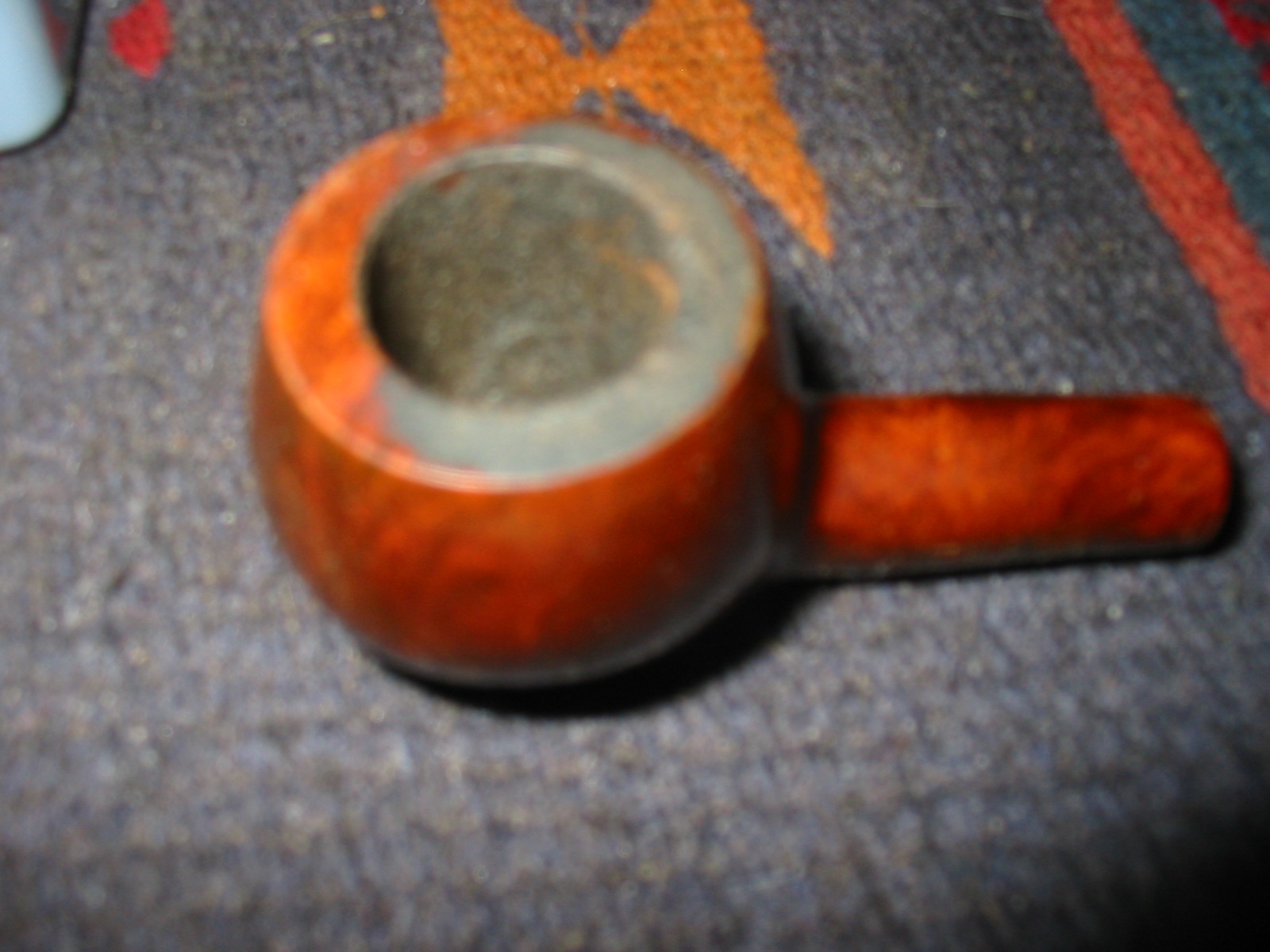
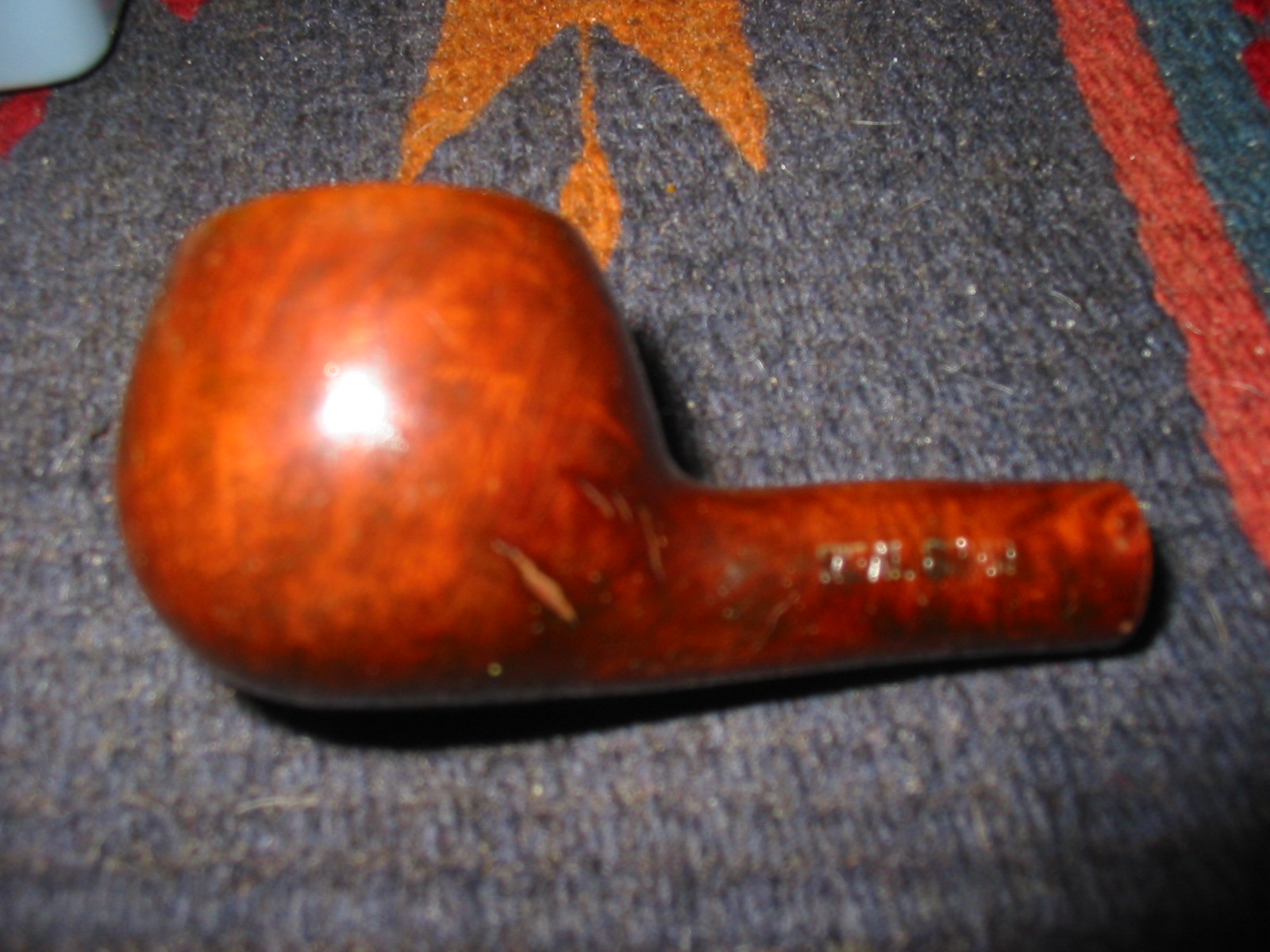
ImageImage

I used my Dremel with the sanding drum to cut away the excess material on the diameter of the stem. The next three photos show the stem after it has been shaped to close to the diameter of the shank. The rest of the work would have to be done by hand. The first one shows the state of the stem when I started with it. The second and third photos show the stem after I had sanded it with emery paper to remove the oxidation and the calcification.

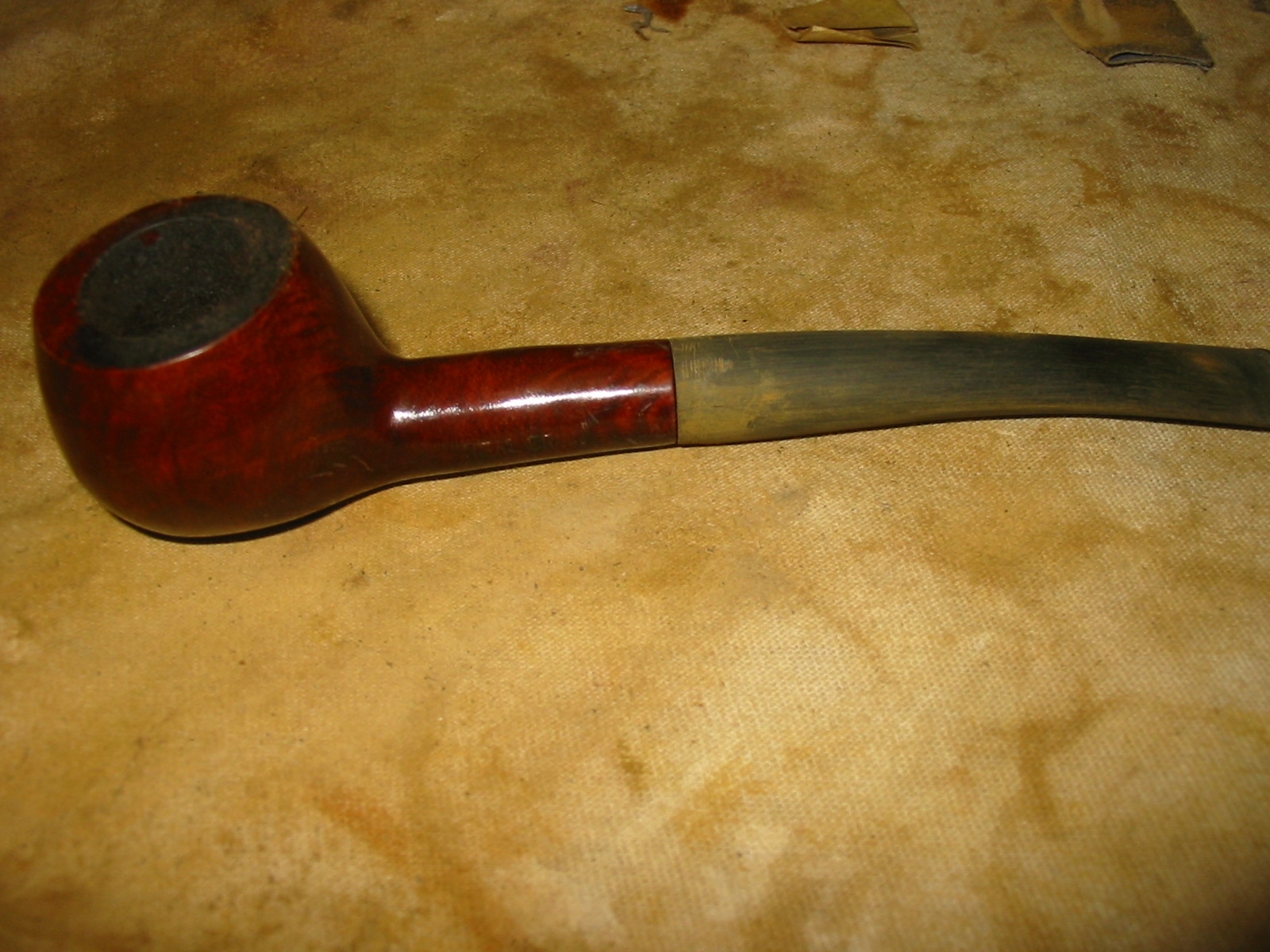
ImageImageImage

I wiped down the bowl with acetone and in doing so found a hairline crack in the shank on the underside of the pipe. I don’t believe this was done in fitting the stem as the fit is actually very precise and smooth. There was no stress on the shank from the new stem. The look of the crack also was dirty and showed that it had been there for awhile. The next two photos below show the crack in the shank on the underside.
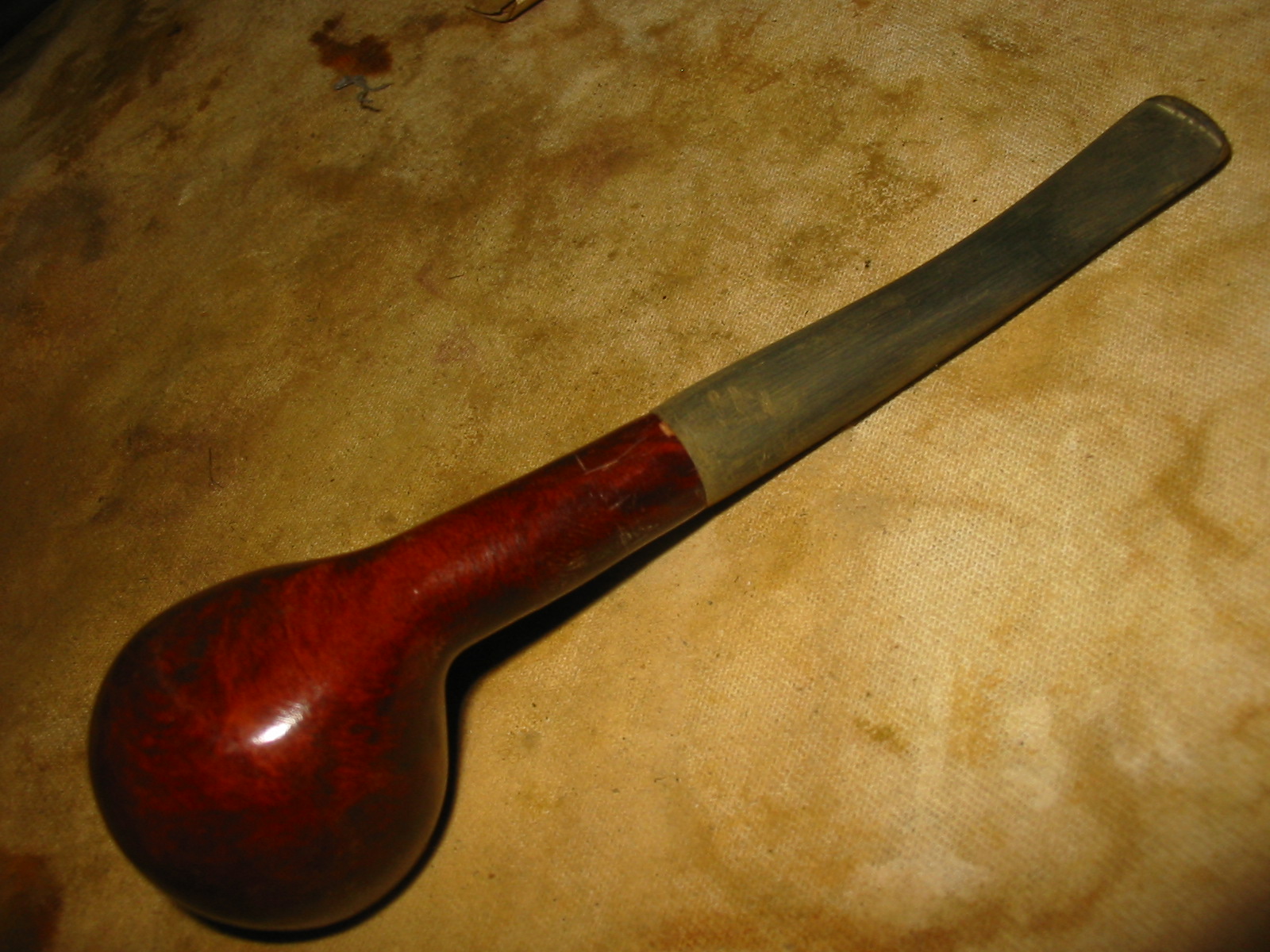
ImageImage

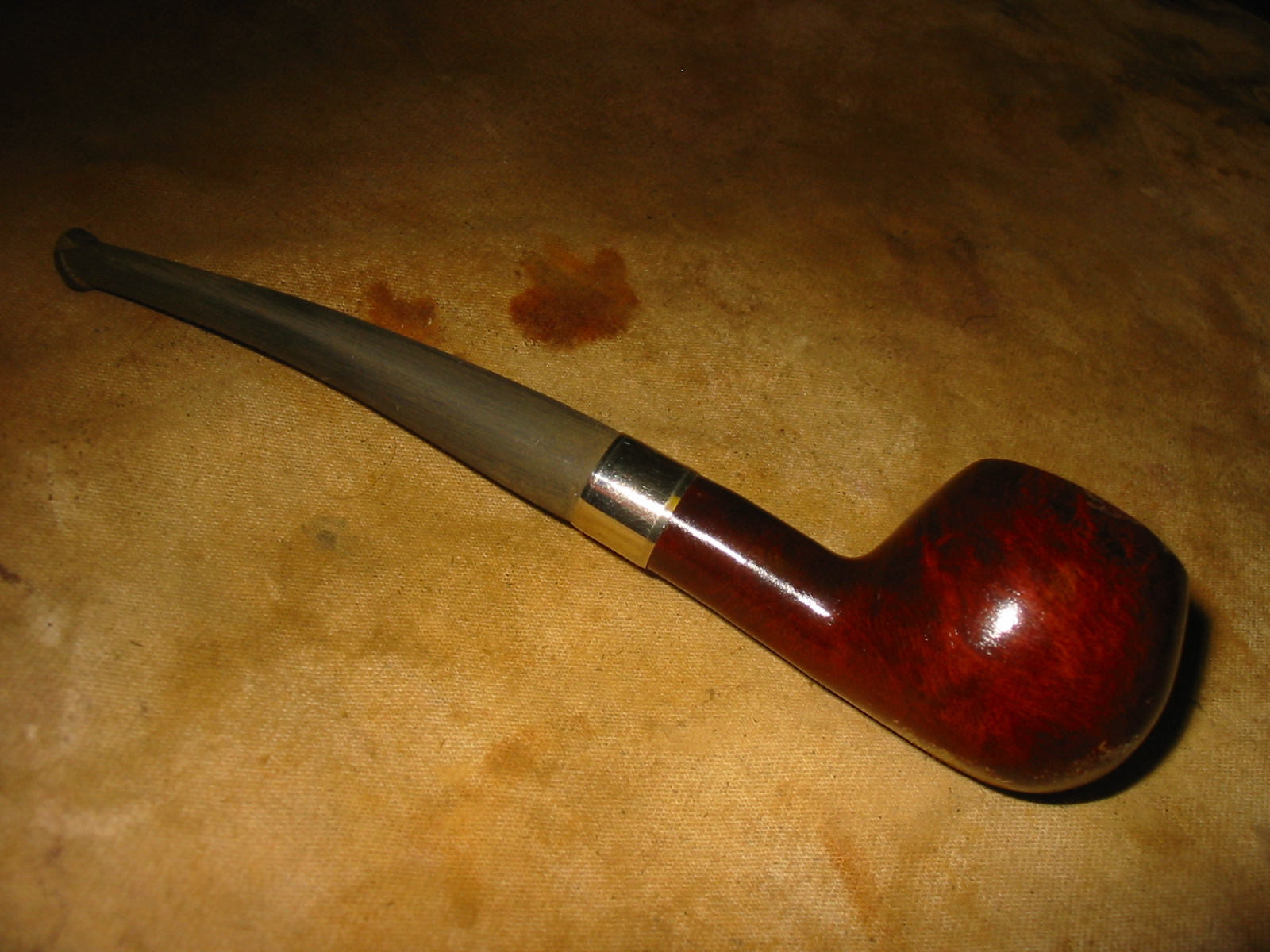
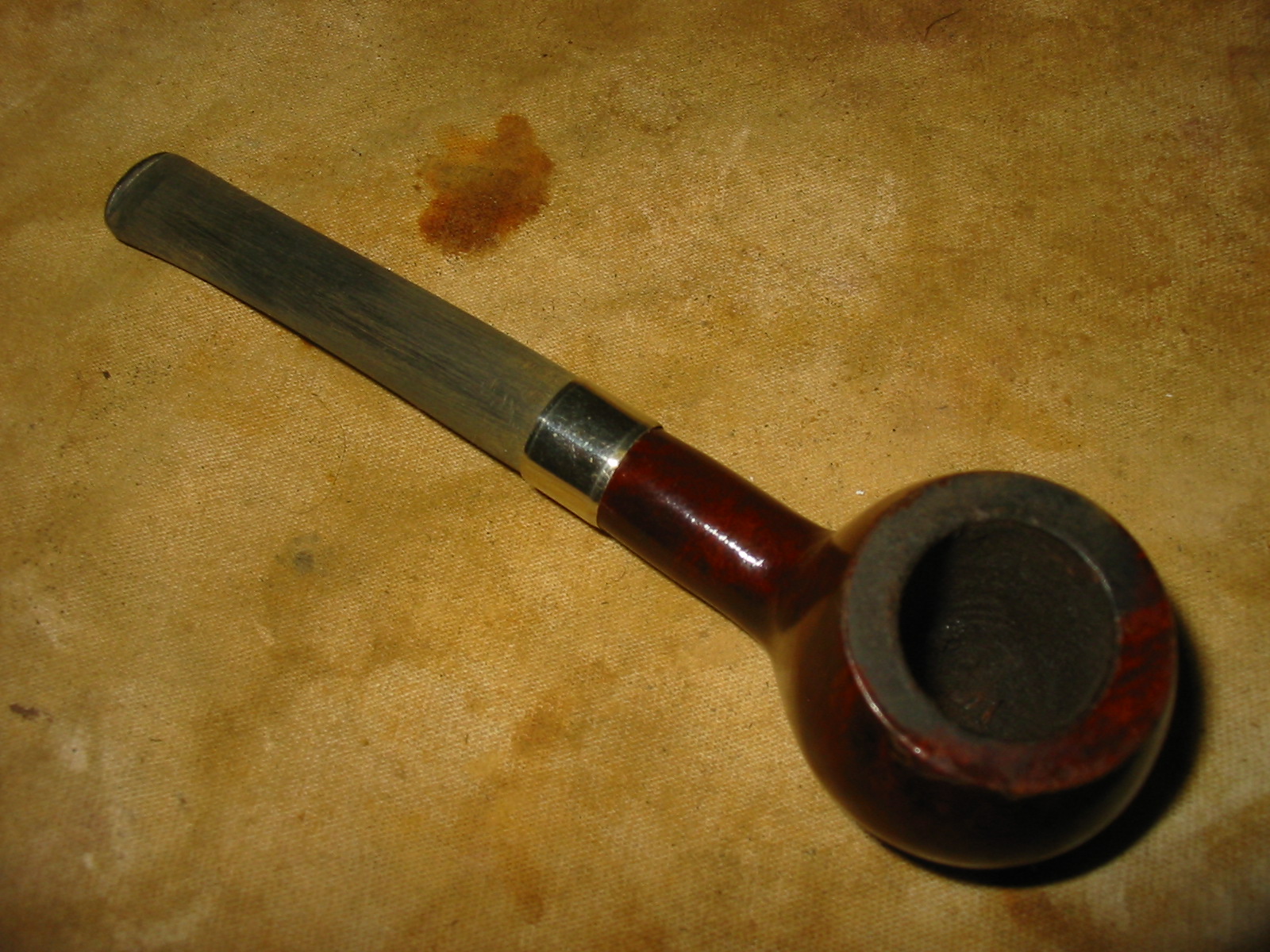
I dripped some superglue into the crack and then heated a nickel band and pressure fit it on the shank. I then took a little more of the stem material off so that the fit to the band would be smooth and not bulge. The next two photos show the band and stem fit. The band seems to really dress up this old Real Briar Prince.
ImageImage

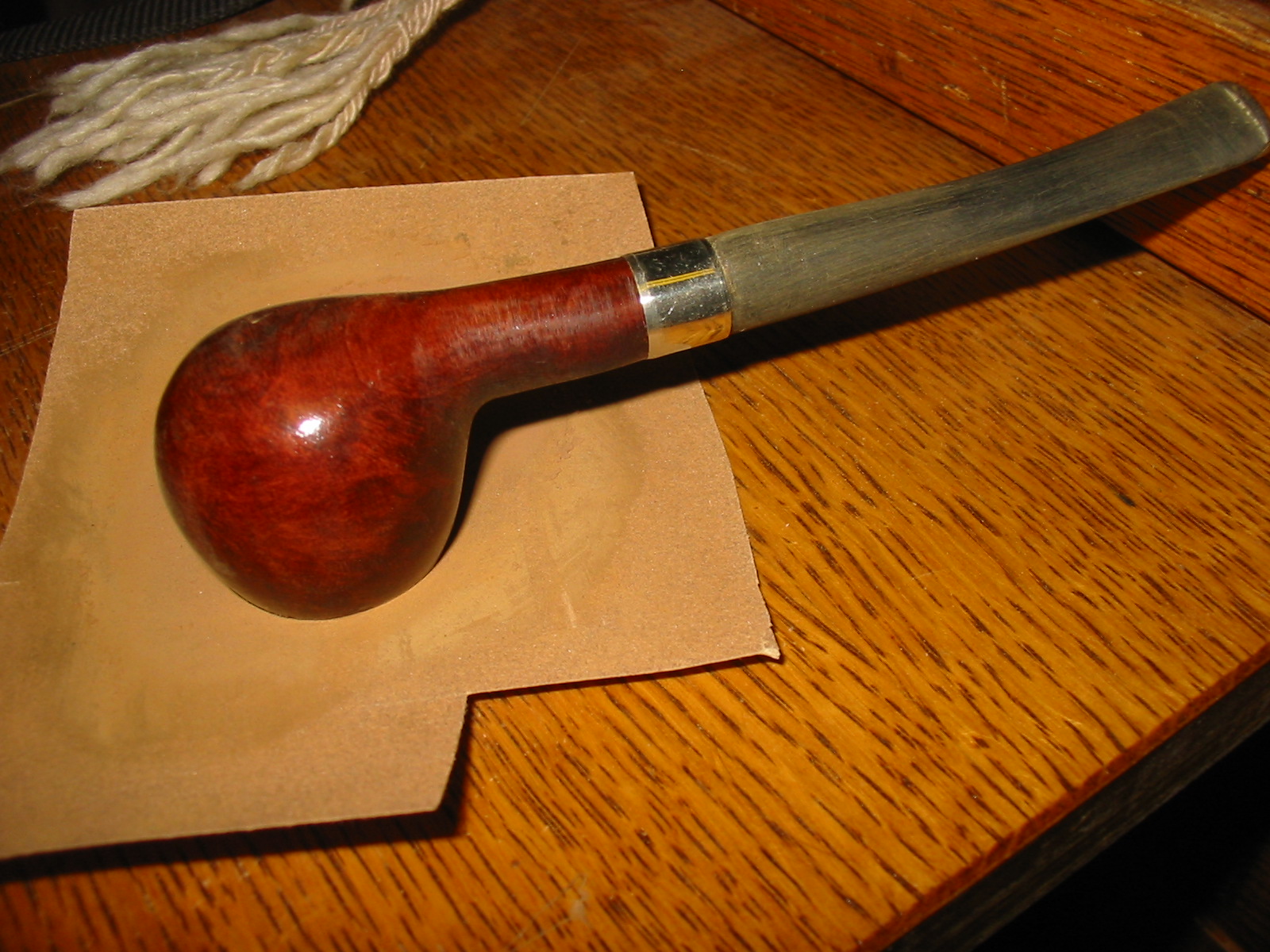
I wiped the bowl down with several more wipes of acetone on a cotton pad to break up the varnish coat. I have found that the acetone softens the varnish and makes it easier to sand off with sand paper. I also decided to sand off the rim to get rid of the hard tars. The next two photos show the process I use for sanding the rim. In this case since I was restaining the pipe anyway I did not care if the finish was removed from the rim.
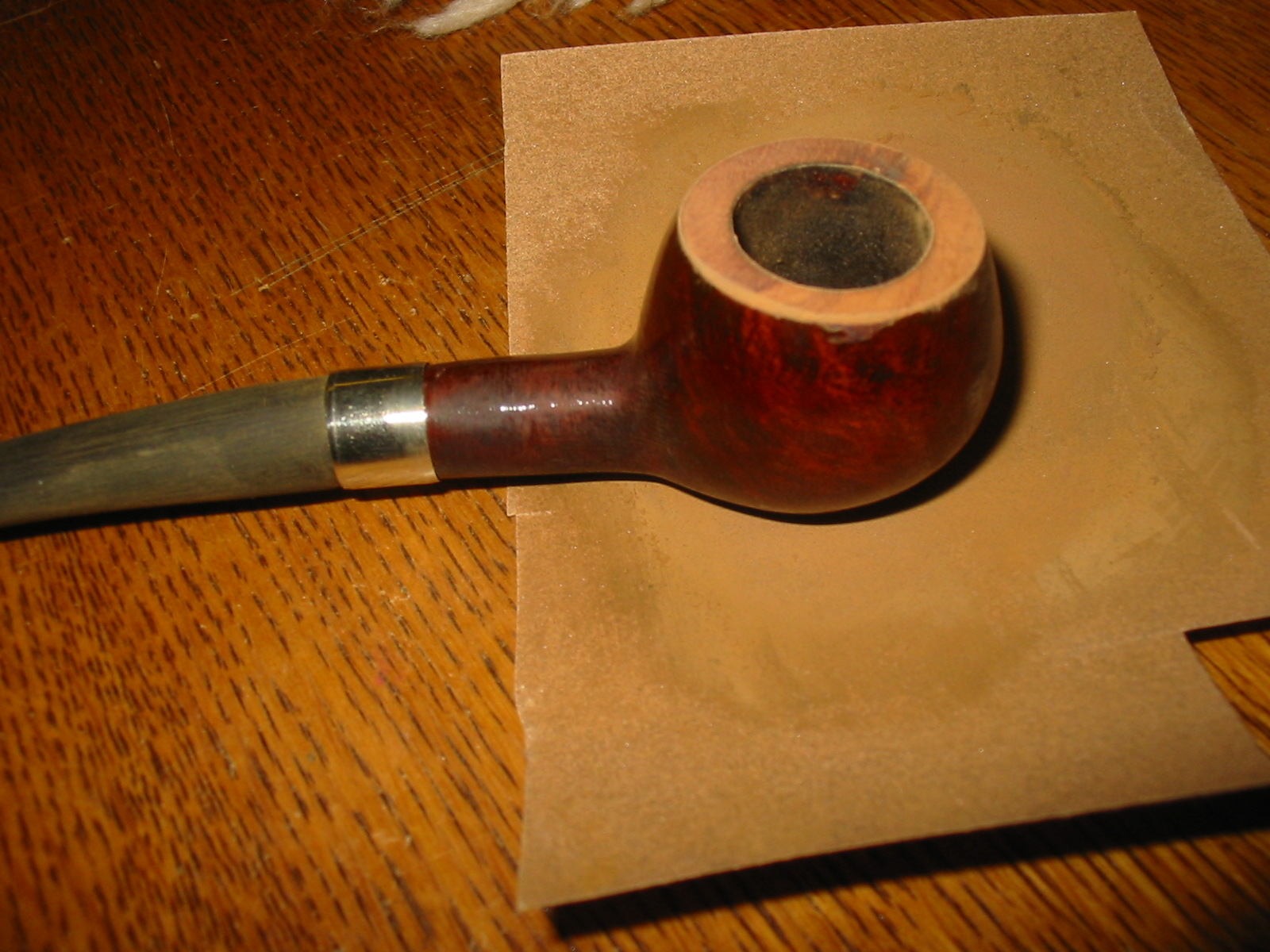
ImageImage

I then sanded the bowl and shank with a foam back medium grit sanding pad to remove the varnish coat. I sanded it until the bowl finish was foggy looking and then I wiped it down with acetone once again on a cotton pad. The next three photos show the result of the sanding and washing with acetone. The finish is finally beginning to break up and the briar is down to the stain coat.
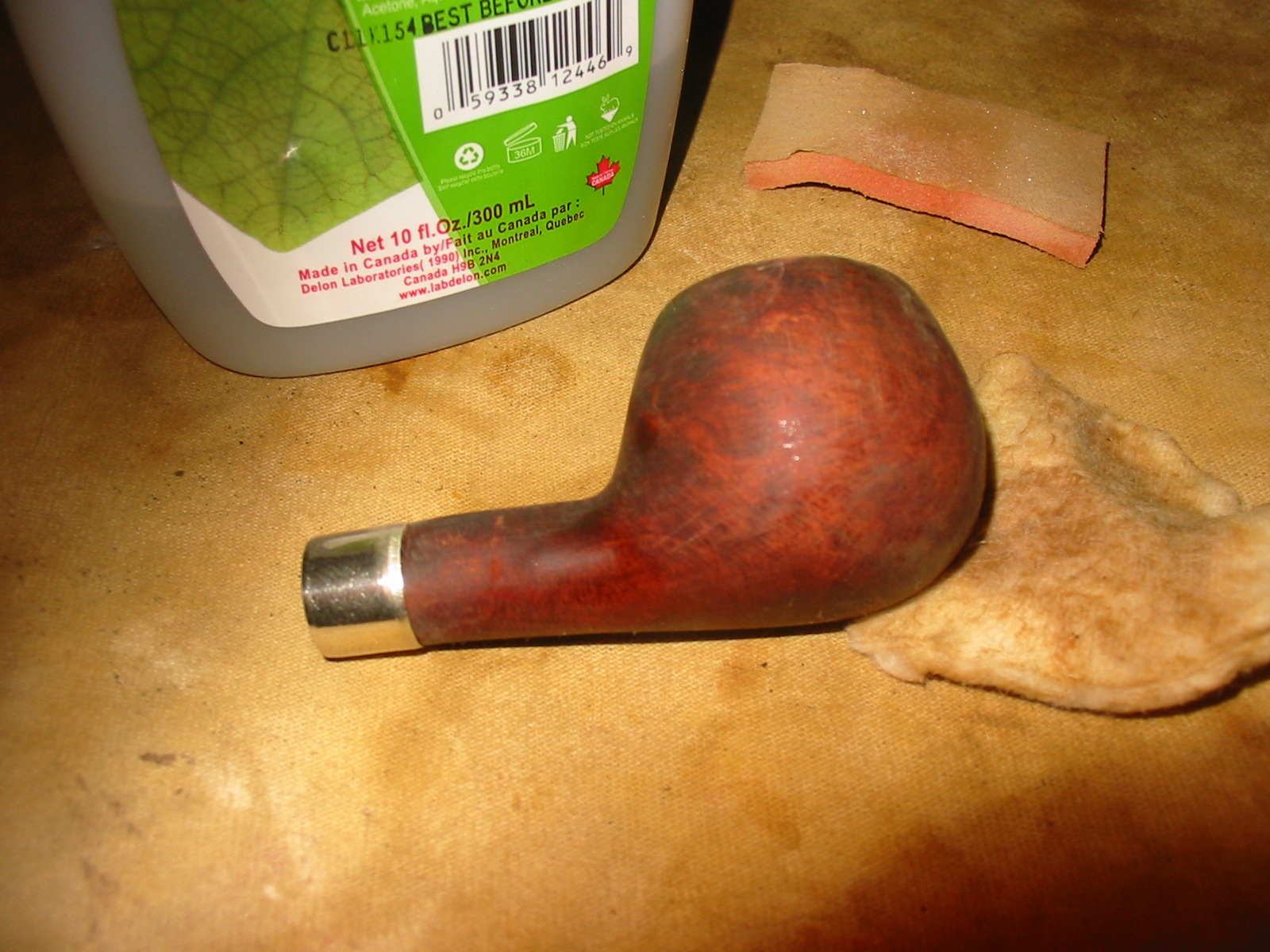
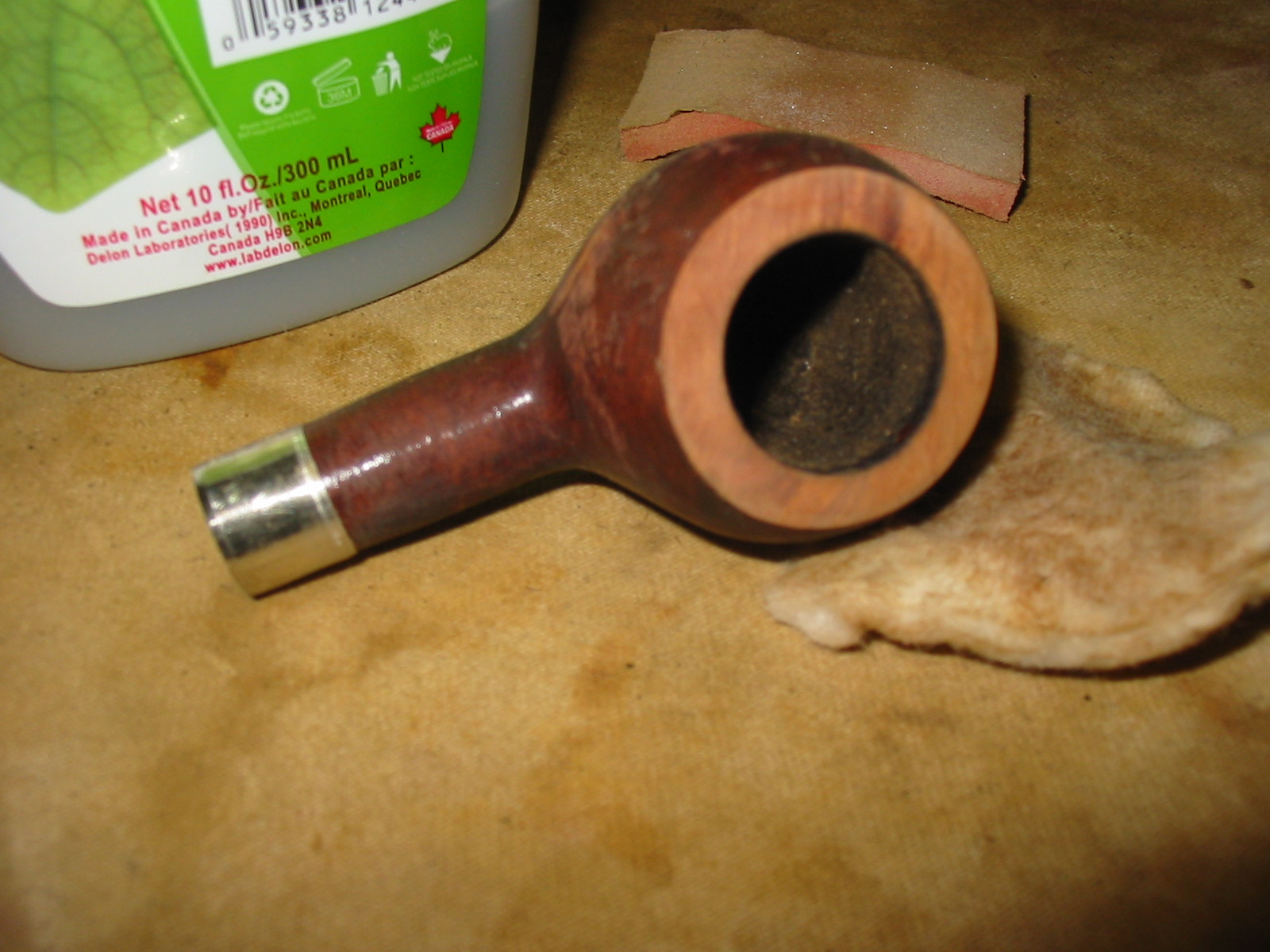
ImageImageImage

I put the stem on the bowl and continued to sand the stem and the bowl with the sanding sponge that is pictured with the pipe. The next three photos show the progress of the sanding. Once I was finished the sanding I wiped it down a final time with the acetone and cotton pad to prepare it for restaining.
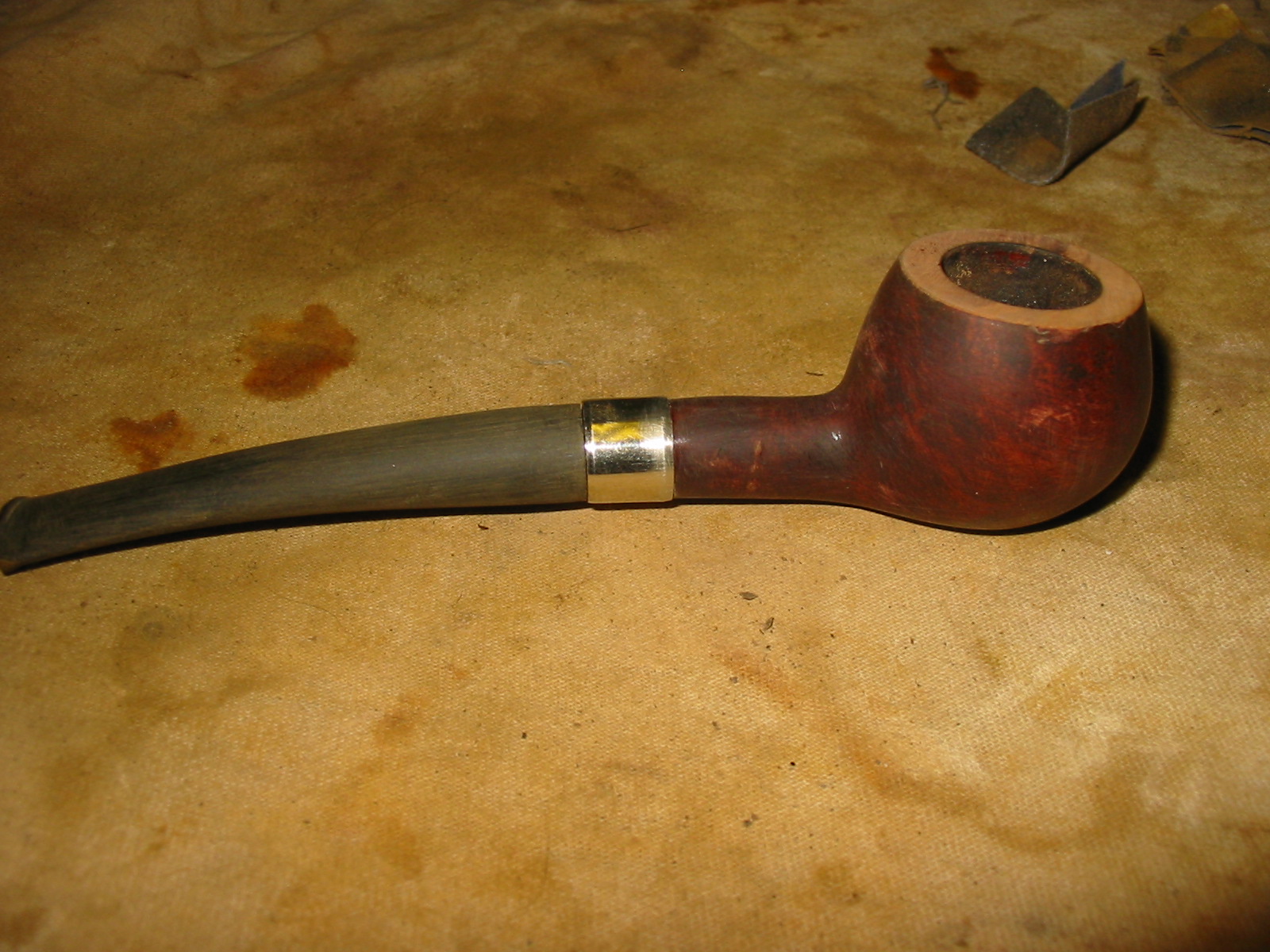
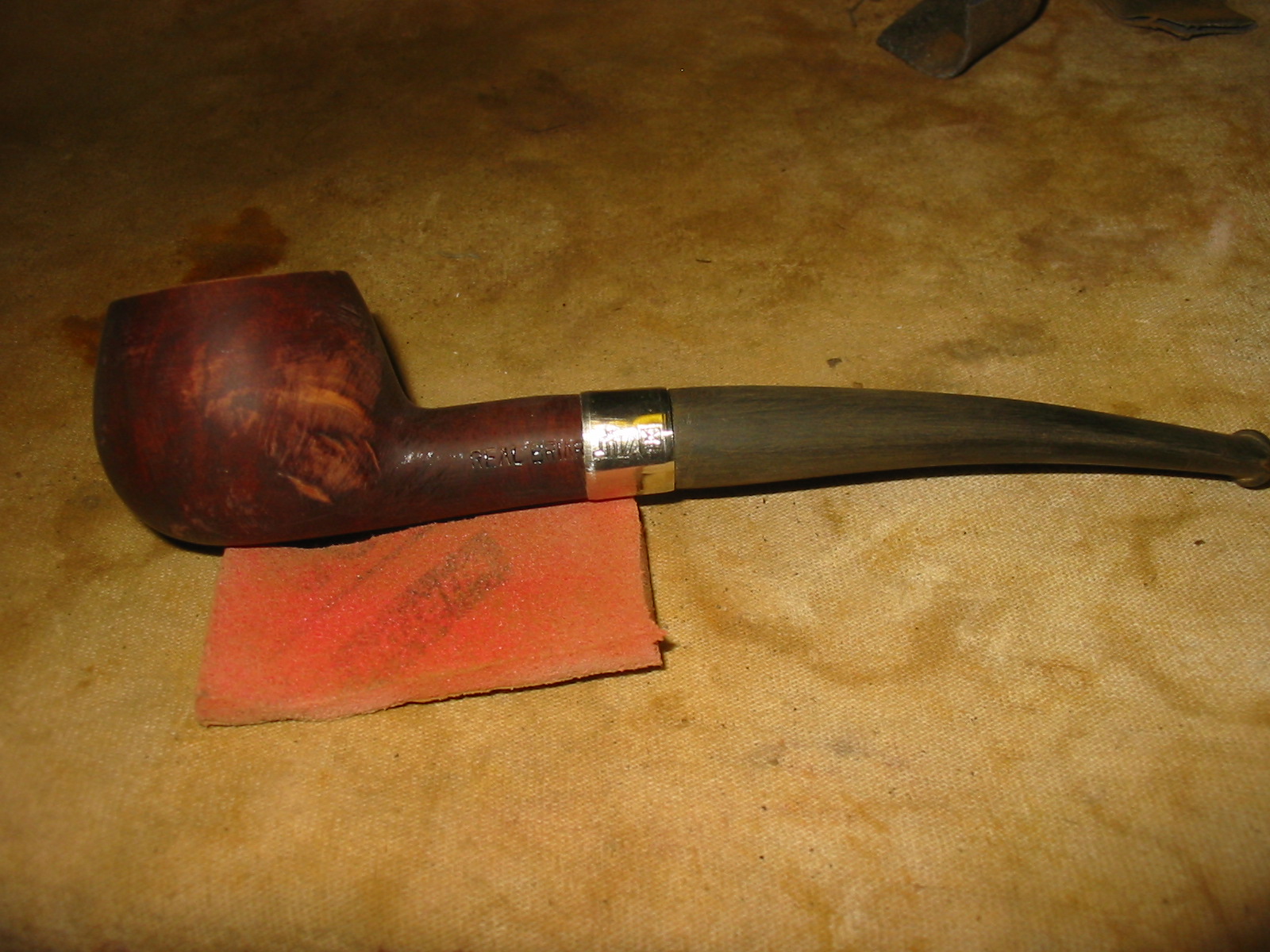
ImageImageImage

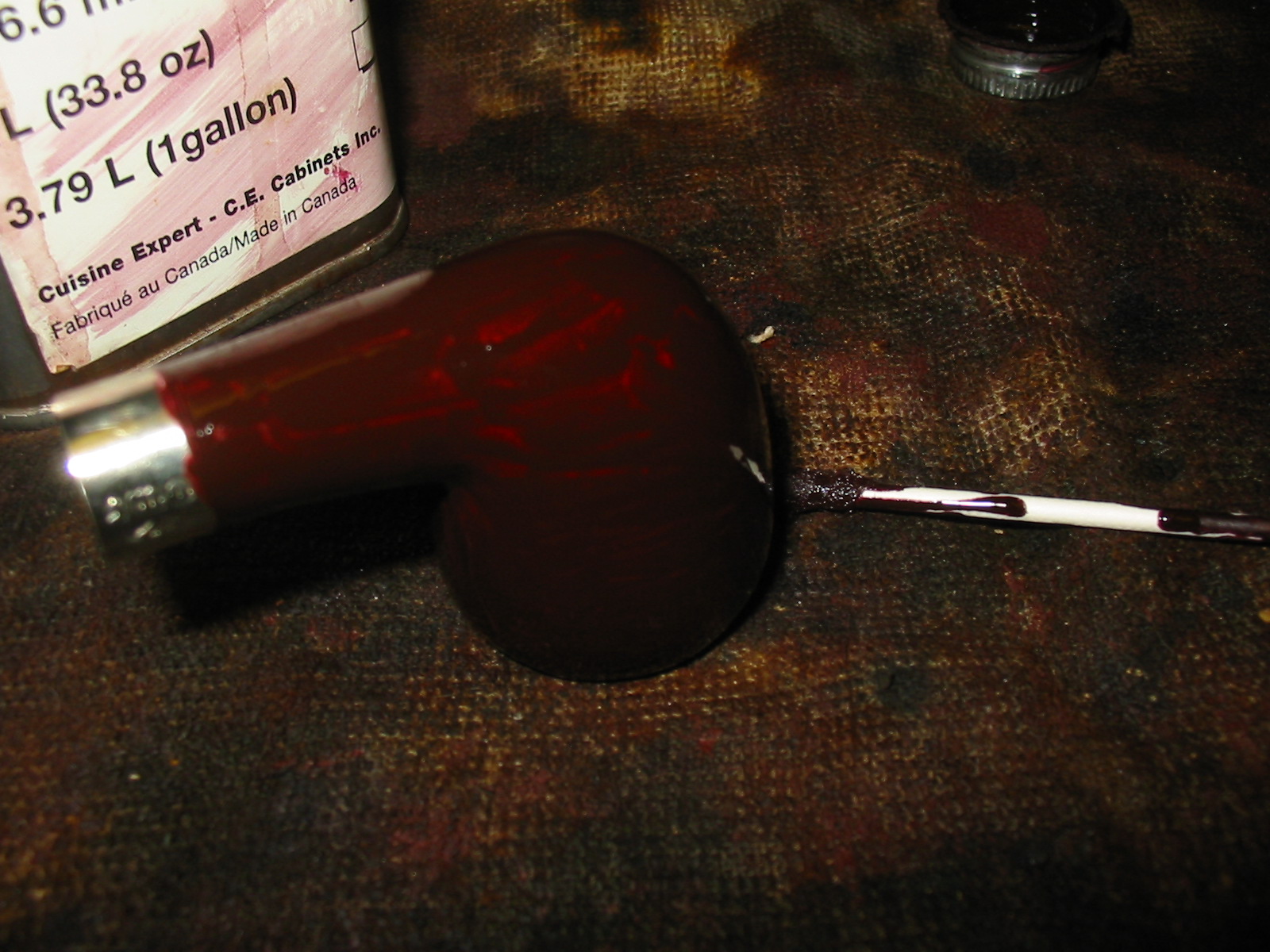
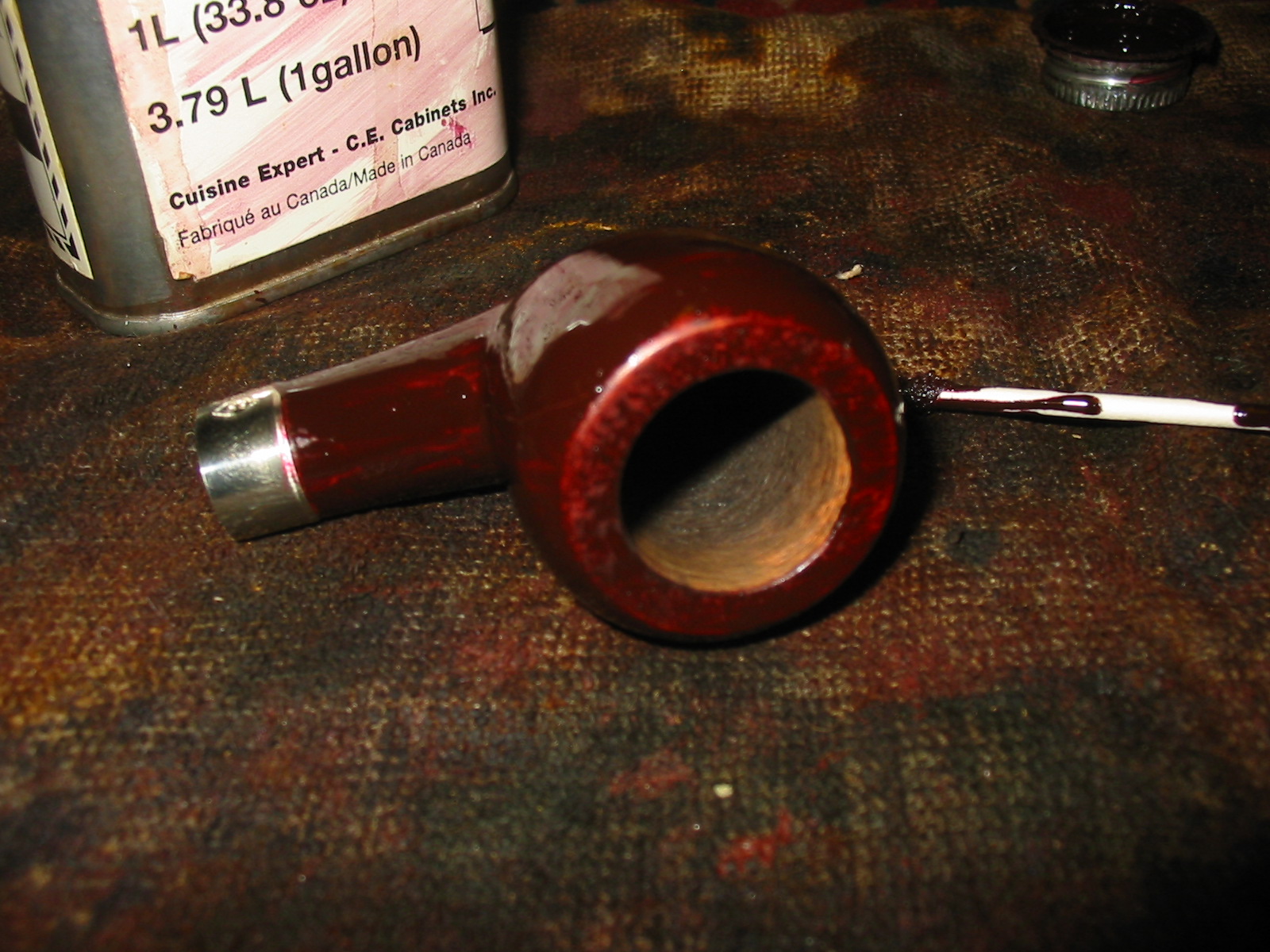
The next three photos show the bowl after I have stained, flamed, restained and flamed it again. I stained the rim three times to get it to be the same colour as the bowl. It took a bit of work to get the colours to match. I used a dark brown aniline stain mixed in a 2:1 ratio with isopropyl alcohol to attain the colour that I wanted for this pipe. I have learned that the mix is great for hiding unsightly fills and blending them into the rest of the bowl.
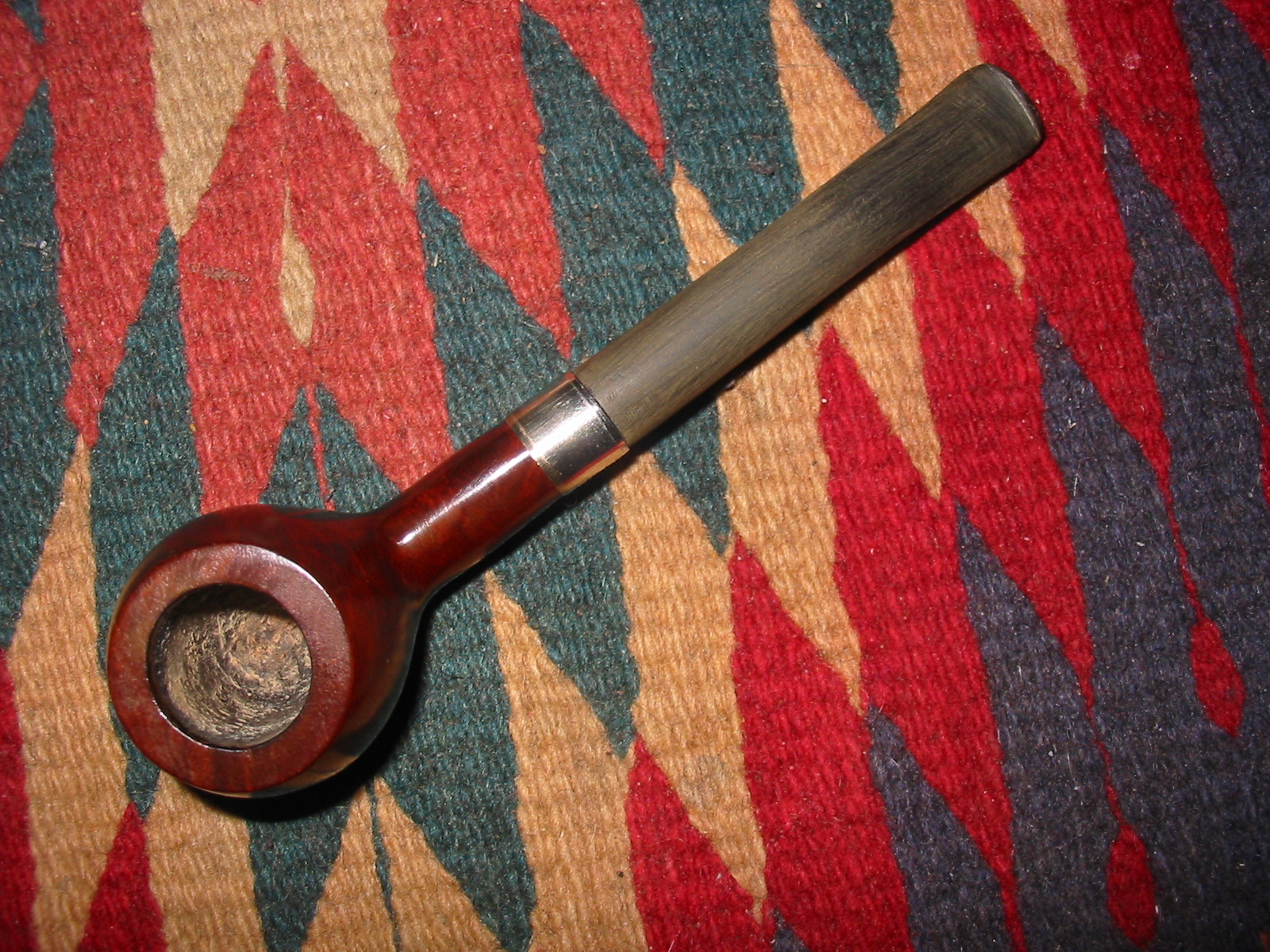
ImageImageImage

I removed the bowl and went to work on the button. The airway in the button was actually quite large and had been cut very close to the edge of the button. I examined it and could see that the damage was fairly surface. The airway inside the button was centered in the button so the edge would need to be built up to accommodate the new slot that I would cut into the button. I used a two part 5 minute epoxy that I mixed and inserted into the damaged edge of the airway with a dental pick. This took a bit of time to get it to the point that I was happy with. The first photo below shows the airway when I started on the repairs.
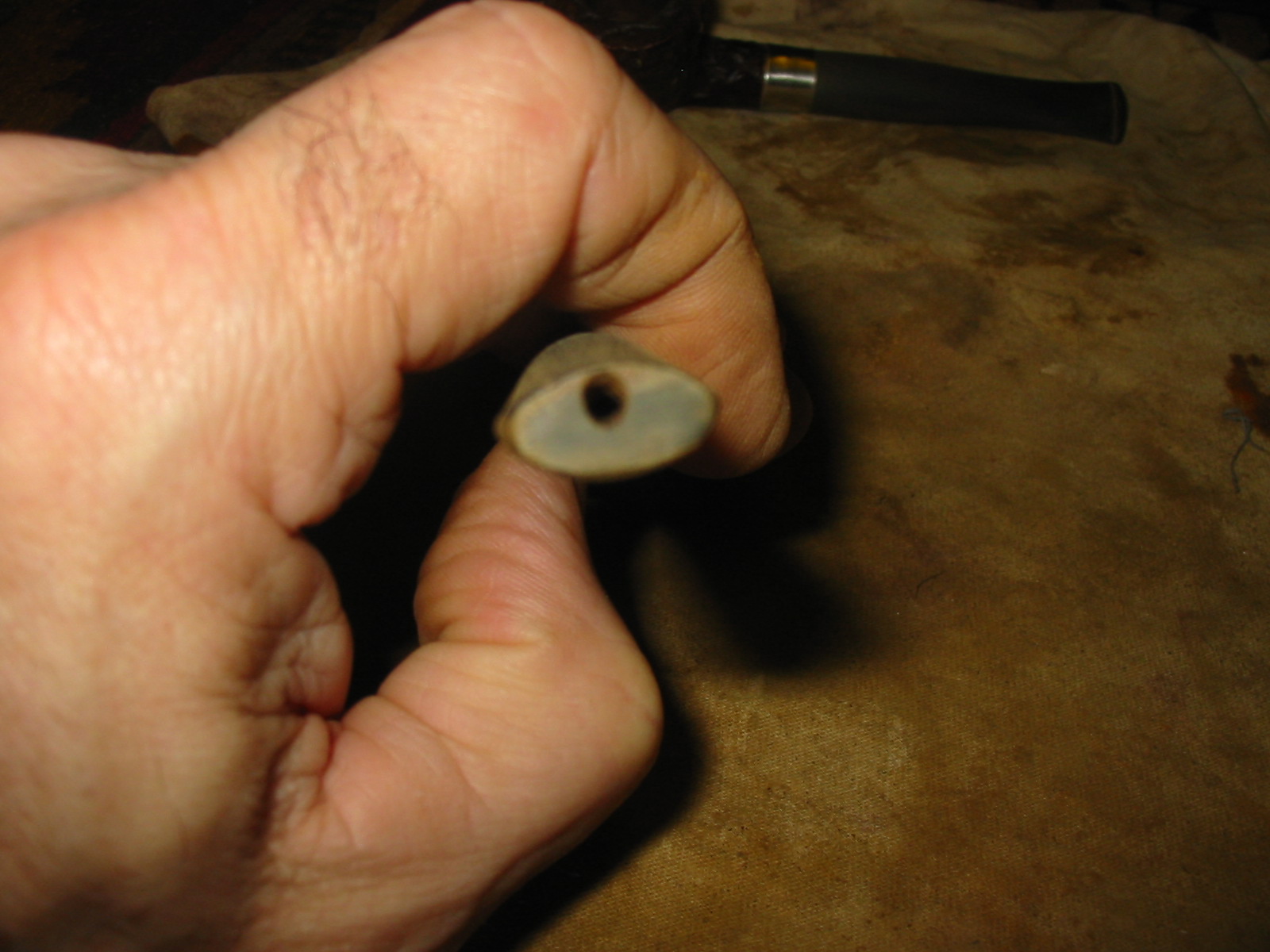
Image

The next three photos, though a little blurry show the repair in process. To start with I used my needle files to open up the airway into a slot. I wanted to provide a straight edge to build up to on the airway so that I that the epoxy would stay put in the right place. The epoxy is wet and shiny in these photos and is visible on the bottom edge of the stem photos. The slotted airway is very clearly visible in these photos showing the process of rebuilding the airhole.

ImageImageImage

The next photo shows the dried patch in the airway and the even slot that is present in the button. I needed to let the epoxy harden before I finished the shaping of the slot to an oval that easily took a pipe cleaner.

Image

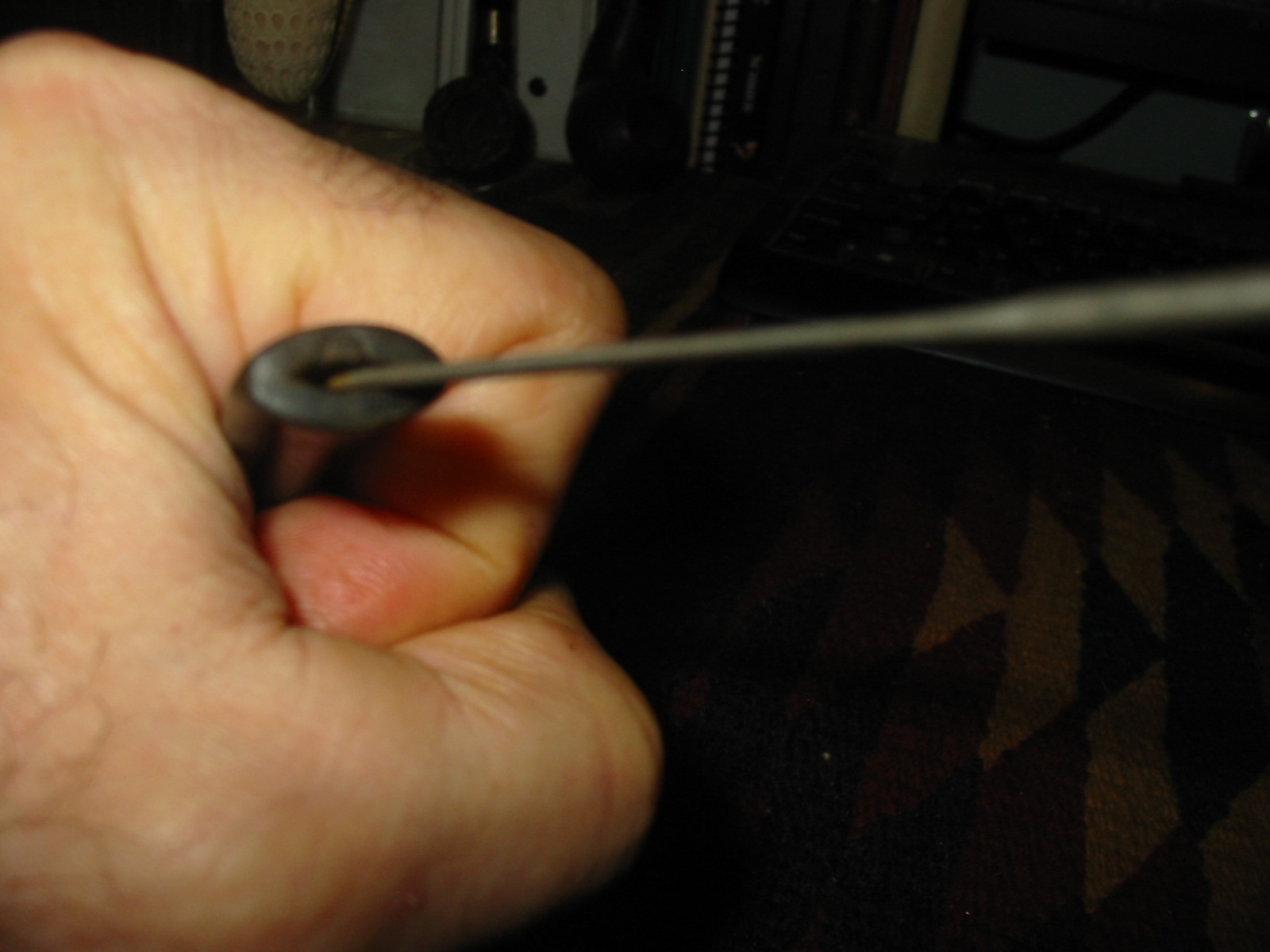
The next three photos show the repaired airhole and the newly cut slot in the button. The first photo shows the stem held in my hand upside down. The repair is visible at the 6 o’clock position in the picture and looks like a small divot in the slot. The slot itself is smooth and the divot is the patch. The second photo shows the stem right side up and the repair is visible at the 12 o’clock position. The final of the three photos shows the small oval needle file that I used to open the airway. I inserted it into the slot to give an idea of the size of the files that I use to do the work on these slots.
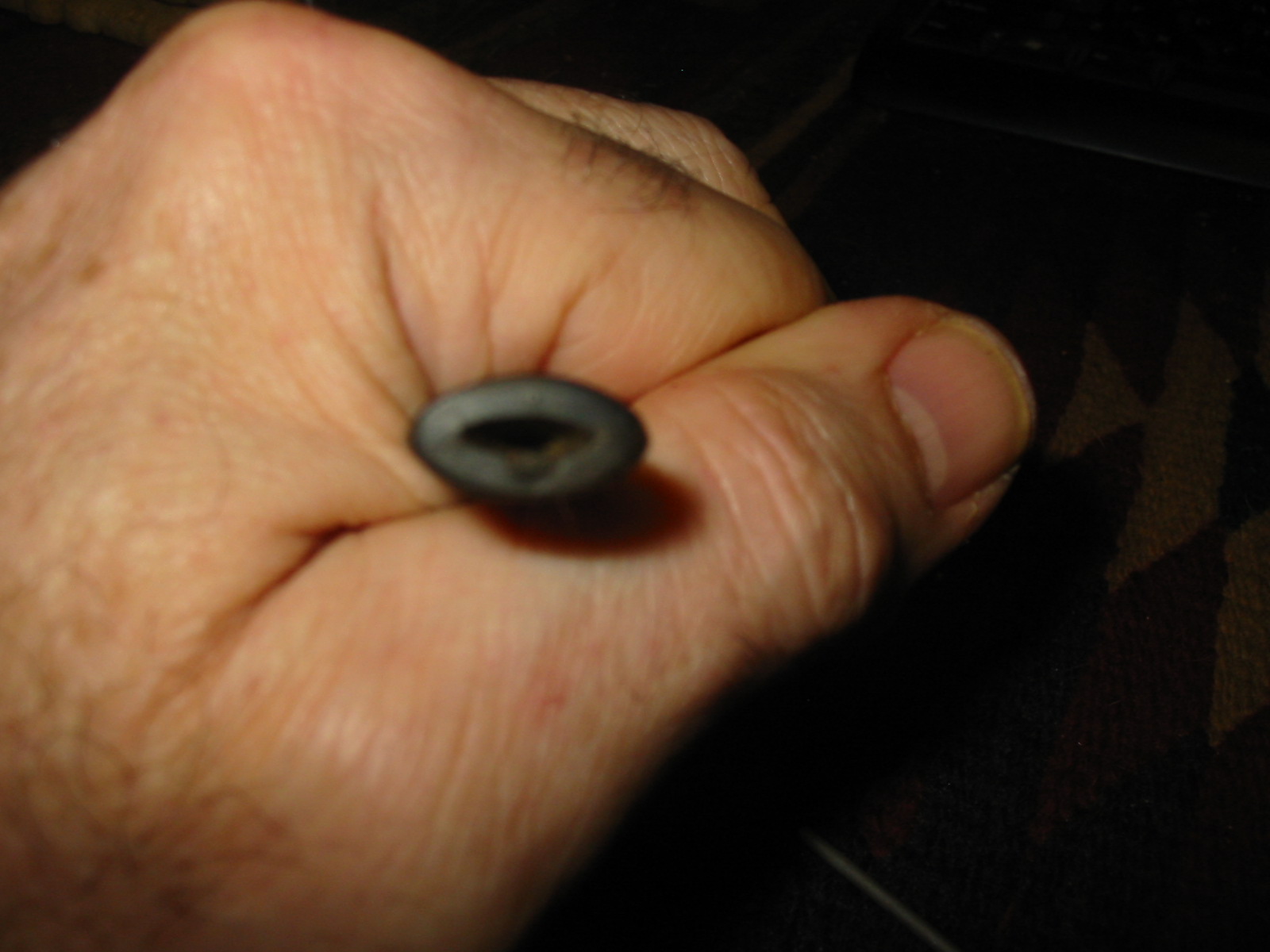
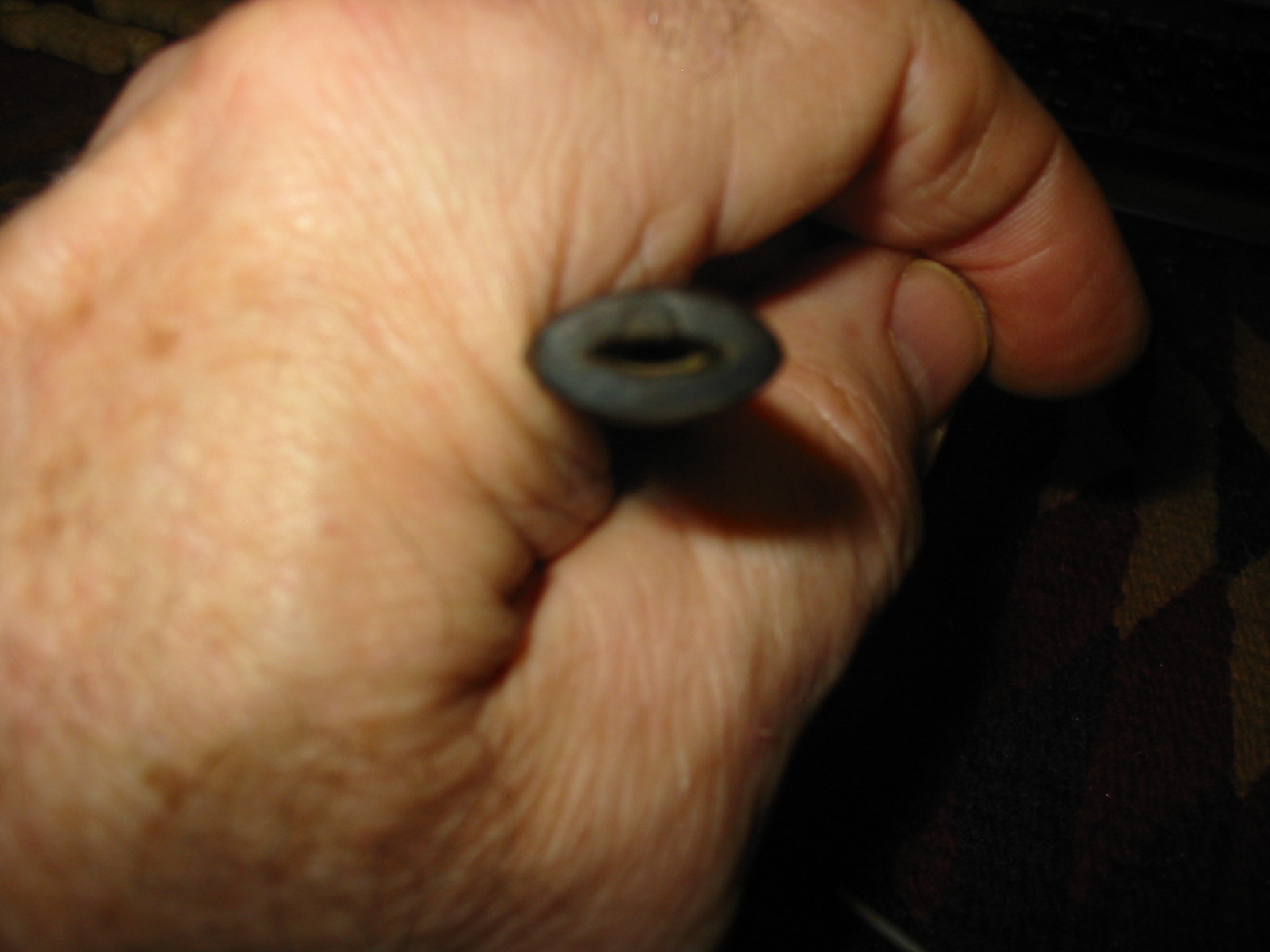
ImageImageImage

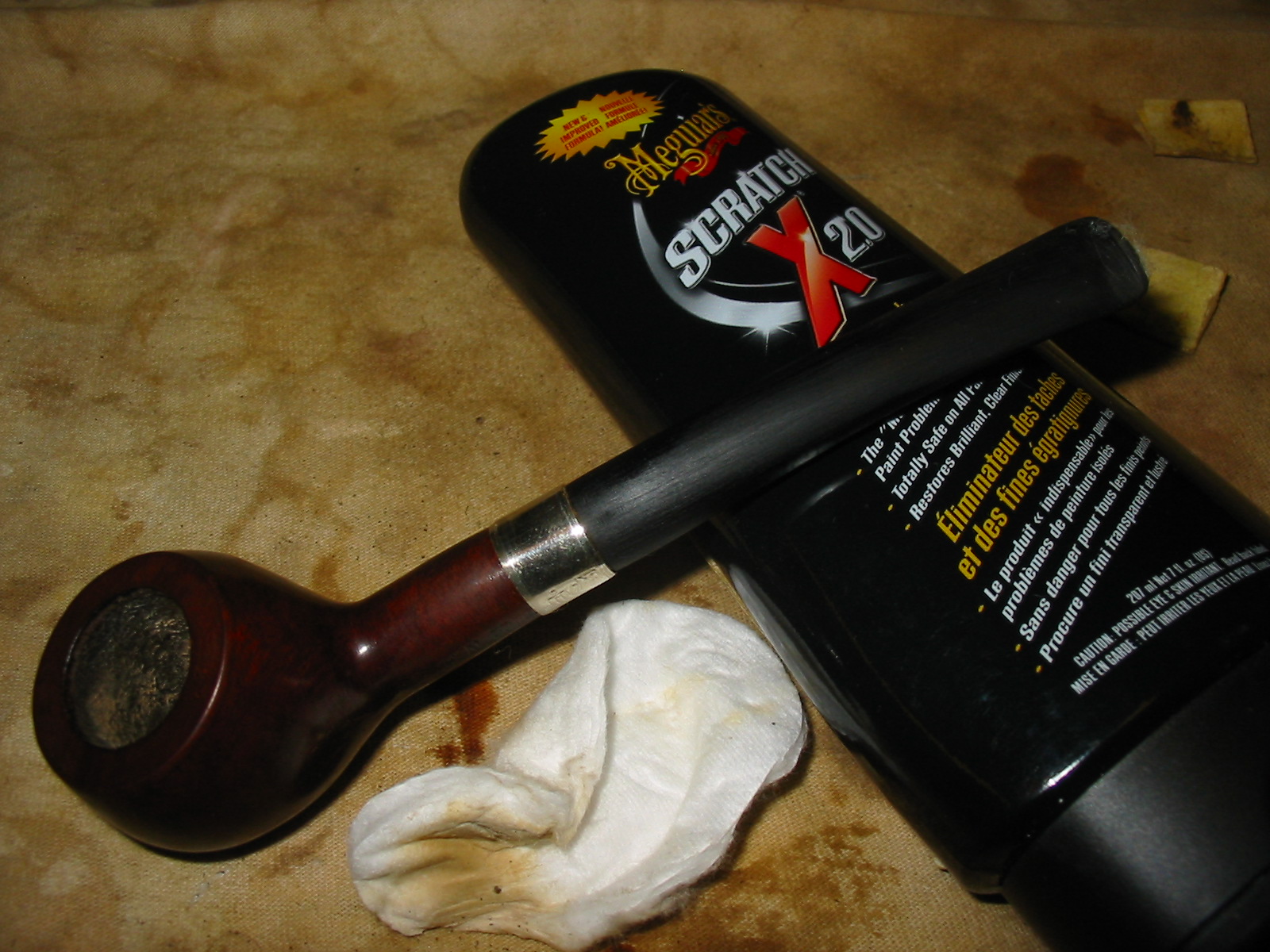
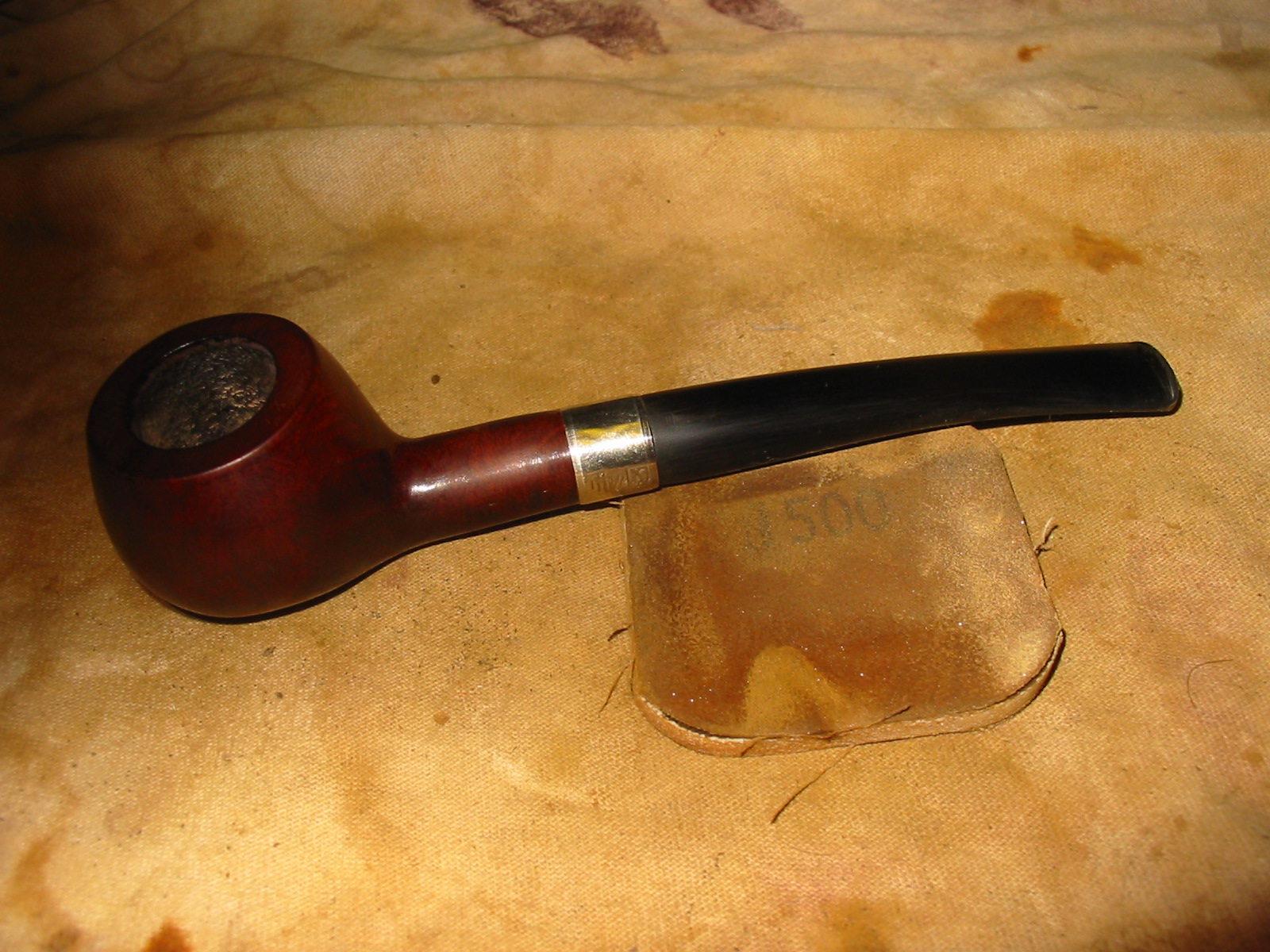
I then turned my attention to the stem itself. It needed a lot more sanding to clean it up and bring out a clean shine. The first photo below shows the polish that I gave it with the Maguiar’s Scratch X2.0. I rub this on with my fingers and then scrub it off with the cotton pad. The polish is white and when I rub it off it is the brown colour that stains the cotton pad in the picture below. Once I had finished with the polish I then sanded it with the micromesh sanding pads. I only took one photo (the second one below) to show the sanding process. I used 1500-12,000 grit micromesh sanding pads to remove the scratches and shine the stem.
ImageImage

I continued to work on the stem but removed it from the bowl and gave the bowl a cotton bole and alcohol treatment to remove the strong sour smell that came from the bowl. I stuffed the bowl with a cotton bole, put a pipe cleaner in the shank and used my ear syringe to fill the bowl with Everclear. I left it to sit on the ice cube tray while I went hunting at the flea market. It sat for about 4 hours before I removed the cotton bole and flamed the bowl to remove the remaining alcohol. The first photo shows the pipe when I first set it up. The second one is how it looked four hours later when I returned home and removed the cotton.
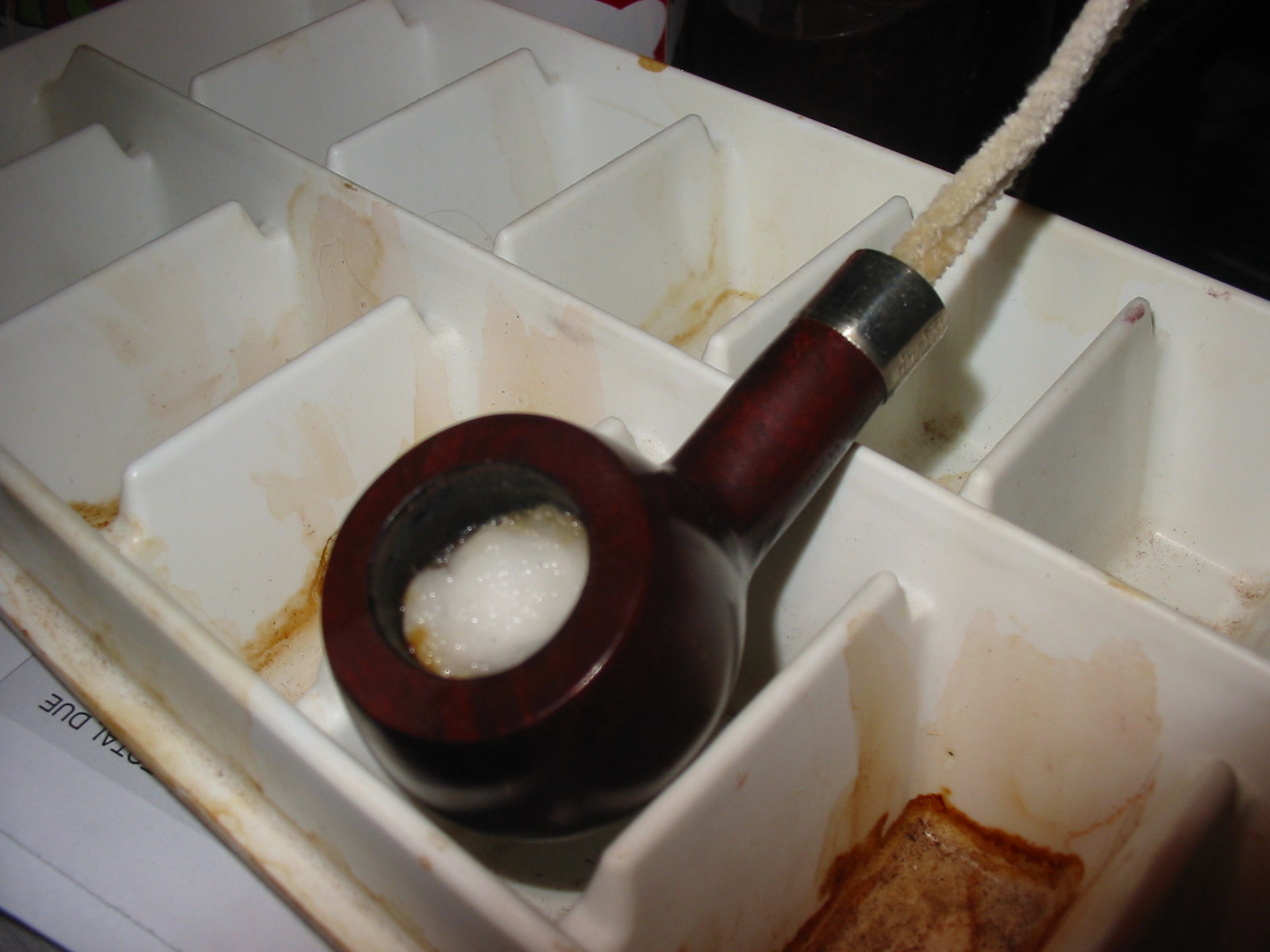
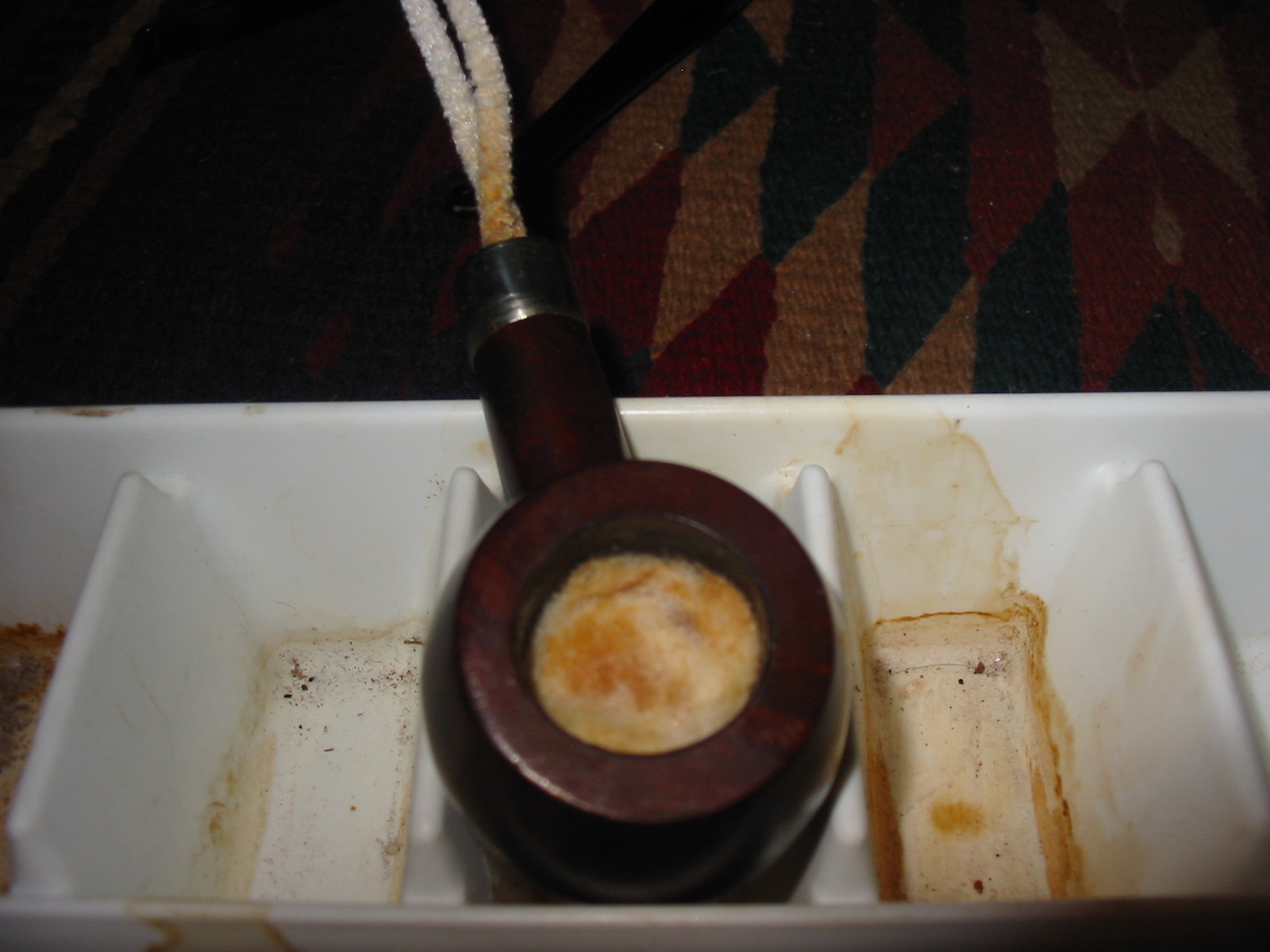
ImageImage

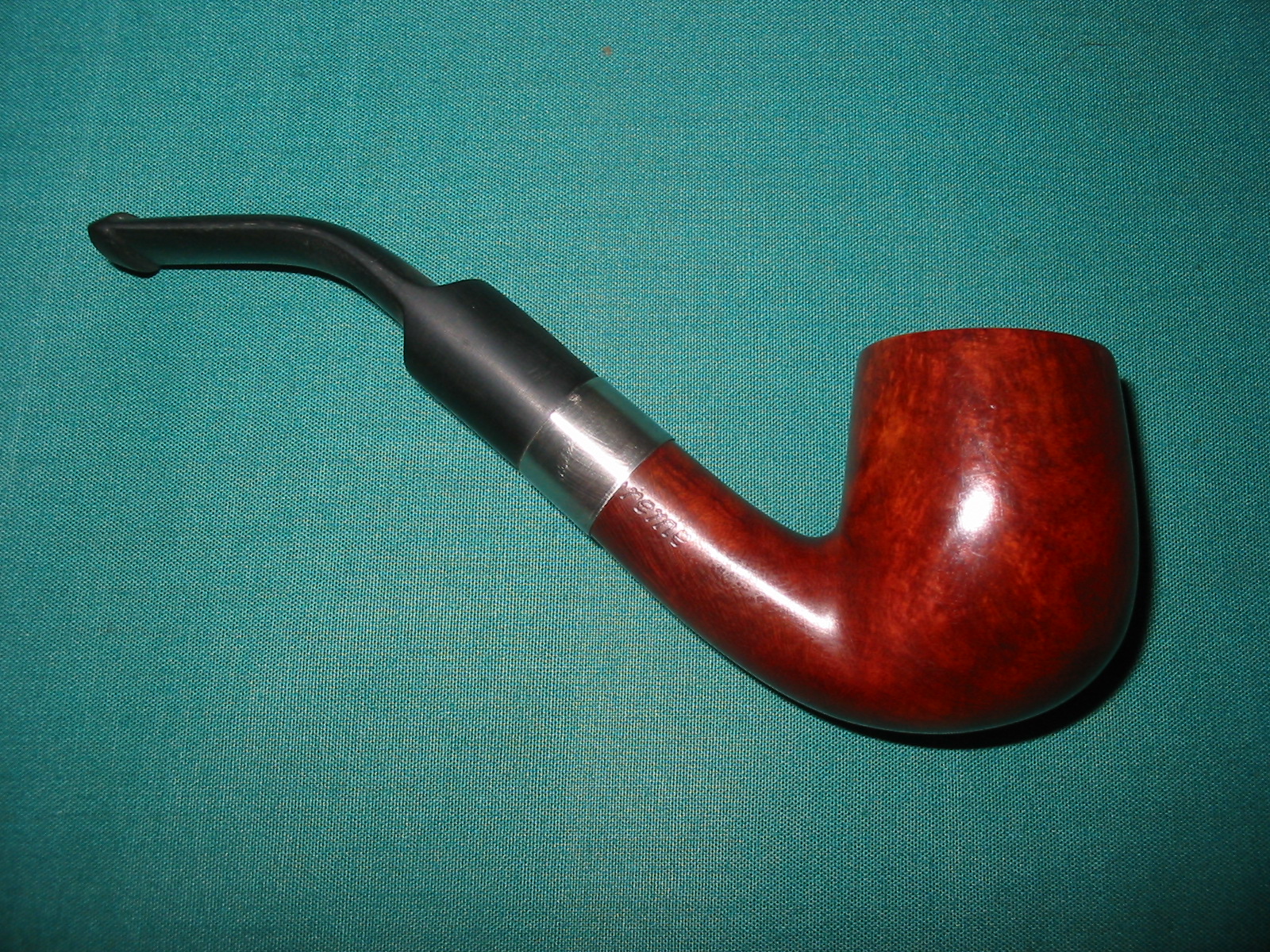
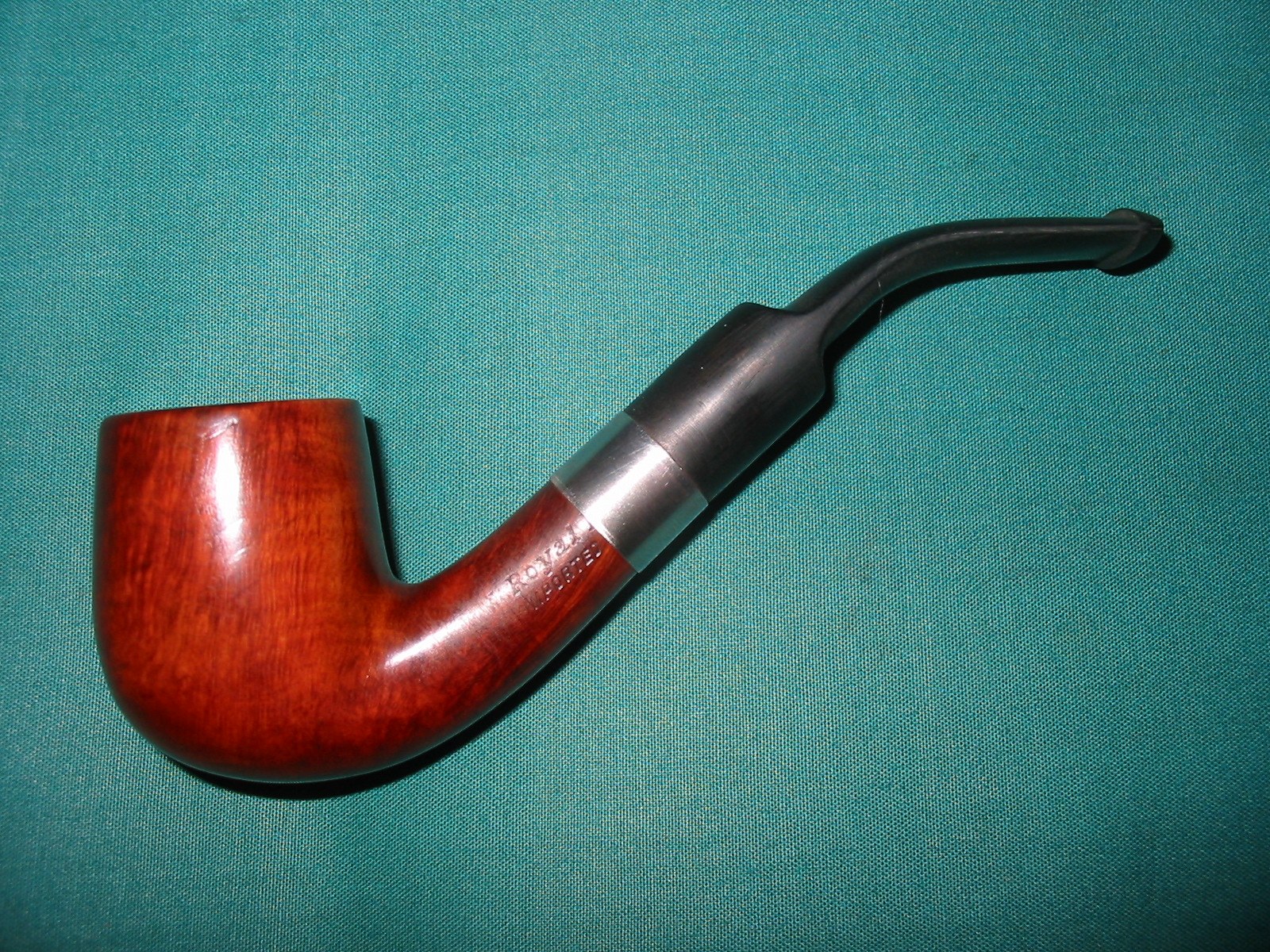
I cleaned the bowl and shank with pipe cleaners. I used my Kleen Reem drill bit to clean out the softened tars in the airway in the shank. The amount of gunk that came out is astonishing. I wiped it and ran the bit through several times to get the airway back to the briar. Then I used many pipe cleaners dipped in Everclear to finish cleaning the shank. Once I was finished I reinserted the finished stem on the bowl and gave it a coat of Obsidian Oil and then multiple coats of carnauba wax to give the pipe a finished shine. The next four photos show the finished pipe.
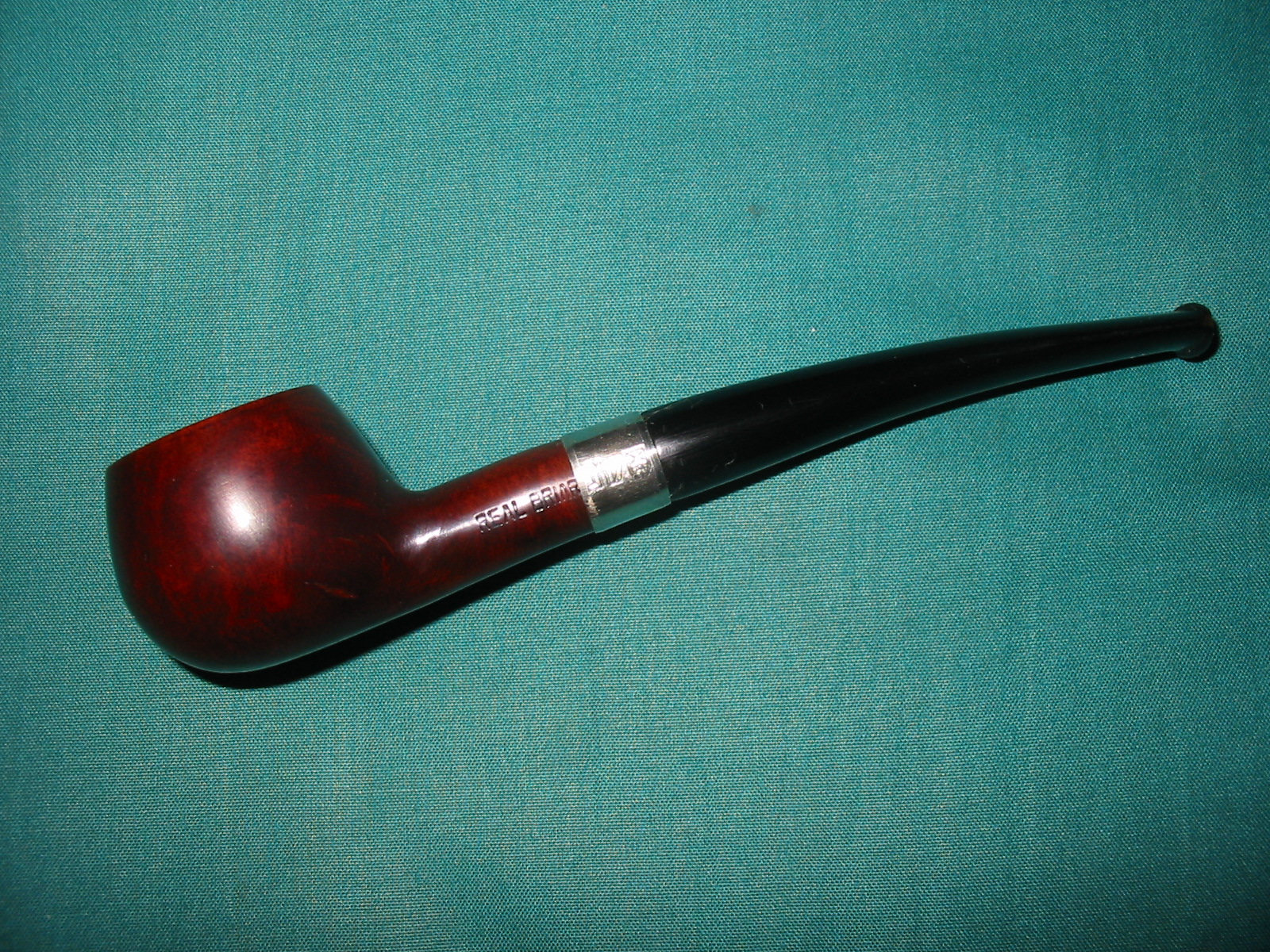
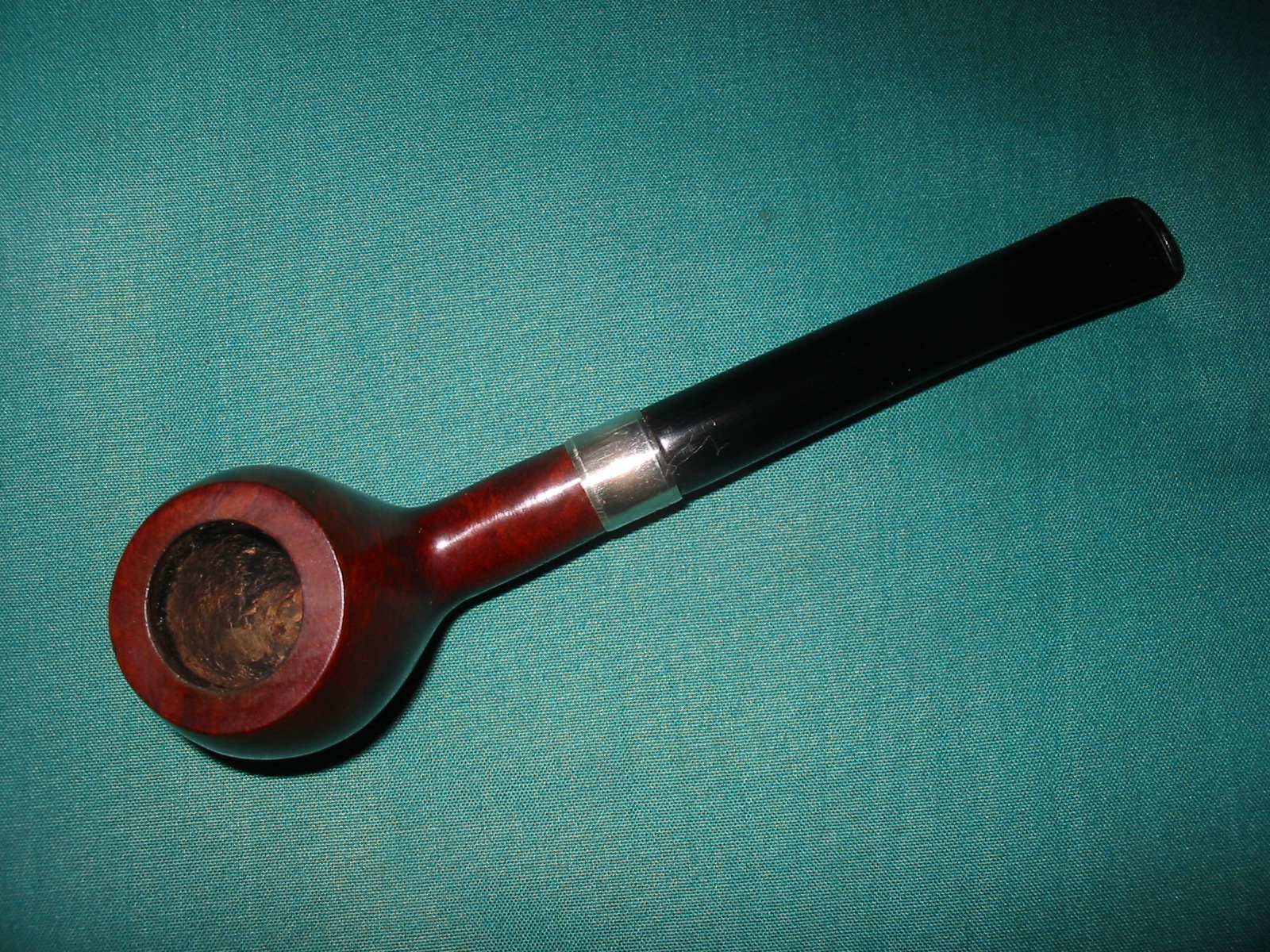
ImageImageImageImage

Refurbishing and Restemming an Irwin’s Canadian


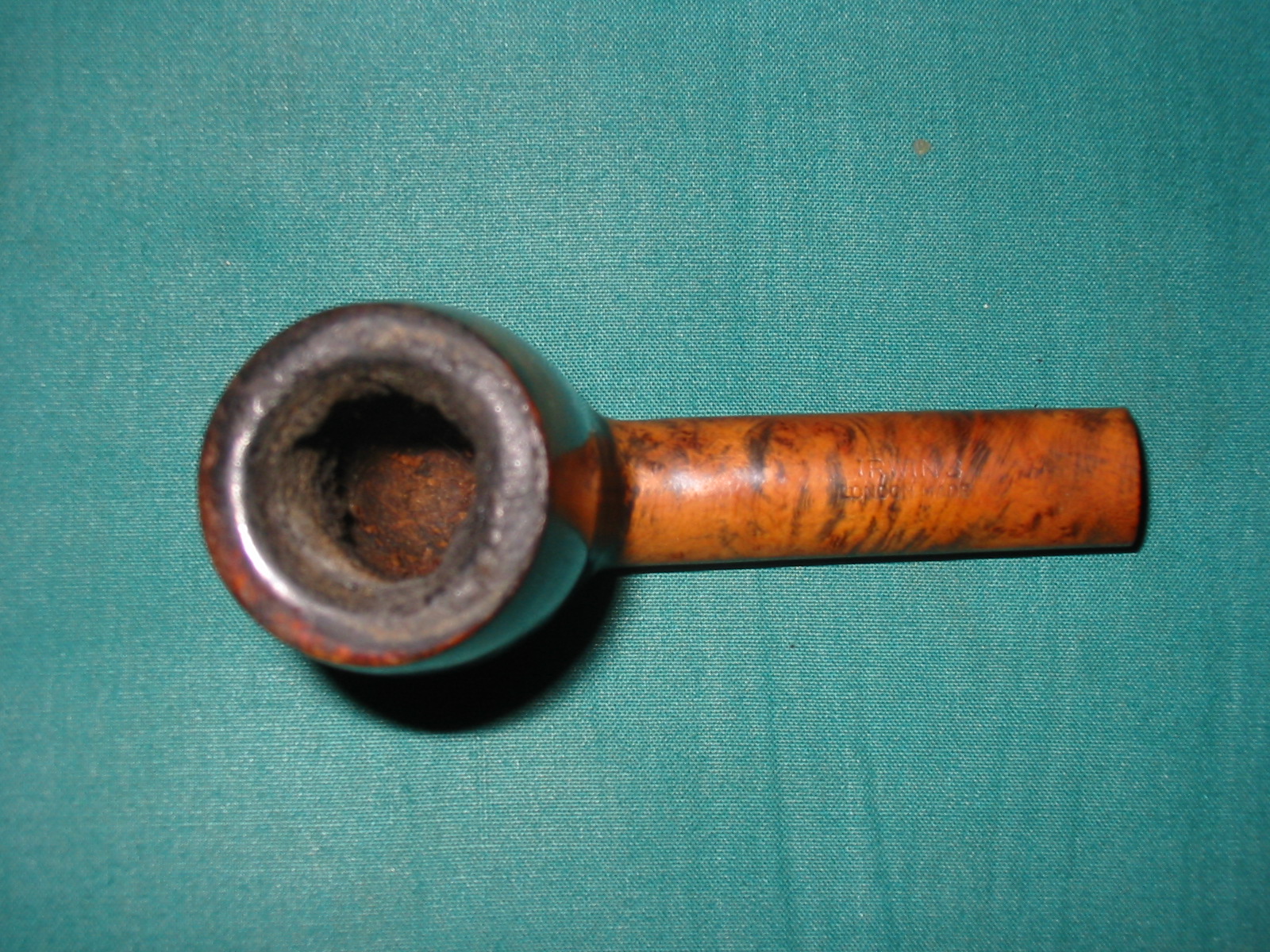
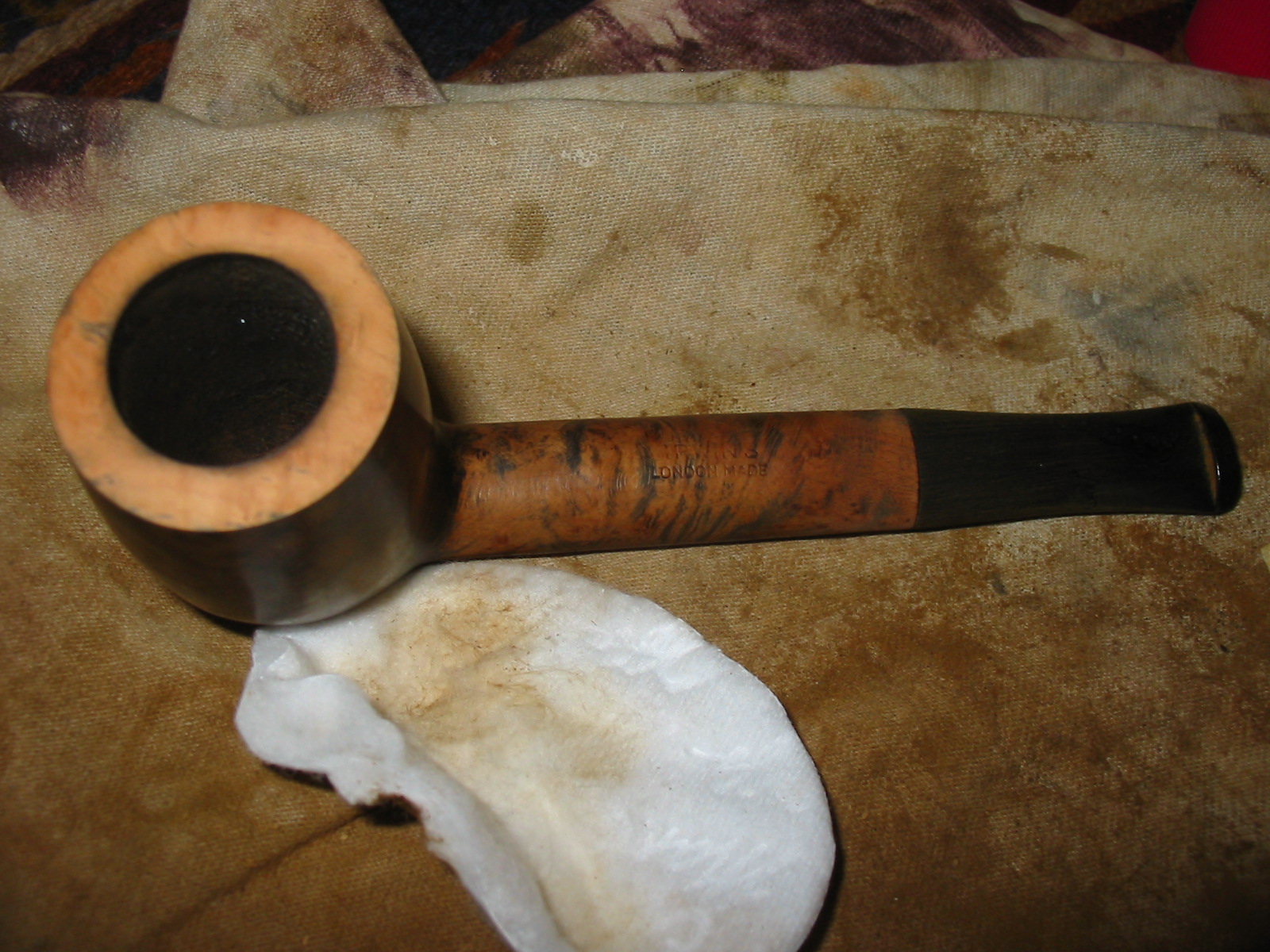
One of the six pipes I picked up in Washington was a Canadian bowl sans stem that is stamped IRWIN’S over London Made on the top of the shank and London England over 1451 on the underside of the shank. It had a tenon still stuck in the shank and the bowl top was rough from beating it out on an ashtray or something. Irwin’s is a GBD line (seconds??? Though this one has no fills or flaws to suggest that). The grain is quite nice and the contrast staining was also well done. It always makes me wonder what makes a pipe move from the first line to a second line. You can see from the series of photos below that the bowl was dirty on the sides and the top was damaged quite severely. There were no cracks in the shank or the bowl so that was a bonus. The bowl was unevenly caked and pretty dirty as well.

ImageImageImage

I reamed and cleaned the bowl and then used a screw to pull the broken tenon from the shank. Once I had that removed I cleaned out the shank with pipe cleaners and Everclear. Once the shank was clean I took a stem blank from my jar of stems and turned the tenon with the Pimo Tenon Turner until it was a close fit. Then I hand sanded the tenon until it was a good snug fit. I used the Dremel to take off the excess vulcanite and make a smooth transition between the stem and the shank. I then sanded the stem with medium grit Emery cloth to smooth out the surface of the scratches left behind by the Dremel sanding drum. From there I proceeded to use 220 grit sandpaper and also 340 grit sandpaper to further sand out the scratches. I wiped down the bowl with acetone to remove the dirt and grime and remnants of the top coat of stain. I wanted to prepare the surface for a new stain of diluted dark brown aniline. I also topped the bowl to remove the damage to the surface and clean up the edges of the bowl. The next two photos show the pipe with the stem fitting and the bowl cleaned and topped. It was ready for the staining once I sanded the rim top smooth with the micromesh sanding pads.

ImageImage

I diluted some dark brown aniline stain 3-1 with isopropyl alcohol and stained the bowl and rim. I flamed the stain and then restained it and flamed it again. I stained the rim two more times to darken the surface to match the bowl. I took it to the buffer and buffed the entirety with Tripoli and White Diamond. The four photos that follow show the pipe after staining. It was still too dark in my opinion to highlight the contrast of grains in the pipe so I took it back to my work table to deal with that.

ImageImageImageImage

I wiped the bowl down with acetone to remove some of the stain and lighten the overall look of the pipe. It had to be wiped down several times to get the look I was after. The next series of photos show the bowl after repeated washings. I used a cotton pad soaked with acetone and scrubbed the surface to get the desired look. Once it was done I again took it to the buffer and buffed it with White Diamond.

ImageImageImageImage

The stem still needed a lot of work to get it to the place of shiny newness. I continued to work on the stem with micromesh sanding pads – 1500-12,000 grit. The first three pads 1500-2400 I wet sanded the stem. The other 6 pads I dry sanded. After sanding with the pads through 4000 I used the Maguiar’s Scratch X 2.0 a second time and finished with the 6000, 8000 and 12000 grit sanding pads. I finished the polishing with a coat of Obsidian Oil and then buffed it with White Diamond a final time. I gave the entire pipe several coats of carnauba wax and buffed the pipe with a soft flannel buff. The next four photos show the finished pipe.
ImageImageImageImage


Redeeming a Disaster – A Repair with a Happy Ending


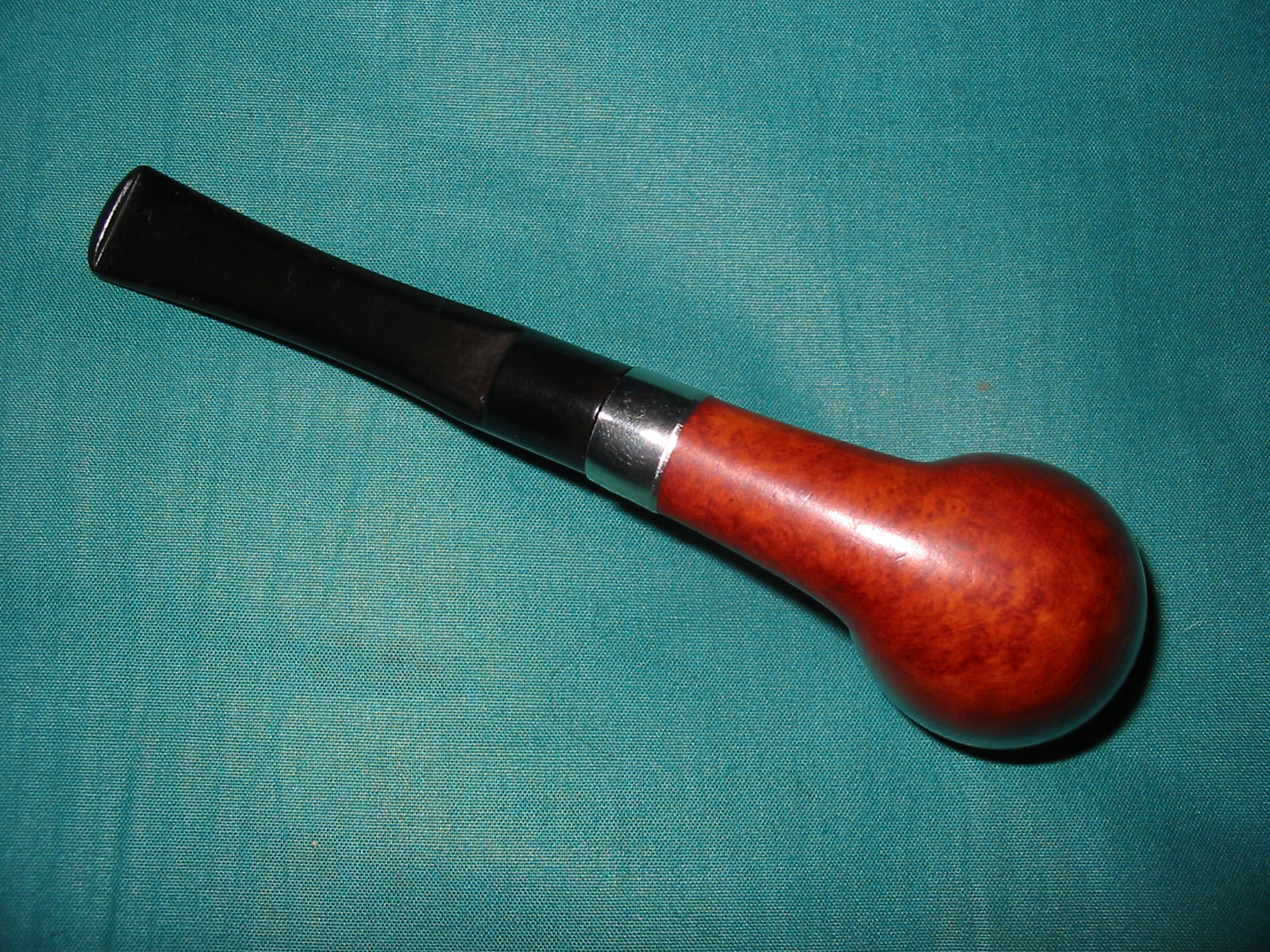
On Christmas Eve I decided to start working on a little acorn shaped pipe bowl that I have had here for quite awhile. It sat in my repair box in wait for the right moment for me to take it to the work table. It needed a stem and the shank was set up for a metal screw in tenon. I did not have any metal threaded tenons that fit the shank well or I could have made a stem for the pipe and inserted the threaded tenon. The time was right and I wanted to try something a bit different on this one. It did not matter if it worked or not really as it was truly a disposable pipe. With that freedom in mind I decided to fit the bowl with a push tenon stem. To make that work involved removing the metal insert from the shank. I reamed the bowl and cleaned out the shank to get it ready for removing the insert. I tried to twist if out as I figured that it was screwed into the shank. No such luck. It was tight and I could not remove it after using heat or putting it into the freezer to cause it to contract and loosen. I made a decision at that moment that did not end well – at least in the short term.

I set up my cordless drill with a bit that would open up the shank. My thinking was that if I could not removed the insert I would drill it open and smooth so that it would take a regular push tenon with no problem. I started with a drill bit virtually the same size as the airway and then planned on moving up to larger drill bits as the work progressed. The initial drilling worked well and the threads were smoothed out. So far so good! I was pretty excited to watch the airway smoothing out and opening up. Then I changed the drill bit for the next size up and drilled it a second time. I progressed slowly holding the bowl in my hand as I drilled the shank. I have done this before and did expect any problems. You know the thinking right – it worked well in the past so I could expect it to work the same this time around. So with full confidence I worked away. Then disaster struck. A few moments after starting to drill with the slightly larger bit the shank literally shattered in my hand. I was left holding four pieces of broken briar in my hand. The bottom half of the shank remained intact but the upper half was in three pieces. The metal insert remained unmovable in the bottom portion of the shank.

I was a bit stunned and almost binned the broken briar. What had at first appeared to be a good idea was reduced to something that I was ready to throw away and write off as a learning experience. However, I stopped and looked at the pieces for awhile. I thought about cutting the shank off and adding a shank extension to do one of Piet’s Hot Rods. I weighed the pros and cons of that and still was not certain whether I wanted to go to that trouble for this pipe. I took the pieces and puzzled them together to see what the damage looked like when it was put back together. I examined it closely and could see that the break was at least very clean and the surface was not chipped or damaged. I used a dental pick to remove the metal insert from the shank. I decided to get out the super glue and put the pieces back together for a look. With all the pieces in place the pipe looked okay. I sanded off the excess glue from the shank and used some acetone to clean off the stain that was on the shank and bowl. It looked like there was some promise. I decided to strengthen the bond with a nickel band. I heated a nickel band with my heat gun and carefully pressure fit the band on the shank. The repaired pipe was going to be workable.

ImageImageImageImage

I sanded the bowl and the shank and wiped it down repeatedly with acetone. The idea was to remove all of the remaining lacquer finish and even out the stain. I wanted to get the bowl back to bare wood as much as possible before restaining. Once I had it clean I sanded it again with a fine grit sponge backed sanding pad. I continued to sand it with the micromesh sanding pads from 1500-12,000 grit to prepare it for staining.

I had an old saddle stem that would fit the shank dimensions in my box of scavenged stems. I turned the tenon to fit the newly cleaned shank and did the initial sanding to remove the oxidation on the stem. I used the same sponge back sanding pad I used on the bowl as it allows good access to the saddle areas of the stem. The photos below show the newly fit stem. I have quite a bit more work to do on the stem and bowl to bring the pipe to a finished condition but the promise is definitely there. In the second and third top view photo below you can see the repaired shank. I am pretty confident that it will be pretty well hidden by the staining.

ImageImageImage

Before restaining the bowl I decided to work on the stem and get it polished and smooth. I used the 1500 and 1800 micromesh pads to do the sanding and polishing before using the Maguiar’s polishing compound. I have started to use it after the first two or three micromesh sanding grits. I rub it on by hand and then scrub it with a soft cotton pads before wiping it off. I repeat this polishing process with the compound two times before proceeding to working through the remaining micromesh grits. I sanded the stem with 2400 and 3200 grit and took it to the buffer and used Tripoli to buff away the scratches and the oxidation that remained at this point in the process. I also buffed the bowl with the Tripoli. Once back to the work table I used 3600 and 4000 grit before giving the stem a rub down with Obsidian Oil. The four pictures below show the pipe as it looks at this point. The bowl is ready to stain and the stem is getting close to the finished look. There is still some oxidation around the saddle area that will need some more work.

ImageImageImageImage

I decided to use an oxblood coloured aniline stain on the pipe to try to minimize the visibility of the repair to the shank. I used a cotton swab to apply the stain, flamed it and then buffed it off with a soft cotton cloth before taking it to the buffer and buffing it with White Diamond. After buffing I waxed it with several coats of carnauba wax to give it a shine.

ImageImageImageImageImage

I also finished the polish on the stem using White Diamond on the buffer before finishing with the remaining three grits of micromesh pads – 6000, 8000 and 12,000. I gave it a final buff with White Diamond and then rubbed it down with some Obsidian Oil. I finished the stem with several coats of carnauba wax. The four photos below show the finished pipe. The repair to the stem is visible if you look closely but the redemption of this broken pipe is complete and it is ready to smoke.

ImageImageImageImage

A New Stem and a New Look For a Larsen Special


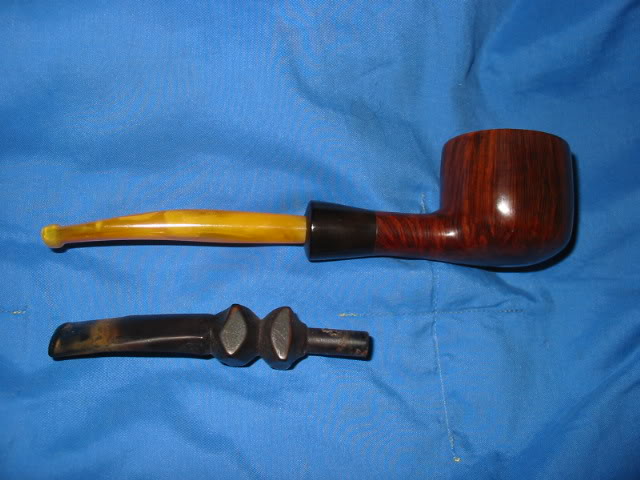
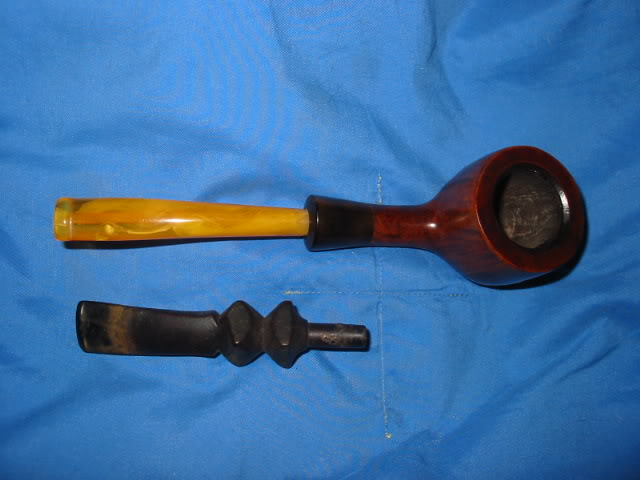
I got this Larsen Special in a lot I picked up for a very cheap price. The stem that was on it is in the bottom of each picture to give an idea of what it looked like. The shank extension is made of vulcanite and was very oxidized when it came to me. The stamping on the pipe is actually on the extension and it is faint. It is visible with a jeweler’s loupe and is stamped Larsen Special and Handmade in Denmark. The bowl was badly cake and the finish was almost flat with dark soiled spots of grime on the surface. The rim was covered with a lava overflow of tars and oils. I decided as soon as I saw it that the stem had to go. I had no idea what I was going to do with it but I knew it was history.

I cleaned the bowl with Murphy’s Oil Soap undiluted on a soft cotton cloth and cut through the grime and grit on the surface without damaging the finish at all. I used the same thing on the rim and was able to remove the lava. There was a bit of darkening that remained but no burn or charring. I used micromesh and Oxyclean on the vulcanite shank extension. I avoided sanding around the stamping as it is very light and I did not want to compromise it any more than it was. I was able to get the majority of the oxidation cleaned off the end and then coated it with some Obsidian Oil and let it sit for a while. Once it had dried I rubbed it with a soft cloth and then took the pipe bowl to the buffer and gave it a good buff with White Diamond, carefully avoiding the stamping. Then I coated the bowl and shank with carnauba wax and buffed with a soft cotton buffing pad. The grain on this pipe is absolutely beautiful. I really like the look of it. The bowl is quite large and it is clean and trouble free once it was reamed and cleaned.

I looked through my stem can and found this Lucite/amberoid stem that I thought would look perfect with the pipe. It is a military style bit so I sanded it enough to give it a snug fit and then used micromesh sanding pads 1500-12,000 grit to sand and polish the stem. I opened the slot and made it into an oval shaped flared opening in order to better disperse the smoke. The old stem is still in the box. I am not sure what I will do with it but it will not find a home with this old Larsen ever again.

Oh this one is a keeper by the way and is regularly in my rotation. It smokes English and Balkan tobaccos like it was made for them. I think I will go and fire up a bowl now.

ImageImageImage

A Classic Rework of A Royal Duke Supreme


Blog by Steve Laug

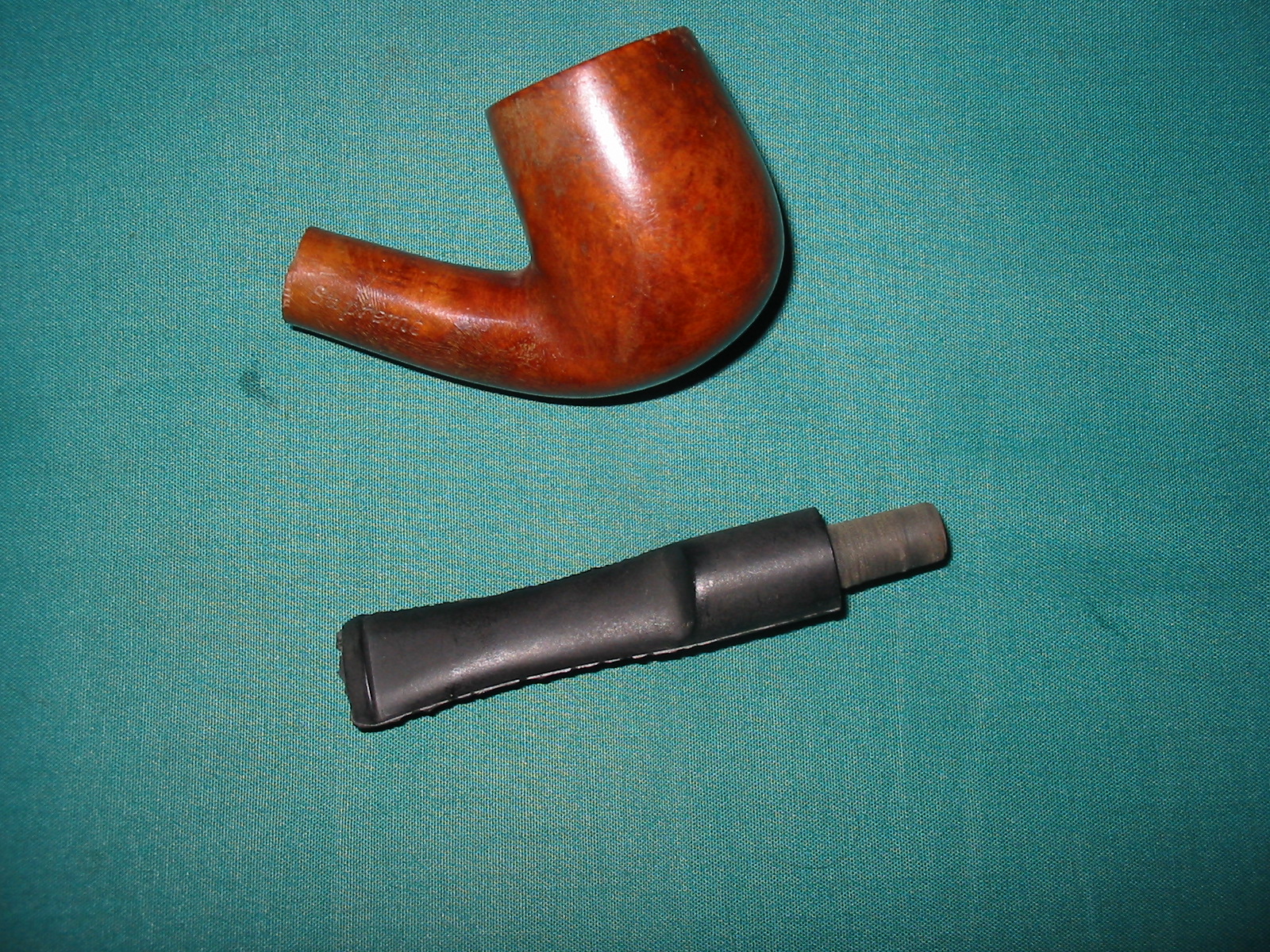
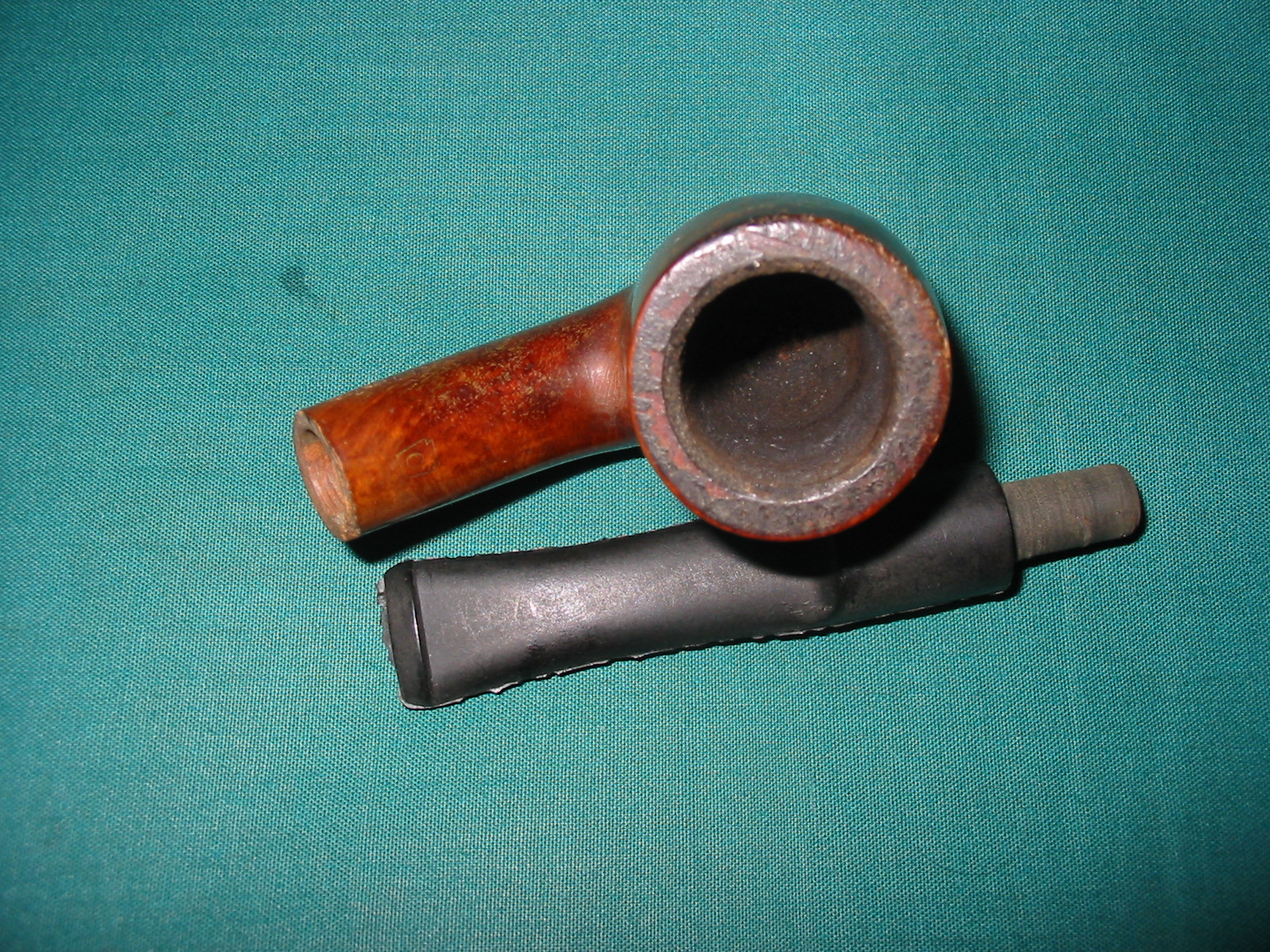
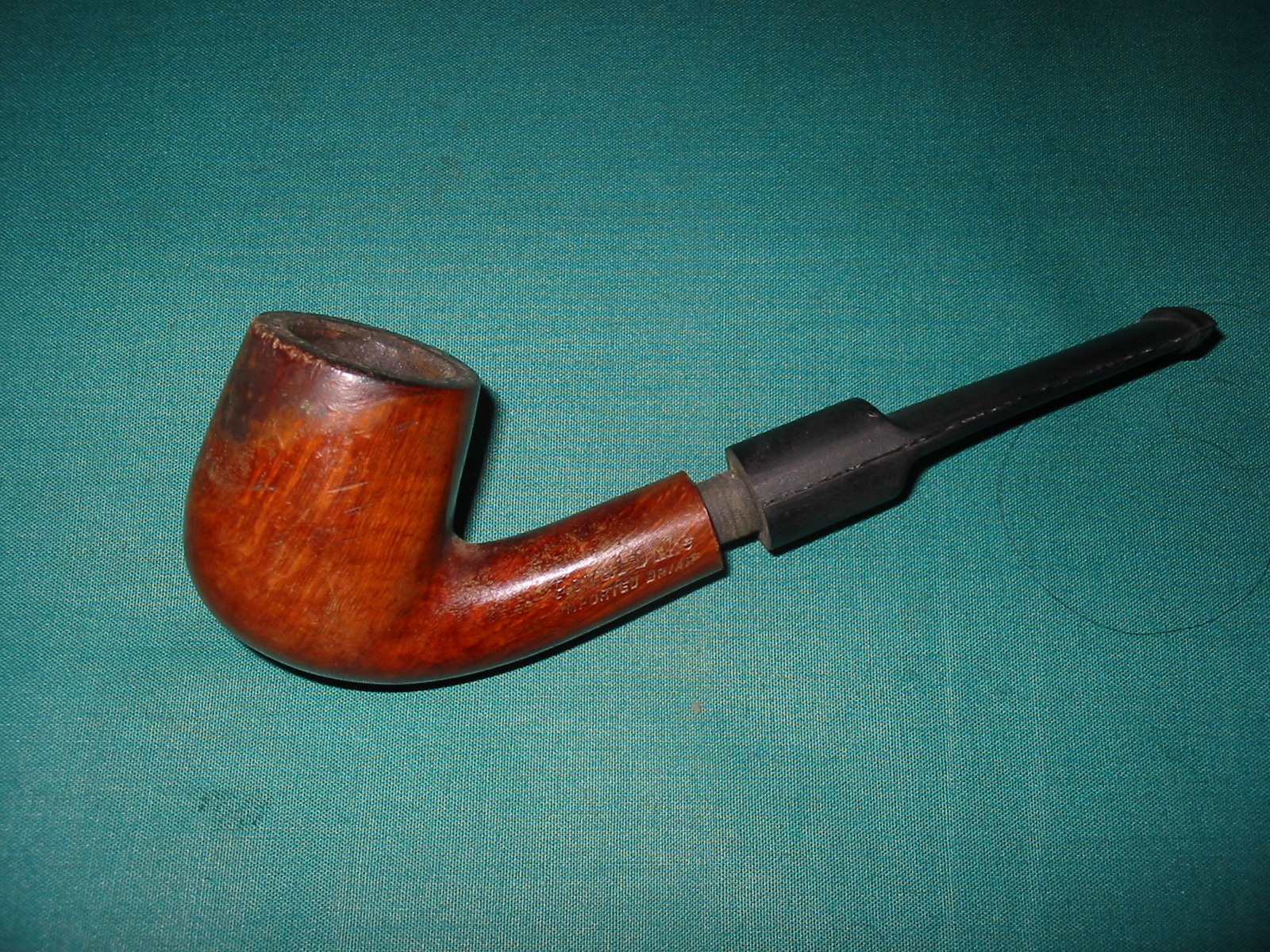
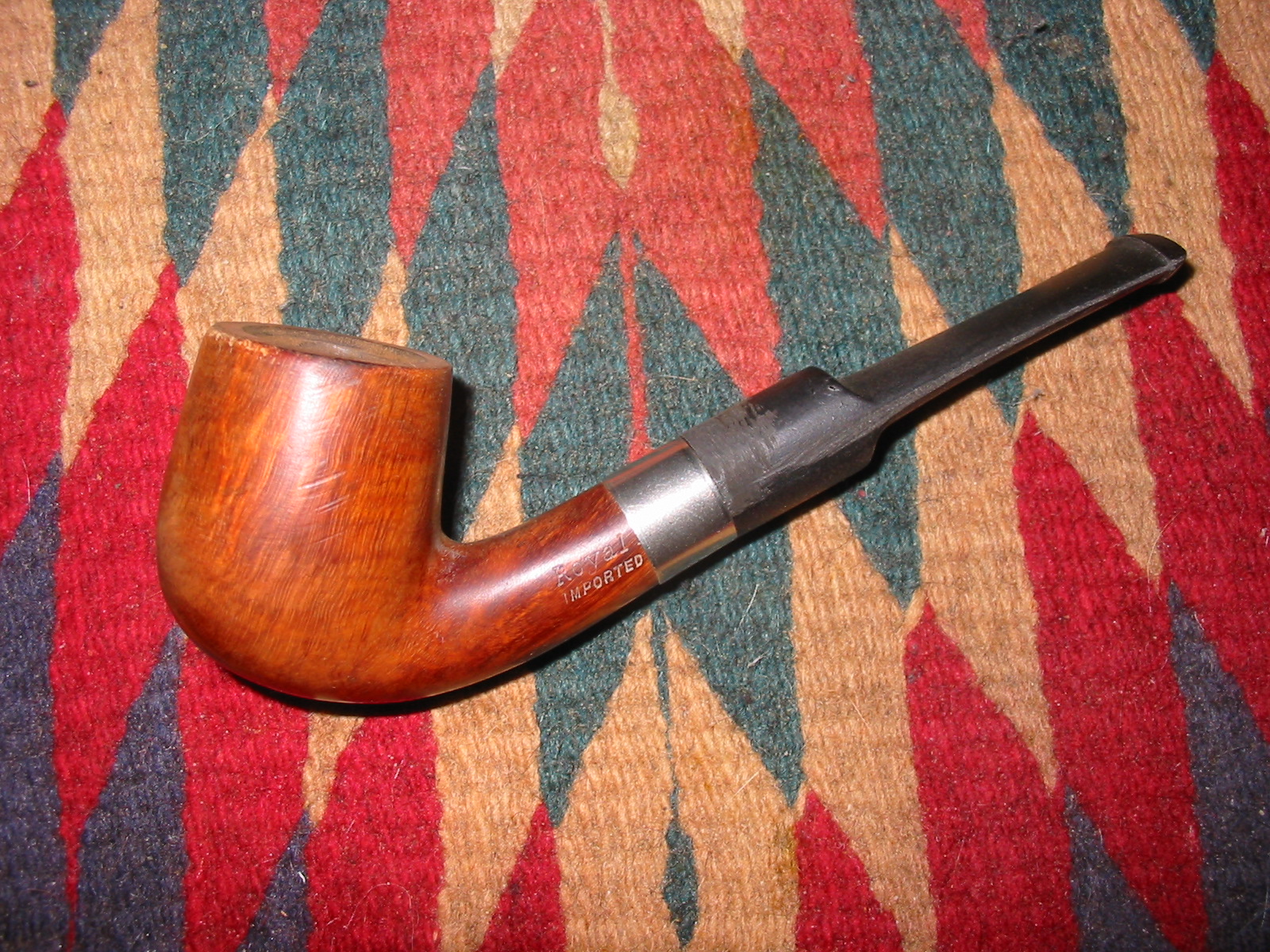
I had this old Royal Duke bowl in my box. It had some promise to my eye but it needed some work. The first thing I did was drill out the metal mortise that took a threaded tenon. I did not have any stems that fit it anyway and I wanted to try something new. The issue that remained once it was gone was the fact that the mortise rough inside and the end of the shank was not square so that there was no way to get a new stem to fit it seamlessly. The finish was very rough as can be seen in the photos below. The varnish on the outside of the bowl had bubbled and blistered. The front edge of the bowl was actually darkened as the varnish seemed to have burned or at least coloured. There were dents in the bowl and the rim was rough. I turned a precast stem with my tenon turner and got it close. I had to custom fit it as the shank was a little tapered toward the end.

ImageImageImage

The stem fit fairly well but would take a bit of customizing to get a good tight fit to the shank. It would also need a good cleanup to trim off the castings on the stem. The vulcanite was fairly decent quality as I have had it a long time but it showed no oxidation.

Image

I decided to work on the bowl first to clean up the remaining finish and remove the varnish from the bowl. I also wanted to see if I could remove the darkening around the front and back of the bowl. I washed the bowl with acetone on a cotton pad and cleaned off the finish. It took repeated washing to break through the varnish coat and also the burned and bubble finish. The next two photos show the pads after the wash. You can begin to see the grain coming out on this beauty. That is what drew me to the pipe in the first place and I was glad to see that it was truly there.

Image

I repeated the washing until the pipe was clean and had no remaining finish coat. The dark undercoat of stain still remained and light brown topcoat also was still present. This is clearly seen in the photos below. I worked on the fit of the stem and tapered the tenon enough to get a good snug fit to the bowl. I also used my Dremel to remove excess vulcanite from the top and the sides of the stem so that it lined up smoothly with the shank of the pipe. It was at that point I decided to pressure fit a nickel band to the shank to square things up a bit. There was no way that the stem and the shank would meet squarely as the shank was a bit angled and dented from the metal inserted mortise. The previous mortise had been threaded in and it had a thin band or flat top on it that sat against the briar. It was also patched a bit with putty to make the flow from the shank to the insert smooth. I fit the nickel band with heat and pressed it into place. I liked the finished look of the band and it gave me a straight edge to work with on the new stem. I again used the Dremel with a sanding drum to shave off more of the vulcanite and make the stem fit against the band inside edge. The next two pictures below show the stem after the fit and the shaving with the Dremel. You can see the rough surface on the saddle and the cleaned up edges of the cast stem and the button.

ImageImage

I then sanded the bowl and the stem with 240 grit sandpaper to remove the scratches in the briar and also on the vulcanite stem. It took quite a bit of sanding to smooth out the saddle of the stem. The next five photos show the progress of the sanding on the stem. I also sanded the bowl to remove the remaining finish and scratches. I topped the bowl and smooth out the inner and outer rim to remove the damages to them both. I also used my heat gun to put the bend in the stem. I have a curbed dowel here that I put the heated stem on to ensure that the bend is straight and that I do not crimp or bend the stem unevenly.

ImageImageImageImageImage

Once the sanding was at this point I wiped the bowl down with Isopropyl alcohol. I find that it removes any sanding dust and also the wet look shows me places where I still need to sand the bowl and stem. Once that was done I sanded the bowl again with 400 and 600 grit wet dry sand paper and water. I progressed through micromesh sanding pads 1500-12,000 grit – the first four pads with water and the remaining ones dry sanding. Once it was completed and smooth I wiped it down a final time before staining it.

ImageImage

While I was sanding the pipe and working on the stem I tried to visualize what stain I wanted to use on this pipe. At this point remember I was not trying to restore the original Royal Duke colouration. I was working a new pipe out of this piece of briar even though I left the stamping. I decided to go with an oxblood aniline stain. I applied it with a cotton swab, flamed it and then took it to my buffer and buffed it with White Diamond.

ImageImage

The next three photos show the pipe after the buffing with White Diamond. I had not applied any wax at this point nor was I finished working on the stem. The colour came out better than I imagined. The dark under notes of the grain come through nicely in the finished pipe. The light areas have a reddish brown hue that is a bit lighter as the pipe has been waxed and buffed.

ImageImageImage

Once the pipe was stained I coated the bowl with multiple coats of carnauba wax to protect the new stain while I worked on the band and the stem. The nickel bands shine up really well with the higher grit micromesh sanding pads. I sanded the band with the 6000-12,000 grit pads and then polished it with some wax as well. I moved on to the stem. I sanded it some more with 240 grit sandpaper to remove some more of the scratches in the saddle area left by the Dremel. I then sanded it again with the 400 and 600 grit wet dry and water to smooth out the lesser scratches left behind by the 240 grit sandpaper. I went on to use 1500-3200 wet micromesh sanding pads to polish up the stem some more. These early grits of micromesh leave behind a matte finish as they sand out the scratches. It takes the grits above 4000 to really see the depth and polish that is there when finished. Once I used the lower grits I then polished the stem using Maguiar’s Scratch X2.0 polish and rubbed it on with a cotton pad and polished it off. I buffed the stem with White Diamond following this to see what I needed to work on.

I took the stem back to my work table and used the higher grits of micromesh. I started with 3600 and worked through 4000, 6000, 8000 and 12,000. Once I finished I buffed it again with the White Diamond and then coated the stem with Obsidian Oil and let it sit while the oil soaked the stem. I hand buffed the oil with a soft cotton cloth and then polished it with some carnauba wax paste and then buffed the entire pipe with several coats of carnauba. I buffed it with a clean cotton buff between coats of wax. The final photos are of the pipe as it stands now.

ImageImageImageImage

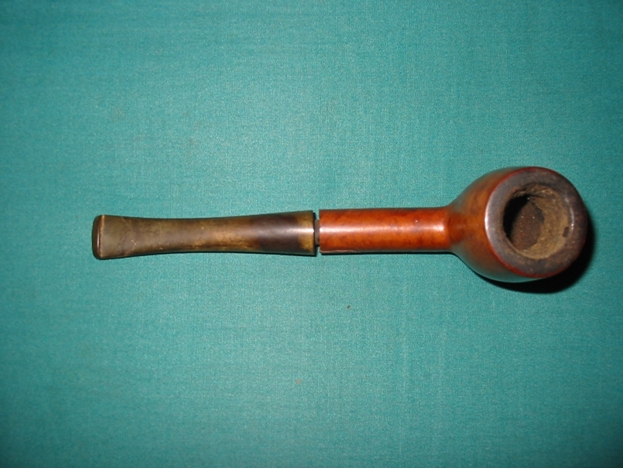
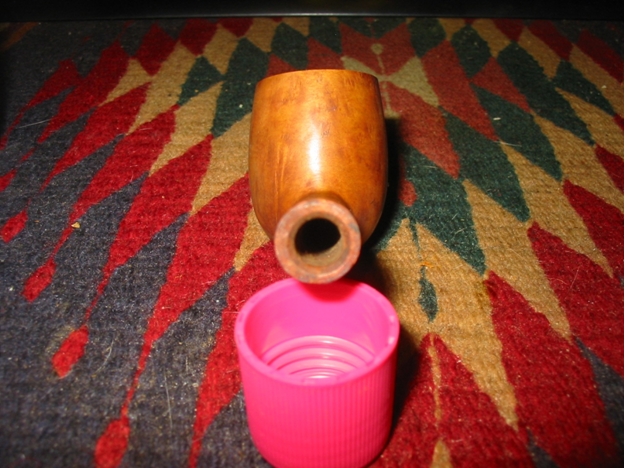
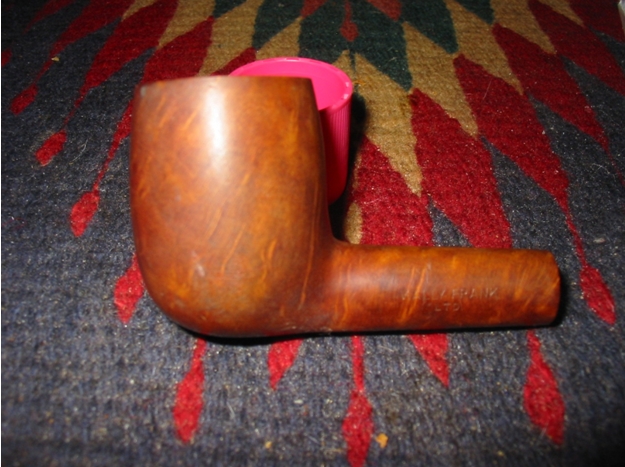
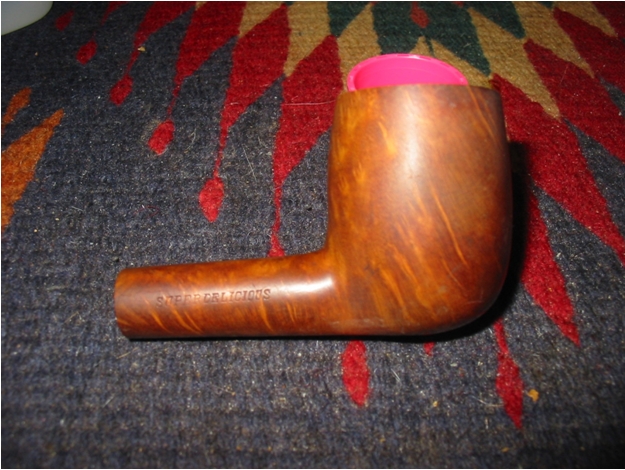
New Life for a Wally Frank Super Delicious Billiard


Blog by Steve Laug

I have become familiar with many of the Wally Frank lines of pipes but this was one I had not heard of before. It almost sounds like something to eat rather than smoke. It is stamped Wally Frank Ltd on the left side of the shank and on the right Super Delicious – interesting stamping indeed. The pipe was one of the bowls that I had in my box needing to be restemmed. It also had a cracked shank that was present before I matched a stem to it. Often a shank will crack like this if a tenon that is oversized is forced into the shank. That obviously had happened to this old pipe sometime in its life. I found a stem that fit the shank and inserted it enough to show the crack in the shank for the first photo below. The crack approximately ½ inch long and was in a portion of the shank where it was thinner than the other side. One of the challenges in restemming these older pipes is the fact that the shank is very often out of round and the stem has to be shaped to match it accordingly. The bowl has some nice grain on it and was well worth restoring. The remaining three photos in the first group of four show the grain and shape of the pipe. Note that rim was not only darkened but was worn on the front edge of the outer rim.
super1

super4

super3

super2
I reamed out the bowl and removed the cake that was present only in the top half of the bowl. It seemed that the lower portion of the bowl was not even broken in. The top of the bowl needed to be topped to even out the flat top of the bowl. The way the angle was after the tars and grime were removed was d a slight slant toward the front of the bowl and the front edge was rounded from tapping out the bowl repeatedly on a hard surface. I used the board and sandpaper to top the bowl and even out the top. I also made certain that the bowl was held against the board to even out the angle and make the top smooth and flat. The first photo below shows how out of round the shank is in proportion to the mortise. Notice the difference in thickness all around the shank diameter. The crack in the shank is at about 3 o’clock on the shank. The next two photos show the bowl after it has been topped and is even with no slant toward the back or front of the bowl.
super5

super7

super6
After I had topped the bowl and evened things out I wiped the entirety of the bowl down with acetone on a soft cotton pad to remove the grime and the remaining finish on the bowl. It came off almost black when I was finished cleaning it. I then needed to band the crack shank. I opened it with the stem and then dripped a bit of superglue in the crack before pressure fitting the band in place. The first photo below shows the shape of the shank and makes the thin area very clear. This would require quite a bit of shaping to make the stem fit the shank correctly. The next two photos show the banded stem and how it fits on the shank. I kind of like the look of the band against the natural colour of the briar.
super8

super10

super9
The next two photos below show the stem shape after I had removed much of the material at the top left corner of the picture. The stem is round at this point but the tenon is no longer in the center of the stem. It is proportionately toward the top left of the picture and on the top bottom when it is in place in the shank.
super11

super12
At this point in the process I restained the bowl with a dark brown aniline stain that I thinned with isopropyl alcohol so that it would match the colour of the bowl. My goal was to match the rim that I had topped and was raw briar to the natural patina of the bowl and shank. I mixed the stain until it was the colour I was aiming for and then stained the entire bowl with multiple applications of the stain to the rim. I flamed the stain and reapplied it to the rim, flamed it again and then took the pipe to the buffer. I buffed the bowl and stem with Tripoli and White Diamond. Once I was done with that I buffed the bowl and shank with multiple coats of carnauba wax to bring depth to the shine and also to blend the rim and bowl together.

I then worked on the oxidation of the stem. I had shaped it to fit the shank with my Dremel and when it fit well I sanded the stem from front to button with 280 grit sandpaper and then 400 and 600 grit wet dry sandpaper to remove the oxidation and scratch marks from the Dremel. Once it was smooth I progressed through the micromesh sanding pads from 1500-12,000 grit. In between 4000 and 6000 grits I polished the stem with Maguiar’s Scratch X 2.0 and then finished sanding with the micromesh. I finished the stem with a coat of Obsidian Oil and then multiple coats of carnauba wax to give it shine. The next series of four photos show the finished pipe. It is shined and ready to smoke.
super13

super14

super15

super16

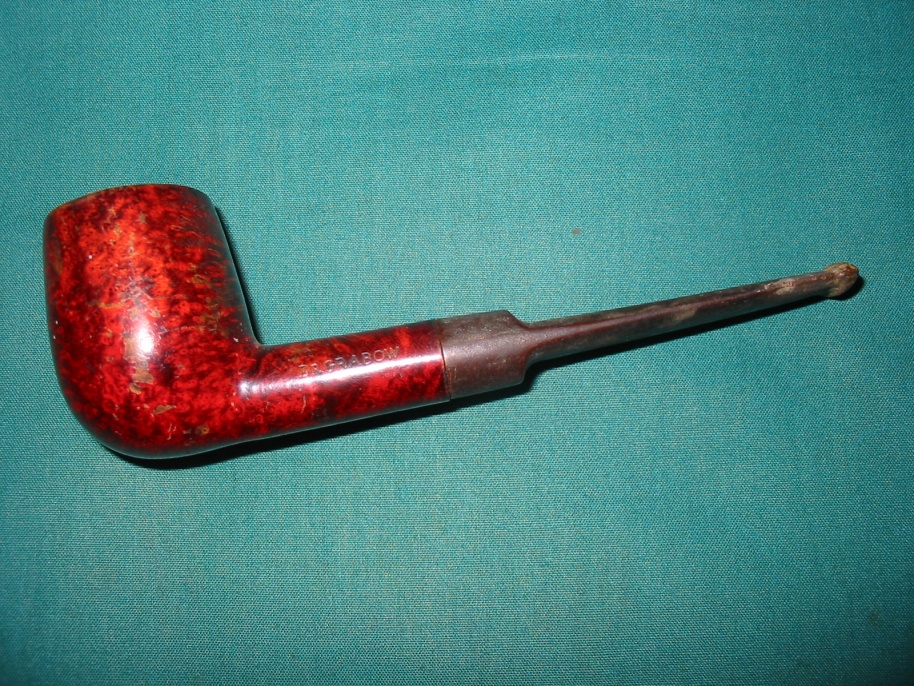
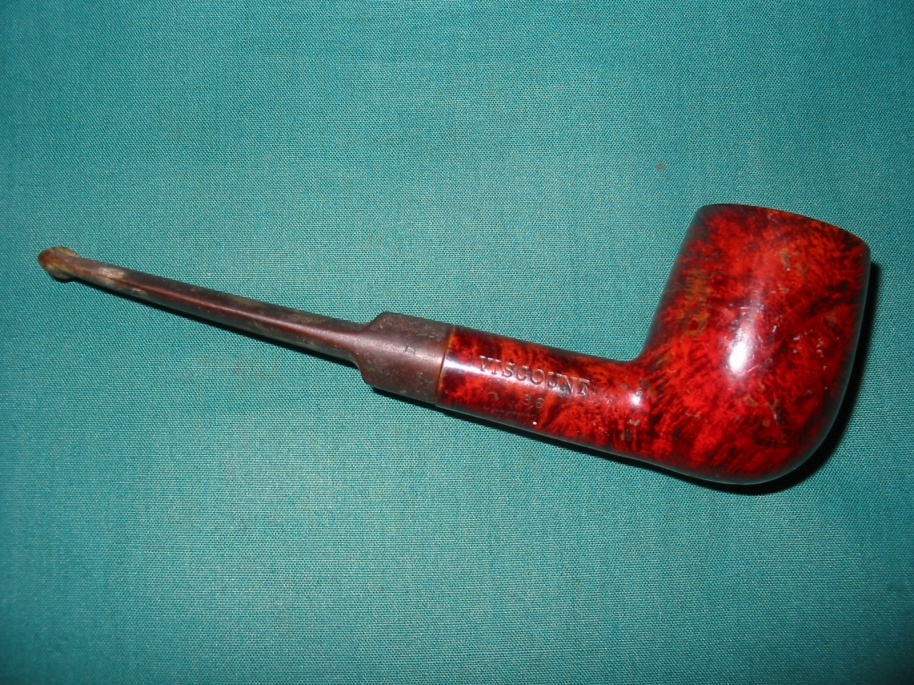
Reworking a Dr. Grabow Viscount


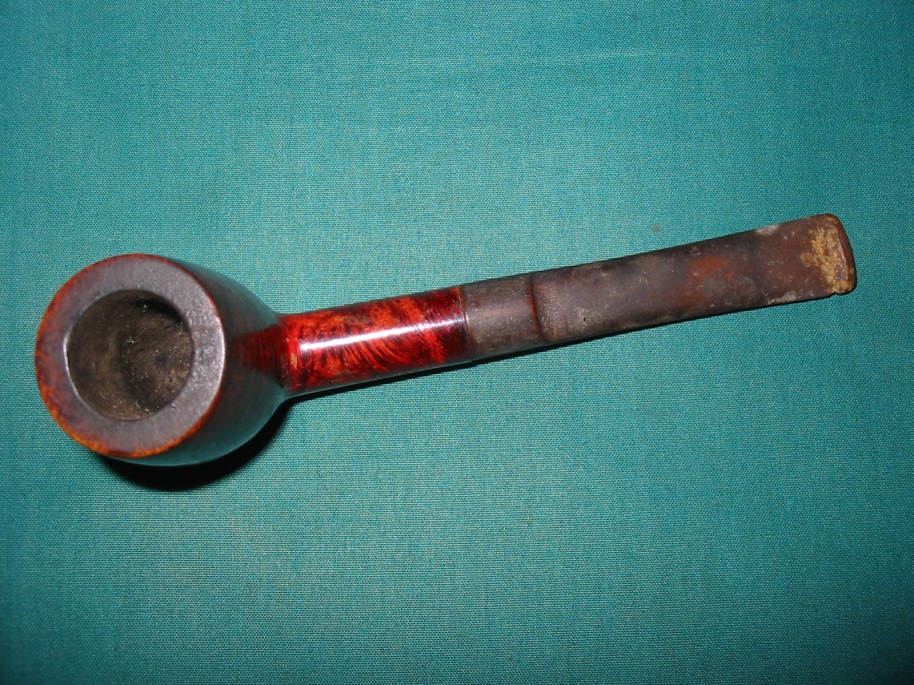
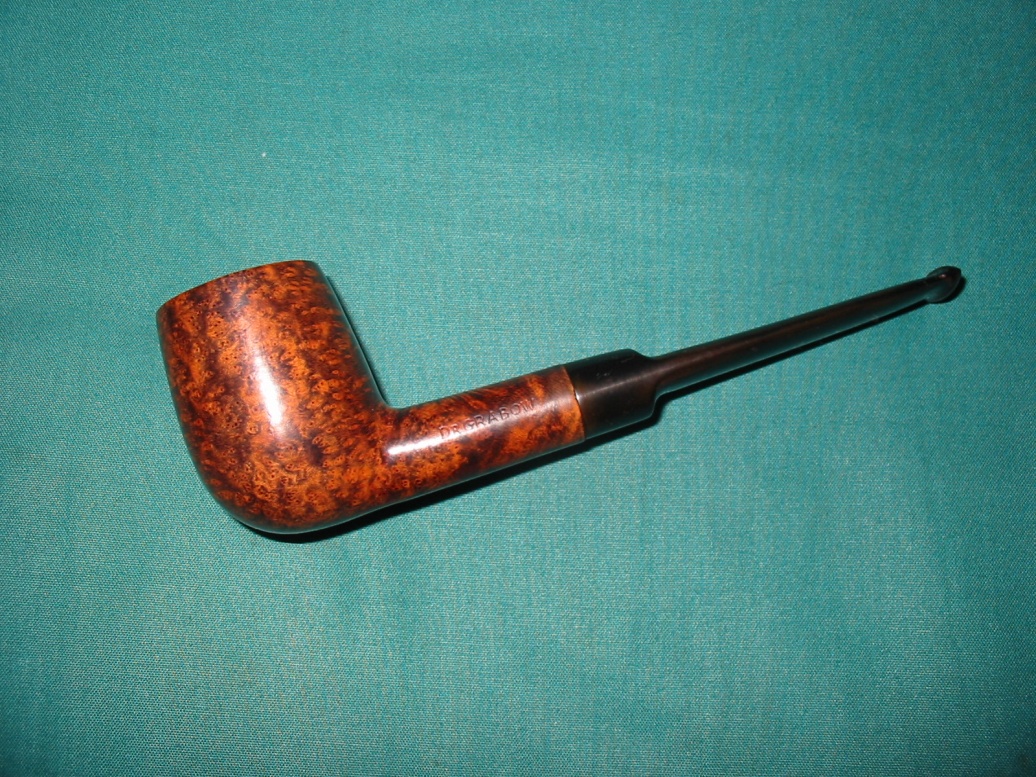
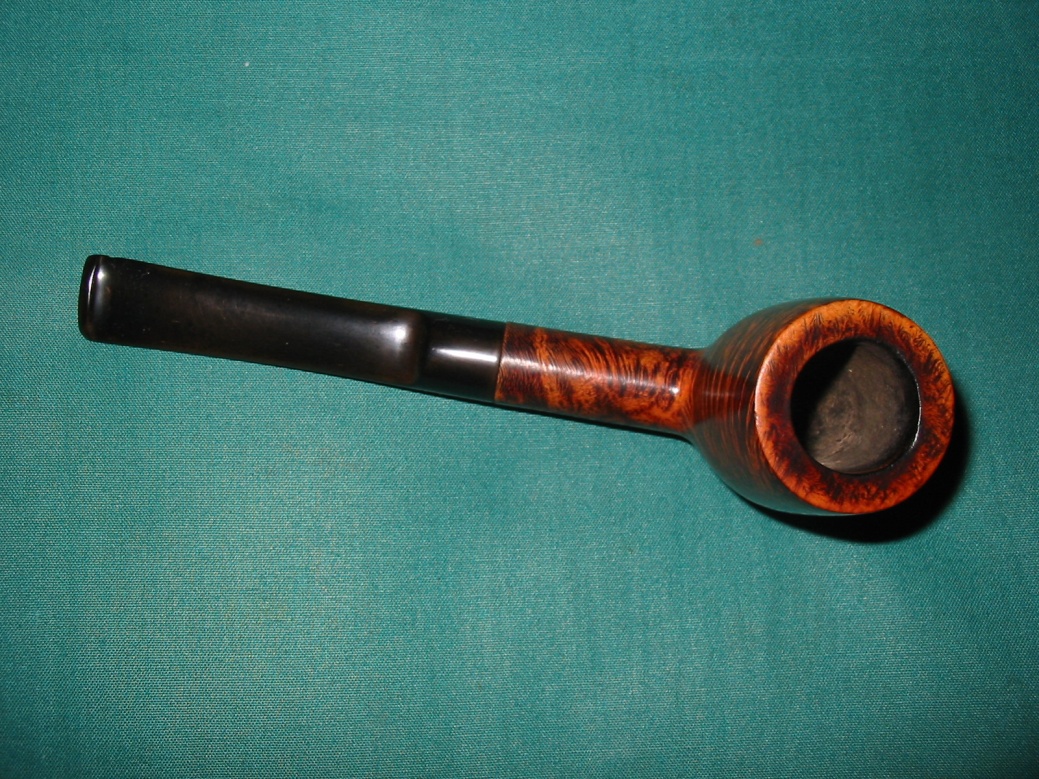
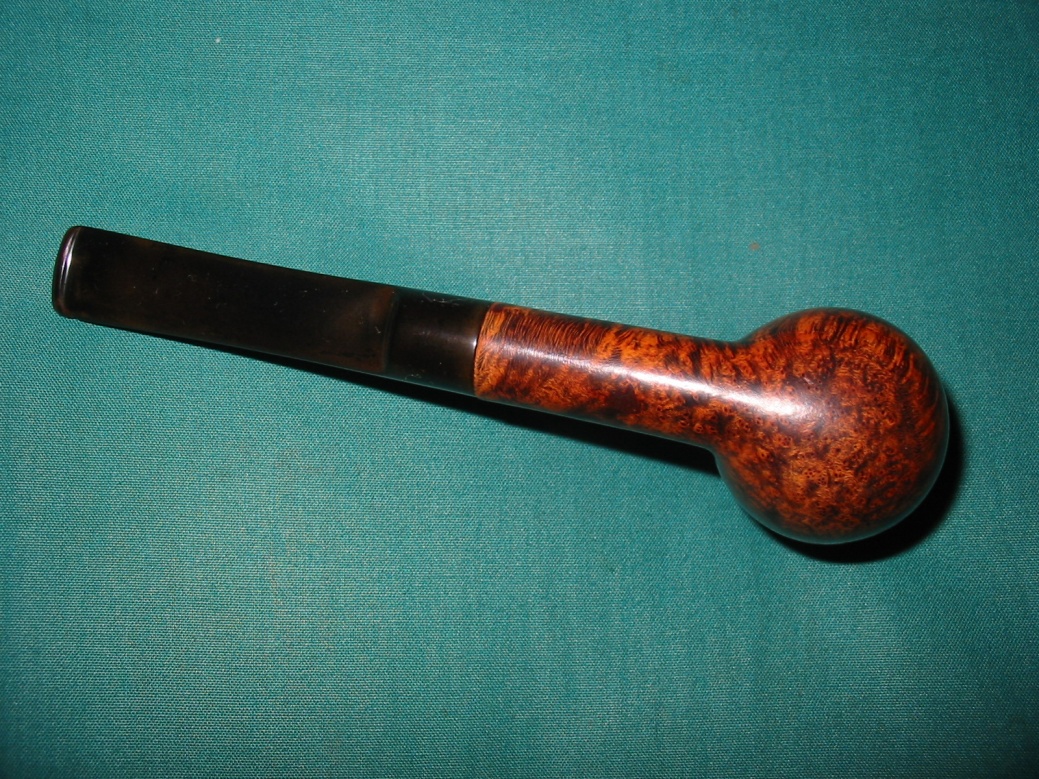
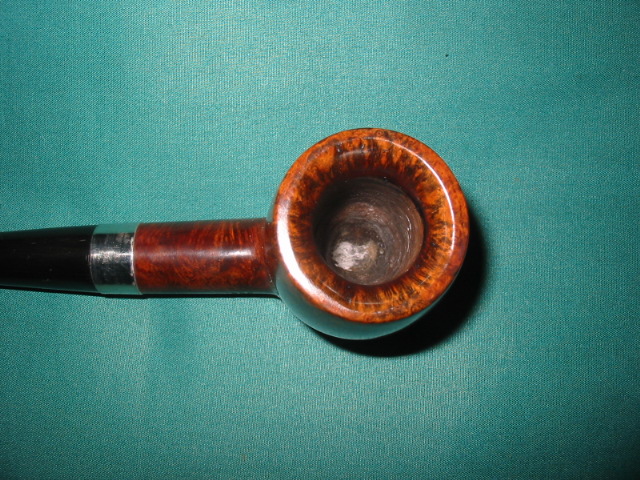
I had this old bowl in my box of pipes to refurb. It needed a stem and it needed a good cleanup. When I took it out of the box to match a stem to it, I noticed that it had some pretty nice grain under the cherry red stain. It seemed like it had a nice dark contrast stain added to bring out the grain and then the red stain was over that. On top of the red stain was a coating of varnish or lacquer of some sort. That topcoat was peeling and the red beneath it was also rubbed off. It seemed like the red stain was more of a wash on top of the bowl rather than one that permeated the bowl. I went through my can of stems and found an old saddle stem that fit quite well. It was badly oxidized but I liked the overall look of the pipe with the saddle stem.
vis1

vis2

vis3

vis4

With the state of the finish I decided to wipe it down with acetone to remove the varnish/lacquer finish and see what I could do with the stain. I was not overly concerned as I figured I would need to remove the red topcoat and start over. The wiped off portions of the finish would require a restain. I just was not sure what was underneath the topcoat. Sometimes on these older Grabows there are a lot of fills hidden under the opacity of the topcoats. I was hoping that this would not be the case with this one. I used a cotton pad wet with acetone to wipe down the finish on the bowl. The rim took a bit more work to remove the tars and build up. I used a fine grit sanding pad and carefully removed the grime while leaving the finish intact. I wipe the bowl down with about three pads and acetone. The result is seen in the photos below. The grain and the stain on this one was beautiful. It has a great contrast stain that makes the grain pop and the lighter reddish brown stain provides a soft canvas to highlight the grain. Once the red finish was removed I left the bowl as it was. I buffed it with White Diamond to polish and remove any remaining red portions of the stain. Then I waxed it with multiple coats of carnauba wax. I put the stem in an Oxyclean bath to soak while I continue to polish the bowl and finished cleaning out the interior of the shank and bowl.
vis5

vis6

vis7

vis8

The stem took a lot of work as the oxidation was very deep. I soaked it twice in the Oxyclean bath and sanded it with micromesh 1500 and 1800 grit sanding pads between soaks. There was some deep, stubborn oxidation on the flat portion of the blade – about mid stem. It was very hard to remove. I sanded it with 2400-3600 grit micromesh and then polished with Maguiar’s Scratch X 2.0 polish repeatedly. Eventually the stubborn oxidation came to the surface and I was able to remove it. I then continued to sand on the stem with the higher grits of micromesh sanding pads – 4000-12,000 grit. I find that the higher grits really deepen the shine of the stem. Each successive grit of micromesh pad brought more of a polish to the stem. The hardest spot at the end was the saddle area. In the photos below there still remains a bit of oxidation that I am still working on – this is particularly clear in the photo of the underside of the pipe.
Ah well – here is the reworked Dr. Grabow Viscount. It is ready to load up a bowl for its new inaugural smoke.
vis9

vis10

vis11

vis12

Refurbished – A Stunning New Look for a Butz Choquin Billiard


I picked up this old Butz Choquin in a lot I was given by a friend and it was in very rough shape. I somehow neglected to take any pictures of what the pipe looked like when it arrived. But it came stem less and the rim was ruined. It had been hammered on concrete or something like that as it was stippled and rough. The inner rim was ruined as it seemed to have been reamed with a pocket knife and it was cut and grooved at all different angles. To have topped it I would have had to lose almost a half an inch on the pipe. In my opinion that would have ruined the billiard profile and created a pot shape. I decided to try something different on this one. The finish was shot as well and the stain was gone. It was a dull brown with much dirt and grime ground into the surface of the briar.

I reamed the pipe with a PipNet reamer (like a Castleford T handle reamer) to even the sides of the bowl and smooth out the inner surface. I wiped the bowl down with acetone to clean off the grime and grit. Once it was clean I hunted down a stem blank that would work on a pipe with this sized shank. I cut the tenon with my Pimo tenon turner and shaped the stem to a clean fit with my Dremel. Then I took the bowl and dropped it in the alcohol bath while I worked on the stem. I sanded the stem to remove the scratches left by the Dremel. I also shaped the button a bit to change the shape and open up the slot to an oval.

I took the bowl out of the bath and dried it off. I gave it another wipe down with the acetone to give me a clean surface to work on. I then went to work on the rim. I wanted to chamfer the rim inward toward the bowl to remove the damaged material and give it a different look. I topped the bowl first to get a smooth and even surface. From there I sanded the inner edge of the rim with a folded piece of sandpaper (280 grit). I use a one inch square piece of sandpaper folded into quarters. Then I set the angle I want to have on the chamfer by the way I hold the paper. I sanded it until I got it at the angle I wanted and removed the damaged material. Once I had the angle right I then changed the grade of sandpaper sanding it with 400 and 600 grit wet dry and then with the micromesh sanding pads from 1500 to 6000 grit.

At that point I put the stem back on the pipe and sanded it until the transition between the shank and the stem was smooth. I wanted it to be a fit that appeared to be seamless. Once I had that done and had sanded the stem smooth with the various grades of micromesh sanding pads I took it to the buffer to give the stem a shine. I brought it back to my work table and sanded the bowl and shank until they were also smooth. I did not sand around the nomenclature as I wanted that to be intact.

I decided that I would give the bowl a contrasting stain finish. I heated the briar with a blow dryer to warm it up and open the grain on the bowl. Once it was warm I stained it with a black aniline stain. I flamed the stain and let it dry. I took it to the buffer and buffed it with Red Tripoli to remove the black stain from the surface of the briar. This takes off the extra black and leaves it in the softer grain of the briar. I sanded it again with 600 and 800 grit wet dry sandpaper and then buffed it again with White Diamond. I wanted contrast between the black that was deeply set in the grain and the harder smooth surfaces. Once that was done I wiped the bowl down with acetone to tone down the blacks and to clean off the surfaces that did not have the stain set in them. I restained the pipe with a Medium Brown aniline stain and flamed it as well. Once it was dry I buffed it with White Diamond to polish it. The whole pipe was then given multiple coats of carnauba wax and a finish buff with a soft, clean, flannel buffing pad.

While I liked the look of the pipe at this point I decided that it needed a bit of bling to finish it off. I have a box of bands here and found one the correct size – a nickel band that would add just the touch I was looking for. I heated the band with my heat gun and pressure fit it on the shank of the pipe. The finished product is in the photos below. This pipe found a new home with a friend on one of the online forums. I am sure he has enjoyed it as it was a great smoking machine.
The verdict is yours is the new look stunning or not?
bc1

bc2

bc3

bc4

bc5

Do something crazy, I dare ya! – Piet Binsbergen, 27 October 2012


Well I am a painter by trade. www.art.co.za/peterbinsbergen

I have not painted in some time as I have taken time out to work on a PhD in the field of art. I must admit, the timing is good as I kind of painted myself into a corner over the last 10 years. My passion is pipes. For some years I have been learning the trade of repair which was born from the need to be self-sufficient. I came to learn that imitating textures on canvas has become limiting. I surround myself with exotic woods and various metals which have tickled my senses and opened doors. I have no idea where I will be going in future but my research may reveal the way ahead.  For now I am having fun, and here is my way of expression.

It started in the form of Hot Rods. Pipes I could express myself with and push the boundaries. I have still felt that I am holding back. I spend much time with the South African pipe maker Jean du Toit, aka Jan Pietenpauw (www.pietenpauw.co.za). We get into interesting debates about pipes and pipe lore and I have learnt much from him over the past few years. Sometimes we collaborate, sometimes argue about shape and form but in essence the man is a sculptor. For this reason I will not carve pipes from scratch. I simply cannot compete with master carvers of our time. Besides, my interests lie elsewhere.

While working on my Hot Rod pipes I came to realise that I may be dabbling in art of some sort. The conceptualization process is the same, the medium differs. I decided that the pipes need to tell a story, places I have been, found objects I may have collected while being out and about. This idea came to me while making up the S.A.Y. 15 Plumbing pipe after a visit to my father-in-law out of town. I have nothing to lose; the pipes belong to me and not my clients.

I admire Ollie Sylvester for doing what he does. Steven Downie is the Guru. These are people who are really pushing the boundaries. In no way do I compare myself to these people; I just set about doing what I do.

Here is my “Davey Jones” pipe inspired by watching “Pirates of the Caribbean”, I noticed that “Mr. tentacles” himself smokes a real basic pipe. Here is my version.
This is a collaboration piece between Jan Pietenpauw and myself. He is in the process of carving the BIPS form 2013 poy’s. This stummel was misjudged on his part while in the jig on the lathe. The shank cracked in the process and it landed up in his trash box. Now I love his trash box. I have lifted many “Not good enough” stummels from that box in the past. Nothing wrong with them at all, they just do not fit the master’s creative bill, but they sure fit mine at times.
The shank ring is aluminum. It was polished at first but it looked to new so that too ended up under the Dremel. The idea was to create something that looked like it came from Davey Jones’ locker, polished and cleaned. It is the first time I have taken a Dremel to a stem. This is a pre-moulded stem with an olive shank ring added. I went crazy trying to create the same texture as on the pipe so it would eaten or drift wood rotten. The contrast between the textured area and the high polished stem was a little close so I got the needed contrast by adding an oil paint white wash to the textured are before polishing the stem. Finally, to add to the craziness I heated the stem and formed the bend.

Here is the craziest pipe I have ever done!

Enjoy.
crazy1

crazy2

crazy3

crazy4

crazy5

Restemmed Petersons 69 – Second Try was a Charm


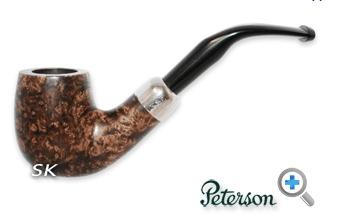
I had this old Peterson 69 bowl in my refurb bin for quite awhile. It is stamped also on the other side K&P Dublin, Made in the Republic of Ireland. I cleaned and reamed the bowl and cleaned out the mortise area with cotton swabs. I wiped the bowl down with acetone to remove the surface grime. I topped the bowl as it had major dents and roughening on the top from abuse. It needed a stem so I researched the kind of stem it needed and called a Peterson repair person in the states to have one sent to me.
Here is where the story gets a bit dicey. All I really wanted was to have the stem sent and I would fit it to the pipe but I let myself be talked into sending it south. It came back with the wrong stem on it and also had some serious cut marks on the tenon end. It also was a stem for a p-lip system pipe and the 69 is not a system pipe as far as I can tell. I was a bit frustrated to say the least so I set it aside for a week or two before calling the repairman and letting him know what I was feeling. I have to say that it is frustrating to expect one thing and get another. It is also frustrating to know that I could have done the work myself in less time if only I had a stem blank that I could have used.

I sent it back to him for a redo and included this internet photo of the pipe with the stem.
peter1

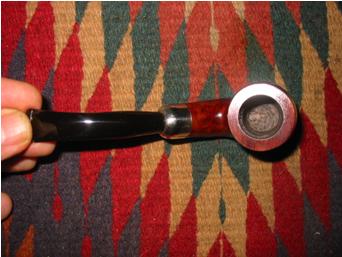
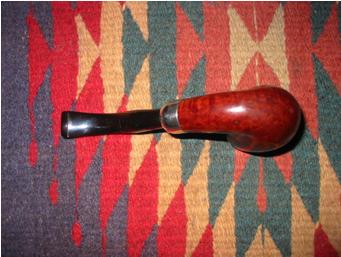
When it finally came back it was better – see the photos below. It was much better so I decided I was done with sending it back. Two times is enough. Once it was back I finished working on the rim and the rest of the bowl. I stained it with a medium brown aniline stain. It took the stain well and came out a reddish brown colour. I buffed it with Tripoli and White Diamond to polish the stem so the grain would show through. I finished it with several coats of carnauba wax and buffed with a soft flannel buff. The silver ferrule was polished with silver polish. It is a good smoker and is comfortable in the mouth.
Peter2

peter3

peter4

peter5