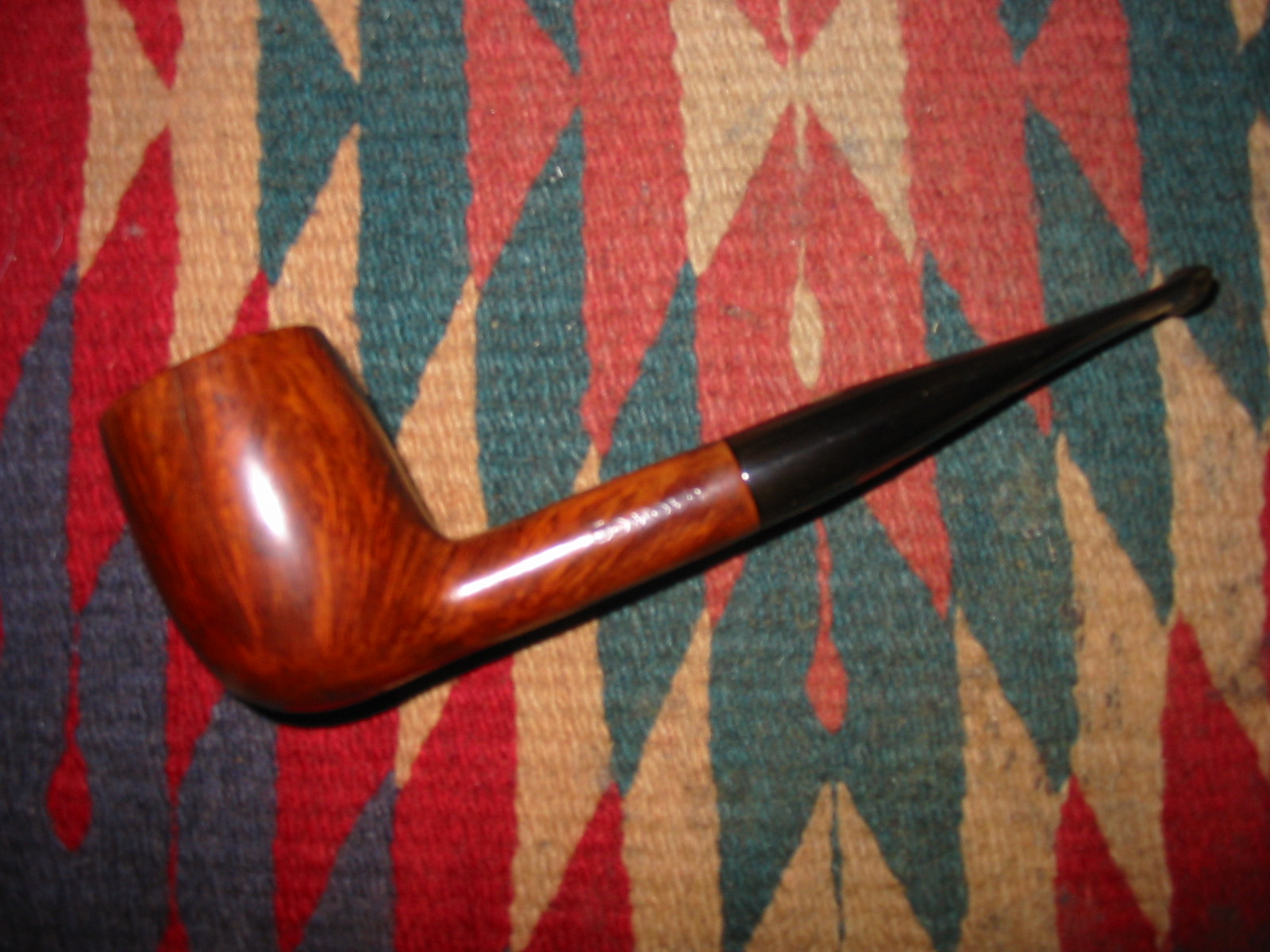
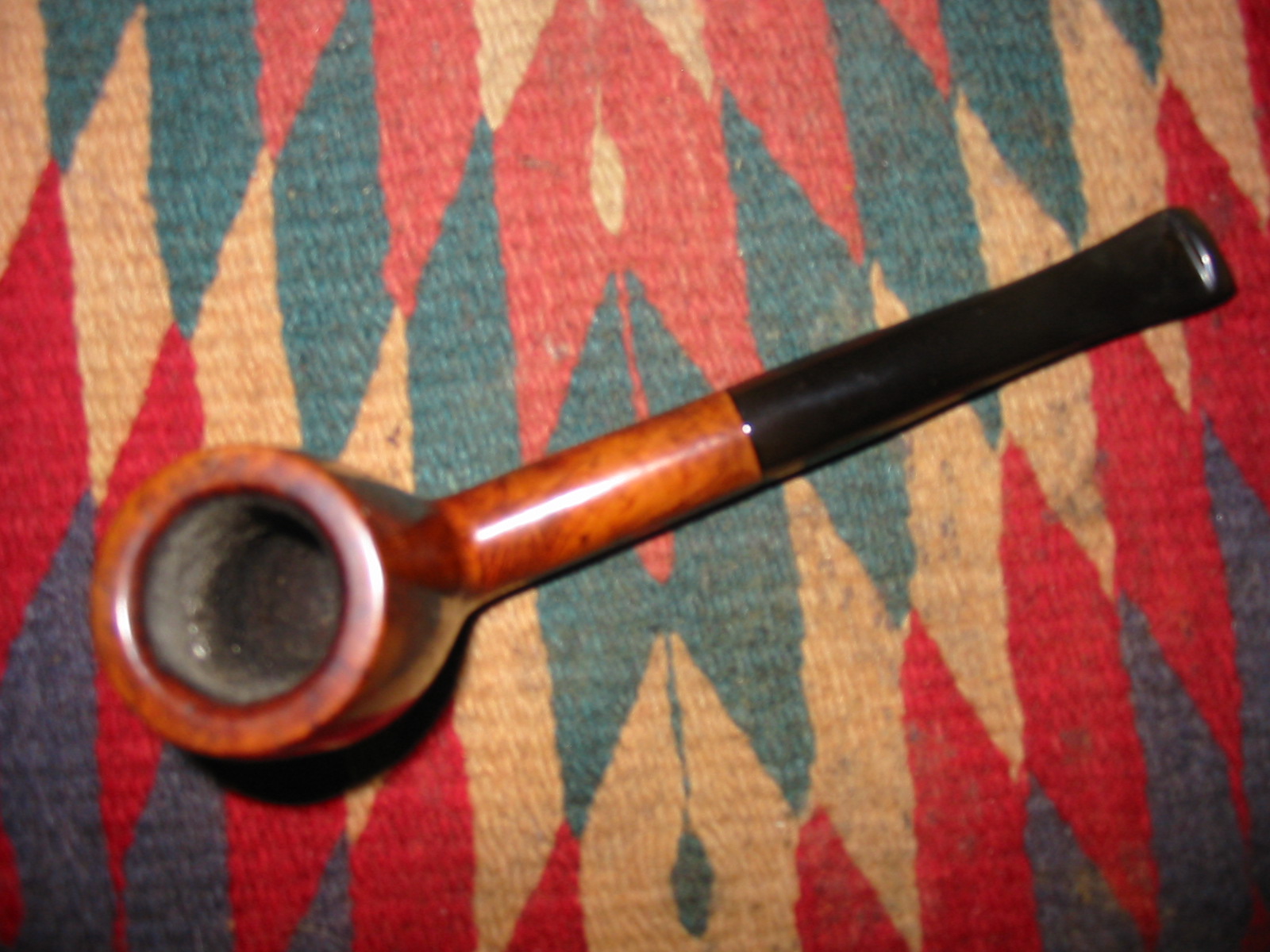
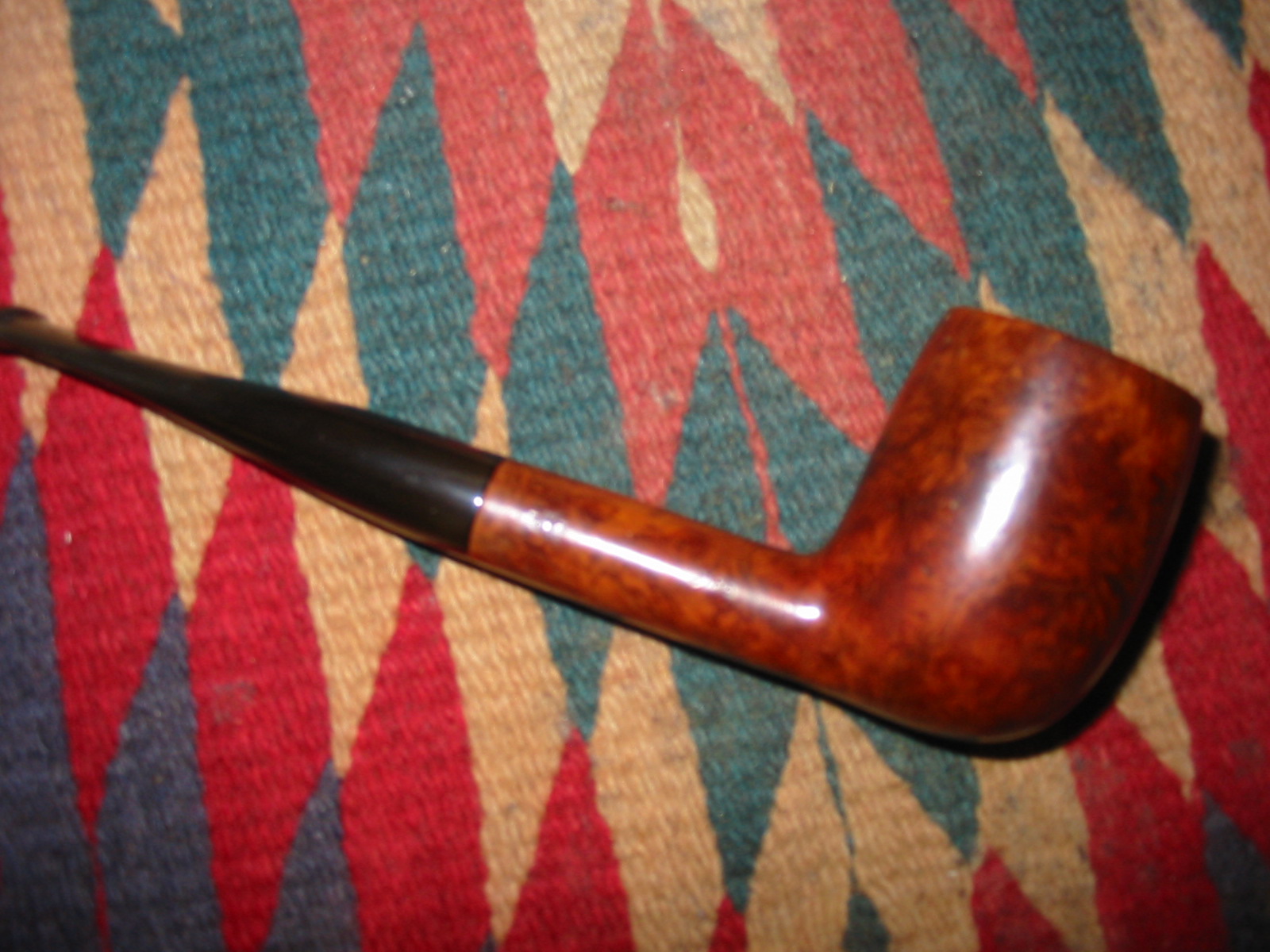
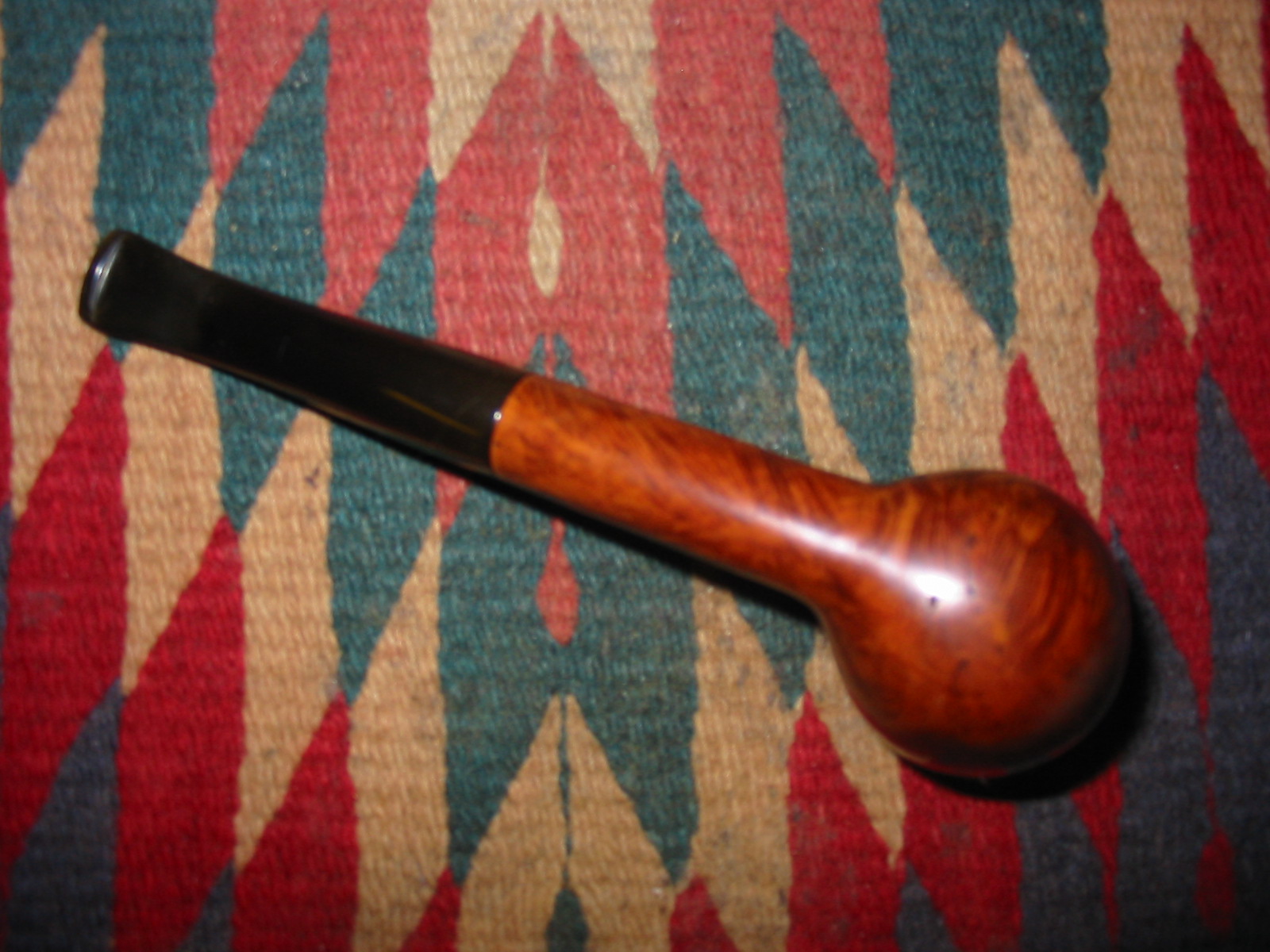
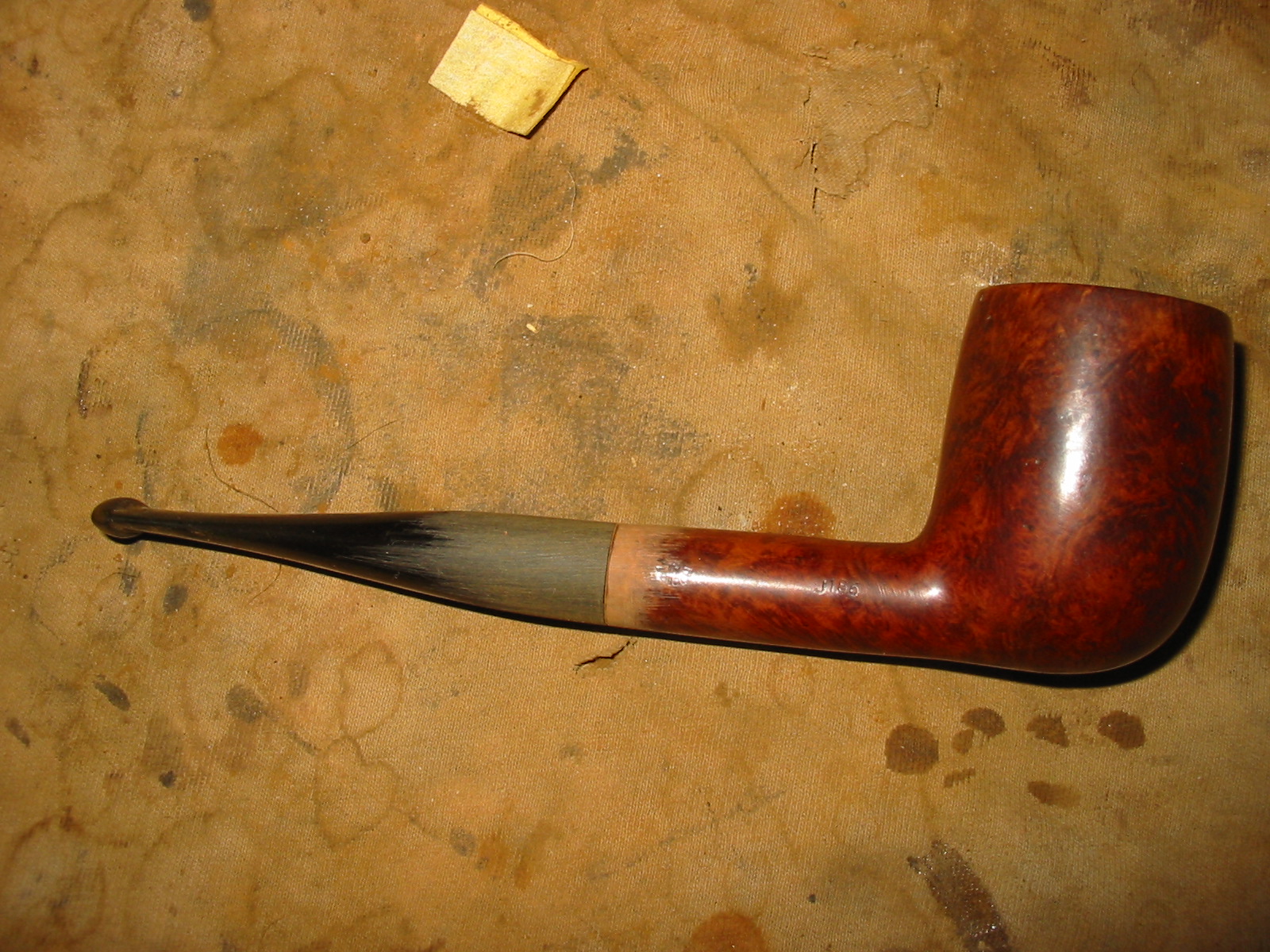
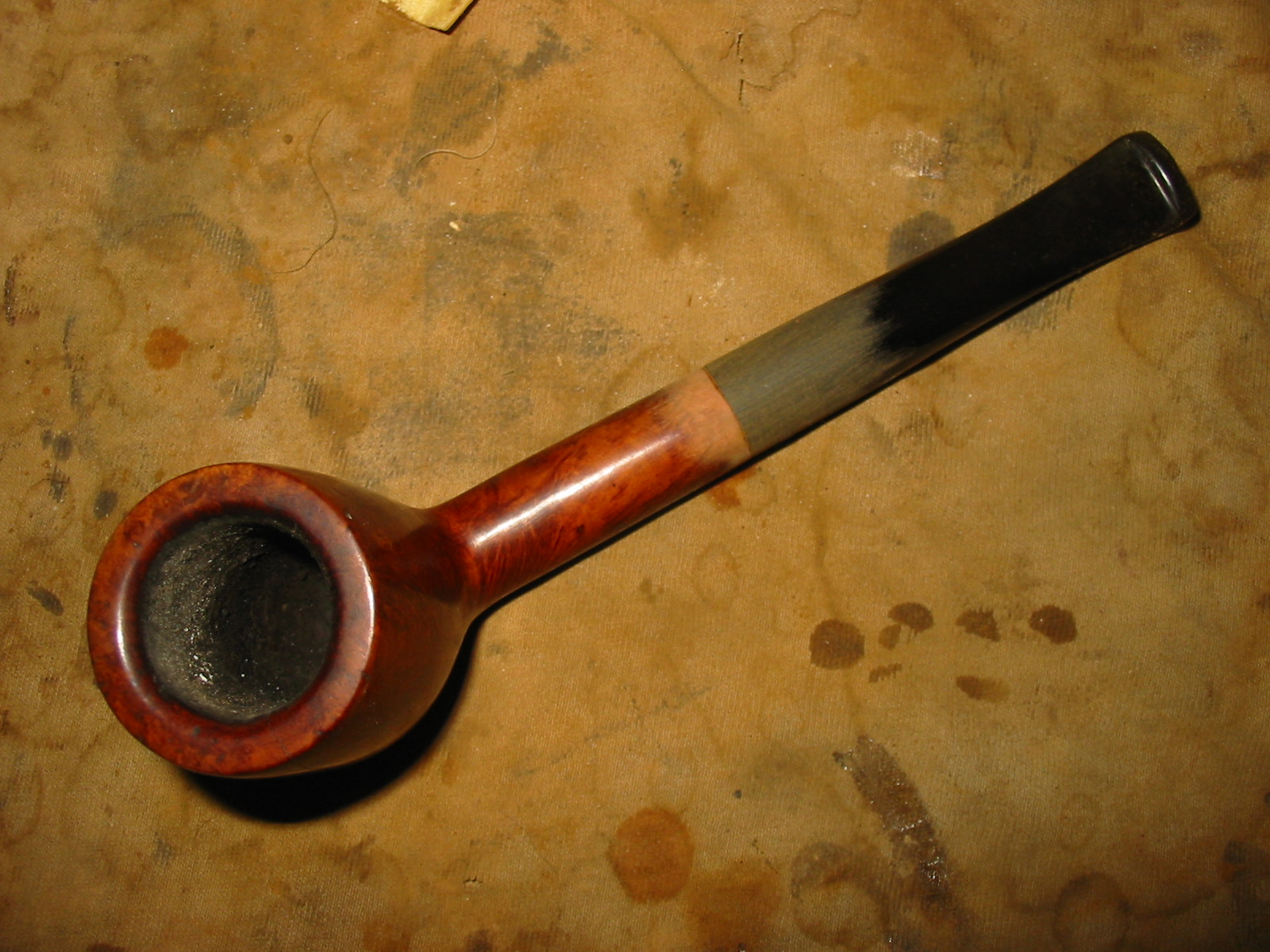
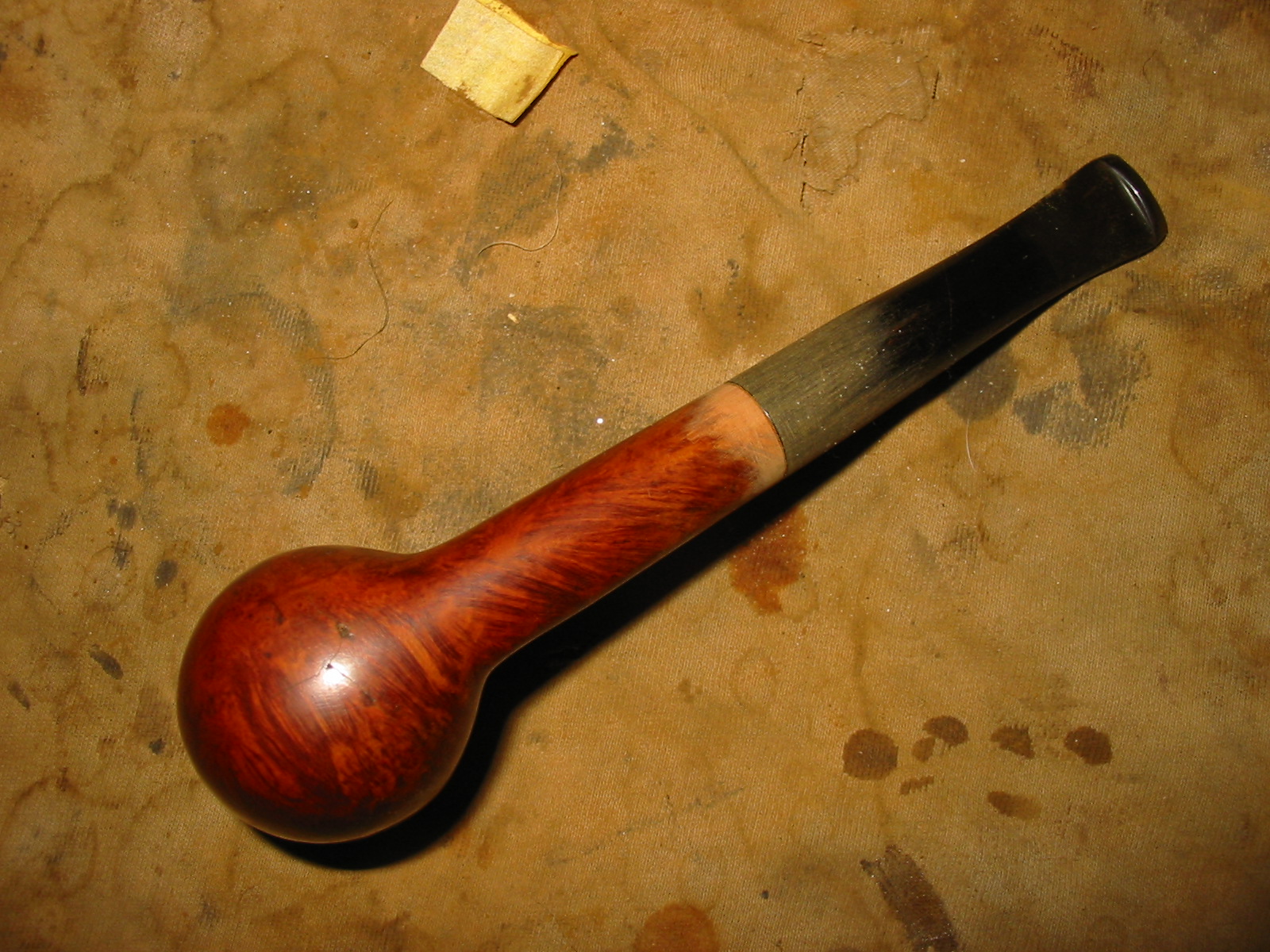
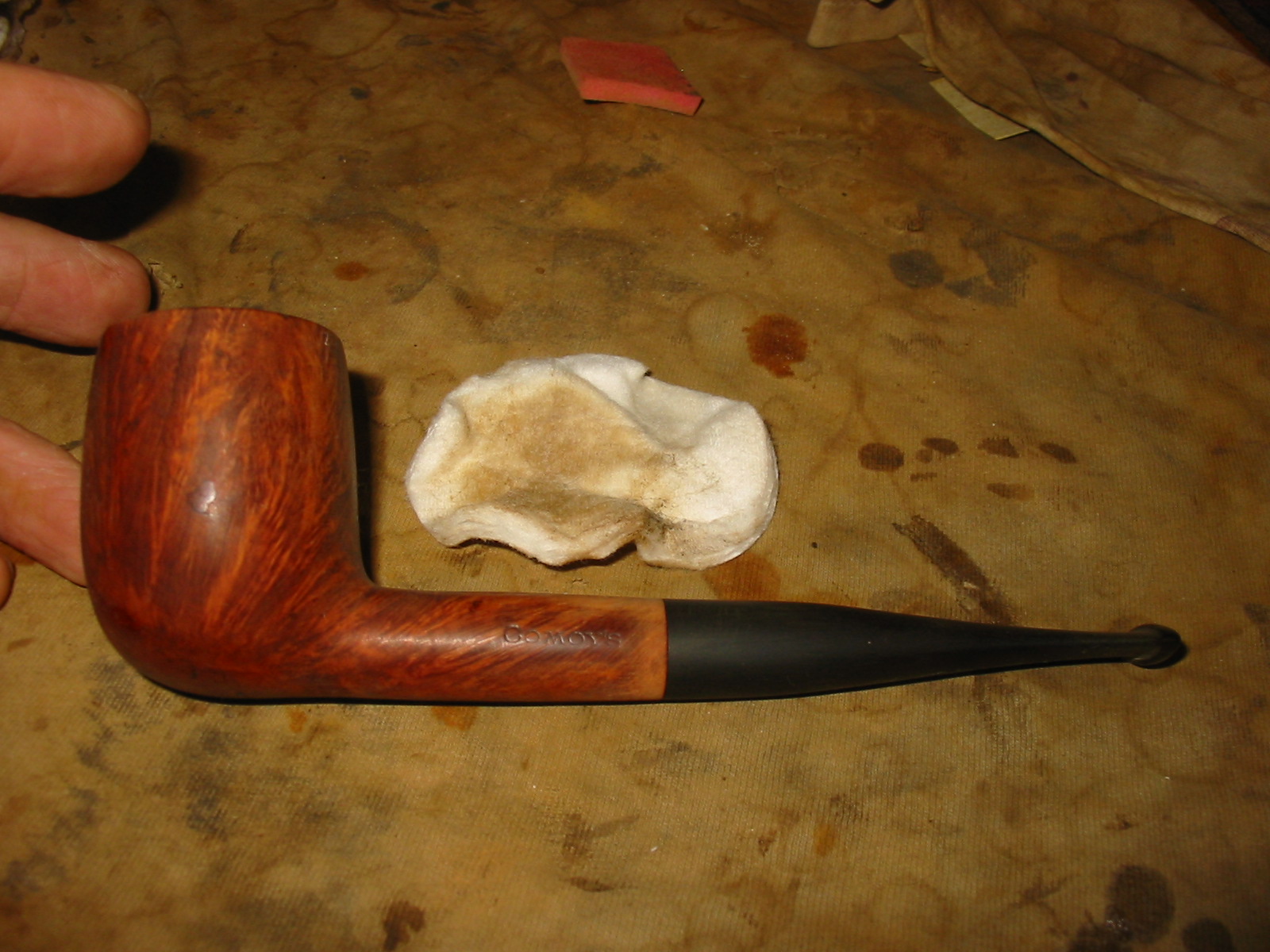
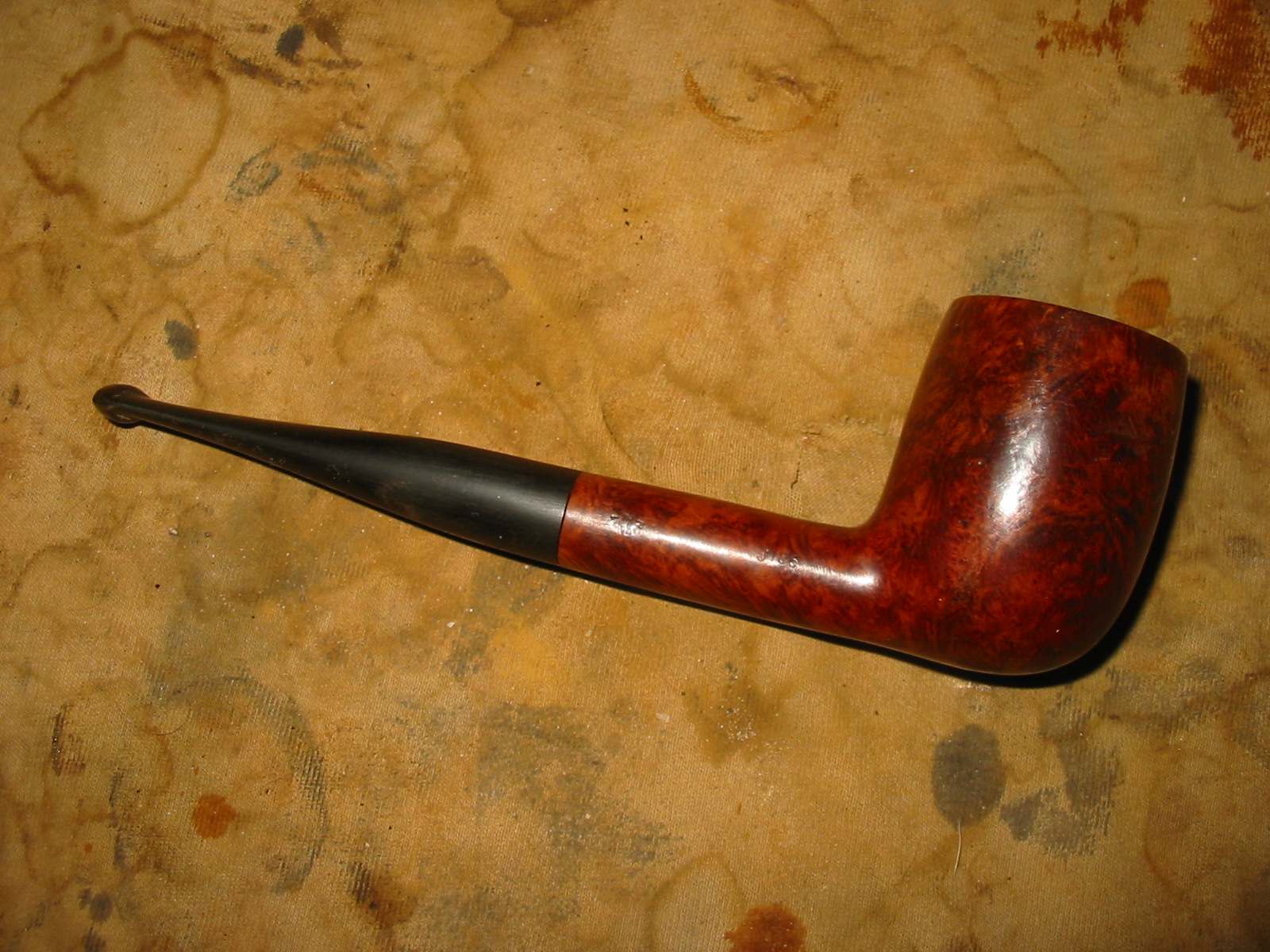
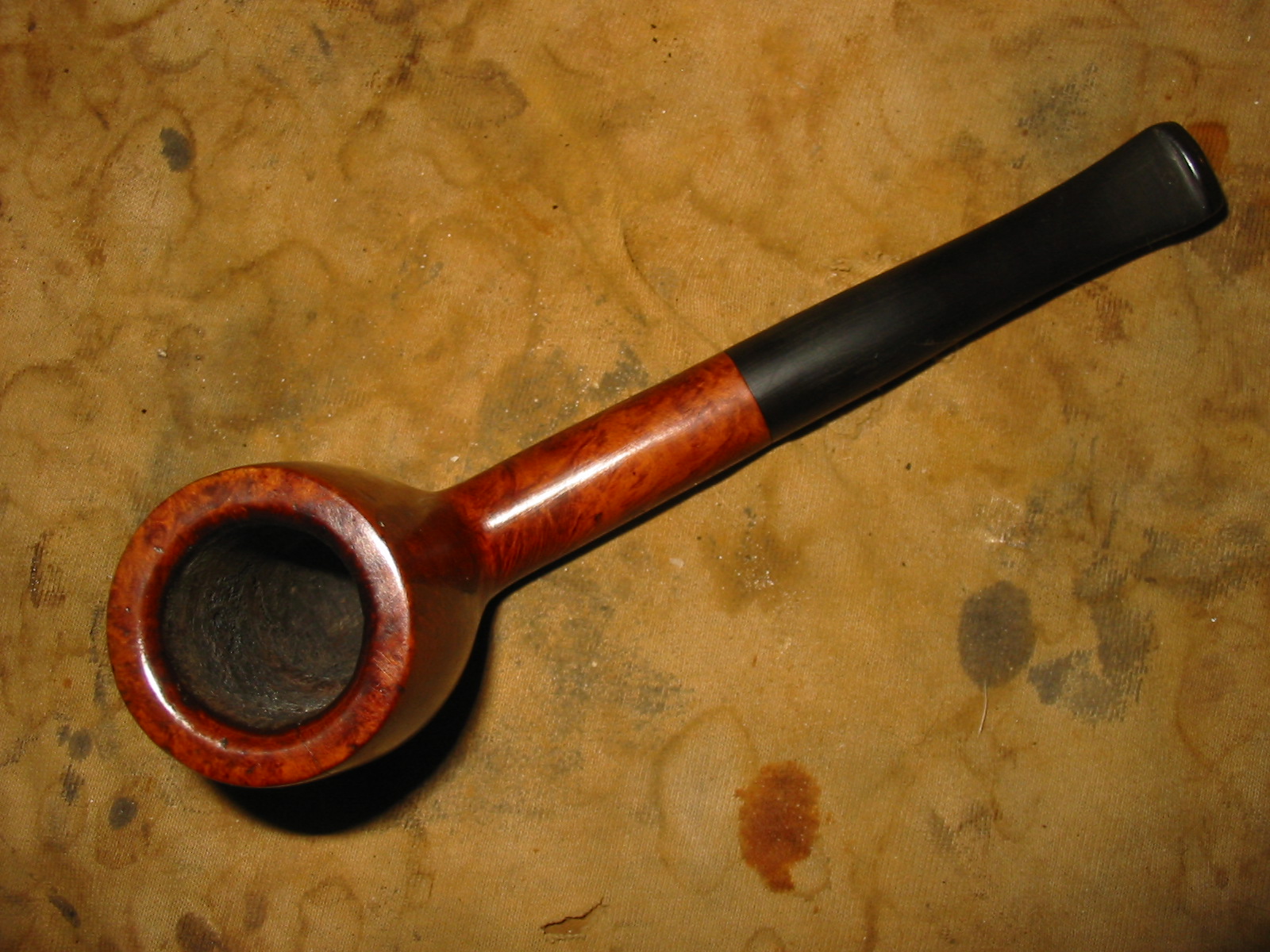
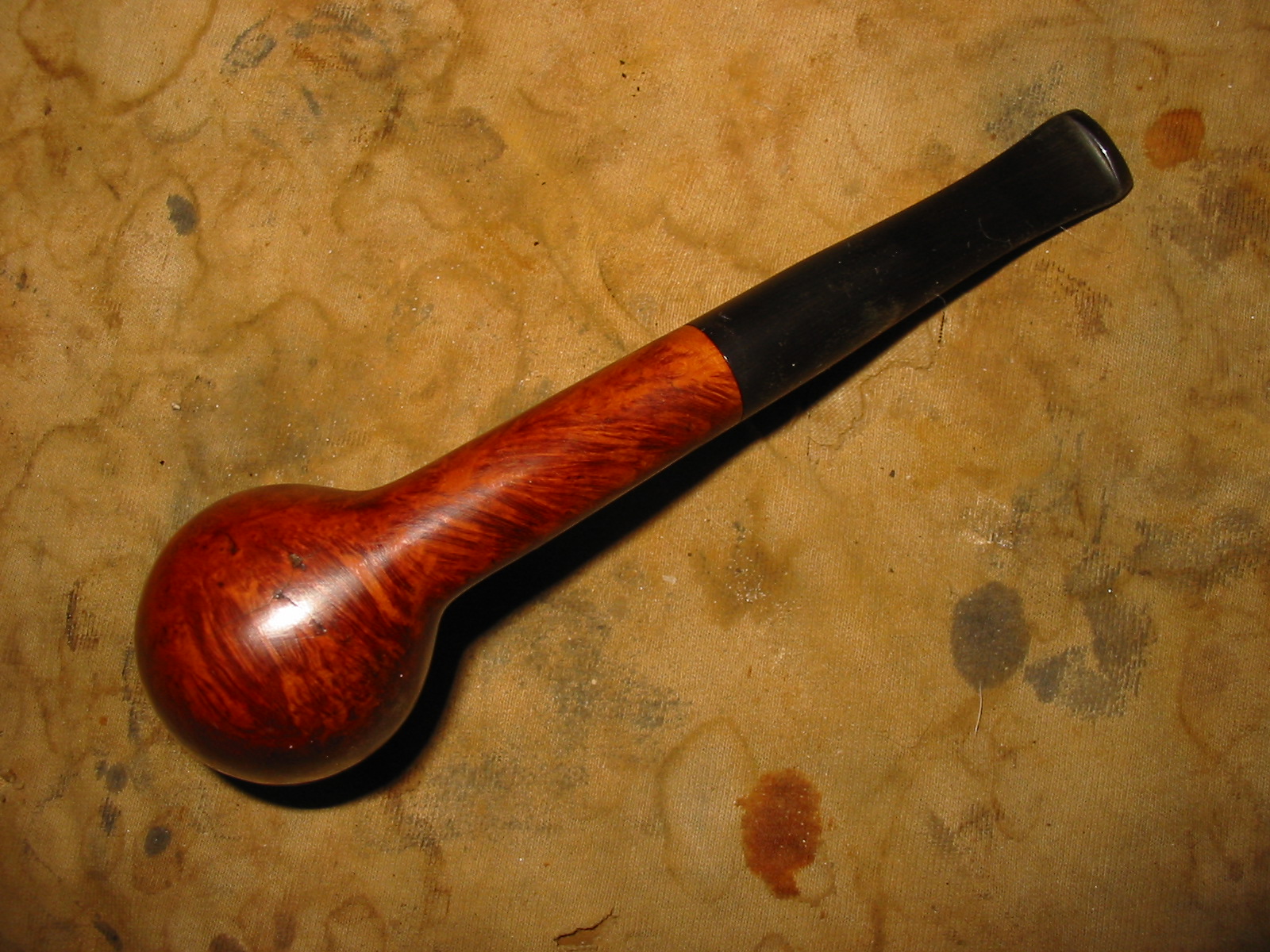
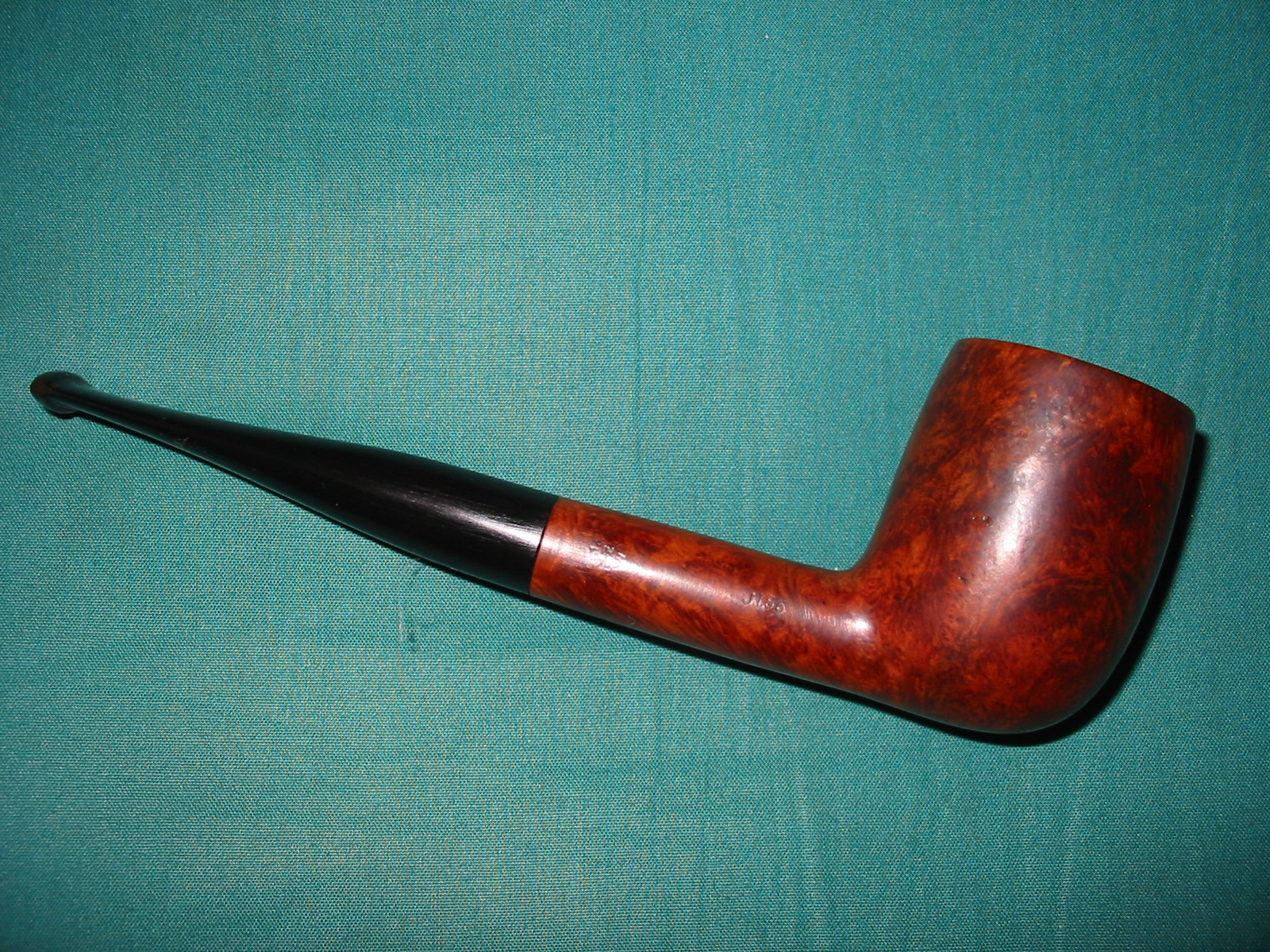
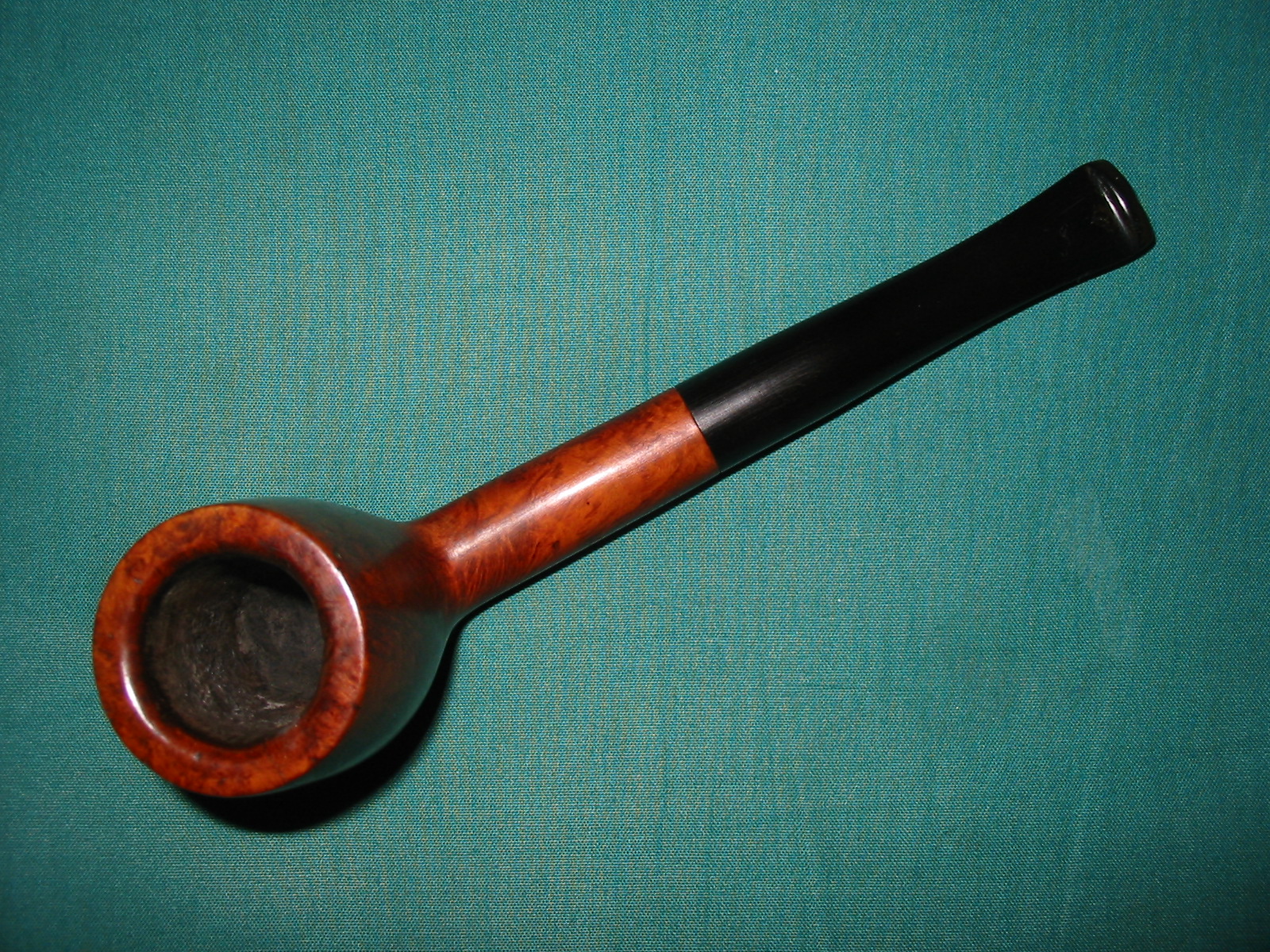
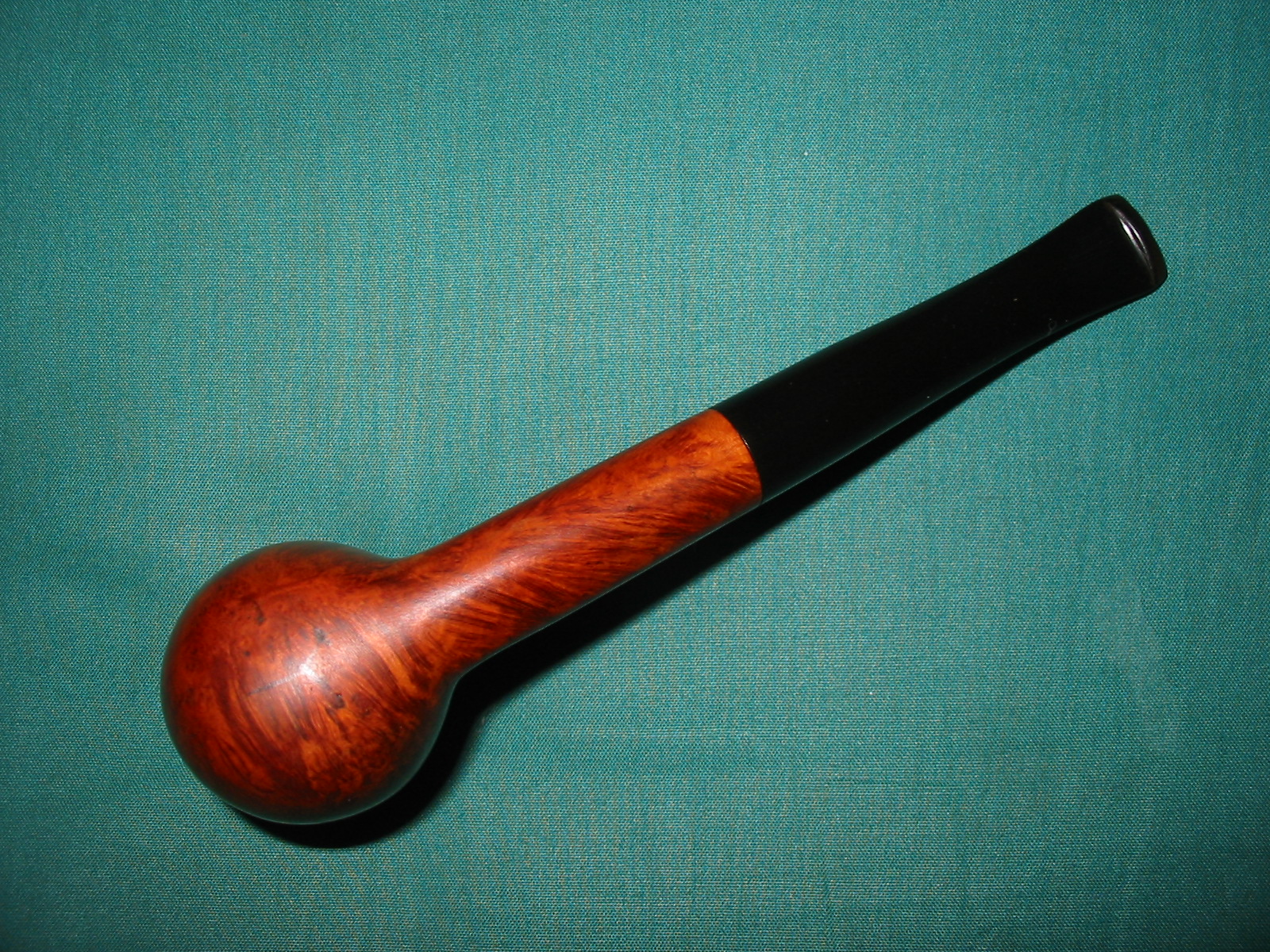
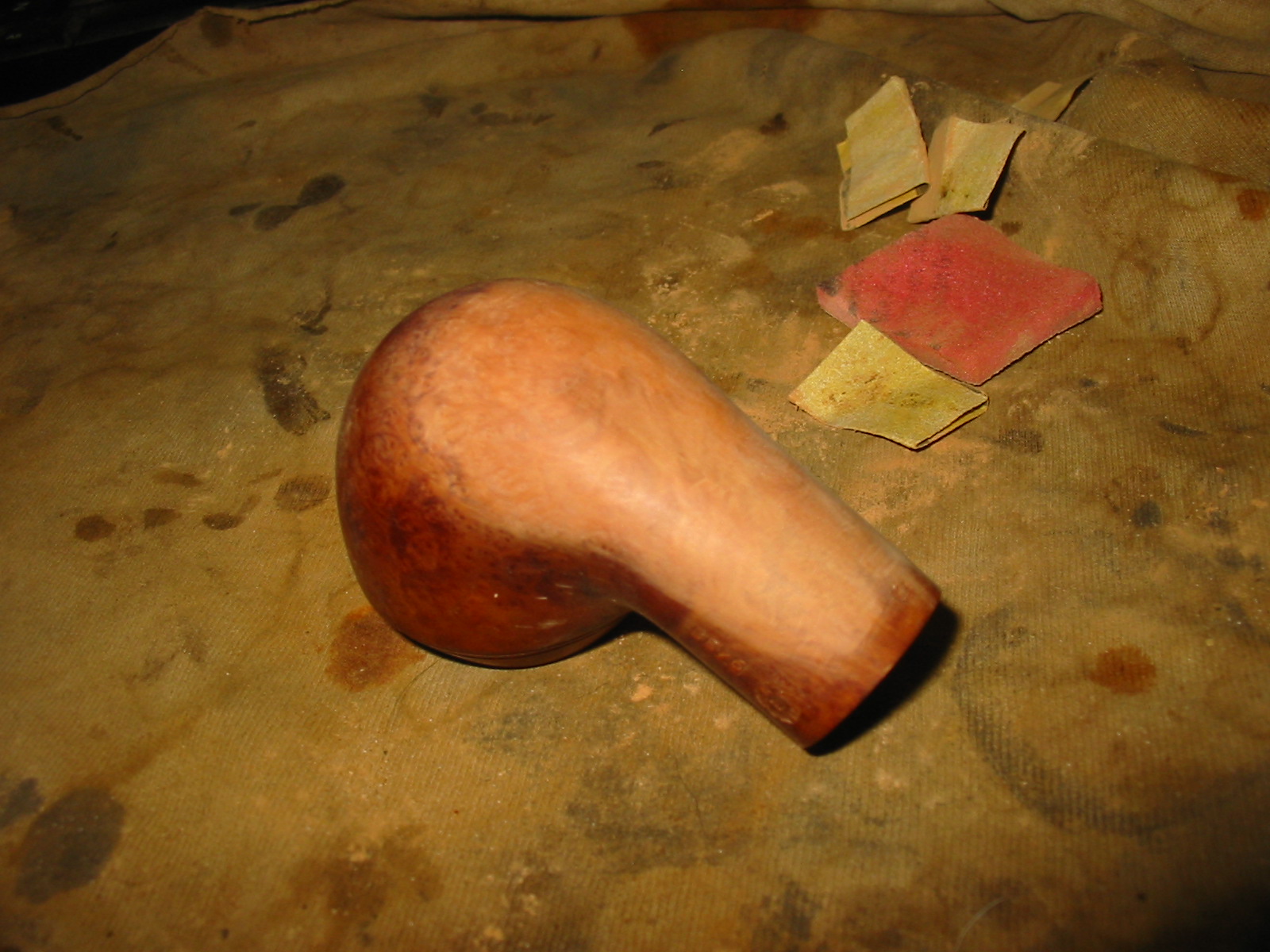
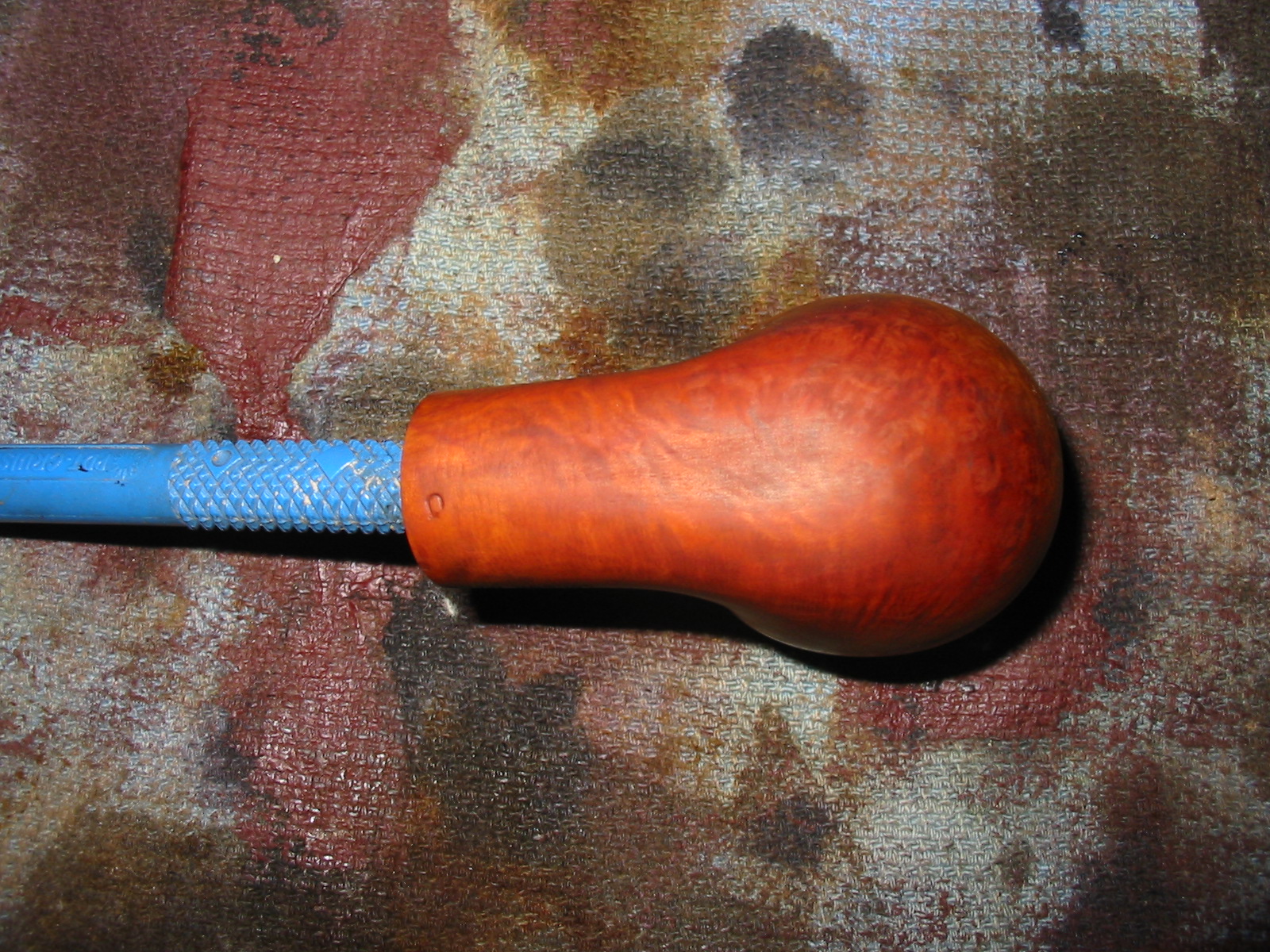
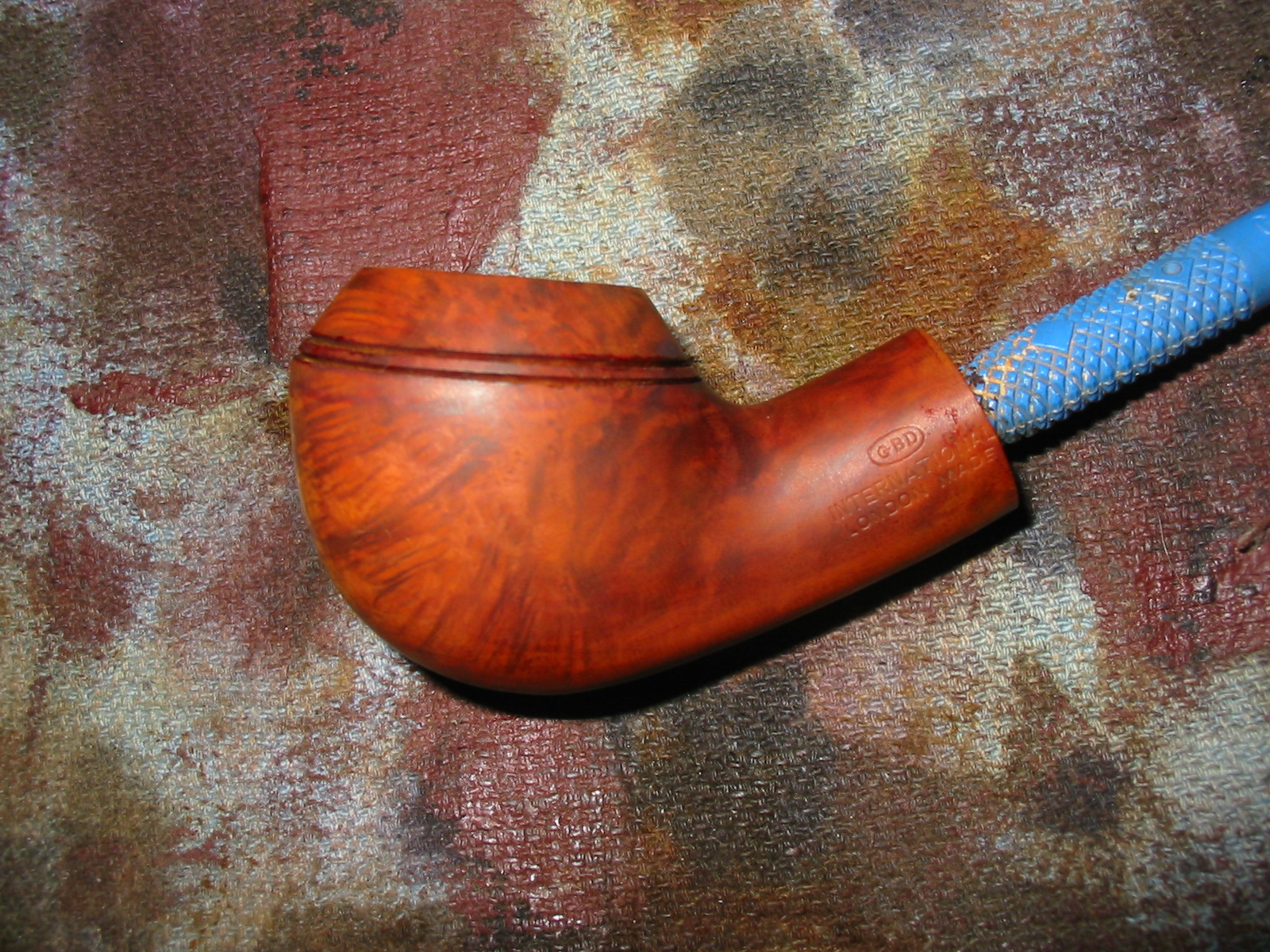
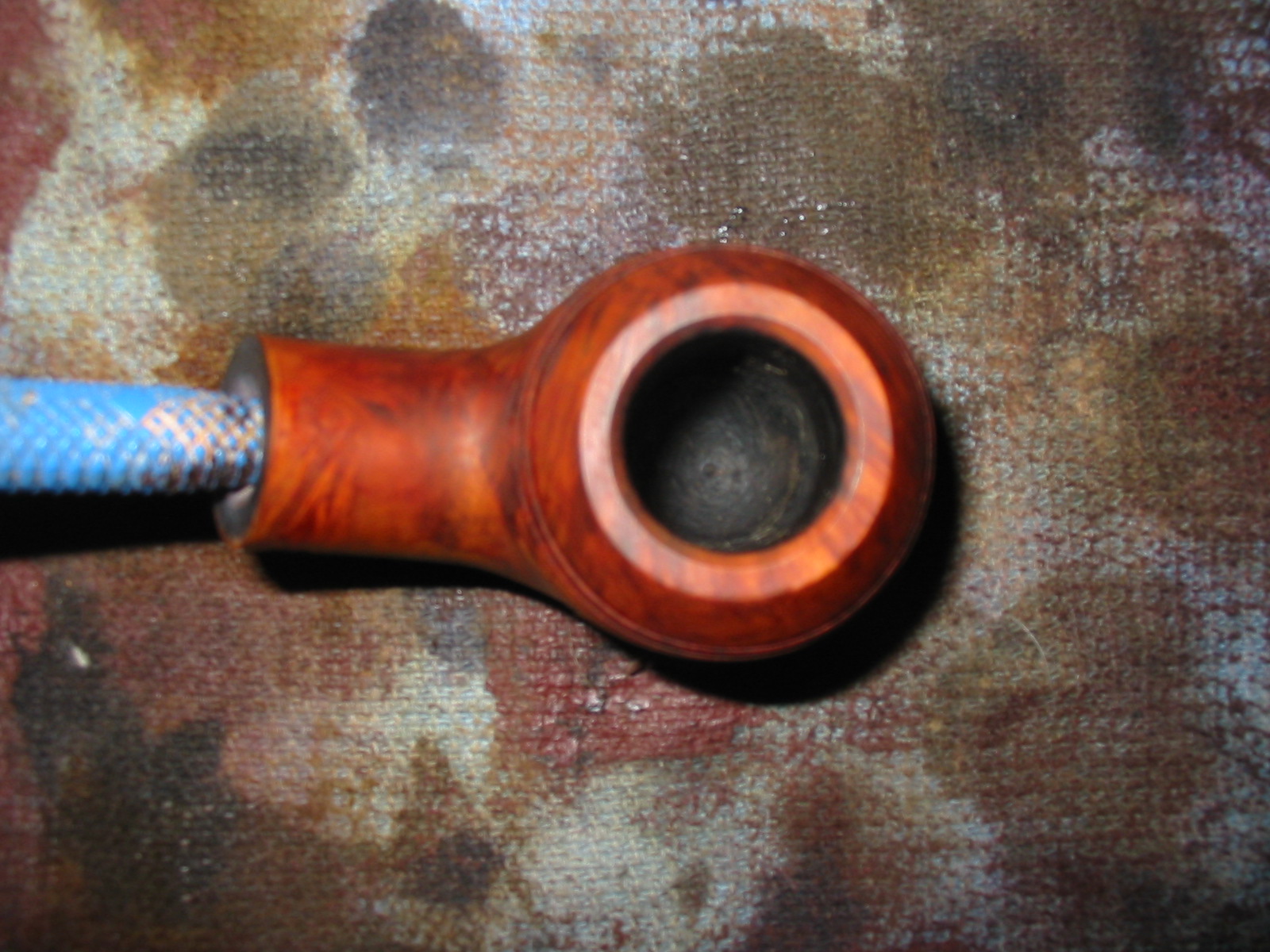
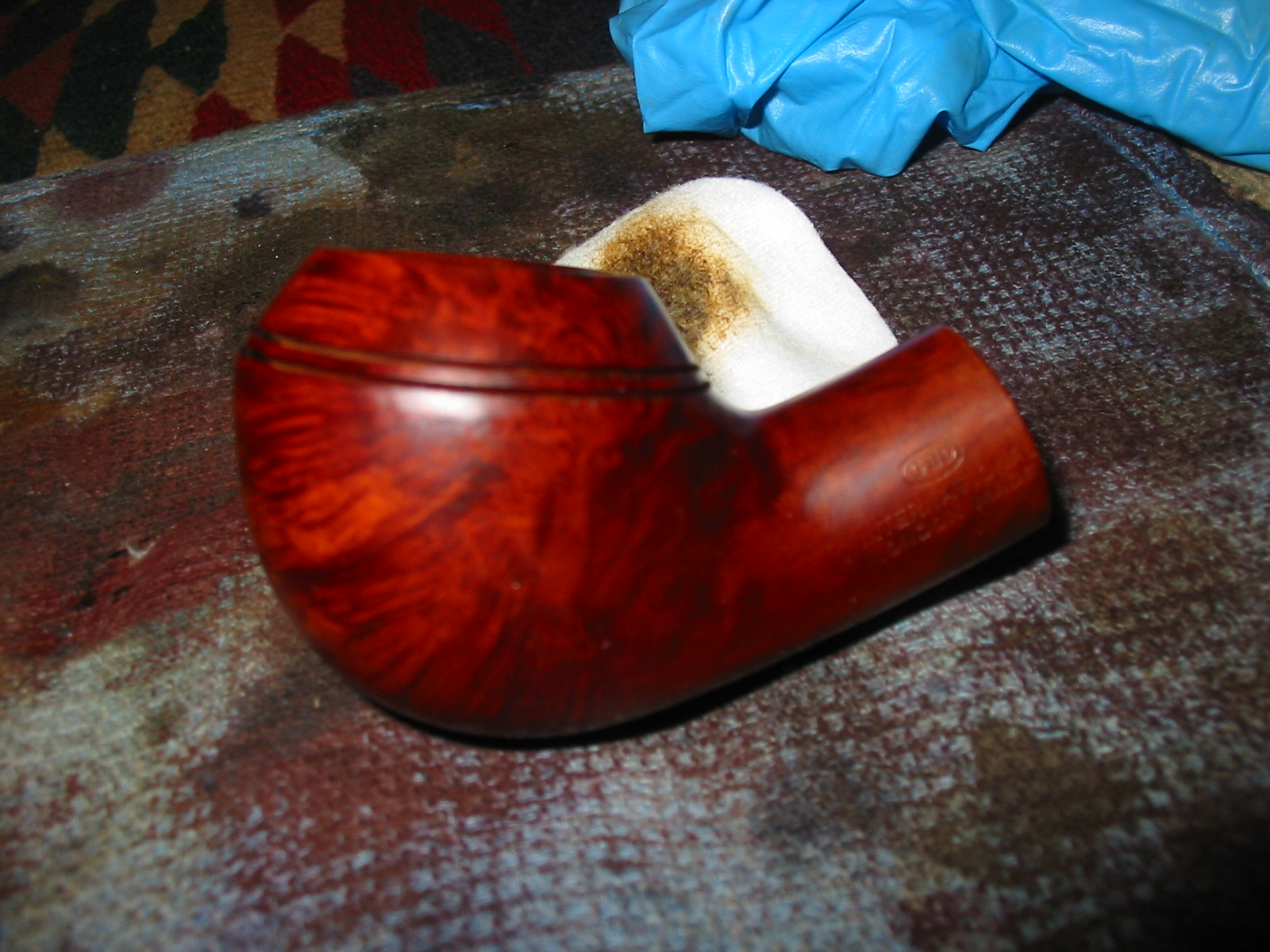
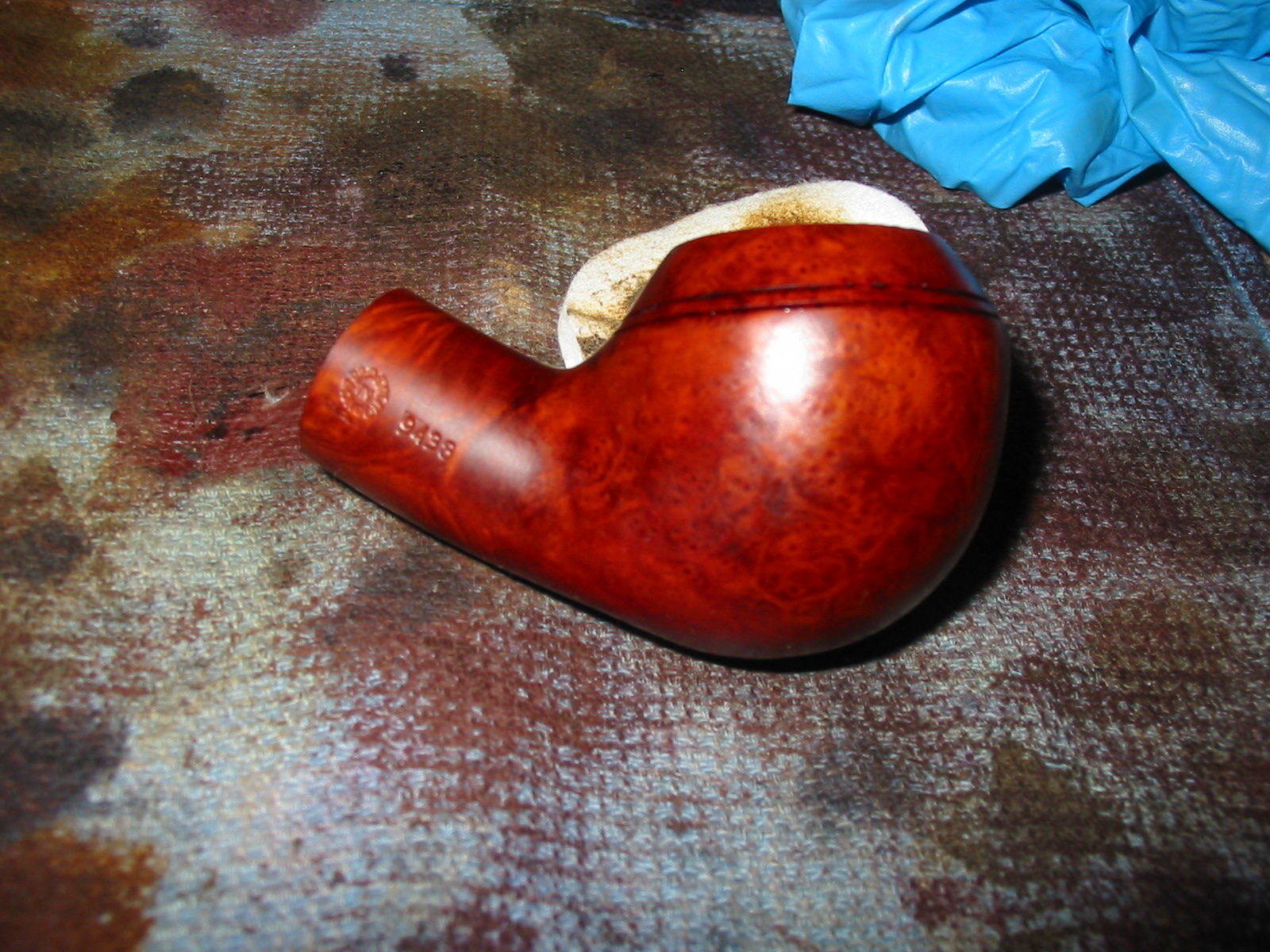
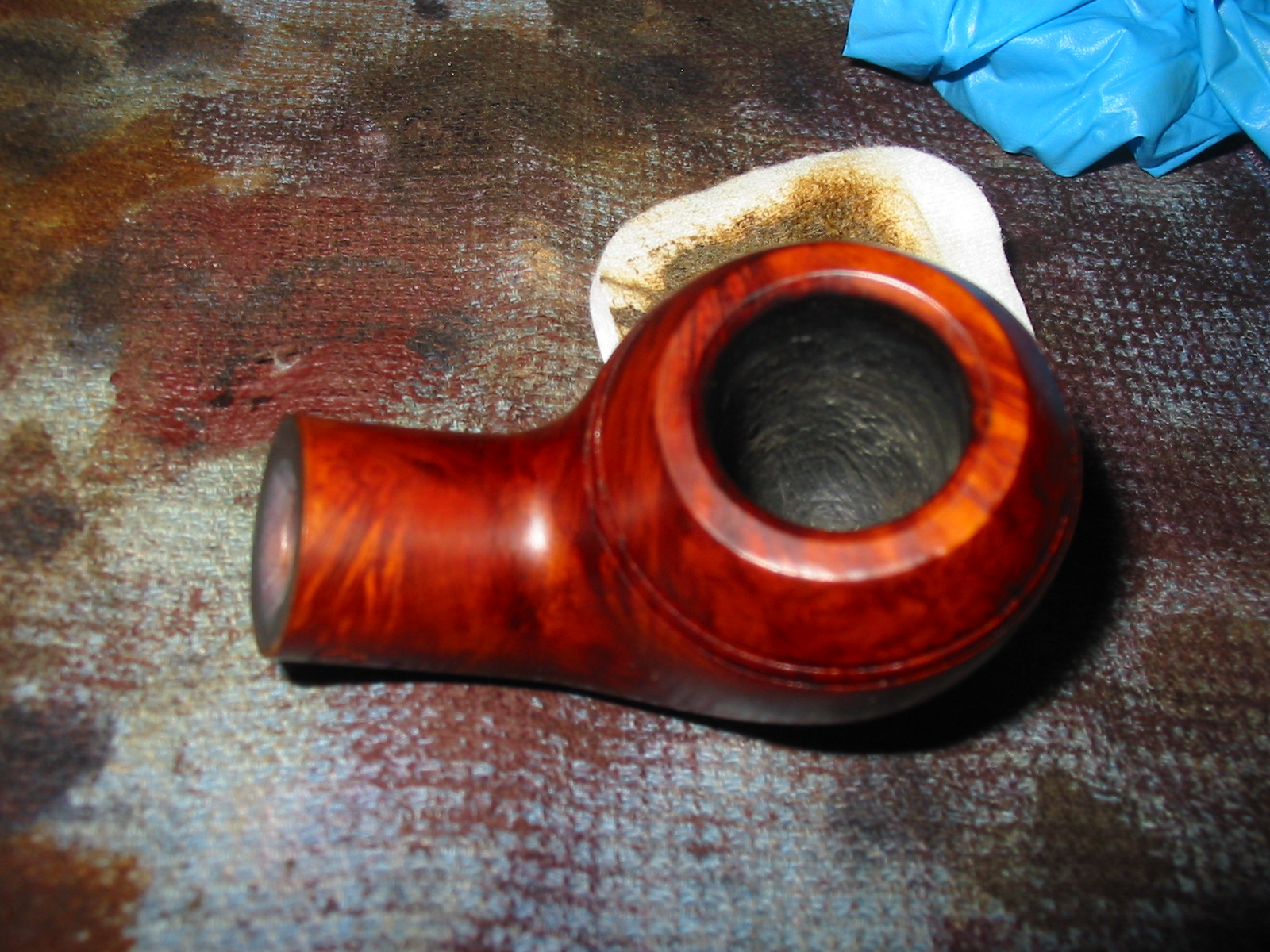
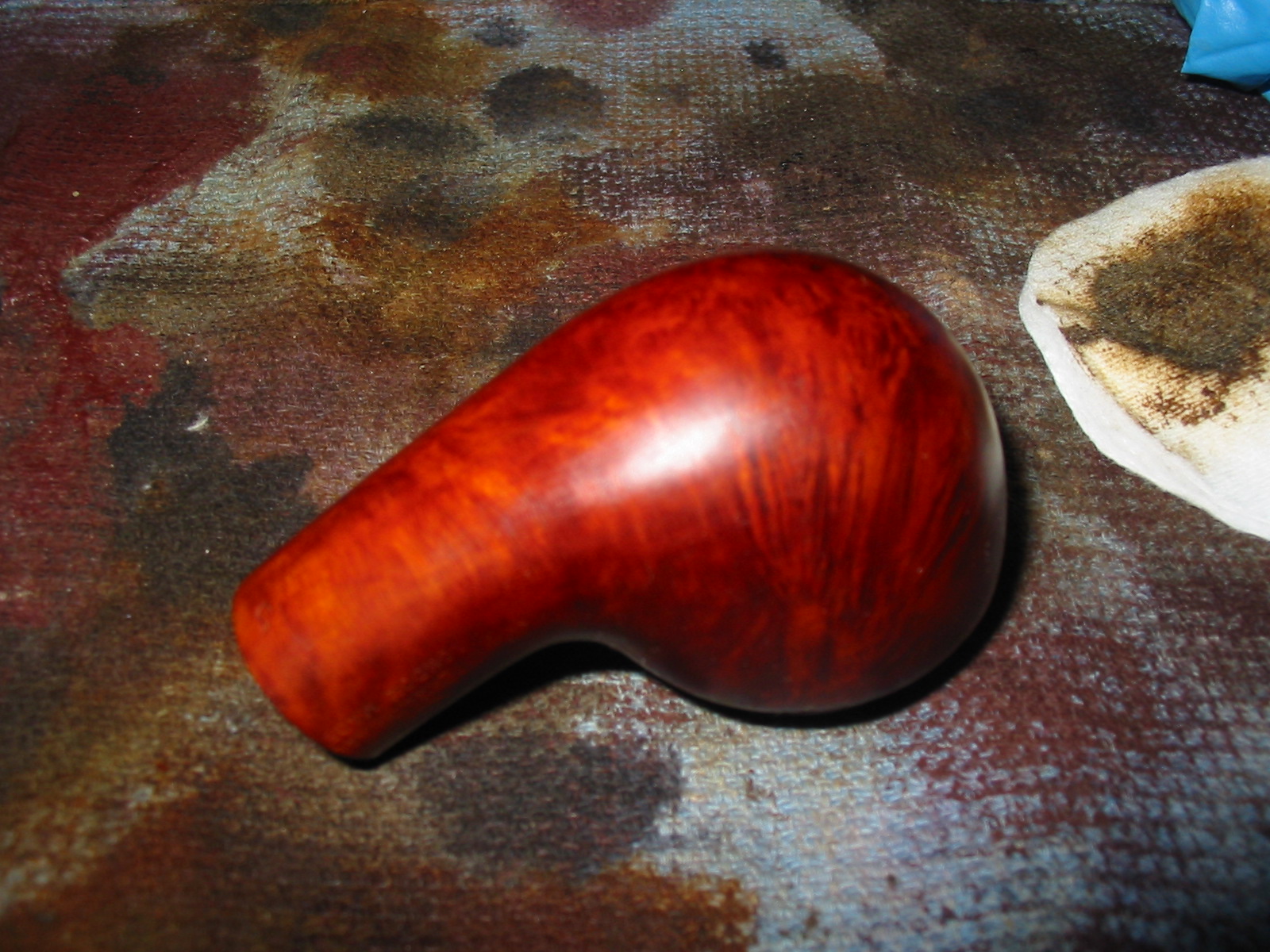
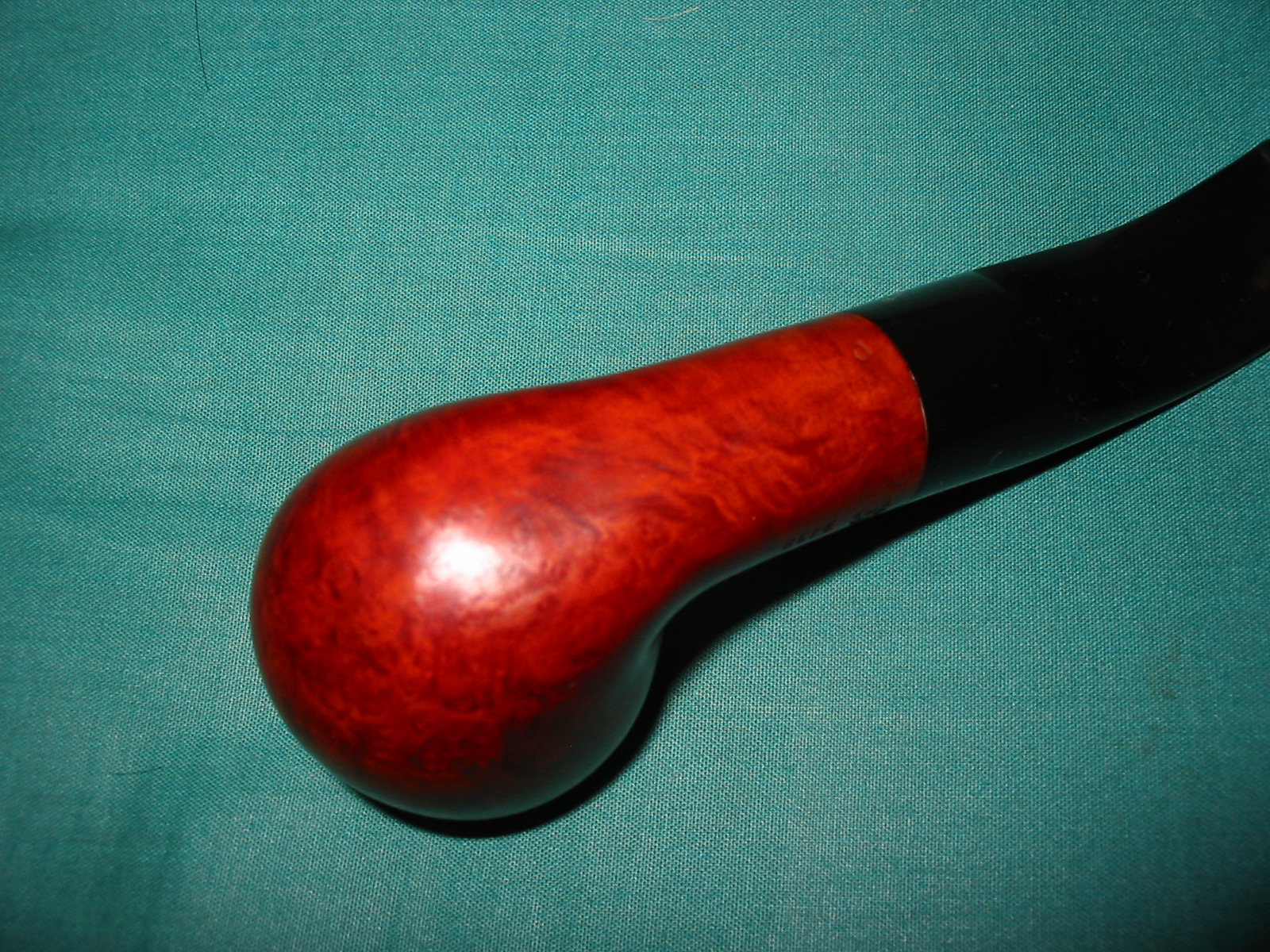
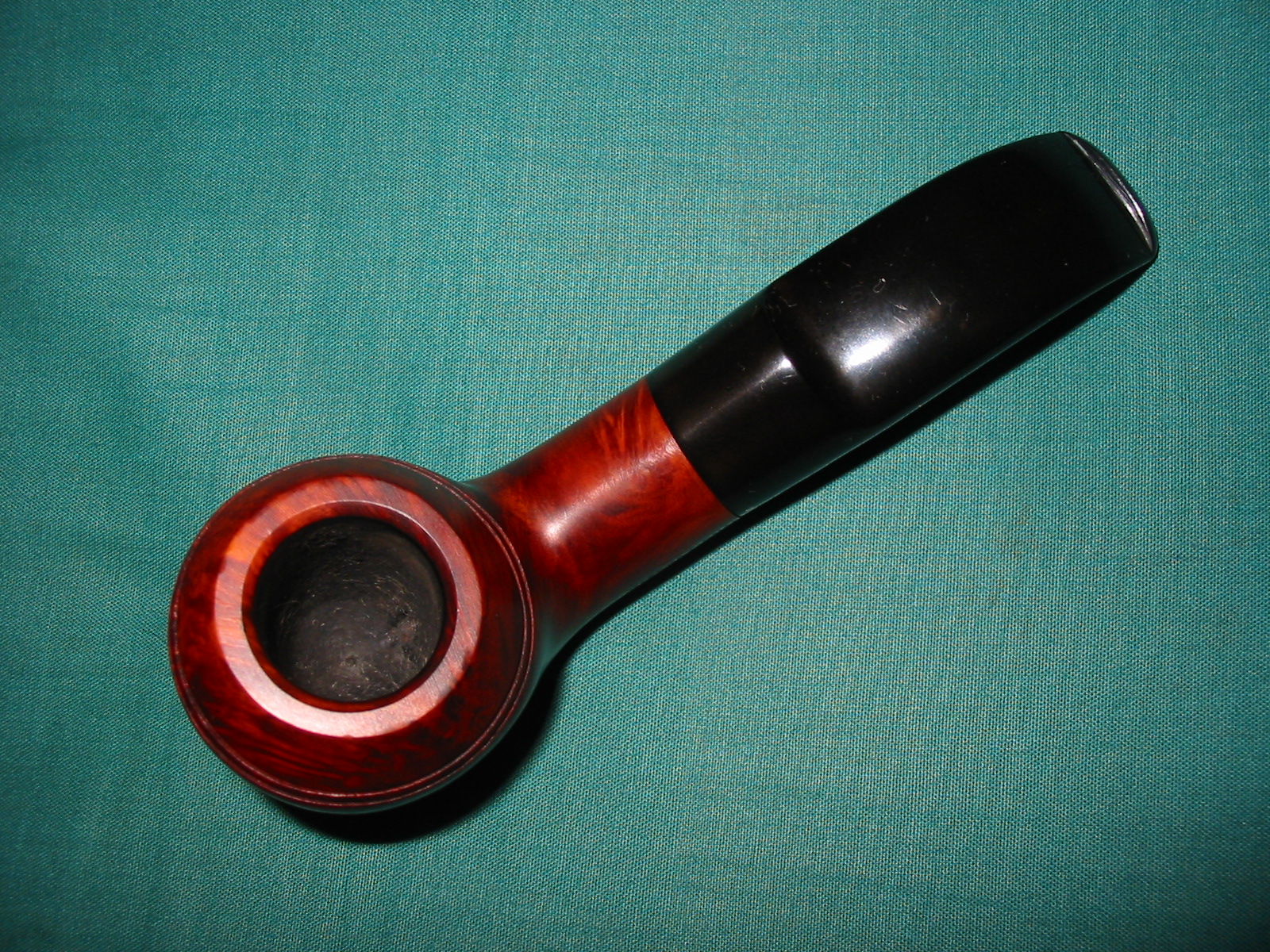
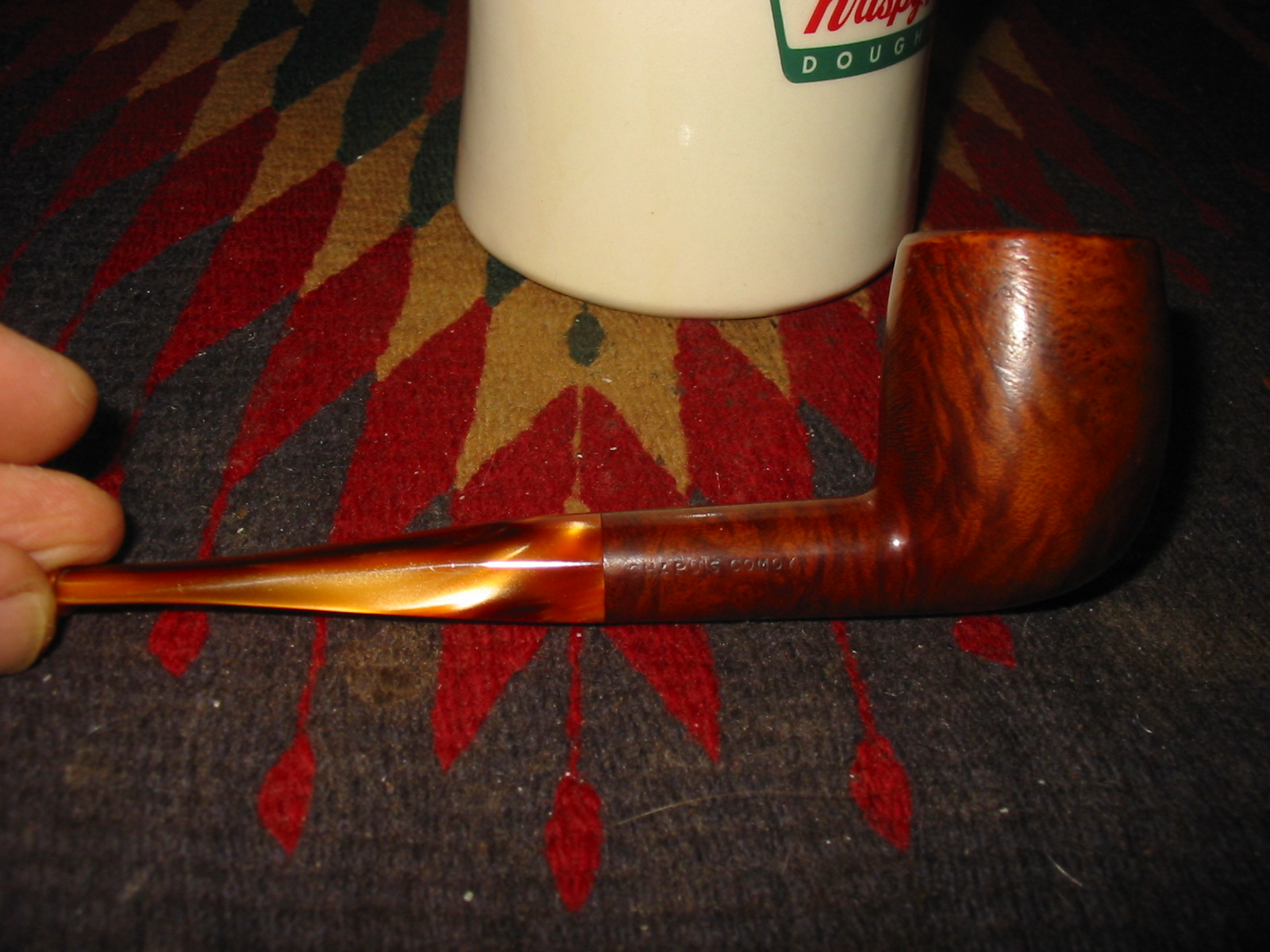
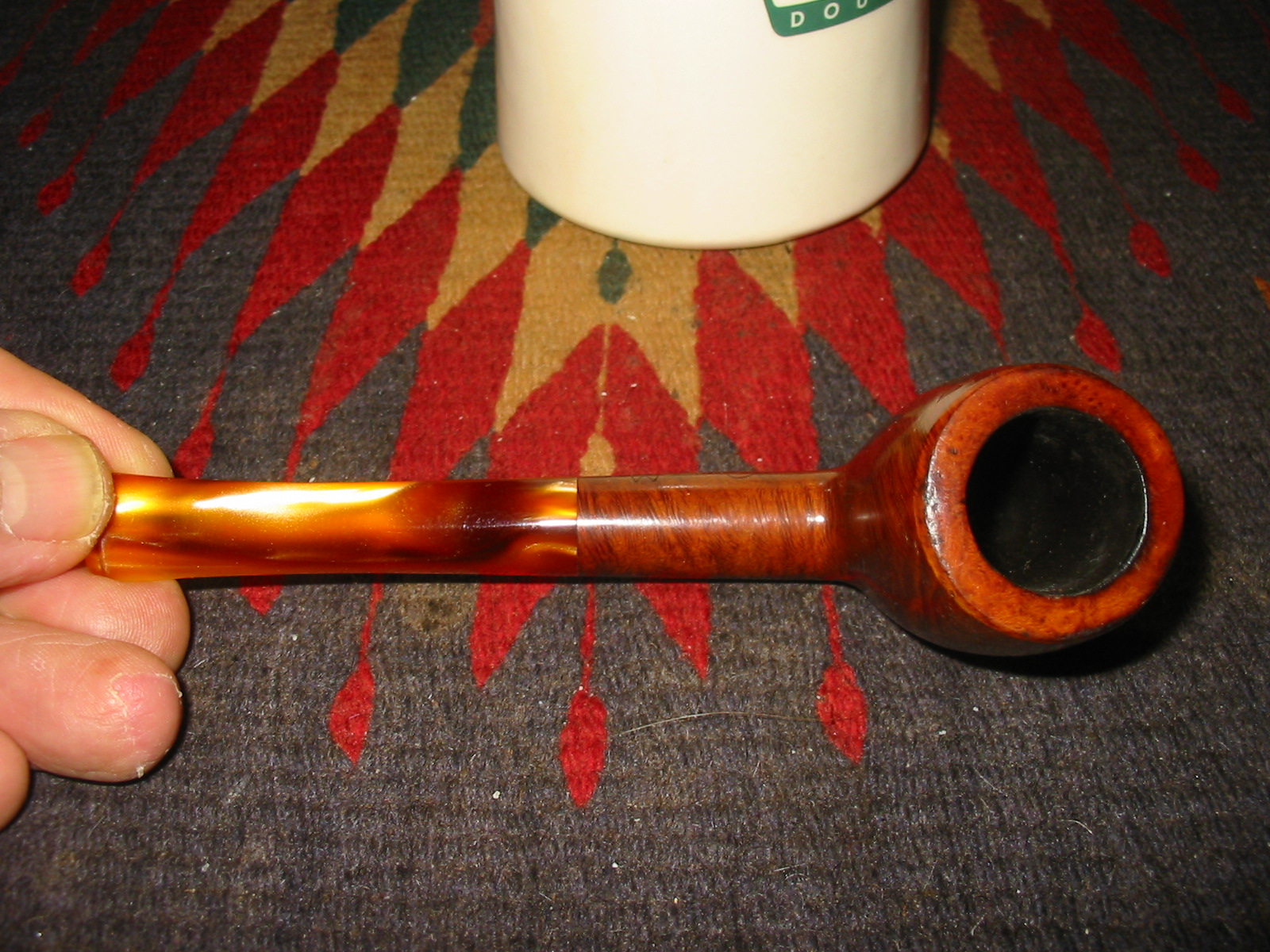
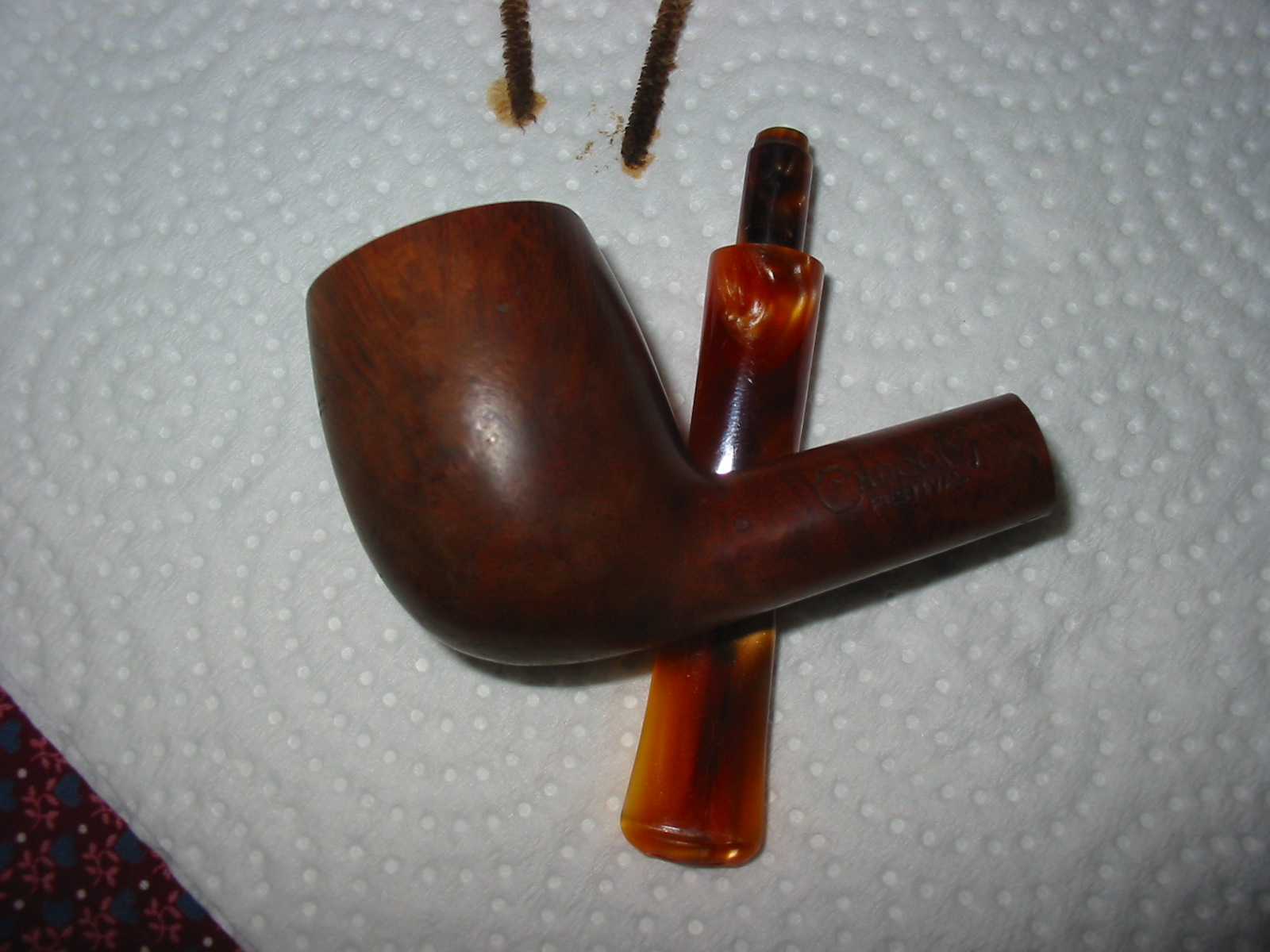
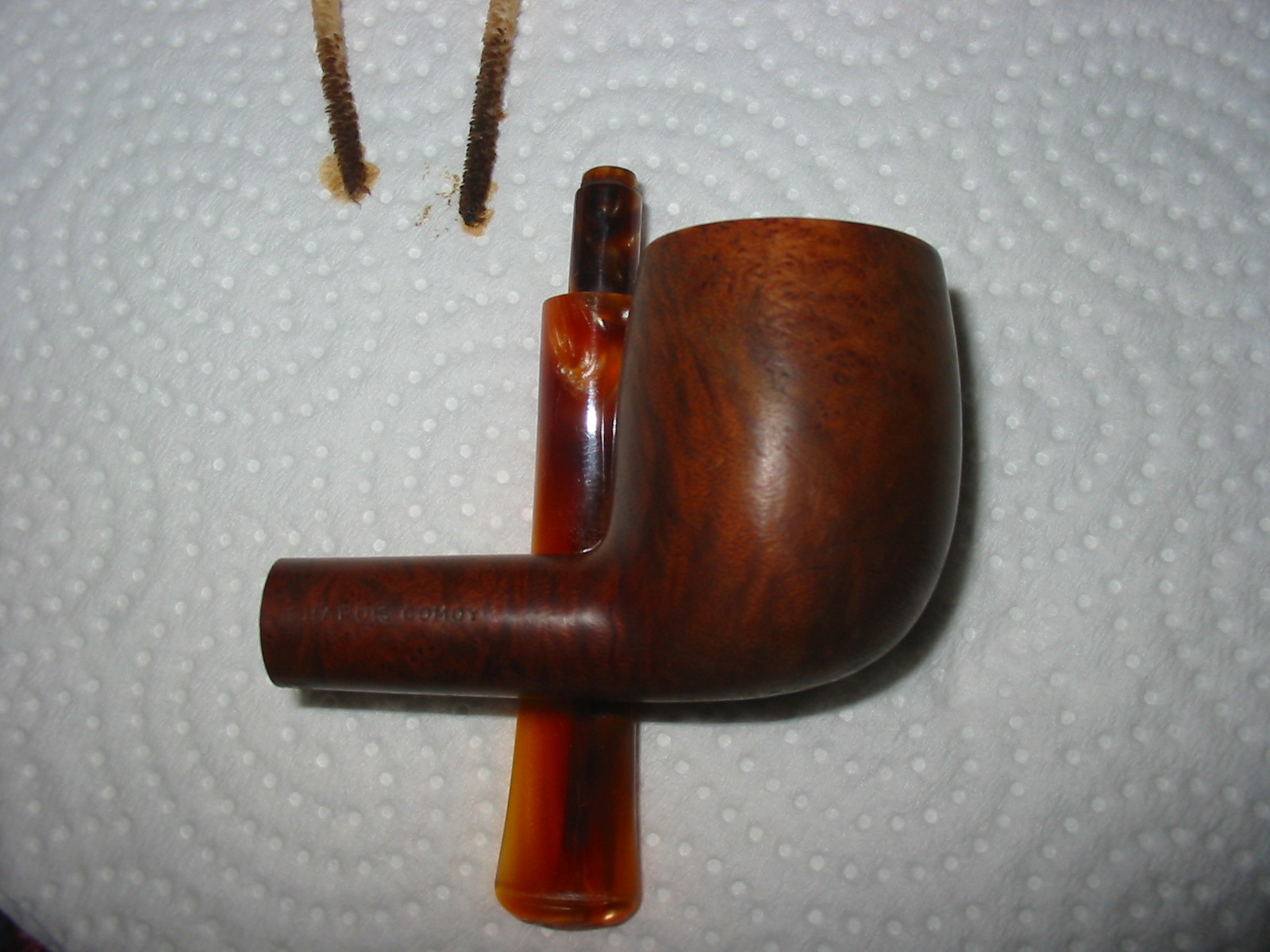
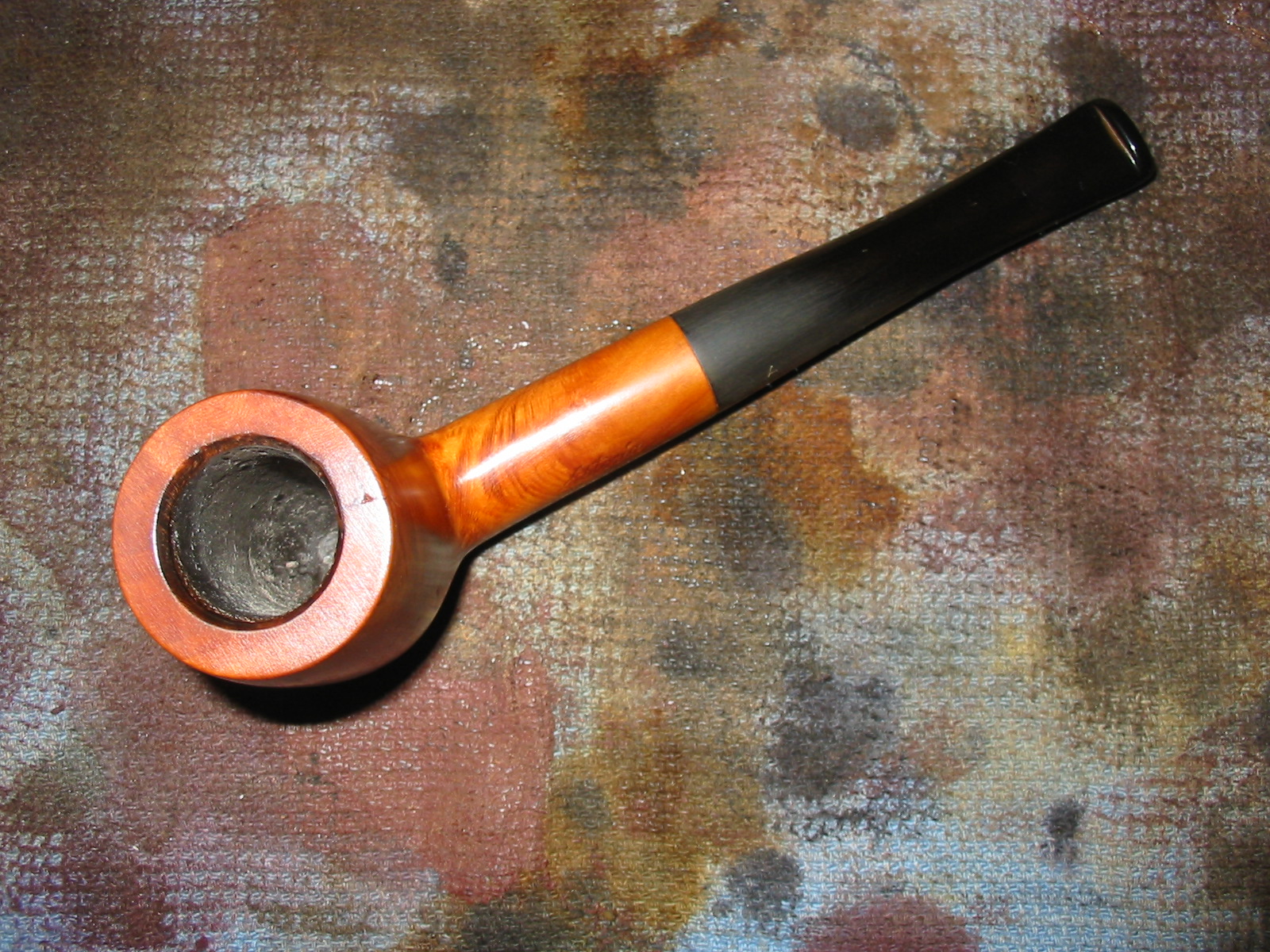
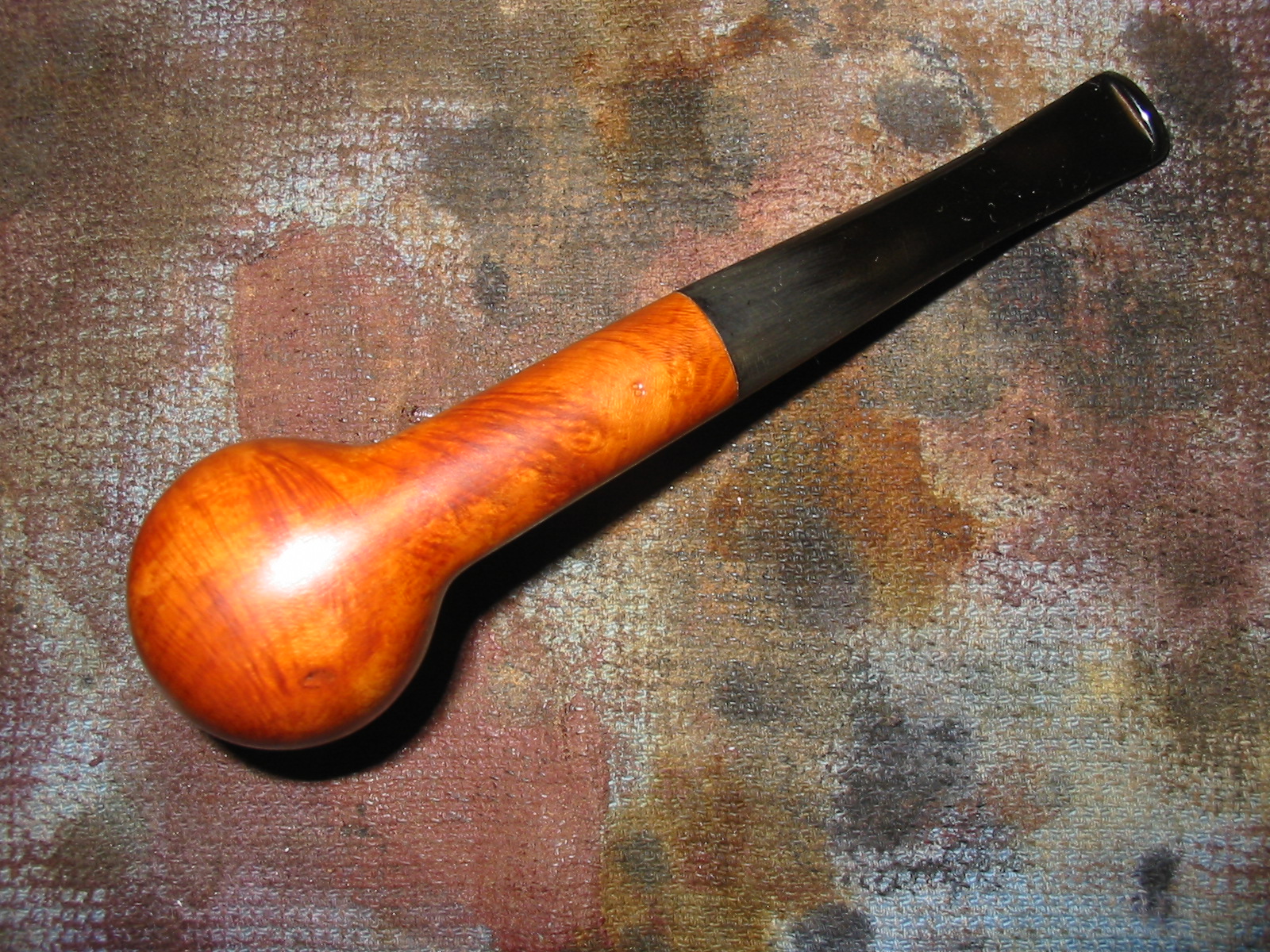
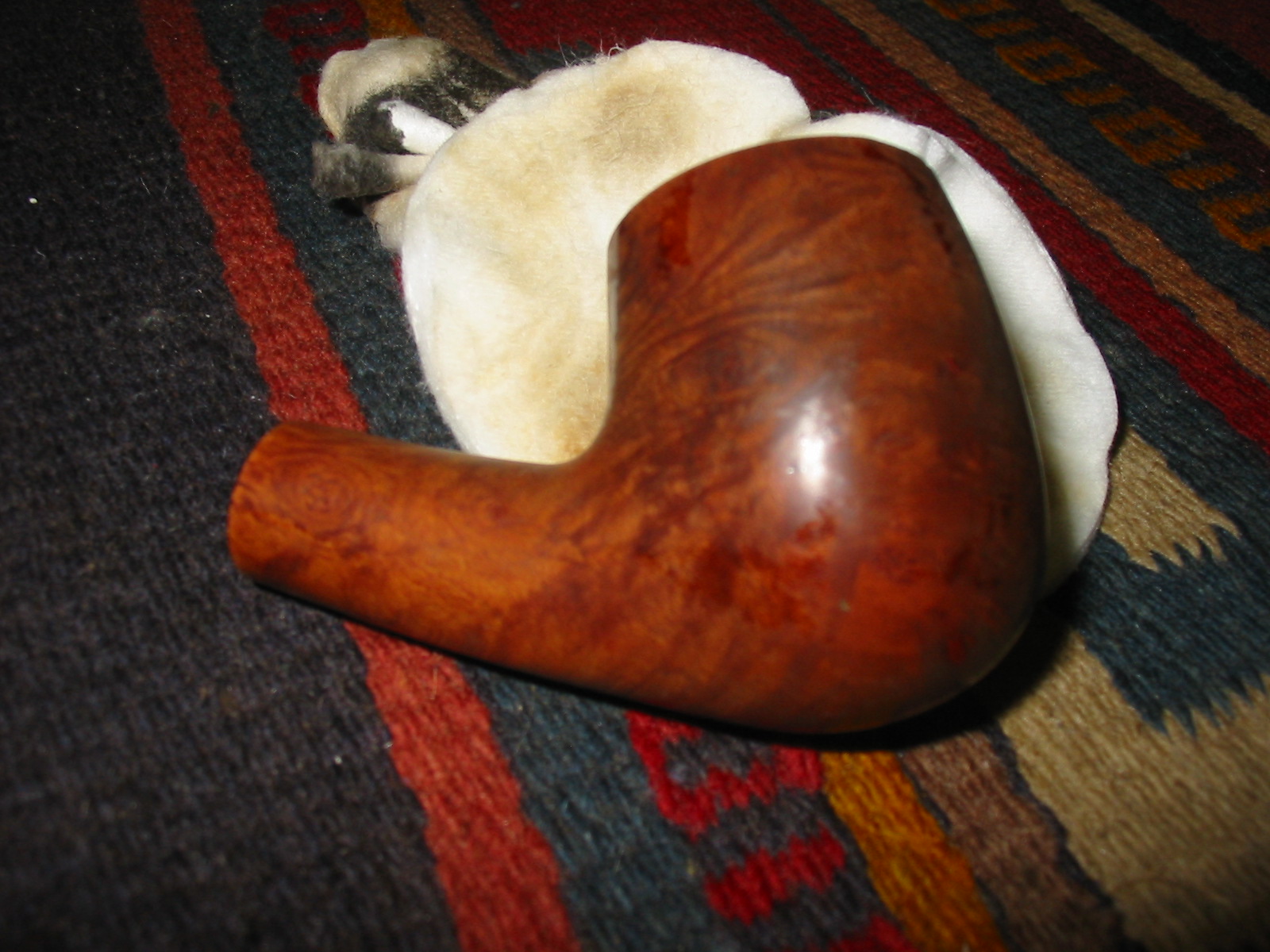
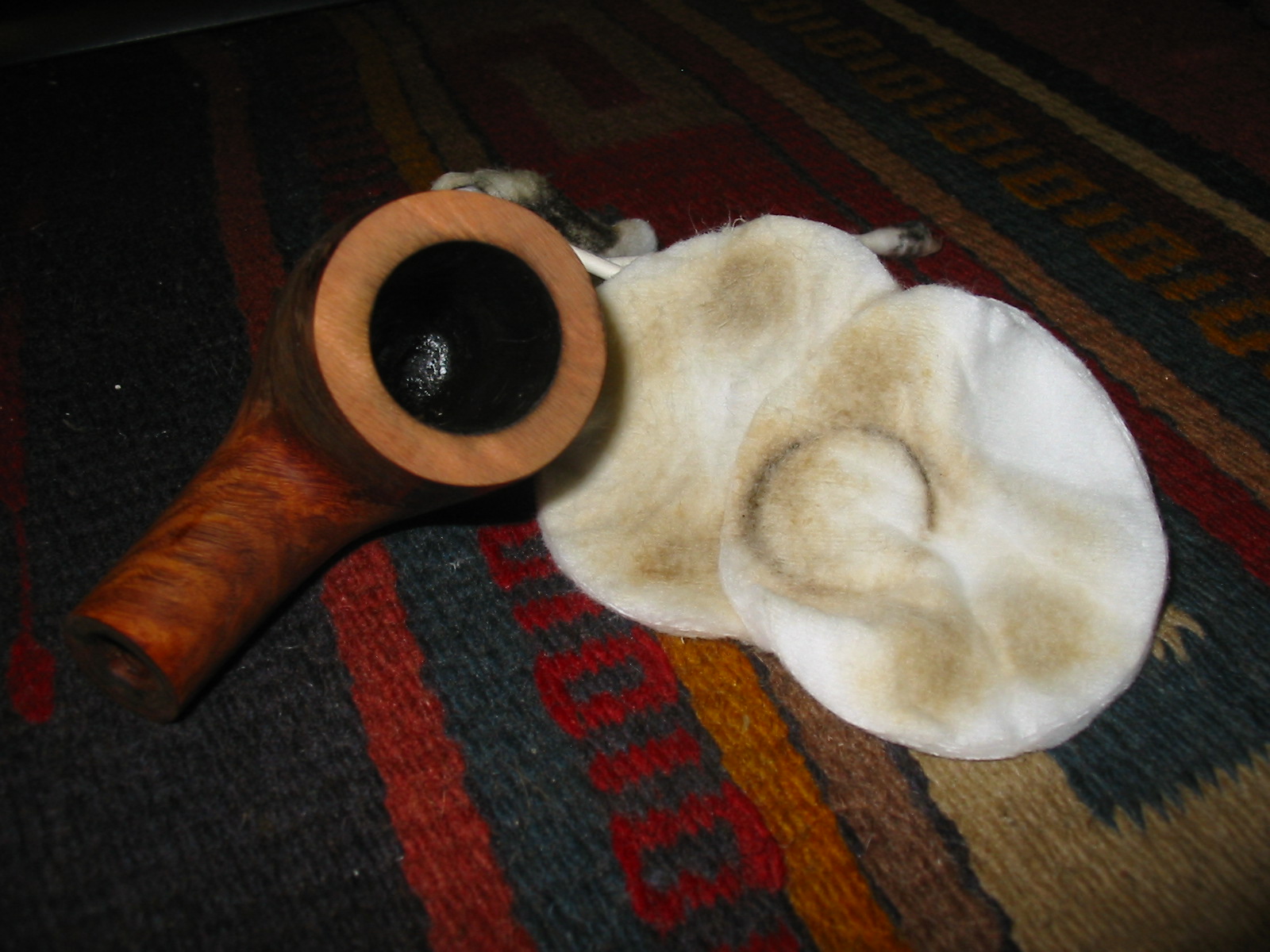
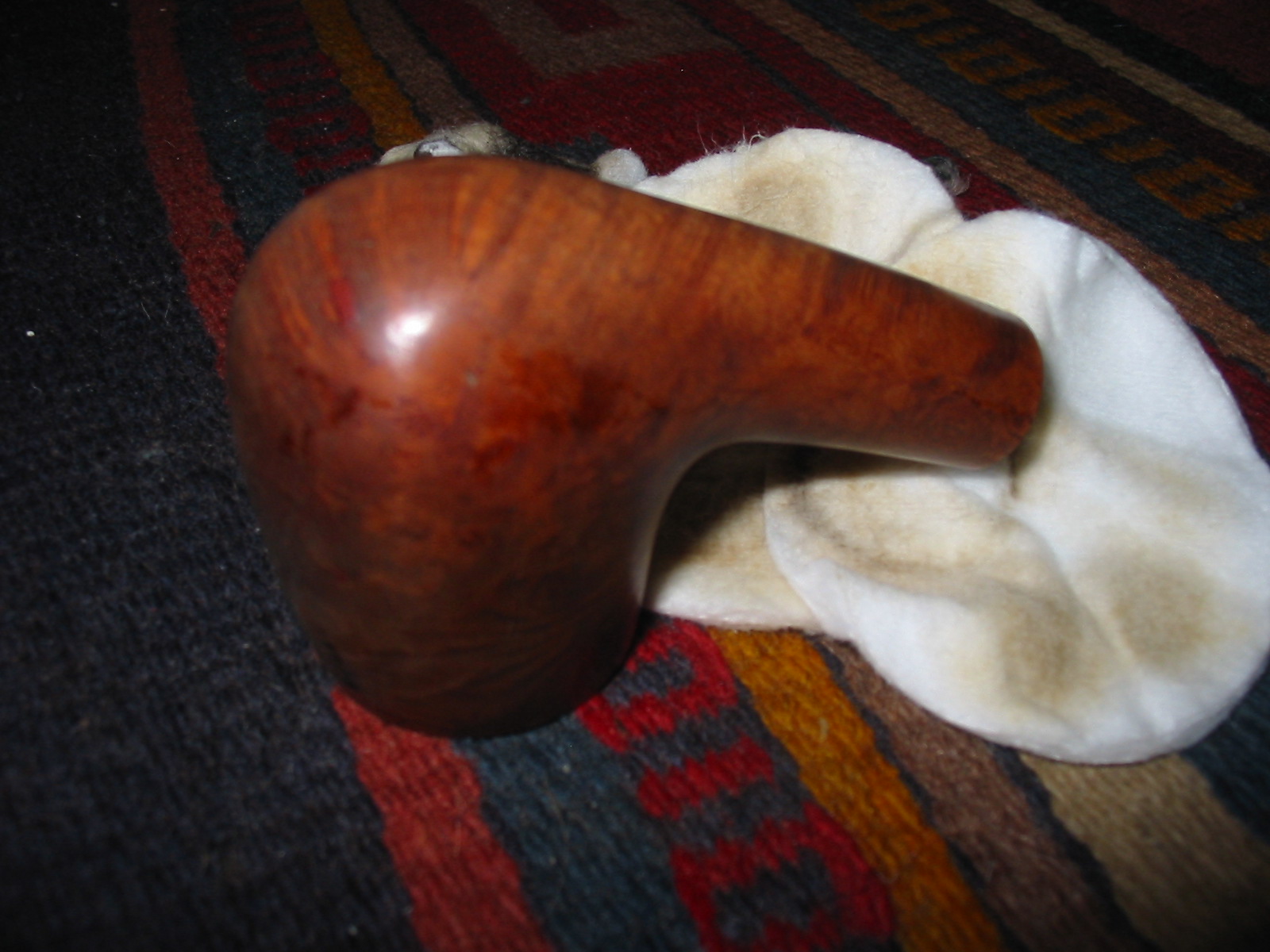
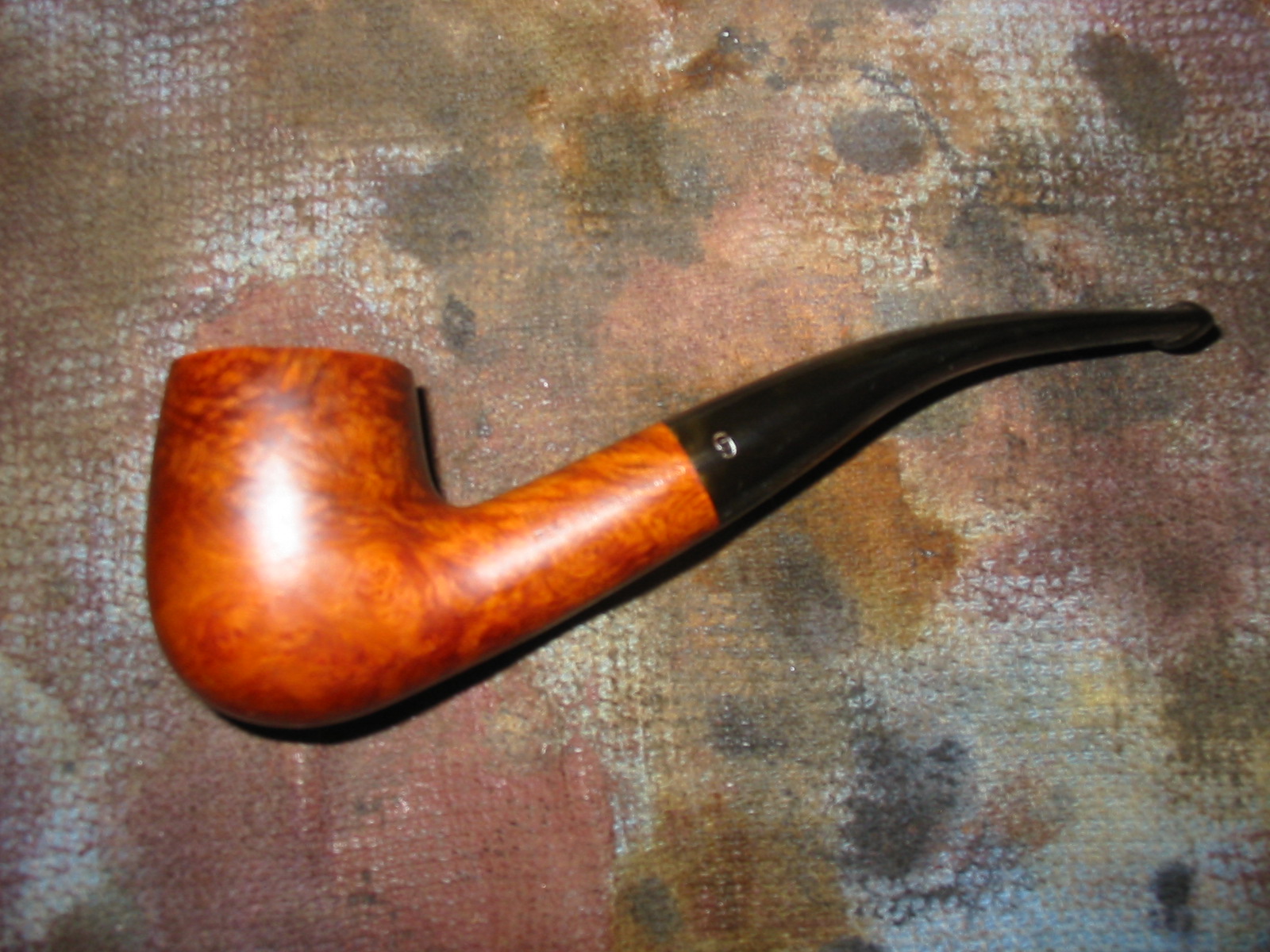
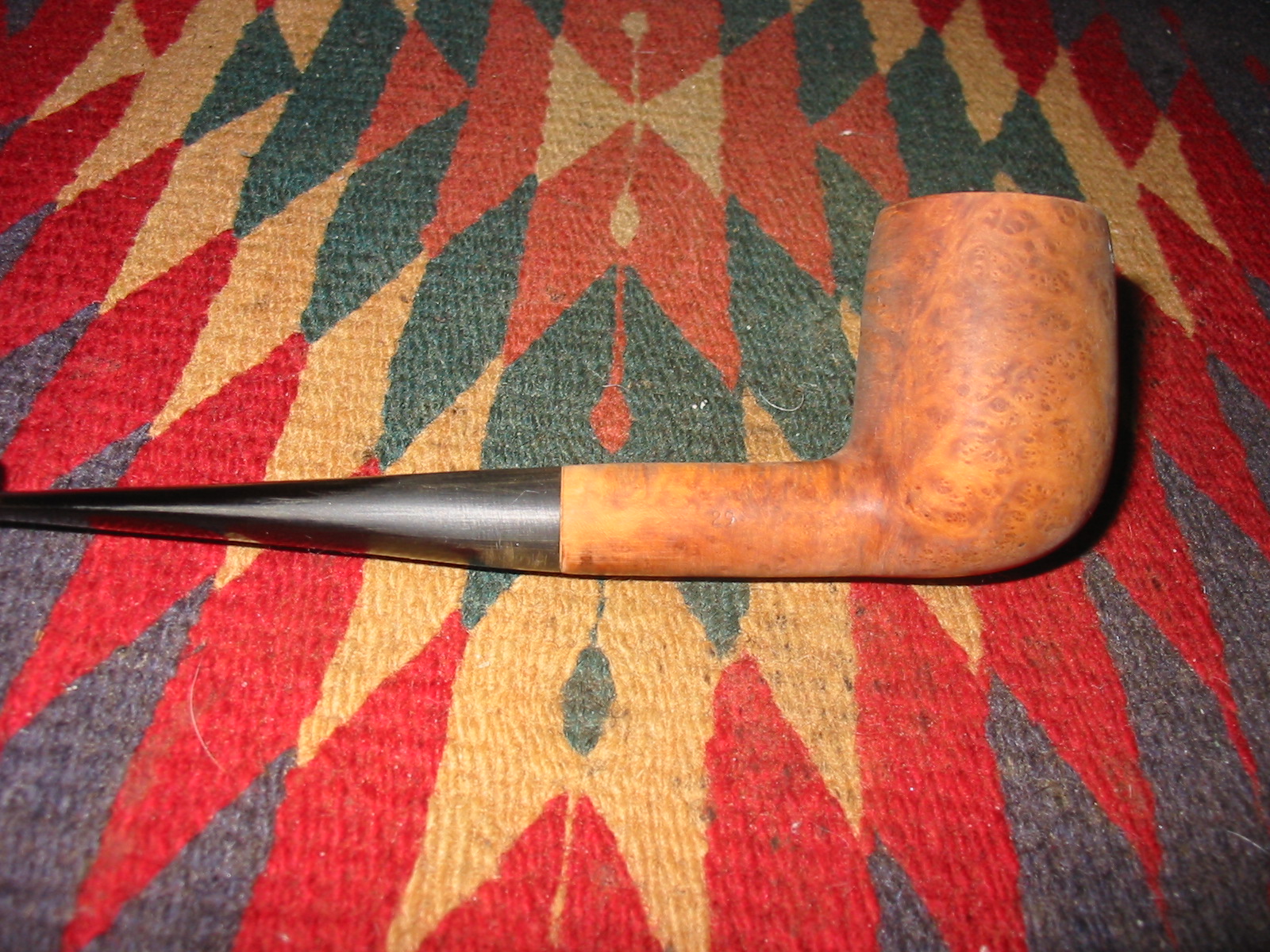
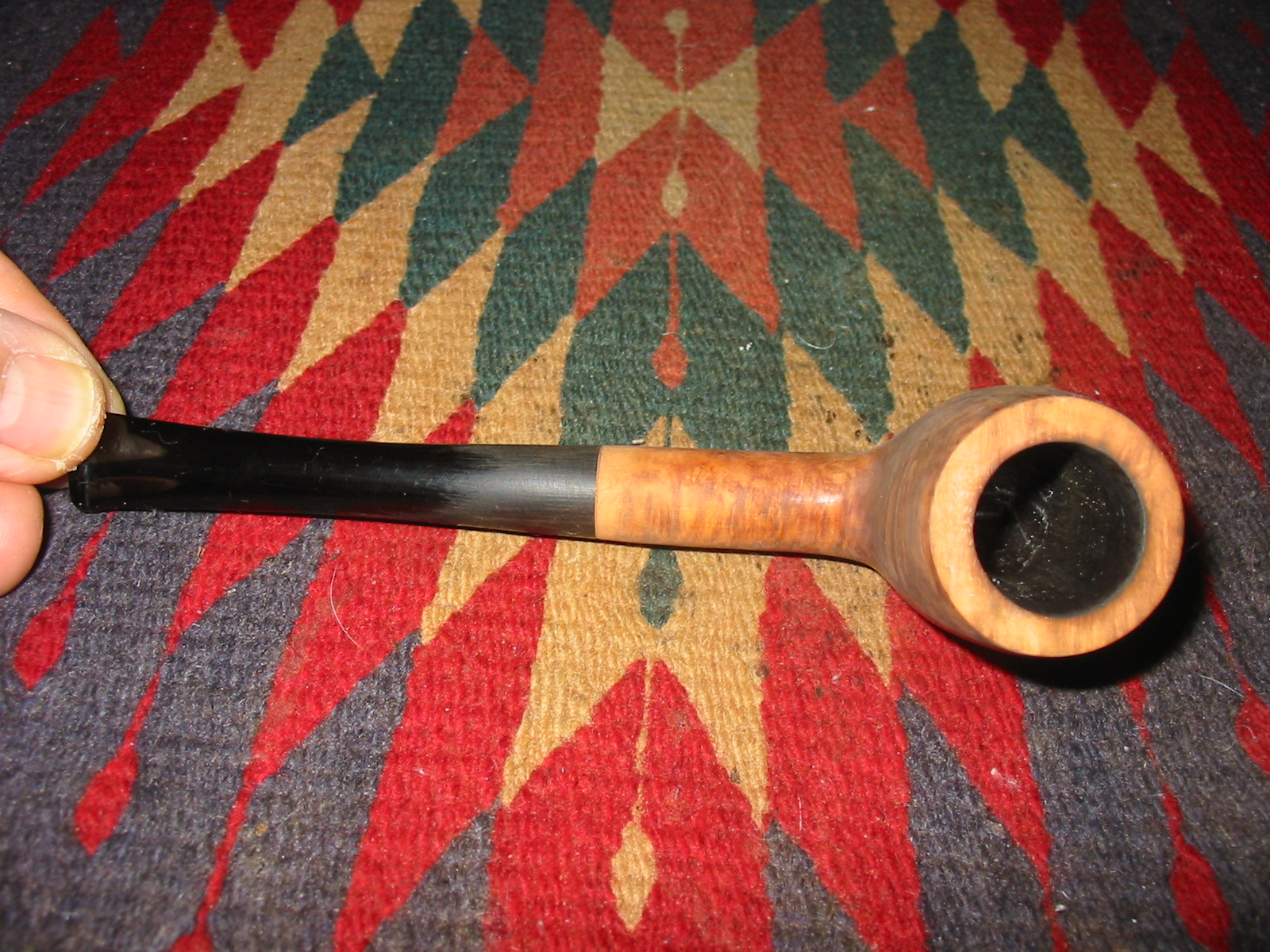
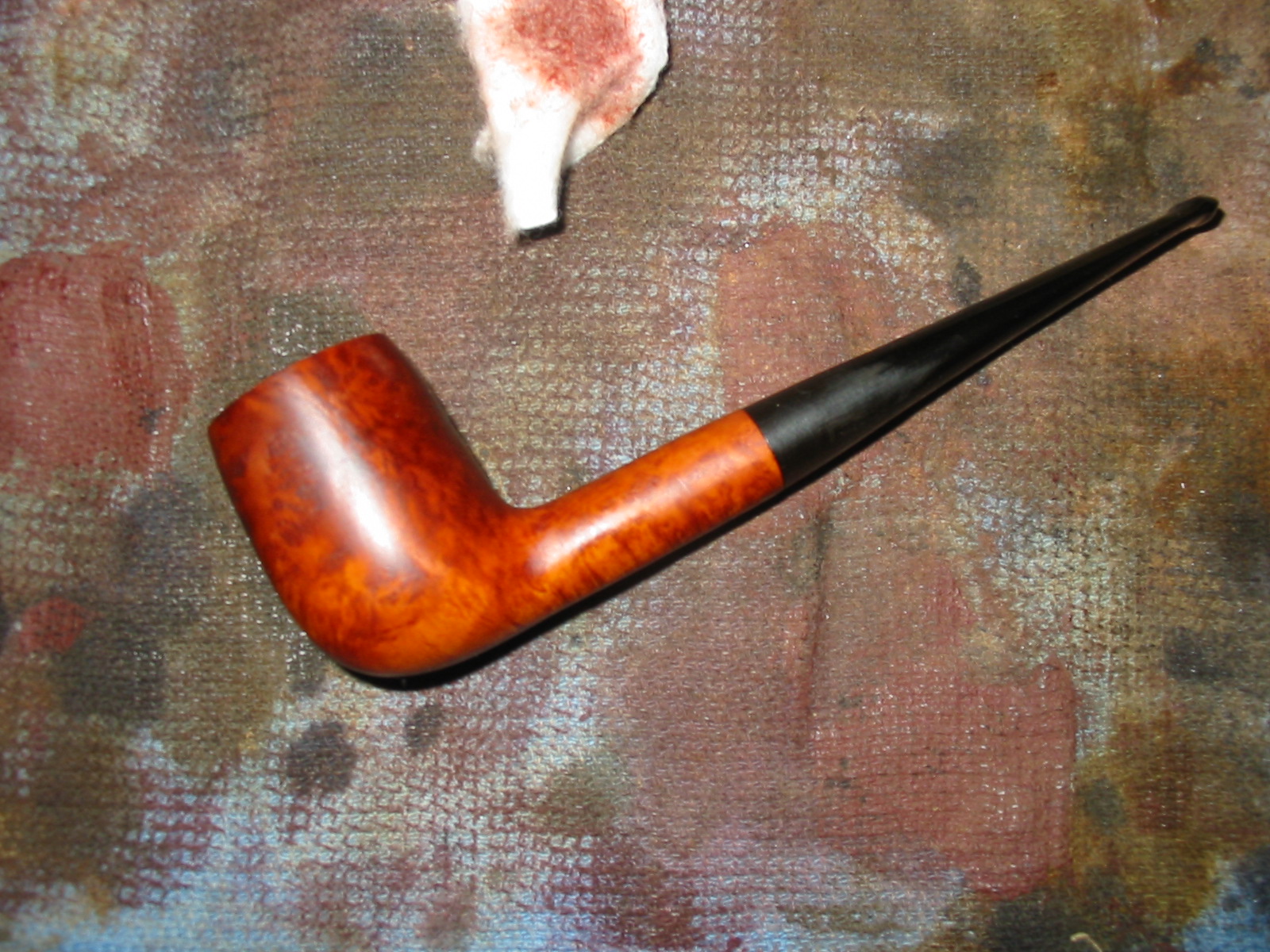
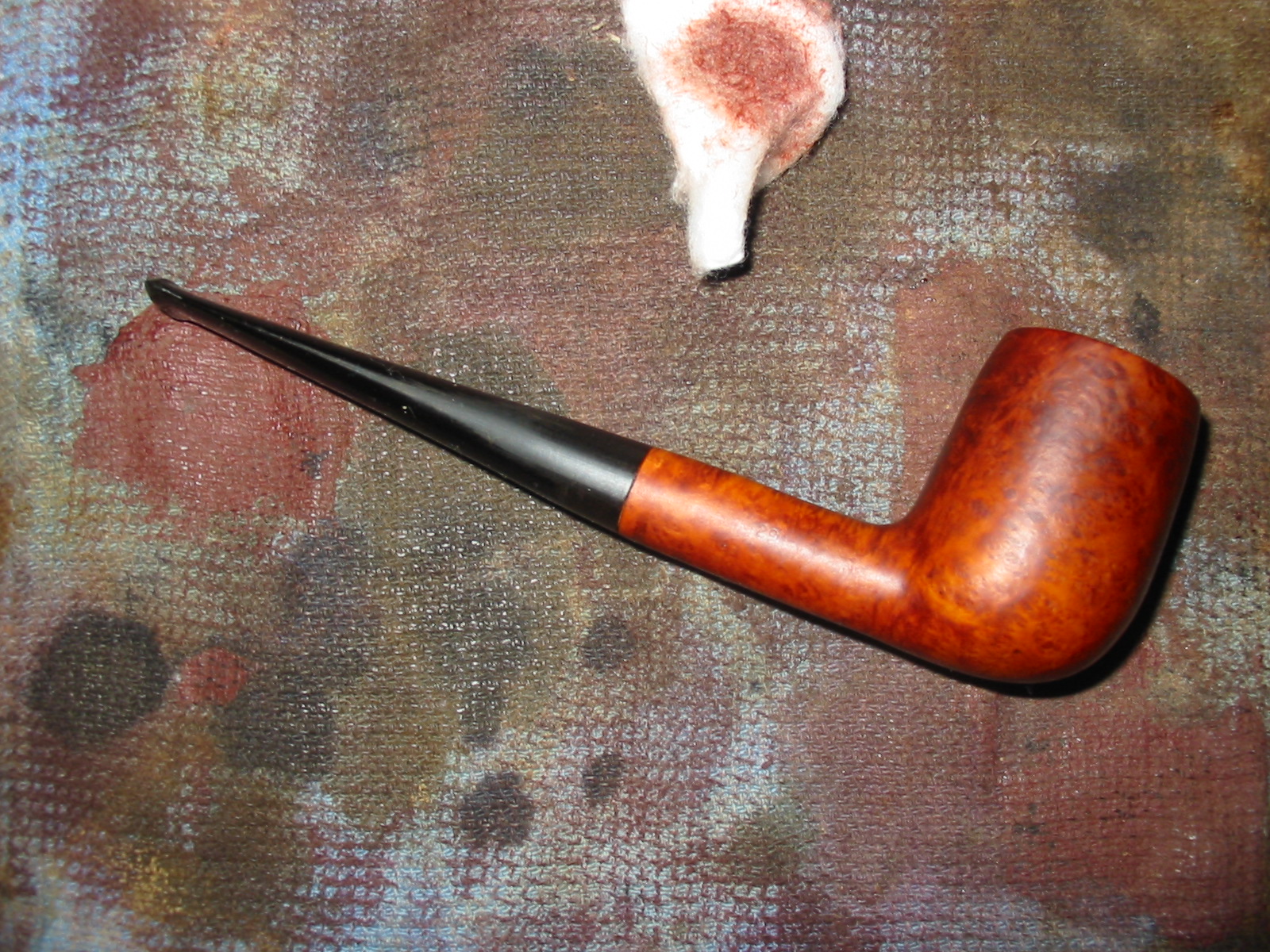
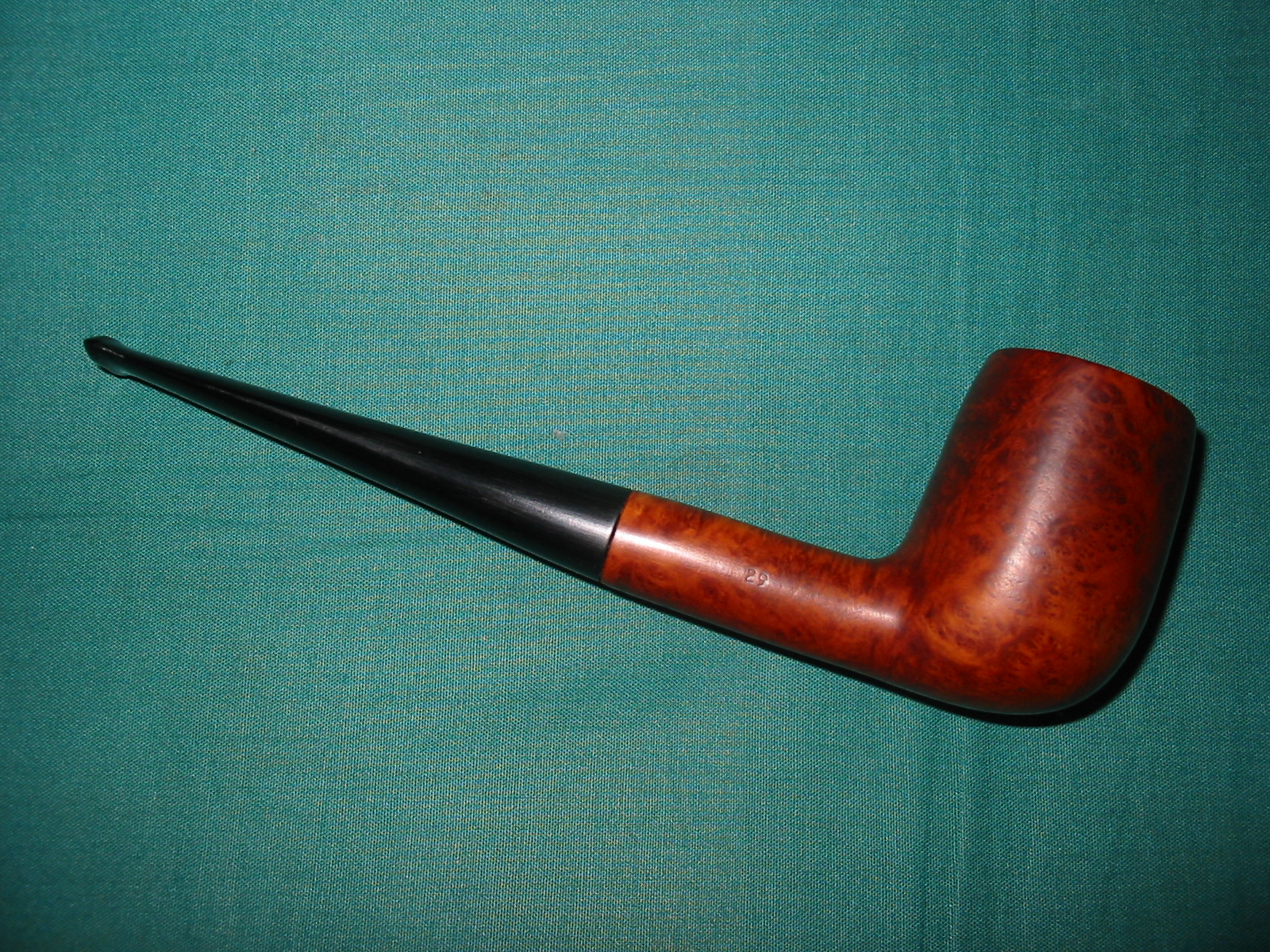
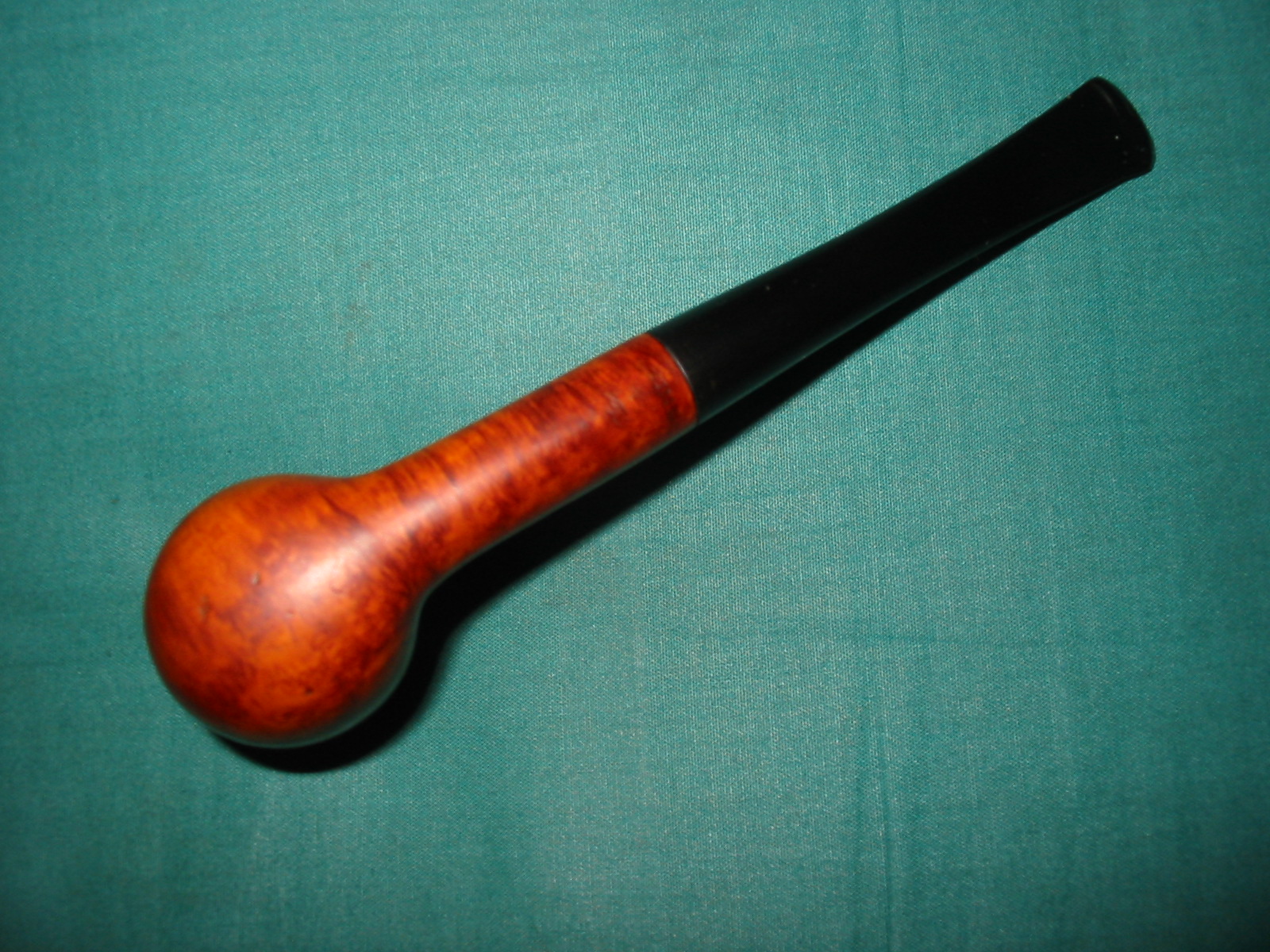
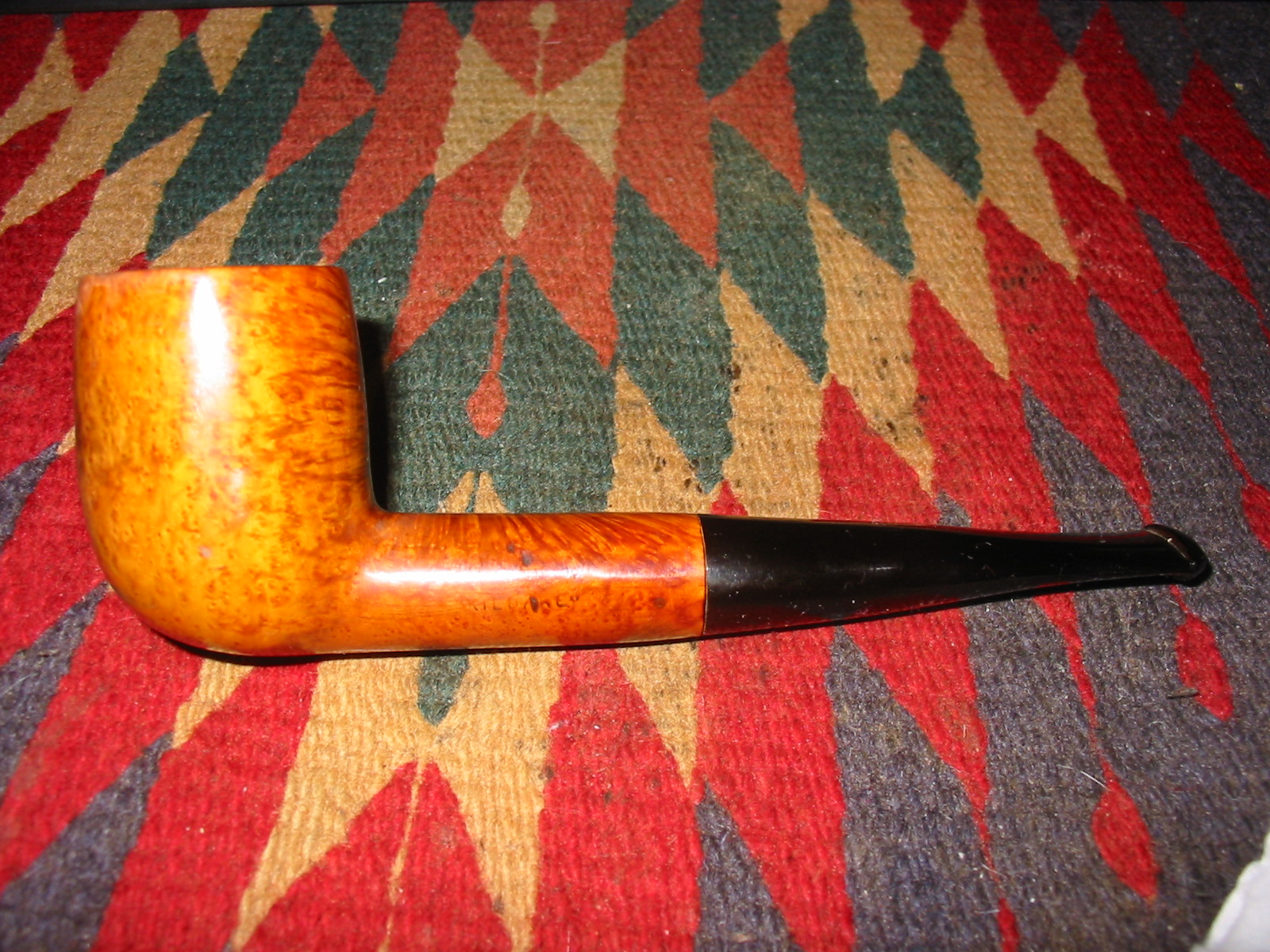
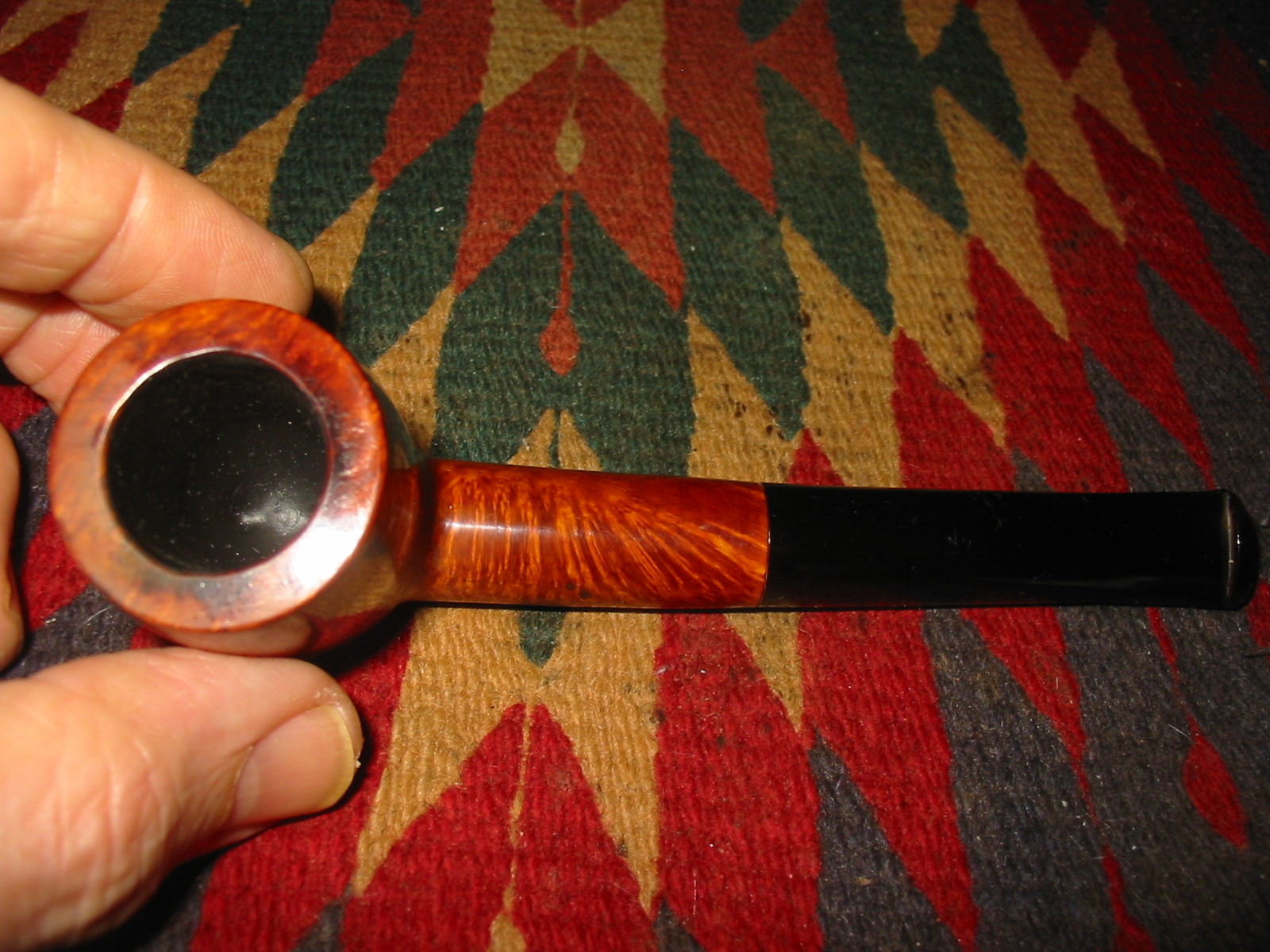
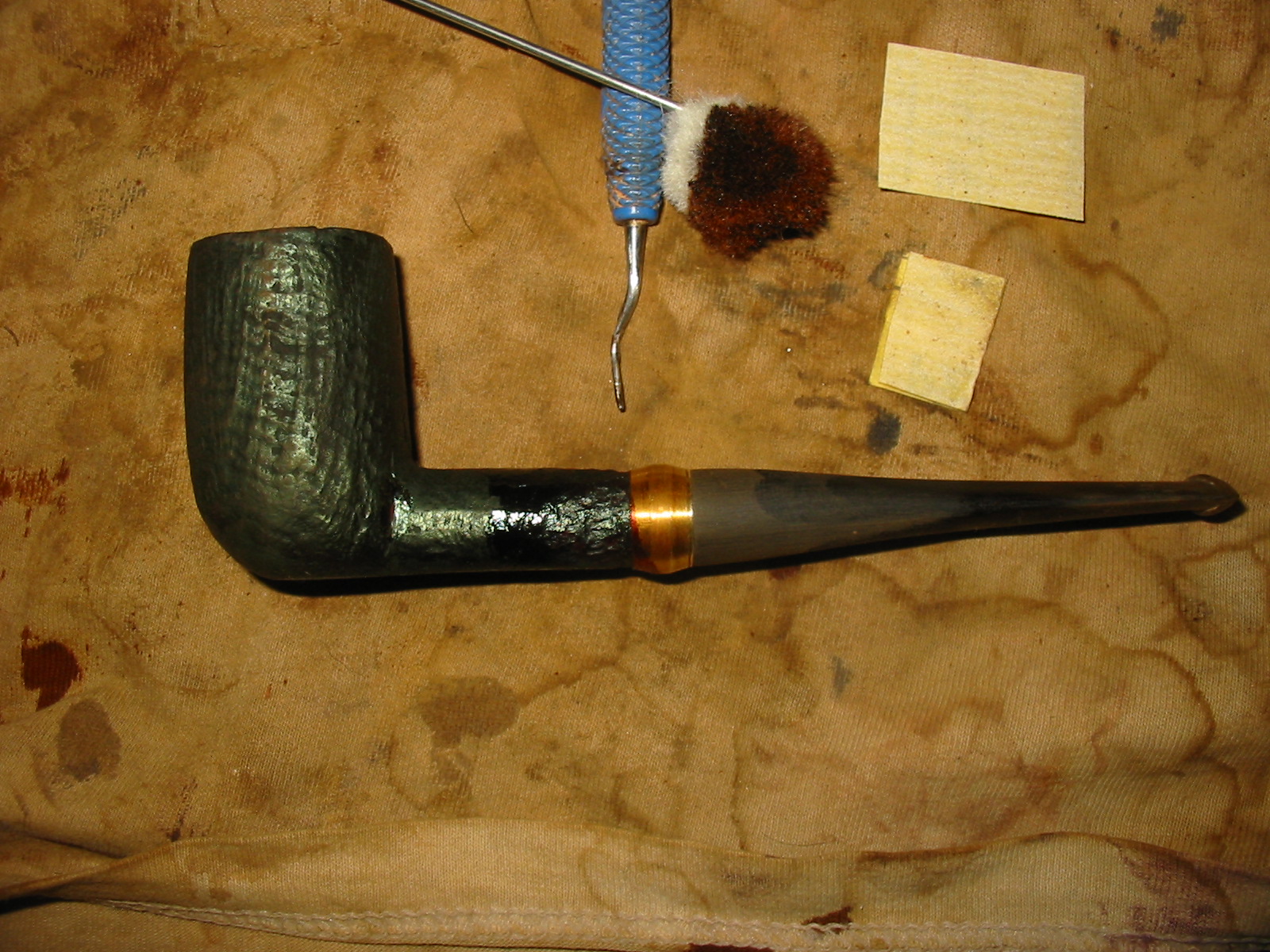
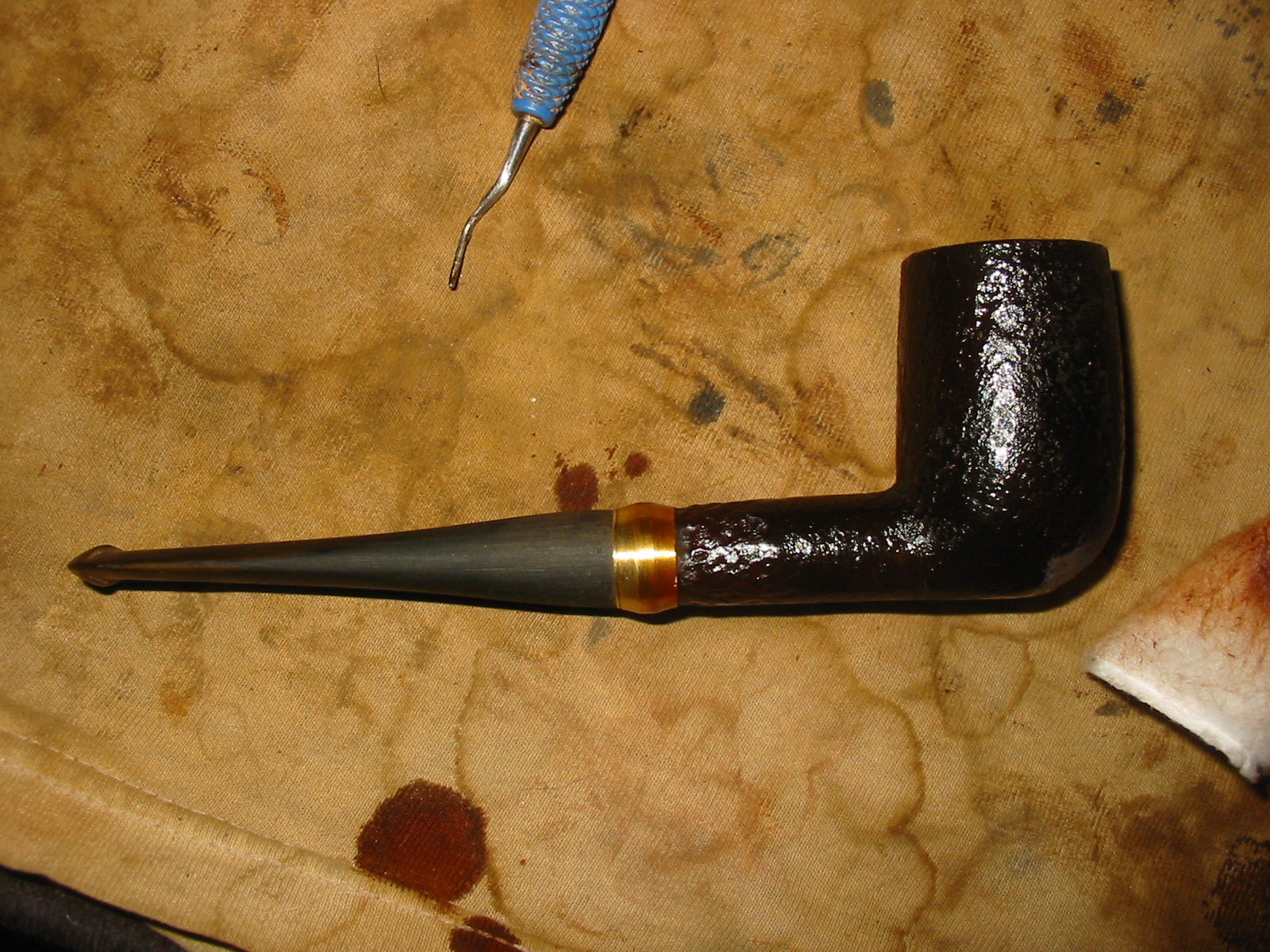
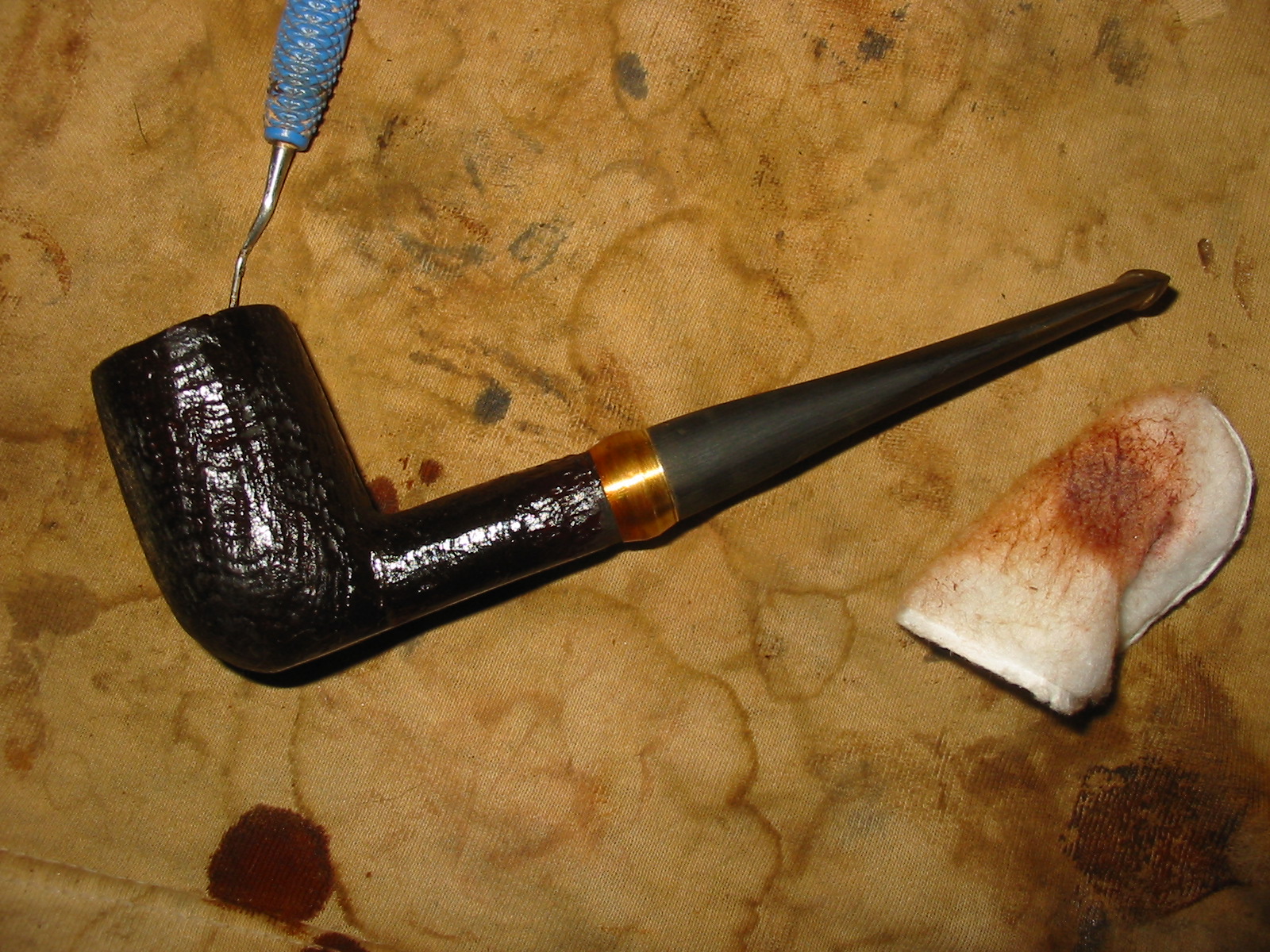
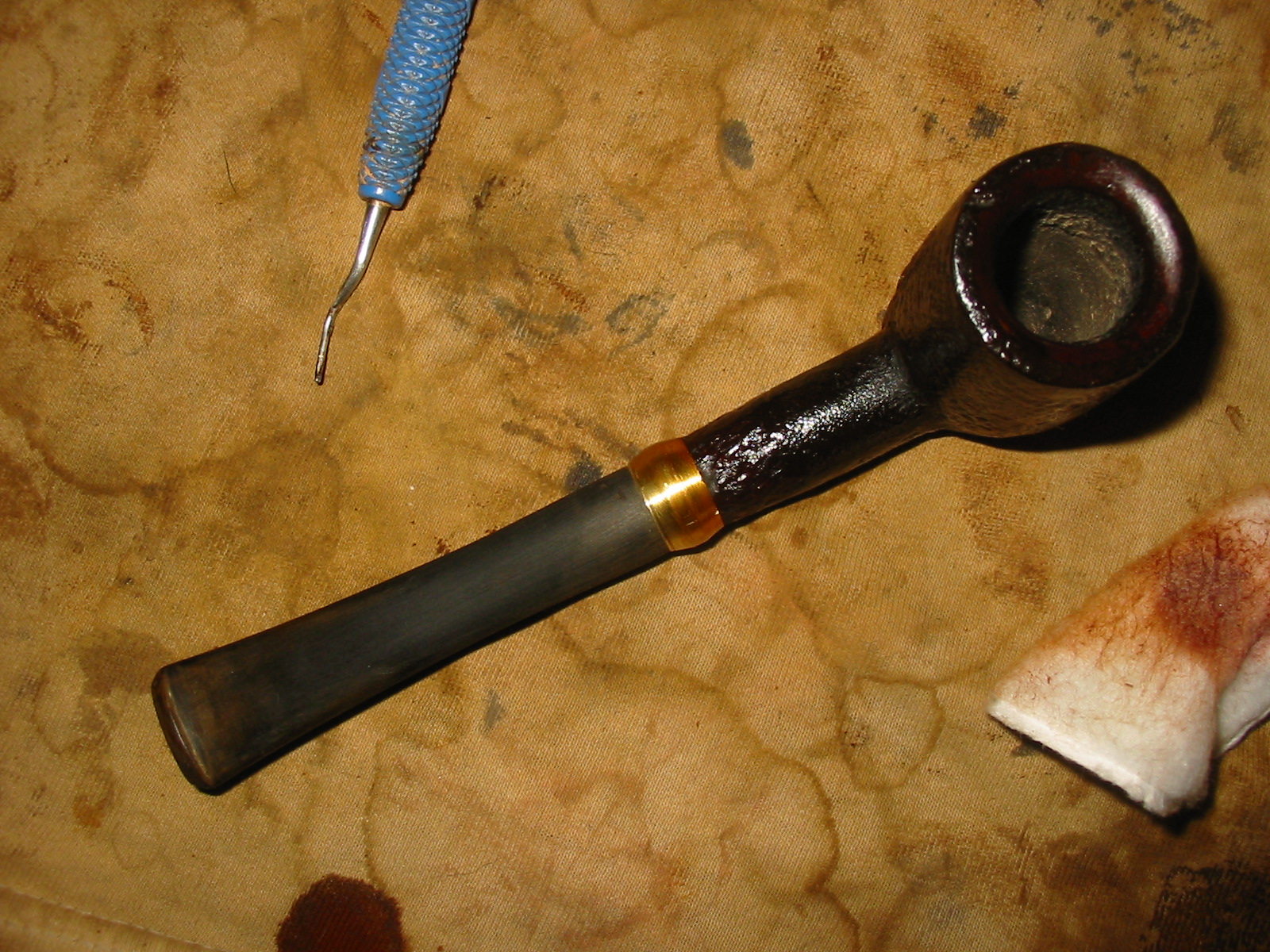
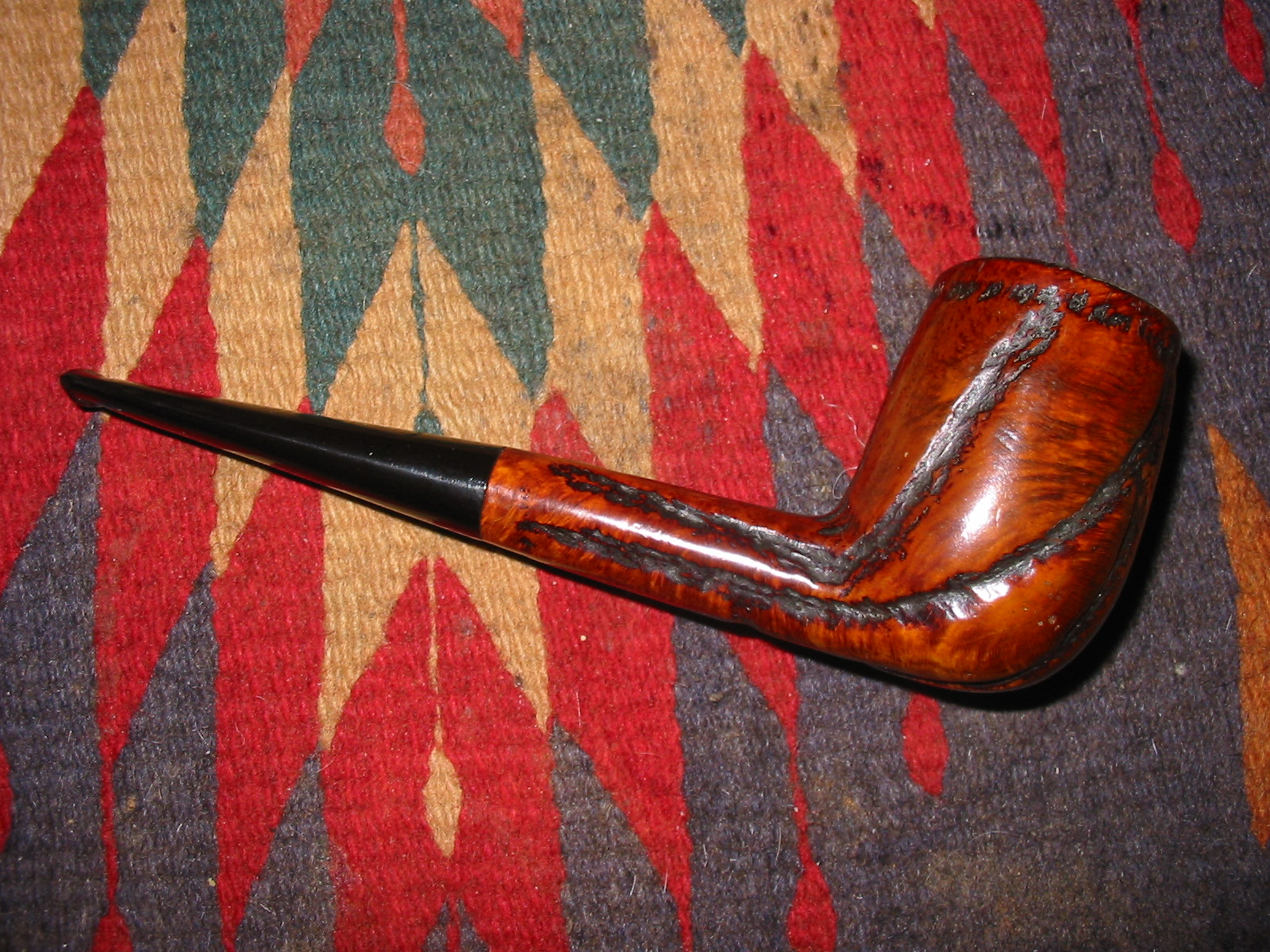
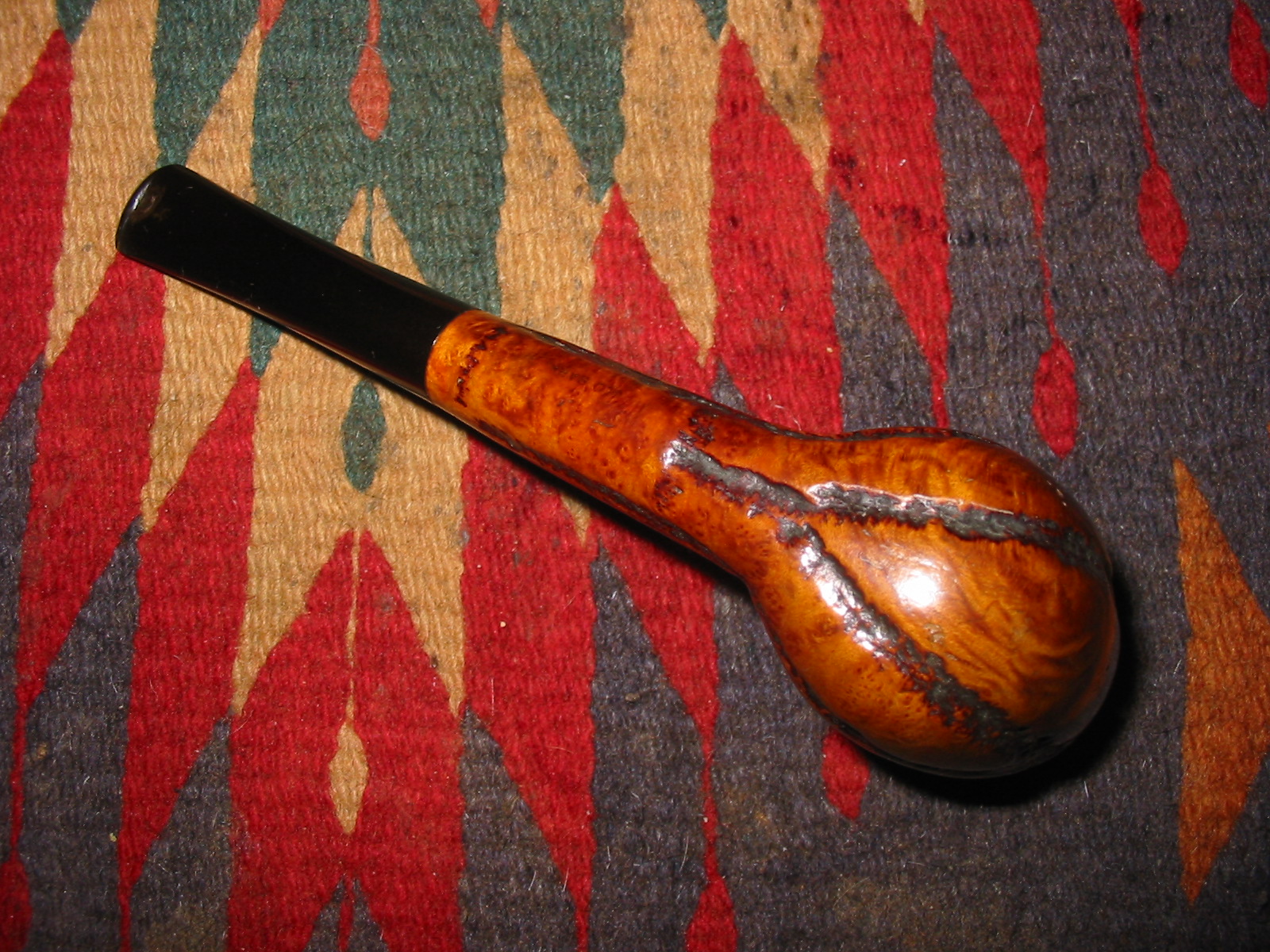
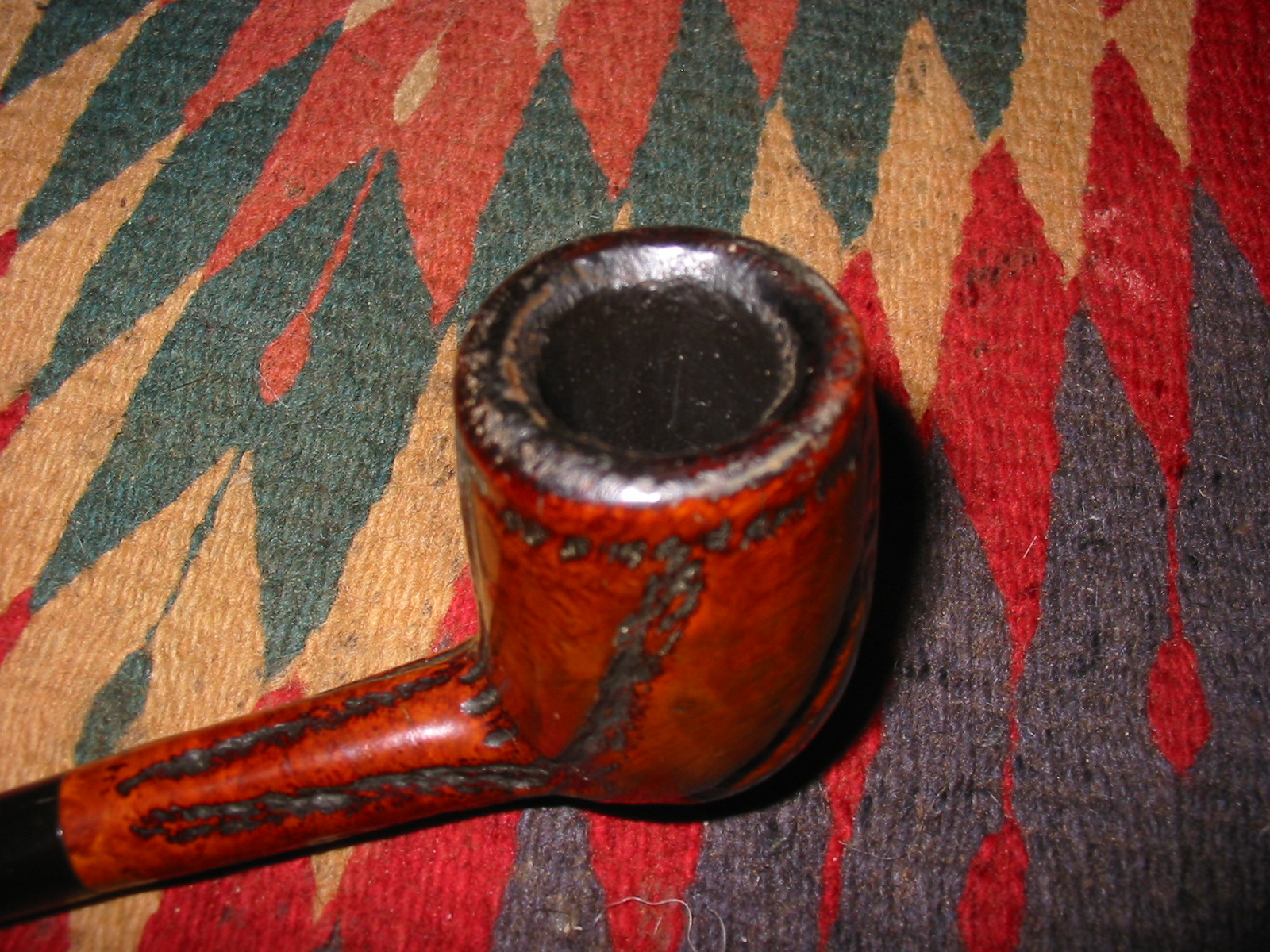
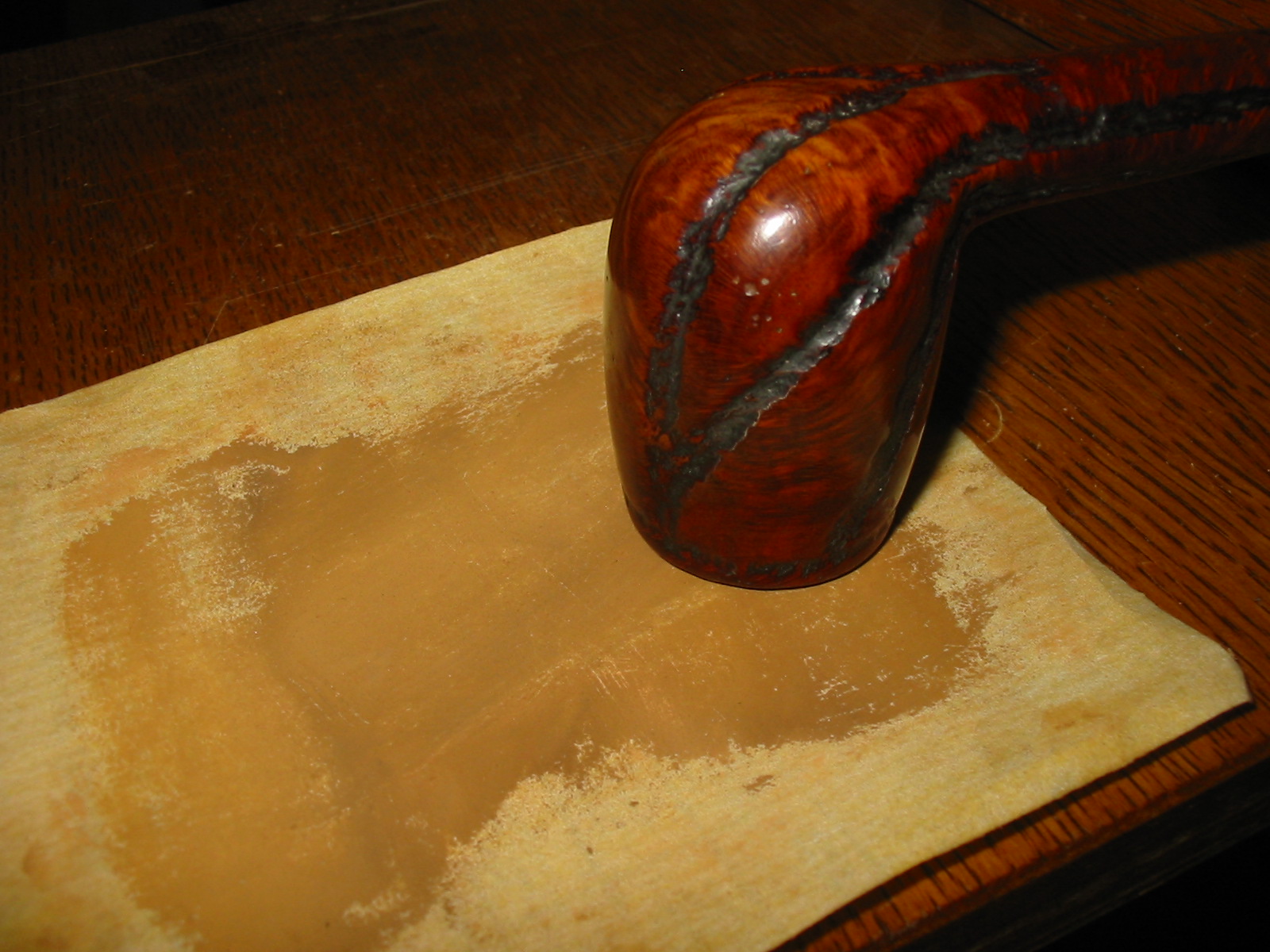
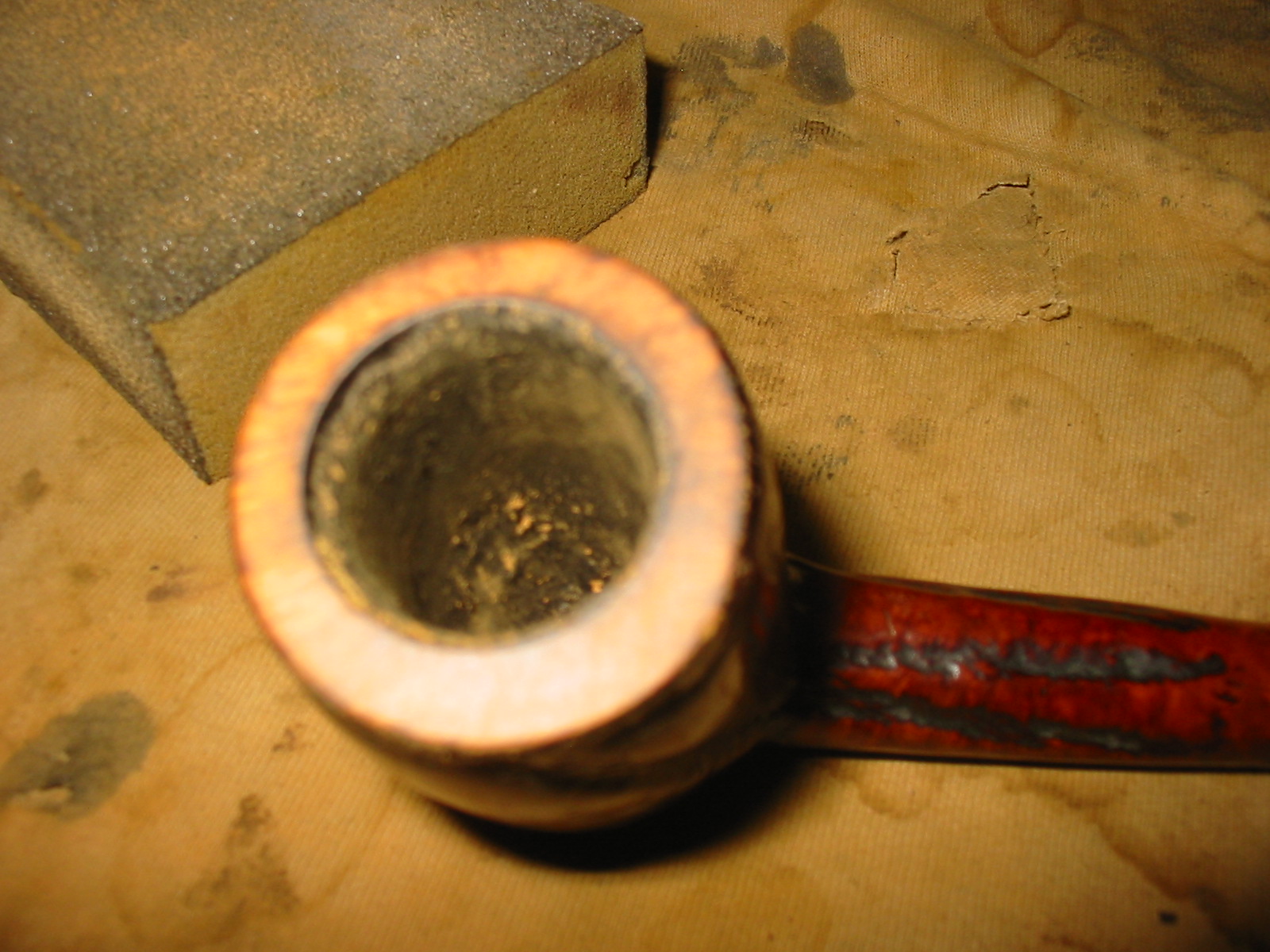
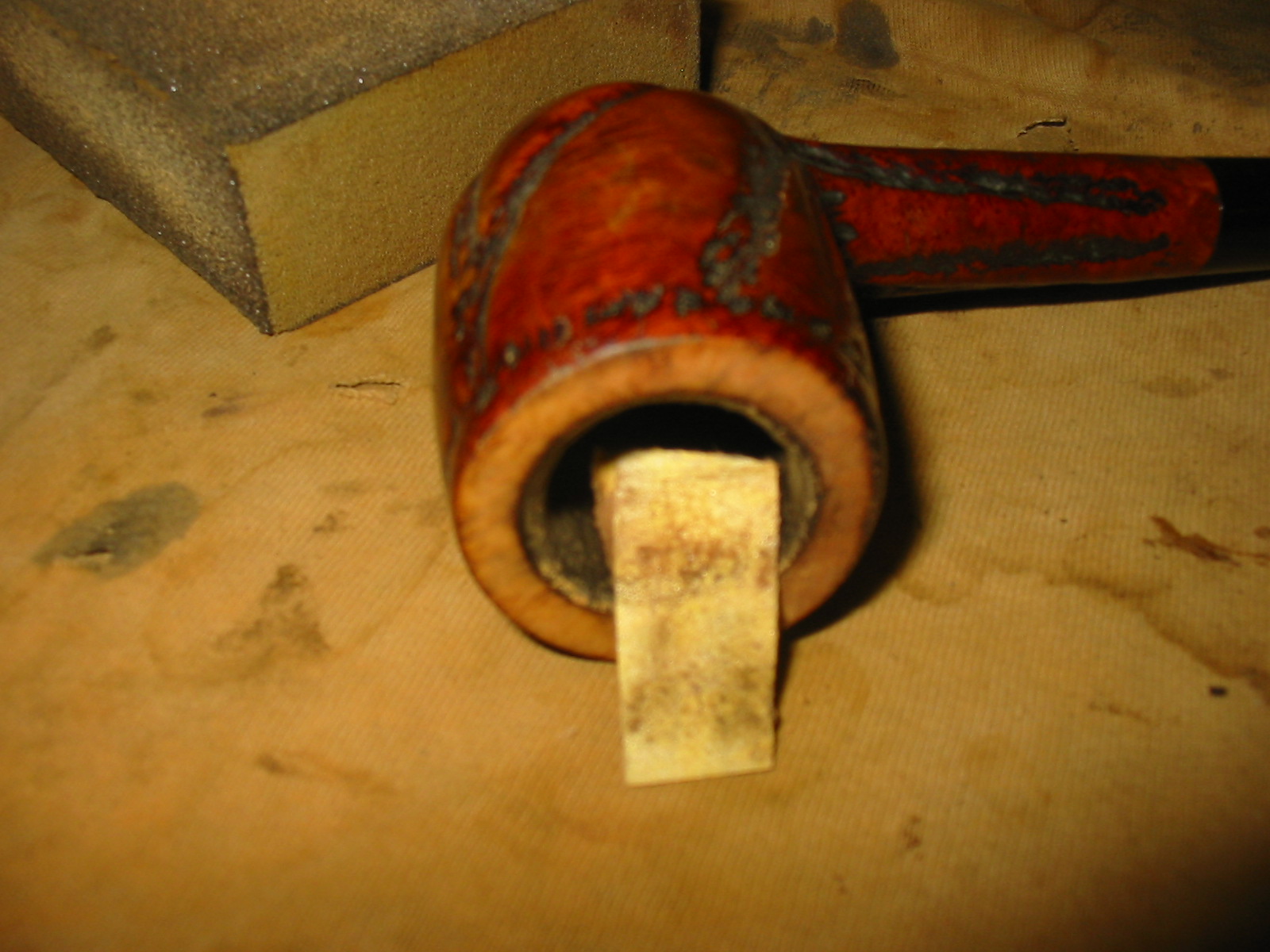
Tag Archives: restaining

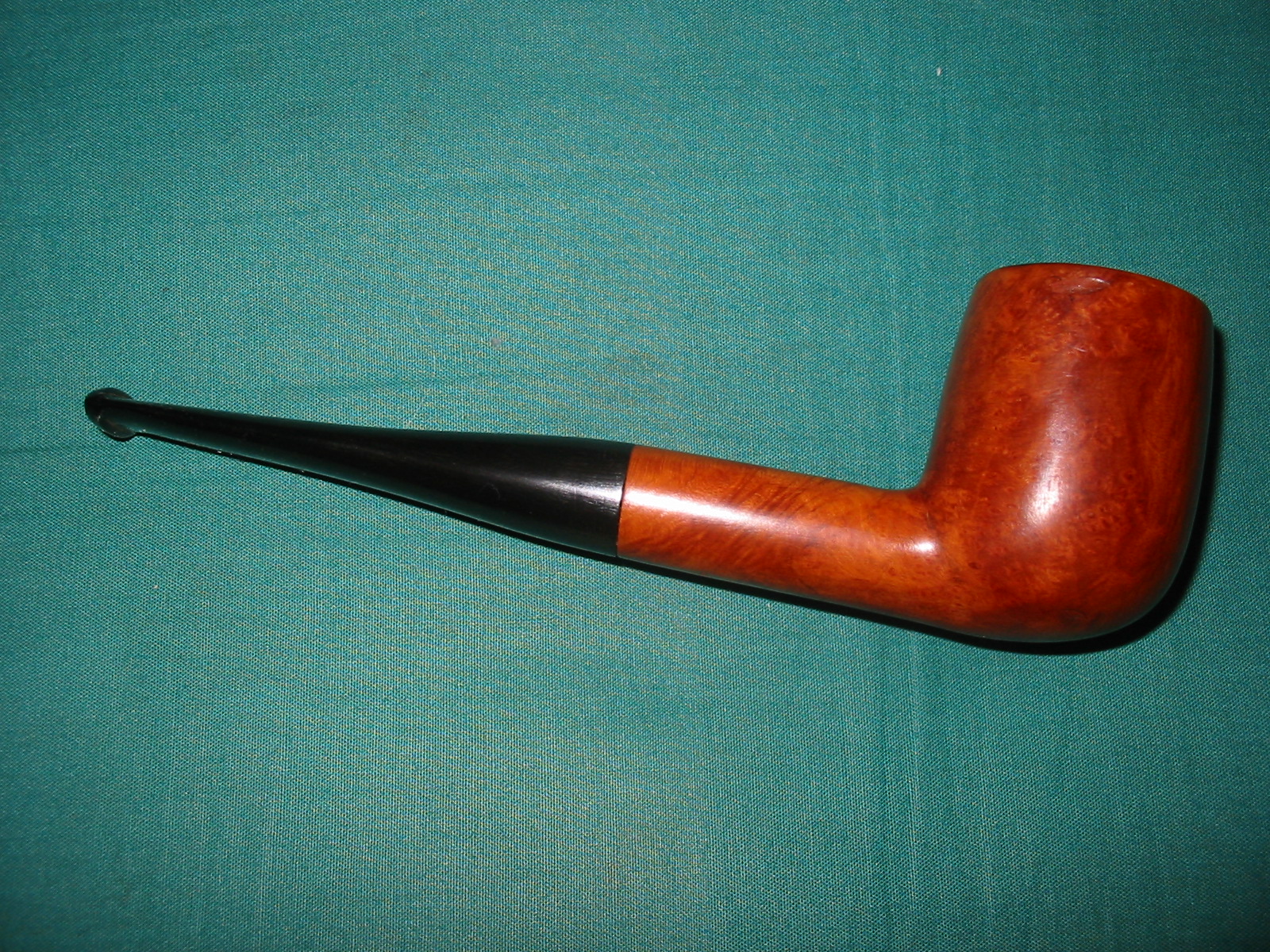
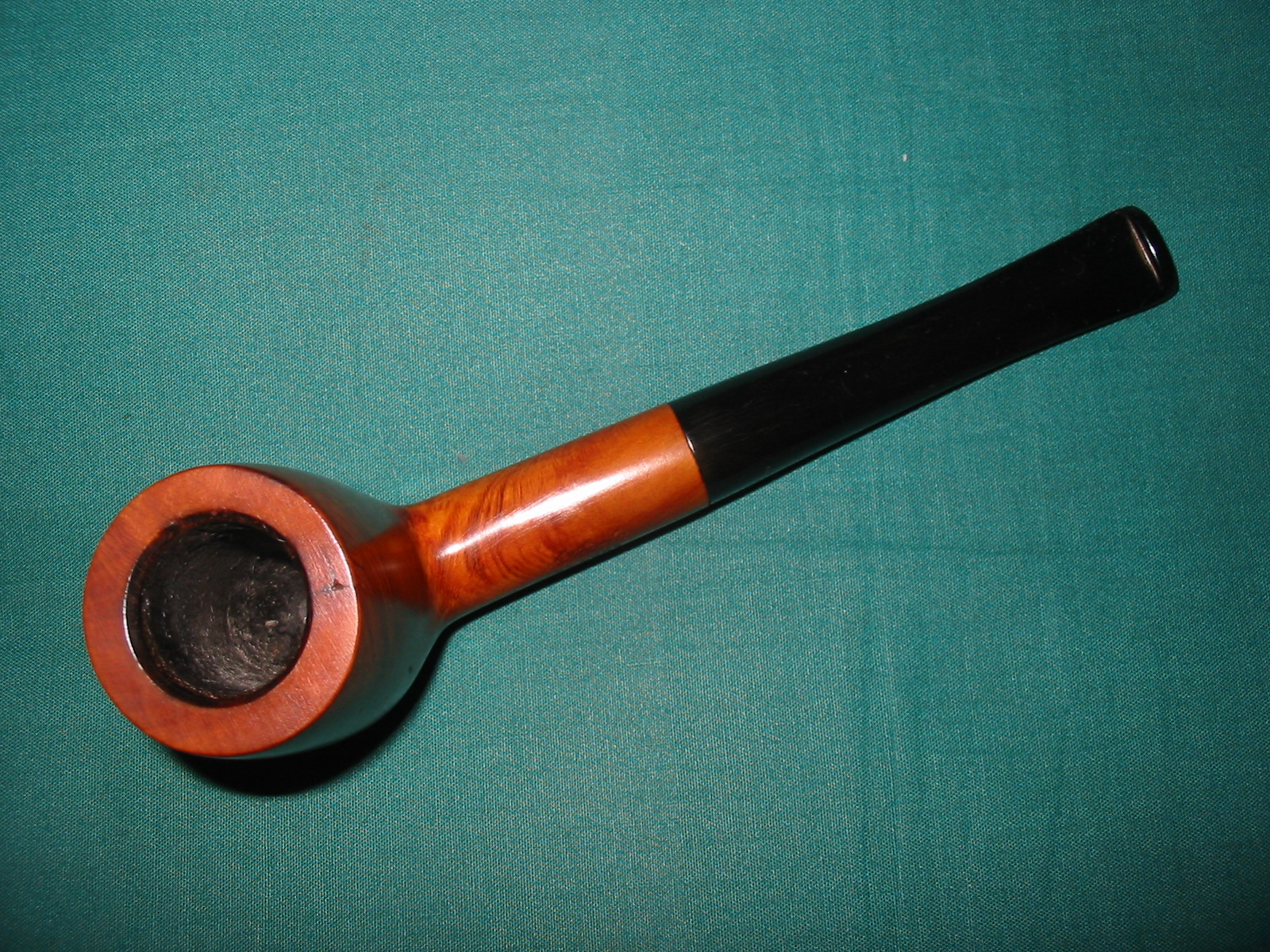
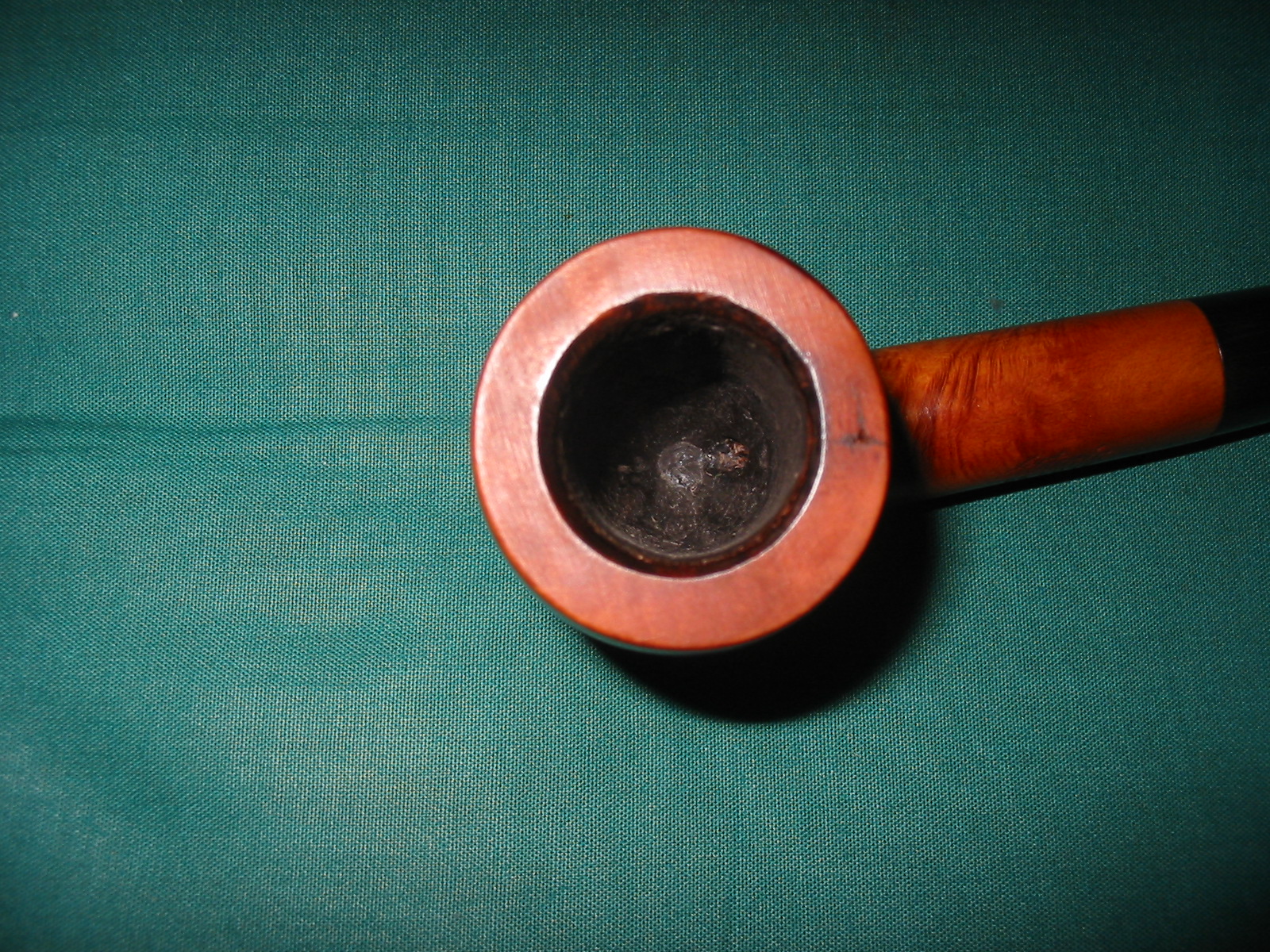
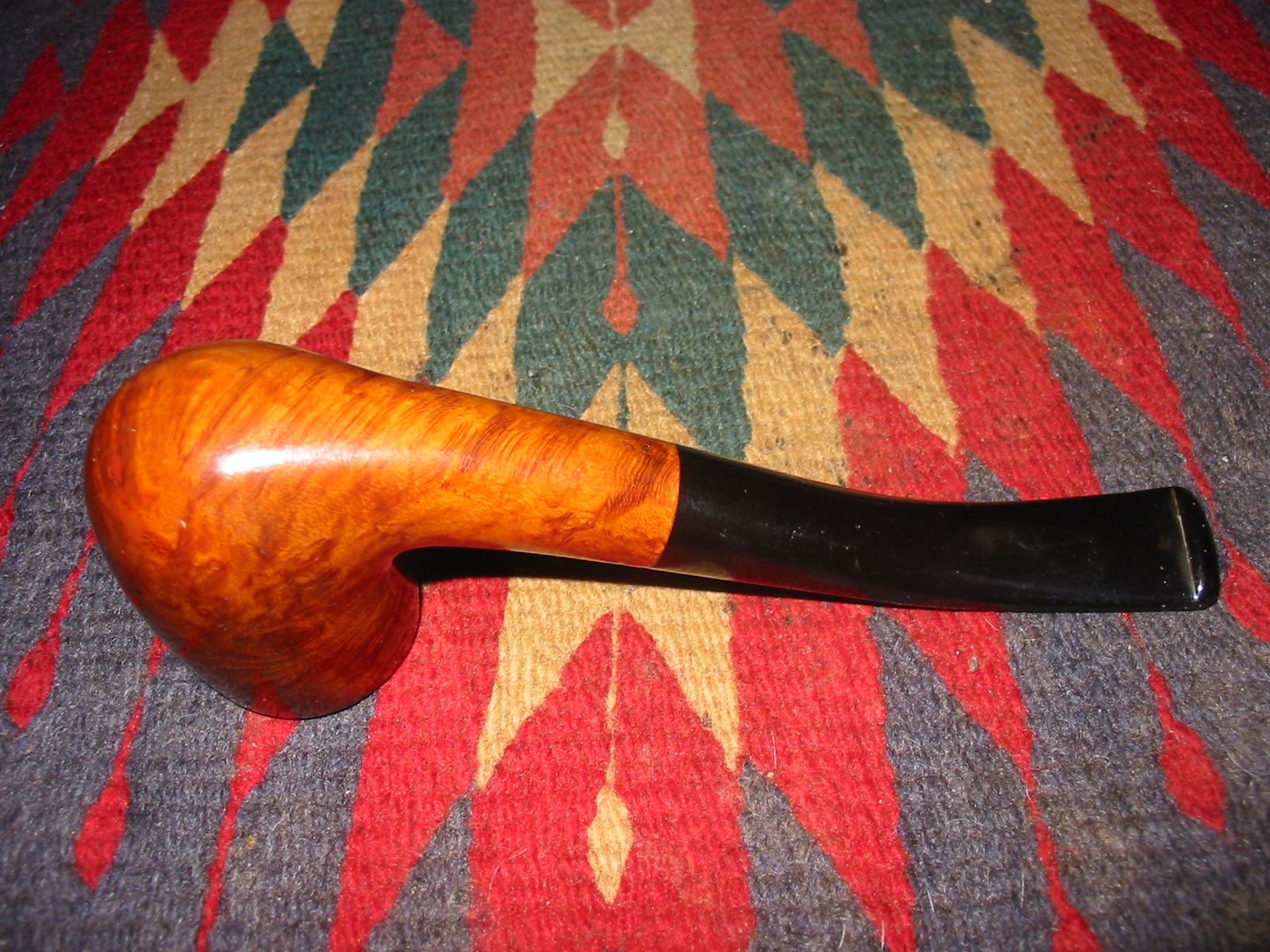
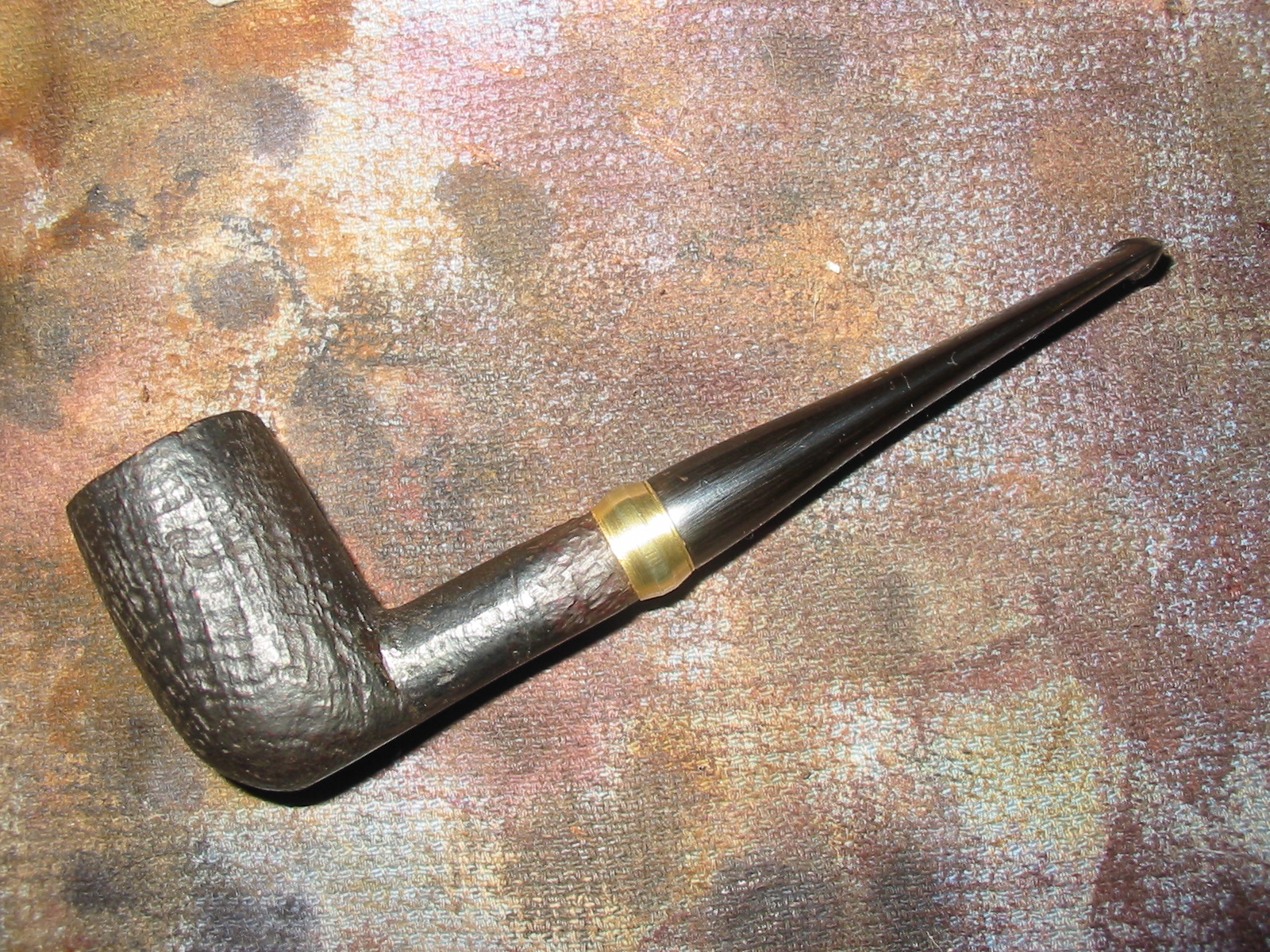
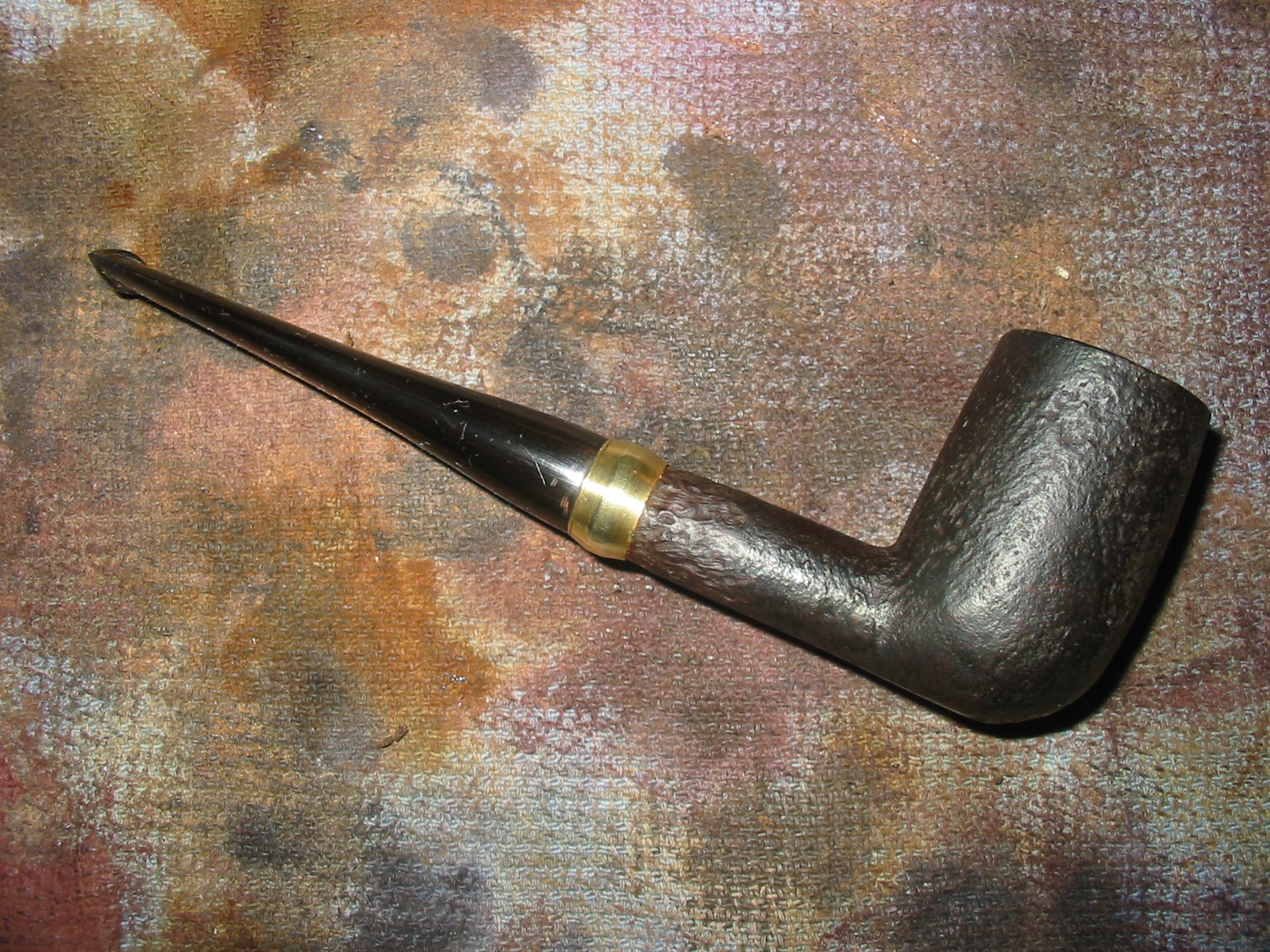
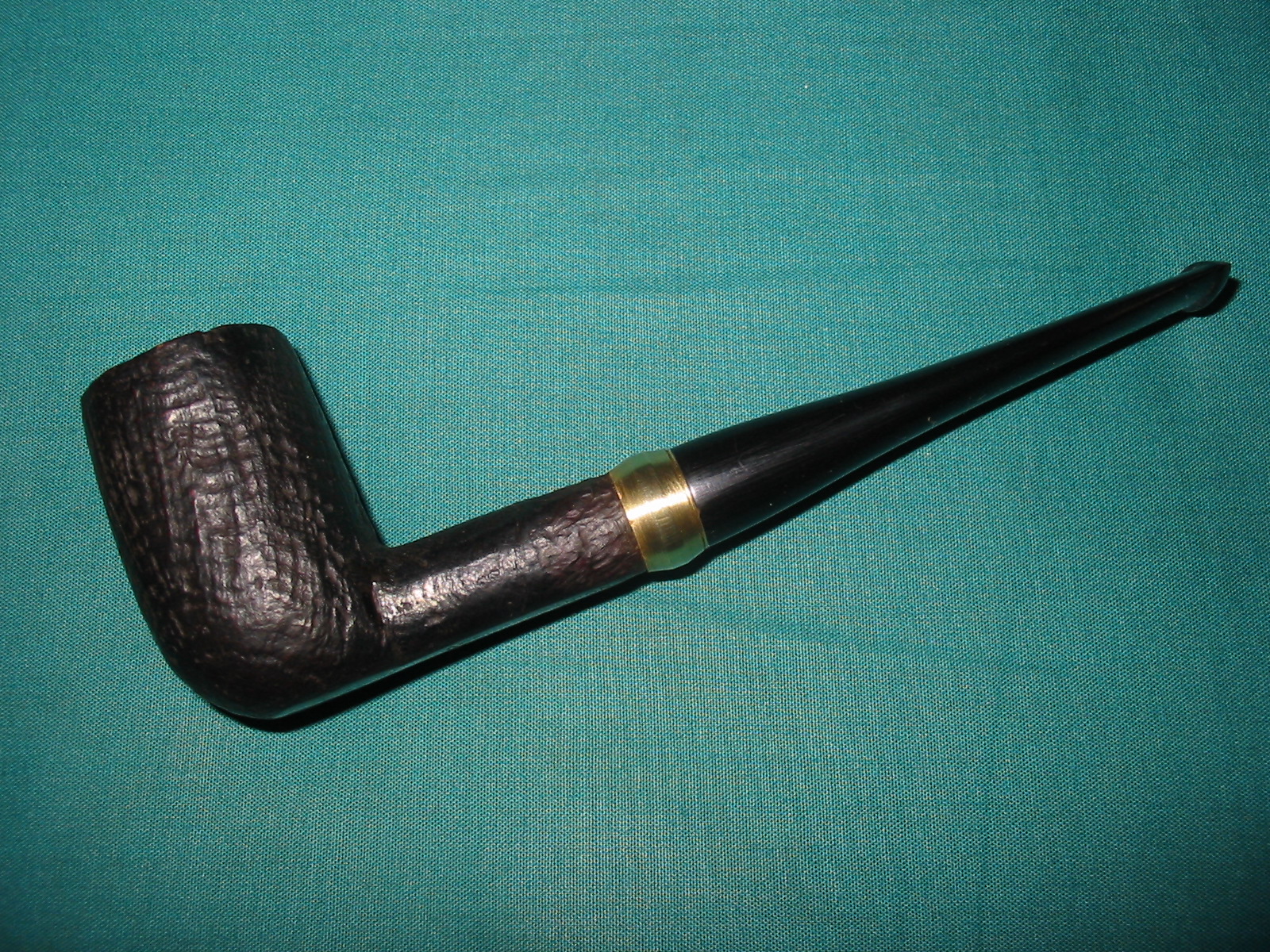
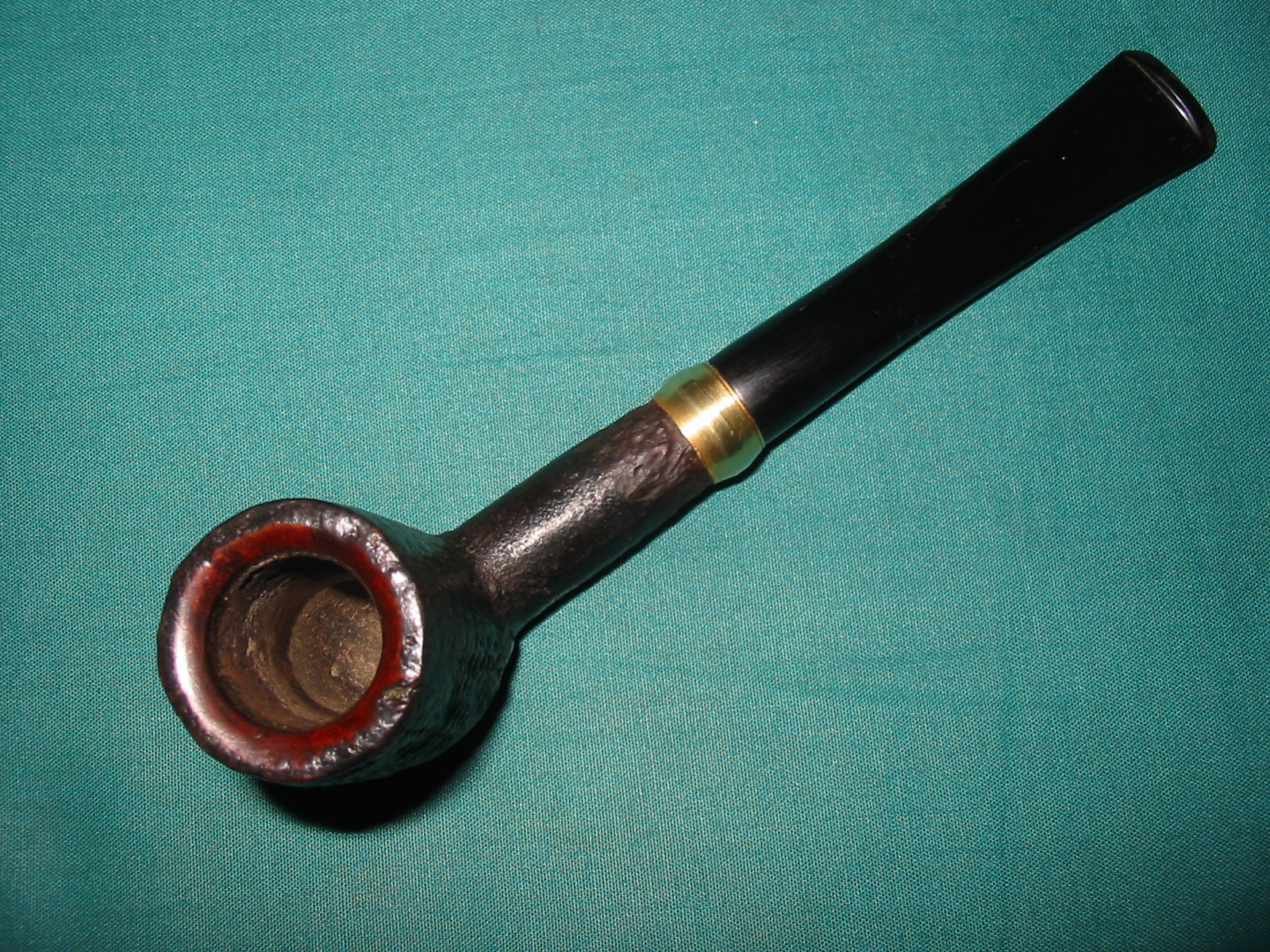
Cleaned and Topped A Georg Jensen Pipes Deluxe Billiard Shape 720


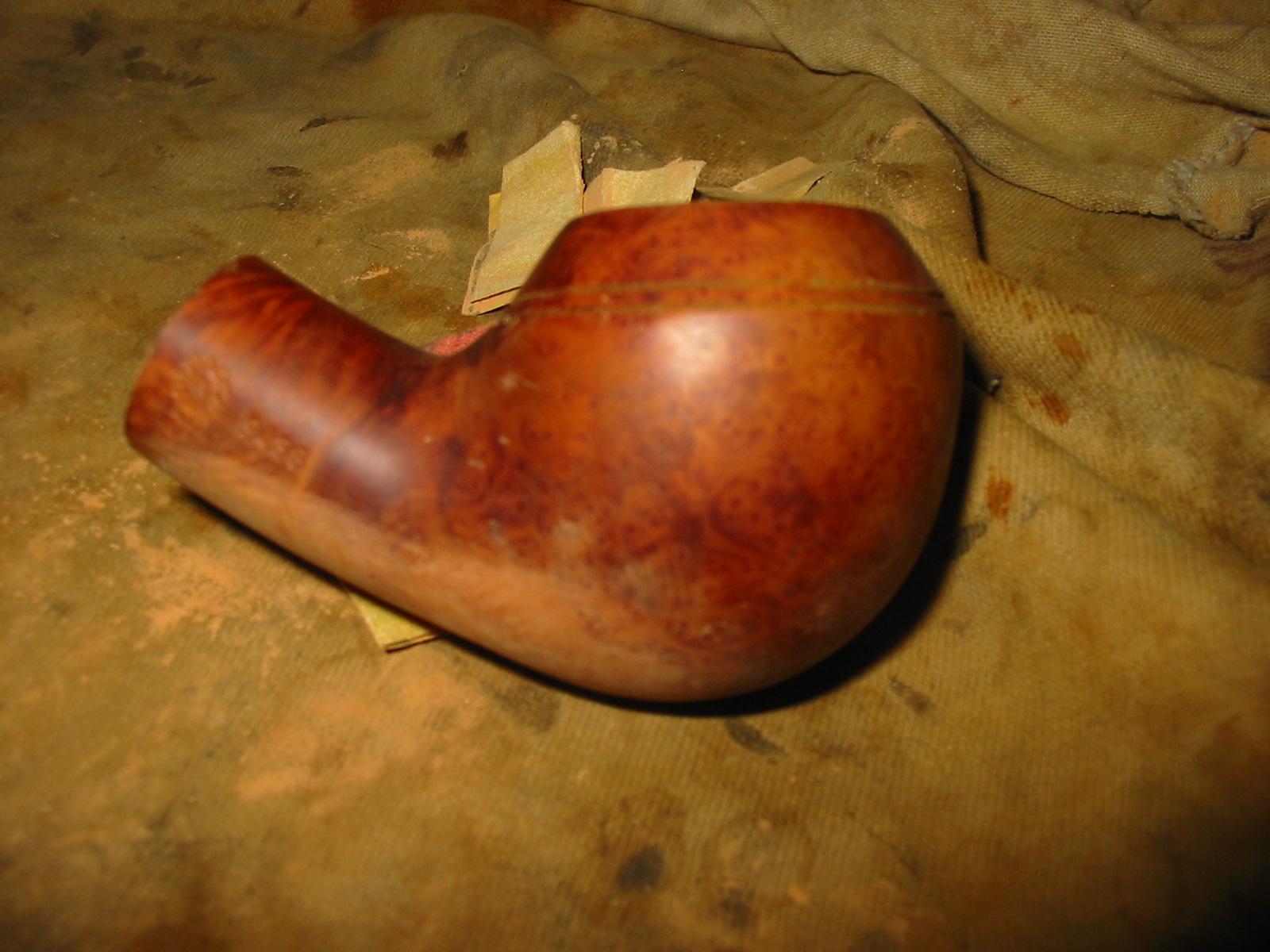
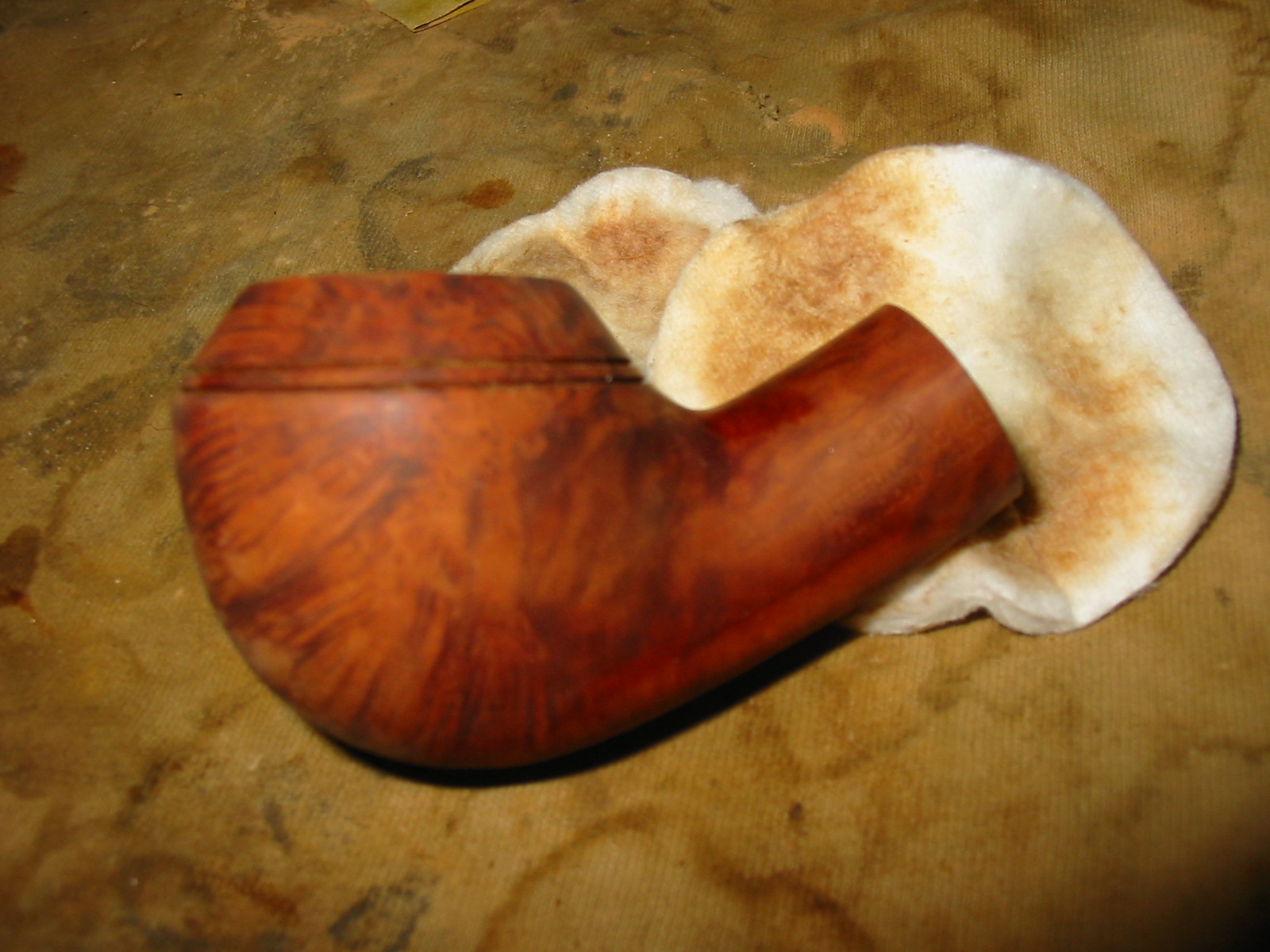
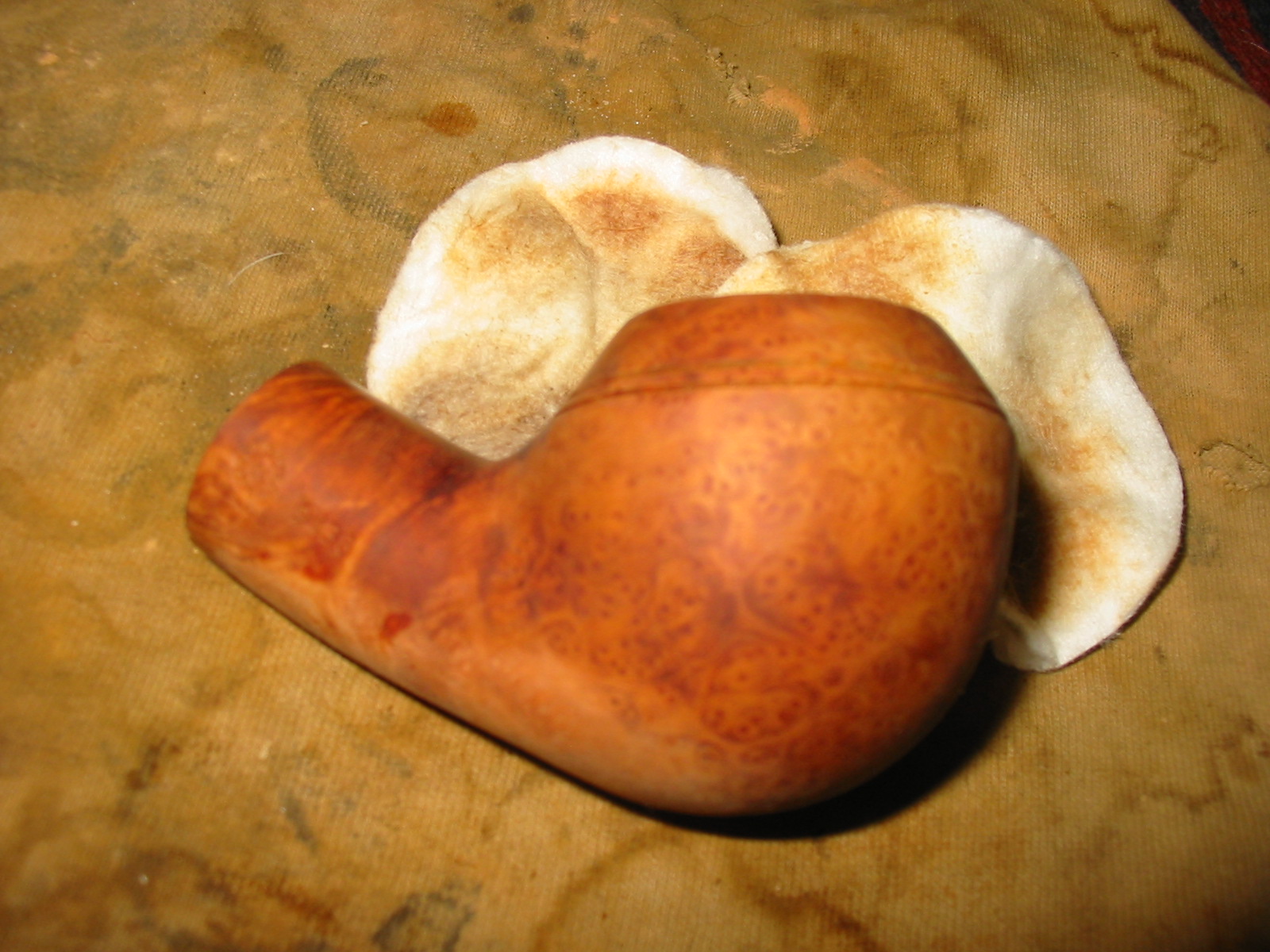
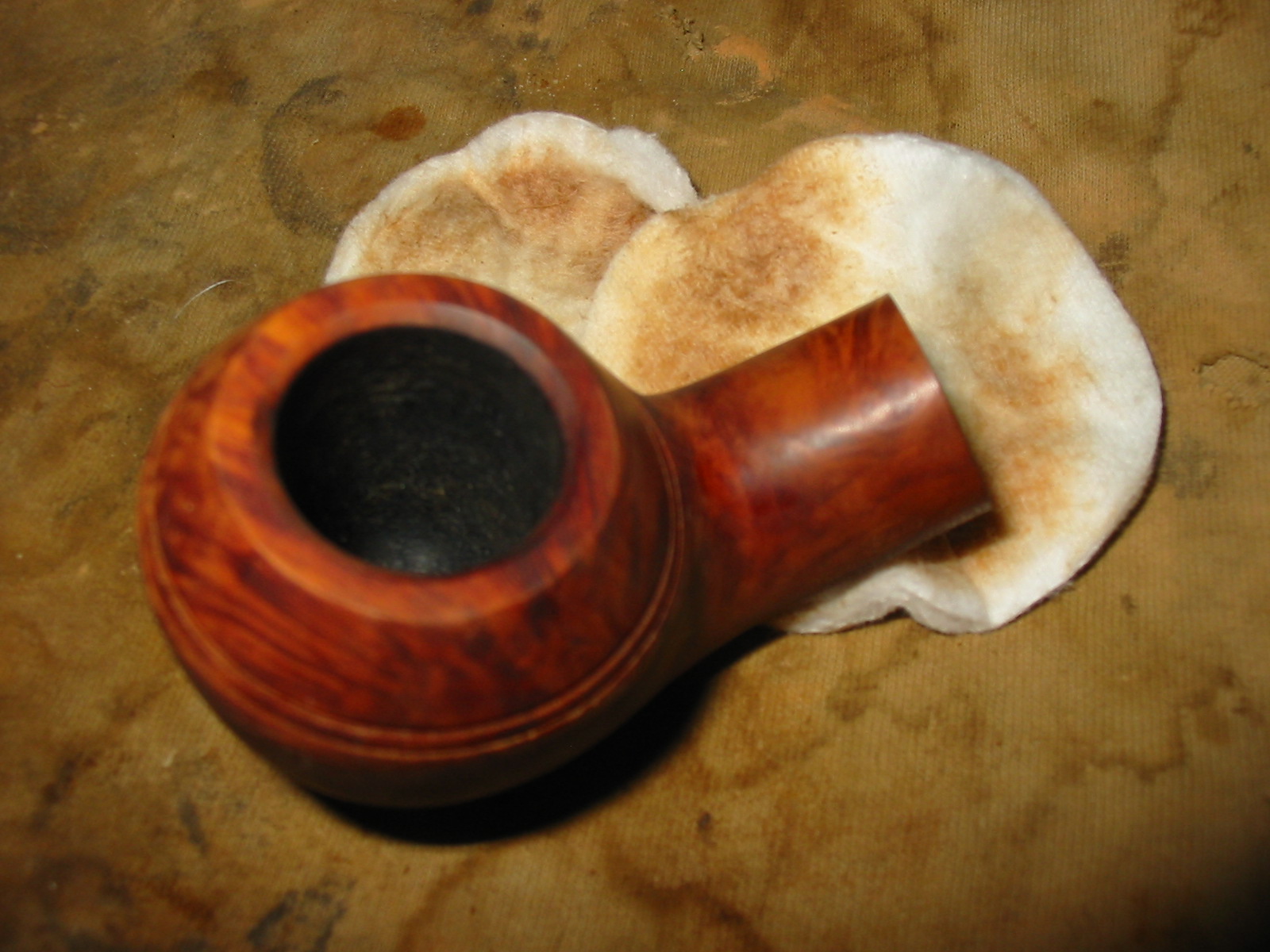
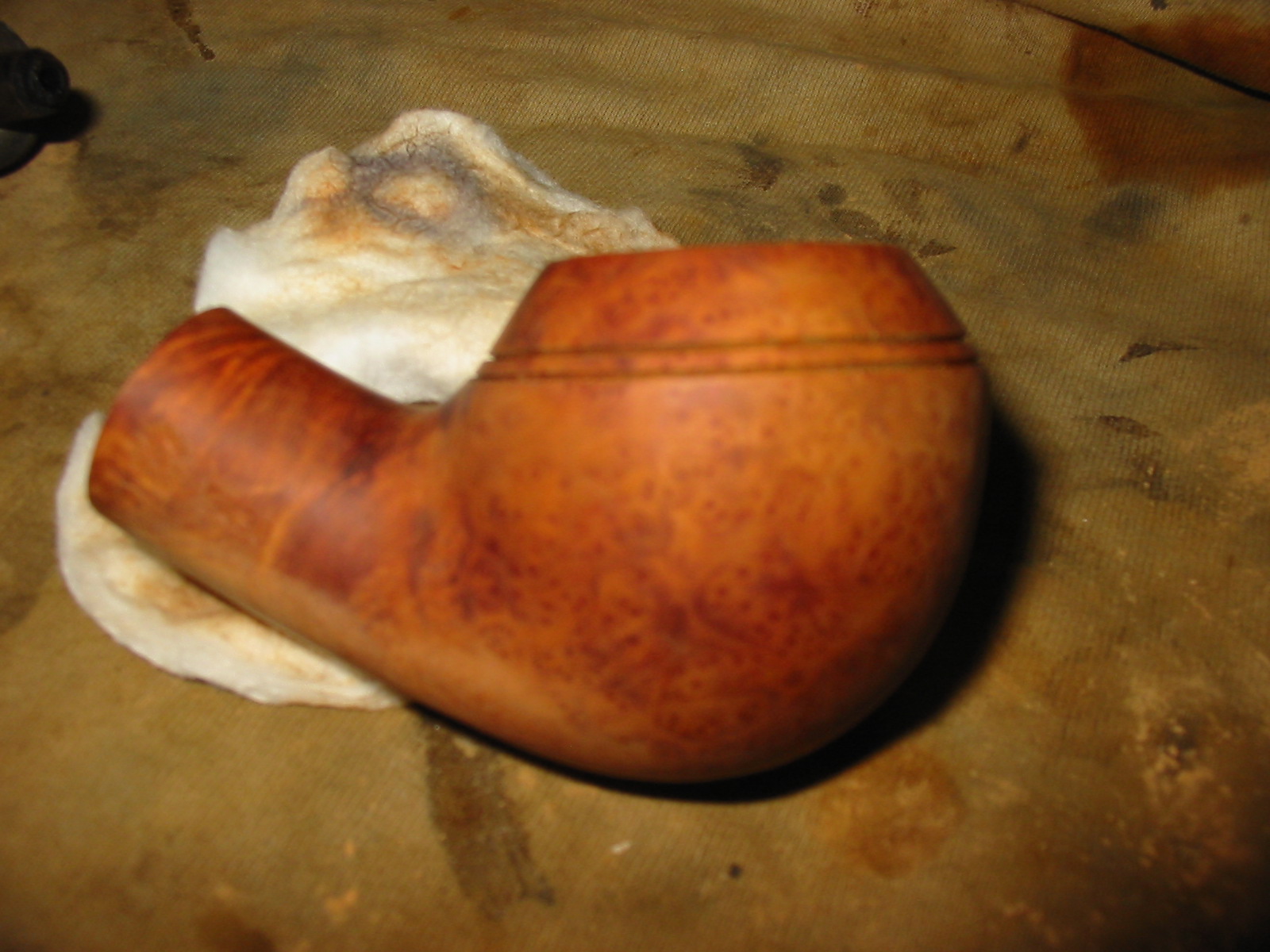
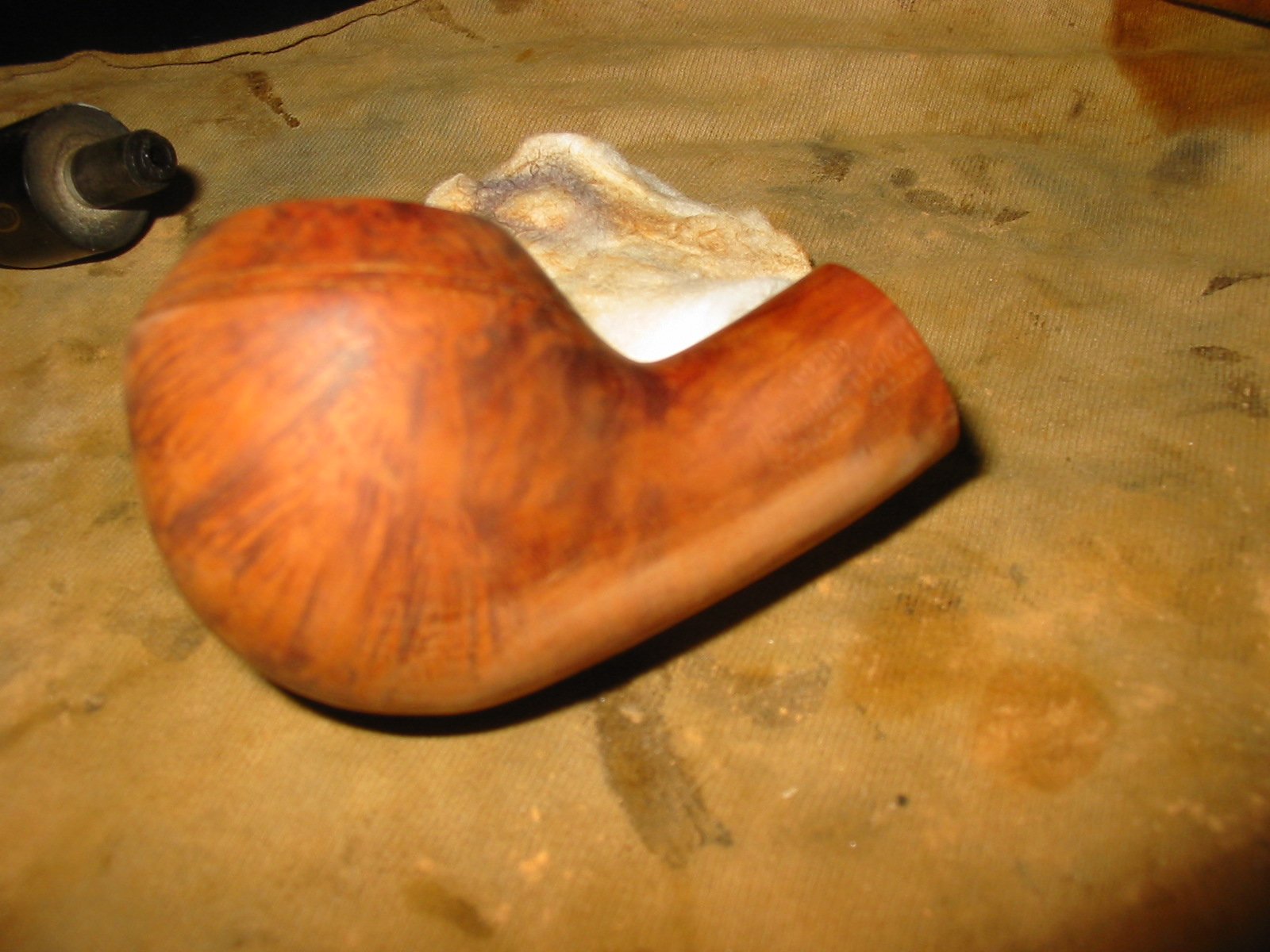
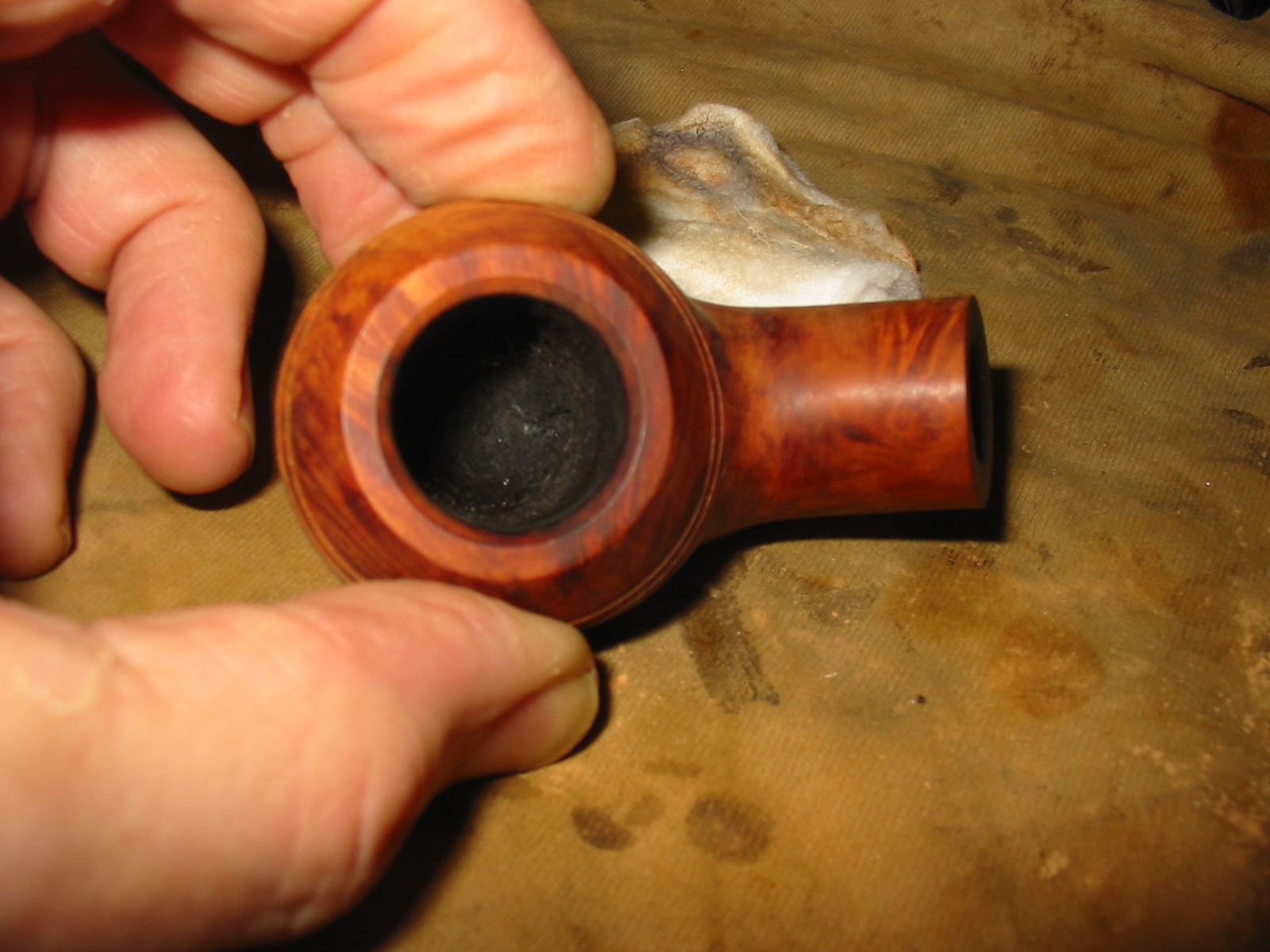
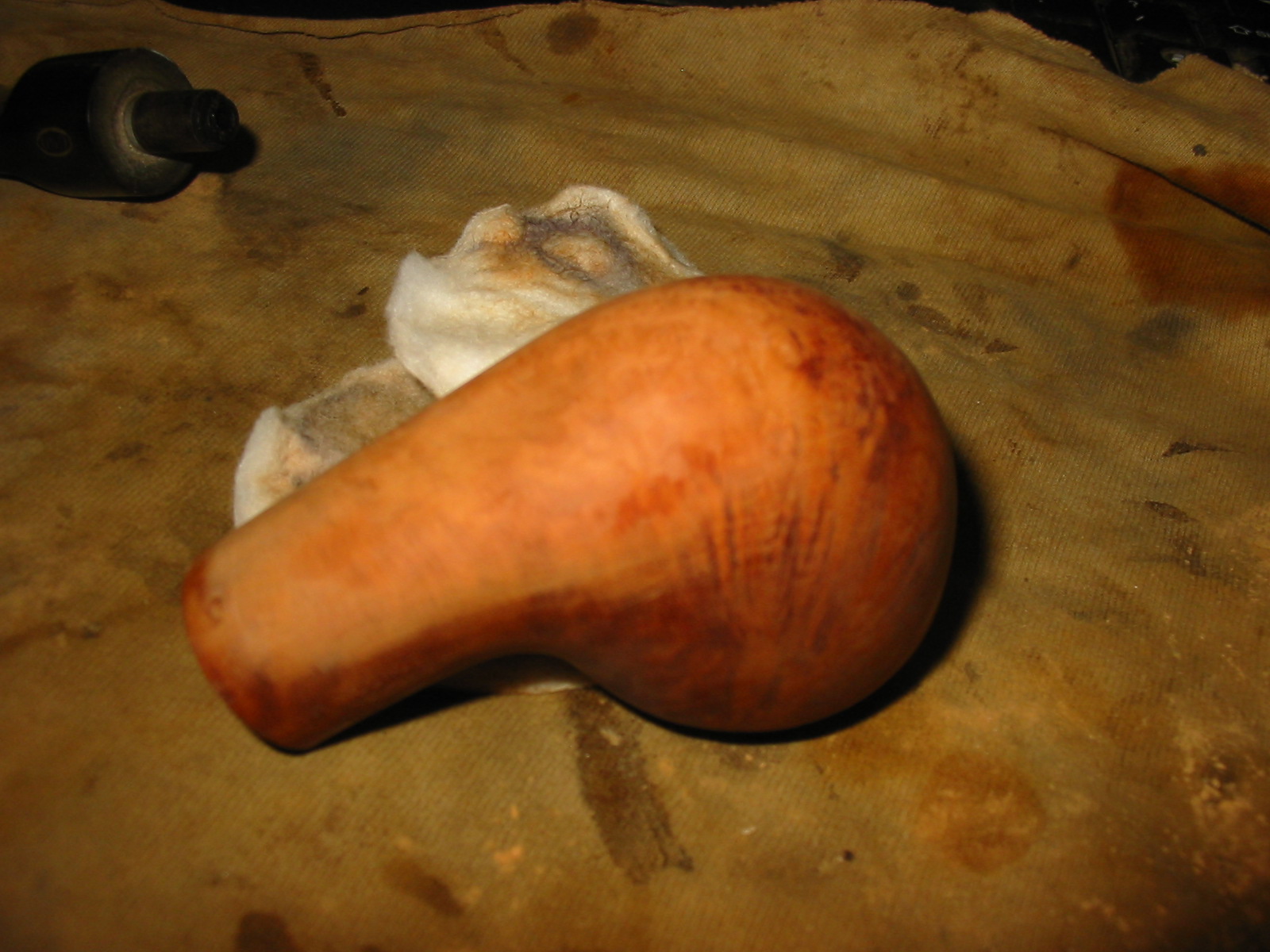
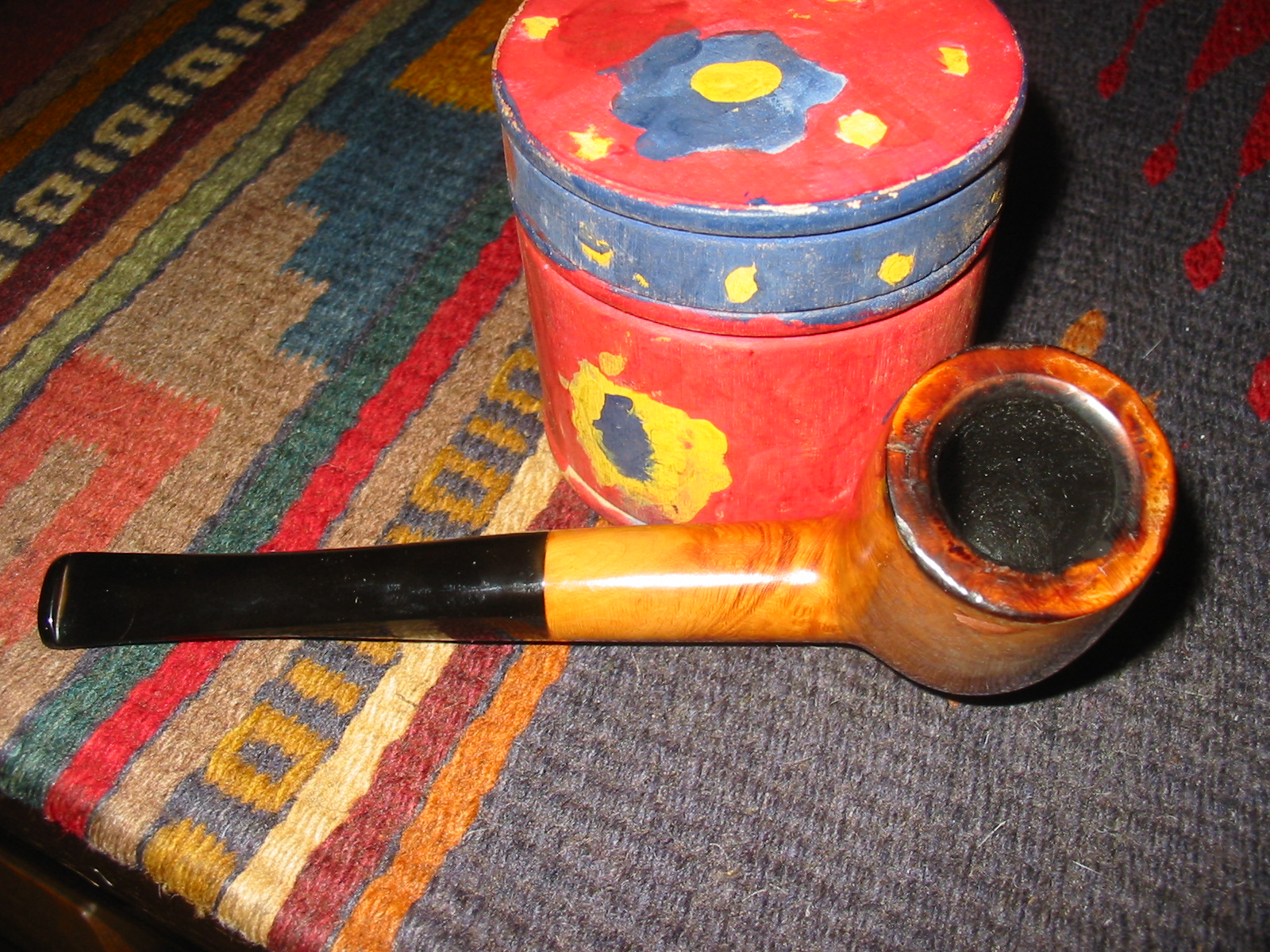
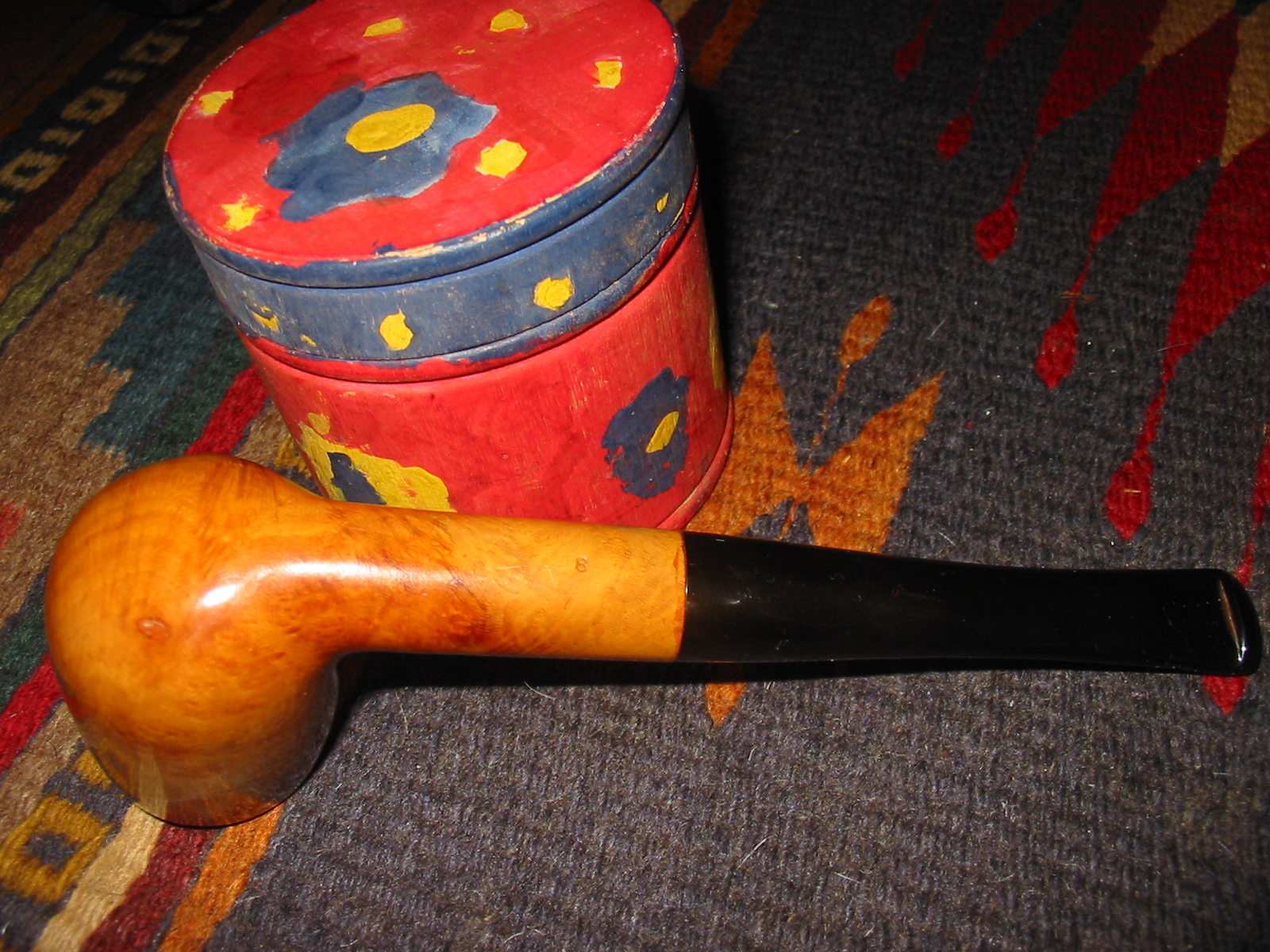
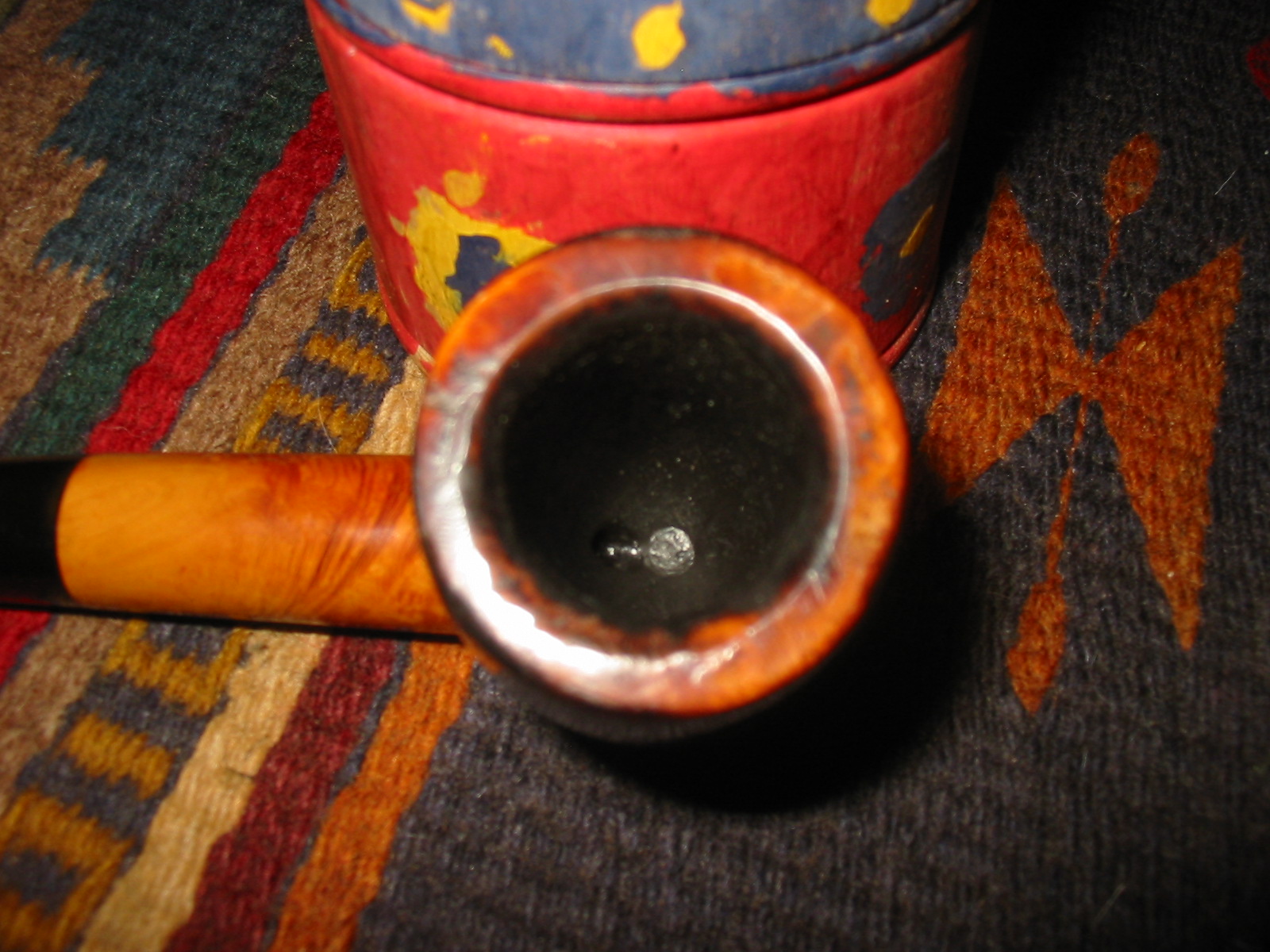
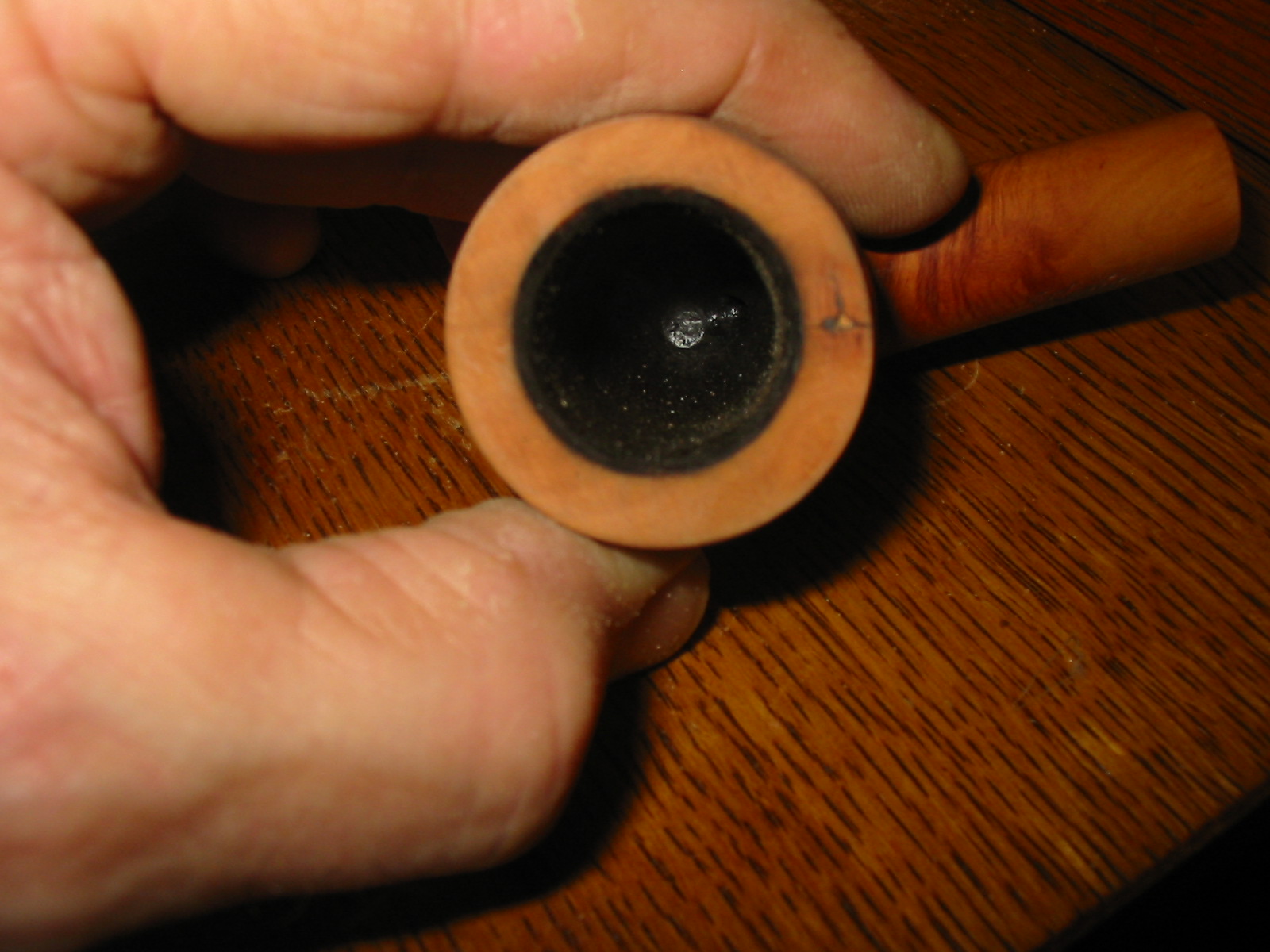
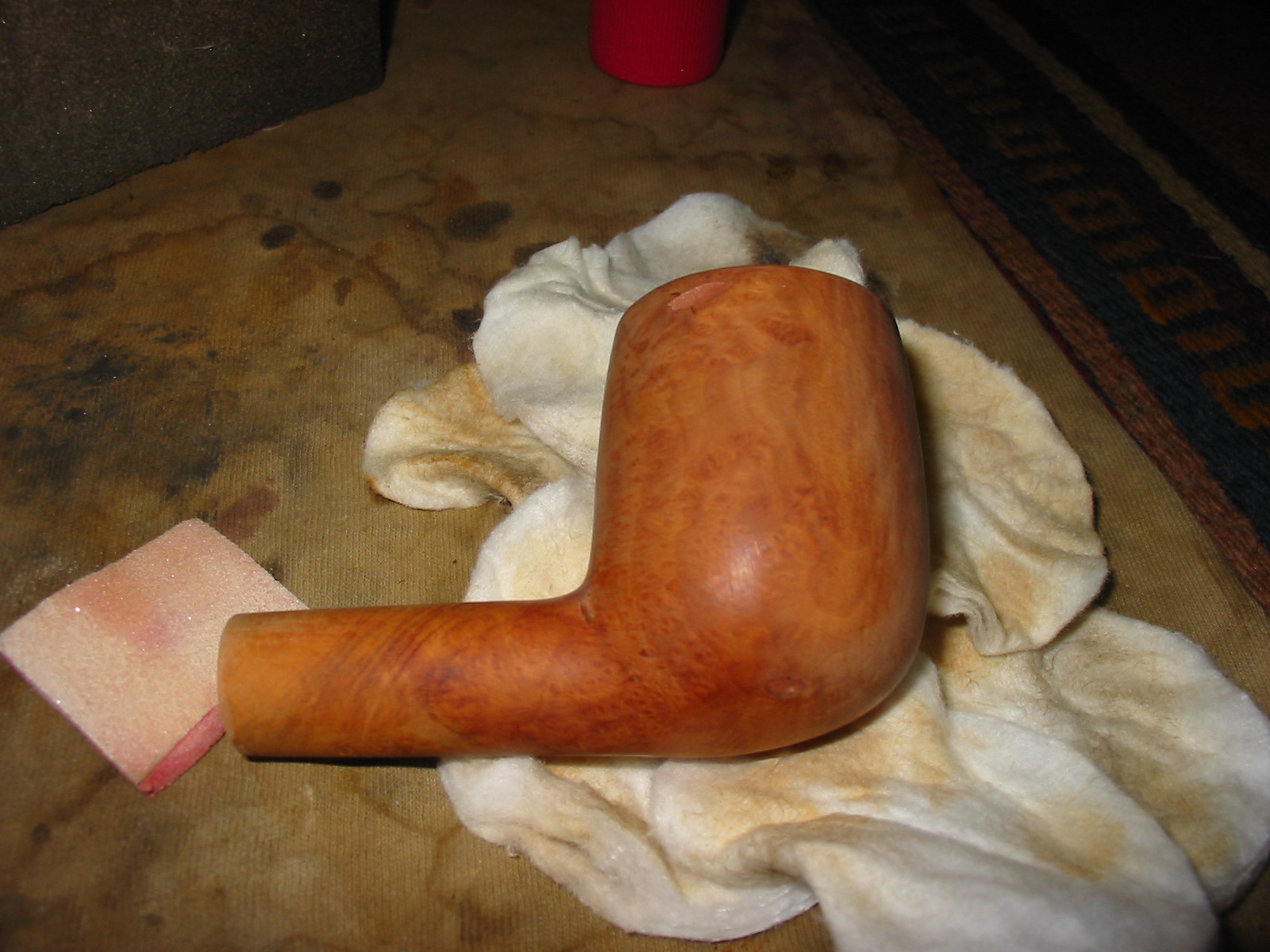
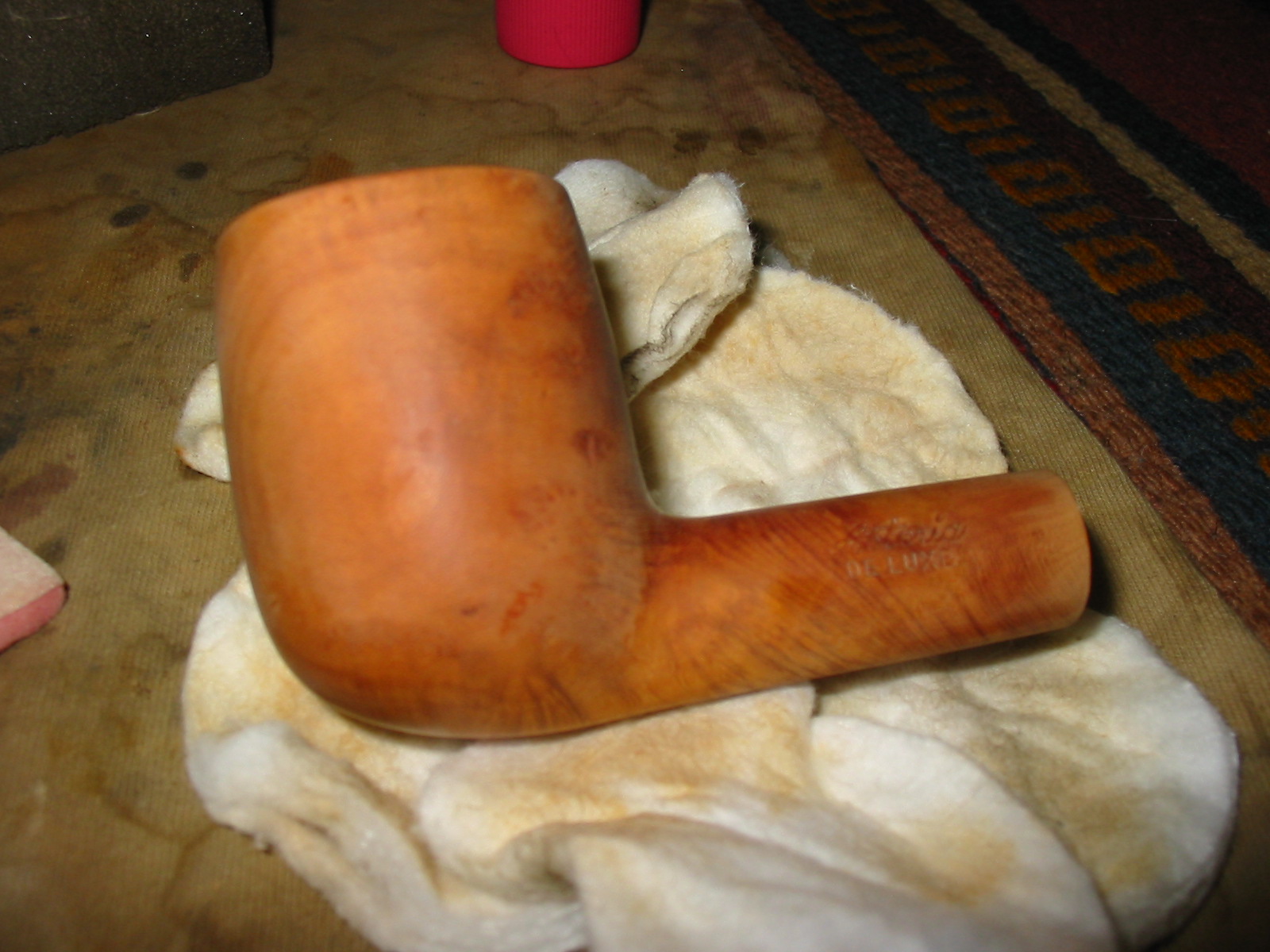
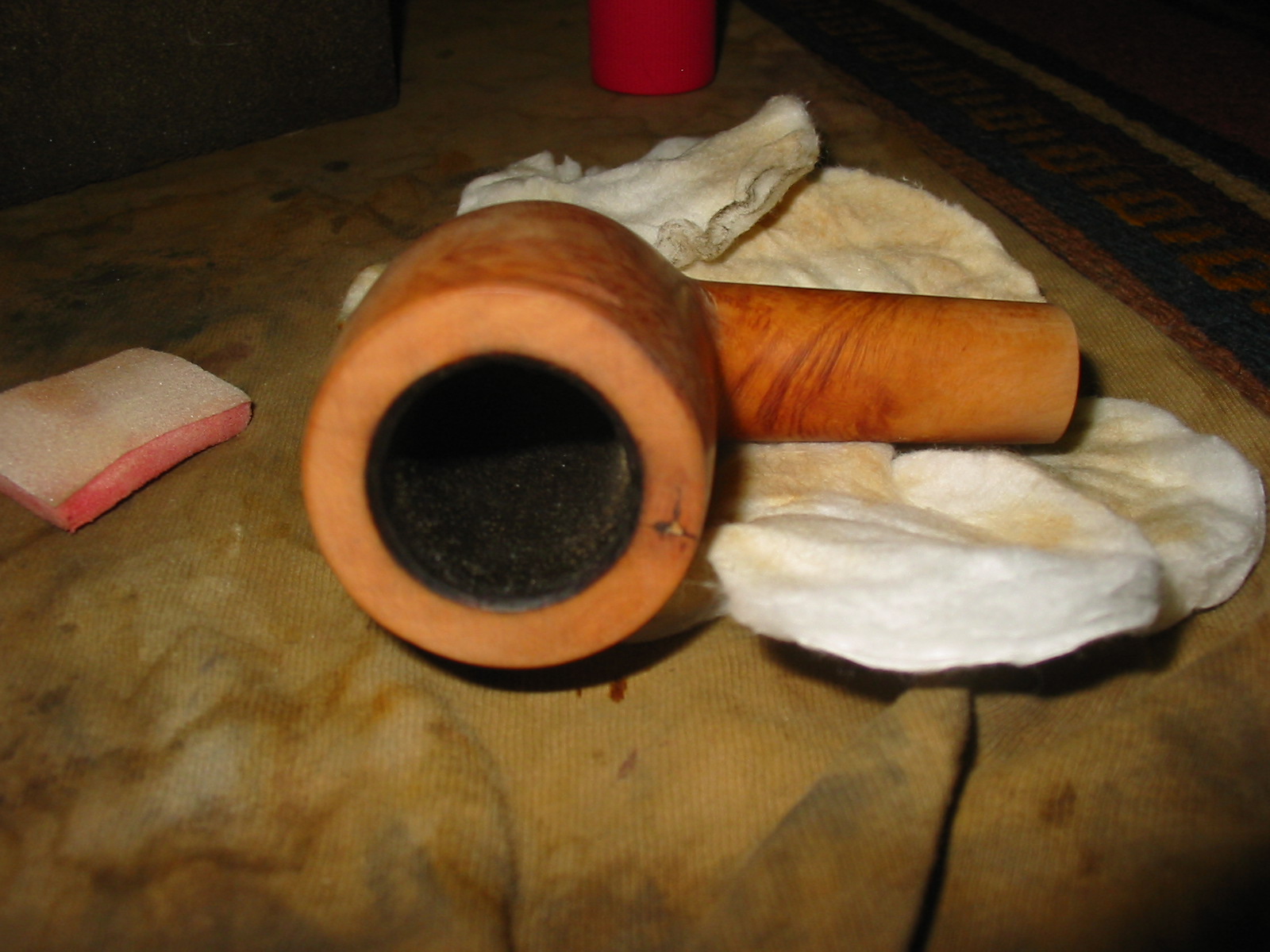
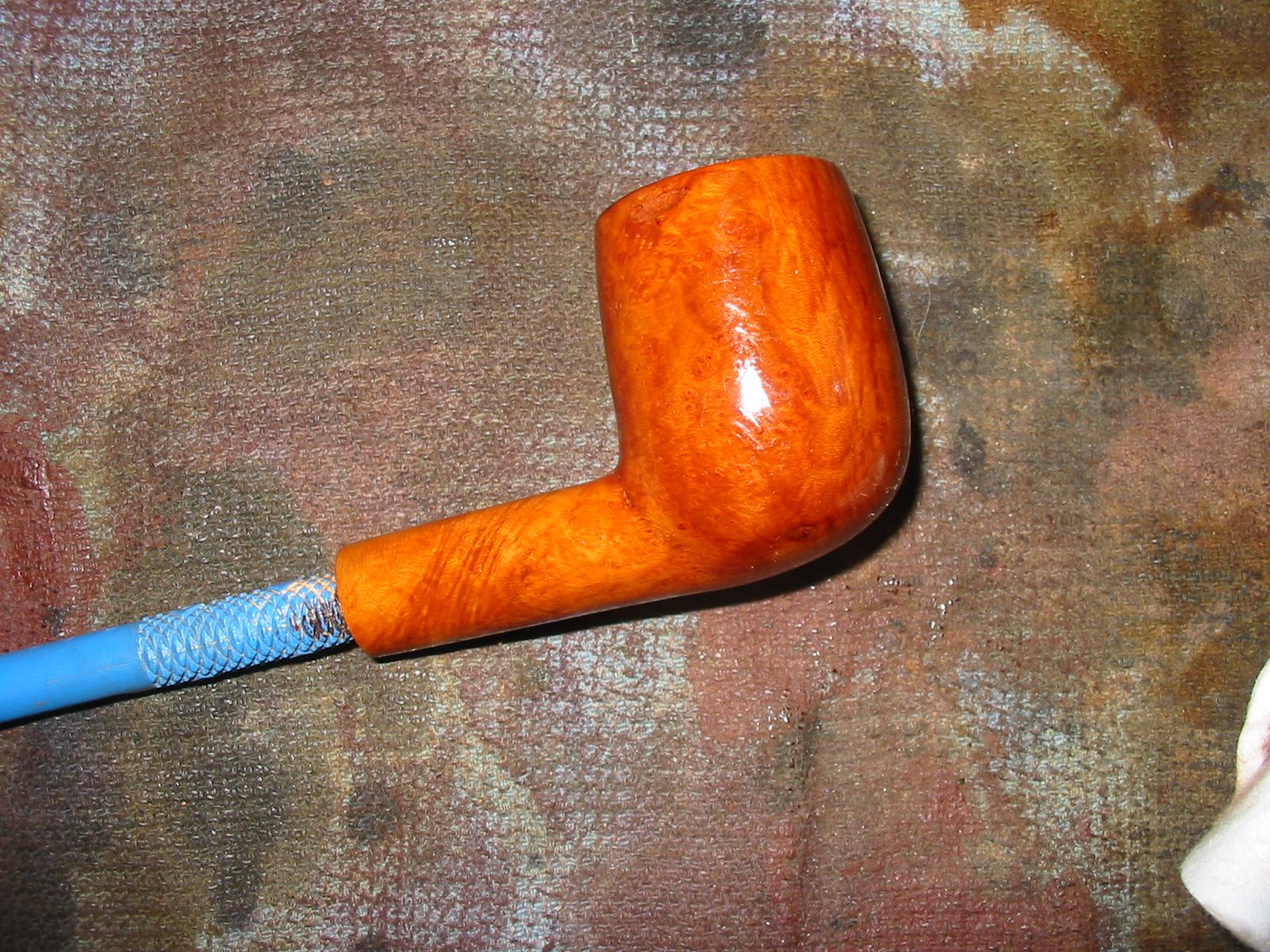
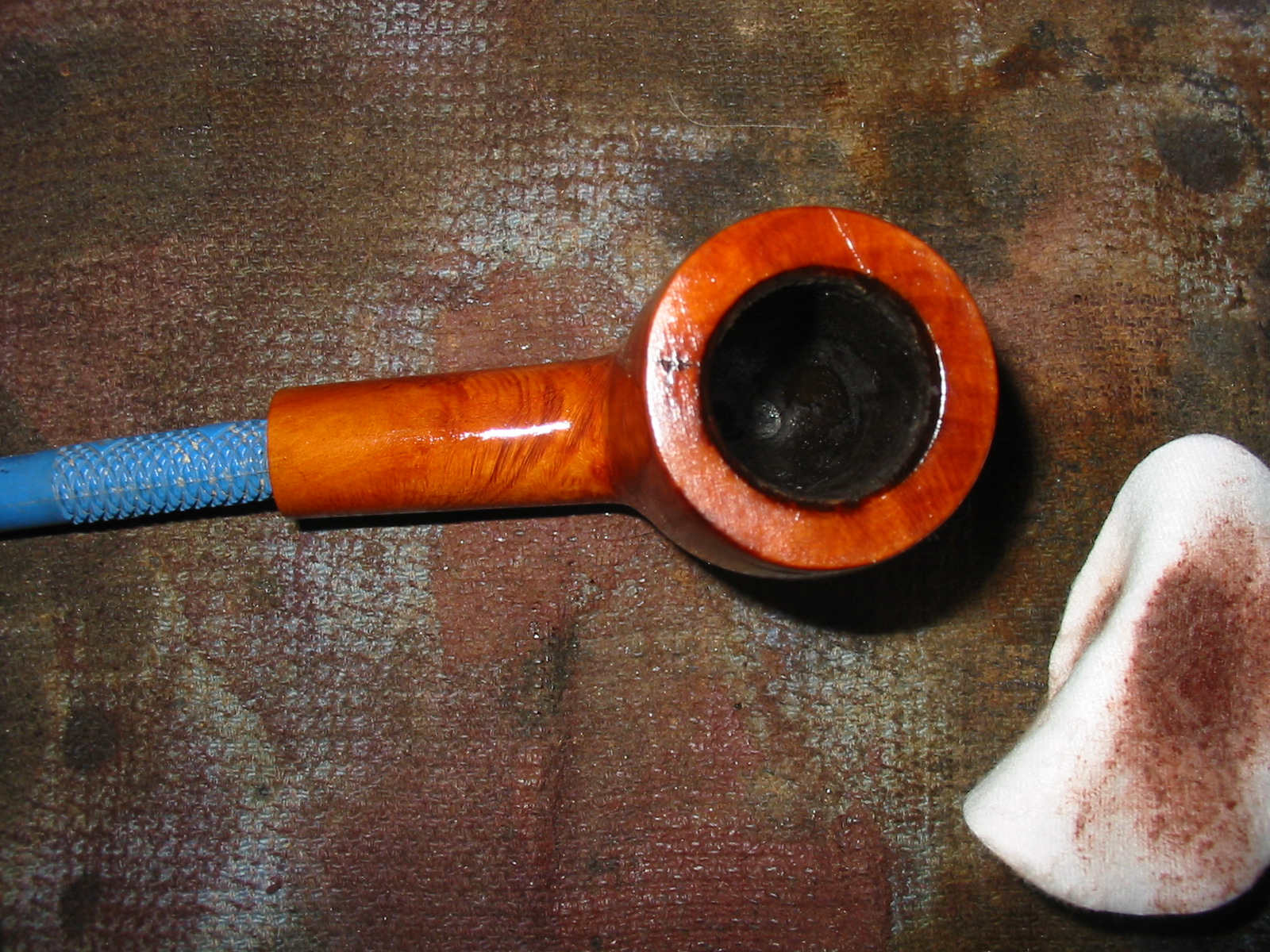
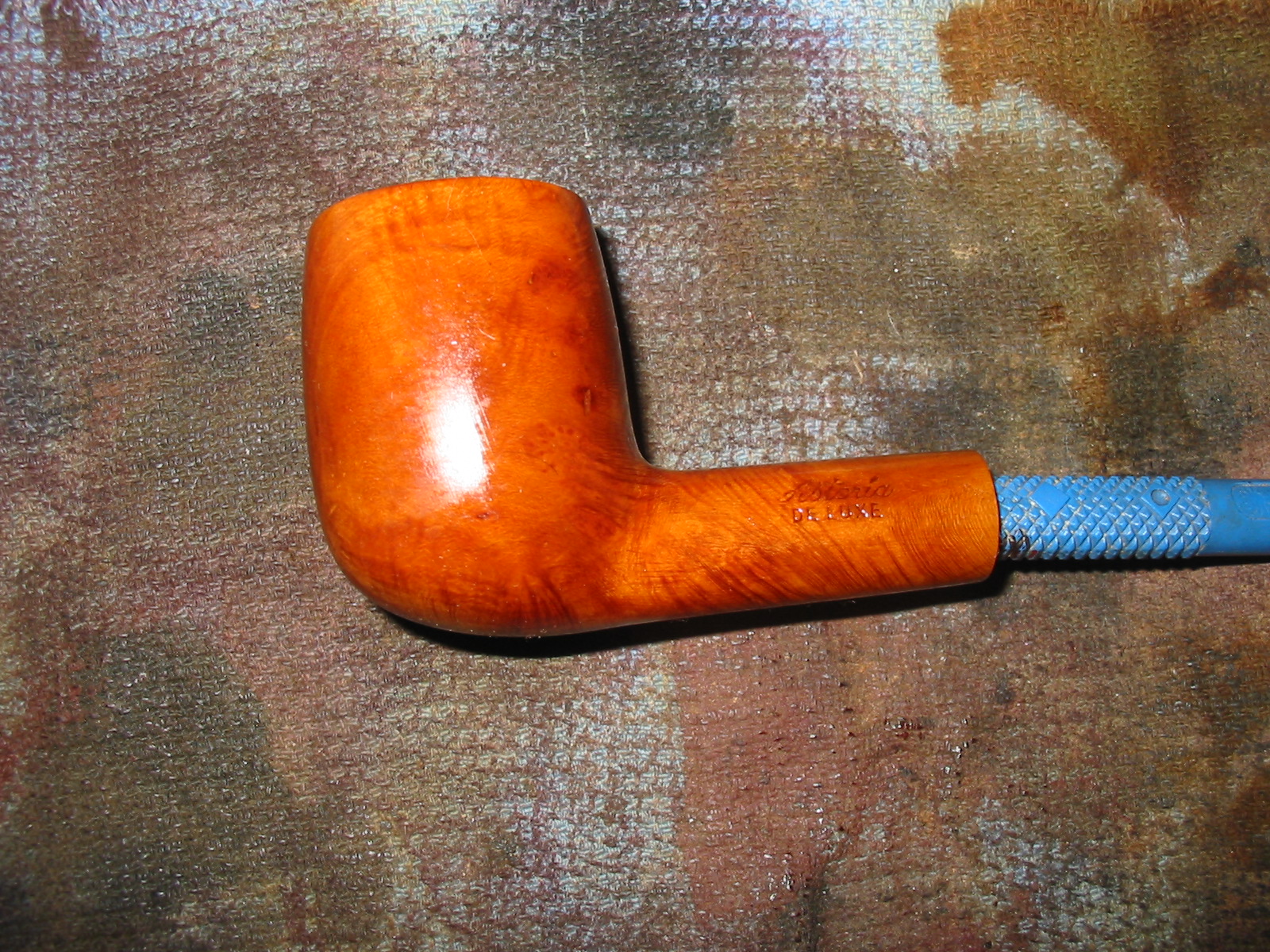
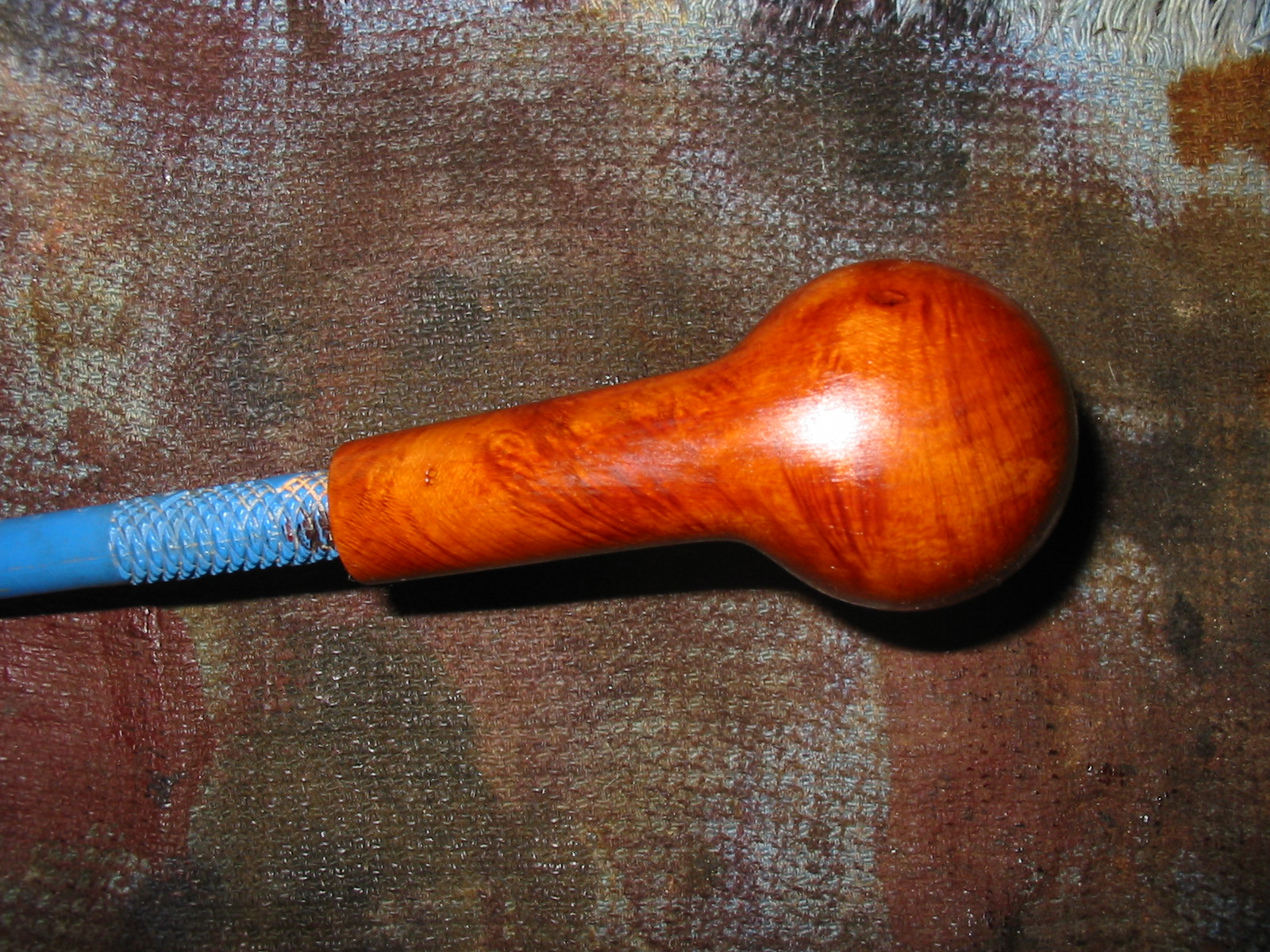
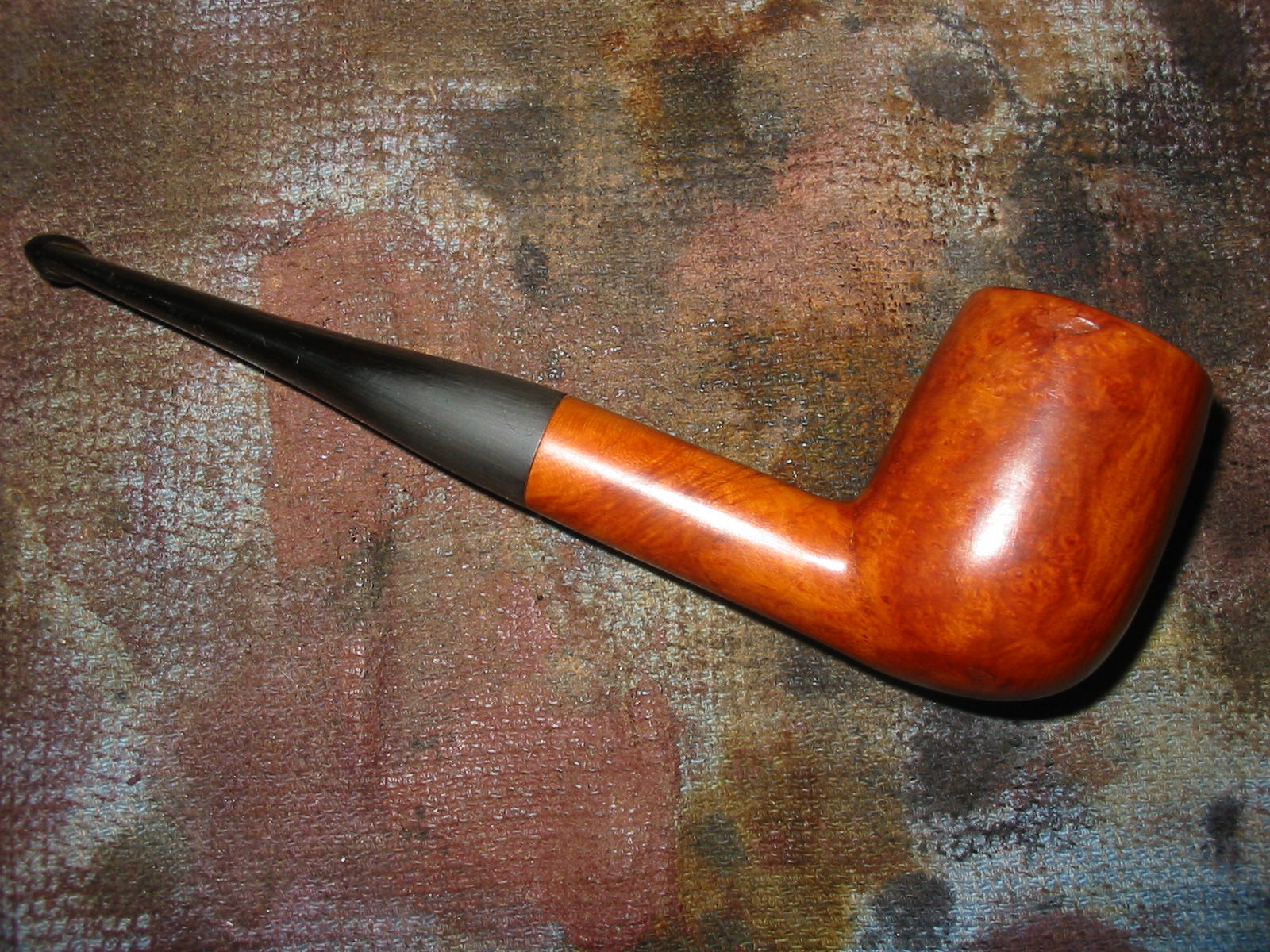
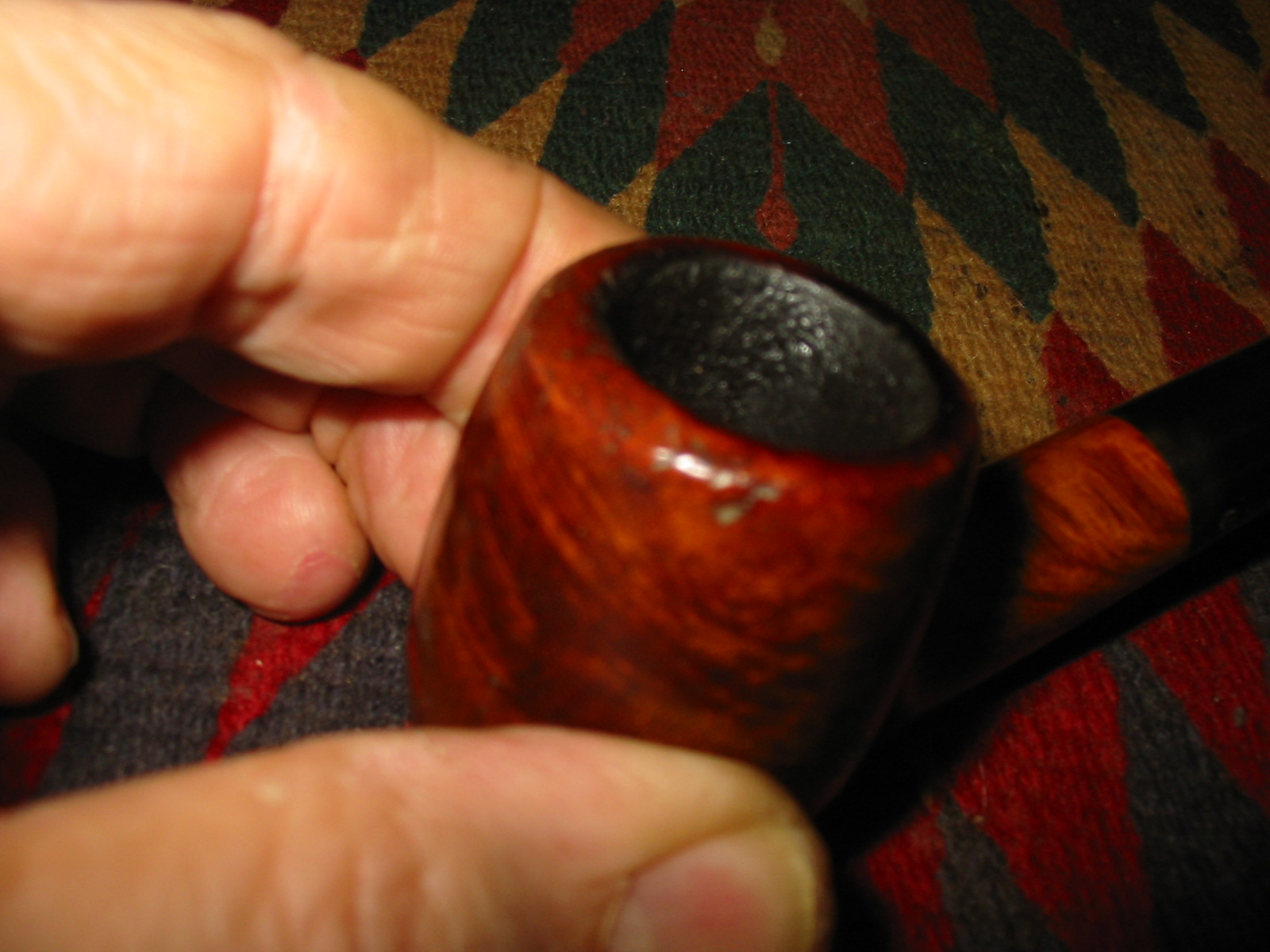
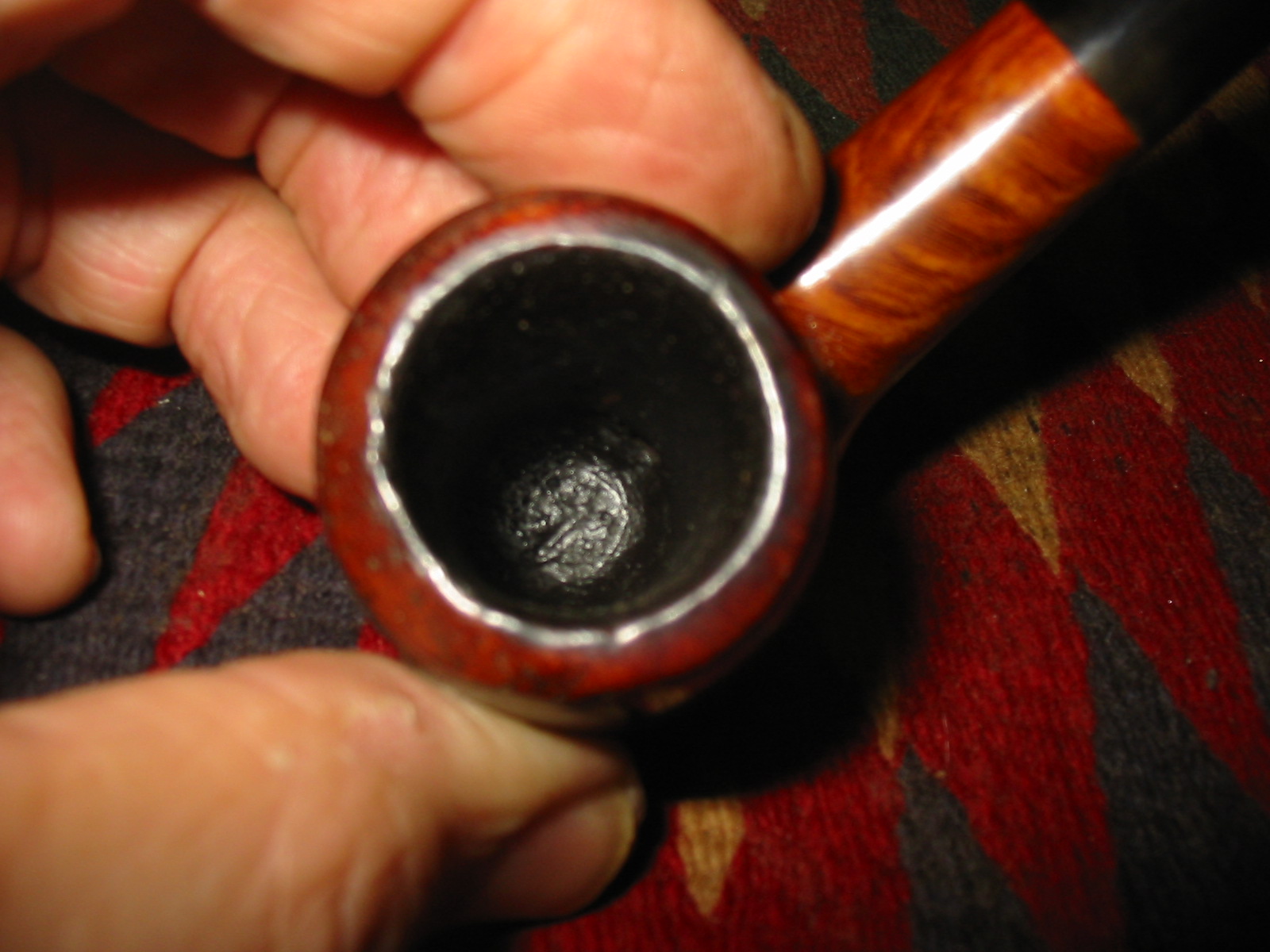
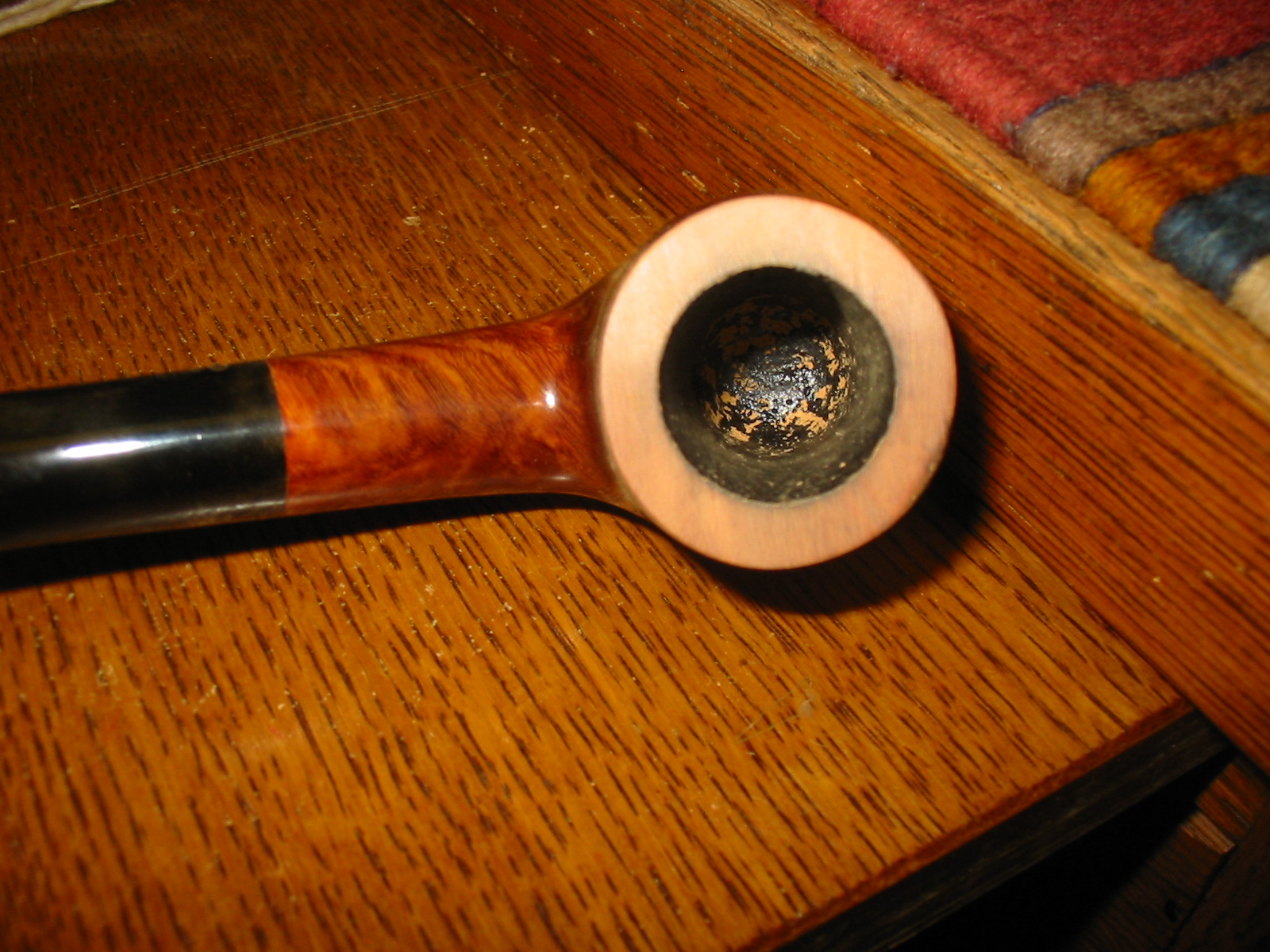
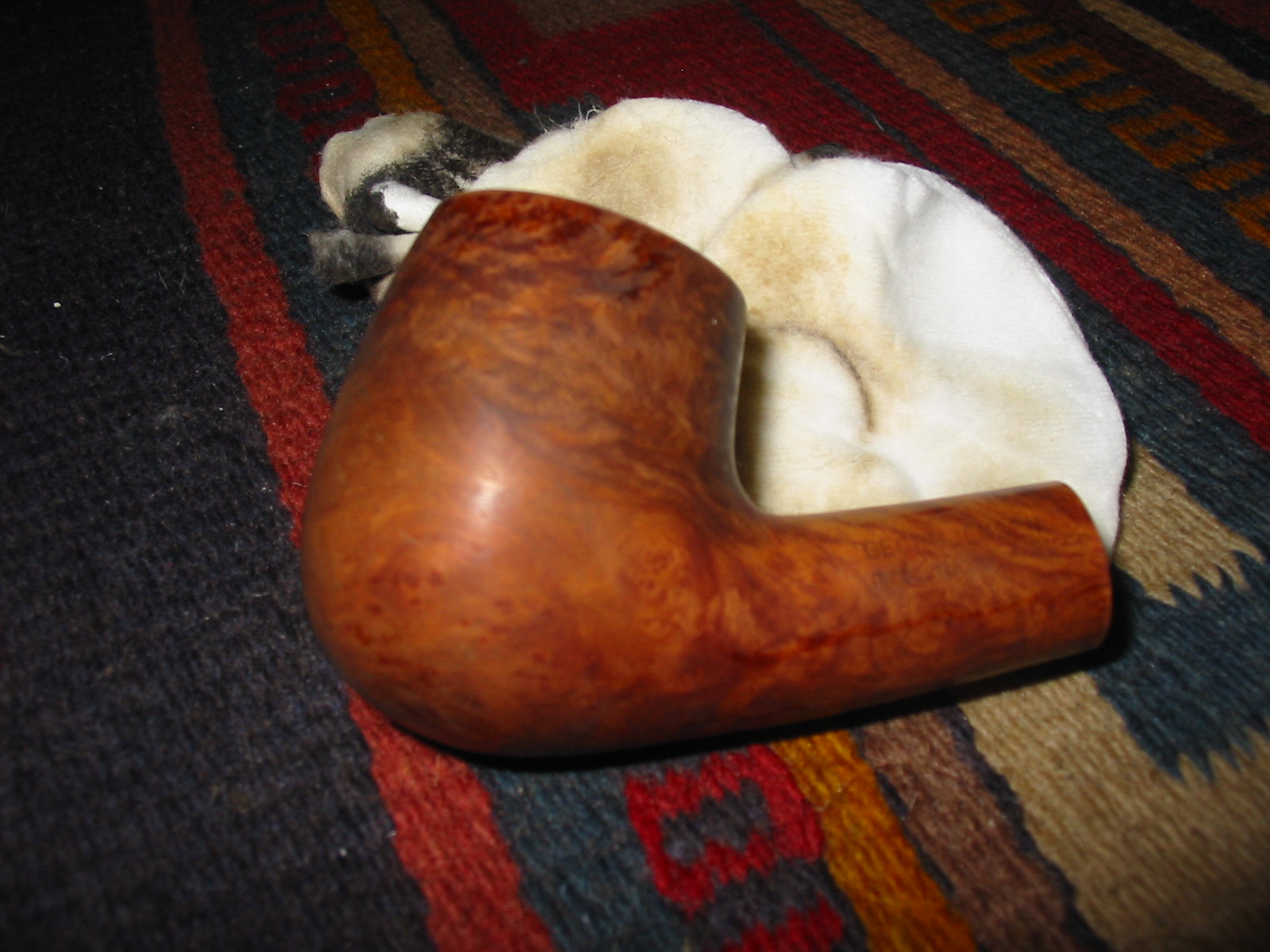
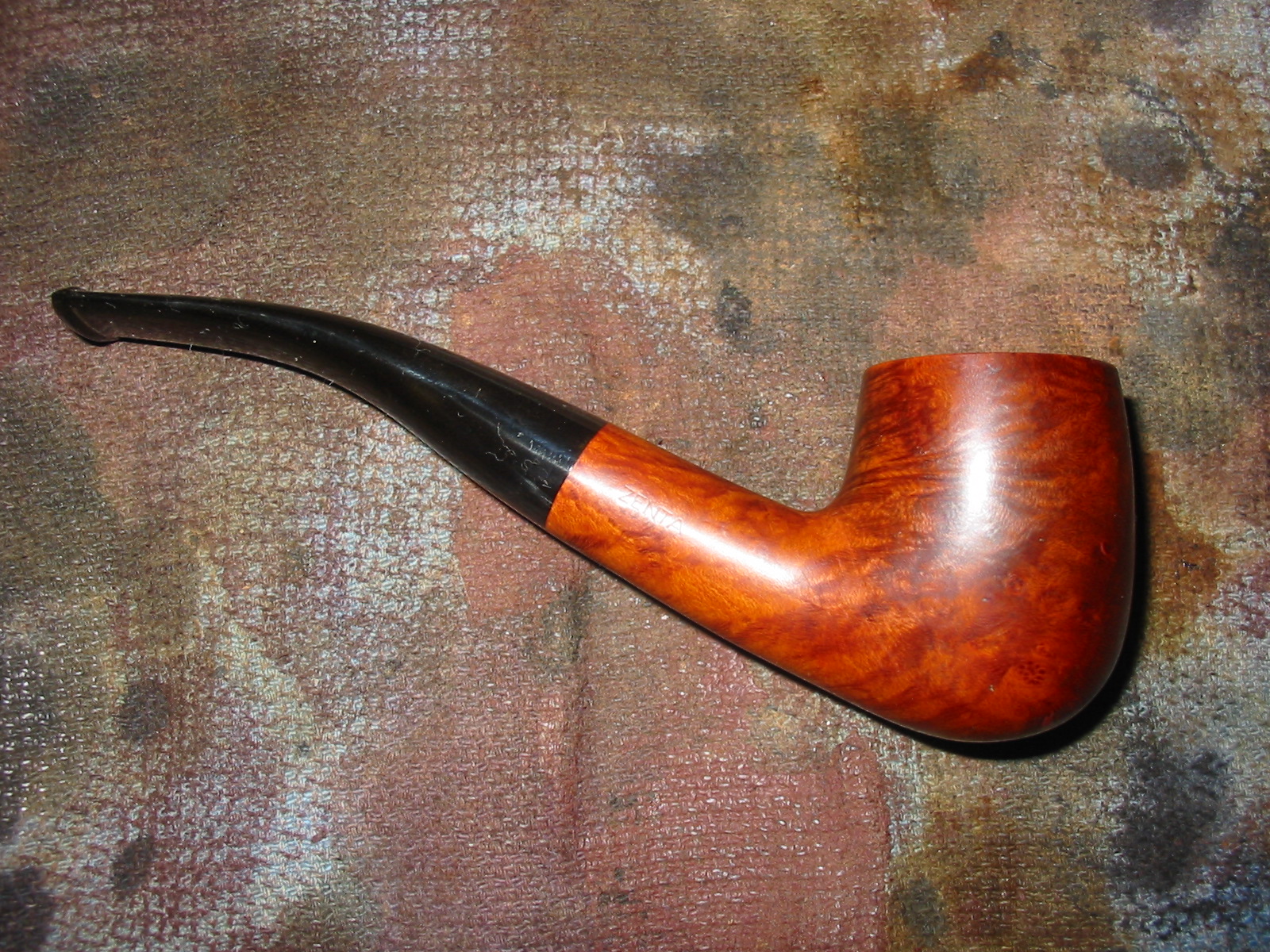
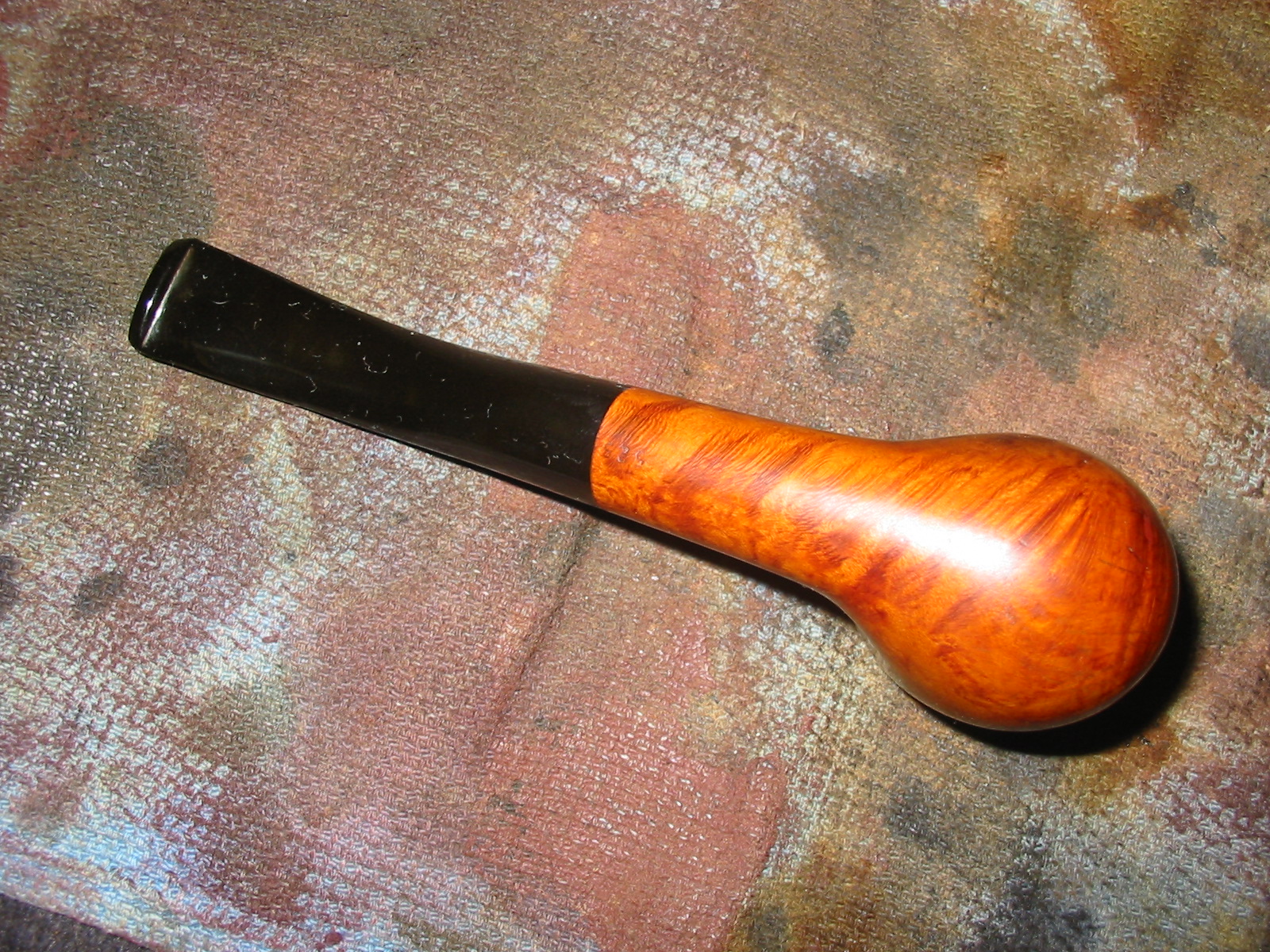
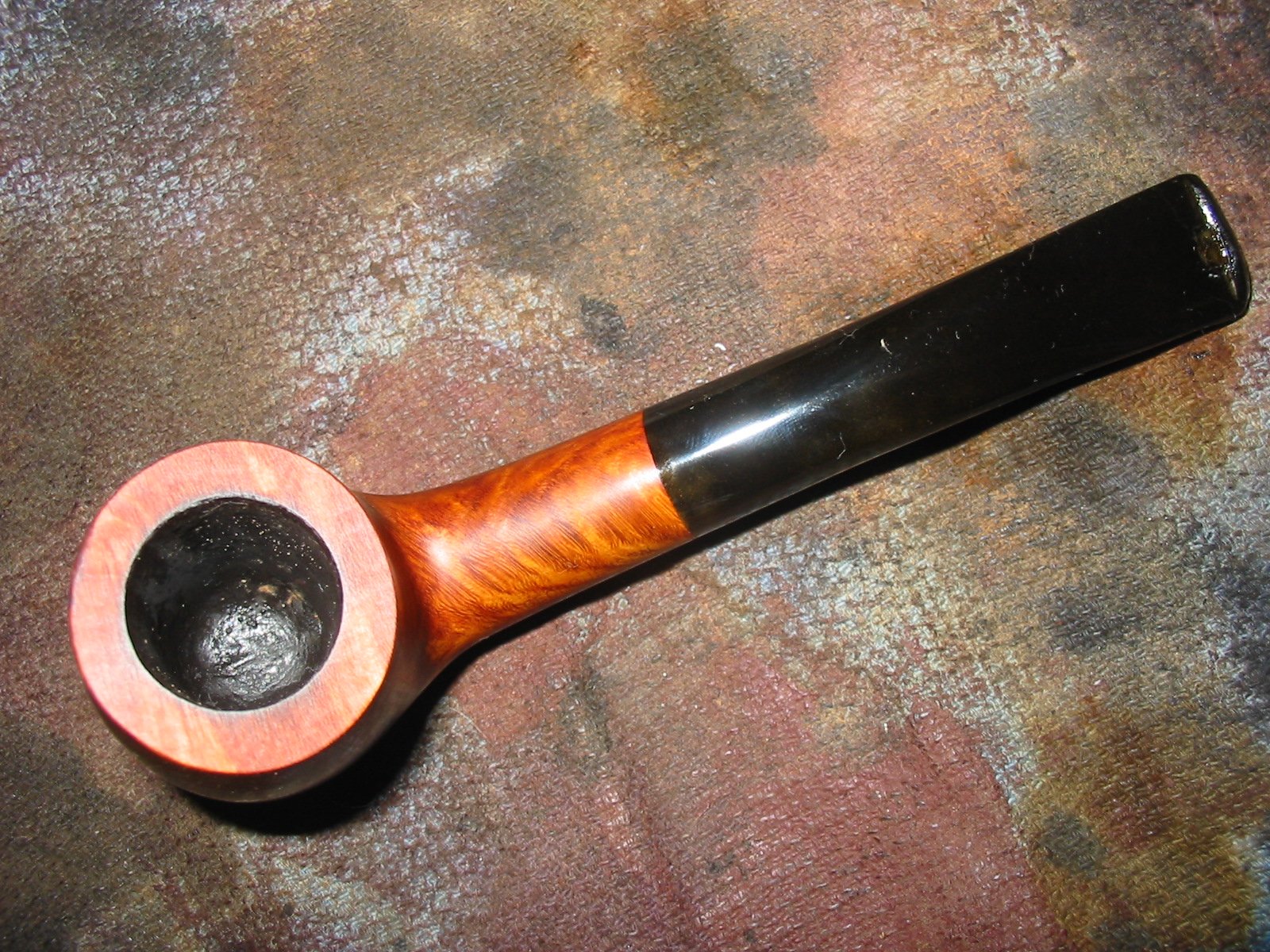
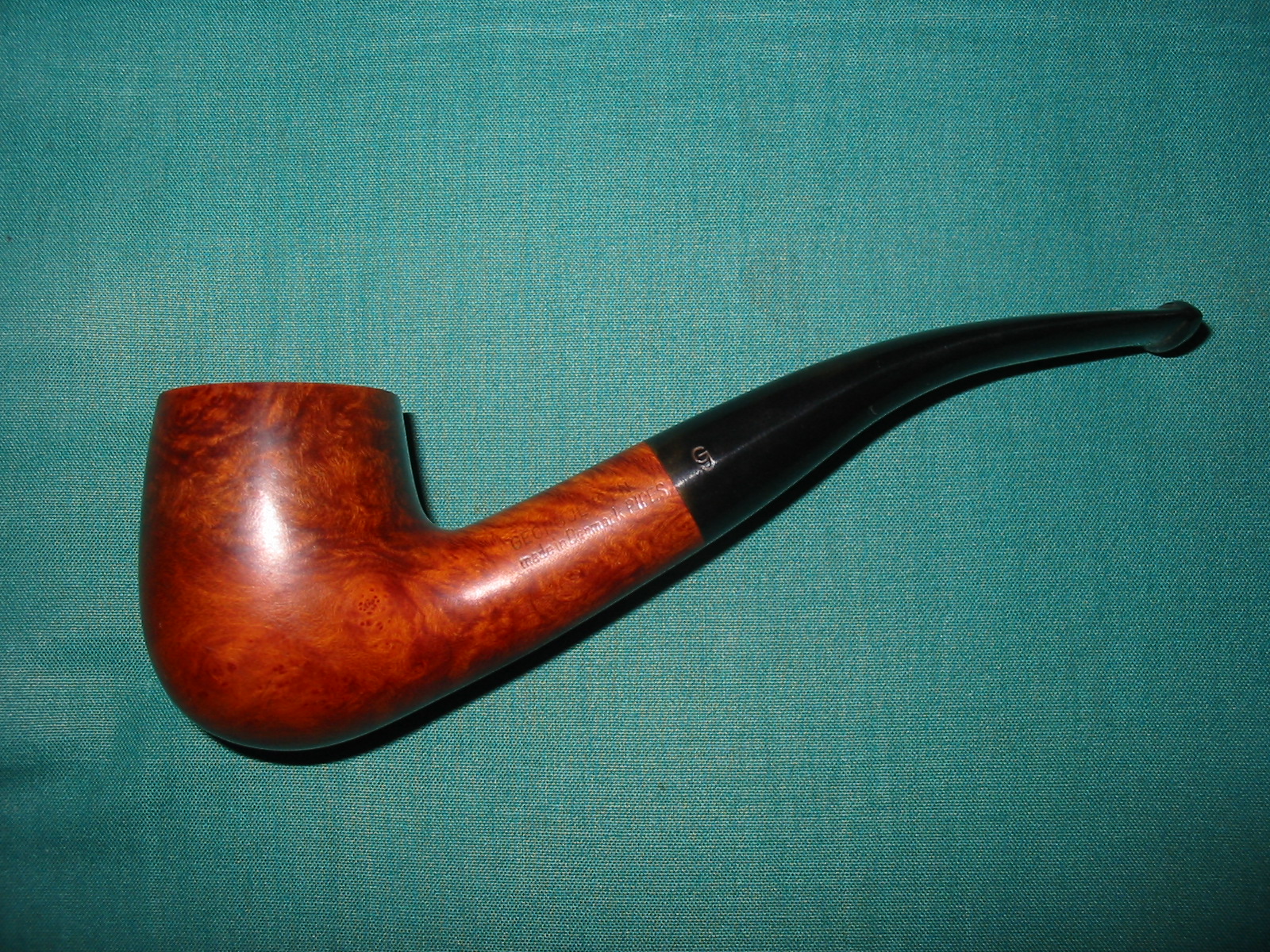
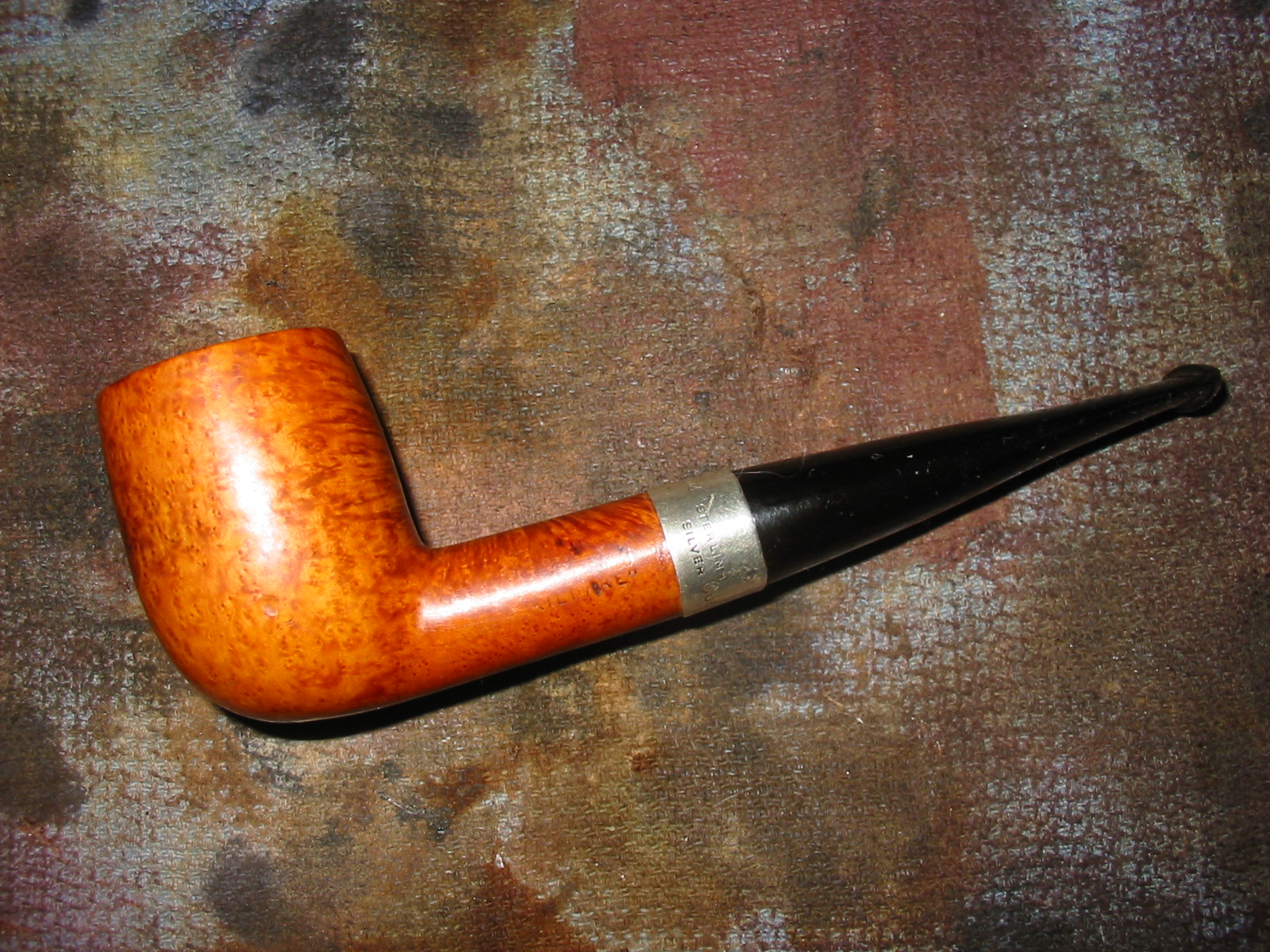
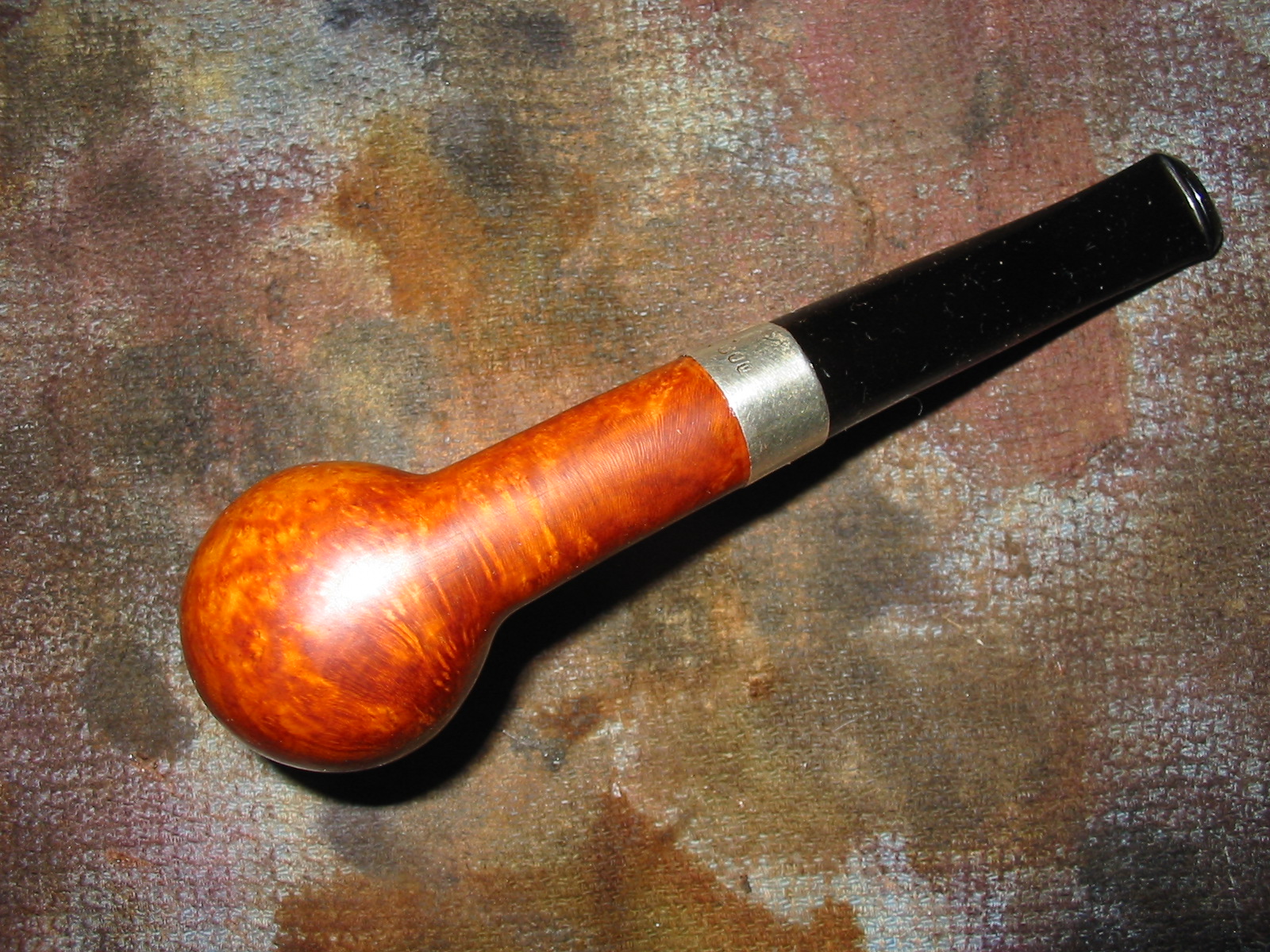
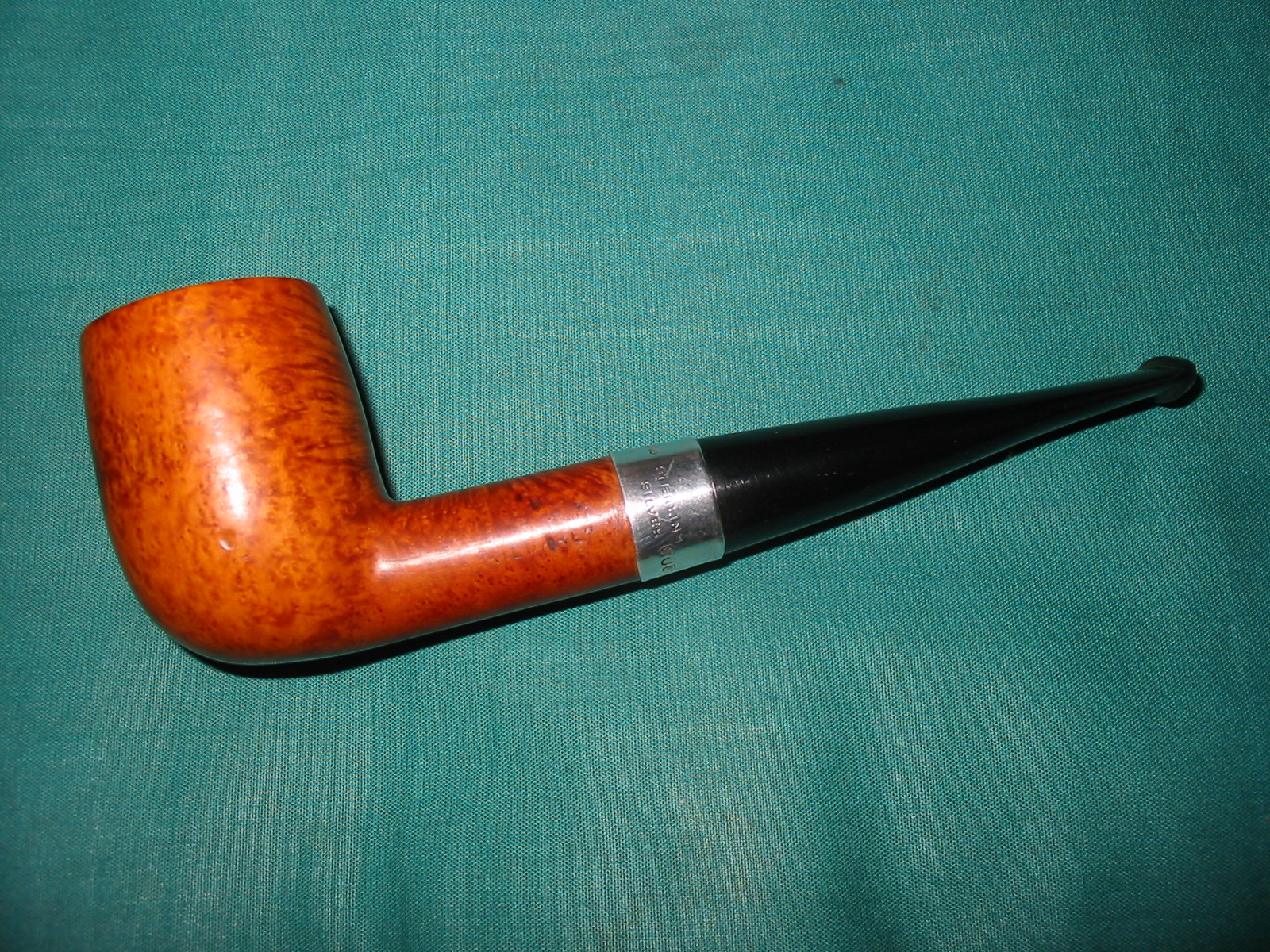
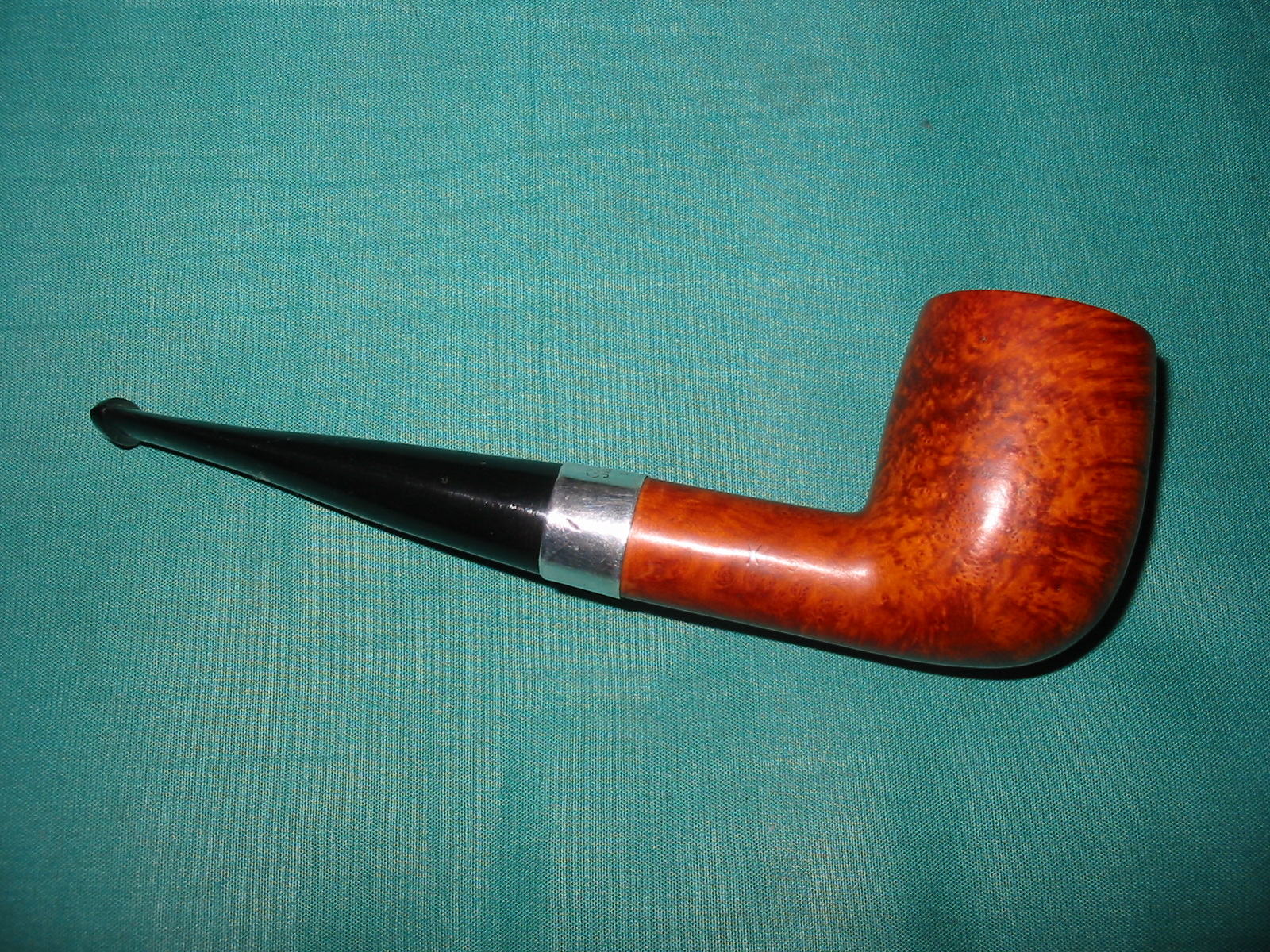
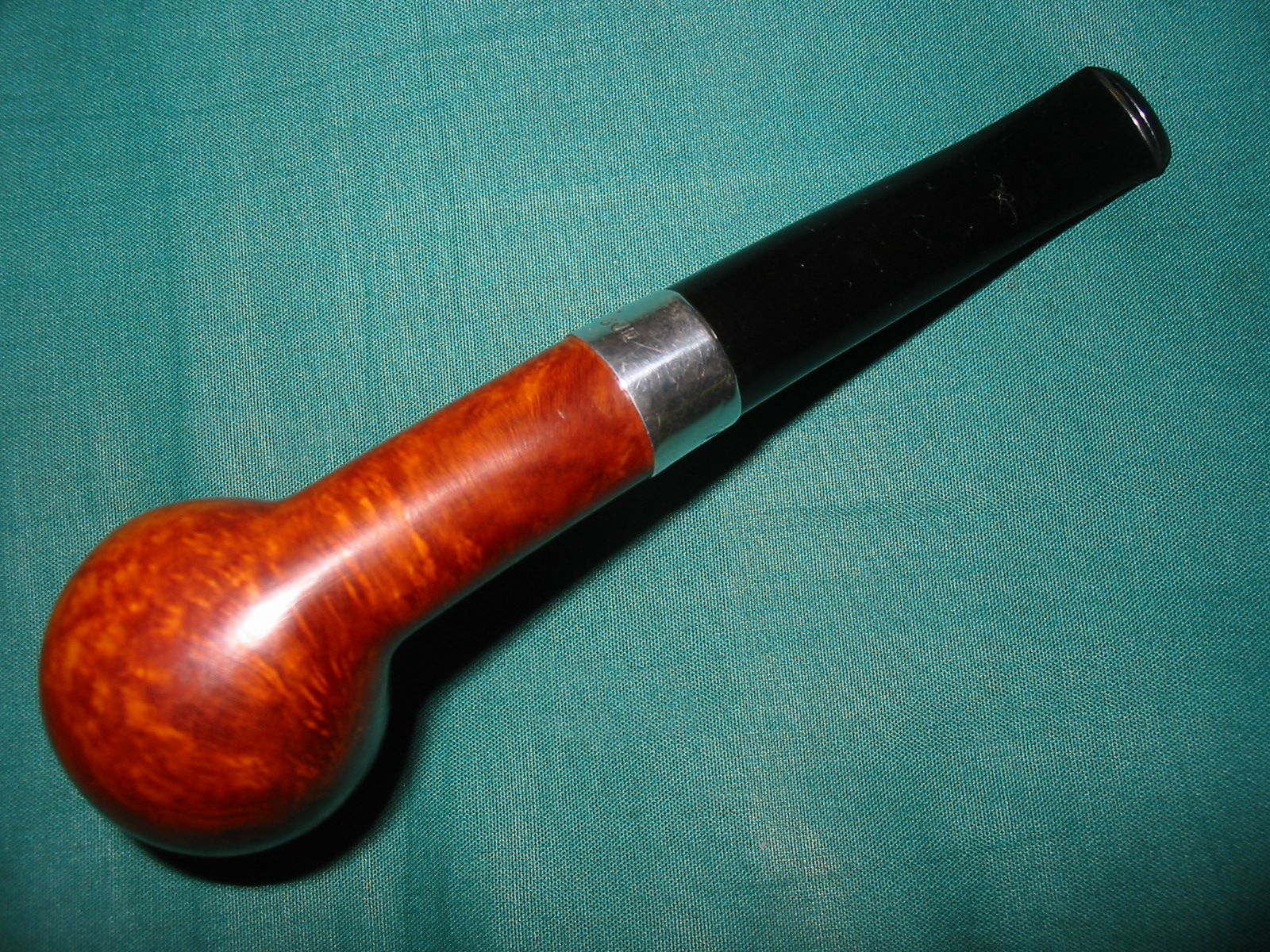
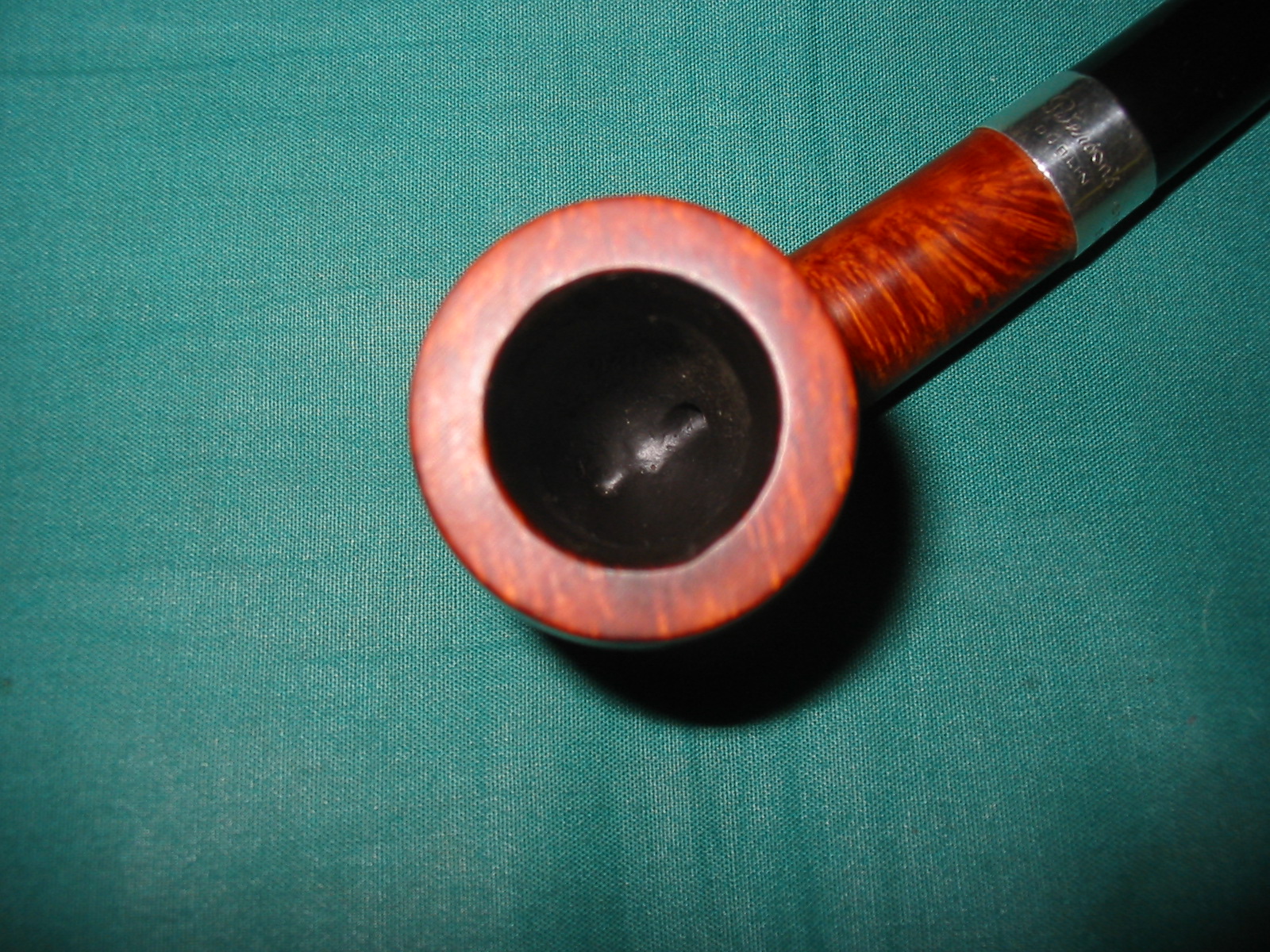
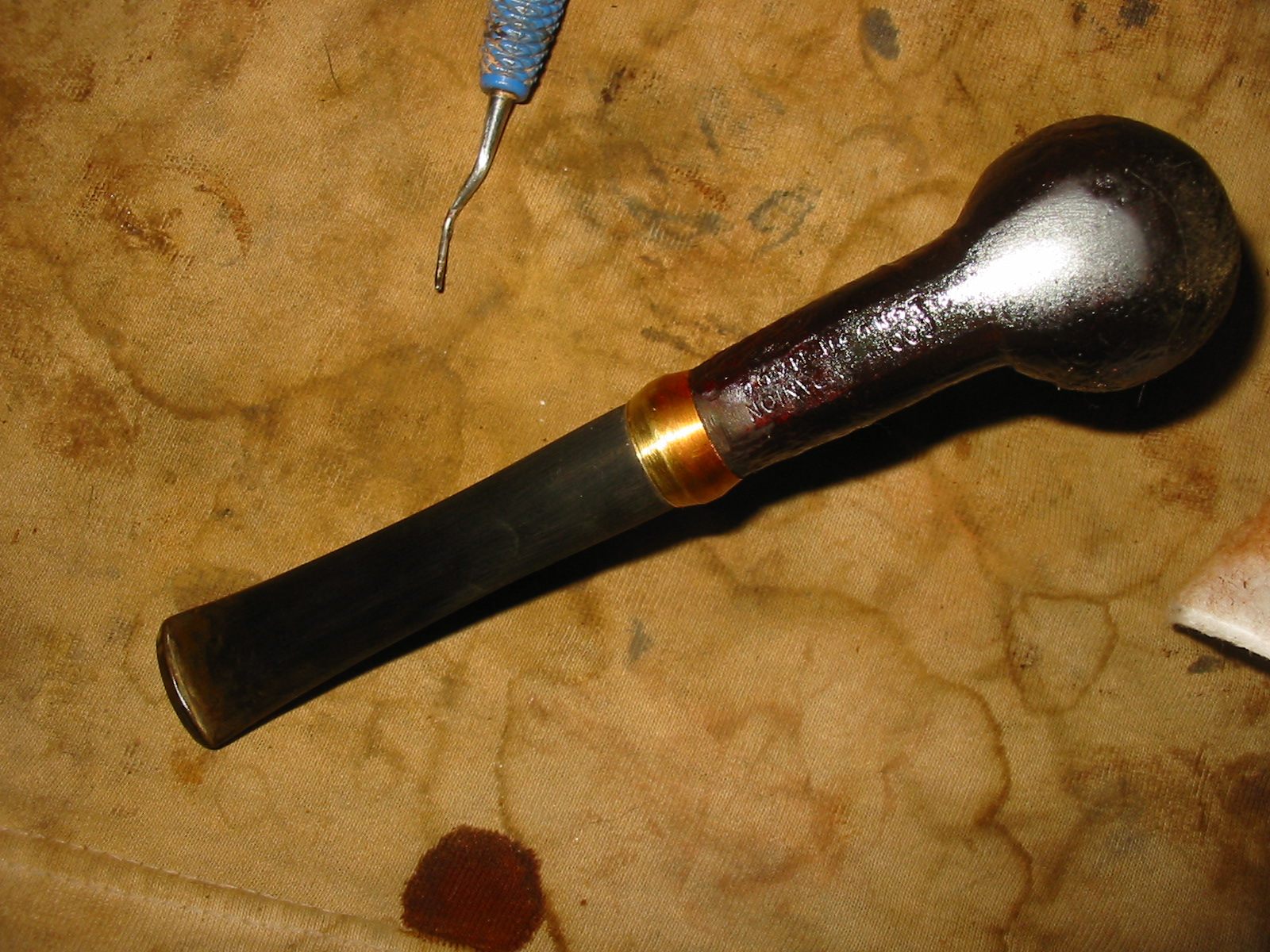
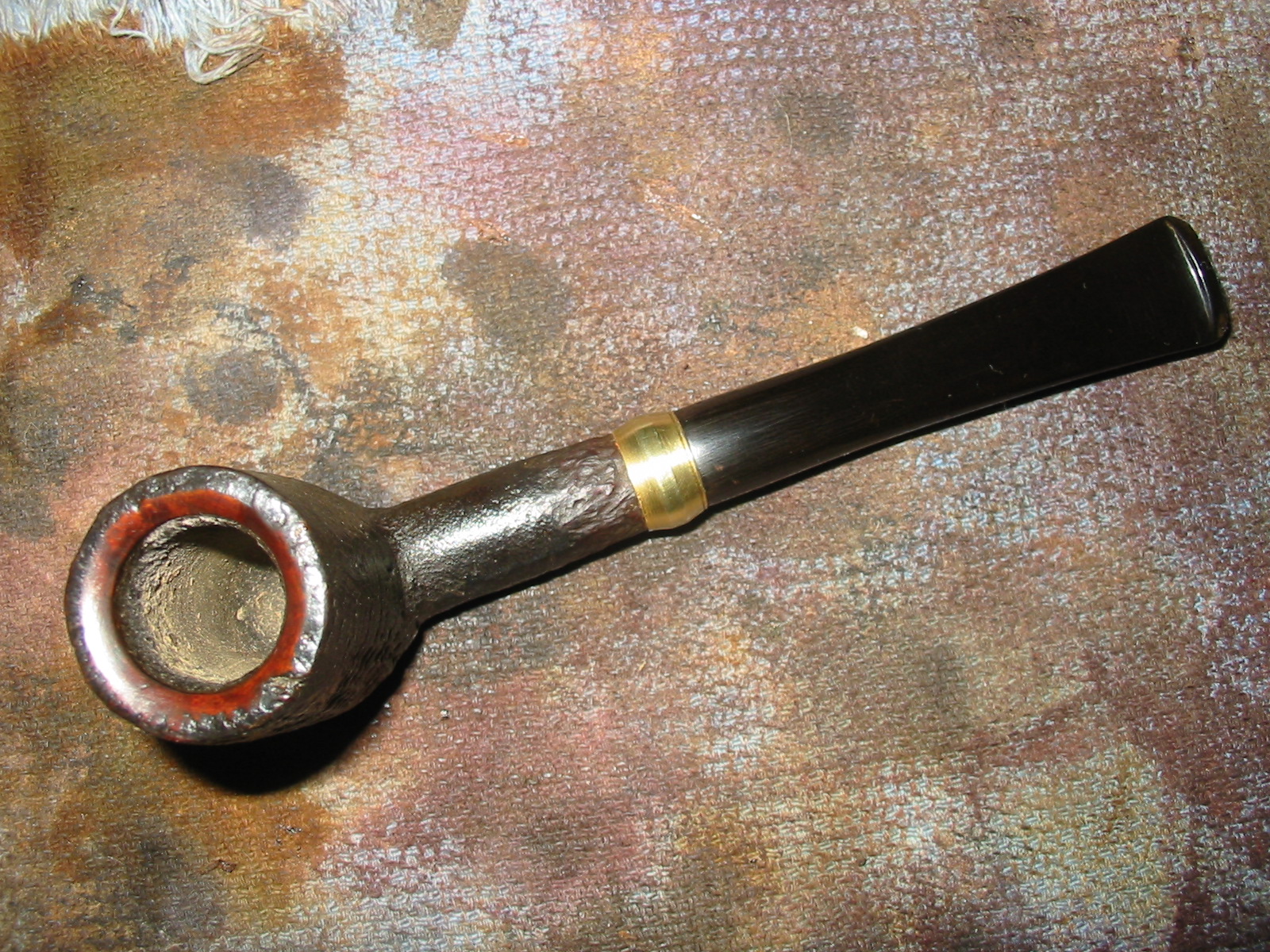
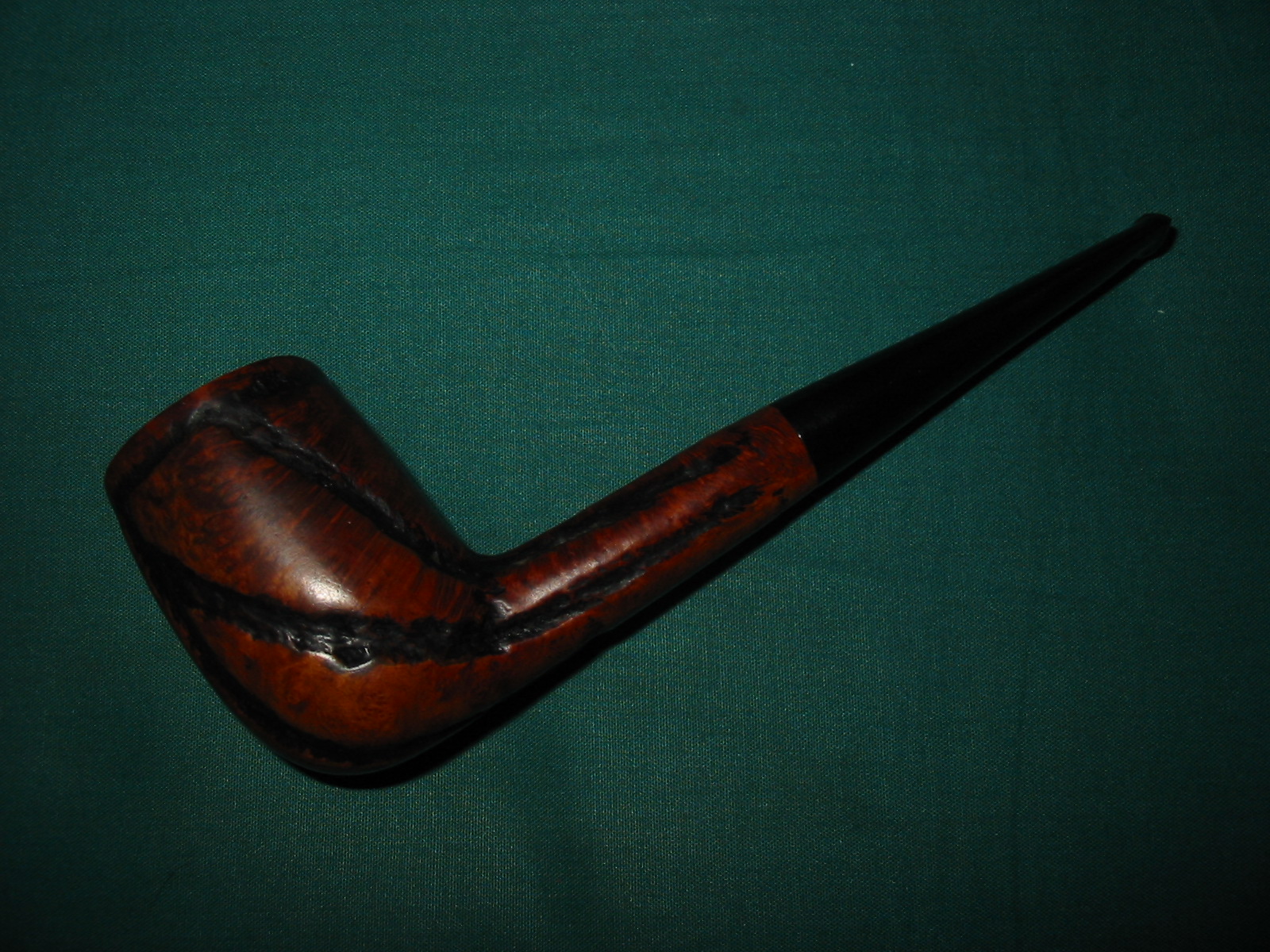
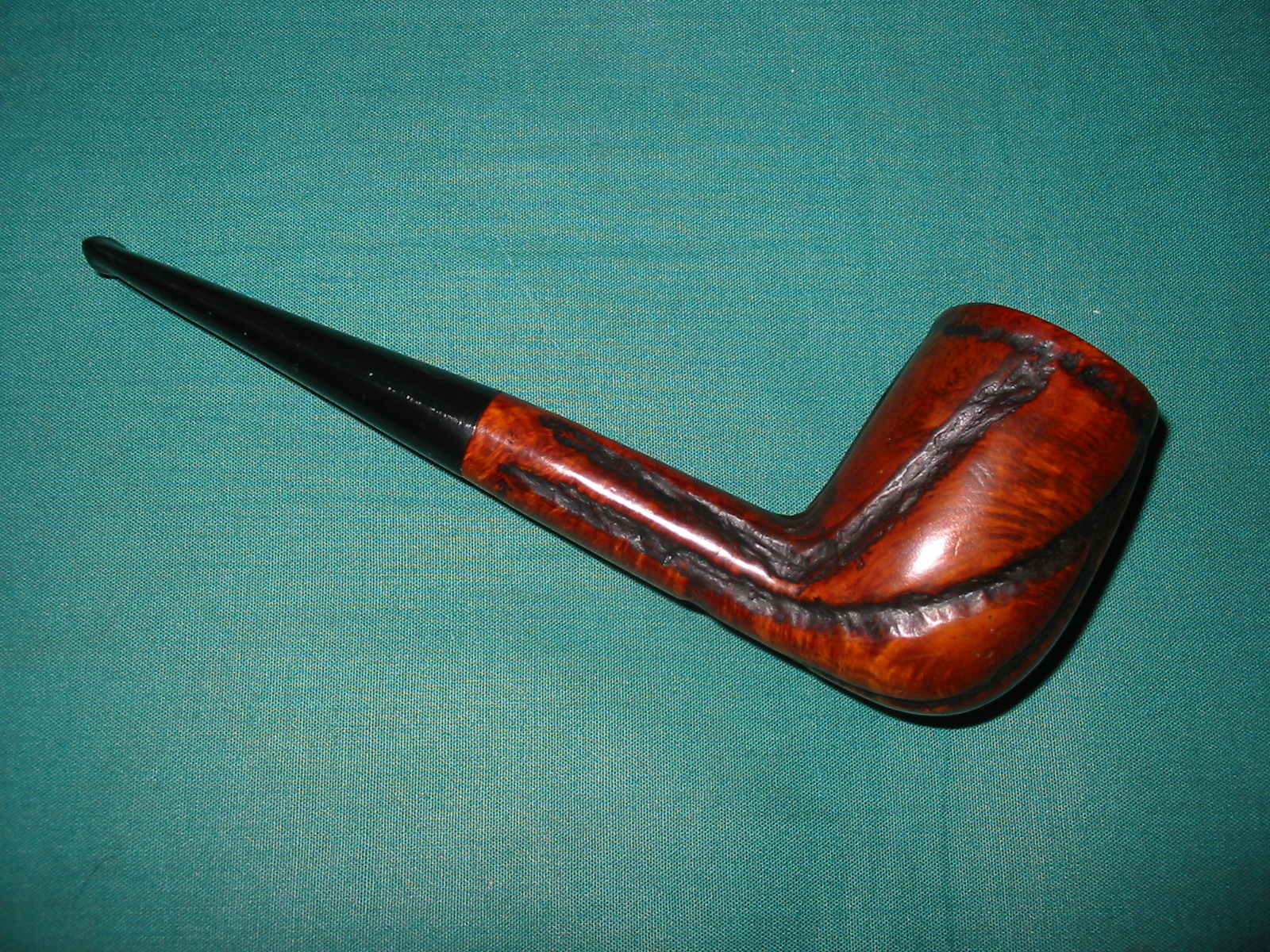
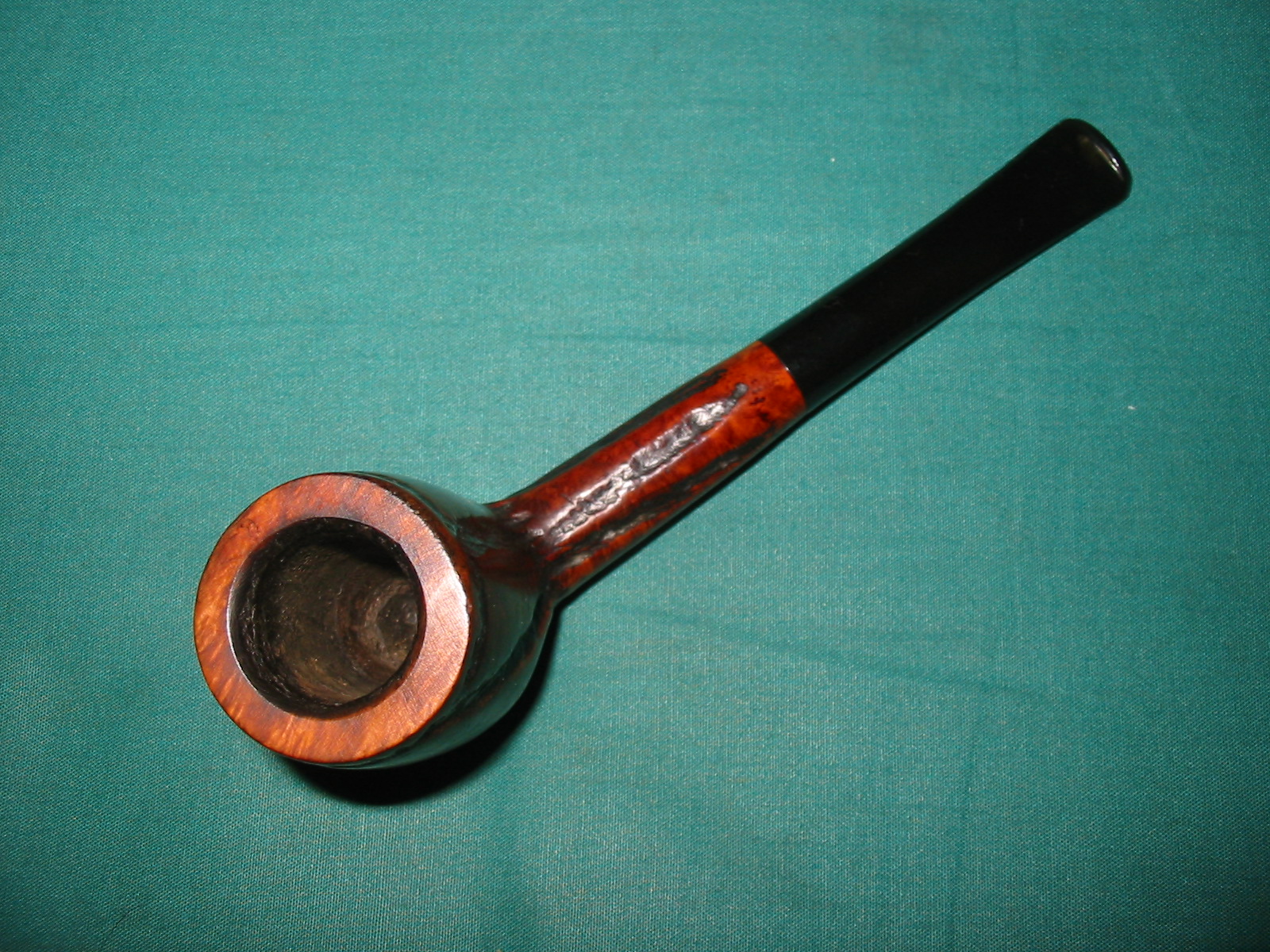
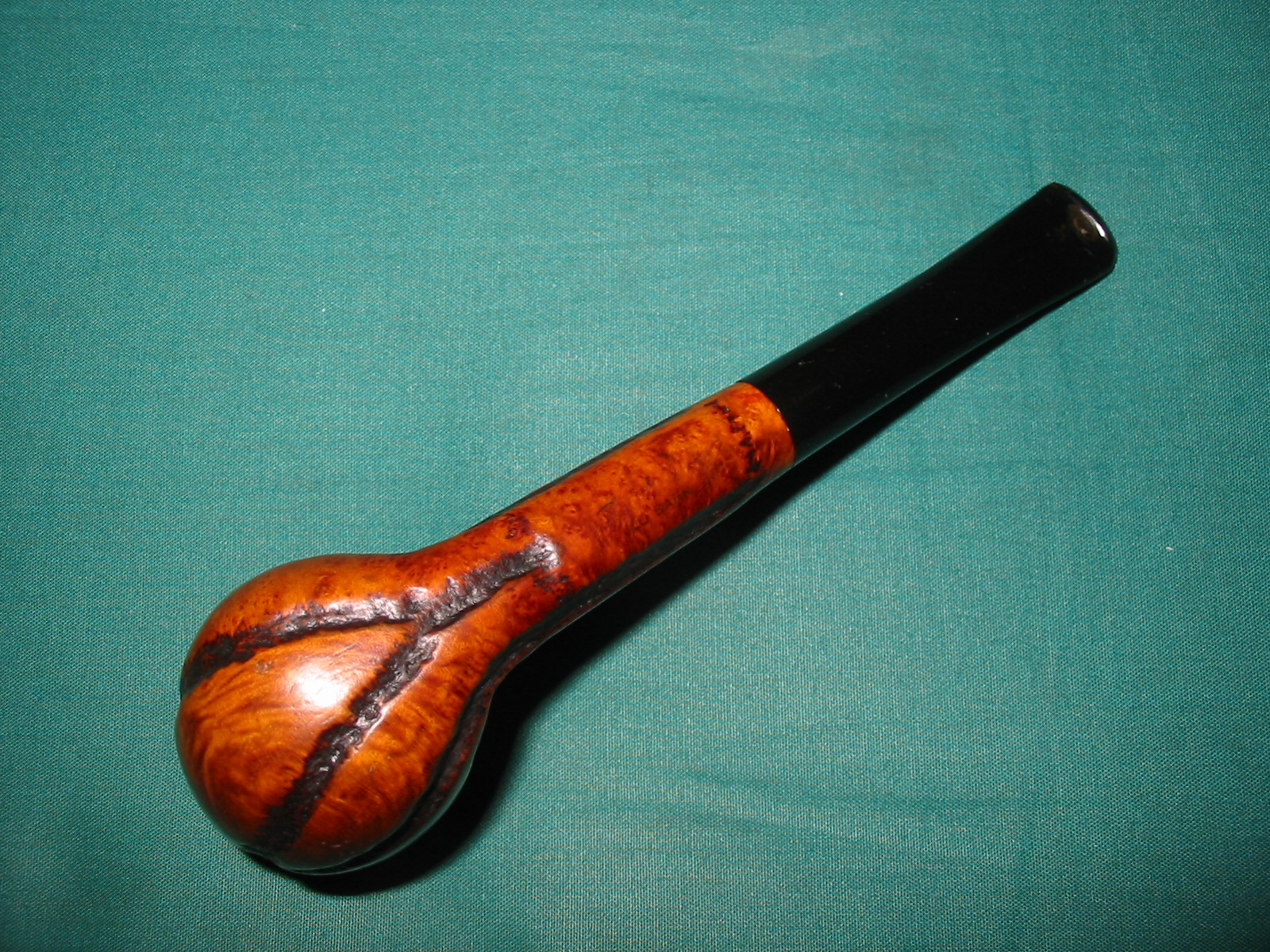
This particular pipe is another one that will go to the Vancouver Pipe Club. It was a pretty easy clean up in that only the bowl rim was a mess. Everything else was in ok shape. It is a billiard with great grain on the left side and bottom of the bowl and top and bottom of the shank. The grain on the right side and the back were lousy. There were also several fills on the poorly grained sides of the bowl. The finish was not in too bad shape though it too had been given a coat of varnish. The inside of the bowl had a black bowl coating that I think was applied to protect the thin back wall of the bowl. The top rim was in rough shape on the inside edge and had burn marks on the sides and front of the outer edge. The stem was in great shape with no damage at all. It is stamped on the left side of the bowl Georg Jensen over Made in Denmark Pipes. On the right side it is stamped 720 in the middle of the shank. On the underside of the shank it is stamped Deluxe.
IMG_4044

IMG_4045

IMG_4048

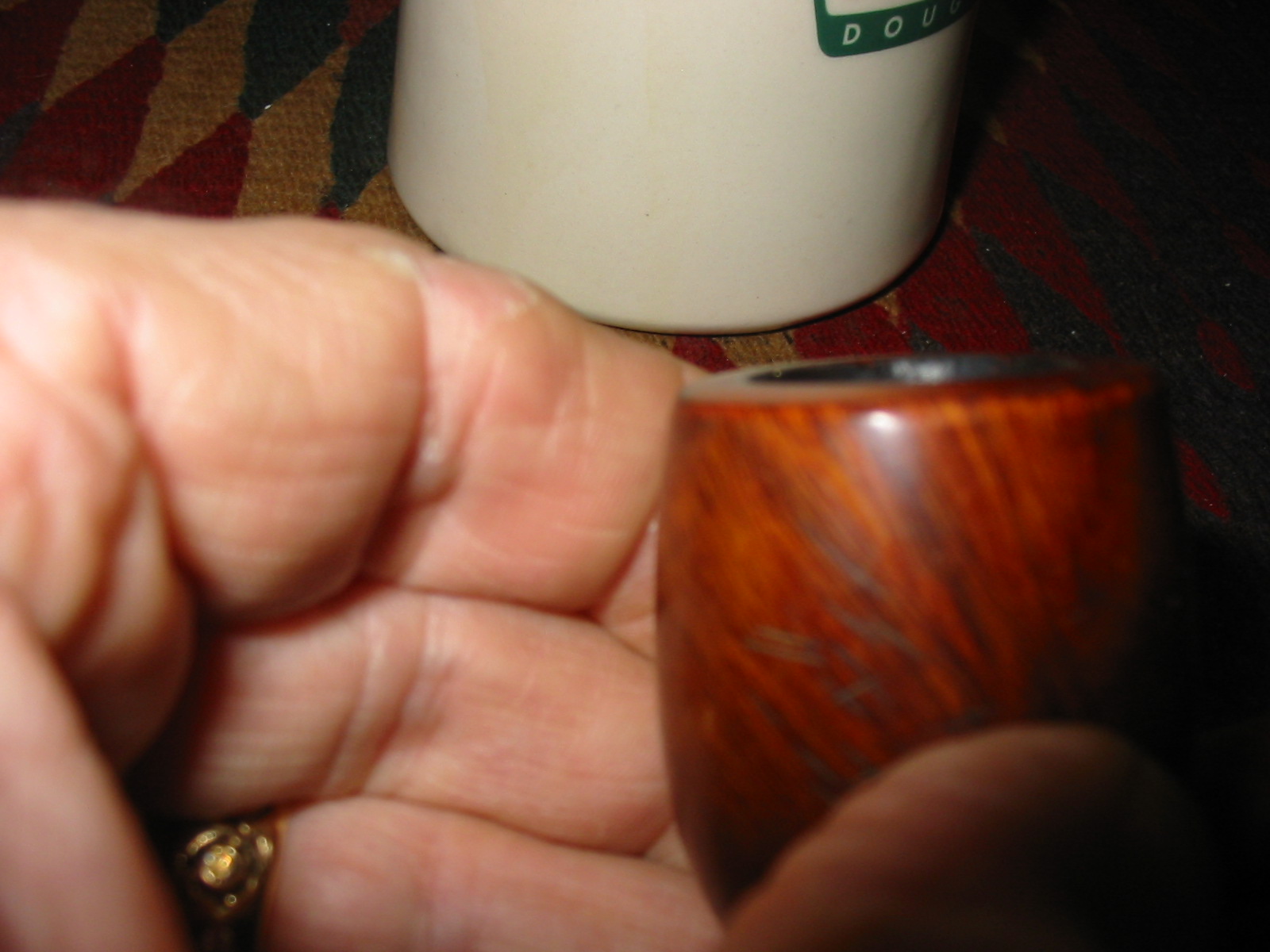
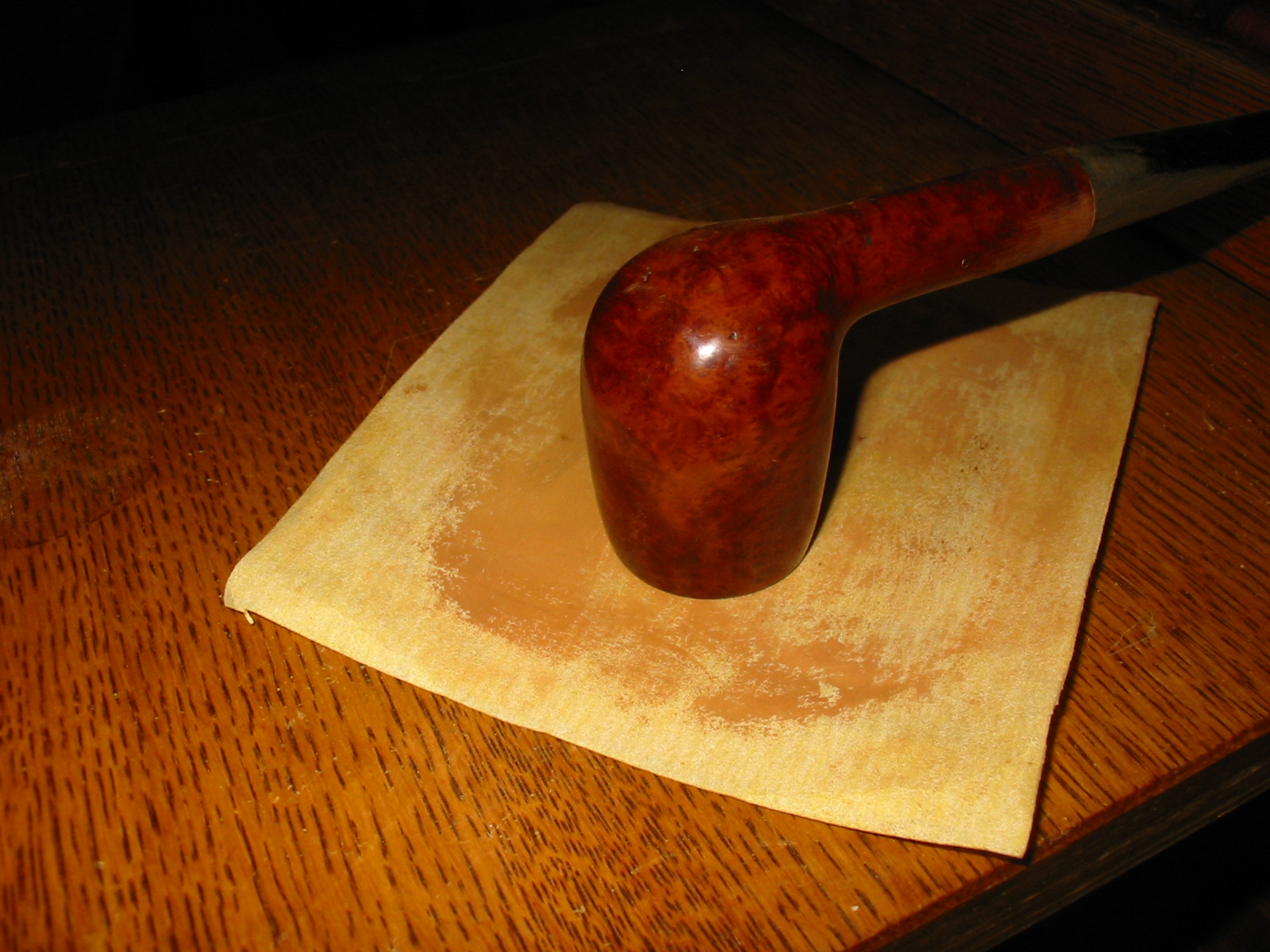
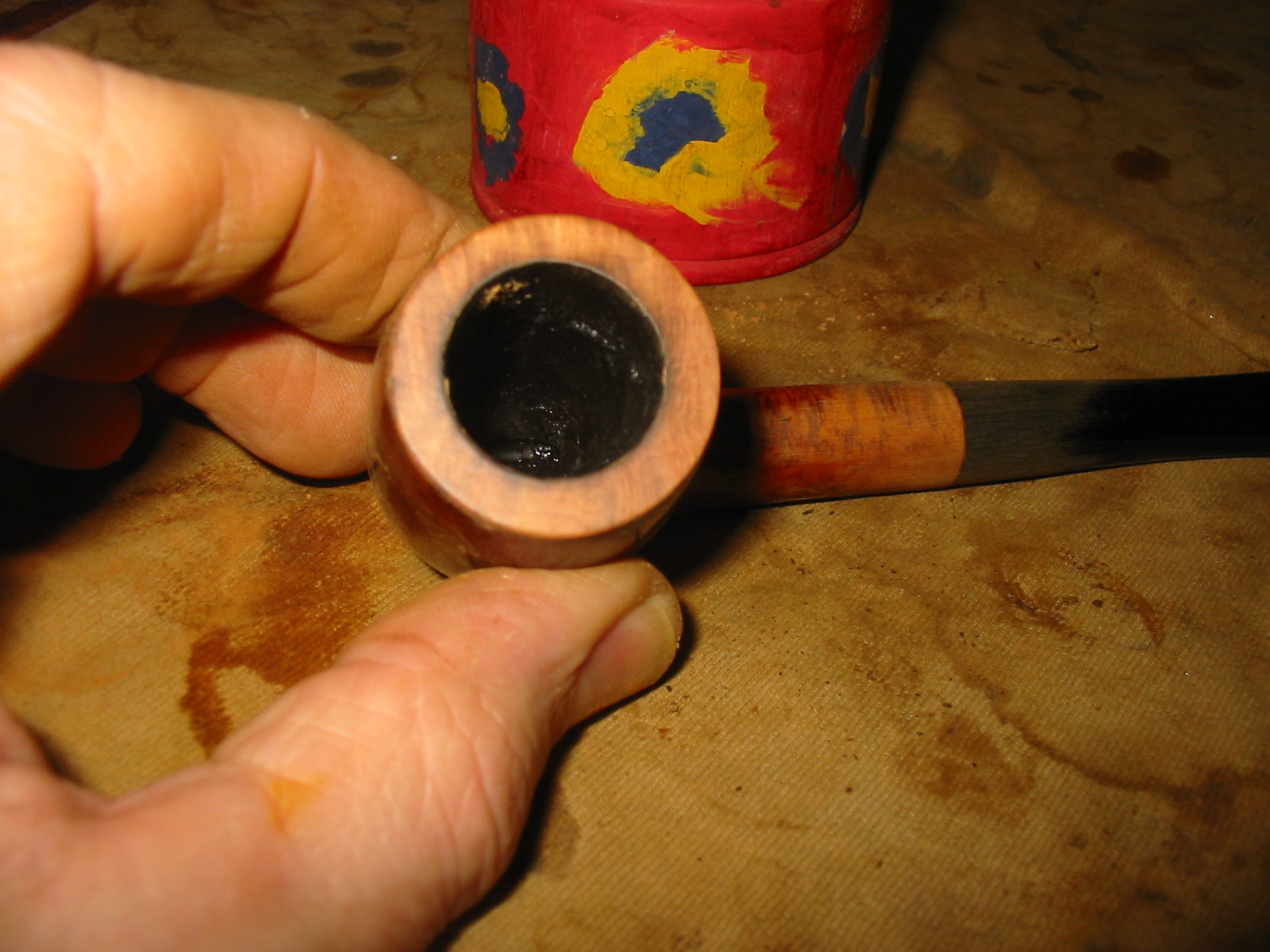
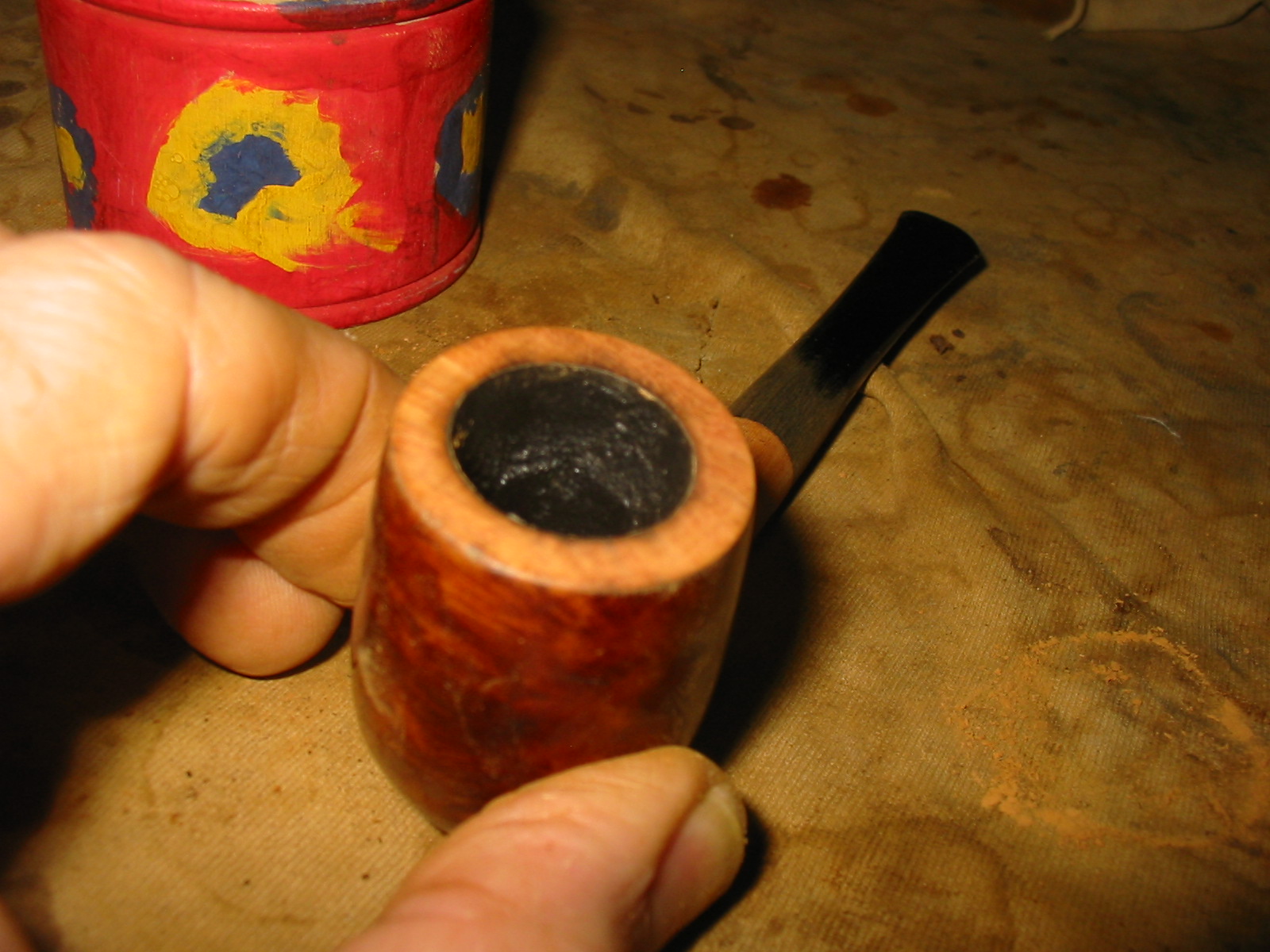
The next series of three photos show the damage to the rim. The first one is a top view of the bowls showing the overall damage. The second is a close up photo of the rim. The third photo shows the burn damage to the front outer edge of the bowl.
IMG_4046

IMG_4050

IMG_4052

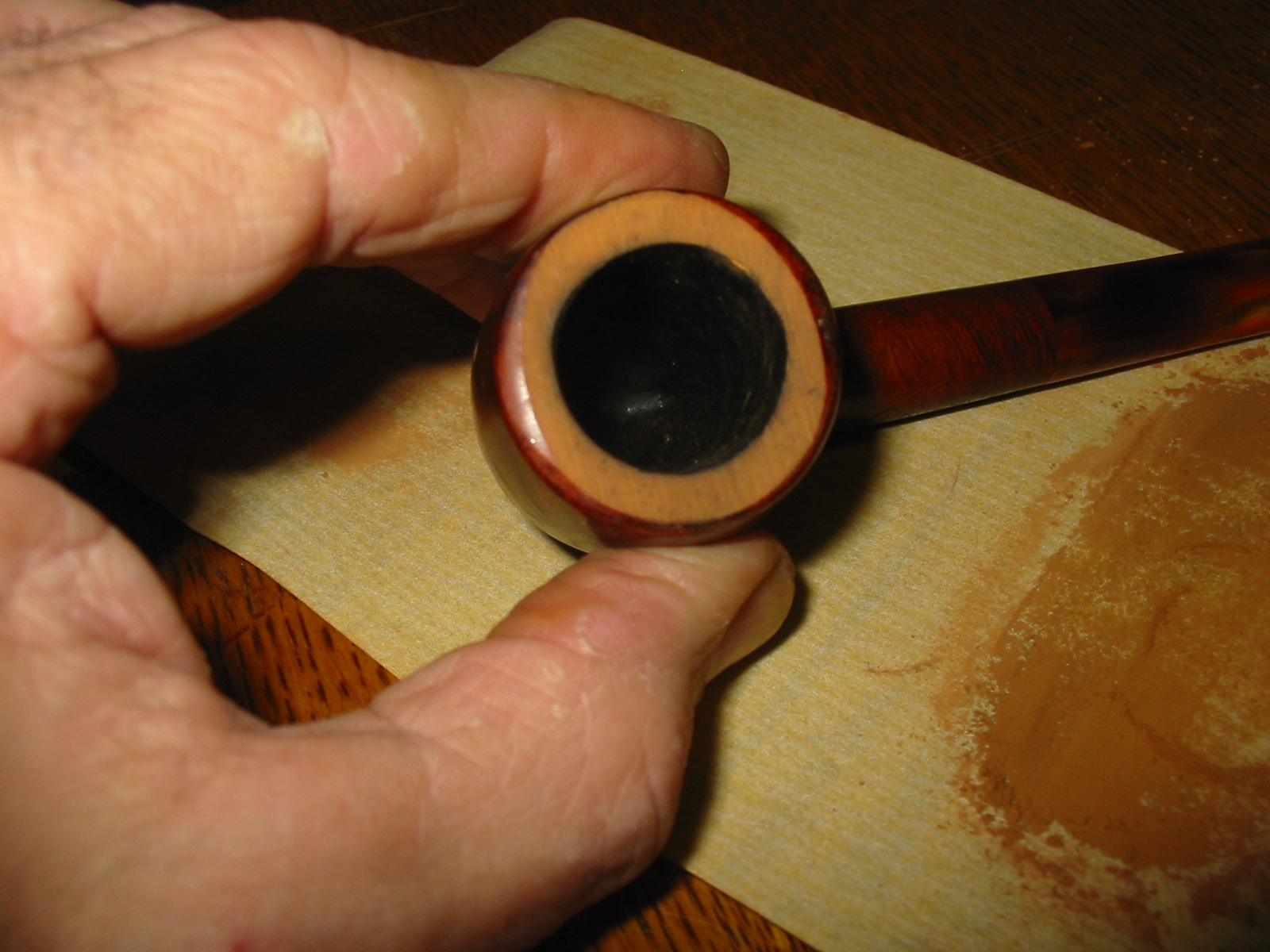
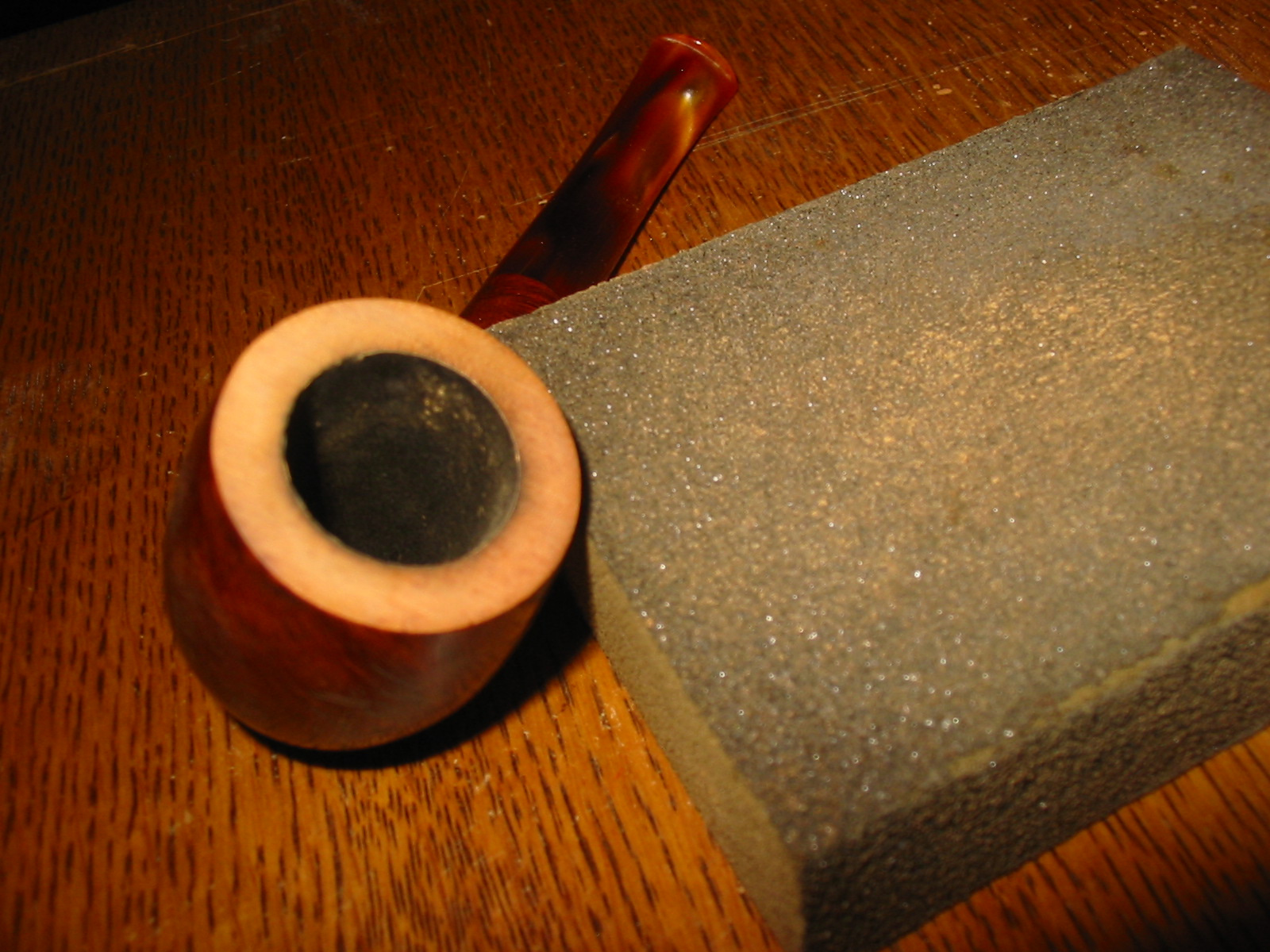
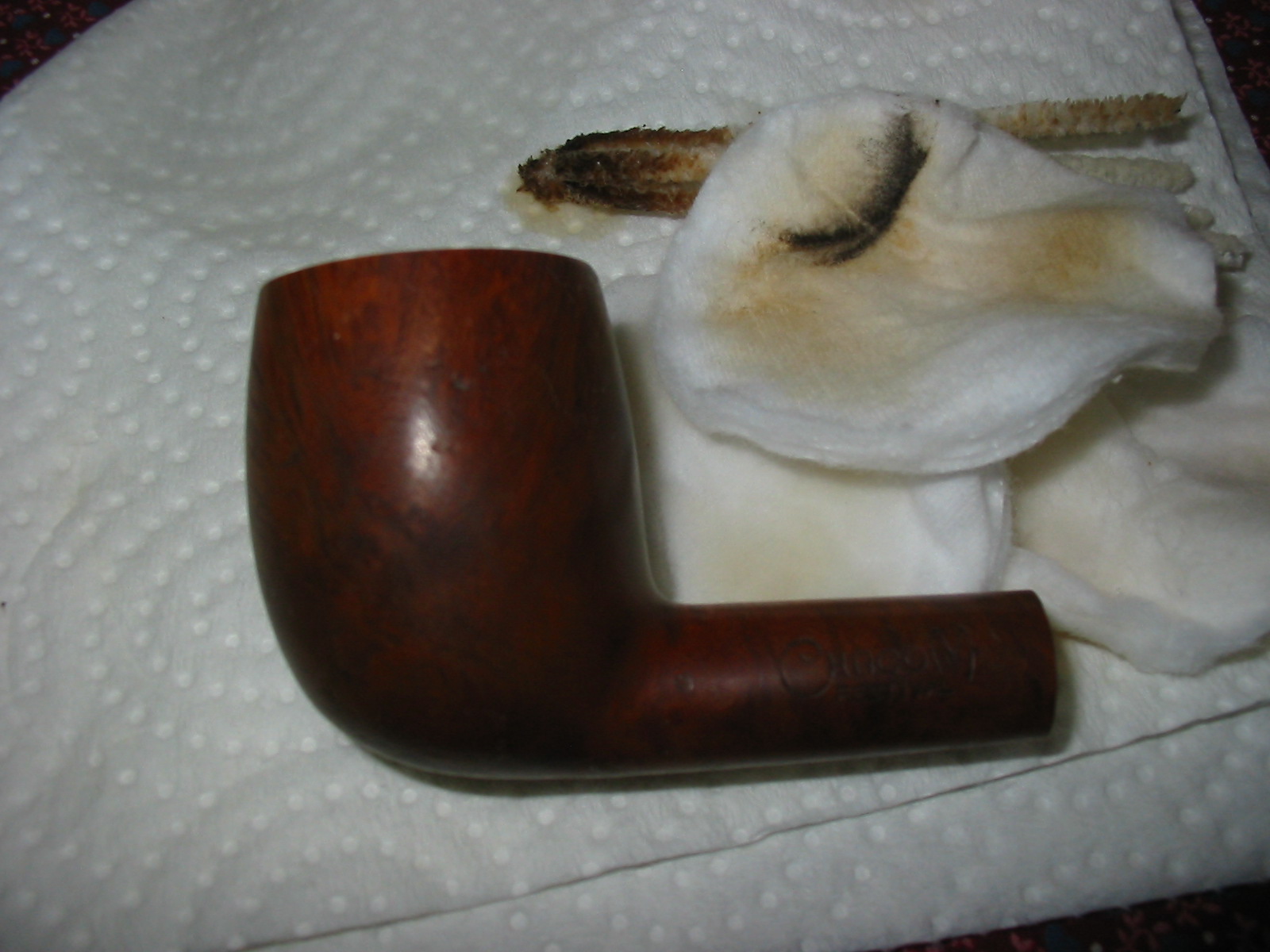
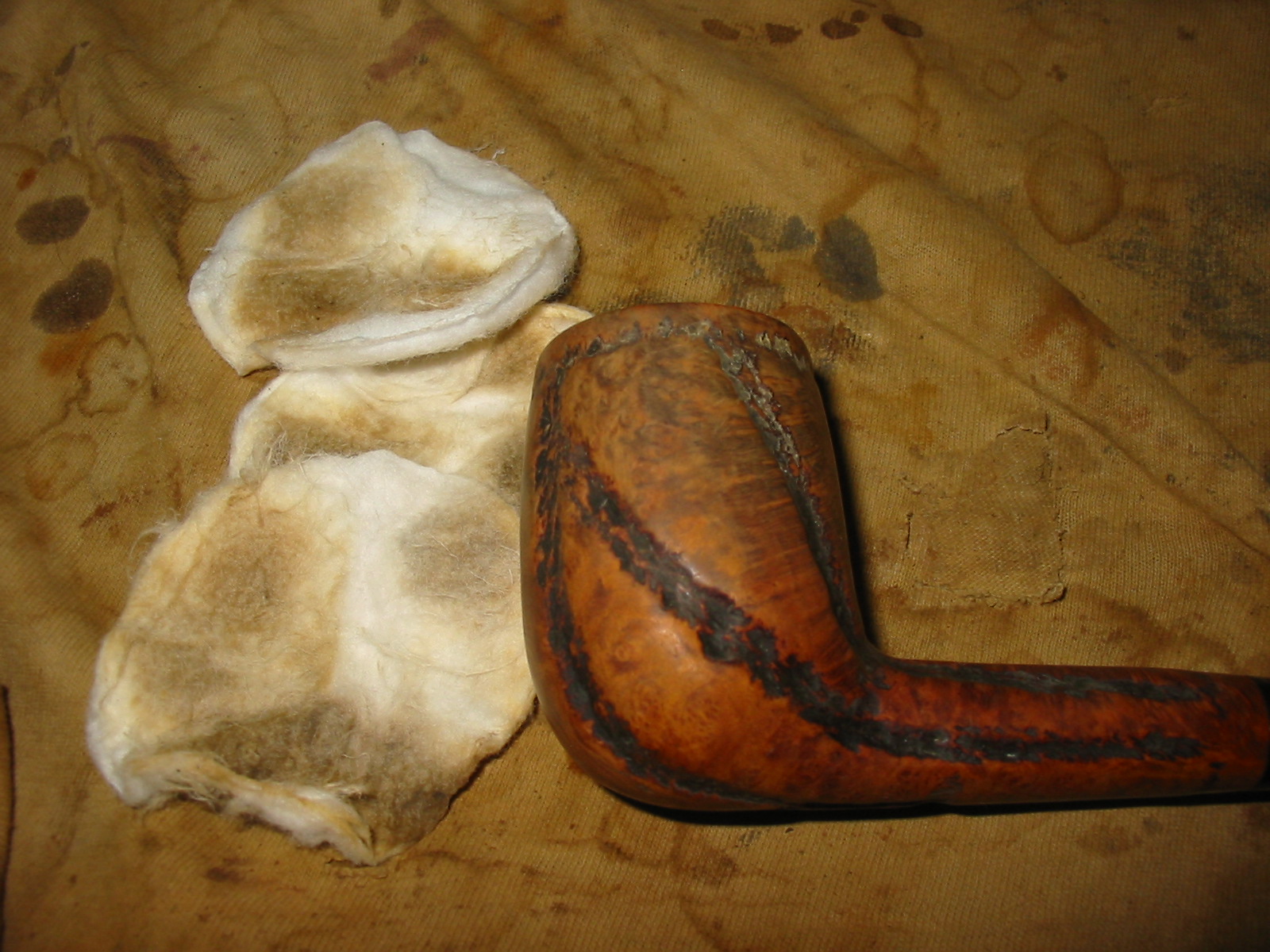
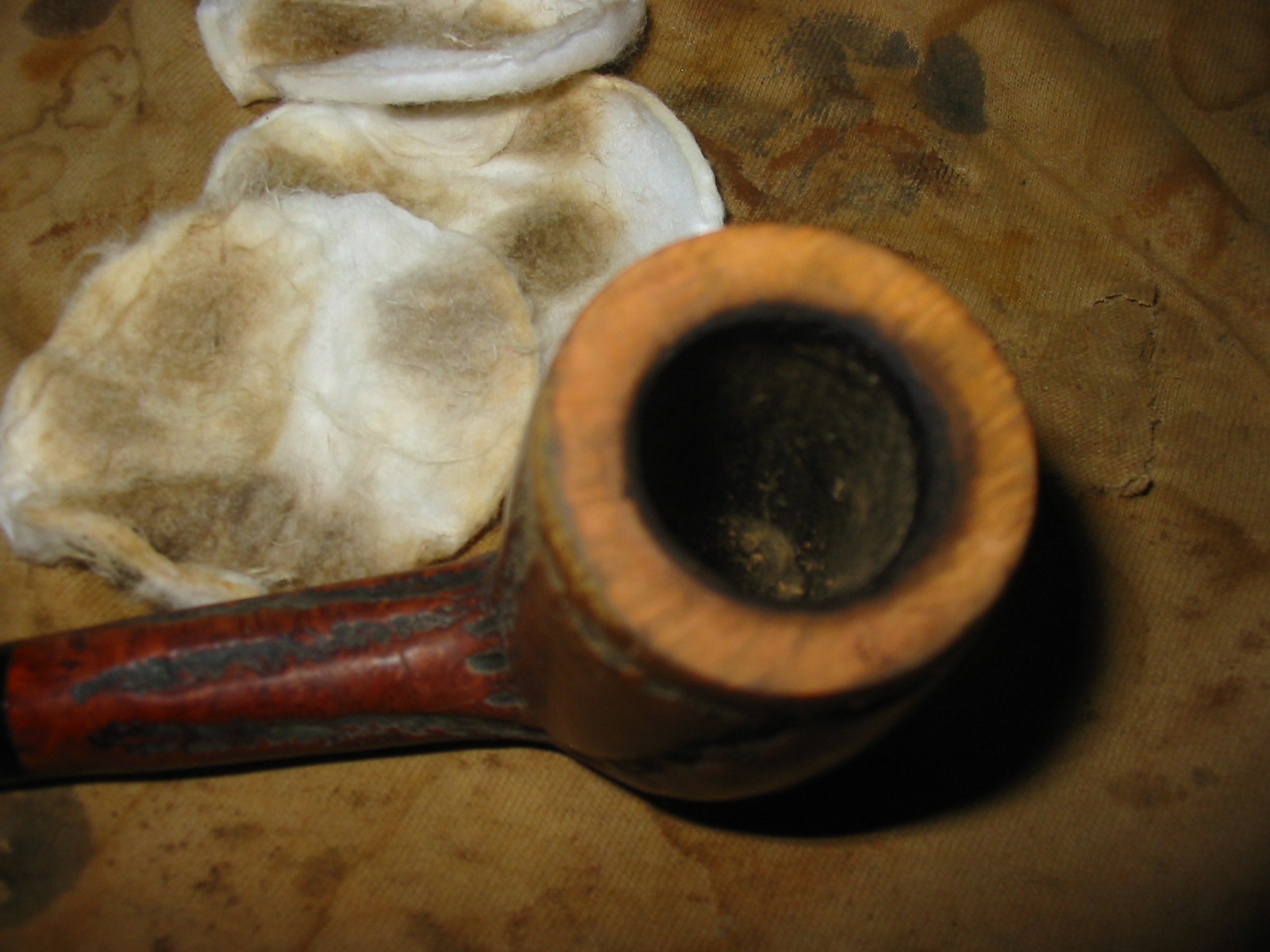
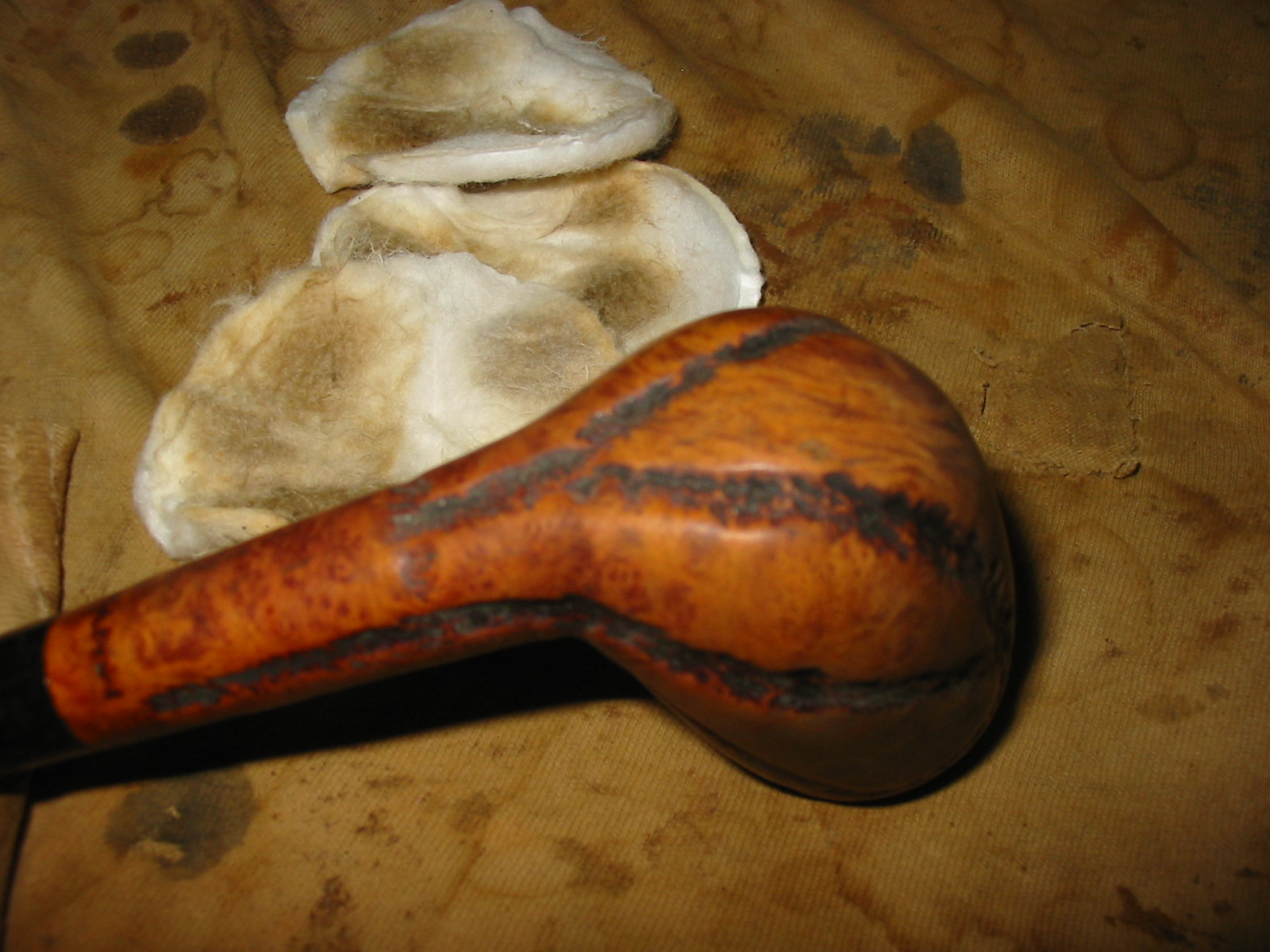
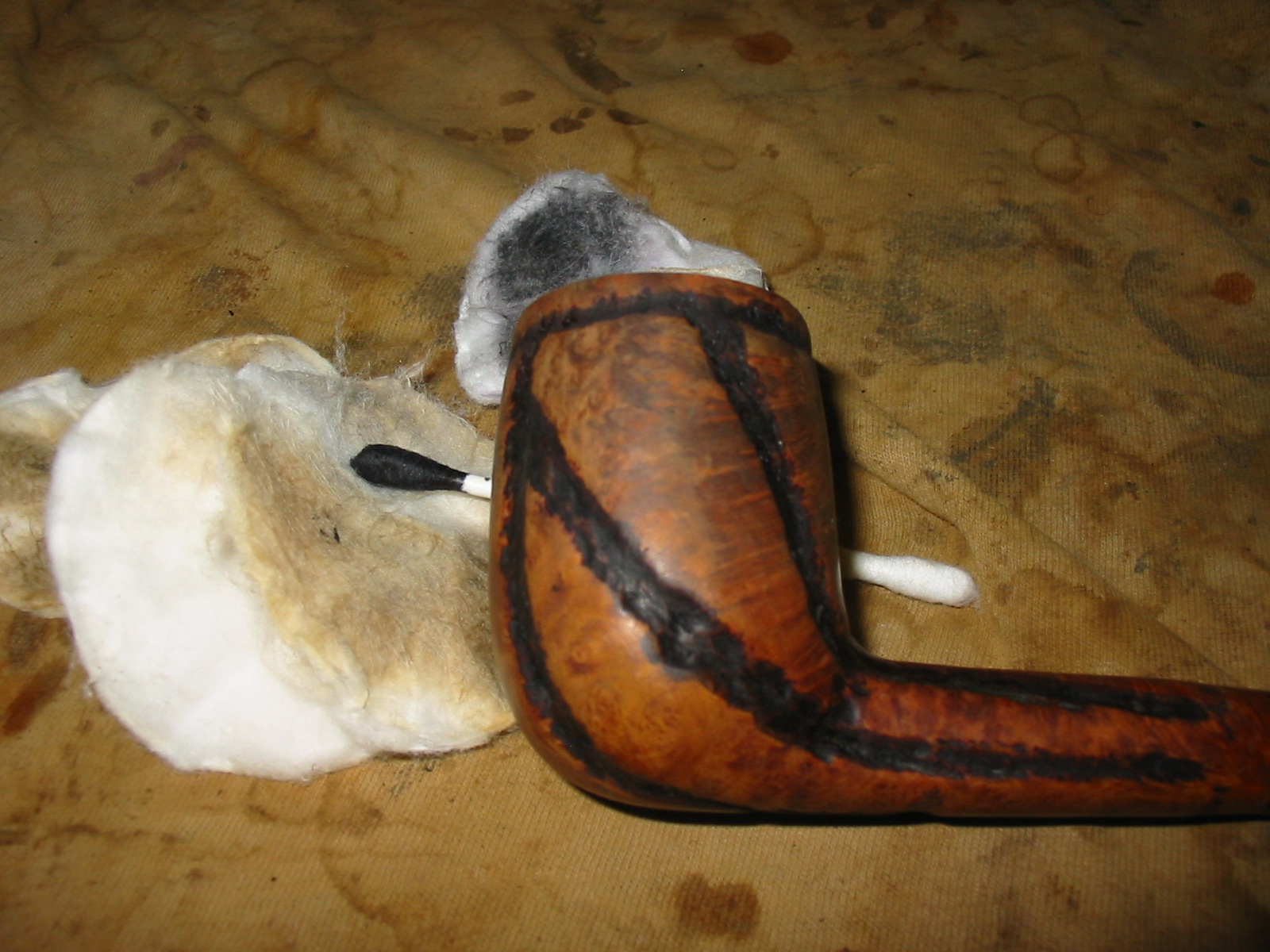
I topped the bowl in my usual manner, sanded it with a medium grit sanding sponge and wet sanded it with a 1500 grit micromesh sanding pad. I wiped down the bowl and rim with acetone on a cotton pad to remove the varnish and the finish. I sanded the inner bevel of the rim with a folded piece of sandpaper to smooth out the damage to the edge and to rework that bevel to give it a clean and renewed look.
IMG_4054

IMG_4055

IMG_4057

IMG_4059

I restained the bowl with MinWax Medium Walnut stain and rubbed it on and off until I had the blend of colours I wanted to highlight the grain patterns. I buffed the pipe and stem with White Diamond to polish the scratches.
IMG_4061

IMG_4062

IMG_4063

IMG_4064

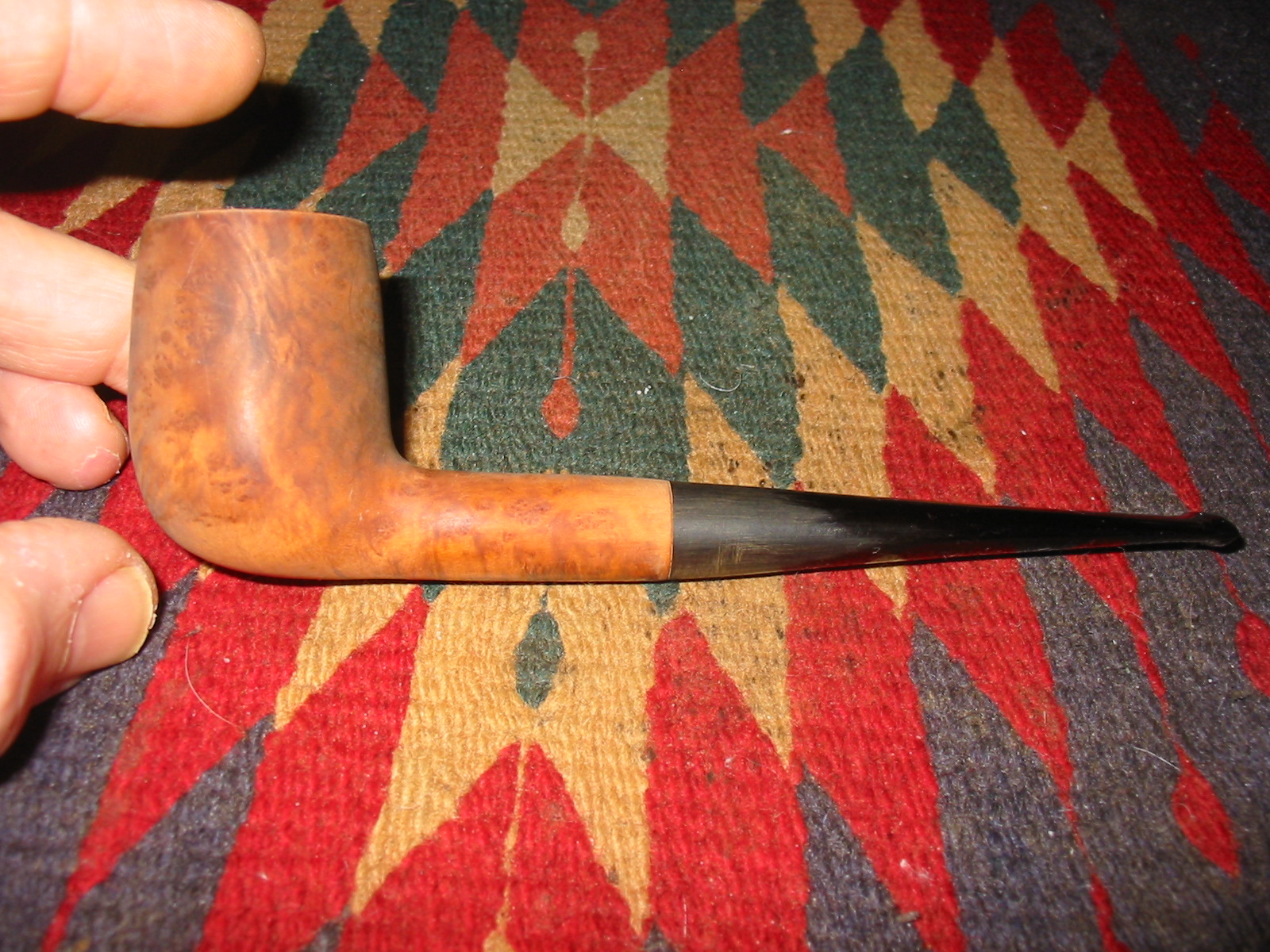
There were some light spots on the shank and the bowl that took more coats of stain than the rest of the pipe so I retouched them and then polished the pipe and stem with multiple coats of carnauba wax. I finished by buffing it with a clean flannel buff to polish it. The photos of the finished pipe are below. It is ready to send back to the Pipe Club and provide someone with a great looking pipe for their collection.
IMG_4065

IMG_4066

IMG_4067

IMG_4069

Reworking a Poorly Done Topping Job on a Bulldog of Unknown Make


This poor old bulldog came in the pipes that were donated to the Vancouver Pipe Club and I decided to work on it and see if I could repair some of the damage that had been done when someone tried to top it in the past. The rim looked as if whoever topped it tried to do it by hand and not on a flat board. Because of that the surface of the rim was wavy with high and low spots and the outer edge was lower than the inner edge in several places. The top was also at a slight angle as the sanding had not been done on a flat surface.

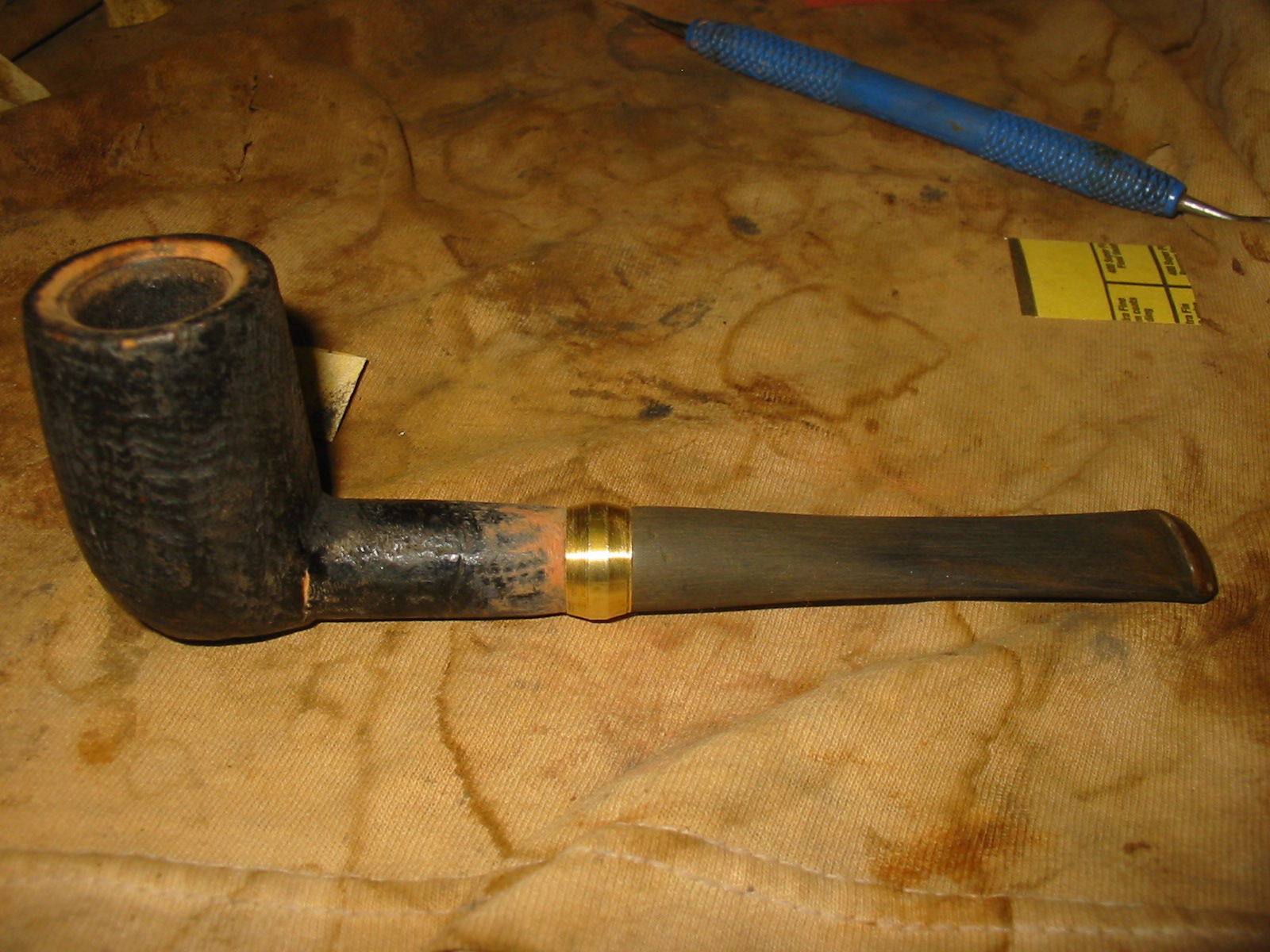
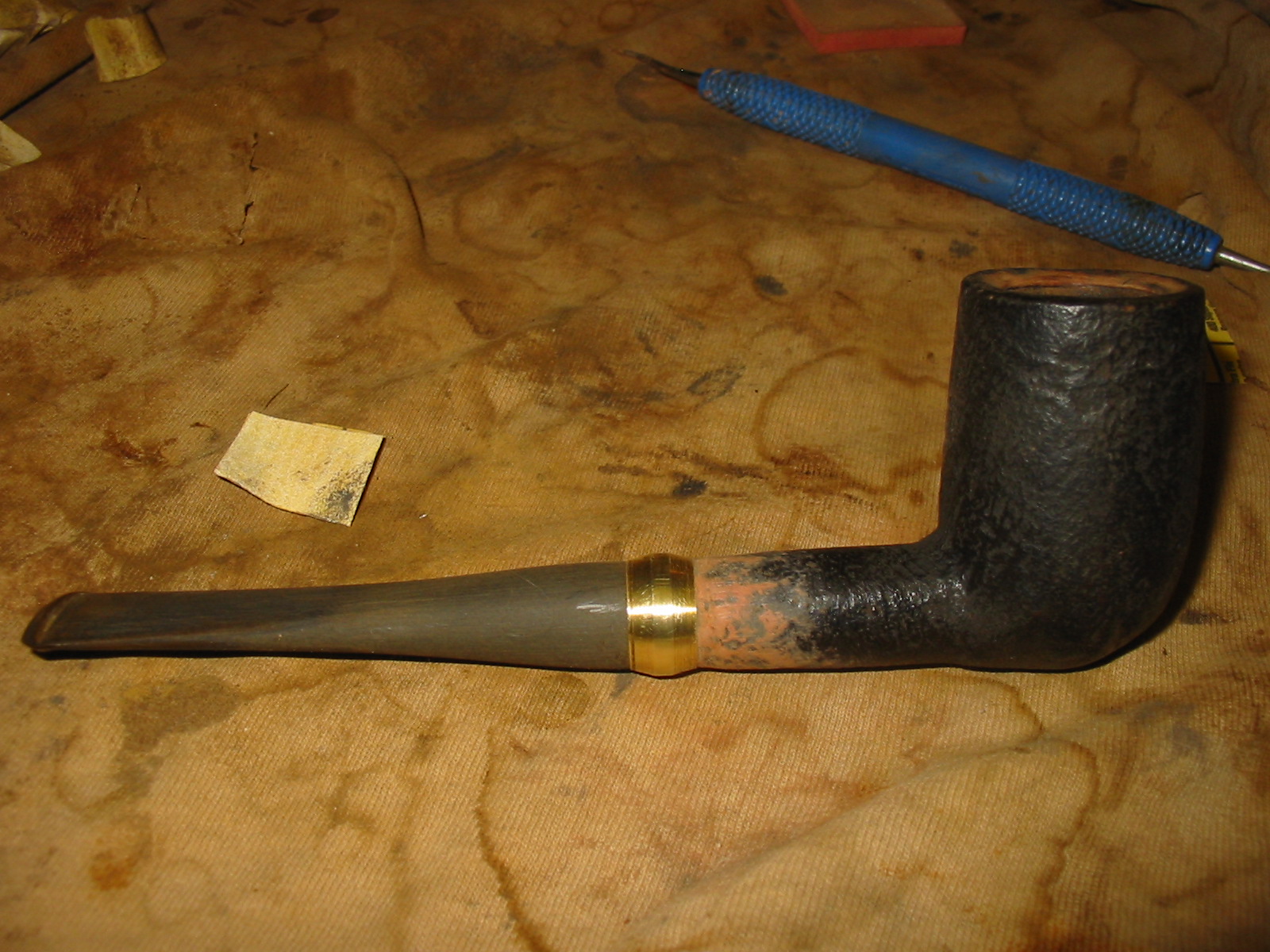
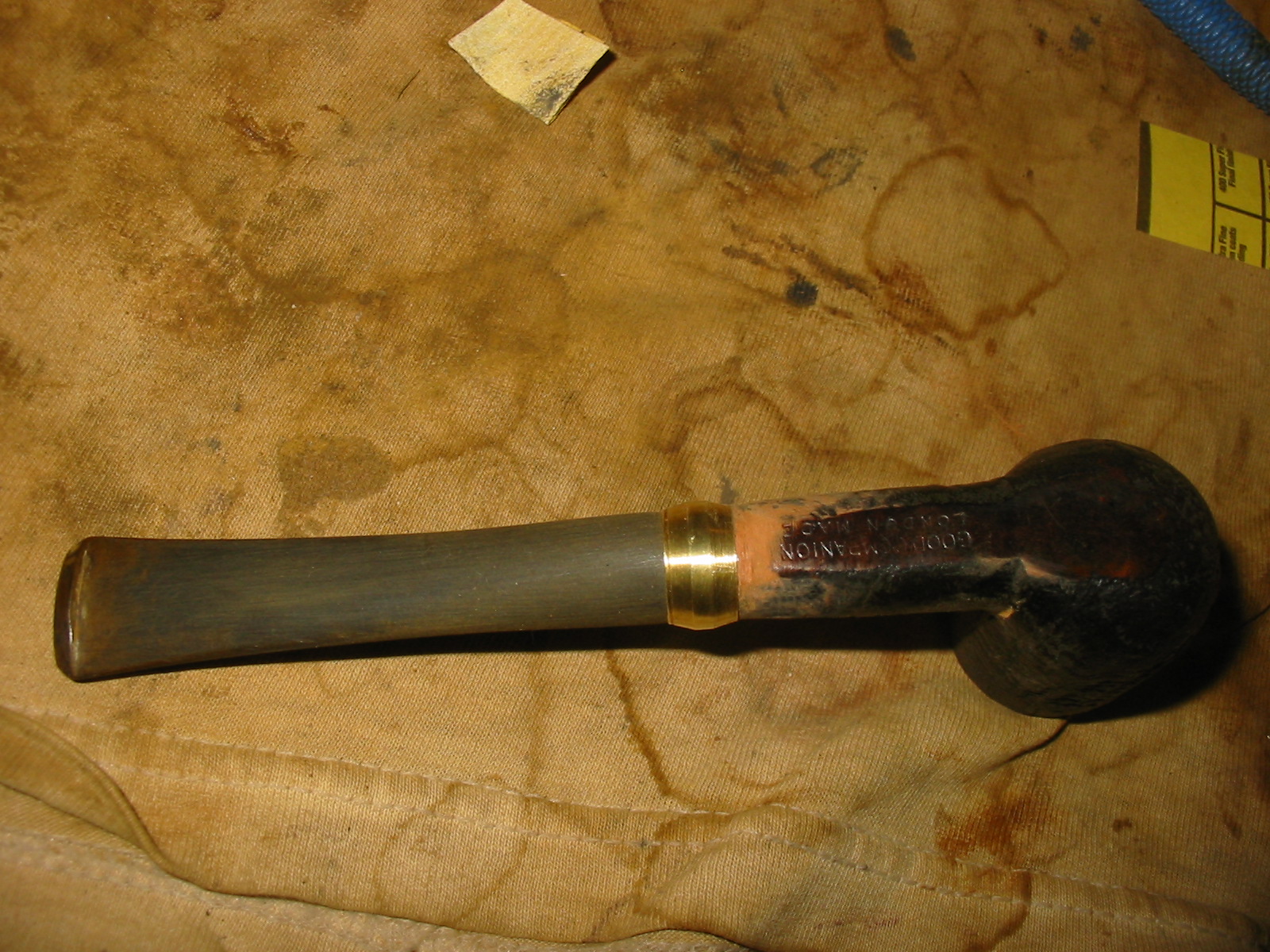
The first two photos below show the damage to the rim from the side profile. Note the wavy surface of the rim. The third photo shows some damage on the underside of the stem next to the button and the fourth photo shows the rim from the top view. In that photo the bowl appears to be seriously out of round and the front edge seems thinner than the rest of the bowl. This is a bit of an illusion due to the poorly executed sanding on the rim. The way the bowl had been sanded left the front of the bowl lower than the back of the bowl thus creating the appearance of a thin wall. The stamping on it had been buffed out on the left side of the shank and on the right side I could still see very faintly London England over 403S. I am uncertain of the maker. I checked the Comoy’s shape number chart, the GBD and the Orlik shape number charts and there is no such number. Perhaps other may have some idea of the maker.
IMG_3999

IMG_4000

IMG_4001

IMG_4002

I took a two close up photos of the top of the rim to show the damage more clearly. There was also significant burn damage to the front inner edge of the rim. Fortunately this damage was only surface and a retopping would take care of most of it.
IMG_4004

IMG_4005

I also took a close up photo of the end of the stem next to the button to show the tooth marks on the underside next to the button.
IMG_4006

I set up my topping board and sandpaper to work on the rim and repair the damage. It took care to keep the high point of the bowl flat against the surface of the paper and sand until the rim flattened out. This took more time than usual as I had to continually check to see if the rounded spots, low dips and angle sanding of the rim surface were being removed. I also wanted to remove the burn damage as much as possible. The next five photos show the process and the results of the sanding. The profile views show the repair of the outer edge to a flat straight surface with a sharp edge. The top view shows the more even distribution of the thickness of the wall and the removed burned area on the front of the bowl.
IMG_4008

IMG_4010

IMG_4011

IMG_4014

I wiped the bowl down with acetone on cotton pads to remove the varnish and the remaining finish on the bowl so that it would be easier to match the colour of the bowl and the newly topped rim.
IMG_4015

IMG_4016

IMG_4017

IMG_4018

I sanded the rim with a fine grit sandpaper and wet sanded with a 1500 grit micromesh sanding pad to remove scratches and prepare the rim for staining. I stained the bowl and rim with MinWax Medium Walnut Stain and rubbed it on to the pipe and rubbed it off until I had achieved the colour and coverage that I wanted.
IMG_4019

IMG_4020

IMG_4021

IMG_4022

I sanded the damaged areas on the topside and the underside of the stem near the button to remove the tooth marks. I started with 220 grit sandpaper and then a medium grit sanding sponge to repair the tooth damage.
IMG_4023

IMG_4024

The mark on the underside was deep and once I had sanded and cleaned it I put a drop of super glue on it to build up the divot. Once it was dry I sanded it again with 220 grit sandpaper and the sanding sponge to blend it into the surface of the stem.
IMG_4027

IMG_4029

IMG_4030

I used my usual array of micromesh sanding pads to polish the stem repair – wet sanding with 1500-2400 grit sanding pads and then dry sanding with 3200-12,000 grit pads. I buffed the stem with red Tripoli and White Diamond and then rubbed it down with Obsidian Oil. When it was dry I rubbed the stem down and reinserted it in the pipe.
IMG_4031

IMG_4033

IMG_4036

I buffed the pipe and stem with White Diamond and then gave it multiple coats of carnauba wax. I finished the buffing with a clean flannel buff to give it a shine. The finished pipe is pictured below. It is ready to go back to the Pipe Club and will make someone a nice pipe.
IMG_4038

IMG_4039

IMG_4040

IMG_4041

My Process of Topping a Damaged Pipe Bowl


I seem to have been doing quite a few bowl topping job here recently. I decided to document the process a bit and focus on the rim work to make the work more clear so others can give it a try. I have chosen two different Comoy’s pipes and an Orlik billiard that I recently reworked. Each one had serious rim damage that needed topping to effectively repair them. The first one shown below was a Comoy’s London Pride that I have written about in full earlier. This one had both inner and outer rim edge damage. The top had become rounded on both edges and it was poorly done. I researched what it was supposed to look like and topped it accordingly. The second one was an Orlik billiard that had a different type of damage – burn marks and gouges that only a topping would repair. The third one was the Comoy’s St. James pipe that repaired.
comoys5

img_3907

All of my bowl topping starts the same way. I have a flat board that I spread a piece of sandpaper on and place the bowl flat against the board on the sandpaper. As I work it against the paper I am careful to keep the bowl top flat against the paper and not lift an edge or angle the bowl. It is very easy to seriously change the profile of the bowl. I also constantly check to ensure that I only remove enough of the damaged briar to repair the problem and not take too much off.
IMG_3963

comoys6

img_3910

The next series of photos show the progress of the topping. On the Comoy’s St. James I took photos each time I checked on the progress of the topping so you can see the point at which I stopped the sanding. The other two bowls I show the end product of the topping.
IMG_3964

IMG_3966

IMG_3967

IMG_3969

IMG_3971

IMG_3972

comoys7

On each of the bowls that I top I also use a folded piece of sandpaper to smooth the inner edge of the rim. This has to be done carefully or the bowl can easily go out of round. On the Comoy’s London Pride I used the folded sandpaper to create a slight bevel on the inner edge of the rim to match what was originally on that pipe. On the St. James and the Orlik I merely sanded the edge to make a clean and smooth surface.
comoys8

img_3911

IMG_3977

Once the rim is successfully topped the process truly has only begun. The surface then needs to be sanded with higher grits of sandpaper and micromesh sanding pads to remove scratches and give a smooth out the briar so that when it is stained the surface does not show scratching or repair damage. Then it has to be stained in such a way that the colour blends in with the colour of the bowl. When I am refinishing a pipe I find that the simplest and most straight forward way to guarantee a match it is to remove the previous finish as much as possible and start from scratch with the whole bowl. This is not always possible and often the matching process takes several stains and several coats to get a good blend with the rest of the bowl. It is often a matter of darkening a stain or thinning it with alcohol to lighten it or even blending several colours of stain together to get the mix that actually blends in seamlessly to the bowl colour. This part is probably the most time consuming part of the process.

The first two photos below show the stain on the Comoy’s London Pride and how the bowl and rim match – both before and after buffing and waxing. The third photo shows the Orlik after staining and buffing. There is still a slight bit of rim darkening on this rim that I left on purpose. The fourth and fifth photos show the St. James after staining and then after buffing and waxing. The change in the shape or height of the bowl is negligible and the overall improvement to the profile and look of the pipe is well worth the effort.
comoys14

comoys19

img_3925

IMG_3989

IMG_3997

I continue to learn and experiment with the process of topping and sanding a bowl to repair the damage inflicted by the previous owner – whether it is thoughtless carelessness or accidental damage. Each time I do the work I become more confident in the process and pleased with the results. If you don’t try and practice you will never learn. If you have comments to add about the process or have suggestions of improvements I encourage you to record them, photograph them and share them with us all. The community benefits from the combined knowledge of its members. Thanks for reading this blog post.

Comoy’s St. James Shape 62 Restored


This oddly shaped Comoy’s came to me in a lot that was donated years ago to the Vancouver Pipe Club. It has been sitting for a long time needing a bit of care to bring it back to life before going to the Club to be sold or given away. It is stamped on the top of the shank, St. James in an arc over London Made in a straight line. On the underside of the shank it is stamped Made in England by Comoy’s followed by 62. The finish was rough on this one; the top of the rim had been beaten against something hard and had damaged the outer edge to the point that it was no longer sharp. The inner edge of the rim was not too bad but the bowl had been coated with a black rubbery bowl coating that was grim. There was one rather large fill on the right side of the bowl near the shank/bowl junction. The stem had some oxidation next to the button and some small tooth chatter there as well. The stem also had one silver bar inset in the vulcanite on the left side. It is not a logo that I have come to associate with Comoy’s but rather with Savinelli. I am not certain the stem is original. Perhaps someone here can shed some light on the stem logo and this particular line of Made in England by Comoy’s Pipes.
IMG_3960

IMG_3961

IMG_3962

I decided to top the bowl and try to repair the outer rim damage. It was truly a mess. In the next photos you will see the set up for topping and also several photos of the bowl rim as I began to sand it out. The sanding dust stuck to the bowl coating.
IMG_3963

IMG_3964

IMG_3966

IMG_3967

IMG_3969

IMG_3971

IMG_3972

When I finally got the topping done to the point where the rim was more smooth and crisp I also sanded the outer edge to minimize some of the deeper chips and rough areas that I left because I did not want to top too much of the bowl. I then cleaned out the bowl and the shank and wiped the bowl down with acetone on cotton pads to remove the varnish coat that had been put on the bowl. I reamed out the bowl coating with a PipNet reamer as I wanted to remove the sticky black substance and wanted to see what the walls of the bowl looked like underneath the ooze.
IMG_3973

IMG_3974

IMG_3976

IMG_3977

I sanded the bowl and rim with a medium grit sanding sponge and then with a 1500 grit micromesh sanding pad to remove the scratching that was present under the finish and that left behind by the sanding sponge. I wiped it down a final time with acetone on a cotton pad to clean and prepare it for restaining.
IMG_3978

IMG_3981

IMG_3982

IMG_3983

I used a black permanent marker to bring grain lines into the fill area and minimize the way it stood out. In the second photo you can see the effect of the marker and stain on the fill near the bowl/shank junction. Previously it had stood out and now it was muted. I restained the bowl with MinWax Medium Walnut stain. I rubbed it on with a cotton pad and wiped it off with a cloth and repeated the process until the stain had given the bowl a good coverage. I sanded the oxidation and tooth marks near the button on the top and the bottom of the stem with the medium grit sanding sponge.
IMG_3985

IMG_3986

IMG_3987

IMG_3988

I took the next photo to show the improvement to the damaged rim and the clean edges that were now present. The stain did a great job in bringing out the grain on the rim. It follows the pattern of the grain on the shank.
IMG_3989

I buffed the stem with red Tripoli and then sanded it with my usual array of micromesh sanding pads – wet sanding with 1200-2400 grit pads and dry sanding with 3200-12,000 grit pads. I buffed the stem with White Diamond and rubbed in a coating of Obsidian Oil to protect against further oxidation.
IMG_3990

IMG_3991

IMG_3992

I buffed the pipe with White Diamond and then gave it multiple coats of carnauba wax. I finished by buffing it with a soft flannel buff. The finished pipe is shown below. Soon it will go the Pipe Club for their benefit.
IMG_3993

IMG_3994

IMG_3997

IMG_3998

Refinishing and Reworking the Rim on a Comoy’s London Pride.


I looked up some information regarding this line of Comoy’s on the internet as I was not familiar with its placement in the ranks of Comoy’s lines. There I found that Comoy’s introduced the London Pride as the second grade to the Blue Riband around the same time to meet the American demand for a lighter finish. It was priced in 1943 at $25 and in 1965 at $25, then in 1979 at $95. It was described as having a natural amber coloring and tending to be Birdseye/Cross-Grained pattern pipes. At the time this pipe was made it was the next-to-top-of-the-line. The original stem had a three-piece “C” logo and this one did not have that. Judging from that fact, the shape of the tenon and the stem shape I am confident that it is a replacement stem. The stampings on the left side of the shank are “Comoy’s in block script over London Pride” and on the right side the stamping is worn. The shape number is near the bowl shank junction on the right and reads 292. The next four photos show the pipe as it was when I brought it to the work table.
Comoys1

Comoys2

Comoys3

Comoys4

The pipe was in fair condition. The stamping was faint, the finish had a thick coat of varnish over it and the rim was heavily damaged. The previous refurbishing had rounded the inner and outer rim removing the characteristic bevel on the inner rim and the sharp out edge. The stem was a replacement and the person who had replaced the stem sanded the shank down to fit the new stem. Fortunately they had not taken off too much of the briar. It was visible from the lines of the pipe and from the lightening of the area around the shank/stem junction. I have included the next photo to show the rim damage that needed to be addressed.
Comoys5

I topped the bowl on a flat board and sandpaper to remove the rounded inner and outer edges. I removed only enough to clean up and sharpen the outer edges and reduce the inner rounding to a slight bevel. I also sanded the inner edge with a folded piece of sandpaper to redo the bevel. I sanded the top and the bevel with a medium grit sanding sponge and also with a 1500 grit micromesh sanding pad to remove the scratches.
Comoys6

Comoys7

Comoys8

I wiped down the bowl with acetone on a cotton pad to remove the varnish coat and the remaining stain on the pipe. I find it easier to match the new rim colour if the bowl is also clean and the stain removed as much as possible.
Comoys9

Comoys10

Comoys11

I stained the bowl and rim with Minwax Medium Walnut stain which brought the colour as close as I could to the photos I found of the original colour of the London Pride line. I applied the stain and hand buffed the pipe.
Comoys12

Comoys13

Comoys14

Comoys15

I probably should have cleaned the inside earlier in the process but I did not bother until this point as it was quite clean. I scrubbed out the bowl with a cotton swab and Everclear as this bowl did not have the same black bowl coating as some of the others from this box of English pipes. The shank and the stem were not too dirty and it only took a few cotton swabs and pipe cleaners to bring it back to clean.
Comoys16

The stem was in great shape so I did not need to remove tooth marks or dents. It was also quite clean so I rubbed it down with some Obsidian Oil and then took the pipe to the buffer and buffed it with White Diamond. I gave the bowl and stem multiple coats of carnauba wax and buffed to a shine with a clean flannel buff. The finished pipe is shown in the photos below. It turned out to be a beautiful pipe – the combination of cross grain and birdseye matches the description I had found on the web regarding this line of Comoy’s pipes. It is ready to serve the next season of its life.
Comoys17

Comoys18

Comoys19

Comoys20

Reworked Comoy’s The Guildhall London Pipe Stack – Shape 345


Blog by Steve Laug

The pipe is stamped The in script over Guildhall over London Pipe on the left side of the shank and number 345 near the bowl on the right side of the shank and Made in London in a circle over England. This is the third of the pipes from the box my daughters found for me. The first two were the Orlik’s that I wrote about earlier. This one was in better condition than the other two. The top was beat up with outer and inner rim damage and also the same varnish coat over the uncleaned rim and the bowl and shank. The stem was original and has the three silver bars on the left side as expected in the Guildhall series. There were tooth dents that had been buffed out and left the stem with waves around the remaining marks. The grain was quite nice on this one – lots of cross grain and birdseye but it was obscured by the finish coat. The interior was filthy as were the others. In the side photos below the finish looks pretty good but the grain could stand out more clearly.
IMG_3927

IMG_3930

IMG_3931

I took the next photo to show the damage on the rim. The inner edge was rough and the outer edge was also rough. There was tar build up under the varnish coat that had not been cleaned off before varnishing. The bowl was also coated with a black bowl coating.
IMG_3932

I sanded the top and bottom side of the stem with 20 grit sandpaper to smooth out the ripples in the vulcanite and remove the remainder of the tooth marks. Once I had them removed I worked on the bowl.
IMG_3935

IMG_3936

I topped the bowl on the sandpaper and flat board as is my usual method. I took off enough briar to make the top smooth and the outer edge sharp as well. I sanded the inner edge with a folded piece of sandpaper to smooth out the damage there as well. The next two photos show the topping process and the sanding of the inner edge.
IMG_3938

IMG_3939

The interior of the shank and stem were filthy and needed a lot of work with Everclear, pipe cleaners and cotton swabs. The photo below shows the first lot that was used but by the time I was finished cleaning the shank I had used about twice that number.
IMG_3940

I wiped down the surface of the bowl with acetone on cotton pads to remove the varnish coat and the finish. I wanted to remove as much of it as possible so that when I restained the rim it would be easier to match.
IMG_3941

IMG_3942

IMG_3943

I sanded the stem with a medium grit sanding sponge and then with my usual array of micromesh sanding pads. I wet sanded with 1500-2400 grit pads and dry sanded with 3200-12,000 grit pads. I buffed the stem in between the wet sanding and the dry sanding with red Tripoli because I wanted to see what I had to work with and if I had removed the rippling on the vulcanite. I had so I went on to the dry sanding. When I had finished I buffed the stem with White Diamond and then rubbed it down with Obsidian Oil and put it aside to dry.
IMG_3944

IMG_3945

IMG_3946

I stained the bowl with MinWax Medium Walnut stain. I applied it with a cotton pad and rubbed it off with a cotton cloth. I repeated the process until I had the coverage that I wanted and the rim and bowl matched.
IMG_3947

IMG_3948

IMG_3950

IMG_3951

I reinserted the stem in the shank and took the pipe to the buffing wheel for a buff with White Diamond. I gave both the bowl and the stem multiple coats of carnauba wax and polished it with a soft flannel buff. The reworked Comoy’s Guildhall Stack is shown in the photos below ready and clean for its inaugural smoke.
IMG_3953

IMG_3954

IMG_3955

IMG_3956

Reworking an Orlik De Luxe L23 Billiard


Blog by Steve Laug

This is the second pipe from box of English pipes that my daughters found when cleaning out our storage room under the front porch (interior room). It is stamped Orlik De Luxe over Made in England on the left side of the shank and L23 on the right side of the shank. It looked as if it had been refurbished by the same gent who did the Orlik Canadian I reworked. This one also had a varnish coat on the bowl that made it shiny. Underneath the varnish the finish was spotty. The outer and inner edge of the rim was damaged and there were deep grooves on the surface of the rim. The tarry buildup had not been totally removed before the finish coat of varnish was put in place. The inside of the bowl had been painted with a bowl coating that was black. The stem appears to be a replacement but it was better craftsmanship than the previous one. The stem itself was clean but had scratches. The interior of the pipe and stem were filthy.

I have little experience with Orlik pipes so the numbering system was a mystery to me. I did a bit of research and found out that the shape numbers remain consistent throughout the various lines of Orlik pipes. The only difference is found in the letter that precedes the number. In the case of the two pipes that I have now worked on each had the letter “L” before the shape number. The letter signifies the line of pipes within the Orlik family that is in hand. The L stands for the Orlik De Luxe line. I have included the chart below that gives the various lines of Orlik pipes. I have also included the shape chart for Large Billiards that shows the L23. The one I have is similar to the one in the picture though I am certain that mine has a replacement stem as it has a different taper to the stem.
orl24

orl4

The first three photos below show what the pipe looked like when I brought it to the work table. The issues that I noted above are clearly visible from these photos. The stamping on the pipe is faint but readable on the left side. The number stamp on the right side is in better condition.
IMG_3901

IMG_3902

IMG_3903

In the photo above the tars that were left on the rim before the varnish are visible by my thumb and also my forefinger. The bowl would need to be topped. I have included the next two close-up photos of the rim to show the condition it was in when I started the rework of this pipe and to explain why I was going to top the bowl. The inner edge of the rim had significant damage and showed signs of being hit against something to empty the bowl. The outer edge had similar damage and was badly pitted on the back and the front of the bowl.
IMG_3907

IMG_3908

I set up the sandpaper on the flat board that I use for topping and topped the bowl until the rim and the edges were once again sharp and clean. I did not have to remove very much of the briar but what I removed took off the damaged outer edges of the rim and reduced the appearance of damage to the inner edge. I sanded around the inner edge with a folded piece of sandpaper to smooth out the inside. The newly topped bowl is visible in the second photo below.
IMG_3910

IMG_3911

I used a lot of pipe cleaners and cotton swabs to remove the black tars and oils that had not been cleaned out for quite a while. This is only the second pipe that I have cleaned up that came from this chap and I have to say I am not impressed at this point. These were sold in a shop as estates that had been refurbished and were ready to smoke. I wiped down the bowl with acetone on cotton pads to remove the varnish coat before I restained the bowl. I used a black permanent marker to carry the grain lines through the two fills on the left side of the bowl. The briar was actually quite nice under the varnish coat.
IMG_3912

IMG_3913

IMG_3914

IMG_3915

I wiped the bowl down a final time with acetone and then gave it a coat of MinWax Medium Walnut stain. I rubbed it into the bowl and then wiped it off with a soft cotton towel. It really brought the grain to life on this old pipe.
IMG_3916

IMG_3917

IMG_3918

IMG_3919

The stem had scratches from the sandpaper that had been used on it previously and a slight bit of tooth chatter near the button that had been buffed over. I sanded it with a medium grit sanding sponge and then with the usual array of micromesh sanding pads – wet sanding with the 1500-2400 grit pads and dry sanding with 3200-12,000 grit pads. I took the pipe and stem to the buffer and buffed the entirety with White Diamond, being careful around the faint stamping on the left side of the shank. I rubbed the stem down with Obsidian Oil and hand buffed it when it was dry.
IMG_3920

IMG_3921

IMG_3922

I buffed the finished pipe with White Diamond and then gave it multiple coats of carnauba wax. I finished buffing with a clean flannel buff to give the pipe a shine. The photos below show the reworked pipe, cleaned and ready for its inaugural bowl.
IMG_3923

IMG_3924

IMG_3925

IMG_3926

Reworking an Orlik Matt Canadian Shape L78


A few years ago I was gifted a small box of English pipes. I had truly forgotten about it but my daughters were cleaning out our storage room under the front porch (interior room) and came across the box. So now I have five more pipes to restore. The pipe on the table this morning was a Canadian with a poorly fitted replacement stem. It was not the same oval as the shank. The shank had been sanded down to fit the stem and done in such a way that it was no longer an even taper. Even in doing so the stem still was larger on the top and bottom where it met the shank. The transition was thus rough and uneven. The stem also had significant scratches on it and a spot at the top and bottom where there was an uneven bump near the shank. The bowl had been topped and then the rim and shank restained but they did not match the rest of the pipe. The stamping though faint on the top of the shank reads Orlik Matt over Made in England in block letters. There is also a shape number on the right side of the shank as noted in the title – L78. I did a bit of checking to see if the shape number matched what I had. I have included a page of shapes – the one I have is at the bottom of the page.
orl7

Here are some photos of the pipe when I started.
Orlik1

Orlik1b

Orlik2

Orlik3

I wiped the bowl and shank down with acetone on a cotton pad to remove the spotty finish. I cleaned out the shank and stem as they were filthy and prohibited a true fit on the stem. Once I had the stem sitting in the stem correctly I sanded the shank and stem junction with 220 grit sandpaper to smooth out the transition and even out the taper from the bowl to the stem. I wanted to also remove the excess vulcanite and to reshape the oval of the stem and shank. I wanted the transition to be smooth to the feel. I think that whoever restemmed and restored this pipe the first time gave the bowl a coat of varnish so I removed that with the acetone.
Orlik4

Orlik5

Orlik6

Orlik7

I sanded the stem shank union with a medium grit sanding sponge and a fine grit sanding block to further smooth out the transition and lines. I wanted a smooth flow of line from the bowl to the button.
Orlik8

Orlik9

Orlik10

Orlik11

Once I had finished sanding the stem and shank and the briar was smooth and unscratched it was time to stain the shank and rim. I gave the shank end and the rim a coat of dark brown aniline stain to try to bring it back to the same hues and the rest of the bowl and then stained the entire bowl and shank with a Minwax Medium Walnut stain. The first time I did it the stain still did not match well so I heated the end and the rim with a lighter and reapplied the dark brown aniline. Then stained them both again with the Minwax stain. When I had finished they were closer than before.
Orlik12

Orlik13

Orlik14

Orlik15

I sanded the stem and the bowl with micromesh sanding pads. I wet sanded the stem with 1500-2400 grit pads and then dry sanded the bowl and stem with 3200-12,000 grit pads. I rubbed the stem down with Obsidian Oil and then took the pipe to the buffer to give it a light buff with White Diamond to polish. I was careful in the buffing to avoid the already light stamping on the top of the shank. I had buffed that section with a soft cotton cloth.
Orlik16

Orlik17

I still was not happy with the stain coverage on the sanded portions of the pipe as they appeared lighter than the body of the pipe. I brought it back to the work table and touched up those two areas – the stem shank junction and the rim – with Minwax Red Mahogany Stain then set it aside to dry.
Orlik18

Orlik19

Orlik20

Orlik21

Orlik22

Once the stain was dry I lightly buffed the pipe with White Diamond and then gave it multiple coats of carnauba wax with the buffer. I polished the finished pipe with a clean flannel buff to protect it and give a shine. Even with the buffing I was seeking more of a matt look to the pipe than a shiny one. The finished pipe is pictured below.
Orlik23

Orlik24

Orlik25

Orlik26

Steps Toward Solving a Pipe Mystery – 2 More One Blue Dot Billiards


On October 26, 2013, I wrote about a pipe I found and my questioning whether it was a Sasieni Blue Dot billiard. I refurbished the billiard and wrote about it in this blog post https://rebornpipes.wordpress.com/2013/10/26/when-i-saw-it-i-thought-it-was-a-sasieni-one-dot-billiard/ . I was never satisfied with my conclusions regarding the manufacture of this particular pipe. Last weekend (December 28, 2013) I went pipe hunting again and stopped at the same location. There were two more of the blue dot pipes in his case. One of them had been smoked quite a lot and one of them was pretty clean. The one had a cracked shank and the other was clean. The clean one had a stinger apparatus in it while neither the earlier find or the other one this time had one present. The interesting thing to me was that on both of these pipes there was a single line stamped on the bottom of the shank. On the relatively clean pipe the stamping was gold filled and read ATLAS POWDER CO. On the other pipe it had the same stamping though the gold was long gone. I checked the previous pipe and sure enough the same stamping, though fainter was present. Suddenly I had in my possession a trio of billiards. All had the single blue dot on the stem, all were stamped Genuine Briar. All had the same English style tapered stem. All were nice pieces of briar with no fills or flaws. All were stamped ATLAS POWDER CO.

Now I had some work to do – not just restoring these two old pipes to the same state as the other one but really digging into the ATLAS POWDER CO. to find out who they were. Was it possible that what I had were three specialty pipes, stamped with the Company name in gold lettering were made as gift pipes or award pipes? That raised a second question that to me was at least as important. Who made the pipes for the company? Is it possible that they were made by Sasieni, specially stamped with the name of the company to be given out to executives or share holders as gifts? Being able to read the stamping on the bottom of the shank gave me an important clue regarding what to look for on the web. With my questions clearly in my I began to do research on the company. I quickly found out that in 1912, Atlas Powder Company was created in Wilmington, Delaware, when DuPont Company sold two explosives divisions, as mandated by “trust busting” enactments during the Theodore Roosevelt presidency. In the 1960s, Atlas Powder Company changed its corporate name to Atlas Chemical Industries. I wanted more details on that formation and the other companies that may have been included in the process.

I found a facsimile of an old stock certificate that had some corporate information on it as well as the back side of a mailing envelope with the name and products that were produced by the Atlas Company.
atlas-powder-company-rare-specimen-proof-delaware-1925-2.gif

apc-01back

Further research took me to the company archives at this site http://beta.worldcat.org/archivegrid/collection/data/776641025 There I found information and company minutes from a variety of their meetings and activities. I also found information on lawsuits and actions pending against them at various times in their history. There were corporate memos and data that was marginally interesting but nothing that definitively spoke of pipe being made, purchased or given away. Quoting from the site:

“… The Atlas Powder Company was incorporated in Delaware on October 18, 1912 as part of the court-ordered breakup of the explosives monopoly of E.I. du Pont de Nemours & Company. As part of the settlement, parts of DuPont’s black powder and dynamite business were spun off to two new companies, the Hercules Powder Company, capitalized at $13 million, and the Atlas Powder Company, capitalized at $6 million. Atlas functioned as an independent explosives and chemicals company until July 21, 1971, when it was purchased by Imperial Chemical Industries Limited (U.K.) and became its American affiliate under the name ICI Americas Inc.
Atlas buckle

Atlas began business on Jan. 1, 1913, with four former DuPont black powder plants at Ooltewah, Tenn., Belleville, Ill., Pittsburg, Kan., and Patterson, Okla., and three ex-DuPont dynamite plants at Landing, N.J., Hancock, Mich., and Webb City, Mo. Later that year, it purchased the Reynolds Works near Tamaqua, Pa. from the Potts Powder Company, where it manufactured electric exploders, blasting caps, nitric and sulphuric acids, dynamite, and blasting detonators. In 1915, Atlas purchased The Giant Powder Company, Consolidated, which held the first U.S. rights to the Nobel dynamite patents, giving it a presence on the West Coast.
Atas tin

atlas caps

Following the lead of DuPont and Hercules, Atlas began diversifying from explosives into other chemical lines with the 1917 acquisition of Richards & Co., Inc., of Connecticut, and its sales subsidiaries Zapon Leather Cloth Company and Celluloid Zapon Company, manufacturers of lacquers and artificial leather. In 1925, the Pacific Lacquer & Bronze Company was added to the Zapon family. In 1921, Atlas contracted with the Darco Corporation to build an activated carbon plant in Marshall, Tex., and in 1928 Richards & Co., Inc., purchased the Duratex Corporation, a manufacturer of pyroxylin and rubber coated fabrics which also brought a controlling interest in Darco. Atlas bought the assets of the Brevolite Lacquer Company of North Chicago in 1933 and combined it with the Midwest business to the Zapon Company as the Zapon-Brevolite Lacquer Company. Traditional explosives capacity increased with the 1932 purchase of the Peerless-Union Explosives Company. The Atlas Research Laboratory was established at the Reynolds Plant in 1930, and Atlas de Mexico, S.A., was organized as a sales company in 1937.
Atlas Box

atlas box2

Atlas devoted all of its plants to military needs during World War II and operated three ordnance plants under contract from the government. However, despite a second surge during the Korean War, the post-World War II years brought a major restructuring. The Duratex line of coated fabrics and plastics was discontinued in 1948, and the Zapon-Darco industrial finishes business was sold in 1955. The following year, Atlas bought the Thermaflow Chemical Corporation of Pennsylvania, makers of high-impact reinforced plastic molding compounds, and the Aquaness Corporation of Houston, Texas, a maker of chemical compounds used in the petroleum industry. In 1959, Atlas formed Solar Nitrogen Chemicals, Inc., as a joint venture with the Standard Oil Company (Ohio) to manufacture ammonia fertilizers. At the same time, explosives plants were being closed. As a consequence, Atlas changed its name to Atlas Chemical Industries, Inc., on May 31, 1961, and the next day completed a merger with The Stuart Company, a Pasadena pharmaceuticals maker. In 1997, after numerous spinoffs and restructurings, the pharmaceuticals business of Atlas became AstraZeneca LP, which has its headquarters in the former Atlas facilities in the Wilmington suburbs.”
Atlas Powder page1

Armed with that information and information gleaned by looking at sales of gift memorabilia on EBay it became at least a real possibility that these pipes were given to stock holders as gifts. I was not able to find definitive information regarding the gifting of the pipes or who made them the implications were strong that they were made for that purpose.
The question still remained regarding the pipes. That took me to a search on the history of Sasieni pipes and any potential connections between the companies. The first article that I turned to was a definitive piece on the history of the brand by Stephen Smith entitled, “Connecting the Dots: A Concise History of the Sasieni Pipe”. http://murderofravens.org/my-sasieni-pipe-article/
19439612371

From the article I learned a brief review of the history of the brand. I learned that the Sasieni Company began in 1919 and continued in the family until 1979 when it was sold (this period is the Pre-Transition Period). The Transition period lasted from 1979 to 1986. The company had been bought by Ian Chase and a group of South African investors. In 1986, the company was once again sold to James B. Russell and after him to Cadogan Investments Ltd (Oppenheimer & Co. Ltd.). This Post-Transition period has continued since 1986 to the present. The time period of the pipe and the ATLAS POWDER CO. overlap. However interesting that may be there is still no proof of the connection at this point in my search. I included the above advertisement photo from Stephen’s article because the shape of the billiard in the photo is virtually identical to the three that I have that are the cause of this research.

I am on holiday so I had the time to spare and I spent several hours tracing down leads and dead ends on the links between the two companies. There are no links that I can find. So I am left with just a hunch, a supposition that the pipes were made for the Atlas Powder Co. as gift pipes and that they were potentially made by Sasieni. I may never know more than that but it still leaves more room for digging in the future.

Leaving the mystery to stew for a bit longer I will walk through the refurbishing of the two additional one dot pipes. Here is the pair of bowls in question. The one on the left is solid and less used than the one on the right. It had very little cake in the bowl and the shank and stem were in good shape. The one on the right was more heavily smoked and had a cracked shank. The stem was in fairly decent shape on this one as well. I began my refurbishing on this pair with the pipe on the right.
IMG_3704

I use a dental pick to remove the scotch tape that held the shank together. It was not clear how bad the crack was until I could get the tape completely removed. I wetted a cotton pad with acetone and wiped down the scotch tape to facilitate its removal.
IMG_3705

IMG_3706

IMG_3708

The next photo is horrible and for that I apologize. I would not have included it if it did not still show the damage to the cracked shank on the first pipe. I glued the cracked piece in place with superglue and then found a band that I could pressure fit on the shank. The combination of gluing the damaged shank and banding it would make it useable once more. I heated the band on the shank over a heat gun and then pressure fit it onto the shank.
IMG_3711

IMG_3712

The next series of three photos show the newly banded shank. The repair is finished and with the band in place the rest of the refurbishing of the bowl can take place.
IMG_3713

IMG_3714

IMG_3715

With the band in place on the shank the tenon had to be reduced slightly for a comfortable fit. I cleaned out the shank before I sanded the tenon as I wanted a clean surface for the tenon to sit against. I used cotton swabs and Everclear to clean out the shank. Once it was done I sanded the tenon with 220 grit sand paper to remove enough of the tenon for it to have a snug fit in the shank. I reamed the bowl with a PipNet reamer to remove the carbon build up in the bowl. I lightly topped the bowl to remove the tars and buildup on the rim and to remove some of the slight burn marks on the rim top. Fortunately these were shallow and I was able to remove them completely without dramatically affecting the height of the bowl.
IMG_3722

IMG_3723

I wiped the bowl down with acetone on a cotton pad to remove the finish that remained on the pipe. There was a light varnish coat that came off easily with the acetone. Underneath was some very nice grain and no fills or fissures.
IMG_3724

IMG_3725

The airway in the stem was clogged and I was not able to blow air through it so I used a dental pick to reach into the airway at the tenon end and through the slot in the button. Fortunately the blockage was near both of these openings and I was able to remove the hardened tars and oils that were present. The tenon end also seemed to have some metallic pieces remaining from the stinger apparatus that was originally in the tenon (I know that it had a stinger as the other pipe still had one in place). It took many pipe cleaners and much Everclear to get the grime deposits removed from the airway of the stem. The photo below shows just a few of them toward the end of the process.
IMG_3728

I stained the pipe with a Minwax Medium Walnut stain. It has a nice patina and goes well with the age of these older pipes. I rubbed it on with a cotton pad and rubbed it off with a soft cotton cloth. I reapplied the stain until I had the coverage that I wanted. My goal was to let the grain show through the stain and highlight the beauty of this old pipe.
IMG_3730

IMG_3731

IMG_3732

I buffed the pipe with White Diamond once the stain was dry to bring out a shine to the finish.
IMG_3733

IMG_3734

IMG_3735

IMG_3736

The next photo shows the pipe lying next to the other one. I wanted the stamping on the unrefurbished pipe to highlight the stamping on this pipe. The golden colour of the other stamp is very clear and the stamping on the newly stained one is still visible yet not golden. Before I finished this one, the golden stamping was missing and a black stamping was present in its place.
IMG_3738

I worked on the stem with my usual regimen of micromesh sanding pads – wet sanding with 1500-2400 grit pads and dry sanding with 3200-12,000 grit pads. I buffed the stem with White Diamond after using the 12,000 grit pad and then rubbed it down with Obsidian Oil. I hand buffed it before putting it back in the shank of the pipe. I also used the micromesh pads to polish the nickel band before I buffed the pipe. I used 2400-4000 grit pads to polish the nickel and then rubbed it down with a silver polishing cloth.
IMG_3739

IMG_3740

IMG_3741

The first of the two pipes was finished. I buffed the entirety with White Diamond and then gave it multiple coats of carnauba wax. I buffed the newly waxed pipe with a soft, clean flannel buff to give it a shine and set it aside while I worked on the second pipe. The next four photos show the finished pipe.
IMG_3742

IMG_3743

IMG_3744

IMG_3745

The second pipe looked worse for wear when I started on it but it was merely surface wear. The bowl itself was not even broken in and the slight cake on the top portion of the bowl was very thin. The shank and the inside of the stem were very clean. The original stinger apparatus was still in place and was slightly discoloured. The ATLAS POWDER CO. stamping on the bottom of the shank was still embossed with gold in the letters. The varnish coat on the finish was disintegrating on the surface of the briar but the briar itself was in great shape. There was no damage to the rim or the edges of the rim. The bowl had no visible fills or dents. It just needed a major cleanup.
IMG_3746

IMG_3747

IMG_3748

IMG_3749

I have included the next photo to show the ATLAS stamping on the shank more clearly.
IMG_3750

I followed the same process on this pipe as the one above and wiped the bowl down with acetone on cotton pads. I was careful to not wipe down the bottom of the shank as I wanted to leave the gold stamping intact. With the varnish coat removed the grain on this pipe was also very nice. There is a mix of cross grain, birdseye and a swirl of mixed grain.
IMG_3751

IMG_3752

IMG_3753

IMG_3754

I removed the stinger apparatus which was pressed into the tenon of the pipe by twisting it free. Once it was removed I cleaned up the interior of the slot on the stinger and the grooves around the end of the spoon portion of the piece. I reinserted it in the stem.
IMG_3755

IMG_3756

I used the same regimen on the stem as noted above to polish the oxidation away. I have found that the combination of wet and dry sanding with micromesh sanding pads works well for me and gives the stem a deep shine. When I finished sanding I buffed it with White Diamond and rubbed it down with Obsidian Oil. I hand buffed the stem and set it aside while I worked on the bowl.
IMG_3758

IMG_3762

IMG_3768

I used the same Minwax Medium Walnut stain on this pipe as the last. I applied it, rubbed it off, and reapplied it until I had the coverage I wanted. As before, I wanted the grain to shine through the stain and give depth to the finish of the pipe.
IMG_3763

IMG_3764

IMG_3766

IMG_3767

I inserted the stem in the shank and buffed the whole pipe with White Diamond and then gave it multiple coats of carnauba wax. The finished pipe is shown in the photos below.
IMG_3769

IMG_3770

IMG_3771

IMG_3785

With both of the new additions finished I put them together with the previous ATLAS POWDER CO. pipe and took the following photos. The first pipe has a shorter stem because when I found it the stem had a large bite through. I shortened the length on it and reshaped the button. Other than that and the added band on the middle one the pipes are much the same. All bear the same stamping and the same blue dot. Who knows who the maker of these pipes was? I am still inclined to believe that they may have been made by Sasieni for the ATLAS POWDER CO. to be given to share holders or executives. Whatever the case may be they are smooth smoking pipes and will last another lifetime.
IMG_3778

IMG_3779

IMG_3780

IMG_3781

Refurbishing a Comoy’s Tradition Shape 4 Bulldog


When hunting for estate pipes I always am on the lookout for certain brands that feel like a win when I find them. I have found a few of them over the years. Some of those brands are Dunhill, Comoy’s, GBD and BBB. Added to that are a few older American brands such as CPF and GFB. On a current hunt I did exceptionally well and found four GBD pipes and two Comoy’s pipes. The first one I have been working on is stamped Comoy’s Tradition and is a shape 4 bulldog. In my mind Comoy’s knew how to make the quintessential bulldog so I was glad to find this one. However, the previous owner had modified the shape dramatically and made it almost unrecognizable due to his changes. I bought it anyway and went back to the books to see what the original shape must have looked like. In the brochure photo below it is the third pipe down labeled Tradition.
f0ae64a8d61b130fc0974354f17_prev

Now for the modifications. The next set of four photos show the pipe’s condition when I bought it. The briar is a beautiful piece with no fills or flaws in it. The grain is very nice with a mix of flame, straight and birdseye. The stain is the typical two stage stain that is present on the Tradition pipes that I have seen – a dark understain with a walnut brown stain over that. The bowl when I received it was slightly caked with a small build up of tars and cake that overflowed on the back edge of the top of the rim. There was a slight series of marks on the bevel above the rings where the pipe must have been dropped on concrete or gravel. I don’t believe the stem is an original as the shape is a bit different from the ones I have seen and it is missing the logo. It is also missing the step down tenon that I have come to associate with these pipes. The stamping is weak on the left side though visible. It is not present at all on the right side of the shank. The bottom of the bowl, shank and stem have been sanded flat to make the pipe a sitter. It appeared that the owner merely laid the pipe on a flat sander and never bothered to smooth out the scratches or refinish the bottom of the pipe. He knew what he was doing because he left just enough briar on the bottom of the shank to not go through into the airway and on the bottom of the bowl to leave it still thick enough to protect it from burning out.
IMG_3586

IMG_3587

IMG_3588

IMG_3589

The photo below shows the flattened underside of the pipe and the scratches that are visible in the briar and the vulcanite stem.
IMG_3590

I reamed out the bowl with a PipNet reaming set beginning with the smallest cutting head and progressing to the one that fit the bowl. I cut back the cake to the bare wood so that I could build it up again evenly. It had tended to be thick around the top of the bowl and about half way down the bowl thinned out. I cleaned out the bowl and shank with pipe cleaners, cotton swabs and Everclear
IMG_3591

I heated the surface of the stem with a lighter to lift the bite marks on the stem surface. The ones on the topside of the stem lifted quite well and a little sanding repaired them. The ones on the underside were deeper and required more work. Several of them lifted but one in particular was very deep and the fibers of the vulcanite were broken. This required a patch with black superglue. There was also a small divot out of the button on the top side that I repaired with the black superglue. I set the stem aside to dry while I worked on the bowl.
IMG_3592

IMG_3593

I wiped down the bowl and rim with a cotton pad and saliva. I scrubbed the tars and carbon on the rim with the cotton pad and saliva until it was gone. It took a bit of scraping and a lot of elbow grease to remove the buildup but once it was clean the stain was still in very good shape. I also scrubbed the bevel of the inner edge of the rim to clean it and polish it as well.
IMG_3595

IMG_3597

IMG_3599

Once the superglue was dry I sanded it with 220 grit sandpaper to remove the excess and smooth out the surface of the patch. I sanded it until it was well blended into the surface of the stem. The next two photos show the patch after sanding with 220 grit sandpaper and then with a medium grit sanding pad.
IMG_3600

IMG_3601

I sanded and stained the flattened bottom of the pipe with a medium walnut stain to blend it in with the rest of the pipe. I sanded the stem with my usual regimen of micromesh sanding pads from 1500-12,000 grit pads. I buffed the entire pipe with White Diamond and then rubbed in a coat of Obsidian Oil into the stem.
IMG_3602

IMG_3603

IMG_3605

IMG_3607

I buffed the pipe and stem with multiple coats of carnauba wax and finished with a clean flannel buff to bring out the shine. The next series of four photos show the finished pipe. Though the previous owner’s modification certainly changed the profile of this old pipe, I think the finished product still looks very good and should continue to provide a good smoke.
IMG_3610

IMG_3611

IMG_3608

IMG_3609

After reading Al’s comment below, I did a bit more comparison work with Tradition colours both on line and in my own collection. They tended to be slightly more red than the walnut colour of this bulldog. Armed with that information I decided to give it a coat of Minwax red mahogany stain to bring out the reds a bit more in the briar. Below are the updated pictures of the pipe. In real time the addition of red brings the colour into the same spectrum as the other Traditions in my collection. Thanks Al for the nudge.
IMG_3657

IMG_3658

IMG_3659

IMG_3660