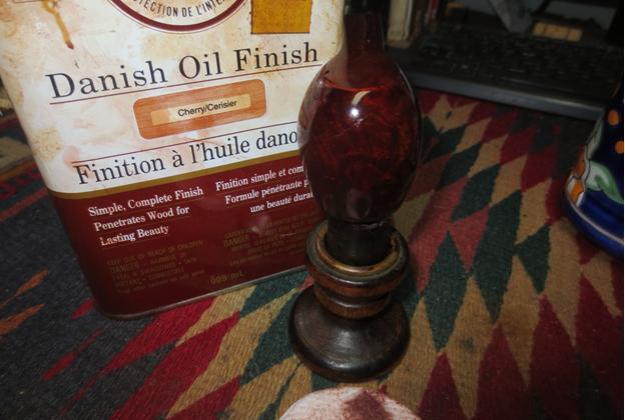
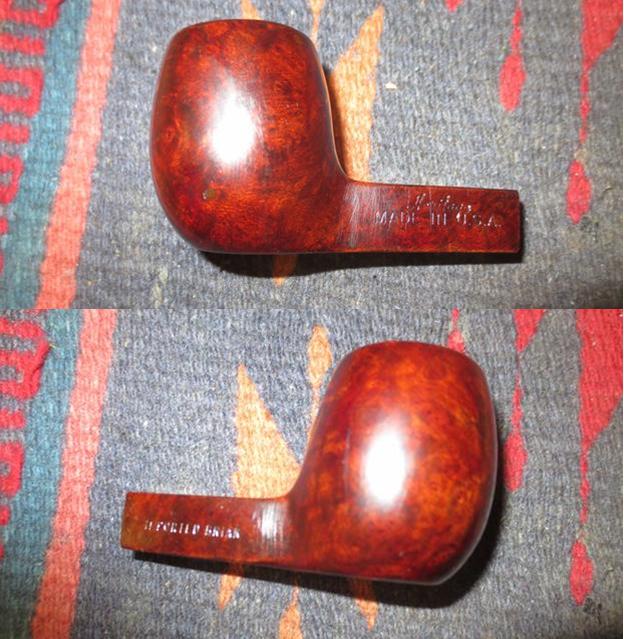
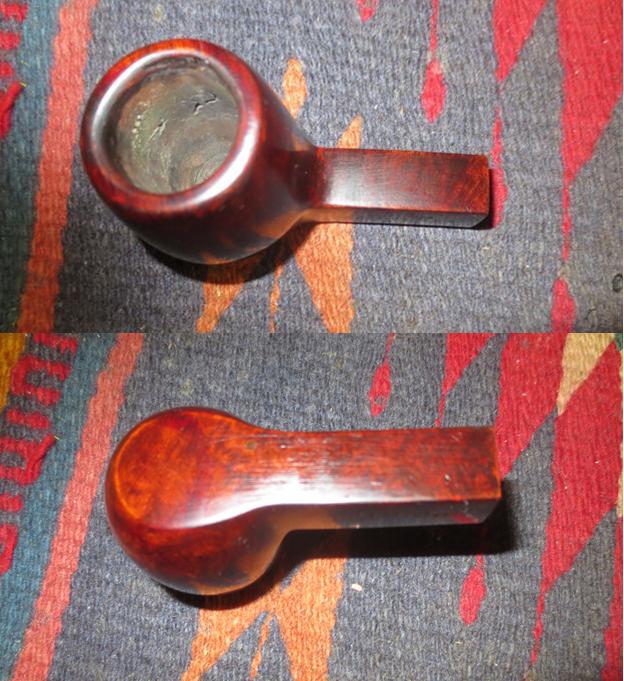
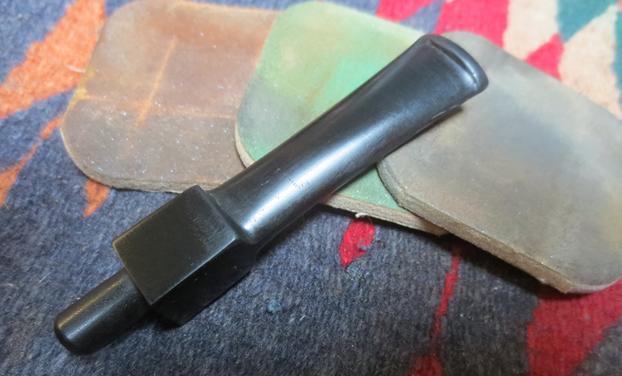
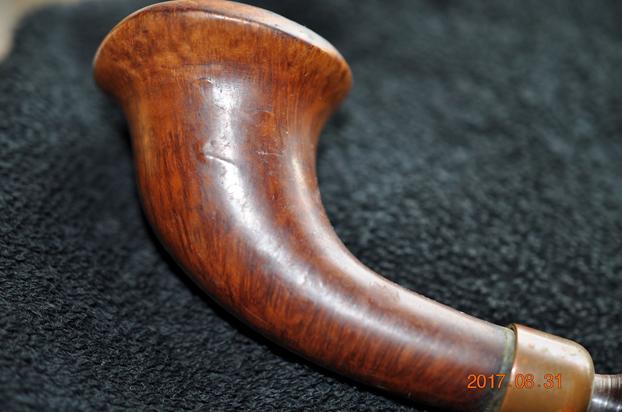
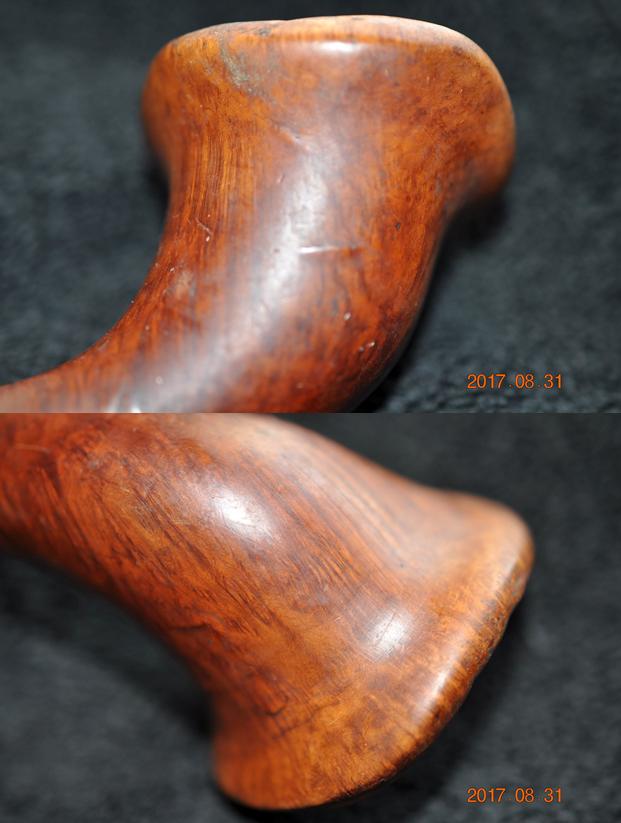
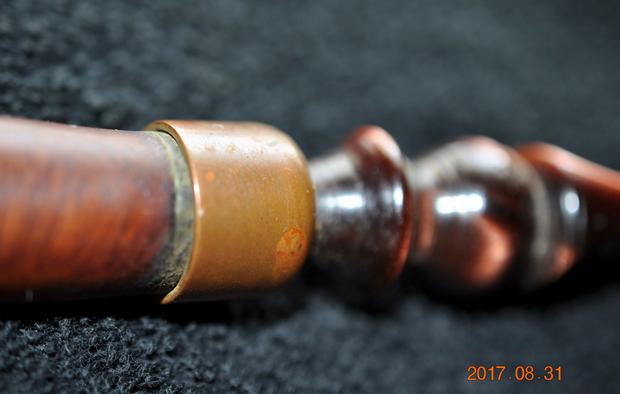
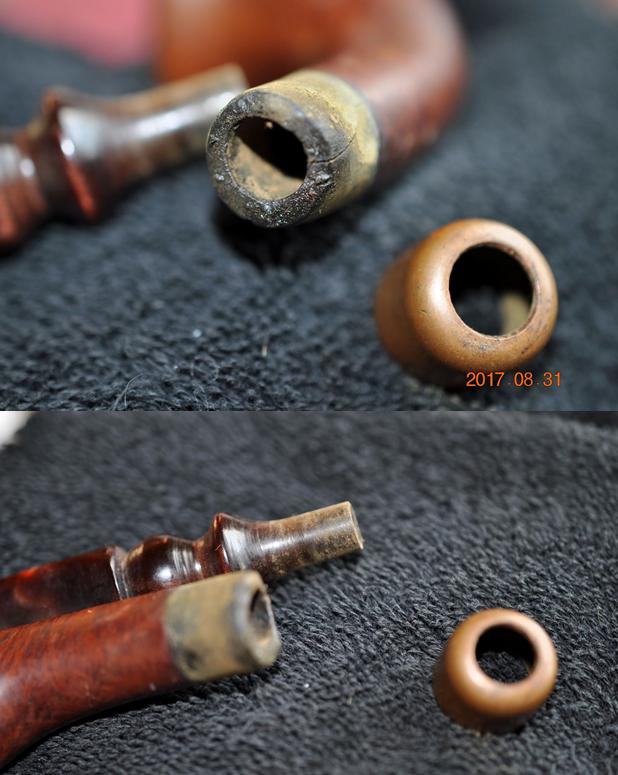
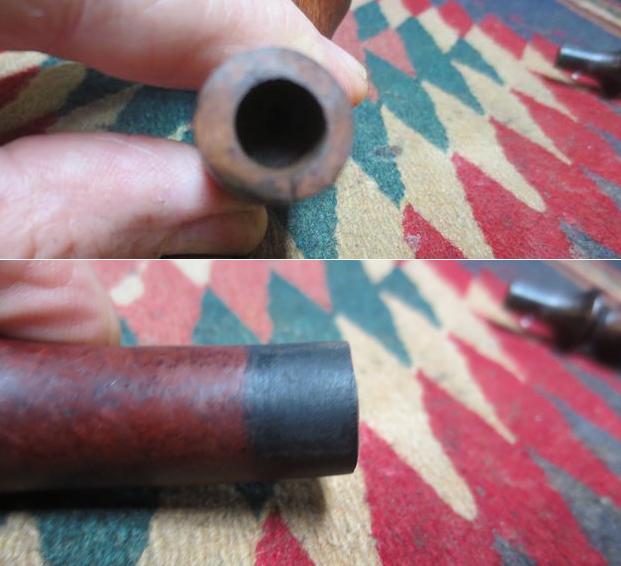
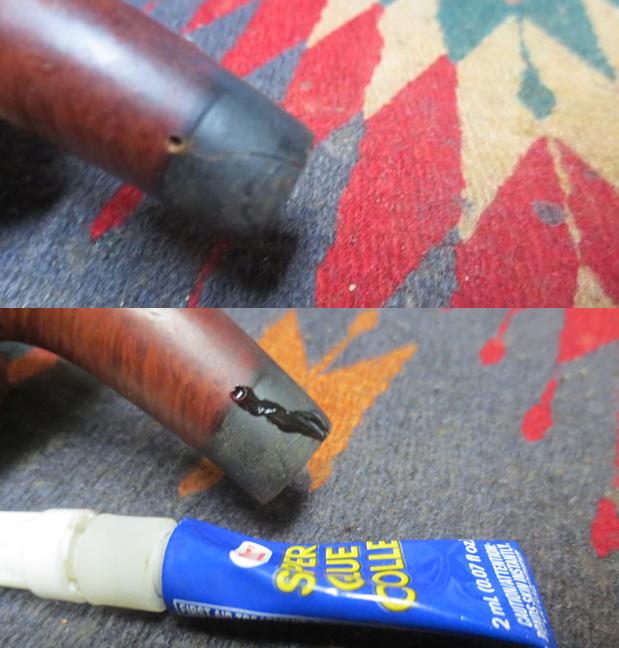
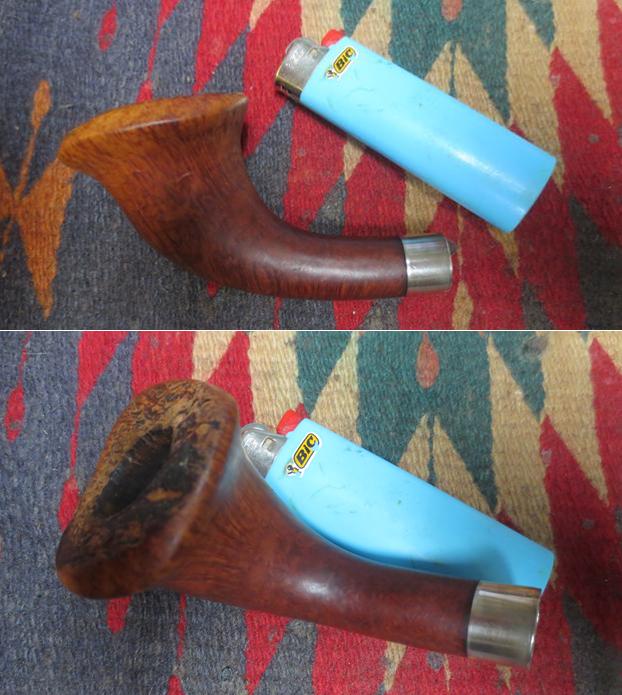
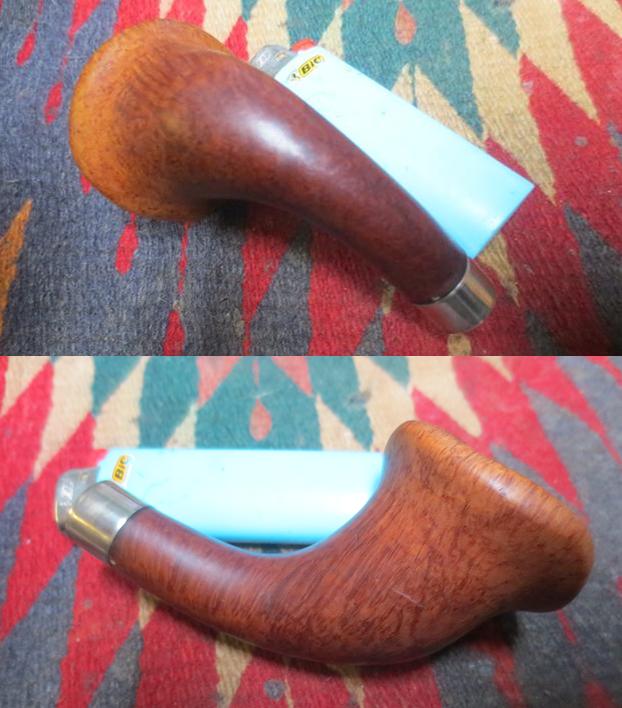
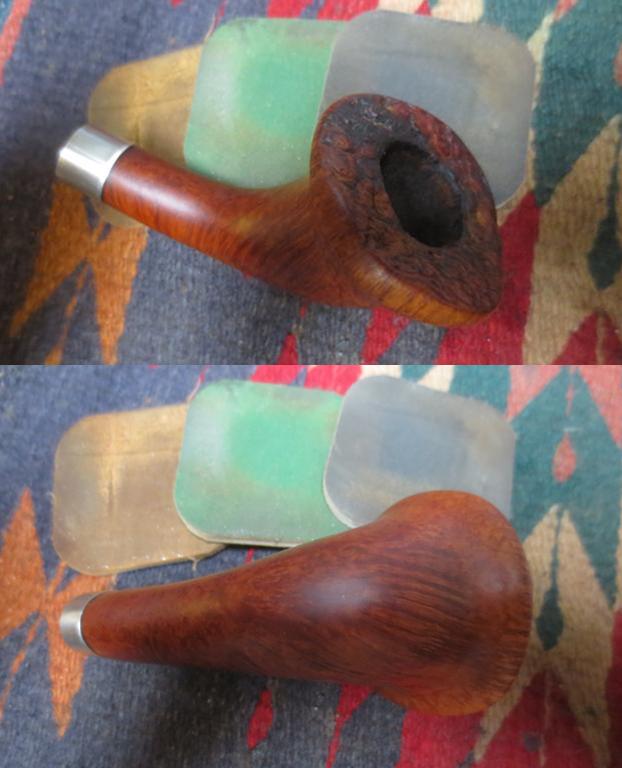
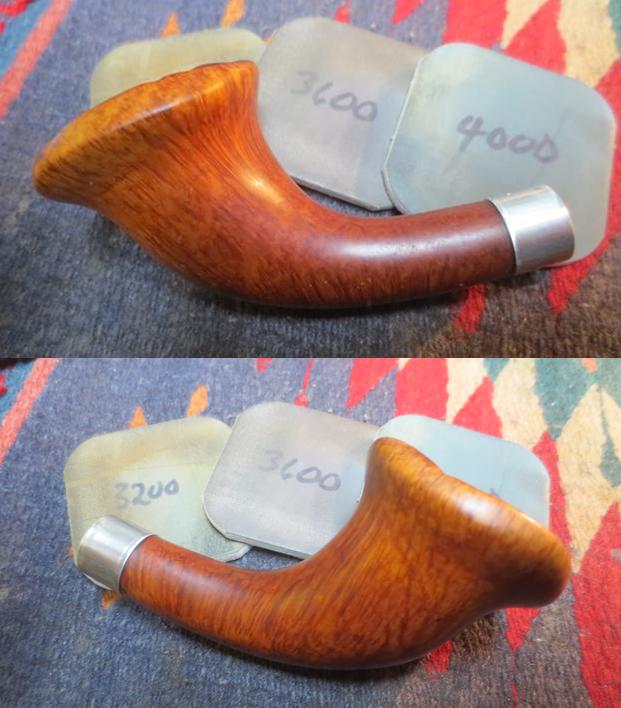
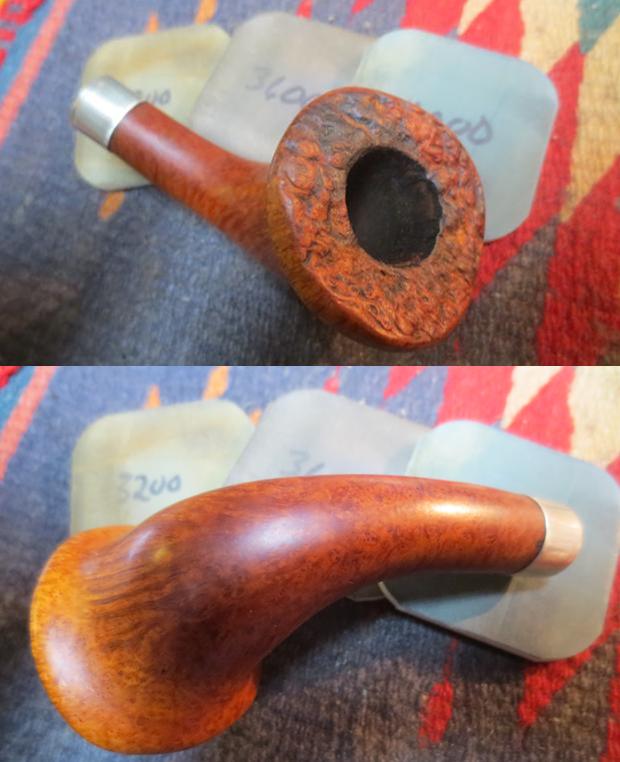
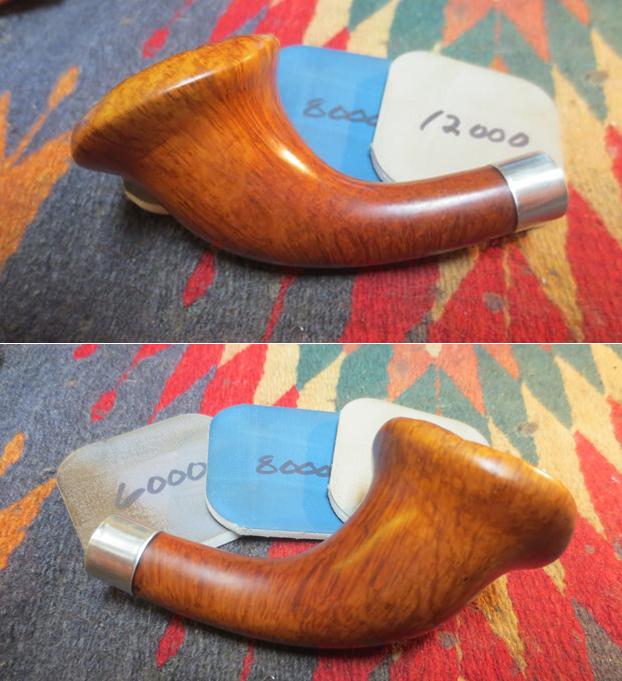
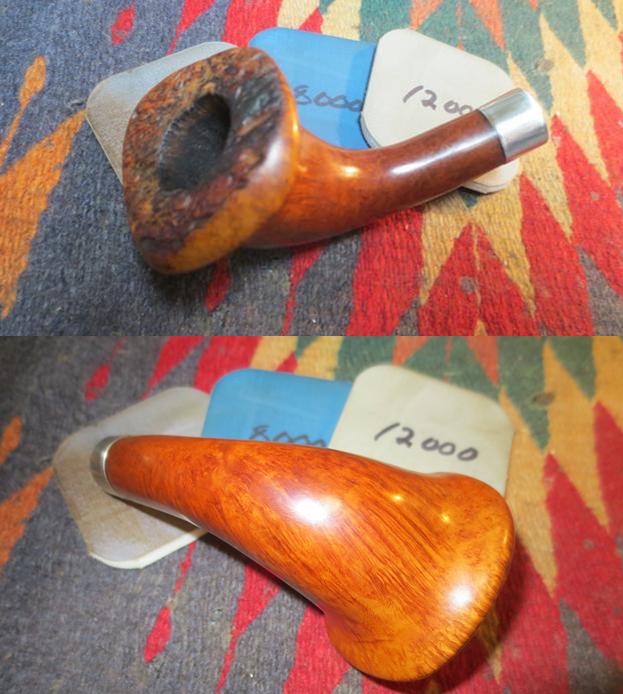
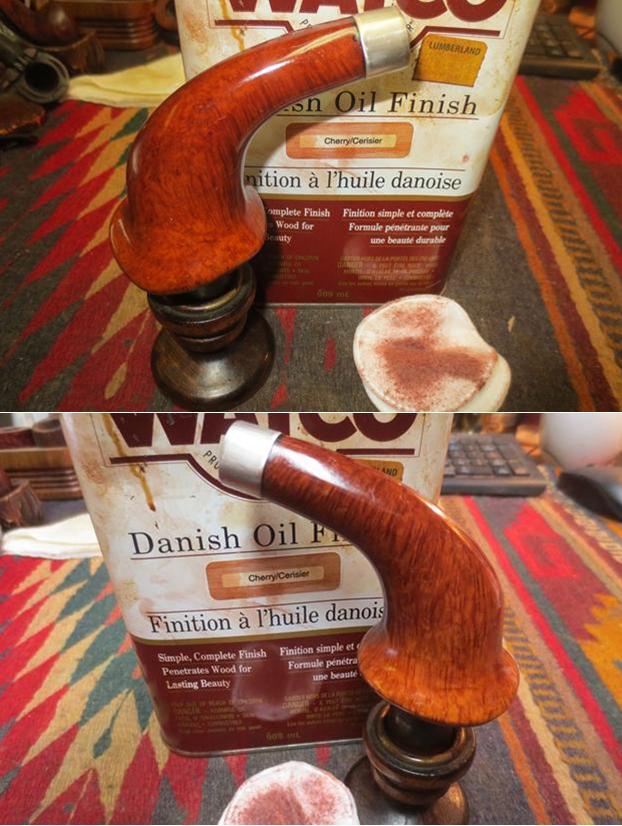
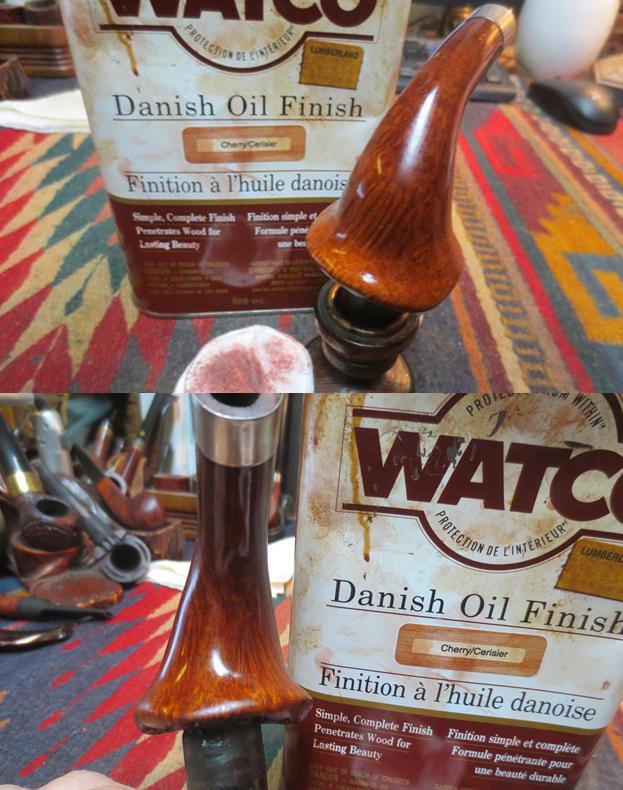
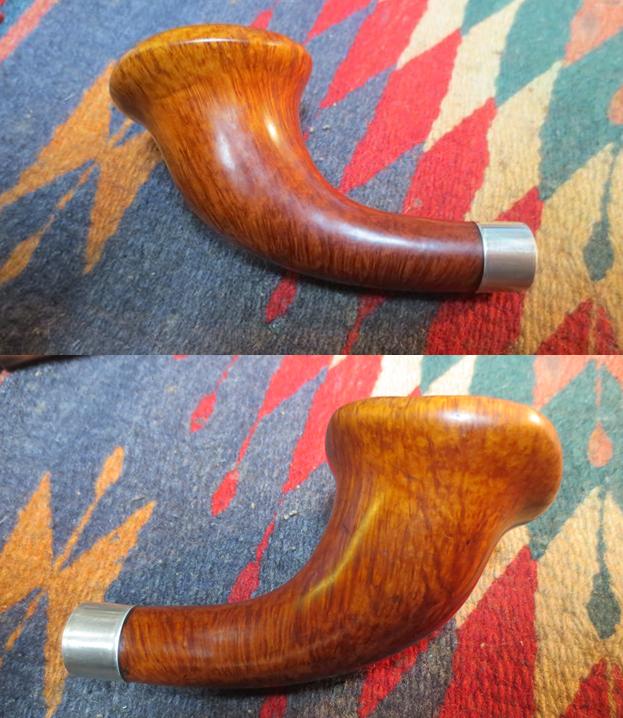
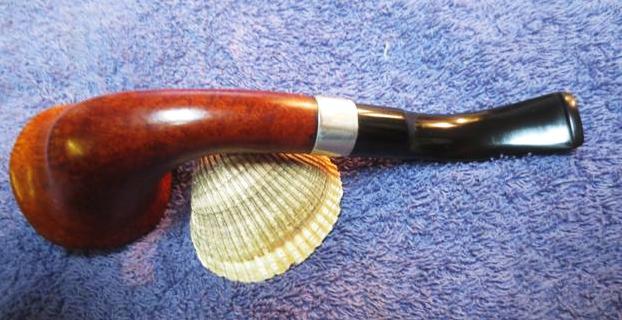
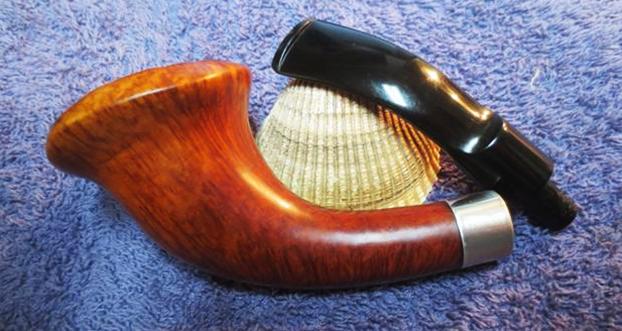
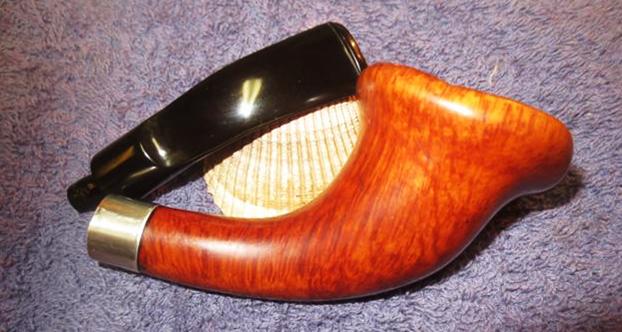
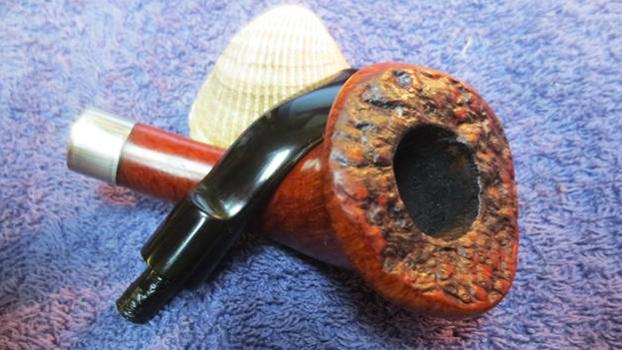
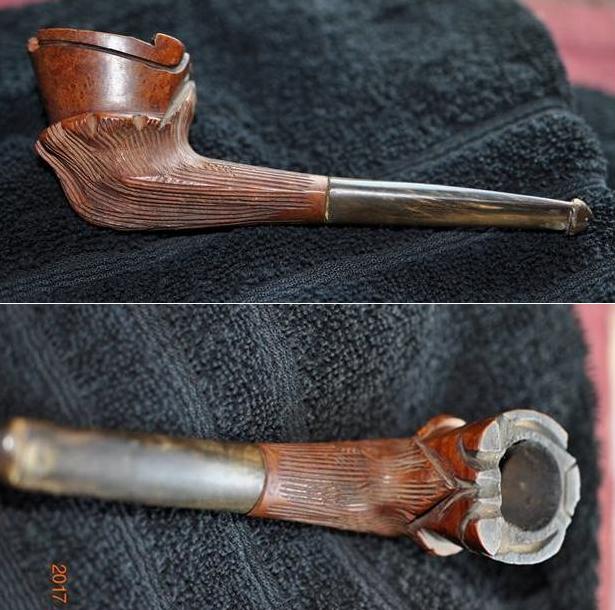
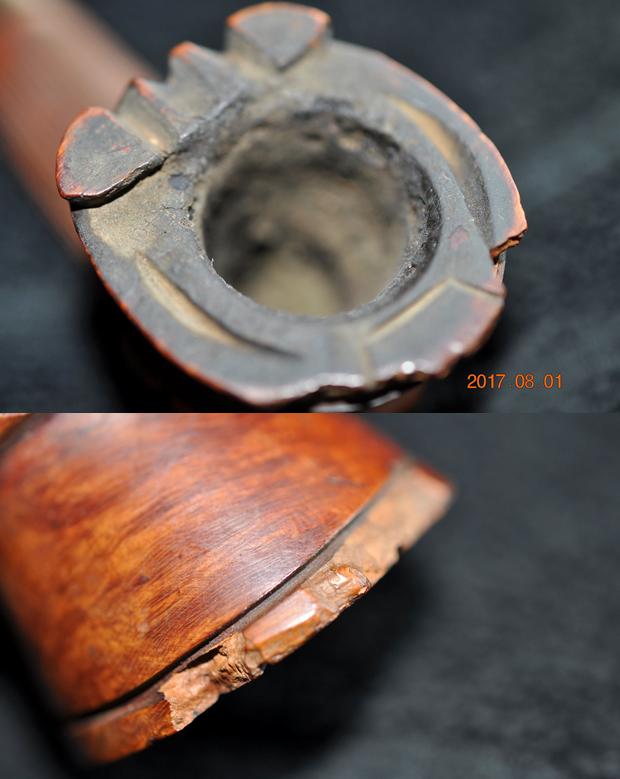
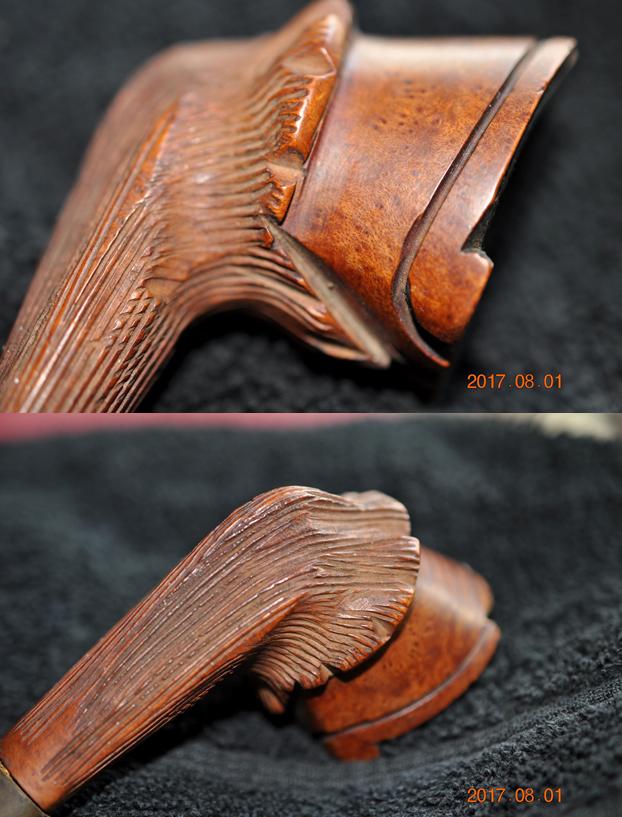
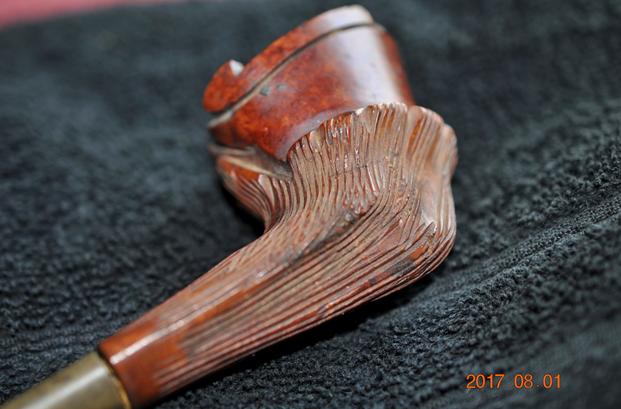
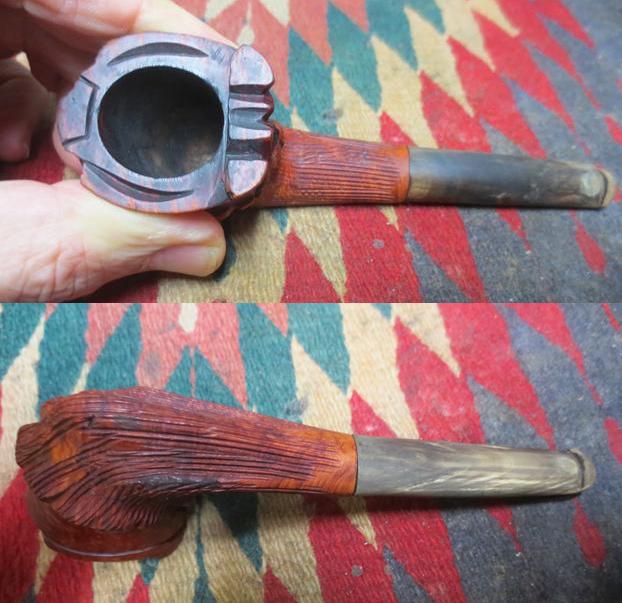
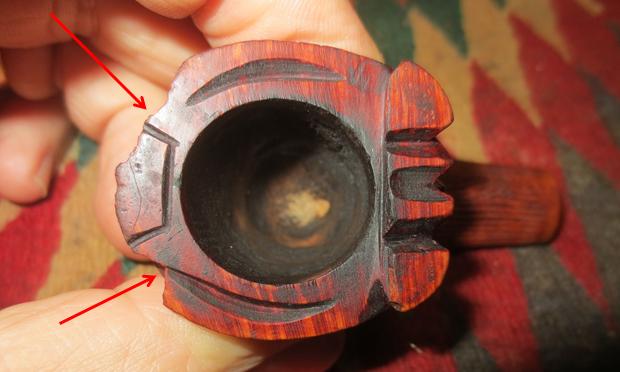
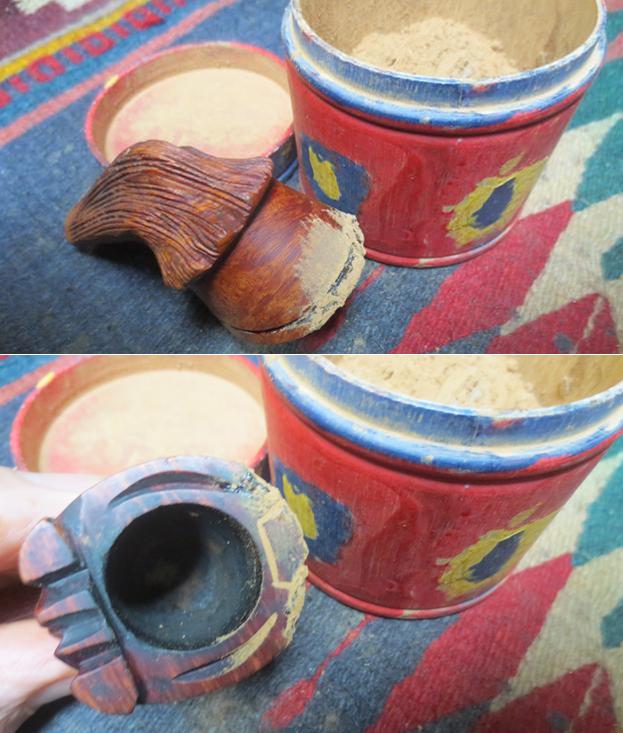
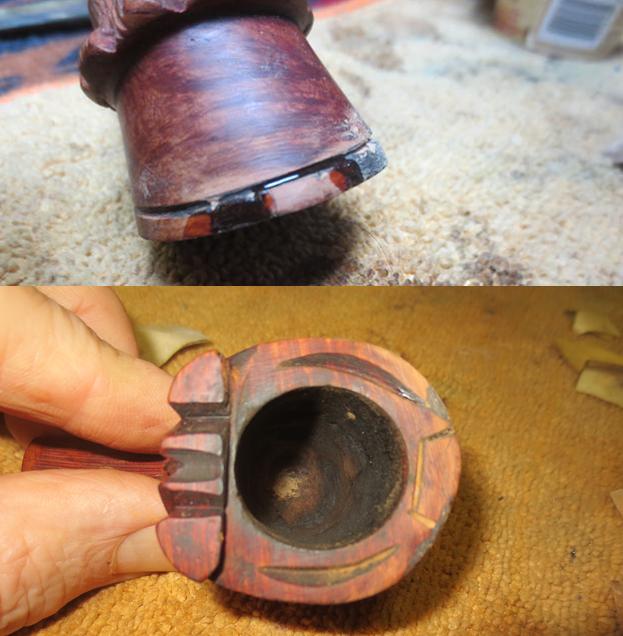
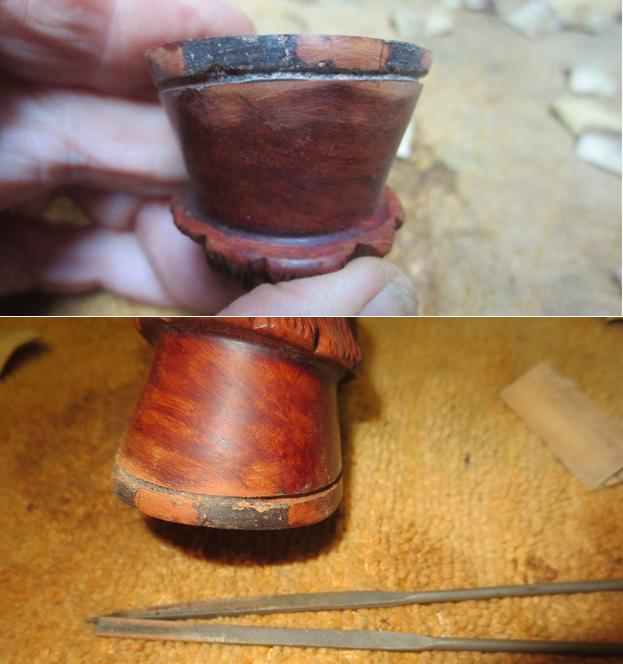
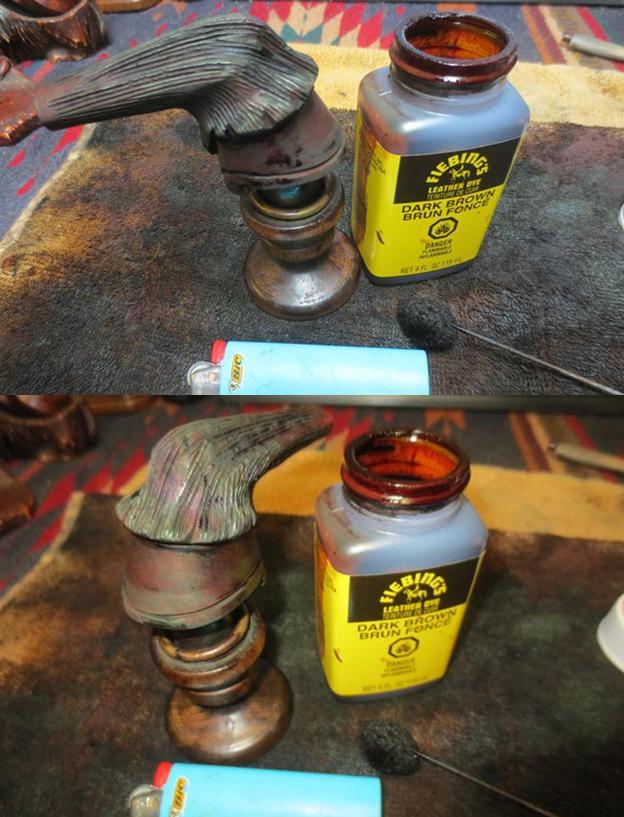
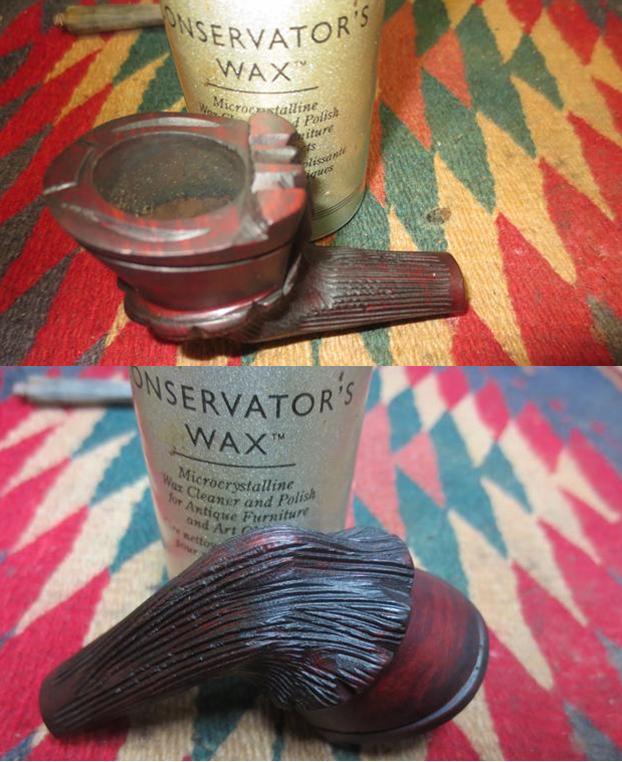
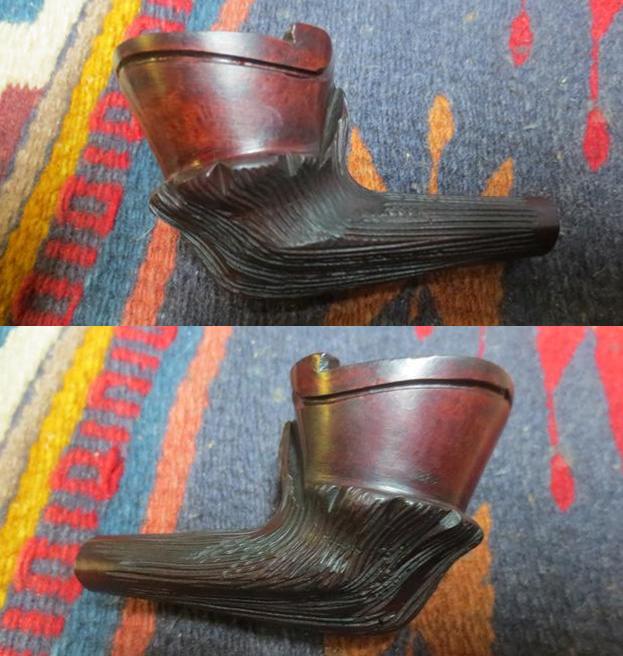
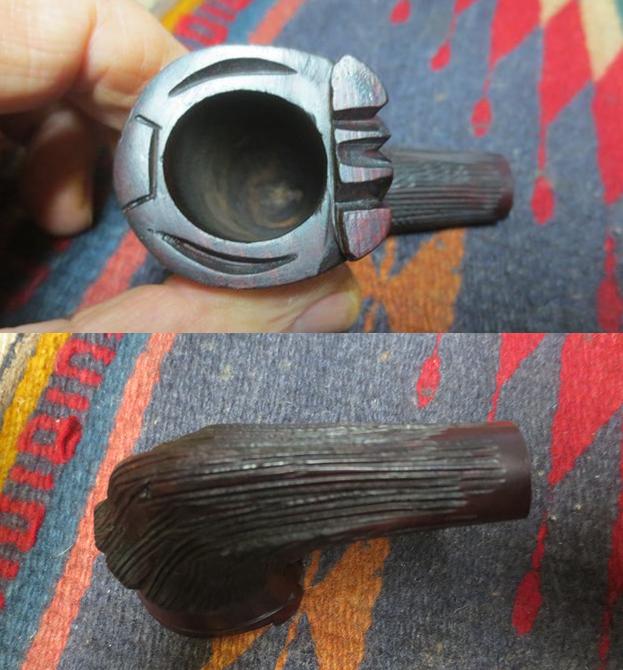
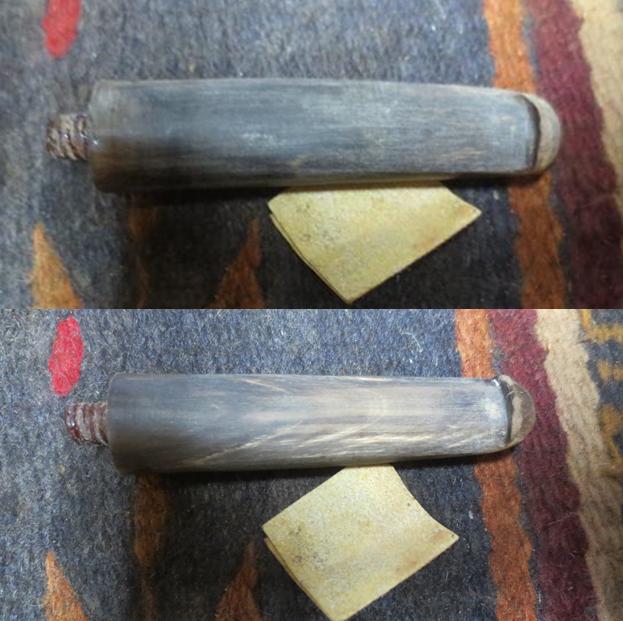
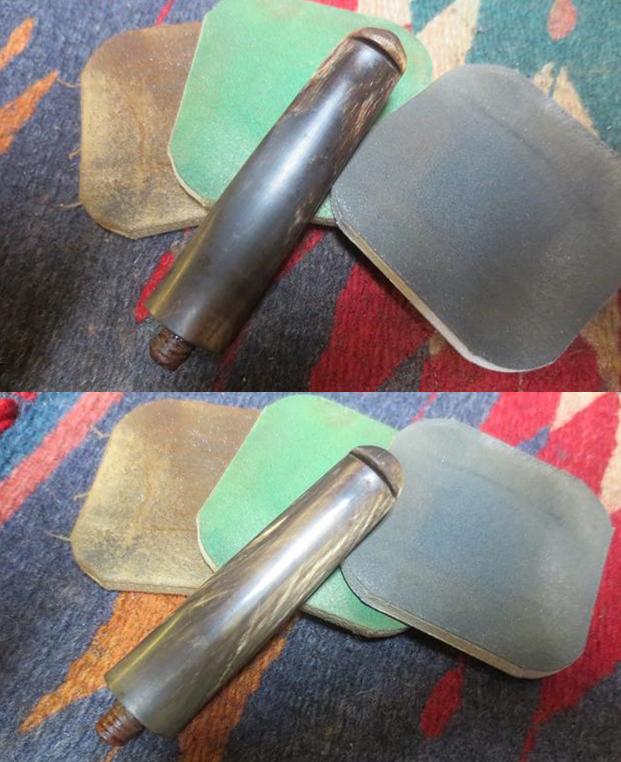
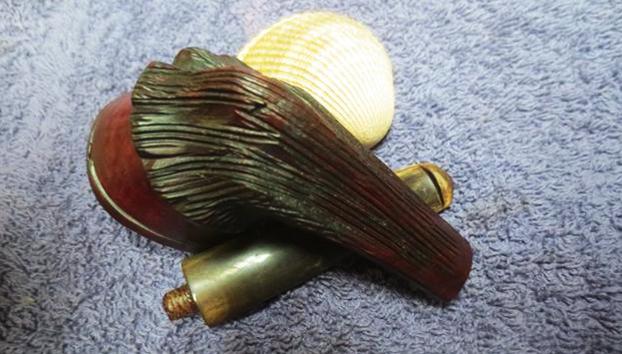
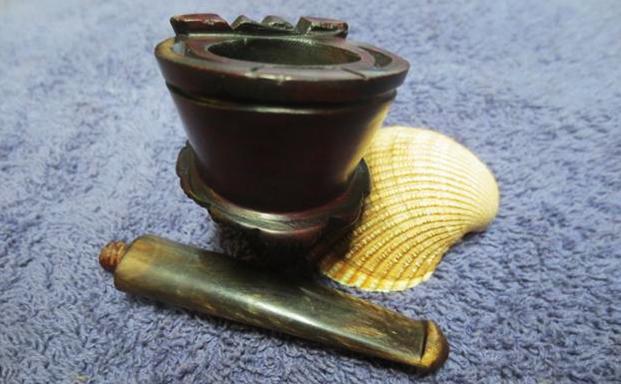
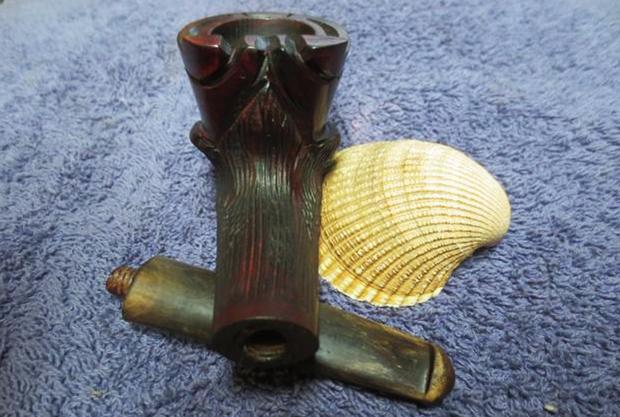
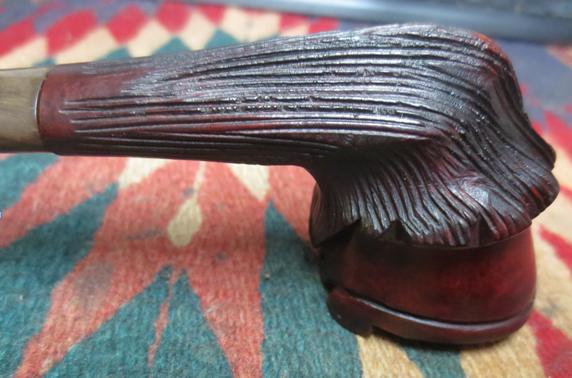
Tag Archives: restaining a bowl and rim

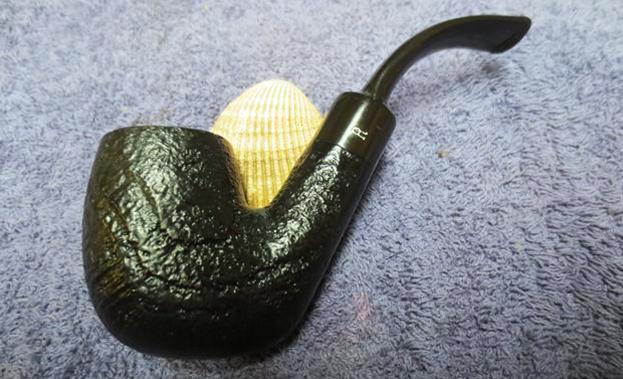
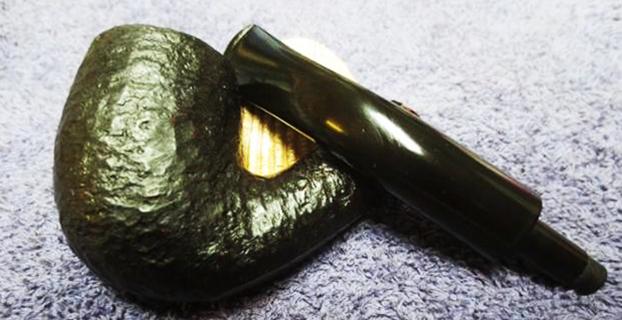
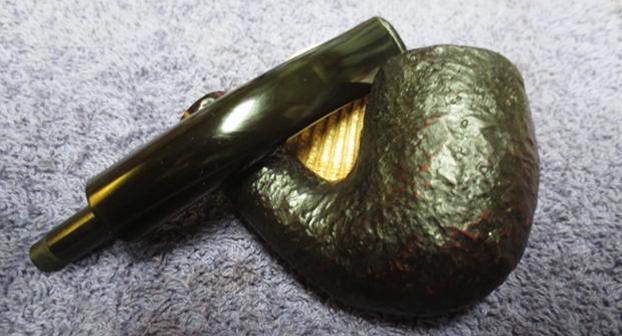
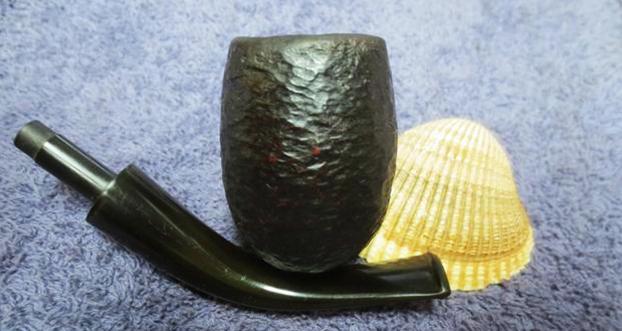
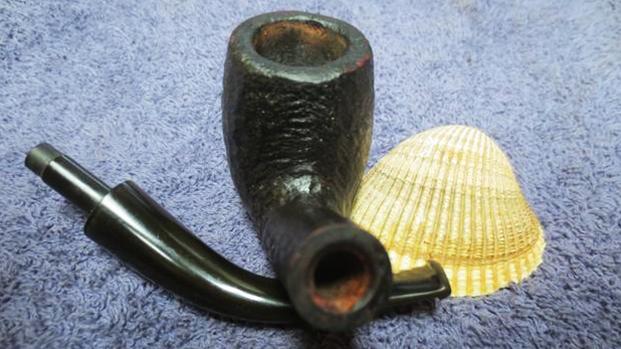
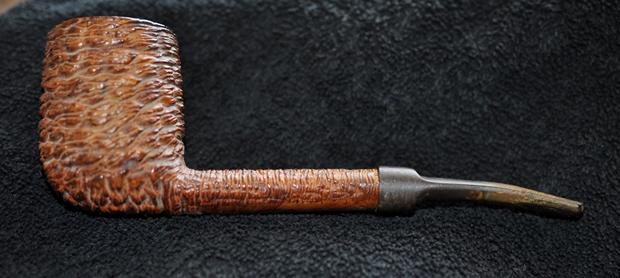
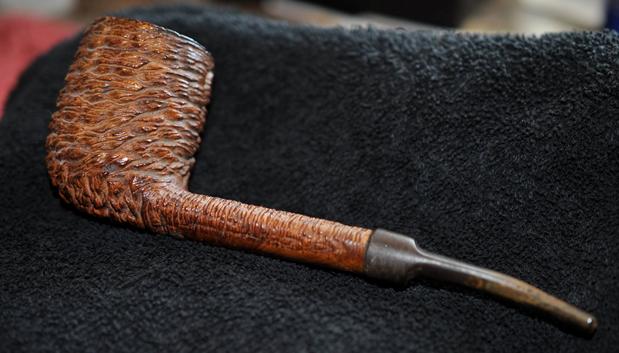
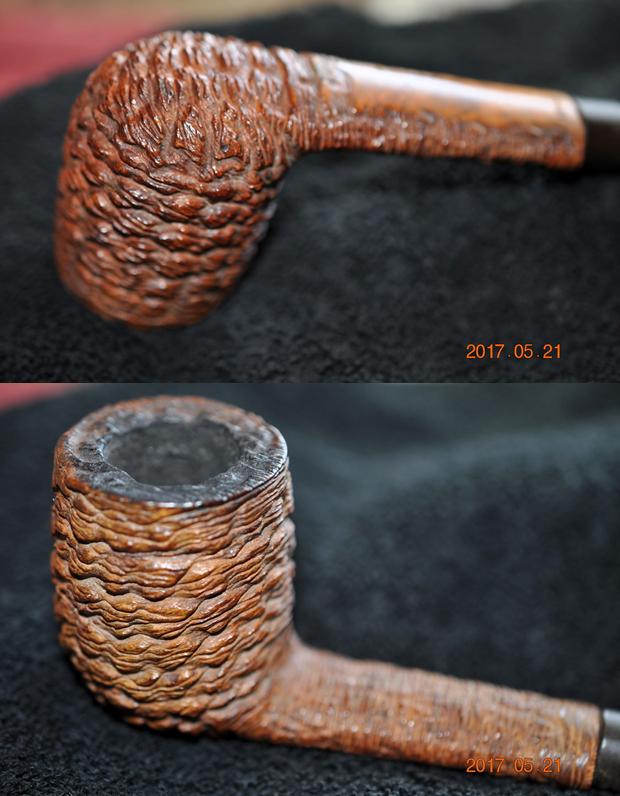
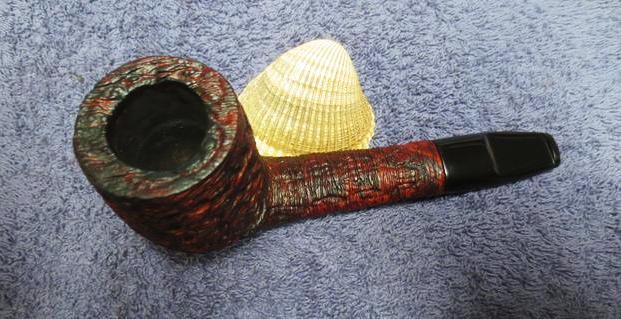
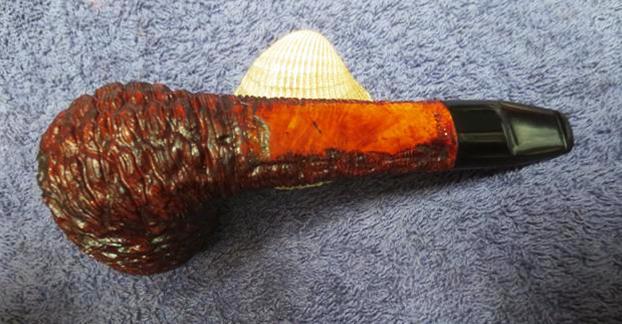
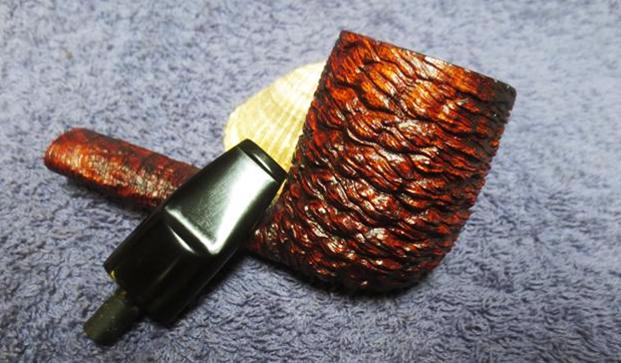
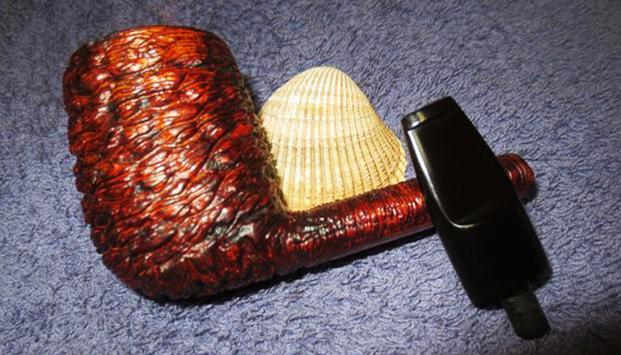
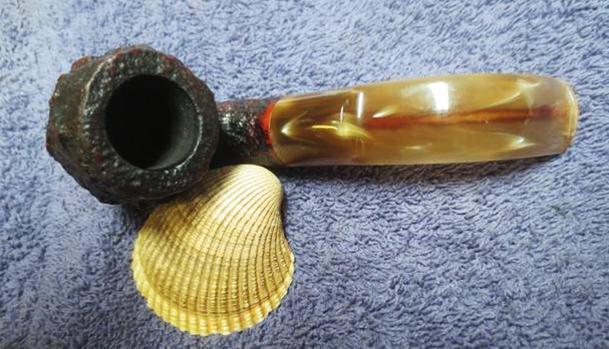
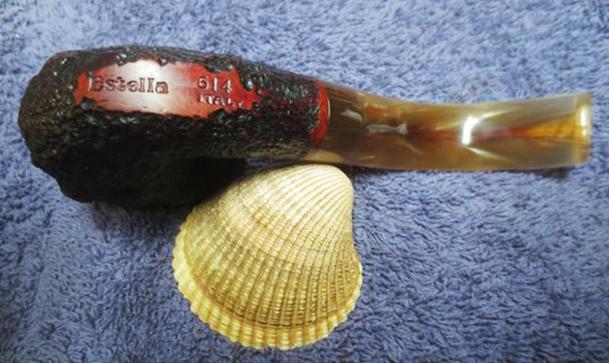
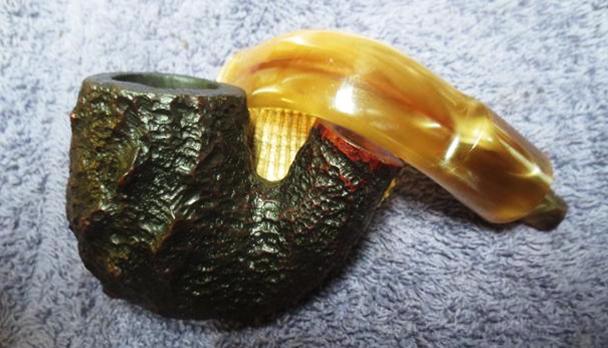
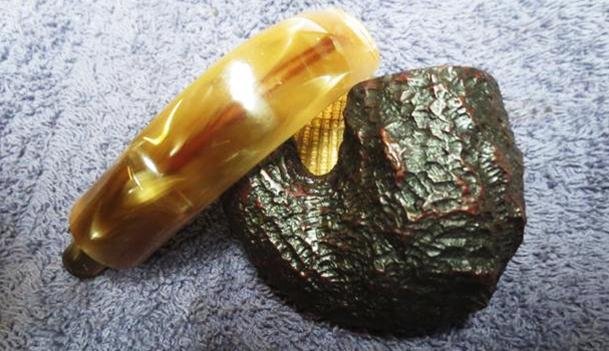
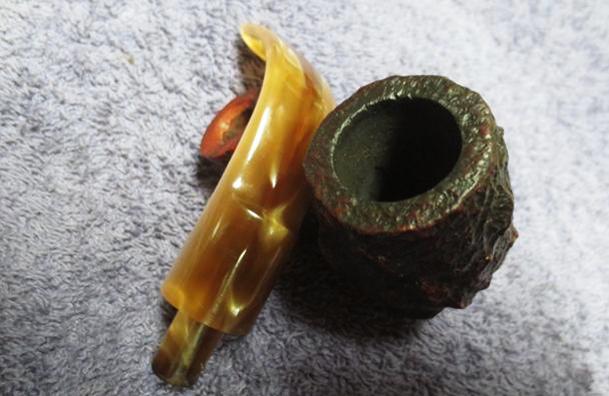
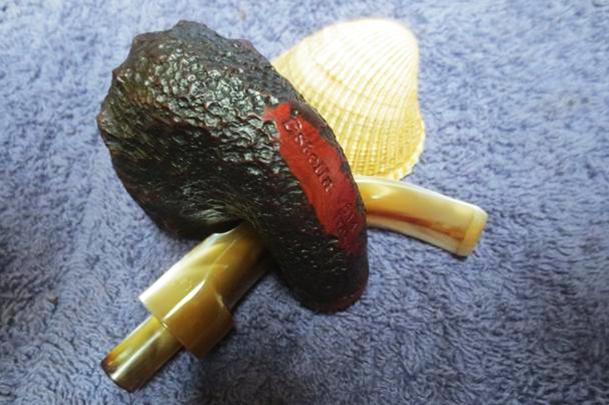
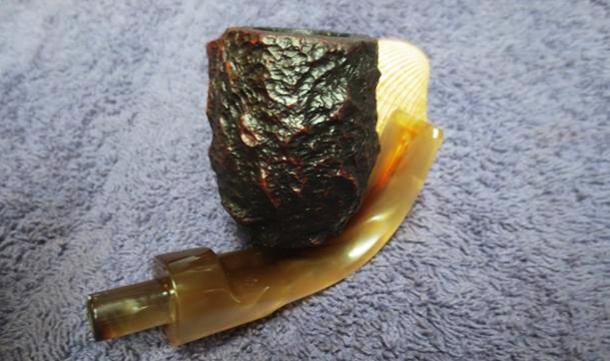
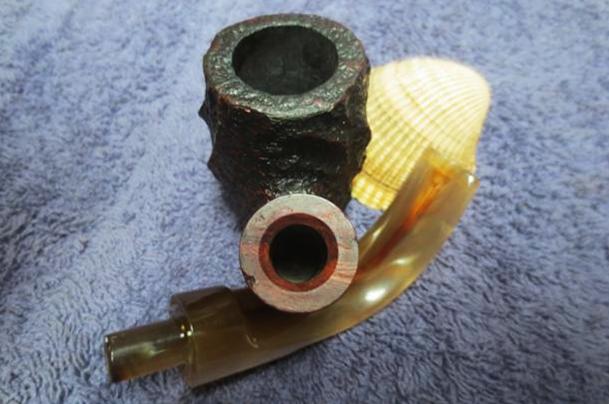
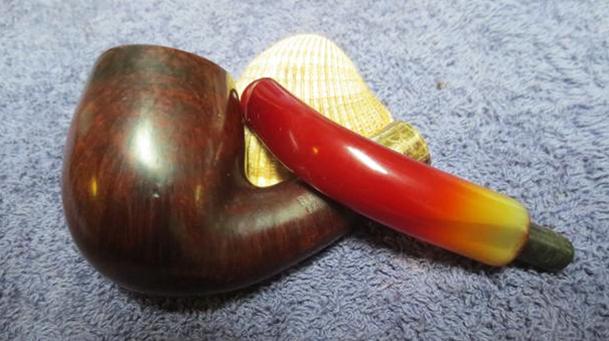
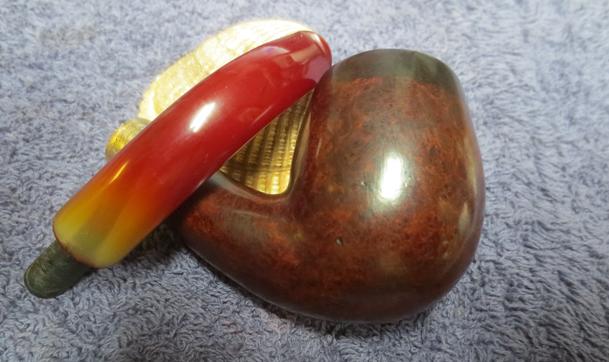
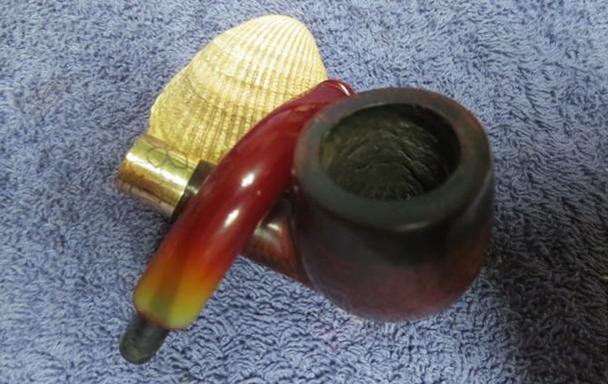
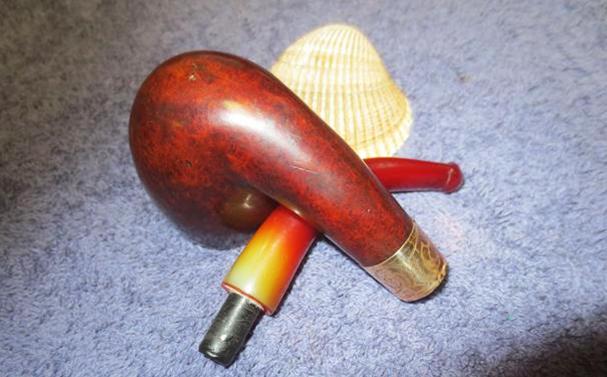
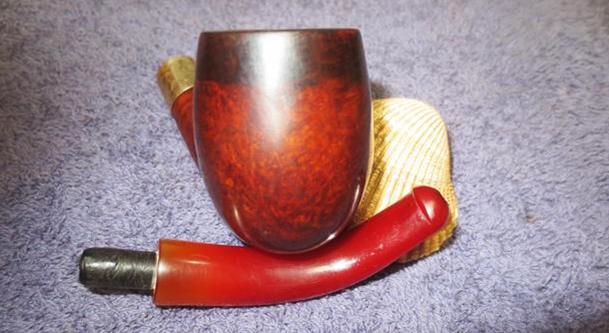
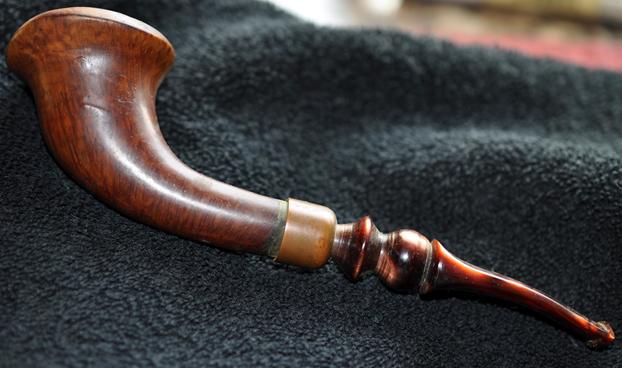
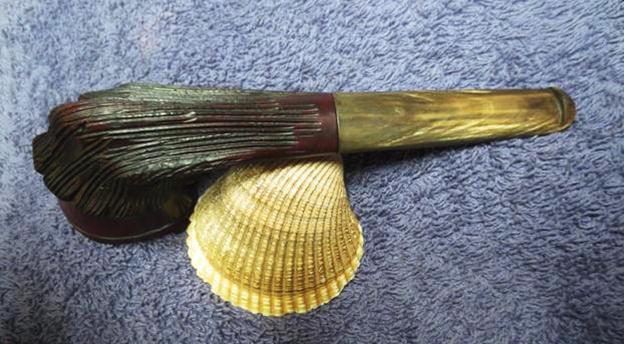
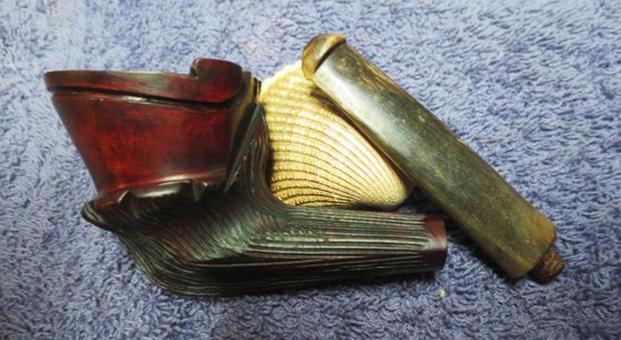
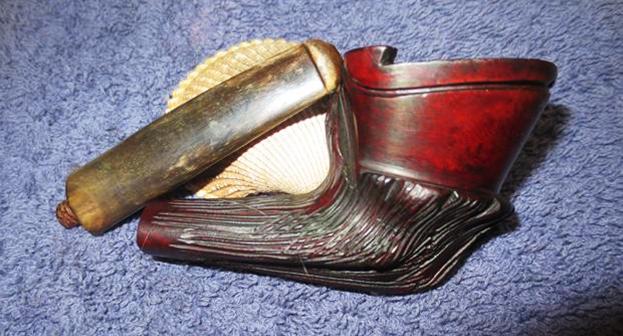
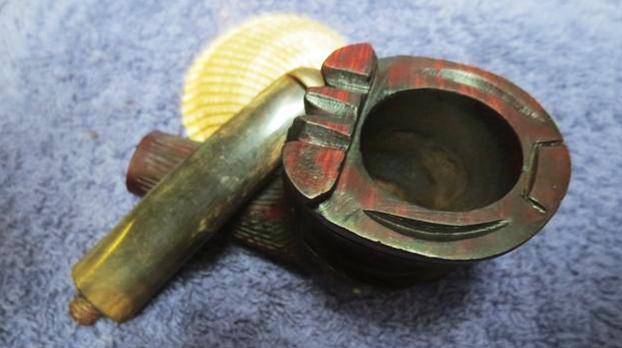
The Brief, Shining History behind an Italian Dublin and Its Easier Than Usual Refurbish


Robert M. Boughton

Copyright © Reborn Pipes and the Author except as cited


— “The Treachery of Images” (1929, also known by the translation of the message on it, from the French, “This Is Not a Pipe”), an oil on canvas painting by the great Belgian Impressionist, René Magritte (1898-1967)


INTRODUCTION

Sometimes I wonder if the D in P.A.D. shouldn’t be replaced with S for Serendipity, in the sense of being in the right place at the right time, or with still more sneaky spin, Fate with a capital F.  Then my sense returns, and I realize the musing rationale is only a symptom of the Disorder.  My most recent bout with this overwhelming inner turmoil was lost within minutes after I chanced (yeah, right) to read an informative and enthusiastic, yet brief, account of a little known but masterful creator of hand-carved Italian pipes in the 1980s and into the early ‘90s.  Thinking of an assertion in the post that claimed the brand in question is difficult to find as a sort of challenge, I clicked on eBay and searched for the name.  Indeed, only two samples popped up, as well as a nice, dark brown pipe sleeve.  Not really able to afford either pipe, or the $11 sleeve for that matter, I was nevertheless torn between both and knew I had to have one.  The source of the information that set my P.A.D. careering is an acquaintance on the Smokers Forums UK, on the Pipes page.  The gentleman’s SF handle is fishnbanjo, which I suppose indicates two things he enjoys very much other than pipes.  He and most everyone who knows him at all shortens the moniker to the simpler Banjo, which is also, after all, a kinder, gentler re-nicknaming than Fish, or even Fishn.

‘The title of the post caught my eye before I noticed it was started by Banjo: “The stepchild of Italian pipes.”  I always enjoy Banjo’s contributions because of the rugged good looks of the pipes he has a knack for acquiring and his keen knowledge of the subjects he covers, and when it comes to pipes the brands of which, most of the time, I find I have never heard but without fail would like to own.  Often spoken in pipe smoking circles is the comment, “That pipe looks good on you,” which is one of those statements that of course in intended to be courteous and friendly but, when considered in literal terms, is preposterous.  Somehow, though, with Banjo the expression is more à propos than anyone I’ve ever seen, even if only in excellent selfies.

His own looks being a cross between Spencer Tracy, who played the down-on-his-luck old Cuban fisherman in the 1958 classic movie version of Hemingway’s The Old Man and the Sea, and Anthony Quinn, who reprised the role of Santiago in a 1990 TV remake, are complemented to perfection by his good, strong, masculine, bold taste in pipes.  Here he is in an example of one of those apparent self-photos, from the Capitello post I had the good fortune to find.  The self-portrait really is quite good since I decided to contact Banjo and ask for his permission to use it in full rather than lop off the top half of his head for the silly sake of protecting his privacy without even knowing if he minded. When Caminetto Pipes (1968-1979, the official Caminetto Period) stopped production, all by hand, the assorted partners went their own ways. Giuseppe Ascorti produced Sergio pipes for a short time before forming the company bearing his own last name with his son Roberto; Luigi Radice opened Radice Pipes, and Enzo Galluzo, who was the official carver for Caminetto and had worked at Castello and later Ascorti’s shop, founded the Capitello Pipe Company with his partner on the business end, Corrado Ripamonti, c. 1982.  Capitello closed in 1991, according to Banjo “because [Galluzo’s] distributor never paid him for the pipes he sold and without money to pay the bills a great, not well-known company ended its run.”  In 1986, by the way, two years after the death of his father, Roberto Ascorti started the New Caminetto Period.

Banjo wrote, with nostalgic eloquence, of Capitello being the first Italian pipe manufacturer in the 1980s to use oil curing.  The process was patented by the Alfred Dunhill Company Ltd. on November 14, 1918, just 28 days before the signing of the Armistice – at the 11th hour of the 11th day of the 11th month – that officially ended World War I (“the War to End All Wars”).  Dunhill’s Patent №. GB119,708 involved immersing natural-finish stummels in olive oil for several weeks before drying with hot air and sandblasting away large rough parts of the early irregular results.  Whether old Alfred in fact invented the procedure is debated, but I’m not going there today, so relax.  At first the use of oil was for aesthetic reasons only, as it gave the outer area of the stummel greater luster.  Pipe collectors and scholars giving every indication of being quarrelsome when it comes to just about everything, the rough effect that seems to have led to the creation of the Shell pipes (and is also the reason for the reddish tinge to the briar in that line) is yet another subject of discord in certain rarefied circles, with an emphasis on circles being never-ending. At any rate, the unavoidable consequences of Dunhill’s approach were unusual shapes that could not be classified according to the official charts until oil curing was “perfected” some years later.

Returning to Banjo’s humble eloquence, he wrote of buying the pipe more than 30 years ago from “someone with much more experience than I who told me it would color much like a Meerschaum does.”  As would most experienced pipesters familiar with the differences of wood and meerschaum, Banjo had his doubts, but he liked the huge, pebbled specimen, so why worry about it?  I can’t help thinking and interjecting the notion that such a refreshing thought process could benefit certain more vocal experts.  To Banjo’s lasting surprise, his old pipe indeed continues to color, just like a well-aged meerschaum.  Banjo noted that today it is difficult to imagine the gorgeous piece of work in the virgin finish he first viewed it.  I suspect it looked something like this other Capitello, minus the smooth finish.

Capitello Airlecchio 773, courtesy Haddock’s Pipes

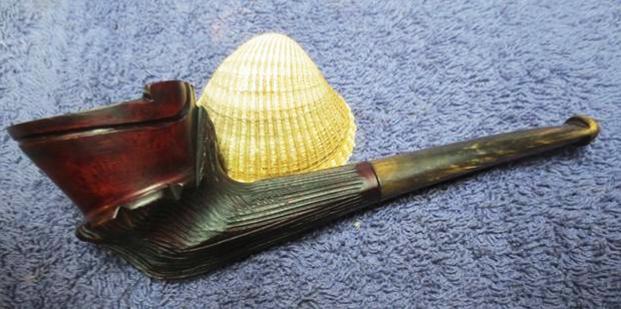
Capitello’s peculiar, more common designs and crafting include the following.

Corinzio Two Columns Sandblasted Belge, courtesy amaxwell1_eBay

Wax Drip Gotico, courtesy Pipephil

My remaining opening comments are few enough to wrap up in short order, which I will now do.  As far as the farfetched-sounding idea of smoking a wax-dipped pipe goes, see the last link in my Sources below before passing judgment.  Concerning the somewhat confusing list of Italian names – both for some of the companies mentioned and more to the point Capitello and its various lines – my curiosity got the better of me.  As a result, I discovered they have real meanings, and here they are.

  1. Capitello – capital. I sense a dual meaning here, as in the seat of power of a government, etc., as well as the monetary distinction
  2. Caminetto – literally, fireplace, but also used to describe a very hot, small space where objects are forged by craftsmen
  3. Radice – a surname that also means root
  4. Castello – castle
  5. Corinzio – Corinthian. No, not the Corinthian leather used in a certain car promoted by Ricardo Montalbán, but Corinthian architecture, the last and most ornate of the three main orders of ancient Greece and Rome that was characterized by columns. Hence, the Corinzio Two Columns Belge shown above.  I did not find Belge anywhere.
  6. Gotico – Gothic
  7. Jonico – Ionian, or pertaining to the second primary architectural order of ancient Greece and Rome

RESTORATION

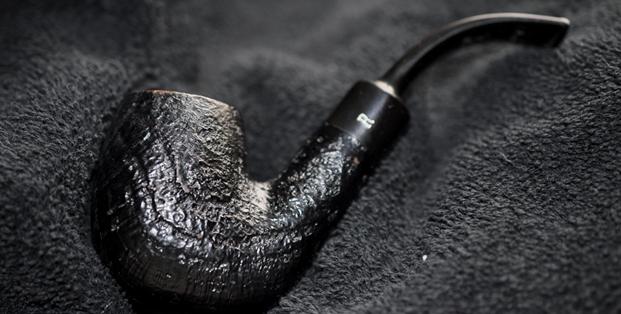
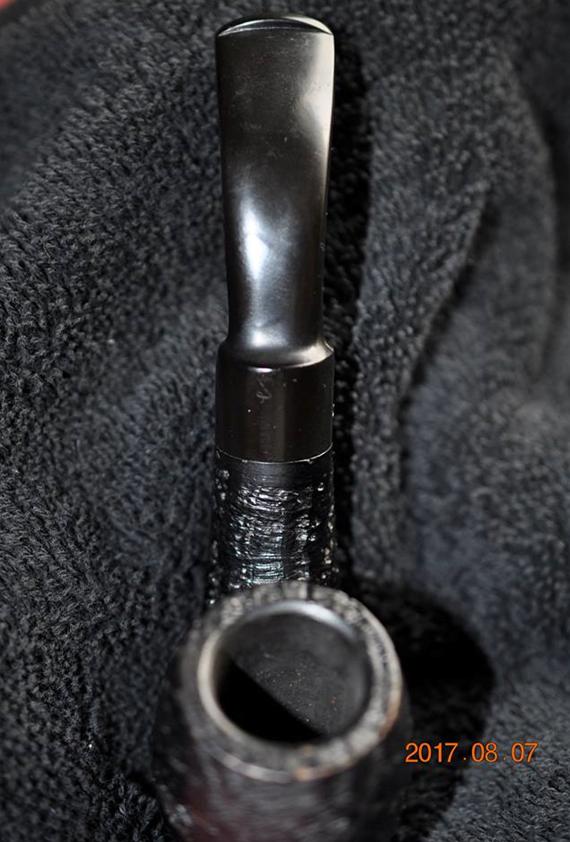
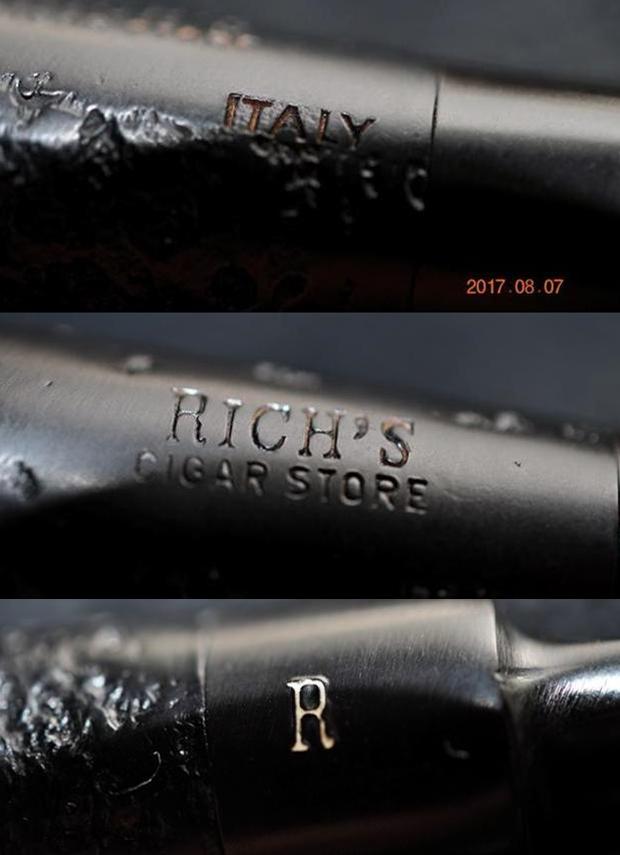
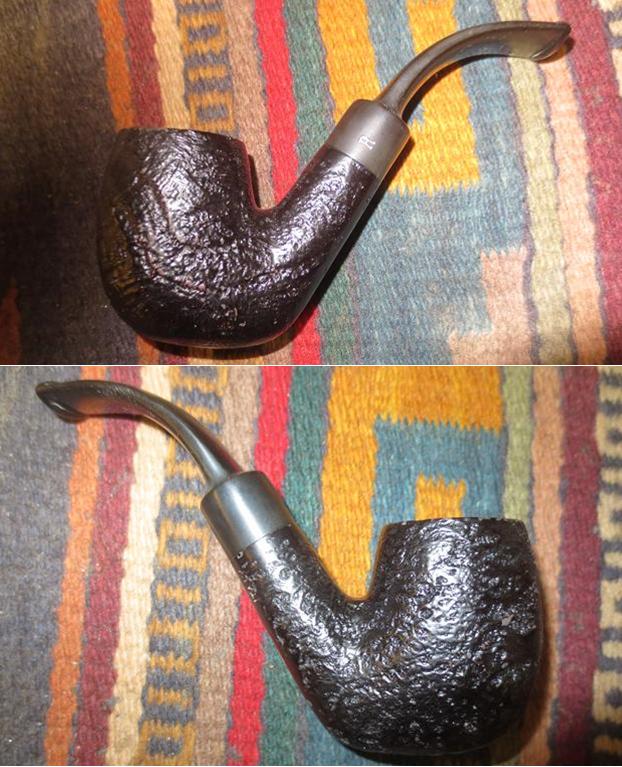
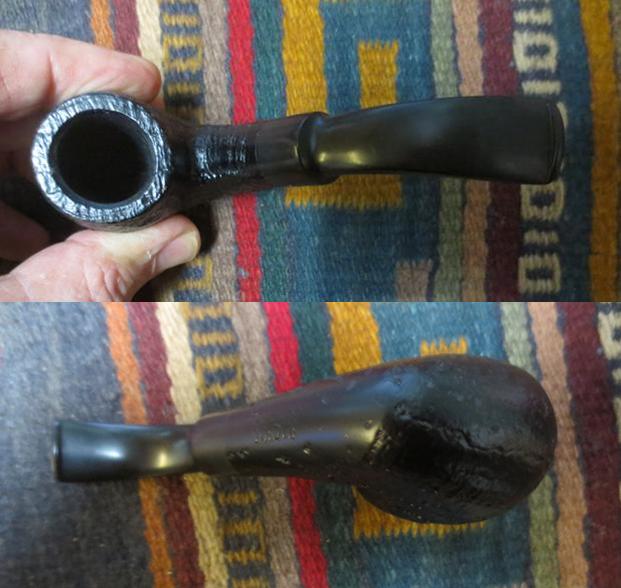
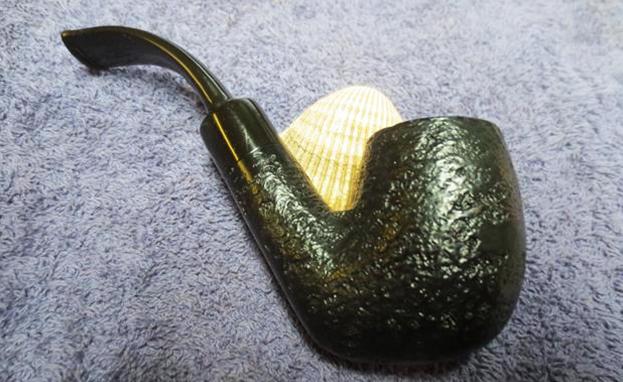
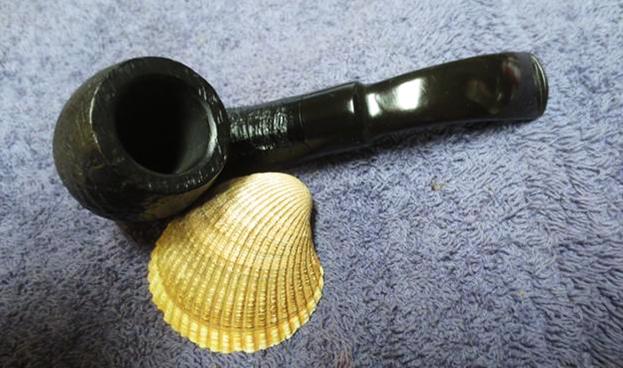
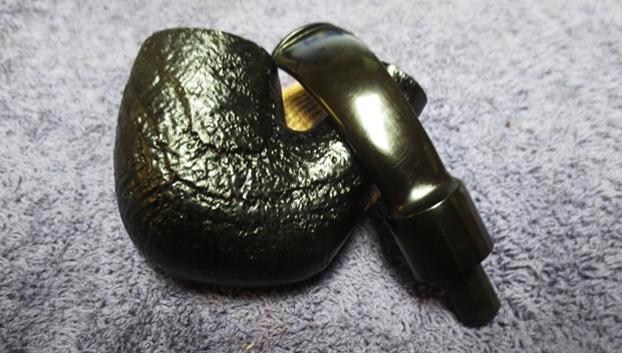
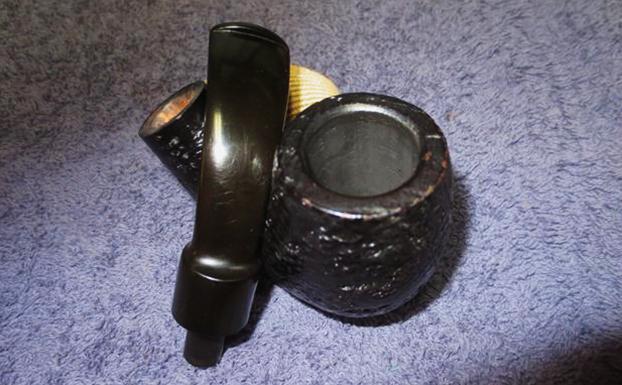
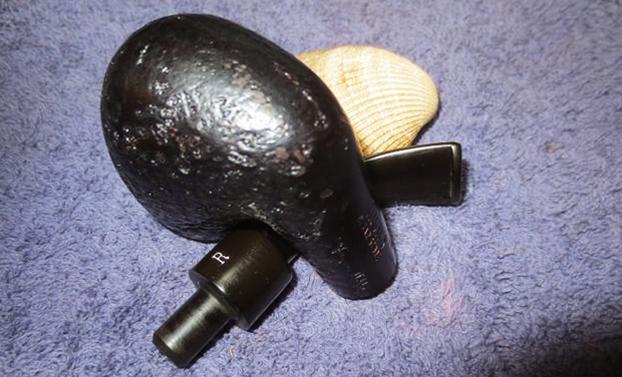
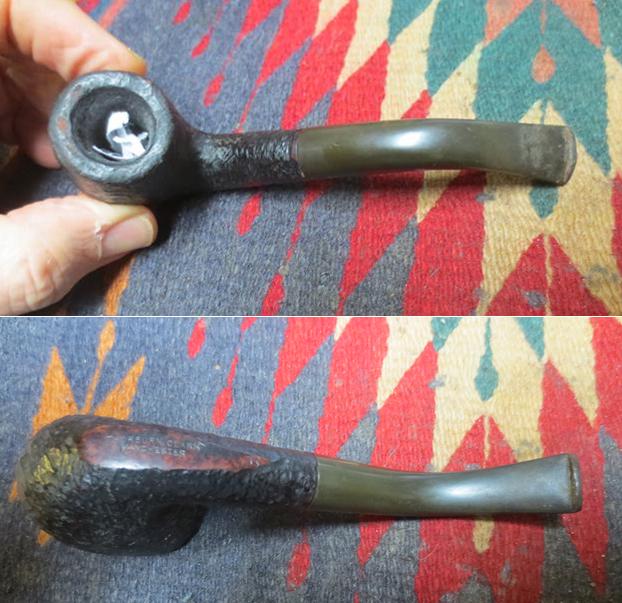
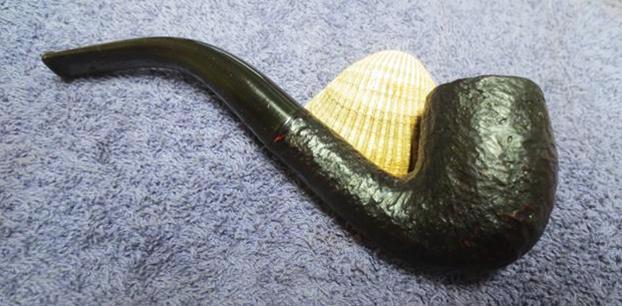
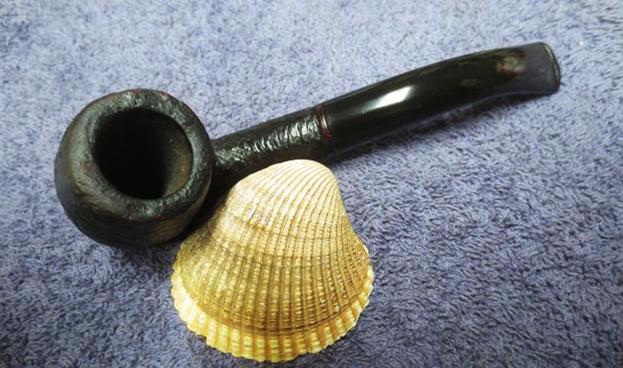
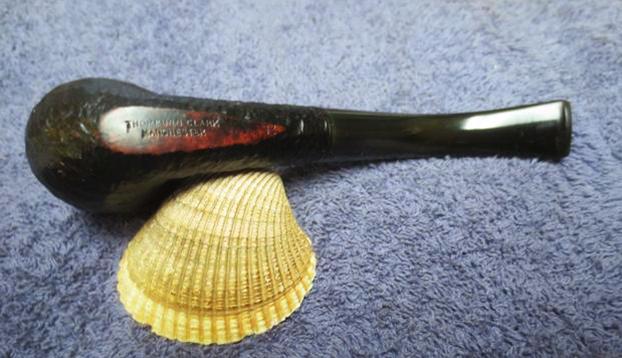
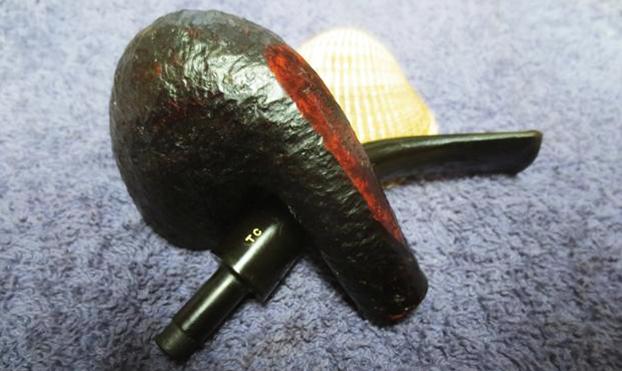
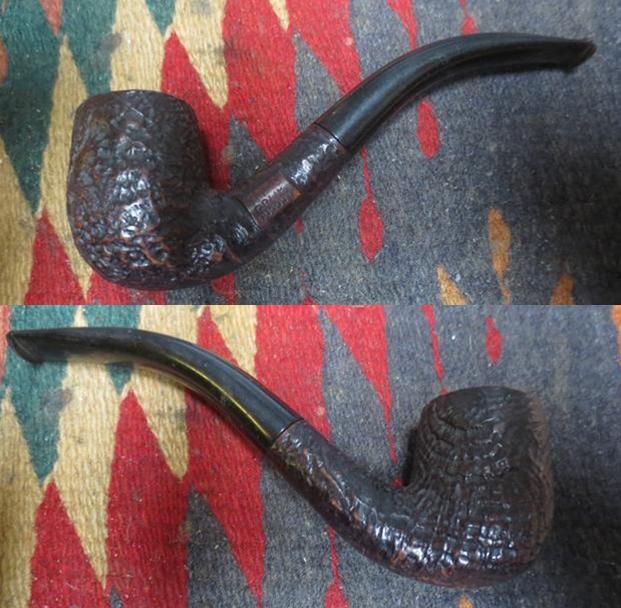
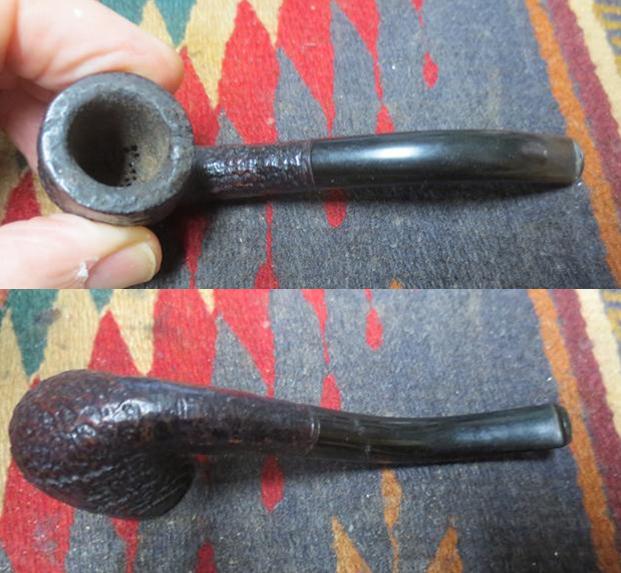
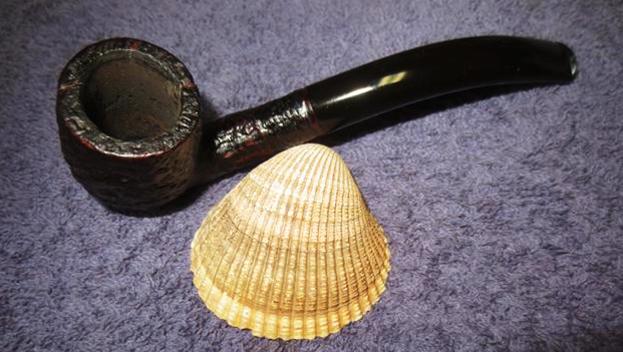
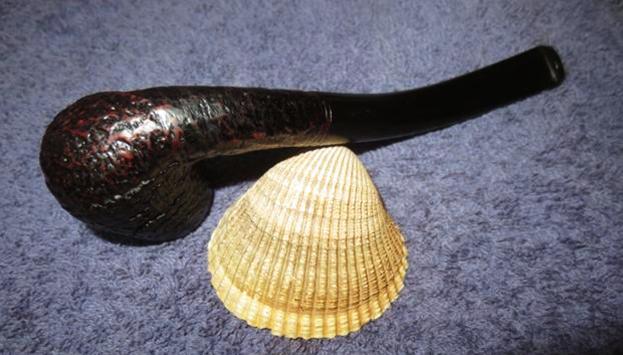
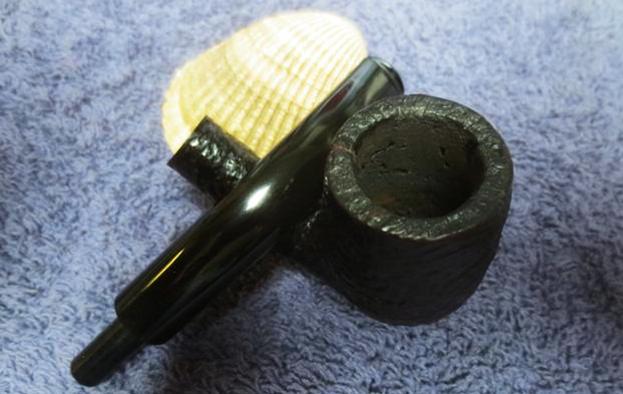
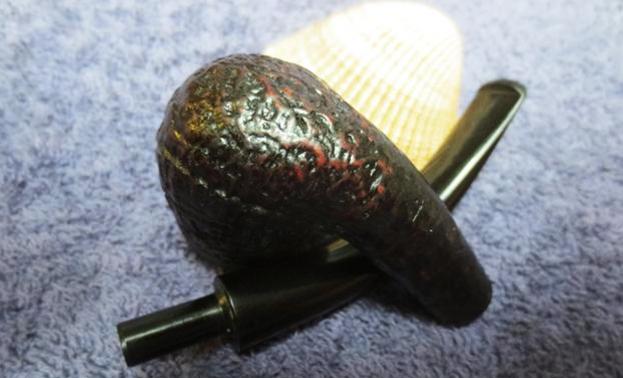
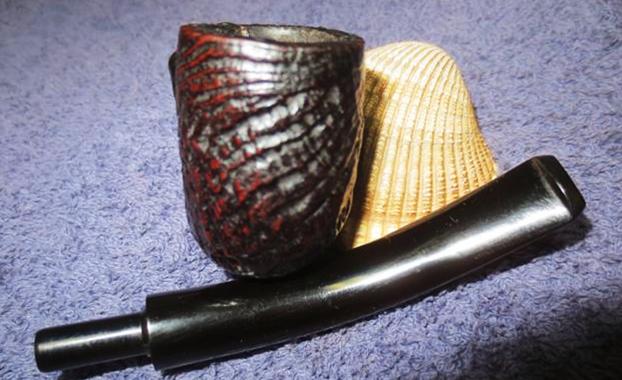
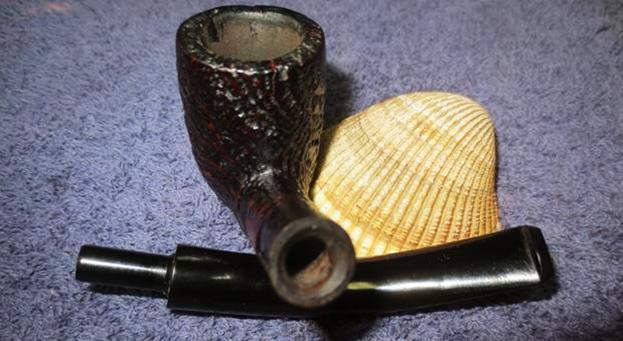
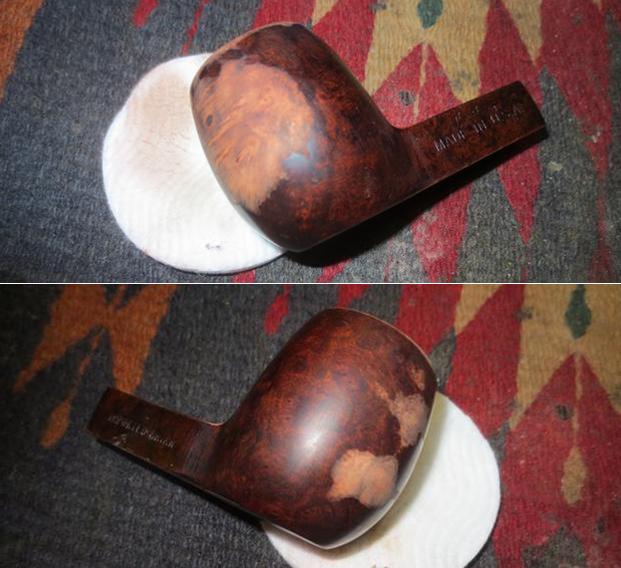
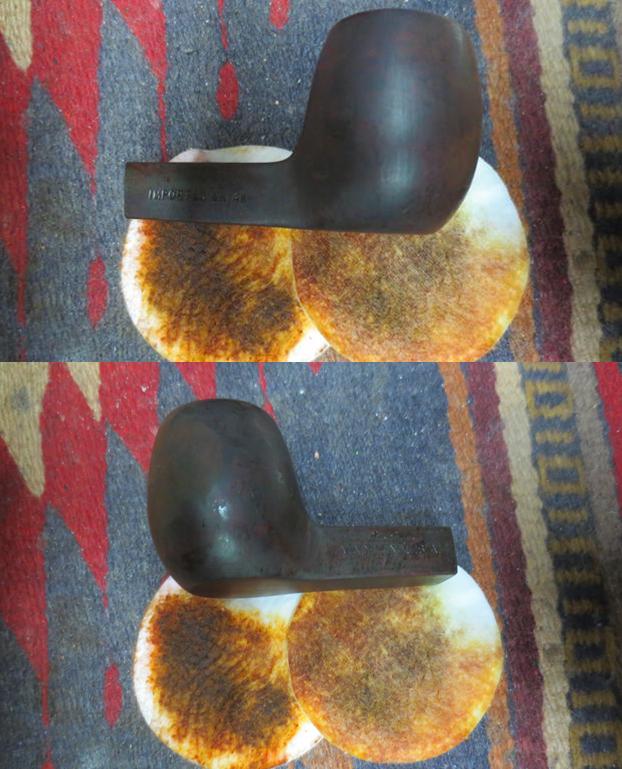
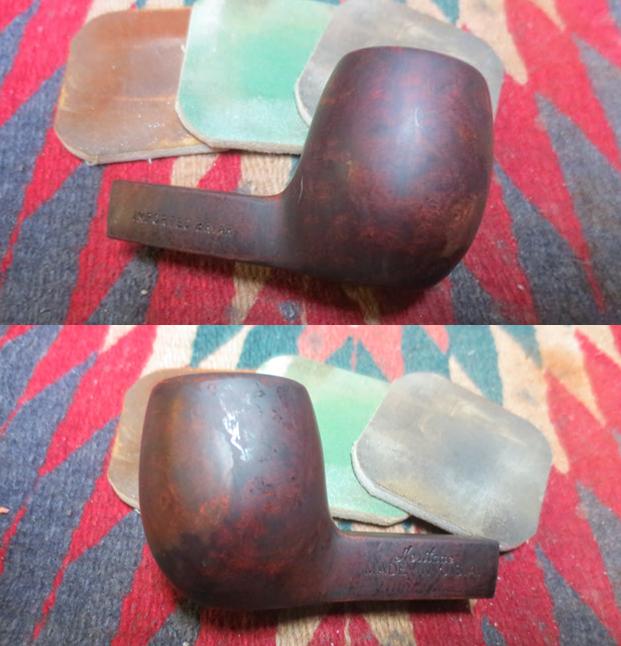
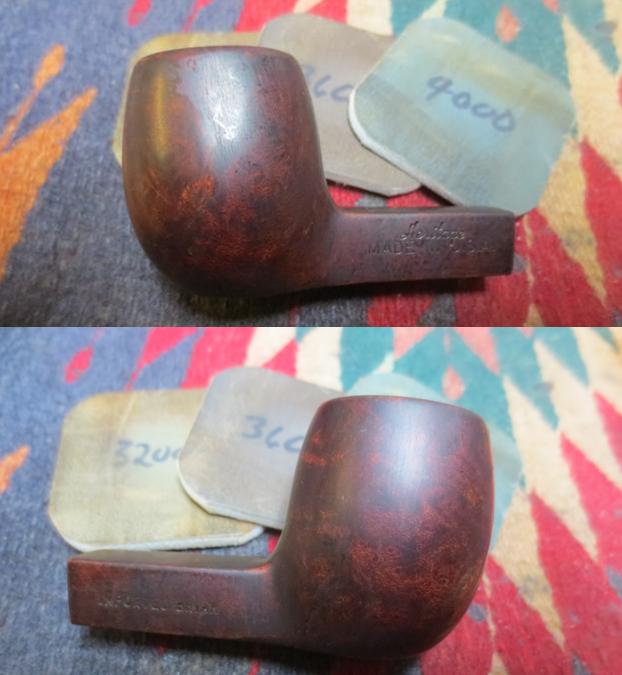
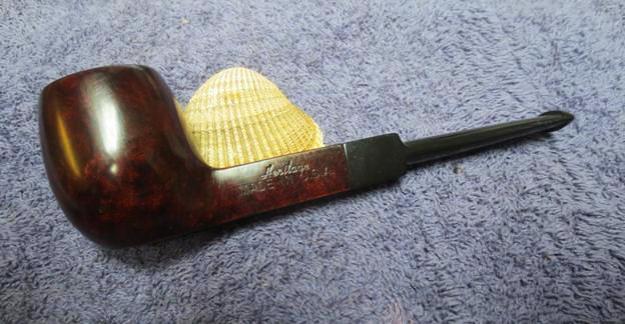
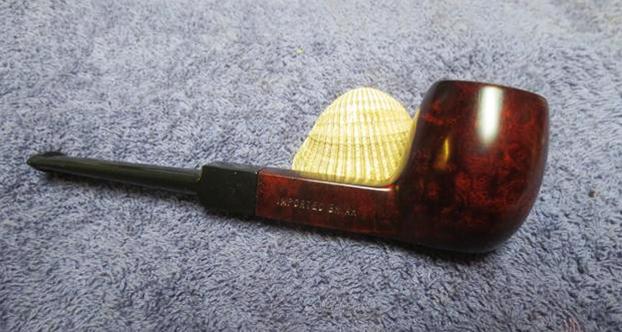
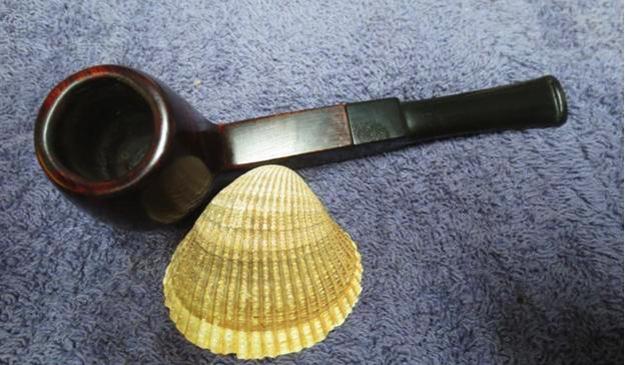
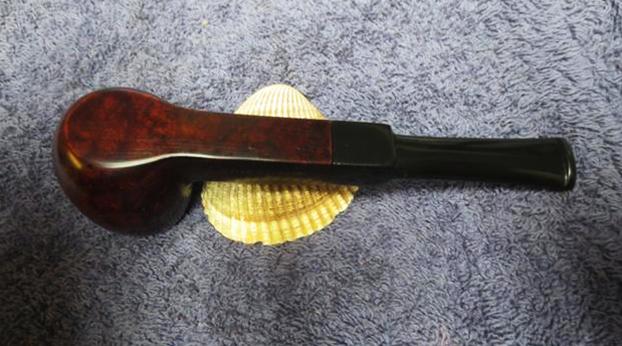
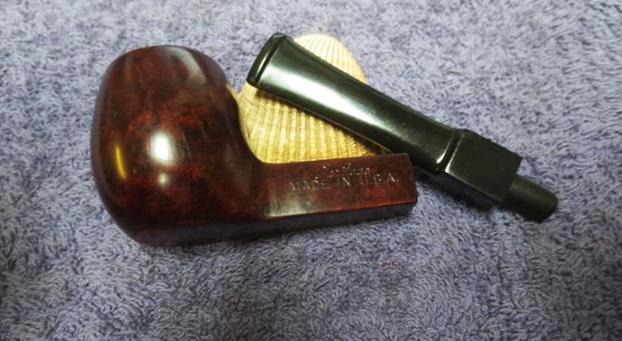
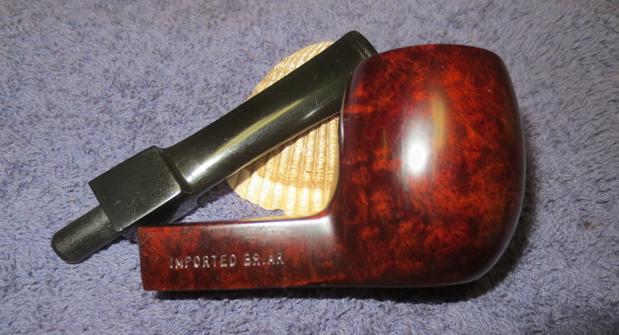
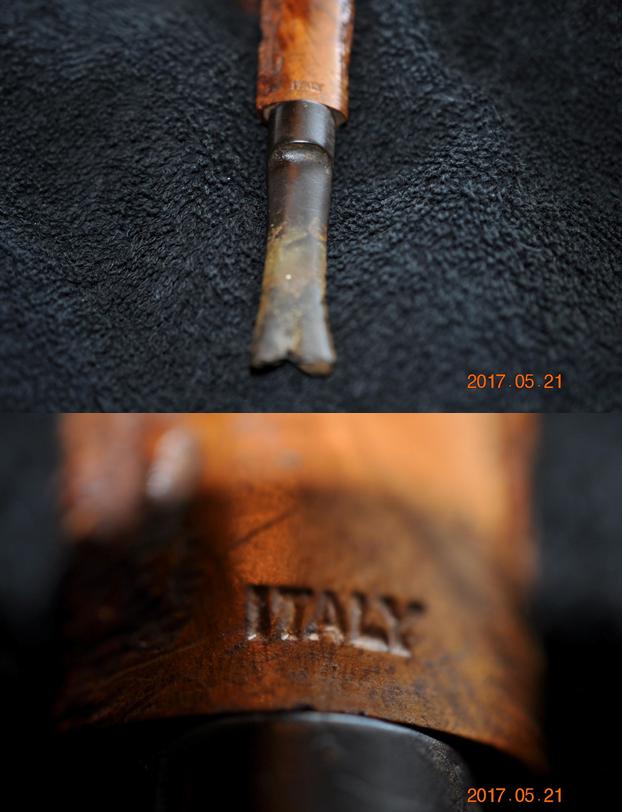
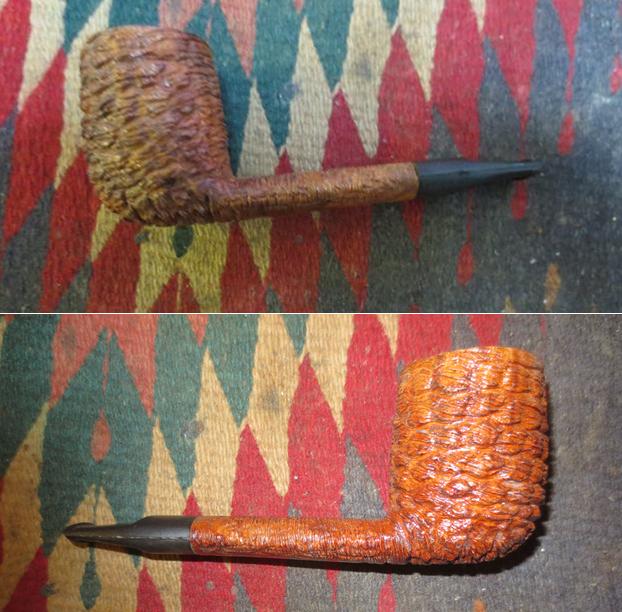
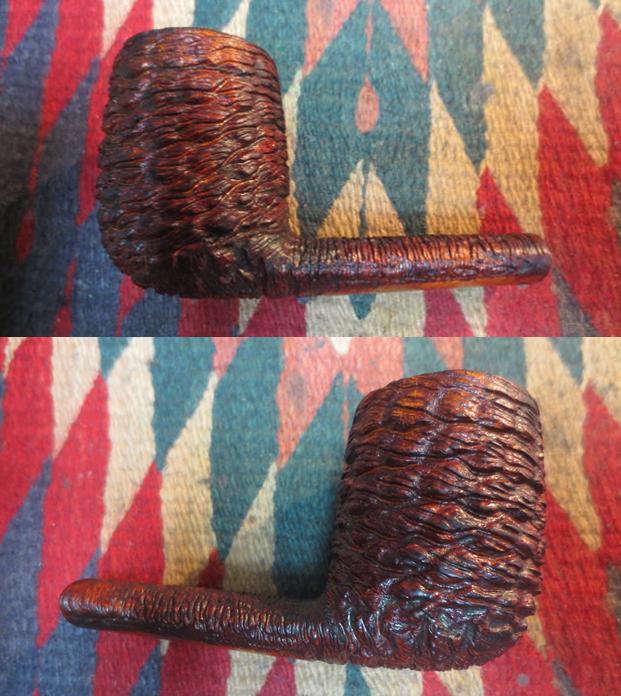
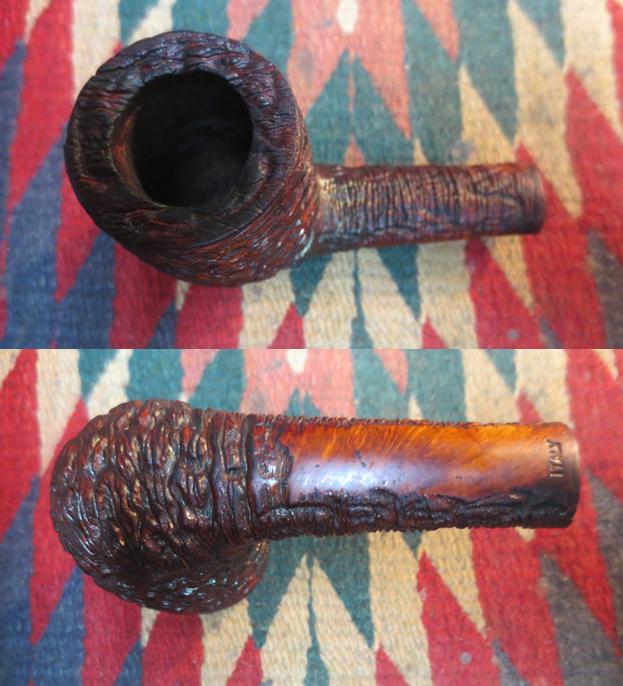
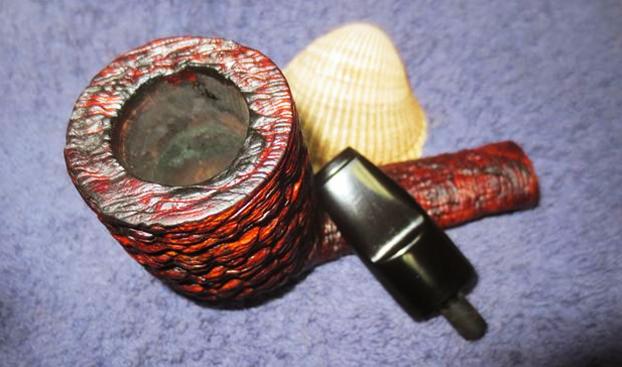
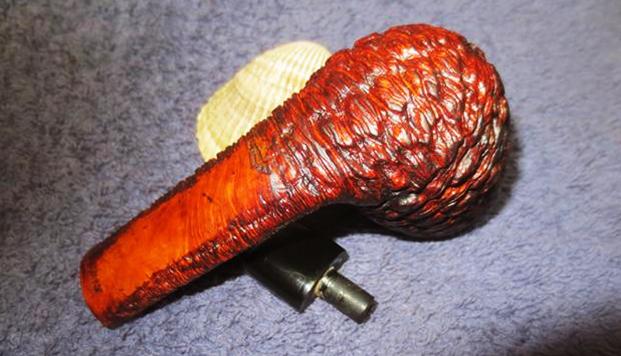
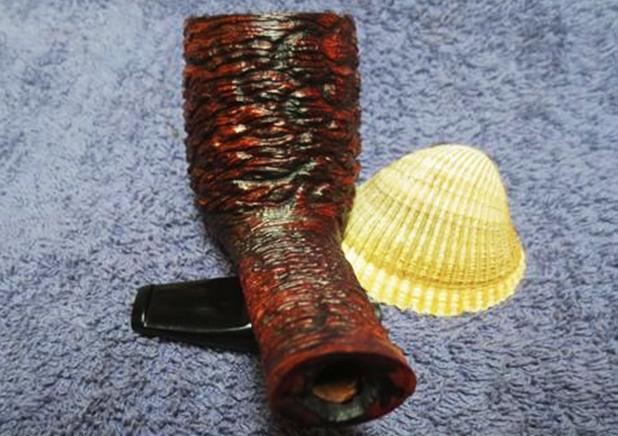
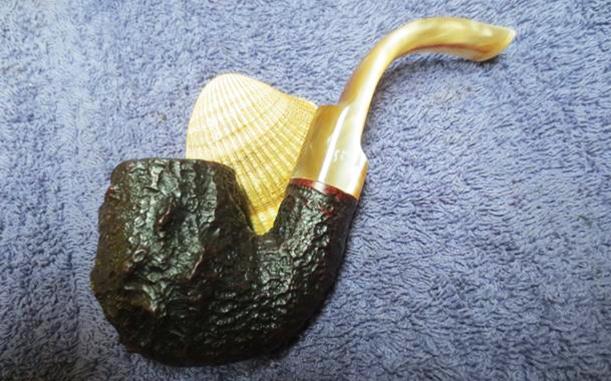
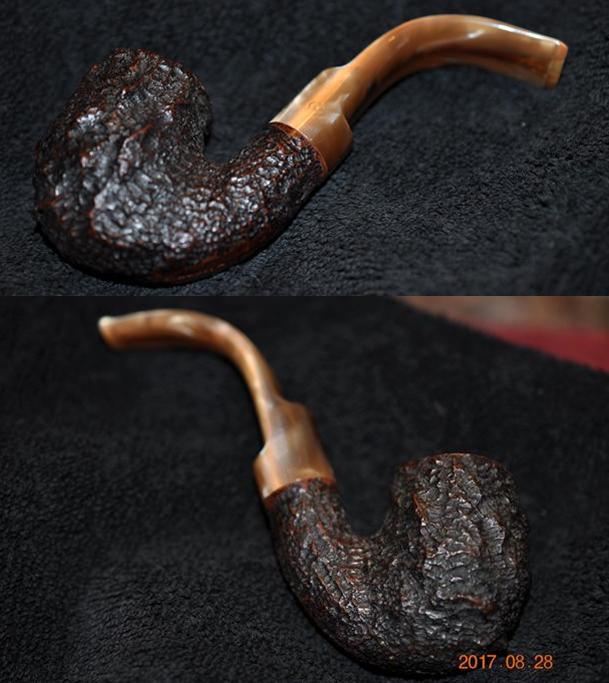
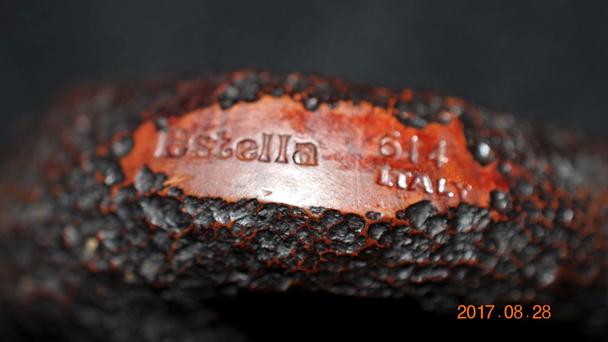
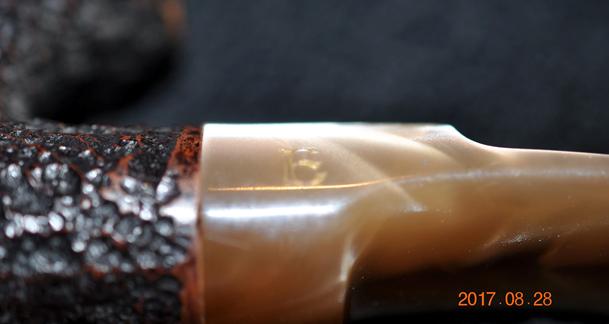
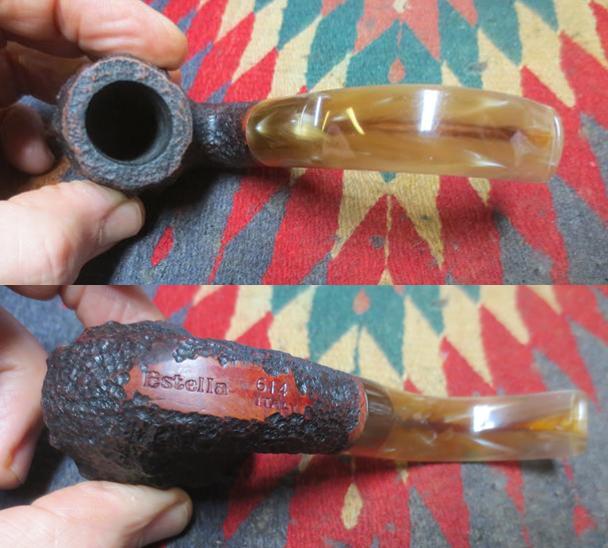
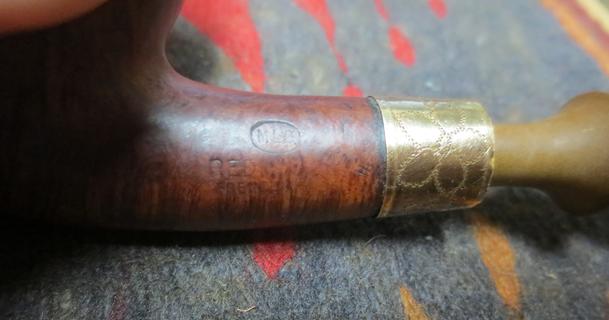
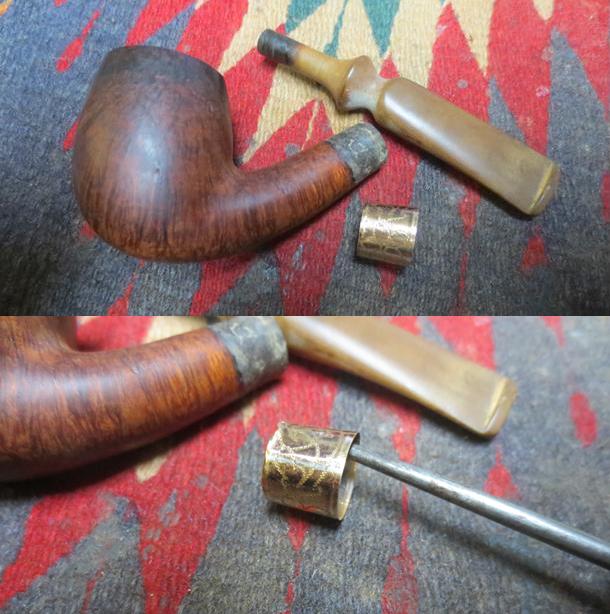
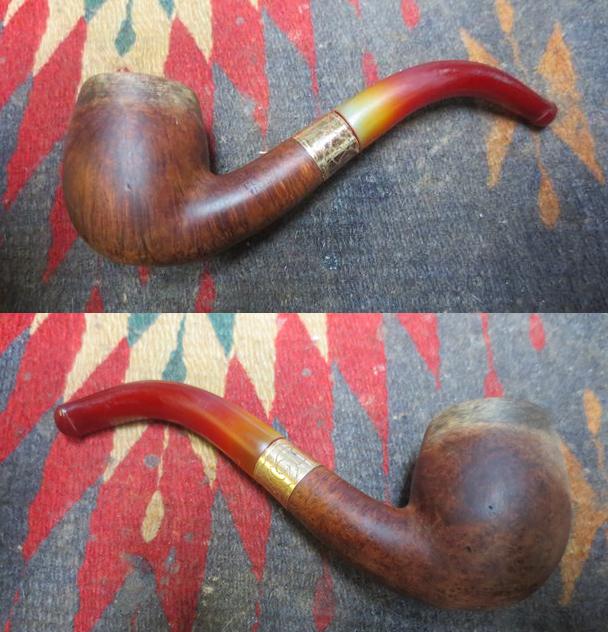
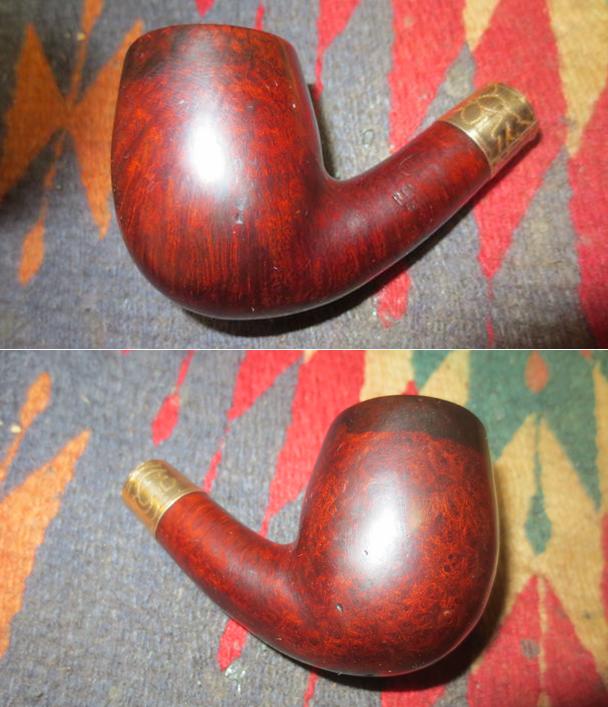
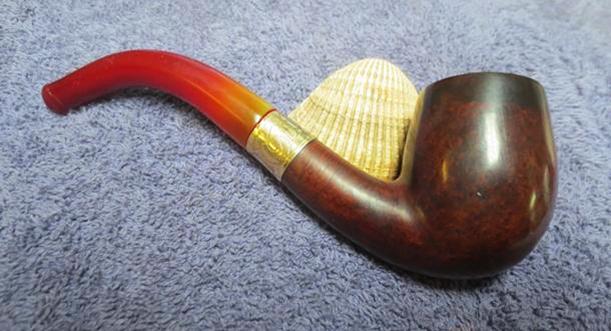
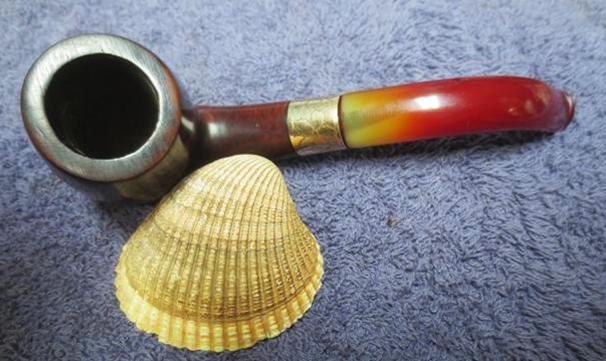
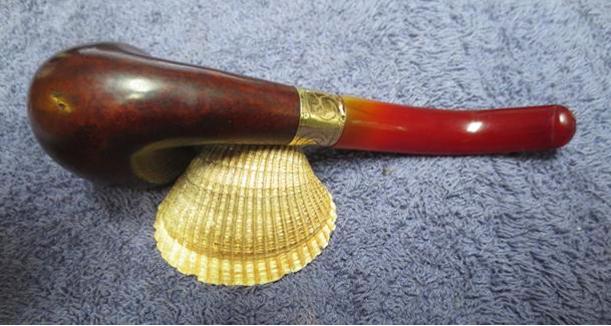
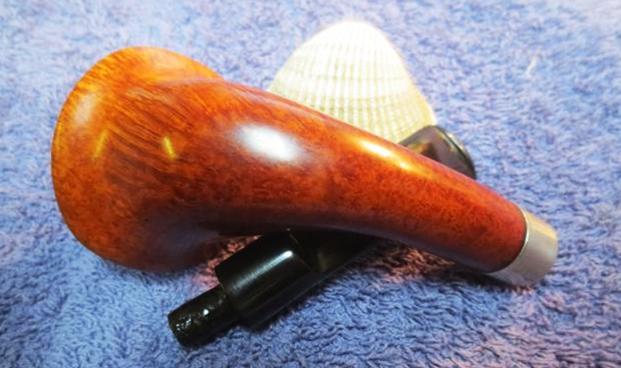
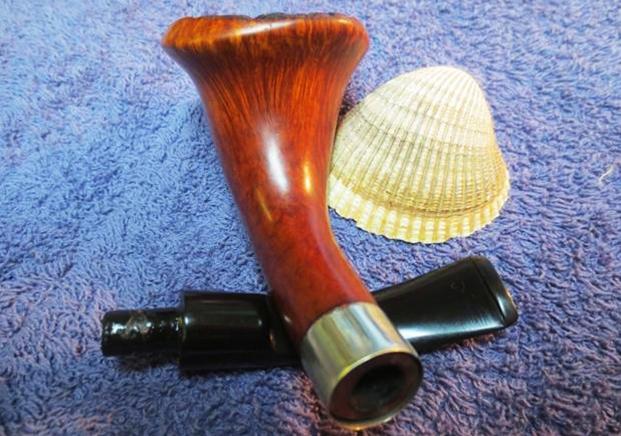
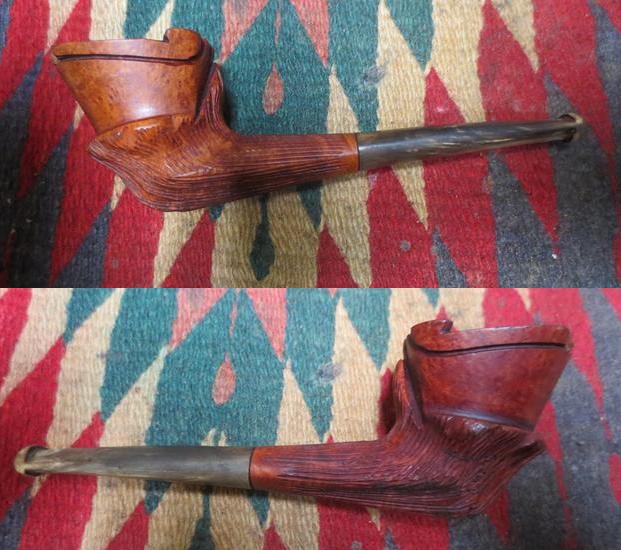
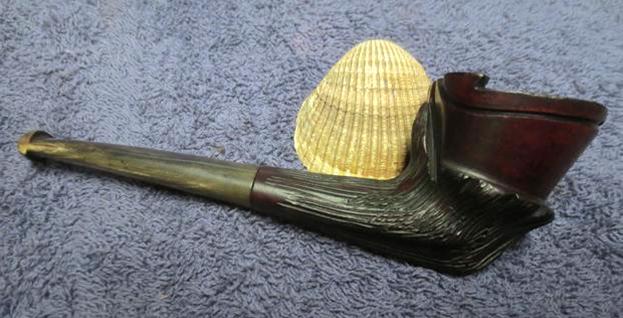
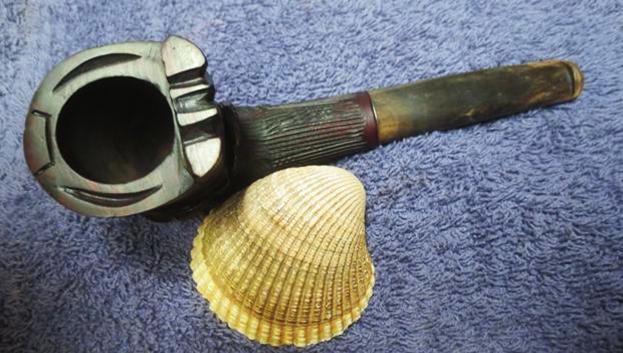
The nomenclature is crisp, although I had to edit the color and brightness levels of the photos above to make the stampings clear: on the left shank, lowercase “Capitello,” in quotations with the closing mark in subscript, above JONICO, and below that, to the right, a small square with what appears to be an Ionic column matching the brand’s logo as shown in this photo of a genuine Capitello stem, courtesy of Pipephil.

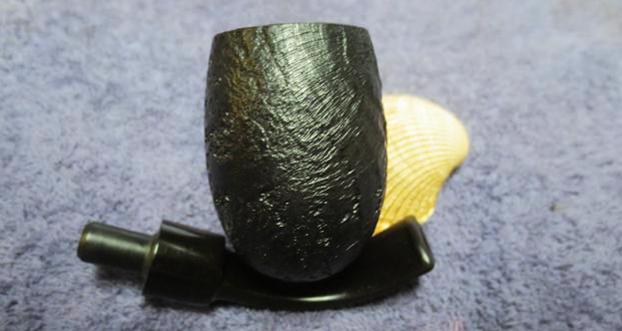
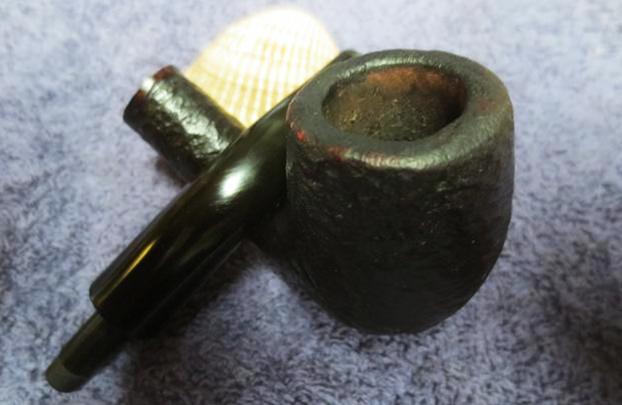
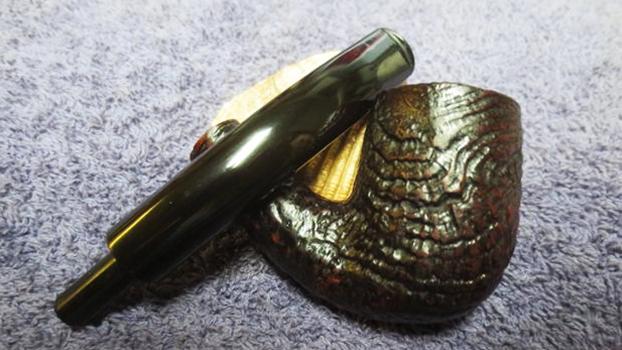
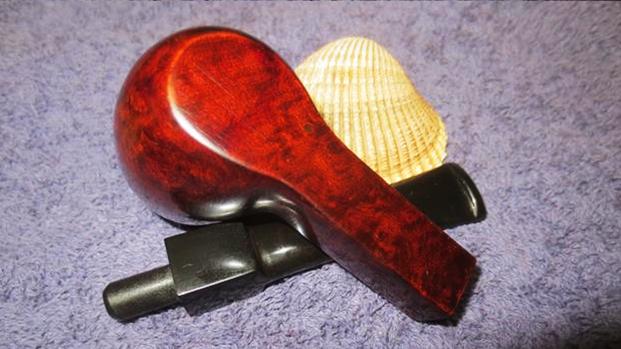
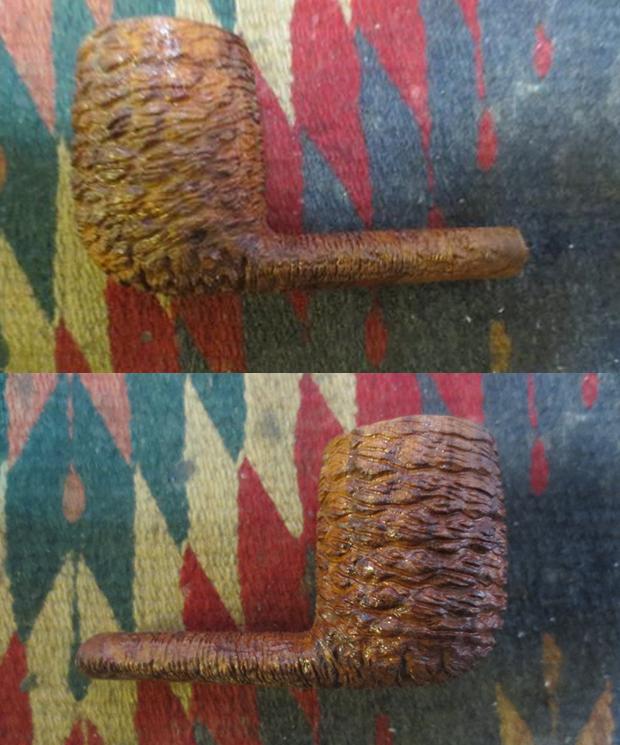
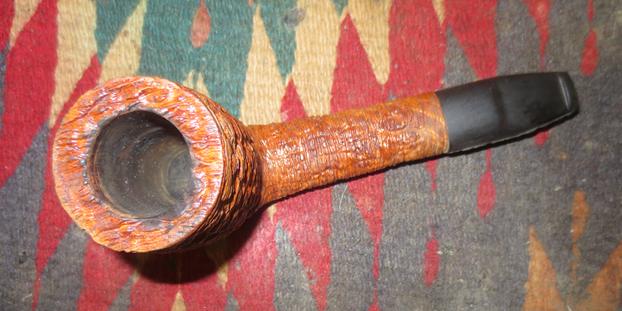
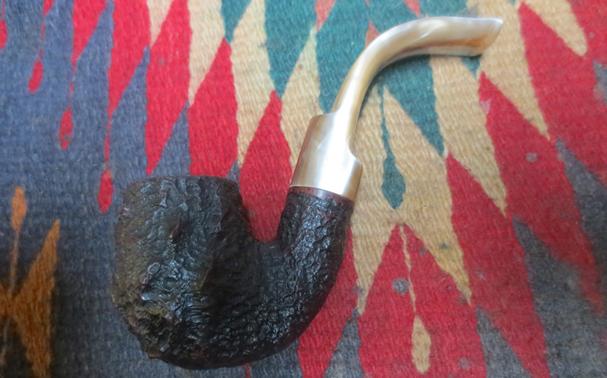
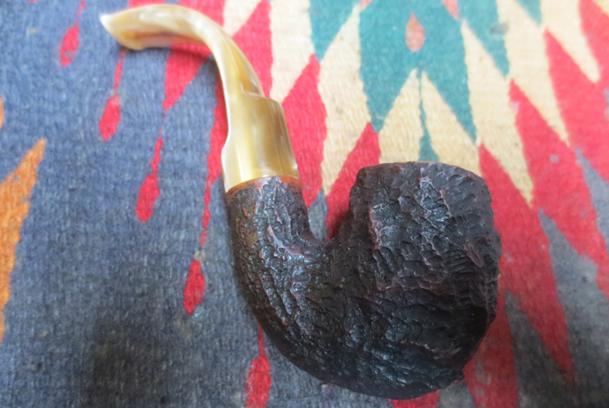
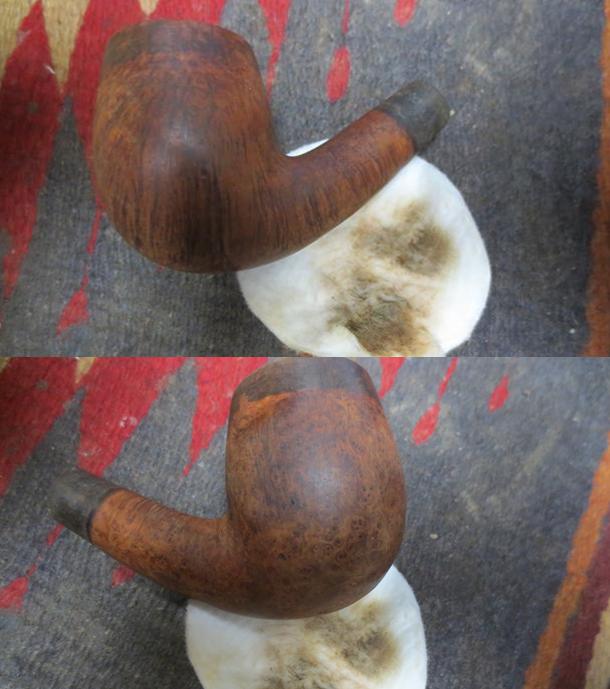
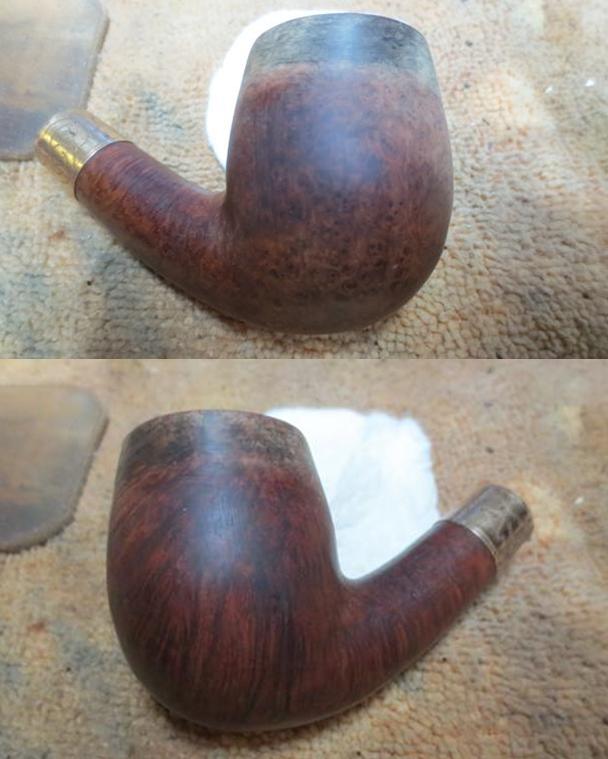
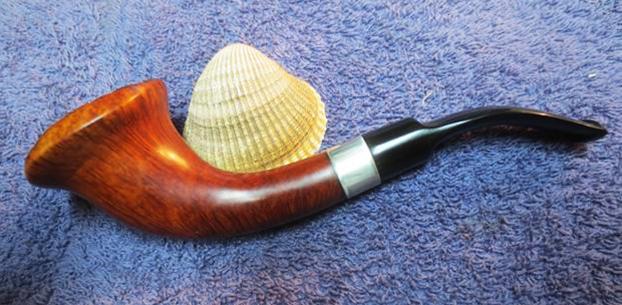
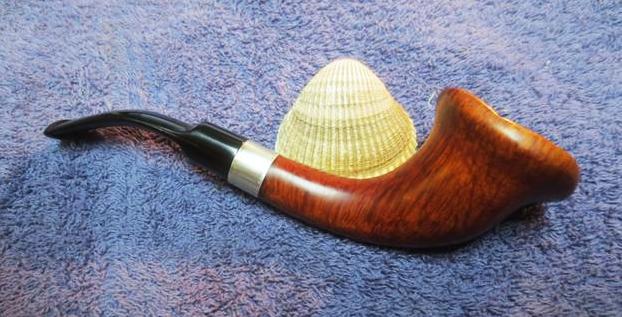
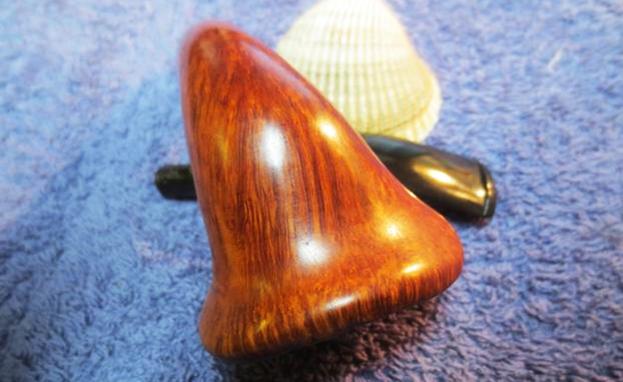
The symmetry of the classic Dublin shape combined with corresponding tight, vertical grain on the bowl except for the rear, which is more mottled, and the way all of it points to the flawless large bird’s-eye of the rim, transfixed every brain cell I possess related to reason.  My power to resist, at $26.99 with about two days of bidding left and only three other buyers interested, turned to mush like a clay or meerschaum pipe after being retorted with Everclear.   I’m happy to say I never made that mistake but have heard pained accounts from more than one friend who has, none of them more than once.  Thus, I bid $100 on the pipe, thinking that if the bidding inched up $1 at a time I would be safe.  Foolhardy but true!  Not another bid was made.

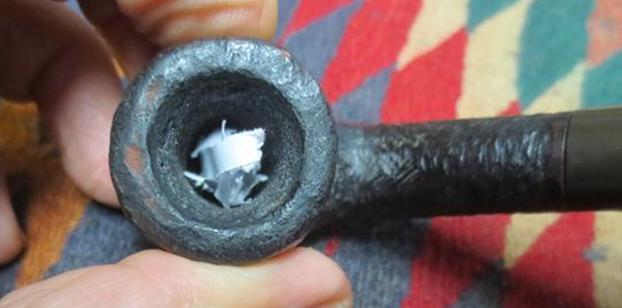
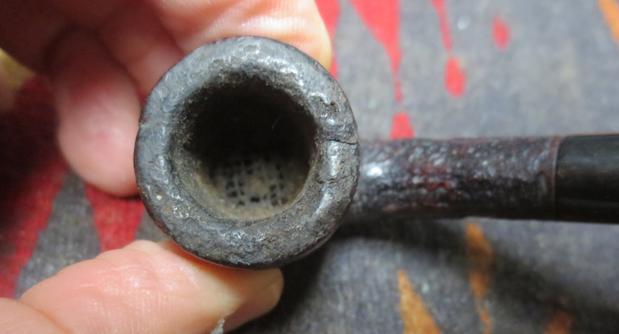
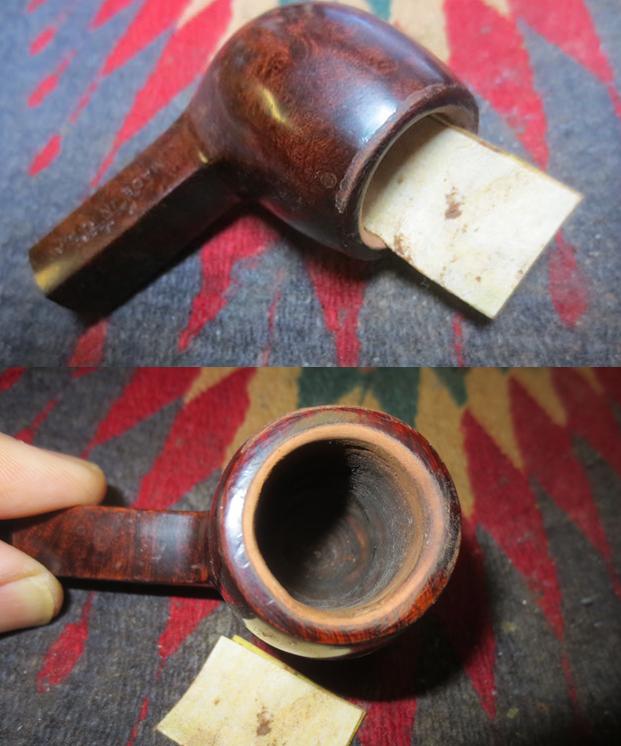
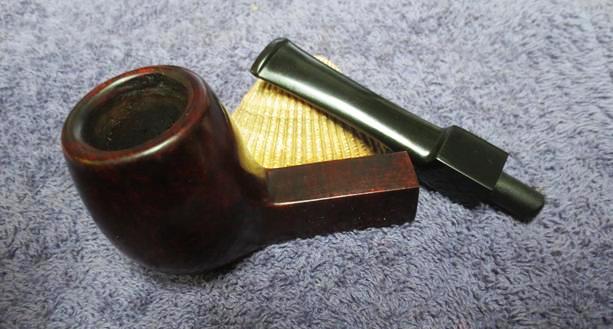
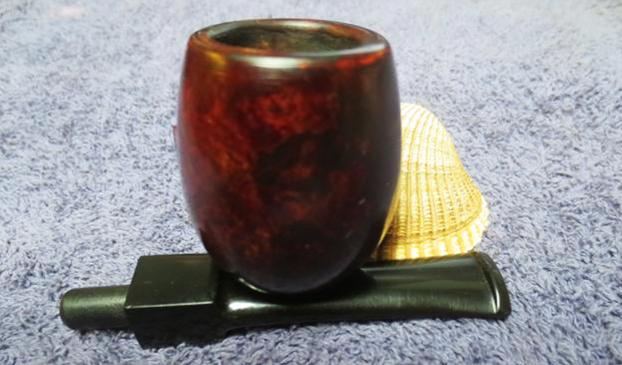
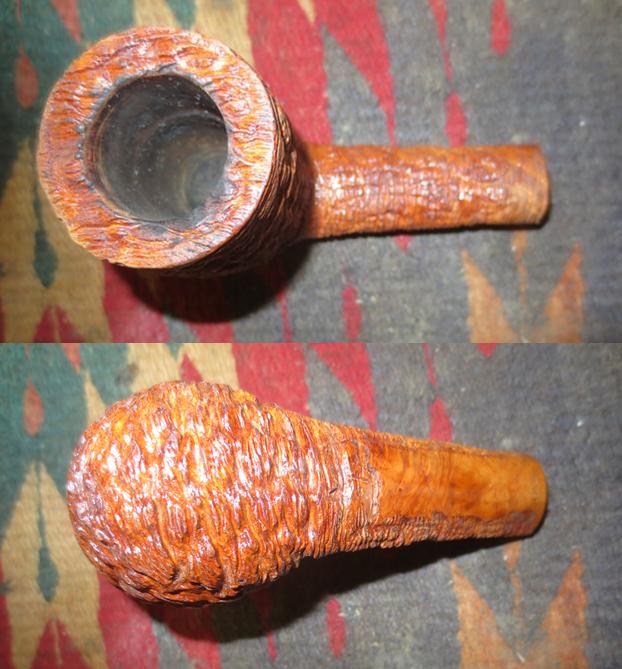
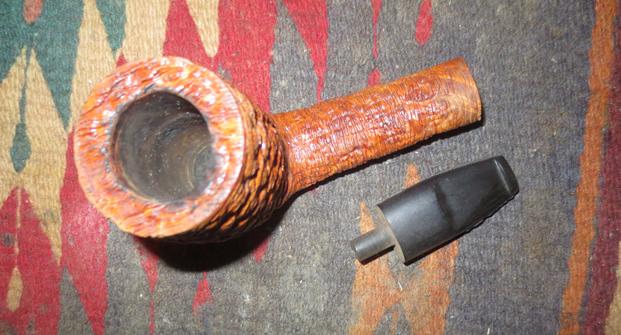
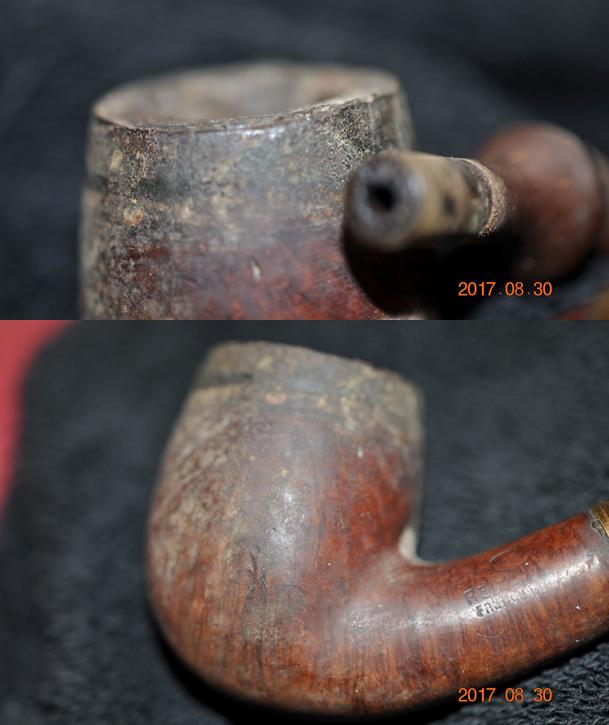
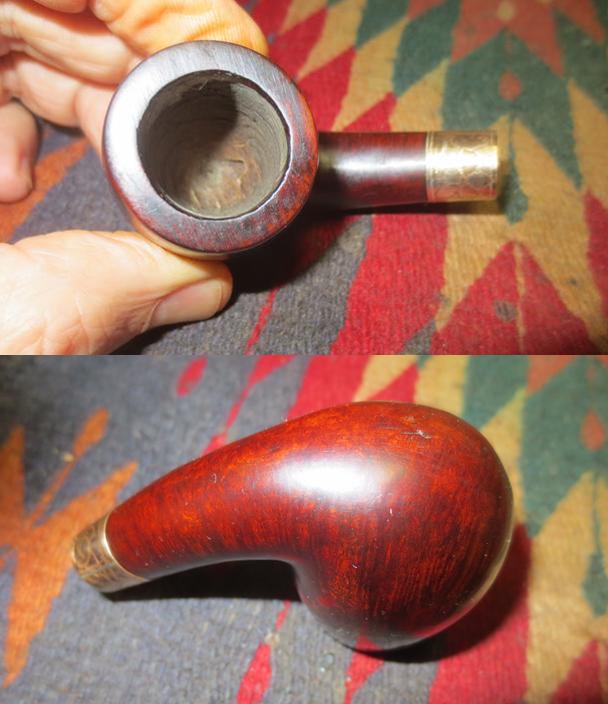
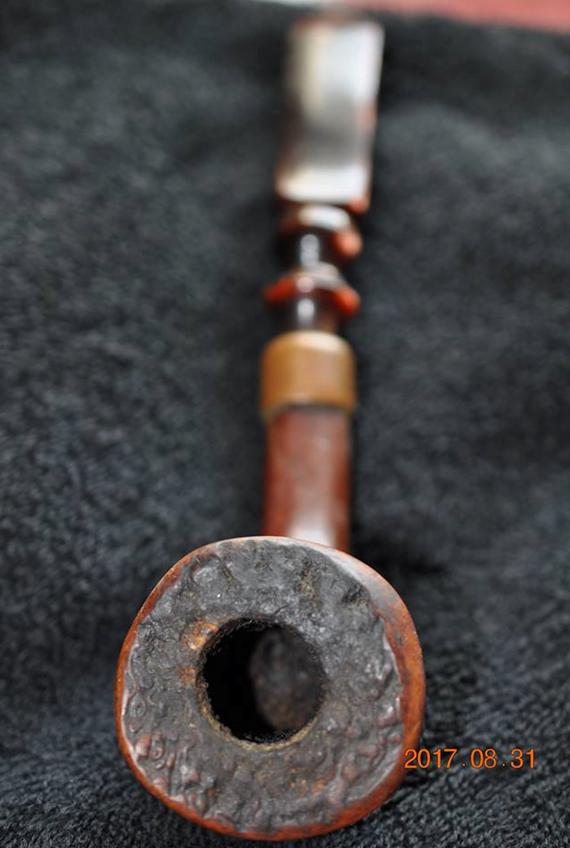
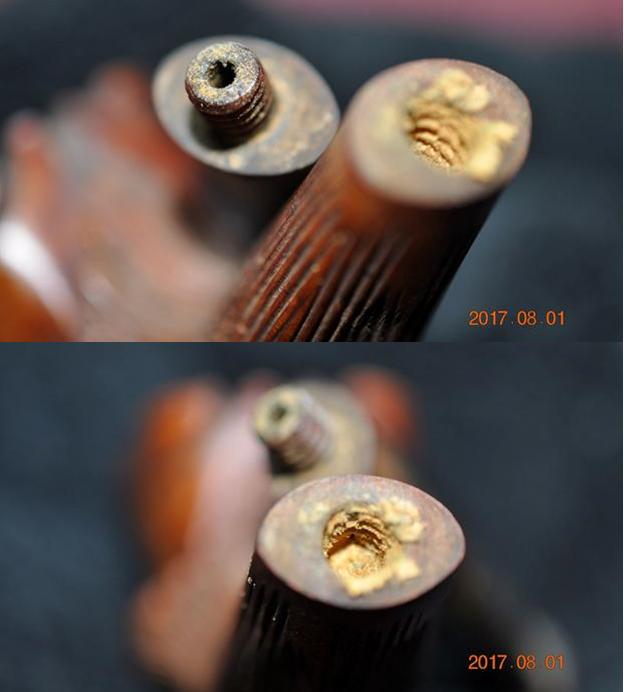
Scrutinizing each of the plentiful photos taken well and from every angle, except for the color that was a little darker, the only flaw I detected was the worse than average looking but single rim burn.  The description noted the inclusion of a replacement stem which, in my excitement, I must admit I did not notice was left only halfway turned into the shank in the photos.  I should have expected something was up with that. 

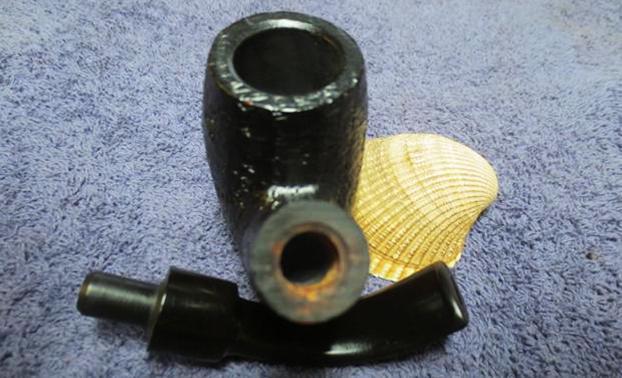
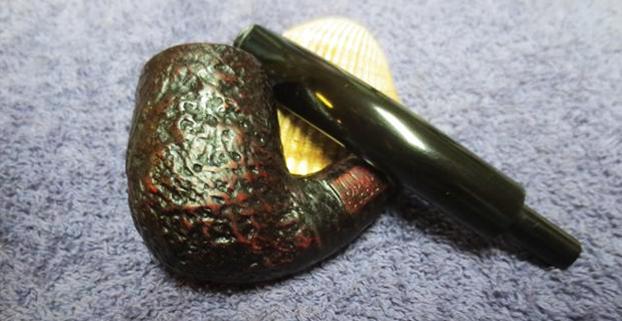
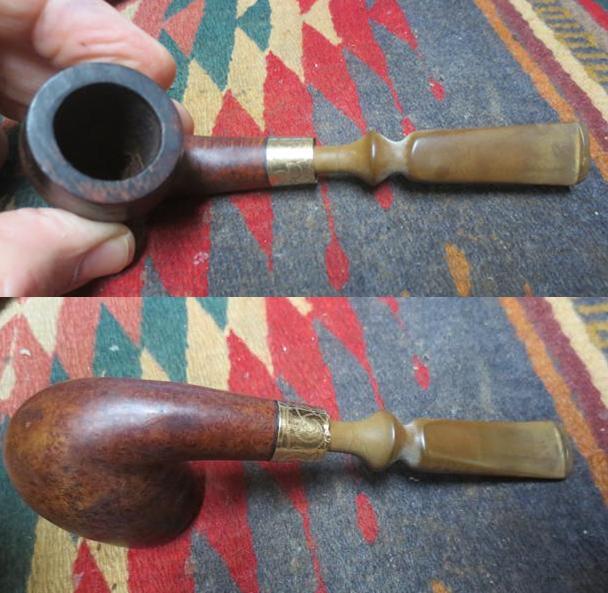
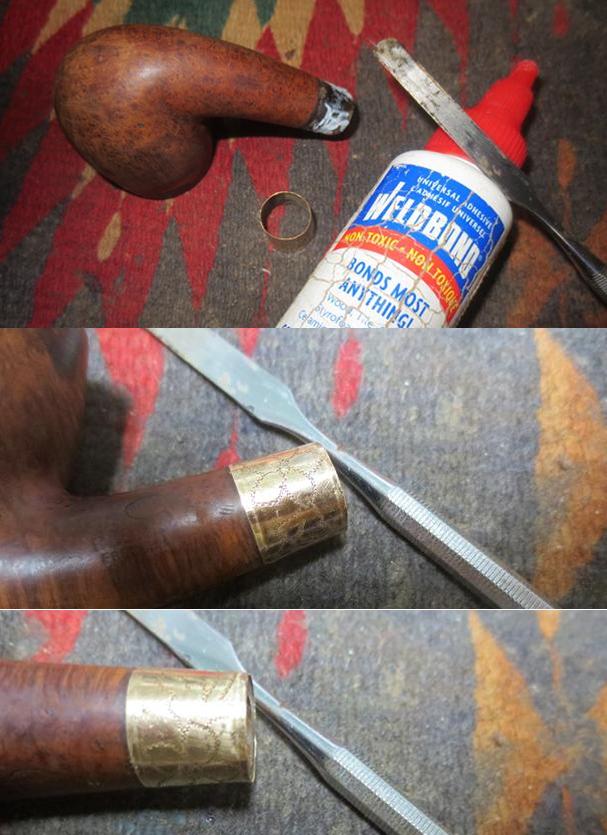
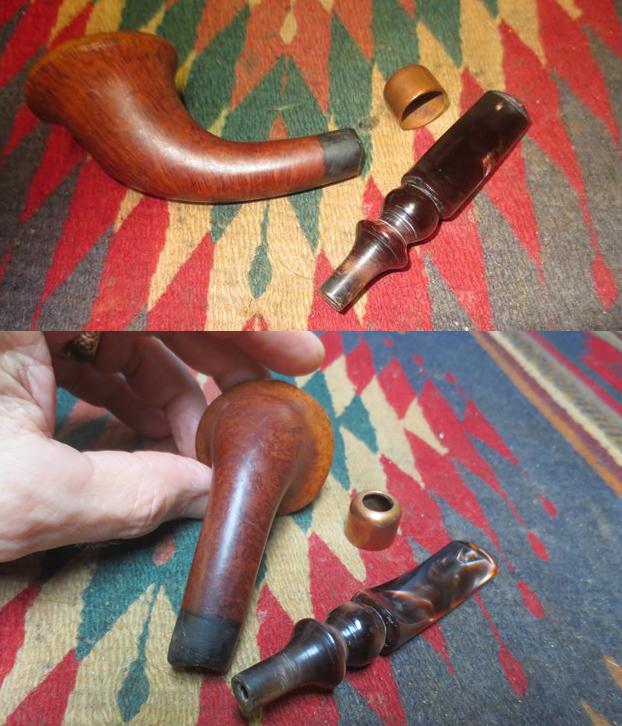
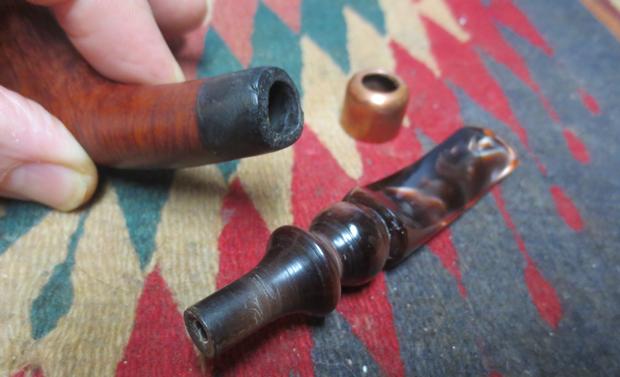
The pipe arrived from Daytona Beach, Florida only two days after shipping despite Irma’s devastation that left 80%+ of the power in that area off the grid.  I inspected the pipe, and almost all of it looked very good.  I love the olive wood ferrule.  I tried to tighten the stem.  No-go.  Less than halfway, the Ebonite screeched.  Halfway, I stopped with the certainty the tenon would break if I were to continue.

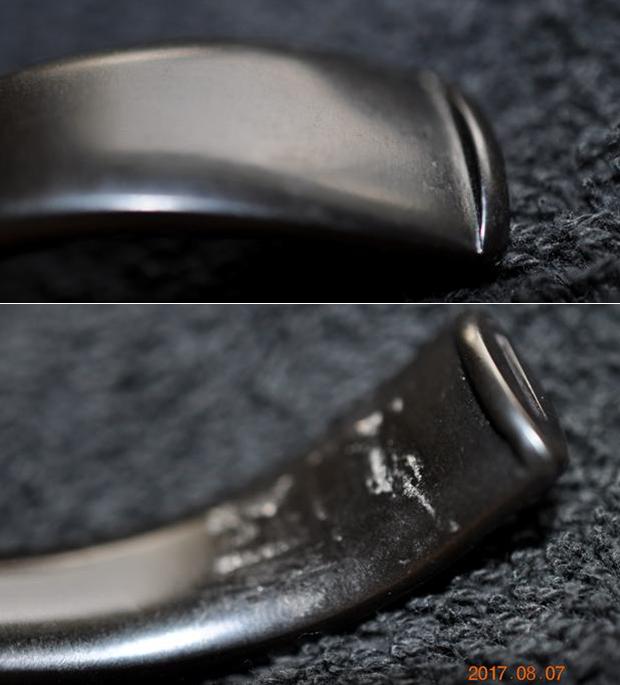
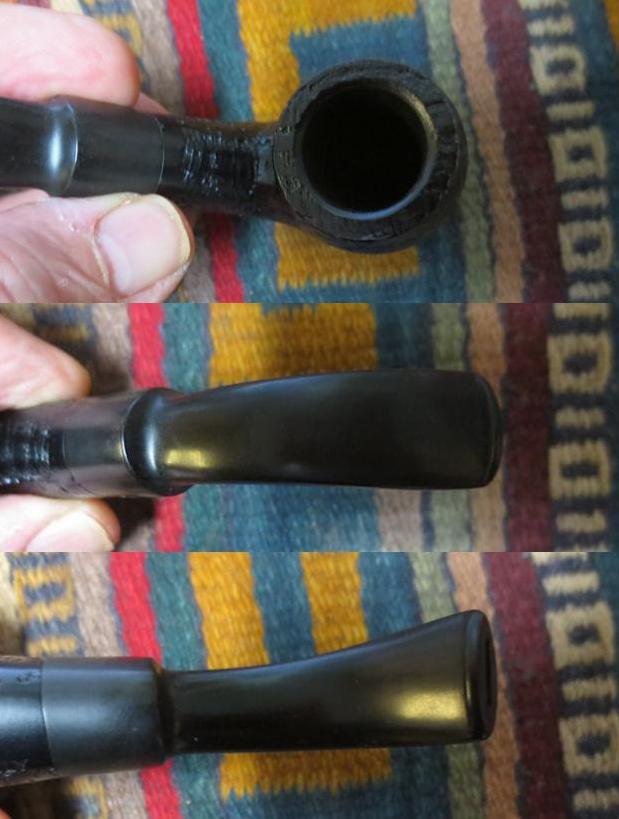
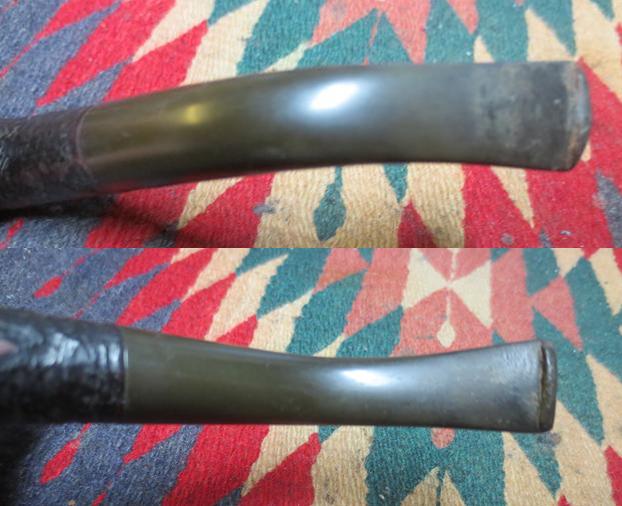
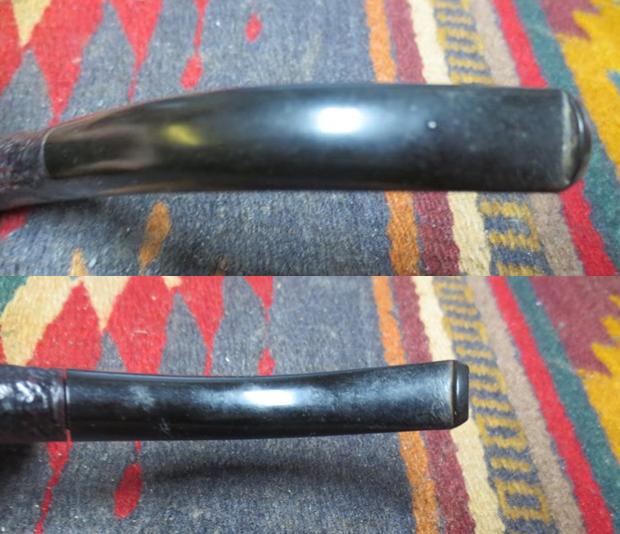
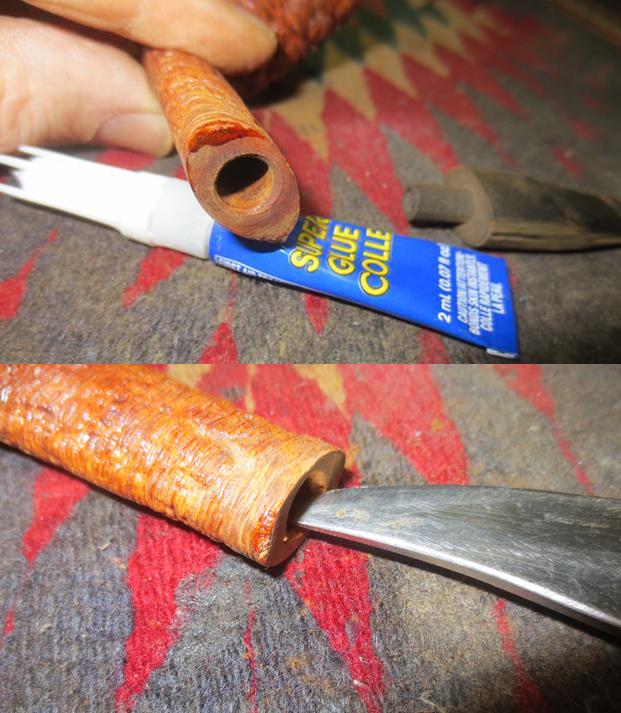
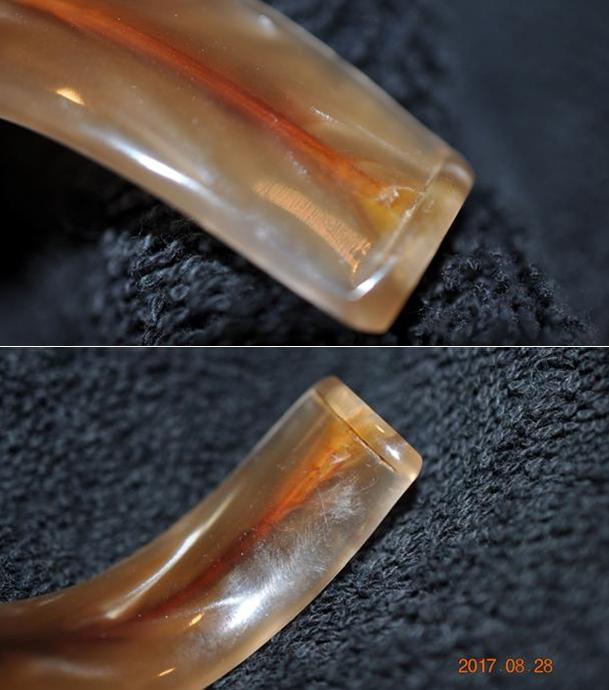
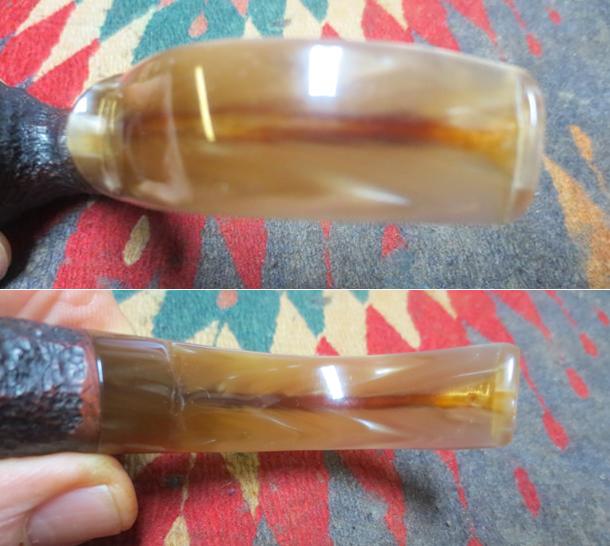
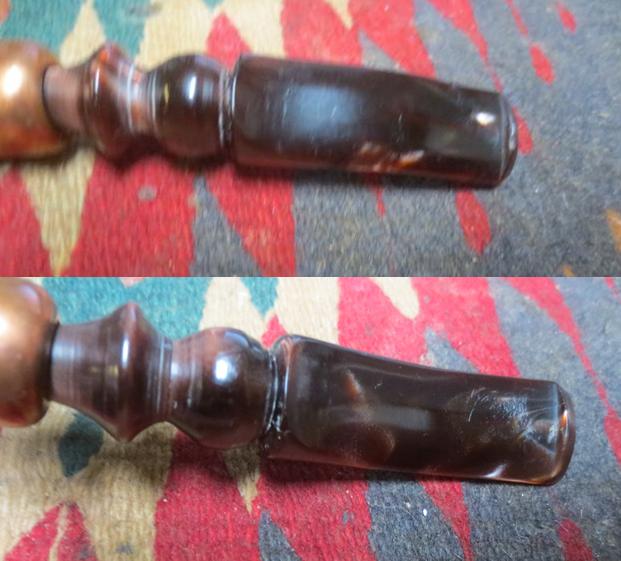
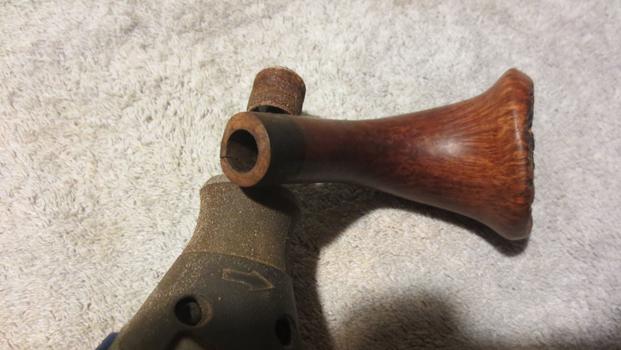
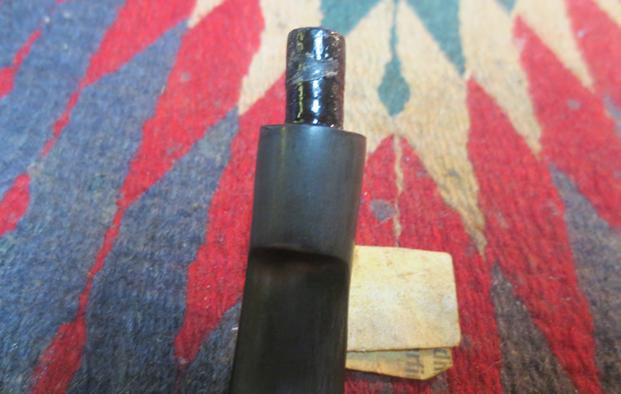
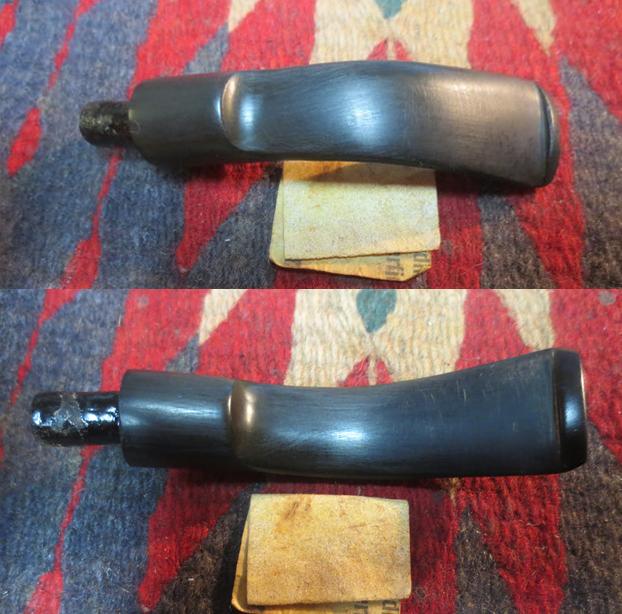
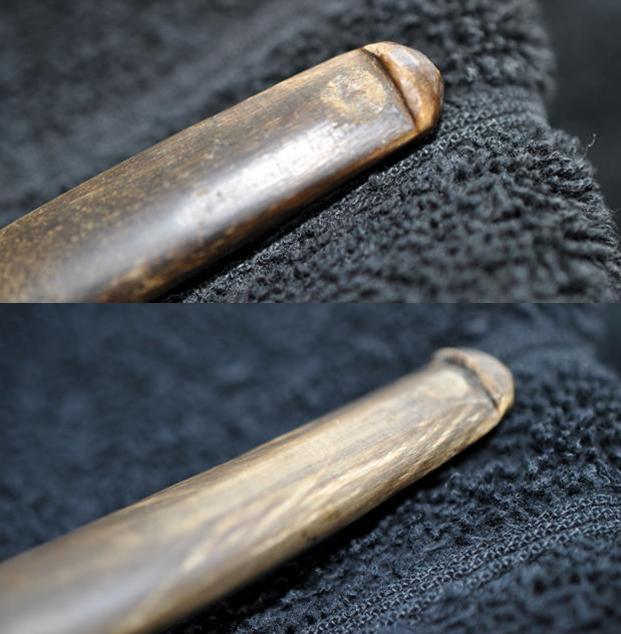
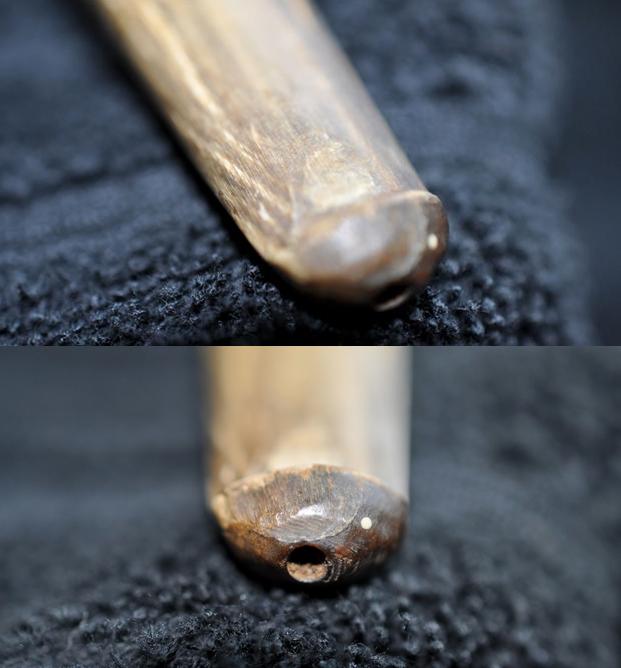
Now, adjusting the tenon circumference took only a few minutes before it fit as though hand-crafted for the Jonico.  I should add that the stem was straight and needed a gentle curve, as well as removal of slight, almost imperceptible rough edges along the sides, left-over signs of the machines that stamped them in groups.

But the end of the shank was rounded, which I had seen with a few new and restored estate pipes I bought over the years.  I just hadn’t ever given much attention to the stem fittings on these pipes.  My first impulse, therefore, was to order a stem that was the correct diameter for the shank, specifically an army mount, but then I thought, “Why wait?”  Scanning through my photos of various such pipes, I noticed that the one common trait of the stems used is that they look good on the given pipes.  That being true enough for now with mine, and its destination being my shelf, I proceeded to the required stem work until the army mount stem arrives.

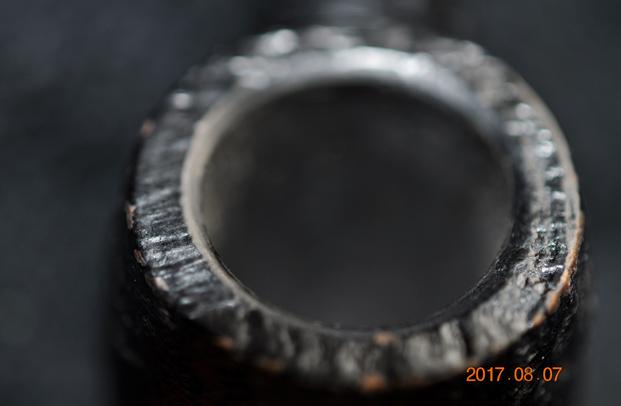
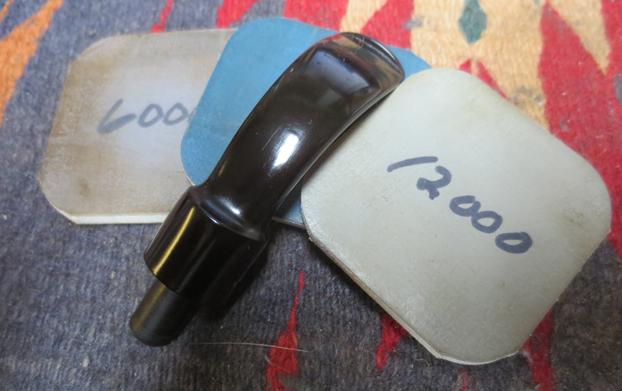
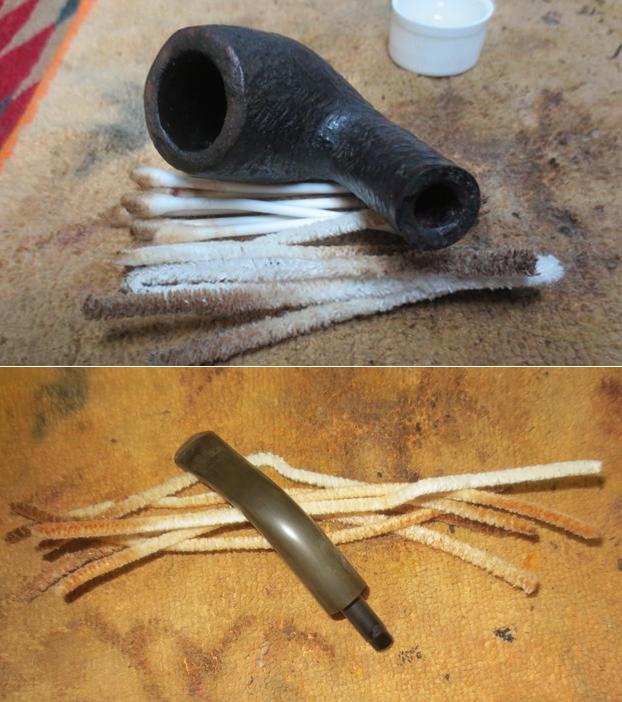
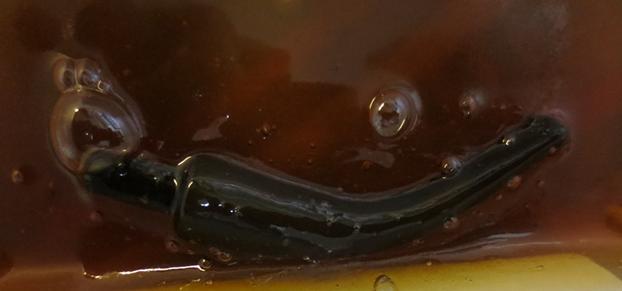
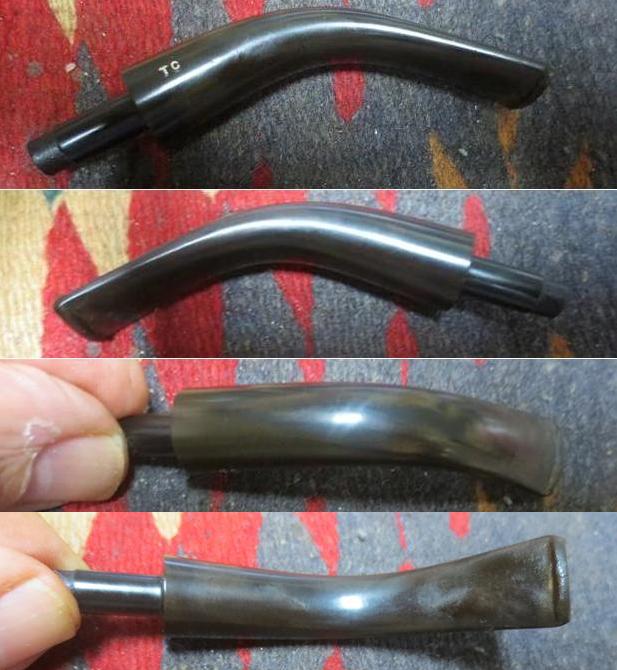
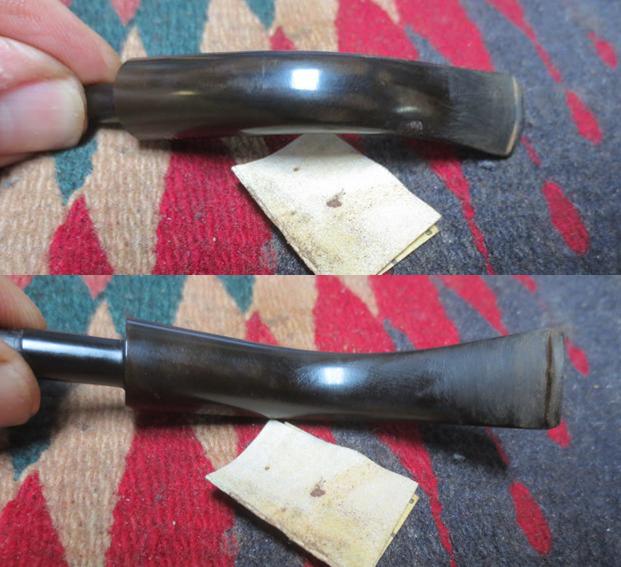
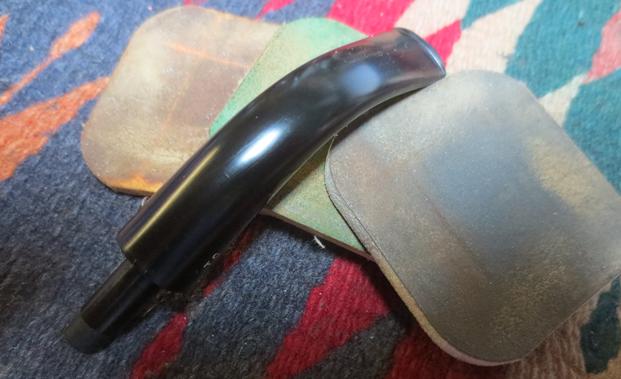
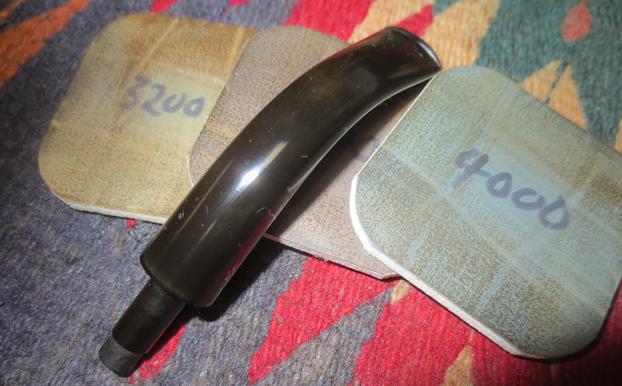
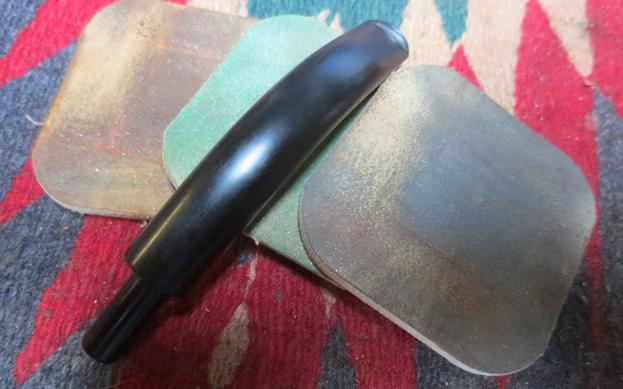
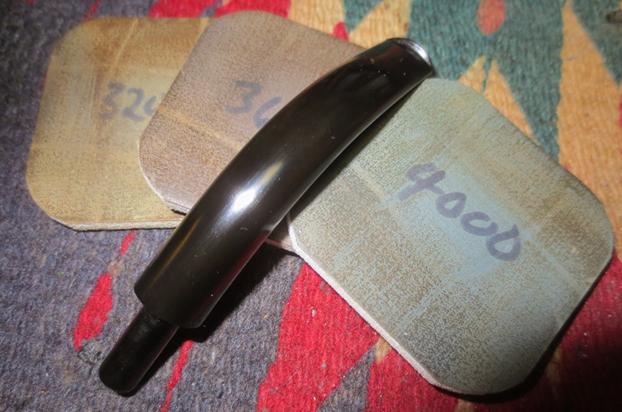
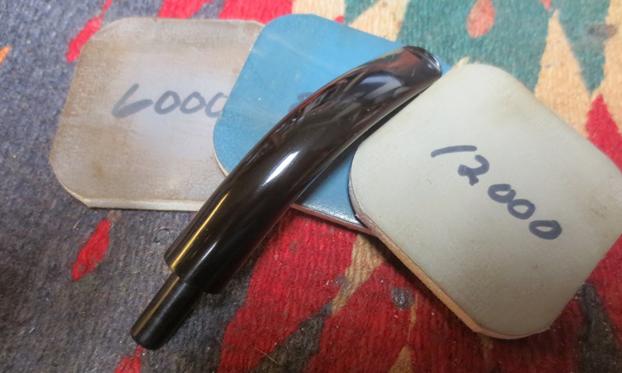
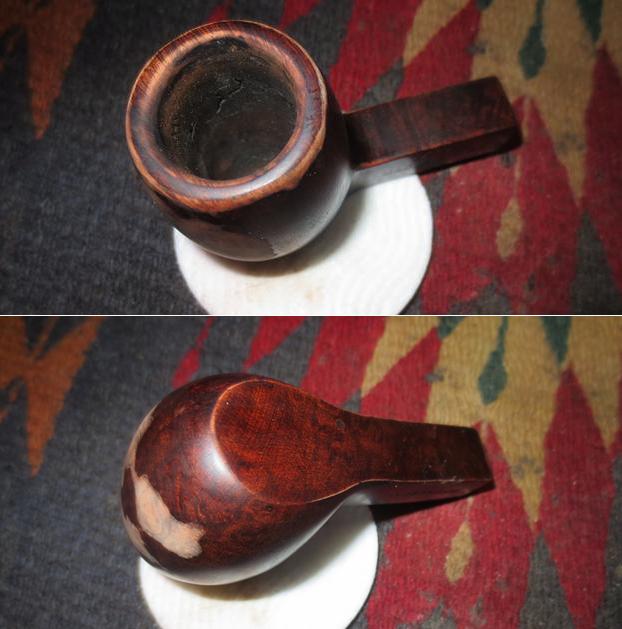
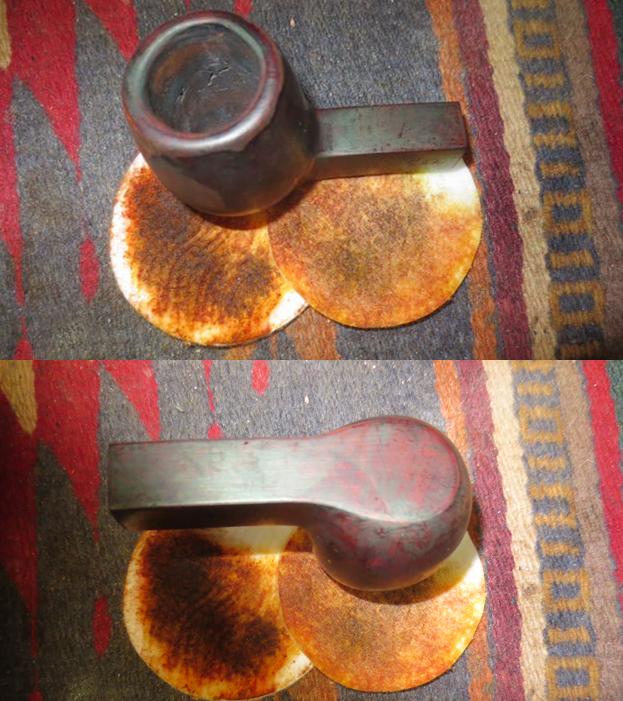
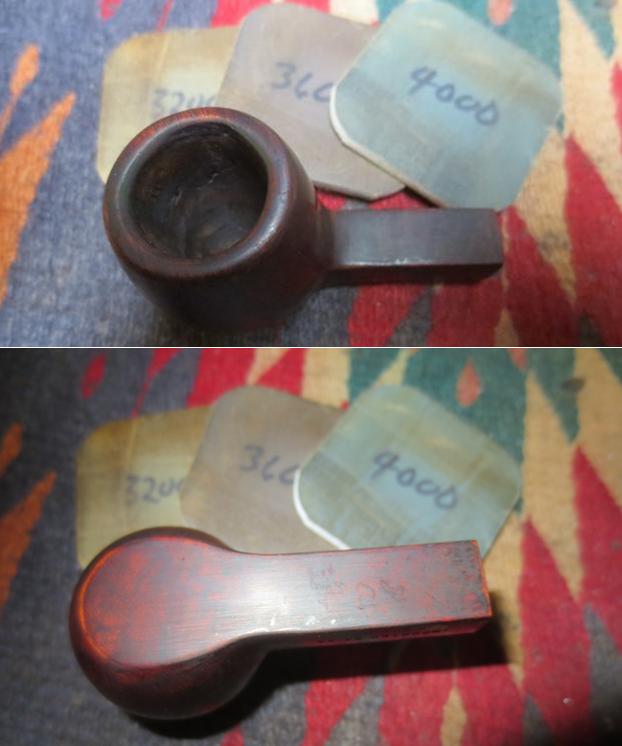
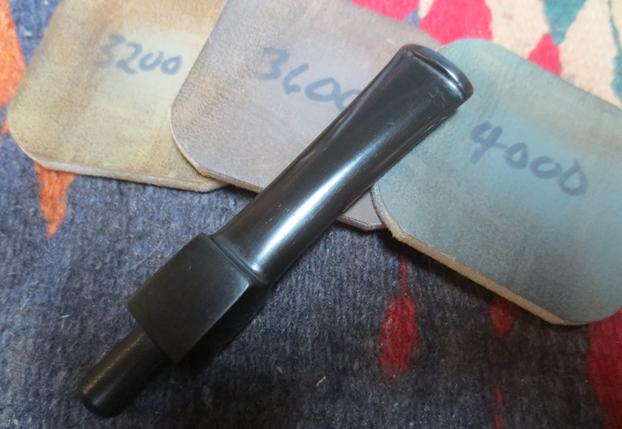
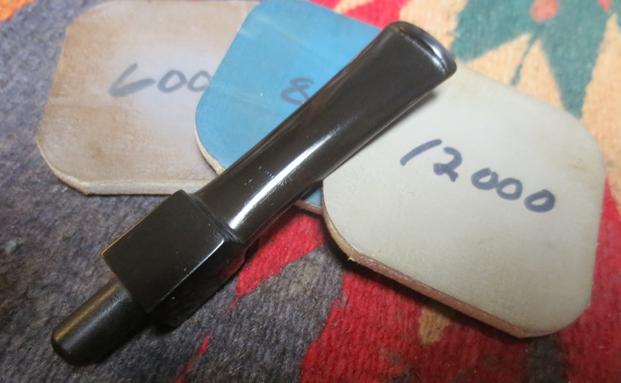
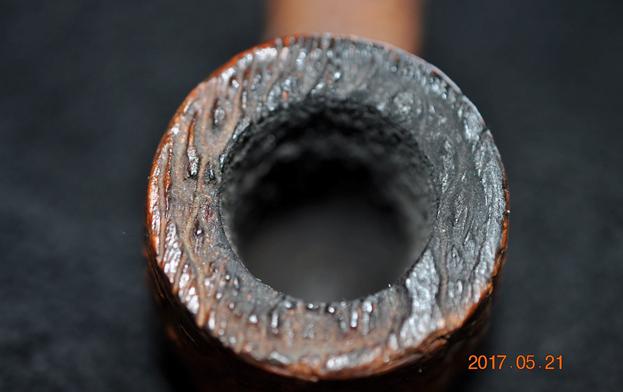
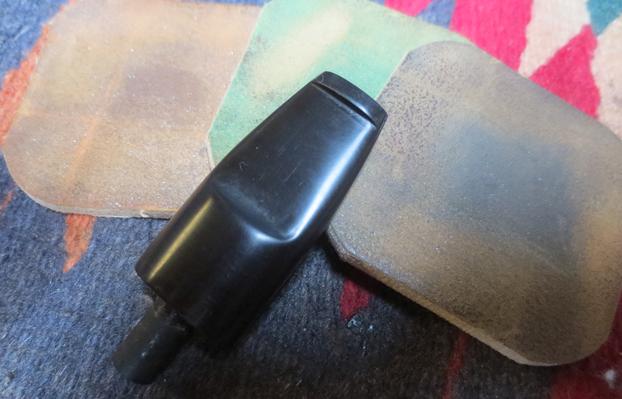
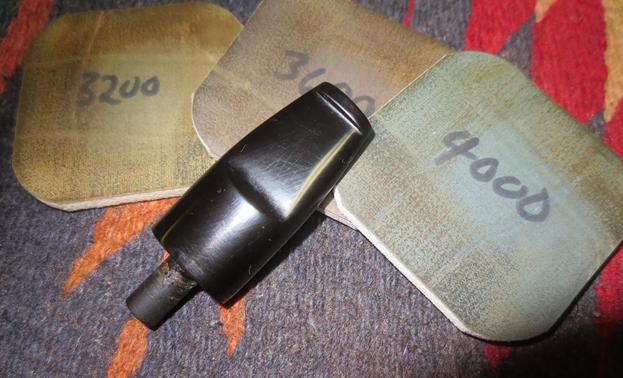
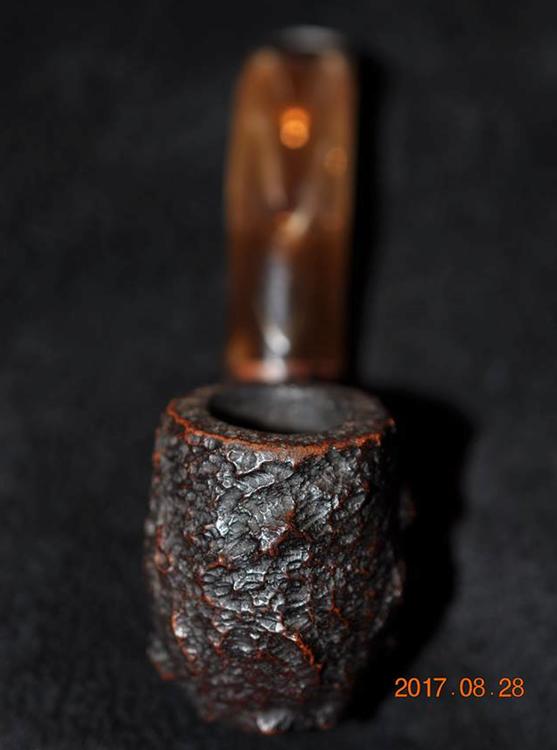
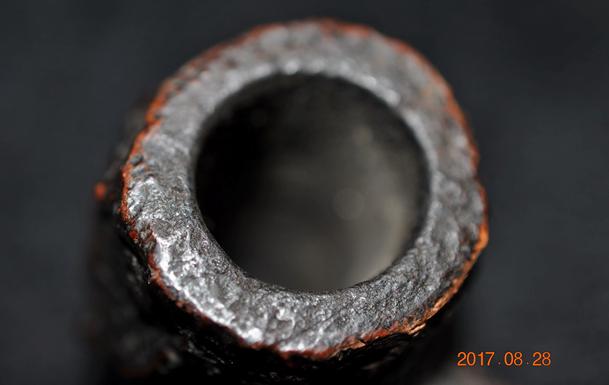
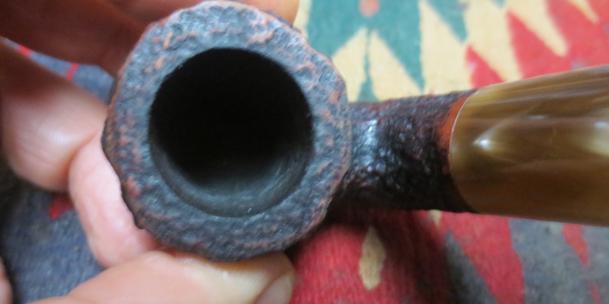
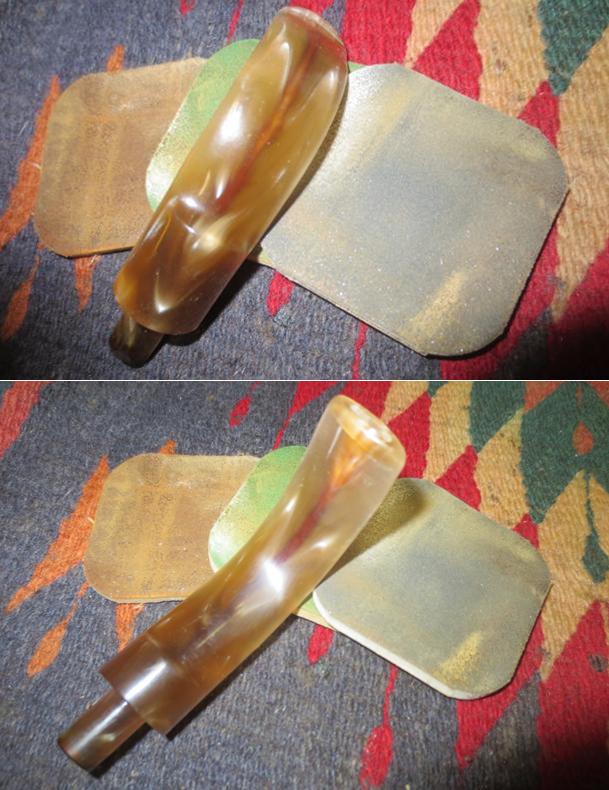
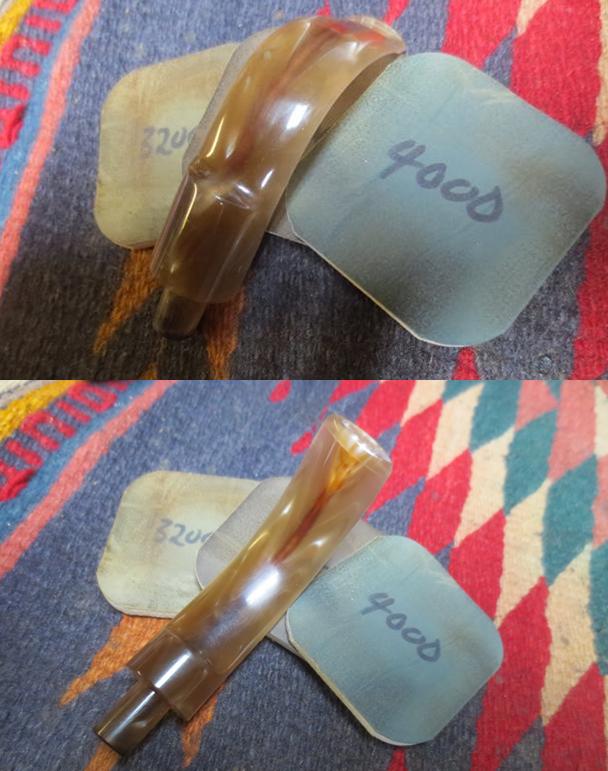
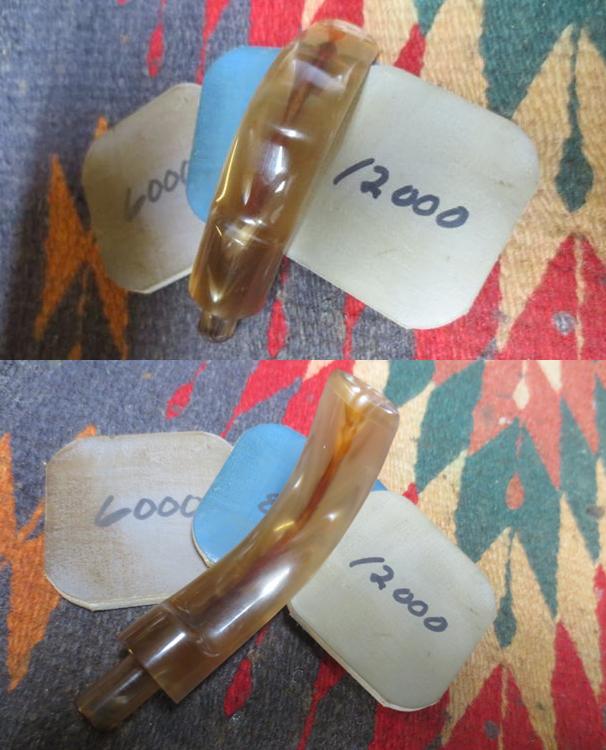
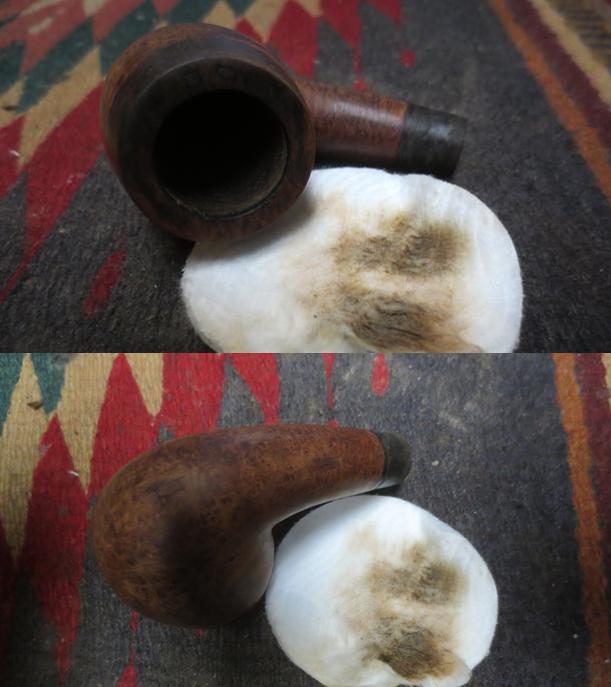
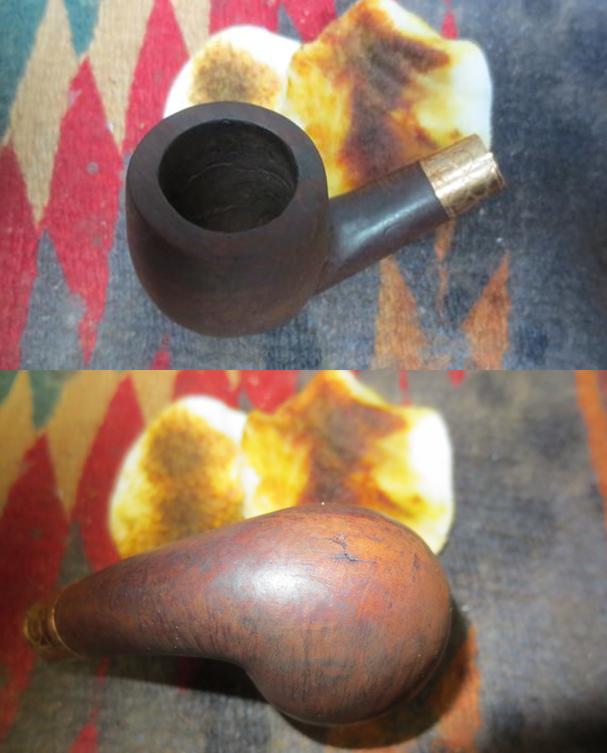
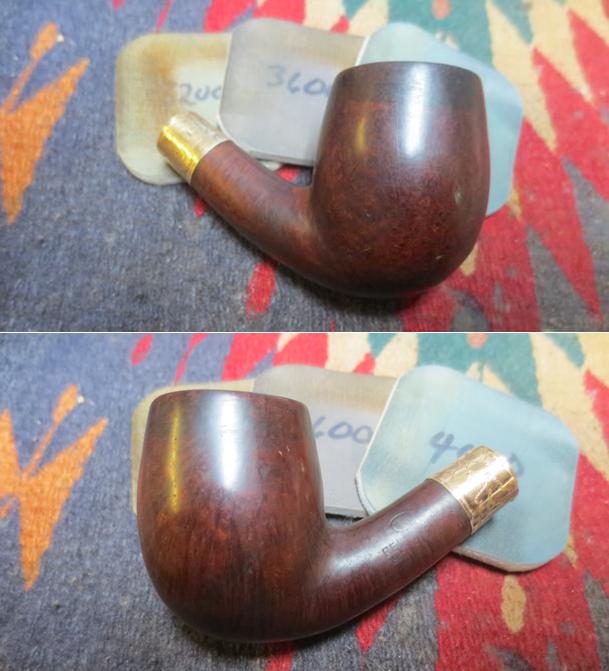
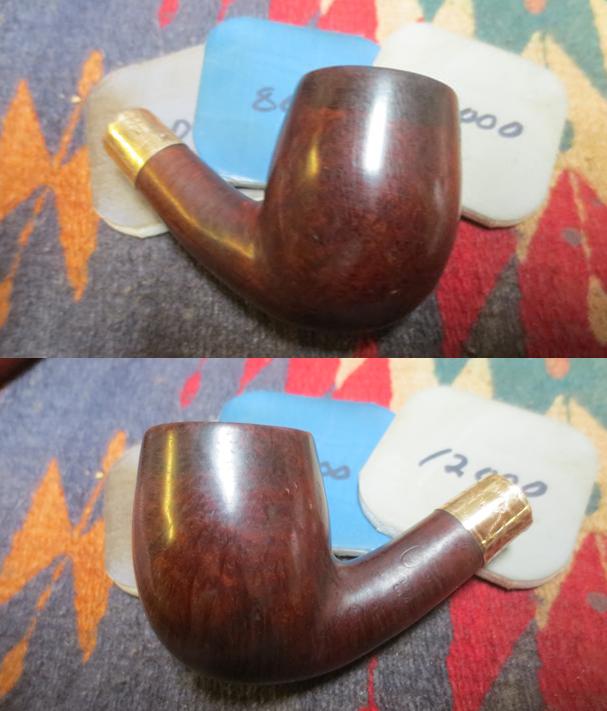
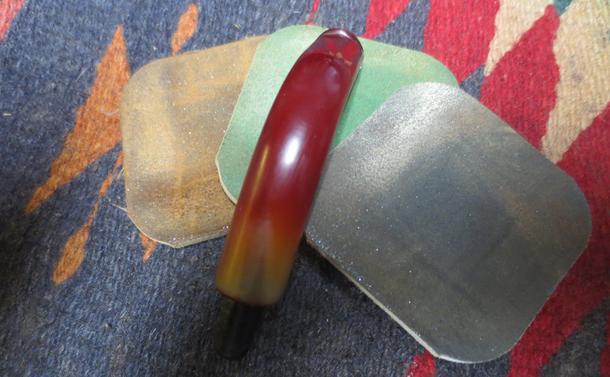
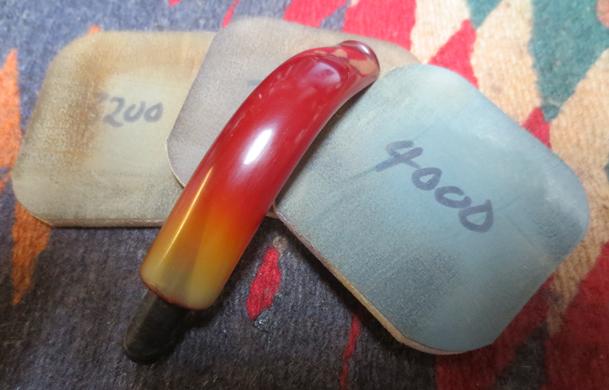
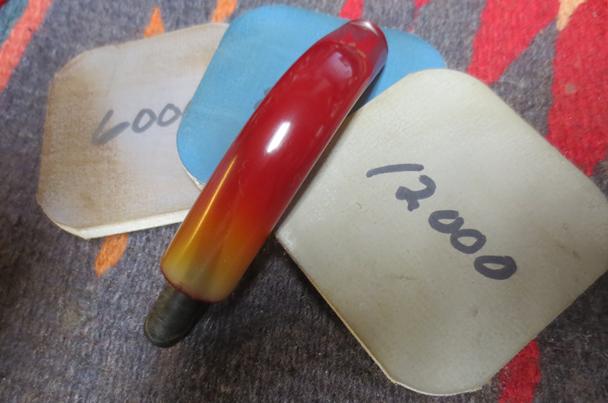
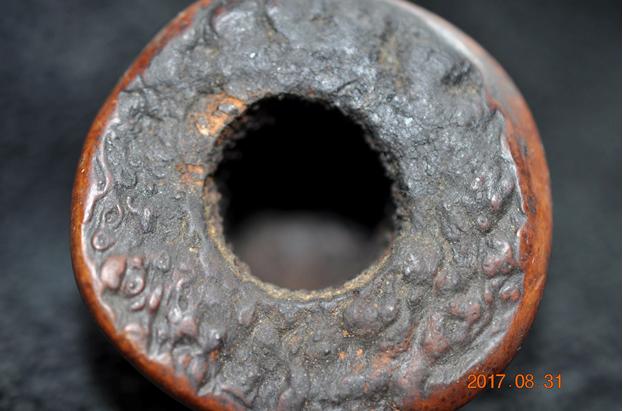
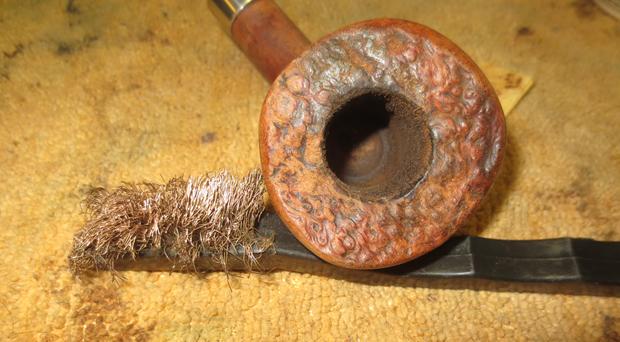
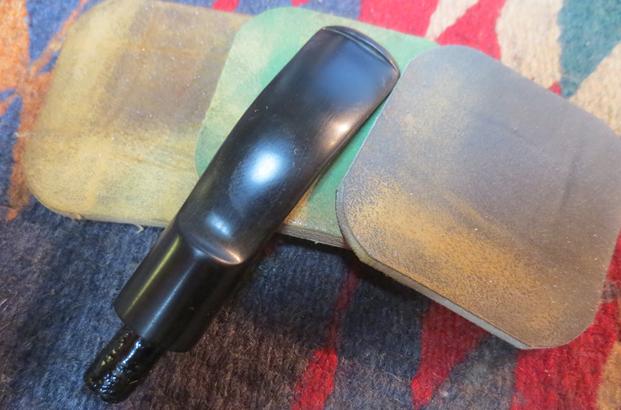
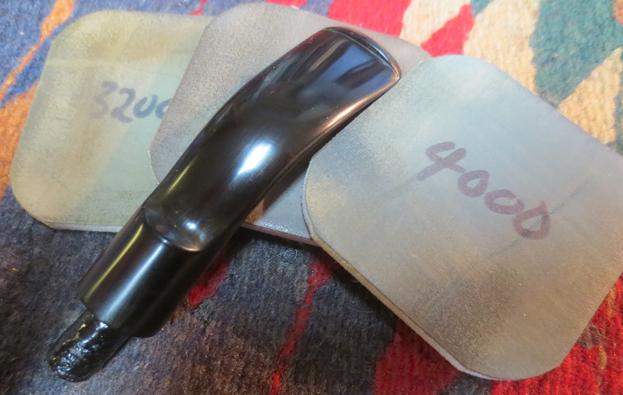
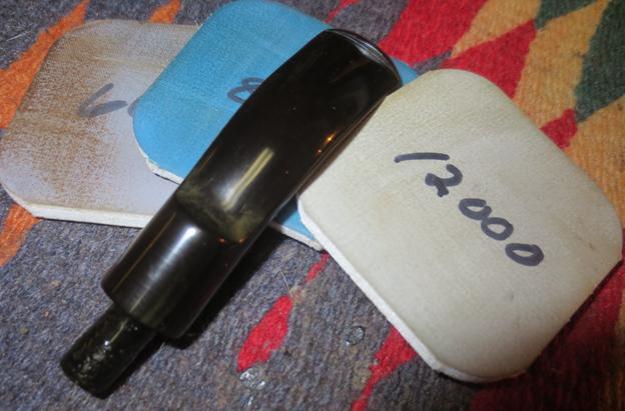
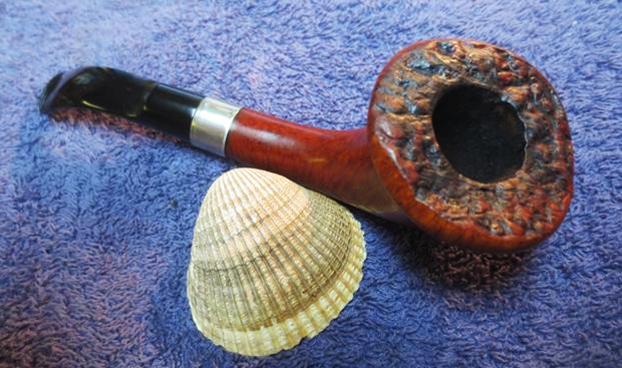
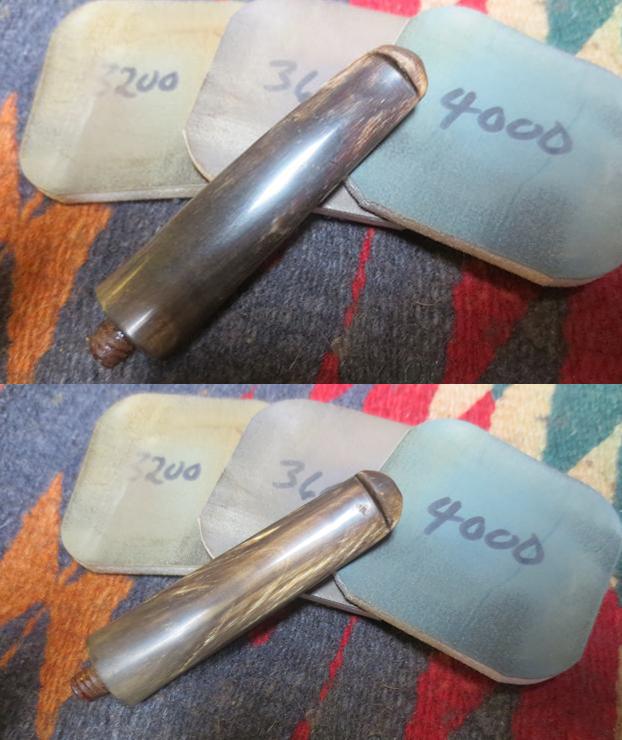
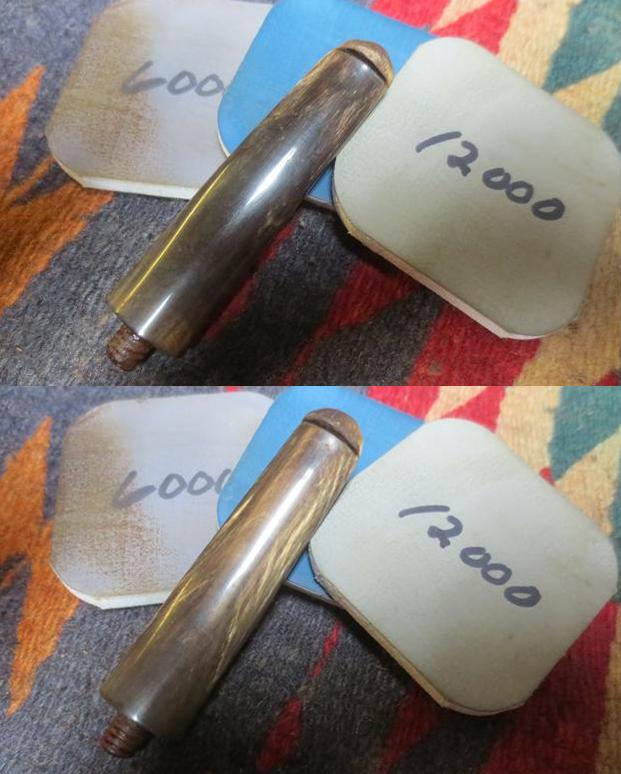
I started with feather-light, focused sanding using 400-grit paper followed by micro-meshing from 1500-12000.  This stem was so shiny when I unwrapped it with the pipe that the first sight of it made me fear it might be plastic and hope it would turn out to be acrylic.  The distinct odor of burned rubber and Sulphur that rose to my nose upon sanding cleared that up.   Having already pre-heated the oven to 220° F., I slipped a regular cleaner through the stem’s airhole and placed the whole thing on a small sheet of aluminum foil.After 15 minutes in the cooker, the stem was pliant.  I used the complex tool in the following shot to accomplish most of the task that called for the slightest curve of almost nothing but the mouthpiece.  I returned the stem, already somewhat cooled, to the oven for a few more minutes and made the final, tiny bend by hand, with a cooking mitten and rag of course.  Then I ran cold water from the tap over it and removed the cleaner. As I mentioned earlier, the burn on the rim in the eBay photos worried me, and my un-ease grew when I had my first Close Encounter of the Third Kind.  The concern wasn’t whether I could fix it but how far I would need to go to do so.  The reason was the depth of the affected areas, from the rim scorch that was isolated to one spot but crept into the chamber and ate away at the top of the inner wall most of the way around the top right side.  By no means was this even close to bad as I have come to understand the word in terms of pipe rim repair, but I did not want to alter the uniform, hearty thickness of the wall any more than could be avoided.  With this pipe, re-sizing the rim with a file was like to sacrilege, yet the idea did cross my mind in a sinful flash before I rejected it at the thought of eliminating any significant fraction of a millimeter of the wonderful bird’s-eye.  Have a closer gander at the unfortunate but far less egregious degradation to the inner right rim this beautiful Dublin withstood.I began the only aspect of the refurbish that could be called any kind of challenge with the gentlest approach, purified water and a soft cotton cloth over the entire stummel.  While a fair amount of soot, skin oil and whatnot came off, no amount of scrubbing made a dent, as it were, on the blemish.  Fine grades of sand paper had no effect, either, and so, I worked my way down the numbers and up the grits to my two-in-one sanding sponge, half 180 and the other 150.  Focusing on the deep rim burn spot, I went at it with the 150.  My hand a blur and breaking out in a sweat all over, the removal of the single little spot took closer to 10 than five minutes.  But I’ll be a turkey’s behind if the dang thang didn’t disappear on me!  I reversed the harsh effects of the 150-grit sponge, minimal as they were because they only rid the fine Mediterranean briar of something that had no place pocking it, with 220- and 400-grit paper before the full scale of micro-mesh pads.  While I was in the groove with the micro-mesh, I did the whole stummel.  I remember coming across one scratch big enough to warrant 320-grit sandpaper, but to save my life I can’t remember where it was, and now it’s gone.  Oh, well.  C’est la vie!

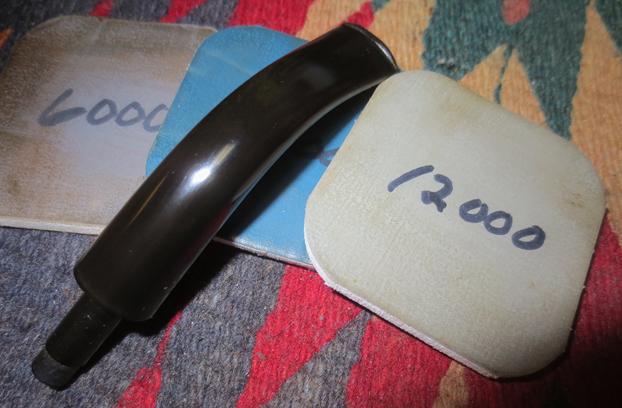
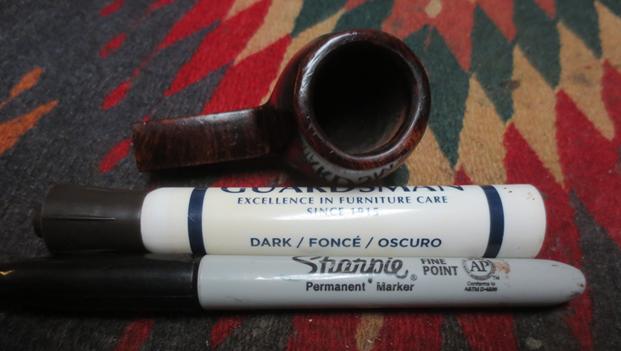
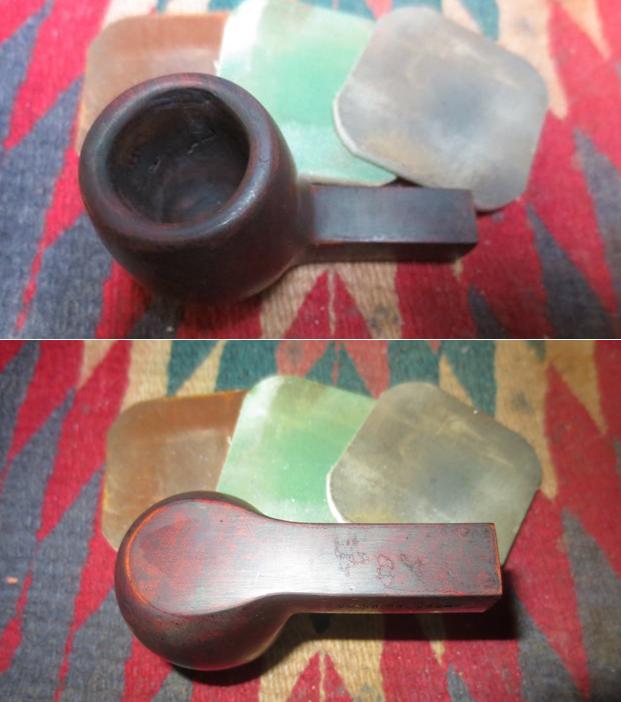
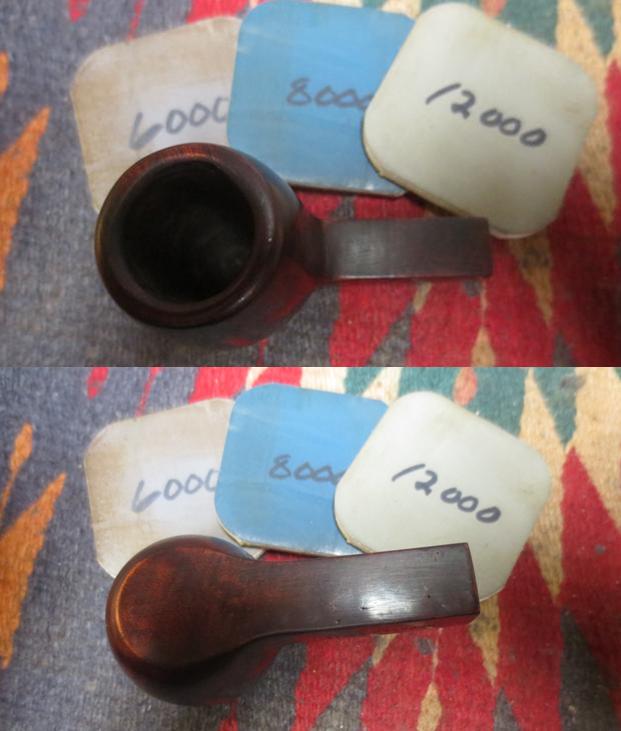
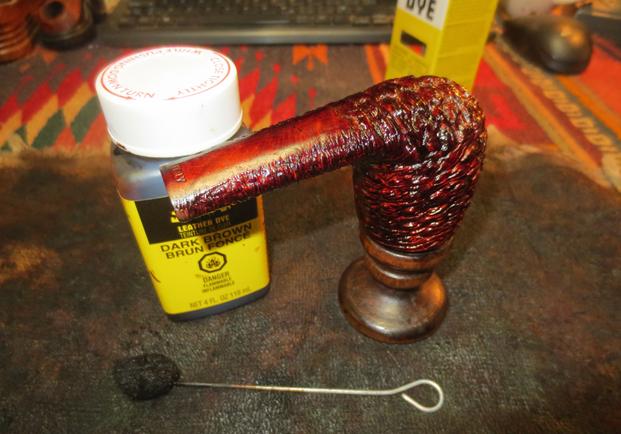
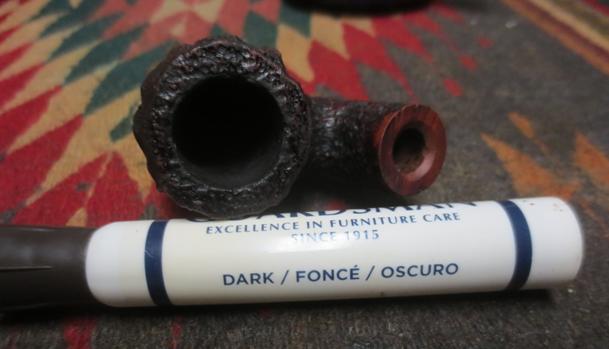
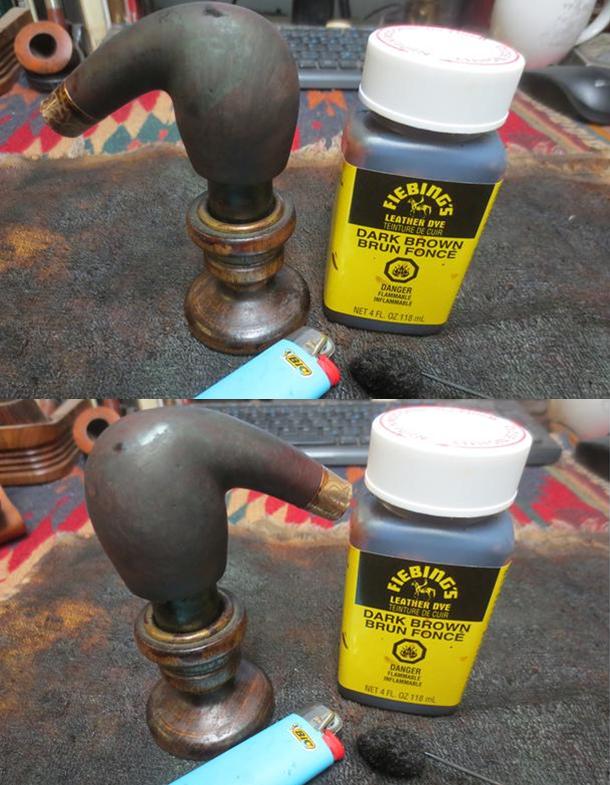
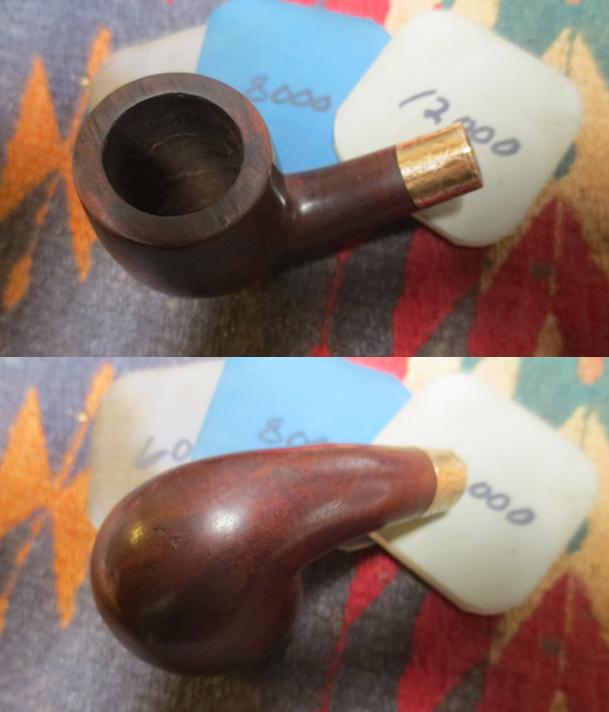
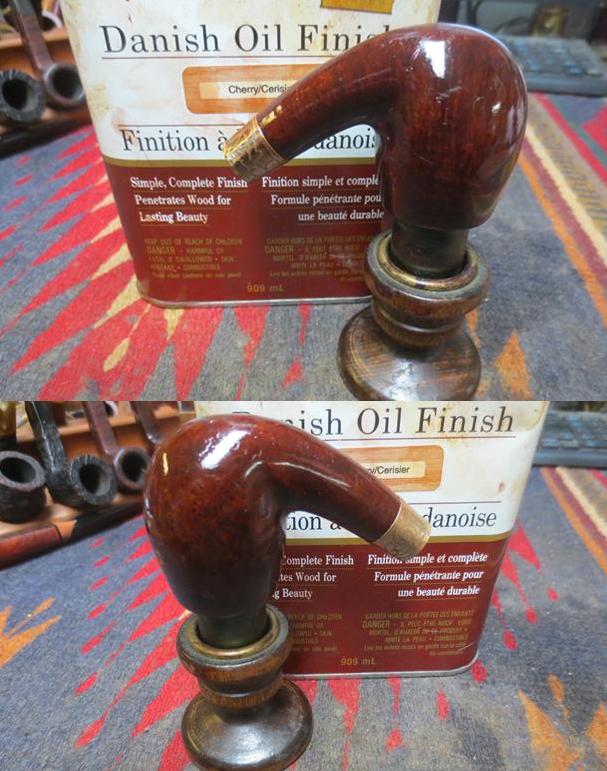
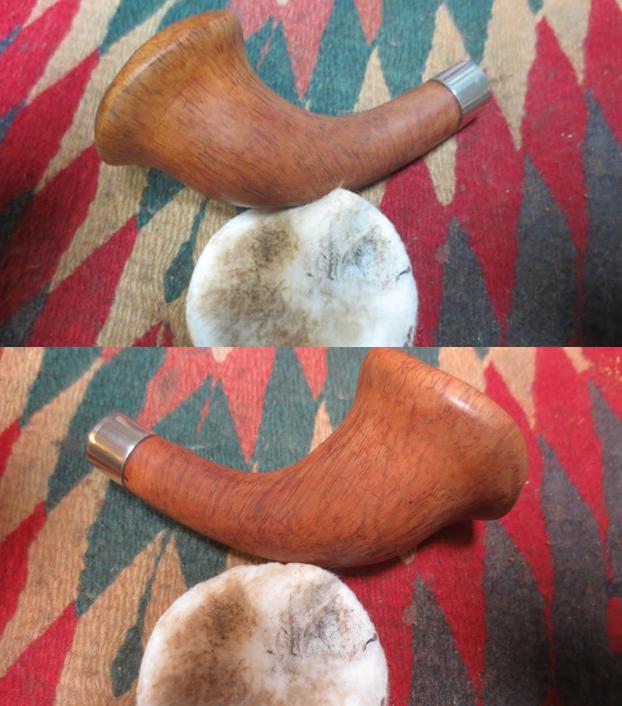
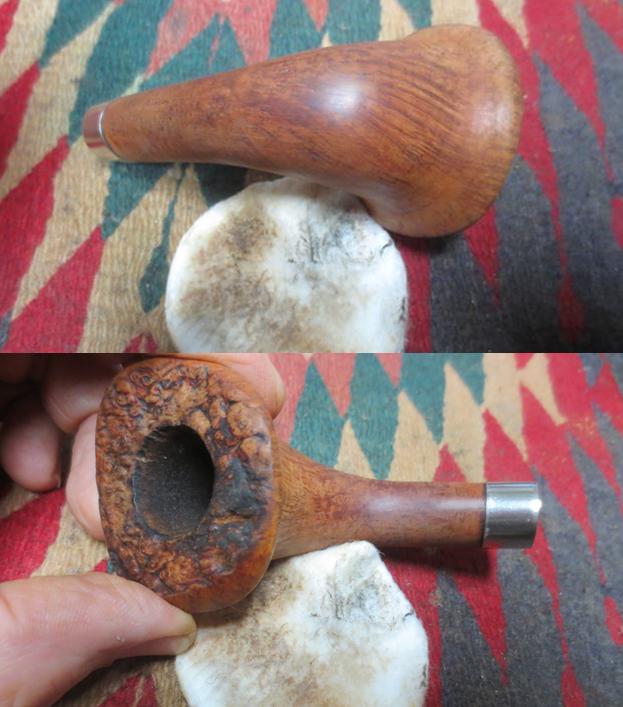
Happy with the absence of the nasty, pernicious burn mark, I found an old, small favorite piece of 150-grit paper that’s perfect for pipe chambers and, focusing again, only on the upper circle inside the chamber, succeeded in eliminating the unwanted beginning of a groove caused by what I can only imagine was a drunken fit of excessive lighting (as in the previous owner passing out while flicking his Zippo and only coming to when he burned his thumb).  I followed the 150-grit strip with the 220- and 400-grits again, and after much careful tapping and blowing of soot and wiping the chamber clean with a piece of paper towel and alcohol, I saw that the damage was repaired, and the chamber was down to bright, clean briar as far as I had gone.  Repeating the process in steady advances down the chamber, 30 or so minutes more passed before the entire inside of the chamber was down to the wood. The end of this special restoration nigh, the time had come to re-stain the rim that had lost more than a little of its fine darker color.  I rejected the notion of making the Capitello Jonico Dublin a two-tone, which is one of my favorite habits with many pipes, and chose instead to apply a couple of Qwik-Koats of Lincoln Brown Boot Dye, alcohol-based.  You know I had my Bic handy to flick, but at least I was sober, safe and sane.Taking off the charred stain and returning the rim color to the original shiny dark brown was simple with 1800 followed by 4000-12000 micro-mesh.

As a general rule, I don’t leave the cleaning and retorting of a pipe’s insides until just before the last step, but this time I became so wrapped up in the stem bending, burn removing and, for the first time, eliminating all but the ghost of the original owner’s tobacco char that I just forgot until the mental checklist time arrived.  Whomever the previous owner was loved this pipe despite the one misadventurous rim burn incident.  I can tell, because I only needed six regular cleaners half-soaked in alcohol with the dry ends to follow up each run through the shank before the last came out clean both sides.  Also, the retort was fast and easy with only three Pyrex test tubes of alcohol boiled through the pipe.

Strolling from the living room to the “workshop” (my bedroom still, for now, but next month or November at the latest I’ll start paying an old-time rent control-level extra charge for the spare third bedroom in the house and begin assembling the proper tools for this work), I plugged in the electric buffer.  Before that, I asked the cats to leave, which they did because for some reason they don’t like the noise of the machine.  I closed the door and freshened the brown Tripoli wheel I’ve been using to give more luster to the wood, made sure there were no papers or other light objects that might blow away nearby, and turned on the juice.  The whir of a wood buffing wheel is one of the happiest sounds I know.  Lightly turning the wooden stummel with confident firmness over the spinning cloth buffer is likewise one of the finest feelings, because of the completion it brings to another project.

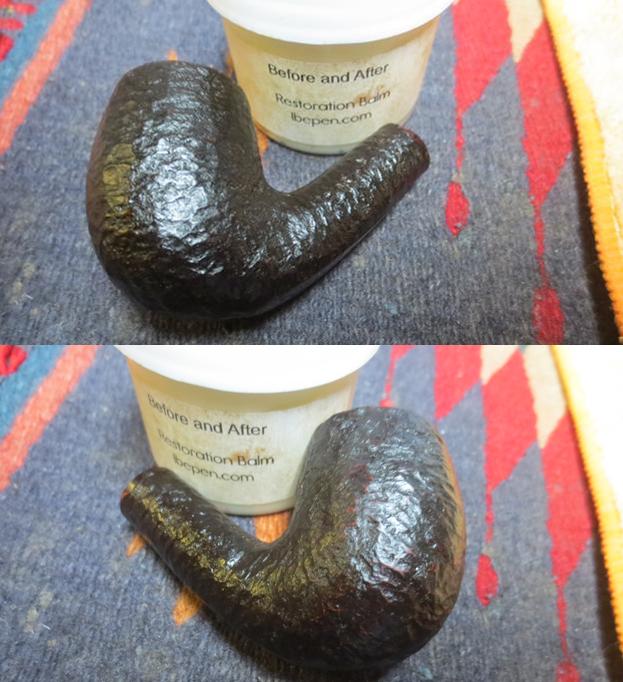
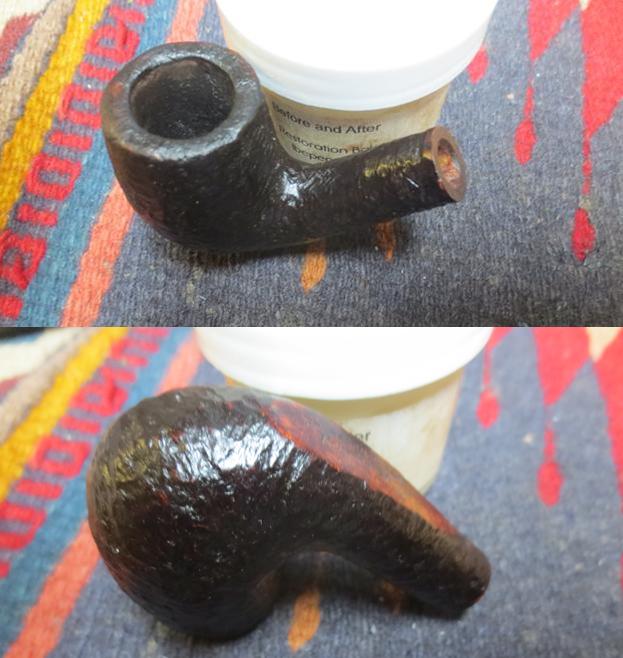
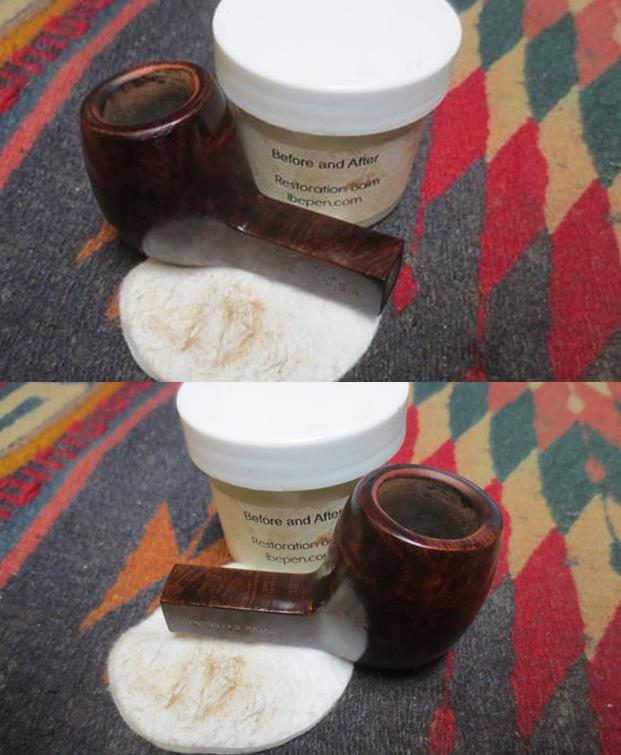
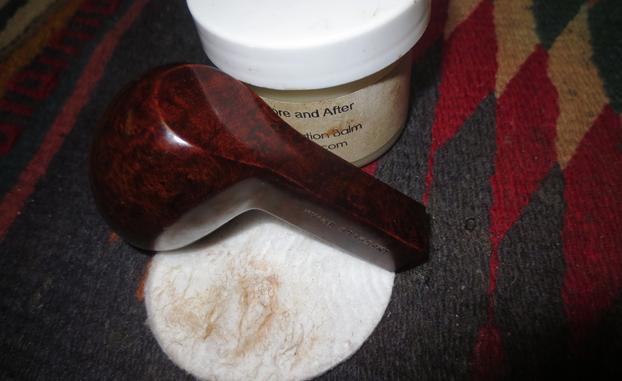
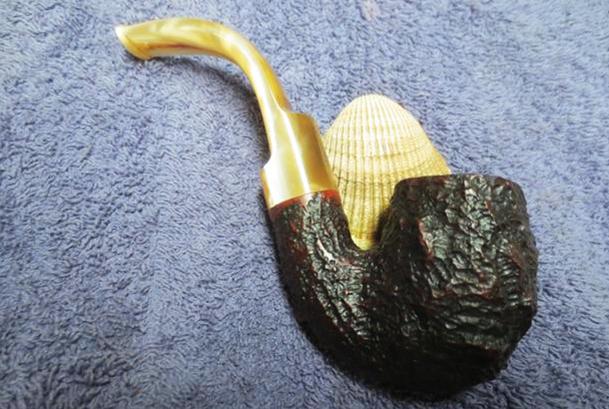
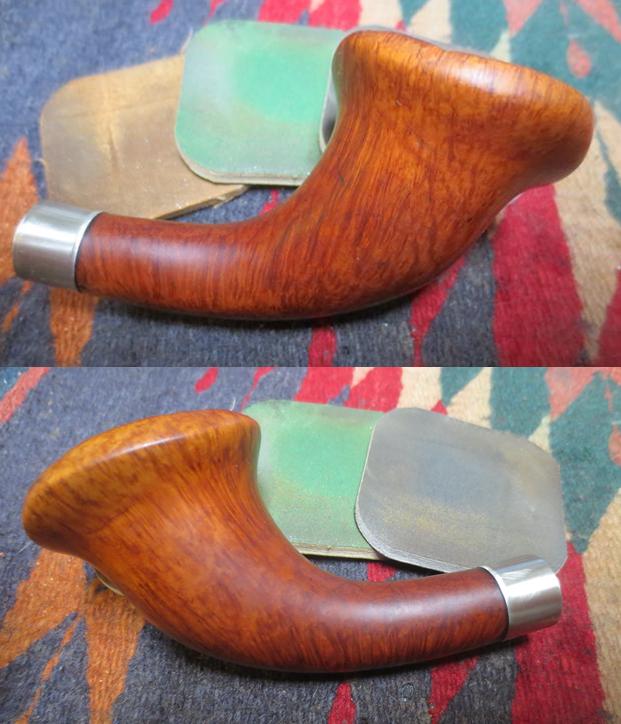
The brown Tripoli buffing finished, I wrapped a clean cotton cloth around the wood and, with both hands, worked the excess compound and a couple of streaks, part of it deeper into the stummel and the rest onto the cloth.  I’ve been doing this lately instead of the alternative clean buffing wheel method, and it works just as well.  Then I repeated the process with a coat of Carnauba wax, and after rubbing it with another cotton cloth gave it one more roll on the Carnauba wheel before the final rub-down.  I buffed the stem with a single coat of Carnauba and rubbed it smooth of excess wax.  For now, it is aligned with the shank as close to an army mount as I could approximate with a regular narrow tapered stem.

CONCLUSION

René Magritte had a brilliant, often hilarious imagination fueled by his wild, wicked (as my generation used it to mean “awesome” or “totally [rad]”) sense of humor, even if he apparently didn’t smoke a pipe – or anything else.  Take a close look at this photo of him as a young man, cribbed from Pinterest, and you’ll see the cigarette in his mouth appears to be backward, if it’s a cigarette at all and not a pencil.  If I had to guess, and I do, I would say he appreciated the beauty of everything in life as he saw it.  Pipes being a big part of culture during Magritte’s too-short time in this world before he moved on to the Totally Surreal Higher Place, my take on the painting I used as an atypical opening quote is that it is at the very least double-edged: the artist’s rendering of a pipe in a piece of art does not make it a pipe, and the conspicuously bland billiard he chose to create with paint and paper, without doubt using the greatest consideration of the multitude of options available to his ingenious mind, is something one might find on a basic pipe chart if they were as well illustrated as this work.  That is why I chose the subtle example of the surreal to open this blog.  Look at any pipe made by Capitello, and if you speak French, you would exclaim, “C’est une pipe [That’s a pipe]!”

SOURCES

http://www.pipephil.eu/logos/en/logo-c2.html
https://dutchpipesmoker.wordpress.com/tag/oil-curing/
https://patentscope.wipo.int/search/en/result.jsf
http://loringpage.com/pipearticles/First%20Shell.htm
https://pipedia.org/wiki/Dunhill
http://www.pipephil.eu/logos/en/infos/wax-drip-pipes.html

Restoring a Georg Jensen Royal Navy Hand Made 93 Bent Apple


Blog by Steve Laug

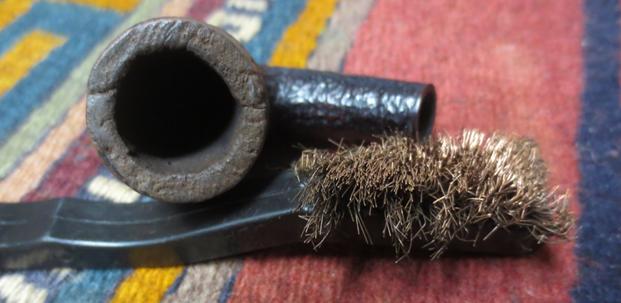
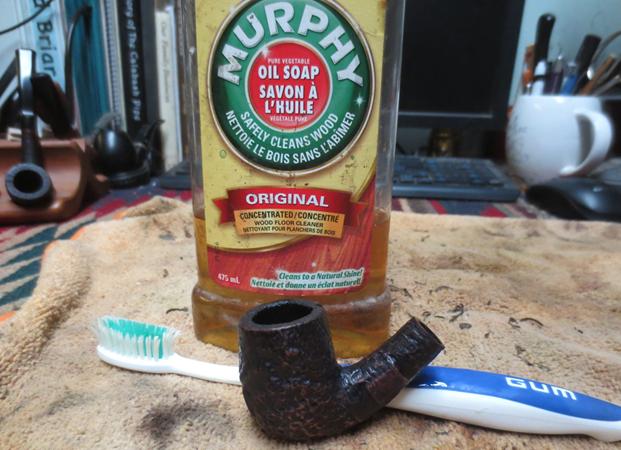
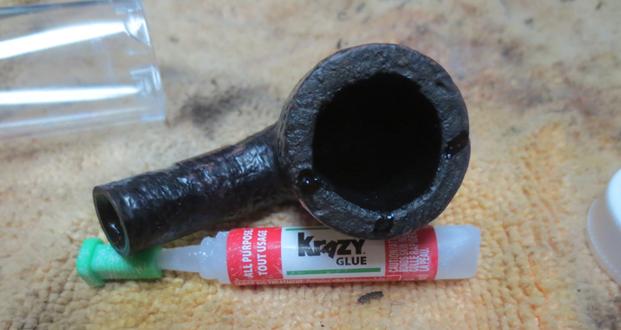
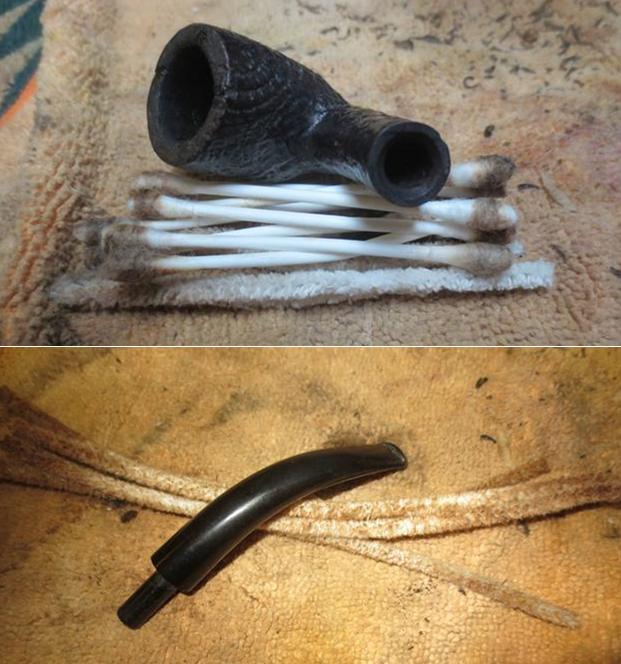
The photos of this Georg Jensen bent apple made the pipe look pretty good. The sandblast finish look pretty good and the stain is mottled but look like it may have been intended to look that way. The bowl had a cake but not too thick and the lava overflow on the rim top appeared average and not much work. The stem was lightly oxidized with most of the oxidation occurring around the button. There was the characteristic GJ stamp on the left side of the stem. It looked like the stem had worn one of the rubber bite guards as the sludge that usually accompanies the removal of those was on the stem. There was tooth chatter on both sides of the stem and a deeper tooth dent on the underside near the button. The pipe was stamped Royal Navy over Hand Made in Denmark with the shape number 93 on a flat smooth band on the underside of the shank. There was a black and brass band on the shank end. My brother took photos before he did his cleanup work on the pipe. The next two close up photos of the rim and bowl show the general condition of the pipe. You can see the buildup of tar on the rim filling in the details of the sandblast. You can also see the damage to the outer edge of the rim where it had been banged out against a hard surface.Jeff took some close up photos of the sides and bottom of the bowl to show the condition of the finish. It was dirty and spotty. It appeared to be a heavy plasticized finish on top of the stain coat. There were some dark spots on the front and bottom of the bowl.Jeff also took photos of the stamping on the underside of the shank and the stamping on the left side of the stem.The next two photos show the condition of the stem. The first one shows tooth chatter and wear on the button face as well as the top side of the stem. The second one shows a deep tooth mark on the underside against the button. There is also a deep mark on the sharp edge of the button next to the tooth dent.This Georg Jensen Hand Made Royal Navy 93 came to me clean and ready to restore. Jeff had reamed the bowl with a PipNet pipe reamer and cleaned it up with a Savinelli Fitsall Pipe Knife. He scrubbed out the 9mm filter mortise and the airways in the shank and filter holder in the stem with alcohol, cotton swabs and pipe cleaners. He scrubbed the bowl and rim top with a tooth brush and Murphy’s Oil Soap. He rinsed it with running water to remove the grime and the soap. He soaked the stem in an OxyClean bath to remove the oxidation. I took photos of the pipe before I started restoring it. One of the most frustrating things for me in pipe restoration is bowls that have been coated with a thick coat of some kind of plastic finish. That is what was covering the briar on this Jensen. The brass band with two black rings on the shank added a nice touch but I could hardly see if for the shiny plastic coat over the surface of the briar. I took a close up photo of the rim top and bowl after the cleanup Jeff had done. He did a great job removing the debris from the rim top it was clean and the sandblast finish was visible.The oxidation on the stem was mostly at the end near the button. The photos show the tooth mark on the underside very clearly.I took the stem off the shank and the band fell free of the shank end. It would need to be reglued and held in place until it dried.I dropped the bowl in an alcohol bath to soak. I was hoping that the alcohol would soften the topcoat on the bowl and let me work over the finish. I was not sure it would but it was worth a try. I left it to soak and addressed the stem.I sanded the stem with 220 grit sandpaper to remove the oxidation and the tooth chatter on the surface of the stem. The dent on the underside of the stem was deep enough that I wanted to see if I could heat the dent to raise it. I used a Bic lighter to paint the surface of the stem with the flame. The heat raised the dent to the surface. I polished the stem with micromesh sanding pads – wet sanding it with 1500-2400 grit pads. After the first set of three pads I used some Rub’n Buff European Gold to fill in the GJ stamp on the side of the stem. I applied it with a cotton pad and rubbed off the excess. Once it dried I used the 3200-12000 grit pads to dry sand the stem. After each micromesh sanding pad I rubbed the stem down with Obsidian Oil to enliven the vulcanite. After the 12000 grit pad I set the stem aside to dry. I took the stummel out of the alcohol bath and used a brass bristle wire brush to break down the plastic coat on the briar. I worked at it until the surface of the bowl was dull and lifeless. I wiped it down with acetone and a cotton pad and repeated the process until I had removed the majority of the plastic coat.  I put some all-purpose glue on the end of the shank and spread it around the perimeter of the inset made for the band. I pressed the band in place on the shank end and wiped away the excess glue. It did not take too long for the glue to set and the band to be solidly in place on the shank.Now it was time to address the lighter areas on the front and the back of the bowl. I decided to use a black Sharpie Pen to colour in the low spots on the grain in between the ridges. I ran the pen across the flow of the sandblast to highlight these spots on the rim and the back and the front of the bowl. It would be a nice contrast with the rich chocolate brown stain that was on the bowl.I buffed the bowl with Blue Diamond on the buffing wheel to blend in the black of the pen and the chocolate brown of the rest of the bowl. I took the following photos to show how well it blended into the finish. I put the stem back on the bowl and buffed the entire pipe with Blue Diamond once again. I gave the bowl multiple coats of Conservator’s Wax and the stem multiple coats of carnauba. I buffed the pipe with a clean buffing pad to raise the shine. I hand buffed the pipe with a microfibre cloth to deepen the shine. The photos below show the finished pipe. The reflection of the polished brass band on the black of the vulcanite stem looks really good. The contrast of the blacks and browns in sandblast finish are really quite stunning. The dimensions of this pipe are Length: 6 inches, Height: 1 ¾ inches, Bowl diameter: 1 ¼ inches at the top of the rim, Chamber diameter: 7/8 inches. It a great looking pipe and one that will make a good smoker. It is drilled for a 9mm filter but can easily be used without one or a converter can be purchased from various online sources to slide into the 9mm tenon and change it into a regular pipe. If you are interested in this pipe send me an email to slaug@uniserve.com or a message on Facebook. I will be putting it on the rebornpipes store later today. Thanks for looking.

New Life for a Kaywoodie Super Grain Zulu


Blog by Steve Laug

I wrote in the blog just previous to this one – the restoration of the Selected Straight Grain bent billiard – how I had been contacted by Jim in the South Eastern US regarding some pipes that he had found (https://rebornpipes.com/2017/09/22/cleaning-up-a-beautiful-comoys-made-selected-straight-grain-bent-billiard/). He called to tell me about a group of six pipes that he purchased on one of his own pipe hunts. He wanted to know if I could help him identifying what he had found. There were two older Kaywoodies (a bent meerschaum lined billiard and a Super Grain Zulu), a Selected Straight Grain bent billiard, a GBD Sauvage Bulldog, a Henley Club Apple (made by Sasieni), and the last one a Medico Crest Prince.

In our conversation he told me he was going to box up the lot and mail them to me to have a look. When they arrived he said we could talk and make an arrangement regarding the pipes that he wanted to have restored from the lot. He wanted my opinion on the others as well. The box arrived last week and I opened it to have a good look at what Jim had sent to me. As I mentioned in the previous blog, I went through them making notes on what I saw regarding the condition of each pipe. I sent Jim my notes on the pipes and he replied noting the two pipes that he wanted me to work on for him in the lot – the first one was a large Bent Selected Straight Grain Billiard and the second was the Kaywoodie Super Grain Zulu. We fired several emails back and forth talking about the pipes and the decision was made. I would restore the two pipes for him.

When I finished the Selected Straight Grain, I turned my attention to the Kaywoodie Super Grain Zulu. It is a nice piece of briar with straight grain on the front and back of the bowl and birdseye grain on the sides of each bowl. The pipe is stamped on the top of the oval shank with the brand name Kaywoodie over Super Grain over Imported Briar. On the right side of the shank the shape number 01 is stamped. The shape is Zulu with an oval shank and stem with a 1/8th bend to the stem. Like the Selected Straight Grain the Kaywoodie was a nice pipe that showed some nice grain underneath the grime.

The pipe was a typical Kaywoodie sized pipe. There was a flaw in the briar on the left back side of the bowl just above the shank/bowl junction. There was another flaw on the front right toward the bottom of the bowl. Other than these two spot on the bowl, there were no other sandpits or fills in the briar. The bowl had a thick cake in it and there was a thick overflow of lava on the top of the rim. It was not possible to know if there was damage to the inner edge and the top of the rim. The finish was worn and tired but should clean up easily. The stem was lightly oxidized and there was tooth chatter on both sides at the button, but no deep tooth marks. The stem was slightly underturned and when I removed it there was a paper gasket that was glued to the end of the stem to correct the issue. The classic Kaywoodie metal stinger apparatus had been cut off and the airway in the remaining metal tenon was damaged.

I took a series of photos of the pipe to record the condition it was in when it arrived.I took a close up photo of the bowl and rim top to show the condition of the cake in the bowl and the overflow of lava on top of the bowl. The rim and bowl were in rough condition. The photos of the stem show the condition of the vulcanite. The oxidized surface of the rubber was pitted and worn. The light tooth chatter on both sides can be seen in the photos. I unscrewed the stem from the shank and took the following photo. It shows the paper washer that had been glued to the end of the stem to help the alignment of the stem. The clipped stinger is also shown in the photo. I scraped off the glued on gasket with a sharp pen knife and cleaned off the surface with alcohol and cotton swabs. I used a needle file to open up the end of the tenon and remove the damaged edges that had been caused when the stinger was clipped off. I cleaned out the airway with pipe cleaners and alcohol. I heated the tenon with a Bic lighter to soften the glue and put the stem back on the end of the shank and turned it until the stem and the shank were aligned. The photo below shows the newly aligned stem and shank. I reamed the bowl with a PipNet pipe reamer starting with the smallest cutting head and working up to the second cutting head. I took the cake back to bare briar. I cleaned it up with a Savinelli Fitsall Pipe Knife. I scraped the top of the rim with the pen knife to take as much of the lava off as possible. I sanded it with 220 grit sandpaper and a 1500 grit micromesh sanding pad. I used clear super glue to repair the damage on the back and the front of the bowl. I filled in the areas with the glue and set the bowl aside to dry. When the repairs had cured I sanded the areas with 220 grit sandpaper to blend them into the surface of the briar. I polished the areas with micromesh sanding pads – wet sanding with 1500-2400 grit pads. I wiped the bowl down with a damp cloth to remove the sanding dust.I wiped the bowl down with alcohol on a cotton pad to remove the dust in preparation for staining the briar. I stained it with a dark brown aniline stain and flamed it with a lighter. I repeated the process until the coverage was even around the bowl.I wiped the bowl down with alcohol and cotton pads to remove the stain and make the coverage more transparent. I wanted the grain to pop so that finish stood out.The saturation of the stain was perfect for what I wanted to do with the finish next. I polished the briar with micromesh sanding pads. I wet sanded it with 1500-2400 grit pads to polish the briar and bring the grain to the surface. I dry sanded it with 3200-12000 grit pads. After polishing it with the 12000 grit pads I really liked the look of the polished briar. The grain really shows clearly.I sanded the stem with 220 grit sandpaper to remove the tooth chatter and the scratches in the vulcanite. I smoothed out the surface of the stem with the sandpaper and then polished it with micromesh sanding pads – wet sanding it with 1500-2400 grit pads and dry sanding with 3200-12000 grit pads. I wiped it down after each pad with some Obsidian Oil. After the final 12000 grit pad I gave it a final coat of Obsidian Oil and set it aside to dry.I buffed the pipe on the wheel using Blue Diamond Polish and worked over the stem and bowl to remove any remaining scratches. I was careful around the stamping so as not to buff it out and soften it. I gave the pipe multiple coats of carnauba wax and buffed it with a clean buffing pad to raise a shine. I hand buffed it with a microfiber cloth to deepen the shine. The finished pipe is shown in the photos below. It really is a beauty. The black of the polished vulcanite and the polished briar work well together to present a beautiful pipe. Now Jim’s second pipe is finished. In the week ahead the pair will go in the mail. I can’t wait to hear what he thinks of this second one when he has it in hand and fires it up for the first time. Thanks for looking.

Cleaning up a Beautiful Comoy’s Made Selected Straight Grain Bent Billiard


Blog by Steve Laug

A few months back I sold a nice older Wally Frank pipe to a fellow named Jim in the South Eastern US. Recently he called to tell me about a group of six pipes that he purchased on one of his own pipe hunts. He wanted to know if I could help him identifying what he had found. There were two older Kaywoodies (a bent meerschaum lined billiard and a  Super Grain Zulu), a Selected Straight Grain bent billiard, a GBD Sauvage Bulldog, a Henley Club Apple (made by Sasieni), and the last one a Medico Crest Prince.

In our conversation he told me he was going to box up the lot and mail them to me to have a look. When they arrived he said we could talk and make an arrangement regarding the pipes that he decided to have restored. But he wanted my opinion on the others as well. The box arrived last week and I opened it to have a good look at what Jim had sent to me. I went through them making notes on what I saw regarding the condition of each pipe. I sent Jim my notes on the pipes and he sent back the two pipes that he wanted me to work on for him in the lot – the first one was a large Bent Selected Straight Grain Billiard and the second was the Kaywoodie Super Grain Zulu. We fired several emails back and forth talking about the pipes and the decision was made. I would restore the two pipes for him.

I decided to work larger of the two pipes first. It is stamped on the left side of the shank Selected arched over Straight and Grain underneath that. On the right side of the shank it is stamped with the standard circular COM (Country of Manufacture) stamp – Made in London in a circle over England followed by the shape number 43. Both the COM stamp and the shape number led me to believe this was a Comoy’s made pipe but I was not certain at this point in the process. The shape is a half bent billiard. It was a nice pipe that showed some extraordinary grain underneath the grime.

The pipe was larger than I expected when Jim and I spoke and was a pretty nice looking piece of briar. There were a couple of issues with the bowl. There were some small sand pits on the bottom of the bowl and shank. There was a large flaw that looked like an X at the junction of the bowl and the shank on the left side near the top of the shank. The bowl had a thick cake in it and there were actually cobwebs in the bowl. The rim had a light coat of tars and lava that overflowed onto the beveled surface of the inner edge of the rim. There was a deep gouge on the rim top on the right side toward the back of the bowl. The finish was spotty and worn with shiny spots and scratches on the shank and on parts of the bowl sides. The stem was lightly oxidized and sported a lot of tooth chatter but no deep tooth marks. The stem did not fit tight against the shank with a small gap at the top that told me that the tenon was slightly bent.

I took a series of photos of the pipe to record the condition it was in when it arrived. The next photo show the top of the rim, the darkened and lava encrusted beveled inner edge, the thick cake and the cobwebs deep inside the bowl. You can also see the gouge on the right side of the rim top at the 1 o’clock position in the photo below. I have circled it in red for ease of reference. The pipe certainly had great bones but it was in dire need of a cleanup so that it could be passed on in the pipeman’s trust. This was going to be a fun pipe to work on.I took photos of the oxidized stem to show the general condition of the vulcanite. It looked pretty good. The button was clean and not damaged. There was tooth chatter but no deep tooth marks on either side of the stem. The stem was lightly oxidized but good quality vulcanite.I did a bit of hunting online and read on Pipedia that these pipes were made by Comoy’s and were essentially “Specimen Straight Grain” (exceptional line of Comoy’s pipes). The Selected Straight Grain pipes were seconds to the Specimen line that exhibited some small flaw or sand pit. They were listed in the 1965 catalogue at $15 or $17.50 in Extraordinaire size.

Armed with that information I turned my attention to work on the pipe. It was dirty and sticky so I varied my usual habit of reaming the bowl first and scrubbed the exterior with Murphy’s Oil Soap and cotton pads. I was able to remove all of the grime on the bowl sides and much of the grime and lava on the rim top and inner beveled edge of the bowl. I took photos of the bowl after scrubbing. You can see the amazing grain on the bowl and shank sides. You can also see the X shaped sandpit in the first photo. I have circled it in red to highlight the damage there. With the outside of the bowl clean it was easier to hold onto while I reamed it with a PipNet pipe reamer. I started with the smallest cutting head and worked my way up to the third cutting head. I took the cake back to bare briar. I cleaned up the remnants of the cake with a Savinelli Fitsall Pipe Knife. I used a dental spatula to scrape out the buildup on the walls of the mortise. There was a thick coat of tars and oils that had hardened there and made the fit of the stem very tight in the shank. Once I had scraped out the hardened substances I cleaned out the mortise and the airway in the shank and stem with alcohol, cottons swabs and pipe cleaners.With the exterior and the interior of the bowl cleaned it was time to work on repairing the sandpits and gouges on the bowl. I wiped down the area of the X pit on the left side of the bowl at the shank bowl junction with alcohol.When it was dry I filled in the area with clear super glue and pressed it into the pit with a dental spatula. I repeated the process with the gouge on the right side of the rim top.  When the repair had cured I sanded it with a folded piece of 220 grit sandpaper to blend it into the surface of the briar. I also sanded the inner beveled edge of the bowl to clean up the darkening and damage at that point. I sanded the repair on the side of the shank and bowl with the same sandpaper until the spots were blended into the briar and smooth to touch.I polished the repaired areas with micromesh sanding pads – sanding with 1500-4000 grit pads to smooth out the sanding scratches. I stained the rim top and the repair on the shank and bowl with a light brown stain pen to match the stain on the rest of the bowl.Whenever I used the stain pens, regardless of colour, I blend the stain with the existing stain using Conservator’s Wax. I find that the microcrystalline wax polishes and blends the two areas together when I hand buff the bowl once the wax dries. I buffed the bowl with Blue Diamond to polish it a bit and see where I needed to do some work before the final buff. I hand polished the stem with micromesh sanding pads – wet sanding with 1500-2400 grit pads and dry sanding with 3200-12000 grit pads. I wiped the bowl down with a damp clot after each buffing pad. I hand buffed it with a microfibre cloth after the 12000 grit pad. The pictures below show the progress of the polishing on the briar. I addressed the fit of the stem against the shank. The tenon was slightly bent downward causing a gap at the top of the shank stem union. I heated the tenon with a Bic lighter to soften it and inserted it in the shank and straightened it. I held it in place while the stem cooled and the fit was perfect against the shank.I sanded the light tooth chatter and the oxidation on the stem with 220 grit sandpaper. I wanted to break up the oxidation on the surface of the vulcanite and that is the easiest way to do it. I polished the stem with micromesh sanding pads – wet sanding with 1500-2400 grit pads and dry sanding with 3200-12000 grit pads. I rubbed the stem down after each pad with Fine grit Before & After Pipe Polish. I buffed the pipe on the wheel using Blue Diamond Polish and worked over the stem and bowl to remove any remaining scratches. I was careful around the stamping so as not to buff it out and soften it. I gave the pipe multiple coats of carnauba wax and buffed it with a clean buffing pad to raise a shine. I hand buffed it with a microfiber cloth to deepen the shine. The finished pipe is shown in the photos below. It really is a beauty. The flaws that I repaired really disappeared into the grain of the pipe. If you did not know where they were before they are hard to identify. The black of the polished vulcanite and the polished briar work well together to present a beautiful pipe. I have to finish Jim’s second pipe and then the pair will go in the mail. I can’t wait to hear what he thinks of this one once he has it in hand and fires it up for the first time. Thanks for looking.

A Damaged Danish Crown 49 Oval shank Dublin Given New Life


Blog by Steve Laug

This Danish Crown was the last of the pipes Steve and I had discussed restoring from the box he sent my way. He had sent it to me to chip away at in my spare time. I have been working away at them a few at a time for a few months now. On the weekend I decided it was time to finish the remainder of the box. I pulled out five of the remaining seven pipes and worked on all of them (the last two are nothing spectacular but I may just clean them up anyway so I can send him the entire batch cleaned and usable). The pipe looked like a Stanwell make to me but a little research told me that it was a Kriswill, made by Kriswork Briar Trading, in Kolding (Denmark). The company started about 1955 and went bankrupt in the late 70s. They had a line of seconds (pipes with fills and flaws that were still usable) which included the Danish Crown. This pipe was stamped on the topside of the shank with the name Danish Crown over Handmade in Denmark. On the underside of the shank is the shape number 49 at the shank/stem junction. The stamping on the pipe is probably the most readable of the entire batch of pipes. I took photos before cleaning the pipe.The bowl is heavily caked and there is a thick overflow of tars and cake onto the rim top almost obscuring the inner edge of the rim. There was a large chipped area on the front right of the rim top as well as more dings and dents around the rim top. The finish on the bowl was worn and dirty. The stem has a lot of tooth marks and chatter. There was also oxidation on the stem. I took photos of the pipe before I started the restoration. I took a close up photo of the rim top and bowl. You can see from the photo how thick the cake was and the amount of lava over flow on the rim top. The damage to the rim is at the 9:00 and 11:00 o’clock position in the photo below.The stamping on the shank is very readable. In person, it is clearer than it appears in the photo below. The next two photos of the stem show oxidation on the whole stem and tooth chatter and marks on the top and underside of the stem near the button.I put the stem in the Before & After Pipe Stem Deoxidizer bath to soak with the other stems from Steve’s pipes. While they soaked I worked on the five bowls that went with them. The stems soaked over a period of 24 hours.I reamed the bowl with a PipNet Reamer starting with the smallest cutting head and working my way up to the third head, which was the same size as the bowl. I cleaned up the reaming with a Savinelli Fitsall Pipe Knife. I took the cake back to bare briar. I scraped the rim with a sharp penknife to clean up the lava buildup on the rim top. I scraped it until the rim was debris free.I scrubbed the exterior of the bowl and shank with Murphy’s Oil Soap and scrubbed the rim top and the bevel with a tooth brush. I picked the damaged areas clean with a dental pick to remove the buildup deep in the rough spots on the rim. I rinsed the bowl under running water and continued to scrub it until it was clean. I used a rolled piece of sandpaper wrapped around my finger to sand out the inside of the bowl. The bowl walls were a little rough on this one so it was going to take some work to smooth things out. I wiped down the damage on the rim top with a cotton swab and alcohol and filled them in with briar dust and clear super glue.When the repairs had hardened I sanded the rim top and edges with 220 grit sandpaper to begin the process of blending them into the briar. With the rim top repair and the discovery of many small fills around the bowl sides and the bowl/shank junction, I decided to use a darker stain on this pipe than the other ones. I stained it with a dark brown aniline stain and flamed it to set it in the grain of the briar. I repeated the process until I was happy with the coverage.When the stain had dried, I wiped the bowl down with alcohol on a cotton pad to remove the excess and blend the colours to a rich dark brown that allowed some of the grain to show through. Unfortunately, it also allowed the fills to show. More work needed to be done to take care of that issue. I used a dark brown stain pen and a Sharpie pen to colour over the fill areas. I used the dark brown aniline stain dauber to put over the top of the colouring I had done. I flamed the aniline stain spots with my lighter to set the stain in them. I lightly buffed the bowl with Blue Diamond on the buffing wheel. I was careful when buffing around the repaired area on the top of the bowl and the fills that I had darkened. I gave the bowl several coats of carnauba wax and buffed it with a clean buffing pad to raise a shine. I am happy with the look of the bowl at this point. The grain shows through nicely and the fills and repairs blend in pretty well. I set the bowl aside and turned my attention to the stem. I removed it from the Before & After Pipe Stem Deoxidizer bath and dried it off. I ran a pipe cleaner through the airway to remove the Deoxidizer that was on the inside of the stem. I used alcohol to clean out the airway in the stem. It came out of the bath pretty clean of oxidation. The tooth marks and chatter showed up clearly on both sides near the button.I lightly sanded the stem with 220 grit sandpaper to remove the tooth chatter and filled in the deeper tooth marks with black super glue. The largest mark was on the underside of the stem.Once the glue dried I sanded the repairs with 220 grit sandpaper to blend them into the surface of the stem.I polished the stem with micromesh sanding pads – wet sanding with 1500-2400 grit pads and dry sanding with 3200-12000 grit pads. I rubbed the stem down with Obsidian Oil after each pad. After the 12000 grit pad I gave it another coat of oil and set it aside to dry. I put the stem on the bowl and buffed the pipe with Blue Diamond on the buffing wheel. I used a light touch on the areas that were repaired. I gave the bowl several coats of carnauba wax and buffed the pipe with a clean buffing pad to raise the shine. I hand buffed it with a microfibre cloth to deepen the shine. The finished pipe is shown in the photos below. It is the fifth of this batch of five pipes that I have restored for Steve. It is a well-made Kriswill pipe. I think Steve will really like this last addition to his rack. Steve, if you are reading this I hope you enjoy this beauty. It will be on its way to you very soon. Thanks for looking.

A Sad Old Danish Sovereign 330 Bent Dublin Made New


Blog by Steve Laug

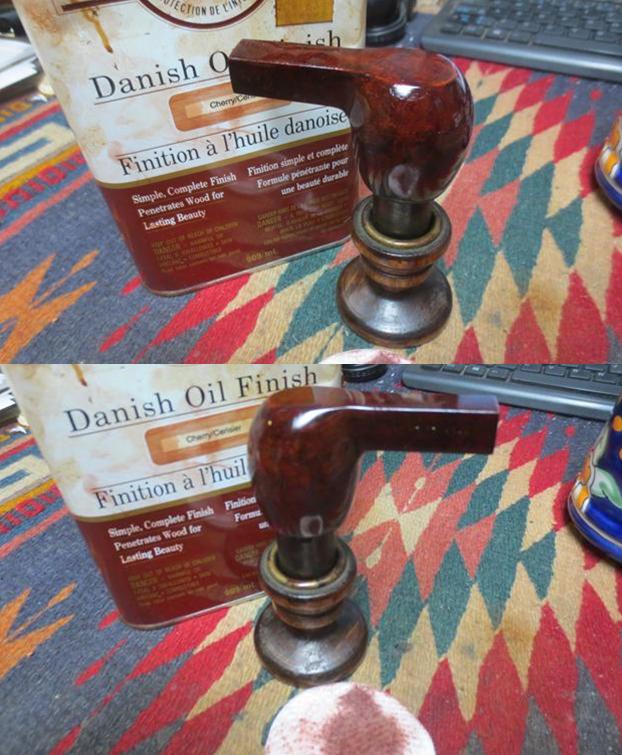
This old Stanwell looking Dublin was in the box of pipes that came from my friend Steve in Dawson Creek. It is one of the batch he sent for me to chip away at in my spare time. Today was the day for that chipping away to happen. I pulled out five of the remaining seven pipes and worked on all of them today. The pipe is stamped on the underside of the shank with the shape number 330 over Danish Sovereign over Made in Denmark. The stamping on the pipe is faint.  The bowl is heavily caked and there is a thick overflow of tars and cake onto the rim top almost obscuring the beveled inner edge of the rim. The finish on the bowl is worn and dirty. There is paint on the surface of the briar on the left side. The stem has a lot of tooth marks and chatter. There is also oxidation on the stem. I took photos of the pipe before I started the restoration. The next photo is a close up of the rim top. The cake was thick but the worst part was the heavy overflow onto the rim. It was impossible at this point to know the condition of the rim and edge of the bowl because of the mess covering it all.The stem was worn and had tooth dents and chatter on both sides near the button. The button itself was worn down and the edges almost indistinct from the rest of the stem surface.I put the stem in the Before & After Pipe Stem Deoxidizer bath to soak with the other stems from Steve’s pipes. While they soaked I worked on the five bowls that went with them.I reamed the bowl with a PipNet Reamer starting with the smallest cutting head and working my way up to the second head which was the same size as the bowl. I cleaned up the reaming with a Savinelli Fitsall Pipe Knife. I took the cake back to bare briar. I scraped the rim with a sharp pen knife to clean up the lava buildup on the rim top. I scraped it until the rim was debris free.I scrubbed the exterior of the bowl and shank with Murphy’s Oil Soap and scrubbed the rim top and the bevel with a tooth brush. I rinsed the bowl under running water and continued to scrub it until it was clean and the bevel was clearly defined. After removing all of the lava on the rim there was quite a bit of rim damage on top. To remove the damage on the outer rim edge I decided to lightly top the bowl on a topping board with 220 grit sandpaper. I took a photo of the process and of the top once I had finished it.There were three sandpits or fills in the top of the bowl. I sanded the bevel on the inner edge of the rim to remove some of the burn damage. I repaired the fills with clear super glue. When the repairs dried I sanded them smooth with 220 grit sandpaper to blend them into the surface of the rim top. I sanded the outer edge and the beveled inner edge of the bowl some more to clean them up. I wiped the bowl down with alcohol to remove remnants of the finish and the grime on the bowl. I stained the rim top and inner bevel with a light brown stain pen to blend it into the rest of the bowl. I gave the repair areas a little heavier coat of the stain to try to blend them in better.I polished the bowl with micromesh sanding pads – wet sanding with 1500-2400 grit pads and dry sanding with 3200-12000 grit pads. I wiped the bowl down with a damp cotton pad to remove the sanding grit. I scrubbed out the airway in the shank and mortise with pipe cleaners, cotton swabs and alcohol. It was pretty dirty. I probably should have cleaned it earlier but totally got caught up in working on the top of the rim.I decided to give the bowl several coats of Danish Oil with Cherry stain to give it a contrast coat. The cherry stain highlighted the grain on the bowl and gave the pipe a rich look.I buffed the bowl with a clean buffing pad to raise the shine and gave it a light coat of carnauba wax. The photos show the new look of the bowl. The grain pops and the bowl is ready once I get the stem finished. With the bowl finished I set it aside and turned my attention to the stem. I took it out of the Before & After Pipe Stem Deoxidizer bath and dry it off. I ran a pipe cleaner through the airway to remove the Deoxidizer that was on the inside of the stem. I used alcohol to clean out the airway in the stem.I wiped down the stem a cotton pad and alcohol to remove any film or debris on the surface of the stem that would get in the way of the repairs. I filled in the tooth marks and deeper dents with clear super glue. When the glue dried I sanded it with 220 grit sandpaper and used a needle file to clean up the sharp edge of the button. I cleaned up the file marks and blended the repairs into the surface of the stem with 220 grit sandpaper. I polished the stem with micromesh sanding pads – wet sanding with 1500-2400 grit pads (I opened a new package for this pipe) and dry sanding with 3200-12000 grit pads. I rubbed the stem down with Obsidian Oil after each pad. After the 12000 grit pad I gave it another coat of oil and set it aside to dry. The last photo below has a brown tint that I cannot get rid of but in natural light the stem is shiny black. I put the stem on the bowl and buffed the pipe with Blue Diamond on the buffing wheel. I gave the bowl several coats of carnauba wax and buffed the pipe with a clean buffing pad to raise the shine. I hand buffed it with a microfibre cloth to deepen the shine. The finished pipe is shown in the photos below. It is the fourth of this batch of five pipes that I have restored for Steve. It is very obviously a Stanwell made pipe – everything from the shape to the look of the stem and shank says Stanwell. I think Steve will really like this latest addition to his rack. Steve, if you are reading this I hope you enjoy this beauty. It will be on its way to you very soon. Thanks for looking.
Breathing New Life into a CHP-X3 Freehand


Blog by Steve Laug

This old freehand was in the box of pipes that came from my friend Steve in Dawson Creek. It is one of the lot he sent for me to chip away at in my spare time. Today was the day for that chipping away to happen. I pulled out five of the remaining seven pipes and worked on all of them today. This one reminds me of a 70s era freehand. It is a lot like one of the old ones that I had years ago. It is stamped on the underside of the shank next to the stem shank junction with the letters CHP-X over the number 3. It is a large freehand with a chair leg style stem. The bowl is heavily caked and there is overflow of tars and cake onto the plateau of the rim top. The plateau on the top side of the shank is also filled with grime and grit. The finish on the bowl is worn and dirty. I it was originally a virgin finish or if not possibly oiled. The stem is oxidized and has light tooth chatter. From my research this pipe was made in the United States by Michael Kabik before 1973. It was named after Chuck Holiday who was a pipe maker that Kabik bought his shop from. The photos show the condition of the pipe before I began the restoration work. The cake in the bowl and the heavy coat of lava overflowing onto the plateau top of the rim are shown in the close up photo below. It is really a mess at this point.The stem was heavily oxidized and the button on the top side of the stem was worn. There were tooth marks and tooth chatter on both sides of the stem near the button. The grooves of the chair leg stem were very oxidized.I put the stem in the Before & After Pipe Stem Deoxidizer bath to soak with the other stems from Steve’s pipes. While they soaked I worked on the five bowls that went with them.I reamed the bowl with a PipNet Reamer starting with the smallest cutting head and working my way up to the second head which was the same size as the bowl. I cleaned up the reaming with a Savinelli Fitsall Pipe Knife. I took the cake back to bare briar. I used a brass bristle brush to clean up the lava buildup on the rim top. I scrubbed the rim until it was debris free. I scrubbed the exterior of the bowl and shank with Murphy’s Oil Soap and scrubbed the plateau top on the rim and the end of the shank using a tooth brush. I rinsed the bowl under running water and continued to scrub it until it was clean and the plateau was clearly defined. I wiped the bowl and plateau down with alcohol on a cotton pad in preparation for staining the plateau. I use a black Sharpie Pen to colour in the valleys and crevices in the plateau and leave the high spots lighter. I don’t worry too much about staining them as I will buff the top and remove the stain from the high spots before I am finished. To me the briar looked lifeless and the natural colour did not do justice to the beautiful grain that was present on the bowl. I decided to stain it with a dark brown aniline stain and flame it to set it in the briar. I repeated the process until I had an even coverage around the smooth portions of the pipe bowl. I left the plateau areas untouched by the dark brown stain.After the stain had dried for about 30 minutes I wiped the bowl down with alcohol on cotton pads to remove some of the heaviness of the brown and make the colour a bit more transparent. I still need to do a lot more but this was the start of the process. I sanded the smooth portions of the bowl with a medium and a fine grit sanding sponge and followed that with 1500-2400 grit micromesh sanding pads. I wiped the bowl down with alcohol on a cotton pad after each stage of the sanding process. The photos below show the bowl beginning to come to life. To give the grain the kind of pop I wanted and to really set off the dark lines of the straight grain I decided to rub the bowl down with several coats of Danish Oil with Cherry stain. I apply the stain with a cotton pad and rubbed it down over the entire surface of the bowl including the plateau areas. I wanted the reds to penetrate into the nooks and crannies of the plateau to give the surface some flashes of colour and contrast. I buffed it on the wheel and took the following photos to show the condition of the bowl at this point in the process. I took the stem out of the Before & After Pipe Stem Deoxidizer bath and wiped it off with a clean paper towel. The first two photos below show the stem after the 24 hour soak. The stem was very clean and the tooth dents. a potential hairline crack and marks are shown in the photos below. These dents were deep enough that I chose to fill them with clear super glue and set the stem aside to let the repairs cure. The third and fourth photos show the repairs on both surfaces of the stem. When the repair dried I sanded the stem with 220 grit sandpaper to flatten out the glue and blend it into the surface of the vulcanite. I cleaned out the airway and slot in the stem with pipe cleaners and alcohol. There was some Before & After Pipe Stem Deoxidizer from the bath in the airway and debris and tars in it as well. The pipe cleaners took care of that fairly quickly. I used a needle file to recut the sharp edge of the button. During the filing and clean up I noticed what looked like a small crack in the top of the stem. I would keep an eye on it as I cleaned things up and repair it if indeed it is a crack.I sanded the stem surface with 220 grit sandpaper to smooth out the repaired areas and blend it into the surface of the stem. I reshaped the button at the same time. There still appeared to be a small crack on the top left side near the button. It was a very tiny hairline crack and was tight so I filled it in with clear super glue and sanded it smooth.I polished the stem with micromesh sanding pads – wet sanding with 1500-2400 grit pads (I opened a new package for this pipe) and dry sanding with 3200-12000 grit pads. I rubbed the stem down with Obsidian Oil after each pad. After the 12000 grit pad I gave it another coat of oil and set it aside to dry. I put the stem on the bowl and buffed the pipe with Blue Diamond on the buffing wheel. I gave the bowl several coats of carnauba wax and buffed the pipe with a clean buffing pad to raise the shine. I hand buffed it with a microfibre cloth to deepen the shine. The finished pipe is shown in the photos below. It is the third of pipe that I have restored for Steve from this last batch. It is an interesting freehand with some nice grain on it. The stem repair to the hairline crack looks pretty good and should hold up well. I will be putting an extra stem in the package for Steve as well. I think he is going to love this one. Steve, if you are reading this I hope you enjoy this beauty. It will be on its way to you very soon. Thanks for looking.

Cleaning up Another Italian Made DiMonte Blaze 1377 Rhodesian


Blog by Steve Laug

Before I restored DiMonte Classica earlier this year I knew nothing about the DiMonte brand. I wrote about the restoration on a previous blog if you are interested in reading about this previous pipe (https://rebornpipes.com/2017/05/11/a-beautiful-italian-hand-made-dimonte-classica-991/). When I saw that pipe my first thought was that it was an Italian Hand Made pipe somewhere between Savinelli and Castello. The quality of the craftsmanship and the hand made stem and briar work made me think that it was more toward the Castello side of the scale. It was a beautiful pipe. If I had found this one first I would have thought differently. It came to me with a heavy coat of Varathane on the bowl and shank. The craftsmanship was average to medium but it was not high end. This pipe had the looks of a machine made pipe which was certainly different from the previous DiMonte. The pipe was stamped DiMonte on the left side of the shank and Blaze on the right side. On the underside at the shank stem junction it was stamped with the shape number 1377 over Made in Italy.The pipe had some charm, don’t get me wrong but it was nothing like the previous DiMonte. The slick topcoat of “plastic” did nothing for me. It was bubbled on spots on the rim top and the cap or the Rhodesian. The bottom of the bowl looked like it had been used for a hammer. The inner edge of the rim showed damage from poor reaming and rim top both showed darkening. The outer edge looked relatively good other than the bubbly plastic top coat. The stem was lightly oxidized and there were light tooth marks and chatter on both sides of the stem near the button. The mother of pearl and brass band on the shank added some charm to the pipe.Along with the above two photos, Jeff took photos of the rim top and edges. The bowl was lightly caked as can be seen in the photo. The top of the rim did not have the common lava buildup but it had a blistered looking finish. Around the edge of the cap there were a lot of nicks.The next three photos show the beat up bottom of the bowl. It is what I mentioned above about the pipe being used as a hammer. There were deep gouges and scratches in the finish. The scratches and nicks went up the front and both sides of the bowl. Those combined with the blistering top of the rim and the bubbles along the sides of the cap meant that I was going to need to strip down the finish on this bowl and rework the damaged areas. The next photos show the condition of the shank – actually the best part of the pipe at this point. The stamping is very clear and readable. It will need to be protected when I strip the finish of the pipe. The next photos show the condition of the stem with all of the light tooth marks and chatter on both sides. Fortunately, none of marks were deep and should easily sand out when I polish the stem.I decided to include some my findings regarding the brand that were on the previous blog for ease of reference. I had found a link to a post on alt.smokers.pipes that was a response to a fellow who posted a question about the brand. I have included the link to the thread as well as the informative response regarding the history of the brand and its place of origin. Here is the link: https://pipesmokersforum.com/community/threads/info-on-this-pipe-brand.20964/

Hello Pappy, here’s a bit of information that I found from an alt.smokers.pipes post in 02/10/2003 that reads:

DiMonte was originally Arlington Briar Works, a pipe factory in New York. It went out of the pipe-making business, and sold off its machinery, I think in the 1970s. Maybe later. Mark Tinsky could probably give you an accurate date on when, if that is of concern.

Recently (2003), the family has decided to get back into pipes, and has been having them made under contract in Italy and importing them. The few I have seen so far seem to be good value for the money, but nothing to rave about. I have one. Wood is good, combustion chamber and shank both properly drilled, good quality mouthpiece. Some of the digits in the nomenclature look as if stamped by a dyslexic (and perhaps were — upside down 8, other minor things), and the finishing touch in fine details was not apparent in all instances.

If you find one and like it, I would expect it to be a good smoker. But if you worry about nit-picks, examine the pipe carefully before buying. You might find some…

One more comment: The old pipes from Arlington Briar Works that I have picked up at estate sales have been of lesser quality wood and a touch on the small side, but craftsmanship and attention to detail was great. The new pipes from Italy have better wood, size is generally larger (better, for me), but attention to detail is not always what it might be. As smokers, I rate the newer ones higher, because wood is so important, but in fit and finish things ain’t what they used to be…”

It appears when Arlington attempted to re-enter the pipe market, they contracted with an unknown Italian outfit, who manufactured these pipes under the DiMonte label. However, Arlington once again soon went out of business.

However, I’m sure there must be some knowledgeable pipers here that may have more information for you. Hope this helps you a smidge more…

This DiMonte Blaze Rhodesian came to me clean and ready to restore. Jeff had reamed the bowl and scrubbed out the mortise and the airways in the shank and stem with alcohol, cotton swabs and pipe cleaners. He scrubbed and scraped the rim top with the edge of the Savinelli Fitsall Pipe Knife. He scrubbed the exterior of the pipe with Murphy’s Oil Soap and a tooth brush. He rinsed it with running water to remove the grime and the soap. He soaked the stem in an OxyClean bath to remove the oxidation. It raised the oxidation to the surface of the stem. I took photos of the pipe before I started restoring it. One of the most frustrating things for me in pipe restoration is bowls that have been coated with a thick coat of Varathane and that is what was covering the briar. The brass and white acrylic band on the shank added a nice touch but I could hardly see if for the shiny plastic coat over the surface of the briar. I took a photo of the bowl and the rim top to show the condition of the pipe. The bowl was very clean. The rim surface was clean of the darkening though the blistering of the finish was still very present.I took photos of both sides of the stem to show the condition of the stem. There was tooth chatter on both sides of the stem and some pits in the vulcanite surface. The oxidation was on the surface of the stem. I took the stem off the pipe and put it in the Before & After Pipe Stem Deoxidizer to soak for 24 hours.I tried wiping the briar down with acetone and it did not even dent the plastic finish. I sanded the surface of the briar with 220 grit sandpaper to break the plastic finish. Once it was broken I wiped the bowl down with the acetone and it began to break through the Varathane/plastic coat on the bowl. I continued to sand the bowl with 220 grit sandpaper and wipe the bowl down to try to remove the finish from the bowl. It was a very thick coat of finish that covered the bowl. It was taking a lot of time to remove the thick top coat but I was intent on making it happen. The next photos show the bowl after the top coat is finally gone. I sanded out the scratches and marks on the sides and bottom of the bowl. I filled in the deepest gouges with clear super glue and when it dried sanded the repairs to blend them into the surface of the briar. I sanded the bowl with 1500-2400 grit micromesh sanding pads to remove some of the scratching. I would work more with that after staining. I wiped the bowl down a final time with the acetone on cotton pads to remove any remnants of the remaining finish. I stained the bowl with a black aniline stain and flamed it to set it in the briar. I repeated the process until the coverage was well set.I wiped the briar down with alcohol on cotton pads to remove the excess stain on the briar. I was able to remove the top coat of stain leaving behind the black in the grain of the briar. I sanded the bowl with a medium grit sanding pad. I used a folded piece of 220 grit sandpaper to clean up the inner edge of the bowl and minimize the damage. The photos that follow show the bowl after the sanding and washing with alcohol. With the black stain removed I wiped the bowl down one more time with alcohol and gave it the next coat of contrast stain. I used a dark brown aniline based stain and flamed it with a lighter to set it in the surface of the briar. I repeated the process until the coverage around the bowl was even and I was satisfied with how it looked. I let the stain set for 30 minutes before moving on with the process.I wiped the bowl down with alcohol on cotton pads to remove the excess brown stain and make it more transparent. I wanted the grain to pop through the finish. The black undercoat would come through in dark contrast to the rest of the browns on the bowl. With the grain showing through it was time to polish the briar with micromesh sanding pads. I wet sanded the bowl with 1500-2400 grit pads and dry sanded with 3200-12000 grit pads. After each pad I wiped the bowl down with a damp cloth to remove the sanding dust and stain powder. Once I finished polishing it with the 12000 grit micromesh pad and wiped it down with a damp cloth I dried it off in preparation for the finish coat of stain. I gave the bowl several coats of Danish Oil with a Cherry stain. I applied the stain with cotton pads and rubbed it into the finish of the briar. I buffed it with a soft flannel pad to smooth out the finish. It added the touch of red that I wanted to the briar and bring out some of the colour in the grain.  I hand buffed the bowl with a microfiber cloth to polish the newly applied Danish Oil finish. I took the following photos of the pipe at this point in the process. It is looking the way I was hoping it would when I stripped off the plastic coat. It is a nice piece of briar with a mix of grains around the bowl and shank.  All that remained was to give it a final buff with Blue Diamond on the buffing wheel and then wax it with multiple coats of carnauba wax. The finish would really shine when the wax was buffed with a clean buffing pad. I set the bowl aside to dry overnight and took the stem out of the Before & After Pipe Stem Deoxidizer Bath. I wiped it down with a dry cloth to remove the Deoxidizer and rubbed it down with some Obsidian Oil to see where things stood. The stem looked good with most of the oxidation removed. The photos below show the stem after it was removed from the bath. I sanded the stem with 220 grit sandpaper to remove the tooth chatter and pitting on both sides near the button and sanded the rest of the stem to remove the residual oxidation.I polished the stem with micromesh sanding pads – wet sanding it with 1500-2400 grit pads and dry sanding with 3200-12000 grit pads. I rubbed the stem down with Obsidian Oil after each pad and when I finished sanding with the 12000 grit pad I gave it a final coat of oil and set it aside. I figured that while the bowl and the stem dried I would call it a night and pick it up in the morning. In the morning I picked up where I had left off the night before. I buffed the bowl and stem with Blue Diamond on the buffing wheel and then gave the entire pipe several coats of carnauba wax. I buffed it with a clean buffing pad to raise the shine. I hand buffed it with a microfiber cloth. The finished pipe looks far better than it did when I began. It no longer has that thick plastic coat and the blistering is gone from the bowl surface. The stem shines and the briar looks amazing to me with the contrast stains of black, dark brown and cherry. It really works well with the grain. The dimensions of the pipe are; Length: 6 inches, Height: 1 ½ inches, Bowl diameter: 1 ¾ inches, Chamber diameter: ¾ inches. This one is going on the rebornpipes store soon. It will make a nice addition to someone’s collection. If you are interested in adding it to your rack contact me at slaug@uniserve.com or send me a message. Thanks for looking.
 

Restoring a J. Rettke Patent Pipe from Washington, Missouri


Blog by Steve Laug

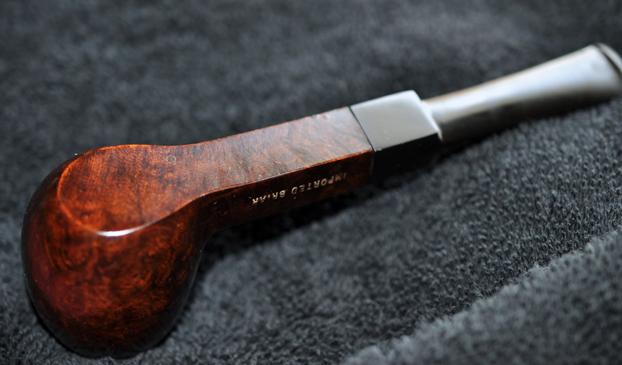
This strange looking pipe came from Josh (misterzippo), a reader of the blog earlier this year. He sent me an email and photos some pipes that he thought I might want. As usual when you have incurable PAD there is always something that catches my eye. We fired some emails back and forth about the pipes and it did not take long to make a deal. I bought a Malaga Bulldog, a pair of Wally Frank Sandblast Filter pipes, a little Jost’s and this bizarre looking Rettke. There were a couple of things about the Rettke that fascinated me in terms of the history. The stamping of Washington, MO. made me think of Missouri Meerschaum Corn cob pipes which are also from there. I wondered about a connection. The stem is identical to a Medico/Grabow style stem and was made for a Medico paper filter. That also made me wonder if there was a connection to Medico. I will need to do a bit of research to see if I can unearth the connections. I have an unstamped Rettke and find it a fascinating piece of pipe history so I decided to pick up on from Josh. He sent along a photo of the underside of the bowl and shank to show the stamping on the pipe so I would know it was a true Rettke unlike my other pipe. I asked him for photos of the pipes that he had in hand so I could make a decision on which one that I was interested in. He sent along the photo below showing the four pipes that he had available for sale. I wanted something different from the unmarked one that I have which is rusticated. It is a lot like the third pipe in the photo below so I wanted a smooth Rettke. I looked over the pipes and asked him to choose one of the top two smooth pipes in the photo below and include with the other pipes I purchased from him. He chose well and when it got here I was thrilled with his chose. The one he sent was the first pipe in the photo. It has some really nice grain on it.From the photos I could see that the pipe was dirty but that is never really a problem. The tape measure in the photo shows that the Rettke is about 5 inches long with a taper stem. When the pipe arrived in Idaho, my brother took photos of it so that we would know the condition of the pipe before he started working on it. The finish on the briar looked good underneath the grime of the years. There was a cake in the bowl and a buildup of lava on the top of the rim. It was not possible to see what it looked like under the cake so after cleaning we would know if there was rim damage. The stem was made out of nylon and it had a lot of tooth marks and scratches in the surface and they were deep. It was going to take some work to fill them in and sand them out. Polishing the nylon stem is not a pleasant exercise. It takes a lot of work to get it smoothed out and blended together. The metal spacer was an integral part of the stem. It was rough was in good shape with light oxidation and some tooth marks on both sides near the button.Jeff took a close up photo of the rim and bowl and you can see the general condition of the pipe from that photo. This must have been someone’s favorite pipe and it must have smoked very well to have this kind of cake and tar build up. I was looking forward to seeing what was underneath all of that debris on the rim and in the bowl.The next two photos show the stamping on the bottom of the bowl. They are fascinating in that they not only identify the maker but they tell about his method of stamping the pipe. The second photo shows the date stamp and you can see that the patent date is on a bar and the bar was pressed into the briar leaving a faint imprint behind the date stamp. The stamping reads J. Rettke over Washington, MO. and next to that it reads Pat. June 12, 1962.There is some pretty grain on the piece of briar underneath the detritus of time. I was looking forward to making that shine.The next photos show the pipe from various close-up angles so that you can see the damage to the stem and the junction to the shank and stem. Jeff removed the stem from the shank and unscrewed the knurled silver coloured cap below the stem and took photos. It looked to me that the pipe was missing a stinger apparatus that attached to the knurled cap. The last two photos that Jeff included show the top and underside of the stem at the button. There were quite a few tooth marks and lots of chatter on both sides of the stem. When I saw that it was a bit of a pain because cleaning up these nylon style stems is difficult and time consuming.Jeff did his usual thorough cleanup of the pipe. I am coming to expect nothing less when he sends me pipes that have gone through his cleaning process. He reamed the bowl with a PipNet reamer, scraped the bowl and the rim top with a Savinelli Fitsall Pipe Knife to clear off the lava build up. He cleaned out the internals in the airway in the shank and the condensation chamber with alcohol, cotton swabs and pipe cleaners. He cleaned out the metal tenon and the airway in the stem with alcohol, cotton swabs and pipe cleaners. He scrubbed the exterior of the briar and the stem with Murphy’s Oil Soap and a tooth brush to remove all of the grime on the briar and the stem. He rinsed the parts under running water and dried it with a soft cloth. He soaked the stem in OxyClean to clean off the grime on the surface. When the pipe arrived in Vancouver it looked different than it did in the above photos. The rim top and bowl looked really good. The damage was minimal and very visible. The condition of the stem was much as I had expected. Before I started my restoration work on the pipe I decided to do a little research on the brand. I first turned to Pipedia where I found a short entry. I include that here as it confirmed that I was missing the 2 3/8 inch corkscrew device. I quote it in full with the link to Pipedia.
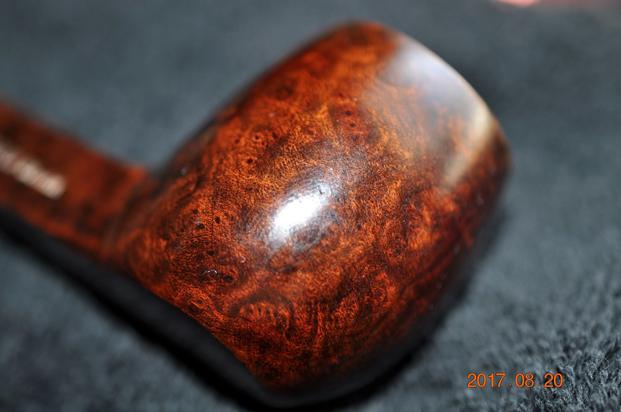
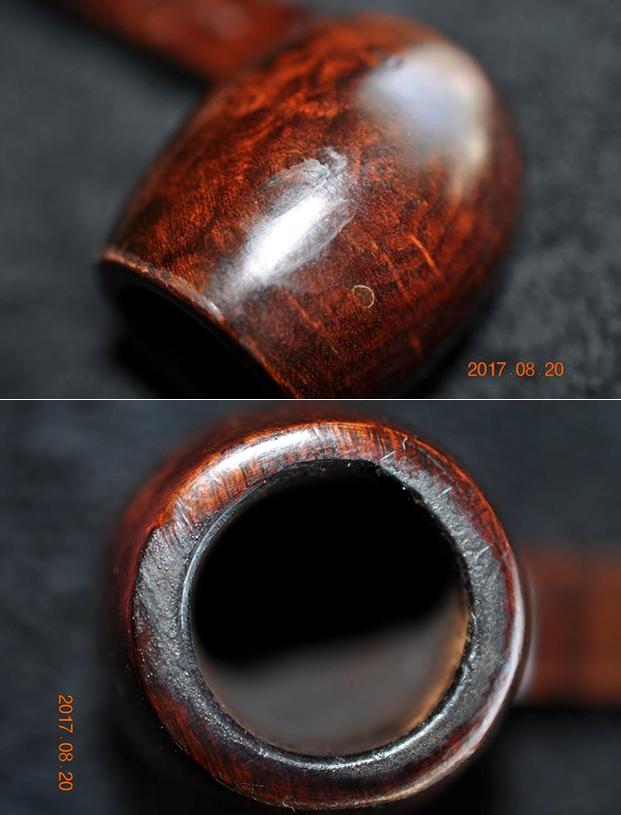
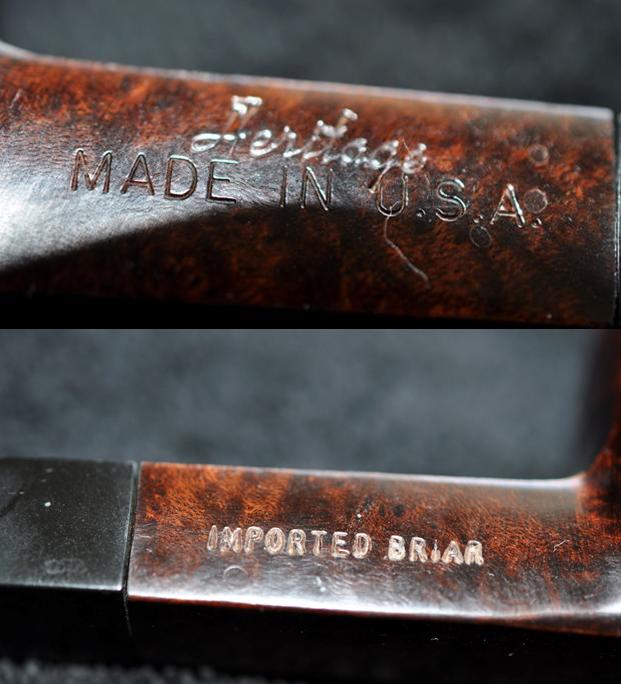
J. Rettke, Washington MO, PAT. June 12 1962. The silver colored thumbscrew below the stem unscrews and is a 2⅜” corkscrew like device. The company is now gone having been purchased by Missouri Meerschaum. This odd looking pipe is made of briar and has a lower chamber with a metal condenser and an upper chamber that contains a filter. The smoke leaves the bowl thru the lower chamber then into the upper and out the stem. It smokes dry and cool. It has a large bowl. https://pipedia.org/wiki/Rettke

The pipe was not included in my other usual sources so I dug a bit further to see if I could find more information on the brand and the maker. I wanted to know the links to Missouri Meerschaum or Dr. Grabow/Medico. I found an article in the Washington Citizen Newspaper from Washington, Missouri dated December 13, 1964. Here is the link. I included a photo of the news clipping below as well as a transcript of the article that I did using a magnifying glass. I also copied the photos for ease of reference. I have included them in the article transcript with the captions  http://digital.shsmo.org/cdm/compoundobject/collection/WashCitz/id/21937/rec/1.

Julius Rettke Makes and Sells 3,000 Briar Pipes in Two Years

Julius Rettke spent 43 years making pipes. Two years ago he retired. What happened?

“I just couldn’t sit still. I had to do something.”

He went back to making pipes. He calls it a hobby and that’s what it is for him. He could sell his patent and there is no doubt that it could be made into a lucrative business. But Julius is interested in it only as a hobby. He is 74 years old.

He doesn’t advertise his pipes but has made and sold about 3,000 of them in the past two years. Each sells for $4.00. He has been told he could sell them for $8 to $12.

“I would rather sell them for $4. You know there are a lot of people that can’t pay more than that for a pipe.”

Hasn’t Promoted Pipes

His advertising has been only by word of mouth. He does burn his name and Washington, Mo., on the pipes. Most of his pipes have been sold in this immediate area, but he has had orders from all over the country. Many people give them as gifts. Several companies with chain retail outlets would like to handle his pipes.

Julius made his first pipe about nine years ago. It was made of pecan wood. He gave it to James L. Miller of The Missourian-Citizen to try out. The newspaper publisher at that time was a steady pipe smoker. He liked the pipe.

“That made me feel like others would be interested,” he said. But he was too busy with his job as a machinist at Missouri Meerschaum, where he spent 43 years helping to make corn cob pipes. After he retired he made several pipes out of cherry wood. But he soon found most pipe smokers preferred a briar pipe. Carl Otto, his former-boss, supplied him with briar roots and he made his first briar pipe.

“I took the first pipes to the Bryan boys (Harvey and Tom) and they like them. Before long people asked me to make pipes for them. That’s how I got started.

Does Work in His Basement

The work is done in Mr. Rettke’s basement of his home at Third and Market streets. He doesn’t work at it every day only when he feels like it. He likes to fish and that comes before his pipes in the summer.

What is the reason for the rather wide acceptance of his pipe?

“They claim it is a dry smoking pipe with no nicotine. It has protection against nicotine,”

Mr. Rettke received his patent on his pipe in 1962. What makes his pipe different from others on the market is the path the smoke takes from the bowl, and the passage of smoke through a twisted piece of aluminum, or a “whirler.” The smoke also travels through a standard filter in a standard hard-rubber stem. The “whirler” has a rubber tip that shows on the outside of the pipe under the stem. The “whirler” also can be used as a pipe cleaning tool. It pulls out easily for cleaning purposes.

Mr. Rettke: makes only one style of pipe. He buys his briar roots from a New York importing company. The briar roots are grown chiefly in Mediterranean countries. Most of the briar now conies from Greece and is several hundred years old. The briar itself is a shrub-like plant. The briar burl is cut into specific sizes and shapes and it is in an almost square form when Mr. Rettke receives it.

The manufacturing process in Mr. Rettke’s basement is illustrated in the accompanying photos.

No Production Schedule!

When he works at it, he can make about 10 or 12 pipes a day, he has no production schedule to meet! Things tend to get a little hurried around Christmas time since many people buy pipes for gifts.

When he received his patent, Mr. Rettke gave one of it to John Fowler, who is a career man in the Air Force, and to Wilson Schroeder of Washington, his two sons-in-law. Mr. Rettke’s son, Arthur Rettke lives in Clover Station. He is a carpenter and does some farming.

Mr. Rettke was born and raised in Warren County near Martinsville. He spent some time as a carpenter before going to work for Missouri Meerschaum.

Mr. Rettke was never a heavy smoker and never did smoke a pipe. He did smoke cigars for a period, but he gave that up long ago.

“It’s just a hobby with me. I never expected it to be anything else, but somebody should take it over after I’m gone,” he confided.

To me this is a fascinating article. It answered at least some of my questions. Julius Rettke had indeed worked for Missouri Meerschaum as a bowl turner in their factory. On his retirement he started making the pipes. He only made one style of pipe and never varied from the basic shape. He purchased briar from a company in New York. I wonder if he did not purchase it from S.M. Frank along with the premade Medico style stems and filters. I suppose I won’t ever know but it does fit the general information above.

Now better armed with information I turned my attention to the restoration of the pipe. I took it apart and took a photo. I was missing the “twirler” as Julius called the spiral condenser that sat in the condensation chamber below the bowl. Everything else looked good. He had chosen a beautiful piece of briar and laid out the pipe to fit the grain pattern really well. This would be a pretty looking pipe once it was polished.The nicks and scratches on the rim top and edges were deep enough that a light topping was warranted. I topped it on a piece of 220 grit sandpaper on the topping board. I did not have to top it too much as continuous checking showed me when the surface of the rim was smooth.The stem was a mess so I decided to clean it and do some repairs to all the damaged spots with black super glue. It would take time for the glue to harden, so I applied it and gave it a quick shot of accelerator. The accelerator dried and turned to a white powder on the rest of the stem as seen in the photos below. I set the stem aside to dry and called it a night. I have to tell you; my strong dislike of nylon pipe stems is even more confirmed. They are hard to repair as dents are virtually permanent. Patching with black or clear super glue works but leaves shiny spots that are hard to blend into the rest of the material. Polishing to get a shine needs to be done by hand as a buffer, even with a light touch, melts the material and sends you back to the beginning. They are a pain. I polished the stem with micromesh sanding pads – wet sanding with 1500-2400 grit pads and rubbing it down with Obsidian Oil after each pad – not so much to give shine as to give more bite to the micromesh. I dry sanded the stem with 3200-12000 grit pads and repeated the oil after each pad. The stem is slowly but surely getting a shine. (The shiny spots in the photos are not dents but super glue repairs.) I polished the briar with micromesh sanding pads – wet sanding with 1500-2400 grit pads. I wiped the bowl down with a wet cloth to wipe off the sanding dust after each pad. The further I went with the micromesh the deeper the shine became. This is really a pretty piece of briar. I dry sanded with 3200-12000 and once more wiped the bowl down with a damp cloth. I took apart the other unstamped Rettke style pipe and removed the “whirler” from that one. I inserted it in the knurled cap that sat under the stem and took the following photo.I worked on the stem for several hours. I was able to smooth out the damaged areas but they show up in the pictures. They look like black dents or dips in the stem surface but they are actually the super glue repairs. The nylon is very hard to polish for me. Buffing on the machine is next to impossible without melting it. I polished it with polishing compound by hand and I gave the stem multiple coats of Conservator’s Wax. I hand buffed it with a microfiber cloth to give it some life. Once that was finished I called it done. I buffed the bowl with multiple coats of carnauba wax and buffed the bowl with a clean buffing pad to raise the shine. I put the stem back on the bowl and gave it a final hand buff. The finished pipe is shown in the photos below. It is a beautifully grained piece of briar and is lightweight and interesting to look at. Thanks for journeying with me through the history and the restoration.

Repairing a Cracked Shank and a Chipped Stem on a Dr. Plumb Bulldog


Blog by Steve Laug

I received a short email from a reader of the blog about a Dr. Plumb Bulldog that he had that needed a bit of work. He wanted to know if I would be willing to work on it for him. He said that there were some issues with the pipe that he wanted me to try my hand at repairing. He said that the shank had a crack, the stem had a broken stinger end lodged in the airway and the button was broken off on the underside of the stem. I wrote back and asked him to send me some photos of the pipe so I could see what he was speaking about regarding the pipe. He sent the first photo to give me an idea of the overall look of the pipe. Looking at it I have to say that it is a classic GBD shaped bent Bulldog and it had nice grain. He sent a photo of the crack at the bowl/shank junction and noted that he had glued it but was not happy with the way it looked. The photo only shows the crack on the left side of the stem but it was also on the right side. He wanted me to clean it up and stabilize it so that it would not crack any further. That should not be too much of an issue.He sent along a photo of the rim top showed that the outer edge of the bowl had some small nicks in it that needed to be cleaned up. The surface of the beveled rim had some lava overflow and was darkened in several places around the top and the inner edge of the bowl. It was hard to tell for certain from the photos but there was probably some wear on the top and inner edges. The next photo he included showed the stem. Not only was it oxidized with a nice greenish brown colour but there was the “little issue” shown on the underside of the stem. There was a large chunk of vulcanite missing from the button and extended down into the surface of the stem. It appeared to be broken off and I wonder if had not happened when attempting to drill out the broken stinger. I am not sure but I have seen that kind of damage done with a drill bit on other stems in the past. The other possibility is less likely but could have happened, while inserting a thick pipe cleaner the button had cracked and come off.The final two photos pin point the second issue that he was having with the pipe. The metal stinger threaded into the tenon that comes on all Dr. Plumb pipes had been broken off with the threaded portion of it stuck in the tenon and extending part of the way up the stem. His photos included a tenon end shot and a photo of the broken stinger by itself. You can see the ragged edge of the end that would have sat flush against the end of the tenon.Once I saw the photos, I wrote back and told him to send the pipe up to Canada and I would see what I could do with the issues on the pipe. He packed it up and sent it off to me. It did not take too long for it to arrive here in Vancouver. I unpacked it from the mailing envelope it came in and had a look at it. It was even a better looking little Bulldog in person. There were a few small fills on the shank. The largest of the fills was on the right side of the shank right at the junction of the stem and bowl. The crack went through and around the fill. The pipe was stamped faintly on the left side of the shank with the script Dr. Plumb over Perfect Pipe and on the right side it was faintly stamped Made in England and the shape number 134. The stamping was only readable under a bright light. The shank was dirty and the airway in the bowl was tarry and dirty from the buildup around the stinger apparatus. The airway in the stem was dirty and partially blocked by the broken stinger. I took photos of the pipe when I received it so I would have a base to show the progress once I had finished. The third photo shows the damaged stem and I have circled the missing chunk of vulcanite in red. I took a close up photo of the rim top to show the darkening to the rim and the debris that was built up on the top. There was some damage to the inner edge of the rim that would need to be smoothed out.I took some photos of the stem to show the oxidation and the damaged area on the underside at the button.I made a wedge out of cardboard and cellophane tape and pushed it into the slot in the button to provide a base for the repair. I mixed charcoal powder with black super glue and built up the missing chunk. I removed the wedge and slid a greased pipe cleaner into the slot and built up the area on the end of the button. I filled in the deep tooth marks on the top side of the stem with the mixture. I filed the repair on the underside of the stem with a rasp and a file to begin to shape the button edge and blend the repair into the surface of the stem. I shaped the button with the files as well to begin to shape it in a classic football shape to match the top half of the stem. The photos show the progress of the shaping. Once I had the levels on the surface correct I wiped the stem down and could see the tiny air bubbles in the repair. I filled them in with clear super glue and let them cure. Once the repairs had cured I used needle files to reshape the button and slot in the end of the stem. There were a few more air bubbles that showed up as I reshaped the button. Once they dried I sanded repaired spots. I used the files to cut the sharp edge of the button. When the spots dried I sanded the surface of the stem with 220 grit sandpaper to smooth out the repaired areas and blend them into the rest of the stem. I set the stem aside for awhile and worked on the bowl. I wiped down the area around the crack in the shank and drilled small microdrill bit holes in the end of each of them. I fount that on the right side there was a third trail of crack so I drilled it as well. I filled in the drill holes with clear super glue. I layered in the glue to a bubble and let it dry. Once the glue had dried I sanded the length of each crack in the shank and the repaired holes as well until they were smooth. I sanded the beveled rim top to smooth out the damage and clean up the surface. I worked over the inner edge with sandpaper to smooth out the damaged areas.I used a dark brown stain pen to touch up the repaired and sanded areas on the shank and on the beveled rim top. I cleaned out the inside of the shank and mortise with cotton swabs, pipe cleaners and alcohol until the shank was clean and all of the oils and tars were removed.I stained the bowl and shank with a dark brown aniline stain. I flamed the stain to set it in the briar and repeated the process until the coverage around the bowl was even. I wiped down the briar with alcohol on cotton pads to make it more transparent. After wiping it down the grain shone through the stain coat. I think that once it is polished it would be a beautiful finish for this Dr. Plumb. Polishing the stem was a harder prospect and took more work than the bowl. The sanding and polishing process repeatedly revealed new air bubbles in the newly built up underside of the stem and button. I sanded and added drops of clear super glue to take care of each air bubble. It was tedious but it paid off. I polished the stem with micromesh sanding pads – wet sanding with 1500-2400 grit pads and wiping down the stem after each pad with Obsidian Oil. I checked for new air bubbles and then went on to dry sand it with 3200-4000 grit pads. I gave it a coat of oil after each one and then finished polishing it with 6000-12000 grit pads. I repeated the oil after each pad and after the 12000 grit pad I set the stem aside to dry. I put the stem back on the bowl and buffed the pipe with Blue Diamond. I kept a light touch in buffing the underside of the stem and button as I did not want to do any harm to the repair. I buffed the repairs on the shank normally and the rest of the pipe the same way. I gave the bowl and stem multiple coats of carnauba wax and buffed it with a clean buffing pad to raise the shine in the briar and vulcanite. I hand buffed it with a microfiber cloth to deepen the shine. The pipe is almost ready to go back to the pipe man who sent it to me. It will go out later this week after I do a last minute check up on the entire pipe. I want it to go back to him in good condition. Thanks for walking with me through this repair and restoration project.