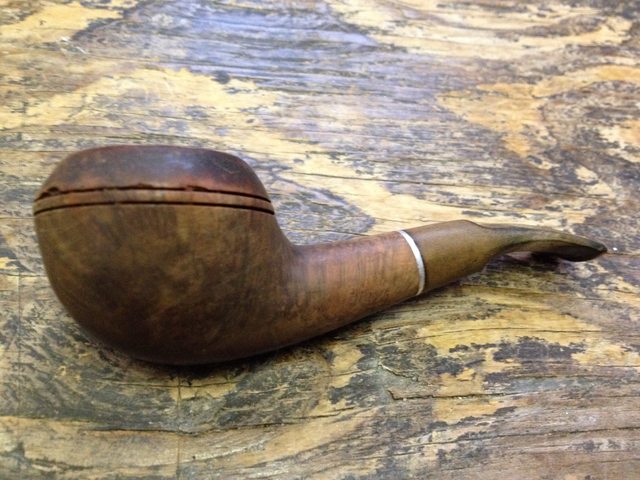
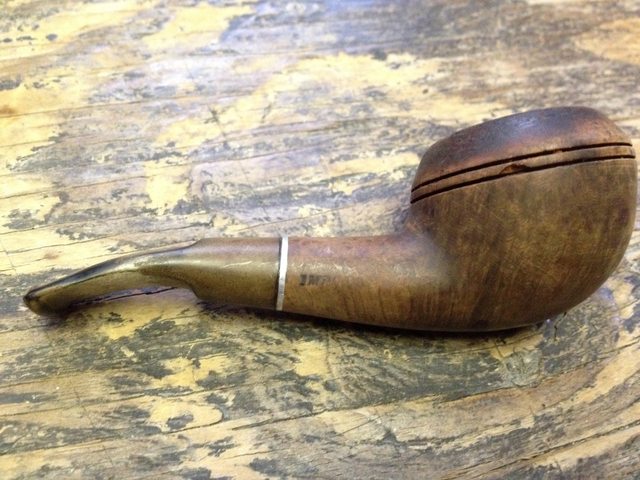
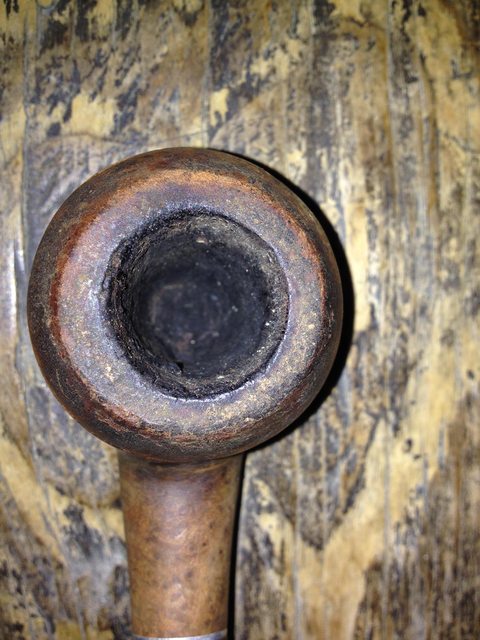
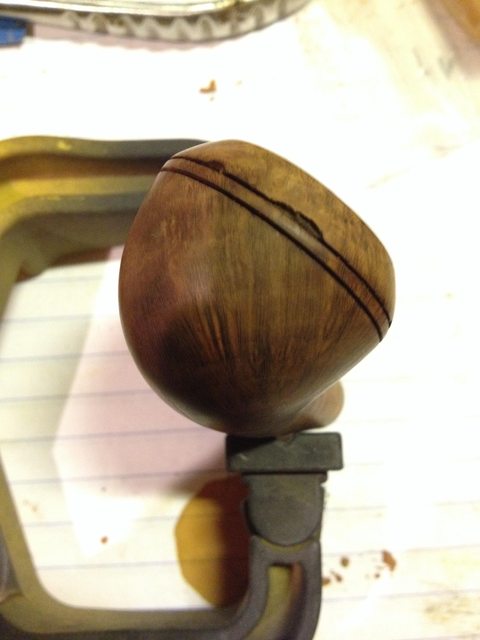
Tag Archives: restaining a bowl and rim

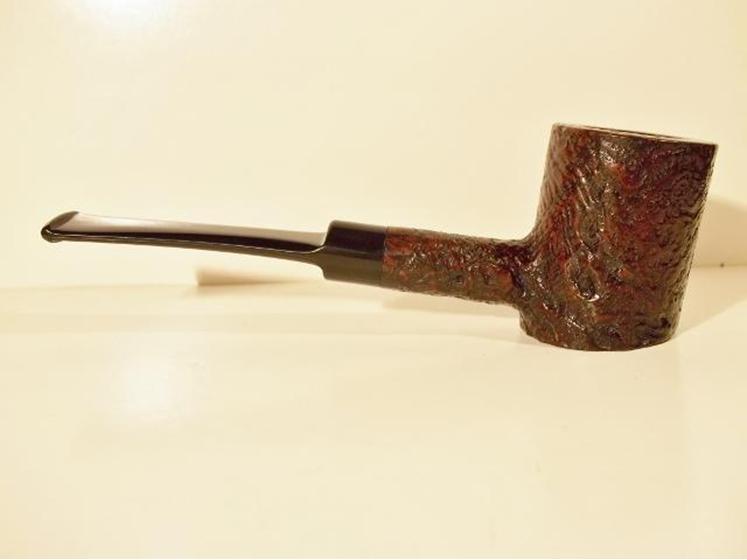
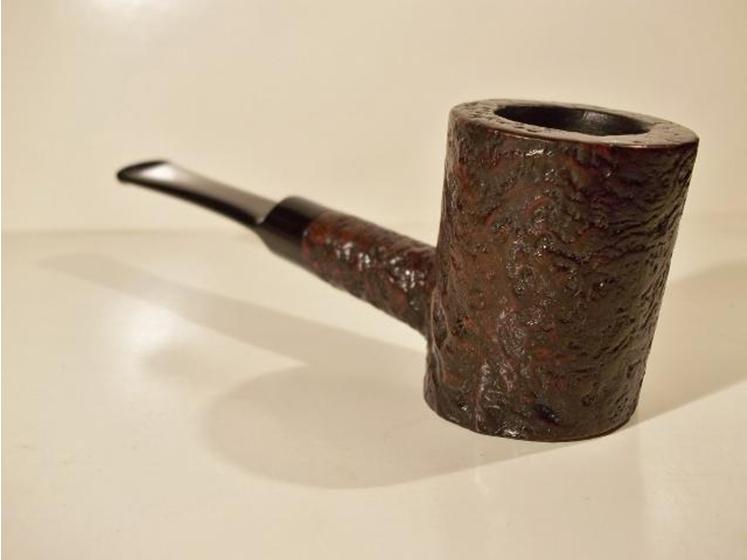
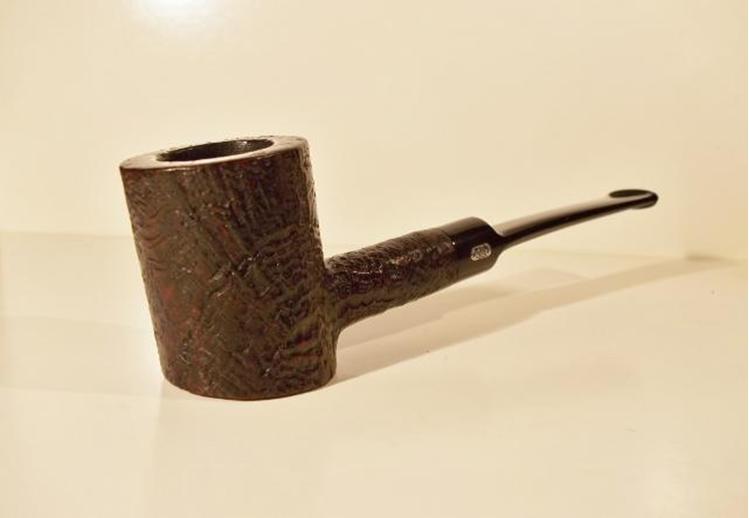
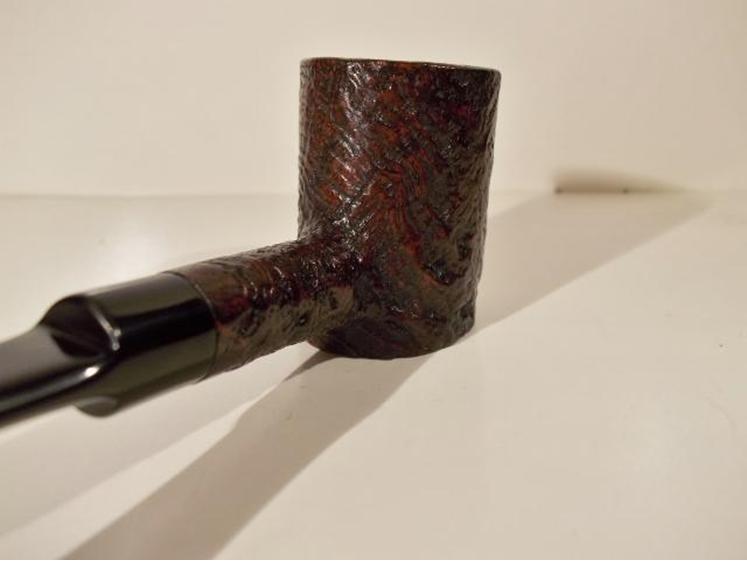
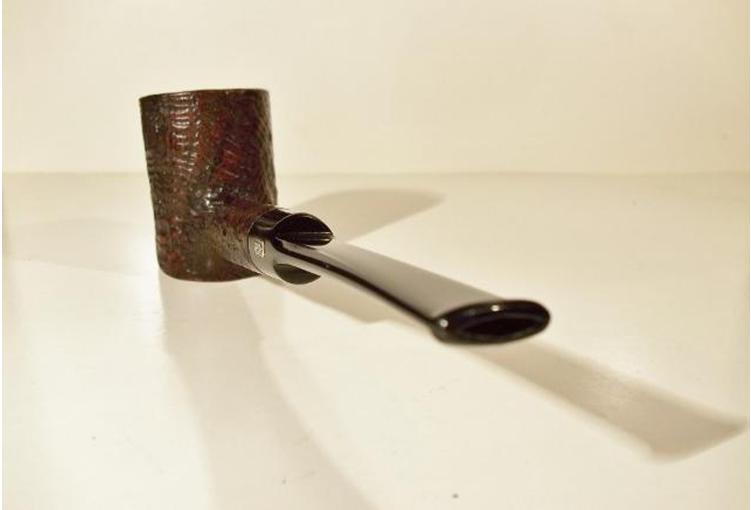
Kaywoodie Fine Line


Blog by Aaron Henson

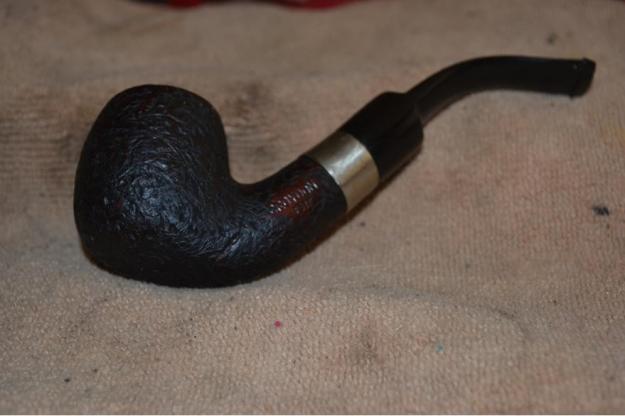
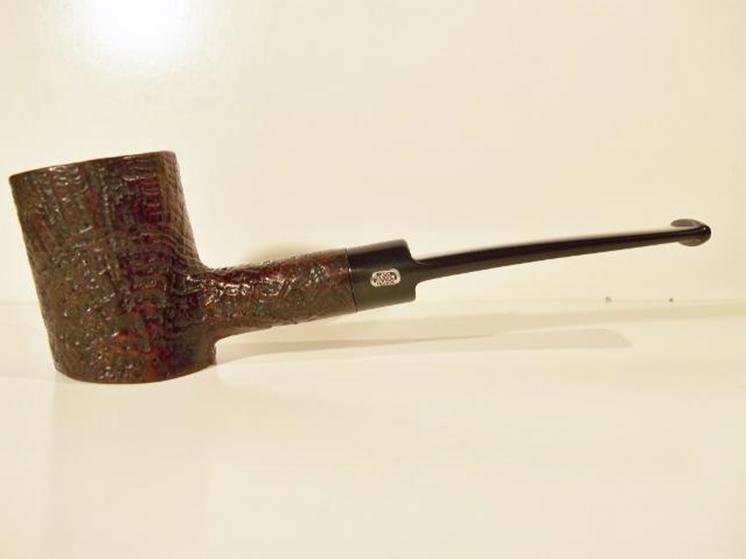
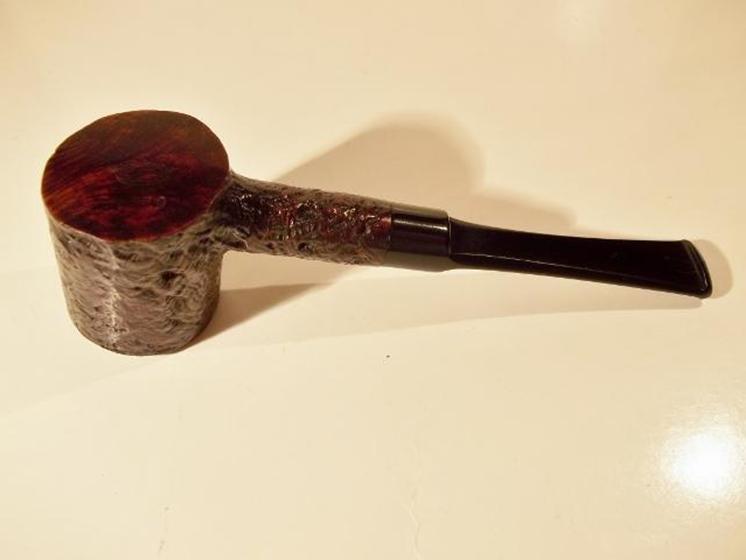
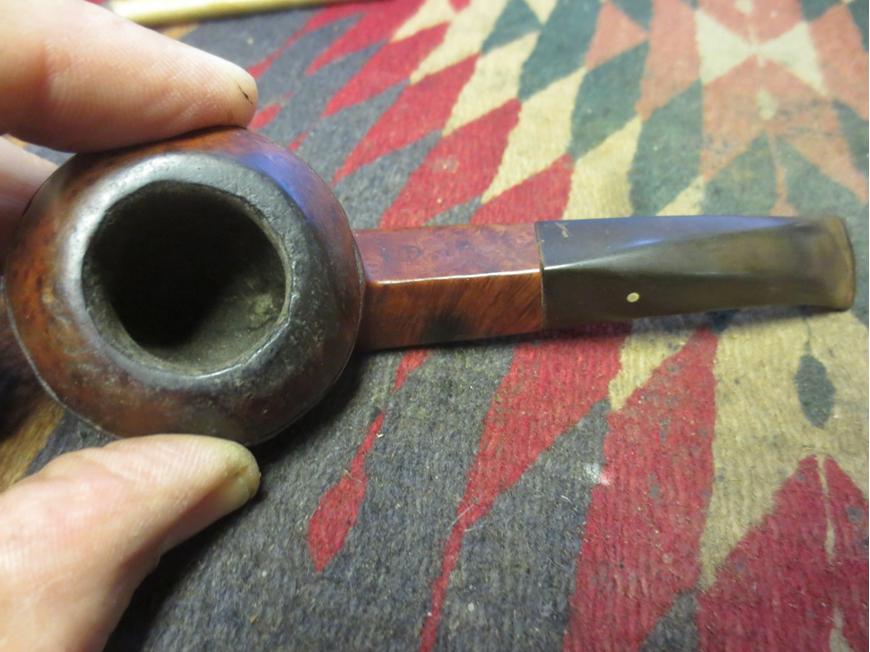
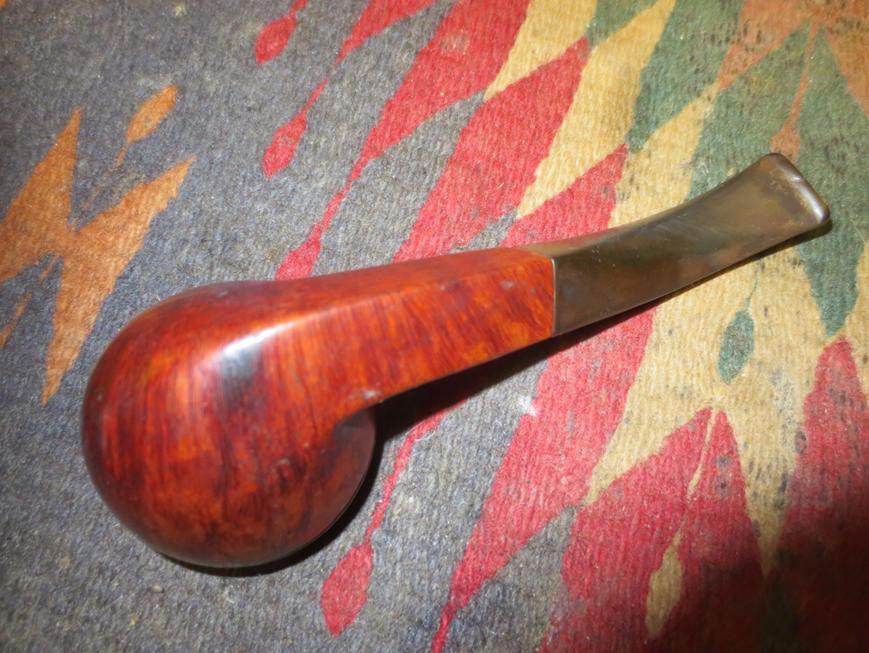
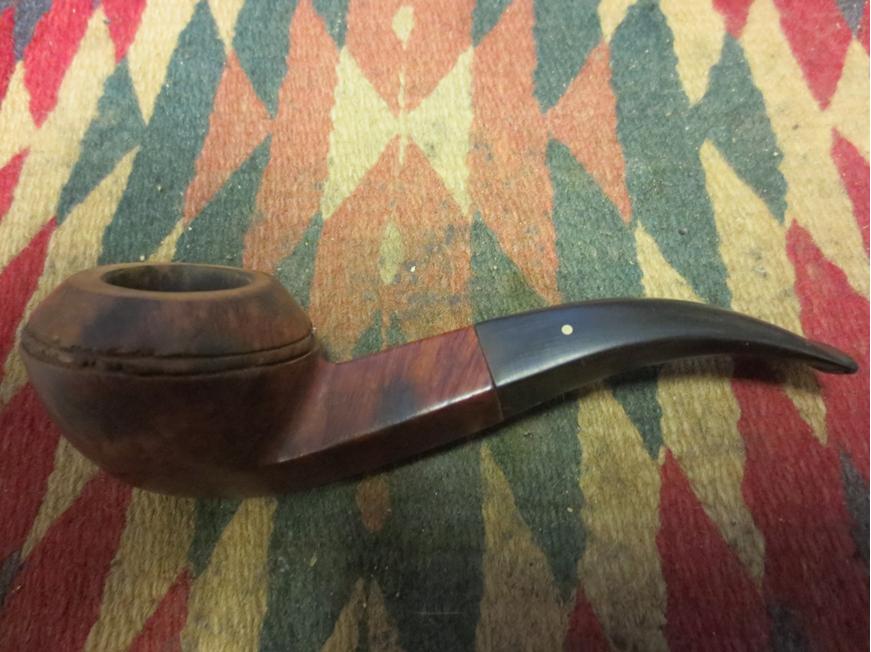
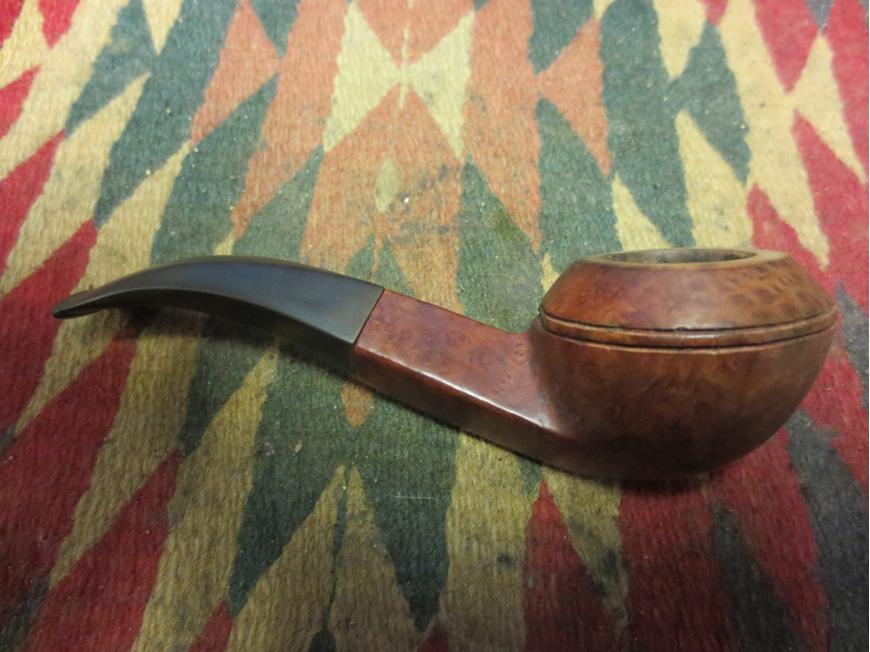
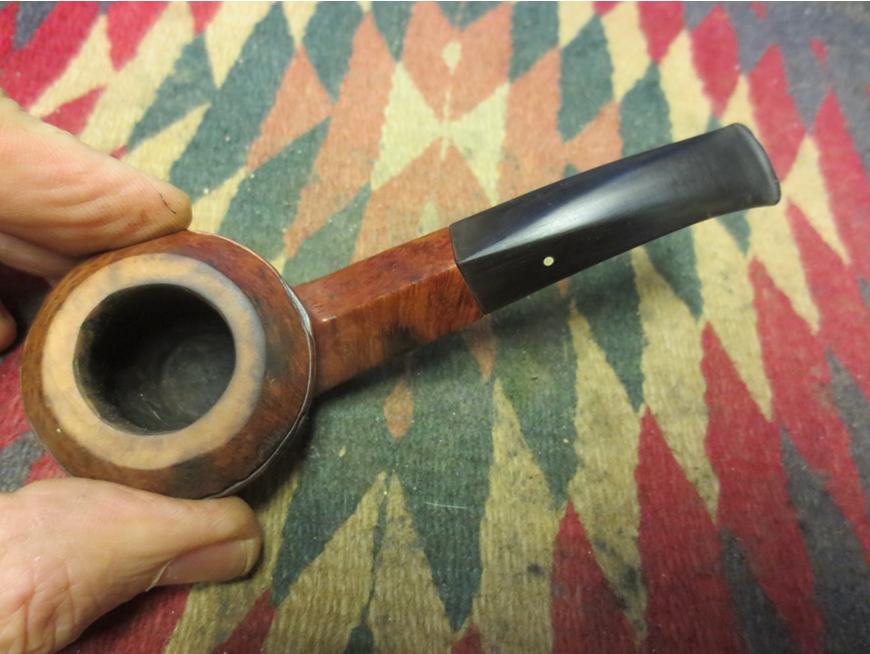
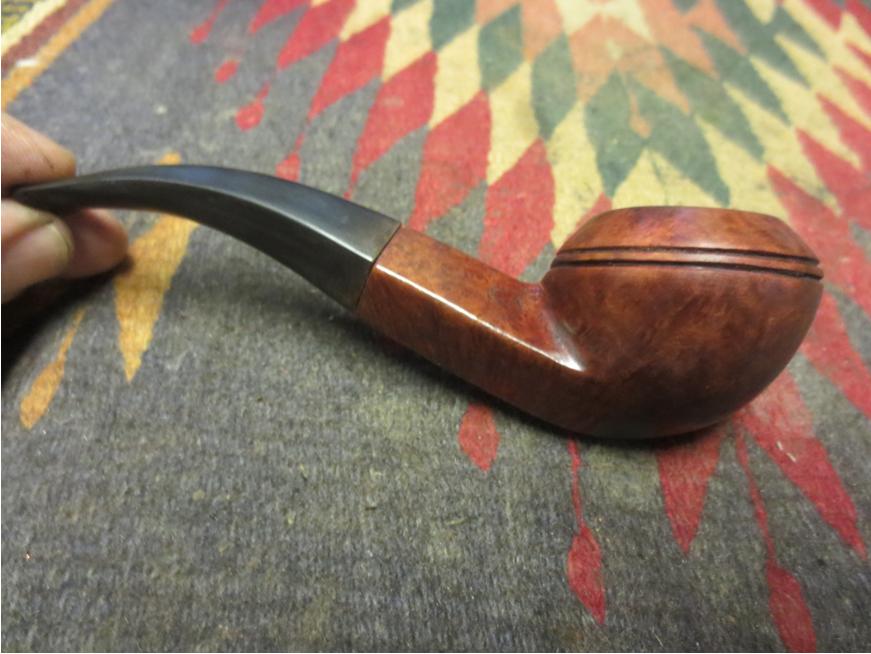
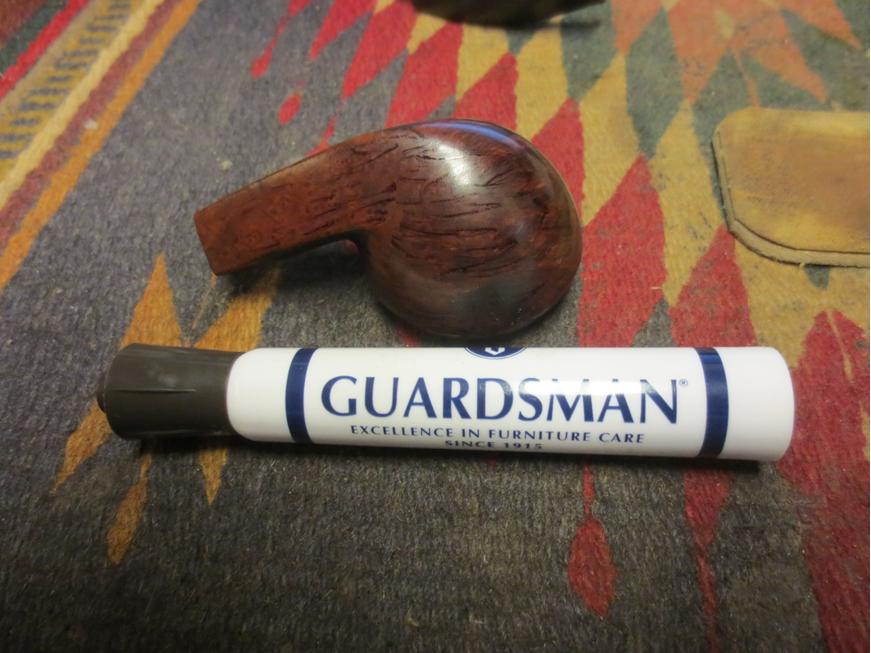
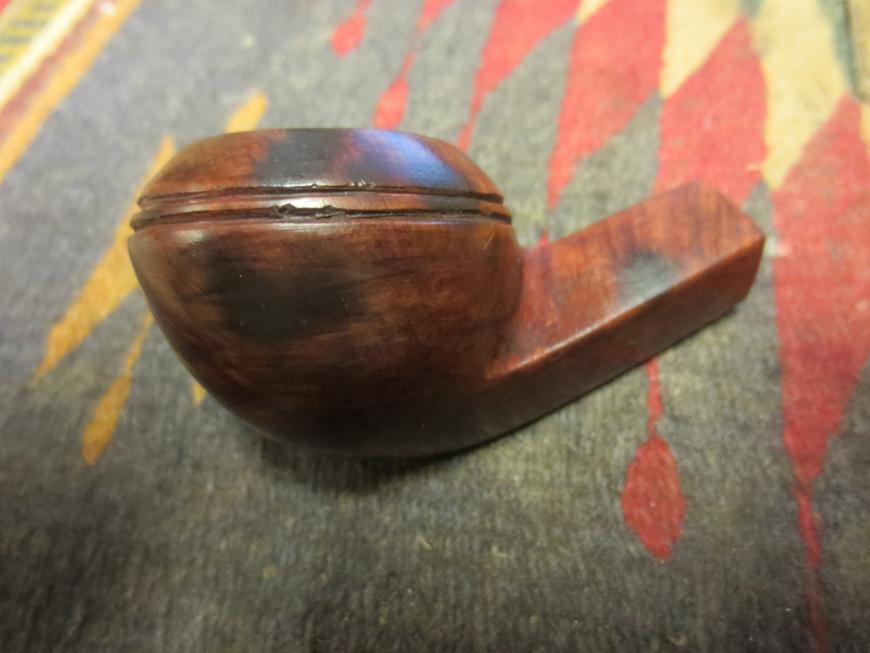
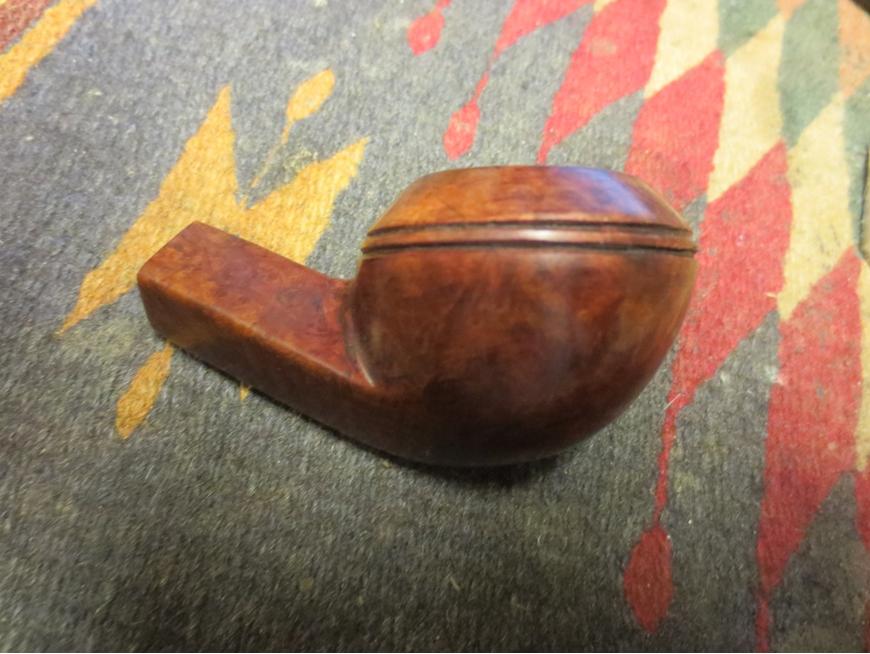
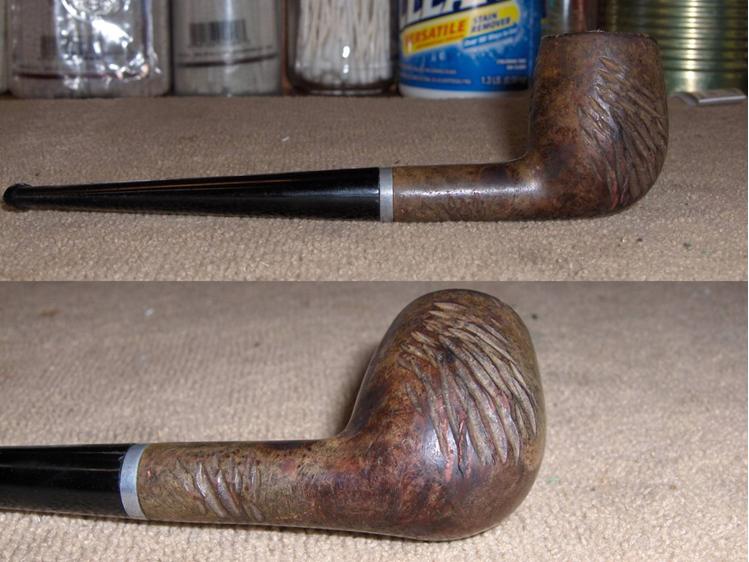
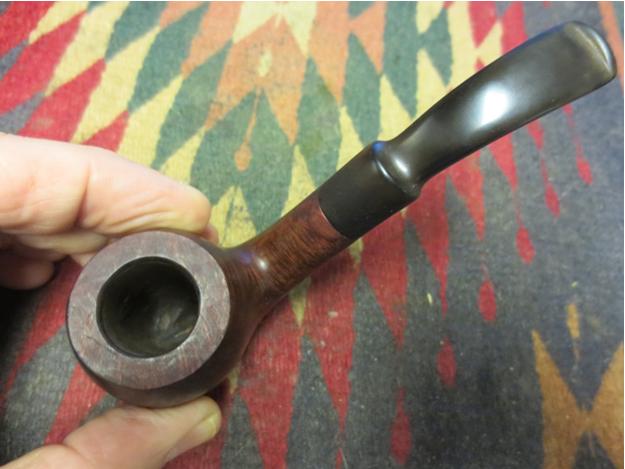
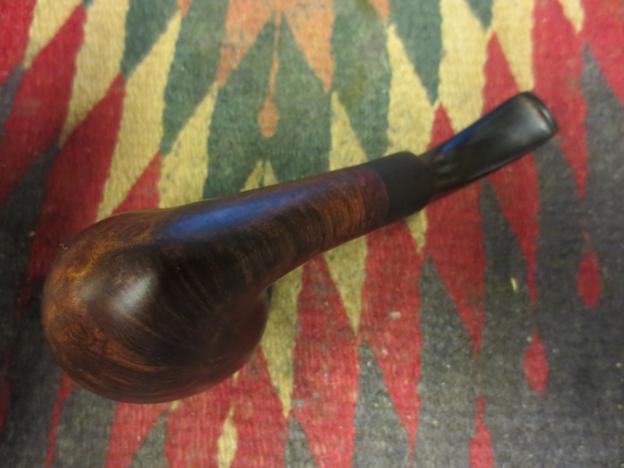
I was in the neighborhood of our second-hand stores a couple of months back so I thought I would stop into one that typically has estate pipes. While browsing the shelves I found three Kaywoodie pipes together in an old coffee cup. None of them were particularly eye-catching: a straight bulldog, a medium pot and this large apple – Fine Line carved. I didn’t have any Kaywoodie pipes in my collection and priced as they were ($11 for the three), I could not pass them up. Besides, I needed some more restoration practice.

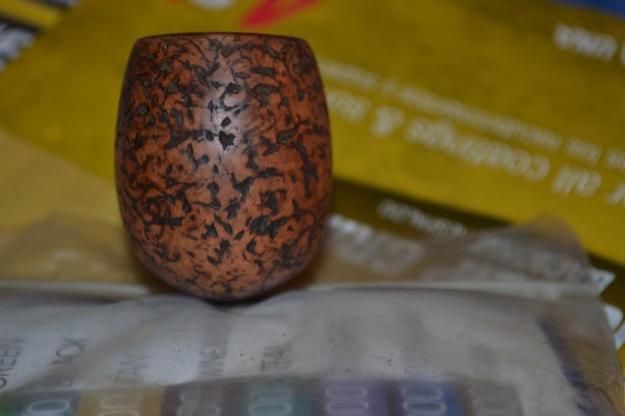
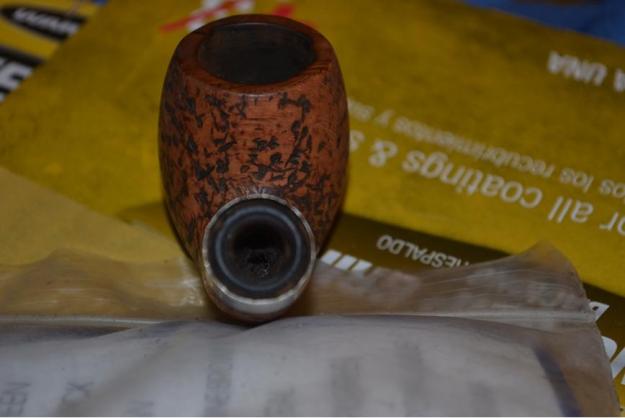
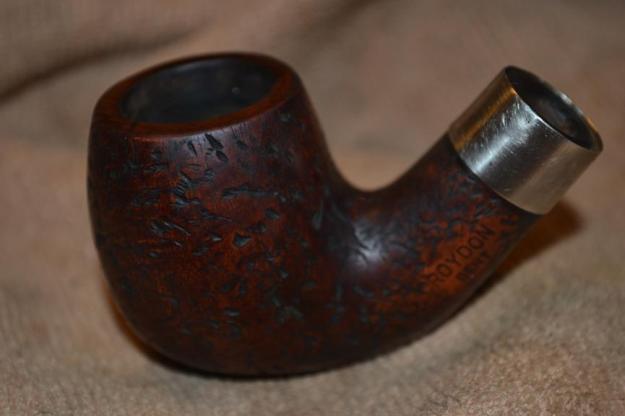
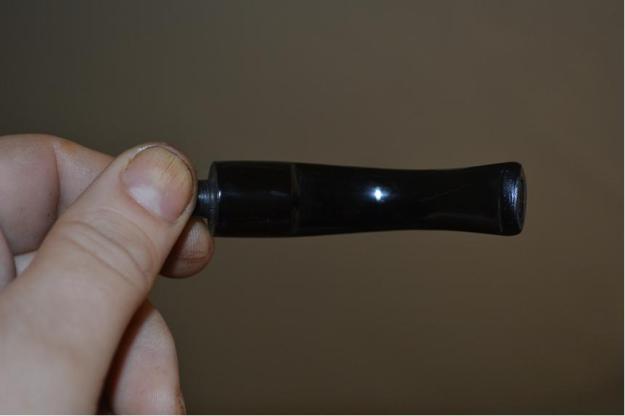
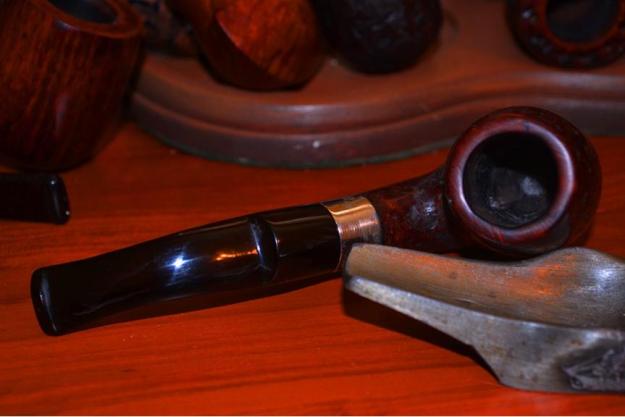
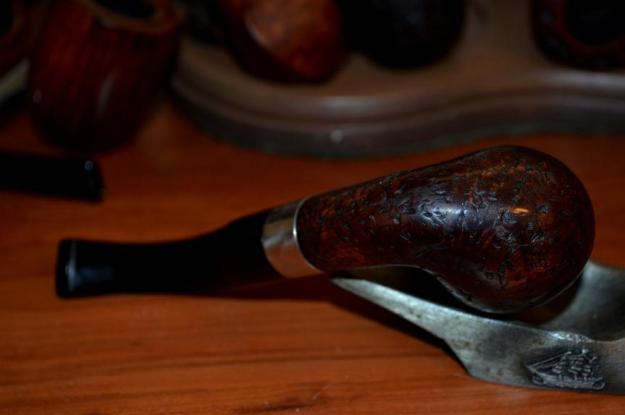
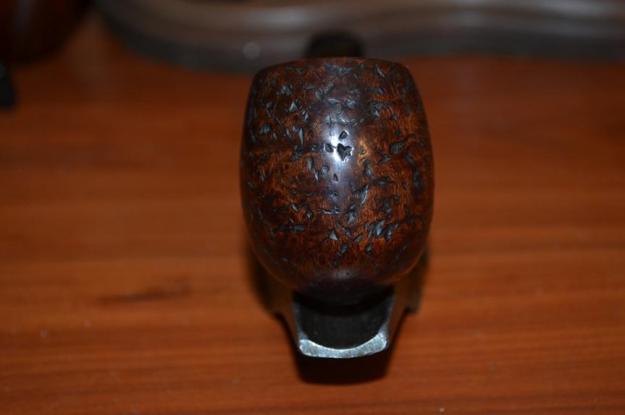
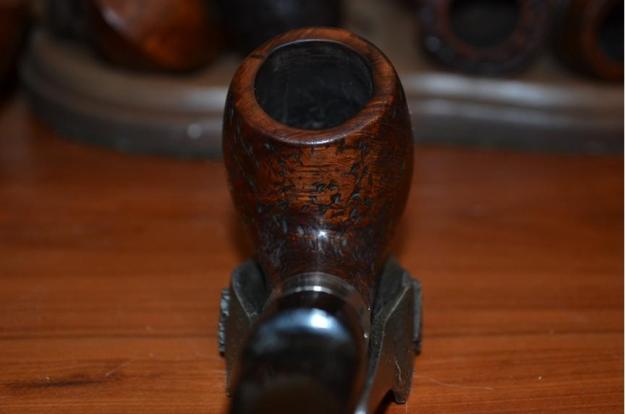
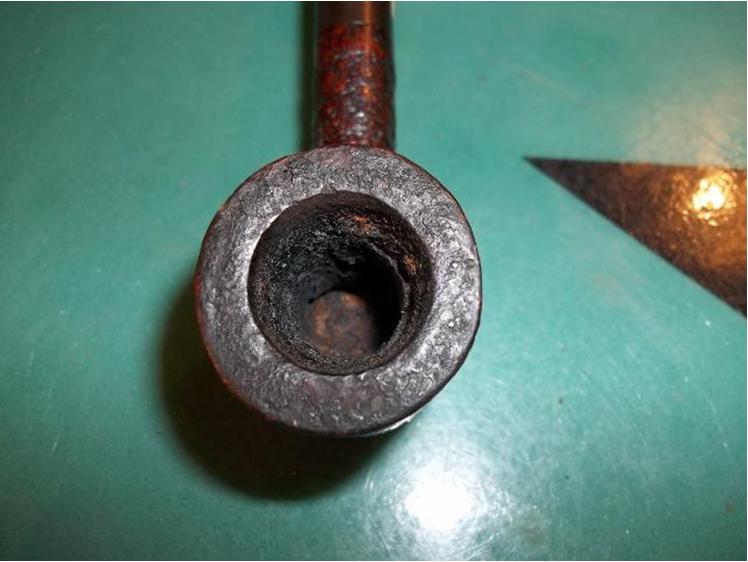
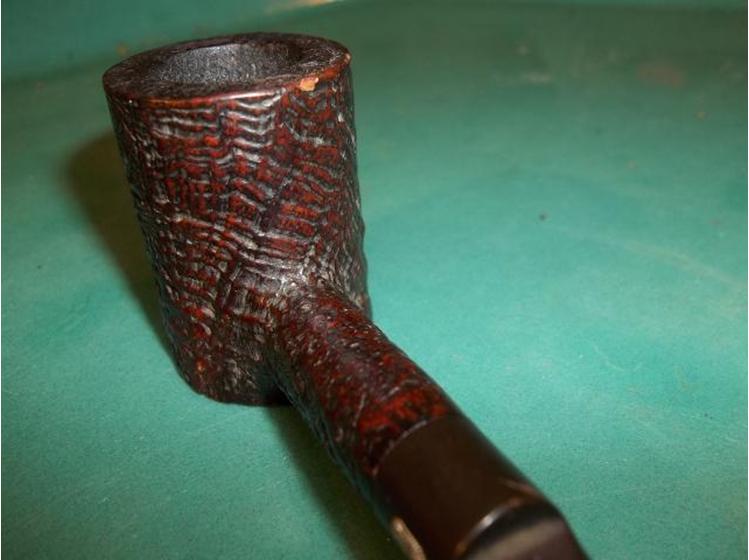
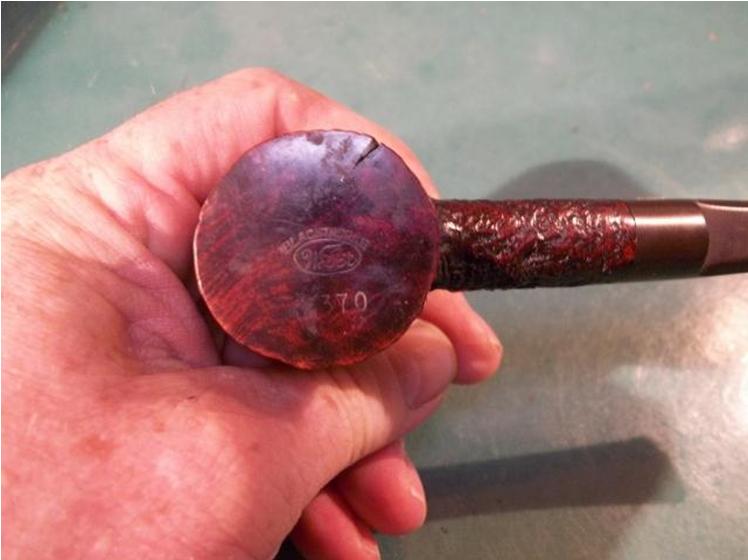
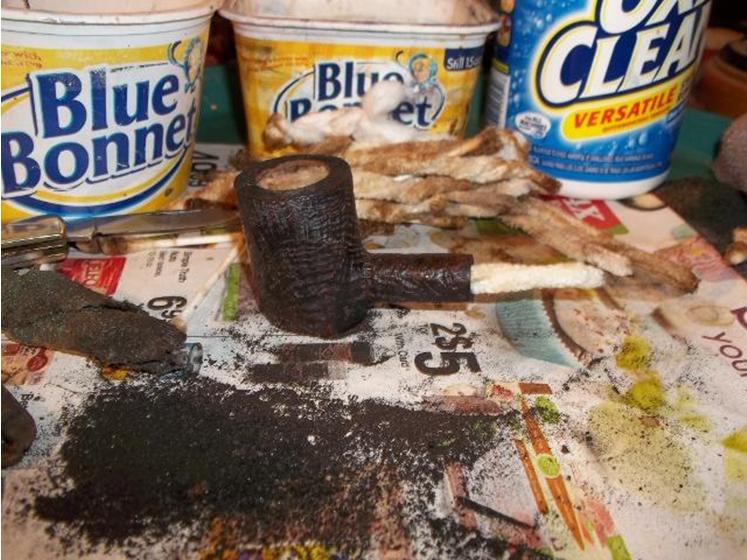
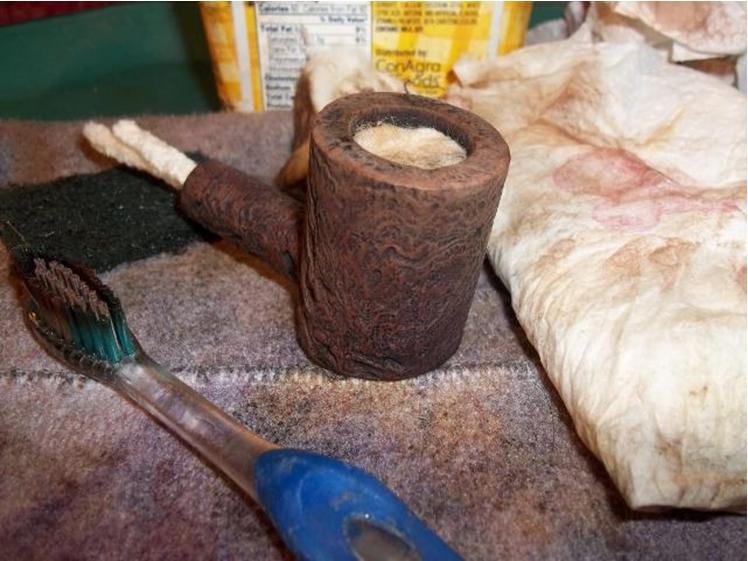
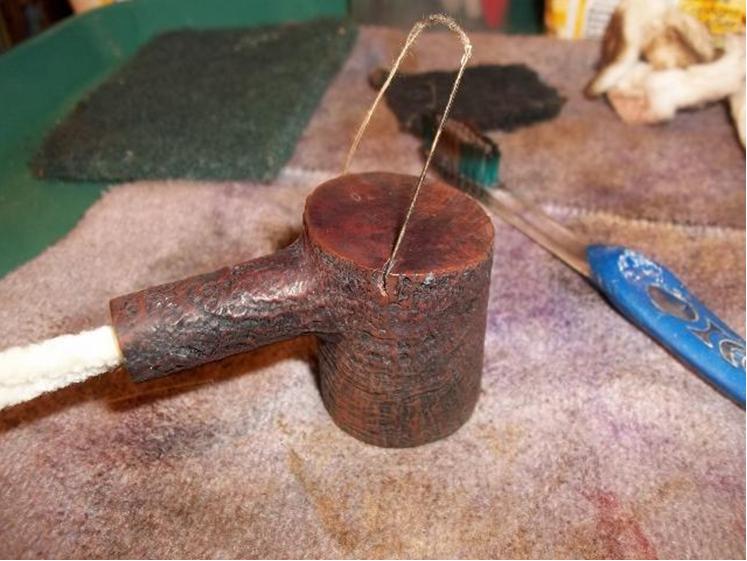
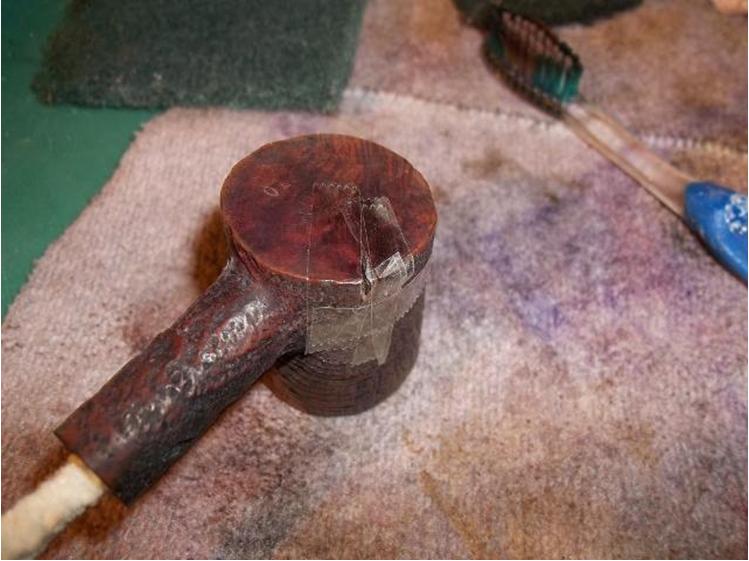
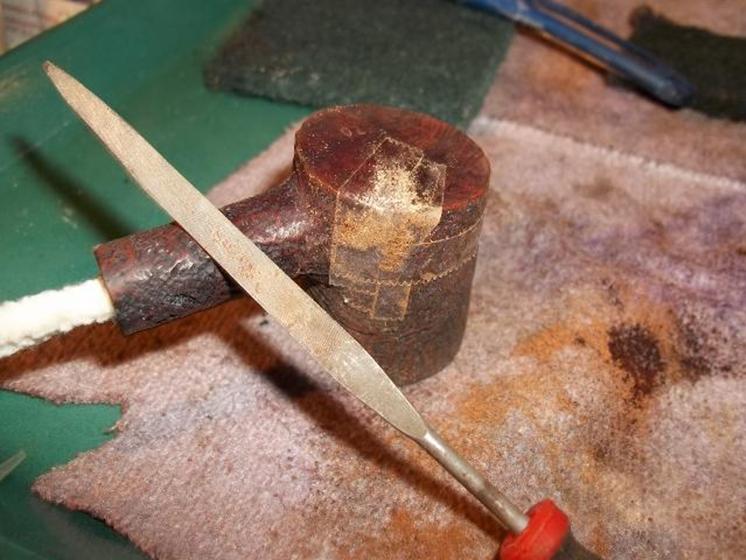
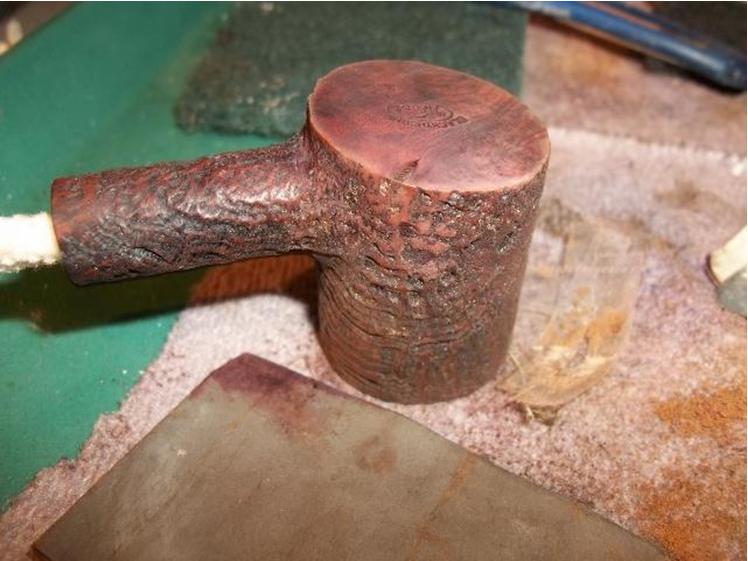
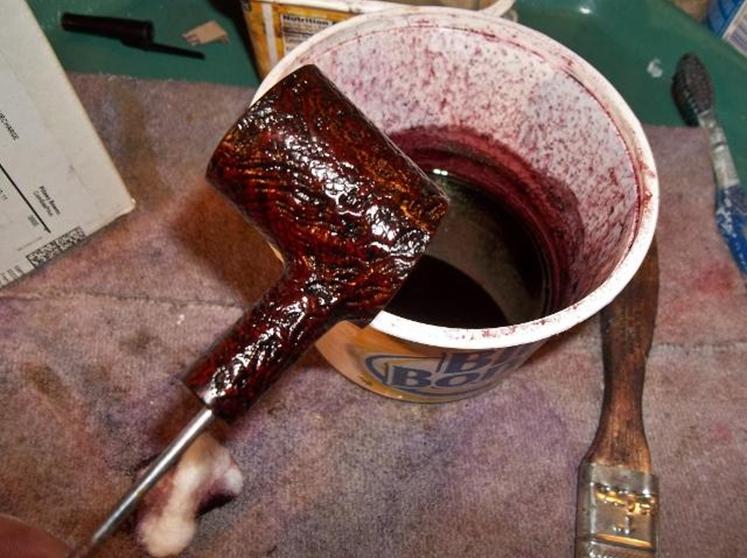
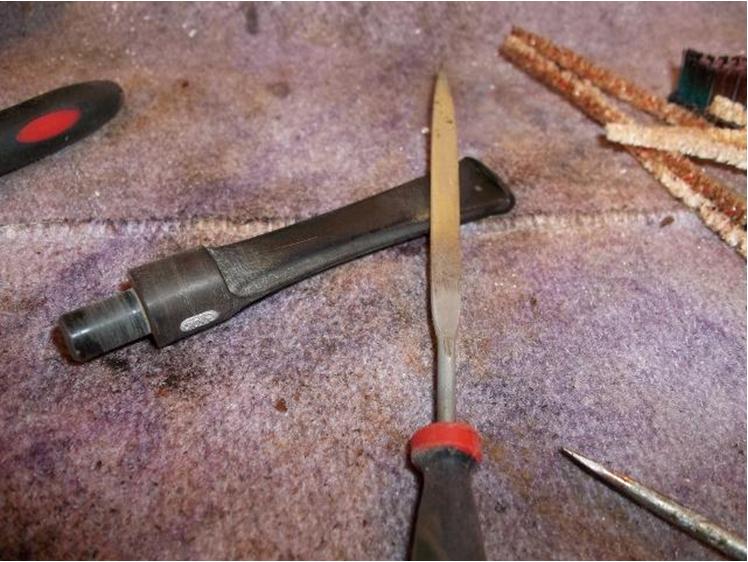
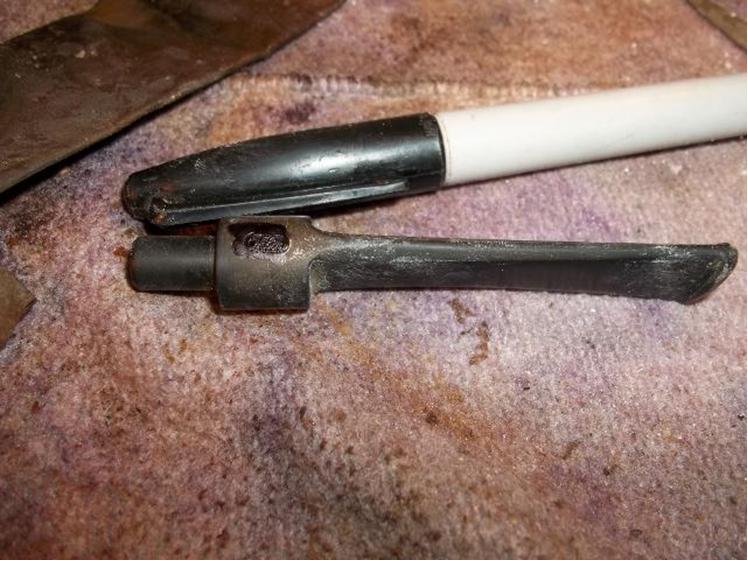
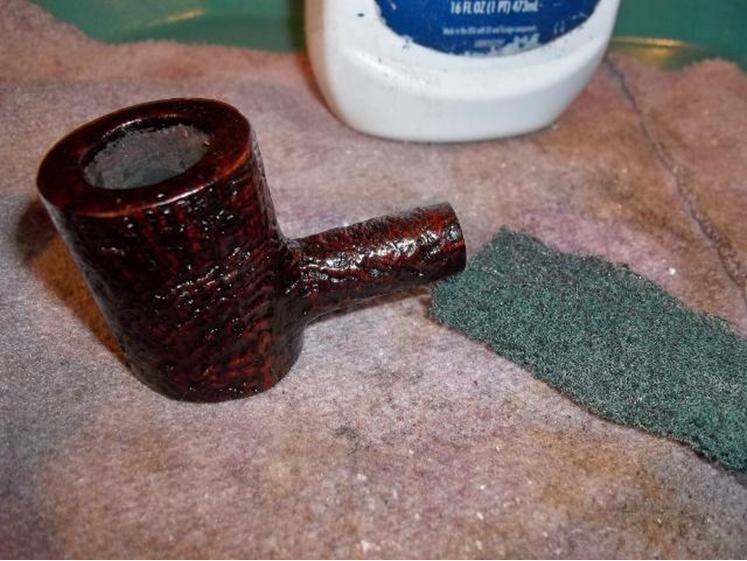
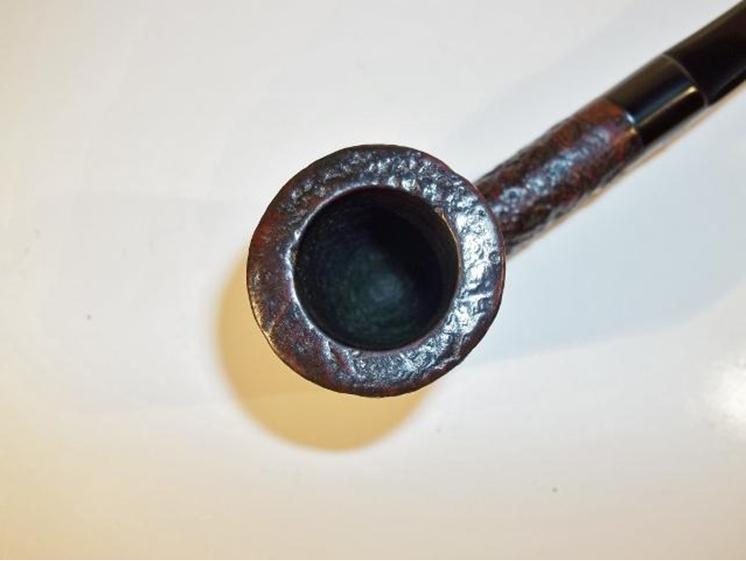
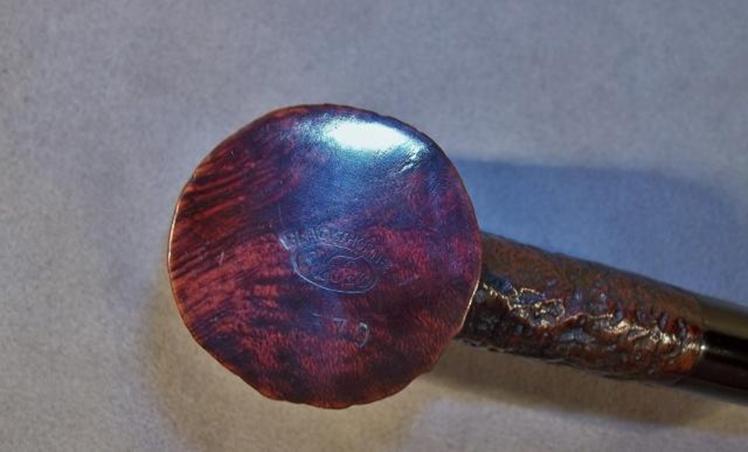
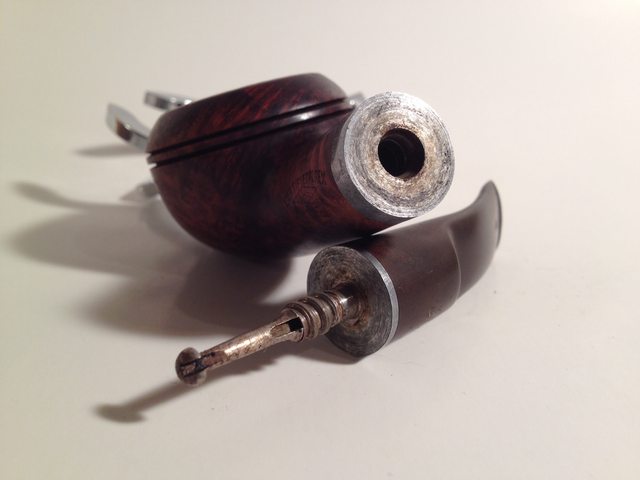
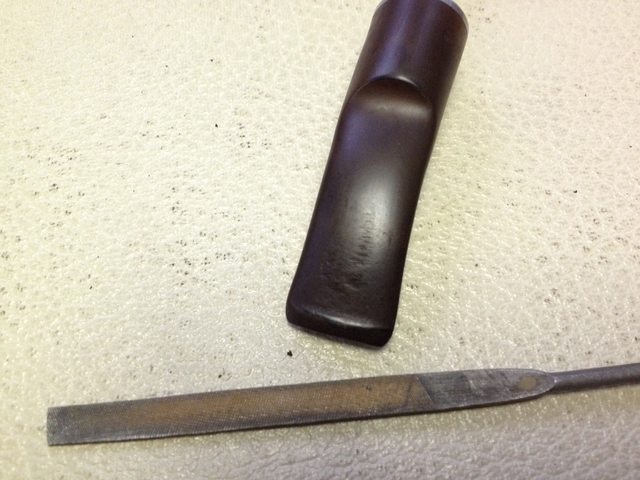
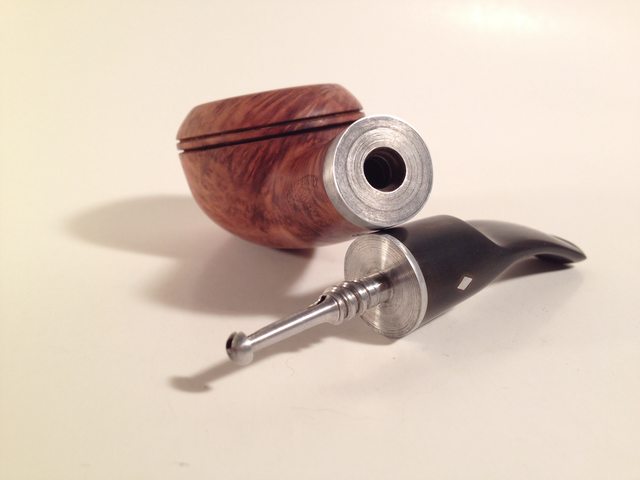
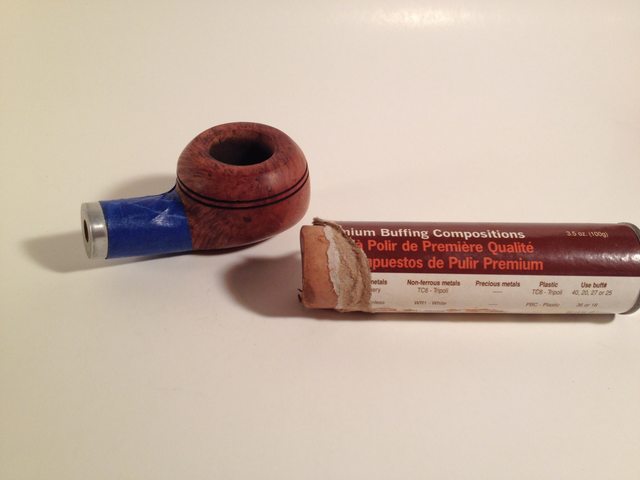
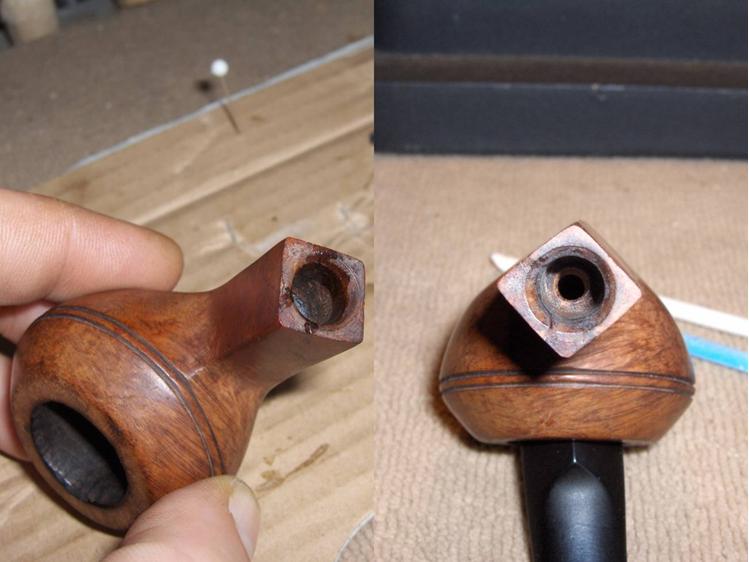
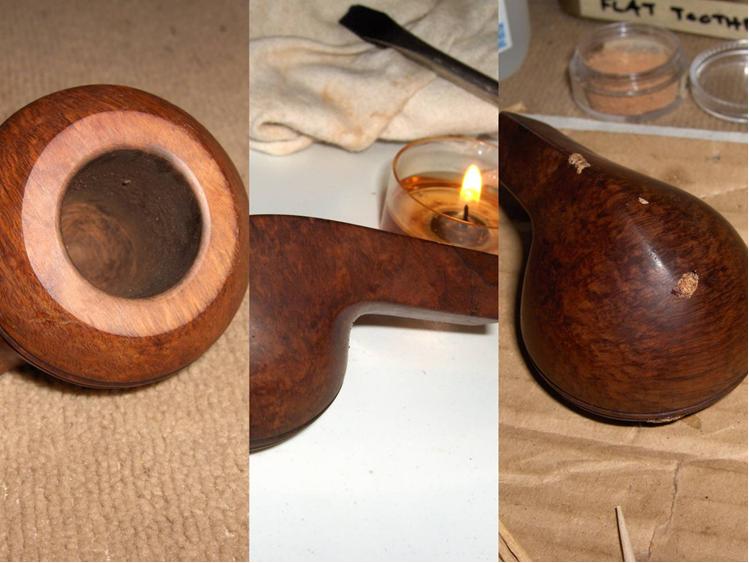
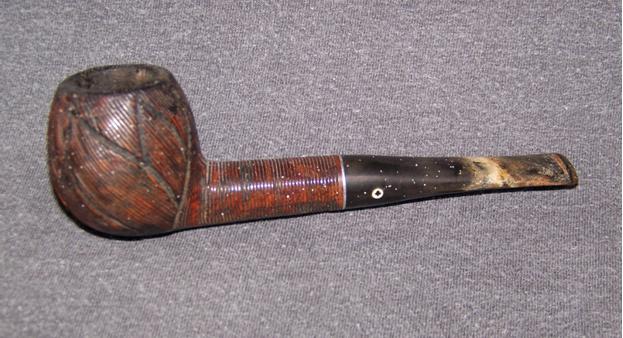
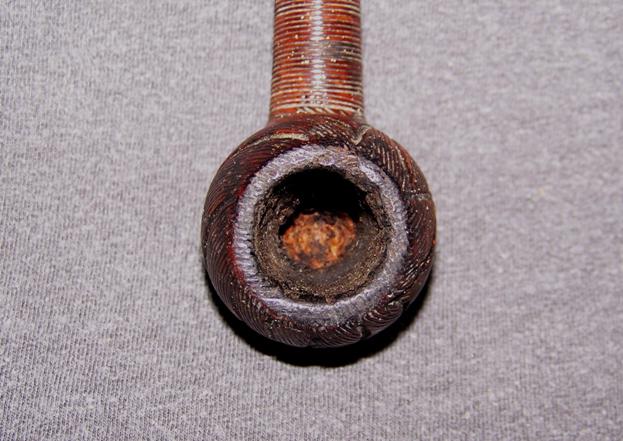
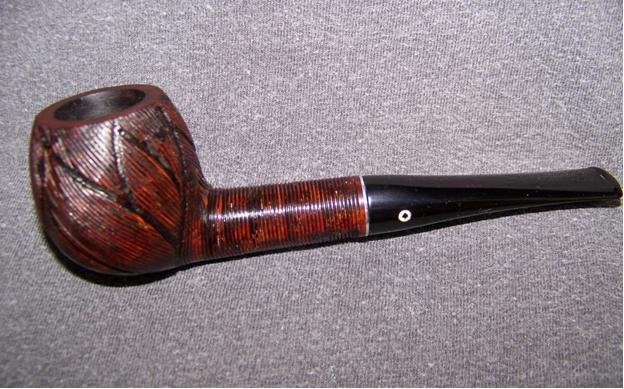
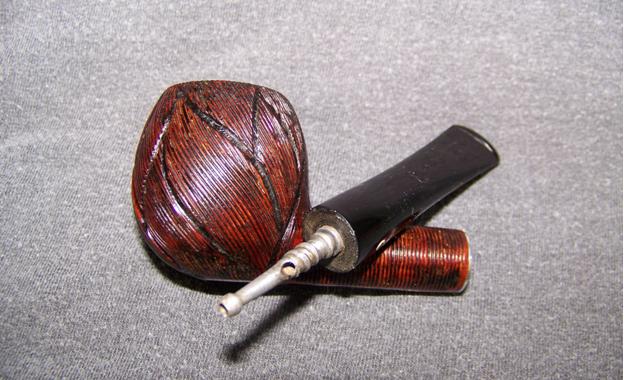
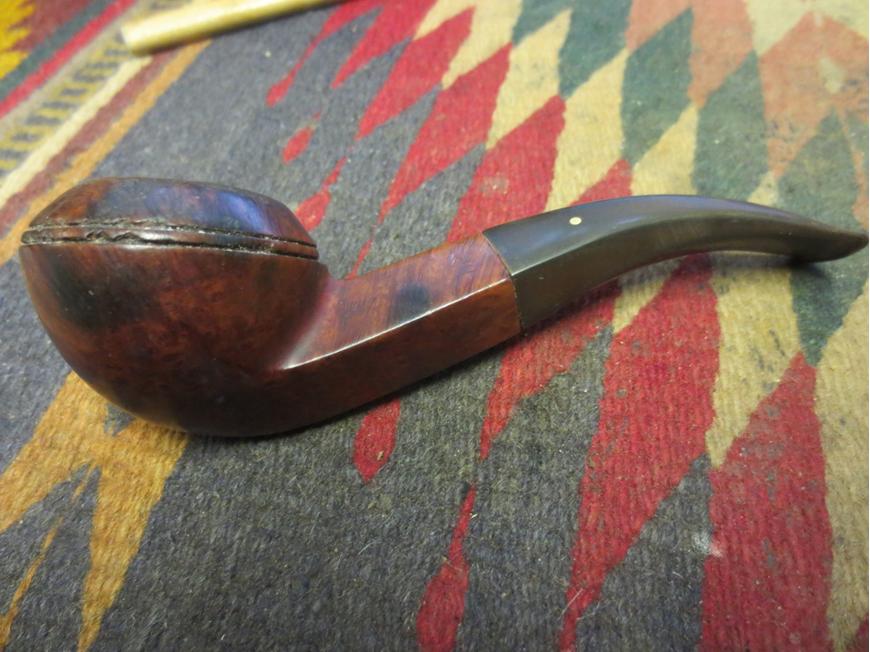
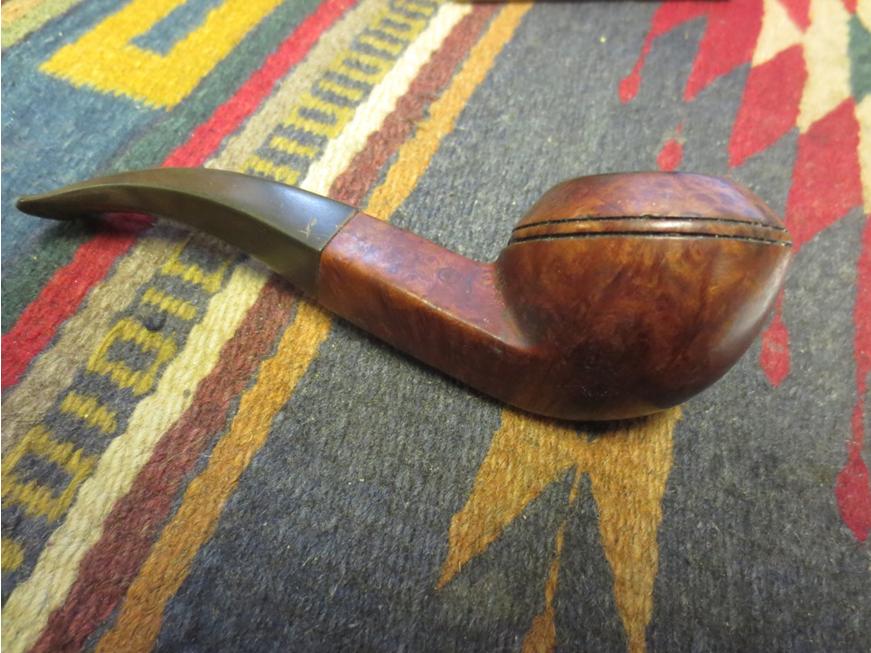
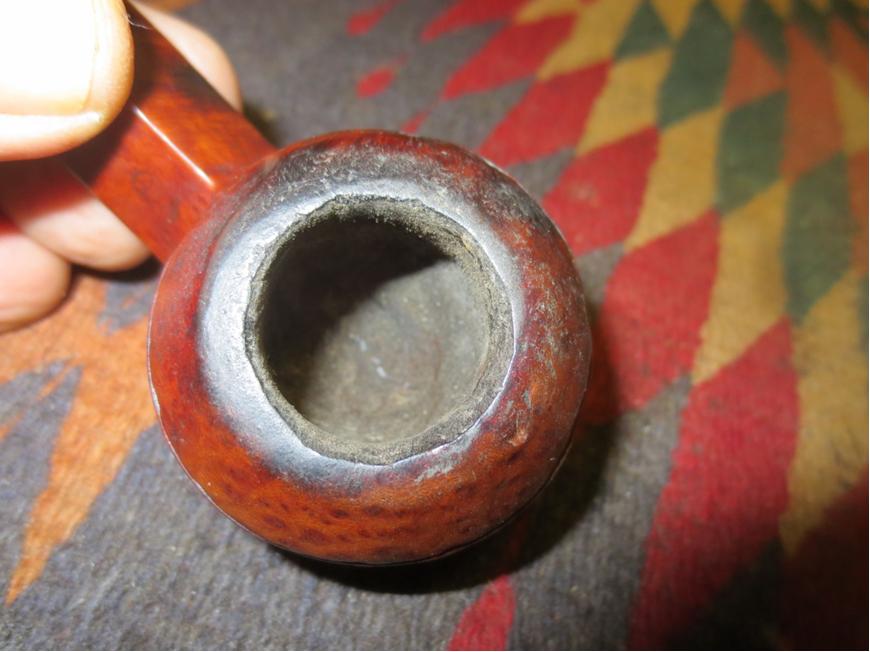
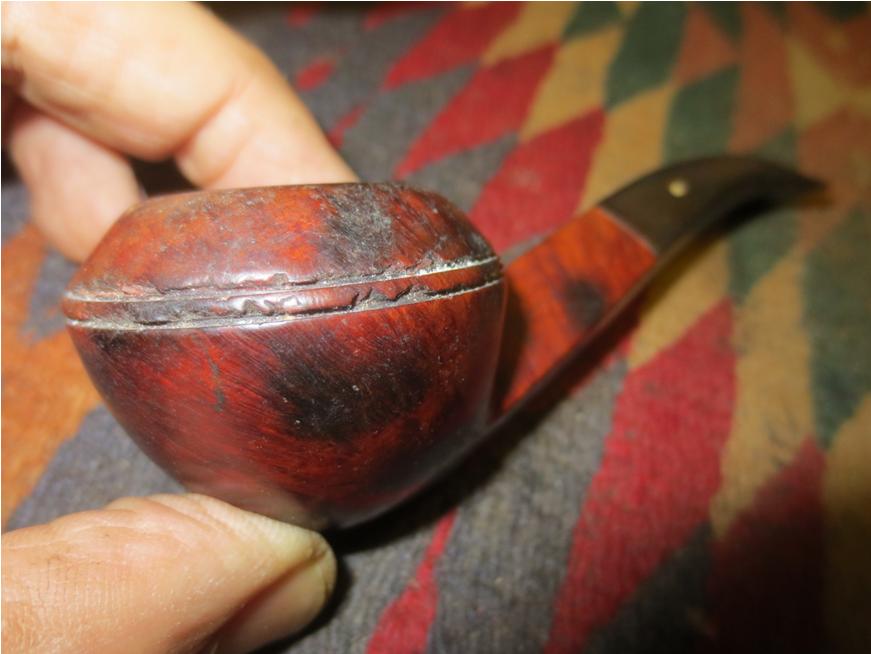
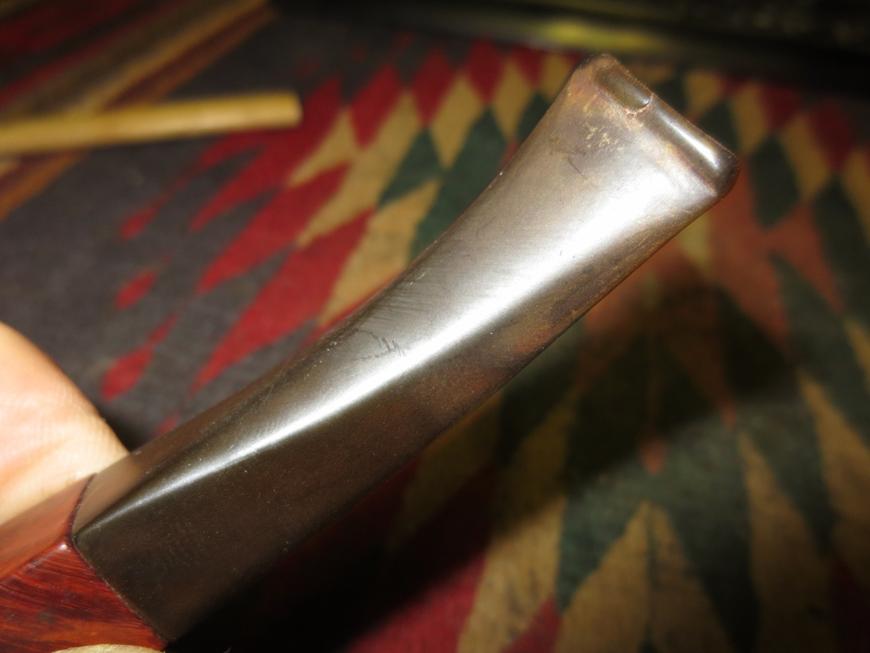
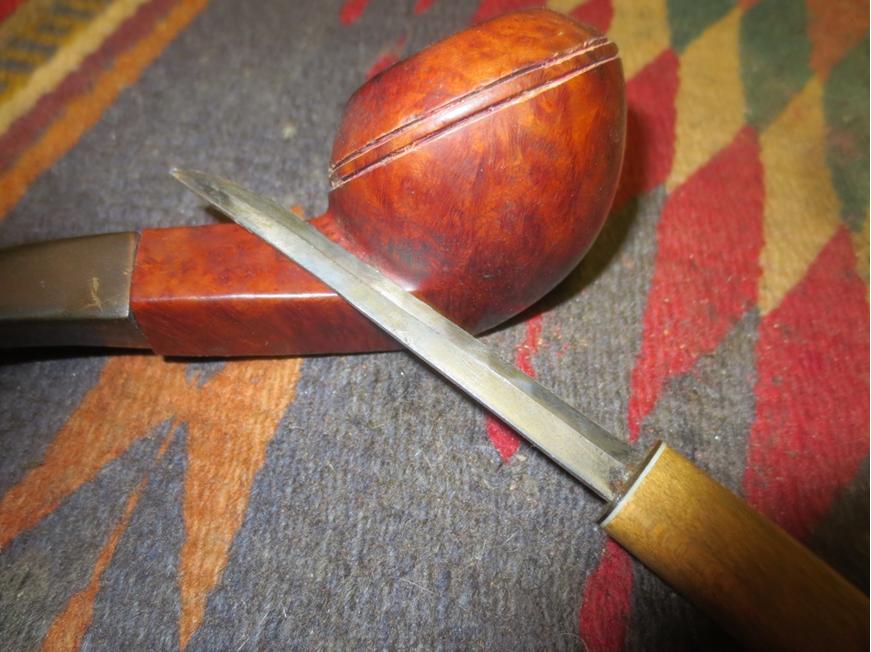
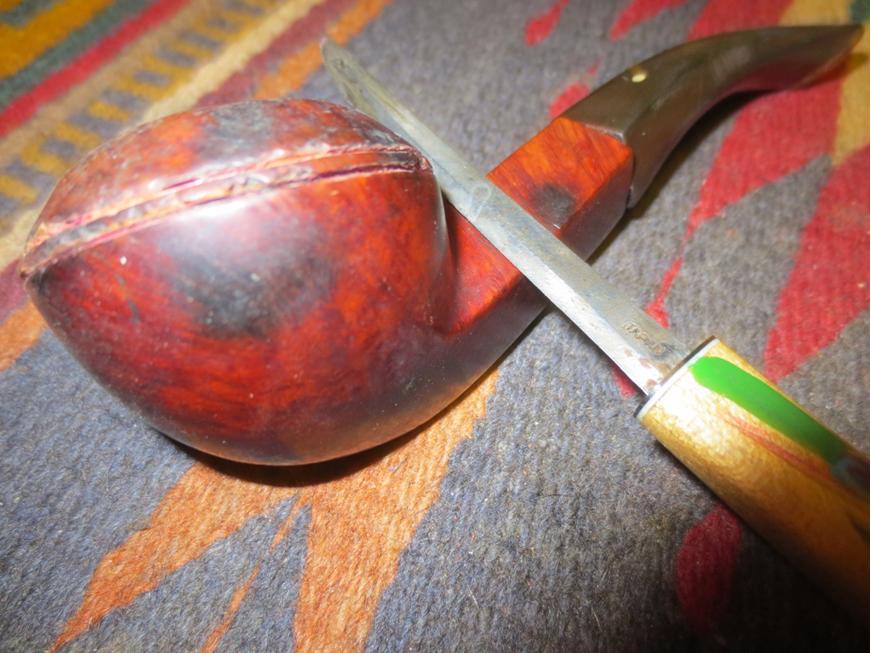
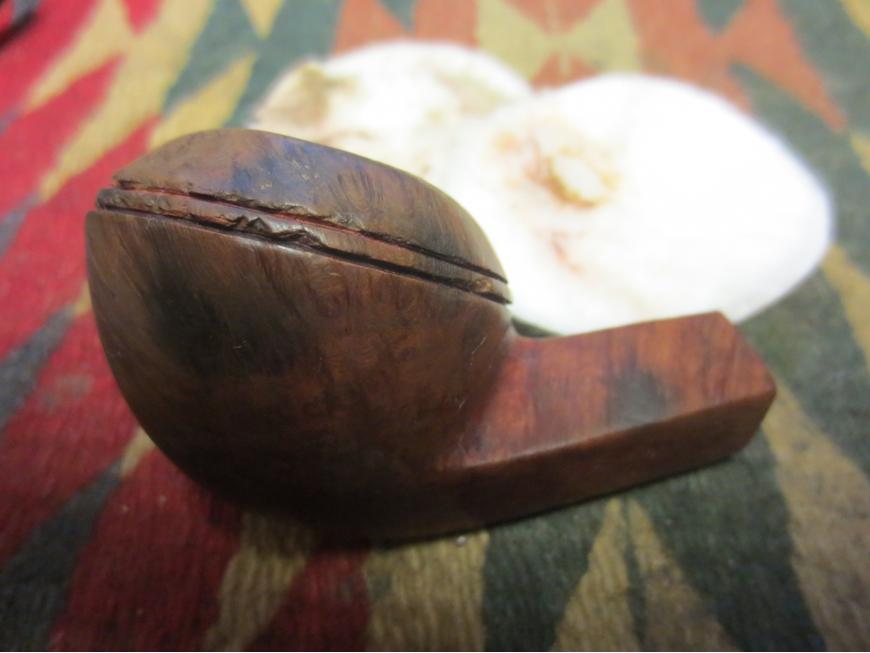
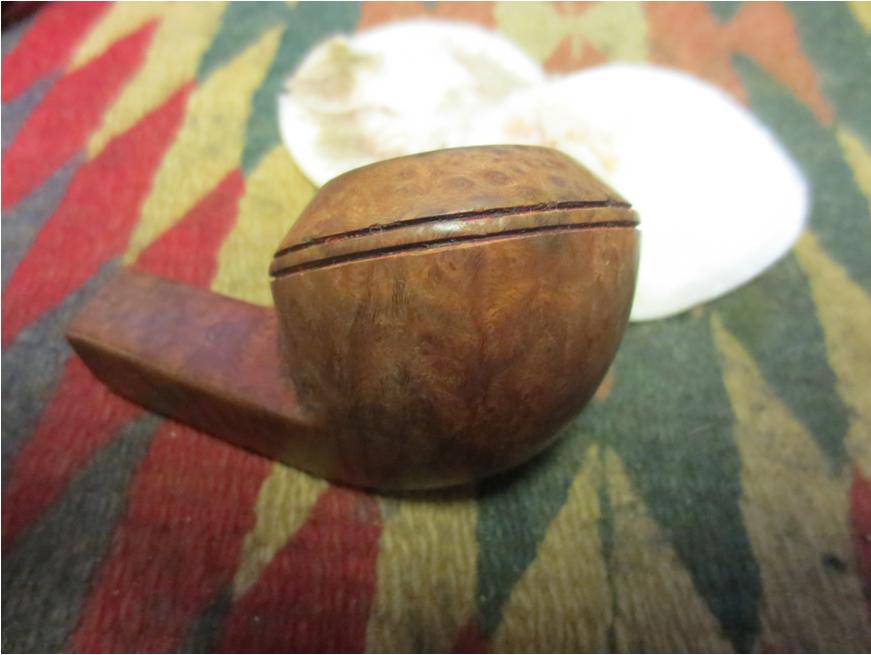
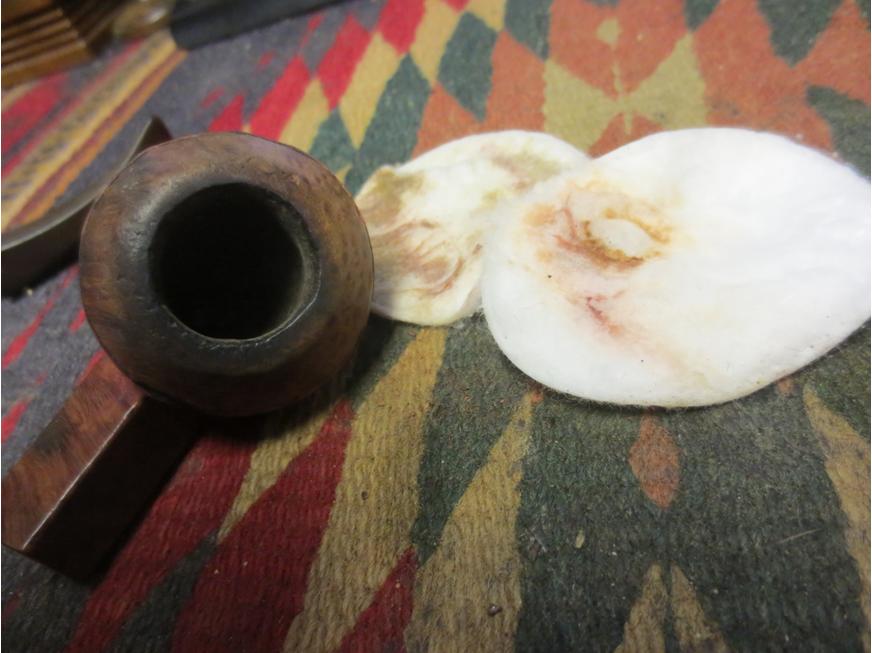
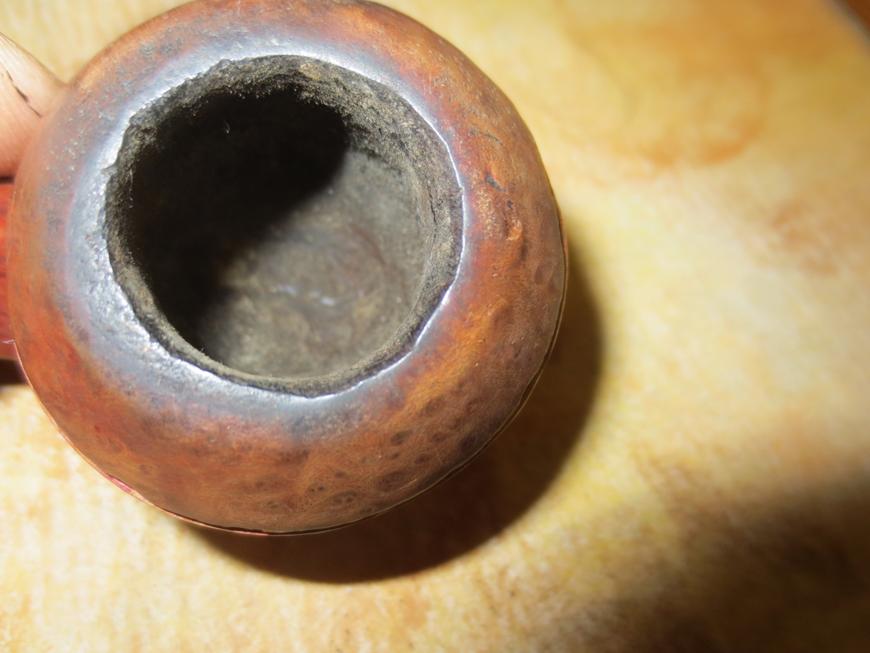
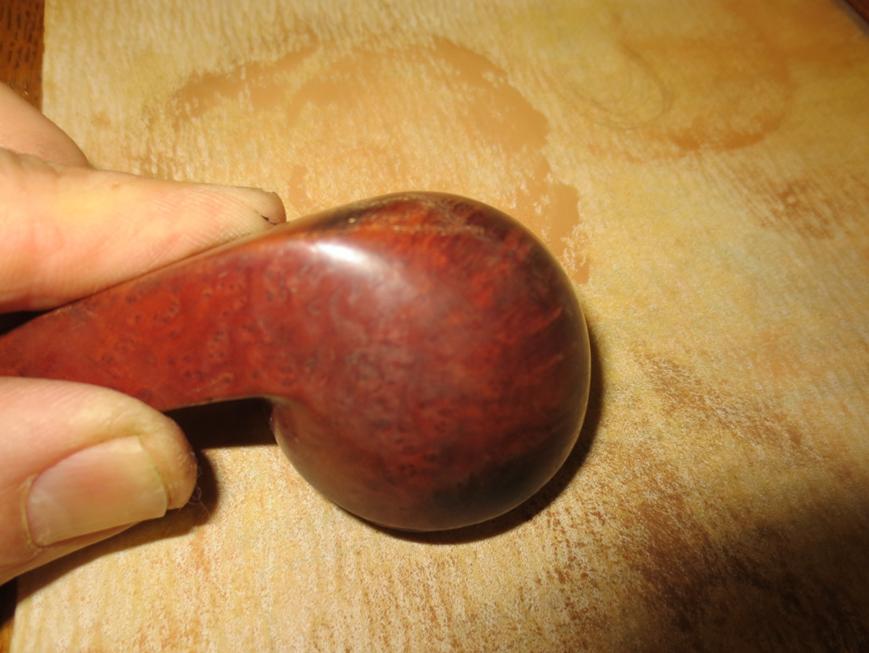
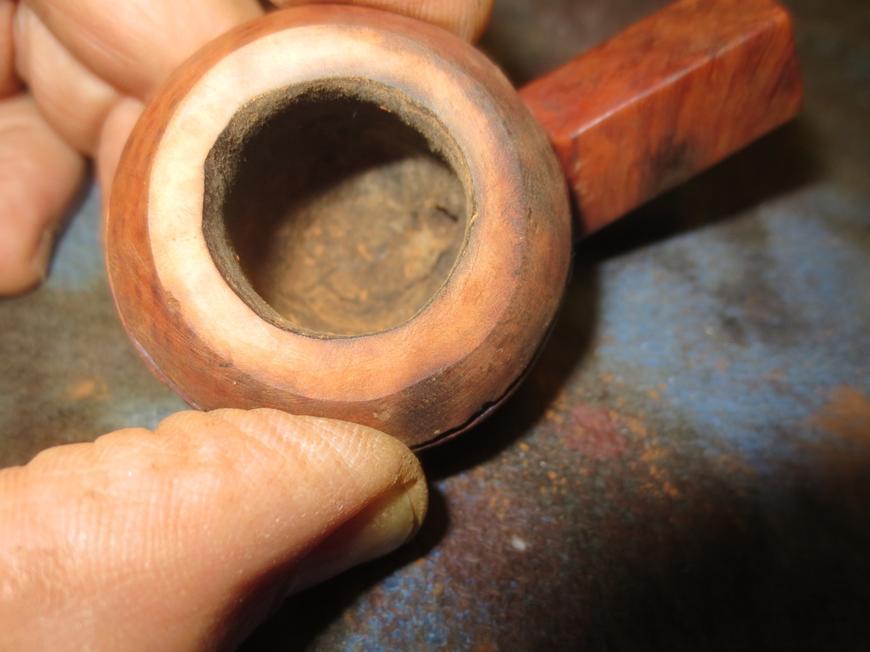
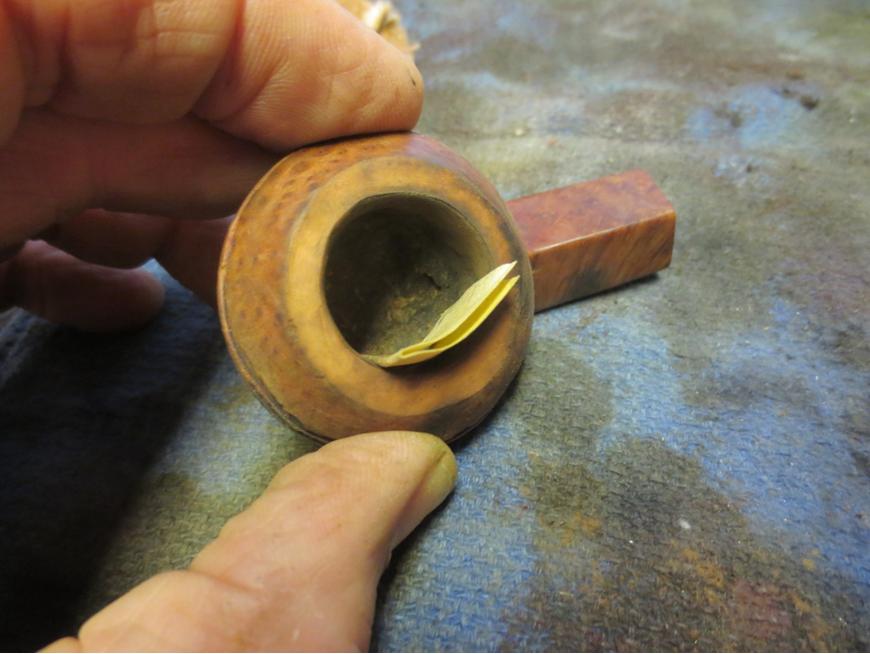
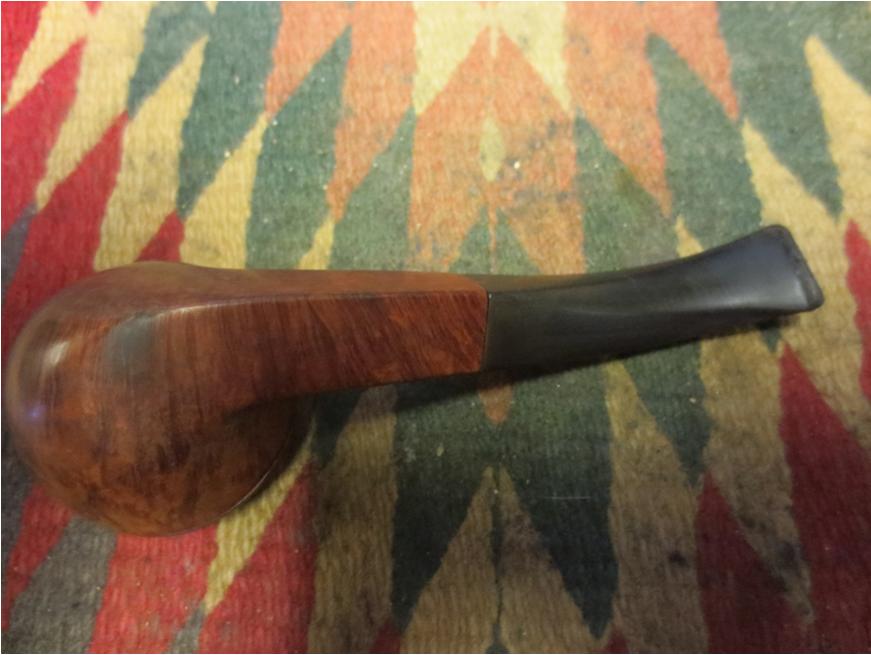
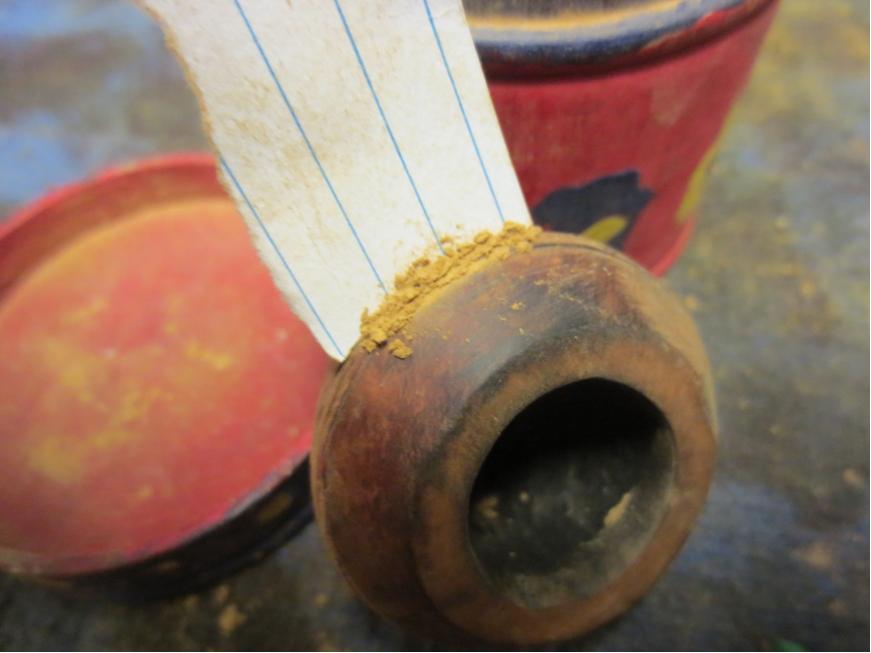
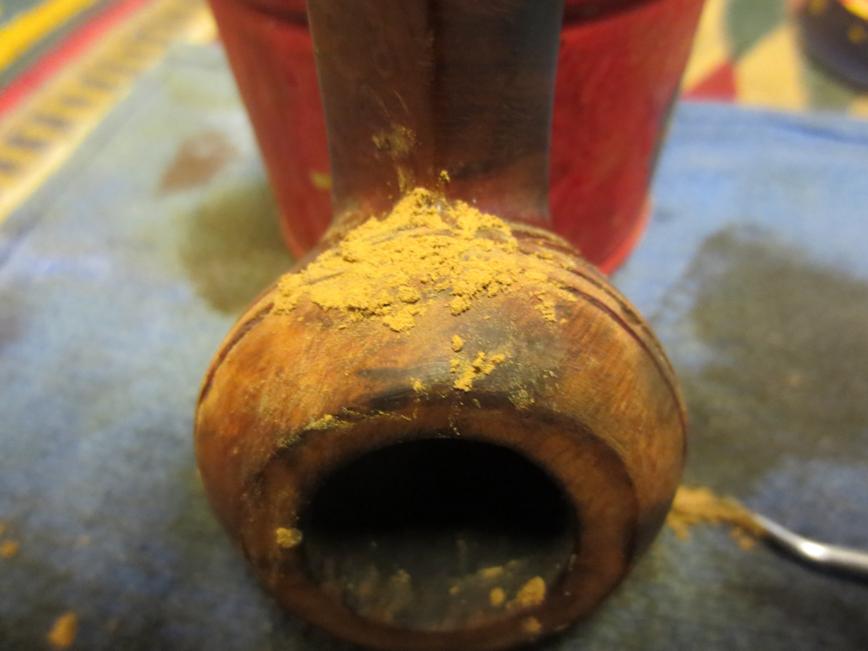
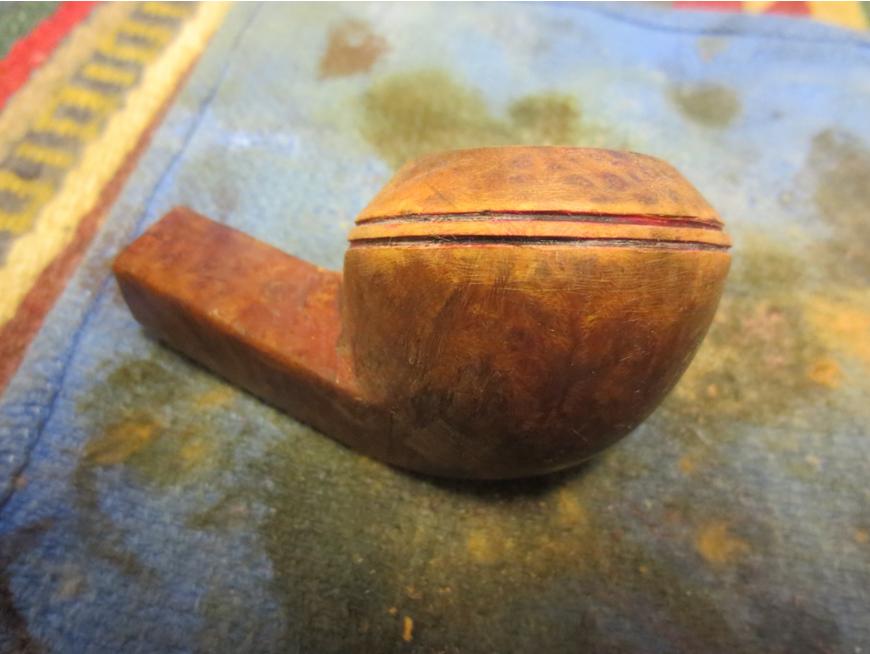
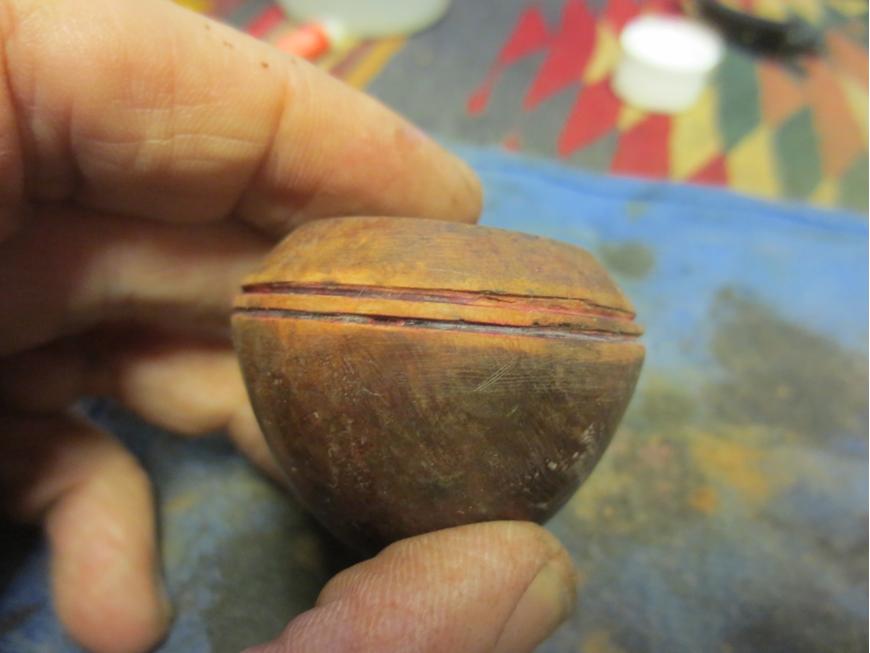
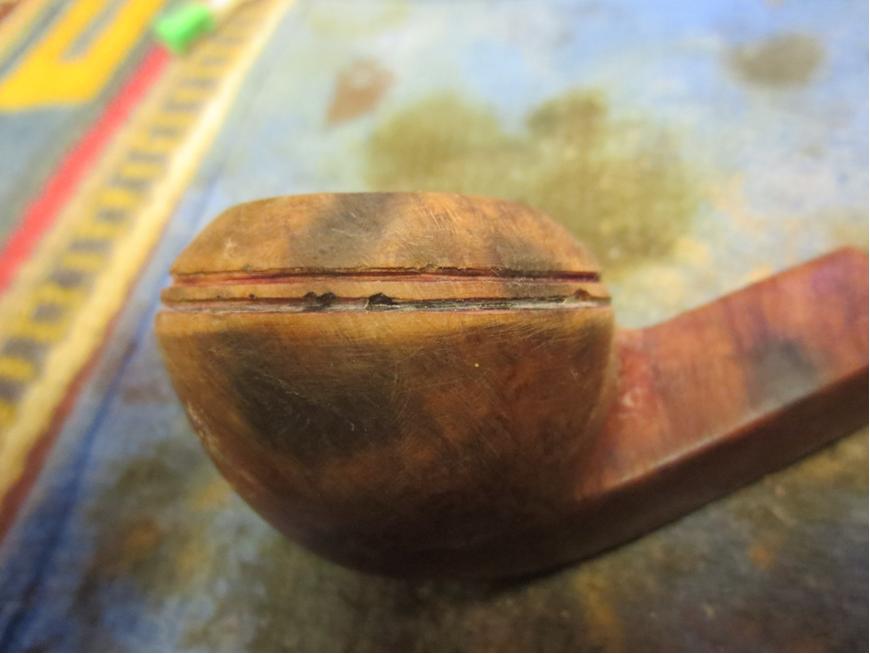
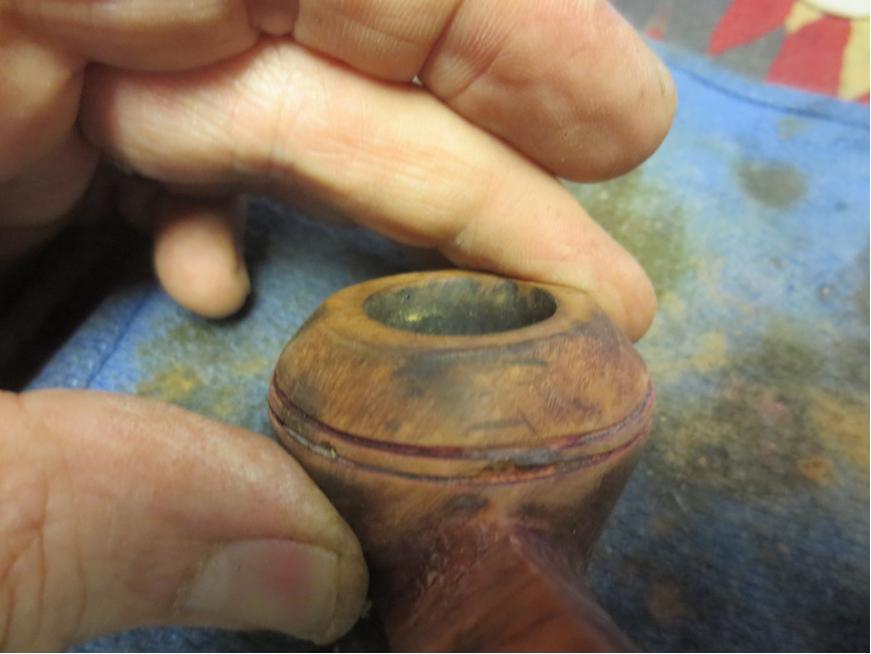
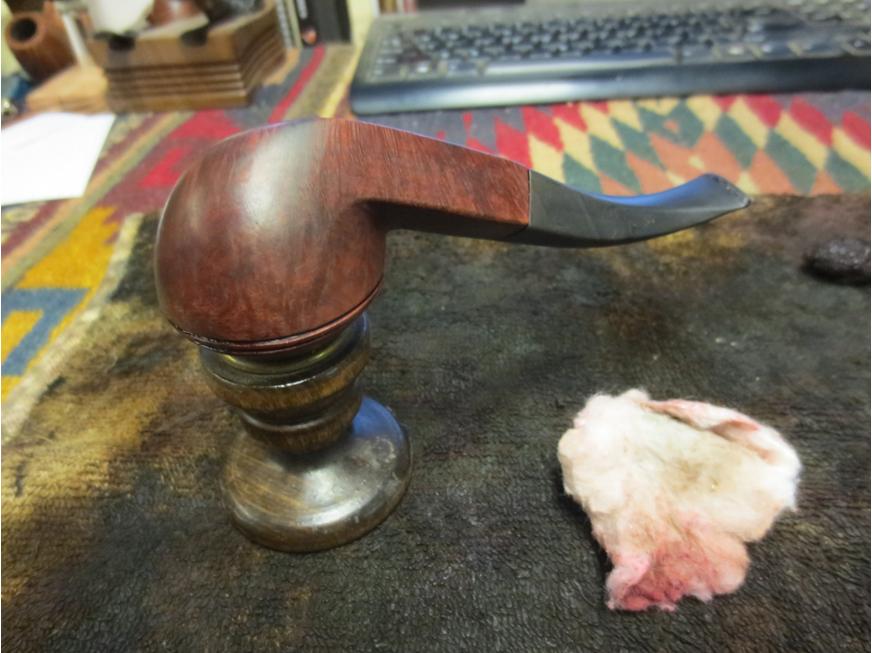
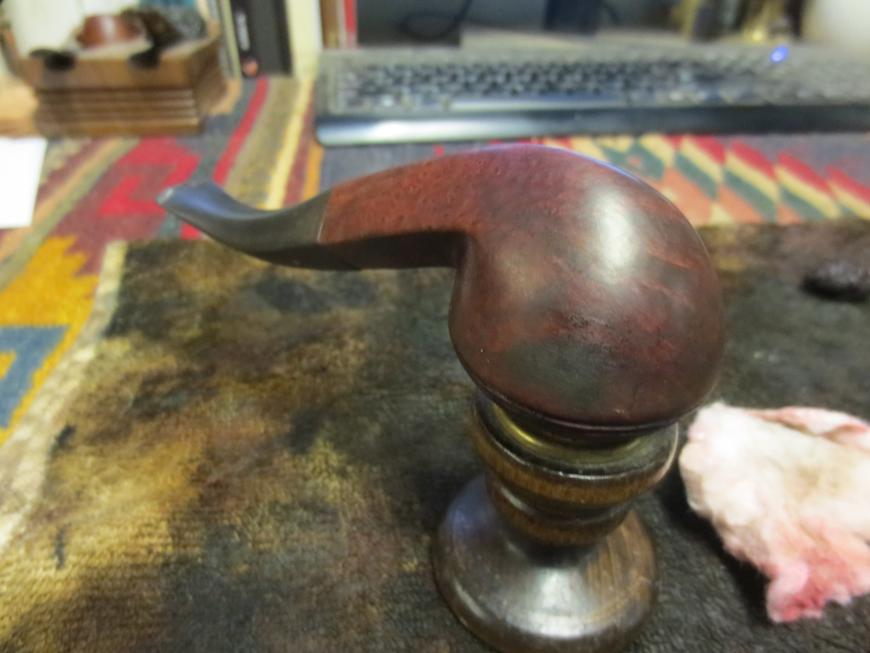
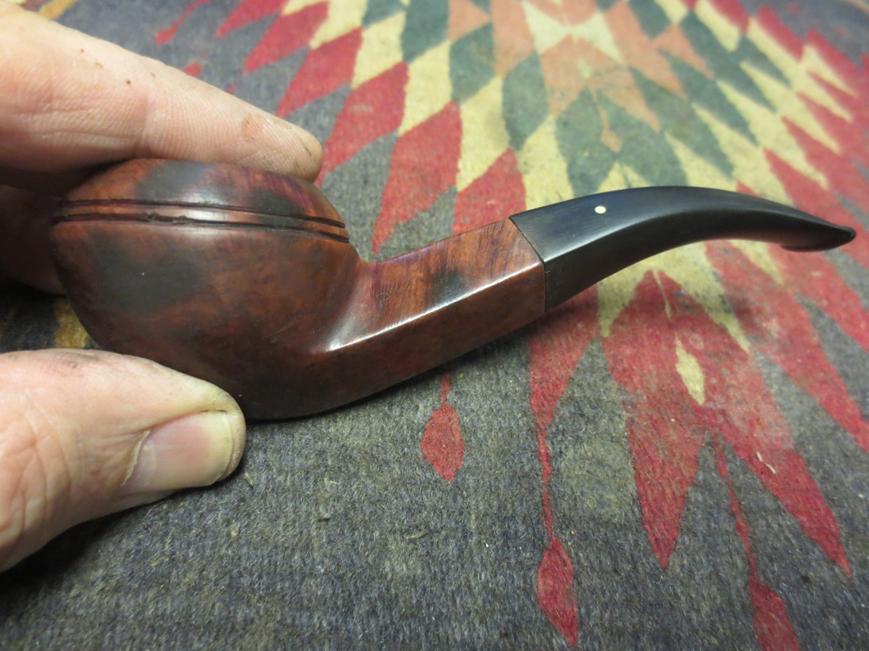
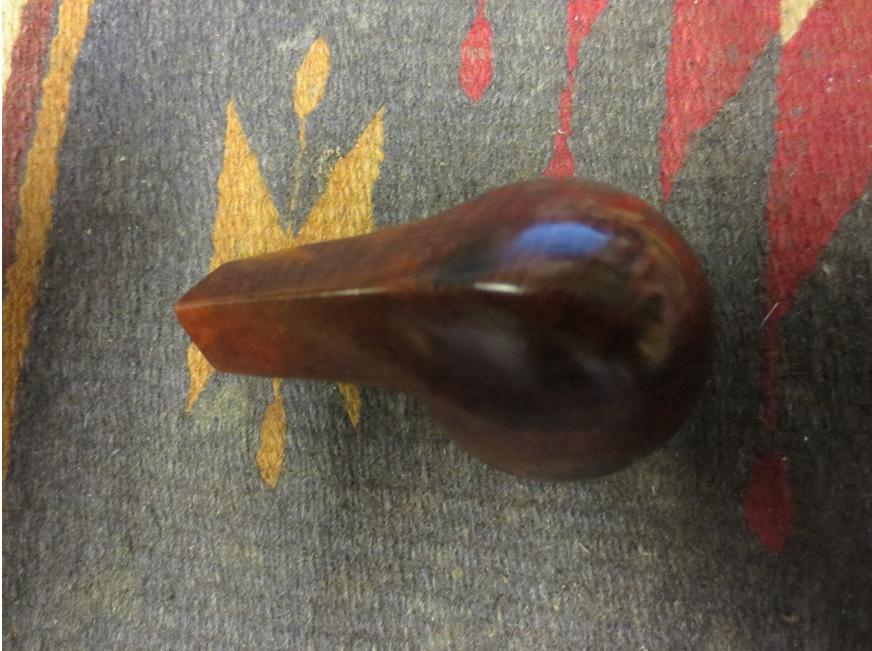
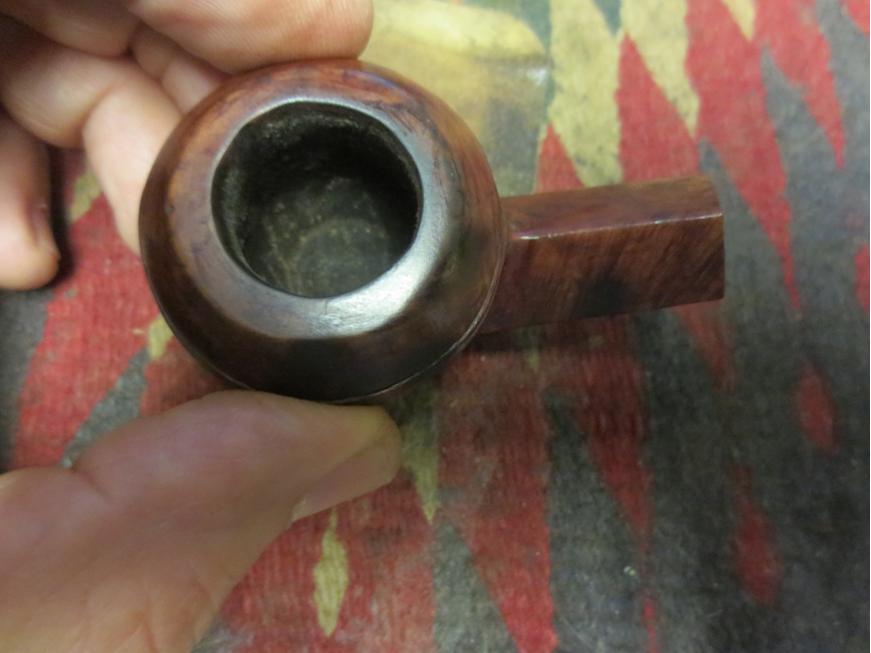
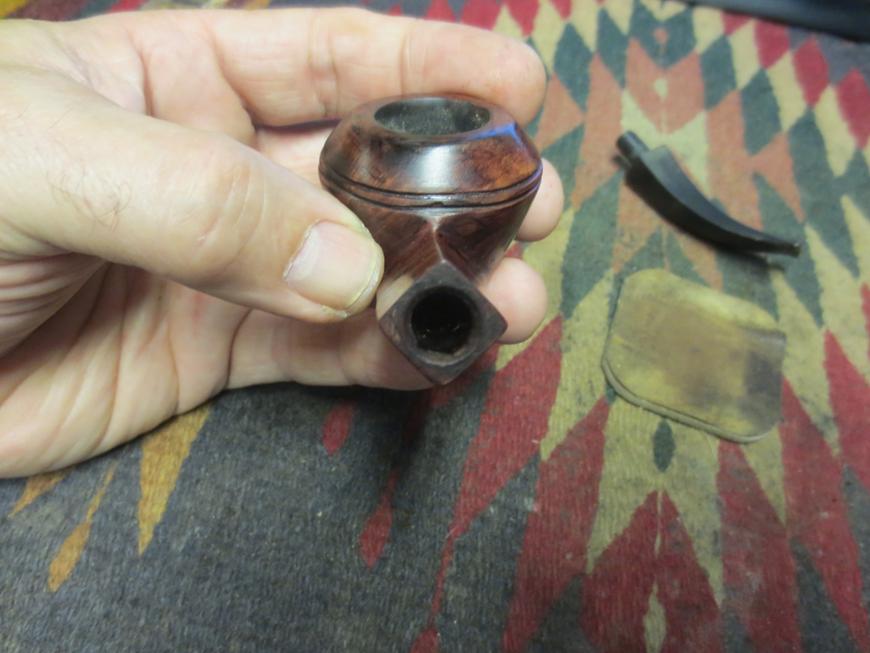
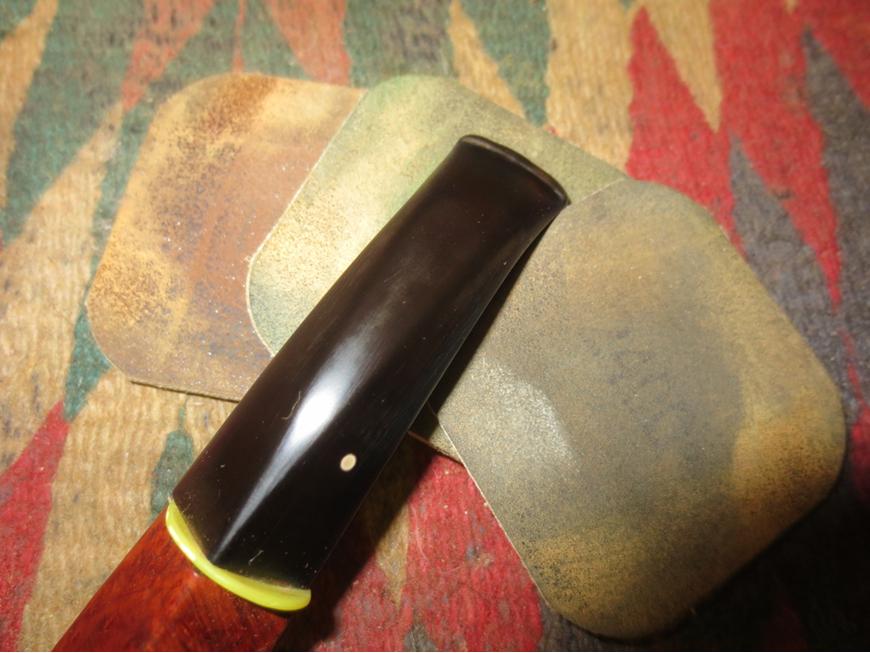
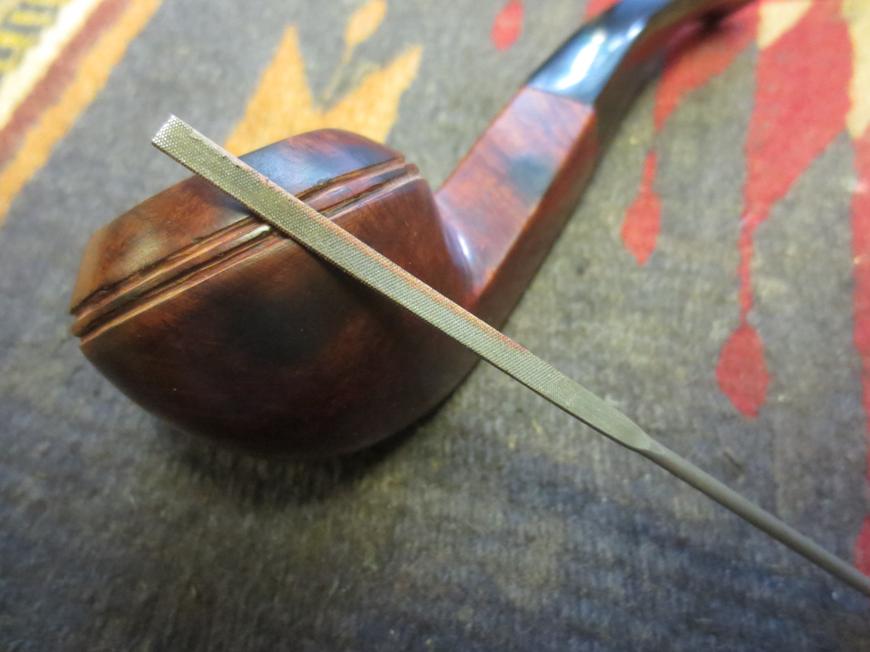
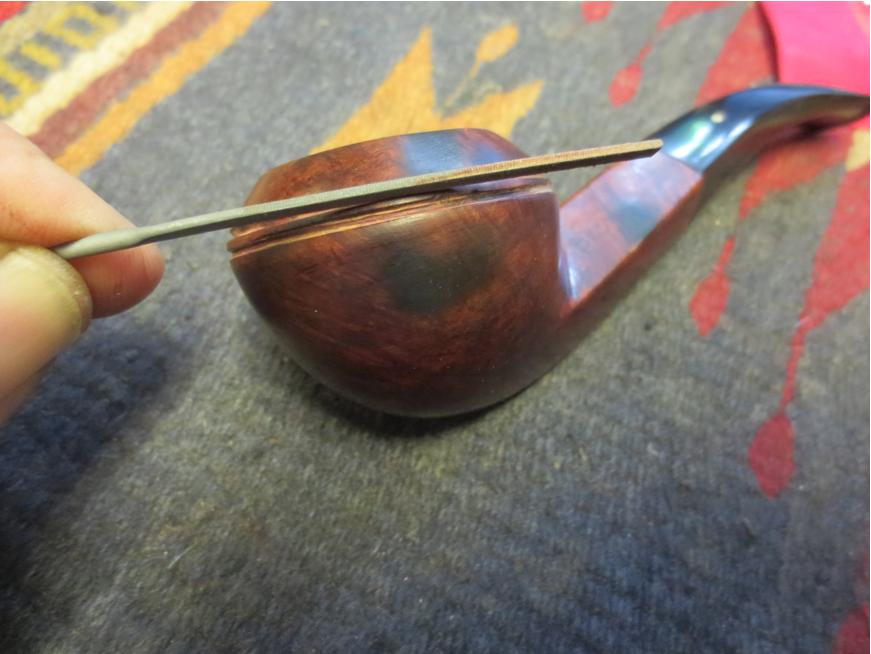
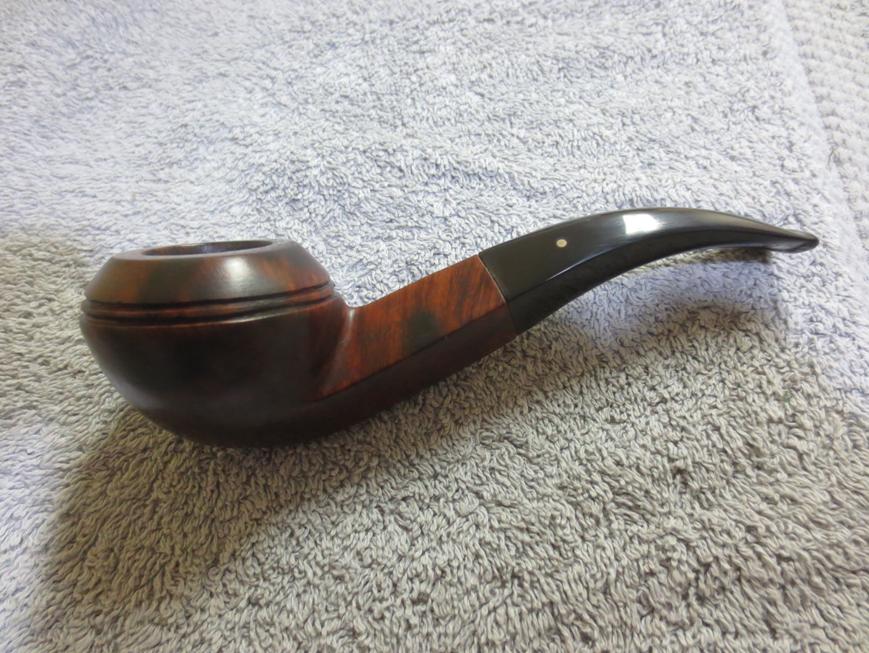
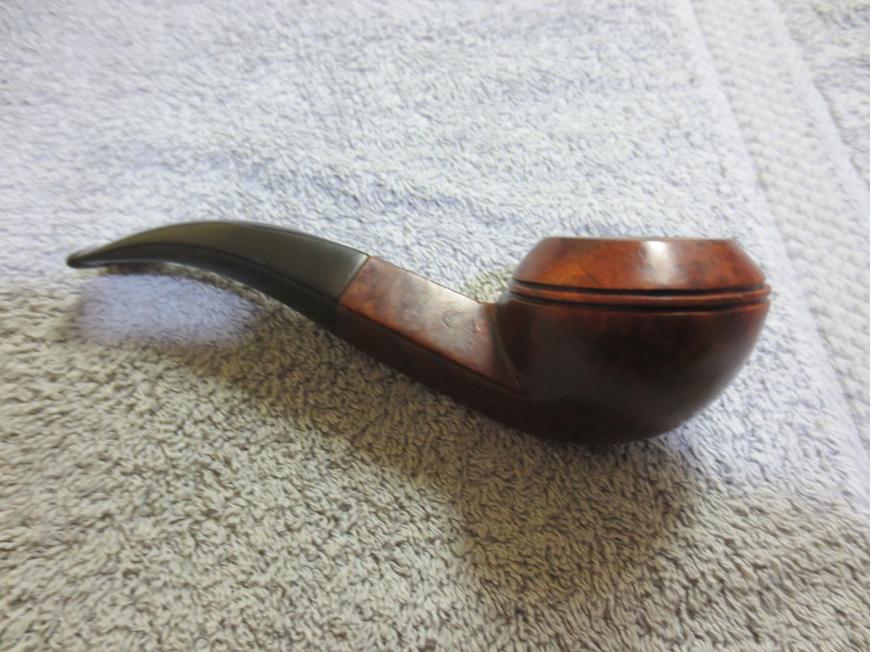
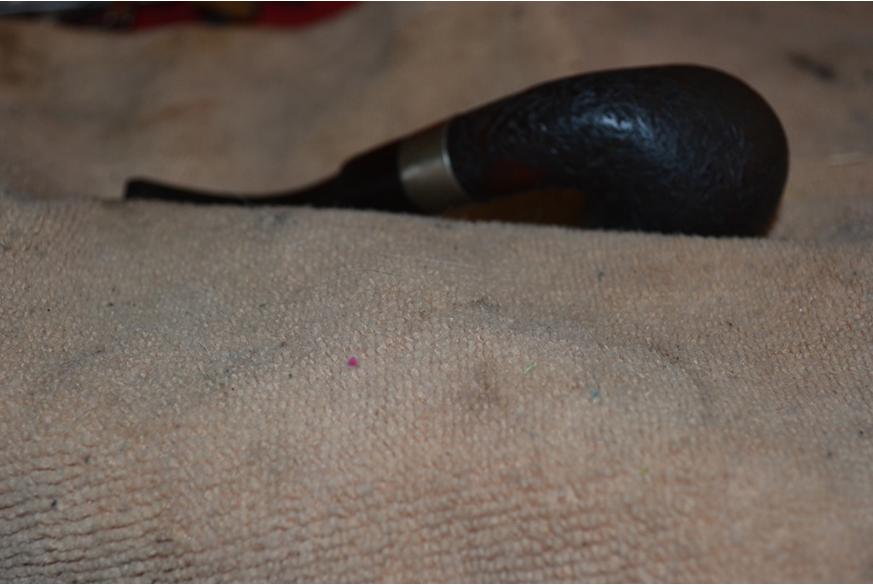
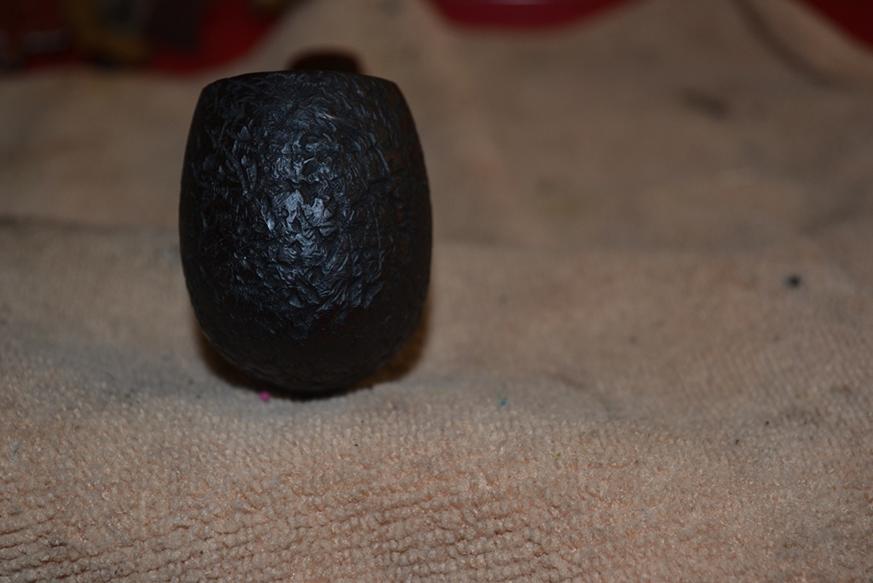
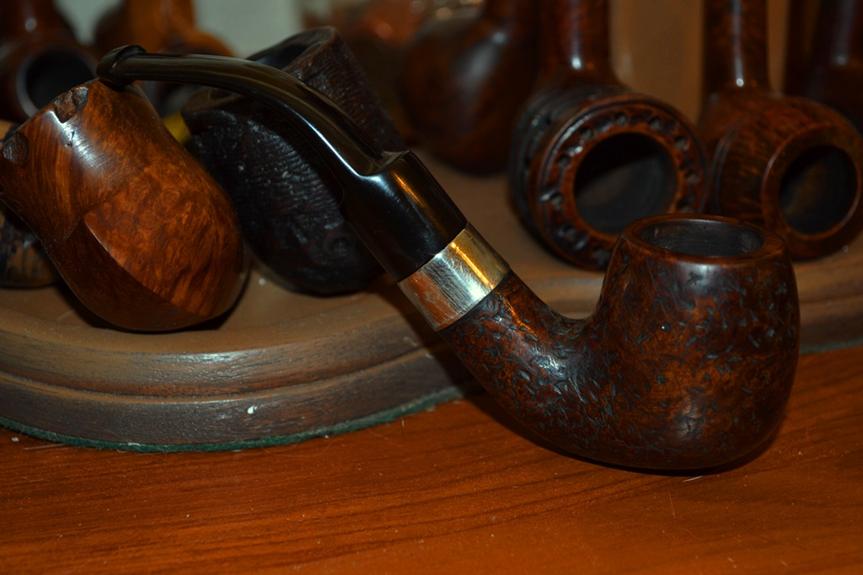
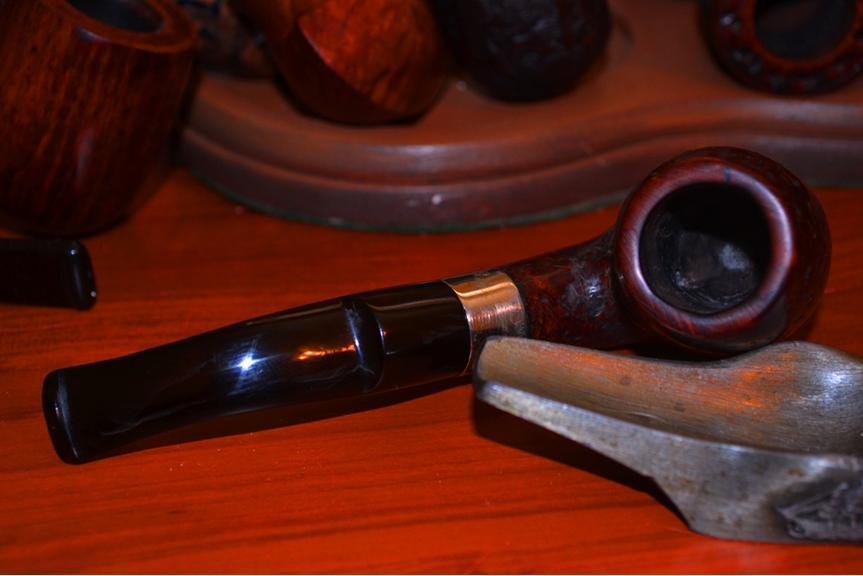
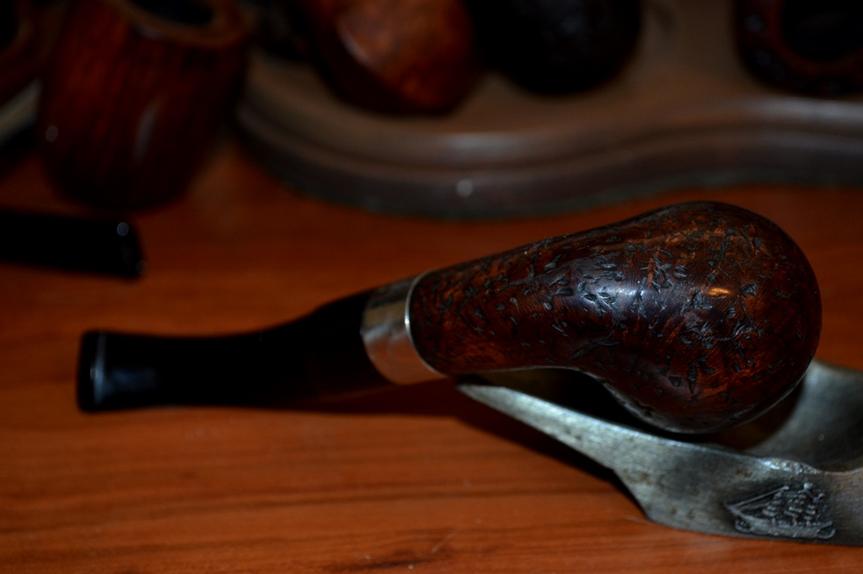
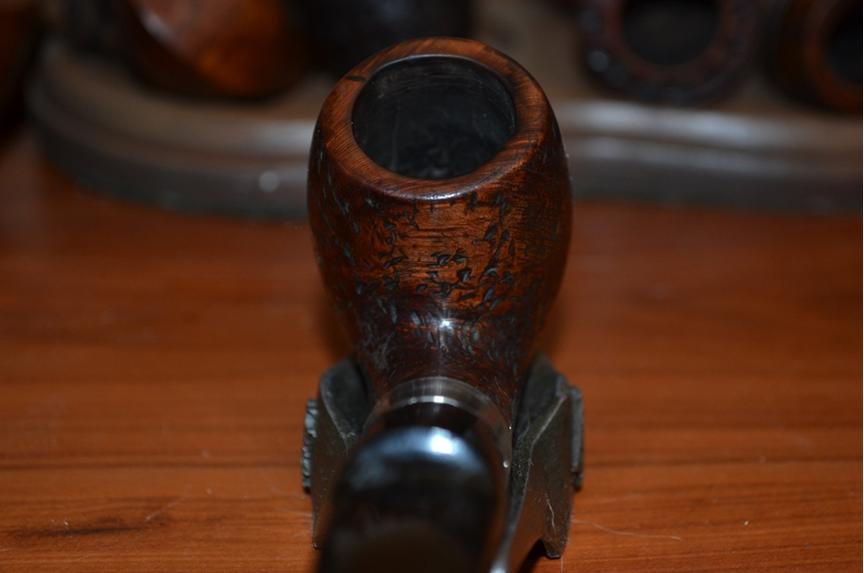
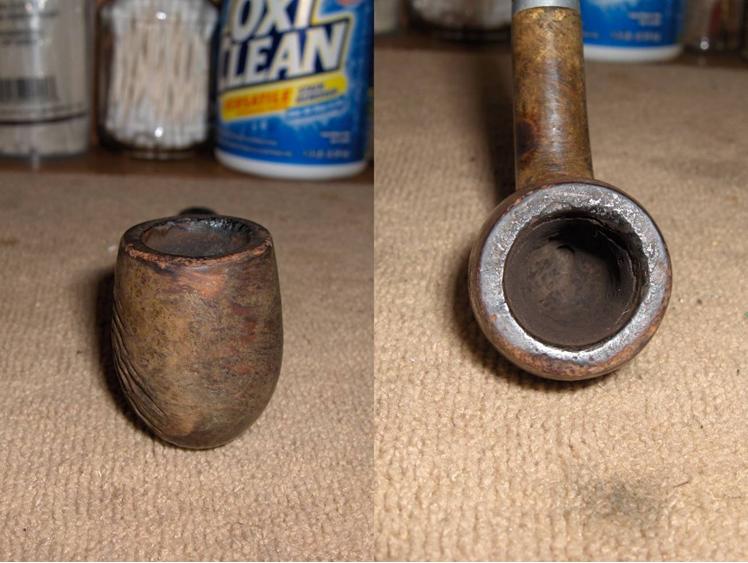
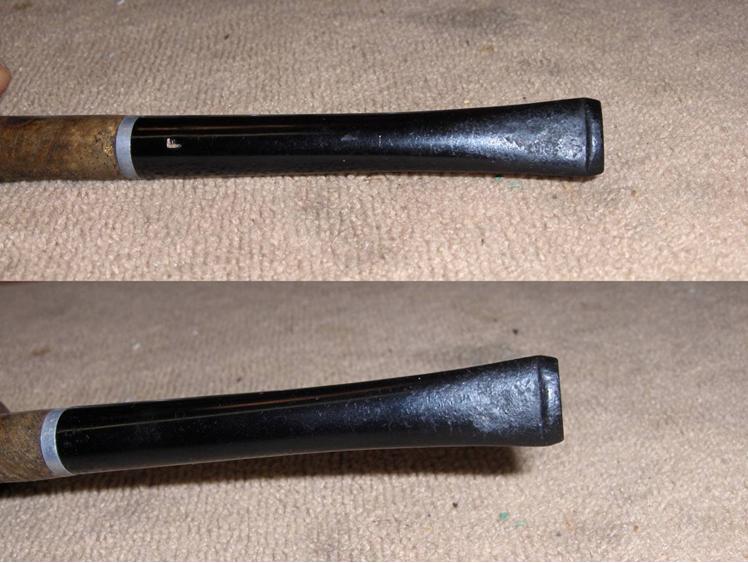
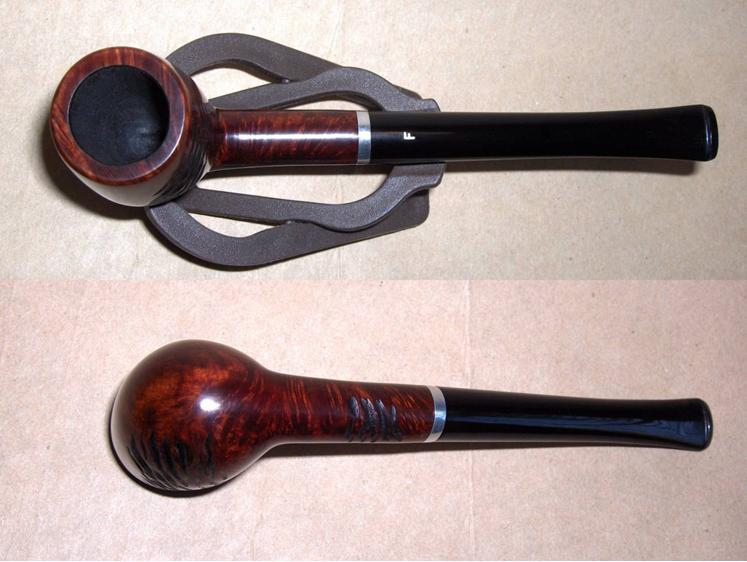
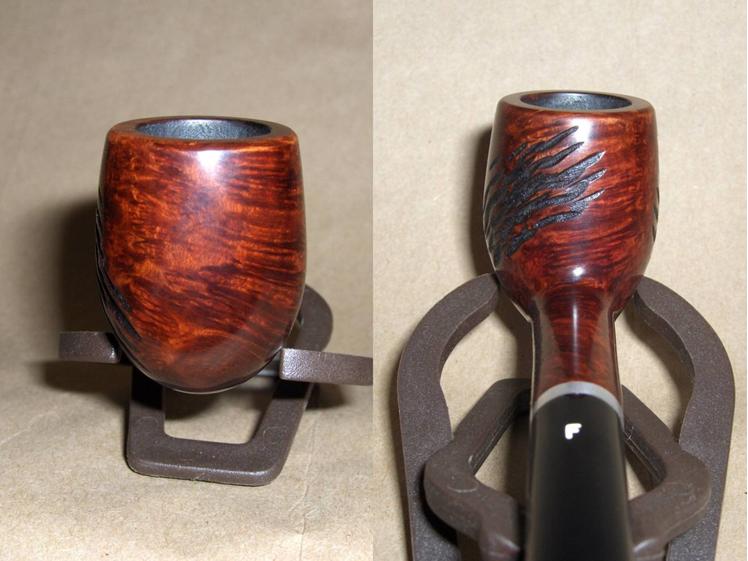
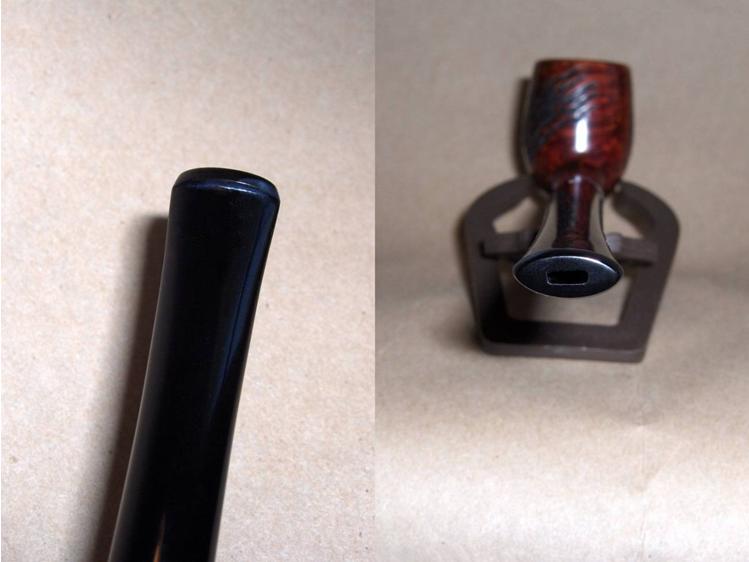
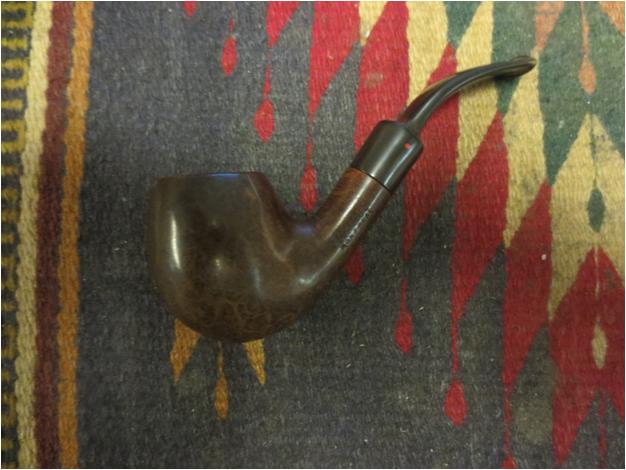
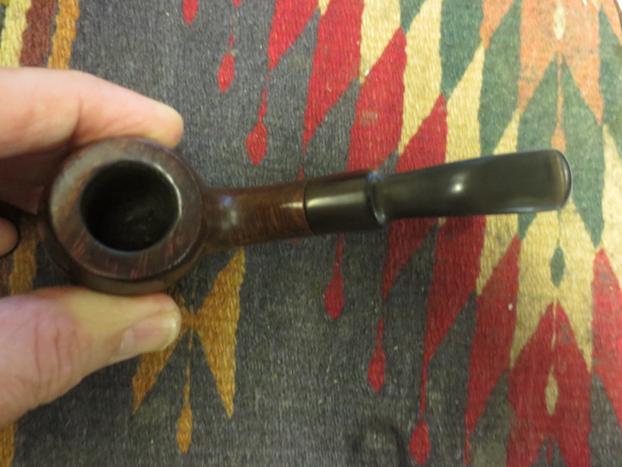
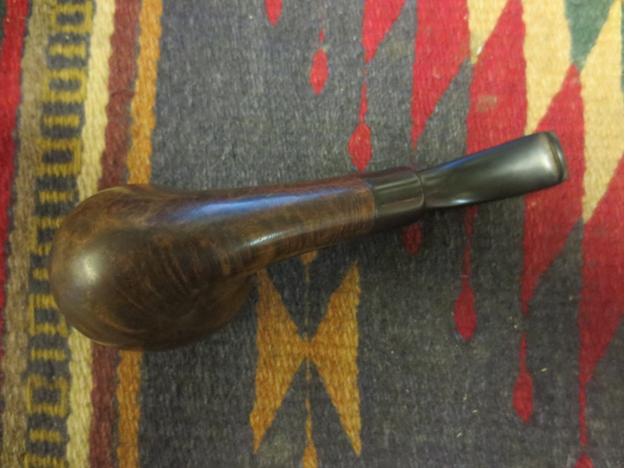
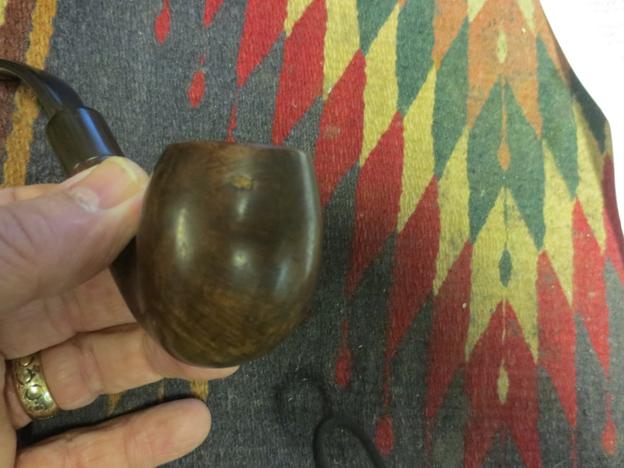
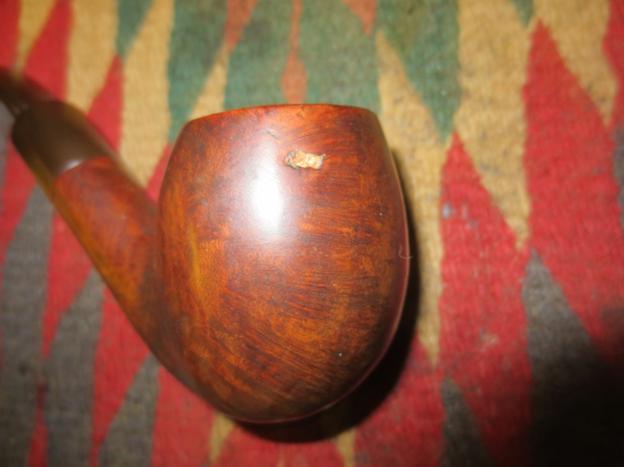
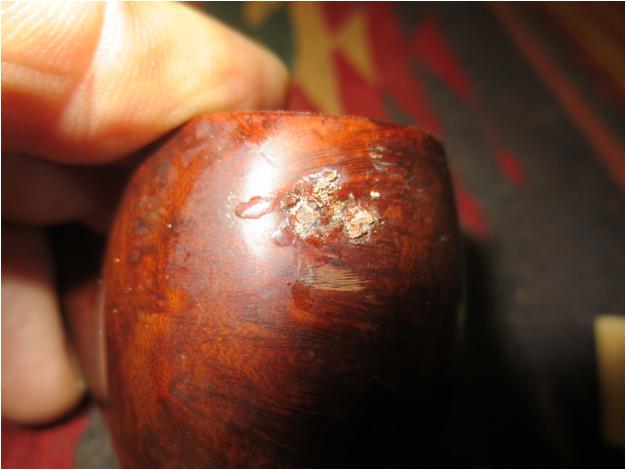
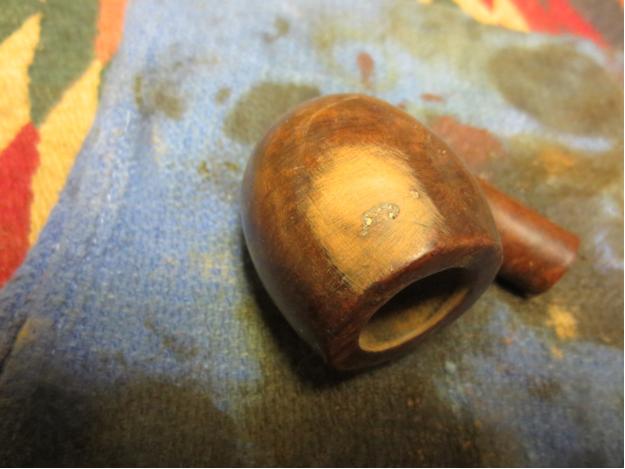
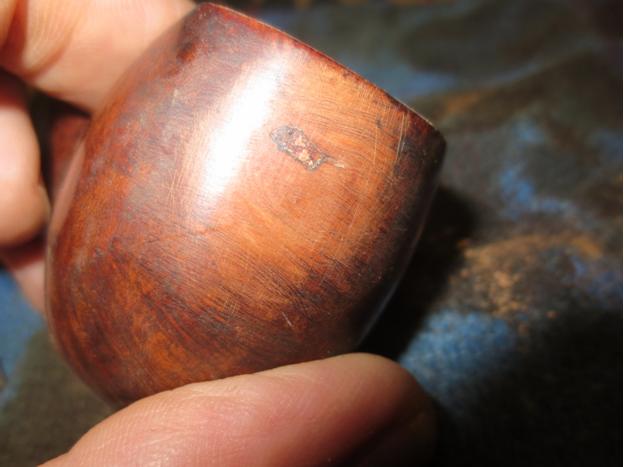
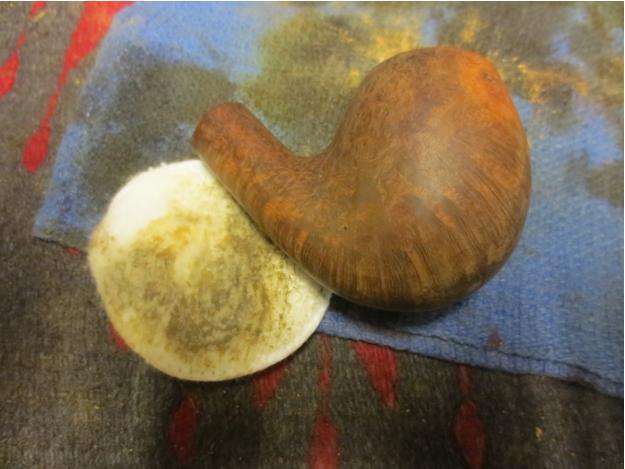
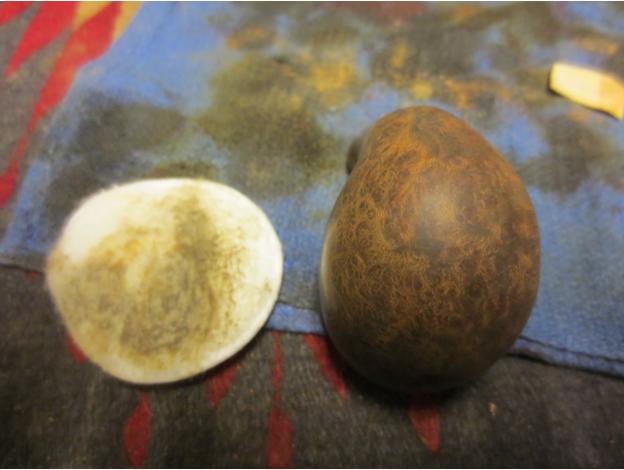
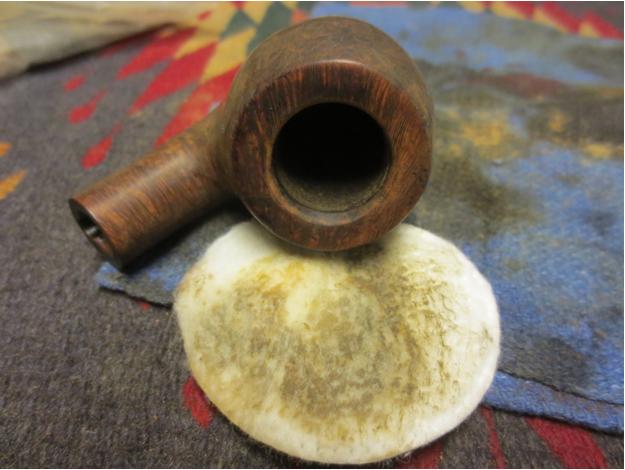
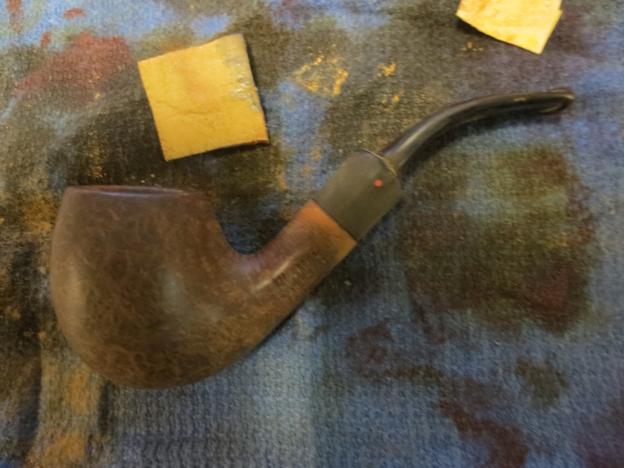
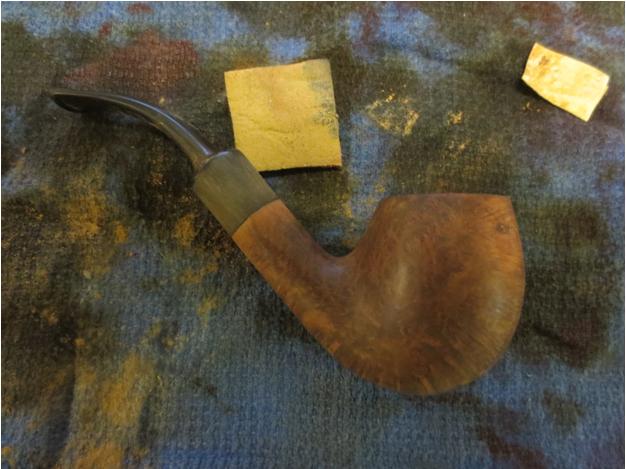
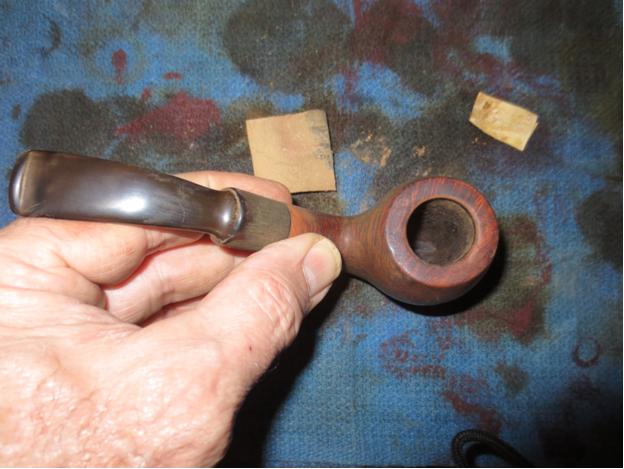
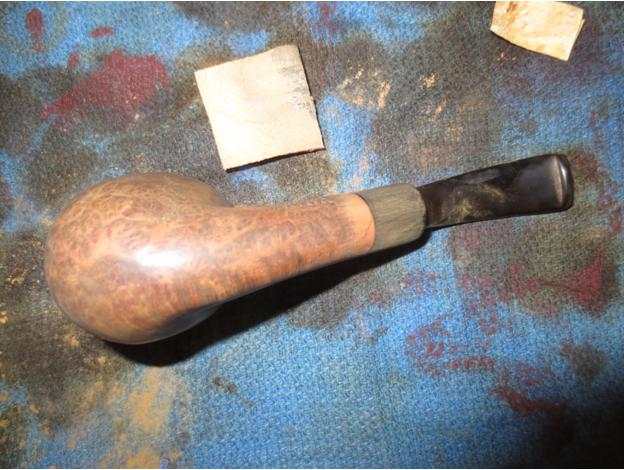
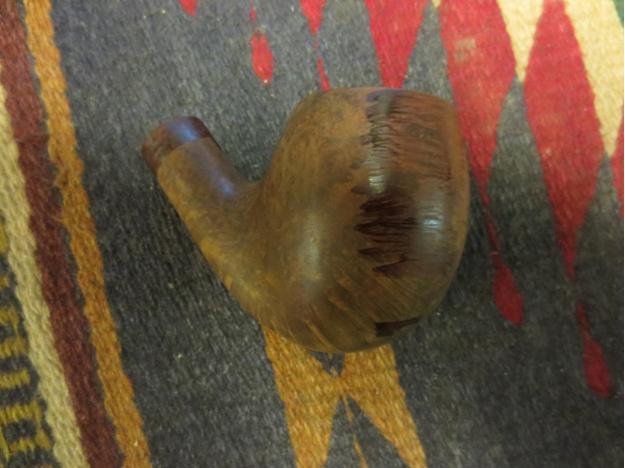
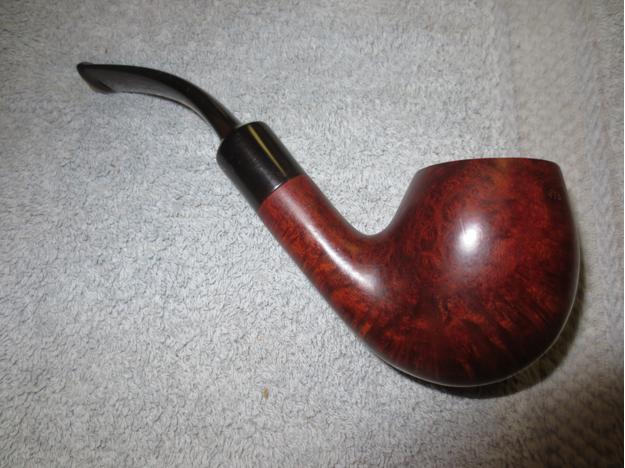
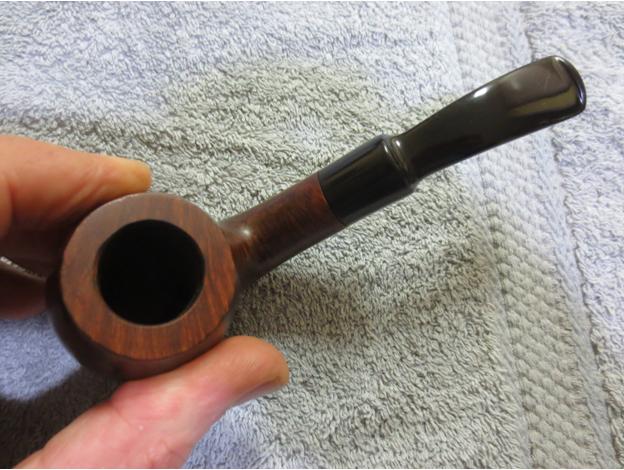
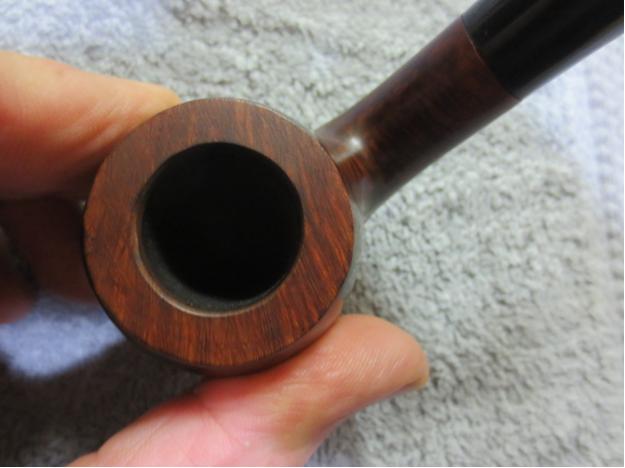
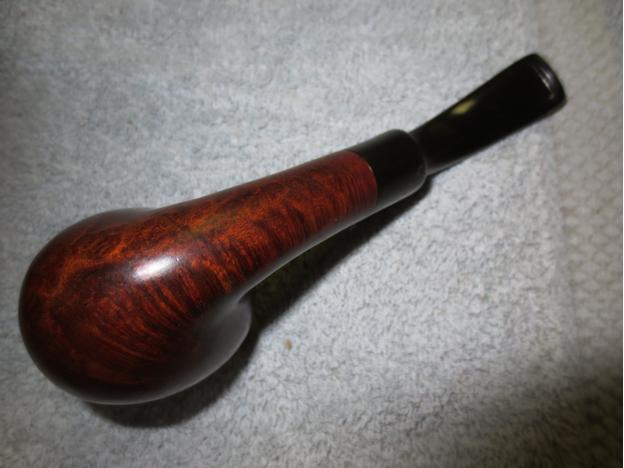
The first of the three that I took on was the Fine Line. It reminded me of the Dr. Grabow Wire Carved pipes I had seen, just not as rustic – if you like that sort of thing.Aaron1 The flat bottom of the shank was stamped with: “Kaywoodie” over “Fine Line ®” and the left hand side of the stem had the black clover in a white dot.Aaron2 The stem was in great shape. There was some mild oxidation, a little build up of crud and just a minor amount of chatter around the button. The stinger was also in good shape with the expected build up of tars. The stem was over clocked by about 10 degrees and after a little research I came to understand that this is a common problem with Kaywoodie pipes. Fortunately, it is an easy problem to correct.Aaron3 It looked like someone had been rolling out paint on a wall or ceiling near the pipe because there were small droplets of white paint all over the stem and stummel (perhaps they were smoking while painting?). The stummel was dirty but there was no damage that I could see. A thick cake lined the bowl and the lines in the rim where full of char and other gunk, but otherwise it too was in good condition.Aaron4 I began by soaking the stem in an alcohol bath to loosen the tars inside and to help lift the crud and paint from the surface. While the stem soaked, I went to work on the stummel with Murphy’s Wood Soap and a soft bristled tooth brush. The dirt and grime came off easily as did most of the paint droplets. I had to employ a soft wood tooth pick to remove more stubborn droplets that were caught in the grooves of the carving.

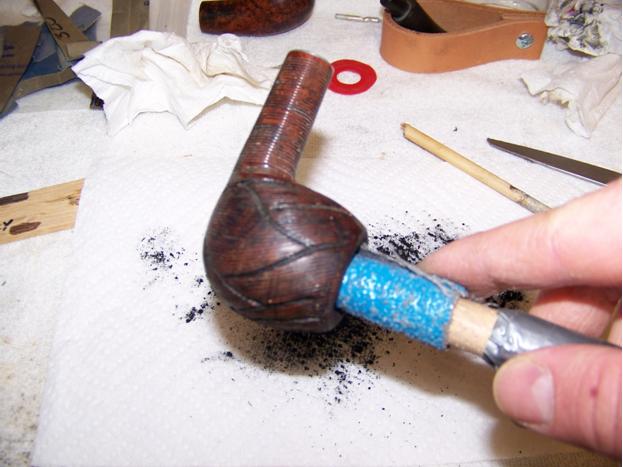
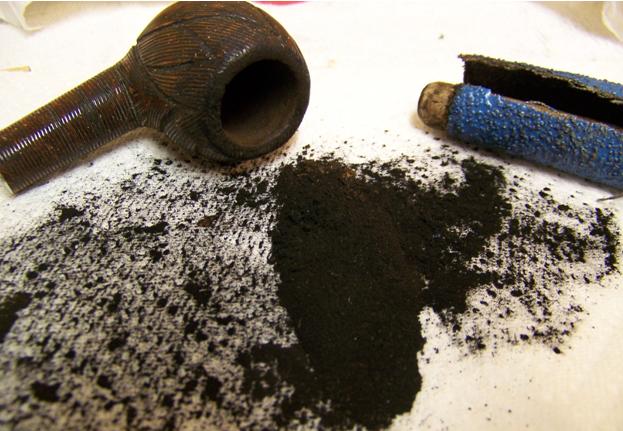
After rinsing the stummel with fresh water – being careful to keep the water out of the bowl and shank – I started reaming out the bowl. Not having a reamer, I use a ½” dowel with a rounded tip wrapped in 40 grit sand paper. This method has worked reasonable well for me on several pipes, even with thick caking.Aaron5

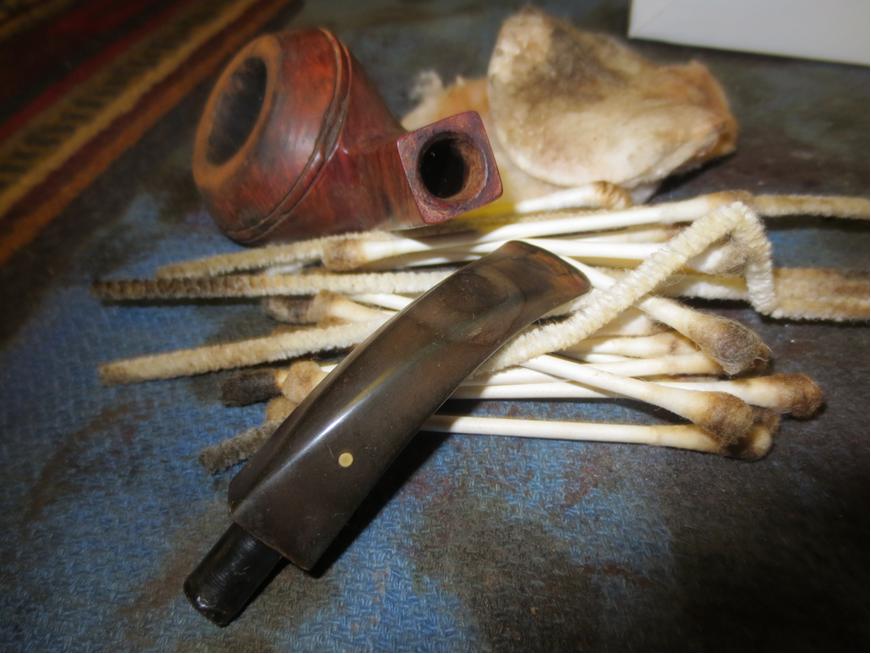
Aaron6 Next, I cleaned the inside of the shank with cotton swaps and isopropyl alcohol. This was a laborious process. The metal sleeve that receives the stinger prevents good access to the inside of the shank. I wanted to preserve as much of the original stain as I could so I choose not to soak the whole stummel in an alcohol bath. So, in an effort to loosen the tar build up, I dripped alcohol into the shank between bouts of swabbing. Eventually the swabs started coming out clean.

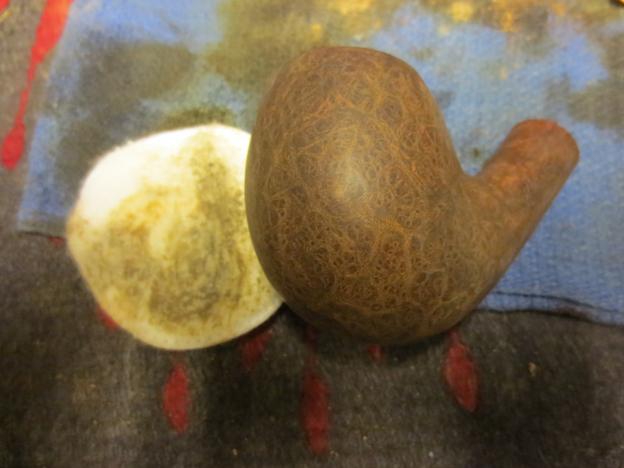
The char around the rim of the bowl was not cleaning up well. I had hoped that I could keep the carved lines on the rim but I made the decision to top the bowl and finish the pipe with a smooth clean rim. I freshened up the stain with a coat of light brown Feibing’s leather stain and flamed the stain to set the color.

Returning to the stem, I found that the alcohol bath succeed in loosening the tars inside and few passes with pipe cleaners got it clean. I was able to pass a cleaner from the hole in the stinger and out through the button without and troubles. I lightly hit the outside of the stem with 220 grit sand paper to remove the remaining foreign material and then cleaned the stinger with 0000 steel wool. I addressed the minor tooth marks by lightly flaming them with a lighter to raise the vulcanite then finished them off with the 220 grit paper.

Everything was going quite smoothly up to this point. Little did I know that I was about to get a refresher course in chemistry. Wanting to clean up the oxidation I dropped the stem into a bath of 50/50 bleach and water. Fortunately, I had cause to check on the stem in about 30 minutes and I realized my error. Chlorine (Cl) and aluminum (Al) react to form aluminum chloride (AlCl3). I found a large growth of aluminum chloride crystals on the stinger.

I wish I had had the forethought to document the mistake with a picture or two. But in truth, I was so caught up in cleaning the bleach off the stem and removing the crystals that photos were very far from my mind. All in all there was no real harm done. The aluminum chloride cleaned up easily but left the stinger rough to the touch and it needed to be polished again. Heating up the stinger with a butane lighter melted any of the aluminum chloride that built up inside and it drained out of the stinger holes.

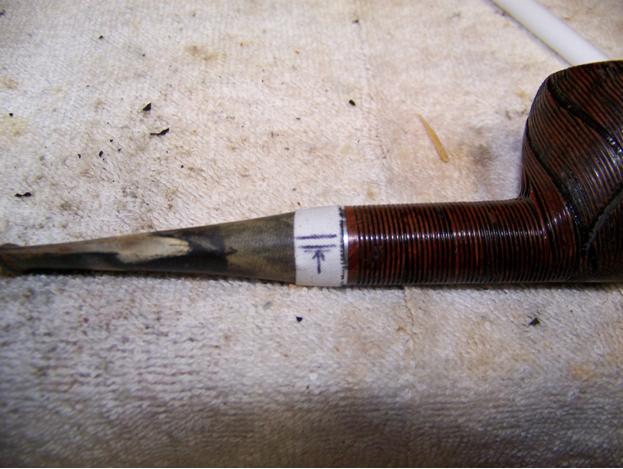
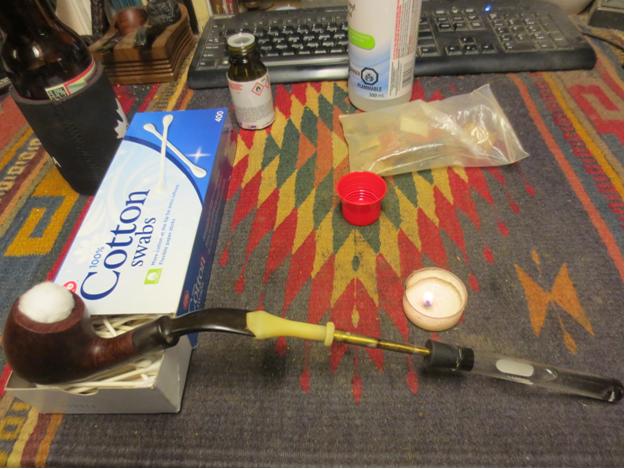
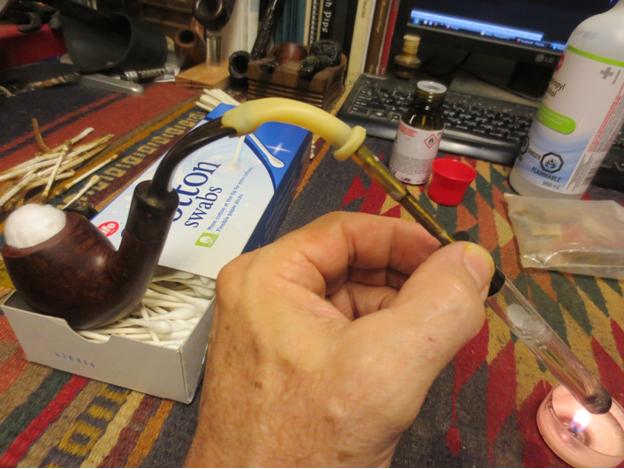
While I had the butane lighter out heating up the stinger, I thought I would take care of the over clocked stem. I wrapped the stem with some cloth tape and made a couple of reference marks to indicate which direction and how much to twist the stinger. I waited until the heat loosened the glue between the stinger and stem and then twisted the stinger with a pair of soft jawed pliers to align it with the stummel.Aaron7 Before I finished the stem and polished everything I thought I would run the pipe through the alcohol retort. I was not confident that I had thoroughly cleaned the inside of the shank and after the aluminum chloride incident, I thought that some hot alcohol vapor though the stinger would hurt. I use 95% isopropyl alcohol for my initial cleaning and soaking but I prefer using Everclear for final rinsing and retort. In my limited experience it seems that the Everclear leaves fewer ghosts in the finished pipe.

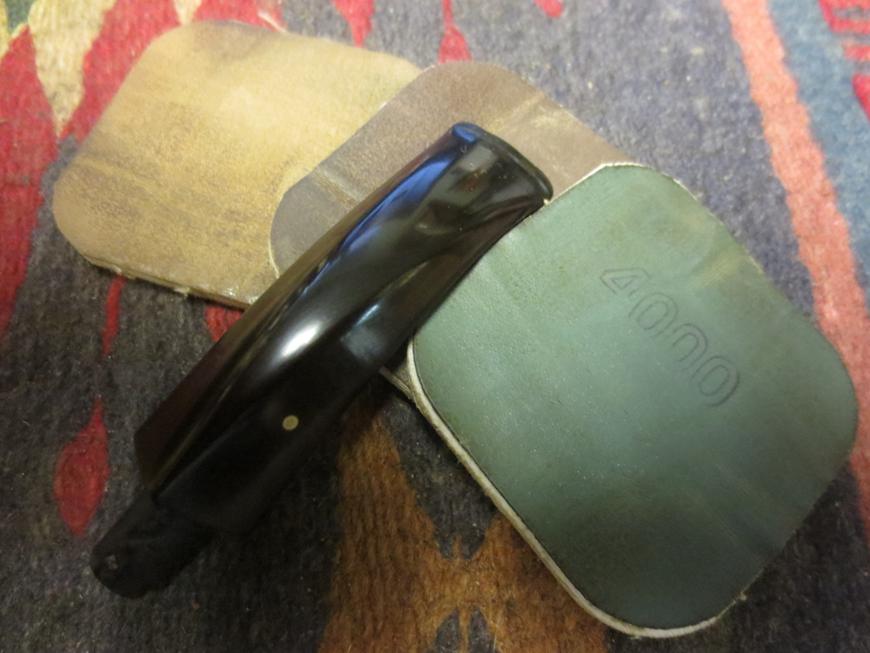
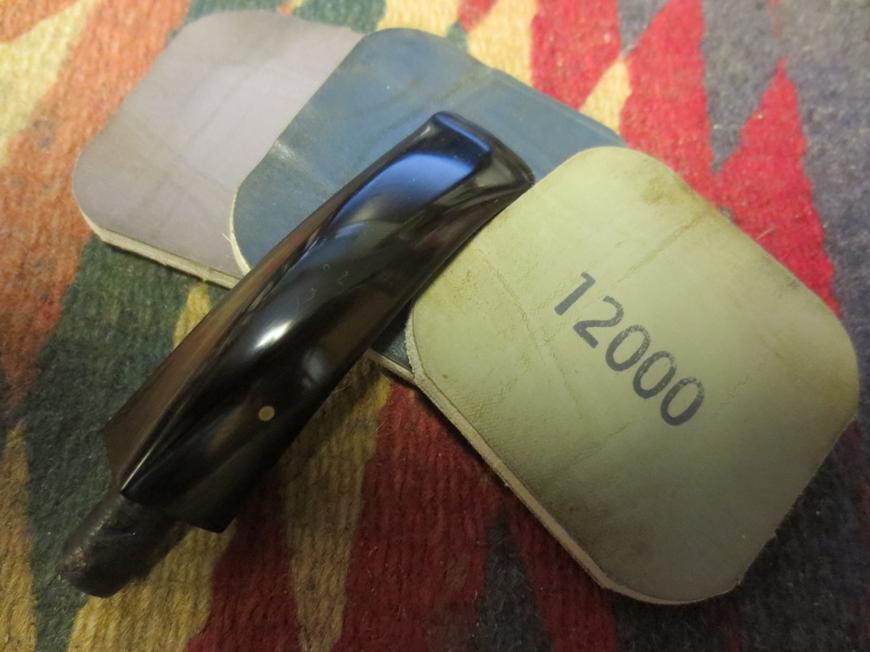
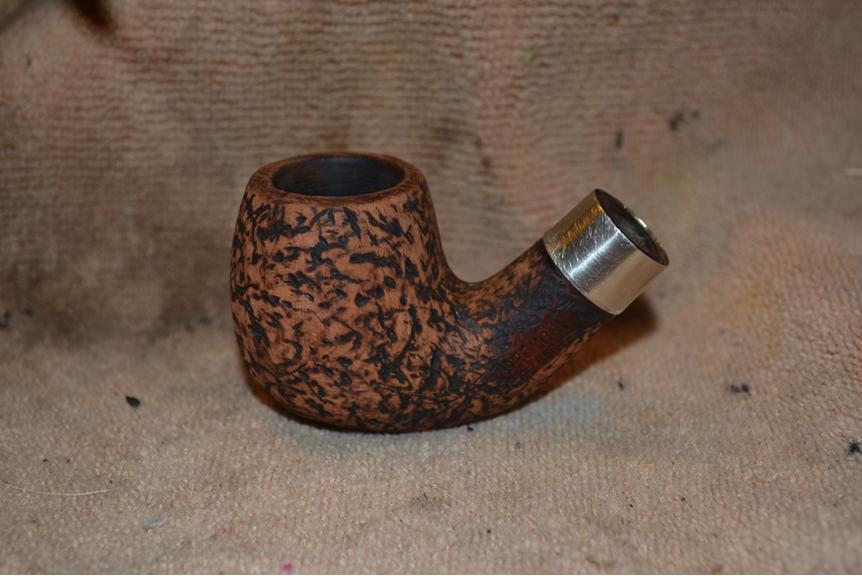
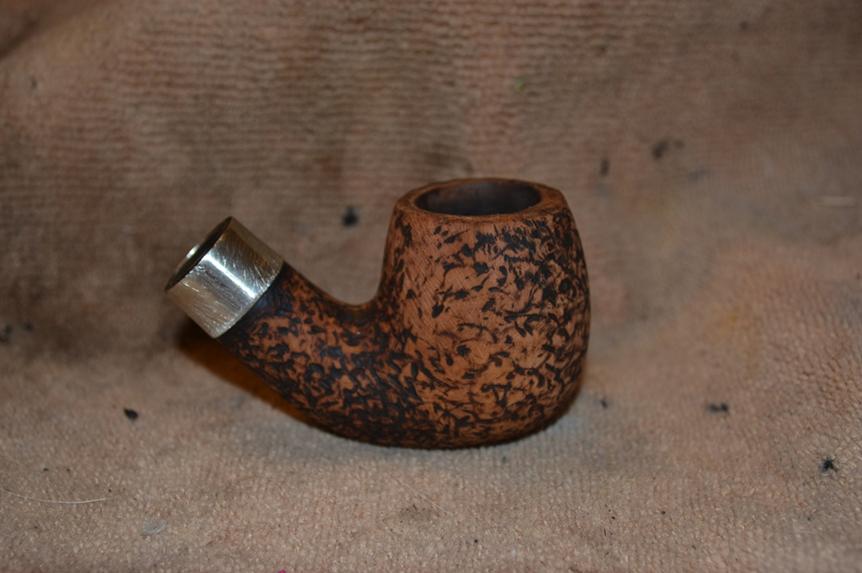
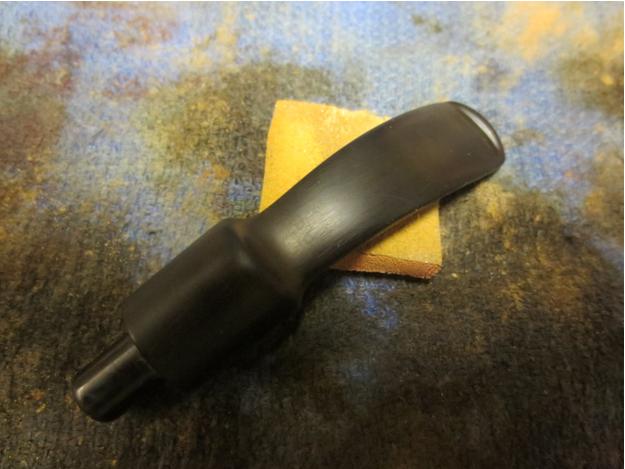
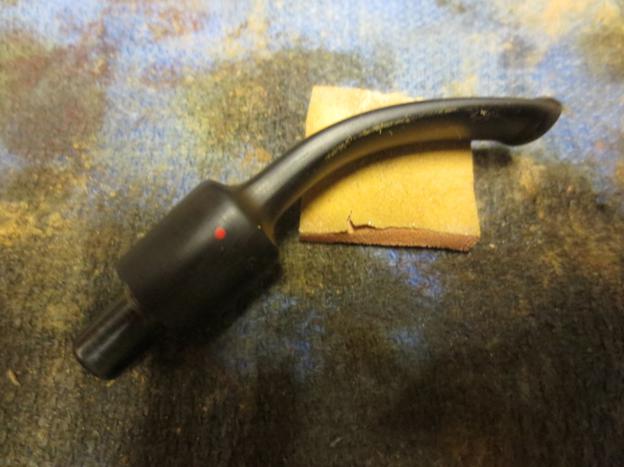
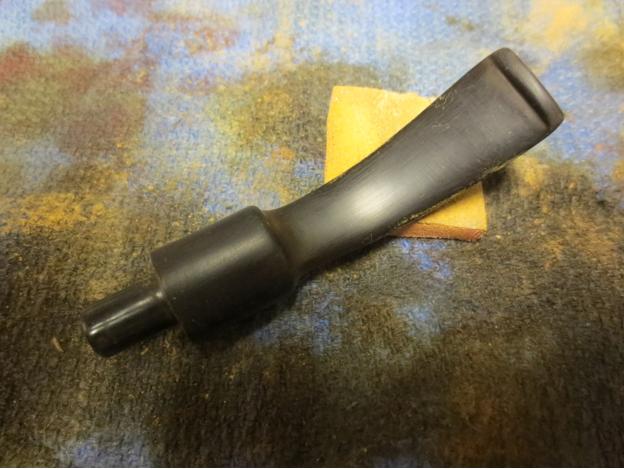
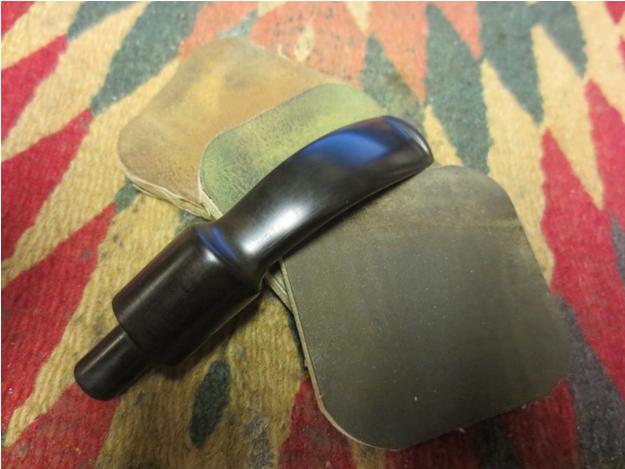
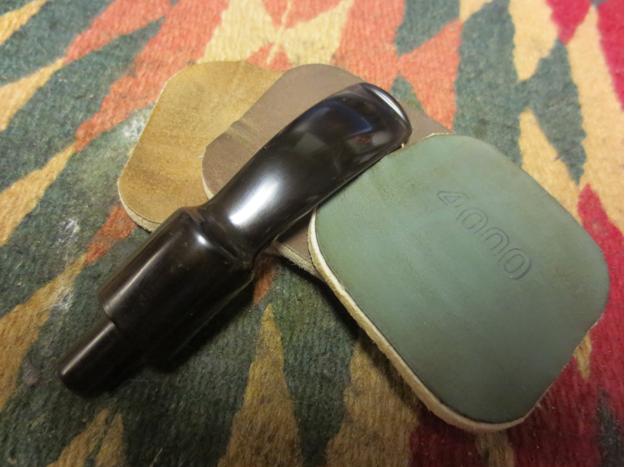
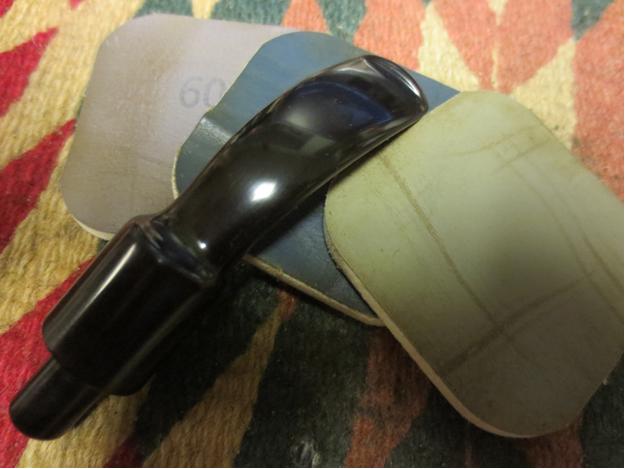
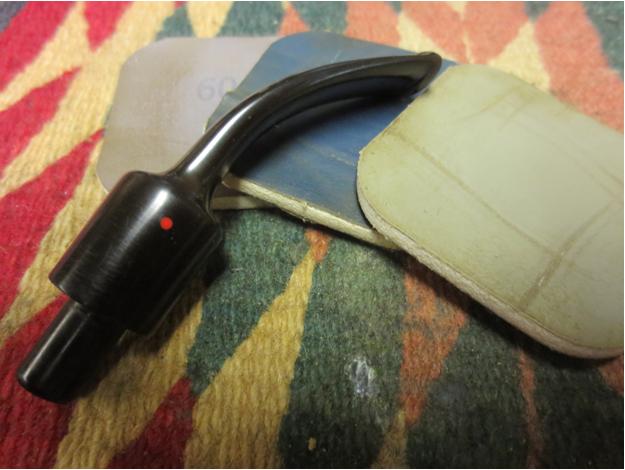
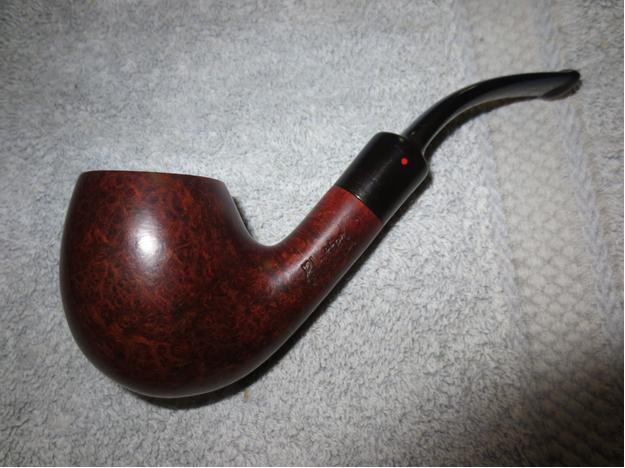
The remainder of the restoration was uneventful. I followed the typically stem polishing practices, wet sanding the stem with 400-4000 grit paper, stopping every few sets of paper to lightly coated the stem with mineral oil. I dry polished with 6000 and 12000 grit paper then took the pipe to the buffing wheel, applying red diamond compound, working the buffer with the carved lines of the pipe. I finished with 3 coats of carnauba wax buffing between each coat. I had to take a tooth pick to some of the wax that built up in the lines but the final product was a vast improvement from where I had started.Aaron8

Aaron9

Aaron10

Aaron11

Bead repair on a baby Rhodesian


Blog by Dave Gossett

It is a pleasure to introduce you all to Dave Gossett’s work. Pat Russell, another contributor here sent me links to Dave’s work on Pipes Magazine forum and Dave sent me links to his own YouTube channel showing the beautiful work that he does. With no further ado here are Dave’s own words:

I received this pipe from a friend that acquired it in an estate lot. The only stampings on the pipe read imp, which I assume once read imported briar. This pipe had seen better days but it still drew my attention. Maybe it was the novelty of its size.Dave1

Dave2

Dave3

Dave4 I started out by repairing the bowl chamber which had been badly reamed over the years. After removing the cake I sanded the bowl chamber smooth using 400 grit wrapped around a small sharpie marker.

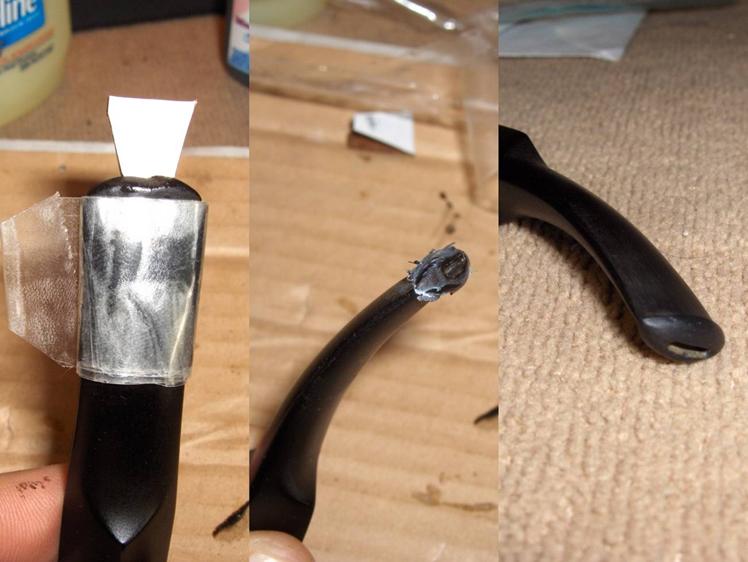
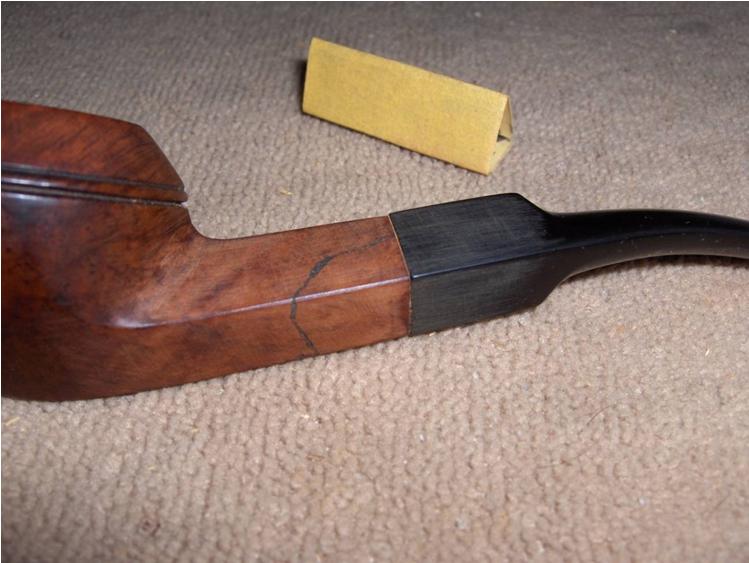
Next I proceeded to rebuild the bead line.dave5 I covered a small piece of cardboard in clear tape and wedged it in the groove under the damaged areas to keep the channel clear. Medium viscosity cyanoacrylate glue and fine ground briar dust will fill the missing voids. The glue will not stick to the clear tape and the wedge is easily removed after the repair has set up. I put a few small drops of glue in place and sprinkled the dust on top, then used the flat edge of a knife pressed it flat against the pipe. I repeated this several times around the circumference of the bead line.Dave6 After I had all the missing briar filled in I proceeded with the sanding . I started with 800 grit to smooth out all the excess glue, and then worked my way up to 2000 grit on the rest of the pipe.

Fiebings Dark brown leather dye is the base stain mix with a drop of oxblood. Once the stain dried, I went over it again with 2000 grit to give the grain a nice contrast, followed by a couple coats of pure carnauba wax on the buffing wheel.Dave7

Dave8

Dave9

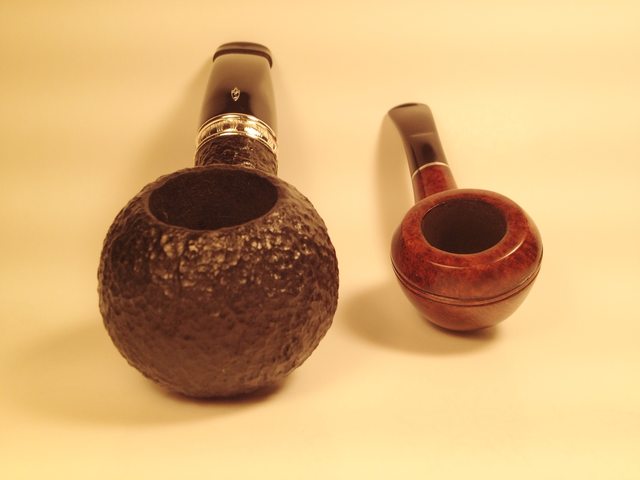
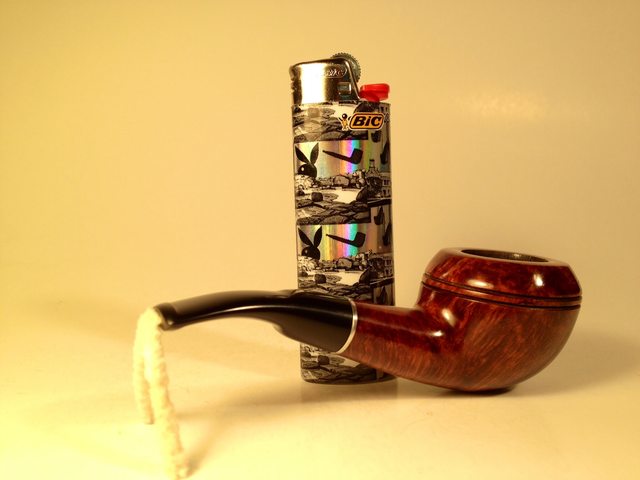
Dave10 Here it is sitting with a Savinelli 320 for size reference.Dave11 Next to a Bic lighter truly shows how small this Rhodesian really is.Dave12

Here is link to his YouTube channel. As he says: No worries. No blathering,YABO’s, or reviews, just pipes…. https://www.youtube.com/channel/UC_IKfDgcIgpOfsIYoodS_Hg

Bringing a Dunhill Bruyere Bent Rhodesian 08 Back From the Brink


Blog by Steve Laug

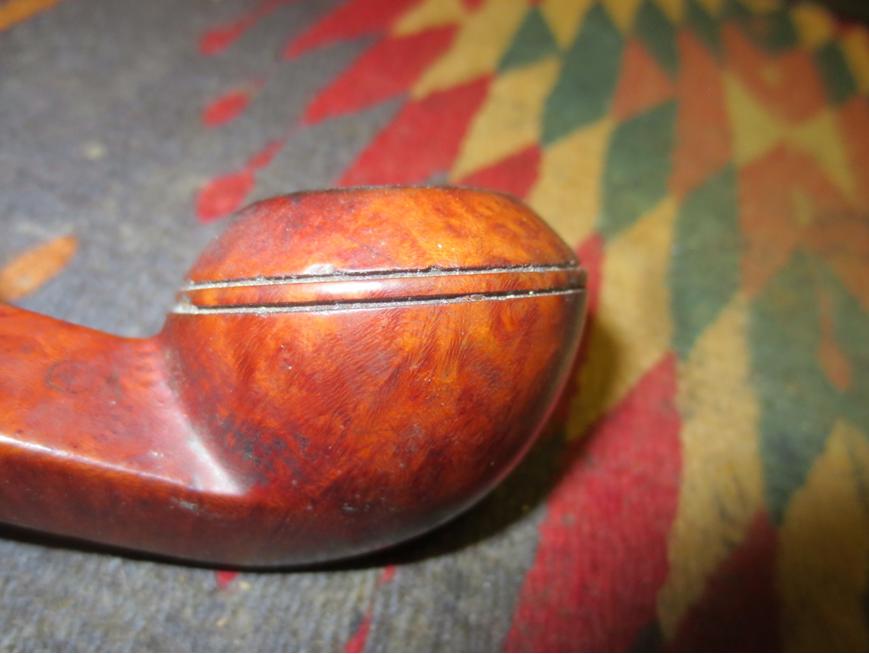
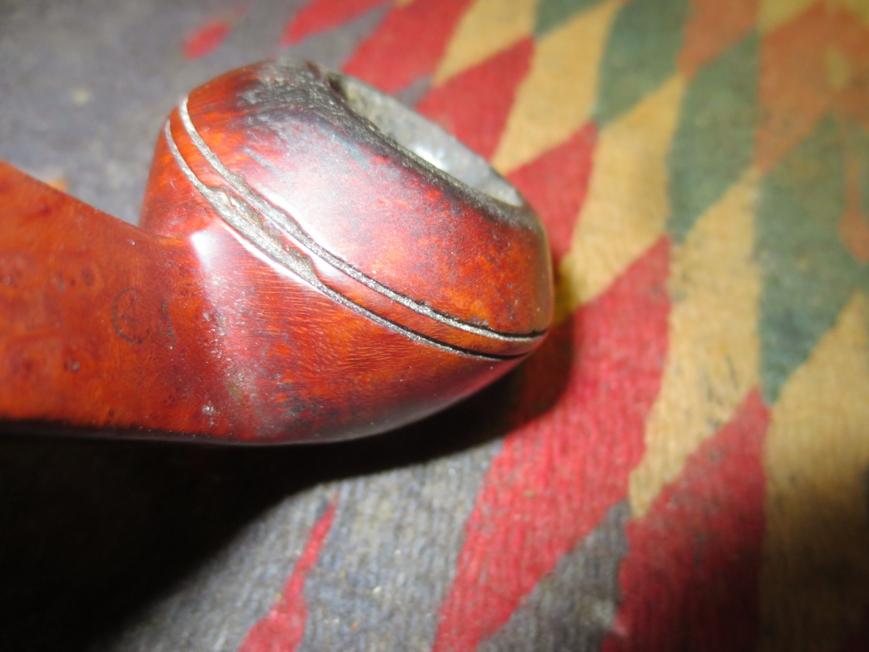
This Dunhill Bruyere was part of the gift lot for sale for Nepal. It was in very rough shape and one that would never be fit enough to grace a collection. The Dunhill stamping is only visible under bright light with a lens. The stamping on the left side of the shank is Dunhill over Bruyere. On the right side it is stamped with 4 in a circle and an A. The rest of the stamping is very faint and reads Made in London England (At least that is what it looks like). The shape number 08 is gone except for the 0. The finish was gone. The double ring around the bowl was virtually ruined and the bowl itself was in very rough shape. The rim was beat up and out of round. There were burn marks on the rim, the left side and bottom of the bowl and on the left side of the shank. To me it looks like the pipe was laid in an ashtray and the cigarette burned the bowl. It was in very rough shape. The stem was badly oxidized and upon examination there was a small split in the button on the underside and the stem was thin and the edges of the button were rounded down.Dunhill1

Dunhill2

Dunhill3

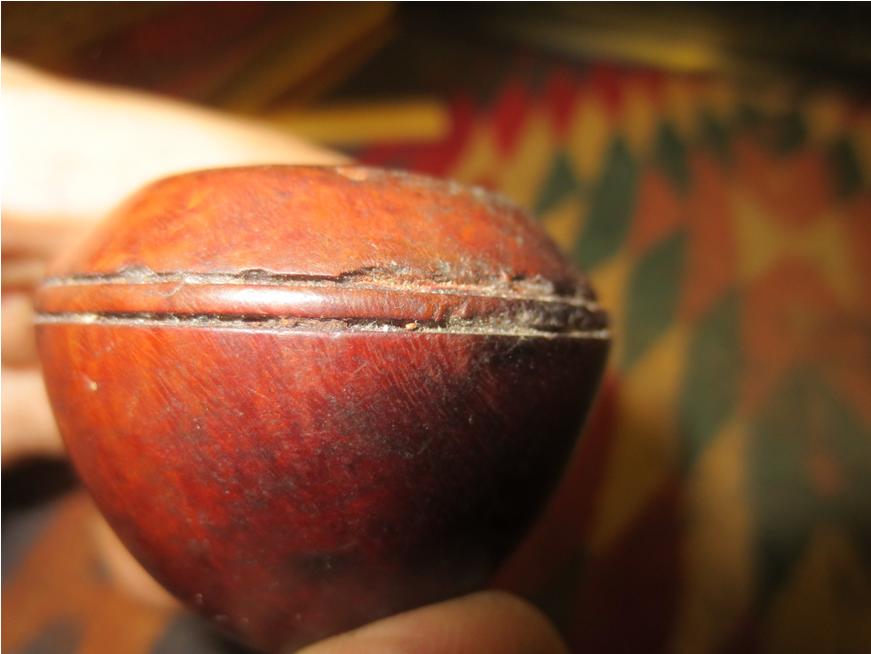
Dunhill4 I took some close up photos of the bowl to give a better picture of what I had to work with on this one. You can see from the photos the issues that I pointed out above. The ring was badly damaged and rough. The bowl was out of round and the rim was damaged. The finish was spotty and grimy.Dunhill5

Dunhill6

Dunhill7

Dunhill8

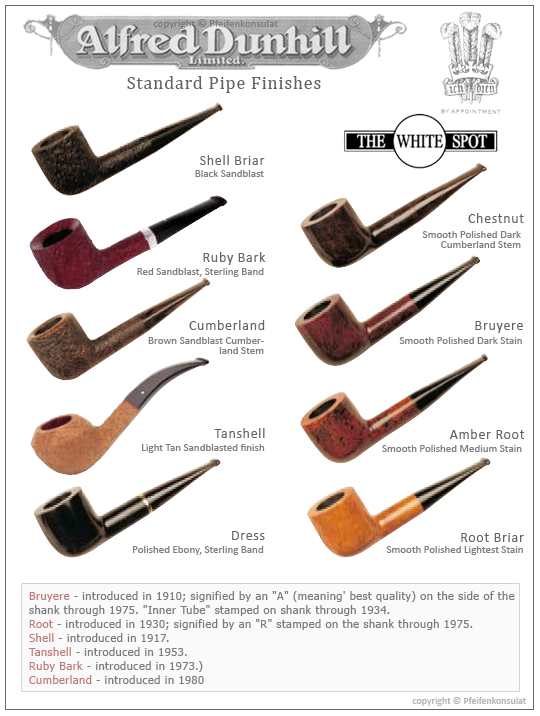
Dunhill9 I have one newer Bruyere in my rack so I kind of knew the colour this pipe should have been and it was not even close any more. I did a bit of searching on the web to see if I could find a finish chart and also one that would confirm the shape number that I was “speculating” on. I have included the next two charts for the information that I gleaned from them. The Bruyere was more dark/reddish coloured than this one was and the faint number was indeed 08 which was called a Bent Rhodesian.dunhill_pipe_finishes

dunhill_shape_size_chart The next two photos show the stem in some closeup photos. I wanted to show the oxidation and the split in the button on the bottom side of the stem. The fit in the shank was also worn. The tenon was sloppy fitting and could be wobbled side to side and up and down.Dunhill10

Dunhill11 I put off working on this one for a long time, choosing rather to work on pipes that I had some sense of what the finished product would look like. I had no idea if I could restore this one to any semblance of its original state let alone bringing back to “BEST QUALITY” which the Dunhill catalogue above said that Bruyere pipes stamped with the large “A” were supposed to be. This one was a challenge and I really drug my feet and postponed the test as long as possible. After looking at the photos above I hope that I have communicated the state of the pipe I was going to deal with. I have made no mention at all of the state of the inside of the shank and the stem. It was a mess as well – a thick black crud covered the inside of the airway in the stem and the shank and the mortise was almost clogged with the almost petrified tars of years of neglect.

So, yesterday I decided was the day to tackle this pipe. I had mowed the yard and done my weekend chores and needed some down time to relax. I suppose many of you would not call this relaxing but I still am under the illusion that it is restful…. Shhh don’t change my illusion please. I began with cleaning out the rings around the bowl. They were rough but they were also clogged with all kinds of debris. I used a sharp, thin blade pen knife that I have and use for this kind of thing. It works wonders and within a short time I had cleaned out the grime and the original red stain was showing in the bottom of the grooves.Dunhill12

Dunhill13 I scrubbed the bowl with cotton pads and acetone to remove the grime and the damaged finish. I also wanted to see the extent of the burn marks on the bowl, rim and shank. I wanted to see if they went deeper than the surface. Knowing that would help me decided what to do to address them.Dunhill14

Dunhill15

Dunhill16 With the grime cleaned off the rim I could see what I had to work with. The bowl was in rough shape. It was out of round but the inner edges did not have any char or burn. The rim had lots of dents and dings from someone using it as a hammer.Dunhill17 I decided to top the bowl to flatten out the rim and clean up as much of the damage as possible. I would then have to work on sanding the inner edge of the rim to smooth it out. I used the topping board with 220 grit sandpaper.Dunhill18

Dunhill19 With the rim flattened out once more and the outer edge more evenly set on the bowl top it was time to address the inner edge of the rim. I used a folded piece of 220 grit sandpaper to clean up the edge. I was able to greatly improve the “roundness” of the inner edge. While it was not perfect it was far better than when I started.Dunhill20 I cleaned out the shank and the airways with alcohol, cotton swabs and pipe cleaners. I scrubbed and scoured and scraped the airways clean of the “fossilized” tars until the pipe cleaners and cotton swabs came back white. Since I was probably going to smoke this one myself I decided to not use the retort at this point. If it smoked rough I could always set up the retort and let it do its magic.Dunhill21 I sanded the stem with 220 grit sandpaper, repaired the small split in the button on the bottom side and then sanded the stem with a medium and a fine grit sanding sponge. I rubbed it down with some Obsidian Oil and put the pipe back together. I took a few photos of the cleaned up look. If you are getting the idea that I was postponing working on the double ring and the heavy damage there you are correct in your assumption. I was not sure I would be able to work any redemption on that area of the bowl. Time would tell.Dunhill22

Dunhill23

Dunhill24

Dunhill25 I could not postpone dealing with the ring damage any longer if I was going to finish the pipe. I had read with interest Mark Domingues write up on restoring the rings on the Peterson 80 that he posted here recently. I spent time looking at how he rebuilt the centre briar ring between the two lines. I was ready to start. I cut a piece of note card the width of the back of the bowl and decided to address that damage first. I pressed briar dust into the damaged area of the ring and tamped it in with dental pick. When it was full I put some drops of clear super glue onto the briar dust. I did the same all around the bowl until I had a real mess on my hands. I was careful not to put the glue or dust on the places where the rings were in good shape. I would use these as guides to recut the lines later.Dunhill26

Dunhill27

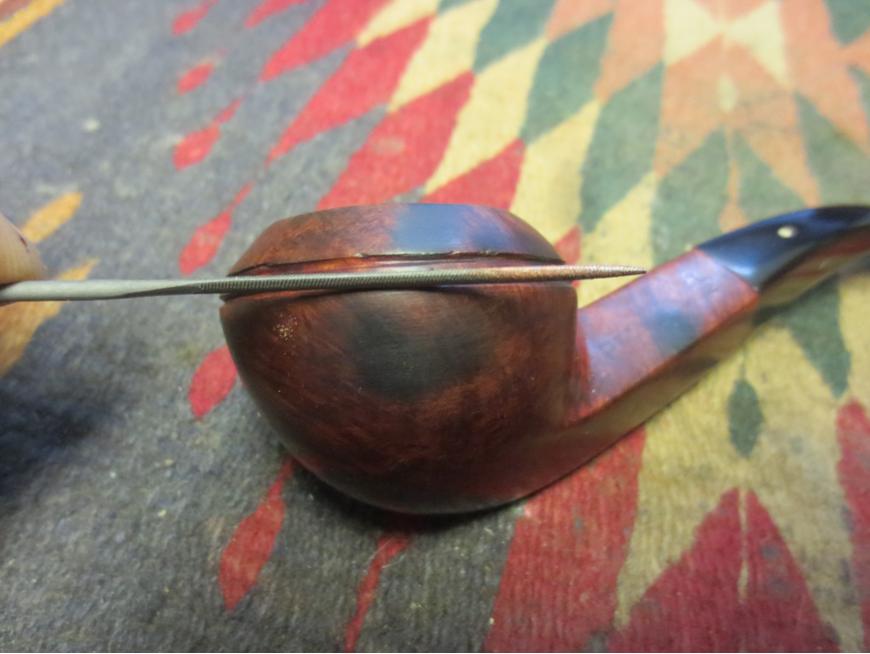
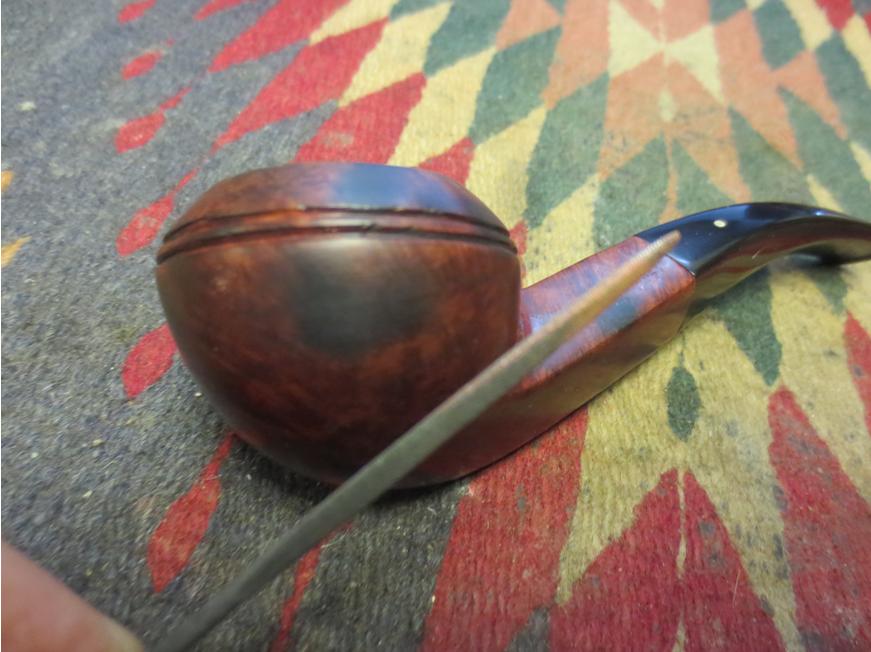
Dunhill28 I used a flat, thin blade knife edge needle file to recut the grooves in the bowl. It took a lot of work to slowly and carefully recut them but it worked as the photos below show.Dunhill29

Dunhill30

Dunhill31

Dunhill32 After the initial cutting of the grooves with the needle file I continued to use it to smooth out the grooves and the edges on the top and bottom. They took a lot of work to smooth things out. I also folded 220 grit sandpaper and ran it through the grooves on the bowl. Once they were smooth and cleaner looking than before it was time to clean off the bowl and then restain it with the first coat of stain. I wiped the bowl down with alcohol on cotton pads to remove the excess briar dust and any remaining glue. I sanded the burn marks on the bowl and rim with a medium and a fine grit sanding sponge to minimize them. I sanded them again with 1500-2400 grit micromesh pads to smooth out the scratches. I then gave it a coat of oxblood aniline stain, flamed it and set it aside to dry.Dunhill33

Dunhill34 The burn marks still showed with this first coat of stain and it was a little too red to my liking. I buffed it with White Diamond and then brought it back to the table to do some more work. I took some photos of the pipe after the buffing. I find that a couple pics help me focus on what needs some more work. In this case I could see that a little dark brown stain would work to tone down the red and also blend the dark spots in a bit more.Dunhill35

Dunhill36

Dunhill37

Dunhill38 I used a dark brown stain pen to give it a top coat of stain. In the photos it looks streaky but I don’t worry too much about that as a buff once it is dry will take care of that.Dunhill39 I buffed the bowl with White Diamond and a light touch. It is looking better. The rings on the left side are better but are still a little rough. The rest of the way around the bowl they are looking really good. The dark brown stain did a better job of blending in the dark spots and toning down the red. I liked the colour and it seemed to match the chart photos of the Bruyere that I had found.Dunhill40

Dunhill41

Dunhill42

Dunhill43

Dunhill44 At this point it was time for a break. I put the stem on the bowl and loaded a bowl of Boswell’s North Woods and went to church with my daughters. I smoked a bowl as I walked with them and loaded another bowl on the way home. I sat on the porch and fired up a third bowl filled with Malthouse Reserve 12. This pipe really sang with English tobaccos. Even if it was still a bit ugly it smoked well!

When I finally went back to the shop I worked on polishing the stem. I put the plastic spacer/washer between the shank and the stem and worked on it with micromesh sanding pads. I wet sanded with 1500-2400 grit pads and then rubbed the stem down with Obsidian Oil. I dry sanded with 3200-4000 grit pads and rubbed it down again with the oil. I dry sanded with 6000-12,000 grit pads and then gave it a final coat of Obsidian Oil. I set it aside to dry.Dunhill45

Dunhill46

Dunhill47 The stem was looking really good. There was a rich glow to the vulcanite. These older Dunhill pipe stems really shine like glass when they are polished. I set the stem aside and did a bit more work on the bowl. I used a very small oval needle file to work on the rings on the left side and front of the bowl. I wanted to clean up the edges and sharpen the overall look of the rings.Dunhill48

Dunhill49 I followed the oval file with a flat rectangular blade needle file and cleaned up the edges of the rings some more. When I had finished with the flat file the rings looked far better than they were when I started.Dunhill50

Dunhill51 I gave the bowl another coat of stain with the dark brown stain pen and then buffed the bowl and stem with Blue Diamond Plastic polish. I gave them both multiple coats of carnauba wax. Then I buffed the pipe with a clean flannel buff and polished it. The finished pipe is shown below. I think this one will stay with me as the nomenclature is almost illegible and the dark marks all over the bowl still show. The pipe smokes well so it will be a work horse pipe for me. It was well worth the time to clean up and I learned much in the process of reworking the rings.Dunhill52

Dunhill53

Dunhill54

Dunhill55 Thanks for looking.

A Possible Peterson Croydon That Could Be the Twin of another Reborn Pipe; or, Two Minds with Almost a Single Thought


Guest Blog by Robert M. Boughton
Member, North American Society of Pipe Collectors
http://www.naspc.org
http://www.roadrunnerpipes.com
http://about.me/boughtonrobert
Photos © the Author

“There comes a time in every rightly-constructed boy’s life when he has a raging desire to go somewhere and dig for hidden treasure.”
― Samuel L. Clemens (Mark Twain, 1835-1910), U.S. author and humorist, in “The Adventures of Tom Sawyer” [1876]

INTRODUCTION
I often wonder what my life would be like today had my mother married the man she loved – a well-known Apollo Program astronaut who later even tried to convince her to leave my dad. But she chose the space research and development nerd in the Brooks Brothers suits instead of the man in the dark blue uniform – which he sometimes traded for a big, bulky, white one with a sealed helmet to protect him from the void of space – who had the Right Stuff.Rob1 By the time he called again, I was about 10, living in the well-to-do Cleveland suburb of Shaker Heights, and Tricky Dick had somehow just been re-elected President. Even I knew what a mistake that was. I got out of bed late one night during one of my parents’ Gatsby-like parties to answer the phone upstairs in the hallway. A hushed voice, halting in surprise, asked, “Is Kit – your mother – there?”
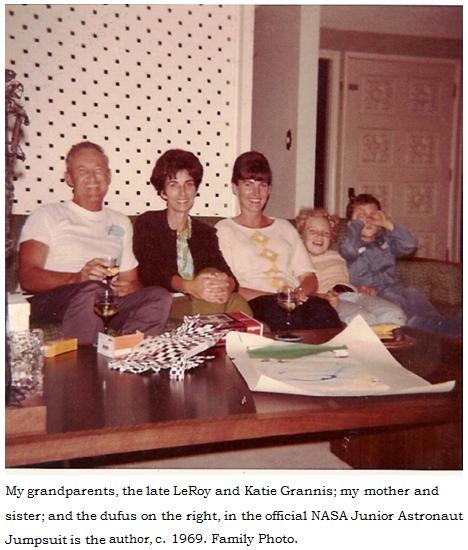
I told him she was at the party downstairs and said I could go and get her, but he quickly said no, asking me to have her call him and giving me his nickname. He must have thought I wouldn’t know who he was, but meeting him when I was just a toddler was something I never forgot. “Yes, sir, I’ll tell her, Colonel So-and-So [not his real name],” I replied, and can still hear him almost choke up over the long-distance phone line 43 years ago. Speechless for a moment, he at last suggested I just tell my mother in the morning, and I said, like a good little soldier on a mission, “Okay, sir. I understand.” And somehow I did.

Some events seem probable had my mother not married the man in the Brooks Brothers suits: I likely would have followed the astronaut to the Air Force Academy, and he would have been proud of me until he died some years back, unless I beat him to it in the service of my country. But the rest is blurry, except that I am still fatherless although my dad is alive and well.

Oh, and one more thing. I would not be here in beautiful Albuquerque, searching for treasures in pipe lots and one at a time and all the other right places.

RESTORATION
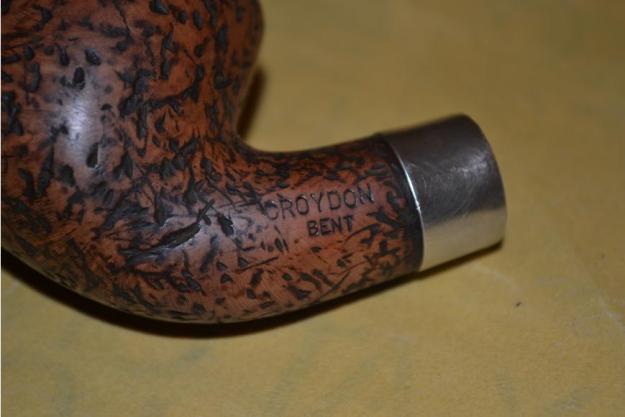
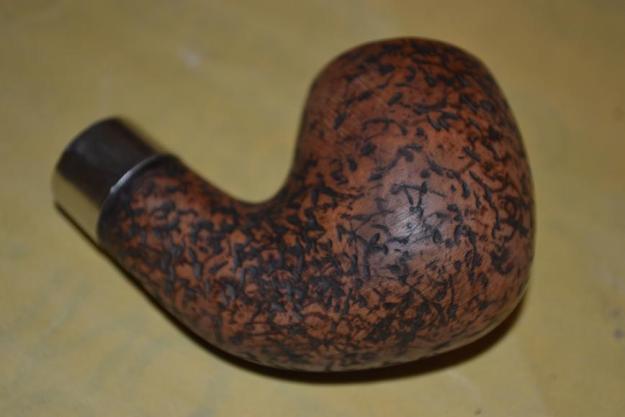
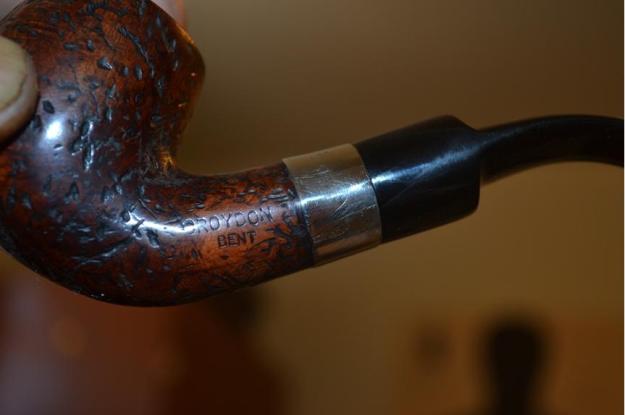
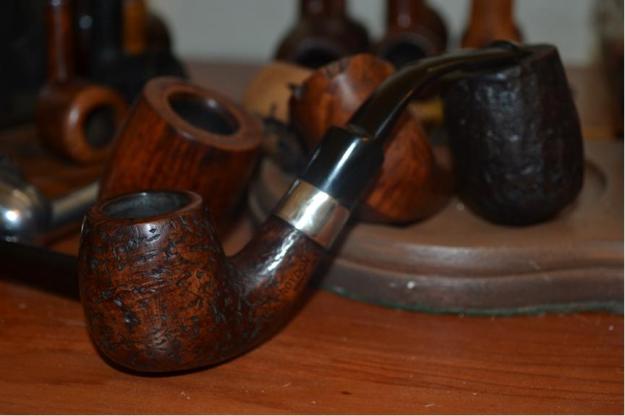
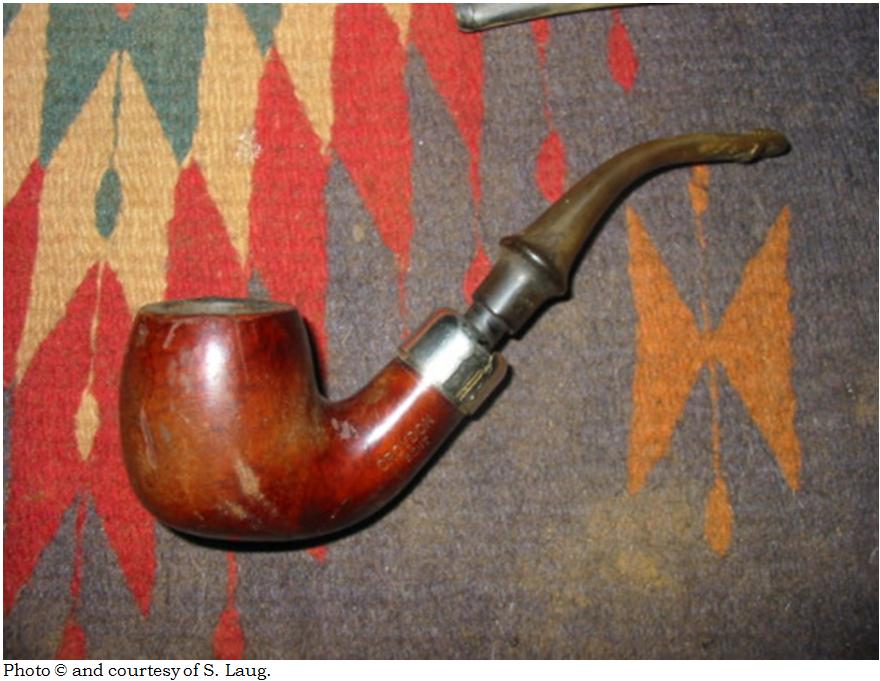
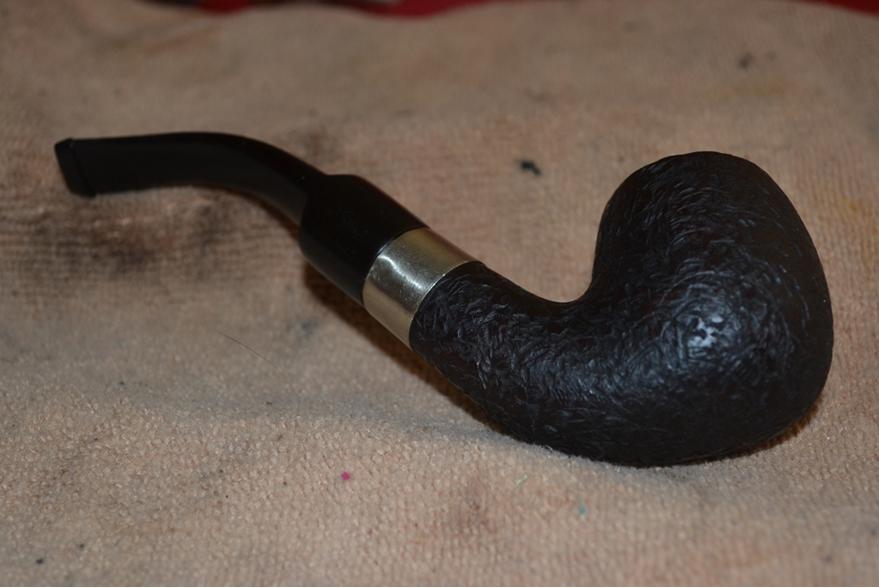
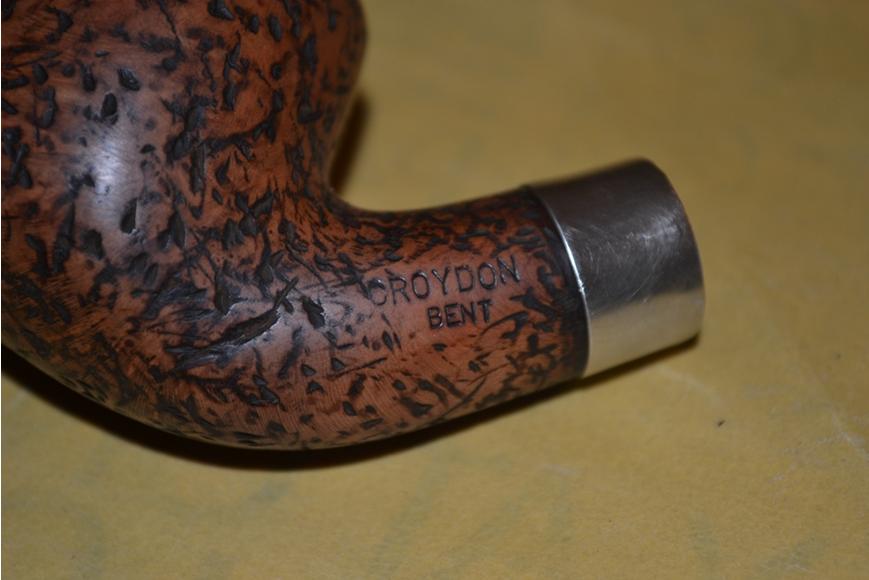
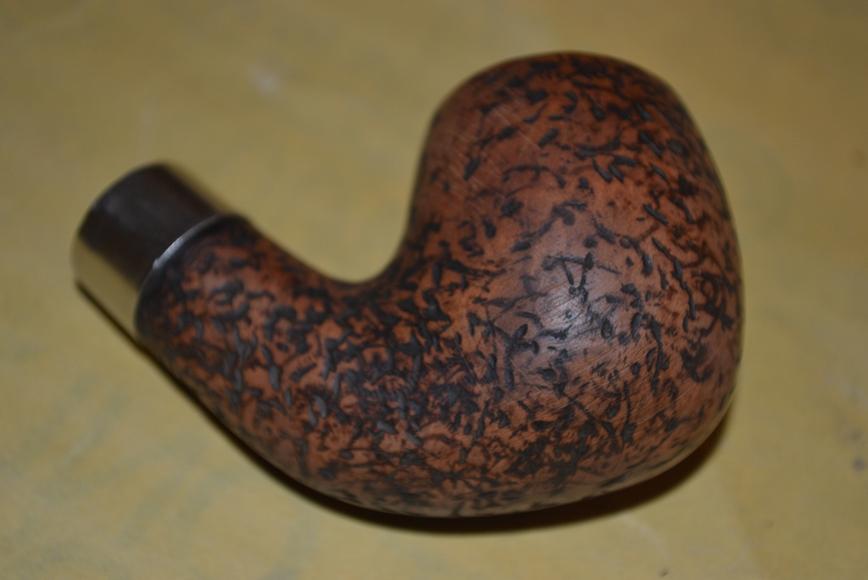
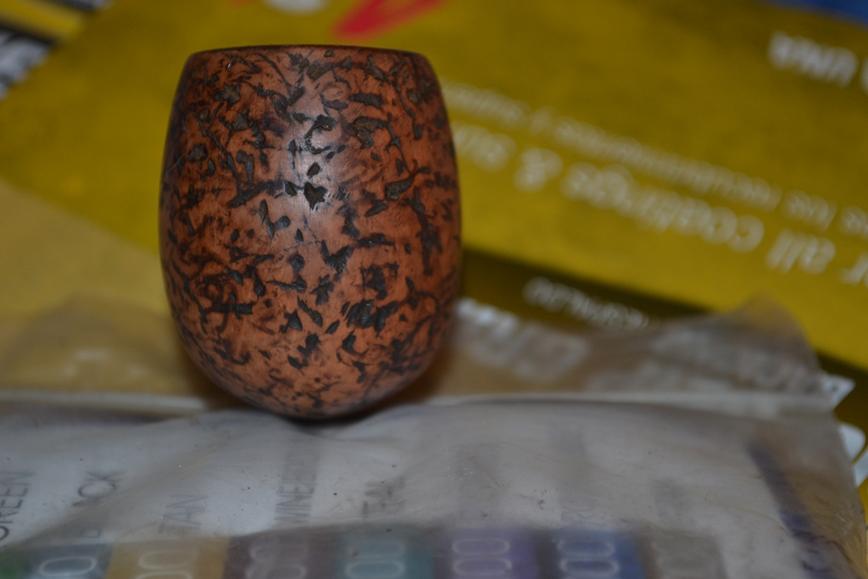
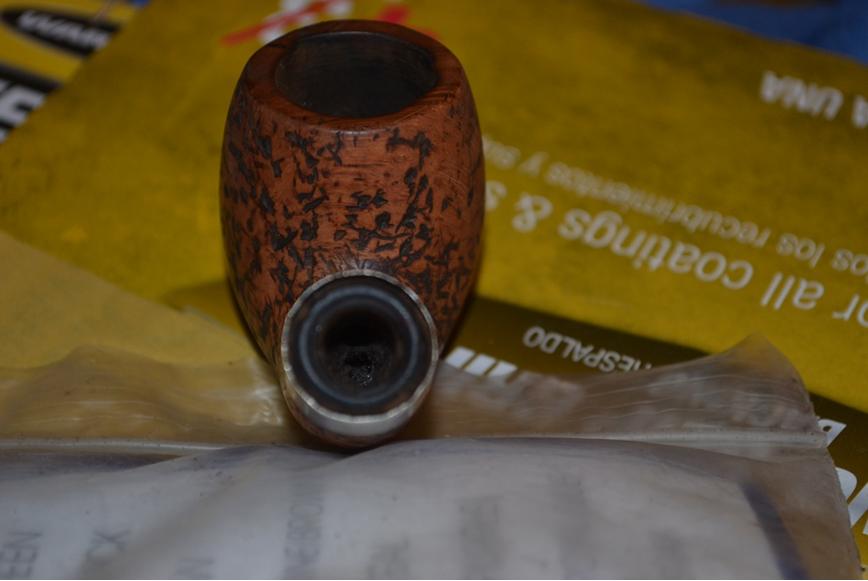
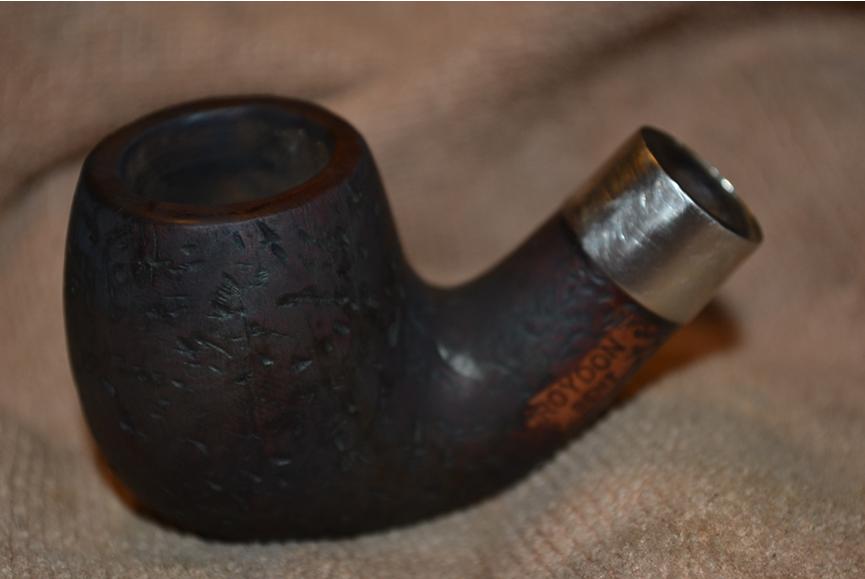
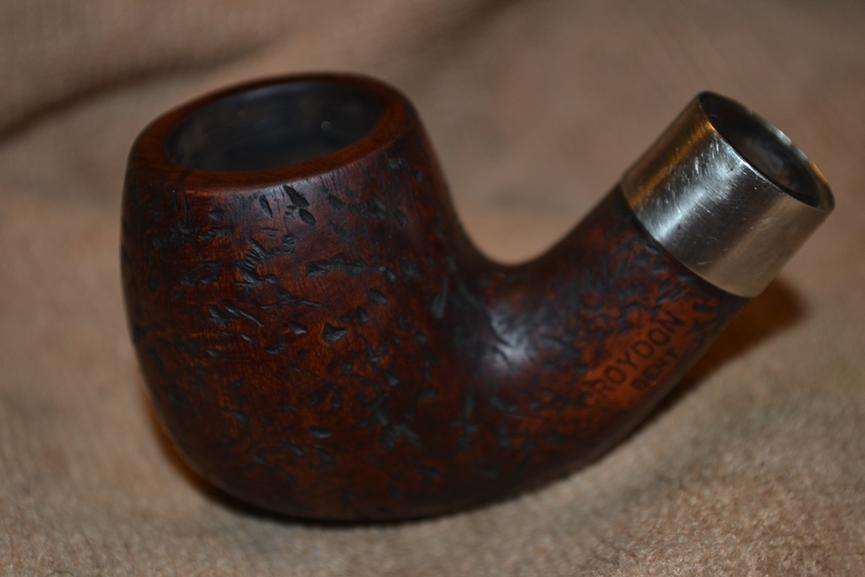
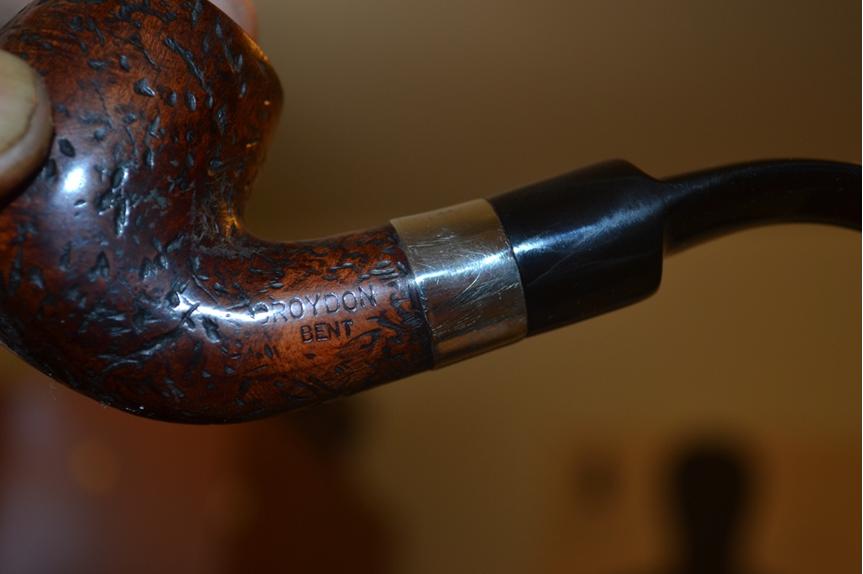
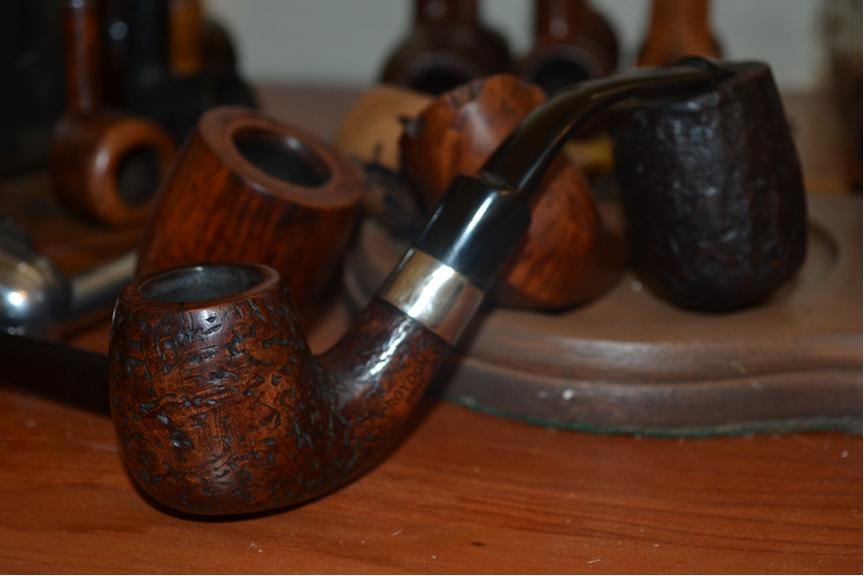
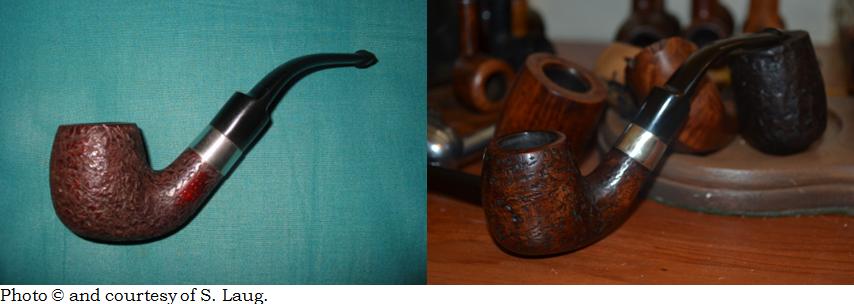
Looking online last week for background information on Croydon, I found links to various sites showing versions said to be made in London and Surrey, England as well as Spain, but without photos showing the nomenclature. Then I found a site for a definite Croydon brand from a Dutch carver named Lex Brouwer. There were also several sites for other brands, including Hilson and Peterson’s, with Croydon lines. I felt safe ruling out Hilson, which is known for its meerschaum lined chambers and mostly glazed clay bowls and shanks. Imagine my surprise to find an old Reborn Pipes blog by our host himself, from three years ago (June 20, 2012), about a ruined Croydon he believed was an old Peterson and of course re-made it to look perhaps better than new! Here are, top to bottom, his Croydon before restore and mine:Rob2
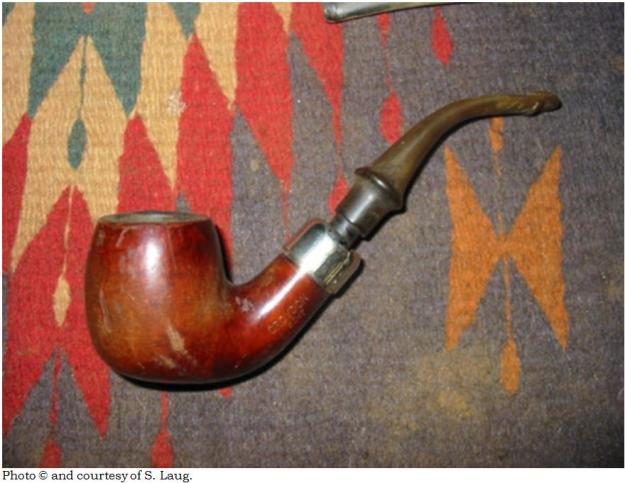
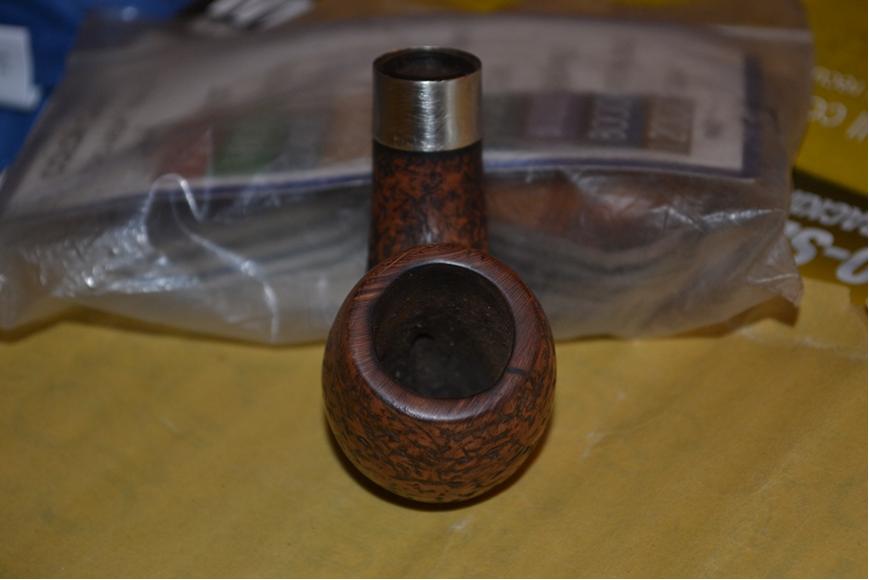
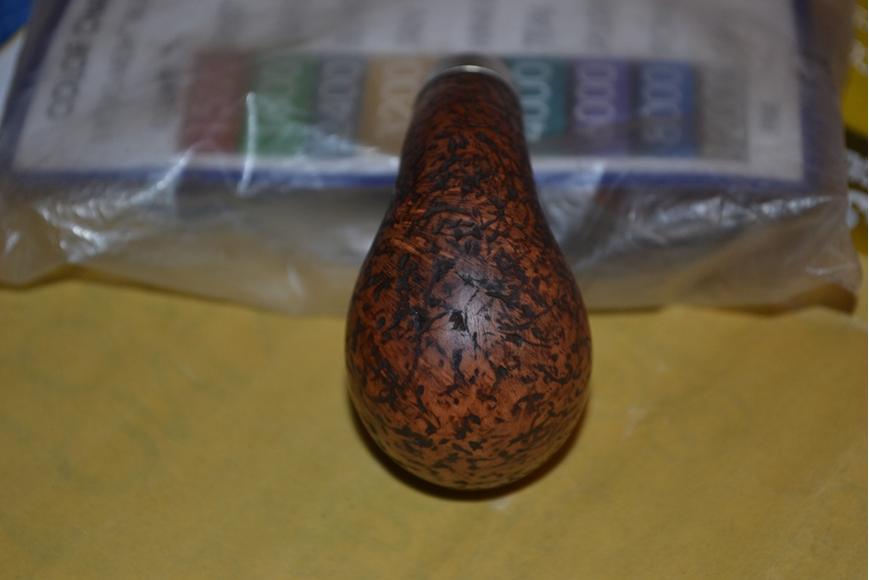
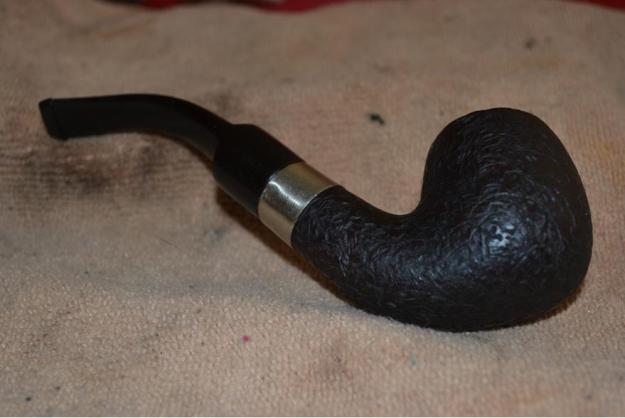
Rob3 Clearly, the similarity of the two pipes, other than the identical stampings of CROYDON over BENT, is not in these two before shots. What is amazing is how alike our vision of the finished pipe should be. (No fair skipping ahead to see what I mean! Bad habit!) Maybe even scarier is the fact that Steve’s modifications were made by necessity, about which you can read at https://rebornpipes.com/2012/06/20/old-croydon-reborn-3/, while mine were just for the sake of personal preference and nothing else. I might just as well have reamed and sanded the chamber, scrubbed and retorted the insides, lightly micro-meshed the bit below the lip and given the whole thing a nice new buffing.Rob4
Rob5

Rob6

Rob7

Rob8

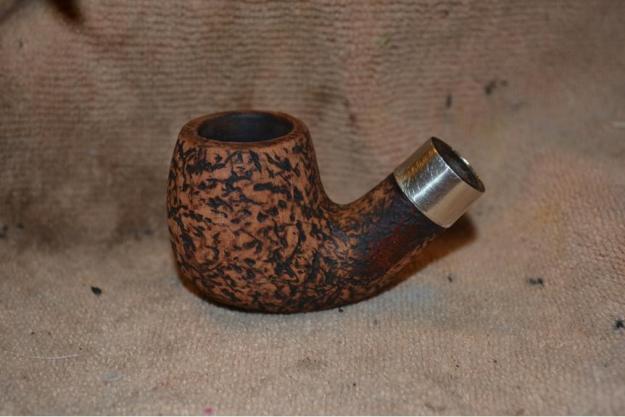
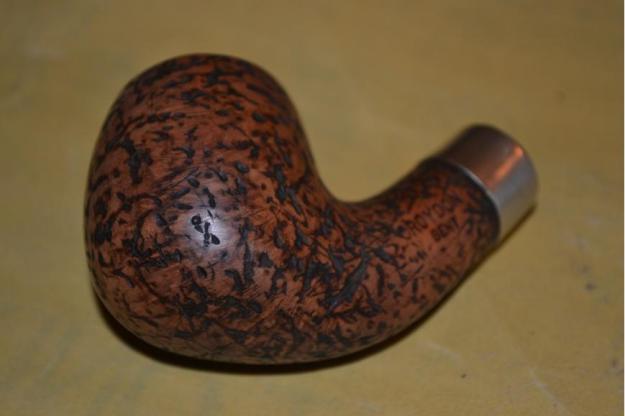
Rob9 But I’m just sick and tired of all the rusticated pipes that are finished with black stain! Enough is enough, I say! At least for this restoration, which I can only call that because of the initial stripping of the insidious stain, starting with 300-grit sandpaper followed by 400 and micromesh every grade from 1500-4000.Rob10
Rob11

Rob12

Rob13

Rob14

Rob15 I wanted to remove as much of the black from the crooks and crevices of the rustication as possible. Yes, my goal was to eradicate it if possible, which proved impossible with my knowledge – short of soaking only the wood in Everclear, which was problematic what with having to plug both ends of the draught hole and keeping the metal tilted up and out of the 95% alcohol. I suspect the alcohol would have eaten its way past any stoppers I might have devised anyway, and besides, I have had enough experience stripping pipes this way to have learned that less, in most cases, is better. Of course, in the case of Steve’s Croydon, he had absolutely no choice but to do a total makeover, even to the point of considering the idea of re-Christening the completed work a “Croydon-Reborn.” Reading his blog, I was touched by the apparently sincere struggle he had with the entire process he has many times since performed with ever-increasing brilliance.

At any rate, I chose the kinder, gentler approach of going over the wood again, but with super fine 0000 steel wool and focusing my tiring hand-work on the celestial but microcosmic canals and pocks. Then I did the full range of micromesh again from 1500-4000.Rob16
Rob17

Rob18

Rob19

Rob20

Rob21

Rob22 As is apparent, my efforts to remove even a little more of the blackness were fruitless. I should have known better than to try, but still not refrained from using the steel wool and another thorough micromesh progression for its fine effect on smoothing the wood and making it glow.

It was time, if not overdue, for retorting, which took a surprisingly low number of Pyrex test tubes of boiled Everclear shot through the stem and shank into the chamber filled with cotton that came out with any brown, and another to boil up and drain out several more times to confirm the job was done right.

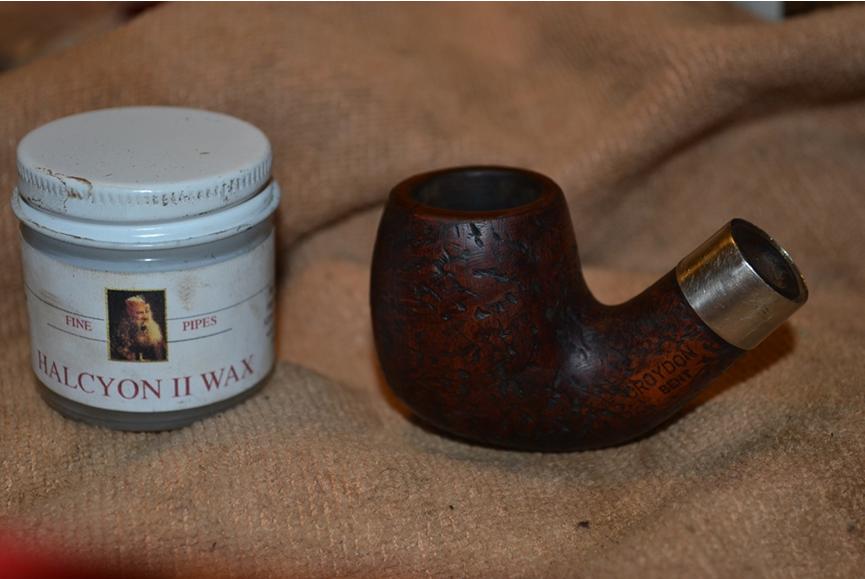
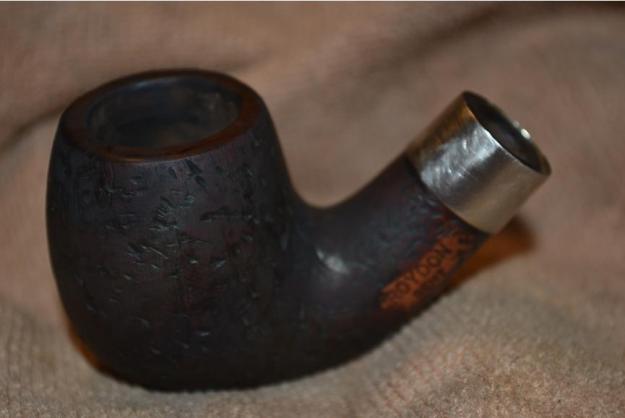
Now, for the point of all this technically unnecessary work obliterating the certainly OK original black stain. What I was looking for was something closer to the briar’s true color but dark enough to cover the grain and fill in the grooves. I decided on Lincoln Marine Cordovan (Burgundy red) boot stain, knowing that except with the lightest shades of briar, it leaves only a subtle redness. Here it is, first stained and flamed, then gently buffed with 3200 micromesh and then after being hand-coated with Halcyon II to sit a while before buffing on the clean wheel.Rob23
Rob24

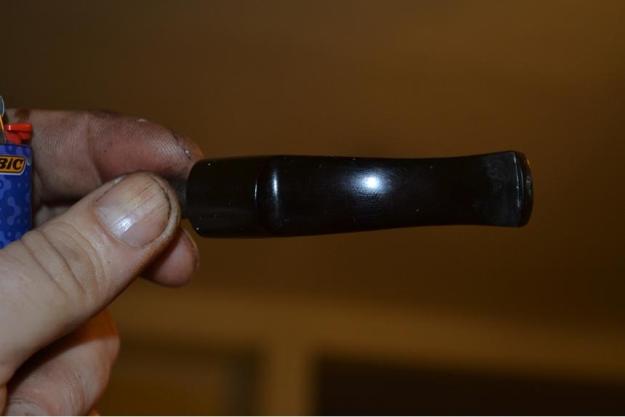
Rob25 Everything so far had worked out just right to do the minor clean up needed on the upper top and bottom of the bit, and including the lip, while the wax on the briar dried a little and worked into the wood. I micro-meshed the bit with 1500, 2400, 3200 and 3600 before buffing with red and white diamond, using the clean wheel and a soft cotton rag after both. Below are two shots before and one after, as both sides ended up the same.Rob26
Rob27

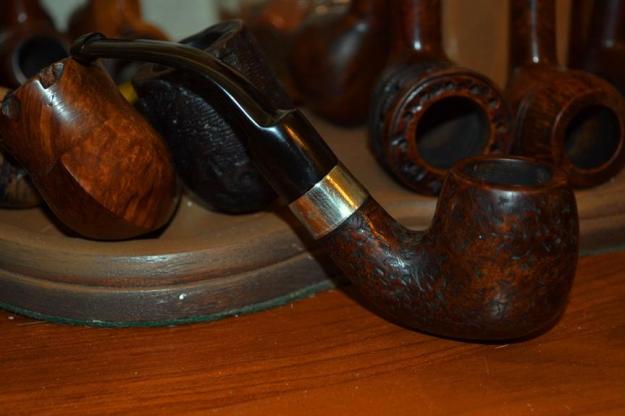
Rob28 The last part of the job was to put the briar to the clean buffer with a light touch, re-join the two separated parts of the pipe and again wipe the whole thing with a cotton cloth.Rob29
Rob30

Rob31

Rob32

Rob33

Rob34

Rob35 I caught the slight smudge on the top of the stem in the photos above after taking them and fixed the problem. Now for the final, left view photos of Steve’s finished Croydon and mine side-by-side.Rob36 CONCLUSION
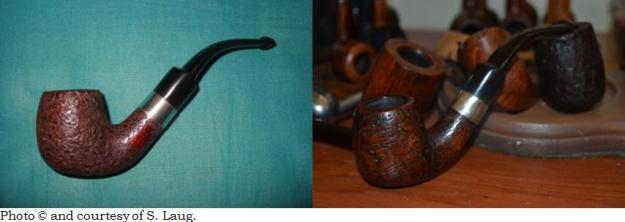
This was, of course, no competition, if only because of the fact that Steve’s was done three years ago, a few months before we ever “met” online. But had they both taken place at the same time, his would, hands-down, be the winner. Being able to take a pipe in the abominable condition in which Steve found his and clean it, rusticate the bowl and shank himself and replace not only the stem but, it appears, the band using the exact types with which an original is created astounds me…and inspires me.

If I still drank, Steve, I’d have two, one for me and one for you. But I wouldn’t stop there, so I guess I’ll have to settle for a Monster!

Midterm Exam #2: Repairing the Leaky Airway on a Champion Deluxe


Blog by Anthony Cook

It’s exam day again. I didn’t get much sleep, but I did have a good breakfast of Pop-Tarts and leftover ramen. So, let’s do this! This time, the exam is based on a bent brandy shaped Champion Deluxe.

PipePhil provides a little info on the Champion brand:Champ1 The pipe I’m working with has shank stamping and a stem logo that is identical to the middle pipe in the above graphic. The country of origin for the brand is listed as Switzerland, but there must be some French connection. The word “FRANCE” is stamped across the bottom of the shank-end of the stem on my pipe. You can see the pipe for yourself in the photos below, which were taken shortly after its arrival.Champ2 I was really pleased with this one when it arrived. I really liked the size, shape, and rustication pattern. As I turned it over in my hands, it seemed to be in pretty good condition. There were no major cracks or gouges, only a generous amount of grime on the stummel, one or two nicks on the rim, and a little oxidation on the stem. I thought it would clean up nicely and was beginning to look forward to working on it.

Then, I pulled the stem out to check the internals and cringed…Champ3 The airway was drilled so high that it actually penetrated the top of the mortise and only a very thin layer of briar remained between it and the surface of the shank. In fact, the wood was so thin that it had either cracked from heat/moisture expansion or had been punctured by the rustication tool. If you look closely, you can see in the second image that the alcohol from a dampened pipe cleaner would seep out of the airway to the surface of the shank.

I didn’t have the confidence at the time to attempt to repair something as essential and delicate as an airway. So, I reamed the bowl, scrubbed the inside of the shank and stem clean, and then dropped it back into the box where it’s been withering away for several months. So, today I pulled it back out for my second midterm exam.

The airway needed to be sealed before doing anything else. If that wasn’t successful any other work would be pointless. So, I clamped the stummel upside-down in my bench vise using a couple of foam strips to cushion it. I tried to make sure that the airway was as level to the ground as possible. Then, I applied super thin CA inside the airway with an applicator bulb. Since I couldn’t really see inside the shank and bowl, I had previously measured the length of the airway and marked it off on the applicator with a strip of tape. This, along with a slow and steady hand, kept me from dribbling the CA into the bowl.Champ4 Once I was sure that the glue was completely dry, I used 240-grit and 320-grit sanding needles to smooth out any lumps and bumps that the glue may have created in the airway. Then, I prepared my initial test of the patch. I dampened a pipe cleaner with alcohol and inserted it into the airway. I couldn’t see any seepage, but just to be sure I pulled out my jeweler’s loupe to give it a closer inspection. Still nothing. The patch had passed its first test.Champ5 I set up a retort for the next test. If there were any open fissures in the shank, the evaporation from the boiling alcohol would surely seep through. I flushed the shank 10-12 times before setting the pipe aside to cool. The color of the alcohol in the tube is a testament to the merits of a retort. It’s not filthy by any means, but remember, this is a pipe that I once thought was clean.

While the pipe rested, I closely inspected the shank to see if the patch had held. Success! I found no moisture seepage at all. The patch was doing its job and the worst part of the exam was over!Champ6 After another dozen or so flush with the retort the alcohol in the tube was almost completely clean. I let the pipe cool, and then gave it a final, quick scrub the wrap up the internal cleaning.Champ7 I placed the stem into a bath of warm water and Oxyclean and let soak for about an hour before I scrubbed it down with cubes cut from a Magic Eraser pad to remove the oxidation. Once the stem was clean, I applied a black CA glue patch to the remaining dents. I put a drop of activator on the patches to speed up the drying and they were ready to be worked again in about ten minutes. I sanded out the patches with 220-grit (the bottom image in the picture below), 320-grit, and 400-grit paper. Then, I gave the entire stem a light sanding with 600-grit paper to remove any minor scratches.Champ8 The paint in the stem logo was cracked and flaking. So, I picked out the loose paint, and then I began to fill in the area around the logo with a grout pen begin restoring the logo. I was a little worried about how well this was going to turn out since the recessed stamp was very narrow and shallow. I let the “paint” dry for about 20 minutes before carefully sanding it down with 1200-grit paper and I thought that it came out surprisingly well in the end. I finished up work on the stem by lightly sanding it with 1200-grit paper to even everything out, and then polished with micro-mesh pads 1500-12000.Champ9 The stem was finished and the clock on the wall was ticking. Some of the other guys were already turning in their papers. So, it was time to start wrapping things up. I mixed up a 3:1 stain solution of isopropyl alcohol and Fiebing’s black dye and applied it to the stummel. Then I buffed the entire stummel with red Tripoli before sanding out the scratches around the stamping with 400-grit, 600-grit, and 1200-grit sandpaper.Champ10 Then, I applied a 3:1 dilution of Fiebing’s cordovan before polishing the stamping area with micro-mesh pads 3200-12000. I reattached the stem and gave the entire pipe a light buff with white diamond, and waxed the pipe with Halcyon II for the stummel and a few coats of carnauba for the stem. Finally, I applied a bowl coating to promote cake growth, and then turned the exam in with my fingers crossed.

The photos below show how it finally turned out. For some reason, in these photos the cordovan and black blend together in the rusticated areas making them appear much darker. When you have the pipe in hand the cordovan is much more evident. I don’t know why that is. Man, I hope we aren’t being graded on our photography skills as well.Champ11

Champ12

Champ13

Champ14

Champ15 But, wait..!

Okay, I realize that this is a little unusual for an exam, but I’d like to make a bit of a revision. You see, when I ran my first bowl through this Champion the draw was extremely poor and it gurgled so badly that it sounded like an aquarium. To be honest, this wasn’t unexpected. The misalignment of the airway between the mortise was so extreme that it couldn’t help but create a lot of turbulence, and therefore a lot of moisture. I couldn’t let that stand. So, I took the stem back to the worktable to tweak it a little.

I clamped the stem in the vice and used a Dremel to cut off the stepped end of the tenon. You can see the piece I removed lying on top of the vice in the photo below.Champ16 After that, I sanded the face of the tenon smooth and level, and then used a tapered abrasive point in the Dremel to begin funneling the airway. I kept the airway lubricated with mineral oil to prevent the friction from burning or melting the vulcanite. The abrasive point opened up the end of the airway to a 3/16” diameter but transitioned it down to the 1/8” diameter of the original airway. Then, I used 240-grit and 320-grit sanding needles to make sure the transition was smooth. Finally, I used a round abrasive point to create a ¼” diameter chamfer on the tenon face around the airway and the sanding needles again to round off any of the sharp edges. In the picture below, the left image shows the step that I removed balanced on top of the stem for comparison; the right image shows the completed tenon after being reworked.Champ17 I was eager to try it out and the results were amazing for such a simple modification. The bowl smoked all the way to the bottom with no gurgle at all; even when I intentionally tried to build up steam by puffing rapidly (it was for the sake of science). After the pipe had cooled, I removed the stem and found a lot of moisture in the mortise. So, the extra space below the airway was acting like the sump/well of a system pipe. Very cool. The pipe was once again looking good and smoking well. My second exam was in the bag.
Midterm Exam #1: Repairing a Cracked Bowl on a Pre-1956 Medico Billiard


Blog by Anthony Cook

Anthony1 The photo above represents the start of my first semester at the University of Reborn Pipes (by the way, Steve, we need T-shirts, a mascot, and a fight song). It was taken several months ago and it shows the first batch of pipes that I had collected for restoration practice. It’s a motley crew to be sure, but I have a special fondness for each of them. You never forget your first, as they say.
I’ve completed the restoration of the majority of these since the photo was taken (sadly, I failed the cob test, but it was rigged I tell you), but four of them were placed back into the box after cleaning and have remained there. Those four had issues that required either tools, materials, or experience that I just didn’t have at that point. Over time, other pipes attracted more of my attention and those remainders continued to linger in the dark and gather dust once again.

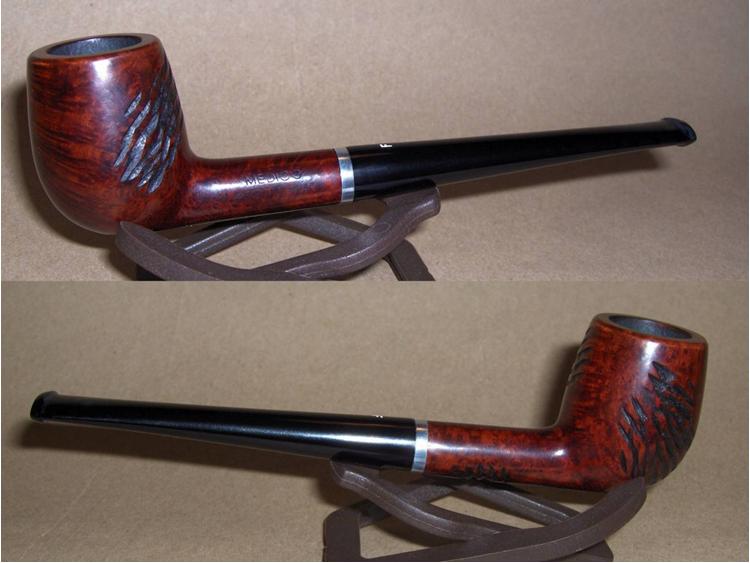
Now that I’ve acquired a few credit hours, I thought it might be time to drag them back out into the light; sort of as midterm exams to see if I’ve learned anything. The pipe that is second from the right in the group photo above is the one that I selected for my first exam.Anthony2 It’s an unnamed Medico billiard. The stamping on the shank reads simply “MEDICO” over “IMPORTED BRIAR” and the stem bears the “F” stamp found on some older Medicos. I learned from Dave Whitney, author of Old Briar, that the “F” stamp was probably discontinued in 1955, which gave me some idea of the pipe’s age.

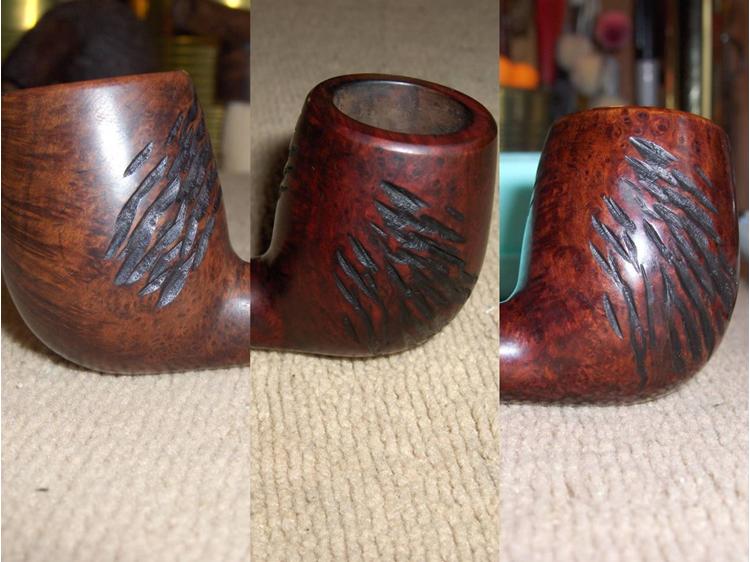
The main reason that this one was shuffled back into the box was because of the extensive damage to the bowl. There were large fills within the carved rustication on the right side and several cracks had developed in the area both outside and inside the bowl. I discovered during cleaning that at least one of them penetrated completely into the chamber.

Below, you can see more of the original pictures that I took of the pipe shortly after it arrived. I had not done anything with it other than ream the bowl at the time these photos were taken.Anthony3

Anthony4

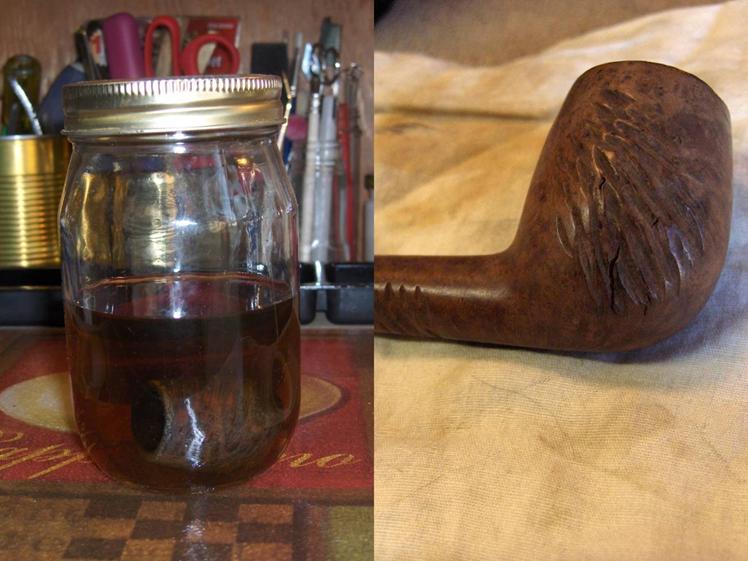
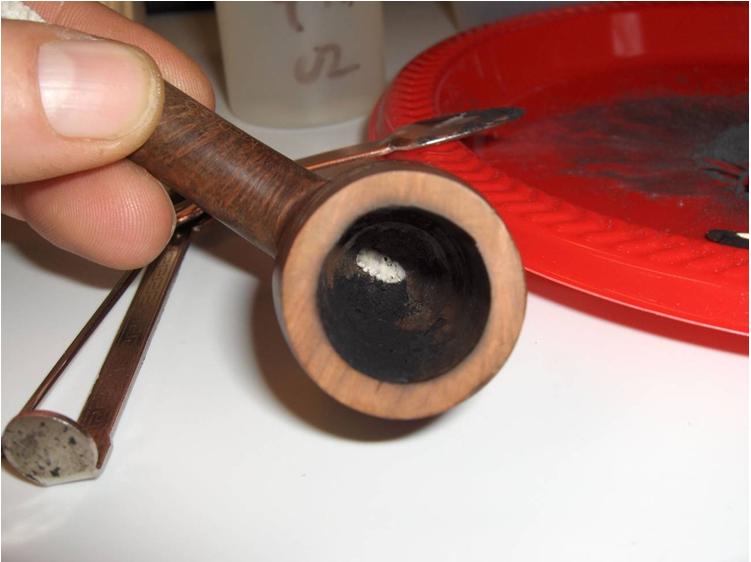
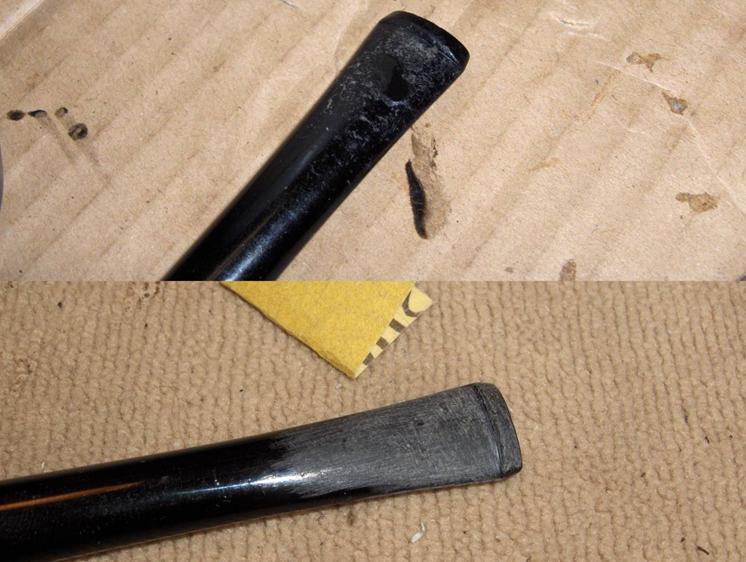
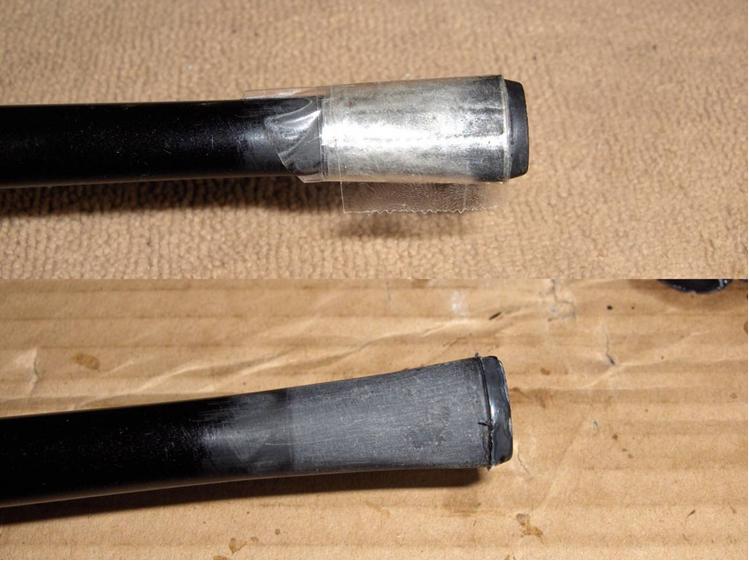
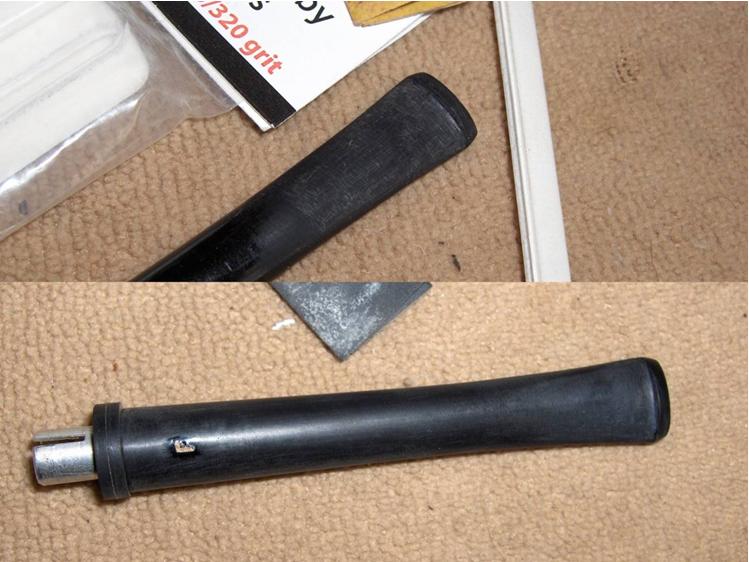
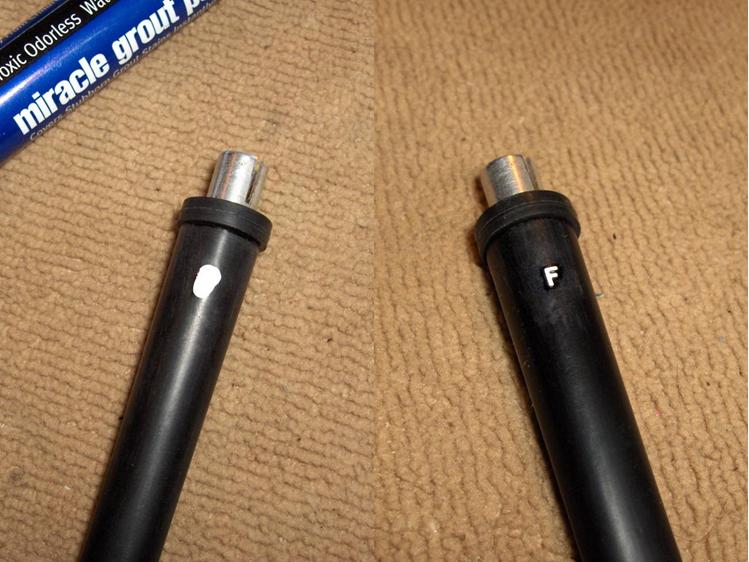
Anthony5 As I mentioned, I had already cleaned the internals of the pipe before dropping it back in the box. So, I started work by dropping the stummel into a jar of alcohol to soften the lacquer finish. The metal ferrule at the end of the shank was loose enough to fall off. So, it was removed it and set aside. After a couple of hours, I removed the stummel from the bath and wiped it down with a cotton cloth. Then, I used acetone and #0000 steel wool to remove the lacquer coating. I also picked out the pinkish-orange putty from the fills, and then used the pick to scrape any loose or charred wood from the cracks.Anthony6 A lot of scratches and gouges were revealed once the rim was clean. So, I set up my topping surface and lightly sanded the majority of the blemishes away using 220-grit and 320-grit sandpaper.Anthony7 I mixed together powdered pumice, activated charcoal, and sodium silicate to make a bowl patch. After protecting the airway with a pipe cleaner, I applied a small amount of the patch mix directly to the cracks with a flat toothpick and firmly tamped to push it into the cracks. Then, I used the scoop on my pipe tool to apply a thin layer across the entire area for protection.Anthony8 Next, I addressed the cracks and pits on the outside of the bowl by filling them with a few layers of briar dust and CA glue. I applied the glue with the end of a toothpick to avoid getting glue into the carved areas as much as I could. After the patches had dried, I sanded them down with 220-grit and 320-grit sandpaper. The same progression of grits was used to put a slight chamfer on the outside of the rim to remove the gouges that remained there. While I was working the bowl, I also sanded the chamber patch smooth with 400-grit paper.Anthony9 I sat the stummel aside for a time to pay some attention to the stem. There was a lot of chatter near the button and tooth dents on both sides of the stem. I applied black CA glue (medium thickness) to the dents with a toothpick and dripped a couple of drops of activator over it to set it up quickly. When it was completely dry, I sanded out the glue patch and leveled the chatter with 220-grit paper. The two photos below show the patch before and after rough sanding.Anthony10 While I was working, I decided that I didn’t like how worn and rounded the edge of the button had become. So, I decided to build a new, sharper edge. I wrapped clear packing tape around the stem to mask it just below the button. I built up the layers until it was the depth that I wanted my new button to be. Then, I used a flat toothpick to “paint” black CA glue (thick) along the edge of the mask and dripped activator over it when I was satisfied with the coverage. Before the glue could completely set up, I quickly peeled the tape away to reveal my new (although rough at this point) button edge.Anthony11 I used 220-grit paper and a sanding file to start shaping the button, and then 320-grit and 400-grit to refine the button shape and further blend the patch area. I also used 400-grit paper to remove the unsightly (to my eyes) molding seams along the sides of the stem. I placed a rubber washer over the tenon to preserve the sharp edge of the stem face and lightly sanded the entire stem with 600-grit and 1200-grit paper.Anthony12 The stem logo was in fair condition, but the paint was cracked and discolored. So, I filled it in using a grout pen and carefully sanded off the excess with 1200-grit paper. The grout paint left a slight, white residue smeared around the logo, but that would be removed with further polishing.Anthony13 Before polishing the stem, I rubbed it down with a drop of mineral oil, let it sit for a couple of minutes, and wiped it away. I hoped that this would moisturize the surface a bit and maybe prevent some of the nylon fiber splintering that always seemed to leave behind fine scratches in the finished stem. Then, I polished with micro-mesh pads 1500-grit to 12000-grit. I added a second and third drop of oil between 2400/3200 and 4000/6000 pads. I was pretty pleased with the results. The final stem was much more blemish-free that the previous nylon stems I’ve worked on.

With the stem finished up, I returned to the metal ferrule that I had set aside earlier. I gave it a once over with #0000 steel wool, and then polished it with Semichrome polishing paste and a soft cloth. I buffed of the excess with my Dremel and a small buffing wheel to give it a nice shine.Anthony14 Back to the stummel, I applied a 3:1 mixture of isopropyl alcohol and Fiebing’s black dye, hand-buffed the stummel with a soft rag to remove the excess, and then used 600-grit paper to remove the scratches and most of the dark stain except for inside of the carved rustications and what had set into the grain. I also made small adjustments to the width and angle of the rim chamfer with the sandpaper to make sure that it was even all the way around.

Next, I applied a 3:1 stain solution of isopropyl alcohol and Fiebing’s dark brown, buffed off the excess by hand, and lightly sanded the entire stummel with 1200-grit sandpaper to smooth the surface and soften the edges of the rim. Then, I applied a 3:1 solution of ox blood stained and hand buffed again.

Finally, I polished the stummel with micro-mesh pads 1500-2400 before applying a 4:1 mahogany dye mix. I wiped the stummel down with an alcohol dampened cloth until I achieved a dark copper color and finished up by polishing with the remaining micro-mesh grits.Anthony15 Then it was time to put all of the pieces back together and give the pipe the final touches. I reattached the ferrule to the stummel with some 5-minute epoxy. When that had set, I applied a bowl coating mix of sour cream and activated charcoal to help promote the cake formation in the repaired chamber. I let that dry for about two hours before reattaching the stem and taking the pipe to the buffer. I buffed the stummel and stem with White Diamond, and then I gave the pipe several coats of carnauba wax.

With all of that done, I turned in my first exam. I’m feeling pretty good about it, but I never really know how I’ve done on these things until the grades finally come back. I’m not going to worry about it now, though. I still need to cram for the second exam. It’s going to be a long night.Anthony16

Anthony17

Anthony18

Anthony19

Cleaning and Restoring a Blatter of Montreal Bent Egg


Blog by Steve Laug

When I received this Blatter of Montreal Egg pipe I sat down and looked it over carefully to assess what would need to be done to restore it. The finish was very dirty and worn but underneath the dirt and oils there was some amazing grain. On the right side of the bowl, near the top there was a fill that had popped out and left a large divot in the briar. The size of the missing fill distracted from really seeing the beauty of the pipe. Looking at the top of the bowl I could see that the inner edge of the rim was slightly out of round and the rim had been previously topped. Both the stain and the topping were not even. The outer edge of the rim had been rounded from sanding and was no longer a clean sharp edge. Sometime ago the bowl had been reamed and a broken uneven cake left on the sides of the bowl. The airway at the bottom of the bowl had a groove carved from the opening across the bowl bottom that appeared to come from using too heavy a hand with a pipe cleaner over the years.

The stem was in good shape in terms of not having any tooth damage or chatter. The button was still quite sharp and distinct like the other Blatter pipes that I have cleaned. It was oxidized and somewhere along the way someone had sanded or buffed the stem with it removed from the pipe. The edges of the stem at the shank junction had rounded shoulders and because of that the fit against the shank was not perfect. The diameter of the shank was slightly larger than the stem due to the rounded shoulders. There would need to be some work done on that area to reduce the damage though I am not sure that it can all be removed. I find this kind of rounding of the shoulders on the stem or the shank on pipes that have been overbuffed or worked on by someone new to the refurbishing hobby.

I took the pipe apart to look at the internals of the stem and the shank. The shank has an interesting design. The mortise ends with a slight ridge and then the airway drops into a kind of sump/or chamber to capture the moisture – kind of like the Peterson system pipes. This chamber had the airway drilled toward the top end. It was filled with a lot of black sticky tar and oil. It would take a lot of scrubbing to clean that area. The mortise itself was pretty clean. The end of the tenon was almost clogged with the buildup around the end. The same was true of the slot in the end of the tenon. It was reduced in size by about half. The stem would also take some work to clean out the thick build up inside.Blatter1

Blatter2

Blatter3

Blatter4 The next photo shows a close up of the area of the missing fill. It is quite large and will need to be repaired.Blatter5 I scrubbed the bowl with cotton pads and isopropyl alcohol to remove the grime and prepare the missing fill for repair. I picked out the loose particles from the area and scrubbed it down again.Blatter6 I filled the hole with larger particles of briar dust and then filled it with superglue. I added more briar particles to the top of the repair.Blatter7 I sanded the repair with 220 grit sandpaper to remove the excess and smooth out the patch. The size of the patch can be seen in the next photo. The larger particles of briar dust worked differently than the fine dust I used in the past.Blatter8 I used a folded piece of sandpaper to bevel the inner edge of the rim to take care of the damage that had made it out of round. Beveling the rim inward took care of the damage and brought the rim back into round.Blatter9 I sanded the rim with a medium and a fine grit sanding sponge and also sanded the repaired area on the side of the bowl. Each successive grit of sanding sponge smoothed out the repair and blended it into the bowl.Blatter10 Once the patch was sanded smooth I scrubbed the bowl down with acetone on a cotton pad to remove the rest of the finis and the remaining wax buildup on the bowl. The birdseye briar was stunning on the left side of the bowl.Blatter11

Blatter12

Blatter13 I also scrubbed the top of the rim with the pads and found that the work on the rim had really cleaned up the look of the pipe from the top.Blatter14 I worked on the rounded shoulders of the stem. First I sanded it with 220 grit sandpaper blending the flow of the shank with the stem. The key was to reduce the shoulder rounding without changing the shape of the shank. Once I had the transition as smooth as I could make it I sanded it with a medium and a fine grit sanding sponge. The finished shank/stem transition can be seen in the next series of photos.Blatter15

Blatter16

Blatter17

Blatter18 With the repair finished on the side of the bowl and the transition smoothed out at the stem/shank junction it was time to give it a coat of stain to blend it in with the rest of the briar. I used a dark brown stain touch up pen to work on those two points on the bowl.Blatter19

Blatter20 I probably should have done this sooner, but I chose not to. The bowl had already been reamed but I wanted to clean up the reaming job and try to smooth it out. I used a PipNet reamer and chose a cutting head that fit the bowl tightly and removed the odds and ends of broken cake left in the bowl.Blatter21 I then set up the topping board to repair the round outer edges of the rim. It did not take too much topping to make that edge sharp and clean once again instead of rounded. I finished sanding the rim afterward with a medium and a fine grit sanding block to remove the scratches left behind by the 220 grit sandpaper.Blatter22

Blatter23 I used the same dark brown stain pen to stain the rim. I applied the stain until the coverage was acceptable. I lightly buffed the bowl with White Diamond to smooth out the stained areas and blend them into the rest of the bowl.Blatter24

Blatter25

Blatter26

Blatter27 With the externals finished on the bowl it was time to address the internals. The airway in the stem and shank and the sump in shank all were filthy. I decided to use a retort on the pipe. I set up the test tube and connector to the stem and then stuffed the bowl with a cotton ball before boiling the alcohol through the bowl and stem.Blatter28

Blatter29 I boiled the alcohol through the bowl and shank the first time and the alcohol came out a dark brown.Blatter30 I took the retort off the stem and ran pipe cleaners and cotton swabs and alcohol through the shank and stem. While they were definitely cleaner there was still a lot of “sludge” present.Blatter31 I set up the retort and boiled another tube of alcohol through the bowl. This time the alcohol was definitely lighter but still dark.Blatter32 I emptied the tube and boiled a fresh tube through for the third time. While it was definitely getting lighter it was still brown.Blatter33 I ran a fourth tube of alcohol through the stem and shank and finally it came out clear. This was one dirty pipe. I used pipe cleaners, cotton swabs and alcohol to finish cleaning the shank and stem. I used the dental pick to clean out the edges of the slot on the button. With the internals clean I turned my attention to the stem. I sanded it with 220 grit sandpaper and then with the medium and fine grit sanding sponges. Using those I was able to remove the oxidation on the surface.Blatter34

Blatter35

Blatter36 I switched to micromesh sanding pads. I wet sanded with 1500-2400 grit sanding pads and rubbed the stem down with Obsidian Oil.Blatter37 Afterwards I buffed it with White Diamond to polish the stem and lessen the scratches. I dry sanded the stem with 3200-12,000 grit micromesh sanding pads and rubbed the stem down with Obsidian Oil between the 4000 and 6000 grit pads. I also gave it a final rub down with Obsidian Oil after the 12,000 grit pad.Blatter38

Blatter39

Blatter40 I buffed the pipe with Blue Diamond Plastic Polish and then gave it several coats of carnauba wax. I buffed it to a shine and then used a clean flannel buff to raise the shine. The finished pipe is shown in the photos below. I have also included a photo of the repaired rim. Note the repaired fill on the right side of the bowl. The pipe is cleaned, polished, repaired and ready to smoke. I think it is a beautiful pipe in one of my favourite shapes. Blatter41

Blatter42

Blatter43

Blatter44

Blatter45 Thanks for looking.

Doing an interior shank repair and restemming a KBB Yello Bole Lovat


Blog by Troy Wilburn

I got this pipe from a member of Dr. Grabows Collector Forum, John McP. He hails from across the pond in Scotland. He had contacted me about a old KBB Yello Bole pipe that he had picked up that did not have a stem and wanted to know a little about it and what kind of stem it originally had. He also informed me it had an old repair of a cracked shank.

It is stamped 2079 and had the “Honey Cured Briar” under the KBB Yello Bole, which made it a pre 1936 model. I then checked my Kaywoodie charts. It’s a large bowl, long shank Lovat saddle bit. Even though the KW shape charts call it a Canadian I don’t think so because of its round shank. I’ll never consider a round shank as a Canadian.K1 I informed him that it was a nice pipe and should be a good smoker once cleaned up and a replacement stem found. Unfortunately for John the old repair was not a good one and it had made the shank weak. When John tried to fit some stems to it, a piece broke out of the shank. He asked me if I wanted it free of charge as he did not want to tackle repairing the pipe.

The pipe as John showed me before he sent it.K2 I agreed that I would see what I could do with it. Well after over a month in the mail it finally arrived and I got a good look at it and found a donor saddle bit from another Yello Bole.K3

K4 The bowl had some black scorch marks from smoking hot.K5 I was going to get this pipe blasted after repairs to help hide them and cover some dark burn marks on the bowl. After much thought I decided to restore it close as factory as I could. The possible history of this pipe was just too good to alter it. In the short time of my possession of this pipe it had already been half way around the globe. That’s just a fraction of the long life that this pipe has had over it’s at least 80-year-old life. Maybe it was taken over by an allied soldier and left behind as a gift of friendship? Maybe it was carried by an OSS agent behind German lines during the war? Maybe not but its fun to think of the possibilities.

So all the sand pits and small fills were left as is and not covered or filled. After all it’s a Yello Bole if it did not have these imperfections it would have been a Kaywoodie. The old war horse has some scars from repairs and wear. The stamping’s are quite worn but it’s a pipe someone had thought enough of to repair it once before. Hopefully it has many more years left in it.

I decided to do an inner band like Steve did on a YB I sent him for repair. I found an old metal tenon from a Grabow filter stem I had.K6 I filed out the inner shank and broken shank piece to clean up and to give the glue something to grab too.K7 After grinding the metal tenon to fit inside the shank. I cleaned up the shank and broken piece with some 91% alcohol and marked the best way it fit with a black sharpie so I know where to place it when glued.K8 I mixed up some two part epoxy and then set the inner band in the shank.K9 After it set up I got ready for the broken piece and cleaned off the Sharpie from the metal band to ensure a good bond. I put two part epoxy on the metal band then super glue on the briar edges and set the broken piece. Then I applied briar dust before the glue set. I had to work fast so no pics during this process, only before and after.K10

K11

K12 I then sanded the repairs; the old repair had a bad high spot and took some filing.K13 I had to build up the bottom from making the old repair flush again. It was a bit lower than the stem.K14 I then filed the stem to match the shank.K15 After cleaning out the shank and bowl I noticed that all the old YB coating was gone from wear or scraped out over time. I decided to remove all the cake and address this later.K16 I then stripped off the old finish with warm water and Oxy Clean bath. I did some light scrubbing with a toothbrush and a Scotch Brite pad used on the stubborn spots. I then wet sanded repairs and bowl with various grits of wet dry paper from 600 – 2500.K17 After this I wiped the pipe several times with household bleach to lighten the dark spots and repairs so it would be harder to spot with the dye.K18 After bleach bath the pipe is ready for dye.K19 I then mixed up some dye close to original stain but slightly darker to help cover the repairs and black marks. I applied three coats.K20 Pipe dry and ready for some base wax.K21 After applying three coats of wax to lock in the dye I mixed up some homemade Yello Bole bowl coating.K22 I applied the bowl coating and found a Yello Bole paper cover from a NOS pipe I have. The cover is from an Imperial but I thought it would look nice for the pictures.K23

K24 After several more coats of wax the pipe is done. First off the repairs are not perfect and I wish I could have gotten a tighter fit with the stem. This was my first inner banding so I didn’t get the band quite as square as I should have making the stem fitting a bit difficult .The more I tried to get a tight fit the more gap I would get on one side, so I settled for a uniform gap. I’ll know better next time and should get a better fit. Here are some pics of the finished repairs.

As Steve pointed out to me on the Dr. Grabow Collectors Forum, if you flare the tube it will make it fit more squarely. I think showing your mistakes is as important as showing your successes for the next person trying to do a similar repair. So if you are doing an inner band repair soon I suggest you flare the end before you set it with epoxy.K25

K26

K27

K28 I did manage to save what little of the stamping’s were left.K29

K30 Pictures of whole completed pipe K31

K32

K33

K34

K35

K36

K37

K38

K39

K40

K41 Even though this was a tough and time consuming refurbish it was quite fun and wish to thank John for sending me this old soldier to be used and enjoyed again.

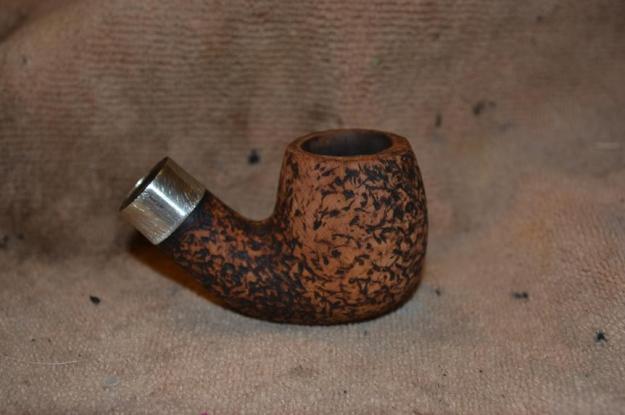
Repairing a Broken Shank Acorn Shaped Pipe and giving it a New Look


Blog by Steve Laug

I have had this broken Acorn shaped bowl in my box of parts for a long time now. I remember breaking it. There were several fills around the shank at that point. The stem was absolutely stuck in the shank and no matter what I did I could not get it out. Heat, cold, alcohol bath or any other means would not work. Finally after I had dunked it in boiling water hoping to loosen things I twisted on the stem and the shank snapped. Then I could see the problem. The stem had an aluminum tenon that had basically begun to disintegrated and had bonded to the shank. It had a long aluminum stinger that extended virtually to the air hole. It was a mess. I clean up the shank and the bowl to remove all of the corroded aluminum and scraped it clean. I was undecided whether to fix it or just part it out so I put it in the box and left it there.

Yesterday I decided to take it out and have a look at it. I put the two parts back together and saw that the fit was actually quite clean. There were just two small places where the briar actually had chipped. I had a polished aluminum tenon that I had extracted from a broken stem and saved for just such a repair. I sanded it and used a file to score the surface of the metal tube so that the glue would have something to grab hold on in the shank. I mixed a batch of two part epoxy and a painted it on the tube with the mixing stick. I liberally coated the tube with epoxy and let it sit until it got a little tacky and then inserted it in the shank end of the break. I inserted the stem in the mortise end so that I did not set the tube too deeply in the shank. Once I had it positioned I let it cure for 30 minutes until the epoxy set and the tube was solidly in place in the shank.Broke1 I put epoxy on both sides of the exposed briar and then on the other end of the extended tube. I carefully pressed the two parts together and worked to make sure that I had them aligned correctly. The excess epoxy squeezed out and bulged around the enter repair. I used a dental pick and scraped away the excess leaving a smooth top coat of epoxy in the cracked area.Broke2

Broke3

Broke4 The top surface of the rim was quite damaged and the bowl was out of round. I topped the bowl on a topping board to remove the damage and burn marks that were present on the surface. I sanded it with a sanding block to remove the scratches and smooth out the finish.Broke5

Broke6 I sanded the epoxy on the shank back until it was smooth with 220 grit sandpaper. In the photo below you can still see the slight bulge of epoxy that needed to be removed but since I was planning on rusticating the bowl and shank I did not spend a lot of time sanding that out.Broke7

Broke8

Broke9 I sanded it a little bit smoother and then used the rustication tool that Chris Chopin made for me to do a deep rustication on the bowl and shank. As I rusticated it I then used the brass bristle wire brush to knock off the loose briar chips. (I collected the briar chips as I plan on using them as Joe suggested in fill repairs to see if I can get them to stay light). I left the rim smooth and would later top it lightly to smooth it out.Broke10

Broke11

Broke12

Broke13

Broke14

Broke15

Broke16 When I finished the bowl I wrapped a piece of cello-tape around the end of the shank to make a smooth area that I would later install a band on. The shank end was not straight so I would need to clean it up a bit and then band it to get a clean fit of the stem in the shank.Broke17

Broke18

Broke19

Broke20

Broke21 Once I finished rusticating the shank I removed the tape to show the smooth shank end.Broke22

Broke23

Broke24

Broke25 I slid the band on the shank slightly and then heated it with a lighter until the metal expanded enough to press the band into place. I left about 1/8 of an inch extended to allow for the stem to fit properly in the shank and sit inside the band. I sanded the stem with 220 grit sandpaper until the diameter was a close fit in the band. I slid it in place and took the pictures below to show the look of the pipe at this point. I knew that there was a lot more sanding to do to get a snug fit in the band but I wanted to see a picture to look at the fit a bit removed from the pipe I held in my hands. I purposely chose a longer stem to give it a subtle elegance and length bordering on a mini-churchwarden pipe.Broke26

Broke27

Broke28

Broke29 I lightly topped the bowl some more to take care of the burn marks on the right side of the rim top. Then I took a set of close-up photos of the bowl with the band to look at the rustication and figure out where I needed to do some touch up work on it. The shank was where I was the most concerned. I wanted it to match as much as possible with the bowl rustication. I could see that overall it looked good but that the left side of the shank would need some adjusting before it was finished.Broke30

Broke31

Broke32

Broke33 I touched up the rustication on the left side of the shank and then wire brushed the entire bowl and shank with the brass bristle brush to knock of loose particles.Broke34

Broke35

Broke36

Broke37 I brushed of the dust with a shoe brush and then took out some black aniline stain to give the rustication and undercoat of black. I applied the stain with the dauber and then flamed it with the lighter to set the stain in the bottom of the rustication.Broke38

Broke39

Broke40

Broke41 I sanded the stem with a medium and a fine grit sanding pad and put it back in the shank to get a feel for the appearance of the pipe after staining.Broke42

Broke43

Broke44

Broke45 I took the stem back out and worked on it with the micromesh sanding pads. I wet sanded with 1500-2400 grit pads and dry sanded with 3200-12,000 grit pads. I rubbed the stem down with Obsidian Oil between each of the three grits.Broke46

Broke47 Between the 4000 and the 6000 grit pads I buffed it with White Diamond on the wheel and then finished with the higher grit micromesh pads.Broke48 I buffed the stem with Blue Diamond and gave it a coat of carnauba wax. The next two photos show the polished stem in place on the pipe.Broke49

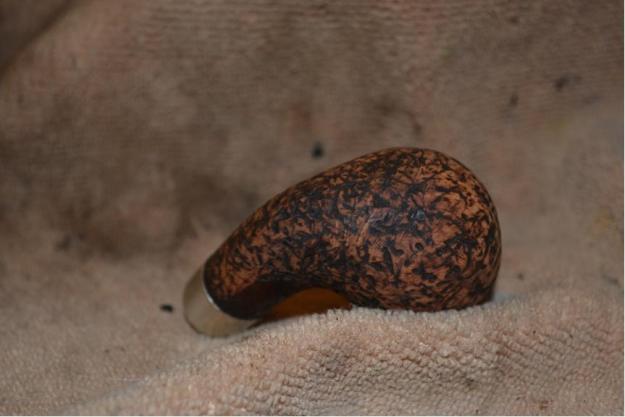
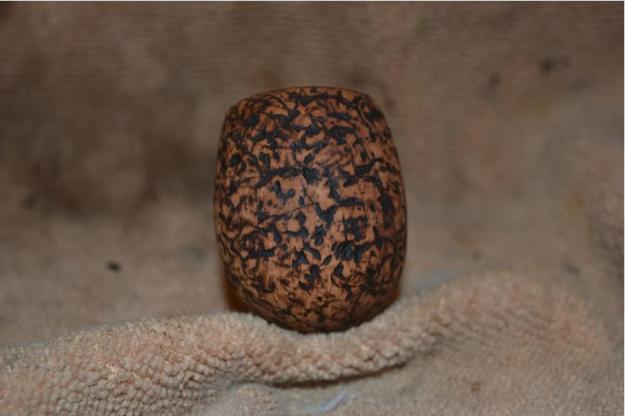
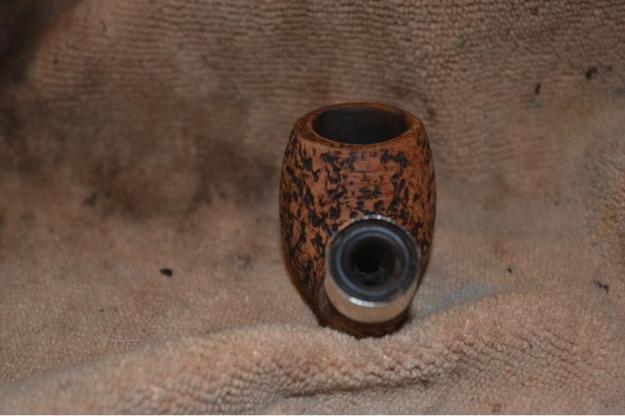
Broke50 I sanded the surface of the rustication to knock off some of the high points and smooth it out slightly using a sanding block. The sanding made the rustication a bit more pebble like in appearance and once I had finished the sanding I gave the bowl a coat of oxblood aniline stain as a top coat. It added some red highlights to the rustication – particularly on the high spots. I then buffed the stem with Blue Diamond on the wheel and gave the stem multiple coats of carnauba wax. I polished the band with silver polish and hand buffed it with a soft jeweler’s cloth. The finished pipe is shown below. It has a delicate look that gives it an air of elegance and class. I am looking forward to firing it up and enjoying a bowl soon.Broke51

Broke52

Broke53

Broke54 Thanks for looking.