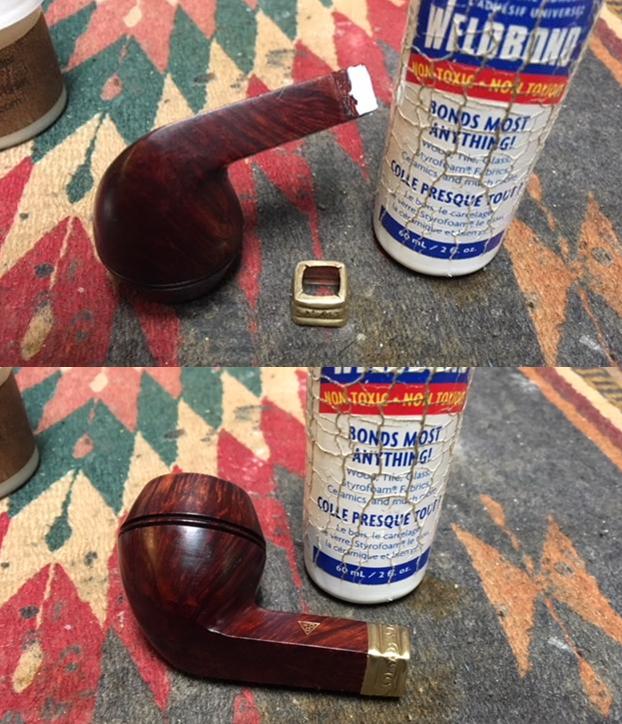
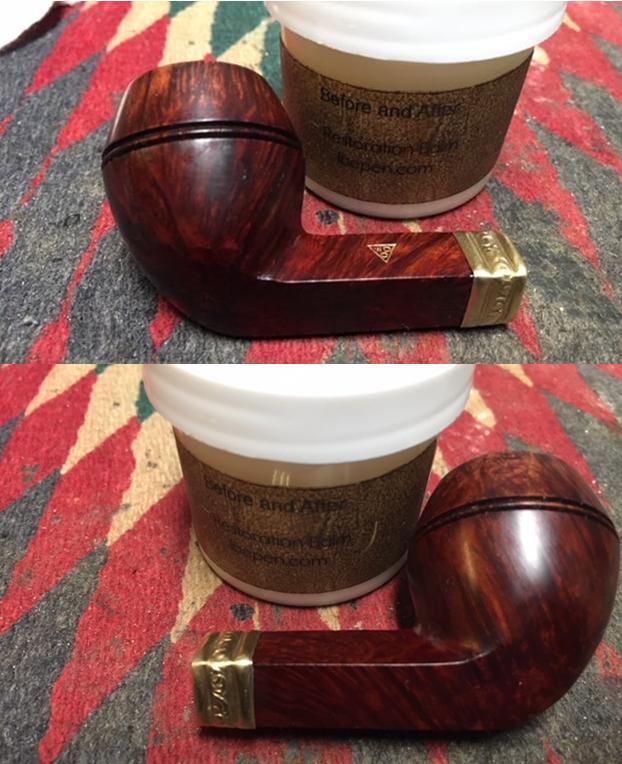
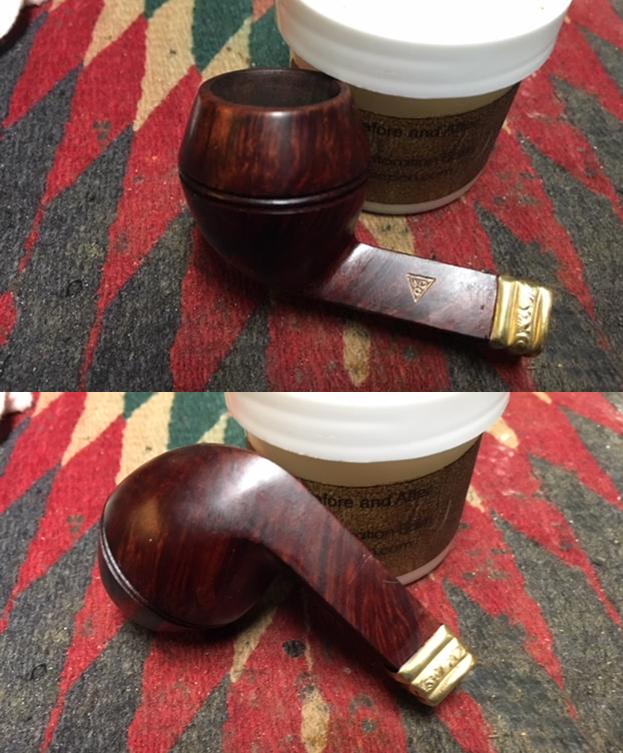
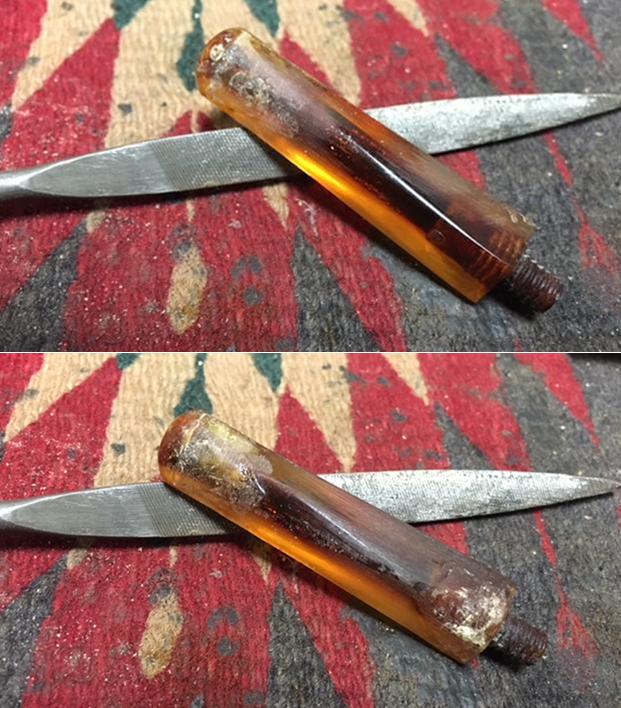
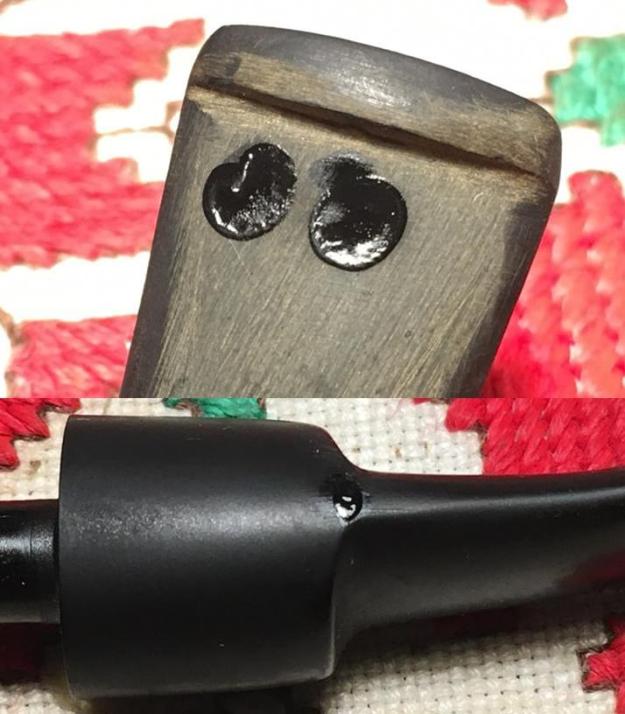
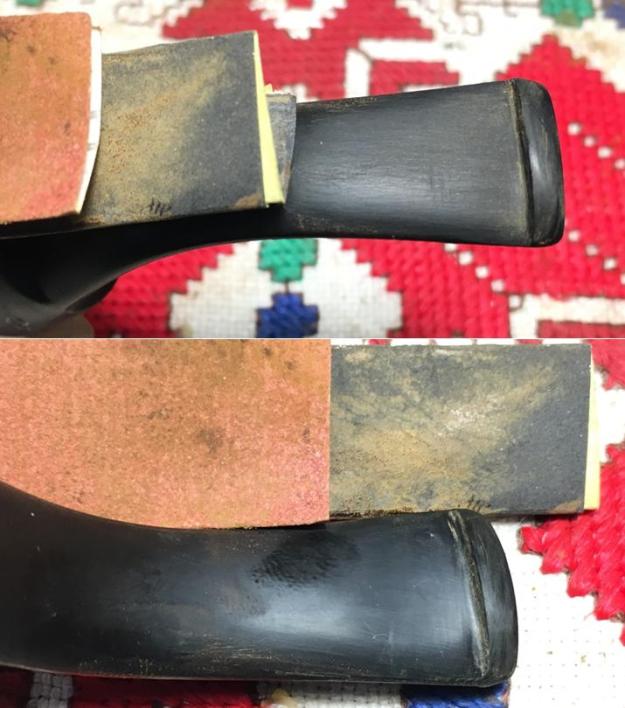
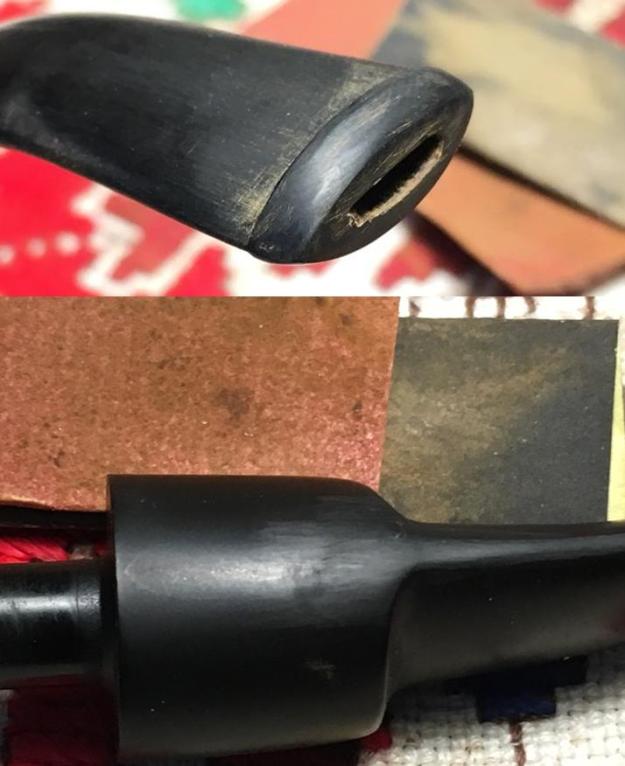
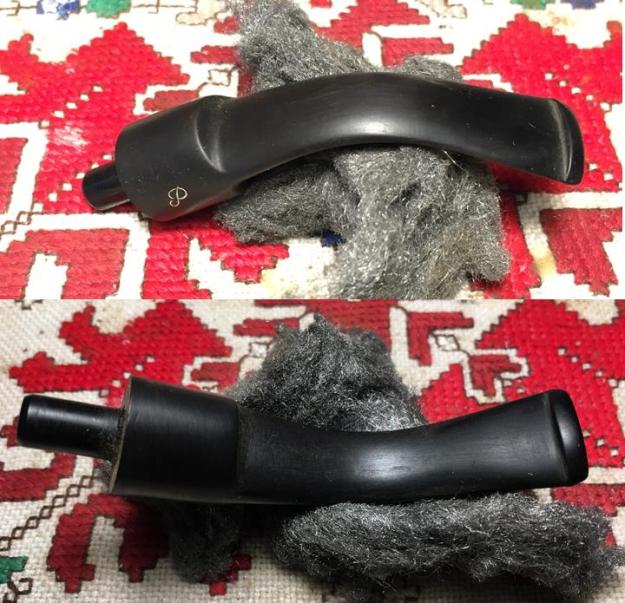
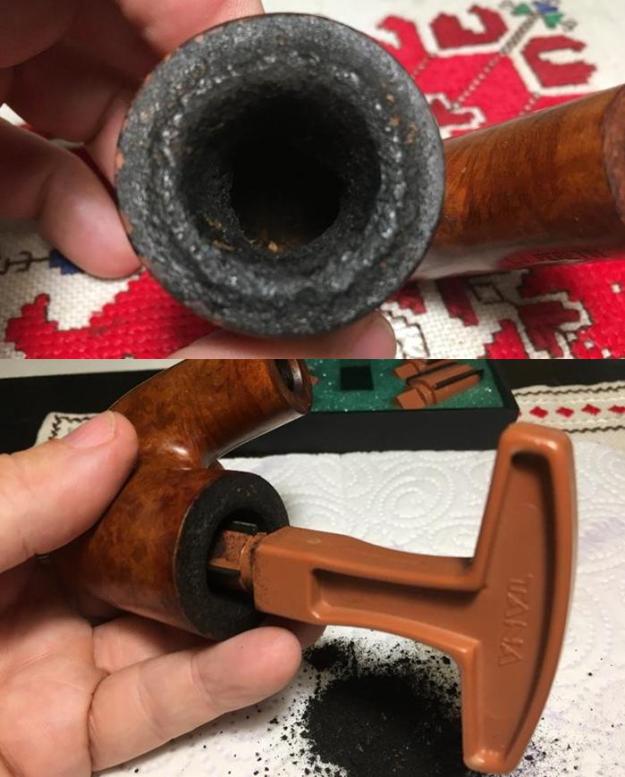
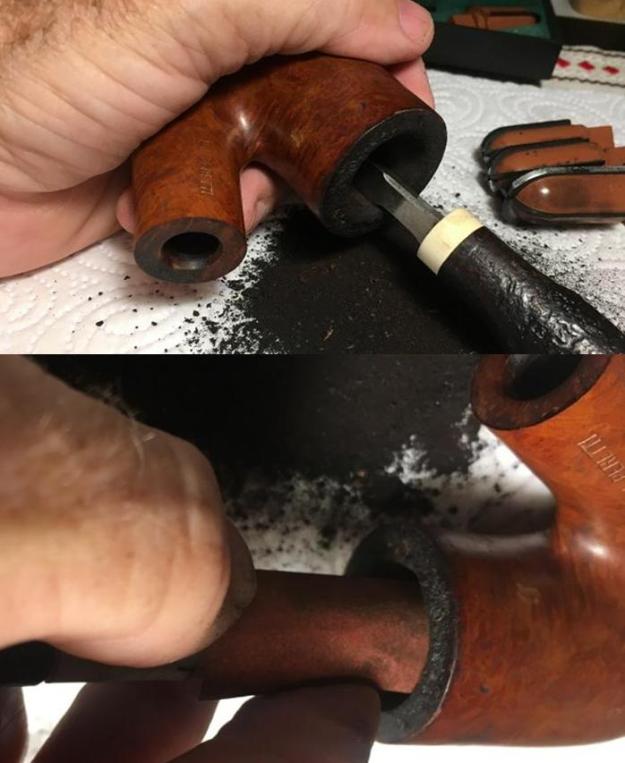
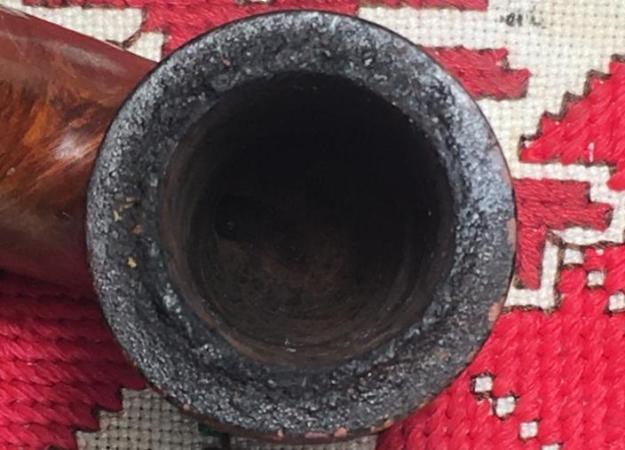
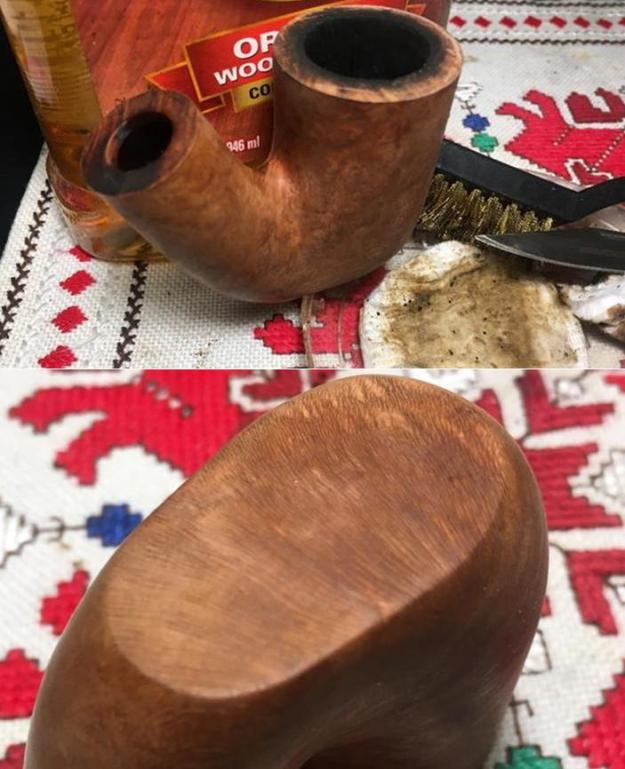
Tag Archives: repairing tooth marks

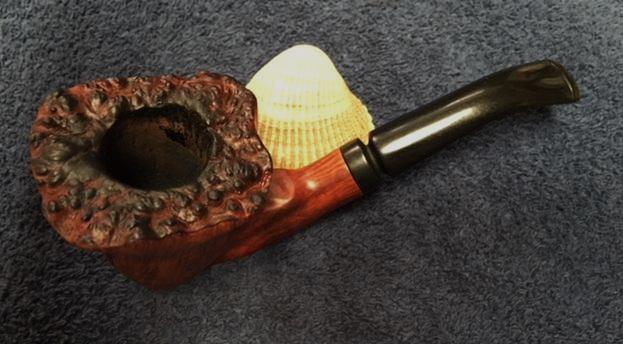
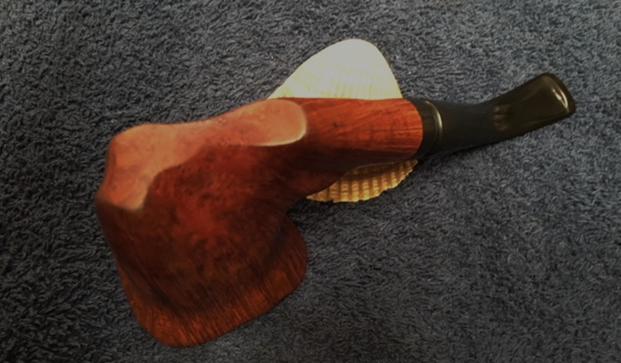
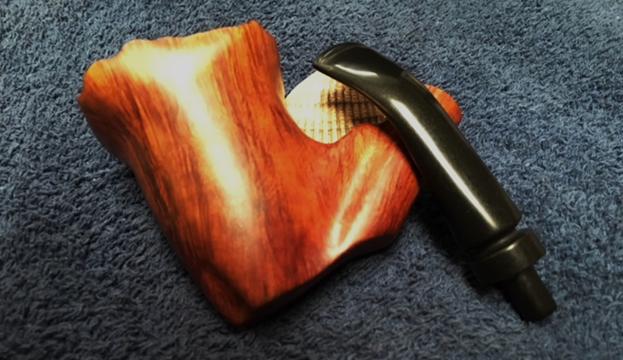
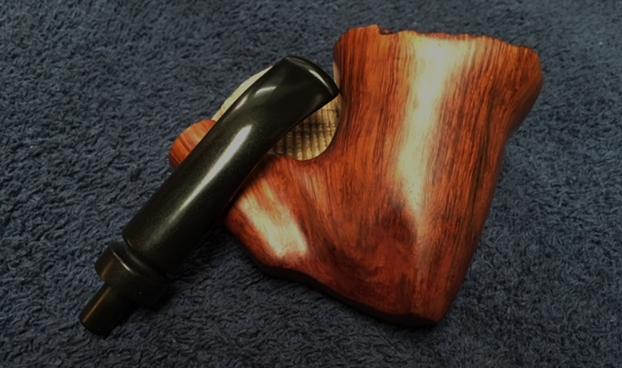
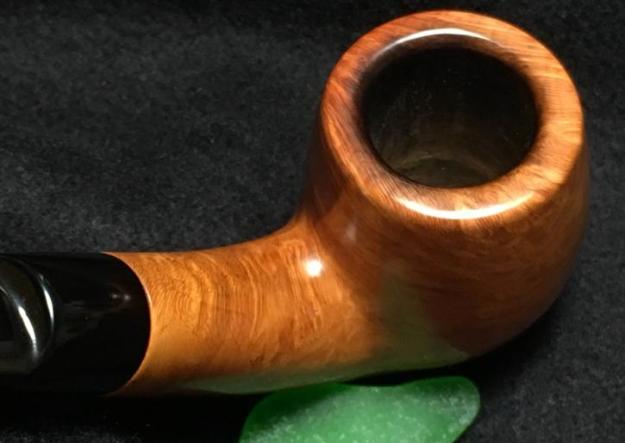
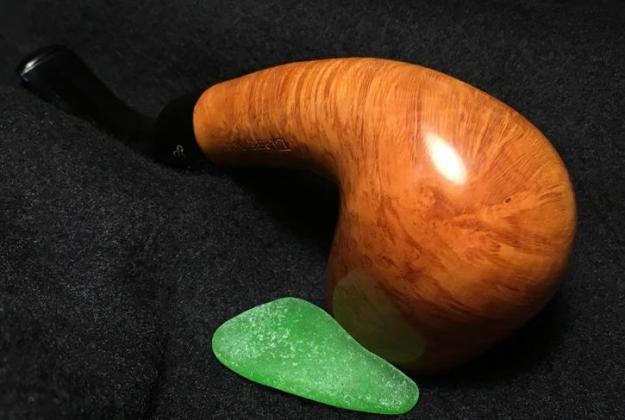
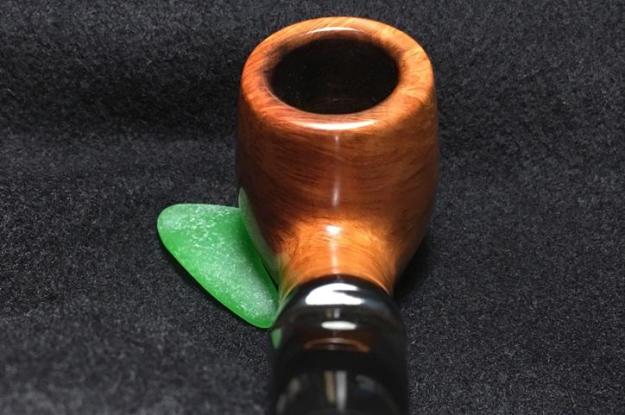
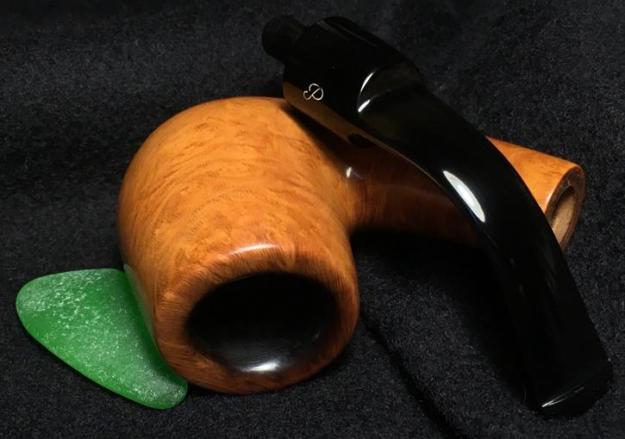
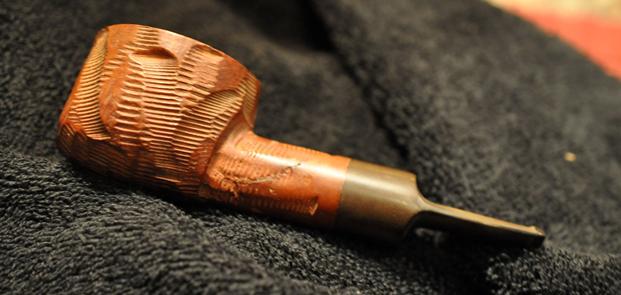
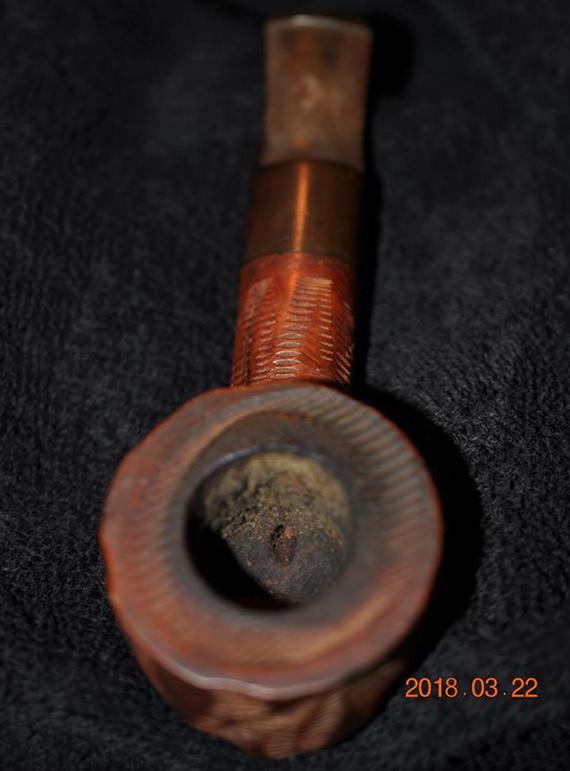
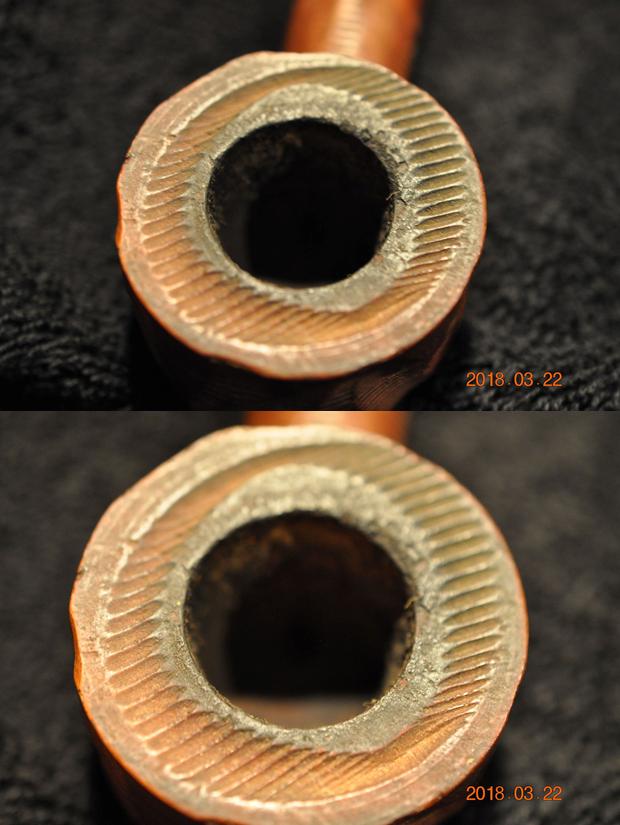
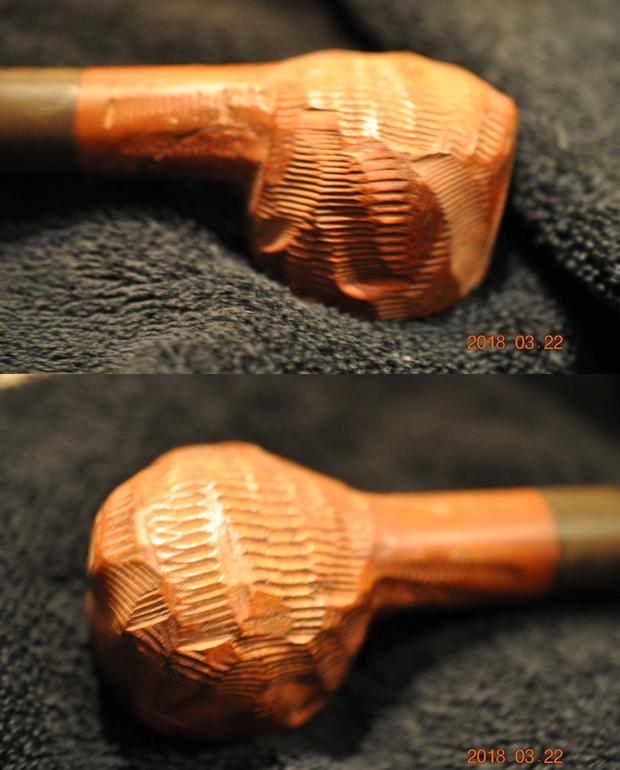
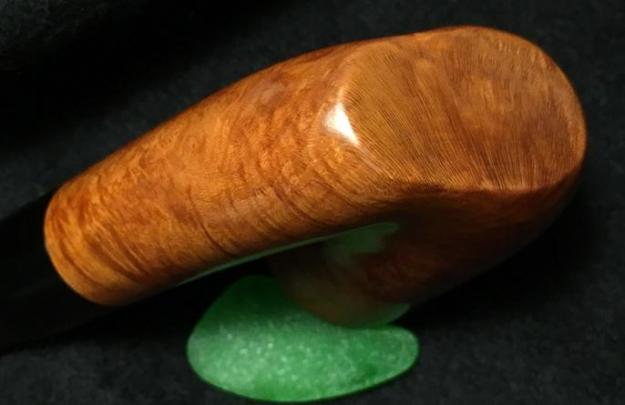
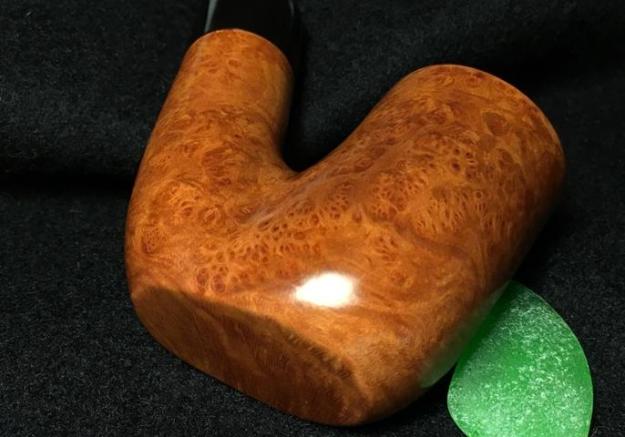
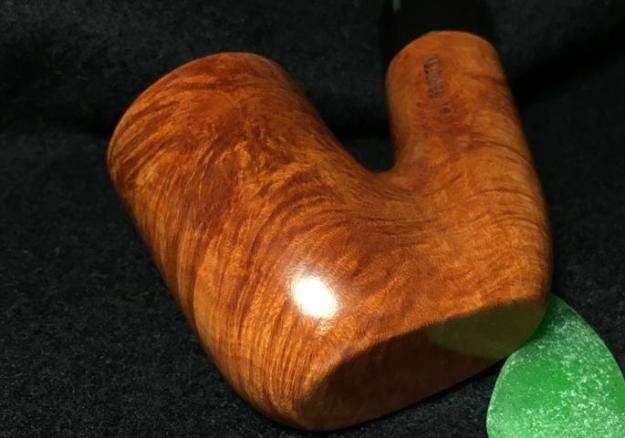
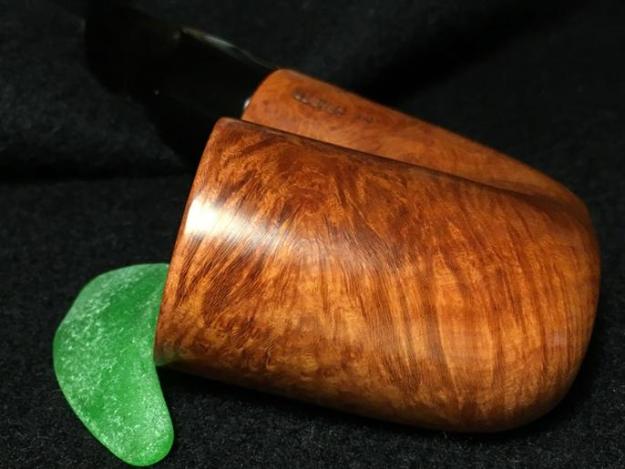
New Life for a Wenhall Dane Craft B Freehand


Blog by Steve Laug

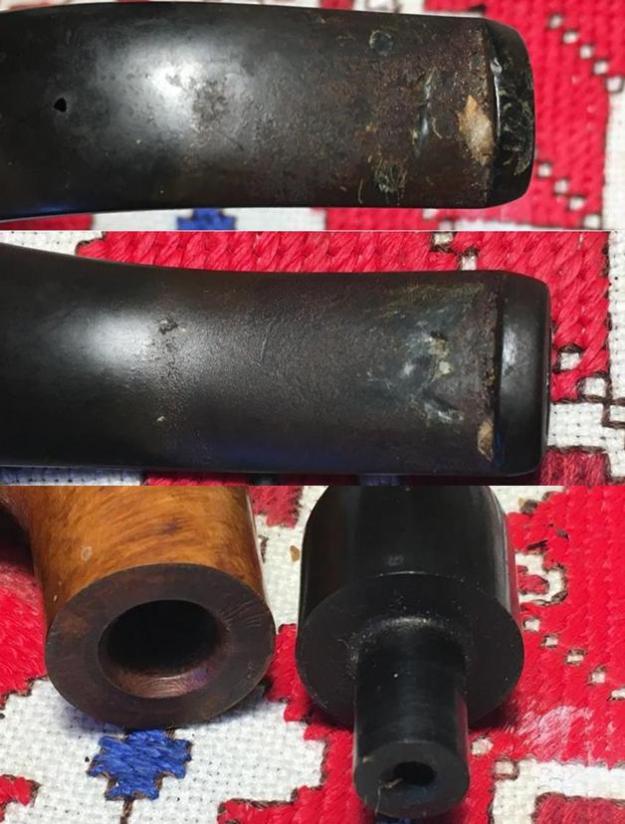
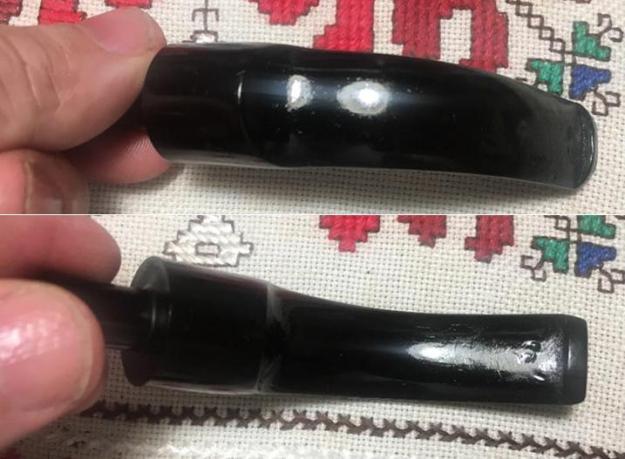
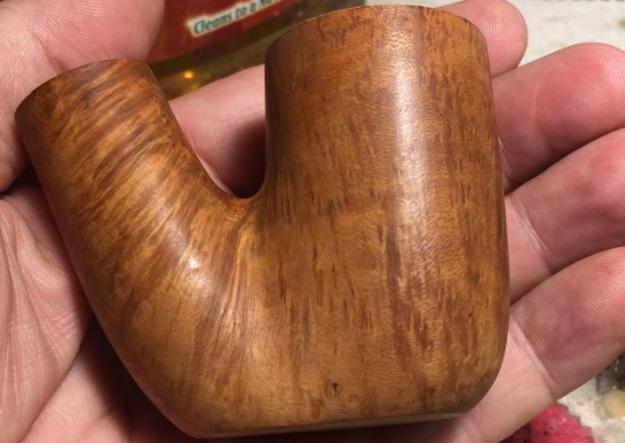
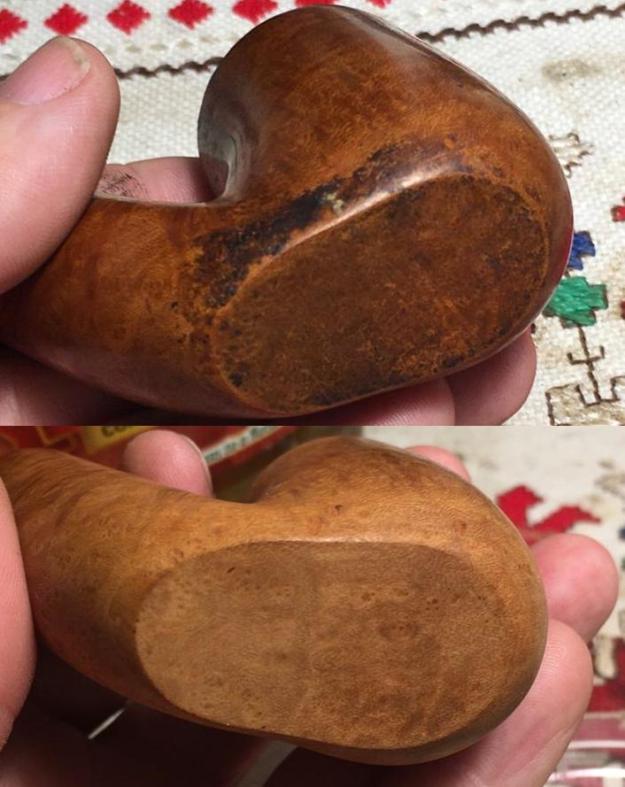
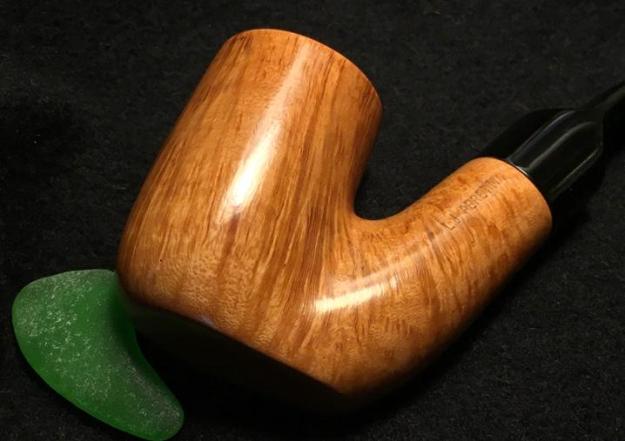
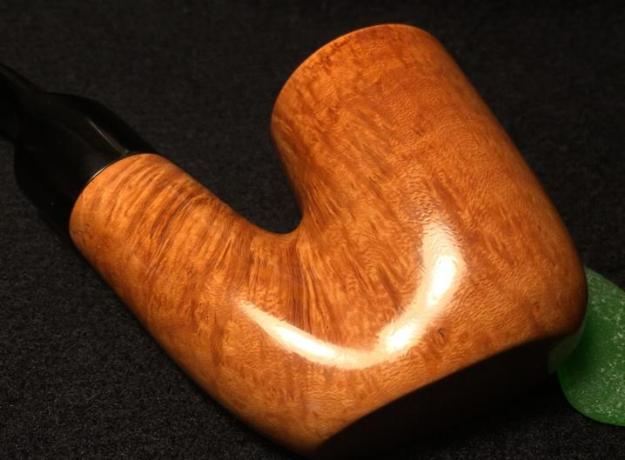
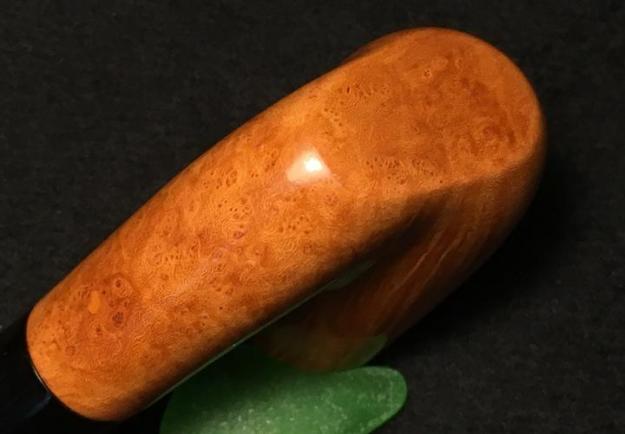
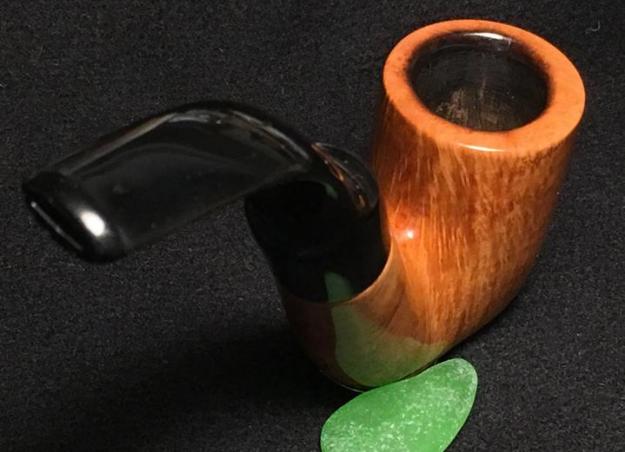
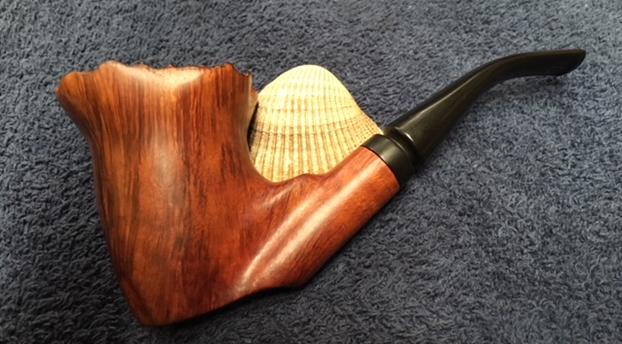
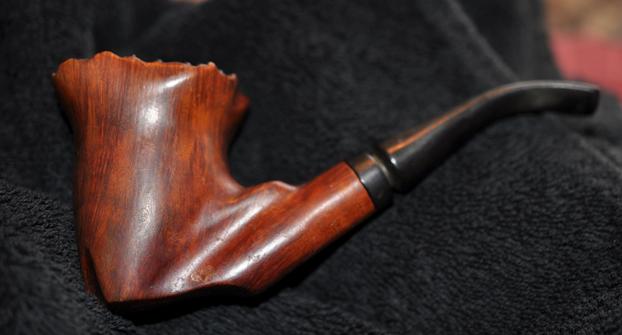
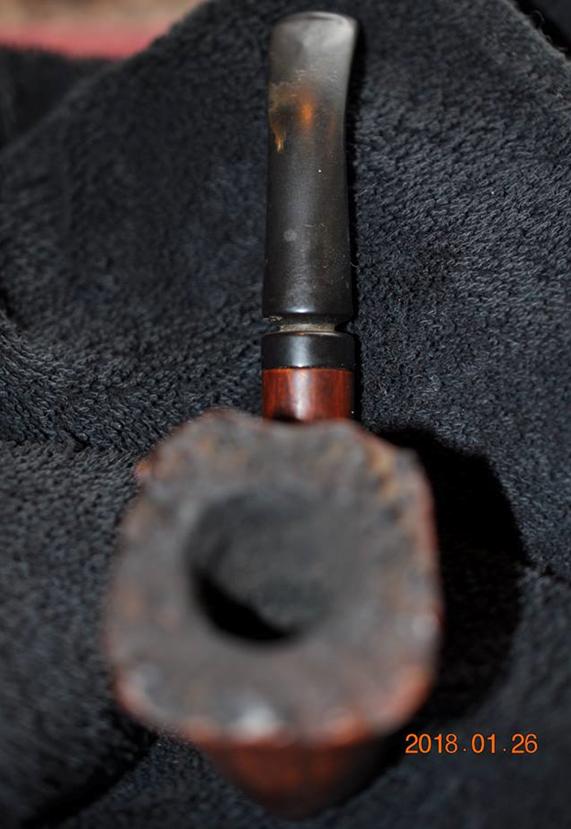
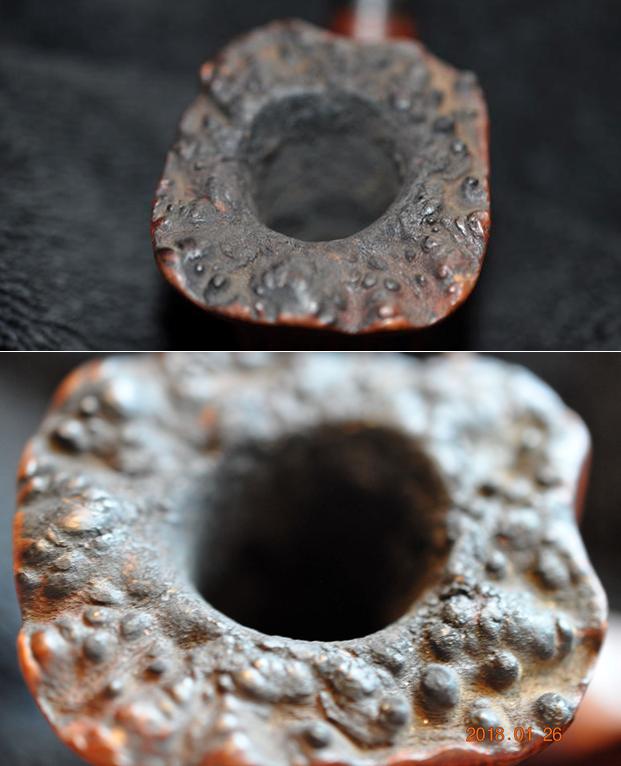
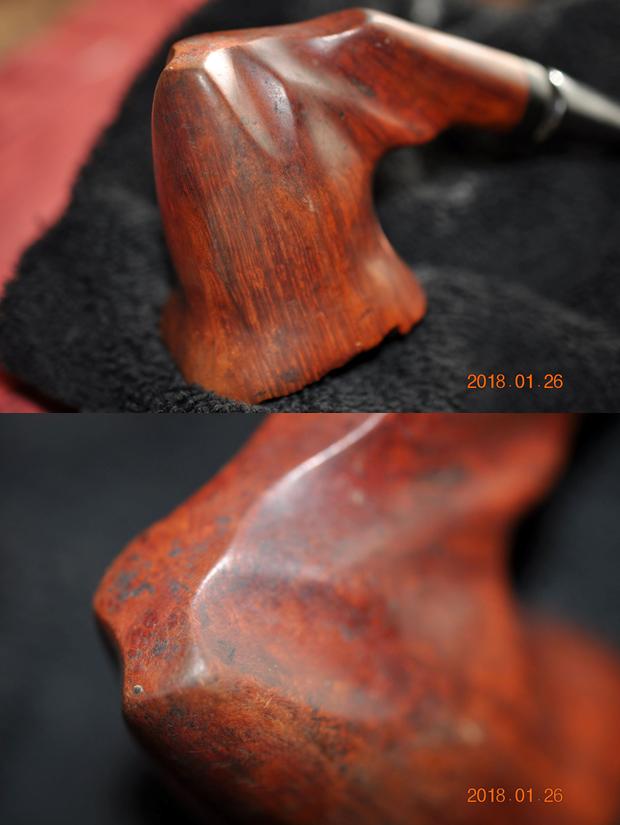
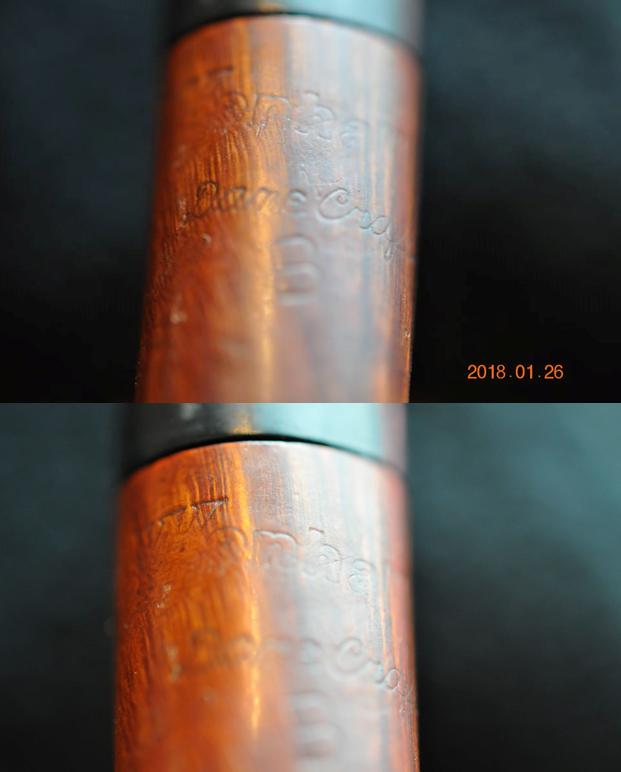
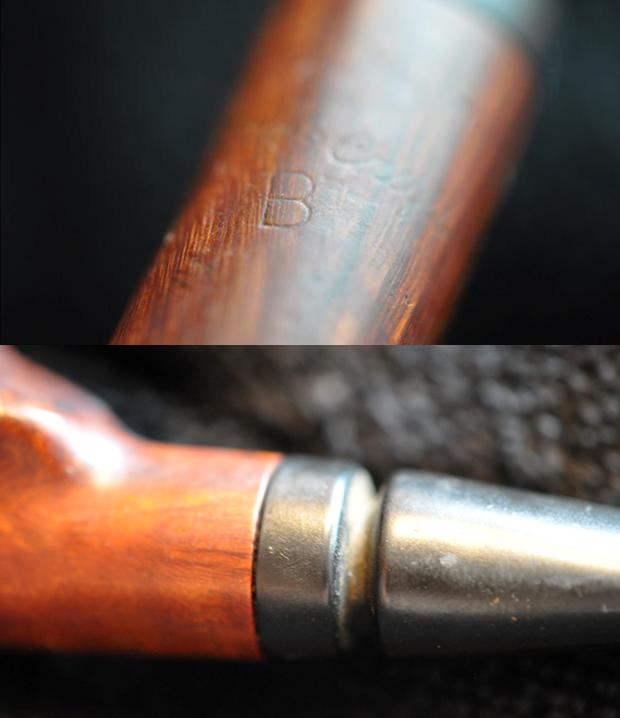
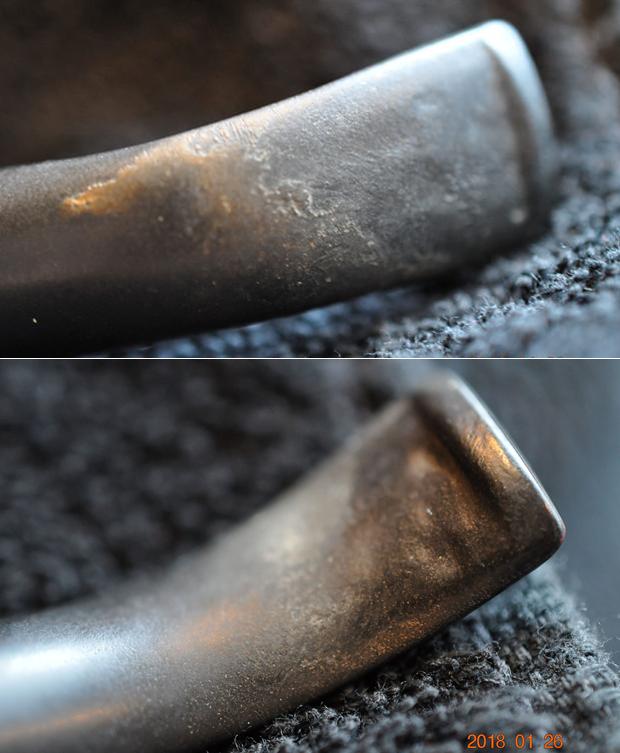
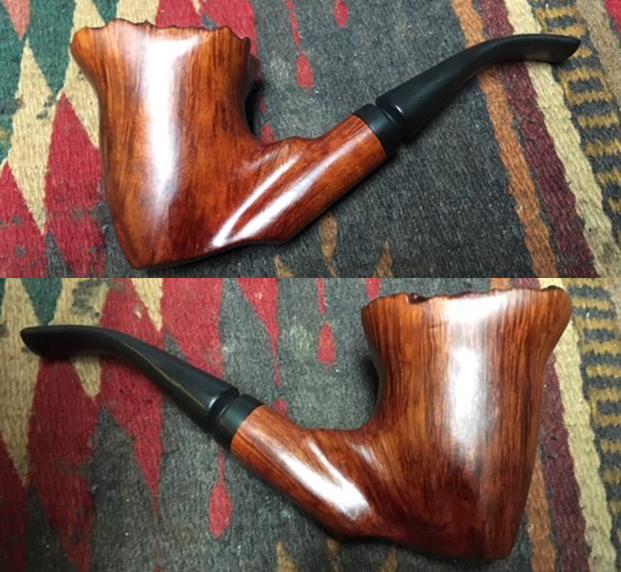
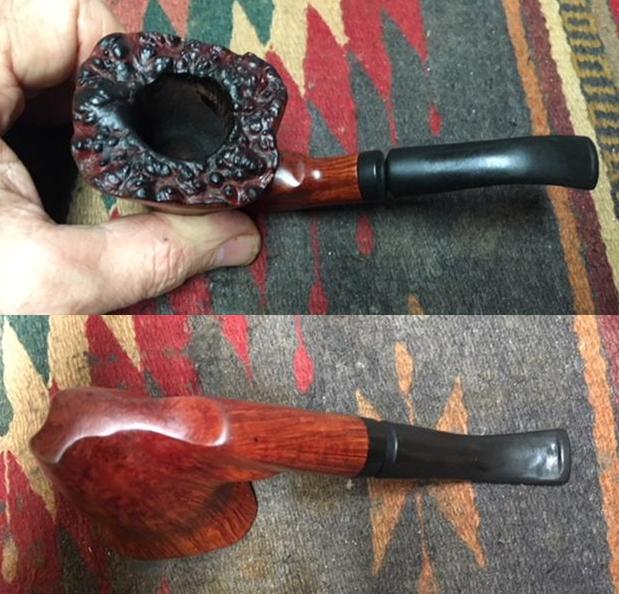
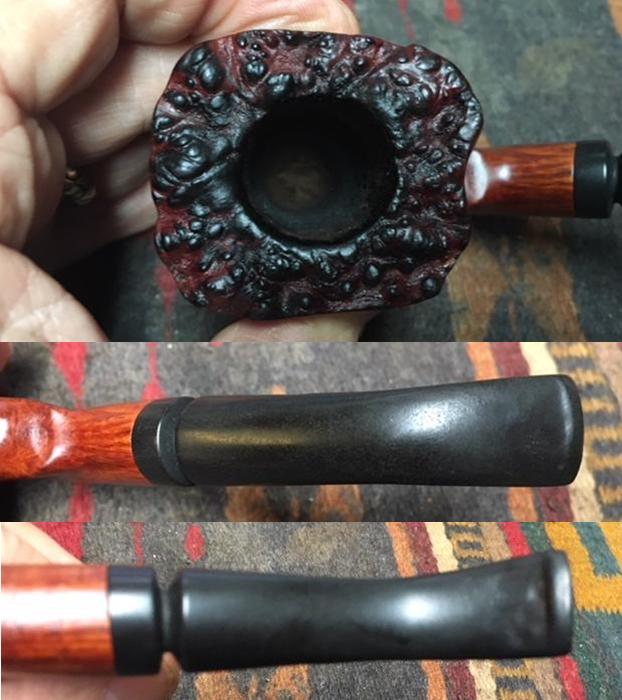
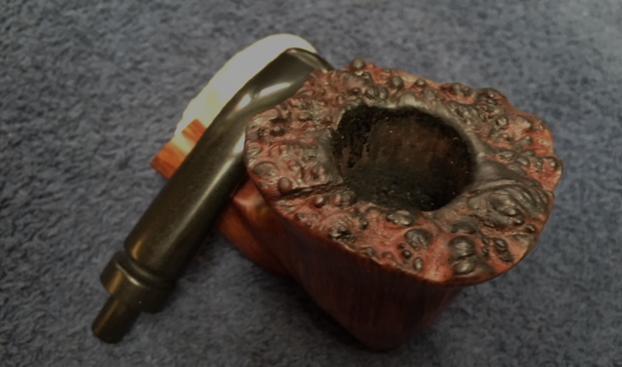
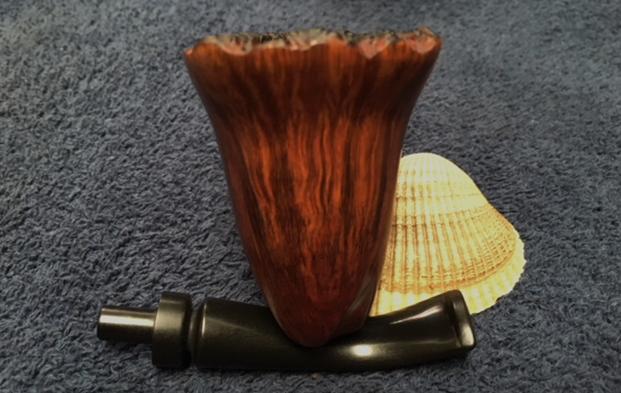
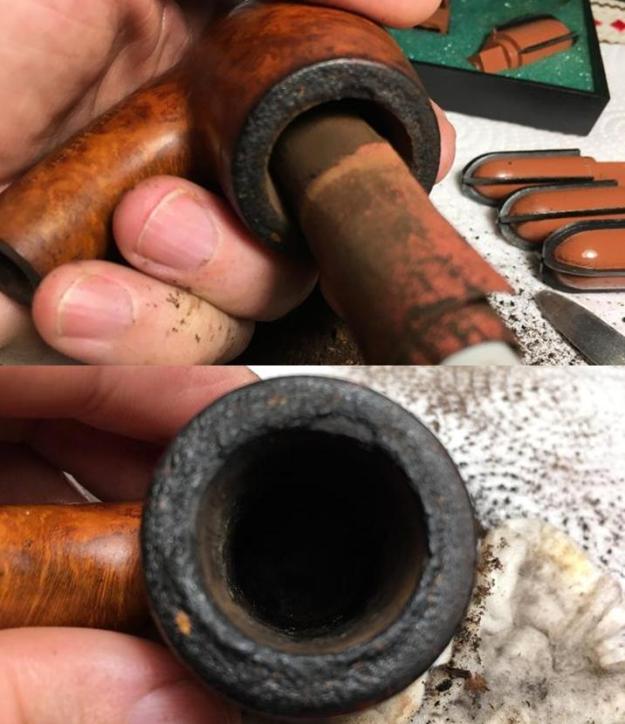
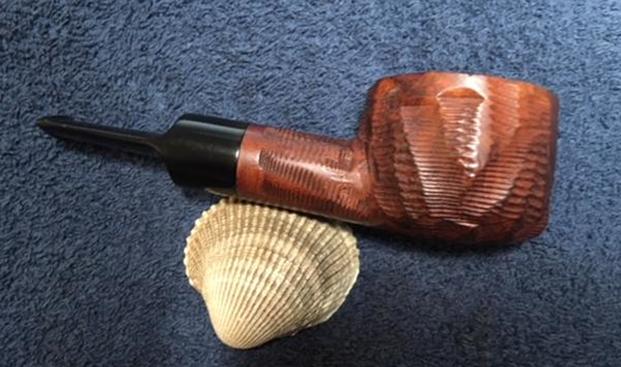
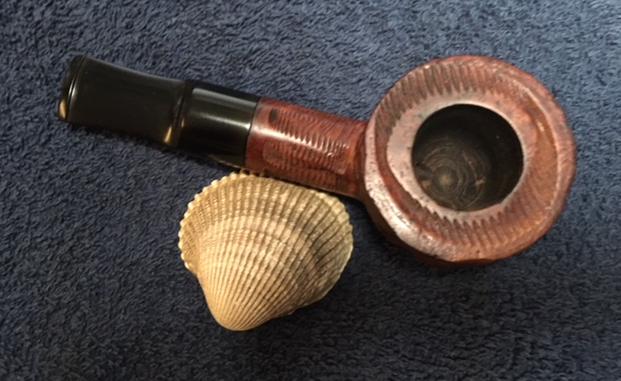
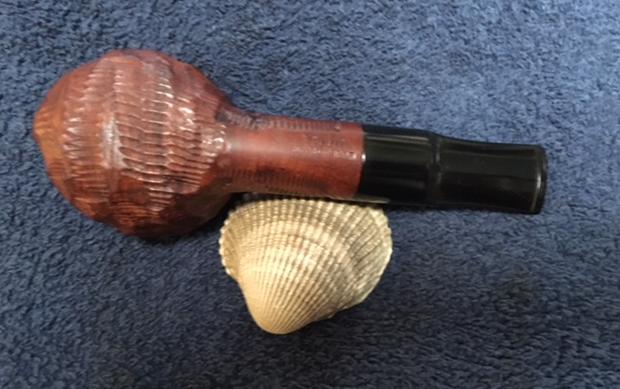
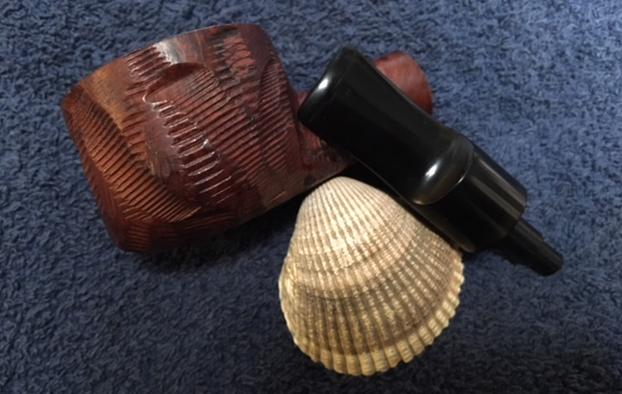
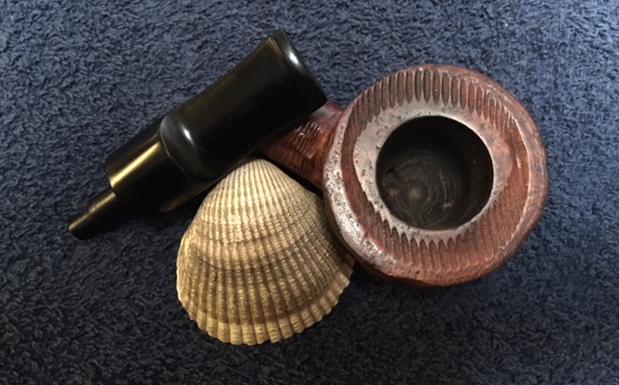
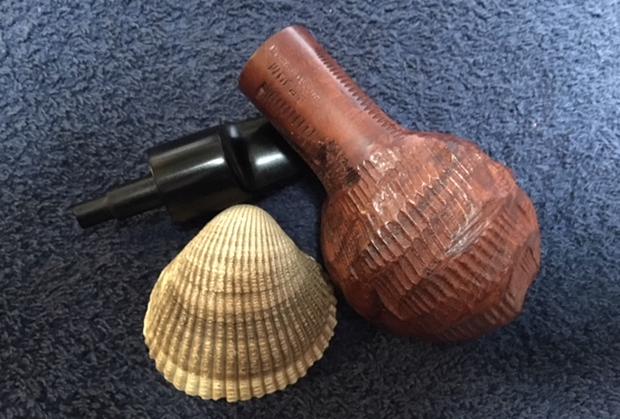
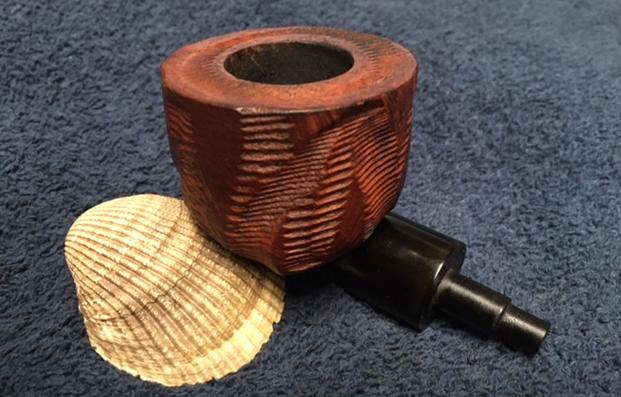
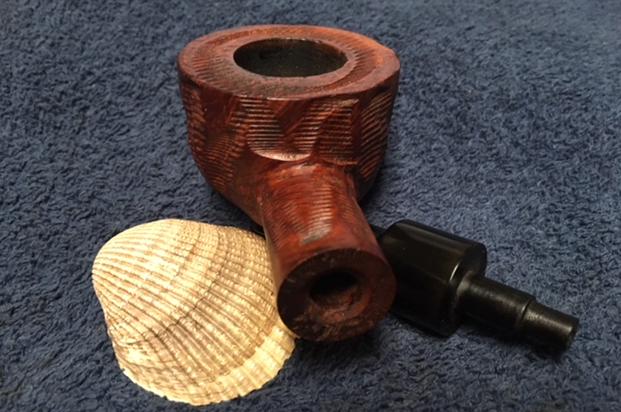
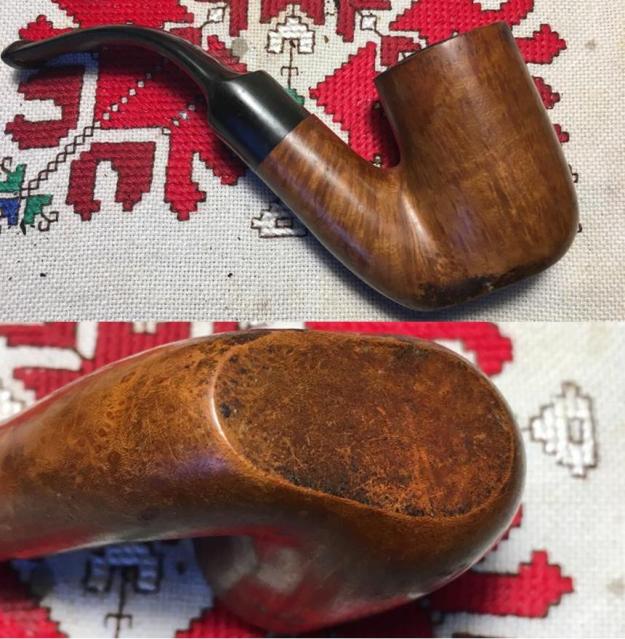
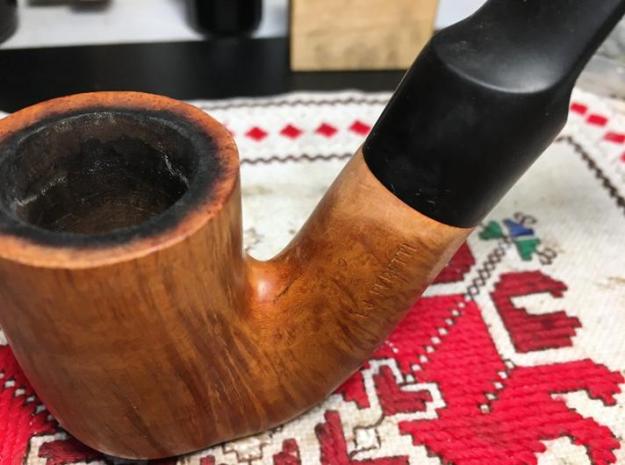
Jeff has developed quite an eye for interesting pipes and this one is no exception. He picked this up from a guy in Texas who was selling some of his Grandfather’s pipes. This was one of the cleaner ones in the lot. The freehand shape and the unusual stem combination caught his eye I am sure. It is an unusual piece with some grooves and twists in the shank that make it very comfortable in the hand. It has some nice straight grain on the bowl sides and shank. The rim top is plateau and is rectangular in shape. The stem is different in that it is one that I would expect on a Danish Made Celius pipe or possibly some of the British style Hardcastle freehands. The chairleg style stem seems to be made of high quality vulcanite as it is not oxidized. The pipe is very dirty but you can see the beauty through the grime. Jeff took some photos of the pipe before he worked his magic in the cleanup process. Jeff took some close up photos of the bowl top and the side of the bowl to give an idea of the filthy condition the pipe was in when he received it. I am sure glad that this was one that he worked on. The bowl has a thick cake and the plateau rim top is almost filled in with the lava overflow and grime of the years. The finish is speckled with debris and grime deep in the finish. The next series of photos capture the stamping. The stamping is faint on the edges but together you can see that it reads Wenhall over Dane Craft over the letter B. The last photo in this series shows the fit of the stem to the dirty shank. There is a gap that should disappear with cleaning. The stem was pretty worn, but it was thick enough that I would be able to reshape it easily enough with heat, files and sandpaper. The button was worn down and would need to be reshaped. There was a calcification on the surface of the stem and some minor oxidation.In the back of my mind I remembered a connection between Wenhall and Karl Erik pipes. I could not remember the details of the connection but I remembered there was one. I tell you what even that is pretty good for this old bird. I looked it up on the pipephil pipes, logos and stampings website and found nothing on that site. I turned to Pipedia and looked it up in the Pipe Makers list that is included there. I found the link to Wenhall pipes that I was looking for. Here is the link, https://pipedia.org/wiki/Wenhall. It was a short article but it made a lot of connections to names that I was familiar with from working on pipes. I include the majority of the article because of the pertinent information that it provides.

Wenhall Pipes Ltd. was a distribution company out of New York City.

By the end of the 1970’s Wenhall approached Michael Kabik and Glen Hedelson, at that time operating from a farm house in Glen Rock, Maryland to create a line of freehands called Wenhall. The situation was favorable, because Kabik & Hedelson had ended their cooperation with Mel Baker of Tobak Ltd. to produce the famed Sven-Lar freehands shortly before.

Upon Wenhall’s offer the partners got a bank loan and set up a studio of 2000 square feet in a fairly new industrial park in Bel Air, Maryland and took on the name Vajra Briar Works. Wenhall initially wanted 500 pipes a week! But Kabik & Hedelson doubted that they could move that much product and told them they would produce 250 pipes per week. Happily, some of the old crew from Sven-Lar joined them at Vajra Briar Works, and thus they rather quickly met the production demands.

Furthermore during this time, Wenhall requested to create a line of pipes consisting of 12 different shapes. The line was called “The Presidential” and, while they repeated the same 12 shapes for this series, each one was freehand cut. Although they came up with interesting designs, mainly developed by Hedelson, especially Kabik was never really happy with the line or the concept, but, by this time, they had nine people on full-time payroll.

The stint with Wenhall lasted a couple of years, at which time they asked them to join Wenhall in a move to Miami, Florida. But by this time Kabik and Hedelson felt very uncomfortable with the owners of Wenhall and decided that they’d rather close the shop than make the move. Time proved that decision very wise, as Wenhall folded shortly after the move. All the same they had to close Vajra, but scaled down to the two of them and moved the operation to the farm house Glen was currently living in.

I could see the link to Michael Kabik and Glen Hedelson and the Svenlar line of pipes that I have worked on in the past. The problem was that these were American made pipes and I was pretty sure that they would have been stamped accordingly. Even though were Danish style I don’t know if they would have stamped their pipes Danish Craft. The next short paragraph made the link to Karl Erik that I was looking for.

Presumptively for a shorter period only Wenhall had pipes made in Denmark by Karl Erik. (BTW K.E. Ottendahl ceased all sales to the USA in 1987.)…

The article went on to tie the pipes to some Italian makers as well. I stopped reading at this point and tried to summarize what I had found out so far. I knew that the pipe I held in my hand was made between the late 1970s and 1987. It possibly could have been made by Michael Kabik and/or Glen Heldelson or even by Karl Erik. Something about the flow of the shape and the way the bowl flows with the grain reminds me a lot of Karl Erik pipes that I have worked on. Either way the pipe is between 31-39 years old and in great condition for an older piece.

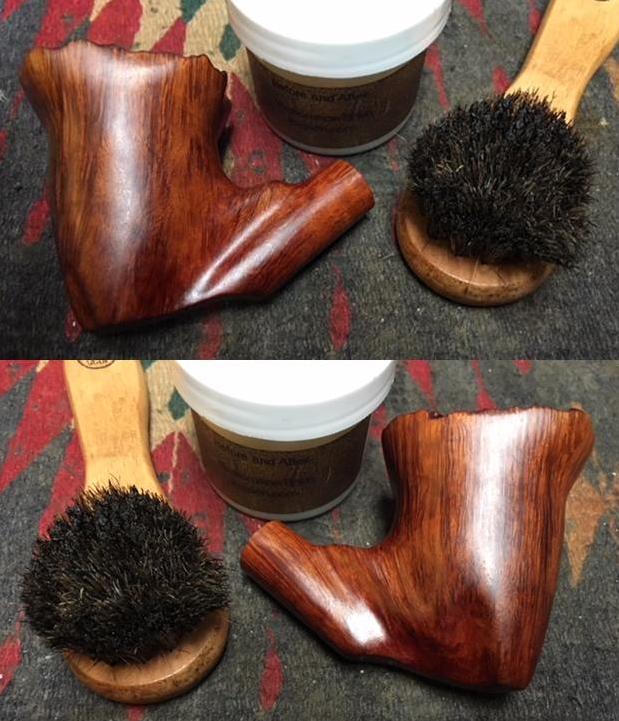
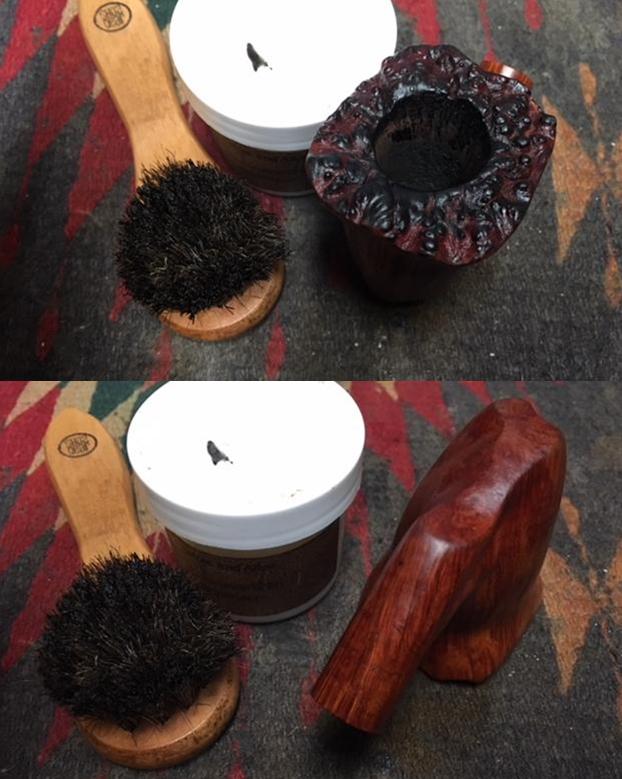
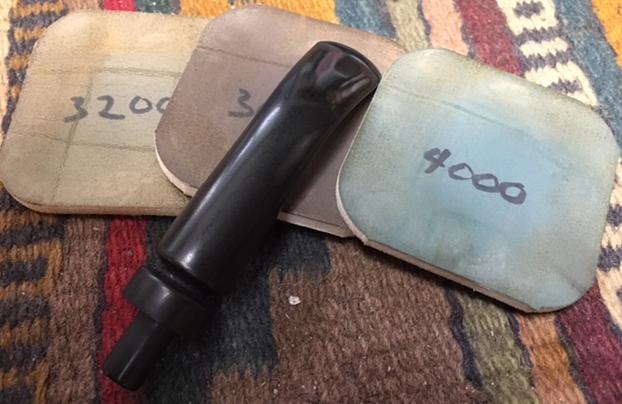
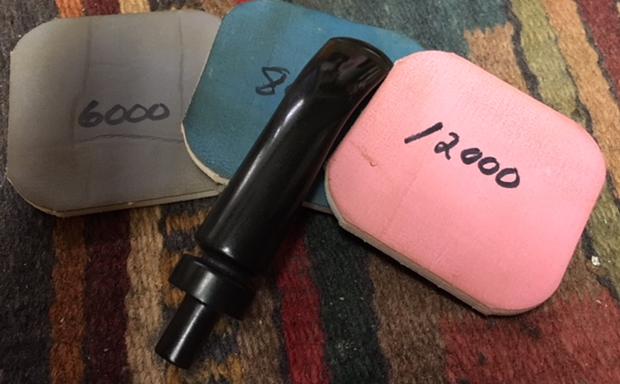
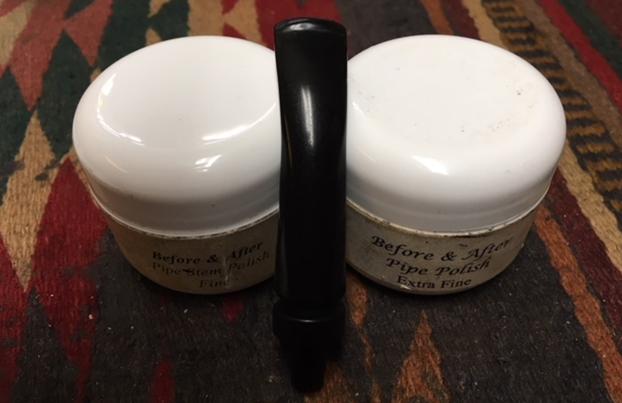
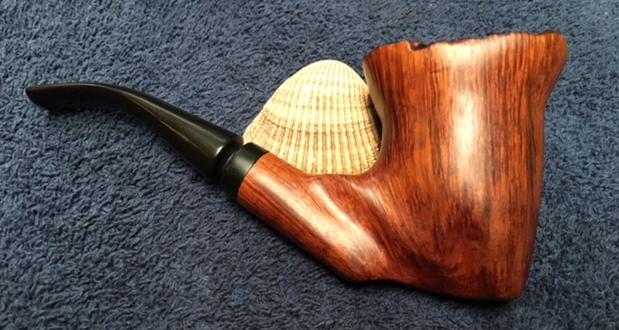
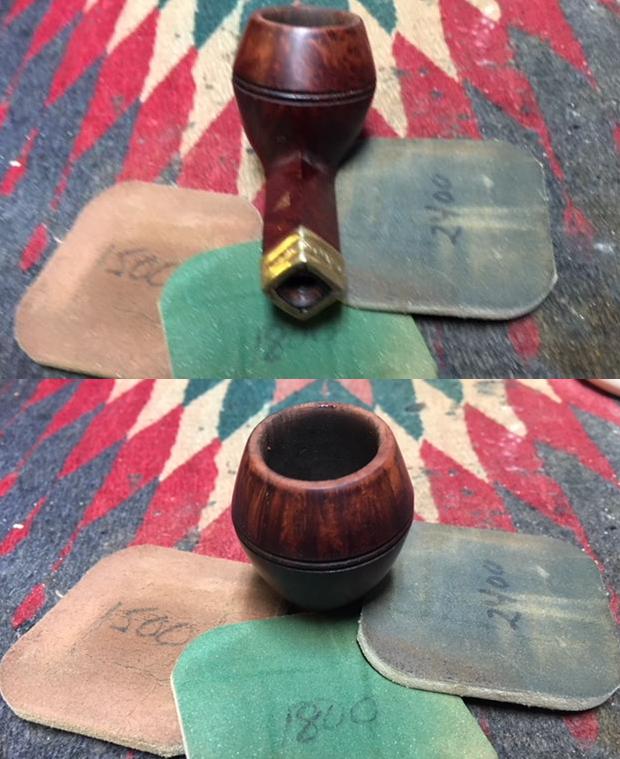
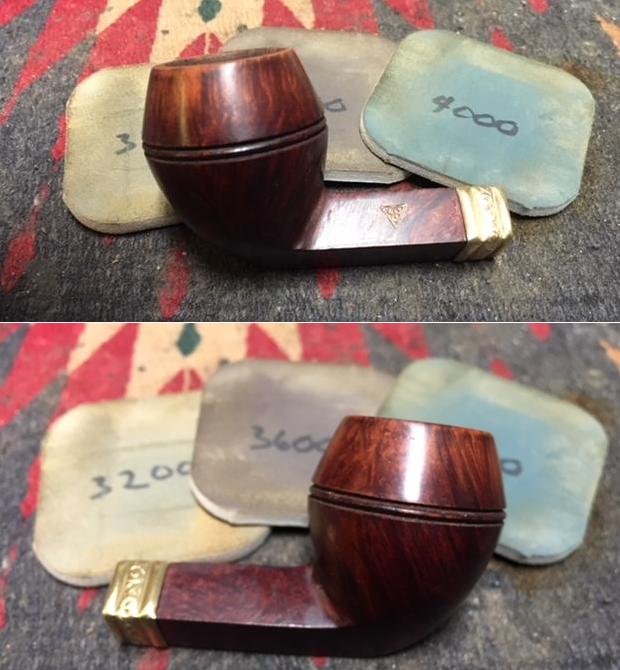
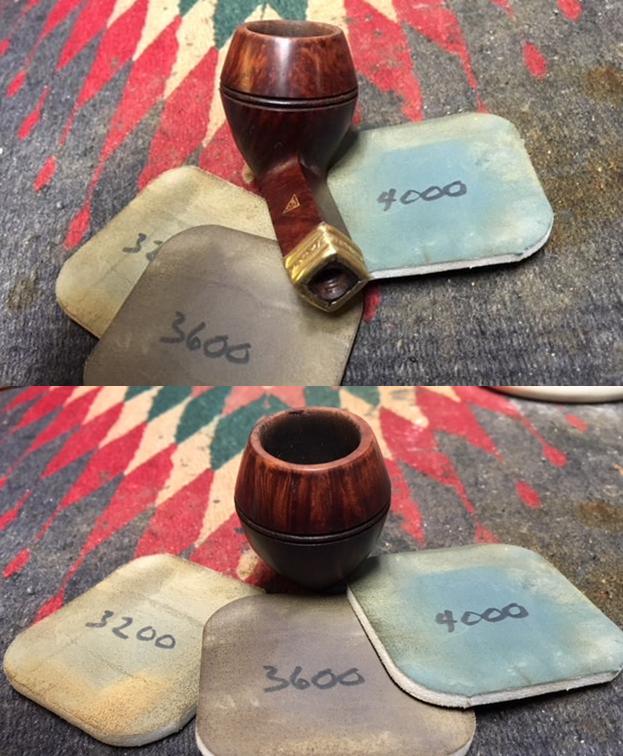
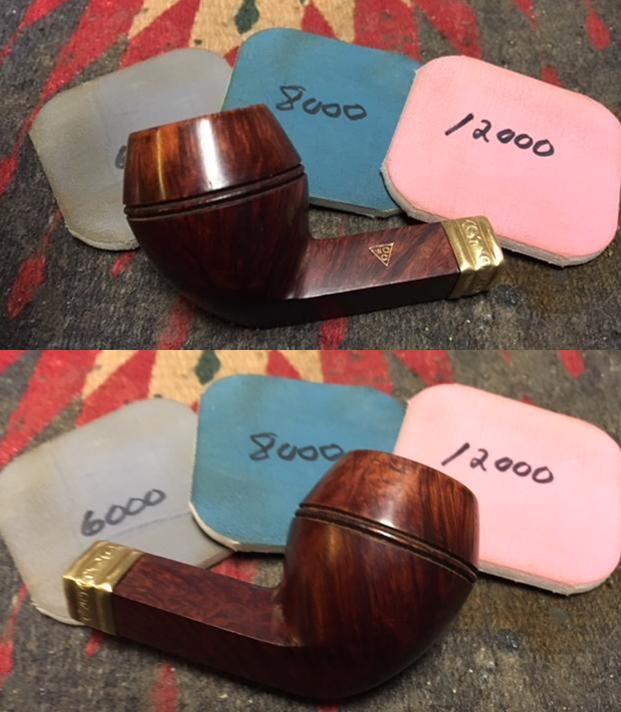
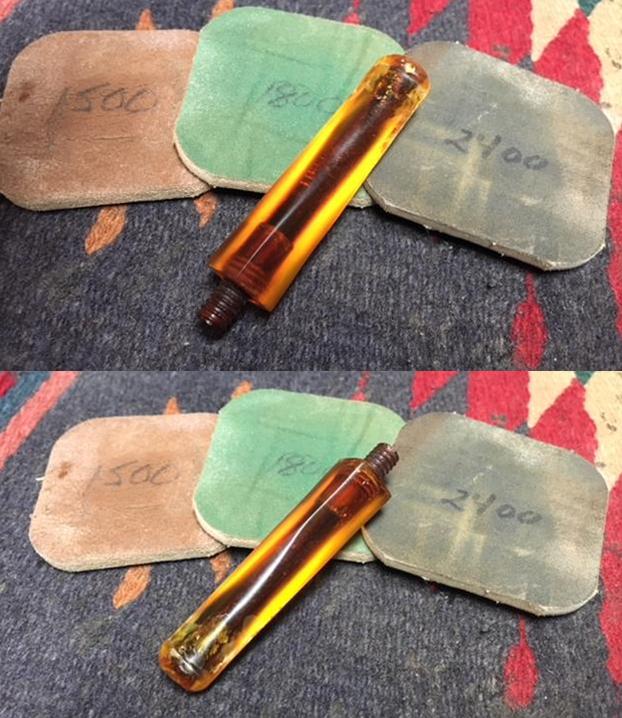
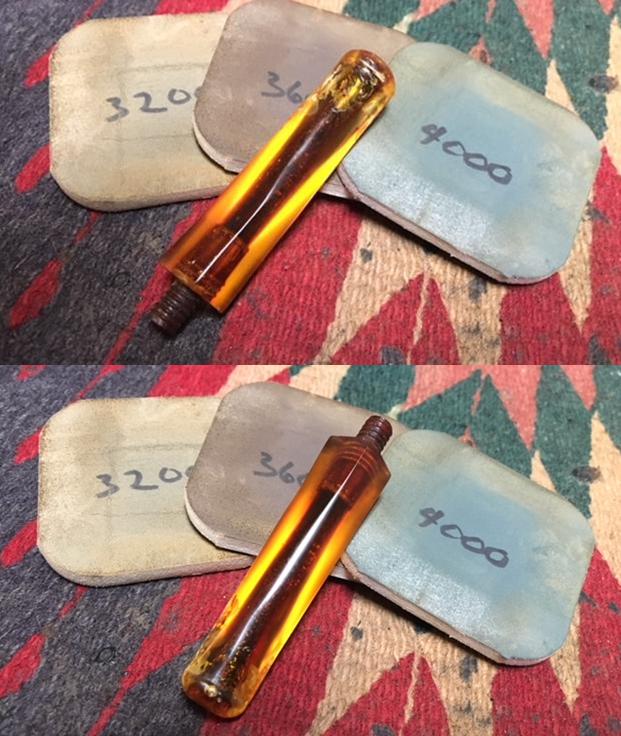
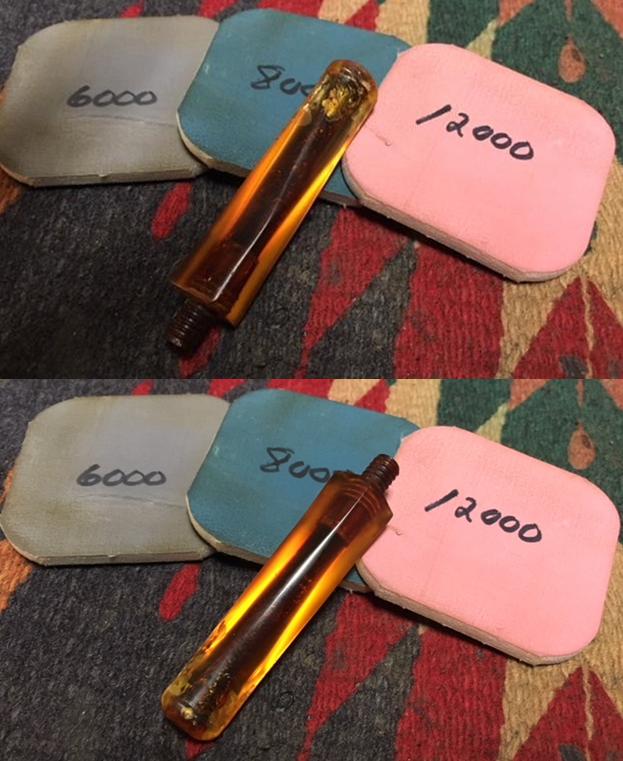
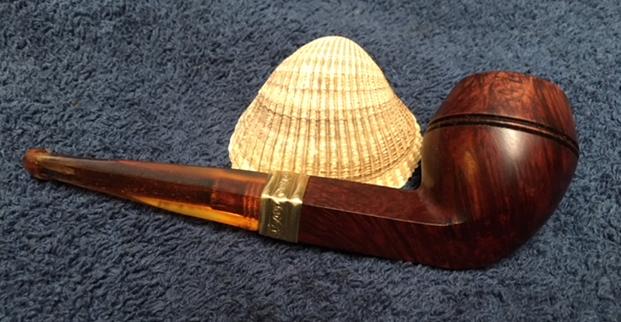
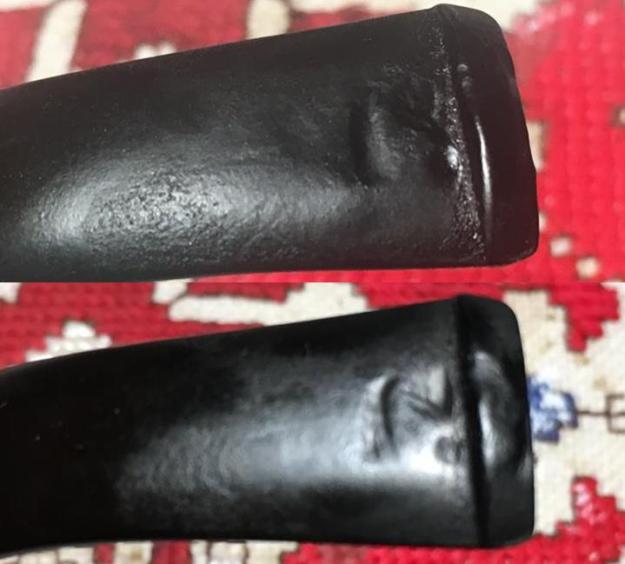
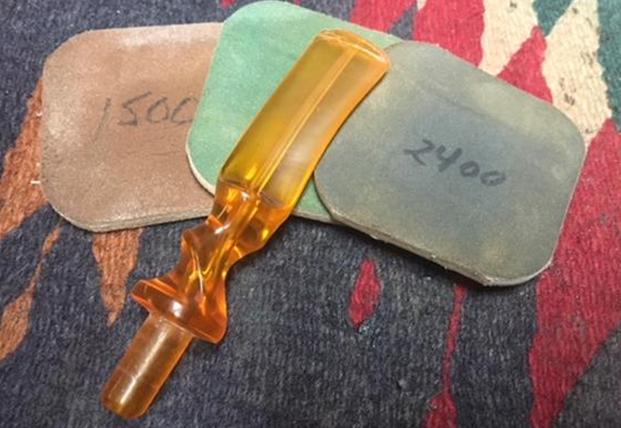
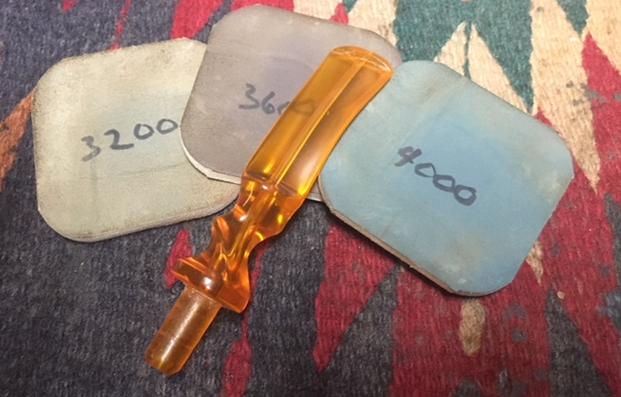
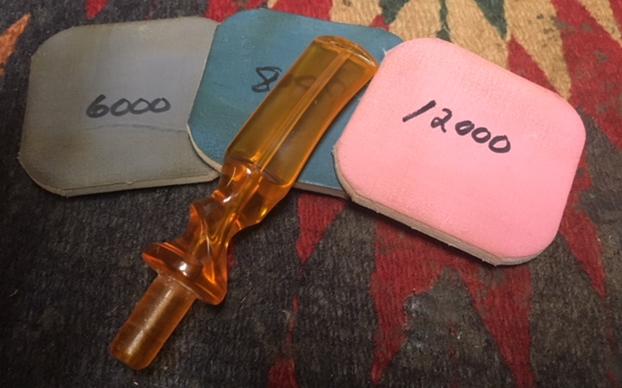
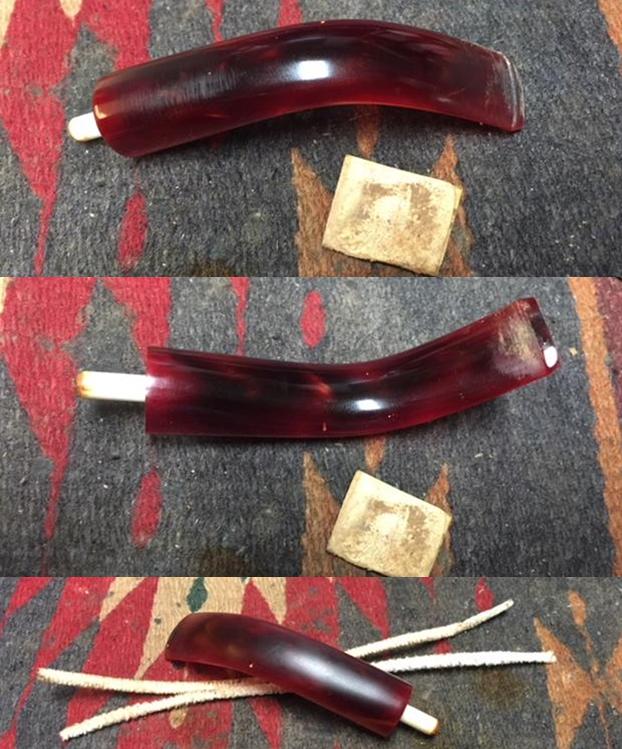
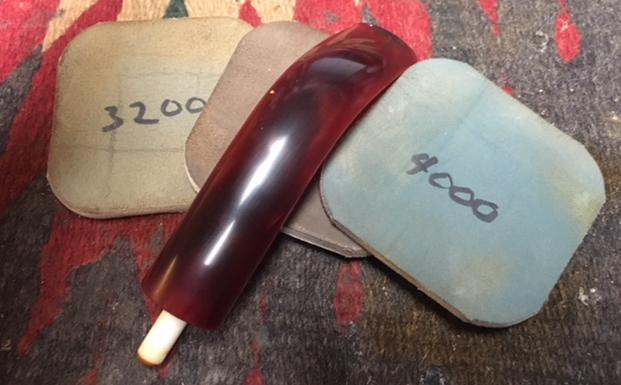
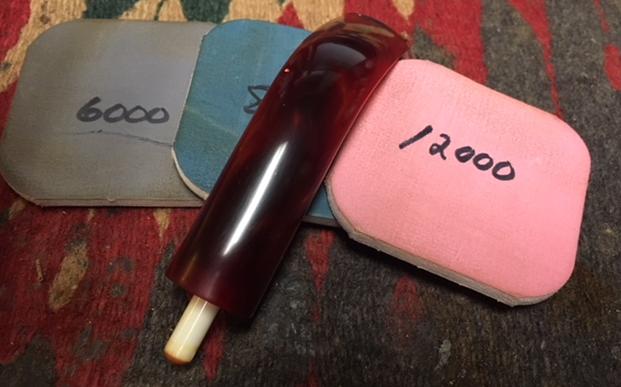
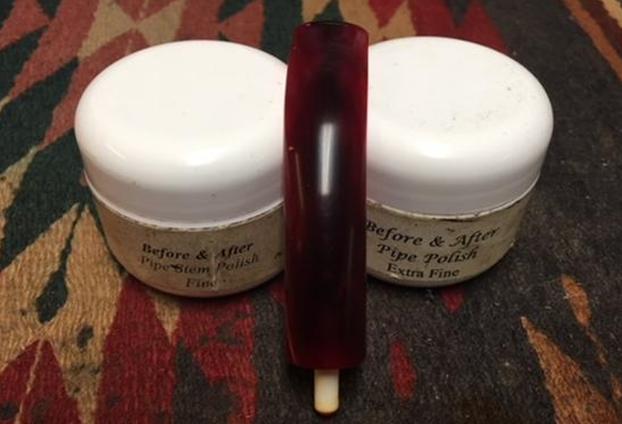
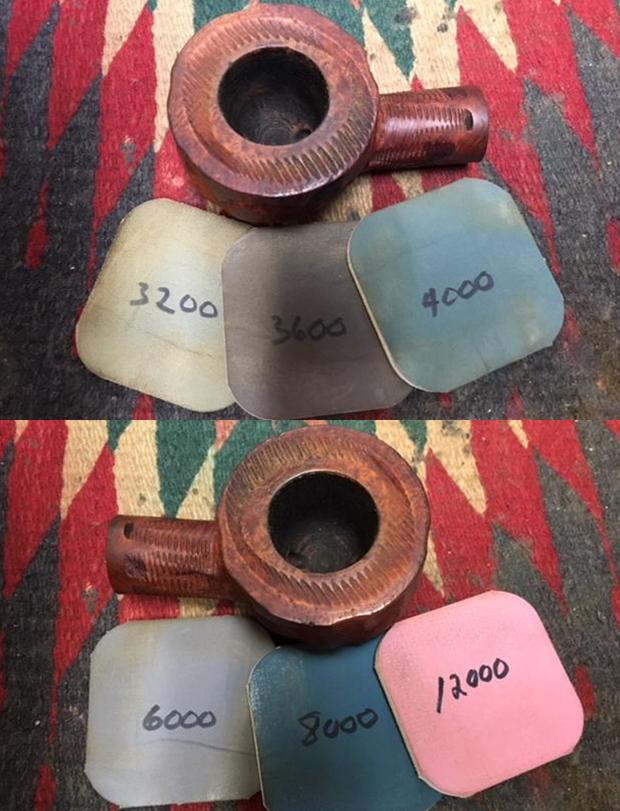
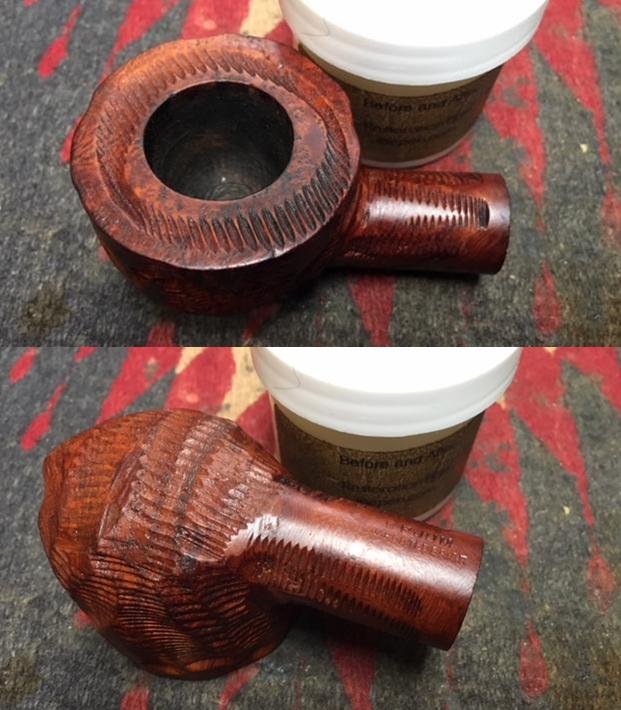
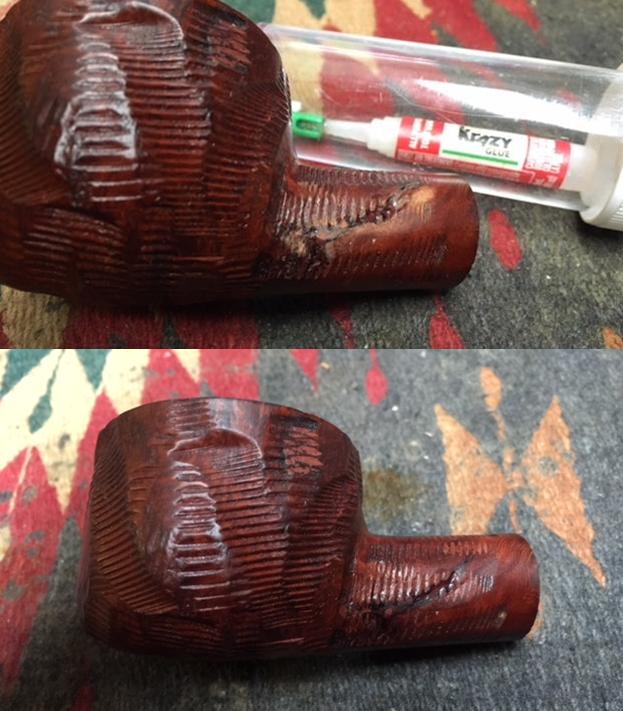
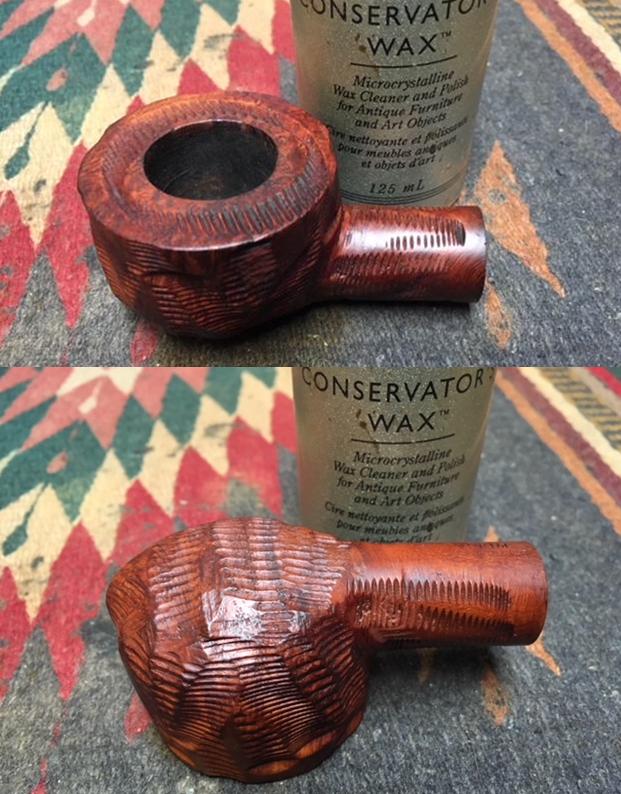
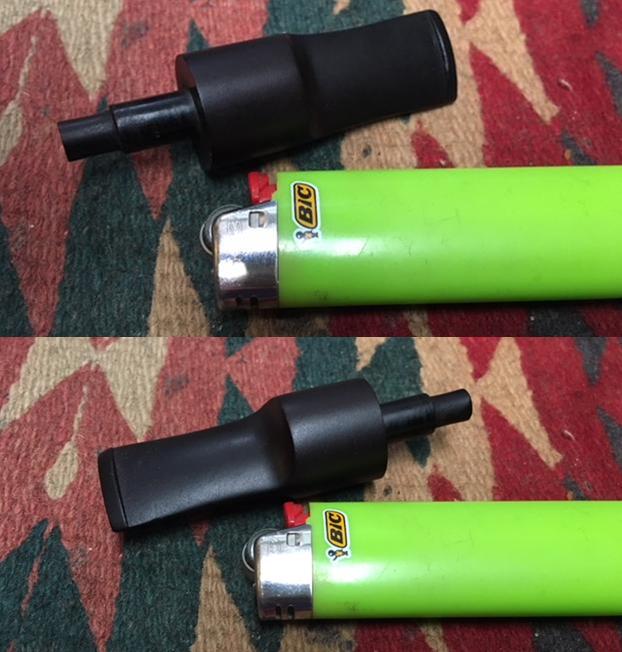
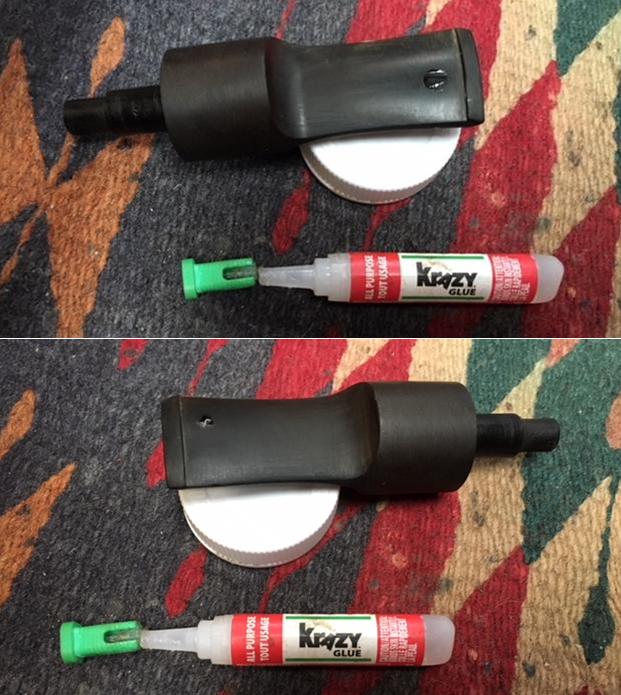
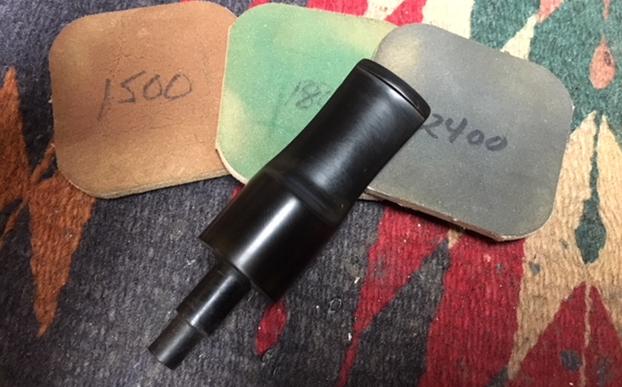
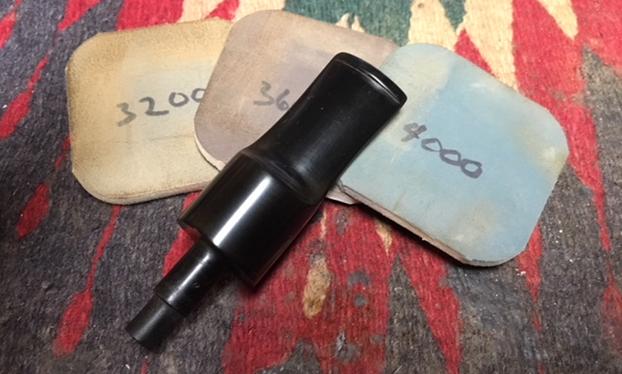
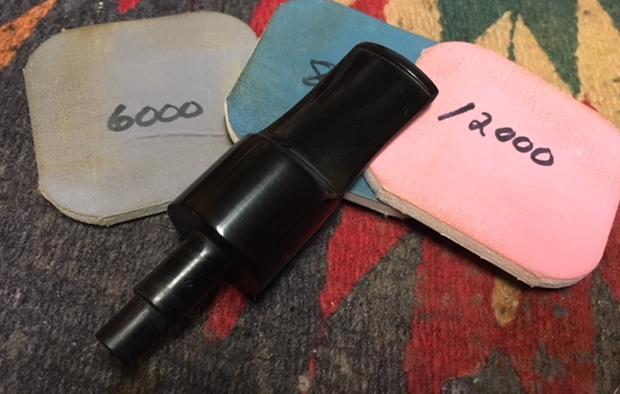
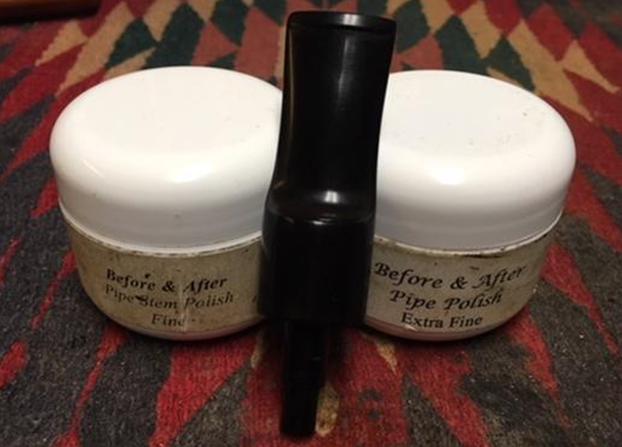
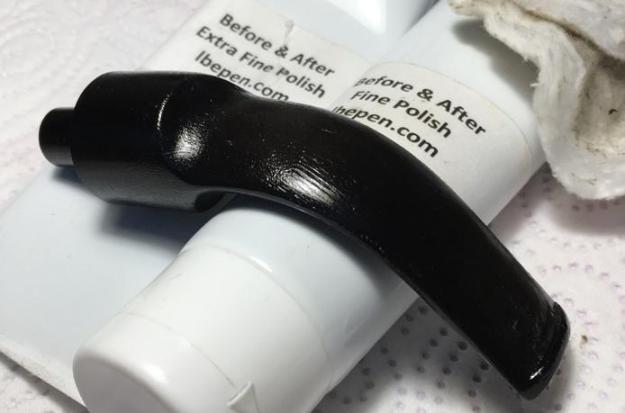
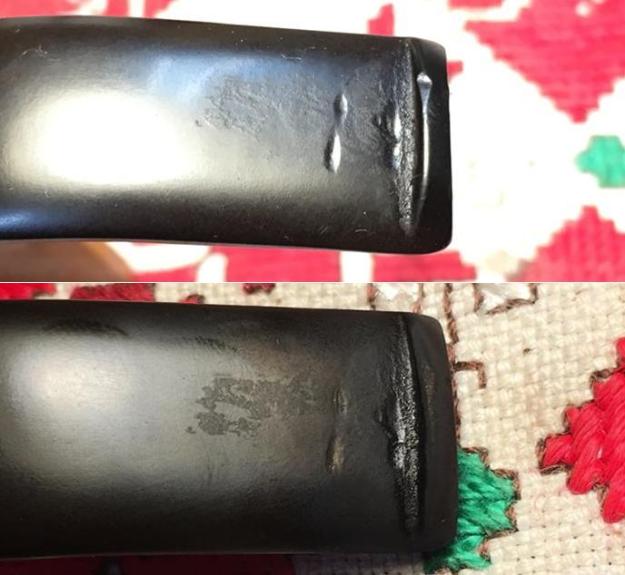
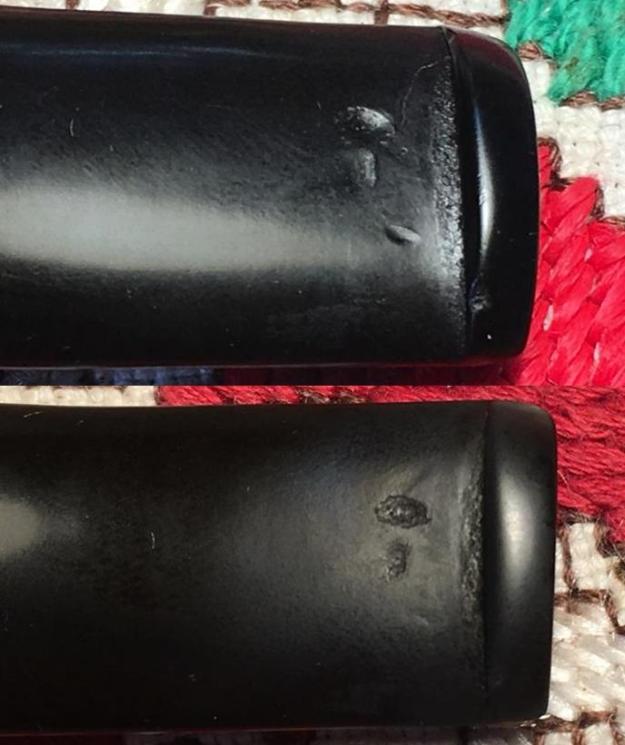
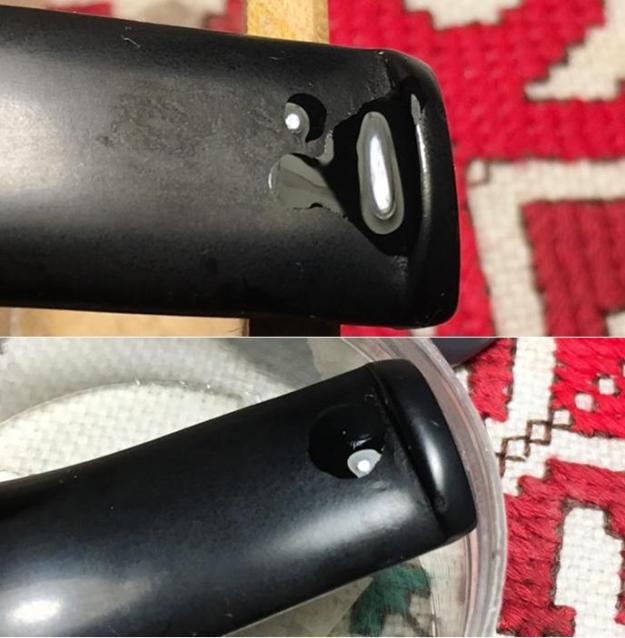
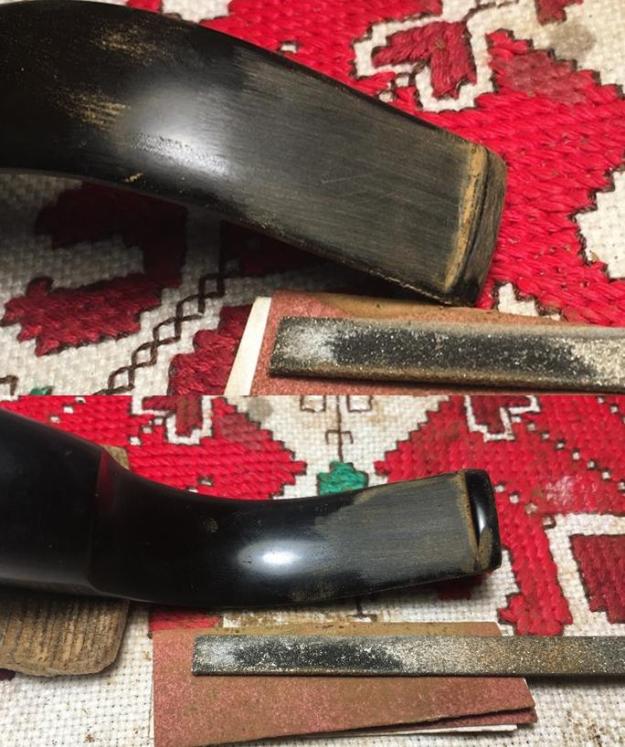
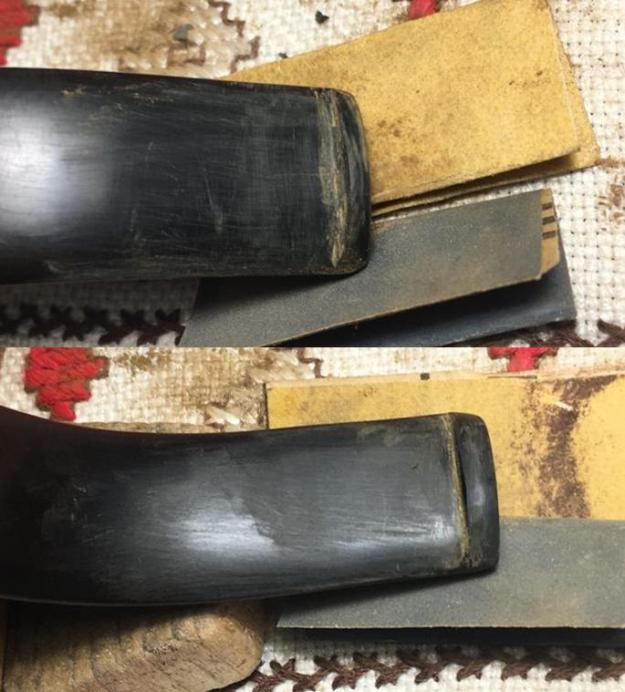
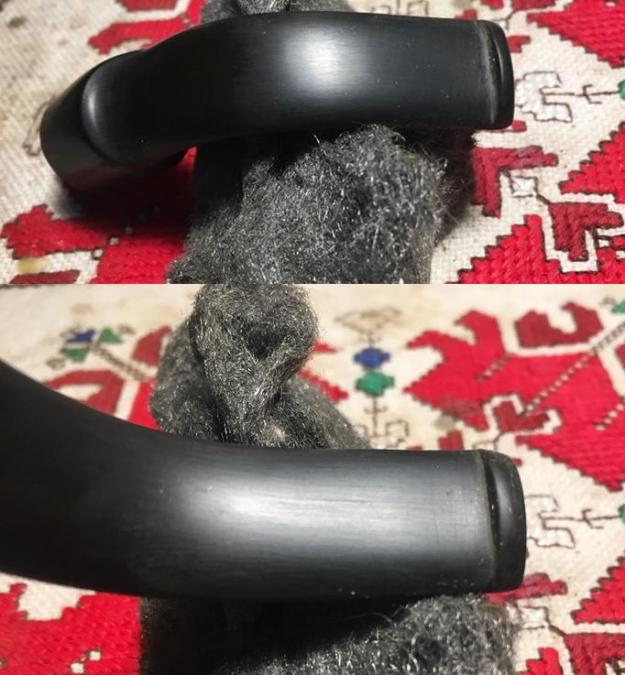
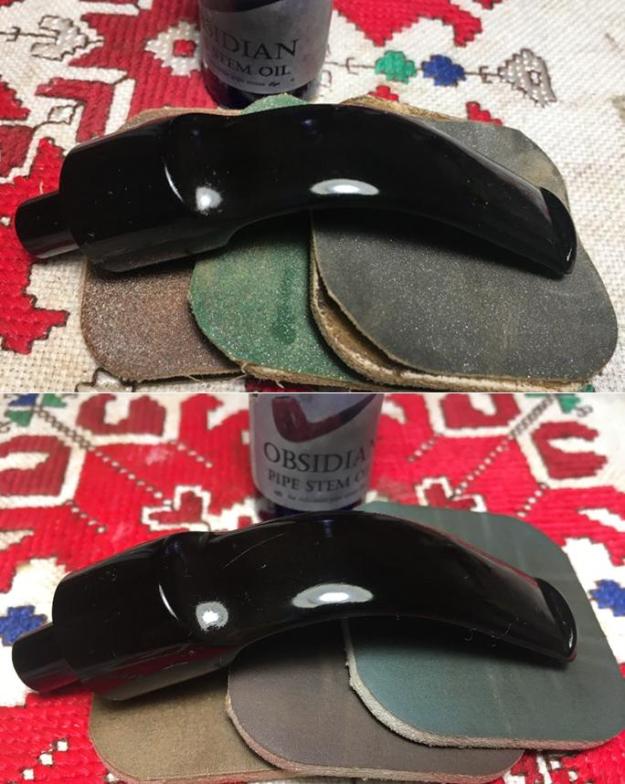
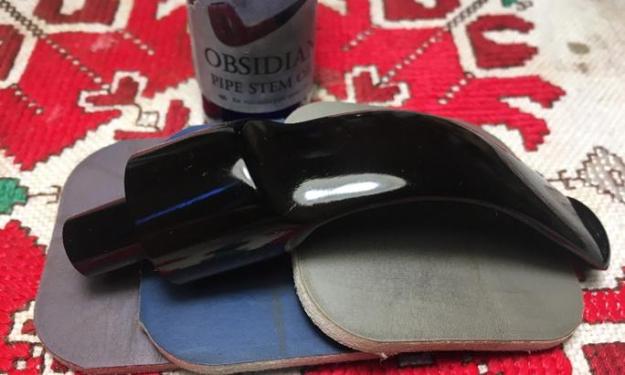
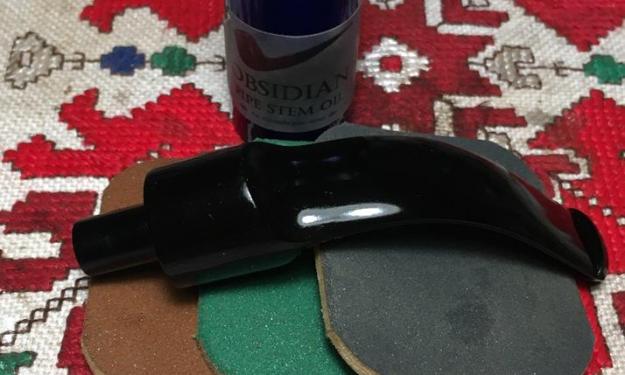
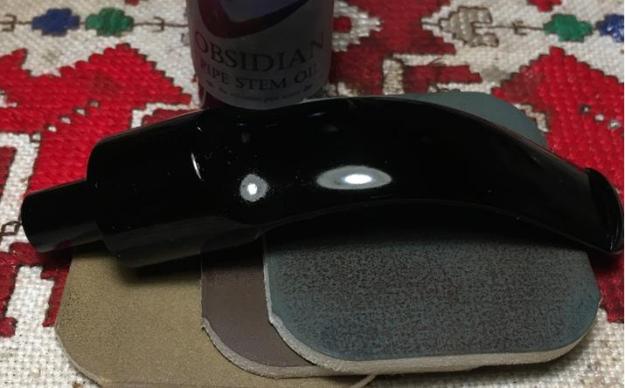
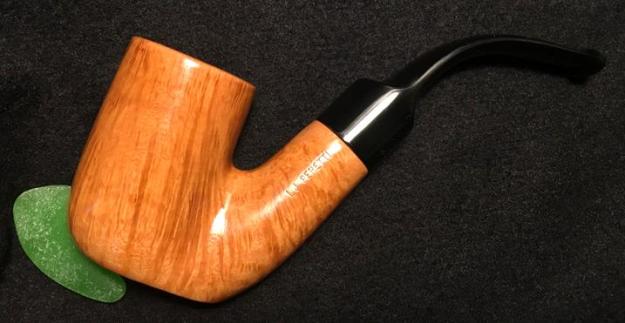
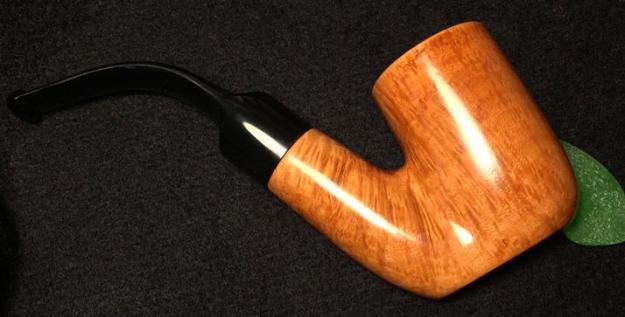
Jeff had reamed the bowl with a PipNet pipe reamer and followed up with a Savinelli Fitsall pipe knife to remove the cake. He scrubbed out the mortise and the airway in the shank and the stem with alcohol, cotton swabs and pipe cleaners. He scrubbed the exterior of the bowl, rim, shank and stem with a tooth brush and Murphy’s Oil Soap to remove the oils and tars on the bowl, rim and shank. He rinsed it under running water. He dried it off with a soft cloth. The lava mess on the rim was thoroughly removed without harming the finish underneath it. Without the grime the finish looked really good. He soaked the stem in Before and After Pipe Stem Deoxidizer. He rinsed it under running water and dried it off with a clean cloth. He cleaned out the airway with pipe cleaners and alcohol. When it arrived here in Vancouver it did not even look like the same pipe it was so clean. I forgot to take photos of the pipe to show its condition before I started my work, but took some right after I had rubbed in some Before and After Restoration Balm and before I buffed it.  Jeff had been able to get the grime and lava out of the plateau on the rim top and it looked pretty incredible. There was some darkening on the high spots on the plateau and lighter brown colouring in the valleys and crevices. The stem looked amazingly clean. The tooth marks and chatter were very visible and would need to be addressed. I took close up photos of both the rim top and the stem.I worked some Before & After Restoration Balm into the grooves and crevices of the plateau rim top and the smooth finish of the bowl and shank with my fingers and a horsehair shoe brush. I want the product to go deep into the finish because it works to clean, enliven and protect the briar. Once I was confident that it was deeply worked into the blast I wiped it off and buffed it with a soft cloth to polish it. The pipe really began to have a rich shine. I took some photos of the bowl at this point to mark the progress in the restoration. The grain really stands out in the photos below. I set the bowl aside and turned to work on the stem. I painted the tooth marks on the surface of the stem with the flame of a Bic lighter and was able to raise the dents on both top and bottom sides to the point that sanding the stem would remove the remaining damage.I sharpened the edge of the button and cleaned up the angles of the button with a needle file. I would need to sand out the stem to smooth things out but the edges of the button were very sharp and renewed.I smoothed out the remaining tooth marks and file marks with 220 grit sandpaper and blended them into the surface of the stem. It did not take too much sanding to do the work and after I polish the stem they will be invisible.I polished the vulcanite stem with micromesh sanding pads – wet sanding it with 1500-2400 grit pads and dry sanding with 3200-12000 grit pads. I wiped it down with Obsidian Oil after each sanding pad. I polished it with Before & After Pipe Polish – both the Fine and Extra Fine polishes. I gave it a final coat of oil and set it aside to dry. I polished bowl and the stem with Blue Diamond to polish out the remaining small scratches. I gave the bowl and the stem multiple coats of carnauba wax and buffed the pipe with a clean buffing pad to raise the shine. I hand buffed the pipe with a microfiber cloth to deepen the shine. The pipe polished up pretty nicely. The medium brown stain worked really well with the black vulcanite stem. The darkened plateau really sets of the pipe and gives it a unique look. The finished pipe is shown in the photos below. The dimensions of the pipe are Length: 5 1/2 inches, Height: 2 1/2 inches, Outer diameter of the bowl: length is 2 inches and width is 1 ¾ inches, Chamber diameter: 7/8 inches. This unique freehand is heading to India with the three of Paresh’s Grandfather’s pipes that I repaired and restored. I will pack the pipes up and send them back to India this week after I give the bowl a bowl coating to the repaired Barling. I look forward to hearing what he thinks of the lot of them once he gets to load them with his favourite tobacco and enjoy them. Thanks for walking through this restoration with me as I worked over this beauty. 

Working on Paresh’s Grandfather’s Barling’s Make Ye Olde Wood Fossil 271


Blog by Steve Laug

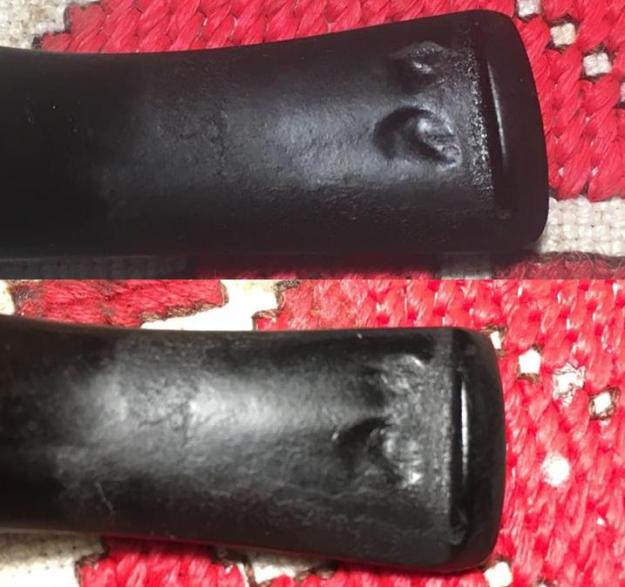
As I mentioned in my previous blog, Paresh, my friend in India reached out to me over Whatsapp to talk about a few more of his Grandfather’s pipes. He was confident in working on many of them but there were a few that he wanted me to try my hand on. His wife Abha would ream and clean them for me so I would be able to start with a relatively clean pipe. The third pipe was a sandblast Barling’s Make billiard with a vulcanite stem. It was another pipe that was in rough condition when Paresh and Abha started working on it. They reamed the thick hard cake with a KleenReem pipe reamer and clean up the exterior of the bowl with Murphy’s Oil Soap. They also cleaned the interior with alcohol, cotton swabs and pipe cleaners. The pipe was in very rough condition. There were cracks in the bowl on the front and the left side. The rim was beat up and out of round. It had been reamed with a knife sometime in its life. The stamping on the underside of the bowl and shank read Barling’s in an arch over Make over Ye Olde Wood. Next to that was the shape number 271. Further down the flattened shank it was stamped with an EL followed by Made In England, Fossil and T.V.F. The stem was lightly oxidized and had some tooth chatter and marks on both sides. It had a faint Barling’s cross logo on the top. I took photos of the pipe to show its condition when it arrived. I took some close up photos of the damage on the bowl to give a better idea of what I was working with on this pipe. The rim top was a real mess with nicks, chips and damage under a coat of tars. The bowl was out of round but workable. There were two cracked areas – one on the front of the bowl from the rim down and one on the left side from the rim down. Paresh and Abha had reamed the bowl for me so the inside was quite clean. The stem was in pretty decent shape with a few tooth marks and chatter on both sides of the stem near the button and some oxidation. The bowl was a real mess and it would be a challenge. I took photos of the stamping on the underside of the shank. As noted above it reads Barling’s in and arch over Make and the Ye Olde Wood over 271 on the bottom of the bowl. The shank is stamped EL followed by Made in England, Fossil and T.V.F.I decided to clean up the remaining thin cake in the bowl to get back to bare briar. I wanted to see the extent of the damage on the walls of the bowl interior before I addressed the damage on the outside of the bowl. I used a Savinelli Fitsall pipe knife to scrape away the remaining cake. Once it was clean, I sanded the inside of the bowl with a piece of dowel wrapped with 220 grit sandpaper to smooth out the bowl walls and the inner edge of the rim.To clean up the rim top and remove the serious damage on that portion of the pipe I topped it with 220 grit sandpaper on a topping board. I remove the damage portion and flattened the top of the rim. I would need to repair the cracks in the rim top and then rusticated it to match the finish on the bowl.I wiped down the surface of the briar with alcohol on a cotton pad to clean off the grime. I drilled tiny pin holes at the end of each crack on the exterior of the bowl in hopes of stopping the spread of the crack. I filled in the damaged areas around the bowl and on the rim with briar dust and clear super glue. At this point in the process the repairs appear quite crude. Lots of work still remains to blend them into the sandblast finish of the bowl. I used a brass bristle tire brush to work over the repaired areas on the front and side of the bowl. I wanted to clean up the rough edges of the repair and try to blend it into the finish around it. The bristles are stiff enough to remove the edges and I think works well to blend it into the surface of the surrounding sandblast. I lightly topped the bowl again to smooth out the roughness of the repairs on the rim surface.I used some small burrs on my Dremel running at a slow speed of 5 to try to recreate the look of the sandblast on the rim top. It took a bit of doing but I think it gives the rim top a better look than the smooth finish. I blended a walnut and a Maple stain pen to approximate the mottled finish on the rest of the bowl. It worked pretty well I think. I will show full photos shortly. To fill in the cracks on the inside of the bowl and to protect it from burn out or further cracking I mixed up some JB Weld. It dries hard, is heat resistant and when dry is inert and does not gas off or breakdown (according to all I have been able to read). I used a dental spatula to apply it to the inside of the bowl. Once it cures for a day I will sand it out and remove the majority of it other than what will remain in the damaged areas. I wiped off the rim top with a cotton pad and alcohol to remove the small drops of JB Weld that were on the surface and restained the rim top and the repaired areas on the side and front of the bowl. I will still need to buff the bowl and wax it but it is getting very close to the look I am aiming for with this repair. I worked some Before & After Restoration Balm into the grooves and crevices of the sandblast finish with my fingers and a horsehair shoe brush. I want the product to go deep into the finish because it works to clean, enliven and protect the briar. Once I was confident that it was deeply worked into the blast I wiped it off and buffed it with a soft cloth to polish it. The pipe really began to have a rich shine. I took some photos of the bowl at this point to mark the progress in the restoration. I set the bowl aside and went to work on the stem. I cleaned the inside of the stem with pipe cleaners and alcohol. Once the stem was clean I checked it with a light for more potential problems inside. It was clear and spotless. I sanded the stem surface with worn 220 grit sandpaper to break up the oxidation (carefully avoiding the stamping on the top of the saddle).I filled in the tooth dent on the top of the button on the top side of the stem and the two tooth dents on the underside with clear super glue.Once the glue hardened and cured I filed the repairs flat and reshaped the button with 220 grit sandpaper. I worked over the surface of the stem again with the sandpaper to blend in the repairs.I polished the vulcanite stem with micromesh sanding pads – wet sanding it with 1500-2400 grit pads and dry sanding with 3200-12000 grit pads. I wiped it down with Obsidian Oil after each sanding pad. I rubbed the stem down with Before & After Pipe Polish – both Fine and Extra Fine to polish out the scratches. I gave it a final coat of oil and set it aside to dry. I avoided the stamping on the top of the saddle. There is still some oxidation there that I left because I did not want to damage the stamp. It is a nice looking stem nonetheless. I carefully polished bowl and the stem with Blue Diamond to polish out the remaining small scratches. I gave the bowl multiple coats of Conservator’s Wax and the stem multiple coats of carnauba wax and lightly buffed the pipe with a clean buffing pad to raise the shine. I hand buffed the pipe with a microfiber cloth to deepen the shine. The pipe polished up pretty nicely. The transparent mixed brown stain worked really well with the black vulcanite stem. The sandblast finish looked really good. The finished pipe is shown in the photos below. The dimensions of the pipe are Length: 5 1/2 inches, Height: 1 3/4 inches, Outer diameter of the bowl: 1 1/4 inches, Chamber diameter: ¾ inches. This is the third of the three of Paresh’s Grandfather’s pipes that he sent me to finish. I will pack the pipes up and send them back to India this week after I give the bowl a bowl coating. I look forward to hearing what he thinks of them once he gets to load them with his favourite tobacco and carry on the pipe man’s legacy of his Grandfather. Thanks for walking through this restoration with me as I worked over this beauty. 

Working on another of Paresh’s Grandfather’s pipes


Blog by Steve Laug

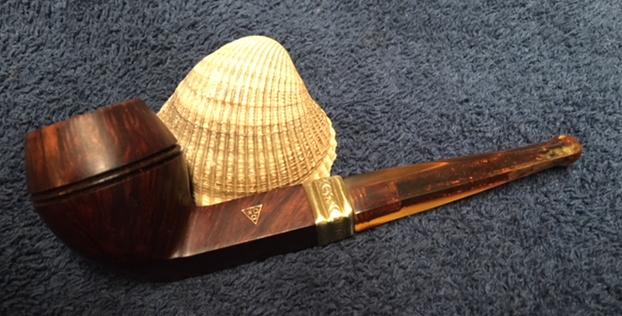
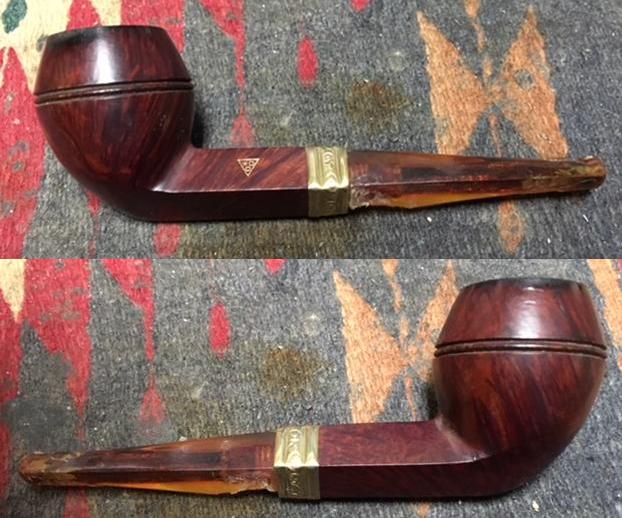
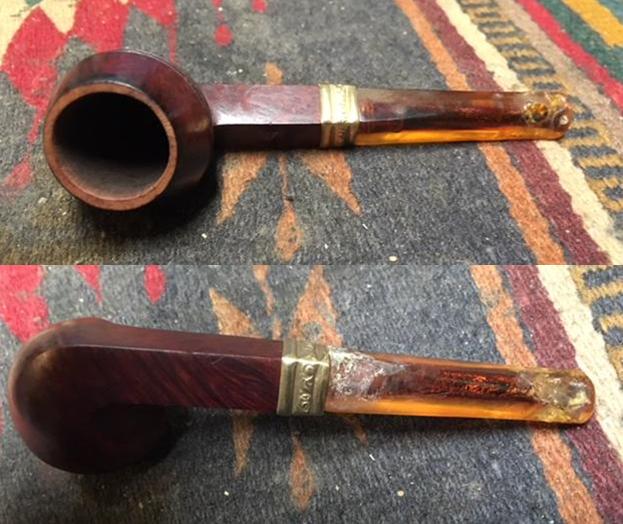
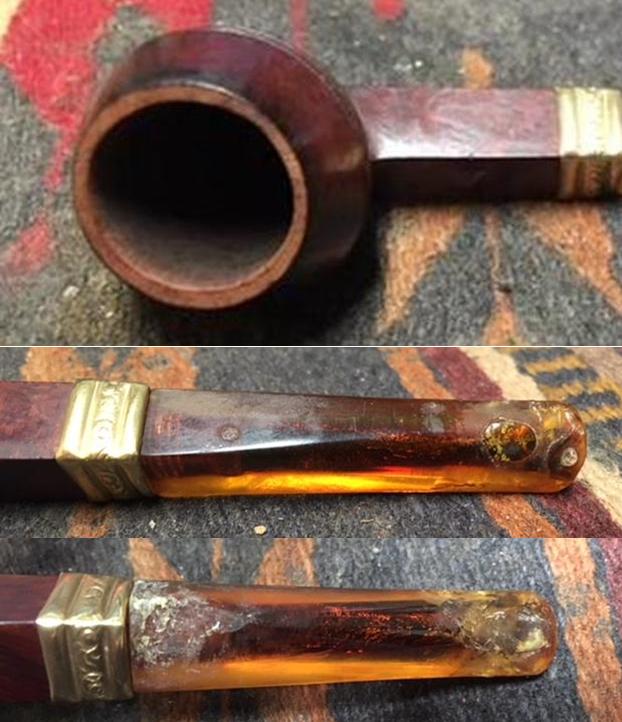
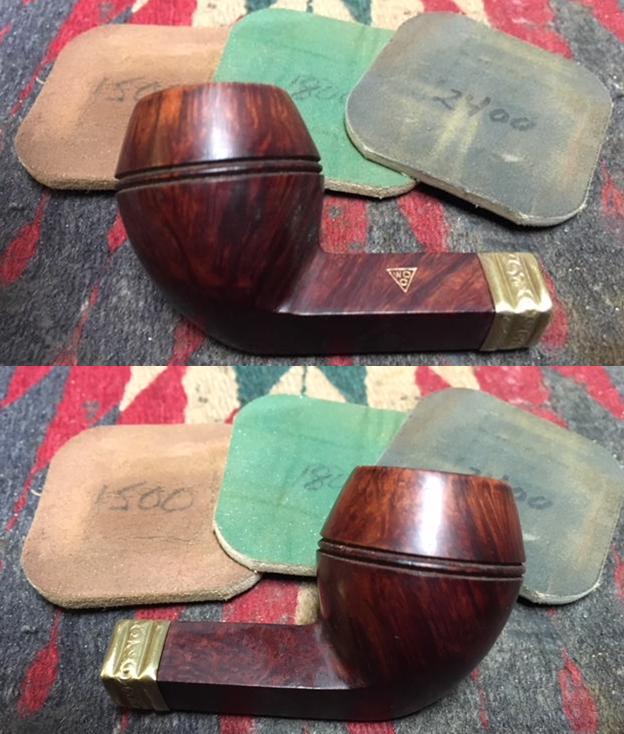
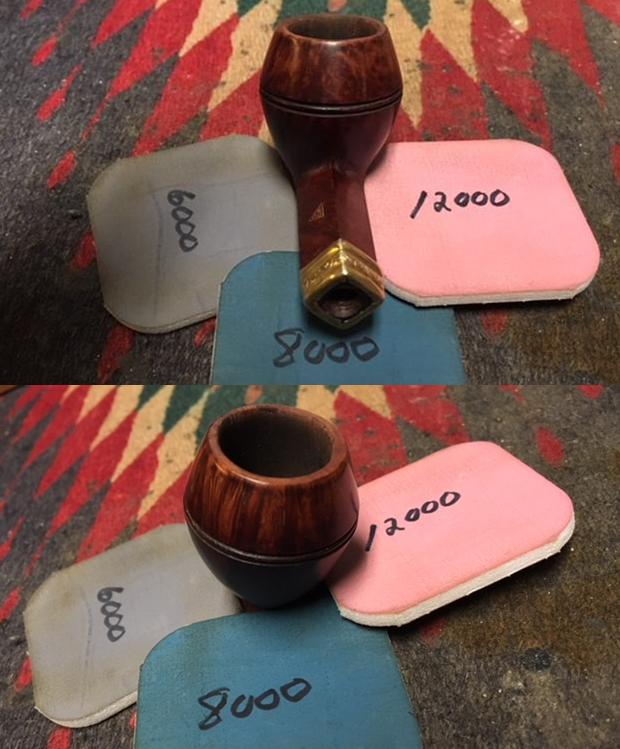
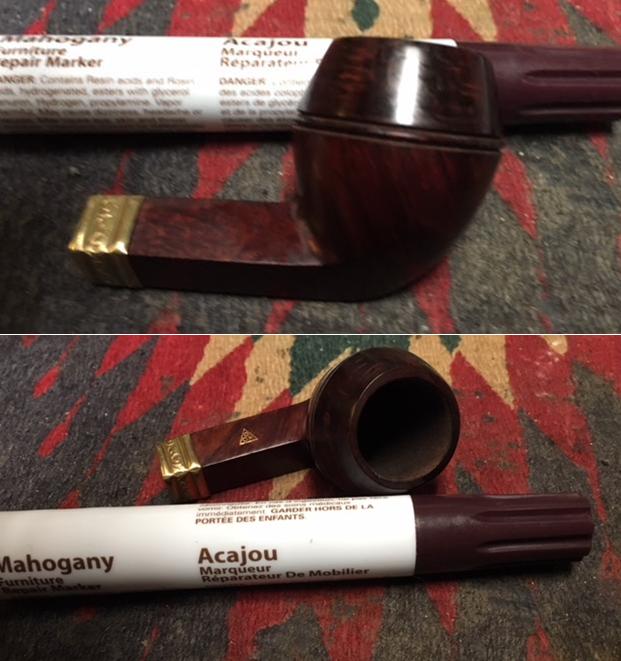
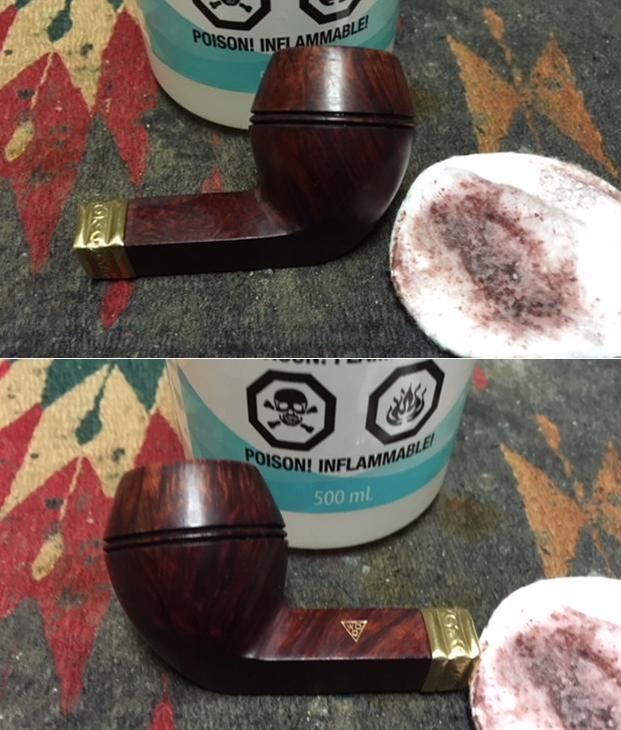
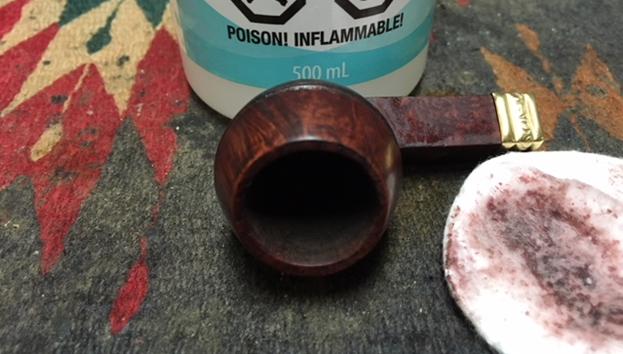
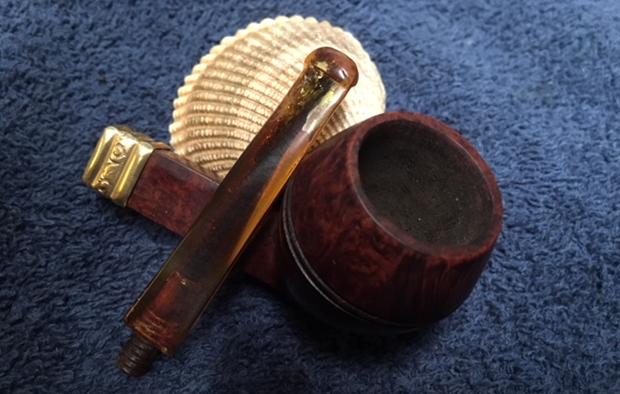
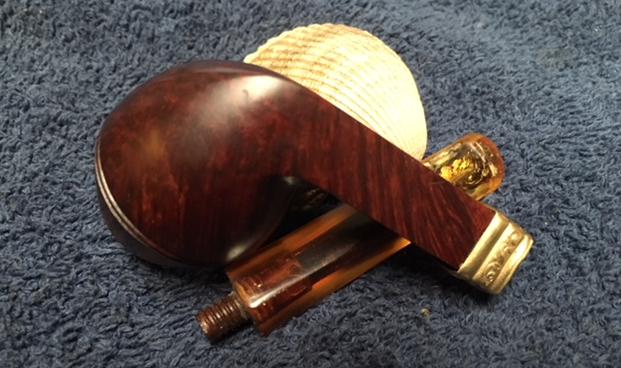
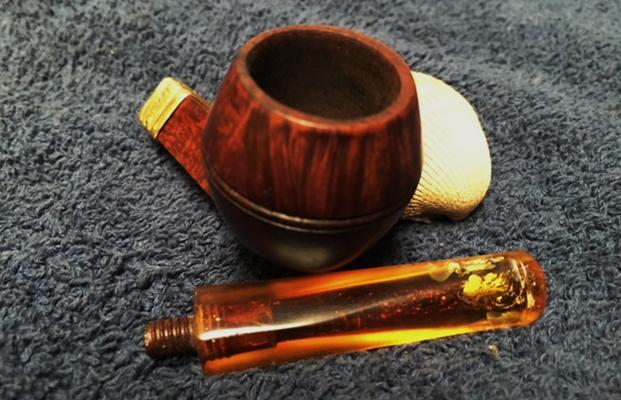
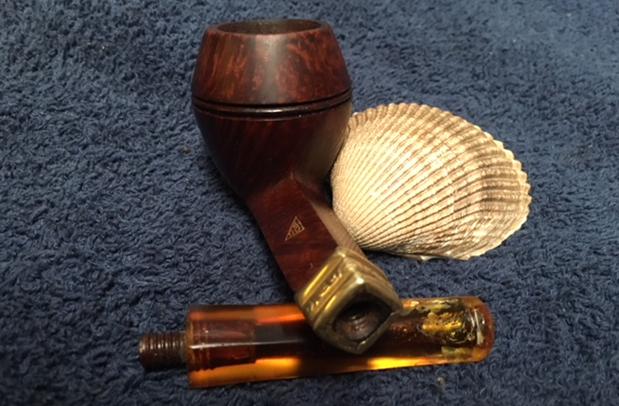
Paresh, my friend in India reached out to me over Whatsapp to talk about a few more of his Grandfather’s pipes. He was confident in working on many of them but there were a few that he wanted me to try my hand on. His wife Abha would ream and clean them for me so I would be able to start with a relatively clean pipe. The first of these was a beautiful older WDC Bulldog with an amber coloured Bakelite stem. It was in rough condition when Paresh and Abha started working on it. They reamed the thick hard cake with a KleenReem pipe reamer and clean up the exterior of the bowl with Murphy’s Oil Soap. They also cleaned the interior with alcohol, cotton swabs and pipe cleaners. The rim top had a thick over flow of lava that hid the briar that Paresh topped to smooth out. There was some darkening to the rim top and down the sides of the bowl cap. The briar was very dirty. There was a gold stamped WDC triangle on the left side of the shank and a brass decorative band that was loose. The stem was a mess. There was a large chunk of the Bakelite missing on the underside and deep tooth marks on the top and underside near and on the surface of the button. I took photos of the pipe to show its condition when it arrived.You can see the work that Paresh and Abha had done to the rim top to clean it up and remove the damage. He had also worked over the inner edge of the bowl to smooth out the damage to the edge. You can also see the extensive damage to the stem in these photos.I took some close up photos of the bowl and stem to give a better idea of what I was working with on this pipe. The rim top was clean but there was darkening down the edges of the cap for about a quarter of an inch. The stem was a mess. Paresh had tried to repair the damage and tooth marks with some clear super glue that he picked up in India. He found that it was inferior and did not harden quickly. Once it did the repair tended to fall out. It was very frustrating. He was able to patch the tooth marks on the stem but not the missing chunk at the stem/shank union.The bowl was the easiest part of the restoration on this old pipe so I started there. I worked on the darkening along the top edge of the cap and was able to remove it with micromesh sanding pads. I used 1500-2400 grit pads to remove the damage and then polished it with 3200-12000 grit pads. I wiped it down with a damp cotton pad after each pad to check out the progress. I polished the rim top at the same time. The photos tell the story. With the rim darkening removed and the rim and cap polished it was time to touch up the stain to blend it into the rest of the bowl. I used a Mahogany stain pen and stained the cap and the rim top. The match was a little darker than I wanted and not as transparent either. I wetted a cotton pad with alcohol and wiped down the cap to blend the stain and make it more transparent. This did the trick and I was happy with the finished colour. The photos show the process. I slipped the loose brass shank cap/band off the shank and used a tooth pick to put some all-purpose glue around the shank end. I pressed the band in place on the shank and wiped off the excess glue that squeezed out with a damp cotton pad.The briar was clean but dried out and in need of some deep cleaning. I rubbed the bowl down with Before & After Restoration Balm to deep clean the briar bowl and shank. The product works to clean, enliven and protect the briar. I hand rubbed it with my fingers, working it into the exterior of the pipe. I wiped it off and buffed it with a soft cloth to polish it. The pipe really began to have a rich shine. I took some photos of the bowl at this point to mark the progress in the restoration. I set the bowl aside and turned my attention to the stem. I used a needle file to clean up the edges of the button on both sides. I also used the file to smooth out the repairs that Paresh had made to the tooth marks on the surface of the stem. He had done a good job and now it was time to blend them into the surface of the stem.I sanded the file marks out of the stem surface with 220 grit sandpaper and blended the repairs into the surface of the stem. I filled in the missing chunk of Bakelite with multiple layers of amber super glue. I could have used clear glue but I had the amber around and it is a thicker product so it used it. I use layers so that the repair does not get to thick. It makes the drying time shorter and I think it gives a better bond.I laid the stem aside and went to bed. I touched up the final layer of glue in the morning and went to work. The stem had the entire day to cure. When I returned in the evening I sanded the repaired area with 220 grit sandpaper and reshaped the entire stem surface to make the flow of the taper correct. I would need to add some more glue to the patch but progress was being made. Slowly but surely I was conquering this repair.I touched up the glue repairs and wiped the stem down with Obsidian Oil. I took the next two photos to send on Whatsapp to Paresh and Abha. The stem is looking really good. There is still a lot of polishing to do but it is getting there.I polished the stem with 400 grit wet dry sandpaper to remove the scratches and polish the Bakelite.I polished the stem with micromesh sanding pads – wet sanding it with 1500-2400 grit pads and dry sanding with 3200-12000 grit pads. I wiped it down with Obsidian Oil after each sanding pad. I gave it a final coat of oil and set it aside to dry. I carefully polished stem and bowl with Blue Diamond (using a soft touch) to polish out the remaining small scratches. I gave the bowl and the stem multiple coats of carnauba wax and buffed the pipe with a clean buffing pad to raise the shine. I gave the stem several coats of Conservator’s Wax and hand buffed it with a soft cloth. I hand buffed it with a microfiber cloth to deepen the shine. The pipe polished up pretty nicely. The transparent medium brownish red stain worked really well with the golden/amber Bakelite stem. The finished pipe is shown in the photos below. The dimensions of the pipe are Length: 4 3/4 inches, Height: 1 3/4 inches, Outer diameter of the bowl: 1 inch, Chamber diameter: ¾ inches. This is the first of three of Paresh’s Grandfather’s pipes that he sent me to finish. I will set it aside and when the others are finished I will pack them up and send them back to India. I look forward to hearing what he thinks of it once he gets to load it with his favourite tobacco and carry on the pipe man’s legacy of his Grandfather. Thanks for walking through this restoration with me as I worked over this beauty.

Another L. J. Peretti Oom Paul Sitter Recommissioned


Blog by Dal Stanton

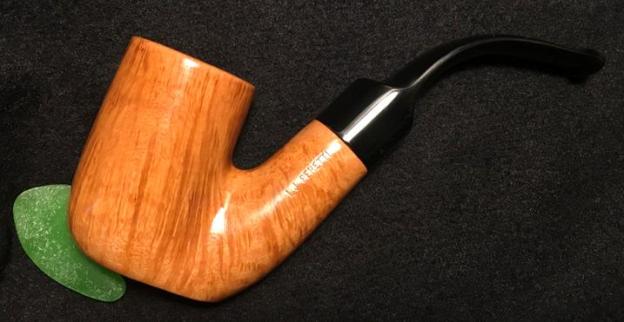
I’m almost finished working through the Peretti Lot of 10 I acquired off the eBay auction block.  I’m amazed at the interest in these pipes since I posted a picture of the Peretti Lot on several of my favorite Facebook pipe groups.  I also enjoy posting on Instagram and Facebook giving updates of the restorations on my worktable here in Sofia, Bulgaria.  One of the best things I enjoy about ‘Pipedom’ and social media are the relationships developed around the world with pipe men and women whose love of pipes – their names and their histories, trust people like me who restore these friends enabling them to be passed on to the next generation of pipe men and women.  That’s why I named my pipe space, The Pipe Steward.  We are stewards when we understand that we don’t own, but we merely take care of something special for a time, add our histories then pass it on.  I met Tim via social media when I posted the picture below.  He was drawn to the Oom Pauls and commissioned one of the Sitters potentially to add to his already large collection – I see the plethora of posts and pipes he has on Instagram!  So, adding this Peretti Oom Paul Sitter to his collection is special and appreciated.  When one of my pipes is commissioned, the final decision to keep it is made after its restored and I publish the write up and a price is set.  So, Tim has first dibs on this Oom Paul Sitter when it goes to The Pipe Steward Store.  As with the other Perettis, this Sitter will benefit the Daughters of Bulgaria – our work here in Bulgaria helping women and girls who have been trafficked and sexually exploited.
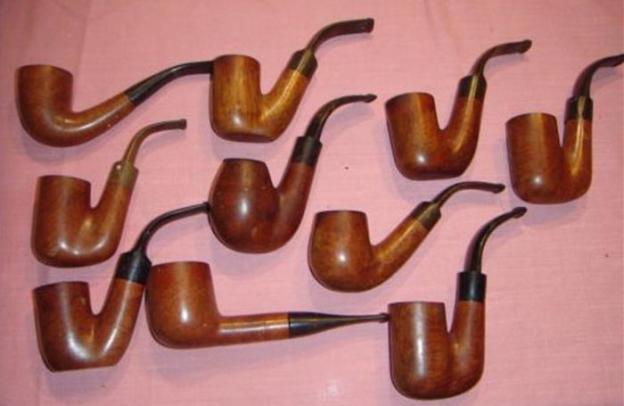
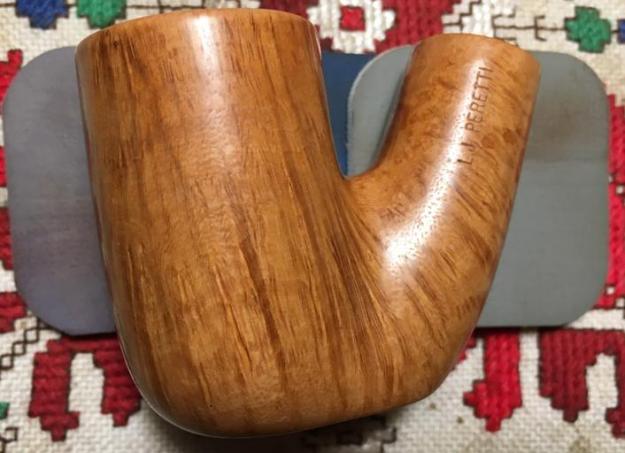
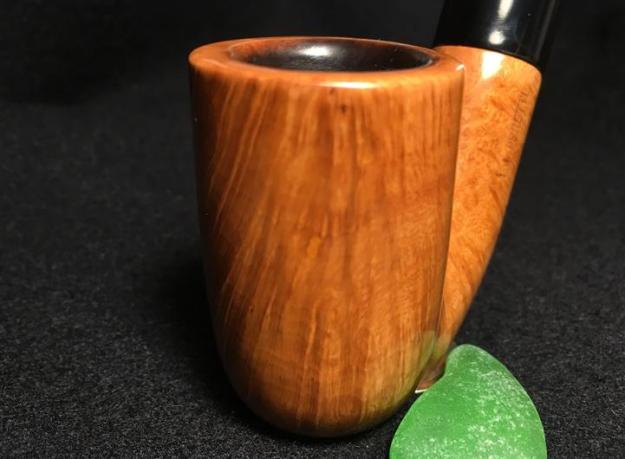
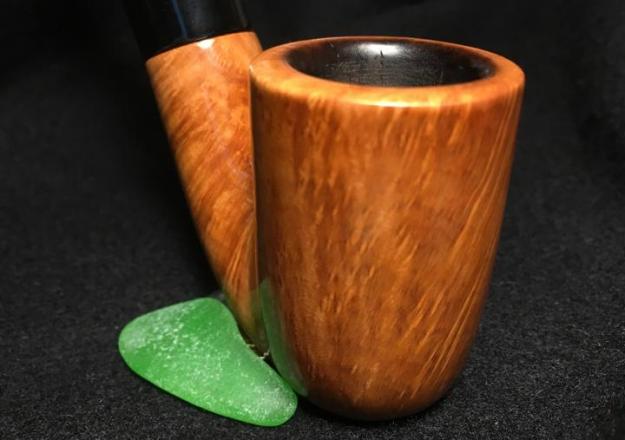
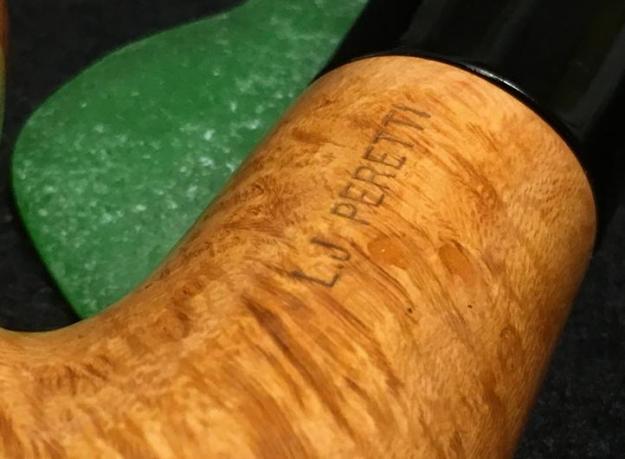
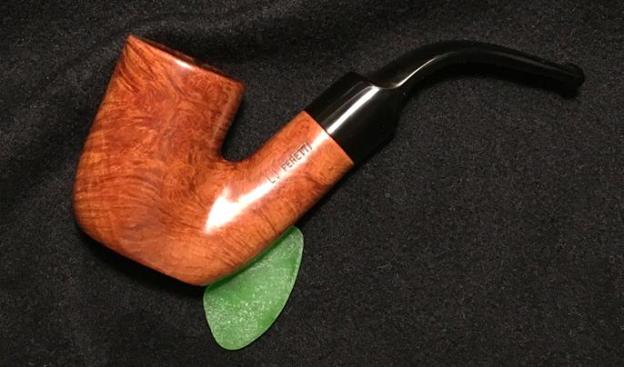
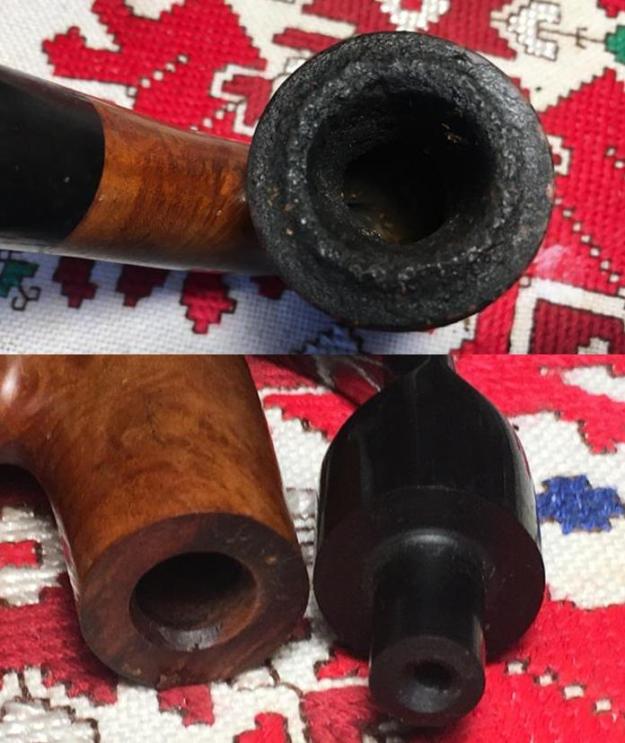
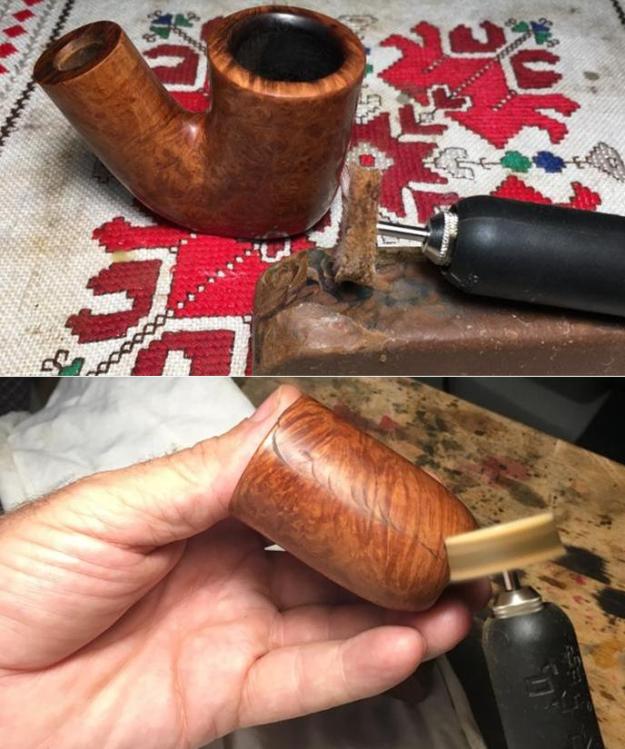
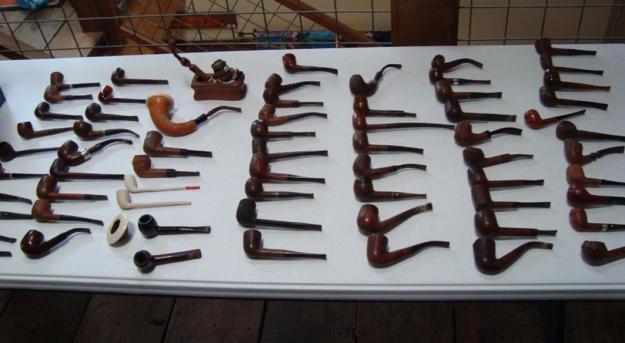
Of the Peretti Lot of 10, there are two Oom Pauls yet to be restored that have been commissioned.  Two other pipes above are joining my collection of Perettis when I finally get to restoring them!  The Calabash on the top, left, and the COLOSSUS Billiard on the bottom.  The Oom Paul Sitter before me now is distinctive and stands out even in the picture above – bottom right.  The vertical straight flame grain is distinctive even in its present state.  Here are pictures chronicling the Oom Paul Sitter’s condition and challenges. The condition of this Sitter resembles all his brother Oom Pauls and the cousins.  The former steward of these Perettis seemed to have a scorched earth policy.  All of them, this one included, have thick cake in the chamber and thick, crusty lava flowing over the rim. As with the others, the left side of the rim has taken the brunt of the tobacco lighting and the briar is charcoal where the flame was pulled over the side, burning the rim.  The unfortunate result of this is that when the charred wood is cleaned away, the rim/bowl is thinner on that edge and therefore out of round.  The stummel surface is dirty but will clean up well showing the beautiful vertical grain.  I see no fills in this briar.  The stem carries with it the bites and dents that all the other Perettis received as well.  The stem is moderately oxidized and has a little calcification on the bit.  The one critical observation I have made about the Peretti Oom Pauls is that the drilling of the mortises for the tenon/stem fit hasn’t been the best.  This Sitter’s stem does not sit evenly with the shank.  The shank has a lip over the upper part of the saddle stem and the stem has a lip over the lower shank.  The drilling has left something to be desired!  The tenon fit is also loose. I have plenty of hurdles to address as this Oom Paul Sitter is recommissioned!
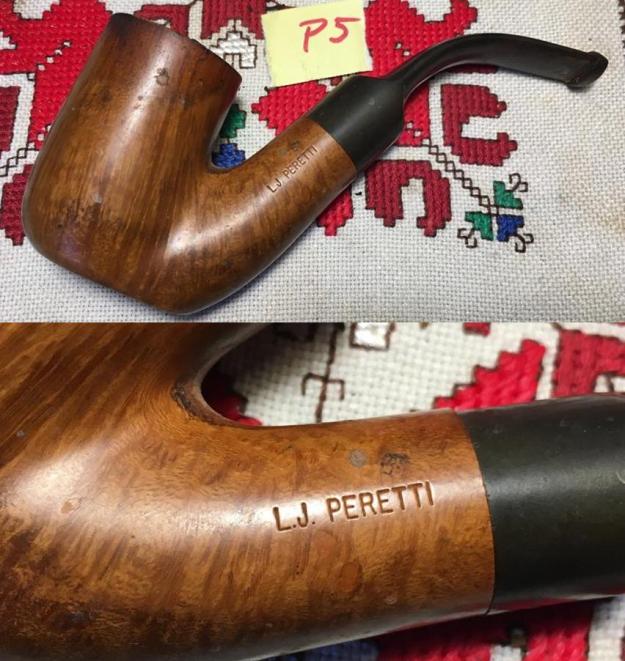
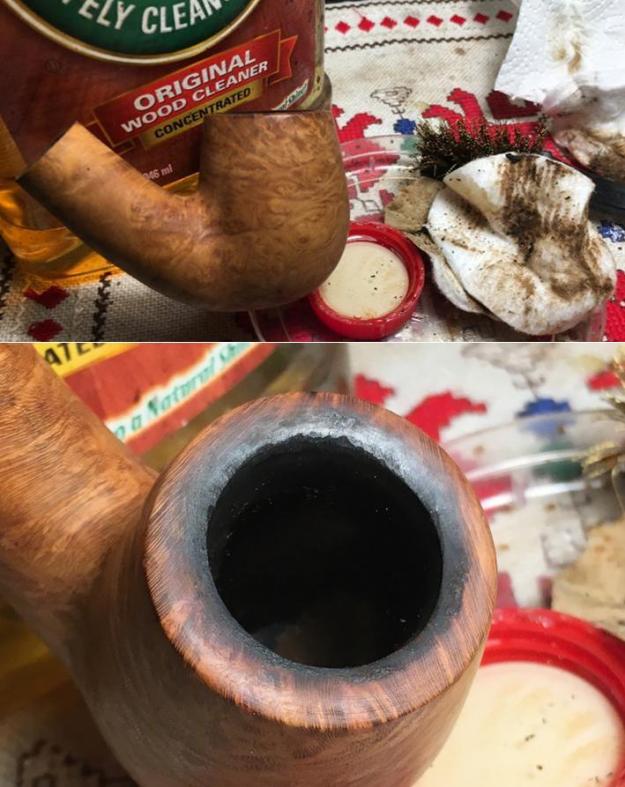
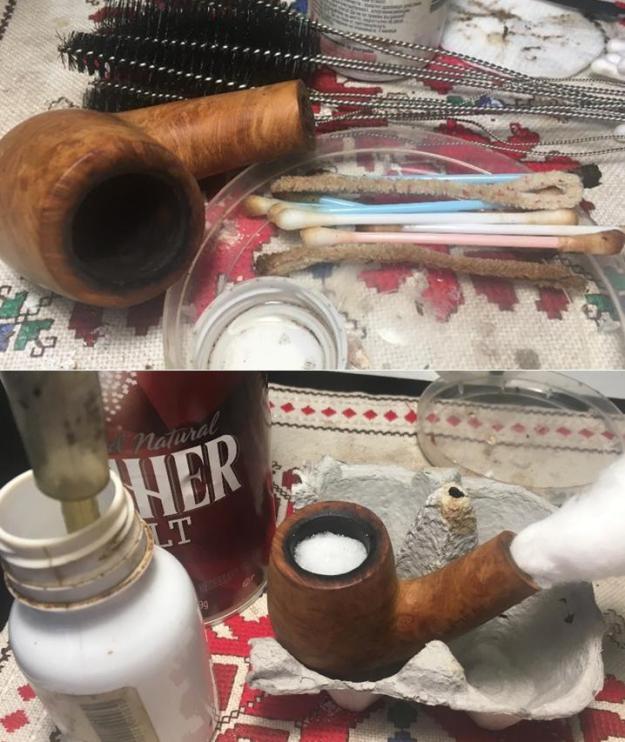
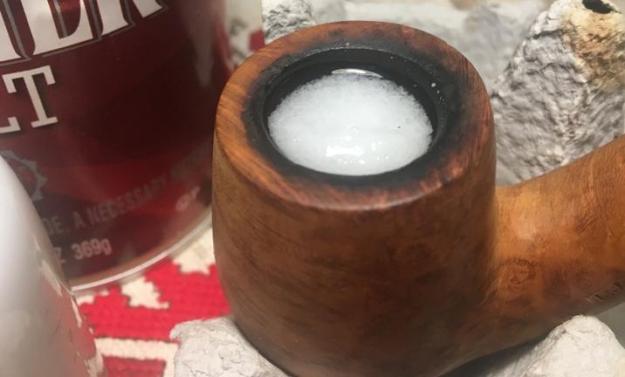
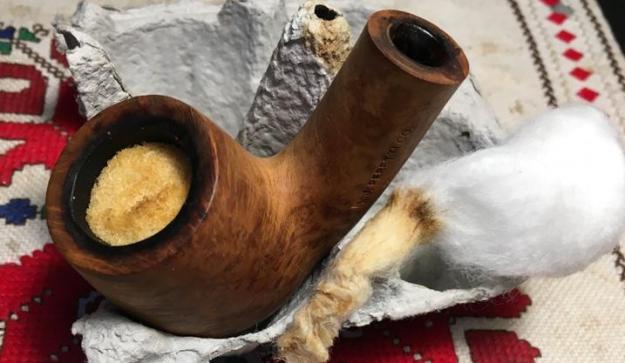
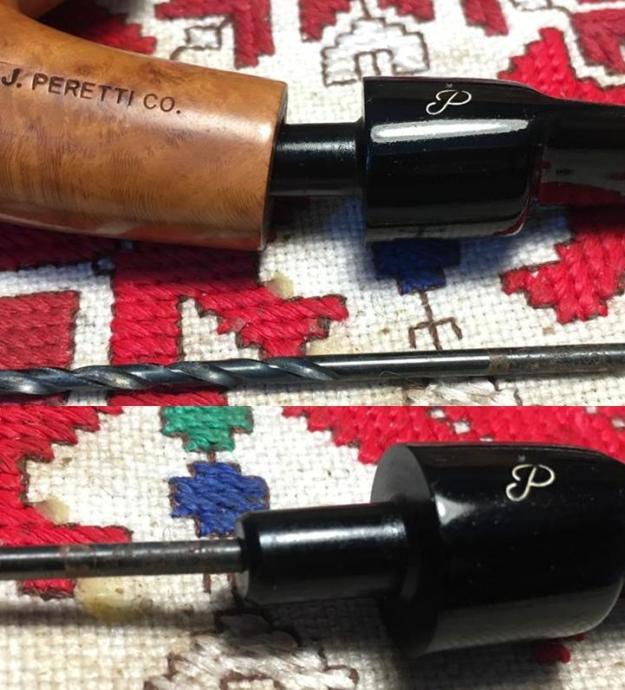
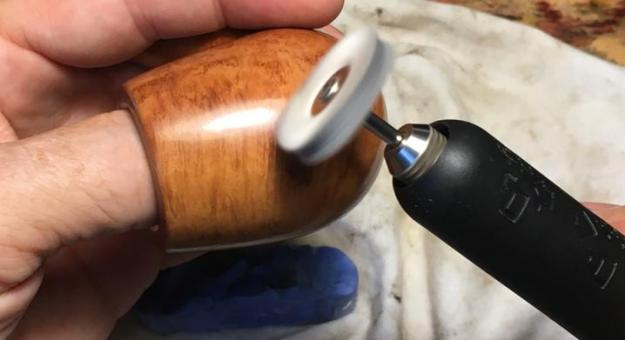
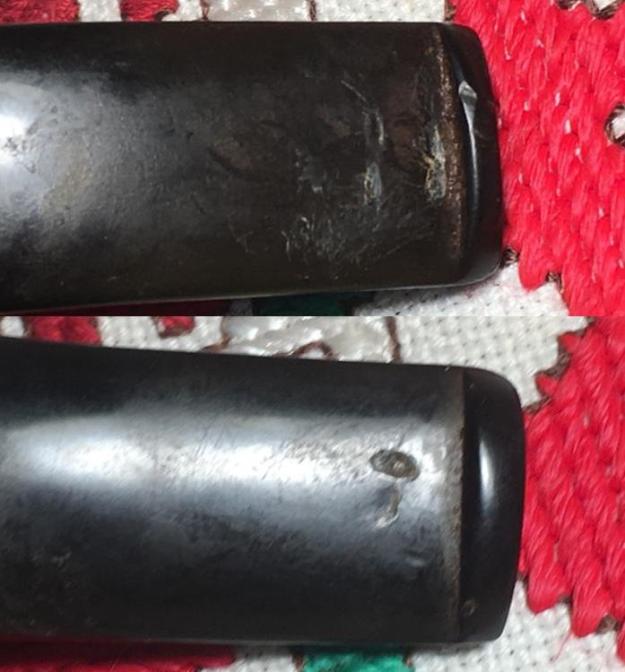
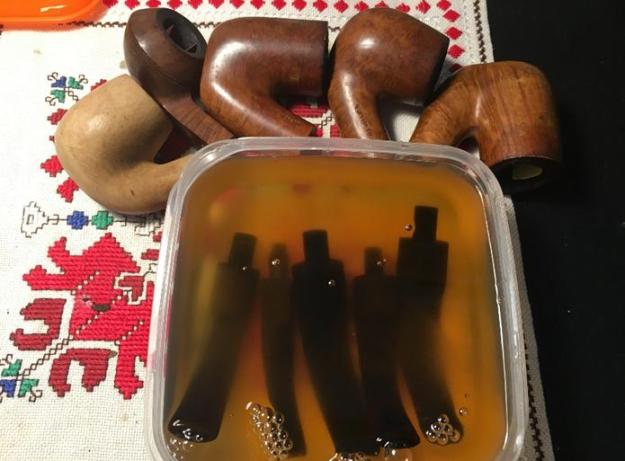
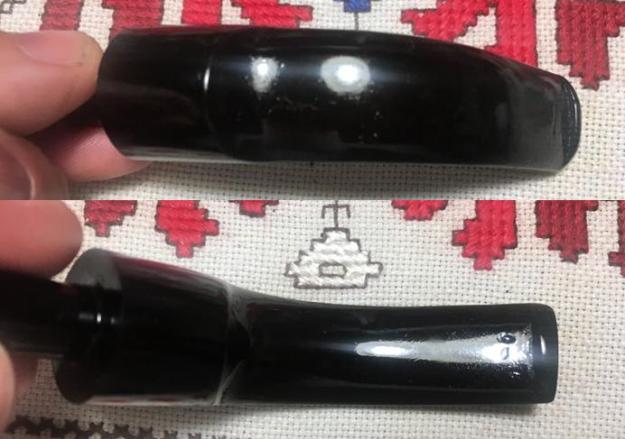
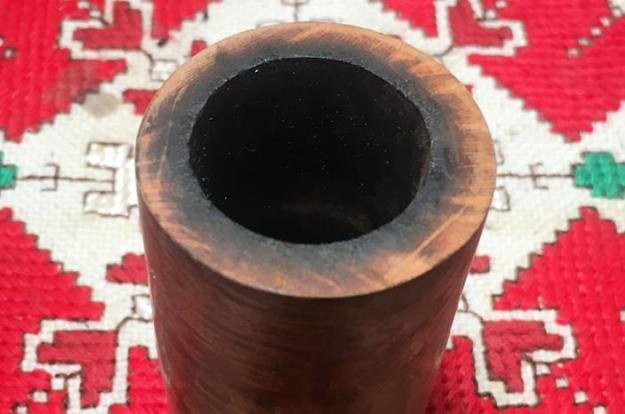
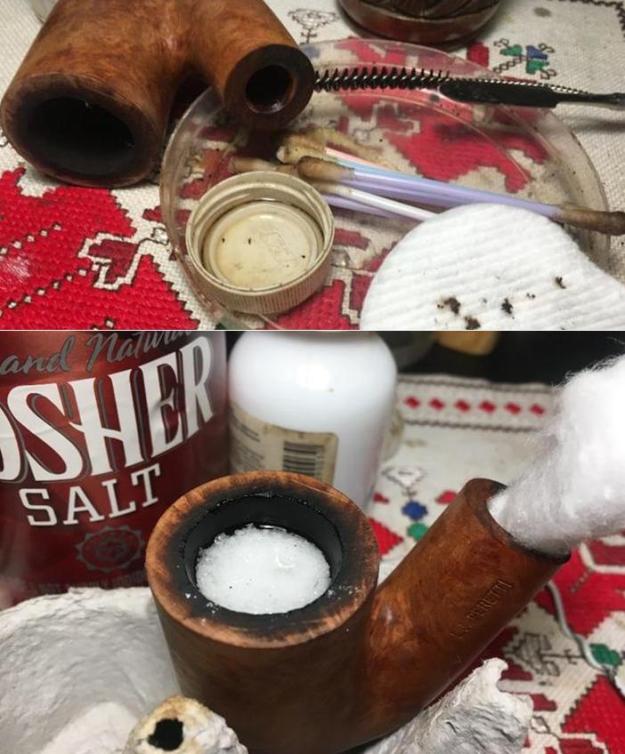
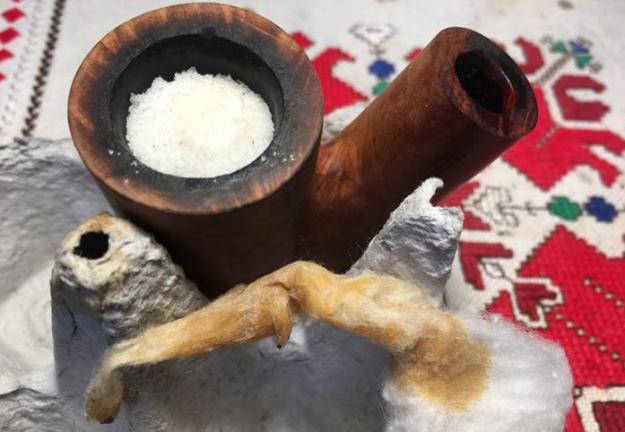
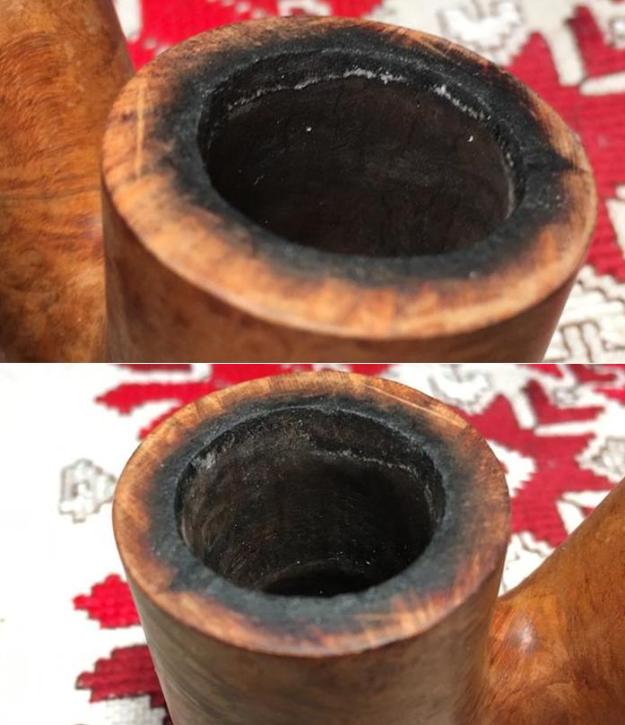
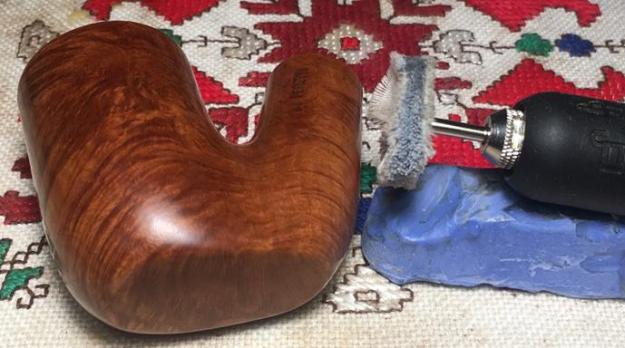
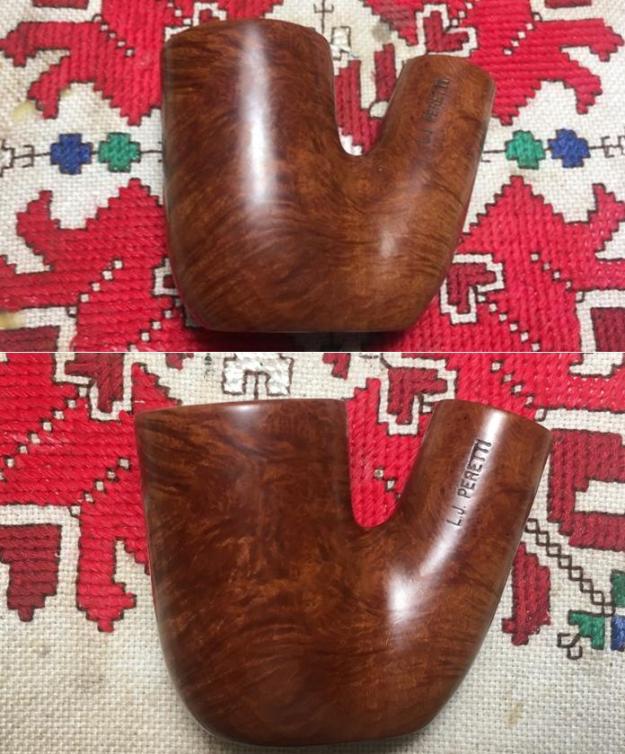
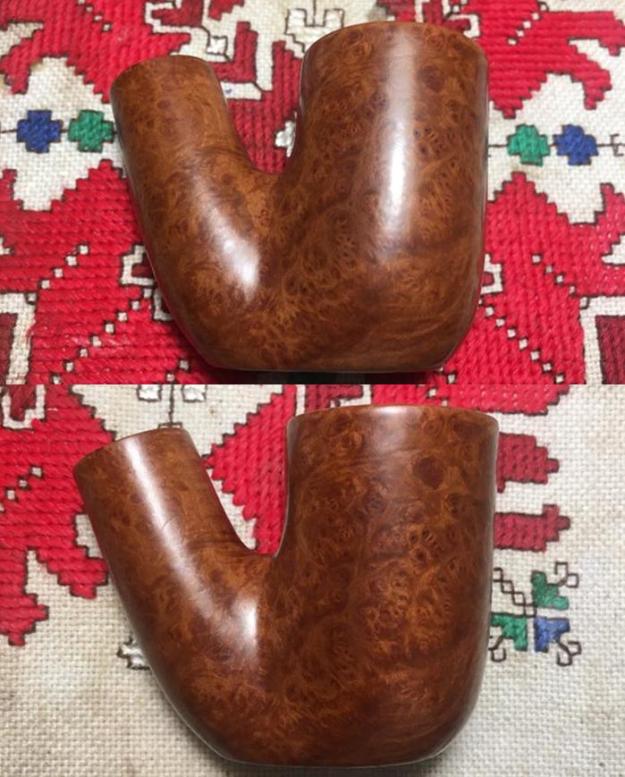
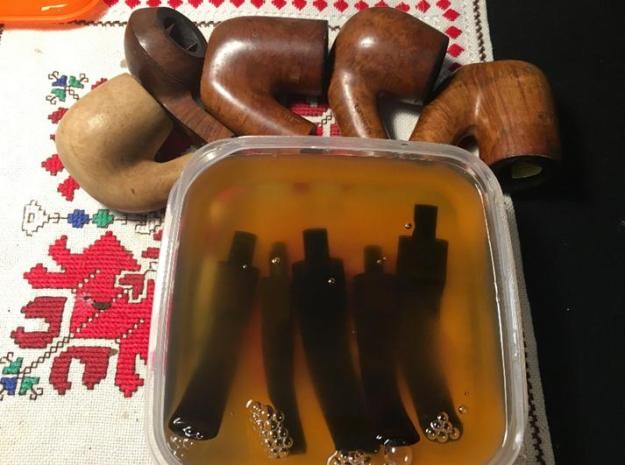
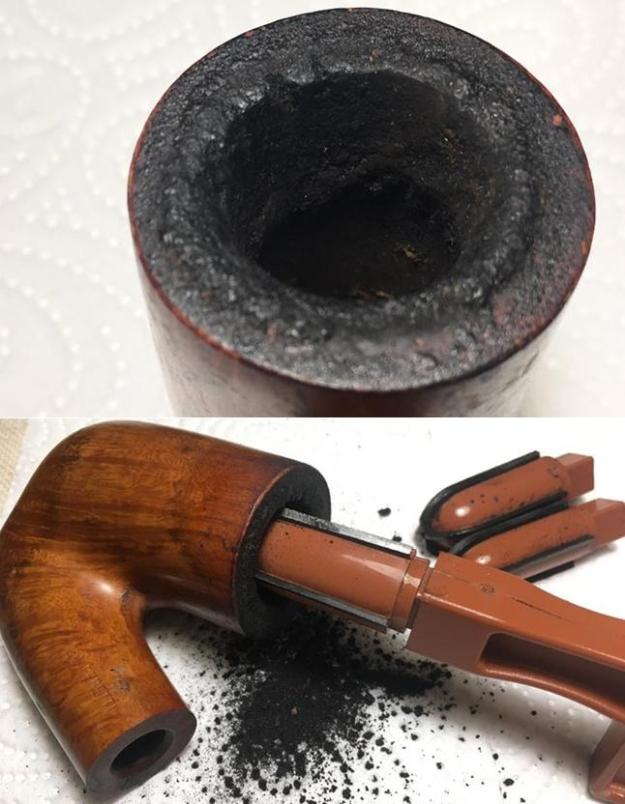
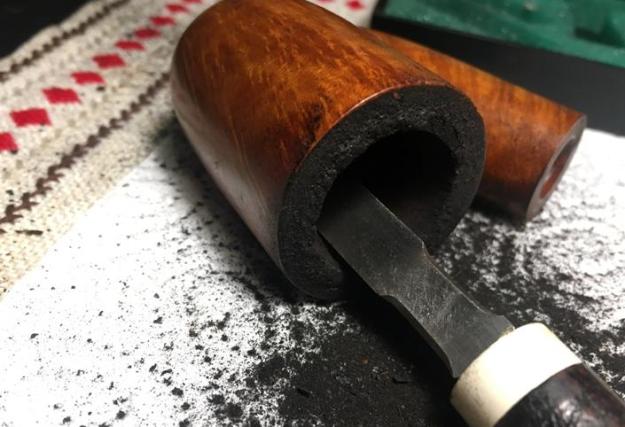
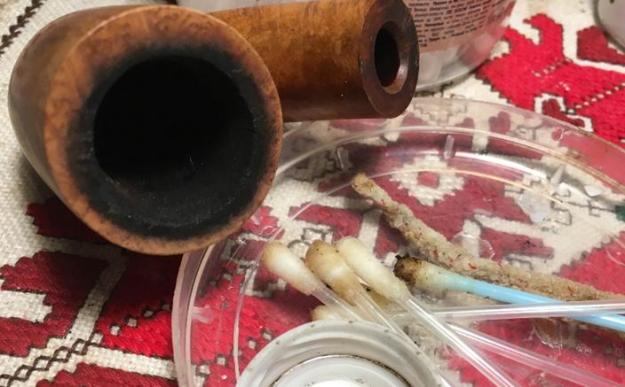
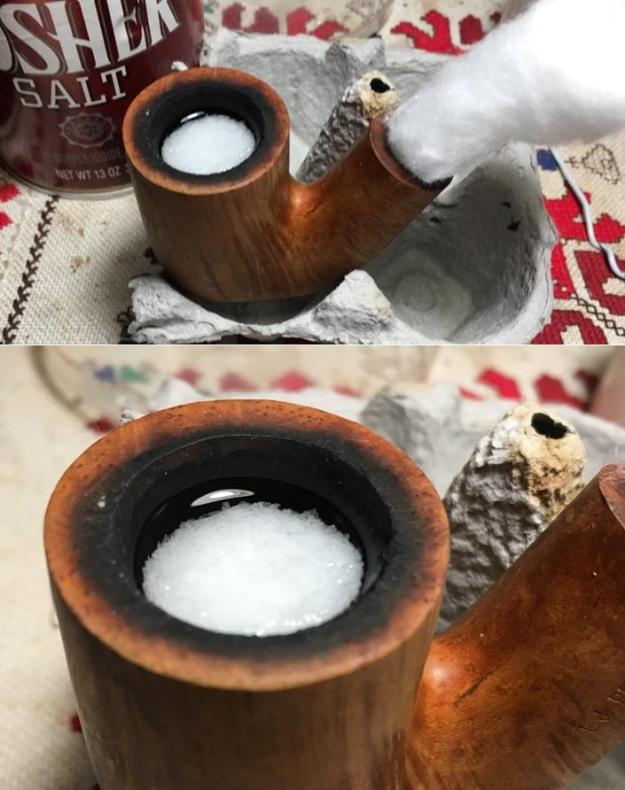
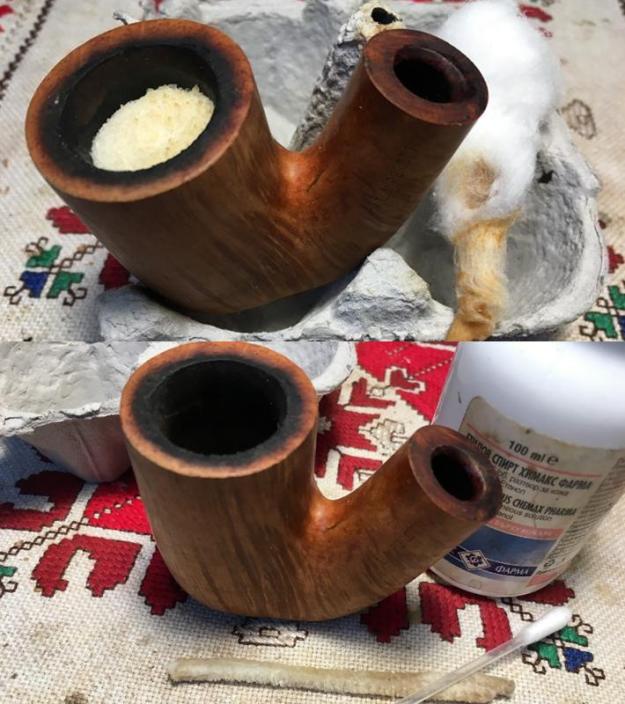
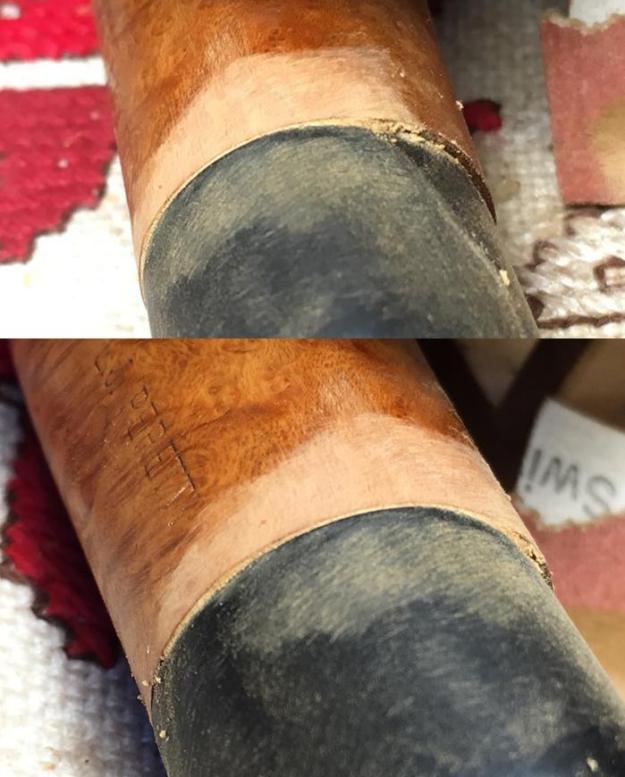
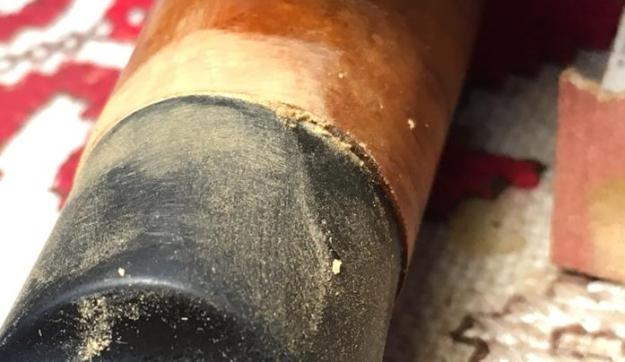
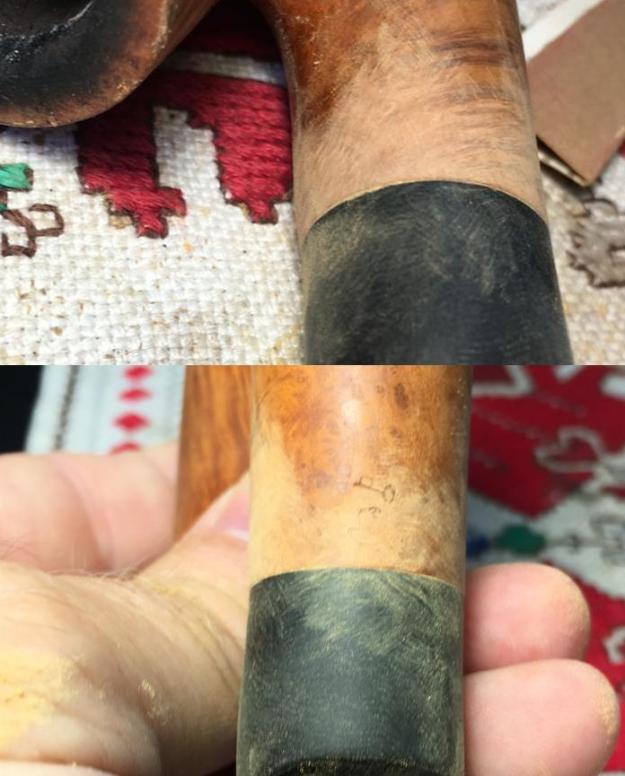
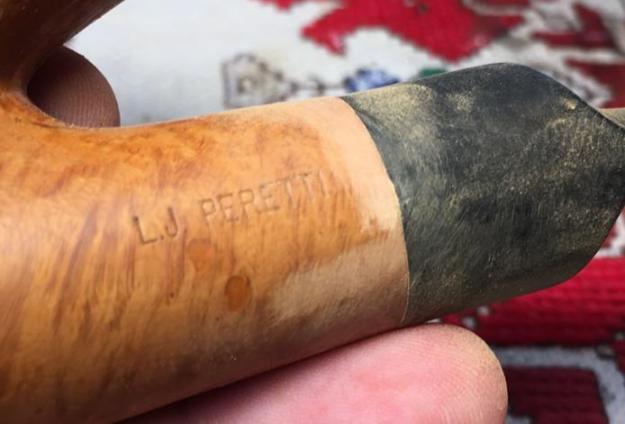
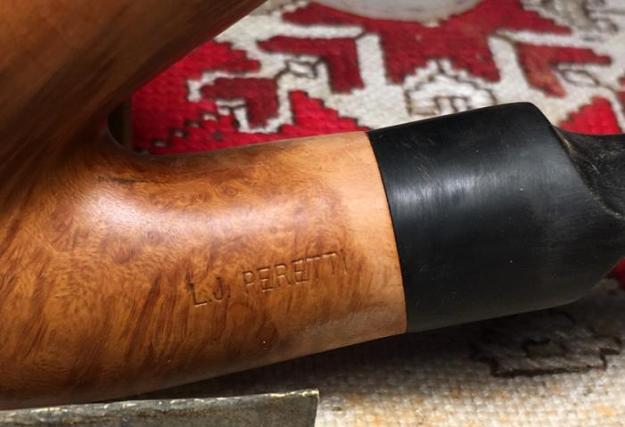
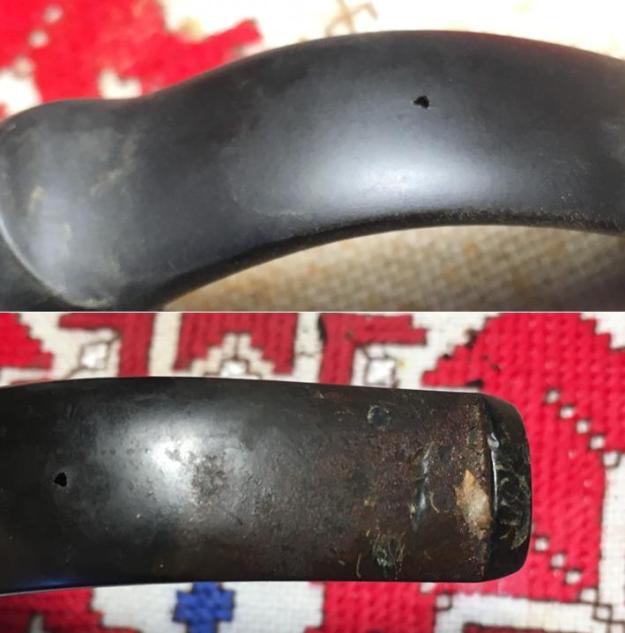
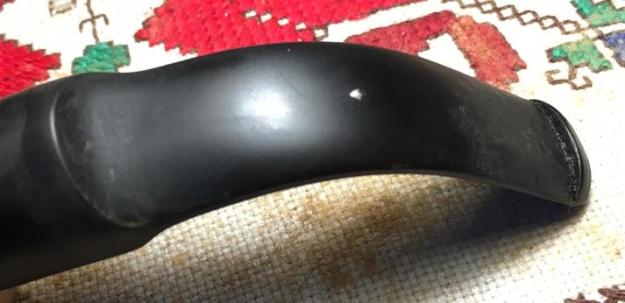
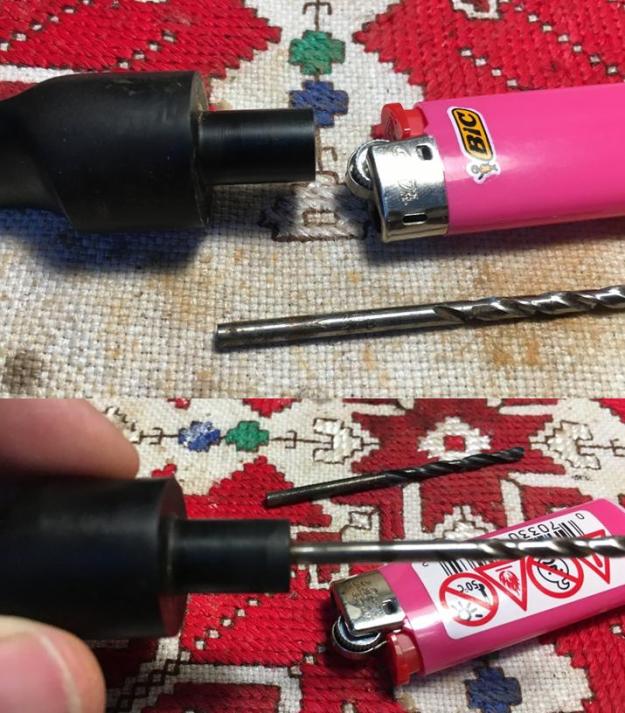
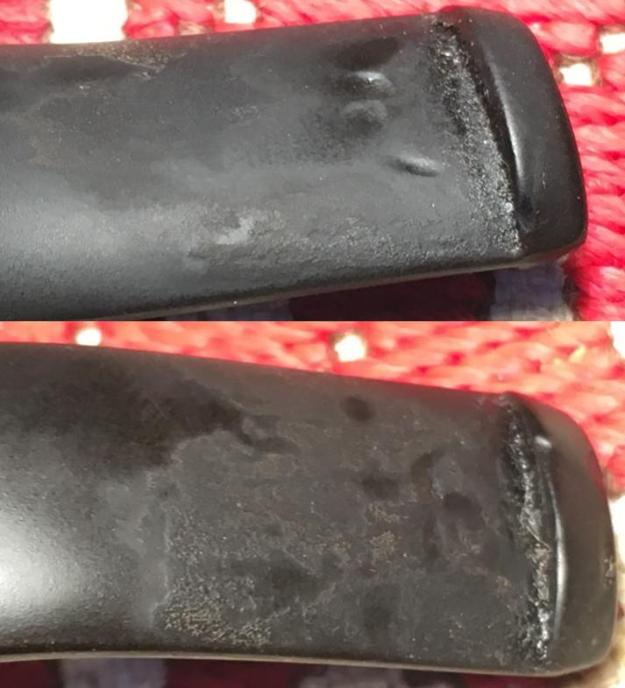
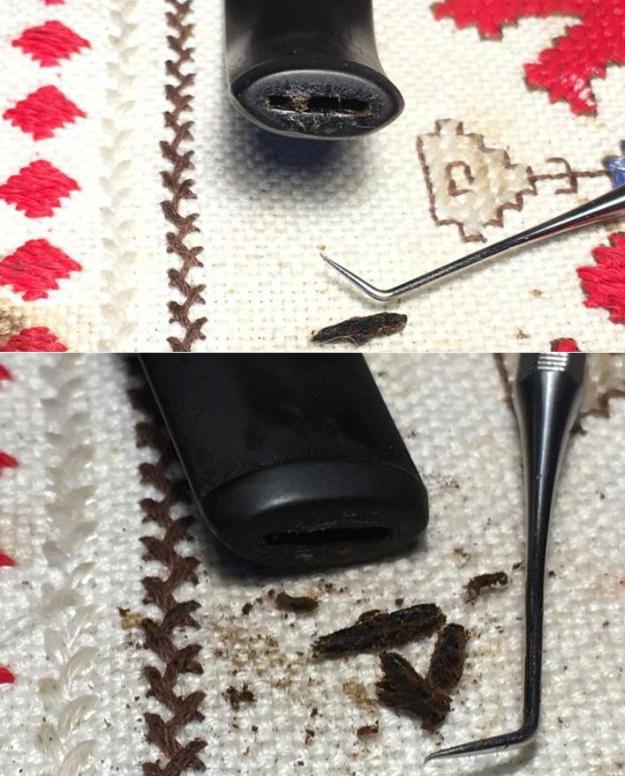
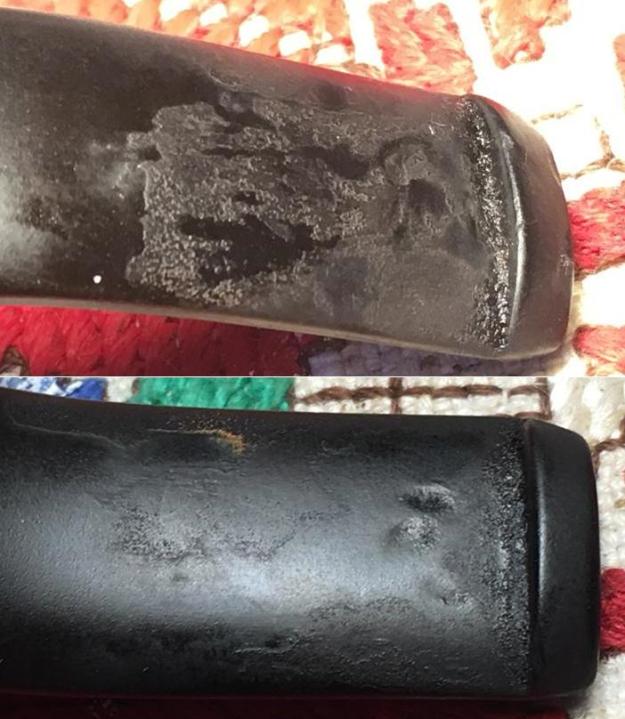
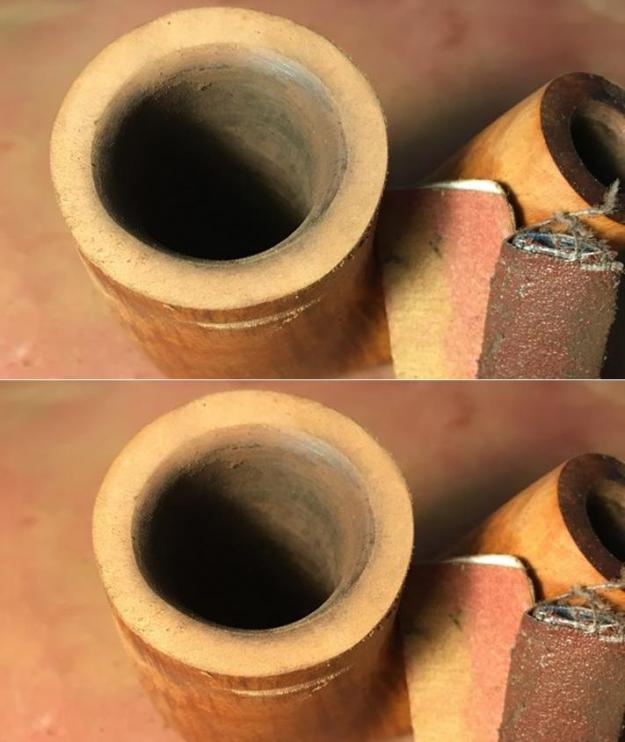
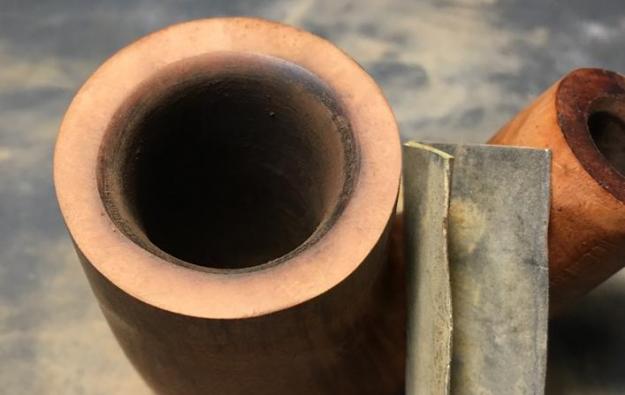
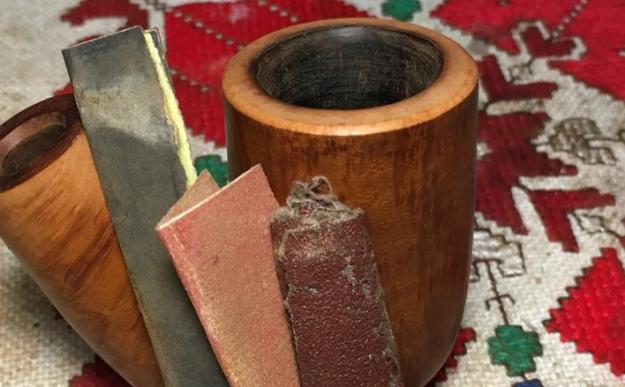
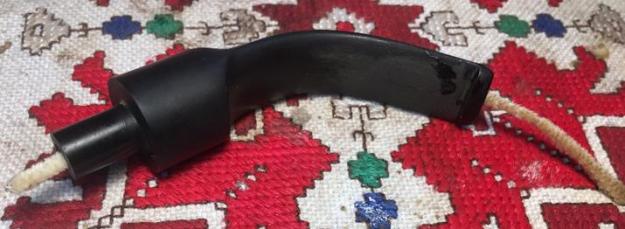
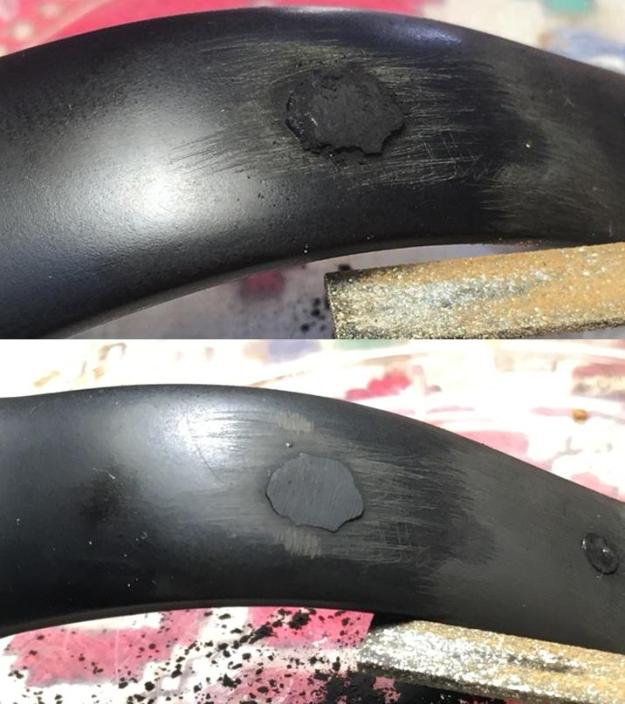
Beginning with the stem, it joins 4 other stems in a bath of Before and After Deoxidizer.  The stem soaks for several hours and when I fish it out, I let it drain and then wipe it down with cotton pads and light paraffin oil – this removes the Deoxidizer and the raised oxidation which wipes off as a very nasty brown.  The Deoxidizer has done a good job.Before proceeding further with the stem, I turn to the stummel cleanup.  I start by reaming the thick, crusted cake in the chamber.  Using my Pipnet Reaming Kit, I start with the smallest blade – first laying paper towel down to minimize cleanup!  I use 3 of the 4 blades available in the Pipnet Kit. The cake is hard causing the reaming tool to seize at times and I’m careful not bear down through stops in the turning of the blades but draw out the blades and go at it again.  I follow the Pipnet blades by employing the Savinelli Fitsall Tool which scrapes the walls more closely giving me more control.  I remove more cake on the top rim charring.  The goal is to find solid, healthy briar – which I do, but I can see the narrowing of the rim a bit due to the removal of the damaged wood. I then sand the chamber with 240 paper wrapped around a Sharpie Pen to give leverage.  This process clears the remnants of carbon cake and brings out a freshened briar to allow the new steward to restart a proper cake development – the thickness of an American dime is sufficient and helpful to protect the briar.  Thicker than that and the carbon cake can damage the bowl as the cake heats and expands. Finally, I wipe the chamber with cotton pads wetted with isopropyl 95% – ridding the chamber of the carbon dust.The bottom of the picture below represents the left side of the stummel where the rim damage is greatest.  You can see the narrowing of the rim on the bottom (left) compared to the opposite side.Now to attack the lava flow on the rim and to clean the stummel surface.  I take a few pictures of the stummel grime to show the progress.  I’m looking forward to seeing what Murphy’s will do!  Using undiluted Murphy’s Oil Soap, I go to work using cotton pads.  I also use a brass brush on the rim – brass brushes do not scratch the wood.  The hard crust is not easily moved.  I use the Savinelli Fitsall tool’s flat straight edge and carefully scrape the crust off the rim.  After getting the rim and stummel as clean as I can, I rinse the stummel with cool tap water and wow!  I’m not disappointed.  The beauty of this block of briar is shouting from the housetop!  I’m liking this a lot.  The downside is the rim.  As with all the other brothers and cousins, this stummel will be topped to restore fresh briar to the rim.  I love doing ‘before & after’ comparisons.  Who says that a good cleaning doesn’t help!? Now, to clean the internals of the stummel I use pipe cleaners and cotton buds dipped in isopropyl 95%.  I’m amazed that the internals, mortise and draft hole, are not terribly dirty.  With only a few pipe cleaners and cotton buds expended, I turn to the stealth approach.  To freshen the internals even more, I use the kosher salt and alcohol soak.  I fashion a wick using a cotton ball by pulling and twisting it.  I then push it down into the mortise into the draft hole using a straight hard wire.  I fill the bowl with kosher salt which will not leave an aftertaste as iodized salt and I cover the bowl and give the stummel a shake to displace the salt.  I then fill the bowl with isopropyl 95% until it surfaces over the salt.  In a few minutes the alcohol has been absorbed so I top if off again.  I put the stummel aside for the night, I turn out the light and my day is finished.The sun has risen on a new day in Bulgaria and the kosher salt and alcohol soak has done the job.  The salt and wick are discolored showing that the oils and tars were absorbed through the night.  I thump the stummel on my palm to dislodge the salt into the waste and I wipe the chamber out with paper towel as well as blowing through the mortise.  I dislodge any leftover salt crystals.  To make sure all is clean I run a pipe cleaner through the draft hole and a cotton bud in the mortise and all is clean and fresh.  I wonderful thing to behold!Before proceeding any further with stummel or stem restoration, I work on the issue of the junction between the two.  The upper half of the shank is extending over the stem so that when I run my fingers over the area there is an obvious ridge.  I take a close-up to show this.  Also, on the bottom of the shank, the stem extends over the shank – not as much, but I still detect a ridge in the opposite direction with the touch.  The mortise drilling was too low creating the offset.Leaving stem and stummel joined, I carefully sand the higher areas on both shank and stem to form a smooth transition from shank to saddle stem.  Of course, much care is given in the sanding so that I don’t inadvertently erase the ‘TI’ at the end of the L. J. Peretti nomenclature on the shank!  In the immediate picture below, you can see the sanded alignment transitioning into what has yet to be sanded on the top of the shank. The hope is to remove the ridge, but also to taper the sanding down the shank a bit to avoid the ‘stuffed pants’ look – a bulge of briar paralleling the ridge sanding.  The goal is a smooth, tapered transition. I like the results.  The ridges are removed and tapered.  Now, switching to 600 grade paper I erase the scratches left by the 240 sanding. After the 600 grade sanding is completed, I take a look at the junction.  Through the cleaning process, I have noticed that the stem has loosened in the mortise.  I’ll need to address the tenon/mortise junction. …AND IT WAS GOING SO WELL, until it wasn’t.  As I was surveying the stem, my eye caught sight of what looked like a hole on the upper side of the stem, mid-way through the bend.  Oh my!  Well, I first thought my eyes were not seeing what they were obviously seeing.  My initial reaction was, “How did I do that?”  Then, my next inclination was to look at earlier pictures of the stem to see if it was there and if so, how is it possible to have missed something so obvious?!?!  I’m glad you couldn’t hear the conversation floating through my mind at that point!  I found a picture before the restoration began, and yes, it was there.  The pictures reveal the source my current frustrations which is part and parcel of pipe restorations – and life….  I put a dental probe in the hole, and yes, it did go through. I then ran a pipe cleaner through to see how thin the vulcanite was at the stem’s bend where the hole broke through.  It appears thin, but salvageable.  To test the integrity of the surrounding vulcanite I pinch it hard to see if it would break.  It didn’t and that is good. I decide to patch it like a typical hole in a bit scenario but perhaps leave the patch a little ‘fat’ to add some reinforcement to the area.So, the projects are mounting for this stem.  First, to address the stem’s looseness – the tenon/mortise junction. Second, repair to the hole in the bend.  Third, repair the chewed bit and button – upper and lower.  Then, the sanding and preparations for the finishing phase.  I begin with the tenon expansion to tighten the stem’s fit.  I do this first because it’s the easiest and least time consuming.  I find a drill bit just a little larger than the existing tenon draft hole to act as the ‘expander’.  I use a Bic lighter and heat the vulcanite tenon by painting it with the lighter’s flame.  As the vulcanite heats, as a rubber composite, it softens and becomes pliable.  When heated sufficiently, gently I push the smooth end of the bit into the hole and the tenon expands as a result.  It works like a charm.  After heating the tenon, inserting the bit by twisting it, and retracting it, I test the fit.  It is good and snug, but not too tight that one is afraid of cracking the shank – which I’ve had experience in! I decide to do the prep work on the bit next so that at the conclusion, I can apply patch material to the bit area as needed as well as to the bend hole.  Looking at the bit and button first, I take a few more pictures to get a closer look.  I notice that there was something on the side of the draft hole and I began digging with a dental probe.  One hunk of something dislodged like it was hanging on for dear life.  I stuck the probe in deeper…there’s more….  I was incredulous!  How could so much stuff hide in the button draft hole!  I took pictures – it is an event!Addressing the dents first, I paint the dents with the flame of a Bic lighter to expand the vulcanite as it heats.  As it expands, the dents tend to dissipate in their severity.  Often, after flaming dents one is able simply to sand out the remaining damage – or much of it.  I also flame the button hoping to minimize the dents on the lip.  It did help, but sanding is still necessary. With a flat needle file and 240 grade sanding paper, I go to work on the upper and lower bit.  I use the file to refine the button and remove the dents where possible. The sanding removes much except for one dimple on the top and one on the lower bit. The button sanded out nicely.  I also employ a round sharp needle file to sharpen the edges of the draft hole. For the upper and lower dimples, I spot drop Special ‘T’ CA glue which is thicker. First, I clean off the areas with alcohol and cotton pads to clean it. I start with applying glue on the lower dimple and wait for an hour or so for the glue to set, and I flip the stem over and apply glue to the upper bit dimple. Now to the bend hole.  I use 240 grit paper and lightly rough up the area around the hole.  I then wipe it with isopropyl 95% to clean the area.  Instead of applying CA glue, I’ll use a putty created out of mixing CA glue and activated charcoal dust. I believe this will give me more texture for blending if I leave a larger area of patch to reinforce the area.  I don’t know if this will work in the end, but I can start with this intention and if it doesn’t work, I can always sand the excess.  First, I put petroleum jelly on the end of a pipe cleaner and I insert it to where I see it has reached the hole.  The pipe cleaner will hopefully keep the glue/charcoal in place and the petroleum jelly will keep the putty from sticking to the pipe cleaner, so I can pull it out!  Next, I place some charcoal dust on an index card.  I then place a bit of regular super glue next to the charcoal.  I use a tooth pick to draw the charcoal into the glue so that it’s gradually added.  In this way I can judge what the thickness should be – not too thin so it runs – not so thick that it doesn’t penetrate the hole. I mix the activated charcoal and superglue and when it seems to be the right consistency, I apply it to the hole using the toothpick as a trowel.  I tamp the putty down so that it fills the hole and I spread the patch around the surface.  I give a few movement tugs on the pipe cleaner and it is not stuck.  I put the stem aside to allow all the patches to cure. Turning again to the stummel, I focus on the rim repair.  I start by topping the Oom Paul Sitter.  Using 240 grade paper on a chopping board I rotate the inverted stummel on the paper in a circular motion.  I will remove enough on the rim trying to minimize the internal bevel which will remove the remainder of the charred wood.  I’ll have to be careful.  When placing the inverted stummel on the chopping block before putting the 240 paper down, I test how level the top is – the stummel rocks a bit.  This tells me that the rim is not level and most likely the left side, where most of the damaged wood is, has deteriorated.  Charred wood is softer and therefore probably dipped. I start topping and check often to see where things are going.  I also use a sanding block to help direct the topping to areas to try to bring about an evenly rounded rim – a challenge with the charring damage on the left side of the stummel – depicted on the bottom in the pictures below.  The pictures show the process. I’ve removed enough top briar real estate at this point and I will try to bring more balance to the rim as I remove the internal charring as I introduce a bevel.  Using a coarser 120 grade paper, I cut the initial bevel removing the charring.  I follow the 120 beveling using a rolled piece of 240 grade paper which smooths and continues to clean the char.  I then take the stummel back to the topping board again to reestablish the lines of the rim.  I do this a few more times, as I try to create a more balanced looking rim. I then top the stummel again with 600 grade paper and beveling as well.  The pictures show the rim cleaning and balancing process. One last step.  To soften the entire look of the rim, I introduce a gentle bevel on the external rim edge by cutting it with 120, following with 240 then 600 rolled pieces of sanding paper.  Considering from where we’ve come, I’m satisfied with the appearance of the rim!  It’s not perfect and this Peretti will carry the rim imbalance with it the ‘limp’ but he’s moving!Next, to prepare the stummel surface for the finishing phase, I use micromesh pads 1500 to 2400 to wet sand the stummel.  Then I follow this by dry sanding with pads 3200 to 4000, then 6000 to 12000. The grain on this Peretti Oom Paul Sitter is exceptional.  I watch it emerge through each micromesh cycle. This is going to be a beautiful pipe. With most of the Peretti Oom Paul restorations I have done (and the Peretti Half Bent Billiard) I was very pleased with the results of applying Before and After Restoration Balm on the stummels.  Keeping the light, natural original motifs of these Perettis has been my goal and the use of the Balm has helped maintain this desire.  I do the same with this Peretti.  I put some Balm on my finger and I work the Balm into the briar surface.  As I work it in, it starts as more liquid – with the consistency of light oil, but then gradually firms up until it is wax-like.  After I work it in thoroughly with my fingers, I set the stummel on the clothespin stand to allow the Balm to do what it does for a while. I take a picture of the Balm on the stummel.  After several minutes, I wipe the Balm off by buffing it out with a clean microfiber cloth.  It looks great – as I was expecting.With the Sitter’s stummel waiting in the wings for the stem to catch up, I pick up the stem.  Having had a night to thoroughly cure, the patches are ready to be filed and sanded down.  Before I forget it, since I had a pipe cleaner with petroleum jelly on it in the stem’s airway, I want to clean the airway so I run a pipe cleaner through the stem dipped with isopropyl 95%. Also, the thought in the back of my mind is the putty in the hole patch, did it push through and harden in the airway and form an obstruction.  Unfortunately, this was the case.  With the pipe cleaner coming from the tenon side, there seems to be a ridge at the patch site just entering the bend.  The pipe cleaner hung up there.  Coming from the button end, there is no problem with an obstruction.  As I test repeatedly, I discover that coming in from the tenon side, if I put a slight downward bend to the end of the pipe cleaner, the pipe cleaner would successfully navigate past the patch down to the button draft hole.  This is not a perfect situation, but it could be much worse with no passage through the airway.  Yet, the bright side of the scenario is that the patch is a bit stronger as a result, though the new steward will need to be aware of this bump in the road.  So, we move on. I begin the filing on the bend hole patch using a flat needle file.  I focus on keeping the file on the patch mound to not impact the vulcanite around the patch.To help me see what the patch would look like if I left it a bit ‘fat’ on the surface, I take a little detour.  My thinking is that it might help strengthen the area to leave the patch fatter on the surface.  To get a preview of the patch area, I ran the patch through the entire sanding process to get a better idea how visible it would be.  It didn’t take long to go from the filing to 240, 600 then 0000 steel wool focusing only on the patch area. Then I ran the patch spot through all the micromesh pads 1500 to 12000, applied Obsidian Oil and I look at the patch area. I take two pictures to show the future.  I decide I didn’t like the future!  Actually, the patch isn’t that bad, but I know it’s there and it seems unfinished….  I decide to continue to blend the patch by sanding.This is the bend patch after continuing with 240 and 600 grade papers.  That’s much better.I move on to the upper and then lower bit.  I use the flat needle file, 240 then 600 on both upper and lower sanding the patches and blending them.I follow by sanding/buffing the entire stem with 0000 steel wool before starting the micromesh pad process.Now to the fine-tuning sanding process.  I wet sand the stem using micromesh pads 1500 to 2400.  I then follow this by dry sanding with pads 3200 to 4000 then 6000 to 12000.  After each set of three pads, I apply Obsidian Oil to revitalize the vulcanite.  The Peretti’s stem is looking good even with all the repairs that were done.  I love the glassy pop of the vulcanite!  The patch work blended well. Now the home stretch.  I reunite the Peretti Oom Paul Sitters stem and stummel and mount the felt buffing wheel to the Dremel, set it at the slowest speed and apply Tripoli compound to the stummel.  Tripoli is a coarser compound I apply using a circular pattern over the stummel in a methodical way to cover the entire stummel.  I do not put too much pressure on the wheel, but allow the speed, compound and the felt to do the work.  When the Tripoli is complete, I mount a cotton cloth wheel to the Dremel, remaining at the same speed and I apply Blue Diamond compound to both stummel and stem.  I do it in the same way as the Tripoli. Finally, I change cotton cloth buffing wheels and apply White Diamond compound to the stem alone.  When the compounds are completed, I buff the pipe with a felt cloth to remove the compound dust from the surface of the briar.  I mount yet another cotton cloth buffing wheel to the Dremel, increase the speed to about 40% of full power and I apply a few coats of carnauba wax to stem and stummel.  Finally, I complete the restoration of this Peretti Oom Paul Sitter by giving it a brisk hand buffing using a microfiber cloth.
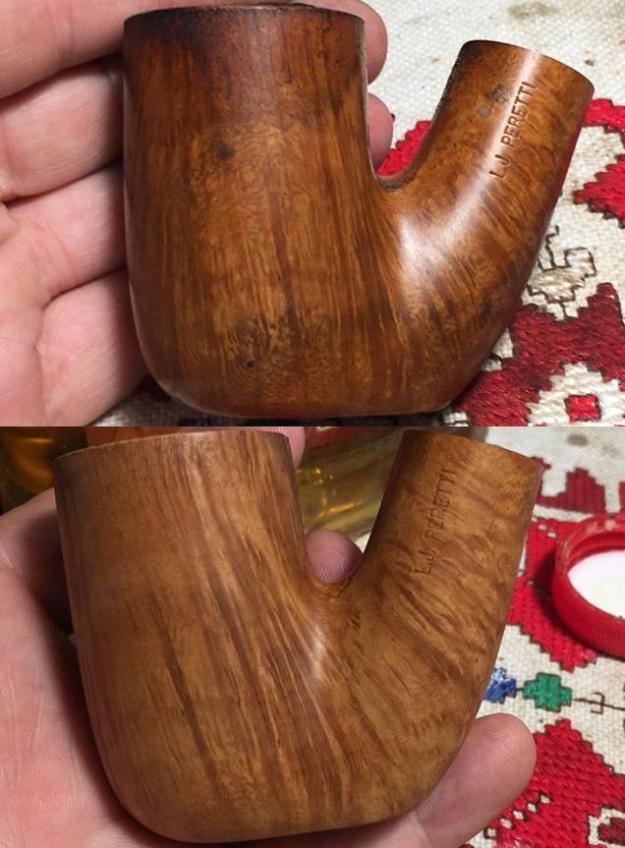
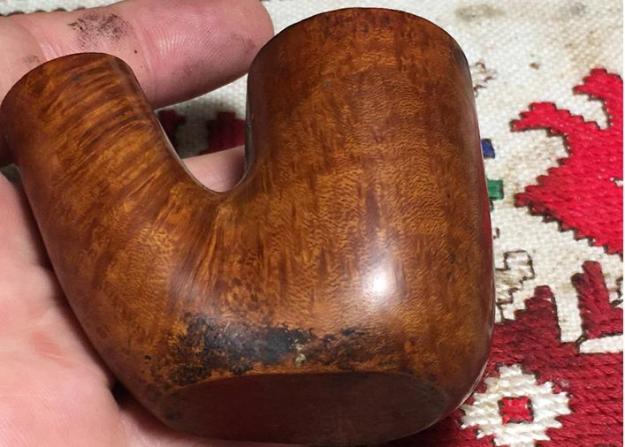
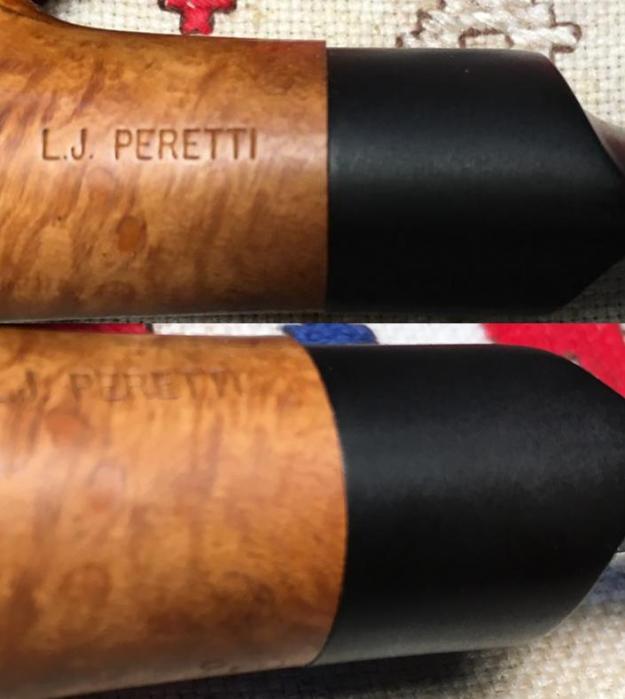
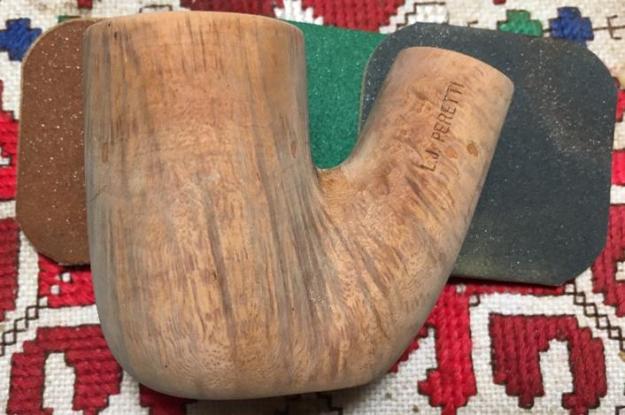
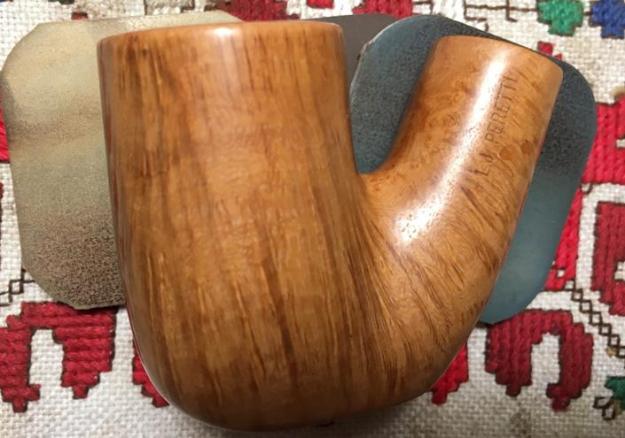
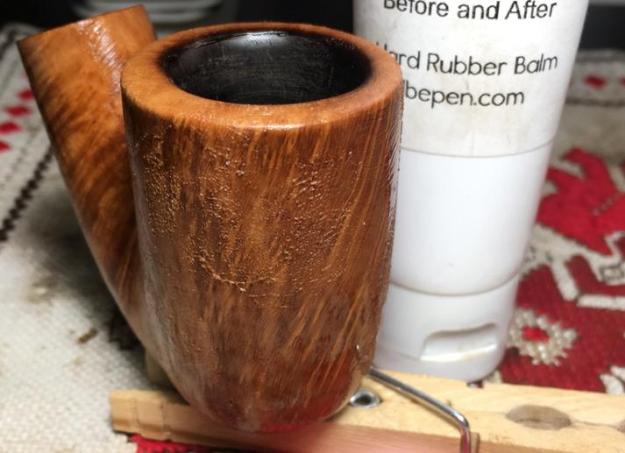
The vertical flame grain on this large Oom Paul Sitter stummel is striking and it is complemented by bird’s eye on the heel as well as the shank. It is unique in the Peretti Lot of 10 where the pipes showcased mainly horizontal and bird’s eye grain.  This Peretti will provide much visual pleasure to his new steward and with the size of the bowl, he will pack enough favorite blend for a nice long reflective time.  The stem and rim gave some challenges which I think have worked out well.  He carries with him some marks from his former life – as we all do!  Tim lives in Missouri and is the pipe man who commissioned this Oom Paul Sitter and has first dibs on the pipe when I put it in The Pipe Steward Store.  This pipe will benefit the Daughters of Bulgaria – women and girls who have been trafficked and sexually exploited.  Thanks for joining me!
 

Another L.J. Peretti of Boston: A Hefty Half Bent Billiard with a Saddle Stem


Blog by Dal Stanton

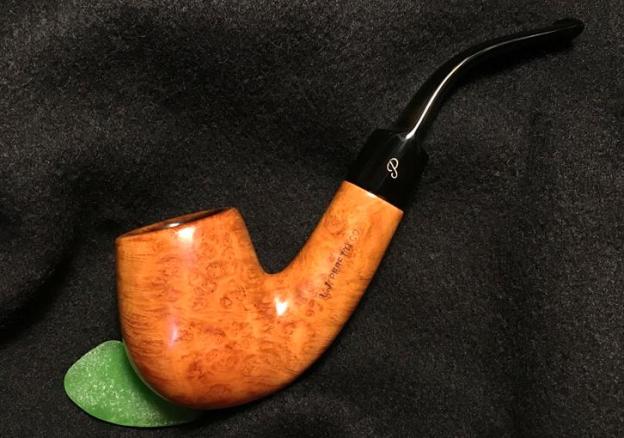
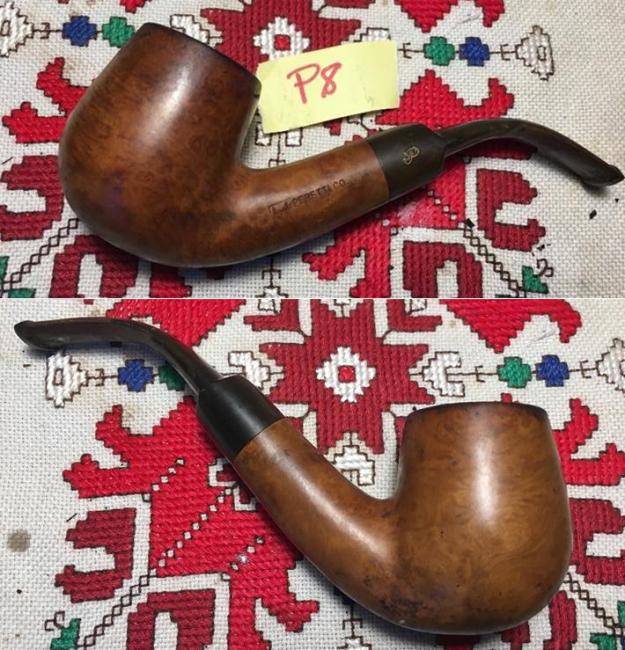
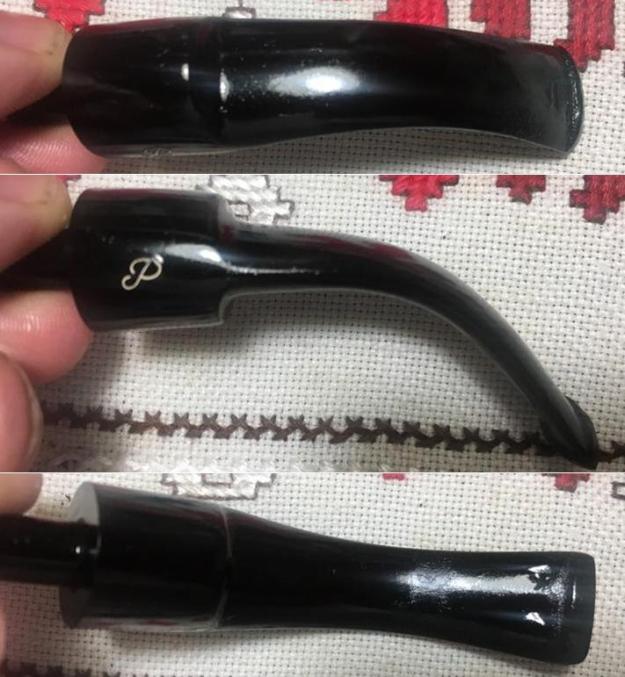
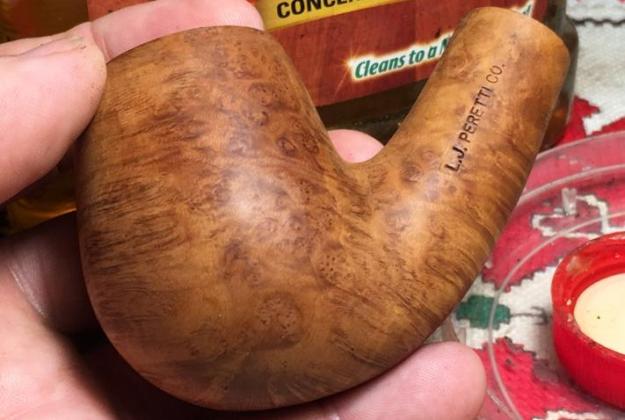
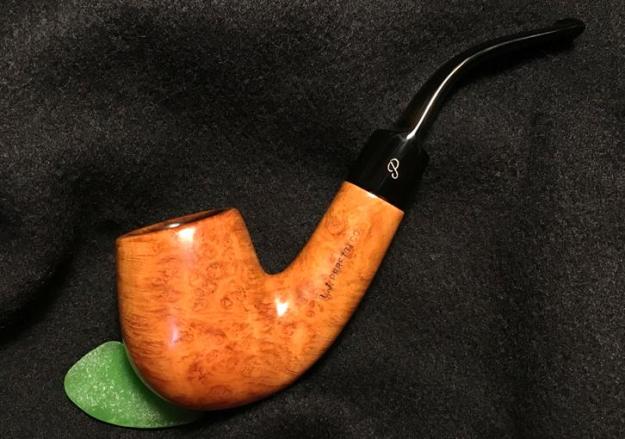
I have been placing several L. J. Peretti pipes in the hands of new stewards which brings me much satisfaction!  The others were all Oom Pauls – classic Oom Paul’s and some slightly modified by Peretti to serve as Oom Paul sitters.  After I was introduced to L. J. Peretti pipes and restored some that I added to my own collection, I started keeping my eyes open for these pipes because I discovered they were pretty good smokers and that the briar used to make them was not bad – actually, was quite good.  When I saw the Peretti Lot of 10 on the eBay auction block with the seller’s location nearby Peretti’s home of Boston, I figured (correctly) that these all came from a Peretti collector who lived in Boston or near enough to know the Peretti story.  The L. J. Peretti Co. is the 2nd oldest Tobacconist shop in the US – where custom blends are still created by hand.  Here is the picture I saw on eBay. The Peretti on my worktable now is the Billiard Half Bent Saddle on the right, center in the picture above.  Two things stood out when I cradled this Billiard in my palm for the first time.  First, the stem has the classy cursive Peretti ‘P’ stamped on it.  Only a few in the Lot of 10 had this stamp.  Only hazarding a guess, but this may indicate a higher-grade line in the Peretti offerings – though I haven’t laid my eyes on anything that could confirm this, catalogues, etc.  It is a classy touch to have the ‘P’ embedded on the stem.  Secondly, this Billiard is a big boy!  Just comparing him to the hefty Oom Pauls in the photograph above shows that this Billiard is not shrinking away in embarrassment! The bowl is full and the shank is long and broad.  His dimensions are Length: 5 7/8 inches, Height: 2 inches, Rim Diameter: 1 5/16 inches, Chamber Diameter: 1 7/8 inches, Bowl depth: 1 3/4 inches.  I also put him on the scale and he weighs 57 grams.
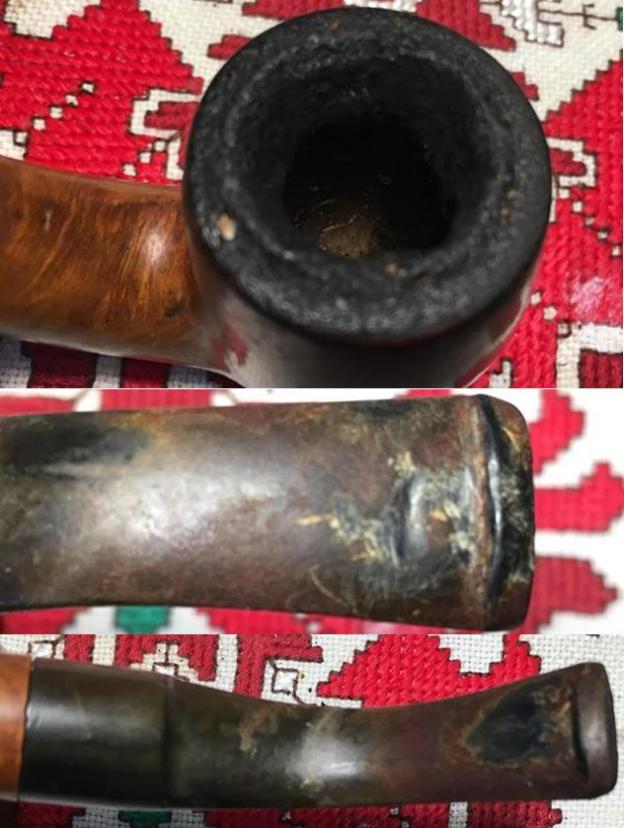
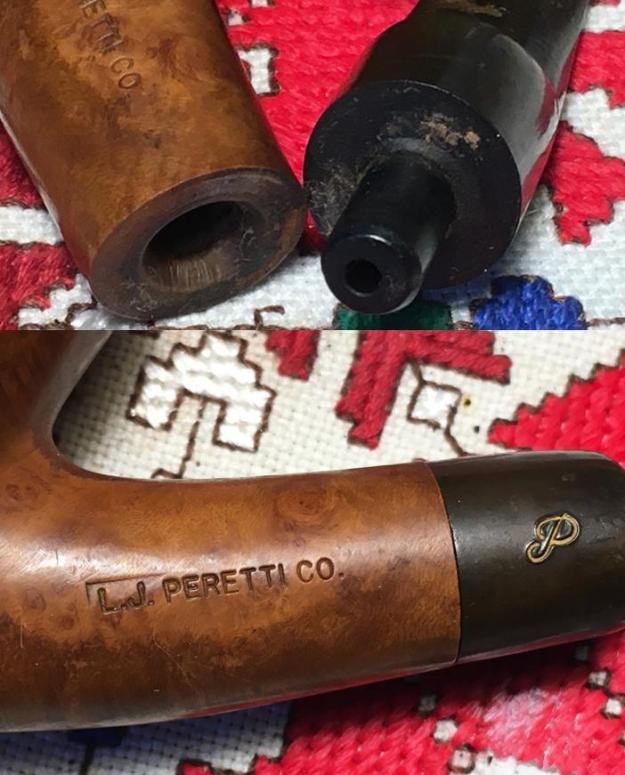
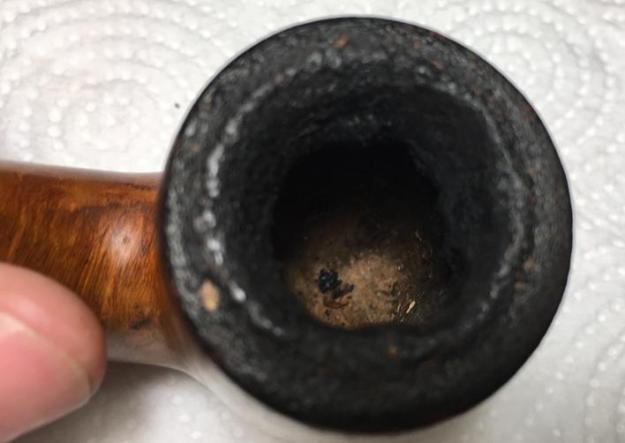
Our cousin, Stephen, who my wife and I visited while we were in the US some months ago, saw the Peretti Lot of 10 when I posted a picture of the 10 offering the Oom Pauls to new stewards to be commissioned.  He responded but he wasn’t interested in an Oom Paul.  He was drawn to the Half Bent Billiard because it reminded him of a pipe he had earlier in life.  I was glad to restore the Billiard for Stephen because I remembered that during our visit to his home in Alabama, he saw my restored L. J. Peretti HUGE Bent Egg in my pipe pouch – also from the Lot of 10 pictured above – center, left and pictured below after being restored (See LINK for restoration), and Stephen tried to barter him away from me!  Who could blame him?!  I held firm and my Peretti Egg and I continue to have regular fellowship here in Bulgaria!  Thank you, Stephen! Since Stephen commissioned this Peretti, he will have first dibs on it when I put it in The Pipe Steward Store.  This pipe benefits our work here in Bulgaria helping trafficked and sexually exploited women and girls (and their children!) – the Daughters of Bulgaria.Bringing the Half Bent Billiard on my worktable here in Sofia, Bulgaria, I take some pictures to take a closer look as well as to assess what this Billiard’s challenges are. As with all his Peretti cousins in the Lot of 10, the L. P. Peretti Co. is stamped on the left side of the shank.  Some of the other Perettis are without the ‘Co.’  As noted above, this Peretti also has the cursive ‘P’ stamped nicely on the stem.  Only a few of the Perettis had this stamp in the Lot.  This Billiard shares with all his cousins the thick cake in the chamber.  It also has very thick lava flow on the rim.  It is also most likely, as with the other Perettis, that there will be scorching damage underneath the lava.  The briar surface is dirty – lots of grime, but this should clean up nicely, as with the other Perettis, this large patch of Billiard briar shows great promise.  The stem is also showing deep oxidation and calcification on the stem – especially on the bit.  As with all his cousins, the bit and button show a good bit of biting, clenching and the subsequent dents, chatter and button damage.

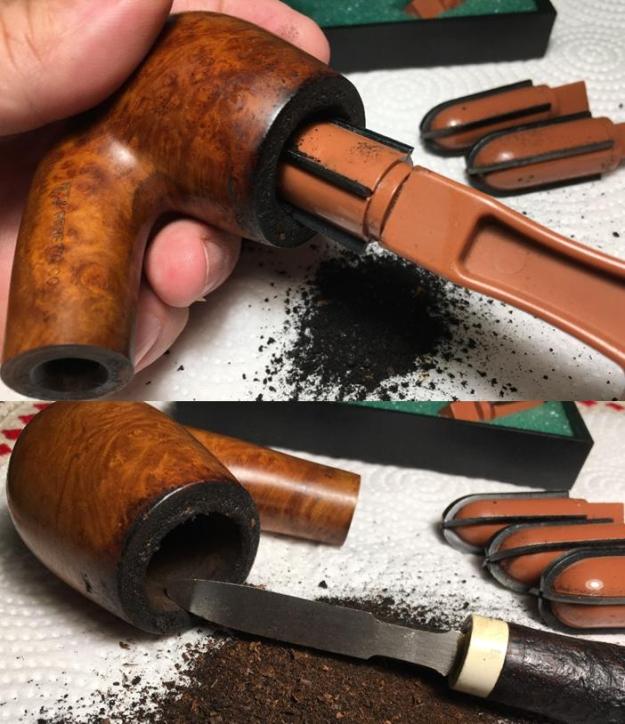
To start the restoration of this hefty Peretti Billiard Half Bent Saddle, I add the stem to a bath of Before and After Deoxidizer.  This was the first time I used the Before and After product and I was testing it to see how it worked.  The Peretti Billiard joined several pipes and their stems in the queue.  After soaking for several hours, I fished out the Billiard’s stem and allowed the Deoxidizer to drain.  I then wiped off the oxidation with a cotton pad wetted with light paraffin oil, Bulgaria’s mineral oil.  One of the attributes of Before and After Deoxidizer is that it is stamp friendly, which proves to be the case with the Peretti ‘P’.   With the stummel now in hand, I use the Pipnet Reaming Kit to remove the very thick cake resident in the chamber.  By removing the cake down to the briar gives it a fresh start and enables me to examine the chamber wall for damage.  After putting down paper towel for easier cleanup, I start with the smallest blade.  I use 3 of the 4 blades available in the Pipnet Kit.  I then fine tune the reaming by using the Savinelli Fitsall Tool to scrape the chamber walls removing more carbon cake left behind.  Wrapping a piece of 240 grit paper around a Sharpie Pen, I sand the chamber.  Finally, I clean the chamber of the carbon dust using cotton pads with isopropyl 95%.  The chamber walls look great – no problems.  The pictures show the steps in the process. Now to the external surface.  I use undiluted Murphy’s Oil Soap and cotton pads to scrub the grime – and there’s plenty of it.  I also work on the crusty rim surface utilizing a brass brush and scraping with my thumb nail.  I also employ a pin knife to help scrape the crust.  What emerges is beautiful grain on the stummel – large swirling bird’s eye catches my eye. Surprisingly, a nice looking, slightly rounded rim emerges from underneath all the crust!  The briar on the rim reveals that this was a nice-looking pipe at one time – I’m thinking it was on Peretti’s upper scale shelf.  The scorching on the inside of the rim is significant and will need to be addressed. Next, the dirty job.  Using pipe cleaners and cotton buds dipped in isopropyl 95% I attack the internals of the stummel.  I also utilize a dental spatula to scrape the mortise walls.  With a little effort the buds and pipe cleaners started coming clean.  As I usually do with all my restorations, I follow this cleaning with a kosher salt/alcohol soak.  I find that this additionally cleans the internal briar and freshens the internals.  After putting the stummel in an egg carton to keep it upright and stable, I fill the bowl with kosher salt which leaves no aftertaste (as iodized salt does).  I then fashion a ‘wick’ by stretching and twisting a cotton ball which is inserted down into the draft hole and mortise – as far down as I can manage.  I then fill the bowl with isopropyl 95% alcohol until it surfaces over the salt.  After a few minutes, after the alcohol has been absorbed, I will top the alcohol off again.  I put the stummel aside and let it soak through the work day until I return home this evening. Later, when I arrive home from work, I’m always pleased to see the nasty results of the salt/alcohol bath.  The salt has discolored, and the wick has absorbed the grunge.  I thump the old salt into the waste, wipe the bowl with paper towel and blow through the mortise to dislodge any remnants of salt from the soak.  To make sure all was clean, I ran a pipe cleaner through the draft hole and plunged a cotton bud in the mortise – both dipped in isopropyl 95%, and both came out clean.  Done – always a nice place to be.I turn now to the chewed up and dented stem – oh my.  The entire Peretti Lot of 10 I determined came from one steward.  One of the ways I determined this was that all the stems were clenched the same way and therefore reveal the same forensics!  I take a few pictures to show the problems with upper and lower bit and button.  The first step I use is using flame to heat the vulcanite which expands it making the dents less severe and more easily sanded.  I use a Bic lighter and paint the upper and lower bit areas.  I concentrate on the button as well.  After several cycles of ‘painting’ I have come to the point where the vulcanite is no longer expanding.  It has helped but there remains some denting and bite marks.  I pair the before and after ‘flame painting`’ pictures to let you compare. I think the button benefited most. Using 240 sanding paper, I sand both upper and lower bit and the button to see how much of the damage can be sanded out.  The heating technique helped more than I realized – good news.  The upper bit sanded out completely.  The lower bit still shows two dents.  Using the flat needle file, I worked on the button and refreshed the upper and lower button lips.  The draft hole was dented too.  I pull out the topping board with 240 paper on it and ‘top’ the button to flatten it out.  I smooth out the draft hole using a rounded needle file.  I take a picture to show the progress of the 240 paper and file work.  When I look at the stem I see something I didn’t see before.  A hole in the stem on the right at the base of the saddle.  I’ve never seen this before.  I’ll need to patch it as well.  I wipe the stem with alcohol to clean the area where I will apply black CA glue to fill the dents.  After clean, using a toothpick, I spot drop black CA glue on both dents on the lower bit.  The toothpick allows me to control where and how much glue I apply.  I wait an hour or so for the glue to set and then turn over the stem and spot drop glue on the ‘saddle’ hole.  I set the stem aside for the patches to cure for several hours.  With the stem patch curing, I turn again to the stummel and the rim.  The scorched briar needs to be removed and topping the stummel will move in that direction. Like all the Peretti Billiard’s cousins in the Lot of 10, the left side seems to have borne the brunt. I’m hoping I only need to top a small amount and remove the remaining scorched wood on the internal rim edge by introducing a bevel.  That’s the plan.   Placing 240 grit paper on the chopping block, I top by moving the inverted stummel in a circular motion and evenly as possible.I stop to check a number of times how much progress has been made on removing the scorched briar.At this point, I’ve removed enough damaged surface via topping leaving a manageable internal ring of charred material that can be removed without taking more healthy briar.  I use a rolled piece of 120 coarse sanding paper to cut an internal bevel and remove the scorched area.  I also aim at balancing the round of the rim – it is slightly out of round because of the greater damage on the left side of the bowl where the former steward lit his tobacco.  After cutting the bevel with 120, I give another very light topping with 240 grit paper to restate the rim line after the bevel.I follow the 240 topping board and 120 paper beveling by using 240 grade paper to erase the scratches of the 120 beveling.  Then, I use 600 grade both to erase the scratches of the 240 on the bevel, but to top again lightly the stummel with the 600 grade paper to erase 240 scratches and to smooth.Finally, I introduce a very gentle external bevel around the rim using 240 then 600.  I do this to soften the look of the rim and to give it more of a rounded appearance.  I’m pleased with the rim repair.  This Peretti Big Boy Billiard has already come a long way from the caked, scorched condition he arrived in!  He’s looking good.Now to the briar surface – and there’s a lot of briar real estate on this stummel!  I begin by wet sanding with micromesh pads 1500 to 2400.  Then dry sanding, I use 3200 to 4000 and 6000 to 12000.  I take a picture after each set of three. I enjoy watching the grain emerge on the Peretti Billiard through the micromesh pad cycles – it’s an amazing transformation.  Along with most of his Peretti cousins, the briar seems to be a higher grade – no fills and the grain is beautiful. To maintain the rich natural briar look consistent with the Peretti hue template, yet to deepen and make the briar grain richer, I use Before and After Restoration Balm. I apply the Balm to my finger and then spread it over the stummel and work it in to the briar.  The Balm begins as an oily liquid and then gradually grows firmer until it takes on the characteristics of a thick wax.  After I work the Balm in well, I put the stummel on the stand to absorb the Balm for several minutes and take a picture.  I then wipe the stummel with a clean cotton cloth to remove the Balm residue and buff up the surface.  I put the stummel to the side and turn my focus again to the stem.After the black CA glue patches have thoroughly cured, I first use 240 sanding paper to do the initial removal of excess patch and blending. I continue to shape and fine tune the button lips with the 240 as well as remove the patch excess and smooth the saddle hole on the side.  Then, to erase the tracks of the 240, I use 600 grade paper. To erase the scratches of the 600, I buff the entire stem with 0000 grade steel wool which leaves a good evenly prepared surface to begin the micromesh pad cycles.  I like the way the chewed bit came out.Now, using micromesh pads 1500 to 2400 grade, I wet sand the stem.  It was going so well until it wasn’t! After starting the second cycle dry sanding with pads 3200 to 4000, I see what I didn’t see before.  As the lower bit was glossing up because of the micromesh sanding, a small dimple remnant of the lower bit dent became visible to me – ugh.  When it comes to restoring pipes (and with many things in life 😊) I’m a stickler for detail and even though I’m well advanced in the stem finishing process, this dimple will not stand!  I wipe the spot with alcohol to assure that it is clean and I spot-drop Special T CA glue on the dent. This glue is extra thick because I want the drop to stop on the spot and not run over the stem as thinner CA glue tends to do.  I’ll spare you all the pictures of starting over filing, sanding, steel wooling and micromeshing pads catching this dimple patch up, so let it suffice to show the before and after, and then we move on.  Starting with the completion of pads 1500 to 2400:The discovery.  Before….And after….Now moving on to dry sanding with pads 3200 to 4000 and 6000 to 12000.  To revitalize the vulcanite, after each cycle of three I apply Obsidian Oil.  The stem looks great even though I encountered a significant detour along the way.  I love the pop of vulcanite that has been fine-tuned with micromesh pads!The home stretch!  As I reunite the half-bent saddle with the stummel to begin the compound buffing cycle I discover that the union between stem and stummel has loosened.  As sometimes can happen during the cleaning process, the mortise can be opened, and the result is that the tenon is not as snug. To remedy this and to tighten the mortise/tenon union a bit, I use the flat end of a drill bit just a little larger than the diameter of the tenon draft hole.  I heat the vulcanite tenon with a small flame and as it warms the vulcanite it becomes pliable and gradually I insert the drill bit into the airway.  This expands the mortise a bit and hopefully, creates a better fit. The approach works perfectly even though it required two enlarging drill bits to provide a snug union. With stem and stummel reunited with a good fit, I mount a cotton cloth buffing wheel to the Dremel and set the speed to the slowest.  Using Blue Diamond compound, I apply it to the stummel and stem using a slow, methodical, circular approach, not applying too much pressure to the buffing wheel, but allowing the speed of the Dremel and compound to do the work.  With my wife’s assistance, I include a picture showing this below.  After completing the Blue Diamond application, I mount another cotton cloth buffing wheel dedicated to the application of wax.  After increasing the speed to about 40% of full power, I apply the carnauba wax in the same way as the compound.  Afterwards, I use a microfiber cloth and give the pipe a brisk hand buffing to raise the shine.None of the Peretti pipes that I’ve restored thus far have disappointed.  They arrived on my worktable in rough shape with scorching and chewed bits.  This L. J. Peretti Co. Billiard Half Bent Saddle was no exception.  The briar grain showcased in the large bowl reveals swirls of large bird’s eye pattern and horizontal straight grain in a whimsical contrast.  The grain flow reminds me of pictures of Jupiter’s atmosphere intermingling!  The distinctive Peretti “P” stamping stands out nicely imbedded in the glassy shine of the half bent saddle stem.  Cousin Stephen commissioned this hefty Peretti Billiard and will have first dibs on it in The Pipe Steward Store.  This pipe benefits women and girls (and their children) that we work with here in Bulgaria, who have been trafficked and sexually exploited – the Daughters of Bulgaria.  Thank you for joining me!

An Amazing Craggy Briar Freehand Stamped Wathen Reflection


Blog by Steve Laug

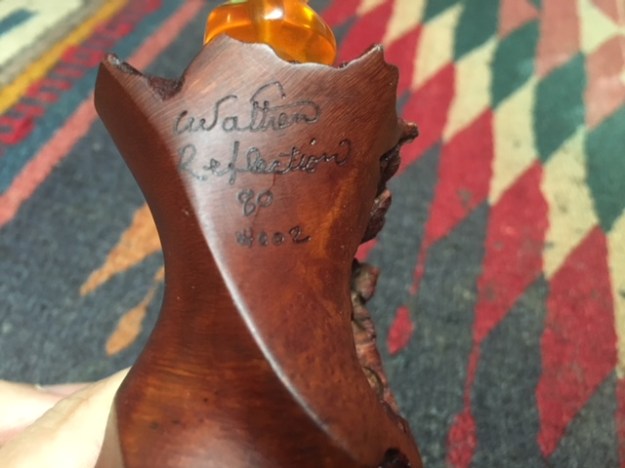
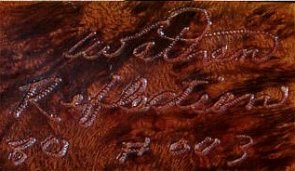
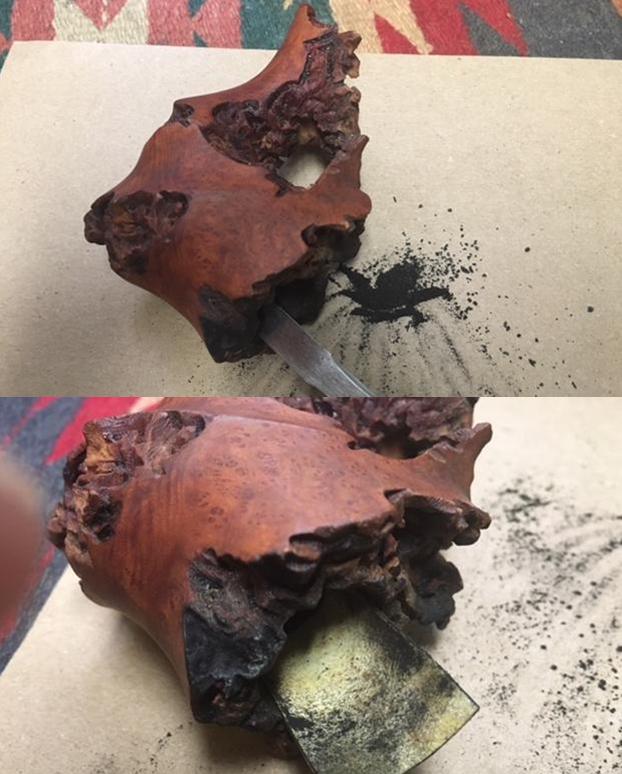
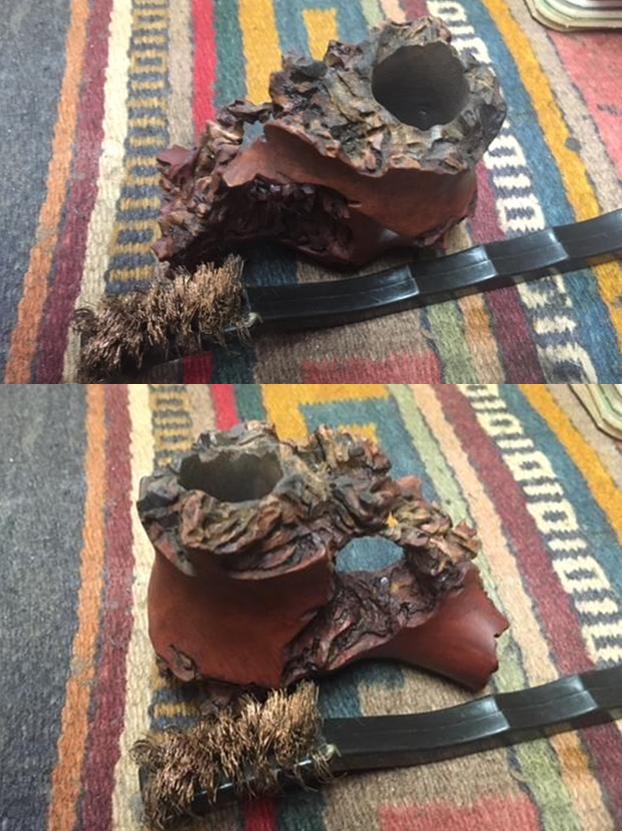
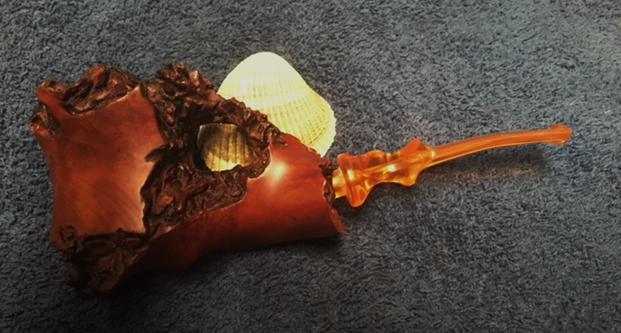
Jeff picked up this beautiful craggy rustic briar freehand pipe guy in Maryland. It was very rusticated and craggy. There were rustications on the rim, around the rim, around various parts of the bowl and on the shank top. There was a rusticated bridge from the rim on the back of the bowl all the way to the end of the rusticated and craggy looking shank. The rustication on the exterior was filthy with lots of dust and debris deep in the crevices. There was a thick cake in the bowl and the airway in the twisted saddle, amber coloured stem was filthy with tars and oils. The inside of the shank must have been very dirty as well. Jeff took photos of the pipe before he cleaned it. I have included them here to give an idea of the rough condition of this pipe when it arrived in Idaho and Jeff started his magic. It is really quite unique with a rustic carving around the rim top and down the bowl part way. It is also rustic around the bottom edge of the bowl. There is a rustic bridge from the bowl to the end of the shank. The back of the bowl and the top of the shank is also rustic. The end of the shank slightly flared and rustic with the mortise drilled in the center. The underside of the shank is stamped Wathen over Reflection over the numbers 80 over #002. I am sure these numbers will help me date the pipe once I figure out who the carver is and where he lived and worked. It is a uniquely carved pipe that has smooth portions on the bowl front, sides and shank. The stem was an amber acrylic saddle with a twist in the saddle. The overall look of the pipe reminds me of a Micoli. Jeff had outdone himself in the cleanup of this worn and weary old pipe. It looked really good when you see where it was when he started. I took some photos to show the condition of the pipe when I brought to the worktable today. Jeff scrubbed the exterior with Murphy’s Oil Soap and a tooth brush to clean up the rustication around the bowl and rim. He reamed the bowl with a PipNet pipe reamer and cleaned up the reaming with a Savinelli Fitsall Knife. He cleaned the interior of the mortise and the airway in the shank and the stem with alcohol, cotton swabs and pipe cleaners. The pipe came to me clean and ready to do some light restoration on it. The briar appeared to be very dry. The stem had a twist in the saddle that spiraled around the top and underside the length of the saddle. The surface was clean but had tooth chatter on the top and underside near the button and on the surface of the button itself. I took close up photos of the rim top and the bridge to the shank end to show the condition of the rustication. There was some darkening on the rim top that would need to be addressed but it was clean. I also took photos of the stem to give a clear picture of what I had when I started.I took a photo of the underside of the shank to show the stamping there. It read Wathen in script over Reflection also in script. Under that was stamped the number 80 over #002. It was etched in script into the briar and had been darkened with a black stain to make it legible. Not sure what the numbering means and the brand is unfamiliar to me. I decided to do some research on the brand. It appears that today is my day for digging up information on the freehand pipes that I am restoring. I searched for the brand, Wathen to see if I could figure out any connections. The first link I found took me to Pipedia and the following link, https://pipedia.org/wiki/Wathen. I found a sample of the stamping on the shank similar to the one I am working on and some of the history of the brand. I quote it in full.

Kerry S. Wathen was a pipemaker who worked for a small pipe shop in south Kansas City called “The Briar Patch” in the 1970’s. Tending to larger sized pipes his centerpiece was a huge briar calabash shape. When the Briar Patch closed he probably moved to Iowa where his pipes were available at David’s Briar Shop in Des Moines (ca. 1977 – 1980/81).

Wathen was having some problems with his hands at that time and was finally forced to give up his talented carving. He usually inscribed his pipes with his name and two digits for the year of production like “Wathen ’75”. The best pieces were named “Reflection”. Kerry S. Wathen, Sr. passed away on April 1, 1985 in his hometown of Topeka, Kansas.

The article on Pipedia gave me some interesting information on the pipe and the maker. The maker appears to have been Kerry S. Wathen. He carved pipes for a shop called The Briar Patch in Kansas City in the 1970s. It also said that he move to Iowa and sold his pipes through David’s Briar Shop from 1977-1981. It also helped me understand the stamping. The number 80 was the year in which the pipe was made. The #002 evidently was the second pipe made in that year. The stamping Reflection was how he marked his best pieces. According to the article he died in 1985.

I found another link for the sale of three Wathen Reflections through Cigar and Tabac shop. Here is the link, https://www.cigarandtabacltd.com/kerry-wathen-reflections-pipes-on-sale/. I quote the information from there that confirms the other information and adds some more. The first part of the quote said that the pipe were on sale for $250 each. Then it pretty much quoted the information from Pipedia. The second part of the article gave the following new information.

Wathen was having some problems with his hands at that time and was finally forced to give up his talented carving. He usually inscribed his pipes with his name and two digits for the year of production like “Wathen ’75”. The best pieces were named “Reflection”.

The last piece I found was from pipes.org and confirmed the Des Moines, Iowa connection that is noted in both of the above articles. Here is the link to the pertinent part of the discussion on the forums, http://pipes.org/forums/messages/23/5570.html?1099700064.

I have ten Wathen pipes that were purchased between 1977 and 1980 from a shop in Des Moines, Iowa. The shop name was David’s Briar Shop and the Wathens were pretty popular there.

Armed with that information I was pretty certain that the pipe I was working on was made by Kerry Wathen and with the 1980 date stamp it pretty well placed as one of the Des Moines, Iowa pipes made just five years before Kerry Wathen died. I turned my attention to restoring the pipe. I started with cleaning up the remnants of cake on the inside of the bowl with a Savinelli Fitsall pipe knife. I sanded out the inside of the bowl with a rolled piece of 220 grit sandpaper until the inside of the bowl was smooth and clean. I scrubbed the rim top rustication with a brass bristle tire brush to remove the carbon and debris in the rustication. I scrubbed it until the surface was clean. The photos below show the progress.I rubbed the bowl down with Before & After Restoration Balm to deep clean the smooth briar bowl and worked it into the rusticated portions around the bowl, rim and shank including the bridge. The product works to clean, enliven and protect the briar. I hand rubbed it with my fingers, working it into the exterior of the rustication with a horsehair shoe brush. I wiped it off and buffed it with a soft cloth to polish it. The pipe really began to have a rich shine. I took some photos of the bowl at this point to mark the progress in the restoration. I set the bowl aside and turned my attention to the stem. I sanded the surface to remove the tooth chatter and filled in the deeper tooth marks on both sides of the stem near the button with clear super glue.When the repairs had dried I sanded them with 220 grit sandpaper to smooth and blend it into the rest of the acrylic stem. Once it was sanded smooth the stem looked really good.I polished the stem with micromesh sanding pads – wet sanding with 1500-2400 grit pads and dry sanding with 3200-12000 grit pads. I wiped the stem down after each pad with a damp cloth to remove the sanding dust on the acrylic. I polished the stem and the smooth parts of the bowl with Blue Diamond to polish out the remaining small scratches. I gave the bowl multiple coats of Conservator’s Wax and buffed it with a shoe brush. I gave the stem multiple coats of carnauba wax and buffed it with a clean buffing pad to raise the shine. I hand buffed the bowl and the stem with a microfiber cloth to deepen the shine. The pipe polished up pretty nicely. The rustication around the bowl, the rim, the bridge to the shank end, the shank and shank end and the smooth brown finish all work very well with the amber coloured acrylic stem. The finished pipe is shown in the photos below. I have never worked on a Wathen pipe before and the unique shape and rustication pattern made it a challenge that was fun to tackle. The shape, finish and flow of the pipe and stem are very well done. The dimensions are Length: 6 1/2 inches, Height: 2 1/2 inches, Outside diameter of the bowl: 2 inches wide and 2 inches long, Chamber diameter: 3/4 inches. This one will be added to the rebornpipes store soon. If you are interested in adding it to your collection send me an email to slaug@uniserve.com or send me a message on Facebook. Thanks for walking through the restoration with me as I worked over this unique, interesting and challenging Wathen freehand. I still have other freehands that I will be working on in a variety of shapes and sizes in upcoming blogs. 

Refreshing a Lattice Work Meerschaum Bent Billiard


Blog by Steve Laug

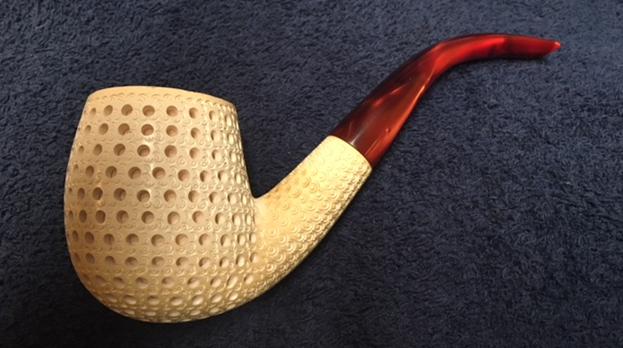
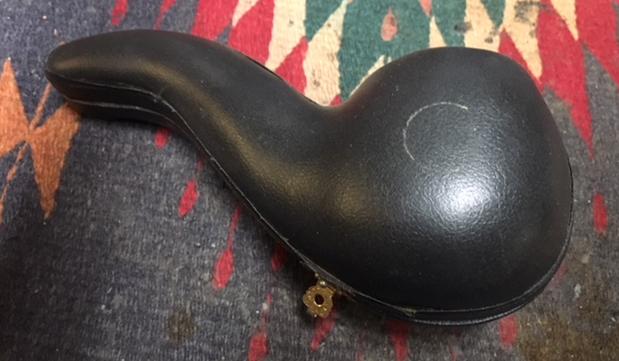
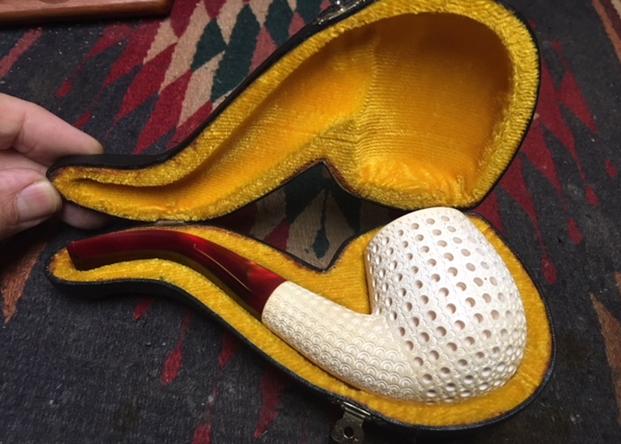
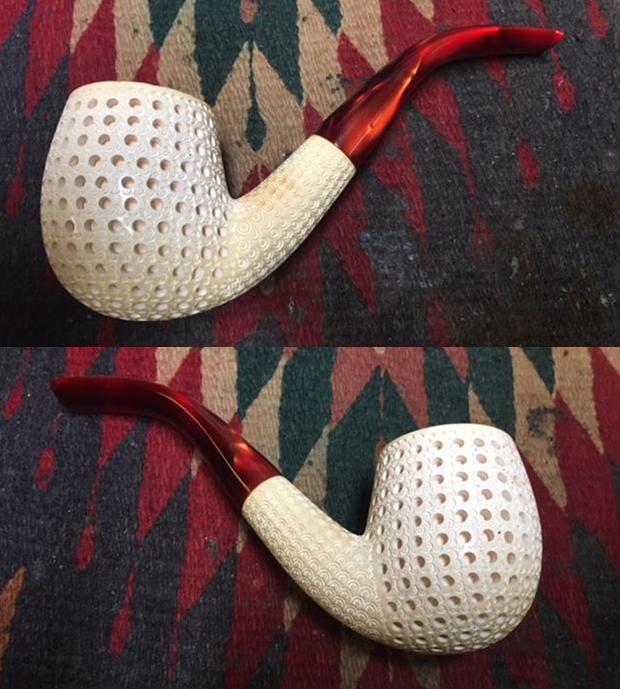
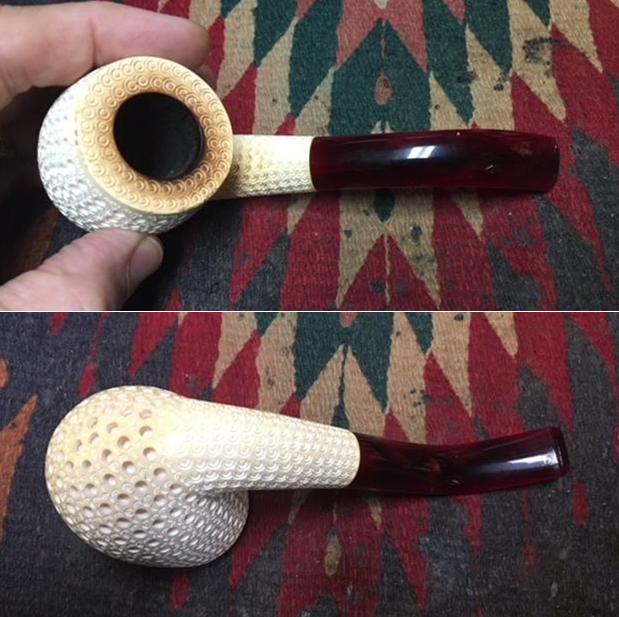
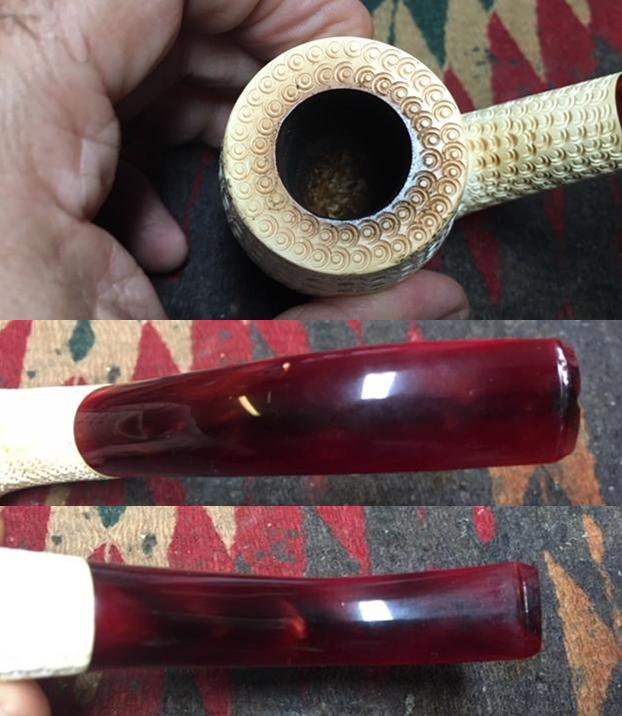
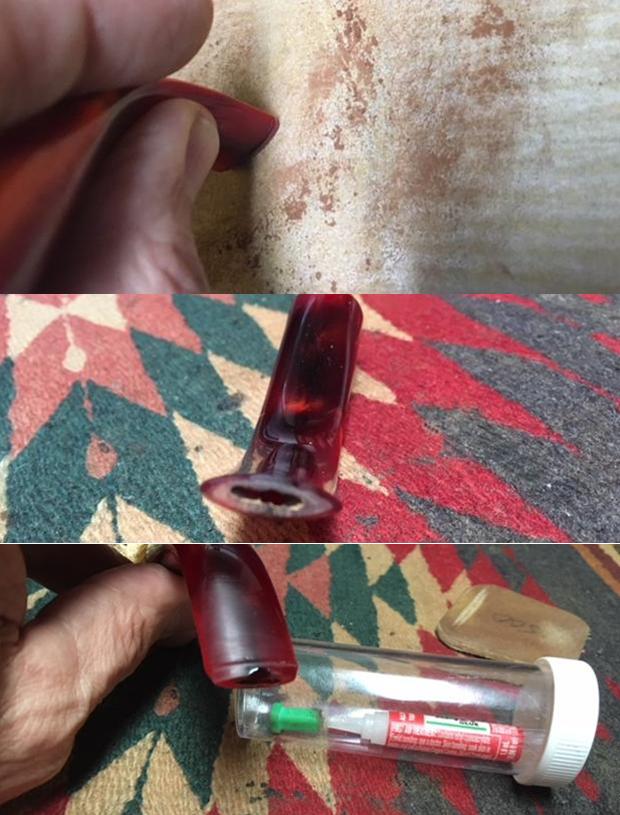
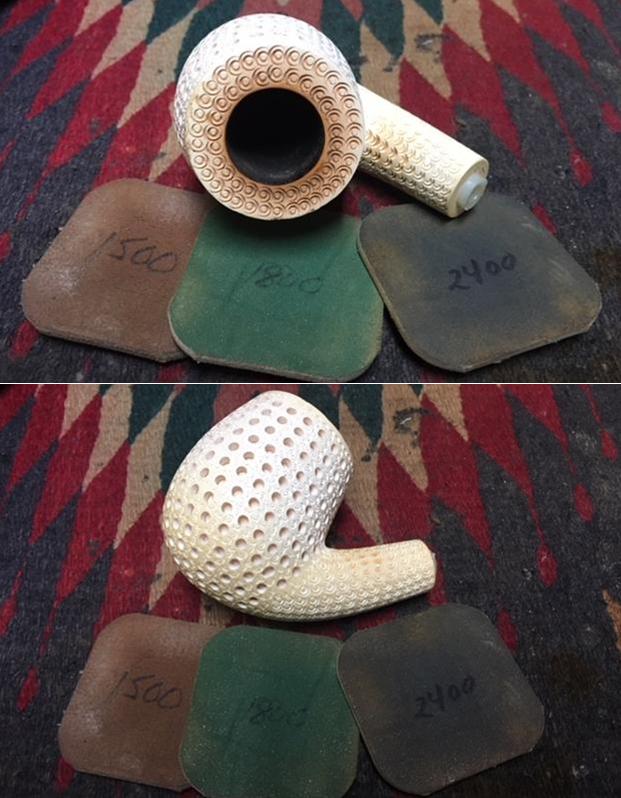
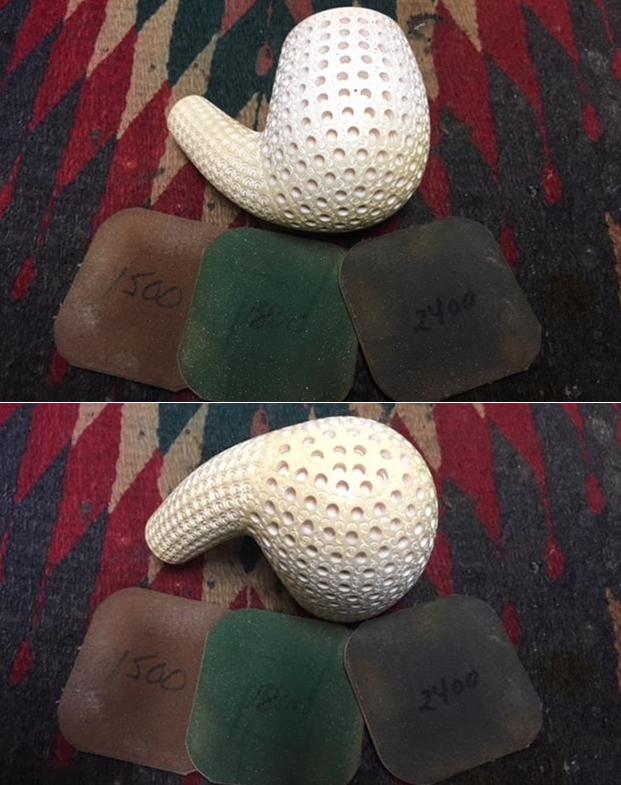
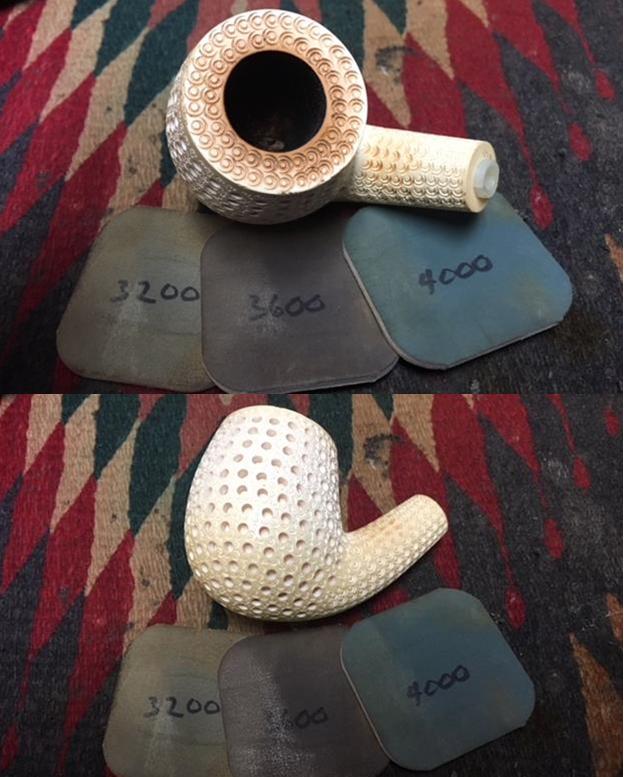
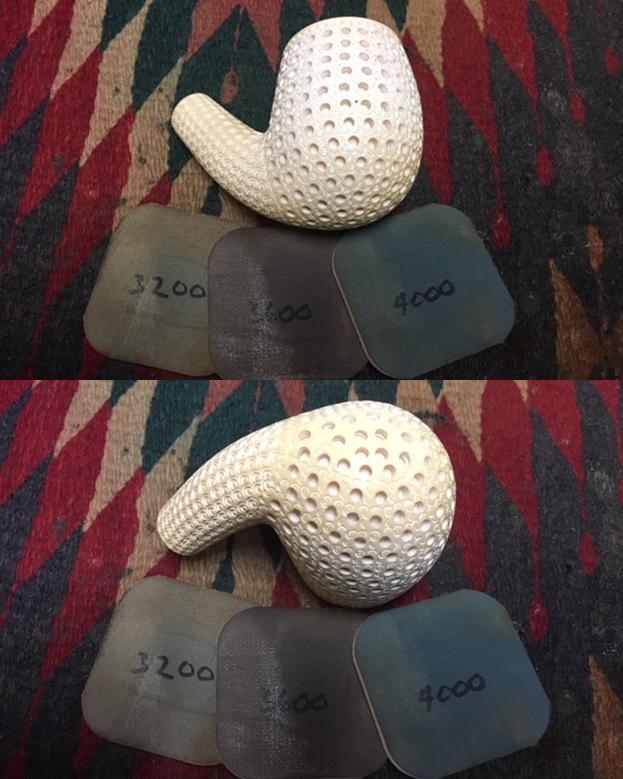
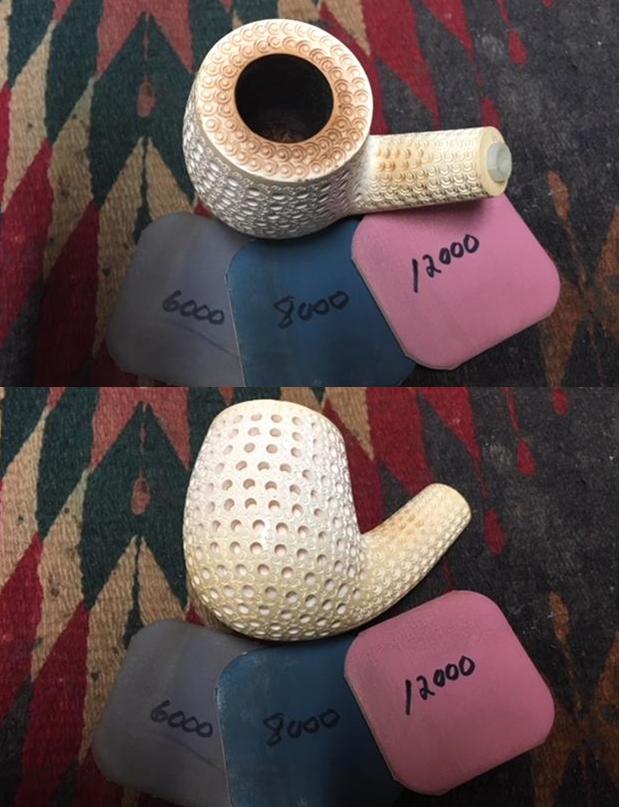
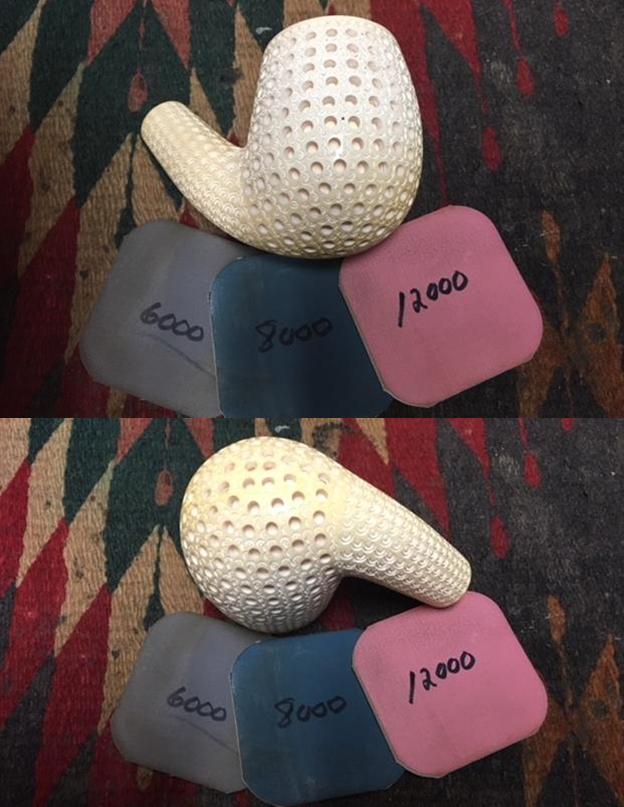
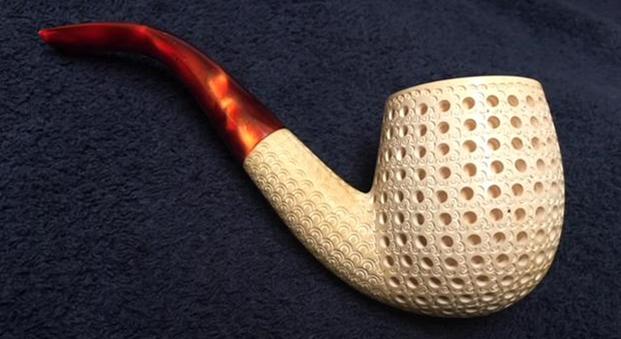
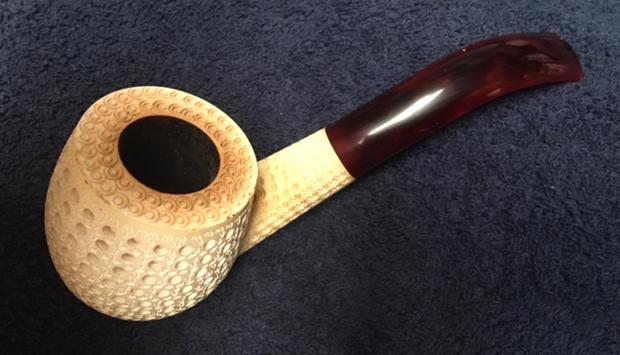
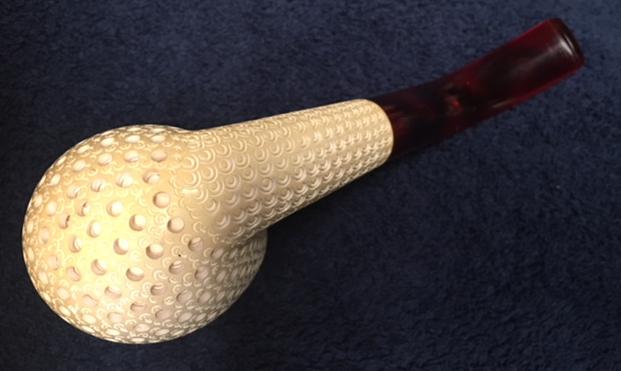
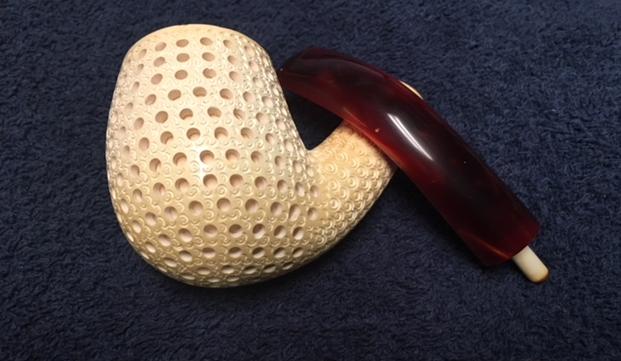
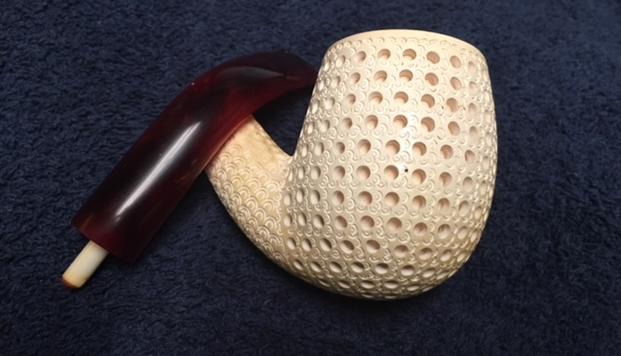
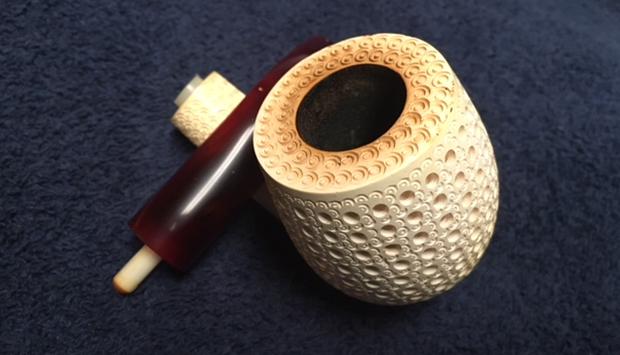
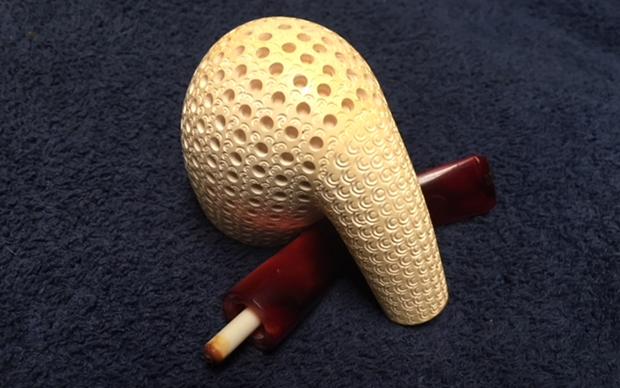
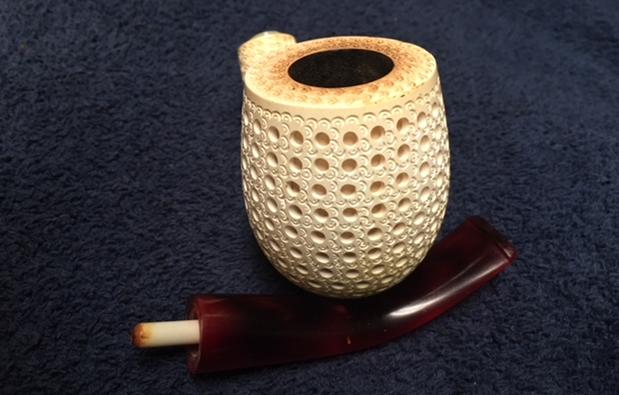
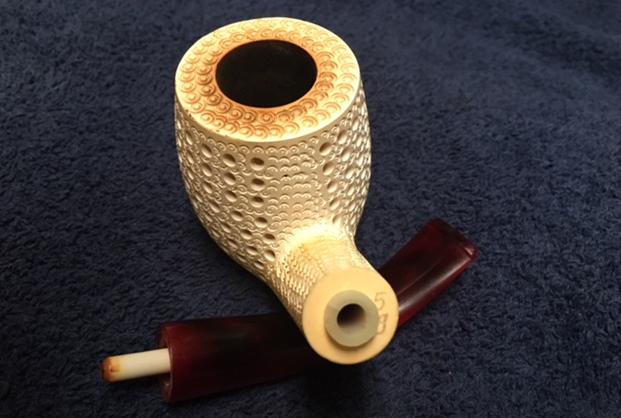
I really am enjoying working on the last batch of pipes that my brother sent me. He does such a great job reaming and cleaning them that I have a fun job of bringing life back to a clean pipe. The next one up on my work table came in its own black vinyl (leather-covered??) case. From the outside the case looked like it contained a large apple shaped or round shaped pipe. The brass latch on the front edge and the hinges on the back were in great shape. There was a circle on the top outside of the case that looked like it had originally had a sticker logo on the outside of the case. It had long since disappeared and left its imprint on the surface of the case. The black case looked promising and made me wonder what was going to be inside. Jeff said he had picked this one up at an auction and it was in great shape.I opened the case and inside it was lined with golden yellow coloured velour. Nestled in the base of the case was a nice looking lattice meerschaum pipe that I think some would call and egg but to me was a bent billiard. The stem was a red acrylic with a Teflon/nylon push tenon and a nylon mortise insert. There was some light tooth chatter on the top and underside of the stem near the button on both sides and a small chip mid button edge on the outside.I took the pipe out of the case and took pictures of it before I did my polishing and clean up on it. It really looks good. Other than the chatter on the stem and the chip in the top of the button the rim top had some darkening and light build up. Jeff had reamed the bowl and scrubbed the exterior of the pipe with a soft soap. He had also cleaned out the mortise and airway in the shank and the stem. It was very clean. I took some close up photos of the rim top and the stem. You can see from the rim top that there was some darkening along the back edge of the bowl. There is some colouration happening on the top and underside of the shank and on the bottom and sides of the bowl. The rim is also taking on colour. It should not take too much work to clean off the darkening. The stem had some chatter than is visible around the button on both sides as well as a small chip that is visible in the photo of the top side of the stem.The thickness of the button lent itself to topping it slightly. I used the topping board and put the surface of the button face against the sanding board. I worked it against the sanding board and remove the chip that was on the face of the button. I filled in the remaining portion of the chip with clear super glue and set it aside to cure.I sanded nicks and the tooth chatter on both sides of the stem. I reshaped the button and blended the repair into the rest of the button surface with 220 grit sandpaper. With the sanding and reshaping there was sanding dust in the airway on the stem so I cleaned it with alcohol and pipe cleaners. I also cleaned off the white nylon push tenon. I polished the stem with micromesh sanding pads – wet sanding it with 1500-2400 grit sanding pads and dry sanding it with 3200-12000 grit pads. I rubbed it down with Obsidian Oil after each sanding pad. I finished polishing it with Before & After Pipe Polish using both the fine and extra fine versions. I gave it a final coat of Obsidian Oil and set it aside to dry. I polished the rim top with micromesh sanding pads – wet sanding with 1500-2400 grit pads and dry sanding with 3200-12000 grit pads. I polished the sides of the bowl and shank at the same time with the pads. I the polished stem with Blue Diamond to polish out the remaining small scratches. I buffed the bowl with a soft microfiber cloth. I gave the bowl multiple coats of Clapham’s Soft Beeswax and the stem several coats of carnauba wax and buffed the pipe with a clean buffing pad to raise the shine. I hand buffed the entire pipe with a microfiber cloth to deepen the shine. The pipe polished up pretty nicely. The finished pipe is shown in the photos below. The dimensions are Length: 6 ½ inches, Height: 2 1/4 inches, Outside diameter of the bowl: 1 3/4 inches, Chamber diameter: 3/4 inches. I will be adding it to the rebornpipes store shortly. If you are interested in adding it to your collection send me a message or an email to slaug@uniserve.com. Thanks for walking through the restoration with me as I worked over beautiful lattice meerschaum.

Breathing New Life into a B.P. Jum War Club


Blog by Steve Laug

In one of the boxes of pipes that my brother Jeff sent me was a large, hefty carved pipe that was stamped BP Jum. It had a carved finish very similar to the carving on Custombilt pipes made by Tracy Mincer. The shape is also similar to the CB pipes. It is a large pipe – 5 ½ inches long, 1 ½ inches tall, outside wall diameter 2 inches and the chamber diameter 1 inch. The shank diameter is 7/8 inches. The stem is 2 ¼ inches long. The briar was very dirty with grit and grime in the depths of the carvings. The rim top was also dirty with lava and tars in the carving of the rim. There was cake built up on the walls of the bowl. The briar has a log of putty fills underneath the rustication with a large one on the left side of the shank. The stem was oxidized and dirty and there were tooth marks and chatter on both the top and underside of the stem near the button. The internals of the both the airway in the stem and shank and the mortise were very dirty with tars and oils. Jeff took photos of the pipe before he started his cleanup work on it. Jeff took photos of the rim top and inside of the bowl to show the condition. You can see the cake – not terribly thick but still visible and flaking nonetheless. It was not hard but was flaky and soft. He also took photos of the sides and underside of the bowl and shank. I have included those here. There was a smooth portion of briar on the underside of the shank that was stamped BP JUM over IMPORTED BRIAR. There were fills in the shank that are visible in the photo below.He took photos of the stem to show the tooth marks and the oxidation on the stem.I did some research to try to find out information on the BP Jum brand. There was a lot of conjecture as to whether the brand was made by Tracy Mincer of Custombilt fame. There is no definitive proof other than the common shapes, sizes and look of the pipes. Bill Unger, of Custombilt fame and author of a history of the brand, mentions BP Jum but cannot definitively connect the two. So the maker remains a mystery that is still unsolved. Do any of you reading this have information on the brand? Send me a message or an email if you can help. Thanks ahead of time.

Jeff had reamed the bowl with a PipNet pipe reamer and followed up with a Savinelli Fitsall pipe knife to remove the cake. He scrubbed out the mortise and the airway in the shank and the stem with alcohol, cotton swabs and pipe cleaners. He scrubbed the exterior of the bowl, rim, shank and stem with a tooth brush and Murphy’s Oil Soap to remove the oils and tars on the bowl, rim and shank. He rinsed it under running water. He dried it off with a soft cloth. The lava mess on the rim was thoroughly removed without harming the finish underneath it. Without the grime the finish looked good. The stem would need to be worked on. I took photos of the pipe to show its condition before I started my work on it.   I took close up photos of the rim top that shows the clean bowl and the small nicks and dents in the smooth portion of the finish. The stem was clean and Jeff had used Before & After Deoxidizer to soak and remove much of the oxidation. He rinsed out the inside of the stem and rinsed off the exterior as well. The photos of the stem show the tooth marks and chatter on both sides.The BP JUM stamp is very clean. You can see the putty fills on the left side of the photo as well as on the shank sides and the bowl itself. I used a Mahogany stain pen to touch up all of the fill areas on the pipe and blend them into the texture of the briar.I used a folded piece of 220 grit sandpaper to sand out the nicks and damage on the smooth parts of the rim. I polished them with micromesh sanding pads – wet sanding with 1500-2400 grit pads and dry sanding with 3200-12000 grit pads. I wiped the rim down after each sanding pad to remove the sanding dust. I rubbed the bowl down with Before & After Restoration Balm to deep clean the briar and particularly the sanded areas. The product works to clean, enliven and protect the briar. I hand rubbed it with my fingers and wiped it off with a soft cloth. I buffed the bowl with a horsehair shoe brush to polish it. The briar really began to have a rich shine. I took some photos of the bowl at this point to mark the progress in the restoration. I used clear super glue to fill in the large fill on the left side of the shank. I scored it with a knife to match the marks in the rustication. I stained the fill with a mahogany stain pen to match the briar and rubbed the area down with the balm to blend it.I waxed the cleaned and polished bowl with Conservator’s Wax and worked it into the rusticated finish. I buffed it with a shoe brush and a soft cloth. The bowl is finished other than the final buffing that I will do once the stem is finished. I set the bowl aside and turned my attention to the stem. I used a Bic lighter to paint the tooth marks with the flame and try to lift them. I was able to remove the lighter tooth chatter and lift the deep tooth marks partially. I sanded the stem and the surface of the button with 220 grit sand paper to remove the remaining tooth marks and reshape the surface and edges of the button. There were two tooth marks that were too deep and did not lift when heated. I filled them in with clear super glue. Once it had cured I sanded it down with 220 grit sandpaper to blend it into the surface of the vulcanite. I polished the stem with micromesh sanding pads – wet sanding with 1500-2400 grit pads and dry sanding with 3200-12000 grit pads. I wiped the stem down after each pad with a damp cloth to remove the sanding dust. I used the Before & After Pipe Polish to remove the small minute scratches left in the vulcanite. I finished by wiping the stem down with a final coat of Obsidian Oil and set it aside to dry. I polished the stem and bowl with Blue Diamond to polish out the remaining small scratches. I gave the bowl multiple coats of Conservator’s Wax and the stem several coats of carnauba wax and buffed the pipe with a clean buffing pad to raise the shine. I hand buffed it with a microfiber cloth to deepen the shine. The pipe polished up pretty nicely. The finished pipe is shown in the photos below. It is an interesting looking pipe that may have been carved by Tracy Mincer. It certainly bears a lot of resemblance to Custombilt/Custom-Bilt pipes.The dimensions are Length: 5 ½ inches, Height: 1 1/2 inches, Outside diameter of the bowl: 2 inches, Chamber diameter: 1 inch. I will be adding it to the rebornpipes store shortly. If you are interested in adding it to your collection email me at slaug@uniserve.com or send me a message on Facebook. Thanks for walking through the restoration with me as I worked over this BP Jum.


Recommissioning Another L. J. Peretti of Boston: An Oom Paul Sitter


Blog by Dal Stanton

After restoring my first two Oom Pauls (see: LINK) from the L. J. Peretti Co., Tobacconist of Boston, this is the next Oom Paul that came to Bulgaria in the Peretti Lot of 10 I acquired off the eBay auction block.  I posted the picture of the 10 (below) on my favorite Facebook pipe groups (The Gentlemen’s Pipe Smoking Society, Old Codgers Smoking Pipe, Pipe Smokers of America, and Tobacco Pipe Restorers) letting interested pipe men and women know that except for one, the Oom Pauls would be available for personal collections.  All the Perettis restored and placed with new stewards benefit the Daughters of Bulgaria, an effort to help women and girls (and their children!) who have been trafficked and sexually exploited.  This L. J. Peretti Oom Paul Sitter from the Lot of 10 has been commissioned by a pipe man in neighboring Romania, just to the north of Bulgaria.  After restored, he will have first dibs on this Peretti now on my worktable!Along with the large stummel, what makes this Peretti stand out is the fact that it is a Sitter – a very nice feature when one is at the table enjoying friends and board games or a hand of cards!  I wish that the L. J. Peretti Co., had put out a shape chart in the past – if they had, I haven’t been able to find it!  This pipe, with another Sitter in the Lot of 10, might be just a bit shy of full bent status which is the technical norm for Oom Pauls according to Bill Burney’s description of the Oom Paul in Pipedia, but it is clear that Peretti used the same tall, long, full stummel with the Sitters, but widened the bend a bit, perhaps to allow the better balance as the Sitter is seated.  My call is that it is very close and either way, will serve his new steward well!  Here are pictures I took of the Peretti Oom Paul Sitter on my worktable here in Bulgaria. The left side of the shank is stamped with L. J. Peretti with no other markings on the stummel or stem.  Along with his brothers and cousins in the Peretti Lot of 10, this Oom Paul Sitter shares the thick carbon cake in the chamber and the rim abuse of incessant lighting over the side of the rim.  The extent of the erosion to the briar around the rim due to this scorching I’ll know after the reaming and cleaning of the stummel/rim.   The bowl shows normal nicks, scratches and grime that has darkened and obscured the briar.  I detect no fills on the surface, but the Sitter’s heel has a large, lightened blotch/fill to be addressed along the way. The stem has moderate oxidation, but the bit is chewed up like all his Peretti brothers and cousins.  The former steward liked to chew on his Perettis!  The upper/lower bit and button lip have sustained compression dents.

I start the restoration process by addressing the oxidation of the stem.  Previously, along with several other stems of pipes in the queue, the Sitter’s stem went into a soak using ‘Before and After Deoxidizer’ to remove the oxidation from the vulcanite stem.  I first had cleaned the internals of the stem with isopropyl 95% and pipe cleaners.  The stem stayed in the soak for several hours and after removing it from the Deoxidizer, I wiped it down with cotton pads and mineral spirits (in Bulgaria, light paraffin oil).  The oxidation wipes off as a nasty brown on the cotton pads.  I continue to wipe with cotton pads and paraffin oil until it cleans and is buffing up.  The Before and After Deoxidizer does a good job. To continue the Before and After process, I now apply first the Fine Polish by putting some on my finger tips and working it into the vulcanite.  The polish starts off thick and gritty, but liquifies as I work it around and absorbs into the vulcanite.  After a while, I buff off the polish with a cotton pad and then, in the same manner, apply the Extra Fine Polish.  I take a picture of the stem after I worked this polish in but before buffing it off.  You can make out the texture of the polish on the surface.  I then buff it off with a cotton pad.  The stem looks clear of oxidation and has a deep black hue.I look now to the stummel.  I begin by reaming the heavily caked Oom Paul chamber.  I also work on the rim surface with very thick, crusted lava flow.  There is no way to determine the condition of the chamber wall or the rim until the cake is removed.  This is a consistent characteristic of all the L. J. Peretti Lot of 10.  I use the Pipnet Reaming kit to begin the job starting with the smallest blade over a paper towel to minimize clean up!  I use 3 of the 4 blades available.  I then use the Savinelli Fitsall Tool to continue to remove carbon from the chamber walls by scraping the chamber wall and reaching the difficult areas.  When I detect the walls are scraped smoothly – no more crunching of carbon, I sand the chamber using 240 grit paper wrapped around a Sharpie Pen.  Finally, after sanding I wipe the chamber with cotton pads wetted with isopropyl 95% to remove the carbon dust.  Looking into the chamber, I see no cracks or crevices. It looks good! I take pictures along the way.  Now, to attack the thick gunk on the rim, I use undiluted Murphy’s Oil also to clean the entire stummel which is darkened by the grime.  I use a cotton pad and Murphy’s and the grime is coming off.  I’m pleasantly surprised to see what I thought was a fill on the heel of the stummel disappear!  It too was simply gunk on the briar surface.  The rim put up some resistance!  I first use the cotton pad but quickly utilized a brass brush to scrub the lava over the rim.  I also used my pen knife to scrape gently the rim surface.  To complete the cleanup, I rinse the stummel and rim with cool tap water.  The stummel surface looks good – it cleaned up well and I can see some impressive grain patterns lurking underneath.  As with the other Peretti Oom Pauls I’ve restored, the plane of the rim is dropping a bit to the left of perpendicular with the shank, but I’ll leave it as is.  I also note that the left side of the rim has eroded somewhat because of the practice of lighting the tobacco over the edge.  The result is that there is an inconsistent rim width around the circumference.  I’ll seek to correct this, or at least help it along by creating an internal rim bevel. Since I like working on clean pipes, I turn to the internal cleaning of the stummel using a shank brush, pipe cleaners and cotton buds dipped in isopropyl 95%.  I also utilize a dental spatula to scrape the sides of the mortise to remove old tars and oils.  After the frontal assault on the gunk, I decide to employ the stealthier approach – a kosher salt and alcohol soak.  This approach helps to freshen the internals as well as remove more latent tars and oils.  I fill the stummel with kosher salt, cup the chamber with my palm and give the stummel a shake to displace the salt.  I then create a wick with a cotton ball by pulling and twisting it.  I stuff the wick down the mortise and through the draft way.  Then I place the stummel in an egg carton to stabilize it and fill the bowl with isopropyl 95% until it surfaces over the salt.  I wait a few minutes and top it off again.  The day is late, and I set the stummel aside to let it soak through the night.The next morning, I discover that the salt had not discolored much but the wick had been successful drawing out the oils.  I clean out the stummel getting rid of the expended salt and wiping the chamber with a paper towel. I run a long shank brush through the mortise and draft hole to clear the remnants of salt.  Now, a clean stummel!Now, to the rim.  I take a closer look and take a couple close ups to mark the starting point.  The damage is not as extensive as I’ve seen on some of his Peretti brothers.  Cleaning the scorched briar on the rim and creating an internal bevel in order to remove the damaged wood is the goal – fresh, healthier briar to form the rim.  Starting, I gently top the stummel with 240 sanding paper on a chopping board only removing what is necessary. Rotating the inverted stummel on the board I discover that I don’t need to take off much.  I then switch to 600 grade paper and smooth the rim – lightly topping it more.  The pictures show the progress. The topping went well.  Now, to cut the internal bevel, I roll a piece of 120 grade paper tightly around a hard wood disk to provide a flat, firm backing to help with a crisper b.  I then work the paper around the internal rim circumference edge to cut the initial bevel.  In the same way, I sand with 240 grade paper and finish it off with 320 and 600 grade papers.  I think the rim looks great. I’m enjoying how this Peretti in cooperating.  The stummel surface has normal nicks and minor dents which this Peretti has received over the years.  To remove these, using sanding sponges on the surface is my usual approach.  I start by employing a rougher grade sponge, middle grade and then finish going over the surface with a light grade sanding sponge.  I am careful to protect the L. J. Peretti nomenclature on the shank as I sand. After the sanding sponges I transition to using micromesh pads to sand out the briar surface more using finer sanding surfaces. I begin by wet sanding with pads 1500 to 2400 then dry sanding from 32000 to 4000 and then 6000 to 12000.  I enjoy watching the grain start to show through the micromesh pad cycles. The L. J. Peretti is looking good as I look at it now.  The pictures show the progress. Turning now to the stem, I take another look at the bit showing tooth chatter and dents. I first use a flame from a Bic lighter to paint the area expanding the vulcanite.  As the vulcanite expands as the natural result of heating it, I’m hopeful that the dents and chatter might rise and make for less sanding.  I believe the process helped but did not fully remove the dents.  I took before and after pictures first with the upper bit comparison, then the lower bit. To address the dents, after wiping the area with alcohol to clean the surface, I apply drops of Black Medium KE-150 CA glue to the dents.  I start on the upper bit.  I put CA glue on the 2 main dents and run more glue along the button to fill in the chatter there.  I then wait for an hour or so for the CA glue to set, so that I can flip the stem and apply glue on the lower bit. After the Black CA glue has cured, I start the process of filing and sanding the patch down to the vulcanite surface and sanding out the chatter.  Starting with the flat needle file and 240 sanding paper I do the initial sanding and refreshing the buttons of both the upper and lower bit with the file.  I follow by sanding with finer grades, 470 then 600.  I finish this phase by buffing the entire stem with 0000 grade steel wool.  The pictures show the progress finishing out the bit repairs. With this initial stem repair and sanding completed, I now use micromesh pads to continue sanding the stem with even finer sanding grades.  I begin wet sanding with pads 1500 to 2400, then dry sanding with pads 3200 to 4000 followed by pads 6000 to 12000.  After each set of 3 pads I apply Obsidian oil to revitalize the vulcanite.  I love to see the vulcanite’s glassy pop!  The pictures show the progression. Now, I take another look at the Peretti Oom Paul Sitter seated on my worktable!  I like that characteristic of this large stummel.  I study the attractive grain patterns that have started to emerge through the sanding process.  To enhance the grain further, I mount a felt buffing wheel on the Dremel and I apply the coarser Tripoli compound with the lowest speed setting. Before I start the sanding process, I purge the wheel with the Dremel’s metal tightening wrench.  I apply the compounds by rotating the wheel over the surface of the briar.  I don’t apply too much lateral pressure on the buffing wheel, but I allow the speed, wheel and compound to do the work. After asking nicely, my wife takes a picture of me applying the Tripoli compound with the Dremel.  After the Tripoli compound, I apply the less coarse compound Blue Diamond.  I apply it in the same manner as Tripoli but with a cotton cloth buffing wheel instead of a felt wheel.  When completed, I wipe the stummel with a cotton cloth to remove residue compound dust. The next step is to apply Before and After Restoration Balm to the Peretti’s briar surface.  With the other restorations I’ve done with the Peretti Lot of 10, I have been very pleased with the results of applying the Restoration Balm.  I very much like the natural briar look and the original Peretti motif has the lighter, natural patina.  The Balm seems to take the natural briar grain and deepen and enrich it.  I take a before and after picture of the stummel to show the difference.  I’m afraid the lighting of the pictures does not show the subtle deepening that I perceive with the naked eye.  To apply the Balm, I squeeze a little Balm on my fingers and work it into the briar surface.  As I do this, the Balm progressively thickens to almost a wax-like consistency.  I take a picture of the Balm on the stummel as I allow it to sit for a few minutes to give an idea of its consistency.  I then use a cotton cloth rag to wiping it off at first, and then buffing it as the surface is exposed.  I then use a micromesh cloth to give the stummel a hand buffing.  The pictures show to process comparing each side in succession. I remember that I forgot to apply Blue Diamond compound to the stem. So, I attach the stem to the stummel and apply Blue Diamond compound to the stem and then wipe the entire pipe with a felt cloth to remove excess compound dust.  Now, applying the carnauba wax, I mount a cotton cloth wheel to the Dremel, increase the speed to about 40% full power and apply the carnauba to the stem and stummel.  After applying a few coats, I use a micromesh cloth to give the pipe a rigorous hand buffing to raise the shine even more.

This Peretti Oom Paul Sitter cleaned up very well – I’m pleased with the results.  After restoring several Peretti pipes and I’ve concluded that not only have I found them to be good smokers, but the briar used for the production of these pipes seems to be of a higher quality and very pleasing to the eye on the whole.  The grain on this Peretti has not disappointed.  The large stummel showcases well the lateral grain on the lower regions and then bird’s eye grain dominates the opposite side of the bowl.  Codruț, a pipe man in neighboring Romania, saw this Peretti when I posted several Peretti Oom Pauls that were to be restored and made available.  He commissioned this Peretti and he will have first dibs on it when it goes into The Pipe Steward Pipe Store.  This Peretti Oom Paul Sitter benefits the Daughters of Bulgaria, our work here in Bulgaria helping women and girls (and their children) who have been trafficked and sexually exploited to find a new life.  Thanks Codruț(!), and thank you for joining me in this restoration!

Recommissioning a Sculpted Gourd Calabash for a Man Serving His Country


Blog by Dal Stanton

Last year, when my wife and I were in the US for some months for our periodic furlough reconnecting with friends, family, and sponsors of our work in Bulgaria, I was also trying to connect with pipes –  I love the search!  As I’ve done many times before, I was trolling through the eBay offerings.  I came across a listing for a lot of pipes, which the seller described as:  Huge Lot Of 66 Smoking Pipes Pre-Owned Pre-Smoked and Deeply Loved.  The further description was that the Lot of 66 was a donated item, that the collection belonged to one owner, and they repeated that the collection had been “Loved”.  There were several other pictures providing break downs of the overview below.  As you might expect, I started going through the pictures to see what I could see – the seller said that they were not pipe people, they did not know the brands nor the specific histories.  This is always a good sign – treasures could be lurking in the mass of 66 pipes!  I could see very easily one OBVIOUS treasure – a Gourd Calabash.  Well, I did the math, determined a budget, and with my wife’s blessing, went to the auction block and I won – which surprised me.   There turned out to be several treasures in the Lot of 66 which will gradually make their way to The Pipe Steward worktable to be restored and recommissioned to benefit the Daughters of Bulgaria, helping women and girls, and their children, who have been trafficked and sexually exploited.  I toted the Lot of 66 back to Bulgaria with me (thanks to a very patient wife!) and now the Sculpted Gourd Calabash is now on the worktable.  What prompted the Calabash’s retrieval from the ‘Help Me!’ basket was a text message I received from a man who said he was looking for a Meerschaum pipe and a Calabash.  Brian had met one of my colleagues in Plovdiv, Bulgaria, and through their conversation, he discovered that I restored pipes and that he had a bucket list of sorts, of pipes he was trying to acquire while in Europe for a short work stay.  Brian and I began to text back and forth, and I told him I did have a Calabash and a few Meerschaums.  He was able to look at the Sculpted Gourd Calabash on The Pipe Steward site in the ‘For Pipe Dreamers Only’ section – unrestored pipes that folks may commission. We agreed on the Calabash and since he was leaving Bulgaria soon, I went to work straight away on his ‘Bucket List’ Calabash along with the other projects on my worktable.  Only later, as we continued to text each other, did I discover that Brian was an Airforce serviceman from Washington State and lives on a farm where he and his wife provide foster care for children.  He said he was on a short military training exercise in Bulgaria.  My sense of appreciation grew – not only for the service to his country, but their care and concern for children.  I also discovered that Brian has become very interested in pipe restoration and may give it a go!  So, to work on the Calabash.

One of the discoveries I made when I looked at the Calabash for the first time in hand – what I could not see in the pictures, was that the gourd was sculpted – a very interesting and attractive design that both adds an unexpected ‘fresco’ of sorts on the gourd, and also a different, tactile feel.  On my worktable here in Sofia, Bulgaria, I take pictures of the Sculpted Gourd Calabash to chronicle his condition. The first thing that draws the attention to this Gourd Calabash after the sculpted design is taken in, is the sheer size of the pipe.  From the end of the Meerschaum cup to the end of the fancy push tenon stem is just at 9 inches!  The cup is 2 ¾ inches wide and the cup chamber is 1 3/8 inches deep. The pipe has no markings to reveal its origins.  The gourd is generally in good shape and carries with it the normal signs of age – nicks and scrapes on the gourd surface.  The surface shows the latent shininess of former finishes which look like blotches in the pictures above – these need to be removed.  When I investigate the inside of the gourd I see dust and loose particles that need to be cleaned.  The cork gasket which forms the connection between the Meerschaum cup and the gourd is in good shape but is dry. On rebornpipes, one of Steve’s best practices is to apply a little petroleum jelly to the gasket to condition it and to create a renewed seal.  I’ll try this out as well.  The cup itself is solid but sports some small chips on the top, near the chamber opening.  There are also nicks and scratches revealing the bumps and bruises he’s collected along the way.  I’ll work on sanding these out.  The push tenon stem has significant oxidation and tooth chatter.  The shank extension is made of plastic and is scraped up a bit on the end, but it should clean up nicely.

I begin the restoration of this treasure of the Lot of 66 for Brian’s bucket list by first cleaning the internals of the stem with pipe cleaners and isopropyl 95%.  After this, I add the stem to the Before and After Deoxidizer bath, along with a couple other stems in process. I let the stem soak in the Deoxidizer overnight.  The next morning, I fish out the stem from the Deoxidizer, let it drain off, and wipe liquid and oxidation off with cotton cloth pads wetted with light paraffin oil.  This removes the raised oxidation.  I wipe and buff the vulcanite and put it aside to dry.  The Before and After Deoxidizer has grown in my appreciation for the job it does.  The stem looks great. Turning now to the gourd, I look again inside the gourd and the walls are dark, with some dried tars.  I won’t be able to get it all cleaned, but I take a dental spatula to scrape what I can off.  I put down some paper towel to help in cleanup. I also employ a long-wired shank brush to reach into the gourd and travel the curve.  I do the same thing with a brush through the mortise into the gourd.  This loosens more hardened tars.  After I finish with the scraping and the brushing, I clean the mortise with pipe cleaner and cotton bud dipped in isopropyl 95%.  The internals are as clean as I can manage! Before I turn to the external surface of the gourd, I finish the internal by applying petroleum jelly with my finger to the cork gasket to rejuvenate it.To clean the grime from the gourd surface and in the sculpting crevices as well as to remove the old shiny finish, I use undiluted Murphy’s Oil Soap with cotton pads and a bristled tooth brush.  I then gently rinse the gourd using the toothbrush and a very light flow of water – avoiding water getting inside the gourd. I hand dry the gourd with paper towel and let it set to dry thoroughly.  While I had the Murphy’s out, I did a quick clean over of the Meerschaum cup using a cotton pad. After the gourd thoroughly dries, I want to rejuvenate the surface.  Using Before and After Restoration Balm I work the balm into the sculpted gourd with my fingers.  I take two pictures to mark the beginning for comparison. I’m looking forward to seeing what the Balm does with the thirsty, dry gourd!  I was not disappointed – oh my!  The richness of color that exemplifies a classic Gourd Calabash is evident.  Every pipe man and woman hopes to have at least one Gourd Calabash in their collections!  I put the gourd aside to rest and pick up the Meerschaum cup.  I take another close look at the chamber and at the chipping on the cup dome.  I think that the chips are too deep to sand out totally, but I take a piece of 470 grade paper and lightly sand the surface of the Meer cup.  I strategically and lightly sand out nicks on the surface and the bevel of the cup.  I’m not able to remove the deepest divots next to the chamber lip but it looks better. As I sand, I use a dampened cotton cloth to wipe off the Meer dust. Before going further with the Meer cup surface, I take the Savinelli Fitsall Tool and gently scrape the chamber.  The cake is very light, and it doesn’t take much.  I follow by sanding the chamber with a piece of 240 grade paper around a Sharpie pen and then wipe the chamber with a cotton pad and alcohol.  Now I bring the Meerschaum cup through a micromesh pad cycle by wet sanding with pads 1500 to 2400 then dry sanding with pads 3200 to 12000.  As I sand, I do not get carried away!  Sanding Meerschaum is a much gentler activity than briar!  As I progress to the latter, more polishing pads, the Meerschaum begins to reflect like glass.  Nice!The next step with the restoration of the cup is to apply bee’s wax to the Meer surface.  Bee’s wax is excellent in protecting the Meer surface as well as encouraging a rich patina.  I have Bulgarian bee’s wax available and I melt it with a hot gun.  When it liquifies, I apply it to the surface with a cotton bud. I also warm the Meer cup with the hot air so that it allows for the more even application of the melted wax.  I prop the cup in a small plastic cup.  As I apply the melted bee’s wax with a cotton bud, the wax congeals very quickly as it cools on the Meer surface.  At the end of the application, the wax is caked on the surface.  It takes some work as I begin removing the excess, congealed wax, using a cotton cloth.  As the excess comes off, it reveals the surface and it buffs more easily.  Finally, with all the excess removed, I use a micromesh cloth to give the cup a hearty hand buffing.  The Calabash’s Meer cup is now ready for a gourd.  It looks good. Now, to the fancy push tenon stem.  The bit is rough with chatter.  I will remove it by using a piece of 240 grade paper.  I also take a flat needle file to redefine the button.  I follow the 240 paper with 470 grade paper removing the scratches left by the 240 paper.  Then, I use 600 grade paper and sand the entire stem to remove rough spots in the vulcanite as well as removing the tracks of the 470 paper.  Finally, I buff the entire stem with 0000 grade steel wool. Following the steel wool buff, I want to rejuvenate the vulcanite.  First, I apply Before and After Fine Polish then Extra Fine Polish to the stem. I work each in with my fingers throughout the stem.  After each application, I wipe/buff the polish with a cotton cloth.  The vulcanite responds well with a deeper black – it looks good.Now to the micromesh pads.  With pads 1500 to 2400 I wet sand followed by 3200 to 4000 and 6000 to 12000 are dry sanded.  After each set of three I apply a coating of Obsidian Oil.  The polished vulcanite pop is nice to behold! Now to the Calabash’s sculpted gourd.  Using the Dremel, I mount a cotton cloth buffing wheel dedicated to Blue Diamond compound.  Using the fine abrasive compound, I sand the smooth gourd areas to bring out more gloss.  I also want to test carefully the application of the compound to the sculpted area which has peeks and valleys.  I’m interested to see if Blue Diamond will also enhance this area.  Using the slowest speed on the Dremel, I work the buffing wheel around the gourd – both smooth and sculpted.  The sculpting is very intricate and the more I look at it the more amazing it is – very nice touch on an already classic shape.  I can work the compound into the sculpting and the results are good.  The surface is shining up well.  I take a picture applying the compound – no small feat with only two hands!  I also run the buffing wheel with Blue Diamond on the shank extension as well as on the unattached fancy stem.No – this next picture is not repeated from above, unfortunately.  In the interest of full disclosure, as I was working the Blue Diamond compound on the stem, I noticed oxidation that I did not see before – or wasn’t as obvious until I started buffing up the vulcanite with the compound.  Well, I’ll spare you all the pictures of starting from the beginning by re-sanding the stem starting with 240, 470, 600, steel wool and the full run of 9 micromesh pads…  Let this picture represent the whole…. Thankfully, back to ‘now’ with the second picture.I give the gourd and stem a quick hand buff with a felt cloth to remove compound dust in preparation for the application of wax.  I mount another cotton cloth buffing wheel dedicated to carnauba wax onto the Dremel.  I increase the speed up to about 40% and apply the wax to both gourd, stem and shank extension – the cup and stem are not assembled.  I find that the compact Dremel buffing wheel allows me to work in a much more directed way.  To spread the carnauba wax over the sculpted, rougher area, I steer the buffing wheel in the same direction as the sculpted valleys.  In this way, the wax does not gum up but continues to spread evenly over the surface and crevices.  As I watch the waxing unfold, oh my!  Gourd skin loves carnauba wax!  After some coats of wax, I use a micromesh cloth to buff up the gourd and stem surface.  I also buff the Meerschaum cup with the cloth.

I am very, very pleased with the results of this Sculpted Gourd Calabash.  The design created on the gourd surface attracts the eye and holds it.  The smooth gourd ‘bands’ below the Meerschaum cup and over the gourd shank, connecting to the shank extension, create a symmetry that works well.  The Meer cup looks good.  It carries some of the former scars and cuts – a sign of the Calabash’s history.  I’m glad that Brian will take good care of this Calabash as he returns to the US after his tour of service in Bulgaria.  I appreciate his service to his country and that his bucket list Sculpted Gourd Calabash benefits the Daughters of Bulgaria, women and girls (and their children) who have been trafficked and sexually exploited.  Thanks Brian and thanks for joining me through this restoration!