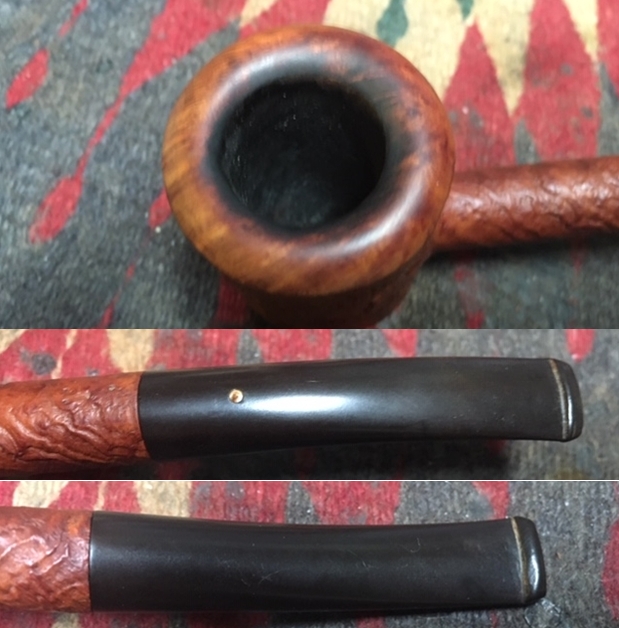
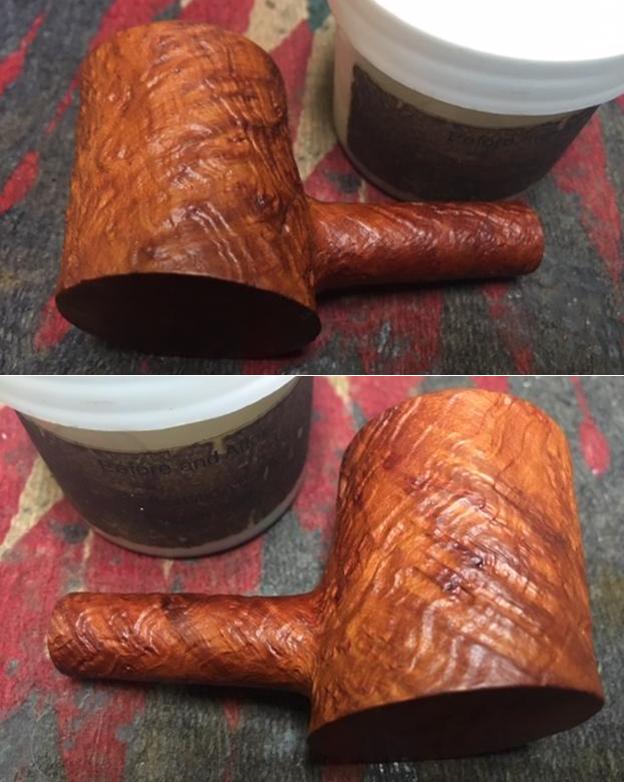
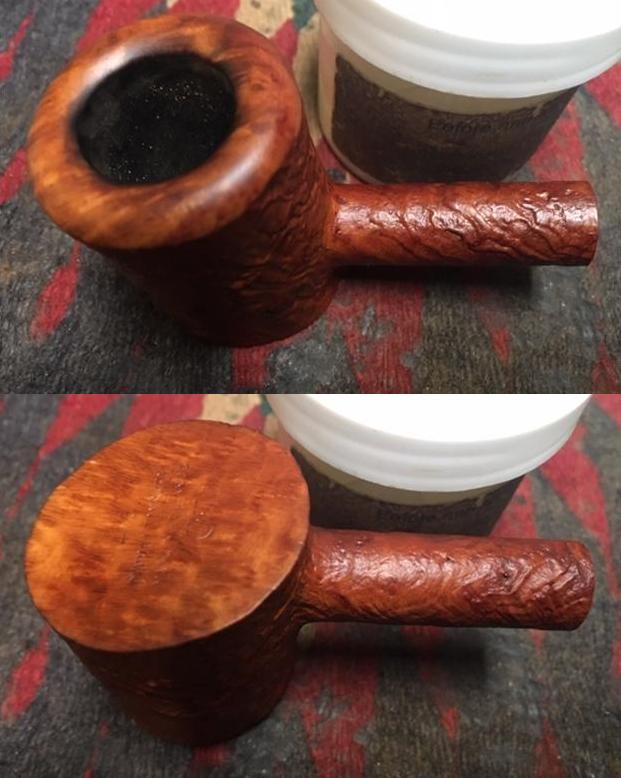
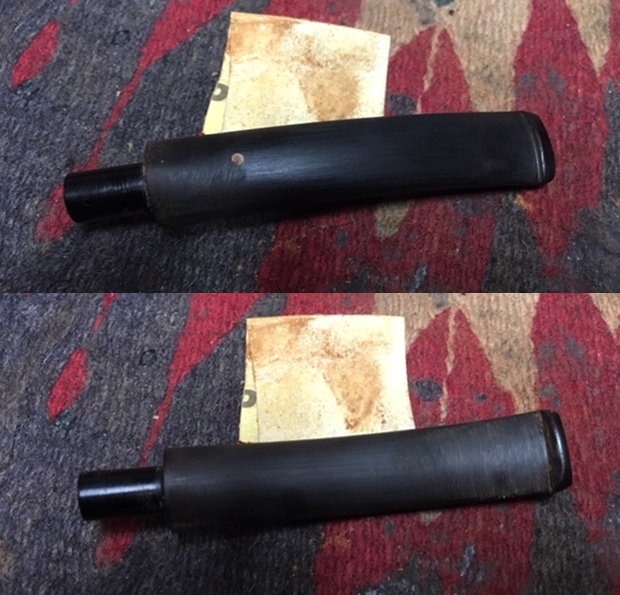
Tag Archives: repairing tooth marks

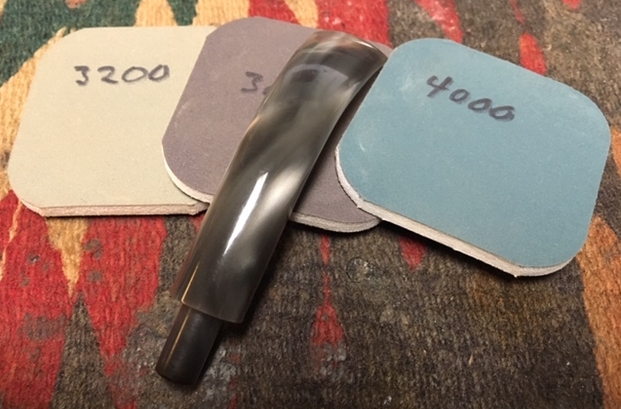
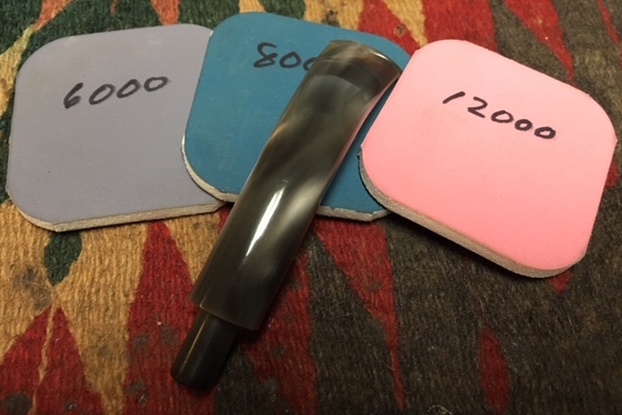
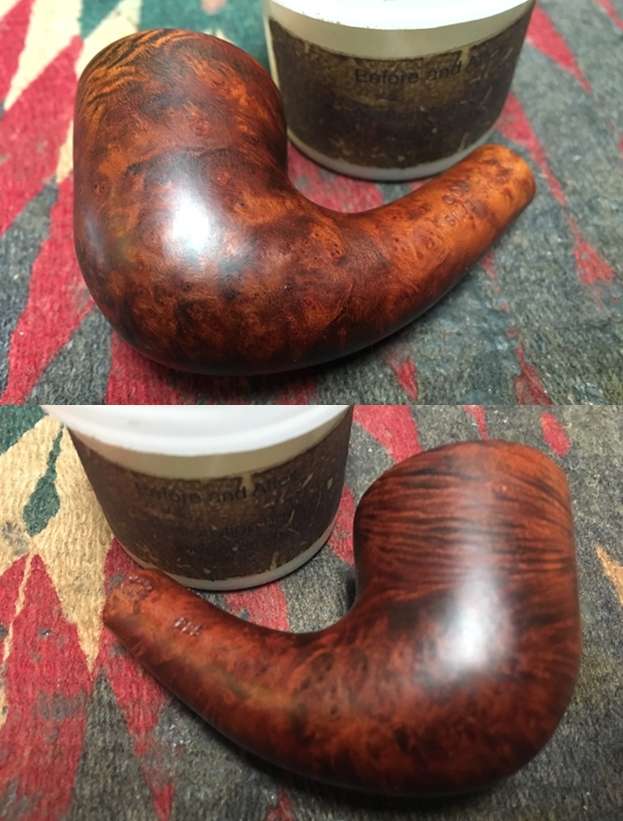
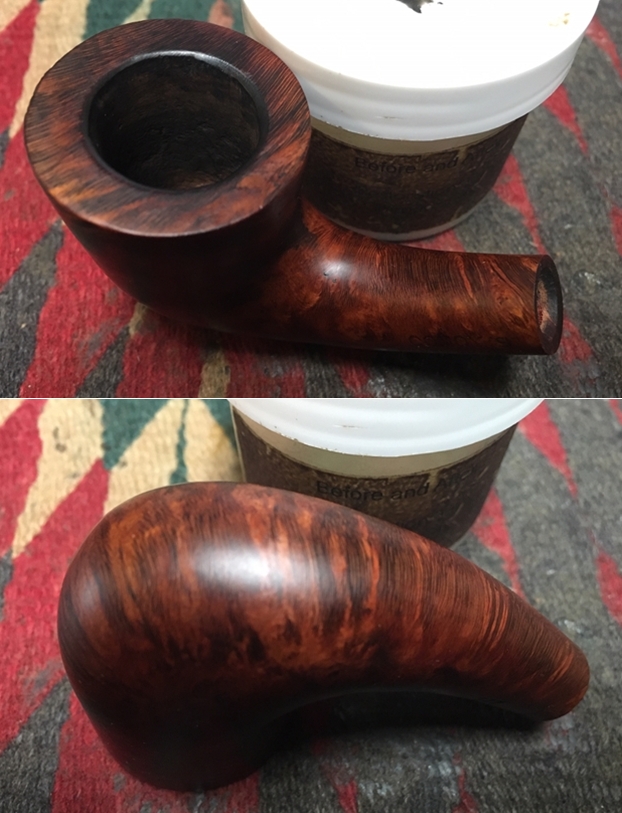
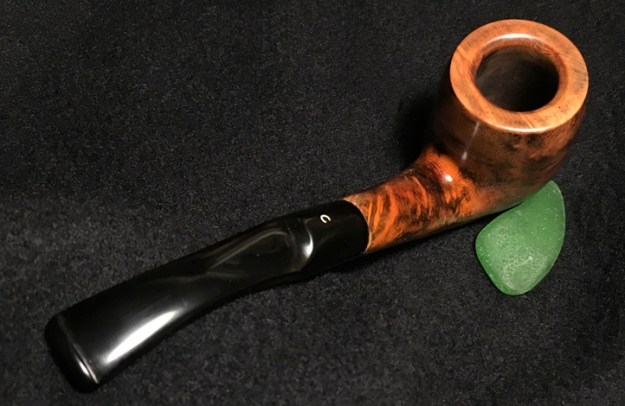
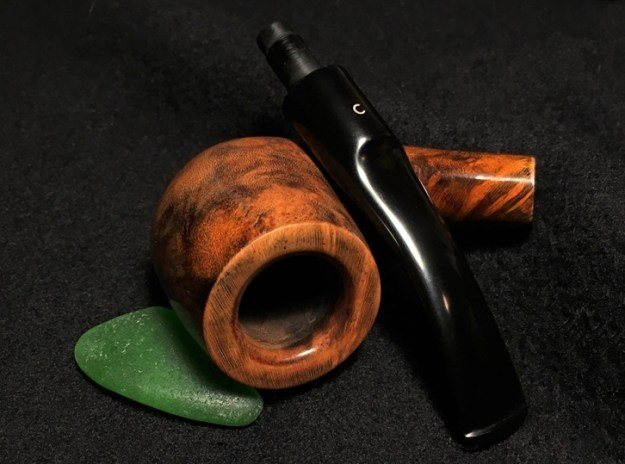
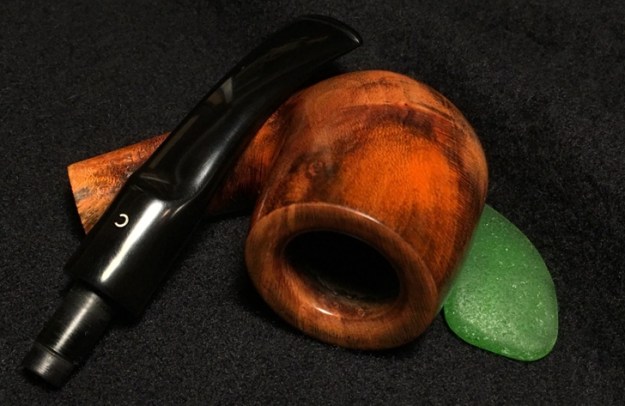
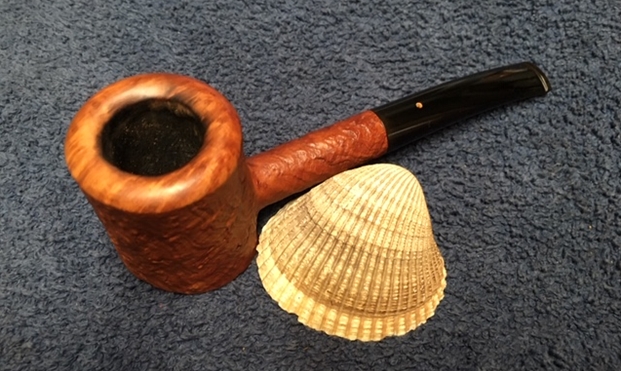
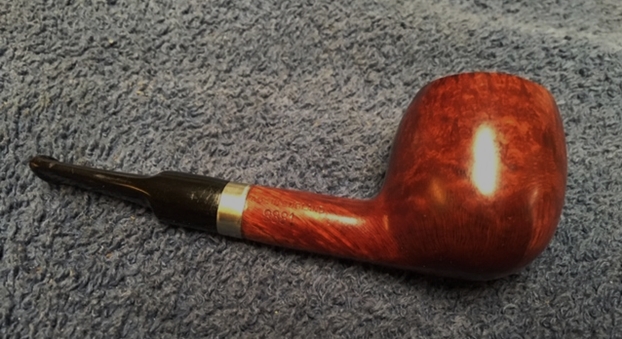
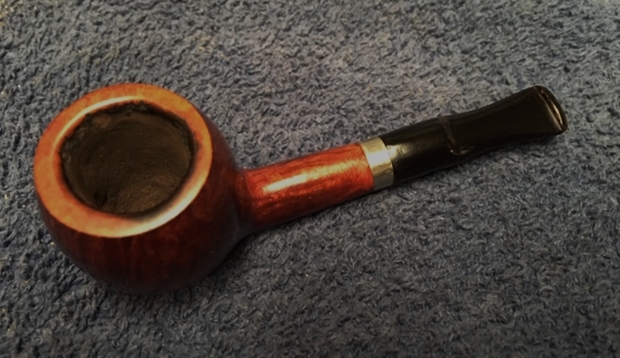
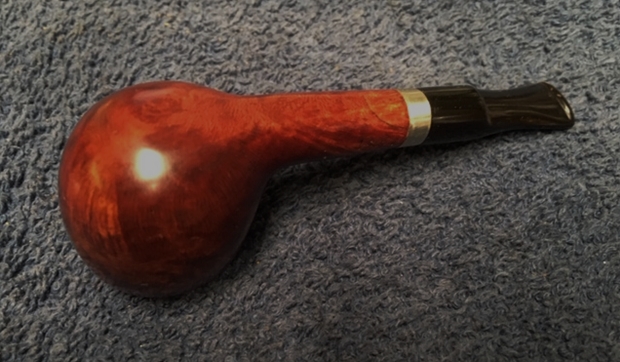
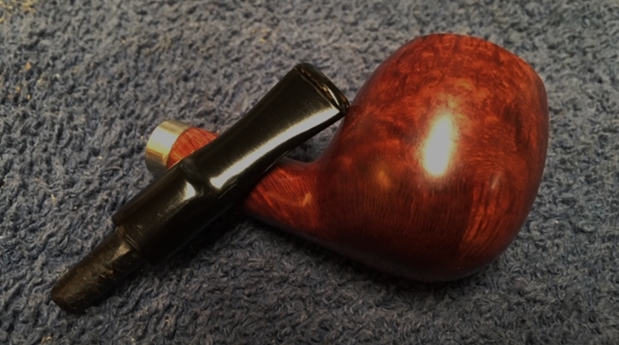
Restoring a Pair of Family Era Barling’s Make Pots


Blog by Steve Laug

When I finished the restoration work on a pair of Comoy’s Blue Riband Billiard pipes and sent them back to the owner, Scott in California I received another email in return saying that he had sent me a pair of Family Era Barling’s Make pot shaped pipes. Here is the link to the work on the Comoy’s Blue Ribands (https://rebornpipes.com/2018/09/29/restoring-a-pair-of-comoys-blue-riband-billiards/).

While my Dad was visiting recently I received a package in the mail from Scott in California, US containing the two Barling’s Make pipes. There was a note in the box regarding what he wanted done with the pipes. He wrote:

Here are those two Barling Family Era pipes as promised. As you can see, the larger pipe (1752) should be pretty easy. I’d like to keep the original finish on this one and eve out the colour on the rim to match the rest of the pipe. The smaller pipe (1533) is another story. Looks like a full restoration job here. The stem is seized in the shank, layers of lava over rim char, spot of finish loss on the outside etc. I’ll leave it to you to bring this little beauty back to life.

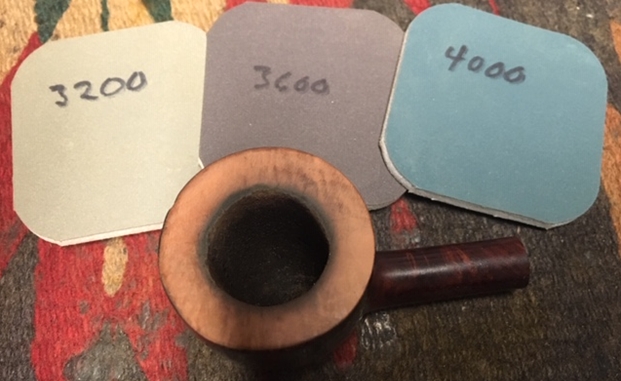
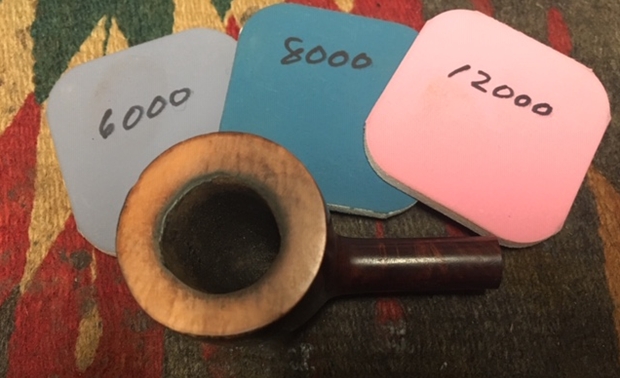
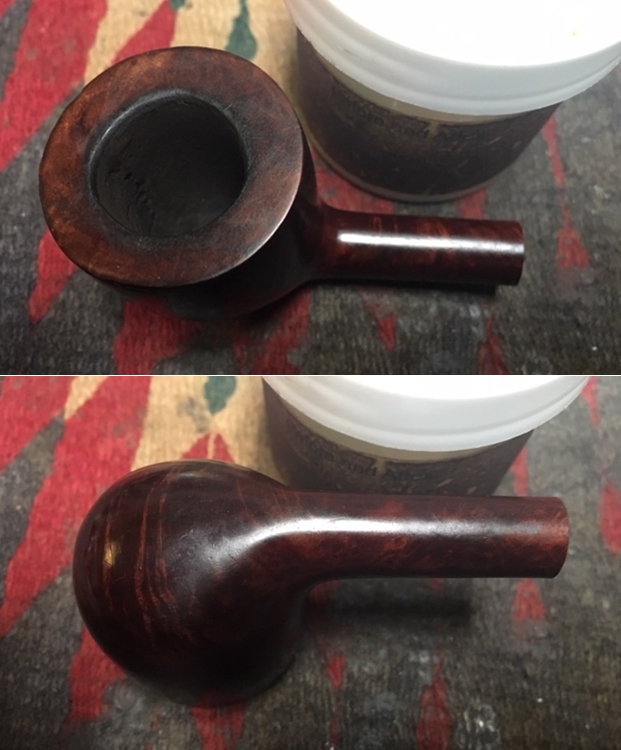
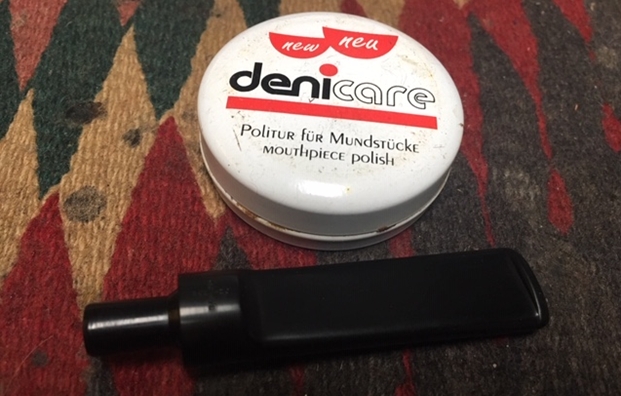
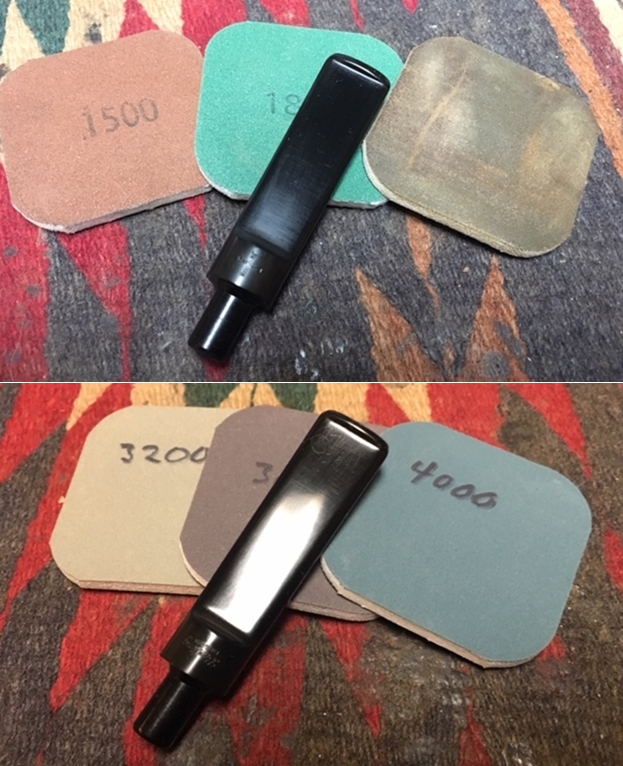
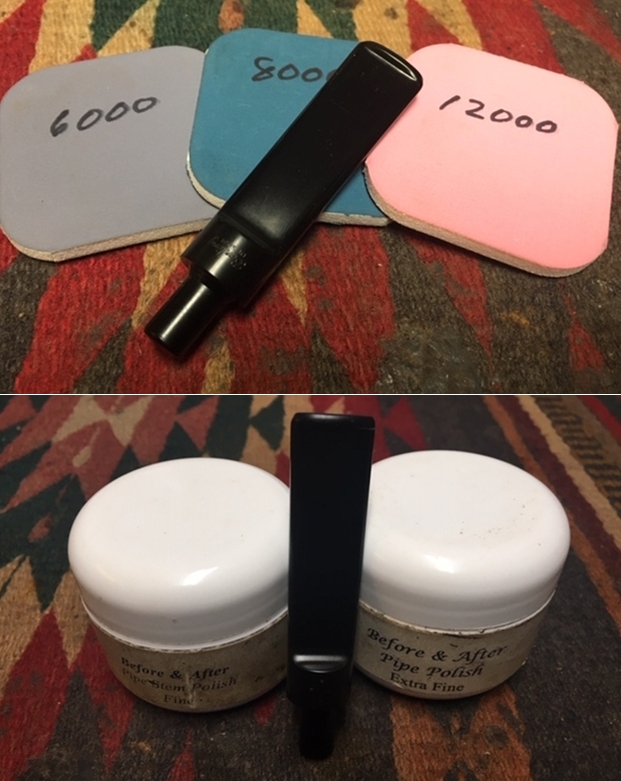
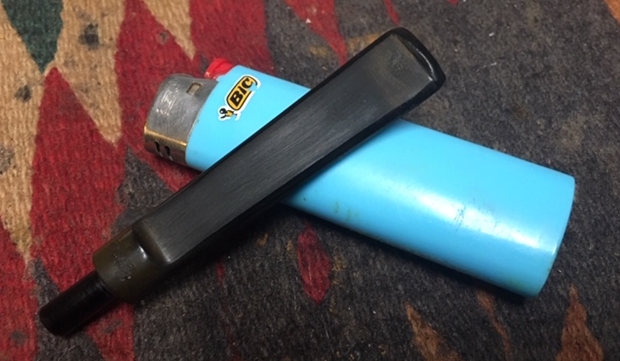
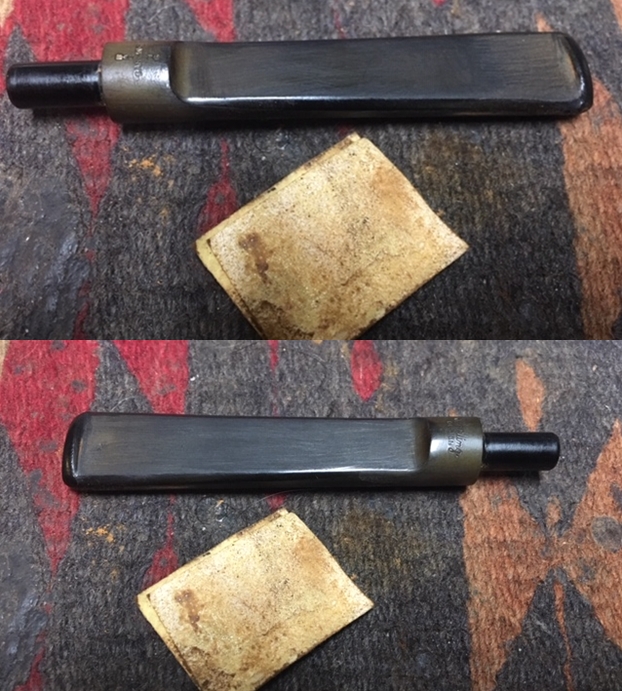
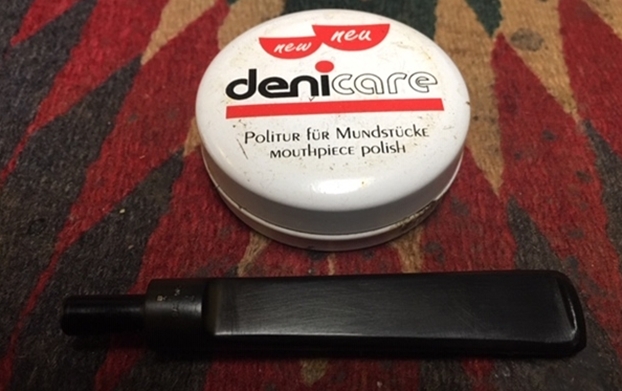
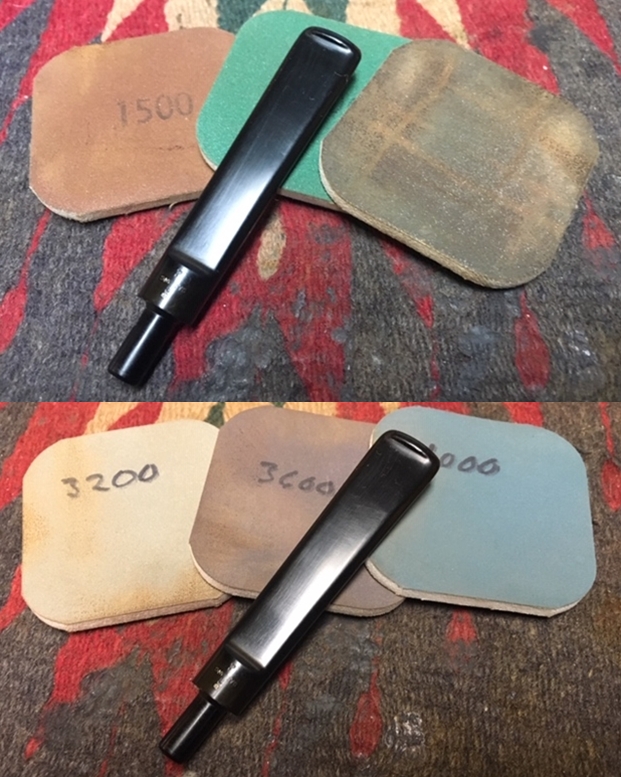
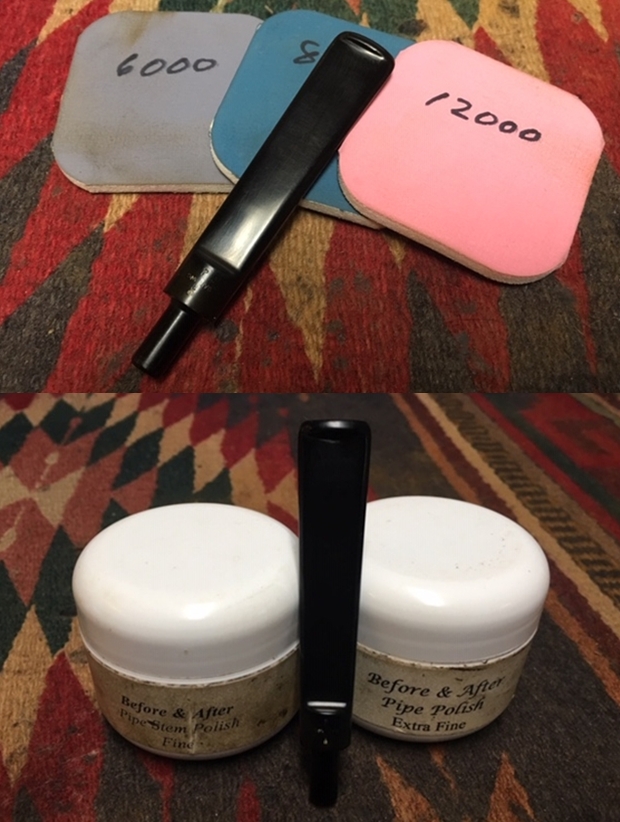
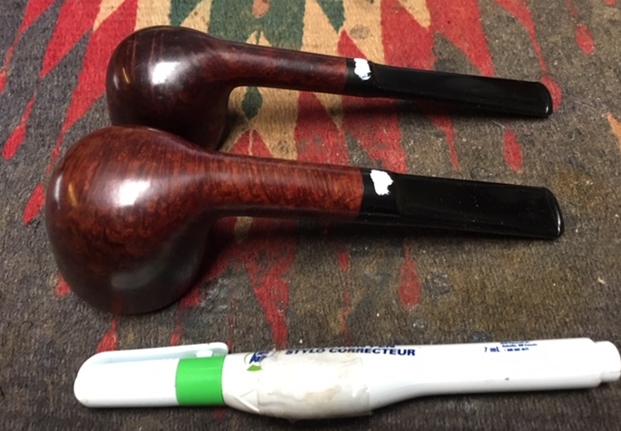
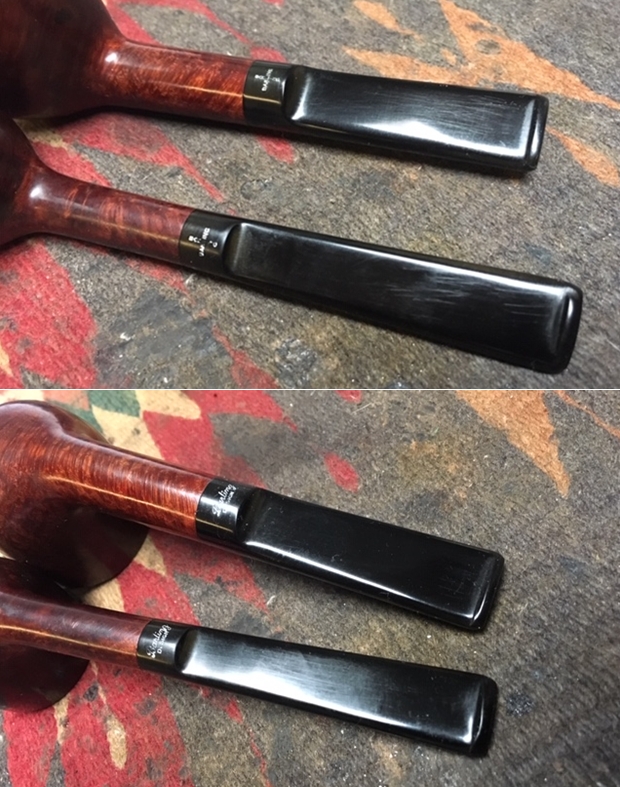
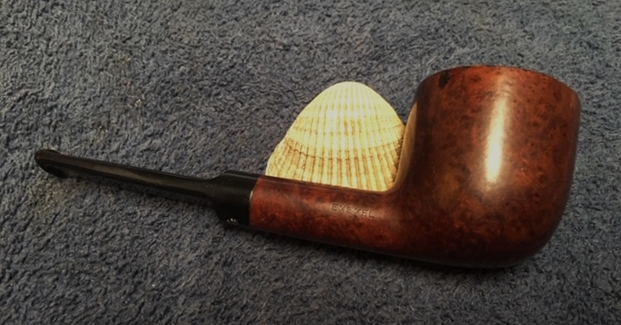
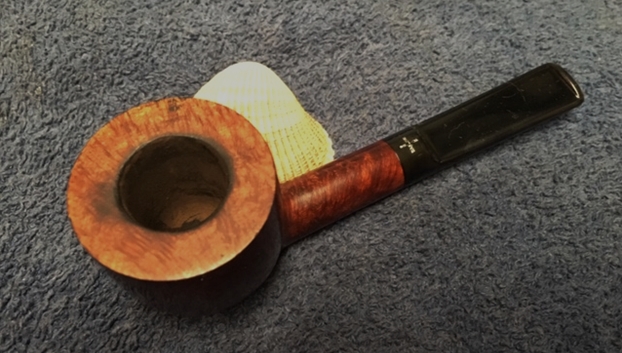
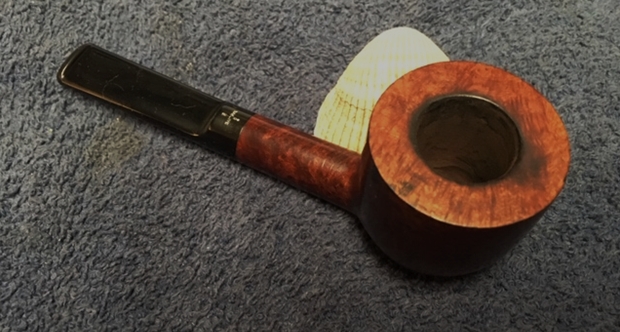
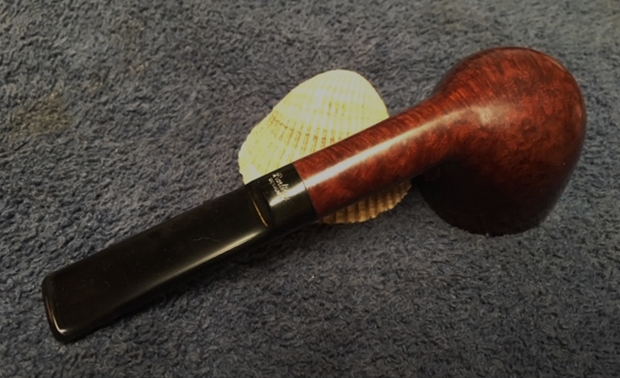
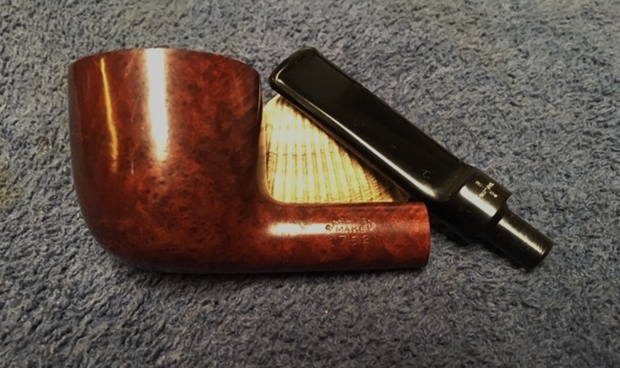
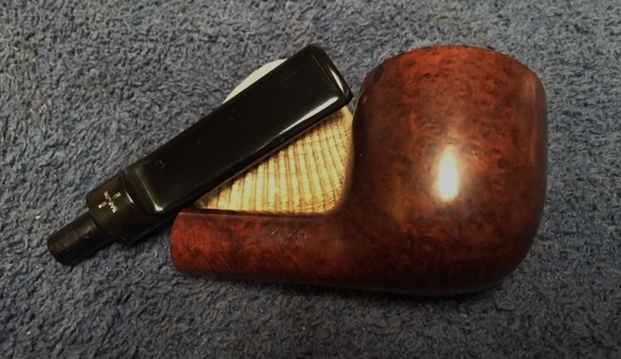
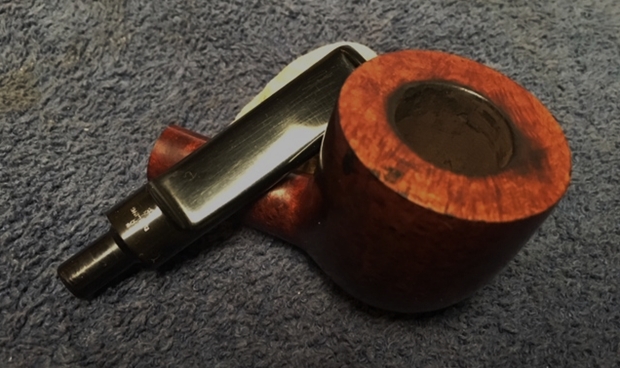
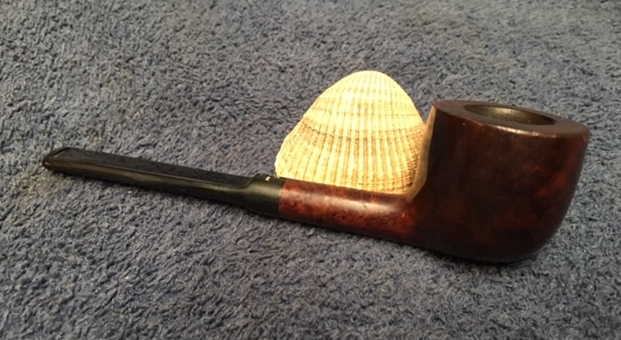
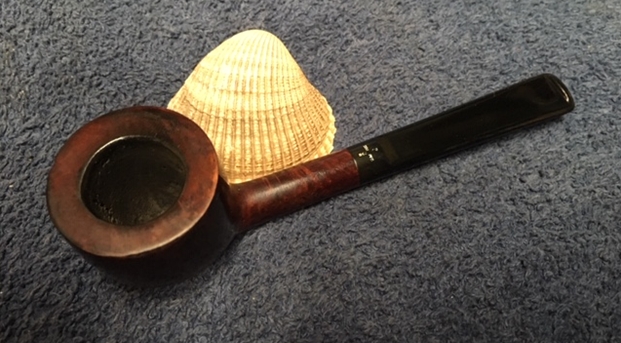
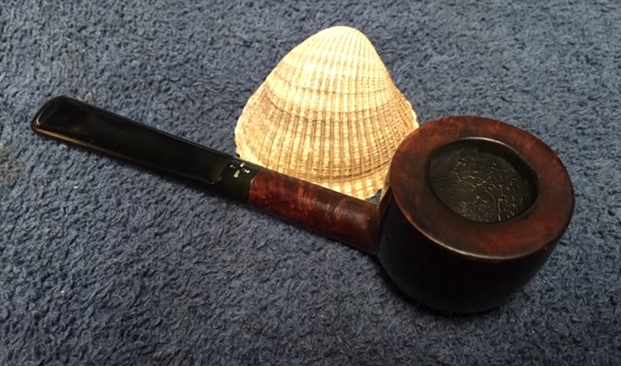
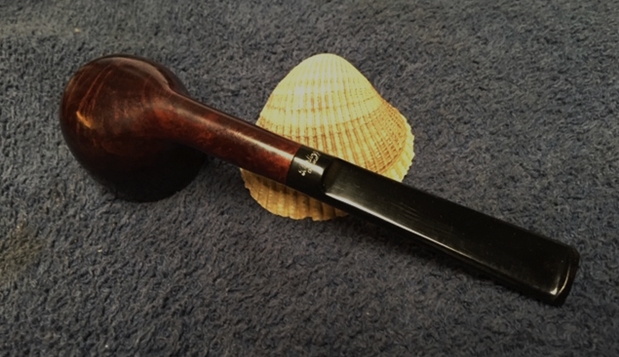
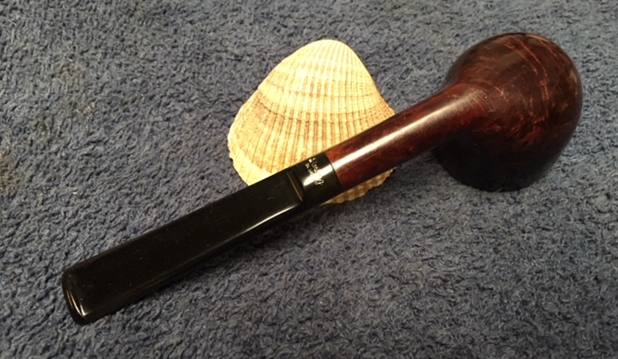
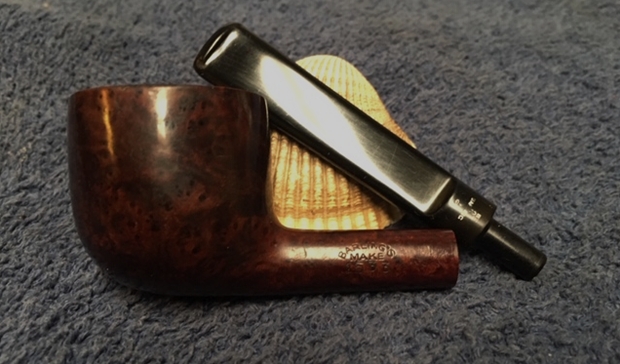
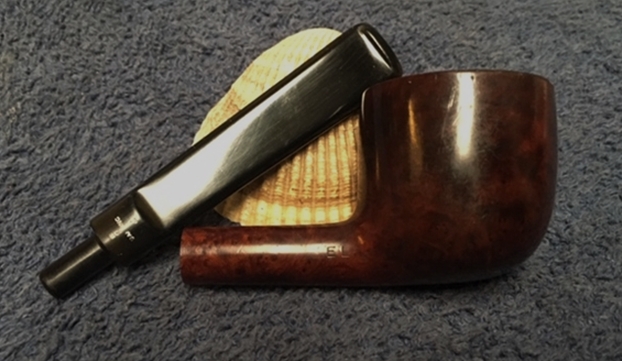
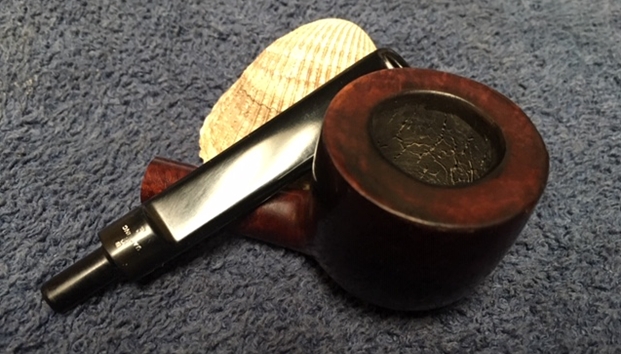
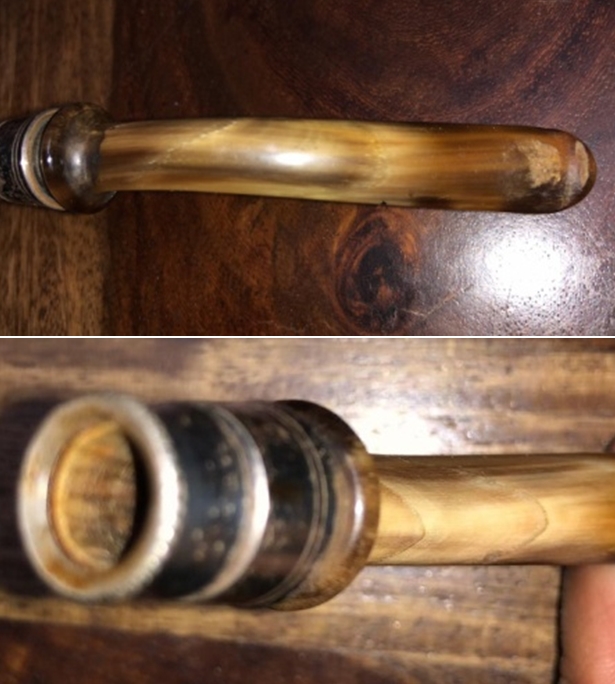
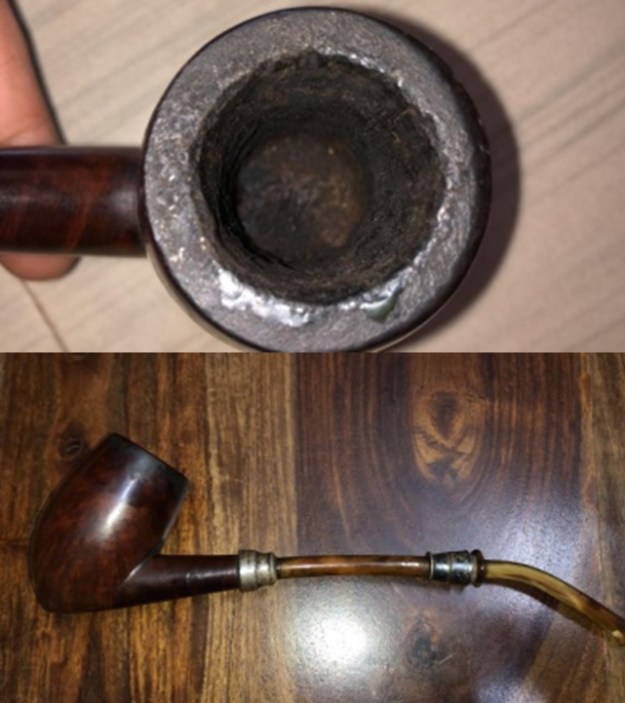
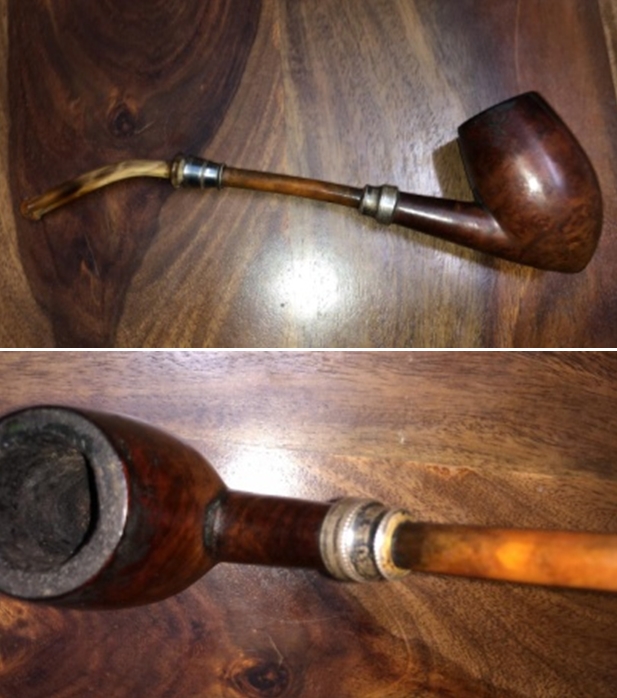
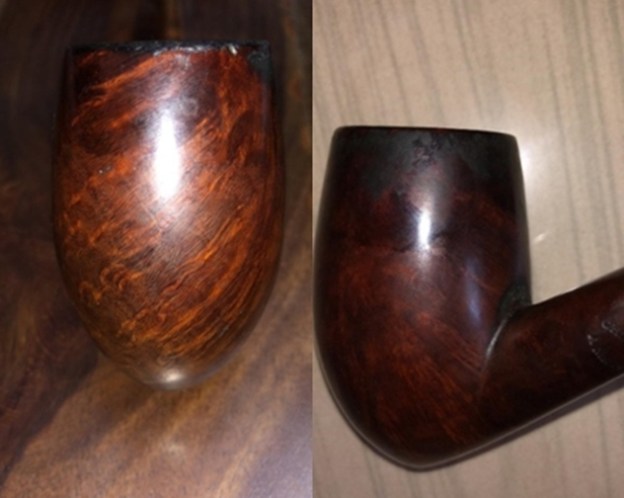
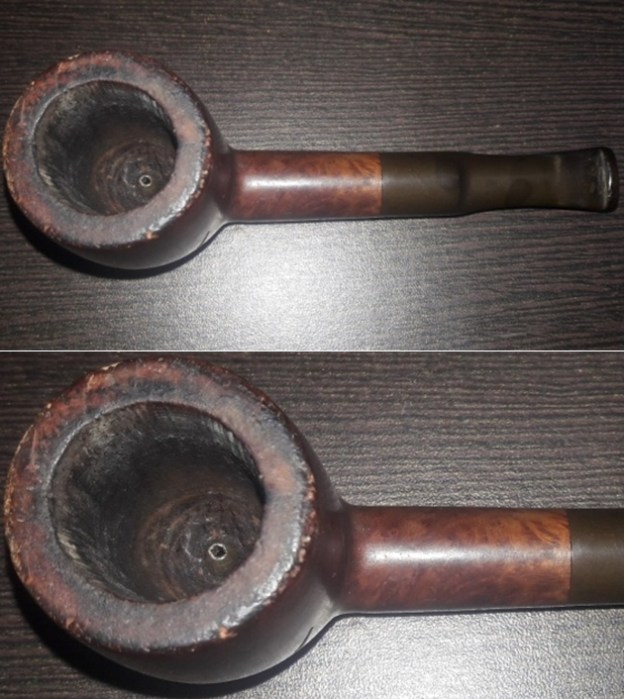
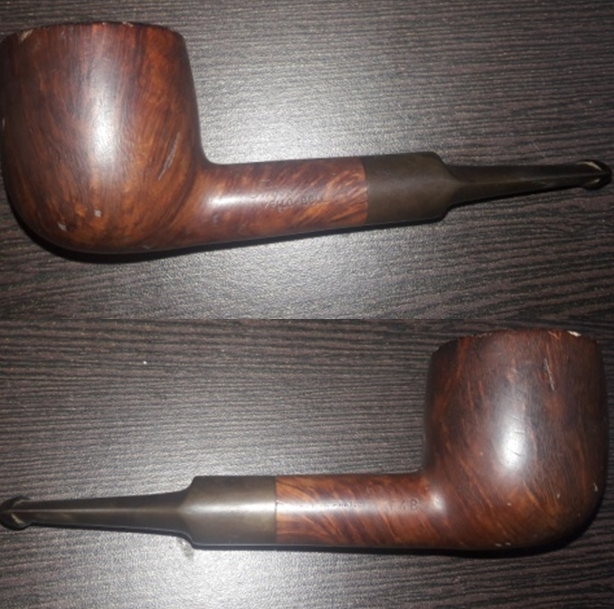
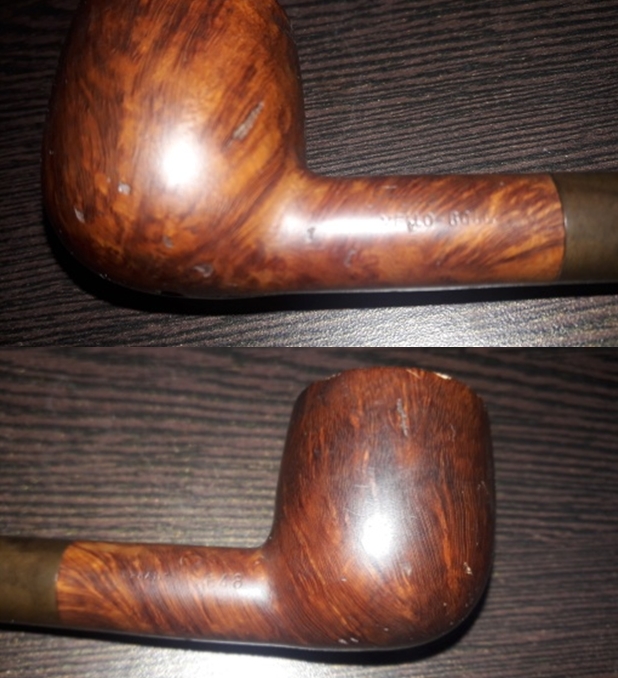
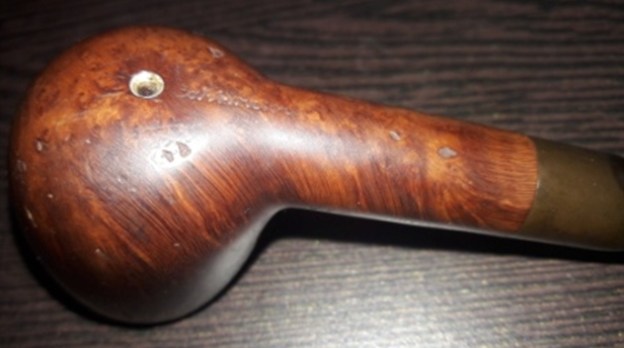
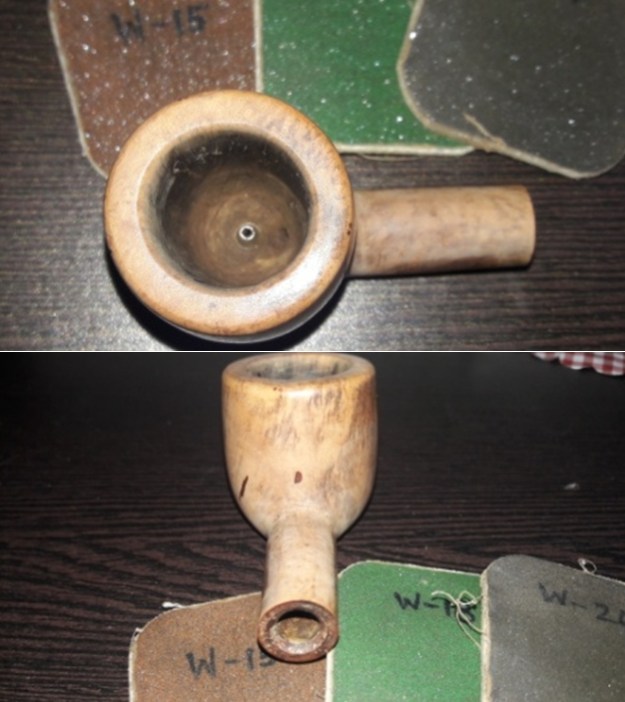
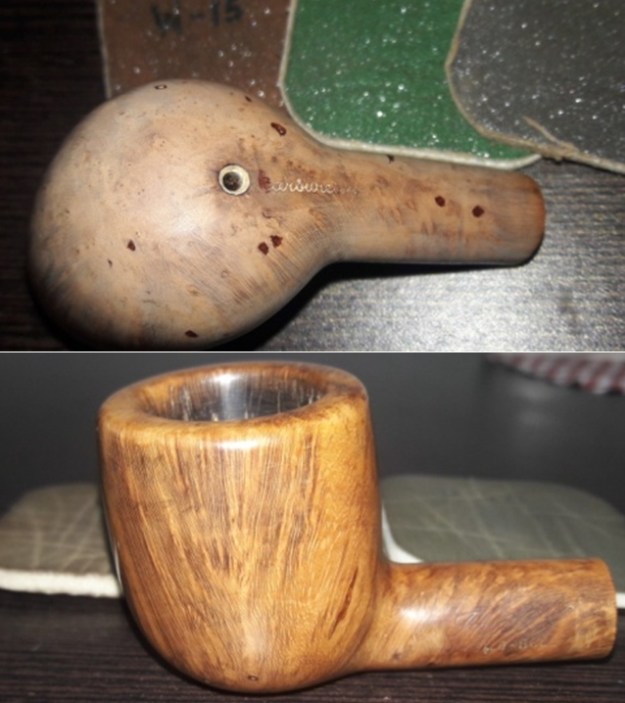
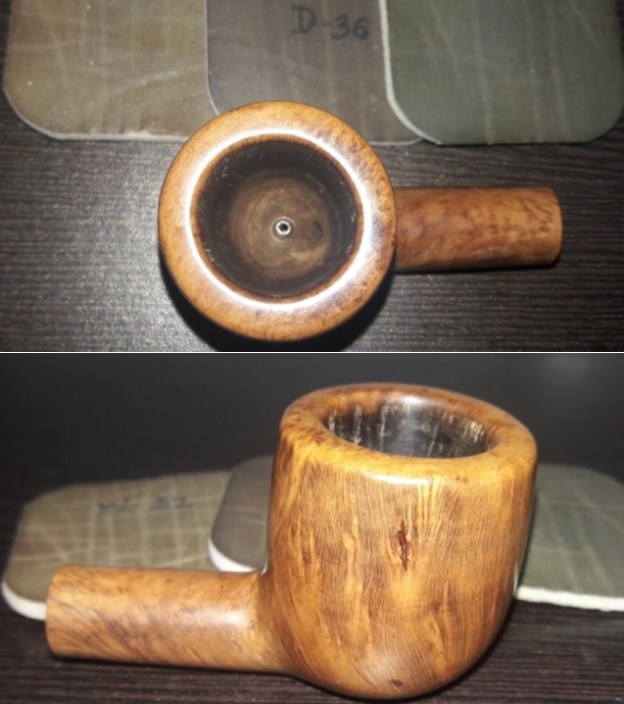
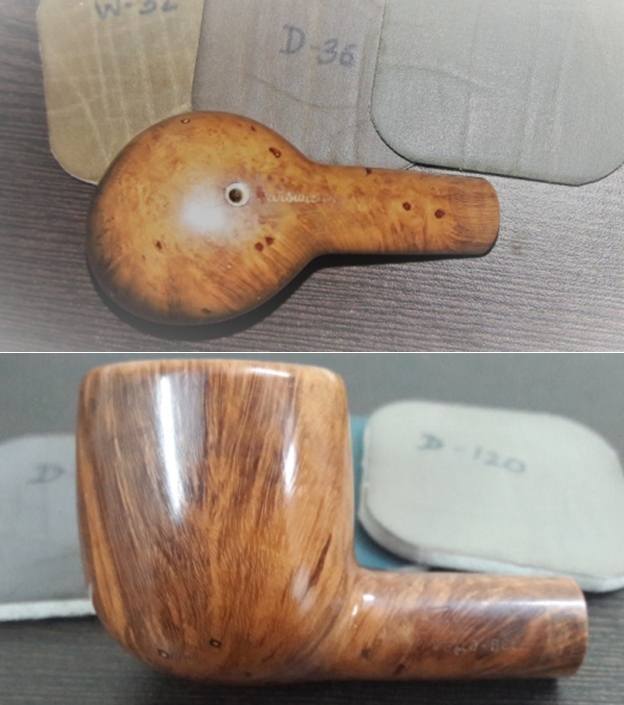
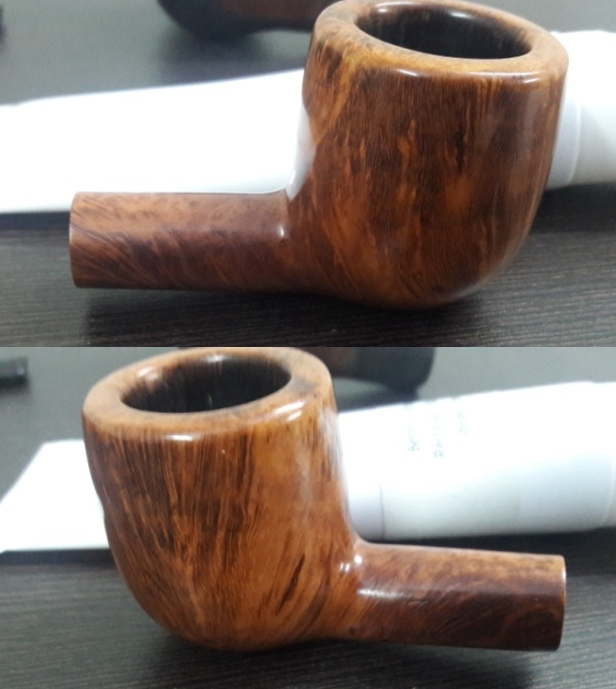
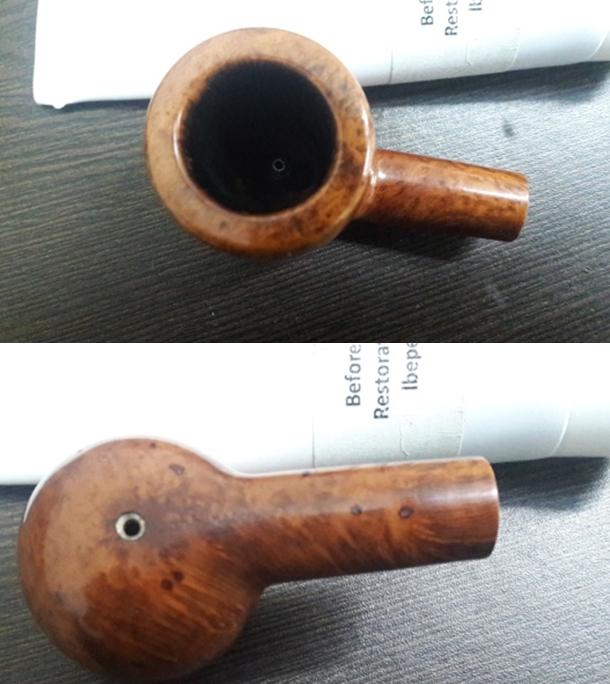
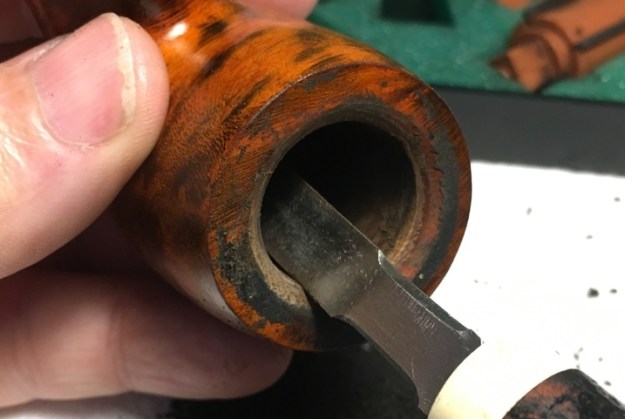
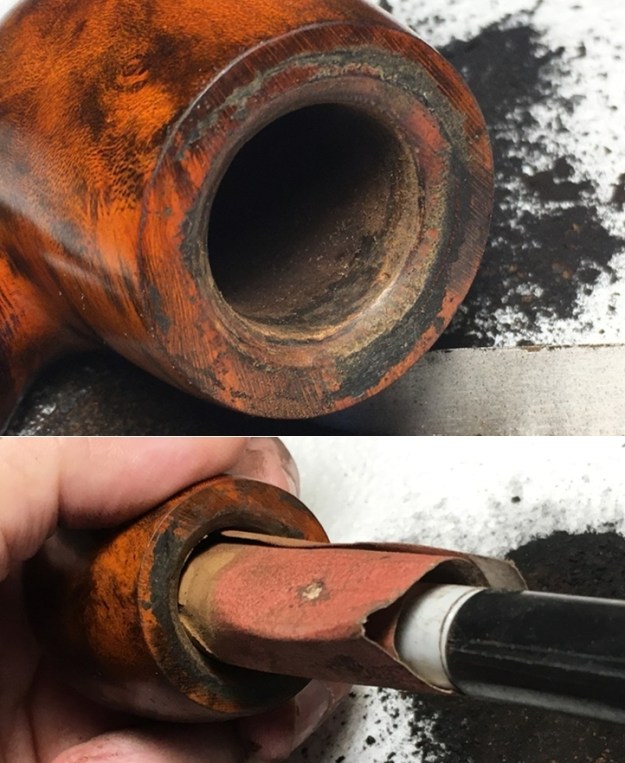
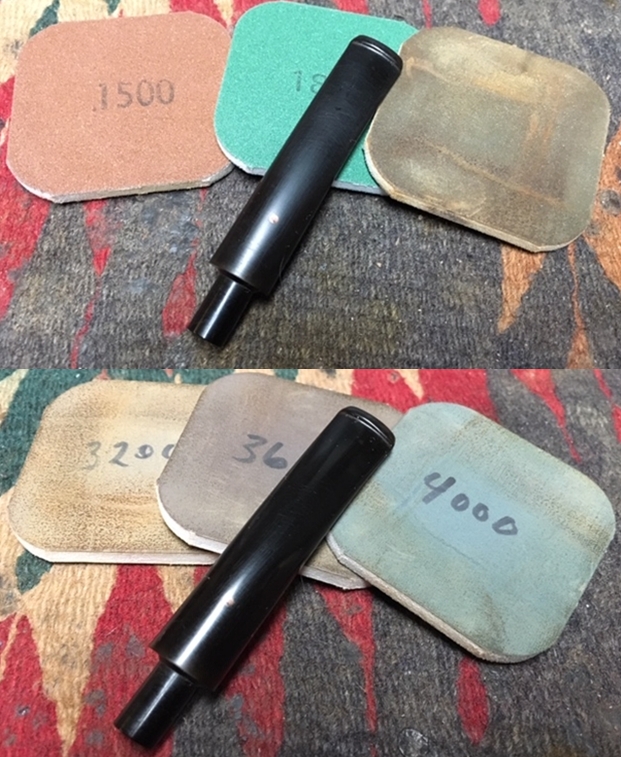
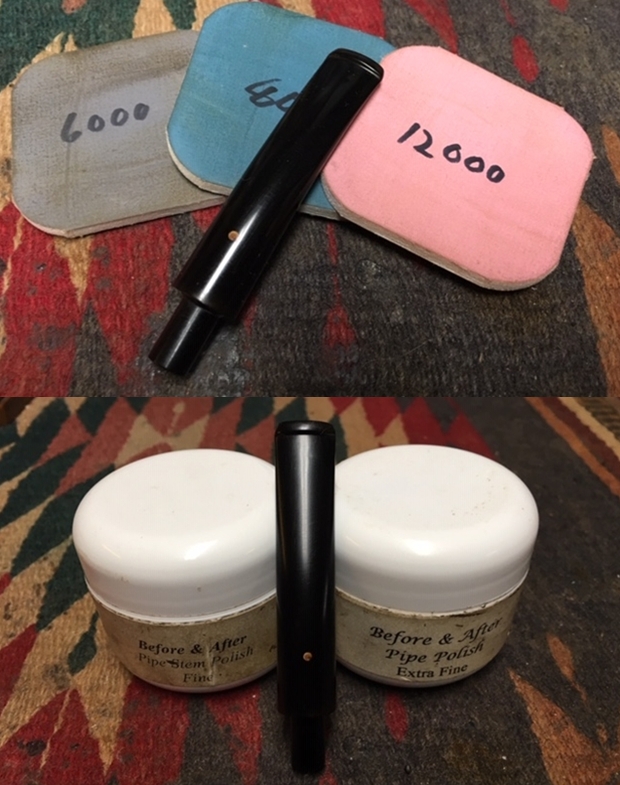
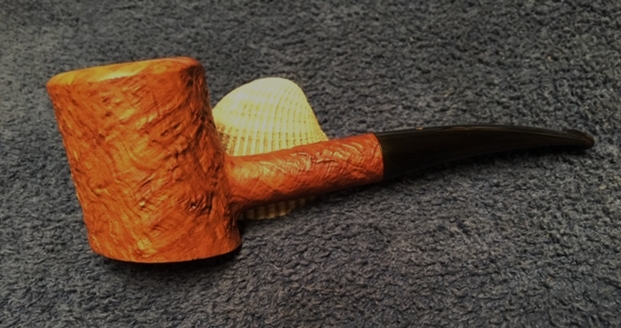
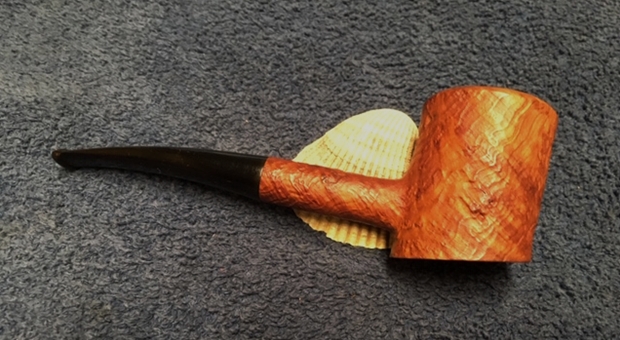
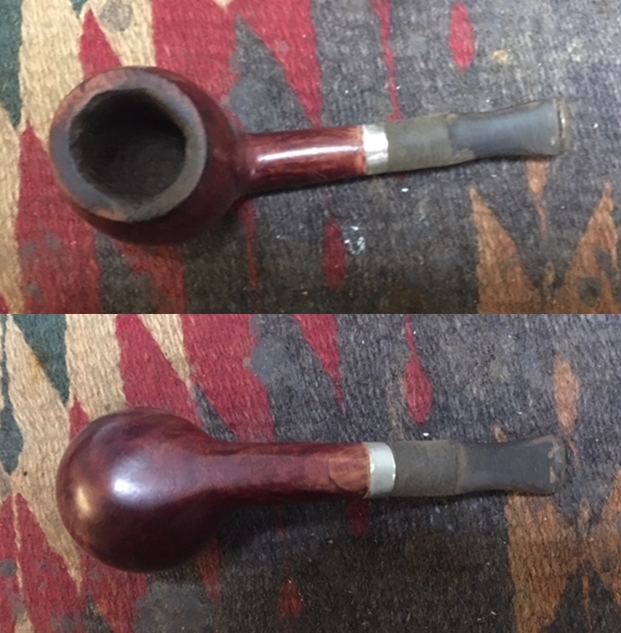
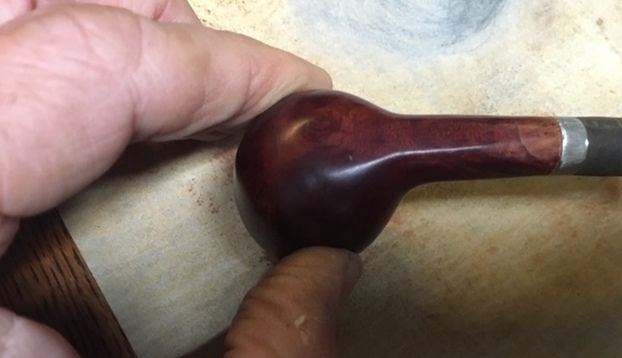
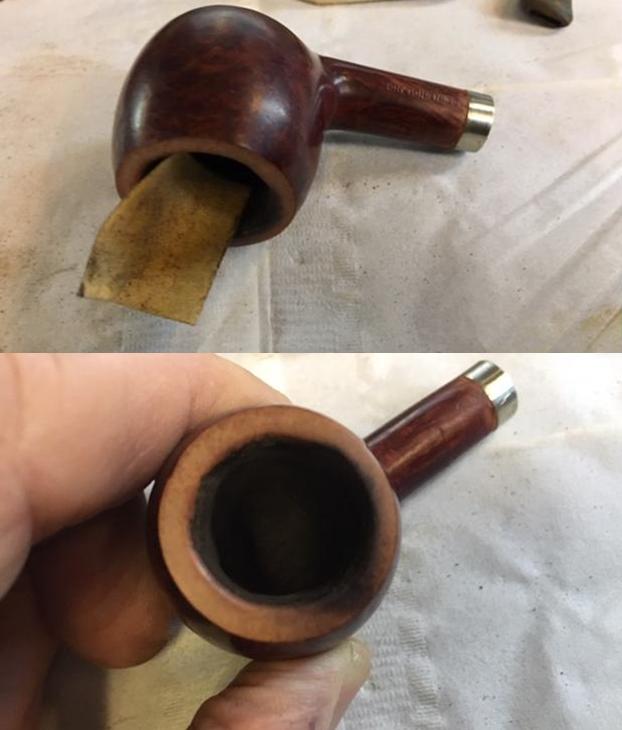
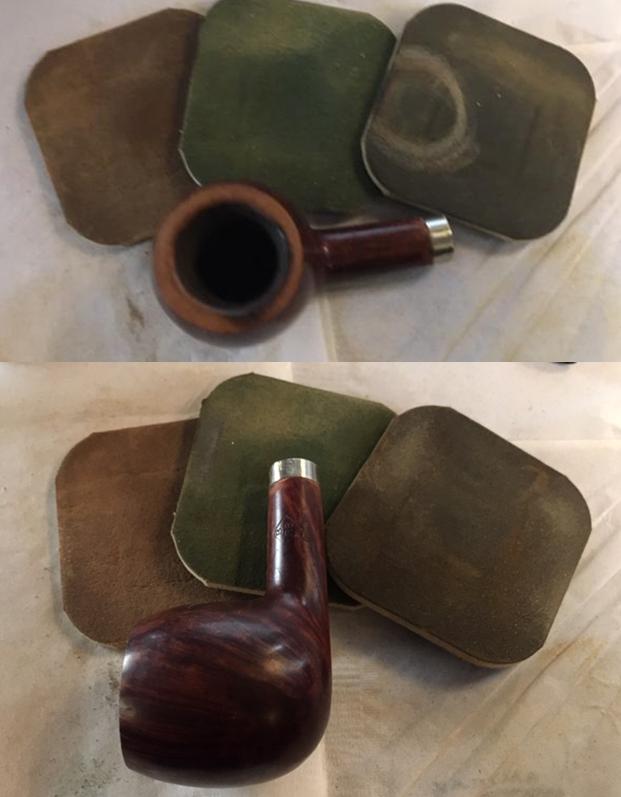
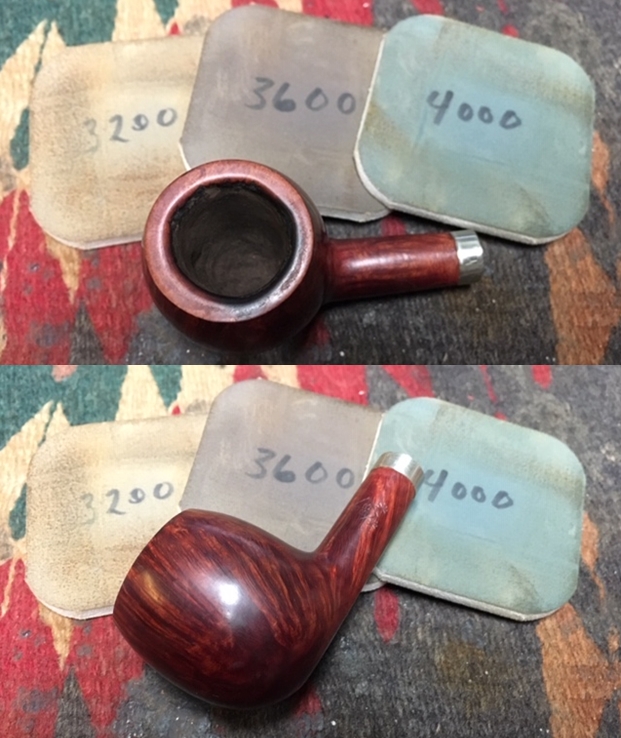
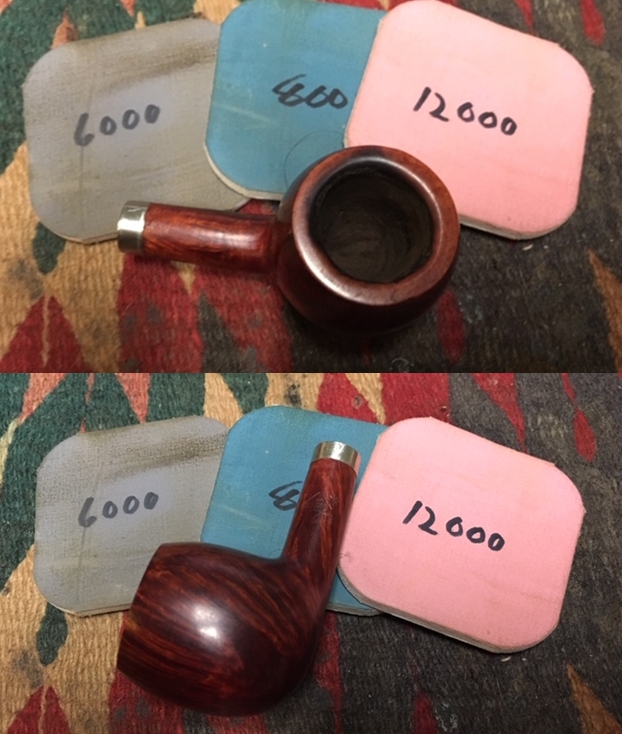
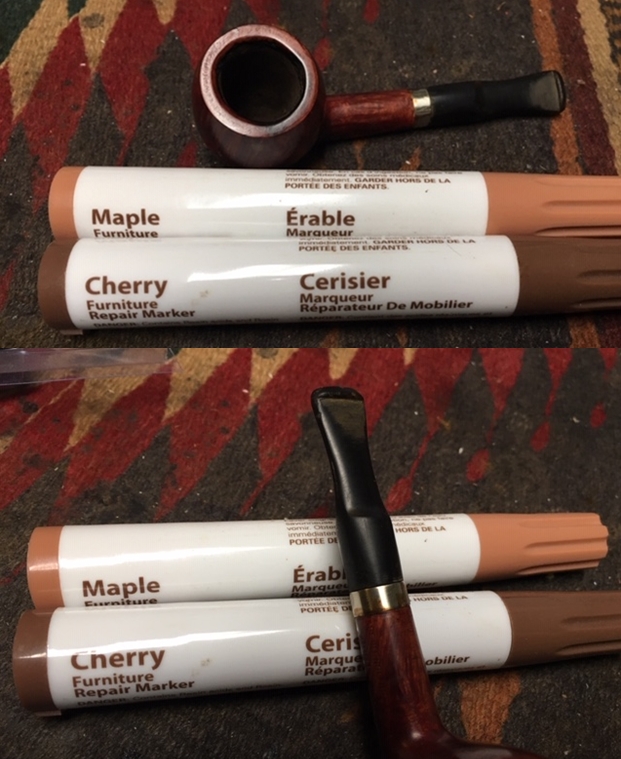
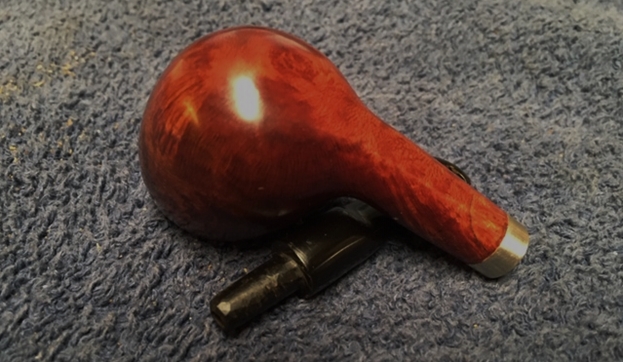
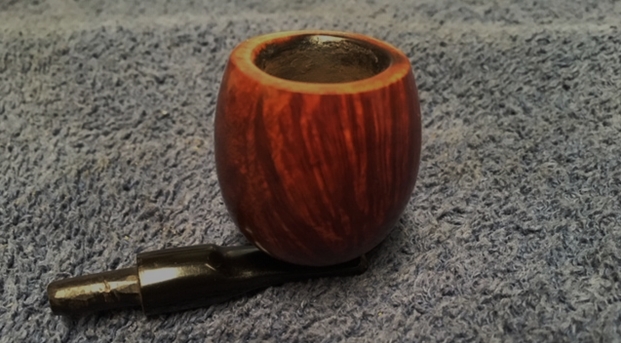
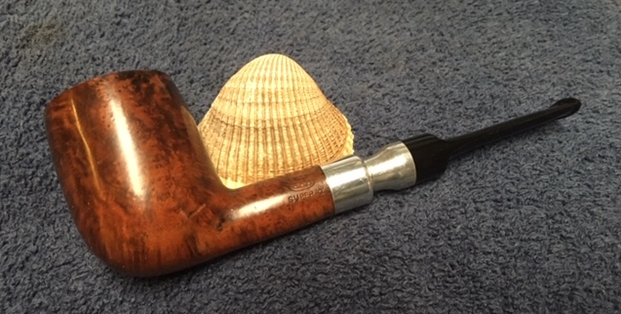
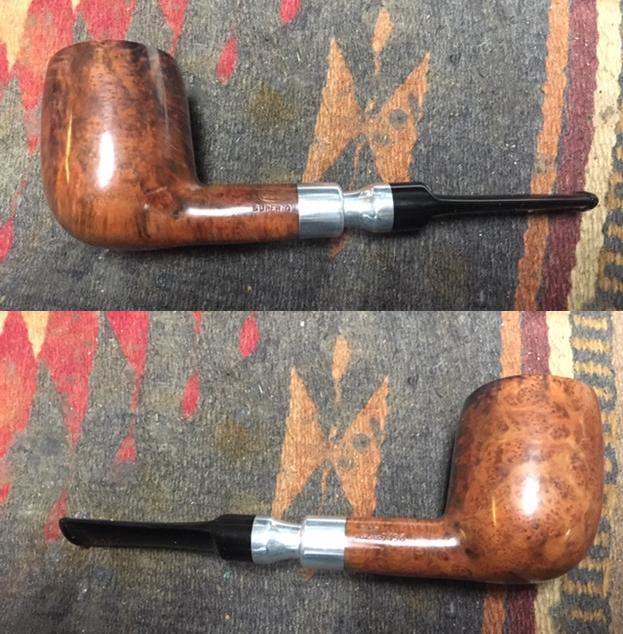
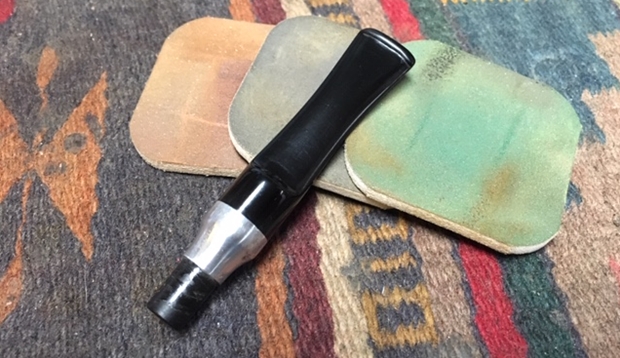
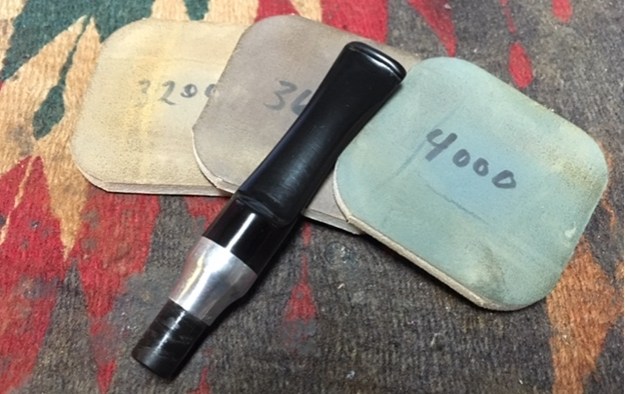
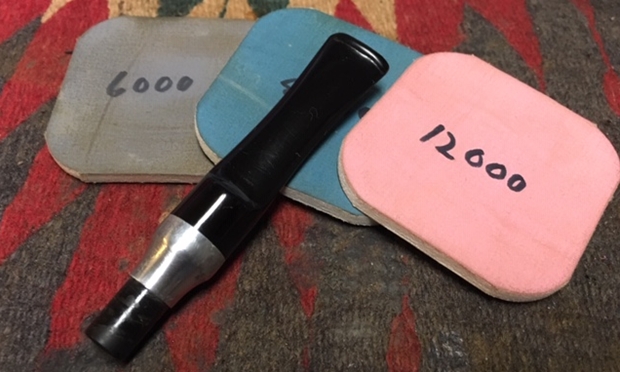
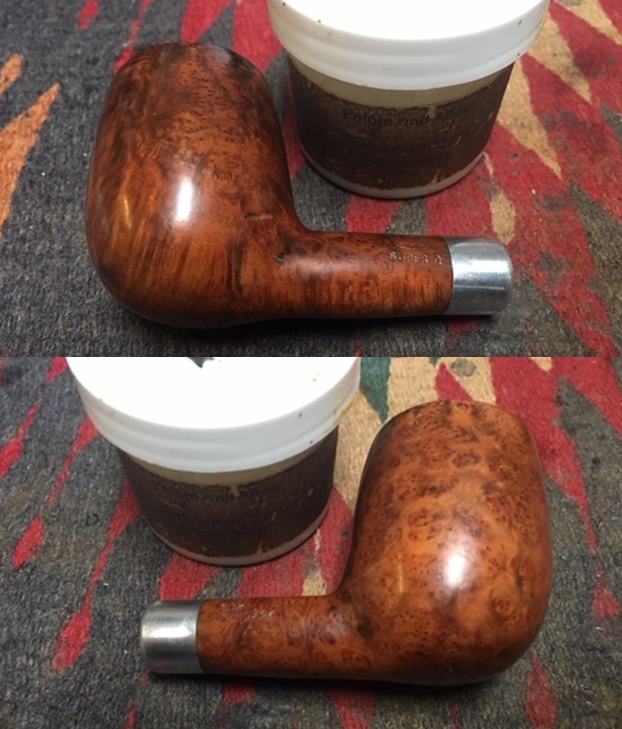
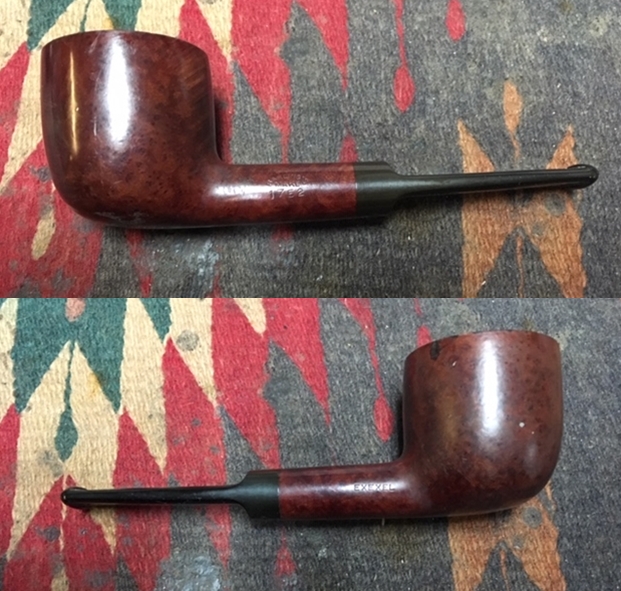
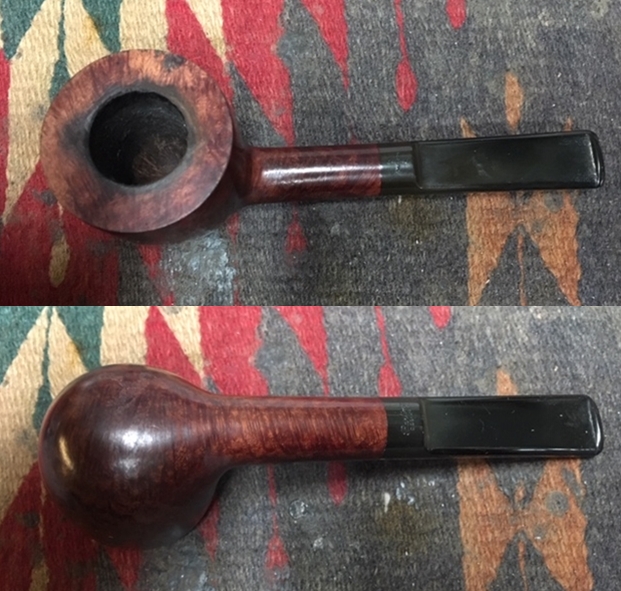
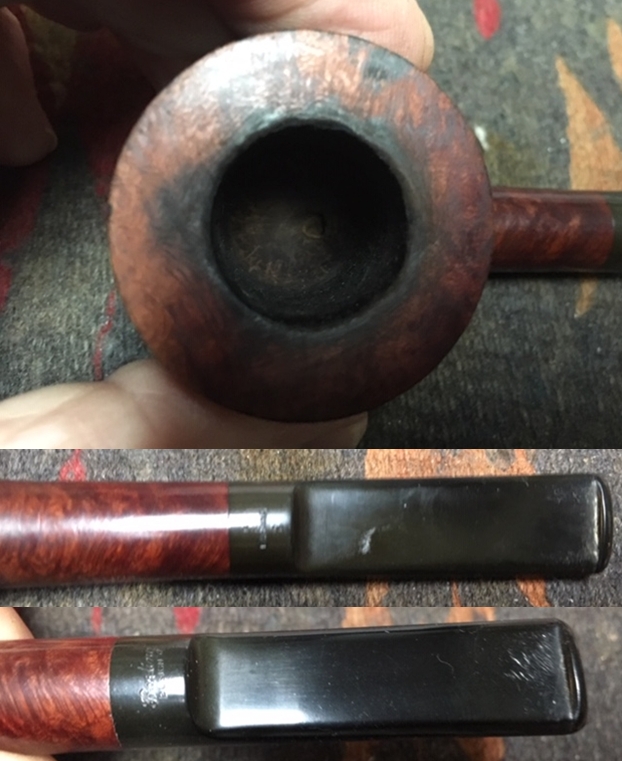
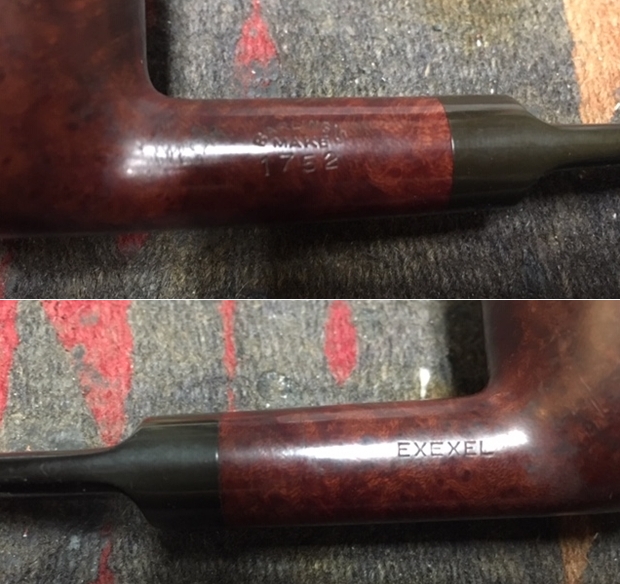
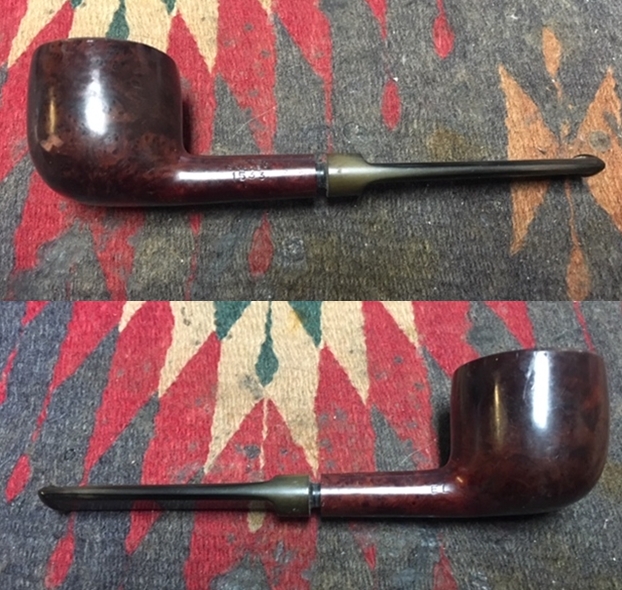
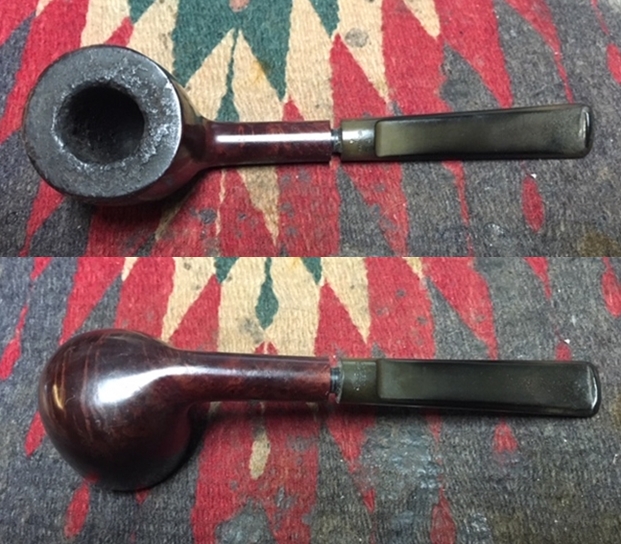
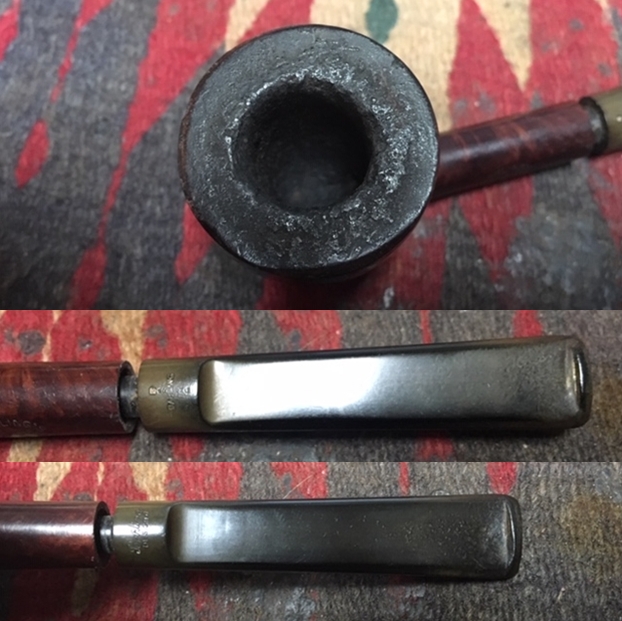
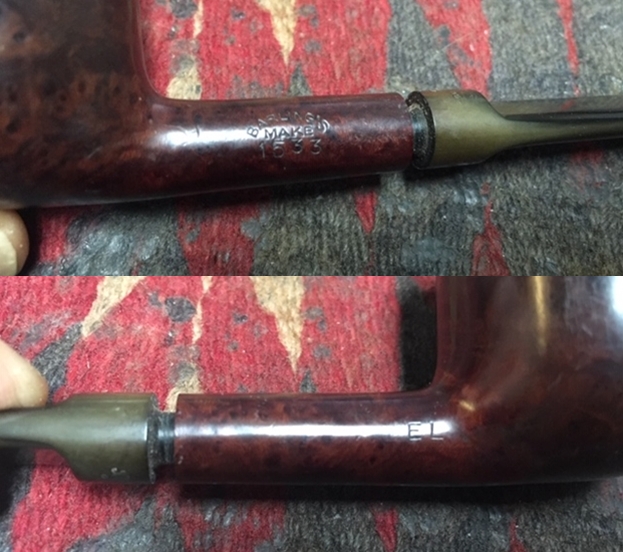
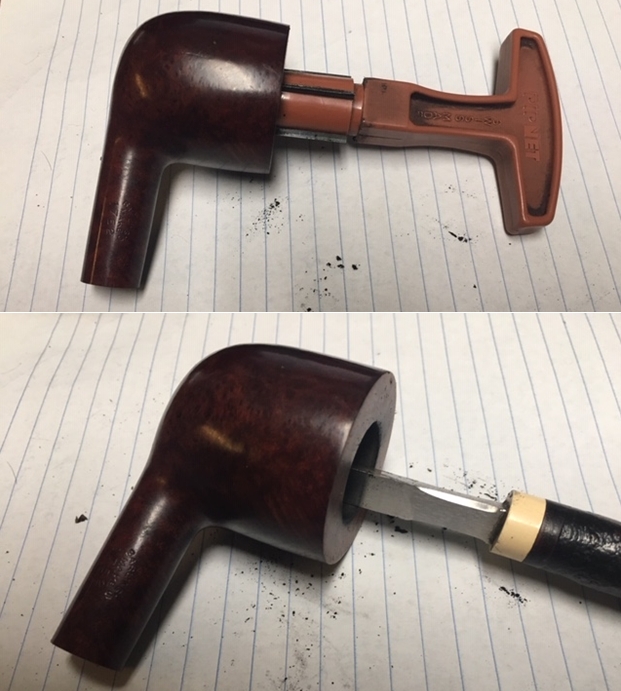
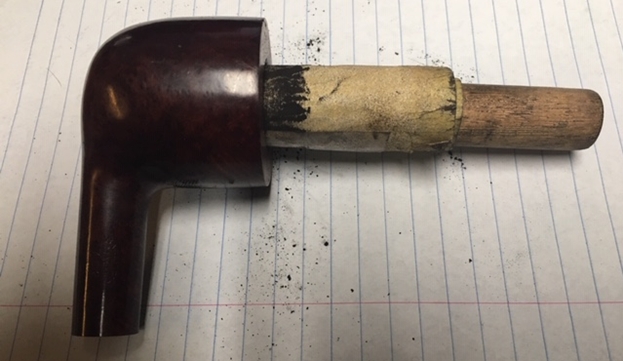
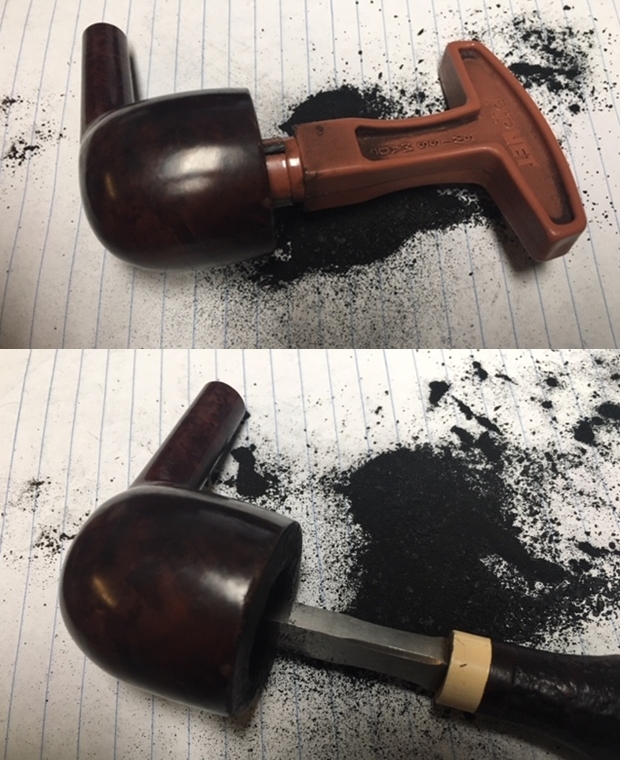
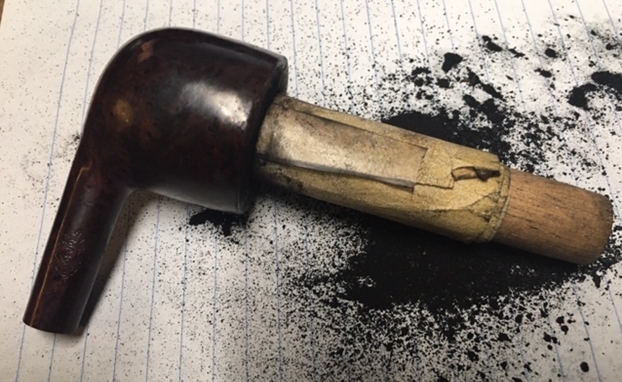
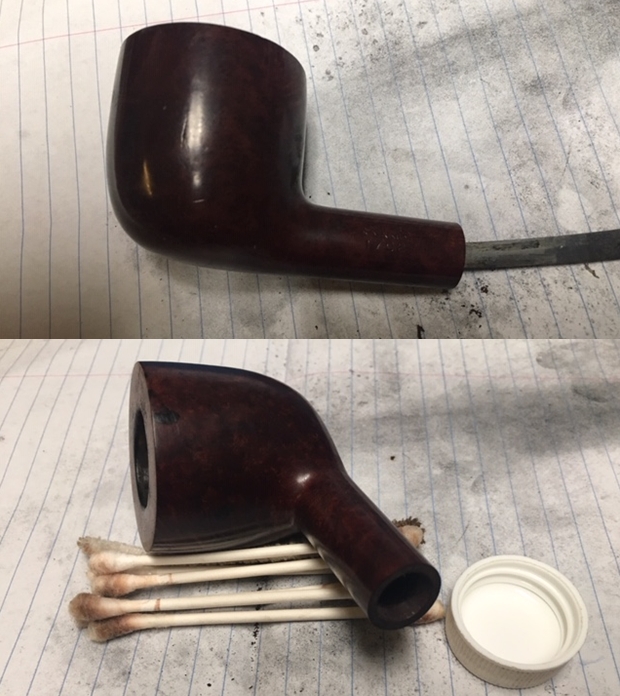
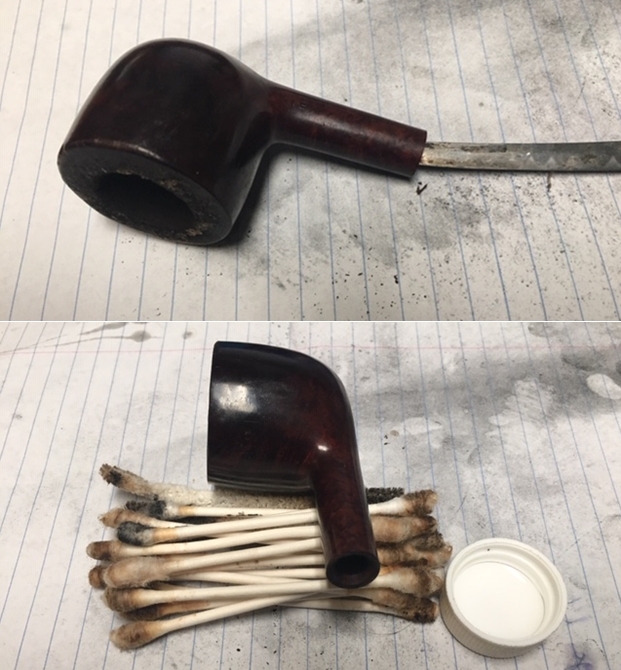
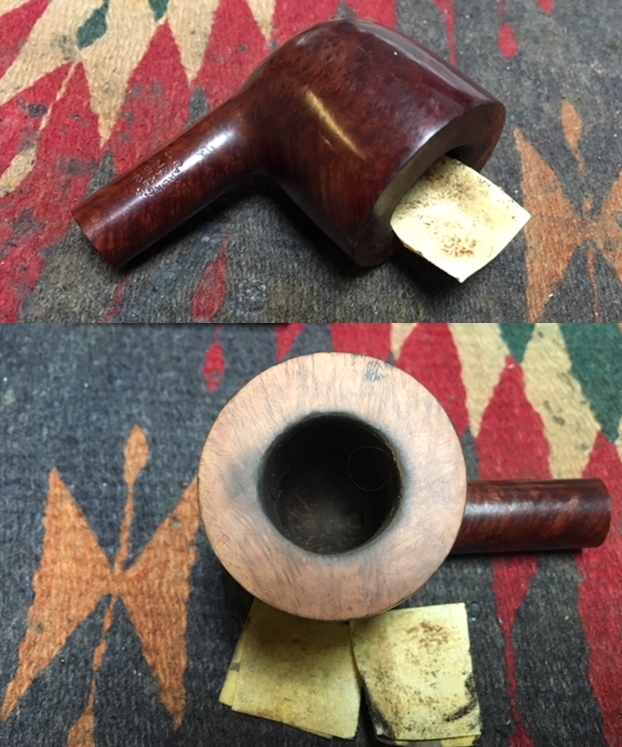
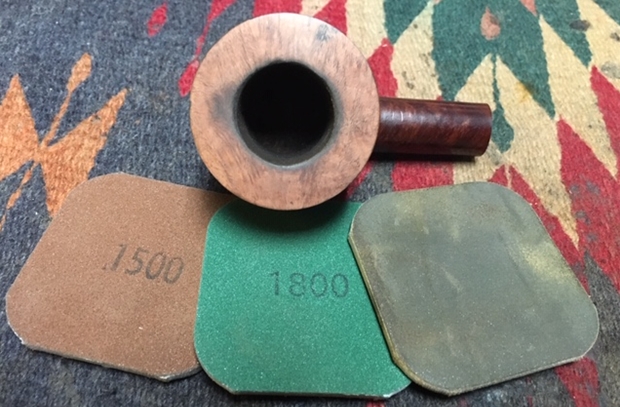
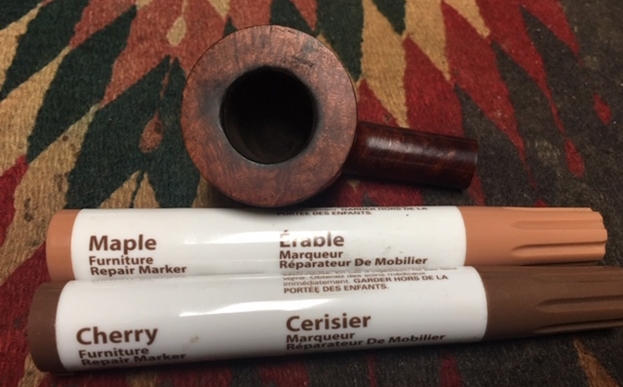
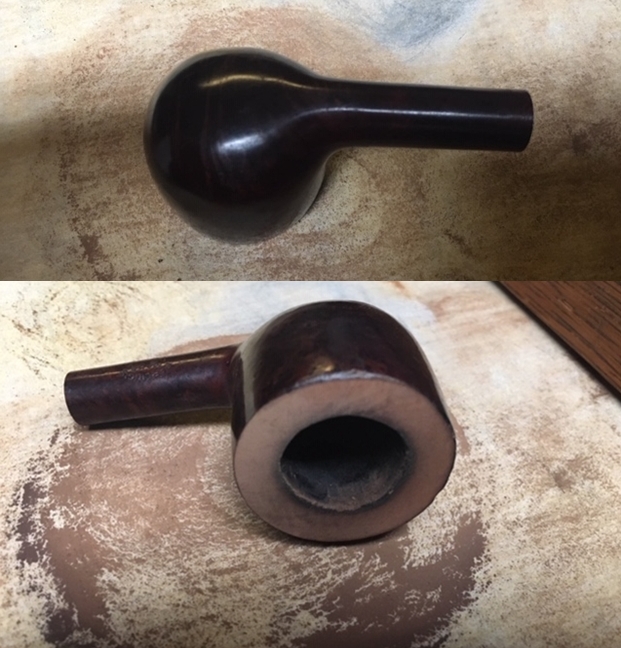
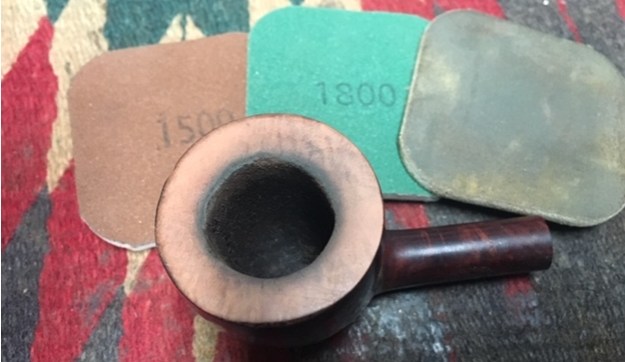
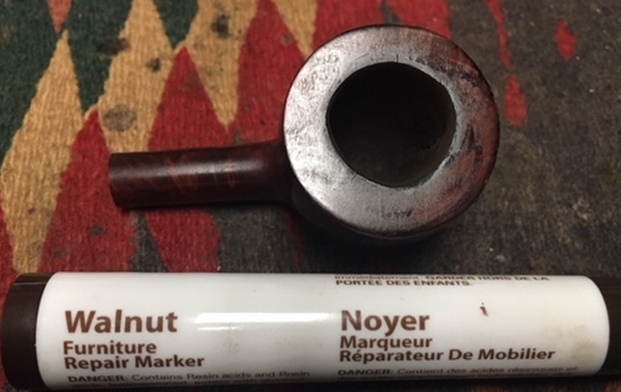
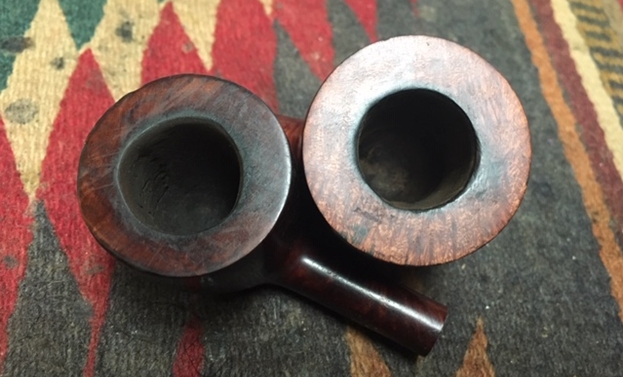
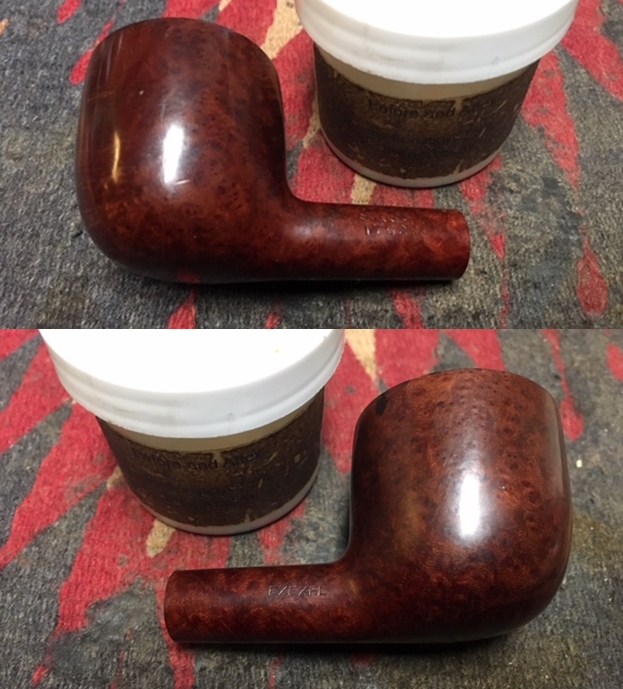
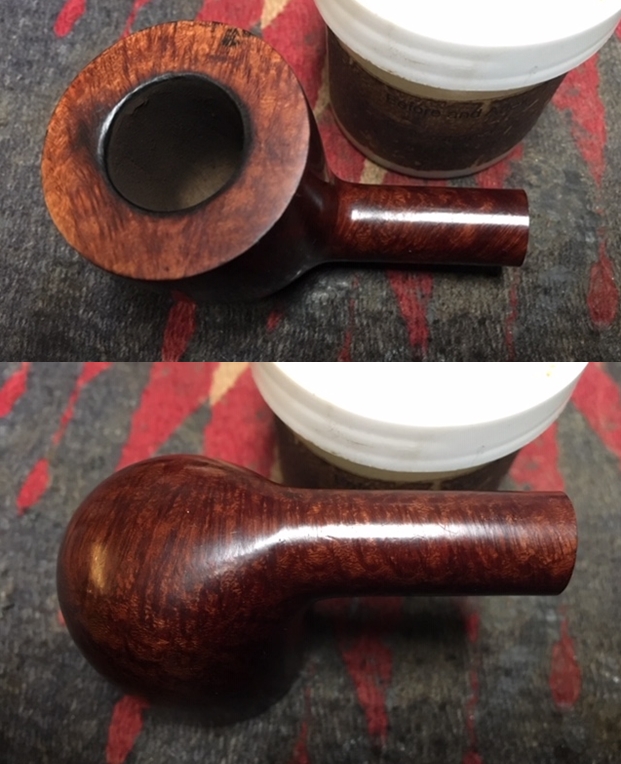
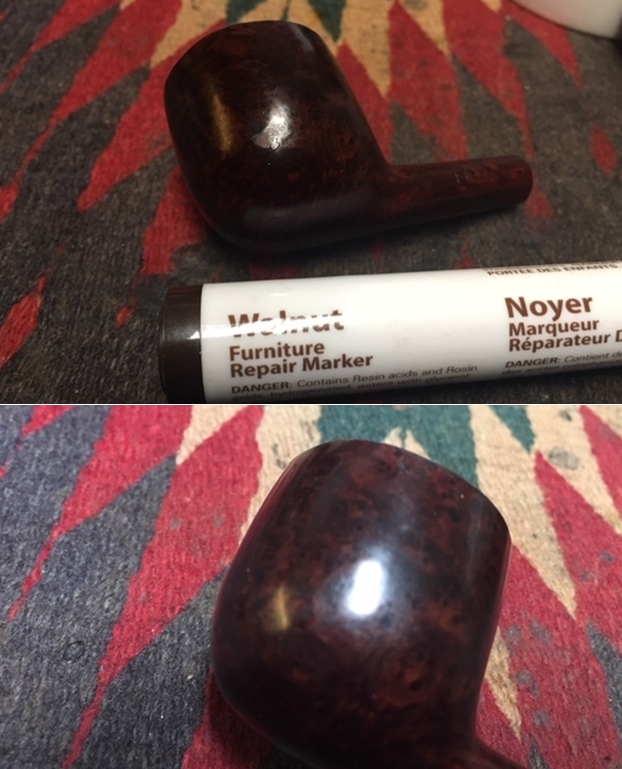
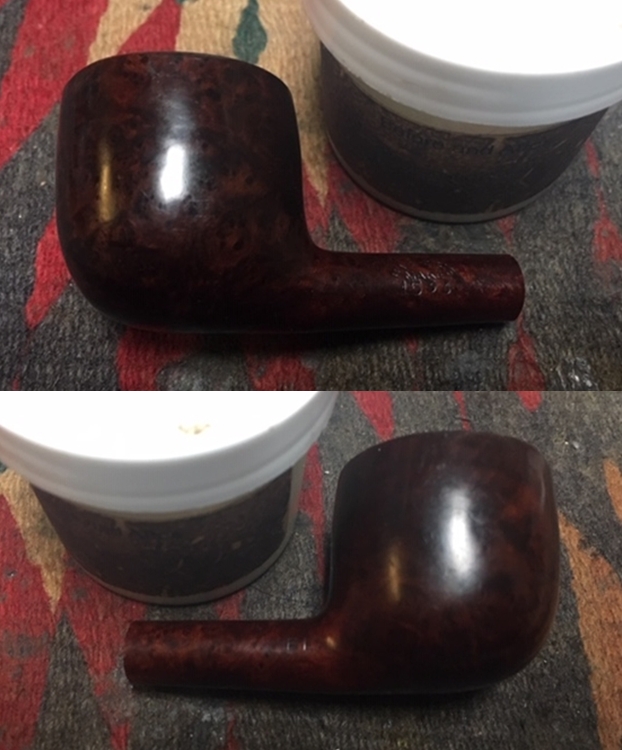
After opening the wrappings in the well packed box I found the two pipes. I took pictures of both pipes to capture their condition when they arrived. The first set of photos shows the larger 1752 pipe that he said “should be pretty easy”. The finish still had a shine on the bowl and shank. There were some paint flecks on the right side of the bowl. The rim top was in the issue as he had noted. The finish was spotty and there was significant burn damage around the inner edge and some darkening. There was a light cake in the bowl but no overflow on the rim top. The stem fit well in the shank though the shank was very dirty. The stem was oxidized and had light tooth marks and chatter on both sides near the button. I took some close up photos of the rim top and the stem to give a clearer picture of the condition of the pipe. The stem is stamped with the Barling cross on the top of the saddle and with the words Barling over Design. The stamping is legible but the white in the stamping is gone.I took photos of both sides of the shank to show the stamping on the pipe. The left side read BARLING’S arched over MAKE with the shape number 1752 underneath. The right side was stamped EXEXEL. The stamping is indeed Family Era vintage.The next set of photos shows the second Barling’s Make which was far more worn and dirty. The finish dirty and did not have the glow of the other pipe. There was a spot on the left side of the bowl where the finish was chipped. The rim top had a thick coat of lava overflowing from the bowl. It was hard to know if there was further damage to the top surface. There were some nicks in the outer edge of the rim top. The cake in the bowl on this one was thick and rock hard. The stem did not seat in the shank completely and when I looked the shank was very dirty and caked with tars. The stem was more oxidized than the other pipe and had tooth marks and chatter on both sides near the button. I took some close up photos of the rim top and the stem to give a clearer picture of the condition of the pipe. The stem is stamped with the Barling Cross on the top of the saddle and with the words Barling over Design. The stamping is legible but the white in the stamping is gone.I took photos of both sides of the shank to show the stamping on the pipe. The left side read BARLING’S arched over MAKE with the shape number 1533 underneath. The right side was stamped EL. The stamping is indeed Family Era vintage.I reamed both bowls with a PipNet pipe reamer working through the cutting heads to take the cake back to the bare briar so I could check for damage to the interior walls of the pipe. I cleaned up the reaming with a Savinelli Fitsall Pipe Knife and finished with a piece of dowel wrapped in 220 grit sandpaper to smooth out the walls. The first pipe was definitely cleaner than the second. The cake came out easily. The second pipe had a cake that was rock hard and I had to switch between the smallest cutting head on the PipNet and the Fitsall Knife to break through the cake. I worked my way alternating between the two until the bowl was reamed and then sanded it smooth. I scraped the mortise walls of both pipes with a pen knife to remove the buildup of hardened tars and oils. I cleaned out the mortise and the airway into the bowls as well as the airway in the stems of both pipes with alcohol, cotton swabs and pipe cleaners. I have to say that the second pipe was far dirtier than the first. I worked on the rim on the first pipe to clean up the damage. I worked on the inner edge of the bowl with a folded piece of 220 grit sandpaper. I lightly sanded the top of the rim with 220 grit sandpaper. I was able to remove the damage to the rim top and edges. I polished it with 1500-2400 grit micromesh sanding pads. I continued polishing it with 3200-12000 grit pads. I stained the rim top of the first bowl with Maple and Cherry stain pens to match the colour of the rest of the finish on the pipe. It still needs to be polished at this point but it matches the colour of the pipe.I worked on the rim top of the second pipe. I topped the bowl on a topping board with 220 grit sandpaper to remove the thick buildup and the nicks and damage on the surface of the rim. I sanded with micromesh sanding pads – wet sanding it with 1500-2400 grit pads and dry sanding it with 3200-12000 grit pads. I was able to remove the damaged areas and leave the rim top clean. There was still some damage and darkening around the inner edge but I have chosen to leave that for now. I stained the rim top of the second bowl with a Walnut stain pen to match the colour of the rest of the finish on the pipe. It still needs to be polished at this point but it matches the colour of the pipe.I took a photo of both pipes together at this point to show the clean bowls and the condition of the rim tops. The colour of each matches the respective bowl. Both still have damage to the inner edge of the bowl. I had not decided how to address that issue. Scott did not want the inner edge beveled at all. I worked Before & After Restoration Balm into the briar of the first bowl with my fingertips to clean, enliven and protect the wood. I let the balm sit for about 20 minutes and buffed it off with a soft cotton cloth. I took photos of the pipe at this point in the process to show what the bowl and rim looked like. I am happy with the stain match on the rim top. The next four photos show the larger and better conditioned 1752 bowl. It looks really good after the balm and buffing. I smoothed out the damaged spot on the finish on the left side of the bowl and restained it to match the rest of the stain. I worked Before & After Restoration Balm into the briar of the second bowl with my fingertips to clean, enliven and protect the wood. I let the balm sit for about 20 minutes and buffed it off with a soft cotton cloth. I took photos of the pipe at this point in the process to show what the bowl and rim looked like. I am happy with the stain match on the rim top. The next four photos show the smaller bowl, the 1533, that was in worse condition than the first. It looks really good after the balm and buffing. I sanded out the tooth marks and chatter on the stem on larger 1752 pipe with a folded piece of 220 grit sandpaper. I forgot to take photos of the stem at this point in the process. I rubbed the stem down with Denicare Mouthpiece Polish to remove as much of the oxidation as possible without damaging the stamping.I polished it with the micromesh sanding pads – wet sanding it with 1500-2400 grit pads and dry sanding with 3200-12000 grit pads. I rubbed it down with Obsidian Oil between each pad. I polished it further with Before & After Pipe Polish – both Fine and Extra Fine. I gave it a final coat of Obsidian Oil and set it aside. With that stem completed I turned to the second stem, the one on the 1533 the dirtier pipe. Upon examination I found that the stem was a twin bore bit. It had the classic “Biteproof” stem on it. And even that feature had not kept it safe from tooth dents and mark. I “painted” the surface of the stem with the flame of a Bic lighter to lift the tooth marks. Once that was finished I sanded out the tooth marks and chatter with 220 grit sandpaper. After I sanded out the tooth marks and chatter on the stem on 1533 pipe I rubbed the stem down with Denicare Mouthpiece Polish to remove as much of the oxidation as possible without damaging the stamping.I polished it with micromesh sanding pads – wet sanding it with 1500-2400 grit pads and dry sanding with 3200-12000 grit pads. I rubbed it down with Obsidian Oil between each pad. I polished it further with Before & After Pipe Polish – both Fine and Extra Fine. I gave it a final coat of Obsidian Oil and set it aside. I filled in the letters on the top and underside of the Barling’s Make stems with a white out pen. The tip of the pen was frozen so I slit a hole in the side of the pen and used the white out to fill the stamping on the stems. I let it cure and harden. Once it had hardened I scraped it off with my fingernail and left the remainder behind in the letters. I still needed to polish the stem and bowl on the wheel with Blue Diamond to remove the small scratches that showed up with the flash. Once that is done the pipe will be ready to send back to Scott in California.I polished the bowls and stems with Blue Diamond to polish out the scratches in the briar and rubber. I gave the bowls and the stems multiple coats of carnauba wax. I buffed the pipes with a clean buffing pad to raise the shine. I hand buffed them with a microfiber cloth to deepen the shine. Both pipes polished up pretty nicely. The original patina on both bowls came alive with the buffing and worked well with the polished black vulcanite stems. Both pipes have a rich look. The finished pipes are shown in the photos below. The first pipe is the one that was in “better condition” when it arrived. I think it is a bit newer than the second one. The shape, finish and flow of the pipe and stem speak well of the Family Era Barling’s Make pipes. The dimensions of the first pipe, shape 1752 are Length: 5 1/2 inches, Height: 1 3/4 inches, Outside diameter of the bowl: 1 3/4 inches, Chamber diameter: 3/4 of an inch. The dimensions of the second pipe, shape 1533 are Length: 5 1/4 inches, Height: 1 1/2 inches, Outside diameter of the bowl: 1 1/2 inches, Chamber diameter: ¾ of an inch. This pair will soon head back to California so that Scott can enjoy them. Thanks for walking through the restoration with me as I worked over this beautiful pair of Family Era Barling’s Make Pipes… now I need get these packed up and back to Scott! 
A Challenging Restoration of Vintage Era First Choquin “A Metz”


Blog by Paresh Deshpande

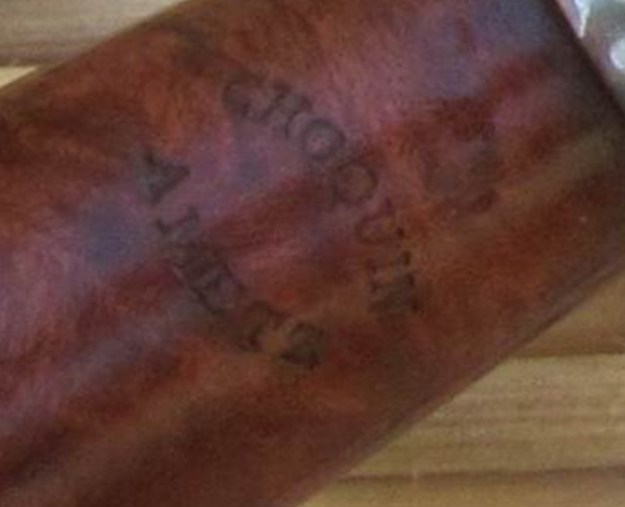
I had been on a short leave to my home town last month and that is where this happened!!!!! Even though there are still a number of pipes from the two of the three inherited boxes of pipes waiting their turn for restoration, curiosity got the better of me and I could not resist the temptations of opening the third box. What happened thereafter is that I had to unpack all the pipes earmarked to accompany me to my work place for restoration in my free time which in turn invited the wrath of my wife who had helped in packing in the first place, and repack the newly selected pipes from the third box!!!!!! In addition to the regular collection of Barling’s, Charatan’s, Comoy’s and other assorted collection, I came across two pipes which caught my fancy!!!!!The pipe on the left bears a football stamp that reads “CHOQUIN” over “A METZ” and the one on the right side simply reads “GBD”  (there are other stampings on the silver ferrule, details of which will be highlighted when it comes up for restoration). Both these pipes looked vintage and unique enough that I immediately Facetimed with Mr. Steve of rebornpipes. His admission that he is willing for a trade with me for these two pipes was an indication enough for me to know and understand their uniqueness!!! Thus these two pipes moved to the top of my unorganized and chaotic list of restoration.

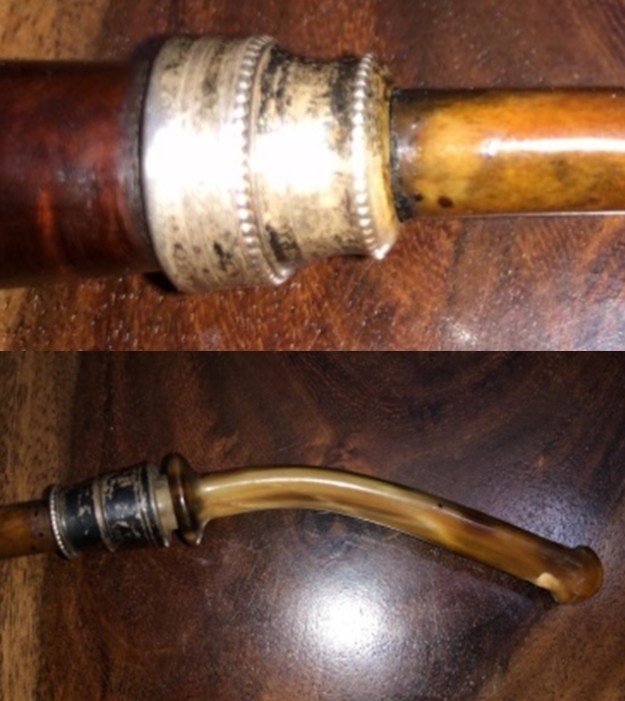
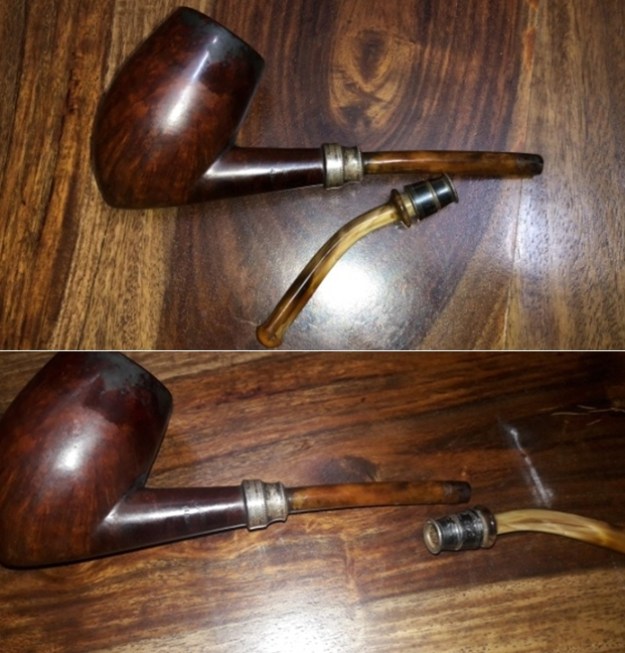
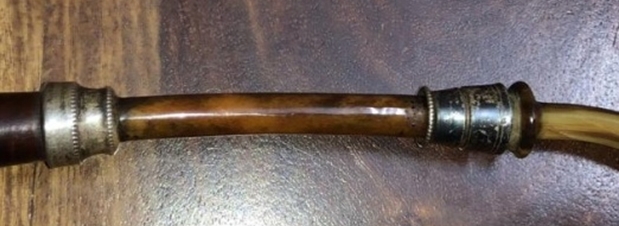
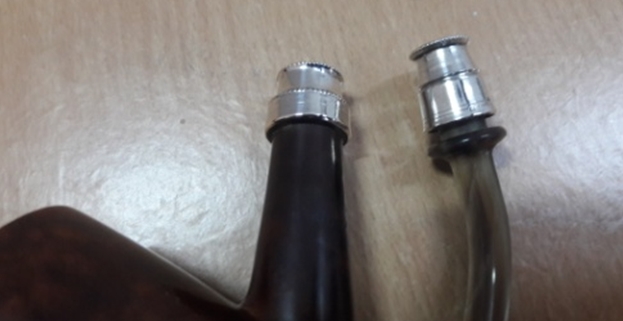
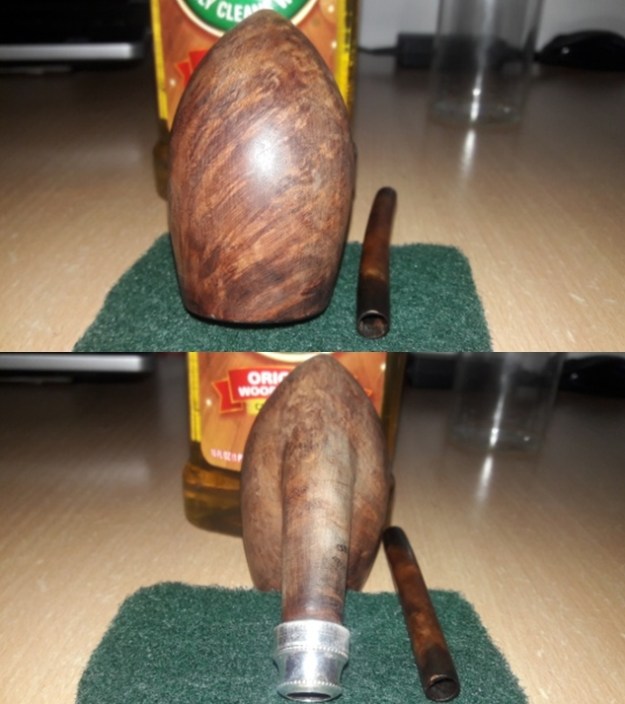
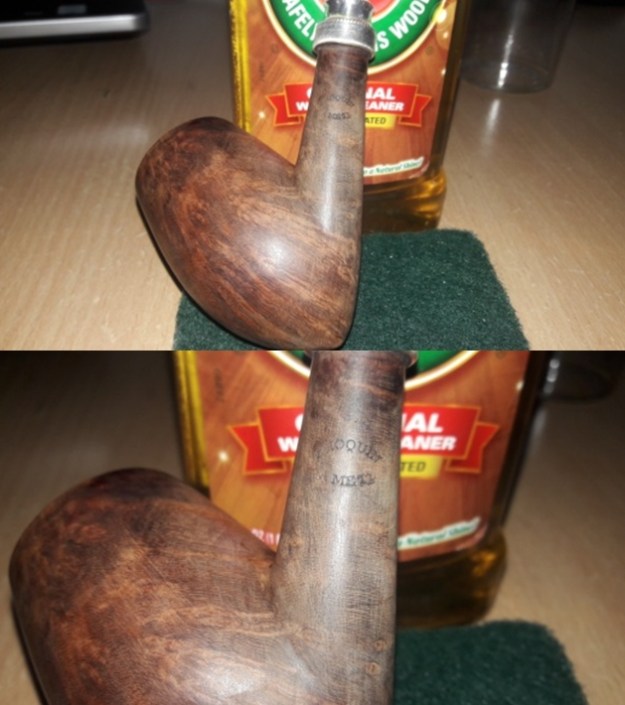
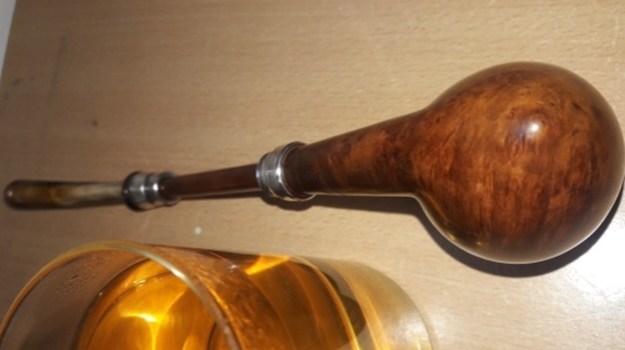
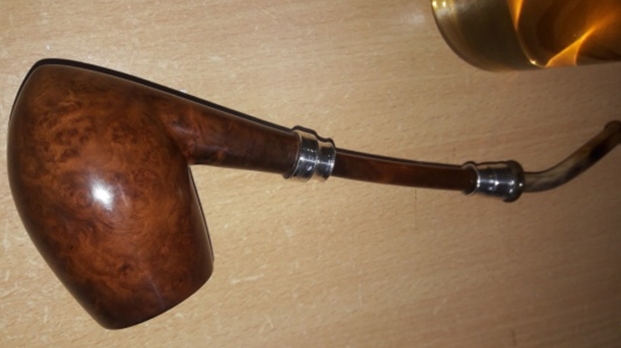
The pipe first on my work table is the CHOQUIN. It is a huge pipe with a humongous acorn shaped smooth briar bowl with a steeply raking shank, the end of which is adorned by a fixed sterling silver ornamented ferrule. This similarly designed sterling silver also masks the tenon of the horn stem.The shank and the horn stem are connected by a push-fit type bone extension. The huge acorn bowl shows beautiful, large and loosely packed birdseye grain on the right side while mixed grain adorns the left side. The stummel on the front, back and the shank displays densely packed straight grains. The only stamping that is seen on this pipe is the football stamp on the left side of the shank and reads “CHOQUIN” over “A METZ”. For its age, the stamping is crisp and clear.This time around, before commencing the restoration process, I posted the pictures of this pipe on the Tobacco Pipe Restorers group on Facebook as my next project. In addition to input from my mentor, Mr. Steve, I collected a lot of valuable information from all the knowledgeable stalwarts. From all the input that I have gathered, the flat bottom bowl, the stamping, the sterling silver adornments, the bone shank extension and horn stem, I can safely place this piece as being one of the first A Metz pipes from the 1858 era!!!!!

INITIAL VISUAL INSPECTION
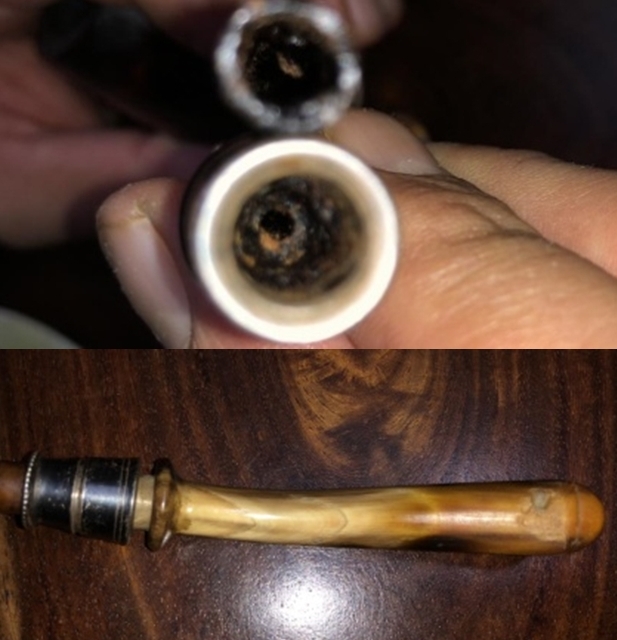
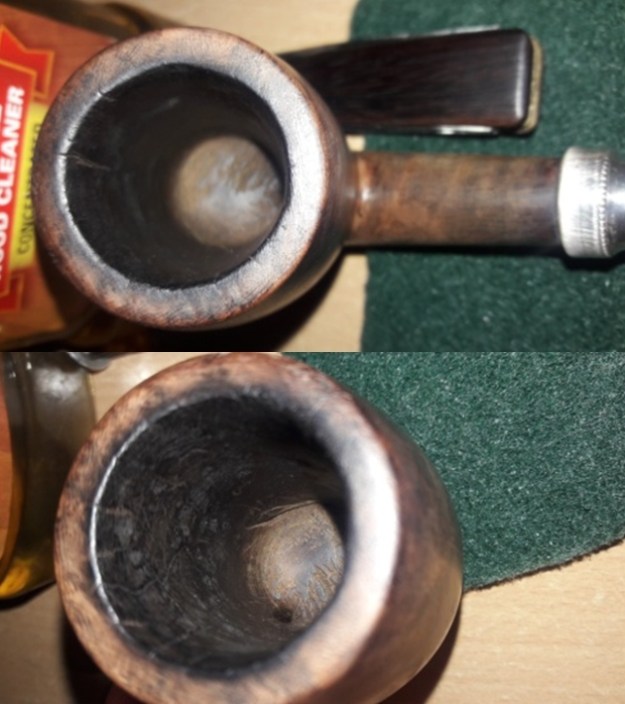
Well, even before I could start my initial visual inspection, I faced the first of the many numerous hurdles that I had to overcome during the restoration of this pipe. The shank extension and the stem would not budge even a millimeter to separate from the shank and the bone extension respectively. I remembered Mr. Steve referring to the technique of freezing the stuck parts in the freezer for a couple of hours for easy separation. I followed his advice and had to put the complete pipe in the freezer for a couple of hours as it could not be dismantled. True enough, the horn stem separated from the shank extension with the application of a little force, but the extension would not budge from the shank!!!! So I went back to Mr. Steve to tap in to his wealth of knowledge and experience. He suggested that I should apply the method of “Hot and Cold” shock treatment in which you gently and carefully heat the stuck part using a heat gun and then get it back in to the freezer. This process may need to be repeated a number of times before the parts separate. Well, I did exactly that, albeit heating with a hair dryer as I did not have a heat gun, and after 3/4 attempts, the extension finally separated from the shank!!!!The first thing that I noticed was that the shank extension and the mortise were completely filled with oils, tars and grime. The shank extension was filled to an extent that a pipe cleaner would not pass through!!!! How very much typical of my Old Man!!!!!!! Through all this muck, just a swipe of the bone extension with a cotton swab dipped in isopropyl alcohol revealed no apparent damage to the shank extension. Cleaning this would need to be a very careful, meticulous, time consuming and a tedious process given the delicate structure of such a vintage bone. Likewise, the tenon also was filled with oils and grime. Air flow through the stem was laborious to say the least!!! Both the upper and lower surface of the horn stem shows significant damage. The lower surface is peppered with 3-4 worm holes with one significantly larger than the other. Thankfully, it had not migrated through the upper surface!!!! The tenon is completely and permanently encased in the sterling silver ornament. The condition of the stummel was an equally horrendous story. Firstly, the rim top is heavily covered in overflowing lava. The overflow is so heavy that it has accumulated over the rim surface in blobs of dried tar and tobacco oil which can be seen in the subsequent pictures. This overflow had not restricted itself to accumulation on the rim top, but has spilled on to the stummel surface covering the stummel in sticky grime which has attracted more dirt and dust giving the stummel a dull and lackluster appearance. The overflowing lava has even accumulated in the junction where the shank and bowl are joined.  Some dents and dings are seen on the surface through the overflow and I do not envisage any major issue like the ones I faced while working on an Imperial Yello-Bole Carburetor that I had I restored. However through all this dirt, tar, oil, grime and damage, lovely grains can be seen on the sides and the shank. It will be a challenge to address these issues and make the grains to reveal themselves in all glory. The chamber is no different story!!! There is a thick build up of cake in the chamber. The inner edge of the rim is covered under the thick cake and as such, its condition can be commented upon only after the cake has been scrapped. The outer edge of the rim, however, shows significant damage in the form of dents, dings and deep scratches to the front in 12 o’clock direction. The cause for this damage is….. Oh, forget it, let’s not even go there!!!! The condition of the inner walls of the chamber can be ascertained only after the chamber has been completely reamed devoid of any cake, but I do not foresee any major damages here as the stummel feels solid to the touch and this huge solid piece of briar can sustain some serious damage. You have to feel the stummel in your hand to understand what I am trying to write. It is one heavy and handful of a pipe!!!!The sterling silver ferrule and tenon ornament was black as is typically seen in heavily oxidized silver. However through all this discoloration, delicate, intricate decorative design can be appreciated. This is another pointer towards the vintage of this pipe.THE PROCESS
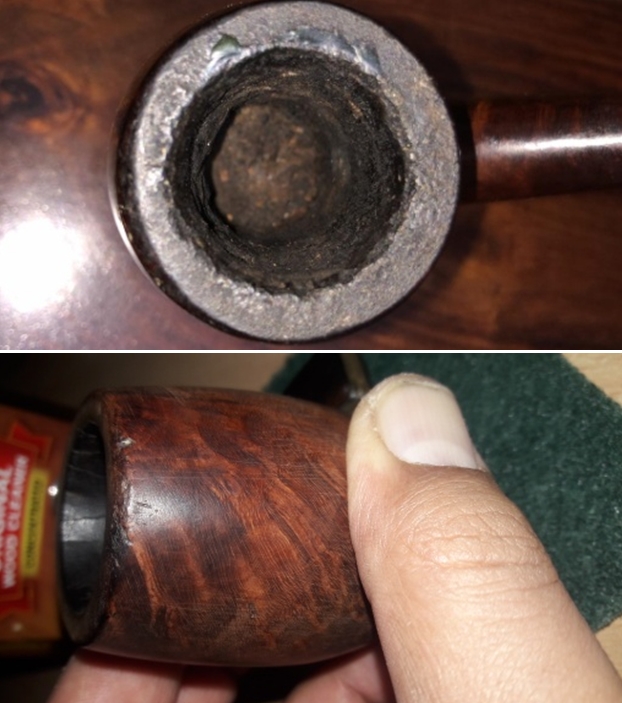
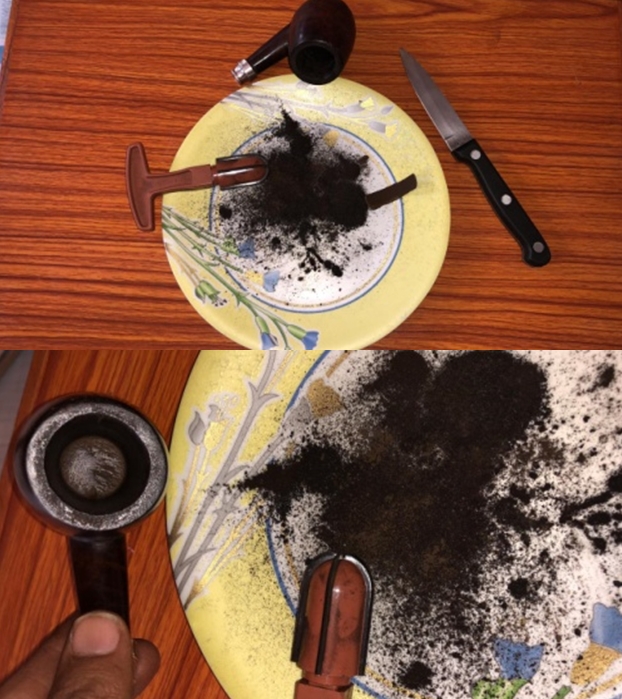
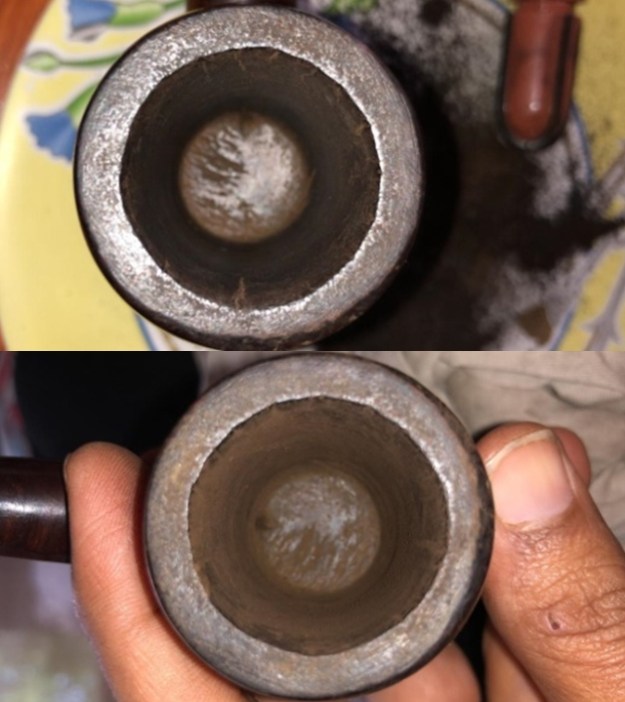
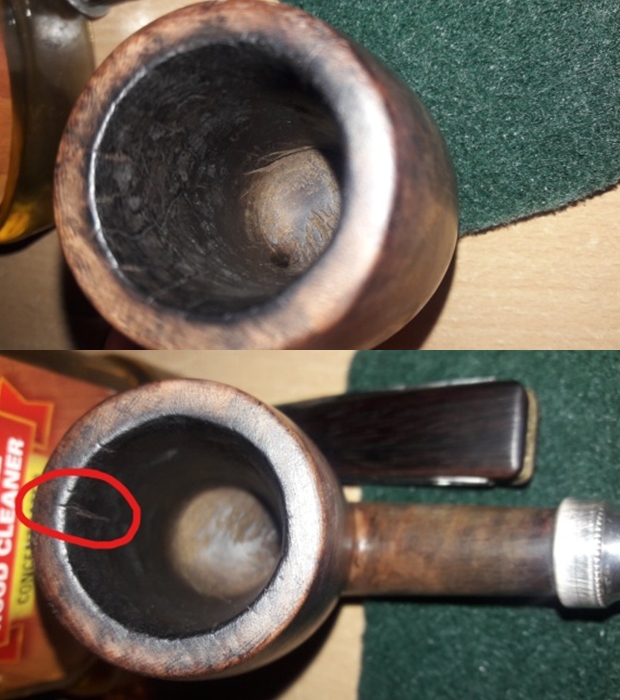
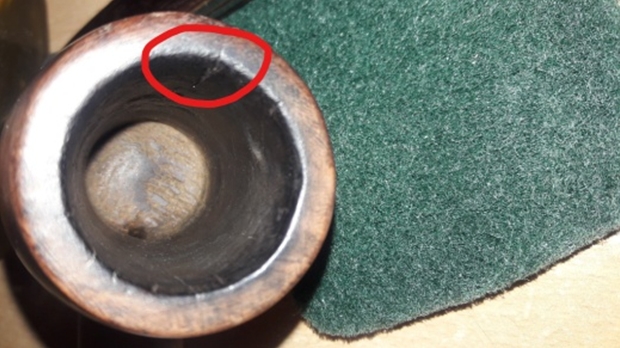
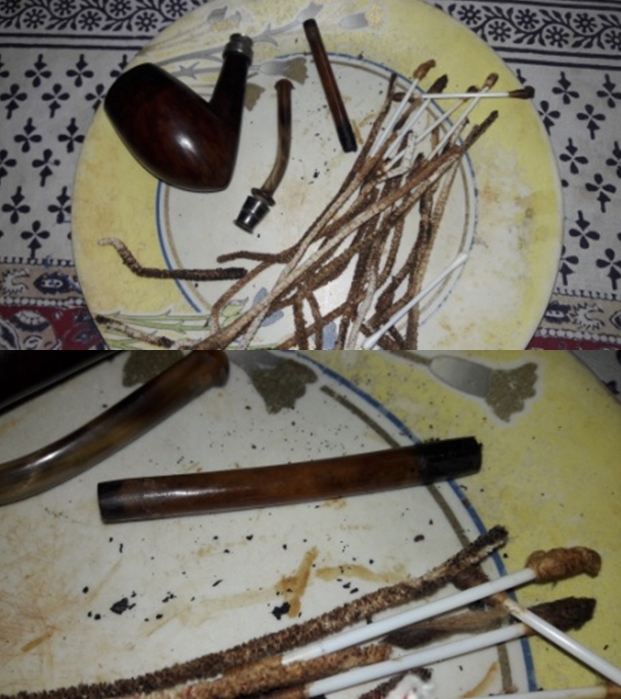
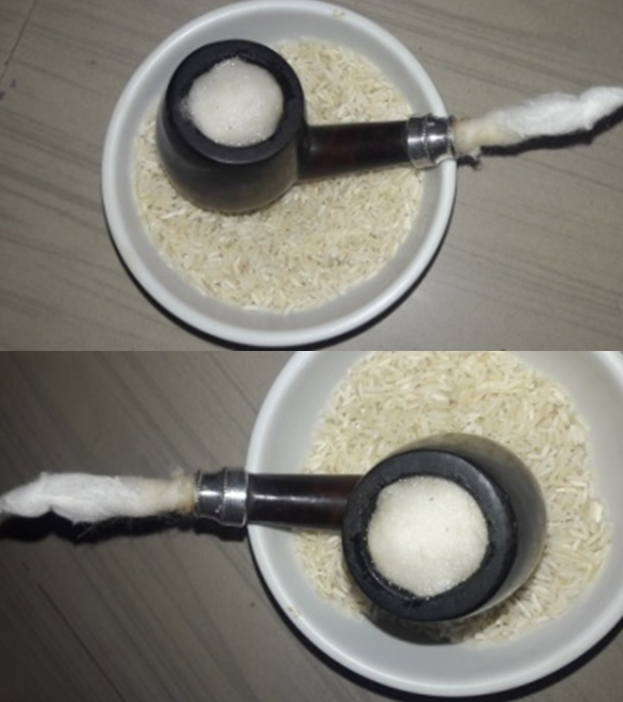
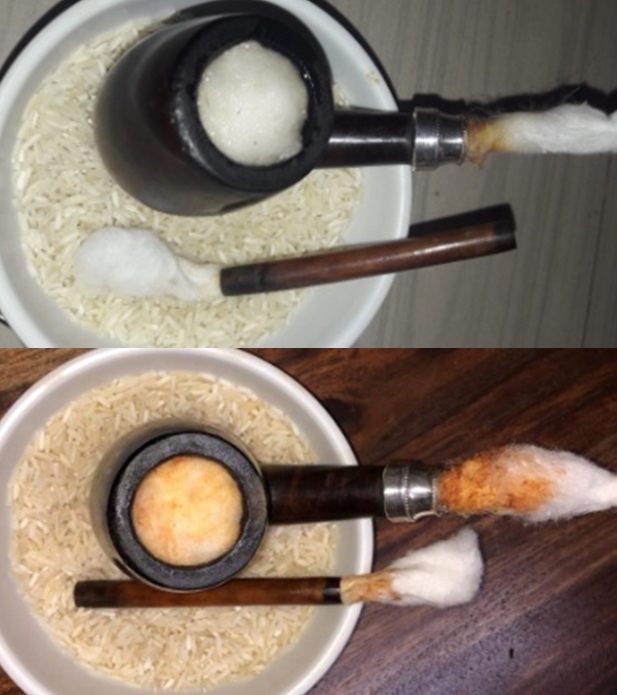
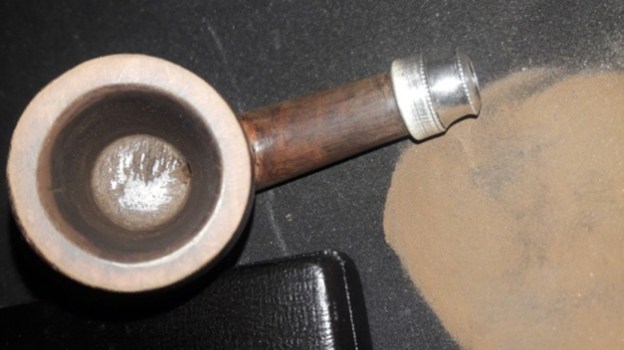
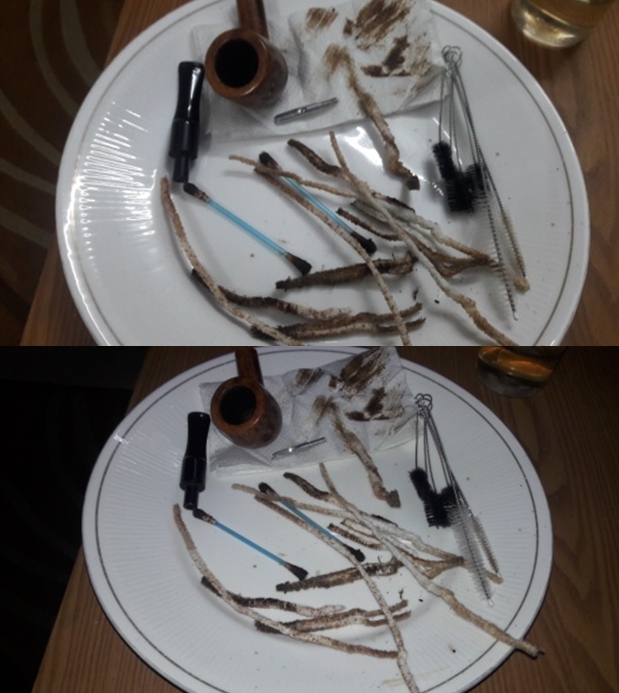
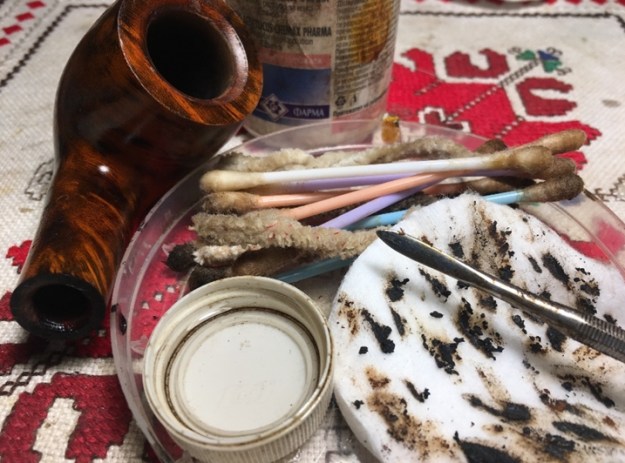
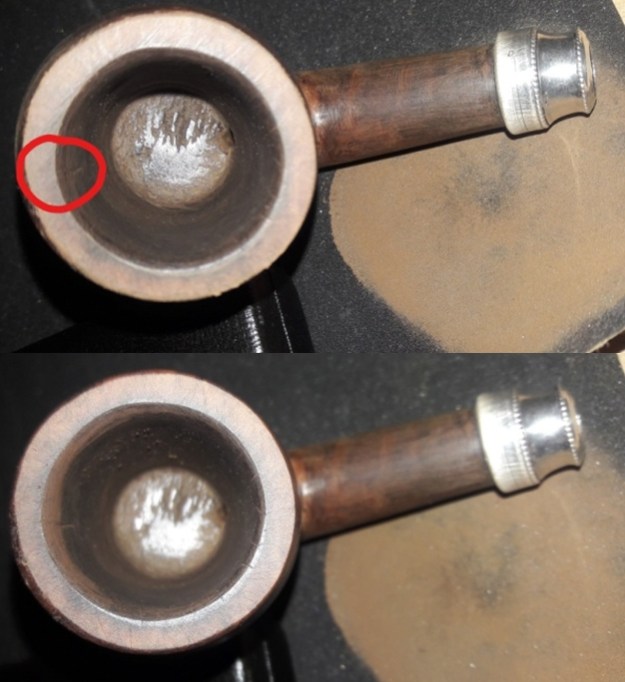
I started the process of restoration by polishing the sterling silver ornaments at the shank end and tenon with pipe ash as suggested by Mr. Steve. This was followed by reaming the chamber with size two of the PipNet reamer head and progressing through to size four. Yes Sirs, there is no typo error!!! It is indeed PipNet and not a Kleen Reem reamer as you have gotten used to reading in my write ups !!!!!! Mr. Steve has sent me a set along with some beautiful pipes that I had got from him. I followed up the reaming with scrapping the remnants of the cake from the walls, flat bottom of the chamber and the rim top surface with my fabricated knife (Oh, how I long for a Sav Fitsall reaming knife!!! Hope you are reading this Steve Sir). The cake was so hard, that I invariably ended up scratching the flat bottom surface while scraping. Once the cake was reamed back to the bare briar, I used a 150 grit sand paper followed by 220 grit sand paper to remove all the traces of remaining cake and also to smooth the inner walls of the chamber surface. Finally, to remove the carbon dust, I wipe the chamber with a cotton pad wetted with isopropyl 99%. I gently scrapped the rim top surface with a sharp knife. Removing all the cake from the chamber and rim top revealed that firstly, the rim was out of round and secondly was a web of fissures along the internal walls. There was one crack, which showed prominently after a cleanup with Murphy’s oil soap, bothered me and can be seen in the pictures below which has been highlighted by a red circle. I shared these images with Mr. Steve and Mr. Dal Stanton for their opinion as to the extent of damage and further repairs. They too expressed fears that the crack may have migrated through the stummel. Mr. Steve suggested picking the crack on the top of the rim using a toothpick and filling it with CA superglue. I decided that I would address this issue later after further investigations. I cleaned the internals of the shank, shank extension and the stem using hard bristled and regular pipe cleaners, q-tips, shank brushes, all generously dipped in isopropyl alcohol. I had never used such drastic measures like initially cleaning the bone shank extension by carefully inserting a round needle file for creating an opening through which pipe cleaners could pass through for subsequent cleaning. The heap of pipe cleaners and q-tips that are seen in these pictures are just the proverbial tip of the iceberg. I must have gone through an entire packet of 50 of both types of pipe cleaners, in addition to the q-tips and brush cleaning!!!!! To further deep clean and refresh the internals, I used cotton and alcohol soaks. Using a cotton ball to create a wick, I inserted it through the mortise and into the airway. I then stuffed the bowl with tightly packed cotton balls and placed it in bowl filled with rice grains to provide stability. Similarly I made a tight cotton wick and inserted it through the bone shank extension to further remove all the oils, tars and smells. With a large eye dropper, I then filled the bowl and the bone shank extension with isopropyl 99% until it surfaced over the cotton. I refilled the alcohol in a few minutes after it was absorbed into the cotton balls. I put the stummel and the bone shank extension aside for several hours to soak. After some time, the cotton and the wick were soiled. I discarded the expended cotton and wiped the bowl and the bone shank extension with paper towel. To make sure all was clean, I used a cotton bud and pipe cleaner dipped in isopropyl 99% and they came out clean. I cleaned the stummel with undiluted Murphy’s oil soap and Scotch- Brite pad and rinsed the stummel under running tap water. This cleaning helps in bringing to the fore any other damage which could be hidden under all the dirt and grime. Fortunately, there were no major dents, dings or gouges to the stummel. There were a few minor ones which I think would be addressed when I would sand the stummel surface and subsequent micromesh polish. I dried the bowl with a paper towel and soft cotton cloth. Initially I had decided that I would not be topping the rim top and maintain its original profile. However, in order to ascertain if the crack had migrated through the stummel, I decided to top the rim surface. This would also help to address the numerous dents, dings and scratches on the rim’s top surface and also to remove traces of lava overflow. I topped the rim surface on a 220 grit sand paper. Though it is recommended to have a wooden board with the 220 grit sand paper firmly fixed over it, I just keep the sand paper on a flat table top, holding it firmly with my left hand and rotating the stummel rim top over it with my right hand. I have come to realize that this set up gives me lot more freedom of movement, better control and convenience of storage. Fortunately, it was revealed that the supposed crack was superficial and had not migrated through. Staying with the rim, the next issue that I addressed was the inner rim edge. With a folded piece of 180 grit sand paper pinched between my thumb and fore finger, I created a light bevel on the inner edge. This addressed the issue of uneven and out of round inner edge. The damage to the outer edge was addressed to a great extent when I had topped the rim top surface. Whatever little dents and nicks that remained on the outer edge were very minor, though visible, and I decided to let them be.I sand the stummel surface with a 220, 320, 600 and 1000 grit sand paper, in that order, to remove the minor scratches and marks on the rim and stummel surface. I frequently wiped the sanded surface with a moist cloth to remove the briar dust and also to check the progress of my work. Once I was satisfied with the match, I followed it up by micromesh polishing pads, wet sanding with 1500 to 2400 grit pads. Again, I wiped the bowl with a moist cotton cloth after each pad. I used the 3200 to 12000 grit pads to dry sand the stummel to a nice shine. I was disappointed when after all my efforts up to this stage; there were some very minute chips that were visible in pictures. But overall, at this stage of restoration, the entire bowl, rim top surface and shank is looking fresh and clean. Even though some of the dents and chips could not be completely addressed and are visible only on very close visual scrutiny, in my view, they lend this pipe a battle scarred warrior like a character. I rubbed a small quantity of “Before and After Restoration Balm” with my fingers deep in to the stummel surface. What this balm does is it revitalizes the briar wood and breathes a new life in to the briar. It’s amazing to see the transformation as the balm works its magic on the briar wood. I further buff it with a horse hair shoe brush. Turning my attention to the horn stem, I cleaned the stem surface, including the worm holes, with q-tips dipped in isopropyl alcohol to remove all the dirt and dust before the fill. I filled the worm hole on the bottom and top surface with clear CA superglue and set it aside to cure.  Once the superglue had cured, I sanded the fills with a flat head needle file. To further match the fills with the surface of the stem, I sanded it with 220, 320, 600 and 1000 grit sand paper. I wiped the stem with cotton pad dipped in alcohol to remove the resultant dust. I rubbed some extra virgin olive oil in to the stem and set it aside to be absorbed in to stem. A few minutes later, I polished the stem and also the bone shank extension with micromesh pads, wet sanding with 1500 to 2400 grit pads and dry sanding with 3200 to 12000. I rubbed a little extra virgin olive oil in to both after every three pads. The stem is now nice, smooth and shiny while the extension though smooth and shiny, still had the golden brownish hues of the tobacco oils and tars. I was wondering as to next course of action, Mr. David Goostree, an experienced member from The Tobacco Pipe Restorer group on FB, provided valuable information that the bone is similar to a Meer and absorbs oils from the tobacco and colours just like a meerschaum. Another issue taken care of!!! To finish the restoration, I mounted a cotton cloth buffing wheel to the Dremel (actually it is not the brand machine, but a local machine which is similar).  I set the speed at about 40% full power and applied White Diamond compound to the entire pipe.  Afterwards, I wiped/ buffed the pipe with a soft cotton cloth to clear it of any leftover compound dust. I then mounted another cotton cloth wheel to the polishing machine, maintaining 40% speed and applied several coats of carnauba wax.  I finished the restoration by giving the entire pipe a rigorous hand buffing using a microfiber cloth to raise the shine further. In my excitement mixed with apprehension in using the polishing and waxes for the first time, I completely missed out on taking any pictures. The completed pipe looks lovely, fresh and vibrant. Thank you for having the patience to reach this far while reading the write up. Your comments are of utmost importance to me for improving my skills in restoration process as well as writing about it. Cheers!!!!!

PS: – During this journey of restoring this beauty, I had, on occasions felt low and demoralized as issues kept cropping up like the supposed crack to the stummel, the shank extension not supposedly cleaning up as I had incorrectly anticipated and the 2/3 occasions when the my polishing machine slipped on the surface and caused very minor scratches on the stummel. However, my Guru and mentor, Mr. Steve was always around with his words of wisdom and encouragement to egg me on towards completing this project. Thank you once again, Mr. Steve. I would like to thank all the esteemed members of “The Tobacco Pipe Restorer” group on FB for their interest and valuable inputs, which made this project interesting.

Cleaning up a Cadogan Era Comoy’s Silver Shadow 225


Blog by Steve Laug

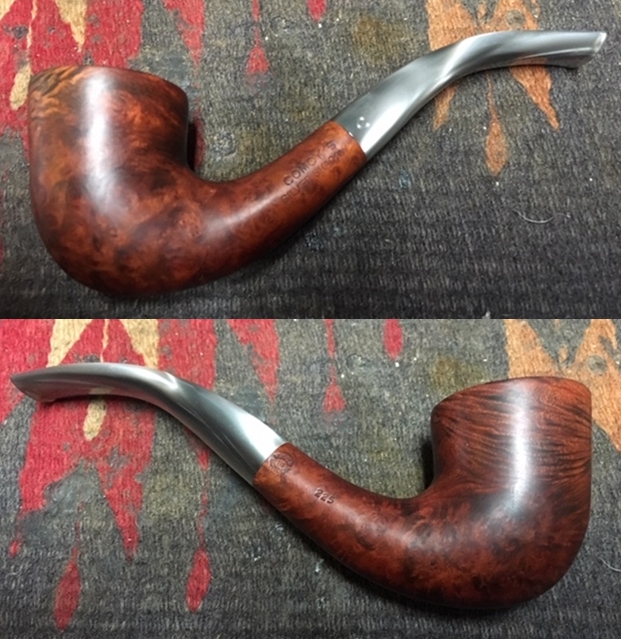
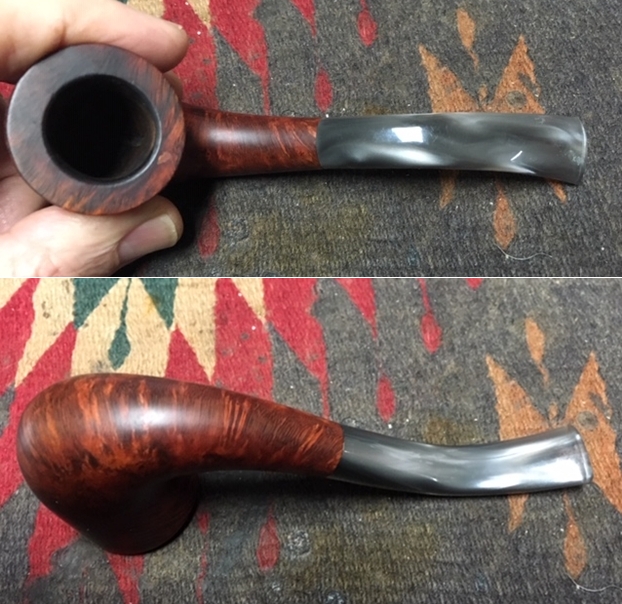
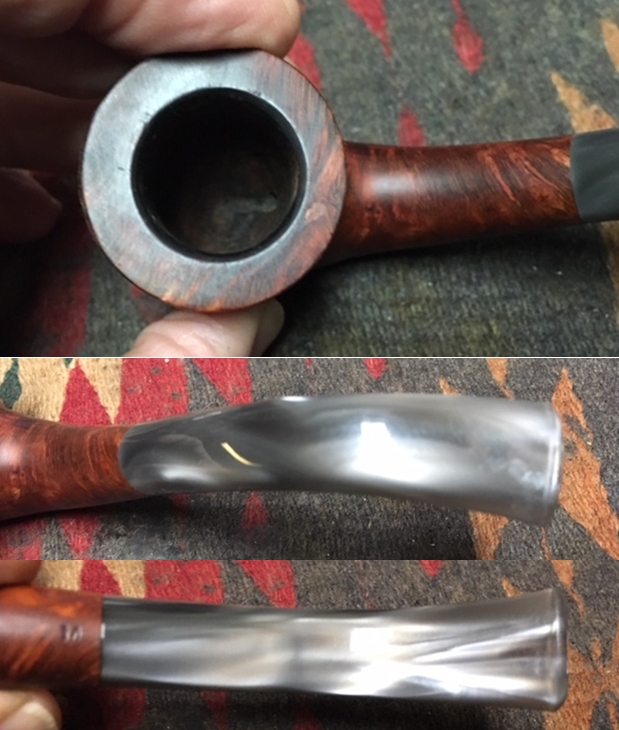
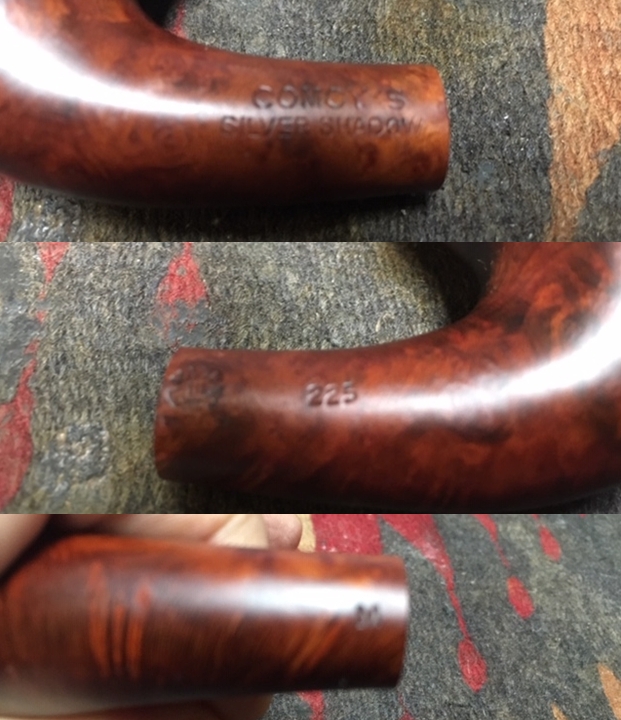
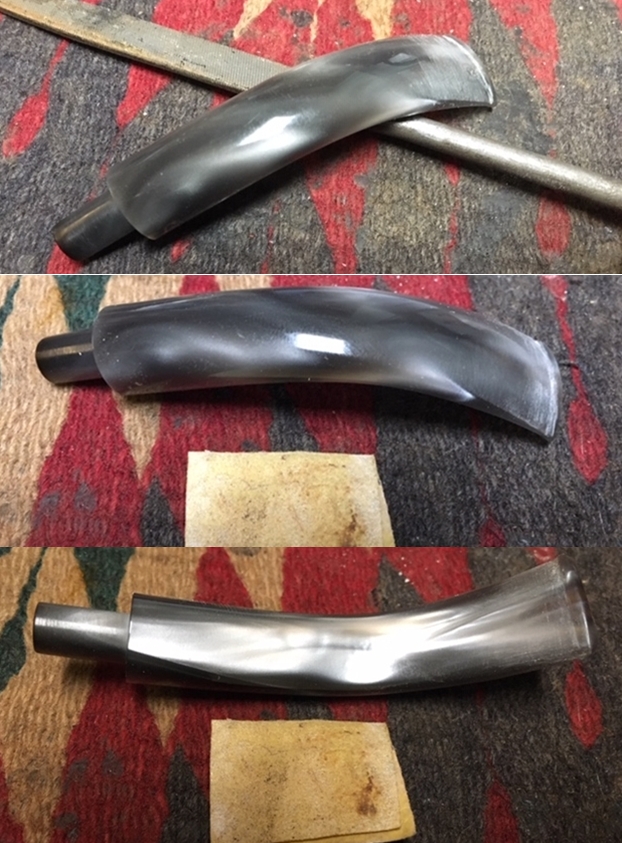
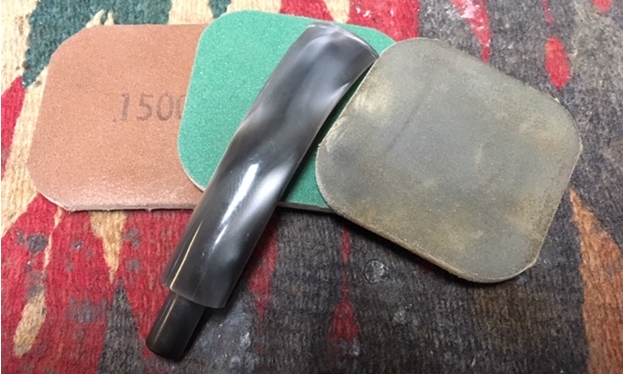
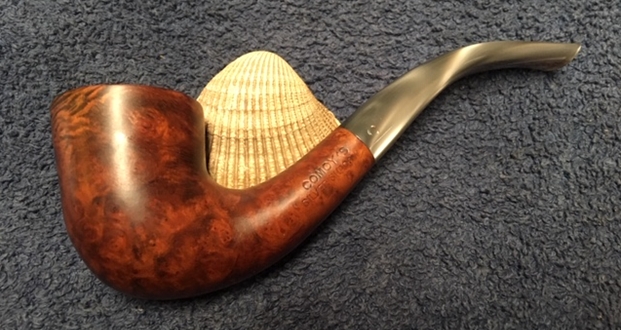
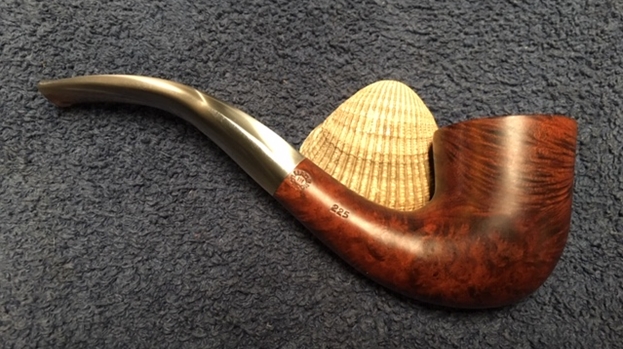
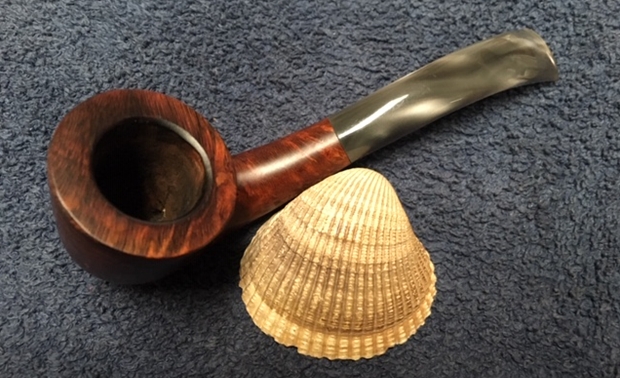
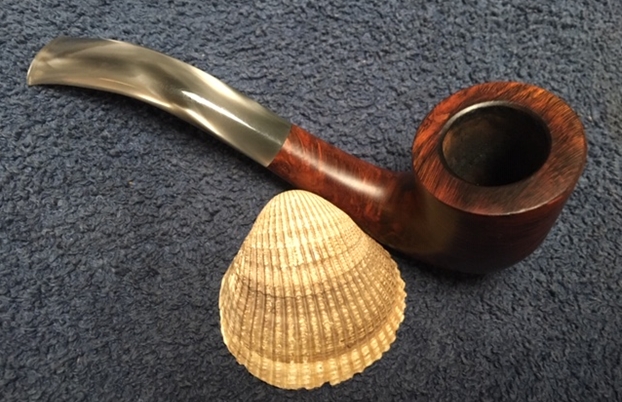
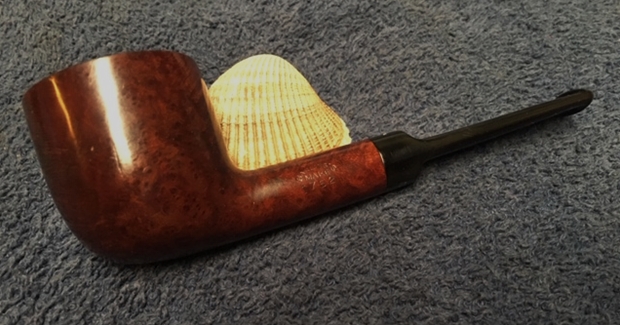
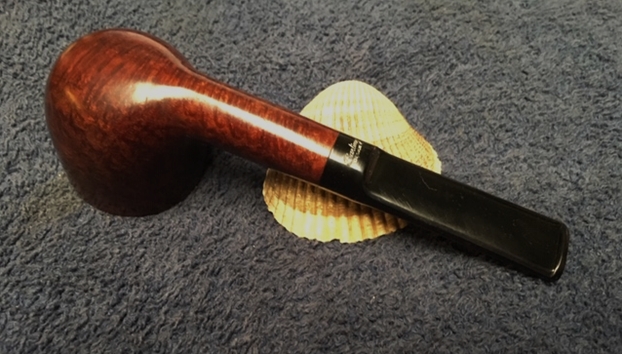
Jeff picked this Comoy’s Silver Shadow up from a friend on Facebook who was selling a batch of pipes that he picked up. When it arrived several of the pipes were unsmoked and in excellent condition. This Comoy’s was very nice but had tooth marks on the stem and was lightly smoked. There was some light cake in the bowl and the finish was dull. Jeff cleaned up the pipes with his usual thoroughness – reaming the bowl and scrubbing the internals with alcohol, cotton swabs and pipe cleaners. He scrubbed the exterior with Murphy’s Oil Soap to clean off the dust and grime on the finish. Jeff sent it to me recently in a batch of pipes that were ready to restore. I took photos of the pipe when I unpacked it. The bowl and rim are very clean. There is a light fill on the backside of the bowl that is solid and tight. The finish was clean and the pipe needed to be polished. The stem had bite and tooth marks on both the top and underside near the button.I took photos of the stamping on the sides of the shank and the underside. The left side is stamped Comoy’s over Silver Shadow. On the right side it is stamped with the shape number 225 and the COM stamp – Made in London in a circle over England. The underside of the shank is stamped with an upper case M.I started with the clean up on the stem first. I used a needle file to clean up the straight edge of the button and smooth out the wear on the button. I sanded the tooth marks out of the surface of the acrylic stem with 220 grit sandpaper.I polished the stem with micromesh sanding pads – dry sanding it with 1500-2400 grit pads and dry sanding it with 3200-12000 grit micromesh pads. I wiped it down with a damp cloth after each sanding pad. I set the stem aside and turned my attention to the bowl. I worked Before & After Restoration Balm into the briar with my fingertips to clean, enliven and protect the wood. I let the balm sit for about 20 minutes and buffed it off with a soft cotton cloth. I took photos of the pipe at this point in the process to show what the bowl and rim looked like. It looks really good after the balm and buffing. I polished the bowl and stem with Blue Diamond to polish out the scratches in the briar and acrylic. I gave the bowl and the stem multiple coats of carnauba wax. I buffed the pipe with a clean buffing pad to raise the shine. I hand buffed it with a microfiber cloth to deepen the shine. The pipe polished up pretty nicely. The original patina on the bowl came alive with the buffing and worked well with the polished silver swirled acrylic stem. The pipe has a rich look. The finished pipe is shown in the photo below. The shape, finish and flow of the pipe and stem is beautiful and combine very well. This should make a great smoking pipe and it is comfortable in both hand and mouth. The dimensions of the pipe are Length: 5 1/2 inches, Height: 1 7/8 inches, Outside diameter of the bowl: 1 1/2 inches, Chamber diameter: 3/4 of an inch. Thanks for walking through the restoration with me as I worked over this beautiful Comoy’s Silver Shadow. I will be putting it on the rebornpipes store shortly.
 

Reclaiming a Yello-Bole “Imperial Carburator” Vest Pipe


Blog by Paresh Despande

Having worked on the four Free Hand pipes that I had purchased on eBay, it was time again to work on one of my grandfather’s pipe from my inheritance. I chose to work on the second “Imperial Yello-Bole Carburetor” from his collection. The first had a cracked shank and was restored by my Guru and mentor, Mr. Steve of rebornpipes, here is the link for the write up (https://rebornpipes.com/2018/04/15/pareshs-grandfathers-pipe-2-a-yello-bole-carburetor-4522-billiard/).

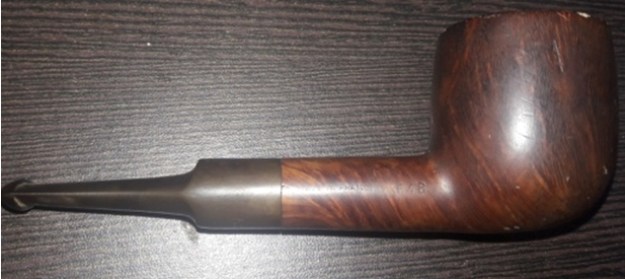
This particular pipe was in a battered condition with significant damage to the inner and outer edges of the rim, a large number of chips, dents and dings to the bowl and shank, two deep gouges to the bowl and a heavily oxidized stem. I was not very sure if at all I should attempt at its restoration as I knew that to mask the repairs/ fills to the gouges and chips on the bowl and the shank, I would need to stain it with a darker stain followed by a delicate polish to make the grains pop and here I was, with neither materials nor experience to carry out staining and subsequent polishing. However, Mr. Steve encouraged me to go ahead and restore it nevertheless and keep the natural finish of the pipe and the scars of the repairs as a testimony of the pipe’s journey till date!!!! Well, it always pays to follow the advice of your mentor and I embarked upon this journey to give a fresh lease of life to this old and battered war-horse!!!

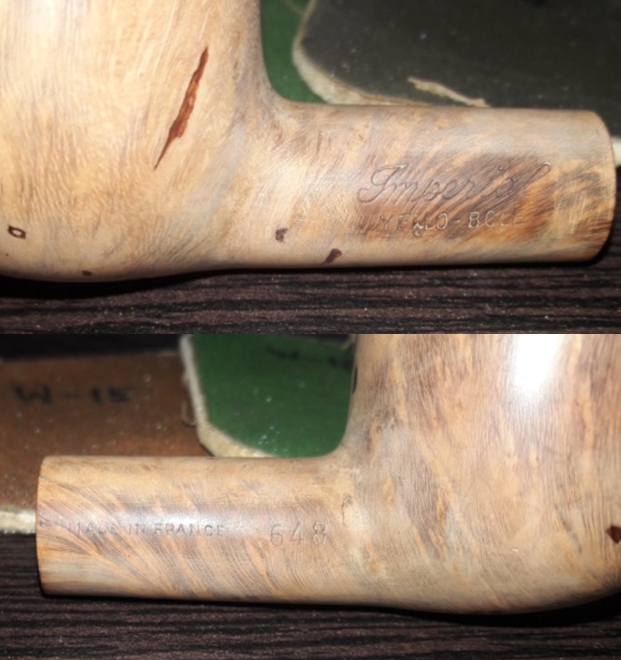
The pipe is stamped on the left side of the shank as “Imperial” in fancy cursive hand over “YELLO-BOLE” in block letters while the right side of the shank bears the stamp of “MADE IN FRANCE” starting from the shank end towards the bowl and followed by the model(?) number “648” or is it “64 B”? I have this doubt since I could find a match to this shape and size during my research as per the latter stamp, but the stamp appears as former to my eyes!!!! The center bottom of the pipe has a single hole, lined by an aluminum cone, open at both ends, which protrudes into the chamber. This is followed by “carburetor” in fancy cursive small letters. The stem is devoid of any stampings or logo. Before commencing the restoration, I decided to refresh my memory about Yello-Bole pipe brand and in particular, the Carburetor model, by visiting the blog written by Mr. Steve while restoring my first Yello-Bole. The first thing that struck me as odd was the difference in stampings seen on the pipe which is on my work table!!! The pipe currently on my work table is sans the stamp of KBB in clover leaf, U.S. patent number details, Cured with real honey, stem logo of a yellow circular ring and has shape number in three digits as against four on the one restored by Mr. Steve. However, the biggest and most significant difference which has me flummoxed was the stamping “MADE IN FRANCE”!!!!!!! No amount of research and surfing the internet provided me any clue as regards the origin and dating of this piece of briar.

INITIAL VISUAL INSPECTION
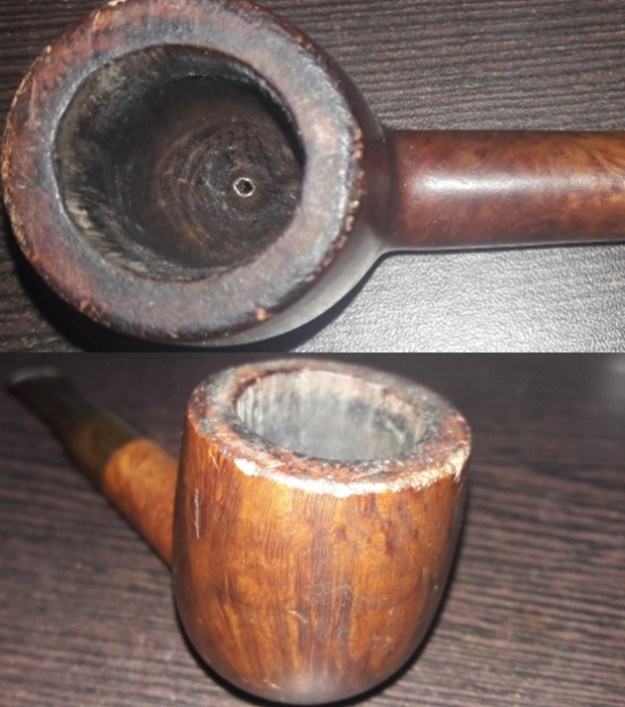
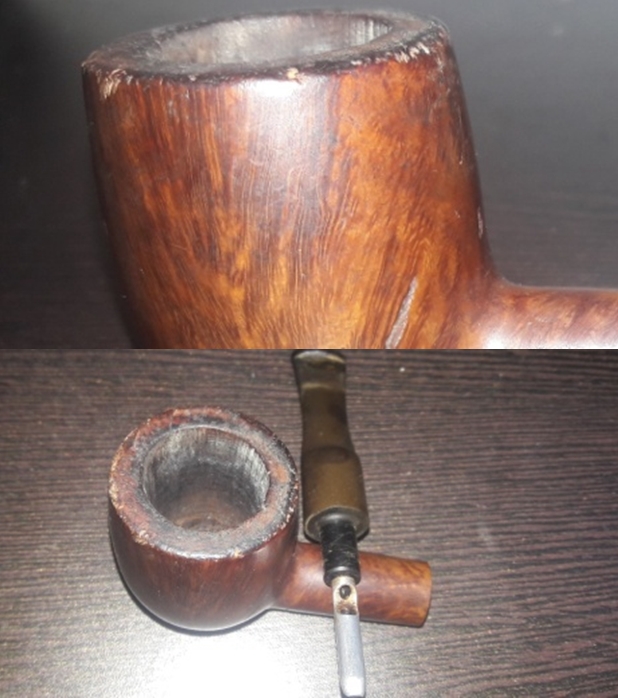
The first and foremost significant visual damage is seen to the rim top, inner and outer edges. It appears that the rim has been repeatedly banged against a hard surface to remove residual dottle over a prolonged period of time!!!! The damage to the rim top is in the form of dings and scratches while significant chipping and cinching is seen on the outer edge. The inner edge of the rim is out of round, apparently caused by use of a knife to remove the carbon cake. The overflow of lava from the rim top appears to be removed by scrapping the surface with a knife and in the process causing all the scratches and dings to the surface. There is a thin layer of cake on the bottom half of the chamber and appears to be a victim of over reamed chamber. The carburetor hole at the bottom of the chamber is clogged and will require to be cleaned. The condition of the inner walls of the chamber will be ascertained only after the chamber has been stripped completely of the existing cake layer.The second most significantly damaged part of the pipe is the stummel. It is covered in oils, dirt and grime of all these years of smoking and subsequent uncared for storage. The stummel surface is sticky to the touch, giving the stummel a dull, lifeless and lackluster appearance. It is peppered with a large number of chips, dents and dings. There are two significant gouges on the stummel; one on the left hand side towards the bottom and the second one is one the right hand side about an inch below the rim top. Overall, the stummel has sustained massive damage over the years due to both, rough usage and careless storage. However through all this dirt, tar, oil, grime and damage, lovely densely packed straight grains can be seen on the sides and shank. It will be a challenge to address these issues and make the grains to reveal themselves in all glory. The shank too is peppered with numerous minor dents and chips on the bottom surface as well as on the right side of the shank. The mortise is clogged and the air flow is constricted and the draw is laborious. This will need to be addressed by thorough cleaning of the same. The saddle stem is heavily oxidized with bite marks on both upper and lower surface of the stem. The lip too shows bite marks and will need to be redefined. The aluminum stinger is firmly attached inside the tenon and could not be removed. It is covered in oils, tars and grime from all the years of smoking and it appears that it has hardened, fixing the stinger inside the tenon.THE PROCESS
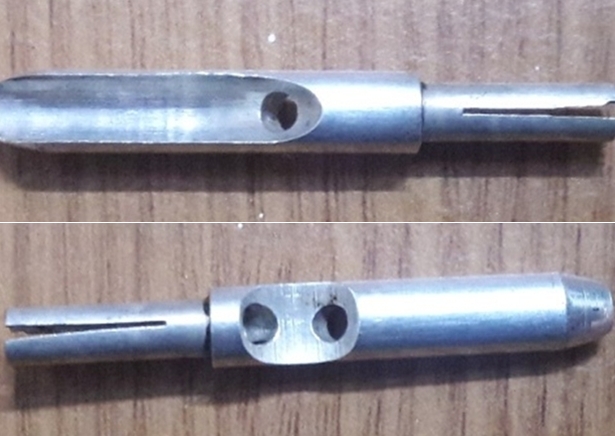
I started the process of restoration by reaming the chamber with my fabricated knife as the protruding aluminum cone of the carburetor prevented use of the Kleen Reem pipe reamer. Once the cake was reamed back to the bare briar, I used a 150 grit sand paper followed by 220 grit sand paper to remove all the traces of remaining cake and also to smooth the inner walls of the chamber surface. It was a big relief to note that there was no issue of heat fissures or cracks seen on the surface.To address the numerous dents, dings and scratches on the rim’s top surface and also to remove traces of lava overflow, I topped the rim surface on a 220 grit sand paper. Since the damage to the rim top was significant, I had applied more pressure than usual. Though it is recommended to have a wooden board with the 220 grit sand paper firmly fixed over it, I just keep the sand paper on a flat table top, holding it firmly with my left hand and rotating the stummel rim top over it with my right hand. I have come to realize that this set up gives me lot more freedom of movement, better control and convenience of storage.Staying with the rim, the next issue that I addressed was the rim edges, both inner and outer. With a folded piece of 180 grit sand paper pinched between my thumb and fore finger, I created a bevel on the inner edge. This addressed the issue of uneven and out of round inner edge. For addressing the outer edge, I had two options; first was to top the rim surface till the entire damaged outer rim surface was sanded out, maintaining the straight rim edge profile of the stummel. The disadvantage of this would be a significant loss of briar estate!!! The second (and easier too!!!) option was to create a bevel on the outer edge, sacrificing the original profile of the stummel. However, I envisaged that the bevel to the outer edge would add a new depth and dimension to the profile of the pipe while saving loss of briar. That decided, I created a bevel on the outer edge. Both the inner and outer edges now look much better and add a new dimension to the otherwise plain-Jane billiard shape of the bowl. I cleaned the stummel with Murphy’s oil soap and hard bristled toothbrush and rinsed the stummel under running tap water. This cleaning helps in bringing to the fore any other damage which could be hidden under all the dirt and grime. I dried the bowl with a paper towel and soft cotton cloth. With a thin, sharp and pointed knife, I cleaned out all the fills and gouges. I scrubbed the stummel surface clean with isopropyl alcohol to have a clean surface for a fresh fill. I decided to move ahead with only CA superglue for filling the chips and gouges. I spot filled these chips and gouges with superglue and set it aside for curing. Turning my attention to the stem, I flamed the surface with a Bic lighter to raise the tooth chatter and deeper bite marks to the surface as much as is possible. I followed it up with sanding the stem surface with a 220 grit sand paper to match the raised bite marks with the stem surface and also remove the oxidation before the fill. The deeper bite marks were filled with CA superglue and set aside to cure. After the fills on the stummel had completely cured, I sanded these with a flat head needle file to match them with the stummel surface. This was followed by sanding the fills and the stummel surface to achieve a match as well as remove the minor scratches and cinches on the surface. I frequently wiped the sanded surface with a moist cloth to remove the briar dust and also to check the progress of my work. Once I was satisfied with the match, I followed it up by micromesh polishing pads, wet sanding with 1500 to 2400 grit pads. Again, I wiped the bowl with a moist cotton cloth after each pad. I used the 3200 to 12000 grit pads to dry sand the stummel to a nice shine. At this stage of restoration, the entire bowl, rim top surface and shank is now looking fresh and clean with beautiful densely packed straight grains popping out in all their glory!!!! Even though the fills are prominently visible, in my view, they lend a battle scarred warrior like character to the pipe. While I worked the stummel, the fillings in the stem had cured. I sanded the fills with a flat head needle file. To further match the fills with the surface of the stem, I sanded it with 220, 400 and 800 grit sand paper. I wiped the stem with cotton pad dipped in alcohol to remove the resultant dust. I rubbed some extra virgin olive oil in to the stem and set it aside to be absorbed in to stem. I polished the stem with micromesh pads, wet sanding with 1500 to 2400 grit pads and dry sanding with 3200 to 12000. I rub a little extra virgin olive oil in to the stem after every three pads. I finish the polishing of the stem by rubbing a small quantity of Paragon wax and giving it a final polish with a soft cotton cloth. The stem is now nice, smooth and shiny. Now with the external restoration and cleaning of both the stummel and the stem completed, I proceeded to cleaning the internals of the stem and the shank. As I had observed during my initial visual inspection, the stinger was very firmly attached inside the tenon. To clean the stem air way, I had to separate the stinger from the tenon. I was certain that the stinger was a push-fit type and much easy to deal with. I carefully heated the stinger with the flame of a Bic lighter and wrapping a cloth on the stinger, with careful anti-clock wise rotations, dislodged the stinger from the tenon. I cleaned the internals of the shank with cue-tips, regular and bristled pipe cleaners dipped in alcohol. The mortise was cleaned using a shank brush. With a fabricated dental spatula, I scrapped the walls of the mortise and further cleaned with pipe cleaners till they came out white. Similarly, I cleaned the air way in the stem with pipe cleaners and alcohol. I cleaned the stinger of all the accumulated oils and tars with paper towels after soaking the stinger in isopropyl alcohol and reattached it in the tenon. The internals are now clean and the draw is full, easy and open. I was really not surprised at how dirty were the internals of the shank and stem as can be seen from the condition of the pipe cleaners in these pictures. To finish the restoration, I rub a small quantity of “Before and After Restoration Balm” in to briar and let it rest for a few minutes. The balm almost immediately works its magic and the briar now has a nice vibrant appearance. I further buff it with a horse hair shoe brush. Using a cotton cloth and brute muscle power, I gave it a final polish. I re-attach the stem with the stummel. The completed pipe looks lovely, fresh and vibrant; the photographs speak for themselves. Thank you for having the patience to reach this far while reading the write up. Your comments are of utmost importance to me for improving my skills in restoration process as well as writing about it. Cheers!!!!!

Recommissioning a Comoy’s Moorgate 102 of Italy


Blog by Dal Stanton

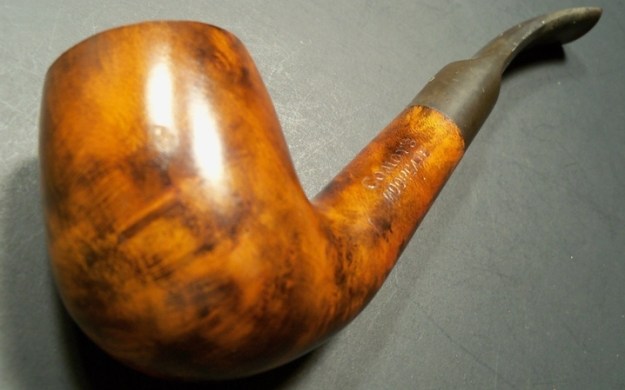
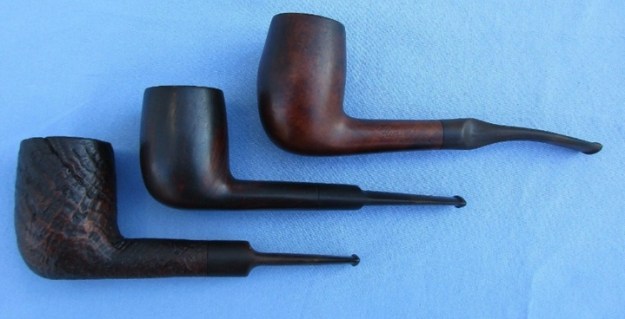
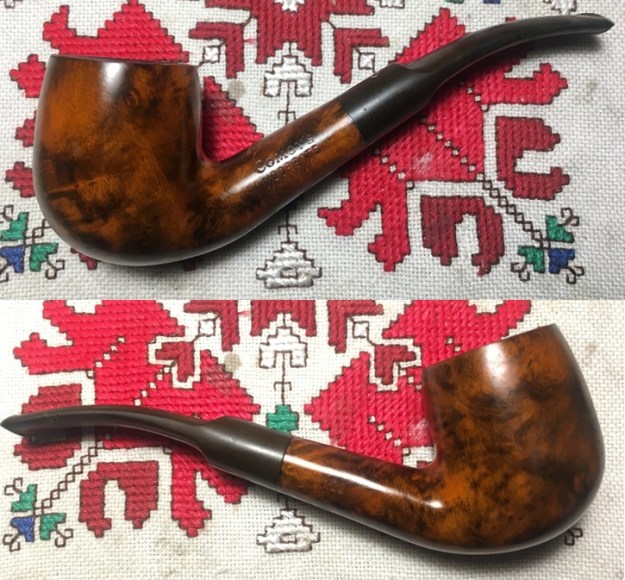
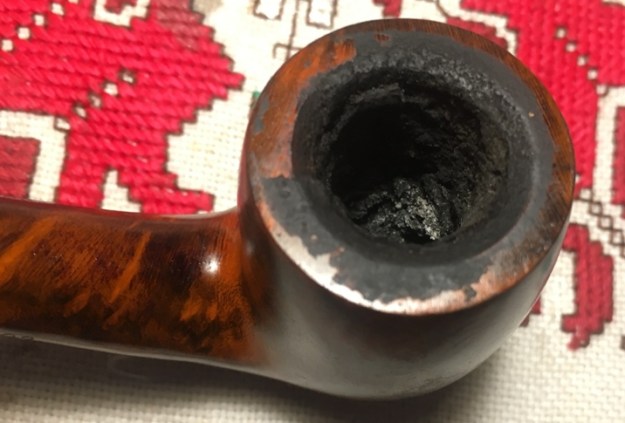
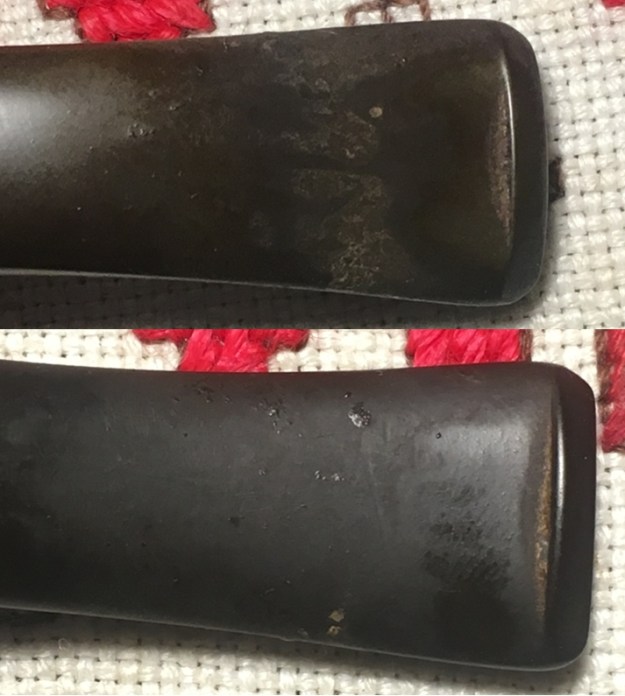
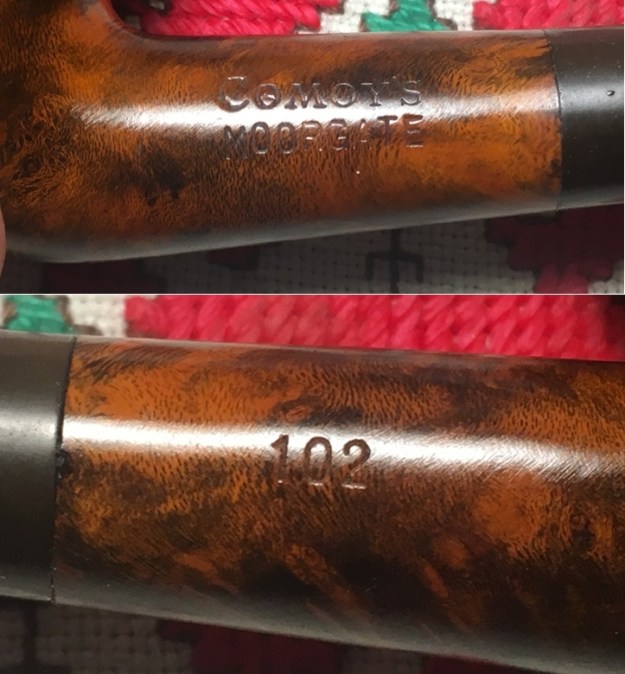
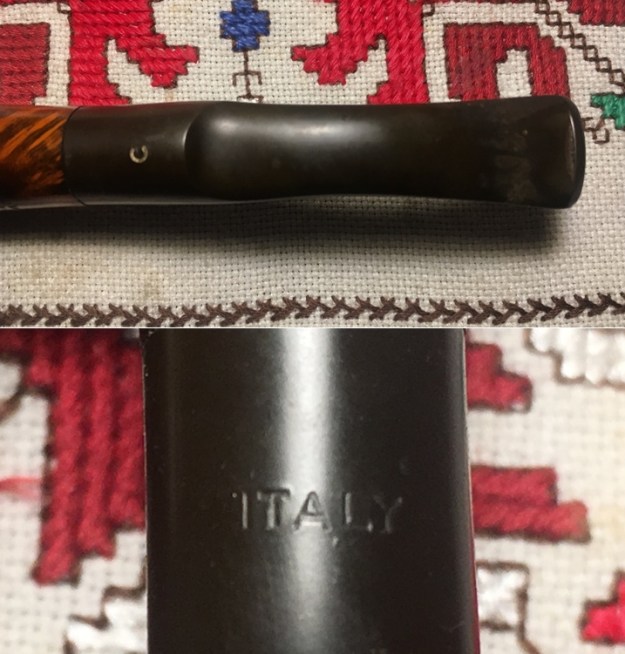
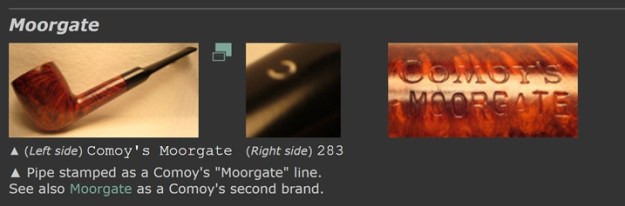
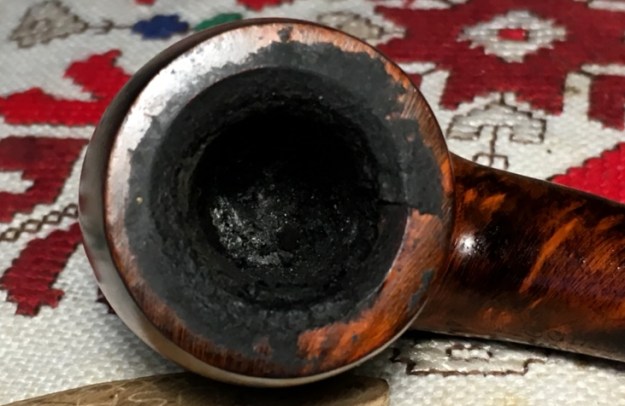
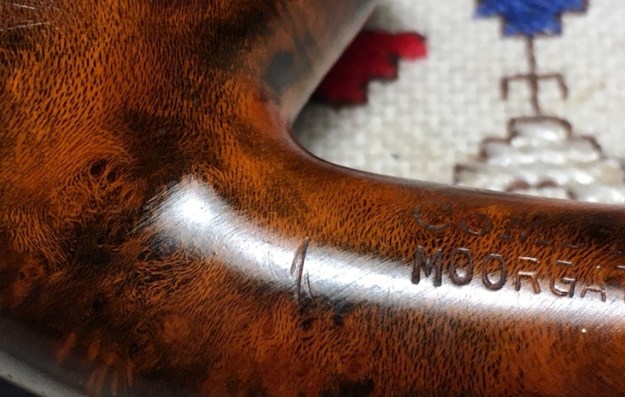
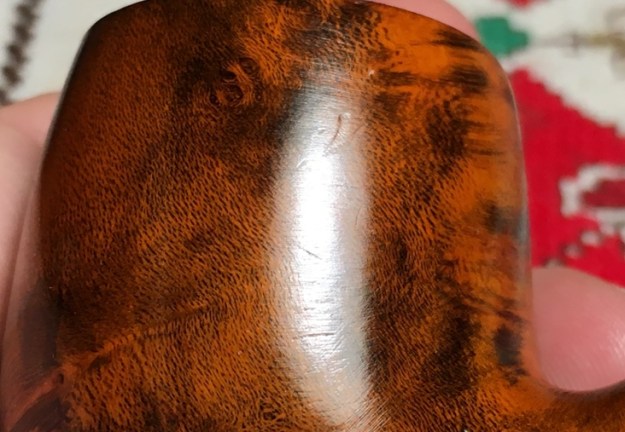
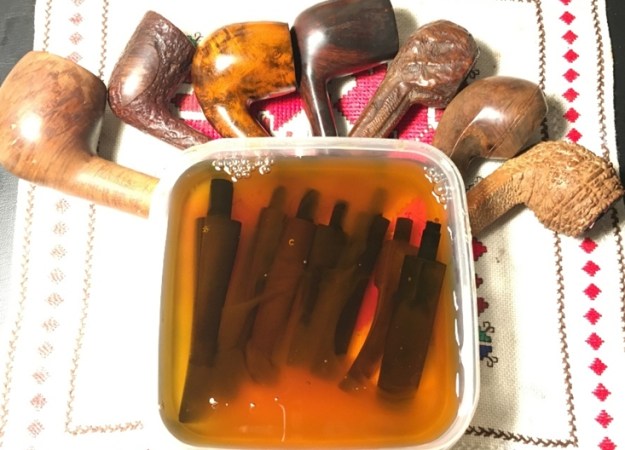
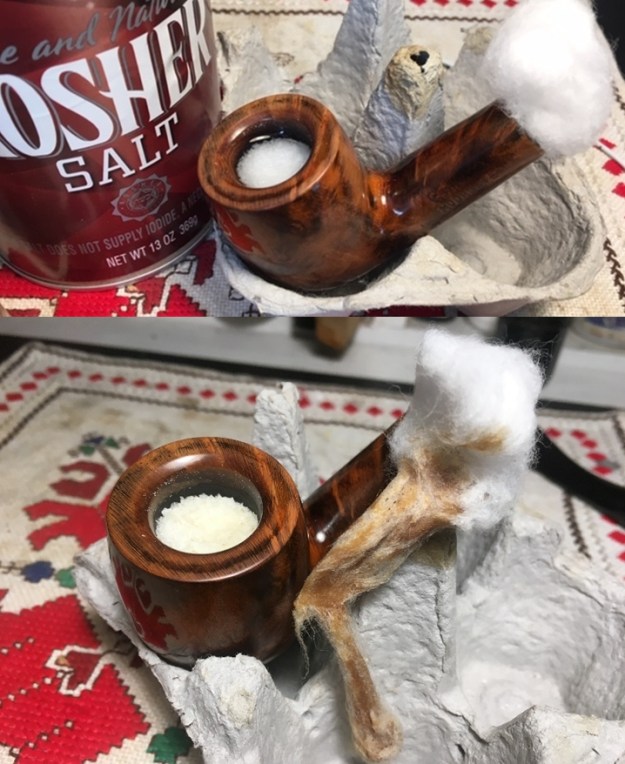
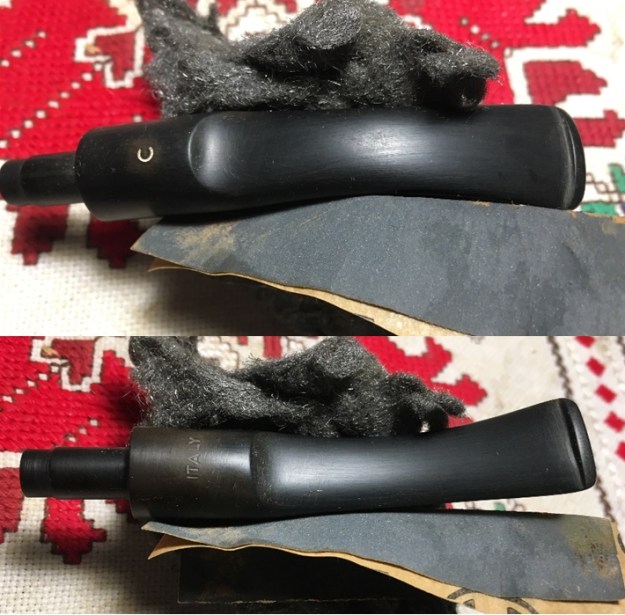
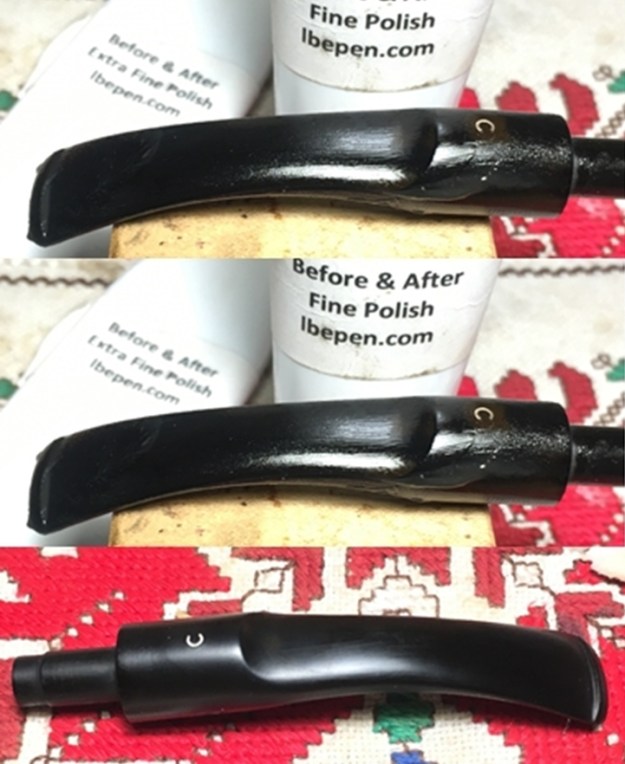
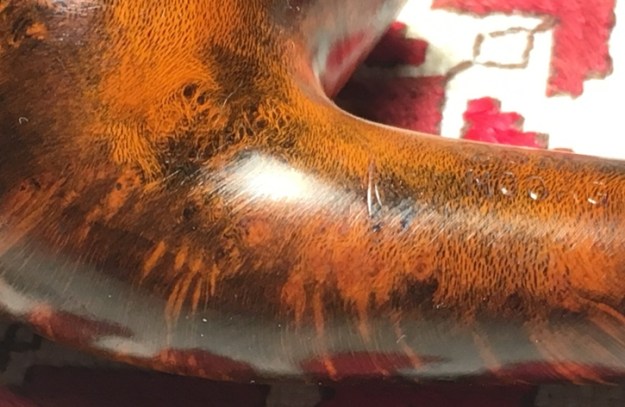
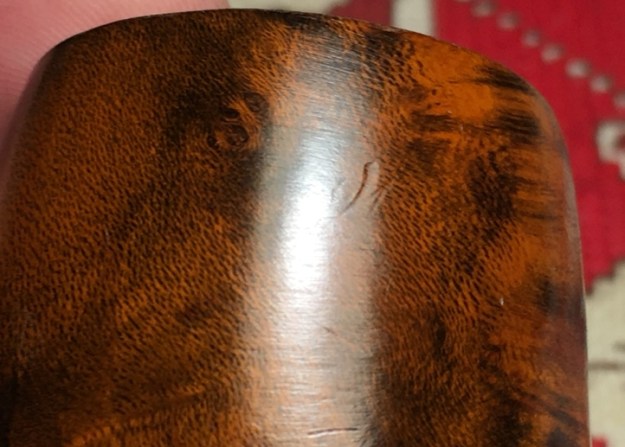
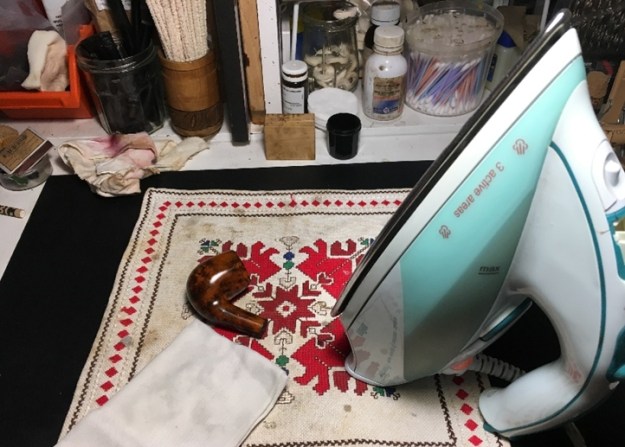
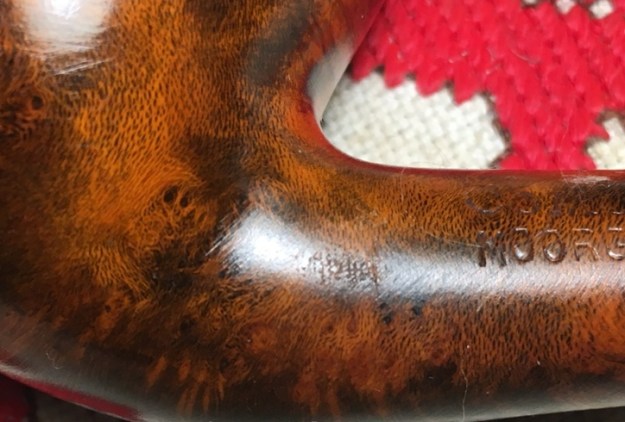
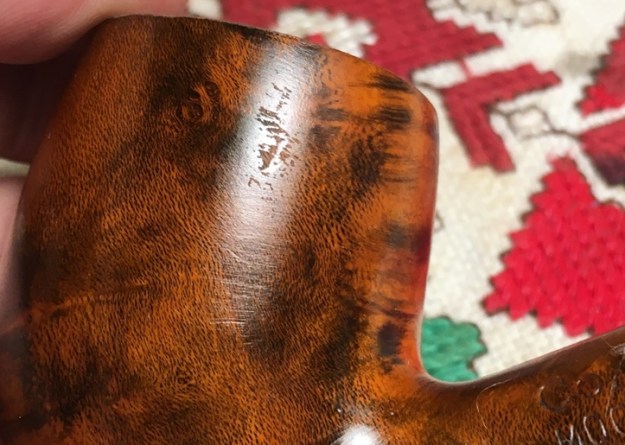
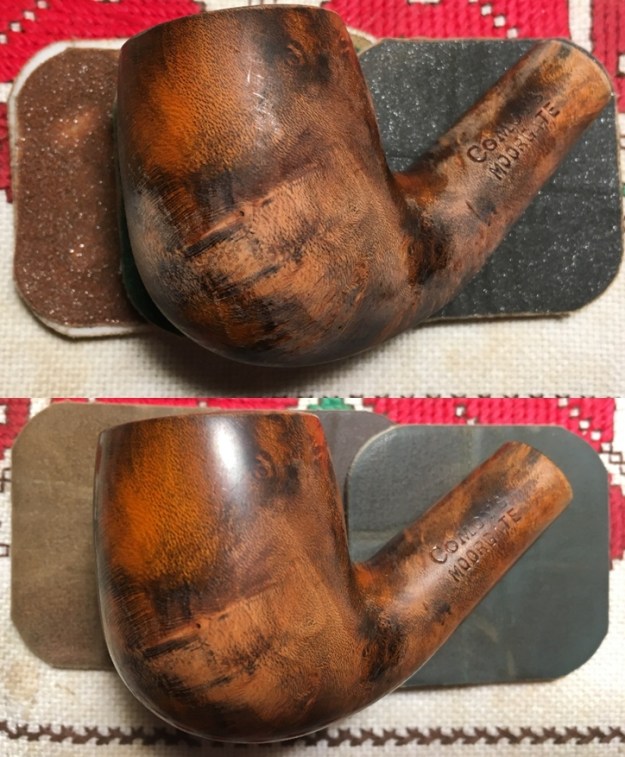
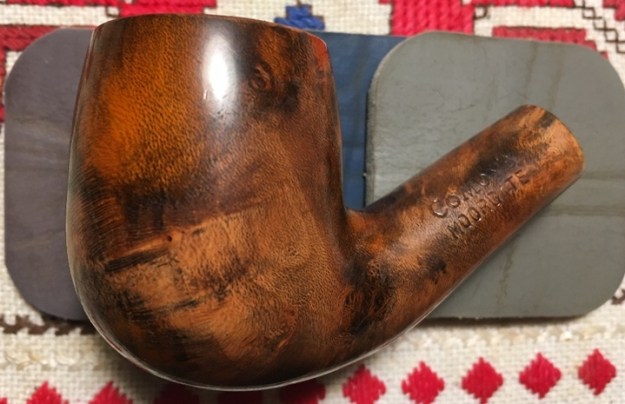
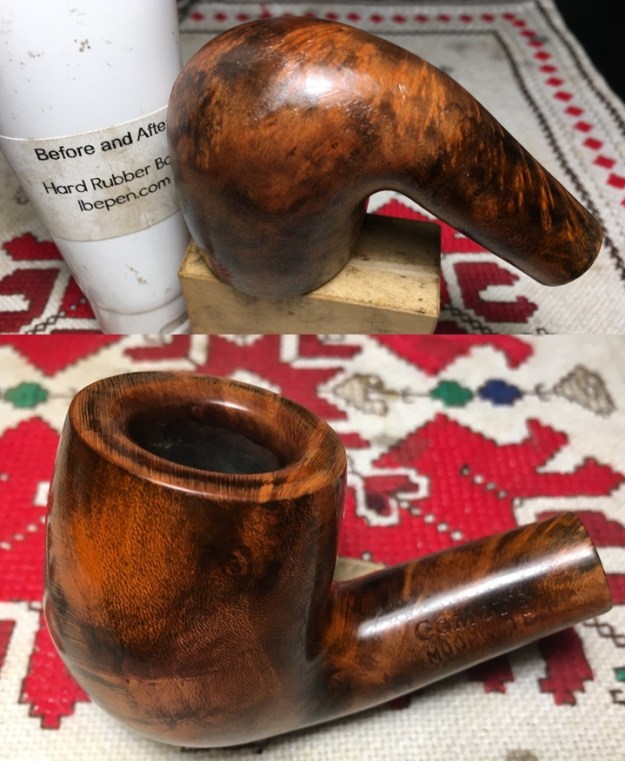
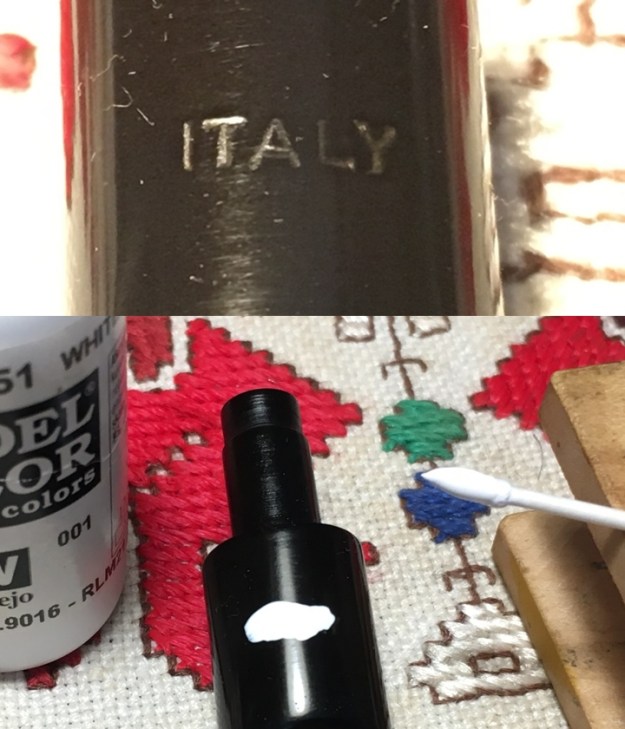
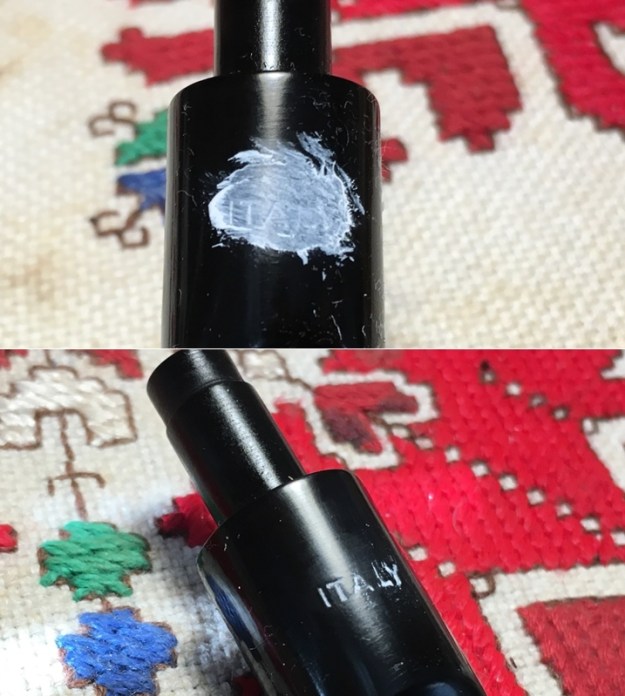
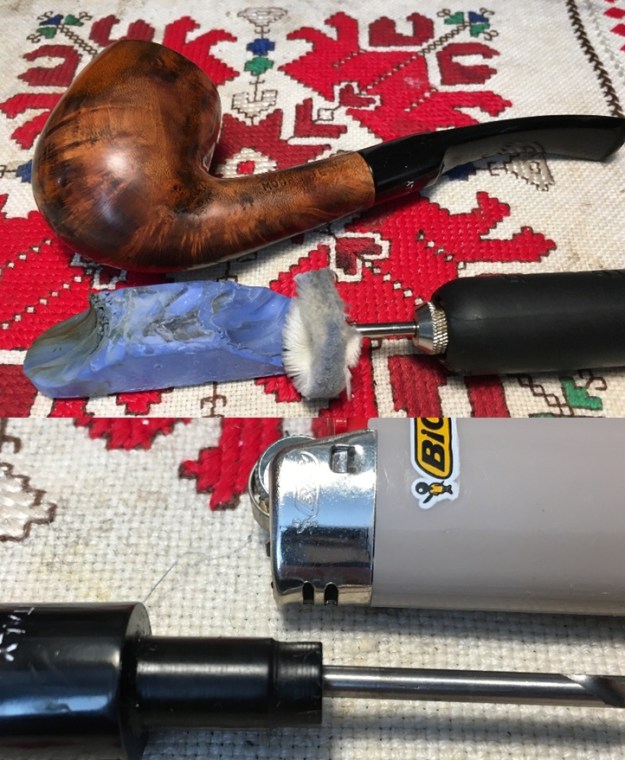
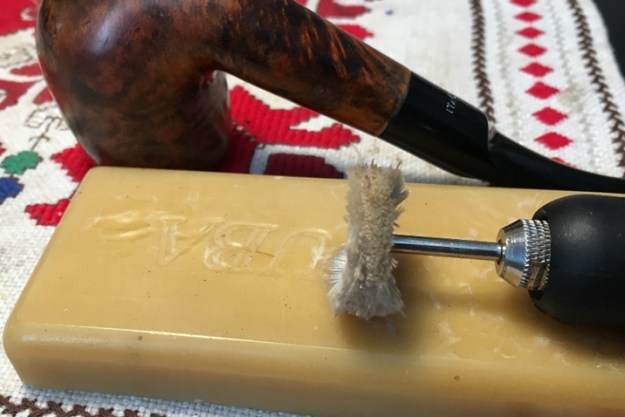
I saw this attractive Comoy’s Moorgate on the eBay auction block last year and fortunately provided enough of a bid to bring it home to Bulgaria.  What attracted me to this Comoy’s was the interesting finish which is a darkened, orange hue with nice feathered grain.  This Comoy’s Moorgate also got Jim’s attention after he saw it posted on my website in the For ‘Pipe Dreamers’ Only! collection I list online for pipe men and women to commission.  I enjoyed communicating with Jim via email very much.  Jim not only commissioned the Comoy’s, but he also commissioned a very interesting, older Stanwell Henley Special which I acquired along with 2 brother Stanwell Henleys – 3 pipes I’ve been looking forward to restoring and learning more about.  Along with these 2 pipes that Jim commissioned, were his encouraging words of appreciation for the work we’re doing with the Daughters of Bulgaria – women and girls who have been trafficked and sexually exploited.  Jim was glad that the pipes he was commissioning benefited these efforts.  Thanks, Jim!  Here are a few pictures of the pipes – the Comoy’s and the Stanwell Henley Special – Jim’s is the Saddle Stem Billiard in the middle.  When Jim commissioned these pipes, I’m grateful that he also agreed to be patient as the pipes gradually made it to the top of the queue.  I take some additional pictures to take a closer look at the Comoy’s Moorgate on my worktable here in Sofia, Bulgaria, on the 10th floor of a formerly Communist block apartment building. The nomenclature identifies this Comoy’s as a post-Cadogan era pipe which dates it no older than the early 1980’s when the Cadogan merger took place.  On the left side of the shank is ‘COMOY’S’ [over] ‘MOORGATE’.  The right side of the shank is stamped with the shape number, ‘102’.   The upper side of the stem has the well-known ‘C’ Comoy’s stamp and the underside is stamped, ‘ITALY’. All the stampings point to a post-merger Comoy’s pipe.  The COM being Italy and not ‘Made in London England’ confirms this as Cadogan farmed out the manufacturing.  Interesting also is the shape number, ‘102’.  Pipedia provides a Comoy’s Shape Number Chart that identifies the 102 as being an army mounted, large, straight Pot which does not correspond to the Half Bent Billiard on my table.  The chart most likely pointing to earlier shape numbers.Pipephil.eu provides a Comoy’s Moorgate that matches up with what I’m seeing before me – nomenclature and stampings.  It references a Comoy’s second brand with the name ‘Moorgate’.  I look up the reference and it is a different line altogether – nomenclature and stem stamps and COM as ‘Made in England’.Looking at the condition of the Comoy’s Moorgate on my worktable, it is generally in good condition.  I take a few more pictures to look at some trouble areas.  The chamber has moderate cake build up and some significant lava flow caked on the rim.  The bowl surface has some dents which I’ll try to lift with the hot iron method to preserve the finish.  The stem has moderate oxidation and tooth chatter – no huge problems detected there. To begin, I run a pipe cleaner wetted with alcohol through the draft way and then put the stem in a bath of Before & After Deoxidizer along with several other pipes in the queue.  After several hours soaking, I fish out the Comoy’s stem and allow the Deoxidizer fluid to drain off.  I then take a cotton cloth wetted with alcohol and wipe off the raised oxidation. I continue wiping off oxidation and conditioning the stem by wetting the cotton pad with light paraffin oil.  The Deoxidizer seems to have done a good job. Next, I address the chamber cleaning by reaming it with the Pipnet Reaming Kit. To help with the cleanup, I put down some paper towel to catch the dislodged carbon.  Beginning with the smallest of four blade heads, I ream the chamber. I only use 2 of the 4 blades available.  I follow this by using the Savinelli Fitsall Pipe Tool to fine tune the reaming.  I also use the Fitsall Tool to scrape gently an internal rim bevel that emerges from underneath the carbon cake.  I also use my thumbnail to scratch the carbon off the rim.  Following this, I wrap a piece of 240 grit paper around a Sharpie Pen and sand the chamber.  Finally, to remove the carbon dust, I wipe the chamber with a cotton pad wetted with isopropyl 95%.  With the chamber cleaned, I inspect the chamber walls and I find no issues with heat fissures or cracking. Turning now to the external briar surface, I use undiluted Murphy’s Soap on a cotton pad and clean.  I take my time on the rim to remove the lava.  After cleaning the surface, I use cool tap water to rinse the bowl.Turning now to the internals of the bowl, I use cotton buds and pipe cleaners with alcohol to clean. I also use a dental spatula to scrape the mortise walls more quickly removing the built-up tars and oils.  In time the buds and pipe cleaners start coming out cleaner.  Good for now.  I move on!To achieve a deeper cleaning and refreshing of the internals, I use a kosher salt and alcohol soak.  Using a cotton ball to create a wick, I stretch and twist it and then insert it through the mortise and into the airway.  I then fill the bowl with kosher salt and place it in an egg carton to provide stability.  With a large eye dropper, I then fill the bowl with isopropyl 95% until it surfaces over the salt.  I top the alcohol in a few minutes after it’s absorbed into the salt.  I put the stummel aside for several hours to soak.  After some time, the salt and the wick were soiled.  I tossed the expended salt, wipe the bowl with paper towel, and blow through the mortise to remove salt crystals.  To make sure all was clean, I use a cotton bud and pipe cleaner dipped in isopropyl 95% and they are clean.Putting the cleaned bowl aside, I take the flat needle file and work on the button.  I file the button lips, upper and lower to redefine them.  To erase the scratches of the file, I follow by sanding the bit area, upper and lower with 240 grade sanding paper.  I also sand the entire stem to remove further residual oxidation.  I’m careful to avoid the stem stampings while sanding.  To remove the scratches left by the 240 grade paper, I wet sand using 600 grade paper followed by applying 0000 steel wool buffing to the entire stem.In order to further enrich the vulcanite, I use Before & After Fine and Extra Fine Polish in that order.  I put some Fine polish on my fingers and work the polish in.  After some minutes, I wipe it off.  I follow with the same process with the Extra Fine Polish, giving it some minutes and wiping it off and buffing up the stem.  The stem is cleaning up very nicely.Turning again to the stummel, there are 2 significant dents that I want to see if I can minimize using the heating method with an iron.  I take pictures of the two places I have in mind.  I heat the iron and dampen a cotton handkerchief with water.  I place the cloth over the dent and press the hot iron against the cloth over the dent in the briar.  The heat and moisture are supposed to expand the dent and in this case it does. Interestingly, taking a picture of the two dents afterwards, what emerged is a roughness caused by the heat. Hmmm, not sure why that happened.  The pictures show what I see before and after heating. To remove the roughness caused by the heating and to remove the normal wear nicks, I wet sand the stummel using micromesh pads 1500 to 2400.  I then dry sand with pads 3200 to 4000 and 6000 to 12000.  The grain on this Comoy’s Moorgate is unique as it emerges through the micromesh process.  It looks great! To enrich the natural grain of the bowl, I apply Before & After Restoration Balm.  I apply some Balm on my fingers and work it into the briar surface.  The Balm starts with a thinner oil-like viscosity then gradually thickens to a waxy consistency.  After I apply the Balm thoroughly, I let the bowl stand for several minutes while the Balm absorbs.  I then wipe off the Balm using a microfiber cloth and gradually, as the Balm is removed, I transition to buffing with the cloth. I take a picture while the Balm is doing its thing and after. I’m liking it a lot!Returning to the stem, I now continue with the micromesh sanding phase.  I begin by wet sanding using pads 1500 to 2400, then dry sanding using pads 3200 to 4000 and 6000 to 12000.  Between each set of 3 micromesh pads, I apply Obsidian Oil to continue revitalizing the vulcanite.  The rubber has that glossy pop!  I put the stem aside to dry. Next, I want to refresh the stem stamping, ‘ITALY’.  To do this I place a drop of white acrylic paint over the lettering.  I then use a cotton pad to blotter the excess paint, thinning it so that it dries rapidly. With the flat edge of a toothpick, I then gently scrape the excess paint off the stem.  The pictures show the progress. I now reunite the stem and the bowl and mount a cotton cloth buffing wheel to the Dremel.  I set the speed at about 40% full power and apply Blue Diamond compound to the entire pipe.  Afterwards, I wipe/buff the pipe with a felt cloth to clear it of leftover compound dust.  While I was buffing with the felt cloth, I note that the stem fitting is a little loose for my liking.  This sometimes happens after cleaning the pipe well and scraping the mortise.  To remedy this, I fit a drill bit just larger than the airway diameter and heat the tenon with a Bic lighter.  As the vulcanite tenon heats, it becomes supple allowing me to insert the bit into the airway and it expands the tenon slightly.  I test the fit and it works perfectly, and I am satisfied.  After rejoining stem and stummel, I then mount another cotton cloth wheel to the Dremel, maintaining 40% speed and apply several coats of carnauba wax.  I finish the restoration by giving the entire pipe a rigorous hand buffing using a microfiber cloth to raise the shine further.I’m pleased with the results of this Comoy’s Moorgate.  The briar is spectacular with its diversion of colors and swirls of grain.  Patches of orange settle in the grain knots and from there the colors are an eye catching kaleidoscopes. It is a unique piece of briar and the half-bent Billiard nicely rests in the palm.  Jim commissioned this Comoy’s from the For ‘Pipe Dreamers’ Only! collection and he will have the first opportunity to acquire it from The Pipe Steward Store.  This pipe benefits the Daughters of Bulgaria – women and girls who have been trafficked and sexually exploited.  Thanks for joining me!

Restoring an Amazing 1963 Dunhill Tanshell Cherrywood 475


Blog by Steve Laug

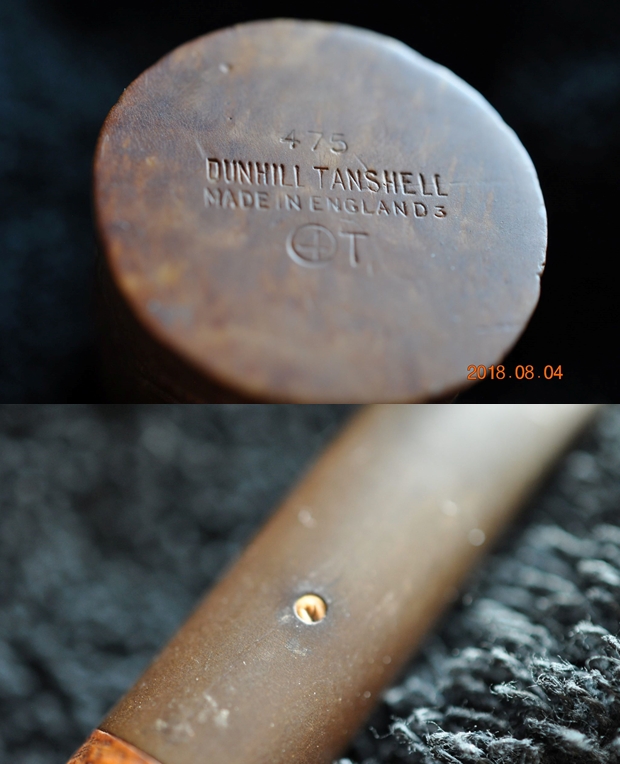
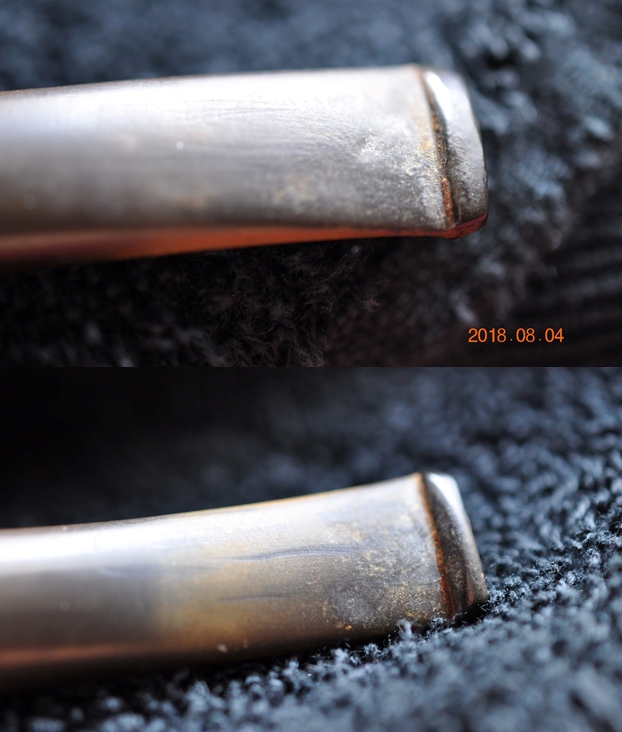
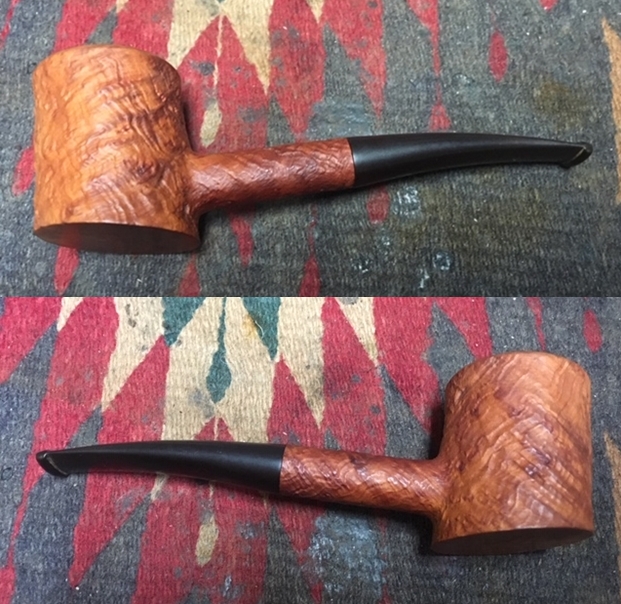
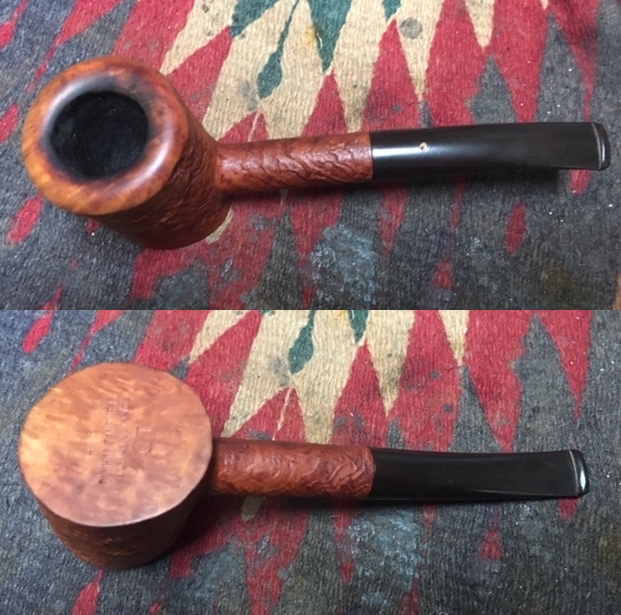
Jeff picked up a pair of Dunhill pipes somewhere on his journeys. He becoming a very selective Pipe Hunter and this twosome are really quite nice. I am working on the first one of those at this time. It is a Dunhill Sandblast in a Cherrywood/Poker shape. It has a nice rugged blast with a smooth, rounded rim top and bowl bottom. It is stamped on the bottom of the smooth bowl. It reads 475 (shape number) over Dunhill Tanshell. Under that is stamped Made in England followed by a 3. Underneath that it has a 4 in circle and a T next to that. The stamping tells me that the pipe is a Tanshell (both the name and the T). The 475 is the shape number (I wonder if the 4 on the front is the size). The circle 4 is the size of the pipe. The 3 following the England stamp tells me that the pipe was made in 1963. Jeff took the following photos to show the condition of the pipe. The finish is dirty as can be seen in this photo.The stem is oxidized and there was a chip missing out of the white spot. The finish is dirty as noted above. There is an overflow of lava on the crowned rim top and a thick cake in the bowl.He took two photos of the rim top to show the thick lava overflow on the inner edge of the rim and the top of the bowl itself. You can also see the thick cake in the bowl.The deep grooves of the sandblast are dirty and there is debris in the grooves and crevices of the finish.The stamping on the underside of the bowl is very readable and gives the information that is written in the opening paragraph of the blog. The photo of the stem shows the chip in the white spot on the top of the stem. The white spot was slightly yellowed.The stem showed tooth chatter, marks and wear on the button on both sides. Jeff had reamed the bowl with a PipNet pipe reamer and followed up with a Savinelli Fitsall pipe knife to remove the cake. He scrubbed out the mortise and the airway in the shank and the stem with alcohol, cotton swabs and pipe cleaners. He scrubbed the exterior of the bowl, rim, shank and stem with a tooth brush and Murphy’s Oil Soap to remove the oils, lava and tars on the rim and the grime on the finish of the bowl. He rinsed it under running water. He dried it off with a soft cloth. The rim was thoroughly cleaned and without the grime the finish looked really good.  The rim had some darkening around the inner edge of the bowl. The vulcanite stem would need to be worked on but I really like the profile it cast. I took photos of the pipe to show its condition before I started my work on it.  I took close up photos of the bowl and rim top as well as the stem. You can see the condition of the rim top and bowl in the first photo. Jeff was able to remove all of the tar and oils but you can now see the darkening around the inner edge. The vulcanite stem had tooth chatter and some light tooth marks on the top and underside of the stem both on the surface of the button and just ahead it. There was one deeper tooth mark on the topside near the button.I started my refurbishing work by addressing the darkening on the rim top and inner edge. I first lightly sanded it with a worn piece of 220 grit sandpaper. I find that using a bit more tired piece of sandpaper works wonders on the dark edge without scratching the rim surface like a new piece. I followed that by wet sanding it with 1500 grit micromesh.I rubbed down the smooth and the sandblast briar with Before & After Restoration Balm. I worked it into the smooth surface of the briar on the rim and the bottom of the bowl. I worked it into the nooks and crannies of the sandblast on the bowl and shank with my fingertips and with a horsehair shoe brush. I wanted to make sure that the balm got into the deep crevices to do its work. The balm works to clean, enliven and protect the briar. I let it sit for a little while and then buffed with a cotton cloth to raise the shine. The following photos show the bowl at this point in the restoration process. The rim looks much better than when I started but still needs to be polished and buffed to raise a shine on it. I sanded out the tooth chatter and tooth marks on the stem surfaces. I put a drop of clear superglue in the chip on the white spot and sanded it smooth.I polished the vulcanite stem with micromesh sanding pads – wet sanding with 1500-2400 grit sanding pads and dry sanding it with 3200-12000 grit sanding pads. I wiped it down after each sanding pad with Obsidian Oil. I polished it further with Before & After Pipe Polish – both Fine and Extra Fine polishes and gave it a final coat of Obsidian Oil and set it aside to dry. I the polished stem and the smooth portions of the bowl with Blue Diamond to polish out the remaining small scratches and raise the shine. I gave the stem several coats of carnauba wax and the bowl several coats of Conservator’s Wax then buffed the pipe with a clean buffing pad to raise the shine. I hand buffed it with a microfiber cloth to deepen the shine. The pipe polished up pretty nicely. This turned out to be a beautiful pipe in terms of shape and finish. This is a nice looking Dunhill Cherrywood pipe. The finished pipe is shown in the photos below. The dimensions are Length: 5 1/2 inches, Height: 1 3/4 inches, Outside diameter of the bowl: 1 1/2 inches, Chamber diameter: ¾ of an inch. Thanks for walking through the restoration with me as I worked this beautiful little Dunhill sandblast. It will soon be heading to India to join Paresh’s collection. Thanks for looking.

A Tiny 2 Star BBB 8881 Apple/Globe Provided An Interesting Challenge


Blog by Steve Laug

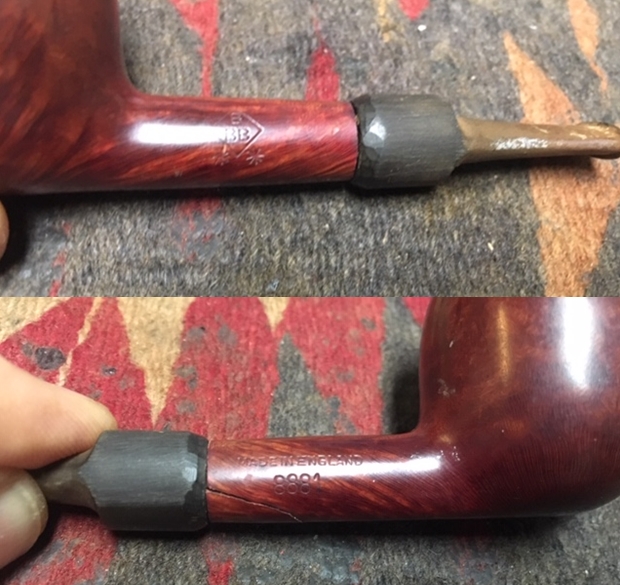
When I spoke with a fellow here in Vancouver who had a pipe that he wanted me to fix it sounded like a simple repair. He said that it had a very loosely fitting stem. He asked if he could drop by to show it to me and see if I could fix it. From past experience I have learned to never jump to conclusions about what sounded like an easy repair. When he arrived he showed me his GBD Faux Spigot. It turned out to need far more work than just tightening a loose stem. I wrote about that restoration in a previous blog (https://rebornpipes.com/2018/11/03/redoing-a-poorly-restored-ebay-gbd-super-q-9436/). We talked about his GBD for a bit and he made the decision to have me do a restoration on it. Then he reached into his pocket and pulled out a small plastic bag with a little BBB 2 Star apple of globe shaped pipe. It was stamped BBB in a diamond on the left side of the shank with two ** – one on either side of the diamond. ON the right side it was stamped Made in England over the shape number 8881. He said that he had found it at his parents’ house and really no one there knew where it came from.

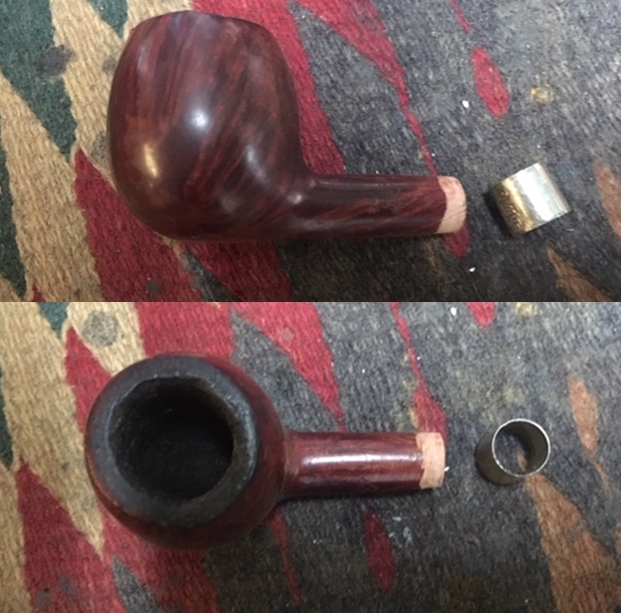
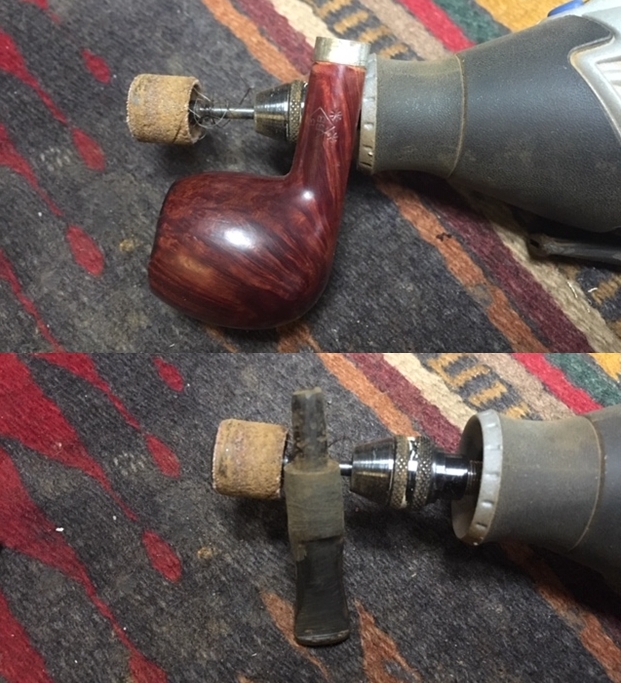
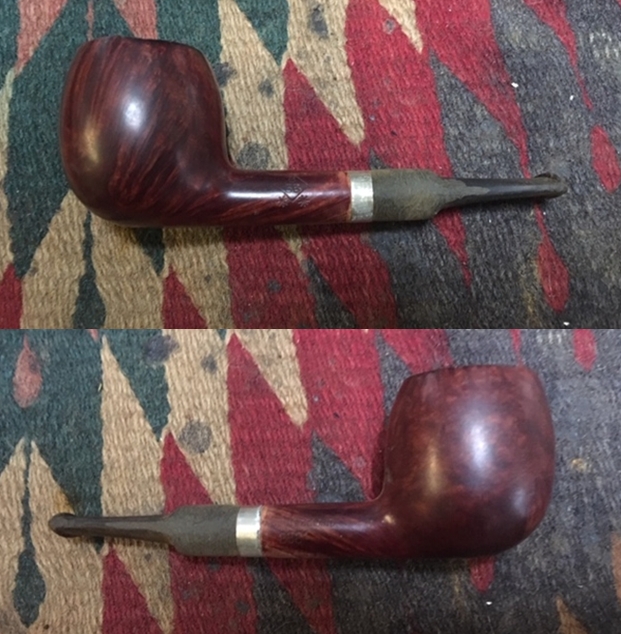
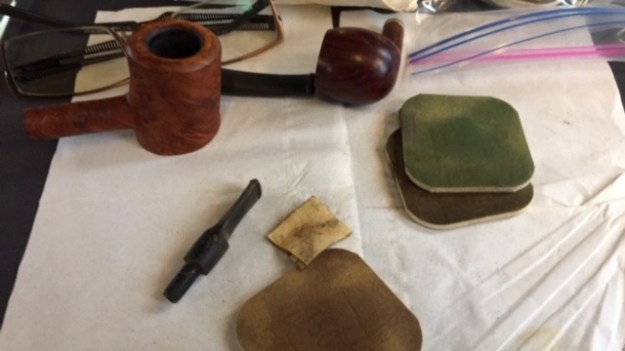
Here is what I saw. Starting with externals. The pipe was small – kind of a pocket pipe. The grain on the bowl was quite stunning – a mix of flame and birdseye all around the bowl and shank. The rim top was coated with a thick lava coat and it went into the bowl. The inner edge of the bowl was in rough shape having been hacked clean with a knife. There was a crack on the right side of the shank curving to the underside. It looked to me it was made by the poorly made stem being shoved into the shank. The stem was larger in diameter than the shank and had been rounded over with a file. There were deep bite marks on the surface ahead of the button on both sides. Moving to the internals. The end of the tenon was carved with a knife to make it fit the mortise in the small shank. The inside of the shank was dirty but less so than I expected. The inside of the bowl had a light cake but most of that was gone from the knife job that had left a wounded inner edge on the rim. Looking at the pipe I explained what I would have to do to bring it back to life and restore it to use. It would need, cleaning, reshaping on the rim, a band on the cracked shank that would leave the stamping readable, and a reworking of the stem to make it a fitting addition to the lovely briar of the bowl. The pipe was going to be a fun challenge. I took these photos to give you an idea of what I saw. The previous pipeman who had fit a new stem to an old favourite pipe had done a functional job but it looked rough. It was pretty clean on the inside so it was cared for. It must have been a great smoking pipe for him to fit a new stem and not give up on it when the previous one broke or was lost. It was smokable. I took a close up photo of the rim top to show the condition. It is hard to see but the rim top was not smooth. The lava build up was pretty thick and there were some deep nicks and chips in the flat top. The close up photos of the stem reveal the scratches in the vulcanite, the tooth marks and the worn and ill-defined button.  The oversized diameter – prettified to look nice is clear in the photos. I took photos from the side of the pipe to show the stamping on the shank and the prettified stem. In the second photo you can see the crack in the shank curving downward to the underside.I decided to address the cracked shank first. With the crack as large as it was and movable I did not want to further damage it when I worked on the stem and fit of the tenon. I knew that it needed to be banded but that would cover the stamping on the shank so adjustments would have to be made. I used a Dremel and sanding drum to reduce the size of the shank to fit the band I had chosen. I did not take of too much briar and I only damaged the M in Made In England as part of it would end up being covered by the band.I repaired the crack in the shank with super glue and pressure fit the band onto the shank to the point of the end of the sanded portion. I used a Dremel and sanding drum to cut back the band to the width that I wanted. Compare the photos above with the one below to see how much I took off of the band. I topped the band on a topping board with 220 grit sandpaper and smooth out the sharp edge with 1500 grit micromesh. I decided that since I was already working with the Dremel and sanding drum that I would take down the excess diameter on the stem as well. I reduced it to sit snugly against the band giving the pipe a classy look.I cleaned up around the inside edge of the band and edge on the shank with a folded piece of 2220 grit sandpaper to smooth things out and make the fit and transition smooth. I lightly sanded the blade portion of the stem and the area of the tooth marks next to the button with 220 grit sandpaper to remove the oxidation and clean it up. I fit the stem in the shank and took a photo of the pipe at this point in the process. It was beginning to look like a classic BBB to my eye. With the stem roughly fit to the shank it was time to address the bowl top. I topped it on a topping board with 220 grit sandpaper. At that point I called it a night. I had to catch a train down to the southern part of Washington from Vancouver in the morning so I thought I would bag up a couple of pipes I was working on and take them with me.I caught the train south from Vancouver, BC at 6:30am. Once we had our seats we were in for an 8 hour train ride. I figure it would be a good opportunity to work on these two pipes. You can see my work table in the photo below. I used the fold down table. It had a lip around it so I spread out a couple of napkins for the dust and went to work on the pipes.I started working on the BBB by addressing the damage to the inner edge of the rim. It was significant with cuts and burns. My topping worked had helped with the top damage and smoothed that out but I need to work on the rim edge. I used a folded piece of 220 grit sandpaper to smooth out the sharp edges and bring the bowl back to round. Once I had the rim as round as I could get it and smoothed out the damaged edge I polished it with micromesh sanding pads. I polished the bowl and the rim at the same time. I wet sanded with 1500-2400 grit micromesh sanding pads and dry sanded with 3200-12000 grit pads. I wiped the bowl down with a damp napkin after each pad. I touched up the stain around the front of the band and stained the rim top and inner edge with Maple and Cherry stain pens. Together the two stains matched the rest of the bowl.I rubbed down the briar with Before & After Restoration Balm. I worked it into the smooth surface of the briar with my fingertips to clean, enliven and protect it. I let the balm sit for a little wall and then buffed with a cotton cloth to raise the shine. The following photos show the bowl at this point in the restoration process. The rim matches well but still needs to be polished and buffed to raise a shine on it. I used a folded piece of 220 grit sandpaper to reshape the button and also to smooth out the marks left by the Dremel when reducing the diameter of the stem. I sanded the tooth marks near the button on each side of the stem to smooth them out.I polished the stem, tenon and metal work with micromesh sanding pads – wet sanding with 1500-2400 and dry sanding with 3200-12000 grit pads. I wiped the stem down with Obsidian Oil after each sanding pad. I was able to remove the damage on the tenon and polish out the dripping varnish on the metal adornment. The stem looked much better at this point in the process. I the polished stem and bowl with Blue Diamond to polish out the remaining small scratches and raise the shine. I gave the bowl and the stem several coats of carnauba wax and buffed the pipe with a clean buffing pad to raise the shine. I hand buffed it with a microfiber cloth to deepen the shine. The pipe polished up pretty nicely. This turned out to be a beautiful little pocket pipe in terms of shape and finish. The new nickel band adds a touch of class in my opinion and gives the pipe a new elegance. I look forward to hearing what the fellow who dropped it off for repair thinks of it once he has it in hand and is smoking it. The finished pipe is shown in the photos below. The dimensions are Length: 4 inches, Height: 1 3/8 inches, Outside diameter of the bowl: 1 inch, Chamber diameter: 3/4 of an inch. Thanks for walking through the restoration with me.
Redoing a Poorly Restored EBay GBD Super ‘Q’ 9436


Blog by Steve Laug

Probably one of the most irritating parts of the art of pipe restoration is when a pipe comes to me from an EBay seller who sold it as fully restored and ready to smoke and it was not. The story of this pipe started with that description. On the weekend I received a call from a fellow here in Vancouver who had a pipe that had a very loosely fitting stem. He asked if he could drop by to show it to me and see if I could fix it. From past experience I never jump to conclusions about what sounded like an easy repair. When he arrived he showed me this GBD Faux Spigot. It had a nickel ferrule and a nickel adornment just above the Delrin tenon. The tenon was drilled out for a 6mm filter. The stamping on the bowl reads on the left side GBD in an oval over Super ‘Q’. On the right side it had a Made in London over England COM stamp with the shape number 9436 next to that. On the underside of the shank it has an M stamped next to the ferrule. I asked him where he had picked up the pipe and he said that he had picked it up on EBay. Knowing that, I began to look more carefully at the pipe.

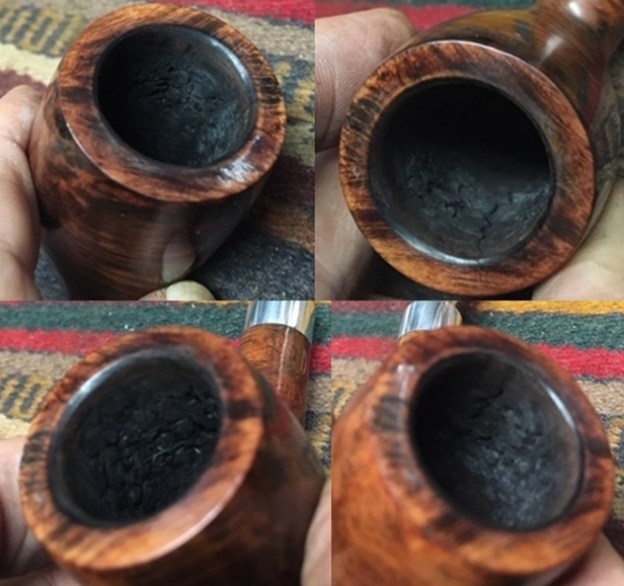
Here is what I saw. Starting with externals. The rim and exterior of the pipe had been coated with a shiny varnish coat with some significant grime on the rim top under the varnish. The nickel had also been coated with the varnish and had run on the stem adornment. The stem also had some deep bite marks on the surface ahead of a very worn and ill-defined button on both sides. Moving to the internals. The end of the tenon had a lot of tarry buildup in it from smoking the filter pipe without a filter. Not much effort seems to have been made to remove it. The inside of the shank was also covered with a tobacco juice lacquer that was also gumming up the airway. When I blew through it, the draught was constricted. The inside of the bowl was another story. The bowl had been lightly reamed leaving behind a fairly thick cake that was checked and cracked giving the bowl interior a very fractured look. The bottom half of the bowl had not seen the blade of the reamer and was dirty. There was debris in the airway as it entered the bowl. I have to say that the pipe was a mess and the work that had been done would make my job harder.

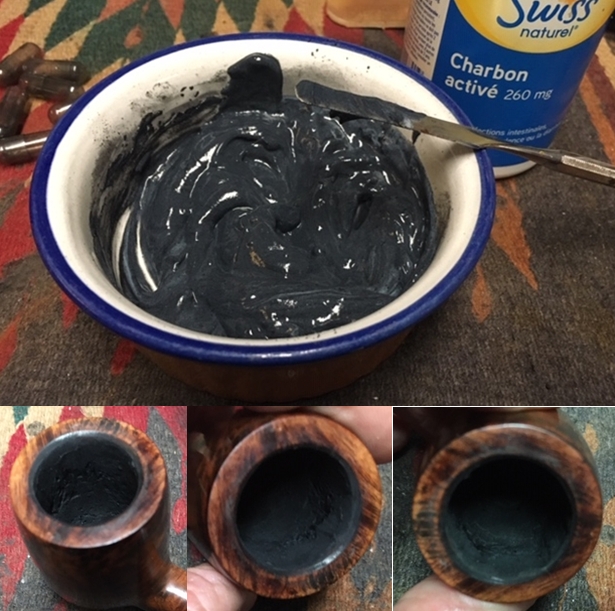
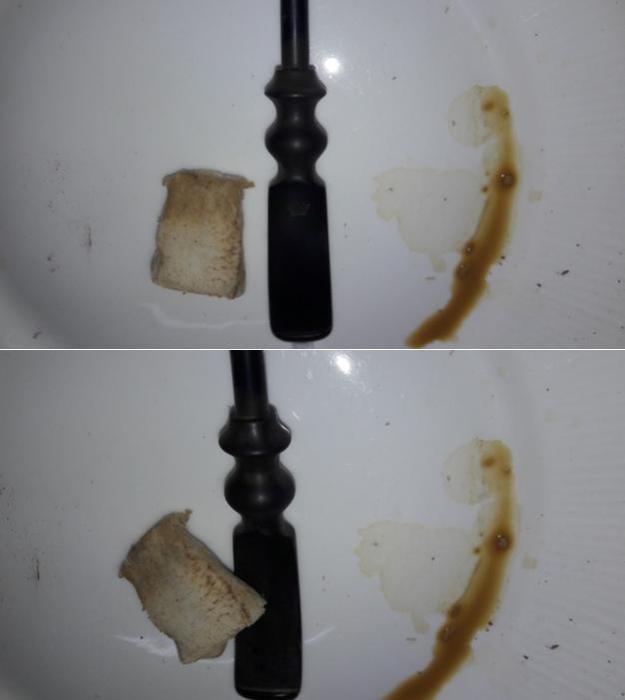
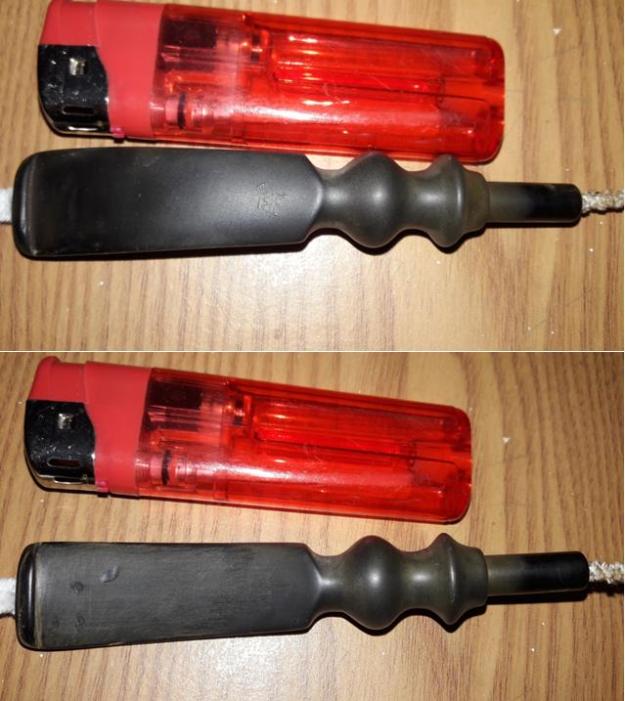
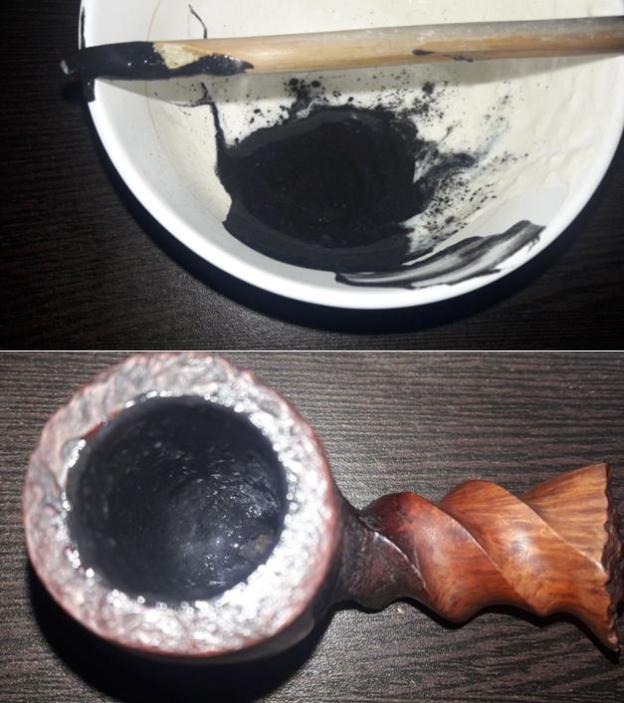
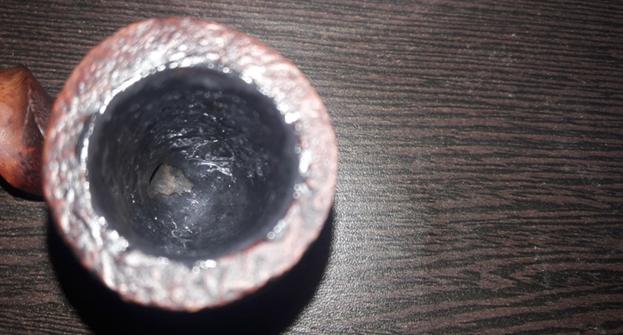
To say that it was restored and ready to smoke was an outright lie. If it had been cleaned and the only issue was the cake I would have been good with that. If the rim top had been cleaned before the shiny coat I would have been good with that. But to cover it up and make it shiny to hide a poor job is deceptive at worst and shoddy craftsmanship at best. I pointed out the issues with the pipe to the fellow who had stopped by and suggested that he have me clean it up for him the way I think that it should have been cleaned. He was game so the pipe stayed with me when he left. I took some photos of the pipe before I started my work to show the general condition. I took a close up photo of the rim top to show the condition. It is hard to see but the rim top is not smooth. There are chunks of grime/lava under the shiny top coat. The close up photos of the stem reveal the scratches in the vulcanite, the tooth marks and the worn and ill-defined button.  There is also some sagging shiny coat on the nickel stem adornment that is visible.I cleaned the internals of the shank and stem with pipe cleaners, cotton swabs and alcohol. The debris that came out was astonishing for a “restored” pipe. I scraped the walls of the mortise with a sharp pen knife to remove the lacquer build up there. When I finished the pipe smelled cleaner.I reamed the bowl back to bare briar with a PipNet pipe reamer. I cleaned up the debris with a Savinelli Fitsall Pipe Knife and sanded the walls with a piece of dowel wrapped in 220 grit sandpaper. I wanted to see behind all the cake what the walls looked like. Sadly they were as I expected – very checked with spidery cracks. I took a few photos of the damage to the inside of the bowl to give an idea of the extent of the checking and fissures on interior walls. This is typically caused by smoking too hot.To protect the bowl wall I mixed up a batch of charcoal powder and sour cream to make a paste. I pressed the mixture into the crevices and fissures on the walls of the bowl and painted a top coat of the mixture with a folded pipe cleaner. I set the bowl aside to cure and turned my attention to the damaged stem.I used a needle file to redefine the button on both sides of the stem and sanded the tooth marks out the surface of the stem with 220 grit sandpaper. I filled in the remaining deeper tooth mark with super glue and when it cured sanded it smooth to match the surface of the stem.I polished the stem, tenon and metal work with micromesh sanding pads – wet sanding with 1500-2400 and dry sanding with 3200-12000 grit pads. I wiped the stem down with Obsidian Oil after each sanding pad. I was able to remove the damage on the tenon and polish out the dripping varnish on the metal adornment. The stem looked much better at this point in the process. Once the bowl coating cured I worked on the rim top with micromesh sanding pads – 3200-12000 to remove the tarry deposits around the surface. I scrubbed the bowl down with Before & After Restoration Balm and after it sat for a short time I buffed it off with a cotton cloth. Here is what it looked like at that point. I the polished stem and bowl with Blue Diamond to polish out the remaining small scratches and raise the shine. I gave the bowl and the stem several coats of carnauba wax and buffed the pipe with a clean buffing pad to raise the shine. I hand buffed it with a microfiber cloth to deepen the shine. The pipe polished up pretty nicely. This turned out to be a beautiful pipe in terms of shape and finish. I am looking forward to hearing what the fellow who dropped it off for repair thinks of it once he has it in hand and is smoking it. The finished pipe is shown in the photos below. The dimensions are Length: 5 3/4 inches, Height: 2 inches, Outside diameter of the bowl: 1 1/2 inches, Chamber diameter: 7/8 of an inch. Thanks for walking through the restoration with me. Thanks for tolerating my rant at the beginning about redoing EBay “restored” pipes. Also if any of you have ever heard of the GDB Super ‘Q’ line let me know. Thanks for looking and thanks for any help you might give.

Restoring a Soren Hand- Carved Sitter Pipe


Blog by Paresh Deshpande

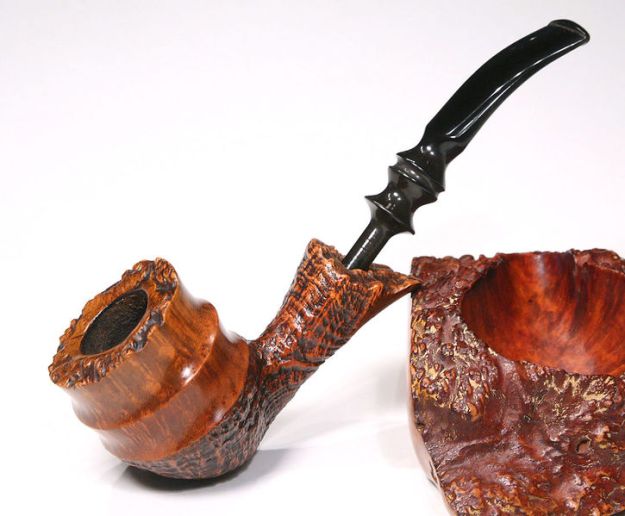
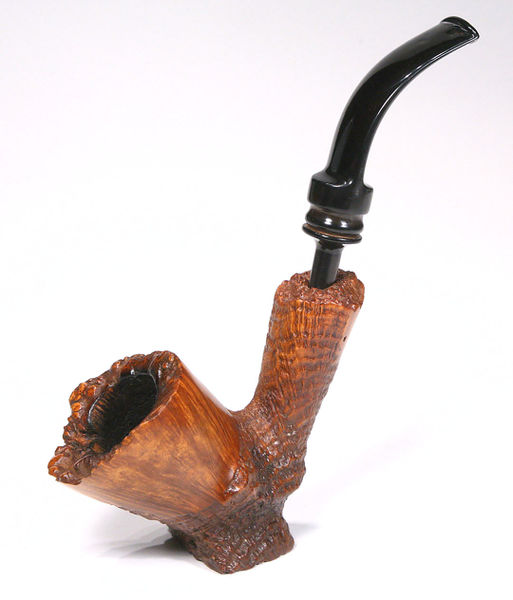
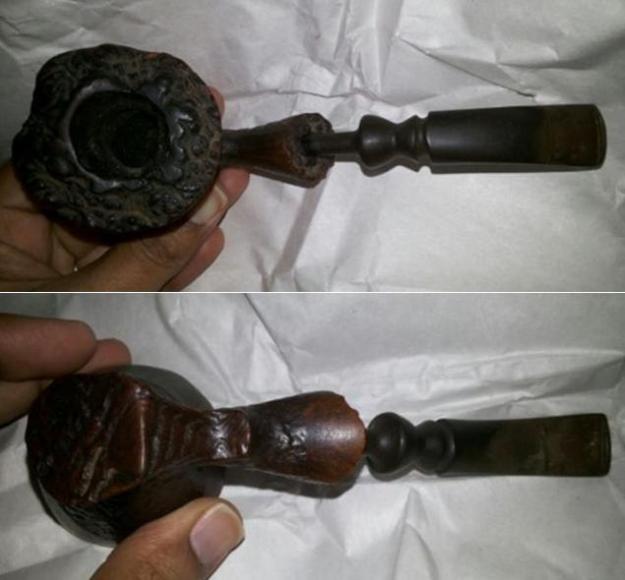
This Soren is the last of the freehand pipes that I had purchased on eBay. Well, this pipe is definitely the smallest of all the four, but it is also the only sitter of this lot!!!!! The medium size of the bowl, angle between the stummel and shank with a fancy stem, lends this pipe a look which is both very attractive and functional at the same time.
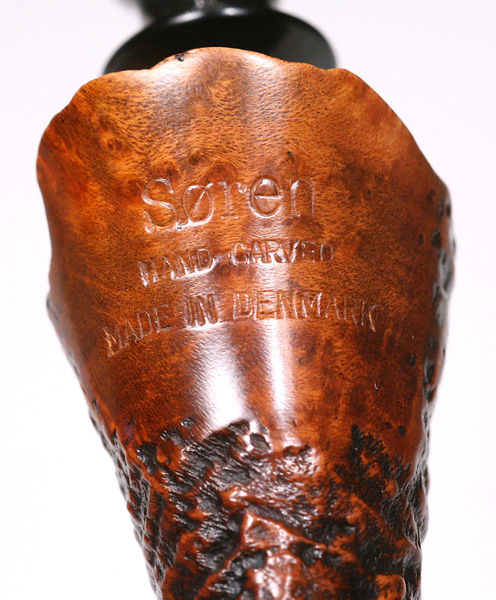
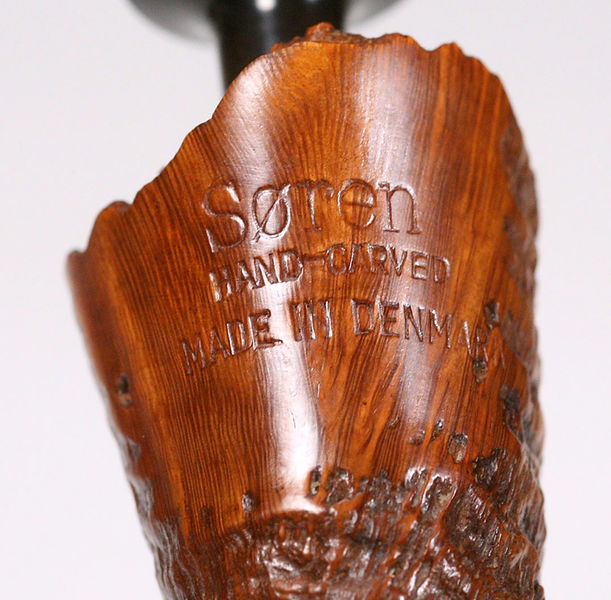
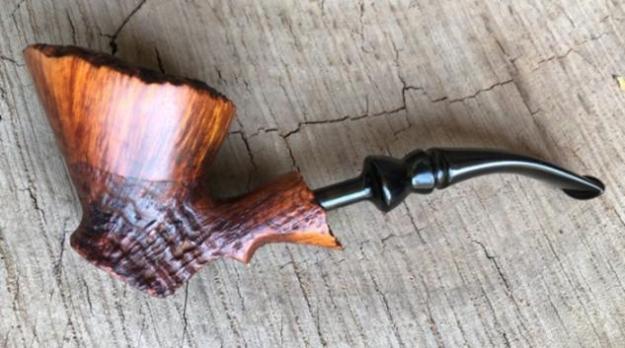
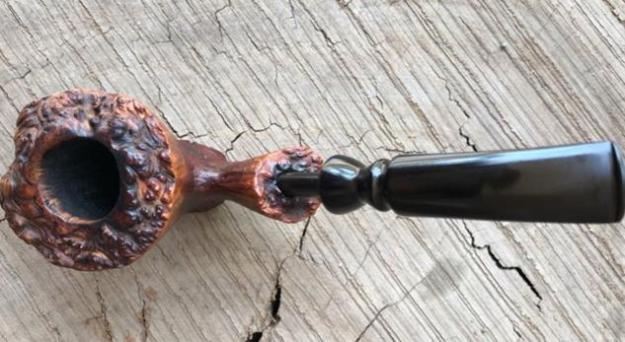
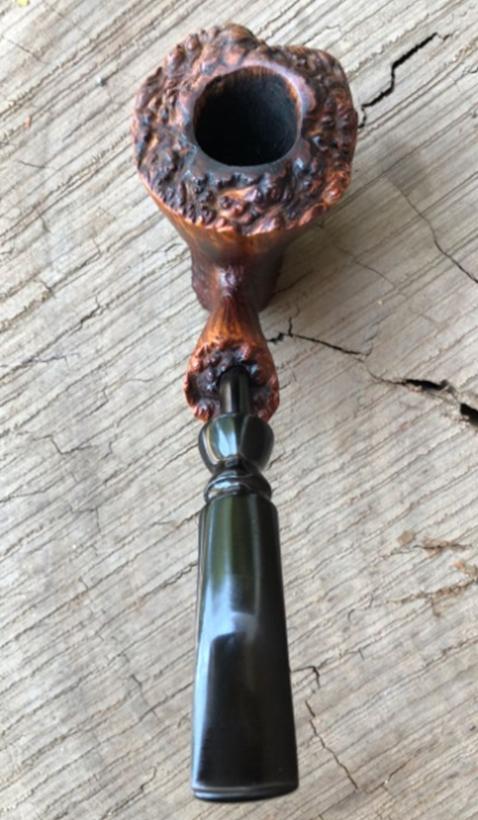
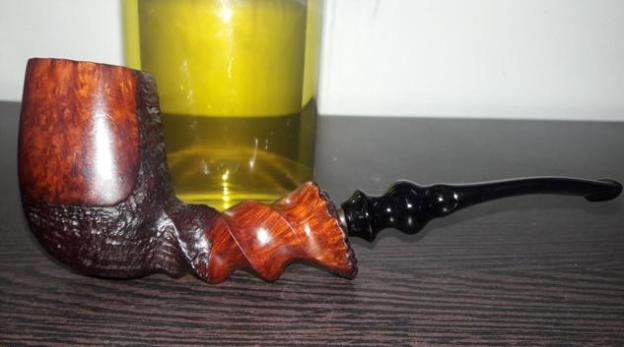
The pipe has a combination of smooth surface and sandblast finishes.  These sandblast portions are seen along the entire length of the shank, save for a small smooth portion on the lower surface at the shank end. This smooth portion bears the only stamping seen on this pipe, “Soren” over “HAND-CARVED” over “MADE IN DENMARK”. The upper portion of the stummel shows irregularly designed straight grained smooth surface while the lower portion and the shank, less the stamped portion,  is sandblasted which give this pipe its unique appearance!!! The plateau rim top has a smooth thin surface very close to the inner edge. I absolutely loved this pipe. I searched the internet for information on this pipe. Pipedia has some interesting snippet of information on the carver of this pipe, which I have reproduced below:
“Søren Refbjerg Rasmussen founded a company in 1969, which employed an average of 8 – 12 craftsmen in the 1970’s. The semi-freehands they produced were traded under his prename Søren. Rasmussen himself finished only the very best pipes. So his way of pipemaking closely resembled the ways of Preben Holm, Karl Erik Ottendahl or Erik Nørding. Altogether more than 1,000,000 pipes were sold.

Today he works alone as Refbjerg and manufactures only a small number of pipes in his workshop in DK-2860 Søborg, which are considered to be tremendously precisely executed. The dimensions mostly range from small to medium sized, corresponding to his personal preferences. The shapes adhere to the classical models, but often he gives them a touch of Danish flair. Refbjerg accepts minor faults but never uses any fillings. “Straight Grain” is the only grading, used for his very best pieces. He likes stem decorations made of exotic woods or metal rings.

As Rainer Barbi once stated “Refbjerg uses only briar from Corsica and more than that, he’s the one and only to import it from there, at least in Europe. He’s supplier to the vast majority of the Danish makers”.

Examples and nomenclature, courtesy Doug Valitchka Initial inspection of the pipe revealed the following
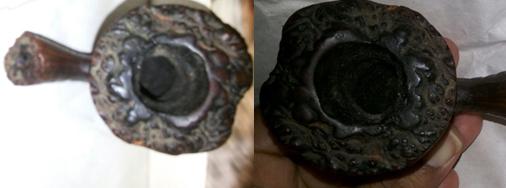
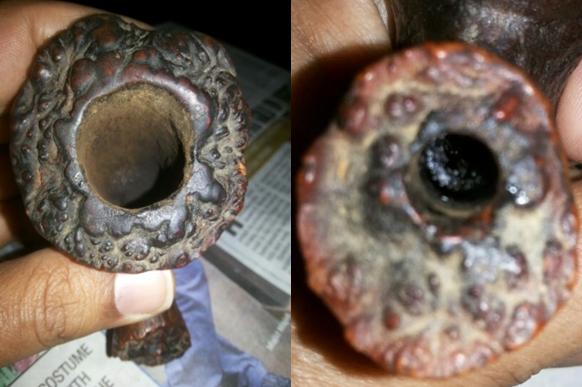
There is a thick layer of cake in the bowl. The external surface of the stummel feels solid to the touch and I think there are no issues with the condition of the chamber. However, there are always surprises when you least expect them!!! I have learnt my lessons!!! Thus, condition of the inner walls of the chamber will be ascertained once the chamber has been reamed and the cake is taken back to the bare briar. The plateau rim top and shank end is covered in the overflow of lava, dirt and grime. This will have to be cleaned. The condition of the inner edge will be determined only after removing the cake. The air way in the shank is clogged with oils and tars and will require a thorough cleaning.The stem is firmly stuck to the shank and will not budge. However, other than heavy oxidation, there are no other issues noticed on the stem. The stummel is covered in dust, dirt, oils and grime. The stummel looks dull and lackluster. The grains on the smooth surface and the sandblast are all covered in tars, oils and grime. To be able to appreciate these grains and sandblast, the stummel will have to be cleaned. THE PROCESS
Before I could start the work of cleaning the pipe, I kept it in the freezer for a couple of hours so as to separate the stem from the shank. I removed the pipe from the freezer and tried to remove the stem, but it still did not budge! I let it rest outside for an hour and after applying considerable force, the stem came free. I had followed a YouTube video where the stem was soaked in a solution of hot water and Hydrogen Peroxide in the ratio of 2:1. The stem oxidation had risen to the surface and was much easier to remove. I cleaned the insides of the stem with pipe cleaners and hard bristled pipe cleaners dipped in alcohol. Once the internals were clean and dry, I wiped the stem surface with magic clean sponge and followed it with polishing with micromesh pads. I applied extra virgin olive oil on the stem surface and set it aside to be absorbed by the stem. I am afraid, in my enthusiasm to try out new technique of using Hydrogen Peroxide; I just missed out on taking pictures of each step. Using a Kleen Reem pipe reamer, I removed all the carbon cake from the chamber. This was followed by sanding the inner walls of the chamber with 220 grit sand paper. The internal walls of the chamber were flawless and solid. Thereafter, using Murphy’s oil soap ( undiluted ) and a hard bristled toothbrush on the exterior of the bowl, shank and rim, the pipe was thoroughly cleaned and rinsed under running tap water. I immediately wiped it down with a soft cloth. The sandblast and the smooth surface were now clean and the briar looked clean and solid. I then left the briar to dry out. Once the briar had dried out completely, I rubbed in Before and After Restoration Balm deep into the sandblast as well as the rim top. The bowl was then wiped vigorously with a soft cloth and buffed with a horse hair shoe brush. The result is very pleasing and satisfying to the eyes! I am happy with this progress. This balm is a fantastic product for infusing a nice shine into the briar and giving it a new lease of life.The finished pipe is as shown below. I enjoyed working on this lot of four freehand pipes and each of these pipes has its own individuality and each is beautiful in its own way. I hope you too enjoyed joining me on this wondrous journey of exploring the freehand pipes!!!!!  Thank you for your patience and as always, any suggestions and/ or improvements will help me in learning this art of restoration.

RESTORING A BEN WADE “SPIRAL”


Blog by Paresh Deshpande

The third of the four freehand pipes purchased on eBay and currently on my work table is the BEN WADE “SPIRAL”. This is a huge sized pipe and fills the hand nicely with its size, weight and heft. I was attracted to this pipe because of its size and the unique spiraled shank. Another factor was the fact that my inherited collection had quite a few numbers of Danish pipes like the Stanwells, Amphoras, Kriswells and SONs. Thus, when I first saw the pipe on eBay, the name Ben Wade sounded so British and when I read the description and the stampings of Made In Denmark, I was immediately interested and intrigued at the same time!!! I got this pipe fairly cheap and the excellent condition it was in when it arrived, further sweetened the deal. This appears to be a simple and straight forward cleaning job from the looks of it.

The stummel shows a combination of sandblasted and smooth surfaces. It shows smooth surface on the left side extending 2/3 way down from rim top towards the heel of the bowl and on the right side it extends from the base of the bowl to 1/3 way upwards towards the rim top.The shank has beautiful and evenly spaced 5 spirals, first half from the bowl end is sandblasted while the remaining half towards the shank end is smooth and bears the stampings “Ben Wade” over “SPIRAL” over “SANDBLAST” over “HAND MADE” over “IN” over “DENMARK”. These stampings are seen in the first and third spiral of the shank. The stem bears the Ben Wade logo of the initials in capital letters ensconced within a crown on the top surface of the stem near the tenon end. All the stampings are clear and crisp. There is some very interesting history on Ben Wade pipes which I got from pipedia.org. Some interesting snippets of information are reproduced below:-

The company was founded by Benjamin Wade in 1860 in Leeds, Yorkshire, where it was located for over a century. Ben Wade started as a pipe trader, but  in the 1860’s he established a workshop to produce briar pipes. The pipes were made in very many standard shapes – always extensively classic and “very British”. Many models tended to be of smaller dimensions. Ben Wade offered a very high standard of craftsmanship and quality without any fills. Thus the pipes were considered to be high grade and a major competitor to other famous English brands.

In the second World War the factory was destroyed by German air raids on Leeds. But the Ben Wade family decided to re-build it immediately after the war and pipe production was re-started soon and successfully linked to the fame from the pre-war years.

Before the second war Ben Wade clustered their offerings into three price points: “Ben Wade” included the higher end pipes (eg the Larnix, Super Grain, Selected Grain, etc), “BW” included the mid-level pipes (eg Statesman, Natural Grain, County, etc), and “BWL” were the least expensive (eg Hurlingham, Adelphi, Tense Grain). Champion was in the last group, and in the 1930s at least retailed for 2/6.

Ben Wade turns Danish

Young Copenhagen master pipemaker Preben Holm had made a meteoric career heading a pipe manufacture employing 45 people at the age of 22! But around the turn of 1970/71 he was in major financial difficulties. His US distributor, Snug Harbour Ltd. in New York City, left him in the lurch. Holm had three unpaid invoices on his desk and another large shipment was ready for the USA, when Snug Harbour’s manager told him on the phone that there was no money at all on the account to pay him.

So the Dane went to New York for an almost desparate search for a new distribution partner. He made contacts with Lane Ltd. and met Herman G. Lane in February 1971. Lane Ltd. had no interest in Holm’s serial pipes produced at that time but so much the more in the hand-carved freehands because the hype for Danish freehands and fancies in the States was still on its way to the climax then. The meeting resulted in an agreement to start cooperation. Lane insisted to improve the quality considerably and in return he assured to be able to sell essentially larger quantities.

Holm went back home to work on new samples with all-new designs and altered finishes for Lane. Both, Lane and Holm, agreed that it would be unwise to sell the pipes under Preben Holm’s name as long as Snug Harbour had a considerable stock of Preben Holm pipes and might sell them pipes at very low prices just to bring in some money.

So on Mr. Lane’s proposal it was determined to use the name Ben Wade belonging to Lane Ltd. Lane spend considerable amounts of money for advertising the new brand in the big magazines– the centerpiece being whole-page ads showing a very exclusive Seven Day’s Set.

The cooperation with Lane Ltd. proved to be an eminent business success for both partners. Within a very short time Ben Wade Handmade Denmark sold in much larger quantities and at higher prices than they had ever dreamed of. And the hype these freehands and fancy pipes caused went on unbroken long after Herman G. Lane deceased. Preben Holm – obviously much more brilliant in pipe making than in pipe business – was in major troubles again in 1986 and had to sack most of his staff. The Ben Wade production was significantly lowered but continued until his untimely death in June of 1989. Up to now Preben Holm made Ben Wade pipes are cult and highly sought for on the estate markets.

From the above information, I can say with some certainty that this line of pipes was made between the years 1971 to 1986.

INITIAL VISUAL INSPECTION
This Ben Wade has a huge size and fills the hand nicely and has a combination of smooth and sandblasted surfaces. The sandblasted areas are filled with dust and grime which can be easily seen in the crevices of the blast. The smooth surface is also covered in the tobacco oils and oils secreted by sweating palms giving it a dull and lackluster appearance. There are no blemishes in the briar of the stummel or the shank that can be seen. I surmise that a nice scrub with Murphy’s oil soap and a hard bristled toothbrush should suffice to clean the stummel and the shank. The rim top is sandblasted and is covered in overflow of lava, tars and grime. There is no apparent damage to the inner and outer edge of the rim that can be seen, like a charred rim or an out of round bowl or chips and dents. However, the condition will be ascertained once the chamber has been reamed and the overflow of lava is removed from the rim surface. The chamber shows uneven cake build up with a thicker build up at the bottom and progressively reducing towards the rim top. The condition of the walls will be ascertained once the chamber has been reamed and the cake has been taken down to the bare briar. However, the stummel feels solid to the touch with no soft briar anywhere which is indicative of the likelihood of a burnout or major heat fissures.The beautiful and unique spiral shank has crisp edges to the spirals and just needs to be cleaned for the straight grains to pop out in their complete splendor. The plateau shank end is filled with dirt, grime and will need to be cleaned. The airway in the shank shows a blockage during the blow test and should be an easy clean up.The high quality vulcanite fancy stem is oxidized and the “BW WITH CROWN” logo appears faded as it is covered in oxidation. This needs to be addressed and the preservation of the stem logo attempted.Deeper tooth chatter peppers both the upper and lower surfaces of the stem. However, the bite marks are more pronounced and numerous on the lower surface. I shall try to raise these to the surface by flaming with Bic lighter and the deeper ones will be filled with CA superglue. Buttons show light deformation due to bite marks and will need to be sharpened. It is interesting to observe that these tooth indentations are slightly more forward towards the tenon end rather than the button end!!! Probably, the huge size and the front heavy bowl necessitate clenching it forward for better balance.THE PROCESS
I started the restoration process by reaming the chamber with a Kleen Reem pipe reamer followed by scrapping the remaining cake from the chamber with my fabricated knife. The cake was hard and dry. I further removed the cake using a 220 grit sand paper and sanded the walls till the solid bare briar was reached. I wiped down the interiors of the chamber with a cotton swab dipped in alcohol to clean the chamber of all the carbon dust and inspect the inner wall condition. And there it was, a sight which every restorer, experienced or a novice silently prays is not seen…… the beginnings of a crack/ heat fissures!!!!! The following pictures show the extent of these fissures. I shall address this issue later after I have cleaned the stummel and the stem, both internally and externally. This was followed by cleaning the internals of the shank and the airway. I attempted to insert a hard bristled pipe cleaner dipped in isopropyl alcohol through the airway in the shank and realized that there was no give for the pipe cleaner half way through the mortise. The blockage called for a more aggressive method of cleaning!!! Using a fabricated (again…. I have modified and fabricated a number of tools which I find useful in my restoration processes as the sophisticated and designated tools are not easily available to me and those available are too expensive!!!) Dental spatula, I scraped all the grunge, oils and tars from the mortise. However, a pipe cleaner would still not pass through!! I shone a torch light in to the chamber and looking through the shank, I realized that the blockage was nearer to the draught hole as the light did not pass through. I addressed this issue by inserting a rounded needle file and dislodging the blockage. I further scrubbed the walls of the draught hole and the mortise with the rounded needle file. Once I was satisfied with the filing, I thoroughly cleaned the mortise and the airway using a shank brush, q-tips and pipe cleaners, all dipped in isopropyl alcohol, till the pipe cleaners and q-tips came out clean. I checked the draw and it was nice, smooth and full. With the insides of the stummel and shank cleaned and freshened up, I turned my attention to the exterior of the bowl. Using Murphy’s oil soap and a toothbrush, I cleaned the exterior of the bowl. I gave a very deliberate scrub to the bowl and into the rustications to remove all the dust, dirt and grime that had accumulated over the years. I purposefully avoided brass brush/ steel wool while cleaning so as not to damage the sandblast. Once the cleaning with the oil soap was done, I rinsed it under running tap water and wiped it dry with a soft cotton cloth. I took care that the water does not enter into the chamber and the shank. I wiped and dried the stummel with a paper napkin and a soft cotton cloth. The bowl now has a nice, beautiful, clean and robust look to it. I kept the bowl aside to dry out and turned my attention to the stem. Turning my attention to the stem, I cleaned the stem surface with Magic Clean sponge and followed it up by flaming the surface of the stem with the flame of a Bic lighter to raise the minor tooth chatter and bite marks to the surface. This was followed by the sanding with a 220 grit sand paper. This serves two purposes; firstly, it reduces the size of the fills as well as evens out the surface of the stem for the fill and secondly, it has been my experience that if the stem oxidation is removed before the fill, the end result is a nice black and shining finish and not the dirty brown spots wherever the stem has been filled. I followed it up with sanding the stem surface with a 600 grit sand paper. I spot filled the deeper bite marks with clear CA superglue and set it aside to cure overnight. I had covered the stem logo with a whitener in order to highlight the stem logo. The extent of highlight will depend on the depth remaining in the stamping. While the fills in the stem were curing, I decided to address the beginnings of the very minor issues of heat fissures in the chamber. I mixed an adequate quantity of pipe ash, activated charcoal with yogurt to form a thick slurry and applied it as evenly as possible all along the inner walls of the chamber. This too, was set aside to cure/ dry along with the stem.  The next day, once I was satisfied with the cure, using a flat head needle file, I sanded the fill to match it with the stem surface and also to sharpen the edges of the buttons on either surface. I further matched the fills and sharpened the buttons by sanding with 220, 600 and 800 grit sand paper. The stem was polished with micromesh pads, wet sanding with 1500 to 2400 grit pads followed by dry sanding with 3200 to 12000 grit pads. I rubbed a little extra virgin olive oil with my fingers in to the stem. After I was through with the last grit pad, I gave a final rub of extra virgin olive oil and set it aside to be absorbed by the stem. It had taken a couple of days for the coating of pipe mud to completely cure and dry out. I very lightly sanded the chamber coating with a 600 grit sand paper to even and smooth out the surface of the chamber.Once I was done with the chamber, I gave the external surface of the stummel a good clean up with a dry soft cloth to remove any dust/dirt that might have settled on the bowl overnight. Thereafter, I rubbed a small quantity of “Before and After Restoration Balm” into the bowl ensuring that it reaches the rustication also. I am truly amazed at the spread of this balm!  Just a small quantity quickly spreads and is sufficient to coat the entire bowl when rubbed with the fingers. The product was further rubbed into the rustication when buffed, using a horsehair shoe brush. I let it rest for a few minutes to let the balm work its magic on the briar. The transformation is amazing!! Once this was done, it was back to using muscle power to enhance the shine and beauty of the sandblast and the smooth surfaces by prolonged rubbing with a soft cloth followed by a microfiber cloth. I finished the pipe restoration by attaching the stem with the stummel and giving it a nice rub with a microfiber cloth. The pipe now has a nice and deep shine to it. The finished pipe is shown below. Thank you for sparing your valuable time in going through this write up.