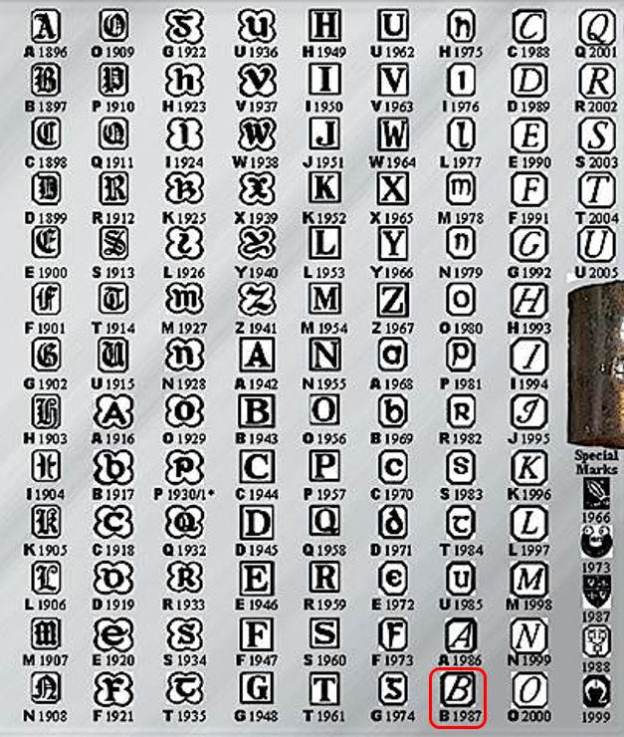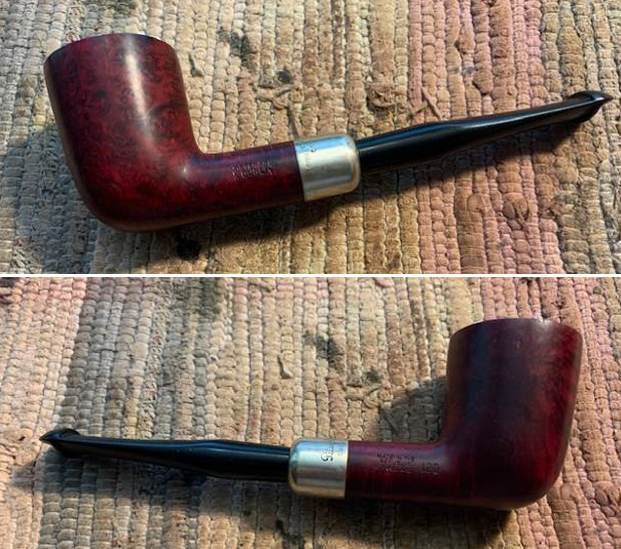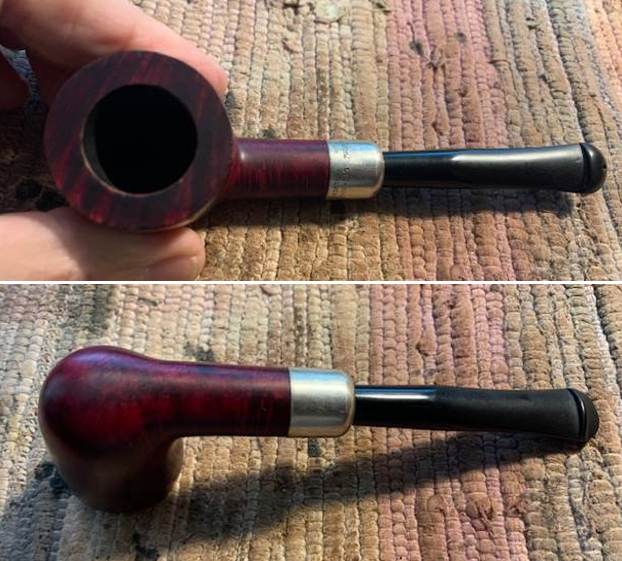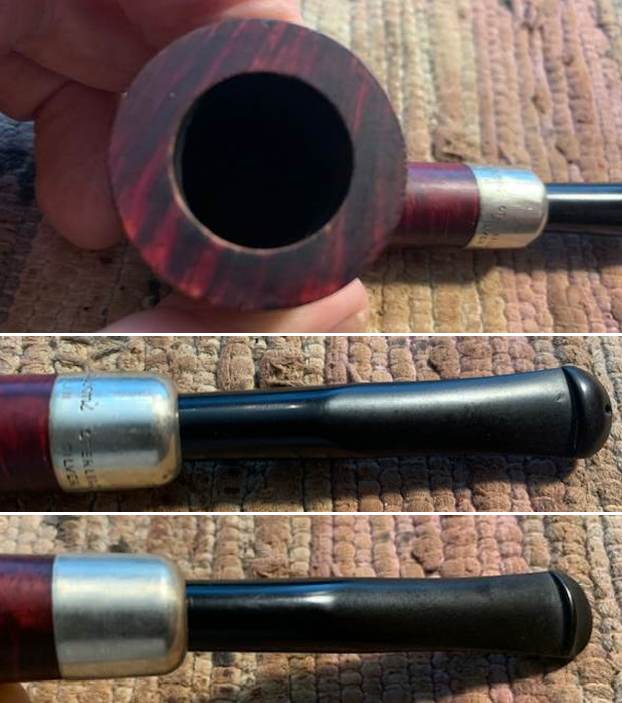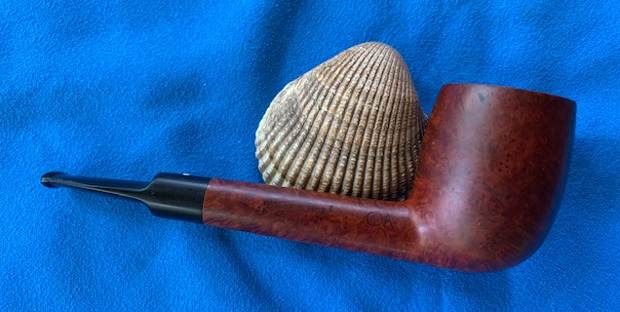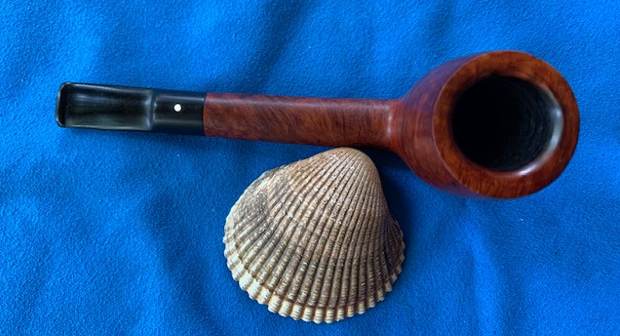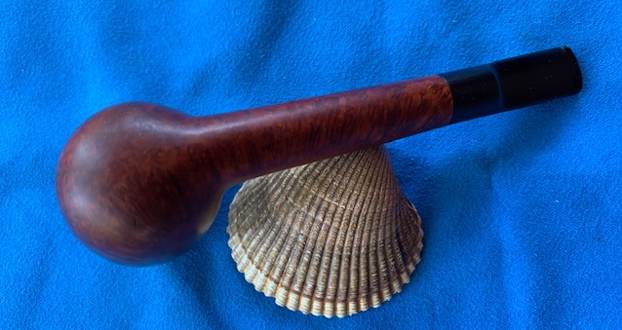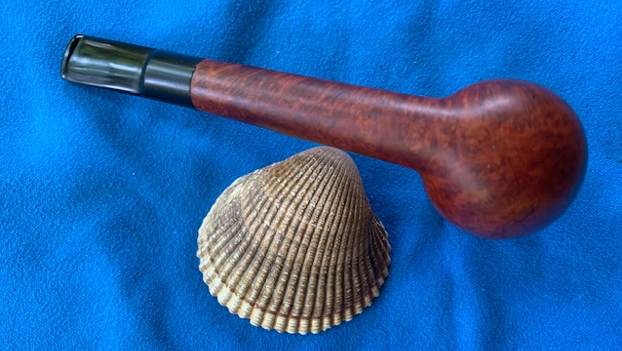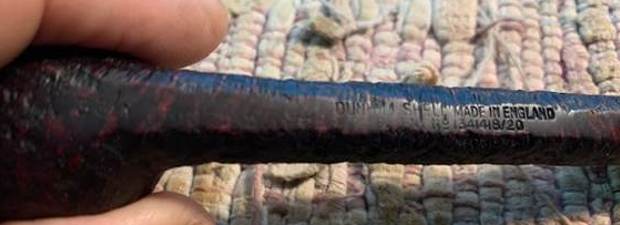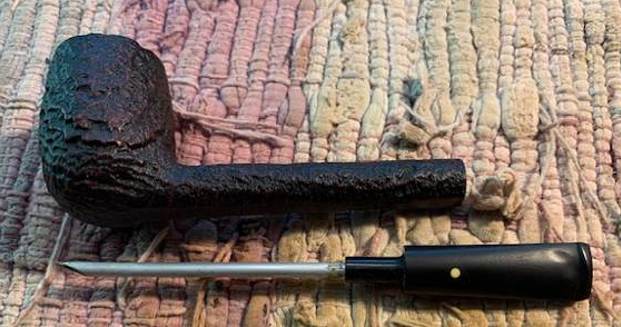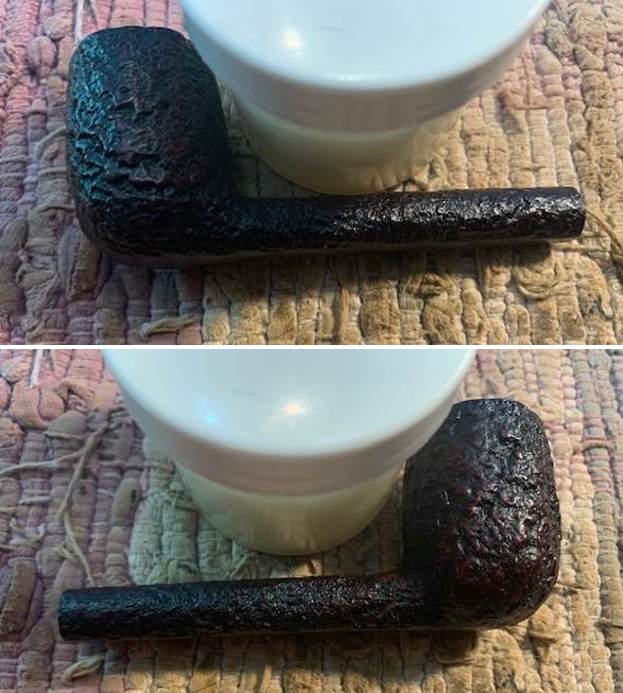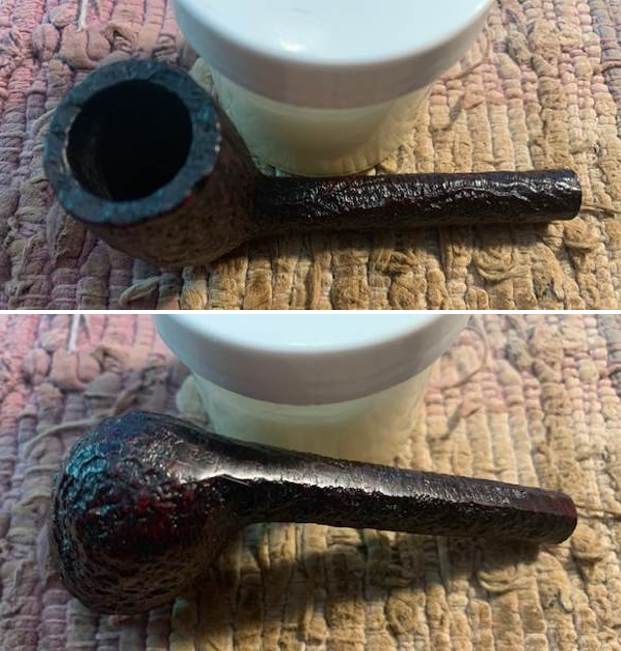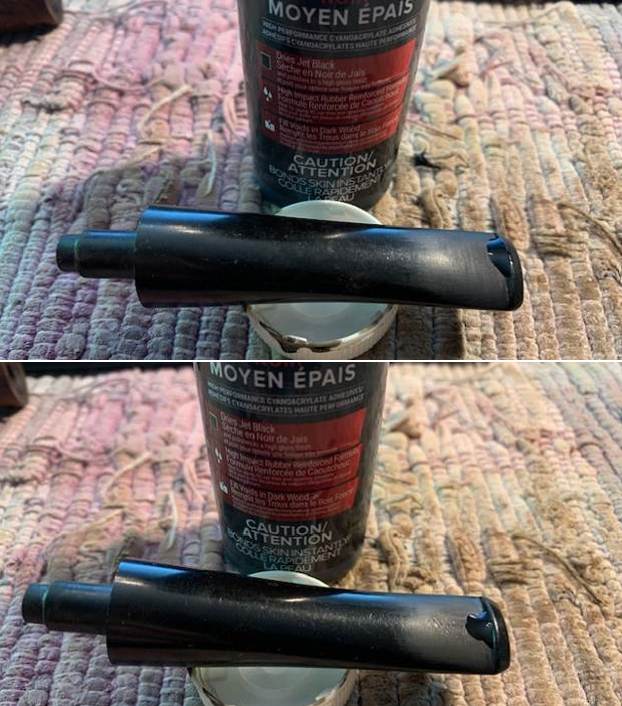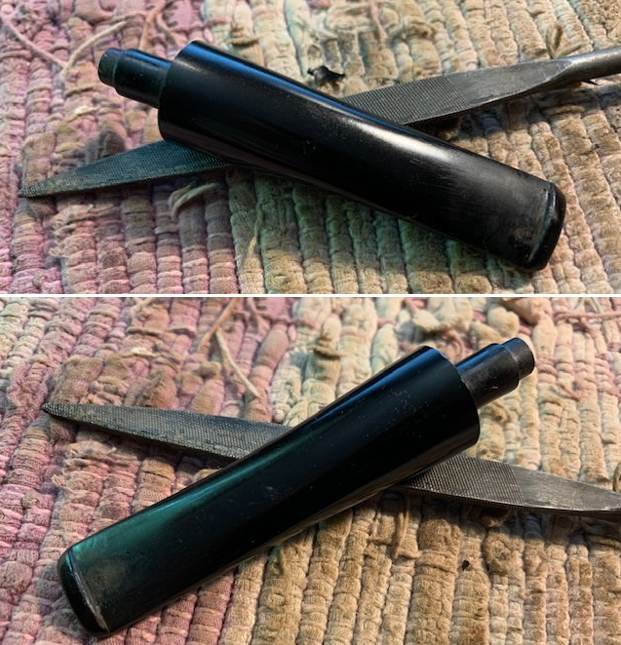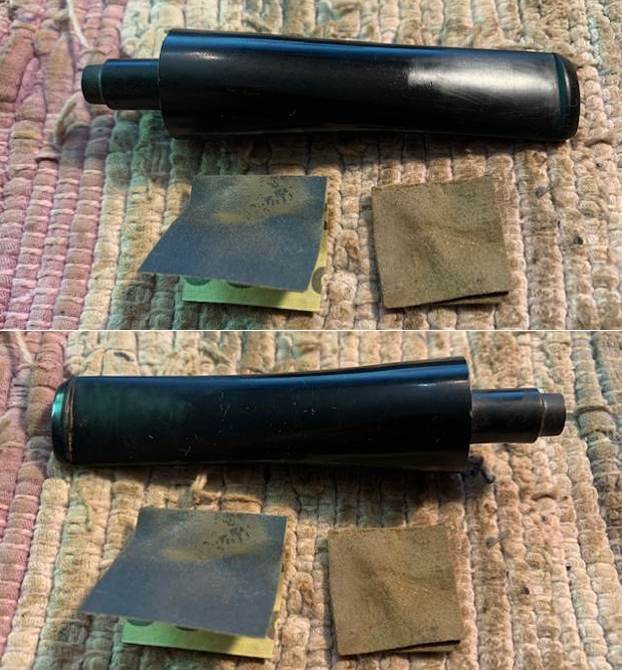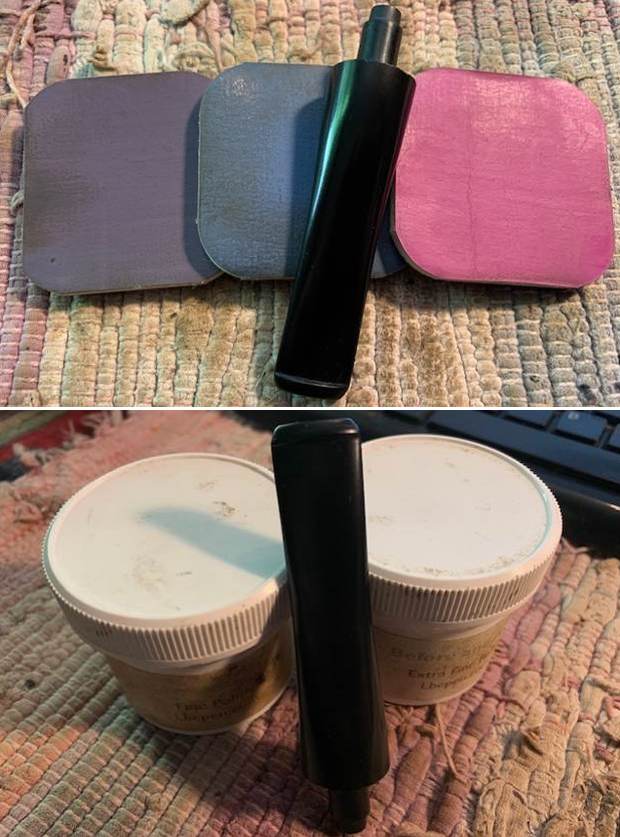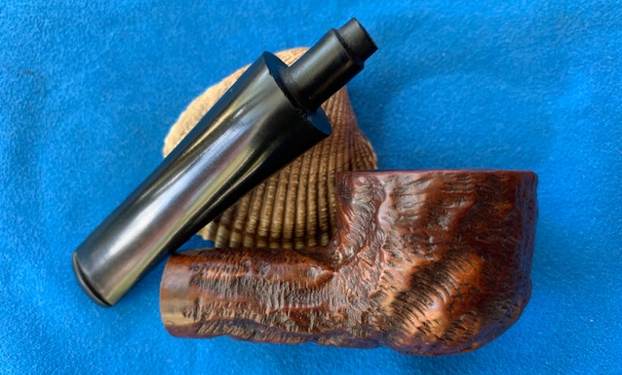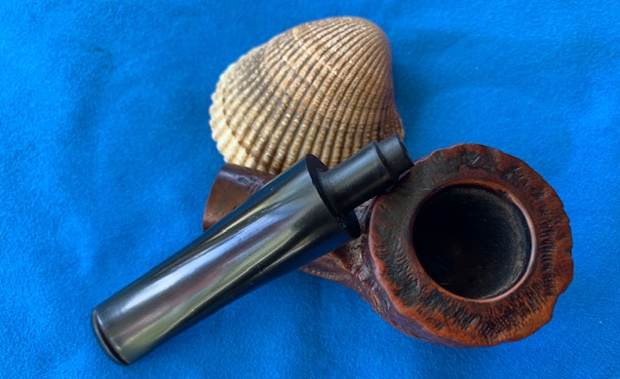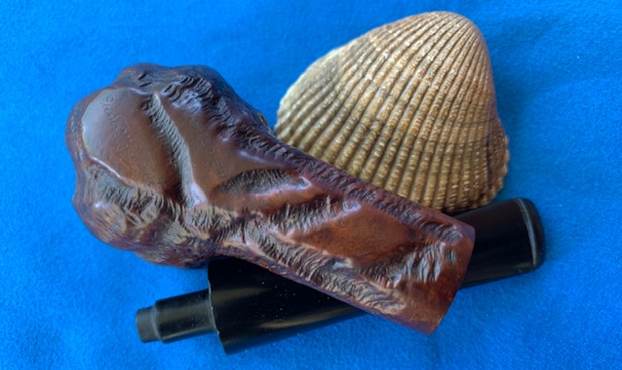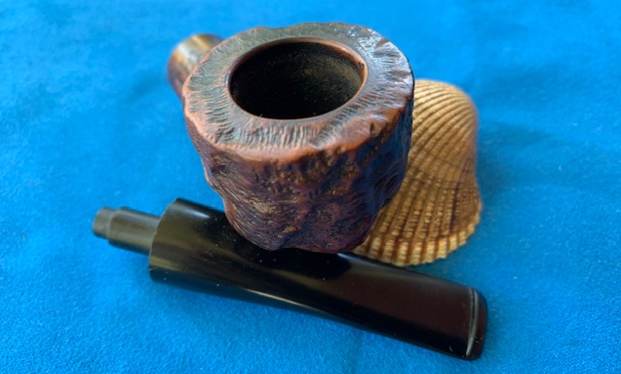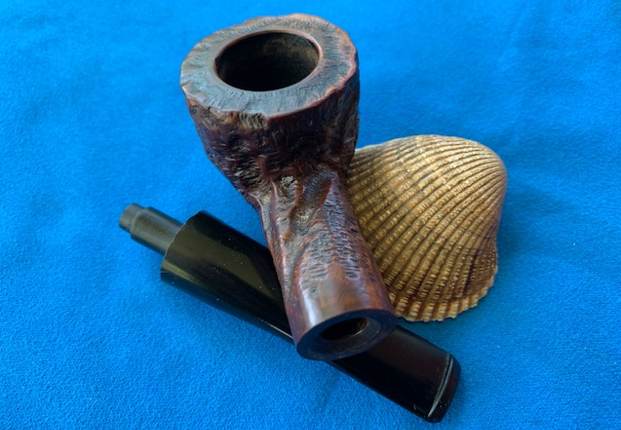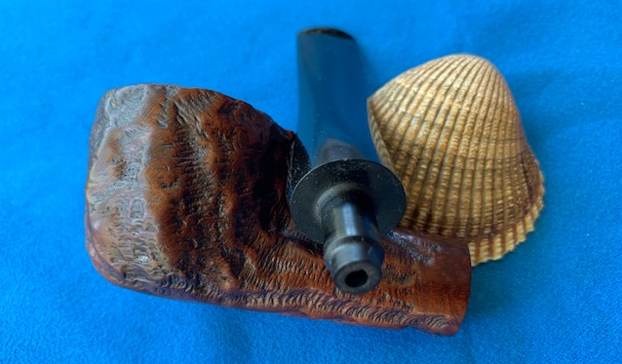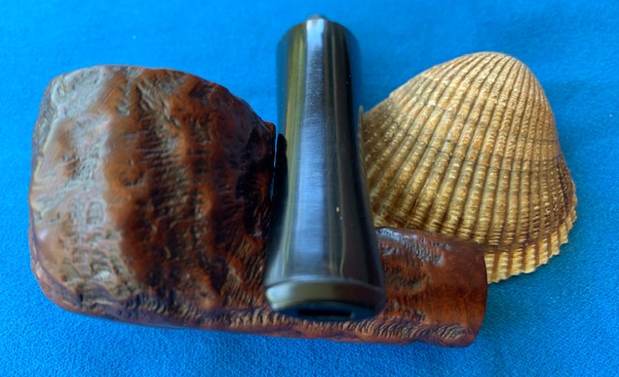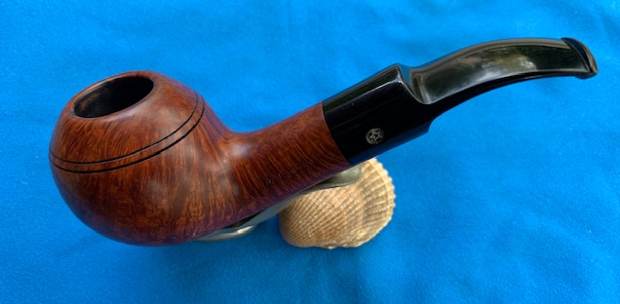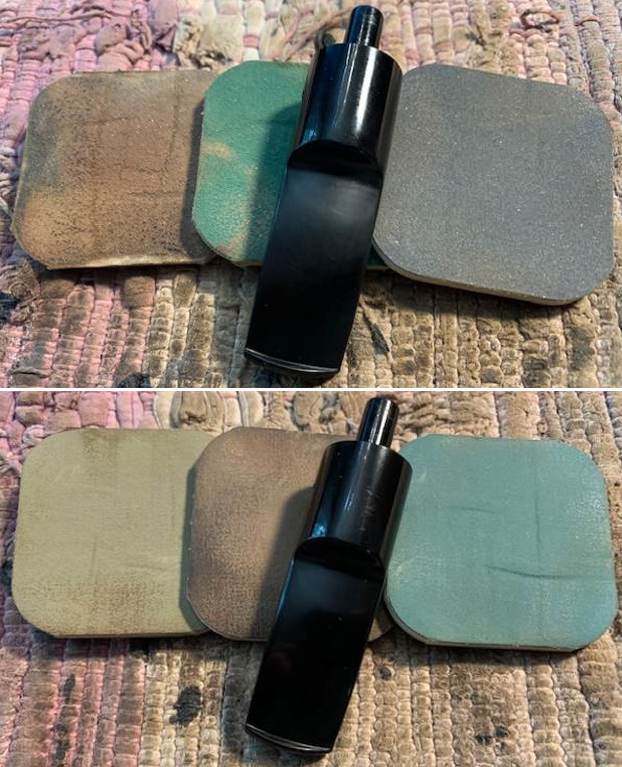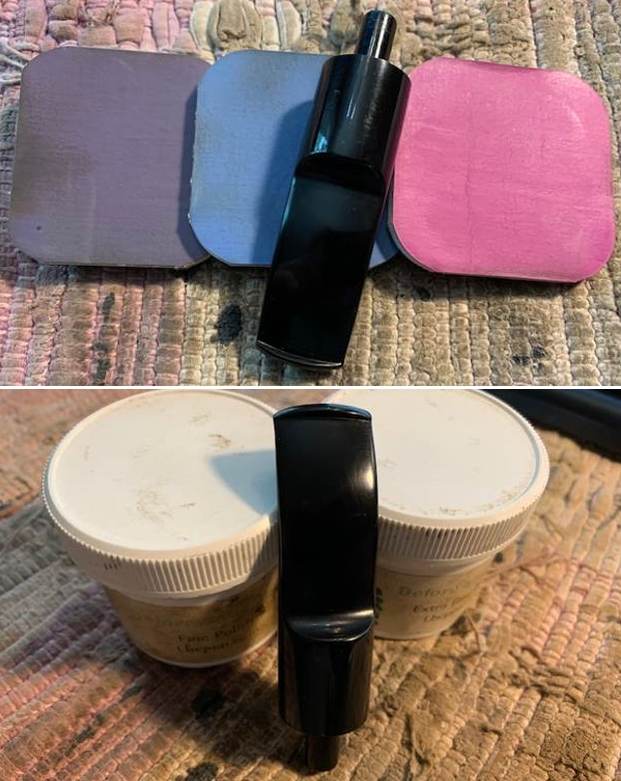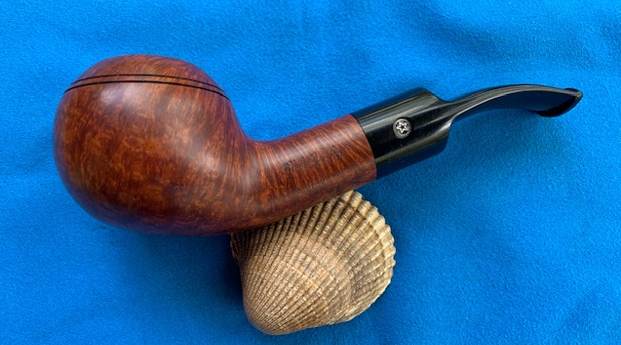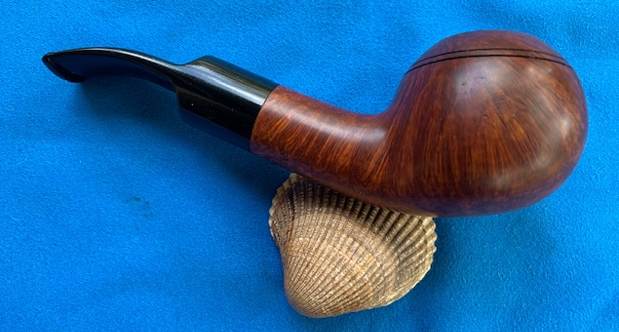
Tag Archives: repairing bite marks

A Chunky and Squat Custom-Bilt Pot


Blog by Steve Laug

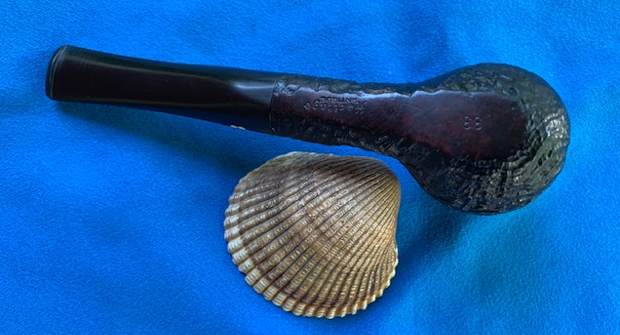
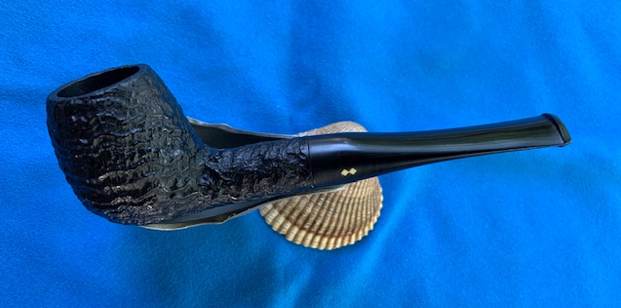
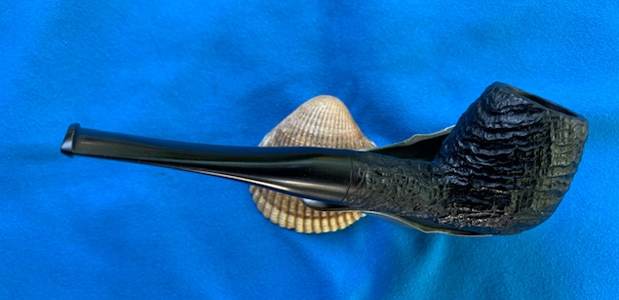
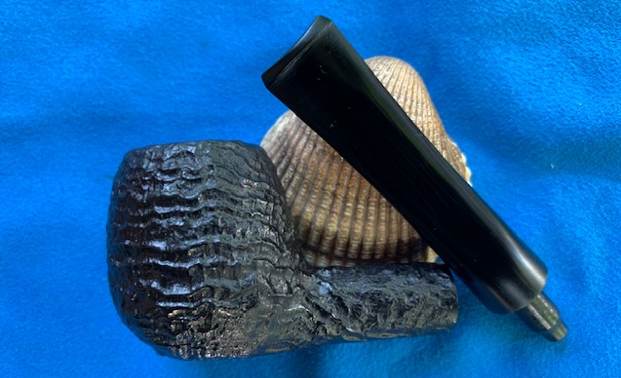
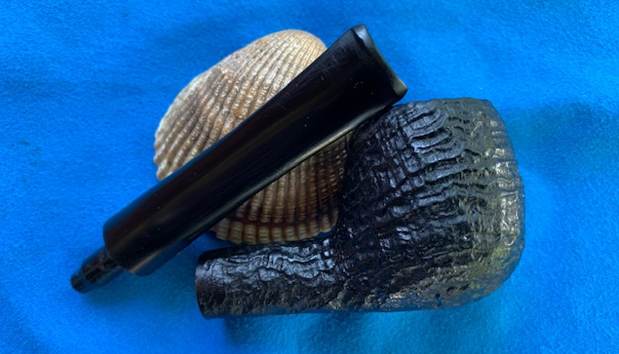
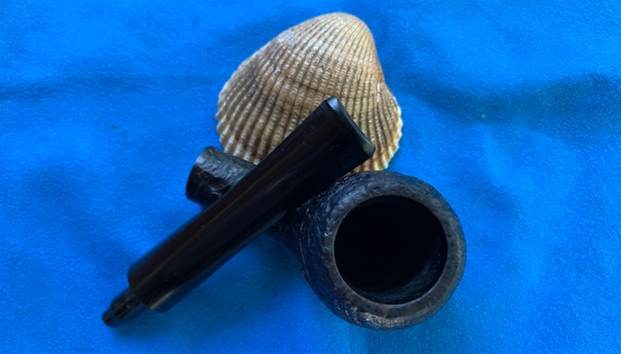
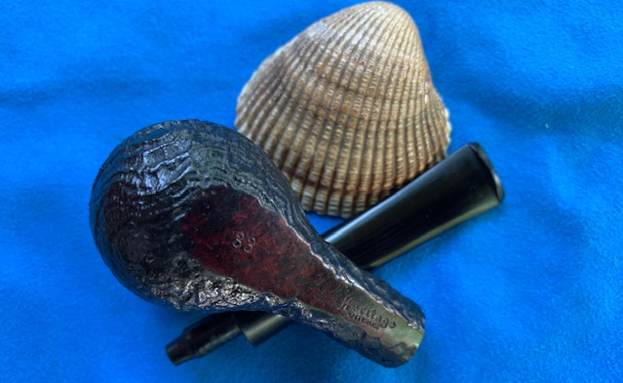
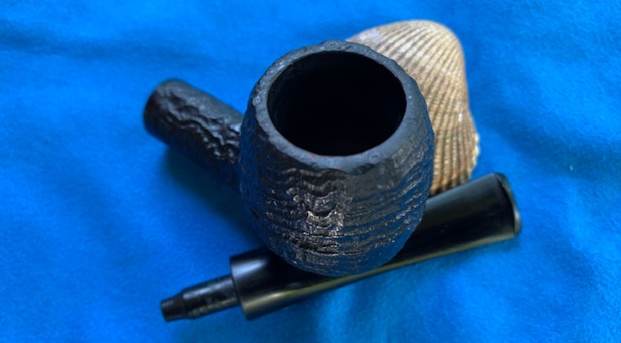
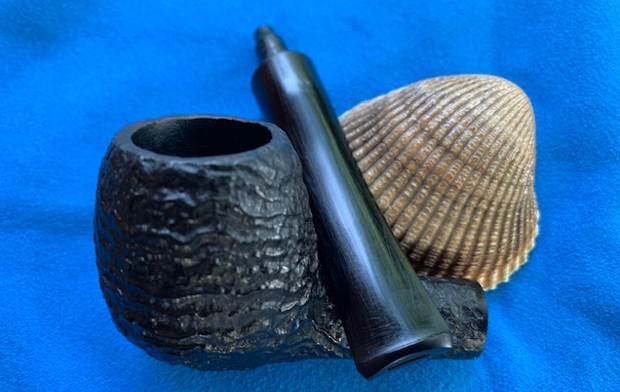
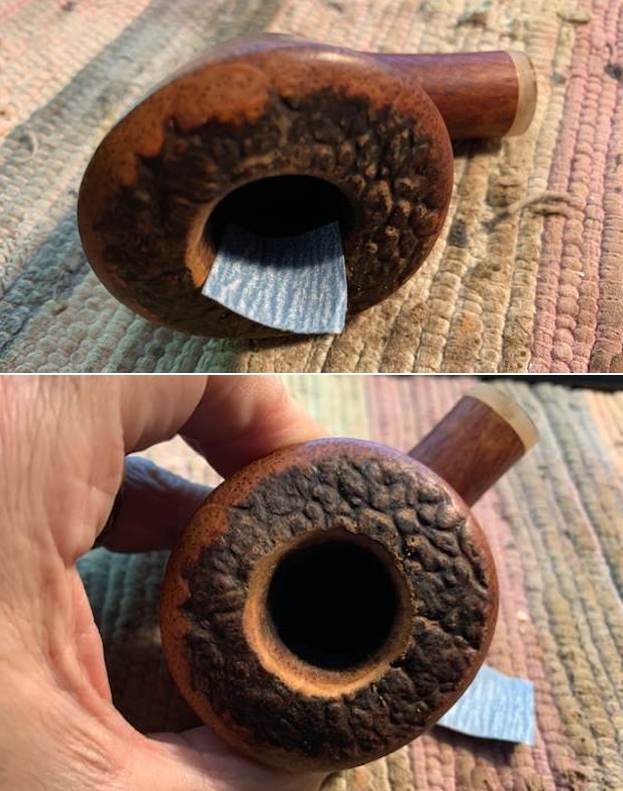
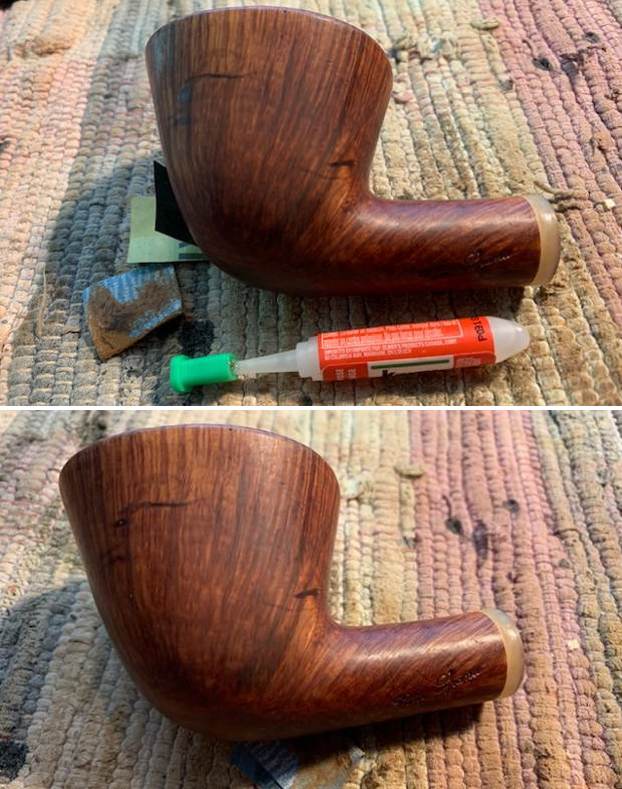
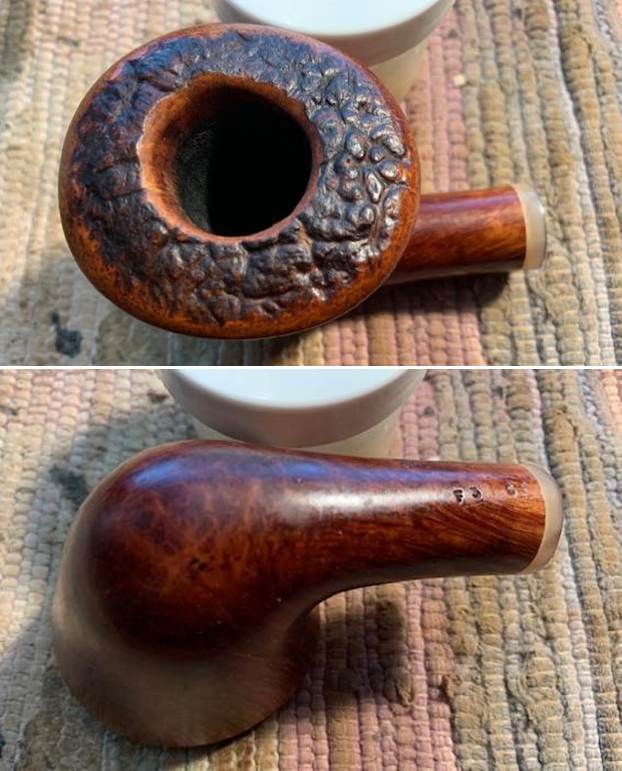
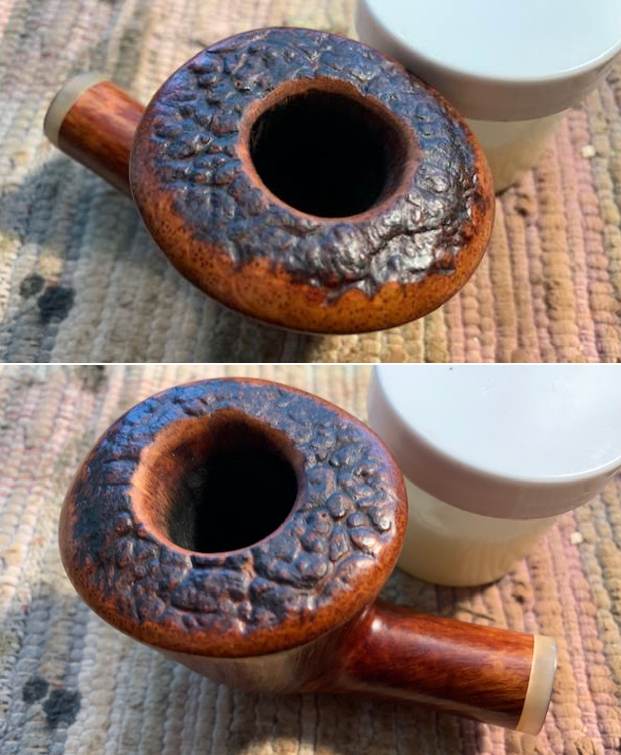
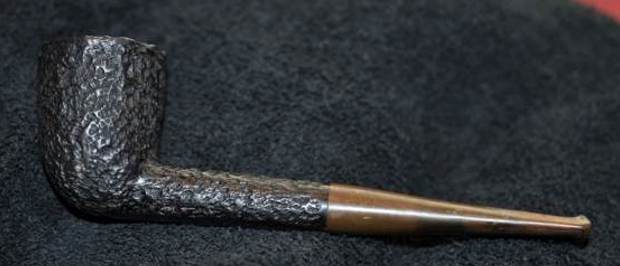
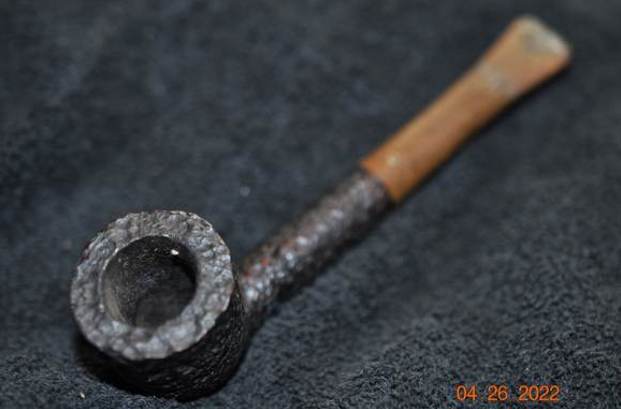
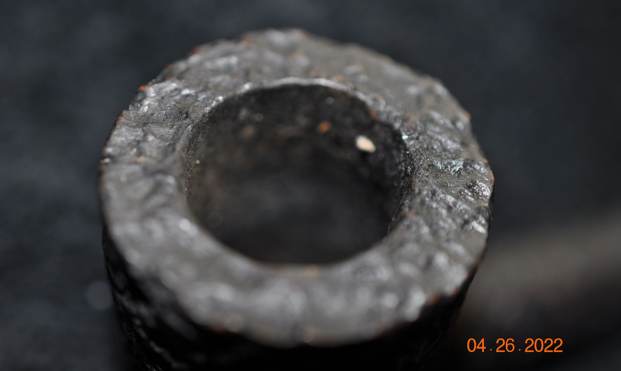
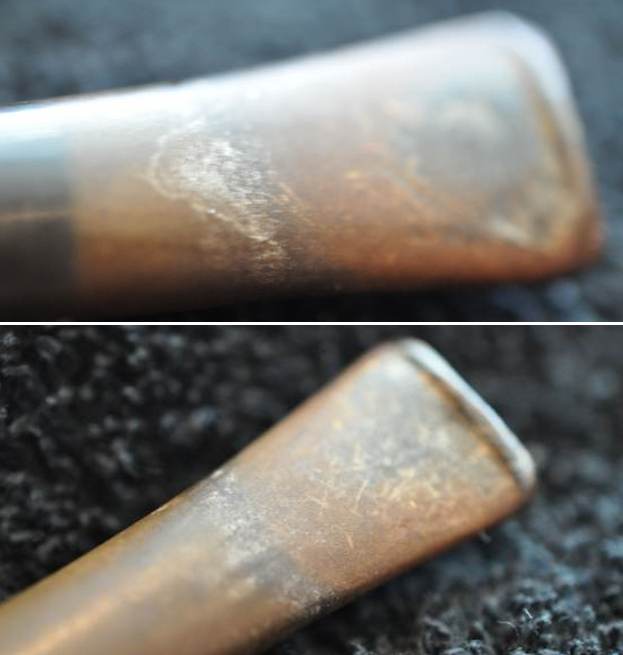
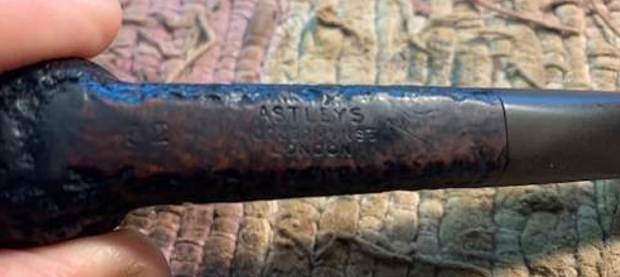
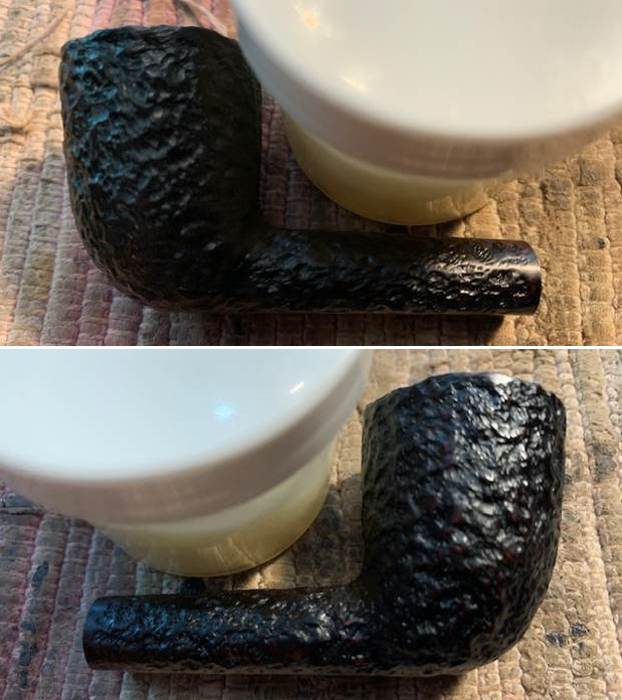
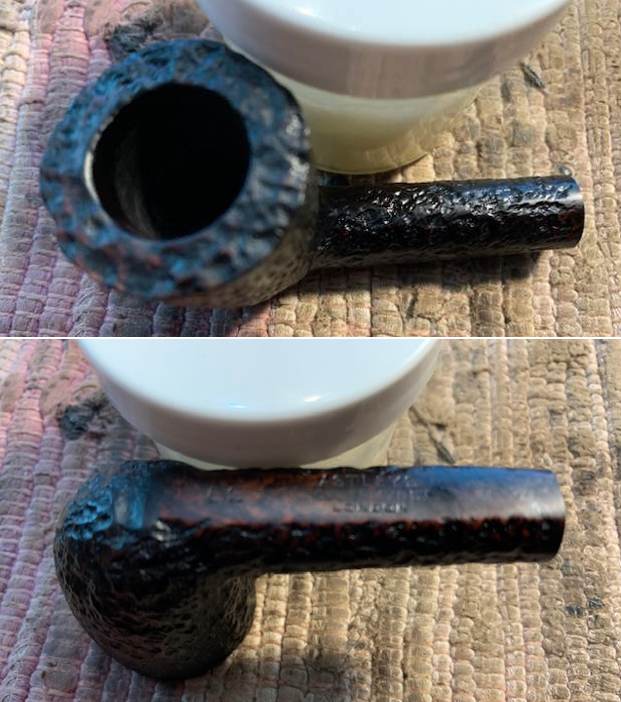
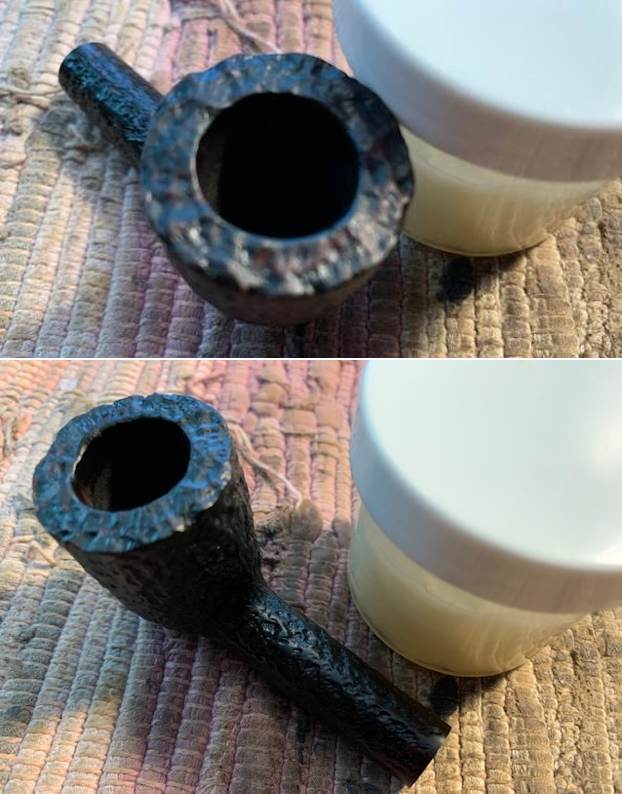
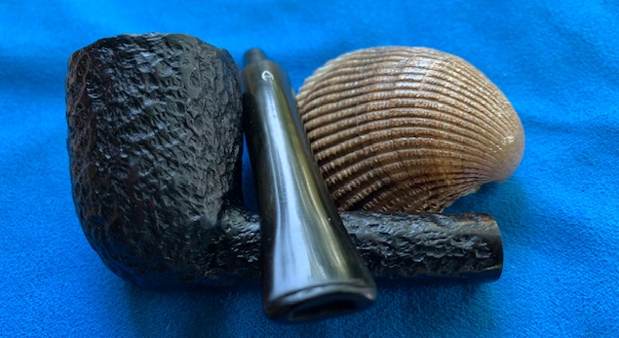
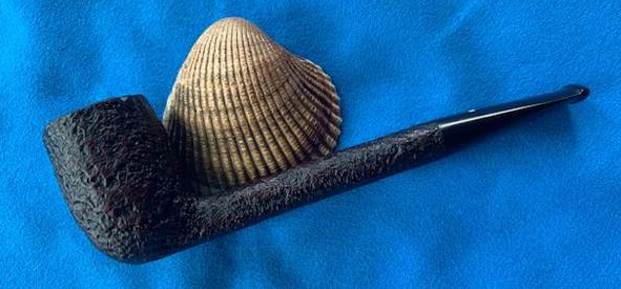
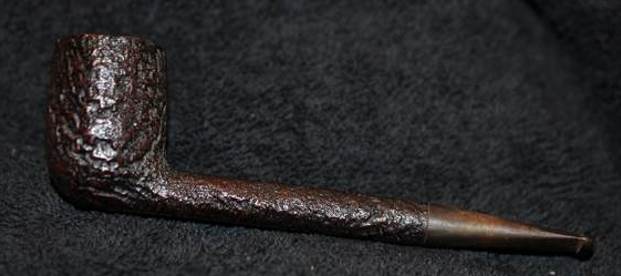
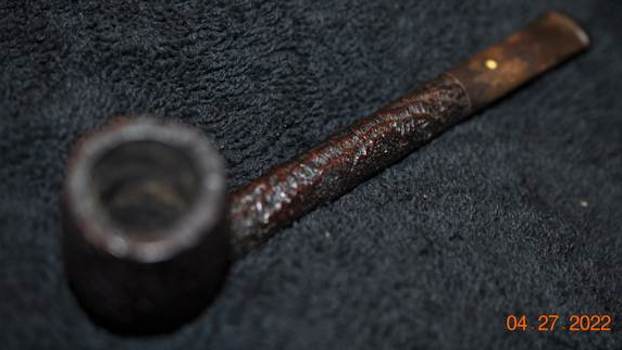
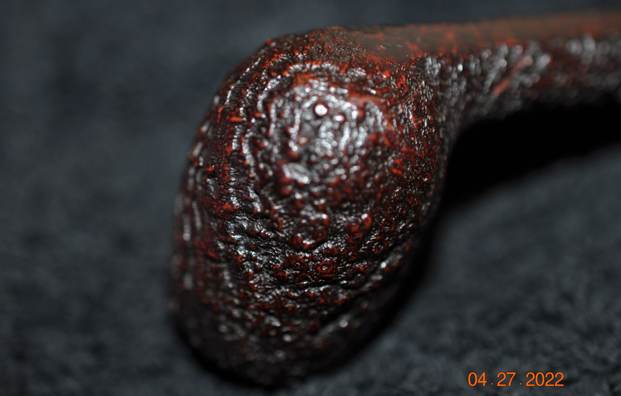
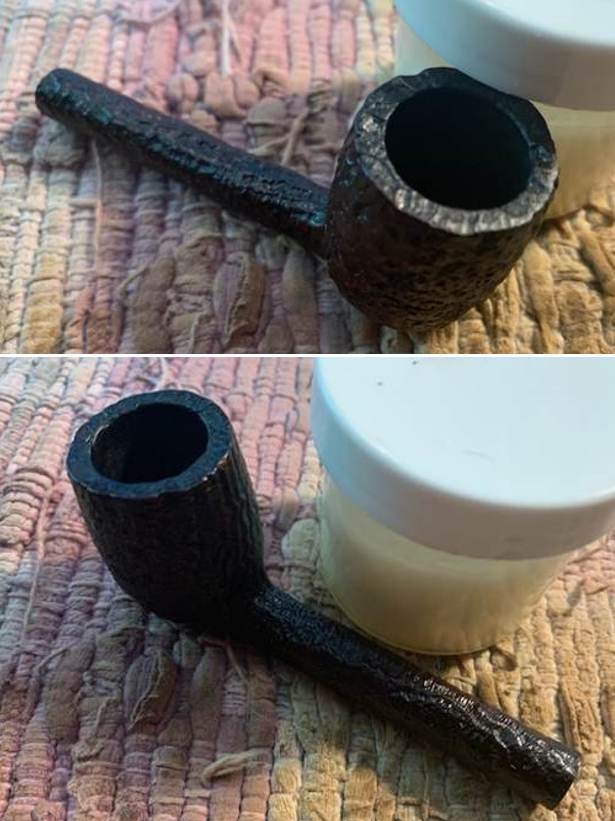
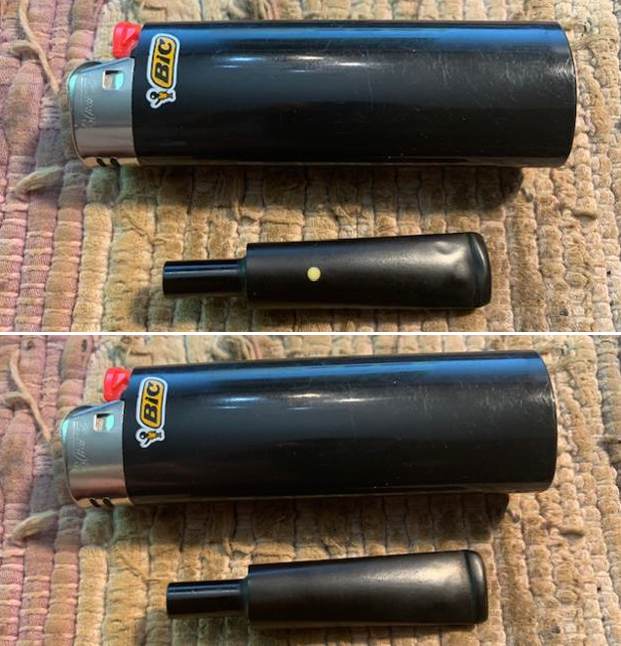
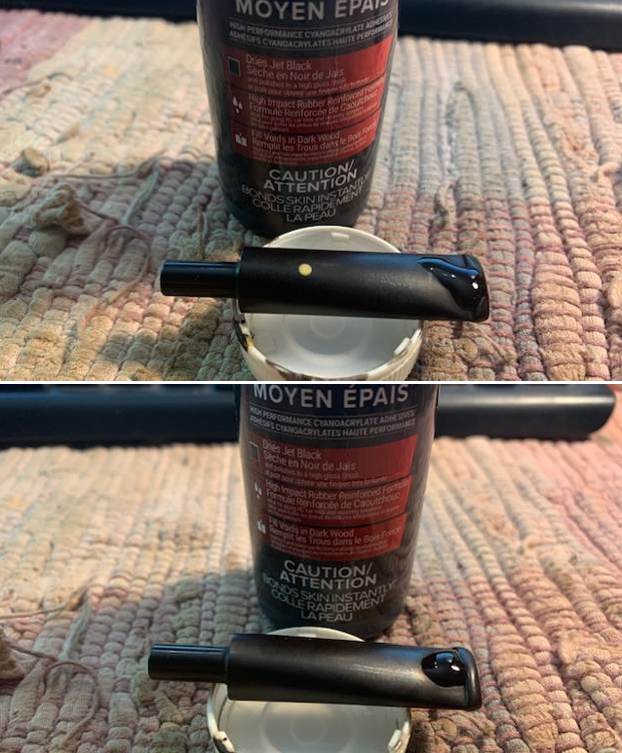
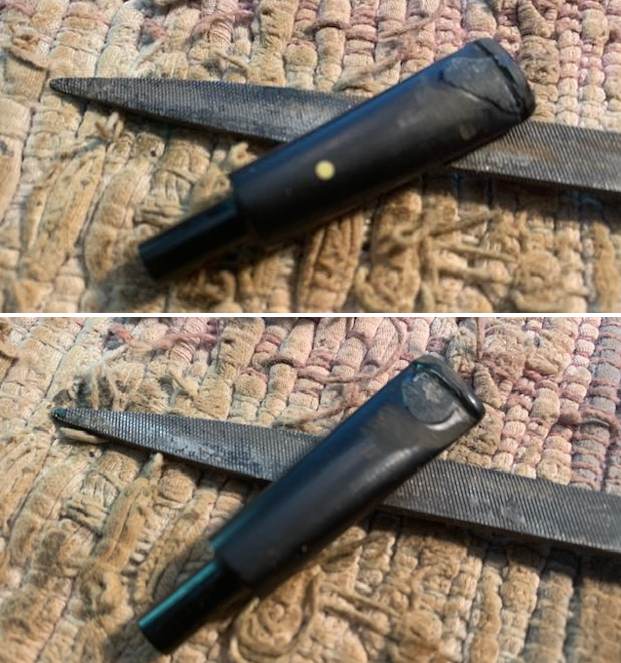
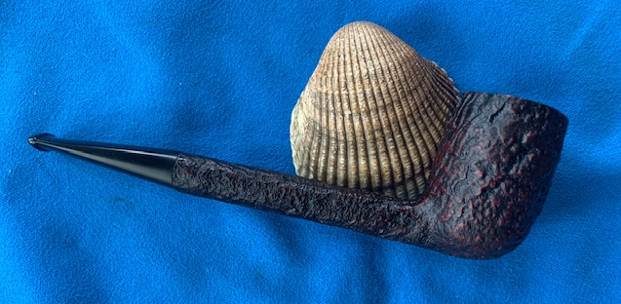
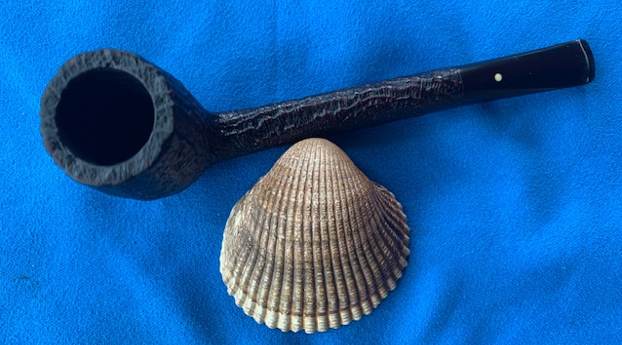
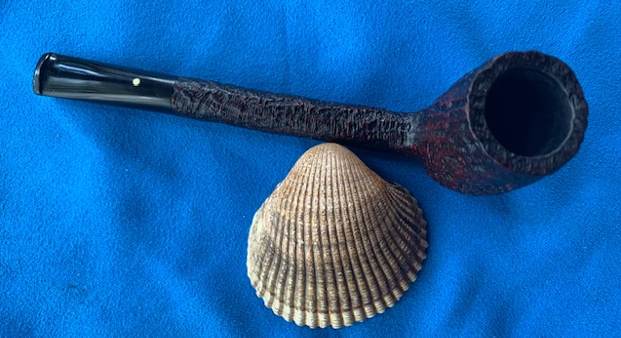
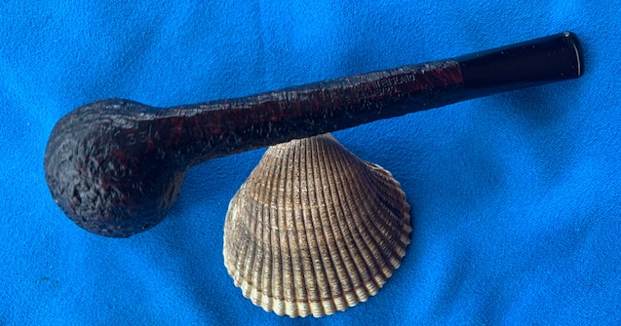
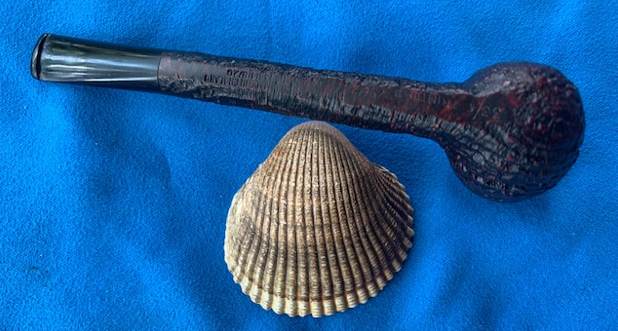
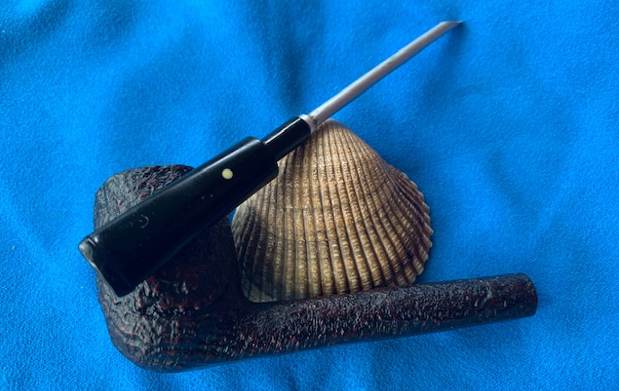
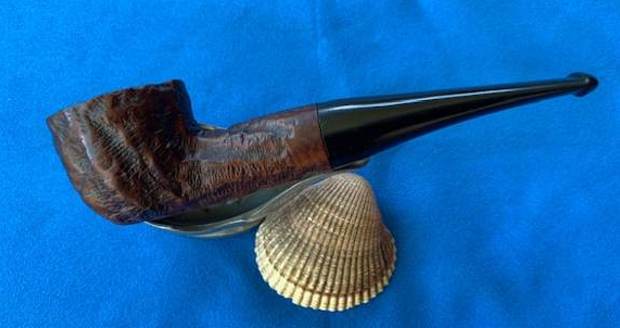
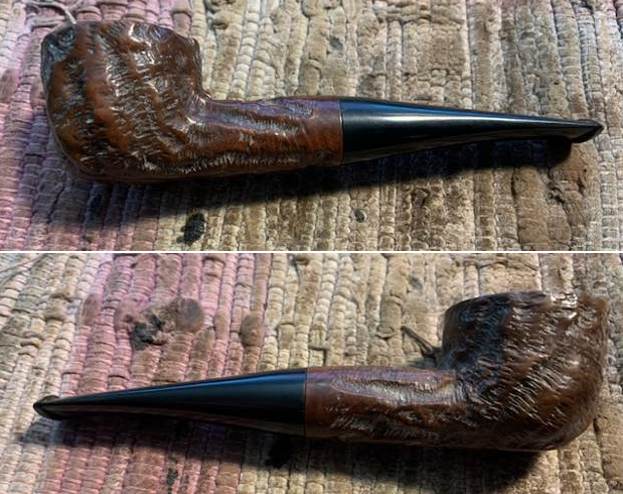
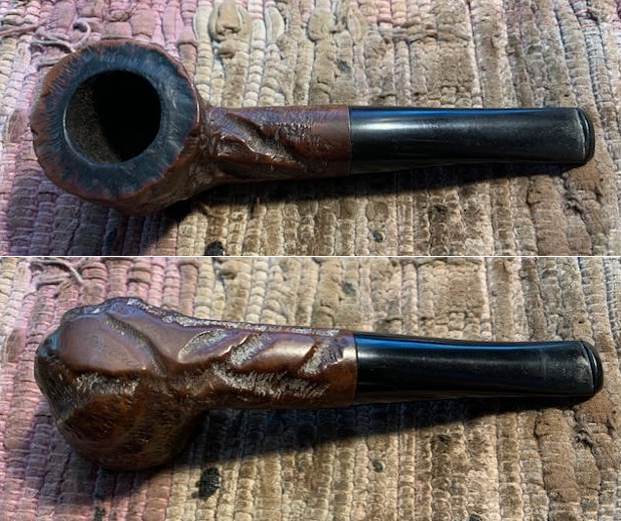
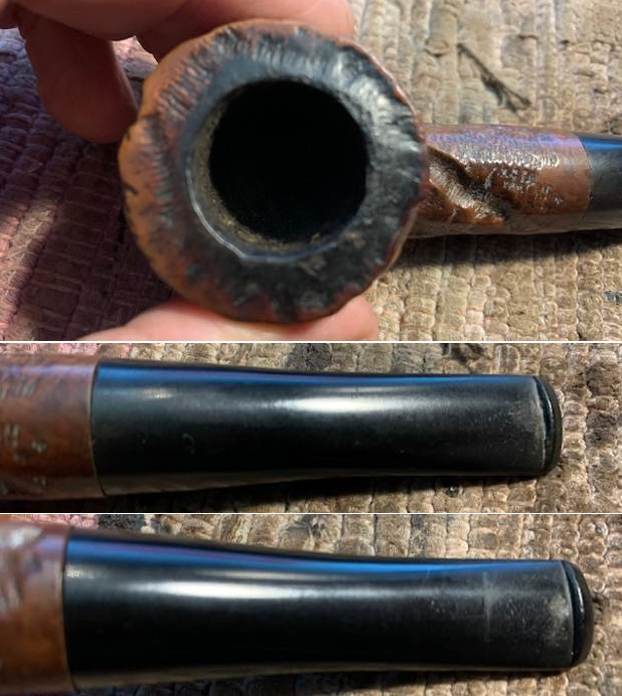
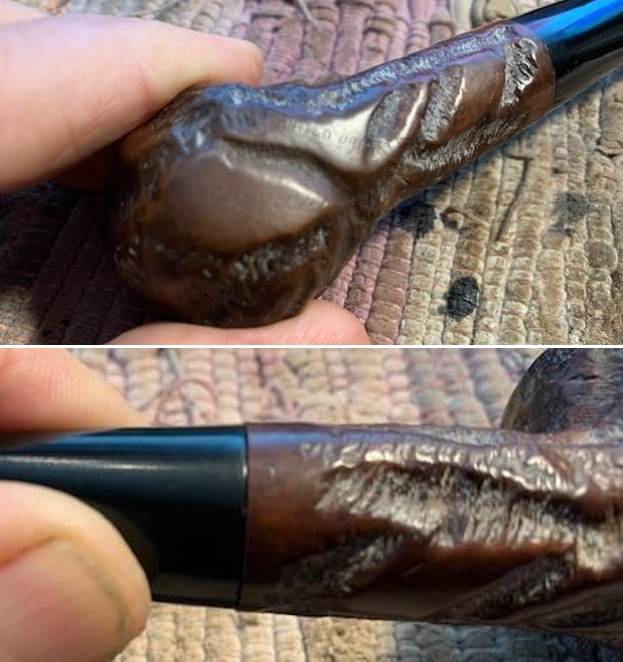
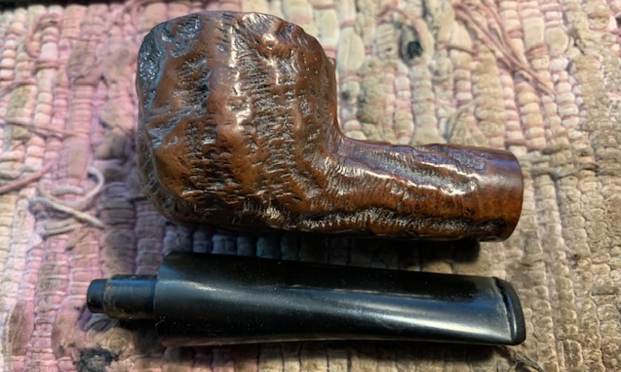
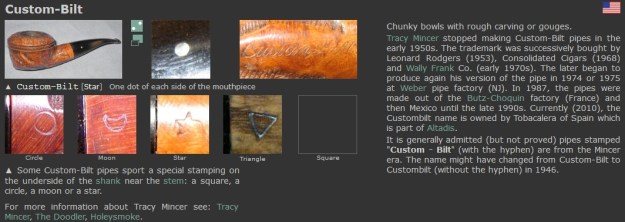
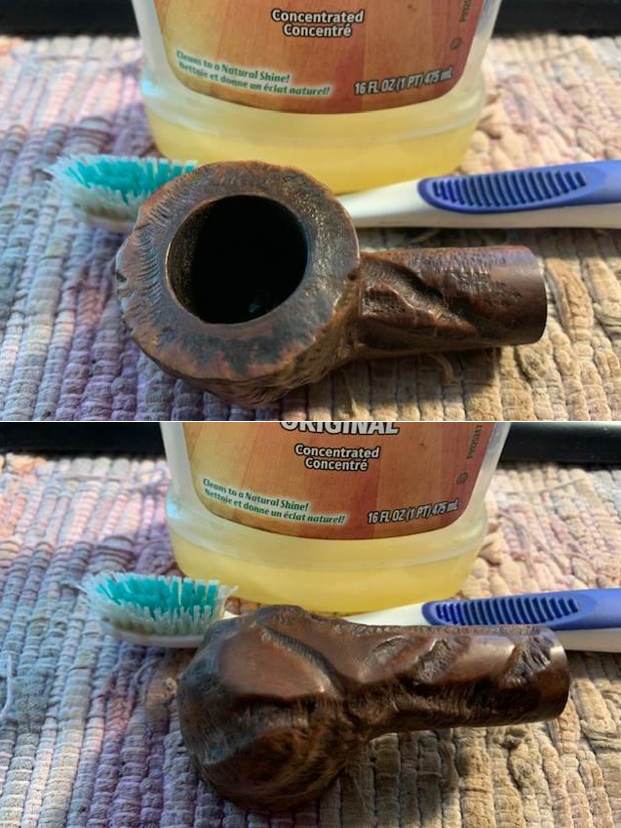
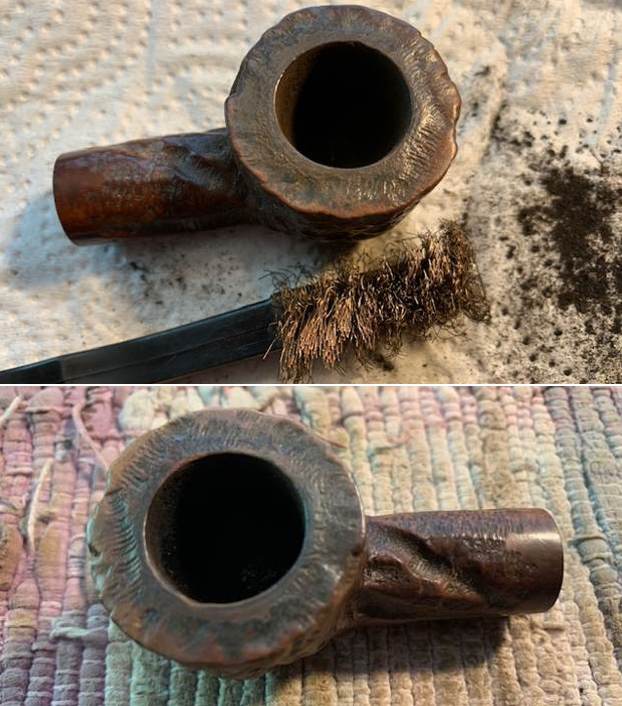
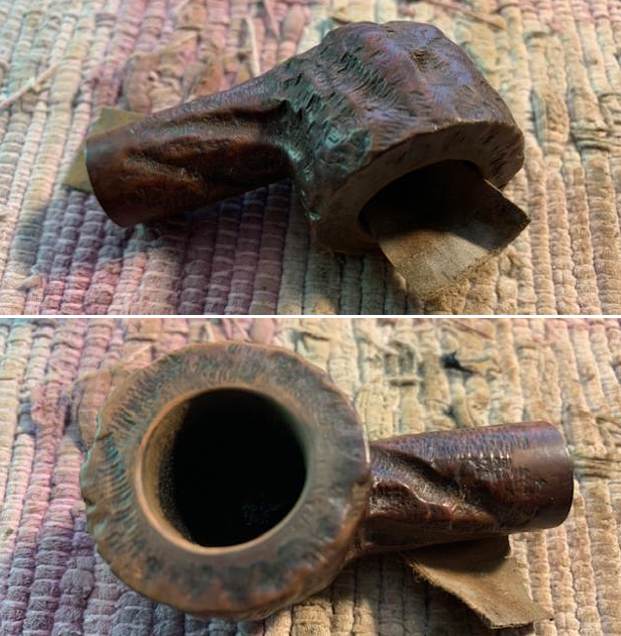
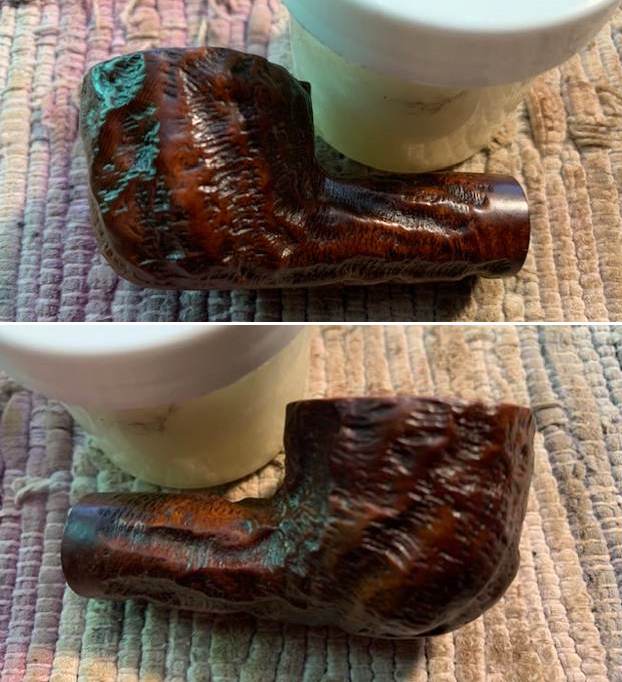
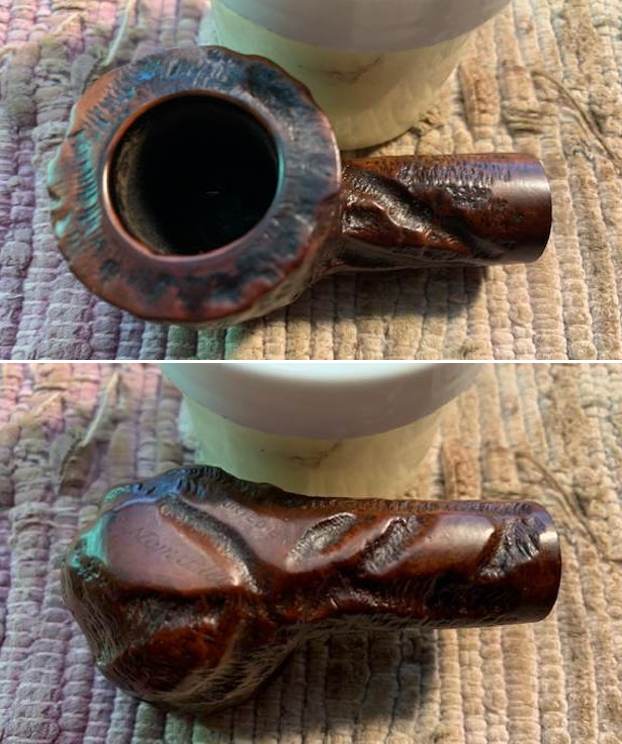
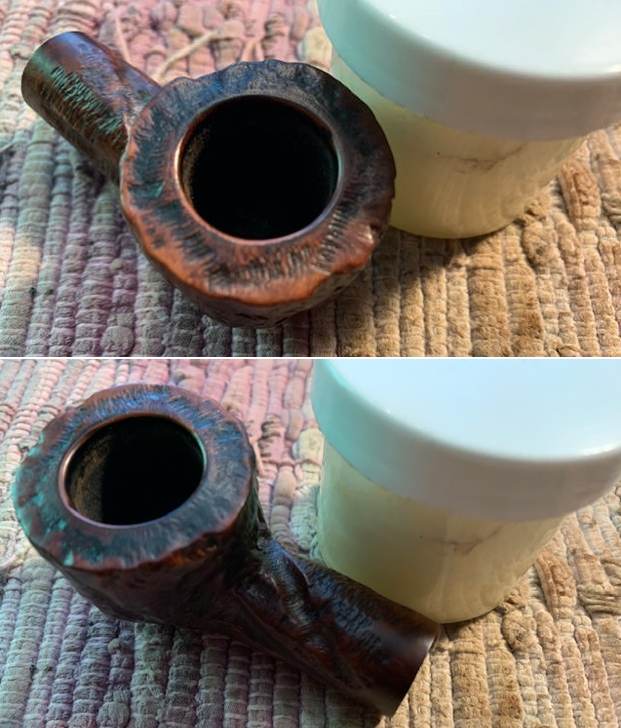
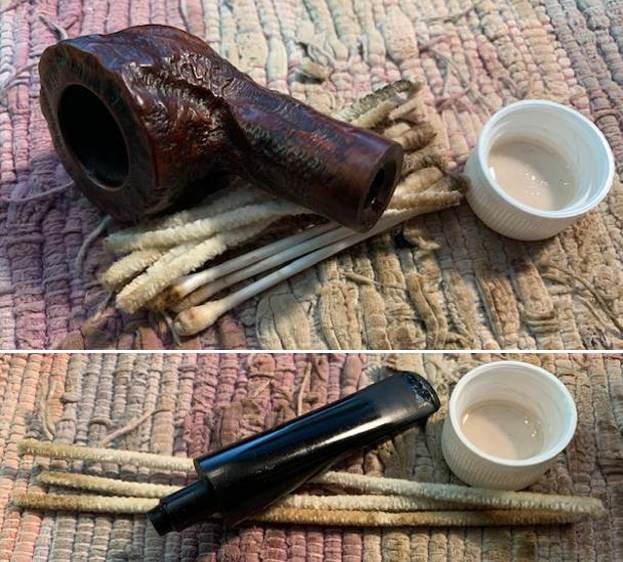
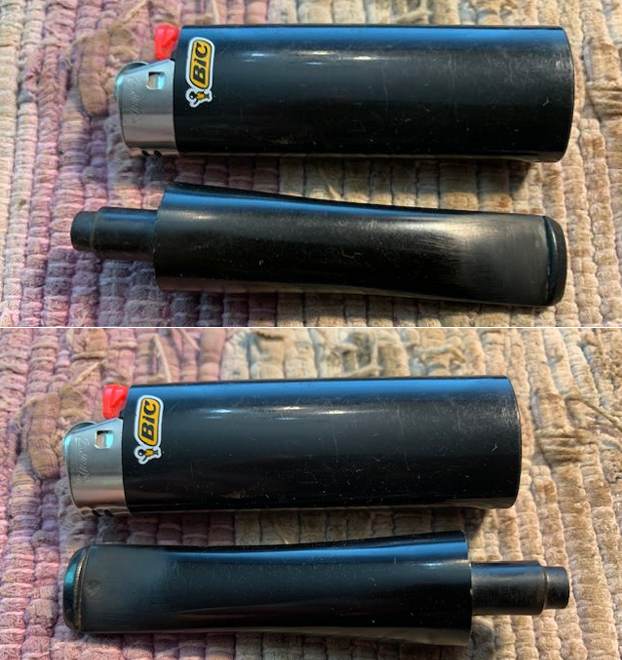
The next pipe I chose to work on is one that has been here in my box to work on since around 2016. It is a well made, interesting looking Custom-Bilt chunky Pot. The more I looked at it the more I thought that it had not gone through Jeff’s cleaning before it came here. I actually have no idea where it was from and when it came us. The bowl had moderate cake and the inner edge had damage and the rim top was darkened. The pipe is a classic Custom-Bilt piece – a rusticated Chubby shank Pot shaped pipe with some deep carving around the bowl. The pipe is stamped on the heel of the bowl and reads Imported Briar [over] Custom-Bilt. On the right side of the shank it bears a carved circle near the stem/shank junction. Looking at the pipe you can see signs that the bowl had been heavily caked with an overflow of lava on the rim top and the inner edge. The bowl and shank smelled dirty and seemed to be oily. The stem looked good and had tooth chatter and marks on the top and underside near the button. There were no markings or a logo on the taper stem. It looked pretty good when I brought it to the worktable. I took photos of the rim top and bowl to give a clear picture of the appearance of the rim top and edges of the bowl. There was some darkening on the rustication on the top and some lava in the grooves. There was also some damage to the inner edge of the bowl. I took photos of the top and underside of the stem to show the chatter and tooth marks. The stamping on the heel of the bowl is faint but still readable and read as noted above. I removed the stem and took a photo of the pipe to give a sense of the whole. It is a stubby pipe.I turned to Pipephil (http://www.pipephil.eu/logos/en/logo-c8.html) to get a quick view of the brand once again. I knew that I was working with one of the older pipes and probably made by Tracy Mincer himself. He stopped making the Custom-Bilt pipes in the early 1950s. The screen capture I included below shows a brief history of the brand. It also has a comment on the symbols stamped on the shank near the stem including the square that is stamped on this one.I turned to Pipedia (https://pipedia.org/wiki/File:CustomBilt_Stamp1.jpg) for a quick read. The majority of the information there included two book reviews of the “Custom-Bilt Story” by Bill Unger.
The one line I culled was the following: “Tracy Mincer started the original Custom-Bilt pipes it appears in 1934”.

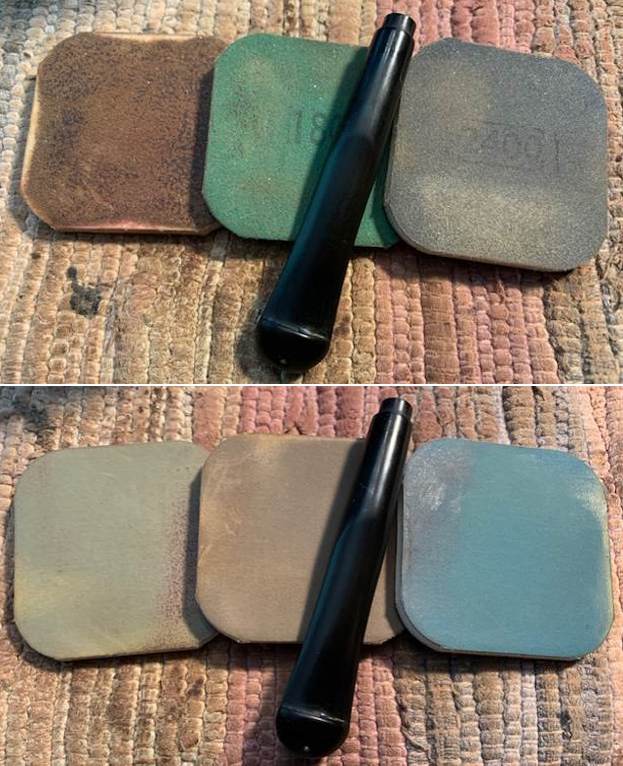
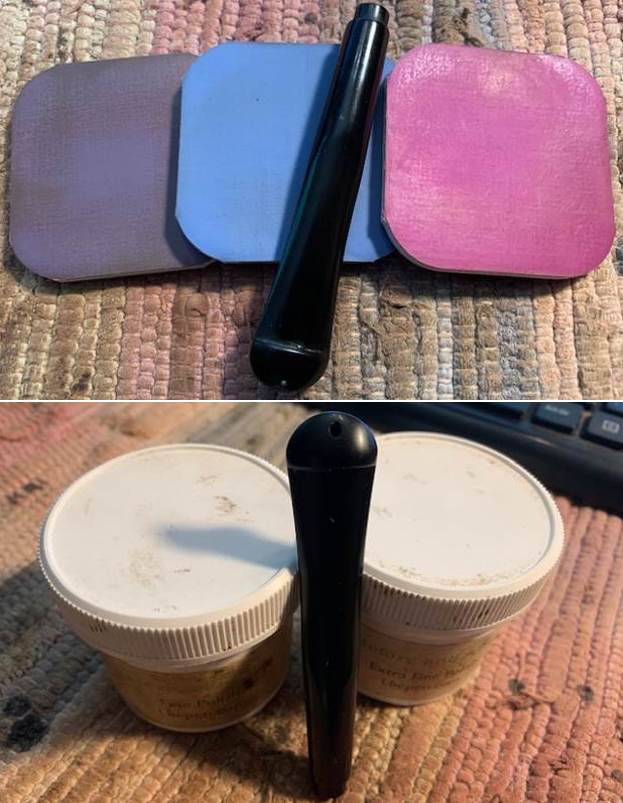
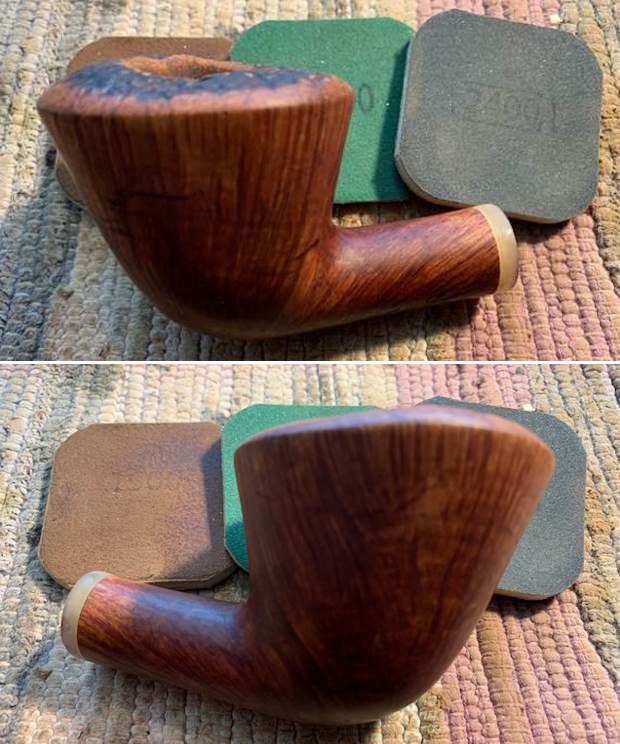
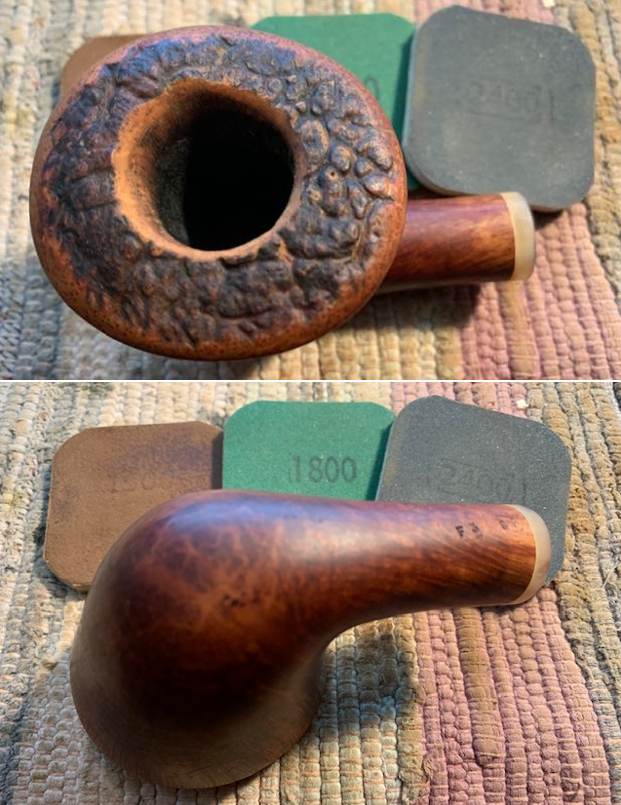
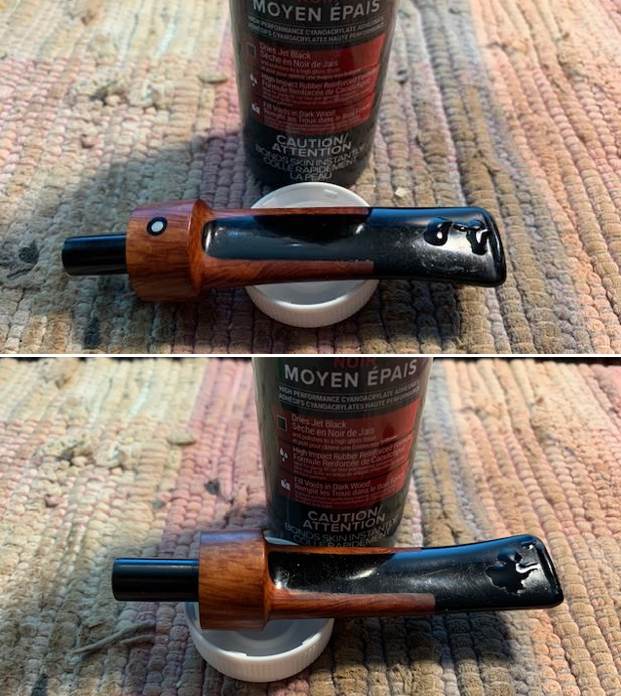
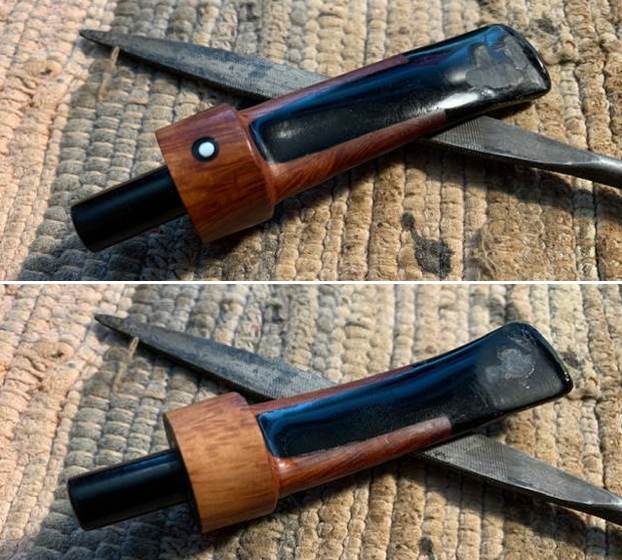
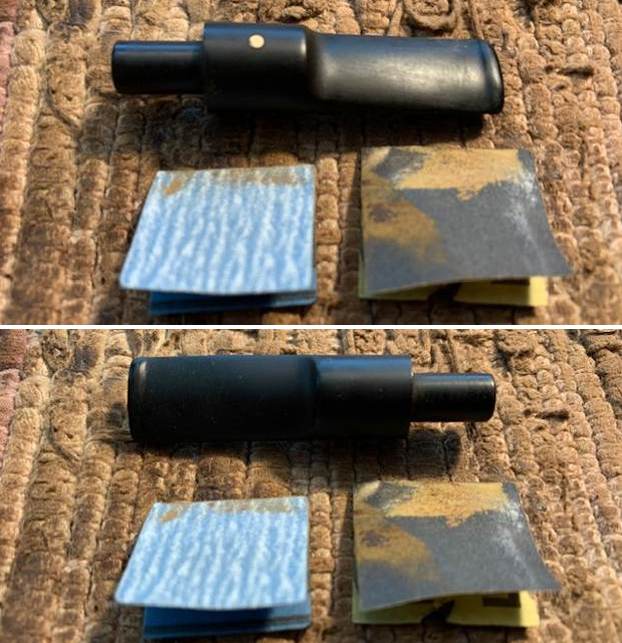
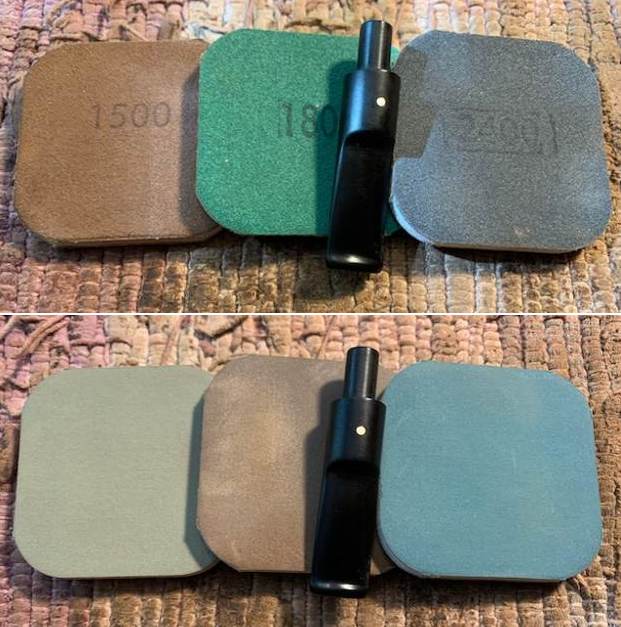
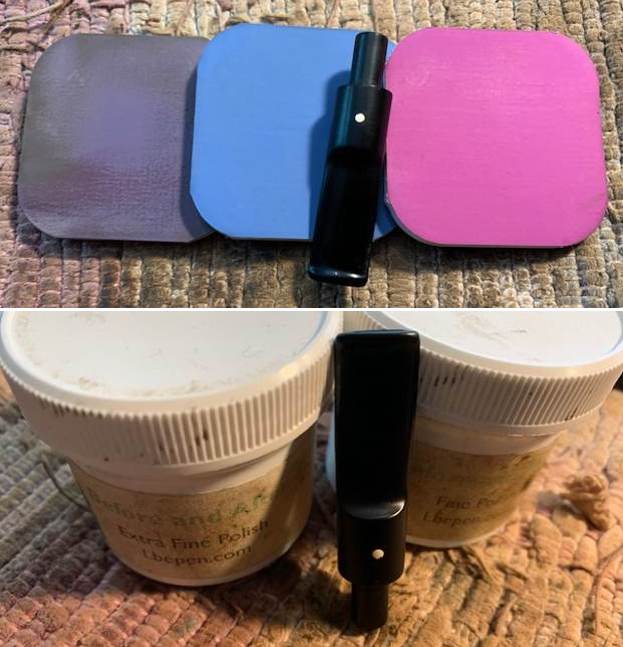
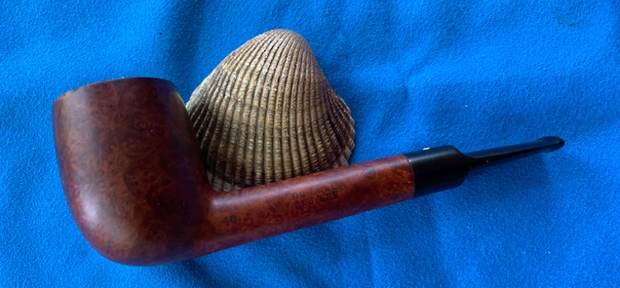
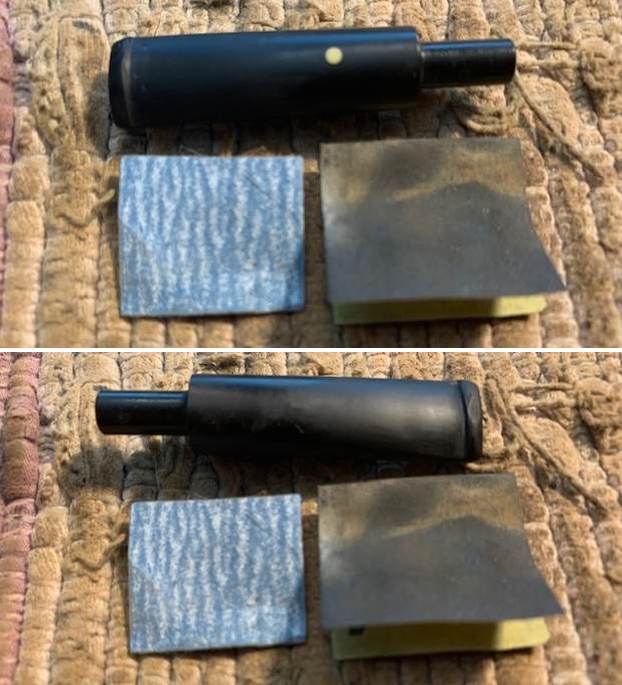
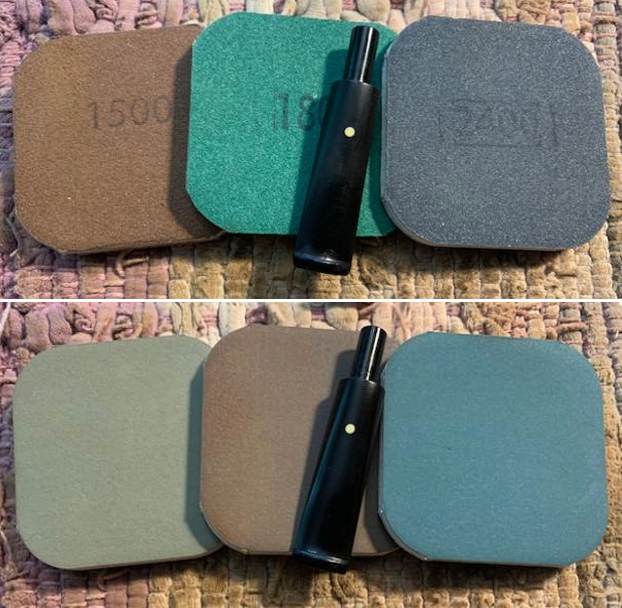
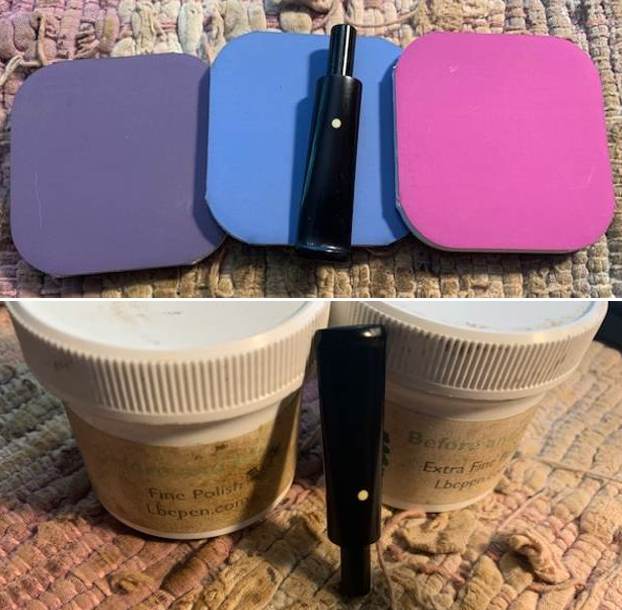
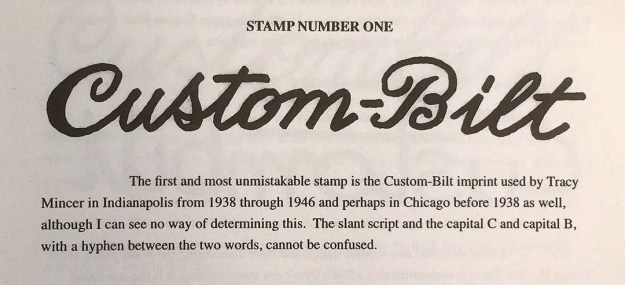
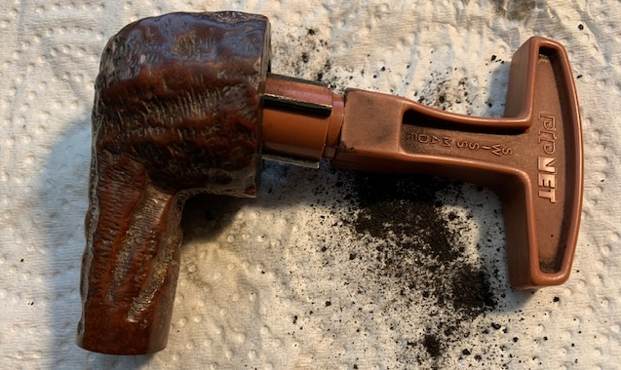
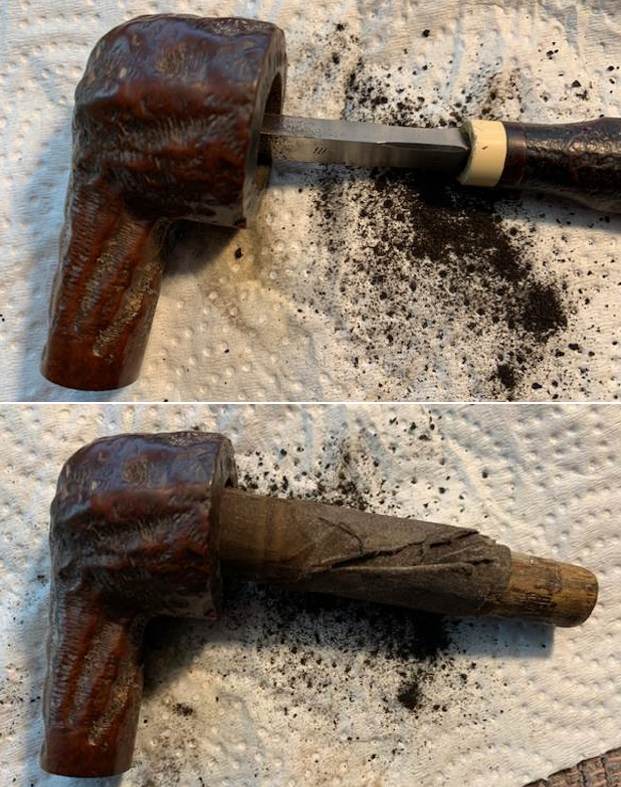
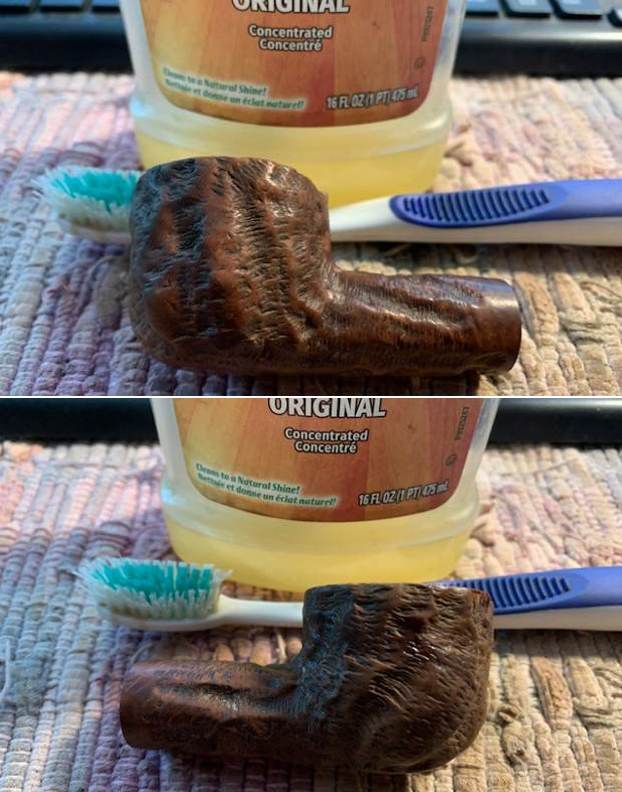
I did a screen capture of the stamping that matched the stamping on the pipe that I am working on. What I learned from that is that the stamp was used by Tracy Mincer in Indianapolis in the US from 1938-1946 and possibly in Chicago before 1938 as well. So now I had a possible date for this pipe. It was an old timer and it was well worth working on.Armed with that information I turned to work on the pipe itself. I started my work on the pipe by cleaning up the reaming in the bowl with a PipNet pipe reamer. I used a Savinelli Fitsall Pipe Knife to remove the remainder and then sanded the bowl walls with 220 grit sandpaper wrapped around a piece of dowel. The bowl walls looked very good. I scrubbed the externals with undiluted Murphy’s Oil Soap and a tooth brush. I worked over the rim top and the rest of the bowl and rinsed it off with warm water. I dried off the briar with a cotton towel.   I turned next to the remaining darkening on the rim top and used a brass bristle brush and worked it over to remove the grime and debris that was still present there. It looked better when I finished.  I cleaned up the damage to the inner edge of the rim. I used a folded piece of 220 grit sandpaper to reshape the edge. The finished rim top and edge looks better. I wiped the rim top down with alcohol to remove the sanding dust. Once I had dried it off I rubbed it down with Before & After Restoration Balm. I worked it into the surface of the bowl sides and shank with my fingertips and a horsehair shoe brush to clean, enliven and protect the briar. I let the balm sit for about 10-15 minutes and buffed with a cotton cloth to raise the shine.  While I was buffing it I found that I had forgotten to clean the insides of the shank and stem. I cleaned it with isopropyl alcohol, pipe cleaners and cotton swabs. It smelled much better.    I set the bowl aside and turned to work on the stem. I “painted” the stem with the flames of a lighter to lift them as much as possible. I filled in the remaining tooth marks with black super glue.     Once the repair cured I flattened the repair on the topside and shaped the button edge on both sides with a small flat file. I sanded the button edges and the repairs on the stem with 220 grit sandpaper to blend them into the surface of the vulcanite. I started polishing it with 400 grit wet dry sandpaper. It is starting to look very good.    I polished the vulcanite stem with micromesh sanding pads – 1500-12000 grit pads. I wiped it down with Obsidian Oil after each sanding pad. I used Before & After Pipe Polish – both Fine and Extra Fine to further polish the stem. This Custom-Bilt Pot is a great looking pipe now that it has been restored. The style of rustication that is used around the bowl is highlighted by the stain application and works well with both the shape and the polished vulcanite stem. I put the stem back on the bowl and carefully buffed the pipe with Blue Diamond on the buffing wheel using a light touch on the briar. I gave the bowl multiple coats of Conservator’s Wax and the stem multiple coats of carnauba wax on the buffing wheel and followed that by buffing the entire pipe with a clean buffing pad. I hand buffed the pipe with a microfiber cloth to deepen the shine. The finished Custom-Bilt is another pipe that fits nicely in the hand and feels great. Give the finished pipe a look in the photos below. The dimensions of the pipe are Length: 5 ½ inches, Height: 1 ½ inches, Outside diameter of the bowl: 1 ½ inches, Chamber diameter: 7/8 of an inch. The weight of the pipe is 42 grams/1.48 ounces. I will be putting it on the rebornpipes store in the American Pipemakers Section shortly. If you are interested in adding this pipe to your collection send me a message or an email. Thanks for reading this blog and my reflections on the pipe while I worked on it. There are many more to come!

Restoring a Mark Tinsky American Pristine 5 Rhodesian


Blog by Steve Laug

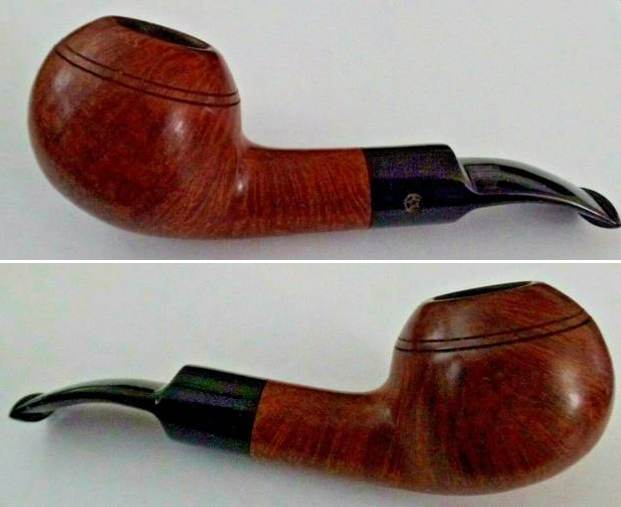
I have worked on several pipes for a fellow in Israel over the past few months and he is great to work with. He has great taste in pipes and the ones he has purchased from me have also been beautiful. Periodically I receive an email from him about another pipe he was interested in purchasing EBay. This next one was one that caught my attention. He sent me the link and wanted my opinion on it. It was a nice Mark Tinsky signed American Pristine 5 Rhodesian. I really liked the look and the Rhodesian with a twin ring cap around the rim top. The pipe appeared to be in decent condition. Not too many days after that he wrote me to say he had won it and he had it shipped to me rather than to him in Israel. We chatted back and forth about it via email and I would let him know when I received it. Here are the pictures that the EBay seller included with the advertising.  The seller took several photos of the stamping on the left and underside of the shank. It is faint on the left side in the photo but is very readable on the underside. The inlaid American Smoking Pipe Five Point Star in a brass circle is visible in the first photo.I have collected and smoked Mark Tinsky’s pipes for over 30 years now and thoroughly enjoy them. I cannot speak highly enough about the quality and craftsmanship of his pipe. I have pipes made by Mark and by Curt Rollar in my collection and both are great smokers and pipes that reach for regularly in my choice of pipes. I turned to his website for a quick summary of the history of the brand (http://www.amsmoke.com/Index%20Folder/PipeHist.html). I quote from the site as it is a short, concise history.

The American Smoking Pipe Co. was formed in 1978 by Mark Tinsky and Curt Rollar. Both started making pipes for Jack Weinberger ( JHW Pipes ) while in high school and throughout college. Determined to blaze their own path, they formed their own company- its goal to create unique pipes, lightweight and comfortable, where attention to detail was the rule not the exception. Exulting in their new freedom, they carved out new shapes that were balanced between the radical freehand era of the 70’s and the board pipe look of other conservative companies. Hungry for recognition, they stormed the Eastern and Southern shops looking for markets to sell their pipes. Many hidebound retailers refused to try something new, preferring to sell, well, what has always sold before. However, their pipes did take root in many shops and the business thrived.

They continued expanding their pipe making capabilities, adding employees to help finish the pipes. In 1990, over a disagreement over how much to expand, Curt Rollar left the company. This put a break on expansion and coupled with a U.S. recession and rising anti-smoking fervor served to limit production to supplying existing retailers, thus ending a decade of growth. With pipes sales in decline, we turned to pipe repair as a way to supplement revenues. Finding that we liked fixing things, American concentrated on pipe repair. While working hard at repair and manufacture American is ready once again to expand its markets through its existing network of shops serviced by pipe repair.

With the advent of the Internet, we are exploring marketing pipes directly to consumers in markets not covered by retail accounts. Feel free to e-mail us at MT@MT.NET

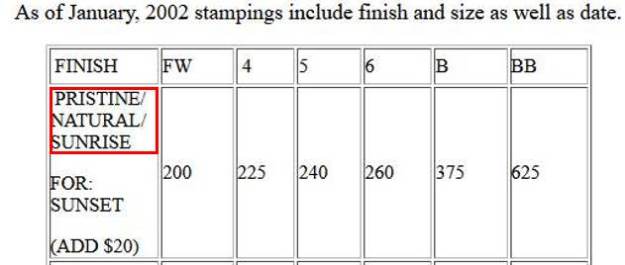
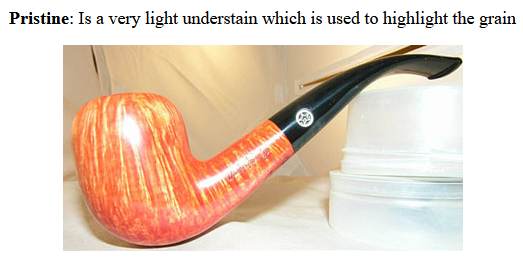
From the history reminder, I turned to the section of the site that gave the price breakdown and information on the finishes and stamping of the pipes and stems. I have included that below (http://www.amsmoke.com/Index%20Folder/PRICE.html). The pipe I am working on is noted below with a red square – PRISTINE and the size is a 5 which sells for around $240USD.He also included a description of the Pristine finish and a photo below that is helpful to me as I restore this pipe.I am also including Mark’s description of the stamping and logo on the stem below.

Stamping:

Pipes are stamped with :
My signature
The American logo : with the year it was made( starting from 2000) This year reads 00
A Finish stamp
Size indication
Stars for straight grain rating
Special Orders are stamped SO, Special orders are priced using the above structure with possible some additional charge for a very difficult shape.

Difficulty of Shape:. A size six billiard is the same price as the same size hawkbill, which is a lot harder to make.Pipes that are more difficult to make now carry an “X” next to the Size designation. If a pipe is extremely difficult it may carry an XX, tho those are extremely rare.

Logos

Silver Star: All pipes except freehands & pipes with very thin stems carry a handmade sterling silver star logo with a black enamel backing.

Gold Star: A grade of pipes that will carry a solid gold star as the logo. So far only three have been made and if I get one every couple years I d consider it lucky.

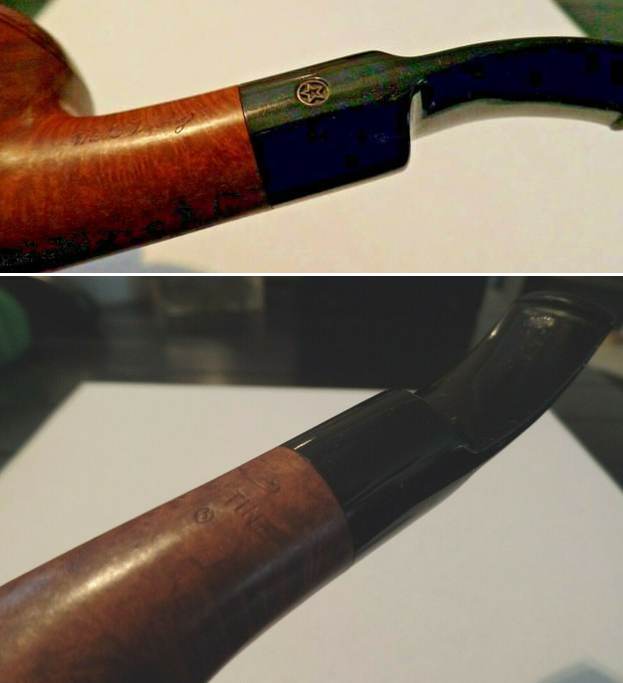
The pipe I am working on has Mark’s signature as noted above. The American logo with the 00 under the American in the oval tells me that the pipe was made in 2000. The finish is  Pristine and the size is a 5 in a circle. There are no stars for a straight grain rating.

The pipe arrived this week in a Bubble Mailer from the seller. To me it is a questionable way to ship pipes as they can be easily damaged. I was concerned when I opened the mailer to examine the pipe inside. Fortunately the seller had separated the stem and bowl and wrapped each in thick bubble wrap which certainly helped. I examined the pipe carefully to assess both the condition of the pipe and what I needed to do with it. There was a light cake in the bowl and no lava on the rim top or edges. There was a nick in the rim top and inner edge on the right side in the middle. Otherwise the rim top looked quite good. The pipe was stamped on the on the sides the shank and on the left side was the Mark Tinsky signature. On the underside it was stamped American in an oval [over] Pristine [over] 5 in a circle. The finish was surprisingly clean but dull with some great grain hiding in the dullness. The stem had the inlaid metal five point star in a circle logo on the left side of the saddle. The acrylic was fairly clean and there were tooth marks and chatter on the top and underside. I took some photos of the pipe before I started my work on it. I have included them below. I took a photo of the bowl and rim top to show the thickness of the cake in the bowl and the slight darkening on the inner edges of the bowl. The nick on the rim top and edge on the right is visible in the photo. I took photos of the stem surface to show the condition and tooth marks and chatter on both sides ahead of the button. I took photos of the stamping on the shank sides (left and underside). It is readable as noted above and though faint is clear. I took a photo of the Silver Star with a black background logo on the stem as well. It is in excellent condition.I removed the stem from the shank and took a photo of the pipe parts. It is quite a stunning piece.I started my work on the pipe by reaming the bowl with a PipNet pipe reamer and took the cake back to bare walls. I cleaned up the reaming with a Savinelli Fitsall Pipe Knife. I sanded the bowl walls with 220 grit sandpaper wrapped around a piece of dowel. I examined the walls with a lens and they were solid and undamaged. I worked over the darkening on the inside edge of the bowl and the rim top with a folded piece of 220 grit sandpaper. It began to look a lot better.I used a butter knife, wet cloth and the flame of our gas stove to steam out the dent on the top right of the rim edge. I heated the knife with the flame on the stove and put the wet cloth on the dent. I touched the area of the dent with the hot knife. It came out easily and looks great. I cleaned out the airway in the shank and the stem as well as the mortise with isopropyl alcohol, cotton swabs and pipe cleaners. It was surprisingly quite clean.I scrubbed the exterior of the bowl with Murphy’s Oil Soap and a tooth brush to remove the grime from the finish of the bowl and rim top. I rinsed off the bowl with warm water and then dried the bowl with a cotton cloth. The grain that came to the surface once it was clean is quite stunning. I polished the briar with micromesh sanding pads – dry sanding with 1500-12000 grit pads. After each pad I wiped the bowl down with a damp cloth to remove the sanding debris. It really took on a shine by the last three sanding pads. I rubbed the bowl down with Before & After Restoration Balm. I worked it into the surface of the briar with my fingertips and a shoe brush to get it in the grooves. It works to clean, restore and preserve the briar. I let it do its magic for 15 minutes then buffed it off with a cotton cloth. The pipe looks incredibly good at this point in the process.  With that the bowl had come a long way from when I started working on it. I set it aside and turned my attention to the stem. I filled in the few deep tooth marks in the acrylic with clear CA glue. Once the repairs cured I sanded them smooth with 220 grit sandpaper and started polishing them with 400 grit wet dry sandpaper. I continued to polish the stem with micromesh sanding pads – wet sanding with 1500-12000 grit sanding pads. I wiped it down after each sanding pad with Obsidian Oil. I polished it with Before & After Pipe Stem Polish – both Fine and Extra Fine and wiped it down with Obsidian Oil one more time. I am excited to finish this beautiful Mark Tinsky American Pristine Rhodesian size 5. I put the pipe back together and buffed it with Blue Diamond on the buffing wheel. I gave the bowl and the stem multiple coats of carnauba wax. I hand buffed the pipe with a clean buffing pad to raise the shine. It is fun to see what the polished bowl looks like with beautiful mixed grain all around it. The polished grain on the pipe looks great with the black acrlyic stem. This smooth Tinsky American Pristine Rhodesian is great looking and the pipe feels great in my hand. It is light and well balanced. Have a look at it with the photos below. The dimensions are Length: 5 ½ inches, Height: 1 ¾ inches, Outside diameter of the bowl: 1 ¾ inches, Chamber diameter: ¾ of an inch. The weight of the pipe is 72 grams/2.54 ounces. It turned out to be a beautiful pipe. I will be packing it up and sending it to my friend in Israel. I think he will enjoy this beauty once it is in his hands. Thanks for your time reading this blog and as Paresh says each time – Stay Safe.

Freshening Up A Pair Of WDC Meerschaum Bowl, Bakelite Base And Redmanol Stem Pipes In A Presentation Case Continued…


Blog by Paresh Despande

I had been working on a pair of WDC pipes that came in a beautiful well preserved Presentation case. I have completed researching and refurbishing the first pipe, a straight Bulldog. Though I had worked on both these pipes simultaneously, I have done the write up in two parts.

For detailed information on the brand and other general information about the pipe and material used here, please read PART I of this series.

PART II: – BENT BULLDOG

Initial Visual Inspection

The condition of the pipe points to the fact that this pipe has seen significantly more use than the straight Bulldog. There is a thick cake in the chamber with lava overflow over the rim top surface. The base and shank shows heavy accumulation of tars and crud. The brass rim top cover over the Bakelite base/ shank is also covered in dried oils and tars. The Bakelite shank is dull and covered in completely dried out dirt and grime. The brass shank band at the shank end shows signs of wear but not badly damaged. The Redmanol stem is dull and lackluster with a few tooth indentations on either surface in the bite zone. All said, the condition of the pipe is not bad at all. Detailed Inspection
The three parts of the pipe are as shown below. The condition of the short threaded meerschaum bowl, filthy Bakelite shank and the bent Redmanol stem with threaded tenon all point to heavy use.The Meerschaum bowl has a thick layer of carbon in the chamber. The cake is soft and dry. The single draught hole at the heel of the bowl is partially clogged restricting the aperture opening. There is a thick layer of lava overflow on the rim top surface. There are a couple of spots where the white of the Meerschaum peeks out of the rim top surface but these are just spots from where the dry soft carbon cake had peeled off. The threads at the bottom of the bowl have worn out a bit but still firmly threads in to the Bakelite shank without any give or play. The convex bottom of the bowl is covered in dried ash and crud. There are a few scratches, nicks and dings over the surface but they are all very minor and do not detract from the beauty of the bowl.   The Bakelite base/shank shows heavy accumulation of old dried oils, tars and ash in the trough that houses the Meerschaum bowl. The threads in the base are all intact but covered in oils and grime. The brass rim top ring is covered in grime. Close scrutiny of the shank surface under magnification revealed a crack (indicated in green) along the seam running from the top front of the bowl to about half way to the foot of the Bakelite base. I would first need to clean the internals of the base to ascertain if this crack extends inside. This was an unanticipated damage, but one that would need to be addressed. The mortise is clogged with dried oils and gunk making the draw laborious and constricted. The bent Redmanol stem is dull looking but with a nice cleaning and polishing will add to the visual treat of the completed pipe. The stem airway has darkened considerably due to dried gunk that accumulated along the walls of the airway. There is some minor tooth chatter and couple of deeper tooth indentations on either surface of the stem. The round orifice and the threaded tenon are covered in gunk. Overall, there is not much damage to the stem and should clean up nicely.The Process
In normal course, I would have addressed the shank repairs first. However, since I worked on the pair concurrently, I first reamed the chamber with my smaller fabricated knife followed by sanding the walls with a folded piece of 220 grit sandpaper. This removes cake completely and evens out the chamber wall surfaces. I scraped off the dried oils and tars from the bottom of the bowl and also from in between the threads. A wipe using isopropyl alcohol on a cotton swab ensured that the carbon dust that remained is completely lifted from the wall surface and the ghost smells are eliminated. I was pleased to find smooth and solid chamber walls. With the sharp knife, I gently scraped off the lava overflow from the rim top surface. I would continue further cleaning of the rim top during the refurbishing process. As I working the Meerschaum bowl, out of the blue, a round thin ring come off the bottom of the bowl and my heart sank… Did the bottom of the bowl just break in my hand? I heaved a sigh of relief when I realized that it was nothing more than a spacer that was cut out of a Greeting card. But it was so well cut and matched, that it missed my inspection. Now I am beginning to understand why the bowls were interchanged on the pipes in the first place. The long neck Meerschaum bowl with three draught holes should belong to this bent Bulldog but was switched with the shorter neck bowl with single hole. The crack along the seam must have been opening up as the Meerschaum bowl was threaded in to the base, pushing the bowl further down in to the base. The long neck of the bowl scraped the heel of the base, restricting the air flow. Thus, the short neck bowl from the straight Bulldog was swapped with this long neck and the paper washer was installed to make the seating of the short neck Meerschaum bowl in to the base airtight. With this modification, the bent Bulldog became a better smoker than the straight Bulldog and hence was more extensively used.I wiped the external surface of the bowl with Murphy’s Oil soap on a cotton swab. While cleaning, I was especially deliberate around the threads and over the rim top surface as I wanted to get rid of the entire gunk from those areas. Though the bowl cleaned up well, the rim remains darkened, akin to burning marks. This would need more invasive methods to clean away. The scratches and dings that are now visible will be left as they are for being a part of the journey of this pipe till date. I wiped the bowl with a moist cloth to remove the soap and grime that was left behind. Using folded piece 220 grit sandpaper, I sand the rim top to remove the darkening over the surface. Though not completely eliminated, the rim surface looks now looks much better. I handed over the cup to Abha, my wife, to work her magic in polishing the cup. She polished the rim top surface and rim edges with micromesh pads. She then went on to dry sand the entire stummel with 1500-12000 grit pads and wiped the bowl down with a damp cloth to remove the dust that was left behind by the sanding. I had requested her to minimize the scratches but not necessarily remove them. These lacerations and dings must have had a history and I wanted to preserve it. She did a fantastic job of polishing the meerschaum cup to a nice deep shine.  As Abha was polishing the Meerschaum bowl, I worked on the stem repairs. I first cleaned the stem surface and airway using anti-oil dish cleaning soap and thin shank brush and rinsed it under warm running water to remove the entire gunk from the airway. I also cleaned up the threaded tenon with a tooth brush and soap. To finish the cleaning, I ran a few bristled and regular pipe cleaners dipped in alcohol to remove the residual gunk from the airway and dry it out.   I next sand the bite zone with a 320 grit sandpaper to address the minor tooth chatter on either surface. I filled the deeper tooth indentations with clear CA superglue and set the stem aside for the glue to cure completely.  With the Meerschaum bowl polished by Abha and the stem repairs set aside for the fills to cure, I worked the Bakelite shank. With a fabricated tool, I scraped all the dried oils, tars and ash from the trough of the Bakelite base. I also cleaned the mortise by scraping out the dried gunk using my fabricated tool. As I was working on the shank, the brass cap over the shank rim top came free. I would need to reattach it once I was done with internal and external cleaning of the shank.Next, I cleaned the Bakelite shank with anti oil dish soap and tooth brush. I cleaned the shank internals and the mortise with shank brush and anti oil soap and rinsed it under warm water. The brass cap was scrubbed clean with the soap and Scotch Brite pad. The shank is now clean both from the inside and the outside. With the external and internal surface of the Bakelite shank cleaned up, the crack at the seam is now clearly visible. As I had expected, this crack extends to the inside of the shank also. Both these are encircled in red. I discussed with Steve and he advised that drilling of counter holes to arrest the spread of these cracks should be avoided as the Bakelite could shatter due to the impact of the drill machine. The best way to ensure a robust and lasting repair would be to lay a fine bead of CA superglue along the crack. The glue would seep into the crack and once hardened, would form a strong joint along the seam. I did just that and set the shank aside for the glue to cure.By next day afternoon, the fills had completely hardened. With a flat head needle file, I sand the fills to achieve a rough match with the rest of the shank surface. To further fine tune the match, I sand the fill with a 320 followed by 600 grit sandpapers. I sand the fill inside the Bakelite trough with the sandpapers only as it was not possible to use the needle file. I am quite happy with these repairs at this junction. The Redmanol stem fills too had hardened and I worked the fills with a needle file to match it with the rest of the stem surface. I fine tuned this match further by sanding it with a 320 followed by 600 grit sandpapers. The fills have blended in perfectly with the stem surface. Thereafter, I handed the stem over to Abha to polish it to a high gloss. After the stem was handed over to Abha, I polished the Bakelite base/ shank by wet sanding the surface with 800, 1000, 1500 and 2000 grit sandpapers. The Bakelite is now beginning to take on a nice shine.  Before moving on to final polish using micromesh pads, I decided to reattach the brass cap first. I polished the brass cap with a polishing compound that we get in India here. I rubbed the compound over the rim cap and wiped it using a soft cloth. I applied a small quantity of superglue along the rim top surface and pressed the rim cap over the rim top. I wiped the excess glue with a cotton swab wetted with alcohol.Next I polished the shank by dry sanding with 3200 to 12000 grit micromesh pads. I applied a little Extra Virgin Olive oil to the surface just to enhance the shine. All this while, Abha was quietly busy polishing the stem. She wet sanded the entire stem with 800, 1000, 1500 and 2000 grit sandpapers and followed it up by dry sanding with 3200 to 12000 grit micromesh pads. The stem looks fabulous and I cannot thank Abha enough for the help and support she extends in this hobby of mine. Next I gave a beeswax polish to the meerschaum bowl. The process that I followed for this polish has been explained in Part- I and not being repeated here. The following pictures will give you an idea of the process and also of the end results. It was here that I had swapped the Meerschaum bowls and correctly matched them with their original pipes. While the Meerschaum bowl was soaking in the beeswax, I cleaned the external surface of the Presentation Box with Murphy’s Oil soap and cotton swab. I wiped the surface with a moist cloth to remove any residual soap from the surface. Next I applied some “Before and After” Restoration balm to the surface to rehydrate the wood and polished it with a microfiber cloth. To finish, I re-attach the Redmanol stem with the Bakelite shank. I mount a cotton cloth buffing wheel on to my hand held rotary tool and setting the speed at 50% RPM, applied Blue Diamond compound over the shank and the stem surface. I wiped/ buffed the parts with a soft cotton cloth to clear it of any leftover compound dust. I then mounted another cotton cloth wheel on to the polishing machine and applied several coats of carnauba wax over the shank and the stem of the pipe. I finished the restoration by giving the pipe a rigorous hand buffing using a microfiber cloth to raise the shine further. Have a look at the completed pipe below. And here are a couple of pictures of both the pipes in their Presentation Case. Thank you all for joining me on this path as I repaired and restored this fabulous piece of pipe history to its former glory and functionality.

Freshening Up A Pair Of WDC Meerschaum Bowl, Bakelite Base And Redmanol Stem Pipes In A Presentation Case


Blog by Paresh Deshpande

It’s been a while since I have sent Steve any write ups for posting on rebornpipes and it’s not because I have not been working on any. As a matter of fact, I had completed re-stemming and refurbishing of 4 un-smoked vintage bowls. These were c.1897 BBB OWN MAKE Billiard with long pencil shank that came with its original shop stickers on it, the second was a c.1901 A.D.P (Adolph Posener), the third was a c.1904 Imperial ITC bent billiard and the fourth was c.1911 A.O KEYSTONE (Adolphe Oppenheimer & Co). Unfortunately, I lost the photographs that I had taken of all the pipes during their refurbishing process and as such there was nothing for me to base my write ups on (yeah…I know even Steve has been suggesting that I do the write up simultaneously as I work!!).

Moving ahead, the next project that I selected to lift up my spirits was a pair of WDC Meerschaum bowled Bulldog pipes that came in its beautiful Presentation case. Both pipes appeared to be in a very good condition and should clean up well. Here are a few pictures of the pair and its case as it sat on my work table. This pair of pipes has three different materials used in its manufacture and that is what makes it unique and interesting. The chamber/bowl are made from Meerschaum which threads in to a Bakelite shank that has a brass (?) band at its end and bears its trademark inverted triangle stamped with as “WDC”. The stems are made of Redmanol, a beautiful translucent material that was widely used in the early part of the 20th century. I have worked on a few WDCs earlier and am pretty familiar with the brand’s history. I revisited rebornpipes where I had posted my previous WDC projects. Here is the link to the write up which will give readers a fairly detailed idea about the brand and a rough estimate as to the vintage of the pair of pipes on my work table.

https://rebornpipes.com/2019/04/05/sprucing-up-another-wdc-a-cased-bakelite-briar-dublin/

I visited rebornpipes.com and came across an interesting article on materials used in pipe making (https://rebornpipes.com/2014/08/09/hard-rubber-and-other-early-plastic-used-in-pipes-ronald-j-de-haan/)

It is here that I found the following information on “BAKELITE”:

These qualities made Bakelite the most successful synthetic material in the first half of the 20th century. From 1928 it was also produced as molded resin. Both the pressed and the molded forms were suitable for the pipe making industry. Pipes were made from Bakelite and molded phenol-resin. Complete pipes of Bakelite are very rare because of its lack of heat resistance. Phenol-resin however was frequently used for pipe mouthpieces and cigarette holders because it imitated amber.

Further search on rebornpipes got me to a write up that Steve had done on a Redmanol WDC pipe. Given below is the link to the referenced article.

https://rebornpipes.com/2020/05/26/life-for-a-wdc-redmanol-dublin-with-a-removable-redmanol-bowl/

I quote from the article…..

“I turned to Wikipedia for an article on Bakelite and Redmanol to remind myself of the connection between the companies (https://en.wikipedia.org/wiki/Bakelite).

As the sales figures also show, the Bakelite Company produced “transparent” cast resin (which did not include filler) “artificial amber”, were machined and carved to create items such as pipe stems, cigarette holders and jewelry.[11][12] However, the demand for molded plastics led the Bakelite company to concentrate on molding, rather than concentrating on cast solid resins.[11]:172–174…

…The Bakelite Corporation was formed in 1922 after patent litigation favorable to Baekeland, from a merger of three companies: Baekeland’s General Bakelite Company; the Condensite Company, founded by J.W. Aylesworth; and the Redmanol Chemical Products Company, founded by Lawrence V. Redman.[13] Under director of advertising and public relations Allan Brown, who came to Bakelite from Condensite, Bakelite was aggressively marketed as “the material of a thousand uses”.[7]:58–59[14] A filing for a trademark featuring the letter B above the mathematical symbol for infinity was made August 25, 1925, and claimed the mark was in use as of December 1, 1924. A wide variety of uses were listed in their trademark applications.[15]

I also read a brief article on Redmanol on Wikipedia and the link was clear as the companies joined in 1922 (https://en.wikipedia.org/wiki/Redmanol_Chemical_Products_Company).

Redmanol Chemical Products Company was an early plastics manufacturer formed in 1913. Lawrence V. Redman was its president. In 1922, the Redmanol Company, the Condensite Company of America, and General Bakelite were consolidated into the Bakelite Corporation.[1]” ….unquote.

From the above gleaned information, it is safe to conclude that the pipe now on my worktable is of 1920s and early 1930s vintage.

Though I had simultaneously worked on this pair, I have divided the write up in two parts where I have dealt with each pipe separately. In PART I, I shall deal with the straight Bulldog of the pair and in PART II, I shall describe the process on the bent Bulldog.

PART I:- STRAIGHT BULLDOG

Initial Visual Inspection
The straight bulldog pipe is in great condition given its 90 odd year age. It appears to have been well smoked given the decent layer of cake in the chamber. The rim top is clean without any lava overflow. The meerschaum bowl has a few superficial scratches from being used. The Bakelite diamond base and shank is dull in appearance, but intact. The translucent Redmanol stem is slightly oxidized and appears dull and lackluster. There is a deep tooth indentation over the upper surface and a chipped surface near the round orifice. The pictures below give a fair idea of the condition of the pipe in its present state. Detailed Inspection
The pipe consists of three parts, a Meerschaum bowl, Bakelite base and shank and the Redmanol straight stem with a round orifice. These three parts come together as an instrument of smoking by means of threads at the bowl and stem ends.The meerschaum bowl is in very good condition with just a few scratches over the sides. The chamber has a thick layer of dried and crumbling cake. The rim top is in pristine condition and does not have any overflow of carbon deposits. The thread on the cup is slightly worn only at a small section and the attaches securely with the Bakelite shank. The bottom of the meerschaum cup has three draught holes and shows a couple of dents/ dings. The draw on the pipe was not very smooth and open. Close observation of the depth of the meerschaum cup made me realize that it touched the heel of the Bakelite base and constricted the air flow. I shall deal with this issue subsequently. The Bakelite base is clean with no traces of old oils and tars in the trough that houses the meerschaum cup. The brass rim cap at the top of the Bakelite base is firmly fixed and is nicely clean and shining. The mortise shows some traces of gunk but should clean up nicely. There are a couple of minute chipped spots over the right side of the diamond shank edge (encircled in yellow). The brass band at the shank end shows some signs of brassing and should polish up to nice shine. The brass rim cap and the shank band coupled with the translucent Redmanol stem add a nice bling to the appearance of the pipes. The diamond Redmanol stem has a rounded orifice which also points to its vintage. It has a rich translucent red color and the light really plays through. I cannot wait to see the stem clean up. Minor tooth chatter is seen on the upper and lower surface. The pointed corner edge of the lip on the left is broken (encircled in green) and will either have to be reconstructed or filed away to a straight profile. The stem airway has darkened due to accumulation of saliva, oils and tars and would need to be thoroughly cleaned. The screw-in tenon is of the same Redmanol material and is covered with dried oils and tars.   The Process
I started this project by reaming the chamber with my smaller fabricated knife and scraped out all the carbon from chamber. I used a 220 grit sand paper, pinched between my thumb and forefinger, to sand the inner walls of the chamber of the pipe. Once I had reached the bare walls, I wiped the chamber with a cotton pad dipped in isopropyl alcohol. This removed all the residual carbon dust and also rid the chamber of all ghost smells. The walls of the chamber are nice and solid with no signs of cracks.I cleaned the external surface of the Meerschaum cup with Murphy’s Oil soap and cotton swabs. I also cleaned the threads at the foot of the cup with tooth brush and oil soap. I wiped the bowl surface with a moist cloth to remove the soap and grime that remained on the surface. The stummel surface cleaned up nicely. The scratches and dents and dings over the stummel surface are now clearly visible.Once I was done with cleaning the external surface of the meerschaum cup, I handed over the cup to Abha, my wife, to work her magic in polishing the cup. She polished the rim top surface and rim edges with micromesh pads. She then went on to dry sand the entire stummel with 1500-12000 grit pads and wiped the bowl down with a damp cloth to remove the dust that was left behind by the sanding. I had requested her to minimize the scratches but not necessarily remove them. These lacerations and dings must have had a history and I wanted to preserve it. She did a fantastic job of polishing the meerschaum cup to a nice deep shine.While Abha was busy with polishing the meerschaum bowl, I addressed the stem repairs. I first cleaned the stem surface and the stem airway using anti-oil dish cleaning soap and thin shank brush and rinsed it under warm running water to remove the entire gunk from the airway. I also cleaned up the threaded tenon with a tooth brush and soap. To finish the cleaning, I ran a few bristled and regular pipe cleaners dipped in alcohol to remove the residual gunk from the airway and dry it out.To address the minor tooth chatter on both upper and lower surfaces, I sand the bite zone with a folded piece of 320 grit sandpaper. However, there was one tooth indentation in the bite zone and the chipped corner of the lip still remained an eyesore. I spot filled these with clear CA superglue and set the stem aside for the glue to cure. I cleaned the mortise by scraping out the dried gunk using my fabricated tool. Next, I cleaned the Bakelite shank with anti oil dish soap and tooth brush. I cleaned the shank internals and mortise with shank brush and anti oil soap and rinsed it under warm water. The shank is now clean both from the inside and the outside. Once the stem fills had cured, I sand the fills with a flat head needle file to roughly match the fill with the rest of the stem surface. I further fine tune the match by sanding the bite zone with 320 grit sandpaper followed by 600 grit sandpaper.  Following the sanding with a piece of 600 grit sandpaper, I began the process of polishing by wet sanding the entire stem with 800, 1000, 1500 and 2000 grit sandpapers. I completed the polishing of the stem by dry sanding the stem with 3200 to 12000 grit micromesh pads. The translucent red of the Redmanol stem just shines through.   With the Meerschaum bowl and the Redmanol stem polished, I turned my attention to the Bakelite shank. I polished the shank by wet sanding with 1500 to 2400 followed by dry sanding with 3200 to 12000 grit micromesh pads. Next I gave a beeswax polish to the meerschaum bowl. I assembled the equipment and materials that would be needed during the process viz heat gun, paper towels, q-tips and a Katori, a steel container graciously lent by Abha from the kitchen and of course, beeswax. I stuffed the chamber with cork to prevent inadvertent seepage of the melted beeswax into either. Next, I melted a sufficient quantity of beeswax in the katori using my heat gun and thereafter heated the stummel. Using the a folded pipe cleaner, I completely coated the stummel with the wax and continued the application till the surface was saturated and set the stummel aside to absorb the wax. I reheated the stummel with the heat gun about 20 minutes later and let the excess wax either be absorbed or drip off from the stummel surface. I rubbed off the excess wax with a soft cotton cloth and brought a deep shine to the surface with a microfiber cloth. To finish, I re-attach the Redmanol stem with the Bakelite shank. I mount a cotton cloth buffing wheel on to my hand held rotary tool and setting the speed at 50% RPM, applied Blue Diamond compound over the shank and the stem surface. I wiped/ buffed the parts with a soft cotton cloth to clear it of any leftover compound dust. I then mounted another cotton cloth wheel on to the polishing machine and applied several coats of carnauba wax over the shank and the stem of the pipe. I finished the restoration by giving the pipe a rigorous hand buffing using a microfiber cloth to raise the shine further. Have a look at the completed pipe below. P.S. – Readers must have noticed that the meerschaum bowl has been changed from three holed one to one hole. Well, if you recollect I had made a mention of draw on this pipe being constricted. It turns out that the meerschaum bowl on this pipe was a long neck one and the one on the bent bulldog had a shorter neck. The Bakelite base of the straight pipe is shallow as compared to the bent bulldog and accommodated the short neck meerschaum bowl better than the long neck bowl. Once the switch was made, the draw on both the pipes was open, full and smooth as silk.

Now, why the bowls were switched in the first place? The answer to this intriguing question will be given in the next part…

Thank you all for being with me as I walk the path of learning nuances of pipe restoration.

Breathing Life into a Custom-Bilt Rhodesian


Blog by Steve Laug

The next pipe on the work table came to us on 10/14/2017 from now closed antique shop in Pocatello, Idaho, USA. The pipe is a classic Custom-Bilt piece – a rusticated Diamond shank Rhodesian shaped pipe with some deep carving around the bowl. The pipe is stamped on the left underside of the shank and reads Custom-Bilt [over] Imported Briar. On the right underside of the shank it bears a carved square near the stem/shank junction. The bowl was heavily caked with a an overflow of lava on the smooth rim top toward the back and on the inner edge. The inside edges looked to be in good condition. The finish was dirty but the pipe still has a sense of charm. The stem was dirty and lightly oxidized. It had tooth chatter and marks on the top and underside near the button. The was a chipped area on the topside edge of the button. There were no markings or a logo on the saddle stem. It had promise but it was very dirty. Jeff took some photos of the pipe before he started his cleanup work. He took photos of the rim top and bowl to give a clear picture of the thickness of the cake and tobacco debris as well as the lava on the smooth rim top. He also took photos of the top and underside of the stem to show the oxidation and the chatter and tooth marks. The photo of the topside of the stem also shows the chipped edge of the button. Jeff took a photo of the heel of the bowl to give a picture of what the briar looked like. The rustication pattern around the bowl is instantly recognizable as done by Custom-Bilt. The stamping on the left underside of the shank and the right underside at the shank/stem joint is clear and readable and read as noted above.   I turned to Pipephil (http://www.pipephil.eu/logos/en/logo-c8.html) to get a quick view of the brand once again. I knew that I was working with one of the older pipes and probably made by Tracy Mincer himself. He stopped making the Custom-Bilt pipes in the early 1950s. The screen capture I included below shows a brief history of the brand. It also has a comment on the symbols stamped on the shank near the stem including the square that is stamped on this one.I turned to Pipedia (https://pipedia.org/wiki/File:CustomBilt_Stamp1.jpg) for a quick read. The majority of the information there included two book reviews of the “Custom-Bilt Story” by Bill Unger.
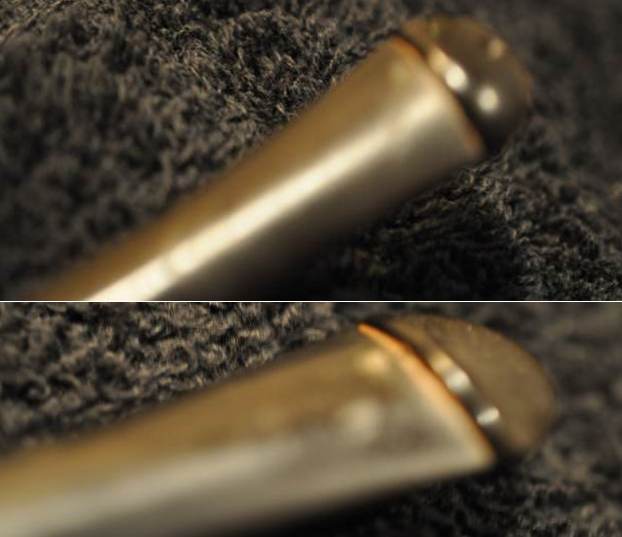
The one line I culled was the following: “Tracy Mincer started the original Custom-Bilt pipes it appears in 1934”.

I did a screen capture of the stamping that matched the stamping on the pipe that I am working on. What I learned from that is that the stamp was used by Tracy Mincer in Indianapolis in the US from 1938-1946 and possibly in Chicago before 1938 as well. So now I had a possible date for this pipe. It was an old timer and it was well worth working on.Armed with that information I turned to work on the pipe itself. Jeff had cleaned up the pipe with his usual penchant for thoroughness. He reamed the pipe with a PipNet pipe reamer and removed the rest of it with a Savinelli Fitsall Pipe Knife. He scrubbed the bowl with undiluted Murphy’s Oil Soap with a tooth brush. He rinsed it under running warm water to remove the soap and grime. He cleaned out the inside of the shank and the airway in the stem with alcohol, cotton swabs and pipe cleaners. He scrubbed the stem with Soft Scrub and a tooth brush and rinsed it off with warm water. I took photos of the pipe before I started my part of the restoration work. The rim top and the inner edge had some darkening and wear that would need to be addressed. The outer edge of the bowl look very good. The stem surface looked good with a few small tooth marks and chatter on both sides near the button. The biggest issue was the chipped button on the tops side.    The stamping on left side of the shank is clear and readable. I failed to take photos of the stamping on the heel and right side but they to are clear. It is stamped as noted above.I removed the stem and took a photo of the pipe to give a sense of the whole. It is a proportionally pleasing pipe.I started my work on the pipe by addressing the darkening on the rim top and cleaning up the damage to the inner edge of the rim. I used a folded piece of 220 grit sandpaper to reshape the edge and to clean up the rim top. The finished rim top and edge looks better.    I polished the rim top with micromesh sanding pads – dry sanding with 1500-12000 grit pads to develop a deep shine on the smooth portions of the bowl. I wiped the bowl down after each pad with a damp cloth to remove the sanding debris.   The bowl looked good at this point so I rubbed it down with Before & After Restoration Balm. I worked it into the surface of the bowl sides and shank with my fingertips and a horsehair shoe brush to clean, enliven and protect the briar. I let the balm sit for about 10-15 minutes and buffed with a cotton cloth to raise the shine.  I set the bowl aside and turned to work on the stem. I rebuilt the chipped button with black rubberized super glue. It was not a large chip and the glue would do the trick with it. I folded a pipe cleaner and greased it with Vaseline. I slipped it in place in the slot under the chipped area. I filled the chip in with the super glue. I rebuilt the inside edge using a tooth pick. I filled in the deep tooth marks with black super glue at the same time.  Once the repair cured I used a pottery trimmer blade to shape the inside of the slot. I need to do some light patching still to take care of some air bubbles in the inside edge. I also flattened the repair on the topside and shaped the button edge on both sides with a small flat file. It is starting to look very good.I sanded the button edges and the repairs on the stem with 220 grit sandpaper to blend them into the surface of the vulcanite. I started polishing it with 400 grit wet dry sandpaper.     I polished the vulcanite stem with micromesh sanding pads – 1500-12000 grit pads. I wiped it down with Obsidian Oil after each sanding pad. I used Before & After Pipe Polish – both Fine and Extra Fine to further polish the stem.     This Custom-Bilt Rhodesian is a great looking pipe now that it has been restored. The style of rustication that is used around the bowl is highlighted by the stain application and works well with both the shape and the polished vulcanite stem. I put the stem back on the bowl and carefully buffed the pipe with Blue Diamond on the buffing wheel using a light touch on the briar. I gave the bowl multiple coats of Conservator’s Wax and the stem multiple coats of carnauba wax on the buffing wheel and followed that by buffing the entire pipe with a clean buffing pad. I hand buffed the pipe with a microfiber cloth to deepen the shine. The finished Custom-Bilt is another pipe that fits nicely in the hand and feels great. Give the finished pipe a look in the photos below. The dimensions of the pipe are Length: 5 ½ inches, Height: 1 ½ inches, Outside diameter of the bowl: 1 ¾ inches, Chamber diameter: 7/8 of an inch. The weight of the pipe is 40 grams/1.41 ounces. I will be putting it on the rebornpipes store in the American Pipemakers Section shortly. If you are interested in adding this pipe to your collection send me a message or an email. Thanks for reading this blog and my reflections on the pipe while I worked on it. There are many more to come!

An interesting challenge – joining a broken shank and bowl on a Manx Meerschaum


Blog by Steve Laug

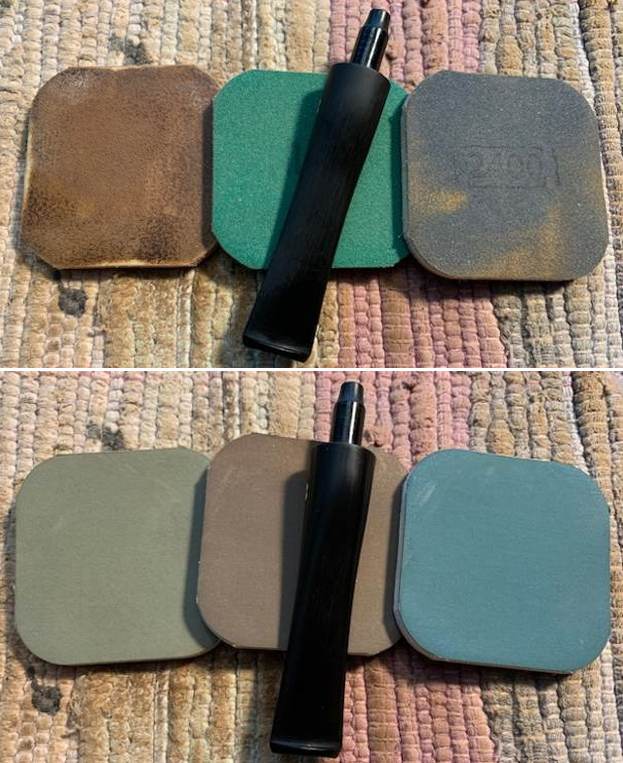
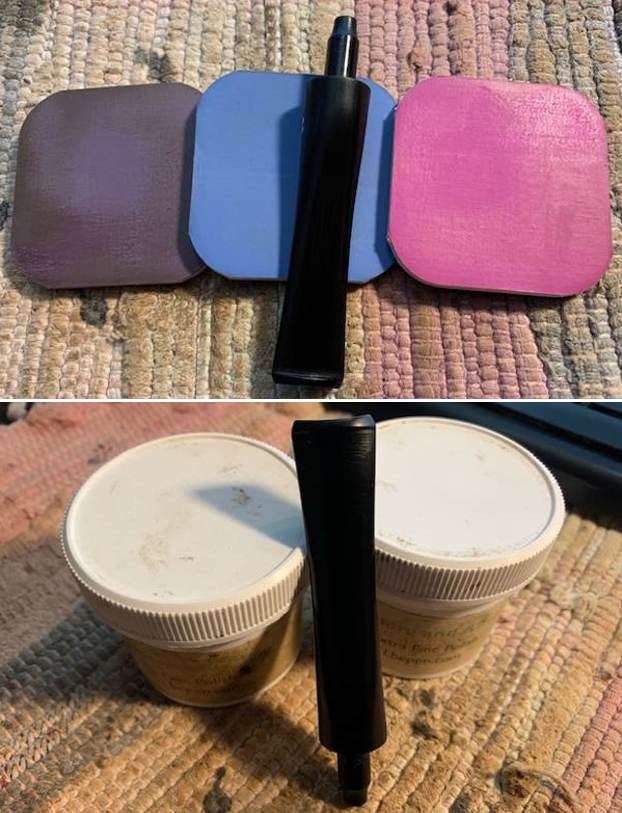
Yesterday afternoon a fellow stopped by for a visit and to show me his collection of Manx  Meerschaum pipes from the Isle of Man. It turned out that his great uncle had worked at the Laxey Pipe Factory which closed in 2002 so he had some of his pipes and some others that he had collected over time. He also wanted to show me sad victim or circumstance – a Manx Billiard that a friend had knocked out of his hand/mouth the night before. The shank had snapped off at the bowl. The break was very clean and there were no extraneous pieces to deal with. It was complete in the two parts. The stem and tenon were undamaged. Fortunately as he transported it to my porch wrapped in a scarf it did not chip or incur further damage. I took photos of it this morning when I brought it to my work table. I had a short piece of metal tubing. It is harder than the average aluminum inner tube and also a bit larger in diameter. It fit well in both sides of the broken airway. I was going to use super glue to anchor it in the bowl half first and let it harden very well. I did not want any slippage back and forth in the airway. I set the bowl aside to let the glue cure on the tube. I filed the tube to roughen it up and to make the fit in the shank part of the break work well. I slide it in place and took a photo of the fit of the shank to the bowl. It looks quite good. I will need to glue it to get a solid repair but it looks like it will work well with no gaps once it is glued.With the restoration going on in my basement shop area I could not put my hands on my epoxy so I went to the local tool shop near my house and chatted with one of the gents there about what I was working on. They had some JB Weld but he recommended a product called Weld Bond. It is good for repairing cracked pottery, stone and even wood. It dries rock hard in 24 hours and is clear once it dries (a bonus on this pipe). I spread the glue on both halves of the broken pipe and painted it on the surface of the tube as well with a tooth pick and worked it into the grooves of the break. I slid the shank piece on to the tube and lined the break up. I pressed the parts together and wiped off the excess glue with a cloth. I held it in place until it bonded the parts together. I pressed the parts together and bound it together with green tape. I wrapped the tape around the entire bowl and shank to hold it tightly in place while the glue cured. I set the bowl aside for 24 hours to let that happen. That is always the hardest part for me as I am impatient and want to move onto the next part. But the wait is on and I am gritting my teeth while I wait.  I set the bowl aside and turned my attention to work on the stem. It had a lot of tooth chatter and light marks on the surface on both sides. I had originally thought the stem was acrylic but it was a nice vulcanite. I “painted’ the surface of the stem with the flame of a Bic lighter to lift them as much as possible. The marks on the underside lifted well. The majority of the top side also lifted. I had a few deeper ones that need a spot of super glue to smooth them out. Once the repair cured I sanded the repairs on the stem with 220 grit sandpaper to blend them into the surface of the vulcanite. I started polishing it with 400 grit wet dry sandpaper. I polished the vulcanite stem with micromesh sanding pads – 1500-12000 grit pads. I wiped it down with Obsidian Oil after each sanding pad. I used Before & After Pipe Polish – both Fine and Extra Fine to further polish the stem. I removed the tape holding the repaired shank/stem repair together. It was solid. The crack was only visible on the lower right side and part of the underside. It is filled in but can be seen if you look for it. I filled in the remaining crack in the surface of the meer on the right lower/underside with the Weld Bond glue I used to bind it together. It dries clear so I am looking forward to seeing how it looks afterward.I reamed the pipe with a Savinelli Fitsall Pipe Knife. I cleaned the rim top with the tip of a knife and a brass bristle wire brush. I was able to get back some of the rustication on the top. I have had good success with Before & After Restoration Balm on Meerschaum so I worked it into the surface of the bowl and shank with my finger tips and a shoe brush to clean, enliven and protect the rusticated surface of the meerschaum. I let it sit for 15 minutes and then buffed it off with a soft cloth. It looked very good. This Manx Made Meerschaum Rusticated Billiard is a great looking pipe now that it has been restored. The style of rustication that is used around the bowl is classic Isle of Man rustication from the Laxley Pipe Company. It works well with both the shape and the polished vulcanite stem. I put the stem back on the bowl and carefully hand buffed the pipe with a microfiber cloth to deepen the shine. The finished Manx Made Meerschaum Billiard is another pipe that fits nicely in the hand and feels great. Give the finished pipe a look in the photos below. The dimensions of the pipe are Length: 6 inches, Height: 2 inches, Outside diameter of the bowl: 1 ¼ inches, Chamber diameter: ¾ of an inch. The weight of the pipe is 61 grams/2.15 ounces. I will be giving the fellow a call who dropped it off. I think he will enjoy the repair of one of his favourite pipes. Thanks for reading this blog and my reflections on the pipe while I worked on it. There are many more to come!
Sidle Up to the Bari


by Kenneth Lieblich

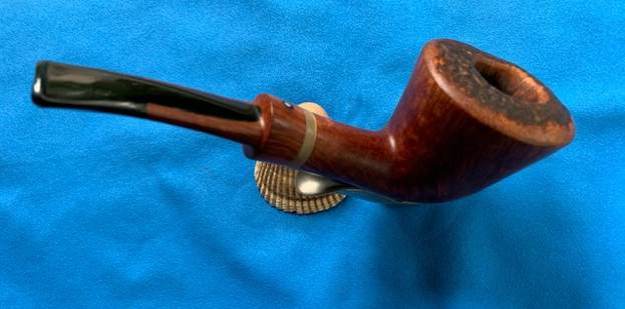
Next on the chopping block is a charming Danish pipe, likely by Bari. I say “likely” because it does not specifically name Bari on the pipe, but Steve assured me that he has seen other Bari pipes like it. He feels comfortable calling it a Bari and that is more than good enough for me. His imprimatur is worth its weight in gold!   There was only one marking on the pipe – the underside of the stummel read Made in [over] Denmark. There was no shape number or any other identifying marks.This freehand pipe is quite beautiful and many of its curves are reminiscent of ski slopes from my youth. It is a pretty pipe and feels light and comfortable in the hand.

From Pipedia, here is a very brief history of the Bari company:

Bari Piber was founded by Viggo Nielsen in Kolding around the turn of 1950-51. Viggo’s sons Kai Nielsen and Jørgen Nielsen both grew into their father’s business from a very young age and worked there till 1975. Bari had very successfully adapted the new Danish Design that had been started mainly by Stanwell for its own models. When Viggo Nielsen sold Bari in 1978 to Joh. Wilh. von Eicken GmbH in Hamburg, Bari counted 33 employees. From 1978 to 1993 Åge Bogelund and Helmer Thomsen headed Bari’s pipe production. Thomsen bought the company in 1993 re-naming it to Bari Piber Helmer Thomsen. The workshop moved to more convenient buildings in Vejen. Bari’s basic conception fundamentally stayed the same for decades: series pipes pre-worked by machines and carefully finished by hand. Thus no spectacular highgrades but solid, reliable every day’s companions.On to the pipe: it was in decent shape, but there were a few issues. The stem had a bit of oxidation and a LOT of calcification, though fortunately, very few bite marks. The stummel also had a few issues. The outside of the bowl had some dings and a couple of fills that needed to be addressed. The wood also had some stains and paint splatter. There was lava and debris on the rim, and a small burn mark. Most significantly, there was a chunk missing from around the mortise end of the shank. Some serious repair work was needed there! The stem was first on my list. I wiped down the outside of the stem with Murphy’s Oil Soap on some cotton pads. There was so much calcification on the stem that I decided to take a blade and gently scrape it all off. You can see in the photos how much came off! I also took a BIC lighter and ‘painted’ the stem with its flame in order to lift the few bite marks and dents. This was moderately successful in raising the damage. Then, I cleaned out the insides with pipe cleaners and isopropyl alcohol. It was pretty dirty and required quite a few pipe cleaners. Once this process was done, the stem went for an overnight soak in the Pipe Stem Oxidation Remover. The following day, I cleaned all of the de-oxidizing mess off with alcohol, pipe cleaners, et cetera. The oxidation had migrated to the surface and would be fairly straightforward to remove. I scrubbed with SoftScrub on some cotton pads to remove the leftover oxidation on the stem. I built up the dents on the stem with cyanoacrylate adhesive and let them fully cure. Then I sanded the adhesive down with 220-, 400-, and 600-grit sandpapers to meld seamlessly into the stem. Finally, I used all nine Micromesh pads (1,500 through 12,000 grit) to bring out the lovely black lustre on the stem. I also used Obsidian Pipe Stem Oil in between each pad scrubbing.On to the stummel, and the usual cleaning procedures were in order for this pipe. I first decided to ream out the bowl. I used both the PipNet Reamer and the KleenReem to remove the built-up cake and followed that with 220-grit sandpaper to eliminate as much as I could. I took the bowl down to bare briar, as I wanted to ensure there were no hidden flaws in the walls of the bowl. Fortunately, there were none. I used a small butter knife to gently chip away at the lava on the rim and used more Murphy’s with a scrub brush to remove any remainder. This actually worked quite well. I then moved on to cleaning the outside of the stummel with Murphy’s Oil Soap and some cotton pads. That removed any latent dirt that blighted the wood. I then proceeded to clean out the insides of the shank with Q-tips, pipe cleaners, and isopropyl alcohol. There was some filth inside this stummel and it took quite a bit of cotton to get it clean. I followed that up by cleaning the insides with some dish soap and tube brushes.A de-ghosting session also seemed in order, so I thrust cotton balls into the bowl and the shank and saturated them with 99% isopropyl alcohol. I let the stummel sit overnight. This caused the oils, tars and smells to leach out into the cotton. Now it was time for the serious work: to fix the large gouge in the mortise, at the end of the shank. There were several problems to be addressed: to ensure that the repair was structurally sound, so it could withstand the wear and tear of the tenon going in and out; to ensure that the repair looked reasonably consonant with the surrounding wood, and to ensure that the inside of the mortise was smooth and conformed perfectly to the shape of the tenon. The repair was made with a mixture of briar dust and cyanoacrylate adhesive. This ensures a strong repair and one that looks similar to the surrounding wood. As it turned out, I had to build up the repair more than once to achieve the results I wanted. It was fairly straightforward to sand down the flat end of the shank, but it was very difficult to ensure that the inside of the mortise matched perfectly with the tenon. Honestly, it took a bit of trial and error to get it right. I sanded the repair down with a file and 200- and 400-grit sandpaper until it was level with the surrounding briar. Having completed that, I was able to address the small nicks on the rim and the bowl. I dug out my iron and a damp cloth to try to raise the nicks. The hot and moist steam can often cause the wood to swell slightly and return to shape. There was some movement – not a lot, but it was better than doing nothing. The repair was not perfect, but the remaining scratches would be improved by sanding. Now I could address the burn on the rim. I took some oxalic acid, used several Q-tips, and rubbed. The burn improved quite a bit. The burn was very superficial and did not affect the integrity of the wood at all.After removing the burn and checking in on the mortise repair to ensure its integrity, I used all nine Micromesh pads (1,500 through 12,000 grit) on the stummel to finish it off. After that, a light application of Before & After Restoration Balm brought out the best in the stummel’s grain. This is a very elegant Danish pipe. At this point, I checked in with Steve to see what he thought of the restoration so far. He made the excellent suggestion of applying a layer of Fiebing’s Black Leather Dye to the rim and the mortise-end of the shank. After applying the dye, flaming it, and letting it set, I wiped those areas down with isopropyl alcohol to remove most of the dye. The goal here was to accentuate the grain on those particular areas of the pipe with only residual amounts of black dye. In order to further the external beauty of this pipe, I applied some of Fiebing’s Medium Brown Leather Dye over the entire stummel. As usual, I applied flame from a BIC lighter in order to set the colour. I then added a second coat – just to make sure. It looked so much better with a richer colour. I then used some isopropyl alcohol to wipe down the pipe and remove some excess dye. At this point, I chose to re-sand the stummel with all of the micromesh pads. I followed up with some more Before & After Restoration Balm. What a wonderful result! Then it was off for a trip to the buffer. A dose of White Diamond and a few coats of carnauba wax were just what this pipe needed. The lovely shine made the wood look absolutely beautiful. In fact, it turned out so well that this pipe has already sold! I know that the new owner will enjoy smoking it for many years to come. I hope you enjoyed reading the story of this pipe as much I as I did restoring it. If you are interested in more of my work, please follow me here on Steve’s website or email me directly at kenneth@knightsofthepipe.com. Thank you very much for reading and, as always, I welcome and encourage your comments.
Restoring a MALAGA Rusticated Bent Apple


Blog by Steve Laug

The next pipe on the table is another interesting Malaga pipe that Jeff. This pipe was purchased off EBay on 10/29/2017 from Manteca, California, USA. It is an interesting looking rusticated bent Apple. The finish looks a lot like a Brigham. It has the classic Malaga oil cured finish and some great looking grain on the smooth rim, shank top and right side. There was a smooth band around the shank end and the rim. The pipe is stamped on right side of the shank and reads MALAGA. The shape is well done and the fit of the stem against the shank is very well done. The carver did a great job of carving the pipe to capture the grain around the smooth portions bowl and shank. The bowl had a heavy cake with an overflow of thick lava on the rim top. The sides of the bowl and shank are very dirty with grime and oils ground into the rusticated finish from prolonged use. The vulcanite stem was heavily oxidized and calcified. It had tooth dents and chatter on the top and the underside of the stem near the button and on the button surface itself. Jeff took photos of the pipe before he started the cleanup work. With some work it will be a real beauty. Jeff took a close up photo of the bowl and rim to capture the condition of the pipe before he started the cleanup work. The bowl has a thick cake and the uneven overflow of lava on the rim top is quite thick all the way around but slightly heavier toward the back. The inside edge of the rim could be damaged but it quite hidden under the lava coat. The stem is deeply oxidized, calcified and dirty and there is tooth chatter and marks on both sides of the stem ahead of the button. He took a photo of the stamping on the right side of the shank. It read as noted above. Jeff took photos of the sides and heel of the bowl to give a picture of what the briar looked like. There is some nice grain around the sides. You can also see the damage to the rim edges and the heel of the bowl in the photos below.   I am including the link to a blog that I wrote that gives some of the history of the Malaga brand and the Malaga Pipe Shop in Royal Oak, Michigan in the USA. I have written an earlier blog to give a little history of the Malaga Brand and the pipemaker, George Khoubesser. Here is the link – https://rebornpipes.com/tag/malaga-pipes/.That blog also includes links to a catalogue and the history of the pipemaker George Khoubesser. Follow the link to get a feel for the brand and the pipemaker.

Jeff had cleaned up the pipe using his usual procedure. He reamed the pipe with a PipNet pipe reamer and removed the rest of it with a Savinelli Fitsall Pipe Knife. He scrubbed the bowl with undiluted Murphy’s Oil Soap with a tooth brush. He rinsed it under running warm water to remove the soap and grime. He cleaned out the inside of the shank and the airway in the stem with alcohol, cotton swabs and pipe cleaners. He soaked the stem in Before & After Deoxidizer and rinsed it off with warm water. When the pipe arrived and I unpacked it the stem was broken off at the end. There was about a ¼ inch of the stem and the entire button was in the bottom of the bag that the pipe was packed in. I took photos of the pipe once I received it. The rim top cleaned up really well. The rim top and outer edge of the bowl show some darkening over most of the surface. There is damage to the inner edge of the bowl and bowl is out of round. The stem surface looked very good with tooth marks and chatter on the top side and the underside near the button. The stamping on the right side of the shank is clear and readable. It reads as noted above. I removed the stem and took a photo of the pipe to give a sense of the whole.  I started my work on the pipe by dealing with a hard thick area of cake on the lower front of the bowl. The rest of the bowl was very clean but that area had a hard wedge of carbon that was impervious to reaming and scraping. It was thick and was a battle to remove. It is hard to capture a picture of it but you can see part of it in the photo below.  I stuffed the bowl with cotton bolls and plugged the shank. I filled the bowl with isopropyl alcohol and let it soak the carbon pack in the bowl. It sat for several hours and once I removed the cotton bolls the cake had softened some. I scraped and chipped the carbon wedge with the Savinelli Fitsall Pipe Knife and was able to remove all of it. It was rough then but much cleaner. I sanded the bowl walls with 220 grit sandpaper wrapped around a piece of dowel and smoothed out the roughness. I worked over the rim top and the inner edge of the rim with a folded piece of 220 grit sandpaper. I gave the inner edge a slight bevel and smoothed out the damage on the rim top.  I polished the rim top and smooth briar with micromesh sanding pads – wet sanding with 1500-12000 grit pads and wiping it down after each pad with a damp cloth. I also ran the pads over the high spots on the rustication as well to give some contrast.   I rubbed the bowl and shank down with Before & After Restoration Balm. I worked it into the surface of the bowl sides and shank with my fingertips and a horsehair shoe brush to clean, enliven and protect the briar. I let the balm sit for 10-15 minutes and then buffed with a cotton cloth to raise the shine. The grain came alive and the finish looked rich.     I set aside the bowl and turned my attention to the stem. I “painted” the surface of the stem with the flame of a Bic lighter to lift them as much as possible. I filled in the remaining tooth dents and marks with Black Super Glue and set it aside for the repairs to cure.   Once they cured I flattened them with a file. I cleaned up the repaired areas with 220 sandpaper to blend the repairs into the surface of the stem. I started polishing it with 400 grit wet dry sandpaper.     I polished the vulcanite stem with micromesh sanding pads – 1500-12000 grit pads. I wiped it down with Obsidian Oil after each sanding pad. I used Before & After Pipe Polish – both Fine and Extra Fine to further polish the stem.       This Malaga Rusticated Bent Apple with a vulcanite taper stem turned out to be a real beauty. The carver did a great job on the rugged rustication and the shape of the pipe. I polished stem and the bowl with Blue Diamond polish on the buffing wheel and the finish just popped and came alive. I gave the bowl and the stem multiple coats of carnauba wax. I buffed the pipe with a clean buffing pad to raise the shine. I hand buffed it with a microfiber cloth to deepen the shine. The pipe polished up pretty nicely. The pipe took on life with the buffing. The rich oil cured colour works well with the polished black vulcanite stem. The finished Malaga Bent Apple has a rich look that is quite catching. Have a look at it with the photos below. The shape, finish and flow of the pipe and stem are very well done. The dimensions are Length: 6 inches, Height: 1 ½ inches, Outside diameter of the bowl: 1 ¼ inches, Chamber diameter: 7/8 of an inch. The weight of the pipe was 38 grams/1.34 ounces. I will be putting it on the rebornpipes store shortly. It will be in the American Pipe Makers Section. Thanks for reading this blog and my reflections on the pipe while I worked on it. There are many more to come!   

Restoring and Restemming a Bari Pearl 7075 with a Bamboo Shank


Blog by Steve Laug

Jeff and I went through all the bowls that we had in boxes at his place recently. We wanted to consolidate them into one place and clean them all up. We sorted them as we went through them all. Many ended up being junk while a large number went into a box to be sent to me for restemming. One of those which caught my attention was an interesting bowl with a well coloured bamboo shank. It had a vulcanite spacer between the briar and the one knuckle piece of bamboo and another one at the shank end. It was a nice Brandy shape pipe with some great grain around the sides and shank. The bowl had been smoked and the top had some darkening and slight damage on the flat top and inner edge. The bamboo had a nice patina to it that showed that it had been someone’s favourite and had been well smoked. The shank end was smooth so a tight fit would be easy to do. It was stamped on the underside of the shank and read BARI [over] Pearl [over] Made In [over] Denmark [over] 7075 which is the shape number. Jeff had reamed and cleaned it before he sent it to me so it was in good shape when it arrived today. When I unpacked the box of bowls this one caught my eye. I wanted to restem it so I pulled it out to work on next. I took a photo of the rim top and edges to show the condition. You can see that it is damaged on the top and both edges. There is some darkening on the top and edges and there are some rough spots around the bowl top and edges. I took a photo of the stamping on the underside of the shank. It reads as noted above. It is clear and readable though faint in spots.I turned to Pipephil to see if I could find information on the Pearl model but there was nothing there on the model (http://pipephil.eu/logos/en/logo-b1.html). I quote from the sidebar below and also have included a screen capture of the information.

Brand founded by Viggo Nielsen in 1950 and sold to Van Eicken Tobaccos in 1978. At this time Age Bogelund managed Bari’s production. The company has been bought in 1993 by Helmer Thomsen. Bari’s second: Don, Proctus.  I then turned to Pipedia for some history of the brand and also to see if there as information on the Pearl model (https://pipedia.org/wiki/Bari). I have included the history below. There was also a photo that was done by Smoking Pipes.com and had a copy right so I did not include it. It did help me determine the kind of stem to use on the pipe.

Bari Piber was founded by Viggo Nielsen in Kolding around the turn of 1950/51. Viggo’s sons Kai Nielsen and Jørgen Nielsen both grew into their father’s business from a very young age and worked there till 1975.

Bari had very successfully adapted the new Danish Design that had been started mainly by Stanwell for it’s own models. When Viggo Nielsen sold Bari in 1978 to Joh. Wilh. von Eicken GmbH in Hamburg Bari counted 33 employees.

From 1978 to 1993 Åge Bogelund and Helmer Thomsen headed Bari’s pipe production. Thomson bought the company in 1993 re-naming it to Bari Piber Helmer Thomsen. The workshop moved to more convenient buildings in Vejen. Bogelund, who created very respectable freehands of his own during the time at Bari got lost somehow after 1993.

Bari’s basic conception fundamentally stayed the same for decades: series pipes pre-worked by machines and carefully finished by hand. Thus no spectacular highgrades but solid, reliable every day’s companions.

The most famous series are the smooth “Classic Diamond” and the blasted “Wiking”.

I did a quick Google search for the Bari Pearl pipe and found that Smokingpipes.com had quite a few different shapes of the model. It was interesting that all of them had a single knuckle like the one that I was working on and that the bamboo had been shaped and tapered on the front toward the bowl and toward the shank end. All of them had a vulcanite space on both ends of the bamboo. They were pretty pipes.

With that it was time to work on the pipe. I went through my cans of stems and found three possibilities. Two of them were short saddle stems and one was a longer taper stem. I tried all three of them and my daughters and I decided to use the tapered longer one. It is similar in shape to several of the ones I saw in the photos of the Pearl on Google.

I then turned to Pipedia for some history of the brand and also to see if there as information on the Pearl model (https://pipedia.org/wiki/Bari). I have included the history below. There was also a photo that was done by Smoking Pipes.com and had a copy right so I did not include it. It did help me determine the kind of stem to use on the pipe.

Bari Piber was founded by Viggo Nielsen in Kolding around the turn of 1950/51. Viggo’s sons Kai Nielsen and Jørgen Nielsen both grew into their father’s business from a very young age and worked there till 1975.

Bari had very successfully adapted the new Danish Design that had been started mainly by Stanwell for it’s own models. When Viggo Nielsen sold Bari in 1978 to Joh. Wilh. von Eicken GmbH in Hamburg Bari counted 33 employees.

From 1978 to 1993 Åge Bogelund and Helmer Thomsen headed Bari’s pipe production. Thomson bought the company in 1993 re-naming it to Bari Piber Helmer Thomsen. The workshop moved to more convenient buildings in Vejen. Bogelund, who created very respectable freehands of his own during the time at Bari got lost somehow after 1993.

Bari’s basic conception fundamentally stayed the same for decades: series pipes pre-worked by machines and carefully finished by hand. Thus no spectacular highgrades but solid, reliable every day’s companions.

The most famous series are the smooth “Classic Diamond” and the blasted “Wiking”.

I did a quick Google search for the Bari Pearl pipe and found that Smokingpipes.com had quite a few different shapes of the model. It was interesting that all of them had a single knuckle like the one that I was working on and that the bamboo had been shaped and tapered on the front toward the bowl and toward the shank end. All of them had a vulcanite space on both ends of the bamboo. They were pretty pipes.

With that it was time to work on the pipe. I went through my cans of stems and found three possibilities. Two of them were short saddle stems and one was a longer taper stem. I tried all three of them and my daughters and I decided to use the tapered longer one. It is similar in shape to several of the ones I saw in the photos of the Pearl on Google. I lightly sanded the shank end of the stem and the tenon and fit it in the shank of the pipe. I took photos of it to give a sense of the look. The fit against the shank is very good. I reshaped the shank end to make the transition between the shank space and the stem smooth with my Dremel and a sanding drum. I need to fine tune the fit but the look is very good.I filled in some pits on the shank end and on the top of the stem surface ahead of the button using black super glue. I also filled in some damaged spots on the shank end of the stem with the glue. I flattened the repaired areas with a flat file to smooth them out and blend them into the surface. I started sanding the surface smooth with 220 grit sandpaper. I heated some water in a coffee mug and dipped the stem into the boiling water to soften it. Once it was pliable I gave it a slight bend to adjust the look of the shank and stem.I had some more sanding to do at the stem shank transition and the repaired area on the topside of the stem near the button but the fit and shape of the pipe and stem was starting to look very nice. I took photos of the pipe at this point in the process. I set the stem aside for awhile and turned my attention to the bowl. I worked over the rim top and edges of the bowl with 220 grit sandpaper. I smoothed out the nicks on the top and edges and reshaped the inner edge. The rim top and edges looked much better at this point.I polished the briar with micromesh sanding pads – dry sanding with 1500-12000 grit pads. After each pad I wiped the bowl down with a damp cloth to remove the sanding debris. It really took on a shine by the last three sanding pads. I rubbed the bowl down with Before & After Restoration Balm. I worked it into the surface of the briar where it works to clean, restore and preserve the briar. I let it do its magic for 15 minutes then buffed it off with a cotton cloth. The pipe looks incredibly good at this point in the process. With that the bowl had come a long way from when I started working on it. I set it aside and turned my attention to the stem. I sanded the stem surface with a folded piece of 220 grit sandpaper to finish removing the scratch a marks. I started the polishing with 400 grit wet dry sandpaper.I continued to polish the stem with micromesh sanding pads – wet sanding with 1500-12000 grit sanding pads. I wiped it down after each sanding pad with Obsidian Oil. I polished it with Before & After Pipe Stem Polish – both Fine and Extra Fine and wiped it down with Obsidian Oil one more time. I am excited to finish the restemming and restoration of this Bari Pearl 7075 Bamboo Shank Brandy. I put the pipe back together and buffed it with Blue Diamond on the buffing wheel. I gave the bowl and the stem multiple coats of carnauba wax. I hand buffed the pipe with a clean buffing pad to raise the shine. It is fun to see what the polished bowl looks like with beautiful mixed grain all around it. The polished grain on the pipe looks great with the black vulcanite stem. This smooth Bari Pearl Bamboo Shank Brandy is great looking and the pipe feels great in my hand. It is light and well balanced. Have a look at it with the photos below. The dimensions are Length: 7 inches, Height: 1 ½ inches, Outside diameter of the bowl: 1 inch, Chamber diameter: ¾ of an inch. The weight of the pipe is 46 grams/ 1.62 ounces. It turned out to be a beautiful pipe. I will be putting it on the rebornpipes store in the Danish Pipemakers Section soon. If you would like to add it to your collection let me know by email or message. Thanks for your time reading this blog and as Paresh says each time – Stay Safe.

Breathing Life into a GBD Autumn Gold 1260 Billiard


Blog by Steve Laug

The next pipe on the work table came to us from EBay on 11/25/2017 from Omaha, Nebraska, USA. The pipe is a classic newer GBD Billiard shaped pipe with an intricate three layer band on the shank. It has a rope like carving in briar sandwiched between two brass bands. The pipe is stamped on the left side of the shank and reads GBD in an oval [over] Autumn [over] Gold. On the underside of the shank it is stamped with the shape number 1260. On the underside of the stem it is stamped Italy. There was a lot of grime ground into the finish on the briar. The bowl was heavily caked with a thick overflow of lava on smooth rim top and inner edge of the rim. The inside and outer edges looked to be in good condition. The saddle stem was amber acrylic and was dirty and the  stamped GBD logo was worn. It had tooth chatter and deep tooth marks on the top and underside near and on the button. It had promise but it was very dirty. Jeff took some photos of the pipe before he started his cleanup work. He took photos of the rim top and bowl to give a clear picture of the thickness of the cake and tobacco debris as well as the thick lava on the smooth rim top. He also took photos of the top and underside of the stem to show the heavy chatter and deep tooth marks. Jeff took photos of the sides and the heel of the bowl to give a sense of what the briar looked like. The finish quite light and under the obscuring dirtiness of the bowl you can see some nice grain peeking through.   The stamping on the left and underside of the shank is clear and readable as noted above.   I turned to Pipephil and there was nothing listed for the Autumn Gold model of GBD pipes. I was a little disappointed but have gotten used to that for some the newer GBDs. I have hit the wall in the search for information many times on these.

I turned then to Pipedia to see if I could find anything. On the main page there was a great summary of the history of the brand lots of information on the more known models. There was a short reference under the section labelled Current GBD Production that referred to the Autumn Gold Model (https://pipedia.org/wiki/GBD#Current_Production). I quote below:

Current GBD website. GBD is now made by Cadogan, who also make Comoy of London, Dr. Plumb’s Perfect Pipes, BBB, and Orlik Pipes. [3]. Since the merger in 1981 with Comoys, GBD pipes are not considered to be of the quality they were under the original companies. Metal rondelles were discontinued after the merger with Comoy. The brass rondell made a reappearance on new production GBD’s. The new lines are Autumn Gold, Bermuda, Facet, Pub and CW (Churchwarden).

At the bottom of the listing on Pipedia there was a link to a section on the various models so I clicked on the link (https://pipedia.org/wiki/GBD_Model_Information) and finally found something. At the bottom of the listing of models of GBD pipes there was a list of GBD seconds. I have included the first three models listed there below. The third model down in the list is the Autumn Gold. That was the extent of information that I could find.

List of GBD “Seconds”

The lines listed below are either 2nds or lines made for other makers/pipeshops. Please send me any corrections or additional information you might have on these.

  • Americana — Factory unknown: –
  • Arizona — Factory unknown: –
  • Autumn Gold — Factory unknown: –  …

Armed with that information that I was working on a Cadogan era GBD pipe (made after 1981) I turned to work on the pipe itself.  Jeff had cleaned up the pipe with his usual penchant for thoroughness. He reamed the pipe with a PipNet pipe reamer and removed the rest of it with a Savinelli Fitsall Pipe Knife.  He scrubbed the bowl with undiluted Murphy’s Oil Soap with a tooth brush. He rinsed it under running warm water to remove the soap and grime. He cleaned out the inside of the shank and the airway in the stem with alcohol, cotton swabs and pipe cleaners. He scrubbed the stem with Soft Scrub and a tooth brush and rinsed it off with warm water. I took photos of the pipe before I started my part of the restoration work.   The rim top cleaned up quite well but there was a lot of darkening on the rim top and there was damage on the front inner edge of the bowl. There was some checking on the inner walls of the bowl that I would investigate further in the clean up process. The outer edge of the bowl looks good. The amber acrylic stem had some deep tooth marks on the button surface and on the stem ahead of the button as well. There was a lot of chatter on both sides near the button. The stamping on sides of the shank is clear and readable as noted above. I captured the stamping on the left side but forgot to take a photo of the shape number on the underside.   I removed the stem and took a photo of the pipe to give a sense of the whole. It is another proportionally pleasing pipe.I started my work on the pipe by addressing the the darkening on the rim top and inner edge with a folded piece of 220 grit sandpaper. Once I had finished it looked better.    I polished the smooth rim and shank top with micromesh sanding pads – dry sanding with 1500-12000 grit pads. I wiped the bowl down with a damp cloth after each pad to remove the debris.   I noticed that I had not addressed the checking on the bowl walls at this point and it shows up in the above photos quite clearly. I set aside the polishing for a bit and worked over the bowl walls. I used a PipNet Reamer to cut back the remaining cake in the bowl. I took it back to bare briar. I followed that with scraping out the remnants with a Savinelli Fitsall Pipe Knife. I sanded the inside of the bowl with a dowel wrapped in 220 grit sandpaper and was able to smooth out the damage. Though there were still some check spots the overall condition of the bowl was certainly much better than it looked prior to this. With the checking addressed and the little that remains cleaned up, I turned back to polishing the bowl with the last three micromesh sanding pads. The bowl had taken on a deep shine. The bowl and rim looked very good so I rubbed it down with Before & After Restoration Balm. I worked it into the surface of the bowl sides and shank with my fingertips to clean, enliven and protect the briar. I let the balm sit for about 10-15 minutes and buffed with a cotton cloth to raise the shine.    I set the bowl aside and turned to work on the stem. I filled them in with clear super glue and set the stem aside to let the repairs cure. Once they had cured I used a small file to flatten them and start blending them into the surface of the stem.  I sanded the repaired areas with 220 grit sandpaper to blend them into the surface of the vulcanite. I started polishing it with 400 grit wet dry sandpaper.     I polished the stem with micromesh sanding pads – 1500-12000 grit pads. I wiped it down with Obsidian Oil after each sanding pad. I used Before & After Pipe Polish – both Fine and Extra Fine to further polish the stem.   I touched up the faint GBD Oval stamp on the left side of the saddle stem with Rub’n Buff Antique Gold. I worked it into the remaining stamp with a tooth pick and buffed it off with a soft pad. It is better but still faint.This Cadogan Era GBD Autumn Gold 1260 Amber Acrylic Stem Billiard is a great looking pipe now that it has been restored. The golden stain on the briar highlights the grain around the bowl and shank. It works well with both the shape and the polished amber acrylic saddle stem. I put the stem back on the bowl and carefully buffed the pipe with Blue Diamond on the buffing wheel using a light touch on the briar. I gave the bowl and the stem multiple coats of carnauba wax on the buffing wheel and followed that by buffing the entire pipe with a clean buffing pad. I hand buffed the pipe with a microfiber cloth to deepen the shine. The finished GBD Autumn Gold Billiard is another pipe that fits nicely in the hand and feels great. Give the finished pipe a look in the photos below. The dimensions of the pipe are Length: 6 inches, Height: 1 ¾ inches, Outside diameter of the bowl: 1 ¼ inches, Chamber diameter: 7/8 of an inch. The weight of the pipe is 50 grams/1.76 ounces.  I will be putting it on the rebornpipes store in the British Pipemakers Section shortly. If you are interested in adding this pipe to your collection send me a message or an email. Thanks for reading this blog and my reflections on the pipe while I worked on it. There are many more to come!