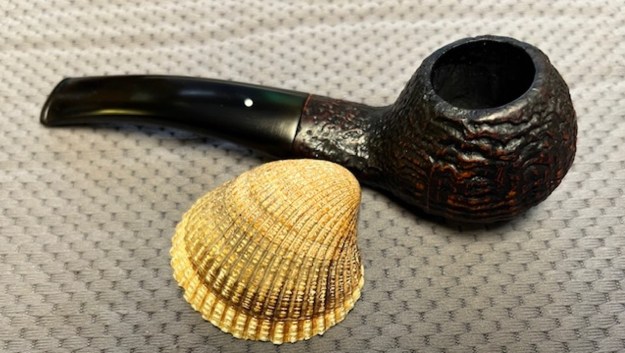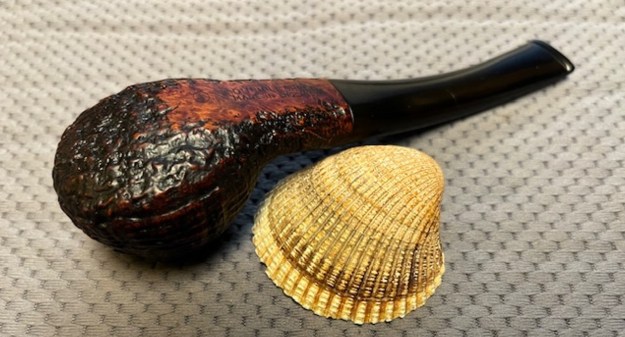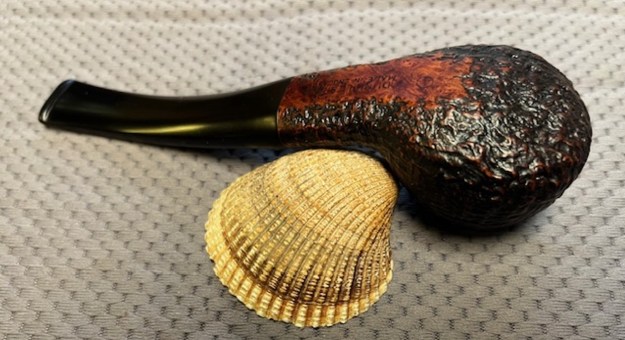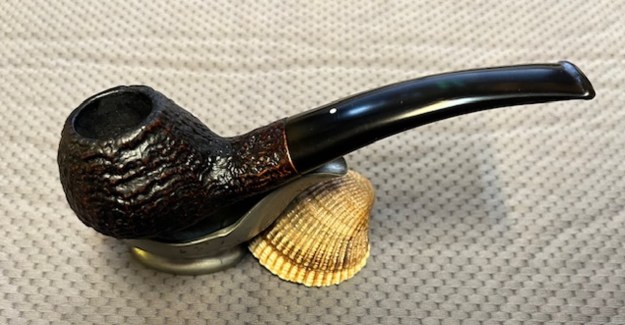
Tag Archives: repairing a damaged stem

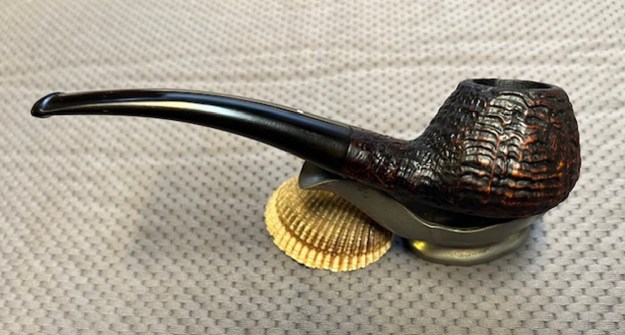
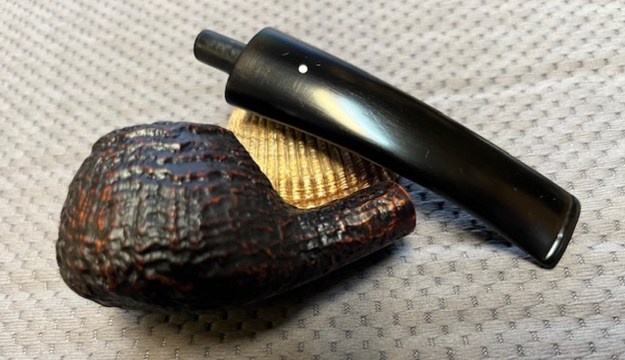
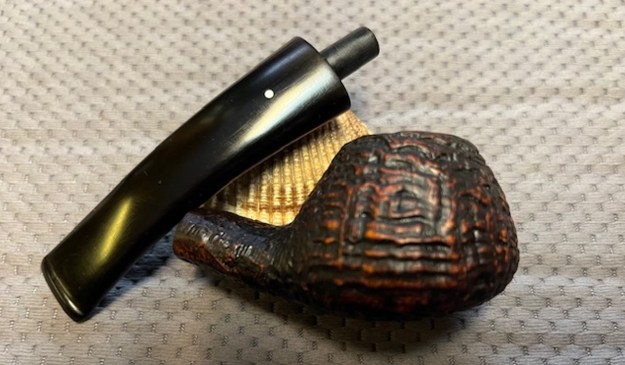
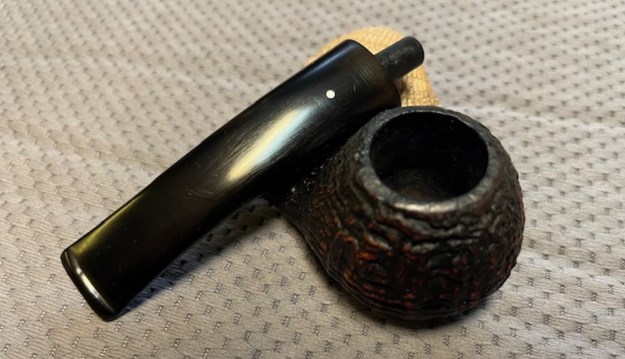
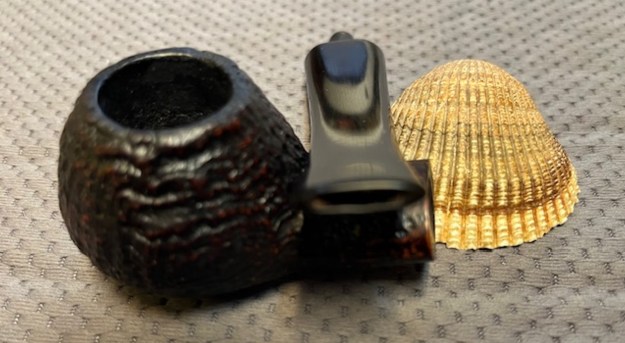
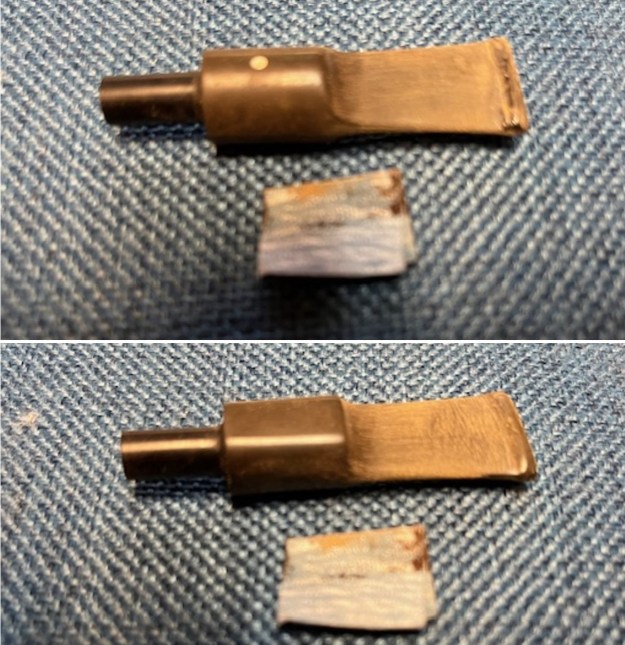
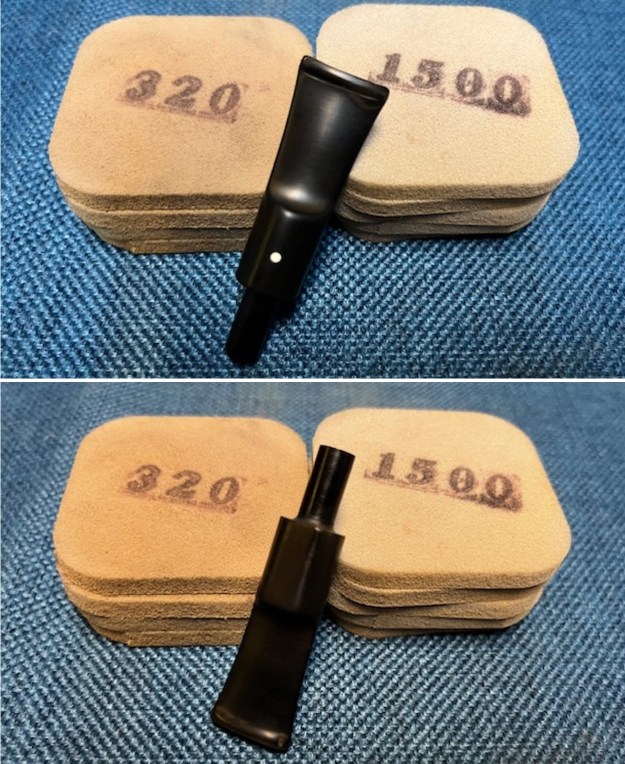
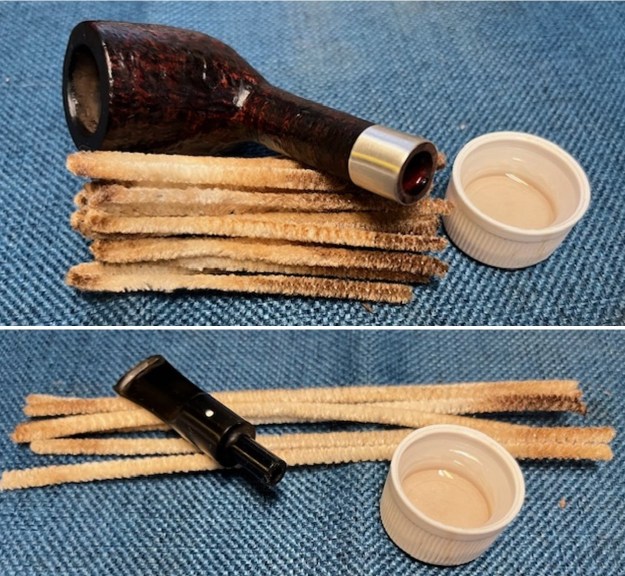
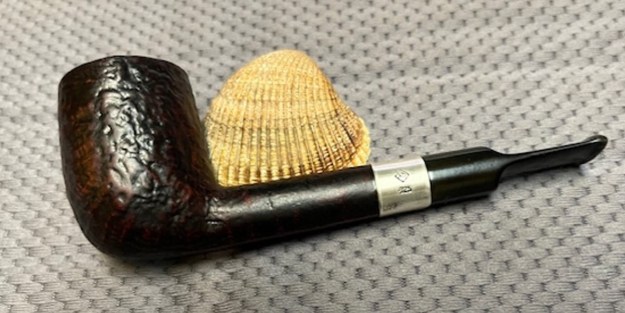
Restoring a tired Dunhill Shell Group 4 Diplomat


by Steve Laug

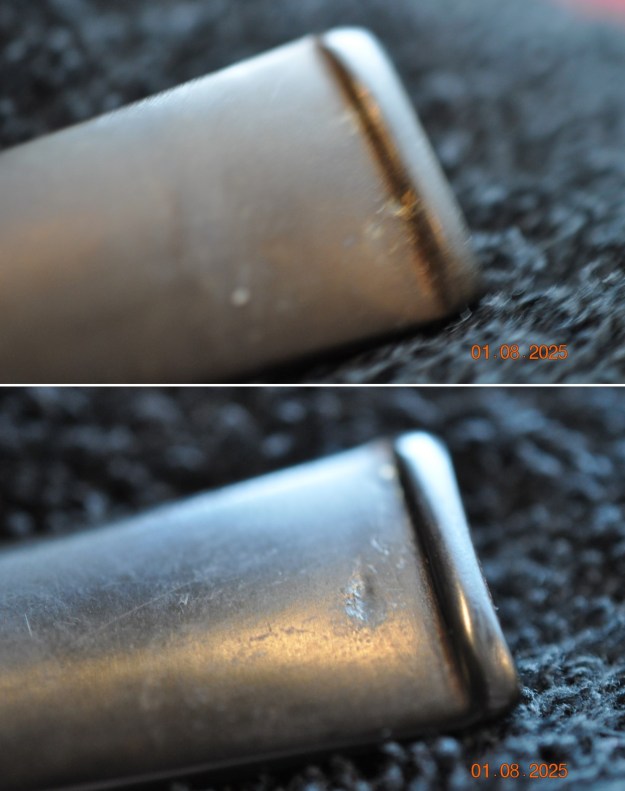
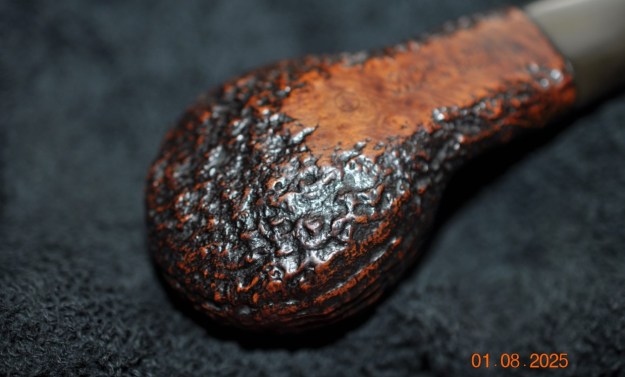
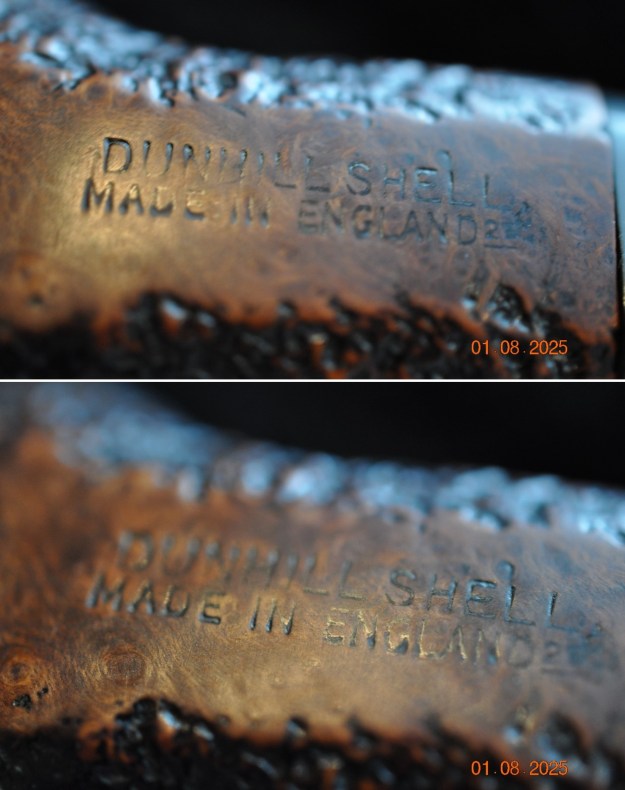
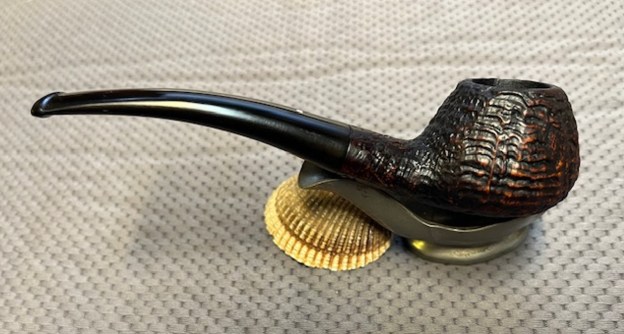
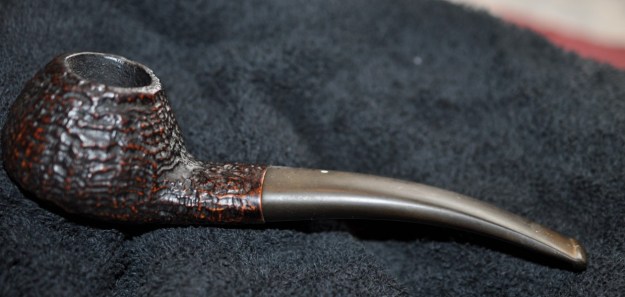
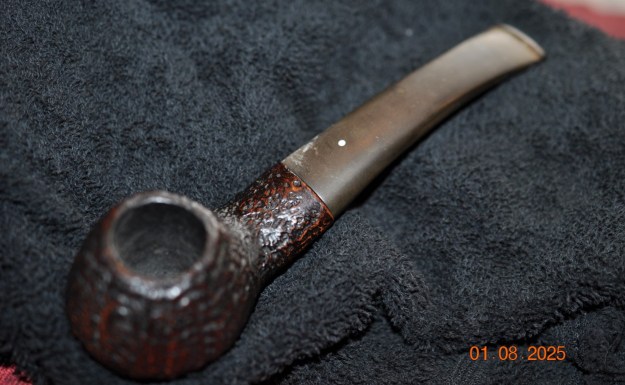
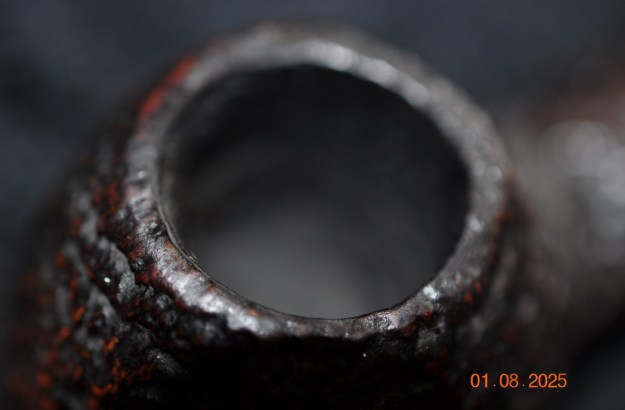
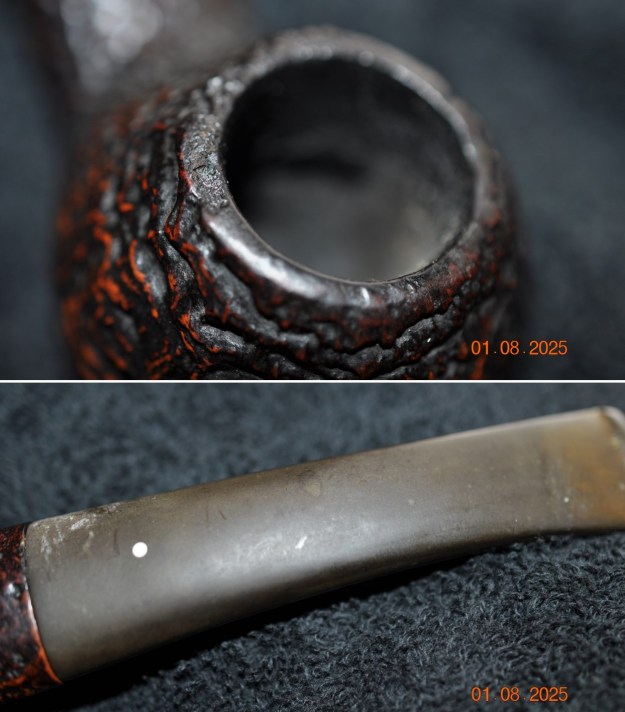
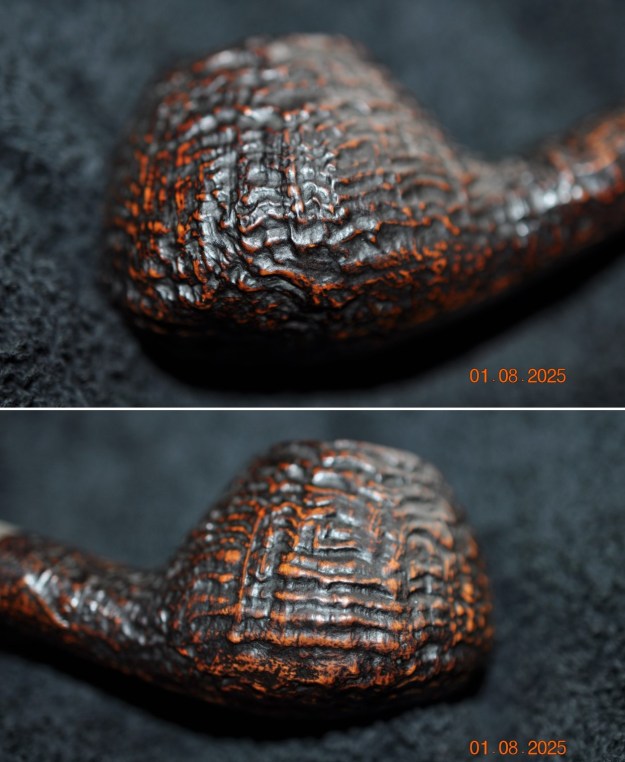
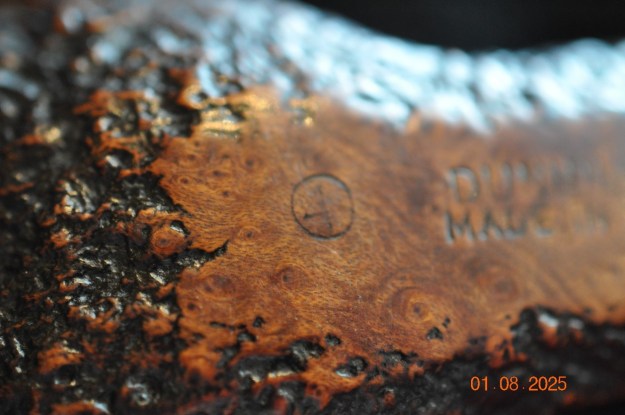
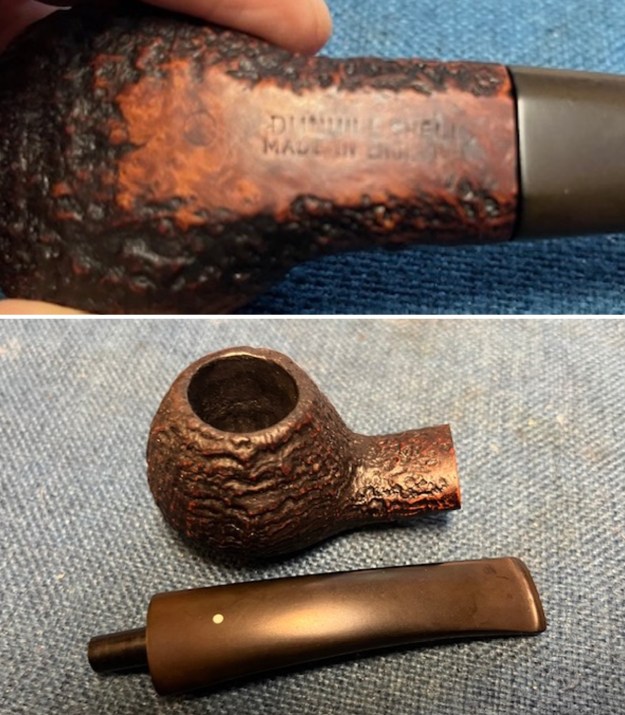
I have been working on the 12 pipe lot since I got back from Asia along with two other repairs that I took on before I left. I need a break to work on something of my own for a bit. I went through my boxes from Jeff here and chose a Dunhill to bring to the work table. It is a shape that I have not worked on before and it intrigued me. It was one that we had purchased from a fellow in Ogden, Utah on 12/12/24. It is a unique Dunhill Shell Diplomat with a great sandblast. The stamping on the underside of the shank had a Circle 4 on the heel of the bowl identifying it as a group 4 size pipe. That is followed by Dunhill Shell [over] Made in England followed by a number 21 to the right of the D in England that will help me date the pipe. The bowl had been reamed not long ago. There was some dust and debris in the sandblast on the rim but the inner and outer edge looked good. The sandblast finish was rugged and dirty but it could not hide the lovely blast around the bowl and shank. The stem was clean and there were light tooth marks on the top and underside ahead of the button. The classic Dunhill White Spot was on top of the taper stem. Jeff took photos of the pipe before he started his clean up work. I have included them below. He took photos of the pipe’s bowl and rim top to show the cake in the bowl and the lava coat overflowing onto the top. He also took photos to capture the tooth marks on the top and underside of the stem near the button. The stem is also oxidized and calcified. He took photos of the sides and heel of the bowl to show the interesting sandblast grain around the bowl and the amount of grime ground into the surface of the briar.   He took photos of the stamping underside of the shank. It is clear, though in some places it is faint. The overall text is still quite readable. As is my regular practice, before I started my work on the pipe, I turned to Pipedia’s section on Dunhill Shell Pipes to get a refresh the information I know regarding the Dunhill finishes (https://pipedia.org/wiki/Dunhill#Root_Briar). I quote:
Shell

A deep craggy sandblast with a black stain finish (usually made using Algerian briar) – the color of the stain used has varied over the years. Although there is some doubt as to them being the first to sandblast pipes, Dunhill’s Shell pipes, and the sandblasting techniques developed to create them are considered one of Dunhill’s greatest and most lasting contributions to the art of pipe making.

The documented history of Dunhill’s inception of the Shell is largely limited to patent applications — there are no catalog pages or advertisements promoting blasted pipes at the time. The preliminary work on the English patent (No. 1484/17) was submitted on October 13, 1917. The patent submission was completed half a year later, on April 12, 1918, followed by the granting of the English patent on October 14, 1918. This was less than a month before the end of The Great War on November 11th.

In 1986 Dunhill released a line of premium Shell finish pipes – “RING GRAIN”. These are high-quality straight grain pipes which are sandblasted. Initially only Ring Grain, but now in two different finishes. In 1995 the “Shilling” was introduced with Cumberland finish – it is an extremely rare series. These pipes exhibit a deeper blast characteristic of that of the 1930’s – mid-1960’s (and the limited ‘deep blast’ pipes of the early 1980s) and show a fine graining pattern. These are considered the best new Dunhills by many enthusiasts today and are very rare. The finish is sometimes described as tasting like vanilla at first, with the taste becoming more normal or good as the pipe breaks in.

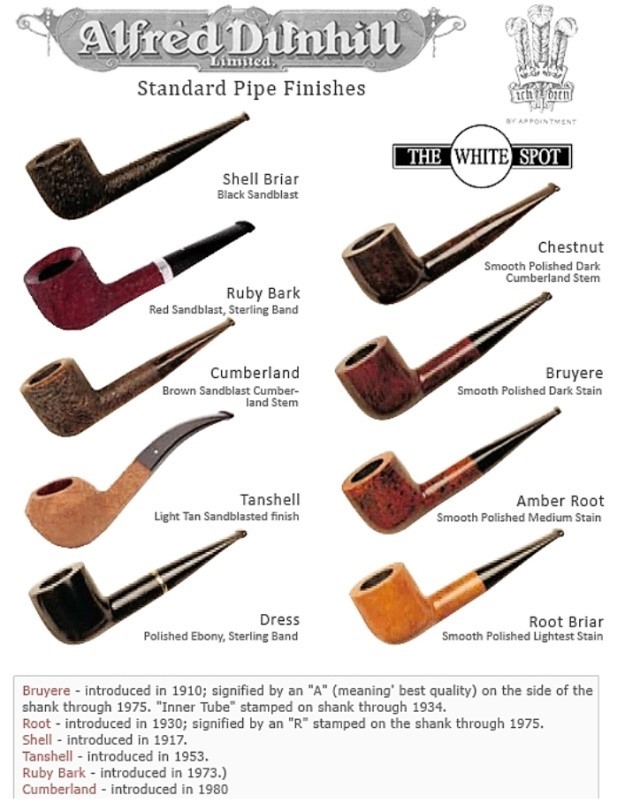
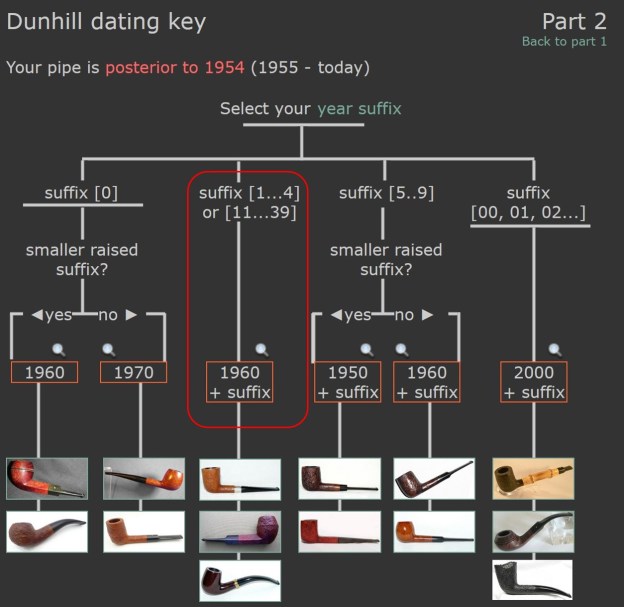
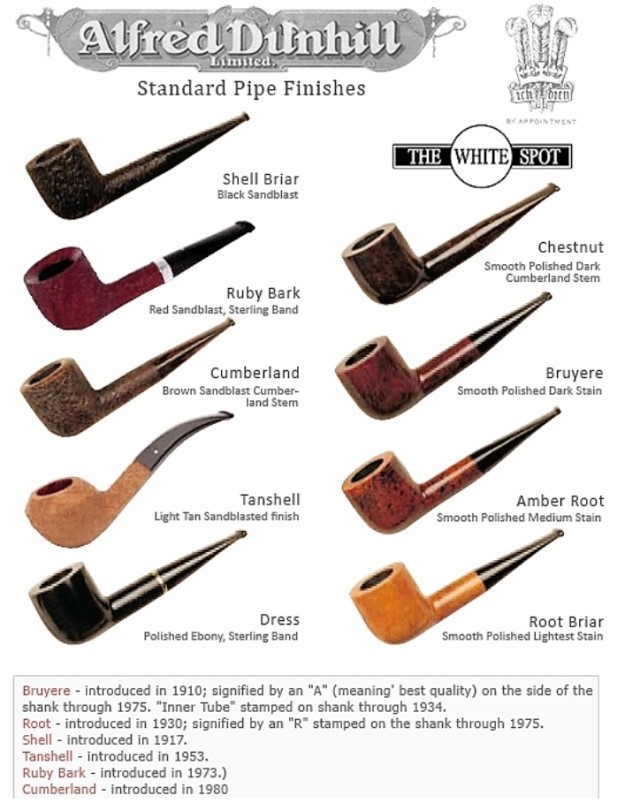
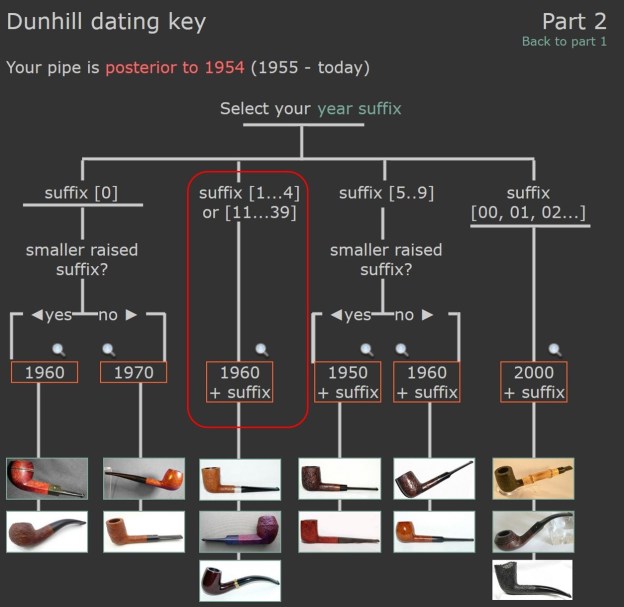
There was also a link to a catalogue page that gave examples and dates that the various finishes were introduced (https://pipedia.org/wiki/File:Dunnypipescatalog-1.png).I turned to Pipephil’s dating guide to show how I arrived at the date of manufacture for this pipe (http://www.pipephil.eu/logos/en/dunhill/cledat-en1a.html). I am including the chart that is provided there for the dating a pipe. I have drawn a red box around the section. Since the pipe I am working on has a superscript suffix 21 after the D in England it points to the 1960 line on the chart below. To date it just add 1960 +21 for a date of 1981. I have drawn a red box around the pertinent section in the chart.I now knew that I was working on a Shell that came out in 1981 as far as I could tell by the faded date stamp. The shape of the pipe is called a Diplomat but there was no shape number stamped on the heel of the bowl. From the shape chart on the site I could know that I was dealing with a Diplomat (http://www.pipephil.eu/logos/en/dunhill/shapes.html).
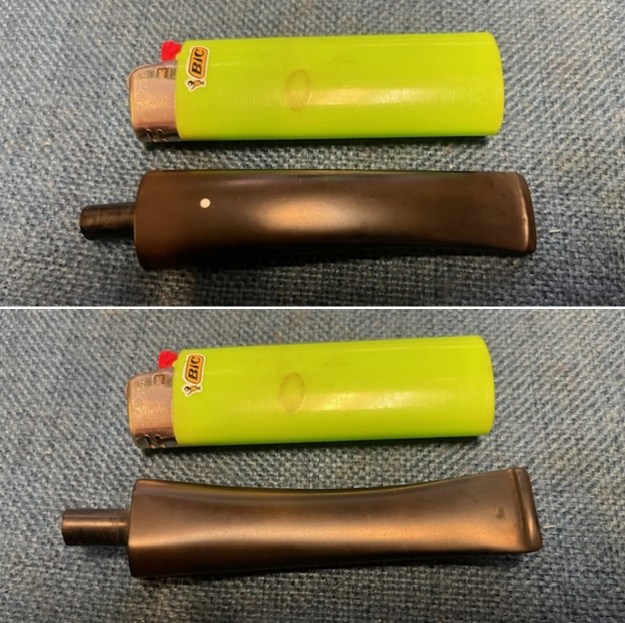
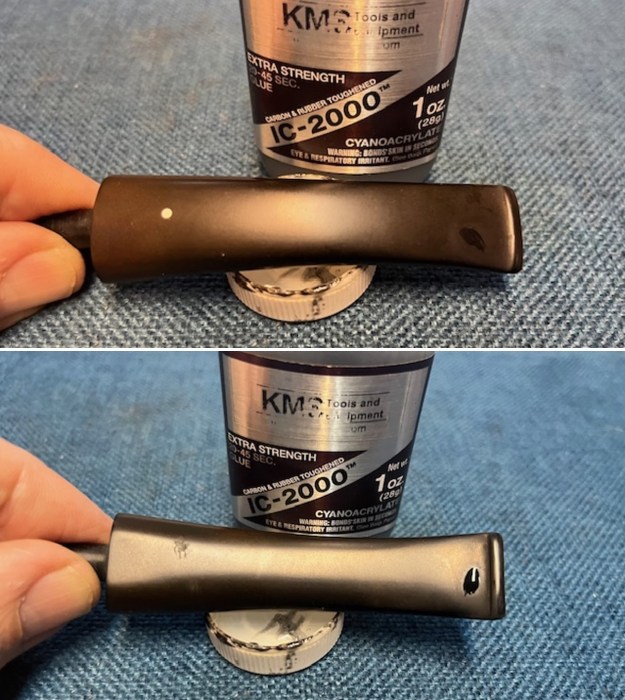
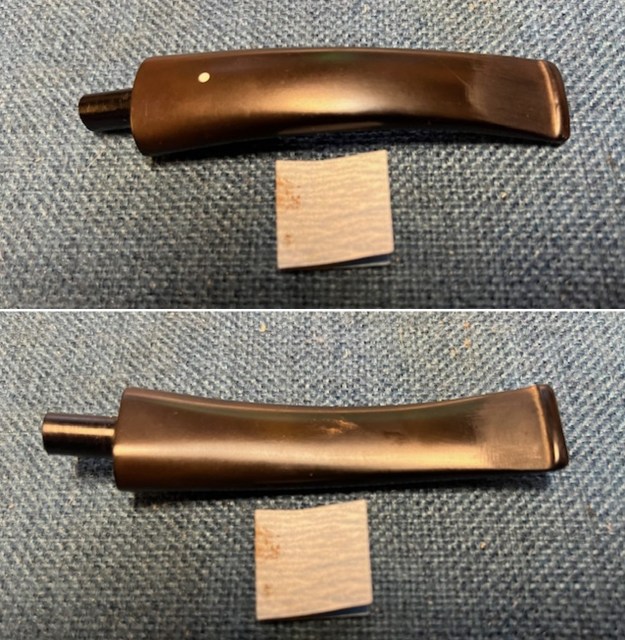
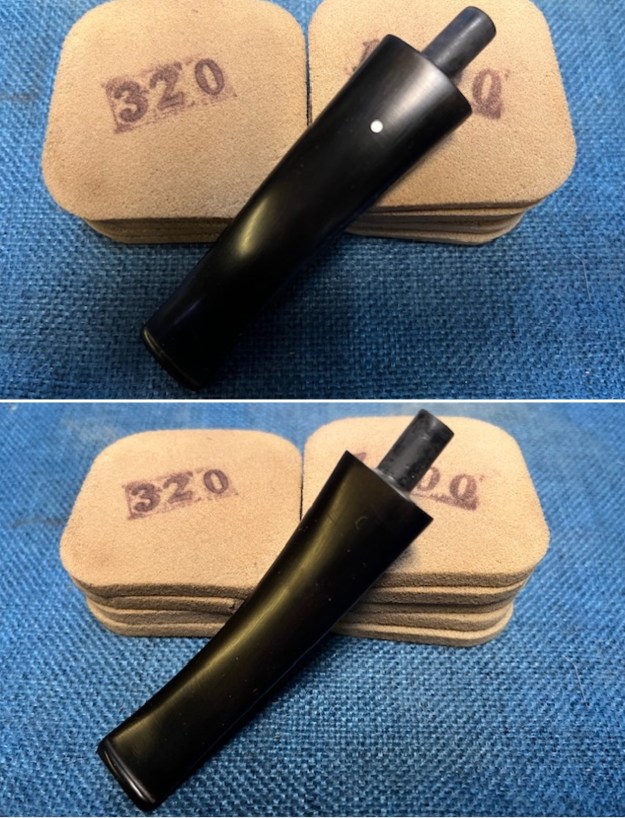
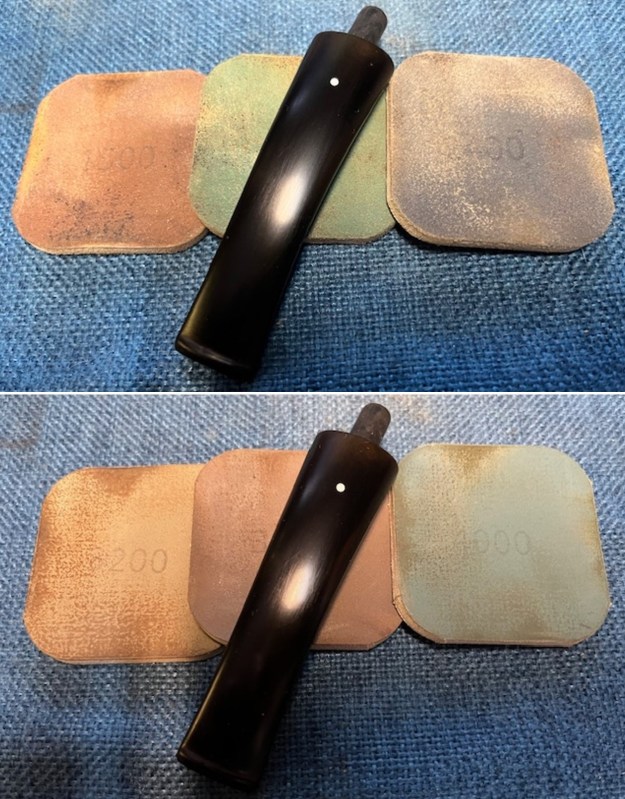
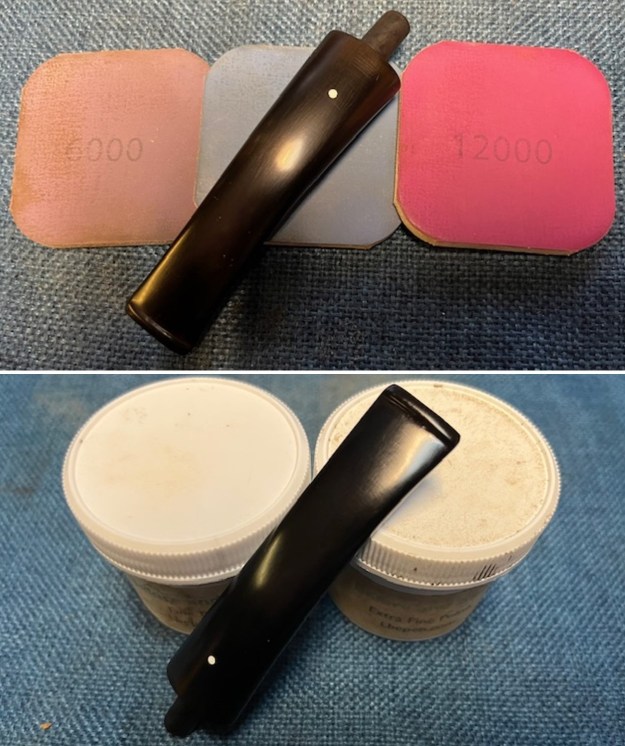
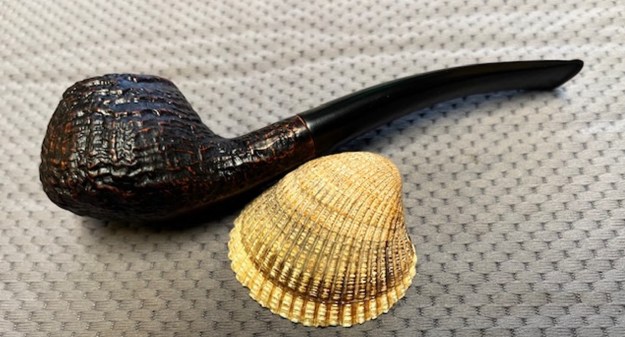
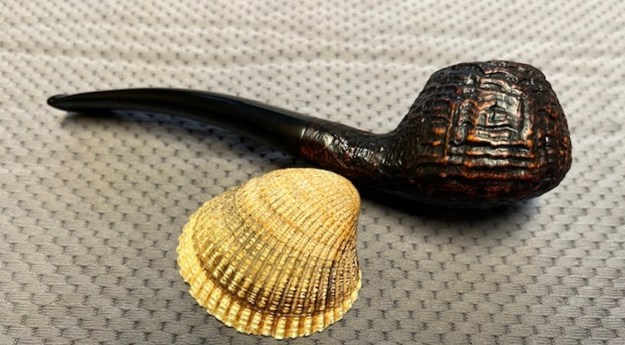
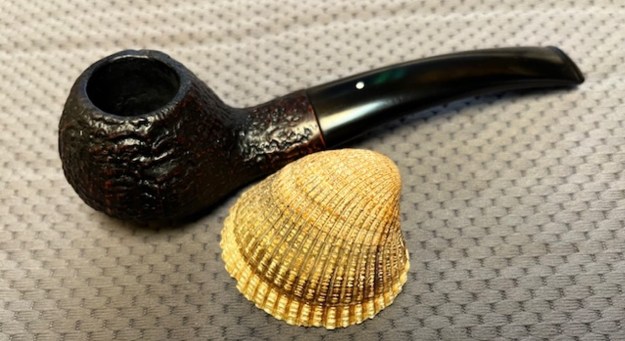
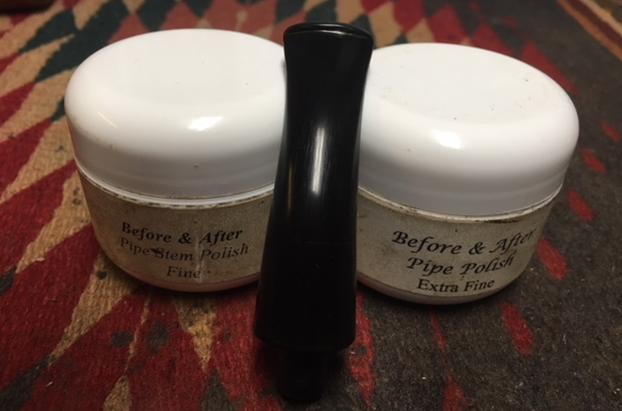
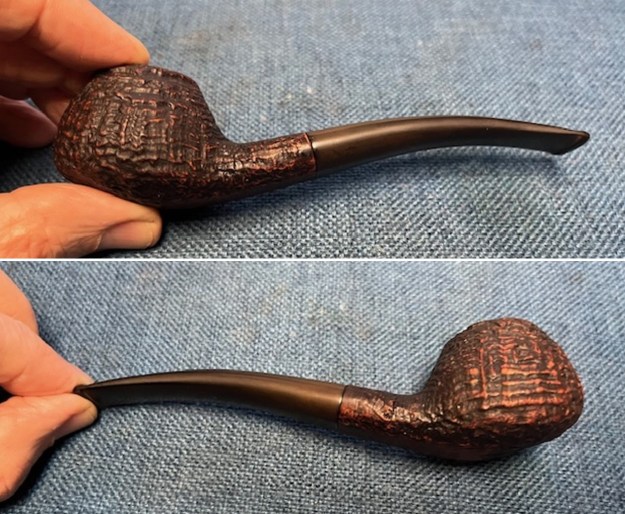
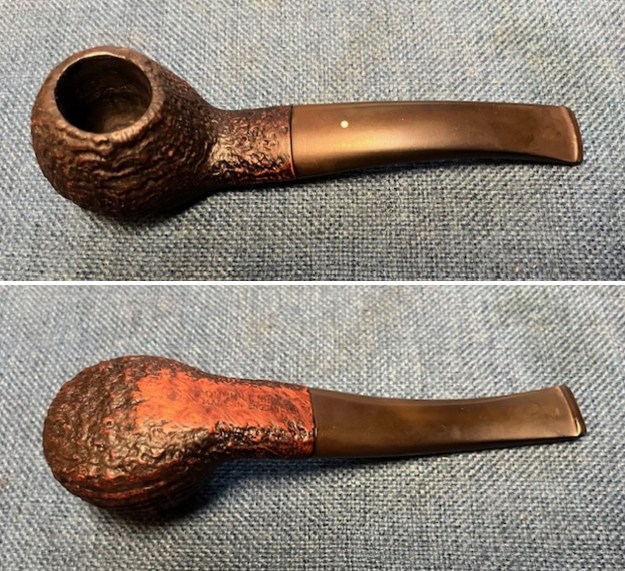
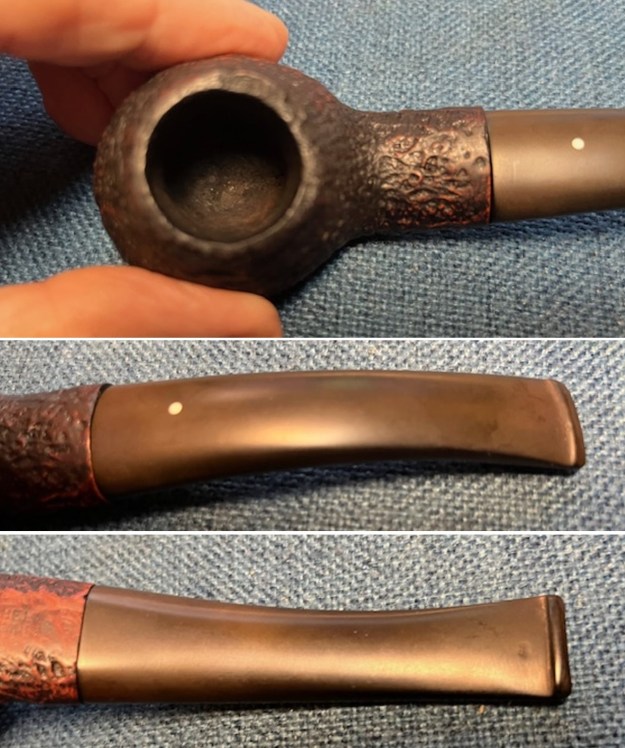
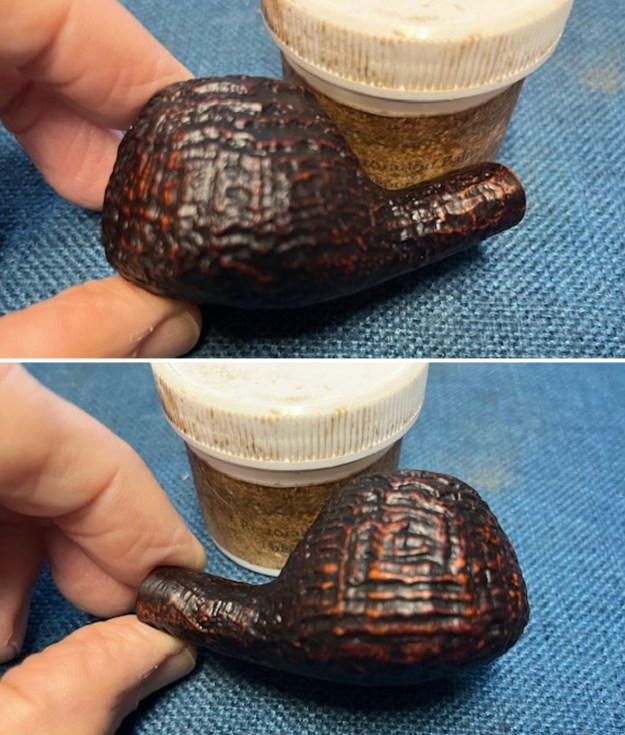
Armed with that information I turned to work on the pipe itself. Jeff had done a great job cleaning up the pipe as usual. He cleaned up the inside of the bowl with a PipNet reamer and a Savinelli Fitsall Pipe Knife. The bowl walls looked very good. He scrubbed the interior of the bowl and shank with pipe cleaners, cotton swabs and alcohol to remove the tars and oils. He scrubbed the exterior of the pipe with Murphy’s Oil Soap and a tooth brush to remove the grime from the finish. He worked on the rim top lava and darkening with the soap and tooth brush. He scrubbed the inside of the stem with alcohol and pipe cleaners. He scrubbed the exterior with Soft Scrub and then soaked it in Briarville’s Pipe Stem Deoxidizer. He washed it off with warm water to remove the deoxidizer. The pipe looked far better. I took photos of the pipe when I received it before I started working on it. I took photos of the bowl and rim top to show how clean it was. The top and the inner edge of the rim look very good. The stem looks clean of debris and grime. There are light tooth marks and chatter on both sides.I took photos of the stamping on the underside of shank. The stamping is clear and readable (though in some spots it is faint). I took a photo of the pipe with the stem removed to show the overall look of stem, tenon and profile of the pipe. Now it was time to work on the pipe. The bowl was in excellent condition so it took little work to prepare it. It was very clean so I rubbed the bowl down with Before & After Restoration Balm. It is a paste/balm that works to deep clean the finish, enliven and protect the briar. I worked it into the briar with my finger tips to make sure that it covered every square inch of the pipe. I set it aside for 10 minutes to let it do its work. I buffed it with a cotton cloth. The briar really began to have a deep shine. The photos I took of the bowl at this point mark the progress in the restoration. I set the bowl aside and turned my attention to the stem. I “painted” the stem surface with the flame of a lighter to lift the tooth marks on the top and underside. It worked very well. I filled in the two remaining marks on the stem with rubberized black CA glue. I set the stem aside to let the repair cure. Once the repair had cured I sanded it smooth with a folded piece of 220 grit sandpaper. I was able to blend in the repair on the surface of the stem. It looked much better and the repair was solid.I sanded the stem with 320-3500 grit sanding pads to break up the remaining oxidation. I wiped it down after each sanding pad with an Obsidian Oil impregnated cloth. It began to look good.I polished the stem with micromesh sanding pads – dry sanding with 1500-12000 grit pads. I wiped the stem down after each sanding pad with Obsidian Oil. I polished it with Before & After Pipe Stem Polish – both Fine and Extra Fine. Once I had finished the polishing I gave it final coat of Obsidian Oil and set it aside to dry. I put the 1981 Dunhill Shell Diplomat bowl and stem back together. I polished the bowl and stem with Blue Diamond to polish the briar and the vulcanite. I gave the bowl multiple coats of Conservator’s Wax and the stem multiple coats of carnauba wax. I buffed the pipe with a clean buffing pad to raise the shine. I hand buffed it with a microfiber cloth to deepen the shine. The pipe polished up pretty nicely. The Shell Briar stains worked amazingly well with the polished vulcanite taper stem. The grain around the bowl and shank and looks quite remarkable. This is truly a beautiful Dunhill Shell Diplomat. The finished pipe is shown in the photos below. The dimensions of the pipe are Length: 6 inches, Height: 1 ½ inches, Outside diameter of the bowl: 1 inch, Chamber diameter: ¾ of an inch. The weight of the pipe is 1.59 ounces/45 grams. This is such a unique shape that I am going to enjoy it for awhile before deciding what to do with it. Thanks for walking through the restoration with me. Cheers.
As always, I encourage your questions and comments as you read the blog. Thanks to each of you who are reading this blog. Remember we are not pipe owners; we are pipe men and women who hold our pipes in trust until they pass on into the trust of those who follow us.

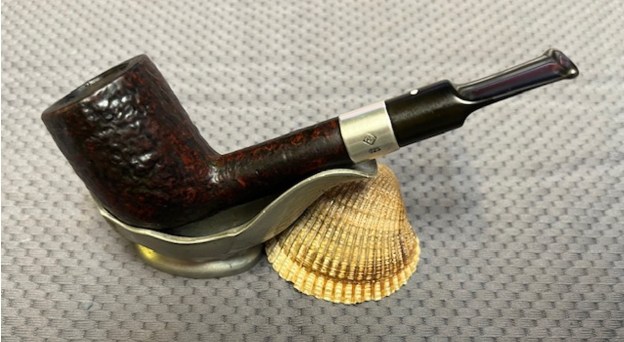
Restoring a tired and worn Dunhill Shell 41111 Lovat


Blog by Steve Laug

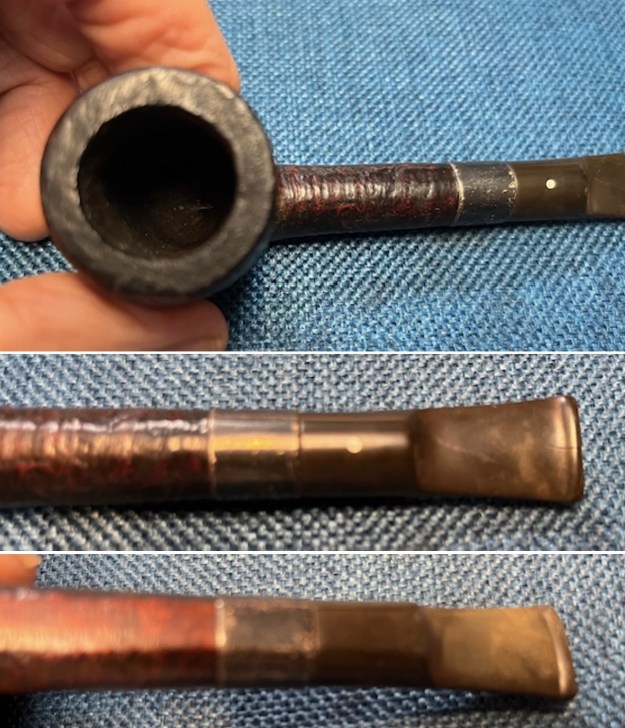
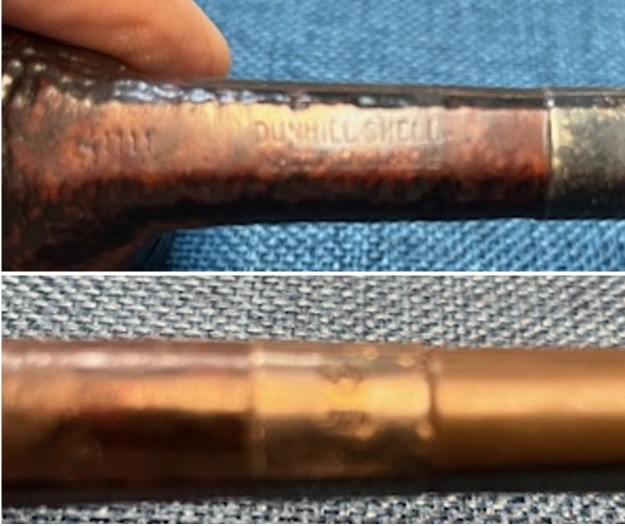
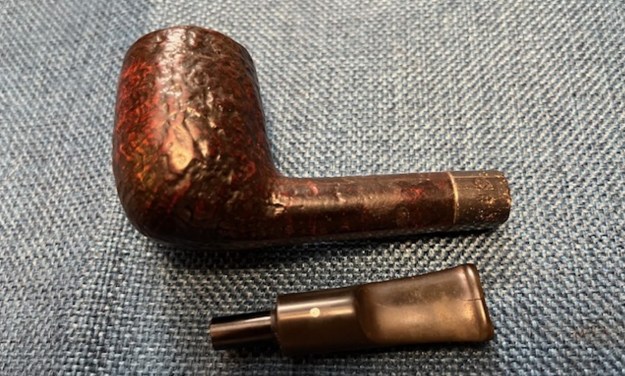
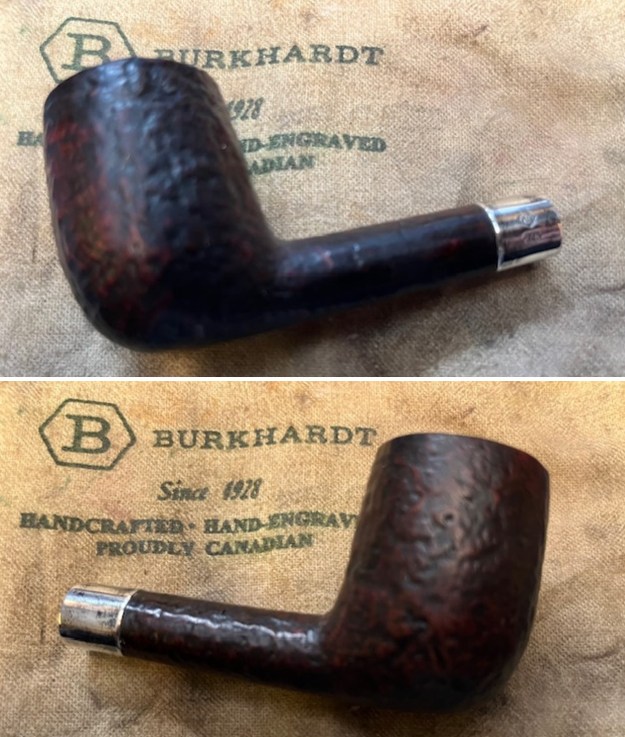
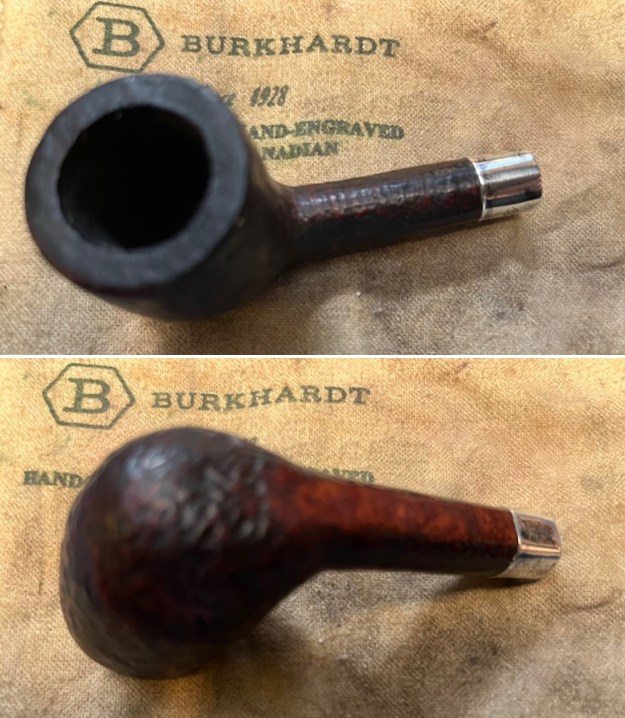
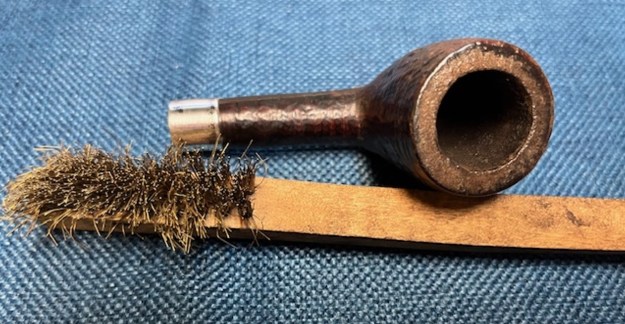
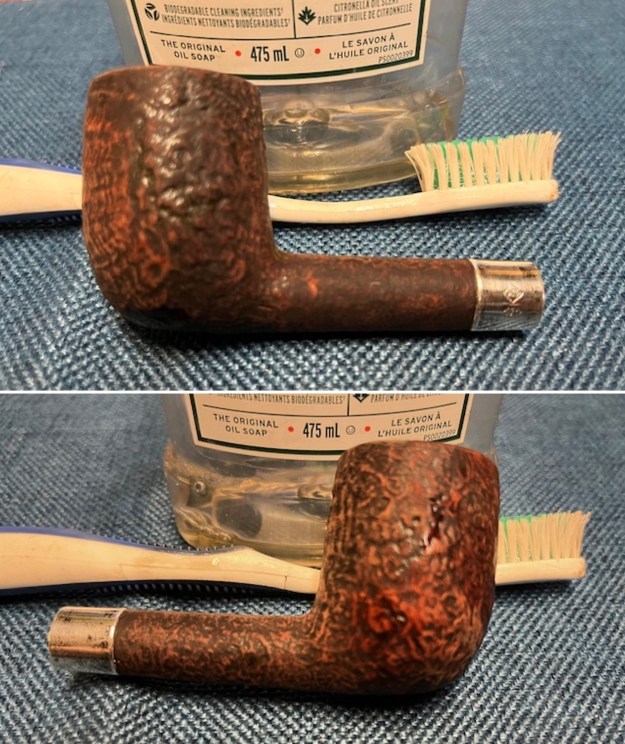
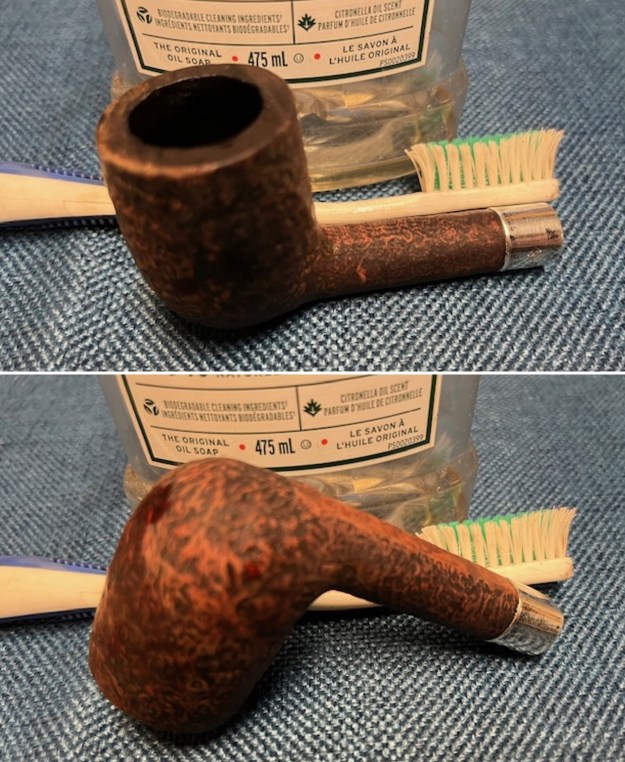
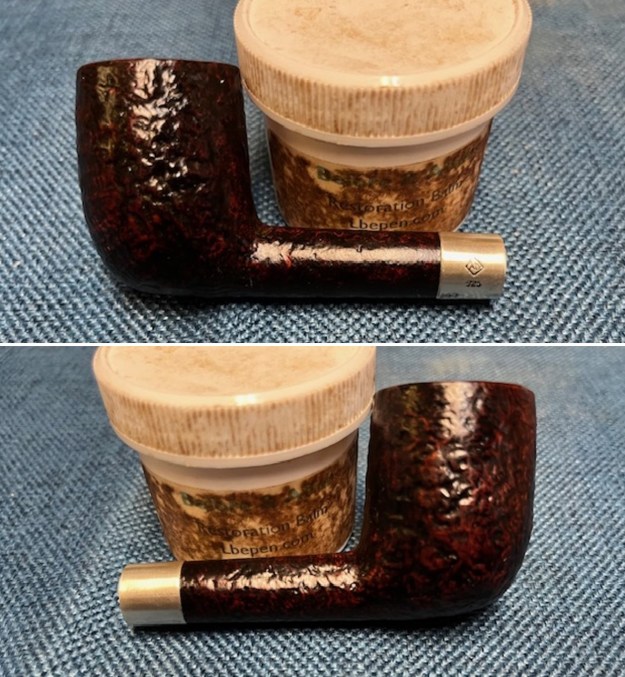
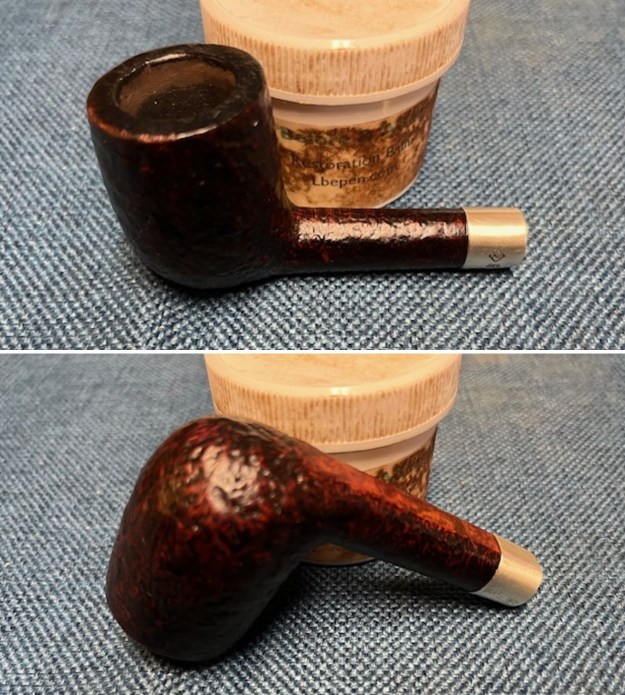
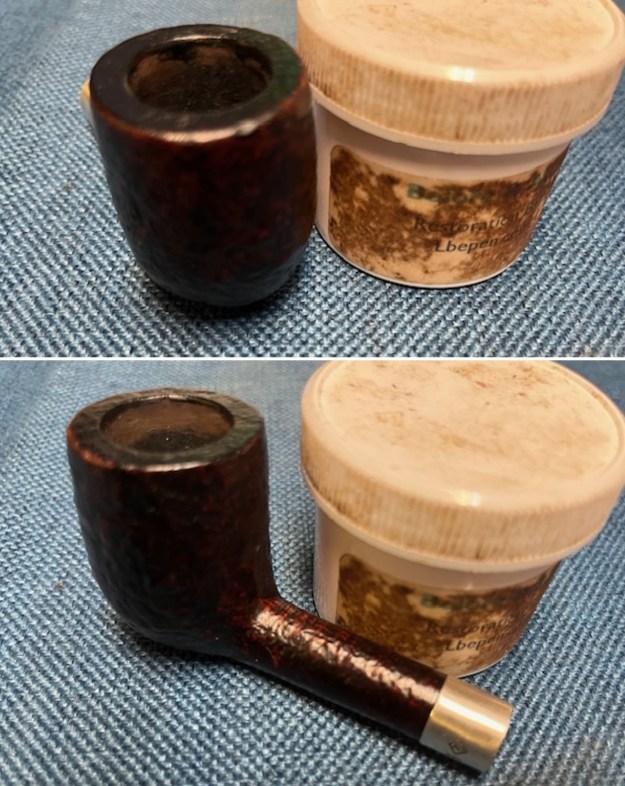
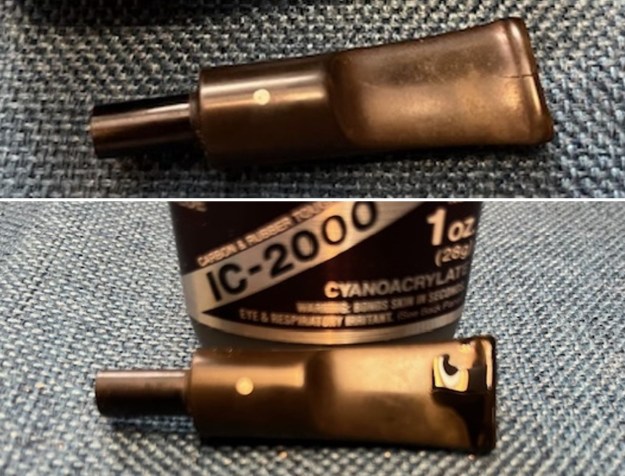
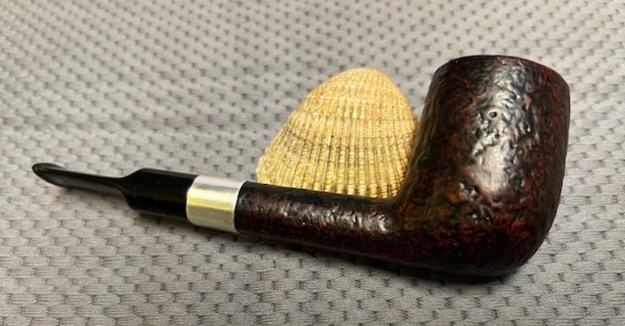
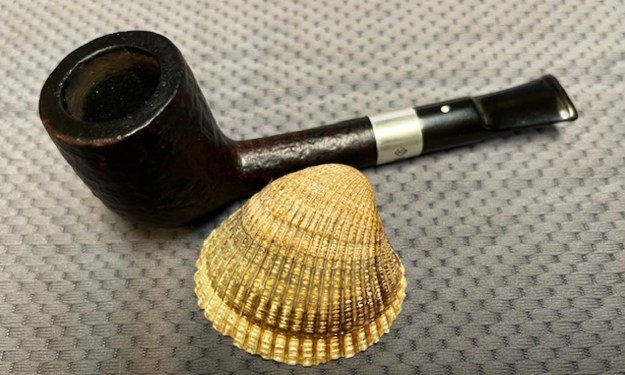
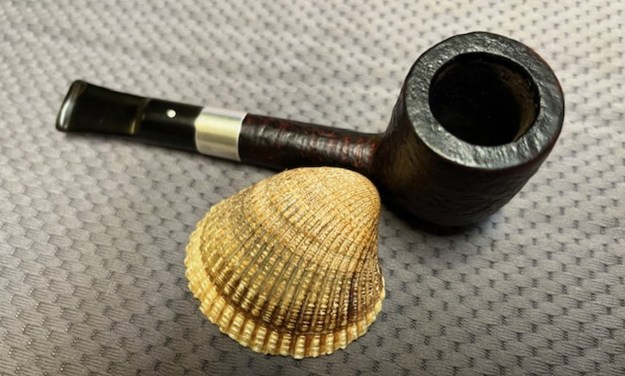
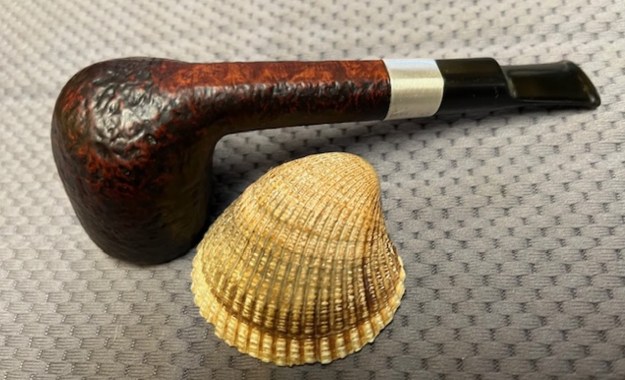
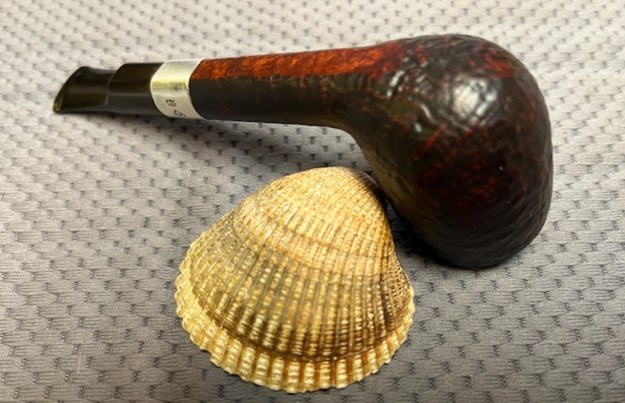
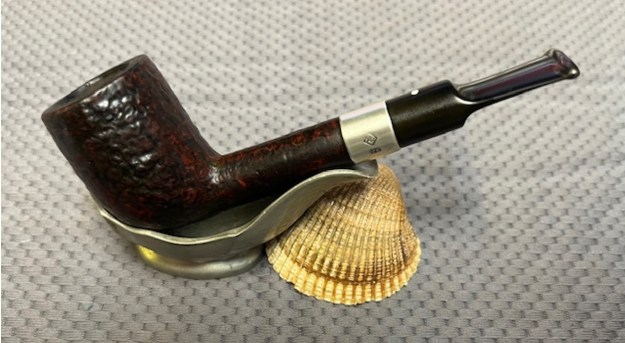
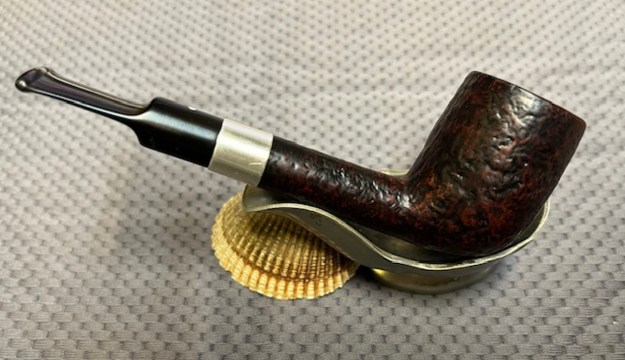
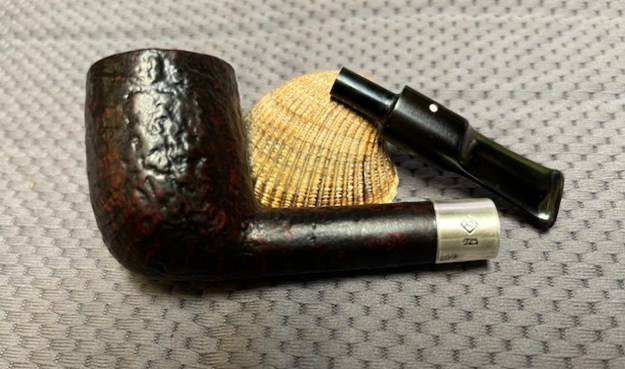
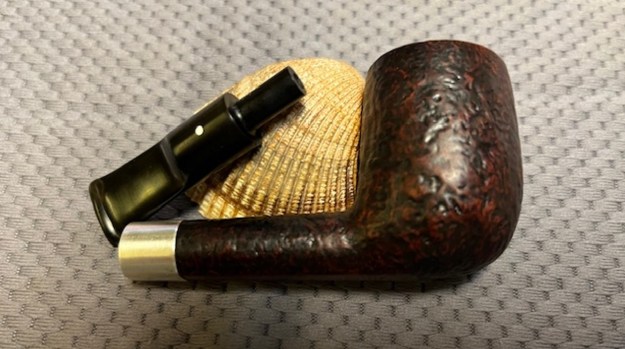
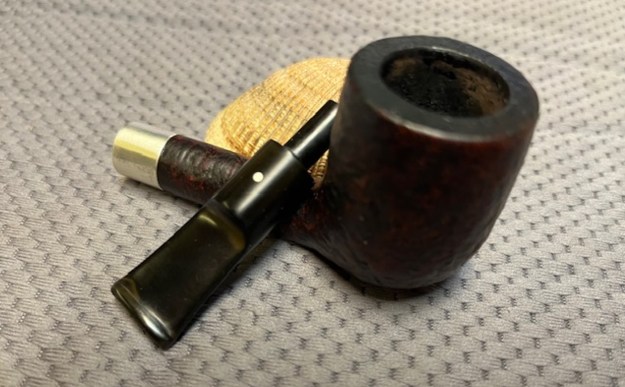
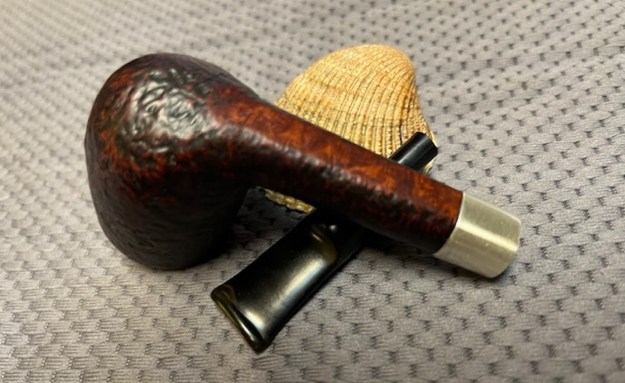
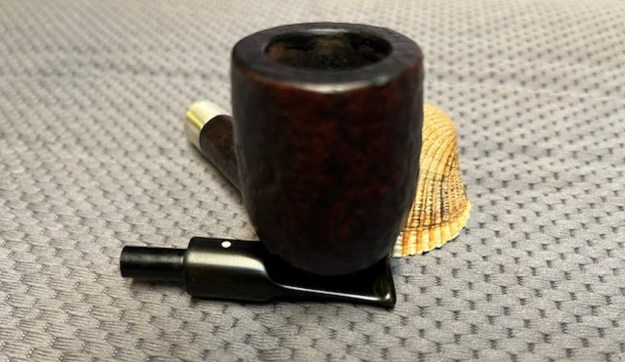
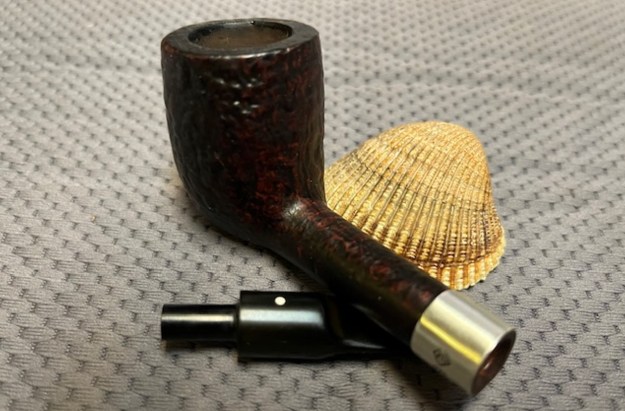
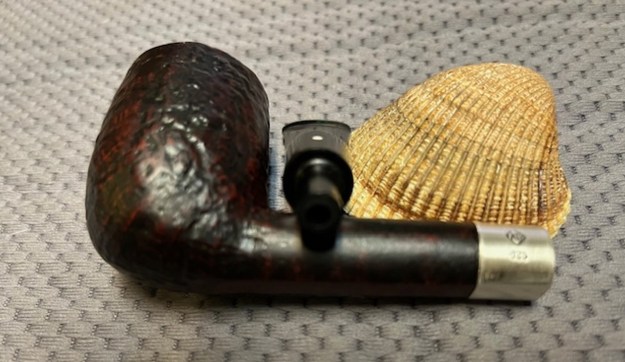
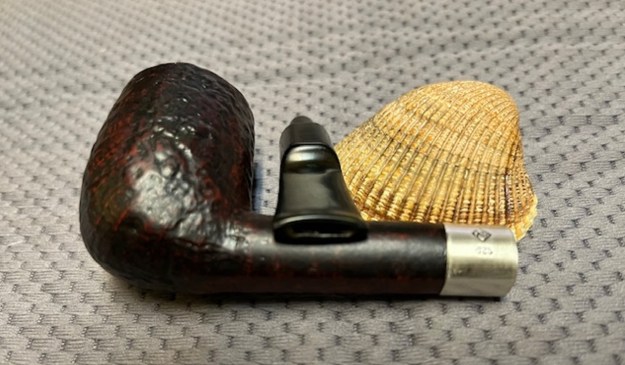
I took a second Dunhill to the work table. It was I picked up while I was in Idaho. It was one that we had purchased from a friend in Denmark on May 22, 2024. It is a petite and worn Dunhill Shell Lovat. The stamping on the underside of the shank read 41111 on the heel of the bowl. That is followed by Dunhill Shell [over] Made in England followed by a number 18 to the right of the D in England that will help me date the pipe. The bowl had been reamed not long ago. There was some dust and debris in the light sandblast on the rim and the inner edge had some darkening. The outer edge looked very good. The sandblast finish was worn and dirty but it could not hide the lovely blast around the bowl and shank. There were some very worn areas on the left side of the shank. The oxidized and tarnished silver band on the shank appears to be cosmetic as there are no visible cracks in the shank. The band is stamped with AD in a diamond which is the Alfred Dunhill stamp. It also reads .925 which is the quality of sterling silver. The stem was clean and there were light tooth marks on the top and underside ahead of the button. There also appeared to be a hairline crack in the middle of the button on the topside. The classic Dunhill White Spot was on top of the saddle stem. I took a few photos of the pipe before I started my work on it. I sent the photos to Paul and he is excited about it. I took a photo of the rim top and bowl to show the condition of both of them. The bowl itself had been recently reamed. The rim top showed a coat of lava and some darkening around the edge. The inner edge looked rough but a cleaning would make that clear. The outer edge looked very good. The photos of the stem show light oxidation and tooth marks/chatter on both sides ahead of the button. The first photo shows a tiny hairline crack mid button and just over the edge.I took a photo of the stamping on the underside of the shank. The photos are blurry but you can see the shadow of the stamping. In person it is very readable. The stamp on the silver band is also very readable once the oxidation has been removed. I removed the stem from the shank and took a photo to show the proportions of the pipe. As is my regular practice, before I started my work on the pipe, I turned to Pipedia’s section on Dunhill Shell Pipes to get a bit of background on the Dunhill finishes (https://pipedia.org/wiki/Dunhill#Root_Briar). I quote:

Shell

A deep craggy sandblast with a black stain finish (usually made using Algerian briar) – the color of the stain used has varied over the years. Although there is some doubt as to them being the first to sandblast pipes, Dunhill’s Shell pipes, and the sandblasting techniques developed to create them are considered one of Dunhill’s greatest and most lasting contributions to the art of pipe making.

The documented history of Dunhill’s inception of the Shell is largely limited to patent applications — there are no catalog pages or advertisements promoting blasted pipes at the time. The preliminary work on the English patent (No. 1484/17) was submitted on October 13, 1917. The patent submission was completed half a year later, on April 12, 1918, followed by the granting of the English patent on October 14, 1918. This was less than a month before the end of The Great War on November 11th.

In 1986 Dunhill released a line of premium Shell finish pipes – “RING GRAIN”. These are high-quality straight grain pipes which are sandblasted. Initially only Ring Grain, but now in two different finishes. In 1995 the “Shilling” was introduced with Cumberland finish – it is an extremely rare series. These pipes exhibit a deeper blast characteristic of that of the 1930’s – mid-1960’s (and the limited ‘deep blast’ pipes of the early 1980s) and show a fine graining pattern. These are considered the best new Dunhills by many enthusiasts today and are very rare. The finish is sometimes described as tasting like vanilla at first, with the taste becoming more normal or good as the pipe breaks in.

There was also a link to a catalogue page that gave examples and dates that the various finishes were introduced (https://pipedia.org/wiki/File:Dunnypipescatalog-1.png).I turned to Pipephil’s dating guide to show how I arrived at the date of manufacture for this pipe (http://www.pipephil.eu/logos/en/dunhill/cledat-en1a.html). I am including the chart that is provided there for the dating a pipe. I have drawn a red box around the section. Since the pipe I am working on has a superscript suffix 18 after the D in England it points to the 1960 line on the chart below. To date it just add 1960 +18 for a date of 1978. I have drawn a red box around the pertinent section in the chart.I now knew that I was working on a Shell that came out in 1978 as far as I could tell by the date stamp. The shape of the pipe is 41111. From the shape chart on the site I could know that I was dealing with a Lovat (http://www.pipephil.eu/logos/en/dunhill/shapes.html). I quote below for the interpretation

Dunhill pipes are stamped with a four digit code.
Digit 1: (from 1 to 6) denotes the size of the pipe (the group).
Digit 2: denotes the style of the mouthpiece (0,1=tapered, 2=saddle)
Digit 3 and 4: denote the generic pipe shape (in yellow in the chart on top) 

Example: 5102
(5 = size | 1 = tapered stem | 02 = Bent)

When 5 digits occur, the meaning of the 4 first remain the same

The pipe in hand is stamped 41111 which is a size/group 4 pipe, the 1 is for taper but on a Lovat it is a saddle as noted in the chart on the link above, the 111 is the shape of a Lovat.

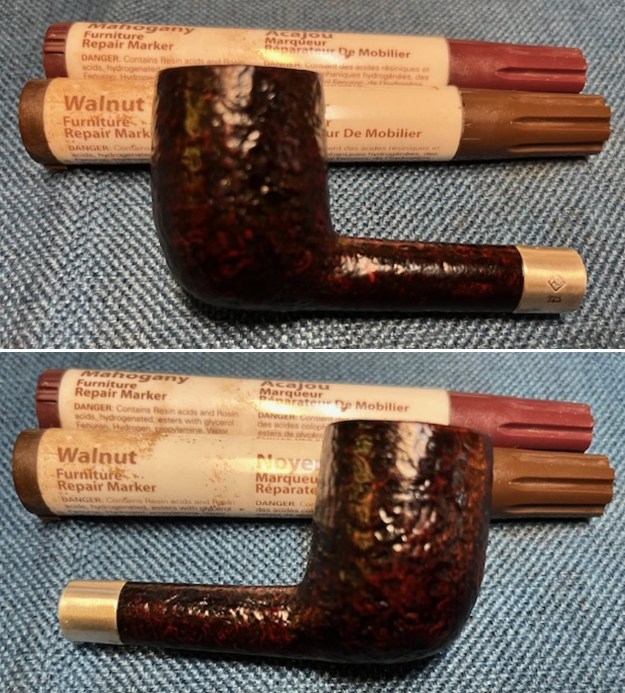
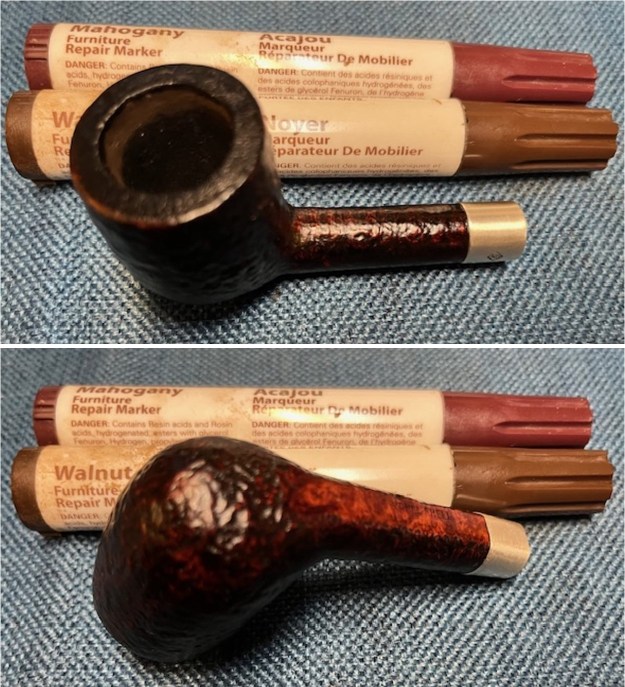
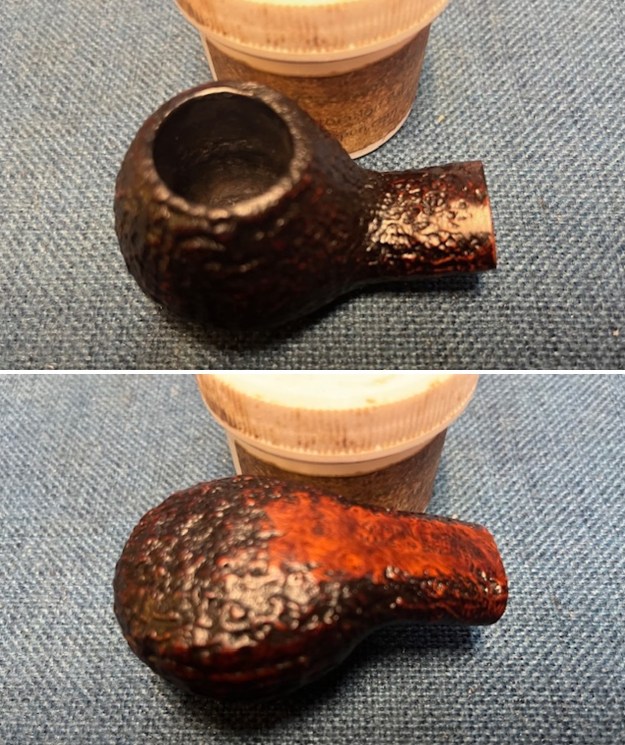
Now it was time to work on the pipe. I cleaned up the oxidized silver band with a jeweller’s cloth to remove the tarnish and protect it from further tarnish. There was more work to do but at least at this point I could read the stamping on it clearly. I used a brass bristle wire brush to knock off some of the debris and lava on the rim top. I did this in preparation for scrubbing it with Murphy’s Oil Soap.I scrubbed the exterior of the bowl with a tooth brush and undiluted Murphy’s Oil Soap to remove the grime and debris in the finish. I scrubbed out the mortise and tenon with small tube brushes and soap to remove the oils and tars in the shank area. I rinsed it with warm water to remove the grime and oils in the finish and shank. I dried it off with a soft cotton cloth. One of the benefits of doing this is that the briar in the nicks and dents on the bowl sides swell and virtually disappear. The pipe has a fresh look that really highlights the depths of the sandblast on the briar. I used a Walnut and a Mahogany stain pen to touch up the fading on the bowl sides. There were spots where the stain had faded and it added to the worn look. I restained it with these two stain pens and then used a black stain pen to touch up the spaces. The combination of the stains is very close to the colour on the Shell Briar. I let it dry and once it did it looked much better. I rubbed the bowl down with Before & After Restoration Balm. It is a paste/balm that works to deep clean the finish, enliven and protect the briar. I worked it into the briar with my finger tips to make sure that it covered every square inch of the pipe. I set it aside for 10 minutes to let it do its work. I buffed it with a cotton cloth. The briar really began to have a deep shine. The photos I took of the bowl at this point mark the progress in the restoration. I set the bowl aside and turned my attention to the stem. The first photo shows the hairline crack on the top side of the button forward about 1/8 of an inch. I filled in the cracked area on the stem with rubberized black CA glue. I set the stem aside to let the repair cure.Once the repair had cured I sanded it smooth with a folded piece of 220 grit sandpaper. I was able to blend in the repair on the top of the stem. It looked much better and the repair was solid.I sanded the stem with 320-3500 grit sanding pads to break up the remaining oxidation. I wiped it down after each sanding pad with an Obsidian Oil impregnated cloth. It began to look good.When I finished polishing the stem with the sanding pads it dawned on me that I had not cleaned the internals of the shank and stem. My routine had been broken as this restoration was spread over the better part of a week. No excuse but that is what happened. So I paused the polishing and scrubbed out the inside of the shank, mortise and the airway in both the stem and the shank. I used pipe cleaners, cotton swabs and isopropyl alcohol. It cleaned up very well.I polished the stem with micromesh sanding pads – dry sanding with 1500-12000 grit pads. I wiped the stem down after each sanding pad with Obsidian Oil. I polished it with Before & After Pipe Stem Polish – both Fine and Extra Fine. Once I had finished the polishing I gave it final coat of Obsidian Oil and set it aside to dry.  I put the 1978 Dunhill Shell 41111 Lovat bowl and stem back together. I polished the bowl and stem with Blue Diamond to polish the briar and the vulcanite. I gave the bowl multiple coats of Conservator’s Wax and the stem multiple coats of carnauba wax. I buffed the pipe with a clean buffing pad to raise the shine. I hand buffed it with a microfiber cloth to deepen the shine. The pipe polished up pretty nicely. The Shell Briar stains worked amazingly well with the polished vulcanite saddle stem. The grain around the bowl and shank and looks quite remarkable. This is truly a beautiful Dunhill Shell 41111 Lovat. The finished pipe is shown in the photos below. The dimensions of the pipe are Length: 5 inches, Height: 1 ¾ inches, Outside diameter of the bowl: 1 ¼ inches, Chamber diameter: ¾ of an inch. The weight of the pipe is 1.16 ounces/33 grams. I will be adding this to the rebornpipes store in the British Pipemakers Section soon. It will be a definite good deal is you have been looking for a Dunhill. Let me know if you wish to add it to your rack. Thanks for walking through the restoration with me. Cheers.
As always, I encourage your questions and comments as you read the blog. Thanks to each of you who are reading this blog. Remember we are not pipe owners; we are pipe men and women who hold our pipes in trust until they pass on into the trust of those who follow us.

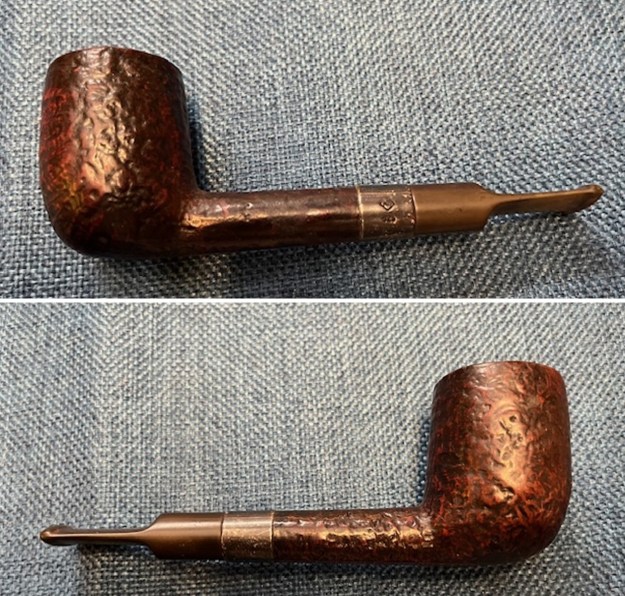
A Challenging Makeover for a GBD New Standard 9242 Rhodesian


Blog by Steve Laug

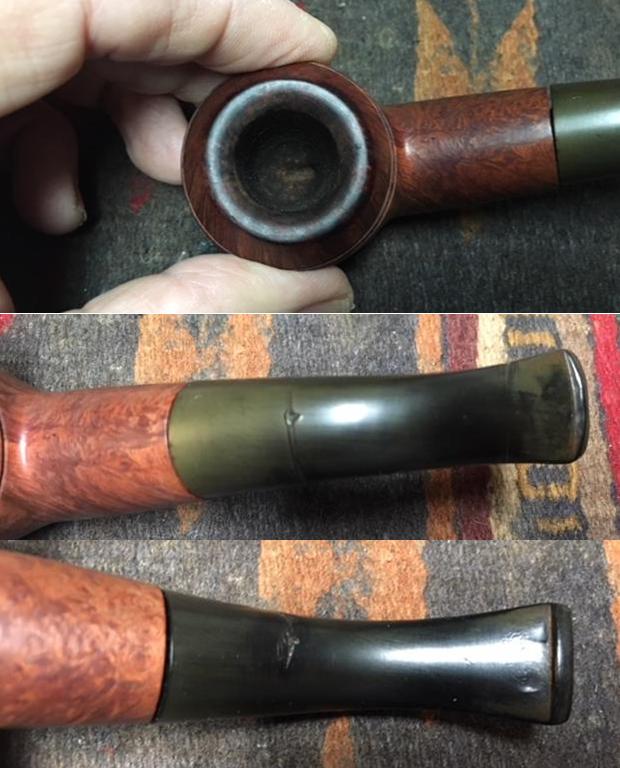
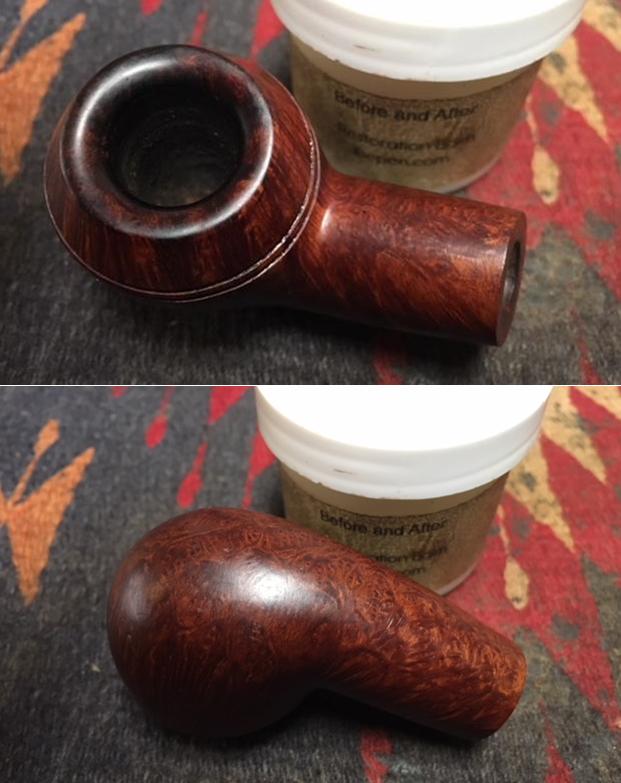
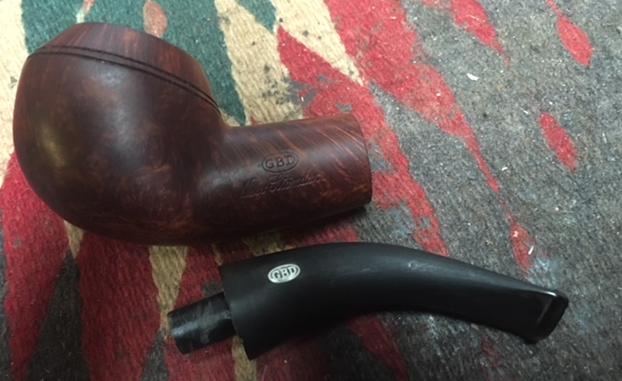
I finished the restoration work on Mark’s uncle’s pipes and a few of his own and sent them back to him in late January of this year. I wrote a blog on each of the restorations. They were a fun batch of pipes to restore for him. He sent me another package a few weeks ago that had just three pipes in it – A GBD Classic Straight Bulldog, a GBD 9242 Rhodesian (one of my holy grail pipes) and a long Churchwarden pipe. Each pipe had a different set of issues that would provide a variety of challenges. The Bulldog was in excellent condition other than the first ½ inch of the stem missing in chunks. The Churchwarden had a broken tenon stuck in the shank. By far the worst of the lot was the 9242 pipe. When I saw it in the bag I was excited. When I took it out of the bag I was saddened at the condition of the pipe. The bowl was dirty and there was some lava and rim darkening on the top. There were a few nicks in the edges of the bowl. The finish was dirty but the grain on the pipe was really nice. If I had stopped my observation at this point I would have been quite happy.

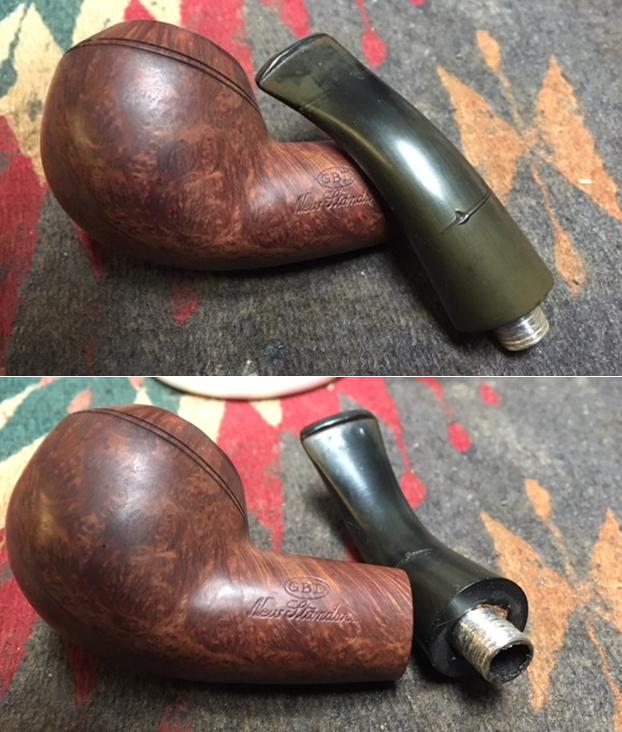
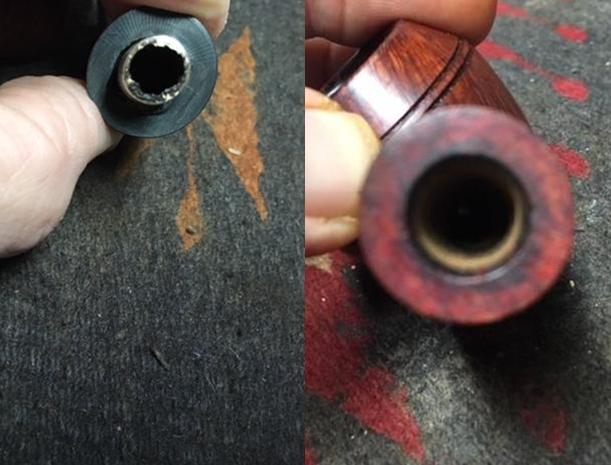
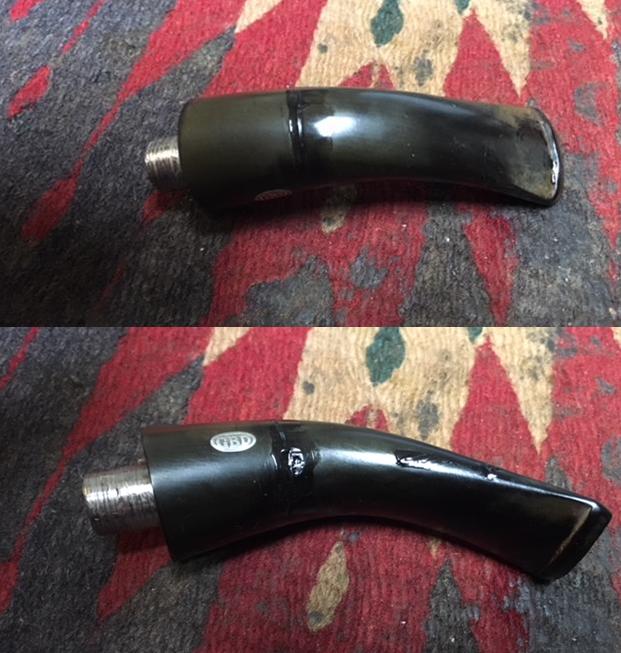
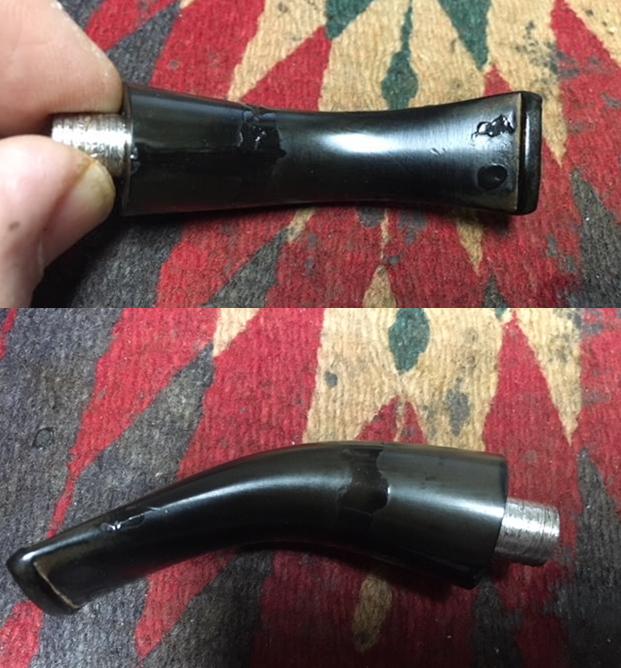
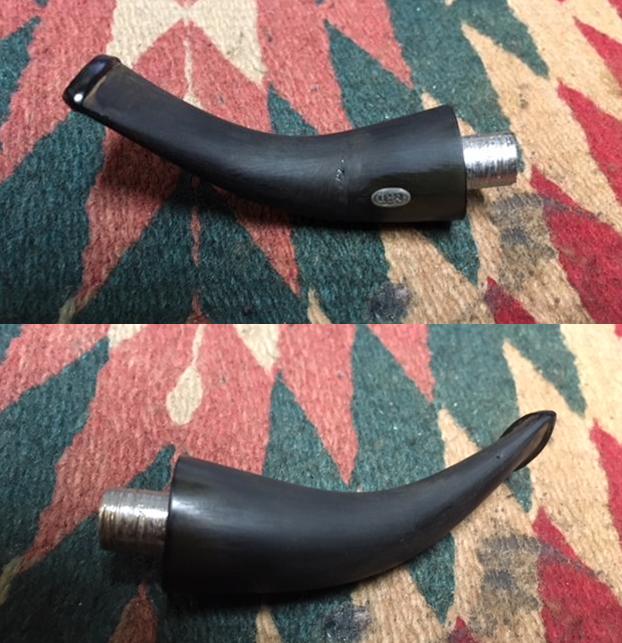
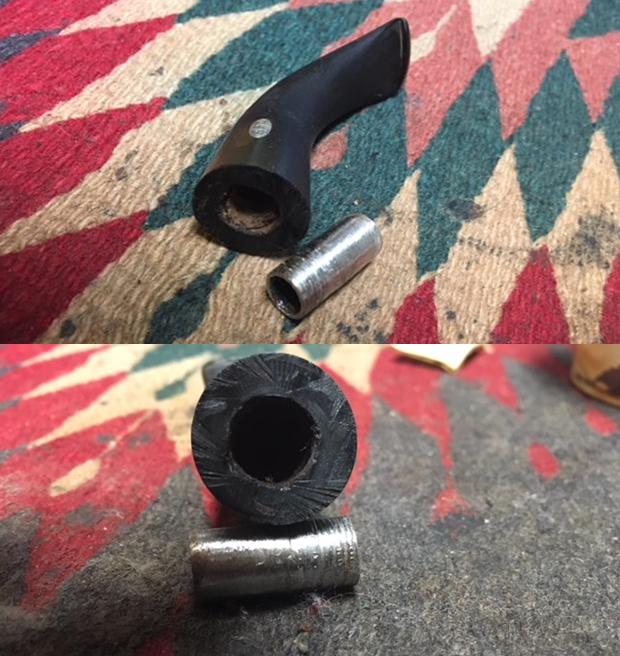
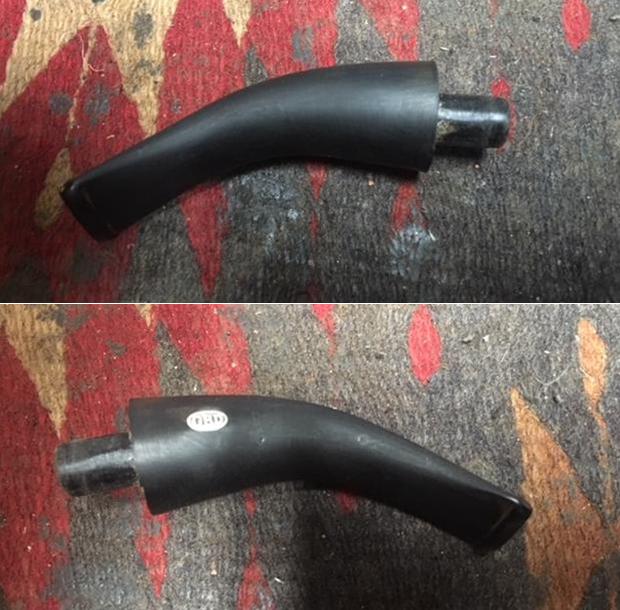
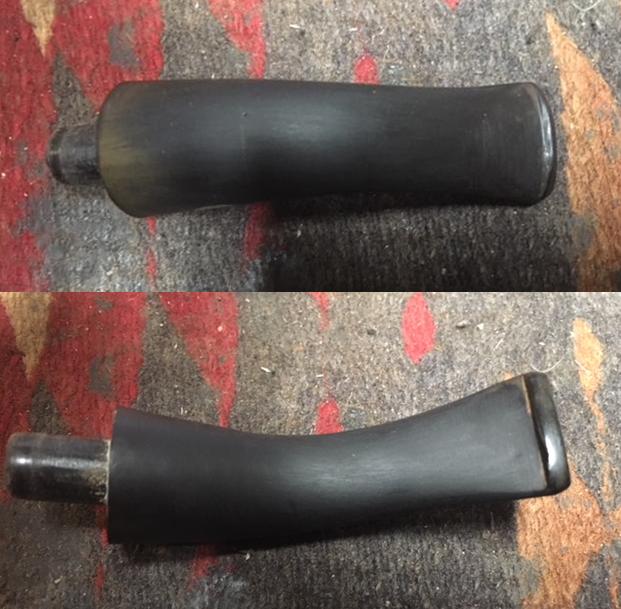
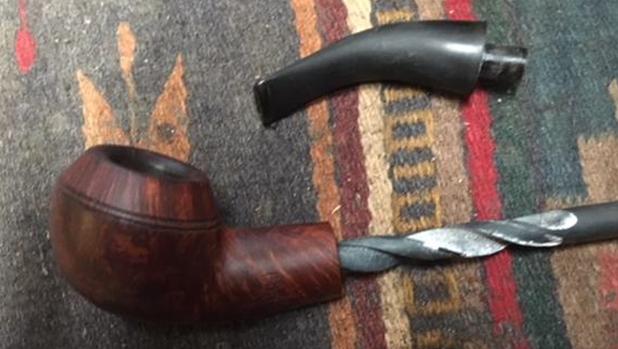
But to stop there would not begin to tell the story of the abuse carried out on this pipe. Someone (I cannot call them other than a hacker) had taken upon themselves to do a stem repair for a broken tenon and in doing so almost destroyed an otherwise nice looking stem. I think that it had a broken tenon so the hacker had pulled out the broken tenon from the shank. He had drilled out the end of the stem – so far so good right. If he had quit then it would have been good. But he did not. He found a piece of steel tubing and drilled out the mortise to fit it – but did so at an angle and hacked up the inside of the mortise. The stem itself was not only drilled but had been opened up even more to accommodate the tube. In fitting it in the stem he had cracked the stem on one side. Fortunately it appeared that it did not go all the way through. He then slopped glue – an amber looking goop, all around the sides of the scored tube and shoved it into the airway on the stem. It was not even close to straight. Then he smeared some of the same glue on top of the crack, wiped it off a bit and called it good. This poor pipe really was in awful condition.

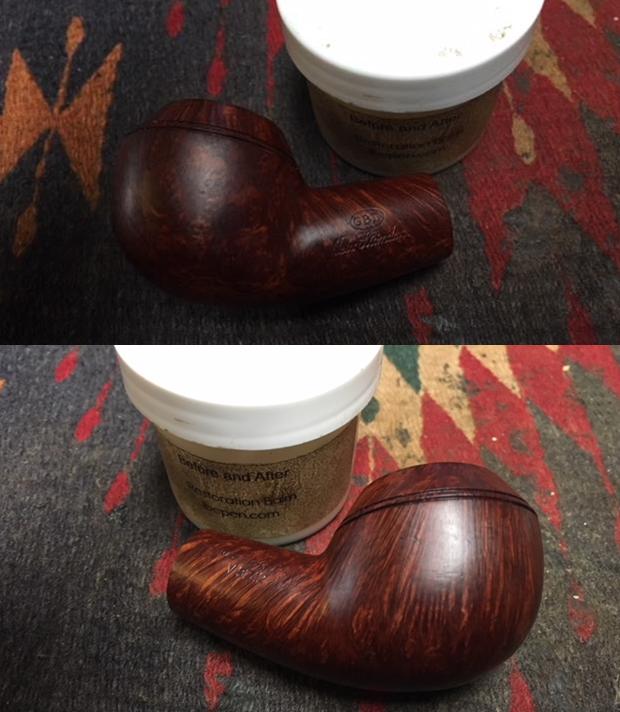
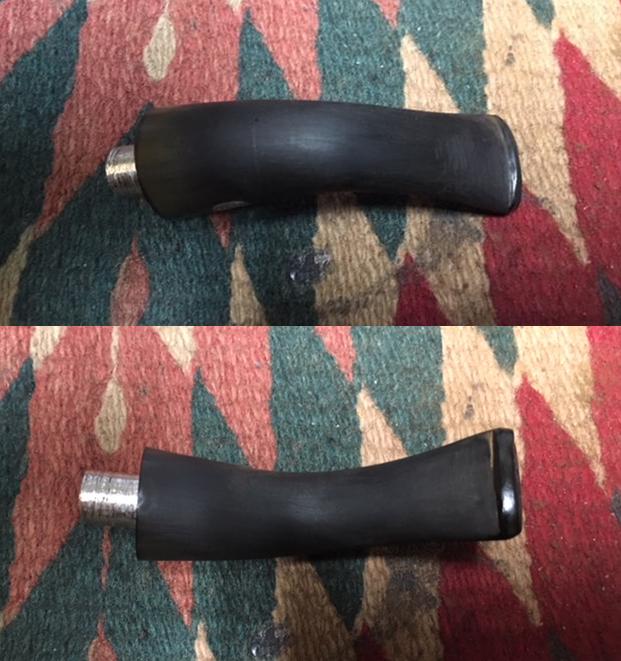
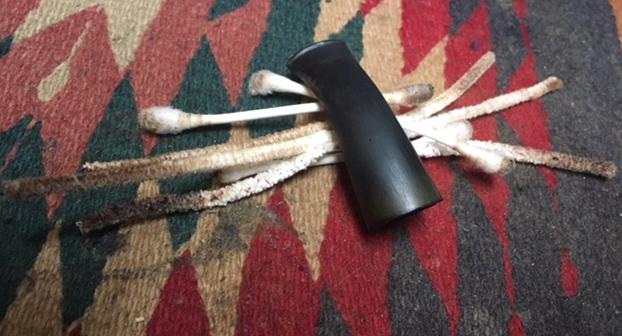
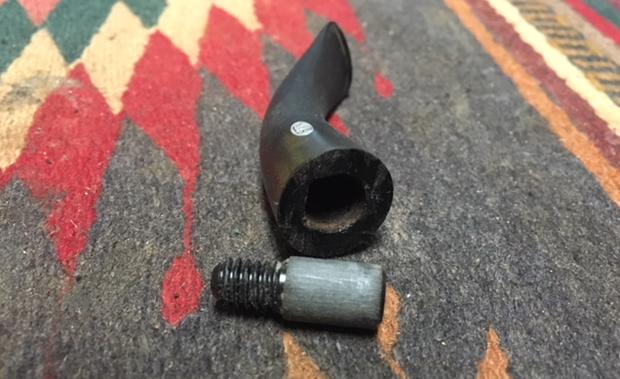
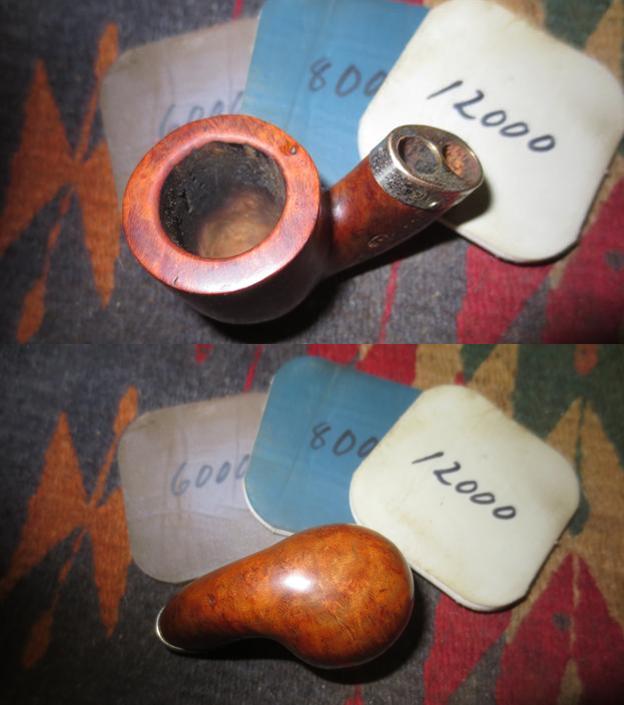
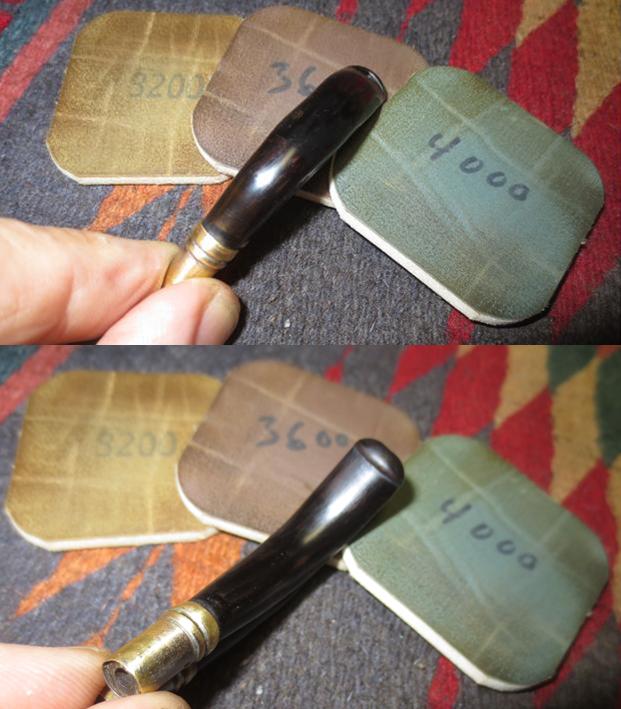
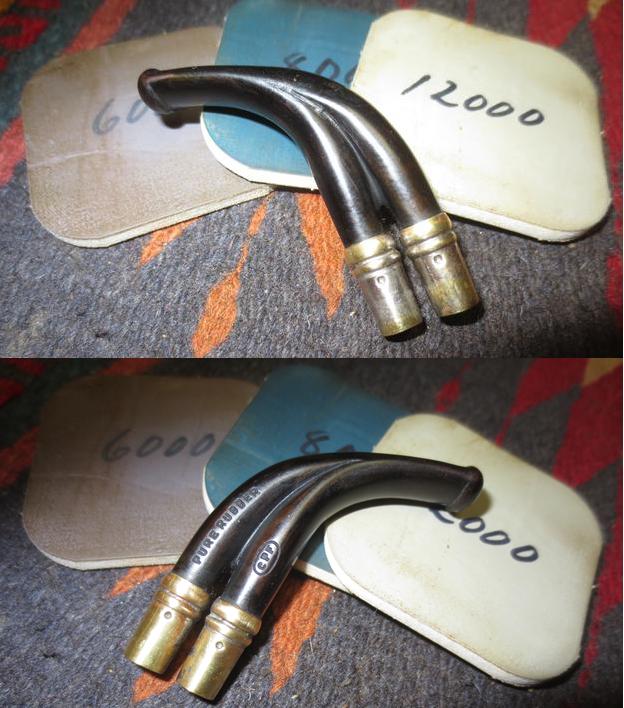
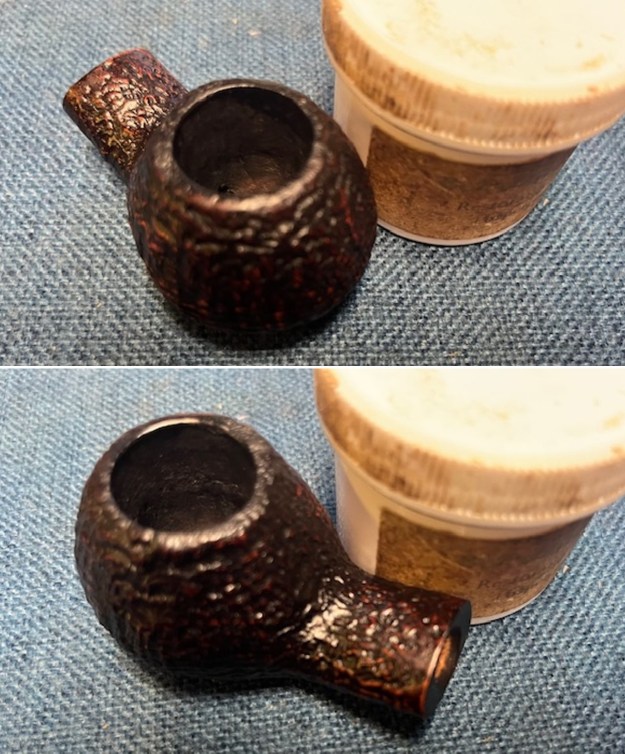
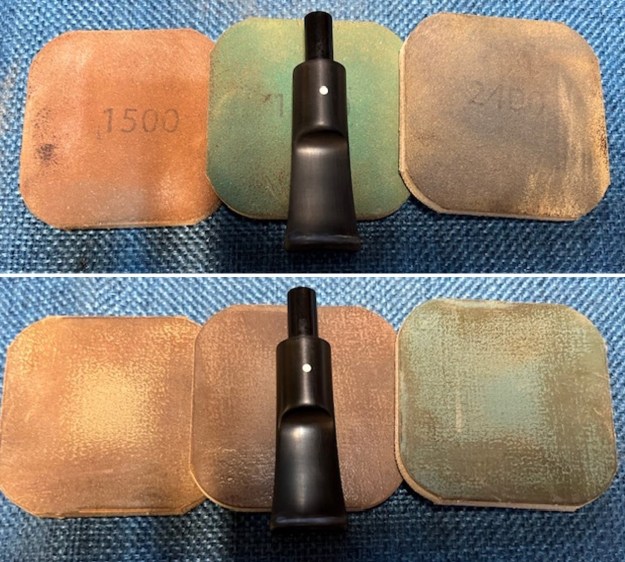
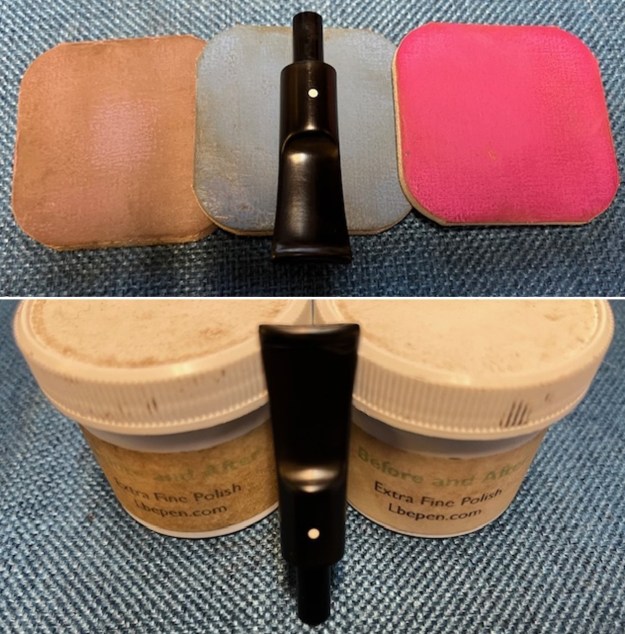
When I wrote Mark to give him my assessment I laid out the issues on this pipe I think he must have laughed. He knew that once I saw it, because it was a shape that is on my hunt list, I would be hooked and have to try to fix it. He as much as said so in his email back to me. Sooo… here we go on that restoration project. The photos show the look of the pipe when it arrived in all of its tattered splendour. Note the beautiful grain on the bowl. It was a beautiful looking piece of briar. Note the stem damage and obvious angle of the stem in the shank. Note the repaired split in the stem. Note the tooth marks on the stem on both the top and underside on and in front of the button. This was a project for certain and I figured I could not really make things worse… but then again who knows. I took a close up photo of the rim top to show the general condition of the pipe. You can see the nicks in the briar rim top and on the inner edge. You can also see the fit of the stem to the shank as well as the tooth marks and damage to the stem from the “repair” that had been done to the stem.I took the stem off the bowl to show the metal tubular tenon on the stem end. It looks to me that the drilling out of the stem and the moving the tenon around in the stem caused the damage in the stem surface.I took photos of the end of the stem showing the tenon and the drilled out mortise in the shank. You can see the damage to both. The metal tenon is not totally round and it is heavily scored and damaged. The fit in the stem is crooked so there is no way to align the stem and the shank.I smoothed out the light damage on the rim top with 220 grit sandpaper and then with 1500-4000 grit micromesh sanding pads. I rubbed the bowl down with Before & After Restoration Balm to deep clean the briar and the smooth rim. The product works to clean, enliven and protect the briar. I hand rubbed it with my fingers and wiped it off with a soft cloth and buffed it with a shoe brush to polish it. The briar really began to have a rich shine. I took some photos of the bowl at this point to mark the progress in the restoration. I set the bowl aside and worked on the stem. I used a cotton swab to dribble acetone around the stem/tenon joint. I repeated that process for several weeks on a daily basis. I wanted to dissolve the epoxy that held the metal tenon in place in the stem. While it sat I filled in the damaged areas on the stem surface and the deep tooth marks in the top and underside of the stem at the button with black super glue and set the stem aside to dry. Once the glue had cured I sanded the repairs smooth with 220 grit sandpaper and blended them into the surface of the stem. There were still some small spots that needed work but overall it was starting to look better. I dribbled acetone into the area around the metal tenon every morning and evening after work. I was pretty certain that after a matter of time the epoxy would give way and I would be able to remove the tenon. I wiggled it daily with a pair of pliers to loosen it. This afternoon it finally came loose and I was able to remove it from the stem.With the metal tenon removed from the stem I was able to clean out the airway in the stem and the drilled out area of the stem. I used pipe cleaners, cotton swabs and alcohol to clean out the debris and tobacco oils.The replacement tenon was a little larger than the mortise and needed to be sanded down. I used a Dremel and sanding drum to reduce the diameter of the tenon. I also carefully sanded the face of the stem to smooth out the damage there, Once I had the fit correct in the shank I worked on anchoring it in the drilled out stem. I coated the threaded tenon with some thick gel glue and inserted it in the hole in the stem. I lined things up with a pipe cleaner in the airway and set the stem aside to dry. While the glue on the new tenon cured I cleaned up the inside of the mortise. I hand turned a drill bit that was the same size as the tenon slowly into the mortise to clean up the jagged drilling on the inside of the mortise. I turned it into the mortise to smooth out the misdrilling that had been done to fit the metal tenon. Once I was finished I sanded it lightly and then put the stem in the shank to have a look. The fit was pretty good at this point. Once the tenon had cured I worked on the stem with micromesh sanding pads – wet sanding with 1500-2400 grit pads and dry sanding with 3200-12000 grit pads. I wiped it down with Obsidian Oil after each micromesh pad. After I finished with the 12000 grit pad I gave it another coat of oil. I polished the stem down with Before & After Pipe Polish – Fine and Extra Fine. I finished by giving it one more coat of Obsidian Oil and put it aside. I put the stem back on the bowl and buffed the pipe with Blue Diamond on the buffing wheel. I gave it several coats of carnauba wax and buffed it with a clean buffing pad to raise a shine. I hand buffed it with a microfiber cloth to deepen the shine. The finished pipe is shown in the photos below. The repair on the right side of the stem is still visible and I will need to work on that a little bit more but the overall look and fit of the stem is far better than when I began on this project. It won’t take too much more work before it is ready to head back to Mark for his smoking pleasure. This is one of those pipes that suffered much at the hands of someone trying to repair something and actually making it worse. I think it is better than it was… thanks for looking.
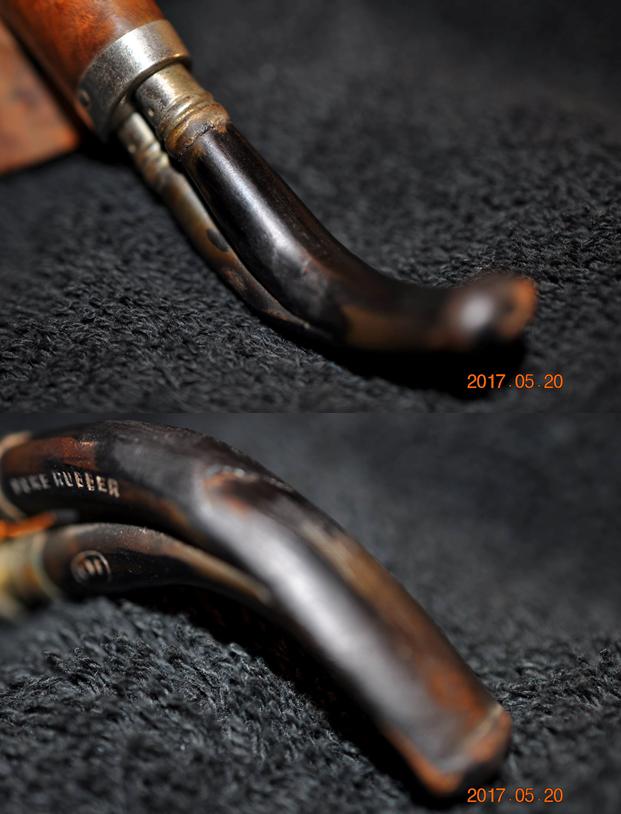
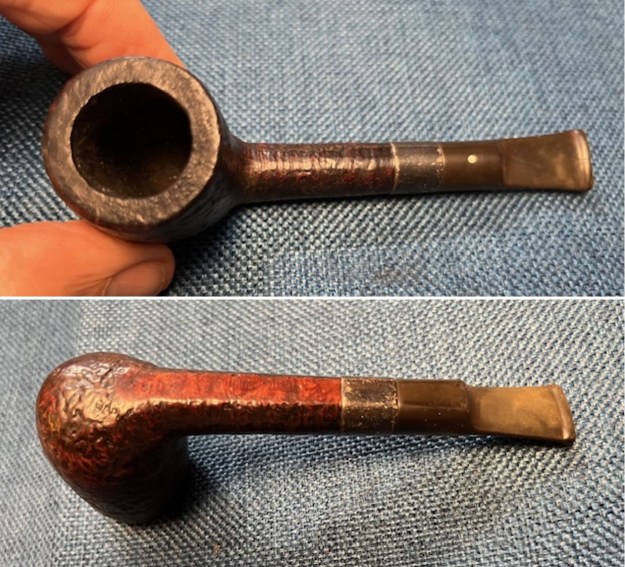
Out Damn Spots – a C.P.F. Cromwell Double Vertical Stem Bent Billiard


Blog by Steve Laug

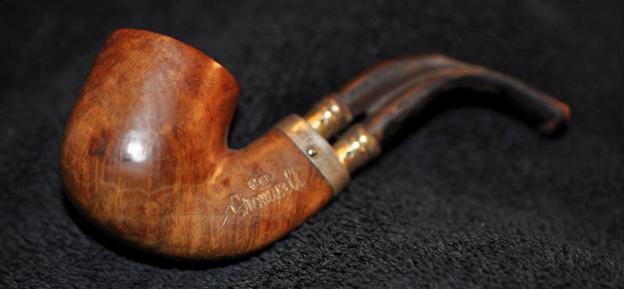
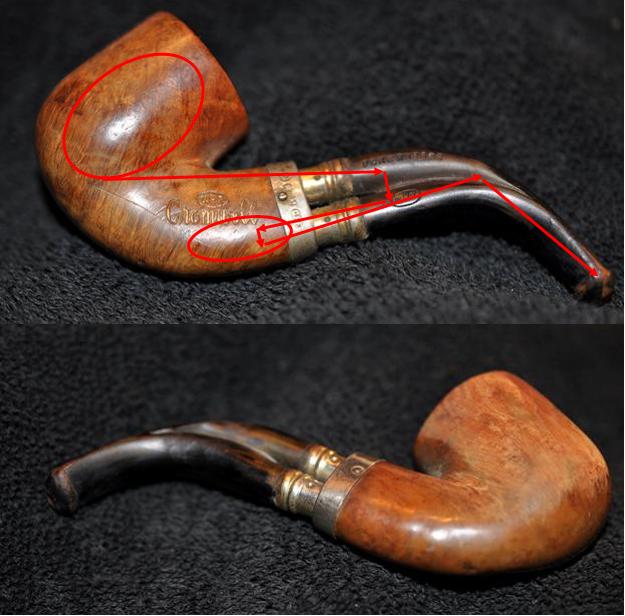
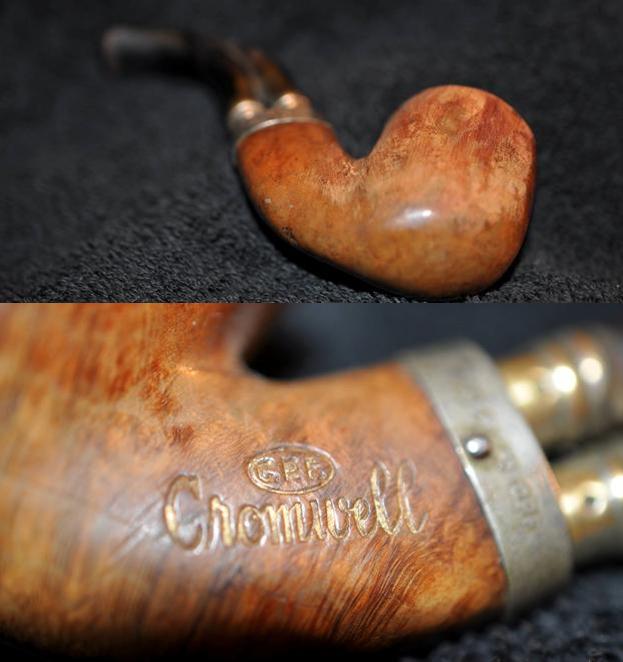
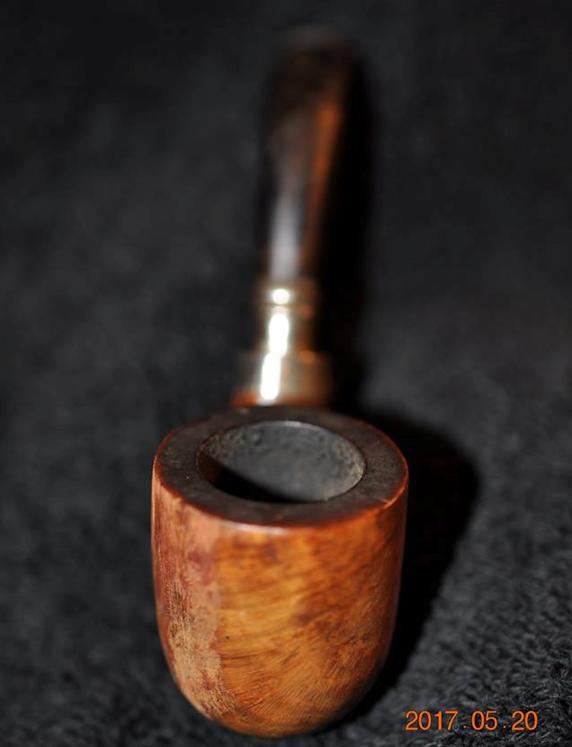
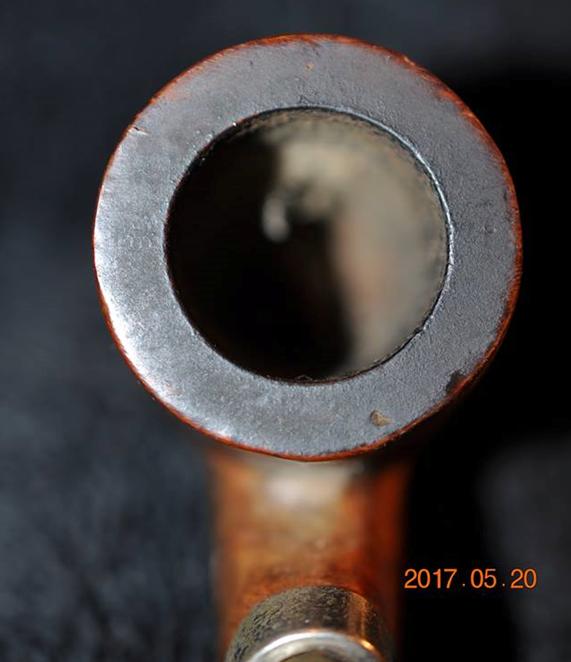
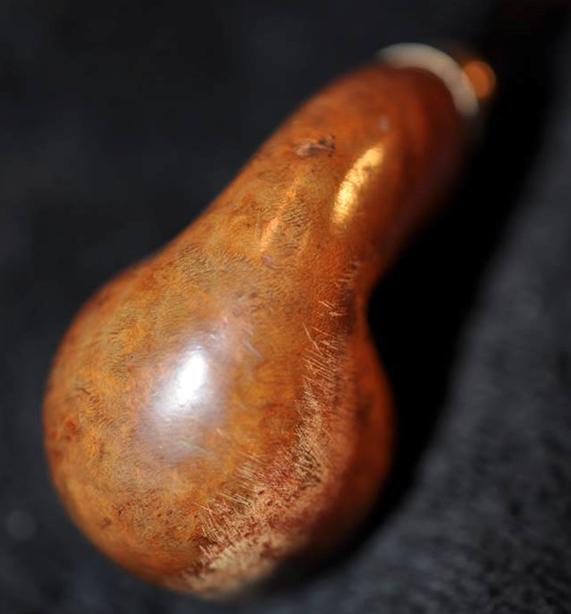
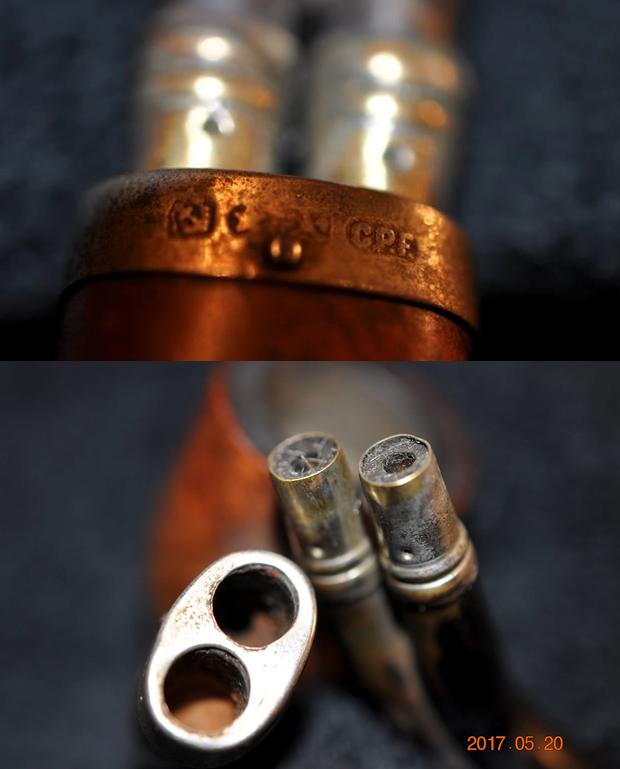
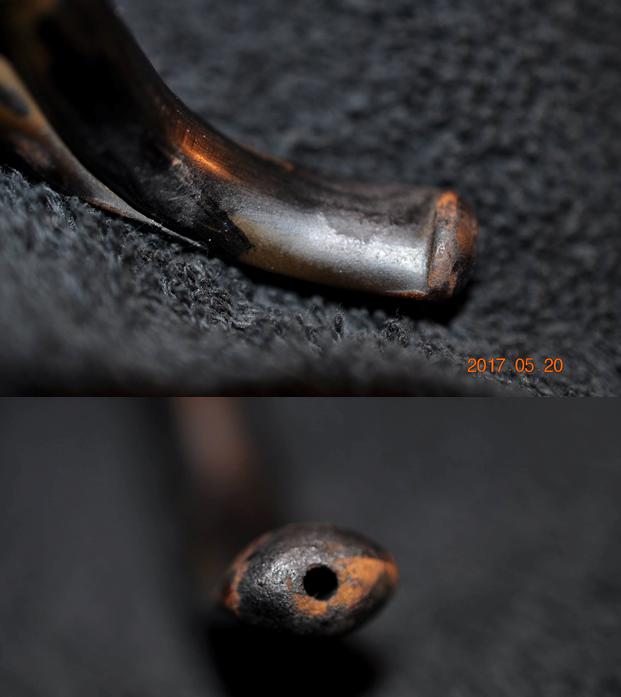
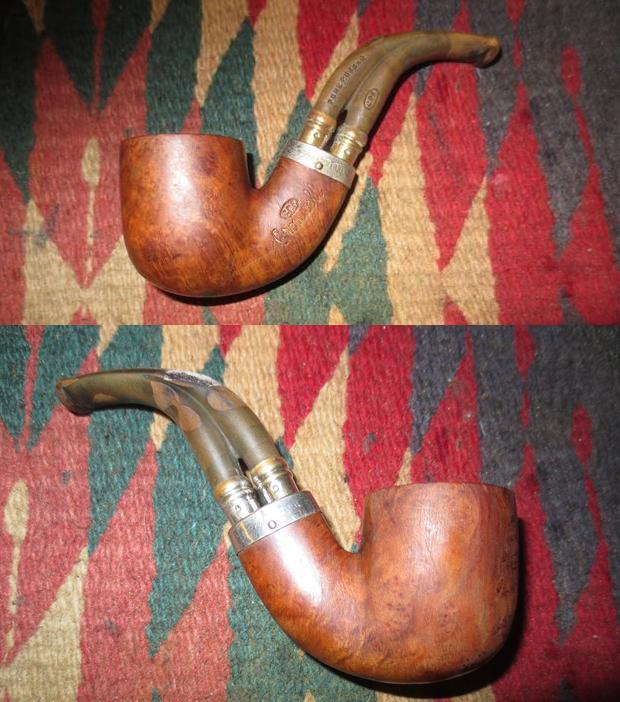
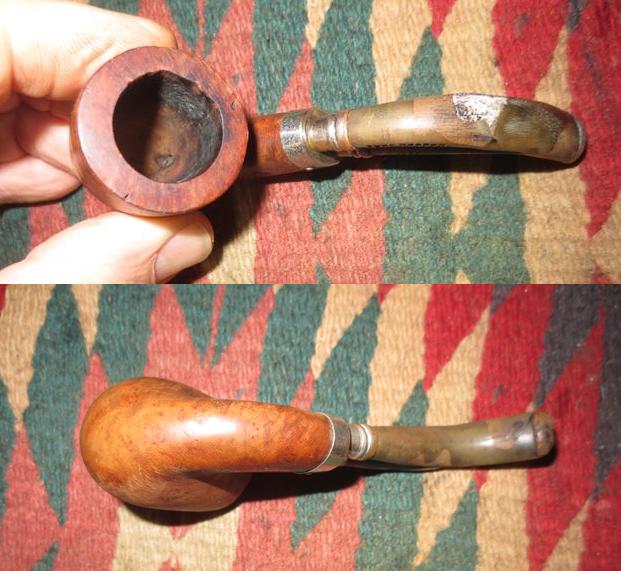
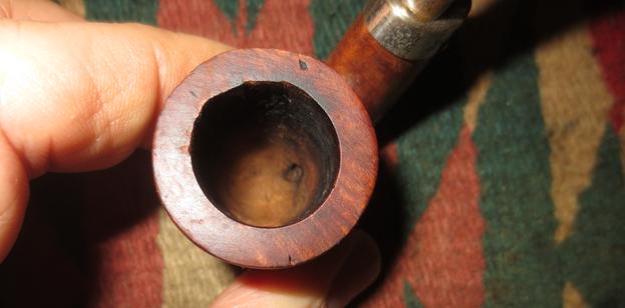
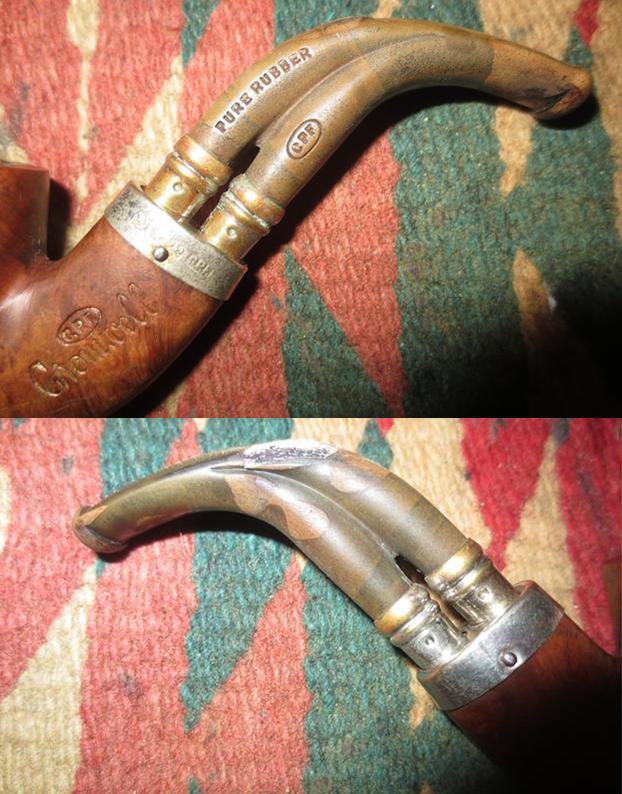
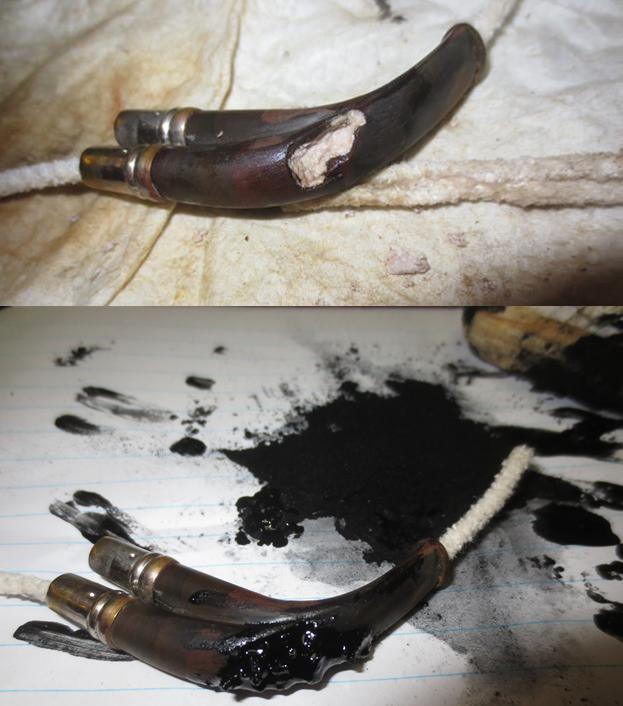
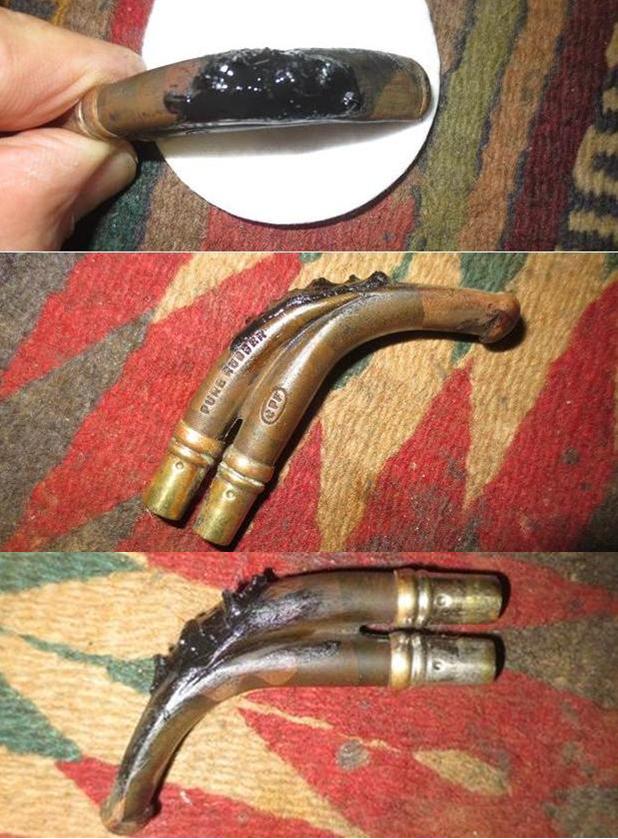
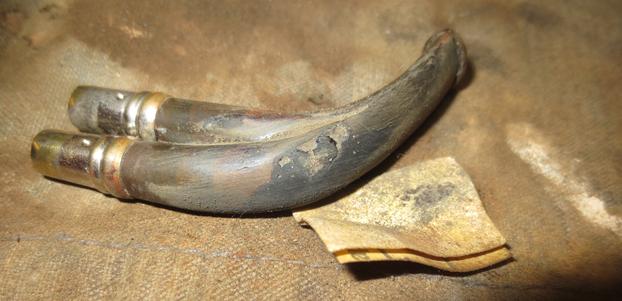
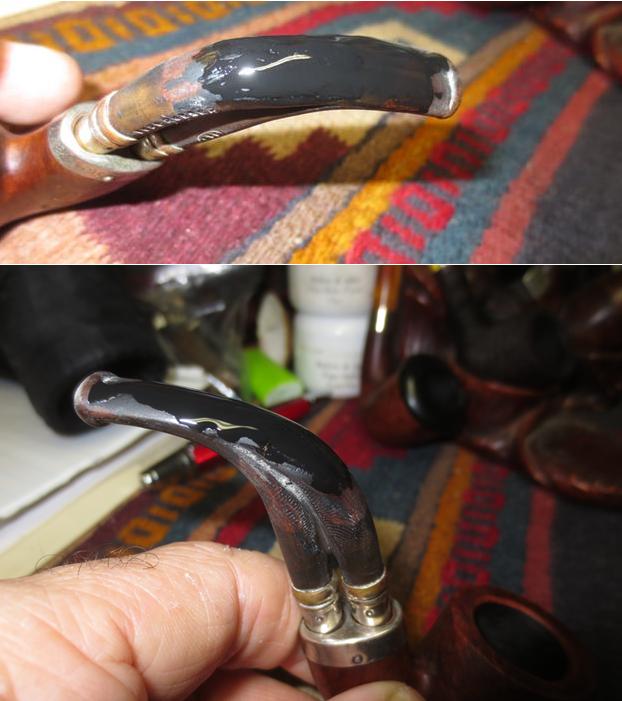
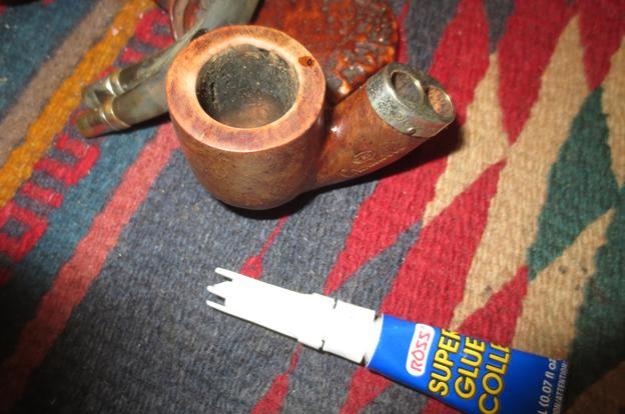
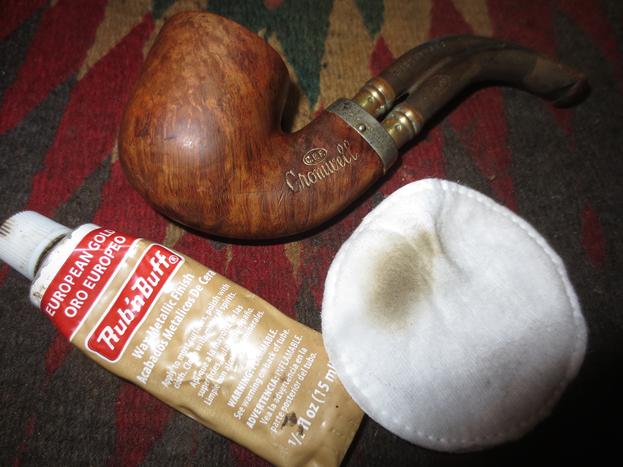
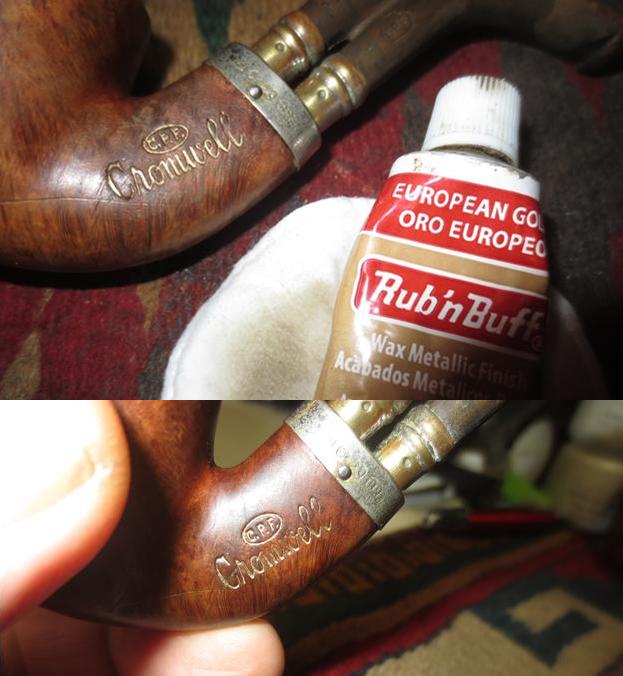
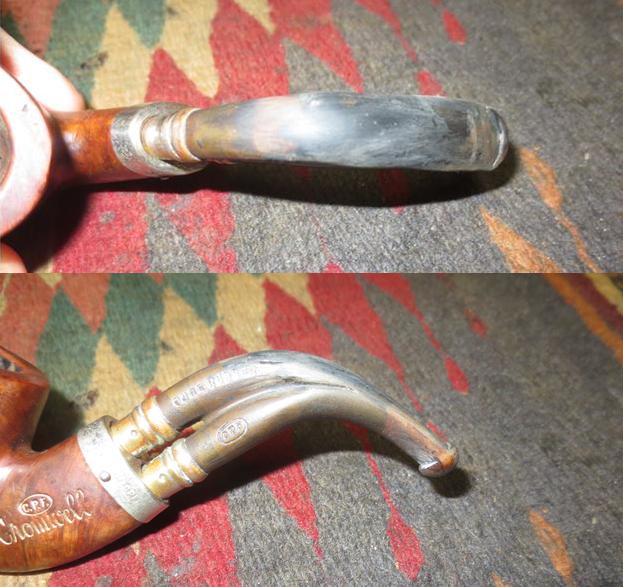
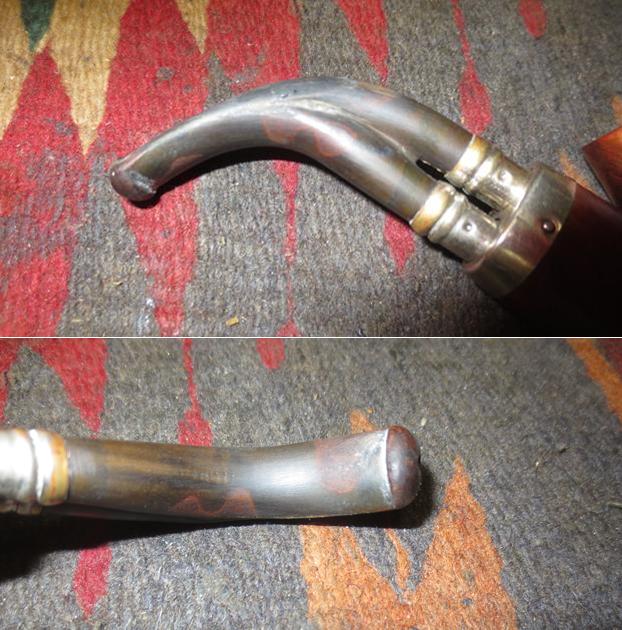
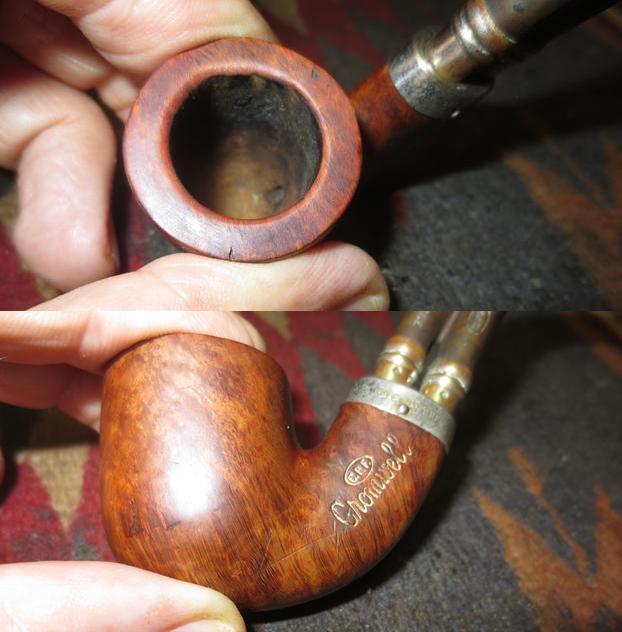
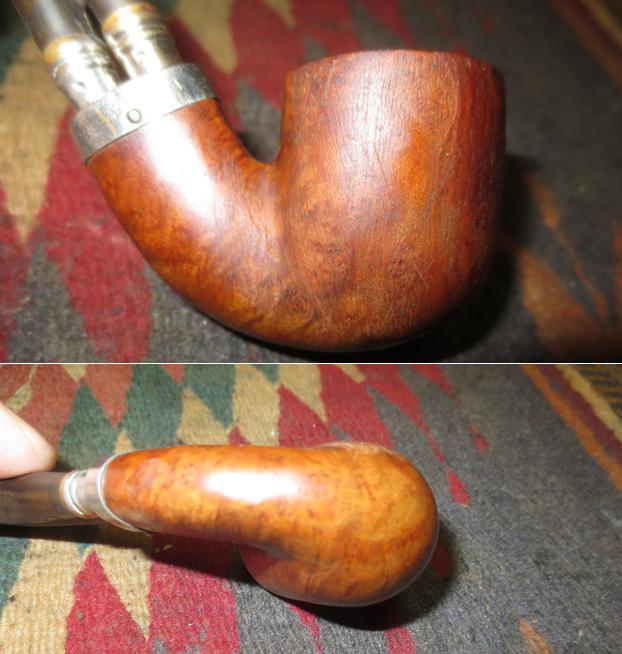
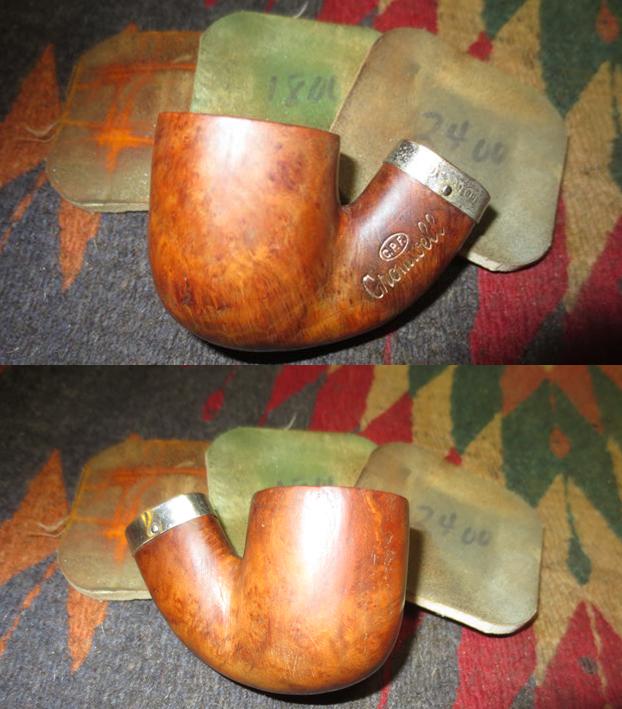
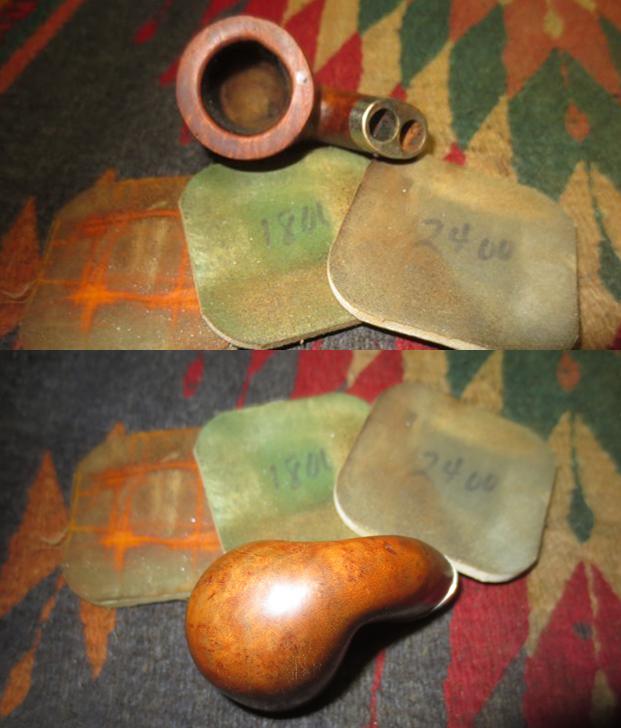
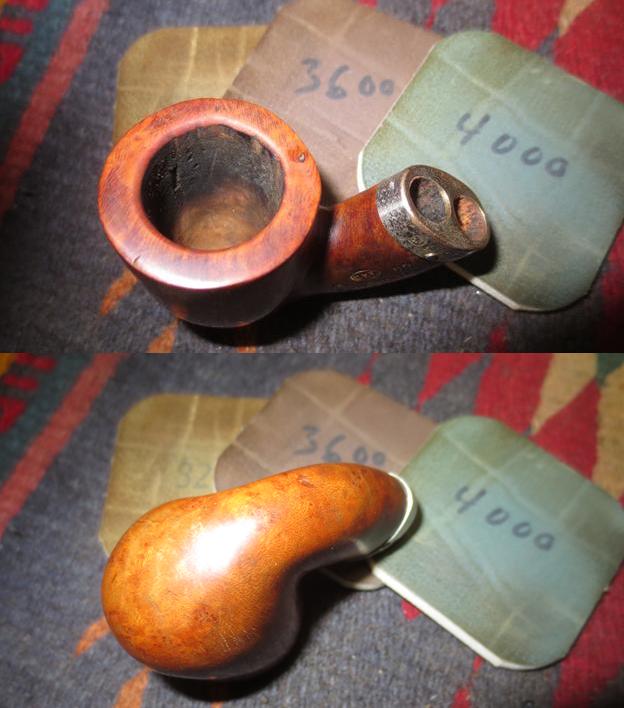
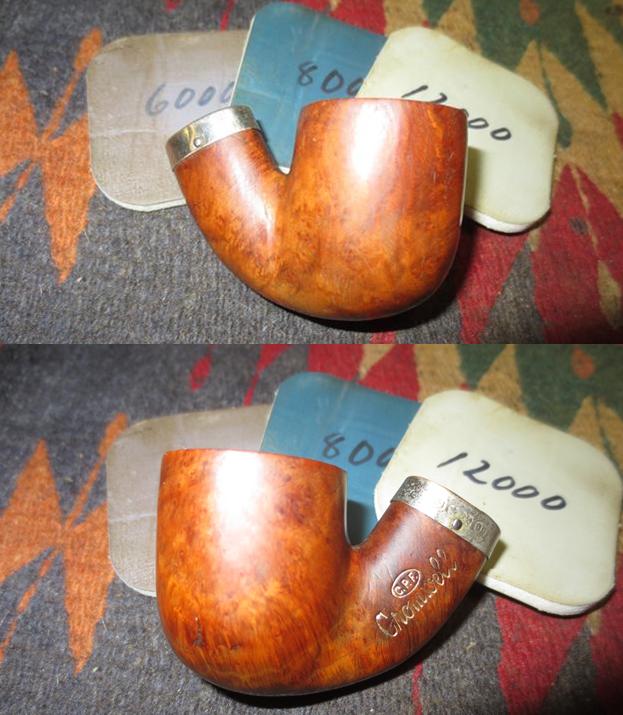
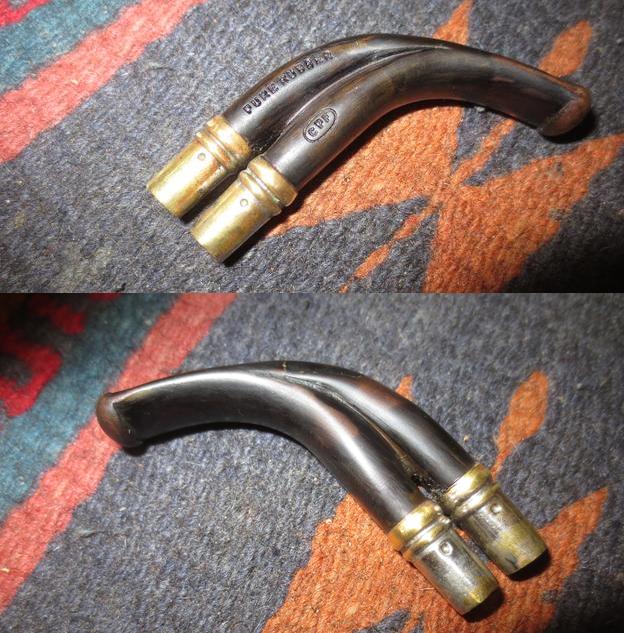
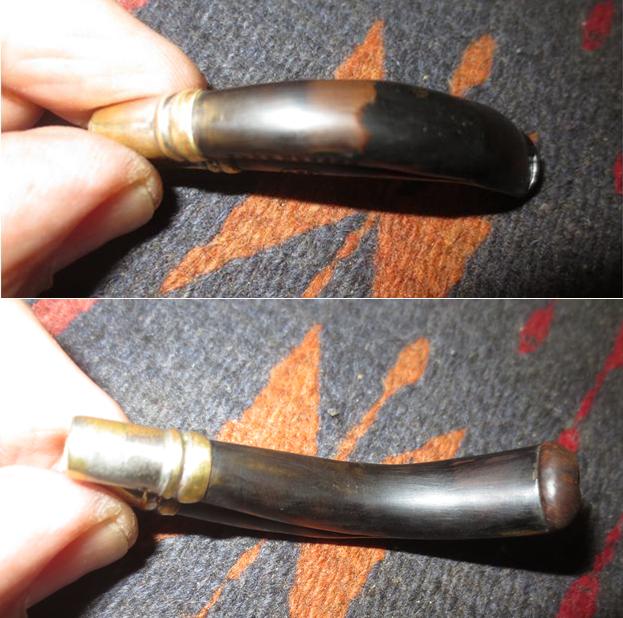
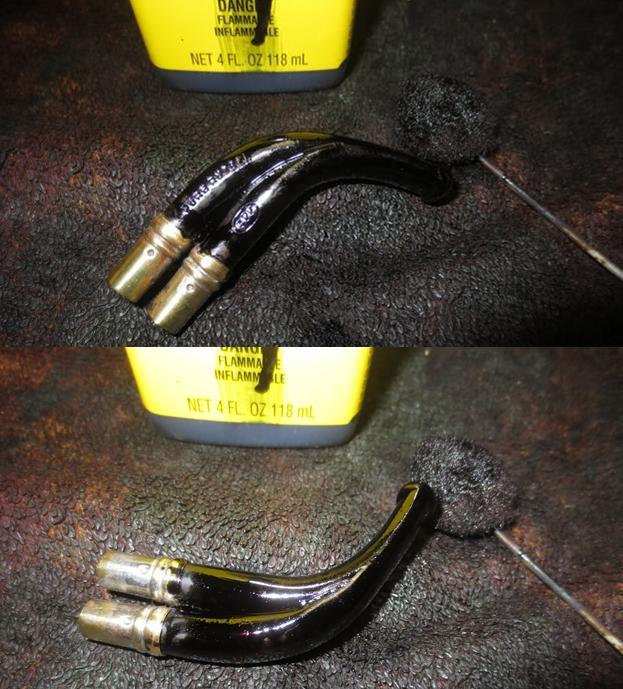
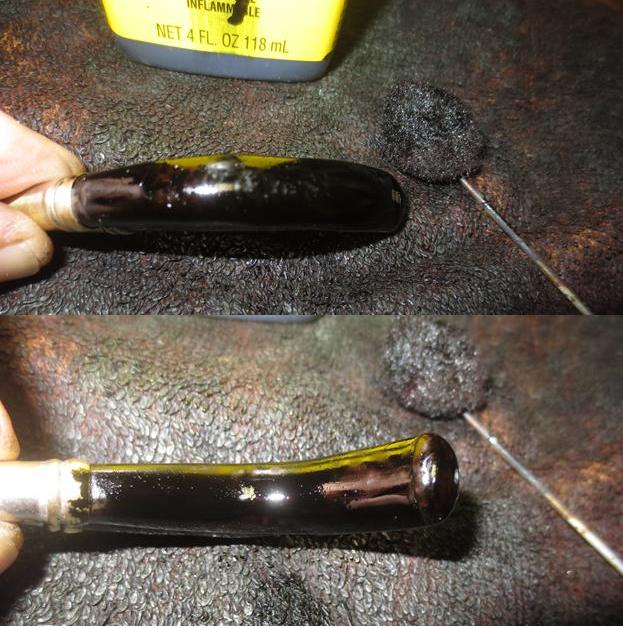
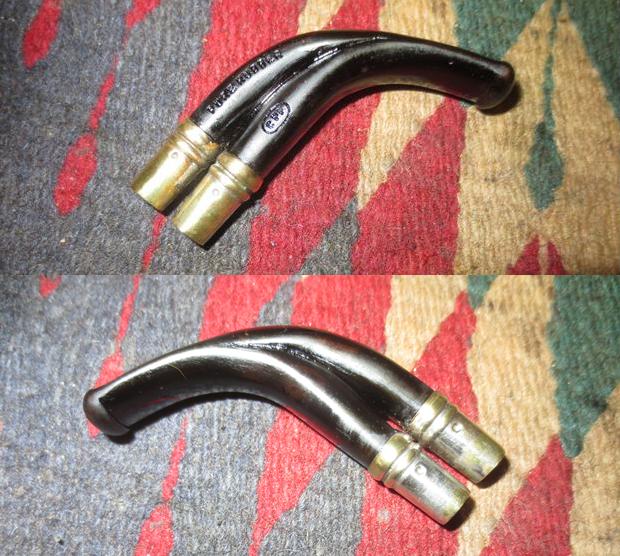
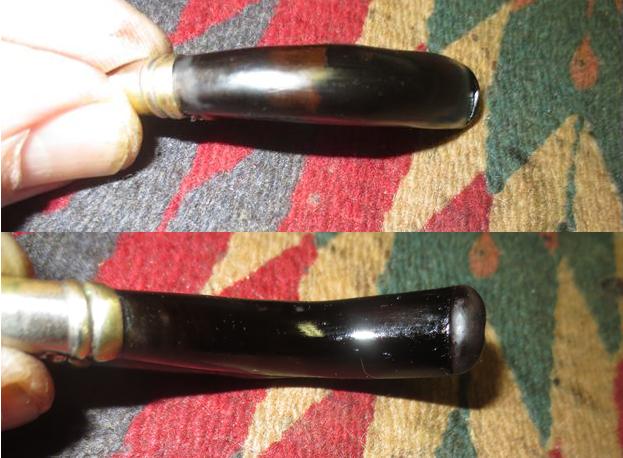
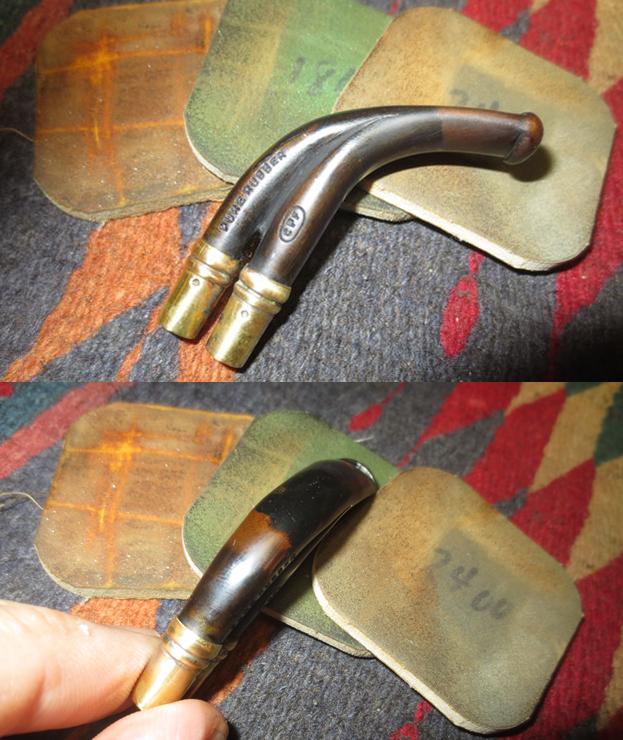
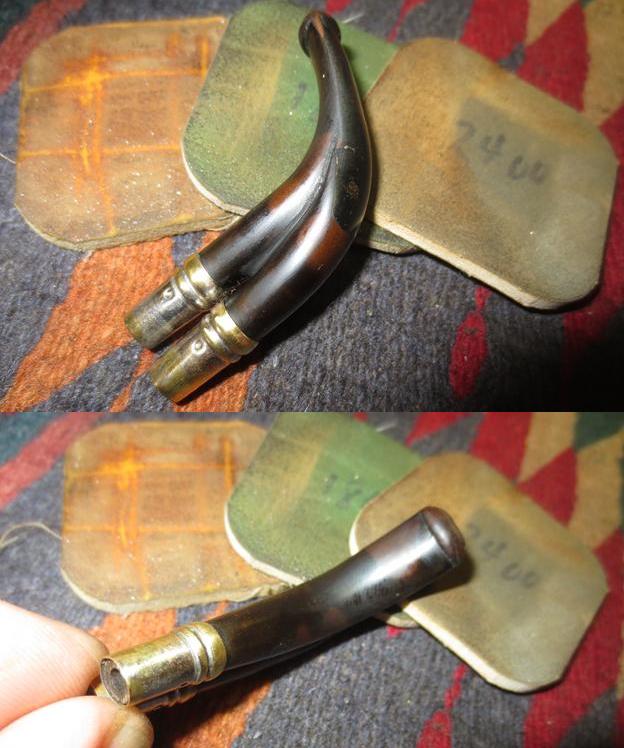
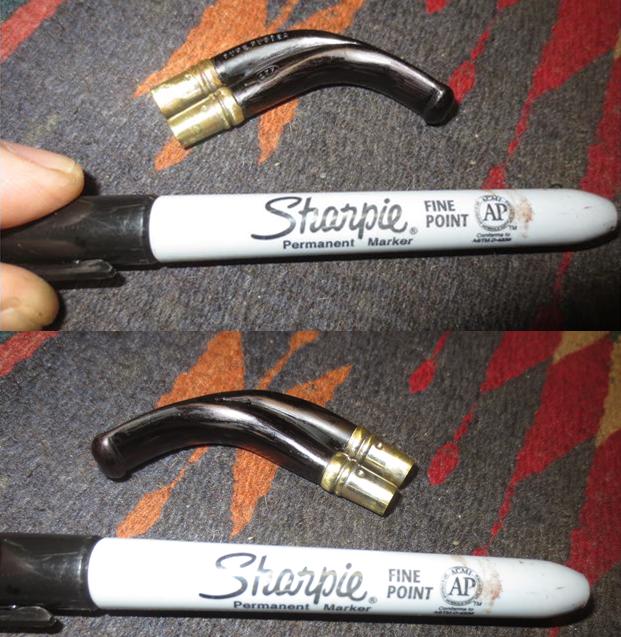
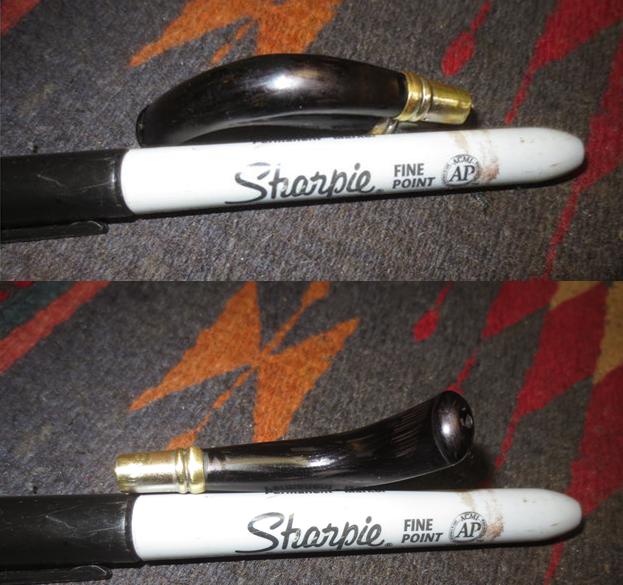
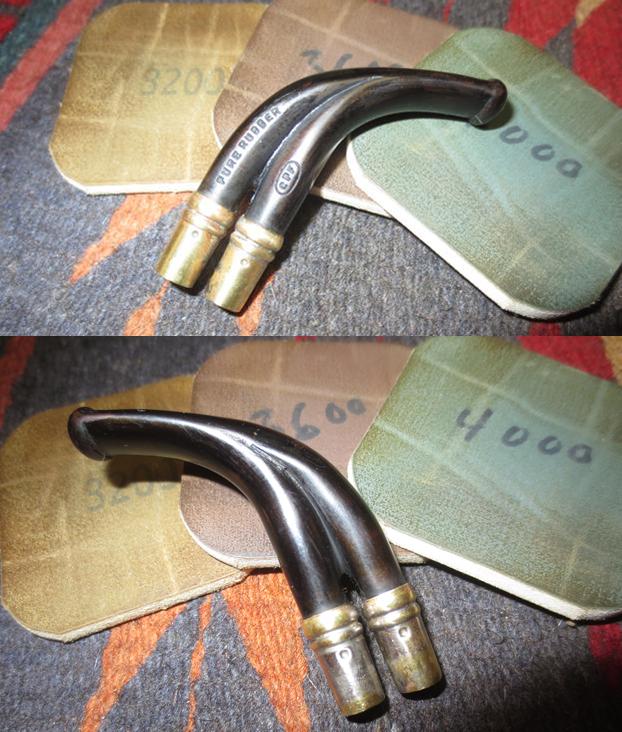
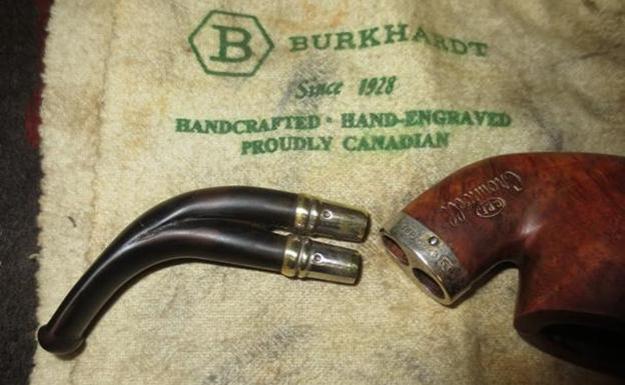
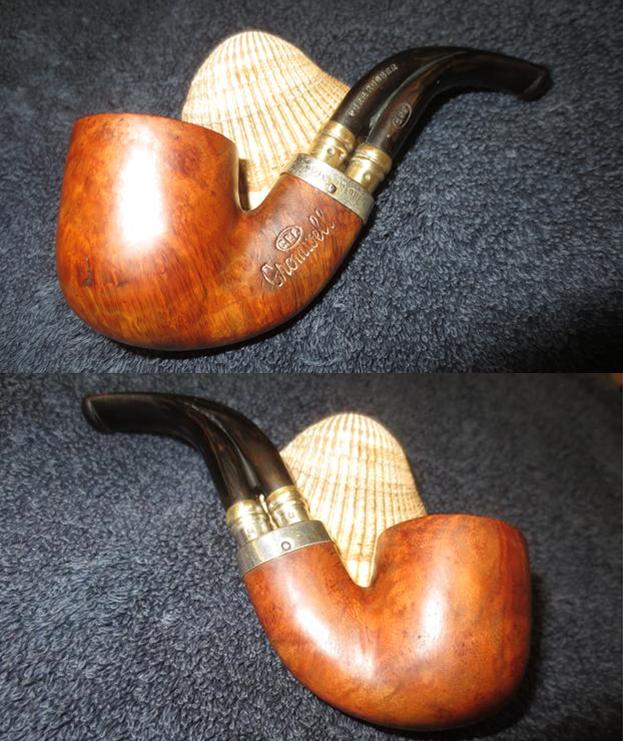
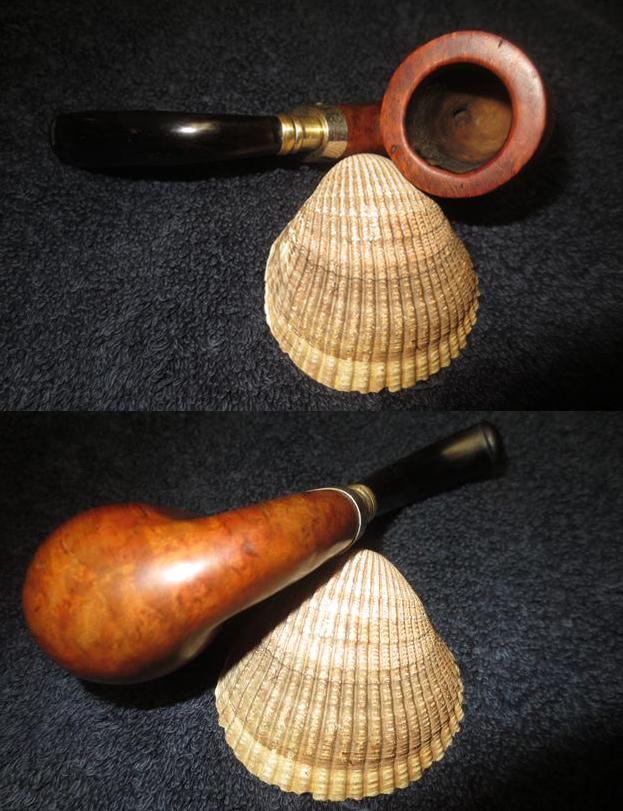
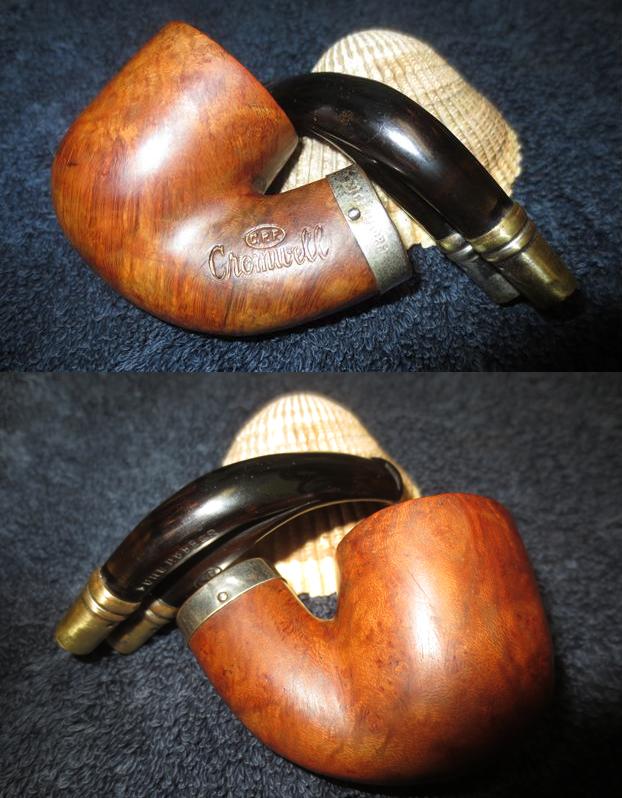
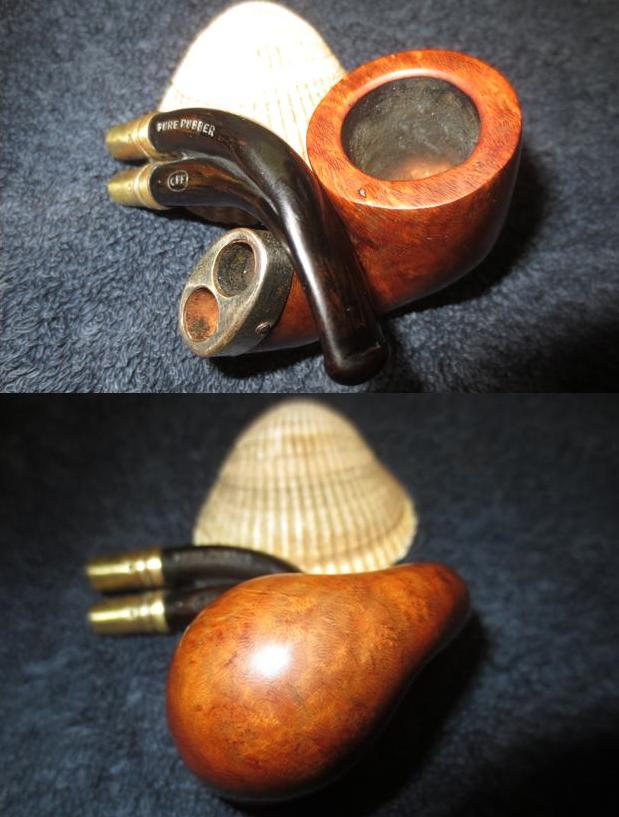
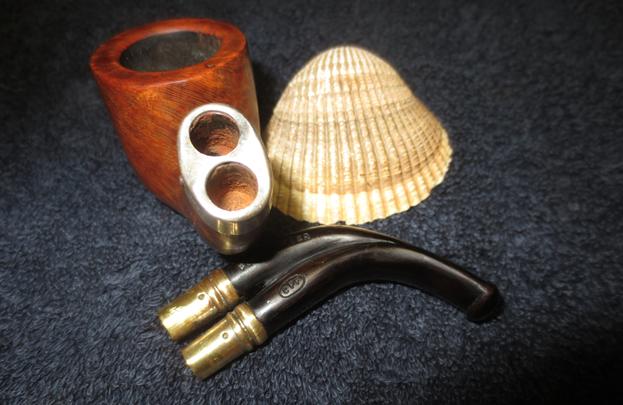
Like other older C.P.F. pipes this one has some real charm. It is on the petite side of things – 4 ½ inches long and 1 ½ inches tall. It is not a bad piece of briar, a mix of grains. The silver collar on the shank is stamped with faux hallmarks and the C.P.F. in an oval logo. It is probably silver or at least plated but I am not sure. The stem is the unusual part of the mix. It has two silver plated spigot tenons that fit into openings in the silver collar. The twin stems merge into one single airway. Looking at it I could not wait to examine it and see what it looked like with the stem removed and what the mortise looked like. The finish was worn but the pipe looked like it still had some life in it. The left side of the shank is stamped in worn gold leaf C.P.F. in an oval over Cromwell in script. There is no other stamping on the bowl. The stem is also stamped on the left side and reads PURE RUBBER on the top stem and C.P.F. in an oval on the lower stem. This pipe is also from the virtual pipe hunt my brother and I did in Montana. He took photos of the pipe from a variety of angles to show the uniqueness and the condition.I did some digging online and found a WDC Marlborough that had a similar configuration though far more boxy. It did not have the elegance that the C.P.F. does in my opinion. Playing around with the mechanics of the smoke and how it flowed through the stem I examined the dual mortise and the way the stem was laid out. I fed a pipe cleaner through the stem and found that natural flow of the cleaner was from the button through the top of the stem and into the top mortise. I could plug the lower tenon and the air was unobstructed from tenon to button. When I plugged the upper tenon and blew air through it I could feel it against my fingertip and then it made its way out the lower tenon. The airflow seems to have flowed against my finger and back a short distance to an opening between the two stems and out. From that I figured out that the smoker draws smoke through the upper mortise and into the airway on the stem. It flows into the bottom stem and mortise (which is a sump like the Peterson System pipes have) where moisture is collected and the smoke exits up the lower stem and into the button and into the mouth of the smoker. In my online search I found a photo of the Marlborough with the airpath drawn out as I conceived it in my words above. I drew the same kind of pattern on the C.P.F. to show how it appeared from my experiments. Here is the link to the Marlborough;  http://pipesmagazine.com/forums/topic/wdc-marlborough-double-airway. I used the drawing on that link to draw in the airflow on the Cromwell that I have. You can see that in the diagram below.I did some more digging on the internet to see if could find any more information on the brand. I found that C.P.F. did a second dual stem pipe called the Lafayette. Both pipes had military style bits so both were pocket pipes. Was it possible that C.P.F. did a line of pipes in honour or military leaders and these were two of those? You had Cromwell – potentially Oliver Cromwell, Lord Protector in England and Jean Lafayette, mercenary during the US Revolutionary War.The finish was very worn and there are a lot of scratches on the briar. I wonder if this little pipe was somebody’s pocket pipe and bumped against coin and whatever else was carried in the pocket of the pipe man who owned it. The bowl was caked and there was a lava overflow onto the rim top. There were some nicks and sandpits on the rim and the bottom of the bowl. My brother took photos of the stem and the mortise of the pipe. It is an unusual set up. The top portion of the twin stems fits in the mortise and the airway into the bowl is high at the bottom of that mortise. The second mortise for the lower portion of the stem is merely a dead space. It appears that the smoke came up the stem and circulated in the lower mortise before being drawn to the mouth of the smoker – perhaps it is a cooling system somewhat like the sump in Peterson System pipes. The twin ends of the stem are covered with a silver end mount and from the looks of the photos the pipe had been sitting for quite a while and cob webs had formed. The stem was oxidized for sure but something about the colour of the stem made me wonder what was happening with it. He did a lot of cleaning and scrubbing on this pipe and in the process we learned some interesting facts about the repair work that had been done on this pipe. The entire stem had been coated with what appeared to be a black paint. It was flaking and bubbling at the button end as can be seen in the photo above. The oxidized stem had some really strange patterns in the oxidation and there seem to be deep staining in spots on both the top and underside surfaces of the stem. On the topside there was a white repair that looked and felt like putty. The black paint had hidden that repair. Jeff had stripped the remaining finish off the dirty bowl, reamed the bowl and cleaned the rim top. The silver band on the shank looked better and the metal tenon ends on the military style tenons looked more brass than silver. He had cleaned out the two mortises and the airway into the bowl and the shank. Note the spotty appearance of the vulcanite stem. I took a close up photo of the rim top to show the condition of the surface and the damage on the right inner edge of the bowl. The bowl was out of round once he had removed the cake and the sandpits in the flat surface stood out.The next two photos I took show the condition of the stem. The stamping on it is very clear – Pure Rubber on the top stem and C.P.F. in an oval on the lower stem. I have not seen this spotty pattern in the oxidation before and I am wondering if in the process of the previous repair the repair guy did not damage the surface of the rubber. Note the putty fill as well. It is quite large.I used a dental pick to remove the putty fill and you can see from the photo below that it was quite large. It covered a large portion of the top and right side of the upper stem. I wiped the surface down with a damp cloth to remove the debris left behind by the putty in preparation for repairing the damage. I greased a pipe cleaner and put it in place in the airway in the stem so that it would not accidentally fill in from leakage of the repair. I mixed a batch of charcoal powder and black super glue putty and filled in the damaged area. I purposely overfilled it on the top to give me room to work. I carefully filled in the right side of the stem so as not to fill in the groove between the two parts of the stem. I put aside the stem so the repair could cure. Once the repair had dried I used a flat file to smooth out the ridges and peaks in the new surface. I sanded the repaired area with 180 and 220 grit sandpaper to further smooth it out and shape it.I wiped the stem down with a damp cloth and checked for air bubbles in the repair and areas that needed to be built up. I applied some more black super glue to the surface of the repair and smoothed it out with a dental spatula to ensure that all of the air bubbles had glue in them. I set the stem aside to dry.While the stem repair was curing I worked on the rim. I used a folded piece of 220 grit sandpaper to work on the damage to the inner edge of the bowl. It took a bit of work to blend in the damaged areas and smooth them out. I filled in the sandpits with clear super glue. It did not take too long to cure so when it had hardened I sanded it smooth and blended it in with the rest of the rim top. I wiped the bowl down with alcohol on a cotton pad to clean off any debris left behind by my rim work and used some European Gold Rub n’ Buff to touch up the gold in the stamping on the shank. I applied the product and rubbed it into the stamping and wiped off the excess with a cotton pad. The next three photos show the fresh shank. By this time the stem repair had hardened and I sanded the surface with 220 grit sandpaper to smooth things out. I used a folded piece to smooth out the grooves between the upper and lower stems. The stem is looking much better but the reddish spots in vulcanite really looked odd to me. I wondered if I would be able to polish them out of if I was going to be stuck with them in the finished pipe. The finish on the bowl was rough and there were a lot of scratches and worn areas on the sides and bottom. I sanded out the ridges and as many of the deep scratches as possible with 320 grit sandpaper. In the photos below you can still see the scratches but the feel in the hand is much better and the bowl is beginning to look smoother. I sanded these marks smoother with 400 grit wet dry sandpaper and then polished the bowl with micromesh sanding pads. I wet sanded with 1500-2400 grit pads and dry sanded with 3200-12000 grit pads. The next sequence of photos show the progress in smoothing and polishing the bowl. The stem still needed a lot of work. I shaped the repaired area and worked the surface over with 220 grit sandpaper to remove as much of the oxidation as I could. While it was definitely looking better the spotty areas were still visible. I still needed to polish the stem with micromesh pads to see how much more of the spotty surface I could clean. I also needed to finish polishing the silver tenon caps. I worked over the surface with 400 grit wet dry sand paper and 1500-2400 grit micromesh sanding pads and still could not remove the stained spots on the rubber. I decided to try something different. I stained those spots of the stem with a black aniline stain to see if that would bring the red spots more in line with the rest of the stem. When the stain dried the spots were definitely better, but they still stood out. Time to go back to the sanding and polishing! I wet sanded it some more with 1500-2400 grit micromesh sanding pads. I still had those obnoxious spots present in the rubber. They were deep and it really appeared that I would not get them out. I sanded the stem some more to try to remove more of the damaged areas. It did not seem to matter how much I sanded the spots remained. I decided to try one more trick. I used a black Sharpie Pen to colour in the spotted areas. I let the ink dry. I was hoping that these Permanent Markers would actually be permanent and cover the spots. Once the ink had dried I lightly sanded it with 3200-12000 grit micromesh sanding pads. The black seemed to stay in the spots better than any of the other methods so far. Maybe I had some success but polishing would tell the story. The more I polished most of the coverage remained but there were still remnants of the spot in the vulcanite. I polished the metal tenon caps with micromesh sanding pads and finished polishing them with a jeweler’s cloth to remove any remaining tarnish.I lightly buffed the stem with carnauba wax and buffed it with a clean buffing pad to raise the shine. I hand buffed it with a microfiber cloth to deepen the shine. I gave the bowl multiple coats of carnauba wax and buffed it with a clean buffing pad to raise a shine. I hand buffed it with a microfiber cloth. I put the parts back together and rebuffed it by hand. The finished pipe is shown in the photos below. The stem looks far better than when I first started but the spots still show through the polish. The pipe as a whole is a beautiful old piece of history. It does not look too bad for its age – over 125 years old. Thanks for walking through this restoration with me. It was a challenge and it was a pleasure to resurrect this old piece of tobacco history.