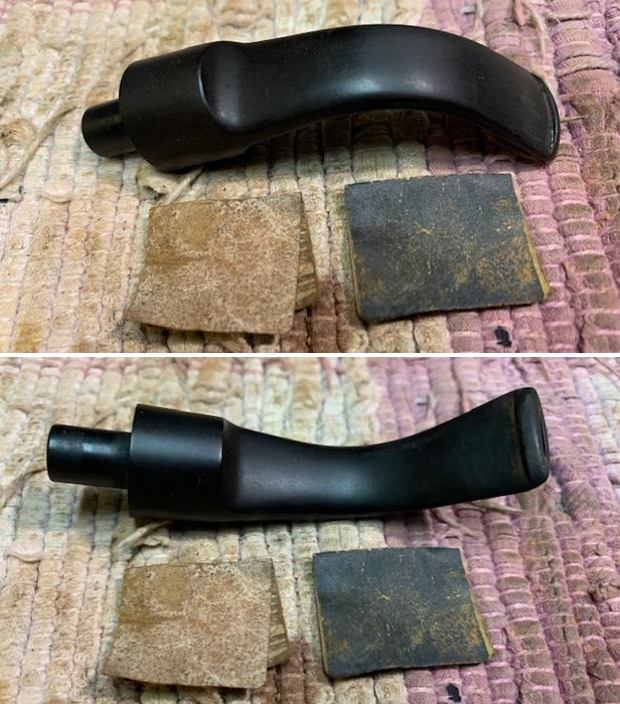
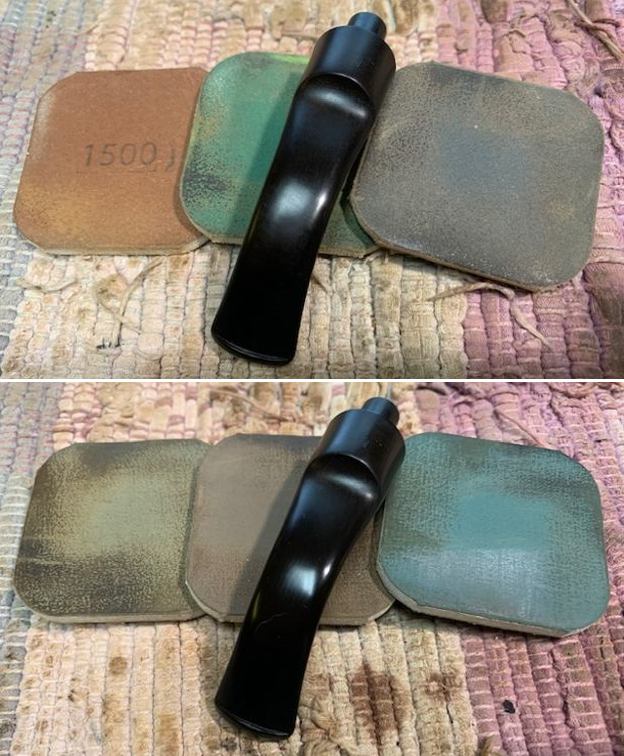
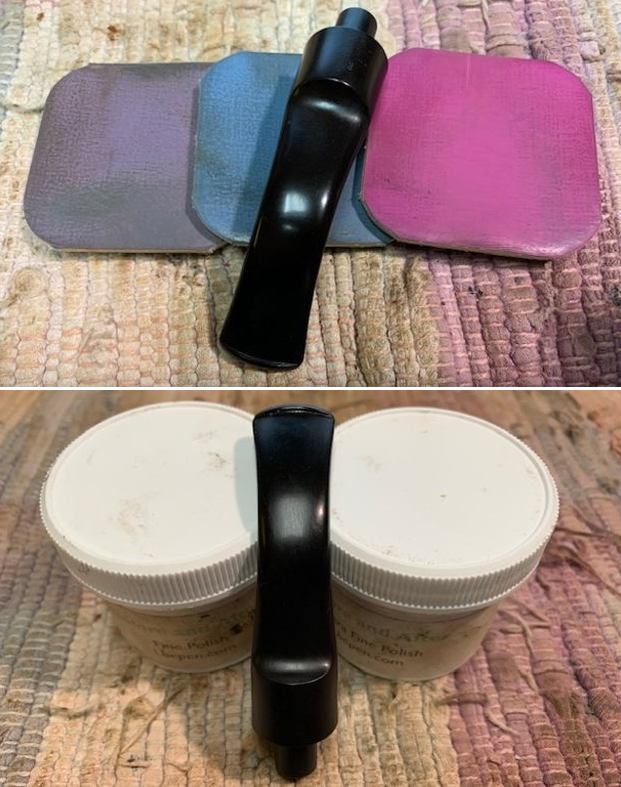
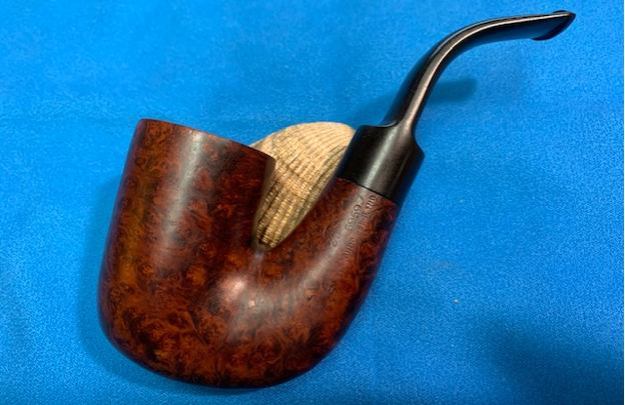
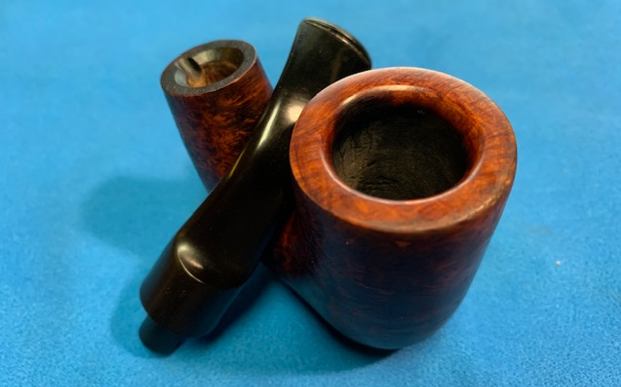
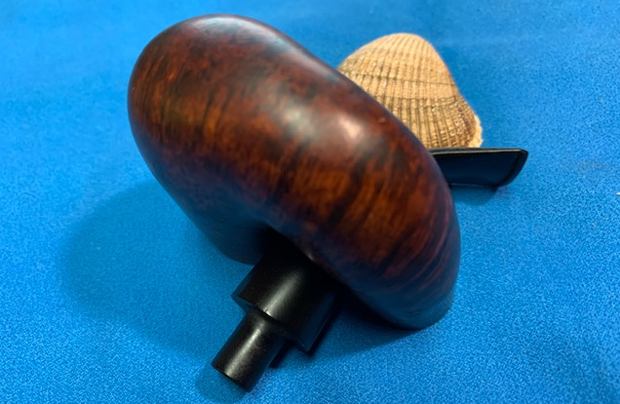
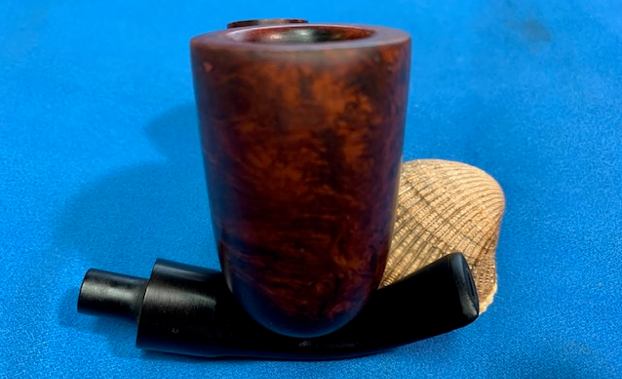
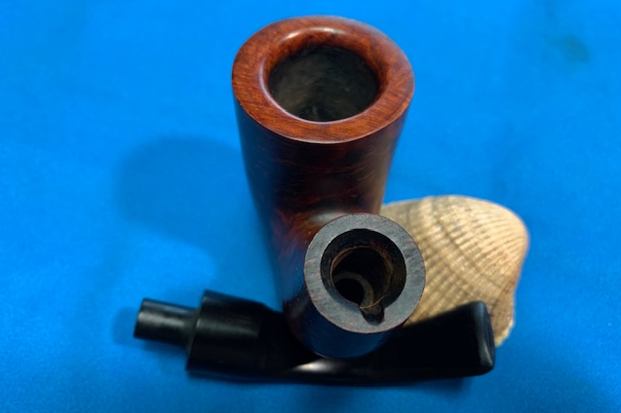
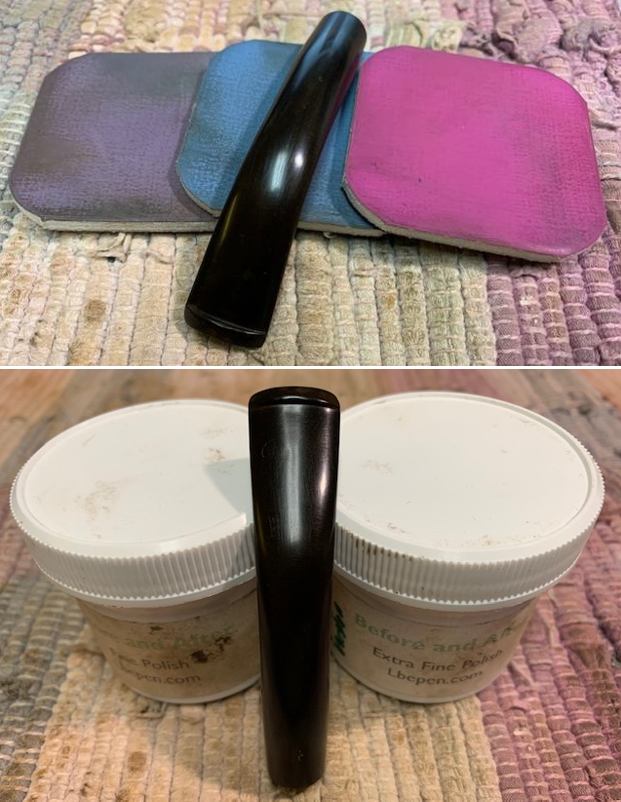
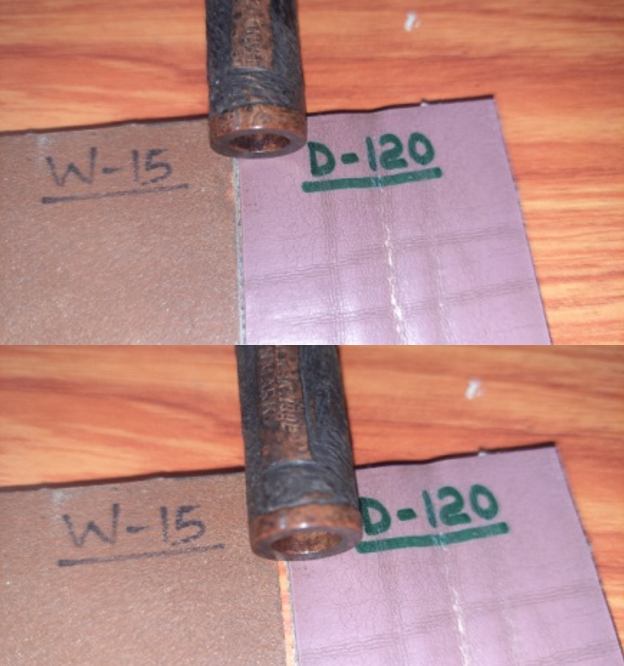
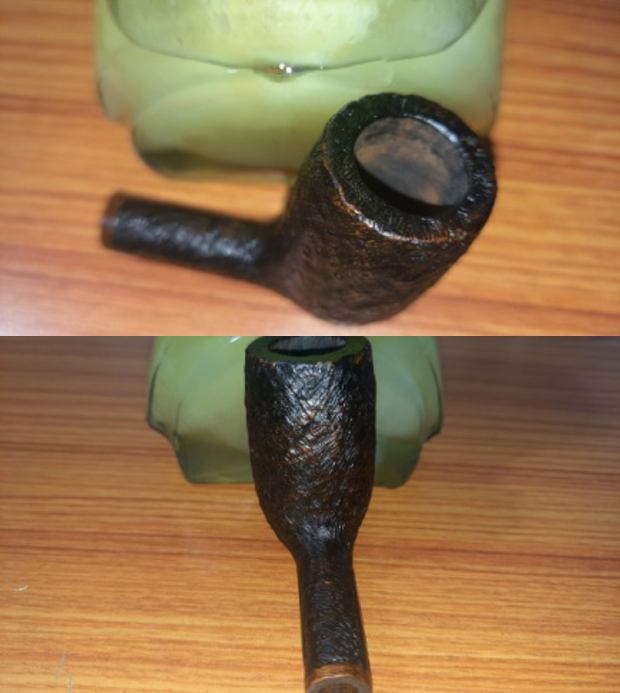
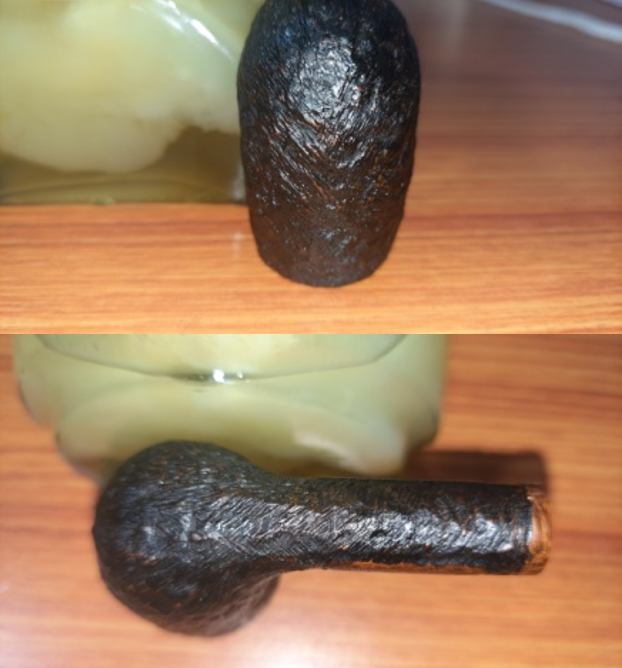
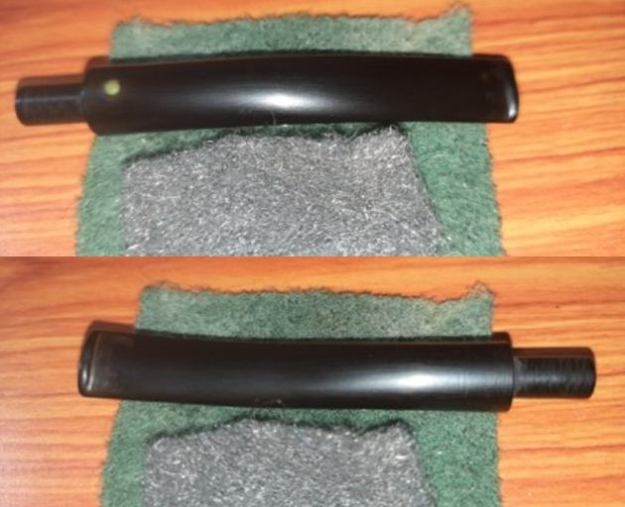
Tag Archives: removing tooth marks

Restemming & Restoring a Comoy’s Christmas 1987 Shape 42 Bent Billiard


Blog by Steve Laug

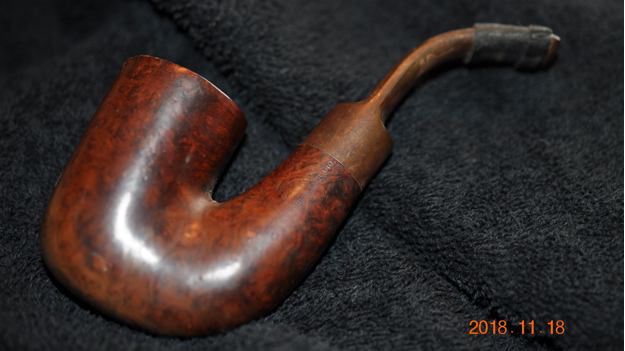
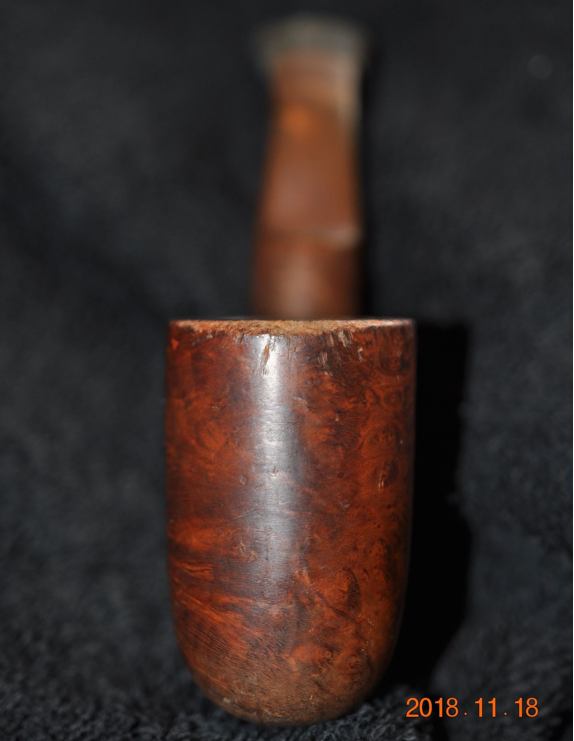
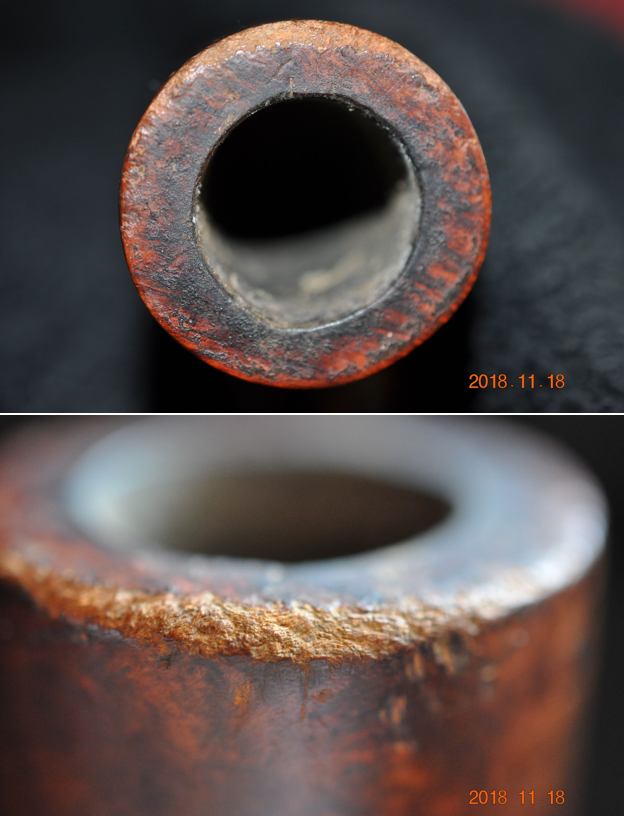
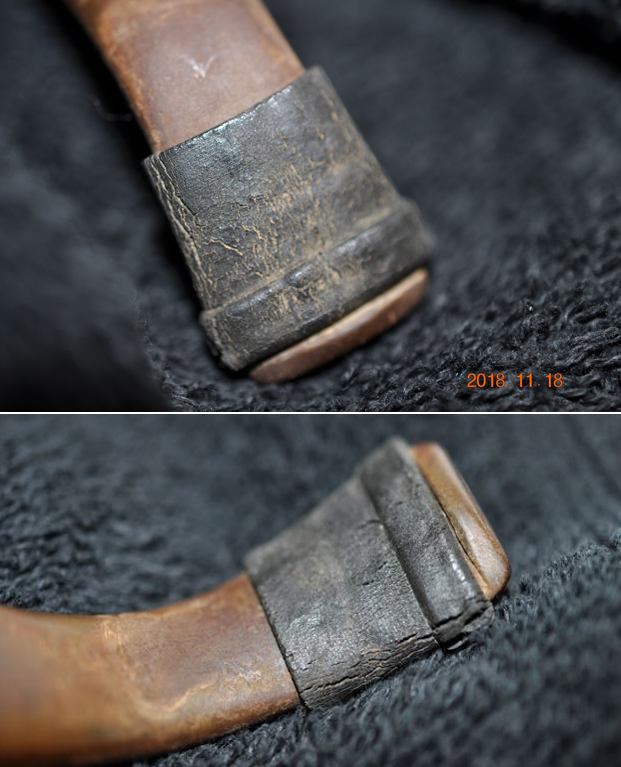
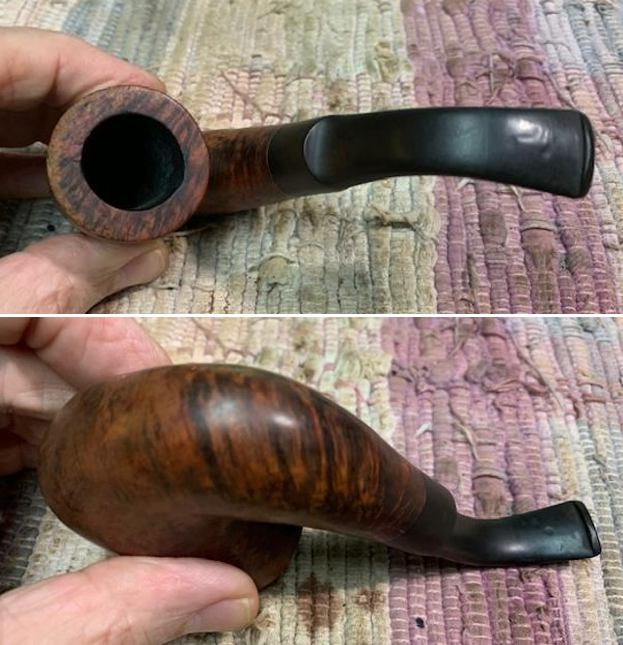
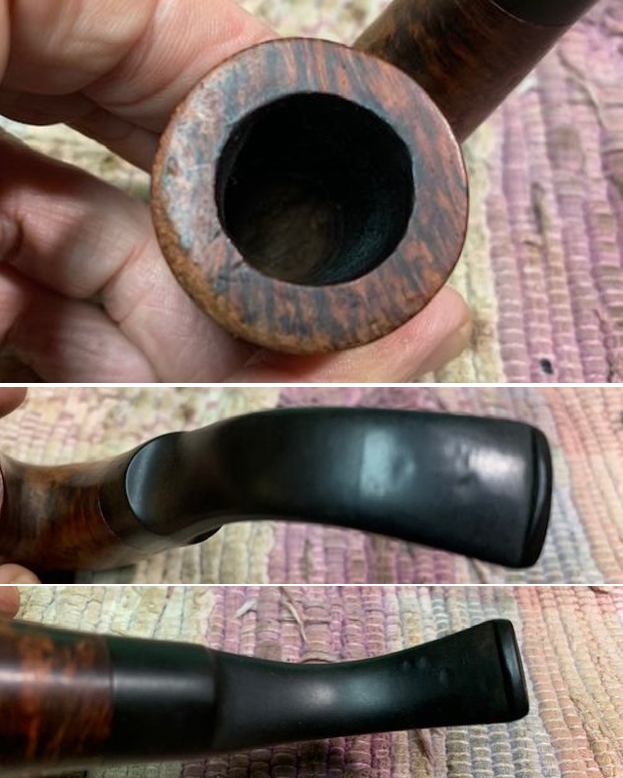
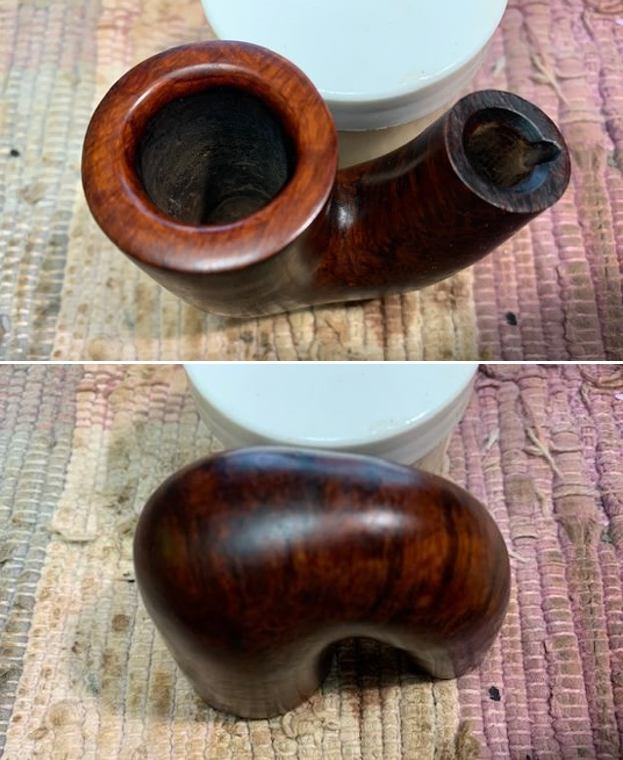
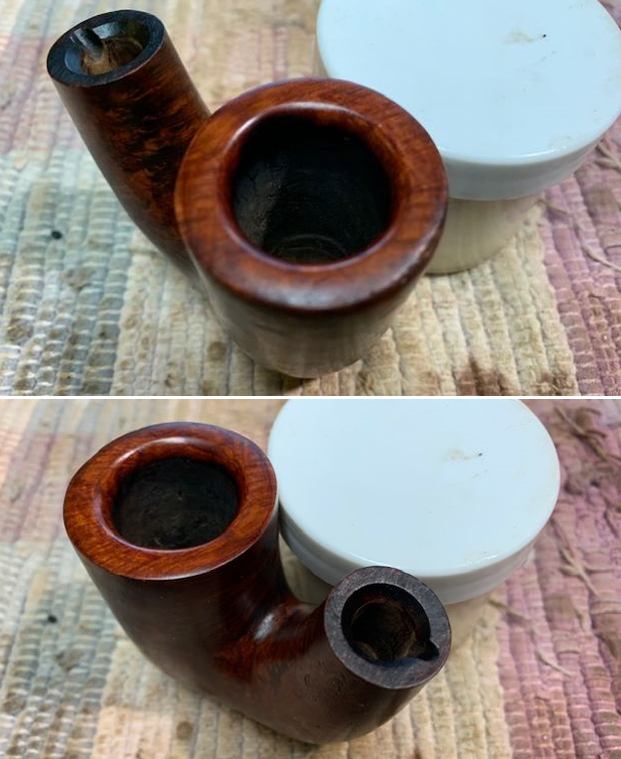
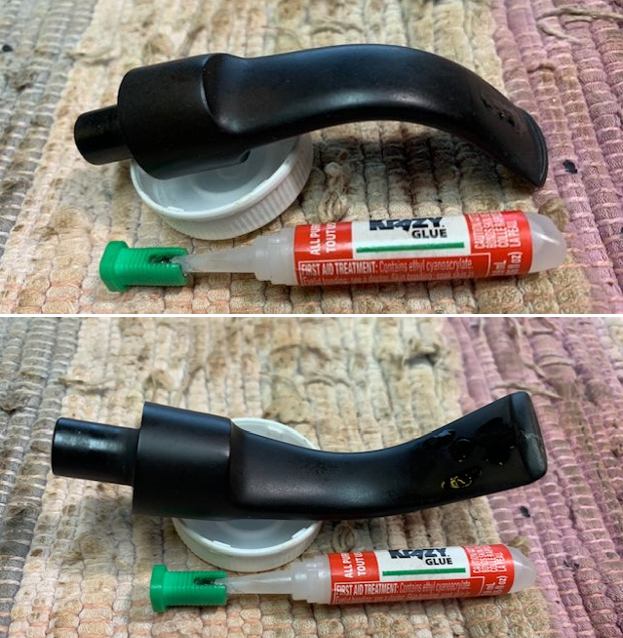
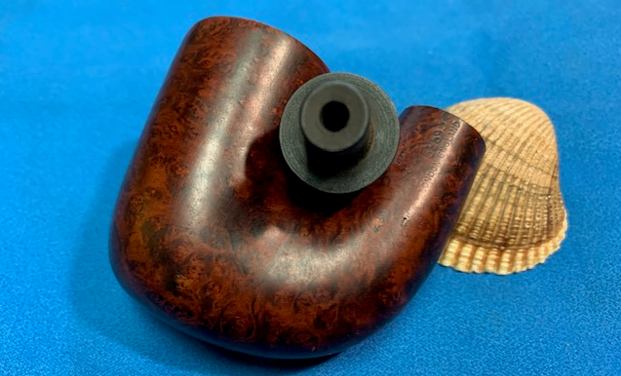
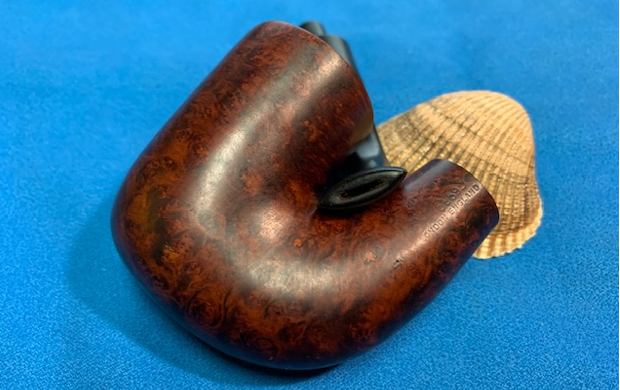
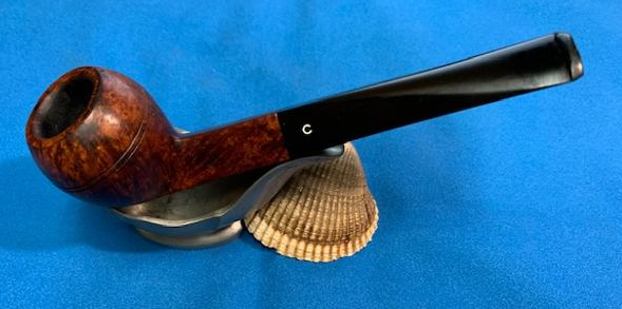
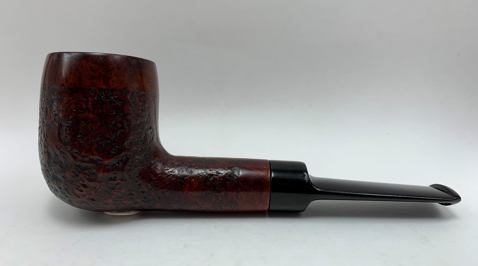
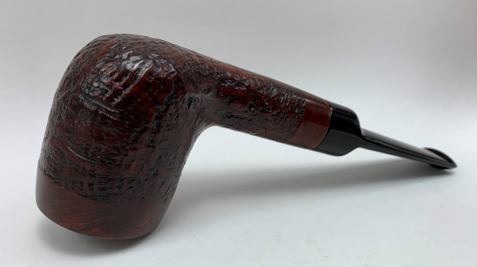
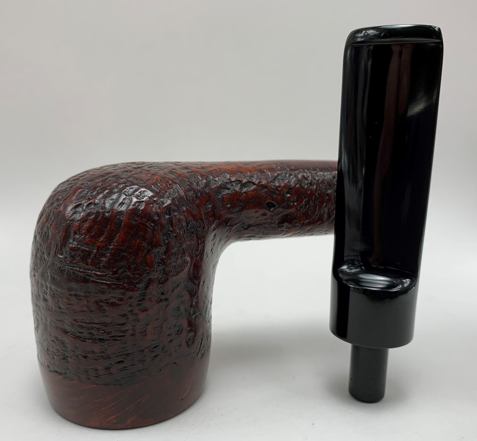
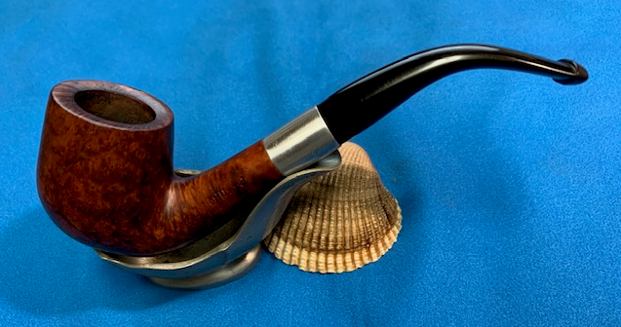
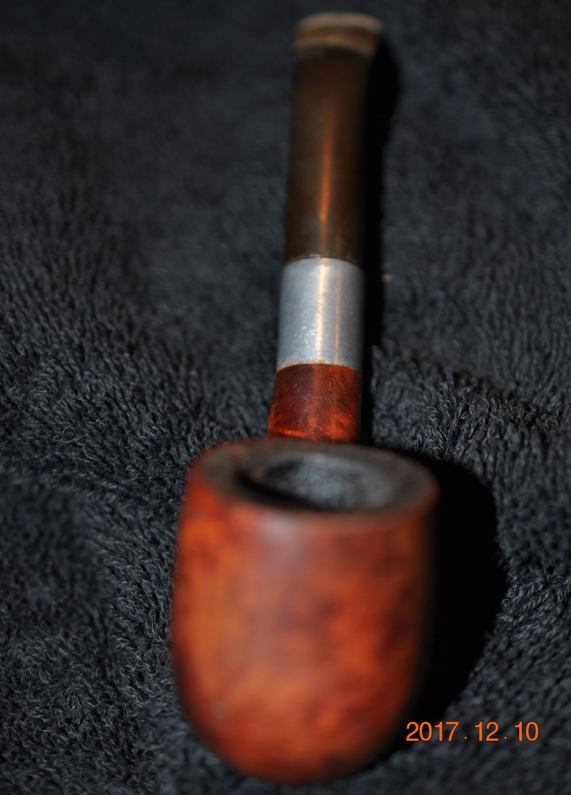
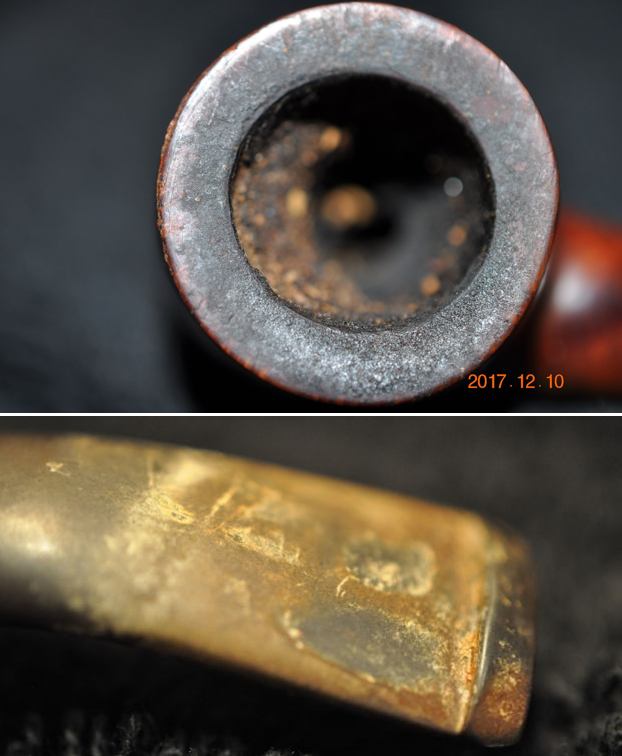
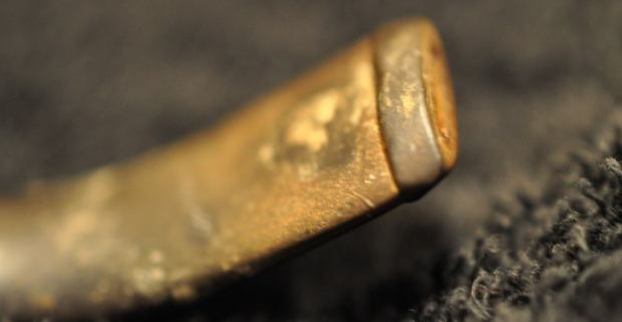
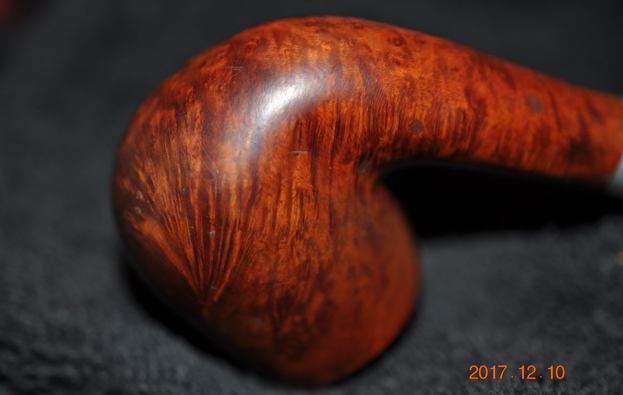
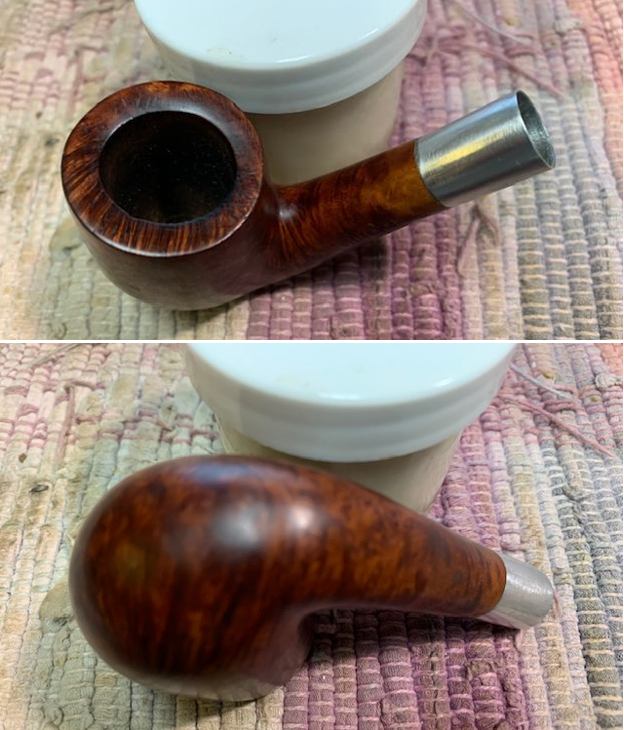
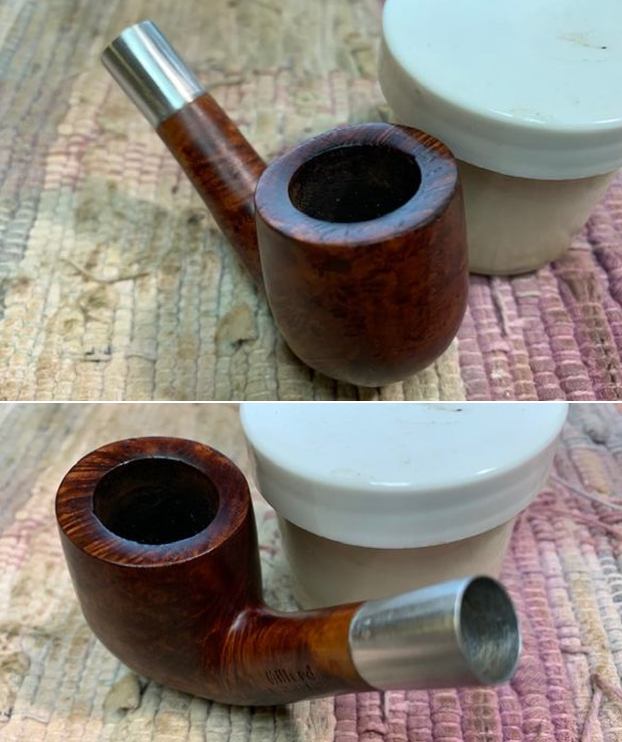
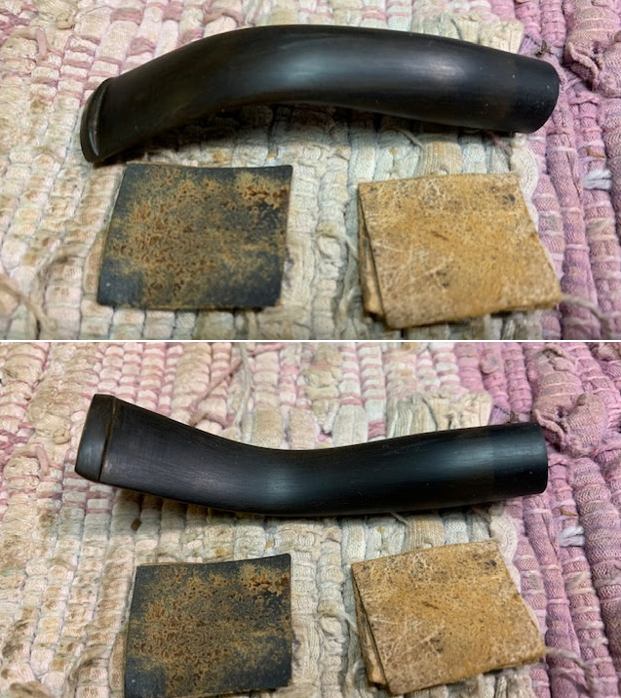
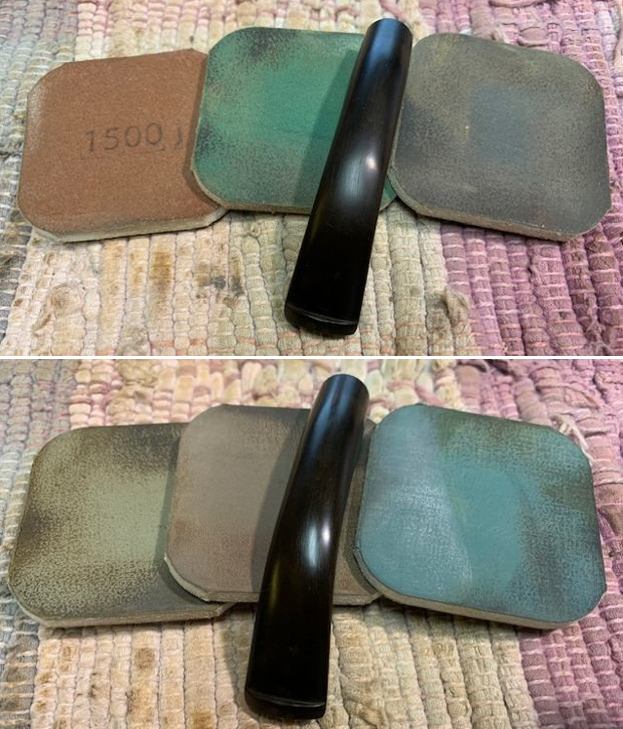
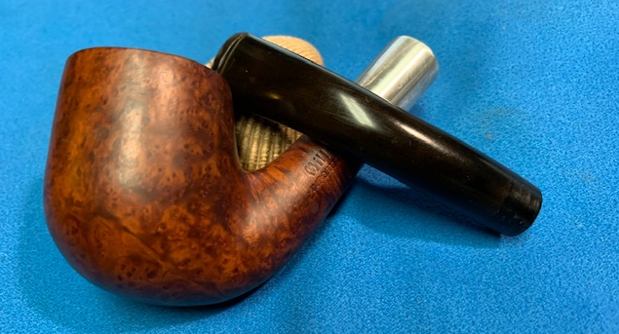
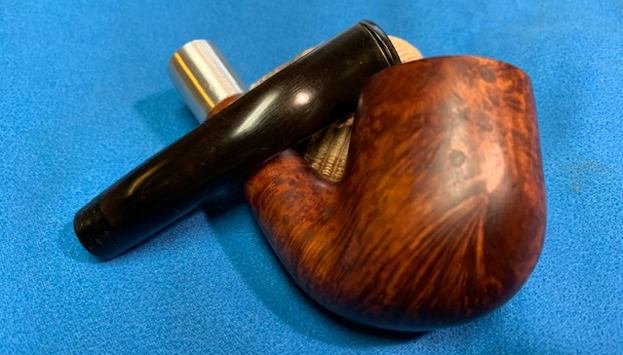
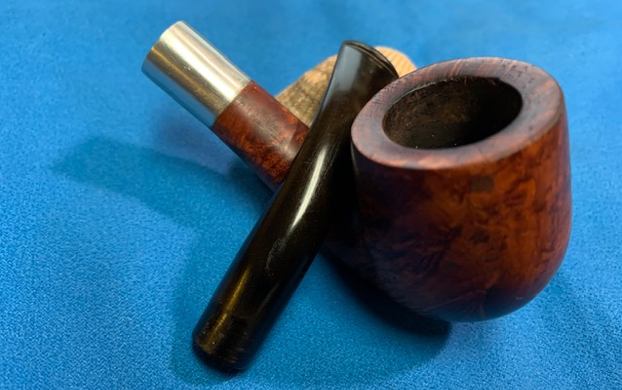
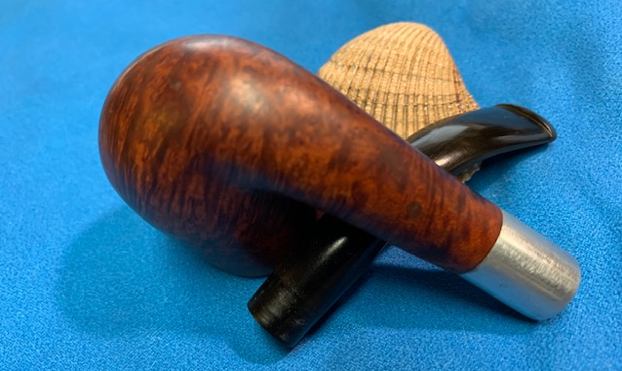
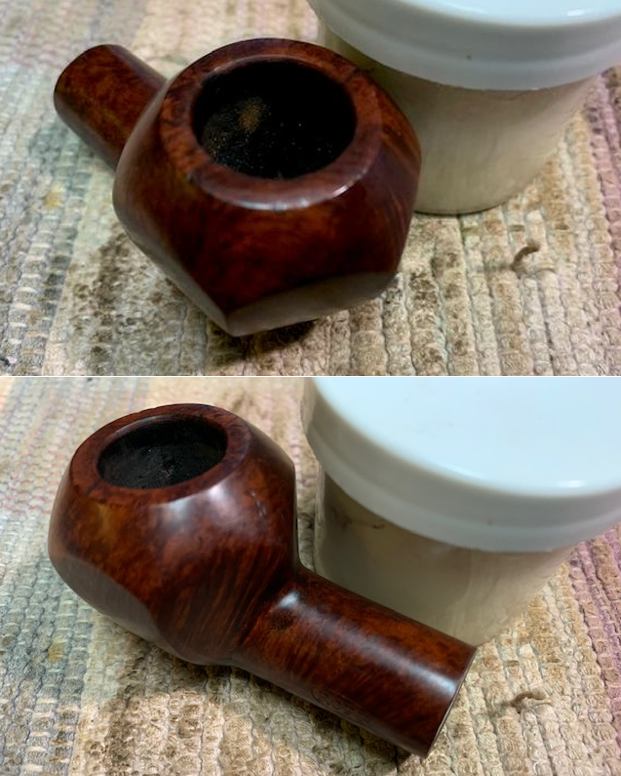
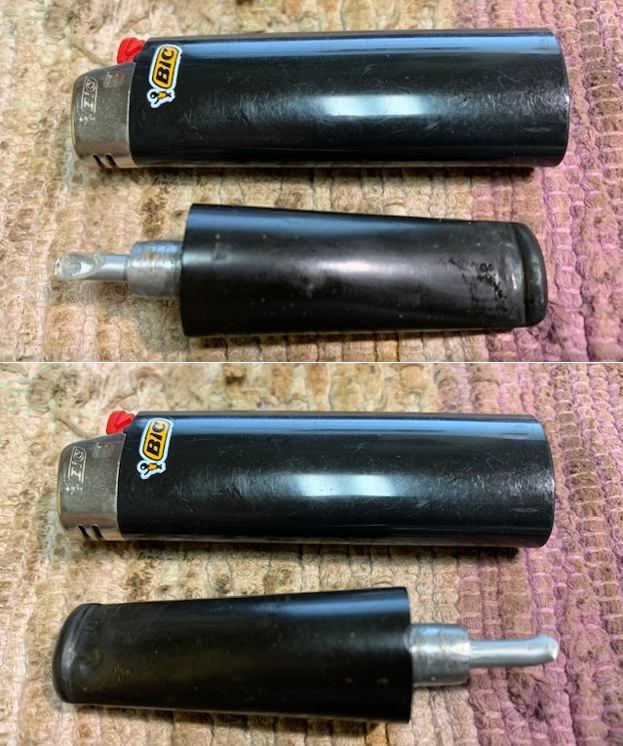
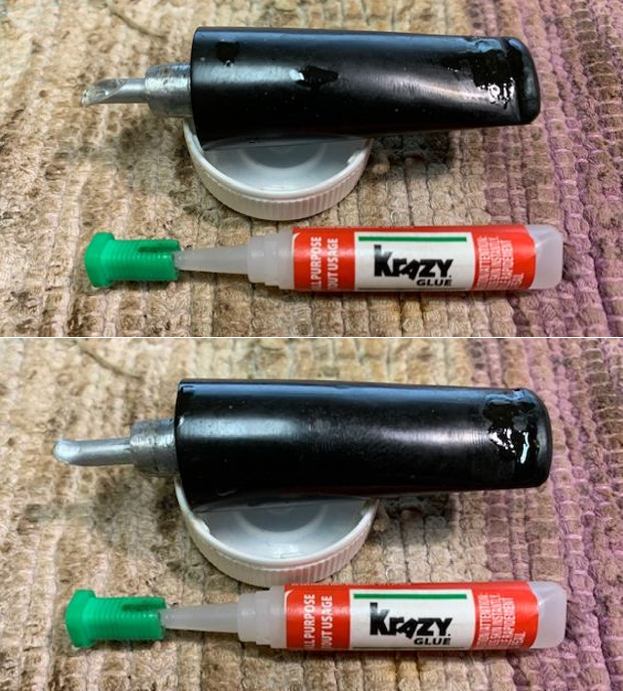
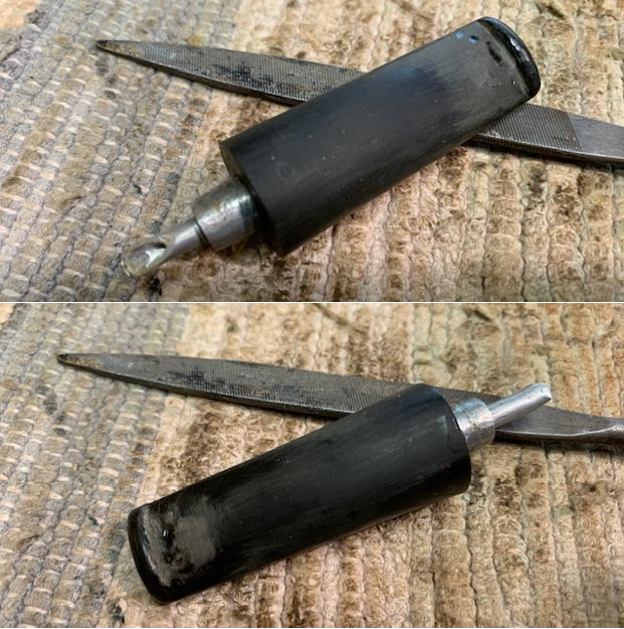
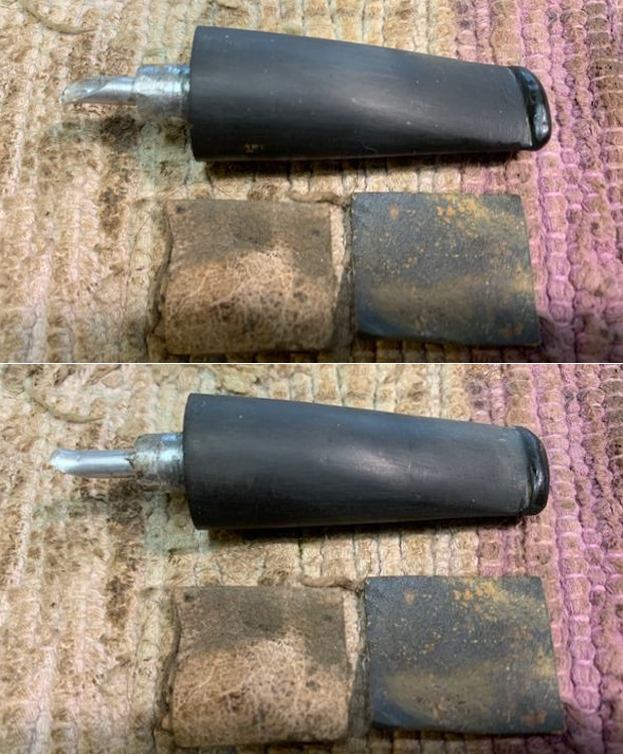
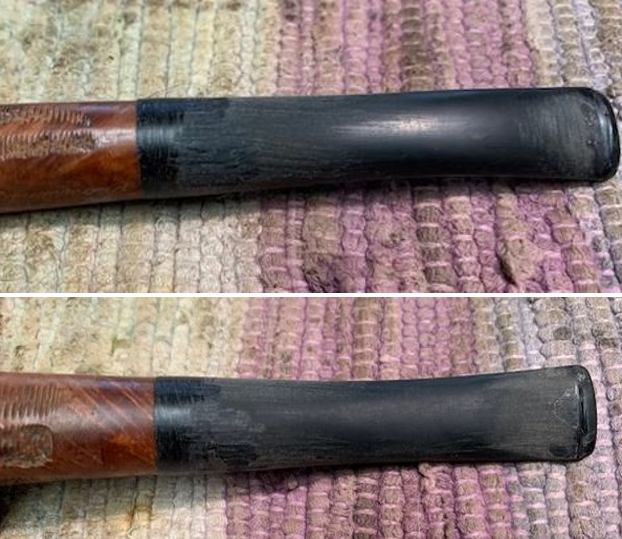
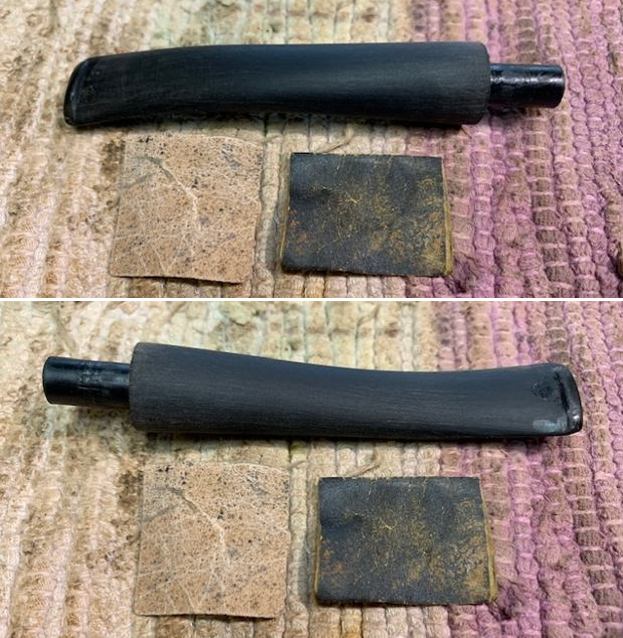
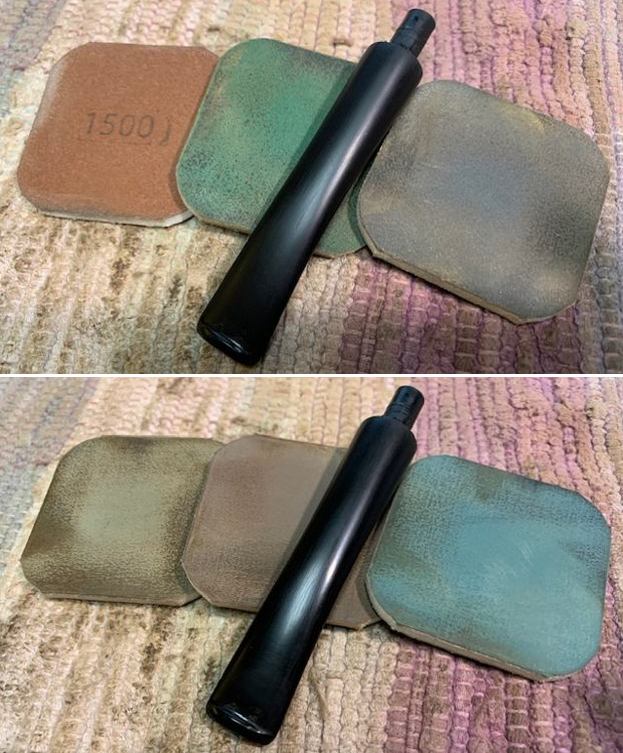
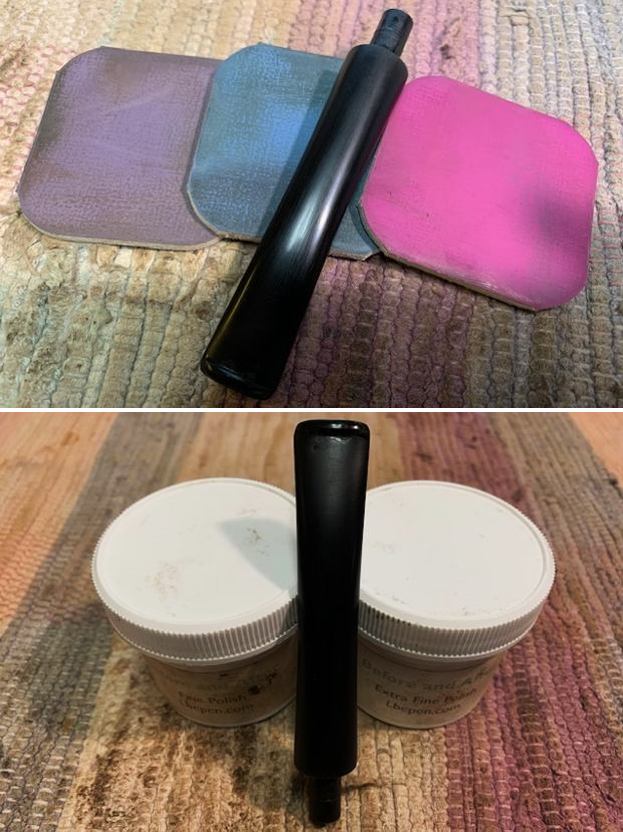
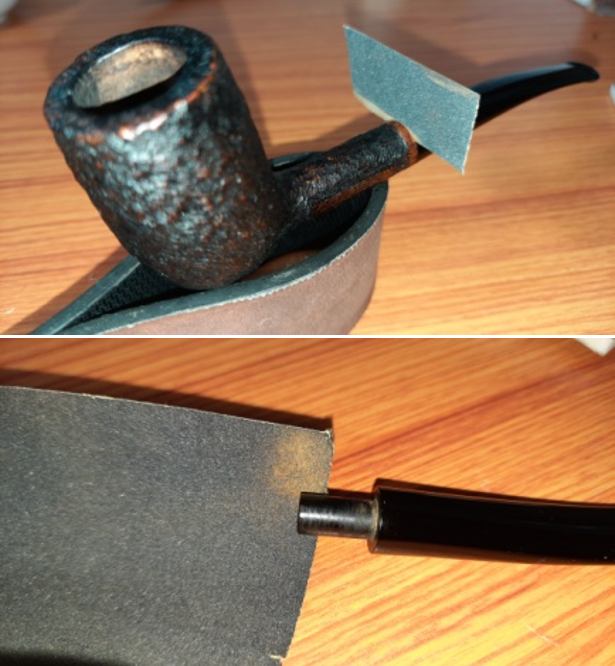
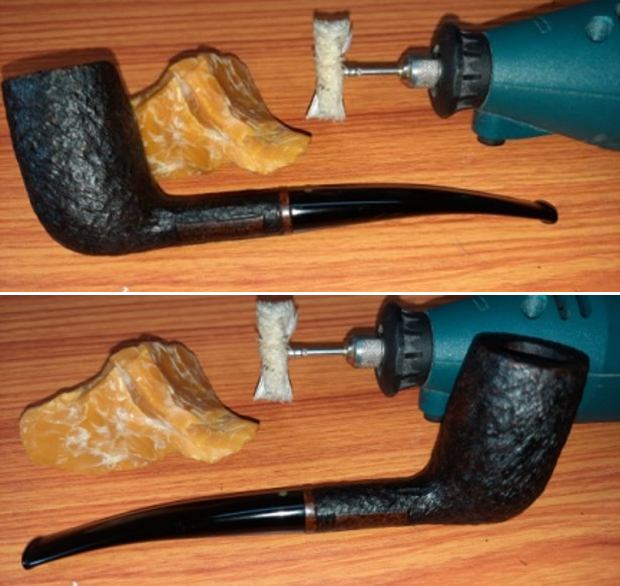
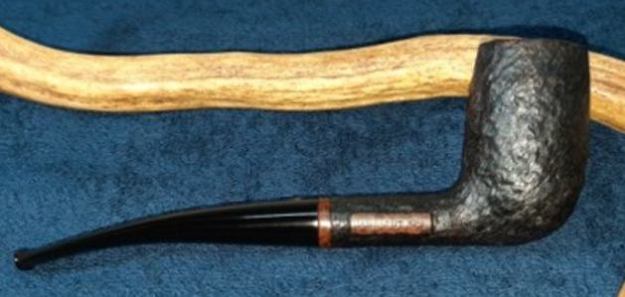
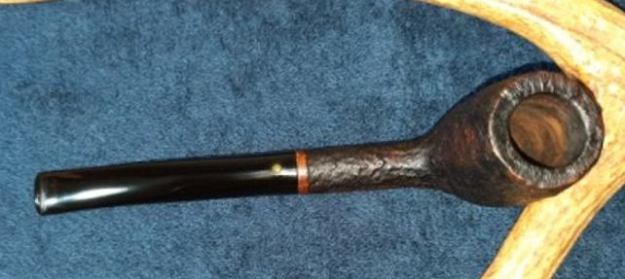
This morning I went through my box of stummels (bowls) again and picked out a Bent Billiard bowl that had some promise. I went through my can of stems and found a taper stem that needed some work but was a good fit. The pipe I chose to work on is an interesting Comoy’s Bent Billiard with a mixture grain around the sides. The rim top was had some darkening and some roughness on the front outer edge of the bowl. The inner edge of the bowl looked good. The interior of the bowl was clean without chips, cracks or checking on the walls. The finish was dirty and tired but still quite redeemable. The stamping on the pipe was clear and readable. On the left side it read COMOY’s [over] Christmas [over] 1987. On the right side it had the normal circular Comoy’s COM stamp Made in London in a circle [over] England below that was the shape number 42. I took some photos of the bowl before I started to work on it. I took a photo of the stamping on the left and right sides of the shank. It reads as noted above and is clear and readable.I went through some of stems and found a taper vulcanite stem that had been used previously. It had some calcification and oxidation on the surface and had tooth marks on both sides near the button.The tenon would need to be shortened slightly but I put it on the shank and took some photos of what it looked like at this point.I started my work on the bowl by dealing with the damage to the rim top and outer edge of the bowl. I lightly topped the rim on a topping board with 220 grit sandpaper. I worked over the inner beveled edge of the rim with a folded piece of sandpaper to remove some of the darkening. It was definitely an improvement. I polished the rim top and the bowl with micromesh sanding pads – dry sanding with 1500-12000 grit pads. I wiped the bowl down with a damp cloth between each pad. The bowl began to take on a shine as I went through the various pads. I stained the top of the bowl with a Cherry stain pen to blend in better with the rest of the bowl colour. It will definitely blend well once the pipe is buffed and polished.I rubbed the bowl and shank down with Before & After Restoration Balm. I worked it into the surface of the bowl sides and shank with my fingertips to clean, enliven and protect the briar. I let the balm sit for 10 minutes and then buffed with a cotton cloth to raise the shine. The grain really came alive. It looks better than when I began. With the bowl finished it was time to focus on the stem. I took out the stem and worked on the fit in the tenon. I shortened the length with a Dremel and sanding drum and it fit very well. I used a heat gun to soften the vulcanite enough to give it the proper bend.While I was bending the stem I also heated the bite marks in the stem. I was able to lift many of the tooth mark. I filled in the remaining tooth marks on the button surface and just ahead of it on the underside with clear super glue and set the stems aside to let the repairs cure.    Once the repairs cured I smoothed them out with a small file and started blending them into the surface of the stem. I sanded the repairs with 220 grit sandpaper to further blend it into the stem surface. I started polishing it with 400 grit wet dry sandpaper. I don’t know if this ever happens to you but I was so busy fitting and shaping the stem that I forgot to clean out the inside!! I paused now to do that. I scrubbed out the airway with 99% isopropyl alcohol and pipe cleaners. It was really dirty! Not any more.I polished the stem with micromesh sanding pads – dry sanding with 1500-12000 grit pads. I wiped the stem down after each pad with a cloth and Obsidian Oil. I finished the polishing with Before & After Pipe Stem Polish – both Fine and Extra Fine. I gave it a final coat of Obsidian Oil. I put the pipe back together – the bowl with its new stem. This restemmed and restored Comoy’s Christmas 1987 Shape 42 Bent Billiard is a real beauty and I think that the chosen stem works well with it. The grain on the bowl came alive with the buffing. I used Blue Diamond on the buffing wheel on both the bowl and stem. I gave both multiple coats of carnauba wax on the wheel then buffed it with a clean buffing pad to raise the shine. I hand buffed it with a microfibre cloth to deepen the shine. The Comoy’s Bent Billiard feels great in the hand. It is lightweight and the contrast in the browns of the briar, the Silver band and the polished vulcanite stem with the popping grain on the mixed brown stained bowl is quite amazing. The dimensions of the pipe are Length: 5 inches, Height: 1 ¾ inches, Outer diameter of the bowl: 1 1/8 inches, Chamber diameter: ¾ of an inch. The weight of the pipe is 1.41 ounces/40 grams. It really is a beauty. I will be putting it on the rebornpipes store in the  British Pipe Makers section shortly if you are interested in adding it to your collection. Thanks for walking through the restemming and the restoration with me. Cheers.  

Restoring a Lovely Barling 5959 Regency Oom Paul


Blog by Steve Laug

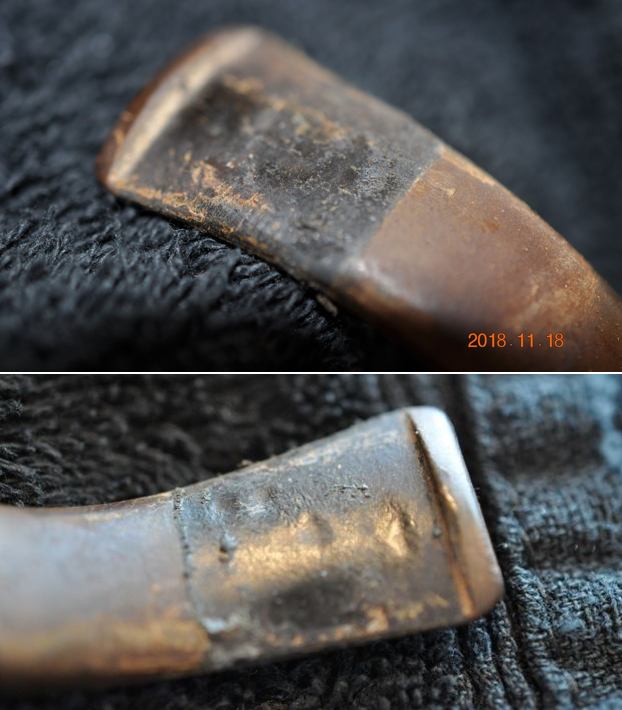
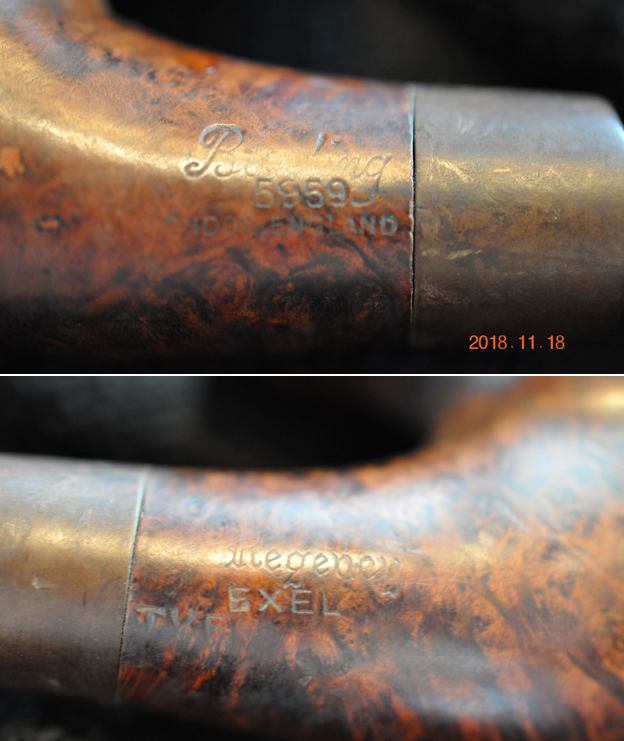
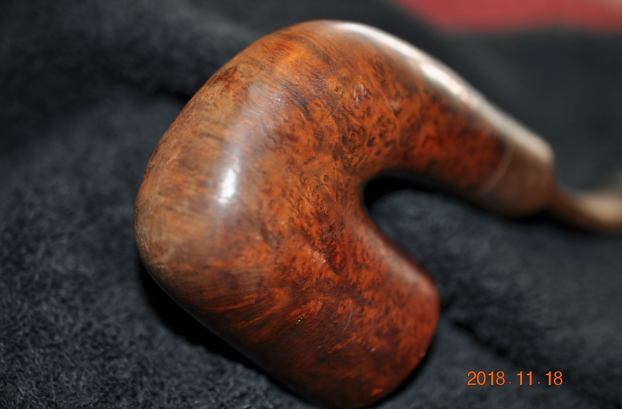
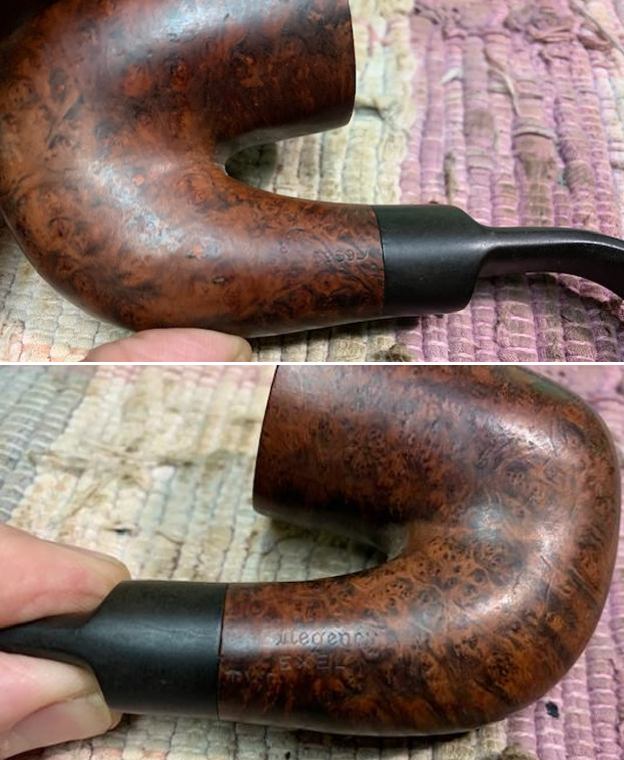
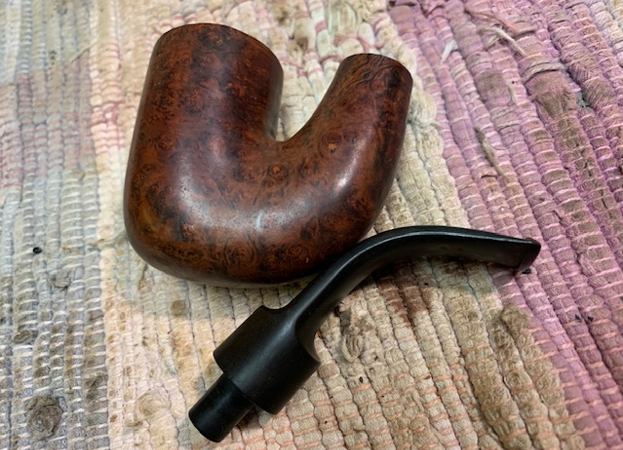
The next pipe I chose to work on an interesting looking Oom Paul shaped briar pipe that Jeff picked up from an online auction on 11/08/18 in Romney, West Virginia, USA. It was an interesting Oom Paul that has some great grain around the bowl and shank. It is stamped on the left side of the shank and reads Barling [over] 5959 [over] London England. On the right side it is stamped Regency in script [over] EXEL [over] T.V.F. So it is a Barling pipe. I will need to do a bit of work on the stamping to identify when it was made. The stem is a vulcanite saddle stem that had a rotting and cracking rubber Softee Bit on the end. The briar was very dirty and the front of the bowl had been knocked against a hard surface and was damaged and rough. There was a thick cake in the bowl and an over flow of lava covered the rim top. The stem was oxidized, calcified and the rubber Softee bit was worn. Jeff took some photos of the pipe before he started his clean up work on it. He took some photos of the bowl, rim top and edges to show the condition of the pipe before he started. There appeared to be some damage on the inner edge at the back of the bowl. The outer edge at the front was a real mess. He took photos of the stem with the Softee Bit in place and with it removed. It really is a mess with oxidation, calcification and tooth marks and chatter on both sides of the stem.He took photos of the stamping on the shank sides. It is clear and readable as is noted above.He took a photo of the side and heel of the bowl to show the grain that was on this particular piece of briar. It was a beauty.I checked the usual sources for information on the Barling Regency and did not come up with much. I am pretty certain it is a Post Transition Era pipe from the late 1960s to 1970s. I cannot narrow it down much further than that so I know that it is a new pipe (still over 50years old at least). Now it was time to move on to the pipe itself.

Jeff had cleaned up the pipe in his usual manner. He had reamed it with a PipNet pipe reamer and followed that up with a Savinelli Fitsall Pipe Knife afterward. He took the cake back to bare briar and the bowl looked very good. He scrubbed the internals with alcohol, pipe cleaners and cotton swabs to remove the oils and tars. He scrubbed the externals with Murphy’s Oil Soap and a tooth brush to remove the grime from the briar. He scrubbed the stem with Soft Scrub and then soaked it in a bath of Before & After Pipe Stem Deoxidizer. He rinsed it off with warm water and dried it with a coarse cloth to remove the remaining oxidation. The tooth marks are visible in the photos of the stem surfaces below. The pipe looked very good once it arrived here in Vancouver. I took photos of the pipe before I started my work. I took a photo of the rim top and bowl to show the condition of the briar. You can see the damage on the outer edge of the bowl on the front side. The top surface is scratched and marred. The inner edge of the bowl shows some burn damage on the back of the bowl. The stem looked good but the tooth marks are very visible.The next photos show the stamping on both sides of the shank. It is clear and readable though faint. The grain is also quite stunning.I took a photo of the pipe with the stem removed to give a sense of the proportion of the bowl and the stem.I decided to start by dealing with damage to the inner and outer edge of the bowl and clean up the rim top. I began with the inner edge and used a folded piece of 220 grit sandpaper to smooth out the damage there and begin a slight bevel on the edge. I topped the bowl to clean up the top and to deal with the damage on the front outer edge. I took photos of the refreshed rim top and edges. It looked much better. I polished the rim top and the bowl with micromesh sanding pads – dry sanding with 1500-12000 grit pads. I wiped the bowl down with a damp cloth between each pad. The bowl began to take on a shine as I went through the various pads. I stained the top of the bowl with a Maple stain pen to blend in better with the rest of the bowl colour. It will definitely blend well once the pipe is buffed and polished.I rubbed the bowl and shank down with Before & After Restoration Balm. I worked it into the surface of the bowl sides and shank with my fingertips to clean, enliven and protect the briar. I let the balm sit for 10 minutes and then buffed with a cotton cloth to raise the shine. If you look you can see the many small fills in the briar but they actually blend in surprisingly well. I set the bowl aside and turned my attention to the stem. I “painted” the surface of the stem on both sides with the flame of a lighter. I was able to lift many of the tooth mark. I filled in the remaining tooth marks on the button surface and just ahead of it on the underside with clear super glue and set the stems aside to let the repairs cure.    Once they cured I smoothed out the repairs with a small file and started blending them into the surface of the stem (I forgot to take photos of that part of the process). I sanded the repairs with 220 grit sandpaper to further blend it into the stem surface. I started polishing it with 400 grit wet dry sandpaper. I polished the vulcanite stem with micromesh sanding pads – 1500-12000 grit pads. I wiped it down with a damp cloth after each sanding pad. This Barling Regency 5959 Oom Paul with a vulcanite saddle stem is a great looking pipe now that it has been restored. The rich browns and blacks of the contrasting stains came alive with the polishing and waxing. I put the stem back on the bowl and carefully buffed the pipe with Blue Diamond on the buffing wheel using a light touch on the briar. I gave the bowl and the stem multiple coats of carnauba wax on the buffing wheel and followed that by buffing the entire pipe with a clean buffing pad. I hand buffed the pipe with a microfiber cloth to deepen the shine. The finished Barling Regency Oom Paul is a beauty and fits nicely in the hand and looks very good. Give the finished pipe a look in the photos below. The dimensions of the pipe are Length: 4 inches, Height: 2 ¼ inches, Outside diameter of the bowl: 1 ½ inches, Chamber diameter: 7/8 of an inch. The weight of the pipe is 64 grams/2.26 ounces. I will be putting this Barling on the British Pipe Makers section of the rebornpipes store shortly if you want to add it to your collection. Thanks for reading this blog and my reflections on the pipe while I worked on it. There are many more to come!

Restoring a Comoy’s Grand Slam Pipe 233 Straight Bulldog


Blog by Steve Laug

I decided to dig deep in the boxes of pipes I have here to work on. I chose a Comoy’s Grand Slam Pipe Straight Bulldog. It is a beautifully grained Comoy’s Bulldog that was purchased from a Portland Oregon estate sale on 08/16/17. It really is a pipe of Pipe Smoking History. The stamping is the significant marker that points this out for me. It is stamped on the left side of the shank and reads COMOY’S [over] Grand Slam [over] Pipe. On the right side it has the shape number 233 next to the bowl/shank junction and that is followed by a Comoy’s COM stamp that reads Made in London in a circle [over] England. On the underside there was a *7 stamped at the stem/shank junction. There was a lot of grime ground into the smooth finish on the bowl and some darkening around the rim cap and top. The bowl was heavily caked with an overflow of thick lava on the top of the rim and on the inner bevel of the bowl. It was hard to know what the rim top and inner edge of the bowl looked like under the grime. The stem was oxidized, calcified and there were tooth marks and chatter on both sides ahead of the button. There was a three part inlaid C on the left of the taper stem. The pipe had promise but it was very dirty. Jeff took photos of the pipe before he started his cleanup work. He took photos of the rim top and bowl to give a clear picture of the thickness of the cake and the overflow of lava on the rim top and down the side. It is hard to know if there is damage to the inner edge of the bowl because of the lava coat. He also took photos of the top and underside of the stem to show the condition of the stem. He took photos of the stamping on both sides and underside of the shank. They read as noted above. You can also see the 3 part C logo on the left side of the taper stem.   I looked on Pipephil’s site for information on the Comoy’s Grand Slam Pipe and found the following information I have included a screen capture (http://www.pipephil.eu/logos/en/logo-comoy.html). It has the three part C which dated it to 1946 and following. The stamping on the second pipe in the capture is the same as the one I am working on. The *7 is the size of the washer on the end of the stinger. (The pipe in hand is missing the stinger apparatus.)I turned to the article on Pipedia about dating Comoy’s pipes but the style of the stamping (https://pipedia.org/index.php?title=Comoy%27s_Dating_Guide#1917_to_the_end_of_the_1930.27s_.28at_least_1938.29). I have include the section in the screen capture below that date this pipe to the 1950s.

Now the Comoy’s stamp can be found in three variants in the 1950s

  1. A simple block-letter style without serifs but with the C larger than the other letters and the apostrophe before the “S”.
  2. A return to the slightly more fancy block letters with serifs and the apostrophe. (It seems that some grades carried different stamps, or at least that the stamping changed in different years for some grades.)
  3. A simple block-letter style without serifs and without the apostrophe and with the “C” the same size as the rest of the letters. This stamp was probably not used very long.
  4. A simple block-letter style without serifs but with the apostrophe before the “S” and with the “C” the same size as the rest of the letters.

Made in London England

Appears in two versions. This is again stamped in a circle with “MADE” at the top, “IN” in the middle, and “LONDON” at the bottom, with “ENGLAND” in a straight line beneath. It can be assumed that this stamp was first used in the export drive in the early 1950s. On a Bulldog Sandblast from the early 50s the Comoy name no. 2 above was used together with “MADE IN LONDON” over “ENGLAND”. There are no known examples of pre-WW II Comoy’s stamped in this way. The second version is the same as above but in a “rugby ball ” shape. This shape is verified on Comoy´s “Extraordinaire” pipes.

Inlaid “C”

C” was first inlaid in the side of the mouthpiece around 1919. This was a complex inlay needing three drillings. First, a round white inlay was inserted, then the centre of the white was drilled out, and a smaller round black inlay was inserted. Finally, another drilling was made to remove the open part of the “C,” and an even smaller black inlay was inserted. This inlaid “C,” known as the “three-piece C,” was continued until the Cadogan era in the 1980s. However, the “C” in the 1920s and early 30s is much thinner and more delicate than the one post-WW II.

That article gave me some helpful information regarding the pipe that I was working on. I knew that the stamping and logos identified the pipe as having been made in following WW2 and from what I can see from the above information it is a 1950s era pipe.

Jeff had done his usual thorough clean up of the bowl and stem. He reamed the bowl with a PipNet pipe reamer to remove the remaining cake back to briar. He followed up with a Savinelli Fitsall pipe knife to remove the remnants of cake. He scrubbed out the mortise and the airway in the shank and the stem with alcohol, cotton swabs and pipe cleaners. He scrubbed the exterior of the bowl, rim, shank and stem with a tooth brush and Murphy’s Oil Soap to remove the oils and tars on the rim and the grime on the finish of the bowl. He rinsed it under running water and dried it off with a soft cloth. The pipe was remarkably clean considering where it began! The rim top looked much better. There was still some darkening on the top and inner bevel as well as some down the cap on the bowl. It was definitely an improvement but more would need to be done. The stem looked better as well but the tooth marks are very visible in the photos below. I took photos of the stamping on the shank sides. They read as noted above.  I removed the stem from the shank and took a photo of the pipe to give a sense of the proportions of the pipe. It is a beauty.Now it was time to start working on the pipe. I decided to work on the rim top and edges to try to remove the darkening that was present. I used a folded piece of 220 grit sandpaper to smooth out the top and edges and try to lighten them. I am pretty pleased with the way it turned out.  I polished the bowl and the rim top, sides and shank with micromesh sanding pads – dry sanding with 1500-12000 grit pads and wiping it down after each pad with a damp cloth. I carefully avoided the stamping on the shank so as not to damage it.    I rubbed the bowl and shank down with Before & After Restoration Balm. I worked it into the surface of the bowl sides and shank with my fingertips to clean, enliven and protect the briar. I let the balm sit for 10 minutes and then buffed with a cotton cloth to raise the shine.    I set the bowl aside and turned my attention to the stem. I “painted” the surface of the stem on both sides with the flame of a lighter. I was able to lift many of the tooth marks. I filled in the remaining tooth marks on the button surface and just ahead of it on the underside with clear super glue and set the stems aside to let the repairs cure.    I smoothed out the repairs with a needle file and started blending them into the surface of the stem. I sanded the remaining repairs with 220 grit sandpaper to further blend it into the stem surface. I started polishing it with 400 grit wet dry sandpaper.   I polished the vulcanite stem with micromesh sanding pads – 1500-12000 grit pads. I wiped it down with a damp cloth after each sanding pad. This 50s era Comoy’s Grand Slam Pipe 233 Straight Bulldog with a vulcanite taper stem is a great looking pipe now that it has been restored. I did a lot of work on the bowl and the stem. The rich browns and blacks of the contrasting stains came alive with the polishing and waxing. I put the stem back on the bowl and carefully buffed the pipe with Blue Diamond on the buffing wheel using a light touch on the briar. I gave the bowl and the stem multiple coats of carnauba wax on the buffing wheel and followed that by buffing the entire pipe with a clean buffing pad. I hand buffed the pipe with a microfiber cloth to deepen the shine. The finished Comoy’s Grand Slam Bulldog is a beauty and fits nicely in the hand and looks very good. Give the finished pipe a look in the photos below. The dimensions of the pipe are Length: 5 ½ inches, Height: 1 ¾ inches, Outside diameter of the bowl: 1 ¼ inches, Chamber diameter: ¾ of an inch. The weight of the pipe is 38 grams/1.34 ounces. I will be putting this older Comoy’s Bulldog on the rebornpipes store shortly if you want to add it to your collection. Thanks for reading this blog and my reflections on the pipe while I worked on it. There are many more to come!

The Mystery of Blue Hill


Blog by Kenneth Lieblich

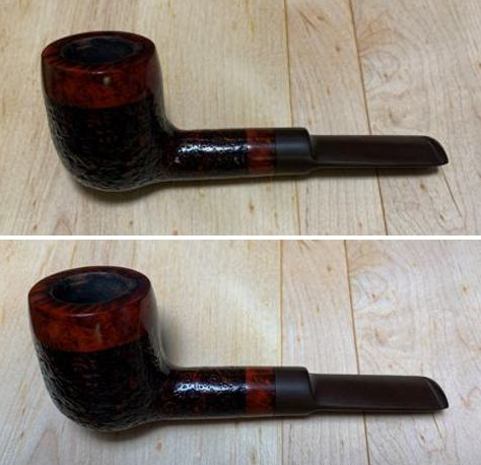
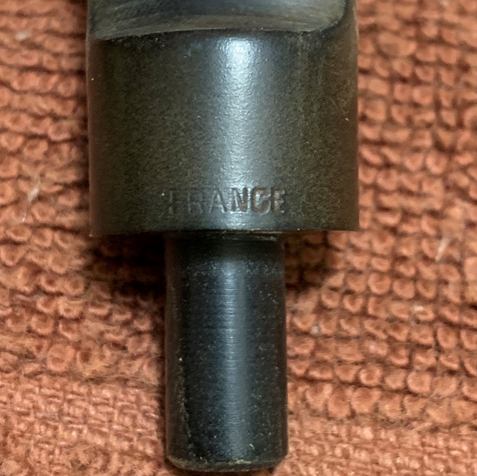
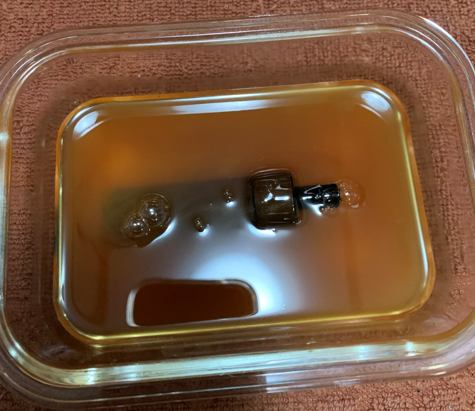
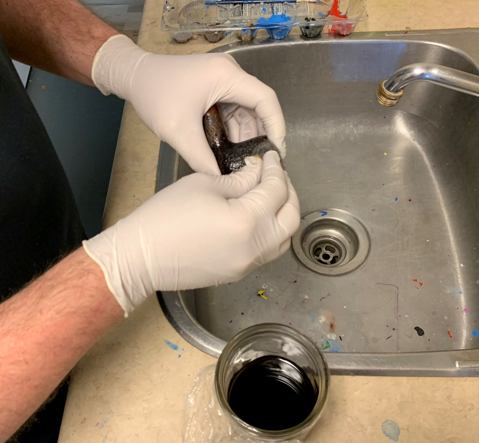
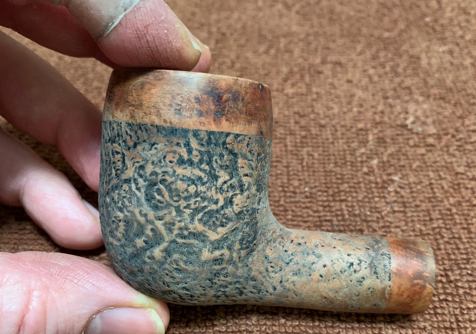
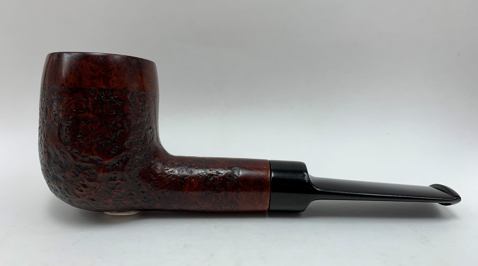
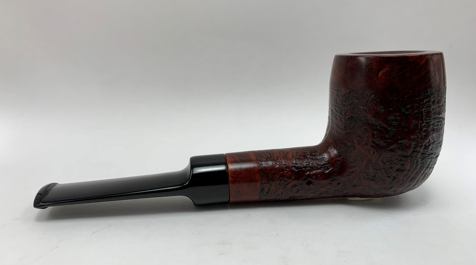
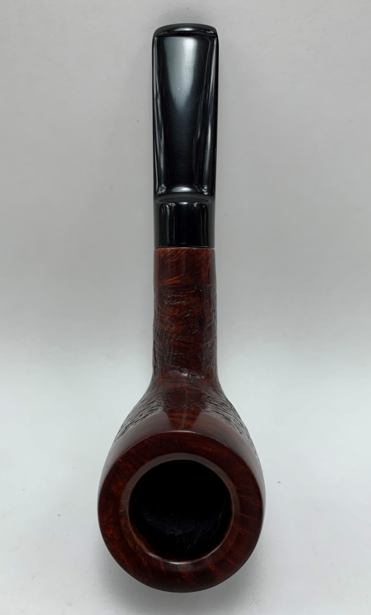
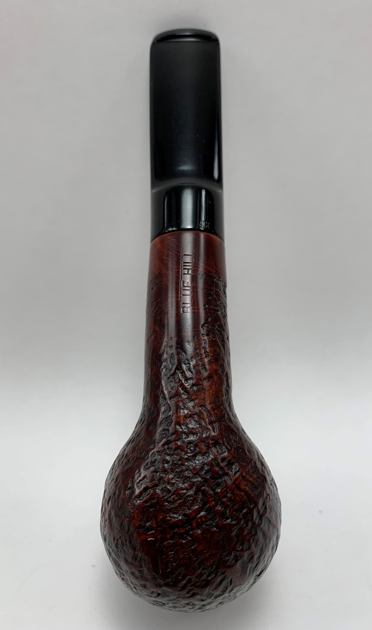
The title sounds like a Hardy Boys story, does it not? Well, it is not that exciting. Next on the chopping block is a peculiar pipe: it is both superbly made and unattractively painted. In addition, its true origin is unknown. I actually acquired the pipe from Steve. I bought a grab bag of pipes from him a long time ago and this was among them. Fortunately for me, Steve’s legendary pipe-cleaning brother, Jeff, had already done his work on this. Although I do not care for the paint scheme, this is a beautiful pipe: excellent proportions, handsome manufacture, and undoubtedly a good smoker.There is one other peculiarity about this pipe: no information about its history and origins! The has a clear marking of “Blue Hill” on the shank of the stummel and the word “France” on the stem. Yes, we can obviously assume that the pipe was made in France, but there is nothing to be found on the name “Blue Hill”. My uneducated guess is that it was made for an English or American company – perhaps even a tobacco shop. As an aside, there is a different pipe maker who uses the name “Blue Hill Crafts”, but he has no connection to this pipe. All the usual sources (Pipedia, Pipephil, et cetera) have no listing for “Blue Hill”. Even rebornpipes had nothing. Alas, we do not know who made this pipe, but whoever it was – they did a good job. If you have any information about Blue Hill, please do let me know.Thanks to Jeff’s stellar clean-up work, there were not too many issues that needed to be addressed. The stem had a few nicks and dents, but nothing catastrophic. Similarly, the stummel had a bump or two, here and there, but the only major problem was the two-tone colour pattern. I think two-tones can and do work well on some pipes, but I felt that this pipe needed a deep, rich brown to make it look its best. The photos of the original colour do not show the reddish tinge very well. Trust me, the pipe looked much more red than it does here. The stem was first on my list. I took a BIC lighter and ‘painted’ the stem with its flame in order to lift the tooth marks. This was reasonably successful in raising the dents. I did not need to clean the insides of the stem (thanks again, Jeff), so the stem went straight for an overnight soak in the Before & After Hard Rubber Deoxidizer. The following day, I cleaned all of the de-oxidizing sludge off with alcohol, pipe cleaners, et cetera. The oxidation had migrated to the surface and would be fairly straightforward to remove. I scrubbed vigorously with SoftScrub to remove the leftover oxidation. Before I moved on to the Micromesh pads, I built up the small dents on the stem with cyanoacrylate adhesive and let them fully cure. I then sanded it down with 220-, 400-, and 600-grit sandpapers to meld the repair seamlessly into the stem. This ensures that it keeps its shape and looks like it should. I then used all nine Micromesh pads (1,500 through 12,000 grit) to bring out the lovely black lustre on the stem. I also used Obsidian Pipe Stem Oil in between each pad scrubbing. On to the stummel, and I figured that it would be fairly straightforward to remove the old, ugly stain. Boy, was I mistaken! My first plan was to dunk the stummel in an alcohol bath overnight. This will often loosen, thin, or remove stains from pipes. Twenty-four hours later, nothing happened! The stain looked just as it did when it went into the bath. That was not in the plans. So, time to escalate the situation: I used acetone and rubbed it vigorously into the stain. After many minutes of scrubbing, nothing happened (again)! I then realized that I was going to have to use the nuclear option: soaking overnight in acetone. The next day dawned and there was, at long last, some evidence of progress on the stain. Not a lot had been shed, but enough to show me that I was on the right track. I then went to the sink with the stummel, some acetone, a wire brush, and some gloves. I set about scrubbing the dickens out of that pipe and finally succeeded in getting that silly stain off. Most of the black remained in the lower recesses of the rustication, but I actually liked that – it added some character. Having completed that, I was able to address a couple of small nicks on the side of the stummel, just below the rim. I dug out my iron and a damp cloth to try and raise the nicks. The hot and moist steam created can often cause the wood to swell slightly and return to shape. There was some movement – not a lot, but it was better than doing nothing. I filled the remaining divots with cyanoacrylate adhesive.

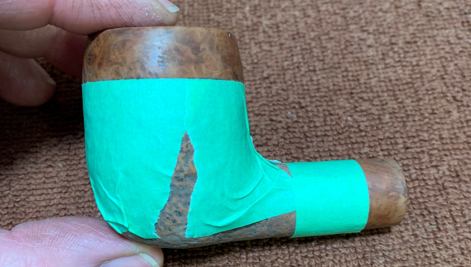
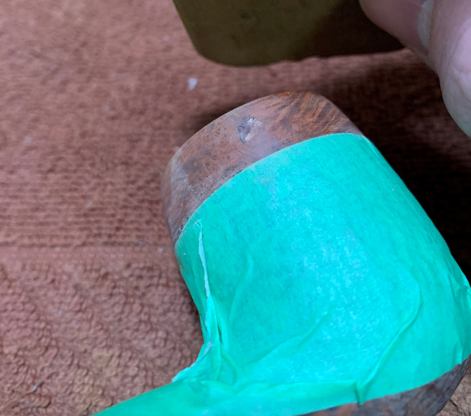
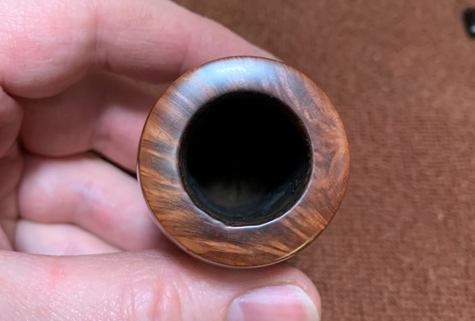
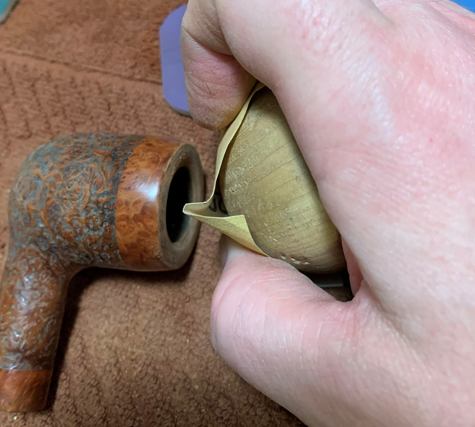
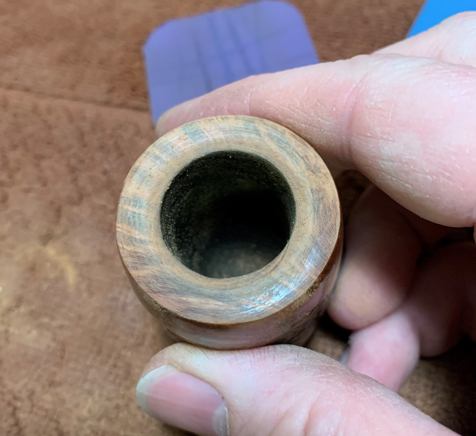
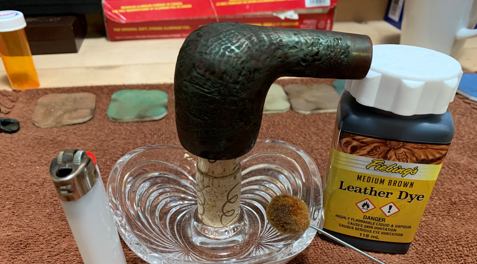
Now, with the nicks filled, it was time to sand down the stummel. Just like the stem, I used all nine Micromesh pads (1,500 through 12,000 grit) to sand everything smooth – although, as the photos show, I masked the rusticated parts so as not to disturb them. A light application of Before & After Restoration Balm brought out the best in the stummel’s grain. Whoops! I then noticed that the opening of tobacco chamber was not in perfect shape. It required some “rounding”. I took a solid wooden sphere, wrapped sandpaper around it, and gently sanded the opening of the tobacco chamber. This both corrected the problem and added a beautiful beveled edge to the pipe. I went back over it with the Micromesh pads and made everything lovely again. Naturally, one of the main purposes of this pipe restoration was to correct the colour problem. In order to create some external beauty to this pipe, I opted for aniline dye. I applied some of Fiebing’s Medium Brown Leather Dye and then applied flame in order to set the colour. In fact, I added a second helping of the dye, just to make sure the colour was nice and rich. Worked like a charm! This lovely, warm brown is just what I was hoping for. Then it was off for a trip to the buffer. A dose of White Diamond and a few coats of Halcyon II wax were just what this pipe needed. The lovely shine made the wood look quite spiffy. This is a wonderfully crafted pipe and somehow has a very masculine feel to it. Although I never did find out who made it, clearly the pipe was superbly completed. The draught hole has been bored perfectly; the heel of the bowl is exacting; the wood is thick and solid (but not heavy). In short, this is a pipe worth owning, so I am pleased to announce that this pipe is for sale! If you are interested in acquiring it for your collection, please have a look in the American (US) pipe section of the store here on Steve’s website. You can also email me directly at kenneth@knightsofthepipe.com. The approximate dimensions of the pipe are as follows: length 142 mm/5 1/2 inches; height 52 mm/2 inches; bowl diameter 35 mm/ 1 1/3 inches; chamber diameter 21 mm/3/4 of an inch. The mass/weight of the pipe is 53 grams/1.86 ounces. I hope you enjoyed reading the story of this pipe’s restoration as much I as I did restoring it. If you are interested in more of my work, please follow me here on Steve’s website or send me an email. Thank you very much for reading and, as always, I welcome and encourage your comments.

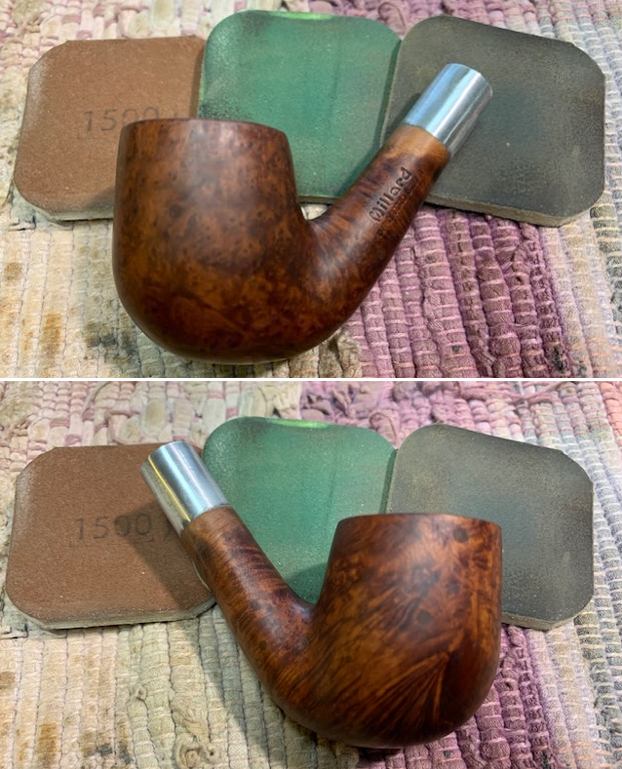
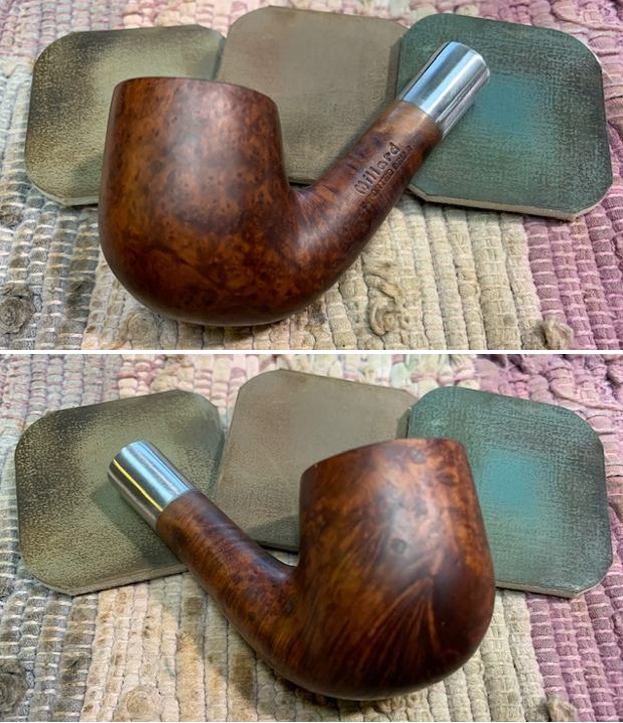
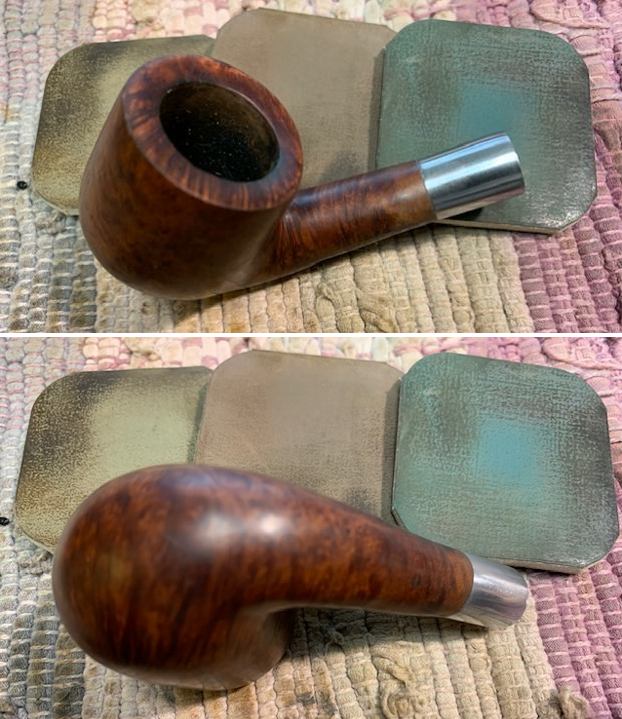
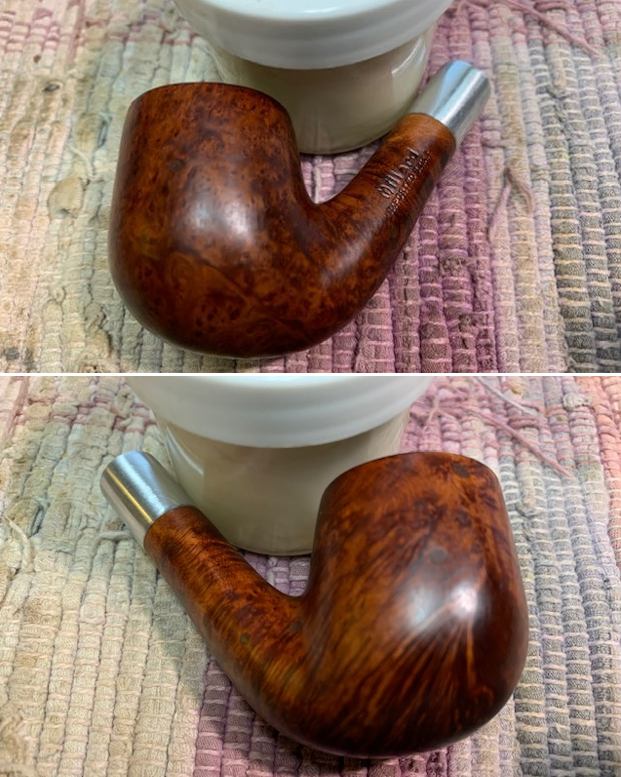
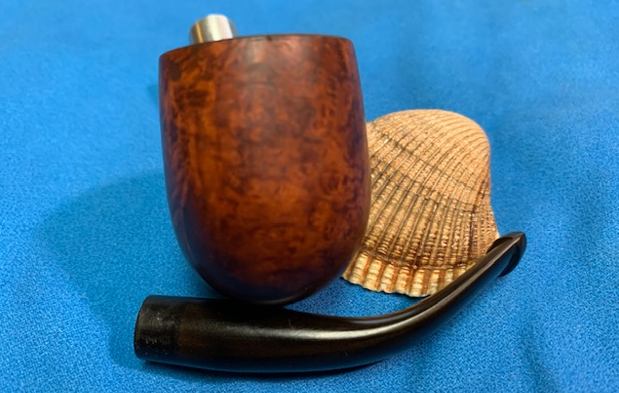
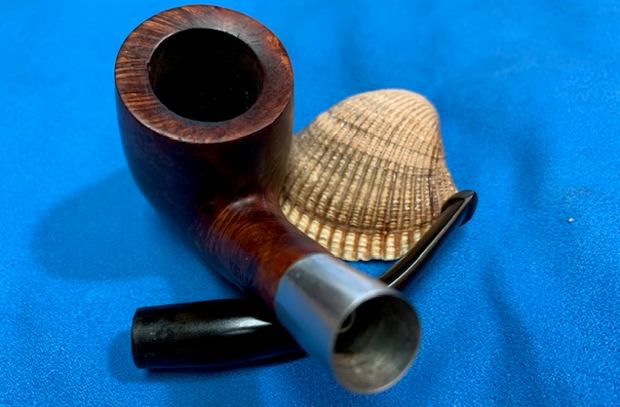
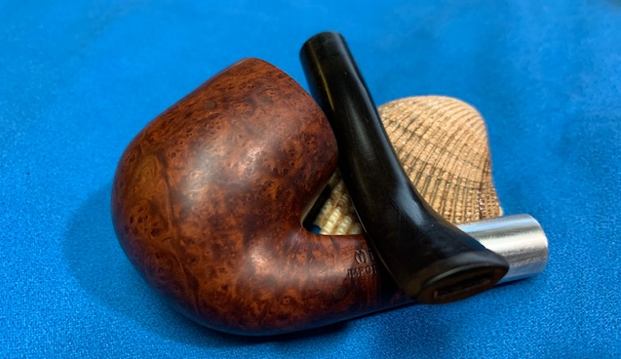
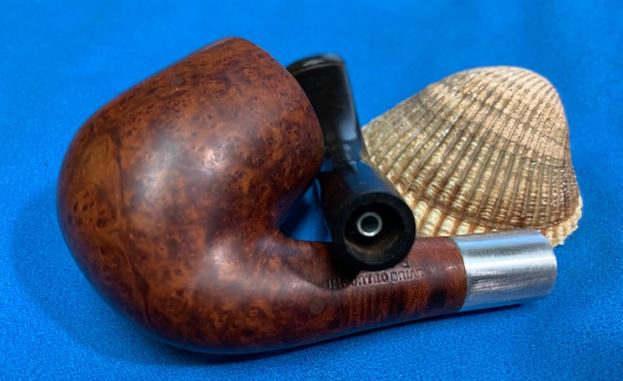
Breathing New Life into a Millard Imported Briar System Bent Billiard


Blog by Steve Laug

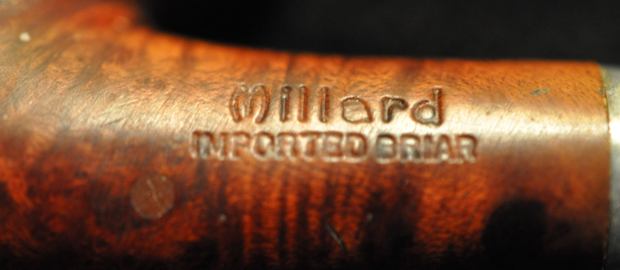
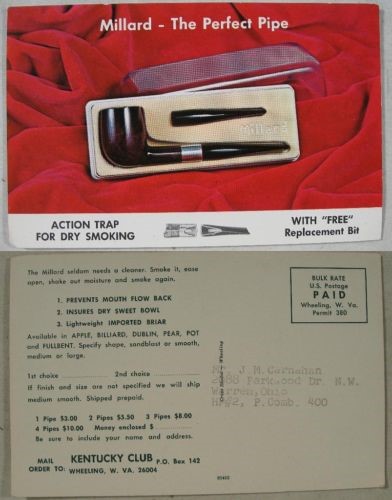
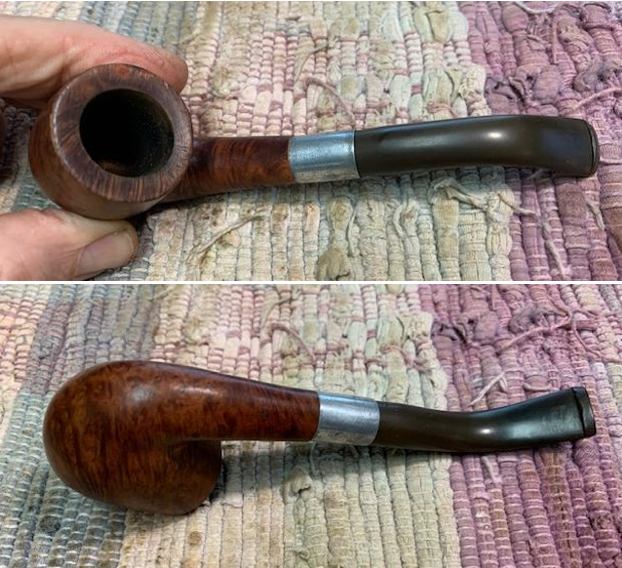
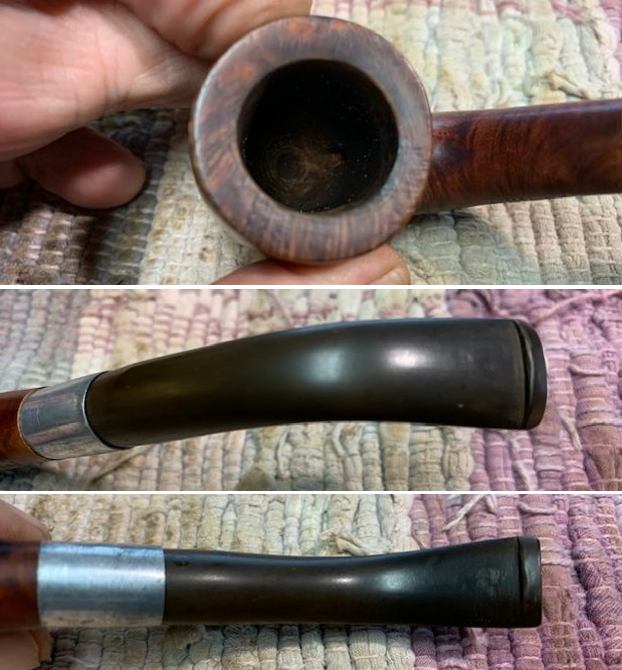
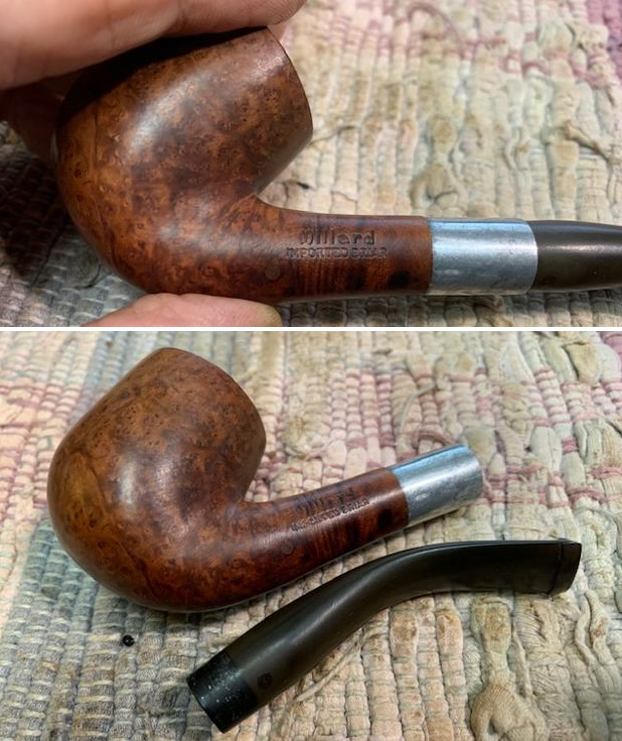
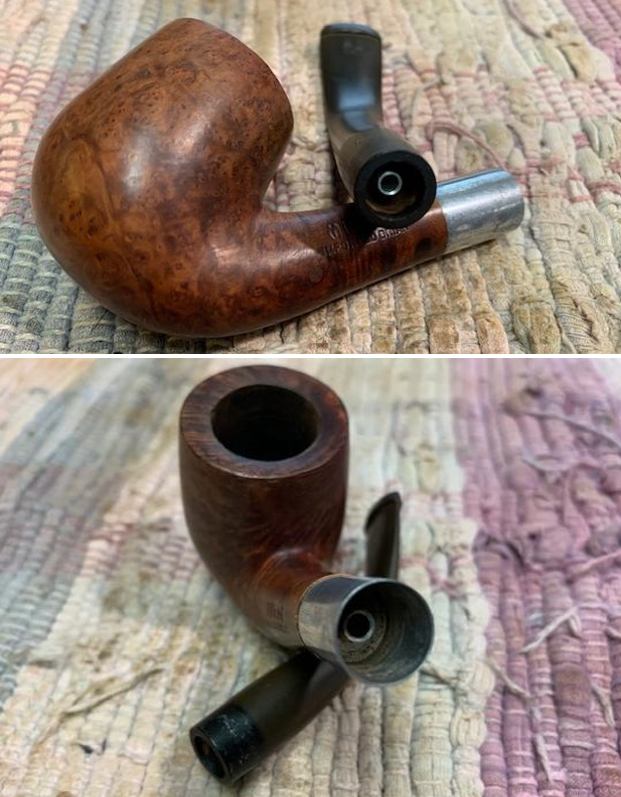
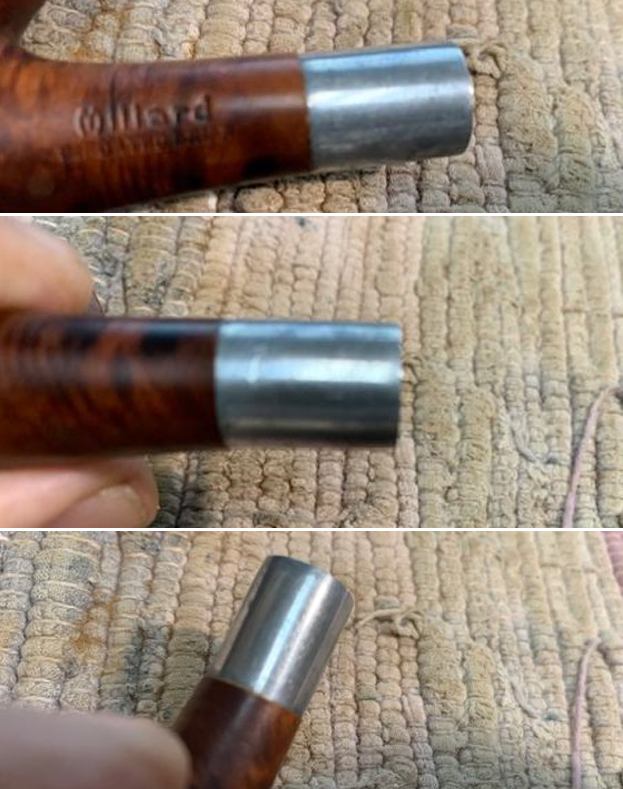
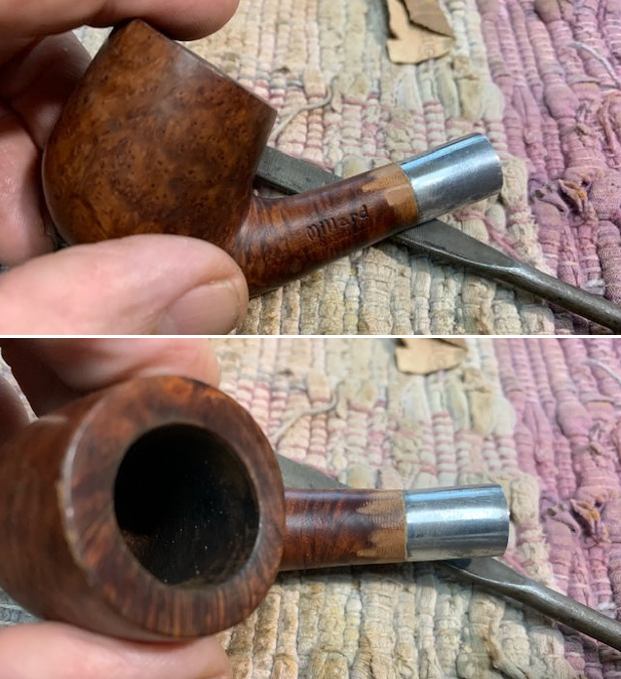
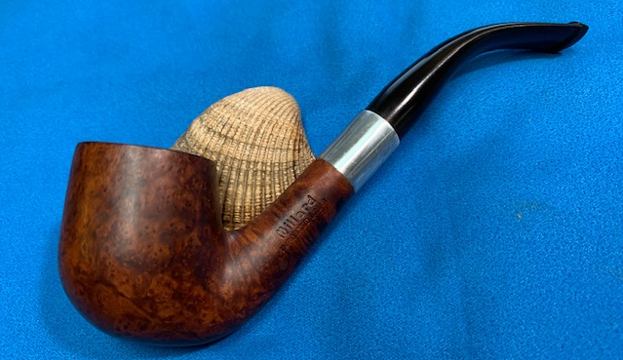
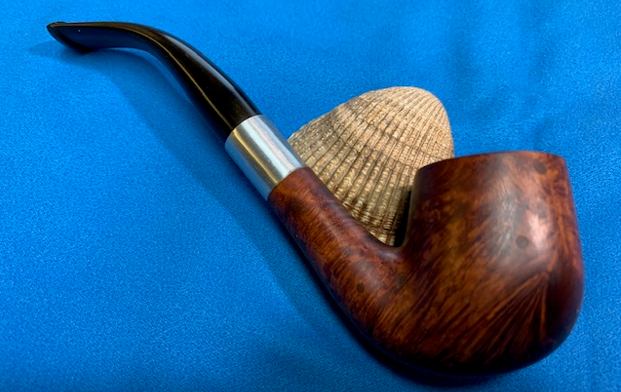
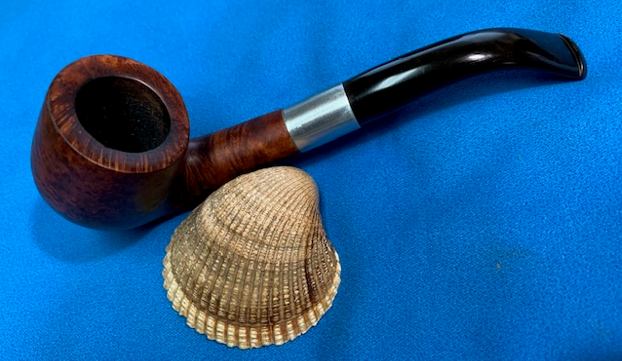
The next pipe on the table was chosen because it reminded me of a pipe that I enjoy smoking and working on – a Keyser Hygienic. Jeff picked it up in November of 2017 from an online auction. It has been sitting here in a box for a long time waiting for me to get around to picking it up and working on it. This weekend was the time I chose to do so. It has some nice grain around the bowl and the inwardly beveled rim top. The shank end is polished aluminum and has a tube in the center of what acts as a condenser compartment. The stem is inserted in the shank end and also has a tube in the center. The swirling smoke in the chamber leaves the moisture on the sides of the aluminum shank extension. There was a thick cake in the bowl and some lava overflow on the rim top. The stem was oxidized and calcified on the button end. There were tooth marks and chatter on the top and underside ahead of the button. Jeff took photos of the pipe before he started his cleanup work. He took photos of the bowl and rim top and both the top and underside of the stem. You can see the thickness of the cake in the bowl and the lava on the rim top. Both the inner and outer edges of the bowl look very good. The stem photos show the tooth marks and chatter on both sides as well as the calcification on both sides. He took a photo of the side of the bowl and the heel to show the grain on the bowl. It is a beautiful piece of wood.He took a photo of the tubes in the shank and the stem and the condensation chamber in the aluminum shank extension. The tubes and the chamber is thickly covered with tars and oils.He also took a photo of the stamping on the left side of the shank. It is clear and readable as noted above.As I studied it, I also remembered that I have worked on several Millard pipes over the past years. I turned to one of the write ups on rebornpipes on a pair of Millard pipes. Here is the link https://rebornpipes.com/2015/12/11/a-pair-of-millard-perfect-pipes-a-sandblast-apple-and-dublin/. I am including a picture of a flyer that I showed in the blog and I am quoting the section that gives the background on the brand. I quote:

When I came across the Millard – the Perfect Pipe coupon in the two boxes of Kentucky Club that I found I was fascinated with the look of the pipe. It reminded me of the Keyser Hygienic pipes that I had restored over the years. The stem that fit into the metal mortise shank insert and the tubes on the inside of the stem and the shank were similar. While the Keyser tubing in the shank looked identical the one in the stem was different. Keyser was directed downward while the Millard was two straight tubes that met in the mortise. They did not touch but the metal chamber became a condensing chamber, or as they call it an Action Trap, for the smoke and collected the moisture before it continued through the tube in the stem. I looked up the brand online and found the following advertisement postcard that shows the way the system works. I found that the stems were interchangeable between the shapes that the pipe came in. The straight stems could be easily transferred from pipe to pipe. In fact the pipe originally came with an extra or replacement stem. The pipe came in a sandblast and a smooth finish in six shapes – apple, Dublin, billiard, pear, pot and bent. It came in two sizes: medium or large. In the advertisement below you can see that the pipe cost $3. I also found that Mastercraft supplied the pipes through the coupon sales. Knowing a bit of history about the company I know that they did not make pipe so they were sourced from the original manufacturer.

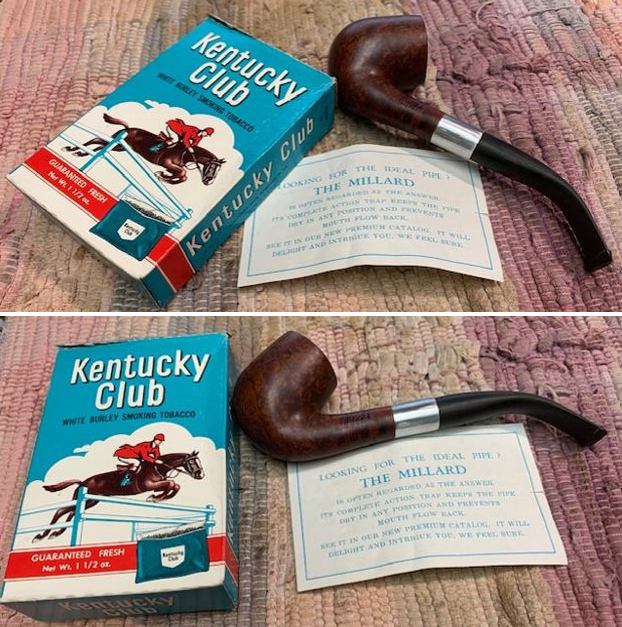
Before I worked on the pipe I took the box of Kentucky Club that I had on the shelf and opened it and took out the coupon. It actually was a coupon for The Millard pipe. It read as follows:

Looking for the Ideal Pipe? The Millard is often regarded as the answer. Its complete action trap keeps the pipe dry in any position and prevents mouth flow back. Se it in our new Premium Catalog. It will delight and intrigue you. We feel sure.

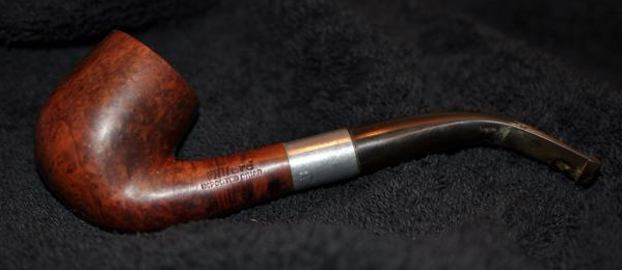
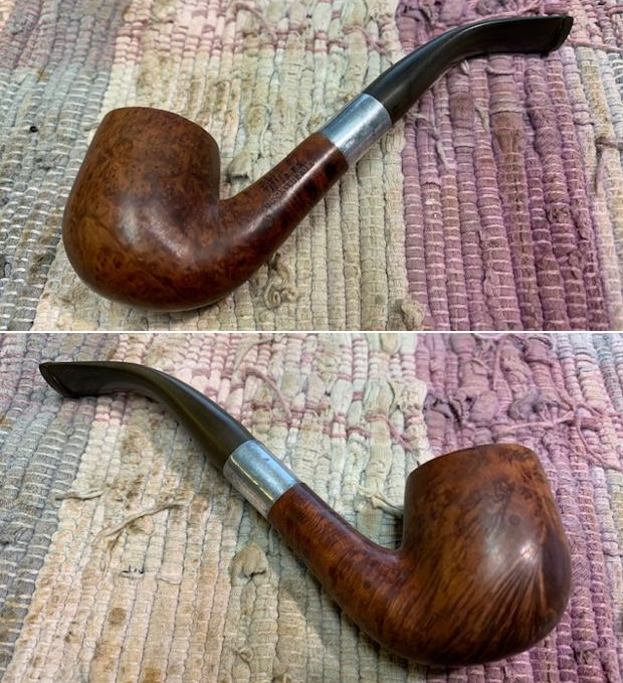
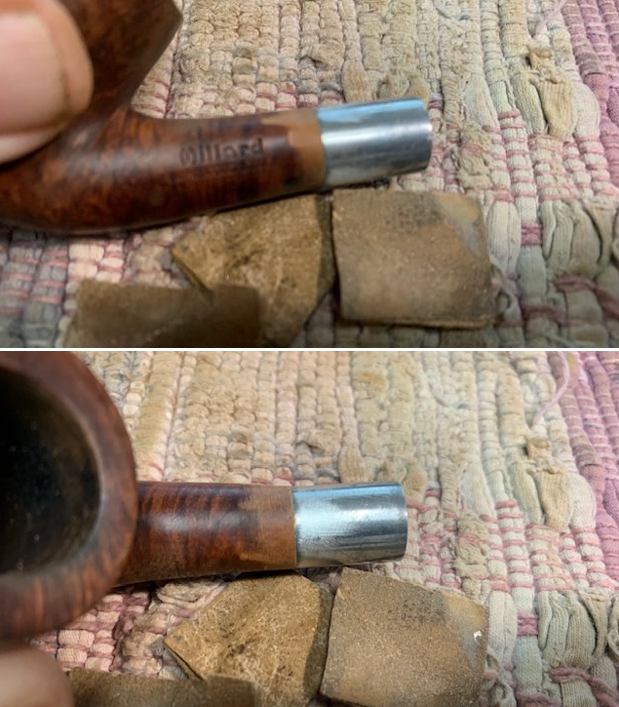
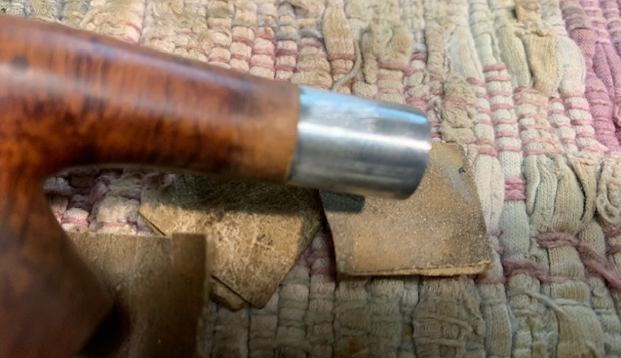
I took photos of the box and coupon along with the pipe to give a sense of the size of the pipe and the look of the coupon.  Reminded of the background of the brand it was time now to work on the pipe. Jeff had done his normal thorough clean up of the pipe. He reamed it with a PipNet pipe reamer to take the cake back to bare briar. He cleaned up the reaming with a Savinelli Fitsall Pipe Knife. He scrubbed the exterior of the bowl with undiluted Murphy’s Oil Soap and rinsed it with hot water. He scrubbed out the shank, aluminum trap mortise and the tubes in the stem and the shank with alcohol, cotton swabs and pipe cleaners. He soaked the stem in Before & After Pipe Stem Deoxidizer to remove the oxidation. He sent it to me in a box of other pipes. When I brought it to the table this is what I saw. I took close up photos of the rim top and stem to show the overall condition of the bowl and stem after Jeff’s work on it. The rim top looked very good and the bowl was clean. The stem was also clean (lightly oxidized) and had light tooth marks and chatter on both sides ahead of the button.I took a photo of the stamping on the shank. It is clear and readable as noted above. I took the stem off the shank and took a photo of the parts of the pipe.I took photos of the tube in the stem and in the shank chamber. It is a unique design.The metal shank extension was not completely aligned with the shank. It was straight but the diameter of the shank was larger in spots than the diameter of the metal shank extension. I took some photos to try and capture that misfit.I used a small file and 220 grit sandpaper to properly fit the shank and extension. It was not much work to remove the excess material. I polished the sanded shank and extension with micromesh sanding pads – dry sanding it with 1500-12000 grit pads. I wiped it down between each pad with wet cloth. The shank and extension began to take on a real shine.I rubbed the bowl and shank down with Before & After Restoration Balm. I worked it into the surface of the bowl sides and shank with my fingertips to clean, enliven and protect the briar. I let the balm sit for 10 minutes then buffed with a cotton cloth to raise the shine. The grain really came alive. It looks better than when I began. I set the bowl aside and turned my attention to the stem. I smoothed out the tooth marks and scratches in the vulcanite with 220 grit sandpaper. I started polishing the stem with 400 grit wet dry sandpaper.I polished the stem with micromesh sanding pads – dry sanding with 1500-12000 grit pads. I wiped the stem down after each pad with a cloth and Obsidian Oil. I finished the polishing with Before & After Pipe Stem Polish – both Fine and Extra Fine. I gave it a final coat of Obsidian Oil. I put the pipe back together – the bowl with its new stem. This restored Millard Imported Briar System Bent Billiard is a real beauty and I think the polished aluminum shank extension (condensation chamber) and the black vulcanite stem work well together. The grain on the bowl came alive with the buffing. I used Blue Diamond on the buffing wheel on both the bowl and stem. I gave both multiple coats of carnauba wax on the wheel then buffed it with a clean buffing pad to raise the shine. I hand buffed it with a microfibre cloth to deepen the shine. The Millard Bent Billard feels great in the hand. It is lightweight and the contrast in the browns of the briar, the polished aluminum and the vulcanite stem is quite amazing. The dimensions of the pipe are Length: 5 ¼ inches, Height: 1 ¾ inches, Outer diameter of the bowl: 1 ¼ inches, Chamber diameter: ¾ of an inch. The weight of the pipe is 1.55 ounces/44 grams. It really is a beauty. I will be putting it on the rebornpipes store in the American (US) Pipe Makers section shortly if you are interested in adding it to your collection. Thanks for walking through the restemming and the restoration with me. Cheers.

Reuniting an older Ropp Panel 062 Rhodesian with its original stem


Blog by Steve Laug

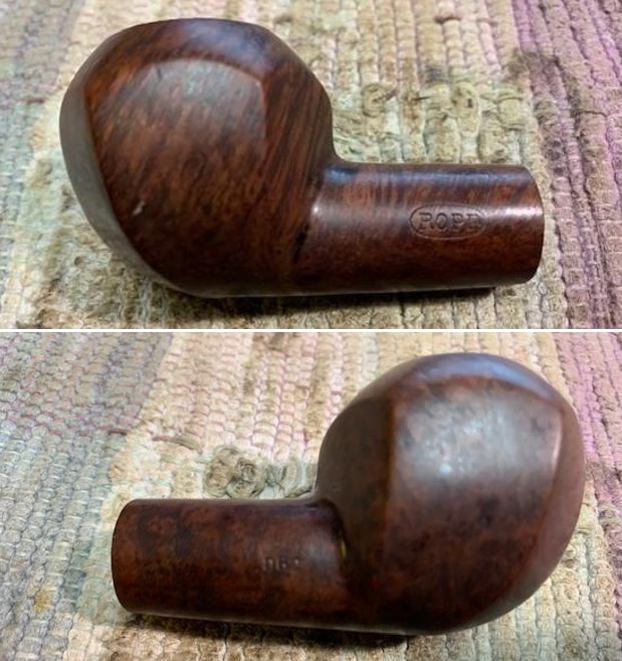
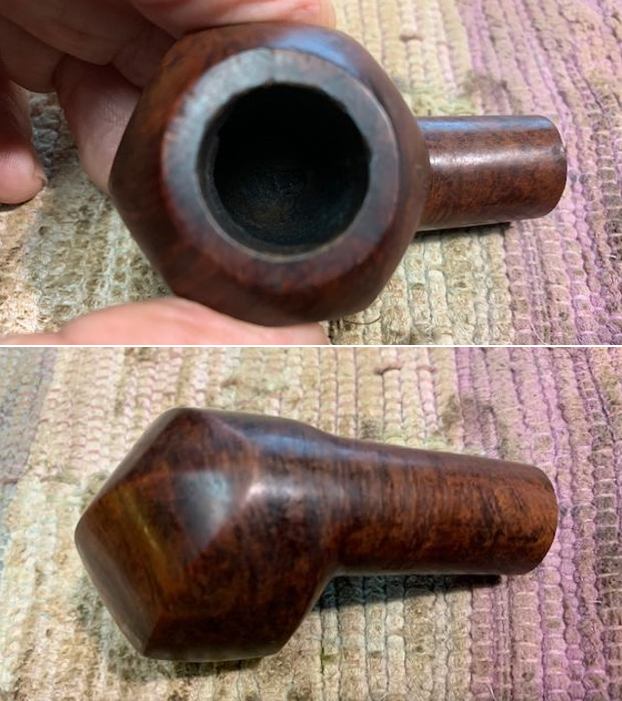
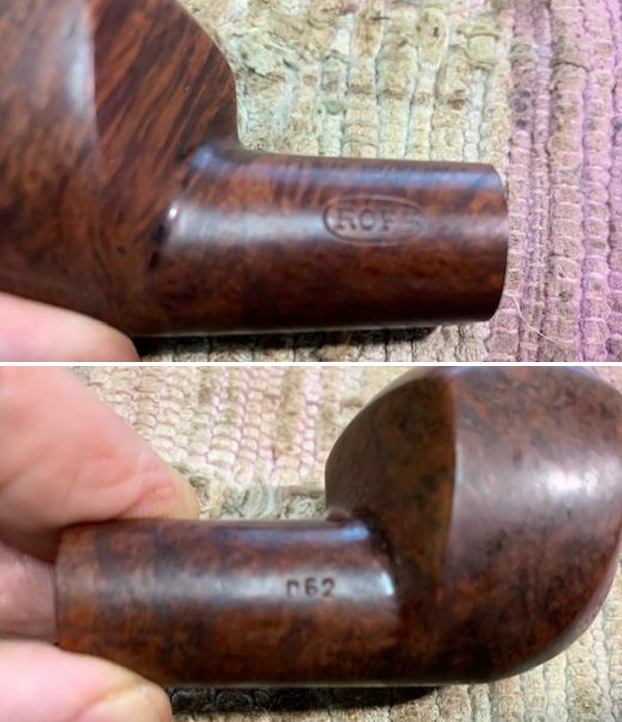
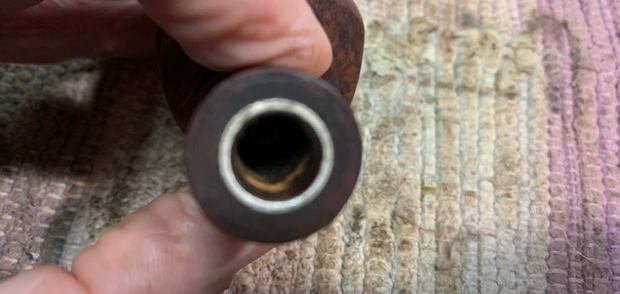
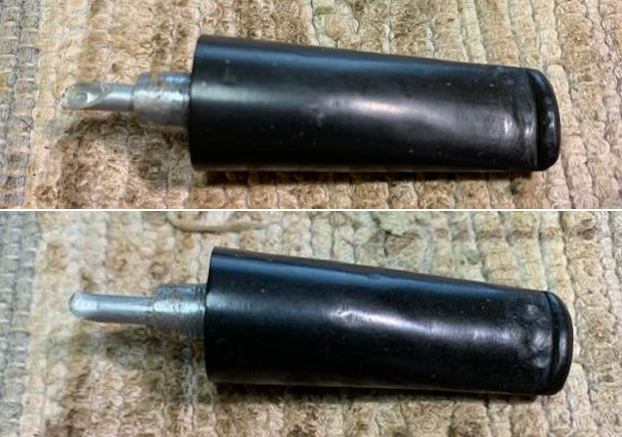
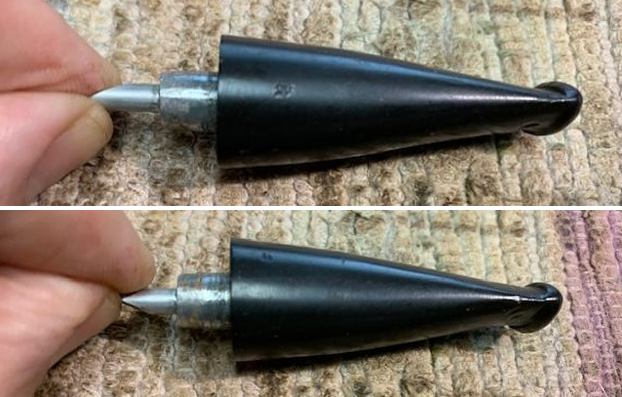
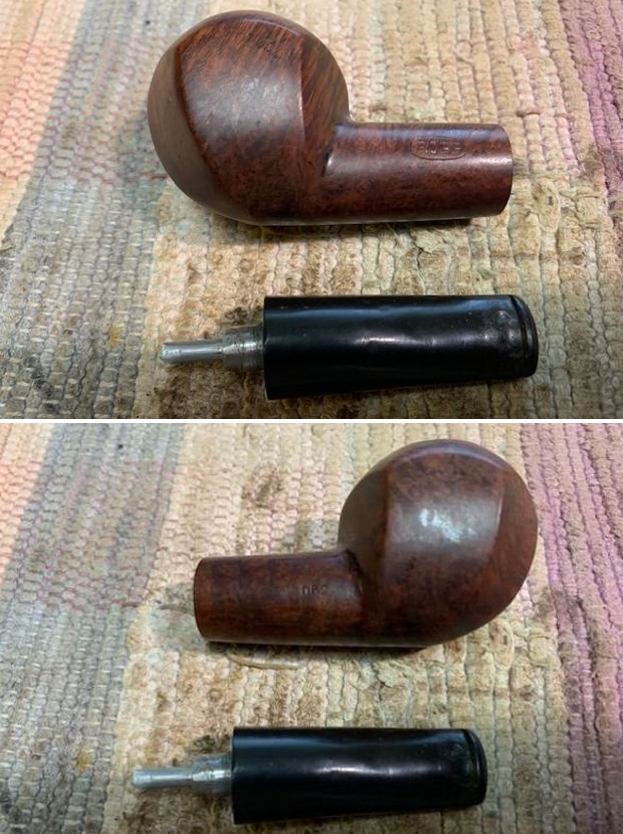
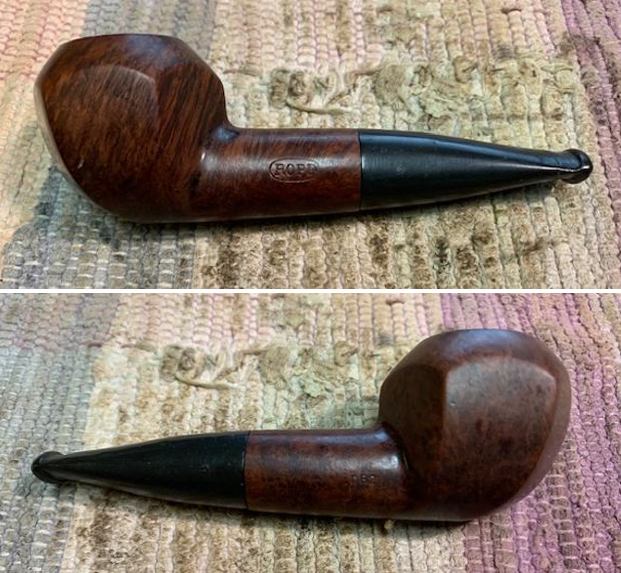
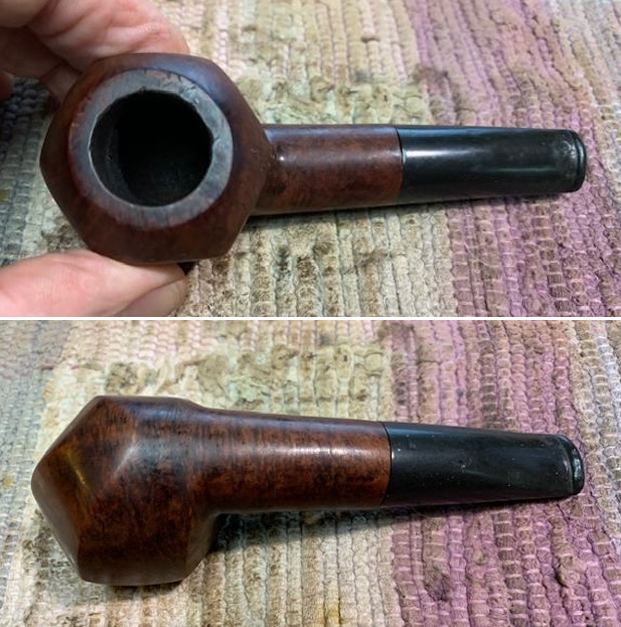
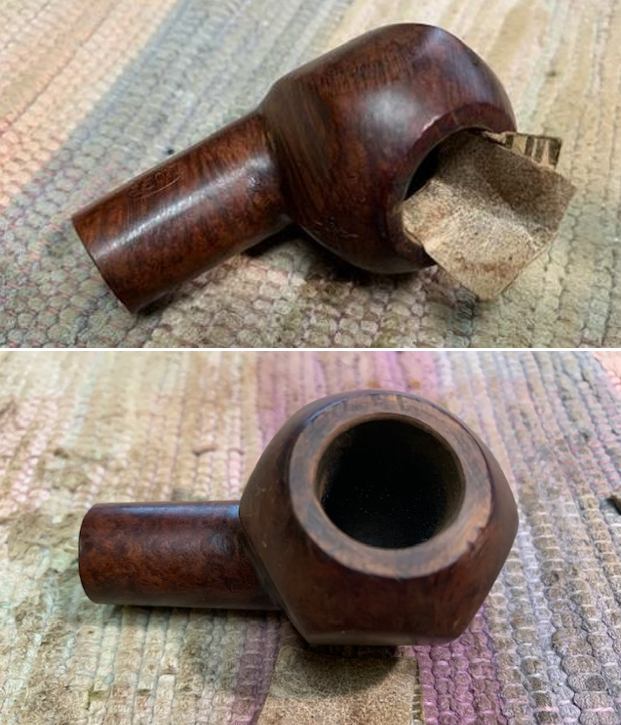
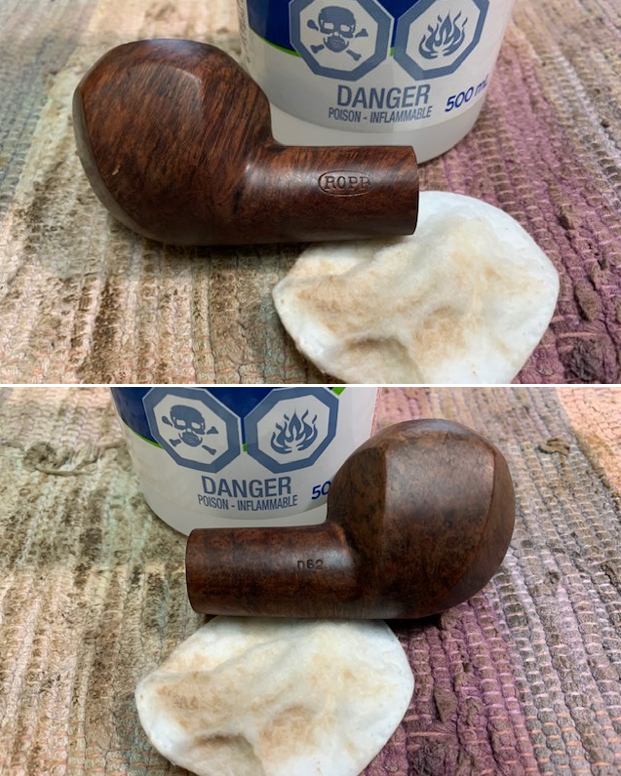
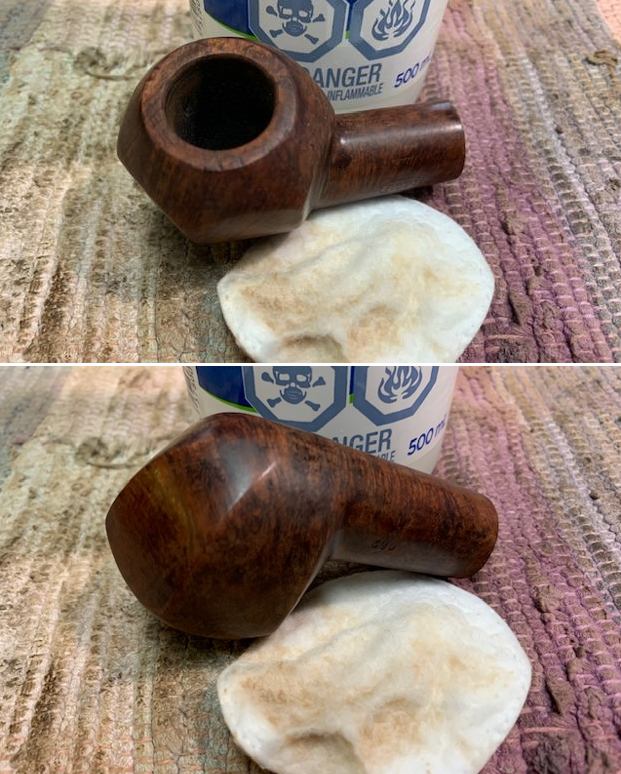
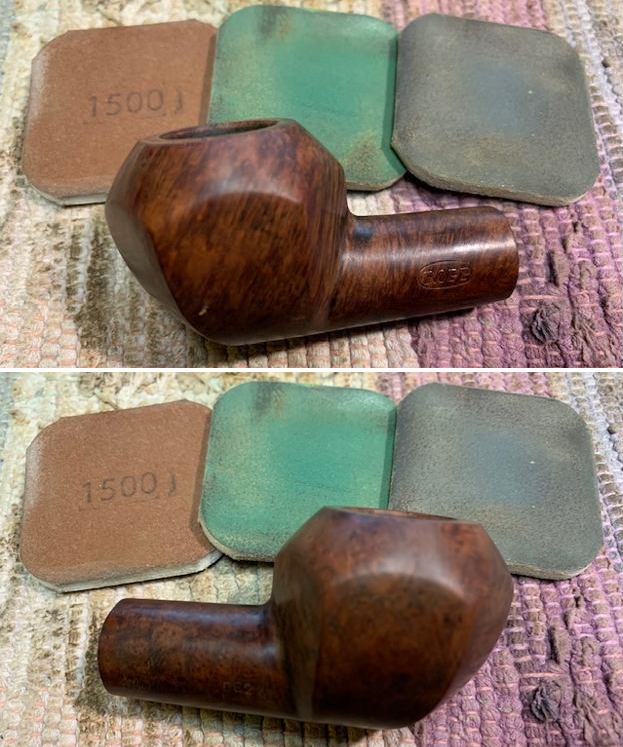
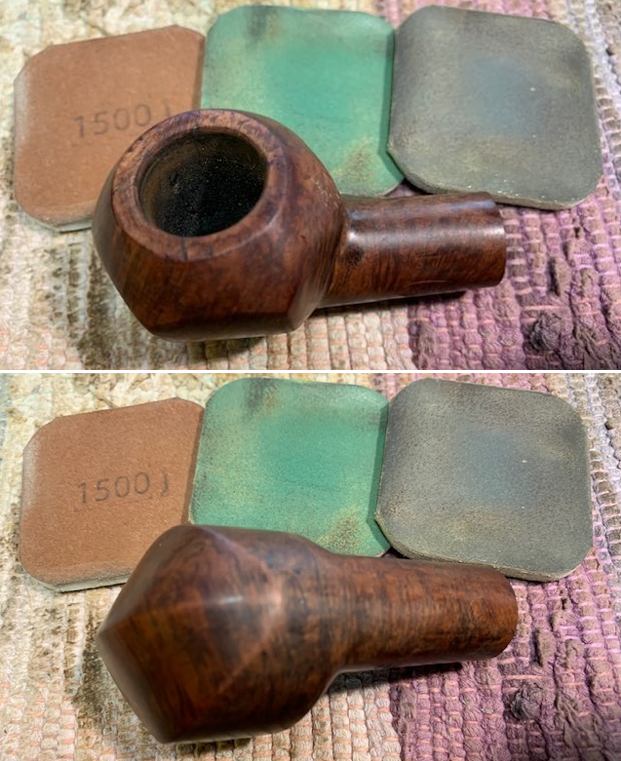
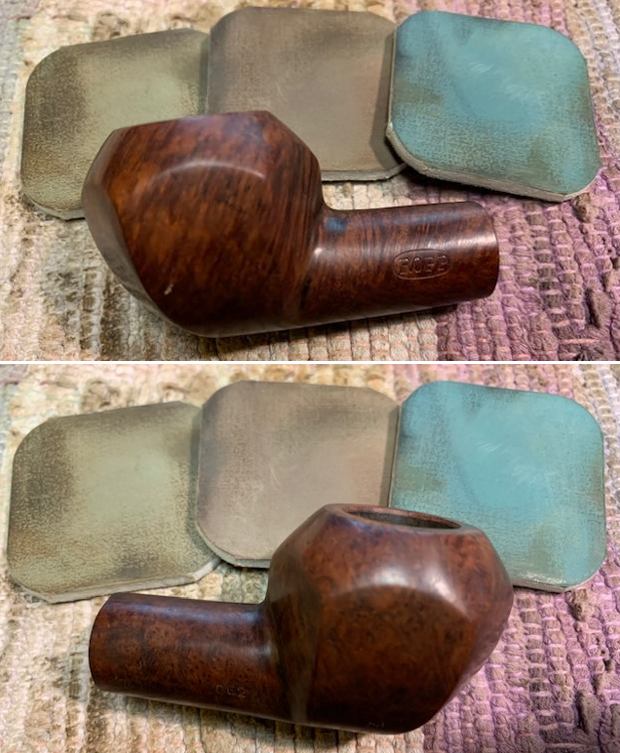
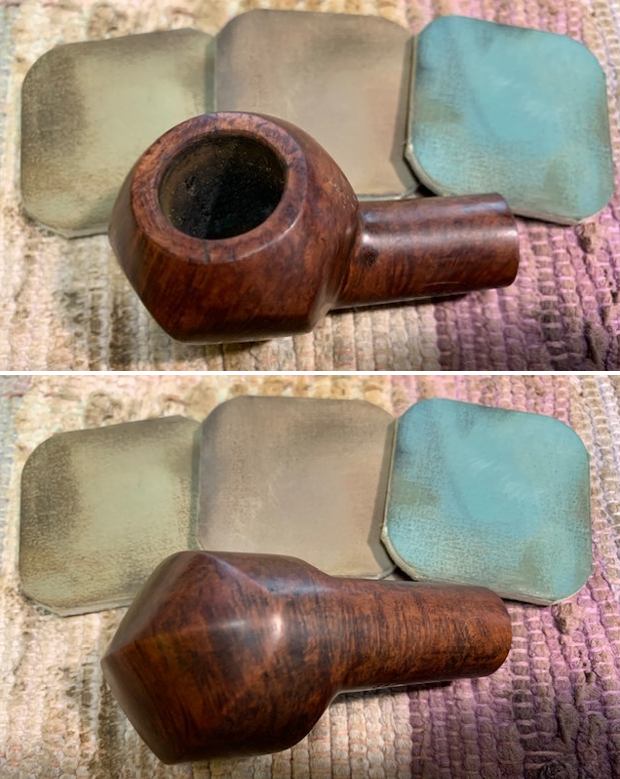
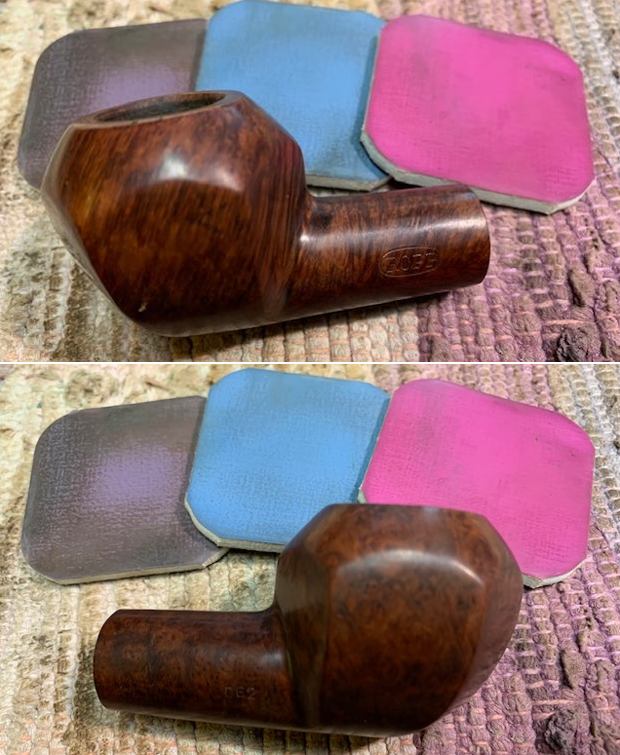
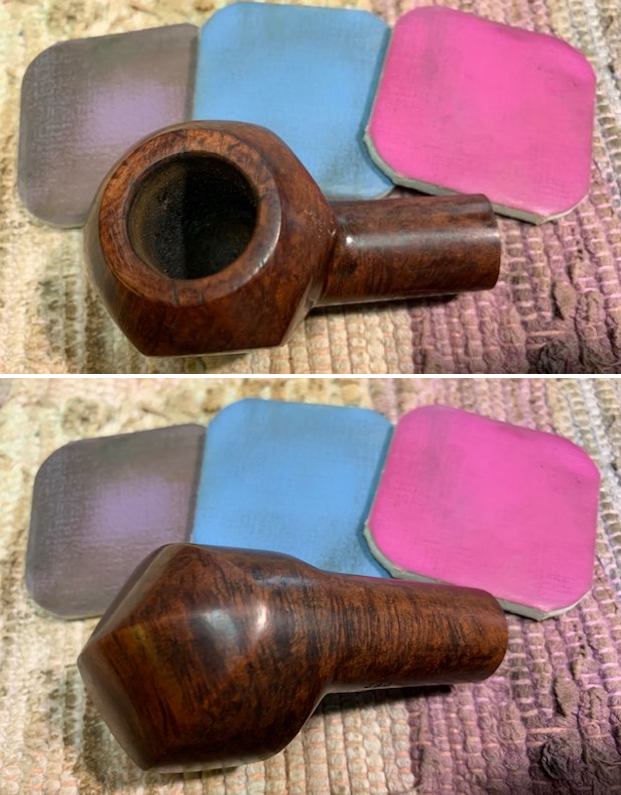
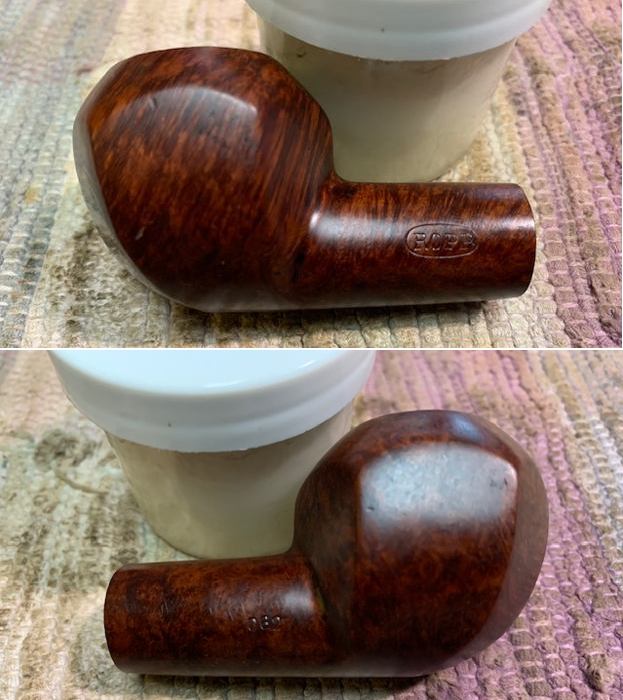
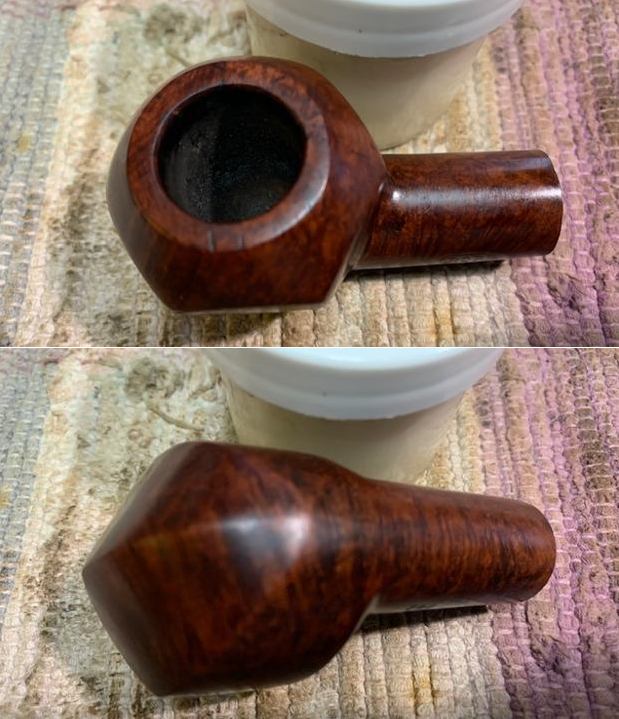
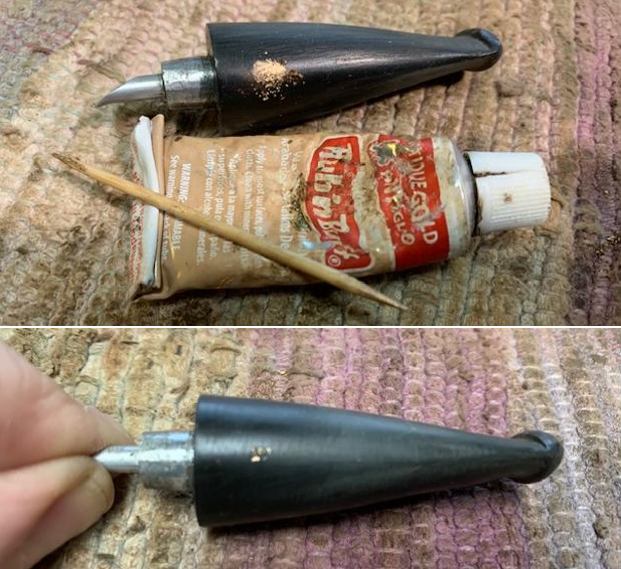
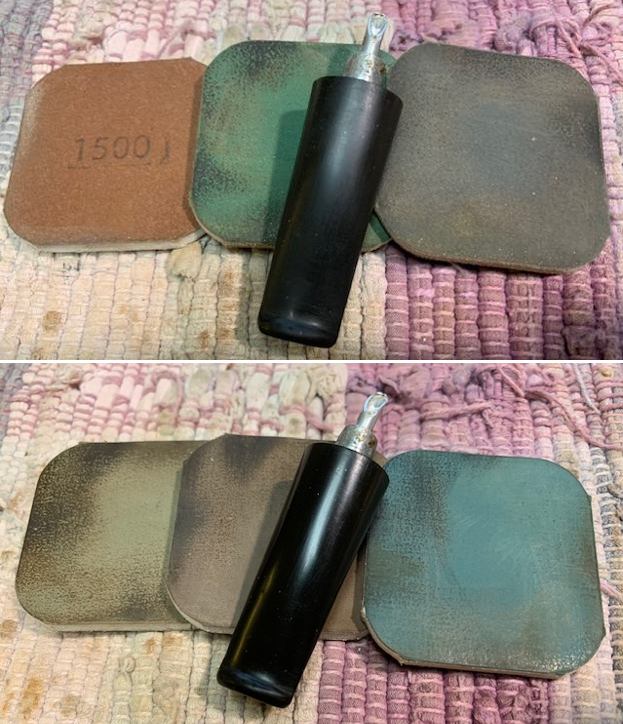
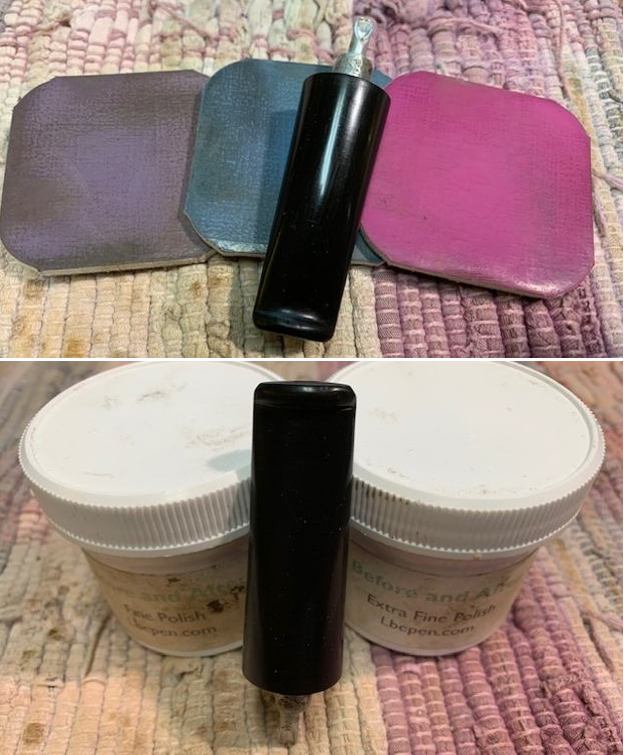
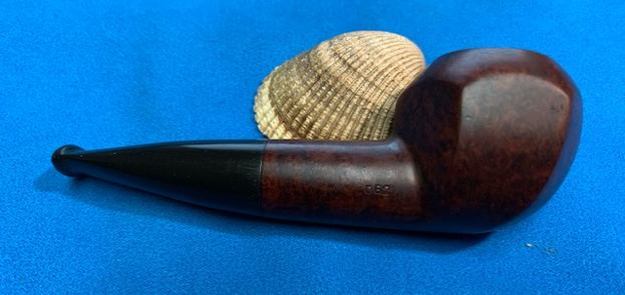
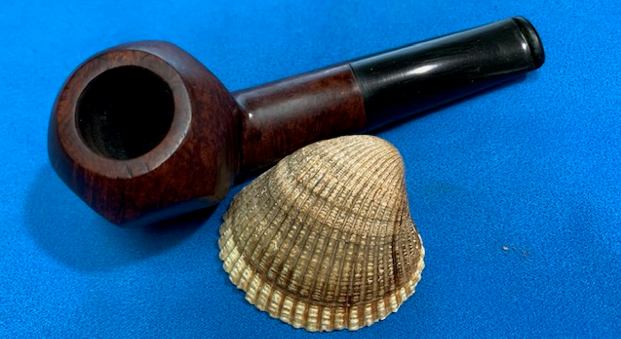
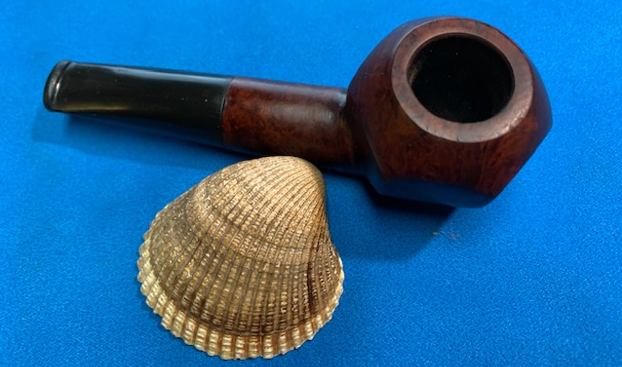
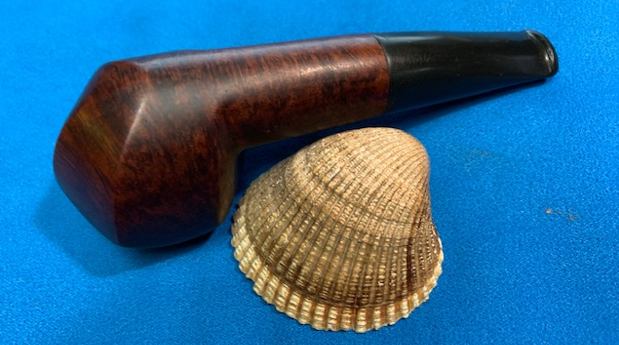
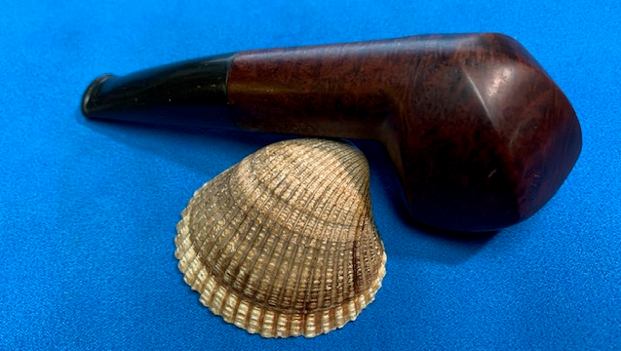
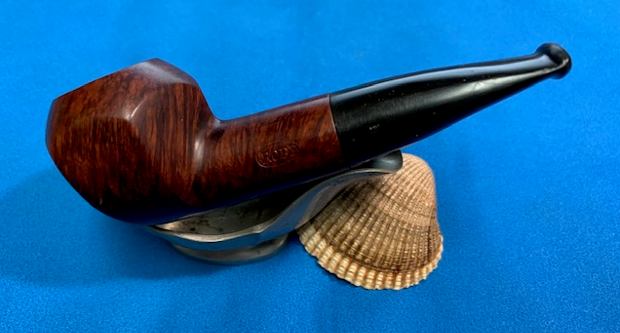
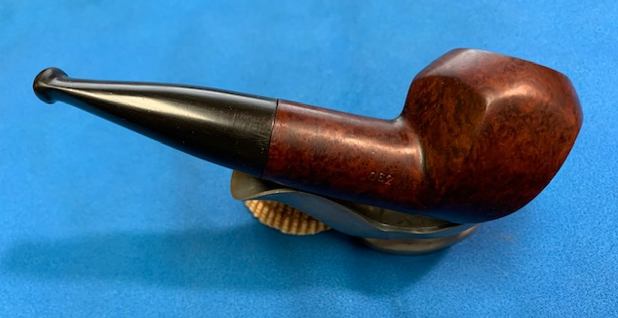
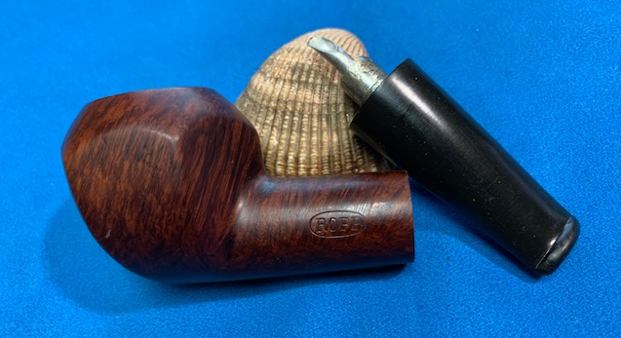
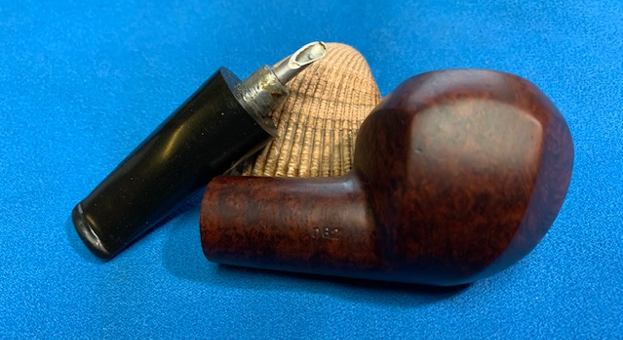
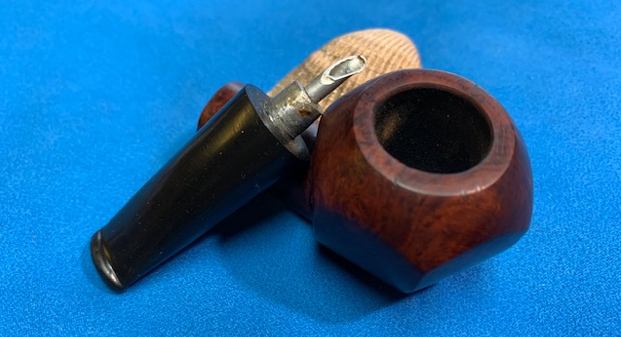
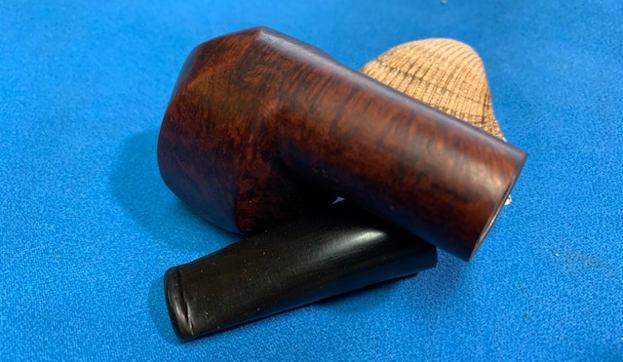
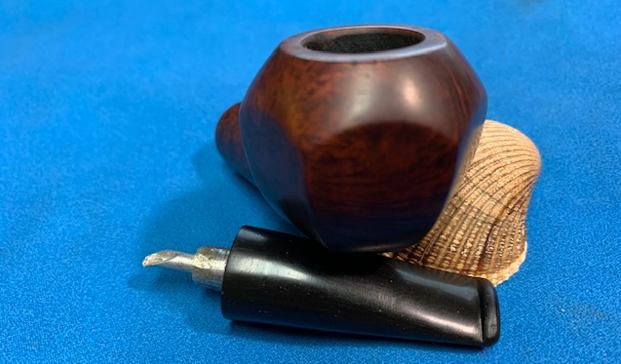
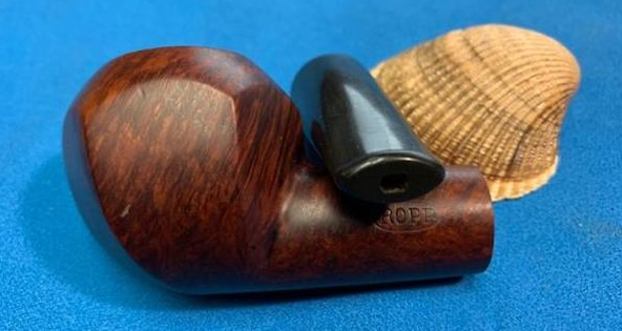
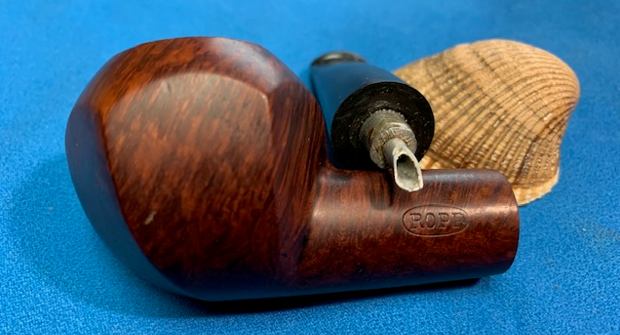
I looked through my box of bowls and came across this older Ropp Panel Rhodesian that caught my eye. The shape was really nicely done – a Rhodesian with a thick shank. The bowl was a paneled hexagon. The rim cap was smooth and the bowl top was smooth. The inner edge was nicked like it had been reamed with a knife. The outer edge of the bowl was in good shape. The rim top had some scratches. There were some dents on the bowl but the finish looked good. It appeared to have been cleaned up by Jeff somewhere along the way. The bowl had been reamed and scrubbed. The shank was clean and was lined with a metal shank tube. On the left side of the shank it was stamped ROPP in an oval. On the right it was stamped 062. I took some photos of the stamping on the sides of the shank and they read as noted above. They were clear and readable. I also took a photo of the shank end to show the metal tube that lines the mortise.I went through my can of stems and found a stem that I thought would probably work with the bowl. It had a metal tenon and a metal tube. There were some deep tooth marks on the top and underside near the button. In the third photo below you can see a stamping on the left side of the stem. Under a light with a lens I believe it reads ROPP. I am pretty certain that I have reunited the bowl with its original stem. I took some photos of the bowl and stem together to get a sense of how the pipe looked.I put the stem on the bowl and the fit in the shank was really good. The thickness of the shank and the stem match perfectly. Everything about it looked right. The stem is hard rubber and has an orific hole in the button end.  I decided to start my clean up of the pipe by address the damage on the rim top and inner edge. I used a folded piece of 220 grit sandpaper to smooth out the edge and to polish out the scratches in the rim top. It worked quite well and I was happy with the results.I wiped the bowl down with alcohol to remove the shiny spots of the previous varnish coat on the bowl. It came off very well and the grain began to stand out nicely! I polished the briar with micromesh sanding pads – dry sanding with 1500-12000 grit pads. I wiped the bowl down after each sanding pad to remove the debris. I rubbed the bowl and shank down with Before & After Restoration Balm. I worked it into the surface of the bowl sides and shank with my fingertips to clean, enliven and protect the briar. I let the balm sit for 10 minutes then buffed with a cotton cloth to raise the shine. The grain really came alive. It looks better than when I began. I set the bowl aside and turned my attention to the stem. I “painted” the stem surface with the flame of a Bic lighter to try to lift them. I was able to raise them quite a bit. I filled in the remaining marks and the nicks in the hard rubber stem surface with clear super glue. I used a small file to flatten out the repairs on the top and underside of the stem at the button. I also flattened out the repairs round the rest of the stem. I sanded it with 220 grit sandpaper to smooth it out. I started polishing it with 400 grit wet dry sandpaper. I tried to touch up the ROPP stamp on the left side of the stem. I rubbed it into the stamp with a tooth pick and rubbed it off with a soft cloth. Much of the stamping was not deep enough to hold the Antique Gold Rub’n Buff. The amount of gold in the stamp was not too much but it is still slightly readable.I polished the stem with micromesh sanding pads – 1500-12000 grit pads. I wiped it down with Obsidian Oil after each sanding pad. I used Before & After Pipe Polish – both Fine and Extra Fine to further polish the stem. I gave it a final coat of Obsidian Oil and set it aside to dry. This older style Ropp Panel 062 Rhodesian is a great looking pipe now that it has been restored and reunited with its stem. The finish around the bowl is quite beautiful and highlights the grain and works well with the polished taper stem. I put the stem back on the bowl and carefully buffed the pipe with Blue Diamond on the buffing wheel using a light touch on the briar. I gave the bowl and the stem multiple coats of carnauba wax on the buffing wheel and followed that by buffing the entire pipe with a clean buffing pad. I hand buffed the pipe with a microfiber cloth to deepen the shine. The finished Ropp Panel Rhodesian fits nicely in the hand and feels great. Give the finished pipe a look in the photos below. The dimensions of the pipe are Length: 5 inches, Height: 1 ¾ inches, Outside diameter of the bowl: 1 ½ inches, Chamber diameter: ¾ of an inch. The weight of the pipe is 1.94 oz./55 gr. I will probably be putting it on the rebornpipes store shortly. If you are interested in adding this pipe to your collection send me a message or an email. Thanks for reading this blog and my reflections on the pipe while I worked on it.

Restemming a Drummond Imported Briar Squashed Tomato


 Blog by Steve Laug

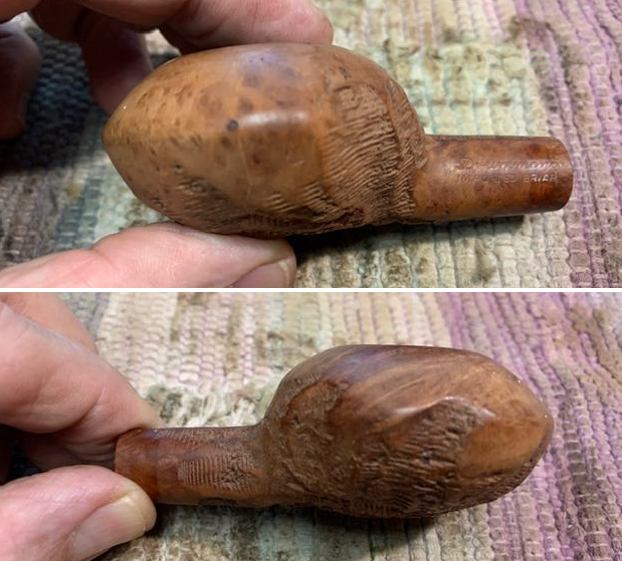
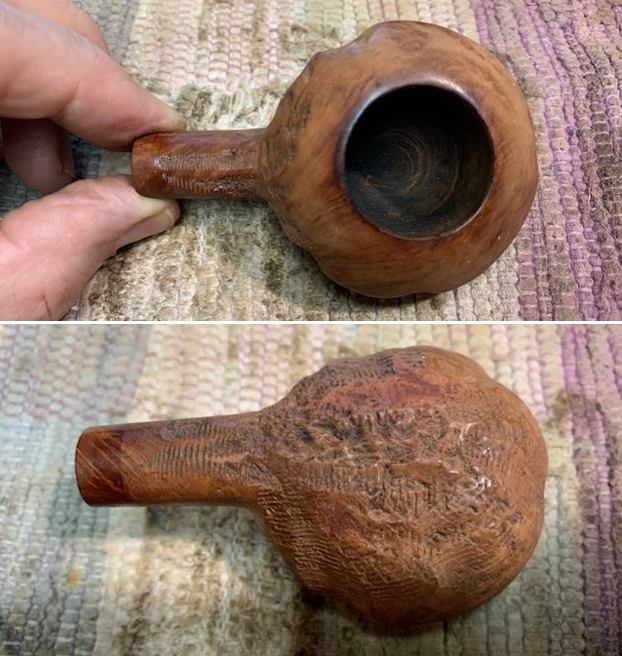
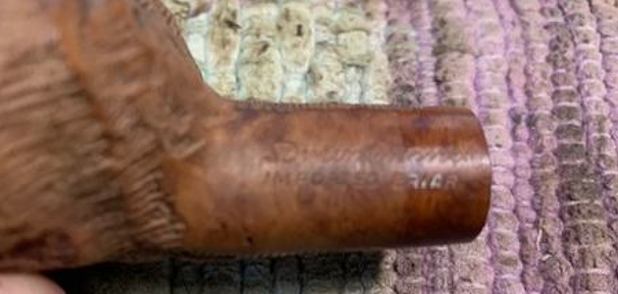
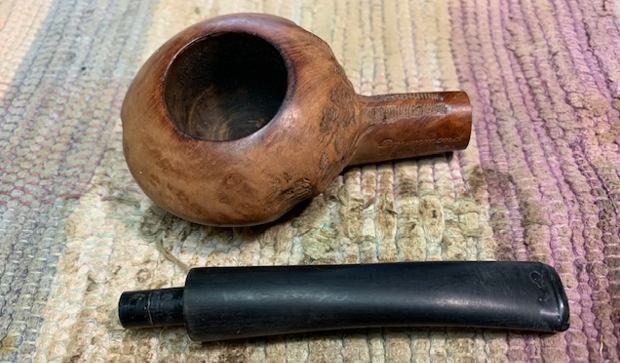
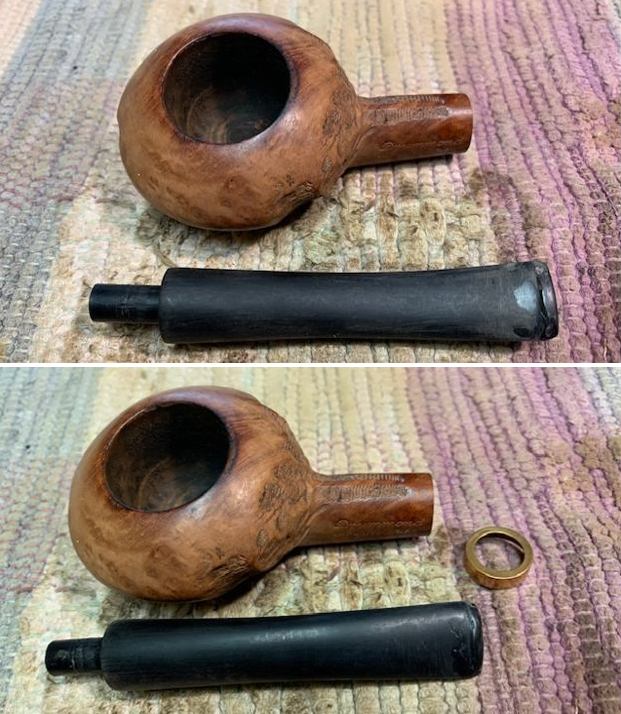
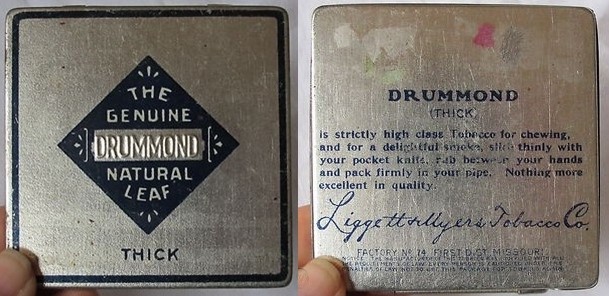
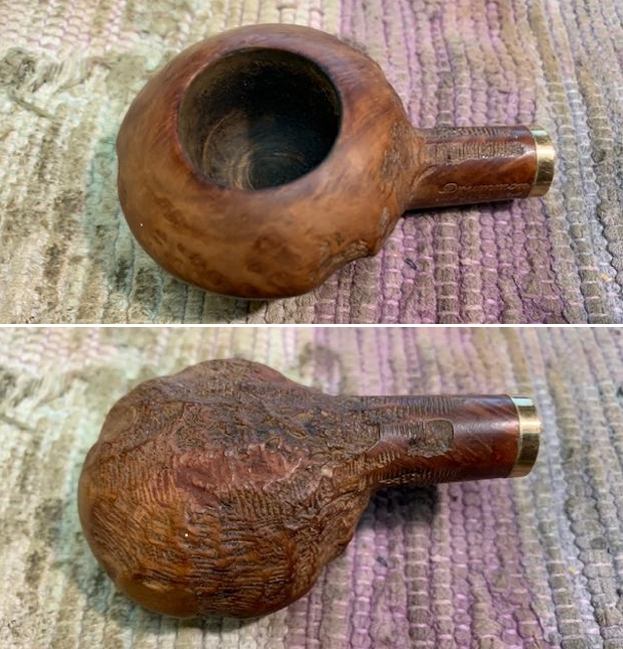
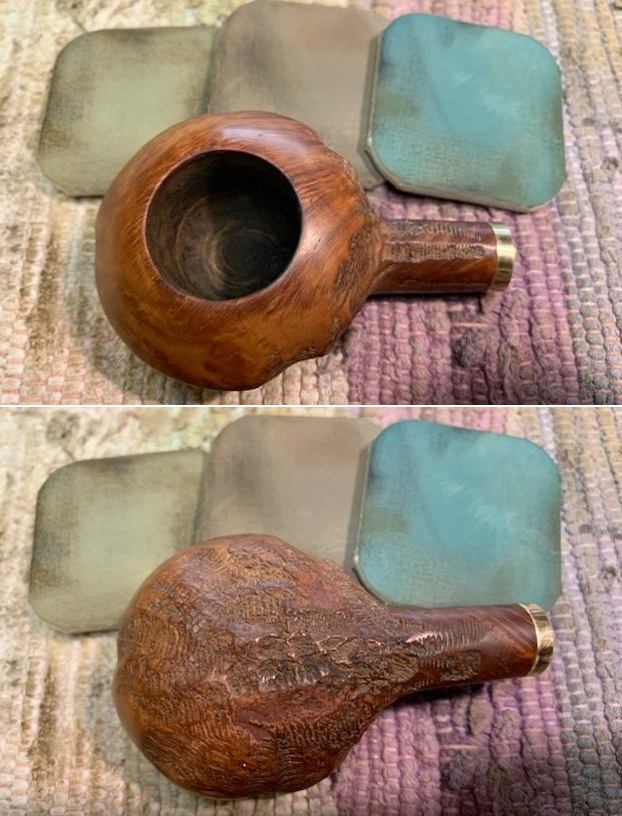
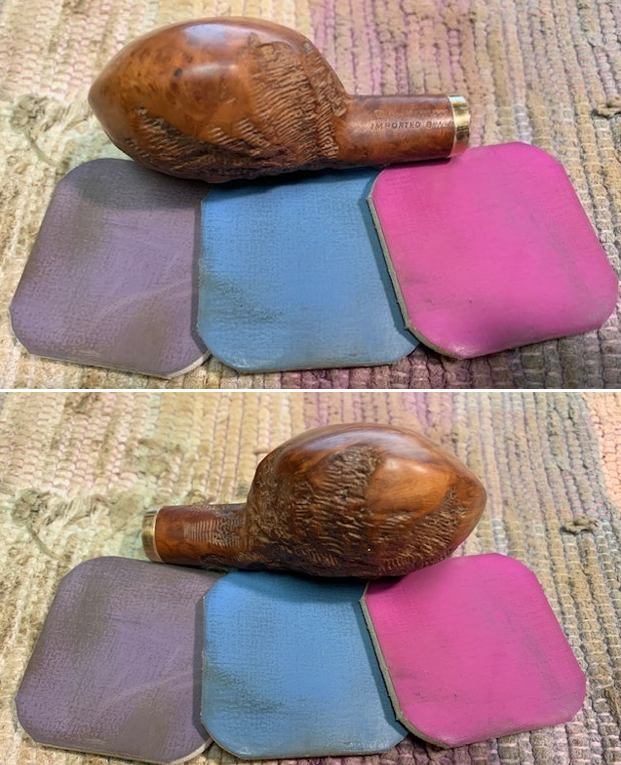
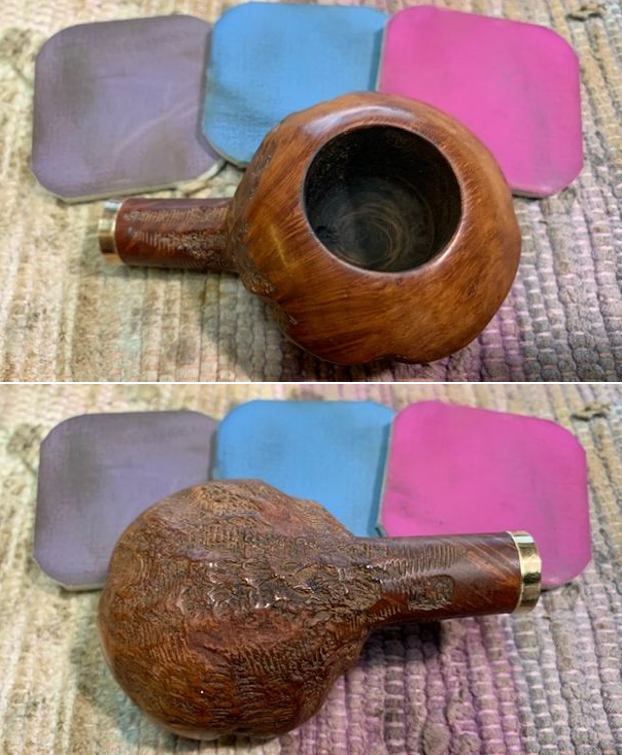
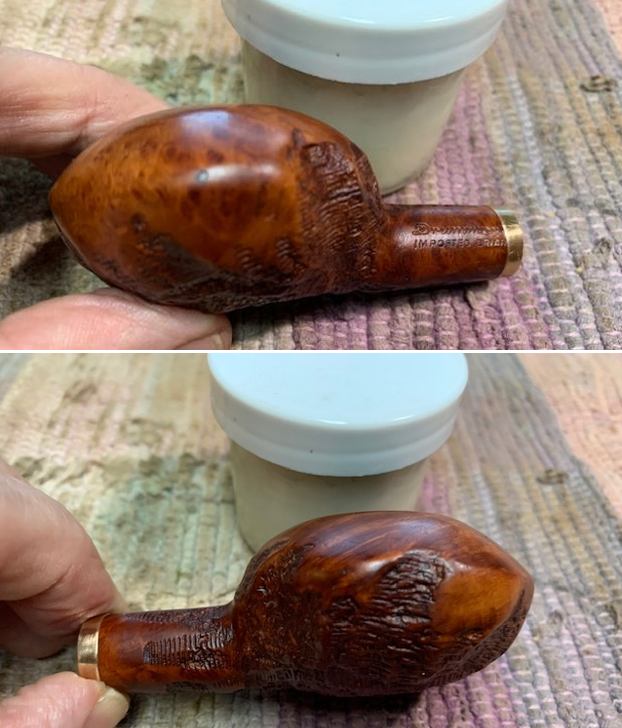
The next pipe on the work table is bowl that needed to be restemmed. It has a finish that is reminiscent of Custom-Bilt fame but this one is not one of those. It is a squashed tomato shaped bowl with a smooth rim top and rusticated bowl bottom and shank. The pipe is stamped on the left side of the shank and reads Drummond in script [over] Imported Briar. There was some darkening on the shank end where there had been a band that covered the edge of the final d in Drummond. The band was gone. The bowl had been cleaned with the thoroughness that usually is a sign that Jeff has worked on it. It had been reamed and cleaned. The inside of the bowl and shank looked and smelled clean. The inside edges looked to be in good condition. The briar was dry and lifeless looking and it was without a stem. I took some photos of the bowl before I worked on the new stem for it. It is a very interesting looking old pipe. I took a photo of the stamping on the left side of the shank. It reads as noted above and faint but very readable. I went through my can of stems and found an interesting hard rubber stem with an inset tenon that would fit the shank with a little bit of work. It was a little larger in diameter than the shank so I would need to reduce that. There were some interesting marks on the top and underside ahead of the button that looked like it had been repaired somewhere along the way. It was pretty clean otherwise. I also found a thin brass band that would fit nicely on the shank end and replace the one that had been there previously. I could find nothing listed on either Pipedia or Pipephil’s site on the Drummond Brand. I did a quick search of the name and came across quite a few photos of tins of tobacco and pouches of tobacco made by Liggett & Myers. It is labeled as Antique Pipe Chewing Tobacco Tin that is called The Genuine Drummond Natural Leaf Thick. Have a look at the photos I have included below (https://www.worthpoint.com/worthopedia/antique-pipe-chewing-tobacco-tin-253303793).

Antique Pipe Chewing Tobacco Tin Genuine Drummond Natural Leaf Liggett & MyersI am pretty certain that the pipe was a Tobacco Company Coupon pipe possibly that was earned by tobacco coupons. I cannot prove that but that appears to be what is happening with this mystery brand. Now on to working on the pipe.

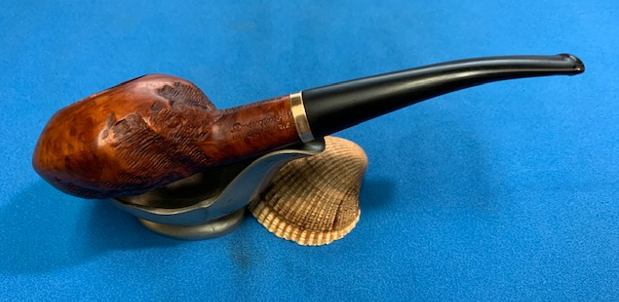
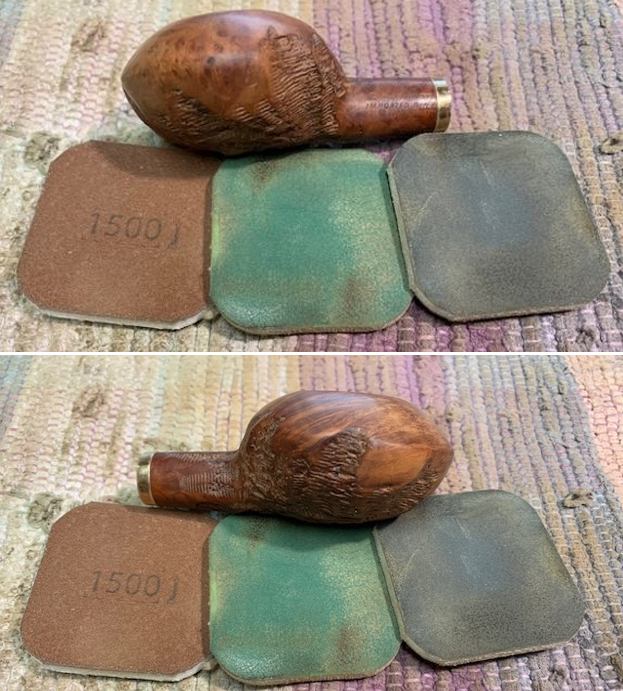
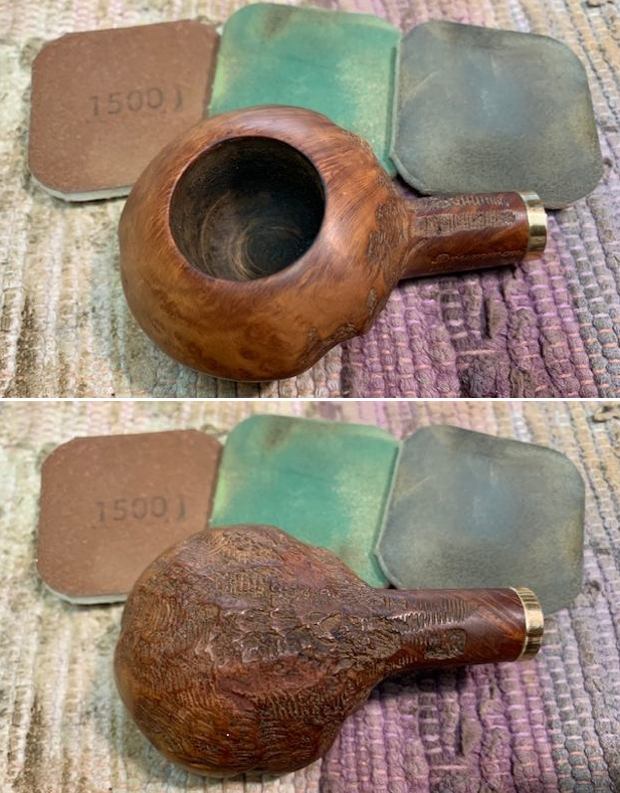
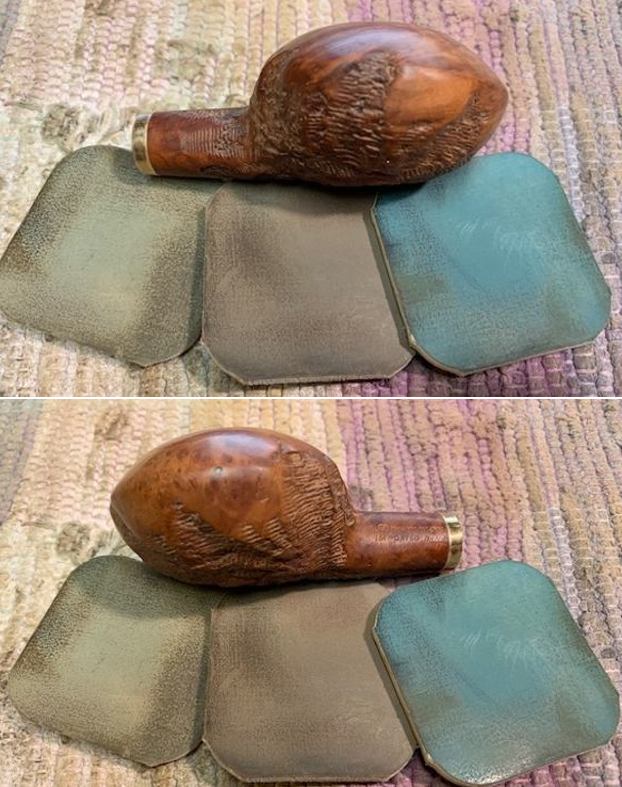
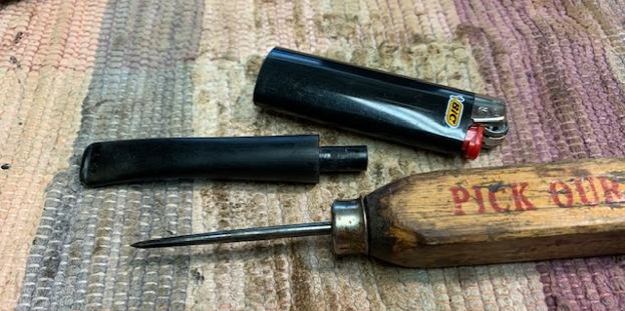
Now to work on the pipe itself. I pressed the band in place on the shank and put the stem on the shank to get a feel for the look. I took some photos to show the general look. You can see that the stem is slightly larger in diameter than the shank and will need to be reduced. Even so I really like the slight bend in the stem and the look of the pipe as it stands with the stem.  I started my work on the bowl and permanently pressed the brass band on the shank end against my desk top. It was a tight fit and though it is only cosmetic gave the shank a nice touch of bling. I polished the smooth portions of the briar with micromesh sanding pads – dry sanding with 1500-12000 grit pads and wiping it down after each pad with a damp cloth. I used the final three grits on the rusticated portion as well. It really began to take on a rich shine. I rubbed the bowl and shank down with Before & After Restoration Balm. I worked it into the surface of the bowl sides and shank with my fingertips and a horsehair shoe brush to clean, enliven and protect the briar. I let the balm sit for 10 minutes then buffed with a cotton cloth to raise the shine. The grain and the rustication patterns came alive. It looks better than when I began. I set the bowl aside and turned to work on the stem. The fit of the tenon in the shank was loose so I heated an ice pick and inserted it in the tenon to expand the diameter slightly. It did not take much and the fit was perfect! The next photos are slightly out of order. Before I pressed the band in place on the shank I used the Dremel and sanding drum to take down the diameter of the stem to get a clean fit on the shank. I removed as much of the excess as possible with the sanding drum and would finish the fit with sand paper afterwards. I sanded the stem with 220 grit sandpaper to smooth out the fit to the shank and band as well as smooth out the repairs near the button that stood out on the stem in the photos above. I started the polishing of the stem with 400 grit wet dry sandpaper.  I polished the stem with micromesh sanding pads – 1500-12000 grit pads. I wiped it down with Obsidian Oil after each sanding pad. I used Before & After Pipe Polish – both Fine and Extra Fine to further polish the stem. I gave it a final coat of Obsidian Oil and set it aside to dry.  This Drummond Imported Briar Squashed Tomato is a great looking pipe now that it has been restored and restemmed. The mix of rusticated and smooth finishes around the bowl is quite beautiful and highlights the grain and works well with the polished taper stem. The stem looks very good but the repaired areas ahead of the button on each side are solid but visible. I put the stem back on the bowl and carefully buffed the pipe with Blue Diamond on the buffing wheel using a light touch on the briar. I gave the bowl and the stem multiple coats of carnauba wax on the buffing wheel and followed that by buffing the entire pipe with a clean buffing pad. I hand buffed the pipe with a microfiber cloth to deepen the shine. The finished Drummond Squashed Tomato fits nicely in the hand and feels great. Give the finished pipe a look in the photos below. The dimensions of the pipe are Length: 6 ½ inches, Height: 1 ¼ inches, Outside diameter of the bowl: 2 inches, Chamber diameter: 1 of an inch. The weight of the pipe is 1.66 oz./47 gr. I will be putting it on the rebornpipes store shortly. If you are interested in adding this pipe to your collection send me a message or an email. Thanks for reading this blog and my reflections on the pipe while I worked on it.

Renewing a tired older 1945 Dunhill Shell 111/1 Billiard


Blog by Steve Laug

This is another of those pipes that has been laying around here for a very long time. It was in a small bag with a very dirty and calcified stem that I had assumed belonged to it. It was loose in the shank but the length and the diameter was correct. The bowl was very clean and had all the marks of having been cleaned up by Jeff. However, the stem really throws me as it has not been cleaned, sanitized or anything. It is a general mess. It reminds me a lot of some of the older estate Dunhill pipes that I have restored over the years. It really makes me wonder if somewhere along the way either Jeff or I threw in the Dunhill stem because it fit! I am pretty certain it is not the correct one but it will work. I don’t know if I will ever truly know where and when we received it. The stem was in very rough shape. The calcification on the stem surface was thick and hard. I had to use a knife to scrape the heavy thickness off. I forgot to take photos of the stem before I scraped it but the next photos give a fair idea of what I was dealing with. There was a bite through on the underside of the stem next to the button and some deep tooth marks on both sides. The tenon had a thick shiny coat that would need to be sanded down and smoothed out.I took a photo of the stamping on the shank underside. The stamping on the pipe is 111/1 (smaller text) on the heel of the bowl with an upside down 125 above it and toward the shank. That is followed by Dunhill Shell [over] Patent No. 41754/34. Following the Dunhill Shell stamp is Made in England on one line with a superscript underlined 5. From what I can find I would date it to 1945. I spell out my process in the text that follows.I turned first to Pipephil’s site because it has a great set of charts for dating Dunhill pipes that is kind of a flow chart. I find it incredibly helpful. I turned first to the section on Dunhill pipes to see if I could find similar stamping on the pipes he shows. I have included the following photos below (http://pipephil.eu/logos/en/dunhill/patent3.html#a1). The stamping is very similar on the first one from 1943 while the patent number on the second one (1950) is the same as mine. I turned then to the dating flow chart on the site (http://pipephil.eu/logos/en/dunhill/cledat-en1b.html). I have included Page 2 of the dating key below. I have circled the pertinent section in red in the photo below.Armed with that information I knew I was working on a 1945 Dunhill Shell 111 Billiard. I was uncertain about the stem being the original but it fit well and with some repairs it would serve to make the bowl smokable. Now it was time to work on the pipe itself.

Since the bowl was very clean I decided to rub it down with some Before & After Restoration Balm. I worked it into the sandblast finish with my fingertips and a horse hair shoe brush to get it into the crevices. I let the product sit for 10 minutes before buffing it off with a soft cloth. The product works to clean, enliven and protect briar and I have found that it certainly does a great job of that on the pipes I work on. I set the bowl aside and turned my attention to the stem. I scraped off the rest of the calcification on the stem with a pen knife and lightly sanded it to clean it up. I “painted” the stem surface with the flame of a Bic lighter to lift the tooth marks and the area around the bite through on the underside. There was still work to do but it was getting there. Notice the tenon still needs attention as there is some build up on it as well. I cleaned off the surface of the stem with alcohol and a cotton swab and then greased a folded pipe cleaner with Vaseline in preparation for the stem repair. I slide a greased pipe cleaner into the slot below the bite through and fill it in with black super glue. I built up the damage on the topside of the stem at the same time. I spread the glue with a dental pick to make sure the bite through was well covered. I sprayed the repair with an accelerator to harden the repair more quickly. Once it had hardened to touch I removed the pipe cleaner. Once the repair had cured overnight I used a small file to reshape the button edges on both sides and flatten the stem surface. The repair worked very well. I sanded the repaired areas with a folded piece of 220 grit sandpaper and started the polishing process with 400 grit wet dry sandpaper. I also worked on the tenon to smooth out the previous work that had been done. It is looking better.At this point I decided to put the stem on the bowl and take some photos of it to get a sense of what the pipe looked like. I have included those below. There was still a lot of work to do on the stem. But the general shape and condition were looking much better. I spent quite a bit of time working on the shape of the stem with a 1500 grit micromesh sanding pad to smooth out the transition between the shank and the stem. I also worked on the button edge and the part of the stem just ahead of the button (some call it the bite zone, but honestly that name pains me given the number of chewed up stems I have worked on). I continued to polish the stem with the rest of the micromesh pads (2400-12000 grit pads). I rubbed the stem down after each pad with Obsidian Oil. I polished the stem with Before & After Pipe Stem polish – both Fine and Extra Fine. I gave it a final coat of Obsidian Oil and let it dry. Though the stem I have with the pipe is probably not the correct one for this 1945 Dunhill Shell 111 Billiard it will work and make the pipe usuable. It is far from perfect as far as stems go but it will work while I am on the lookout for the correct one. The stem cleaned up well and the finished pipe looks very good. The rugged looking sandblast and the polished black vulcanite stem work very well together to give the pipe a slender profile that is quite pleasing. The sandblast finish on the bowl came alive with the buffing. I used Blue Diamond on the buffing wheel on both the bowl and stem. I gave the bowl multiple coats of Conservator’s Wax and the stem multiple coats of carnauba wax on the wheel then buffed the pipe with a clean buffing pad to raise the shine. I hand buffed it with a microfibre cloth to deepen the shine. The Dunhill Shell 111 Billiard feels great in the hand. It is lightweight and the contrast in the stains on the briar and the polished vulcanite stem with the rugged sandblast bowl is quite amazing. The dimensions of the pipe are Length: 6 inches, Height: 1 ½ inches, Outer diameter of the bowl: 1 1/8 inches, Chamber diameter: ¾ of an inch. The weight of the pipe is 1.06 ounces/30 grams. It really is a beauty. Thanks for walking through the restoration with me. If any of you happen to have a Dunhill narrow stem or fishtail that you would be willing to part with let me know! Thanks!

A Simple Refurbishing Of A Boxed “Brakner # 129”


Blog by Paresh Deshpande

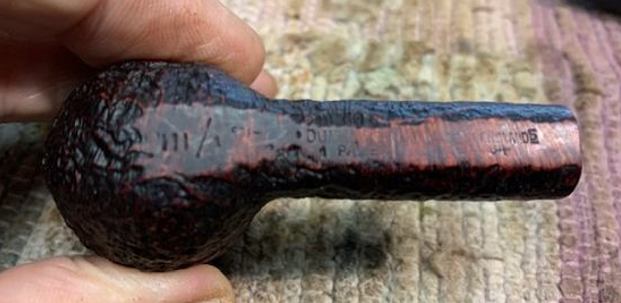
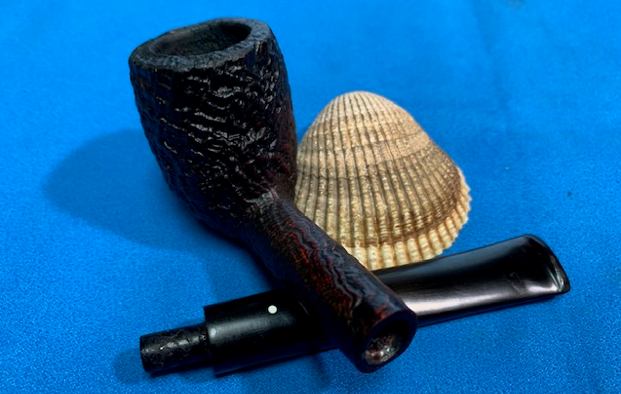
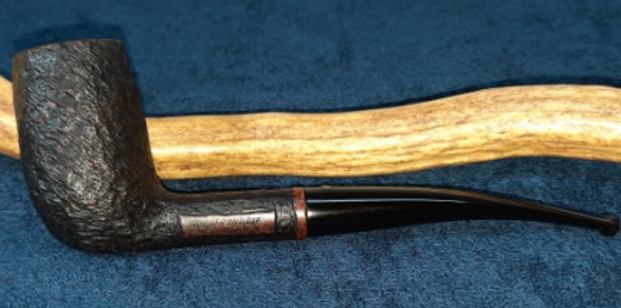
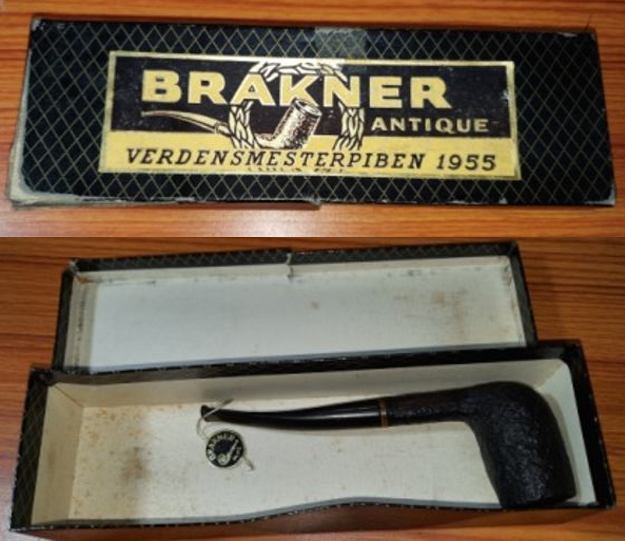
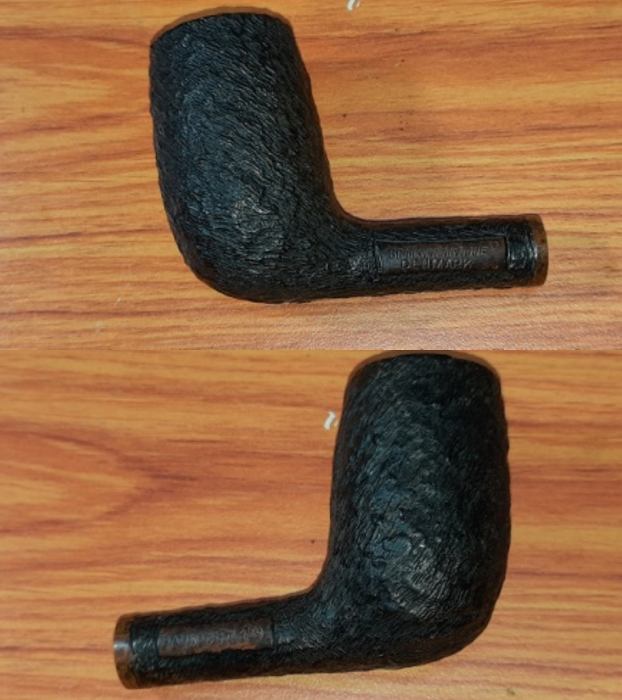
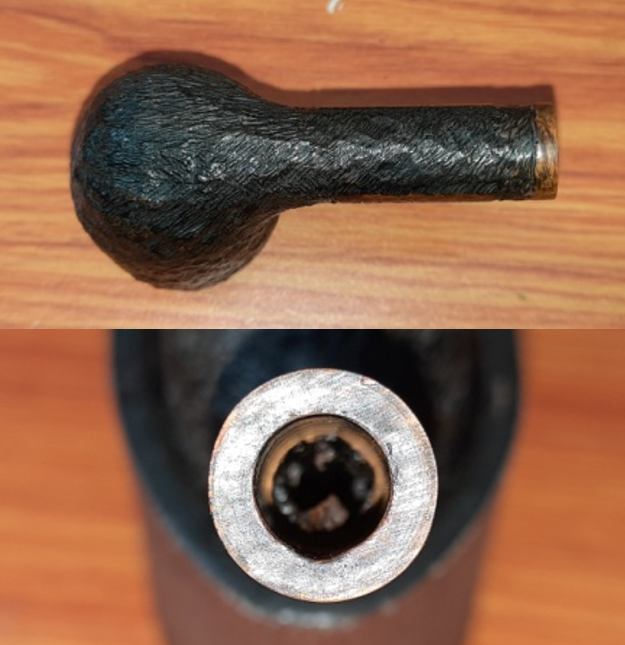
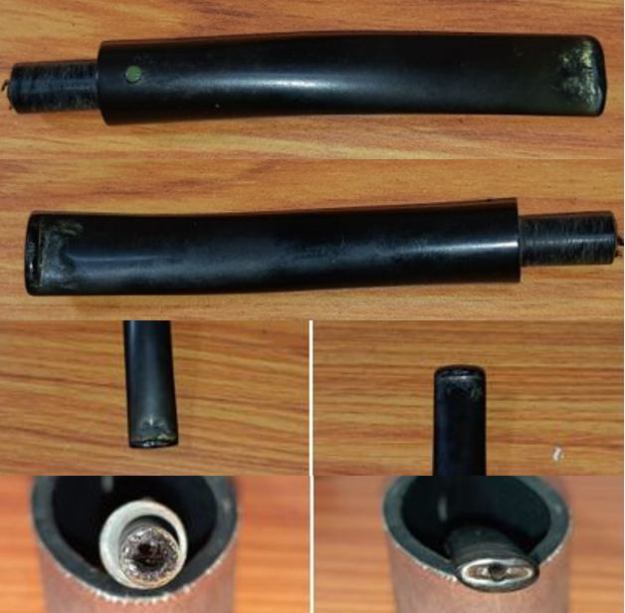
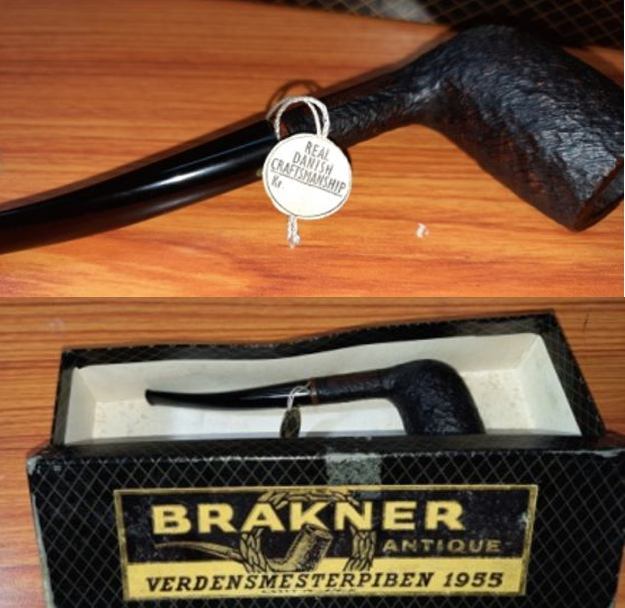
This is the third and the last Brakner pipe in my inherited collection that came in original Brakner box duly tagged, but I don’t think the box is original as the shape code on the pipe and the box do not match. I had been delaying restoring this pipe as I had my hands full with pipes that I had received for repairs and ones that were selected by brother pipers to be restored/ refurbished by me. In between these commitments, I took the time out to refurbish pipes for my personal collection and this is one such pipe. This uniquely rusticated stacked billiard shaped pipe is stamped on the smooth surface on the left side of the shank as “BRAKNER ANTIQUE” over “DENMARK”. The smooth surface on the right side of the shank is stamped as “HAND-CUT” followed by # 129, the shape number. The vulcanite stem is adorned with a green dot (larger than a Dunhill stem logo), I think made of Jade stone, not sure though. There is a smooth band around the end of the shank.  I have worked on Brakner pipes before and had read about Peter Brakner and his unique “micro-rustication” technique, which has been lost to the pipe community with his demise as he never did share this technique that he had developed. To refresh my memory, I revisited pipedia.org and read the article published therein. One can refer to the article at this link Brakner – Pipedia.

Peter Micklson (†) started his career at the Teofil Suhr workshop, Suhr’s Pibemageri, in Copenhagen, where Sixten Ivarsson was the foreman. He brought in Poul Rasmussen and taught him the two or three important things about pipemaking in a six weeks crash course, before he went off to join Poul Nielsen, the later Mr. Stanwell.

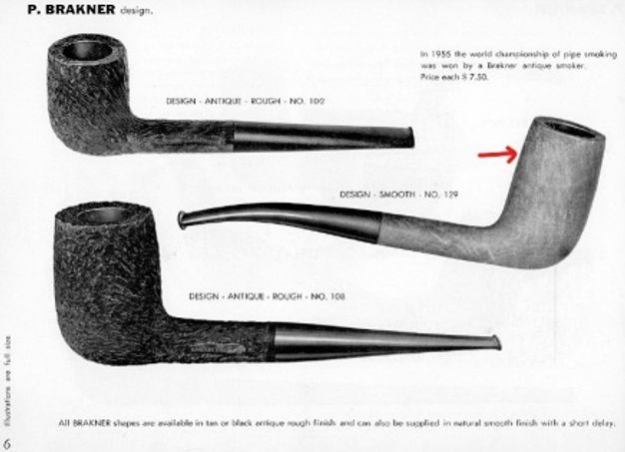
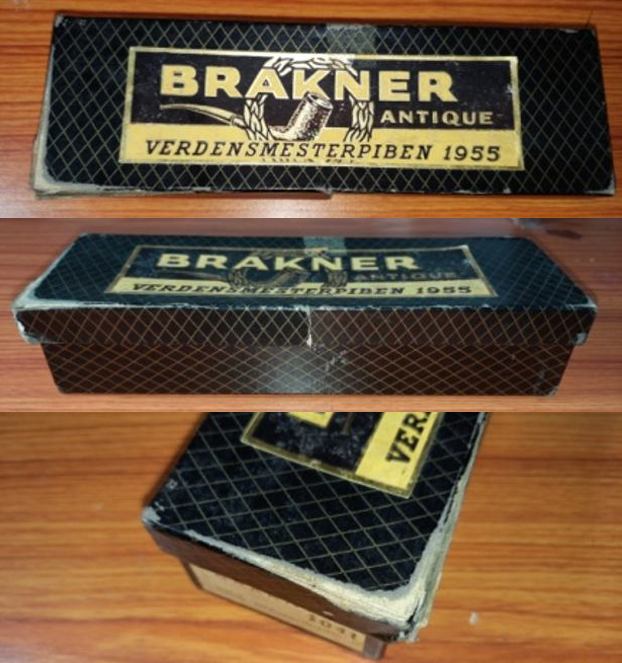
Micklson, who later changed his last name to Brakner,cannot have worked under Rasmussen too long before he felt to be good enough to go off on his own. Indeed he carved himself quite a good name as it was proudly announced 1955’s World Championship of Pipe Smoking was won by a smoker who employed a Peter Brakner pipe.

His fame based fairly on developing an unique and very special “micro-rustication” he called Antique. According to Kai Nielsen, Brakner kept this technique as a secret and only once he showed it to one person – Kai’s mother. Both have passed away, so this secret technique is lost. Kent Rasmussen was recently inspired by Brakner’s Antique finish when he created his new technique of rustication.

Brakner was a close friend of Ole Larsen, the proprietor of the famous W.Ø. Larsen tobacco shop and sold a lot of his pipes there, before Larsen hired his own indoor carvers. From the Larsen Export Catalog 1960/61 we learn a bit about Brakner pipes:

  • Antique Antique finish in tan or black. Smooth pipes also. Each pipe 7.50 $.
  • Bella Danica Antique finish in tan or black. Each pipe 10.00 $.
  • Royal Danois Antique finish in tan or black. Each pipe 12.50 $.

The latter were named after the Royal Danish Guard Regiment, founded in 1689.

Brakner was one of the first high-end carvers from Denmark to enter the US market and was considerably successful there in the early 1970’s. After his sudden death Peter Brakner’s name faded back from the forefront, but his pipes speak to the injustice of that. His body of work has earned him a place in the important history of Danish pipemaking.

Further down the article, there were a few pictures of Brakner Pipes from the 1961-62 catalogs that I have reproduced below which has the shape code of the pipe currently on my work table, albeit in a smooth finish and indicated with a red arrow.Having read the detailed account, I feel blessed to be holding a piece of Danish pipe history.

Initial Visual Inspection
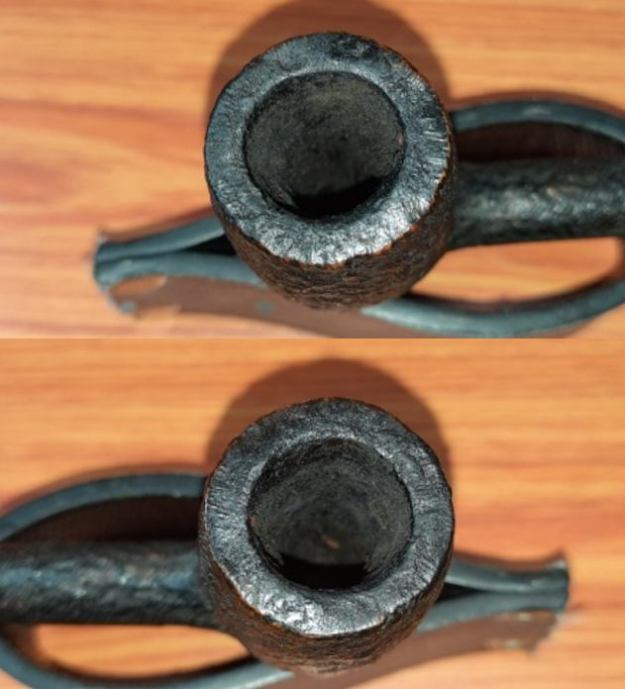
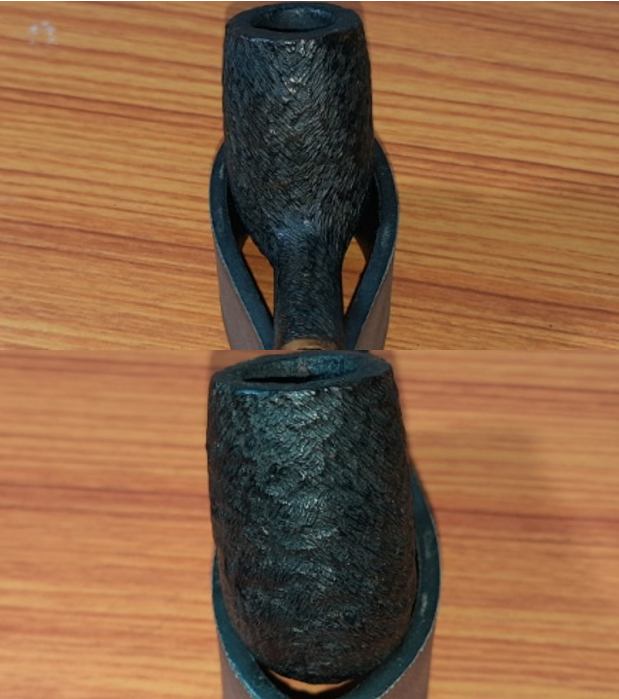
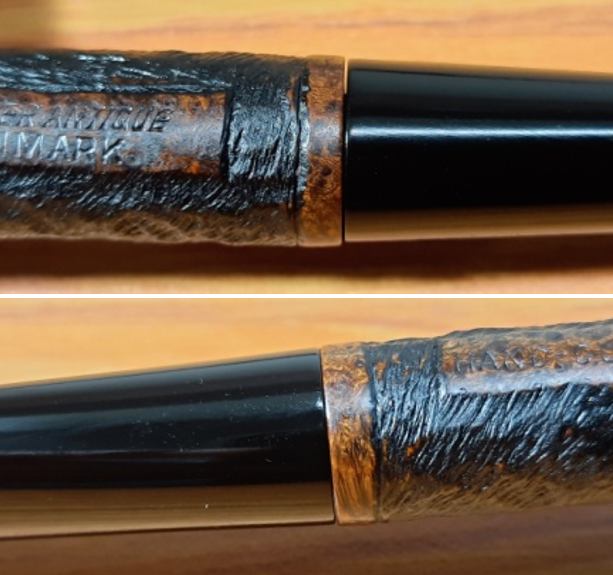
As is generally observed with most of my grandfather’s pipe, the chamber of this pipe too is filled with a thick cake with overflowing lava covering the rim top surface. The thick cake hides the condition of the inner walls of the chamber and will be ascertained only after the cake has been taken down to bare briar. Similarly, the condition of the rim top surface will be commented once the overflowing lava has been scraped off. However, the inner rim and outer rim edge appears to be in good condition with no tell tale signs of damage. There are strong smells emanating from the entire pipe and would need to be addressed. Unlike the other two Brakners in my collection, this one does not have a smooth band below the outer edge of the rim, but has one at the shank end. It has smooth surfaces on either side of the shank which bears the stampings seen on this pipe. The unique rustications on the stummel surface are covered in oils, tars, grime and dust of all these years of use and storage. However, once cleaned up, the dark of the stummel should contrast beautifully with the smooth brown shank end band. The mortise and the shank air way are clogged as expected making the air flow anything but laborious. However, with the draught hole being right at the bottom of the chamber and the perfect alignment of the stem airway, tenon and the shank airway should make this one a fantastic smoker. The vulcanite stem is heavily oxidized with deep tooth marks on both the upper and lower stem surfaces. The buttons on the either surfaces are deformed due to tooth indentation and would have to be rebuilt and reshaped. The trademark green dot on Brakner pipe stem has dulled a bit and would benefit from a nice polish. The tenon end and the slot end showed heavy accumulation of dried oils and gunk.The cardboard box that housed the pipe for these many years does show its age. The edges have separated at the seams at a couple of places and the whites of the insides have yellowed. However, the posters and external surface are bright and in good condition. All in all, judging from the initial examination, I do not envisage any major/ serious issues to present themselves in the course of restoring this beauty and should be an easy project.

The Process
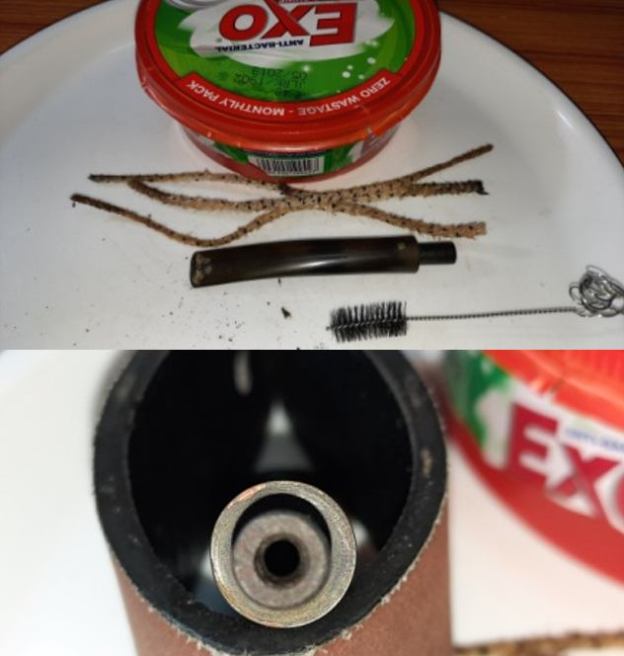
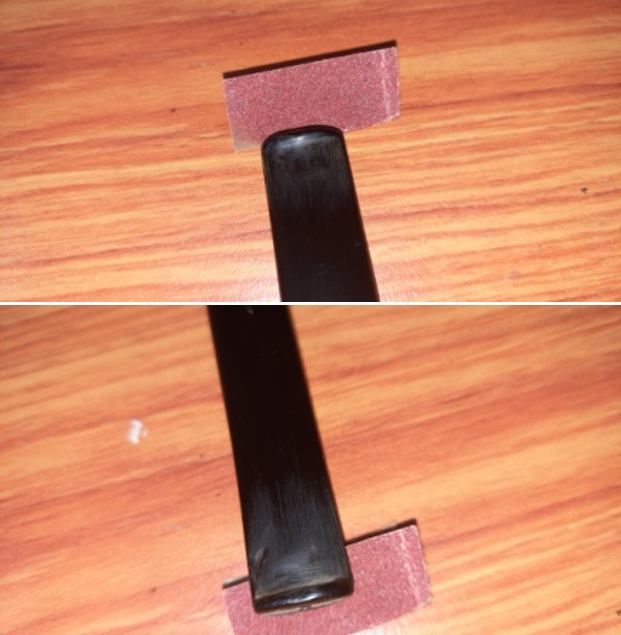
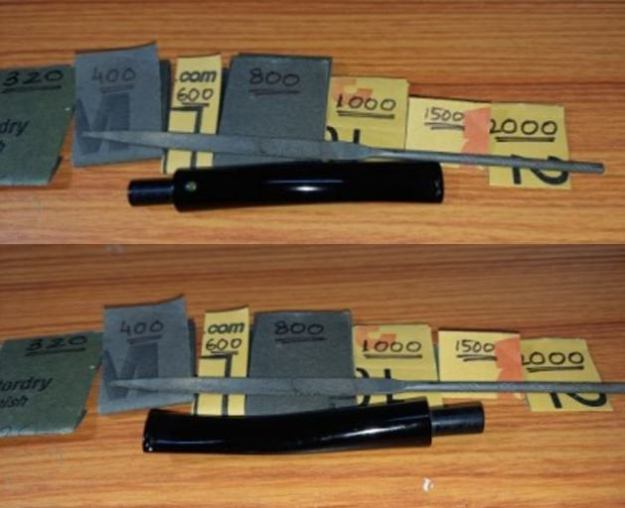
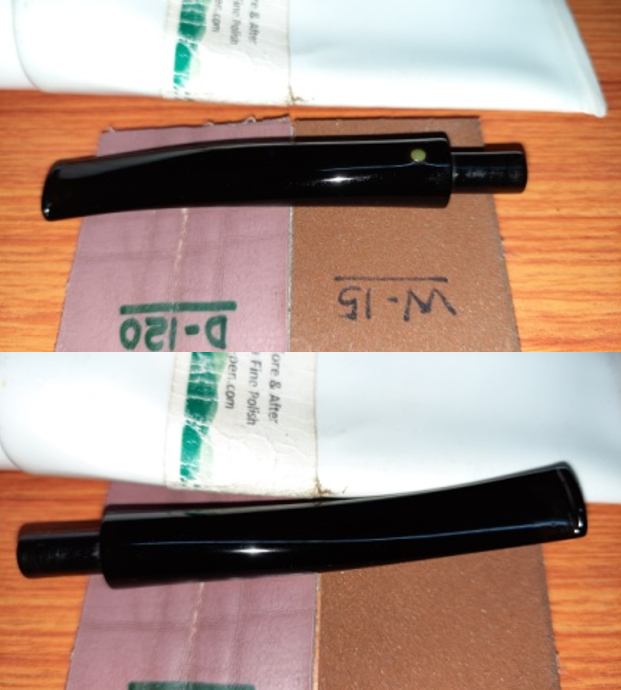
I began the restoration process by first cleaning the stem internals. I cleaned the internals of the stem using hard bristled pipe cleaners dipped in isopropyl alcohol and followed it by cleaning the air way using a small shank brush with anti oil dish cleaning soap. This helps in reducing the number of pipe cleaners required while ensuring a spotless and a very clean stem air way. Once the stem internals were clean, I sand the entire stem surface with a piece of 220 grit sand paper and cleaned the stem surface with Murphy’s Oil soap on a cotton pad. This step helps to remove surface oxidation to some extent while preparing the stem for a dunk in deoxidizer solution for better results. To address the issue of bite marks and tooth chatter on the stem surfaces, I flamed the surface with a lighter. Vulcanite has the property to attain its original shape when heated and this is exactly what was being done. The tooth chatter and deeper bite marks were raised to the surface to a great extent. The remaining minor tooth indentations would be subsequently filled with a mix of clear super glue and activated charcoal. At this stage, I immersed the stem in to the De-oxidizer Solution developed by Mark Hoover. I generally allow the stem soak in the solution overnight.While the stem was soaking in the De-oxidizer solution, I reamed the chamber with size 1 head of the PipNet pipe reamer. I removed the carbon from the areas where the reamer head could not reach with my fabricated knife. To completely remove the residual carbon from the walls of the chamber and smooth out the walls, I sand the chamber walls with a folded piece of 220 grit sandpaper followed by cleaning the chamber with a cotton swab wetted with isopropyl alcohol. The chamber walls are in pristine condition. I deliberately avoided scraping off the lava build up over the rim top to avoid damage to the micro-rustications over the surface. I cleaned the mortise and shank airway using dental pick and hard/ soft bristled pipe cleaners dipped in isopropyl alcohol. I shall continue with further cleaning of the shank internals once I clean the external stummel surface.Once the internals of the chamber and shank were cleaned, I cleaned the external surface of the stummel with Murphy’s Oil soap and cotton swabs followed by scrubbing the rusticated surface with a toothbrush and dish washing soap. This rid the stummel rustications of all the accumulated dust, dirt and grime and the smooth brown band around the shank now contrasts beautifully with the dark stummel surface. Using a soft brass brush, I deliberately cleaned the rim top micro-rustications till clean. I also cleaned the shank internals with dish washing soap and shank brush.I had expected that after such a thorough cleaning of the chamber and shank internals, the ghost smells would have been greatly reduced or eliminated completely, but that was not so. I decided to subject the chamber and mortise to cotton and alcohol bath. I packed the chamber with cotton and drew out a wick from the cotton and along with a folded regular pipe cleaner, inserted it into the mortise and through the draught hole into the chamber. I tightly packed cotton balls in to the remaining portion of the mortise. Thereafter, I soaked the cotton balls with isopropyl alcohol up to the brim. About half an hour later, the level of alcohol had gone down, having being absorbed by the cotton. I topped it up once again and set it aside overnight. By next afternoon, the cotton and alcohol had drawn out all the remaining oils and tars from the chamber and mortise. I removed the cotton balls and the dirt can be gauged by the appearance and coloration of the cotton balls and the pipe cleaner. With my fabricated knife and dental tools, I spent the next hour scrapping out the entire loosened gunk from the mortise. I ran pipe cleaners through the mortise and draught hole to clean out all the loosened tars and gunk that was lodged in the draught hole and mortise. The chamber and mortise now smelled clean, fresh and looked it too. I set the stummel to dry out naturally. To enhance the contrast and break the monotony of the black stained stummel and the soon-to-be shining black stem, I polished the smooth briar band at the shank end, dry sanding with 1500 to 12000 grit micromesh pads.To enliven the briar wood and further enhance the contrast of the band with the rest of the dark stummel surface, I rubbed a little quantity of “Before and After” balm in to stummel surface and set it aside for 20 minutes for the balm to be absorbed in to the briar. Thereafter I hand buffed it with a microfiber to deepen the shine. The stummel looks nice and vibrant.With the stummel refurbishment almost complete, I turned my attention to the stem which had been soaking in the solution now for nearly 24 hours. I cleaned the stem and the stem airway under running warm water and scrubbed the raised oxidation from the surface using a Scotch Brite pad and the airway with thin shank brush. I further removed the oxidation by scrubbing the stem with 0000 grade steel wool. Once the stem was dried with paper towels, I sand the bite zone to completely eliminate the raised oxidation in preparation for filling the tooth indentations and applied a little olive oil to rehydrate the stem.I prepared a mix of CA superglue and activated charcoal and spot filled the tooth indentations and set it aside to cure overnight.Once the fills had cured completely, I sand the fill with a flat head needle file till I had achieved a rough match of the fill with the rest of stem surface. I continued the sanding cycle by dry sanding with 320, 400, 600 and 800 grit sand papers. I wet sand the entire stem with 1000, 1500 and 2000 grit sand papers. This not only ensured a nice blend of the filled areas with the rest of the stem surface, but also removed the oxidation from the surface. I rubbed the stem surface with some EVO and set it aside to be absorbed in to stem surface. Thereafter, I launched a second determined assault on the stem, subjecting it to the complete cycle of micromesh polish. The end result is a gorgeous, smooth and shiny looking black of the vulcanite stem.When the stem and the stummel were united for a polish using carnauba wax, I saw a mysterious gap appear between the stem and shank face. This gap was definitely not noticed during my initial inspection and neither the stem face was shouldered during the polishing process. I really am not aware about the reasons for this happenstance, but now that it has been noticed, it needs to be addressed. I attach the stem to the shank and insert a piece of 320 grit sand paper between the two and sand the shank face opposite to the gap. I also gave a few turns to the tenon end over the same sand paper. I continued the micro adjustments till I had achieved a perfect seating of the stem in to the shank end. Just a word of caution here; please be extremely diligent and careful during this step as it has the potential to ruin the pipe completely due to over sanding. Remember “LESS IS MORE” and “SAND ONCE AND CHECK TWICE/ THRICE”.  This was followed by the routine regime of polish with carnauba wax using my hand held rotary tool. The Brakner looks unique and oozes quality.To deepen the shine, I gave a vigorous rub to the entire pipe with a microfiber cloth. This is truly a beautiful pipe and will be joining my now increasing personal collection. Here are a few pictures that should give you a fair idea about the end results…. Thank you all for being a part of this journey and support extended.P.S.- I had requested my youngest daughter, Pavni, to help me repair the box which housed the pipe. This kind of work is right up there in her alley and she did oblige me. The box has been repaired solid and cleaned. Here are a few pictures of the box with the pipe.Praying for the health and safety of you and your loved ones…

So long until the next project.

Refurbishing A Very Special For Me Karl Erik # 4 Freehand Pipe


Blog by Paresh Deshpande

Abha, my wife, has been working with me on pipes for the last three years and never has she voluntarily suggested/recommended any pipe for purchase. One day while surfing eBay for some good pipes, Abha chanced upon this pipe and she liked it. Well, the fact that this is the first pipe that called out to her (she is a non smoker!!), makes it very special and soon the pipe made its way to Pune where Abha was indeed surprised to receive this pipe.

This special pipe that I selected to work on is a beautiful freehand appears like a tulip with some great flame grains all around the stummel and shank. The shank end has a nice outward flare with a flattened lower edge and the rim top is a nice plateau. The pipe is stamped on the bottom of the flared shank end as “KARL ERIK” in cursive hand over “HAND CUT IN” over “DENMARK”, all in block capitals. The shank towards the bowl end bears the numeral “4”, in all probability the grading of this pipe (?). All the stampings are crisp and easily readable. The fancy vulcanite stem is devoid of any stampings.There is a lot of interesting information on the carver, Karl EriK Ottendhal, on pipedia.org (Karl Erik – Pipedia) which makes for an interesting read and provides a great insight in to the life struggles, successes and pipe making philosophies of Karl Erik. I have reproduced a few interesting general snippets of information while focusing on the aspect of determining the vintage of the pipe.
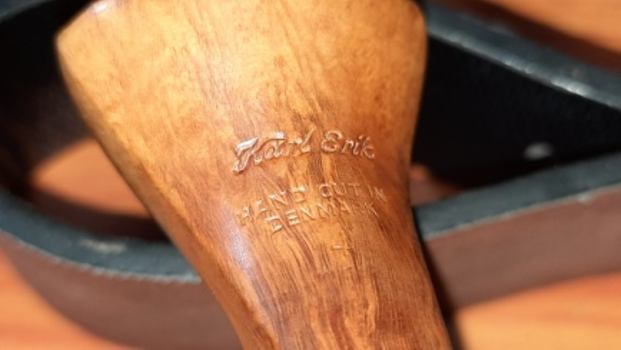
Karl Erik Ottendahl (1942 – 2004) was born in Aalborg (Jutland), just a few miles from the very northernmost tip of Denmark. He began smoking a pipe when he was 14 and upon leaving school he started an apprenticeship in the craft as a lithographer at the age of 16.

While working as an apprentice he began hand carving pipes as a hobby. Many were given as gifts to his more senior colleagues. Upon completion of his apprenticeship he moved to Nairobi, Kenya to work as a lithographer during the 1962 war. While in that war torn country, he was unable to procure pipes for himself. In the face of such a predicament, he chose to continue to make pipes for his own use rather than go without.

Returning to Denmark after three years he couldn’t find a well paid occupation in his job, and so he began making a few pipes on the side to boost his income choosing his prenames “Karl Erik” – logo “KE” – for his label. When he managed to find some major Copenhagen pipe stores willing to sell his pieces his reputation grew little by little and he was finally able to purchase more and better machinery and began working full time as a pipe maker.

The Manufacture Era

Growing demand for his pipes made it necessary to look for a larger workshop and hiring first co-workers around 1967/68. A most important step ahead in his career was the contract with Wally Frank, Ltd. of NYC who was in search of attractive, well made but affordable Danish freehands and fancy pipes fitting to their vast offer of low end or midrange pieces but with a stress on quality.

“Attractive, well made but affordable Danish freehands and fancy pipes” – this was exactly what Karl Erik offered! So to say that’s the kernel of his lifelong philosophy as a pipemaker! And indeed, Karl Erik always did it his way and always somewhat differently as others.

Grading and the II S Problem

KE’s old grading used numbers ascending from 4 to 1. The entirely hand made one of a kind pieces were stamped “Ekstravagant”. Quite simple. But then there are the II S stamped pipes! (And furthermore seen so far II SM, I S, I M and I B.) Three fairy tales, often told:

  1. II S stands for the initials of a pipemaker who worked for Preben Holm before he changed to KE.
  2. II S pipes are a second brand of KE. Nonsense comparing the quality of II S and normal KE pipes!
  3. II S was used when there was no space for stampings otherwise.

But it is almost certain, that II S pipes were exclusively sold in the United States only.

KE discontinued all exports to the United States in 1987 due to waning sales and attempts of his business partners to screw down prices. Now, freehand sales were downward bound worldwide in those years and KE gradually grew tired running a pipe manufacture.

Though Karl Erik’s favorite briar mostly came from Morocco or Greece, but he frequently purchased elsewhere, too. He didn’t consider the briar origin to be particularly important provided the briar was well cured. Therefore, he simply purchased the best briar he could find, rather than purchasing from only one or two regions.

Concentrating on more classical influenced shapes Karl Erik’s style emphasized the wood over all other contributing factors by allowing the grain to determine the ultimate shape of the piece. He further emphasized the natural, organic, flowing shape of his bowls with hand cut stems and a broad variety of decorating materials.

KE’s new grading used numbers ascending from D to A. The unique “Ekstravagant” pipes C, B, A, AA to AAA. These superb pieces of remarkable quality were, almost certainly, the least expensive high- quality hand made pipes coming from Denmark today!

In the 90’s he was honored by Stanwell to design some models for the very popular H.C. Anderson line which is named for the great Danish poet.

Around 1998/99 he traded the German rights to his brand name “Karl Erik” to Planta, better known as the proprietor of Design Berlin (db). Thus – though db copied the style of the old Karl Eriks pretty closely – a recent KE offered for sale in Germany is unfortunately about as Danish as Eisbein mit Sauerkraut. But even though Planta did one thing of merit: a series of pipe tobaccos was named for Karl Erik!

While everywhere else a Karl Erik pipe remained a Karl Erik pipe made by Karl Erik himself, he began signing some of his pipes with his family name Ottendahl. The new label was strictly used to continue distributing his own pipes in Germany only! But as his Viking ancestors some Ottendahl pipes discovered a way to cross the pond and turned up in the United States. KE officially resumed sales to the USA after 13 years in 2000! This caused a certain confusion among US pipesmokers and some clever US pipetraders imputed the Ottendahls with a better quality than the usual Karl Erik pipes to take advantage of the favorable situation asking considerably higher prices for Ottendahl pipes.

During the following years KE produced a little more than 2000 pipes per year, selling the bulk of them in Germany and the US. That is surely a respectable output, considering the largely hand-made character of these pipes. Karl Erik Ottendahl was planning to make 2500 pipes in 2004 but he died surprisingly suffering a stroke in his home in Korsør on Zealand on the 12th of September 2004.

It sad that the community lost a talented artisan but his pipes will continue to be repaired/ restored, like the one currently on my work table, and be remembered for generations to come.

From the above, it is evident that this pipe is from the early manufacturing era of Karl Erik and is the lowest grade of pipe leaving his table.

Initial Visual Inspection
The chamber has a decent layer of cake that is thin at the rim and thick towards the bottom half of the chamber. The plateau rim top and the flared shank end is stained black. The stummel surface is covered in dust and grime that gives it a lifeless appearance. However, through this dirt and grime, beautiful flame grains can be seen all over the stummel surface without a single fill. The mortise has small traces of dried oils/ tars accumulation and yet, should be an easy clean. The high quality vulcanite stem is in excellent condition without a single bite mark. Overall, this old pipe has been well cared for and should finish up really beautiful. Detailed Inspection
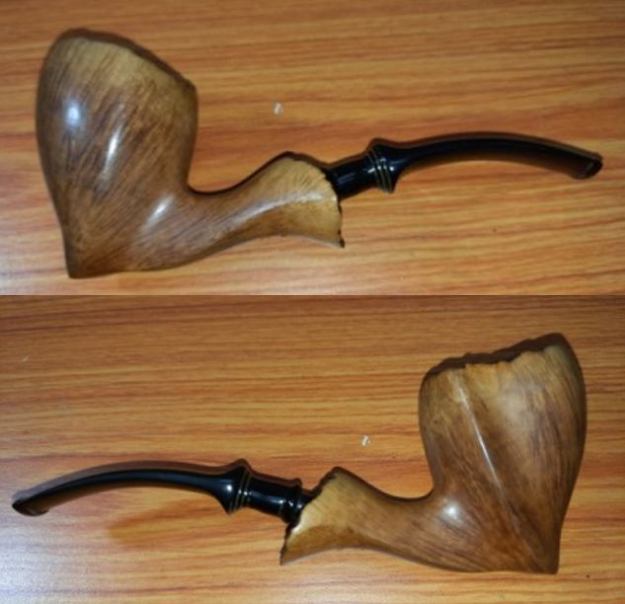
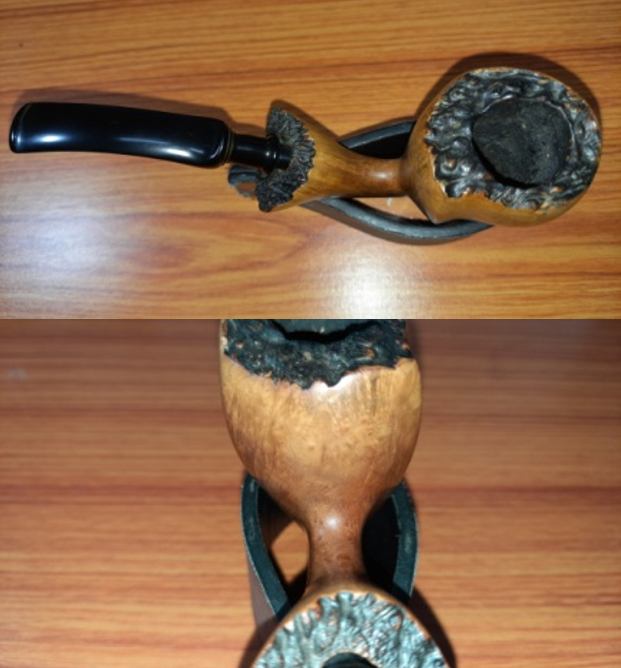
The chamber has a thick layer of dry and hard cake at the bottom half towards the heel and progressively reduces towards the rim top. The plateau rim top surface is very clean with no lava overflow or issues of charring to the inner rim edge. The condition of the inner walls of the chamber can be checked and ascertained only after the cake has been taken down to the bare briar. The rim top and the flared shank end are stained black and provide a nice contrast to the natural virgin hues of the rest of the stummel. However, this was a contentious issue as Abha was of the opinion that black stained rim top gives an unclean appearance whereas I was looking at the contrast.The stummel boasts of beautiful flame grains all around and extends over the shank surface too!! The surface is lightly covered in grime and dust. However, the stummel surface is without any fills save for a few scratches/minor dings (indicated by yellow arrows/ encircled in same color) that could have been caused during routine use. The flared plateau of the shank end shows traces of accumulated dust and dirt which should be a breeze to clean. The foot of the stummel shows beautiful bird’s eye grains and is sans any damage. The mortise is clean with minor traces of old oils and gunk. Overall, the stummel presents a well cared for pipe. A closer look at the stummel surface shows beautiful and distinct flame grains all around, including the stummel, less the right side of the bowl where the grains are not prominent and this could only be the reason for this piece being classified as Grade 4! The fancy slightly bent vulcanite stem is lightly oxidized and with no tooth chatter or bite marks or chewed off button edges. The tenon and slot end are both clean and this makes me believe that the stem airway would be clean too. The fancy stem, though looks beautiful when black and shiny, is a bear to clean with all the dips and narrow gaps between the beads and rings etc.The Process
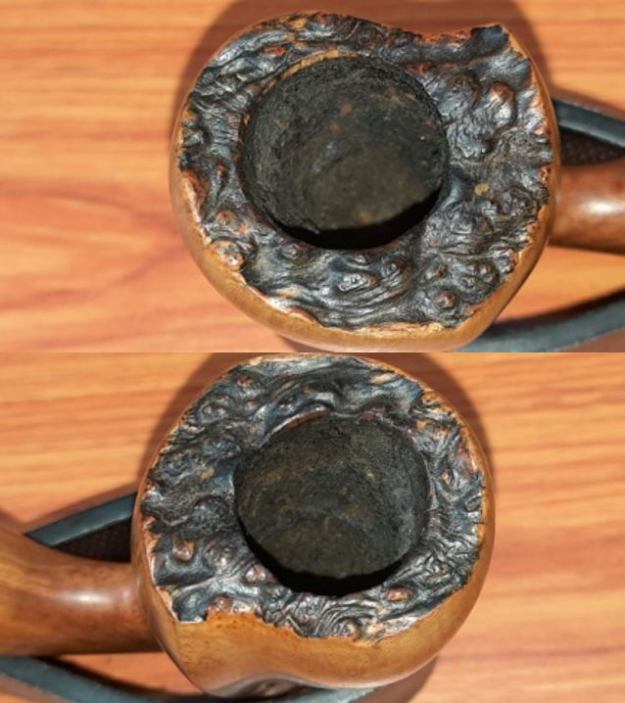
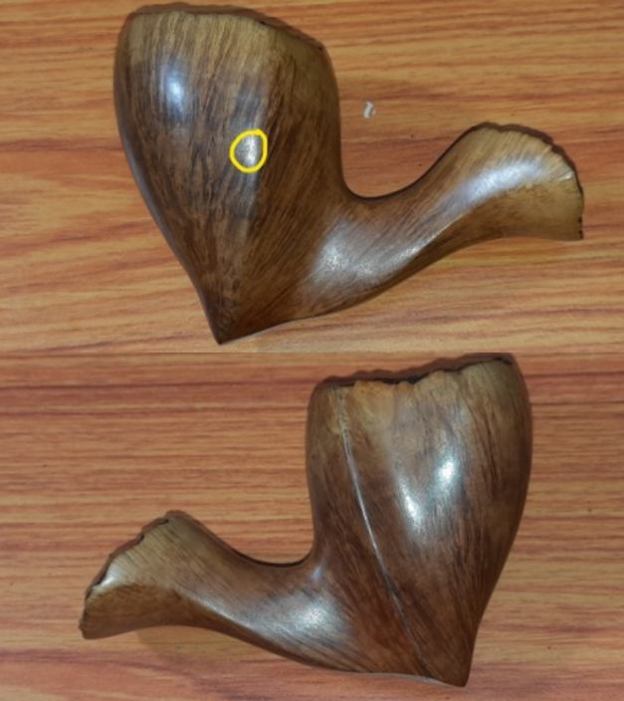
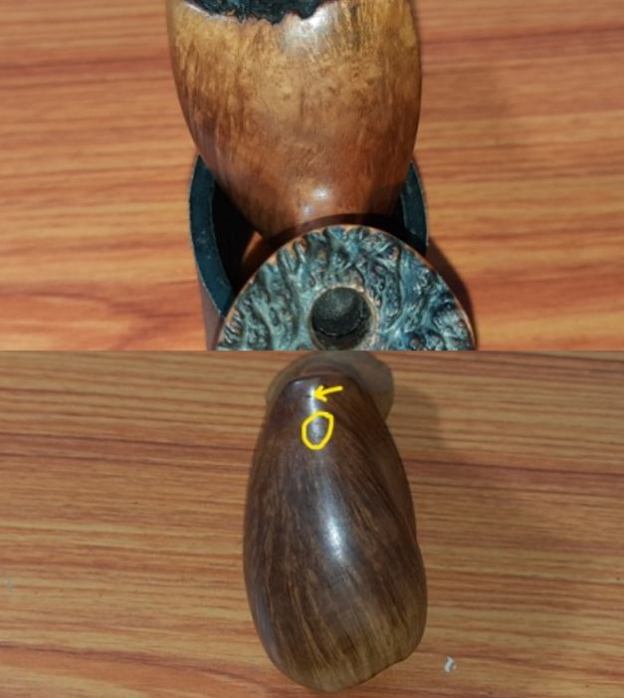
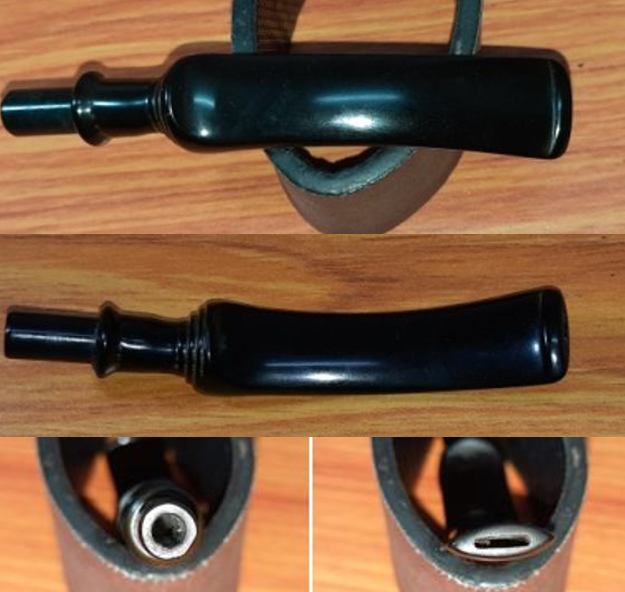
I began the process of refurbishing this pipe with cleaning the internals of the stem using pipe cleaners with isopropyl alcohol (99.9% pure) followed by further cleaning using anti oil soap and shank brush. Next I sand the entire stem surface with a folded piece of 220 grit sand paper to remove surface oxidation. It has been our experience that the solution works best when the surface is sanded. Thereafter I immersed the stem in “Before and After Deoxidizer” solution developed by my friend Mark Hoover. The solution helps to draw out oxidation to the surface making its further removal a breeze, while the minor oxidation is eliminated to a very great extent. I generally allow the stems to soak in this solution overnight for the solution to do its work. With the stem soaking in the deoxidizer solution, I worked the stummel, starting with reaming the chamber with a PipNet reamer tool and used the first, second and third head of the tool. With my fabricated knife; I further took the cake down to the bare briar. With a 150 grit sand paper, the walls of the chamber were rid of all the remnants of the cake, revealing smooth and solid chamber walls. I further wiped the chamber with a cotton swab wetted with isopropyl alcohol to completely remove the sanding dust.This was followed by cleaning the shank internals with pipe cleaners and isopropyl alcohol. I further scrapped out the entire moistened gunk with a dental tool. The shank internals cleaned up nicely with a smooth and full draw. The mortise will be cleaned further with anti oil soap and shank brush while cleaning the exterior of the stummel.I scrubbed the external surface of the bowl with undiluted Murphy’s oil soap and hard bristled tooth brush and dried it using paper towels and soft cotton cloth. I deliberately cleaned the plateau rim top surface. The entire stummel cleaned up nicely. I set the stummel aside to dry out naturally. The plateau rim top and flared shank end were rid of the black stain. This is how the rim top and the shank end appear sans the black stain. Further discussions with Abha only resulted in postponement of the decision to stain or otherwise till completion of the sanding cycle with sandpaper, micromesh polish cycle and application of the restoration balm. I simultaneously cleaned the mortise with anti oil soap and shank brush.While I was cleaning the stummel, Abha fished the stem out from the deoxidizer solution and scrubbed out the raised oxidation with a Scotch Brite pad followed by a scrub with 0000 grade steel wool to further remove the oxidation and smooth out the stem surface. She cleaned the stem under running warm water to remove the solution from the crevices and internals of the fancy stem. Next she went through the regime of sanding with sandpapers to completely eliminate (or that’s what the aim always is) the oxidation from the stem surface. She applied a little EVO at the end and set the stem aside for the oil to be absorbed. Simultaneously, I continued working with the stummel restoration. I polished the stummel with micromesh pads, wet sanding with 1500 to 12000 pads. I polished the raised surfaces on the plateau rim top and the shank end by dry sanding with 1500 to 12000 grit micromesh pads. This dry sanding of the plateau surface does not leave behind the moist sanding dust in the nooks and crannies of the surface, which is a bear to clean later. I wiped the surface with a soft cloth at the end of the micromesh cycle. The stummel looks amazing with a deep shine and beautiful grains popping over the stummel surface.I rubbed a small quantity of “Before and After Restoration Balm” in to briar. I rubbed this balm deep in to the nooks and crannies of the plateau rim top surface with my fingers and let it rest for a few minutes. The balm almost immediately works its magic and the briar now has a nice vibrant appearance with the dark brown hues of the grain contrasting with the rest of the stummel surface. I further buff it with a horse hair shoe brush. Once I was done polishing the stummel with micromesh pads, Abha polished the stem, wet sanding with 1500 to 12000 grit micromesh pads. She rubbed a little extra virgin olive oil in to the stem at the end of the micromesh pads polishing cycle. She completed the polishing regime of the stem by rubbing a small quantity of “Before & After Fine” stem polish and giving it a final polish with a soft cotton cloth. The stem is now nice, smooth and shiny.This is that part in pipe refurbishing that I love and enjoy the most. I began the final polishing cycle by mounting a cotton cloth buffing wheel on to my hand held rotary tool and applying a coat of Blue Diamond to the entire pipe to polish out the minor scratches. With a cotton buffing wheel that I use for carnauba wax, I apply a coat of carnauba wax to the stummel and stem and continued to work on it till the complete coat of wax had been polished out. I mount a clean cotton cloth buffing wheel and gave the entire pipe a once over buff. I finished the restoration by giving the entire pipe a rigorous hand buffing using a microfiber cloth to deepen the shine further. The finished pipe is shown below and shall always remain with me…after all it’s a special pipe!! P.S. – This was an indeed an easy restoration. However, we couldn’t come to a conclusive decision and it has now been decided to seek the opinions of all those have read this write up and majority shall decide if the plateau rim top and the flared shank end should be stained black or leave it be. Please help me make this pipe more special by letting me know your opinions. Thanking you all in anticipation.
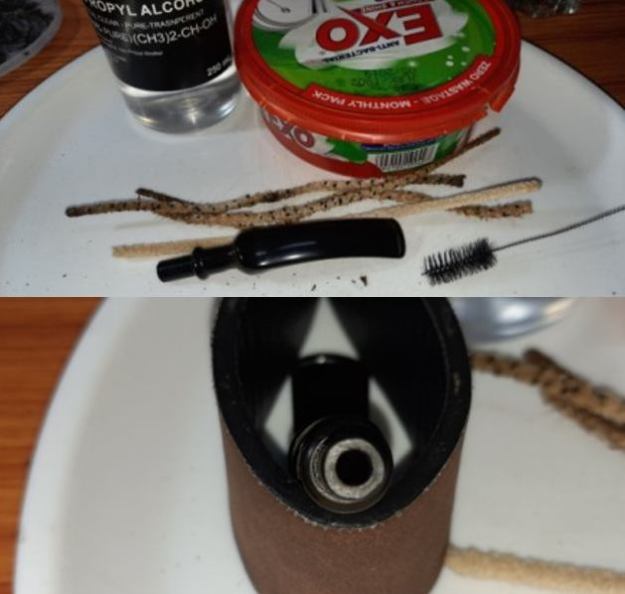
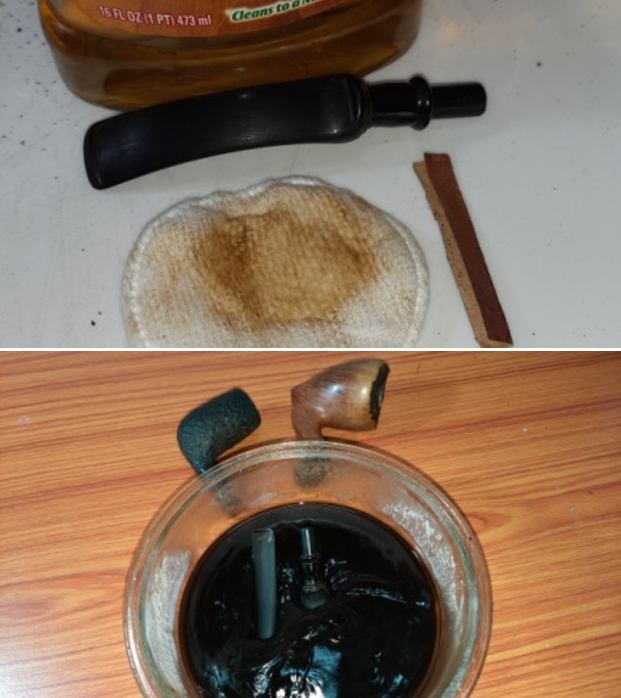
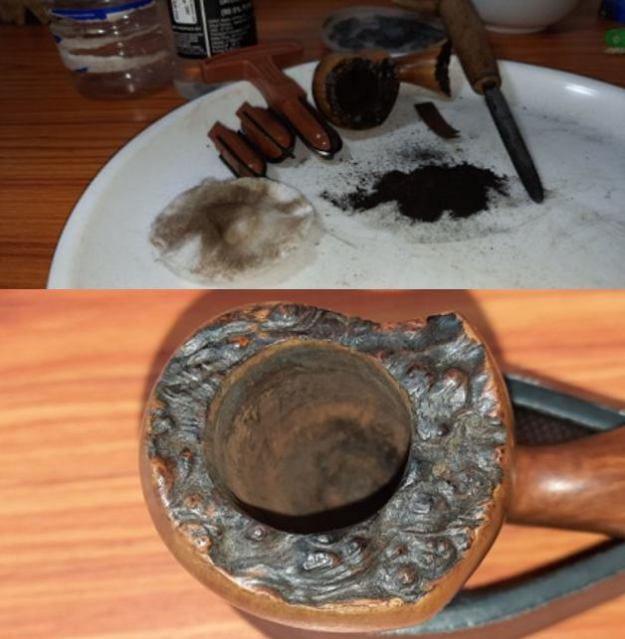
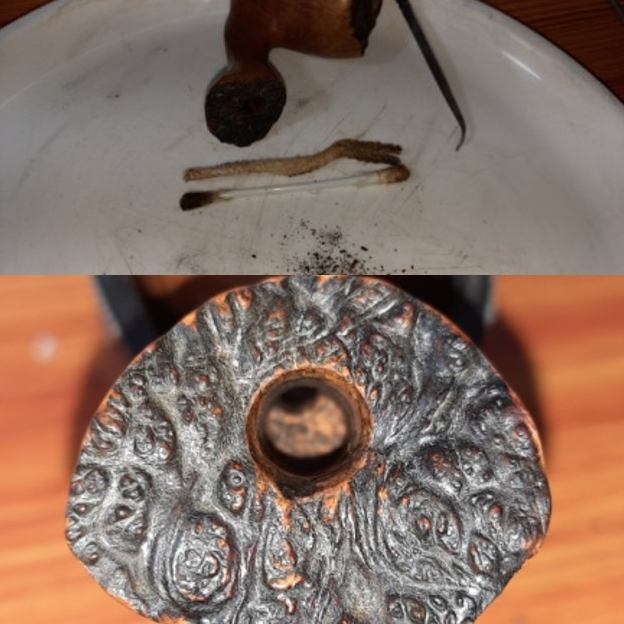
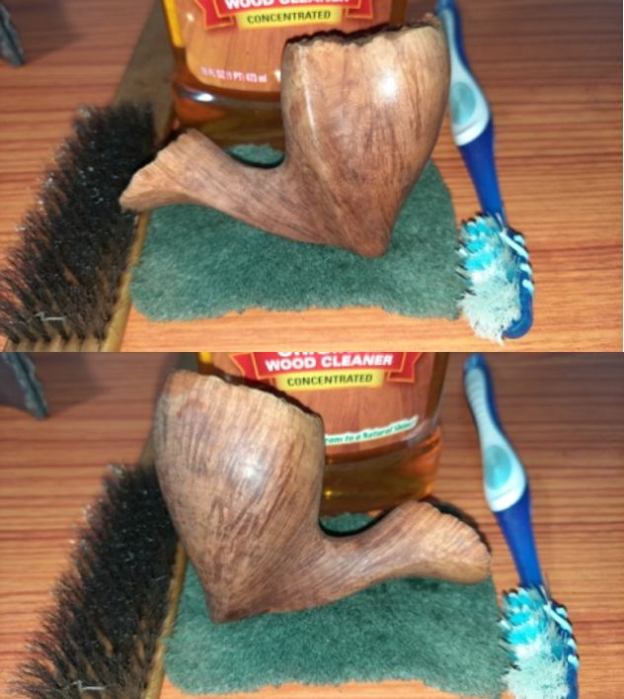
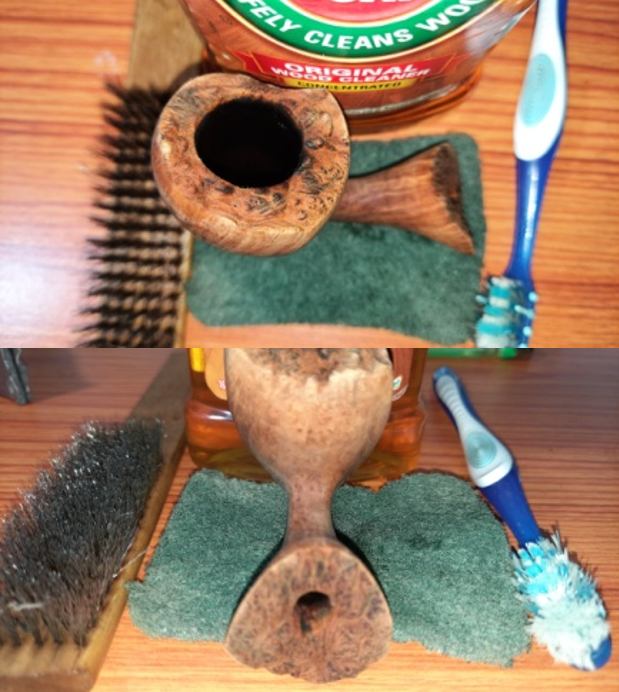
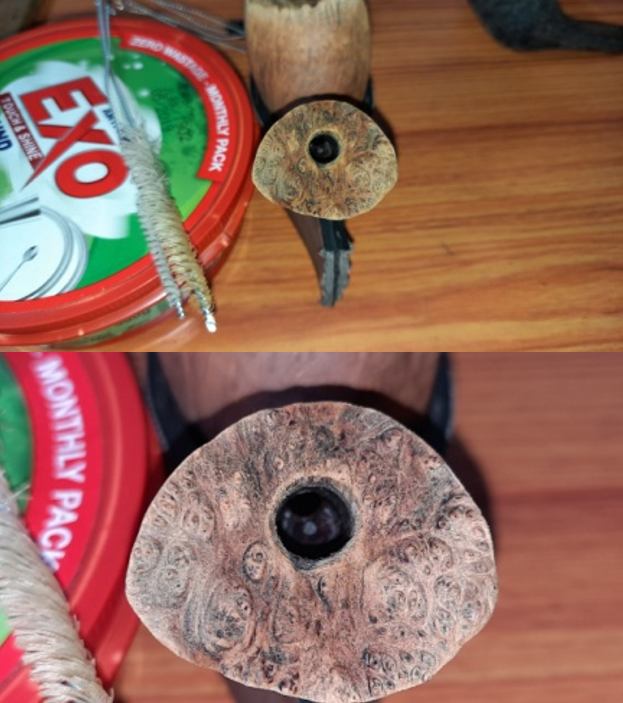
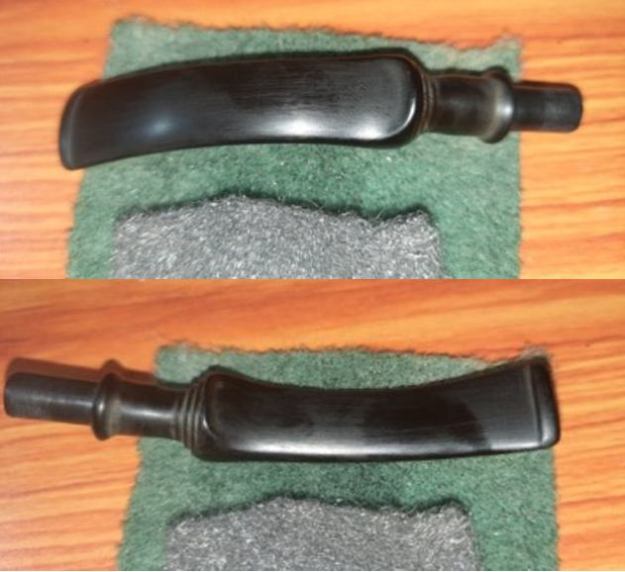
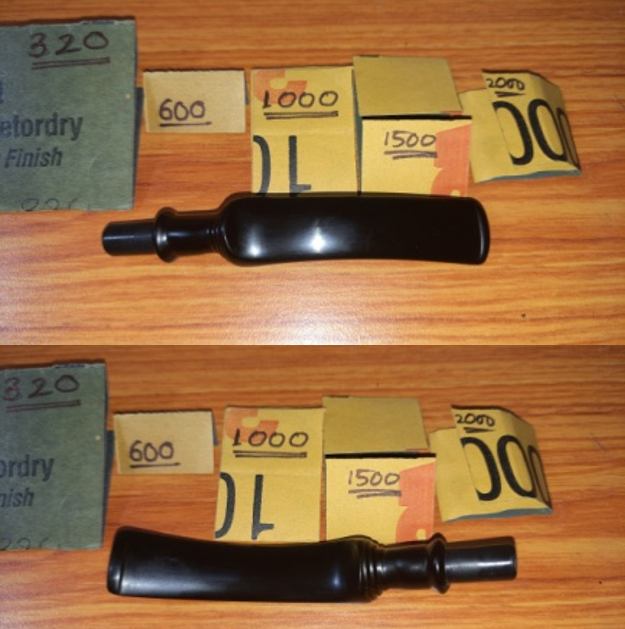
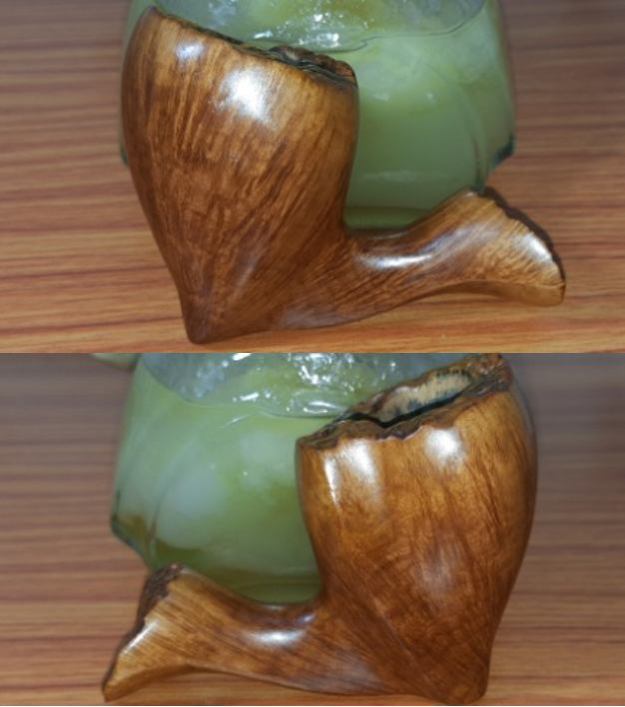
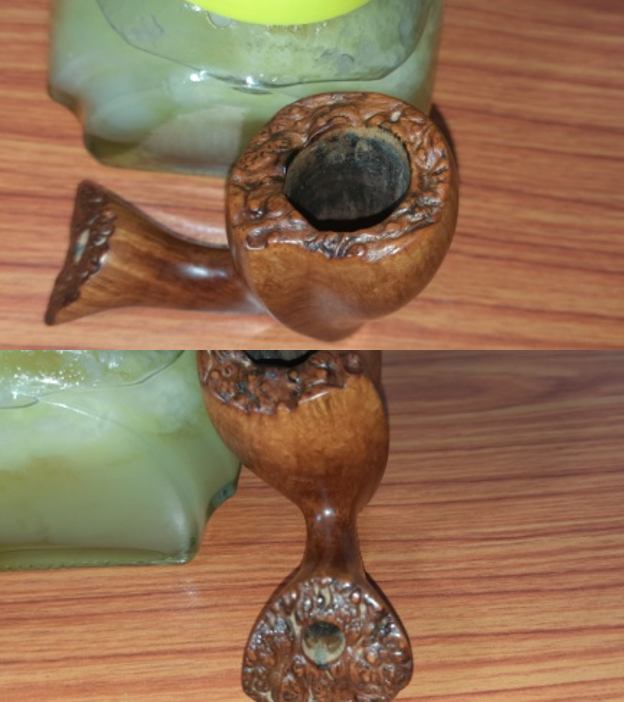
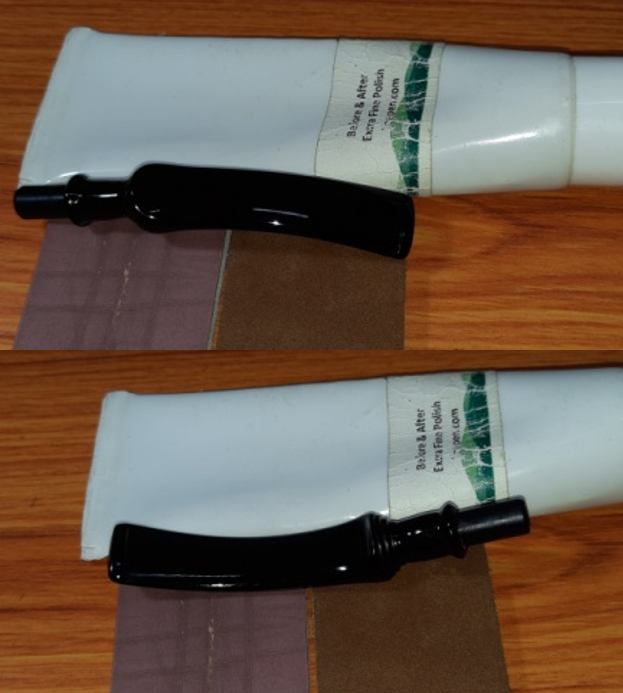
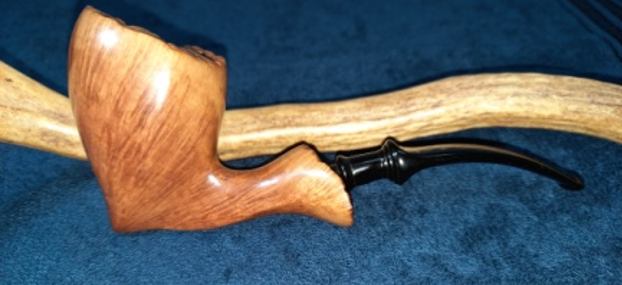
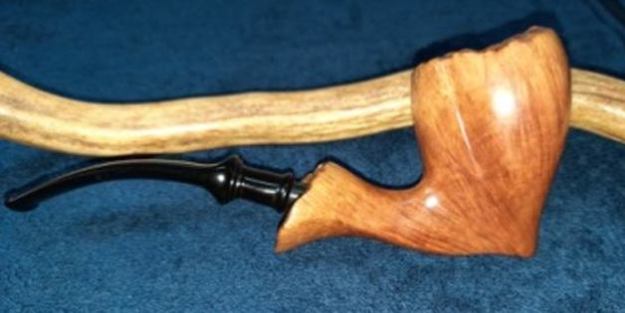
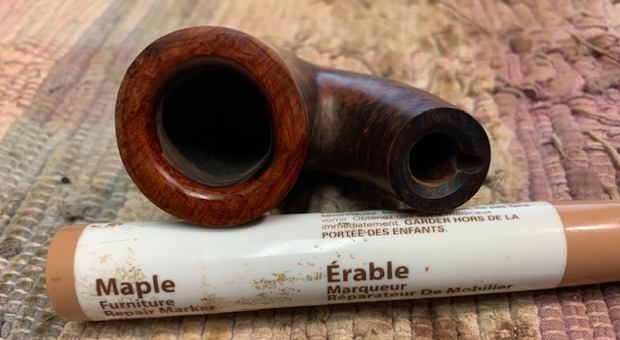
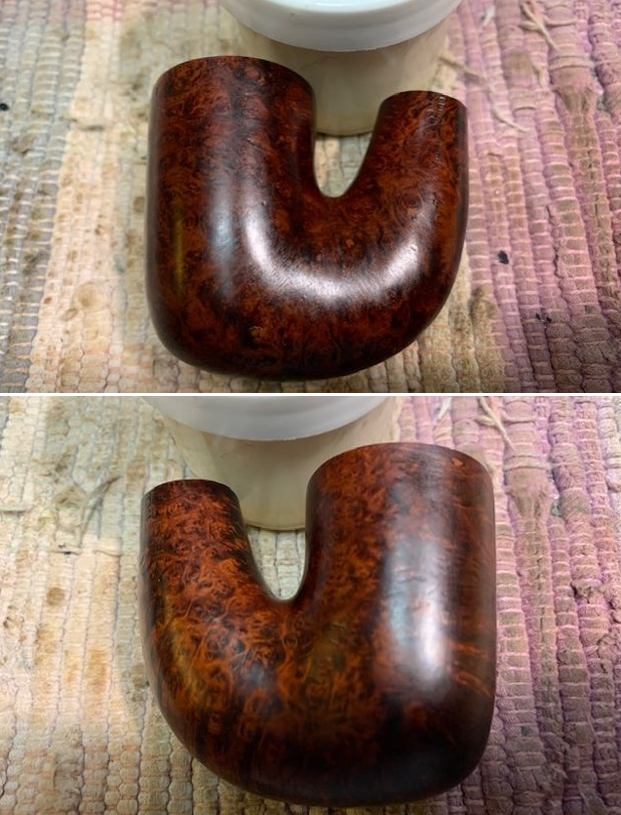
Praying for the health and safety of you and your loved ones.

Thanks for your patience and looking forward to inputs to help resolve our dilemma about staining. Cheers…