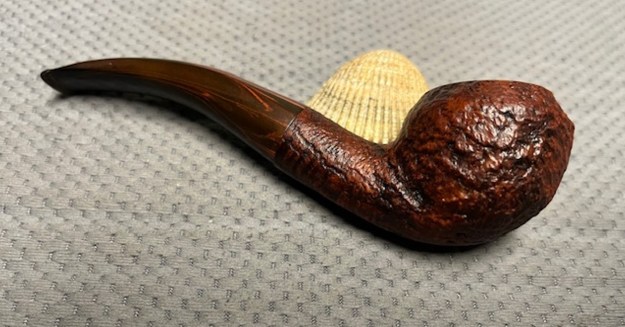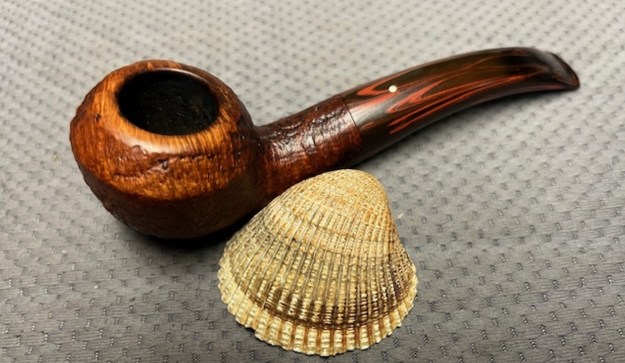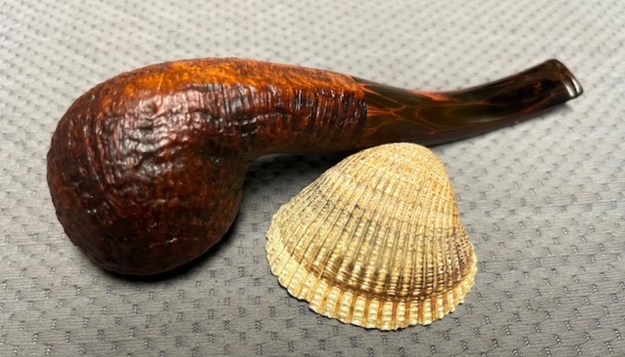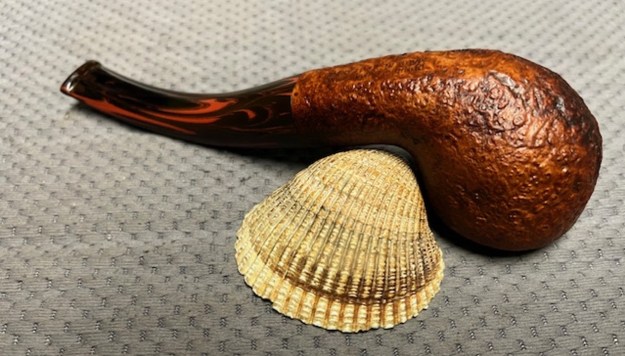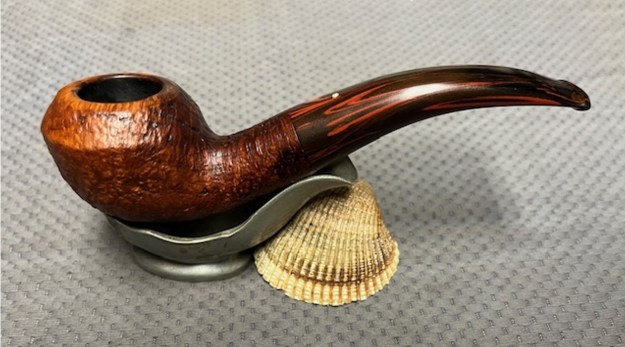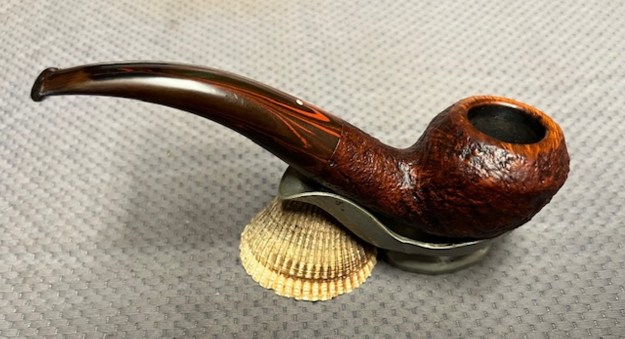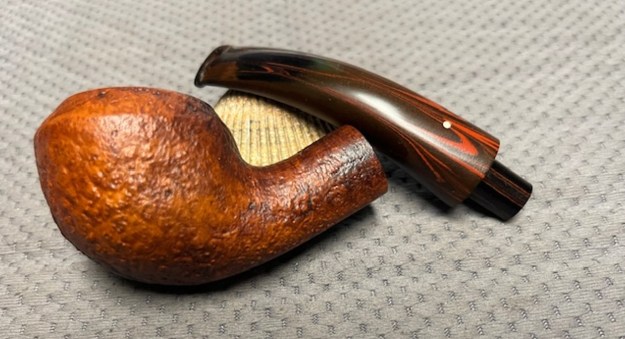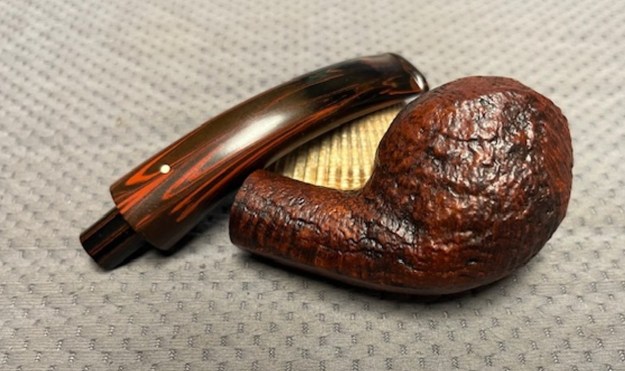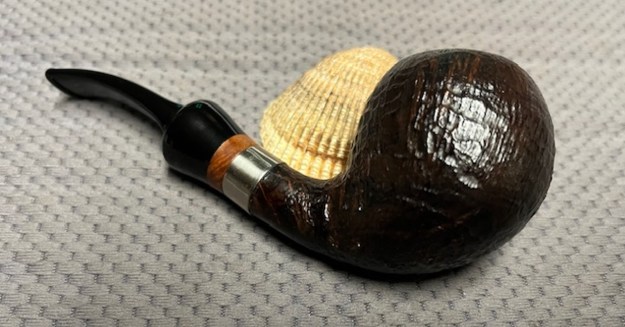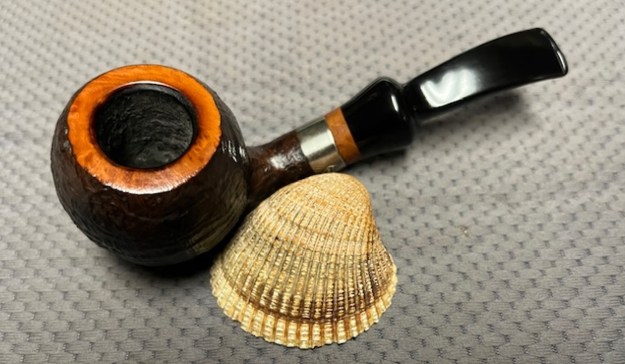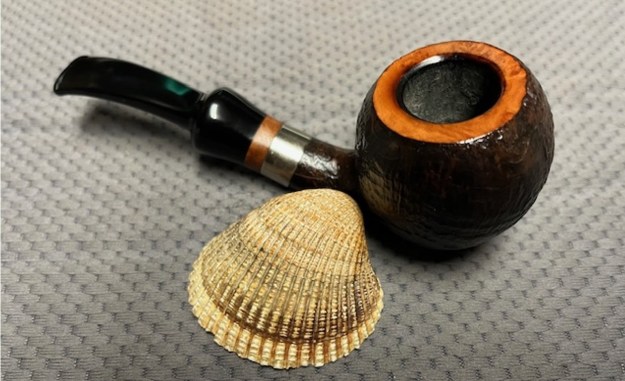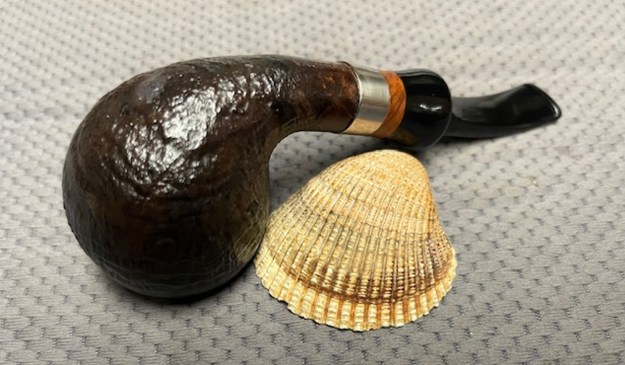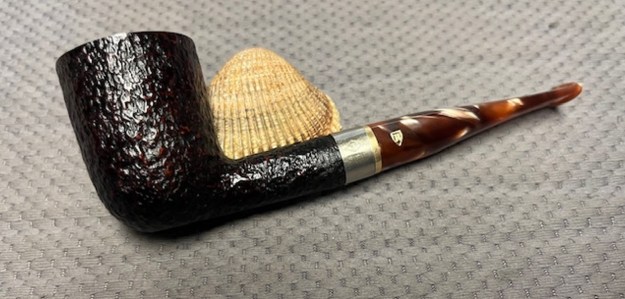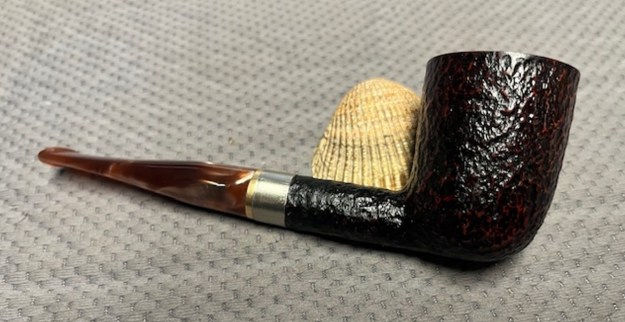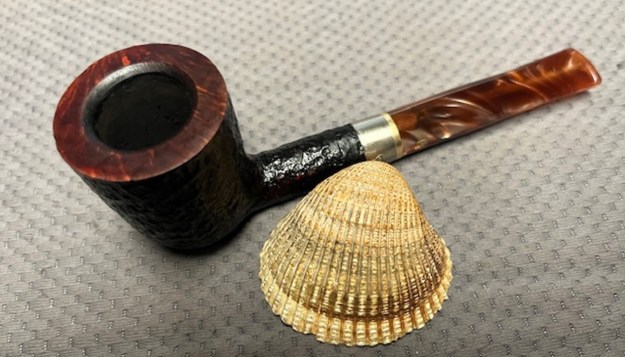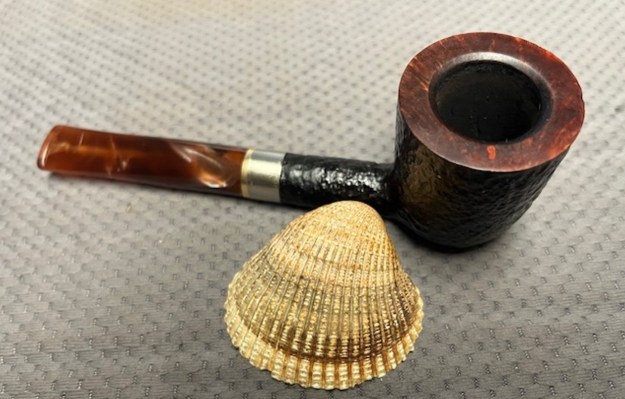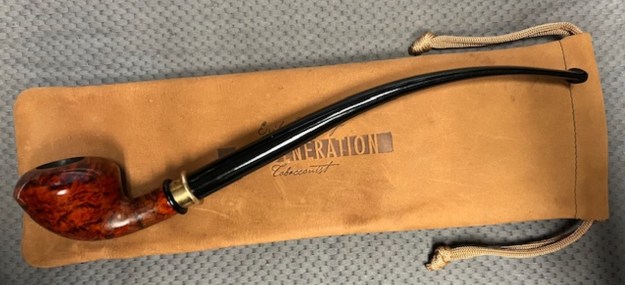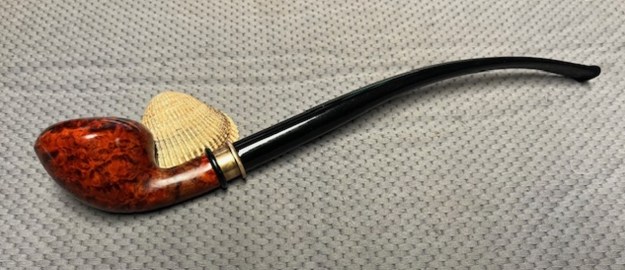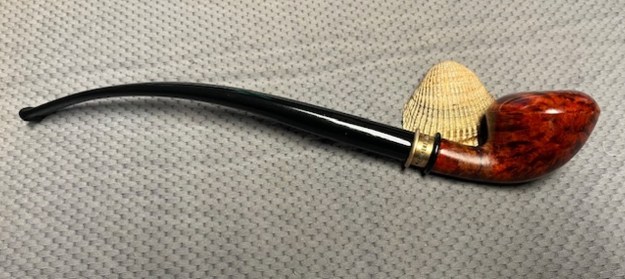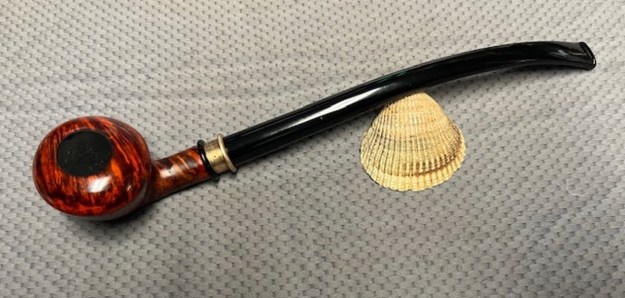
Tag Archives: refinishing

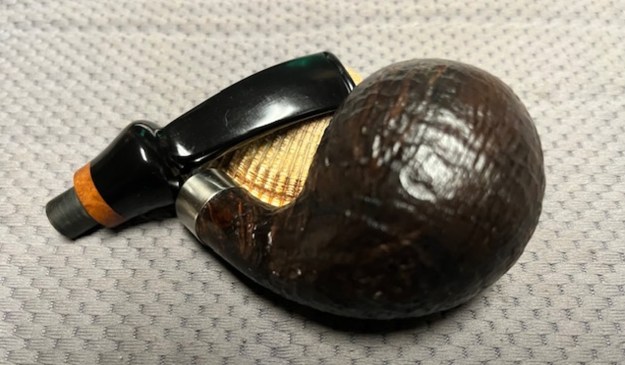
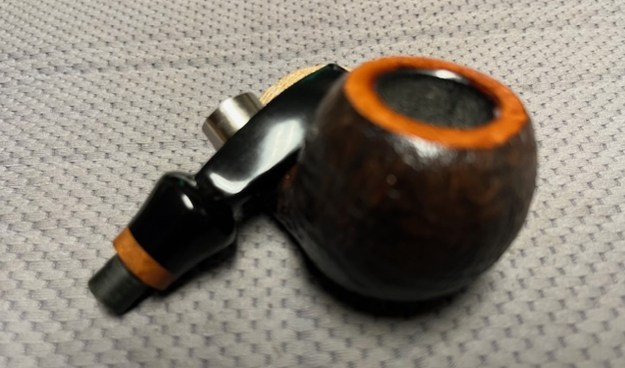
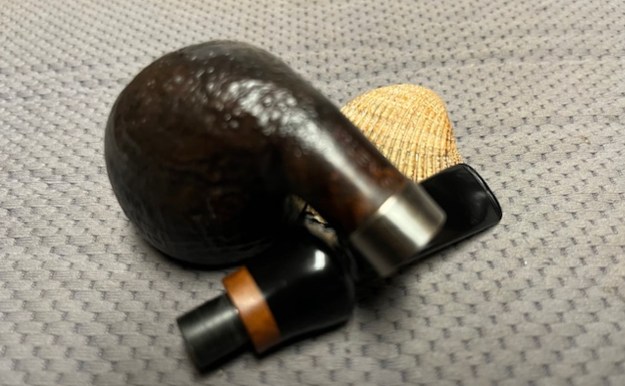
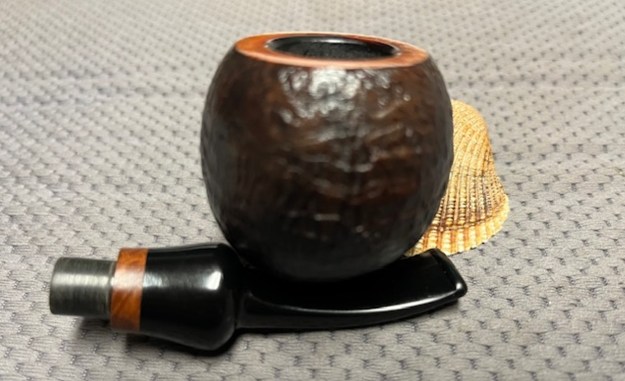
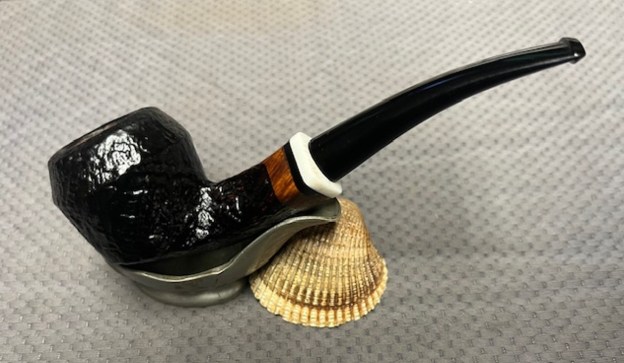
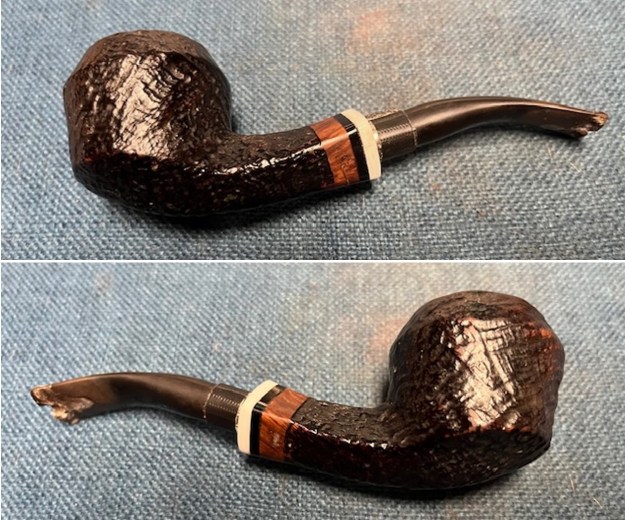
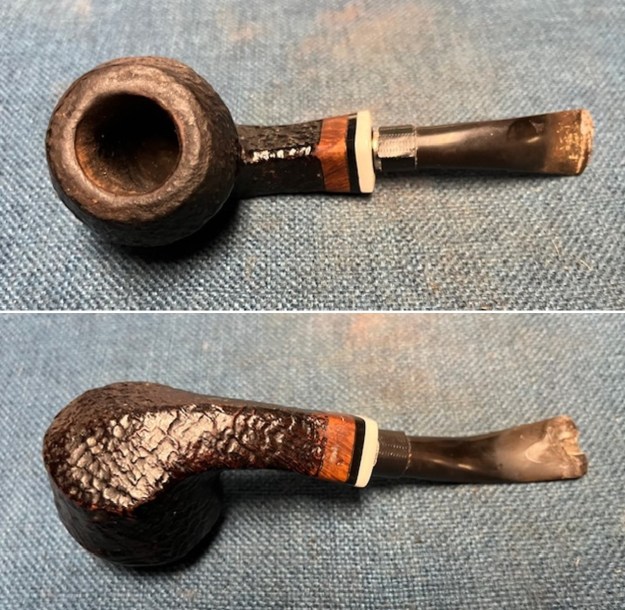
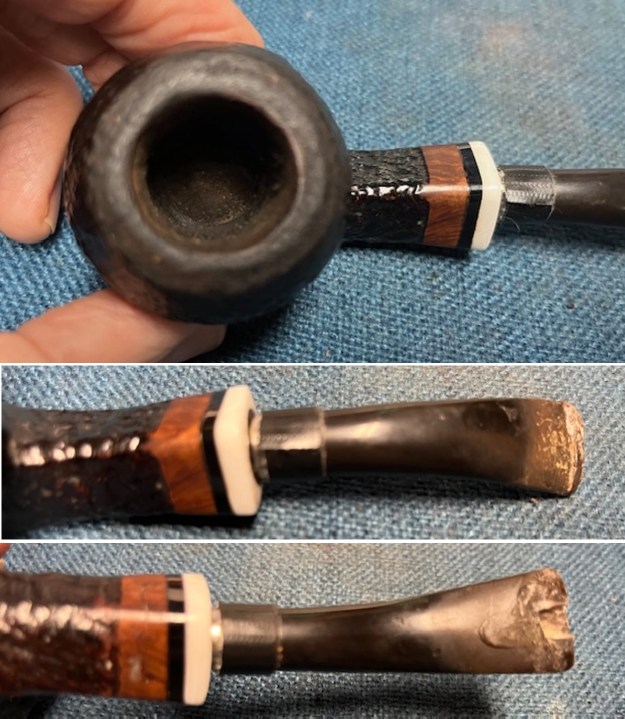
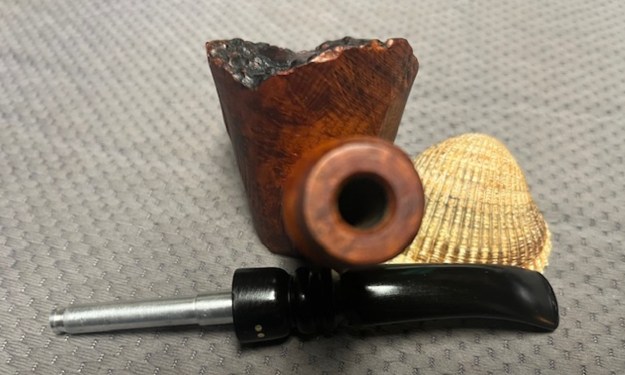
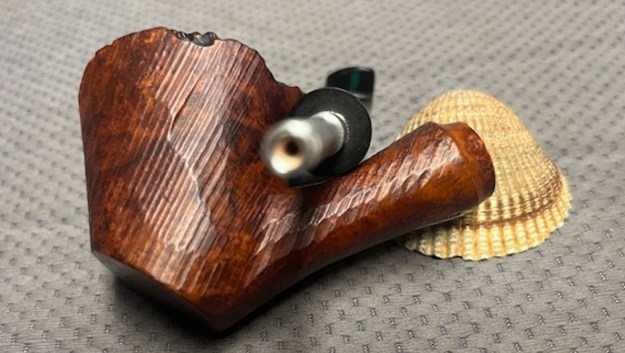
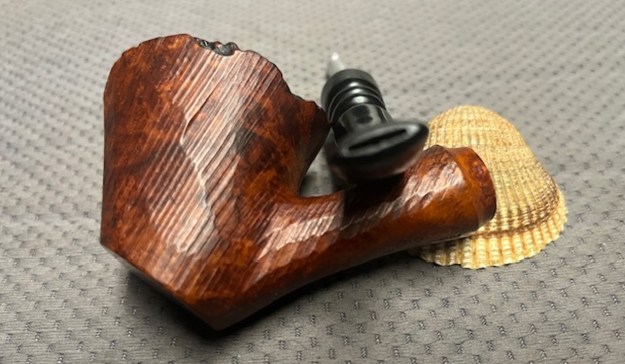
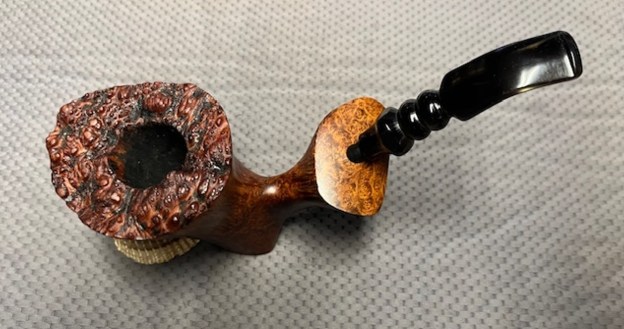
New Life for a Preben Holm Hand Cut Circle 2 Freehand Copenhagen Denmark


by Steve Laug

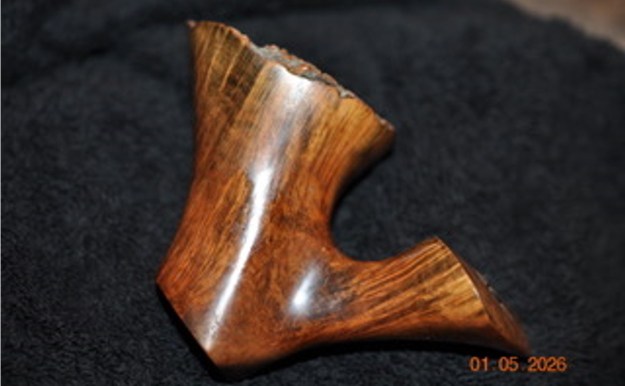
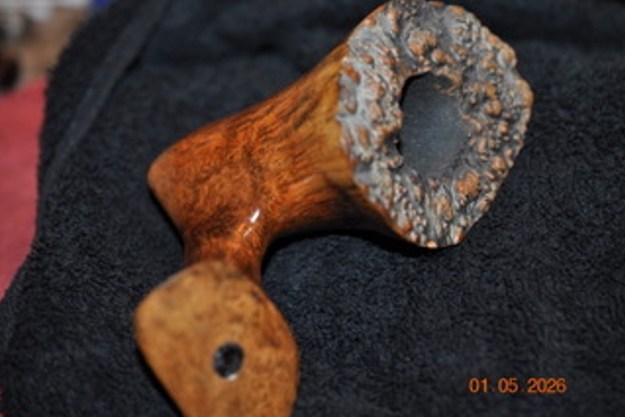
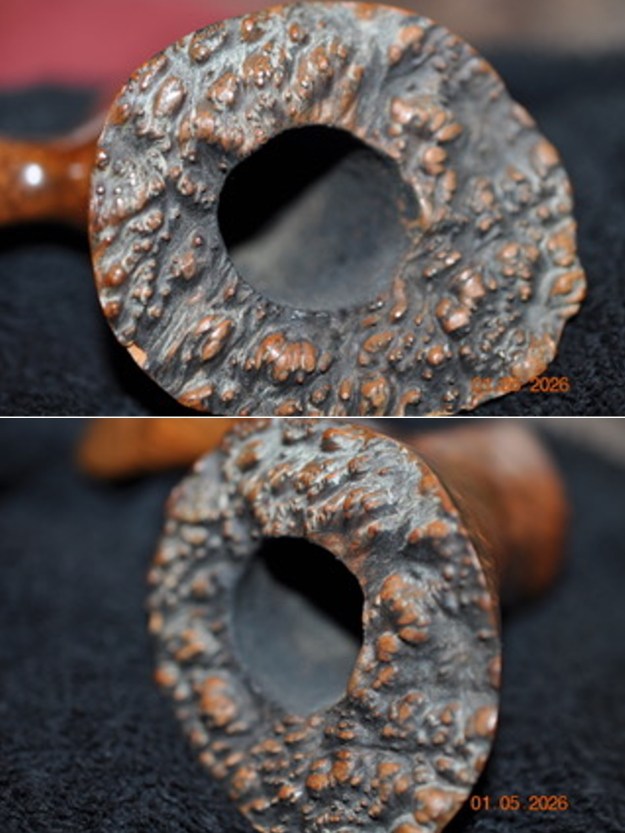
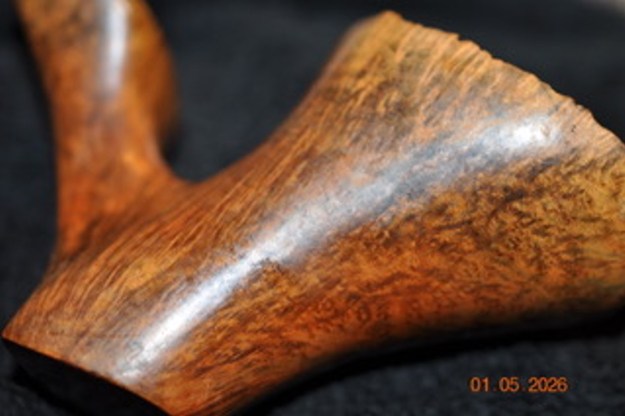
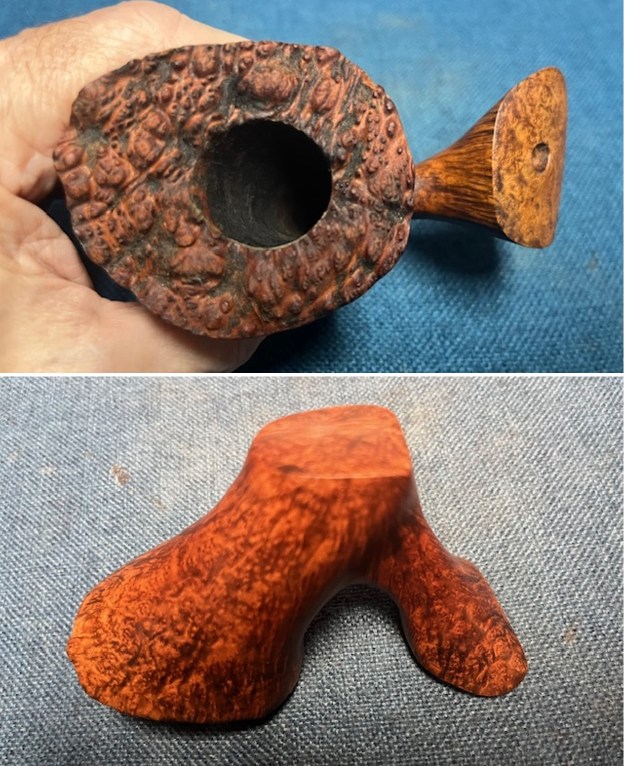
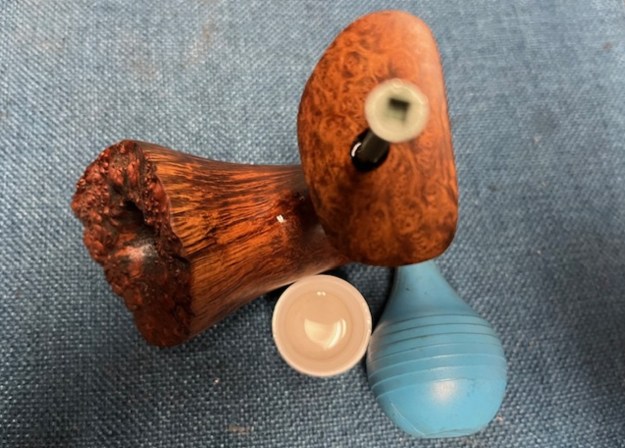
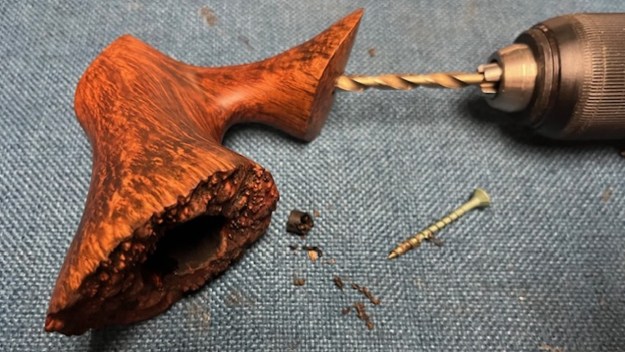
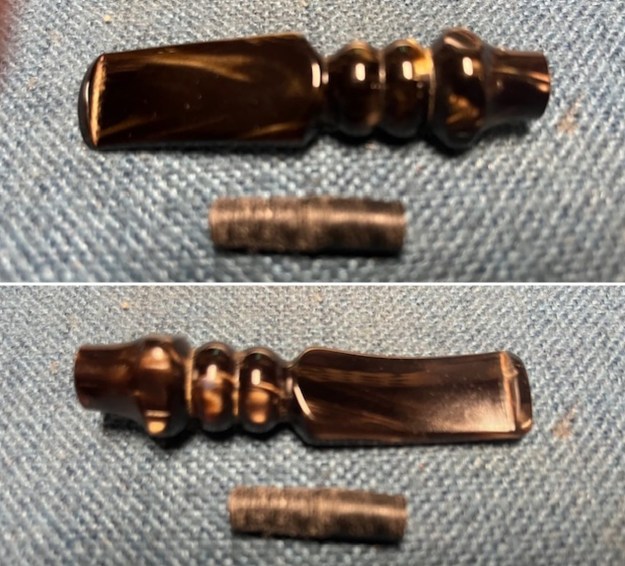
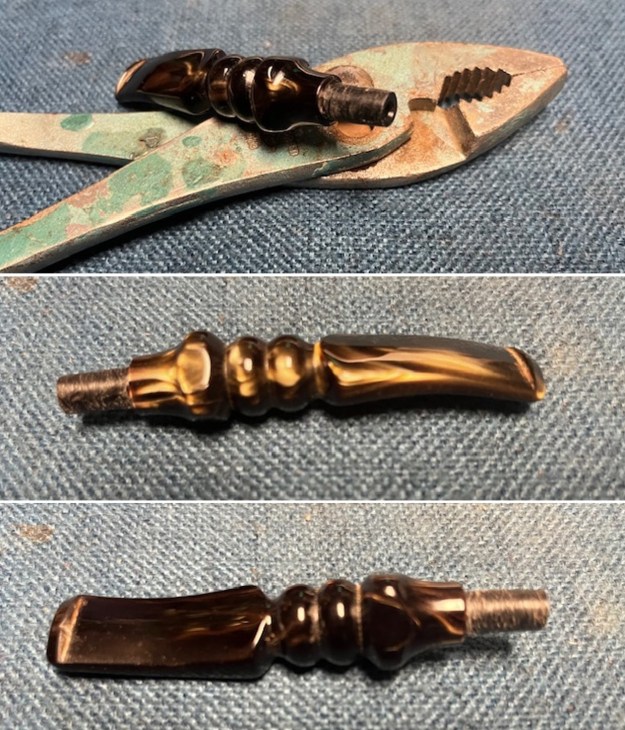
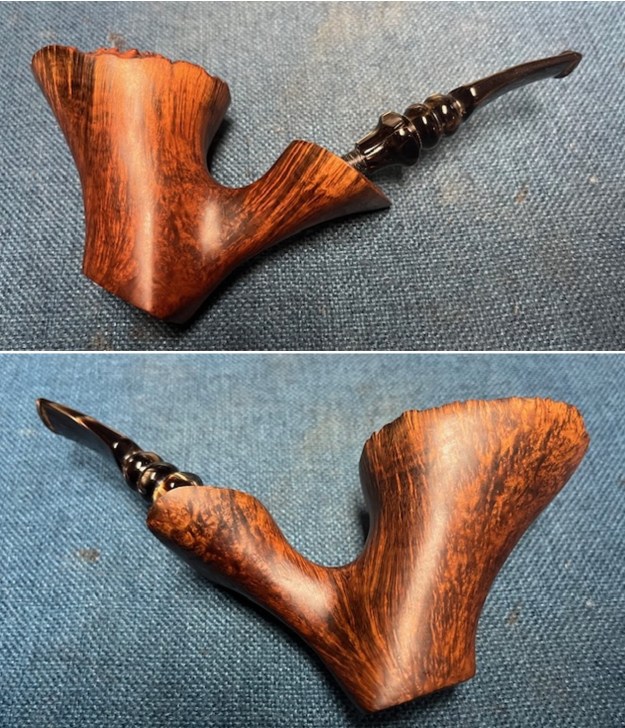
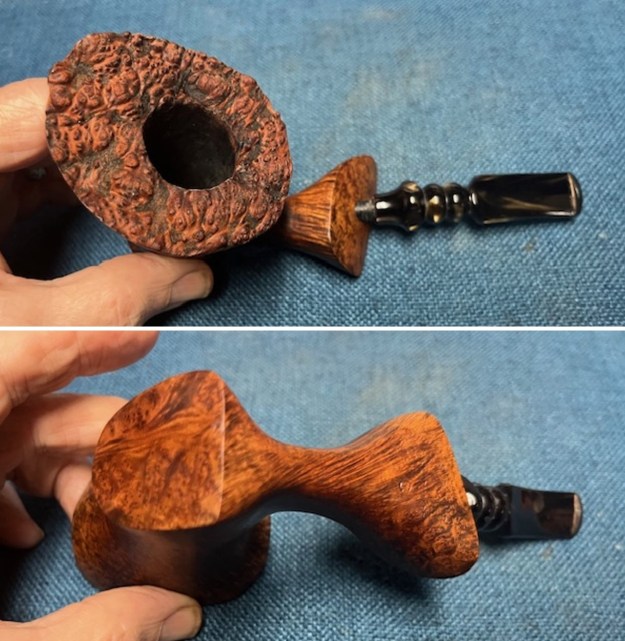
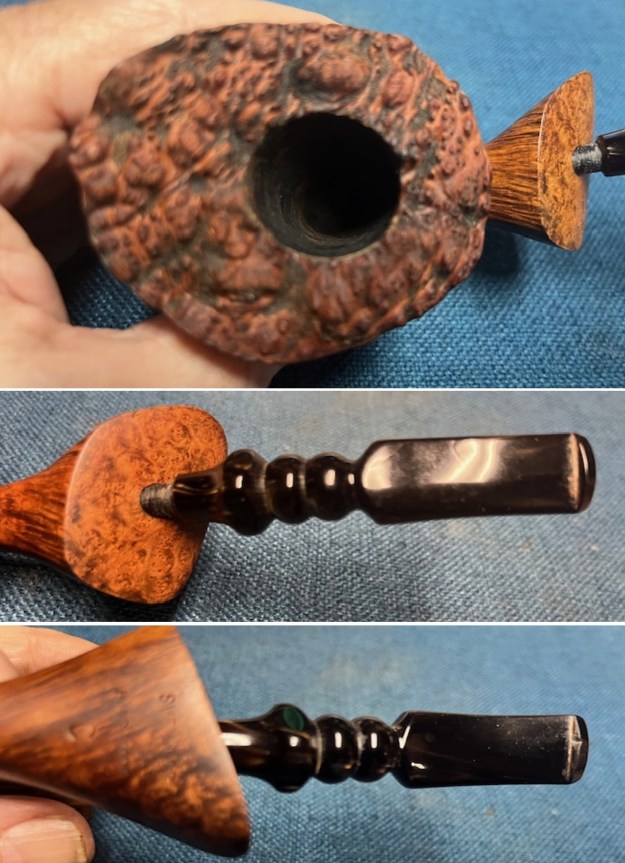
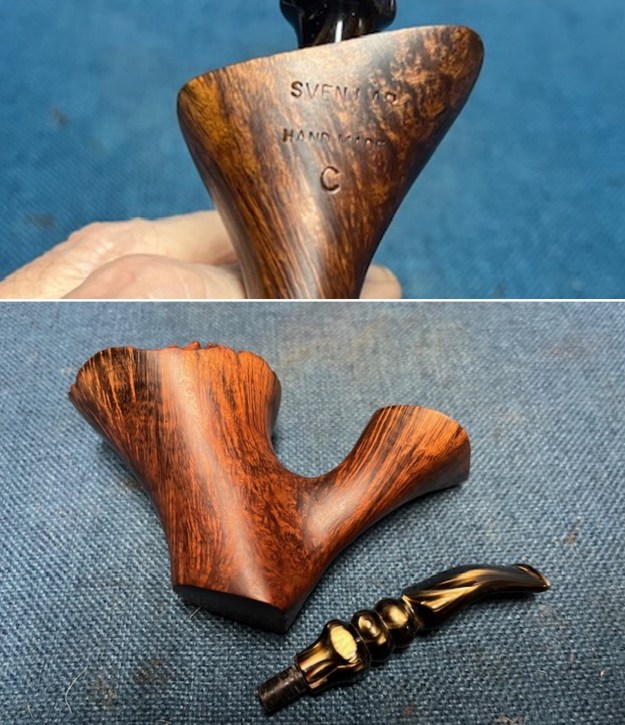
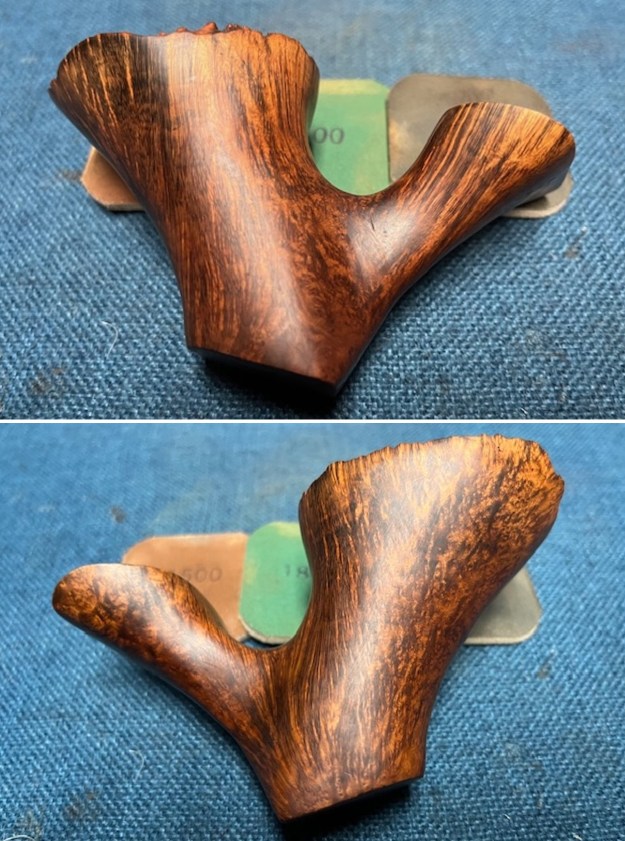
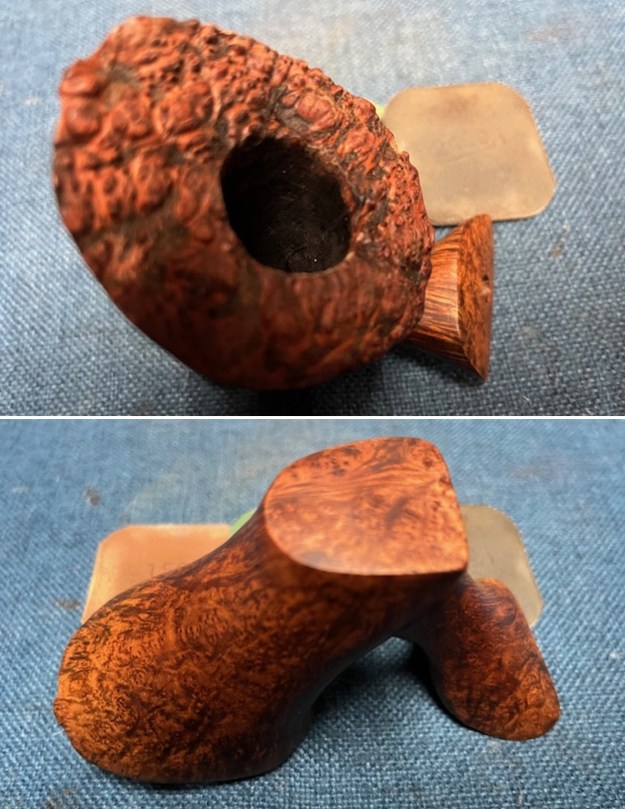
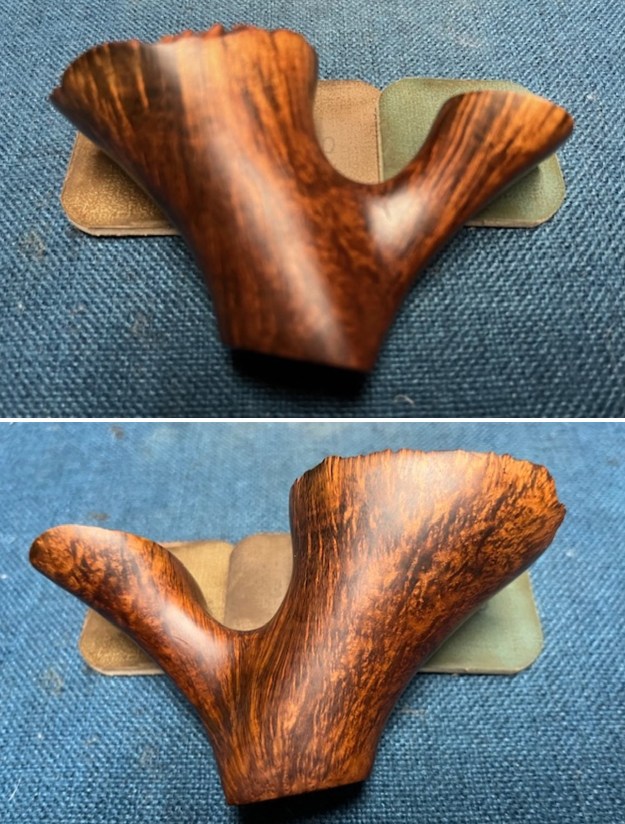
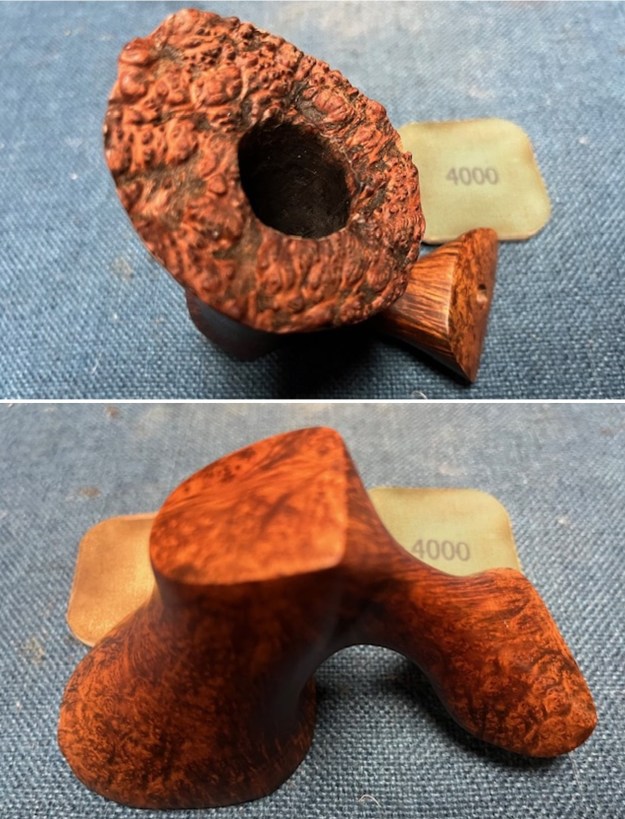
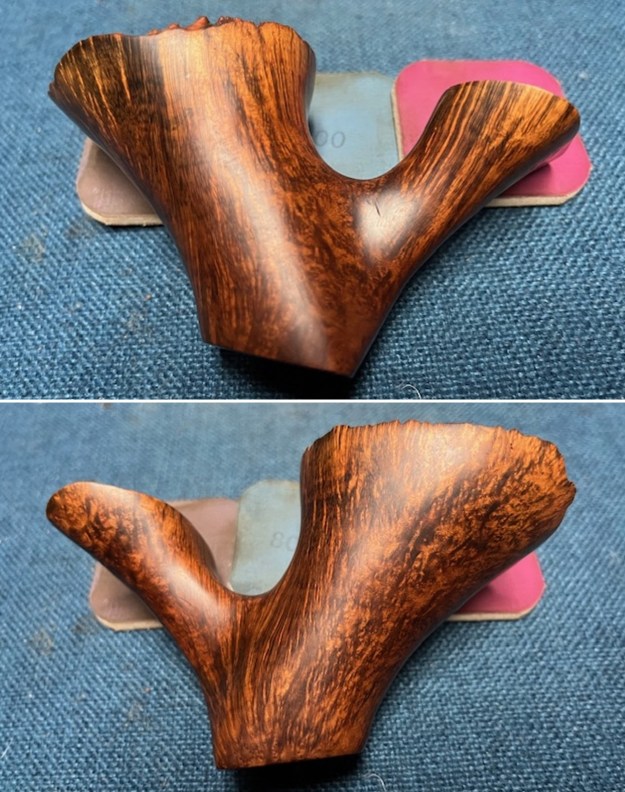
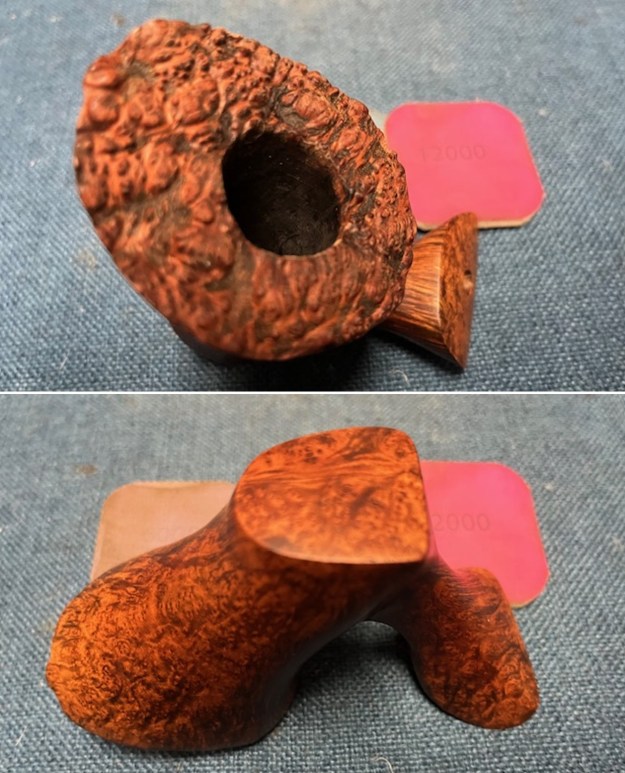
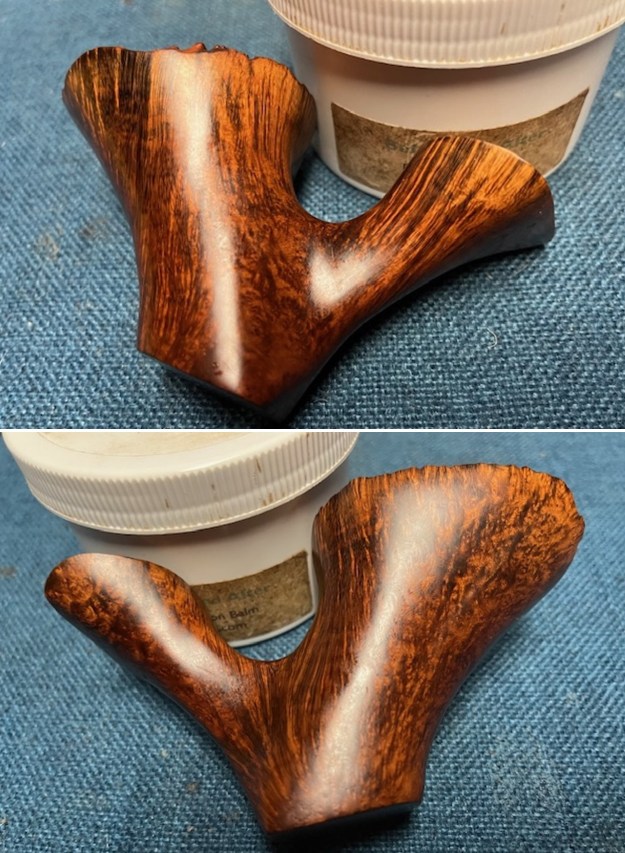
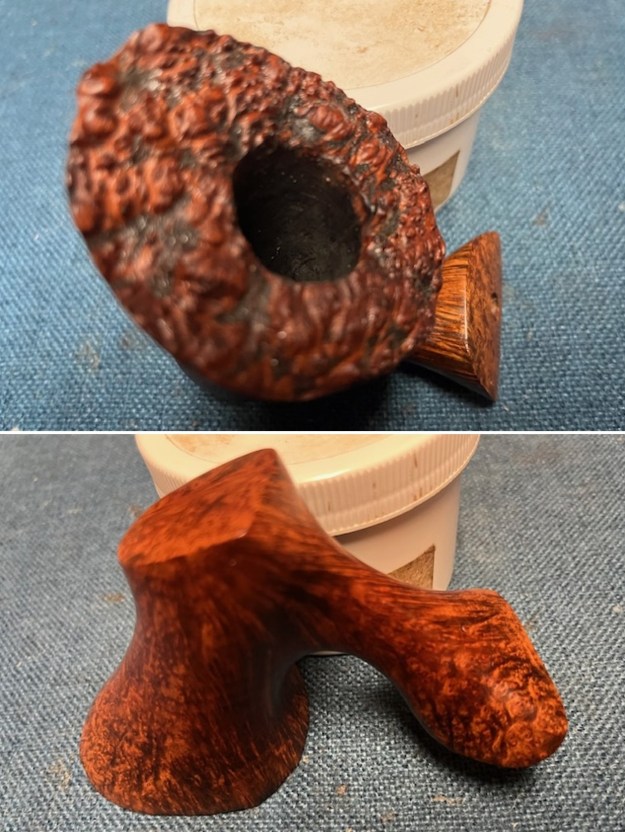
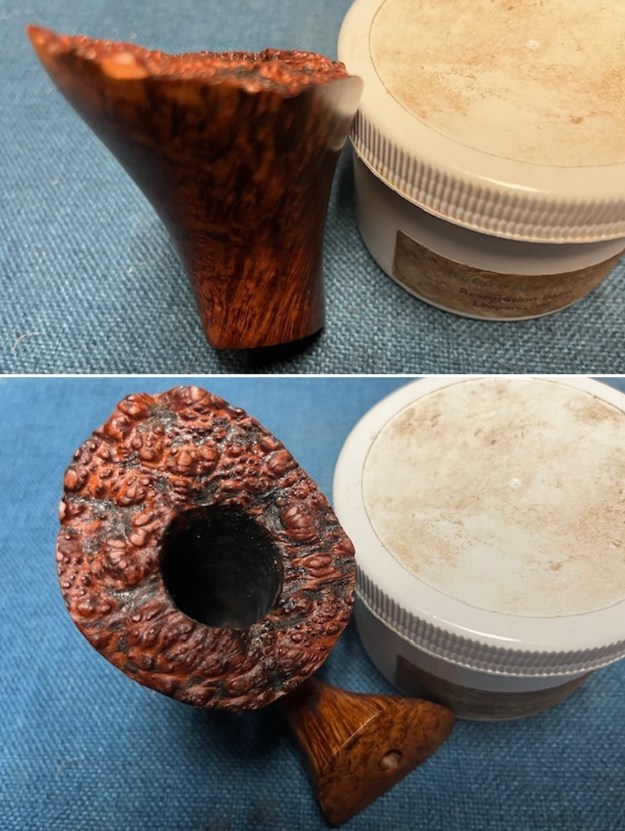
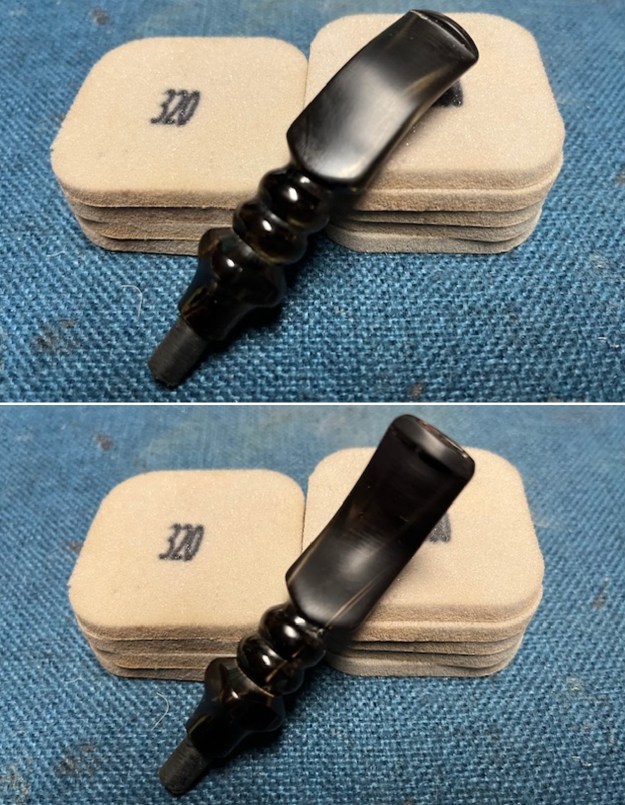
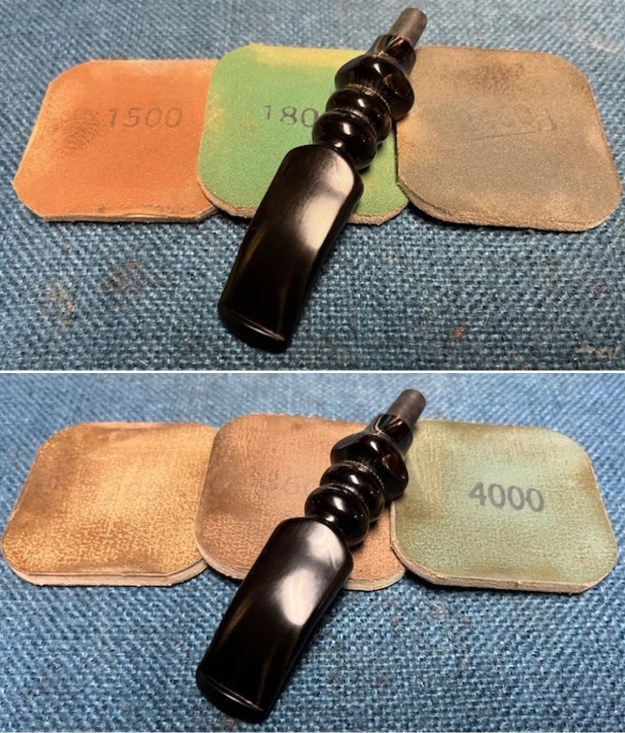
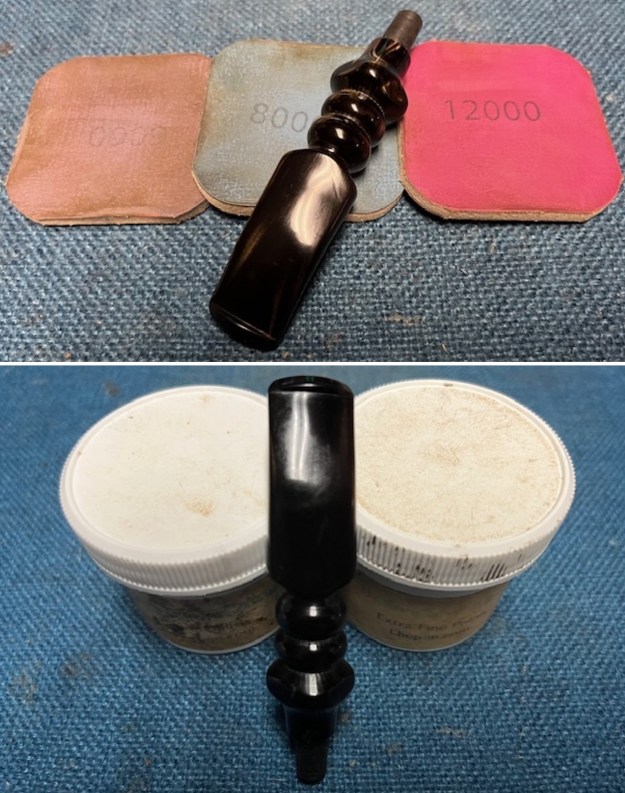
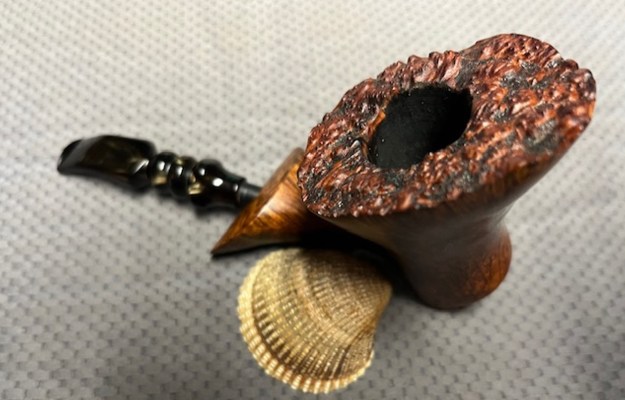
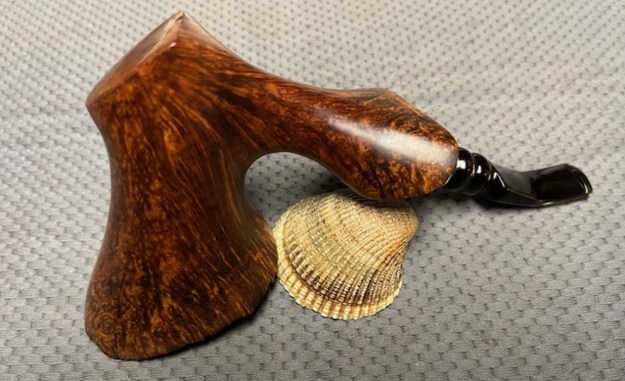
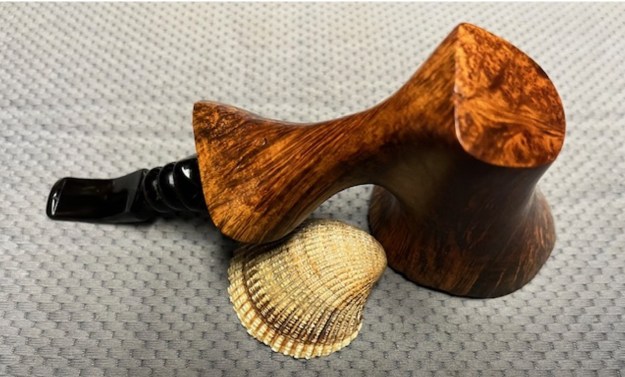
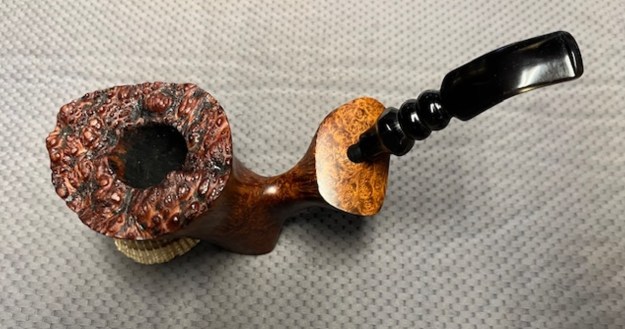
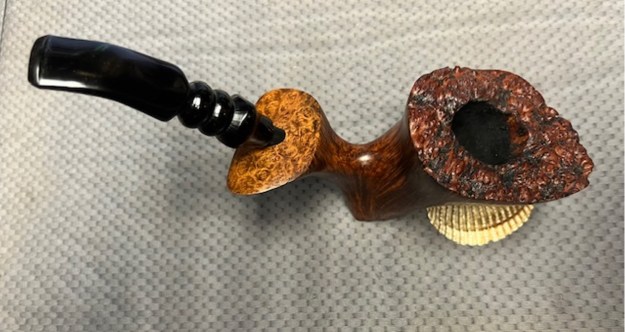
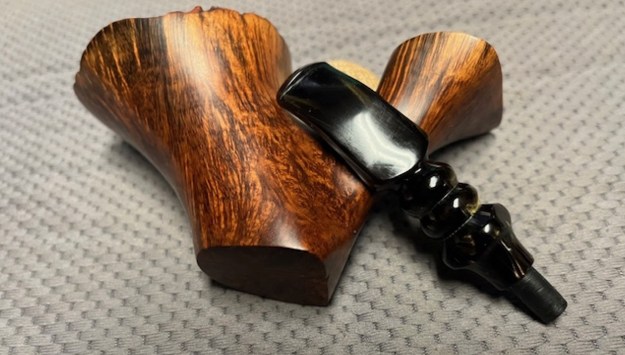
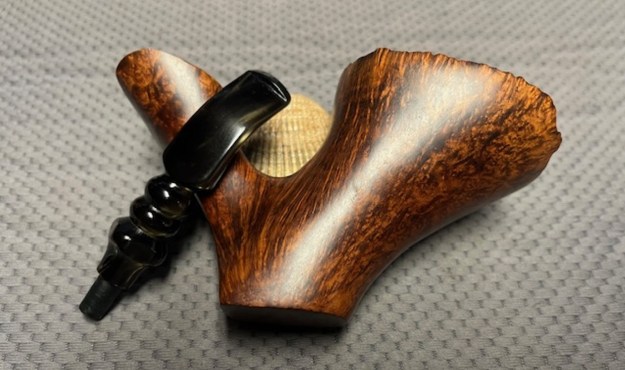
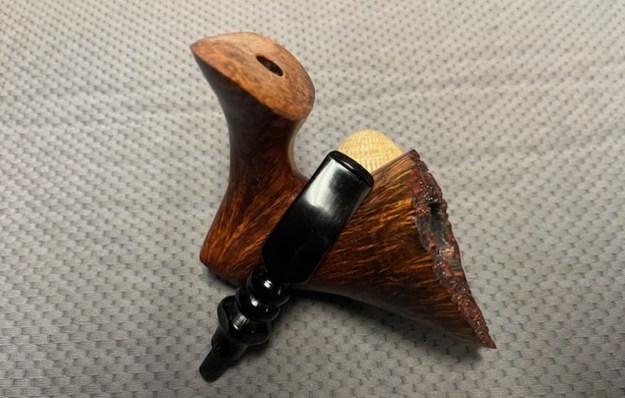
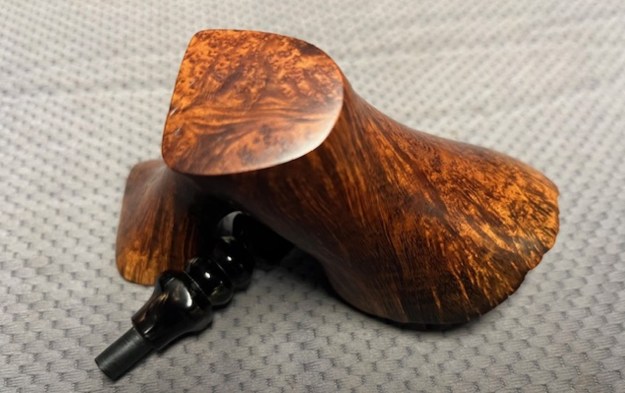
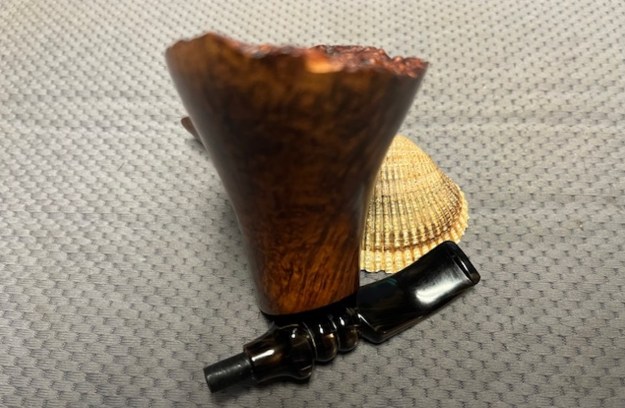
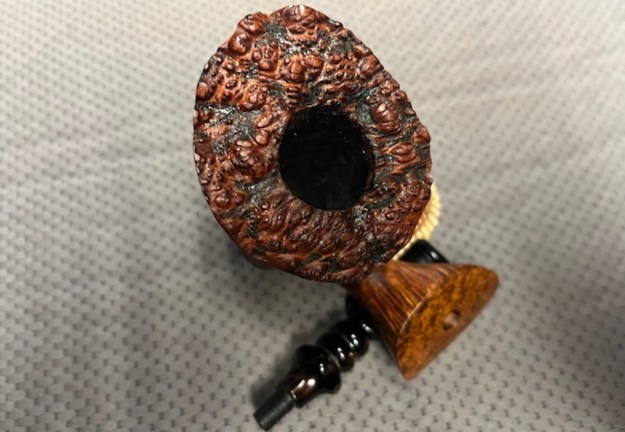
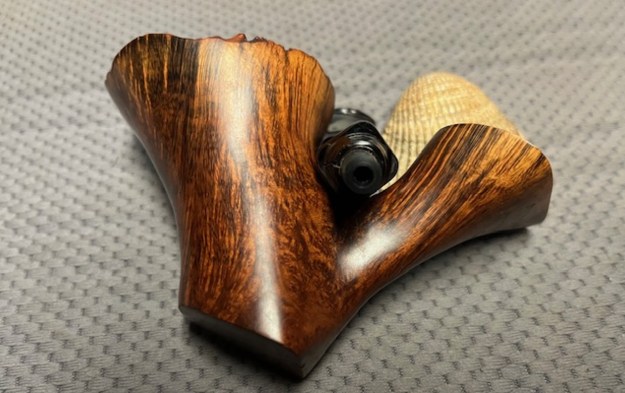
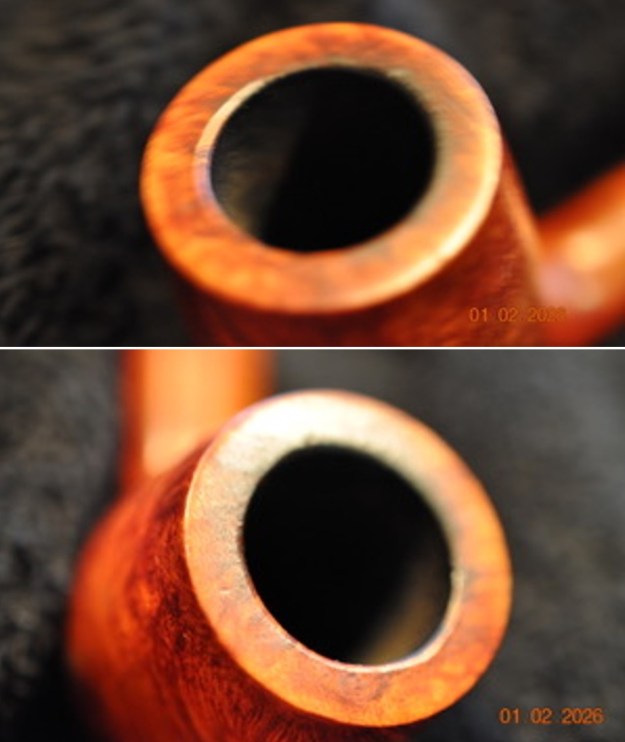
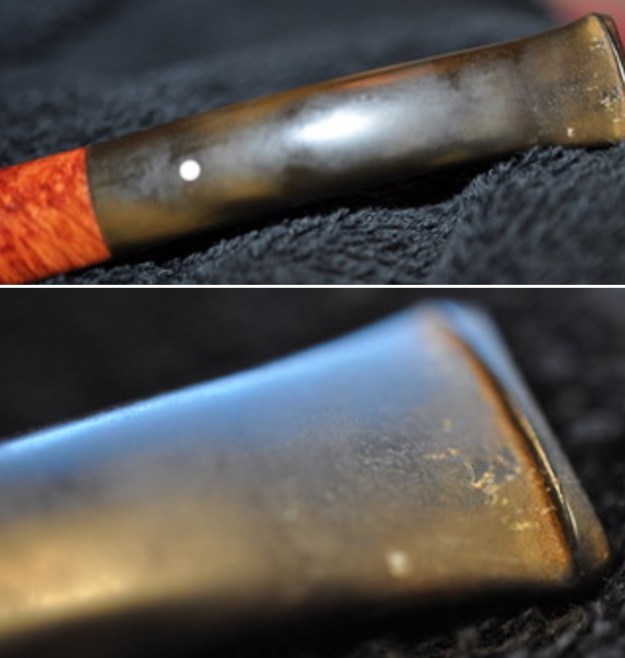
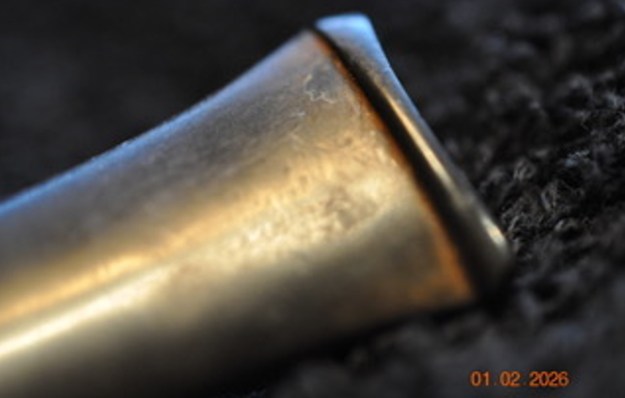
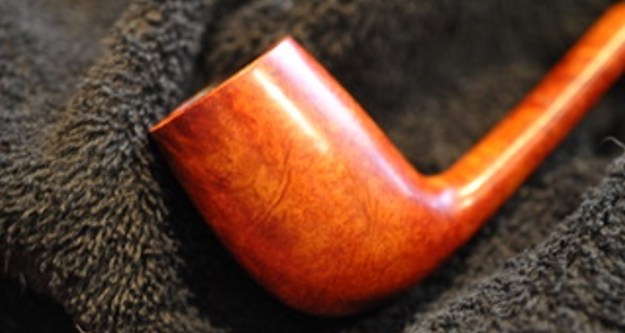
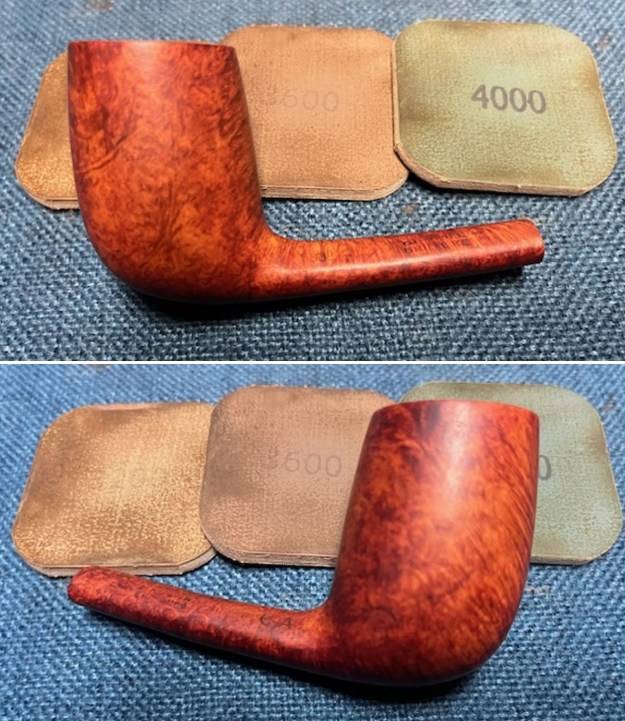
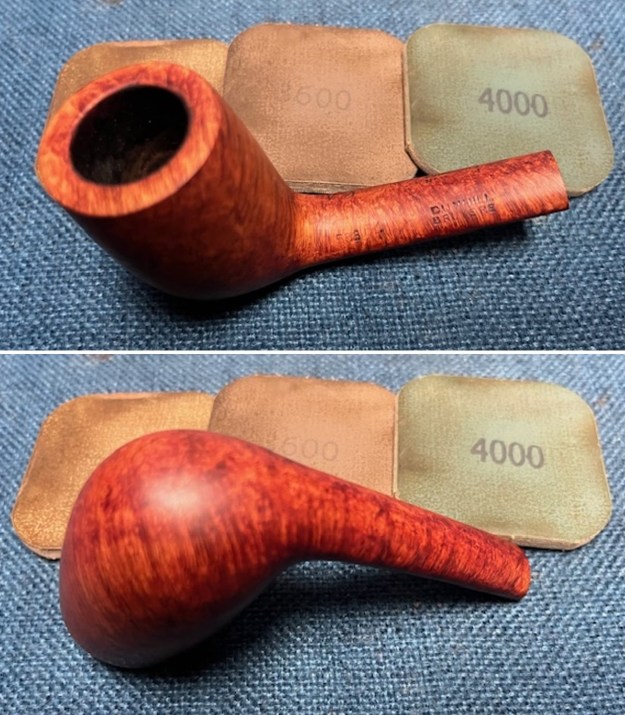
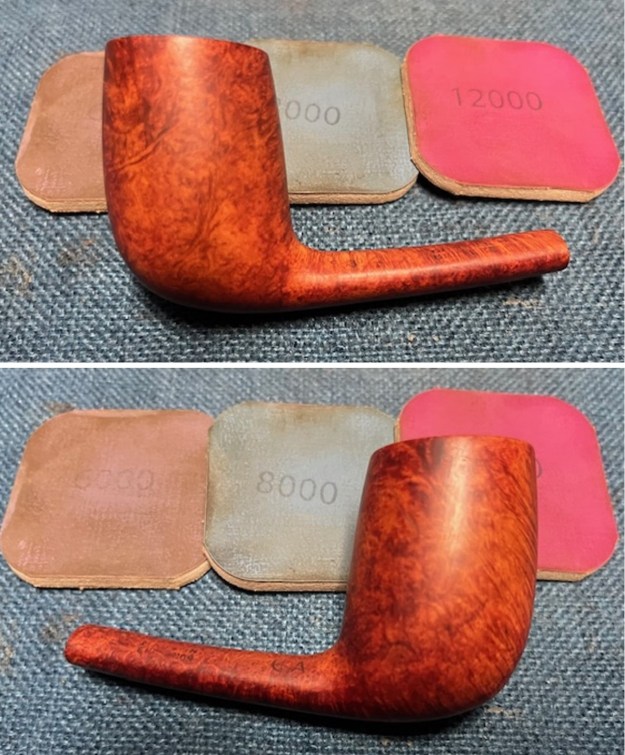
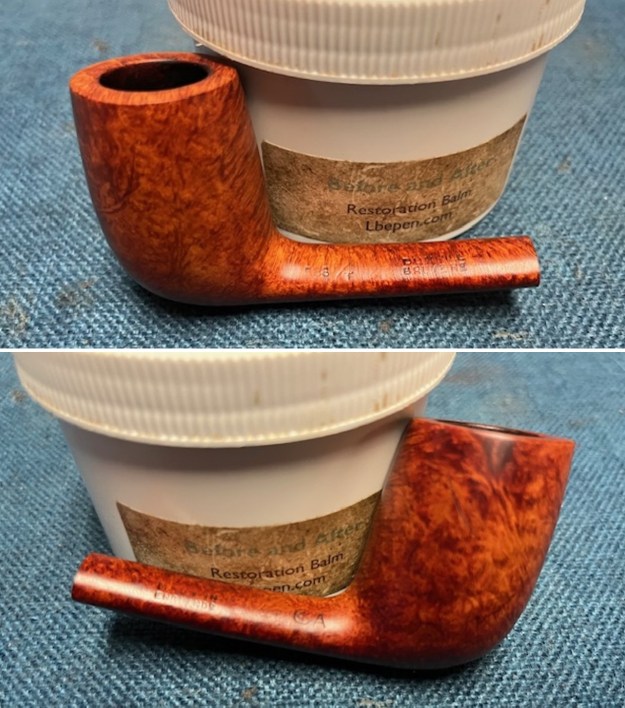
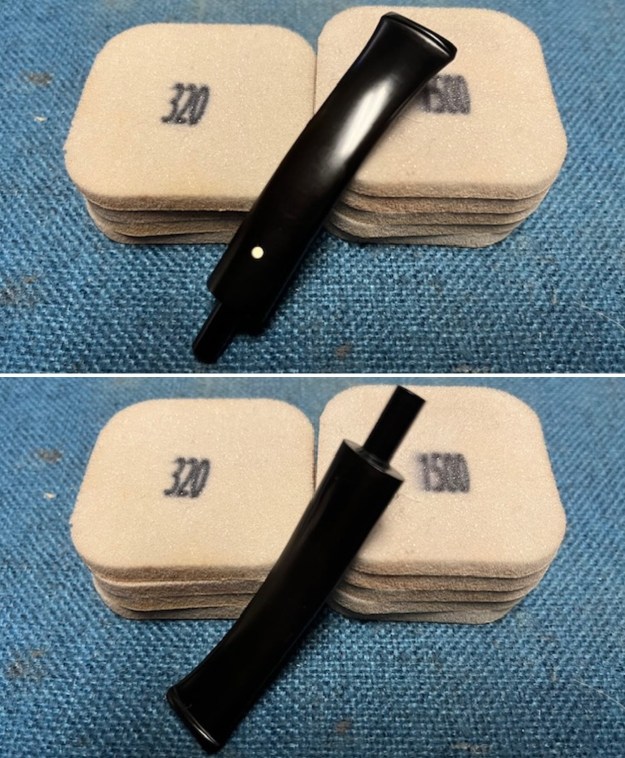
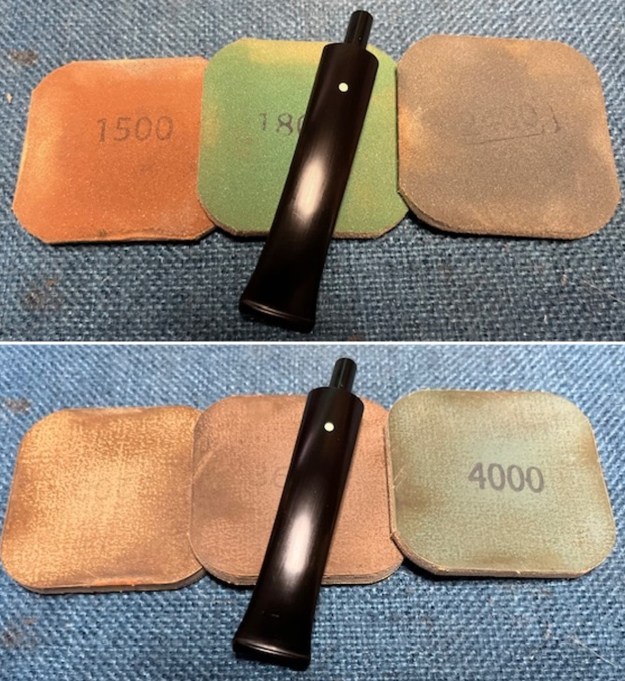
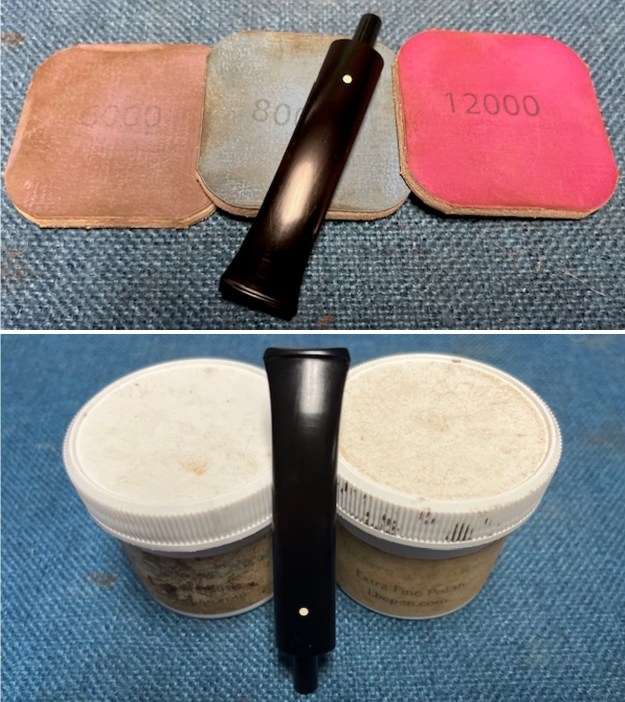
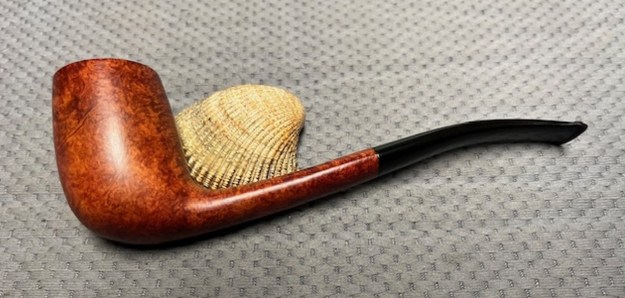
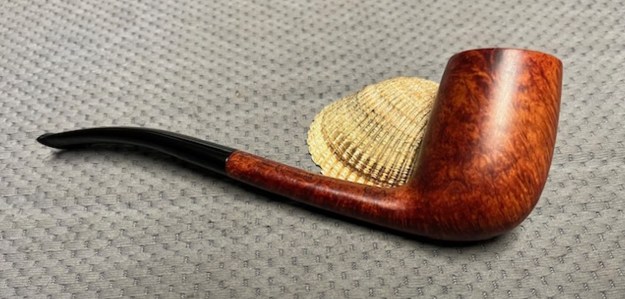
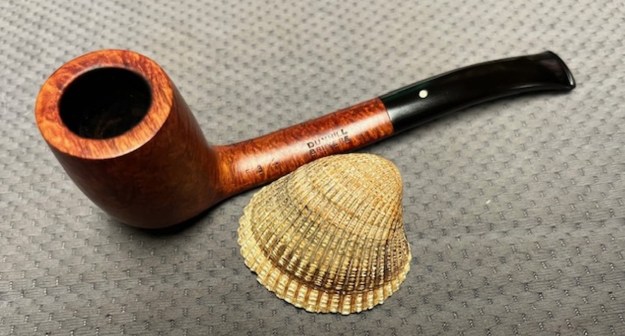
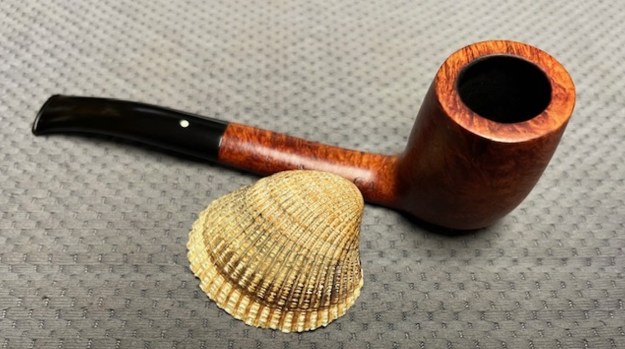
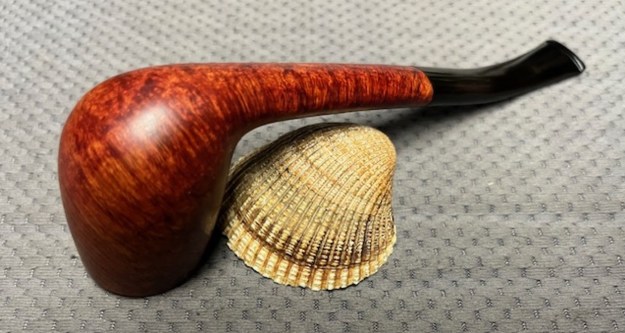
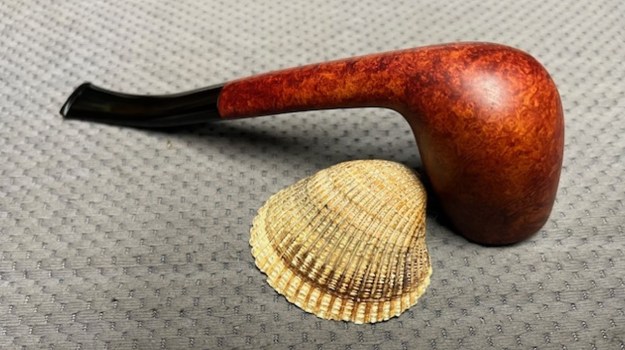
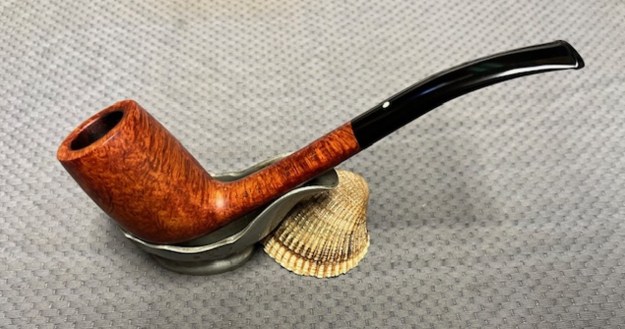
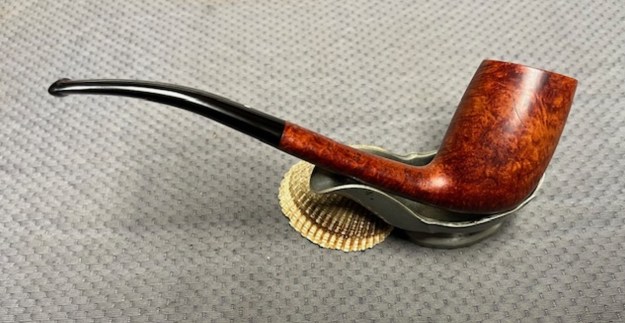
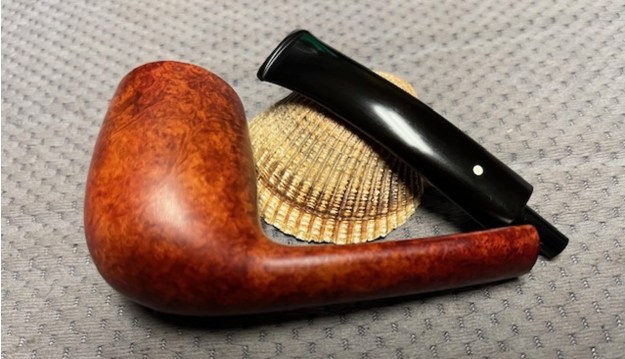
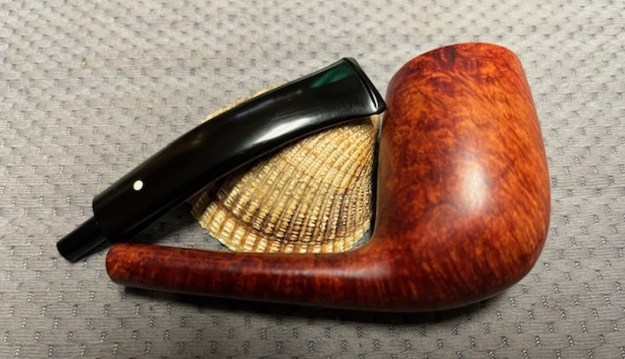
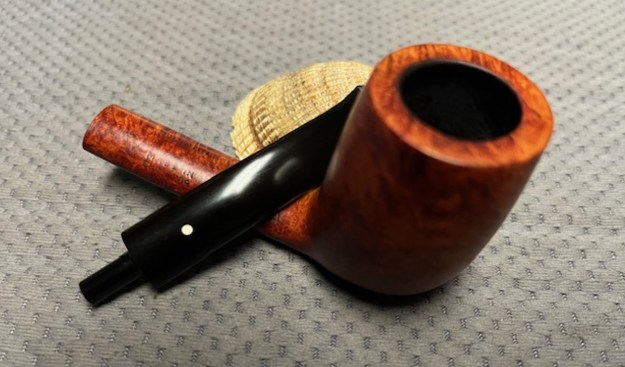
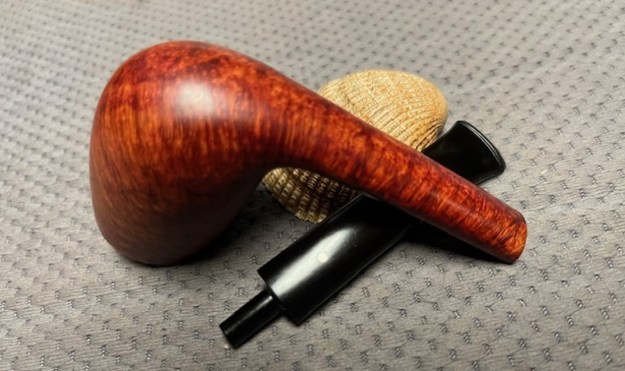
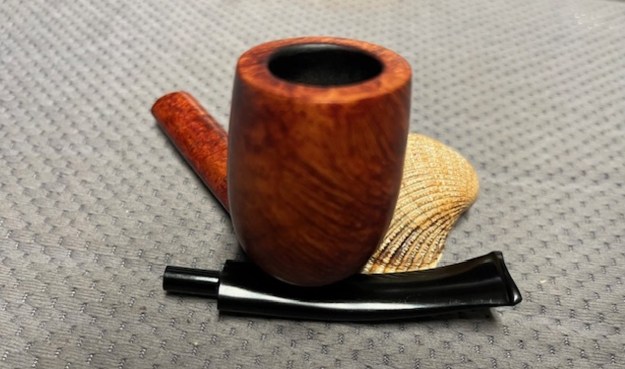
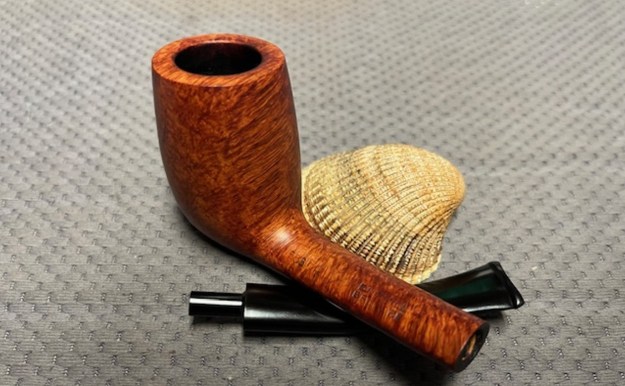
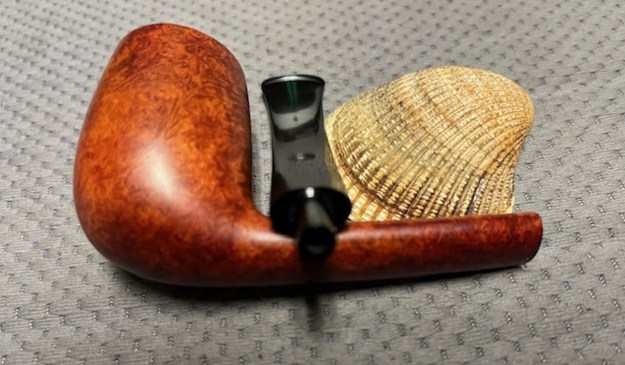
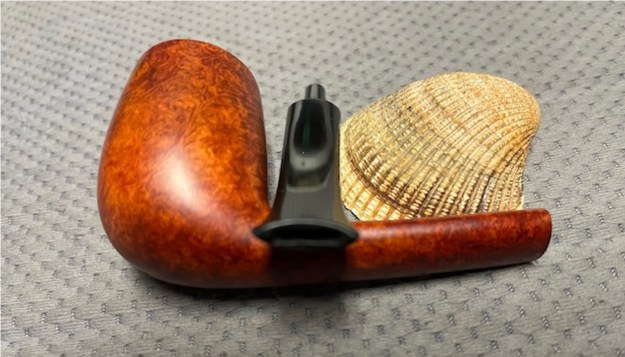
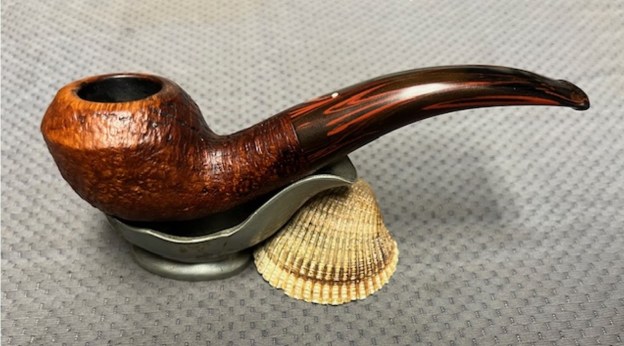
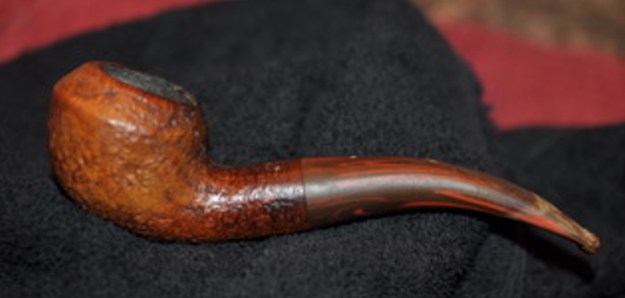
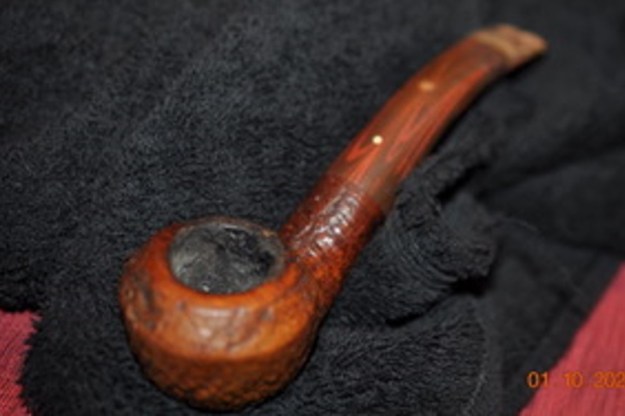
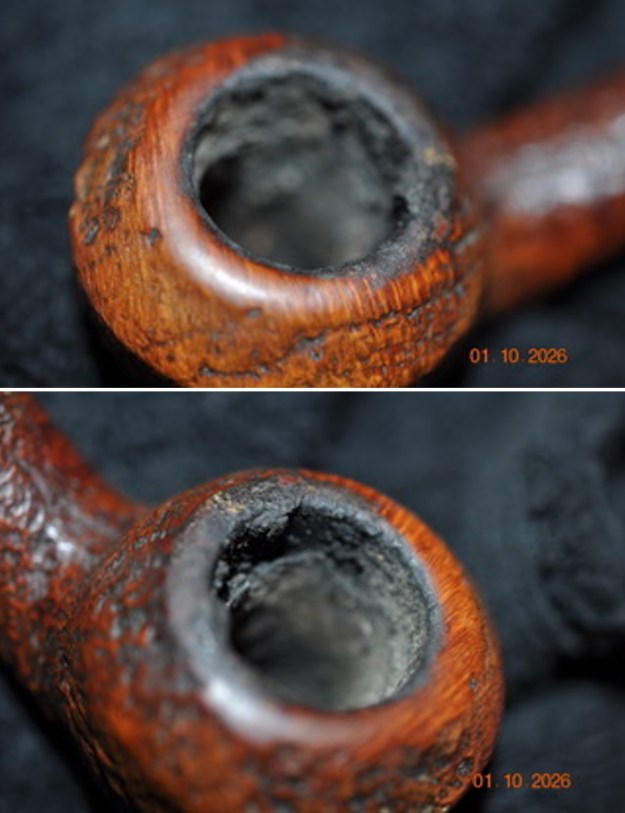
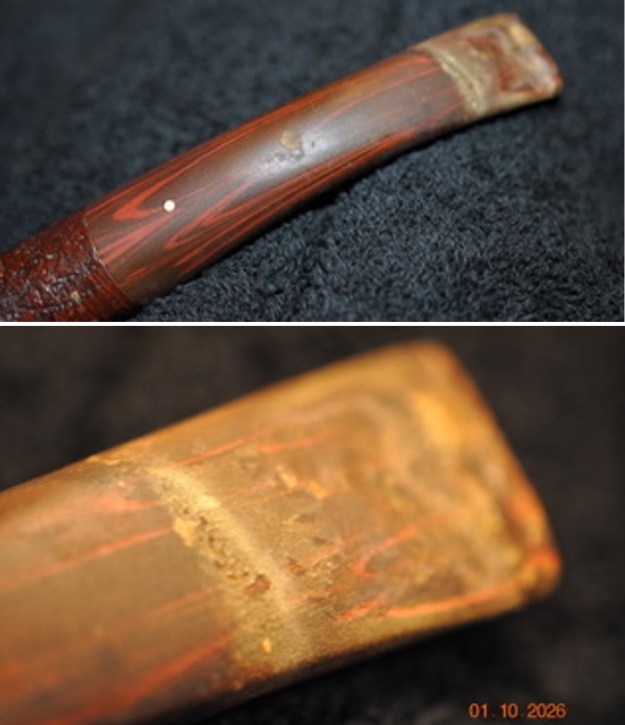
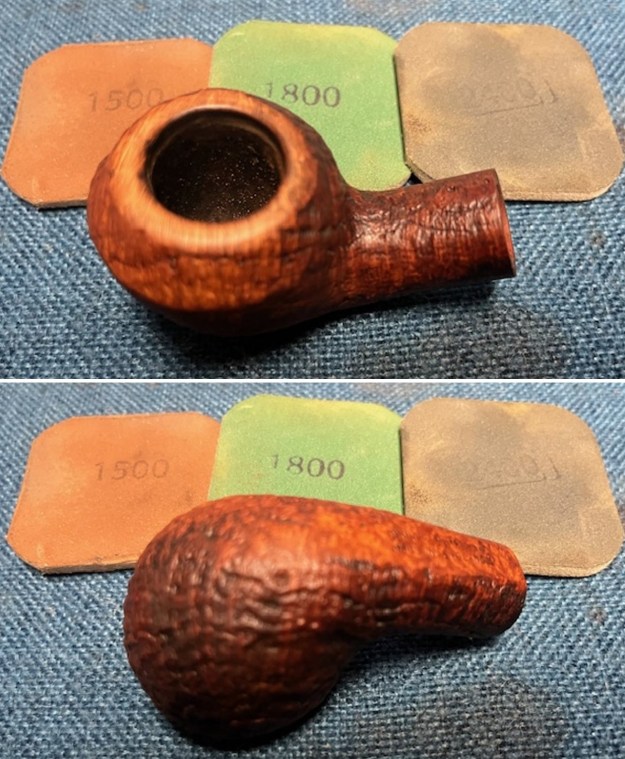
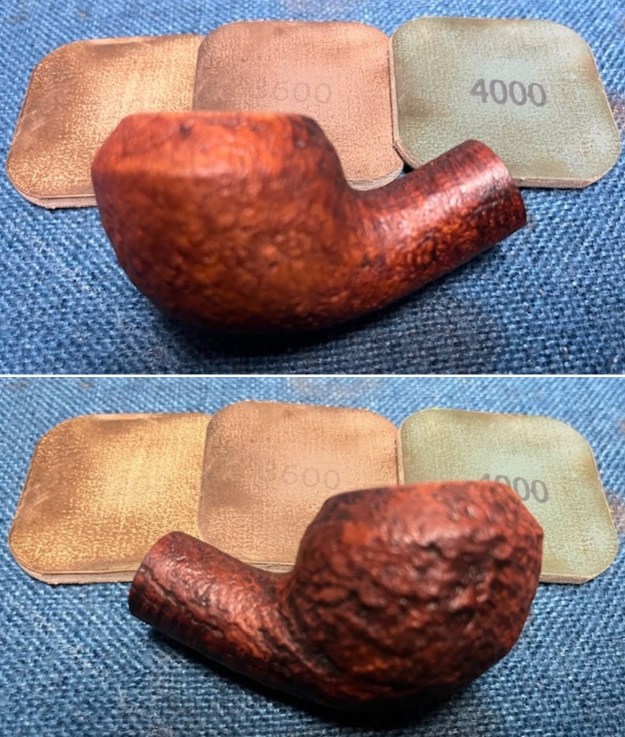
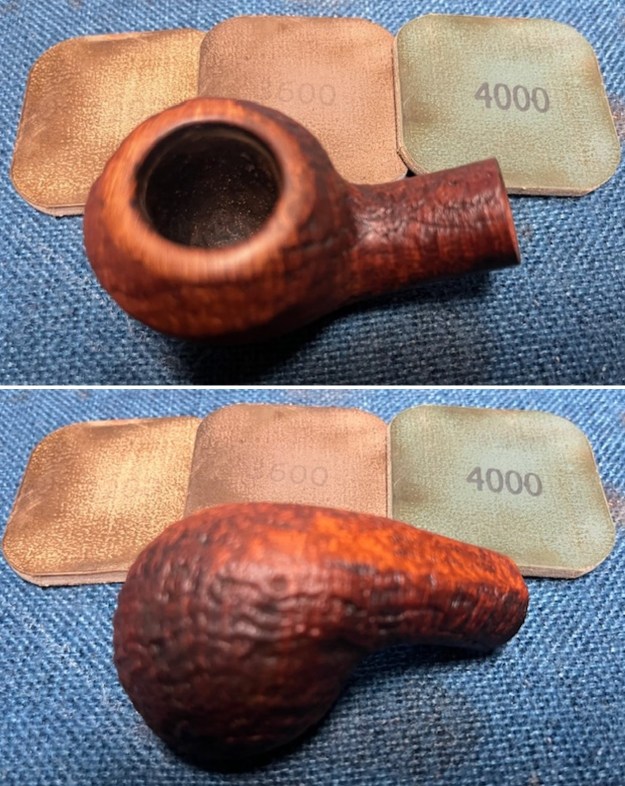
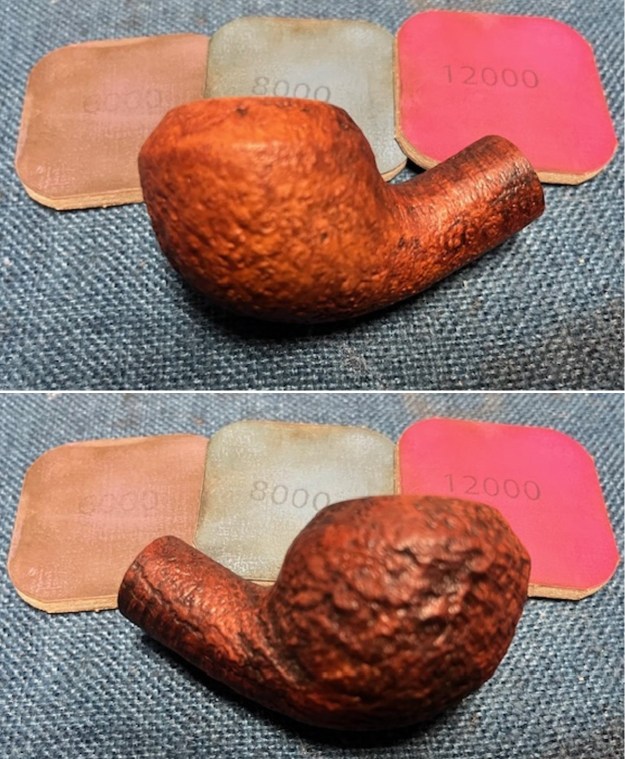
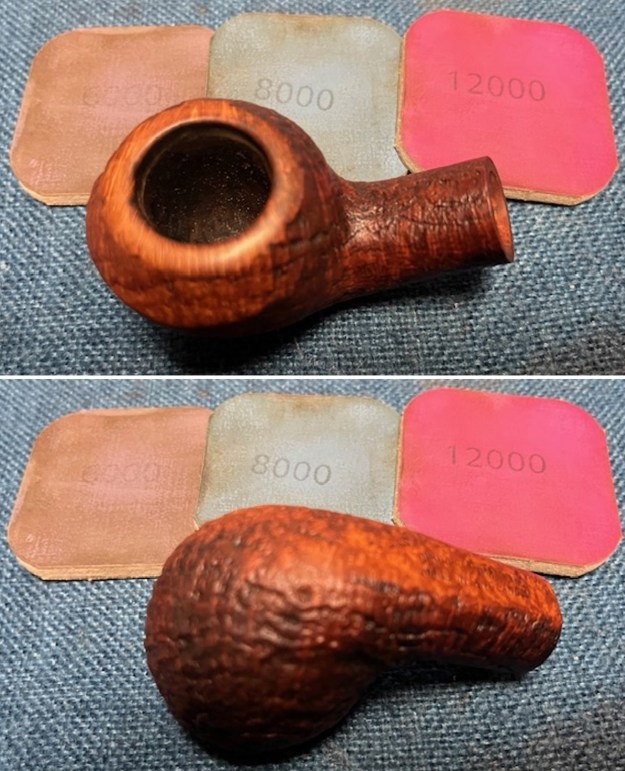
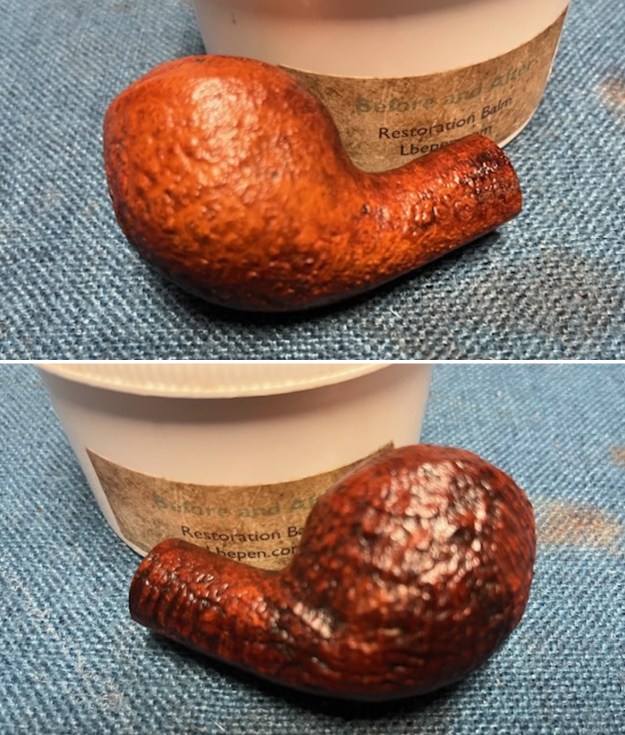
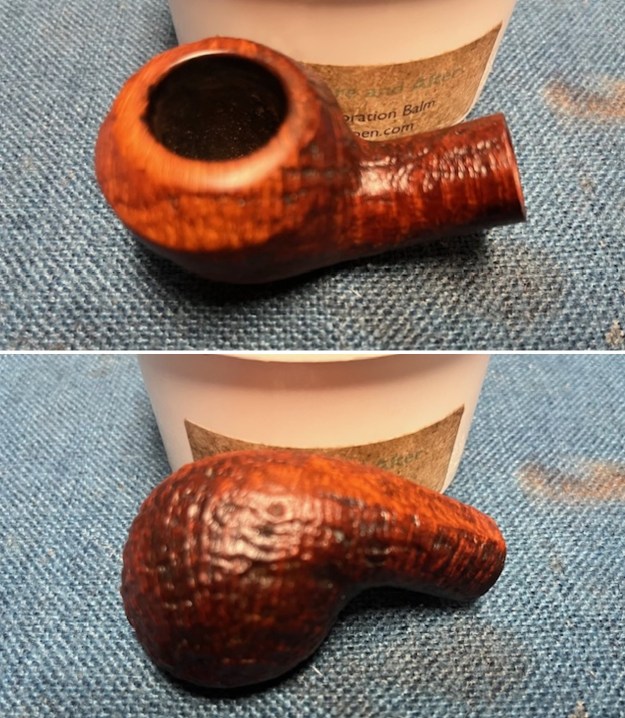
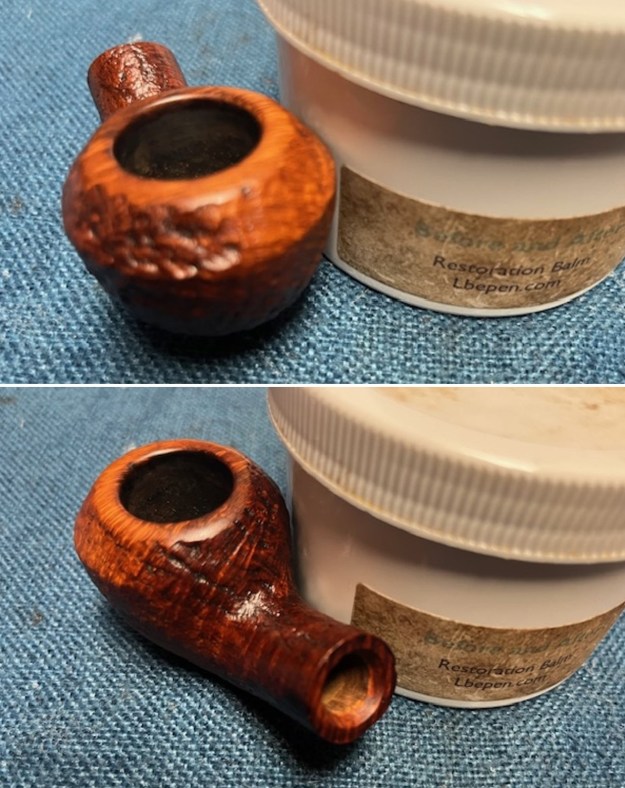
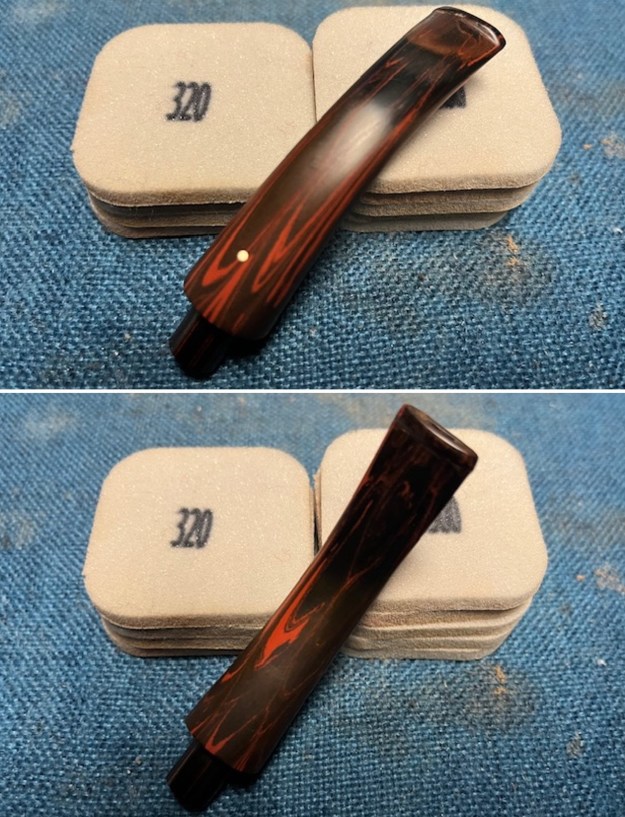
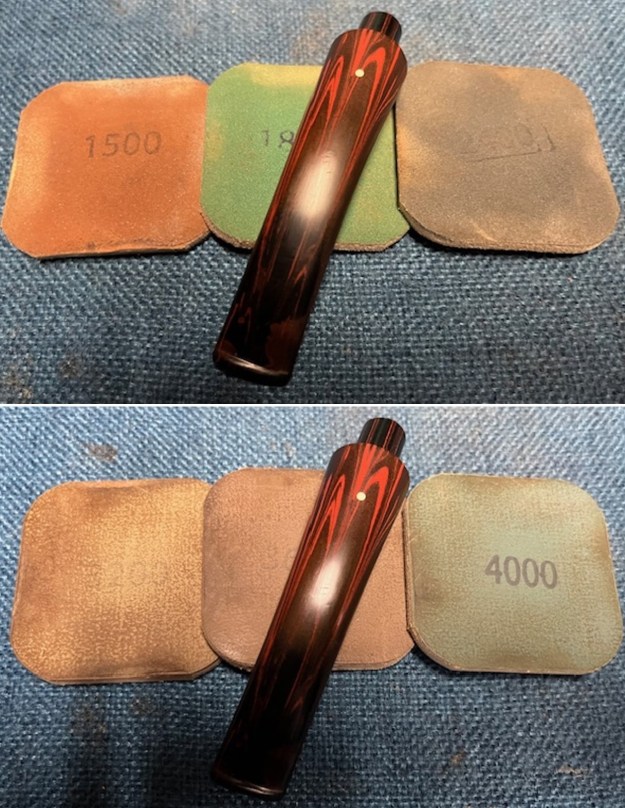
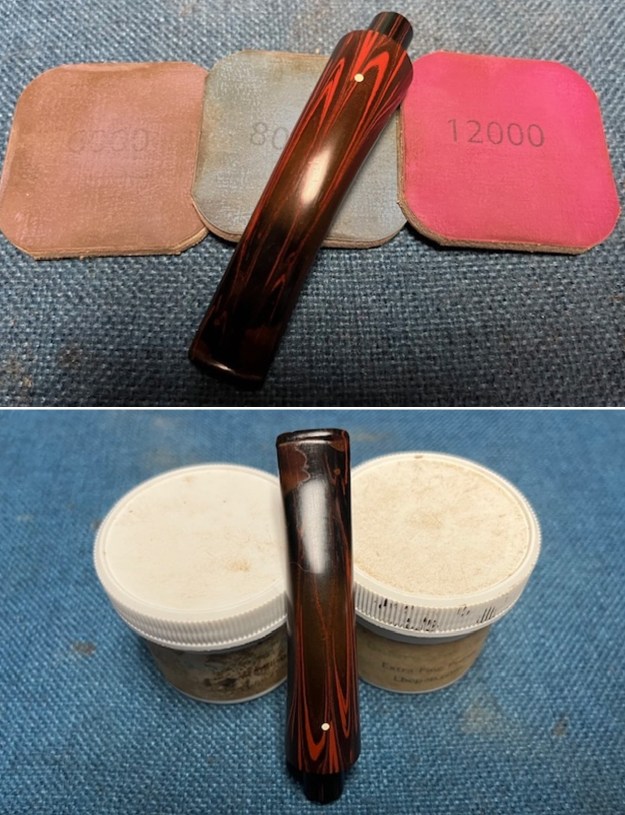
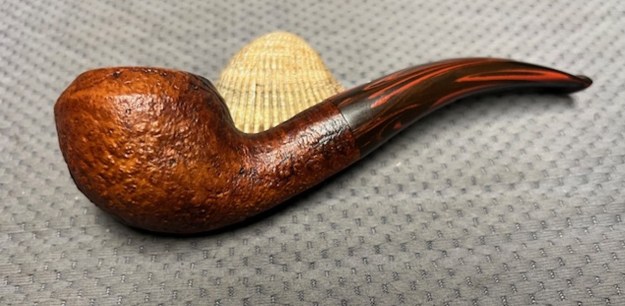
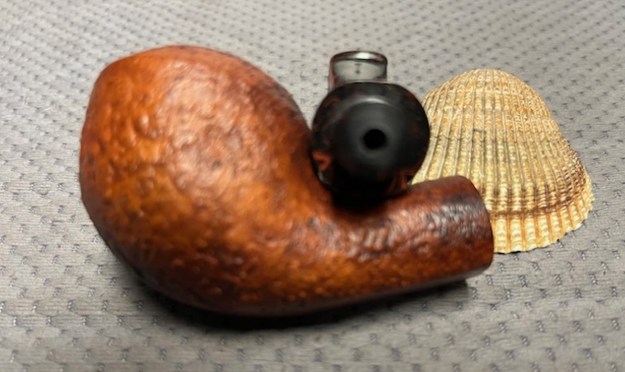
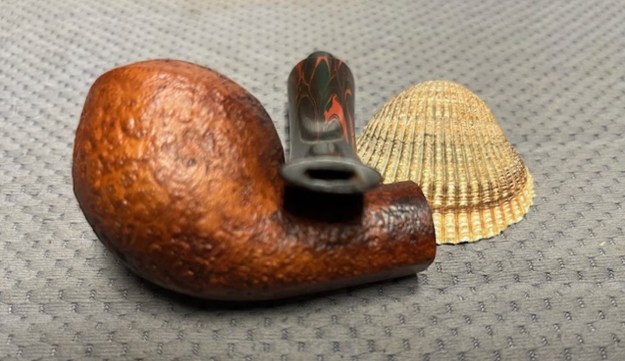
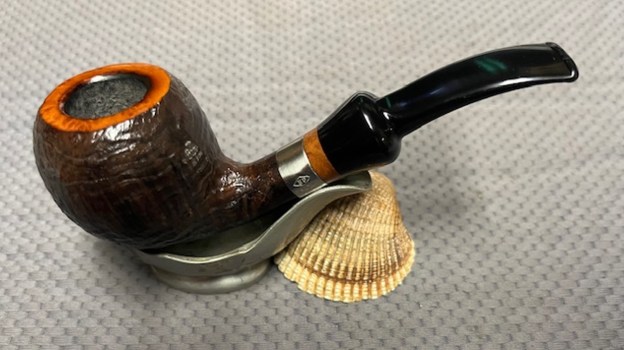
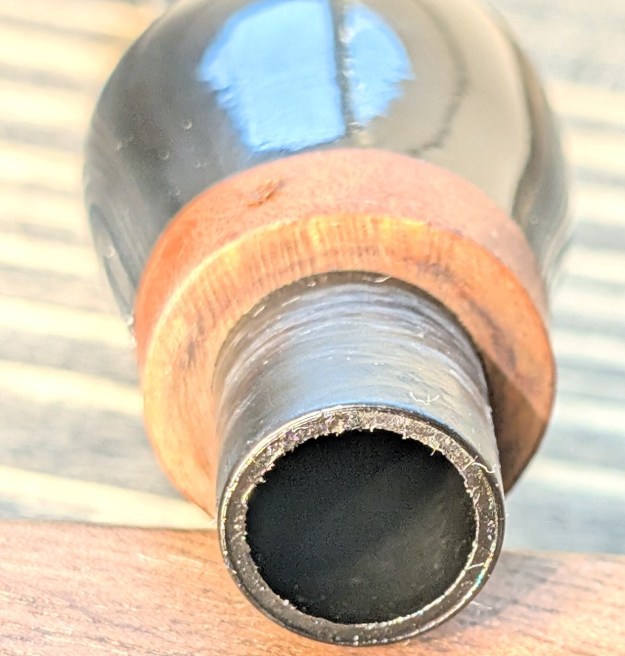
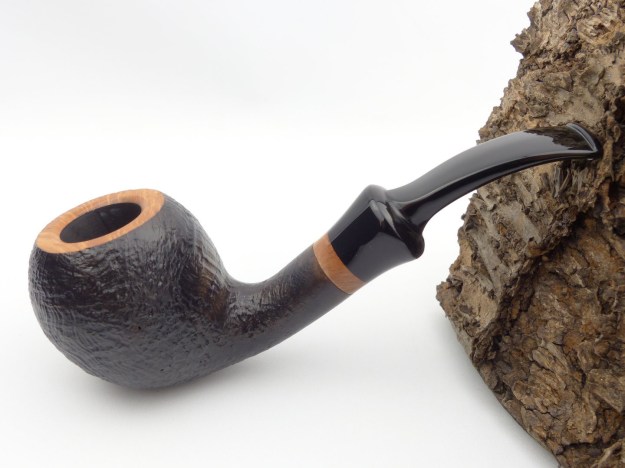
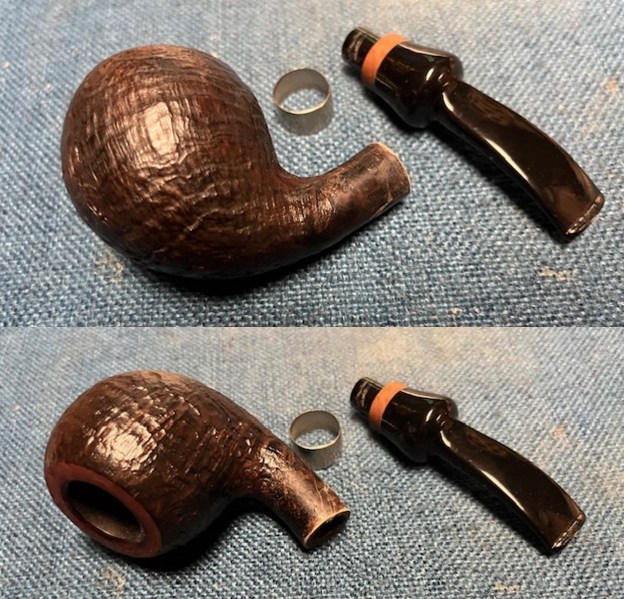
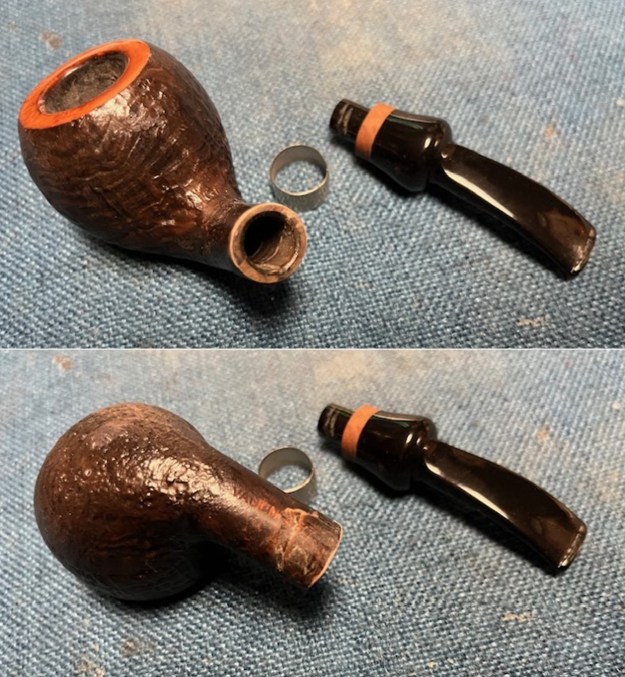
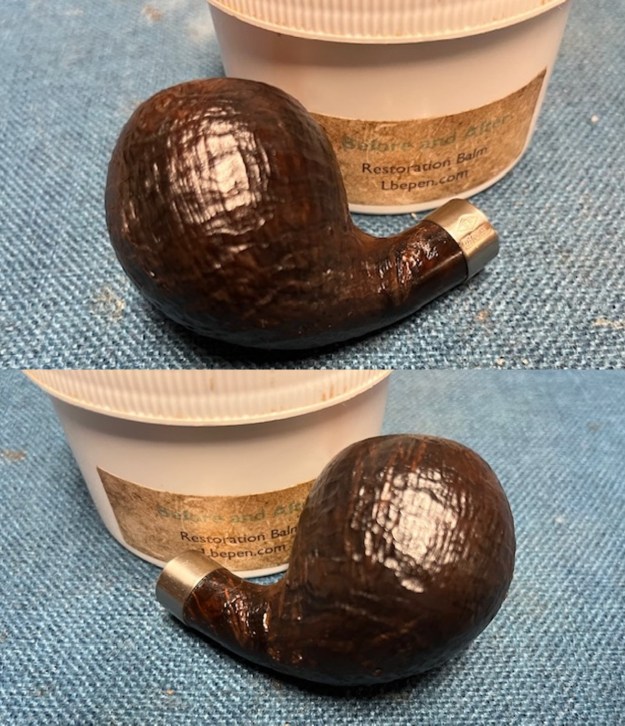
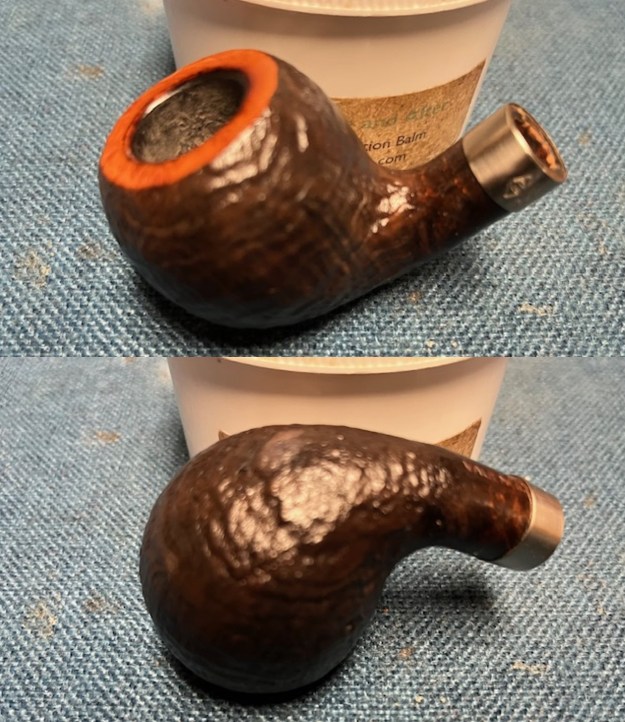
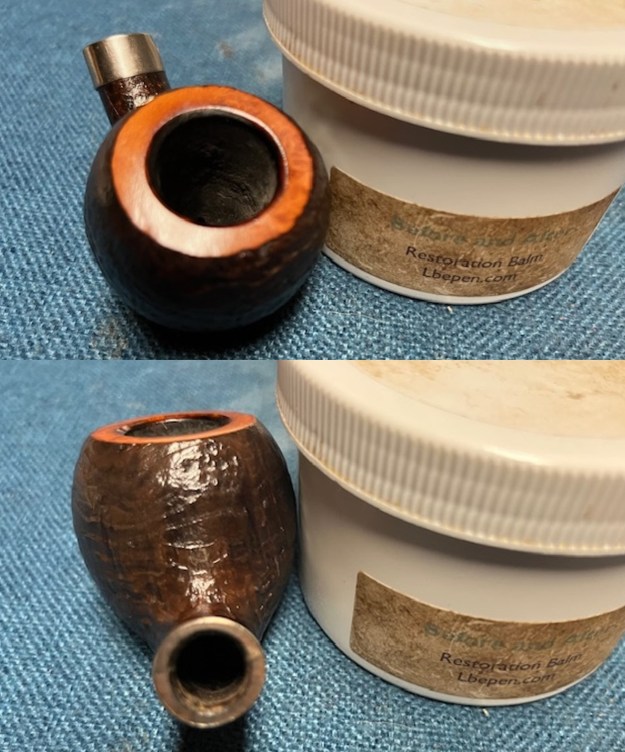
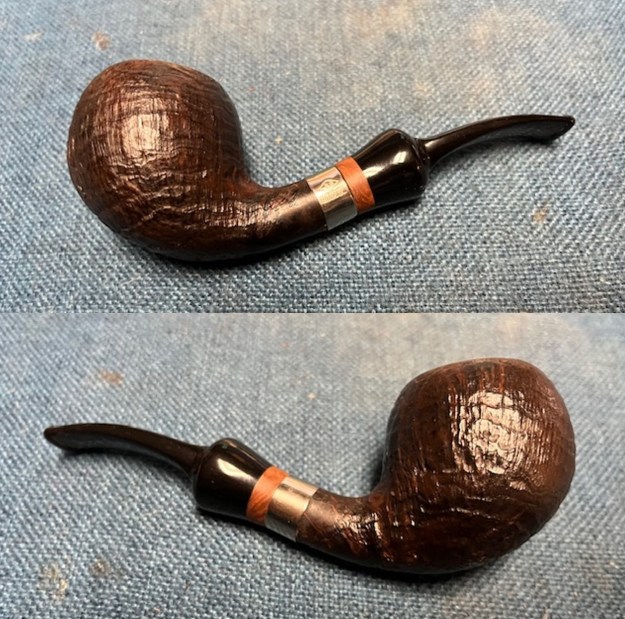
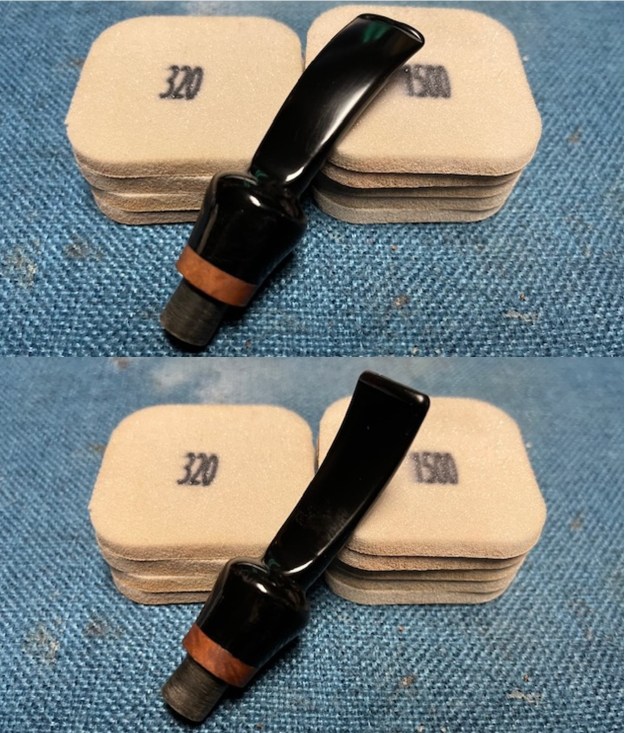
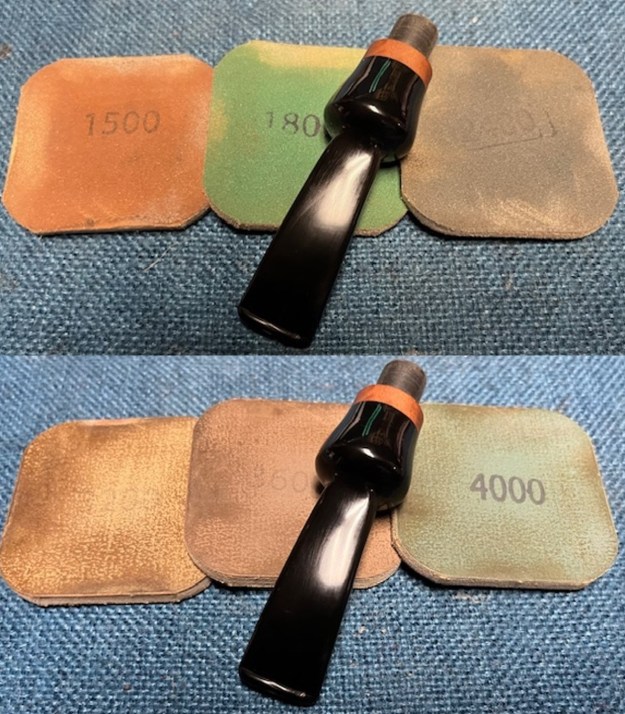
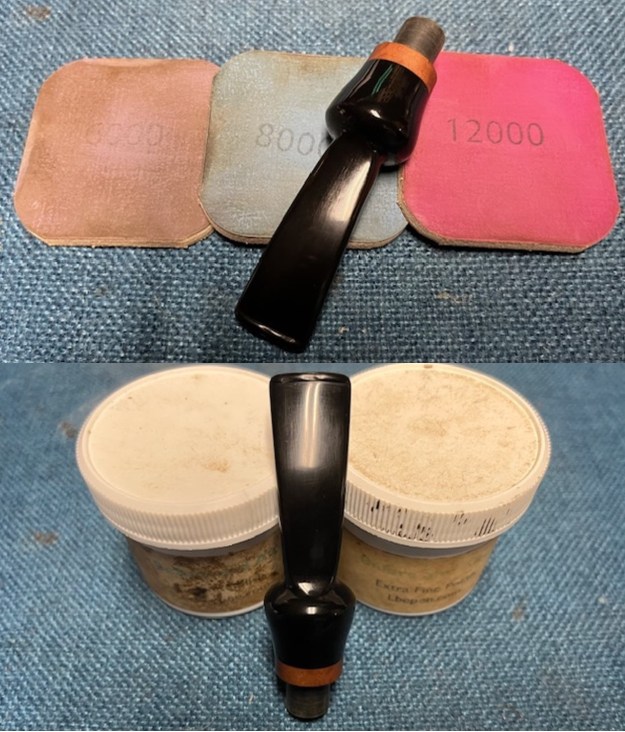
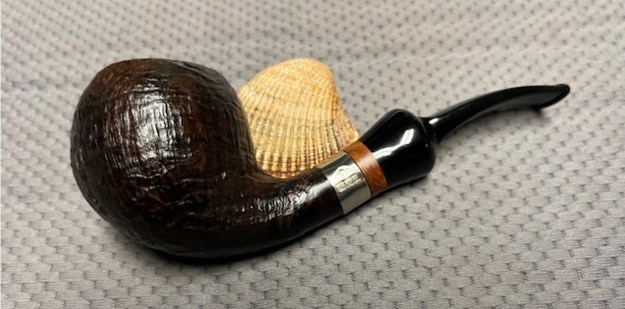
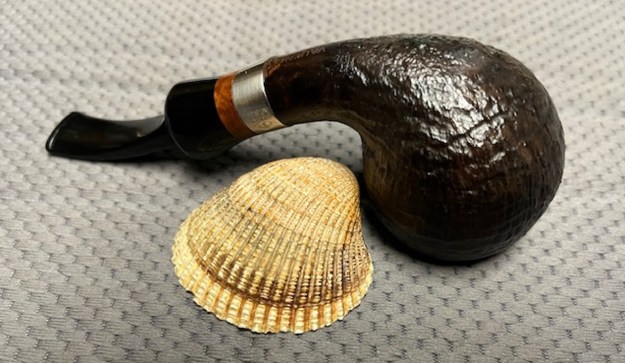
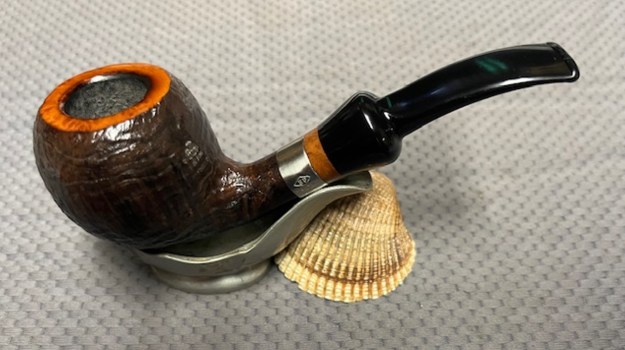
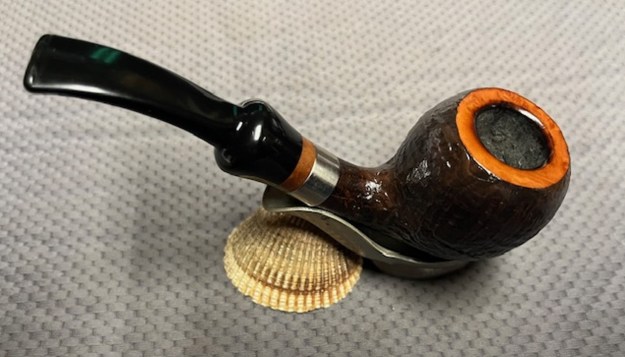
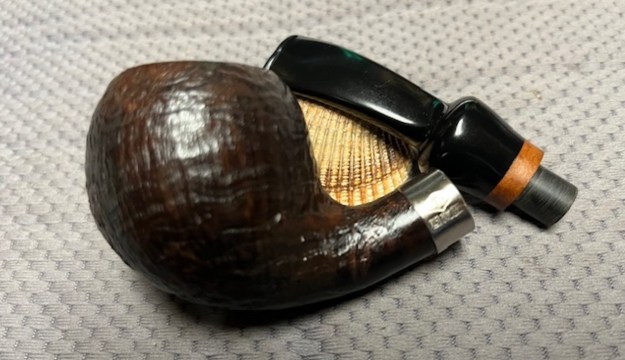
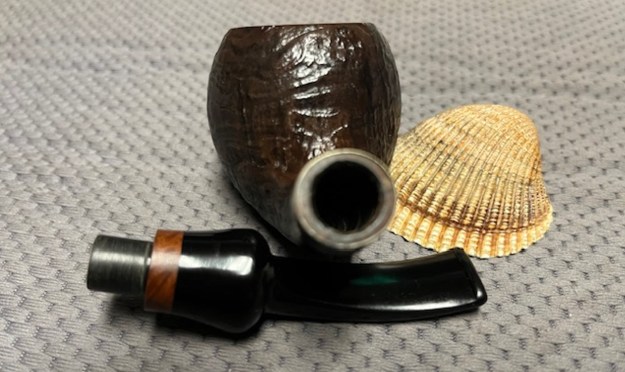
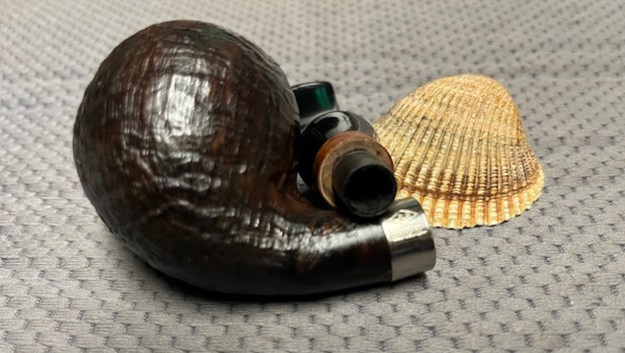
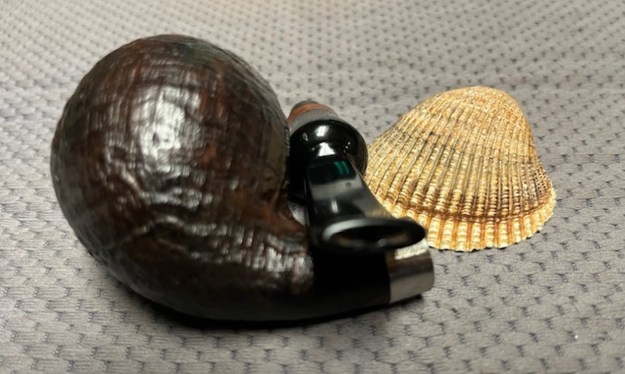
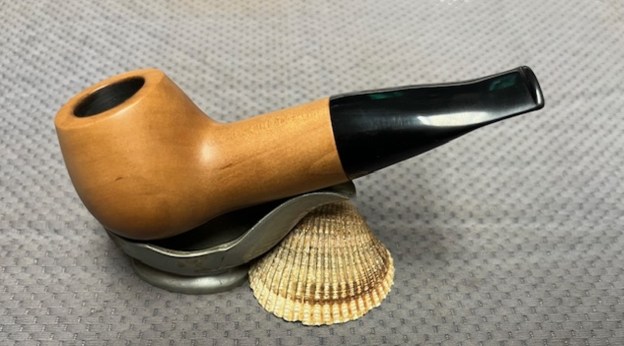
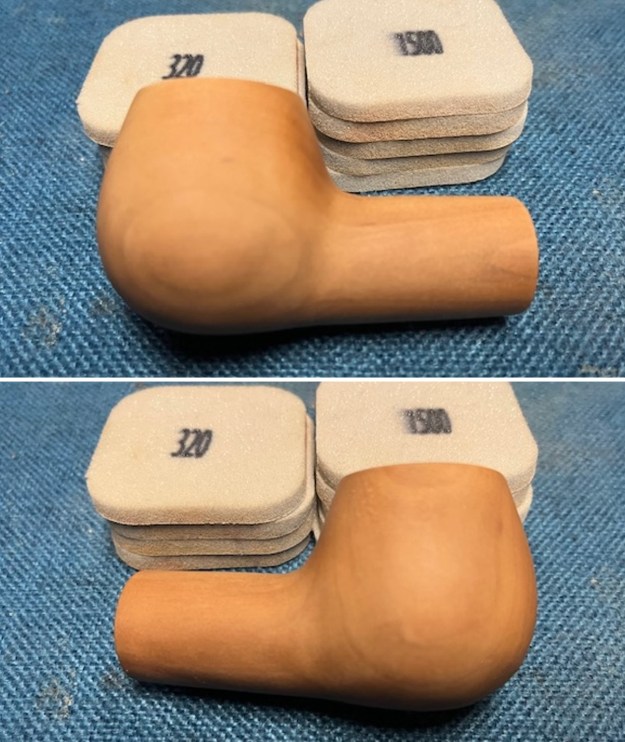
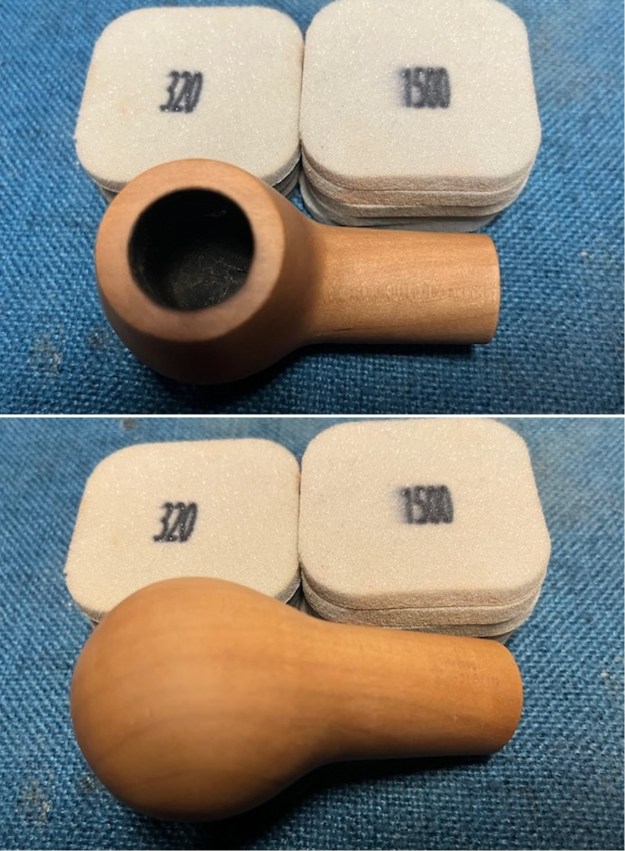
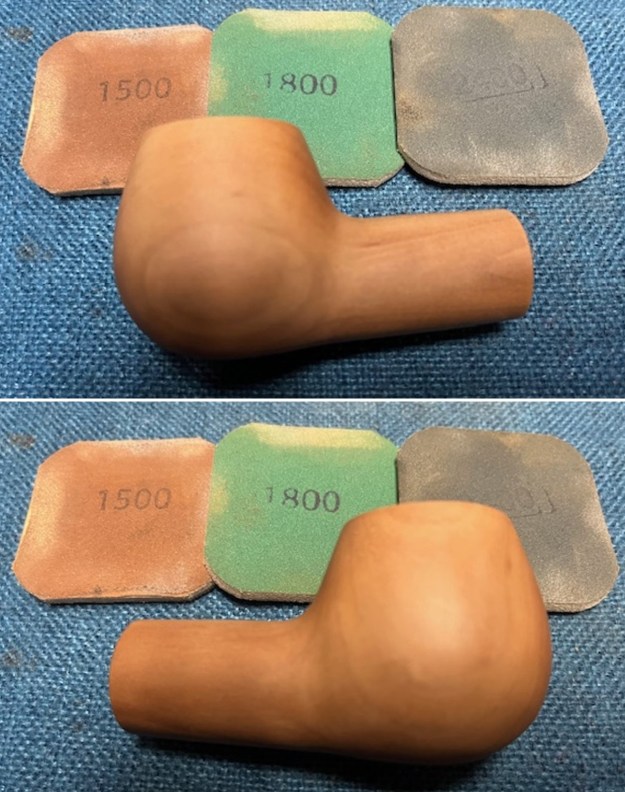
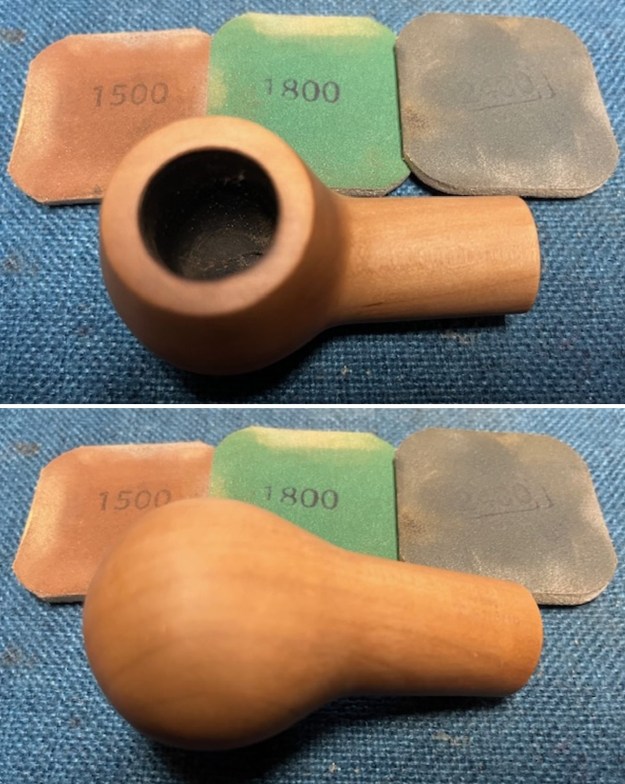
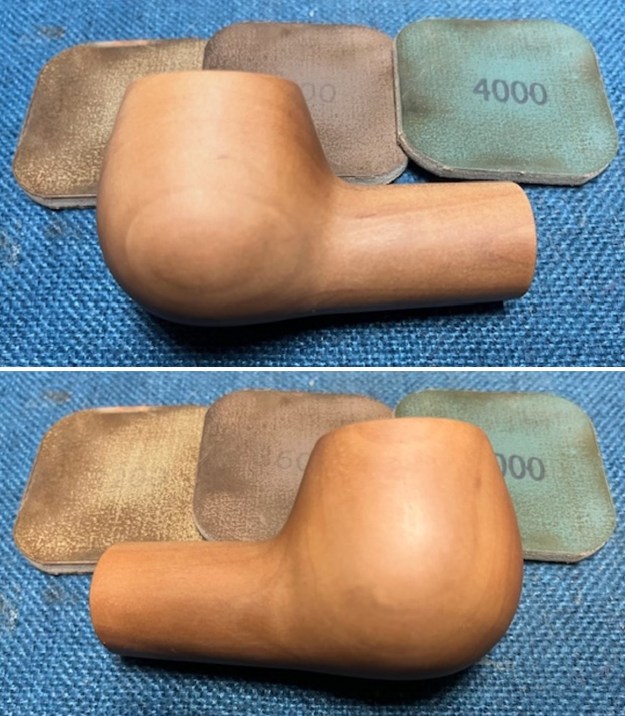
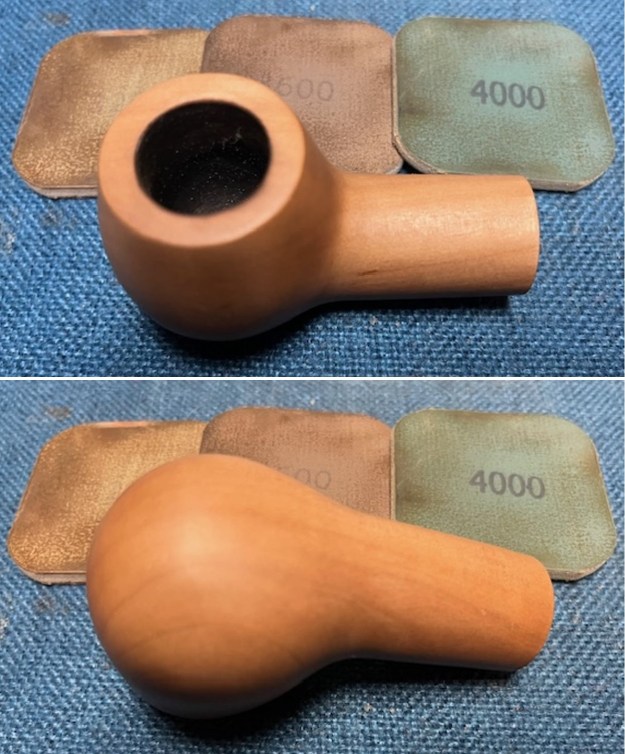
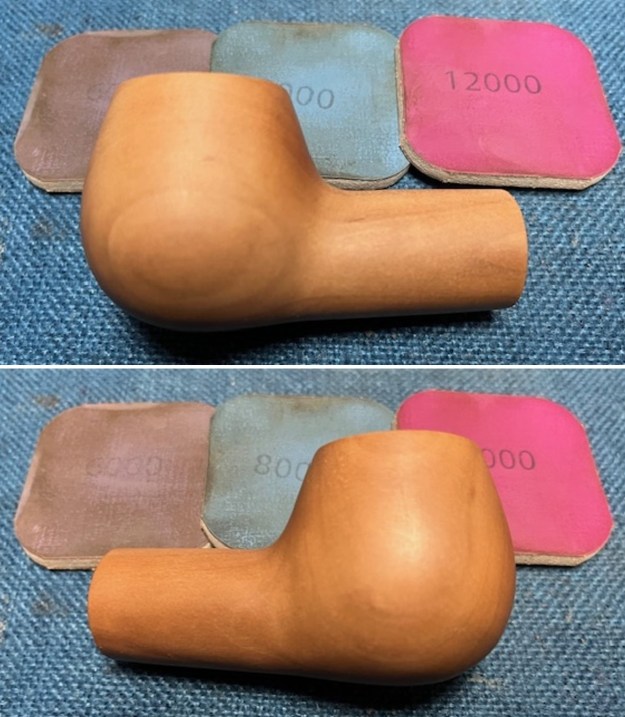
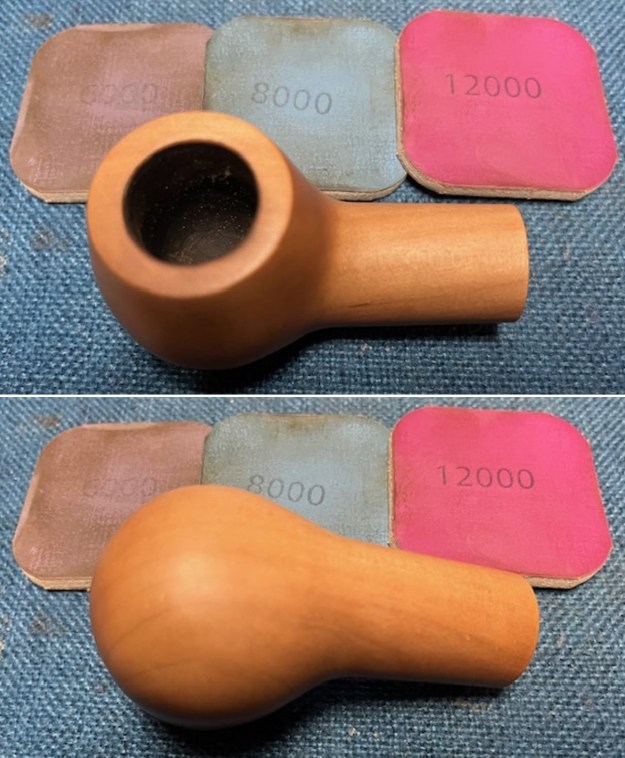
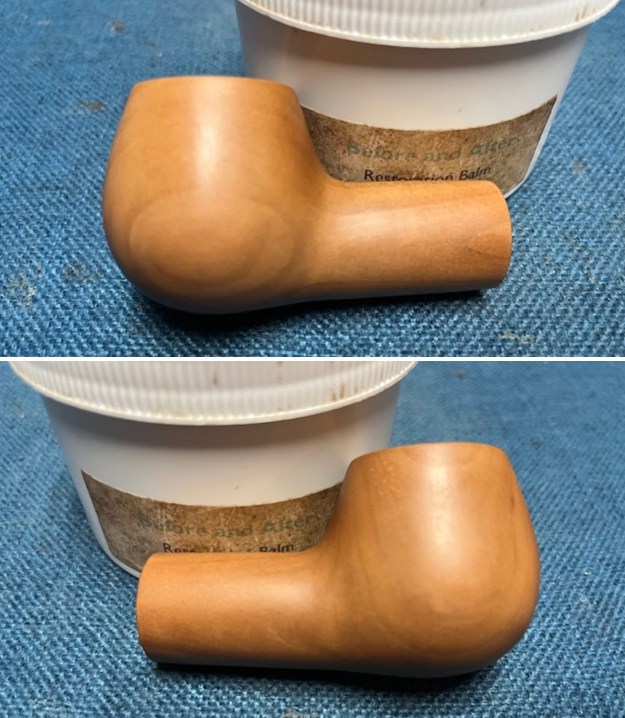
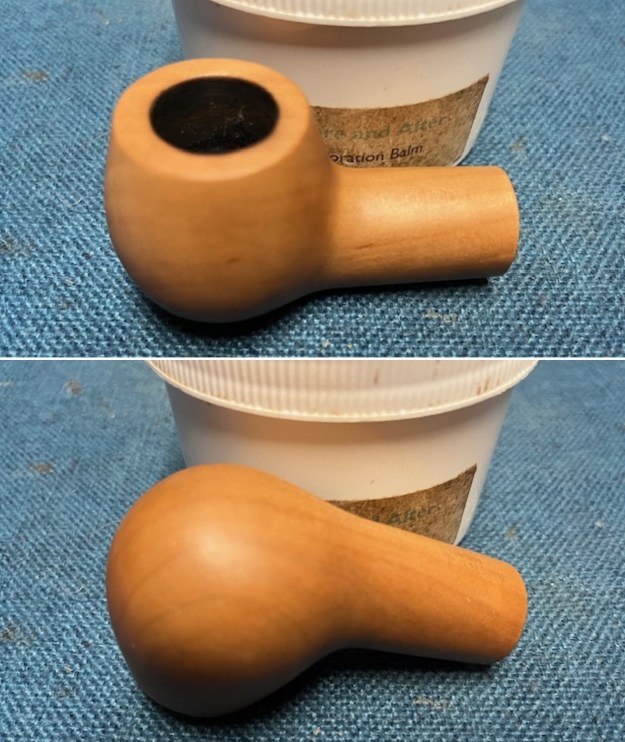
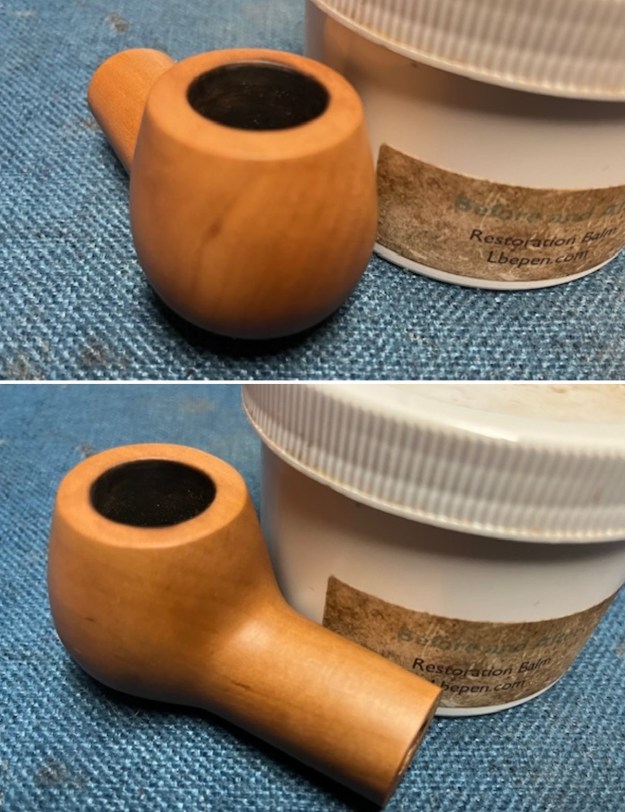
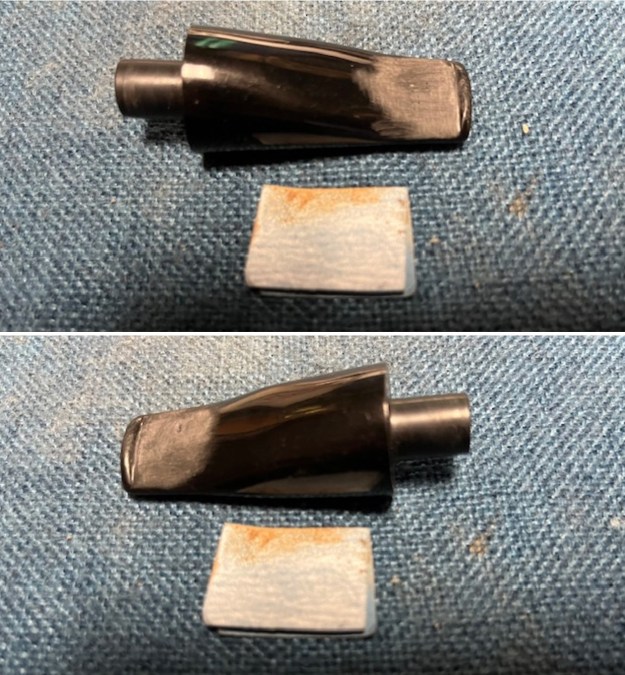
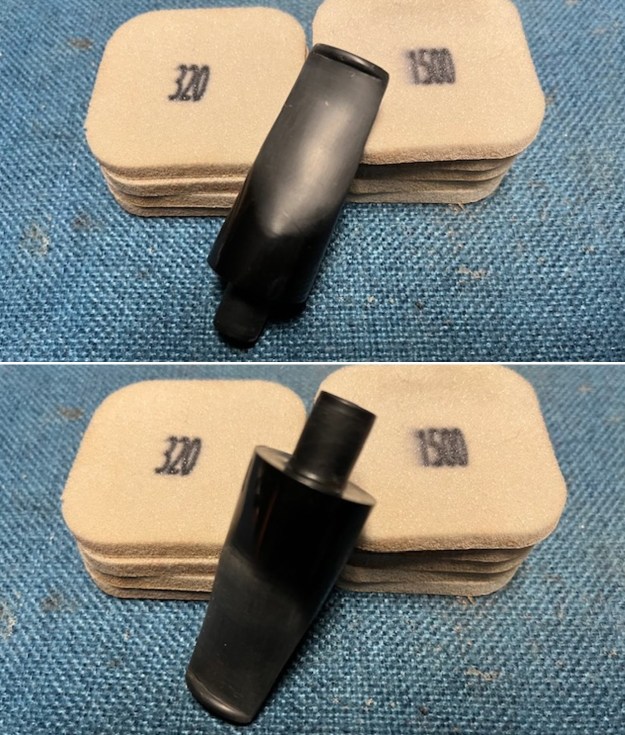
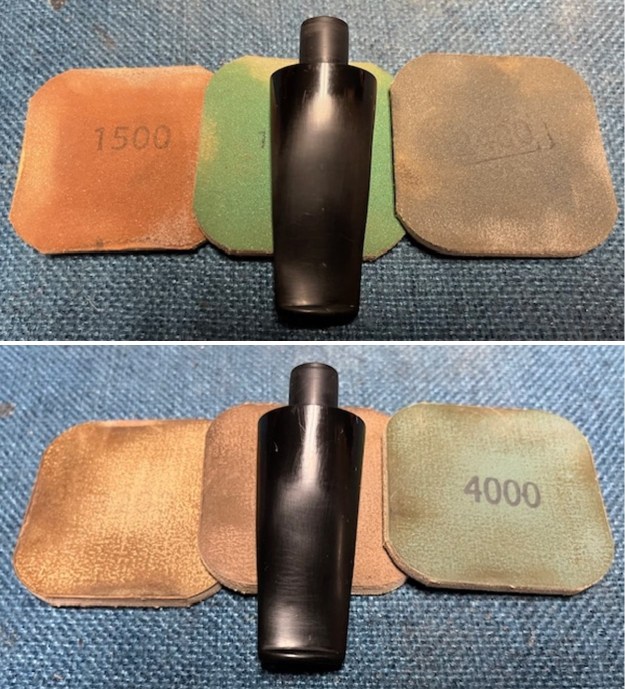
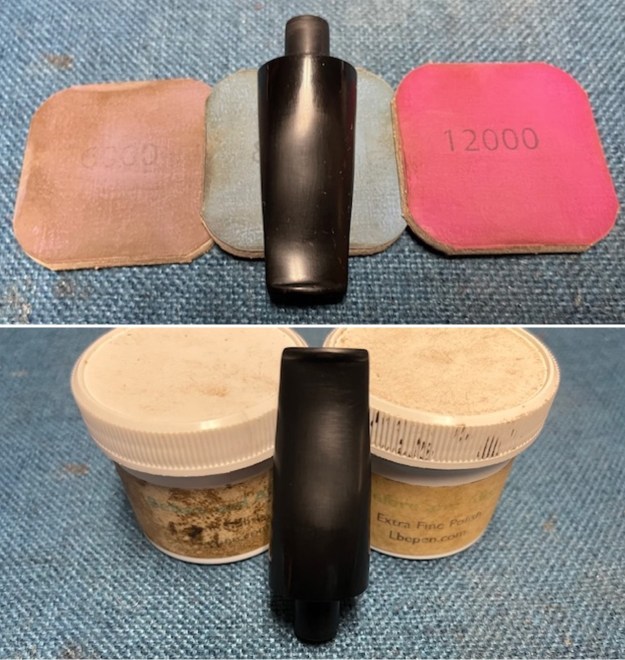
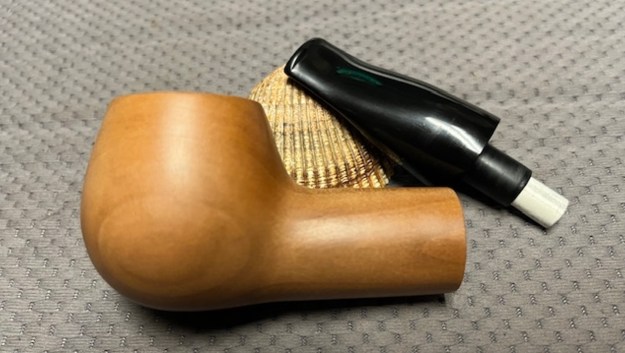
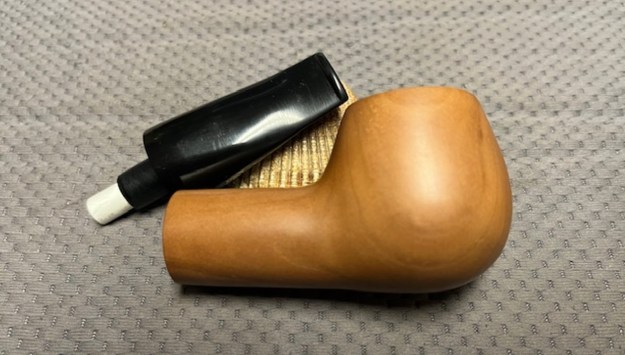
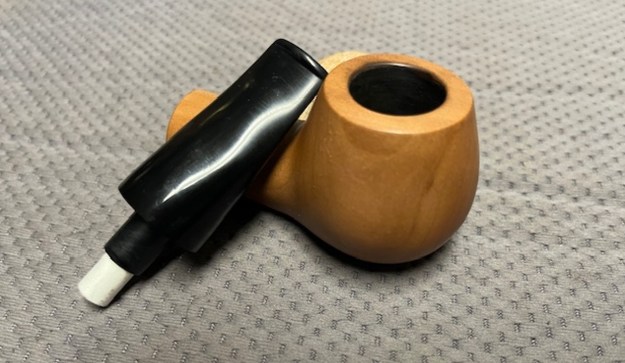
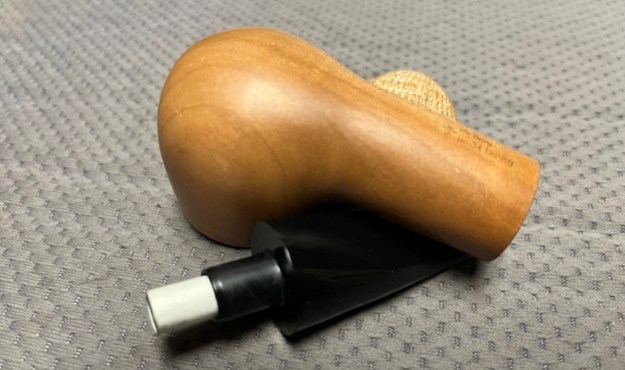
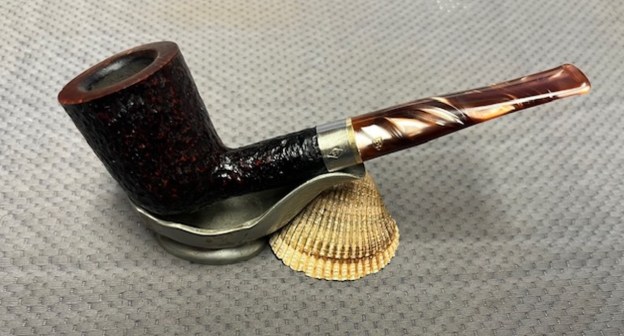
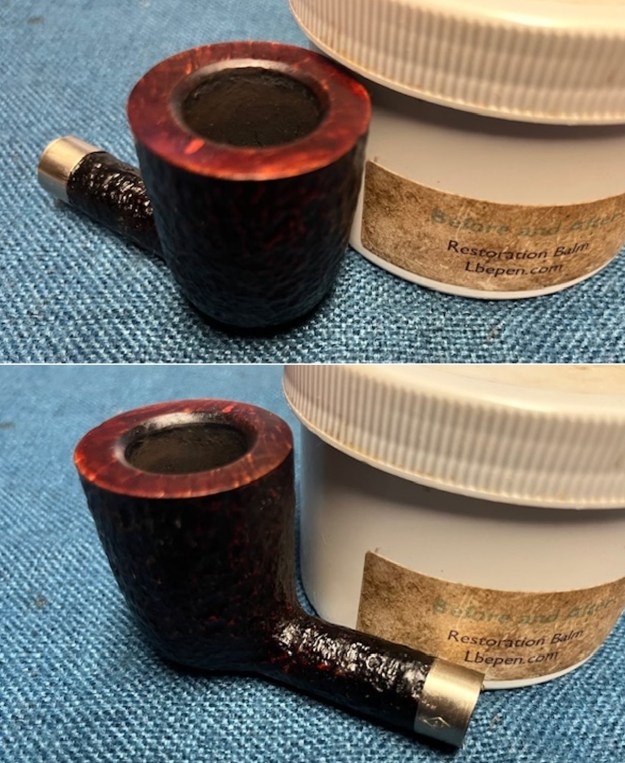
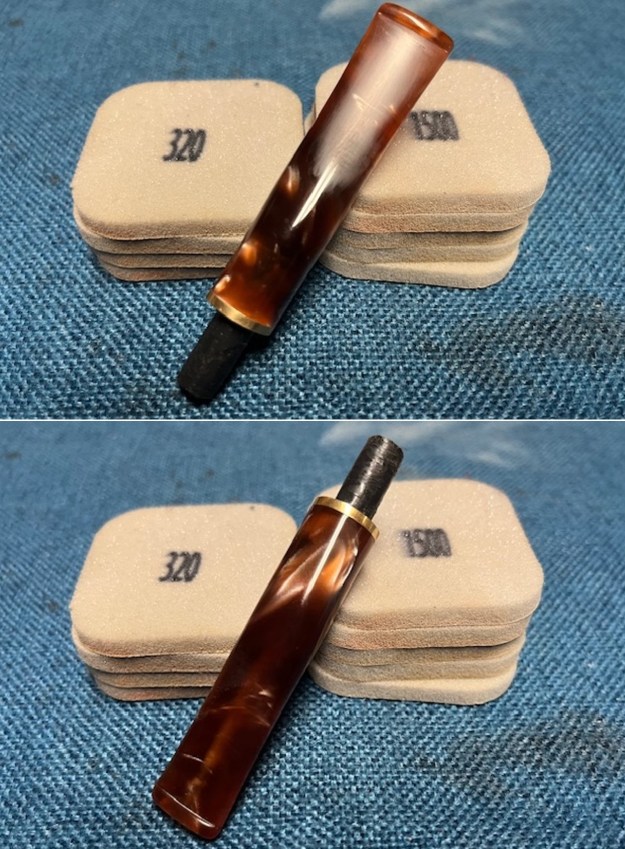
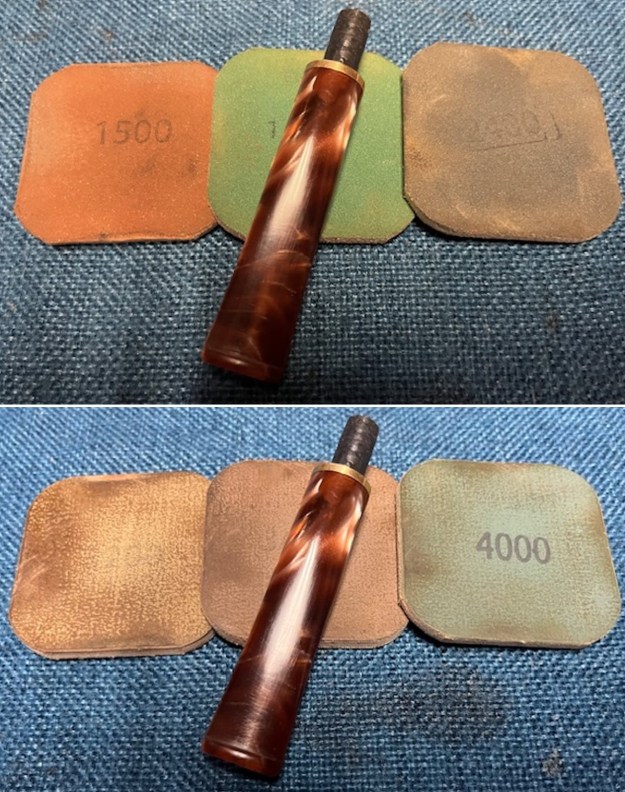
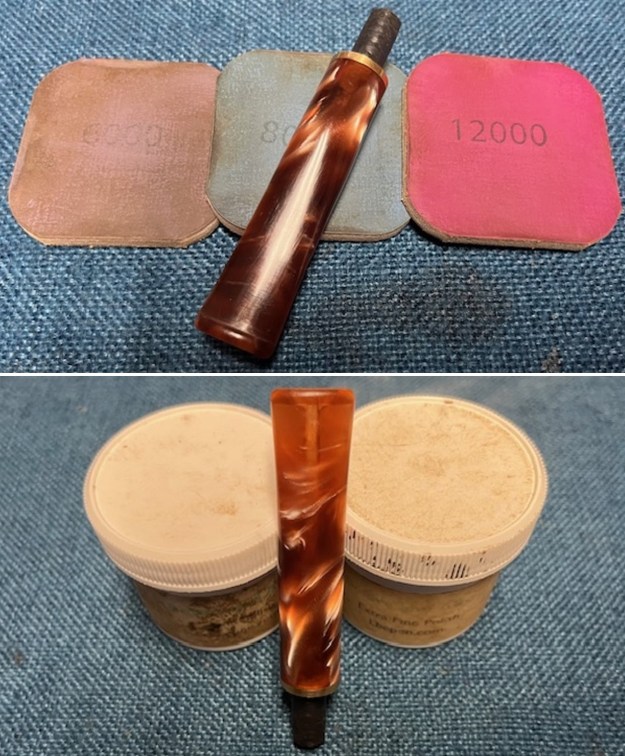
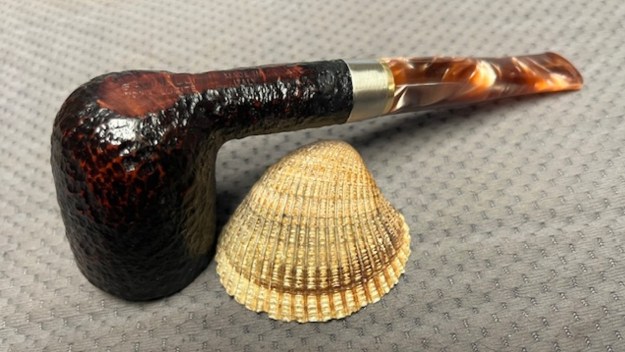
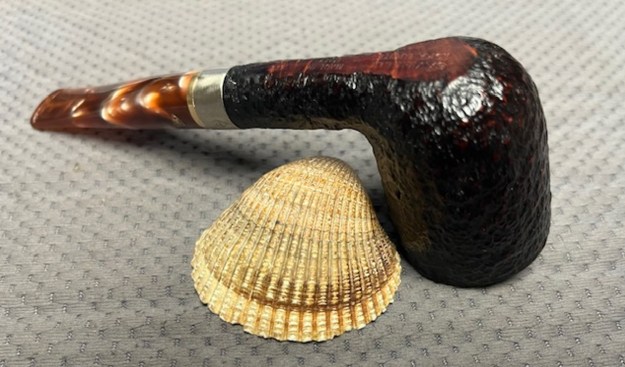
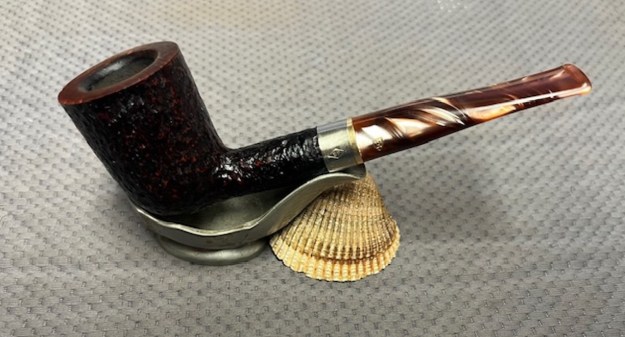
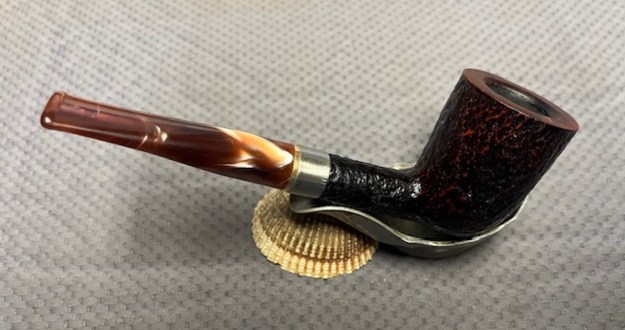
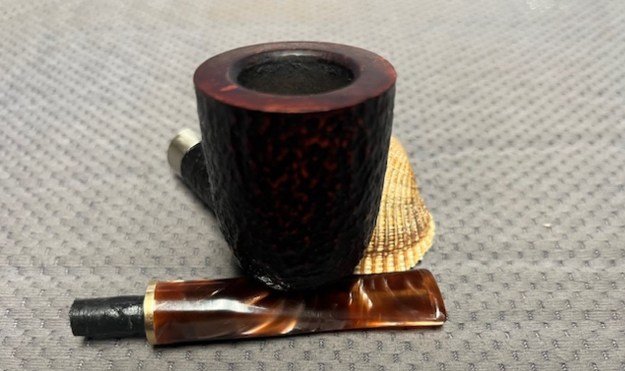
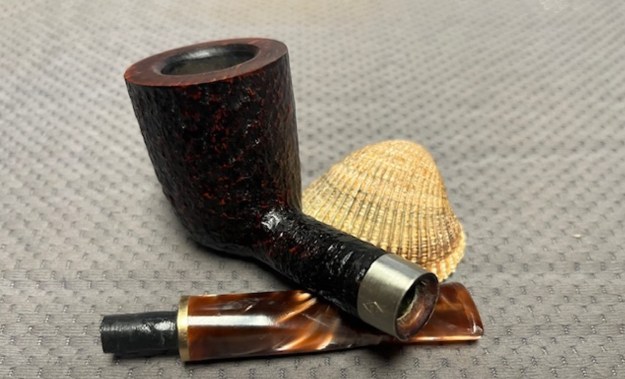
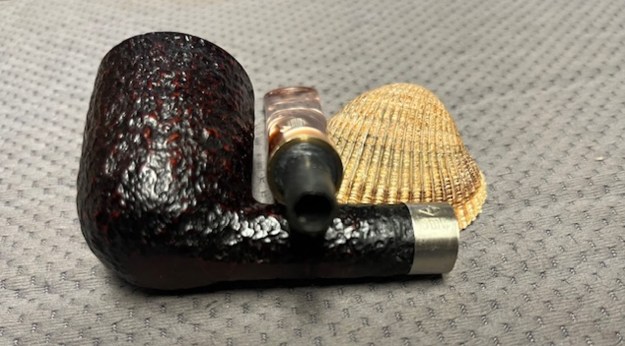
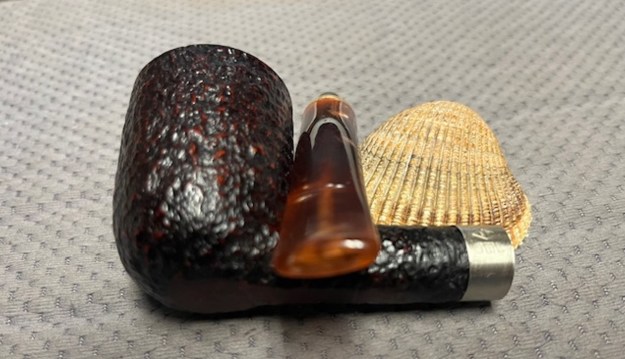
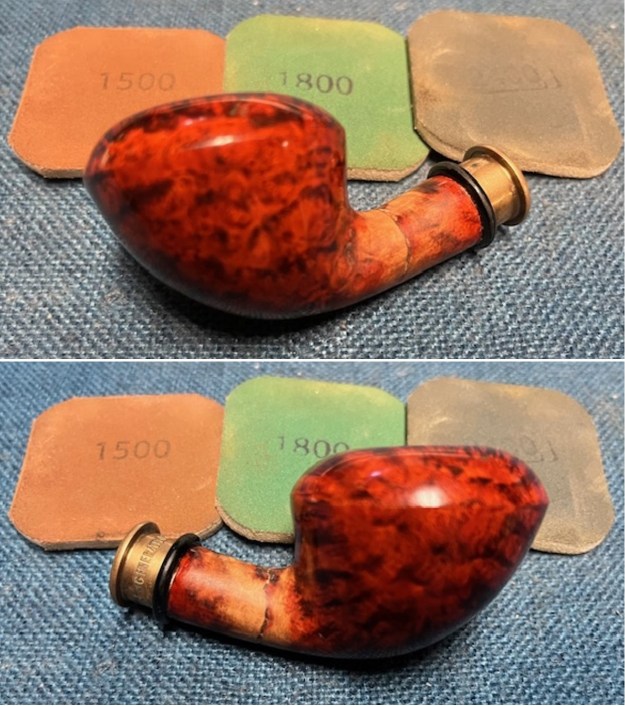
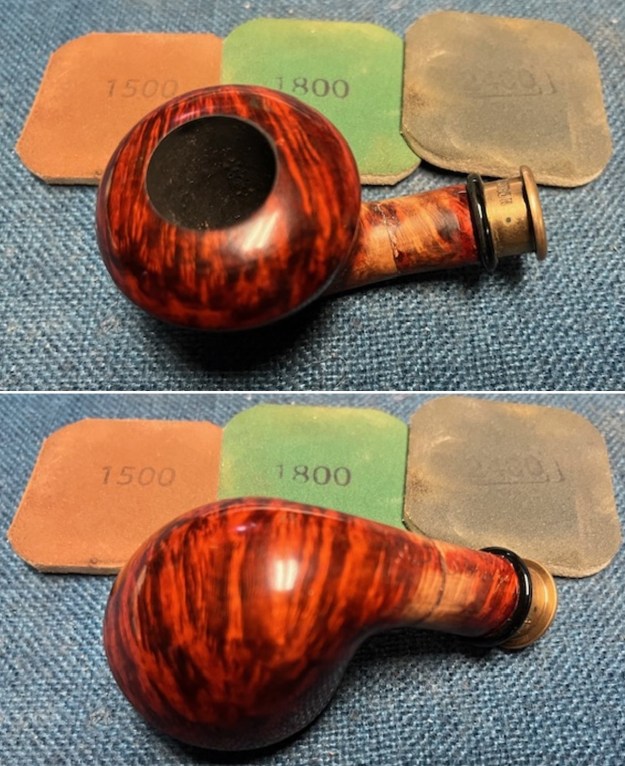
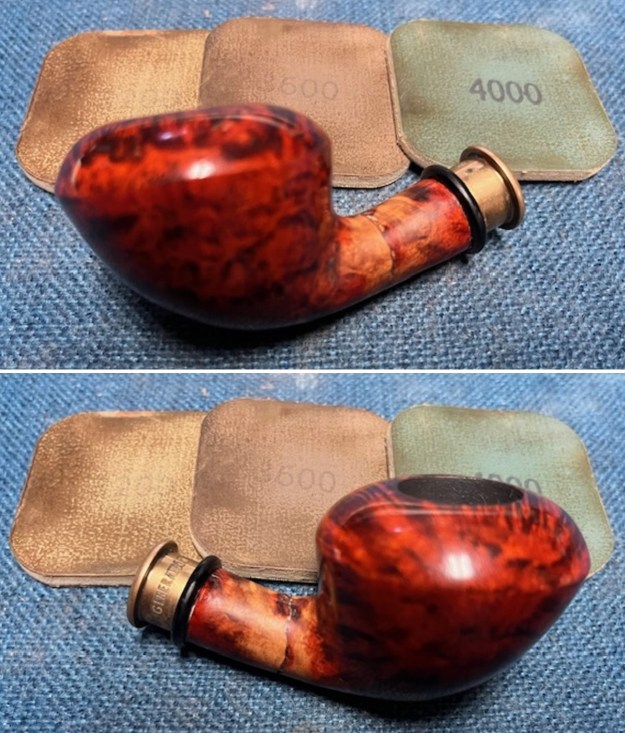
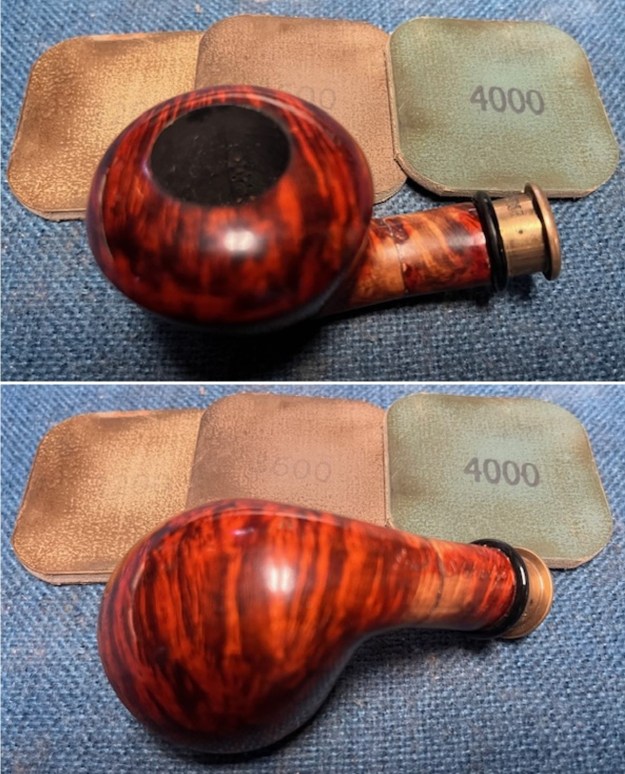
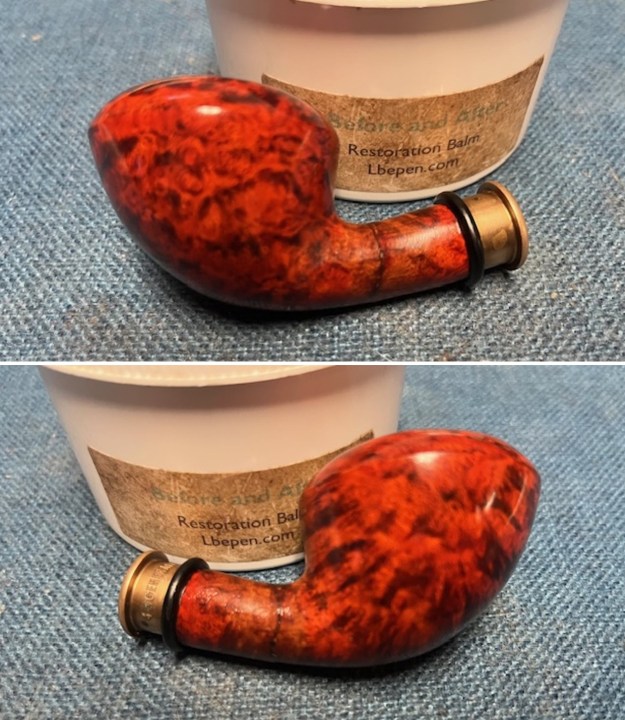
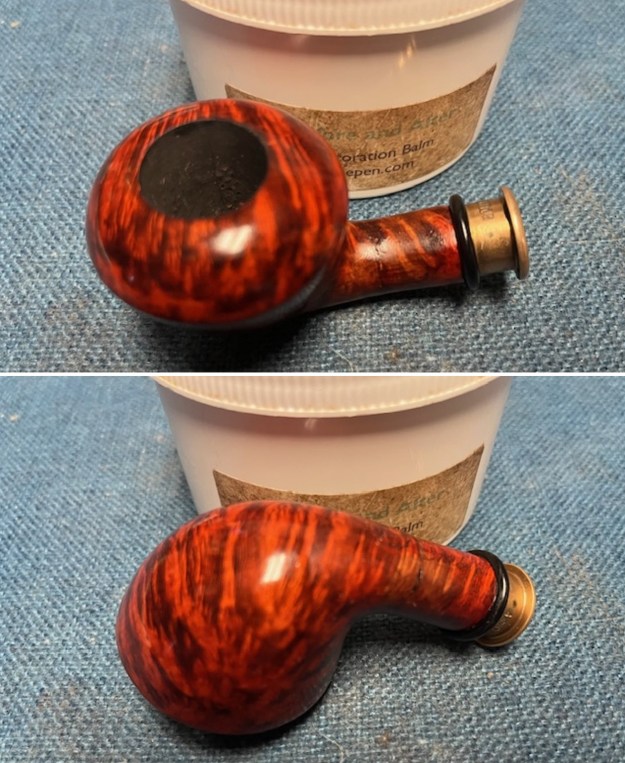
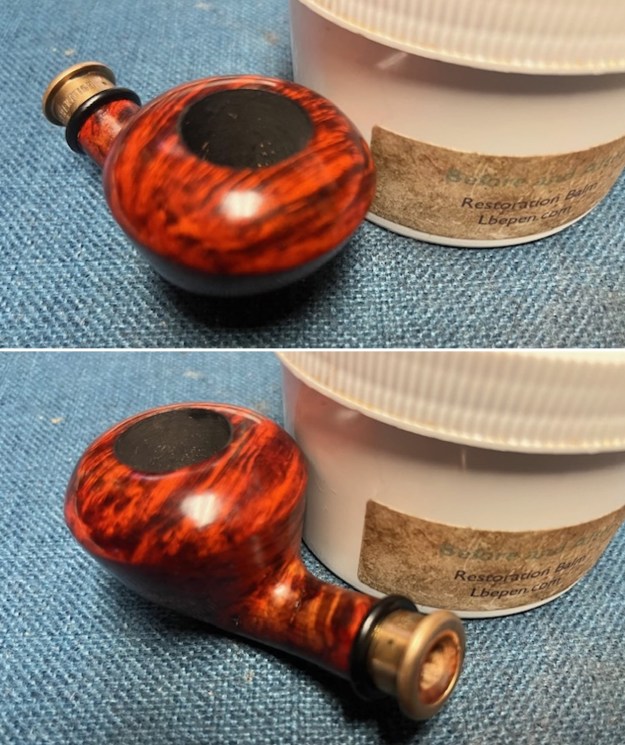
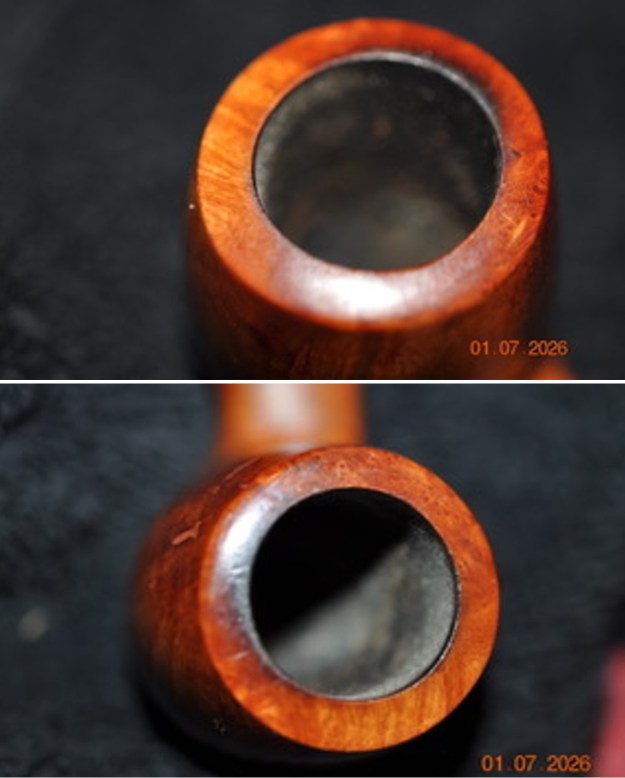
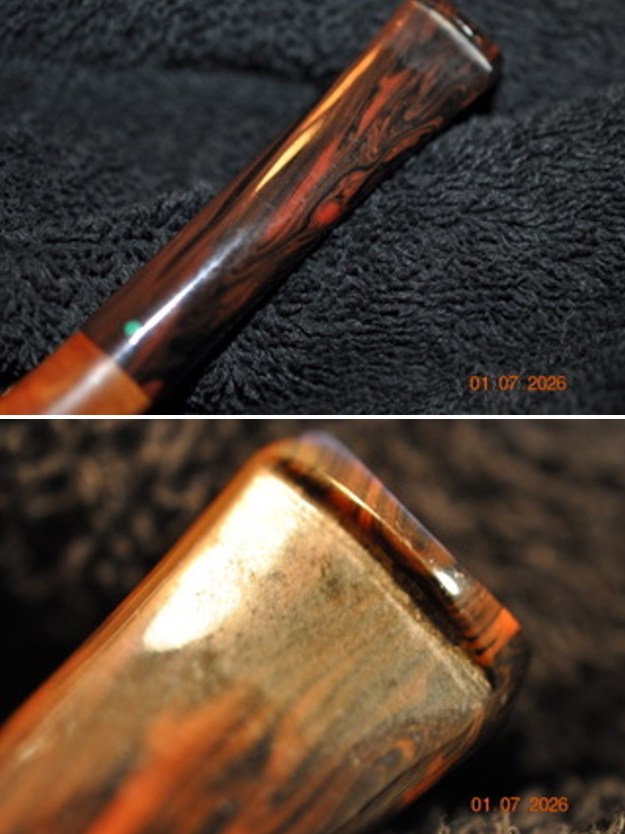
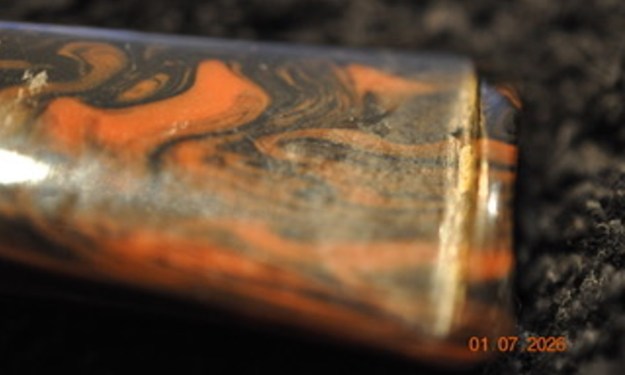
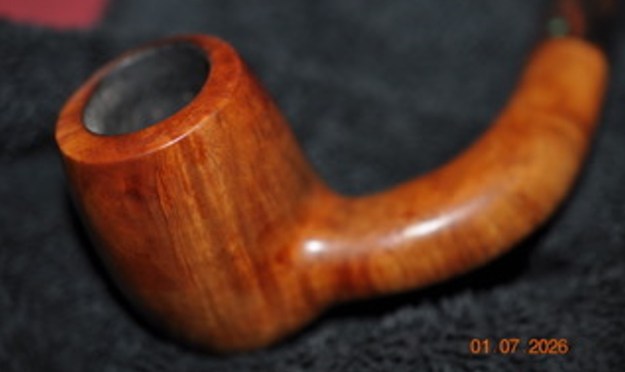
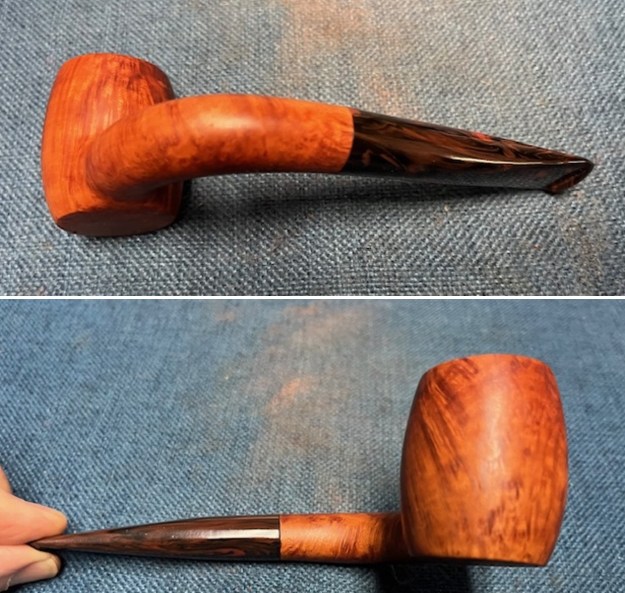
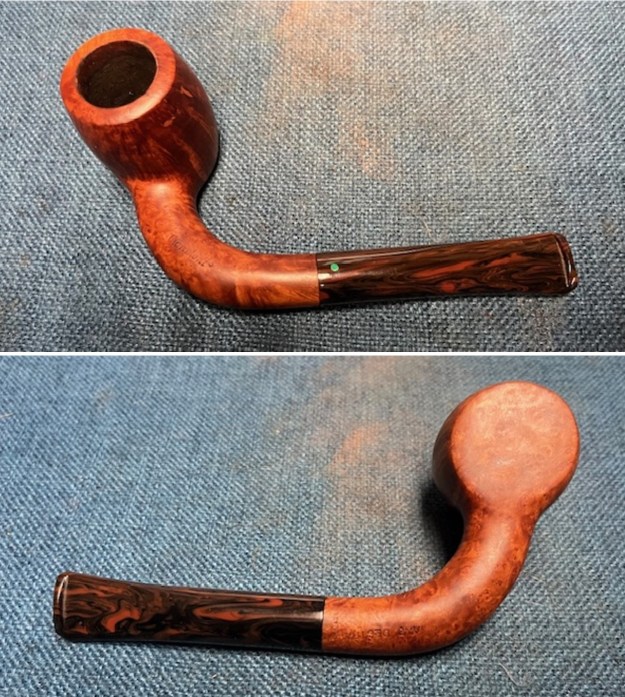
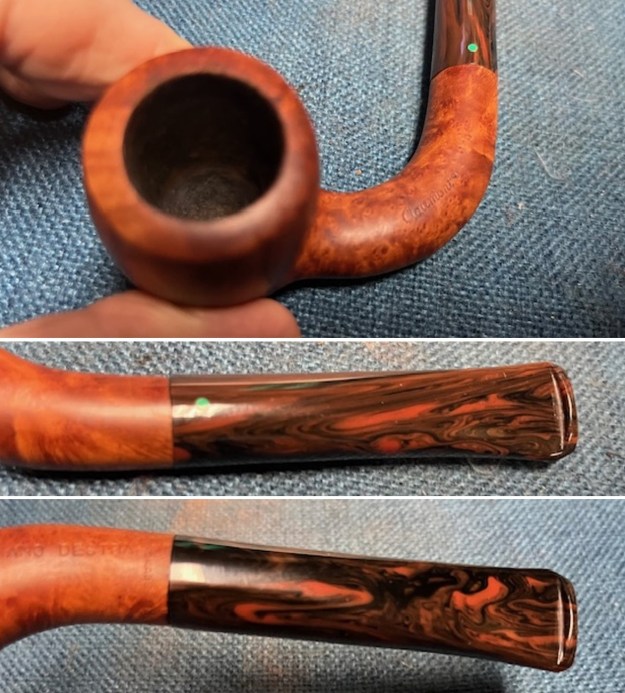
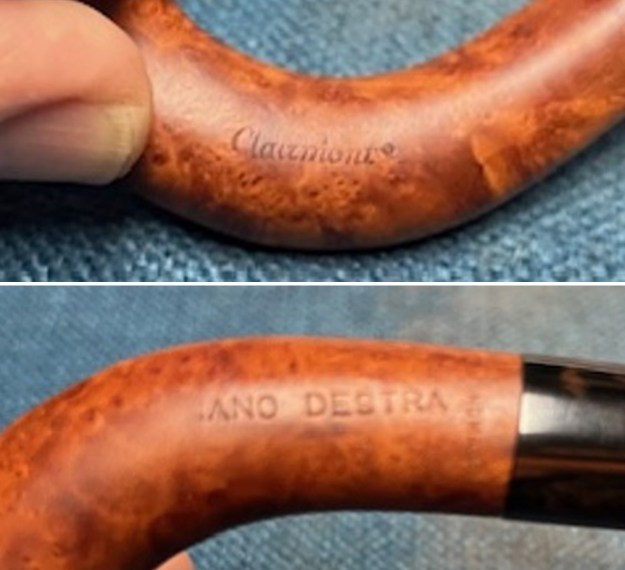
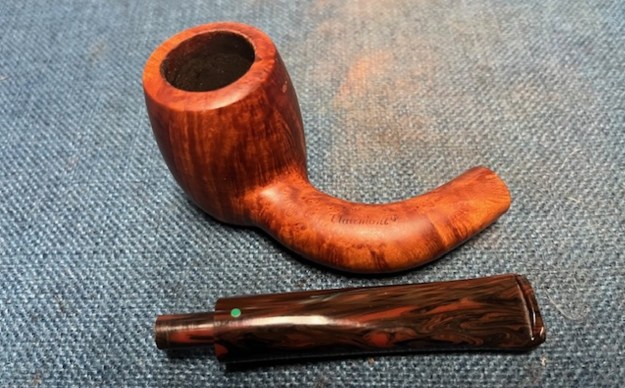
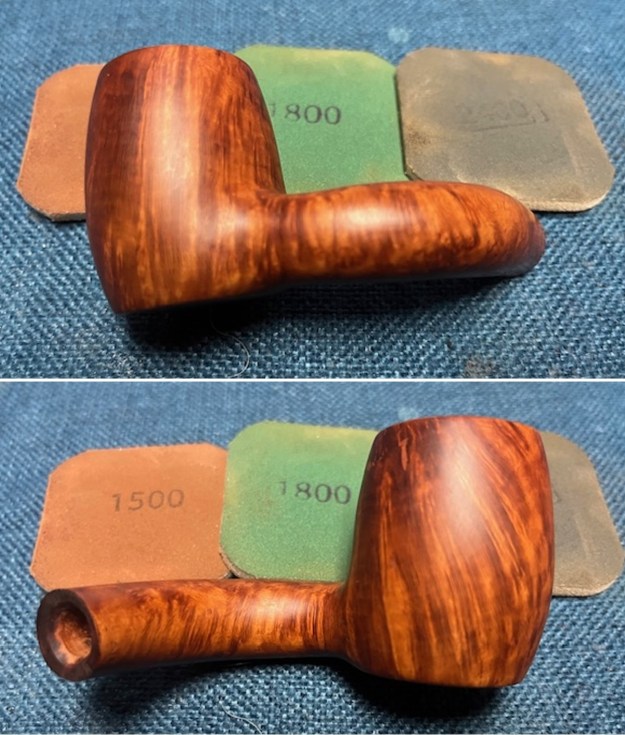
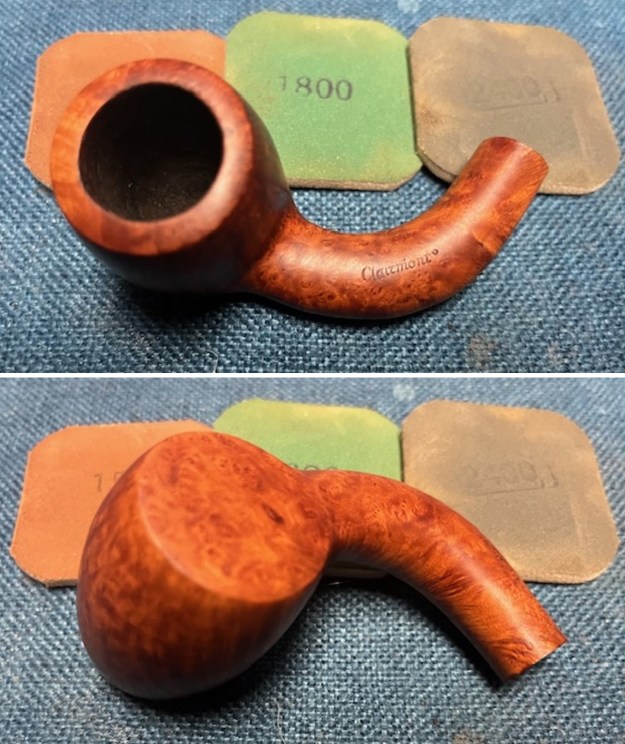
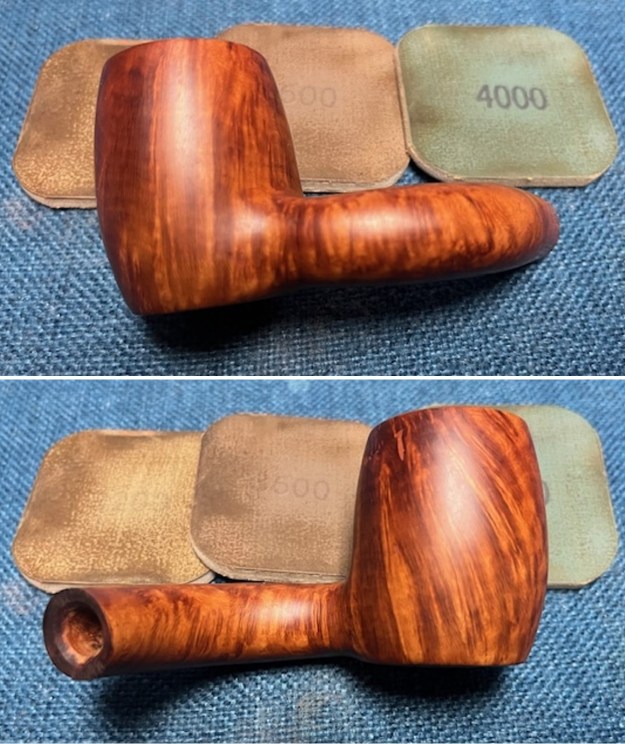
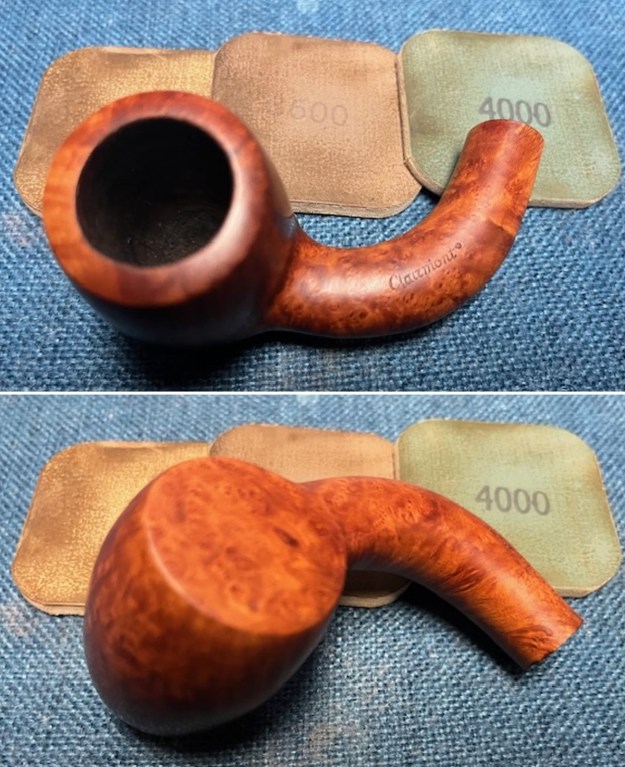
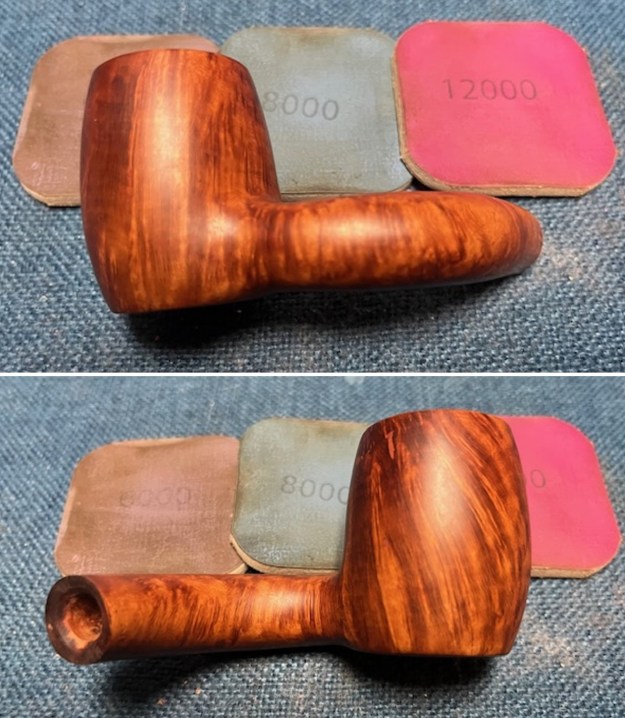
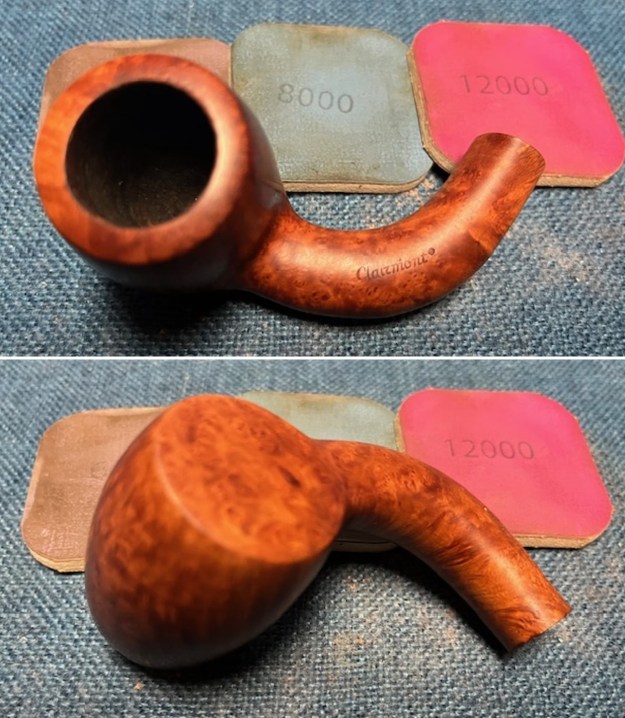
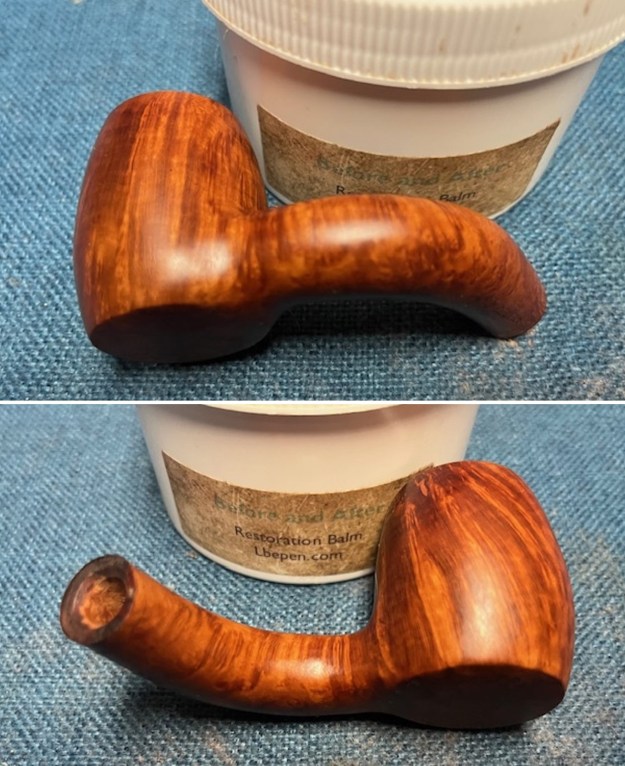
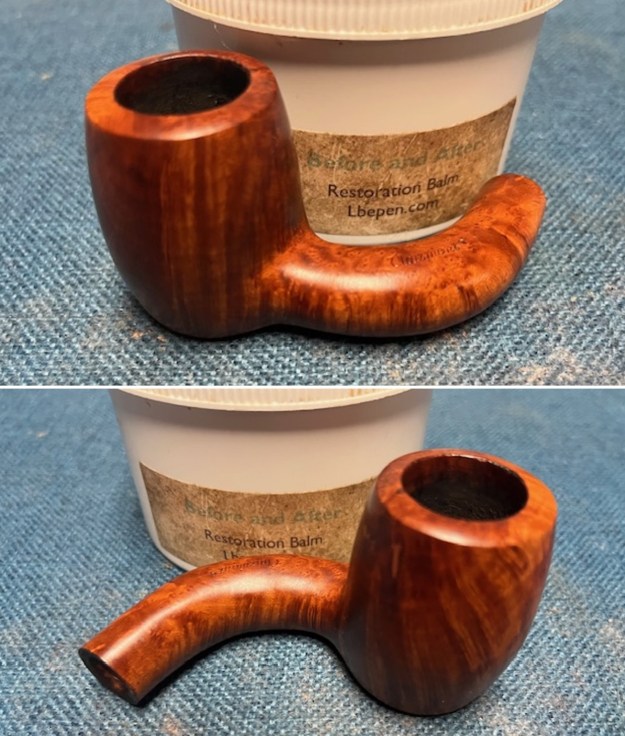
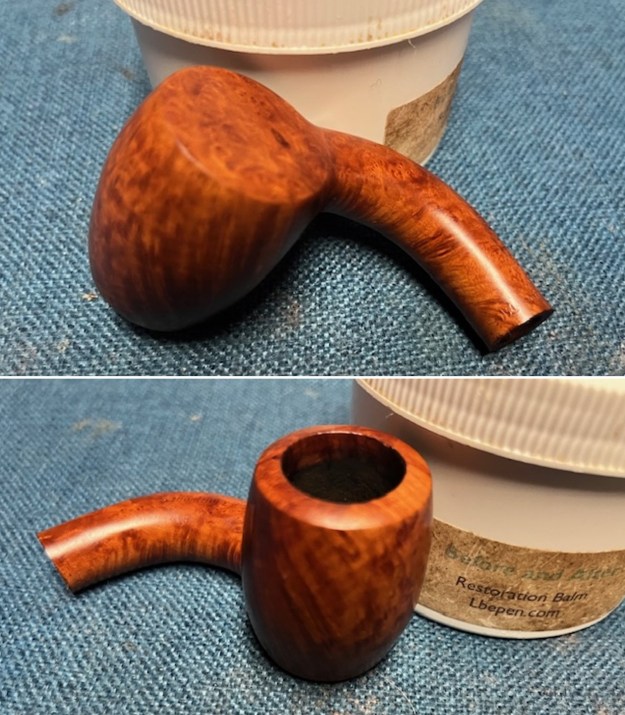
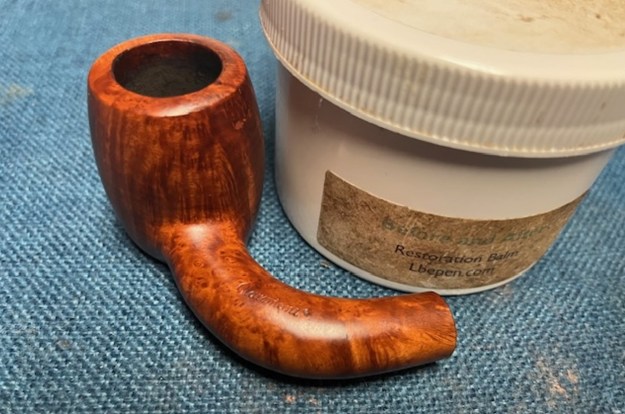
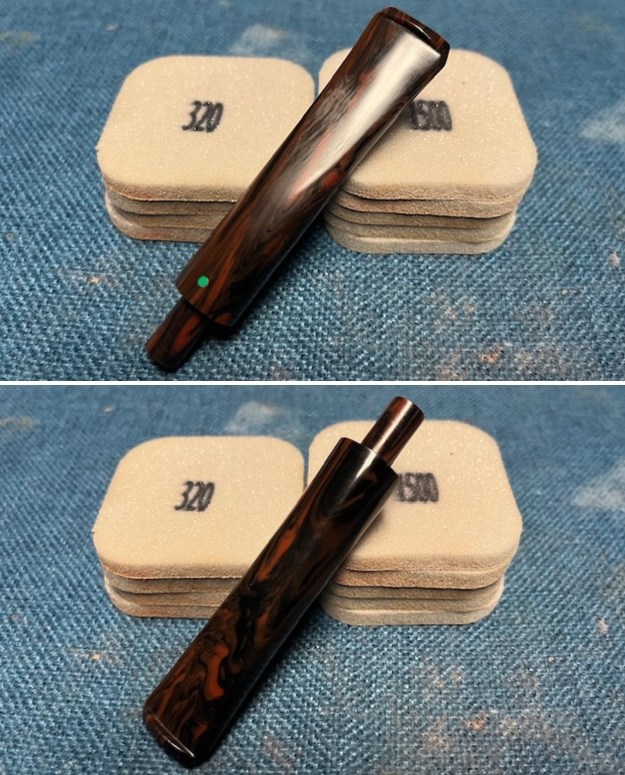
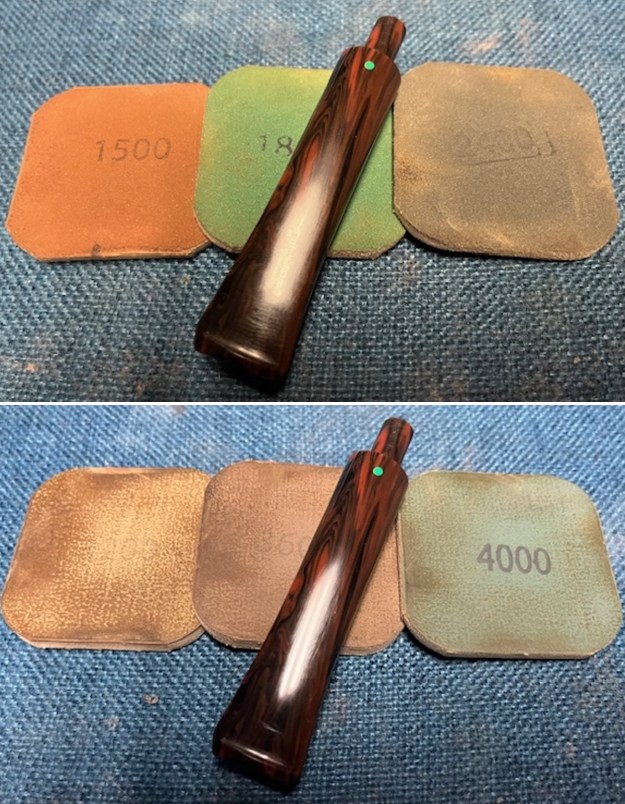
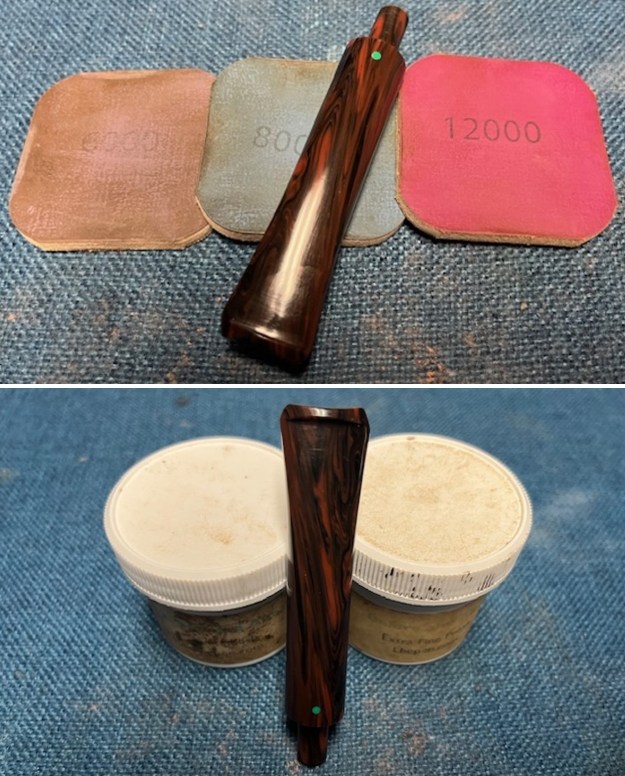
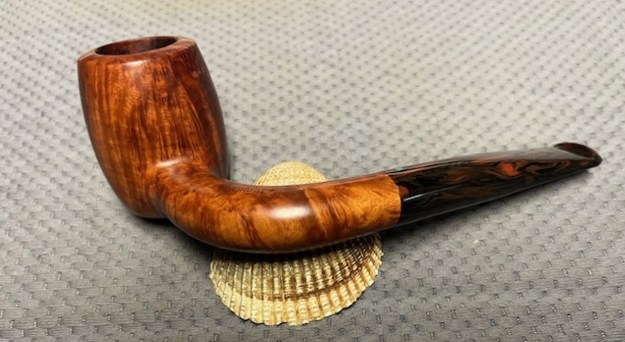
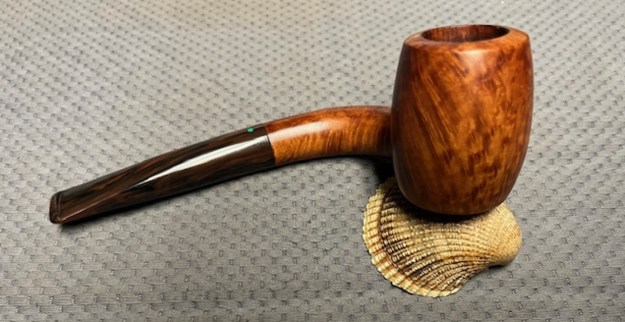
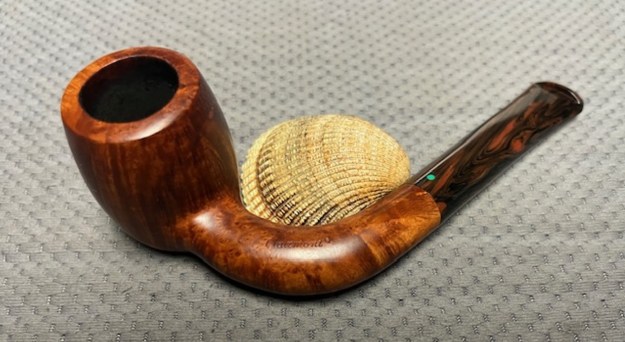
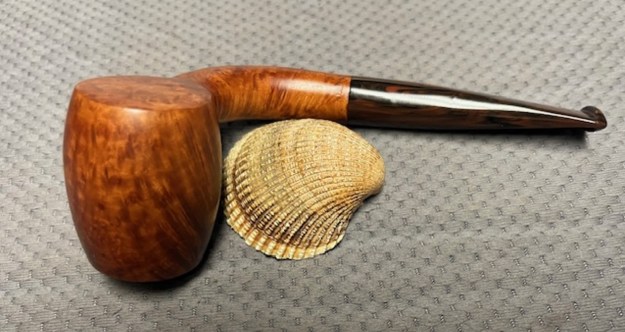
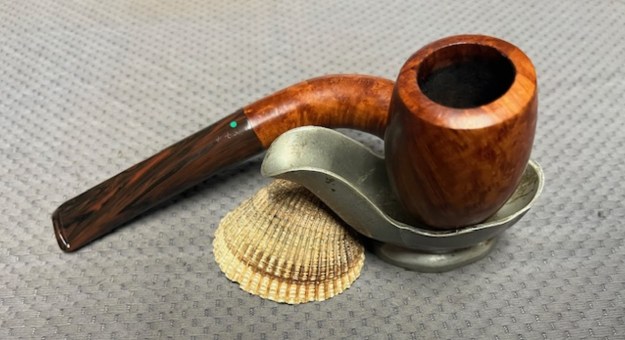
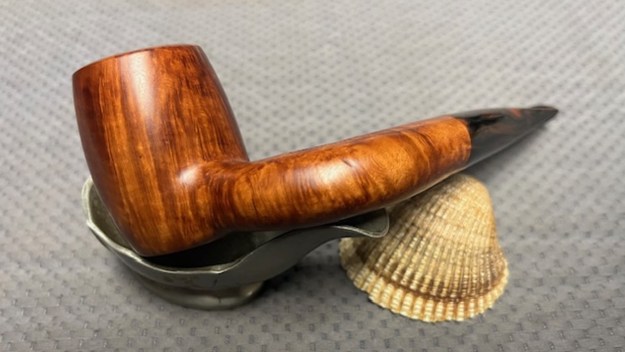
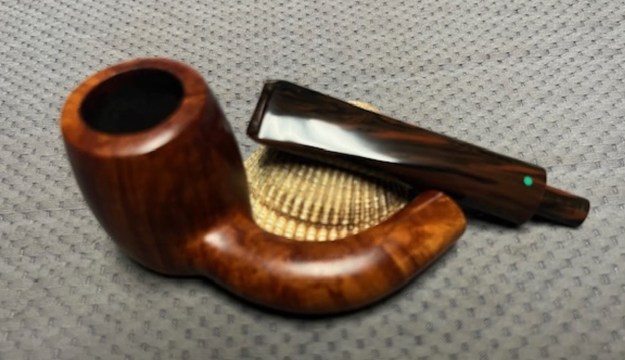
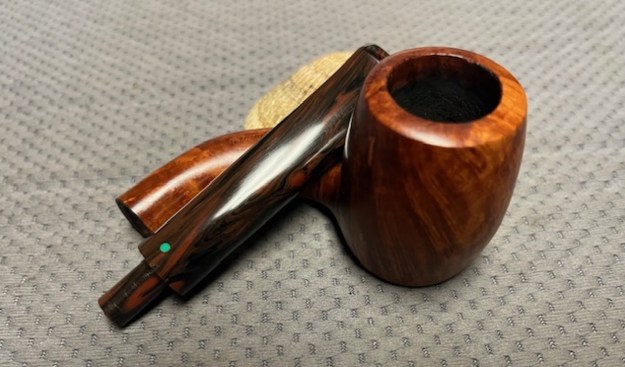
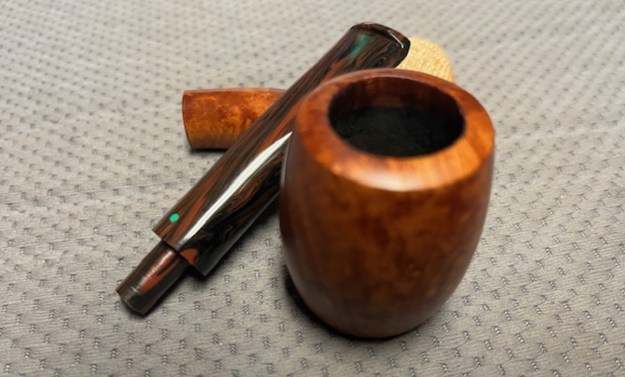
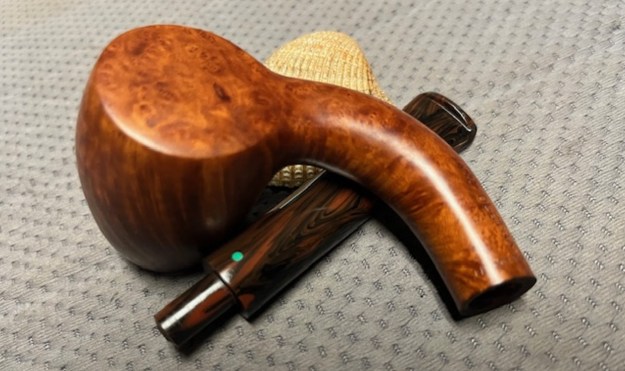
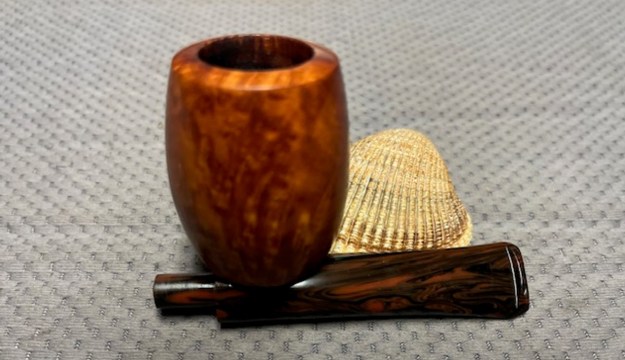
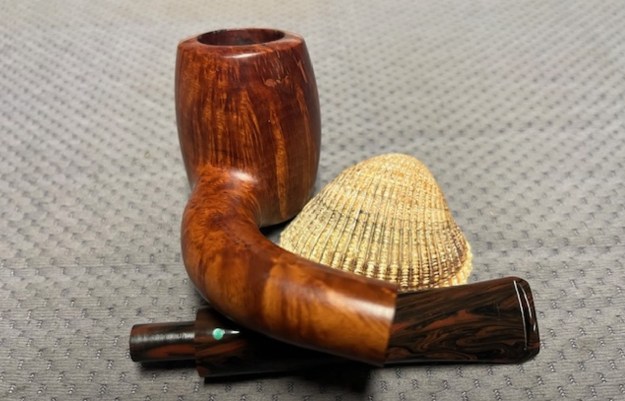
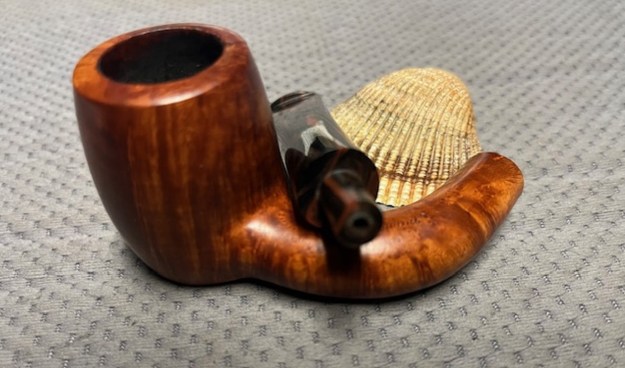
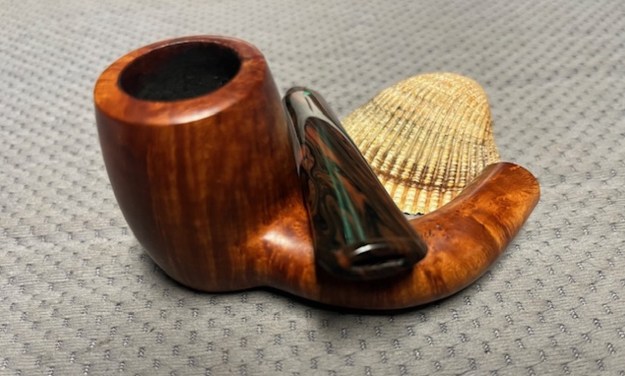
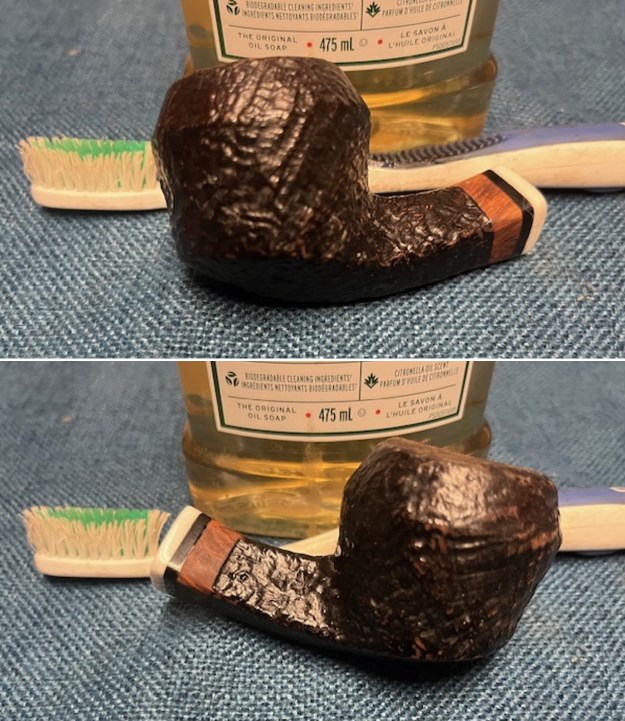
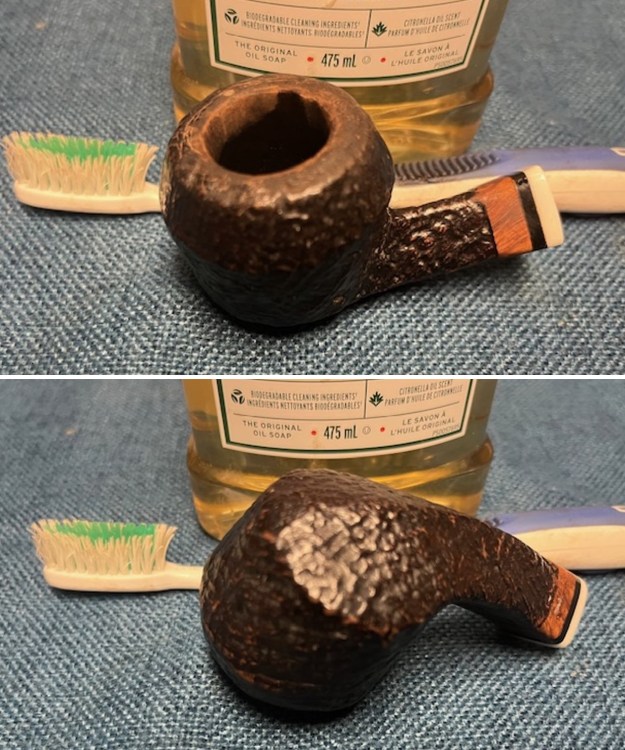
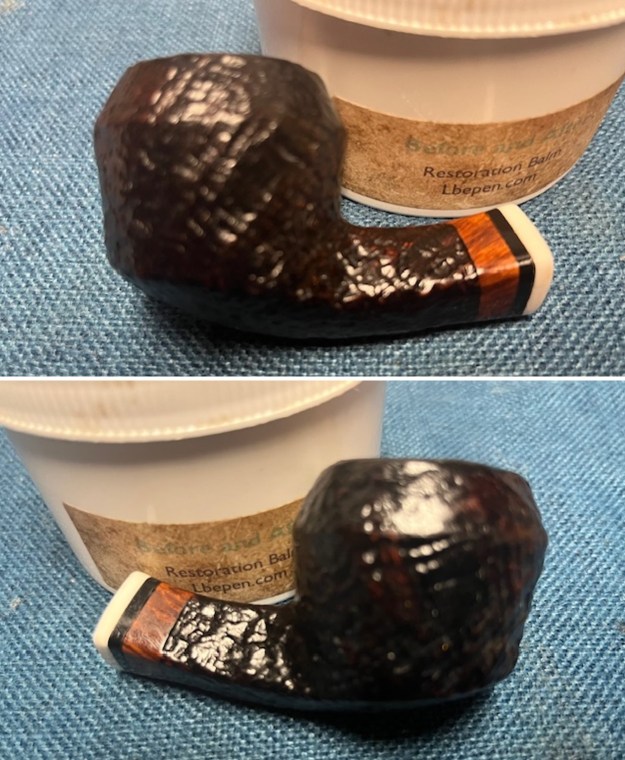
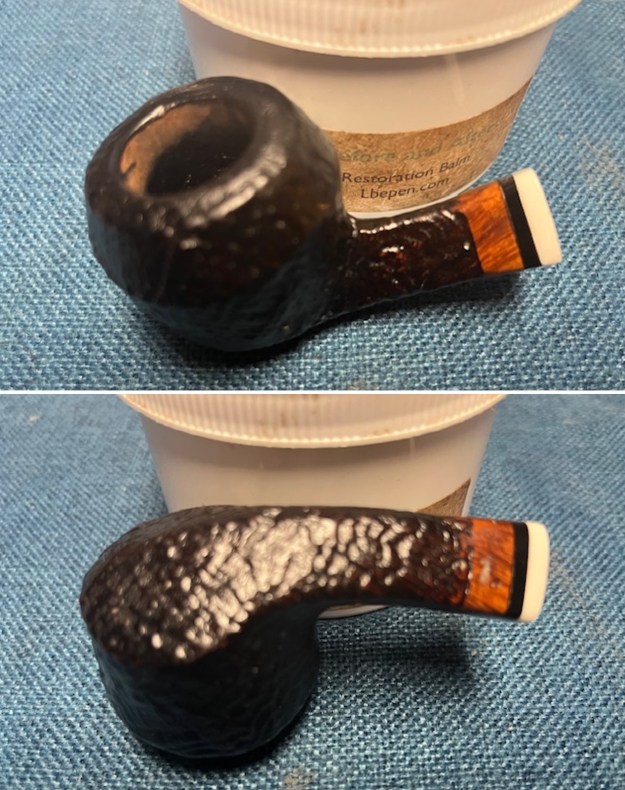
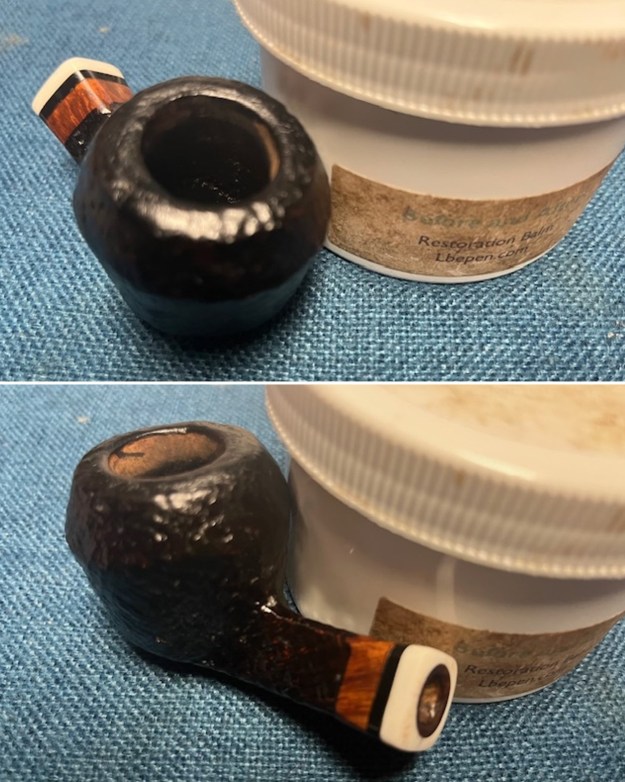
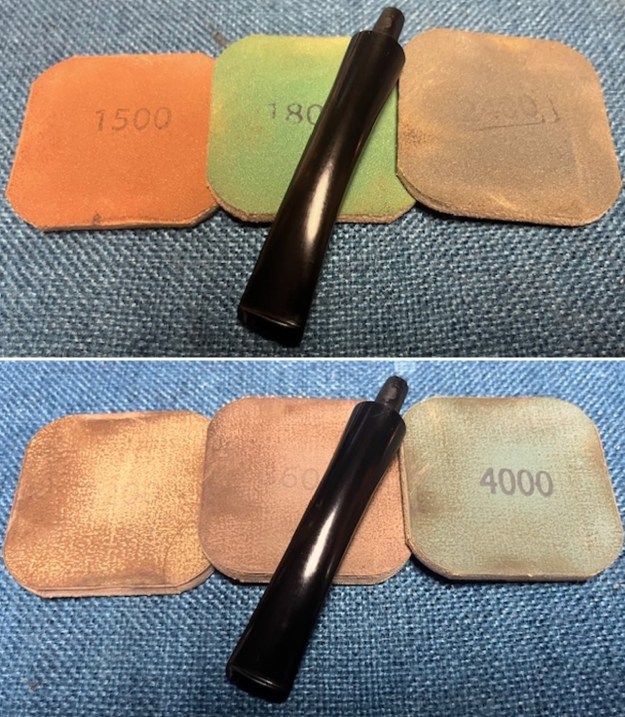
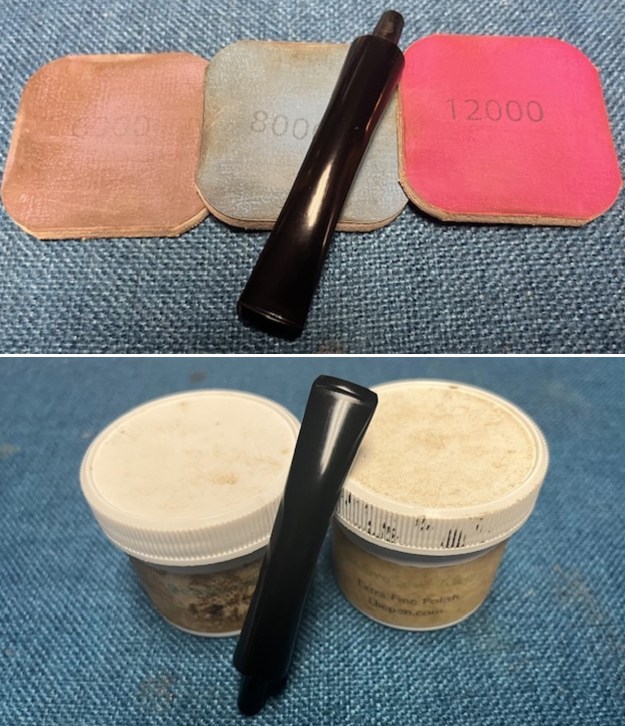
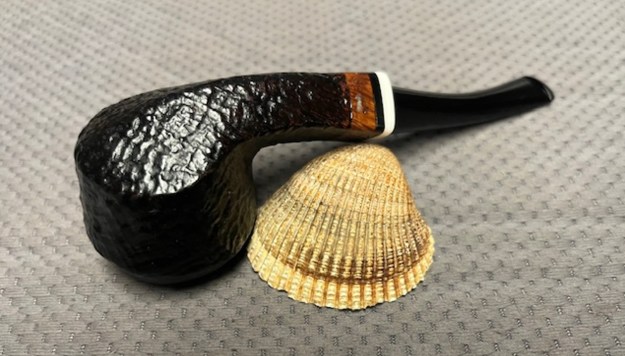
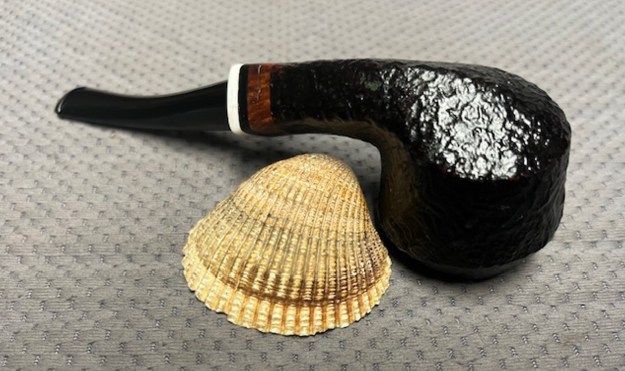
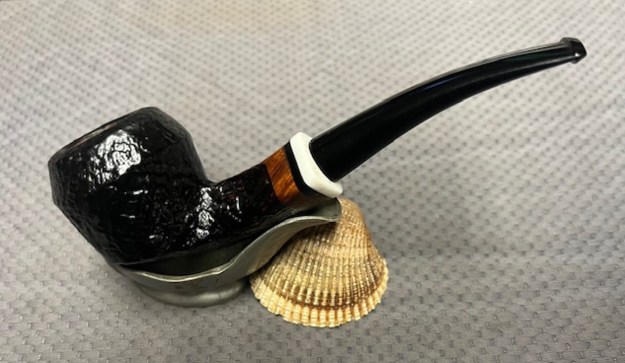
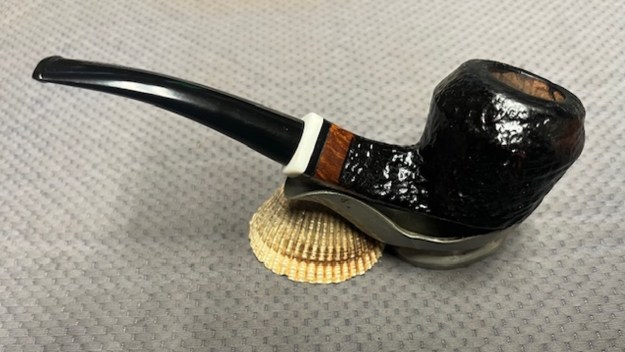
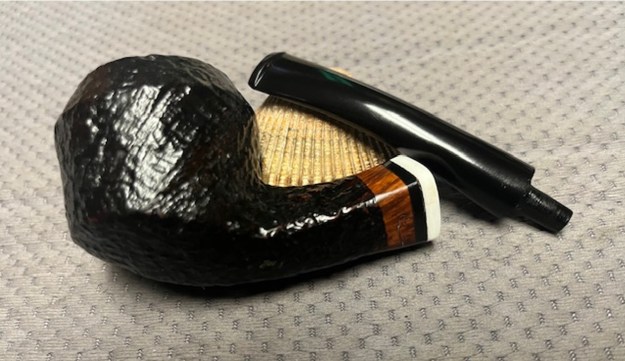
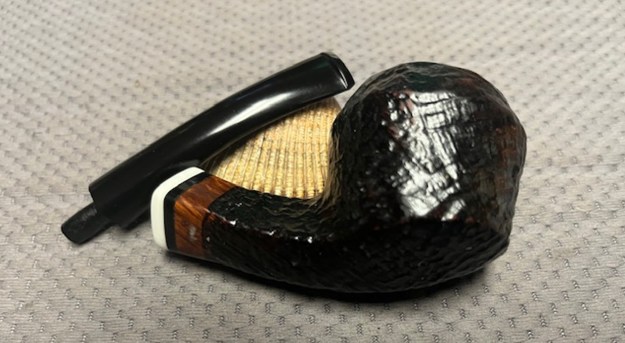
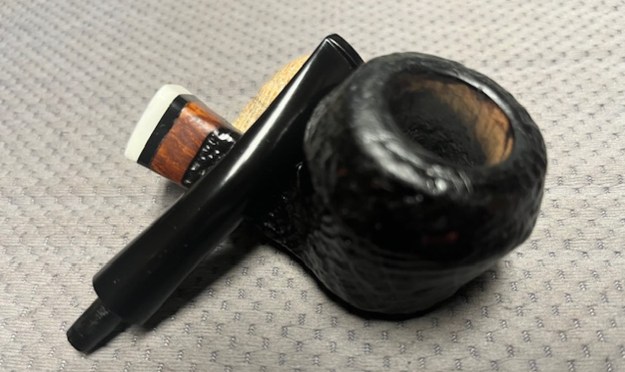
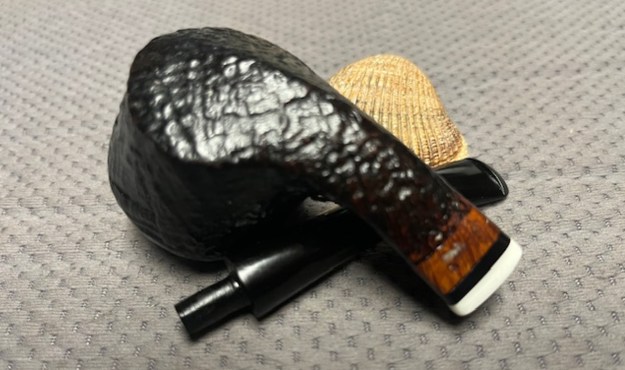
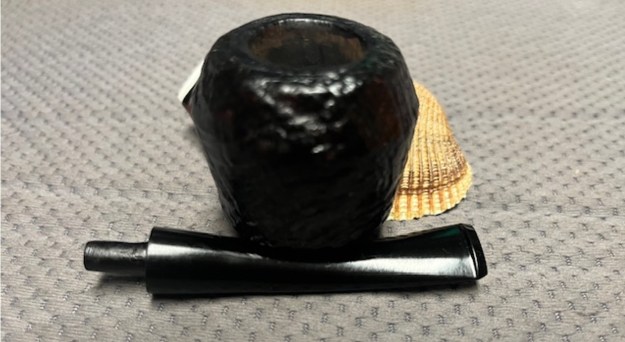
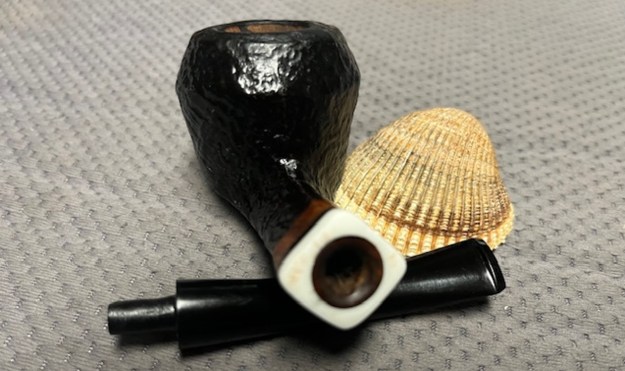
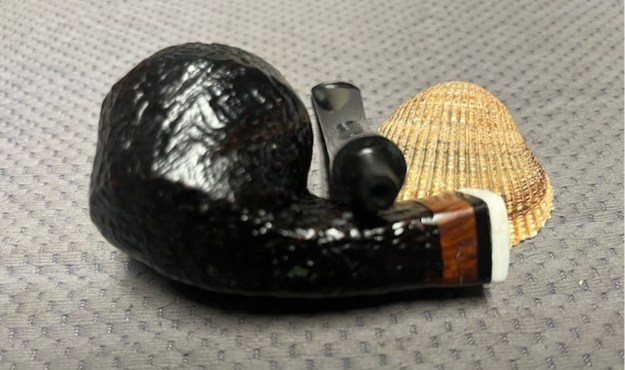
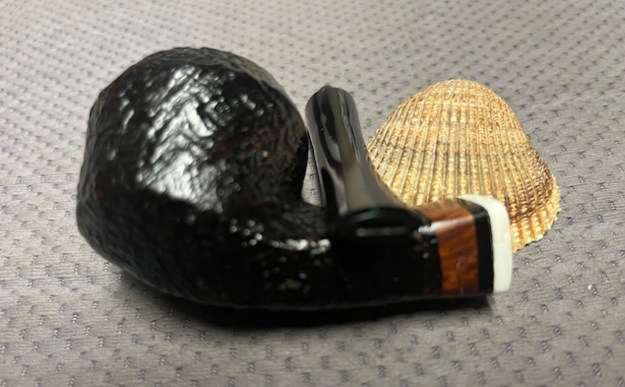
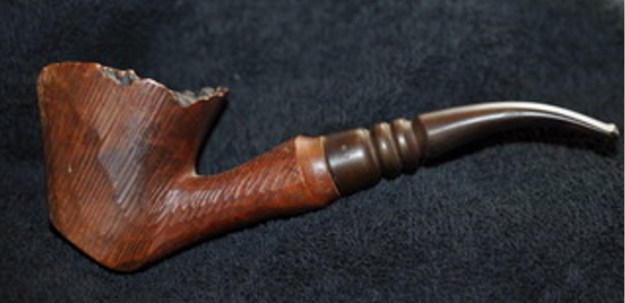
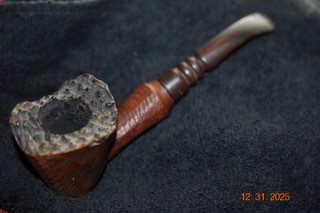
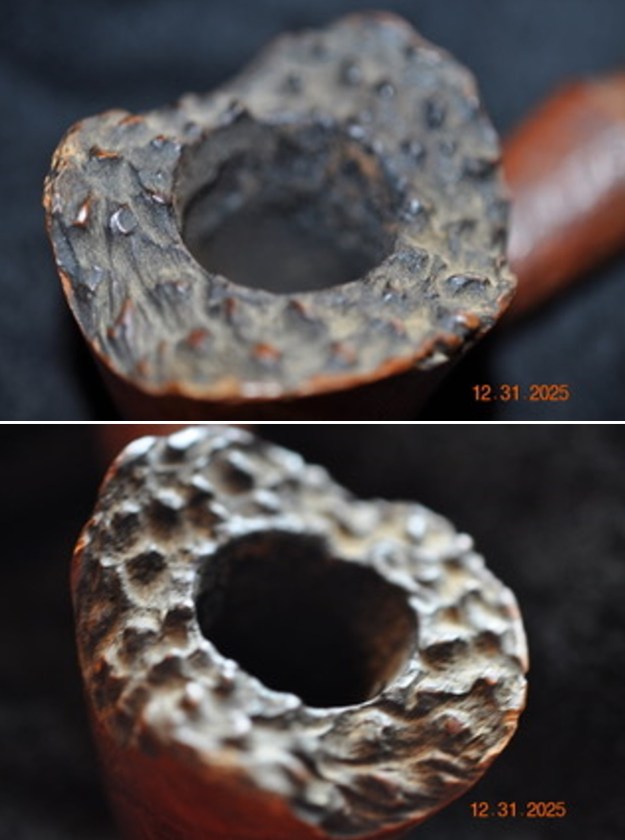
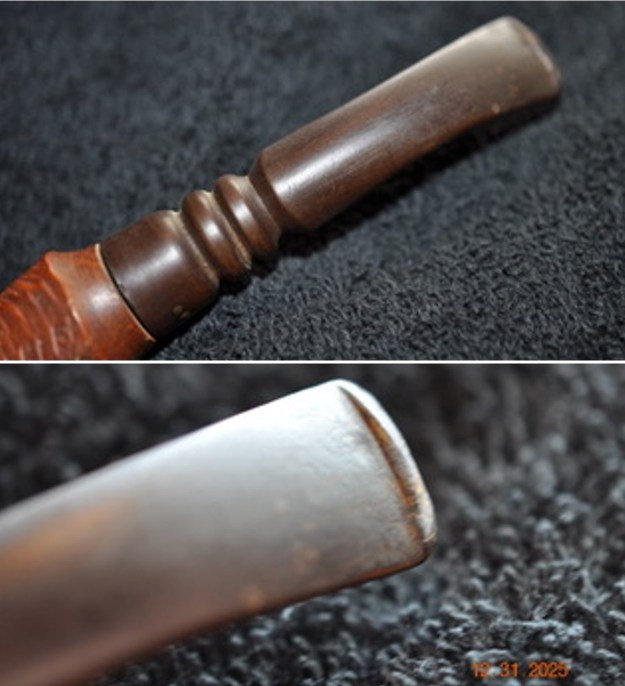
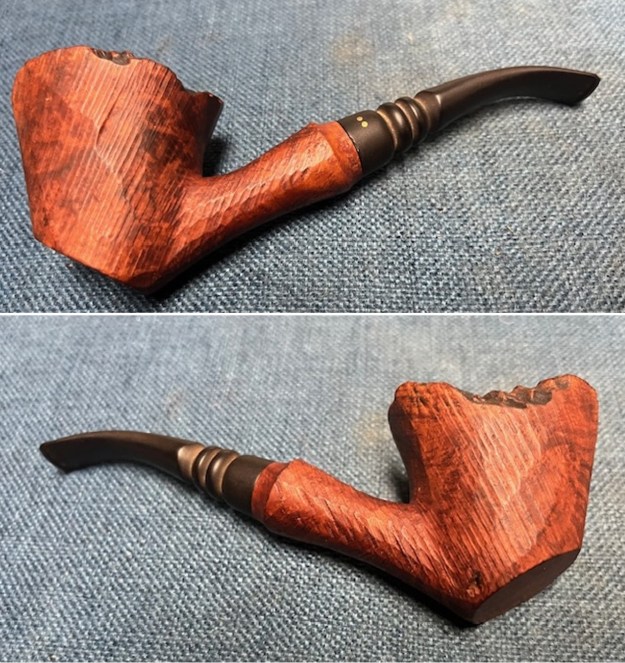
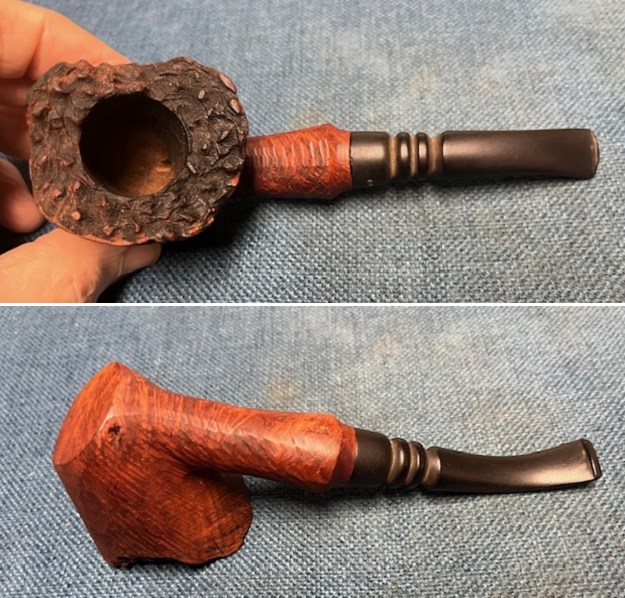
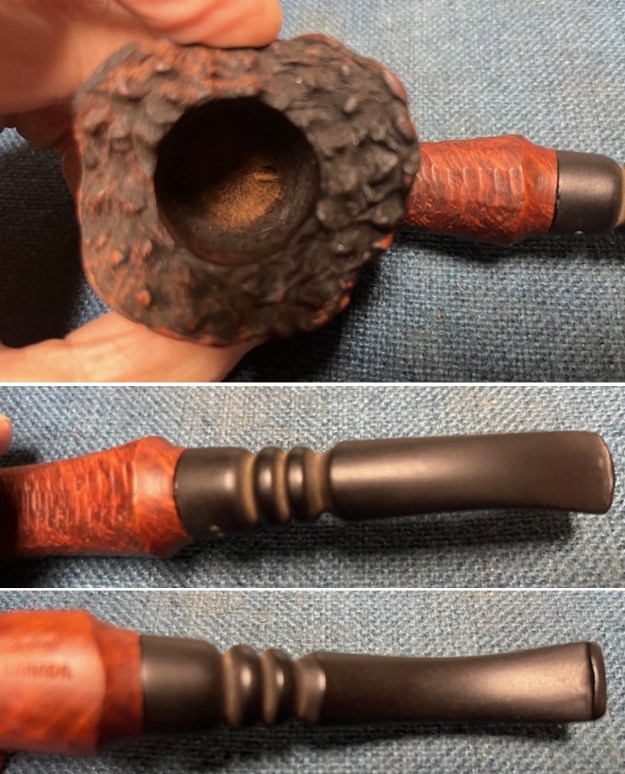
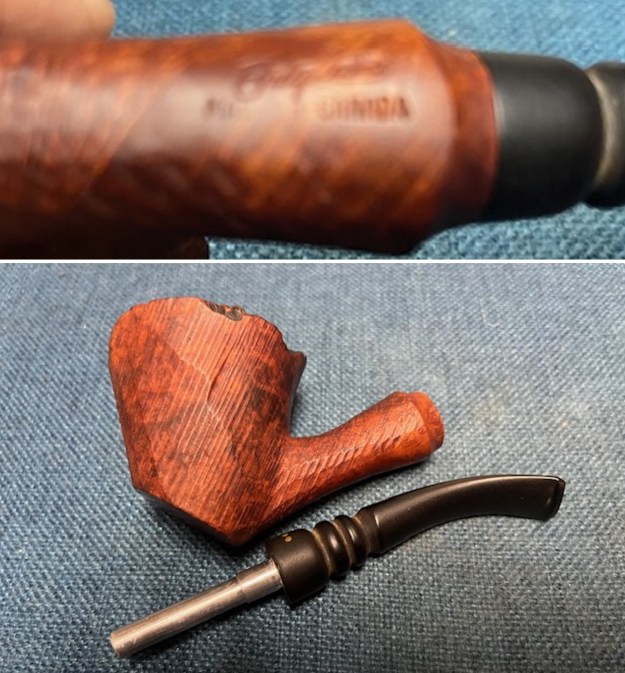
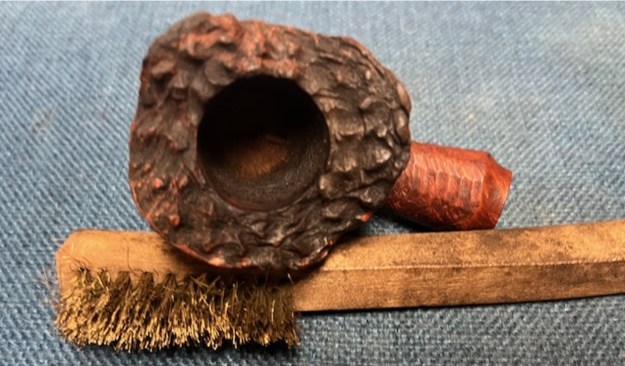
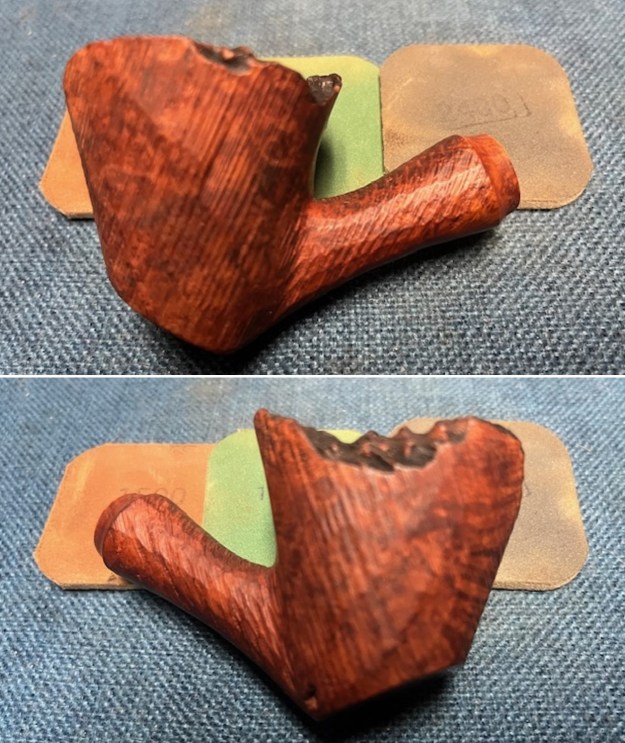
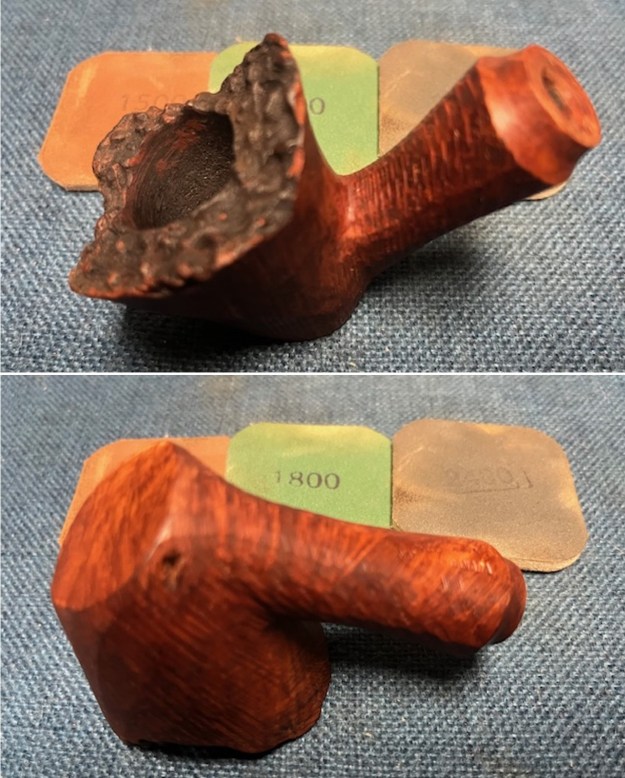
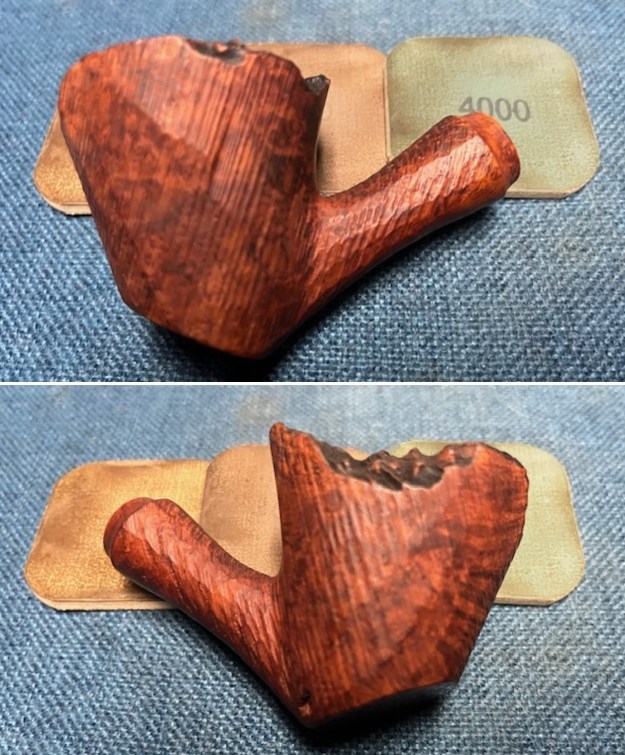
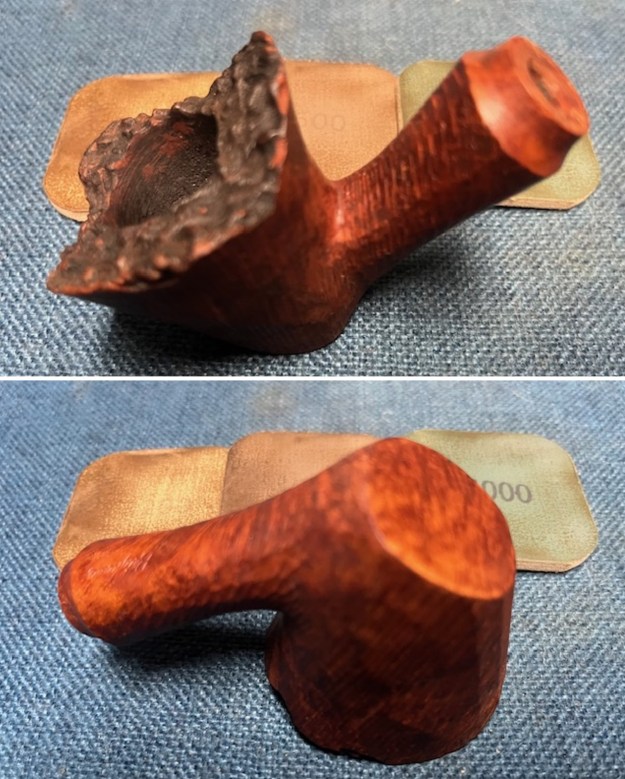
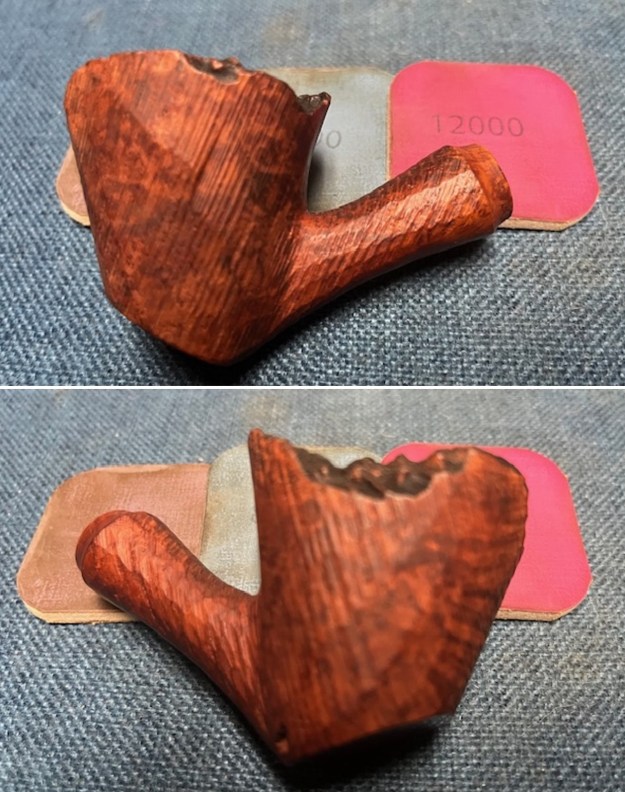
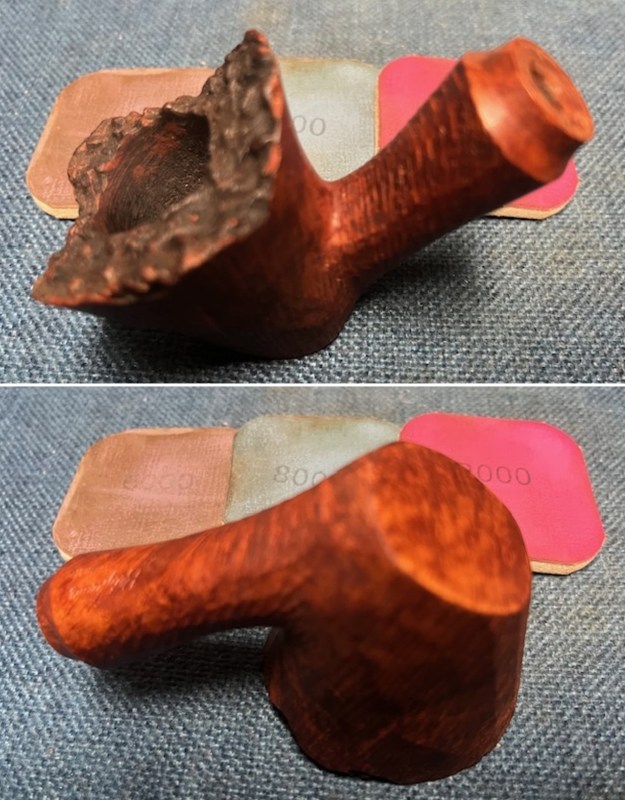
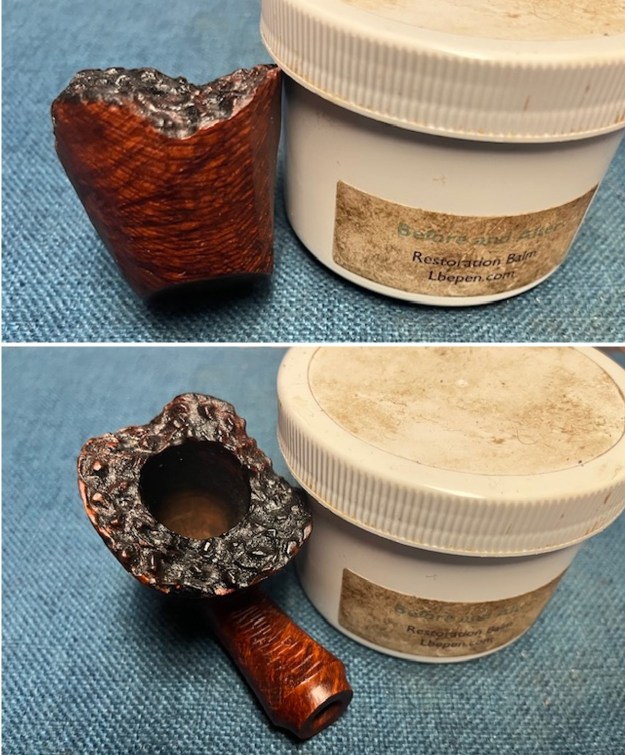
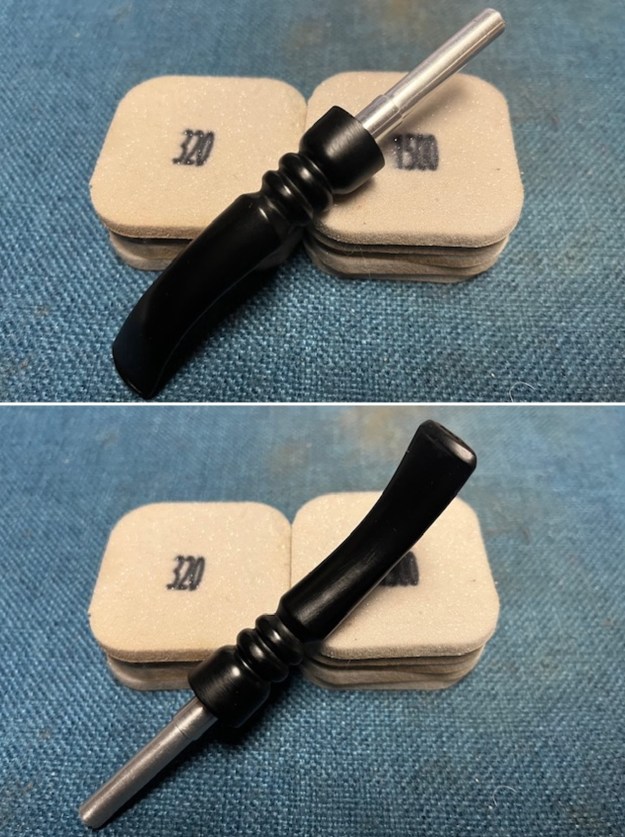
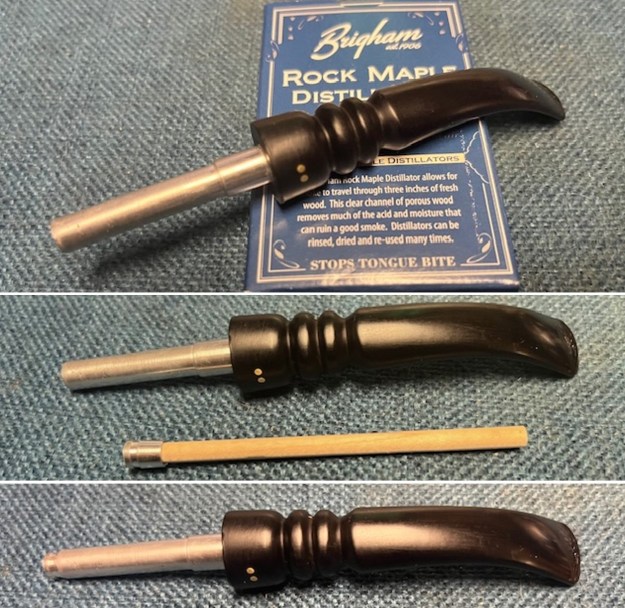
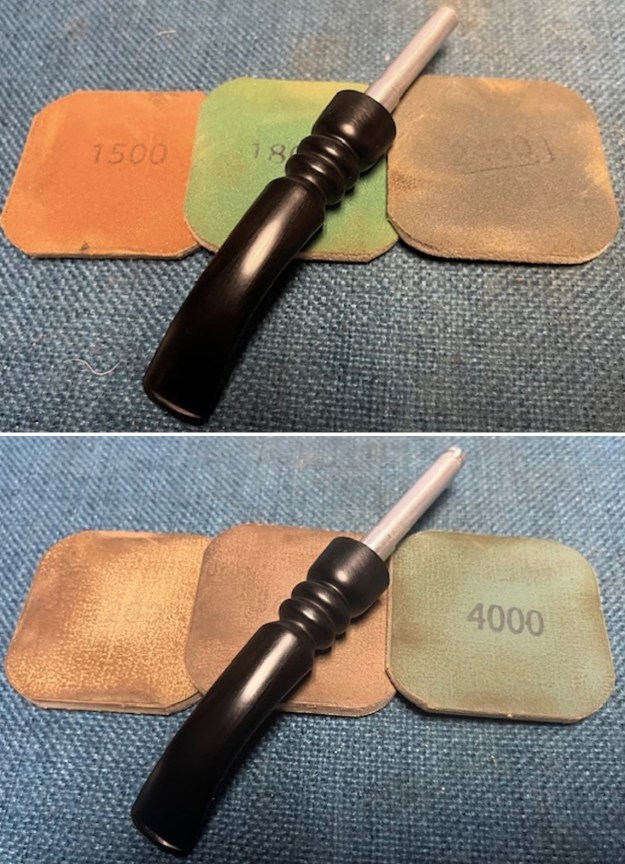
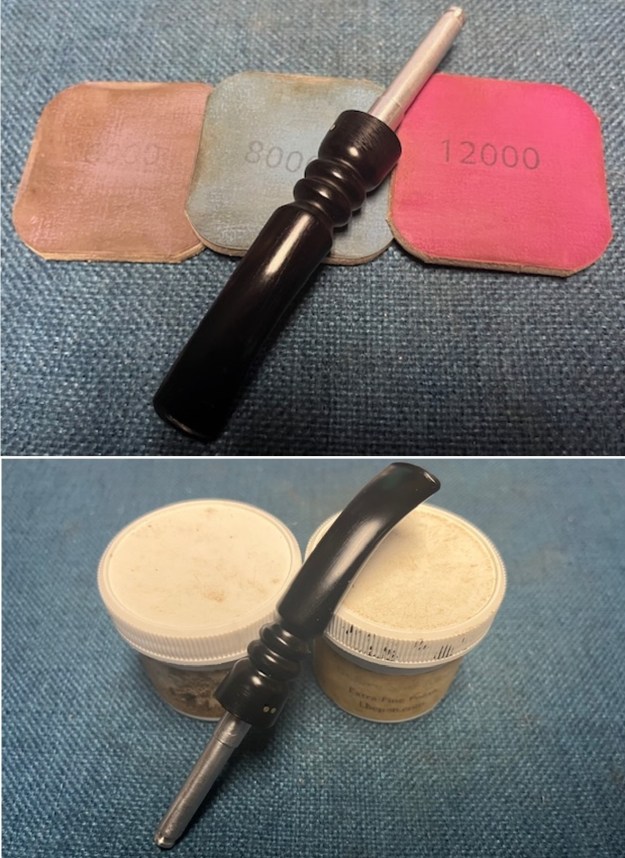
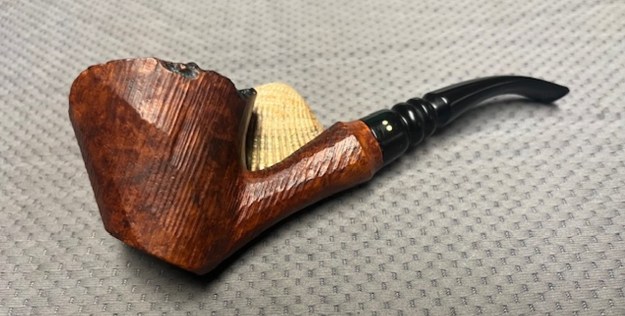
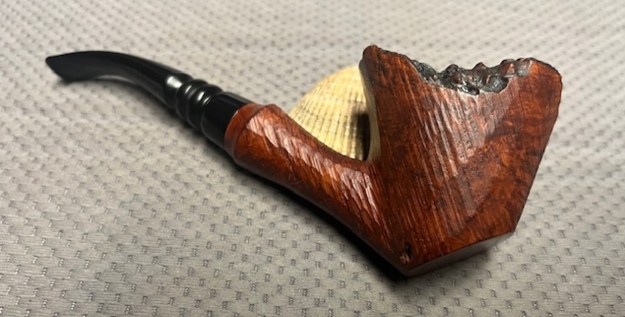
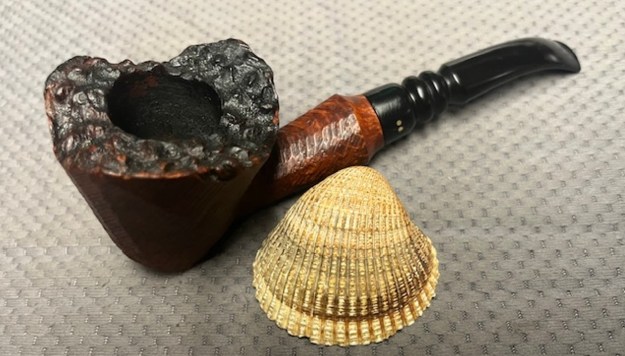
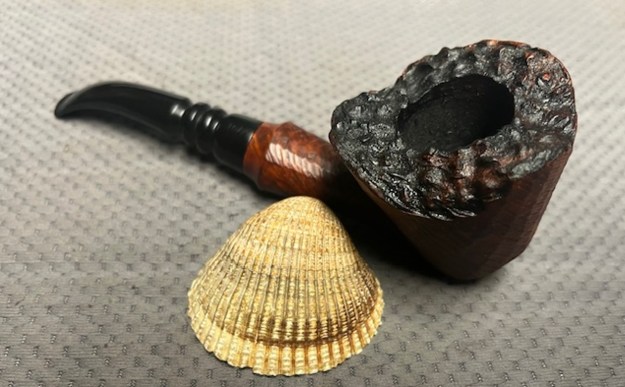
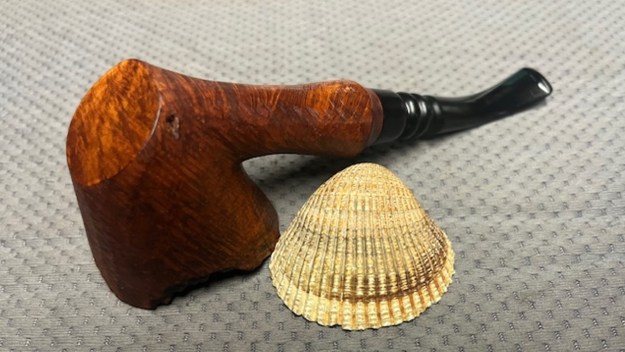
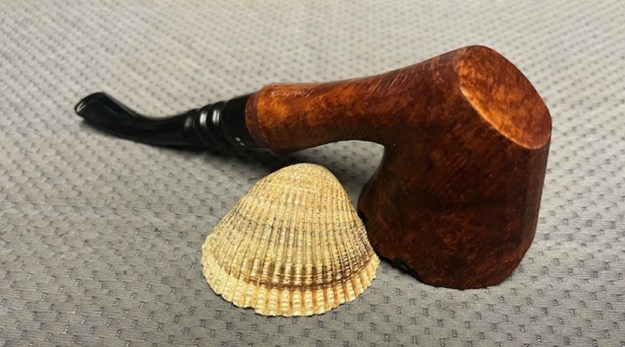
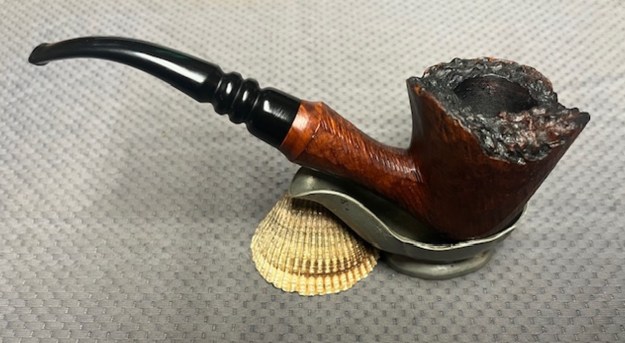
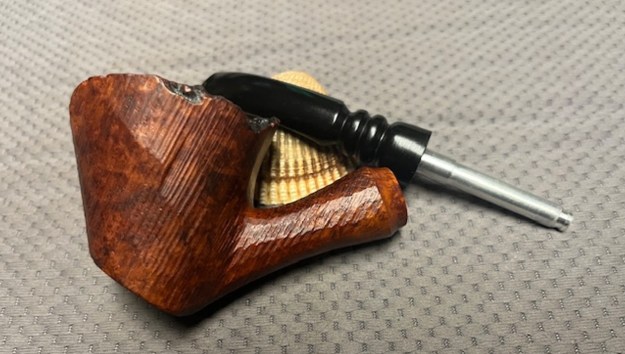
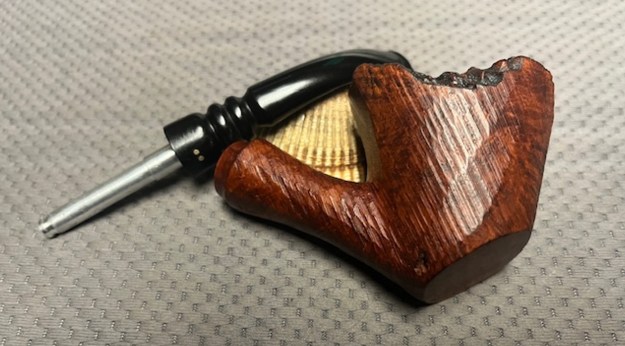
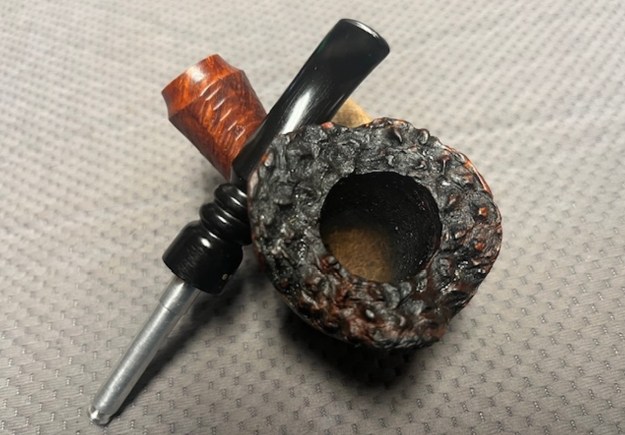
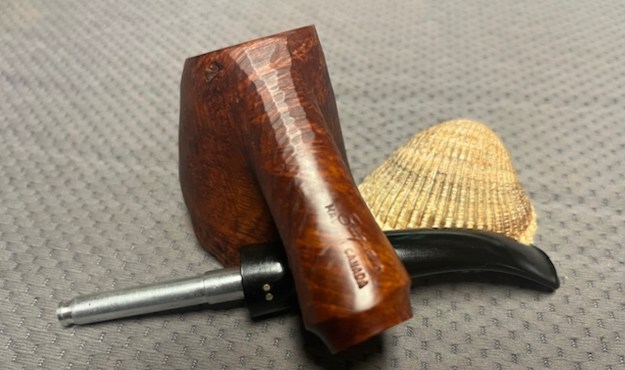
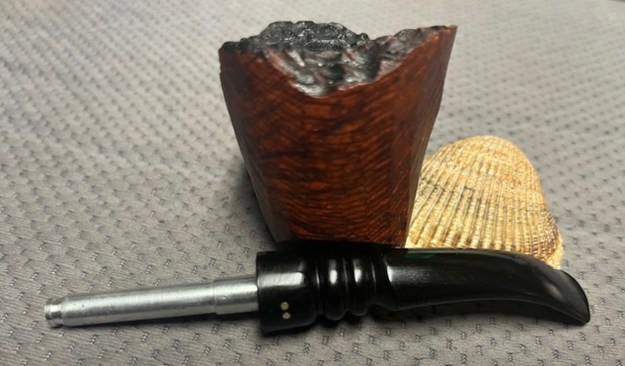
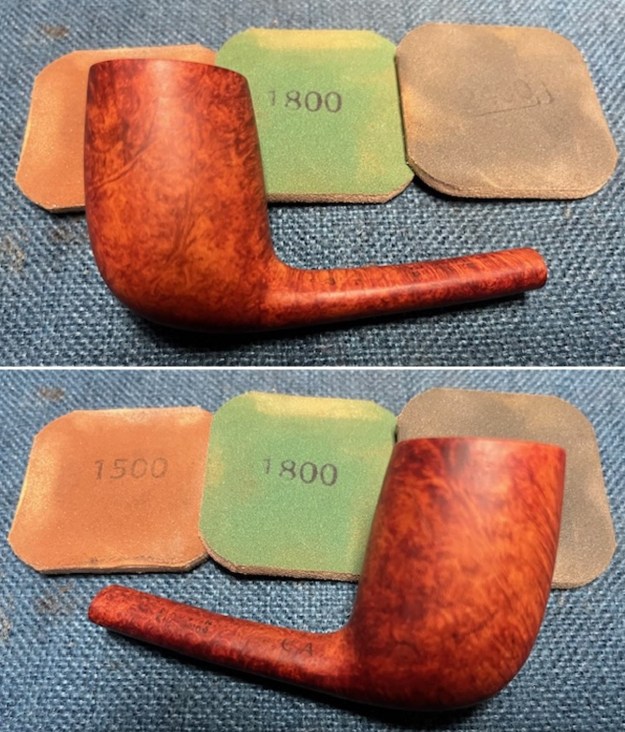
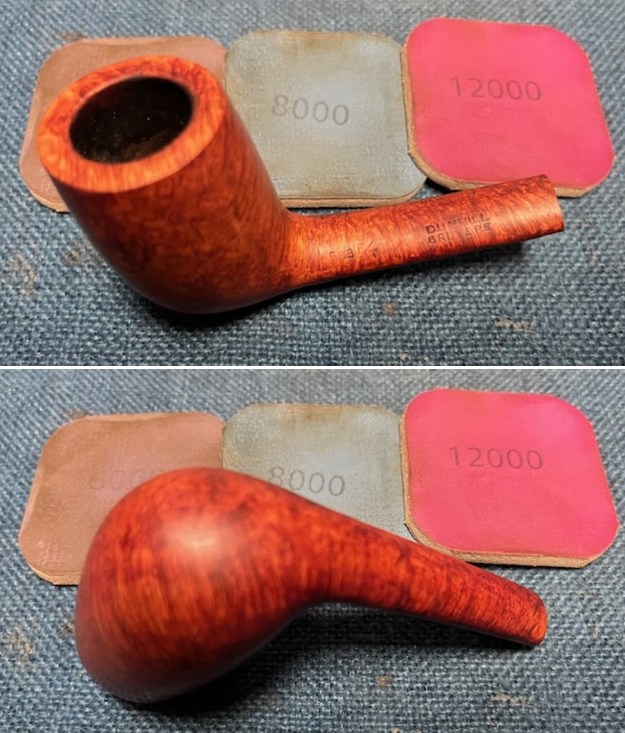
This particular Freehand pipe was purchased from a seller in Santa Cruz, California, USA on 05/28/2024. It really is a very Preben Holm style Freehand pipe that is Dublin like in its shape. It is carved in a way that chases the grain and a rounded shank extension. It is stamped on the underside of the shank and reads Preben Holm [over] Hand Cut [over] Hand Made [over]In [over] Denmark. On the left side of the shank it is stamped near the bowl with a 2 enclosed in a circle. The smooth Dublinish shaped pipe is dirty but the grime does not hide the beautiful looking combination around the bowl and shank. The stain is a black understain that brings out the grain highlighted by a top coat of walnut stain. The pipe had a thick cake in the bowl and a thick lava overflow on the plateau rim top and inner edge of the bowl. There was grime ground into the smooth finish. The shape of the rim is a narrow rectangle that is concave/bevelled into the bowl. It is smooth around the inner edge and plateau on the rest. The fancy vulcanite saddle stem is oxidized. Added to that the stem surface was also calcified and had light tooth marks and chatter on both sides near the button. The pipe must have been a great smoker judging from the condition it came it. Jeff took photos of the pipe before he started his work on it. Jeff took photos of the plateau rim top and the stem to show the condition of the pipe when we received it. You can see the thick cake in the bowl and the lava on the plateau rim top and inner edge of the bowl. The turned vulcanite stem was dirty and had light chatter and tooth marks on both sides near the button. He took photos of the sides of the bowl and the heel to give an idea of the shape and the condition of the briar around the bowl. It really is a nicely shaped pipe that has the classic look of a Freehand carved by Preben Holm. The next photos Jeff took shows the stamping on the underside of the shank. It is clear and readable as noted above. He did not get a photo of the circle 2 stamp on the left shank side.There is some great historical information on Pipedia regarding the Preben Holm carved pipes and the history of the brand and the maker (https://pipedia.org/wiki/Holm,_Preben). Take some time to give the article a read. There was nothing specific on the Hand Cut line like this one was stamped. But it is a great read. I took close up photos of the stem and the rim top to show both how clean they were and what needed to be addressed with both. The rim top and bowl looked great and the valleys in the plateau were faded and washed out. The stem looked better and the tooth marks and chatter though light were still present. I would need to remove those to bring the stem back.I took photos of the stamping on the underside of the shank and the left side ahead of the bowl. You can see from the photos that it is clear and readable. I removed the stem from the bowl and took a photo of the parts to give a sense of the beauty of the pipe. I started my restoration work on this pipe by retaining the valleys and low spots on the plateau rim top with a black Sharpie pen. It really looked good.I sanded the smooth finish on the rim top and the sides of the bowl and shank with 320-3500 grit sanding pads. I also sanded the rounded shank end at the same time. It worked very well. I wiped the bowl down with a damp cloth after each pad to get a sense of the progress in the process. I sanded the smooth briar with micromesh sanding pads – dry sanding with 1500-12000 grit pads. I wiped it down after each pad with a damp cloth. It really began to take on a rich shine. I rubbed down the briar Before & After Restoration Balm. I worked it into the surface with my fingertips and into the plateau rim top with a shoe brush. The product works to clean, enliven and preserve the briar. I let it sit for 15 minutes then I buffed it with a cotton cloth to deepen the shine. The briar really comes alive with the balm. I set the finished bowl aside and turned my attention to the stem. I filled in the few deeper tooth marks that showed on the stem with black CA glue. Once it cured I used a small flat file to recut the button edge and flatten the repairs. I sanded the repairs further with a folded piece of 220 grit sandpaper. I wiped the stem down with Obsidian Oil and took the following photos of the stem. I sanded out the scratches in the vulcanite with 320-3500 grit sanding pads. I wiped the stem down after each sanding pad with a cloth impregnated with Obsidian Oil. It started to take on a deep shine.I polished the stem with micromesh sanding pads – 1500-12000 grit pads to remove them. I wiped the stem down with Obsidian Oil after each sanding pad. I used Before & After Pipe Polish – both Fine and Extra Fine to further polish the stem. I rubbed it down with a final coat of Obsidian Oil and let it dry. I am really happy with the way that this Preben Holm Hand Cut Circle 2 Hand Made in Denmark Freehand turned out. It really is a beautiful looking pipe with a great shape and smooth finished bowl and smooth spots in the plateau of the rim top. The fancy original acrylic saddle stem is really nice. The black vulcanite colour of the stem works well with the briar. The briar really came alive with the buffing. The rich black and brown stains of the finish gave the pipe a sense of depth with the polishing and waxing. I gave the bowl and the stem multiple coats of carnauba wax on the buffing wheel. I buffed the pipe with a clean buffing pad to raise the shine. I hand buffed the pipe with a microfiber cloth to deepen the shine. The finished Preben Holm Hand Cut Circle 2 Freehand really is a beauty and feels great in the hand and looks very good. Give the finished pipe a look in the photos below. The dimensions of the pipe are Length: 6 inches, Height: 2 ½ inches, Outside diameter of the bowl: 2 inches long x 1 ½ inches wide, Chamber diameter: 7/8 of an inch. The weight of the pipe is 54 grams/1.90 ounces. I will be adding it to the rebornpipes store in the Danish Pipe Makers Section if you would like to add it to your collection. Thanks for reading this blog and my reflections on the pipe while I worked on it. It was a fun one to work on!

Spiffing Up a Rare Dunhill Bruyere 32 from 1959


by Kenneth Lieblich

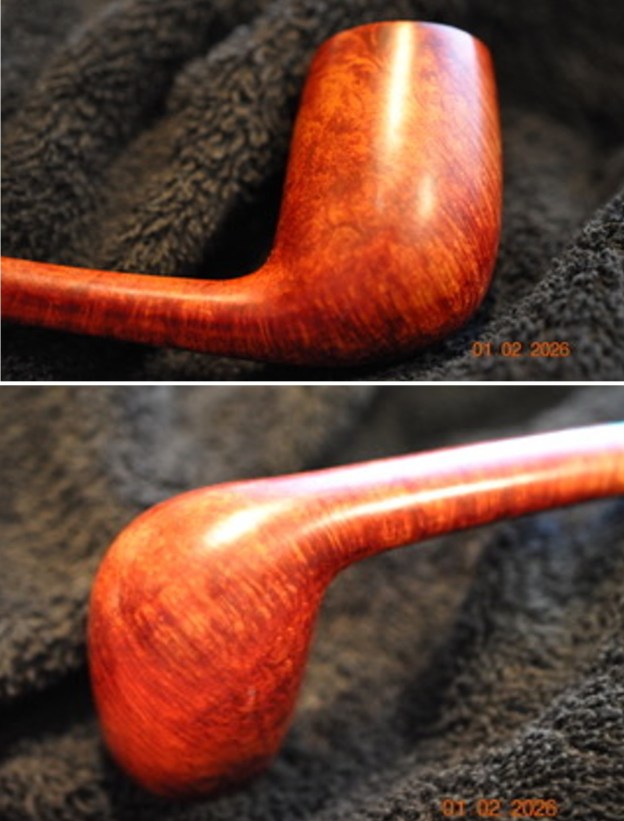
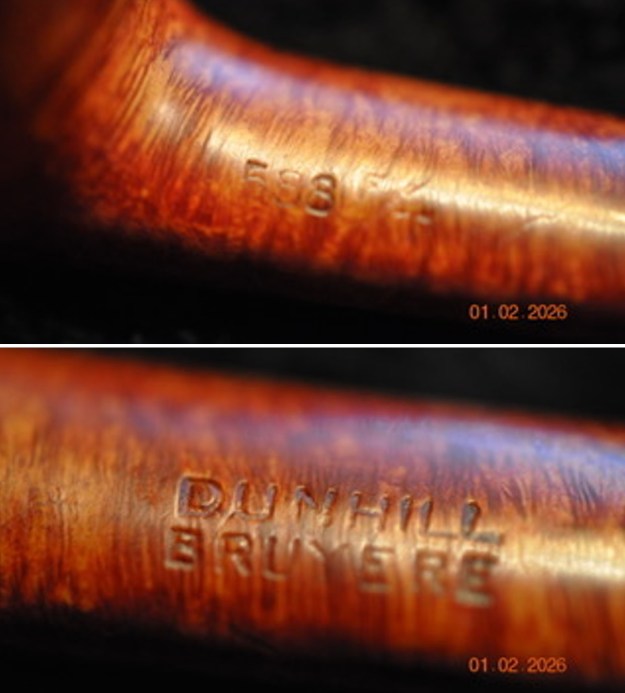
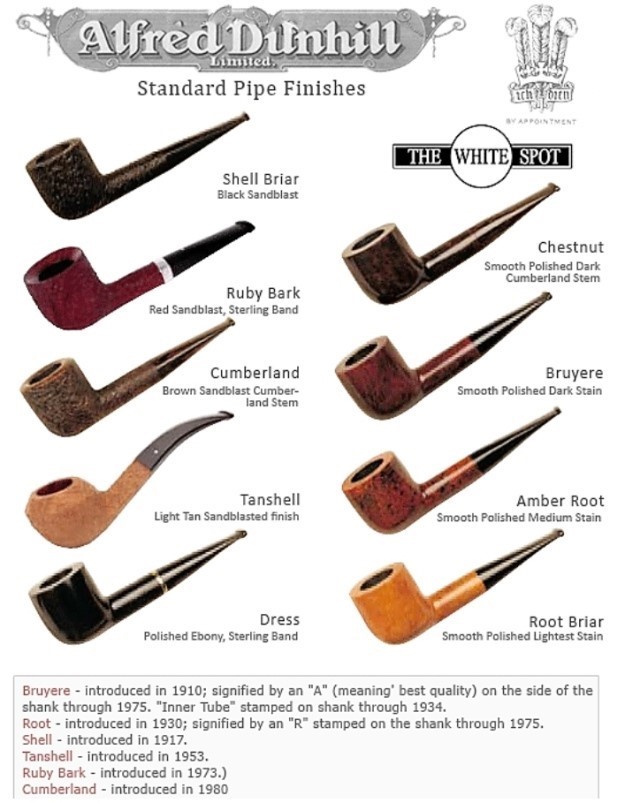
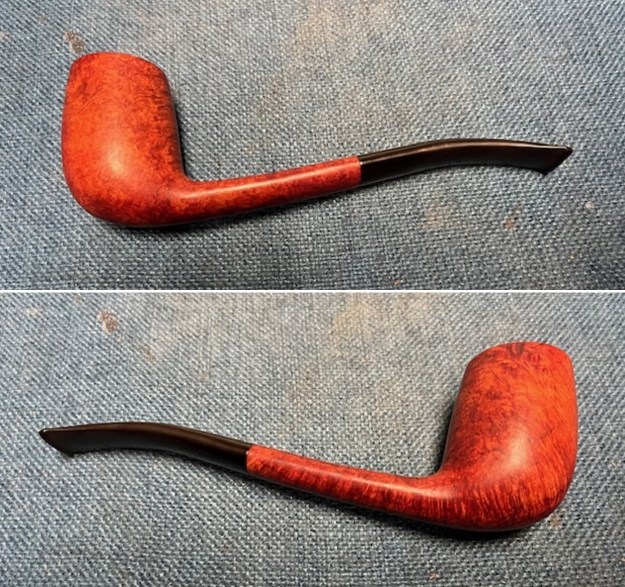
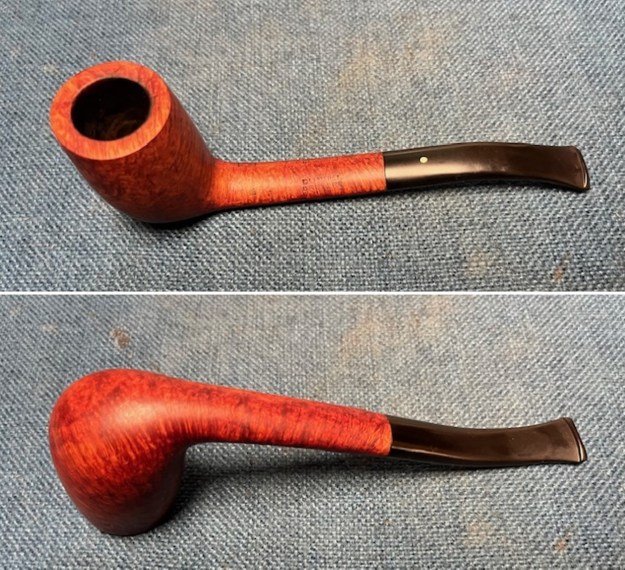
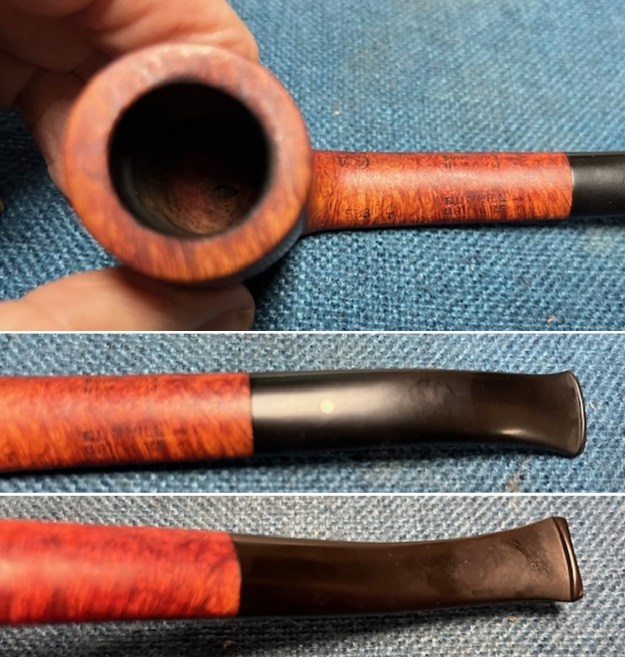
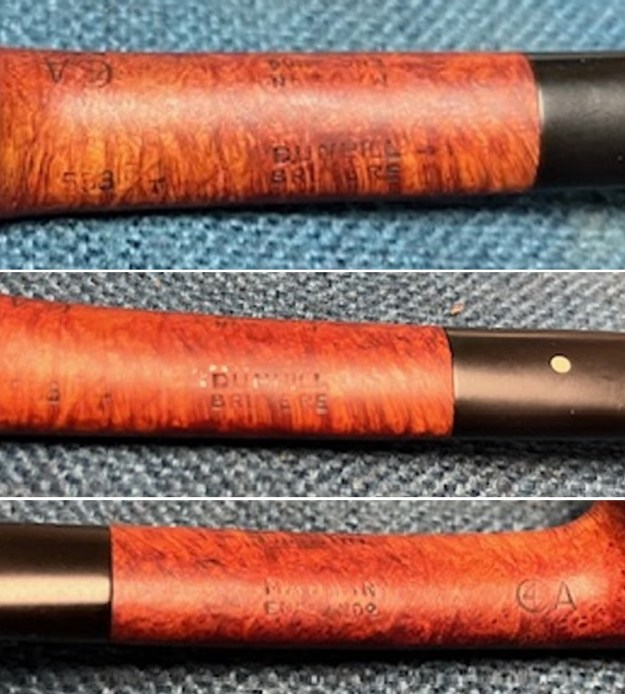
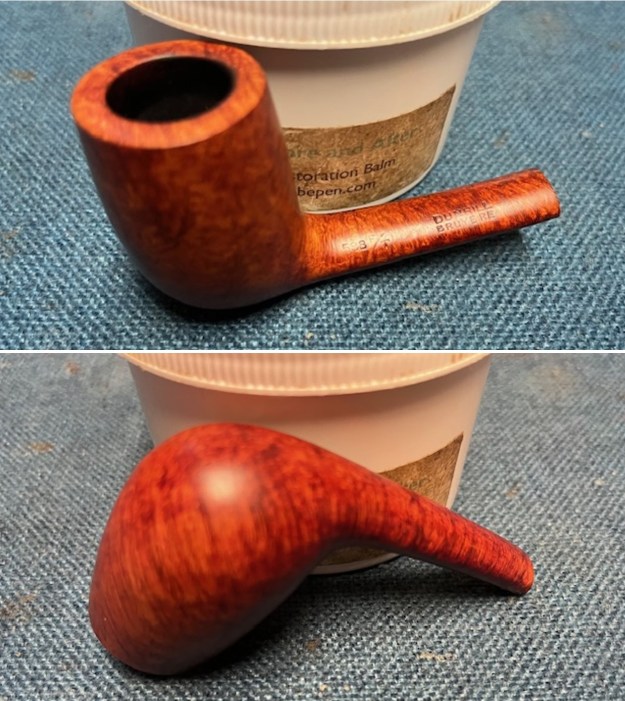
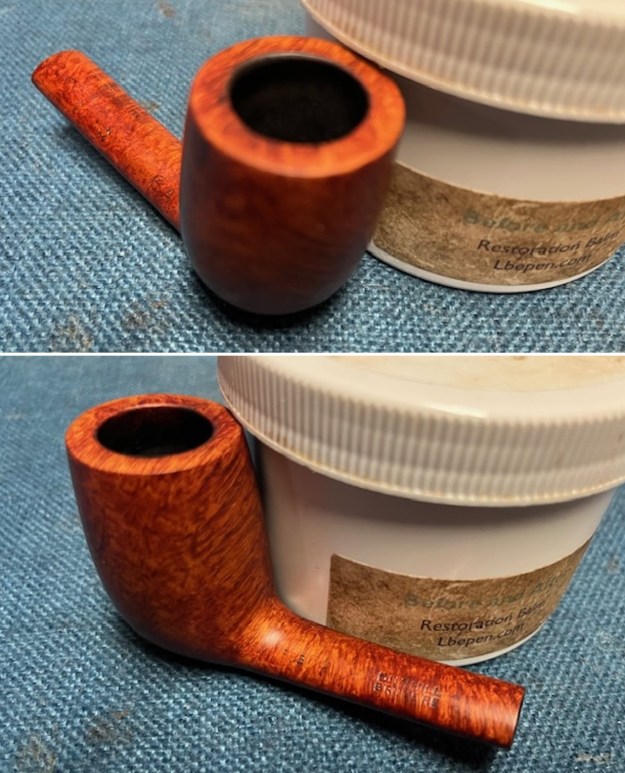
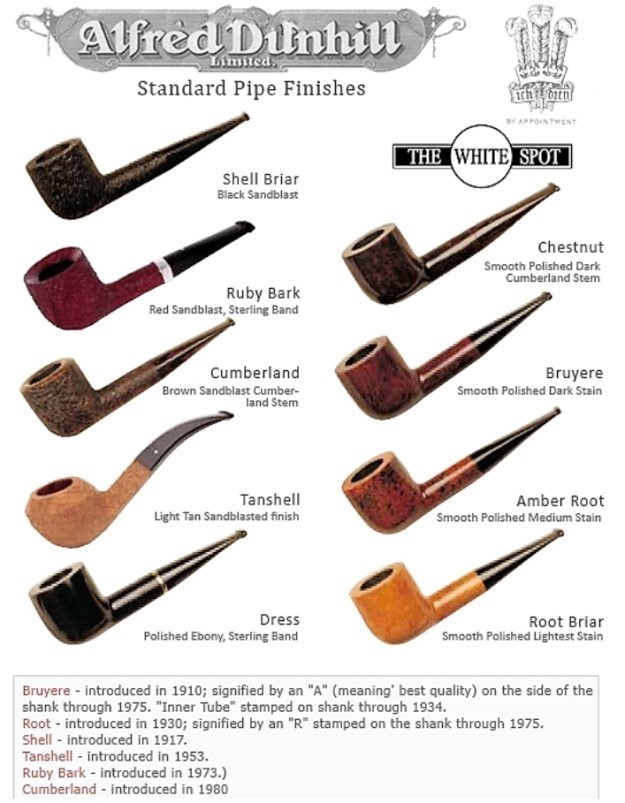
This very handsome pipe came to me from a local gentleman who was letting go of his pipes. I was charmed by this one right away. This is a Dunhill Bruyere 32 billiard pipe, with an attractive tapered, vulcanite stem. It has been stained in the Dunhill version of oxblood – and it sets off the pipe very nicely. Let’s have a look at the markings. On the left side of the shank, we see 32. Further along to the right, we see Dunhill [over] Bruyere. On the right side of the shank, we see Made in [over] England9. And further along we also see ① A.What do all these markings mean? John Loring’s book, The Dunhill Briar Pipe, provides many of the answers. The number 32 indicates the shape number – in this case, a billiard with a tapered bit. The word bruyere, of course, means briar, and, in this case, refers to a classic line of Dunhill pipes that dates back to 1910. The 9 found at the end of the word England is slightly raised and this indicates that the pipe was made in 1959 (see below). The encircled number one indicates that this pipe is from Group 1 – the smallest of the pipe sizes. With such a small size, these pipes tend to get damaged, over-smoked, and lost more easily. They have historically been less likely to survive intact over the years, making them uncommon. The letter A is an indication that this is from the smooth, bruyere line. As Loring writes,

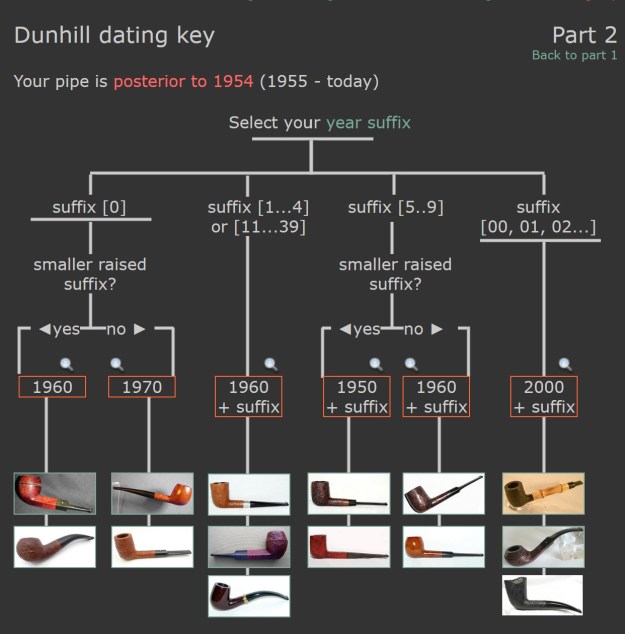
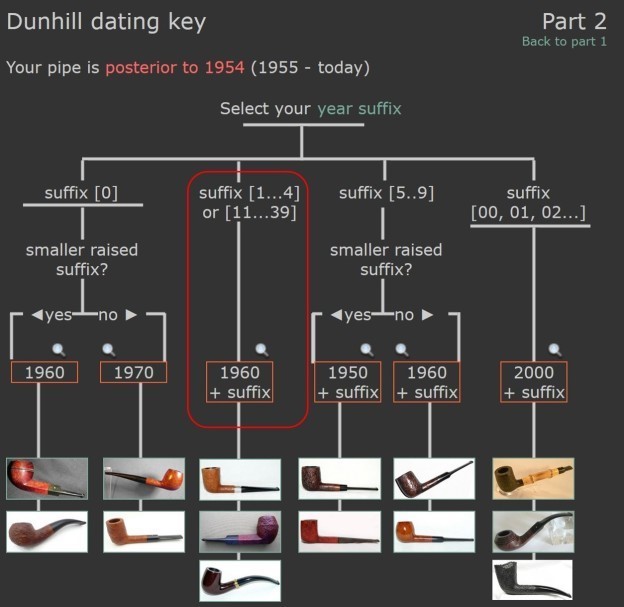
1955-1960: the code is a raised, smaller then [sic] the preceding “D” and normally [but not always] underlined 5 through 0.

Most Bruyeres of the patent period will be found with an “A” stamped on the side of the shank near where the shank meets the bowl. When the Root finish was introduced in 1931 the “A” came to mean Bruyere but initially the “A” probably denoted that the pipe was of first quality.

Here is a visual representation of the dating process from Pipephil: Let’s take a closer look at the pipe’s condition. It was in surprisingly good condition, considering its age and size. The stem had only light tooth chatter and scratches – nothing major at all. Also, the oxidation was minimal. The stummel was also great. There were a few small nicks in the briar, but I was sure I could correct those. There was also some lava and/or charring on the rim top, but nothing too bad. I used isopropyl alcohol on a few cotton rounds and wiped down the stem to provide an initial cleaning of filth before moving on to the next steps. The primary cleaning came next. I disinfected the inside of the stem with both pipe cleaners and cotton swabs dipped in lemon-infused 99% isopropyl alcohol. I scrubbed thoroughly to make sure the interior was very clean.The goal of the next step is the removal (or minimization) of oxidation. Going to my sink, I used cream cleanser, cotton rounds, and a toothbrush, and scoured the stem to remove as much surface oxidation as possible. As the photos show, the result was a hideous, ochre-coloured mess – but better off the stem than on it.Once the stem was reasonably clean, I soaked it overnight in some Briarville Stem Oxidation Remover. This solution works to draw oxidation in the stem to the surface of the vulcanite. This is a major aid and an important step in ensuring a clean stem. The following day, I drew out the stem from its bath and scrubbed the lingering fluid with a toothbrush.The penultimate step for the stem is sanding. First, with my set of needle files, I reduced the bulk of the cyanoacrylate repairs. I removed the excess adhesive as near to the surface as possible, without cutting into the vulcanite. Following that, I used all nine of the micromesh sanding pads (1,500 through 12,000 grit) to sand out flaws, even out the vulcanite, and provide gentle polishing of the finished surface. I also applied pipe-stem oil while using the last five micromesh pads. There was a wonderful, deep black shine to the stem when I was done.As the stem was (nearly) complete, I moved on to the stummel. The first step was to ream out the bowl – that is to say, remove all the cake inside the bowl. This accomplished a couple of things. First (and most obviously), it cleaned the bowl and provided a refurbished chamber for future smoking. Second, when the old cake was removed, I could inspect the interior walls of the bowl and determine if there was damage or not. I used a reamer, a pipe knife, and a piece of sandpaper taped to a wooden dowel. Collectively, these ensured that all the debris was removed.Similar to the stem, I then cleaned the stummel with both pipe cleaners and cotton swabs dipped in lemon-infused 99% isopropyl alcohol. Fortunately, it wasn’t too dirty.My next step was to remove the lava on the rim. For this, I took a piece of machine steel and gently scraped the lava away. The metal’s edge is sharp enough to remove what I need, but not so sharp that it damages the rim. This work revealed that there was a bit of charring, but very mild. I then decided to ‘de-ghost’ the pipe – that is to say, exorcize the remaining filth from the briar. I filled the bowl and the shank with cotton balls, then saturated them with 99% isopropyl alcohol. I let the stummel sit overnight. This caused the remaining oils, tars and smells to leach out into the cotton.To tidy up the briar, I wiped down the outside, using a solution of a pH-neutral detergent and some distilled water, with cotton rounds. I also used a toothbrush in the crevices. This did a good job of cleaning any latent dirt on the surface of the briar. The last step of the cleaning process was to scour the inside of the stummel with the same mild detergent and tube brushes. This was the culmination of a lot of hard work in getting the pipe clean.Having completed that, I was able to address the small nicks on the bowl. I dug out my iron and a damp cotton flannel cloth. By laying the cloth over the affected areas and applying the iron to it, the hot and moist steam can cause the wood to swell slightly and return to shape. There was some considerable improvement. It didn’t remove every dent, but it looks much better.I used all nine micromesh pads (1,500 through 12,000 grit) to sand the outside of the stummel and finish it off. This sanding minimizes flaws in the briar and provides a beautiful smoothness to the wood. After that, the tiny spots of bare wood on the rim needed to be tinted in the same colour as the rest of the stummel. I used some of my furniture pens (which is simply dye in pen form) to match the colours. I rubbed some LBE Before & After Restoration Balm into the briar and let it sit for 30 minutes or so. The balm moisturizes the wood and gives a beautiful depth to the briar. I then buffed the stummel with a microfibre cloth. For the final step, I took the pipe to my bench polisher and carefully buffed it – first with a blue diamond compound, then with three coats of carnauba wax. This procedure makes the pipe look its best – the stummel sings and the stem glows.

This Dunhill Bruyere 32 billiard is a beauty and I have decided to add it to my collection. It was a pleasure to work on. The approximate dimensions of the pipe are as follows: length 4⅞ in. (124 mm); height 1⅝ in. (41 mm); bowl diameter 1¼ in. (31 mm); chamber diameter ¾ in. (19 mm). The weight of the pipe is ¾ oz. (23 g). I hope you enjoyed reading the story of this pipe’s restoration as much as I enjoyed restoring it. If you are interested in more of my work, please follow me here on Steve’s website or send me an email at kenneth@knightsofthepipe.com. Thank you very much for reading and, as always, I welcome and encourage your comments.

Replacing a Tenon and Repairing a Crack in a Saddle Stem on a Velani Caprice Bent Billiard


by Steve Laug

I received an email from a fellow pipeman, Larry about a pipe he had that had been knocked off the stand and the tenon had snapped. I have included his email below.

I have a Pipe stem that broke on a Velani Caprice, and I was wondering how much you would charge to replace the stem. The pipe was knocked off my stand and broke the stem from the pipe; I was able to get the part that broke out from the pipe. I would like your opinion and what you would charge. I could send you pictures as well. Thank you. – Larry

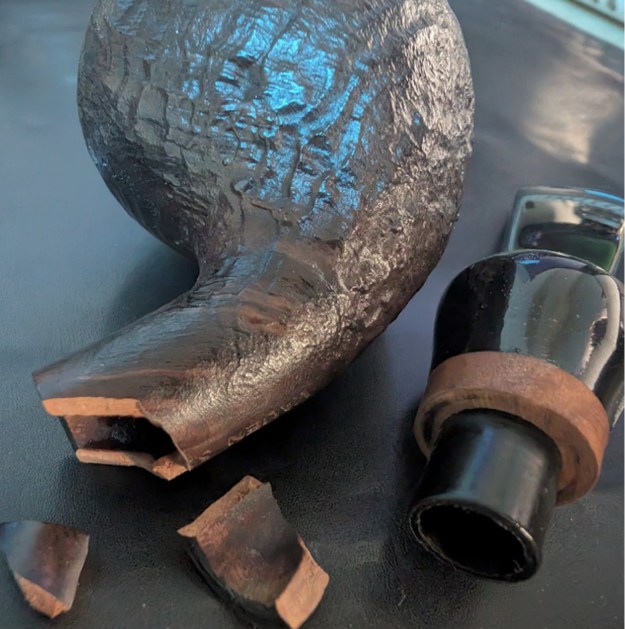
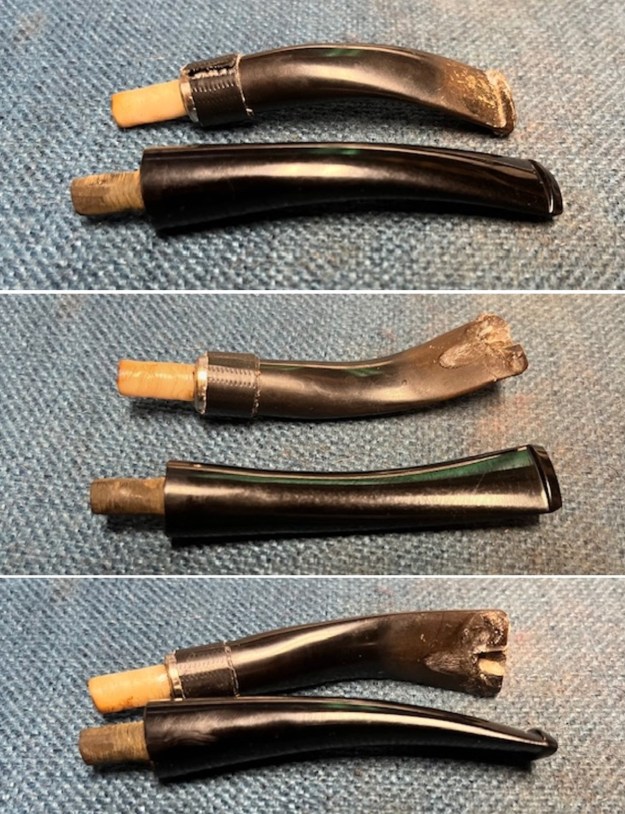
I wrote back with my normal questions about what had broken and if he was able to send me photos of the pipe so I could more thoroughly assess what had happened to the pipe. He sent me the following photos that clearly showed the damage. When the box arrived from Larry yesterday I opened it to see what I was dealing with. The pipe was stamped on the left side of the shank and read Velani [over] Caprice and AV 75 on the underside. It was also stamped Italy against the acrylic spacer in the shank end. The stamping was clear and readable. The heavily coral like rusticated finish was quite clean and the bowl inside was smooth and appeared to have been recently reamed. The rim top was smooth and it was quite clean. It was dusty but otherwise clean. The stem was wrapped along with the broken tenon in the box. The saddle portion of the stem had cracked off and Larry had glued it back together with epoxy. He had done a great job and the crack was solid. There were still some light crevices where the repair had been done that would need to be filled in. I set the pipe aside so that I could think about the repair. I took photos of the broken parts of the pipe and have included them below. I took photos of the stamping on the shank. It was clear and readable as noted above. I turned to Pipephil to refresh my memory of the brand understand a bit more about it before I started working on the stem (http://www.pipephil.eu/logos/en/logo-a3.html#aldovelani). I am including a screen capture below. From the side bar on Pipephil I was reminded that Aldo Velani is the fictional name for a sub-brand of Barontini that was mainly intended for export.

I turned to Pipedia to see if I could learn a bit more about the brand and the link took me to Cesare Barontini’s page (https://pipedia.org/wiki/Aldo_Velani). It also confirmed the information from the side bar above. Now it was time to work on the pipe.

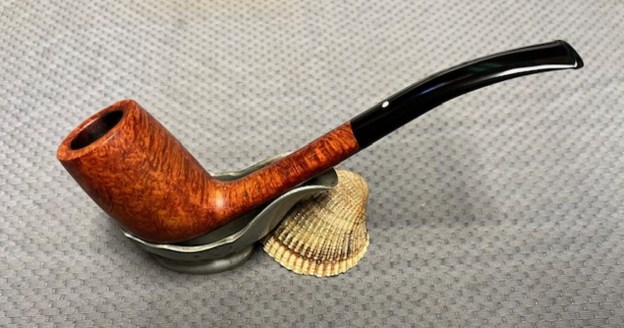
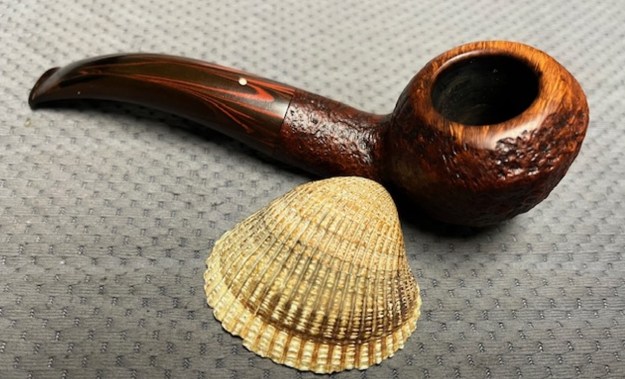
I began my work on the pipe by addressing the cracked portion of the saddle stem. I cleaned out the surface of the repairs that Larry had done and filled in the shallow grooves with black CA glue.  I sanded the repairs with 220 grit sandpaper to smooth them out. I sanded the end of the saddle and fitted it with a thin brass band. I thinned the depth of the band with a topping board to reduce the profile so that it would not cover the briar dot on the top of the saddle. It would function as an external band to hold the repairs tight while I drilled the airway for the new tenon. I coated the inside of the band with white glue and pressed it on the stem. Once the band was solid on the stem I drilled the airway open with two progressively larger drill bits on the cordless drill. I needed it open enough to hold the new tenon in place. It would also provide an internal tube that the stem was bound to. The repair that Larry had done, the band on the outside and the new tenon would provide a solid repair for the crack in the saddle portion of the stem. I went through my bag of tenons and found one that was the right fit for the shank. I used a tenon that was made for the Jobey link system. I removed the ridge around the tenon that was made for the Jobey stem and would inset. I used my Dremel to remove that ridge as it was not necessary for a regular tenon.I reworked a second tenon and once it was done I painted the threads on the tenon with black CA glue and inserted it in the opened airway on the stem. I set it aside to cure.I took a photo of the finished tenon and then once cured I inserted it in the shank and took more photos of the finished repair. I still need to polish the pipe to be finished but the fit was correct. I finished working on the stem by sanding it with 32-3500 grit 2×2 inch sanding pads to smooth out the repair and to remove the tooth chatter. The pipe stem was looking very good. I polished the stem with micromesh sanding pads – wet sanding with 1500-12000 grit pads and wiped down the stem with some Obsidian Oil after each sanding pad. I finished the polishing with some Before & After Stem Polish – both fine and extra fine. I gave it a final coat of Obsidian Oil and set the stem aside. I polished the smooth rim top and portions of the shank with 1500-12000 grit micromesh sanding pads. I wiped it down with a damp cloth after each pad to remove the debris. I worked over the inner edge of the rim at the same time. The smooth portions began to look very good. I rubbed the bowl and shank down with Before & After Restoration Balm. I worked it into the surface of the bowl sides and shank with my fingertips to clean, enliven and protect the briar. I let the balm sit for a little while and then buffed with a cotton cloth to raise the shine. The Balm did its magic and the grain stood out. This rusticated Velani Caprice 75 Bent Billiard with a fancy saddle stem is a great looking pipe now that it has been restored and the tenon and stem repaired. The briar around the bowl is clean and the rustication really came alive. The rich brown stains of the rustication took on a sense of depth with the polishing and waxing. The grain really popped. I put the acrylic stem back on the bowl and carefully buffed the pipe with Blue Diamond on the buffing wheel using a light touch on the briar. I gave the bowl and the stem multiple coats of carnauba wax on the buffing wheel. I buffed the pipe with a clean buffing pad to raise the shine. I hand buffed the pipe with a microfiber cloth to deepen the shine. The finished Velani Caprice Rusticated Bent Billiard is a beauty and feels in the hand and looks very good. Give the finished pipe a look in the photos below. The dimensions of the pipe are Length: 5 ½ inches, Height: 2 inches, Outside diameter of the bowl: 1 ¼ inches, Chamber diameter: ¾ of an inch. The weight of the pipe is 1.76 ounces/49 grams. Thanks for reading this blog and my reflections on the pipe while I worked on it. There are many more to come!

Restoring and Restemming a Mixed Finish Frasorteret Hand made in Denmark Freehand


by Steve Laug

This interesting Freehand with both smooth and sandblast finishes came to us from an estate we purchase from Santa Cruz, California USA on 05/28/2024. It is a unique looking pipe that took some work to figure out the stamping. With some digging and comparing we knew that the stamping on the underside of the shank just ahead of the shank read Frasorteret [over] Hand Made [over] In [over] Denmark. You might well ask why we had to figure it out. That is simple in the half of the name line was hidden by the sandblast. The finish is dirty with dust and oils in the sand blast portions on the bowl sides. The smooth portions are also dirty with oils and dirty ground into the finish. The plateau rim top has some darkening toward the back of the bowl as well as thick lava filling it the grooves in the finish. The bowl has a heavy cake. The vulcanite shank extension is oxidized and also dirty. The stem is actually a poor replacement that is a saddle stem for a straight shank. The pipe would have originally had a fancy freehand style military style stick stem that sat in the extension. It will need to be replaced. Jeff took some photos of the pipe before he started his work on it. He took photos of the rim top to show the cake in the bowl and the thick lava coat and debris in the plateau finish on the rim top. You can see that it basically fills in the grooves of the finish. The shank extension is also oxidized and dirty. He took photos of the stem to show the oxidation and calcification on it but at some level it does not matter as it will be replaced. Jeff took photos of the sides and heel of the bowl to give a sense of the finish on the bowl sides. It is really a beautiful pipe with great grain in the smooth portions. He captured the stamping as best as possible on the underside of the shank next to the vulcanite shank extension. It reads as noted above.It seemed to me that Frasorteret pipes came from the creative carving of Preben Holm so I wanted to confirm that memory. When you get a certain age memory can fool you! I turned first to Pipephil’s site (http://www.pipephil.eu/logos/en/logo-f4.html). It tied the line to Preben Holm but there was not too much more information at this point.I turned to Pipedia (https://pipedia.org/wiki/Frasorteret) to gather further information. There the information was scant but none the less made the connection to Preben Holm very clear. Here is the information.

The Frasorteret line of pipes were made by Preben Holm and were nearly identical to his normal line of pipes but for fills and pits and the like. The pipes were stamped Frasorteret Made in Denmark.

Now I had the background I needed. I was ready to start working on this pipe. As usual, Jeff had thoroughly cleaned up the pipe. I probably don’t say enough about how much I appreciate him doing the hard clean up work before I even get the pipes. He does an amazing job. He had reamed the pipe with a PipNet pipe reamer back to bare briar and removed the remnants of the cake with a Savinelli Fitsall Pipe Knife. He used a small blade to pick out the thick lava on the rim top. He scrubbed the bowl with undiluted Murphy’s Oil Soap and a tooth brush. He rinsed it under running warm water to remove the soap and grime. He cleaned out the inside of the shank and the airway in the stem with alcohol, cotton swabs, pipe cleaners and shank brushes. He soaked the stem in Briarville’s Pipe Stem Deoxidizer and rinsed it off with warm water. I took photos of the pipe and the stem that came with it before I started my part of the restoration work. Preben’s Holm’s magic is very visible in the shaping of the pipe. I took photos of the bowl and rim top to show the clean condition. The bowl walls look very good. The replacement stem looks very clean and will be a good addition to my can of stem options.I tried to capture the stamping on the shank underside. It is a bit blurry but it is still very readable and clear as noted above. I took a photo of the pipe with the replacement stem removed. It really makes it clear to me that it is a replacement. The pipe was ready for me to work on but I decided first to go through my stems. I went through both vulcanite and acrylic stems which may sound easy but I have several hundred stems to sort through. I was looking for something that flowed with the delicate shape of the bowl and shank and was simply weightless looking. I found what I was looking for and took a photo of the stem I found. I put the new stem in the shank and took a photo, I like the looks of the new choice.What to do next? I figured I might as well continue working on the stem since I had already started. I sanded out the tooth chatter on the stem end and worked on the oxidation with a folded piece of 220 grit sandpaper.I fit the cleaned stem into the shank of the pipe and it was an odd fit. When I pulled it out this piece of scotch tape came out with the tenon. That is yet another testimony to the stem being a replacement. The tape would have been around the tenon to snug the fit in the shank. I cleaned out the shank with pipe cleaners and alcohol to remove the residual gum from the tape. Much better and the stem fit!I sanded the stem with 2×2 sanding pads – 320-3500 to start the polishing process and further remove the oxidation and marks. I wiped the stem down after each sanding pad with Obsidian Oil. It was beginning to look very good.I love watching the shine develop on the vulcanite as I polish it with micromesh sanding pads – dry sanding with 1500-12000 grit pads. I wiped it down after each pad with Obsidian Oil. I finished this part of the polishing by using Marks Hoover’s Before & After Pipe Stem Polish – both Fine and Extra Fine. I wiped it off with a soft cloth and gave the stem another coat of Obsidian Oil. I set the stem aside and turned my attention to the bowl. I sanded the shank extension with 320-3500 2×2 inch sanding pads. I wiped the vulcanite extension down with Obsidian Oil after each sanding pad. It began to look better.I polished the smooth portions of the briar and the vulcanite shank extension with micromesh sanding pads – dry sanding with 1500-12000 grit sanding pads. I wiped the bowl down with a damp cloth after each pad. I wiped the shank extension down with Obsidian Oil. I finished this part of the polishing by using Marks Hoover’s Before & After Pipe Stem Polish – both Fine and Extra Fine. I wiped it off with a soft cloth and gave the stem another coat of Obsidian Oil. Once again, by the end of the process it looked quite good. I rubbed the bowl and shank down with Before & After Restoration Balm. I worked it into the surface of the bowl sides and shank with my fingertips. I worked it into the plateau finish with a shoe brush. It works to clean, enliven and protect the briar. I let the balm sit for 15 minutes and buffed with a cotton cloth to raise the shine. The grain came alive. This newly restemmed Frasorteret Hand Made in Denmark Freehand is a great looking pipe with some interesting shaping around the sides of the bowl and vulcanite shank extension. You can easily see the handiwork of Preben Holm in the shaping of the pipe. The beautiful grain around the smooth portions and sandblast on the other portions of the bowl is quite stunning and works well with both the shape and the polished vulcanite shank extension and the fancy vulcanite saddle stem. I put the new stem back on the bowl and carefully buffed the pipe with Blue Diamond on the buffing wheel using a light touch on the briar. I gave the bowl and the stem multiple coats of carnauba wax on the wheel and followed by buffing the pipe with a clean buffing pad. I hand buffed the pipe with a microfiber cloth to deepen the shine. The finished Preben Holm Hand Made Frasortert Freehand fits nicely in the hand and feels great. Give the finished pipe a look in the photos below. The dimensions of the pipe are Length: 6 inches, Height: 2 ¼ inches, Outside diameter of the bowl: 1 ¾ inches, Chamber diameter: 1 inch. The weight of the pipe is 49 grams/1.69 ounces. I will be putting it on the rebornpipes store in the Danish Pipemakers Section shortly. If you wish to add this interesting pipe to your rack it is a great addition. Send me a message or an email. Thanks for reading this blog and my reflections on the pipe while I worked on it. I appreciate your support and time!

Restemming and Restoring a Sandblast Benaderet’s Coral 135 Billiard


by Steve Laug

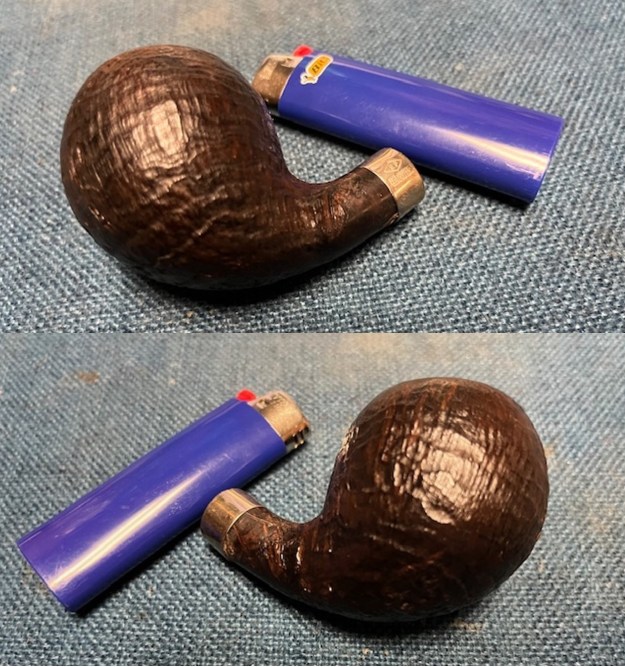
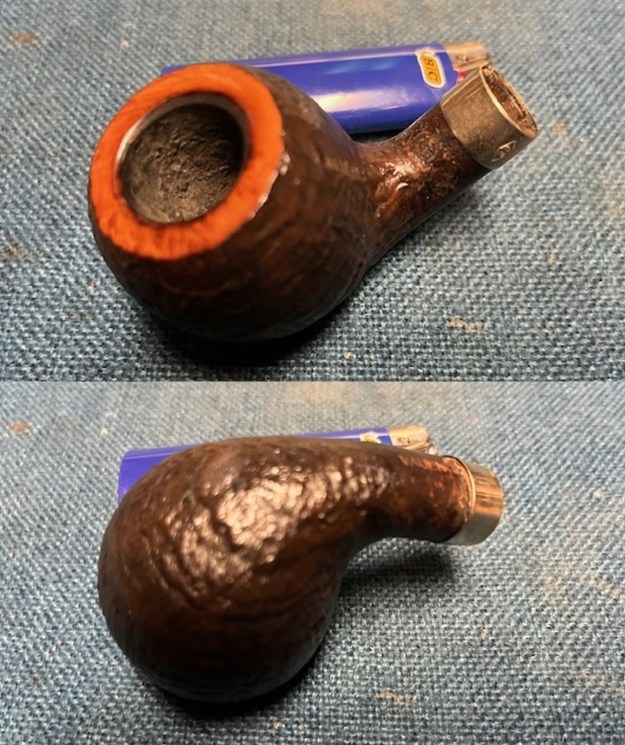
The next pipe on the table was a bowl sans stem that I have had in my box of bowls to be restemmed. It is stamped on the underside of the shank and reads Benaderet’s [over] Coral followed by London Made [over] the shape number 135. The sandblast highlights great grain around the sides of the pipe. The shape number said I was dealing with a GBD made pipe. It had been reamed and cleaned by my brother Jeff many years ago. The rim and the inner edge were clean and with some light areas on the front right of the bevelled rim top and inner edge. The finish had been scrubbed and was very clean. I took photos of the bowl before I worked on it. I found an acrylic taper stem in my can of stems that would work with some adjustments. The tenon would need to be reduced in diameter and the diameter of the shank end would also need to be reduced. The size and shape of the stem were perfect to start with. I took photos of the stamping on the underside of the shank. It is clear and readable as noted above. With the new stem in place it is going to be a beautiful pipe once it is completed.From the shape number on the shank I was pretty certain I was dealing with a GBD pipe. The stamping Benaderet’s Coral was a dead end but the shape number hit the mark. I turned to Pipedia’s shape number listing and found it (https://pipedia.org/wiki/GBD_Shapes/Numbers). I have included a screen capture of the listing below.

I did some more digging on the net and found that Benaderet’s was a pipe shop in San Francisco that closed in the 70’s. Their house pipes were made by Comoys or Sasieni although smokingpipes had one listed that was made by GBD once.

The other link was to a blog (http://theothersideofthelizard.blogspot.com/2018/11/benaderets-pipe-shop.html). That blog gave the original address of the shop in San Francisco and the names of the owners of the shop.

Benaderet’s Cigarette, Pipe and Tobacco Shop215 Sutter Street [Formerly at 566 California Street], San Francisco.

Owners: Robert and Edith Rashaw (Robert Rashaw: born 1916. Edith Edna Rashaw: born 1916.) Store still extant in the late seventies. No longer there by the eighties. At one point, they had Egyptian cigarettes made for them. Their house pipes were usually by Comoys. There are also Benaderet’s Sasienis. More research required.

Quote: “Benaderet’s Inc., was California’s oldest pipe and tobacco store when it went out of business in 1980. Sam Benaderet was a tobacconist from New York City who came to San Francisco in 1915 to work at the Panama Pacific International Exposition. An immigrant to the United States from Turkey, Mr. Benaderet decided that he liked the West Coast’s Mediterranean like climate. After the Exposition closed, he stayed to open his own tobacco business. This new firm produced custom private-label cigarettes for men’s clubs. A lavish retail store was opened in the late 1920’s that quickly became a mecca for tobacco connoisseurs.”

So what I could find out about the pipe is that it is a pipe made by GBD (Shape number confirms this). It turns out that the pipe was a GBD pipe made for Benaderet’s Cigarette, Pipe and Tobacco Shop in San Francisco, California. Since the shop went out of business in 1980 I now knew that the pipe was made before that time. Now it was time to work on the pipe.

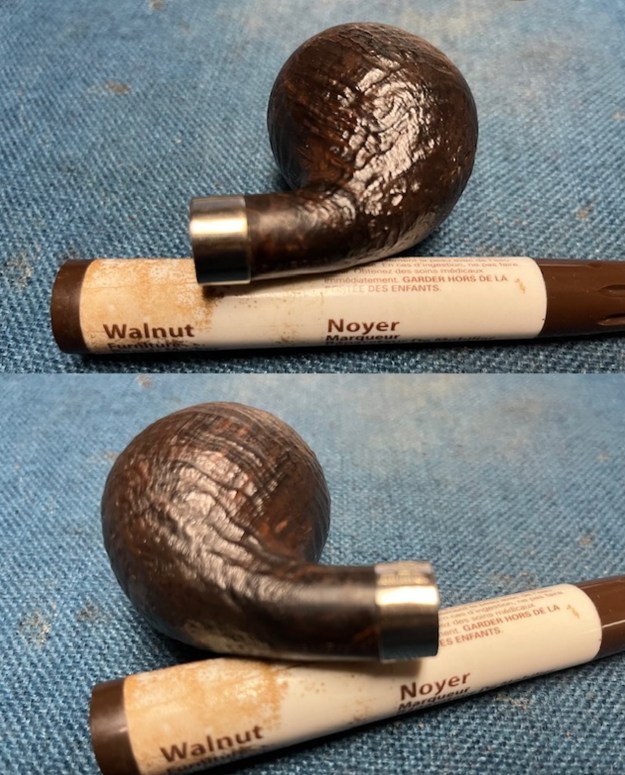
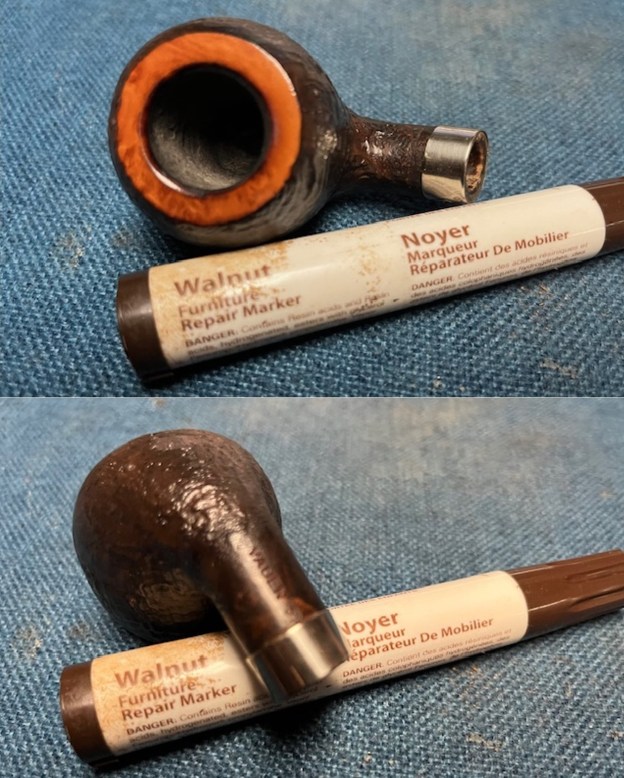
I decided to fit the shank with a thin polished brass band. The shank end was tapered slight and was no long round. It appeared to have been sanded for a stem somewhere in its journey. The thin band would smooth out the transition and square it off. It would also set off the briar and the new stem. I pressed it onto the shank and it was firmly in place. I stained the rim edges and top with a Walnut stain pen to match the rest of the bowl and shank colour. It looked very good. I worked some Before and After Restoration Balm into the finish of the briar with my finger tips. The product works to clean, enrich and restore the briar. The photos show the beauty that pipe really had at this point. I set the bowl aside and turned my attention to the stem. I used the Dremel and sanding drum to reduce the diameter of the stem as much as I safely could do and then used a flat file to take it further. I cleaned up the diameter fit with a smaller flat needle file. It worked well to remove the excess acrylic to match diameter of the shank. It was getting there.I used a small hole saw and small round, oval and flat files to shape the round hole in the button into a slot with an oval. It looked much better once I finished it.I sanded out the files marks on the stem surface with a folded piece of 220 grit sandpaper. I becamse smooth to the touch and was ready to be sanded further with sanding pads.I moved on to sand the stem with 320-3500 grit 2×2 inch sanding pads. I wiped it down with an Obsidian Oil cloth after each sanding pad to remove the sanding debris. The stem began to look much better.I polished the stem with micromesh sanding pads – wet sanding with 1500-12000 grit sanding pads. I wiped it down after each sanding pad with some Obsidian Oil. I finished polishing it with Before & After Pipe Stem Polish – both Fine and Extra Fine and buffed it off with a cotton cloth. I wiped it down with Obsidian Oil to protect the stem and slow down the oxidation. Once again, I am at the part of the restoration that I always look forward to – the moment when all the pieces are put back together. I put the Benaderet’s Coral 135 Billiard and new acrylic stem back together and buffed the bowl with Blue Diamond. I buffed the stem with a heavier touch with Blue Diamond on the buffing wheel. I gave the bowl and the stem multiple coats of carnauba wax. I buffed the pipe with a clean buffing pad to raise the shine. I hand buffed it with a microfiber cloth to deepen the shine. It is fun to see what the polished bowl looks like with the polished sandblast finish and thin brass band. The black acrylic stem stands out as a shiny black contrast to the colours of the bowl. The reddish brown stain on the Benaderet’s Coral Billiard looks absolutely great. It is nice to know that it has a west coast tie to the San Francisco area and a long-gone pipe shop. It must have been a fine smoking pipe judging from the condition it was when we received it. Have a look at it in the photos below. The dimensions are Length: 6 ½ inches, Height: 2 inches, Outside diameter of the bowl: 1 ¼ inches, Chamber diameter: ¾ of an inch. The weight of the pipe is 1.41 ounces/41 grams. This is one that will go on the British Pipemakers section of the rebornpipes online store shortly. Thanks to each of you who are reading this blog. Remember we are not pipe owners; we are pipemen and women who hold our pipes in trust until they pass on into the trust of the next generation.

It is alive – a Sandblast Republic Era Peterson’s System Standard 308 Bent Billiard


by Steve Laug

The next pipe on the work table is Peterson’s System pipe that we purchased from an antique store in Wheeler, Oregon, USA on 08/24/2024. It was stamped on the underside of the shank and read Peterson’s [arched over] System followed by Made in the Republic of Ireland (in three lines) [over] the shape number 308. The nickel ferrule on the shank end was oxidized and is stamped on the top and left side K&P [over] the three common hallmarks on System pipes with Nickel ferrules – a shamrock, a wolf hound, and a tower. That is followed by Peterson’s. It has a rich sandblast finish with unique patterns around the bowl and shank that is covered with a lot of oils, debris and grime. There was a thick cake in the bowl with remnants of tobacco stuck on the walls. There was a heavy lava overflow filling in the sandblast on the rim top and edges. The top and edges of the rim were well hidden under the tars and lava. There was a very beautiful pipe underneath all of the buildup of years of use. The stem was a Peterson’s style P-Lip. It was oxidized and calcified toward the end with some tooth marks and chatter. Jeff took photos of the pipe before he started his cleanup work on it. Jeff took photos of the bowl and rim top to show the thick, hard cake in the bowl with remnants of tobacco stuck on the walls of the bowl. There was a lava build up on the top of the rim and the edges of the bowl. The rim top looked pretty good but it was hard to know for sure if there was damage under the thick lava. Only clean up would tell the full story. Jeff took photos of the top and underside of the stem showing the tooth chatter, calcification and oxidation on the stem surface and wear on the edges of the button. Jeff took photos of the sides and heel of the bowl to show the condition of the finish. You can see the grime around the sides of the bowl and shank. Even under the dirt and debris of the years it looked very good. Jeff took photos of the stamping on the sides of the shank. The stamping was readable as you can see from the photos. It read as noted above. The nickel ferrule is actually clearly stamped and readable. I am including the information from Pipedia’s article on Peterson pipes. It is a great read in terms of the history of the brand (https://pipedia.org/wiki/Peterson). I have included a bit of the pertinent history here.
1950 – 1989 The Republic Era – From 1950 to the present time, the stamp for this era is “Made in the Republic of Ireland” in a block format generally in three lines but two lines have been used with or without Republic being abbreviated.

During the 1950’s and 60’s the Kapp & Peterson company was still in the ownership of the Kapp family. However 1964 saw the retiral of the company Managing Director Frederick Henry(Harry) Kapp.

Pipedia also included a section of information on the System pipes including a diagram of the systems look (https://pipedia.org/wiki/Peterson#Republic_Era_Pipes). I quote a section of the article in part and include a link to another article on Pipedia on the System pipe.

The Peterson System pipes are the standard bearers of the Peterson pipe family, famous for the excellent smoking pleasure they provide. Often imitated but never equaled, the Peterson System smokes dry, cool and sweet, thanks to the scientific effectiveness of the original design. The heart of the System is the unique graduated bore in the mouthpiece. This makes the suction applied by the smoker 15 times weaker by the time it reaches the tobacco chamber. The result is that all the moisture flows into the reservoir and, thus cannot reach the smoker’s mouth. The Peterson Lip further enhances the effectiveness of the graduated bore by directing the flow of smoke upwards and away from the tongue. This achieves a uniquely even distribution of smoke and virtually eliminates any chance of tonguebite or bitterness. Furthermore, the shape is contoured so that the tongue rests comfortably in the depression under the opening. Each “PLip” mouthpiece is made from Vulcanite. For the Peterson System pipes to work properly, the stem/tenon has to have an extension, the tip of which will pass by the draft hole from the bowl and into the sump. Upon the smoker drawing in smoke, this extension then directs the smoke down and around the sump to dispense a lot of the moisture before the smoke enters the extension and stem. On the System Standards and other less expensive systems, this extension with be made of Vulcanite turned integrally with the stem. On the more expensive System pipes this extension will be made of metal which screws into the Vulcanite stem. This extension on the earlier pipes will be of brass and the newer pipes will be of aluminum. Most smokers not knowing this function of the metal extension, assumes that it is a condenser/stinger and will remove it as they do with the metal condensers of Kaywoodie, etc. Should you have a System pipe with this metal extension, do not remove it for it will make the System function properly and give you a dryer smoke (https://pipedia.org/wiki/A_closer_look_at_the_famous_Peterson_Standard_System_Pipe).

I have included the information on the shape number on this pipe that I picked up on researching the previous pipes. I have included a page from a Petersons Catalogue that I have on rebornpipes (https://rebornpipes.com/tag/peterson-hallmark-chart/). There is no shape 309 shown in the catalogue page of rusticated shaped shown below. I wonder if it is an older or a newer shape. But I am uncertain of that. I knew that I was dealing with a Republic Era pipe made between 1950-1989. It was a Sandblasted Peterson’s System Standard 308 Bent Billiard with a great sandblast. The bowl was stained with a combination of black and brown stains. Now it was time to work on the pipe.

Jeff had cleaned it thoroughly. He had reamed it with a PipNet reamer and cleaned that up with a Savinelli Fitsall Pipe Knife. He had scrubbed the exterior of the briar with undiluted Murphy’s Oil Soap. He removed the shiny coat on the briar with acetone on cotton pads. He cleaned out the interior of the shank, sump and airway in the shank and stem with alcohol, pipe cleaners and cotton swabs. He scrubbed the stem with Soft Scrub to remove the oxidation and calcification on the surface. He soaked it in Briarville’s Pipe Stem Deoxidizer to remove the oxidation. He removed it from the Deoxidizer and rinsed it off with warm water. I took some photos of the pipe before I started my part of the work (sadly I forgot to take photos until after I had rubbed the bowl down with Before & After Restoration Balm. But you can see the idea. I took close up photos of the rim top and also of the stem surface. I wanted to show what an amazing job Jeff did in the cleanup of the rim top. The rim top was and inner edge were in good condition. I also took close up photos of the stem to show the condition of the vulcanite. It was quite clean and the light tooth marks and chatter on the stem ahead of the button are clear.One of the things I appreciate about Jeff’s cleanup is that he works to protect and preserve the nomenclature on the shank of the pipes that he works on. The stamping on this one was very faint to start with so I was worried that it would disappear altogether with the cleanup. He was not only able to preserve and maintain its condition in the process. I took some photos to show the clarity of the stamping. I have noticed that many restorers are not careful to protect the stamping in their cleaning process and often by the end of the restoration the nomenclature is almost destroyed. I would like to encourage all of us to be careful in our work to preserve this as it is a critical piece of pipe restoration! I took the stem off the shank and took a photo of the pipe. I decided to start my work on the pipe by rubbing the bowl and rim down with Before & After Restoration Balm. It was in very good shape, so I worked it into the surface of the briar with my fingertips and a horsehair shoe brush to clean, enliven and protect it. I let the balm sit for 10 minutes and then buffed with a cotton cloth to raise the shine. I really like watching the Balm do its magic and bring the briar alive. I polished the nickel ferrule with a jeweller’s cloth to remove the oxidation and to further protect it from further oxidation. The shine is quite nice. I set the bowl aside and moved on to sand the stem with 320-3500 grit 2×2 inch sanding pads. I wiped it down with an Obsidian Oil cloth after each sanding pad to remove the sanding debris. The stem began to look much better.I polished the stem with micromesh sanding pads – wet sanding with 1500-12000 grit pads. I wiped the stem down after each sanding pad with Obsidian Oil. I polished it with Before & After Pipe Stem Polish – both Fine and Extra Fine. I gave it a coat of Obsidian Pipe Stem Oil. It works to protect the stem from oxidizing. I set it aside to dry. Once again at this point in the restoration process I am excited to be on the homestretch. I look forward to the final look when the Sandblasted Peterson System Standard 308 is put back together, polished and waxed. I put the bowl and stem back together. I lightly polished the bowl and stem with Blue Diamond to polish out the scratches in the briar and the vulcanite. I gave the bowl and the stem multiple coats of carnauba wax. I buffed the pipe with a clean buffing pad to raise the shine. I hand buffed it with a microfiber cloth to deepen the shine. The pipe polished up pretty nicely. The depths of the rustication really pop with the wax and polish. The shiny black vulcanite stem is a beautiful contrast to the dark browns of the bowl and thick shank and nickel ferrule. This Republic Era Peterson’s System Standard 308 Sandblasted Bent Billiard was another fun pipe to work on. It really is a quite stunning piece of briar whose shape follows the flow of the briar. The pipe feels great in the hand will be better when warmed up while smoking. The finished pipe is shown in the photos below. The dimensions of the pipe are Length: 6 inches, Height: 1 ¾ inches, Outside diameter of the bowl: 1 ¼ inches, Chamber diameter: ¾ of an inch. The weight of the pipe is 2.01 ounces/56 grams. I will be putting it on the rebornpipes store in the Irish Pipemakers Section if you would like to add it to your rack and carry on the previous pipeman’s legacy. This is an interesting estate to bring back to life.

As always, I encourage your questions and comments as you read the blog. Thanks to each of you who are reading this blog. Remember we are not pipe owners; we are pipe men and women who hold our pipes in trust until they pass on into the trust of those who follow us.

Restemming and Restoring a Marxman Import Briar Apple


by Steve Laug

The next pipe on the table was a bowl sans stem that I have had in my box of bowls to be restemmed. It is stamped on the left side of the shank and reads Marxman with an arrow running through it [over] Imported Briar. The rounded Apple shape had some great grain around the sides of the bowl and shank. From my previous work on one of these I knew that I was dealing with an American made product. The pipe had been reamed and cleaned by my brother Jeff many years ago. The rim and the inner edge were clean and looked to be in good condition. The finish had been scrubbed and it was very clean. I took some photos of the bowl before I worked on it and fit it with a new stem. I found a thick vulcanite taper stem in my can of stems that would work with some adjustments. The tenon would need to be reduced in diameter and the diameter of the shank end would also need to be reduced. The size and shape of the stem were perfect to start with. I took photos of the stamping on the left side of the shank. It is clear and readable as noted above. I took a photo of the parts of the pipe. It is going to be a beautiful pipe once it is completed.I turned to Pipephil’s site to look at the data that was available on Marxman pipes and see if there were any pipes like the bowl I had (http://www.pipephil.eu/logos/en/logo-m2.html). There was nothing in the photos there but the stampingi and data available was helpful. I have included the sidebar information below the screen capture.Brand created in 1934 and merged with Mastercraft in 1953.

From that information I knew that bowl was crafted between 1934 when the Marxman Brand created and when it merged with Mastercraft in 1953. It is a large margin but it gives me a 19-year window as to when the bowl was made.

From there I turned to Pipedia’s listing on Marxman pipes (https://pipedia.org/wiki/Marxman). The brief article quotes from Pipes, Artisans and Trademarks, by José Manuel Lopes. I have included the information on there below.

Marxman (Marxman Pipe Company) was created by Robert (Bob) L. Marx in 1934, when he was 29, and after he had worked for the William Demuth Company. His pipes were not outstanding because of the quality of their wood (probably Algerian), but Bob started making unique sculpted pieces, which brought the brand fame in the World of Hollywood cinema. Actors like Zachery Scott, Dennis Morgan, Jack Carson, Alan Hale, Joel McRae, and Ronald Reagan were some of the faces that appeared on the bowls.

Bob knew how to innovate and took full advantage of marketing and press advertising in order to sell the brand–one of his slogans being “Relax with a Marxman”.

The article also included a shape chart that was helpful. It looked to me that the pipe was a Marxman Massive Sherlock. It is the top pipe in the second column in the photo below.I started my work on the stem by reducing the diameter of the tenon to fit in the shank. I used a Dremel and sanding drum to begin the process and cleaned it up with a flat file. Once I finished shaping it I fit the stem to the shank. The fit was snug. The diameter of the stem itself was larger than the diameter of the shank. That is visible in the photos below. I used the Dremel and sanding drum to reduce the diameter of the stem as much as I safely could do and then cleaned it up with 220 grit sandpaper to smooth out and shape the stem. I used a flat file to reduce the diameter of the shank. It worked well to remove the excess vulcanite to match diameter of the shank. It was getting there.I decided to fit the shank with a thin polished nickel band to set off the briar and the new stem. I reduced the depth of the band by 2/3rds with a Dremel, sanding drum and topping board. When I had it thin enough to not cover too much of the stamp on the shank it was ready to use.I pressed it onto the shank and took photos of the adjusted look of the pipe. I really like the look of the band. I sanded the band and the briar with 320-3500 grit 2×2 inch sanding pads to smooth it out. I wiped the bowl down with a damp cloth after each sanding pad to remove the sanding dust and debris. I polished the briar and band with 1500-12000 grit micromesh sanding pads. I wiped the bowl down after each sanding pad to remove the sanding debris. The bowl began to take on a rich shine and the finish really glowed. I worked some Before and After Restoration Balm into the finish of the briar with my finger tips. The product works to clean, enrich and restore the briar. The photos show the beauty that pipe really had at this point. I set the bowl aside and turned my attention to the stem. I sanded out the files marks on the stem surface with a folded piece of 220 grit sandpaper. I moved on to sand the stem with 320-3500 grit 2×2 inch sanding pads. I wiped it down with an Obsidian Oil cloth after each sanding pad to remove the sanding debris. The stem began to look much better. I polished the stem with micromesh sanding pads – wet sanding with 1500-12000 grit sanding pads. I wiped it down after each sanding pad with some Obsidian Oil. I finished polishing it with Before & After Pipe Stem Polish – both Fine and Extra Fine and buffed it off with a cotton cloth. I wiped it down with Obsidian Oil to protect the stem and slow down the oxidation. I put the restemmed Marxman Imported Briar Apple/Ball back together and buffed it on the buffing wheel with Blue Diamond. It raised a shine on the briar and the stem and gave some depth to the look of the carved grooves. I gave both the bowl and the stem multiple coats of carnauba wax on the wheel and buffed the pipe with a clean buffing pad to raise the shine. I hand buffed it with a microfiber cloth to deepen the shine. The pipe turned out to be a unique beauty in its own rugged way. I really like the grain and the shape of this Marxman Apple/Ball. The thin nickel band and the thick bent taper stem go well with the thick shank. The dimensions of the pipe are Length: 5 inches, Height: 1 ½ inches, Outer diameter of the bowl: 1 ¼ inches, Chamber diameter: ¾ of an inch. The weight of the pipe is 2.29 ounces/64 grams. It is a uniquely beautiful pipe. I am not sure what I am going to do with it yet. It may well be one I keep to enjoy, I will keep you posted. Thanks for walking through the restoration with me.

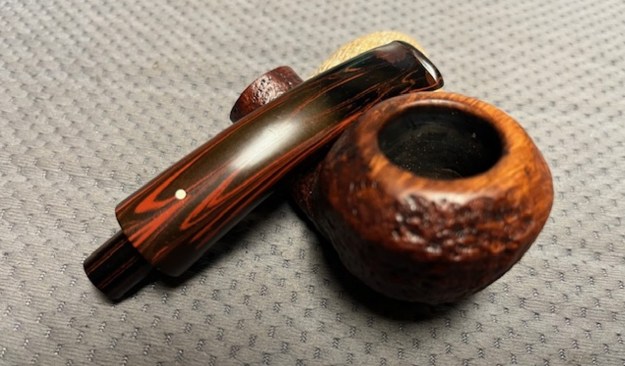
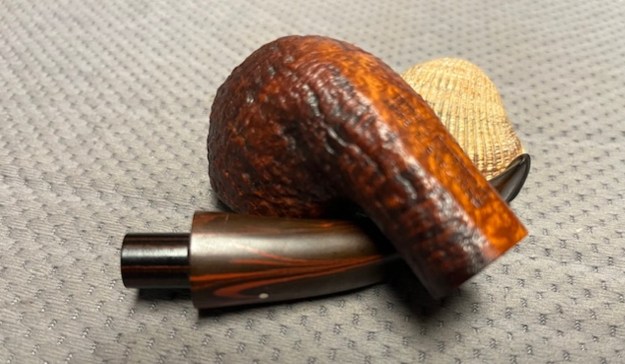
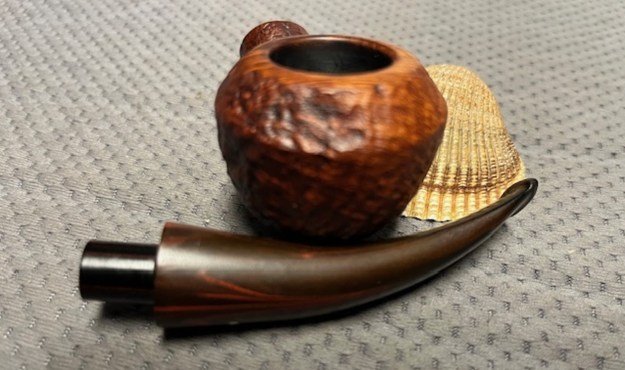
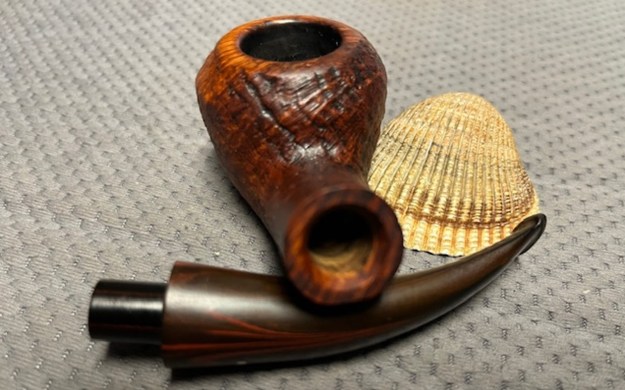
Rescuing a Remarkable Old Torpedo of Grenoble


by Kenneth Lieblich

If you’re interested in an old and highly unusual pipe with incredible grain, have I got a pipe for you! This pipe is in the shape of a torpedo – but not like the screw-in zeppelin pipes you may have seen. This one is much older and more fascinating. It has a substantial chunk of briar and a lovely horn stem, with a bone tenon. I received it in a large lot of French pipes and it has been sitting in my box for a long time. Now, the time has come for it to be brought back to life. I’ve mentioned several times that I have an interest in French pipes and pipemaking. I think we’re going to have fun with this one. You may wonder why I called this pipe a torpedo, and that’s a fair question. The markings on the pipe are what gave it away. If you look at the photos below, you’ll see a difficult-to-read word on the side of the stummel. It took me a long time to figure out what it said (and I also used chalk like a gravestone rubbing), but my knowledge of the French language helped. The word is torpille, which is the French word for torpedo. Aha! The word fit the letters and the shape of the pipe. These photos also show the wonderful grain. At this point, since we’re talking about markings, I’m momentarily going to jump ahead in the story. It wasn’t until after I had cleaned the stummel (much later) that I uncovered more marks! These were very faint (as the photos below attest). Again, after quite a bit of staring with magnification, I figured out what the words were. They are A La Havane [over] Grenoble. Naturally, I was curious about this and discovered that this was the name of an old tobacco shop in the French city of Grenoble (obviously). Incidentally, A La Havane means ‘In Havana,’ which seems like a suitable name for a tobacconist. In fact, there is a tobacco shop in Grenoble to this day which is called Le Havane. I wonder if this is just the modern incarnation of that old shop. It seems likely. Here’s a Google Street View image of it:Steve has restored a couple of pipes similar to this one, but not quite the same. He referred to the pipe he had as a ‘slug’, which is both humorous and accurate. You can read about one of the restorations here. Mine is a bit different, as it has a very different stem and is missing the slug’s ‘foot’. Have a look at Steve’s here:Moving on to the state of this pipe and, well, it had seen better days. This pipe was worn, dirty, and rough. The stem was made of horn and was heavily chewed and beaten. Its tenon was made of bone and, in theory, should be able to be unscrewed – but some of these century-old pipes are awfully difficult. Meanwhile, the stummel was very dirty, with dust and grime ground into the wood. The rim was heavily burned and the insides were clogged with filth.To begin, I used isopropyl alcohol on a few cotton rounds and wiped down the stem to provide an initial cleaning of filth before moving on to the next steps. I wanted to clean out the insides next, but I felt it important to try and remove the tenon. First, I soaked the stem in isopropyl alcohol for about an hour – and that did precisely nothing. Second, I stuck the stem in the freezer for about 30 minutes – sometimes that can help the unscrewing process, but it didn’t. Third, I warmed the stem with my heat gun, hoping that that might loosen the gluey goo inside. After heating for quite a while, I could feel just a little give. I used my fingers to undo the screw. It was so challenging that I actually developed (and burst) a blister on my left index finger. But the good news is that I actually got it unscrewed. What I won’t do for pipes! The primary cleaning came next. I disinfected the inside of the stem with both pipe cleaners and cotton swabs dipped in lemon-infused 99% isopropyl alcohol. I scrubbed thoroughly to make sure the interior was very clean. I used quite a few pipe cleaners and cotton swabs. I also cleaned the tenon very well too.As the stem was now clean and dry, I set about fixing the marks and dents in the horn. This was done by filling those divots with clear cyanoacrylate adhesive. There was quite a bit of horn missing and the repair took quite a while. I left this to cure and moved on. I neglected to take photos of this stem, so you’ll just have to take my word for it.

The penultimate step for the stem is sanding. First, with my set of needle files, I reduced the bulk of the cyanoacrylate repairs. I removed the excess adhesive as near to the surface as possible, without cutting into the horn. Following that, I used all nine of the micromesh sanding pads (1,500 through 12,000 grit) to sand out flaws, even out the horn, and provide gentle polishing of the finished surface. I also applied pipe-stem oil while using the last five micromesh pads. There was a wonderful shine to the stem when I was done.As the stem was (nearly) complete, I moved on to the stummel. The first step was to ream out the bowl – that is to say, remove all the cake inside the bowl. This accomplished a couple of things. First (and most obviously), it cleaned the bowl and provided a refurbished chamber for future smoking. Second, when the old cake was removed, I could inspect the interior walls of the bowl and determine if there was damage or not. I used a reamer, a pipe knife, and a piece of sandpaper taped to a wooden dowel. Collectively, these ensured that all the debris was removed. I noticed that the bottom of the bowl had been somewhat scraped out over the years, and the heel was lower than one would wish. However, I left it as it was – this is part of its history.Similar to the stem, I then cleaned the stummel with both pipe cleaners and cotton swabs dipped in lemon-infused 99% isopropyl alcohol. With a pipe this dirty, it took quite a while and much cotton to clean. Holy moly, was this pipe ever dirty!I then decided to ‘de-ghost’ the pipe – that is to say, exorcize the remaining filth from the briar. I filled the bowl and the shank with cotton balls, then saturated them with 99% isopropyl alcohol. I let the stummel sit overnight. This caused the remaining oils, tars and smells to leach out into the cotton.To tidy up the briar, I wiped down the outside, using a solution of a pH-neutral detergent and some distilled water, with cotton rounds. I also used a toothbrush in the crevices. This did a good job of cleaning any latent dirt on the surface of the briar. It was at this point in the cleaning process that I noticed the faint markings that I mentioned earlier.The last step of the cleaning process was to scour the inside of the stummel with the same mild detergent and tube brushes. This was the culmination of a lot of hard work in getting the pipe clean.I took a solid wooden sphere, wrapped a piece of 400-grit sandpaper around it, and lightly sanded the inner edge of the rim. This achieved two things: first, it removed some of the burn marks; and second (and more importantly), the circular shape and motion of the sphere gradually returned the edge to a circle. Some of the burning will always remain, but that’s fine – it is part of this pipe’s history.

I used all nine micromesh pads (1,500 through 12,000 grit) to sand the outside of the stummel and finish it off. This sanding minimizes flaws in the briar and provides a beautiful smoothness to the wood. I rubbed some LBE Before & After Restoration Balm into the briar and let it sit for 30 minutes or so. The balm moisturizes the wood and gives a beautiful depth to the briar. I then buffed the stummel with a microfibre cloth. For the final step, I took the pipe to my bench polisher and carefully buffed it – first with a blue diamond compound, then with three coats of carnauba wax. This procedure makes the pipe look its best – the stummel sings and the stem glows.This French ‘Torpille’ Torpedo pipe looks fantastic again and is ready to be enjoyed by its next owner. I am pleased to announce that this pipe is for sale! If you are interested in acquiring it for your collection, please have a look in the ‘French’ pipe section of the store here on Steve’s website. You can also email me directly at kenneth@knightsofthepipe.com. The approximate dimensions of the pipe are as follows: length 5½ in. (140 mm); height 1¼ in. (30 mm); bowl diameter 1½ in. (36 mm); chamber diameter ¾ in. (19 mm). The weight of the pipe is 1¼ oz. (37 g). I hope you enjoyed reading the story of this pipe’s restoration as much as I did restoring it. If you are interested in more of my work, please follow me here on Steve’s website or send me an email. Thank you very much for reading and, as always, I welcome and encourage your comments.

Restemming an Old Clay Egg and Claw Pipe with a Nickel Ferrule


by Steve Laug

The next pipe on the table was an Egg and Claw Clay Pipe Bowl with a nickel Ferrule. I have had it in my box of bowls to be restemmed for a long time. There is no stamping or markings on the side of the bowl or shank. The maker of the pipe is a of a mystery. The pipe had been reamed and cleaned by my brother Jeff many years ago. It had been moderately smoked so it was very clean. The rim top and the inner edge were very clean and had just a few nicks in the surface of the rim. The finish had been scrubbed and the internals were very clean. I would need to find a suitable stem to fit it and figured I would use an old, small WDC stem or KBB stem that I had in my can of stems. I found a stem in my can of stems that almost fit. It had already been sanded and would just need some adjustments. I took some photos the new stem before I started working on it. It was stamped on the top and read KBB in a cloverleaf with Chesterfield arched above it. It had the airway exiting on the stem end even though it looked like a P-lip style was uniquely like a WDC style stem. I would work perfect.I worked on the shape of the stem to fit in the shank and beginning the polislhing. I used 320-3500 grit 2×2 inch sanding pads to shape and polish the stem shape. Each sanding pad brought it into shape and the fit to the shank worked well. The scratches and marks in the vulcanite began to blend into the surface.I polished the stem with micromesh sanding pads – wet sanding with 1500-12000 grit sanding pads. I wiped it down after each sanding pad with some Obsidian Oil. I finished polishing it with Before & After Pipe Stem Polish – both Fine and Extra Fine and buffed it off with a cotton cloth. I wiped it down with Obsidian Oil to protect the stem and slow down the oxidation. I waxed the clay bowl and the nickel ferrule with Clapham’s Beeswax/Carnauba mixture. I worked it into the carving/pressing on the clay bowl with a shoebrush. I let it sit for 10 minutes then I buffed it with a soft cloth to polish it. It really began to take on a shine. This restemmed, Egg and Claw Clay Pipe is a beautiful looking pipe that combines carved finish with a nickel ferrule and an old Chesterfield Vulcanite Stem. The clay has a patina on the bowl that works well to highlight the carving. I put the newly finished stem on the bowl and buffed it with Blue Diamond on the buffing wheel being careful to not to damage the clay. I gave the bowl multiple coats of Clapham’s Wax and the stem multiple coats of carnauba wax on the buffing wheel and followed that by buffing it with a clean buffing pad. I hand buffed the pipe with a microfiber cloth to deepen the shine. The finished pipe is quite nice and feels great in the hand. Give the finished pipe a look in the photos below. The dimensions of the pipe are Length: 5 ½ inches, Height: 2 inches, Outside diameter of the bowl: 1 inch, Chamber diameter: ¾ of an inch. The weight of the pipe is 44 grams/1.55 ounces. Thanks for walking through the restoration with me as I worked over another beautiful pipe.

Remember we are not pipe owners; we are pipemen and women who hold our pipes in trust until they pass on into the trust of the next generation.
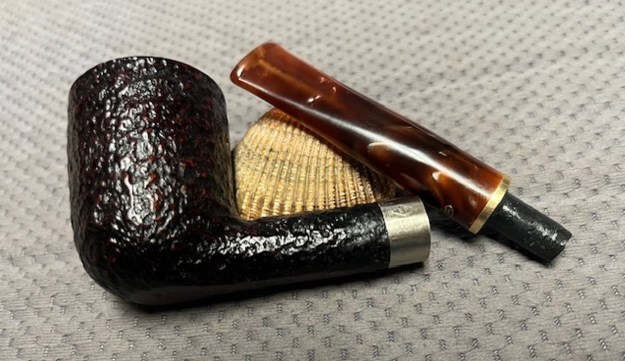
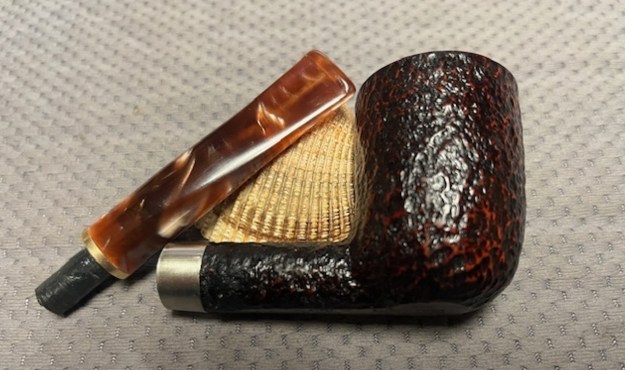
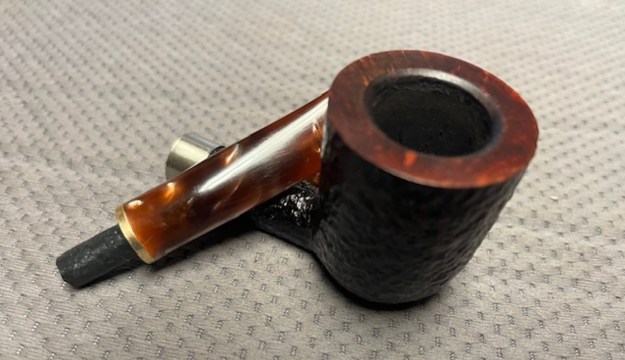
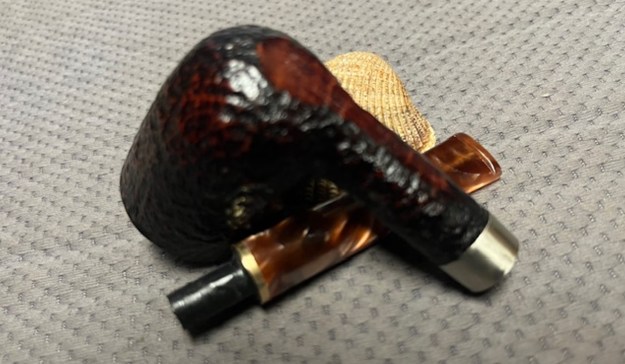
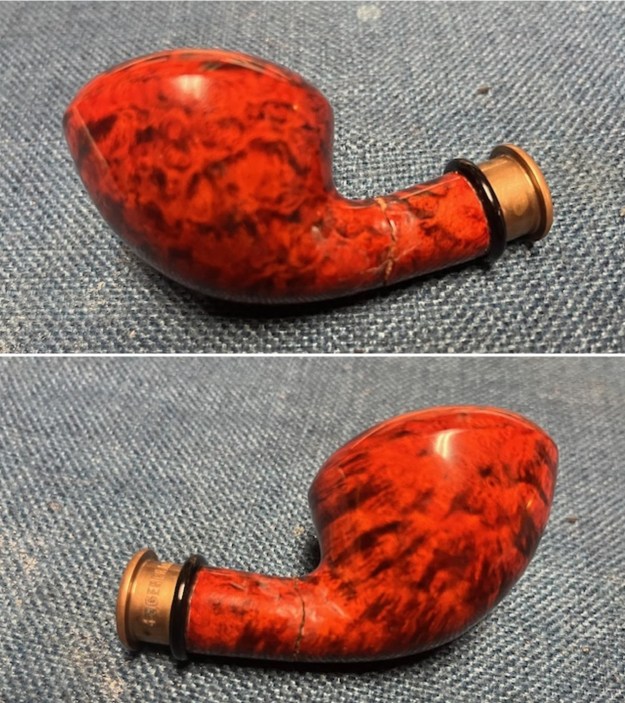
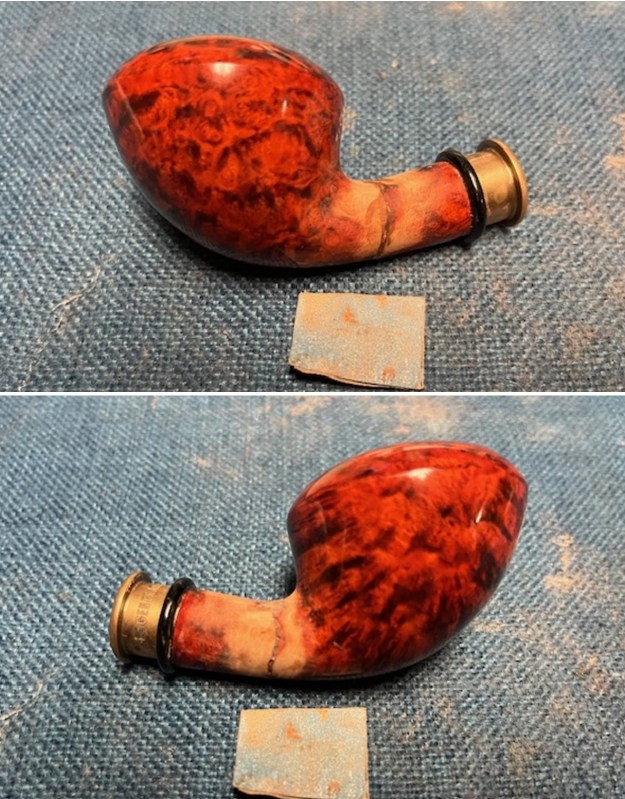
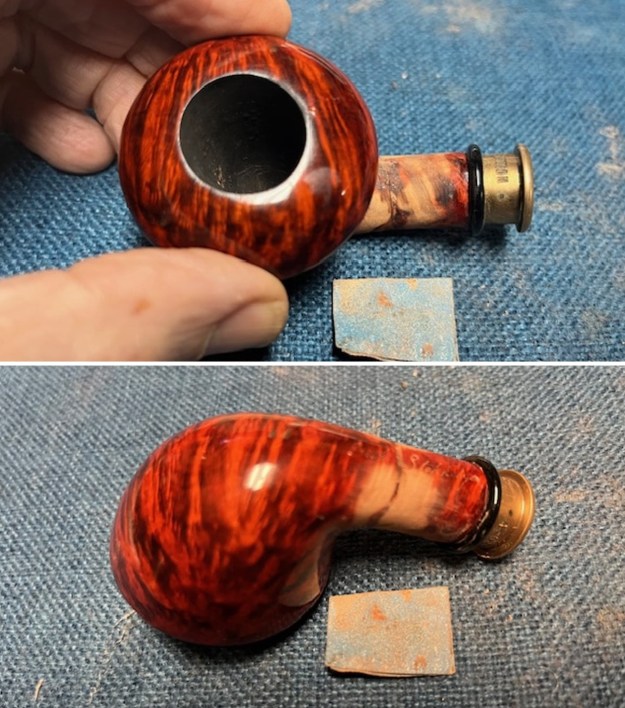
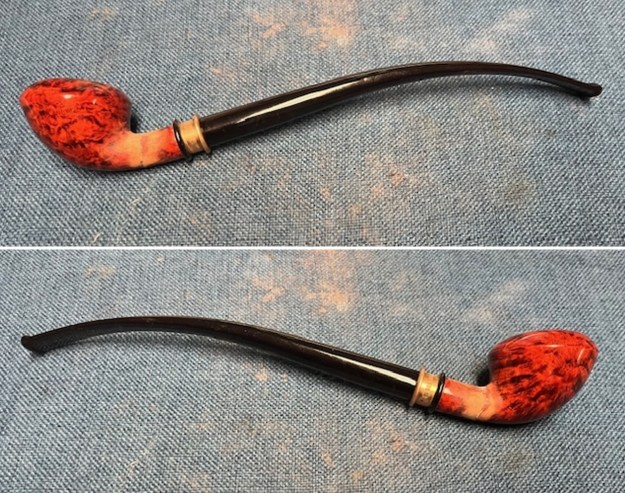
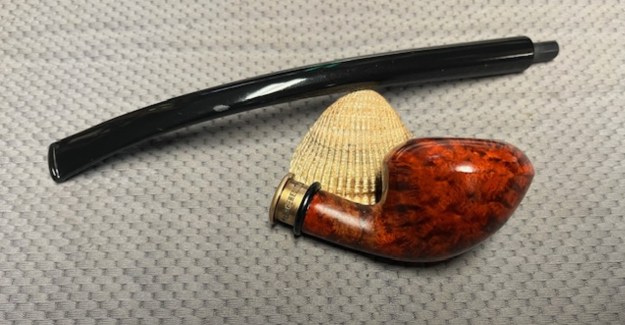
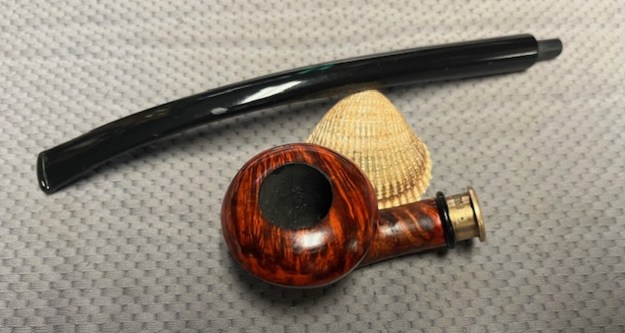
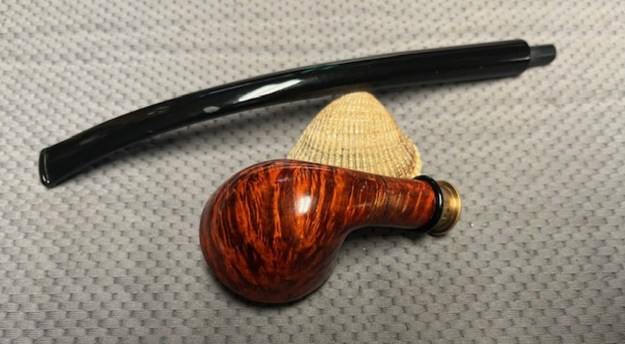
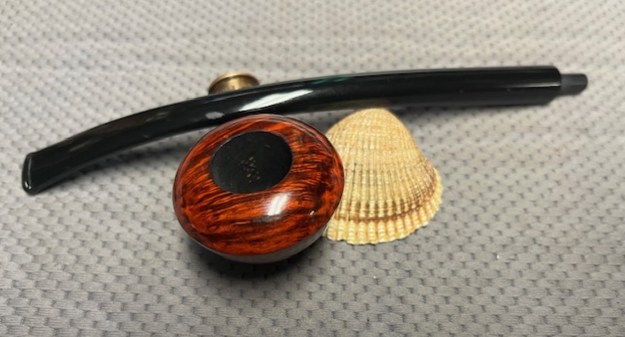
Restemming and Converting an Unbranded Made in London England 97 Apple into a Churchwarden


by Steve Laug

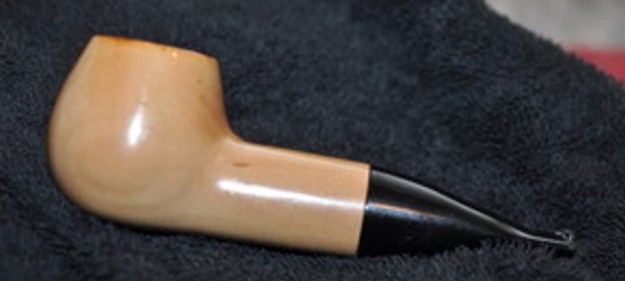
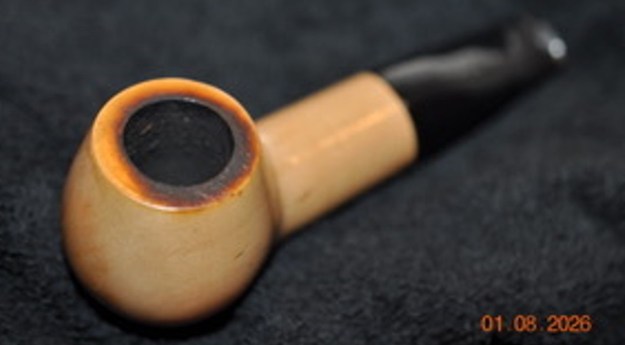
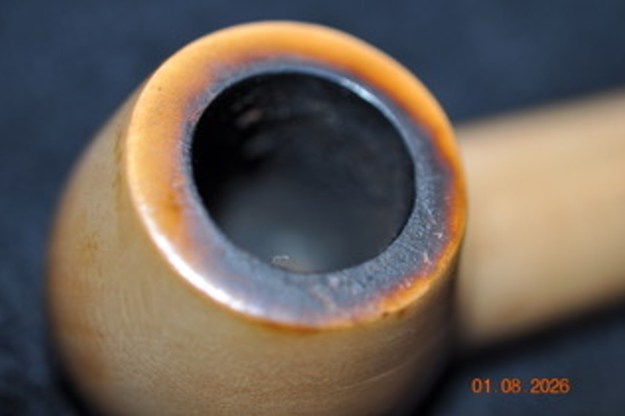
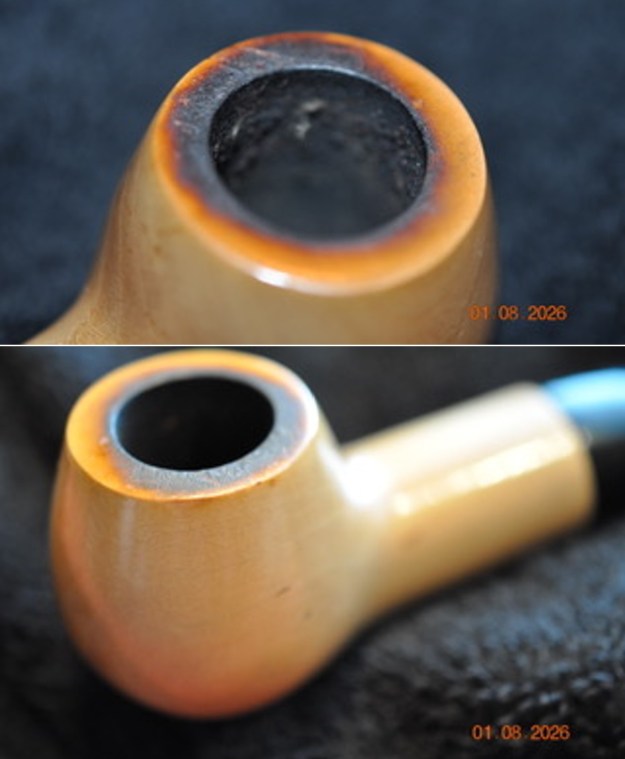
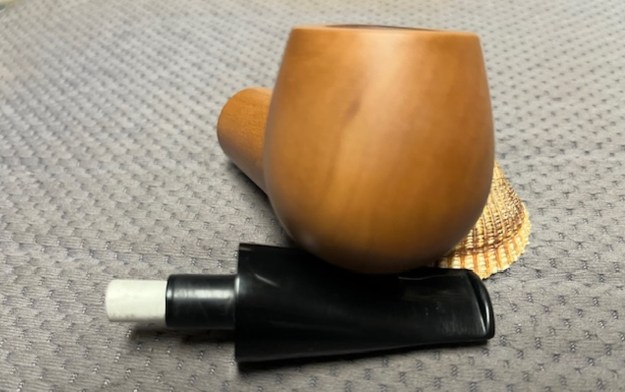
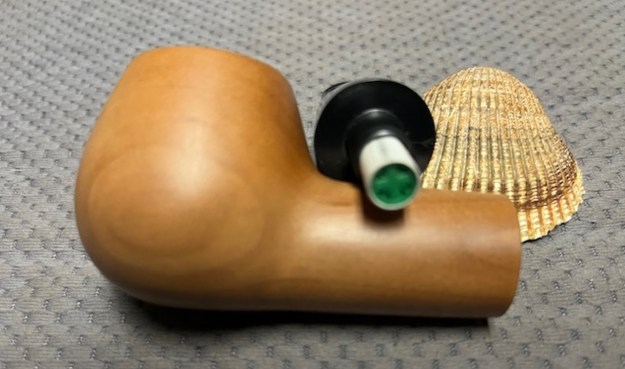
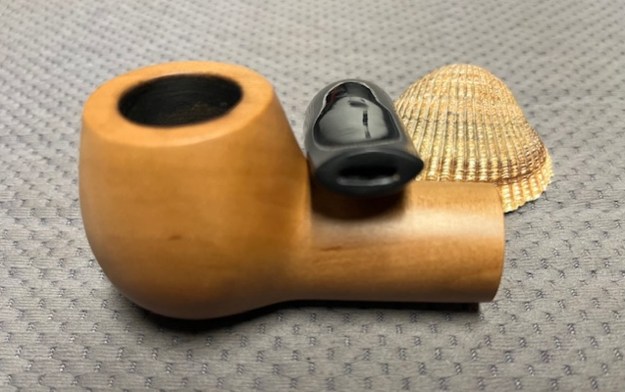
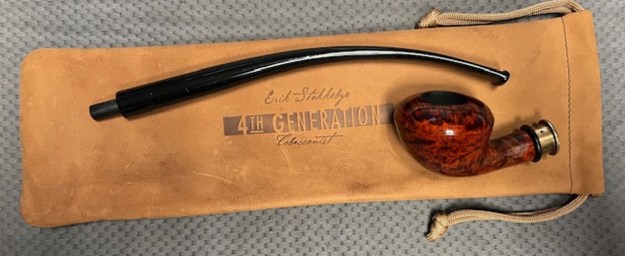
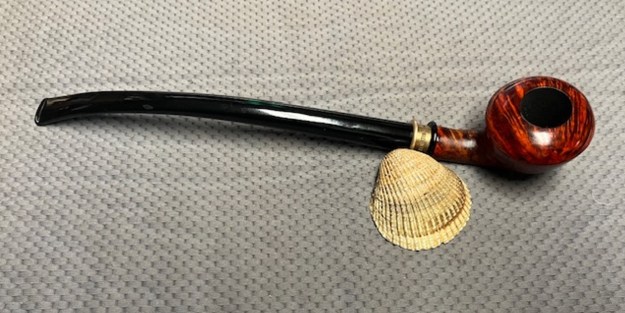
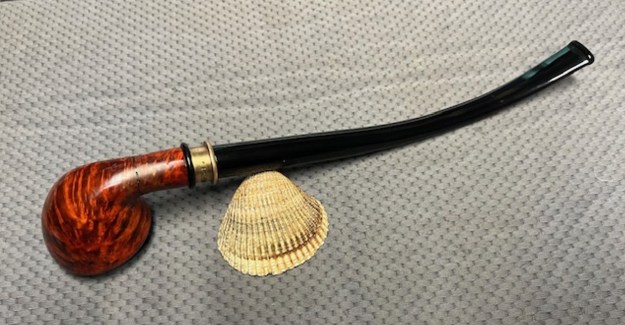
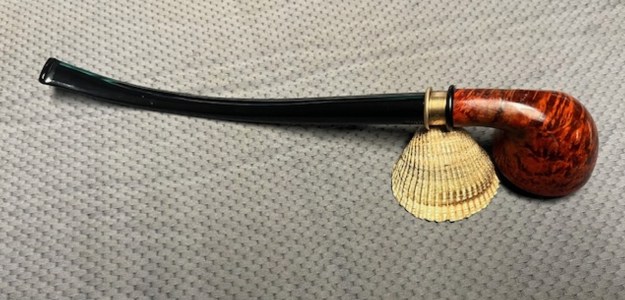
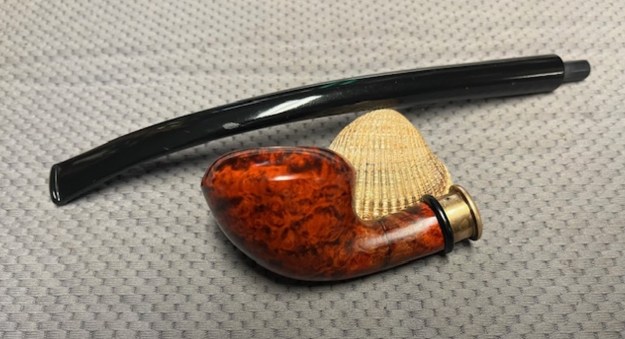
The next pipe on the table was a bowl sans stem that I have had in my box of bowls to be restemmed. It is stamped on the right side of the shank and reads Made in London [over] England and on the underside is stamped the shape number 97. The maker of the pipe is a bit of a mystery. The pipe had been reamed and cleaned by my brother Jeff many years ago. It had been lightly smoked so it was very clean. The rim top and the inner edge were very clean. The finish had been scrubbed and the internals were very clean. I found a long, acrylic, amber, acrylic taper stem in my can of stems that would work with some adjustments. It would need some shaping and polishing but the size and shape of the stem were perfect to start with. I took some photos of the bowl before I worked on it and the new stem. I took photos of the stamping on the pipe right side and underside. It is clear and readable as noted above.I sanded the bowl and shank extension with 320-3500 grit 2×2 inch sanding pads. I wiped the bowl and shank down with a damp cloth after each sanding pad to remove the sanding debris. The pipe began to look much better. I decided to make this little bowl into a Churchwarden and to set of the stem I had chosen I decided to add a thin brass band on the shank for decorative purposes. I picked a band that fit the shank snuggly and glued it in place on the shank. I took photos of the pipe with the band in place on the shank. I think it is going to look very good with the stem I have chosen. I polished the bowl ands shank extension with micromesh sanding pads – wet sanding with 1500-12000 grit pads. I wiped the briar down after each pad with a damp cloth. The bowl is starting to look very good. I worked some Before & After Restoration Balm into the surface of the briar with my fingertips to clean, enliven and protect it. I let the balm sit for a little while and then buffed with a cotton cloth to raise the shine. The photos show the bowl at this point in the restoration process. I turned to the new stem. I went through my can of stems and found a longer amber, acrylic taper stem that would work for the pipe. It had never been used and needed to have a tenon fit in the end that would work in the shank of the pipe. I decided to use a white Delrin tenon as it would be less visible in the stem. I drilled the end of the stem with a drill bit on my cordless drill to fit the end of the tenon.I reduced the diameter of the tenon slightly with a Dremel and sanding drum so that it would fit snugly in the shank of the pipe. I cleaned up the tenon with a flat file. I glued the tenon in the stem with clear CA glue and set it aside to cure. Once the tenon cured in place on the stem I fit it on the shank and took some photos of the new look. I took the stem off the shank and took photos of the look of the pipe and its proportions. It looks good with the brass band and the new amber acrylic stem. I sanded out the scratching on the stem with 320-3500 grit 2×2 inch sanding pads. I wiped the briar down after each pad with a damp cloth to remove the sanding dust and debris. I wiped it down with an Obsidian Oil cloth. It began to look very good.I polished the stem with micromesh sanding pads – wet sanding with 1500-12000 grit sanding pads. I wiped it down after each sanding pad with some Obsidian Oil. I finished polishing it with Before & After Pipe Stem Polish – both Fine and Extra Fine and buffed it off with a cotton cloth. I wiped it down with Obsidian Oil to protect the stem and slow down the oxidation. This restemmed, smooth Made in London England Apple Churchwarden is a beautiful looking pipe that combines a smooth finish with a thin brass band and an amber acrylic stem. The brown stains on the bowl work well to highlight the finish. I put the newly finished stem on the bowl and buffed it with Blue Diamond on the buffing wheel being careful to not buff the stamping. I gave the bowl and the stem multiple coats of carnauba wax on the buffing wheel and followed that by buffing it with a clean buffing pad. I hand buffed the pipe with a microfiber cloth to deepen the shine. The finished pipe is quite nice and feels great in the hand. Give the finished pipe a look in the photos below. The dimensions of the pipe are Length: 8 inches, Height: 1 ½ inches, Outside diameter of the bowl: 1 ¼ inches, Chamber diameter: ¾ of an inch. The weight of the pipe is 42 grams/1.55 ounces. I will soon be adding it to the British Pipe Makers Section of the rebornpipes store. Thanks for walking through the restoration with me as I worked over another beautiful pipe.
Remember we are not pipe owners; we are pipemen and women who hold our pipes in trust until they pass on into the trust of the next generation.