Tag Archives: refinishing

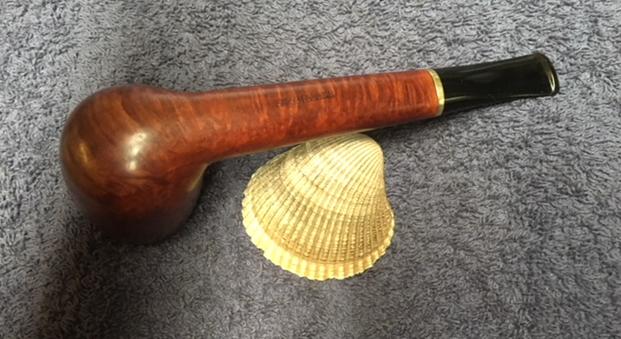
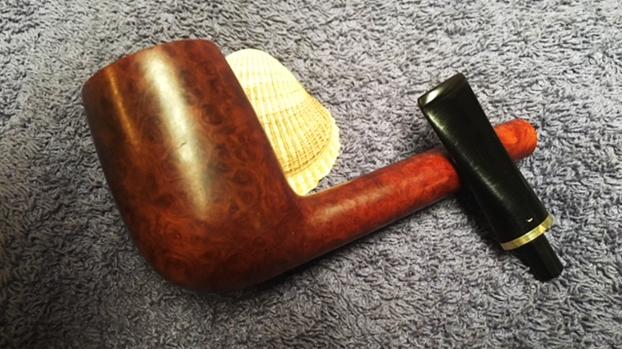
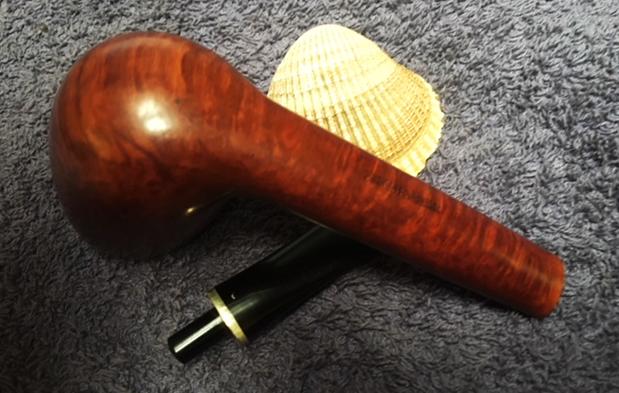
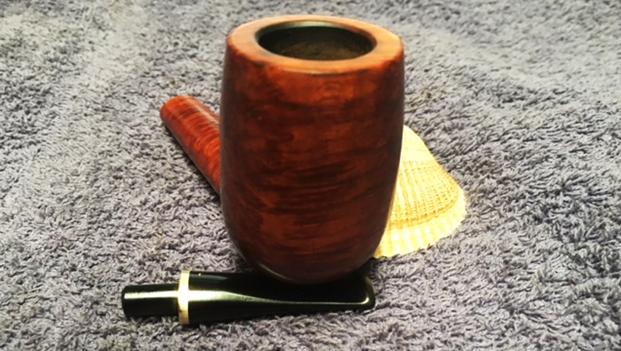
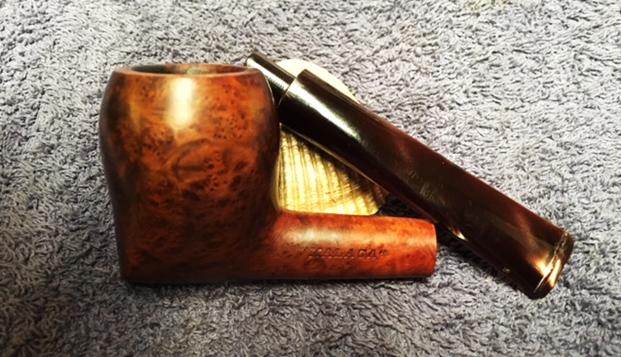
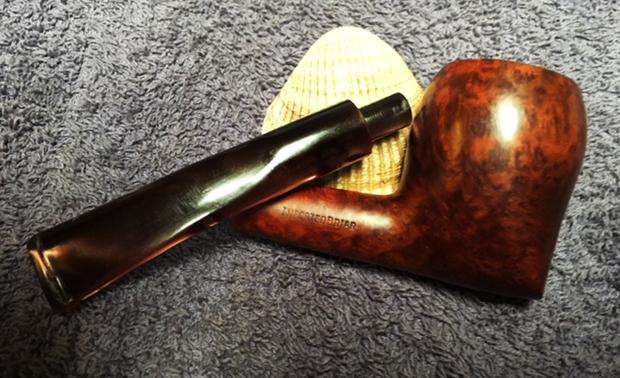
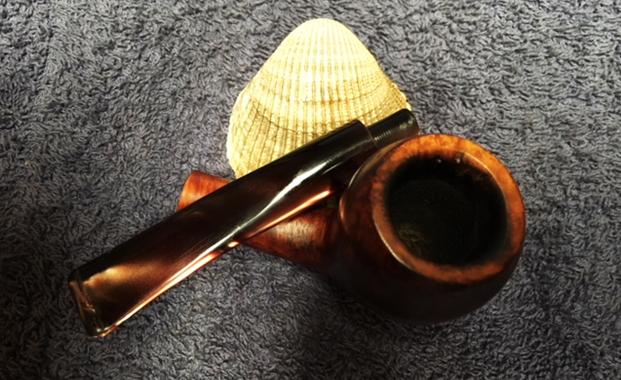
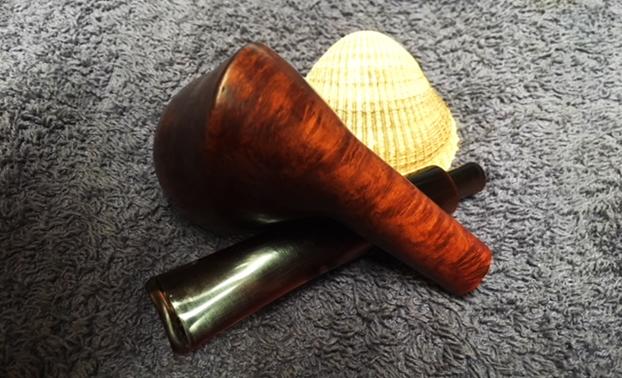
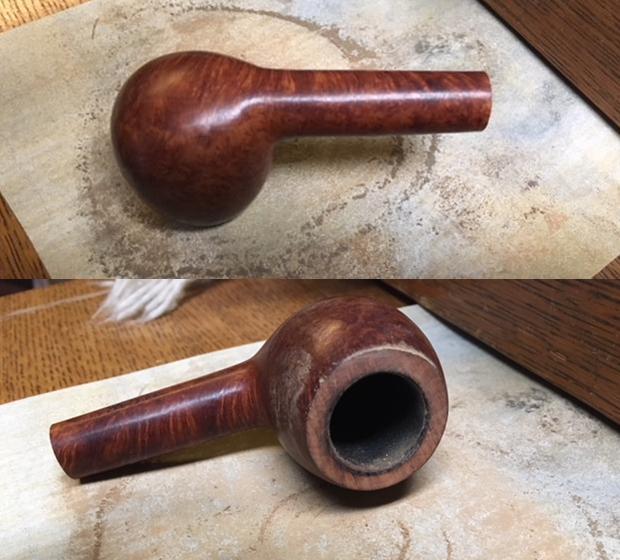
New Life for an interesting Tinderbox Noble


Blog by Steve Laug

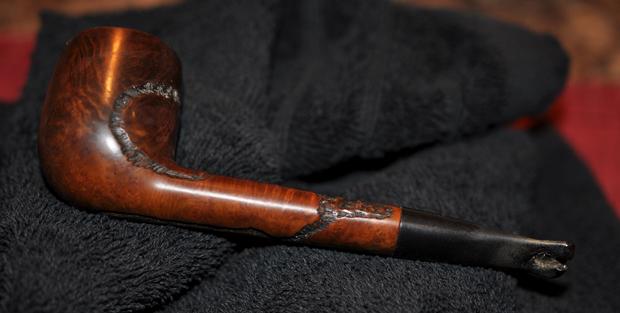
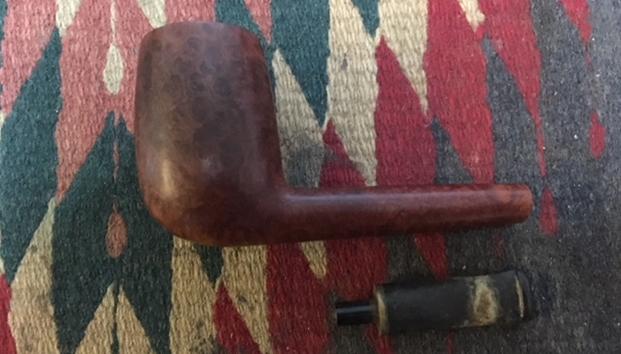
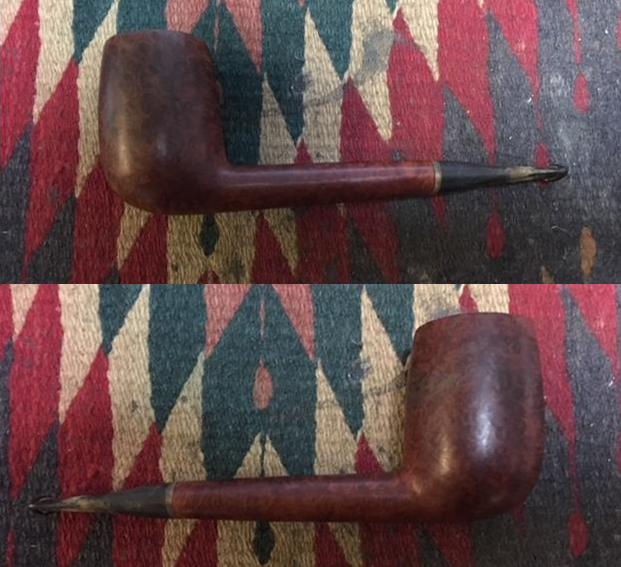
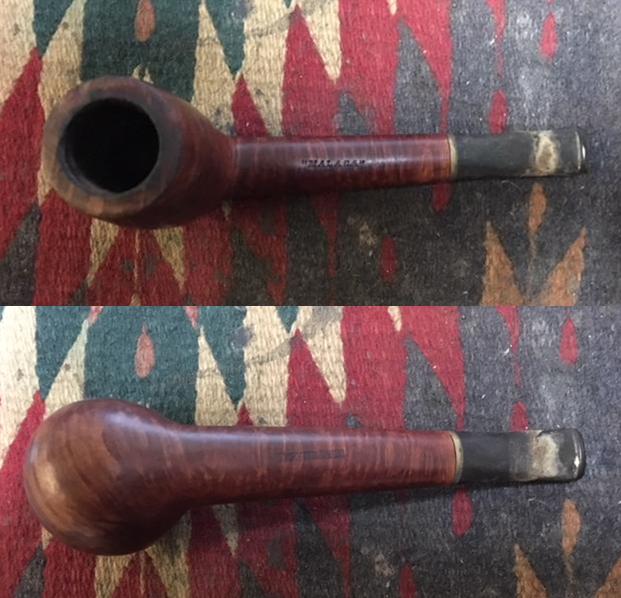
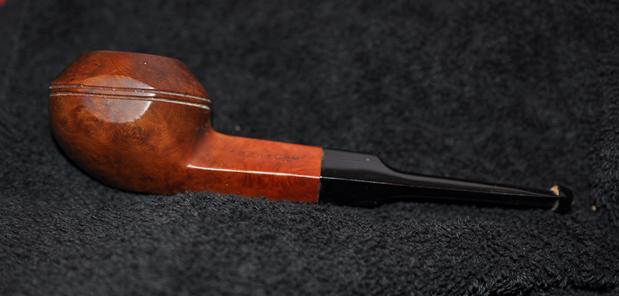
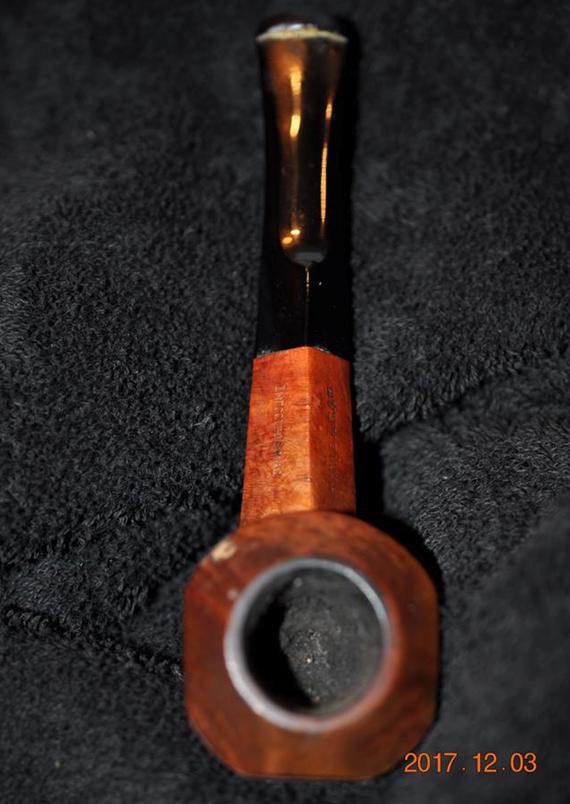
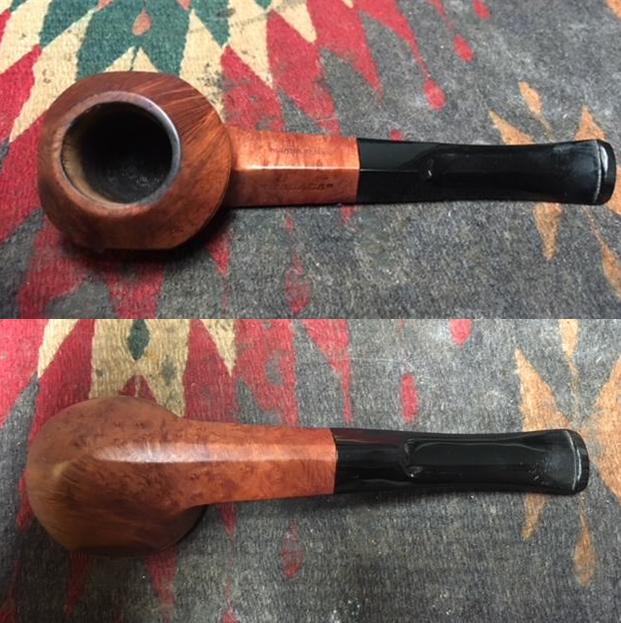
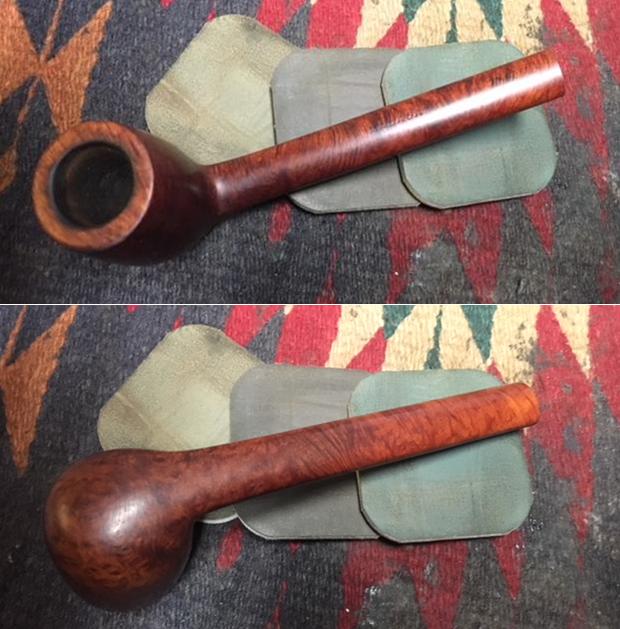
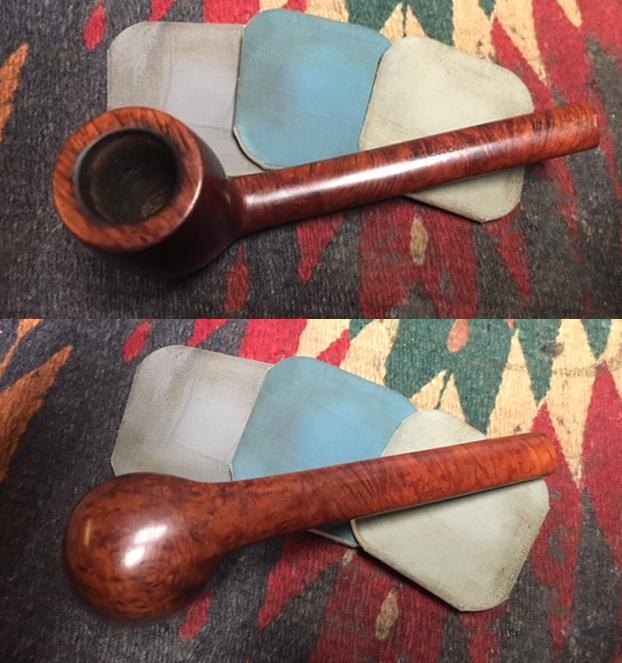
When this pipe arrived it had the look of an older Shalom pipe from Israel. The shape and style of the stem, the type of briar and the shape of bowl all said to me that it was pipe made by The Shalom Pipe Co. Once I looked over the pipe it was confirmed. It was stamped on the underside of the shank ISRAEL. On the side of the shank it reads The Tinderbox in an arch over Noble. So I was working on a Shalom pipe made for Tinderbox. The Shalom Pipe Factory in Israel was owned by Bernard Hochstein, former CEO of Mastercraft. The Alpha line was made exclusively for export to the United States. They were made in Israel from the 1970s into the 1980s. The Shalom Pipe Company made a lot of shop pipes for local pipe shops in the US. This is one of those pipes.

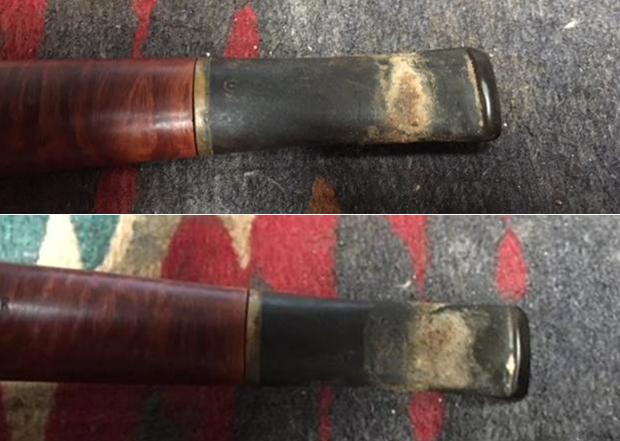
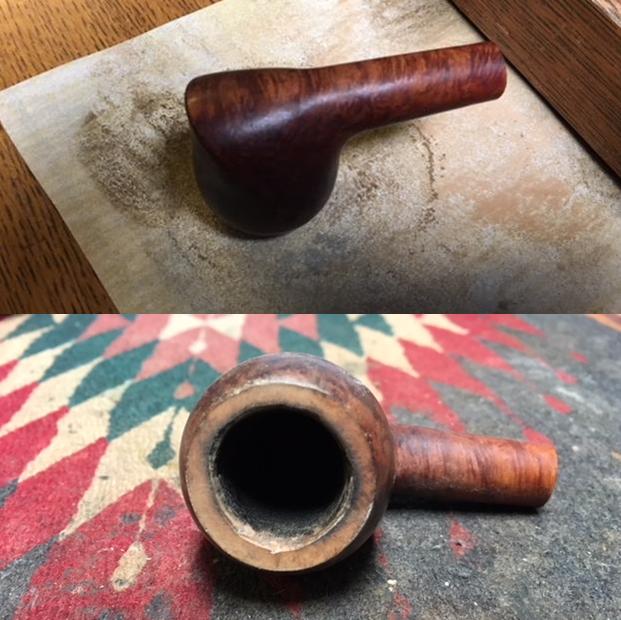
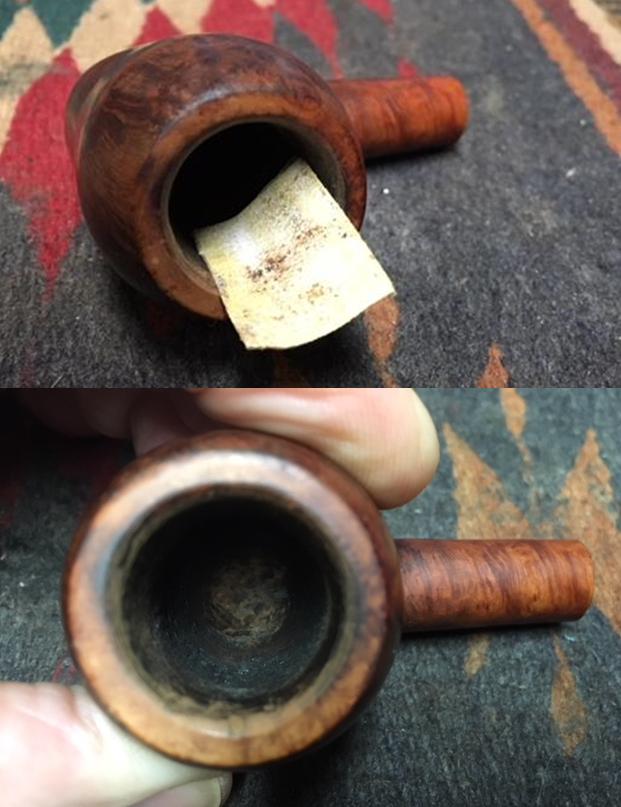
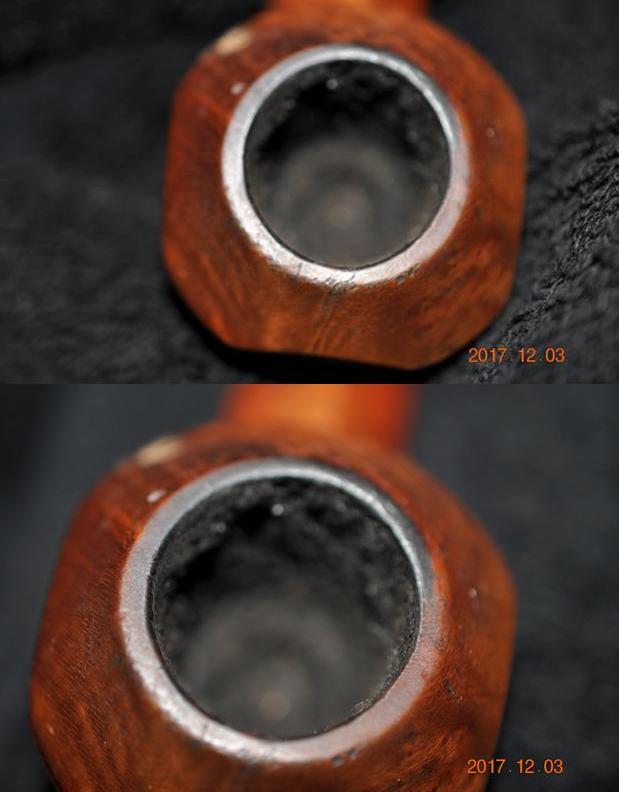
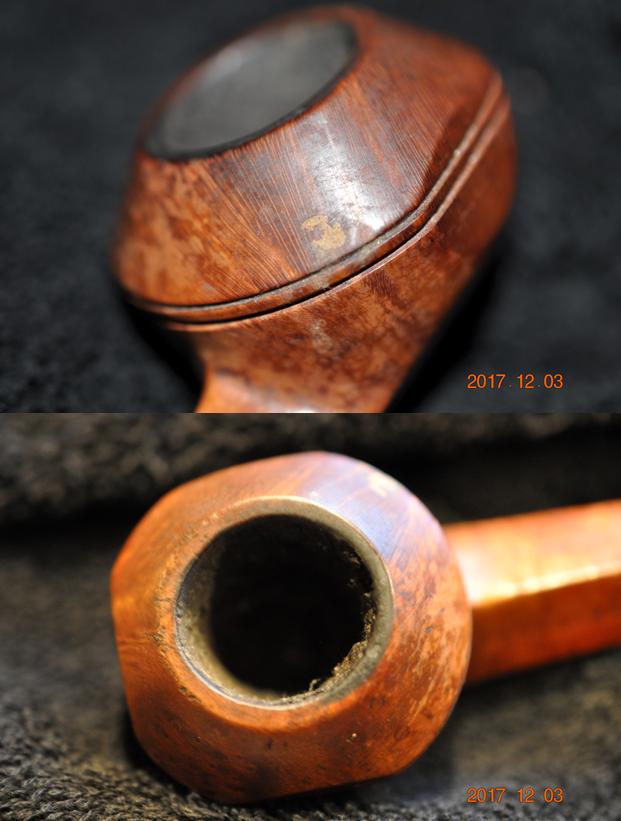
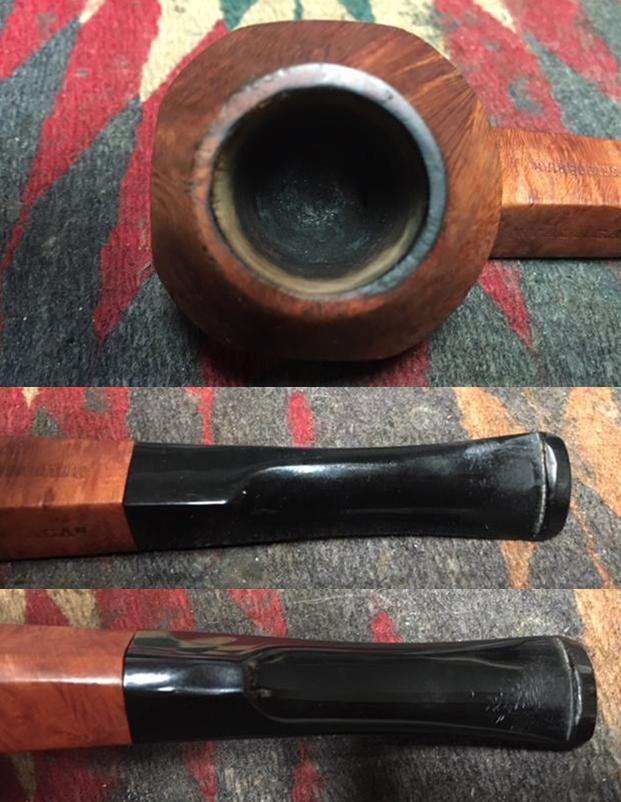
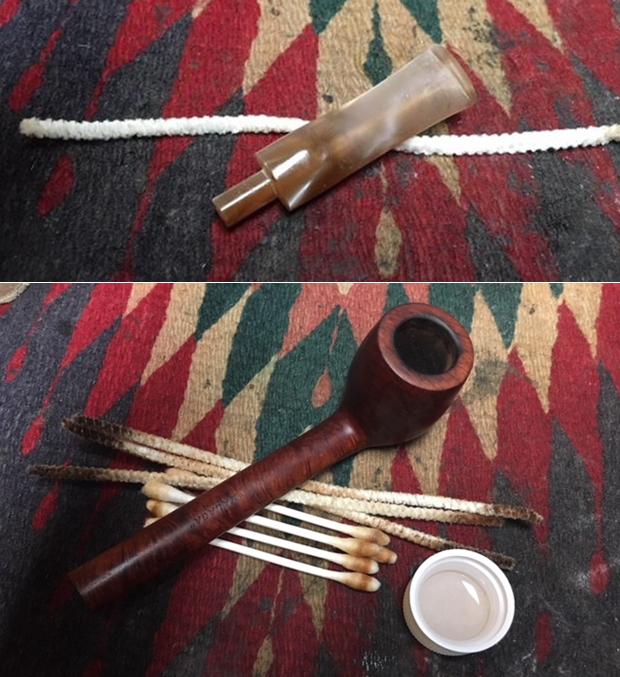
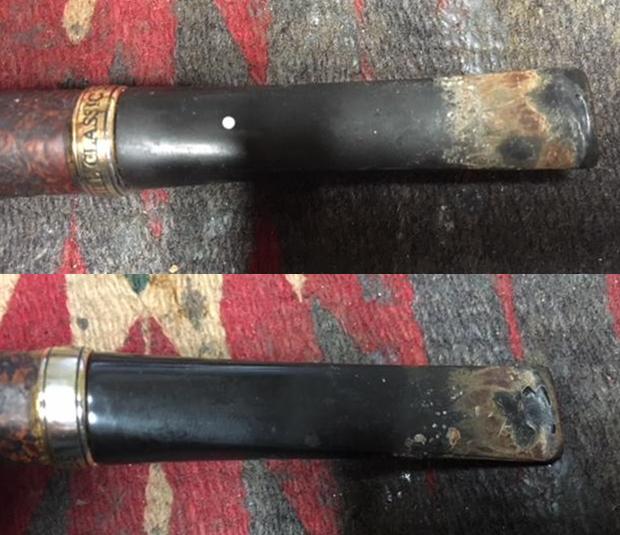
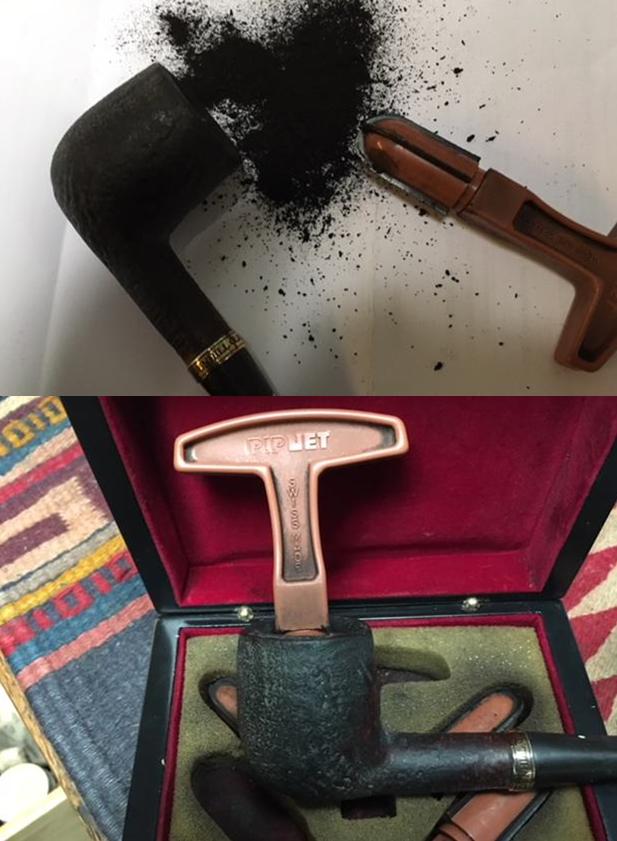
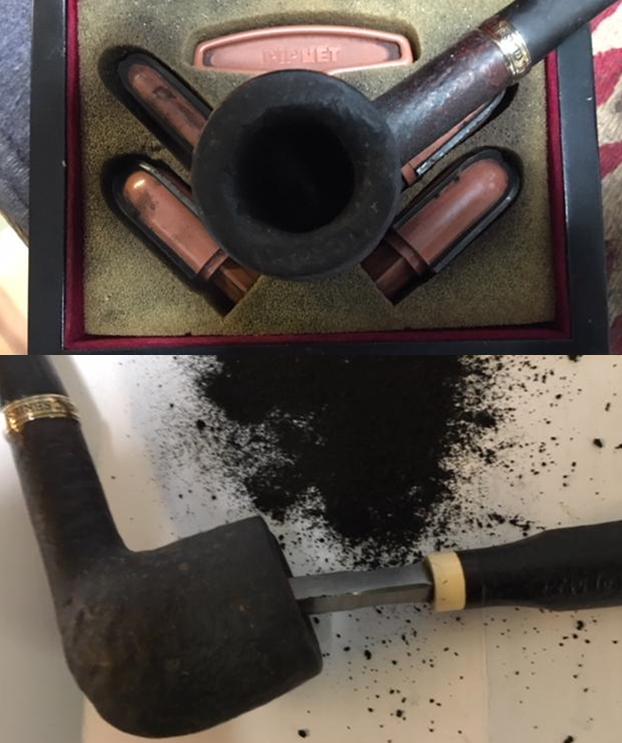
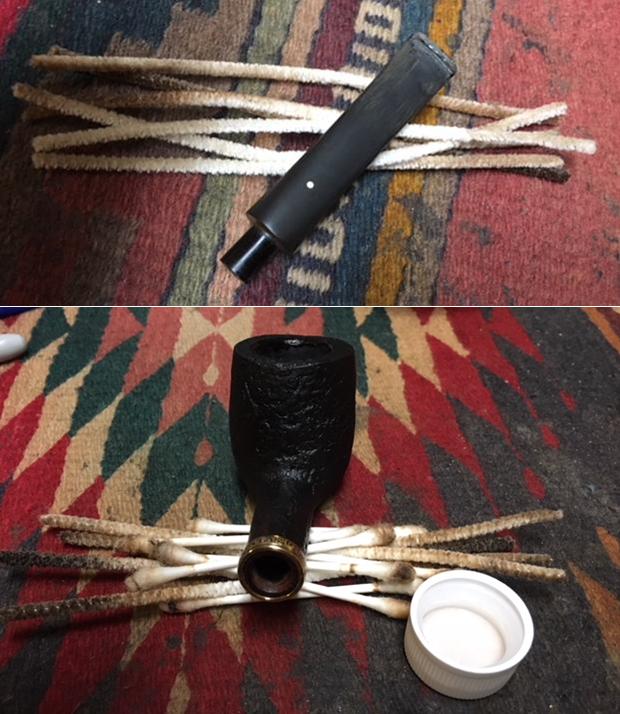
I am not sure where on his travels Jeff found this old tired pipe but it had a unique shape and look that I liked. It showed promise – the grain on the briar was a mix of cross grain, flame grain and birdseye. There was a chip out of the outer edge of the rim on the right side of the bowl and some light rash on the bowl side. The end of the shank was inset for the stem. It gave the pipe a dressy look. The bowl had a thick cake that had formed a hard lava coat on the rim top. The finish on the bowl was very dirty with a lot of oils and grime ground into the briar. The stem had deep oxidation in the vulcanite and there were very deep tooth marks on both sides near the button. Jeff took photos of the pipe before he started his clean up on it. He took a close up photo of the rim top and bowl. You can see the thickness of the cake in the bowl and the heavy lava coat on the top. The bowl exterior was also caked with tars and grime around the groove around the top of the bowl. Jeff also took photos of the sides of the bowl to show the condition of the pipe. The first four photos show the damaged area on the top edge of the right side of the bowl. I have circled the damaged areas in red on the photos to highlight the issue. The fifth photo shows the underside of the bowl. The grain is quite beautiful and shows through the grime on the finish. The stamping on the left side of the shank and the underside are very clear. The left side reads The Tinderbox in an arch over Noble as noted above. The underside is stamped Israel next to the shank end.The stem was pitted from the oxidation and it was deep in the surface of the vulcanite. There were visible tooth marks on both the top and underside of the stem as well as on the edges of the button itself.Jeff did his usual thorough clean up on the bowl and stem. He reamed the bowl with a PipNet pipe reamer and cleaned up the last bit of cake with a Savinelli Fitsall reamer. He cleaned the internals with alcohol, pipe cleaners and cotton swabs – Spending extra time scrubbing out the mortise as it was very dirty. He scrubbed the exterior of the pipe with Murphy’s Oil soap and a tooth brush and was able to remove all of the tars and oils built up on the briar. He was able to remove all of the tars and lava on the rim top and leave it looking very clean. He soaked the stem in an Oxyclean bath to raise the oxidation to the surface of the vulcanite.

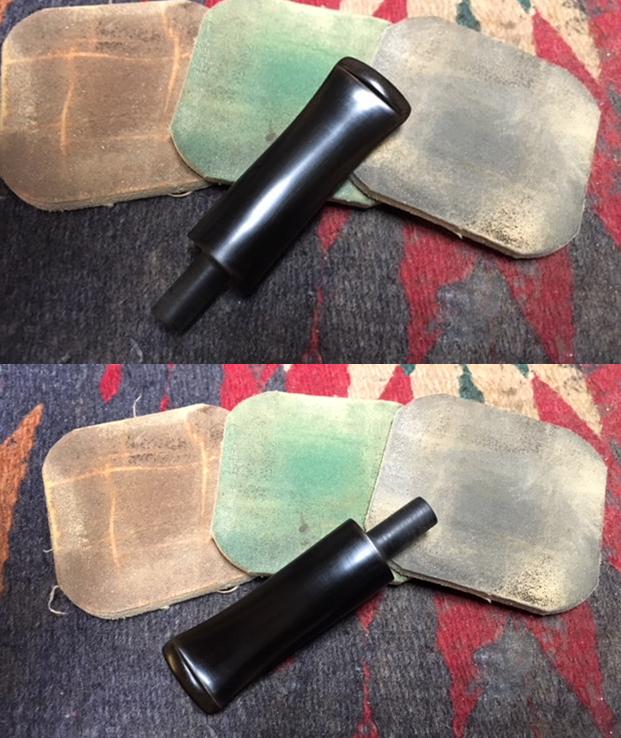
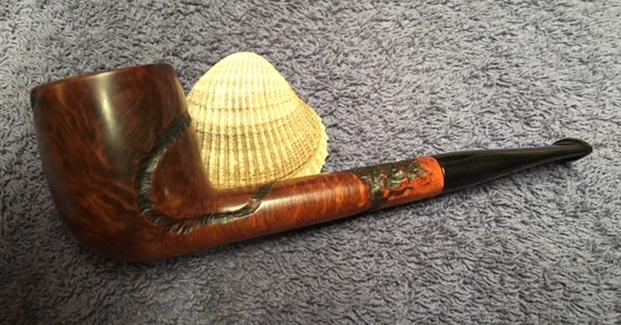
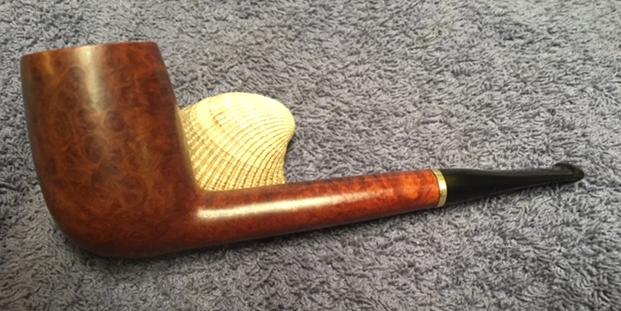
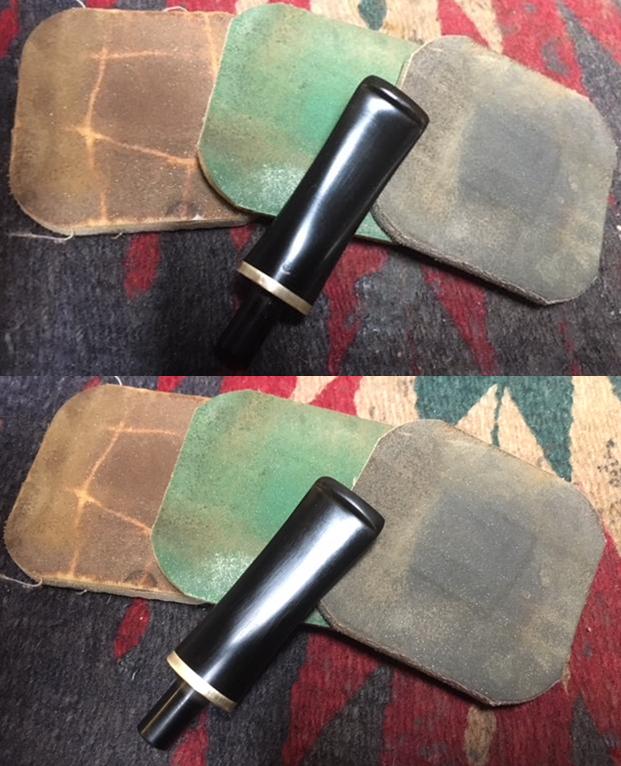
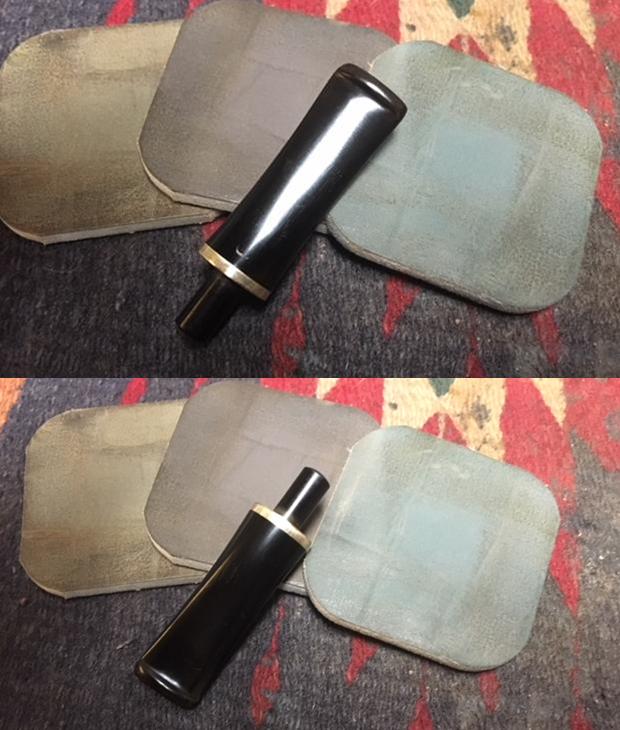
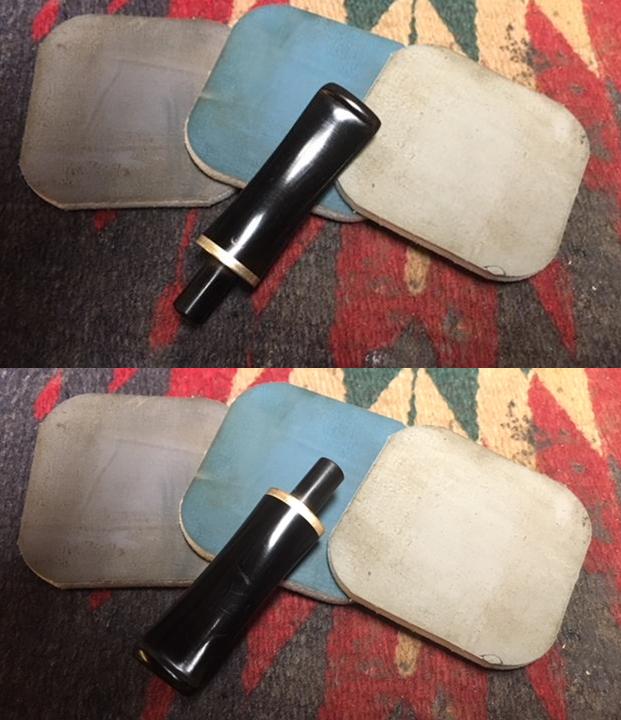
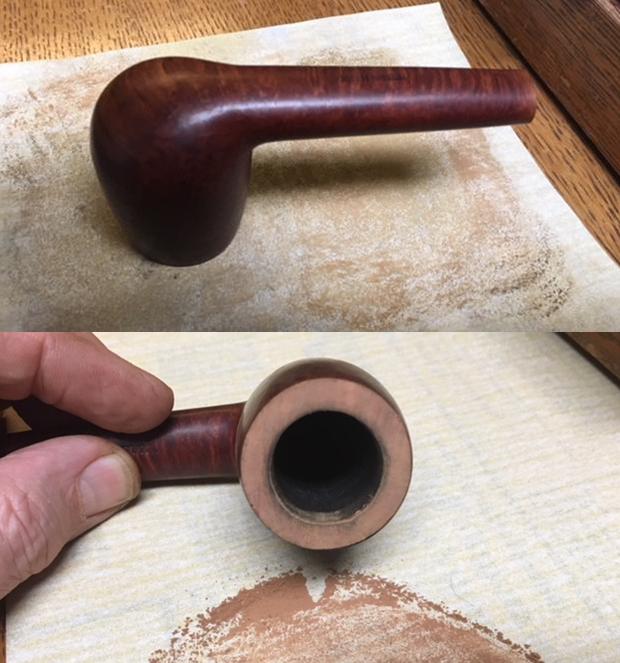
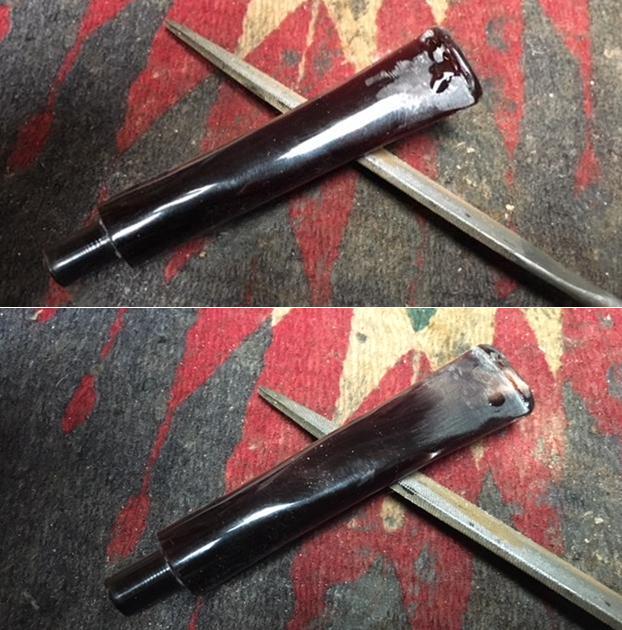
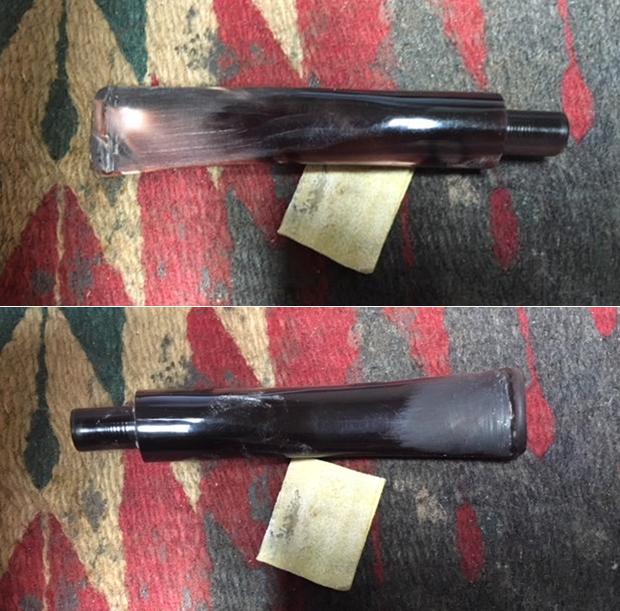
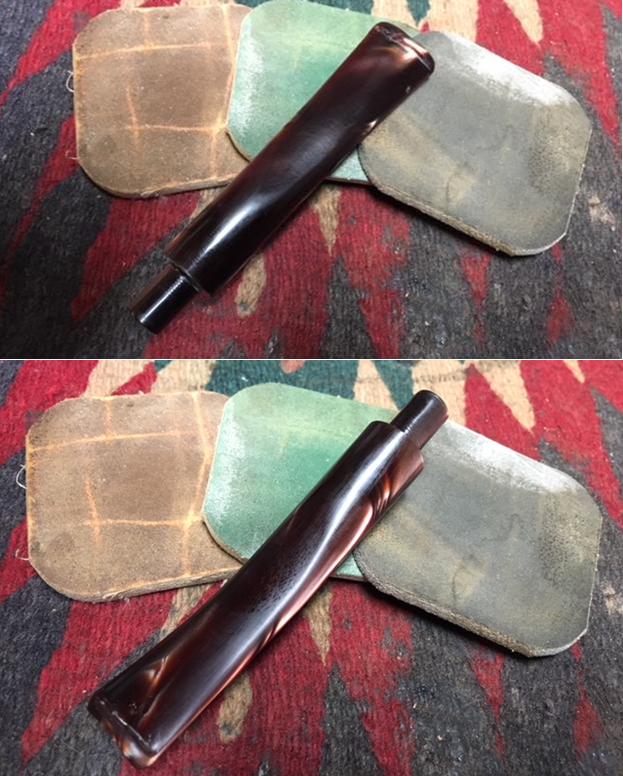
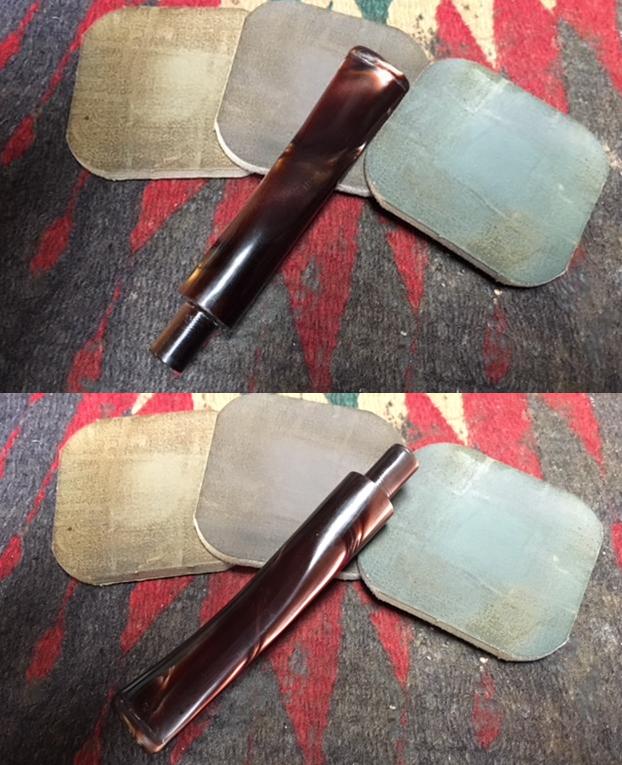
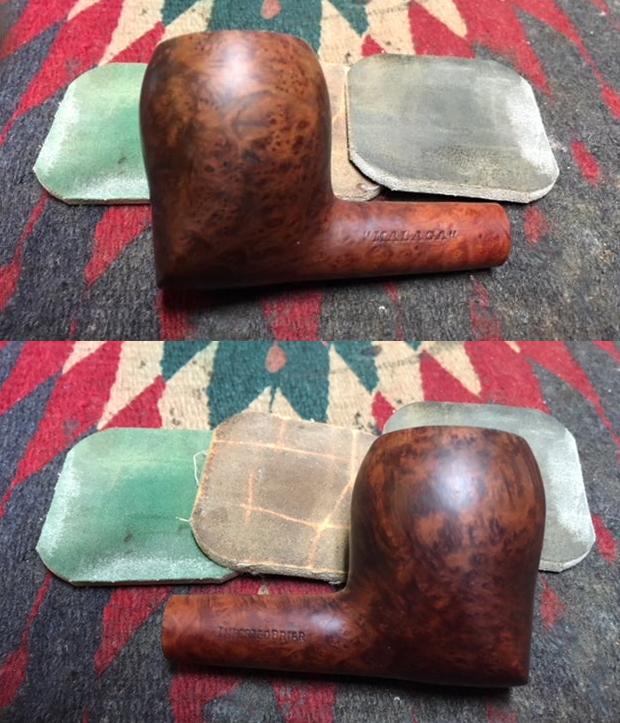
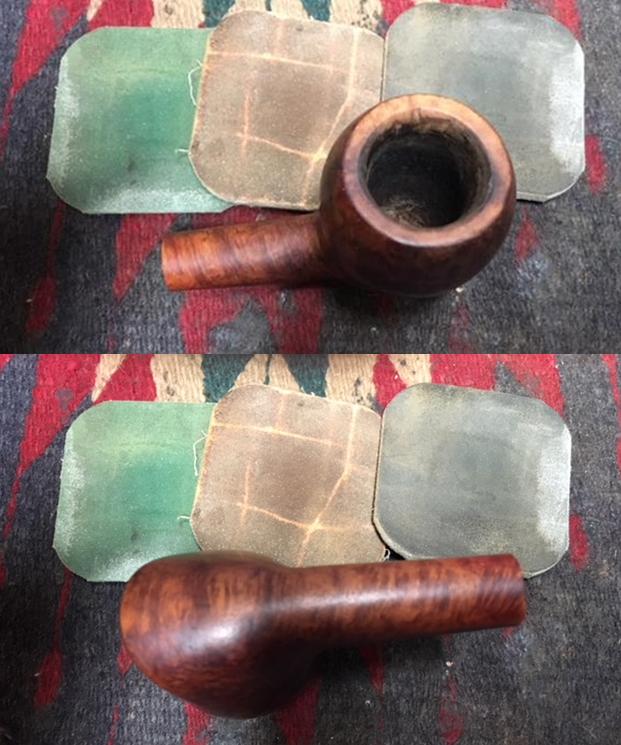
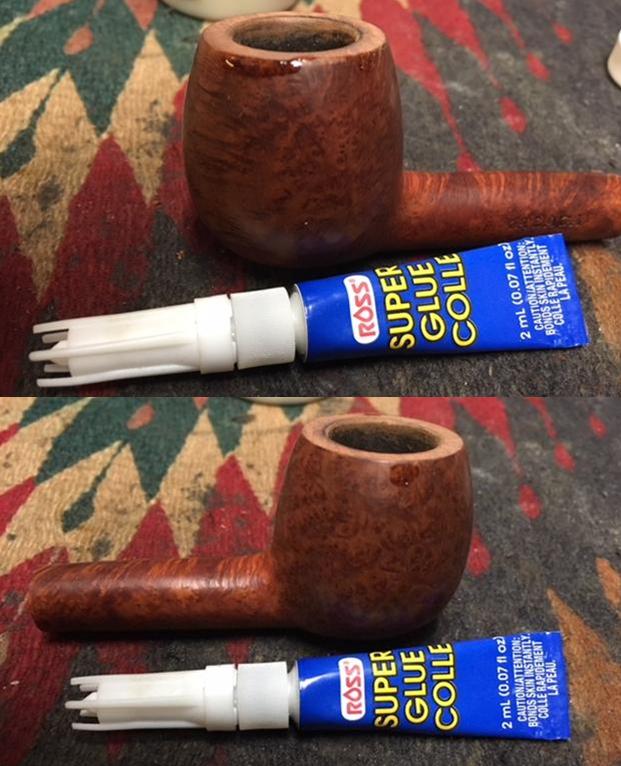
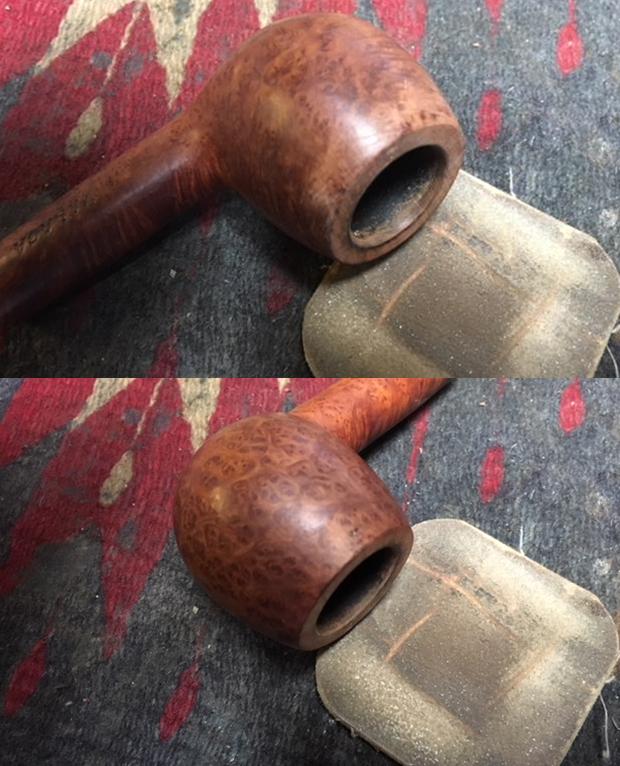
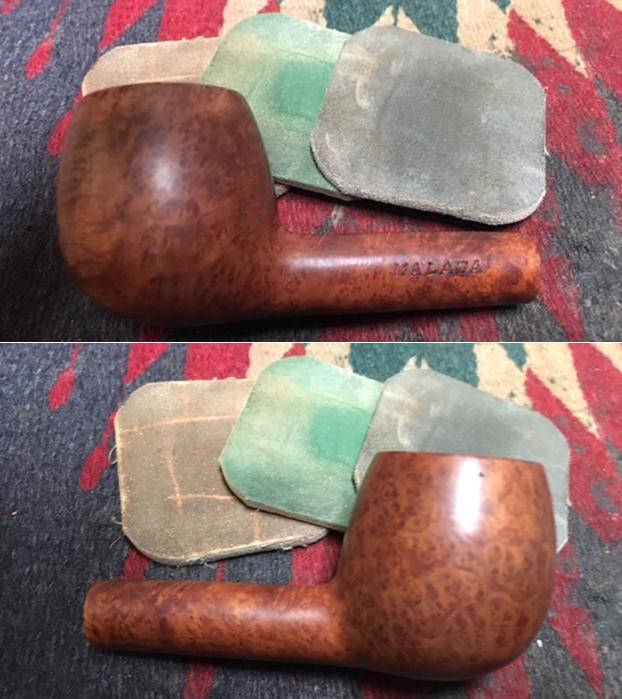
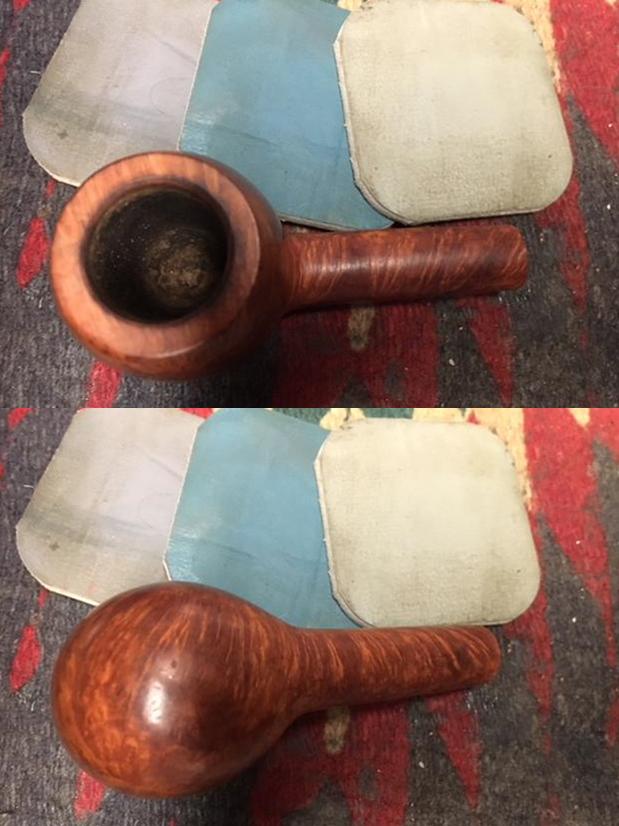
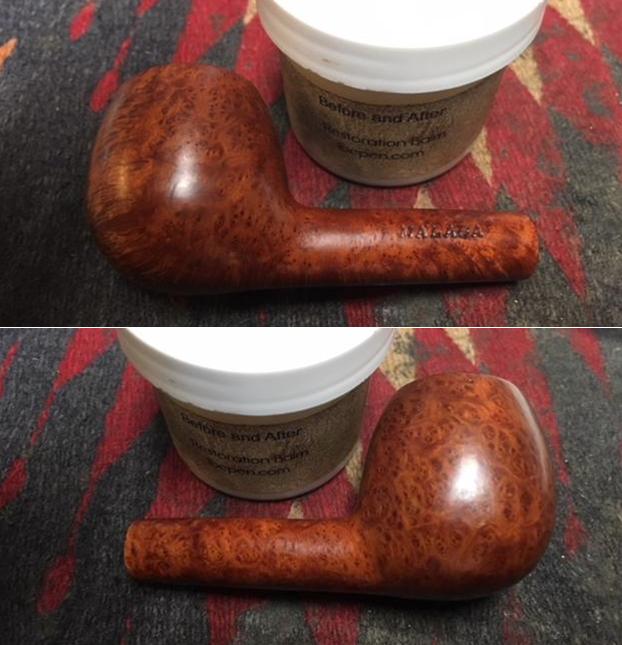
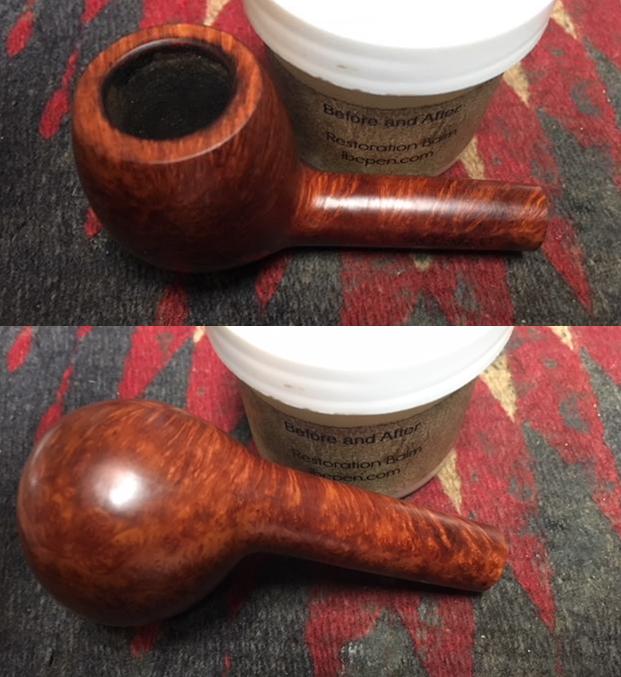
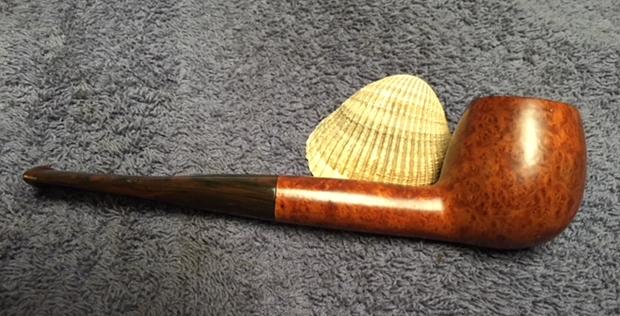
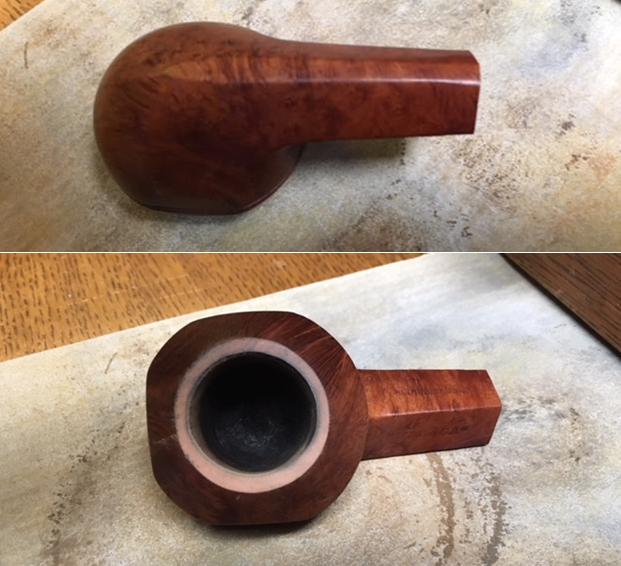
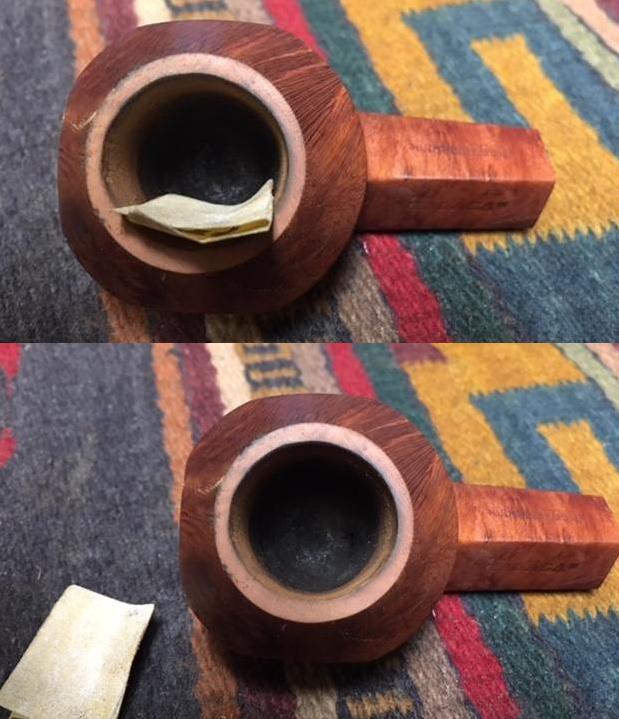
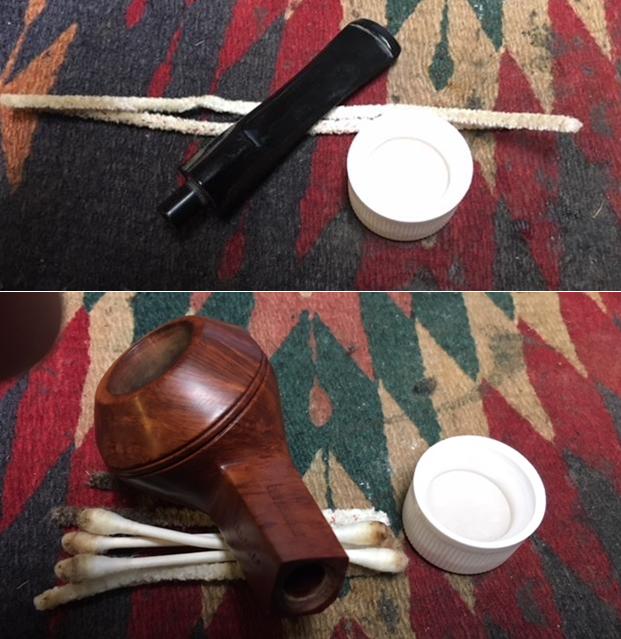
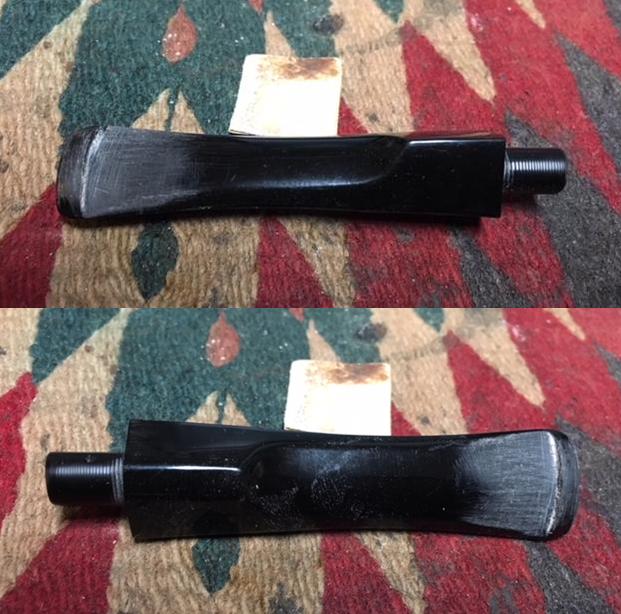
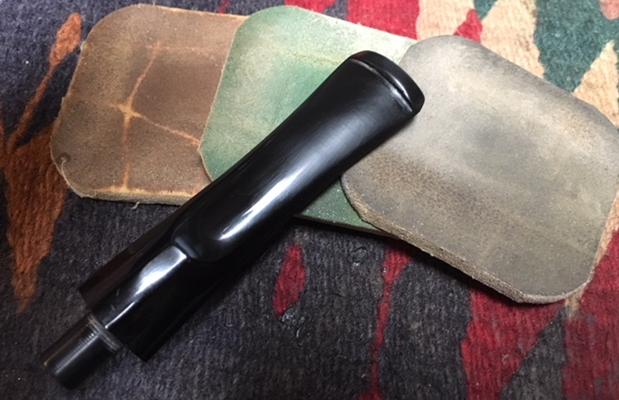
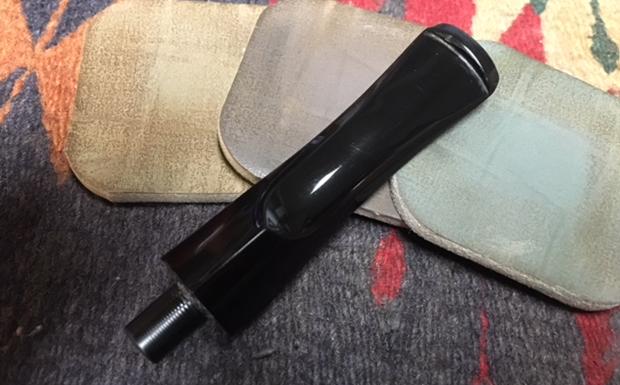
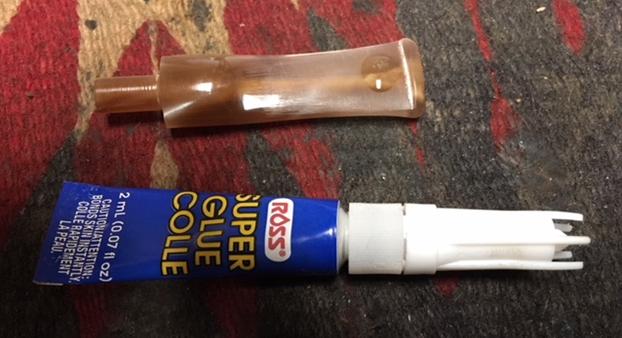
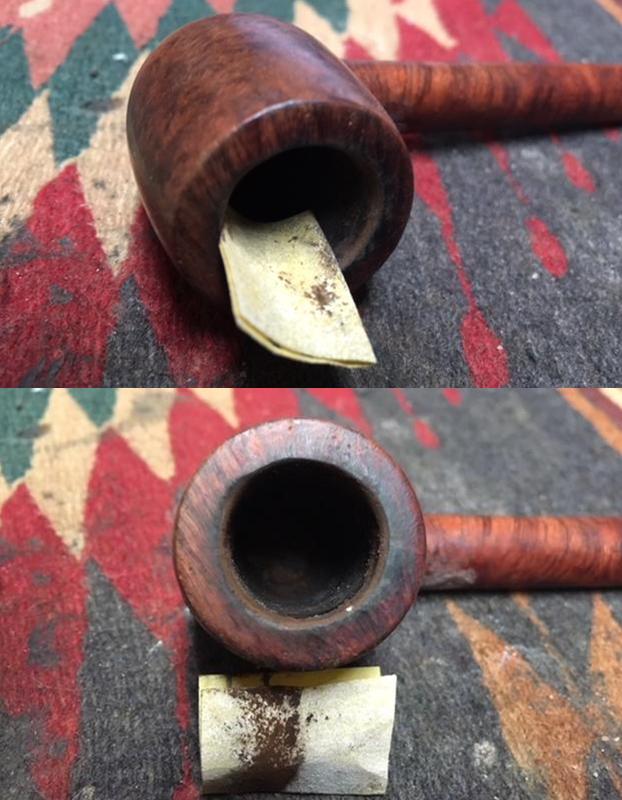
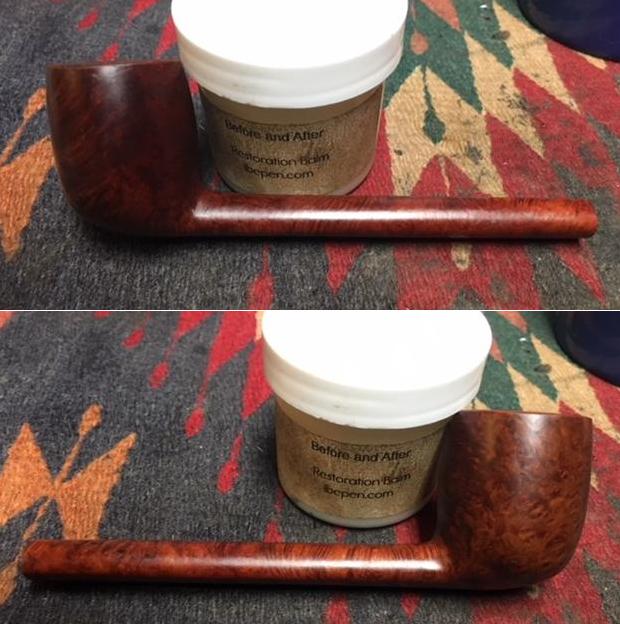
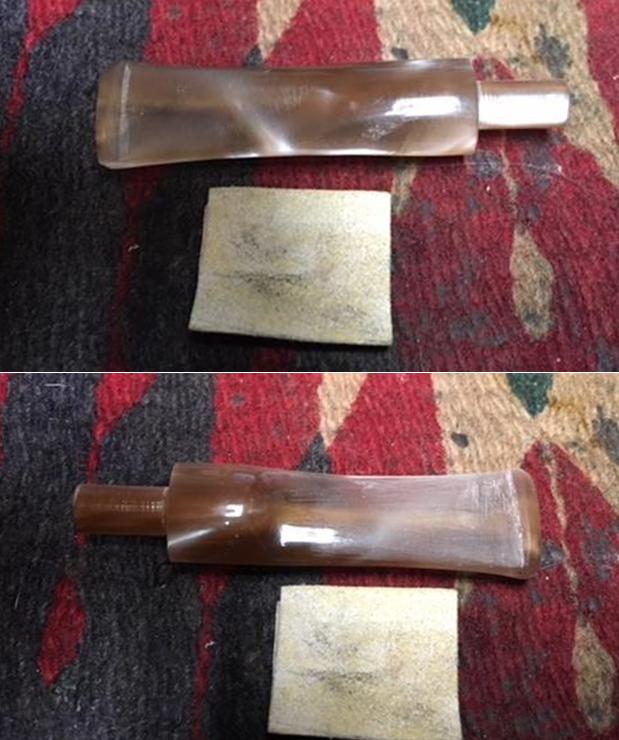
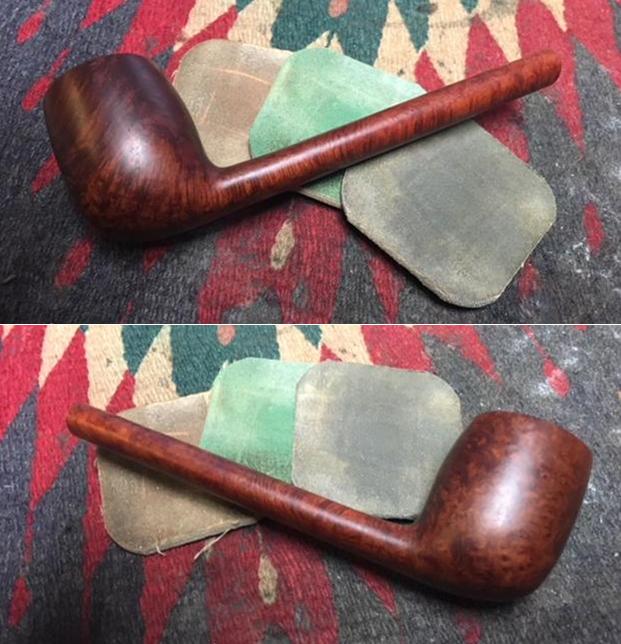
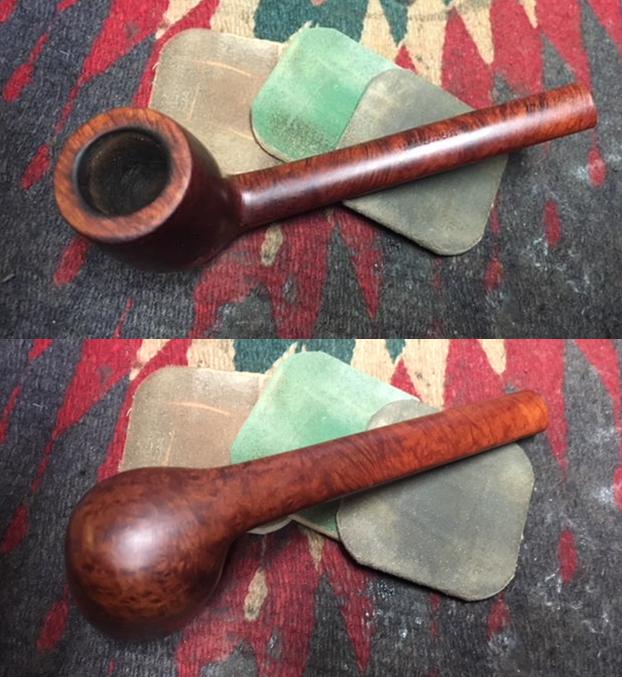
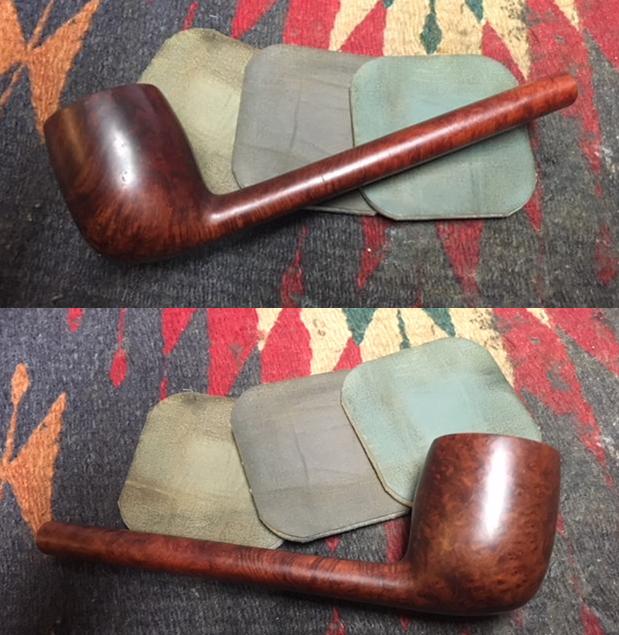
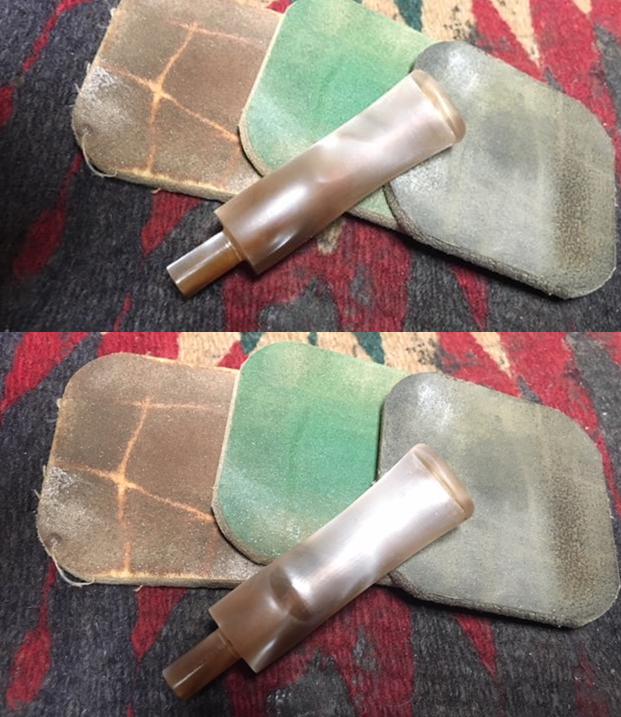
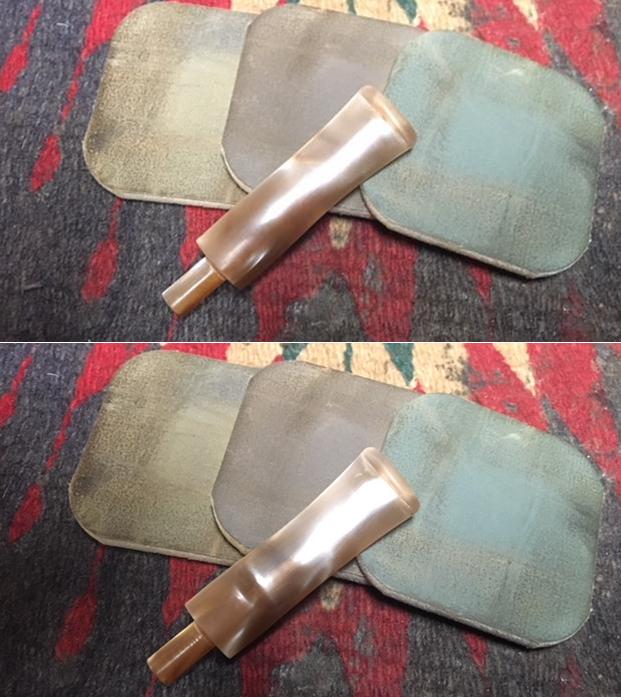
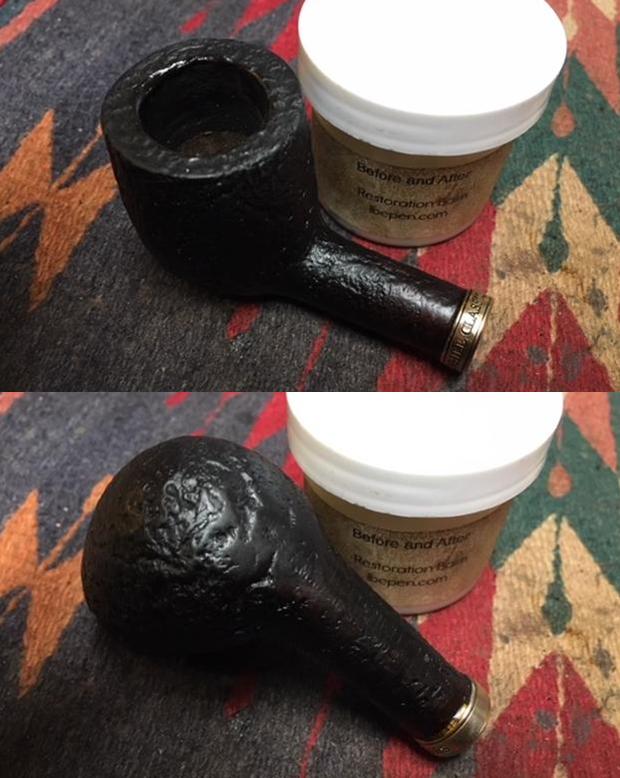
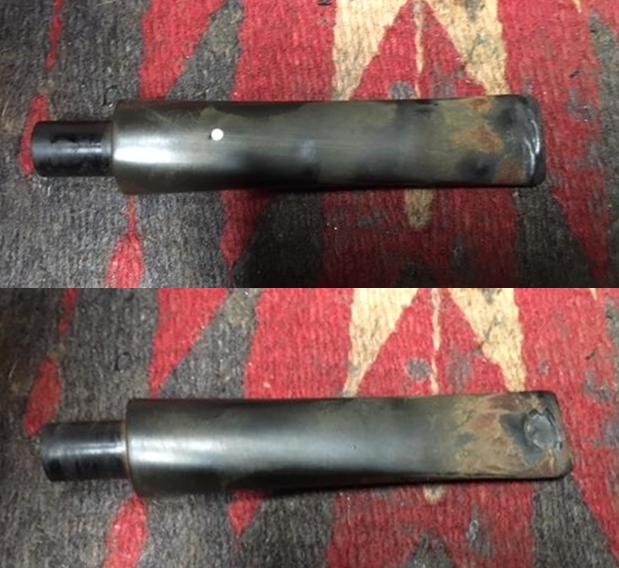
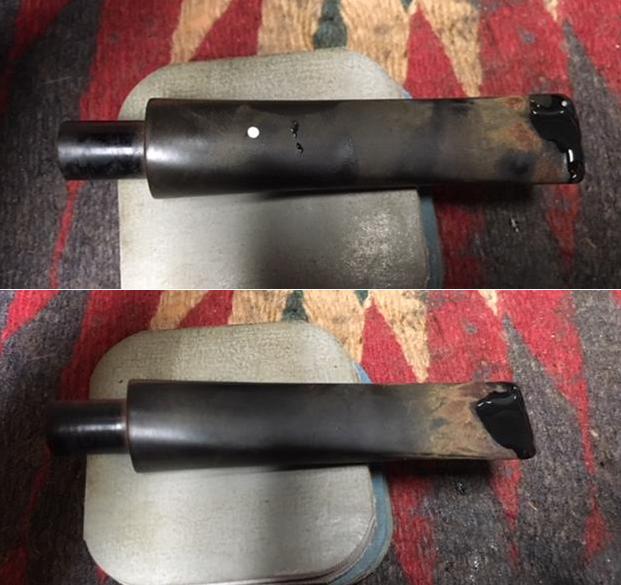
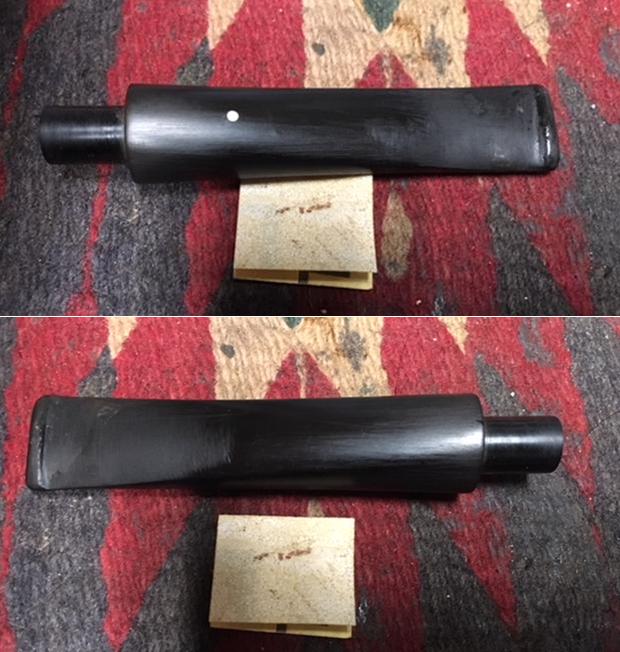
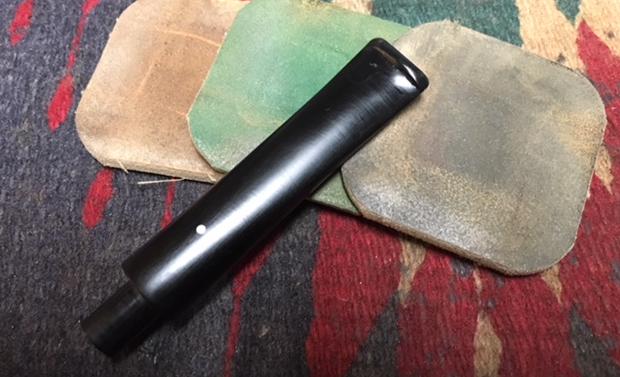
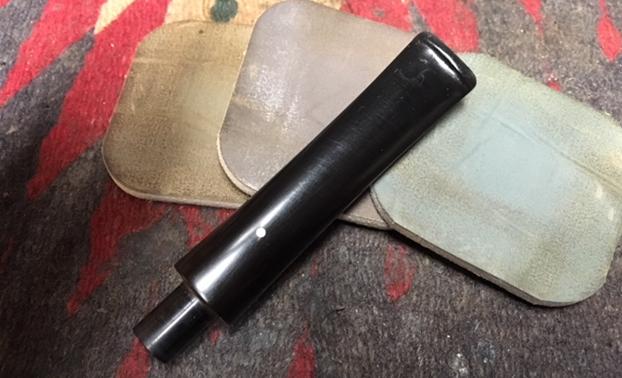
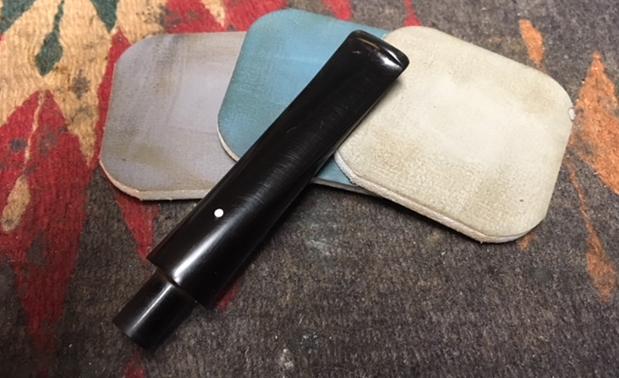
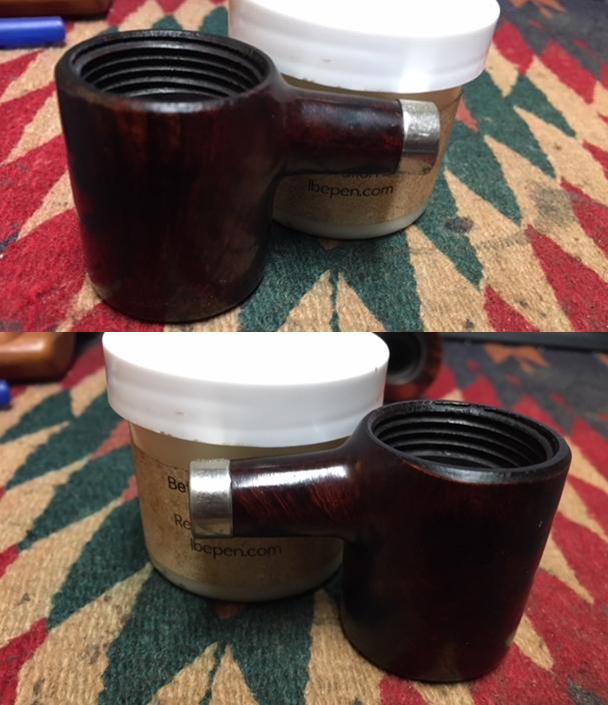
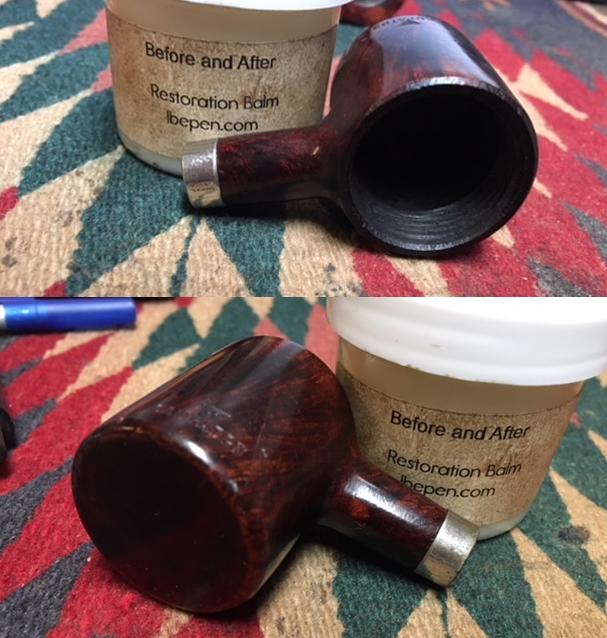
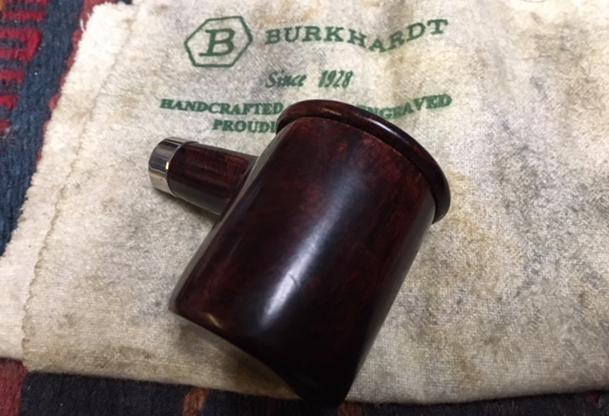
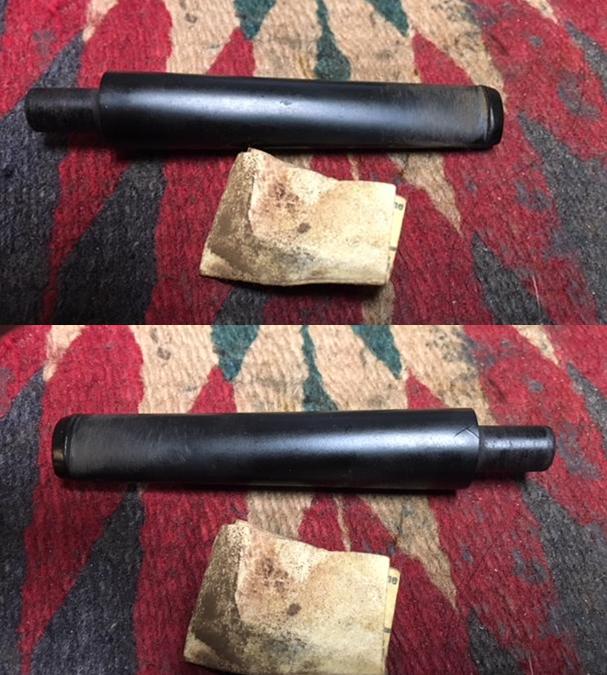
When it arrived it looked like a different pipe. I was excited to start working on it so I pulled the stem off and put it in a bath of Before & After Pipe Stem Deoxidizer and left it to soak overnight. I totally forgot to take photos before doing this.I remembered in time to take photos of the bowl before I started working on it. It was very clean and would look amazing once it was finished. The shank end had been turned and was inset so that the stem could be inset into the shank giving it a unique and trim look.I filled in the chipped divot on the outer edge of the rim with clear super glue. I layered it into the divot until the edge matched the surrounding areas. I also applied it to the rim top to cover that damaged area. I used the super glue to fill in the road rash on the left side of the bowl below the chipped area.When the repair had dried I sanded the repaired areas with 220 grit sandpaper to blend them into the rest of the bowl. I was able to blend the chipped area into the surface of the bowl so that it was virtually invisible. I sanded the road rash area with 220 grit sandpaper as well and blended it into the bowl side. I sanded it with micromesh sanding pads – wet sanding it with 1500-2400 grit micromesh pads and dry sanding it with 3200-4000 grit pads. I stained the sanded areas with a dark brown stain pen to match it to the rest of the stain on the briar. I hand buffed it with a soft cloth to raise a shine.I rubbed the bowl down with Before & After Restoration Balm to deep clean the smooth finish, enliven and protect the briar. I hand rubbed it with my fingers and wiped it off with a soft cloth. I buffed the bowl on the wheel with Blue Diamond to raise the shine. I took some photos of the bowl at this point to mark the progress in the restoration. In the morning I removed the stem from the deoxidizer and wiped off the excess deoxidizer from the surface of the stem with a paper towel. I cleaned out the airway in the stem with pipe cleaners and alcohol to remove any remnants of the bath from that part of the stem. The photos below show the stem after the soak and rub down. It was still quite oxidized. The oxidation was significantly less than when I started but it was still present. I decided to work on it without further soaking. It would be a stem that I would have to hand work to get rid of all the oxidation. The tooth marks are visible on the top and underside of the stem in the photos.I sanded the stem with 220 grit sandpaper to remove the oxidation from inside the tooth marks, reshape the button on both sides and wiped down those areas with alcohol to remove the sanding dust. I painted the tooth marks with the flame of a Bic lighter to lift them as much as possible before repairing them. I filled in the tooth divots with black super glue and sprayed them with accelerator to speed the drying time. Once the repairs were dry I sanded them with 220 grit sandpaper to blend them into the surface of the stem. The first two photos below show the repairs after I first sanded them. The third and fourth photos show the stem after I had sanded the repaired areas to match the surface of the stem. I polished out the sanding scratches and marks in the vulcanite with micromesh sanding pads – wet sanding it with 1500-2400 grit pads and dry sanding it with 3200-4000 grit pads. I wiped the stem down with Obsidian Oil after each sanding pad. I buffed the stem with Blue Diamond on the buffing wheel. I brought it back to the table and sanded it with the final three 6000-12000 grit pads. After the final pad I gave it a final coat of oil and set it aside to dry. I put the stem back on the bowl and worked the pipe over on the buffing wheel using Blue Diamond to polish the bowl and shank. I buffed the stem to raise the gloss on the vulcanite. I gave the bowl and stem multiple coats of carnauba wax. I buffed the entire pipe with a clean buffing pad to raise the shine. I hand buffed it with a microfiber cloth to deepen the shine. The finished pipe is shown in the photos below. The medium brown stain on the cauldron shaped bowl works well with the rich black of the vulcanite stem. This is a unique, beautiful and well-made pipe. The dimensions of the pipe are: Length: 6 inches, Height: 2 inches, Diameter of the bowl: 1 1/2 inches, Diameter of the chamber: 7/8 inches. I will be adding this one to the rebornpipes store shortly if you are interested in adding it to your collection. It will make a fine addition to the rack. If you are interested email me at slaug@uniserve.com or send me a message on Facebook. Thanks for looking.

ANSWERS TO QUESTIONS: How do I strip a finish from a pipe?


Blog by Steve Laug

I have been asked how to strip a finish from a pipe more times than I can tell you. So this Answers to Questions blog is written to talk about how I remove the finish from a pipe. On first glance this seems like a very easy thing to do. You just need to sand the bowl until the finish is removed correct? That answer is certainly describes one method that has been used with success. But there are other ways to do the job that are less intrusive and less damaging to the bowl and shank. When sanding the pipe it is easy to damage the stamping and modify the shape. Both of these are undesirable in restored pipe. So how do I go about doing the job? I want to take time to present the options for removing finishes. I will differentiate between smooth, rusticated and sandblast bowls in the process of explaining each method. (I know that opinion varies on each of these coats and I only speak from my personal tastes and experience.)

Removing stain from the briar/wood bowl.
1. Removing stain from a smooth finish is actually quite straight forward. You need to understand that once you remove the stain you may well reveal more issues – fills, flaws and less than perfect briar. You have to be okay with taking that chance because you never know what you will find under the stain. To carefully observe what is underneath the stain coat I wipe the bowl down with isopropyl alcohol. I find that the alcohol makes the stain more transparent and blends the colours together in a way that is much more conducive to seeing the grain. Wiping off the stain may well reveal fills underneath the stain. They will need to be dealt with but that does not bother me too much. I really like a more transparent stain so it is worth the extra effort.

If I want to strip the stain from the bowl I wipe it down with acetone. Some have used fingernail polish remover which contains acetone and this works very well. However, I like to use a product that contains 100% acetone that I buy in the nail polish removal area of my local pharmacy. Acetone strips the finish back to almost bare briar. Repeating the process will bring more and more of the stain to the surface of the briar. Once the pipe is clean it can be restained and polished with micromesh sanding pads and/or a buffing wheel.

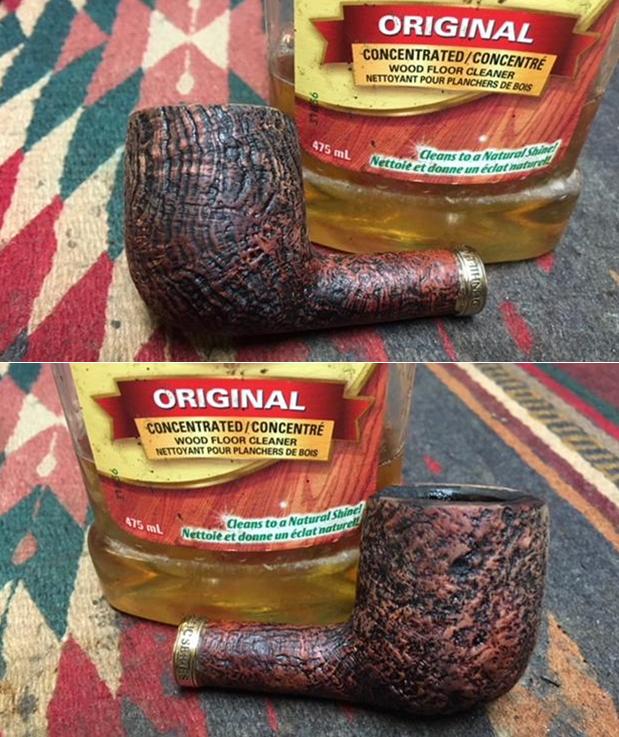
2. Removing stain from a rusticated or sandblast finish is different from removing it from a smooth finish. Alcohol works very well but needs to be almost washed over the bowl. I have used an alcohol bath to remove the finish. I fill an airtight container with isopropyl alcohol and drop the bowl into the bath overnight or at least for 3-4 hours. I find that it removes the finish very well from both sandblast and rusticated bowls. If you are reticent to soak the bowl, remember the isopropyl alcohol I use is 99% alcohol and evaporates very quickly. It does not stay in the briar. Besides that, you will be thoroughly cleaning the pipe afterwards.

You can also wipe the outside of the bowl down with very wet cotton pads that are almost dripping alcohol. It has the same effect. Remember you want the alcohol to reach down into the grooves, nooks and crannies of the finish. An interesting effect can be obtained by merely wiping down the high spots on the finish and leave the depths untouched. You can then restain it with a contrasting colour and get some beautiful finishes.

Removing shellac from the briar bowl.
1. Shellac is a shiny top coat that is often applied by a pipe maker or manufacturer to give a pipe a permanent shine. It is much easier to remove than the other topcoats that follow. On a smooth finish, it is very simple. Wipe the bowl down with isopropyl alcohol on a cotton pad. I repeat until the shine is dull once the bowl dries. I touch up the shiny spots with more alcohol. If you want to restain the pipe afterwards then you can wipe it down with acetone instead of alcohol. Both do the job but acetone also strips more of stain coat than alcohol. I finish the pipe with several coats of carnauba wax buffed to a shine with a clean buffing pad.

2. Removing shellac from a rusticated or sandblast finish is done in exactly the same way as removing stain from this finish spelled out above. I use either an alcohol bath or a very wet cloth of alcohol and wipe the finish down. Both work very well as they work deep in the grooves and nooks and crannies of the finish. The idea for me is to remove the shiny coat because to be honest I really don’t like it. I have had it come off on my hands when the pipe heats up. Therefore, the shellac coat has to go.

Removing varnish from the briar bowl.
1. Varnish is more resistant to alcohol than the other top coats I have talked about so far. For smooth finished pipes, I tend to use acetone on cotton pads to remove the varnish finish off. It takes some scrubbing to remove it but it will come off. I scrub the bowl until there is no more shine once it dries. Check carefully in the junction of the bowl and shank and in the stamping on the shank as the varnish in those spots can be very stubborn. Wipe down the end of the shank as it is often varnished. I don’t worry about using acetone on the exterior of a pipe as it also evaporates very quickly into the air leaving the bowl dry. Once the finish is flat, it can be waxed and buffed.

2. Removing varnish from a rusticated or sandblast finish is harder. I use a brass bristle wire brush (it has soft bristles and is available in auto parts stores or Walmart type stores). I work over the entire bowl, carefully working around the stamping and any smooth portions. I find that the soft brass bristles loosen the varnish in the grooves and crevices of the finish. I wipe it down afterwards with acetone on a cotton pad making sure to get the acetone deep into the grooves. Sometimes I have to repeat the process to remove all of the ‘offending’ varnish. Once it is gone I wax the bowl with Conservator’s Wax and polish it with a horsehair shoe brush. I find the method works well for me.

Removing lacquer from the briar bowl.
1. Removing lacquer from a smooth finished bowl is quite straightforward. I have removed it quite easily with both lacquer thinner and with acetone. It comes off quite easily and without a lot of fuss. I have found that lacquer has to be scrubbed slightly harder than the varnish coat because of its resilience but it does come off. I use cotton pads to apply the thinner or acetone to the finish and scrub it until it is gone. I find that the makeup removal pads available at most drug stores or pharmacy work really well. They are white so the finish shows up well on the pad as it is removed.

2. Removing it from a rusticated or sandblast finish is harder. It is like the process I use to remove varnish coats. I begin by using a brass bristle wire brush (it has soft bristles and is available in auto parts stores or Walmart type stores) to work over the finish and try to loosen things. I work carefully around the stamping and any smooth portions. The soft brass bristles loosen the lacquer in the grooves and crevices of the finish as I methodically work them over with the brush. I wipe it down afterwards with acetone on a cotton pad making sure to get the acetone deep into the grooves. Often I repeat the process to remove all of the lacquer from the bowl. Afterwards I wax the bowl with Conservator’s Wax and polish it with a horsehair shoe brush. This method has worked over time as I have fine tuned it.

Removing urethane products from the briar bowl.
I have to say that I find this finish the hardest to remove from pipes. I do not even pick up rusticated or sandblast pipes that have been coated with urethane products. I am hesitant even to take on smooth finished pipes. I really don’t like the product on pipes. It is recognizable in that it is a shiny and plastic looking coating that comes in varying thicknesses. It goes by a variety of names – Varathane, Urethane, Polyurethane but all have the same resistance to both alcohol and acetone. The finish seems to be impervious to all attempts to break through with these products. I know others have used a paint stripping product to remove this finish but I really don’t like using this stripper product. The chemicals in the stripper require a lot of ventilation and are really hard on my hands so I try to avoid them.

In place of using the stripper I have resorted to my own method with some degree of success. Sometimes I question the worth or value of doing this when there are so many really good pipes out there that I can work on without having to deal with urethane. But when I do have to, I break through the shine with either a brass bristle wire brush or with a piece of 220 grit sandpaper. Once I have broken through the top of the finish I can wipe it down with acetone and have limited success. It really is a matter of sanding or wire brushing and wiping it down – repeatedly until the finish is gone. I have seen folks sand off the coat but I find that if I can strip it there are less scratches to deal with in the refinishing process. Best case scenario when I find a urethane coated pipe is I clean it up the best I can and give it away.

Removing paint from the briar bowl.
Next to a urethane finish painted finishes is next on my list of dislikes for finishes on pipes. I do not like painted finishes. I actually avoid purchasing them because I have learned the hard way that they are impossible to bring back to the kind of finish I like on a pipe. If there are dents and chips in the finish they are impossible to repair or touch up. I have tried almost every kind of paint out there and not been able to get a match or if I get close, the minute pipe is lit and heated the repairs bubble.

Others have taken a different tactic and sand the paint off the rims and stain the rim to give the painted pipe a bit of contrast look. But to be honest I really don’t like the look. To deal with my own irritation I have resorted to stripping the bowl of all of its paint. I have used a variety of methods to remove paint. I have sanded the bowl down to remove the finish. I have used a paint stripper but I have spoken about my dislike of that above. I think that at times sanding the bowl down is the best choice. It is up to you whether you sacrifice the stamping in the sanding process or whether you strip that area. I have had limited success breaking the shine and wiping the paint down with acetone. It seems that once the seal is broken the acetone does the job but it is really labour intensive.

To top it off once the painted finish is removed I have found that the paint hid a multitude of flaws in the briar that have been filled and masked by the paint coat. It is generally a disappointment to me after all the work on the briar to get to that point. Instead, if I am left with a damaged painted pipe I generally rusticate it and thus remove the issue. I know that the solution may not be acceptable to all of you but it is what I do with this problem.

Conclusion: You can tell from the processes that I have developed to remove top coats from briar pipes that I really do not like them. I like the briar to breathe as I found that without the various top finishes the pipe smokes cooler. I like to finish my pipes with carnauba wax for smooth finishes and with Conservator’s Wax on rusticated or sandblast finishes. When I buy a new pipe this is one of the first things I look for. It is not a deal breaker but the shape has to be one I really like and want before I buy it. Then when I get home the first thing I do before smoking it is to remove the top coat and wax the bowl.

On estate pipe purchases I note which sellers on eBay give the bowls a coat of varnish or worse yet urethane and refuse to purchase pipe from them. Too often, I have bought pipes that have had the varnish coat slopped over the grime on the bowl and even into the bowl itself. It is easier just having to deal with that added issue. When it is a part of the original finish, that is another story and I address it as it comes. When I buy from antique malls and dealers, I specifically talk to them about not putting any shiny coats on the pipes they sell. It may make them look better to sell but it really is an old used pipe so why wreck it with these ministrations.

I think that is it for now. I hope that this series of Answers to Questions blogs is providing information that you find useful. If you have other methods for the various things that I am posting please feel free to comment or contact me. I am well aware that in each case these are my own opinions and that they are not shared by all. I raise a pipe to each of you who enjoy this hobby of ours. Cheers.

Bringing a Drake Double Guard System Pipe Back to Life


Blog by Steve Laug

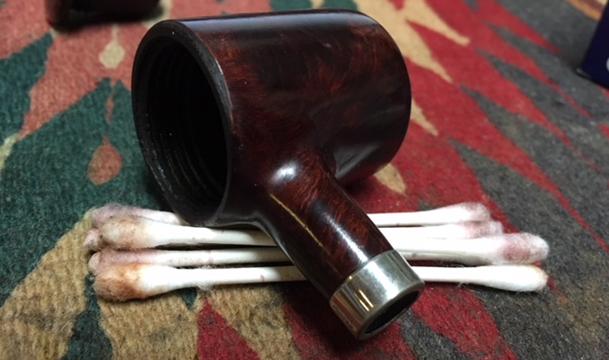
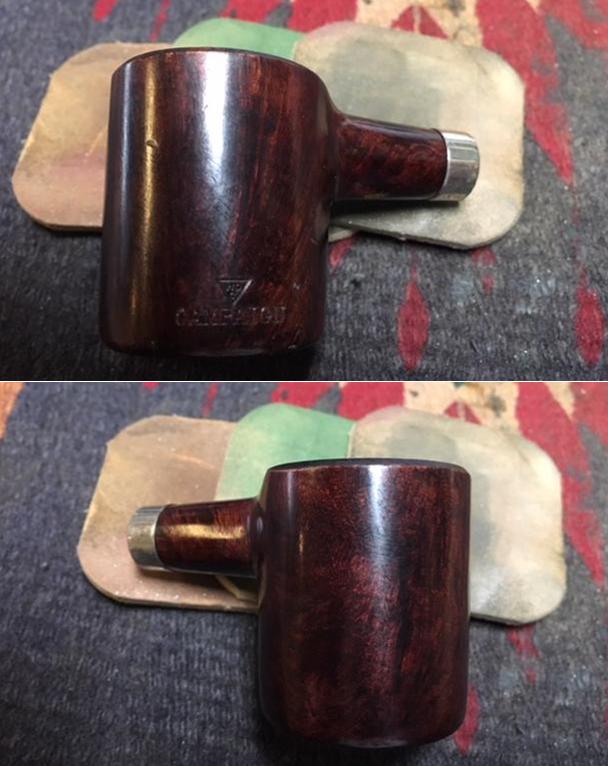
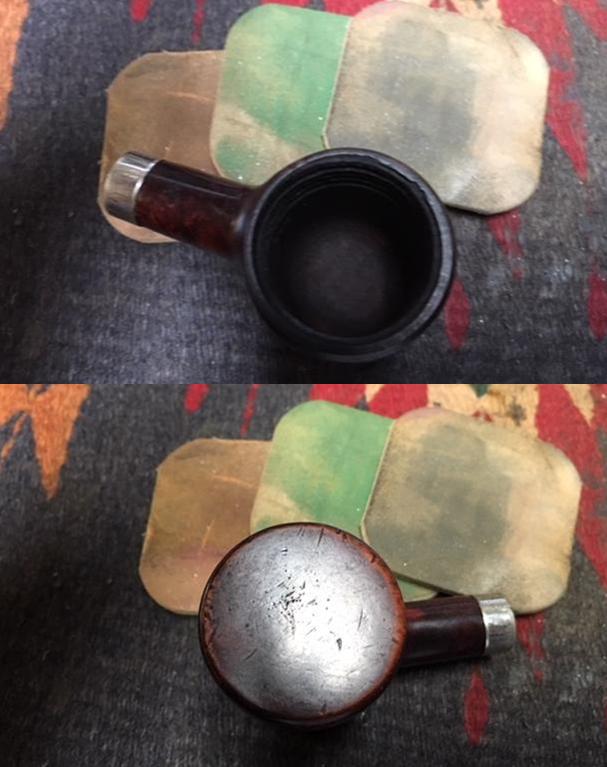
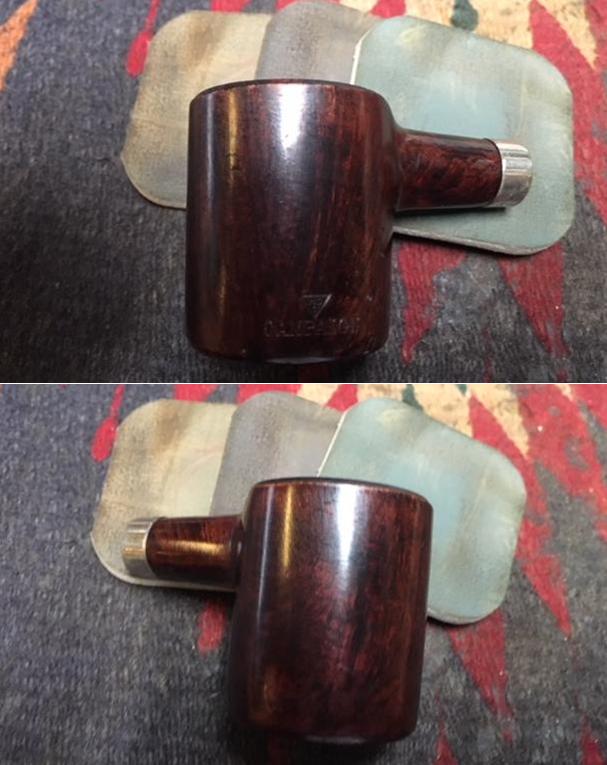
Knowing my predilection for strange and different pipes my brother keeps an eye open for that kind of thing in all of his meanderings about the Northwest and through the pages of eBay. One he came across really captured me. It was in a box that read Drake Double Guard Pipe on the lid. The box was in decent shape, dirty but unshaken. On the end of the box it read Drake Pipe Co. over Merchandise Mart over Chicago, Ill. It was a brand that I knew nothing about. I have never seen a pipe like this before or since he found this one. It has a Bakelite base and shank that has a threaded metal end cap. The cap was stuck in place. The pipe had a briar bowl with a drilled centre screw. The stem is amberlike Bakelite – harder than plastic and older. There were some tooth marks on both sides of the stem next to the button. There are some crazing marks around the sides of the stem. There is a polished silver ring on the end of the stem. Jeff took photos of the pipe before he did his initial clean up. The exterior of the pipe was very dirty. There was dirt and grime in all of the grooves in the Bakelite base. The stem was also very dirty and the inside of the airway was lined with tars and oils. The briar was very dirty and oily feeling. It was a tired old pipe.The grimy bowl can be seen in the photo below. There was a fairly thick cake in the bowl and the lava had overflowed onto the bowl top and over the sides. There were some nicks on the outer edge of the bowl while the inside edge was quite clean and undamaged.Jeff took the photo below to show the wear and tear on the pipe. It shows the end cap that is stuck in the end of the base. The bowl had a lot of junk filling in between the bowl and the base. There was a lot of stuff in the grooves of the Bakelite base.The next two photos show the stem condition. There was some crazing in the material of the stem. There were tooth marks on the top and underside of the stem surface.When Jeff removed the stem there was an interesting condenser that was an integral part of the Bakelite base. It was a metal cap and was connected to a centre post. It was thickly clogged with tars and oils and the cap was overflowing over the edges of the cap.Once Jeff sent me the pictures I was hooked. I was looking forward to getting it and working on it. While I waited I did a bit of research on the brand. The printing on the end of the box that read Drake Pipe Co. over Merchandise Mart over Chicago, Ill. may have held a clue for me. I looked on the smoking metal website which is my normal go to site for these pipes and was unable to find anything about the brand. I did a general Google search on the brand and found nothing. I then focused the search on Merchandise Mart, Chicago, Ill. and found a bit of information that gave me a little help in my quest. The first was a postcard for the Merchandise Mart, in Chicago, Ill. It was a huge building that housed many floors of merchandise. There were household products, clothing for men, women and children, restaurants and specialty shops. There was also a tobacco shop in the Mart called Bernard Tobacco Shop. I found a listing of tobacco shops in Chicago in 1959 and it included this shop. It is long gone today but at least in 1959 it was there. (https://books.google.ca/books?id=xR4EAAAAMBAJ&pg=PA42&lpg=PA42&dq=Bernard+Tobacco+Shop+Chicago&source=bl&ots=AddsXvGdl8&sig=YVdTT5dpfwtnIiene6nUXBBpgNs&hl=en&sa=X&ved=0ahUKEwj2ua7p4v_XAhVJ52MKHSHQDDIQ6AEIkQEwCQ#v=onepage&q=Bernard%20Tobacco%20Shop%20Chicago&f=false). 

There were also photos of a metal token for the shop that was good for Trade. I have included these two photos below. On the one side it reads Bernard Tobacco Shop Merchandise Mart. On the other side it reads Good for 5₵ in trade.Jeff cleaned it up as best he could. He reamed the bowl with a PipNet reamer and took it back to bare briar. The screw in the bottom of the bowl was stripped and also stuck. He was able to clean off the rim removing all of the tars and lava. He was able to remove the stem but not the end cap from the Bakelite base. Thus the internals of the pipe base were very dirty. He cleaned out the stem internals with alcohol, pipe cleaners and cotton swabs and was able to remove all of the grime there. When it arrived I opened the box and found clipped tobacco labels that the previous pipeman must have smoked in this pipe. There was Stratford Smoking Mixture, Mapleton Smoking Mixture, Shannon Irish Smoking Mixture and Blue Heaven Triple Bokay Smoking Mixture. The only blend I had heard of was the Mapleton, all the rest were new ones to me.I worked on the pipe for several months. I soaked the bowl and screw with alcohol and cleaned around the screw with cotton swabs and acetone trying to let it penetrate the threads. It did not work. I used penetrating oil to try to loosen the stem but again it did not work. The stripped slot in the screw made it impossible to simply unscrew the bowl. I finally used a bit on the drill that was for removing tripped screws and I was able to get the screw out of the bowl. It is badly damaged and will take work to make it reusable but it is free. I wrapped the jaws on a pair of pliers with tape and carefully removed the end cap from the end of the base. I took photos of the pipe after I had taken it apart. I cleaned out the threads in the end cap and the base where the bowl was held in place. I used alcohol, cotton swabs and pipe cleaners and worked on it until the interior was clean. I cleaned the condenser cap with pipe cleaners and alcohol until all of the grime was gone. I could blow air through the base with no interference. It took time to clean it all out but once it was clean it was fresh and it was ready to smoke again.I rubbed the threads on the end cap down with Vaseline and threaded it into the shank end. I polished the aluminum cap with micromesh sanding pads.I rubbed the Bakelite base down with Before & After Restoration Balm to give life back to the base. I scrubbed it down using cotton swabs and pads. I buffed it with a microfiber cloth to raise the shine. I cleaned out the airway in the stem with pipe cleaners and warm water. I sanded out the scratches and tooth marks with 220 grit sandpaper. I polished the stem material with micromesh sanding pads – wet sanding it with 1500-2400 grit pads and dry sanding it with 3200-12000 grit pads. I wiped down the stem with Obsidian Oil after each pad. I gave it a final coat of oil after the last pad. The stem material seemed to absorb the Obsidian Oil and it worked well. The polished stem looked really good. The tooth marks and chatter were gone and the amber look of the stem was really good. I rubbed the bowl down with Before & After Restoration Balm to clean and enliven the briar. The product pulls grit and grime out of the briar and brought life back to the wood. I polished it with a soft cloth to clean off the grime that the balm brought up. I buffed it with Blue Diamond on the buffing wheel to polish out the scratches. I gave the bowl multiple coats of carnauba wax and buffed the bowl with a clean buffing pad to raise the shine. I hand buffed it with a microfiber cloth to deepen the shine. I put the stem back on the base and gave it several coats of Conservator’s Wax to protect and give it a shine. I did not want to risk buffing the stem as the material appeared to be quite soft and would easily melt and damage with the heat of the buffing wheel. I hand buffed the base and stem with a shoe brush and a microfiber cloth. The finished base and stem look really good at this point in the process. It was time to put the bowl back in place on the base. I put the bowl on the base and turned the screw into it to hold it tightly in place. I gave the bowl and stem a final coat of Conservator’s Wax.  I hand buffed the entire pipe with a microfiber cloth to polish it and raise a shine. The finished pipe is shown in the photos below. It looks better than it did in the beginning. It is the first Drake Double Guard Pipe that I have ever seen and worked on. It is well made and combines a beautiful piece of briar with Bakelite and amber acrylic/Bakelite for the stem material. The finished pipe looks really good with all the parts in place and polished. The dimensions of the pipe are: Length: 5 1/2 inches, Height: 1 3/4 inches, Diameter of the bowl: 1 1/2 inches, Diameter of the chamber: 3/4 inches. Do any of you have any more background information or history on the brand or on the Merchandise Mart in Chicago, Illinois? Send me a message, email or leave a response on the blog. Thanks for looking.

Restoring a Thorburn Clark Rusticated Bent Billiard


Blog by Steve Laug

This is another pipe from one of the eBay sellers that I follow and check out their shops regularly. Yet again this favourite seller in England put up a pipe that I really like. I don’t have any idea how many of them I have purchased from him but this one caught my eye. This one is a small rusticated bent billiard that is another featherweight. Its diminutive size and delicate shape are a lot like the Orlik Dugout I bought from him as well. The rusticated finish has a textured and almost sandblast look to it. The contrast of dark and medium brown stains really worked well with the shape of the pipe. The pipe was stamped in a smooth box on the underside of the shank and reads THORBURN CLARK over MANCHESTER with the letter R at the shank end of the smooth portion. The photos below are the seller’s photos. They show the overall condition of the pipe and what it was that caught my eye. I looked up the brand on Pipephil’s site – http://www.pipephil.eu/logos/en/logo-t5.html. I found out that the brand was carved by a tobacconist in Manchester, England. The owner of the shop used to carve his own pipes. The shop closed in the 1970s. I clipped the pertinent section from the site and included it below. The stamping on the stem of the one I have is the same as the pipe in the second photo below.I did some more digging into the brand to see what I could find out and found a link to a blog about the brand. I quote in part from the blog: https://pipesmokersjournal.wordpress.com/tag/thorburn-clark/

“This is an intriguing pipe, and a little piece of obscure British pipe making history. Thorburn Clark was, from what I can deduce, from my extensive online Sherlocking, Manchester-based tobacconists from the 1920s until the 1980s/90s. Behind their shop was a small pipe workshop, where a tiny workforce of craftsmen toiled to create a range of beautiful handmade pipes, each stamped upon the stem with their distinctive logo of an intertwining T and C.”

Another link brought a bit more information and some confirmation to the puzzle http://pipesmokerunlimited.com/archive/index.php/t-3749.html

“Thorburn Clark was a tobacconist based in Bridge Street, Manchester, a side street off Deansgate for those who know the area. Unlike most outlets of its kind, which shipped in pipes from outside makers and then branded them with the shop name, it seems that they had a small workshop attached to the premises where they crafted their own pipes.”

It was interesting to know that the pipe I had in hand was a pipe shop made pipe that came from Manchester. It was made in the small workshop in the back of the shop. I had learned that there were several carvers that worked there so I would not be able to know who made it. The pipe was obviously carved between the 1920s and the time the shop closed in the 1970s. Judging from the shape of the pipe and stem and the fact that it came with the Orlik made me put its date in the late 20s to early 30s.

I had the seller ship this pipe with the Orlik Dugout. When the pipes arrived I brought them to my worktable. I completed work on the Dugout then turned my attention to this pipe. I took photos of it to show its condition before I began to work on it. The finish looked to be in good repair under the grime and dust that was in the grooves of the rustication. The rim top was covered with lava that had overflowed from the cake in the bowl. The cake was quite thick and the bowl choked with carbon. The packing material from the shipping box was jammed into the bowl. The stem was lightly oxidized and it still bore the TC stamp on the left side. The fit of the stem to the shank was tight and it did not sit against the shank end. That told me that the interior of the shank must be quite dirty with tars and oils. I wonder if both of these pipes came from the same pipeman. I took a close up photo of the rim top to show the thickness of the cake in the bowl and overflow of lava on the rim. There were some worn spots on the rim where the finish was damaged. It looked like the inner and outer edges of the bowl were undamaged but I would know for sure once I had reamed it.While the stem was lightly oxidized the only damage to it was on the top and underside edge of the button and some light tooth chatter on both sides. The TC stamp was readable and the stamping was deep enough to be cleaned without damage.I reamed the bowl with the smallest cutting head on the PipNet pipe reamer. I took the cake slowly back to the bare briar. I wanted to see if there was cracking in the inside of the bowl. The cake was thick and hard so it took some steady and careful work to cut the cake back. I touched up the reaming of the bowl with t a Savinelli Fitsall Pipe Reaming Knife. I took what remained of the cake back to smooth, bare walls. I used a brass bristle wire brush to loosen the debris from the rim top. It was thick enough that it would take some work to get it off and clean out the grooves of the rustication.I scrubbed the briar with a tooth brush and Murphy’s Oil Soap to remove the dust and grime on the surface of the bowl and the grit that I had loosened on the rim top. I rinsed the bowl under warm water to remove the dust and scrubbed it with the brush under water. The results are shown in the photo below.I used a finer bristle brass brush to work over the grooves on the rim top. This extra step took more of the grime off the surface and left the rim top very clean.I cleaned out the inside of the shank with cotton swabs, pipe cleaners and alcohol to remove all of the tars and oils on the inside walls of the mortise. I cleaned out the airways in the shank and in the stem with pipe cleaners and alcohol.I put the stem in a soak of Before & After Pipe Stem Deoxidizer. I left it to soak for several hours while I worked on the bowl.I turned my attention back to the bowl. I rubbed the bowl down with Before & After Restoration Balm. The product worked to lift the grime and debris out of the grooves of the briar. I rubbed it down and scrubbed it deeper into the grooves of the briar with a shoe brush. I polished the briar with a soft cloth to remove the balm from the briar. I took a photo of the stamping on the shank because it was so clear and with the balm really stood out.I touched up the worn spots on the rim top and edge with a dark brown stain pen. I buffed the rim top with a soft cloth to even out the stain coverage.I rubbed the bowl down with several coats of Conservator’s Wax and buffed it with a shoe brush. The briar began to take on rich warmth. The feel of the bowl in the hand was comfortable and tactile. I think this would be a good smoking pipe. I set the bowl aside and turned back to the stem. I removed it from the soak in the Before & After Deoxidizer and wiped it down. I cleaned out the inside of the airway with alcohol to remove the product from the stem. I polished the stem with a soft cloth to remove all of the deoxidizer and give it a bit of a shine. It had removed much of the light oxidation and left the stamping intact on the stem side. There was still some spots of oxidation that needed to be addressed and the button needed to be reshaped on both sides. The photos below show what it looked like at this point.I used a folded piece of 220 grit sandpaper to work on the tooth chatter and to reshape the edge and surface of the button.  I worked over the spots of oxidation with the sandpaper at the same time to remove it from the surface of the hard rubber stem.I polished out the sanding scratches and marks in the vulcanite with micromesh sanding pads – wet sanding it with 1500-2400 grit pads and dry sanding it with 3200-4000 grit pads. I wiped the stem down with Obsidian Oil after each sanding pad. I buffed the stem with Blue Diamond on the buffing wheel. I brought it back to the table and sanded it with the final three 6000-12000 grit pads. After the final pad I gave it a final coat of oil and set it aside to dry. I put the stem back on the bowl and worked the pipe over on the buffing wheel using Blue Diamond to polish the bowl and shank. I used a gentle touch on the briar when I was buffing it so that the grooves of the rustication would not be filled in and make more work for me. I buffed the stem with a harder touch to raise the gloss on the rubber. I gave the bowl multiple coats of Conservator’s Wax and gave the stem multiple coats of carnauba wax. I buffed the pipe with a clean buffing pad to raise the shine. I hand buffed it with a microfiber cloth to deepen the shine. The finished pipe is shown in the photos below. It looks better than it did in the beginning. It is a beautiful pipe. The dimensions of the pipe are: Length: 5 ½ inches, Height: 2 inches, Diameter of the bowl: 1 inch, Diameter of the chamber: 5/8 inches. I will be adding this one to the rebornpipes store shortly if you are interested in adding it to your collection. It will make a fine addition to the rack. If you are interested email me at slaug@uniserve.com or send me a message on Facebook. Thanks for looking.

Something is different about this Heritage Square Shank Apple


Blog by Steve Laug

As I mentioned in the first blog I did on the Heritage threesome – the 45S Antique, earlier this summer I was relaxing and surfing Ebay on my iPad and I came across three listings for Heritage Pipes. All were square shank pipes and all were in decent condition. Two of them had original stems while the third had a stem I was not sure about. Several years ago I had learned about the brand through Andrew Selking who writes for rebornpipes. Since then I have kept an eye out for them. There do not seem to be too many showing up on Ebay but every so often there is one. This time there were three. I contacted my brother with the links and he bid and won the threesome. I have finished the middle and bottom pipe and have written blogs about them (The Heritage Antique – https://rebornpipes.com/2017/10/08/cleaning-up-the-first-of-three-heritage-pipes-45s-dublin/, The Heritage Diplomat – https://rebornpipes.com/2017/10/14/new-life-for-heritage-diplomat-8-panel-billiard/). The last of the threesome is what is on the work table now. It the top pipe in the photos below. When I got to looking carefully at this pipe I immediately saw some differences from the other two Heritage pipes. Though it is stamped Heritage with a similar font on the left side of the shank, it also is stamped Made in USA under that. The stamping is more like the Kaywoodie pipes I have worked on. The right side of the shank is stamped Imported Briar. The finish on this pipe is nowhere near as nice as the other two pipes. The quality is good but not stellar like the others. The stem fit and shape is different from the other two and seems to be a stem blank rather than a custom made stem. It is not a replacement as I first thought but is the original stem. I also cannot find it on the Heritage Brochure that Andrew provided. The overall look and feel of the pipe leads me to think that this pipe was made later than the other ones and is probably a Kaywoodie of lesser quality. Even though that is true I think it has value in that it is a historical piece that may be transitional in nature. I am including the next two photos as they show the condition of the pipe when my brother received it and the stamping on the shank. For your reference if you are interested I am including a summary of the history of the brand that Andrew wrote on a previous blog on rebornpipes. I find that it is helpful and clear. There is not a lot of information on the brand available on-line so anything helps fill the gap. Here is the link: https://rebornpipes.com/2014/12/23/refurbishing-a-heritage-heirloom/.

Heritage pipes were Kaywoodie’s answer to Dunhill. According to one of their brochures, Heritage pipes were made from “briar burls seasoned and cured for up to 8 months,” with only “one briar bowl in over 300 selected to bear the Heritage name.” “Heritage stems are custom fitted with the finest hand finished Para Rubber stems. Mouthpieces are wafer thin and concave.”

The Heritage line began in the early 1960’s, with the trademark issued in 1964. The line was started at the request of Stephen Ogdon, (who worked for Kaywoodie in 1962). Mr. Ogdon had previous experience working for Dunhill, either running the New York store or working for Dunhill North America. Mr. Ogden was made President of Heritage Pipes, Inc., Kaywoodie Tobacco Co.,Inc. and Kaywoodie Products Inc. as well as a Vice President of S.M. Frank & Co. Heritage Pipes were produced from 1964 until 1970 (Source Kaywoodie.myfreeforum.org).

From Andrew’s helpful blog I would put a 1970s date on this one. It may well have been done after the closure of the line. Jeff took photos of the grain around the bowl to give an idea of the quality of the briar. While it was dirty and scratched there was some nice grain on the pipe. The photos show some slight wear on the outer edge of the rim and on the inner edge. The rim top shows some wear and some lava buildup. It is hard to know from these photos how much damage there is to the inner edge of the rim. I will know more once the grime and lava are removed. Time will tell. The next two photos show the stamping on the shank. There are some subtle differences to the Heritage font and the not so subtle differences of the Made in USA and Imported Briar stamp that were not present on the other two pipes of this threesome. The stem did not have the PARA Hard Rubber stamping of the other two and did not bear the Heritage logo on the left side of the saddle. This could either point to a replacement stem (which is possible) or to a later version of the brand that did not include those items. I am not sure which is the case. The stem was good quality rubber and did not show too much oxidation. There was tooth chatter and some tooth marks on both sides of the stem near the button. There was also some wear on the sharp edge of the button on both sides.Jeff worked his magic in cleaning up this pipe. He reamed it with a PipNet reamer and smoothed the walls of the bowl with a Savinelli Fitsall pipe knife. He scrubbed out the mortise and the airway in the shank and the stem with alcohol, cotton swabs and pipe cleaners. He scrubbed the exterior of the bowl, rim and shank with a tooth brush and Murphy’s Oil Soap to the oils and tars on the bowl, rim and shank. He rinsed it under running water. He dried it off with a soft cloth. Once the grime was removed the finish seemed to be coated with a varnish coat. It was peeling around the outer edges of the rim and also there were some damaged spots on the sides of the bowl where the finish was slightly peeling. There was some wear around the edges of the rim top and the inner edge showed some burn damage on the right side. The cleaning of the stem did not raise any oxidation in the vulcanite. The tooth marks were clean but visible. I took photos of the pipe to show its condition before I started my work on it. I took some close up photos of the rim top and the stem to show the condition of both before I worked on them. The photo of the rim top shows the damage on the inner edge of the right side of the rim and the wear on the outer edge around the bowl. Other than the tooth chatter and tooth marks the stem was in good condition with no oxidation that I would need to worry about. I decided to start on the bowl and address the rim damage. I used a folded piece of 220 grit sandpaper to slightly bevel the inner edge of the rim and blend in the damaged area with the rest of the bowl. I wanted to bring it back to round as much as possible and remove the damage. The second photo shows the reshaped rim edge. I think the process worked pretty well!I decided to use Mark Hoover’s Before & After Restoration Balm. I have written a review about the product in an earlier blog. I rubbed it into the surface of the briar and scrubbed it with a cotton pad. Mark has said that the product was designed to pull the dirt off of the briar as well as polish it. He added some anti-oxidants to keep the briar from getting damaged from both UV rays and water. It worked very well as you can see from the following photos that show the cleaned briar and the grime on the cotton pad. Remember that this pipe had already been scrubbed with oil soap and rinsed. It appeared to be clean for all intents and purposes but it still had residual grime in the pores of the briar. I blended black Sharpie Marker and a Dark Brown Stain pen to colour the inner edge of the rim and the repaired area on the rim top. The combination matched the colour of the stain on the bowl perfectly.It is at this point a couple of things caught my eye. There were what looked like water spots on the front and the left side of the bowl. I looked closely and they were very odd. Almost like some of the varnish finish had bubbled and been removed. The longer I looked at it the more ugly it looked. What had looked like an easy restore suddenly looked a lot harder. I was going to have to remove the varnish coat and restain the entire pipe. Just a little discouraging when things were moving ahead so well. But, chin up and do the job!

I wiped the bowl down with acetone to try to cut through the finish. It did not budge! Oh man, that meant I was dealing with some kind of plasticized coating and it would be a bit more difficult to remove. I sanded the bowl and shank with 220 grit sandpaper to break through the surface of the topcoat. I wiped it down repeatedly with the acetone to see if I was making progress.  It was slow going. I sanded it with a medium and a fine grit sanding sponge and was able to make more progress. I wiped it down again. The photos below show the pipe when I had removed all of the plastic coating. It was odd in that there were two large spots on the front of the bowl and around the rim edges where the finish came off as well as the plastic. The rest of the finish was deeply set in the grain. I have only seen that on pipes where there was some oil in the briar that was not properly removed before staining and finishing. I wiped the bowl down with acetone a final time scrubbing the unstained portions with extra care. I wiped it down with alcohol in those areas and heated the briar to see if I could open the pores before staining. I used a dark brown stain pen to precolour the briar before restaining the entire pipe. I wanted to get deep coverage on the briar. I warmed the briar once again by painting it with the flame of a lighter. I stained the entire bowl with dark brown aniline stain and set it in the grain with a lighter. I repeated the process particularly on the front, sides and rim top until the coverage was even all around the bowl. I set the bowl aside to cure overnight.Work and general busyness kept me from working on the pipe again for several days. When I finally got a moment I wiped the bowl down with alcohol and cotton pads to even out the finish and give it a bit more transparency. I sanded the newly stained bowl and shank with micromesh sanding pads – wet sanding with 1500-2400 grit pads and dry sanding with 3200-12000 grit pads. I wiped the bowl down after each pad with an alcohol dampened cotton pad. I buffed the pipe with Blue Diamond to further polish out the scratches and then gave it several coats of Danish Oil with a Cherry Stain to give the bowl a rich finish similar to the one on the Heritage Diplomat that I restored earlier. The pipe is beginning to look really good in my opinion and in many ways is far better than when I started. I buffed the bowl with a soft cotton cloth to polish the Danish Oil. I took the following pictures to show the bowl at this point in the process. I still need to buff it again on the wheel and give it multiple coats of carnauba wax. I set the bowl aside and turned my attention to the stem. I sanded out the tooth marks and chatter with 220 grit sandpaper. I carefully blended them into the surface of the vulcanite. I also worked over the sharp edges of the button to clean up the marks that were left behind there. The sanding dust left behind on the sandpaper was a rich, dark black which spoke well of the quality of the vulcanite that was used on this stem. To me it also was further proof of the stem being original rather than a later poor quality replacement.The one oddity to the pipe was that the shank was thinner on the right side than the left. The mortise was drilled straight but it was definitely not centered in the shank. Due to that the tenon on was slightly off to the right side of the shank to match. I polished the stem with micromesh sanding pads. I wet sanded it with 1500-2400 grit pads and wiped it down with Obsidian Oil after each pad. I dry sanded with 3200-12000 grit pads and again wiped it down with Obsidian Oil. I finished the polishing with the pads and gave it a final coat of the oil and set it aside to dry. I put the stem back on the bowl and worked the pipe over on the buffing wheel using Blue Diamond polish to further remove scratches on the bowl and shank. I gave the bowl and stem multiple coats of carnauba wax and buffed the pipe with a clean buffing pad to raise the shine. I hand buffed it with a microfiber cloth to deepen the shine. The finished pipe is shown in the photos below. It looks better than it did in the beginning. I still think it is a transitional piece between the classic higher end Heritage line and the later line that came out when the classic line ended. It is still a beautiful pipe. The finish is good but not nearly as well done as the classics. The dimensions of the pipe are: Length: 5 ½ inches, Height: 1 ¾ inches, Diameter of the bowl: 1 1/8 inches, Diameter of the chamber: ¾ inches. Thanks for looking.

This Old Italian Canadian showed Promise


Blog by Steve Laug

Jeff picked this heavily rusticated pipe up on one of his recent forays into the antique shops and malls of Montana. It is sea rock like rustication on the bowl and shank with a wire rustication on top of that. The finish was very dirty with a lot of dirt and grime in the deeper grooves of the rustication. There was a random stem stuck in the shank when he picked it up – I think it was just to make it more sellable. The stem is a round saddle stem while the shank is oval. The finish was dirty and there were some nicks in it around the shank end. The bowl had a heavy cake in it with some lava overflow filling in the rustication pattern on the rim top. There appeared to be some burn damage on the back left side of the rim top. The pipe had a smooth portion on the underside of the shank for stamping but the only stamping was at the shank/stem junction where it read ITALY. Jeff took photos of the pipe before he started his clean up. The rim top can be seen in the next photo. You can see the thick cake and the lava overflow on the top of the rim. It is hard to know if there is damage to the inner edge of the rim but the outer edge was clean and undamaged. It appeared that there was some burn damage on the back left side of the inner rim edge but we would not know until Jeff cleaned the pipe.Jeff took pictures of both sides of the bowl to show the rocky, craggy appearance of the finish on the bowl. It is unusual and interesting at the same time.The next photos show the shank and Italy stamping on the shank end. The stem is obviously the wrong one. You can see the variation of the round saddle portion of the stem and the oval shank. I am not too worried about the stem as it is going in the bin anyway as I will need to fit a new stem on the shank. Jeff worked his magic in cleaning up this pipe as it was a real mess on the rim and deep grit and grime in the grooves of the finish. He reamed it with a PipNet reamer and smoothed the walls of the bowl with a Savinelli Fitsall pipe knife. He scrubbed out the mortise and the airway in the shank and the stem with alcohol, cotton swabs and pipe cleaners. He scrubbed the exterior of the bowl, rim and shank with a tooth brush and Murphy’s Oil Soap to the oils and tars on the bowl, rim and shank. He rinsed it under running water. He dried it off with a soft cloth. Once the grime was removed the finish actually looked quite good condition. I took photos of the pipe to show its condition before I started my work on it. I did not bother with the old stem as it would be replaced. I went through my can of stems and found one that had the same diameter all the way around as the shank. The fit against the shank end was almost perfect. I would need to make the edges taper a bit more at the shank. The stem was new and still had castings on the sides and the end of the button. The tenon was a perfect fit in the mortise. I put the stem in the shank and took photos of the restemmed pipe. The pipe looks good with the new stem. There is promise in the appearance at this point. I repaired the chip on the left side of the shank end with clear super glue. I needed to rebuild that edge to remove the damaged area and allow the stem to fit snug against the shank. I used a sharp knife to bevel the edges of the mortise to accommodate the hip at the tenon/stem junction.I used a brass bristle wire brush on the rustication to clean off any remnants of the finish and then wiped the bowl down with acetone on cotton pads to remove the dust. I stained the bowl with a dark brown aniline stain and flamed it to set it in the briar. I repeated the process several times until I was happy with the coverage on the bowl. I set the bowl aside to dry overnight before proceeding with polishing the briar.In the morning I buffed the bowl with a shoe brush to raise a shine on the briar. I took the following photos to show what the pipe looked like at this point in the process. The bowl is looking good with a lot of colour variation due to the roughness of the rustication. I laid aside the finished bowl and turned my attention to the stem. I sanded out the casting marks and scratches on the stem with 220 grit sandpaper. I opened up the slot in the button with needle files to make it easier to push a pipe cleaner through. After I had removed the casting marks and the scratches on the stem surface it was time to work on it with micromesh sanding pads. I wet sanded it with 1500-2400 grit pads and wiped it down after each pad with Obsidian Oil to give the next pad more bite when I sanded. I dry sanded it with 3200-12000 grit pads and again wiped it down with the oil after each pad. After the final pad I wiped it down with a final coat of oil and set it aside to dry. Each photo shows it progressively getting a shine. I set aside the stem and picked up the bowl once again. I used the Mark Hoover’s Before & After Restoration Balm on the briar. I rubbed it into the grooves on the bowl sides with my fingers. I wanted it to go deep in the grooves to further test the effectiveness of the product. This would be a good test as it one of the roughest rustications that I have worked on with the product. As I have mentioned in previous blogs Mark had said that the product can be used on briar or stems – whether vulcanite, acrylic or horn. He said it was designed to pull the dirt off of the briar as well as polish it. I figured this deep rustication would certainly put those claims to a test. He said that he had added some anti-oxidants to keep the briar from getting damaged from both UV rays and water. Once I had all the grooves and surfaces of the bowl covered I wiped it down with a clean cotton pad and then buffed it with a shoe brush. It seemed to work very well and I took the following photos to show the results. I put the stem back on the bowl and buffed it with Blue Diamond on the buffing wheel to polish the stem and lightly polish the briar. I gave the stem multiple coats of carnauba wax buffed it with a clean buffing pad to raise a shine. I gave the bowl multiple coats of Conservator’s Wax and rubbed it into the rusticated finish. I buffed it with a shoe brush and then with a clean buffing pad to raise the shine. I hand buffed the pipe with a microfiber cloth to deepen the shine. The variegated finish on the bowl and stem combine to present a beautiful pipe. The pipe really does look good with the new stem. The dimensions of this pipe are Length: 5 1/2 inches, Height: 2 1/8 inches, Bowl diameter: 1 1/2 inches, Chamber diameter: 7/8 inches. The finished pipe is shown in the photos below. I will soon be adding it to the rebornpipes store if you are interested in adding to your collection. It is a beauty and will serve someone very well. Email me at slaug@uniserve.com or send me a message on Facebook. Thanks for looking.


Restemming and Reconditioning a Rungsted Mariner by Preben Holm


Blog by Steve Laug

I don’t know when I learned that the Rungsted line of pipes was another line that Preben Holm carved. But I learned that he made several lines outside the Ben Wade contract pipes he was producing for Snug Harbor/Lane. This was confirmed when I looked online and found a thread on PipesMagazine.com. The discussion covered a brand called Britta Bech and one of the members there happened to mention and confirm what I already knew about the Rungsted line. From my memory and the speaker’s the pipes were mostly carved in the mid to late 70’s or early 80’s during the height of the Danish Freehand pipe craze in the US. The speaker there said that though some refer to these as seconds he did not think that was accurate and that really it was a totally separate line from Preben Holm. I would agree with his assessment on this. I am pretty certain looking at the various Rungsted pipes that I have worked on that there are no flaws. They all combine both smooth and sandblast finishes and present a really interesting finished pipe. (mlaug on pipesmagazine.com http://pipesmagazine.com/forums/topic/preben-holm-info-needed).
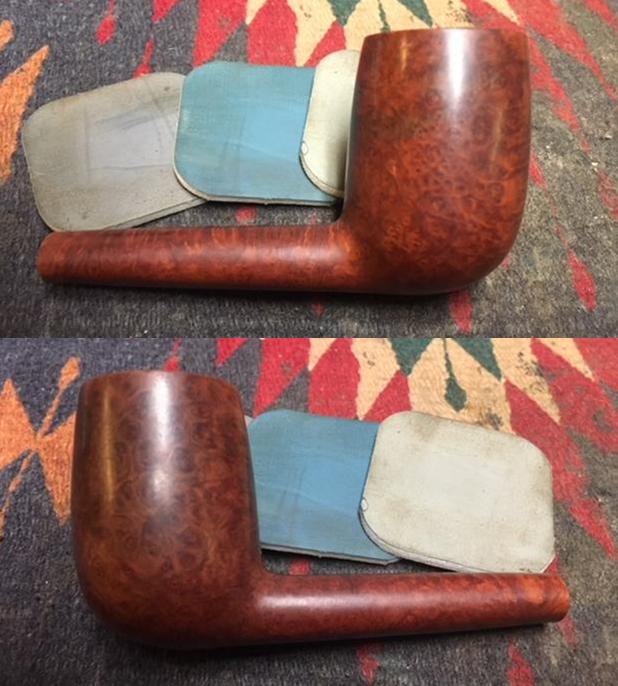
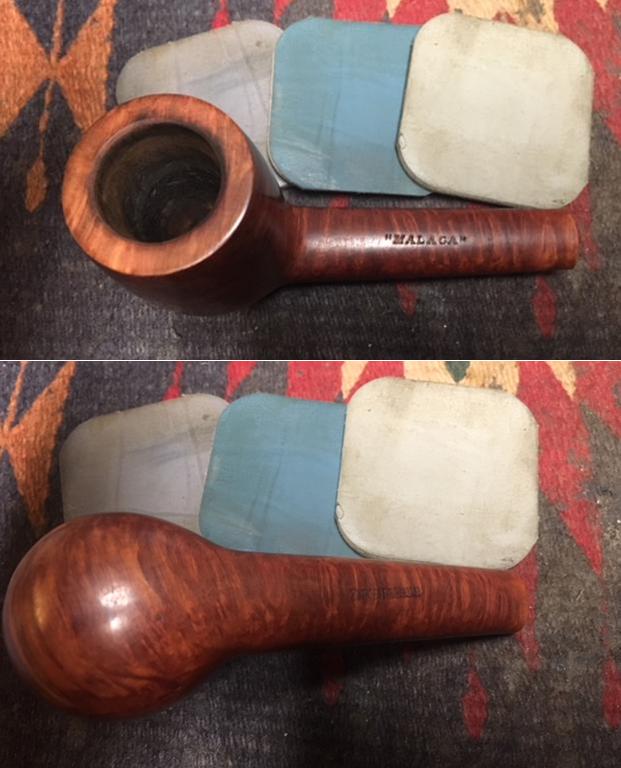
This particular pipe came in a lot that Jeff and I purchased from a fellow in Idaho. Jeff had purchased the pipes shown in the photo below from him. The Rungsted is circled in red at the top right side of the photo. The photo came because I asked Jeff to send me a picture of the pipes he picked up. I have written about the find on a previous blog that you can read if you are interested at the link that follows: https://rebornpipes.com/2016/10/07/a-good-day-hunting-orchestrated-between-british-columbia-and-idaho/ 

Jeff did a great job cleaning off the debris and grime on this old bowl. It did not have a stem when it came to us, one would have to be made to fit it. He reamed it with a PipNet reamer and smoothed the walls of the bowl with a Savinelli Fitsall pipe knife. He scrubbed out the mortise and the airway in the shank and the stem with alcohol, cotton swabs and pipe cleaners. He scrubbed the exterior of the bowl, rim and shank with a tooth brush and Murphy’s Oil Soap to the oils and tars on the bowl, rim and shank. He rinsed it under running water. He dried it off with a soft cloth. Once the grime was removed the finish underneath was in stellar condition. The rich patina of the older briar was a variegated finish of smooth and sandblast looked great. I took photos of the bowl to show its condition before I started my work on it. The shank of the pipe was stamped on the smooth underside. It read RUNGSTED over MARINER over Hand Made in Denmark. The stamping was quite legible, though the lower portion was lighter than the upper.I had a stem in my can of stems that I had started shaping for another pipe some time ago and abandoned. It needed to have a little more of the tenon end taken down to fit in the mortise but it had the correct look for the pipe. I took pictures of the stem before I did the work to make it fit.I sanded the tenon end down with 220 grit sandpaper until it fit snugly in the shank. I put it in place on the pipe and took the next set of photos. Lots of sanding to do, but it gives an idea of what the pipe will look like when it is finished. In my ongoing experiment with Mark Hoover’s Before & After Restoration Balm I am using it on this mixed finish pipe. It should be a good test of how it works in the transitions between the smooth and sandblast portions as well as on the plateau on the rim and the shank end. I have used it individually on each of those finishes but not on a pipe that had all three features. Mark describes the product being designed for use on briar or stems – whether vulcanite, acrylic or horn. It was formulated to pull the dirt off of the briar as well as polish it at the same time. It includes anti-oxidants to keep the briar from getting damaged from UV rays and water as well as something that enlivens the briar. I worked it into the sandblast portions with my fingers and rubbed it on the smooth portions. I wiped it down with a cotton pad to see if it pulled out the dirt. It worked very well on all the different parts of this bowl. I took the following photos to show the results. As always, I will continue using it for a while and see how it works in a variety of settings before I give an opinion of the product. I buffed the bowl with a clean buffing pad to polish the briar and see what the finished bowl would look like and if areas that needed a bit more attention. The buffed bowl can be seen in the photos that follow. It has a rich patina that really has a deep glow to it. The two finishes really flow into each other and give the pipe a warm look. I sanded out the casting marks and scratches on the stem with 220 grit sandpaper. I opened the slot in the end of the button with needles files and sandpaper to make it easier to push a pipe cleaner into the stem and shank. I polished it with micromesh sanding pads – wet sanding it with 1500-2400 grit pads and wiping it down after each pad with Obsidian Oil to give the next pad more bite when I sanded. I dry sanded it with 3200-12000 grit pads and again wiped it down with the oil after each pad. After the final pad I wiped it down with a final coat of oil and set it aside to dry. I put the stem back on the bowl and buffed it with Blue Diamond on the buffing wheel to polish the stem and the smooth portions of the briar. I used a soft touch around the stamped areas as I did not want to flatten them polish them away even more that they already were. I gave the stem multiple coats of carnauba wax buffed it with a clean buffing pad to raise a shine. I gave the bowl multiple coats of Conservator’s Wax and rubbed it into the sandblast and the plateau areas. I buffed it with a shoe brush and then with a clean buffing pad to raise the shine. I hand buffed the pipe with a microfiber cloth to deepen the shine. The variegated finish on the bowl and stem combine to present a beautiful pipe. The pipe really does look fresh and new to me and I like the finished look with the new stem. The dimensions of this pipe are Length: 6 1/2 inches, Height: 2 inches, Bowl diameter: 2 inches, Chamber diameter: 7/8 inches. The finished pipe is shown in the photos below. I will soon be adding it to the rebornpipes store if you are interested in adding to your collection. It is a beauty and will serve someone very well. Email me at slaug@uniserve.com or send me a message on Facebook. Thanks for looking.
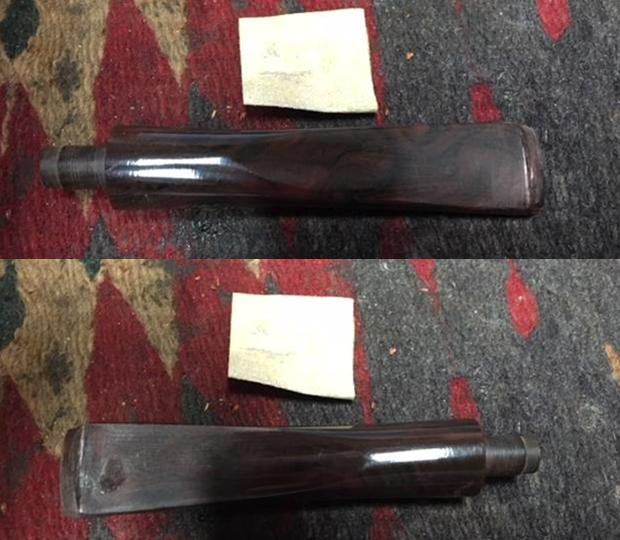
An Exceptional Bjarne Hand Made Freehand


Blog by Robert M. Boughton

Copyright © Reborn Pipes and the Author except as cited

He could have been an ambassador for his country, but instead he became an ambassador for Danish pipes.

— Jan Anderson, author of Scandinavian Pipemakers (2012)

INTRODUCTION

Jan Anderson was speaking of Bjarne Nielsen, the great Danish pipe maker, who finished his studies at the University of Copenhagen with an MBA in the early 1960s and went to work for the Ministry of Foreign Affairs, in the export division.  Nielsen made his first pipes when he was 16 and gave them to friends then and later at the university, and of course he continued making pipes as a hobby.  Whether he knew it or not, he was bitten by the bug.  Call it Pipe Makers Disorder (PMD), if you like.  Bjarne was considered a likely candidate for appointment as ambassador to a foreign country, but he gave it all up to pursue his real ambition, which will come as no surprise to anyone with creative leanings was to form his own business.

Bjarne may never even have imagined turning his pastime into a career, but fate, if there is such a thing, is powerful.  The freehand pipe movement was first building speed when Bjarne was at the Ministry, and he was often asked to help find foreign buyers for the style of pipe that was more popular abroad than in Denmark, where it started.  Many older smokers, deeply rooted in the English tradition of the classic Dunhill style, considered the new direction outlandish, crazy and worst of all, ugly.  And every source Bjarne knew had orders for such pipes up the wazoo.  I’m sure he used more diplomatic words.

Then, out of the blue, again if there is such a phenomenon, Bjarne had the idea to send photos of some of his pipes to a few of those same foreign distributors.  I’m sure he put it out of his mind and wasn’t watching the pot until it started to boil over with so many positive responses he had to decide whether to stay with the Ministry or pursue his innate talent.  Not being the average man, fearful of taking such a huge risk – or, rather, being the typical young man he was, still full of dreams – Bjarne embarked on the journey that would make him a legend, meaning most of the world has never heard of him.

The hand-made Danish freehand in this blog has three lines of clear block nomenclature on the bottom of the shank, below the stem: BJARNE/HANDMADE/ IN DENMARK.  The stem also bears a mark – a lower-case b sitting in the curl of a lower-case j.

Courtesy Pipephil

This means Bjarne did not make the pipe himself, but instead delegated the job to one of three master carvers who were and are in business for themselves and did special work for him.  They are Mogens “Johs” Johansen, Jes Phillip Vigen Jertsen (Ph. Vigen) and Tonni Nielsen.  These pipes were sold by Bjarne as lower-grade pieces than those he carved and on which he ascribed his full name, in cursive script, above HANDMADE/IN DENMARK.  The pipes Bjarne carved himself also bore a grade of AX or A-J.  The man’s self-appraising standards were refined to the extreme.  They bear no mark on the stems.

Bjarne Nielsen Bulldog Grade O, photos, courtesy abel2antique on eBay

I didn’t mind that my new Bjarne, whichever of the fine craftsmen above made it, came with a box and sock as well.

RESTORATION Three long years ago, before I learned lessons beyond count and, more than anything else, that the process never ends, I wrote a blog here called “Ben Wade and the Chamber of Horrors,” in which I recounted the restoration of a huge BW poker with cake so gnarly it took me hours to repair.  As I can think of no better words to describe the terrors of uncovering layer after layer of hardened old carbon, only to reach a patch of almost perfect smoothness and then reaching spiraling new veins and lumps, I’ll give a brief quote from the BW blog.

“The ongoing task of removing all of the cake, every time I thought I achieved smoothness all around, only uncovered still more hidden holes, like microcosmic pits and craters on the moon, only black…the evil chamber walls in spots felt like the bowels of a volcano.”

But this pipe was so much worse, it took me days of concerted effort to get to the bottom of the years of iron-like cake.  I am certain that had this pipe come my way three years ago, I would have been forced to set it aside in the to-do pile.

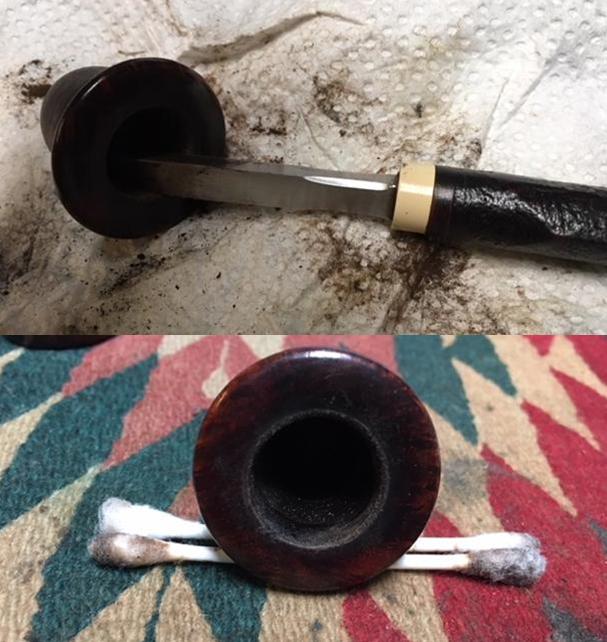
I started with my Junior Reamer, which, due perhaps to the curve of the freehand chamber, made almost not even a dent. The coarsest sandpaper I had was a small old finger-length strip of 180-grit that has stood by me for years and is most often the roughest I need to get with a chamber’s walls.  A half-hour or so of that left my hand aching, my fingers burning and one of them torn open, as was the case to a much more serious degree with the BW chamber of horrors.  I put the chamber ordeal on pause and decided to see how awful the shank’s airway might be.  I admit my attitude sucked by then, but also that I was pleased with the relative ease of clearing the shank of grime with alcohol-dipped regular pipe cleaners.  The first one took some finagling to break on through to the other side, but only four cleaners were needed for the preliminary cleaning. I girded for another go at the chamber with the following armaments.I hoped I would not have to resort to either (and certainly not both) blades, but I was going to be prepared for anything.  As it turned out, the Dremel I used in the BW chamber of horrors case would have come in handy, but I had to borrow it and didn’t want to take the time.  The task was longer and more arduous than I can detail in photos, but here are some time lapses – during the first day.  I hope they show the bulges and veins that appeared hither and thither with each new attack.  Indeed, both the pen and utility knives were needed throughout the three-day process of perfecting the chamber. Another problem I’m sure has not gone unnoticed was the rim burn that was fairly bad, but on the plateau area of a freehand presented greater than average problems.  I did not want to use sand paper or even spot-soak the rim in alcohol, if black stain was under the char.  After debating the options available to me with my resources at hand, I opted for an approach that may seem unusual but I knew from experience would leave any black paint intact.  I submerged the entire stummel in alcohol for several minutes at most, and when I removed it I thought I had the desired result of eliminating the old stain and excess char. Scrutiny of the outer wood showed a perfect piece of briar, free of any blemishes or even a single scratch.  The only other such experience I recall after alcohol-stripping a stummel was with my previous blog about a Capitello Jonico Dublin.  I tried to tell myself the remaining blackness on the rim was natural or maybe left-over stain.

Other than the final sanding, which tore through the final layer of uneven cake, the time for micro-meshing had arrived.  Giving the stummel a final inspection, I overrode my misgivings about the dull murkiness that pervaded most of the rim, with random rays of nice red wood making it through the gloom. I remembered a Ben Wade by Preben Holm I restored and had to re-stain the rim black, and I’ve never quite been happy with it.  The whole approach to this project was to restore the freehand to a better look than it may ever have had, if I may be excused the apparent impertinence.  Still, I proceeded with the micro-mesh, which only confirmed my gut instinct. Before I return to the rim, there are a few minor wrap-ups to make.  First, look at the discoloration of the wood at the top of the front view above.  I figured Super Fine 0000 steel wool should do the trick, and it did.Then there were the stains on the tip of the Lucite tenon and inside the button of the stem.  I scraped out the difficult to reach crud from the button with a mashed end of a pipe cleaner dipped in alcohol and sanded clean the open end of the tenon with my trusty 180-grit fragment of paper.The retort went well, requiring only three Pyrex test tubes of alcohol – the first that was sucked up into the cotton stuffed in the chamber, the second coming out moderately dirty, and the third, after boiling through the pipe four times, was clear.The last step I imagined before the final wheel buffing – there would be no stain – was to fill in the congruent bj etching on the stem that had not been worn away.Unfortunately, the curl of the b is completely faded away.

I just could not see proceeding with either of the courses that presented themselves, leaving the dull, scorched earth look of the rim as it was and trying to make it shine or buying more black stain and hiding the beautiful wood I was sure was hidden.  And so, I gave the rim a spot-soak in alcohol to see what lay beneath.The result was a very pale rim, but I knew that would change with another, focused full course of the micro-mesh pads.  The semi-final result as I headed for the buffers was just what I wanted.  I buffed the stummel with brown Tripoli and a heavy coat of Carnauba, and the stem with Carnauba.

CONCLUSION

This restore was one of the biggest surprises I’ve had in the few years I’ve been learning a few of the myriad techniques and resources available.  Thinking at first it would be done overnight, three days later I knew never to underestimate the opponent each new pipe presents as.  I struggled with the question of to sell or not to sell, and gave in to my P.A.D.  All I have to say is, I’m glad I did, because, as the title says, this is one extraordinary freehand.

SOURCES

https://pipedia.org/wiki/Bjarne
http://www.pipephil.eu/logos/en/logo-b5.html

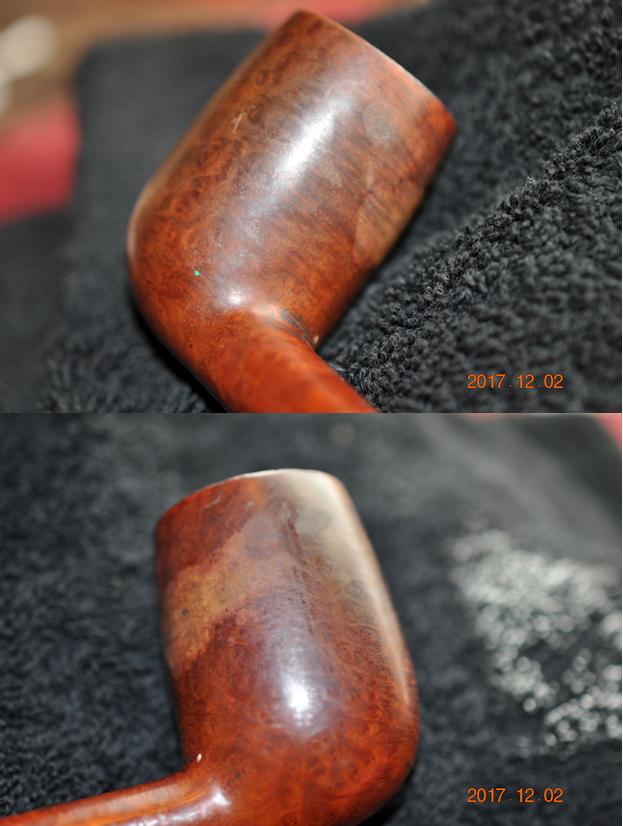
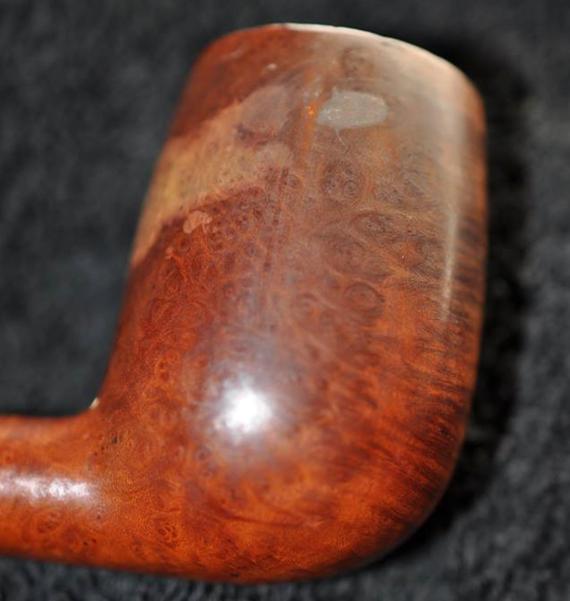
Rode Hard & Put Away Wet – MLC Redmanol French Briar Bent Billiard


Blog by Steve Laug

This older MLC bent billiard is a turn of the 20th century pipe. According to Pipedia, (https://pipedia.org/wiki/M._Linkman_%26_Co) the initials stand for M. Linkman Company which was thought to mean Mary Linkman Company. They were a Chicago based company that produced both briars and meerschaums. The company was named for the mother of the same Linkman who branded pipes under that same name and then eventually became the Dr. Grabow pipe manufacturer with which we are familiar. Pipephil’s site gave a little more information at this link (http://www.pipephil.eu/logos/en/logo-l4.html). M. Linkman and Co. was established by Louis B. Linkman and August Fisher in 1898. The company closed down in the 1950s and the Dr Grabow branch was sold to Henry Leonard and Thomas Inc. There was also a note that early Linkman’s pipes were stamped MLC in an oval.

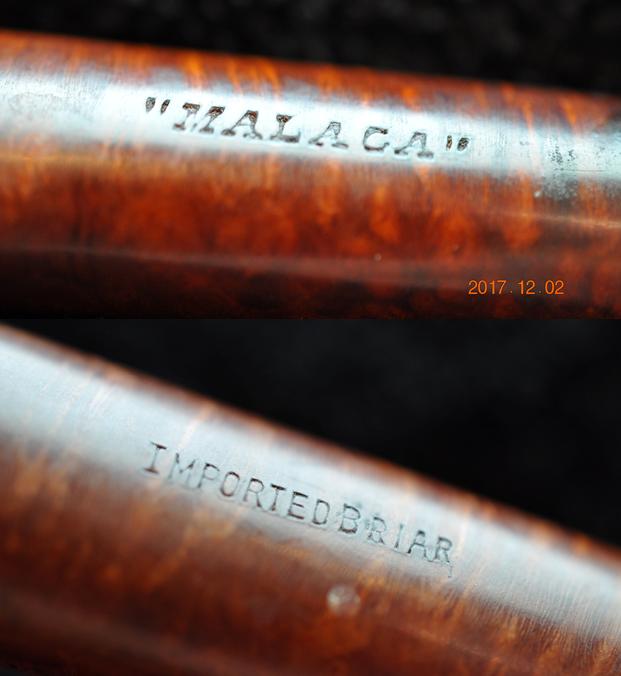
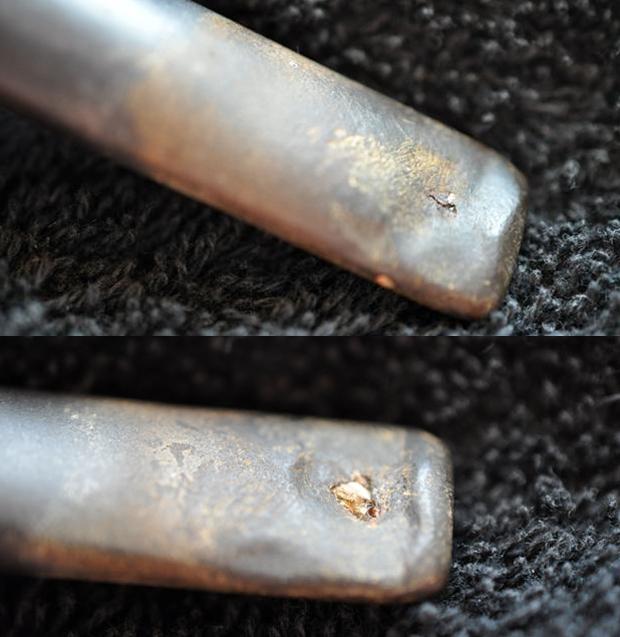
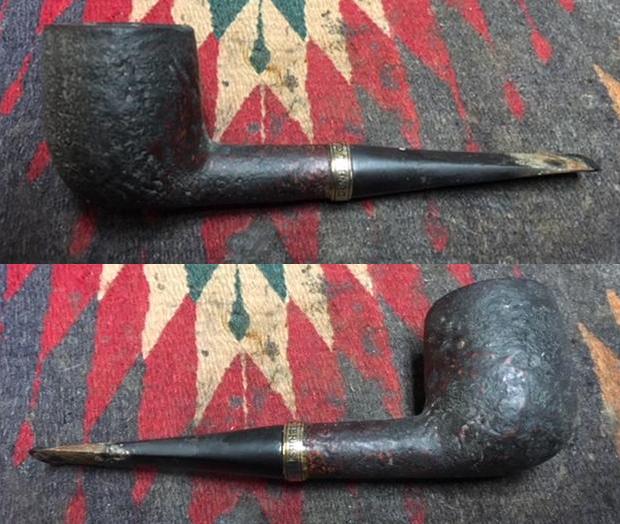
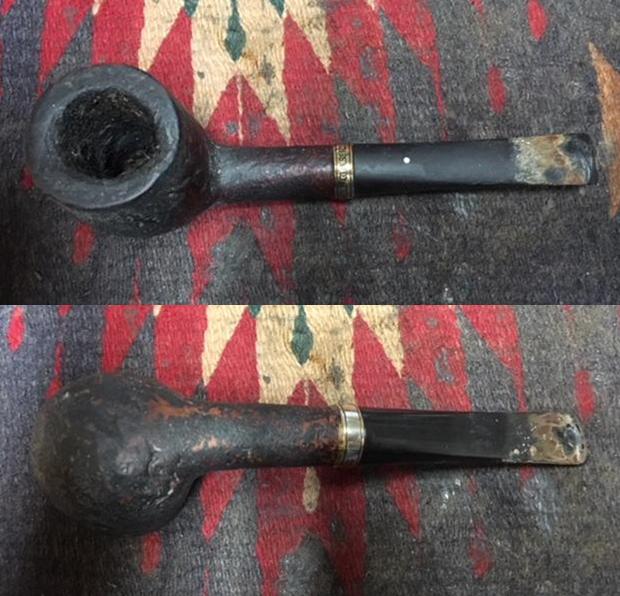
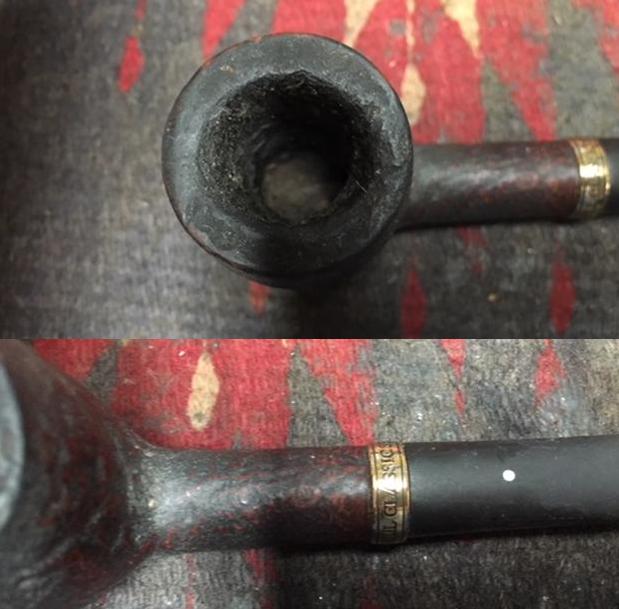
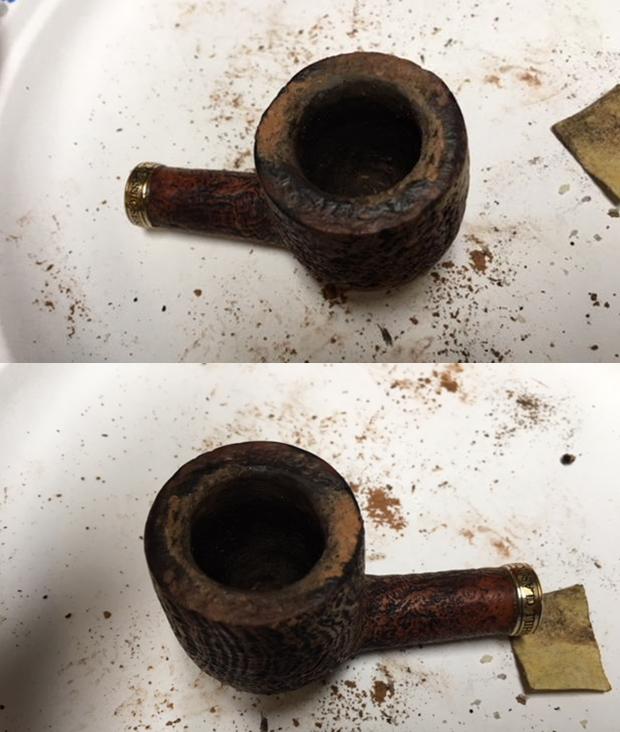
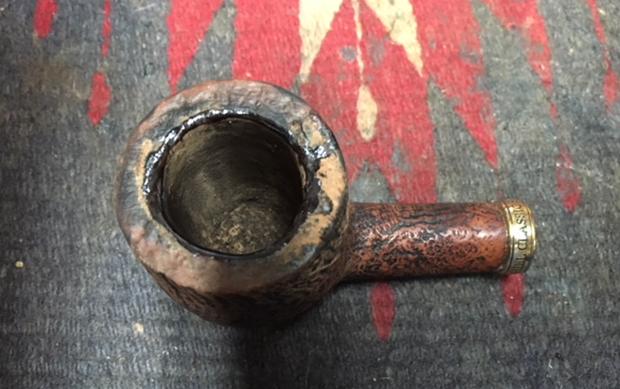
If you have followed this blog for a while you have come to know that I love really old pipes and this one fits into that category of pipes. It is stamped MLC in an oval over Redmanol over French Briar on the left side of the shank. There are no other stampings on the pipe. The band is brass and is etched with a pattern of vines and flower around the entire band. The band was a mess on the shank end. It was bent and dented and no longer round. It was loose on the shank and would need to be straightened out before it was reglued. It is a small bent billiard and definitely sporting the wrong stem. It should have had a Redmanol stem to go with the stamping on the shank of the bowl.

I have written a bit more about the MLC brand on several early blogs (https://rebornpipes.com/2016/11/12/an-interesting-the-nuvo-mlc-italian-briar-hidden-in-a-wdc-case/ https://rebornpipes.com/2017/08/17/restoring-a-sad-old-mlc-bent-billiard/).

Jeff took the photos that follow before started the cleanup. You can see from the photos the condition of the pipe. The bowl exterior was absolutely filthy. It is the first time I have seen the lava that usually is on the rim flow over the top and down the sides of the bowl. The lava on the outside edge of the bowl and the thick cake in the bowl made it hard to know what the condition of the rim edges. The incorrect stem and the condition of the pipe told me that it was someone’s favourite smoker and when the old stem broke or wore out a convenient replacement was stuck in the shank and it continued to be smoked. The next photos of the bowl, rim and the flow of lava down the outside of the bowl shows how filthy this pipe was before Jeff started his clean up. The bowl is scratched and nicked but even that damage is hard to assess given the condition of the pipe. If you look closely you can see the MLC oval on the next photo of the shank. Below that it reads Redmanol over  French Briar. You can see the tars that have built up on the shank and pushed the band toward the end of the shank. It really was a dirty pipe. The photo of the bottom of the bowl and shank show more of the worn condition of the briar.The next three photos show the condition of the end of the band. It was in rough shape. As the band was pushed off the shank end because of the tars the end that extended beyond the briar of the shank was bent and damaged.The last photo Jeff took showed the condition of the stem. I was not particularly concerned with the stem as I was planning on replacing it with a fitted stem. If I used it in the future I would clean it up.I reread the blogs on the MLC pipes that I had restored previously to refresh the information. Now I was ready to see what I could do with this old pipe. It is really nice working on clean pipes. I have done enough repairs recently that have required me to ream and clean them that I have a greater appreciation for how nice it is to have this done for me. Thanks Jeff for your work and the way it makes my part a bit easier. He worked his usual magic in cleaning up this messy pipe. I really wondered what would lie beneath all of the grime and tars. Jeff reamed it with a PipNet reamer and cleaned up the remnants with a Savinelli Fitsall pipe knife. He scrubbed out the mortise and the airway in the shank and the stem with alcohol, cotton swabs and pipe cleaners. He spent quite a bit of time scrubbing the exterior of the bowl, rim cap and shank with a tooth brush and Murphy’s Oil Soap to remove the build up. He rinsed it under running water. It took a lot of scrubbing to get it free of the tars but it worked well. He dried it off with a soft cloth. Once the grime was removed it was clear that the finish underneath was in rough shape. The briar was quite nice with a mix of straight and birdseye grain around the bowl and shank. I took photos of the pipe to show its condition before I started my work on it. Jeff had done a miracle in removing the thick cake, cleaning the lava on the rim and sides of the bowl. The inner edge was in pretty  decent shape as was the outer one. I was happy to see the condition. There was however a darkening on the rim top and all around the bowl coming down the sides about ¼ inch. At first I thought that it might have been left behind by a rim cap of some sort but there were no small nail holes in the briar on the sides of the bowl. I think that actually it is what is left behind by the greasy hands of the pipe man and the lava that had flowed down the bowl sides.He was also able to remove much of the grime around the band on the shank and leave the stamping undamaged.I removed the stem and carefully slid the band off the shank. I wanted to clean up the end of the shank with alcohol and sandpaper. I also want to smooth out the back edges of the band and see if I could make it smooth and useable once again. I heated the end of an awl/ice pick and pressed it against the damaged areas of the band. The brass was quite thin so it was really quite workable. I was able to remove all of the damaged areas but one that was a compressed area on the bottom side. It would be hidden on the underside of the shank once it was glued back in place.I scrubbed the shank end and the dark area with acetone to remove more of the grime that was on the surface of the briar. I was able to reduce quite a bit of the buildup around the top of the bowl and the rim top with this method. I sanded the end of the shank to smooth it out. I used a dental spatula to spread the all-purpose glue around the shank. I pressed the band back on the shank with the small damaged spot on the underside.I took a photo of the end of the shank to show that the band fit tight on the shank and was even with the shank end. You can see the damaged area on the underside of the shank on the right side of the photo.I looked through my can of stems because I remembered having a bent Redmanol stem that I had picked up somewhere along the way. Sure enough it was there. It was slightly larger in diameter than the shank of the pipe so it would need to be sanded to fit nicely on the shank. It also had a push stem on it that would need to be removed and replaced with a normal tenon. Both of those were relatively easy jobs. I was anxious to get moving on the stem so of course I forgot to take photos of the stem with the meerschaum push tenon. It was loose so I unscrewed it from the stem. I had a small threaded Delrin tenon with the threads that were close to the same and threaded it into the airway on the stem. It worked well so I unscrewed it and glued it in place in the stem. The photos below show the new tenon on the stem.The tenon fit well in the mortise. The fit against end of the shank was nice. I sanded it to remove the excess material and reduce the diameter of the stem to match the shank using 220 grit sandpaper. In the photos below it is getting close to a nice fit. What you can’t see in the photos is that the nice, rich, red colour of the Redmanol lightened with sanding to shades of blood orange. I could not start over so I decided to keep sanding until the fit was correct. At first I did not like the effect on the Redmanol and I was disappointed by the colour shift. Looking at the stem from the drilled airway before I put the tenon in place and the flat end of the stem it appeared that the red was solid all the way through the material so when the oranges and yellows started to show up I was a bit frustrated. Now as I look at it I have to say it is growing on me. It reminds of the Popsicles that we used to by when I was a kid. I stopped sanding the bowl and put the stem on the shank to get a couple of photos so I could look at it on the screen and get the effect. It is almost like flame… kind of a nice variation. It is interesting to see the fine red line between the band and the stem – the flat end still is an even red. I don’t quite understand it but I am resolved to live with it. I am going to stain the bowl so that should also add to the variations of colour on this old pipe.I decided to try to bleach out the darkening on the rim top and first ¼ inch of the bowl all the way around. I wiped it down with bleach on a cotton pad and left it on the dark area to do its work. It worked better on the left side than the right.I stained the bowl with a dark brown aniline stain to try to blend in the dark rim stains. I applied the stain, flamed it and repeated the process. Once it dried I wiped the bowl down with alcohol on cotton pads to make it more transparent and let the grain shine through.  In the process some of the nicks in the briar showed up more clearly. I decided not to fill them in but to leave them as war wounds on this old timer. They tell a story that I wish the pipe could tell us. I polished the briar with micromesh sanding pads. I started polishing with 3200-4000 grit pads and wiped the bowl down after each pad with a damp cloth. I continued to polish with 6000-12000 grit pads and wiped it down after each pad. I hand buffed it with a soft cloth. The dark ring around the top of the bowl is still visible but less than before. The rim looks good. To further blend the darkened top portion of the bowl with the rest of the pipe I gave the bowl a contrast coat of Danish Oil Cherry Stain. I applied it by hand and rubbed it off and repeated the process to get a good smooth coat.I wiped the stain coat off and hand buffed the pipe lightly. The photos below show what the pipe is looking like at this point in the process. The right side still shows darker than the left at top edge of the bowl. I polished the stem with micromesh sanding pads – wet sanding it with 1500-2400 grit pads and dry sanding with 3200-12000 grit pads. I wiped the stem down with Obsidian Oil after each pad. After the final 12000 grit pad I gave it a final coat of oil and set it aside to dry. I put the stem back on the bowl and buffed it with Blue Diamond on the buffing wheel to polish the briar. I gave the pipe multiple coats of carnauba wax and buffed it with a clean buffing pad to raise a shine. I hand buffed it with a microfiber cloth to deepen the shine. The newly variegated Redmanol stem did not too bad with the old pipe. It shines like polished horn and the flow of the colours worked with the colours on the bowl. The way the colours shifted on the parts worked well together to present a beautiful pipe. The dark rim edge almost looks like the way meerschaum pipes were flumed with a dark edge. The pipe looks fresh and new. Later I will need to give it a bowl coating to protect the bowl inside as there are spidering cracks all around the briar. The finished pipe is shown in the photos below. Thanks for looking.


The Rebirth of an Unmarked Horn


Blog by Steve Laug

When my brother sent me photos of this particular pipe I could not see what he saw in it. It was just ugly in my opinion. The shank was crooked, the plateau crown had been sanded slightly, the shank was cracked and missing a chunk of briar, the copper ferrule looked like it fit better under a sink than on the shank and the finish had warts in it all around the bowl. To top it off the stem was clunky, thick Lucite and had lots of divots and tooth marks. It did not look like it belonged at all. The entire pipe looked like a failed shop project to me – one that took its own direction as it was being made. He purchased it and took photos of it before he cleaned it up thinking I might be charmed by it as he was.The next photo from the top shows the bow in the shank. I figured that the drilling would be way off once I got it and took it apart. I was pretty certain this one was going to interesting to work on to see if I could get anything resembling a nice looking pipe out of the concoction that it was in the photos. Note also the thick cake in the bowl and the overflow of lava on the rim filling in the smoothed out plateau. It was hard to know at this point if there was damage to the inner edge of the rim because of the thick cake and lava. Only a thorough clean up would reveal the condition. The next three photos show the warts on the sides of the bowl. The finish was rough. It was hard to tell if these were fills or if the pipe had not been sanded smooth when it was originally finished. In the photos, they look like scratches but they are actually standing above the finish on the briar. Some of them have scratches around the edges on the surface of the bowl. As I looked at the horn, I had to admit there was something strangely alluring to the shape and it was growing on me. The copper fitting is not snug on the shank it rattles around and is only held in place by the stem. You can see the gap between the cap and the shank. The shank under the band is coated with grime and there is a dark oxidized buildup.When the stem is removed the cap falls off and reveals the damaged shank. You can see the crack in the shank end and up the side on the right side of the photo below. The tars and oils that have built up on the end of the shank and in the mortise are quite thick. In the second photo below you can see the missing piece of briar. The third photo is a close up of the shank end. It shows the damage clearly as well as thick tars on the shank  under the cap. The stem is Lucite and in rough condition. It is the thick kind of stem that came out when Lucite first came on the market. It thick and poorly shaped. There are major dents in the surface and many tooth marks and chatter on both sides of the stem at the button. I do not intend to reuse the stem as it is not my kind of stem. I will replace it with a vulcanite stem and fit it to the shank. Jeff did his usual thorough clean up even on this ugly, old pipe. He reamed it with a PipNet reamer and cleaned up the remnants with a Savinelli Fitsall pipe knife. He scrubbed out the mortise and the airway in the shank and the stem with alcohol, cotton swabs and pipe cleaners. He scrubbed the exterior of the bowl and shank with a tooth brush and Murphy’s Oil Soap and rinsed it under running water. He scrubbed the rim on the bowl to clean out the lava on the plateau. It took much scrubbing to get it free of the tars. He dried it off with a soft cloth. The bowl itself was very light weight. It is a good looking piece of briar and has flame grain all around the bowl and shank with some birdseye on the shank top and bottom. He cleaned up the Lucite stem with the oil soap as well and was able to remove much of the debris. There were tooth marks and tooth chatter on both sides of the stem. The freehand style stem had a tapered tenon that sat tightly in the copper end cap. The copper cap was loose and fell off when the stem was removed from the pipe. I spent time turning the pipe over to see if I could find any identifying stamping that would help me know who made it and when it was made. There was nothing there. It was an unstamped pipe by an unknown maker at an unspecified point in time. I took photos of the pipe to show its condition before I started my work on it. Jeff did a great job on the rim top and the bowl. The inner edge of the rim was in good condition with little damage. There was still a little lava on the back side of the rim top that would need to be taken care of.The Lucite stem was clean but looking at it close up I knew that I did not want to keep the stem. I would need to go through my can of stems to find one that would work on this pipe.I removed the stem and the end cap and looked closely at the damage to the end of the shank. Once Jeff had cleaned it up the damage was really clear. The end of the shank had deteriorated and chunks of briar were missing. The surface of the shank end was rough and damaged. There was a large crack on the right side near the underside going from the shank end up the shank for ½ inch. I used a Dremel and sanding drum to remove the damaged shank end. I evened up the end of the shank and took off all of the compromised briar. I cleaned up the end so that a regular stem would work with it. I smoothed out the inside of the mortise. During this cleanup is when I discovered that the mortise and the airway in the shank were drilled at an angle. The airway was high in the end of the mortise and came out at the bottom of the bowl. The mortise itself curved and was poorly drilled in the shank. I cleaned up the briar that had been under the copper band. The briar was black with the colour going deep in the briar. I sanded it smooth and used a microdrill bit to drill a pin hole at the end of the crack to stop it from spreading further. I filled in the hole and the crack with clear super glue and let it cure.When the glue repair had dried, I sanded it smooth and pressure fit a nickel band over the end of the shank. I heated the band with a lighter to expand it and pressed the shank end and band so that the band went up the shank to cover the crack and the repair. I think that the band was a far better look for the pipe than the copper shank cap had been. I scrubbed the plateau top with a brass bristle tire brush to remove the remaining lava in the crevices of the surface. I worked on it until the rim top was clean.I sanded the bowl with 220 grit sandpaper to remove the warts from the surface and smooth out the scratches and dents. I wanted the surface to be smooth the way it should have been when the pipe was made. I worked on it until it was smooth to the touch. When I finished I washed the surface of the bowl and shank with acetone on a cotton pad to remove the last of the dust and the remaining finish from the briar. I buffed the bowl with Blue Diamond to polish it a bit and see where I needed to do some work before the final buff. I hand polished the briar with micromesh sanding pads – wet sanding with 1500-2400 grit pads and dry sanding with 3200-12000 grit pads. I wiped the bowl down with a damp cloth after each buffing pad. I hand buffed it with a microfibre cloth after the 12000 grit pad. The pictures below show the progress of the polishing on the briar. I used a black Sharpie Pen to colour in the crevices on the plateau top. I wanted the smooth high spots to shine through the deep black in the grooves. The contrast would look really good once the pipe was given a finish coat of stain and was buffed and waxed.I stained the briar with a Danish Oil Cherry stain to highlight the red colours in the briar and bring about a contrast with straight grain. I stained the plateau as well to give red hues to the high spots and contrast with the black of the crevices on the top. I hand buffed the bowl with a soft cotton cloth and then with a microfiber cloth to raise the shine. The bowl looks really good and the grain stands out. The straight grain all around the bowl sides looks really good. I chose a vulcanite saddle stem for the replacement for the Lucite stem. I knew it would be a bit of work to get things lined up because of the drilling in the shank. I measured the angles in the shank and figured I would need to bend the tenon at the angle shown in the photo. I heated the tenon and put it in the shank while it was still pliable and set the angle to match the angle of the mortise. The photo below shows the angle on the tenon. Bent at that angle the stem sits tight against the mortise. It gives you a good idea of the how poorly drilled the pipe was and what measures I had to take to line things up. I gave the tenon a coat of clear fingernail polish to make it fit snug in the mortise and let it dry. I roughened it up with the edge of a needle file to give it a bite in the shank. I tried the fit and all was well.I sanded the stem surfaces with 220 grit sandpaper to remove the light oxidation and the tooth marks and chatter on both sides of the stem. I worked on it until it was black and there was no remnant of oxidation or tooth marks.I polished the stem with micromesh sanding pads – wet sanding it with 1500-2400 grit pads and dry sanding it with 3200-12000 grit pads. I rubbed the stem down with Obsidian Oil after each pad to give traction to the next pad and also bring a little life to the vulcanite stem. After the final pad I gave it a last coat of the oil and set it aside to dry. I left the tenon with a few ridges to add bite to the inside of the mortise and hold it firmly in place. Some oxidation showed up on the top side of the stem near the saddle in the photos above so I worked it over in that area once again. When I finished I buffed the pipe on the wheel using Blue Diamond Polish and worked over the stem and bowl to remove any remaining scratches. I buffed the nickel band to give it a shine. I gave the pipe multiple coats of carnauba wax and buffed it with a clean buffing pad to raise a shine. I hand buffed it with a microfiber cloth to deepen the shine. The warts and nicks that I had sanded out were gone and the grain just popped on this old pipe. The new stem, with the angled tenon brought things into line and to me the pipe looked much better. The black of the polished vulcanite and the polished briar work well together to present a beautiful pipe. The finished pipe is shown in the photos below. It really is a beauty. Thanks for looking.