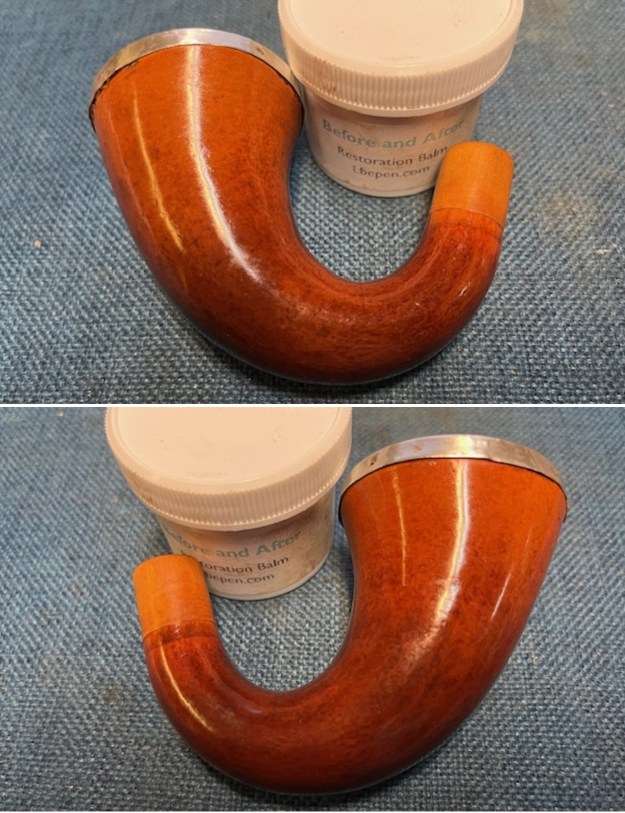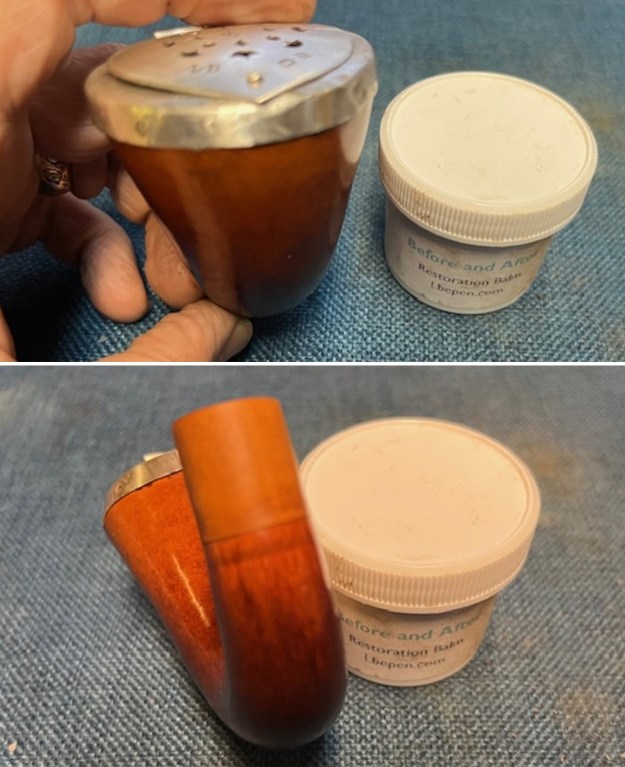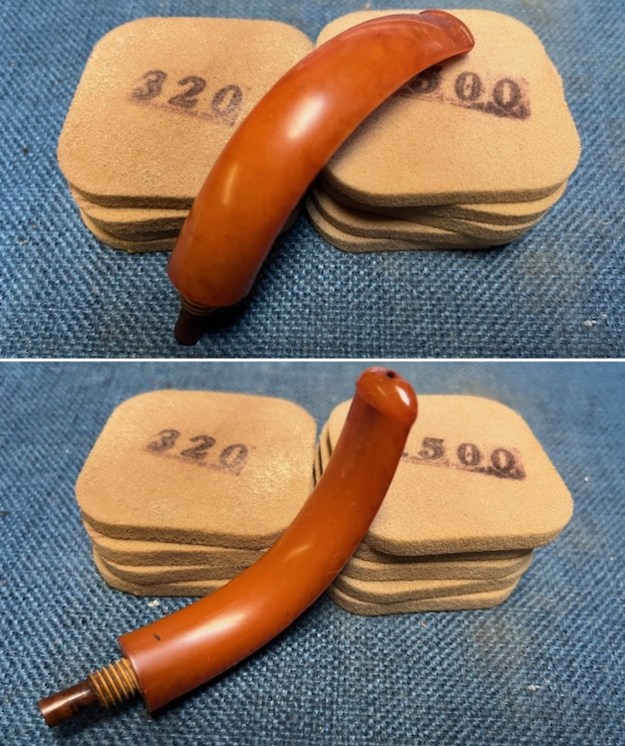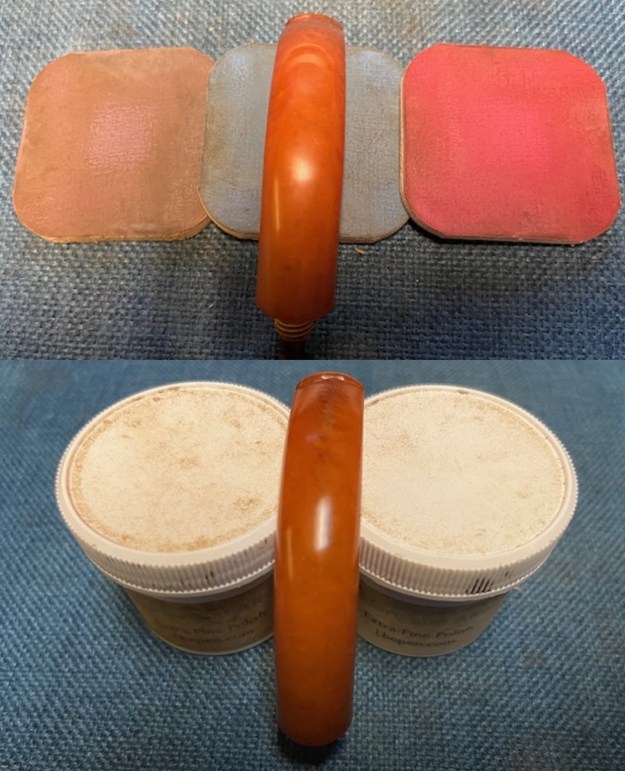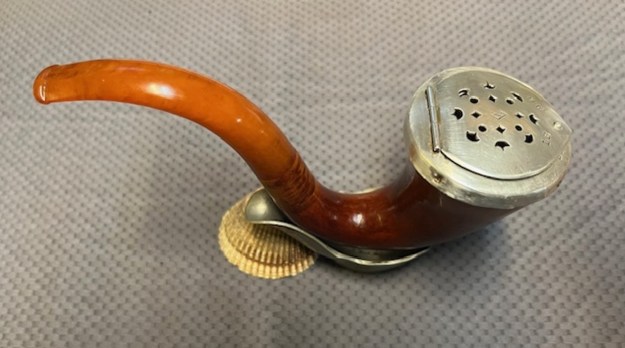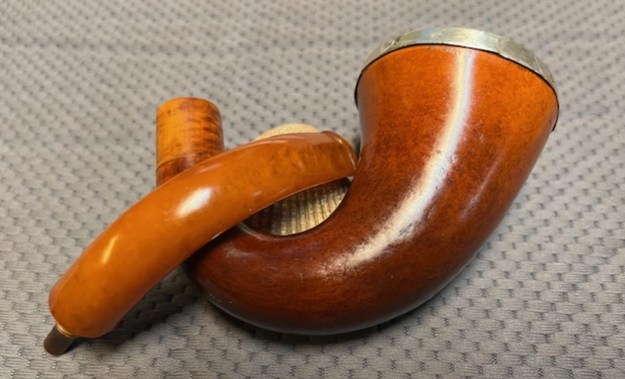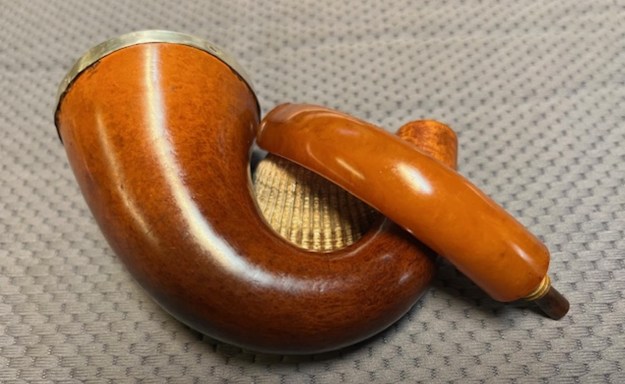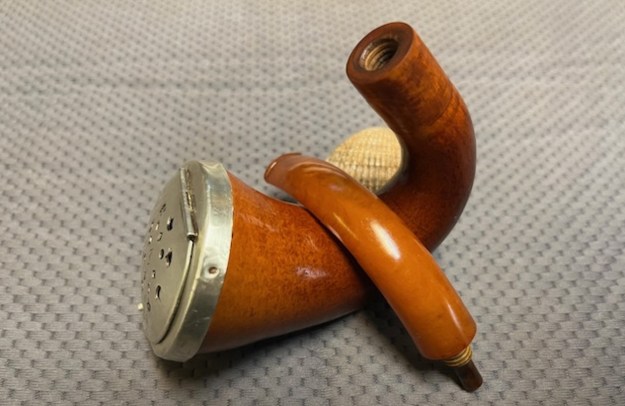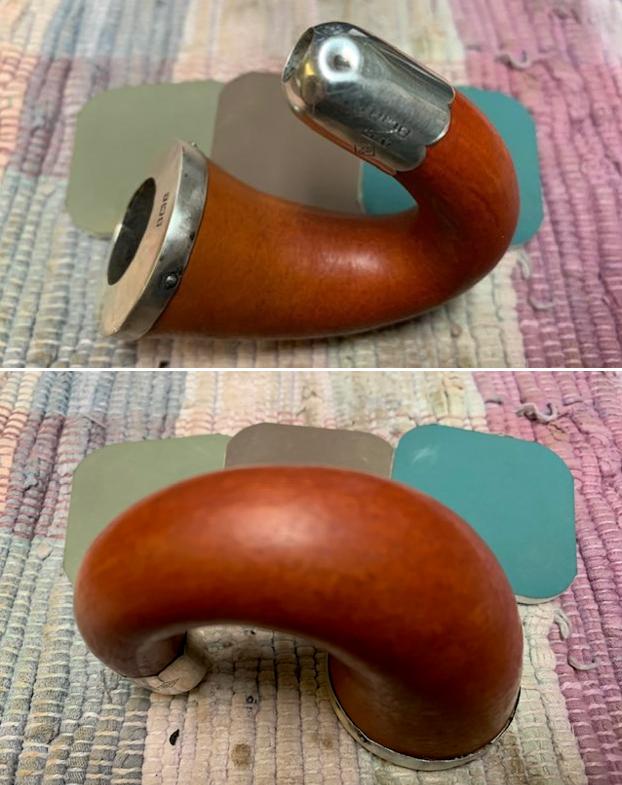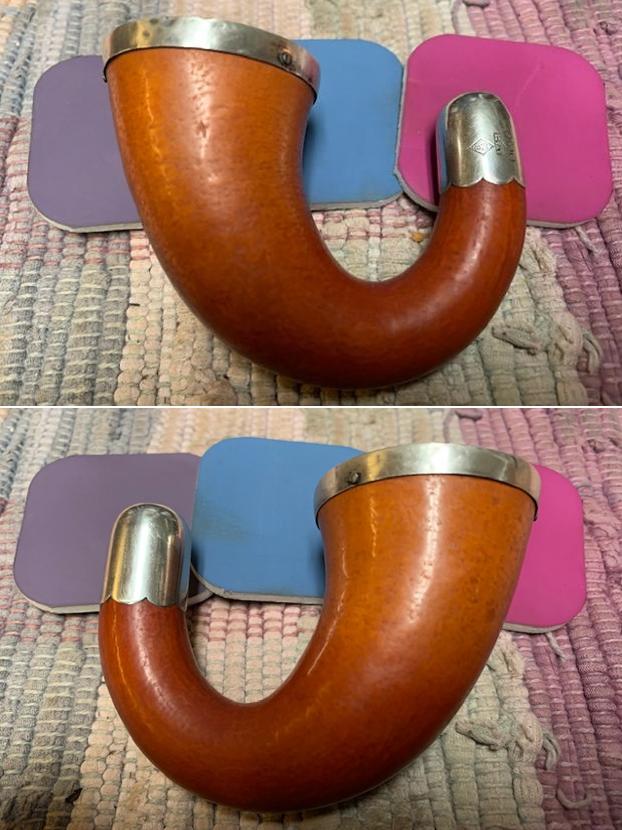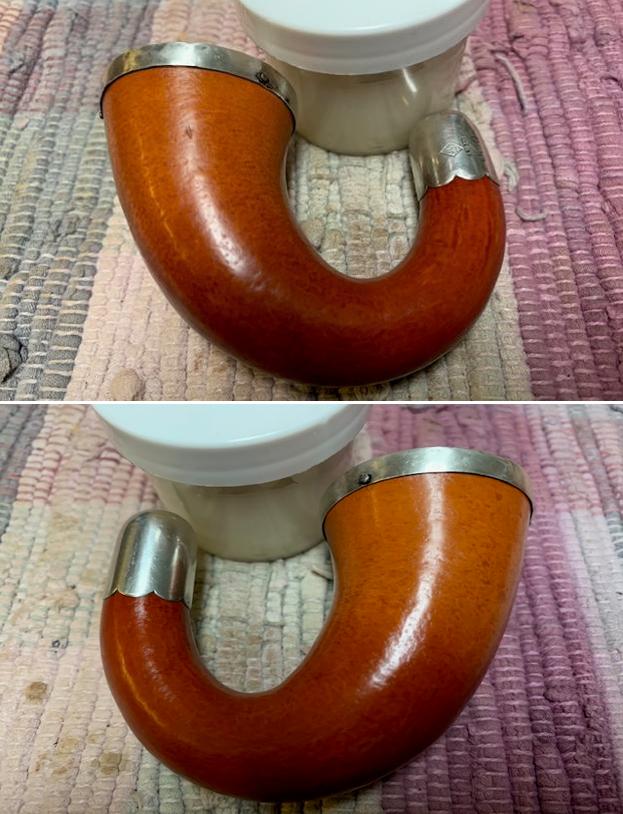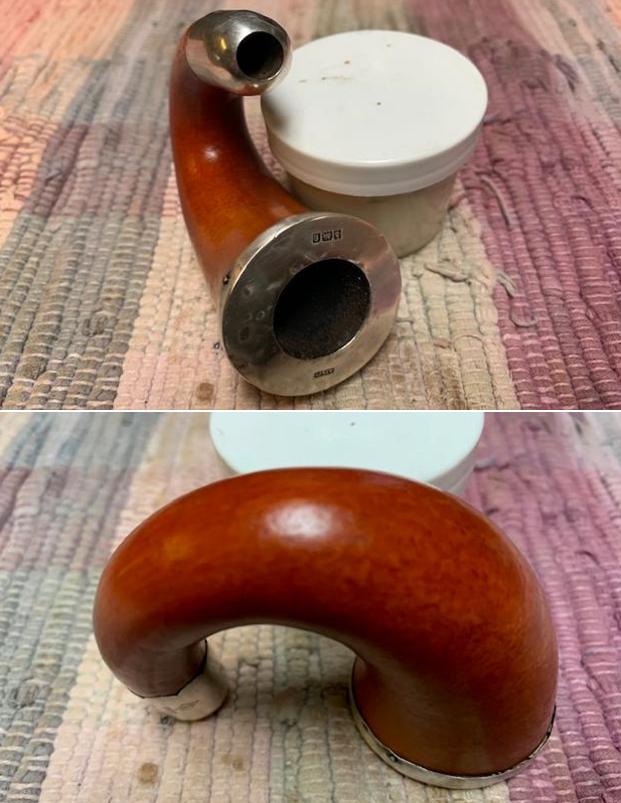
Tag Archives: polishing silver

Restoring an older MLC Redmanol French Briar Crosby Style Pipe with a Redmanol Stem


by Steve Laug

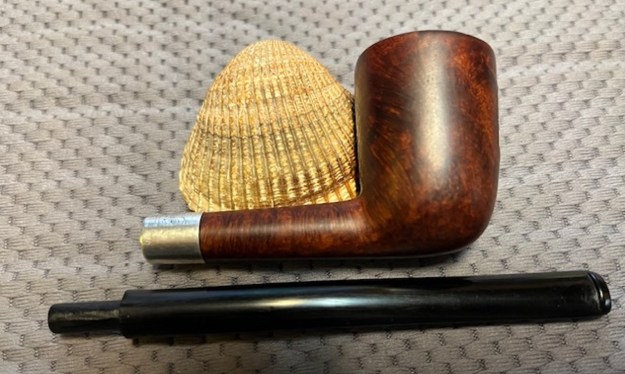
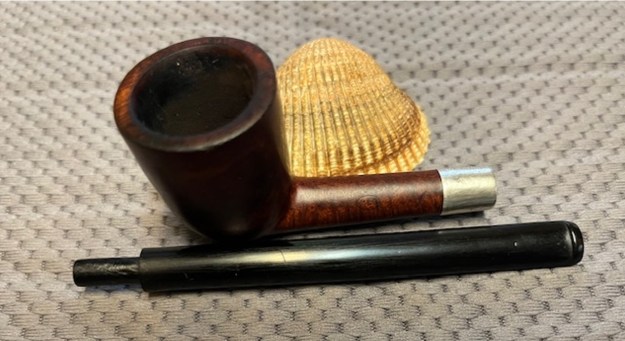
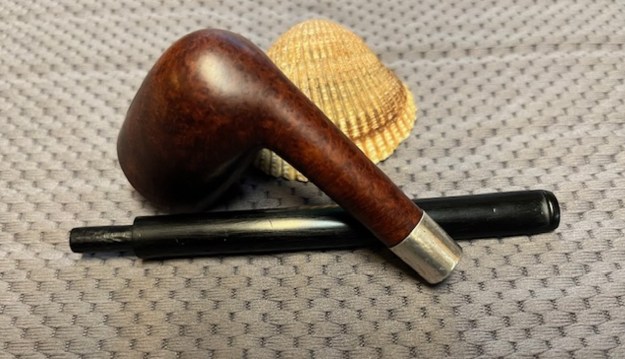
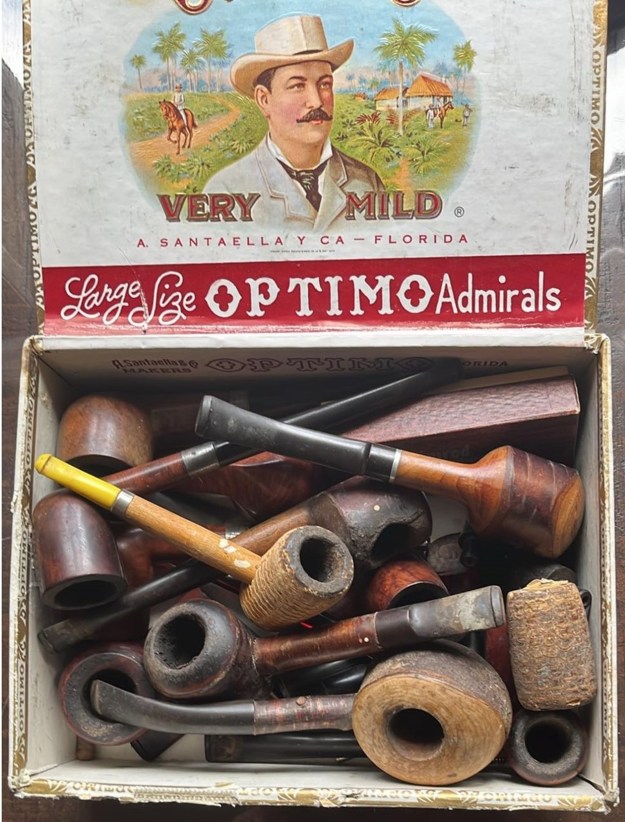
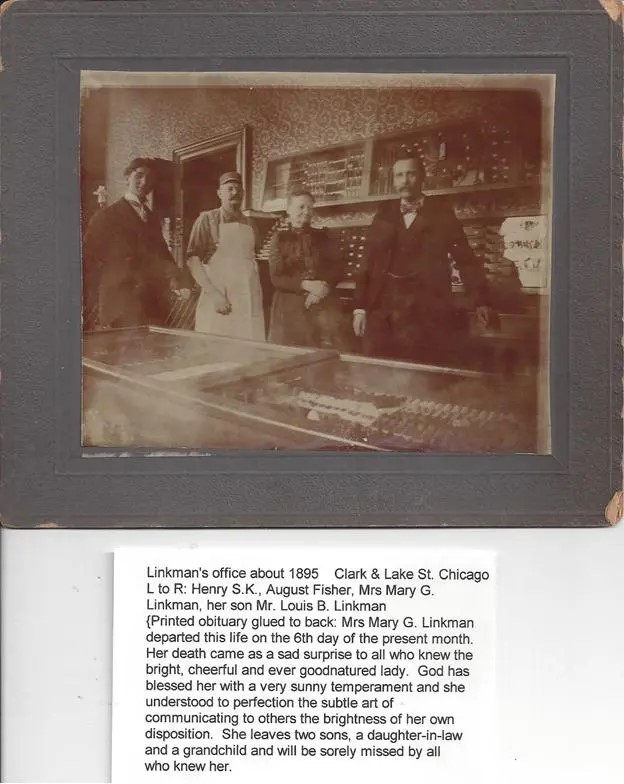
This older MLC billiard (almost a Bing Crosby shape though certainly a predecessor) is early 20th century pipe. It came to us from Mark in Missoula, Montana, USA and was a pipe from his Grandfather’s collection. He sent us a cigar box of pipes from that collection that included a lot of interesting pipes for us to work through. Mark also included a biographical sketch on his Grandfather, W.B. Bollen (written by Mark’s Father). His Grandfather, WB Bollen was quite involved in the state of Oregon and the Pacific Northwest of the USA in the field of agriculture through Oregon State University in Corvallis, Oregon. The sketch is called Recollections of W.B. Bollen and I am in the midst of reading it while I work on the first of these pipes – the MLC Billiard. According to Pipedia, (https://pipedia.org/wiki/M._Linkman_%26_Co) the initials MLC stand for M. Linkman Company which was thought to mean Mary Linkman Company. They were a Chicago based company that produced both briars and meerschaums. The company was named for the mother of the same Linkman who branded pipes under that same name and then eventually became the Dr. Grabow pipe manufacturer with which we are familiar. Pipephil’s site gave a little more information at this link (http://www.pipephil.eu/logos/en/logo-l4.html). M. Linkman and Co. was established by Louis B. Linkman and August Fisher in 1898. The company closed down in the 1950s and the Dr Grabow branch was sold to Henry Leonard and Thomas Inc.(HLT), There was also a note that early Linkman’s pipes were stamped MLC in an oval.
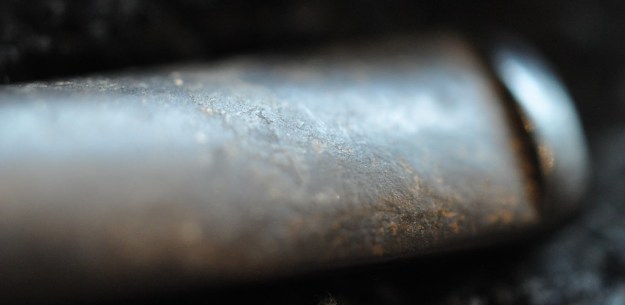
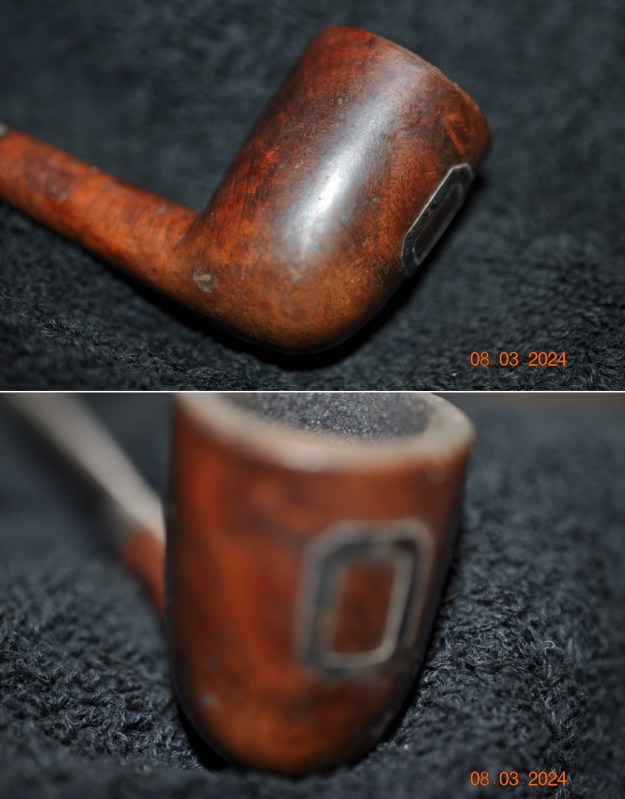
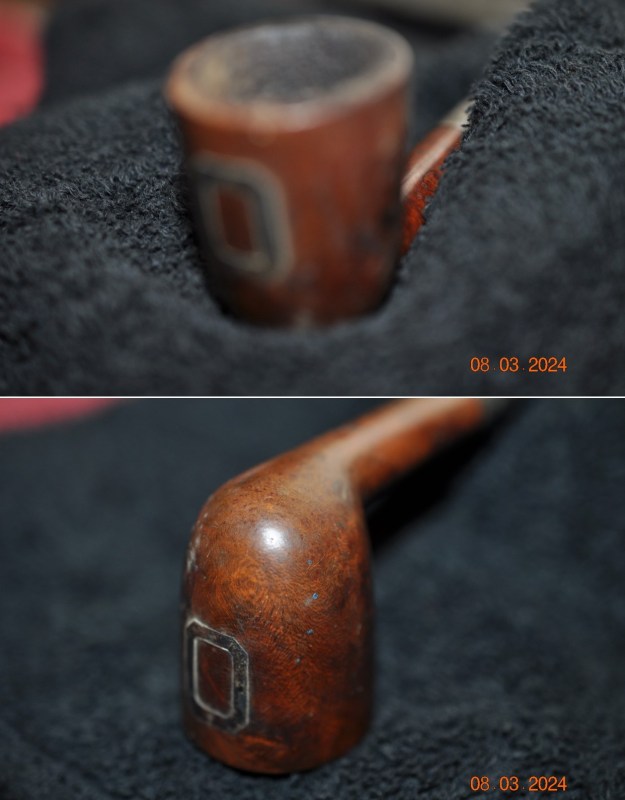
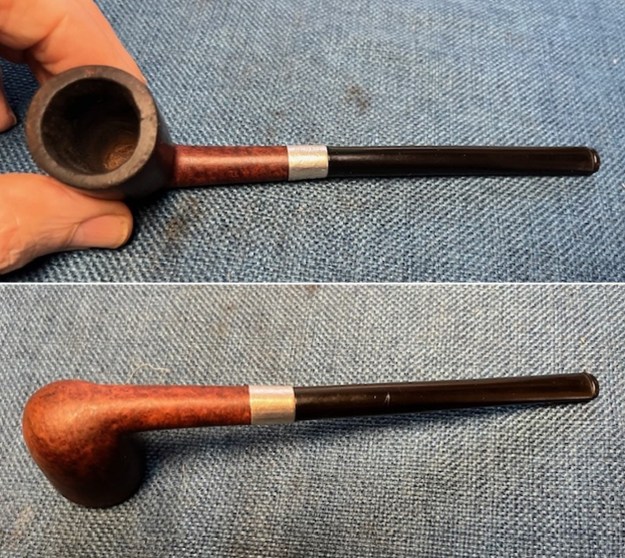
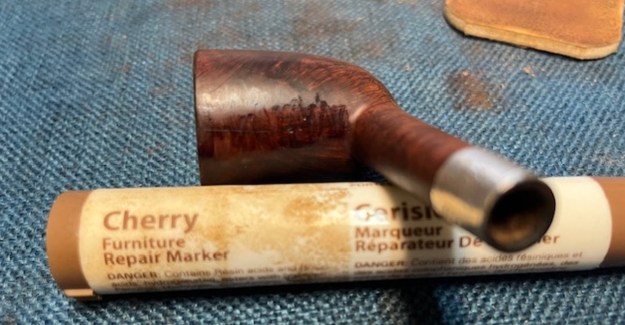
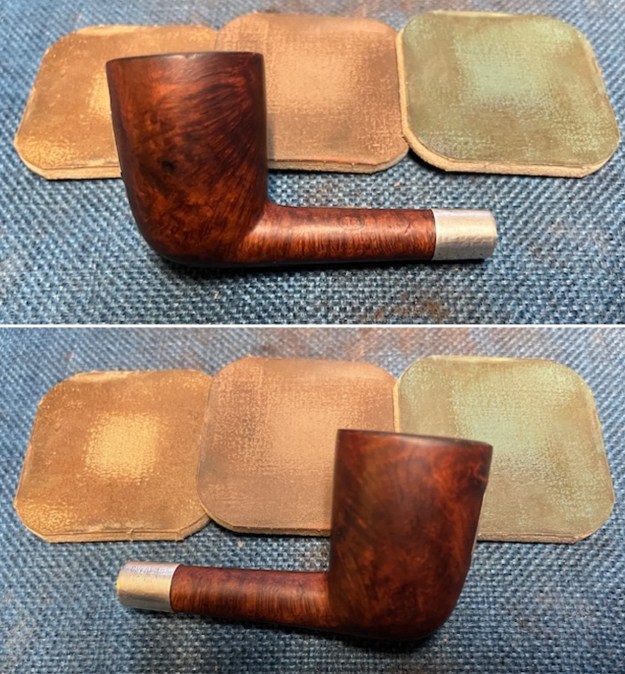
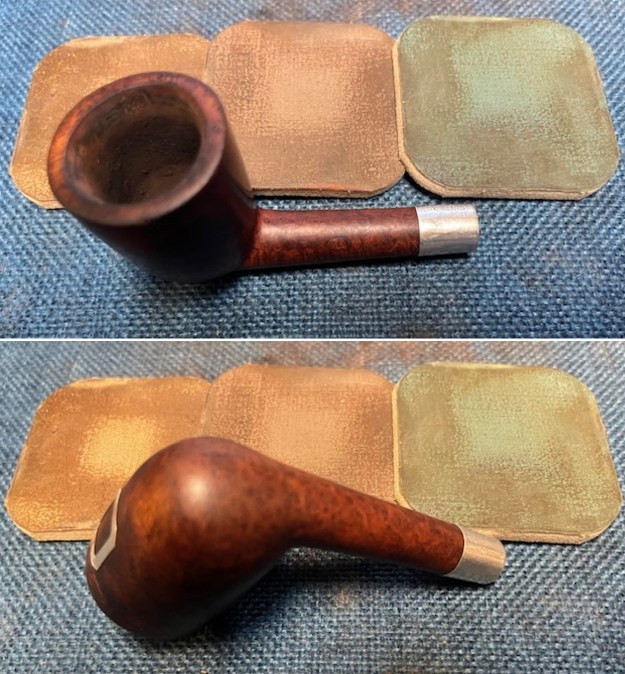
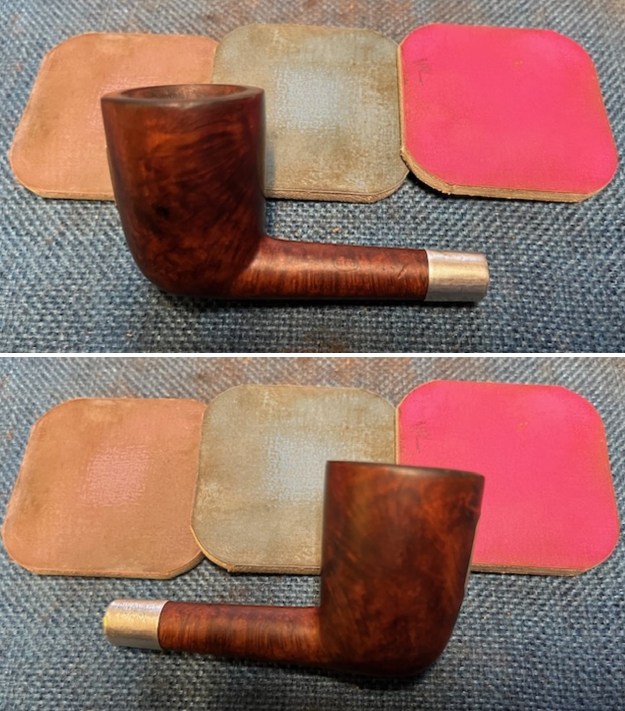
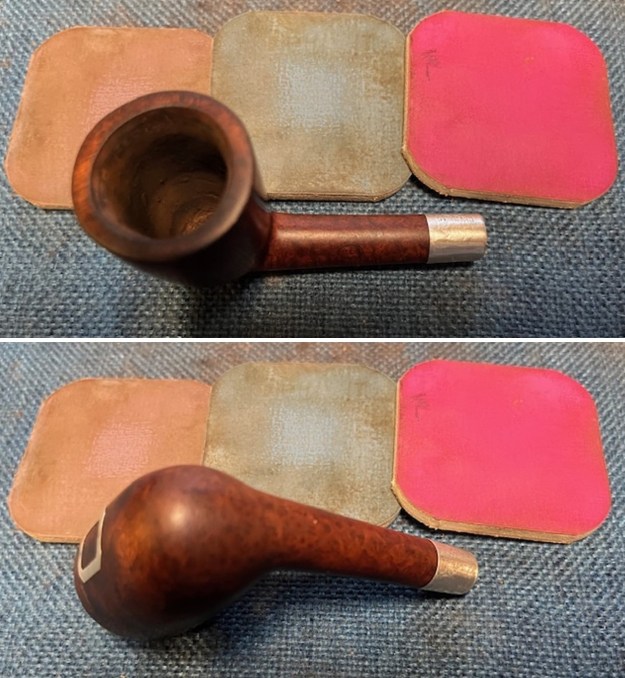
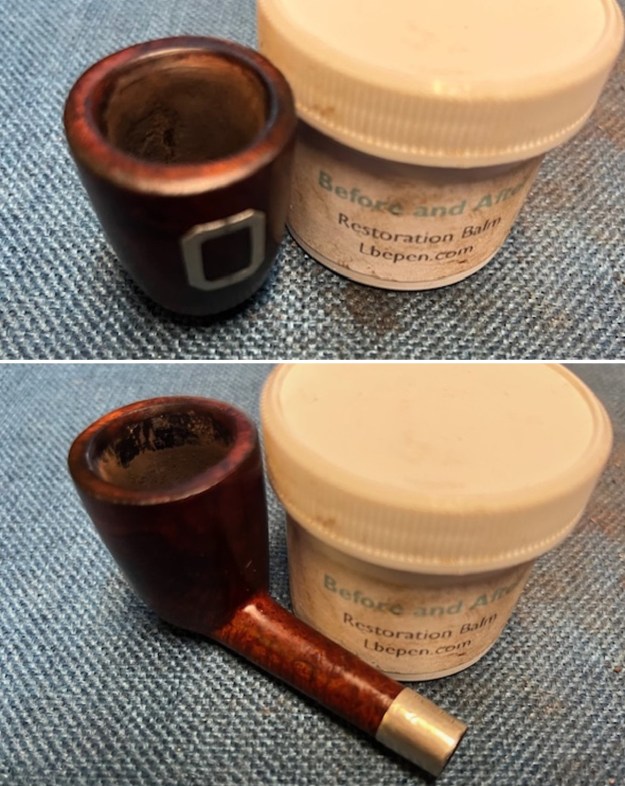
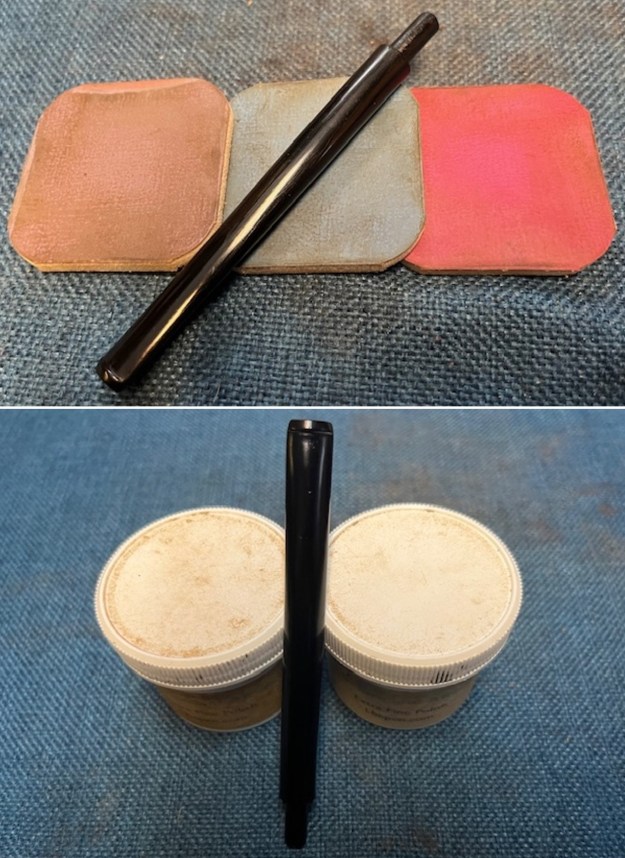
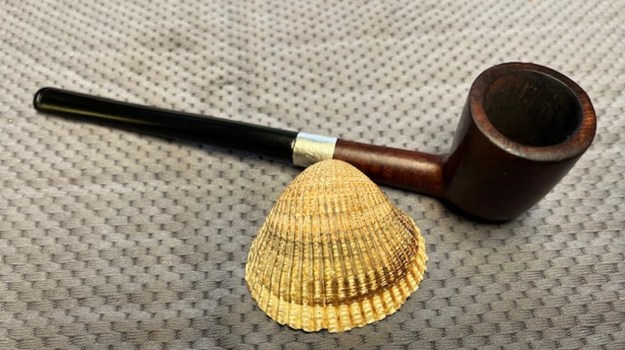
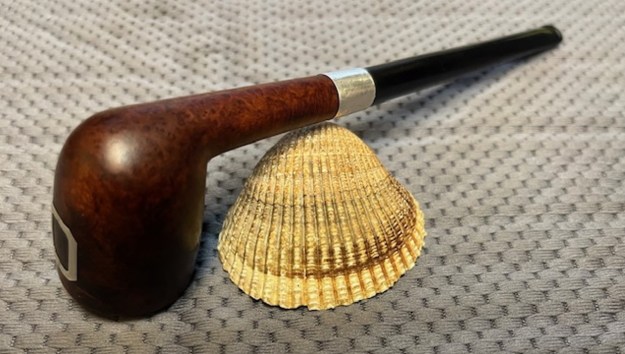
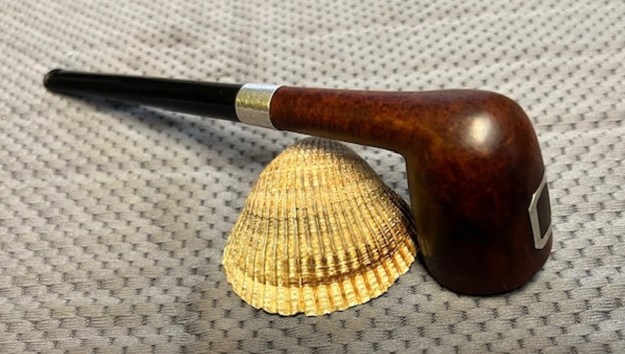
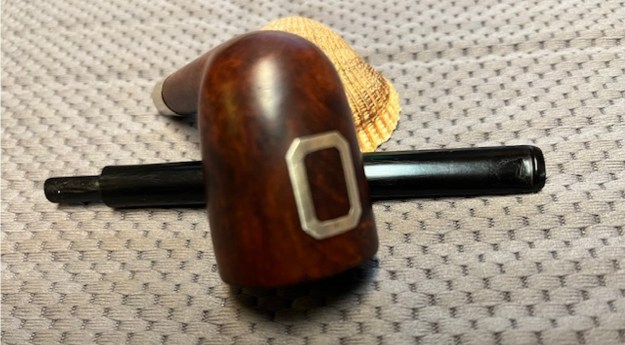
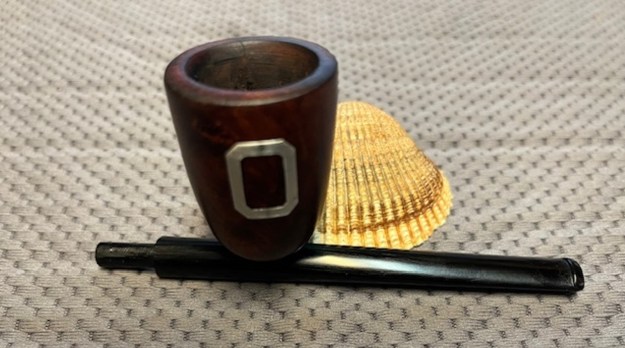
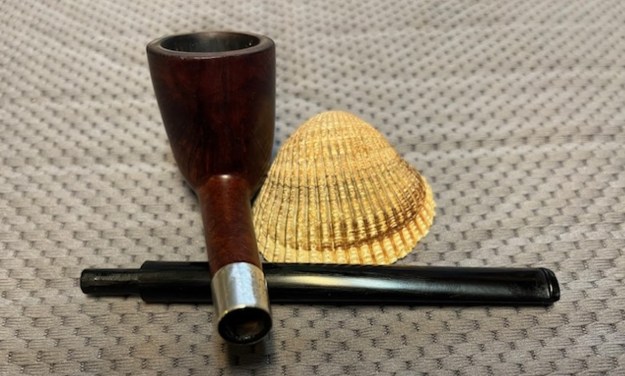
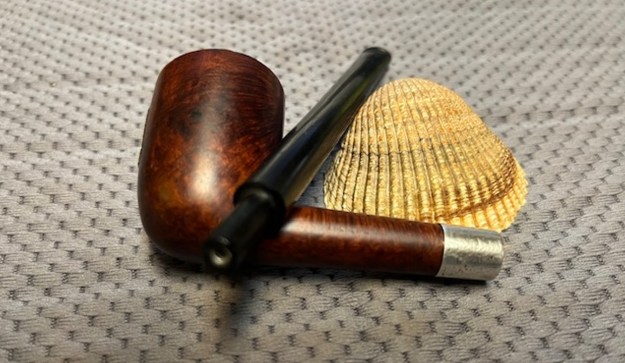
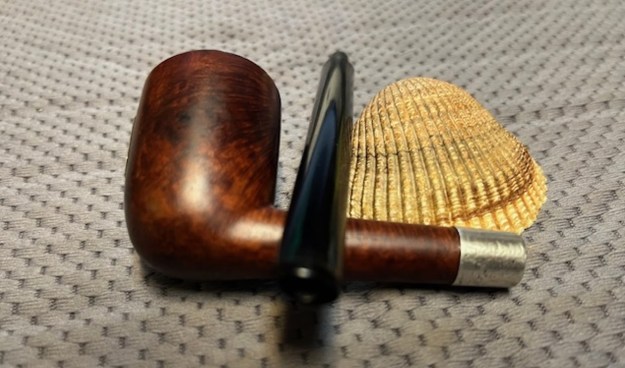
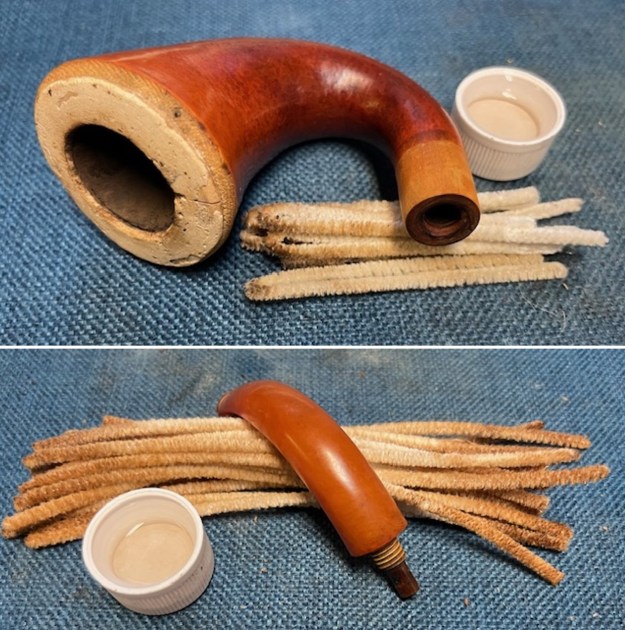
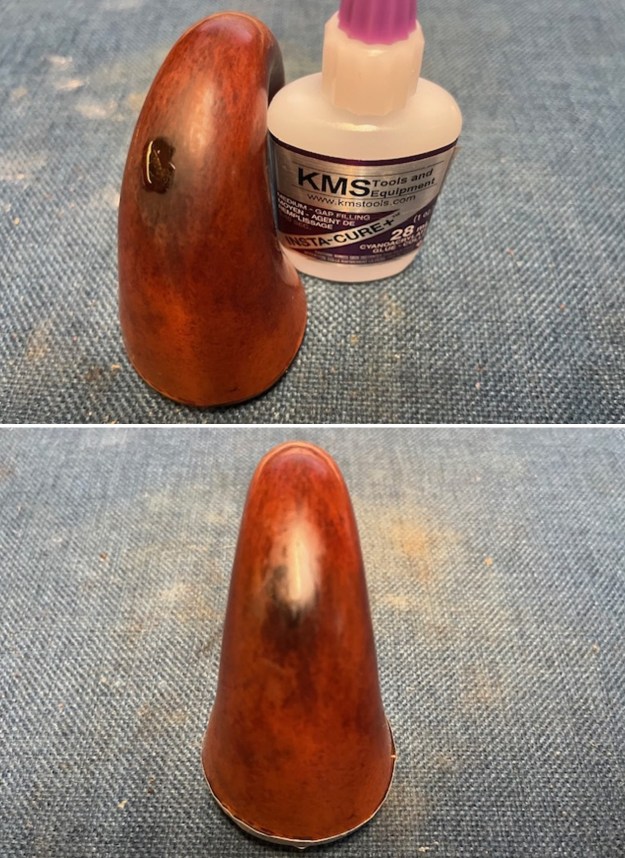
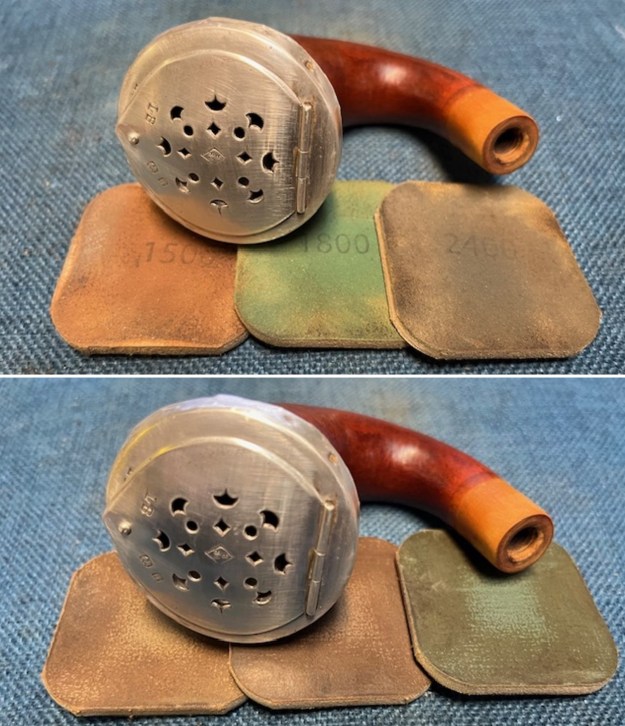
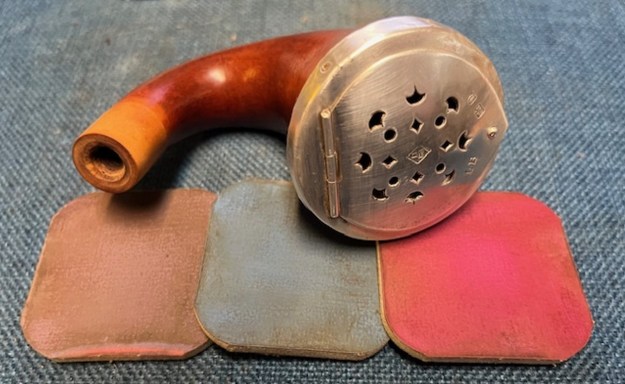
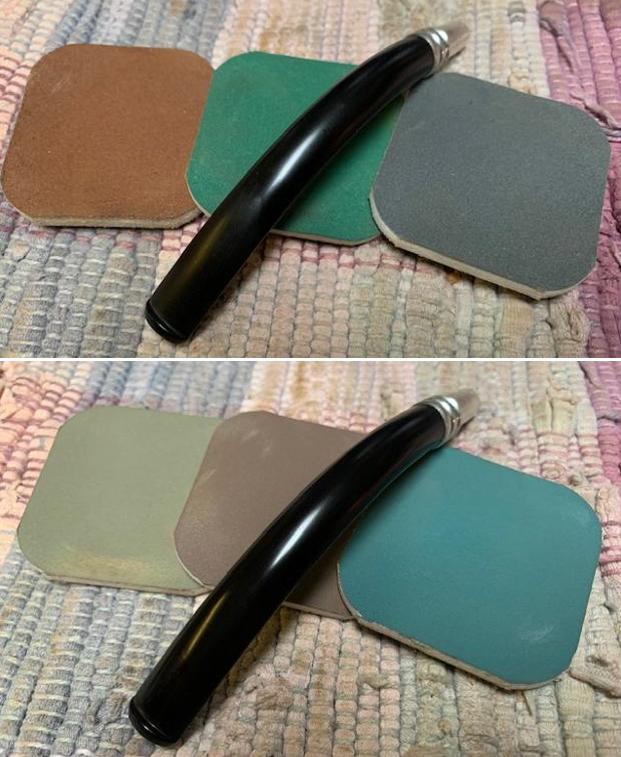
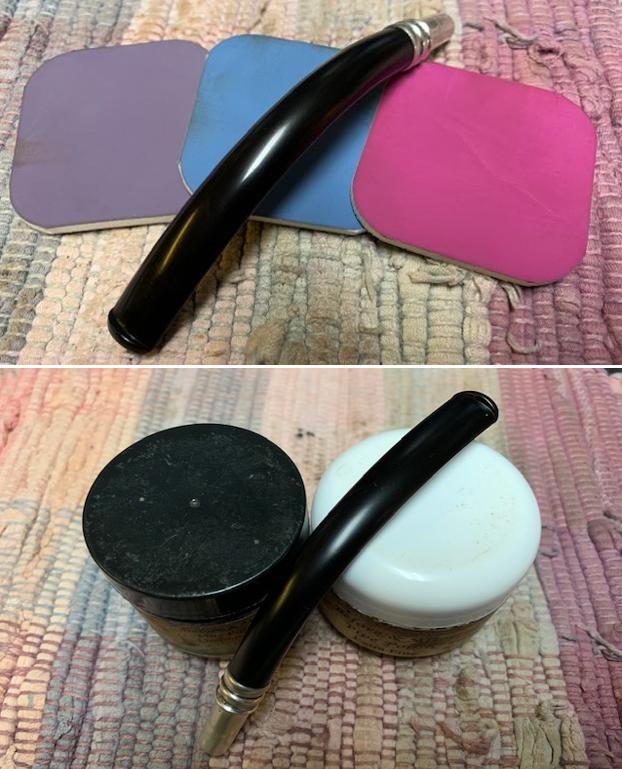
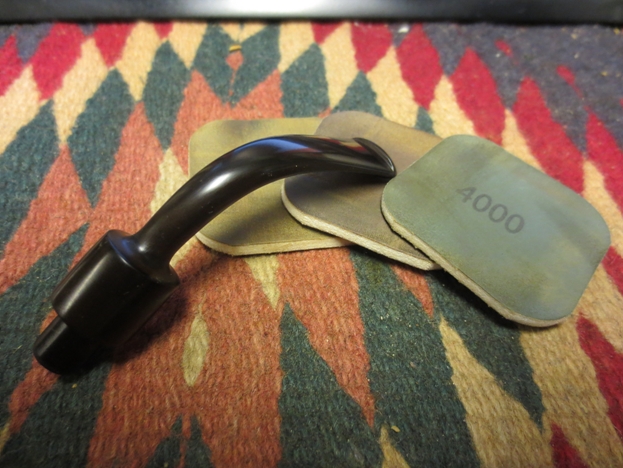
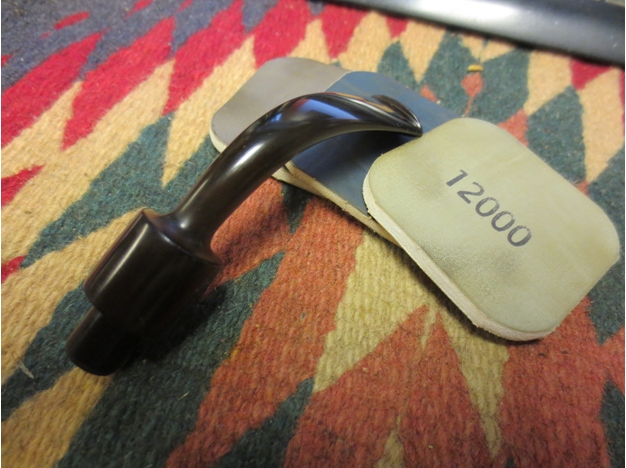
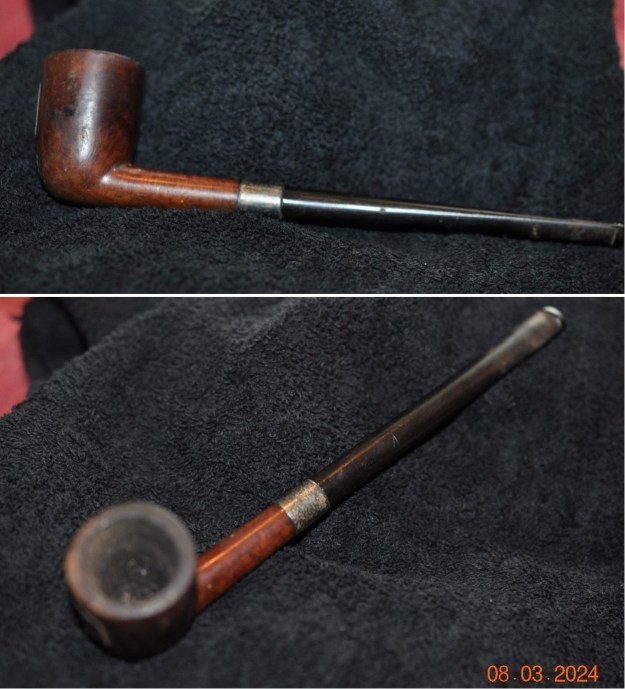
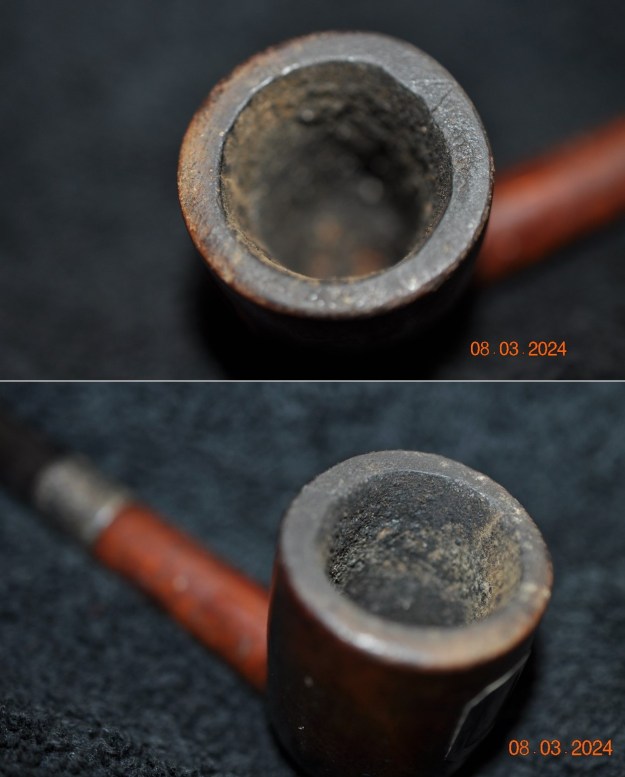
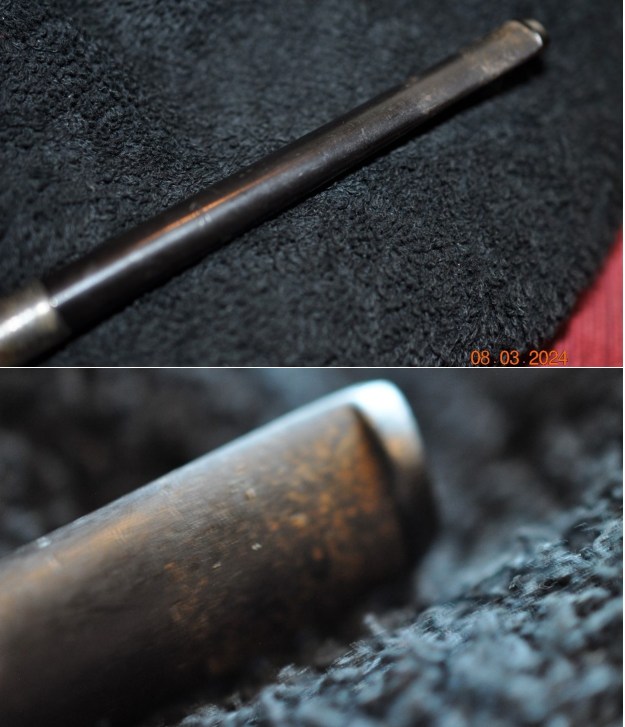
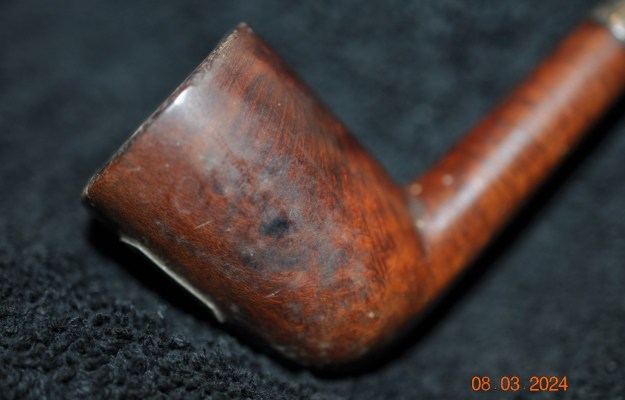
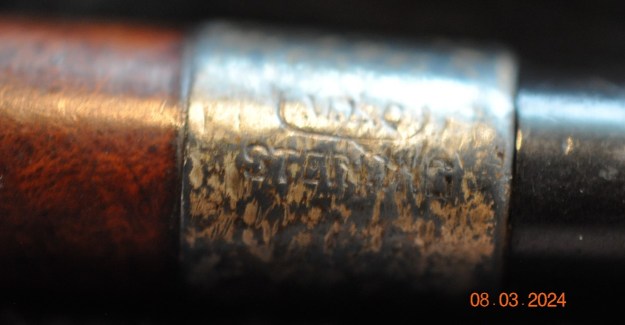
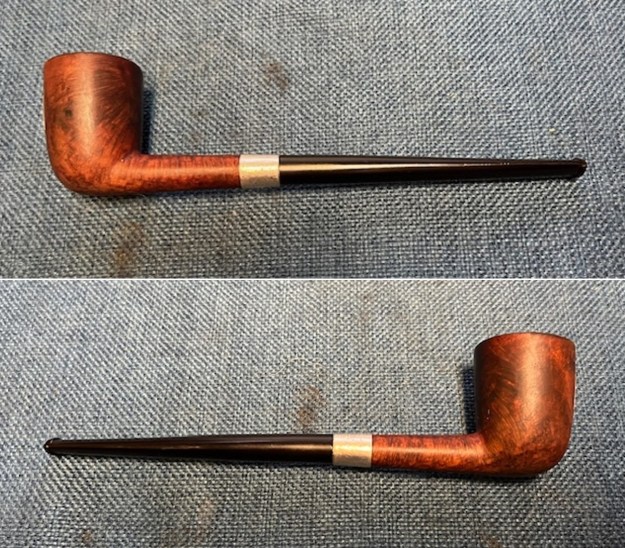
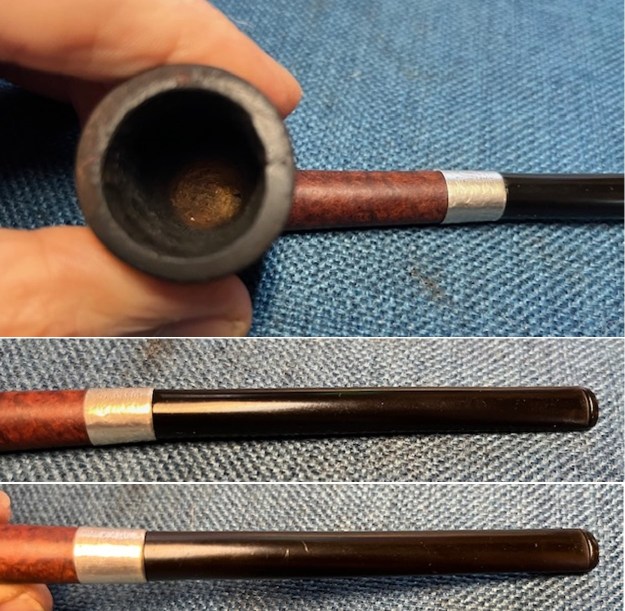
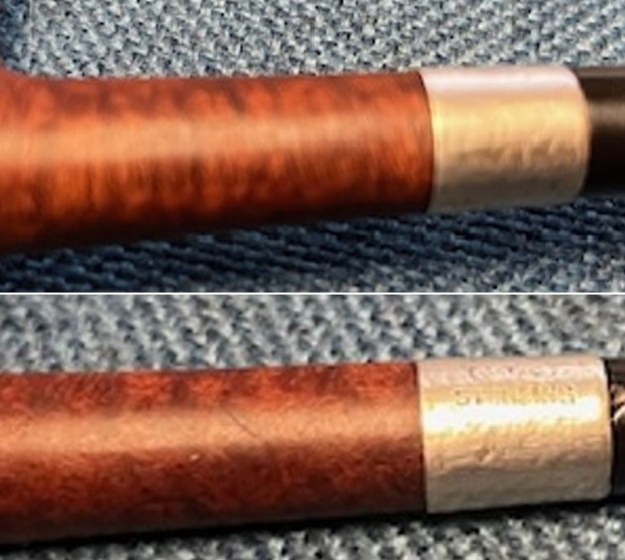
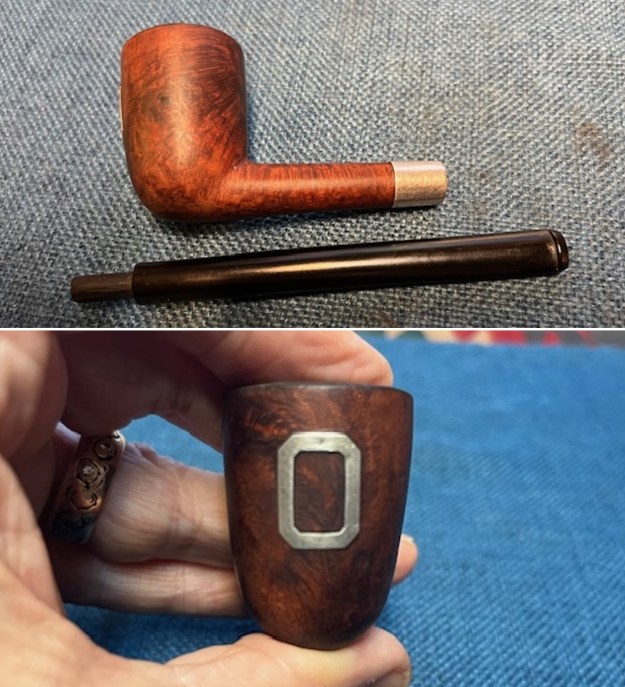
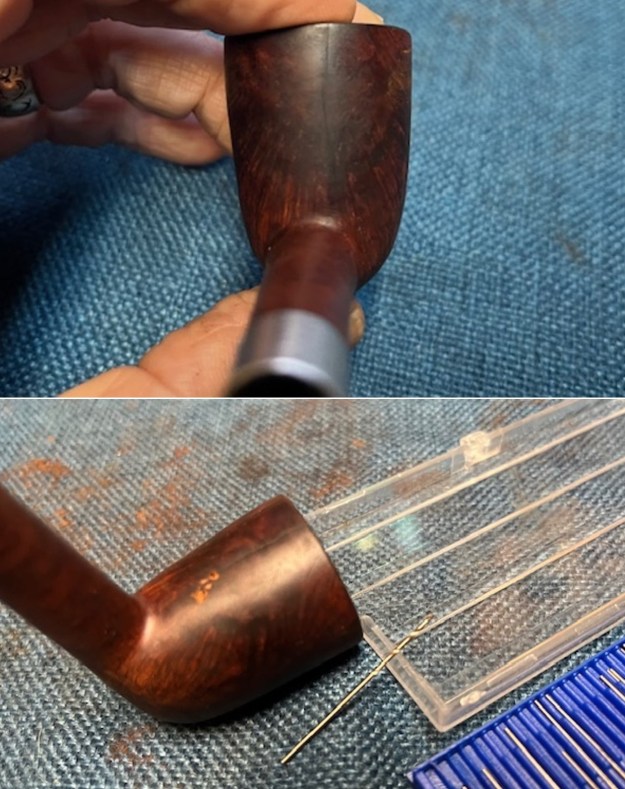
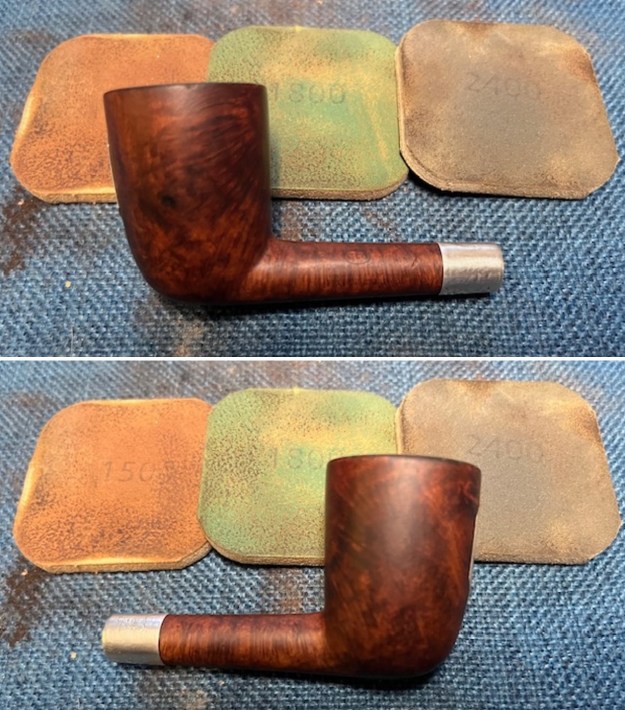
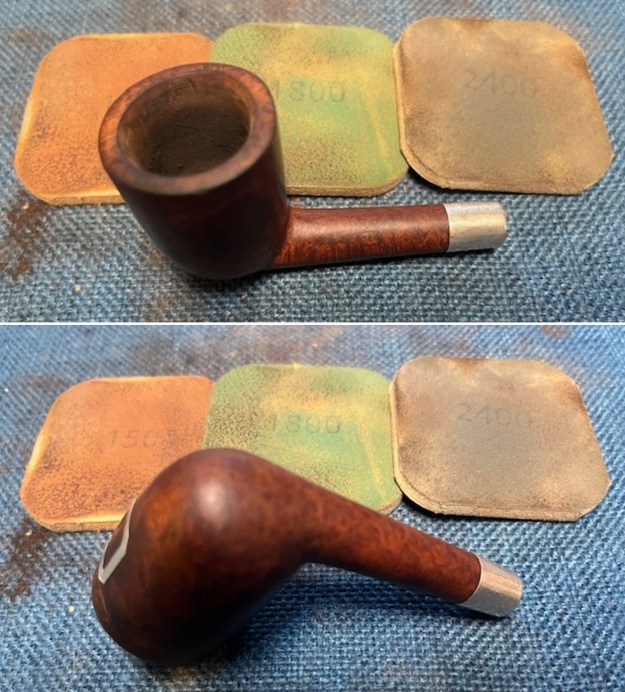
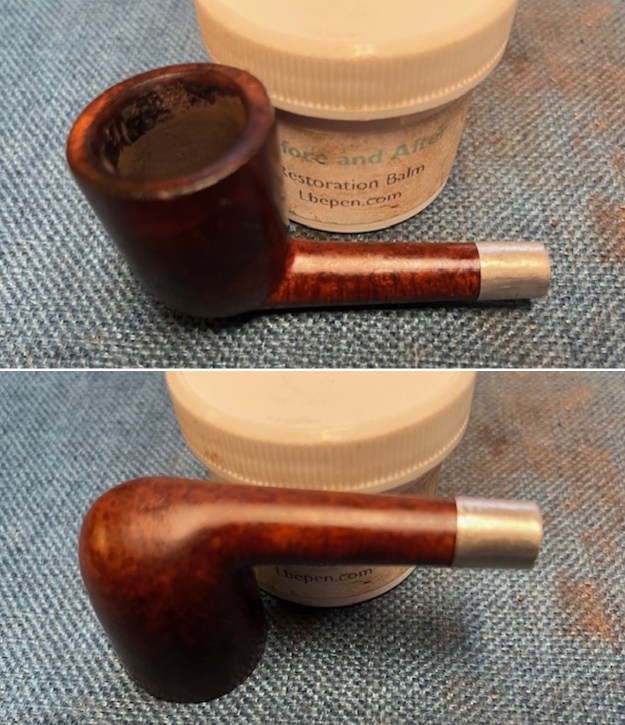
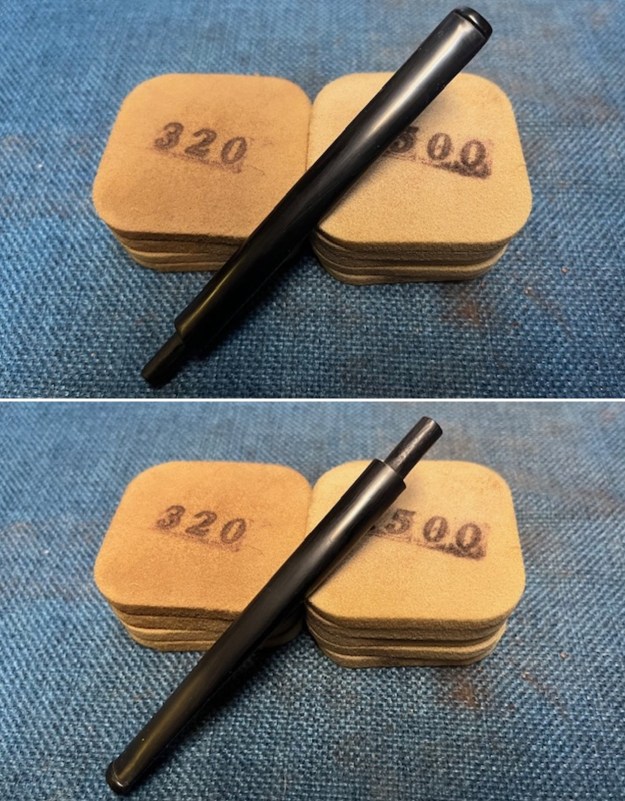
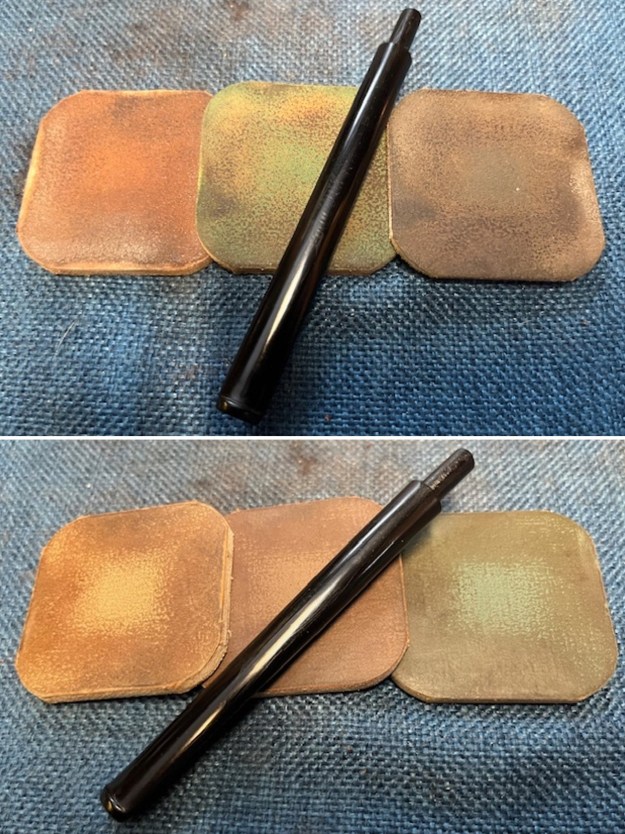
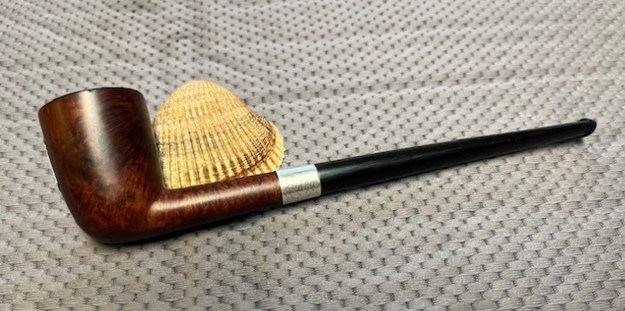
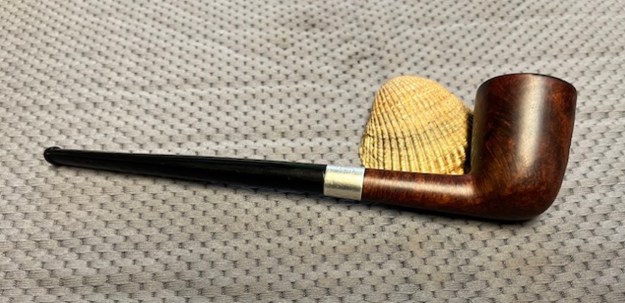
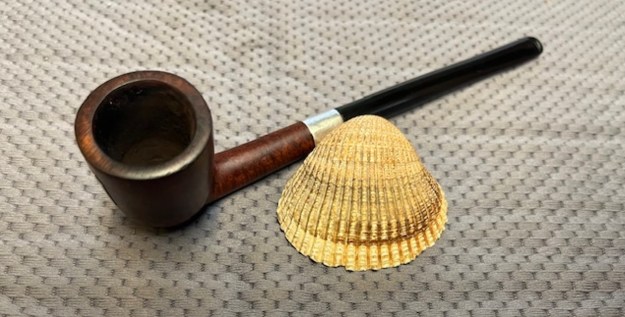
I have written a bit more about the MLC brand on several early blogs (https://rebornpipes.com/2016/11/12/an-interesting-the-nuvo-mlc-italian-briar-hidden-in-a-wdc-case/ https://rebornpipes.com/2017/08/17/restoring-a-sad-old-mlc-bent-billiard/). The second link included this older photo of the Linkmans that is really fascinating. I am including it below.If you have followed this blog for a while you have come to know that I love really old pipes and this one fits into that category of pipes. It is stamped MLC in an oval over Redmanol over French Briar on the left side of the shank. The stamping is faint but readable with a light and lens. There are no other stampings on the briar. The band is Sterling Silver and is dented and worn but also bears the MLC oval logo stamped on the topside. It is a pencil shank billiard with a thin “unbreakable” tube lined Redmanol stem. The bowl exterior was absolutely filthy. There was darkening and oils ground into the briar. The thick cake in the bowl and the lava coat on the edges and rim top made it hard to know what the condition of the rim edges. There also appeared to be a thin hairline crack on the backside of the bowl from the rim edge about 2/3 of the way down to the shank. There was also a large silver “O” on the front of the bowl which I believe refers to Oregon Agricultural College (which later became Oregon State University). As with other schools in the 1920s pipes were made honouring the institution and were available to graduates and students. This fits the time frame for this pipe. W.B. Bollen received his BS in Horticulture in 1921 and an MS in Soil Bacteriology in 1922, both from Oregon Agricultural Colledge. I am fairly certain that this dates the pipe that I am working on. The Redmanol Stem was in good condition with the usual chips, nicks and tooth marks of a pipe that is over 100 years old. Jeff took the photos that follow before started the cleanup. You can see from the photos the condition of the pipe.He took photos of the rim top and bowl to show the condition of the pipe. You can see the thick cake, the lava on the rim top, an out of round inner edge and a potential crack on the rim top at the back of the bowl. He also took photos of the Redmanol stem to show its condition as noted above. He took photos of the sides of the bowl to show the grain underneath the dirt and grime ground into the finish. You can also see the nicks in the briar and the oxidized silver O that is on the front of the bowl. There is a lot of beauty underneath the grime. While he was unable to capture the stamping on the shank side he was able to capture the stamping on the silver band. Underneath the oxidation and scratches, it is still clear and reads MLC in an oval over Sterling.Now that I knew a bit of the history of the pipe both in terms of the maker and the pipeman who enjoyed it, I turned to work on the pipe itself. Jeff had thoroughly cleaned up the pipe. He had reamed the pipe with a PipNet pipe reamer back to bare briar and removed the remnants of the cake with a Savinelli Fitsall Pipe Knife. He scrubbed the bowl with undiluted Murphy’s Oil Soap and a tooth brush. He rinsed it under running warm water to remove the soap and grime. He cleaned out the inside of the shank and the airway in the stem with alcohol, cotton swabs, pipe cleaners and shank brushes. He soaked the stem in Briarville’s Pipe Stem Deoxidizer and rinsed it off with warm water. I took photos of the pipe before I started my part of the restoration work.  I took photos of the bowl and rim top to show the clean condition. The damage on the inner edge of the bowl is evident as is the crack on the rim top above the crack on the back of the bowl. The crack extends across the rim top and just slightly into the bowl. That is to be expected. The bowl walls look very good. The Redmanol Stem looks very clean and the chips and nicks are visible the length of the stem. The silver band looks far better.I tried to capture the stamping on the shank side and band in the photos below. They are faint and very hard to capture. It is there but hard to see with out a lens. I removed the stem from the shank and took a photo of the parts of the pipe. It is a beautiful pencil shank pipe. I also took a photo of the Silver “O” on the bowl front. It is nicely done and the tarnish is gone. I decided to address the out of round inner edge of the bowl first. I used a folded piece of 220 grit sandpaper to smooth out the damage on the edge and to give it a slight bevel to bring it back to round. I sanded out the damage on the rim top to smooth it as well. It definitely looks better.I turned to deal with the crack in the back of the bowl that I mentioned above. The first photo sows the crack. It is hairline and starts on the rim top as shown above and extends down the bowl about 2/3 of the distance to the shank. It is a single crack so I used a small micro Drill bit on my Dremel and put a small hole at the bottom of the crack to stop it from going further. You will notice some small nicks in the surface of the briar where the drill hit as I guided it to the crack end.I wiped the back of the bowl down with alcohol on a cotton pad to clean up any debris from the drilling and any that might be in the fine crack. I ran a thin bead of clear CA glue down the crack and in the drill hole and nicks. I used a dental spatula to press fine briar dust into the crack through the glue. Once it cured I sanded the repaired area with a folded piece of 220 grit sandpaper to smooth out the repair. I polished it with a 400 grit sanding pad and then stained the area with a Cherry stain pen to match the rest of the surrounding briar. I polished the briar with micromesh sanding pads – dry sanding with 1500-12000 grit sanding pads. I wiped the bowl down with a damp cloth after each pad. I take photos of the three groups of pads for my own viewing primarily as I am looking for progress in polishing. Once again, by the end of the process it looked quite good. I rubbed the bowl and shank down with Before & After Restoration Balm. I worked it into the surface of the bowl sides and shank with my fingertips. It works to clean, enliven and protect the briar. I let the balm sit for 15 minutes and buffed with a cotton cloth to raise the shine. The grain came alive. I set the bowl aside and turned my attention to the stem. The scratches, tooth chatter and marks easily were addressed by dry sanding the stem with 320-3500 grit sanding pads. I wiped it down after each pad with Obsidian Oil. It looked very good at this point in the process.I polished the Redmanol stem with micromesh sanding pads – 1500-12000 grit pads to further remove the remaining scratches. I wiped the stem down with Obsidian Oil after each sanding pad. I used Before & After Pipe Polish – both Fine and Extra Fine to further polish the stem. I rubbed it down with a final coat of Obsidian Oil and let it dry. This 1920s MLC Redmanol French Briar Pencil Shank Billiard with a Redmanol stem is a great looking pipe with some interesting scalloping around the sides of the bowl. An added bonus if you are an Oregon Agricultural College Fan there is a silver “O” on the front of the bowl. The beautiful grain around the bowl is quite stunning and works well with both the shape and the polished silver band and “O” and the Redmanol taper stem. I put the stem back on the bowl and carefully buffed the pipe with Blue Diamond on the buffing wheel using a light touch on the briar. I gave the bowl and the stem multiple coats of carnauba wax on the wheel and followed by buffing the pipe with a clean buffing pad. I hand buffed the pipe with a microfiber cloth to deepen the shine. The finished MLC Redmanol French Briar Billiard fits nicely in the hand and feels great. Give the finished pipe a look in the photos below. The dimensions of the pipe are Length: 6 ¾ inches, Height: 1 ½ inches, Outside diameter of the bowl: 1 ¼ inches, Chamber diameter: 7/8 of an inch. The weight of the pipe is 24 grams/.85 ounces. I will be putting it on the rebornpipes store in the American Pipemakers Section shortly. If you are an avid Oregon fan or know one then this is the piece of history for you. Send me a message or an email. Thanks for reading this blog and my reflections on the pipe while I worked on it. I appreciate your support and time!
 

Bringing New Life to an Older BBB Gourd Calabash


by Steve Laug

I regularly am in correspondence with quite a few people through the reach of rebornpipes. This week alone I have received emails from Hungary, Slovakia, England, Australia to name a few. On top of those are the emails from the US and Canada. I received one from a Paul in Halifax, Nova Scotia, Canada about a pipe he recently picked up and he wrote to me after finding a similar one on rebornpipes. Here is his initial email:

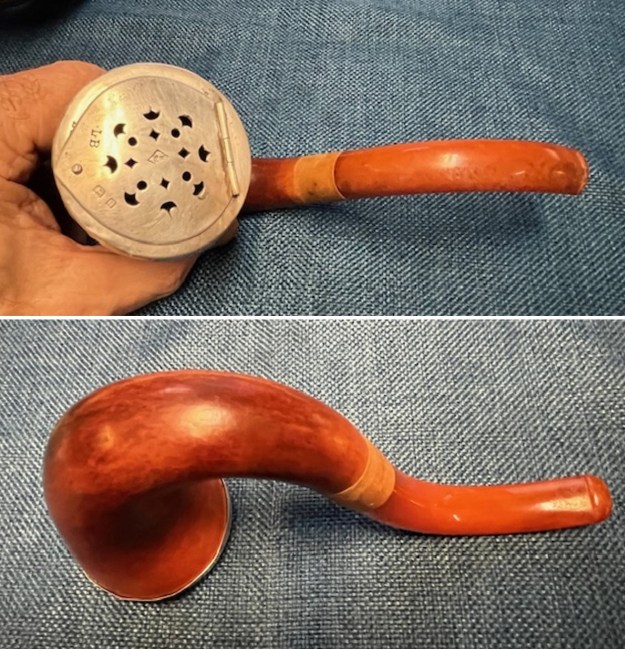
I have purchased an old pipe. The case said BBB in it so I googled it. It is a Calabash like on your website, but the steel rim has an actual flap over the bowl that you can open or close with vent holes in it. It has three markings stamped on it, anchor-lion-n (not the “f”like yours). Can I send you a picture? – Paul

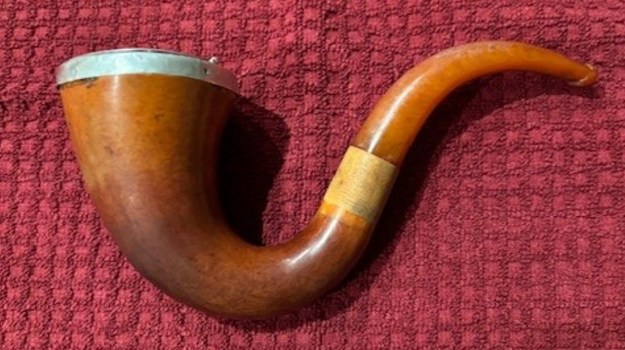
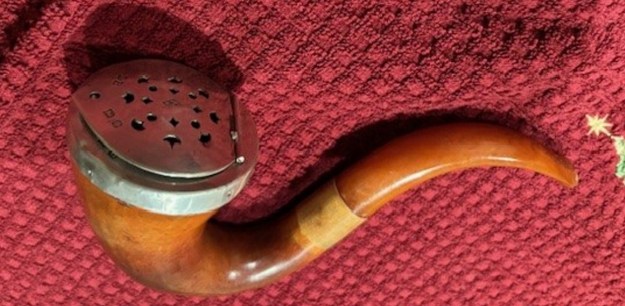
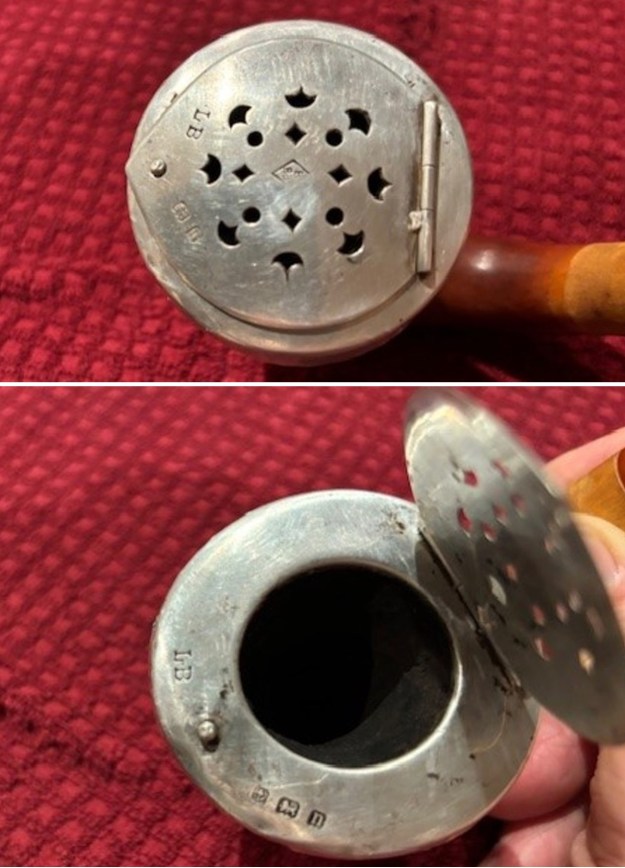
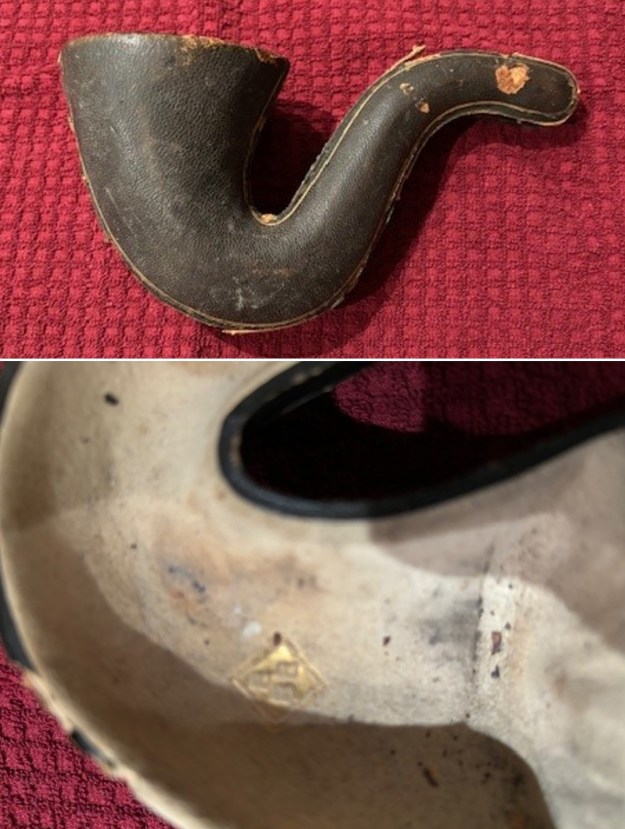
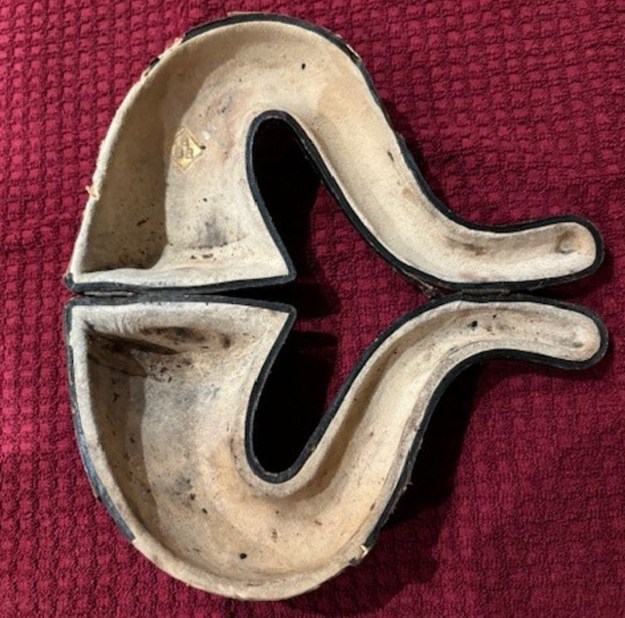
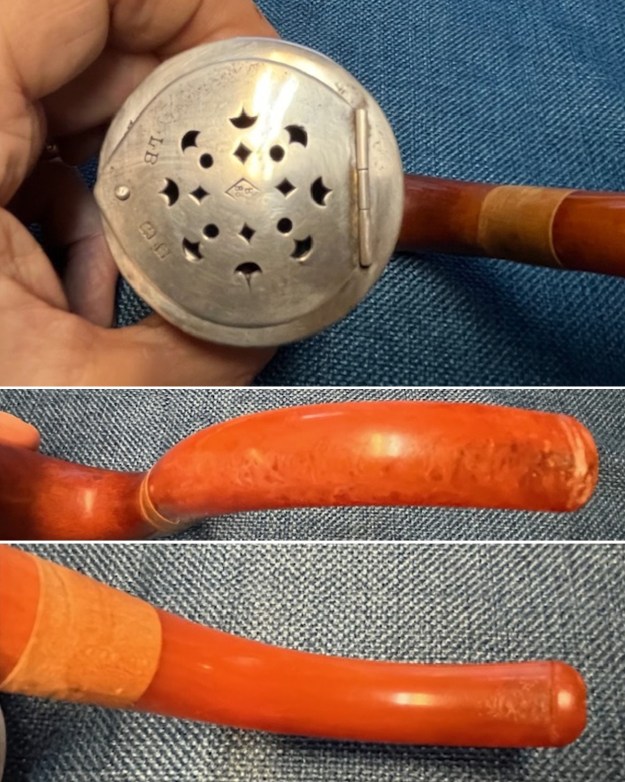
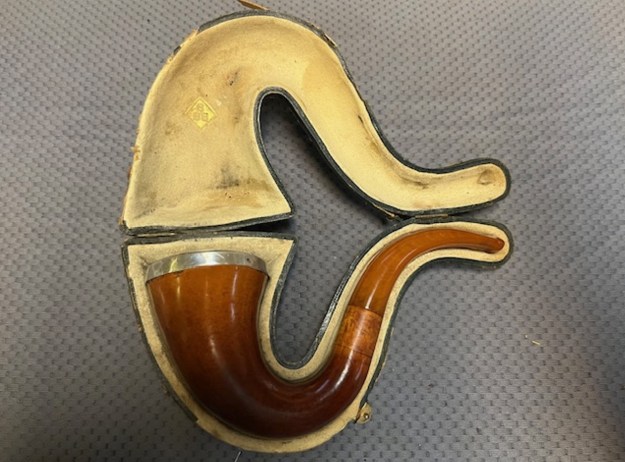
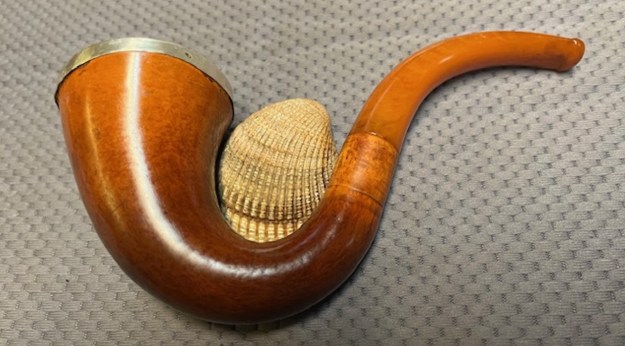
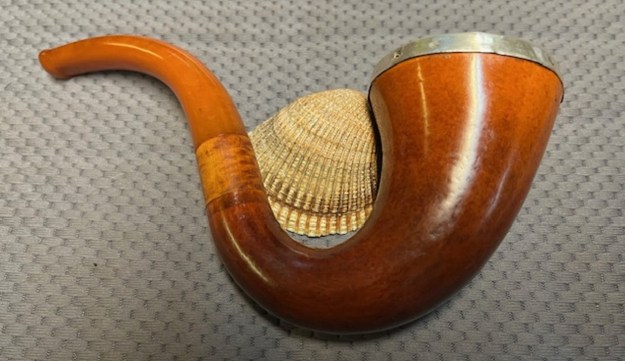
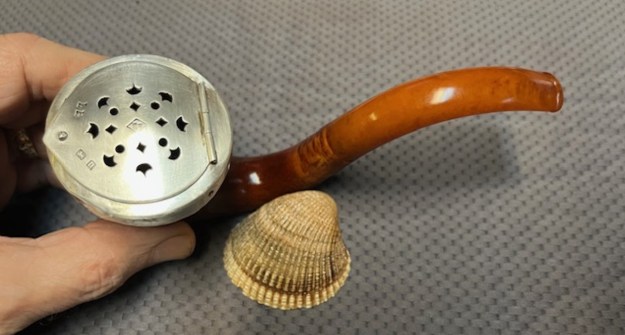
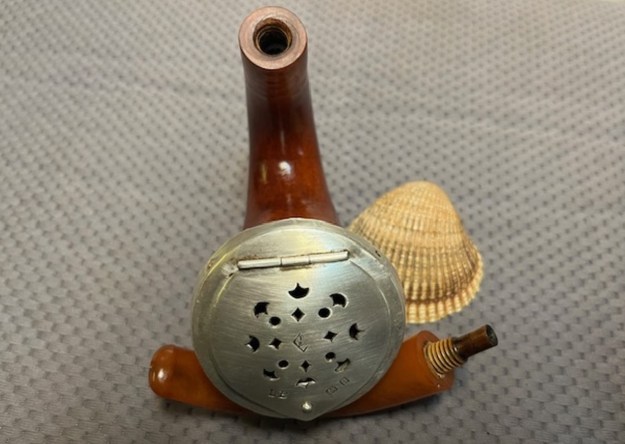
I wrote him back and asked him to send me the pictures. I was very curious to see the age of the pipe and perhaps help him that way. He sent me the following photos. The first two show the bowl as a whole. It was an interesting looking pipe. Paul also sent me photos of the rim cap and bowl cap so I could see how they function and could read the stamping on the silver of both. The stamping was as he noted in his first email.He also included photos of the case exterior and the inside. The inside of the case is stamped with a BBB Diamond logo in the lid of the case. I wrote Paul back about the pipe to help unpack the stamping on the top of the rim and cover. The stamps can be interpreted as follows:

The LB on the cover of the rim/windcap is for Louis Blumfield.

The other stamps are as follows:

Anchor is for Birmingham the city where the silver was made and fitted to the bowl.

Rampant lion is for the quality of the silver used in the rim cap and cover. It means that it is .925 sterling silver

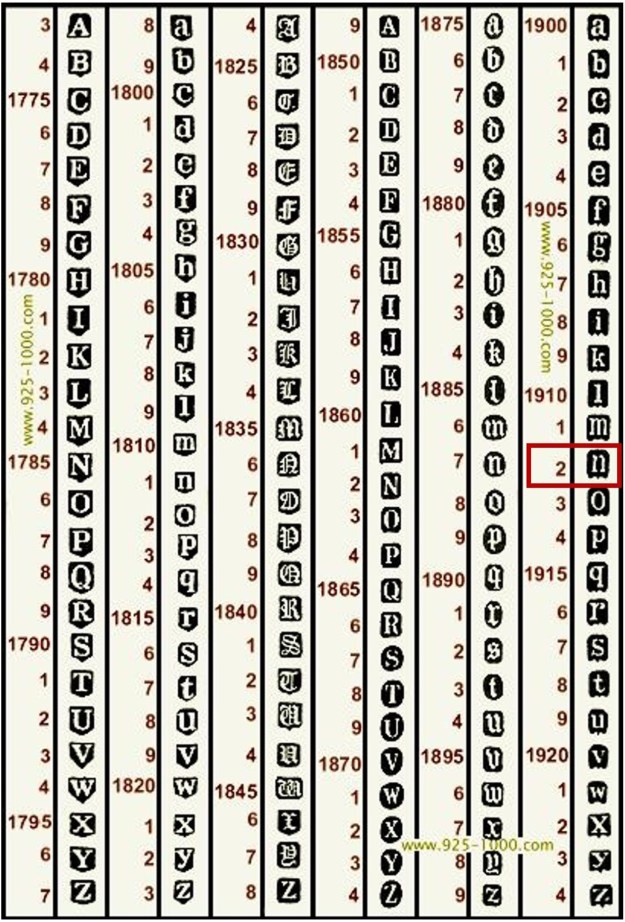
The letter n is the date stamp. I included a copy of the Hallmark chart for British hallmarks. I can match your pipe’s stamp to 1912. I have marked it on the chart below in red.Paul responded with his thanks and a further email:

Hi Steve is it possible to give it a tune-up? professionally? And also, do you think I should just display it? Or is it ok to use? What would you do? – Paul

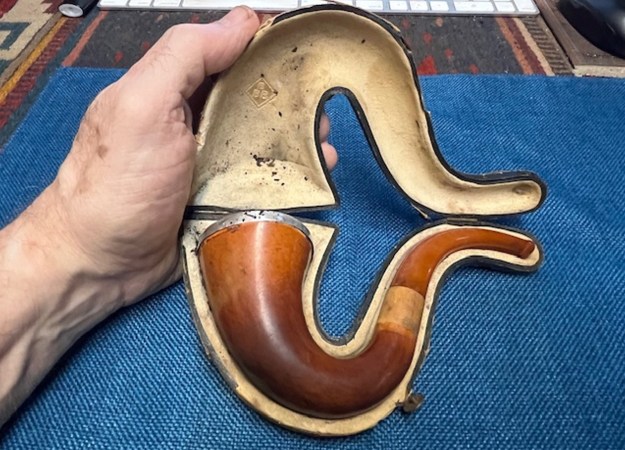
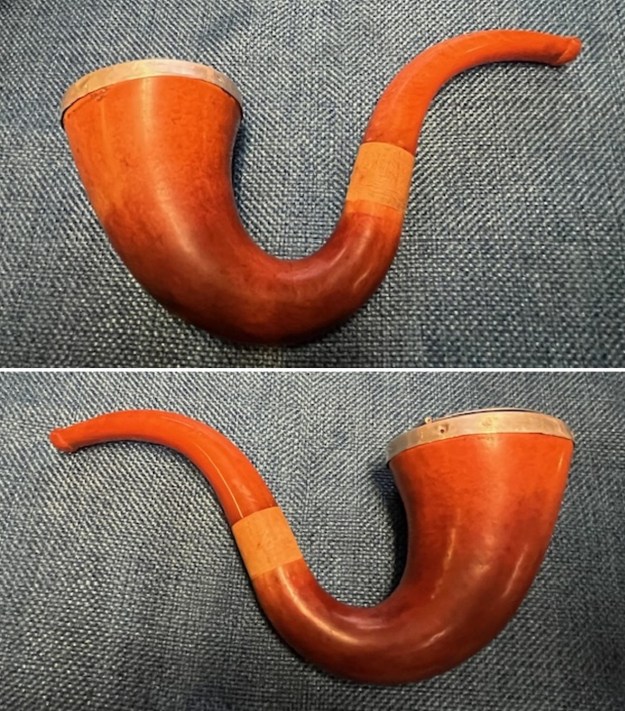
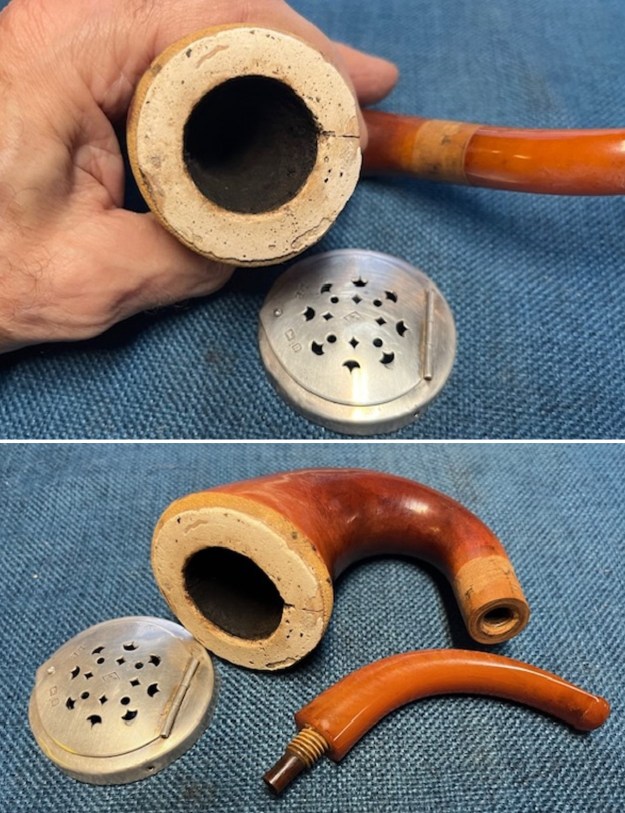
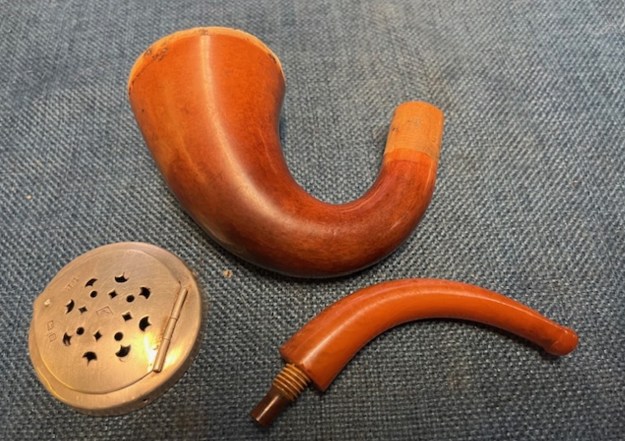
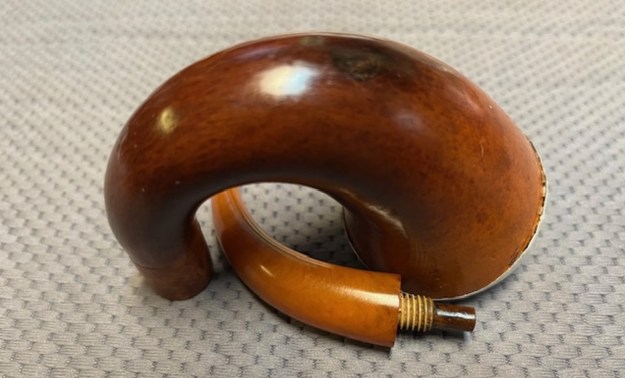
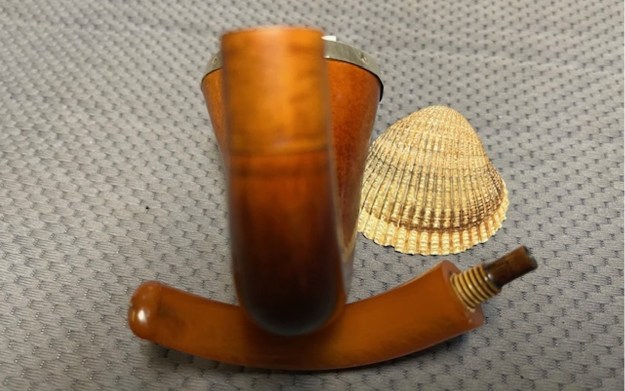
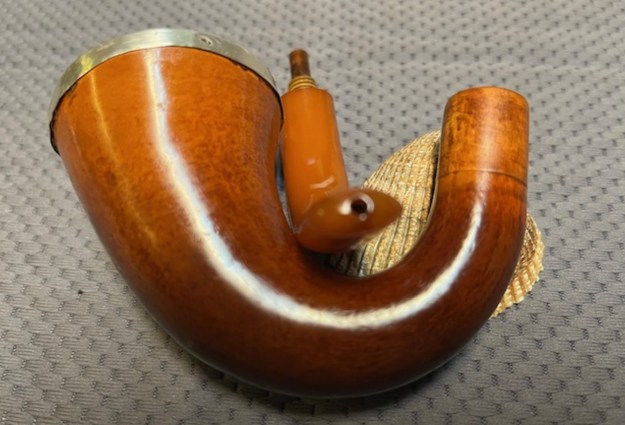
I wrote back and sent him my address and he mailed the pipe to me to work on. When I got it I opened the box and took some photos of the case and the pipe. The case is worn black leather with nicks and scuffs on it. The case is obviously hand fitted to the pipe. I took the pipe out of the case and took a look at what I had to work with. The gourd was dirty and had a burn mark on the underside at the bend. The shank end is Maple I believe and has some glue dried on from a silver shank band that was missing. The rim top had a silver rim cap and wind cap. It was loose on the top of the gourd. I removed it underneath the bowl lining appeared to be clay. It had some repaired cracks. It was sitting in a wood base that was inserted in the gourd. The base has pins snapped off in it that originally held the rim cap in place. The bowl itself had a large opening in the bottom but there was a lot of debris and clogging in the bowl. There was a rattle in the gourd itself. The stem was amber and was in very good condition. There were light tooth marks and chatter on the top and underside ahead of the button. The airway in the stem was very dirty and the shank was also very dirty. I took photos of the wind cap and rim cap to show the scratching and wear on the silver. It was worn and tired with a little bit of tarnish as well. I will need to polish both with some silver polish to remove the tarnish and the scratching. The amber stem looks good with some light chatter on the top and the underside ahead of the button.I removed the silver rim cap and windcap. I took a photo of the clay bowl insert. It is pitted and dirty but you can see what I have to work with. It is hard to see but the original pins that held the cap in place are all snapped off in the clay. I took a photo of the bowl with the cap and stem off. I carefully scraped out the clay bowl with a Savinelli Fitsall Pipe Knife to remove the cake build up in the bowl and also tobacco debris on the walls of the bowl. I sanded the walls smooth with a folded piece of 220 grit sandpaper.I cleaned the internals of the gourd shank and below the clay bowl with pipe cleaners and alcohol. I cleaned the amber stem at the same time with pipe cleaners and alcohol. Once it was clean the pipe smelled significantly better.The burn on the underside of the gourd had a burn mark and a gouge. I filled it in with clear CA glue. One it dried I sanded it smooth and polished it with 320-3500 grit sanding pads. Once finished it looked much better.I used four spots of all-purpose white glue on the inside of the silver rim cap. I pressed in place and set it upside to dry. I polished the scratches in the silver with micromesh sanding pads. I worked over the wind cap and all of the edges on the rim cap. I lightly polished them with the pads and wiped them down after each pad with a jeweller’s cloth. The cap and rim began to take on a very rich shine. The scratches were not all removed but they definitely looked much better when I finished with the last of the sanding pads. I rubbed the gourd and the maple shank extension down with Before & After Restoration Balm. I worked it into the surface with my finger tips. The product works to clean, enliven and preserve the wood and gourd surfaces. It gives a rich a glow. I let it sit on the surface for 10 minutes and then buffed it off with a soft cloth. The gourd began to take on a rich shine. Since I did not have a silver band that would fit the shank extension I decided to stain it. I gave it a coat of Maple stain and Cherry stain using stain pens. It brought out some nice grain patterns in the wood. I gave it another coat of Before & After Restoration Balm and buffed it off with a cloth. It really was looking great in contrast to the colour of the gourd.I set the bowl aside and turned my attention to the amber stem. I used 320-3500 grit sanding pads to dry sand the tooth chatter on both sides near the button. It took a bit of sanding but I was able to remove them all and start the polishing with the pads. I wiped the stem down after each sanding pad with an Obsidian Oil impregnated cloth. It really looked very good.I polished the stem with micromesh sanding pads – dry sanding with 1500-12000 grit pads. I wiped the stem down after each sanding pad with Obsidian Oil. I did a final hand polish of the stem with Before & After Pipe Stem Polish – both Fine and Extra Fine. I gave it a coat of Obsidian Pipe Stem Oil. It works to protect the stem from oxidizing. I set it aside to dry. The amber took on a rich glow by the end of the polishing. I put the stem back on the BBB Clay Gourd Calabash and took it to the buffer. I carefully buffed the gourd, the extension and the amber stem with Blue Diamond to polish the gourd and the amber. Blue Diamond does a great job raising more of the shine and smoothing out imperfections. I gave the bowl and the stem several coats of carnauba wax and buffed the pipe with a clean buffing pad to raise the shine. I hand buffed it with a microfiber cloth to deepen the shine. I am amazed at how well it turned out. The finished pipe is shown in the photos below. This is beautiful smooth finished 1912 BBB Gourd Calabash and the amber taper stem combine to give the pipe a great look. The finished pipe is shown in the photos below. The approximate dimensions of the pipe are Length: 7 inches, Height: 4 inches, Outside diameter of the bowl: 2 ¼ inches, Chamber diameter: ¾ of an inch. This beauty will be heading back to Paul in Halifax, Nova Scotia soon. I hope he will enjoy the pipe and enjoy smoking it. Thanks for walking through the restoration with me on this beauty!

As always, I encourage your questions and comments as you read the blog. Thanks to each of you who are reading this blog. Remember we are not pipe owners; we are pipe men and women who hold our pipes in trust until they pass on into the trust of those who follow us.

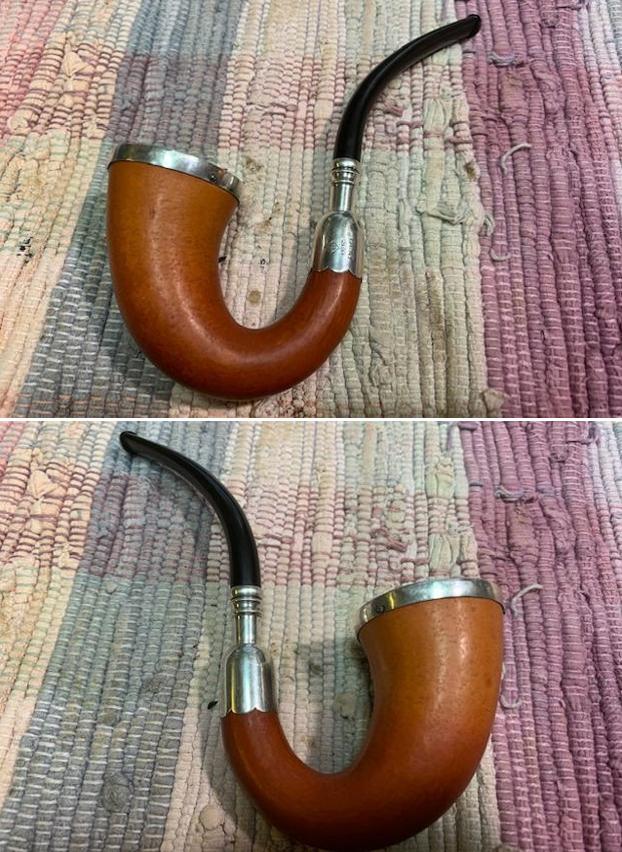
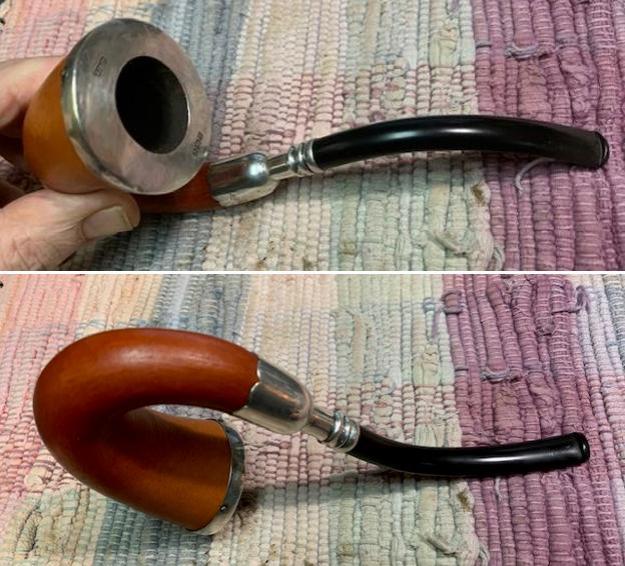
Yet Another Treasure – a 1905 BBB Silver Capped Gourd Calabash


Blog by Steve Laug

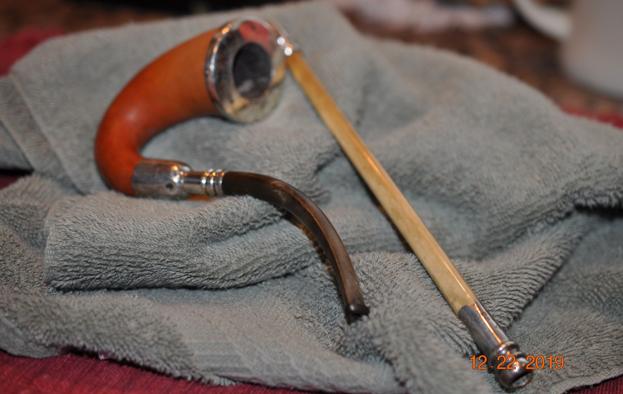
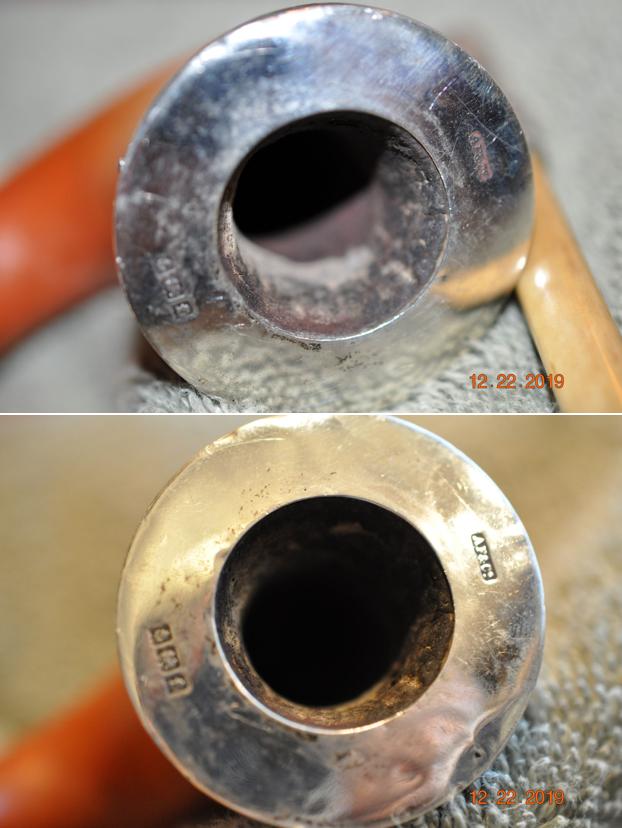
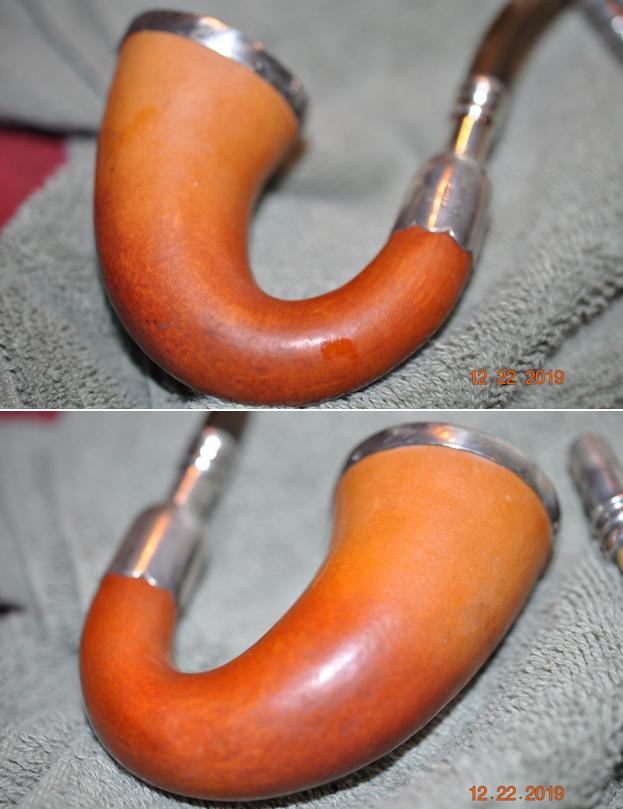
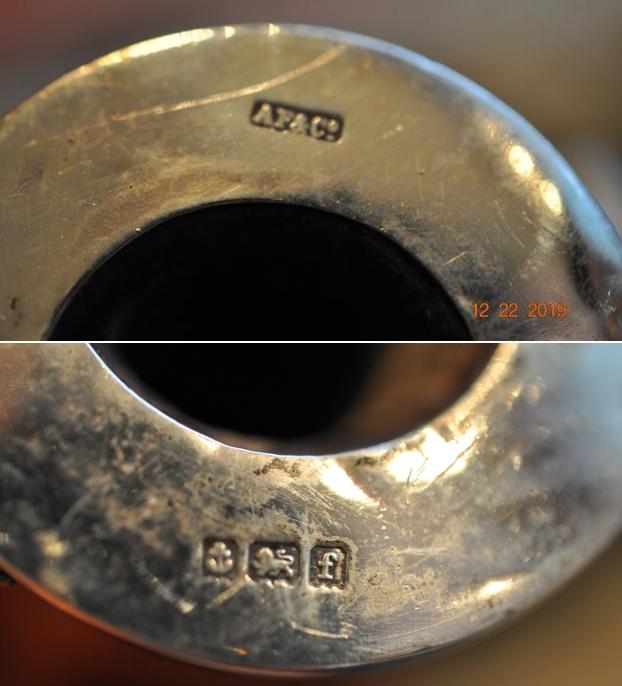
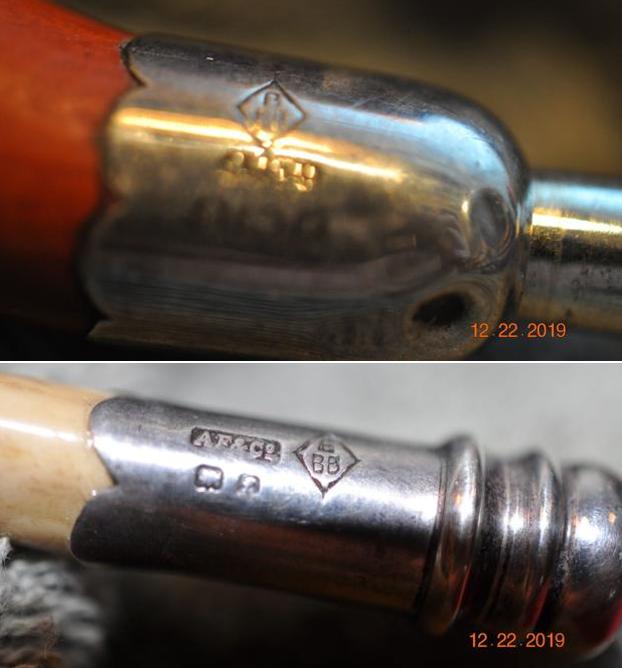
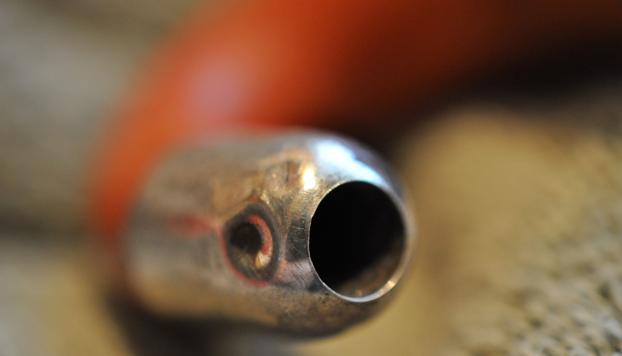
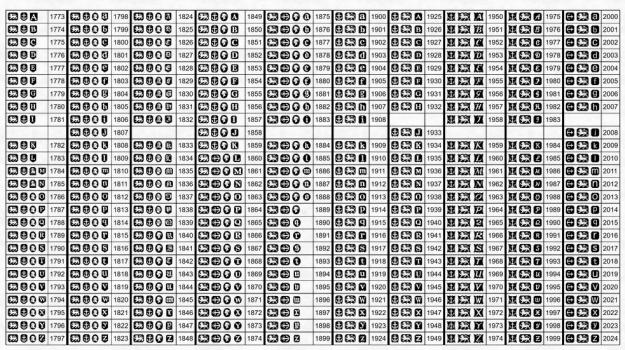
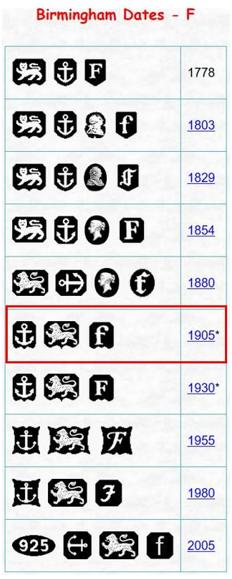
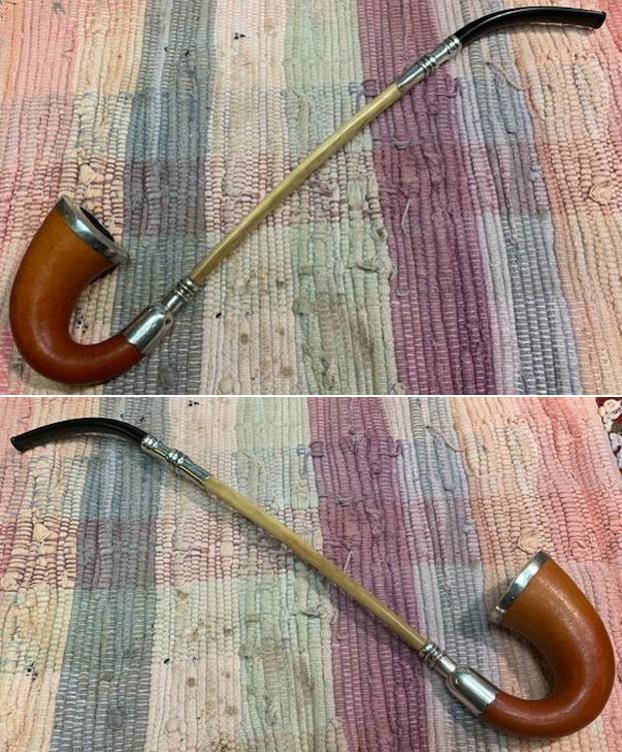
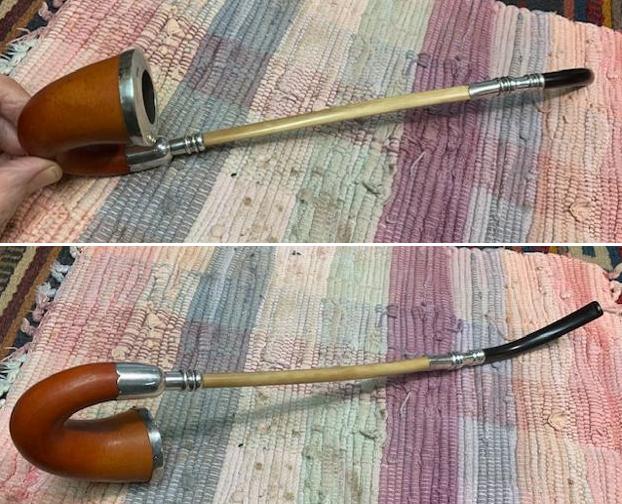
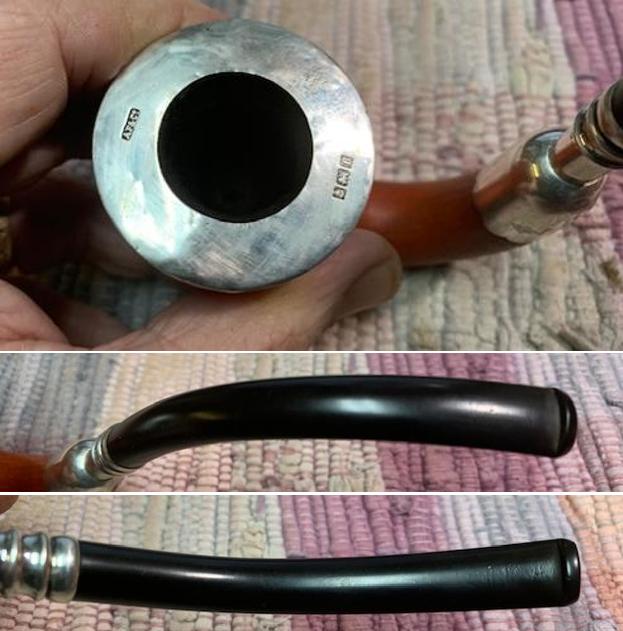
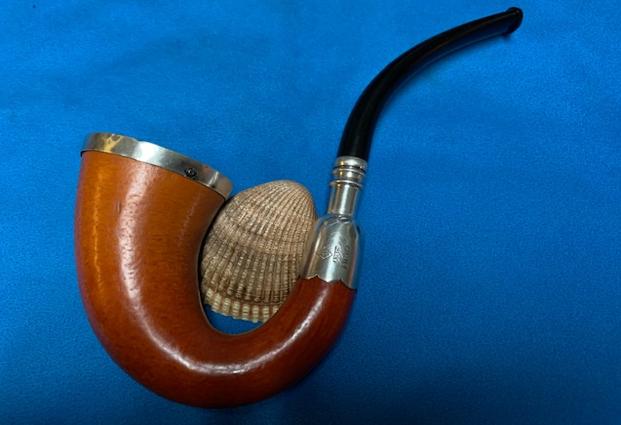
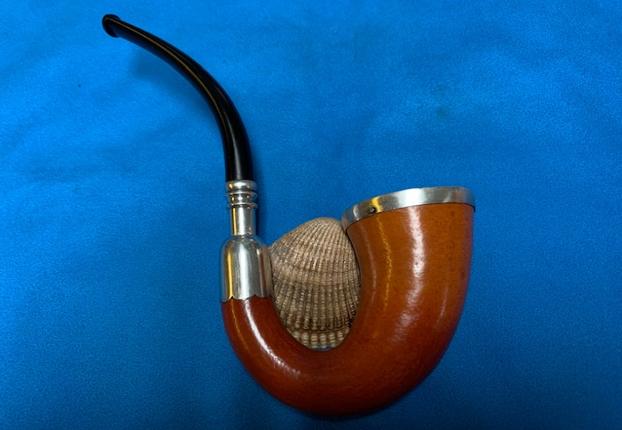
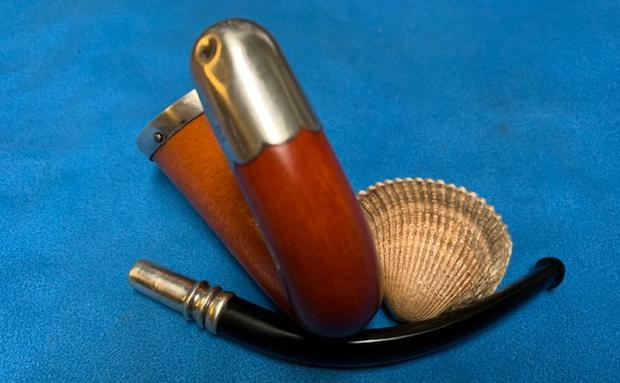
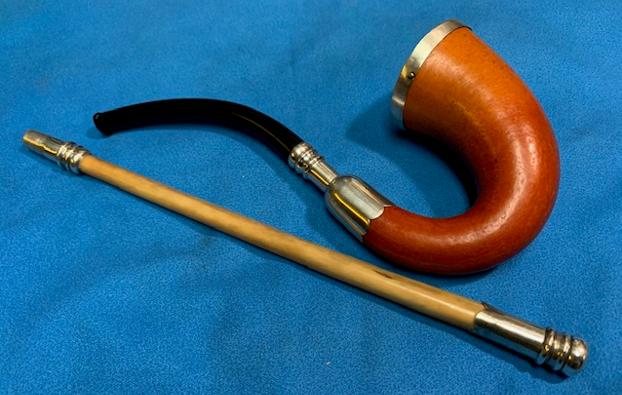
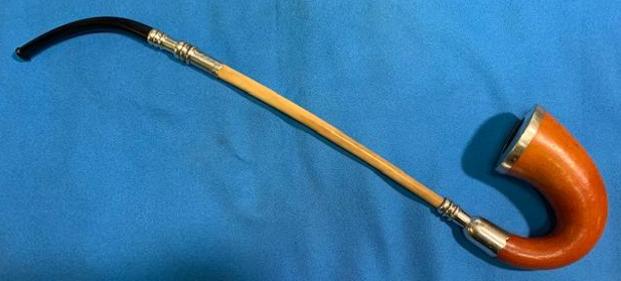
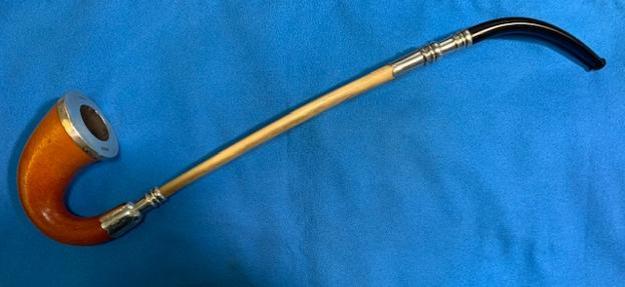
Time really flies during this COVID-19 time! It seems like just a few weeks ago I was contacted by an older gentleman about purchasing his pipe collection. He sent me the photos and I was amazed at what I saw. The collection included Dunhill pipes, BBB pipes, Orlik pipes, Barclay Rex Pipes, a couple of Meerschaums and a whole lot of other pipes. All I could say as I looked at the pipes was what a collection it was. We negotiated a deal and I think we both walked away quite happy with the exchange. But I have to tell you there was another very interesting pipe caught my interest when I looked at pictures of it. It was a beautiful older BBB Calabash with an albatross wing bone extension that is shown in the photo below. I have worked on a lot of BBB pipes over the years and never had the opportunity to work on one like this. It would be a great addition to my collection of BBB pipes. From the photos the pipe appeared to be in good condition from the photo he sent me. He said that the pipe was stamped on the left side of the silver ferrule and read AF & Co over three hallmarks. The hallmarks are as follows: an anchor (Birmingham, England), a rampant lion (the symbol for quality of the silver) and the final one is a lower case “f” (the date stamp). It has the same stamp on the rim cap and the shank extension. I could not wait to get it and have a look at it up close and personal. I had him ship it to Jeff for cleanup so it would be a while before I held in hand.When the package arrived at Jeff’s place in Idaho he waited for me and opened the box with me on Facetime to look at the collection of pipes as he removed them from the box. It is an amazing collection and one that I am going to enjoy working on over the months ahead. Jeff took some photos of the BBB Calabash with the silver cap and bone shank extension for me to look at while he worked his magic in cleaning up the pipe. It is a real beauty. Jeff took photos of the bowl and the silver capped rim top to show the cake in the bowl. The silver cap has some nicks, dents and dings in it that will remain after the cleanup as part of the story of the pipe. He took photos of the top and underside of the stem showing the tooth chatter, scratching and oxidation on the stem surface and wear on the edges of the button. Jeff took photos of the sides and heel of the bowl to show the condition of the gourd. You can see the beautiful shape and the contrast of the silver and the calabash even through the dirt and debris of over 105 years.       The stamping on the pipe was on the silver of the pipe rather than any where else on the gourd. It is on the rim cap, the ferrule and the end cap of the extension. On the rim cap it is stamped toward the front and reads AF&Co which are the Adolph Frankau Company. After his death, the BBB gradually became known as Britain’s Best Briars. Soon to be the oldest English trademark in current use and the first pipe ever to have a registered trade mark. “Britain’s Best Briars”, often called BBB, is one of the oldest brands still in production. At the back of the rim cap it is stamped with three hallmarks – an anchor, a lion and a lower case “f”.  The anchor identifies the city of origin of the silversmith (Birmingham, England), the rampant lion (the symbol for quality of the silver) and the final one is a lower case “f” (the date stamp). There is a slight variation on the stamping on the scalloped ferrule. It includes the BBB Diamond stamp above the AF&Co which is above the same three hallmarks noted above. The shank extension matches the ferrule exactly. All have the same date letter “h”.  The ferrule has some dents on the left side as shown in the photos below. Because of the attachment to the gourd I will be leaving the dents as a part of the pipe’s story. I turned to one of the numerous silver hallmark chars on line for the city of Birmingham, England (https://www.silvermakersmarks.co.uk/Dates/Birmingham.html) and was able click on the section that applied to the date stamp on this pipe. The first chart below is the chart from 1773-2024.I am also including screen capture of the enlarged section on the Birmingham dates for the letter F. This chart covers pipes made in 1778-2005. I have drawn a read box around the hallmark pattern that matches the one on the BBB pipe silverwork. You can see that it dates the pipe to 1905. That means that this gourd calabash is over 115 years old. All of the silverwork confirms the 1905 date for the pipe. The bowl lining in the calabash seems to be a clay lining that is seat in the gourd and held in place by the silver top cap.
With the information from the two sites I had a pretty clear idea on the background of the pipe. It was definitely an old timer and really was another stellar acquisition. Now it was time to work on the pipe.

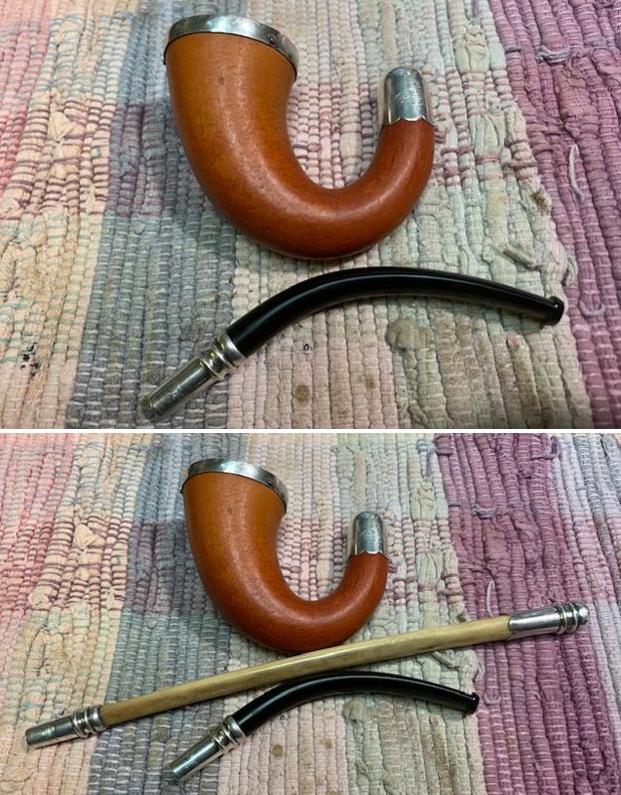
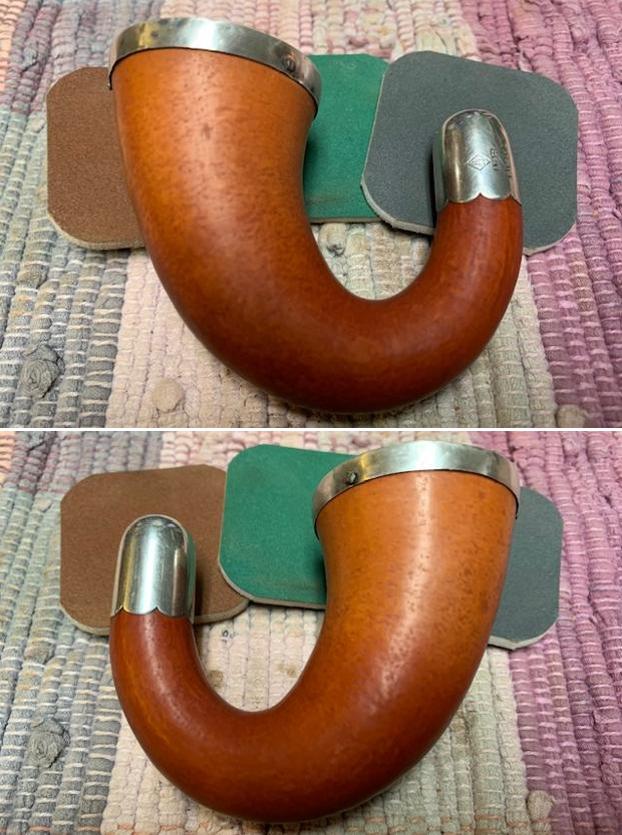
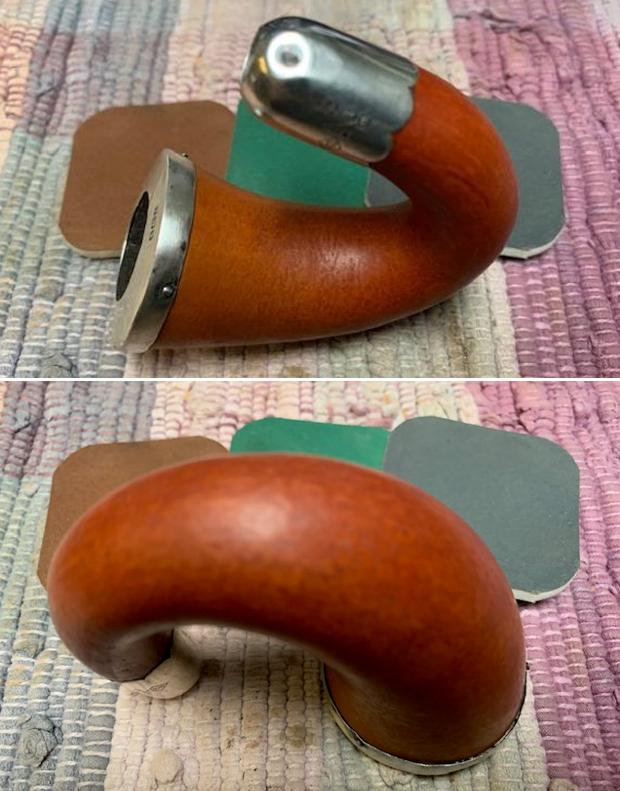
Jeff carefully cleaned the pipe from top to stern. He reamed it with a Savinelli Fitsall Pipe Knife. He scrubbed out the internals of the shank, stem and shank extension with alcohol, pipe cleaners and cotton swabs until the pipe was clean. Without being able to remove the bowl liner the internal cleaning of the gourd was complicated but he cleaned it as much as possible. He scrubbed the exterior of the bowl with Murphy’s Oil Soap and a tooth brush to remove the grime and grit on the calabash and the tarnish and lava on the rim top. The finish looks much better and has a deep richness in the colour that highlights gourd. The rim top looked very good and the inner and outer edge looked very good. The nicks and dents in the silver remain and will be “war wounds” that travel with the pipe. Jeff scrubbed the stem with Before & After Deoxidizer to remove the oxidation on the rubber. He worked it over with Soft Scrub All Purpose Cleaner to remove any remnants of oxidation. When the pipe arrived here in Vancouver for the second stop of its restoration tour I was amazed it looked so good. Here are some photos of what I saw.  I took some close up photos of the rim top and the stem surface. The rim top  looked good. There were some dents and scratches in the silver. I took close up photos of the stem to show the condition of the surface and button. I took the pipe apart and took a photo of the pipe with the short stem and with the extension. It is a good looking pipe and very unique.I polished the silver rim top, edges and the gourd with micromesh sanding pads – dry sanding it with 1500-12000 grit pads. After each pad I wiped the briar down with a damp cloth.  I was able to give a shine to the silver, remove scratches a bit and also polish the gourd.     I worked some Before & After Restoration Balm into the surface of the gourd with my fingertips to clean, enliven and protect the gourd. I let the balm sit for 15 minutes and then buffed with a cotton cloth to raise the shine. The photos show the bowl at this point in the restoration process. I polished the scalloped silver ferrule with a jewelers cloth to remove any residual tarnish and also to protect it from future tarnish (at least for awhile). The interesting detail for me is that the ferrule is scalloped and the end of the shank extension that holds the stem also is scalloped.   With that done the bowl was finished other than the final buffing. I set it aside and turned my attention to the stem. I sanded out the tooth marks and chatter on the stem with 220 grit sandpaper. I started the polishing with 400 grit wet dry sandpaper. I polished the silver stem cap with a jewelers cloth that helps remove any residual tarnish and protects the silver.I polished the stem with micromesh sanding pads – dry sanding with 1500-12000 grit sanding pads. I wiped it down after each sanding pad with Obsidian Oil. I polished it with Before & After Pipe Stem Polish – both Fine and Extra Fine.    With the bowl and the short stem finished I put the pipe back together and buffed it on the wheel using Blue Diamond to give it a shine. I gave the bowl and stem multiple coats of carnauba wax on the wheel and then buffed it with a clean buffing pad to raise the shine. I hand buffed it with a microfiber cloth to deepen the shine. It really is an amazing little pipe. The dimensions of this part of the pipe are – Length: 6 ½ inches, Height: 2 ¾ inches, Outside diameter of the bowl: 1 ¾ inches, Chamber diameter: 7/8 of an inch. The weight of the short version of the pipe is 2.33 ounces/66 grams. This unique find – a 1905 BBB Silver Capped Gourd Calabash is joining the other pipes in my collection of BBB pipes and will hold a place of honour while it is in my trust. This is another pipe that one day soon I will enjoy a special bowl of tobacco in it and be transported to a slower paced time in history where I can enjoy a respite. With the pipe and short stem finished all that remained was to finish the shank extension that fit in the shank end of the pipe. The end that fit into the shank had the same end cap as the stem itself. The opposite end was fitted to receive the end cap of the stem. The tube between the caps is albatross wing bone. There was a small crack in the bone at the joint of the silver that held the stem. I filled in the crack with clear CA glue to stabilized. It I polished it with the full gamut of micromesh sanding pads to blend it in the rest of the bone. I polished the silver with a jewelers cloth to remove residual tarnish in the turnings of the silver caps and polished the shank extension with Obsidian Oil. The length of the extension tube is 8 ½ inches. I took a few photos of the pipe next to the extension to give a sense of the size. I also took photos of the extension tube with the stem in place to show the look of it. Finally the last photos give a sense of the fully extended BBB Silver Capped Calabash with the bone extension. With it installed on the pipe the length of the pipe is 13 inches. Height and other measurements remain as noted above.

Restoring an Old BBK Hunter Pipe


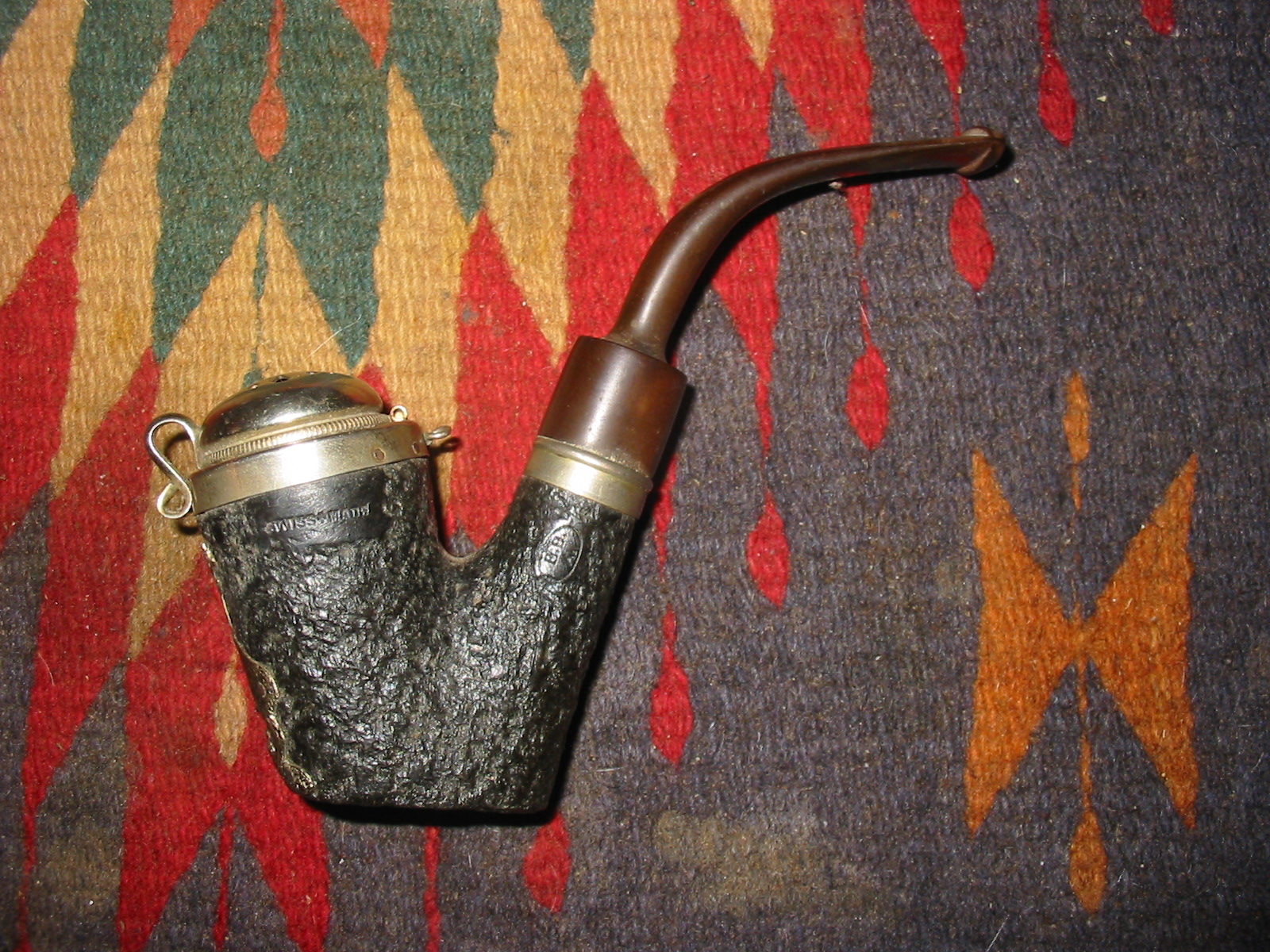
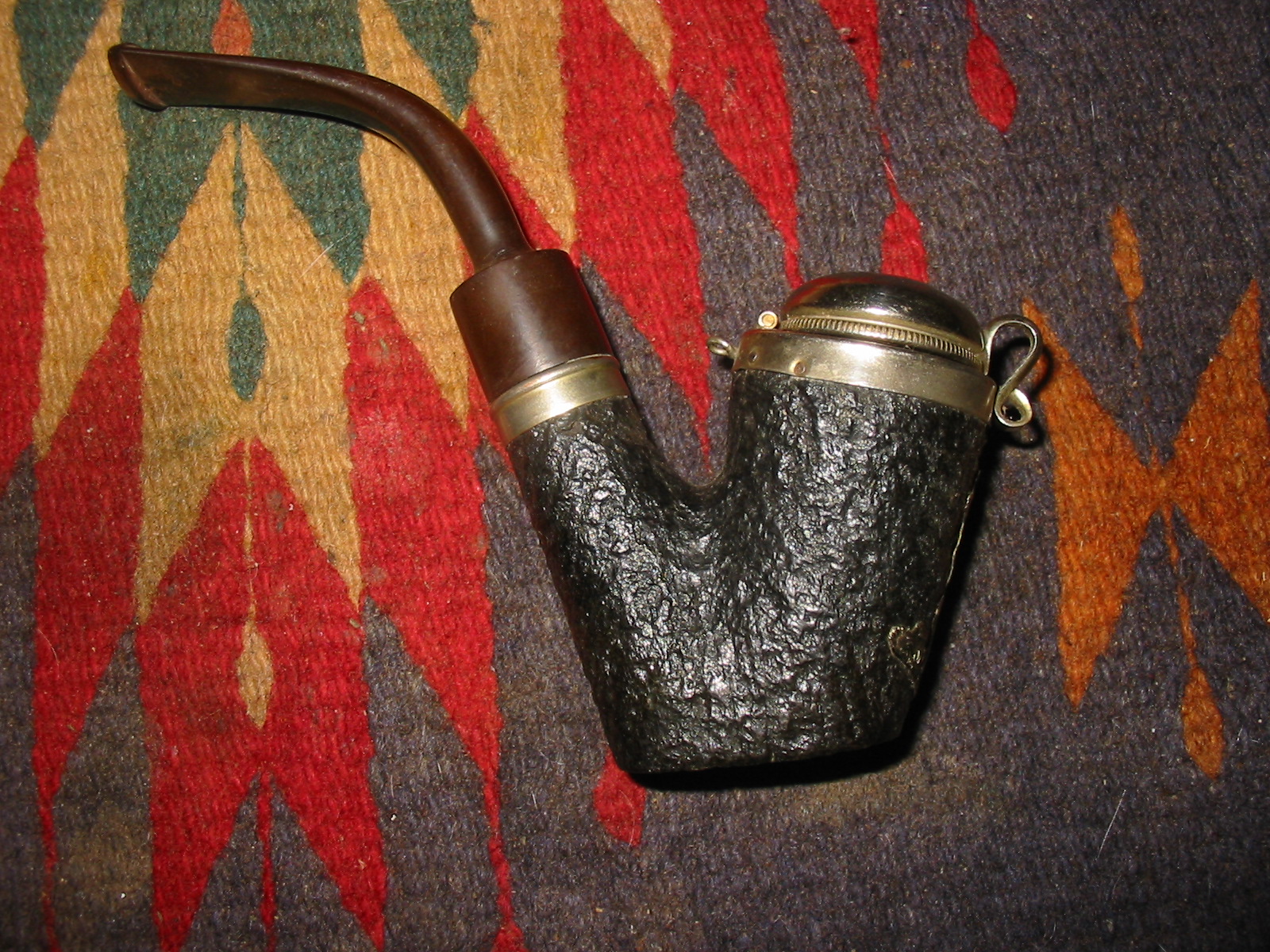
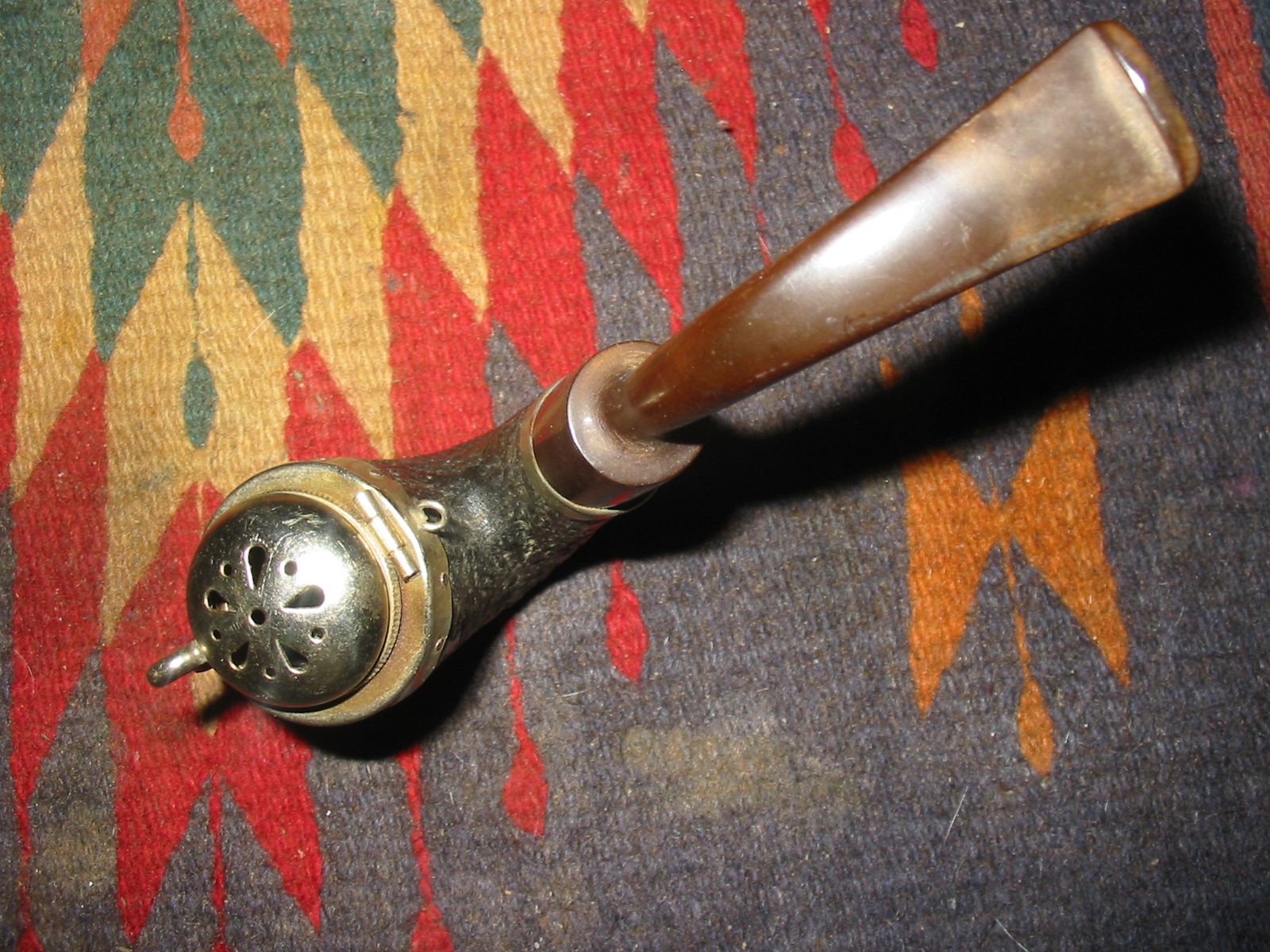
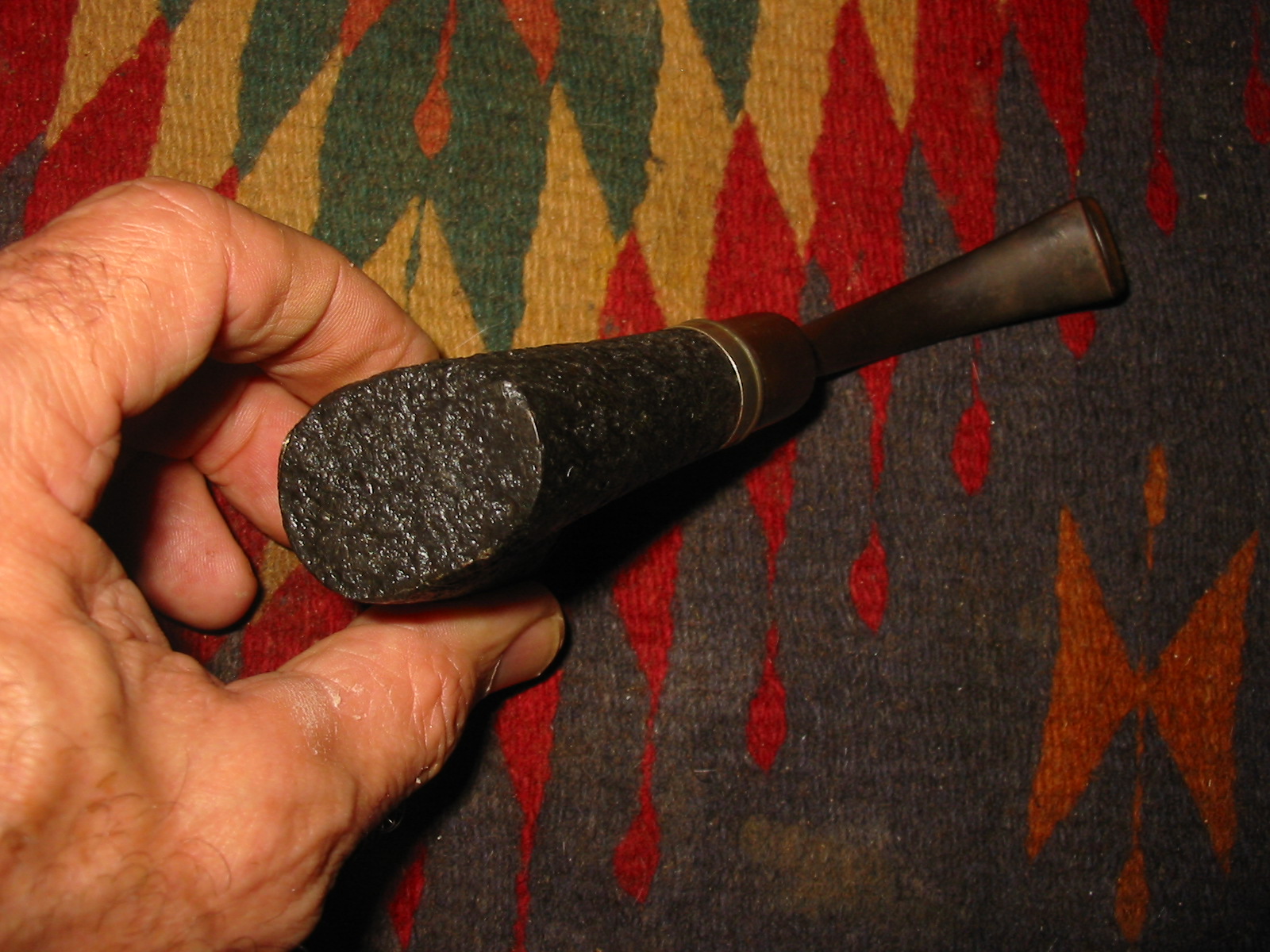
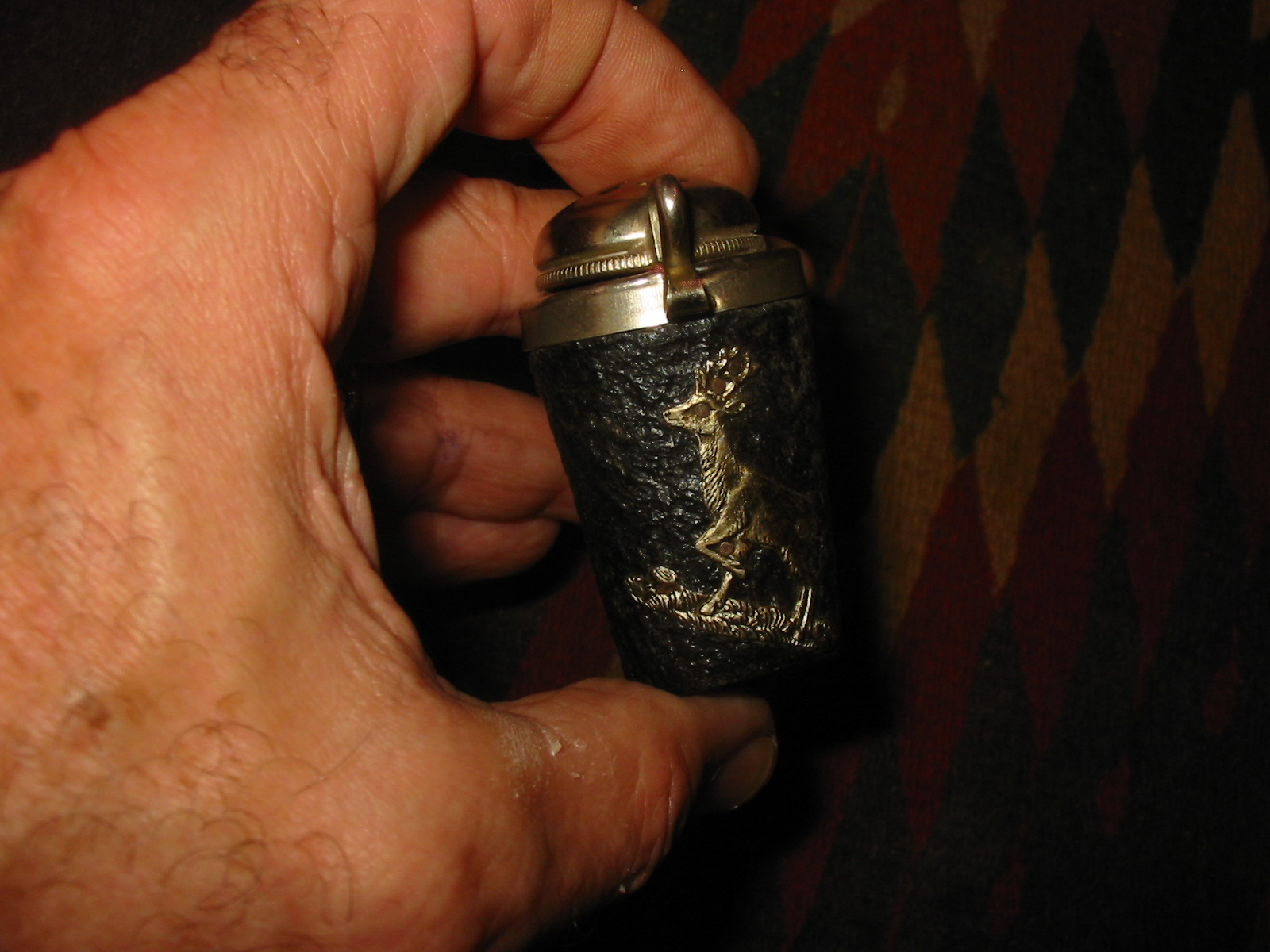
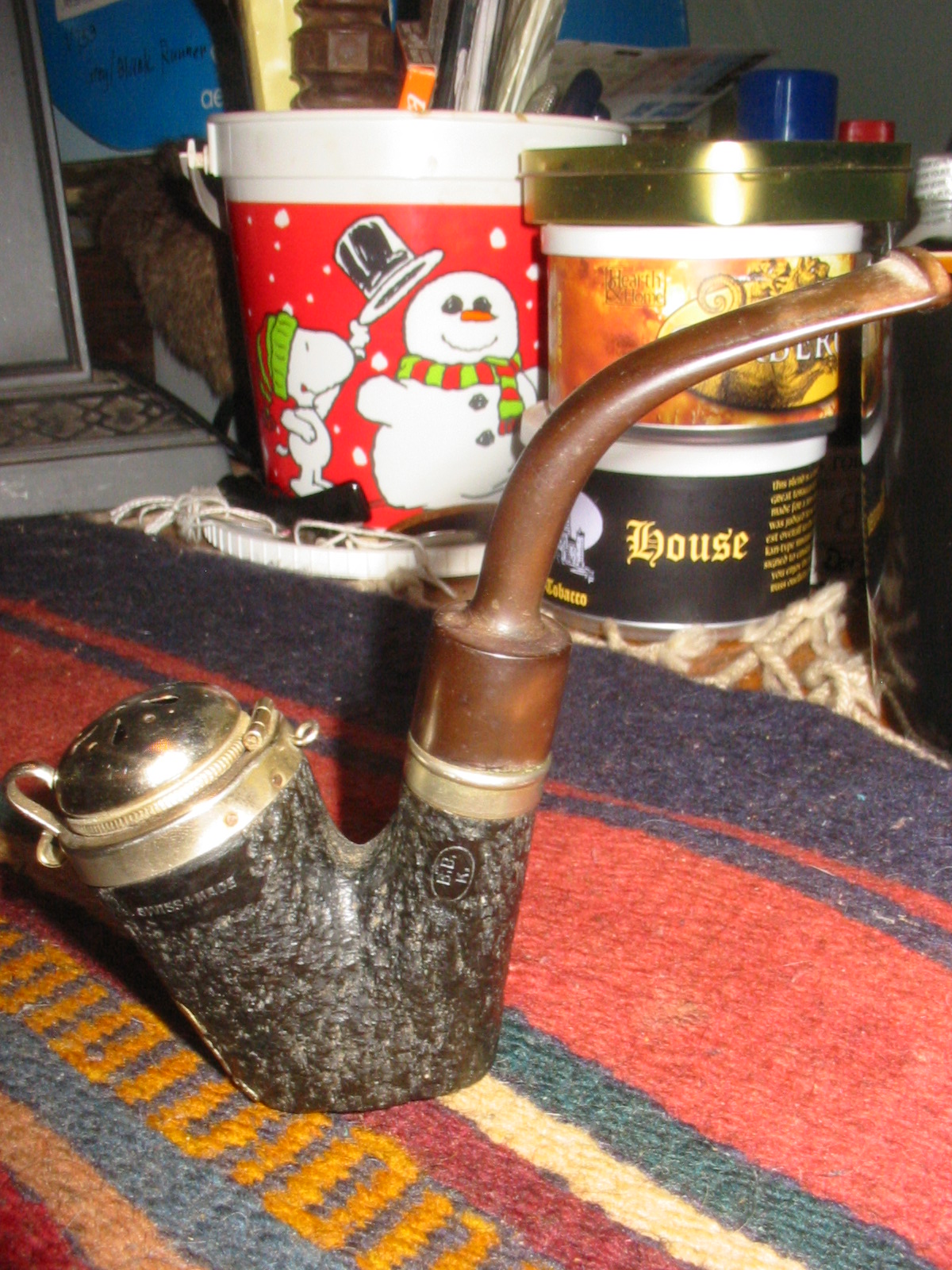
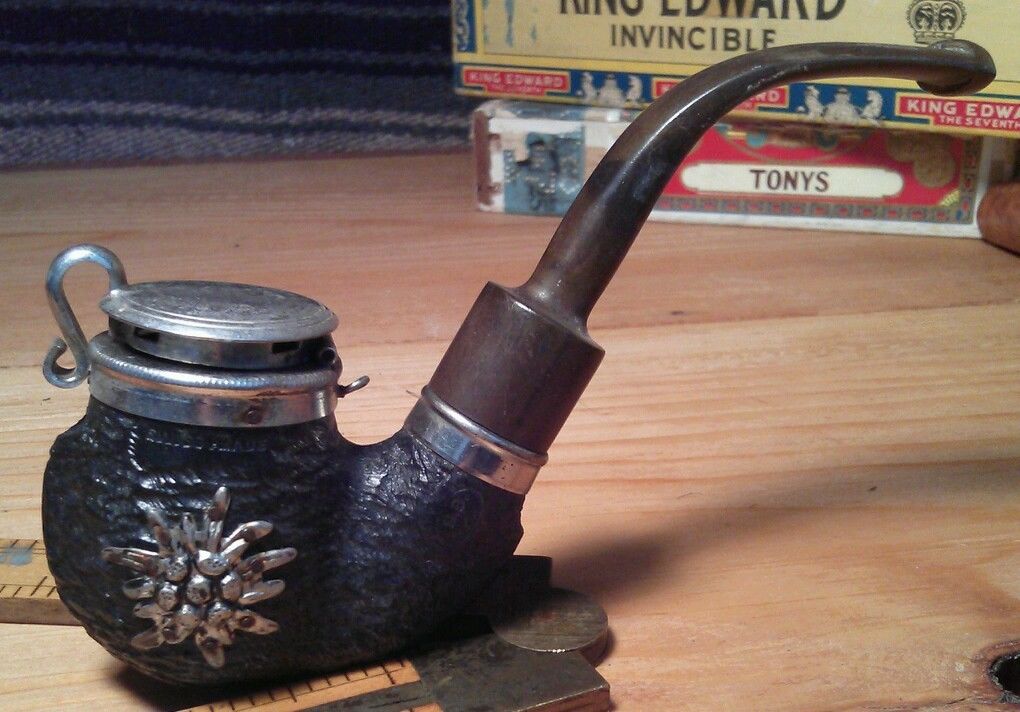
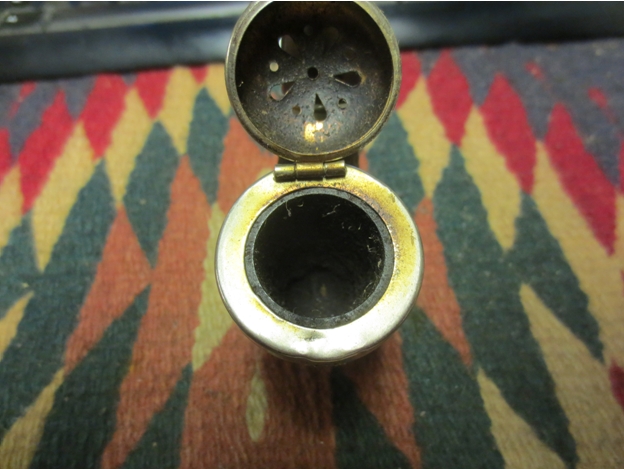
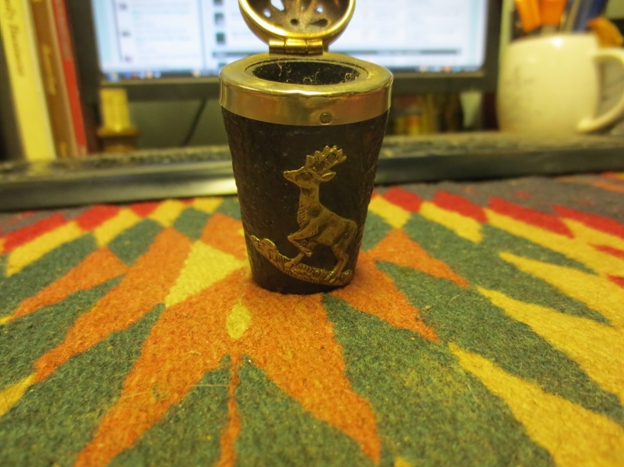
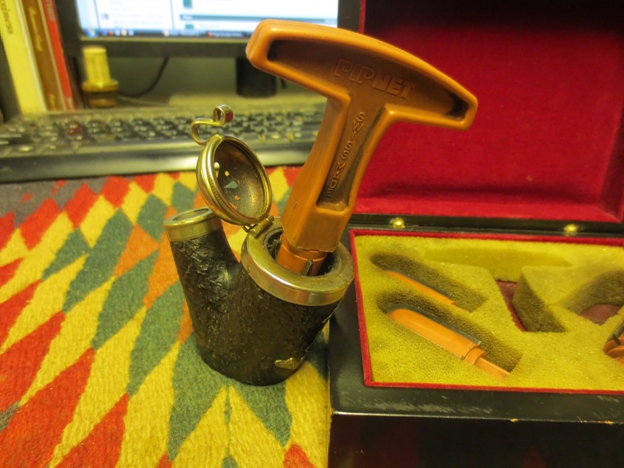
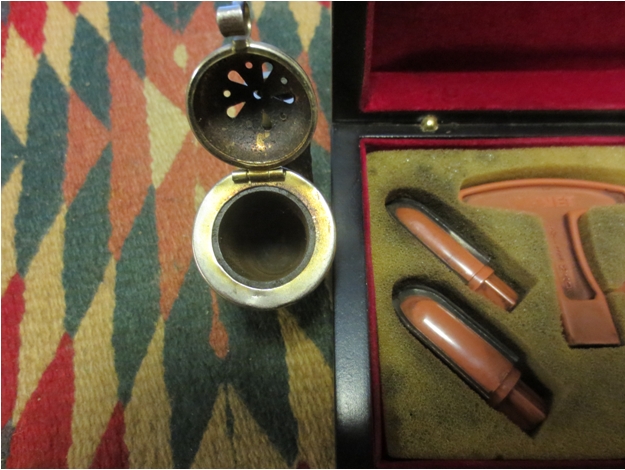
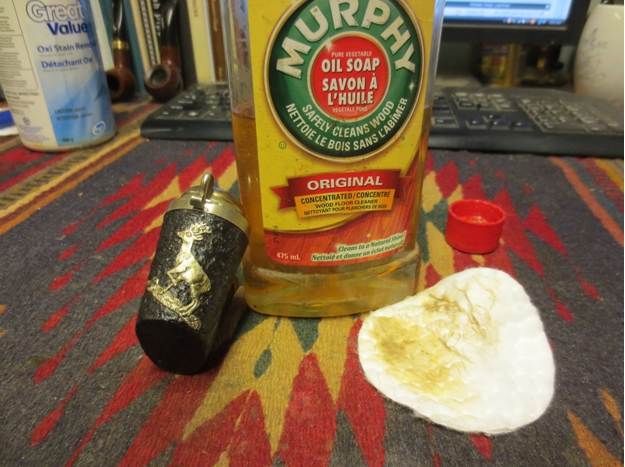
In the box of pipe bowls that I received was a complete sitter with a silver shank band and windcap. Upon looking at the side of the bowl I could see that it was stamped Swiss Made and on the side of the shank it was stamped BBK. The finish was sandblasted and well done. The stain was either a dark brown or a black. The cap was in good shape. Under the cap the silver rim trim was also blackened and tarry. The end cap/band on the shank was also silver and quite nice. Inside the cap was blackened and the bowl was caked with a crumbly aromatic smelling cake. The inside of the shank was black with tars and oils and the stem was very tight in the shank. The stem was clean of tooth marks and dents but was badly oxidized. On the front of the bowl was a carved/pressed stag climbing the bowl. There were nails holding the top rim cap and the stag emblem on the briar. On the back of the rim cap was a small silver ring where a chain had obviously been sometime along the way. It was missing as was the place on the stem where it attached to the stem. I have seen these before on German-made pipes as a means of keeping the stem and bowl together.
IMG_8233 IMG_8234 IMG_8236 IMG_8237 IMG_8238
I have cleaned up several BBK pipes over the years. The last one was a square shank panel billiard that I have written about previously on the blog https://rebornpipes.com/2012/09/21/refurb-on-a-bbk-panel-billiard-swiss-made/. I had never done much research on the maker or the meaning of the BBK initials. I knew that it was a Swiss made brand as the shanks of all the pipes I had cleaned up and restored were stamped with that moniker. I did not however have any idea of the history of the brand. This time I decided to do a bit of digging and see what I could find out about the pipemaker. IMG_8245 I checked one of my usual sources of information, Pipedia and found that there was actually quite a bit of helpful information to be found there. http://pipedia.org/index.php?title=Bru-Bu. I have copied, edited and summarized that material below. I find the information quite fascinating to read and gives me more appreciation for the pipes themselves.

“Josef Brunner, oldest son of the farmer Konstantin Brunner from the hamlet Nieder-Huggerwald, belonging to the community of Kleinlützel (Canton Solothurn), was sent in 1871 to a pipe turner in Winkel/Alsace for his apprenticeship. As was usual at that time, Brunner wandered as a journeyman after ending the apprenticeship. Eventually, he went to Saint-Claude, France which was then the world’s stronghold of briar pipe manufacturing. There, Brunner was able to increase and deepen his knowledge in the field of industrial pipe making. When he returned home in 1878, he installed a small turner’s workshop in the house of his father. With the energetic support of his two younger brothers, he began to produce tobacco pipes of his own calculation, taking them to the markets in the surrounding area. In 1893, Bernhard Brunner’s wife inherited the mill in Kleinlützel. At this point, the pipe fabrication was transferred to an annex belonging to the mill. Now it was possible to drive the machines by water power – an important relief to the workers and a considerable innovation compared to the previous pedal-driven system.

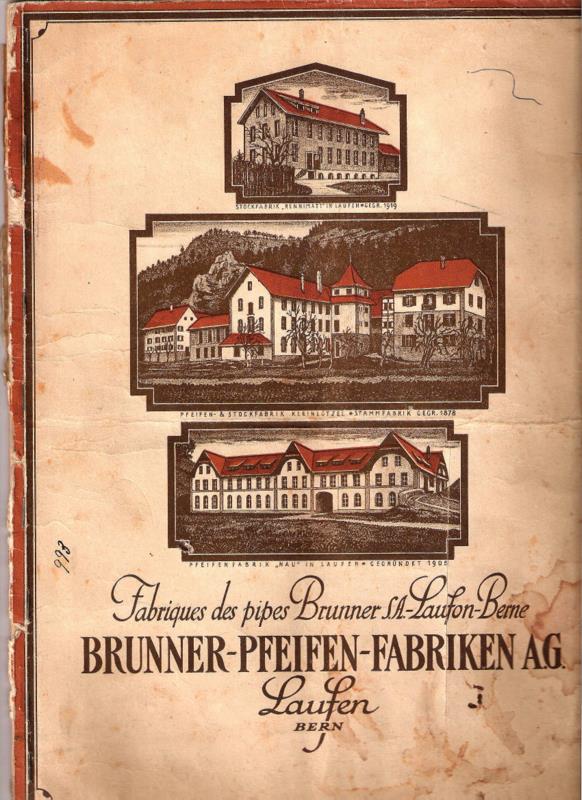
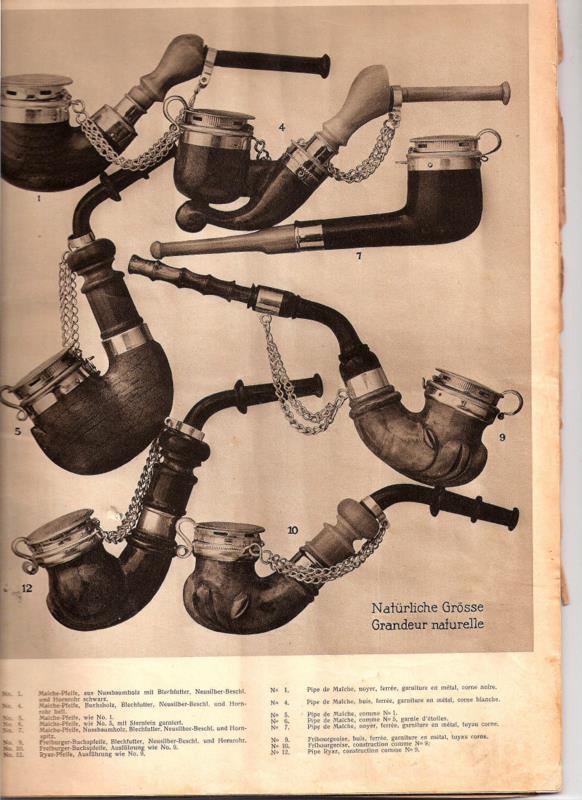
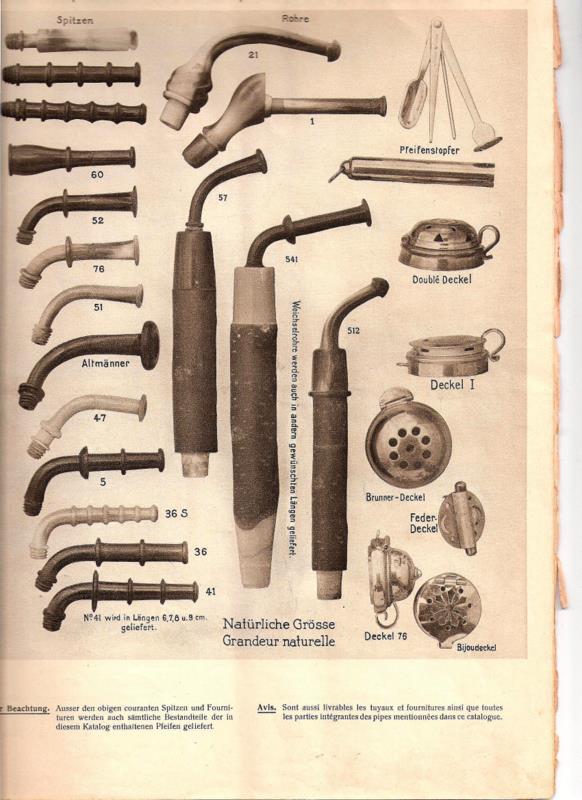
On the Pipedia site they also had some photos of a catalogue from BBK that was interesting. They note that it was an early catalog and came to them courtesy of Guido Brunner, Josef Brunner’s grandson.” Unbenannt Unbenannt2 Unbenannt3

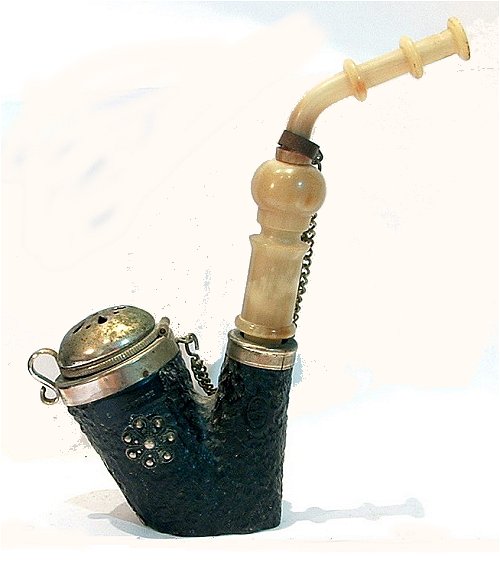
Also on the Pipedia site was a photo of a pipe that was very similar to the one I have but obviously older. The stem on mine is not horn but is rather a hand cut vulcanite that makes it much newer in age than the one below. However the shank cap, the rim cap, the Double Deckel wind cap (pictured on the last page of the above catalogue are the same. The one I have is also missing the chain from the cap to the stem but the finish and everything else about the pipe below is parallel to the one I worked on. It was interesting to see how they attached the chain to the stem. That gave me an idea on how to attach a new chain to the one that I have. The stem on this one however made me question whether the one that I had was an original or some newer replacement stem. More digging would be required to know whether my stem was original or not. BBK_9 A bit more digging revealed one for sale on EBay that had the exact same stem as the one I have. It also was missing the chain and the shape and top cap was slightly different but the stem was identical. Now I knew that the one I had was at least original. BBK Further information was found on the Pipedia site that spoke of the growth of the company. “The production was boosted, and business developed pleasantly. A new factory building was realized by 1896. Corresponding to another demand, a department producing walking sticks was added in 1900. The pipes from Kleinlützel were well appreciated and received many awards, e.g., a gold medal for outstanding craftsmanship at the National Swiss Fair in Bern in 1914.

The business developed so well after the turn of the century that even a lack of workers in Kleinlützel occurred. The problem was solved by founding a subsidiary company in the small nearby town Laufen an der Birs in the Canton of Bern. This plant didn’t exist too long. The disastrous economic crisis in the 1920’s and early 1930’s forced the Brunner family to restrict the fabrication of pipes dramatically. In addition the big French pipe factories in Saint-Claude – although suffering from the same circumstances – flooded the Swiss market with pipes at prices that couldn’t be matched by Swiss producers. By 1931 ca. 150 of 180 Brunner employees had been sacked – the rest remained in Kleinlützel, where the cheap electric energy ensured a meager survival.

In 1932, Mr. Buhofer joined the Brunner family. The company was named Brunner-Buhofer-Kompagnie, and, shortly thereafter, Bru-Bu. Buhofer had made his fortune in the United States but, homesick, returned to Switzerland to search for a new challenge.

Bru-Bu’s fabrication program was expanded with many handcrafted wooden art articles: carved family coats of arms, bread plates, fruit scarves, and – more and more – souvenir articles for the expanding Swiss tourism industry. Pipes remained in the program continuously, but the offerings changed from traditional Swiss pipes to the more standard European shaped pipes. Bru Bu is widely known as BBK.”

One further point of interest to me was found in the last paragraph of the Pipedia article linking BBK pipes to Former Nielsen. I have two of Former’s pipes so this stood out to me.

“At some point in the late 1970’s, Bru-Bu went out of business. Some of the Brunners, as far as known, continued as timber traders. But in 1986 new life filled the old Bru-Bu pipe workshop, when Dr. Horst Wiethüchter and “Former” Nielsen started to produce the high-grade Bentley pipes there.”

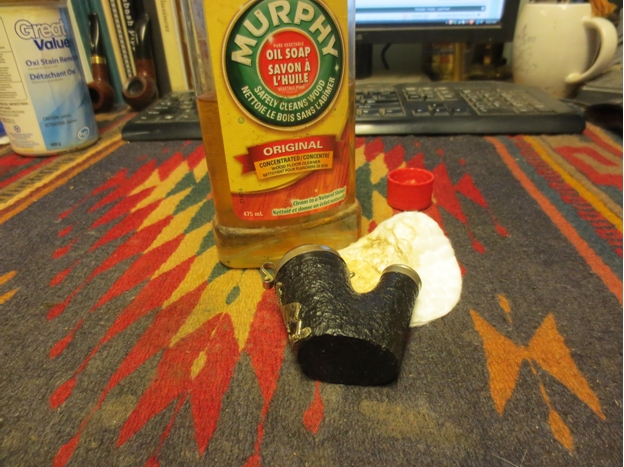
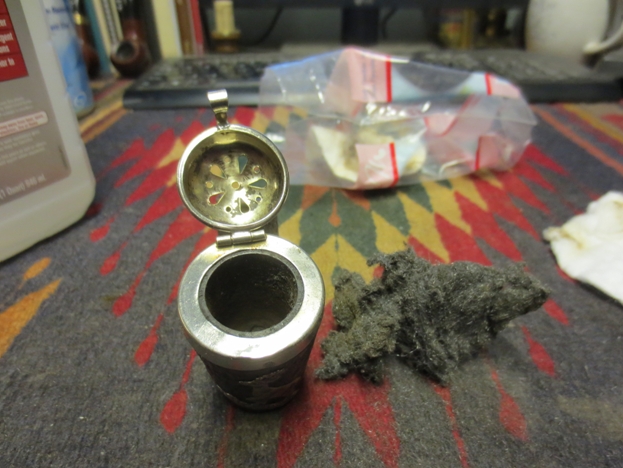
I am not sure why it works this way but once I have some background information on a pipe I move into cleaning and restoring it with more gusto. It seems to energize me knowing a little about the company or individual who carved the pipe I am working on at the moment. I took the next two photos show the inside of the lid and the front of the bowl before I started cleaning up the pipe. The tars and oils on the inside of the lid were rock hard did not come off with scrubbing with alcohol or oil soap. Instead it would take more work to remove it. IMG_1685 IMG_1686 I reamed the pipe with a PipNet reamer (also Swiss Made by the way) to remove the cake buildup around the inside of the rim. Once the bowl was clean and smooth I wiped it out with cotton swabs and isopropyl alcohol. IMG_1690 IMG_1691 I scrubbed the briar with undiluted Murphy’s Oil Soap and then wiped it off with a cotton pad. The finish was in great shape under the grime and once polished with a soft cloth and Halcyon II wax it had a rich glow to the sandblast. I wiped down the silver with a silver polishing cloth and the tarnish on the rim cap, the shank cap, wind cap and stag emblem came off very easily and the silver shone. IMG_1692 IMG_1694 IMG_1693 I scrubbed the inside of the windcap and the rim with 0000 steel wool to remove the tars and oils that had hardened on the surface of the caps and the inside of the windcap. It came off easily and then I polished with the silver polishing cloth. IMG_1695 I cleaned out the inside of the shank with pipe cleaners, cotton swabs and isopropyl alcohol. The tars that came out of the shank were black and thick. It took quite a few swabs before the shank and sump area were clean and the cotton was still white after I ran it through the shank. IMG_1696

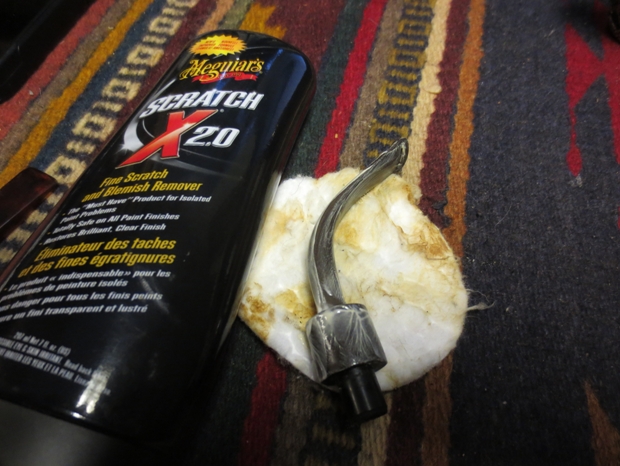
IMG_1697 The stem had been soaking in Oxy Clean while I worked on the bowl. I removed it from the bath and dried it off. The oxidation had softened significantly and I was able to see the black of the vulcanite show through the brown oxidation. IMG_1698 I scrubbed the stem with Meguiar’s Scratch X2.0 and once dry wiped it off to see how much more of the oxidation had been removed. The second photo shows the stem after I had wiped off the polish. There was still a lot of work to do on this stem. IMG_1699 IMG_1700 I sanded the stem with 220 grit sandpaper and then with medium and fine grit sanding sponges to remove more of the surface oxidation. It took some careful sanding but the oxidation was finally coming off and the stem was moving toward the place where I would sand it with micromesh sanding pads. IMG_1701 I buffed the stem with red Tripoli and White Diamond before sanding with the micromesh pads. I wet sanded with 1500-2400 grit pads and dry sanded with 3200-12,000 grit pads. I rubbed the stem down with Obsidian Oil between each set of three pads. I buffed the stem with White Diamond and then rubbed it down with Obsidian Oil one last time. I buffed it with carnauba wax and then a soft flannel buffing pad to raise the shine. IMG_1702 IMG_1703 IMG_1704 I gave the silver caps a final polish with the silver polishing cloth, buffed the pipe by hand with a shoe brush and then took the final photos below. The finished pipe is ready to load a bowl and fire up its inaugural smoke. I still have to do a hunt for a piece of chain to connect the cap to the stem and make a strap or connector to hold it to the stem. IMG_1705 IMG_1706 IMG_1707 IMG_1708 IMG_1709

Restemmed Red Point Capped Bent


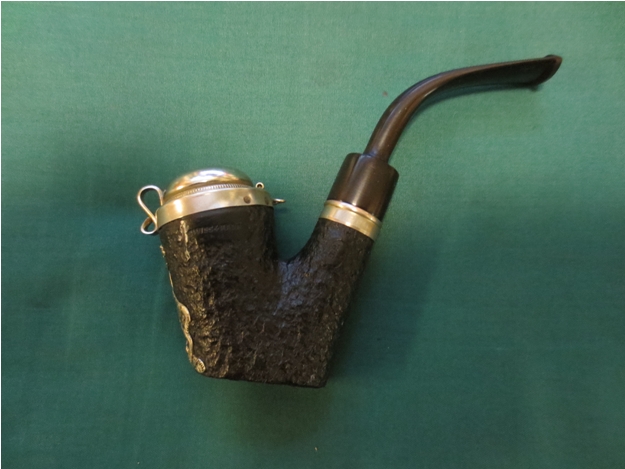
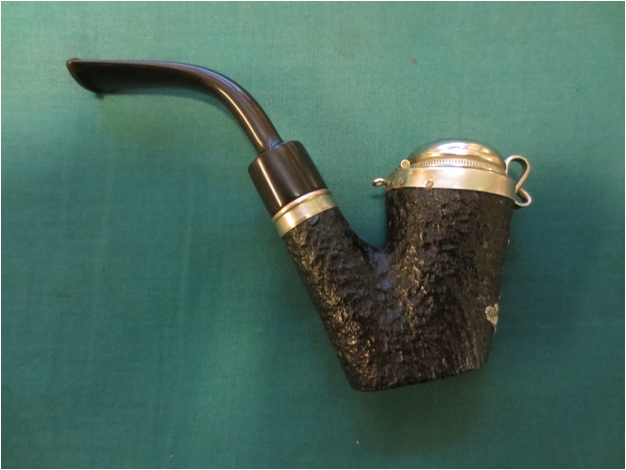
I picked up this Red Point Old Briar Capped Pipe bowl on Ebay awhile ago. It did not have a stem but seemed to have promising grain. When it came in the mail I cleaned it up a bit and then worked on a stem for it. I decided to use a faux p-lip stem that has the airhole on the end of the stem rather than on the top. I fit the tenon to the shank – that was a bit of a trick as the shank is like a Pete shank in that it narrows/tapers as it descends toward the bowl. I finished fitting and polishing the stem.

Here are some pictures of the bowl when it came. From the second photo you can see that it was barely smoked. It was very clean and needed a few pipe cleaners run through it. The exterior needed to be wiped down with a little oil soap to clean away the grime – I always rub it on undiluted (no water) and quickly wipe it off. I do not leave it to sit. I also polished the silver work on the shank and the cap.

ImageImage

I heated the stem with my heat gun and bent it slightly and took the next three pictures. I have learned that pictures give the true story in terms of bend and overall look of the pipe in a way that is clearer than the naked eye. From the photos I decided that the bend need to be a bit more dramatic and match the curve of the bottom of the bowl and shank. I reheated it and used the rounded edge of my work table to get a proper bend in it.

ImageImageImage

Here is the final product – a proper bend with a curve that matches the bottom of the bowl and shank. The look is like an elongated S. Once it was finished I cooled the stem for a bit and then loaded it with Blue Mountain and smoked the inaugural bowl. Since then I have smoked it several times. It delivers a great smoke.

Image