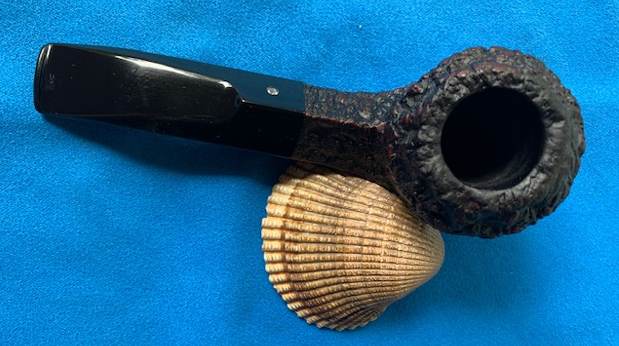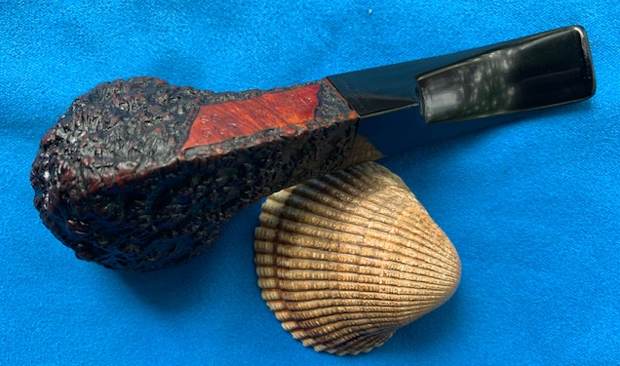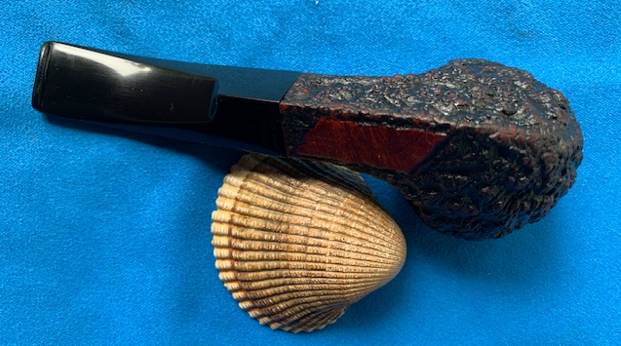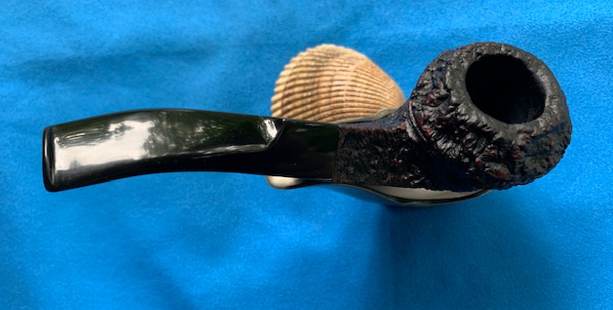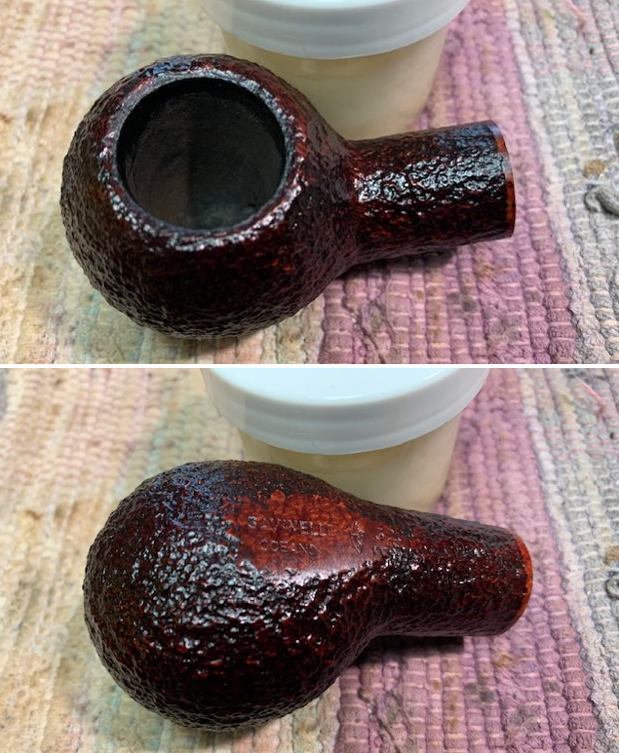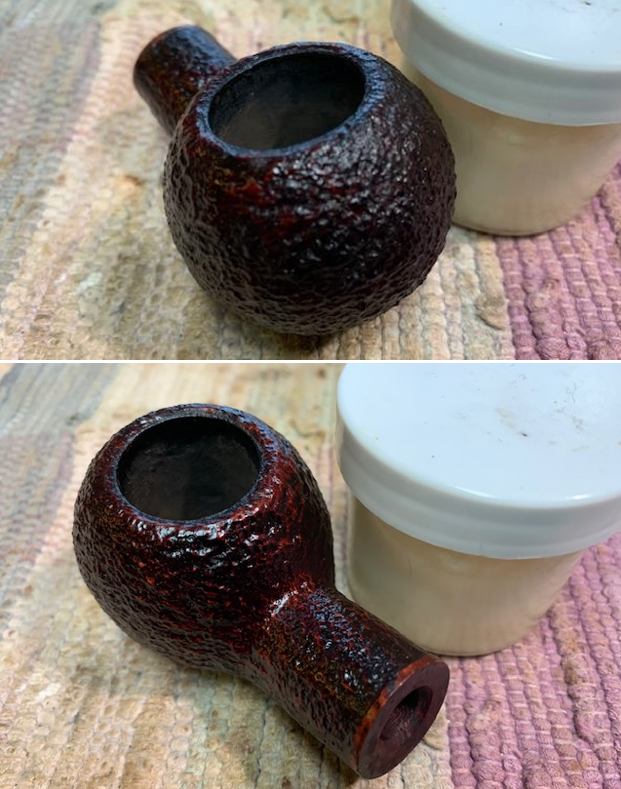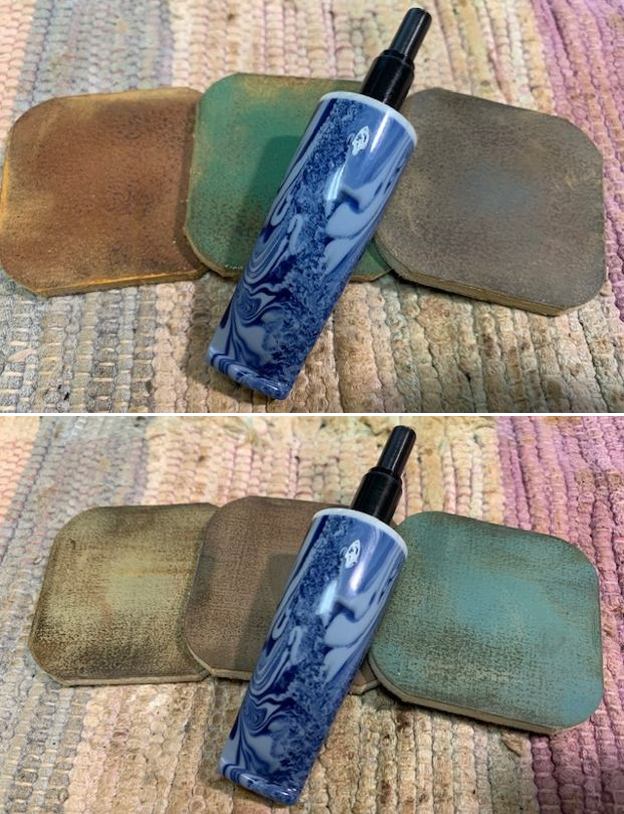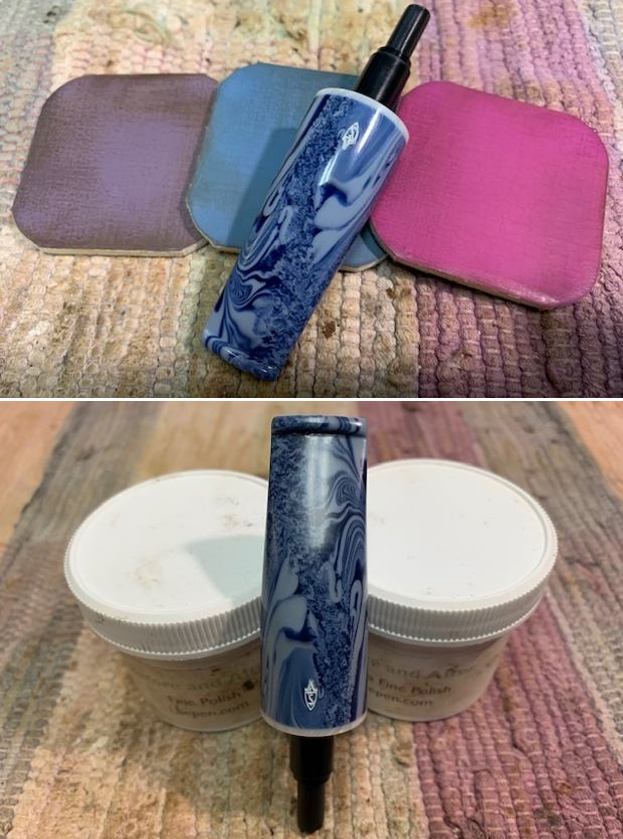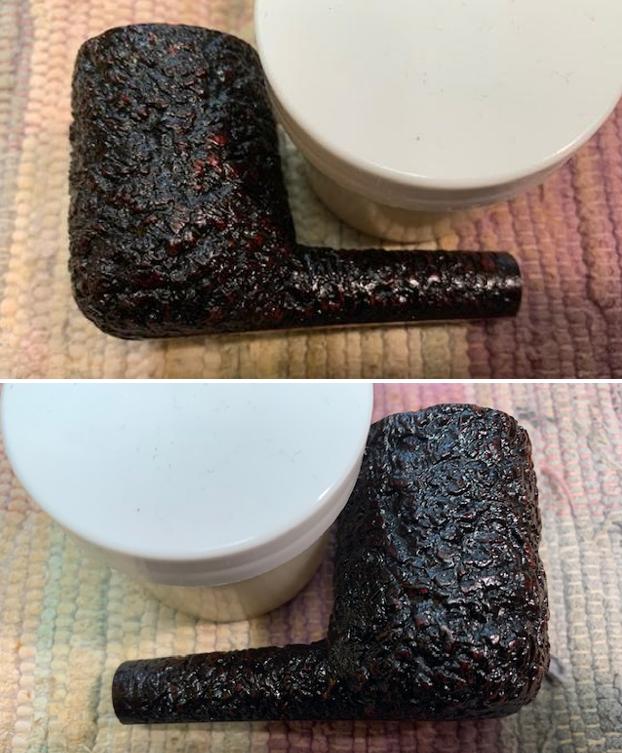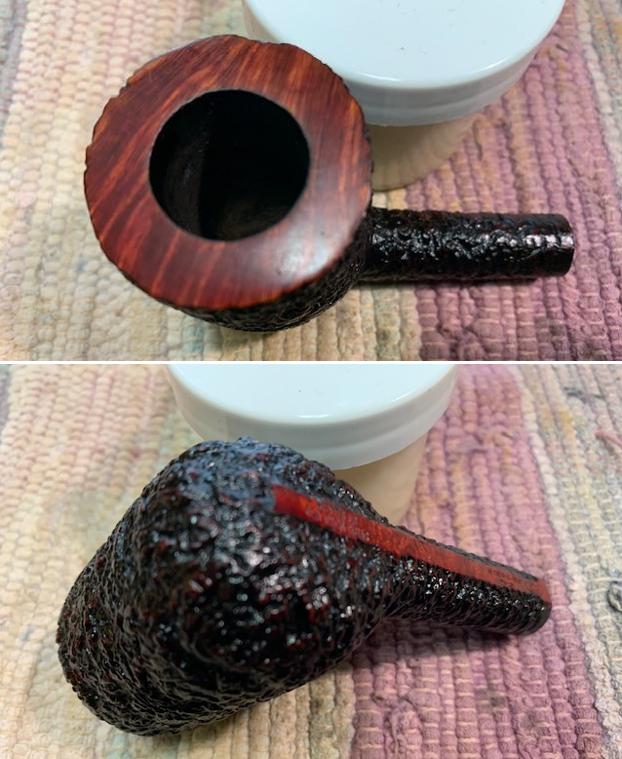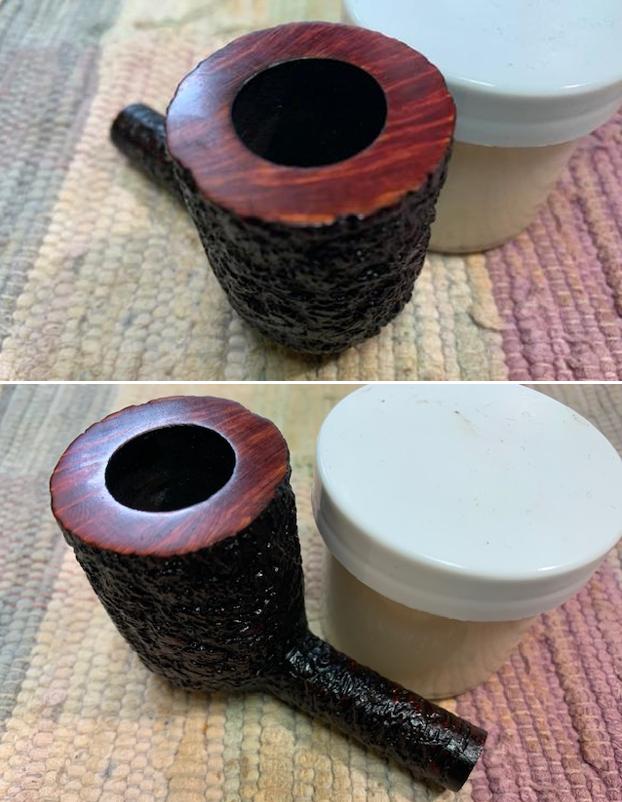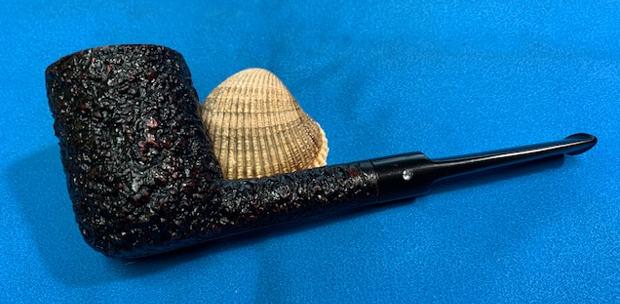
Tag Archives: polishing an acrylic stem

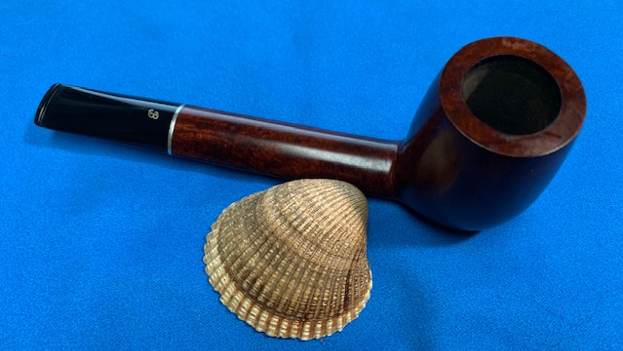
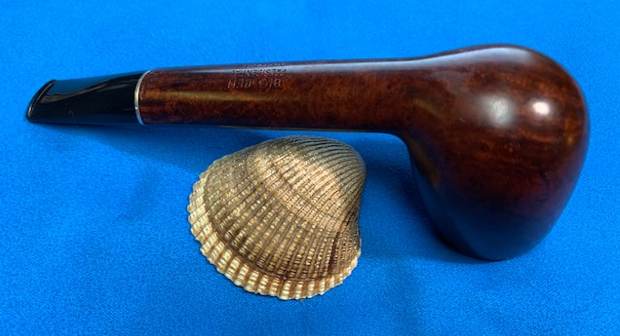
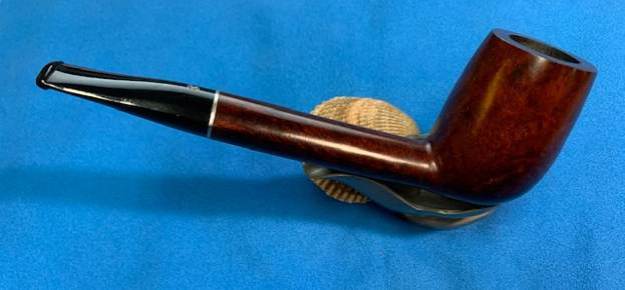
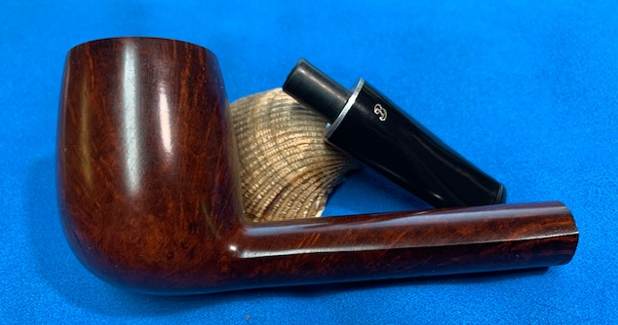
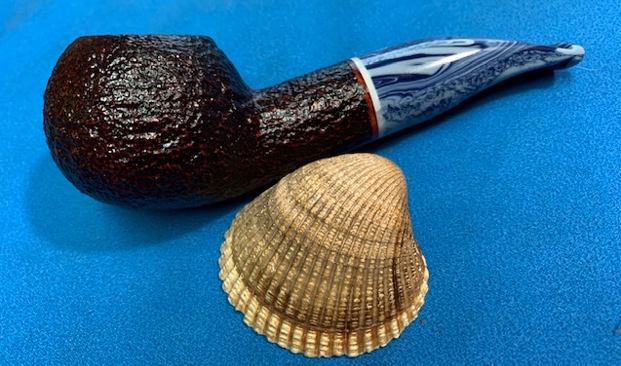
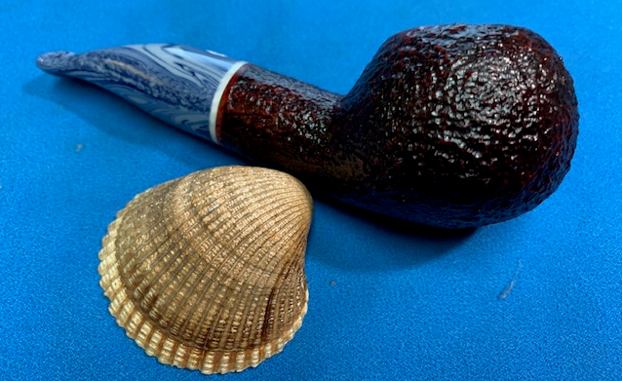
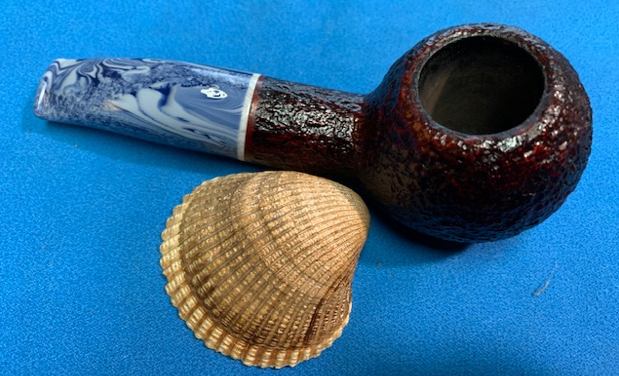
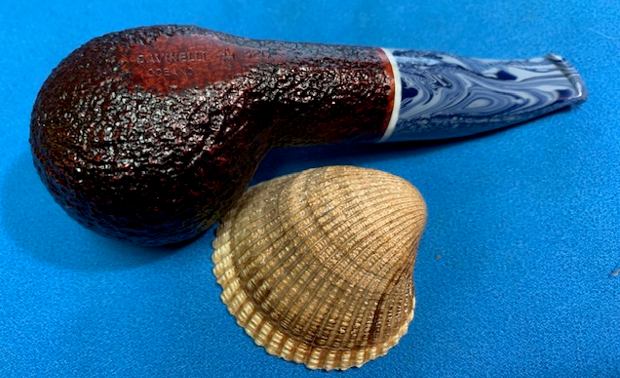
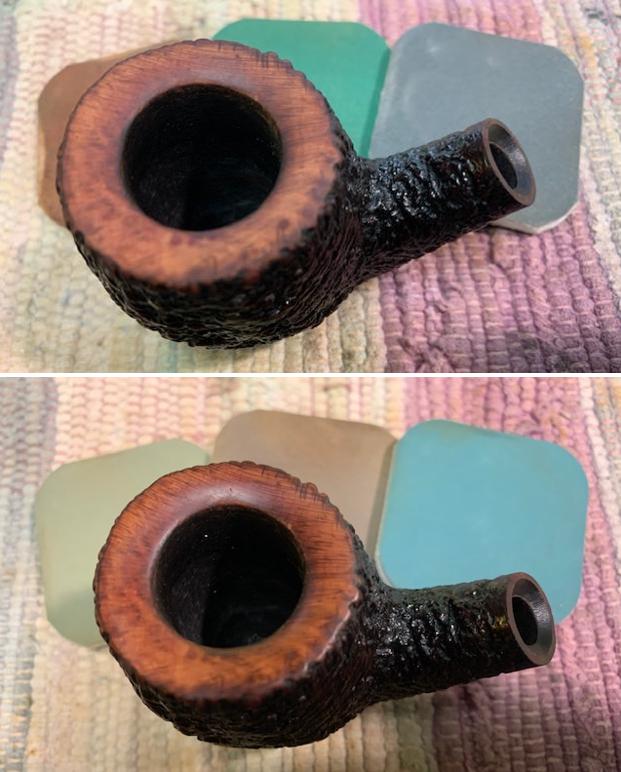
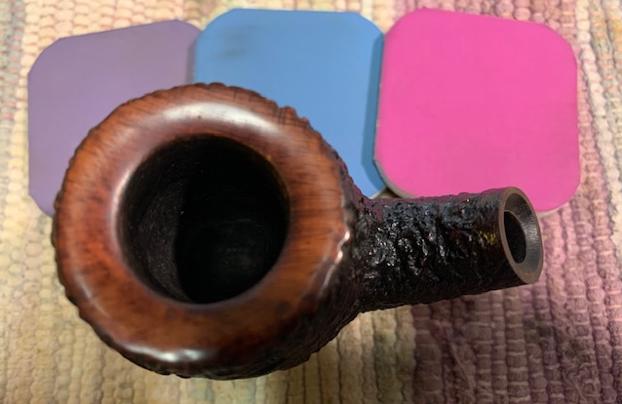
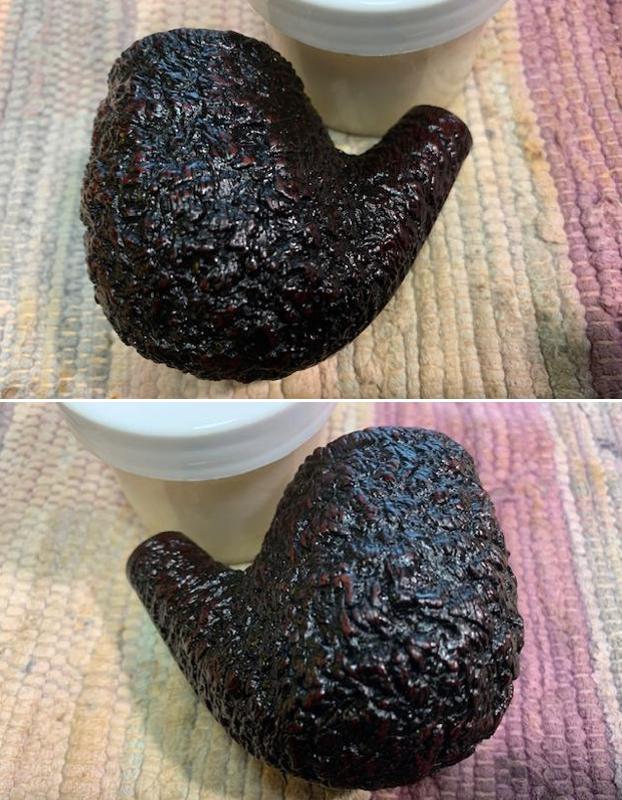
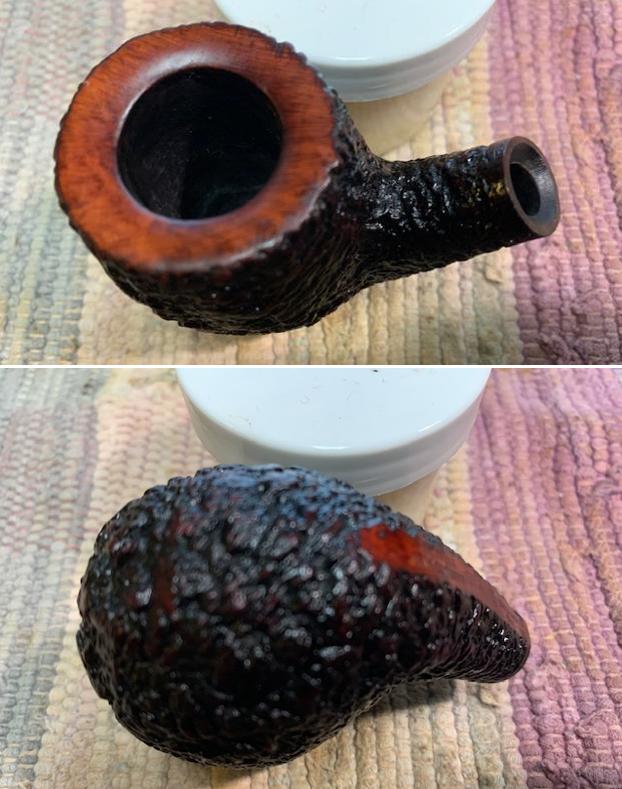
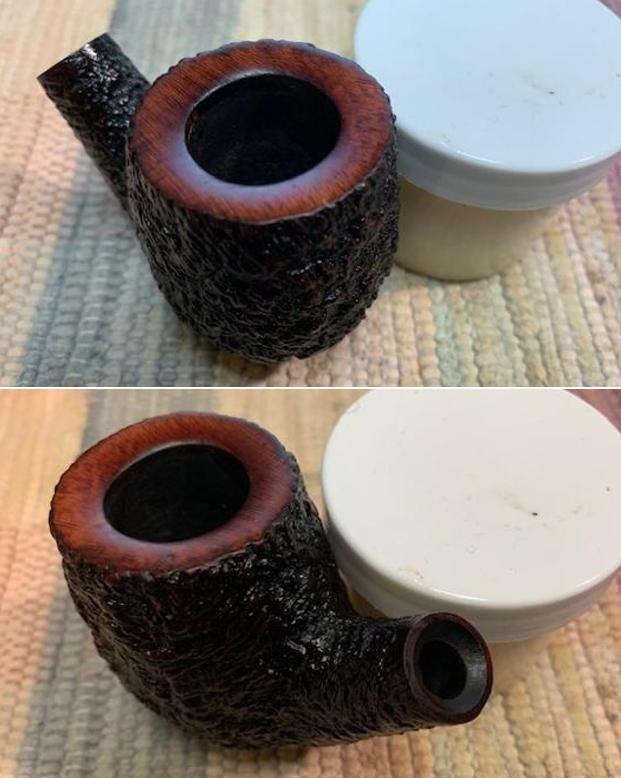
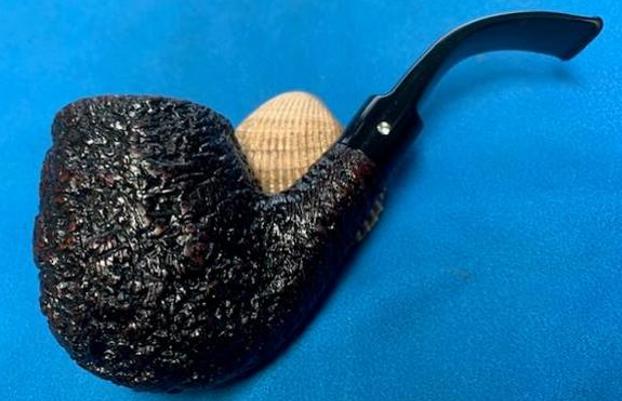
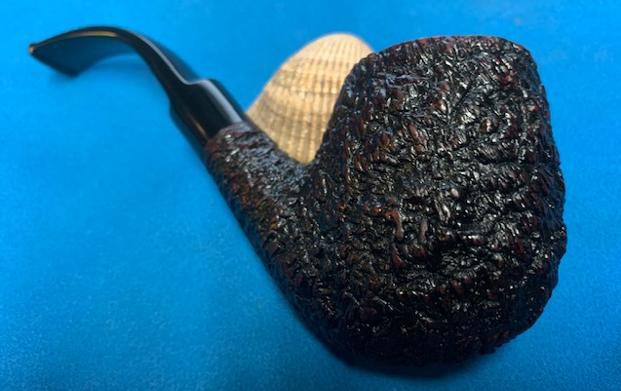
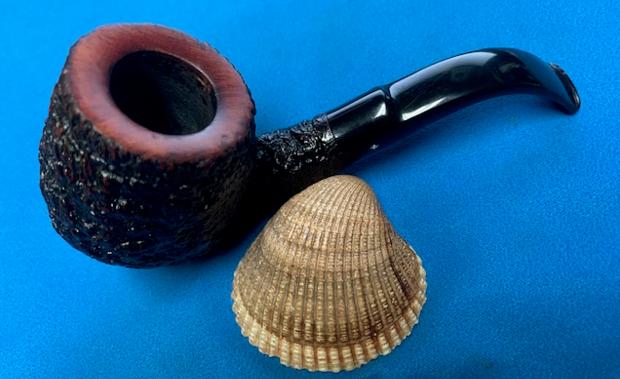
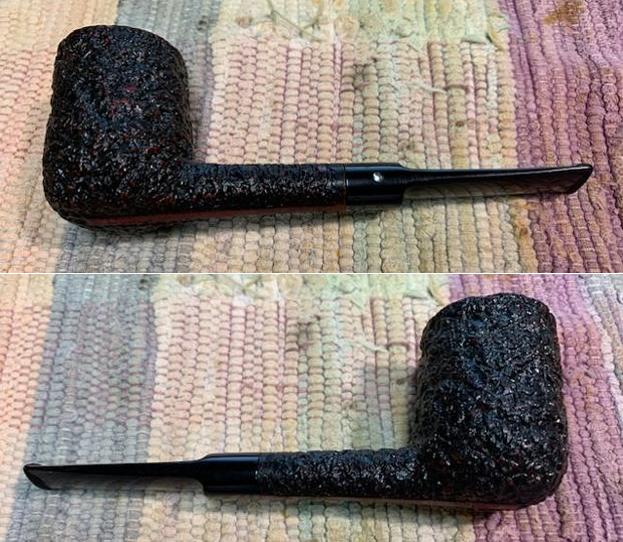
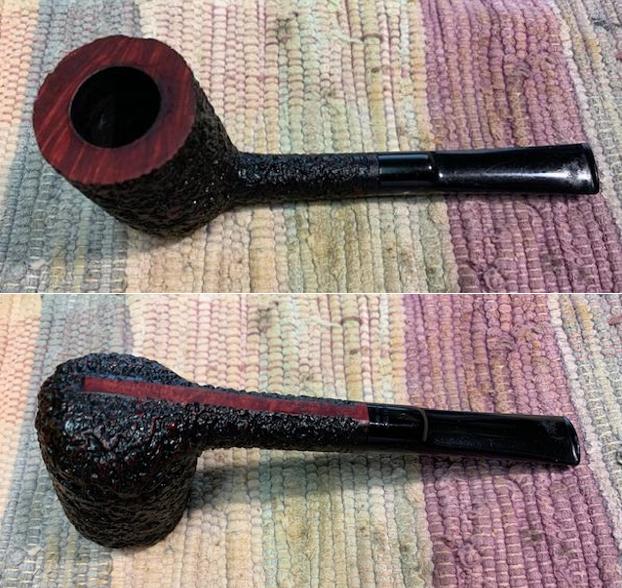
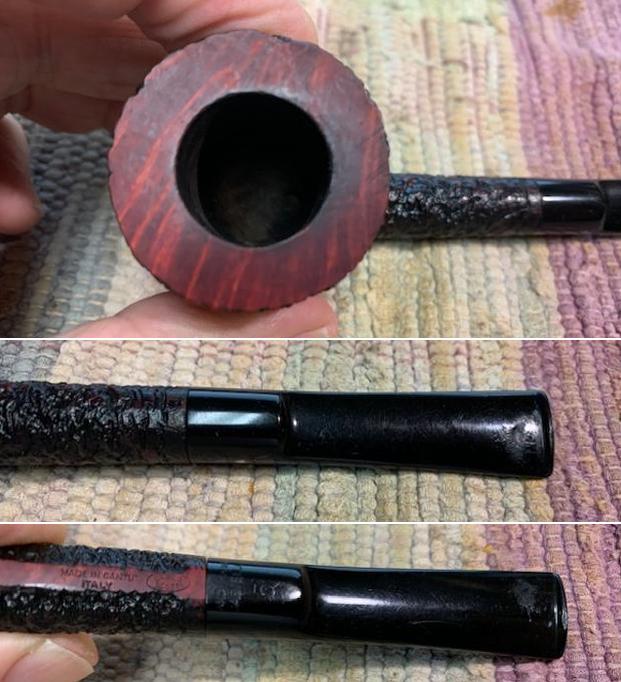
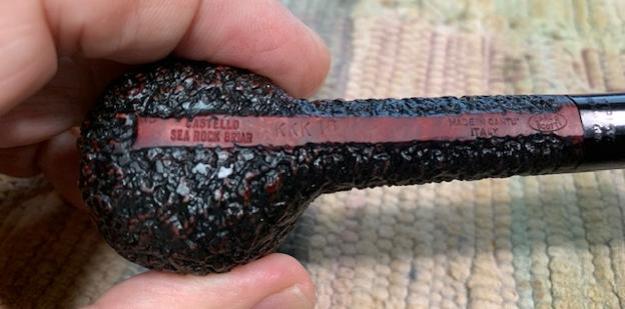
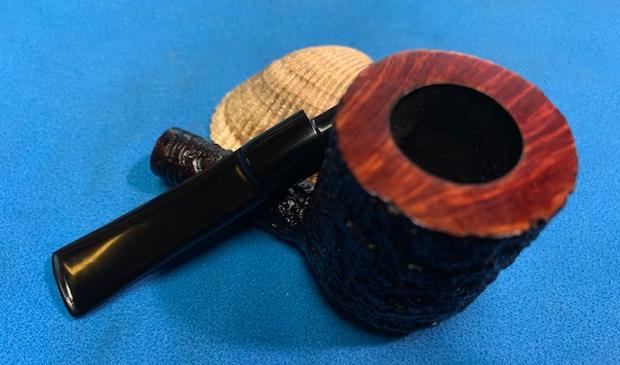
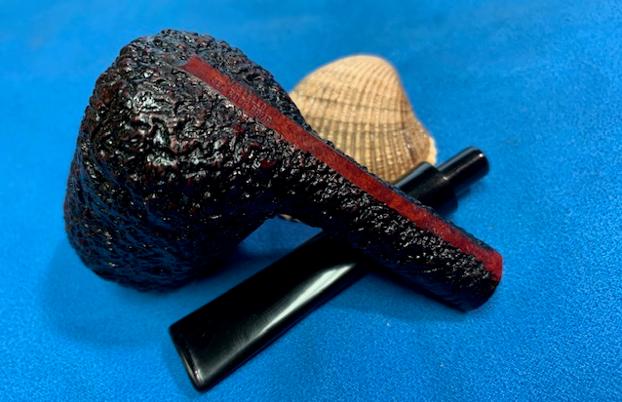
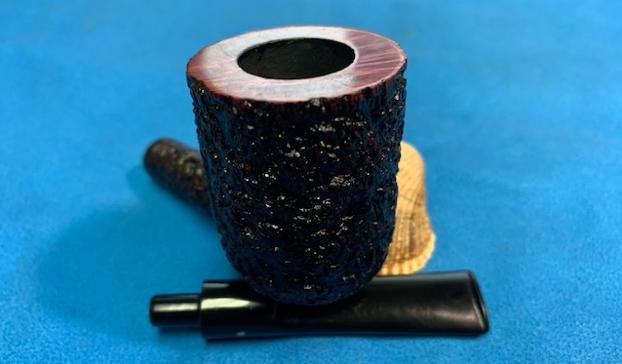
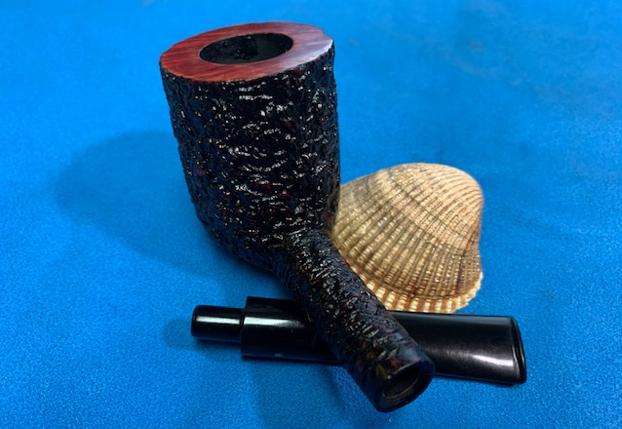
Restoring a Castello Sea Rock Briar SC 54P Bulldog


Blog by Steve Laug

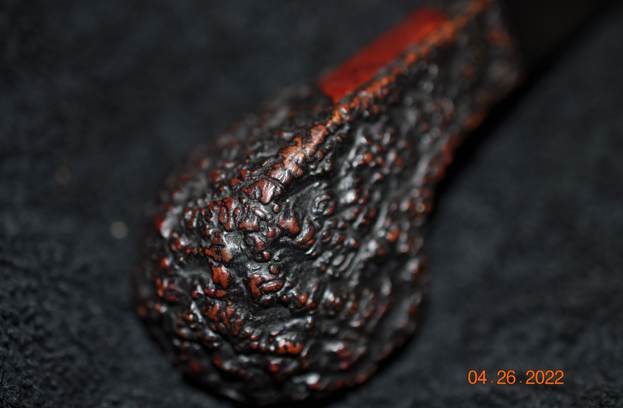
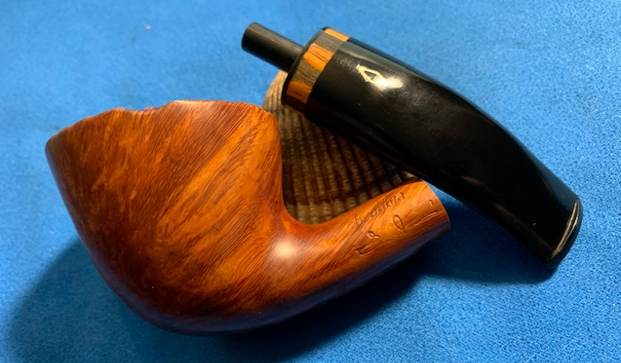
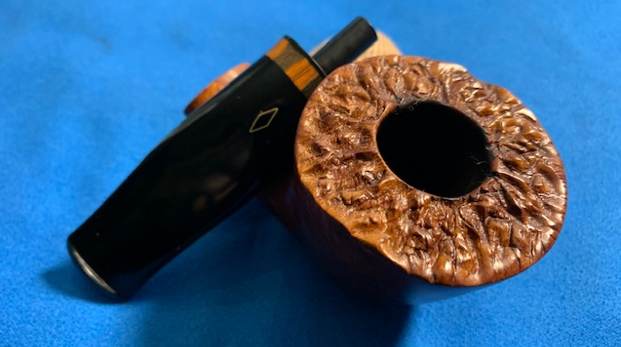
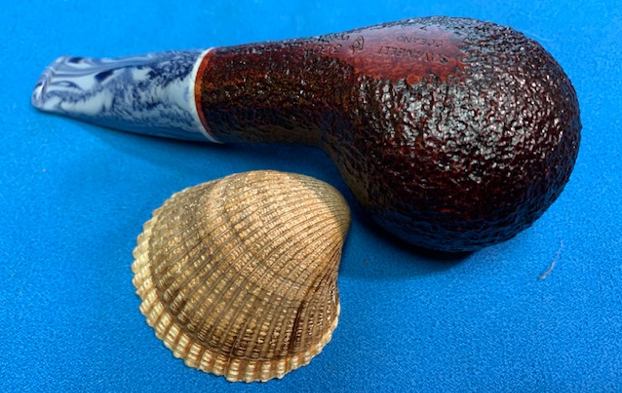
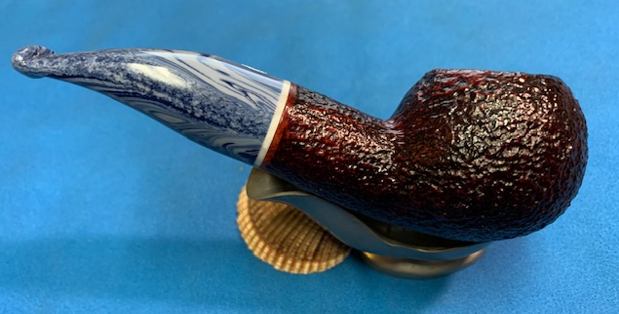
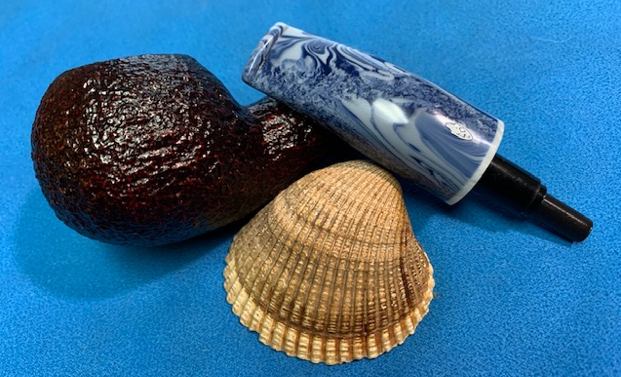
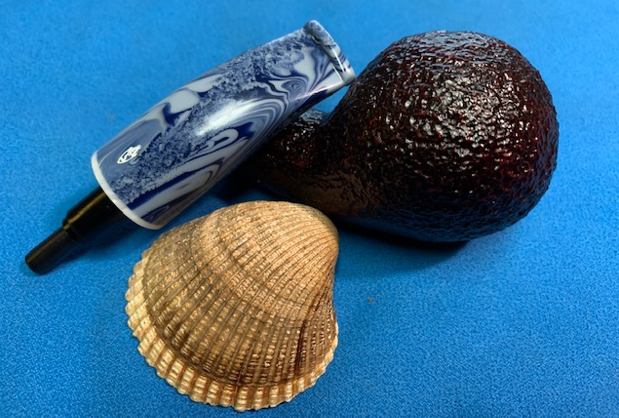
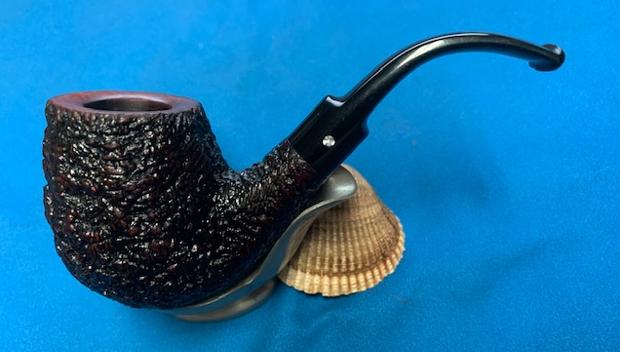
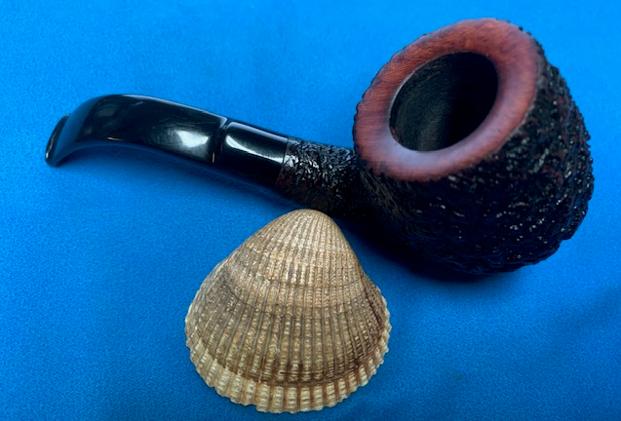
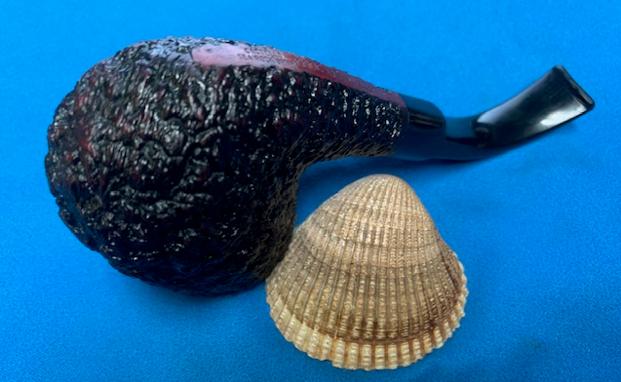
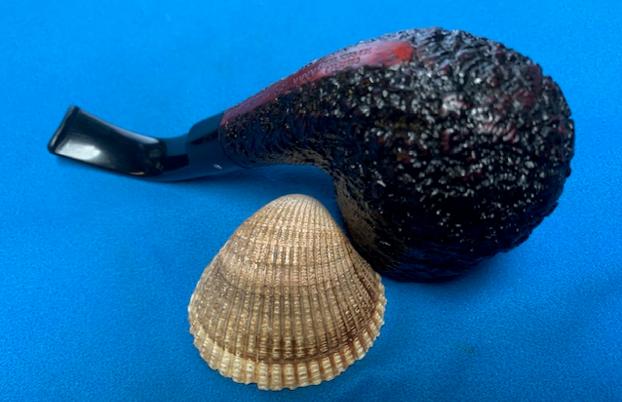
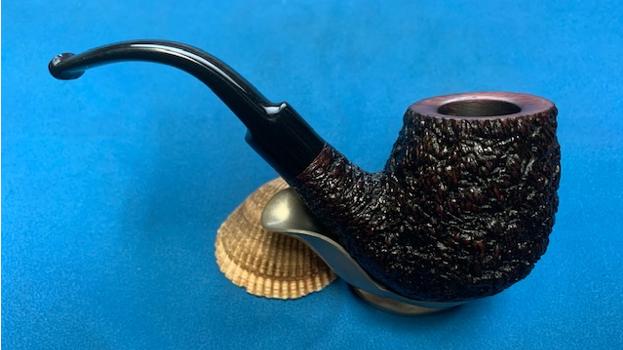
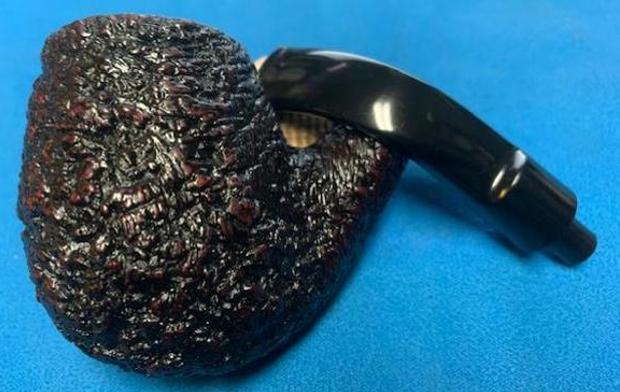
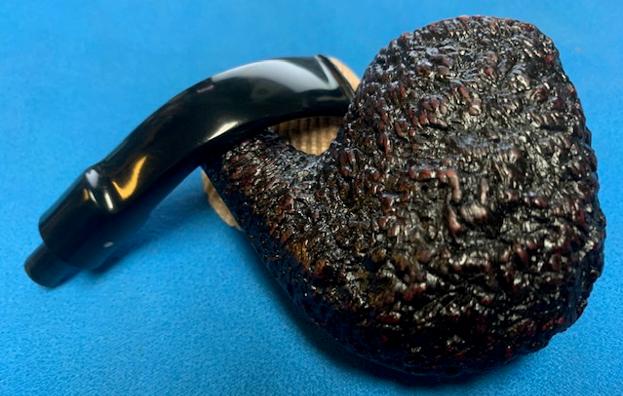
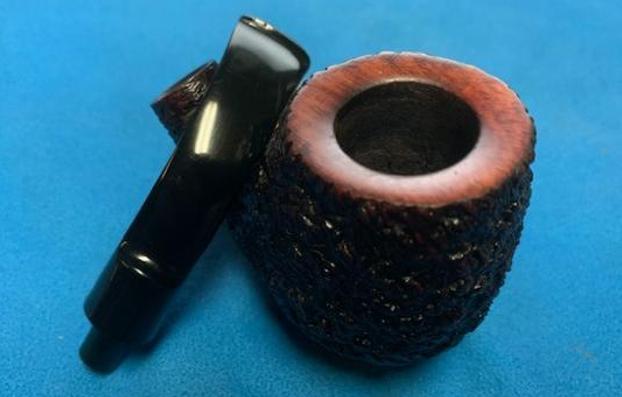
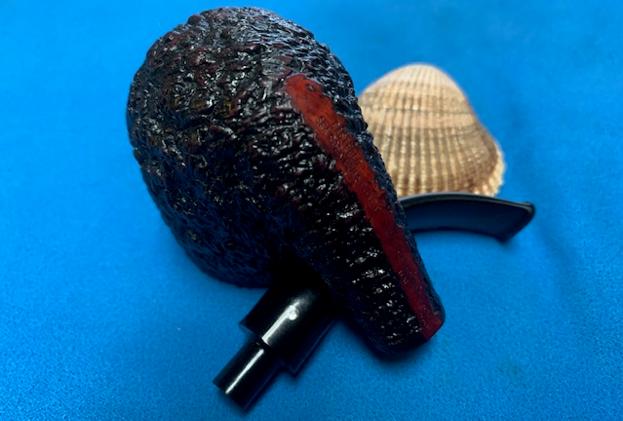
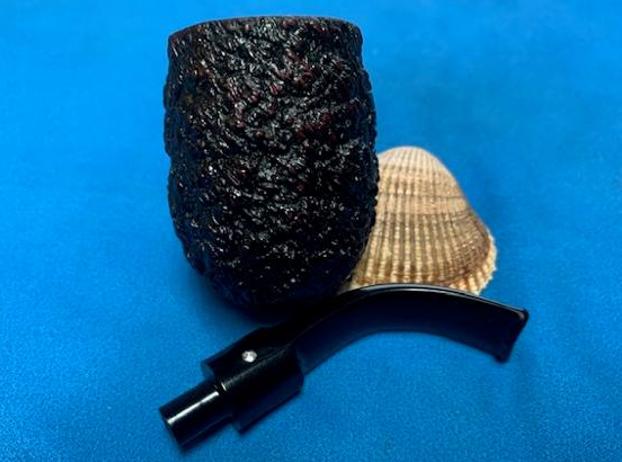
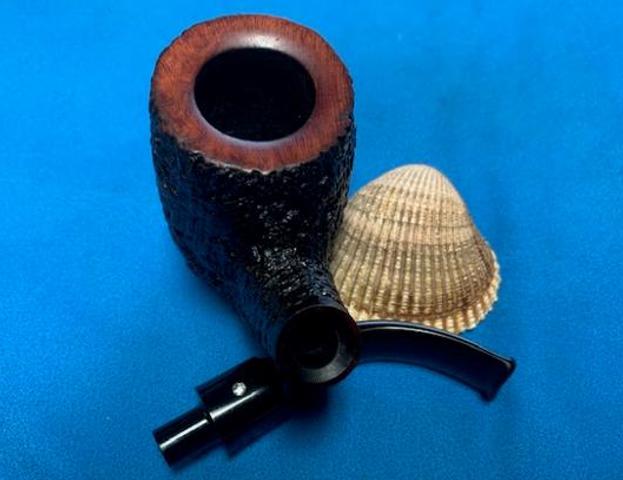
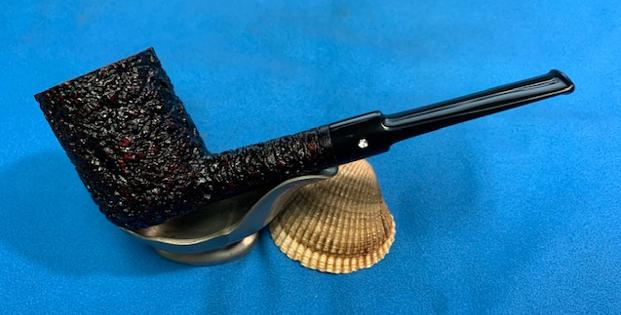
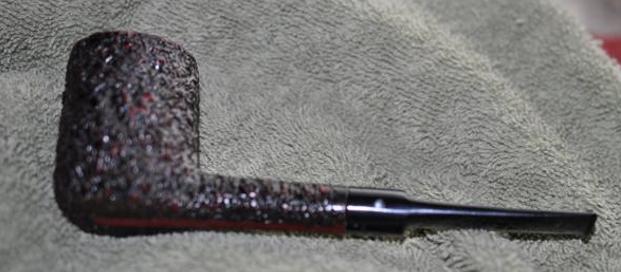
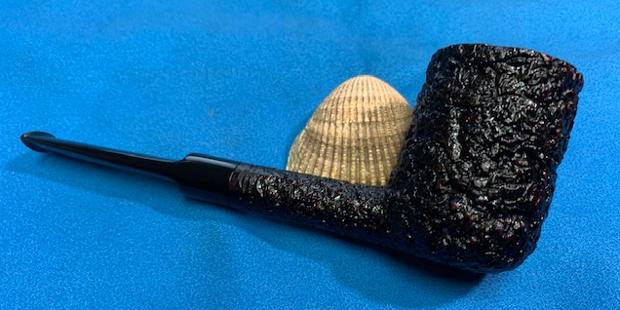
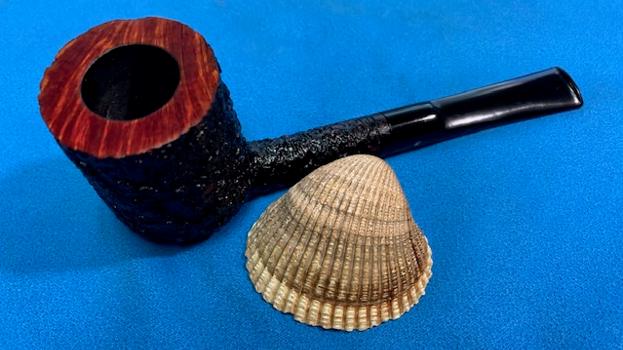
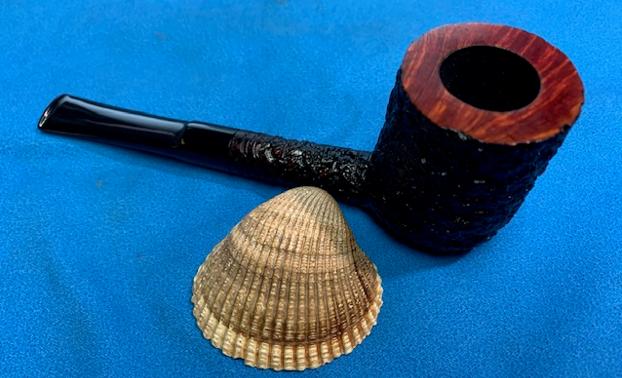
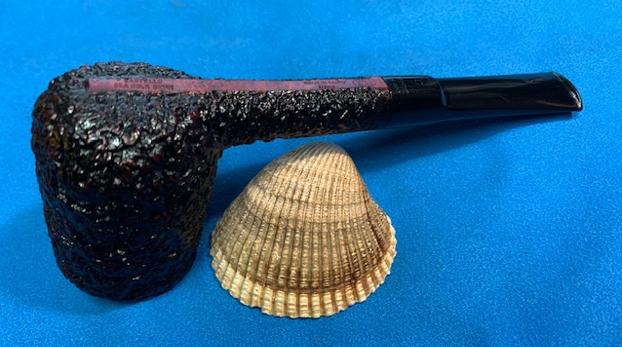
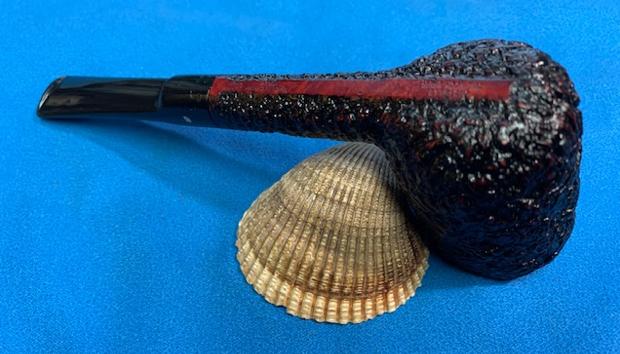
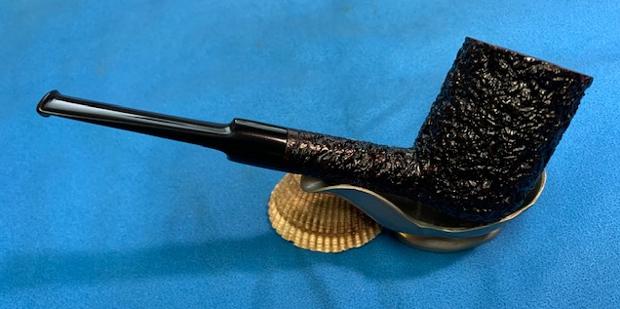
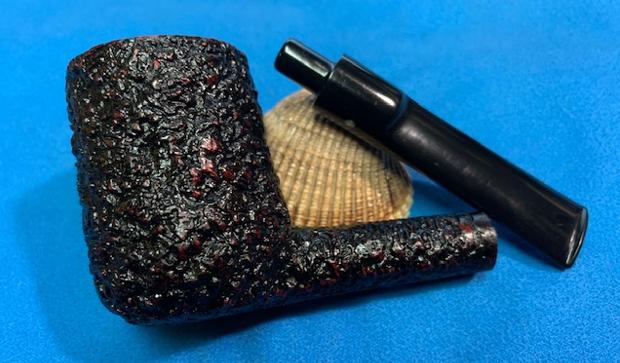
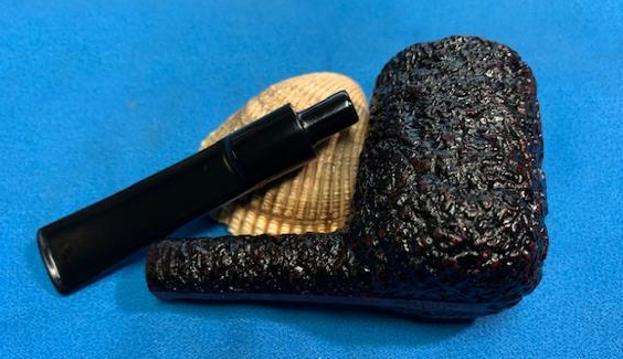
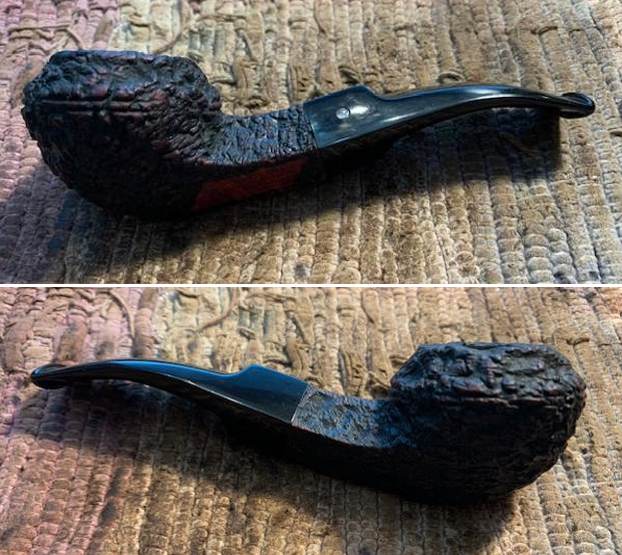
The next pipe on the table is a beautiful Castello Sea Rock Briar Bulldog. I love the Sea Rock Briar finish and this was one that is quite exemplary of the finish. It has a rugged and deep rustication that is very tactile and I think will be a great smoker. It is another pipe from the group of pipes which Jeff and I purchased on 04/26/2022 from a woman who contacted us from Cleveland, Ohio, USA. They had belonged to her husband’s father. We spent time chatting with her and arrived at a price and she sent the pipes to Jeff. It included 28+ pipes along with this one.

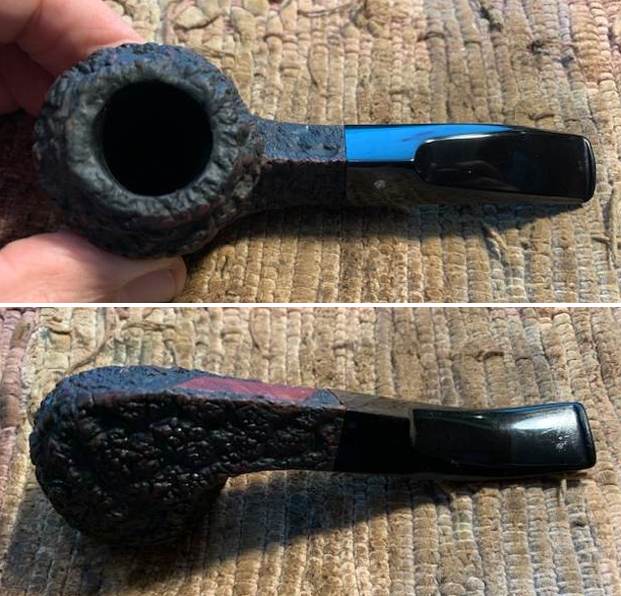
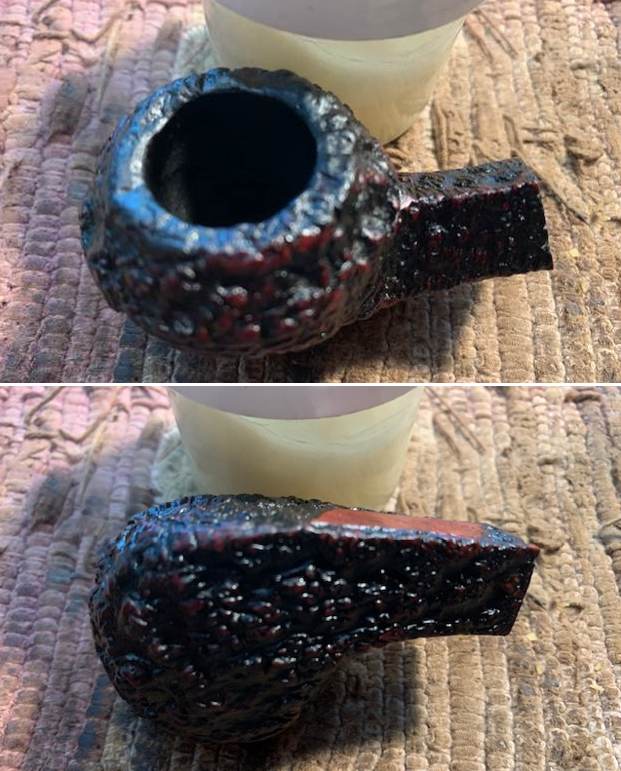
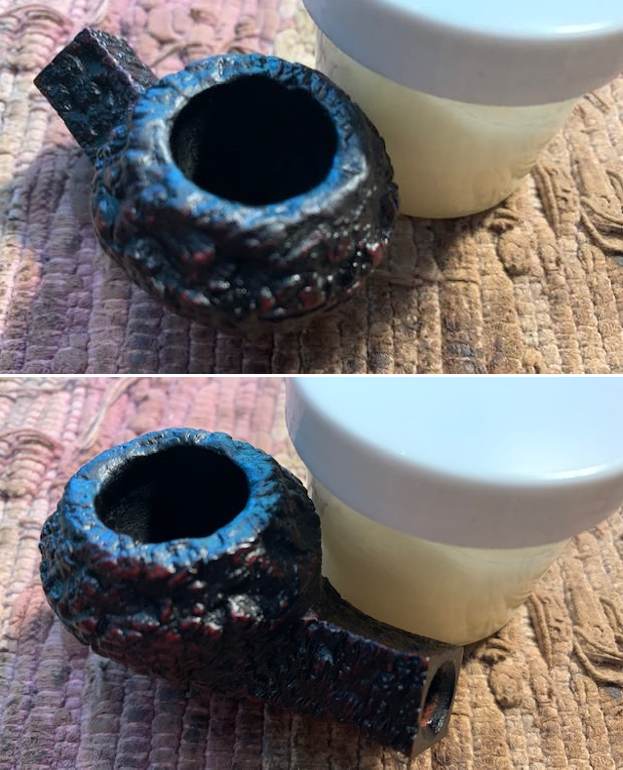
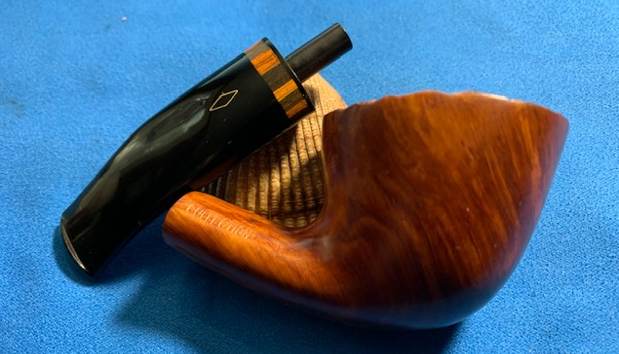
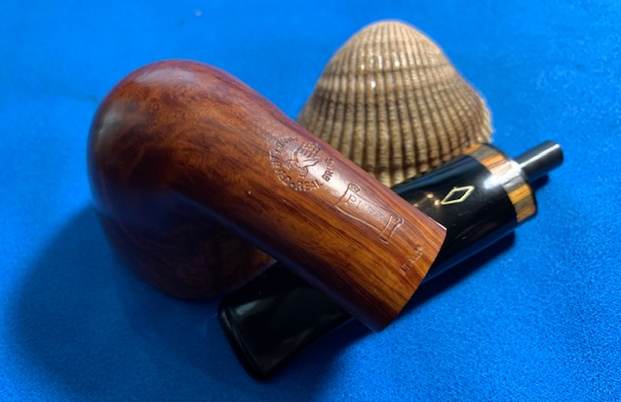
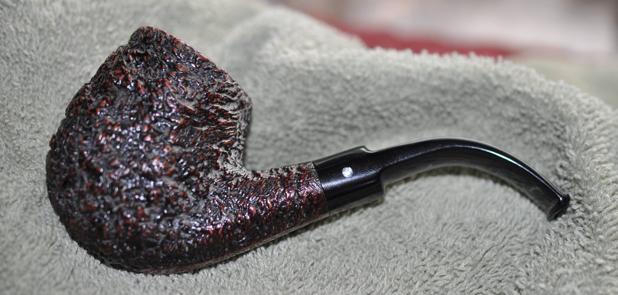
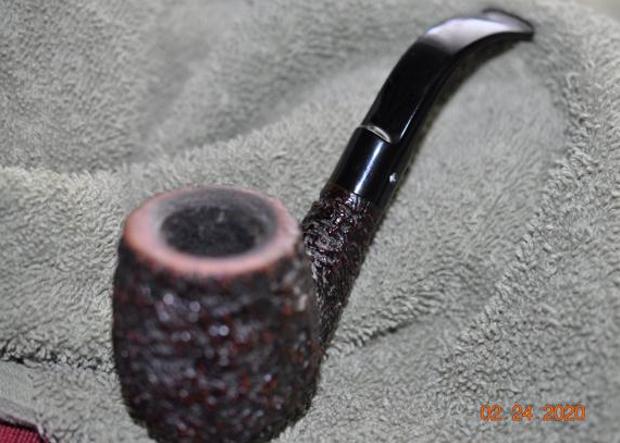
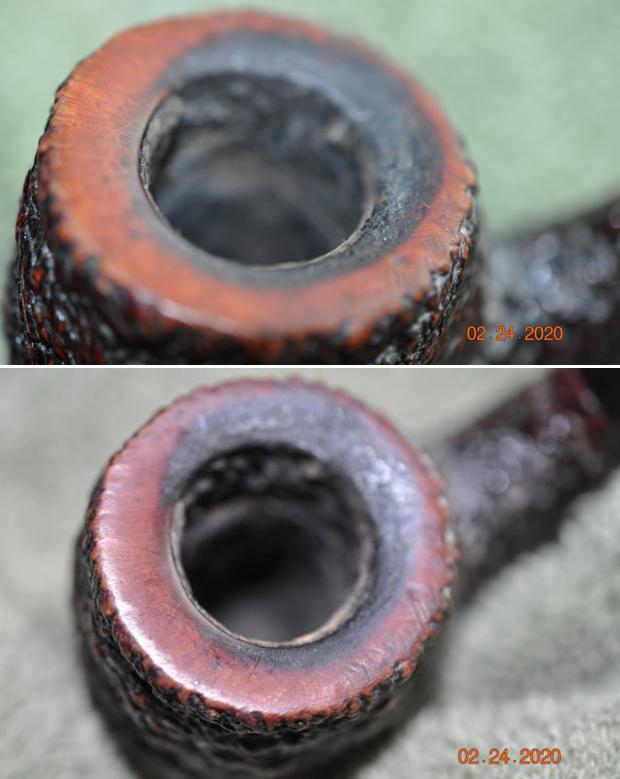
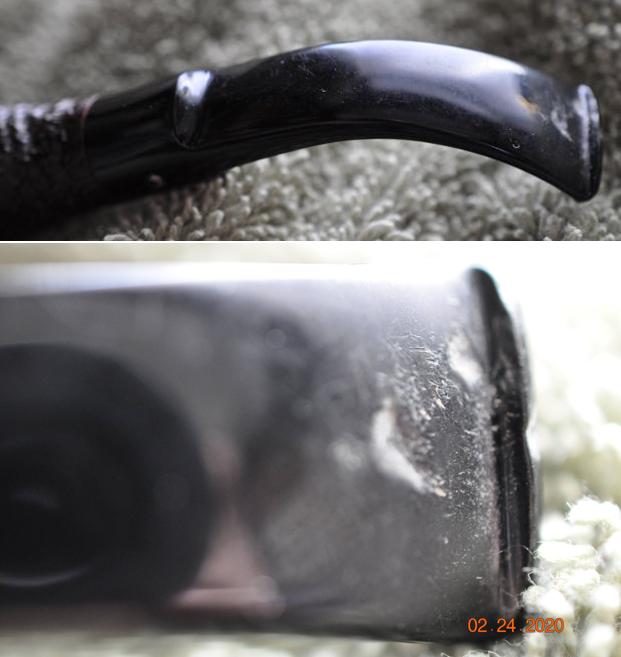
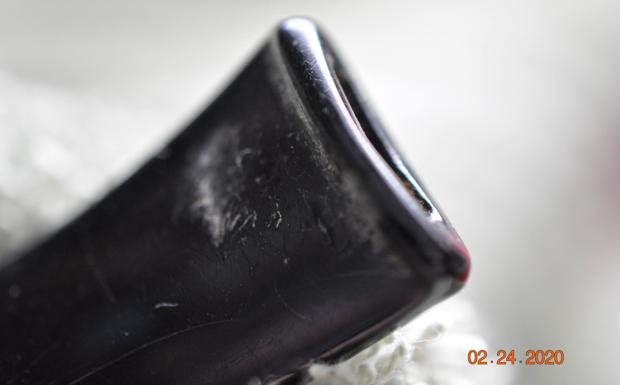
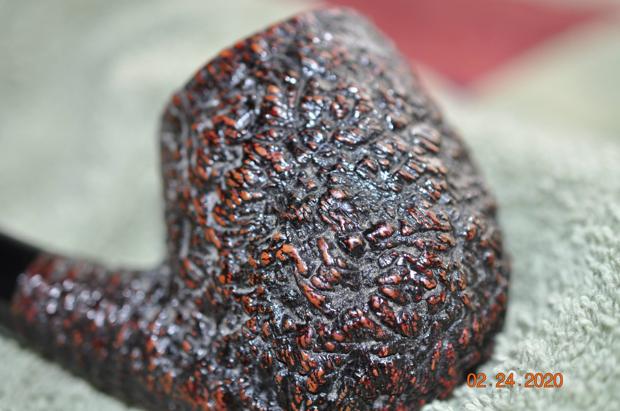
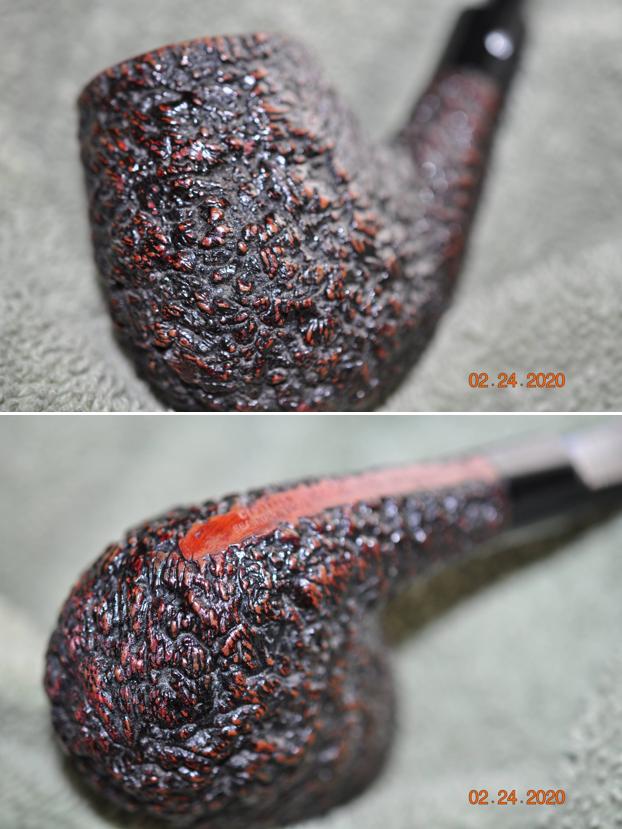
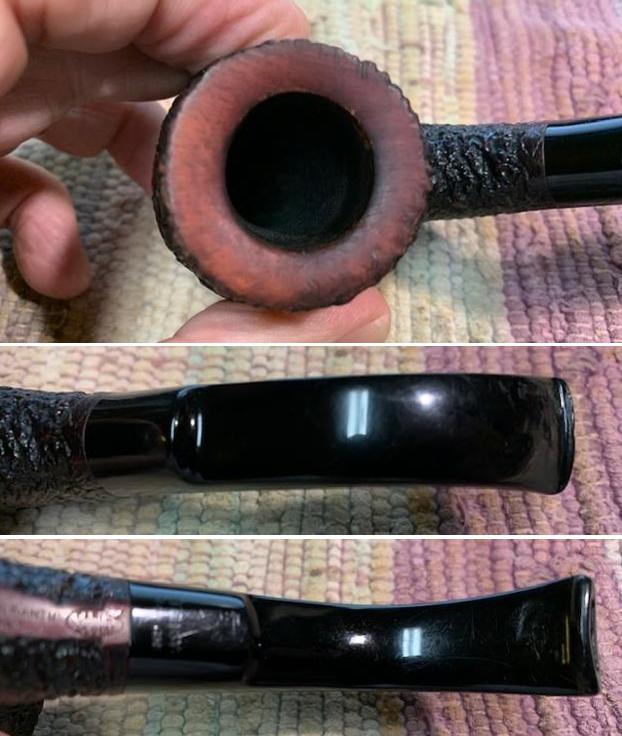
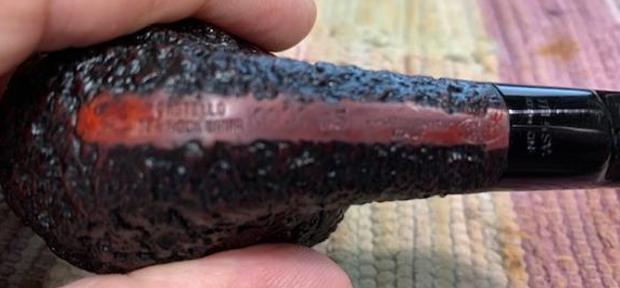
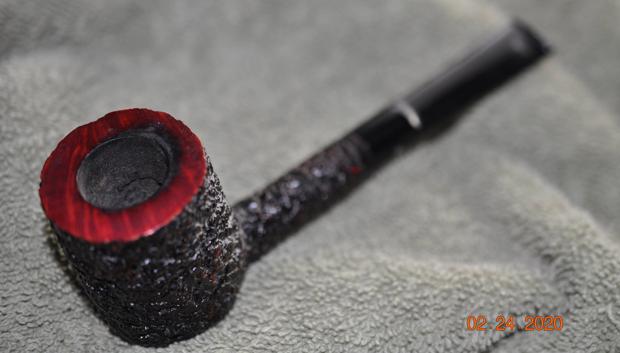
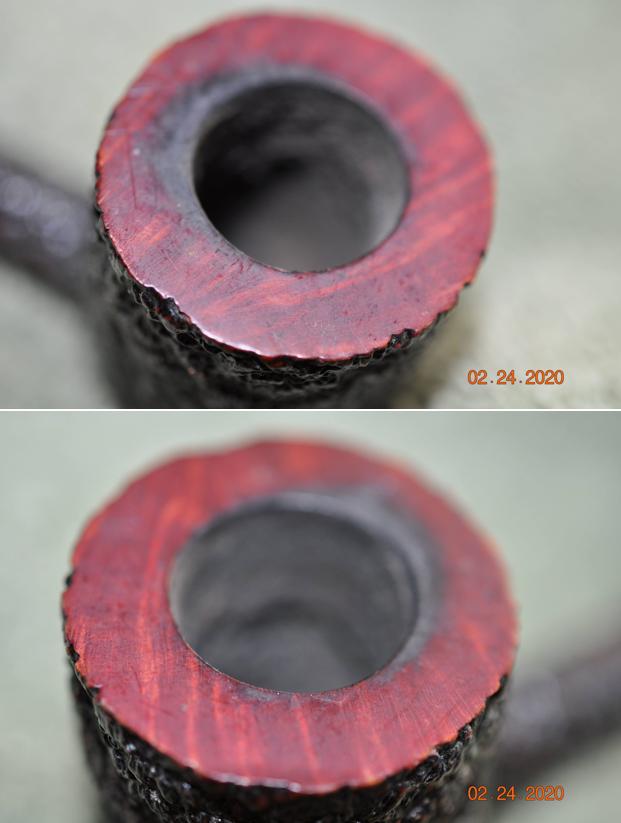
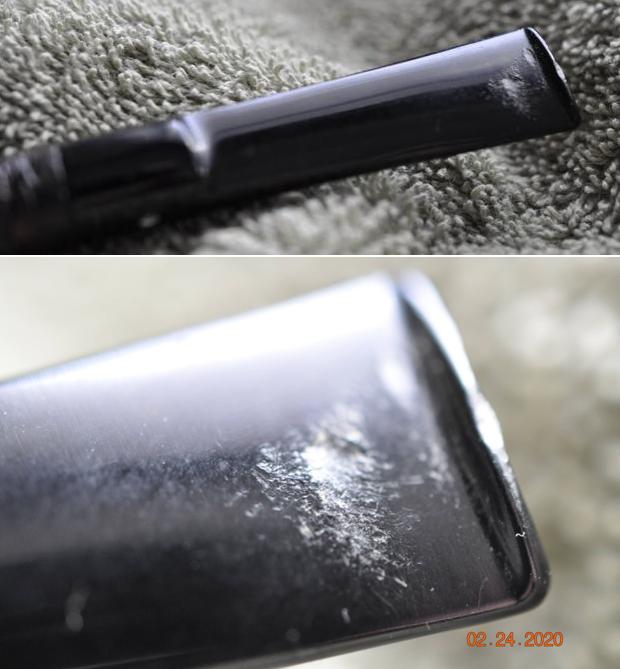
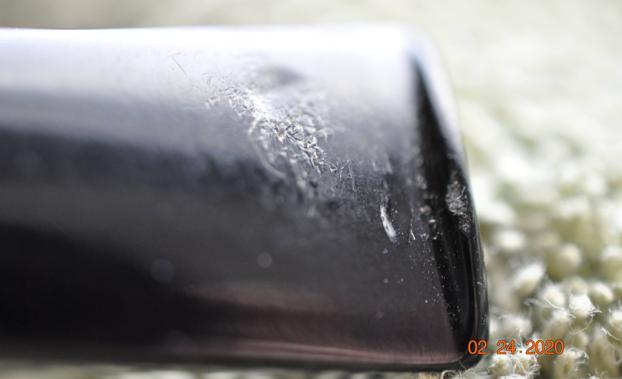
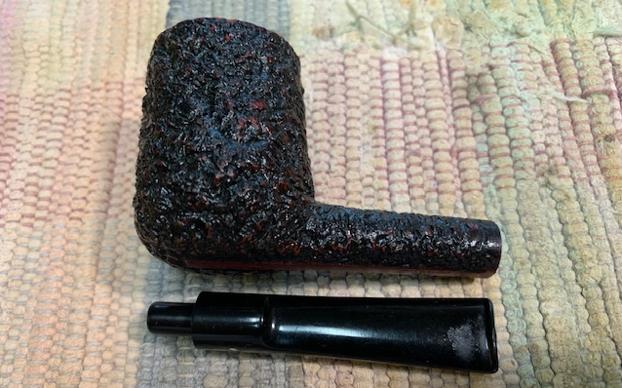
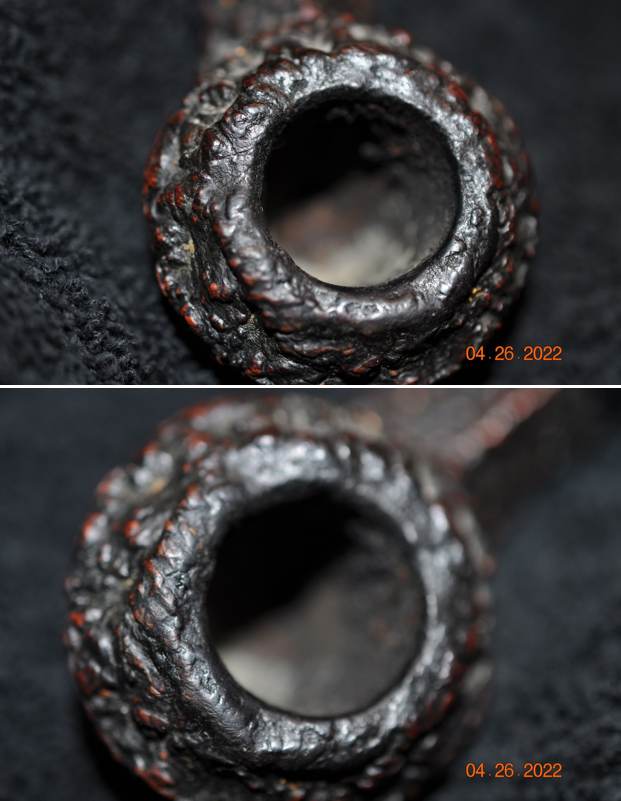
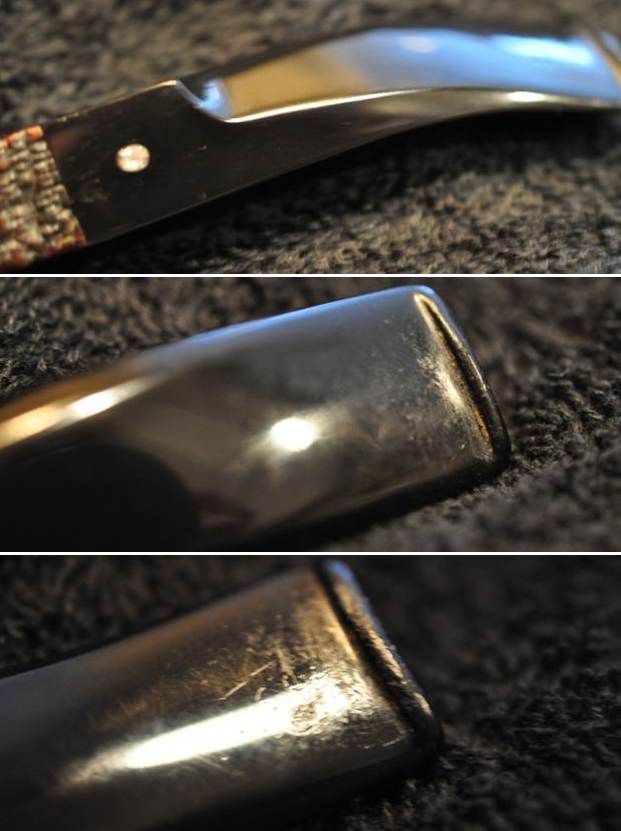
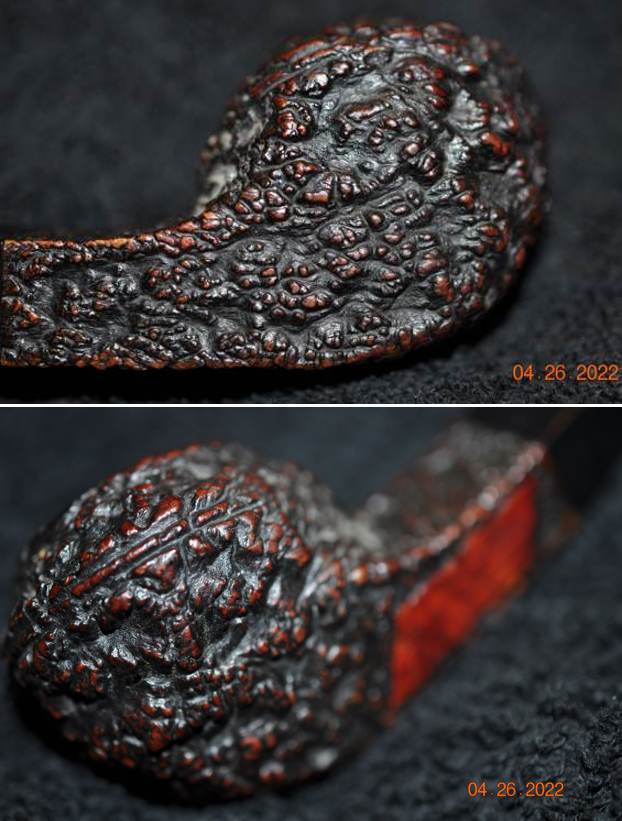
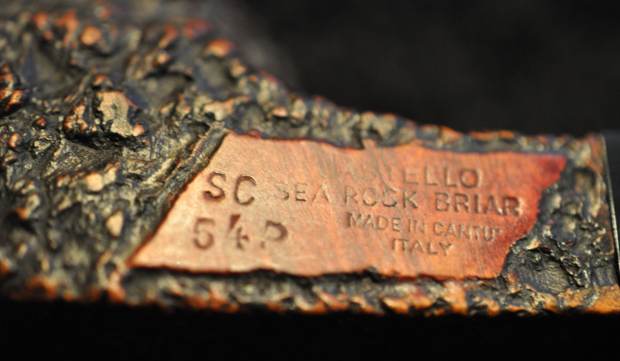
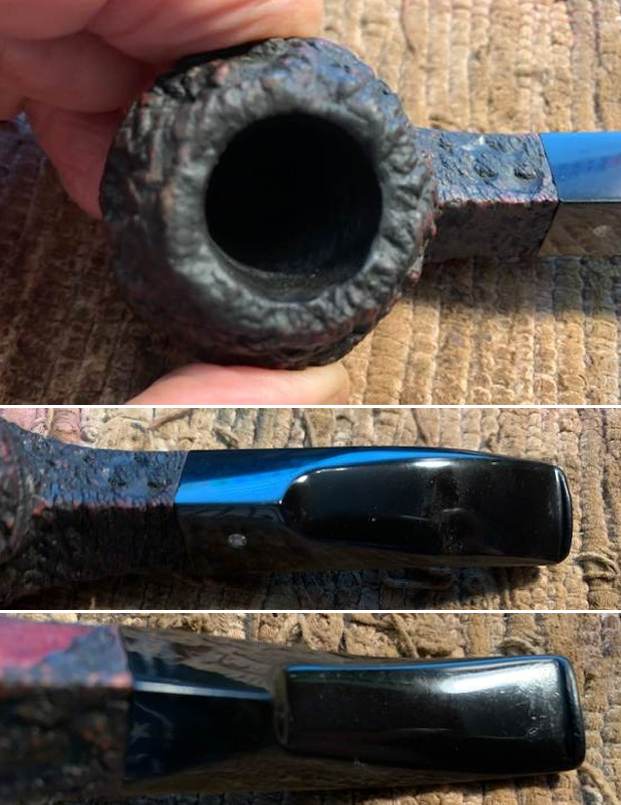
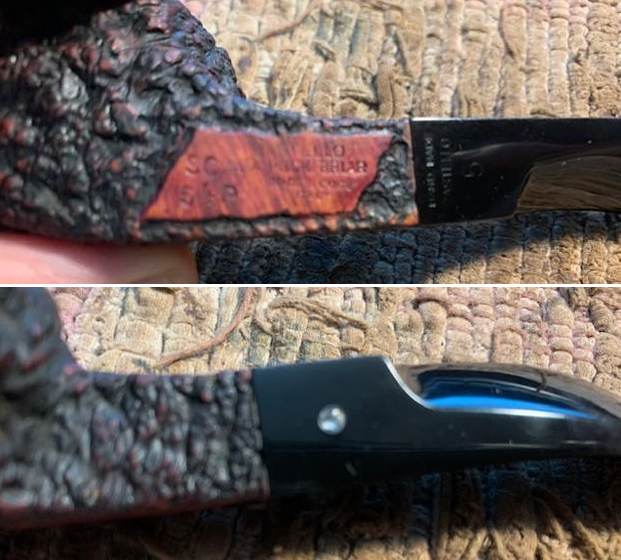
This Castello Sea Rock Bulldog is stamped on the left underside of the shank and reads SC [over] 54P. That is Castello [over] Sea Rock Briar [over] Made in Cantu [over] Italy. The numbers and stamping tell me that the pipe is a Sea Rock rusticated finish and it is a bent Bulldog. The underside of the left side of the Lucite stem also had stamping that read Hand Made over Castello [over] the number 5. The finish was very dirty with spots of grime and debris ground into the crevices and valleys of the rustication. The bowl had a thick cake in the and a heavy lava overflowing onto the rim top into the grooves. The rim top appeared to be in very good condition with no damage to the inner edge. The acrylic stem had tooth marks and chatter on both sides ahead of the button. The button itself appeared to be in good condition. Jeff took photos of the pipe before he started his clean up work on it. My brother took some close up photos of the rim top and the cake in the bowl to show what it looked like when we received it. You can see how thick the cake is and how much of the rim rustication has filled in with the overflow. The photos of the stem show the faux diamond logo on the top left side of the saddle. You can see the tooth marks and chatter near the button on both sides of the stem. Jeff took photos of the rusticated finish around the bowl sides and heel. It is nice looking if you can see through the grime and dust ground into the rugged, deep rustication. He took a photo of the stamping on the left underside of the diamond shank. The stamping is readable but filthy. It reads as noted above.I remembered that I had written a blog on the same shaped Castello that now was in my rotation and did a quick search on rebornpipes for the link to see if I could remind myself of the information that I had collected there. I found the link, reread the information and quote from it below (https://rebornpipes.com/2016/12/18/an-estate-sale-find-a-castello-sea-rock-sc-54p-bulldog/).
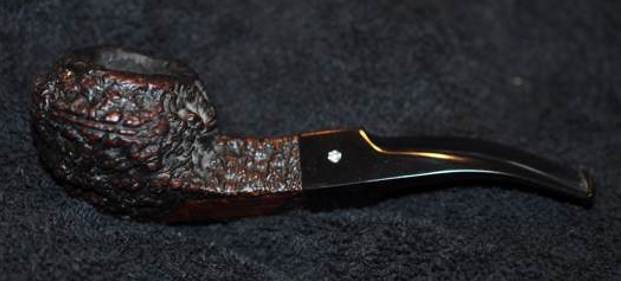
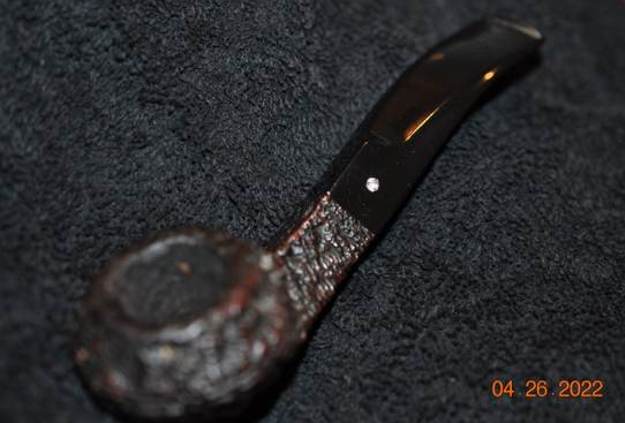
Before I worked on the pipe I wanted to do a bit of research to see if I could shed some more light on the pipe I had in hand. I learned from the pipephil website that the rhinestone logo was originally on pipes for the US market. There was no hint as to why that was done only that it was and that it is occasionally still used http://www.pipephil.eu/logos/en/logo-castello.html

I have an older article called PCCA’s Castello Grade & Style Guide. It was written by Robert C. Hamlin (c) 1988, 1992, 1994. Robert gathered some remarkable information on the Castello lines and I have often used his guide in the past to give me pertinent data. There I found more information regarding the shiny logo on the side of the stem.

“American logo’d Castello pipes use a small round “Diamond” (referred to and looking like, but it is NOT actually a diamond) inlaid into the mouthpiece. This was originally done so that the standard Castello white bar logo did not conflict with another brand and logo that was sold by Wally Frank called the “White Bar Pipe” (in the 1950’s).”

The above quote and the remainder of those following come from the same article by Robert Hamlin. You can read the full article at the following link: http://www.pipes.org/BURST/FORMATTED/196.016.html

I read further in the article to help me understand the stamping on the underside of the shank. My knowledge of Castello pipes is pretty limited so when I get one to restore I resort to this article and others to try to make heads or tails of the stamping. First of all I had no idea what the SC stamped ahead of the Sea Rock Briar stamping meant. I had seen Castello’s with the signature of Carlo Scotti on them but not this stamping. Robert gave me the information I needed.

“Older Castello pipes will usually include the “REG No.” and have the letters “SC” stamped as a part of the nomenclature. The SC stamp was for Scotti, Carlo (in Italy all names are listed last, first). Today the full name of Carlo Scotti, contained in a small oval, has replaced the SC stamp.”

I learned that the Sea Rock Briar stamp also signified something and told me more about the pipe. Robert pointed out:

“SEA ROCK [Carved Black or dark brown]: This is the lowest grade of the Castello line and is the most common in the USA. Sea Rocks are produced by taking a smooth bowl that has not been “final finished” and surface carving the finish with tools. This “carved” finish is then evened out using a steel wire brush, stained and then waxed. The Natural Vergin carved finish is left unstained and unwaxed as a rule, although we have seen waxed and partially waxed “Vergins”.” 

The remaining mystery for me was the meaning of the stamping on the stem. I of course understood the Hand Made and the Castello stamping but the number 5 was a mystery to me. I was not sure what it referred to. So once again Robert’s article gave me the information I needed to understand that last piece of the mystery.

“#2: All Castello standard shaped pipes have a number (3, 4, 5 or 6) stamped on the mouthpiece or sometimes on the lucite ferrule. What does this number mean? Not much really, it is the number of the size for the proper straw tube or reed that fits the shank and stem of the pipe. These straw tubes are rarely used in the United States. The Castello reed is considered superfluous and useless to most, but with this number you will always know which one fits (the different numbers have to do with length, not diameter).”

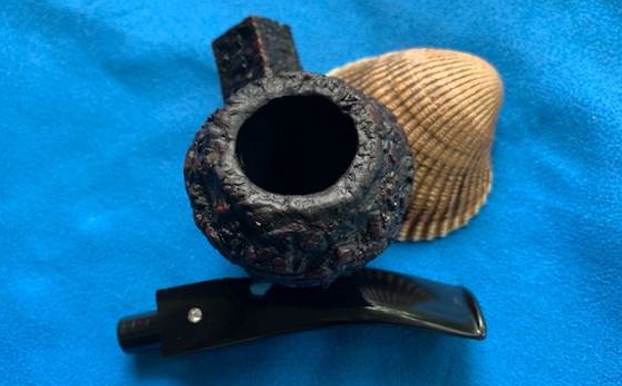
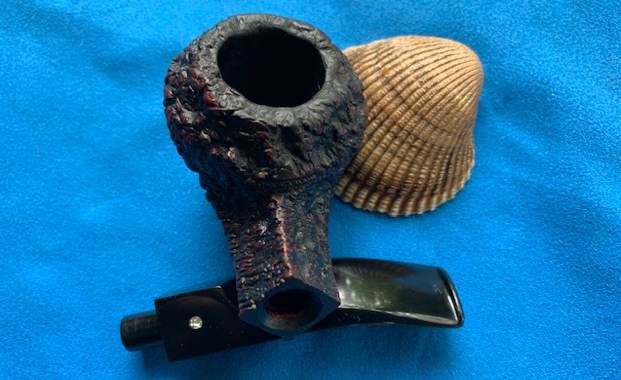
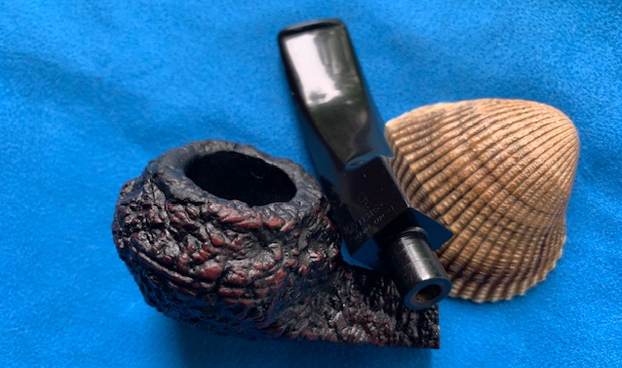
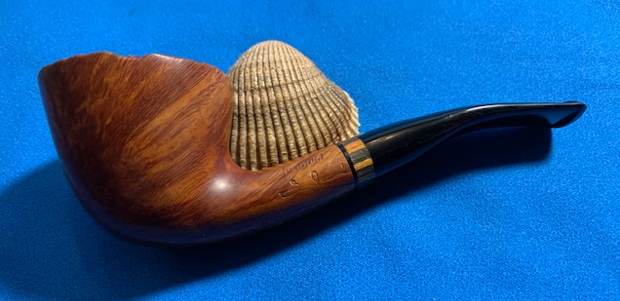
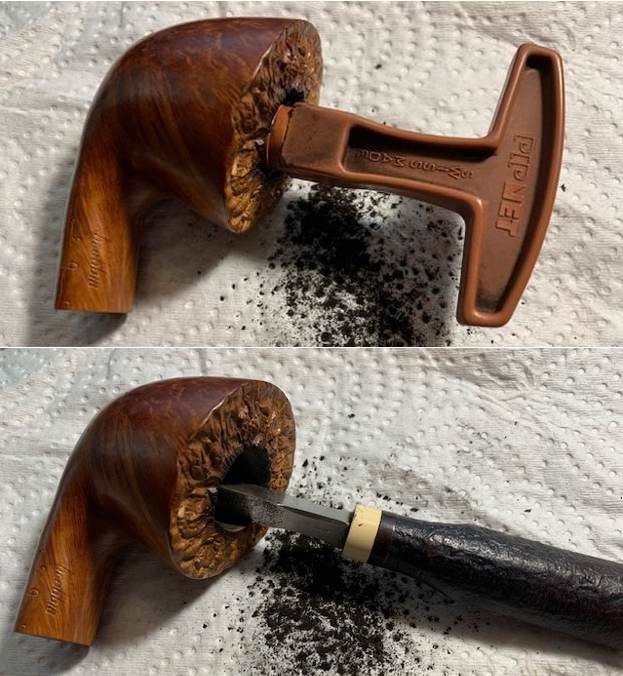
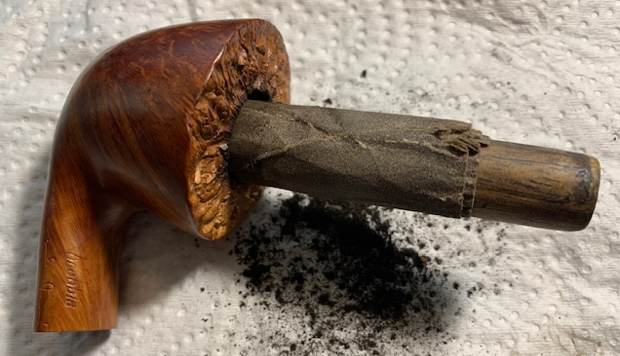
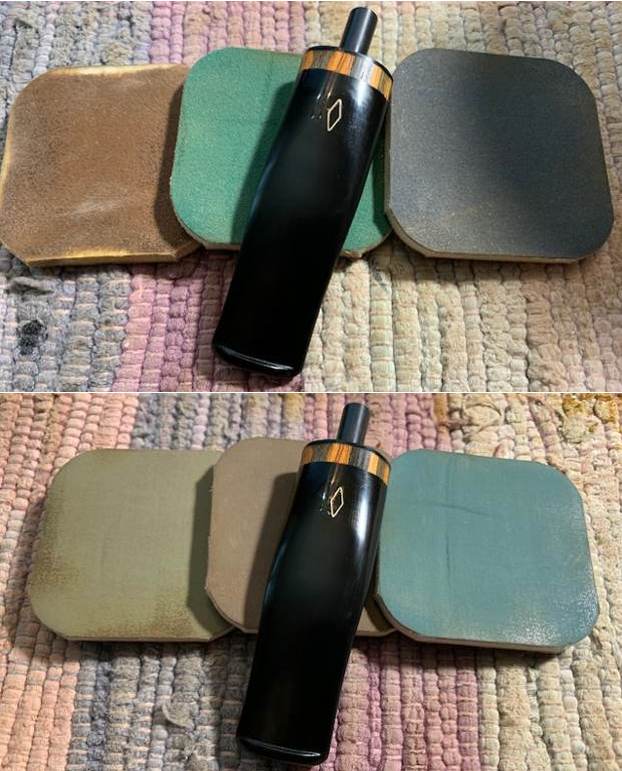
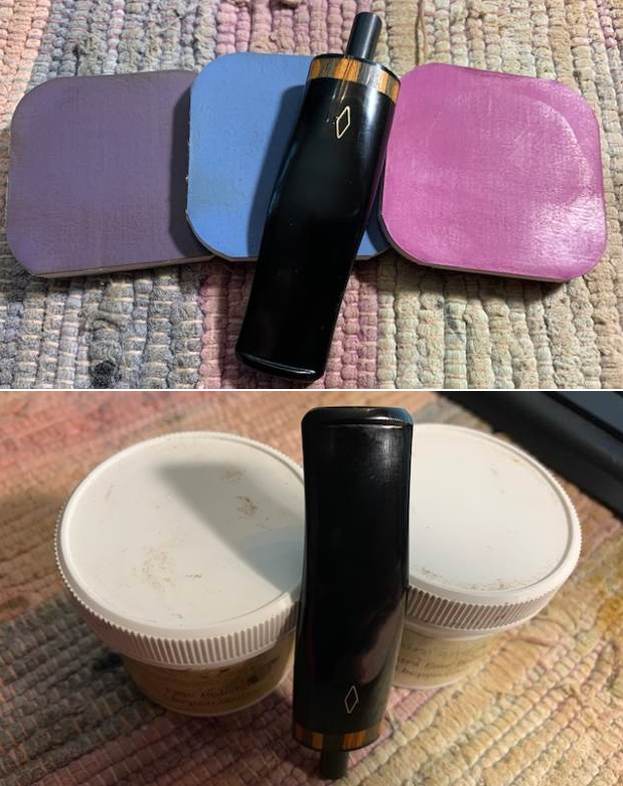
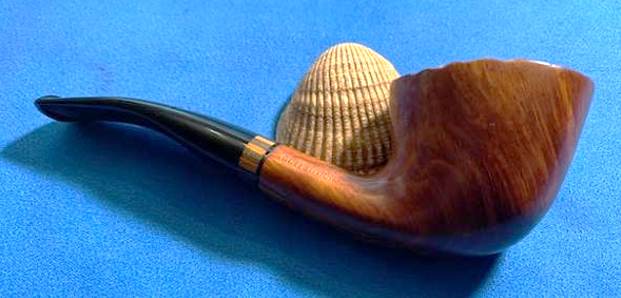
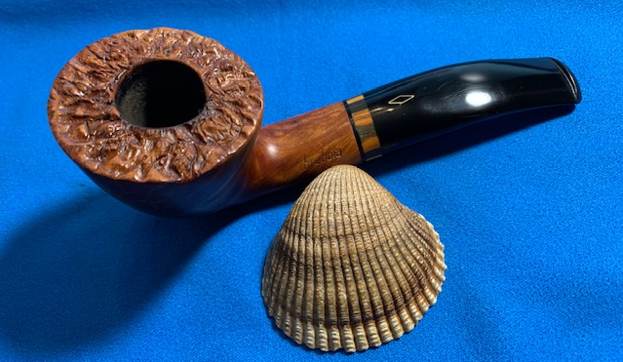
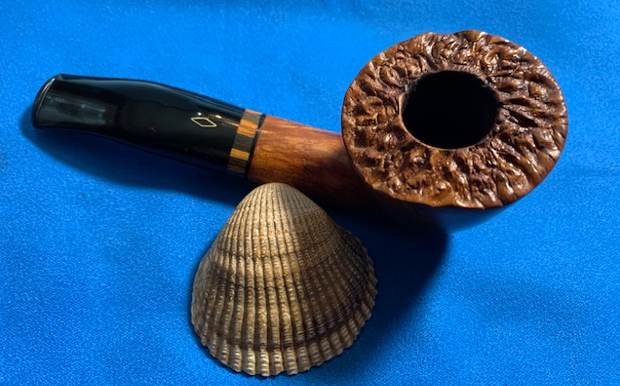
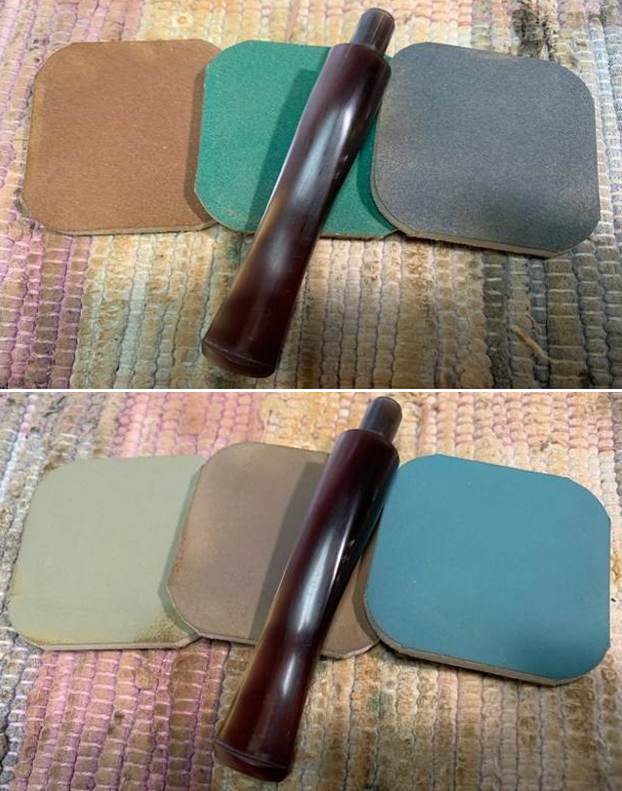
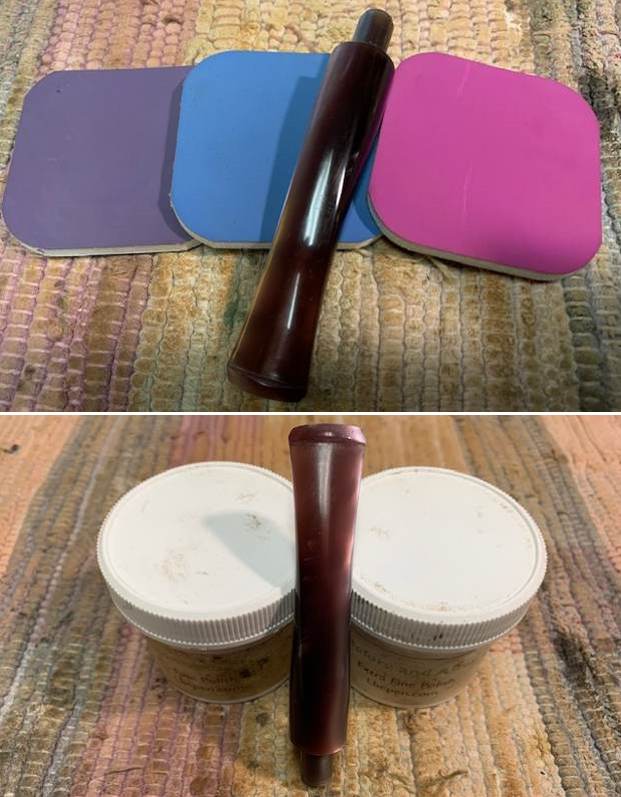
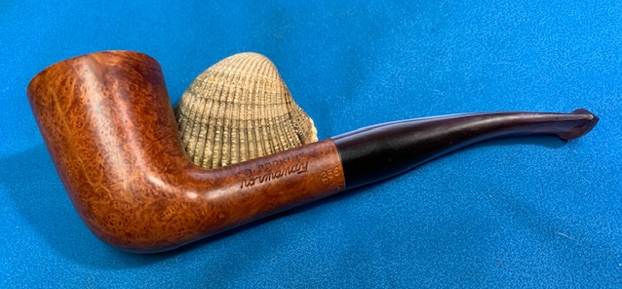
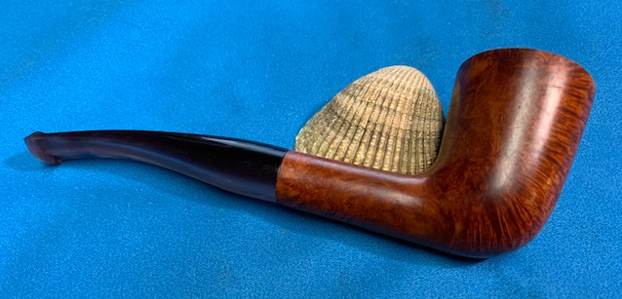
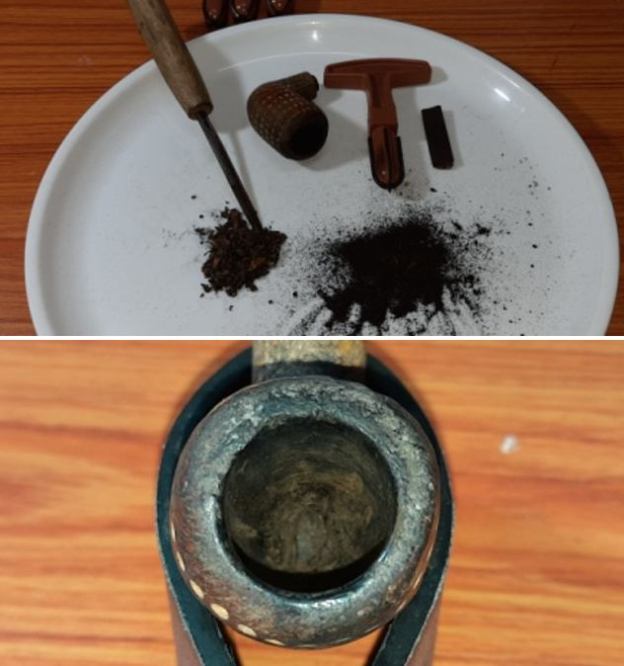
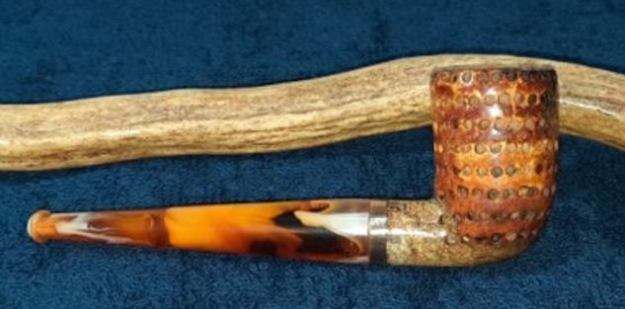
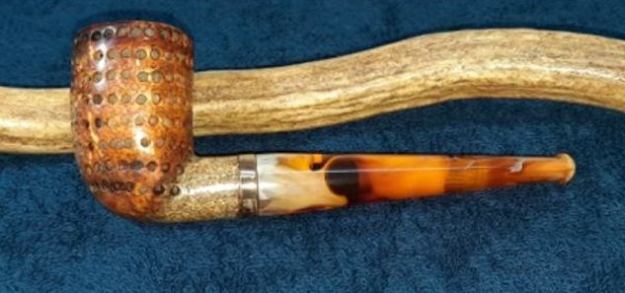
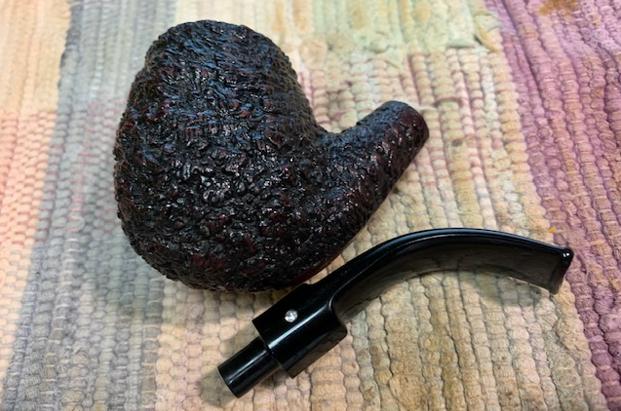
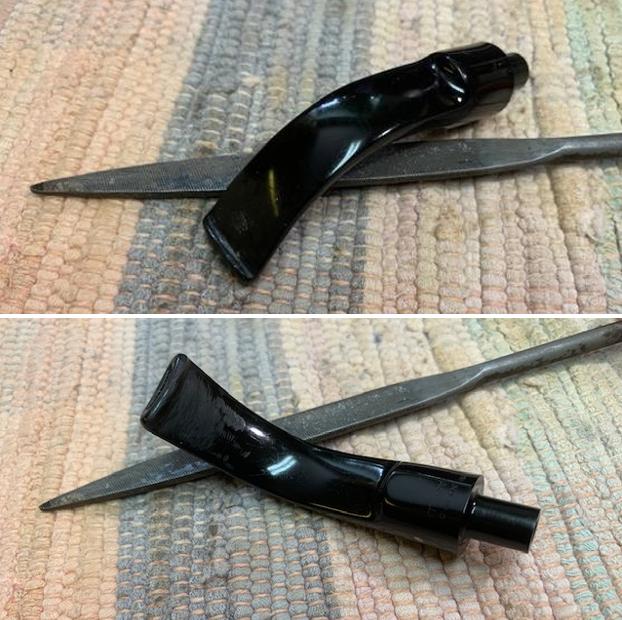
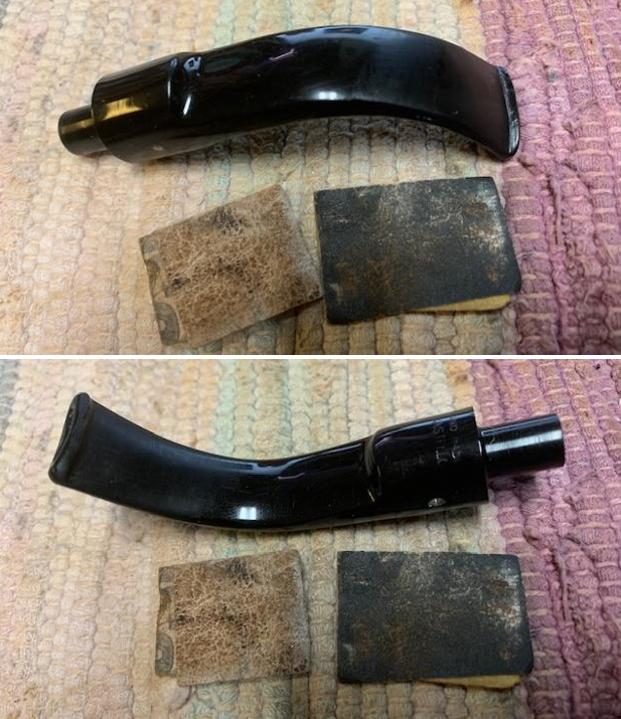
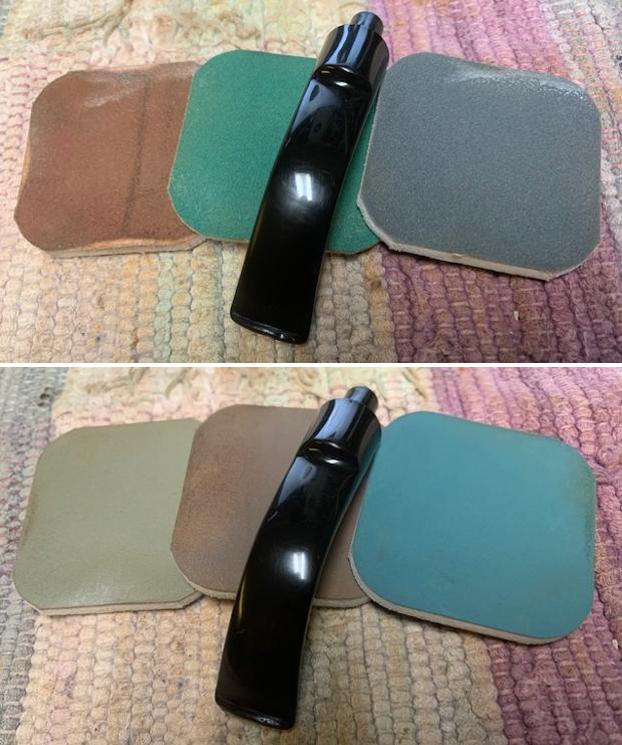
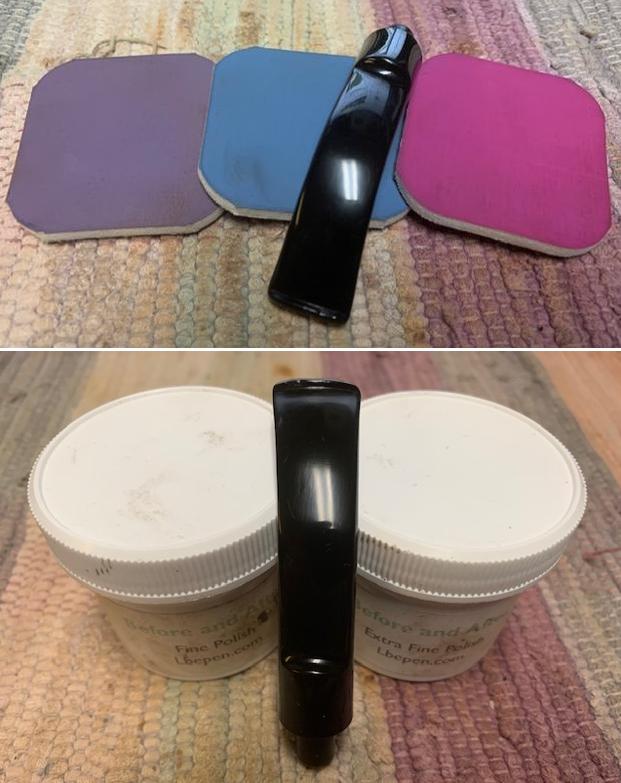
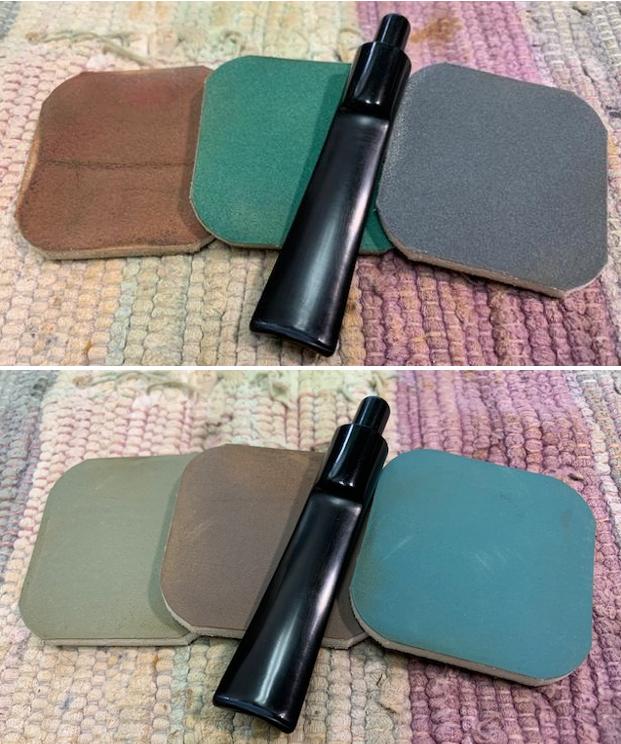
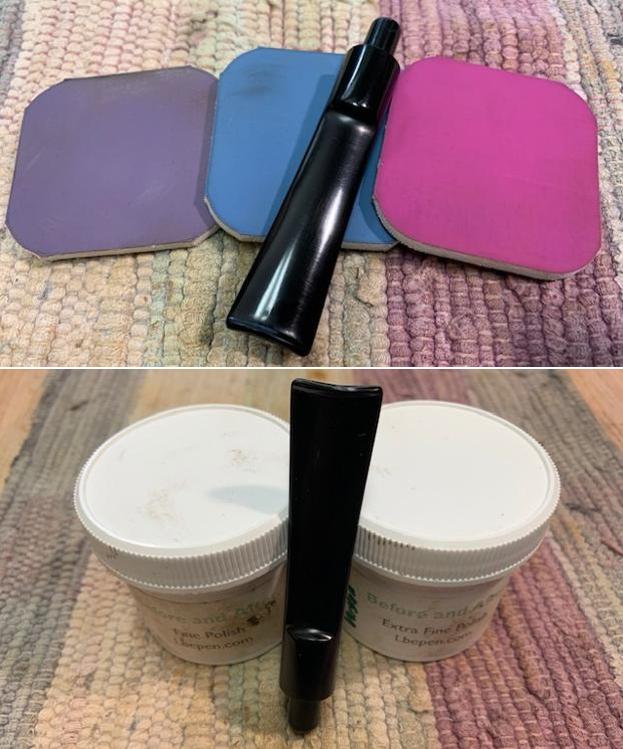
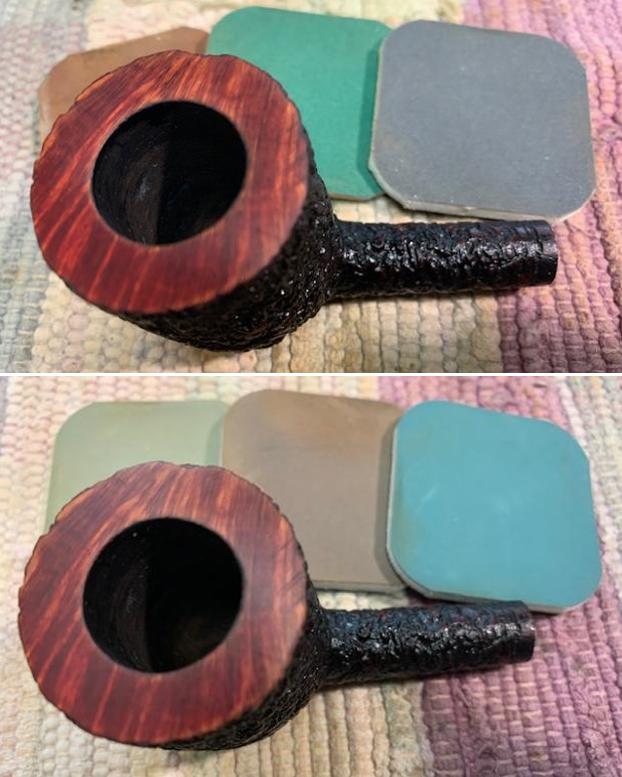
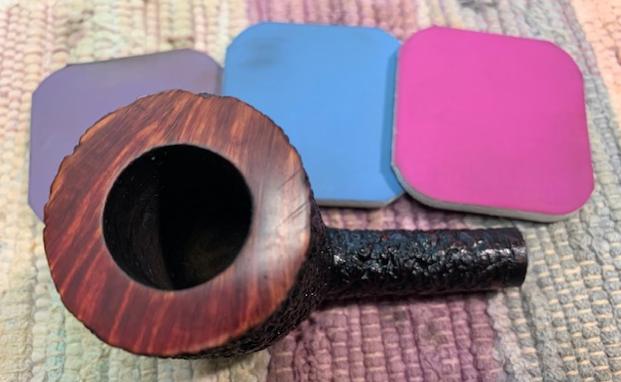
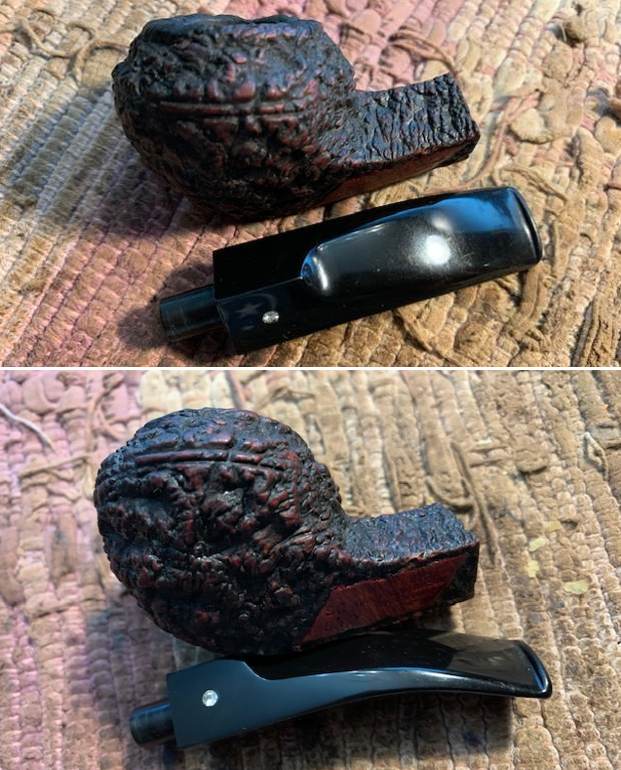
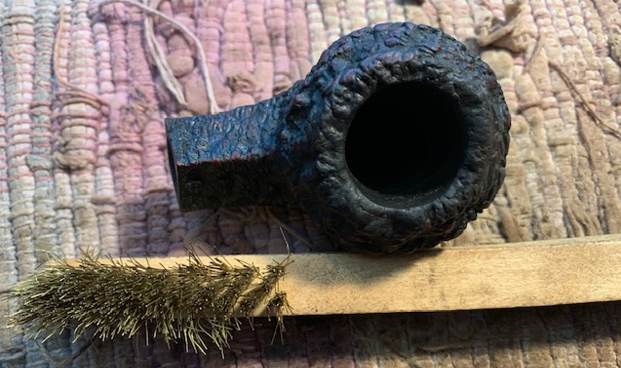
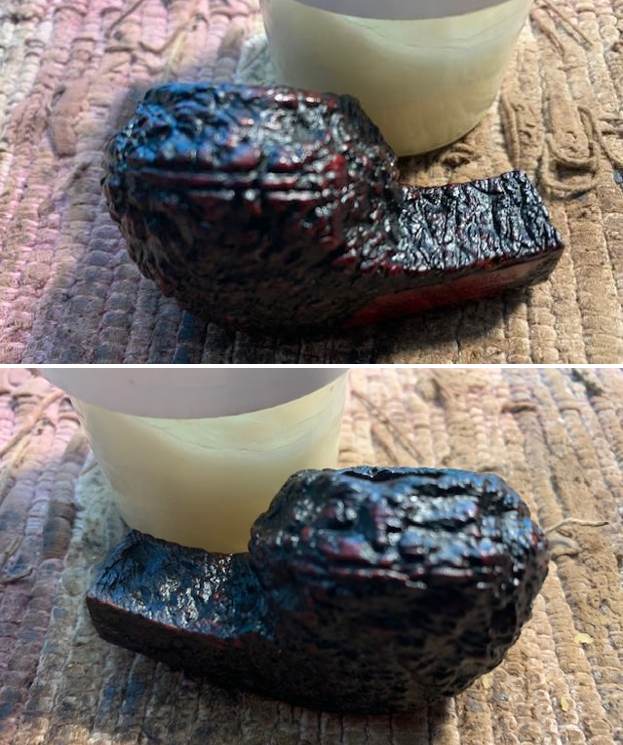
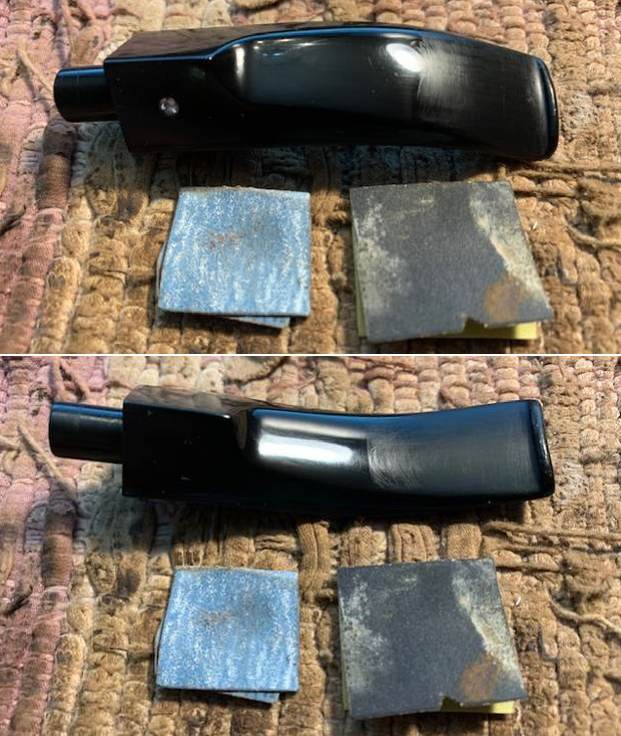
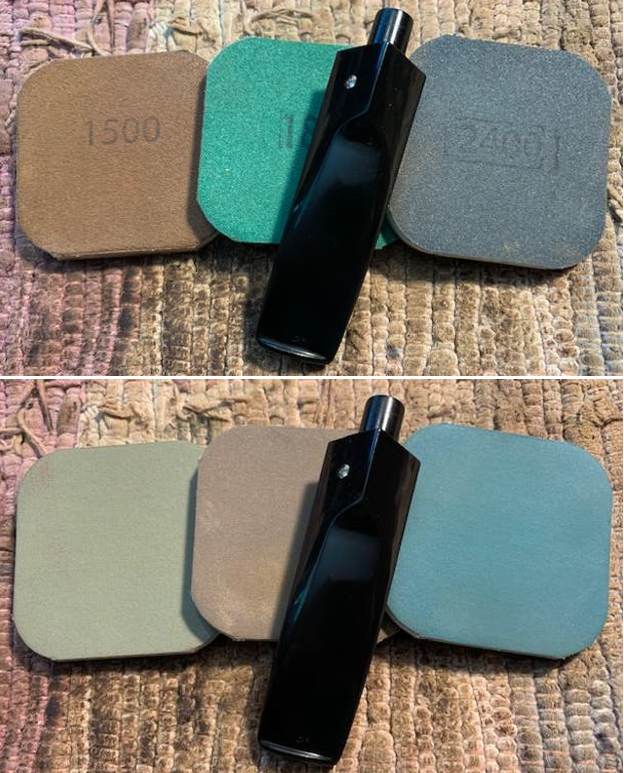
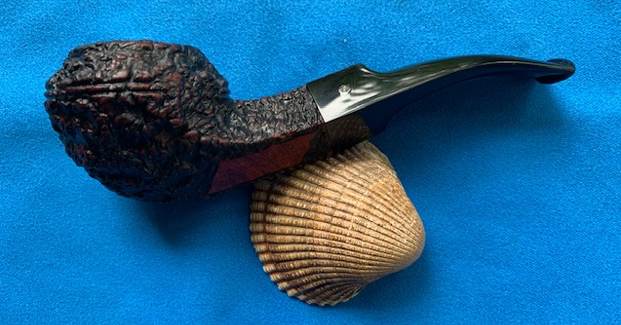
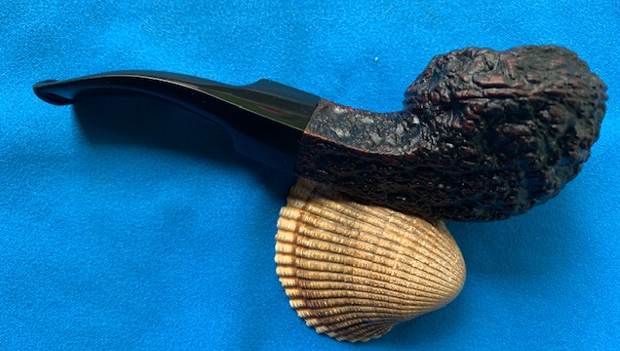
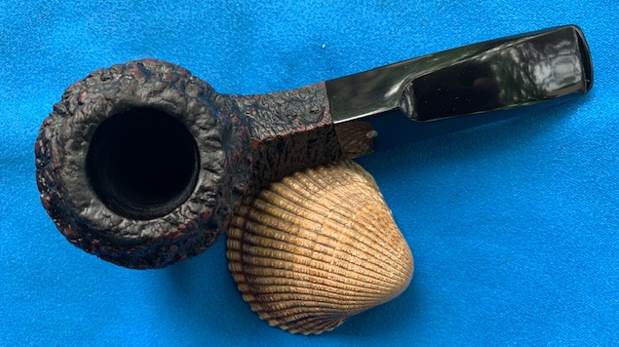
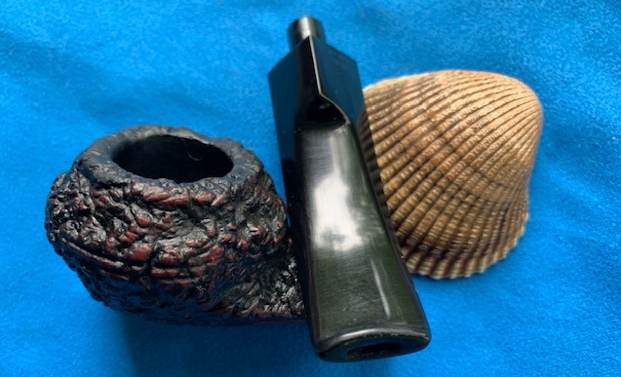
Armed with that information I turned to work on the pipe itself. Before he sent it to me, Jeff had done an amazing job cleaning the pipe. It almost looked like a different pipe after his work. He reamed the pipe with a PipNet pipe reamer and removed the rest of it with a Savinelli Fitsall Pipe Knife.  He scrubbed the bowl with undiluted Murphy’s Oil Soap with a tooth brush. He rinsed it under running warm water to remove the soap and grime. He cleaned out the inside of the shank and the airway in the stem with isopropyl alcohol, cotton swabs and pipe cleaners. Even though the stem was acrylic he soaked the stem in Briarville’s Pipe Stem Deoxidizer and then rinsed it off with warm water. It really works well to remove internal and external grime and tars. He scrubbed the stem with Soft Scrub and a tooth brush and rinsed it off with warm water. It looked amazing when I took it out of the package of pipes he shipped me. I took photos of the pipe before I started my part of the restoration work.  The rim top was much cleaner and the rustication was in good condition. The inner and outer edges of the bowl looked very good. The stem surface looked good but visible tooth marks and chatter showed clearly on either side of the stem. I took a photo of the stamping on the left underside of the shank and stem. It is clear and readable as noted above. I also took a photo of the faux diamond in the top left of the saddle stem. It is also in good condition.I took the stem off the shank and took photos of the parts of the pipe. It is another great looking Rusticated Bulldog with twin rings around the cap of the bowl.I did a quick work over of the rim top grooves with a brass bristle brush to clean up the small particles that still remained in the grooves of the rustication. It did not take too much to remove what was left and leave the rim clean. It really is a pretty looking pipe.The bowl looked good at this point so I rubbed it down with Before & After Restoration Balm. I worked it into the surface of the bowl and shank with my fingertips and a horse hair shoe brush to clean, enliven and protect the briar. I let the balm sit for about 10-15 minutes and buffed with a cotton cloth to raise the shine. I set the bowl aside and turned my attention to the stem. I sanded the tooth marks out on both sides of the stem at the button using 220 grit sandpaper and also sanded the damage to the button surface itself. I started polishing the stem with 400 grit wet dry sandpaper. I used micromesh sanding pads to polish the newly sanded areas on the Lucite stem surface. I dry sanded it with 1500-12000 grit pads and wiped it down with the damp pad after each sanding pad. In doing so I was able to remove all signs of the damage to stem in those spots along the edge and top of the button. I put the stem in place in the shank and  looked this beautiful Castello Sea Rock Briar 54P Bent Bulldog. I lightly buffed the bowl on the buffing wheel. I buffed the stem with Blue Diamond polish on the buffing wheel I waxed the stem with carnauba wax on the wheel. I waxed the bowl with Conservator’s Wax and buffed the entire pipe with a clean buffing pad to raise the shine. I hand buffed it with a microfibre cloth to deepen the shine. The finished Castello Sea Rock Briar Bulldog is shown in the photos below. It is truly a beautiful little bulldog. The finished Castello Sea Rock Briar Bulldog is shown in the photos below. It is truly a beautiful little bulldog. The dimensions of the pipe are Length: 5 ¼ inches, Height: 1 ½ inches, Outside diameter of the bowl: 1 ¾ inches, Chamber diameter: ¾ of an inch. The weight of the pipe is 41 grams/1.45 ounces. The shape and the rustication make it a pleasure to hold in the hand. It fits snug with my thumb curled around the back of the bowl and the rest of the fingers holding the bowl. The finish is extremely tactile and should be interesting in hand as the bowl heats up during smoking. I can testify to how well both Castellos and this shape smoke. I will be adding it to the Italian Pipe Makers Section on the rebornpipes store soon. Thanks for walking with me through the restoration process.
Breathing New Life into a Brebbia Collection Hand Carved Pura


Blog by Steve Laug

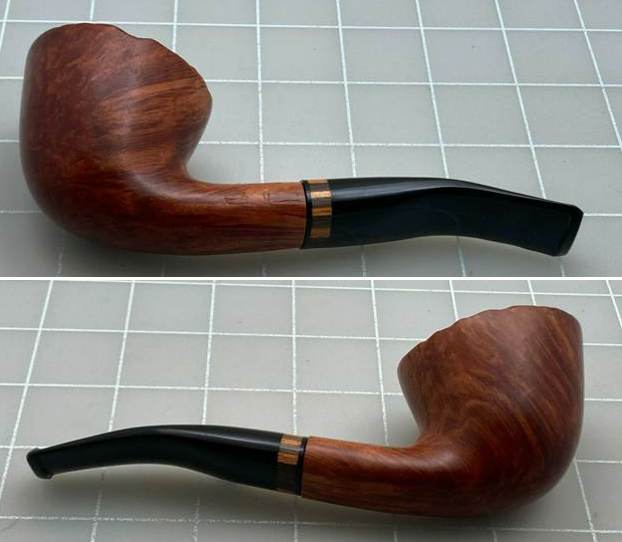
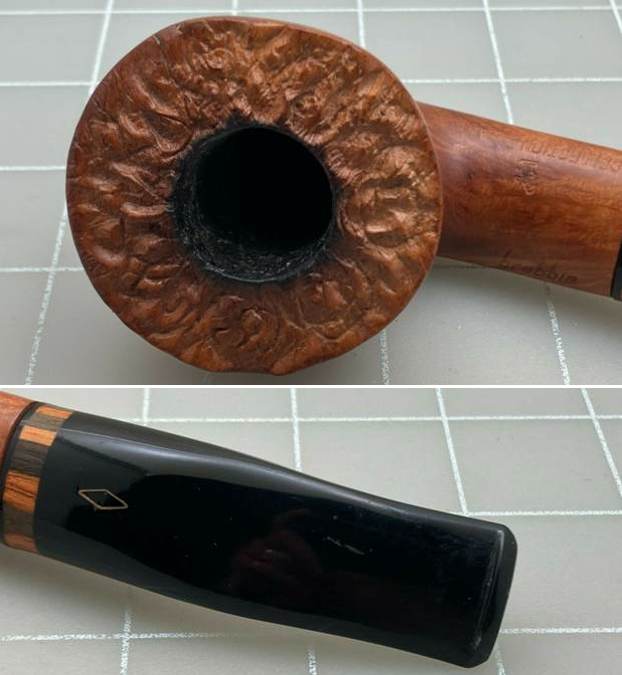
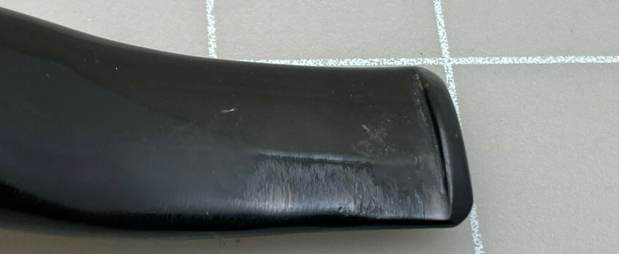
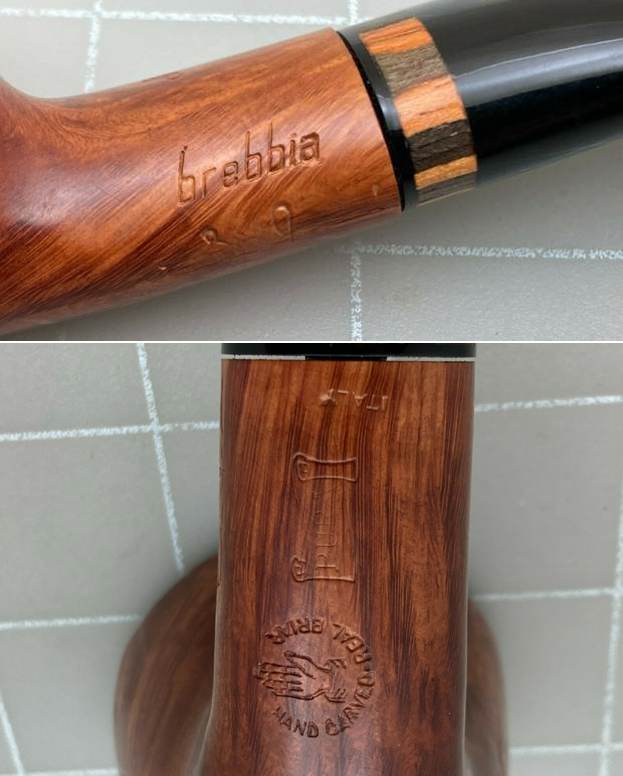
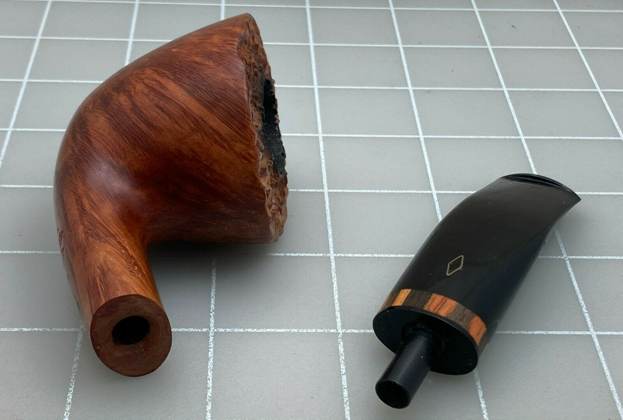
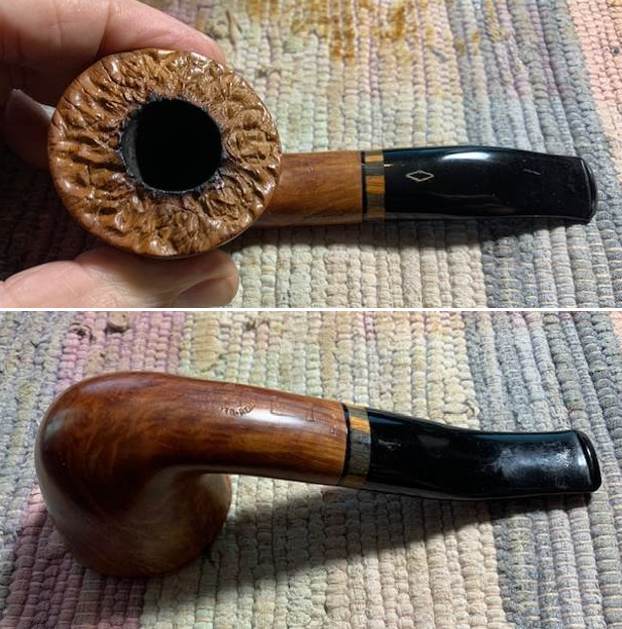
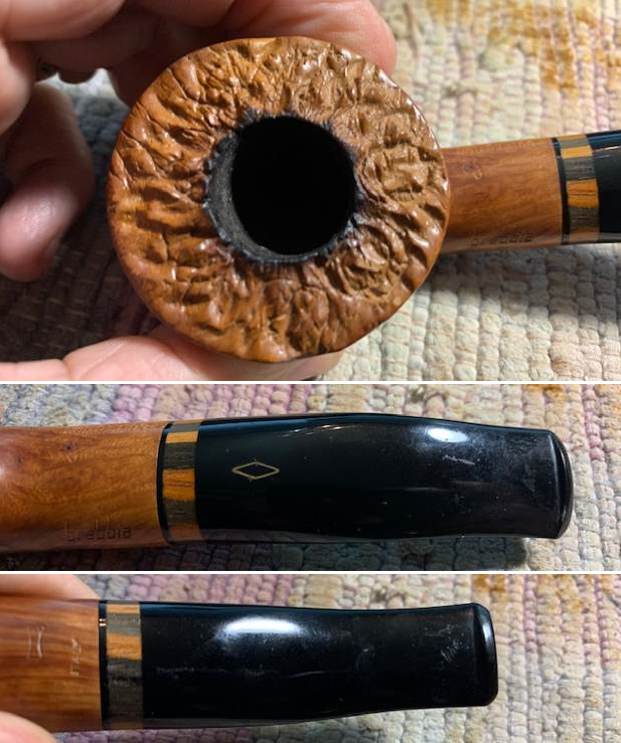
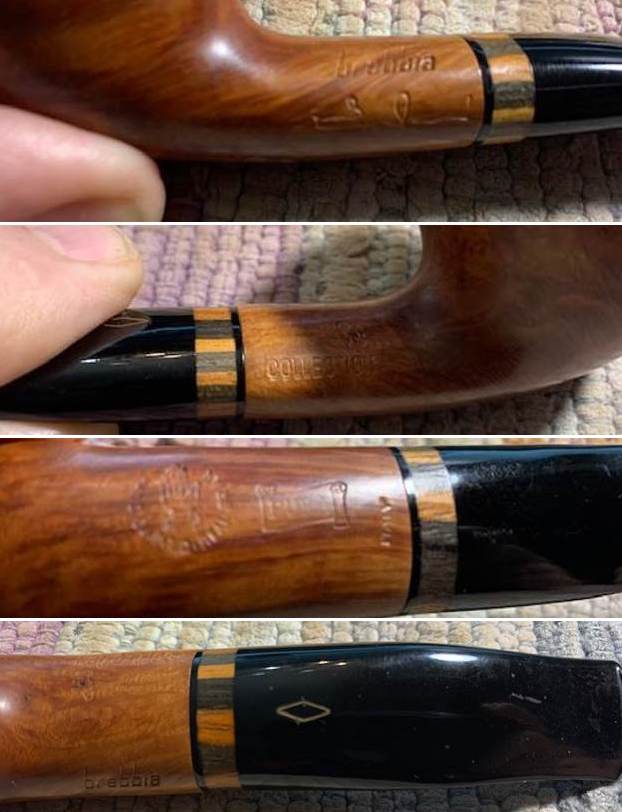
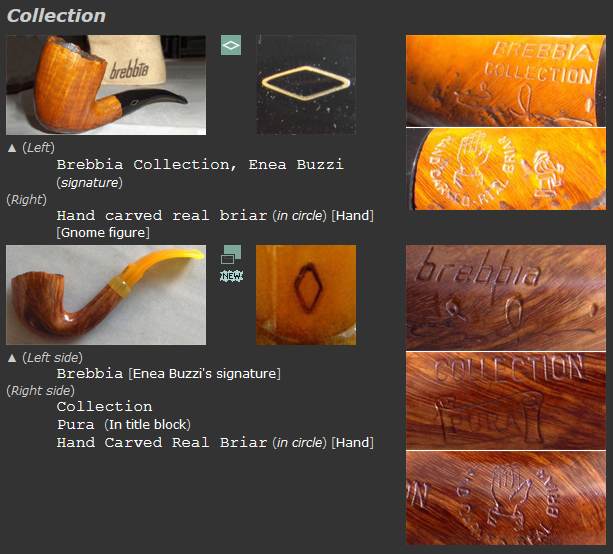
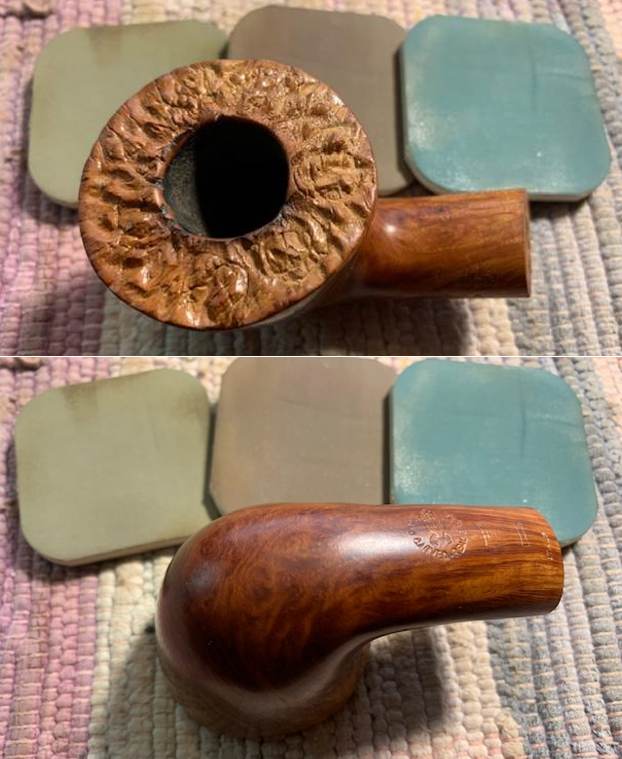
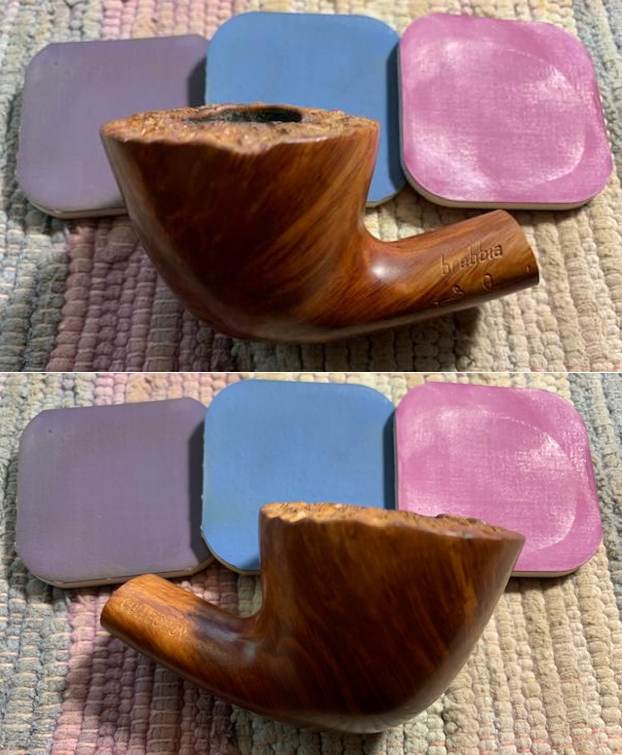
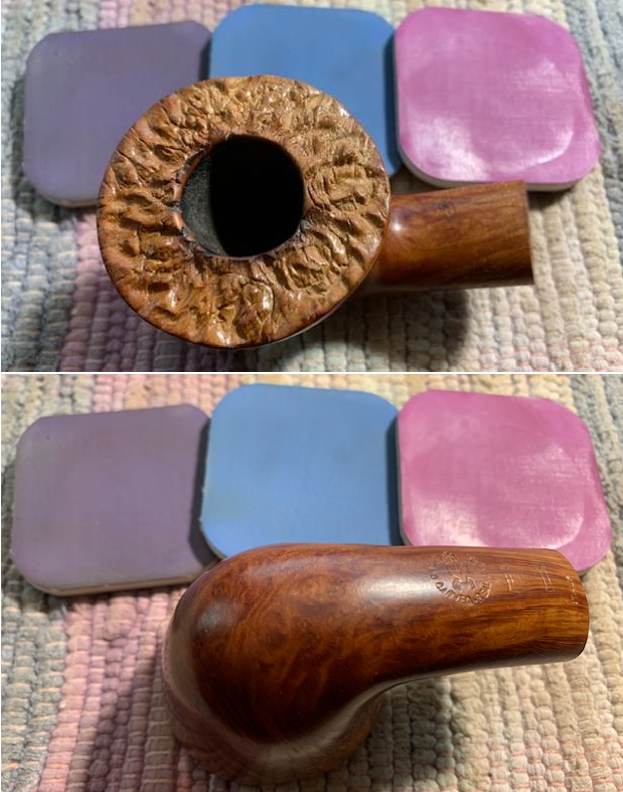
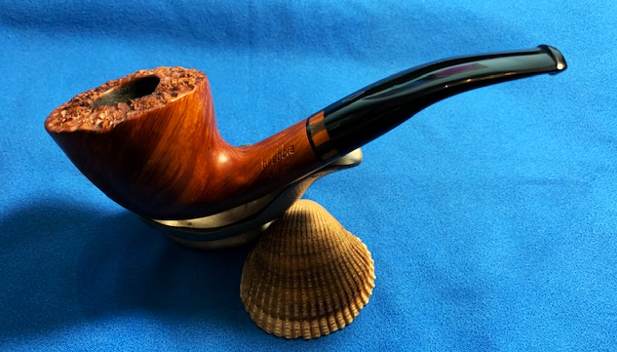
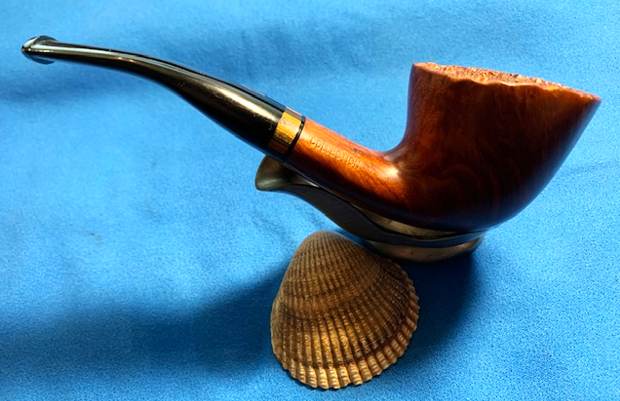
I have sold a few pipes to a fellow in Israel over the past year and he is great to work with. He has great taste in pipes and the ones he has purchased from me have been beautiful. Not long ago I received and email from him about another pipe he was interested in purchasing EBay. He sent me the link and wanted my opinion on it. It was a nice Brebbia Collection “Freehand” with a rim top carved to emulate plateau. I really liked the look and the flowing shape of the pipe and stem. The pipe appeared to be in decent condition. Not too many days after that he wrote me to say he had won it and he had it shipped to me rather than to him in Israel. We chatted back and forth about it via email and I would let him know when I received it. Here are the pictures that the seller included with the advertising.  The seller took a large photo of the rim top to show the condition. You can see the cake in the bowl and darkening on the inner edge. You can also see the faux plateau (carved briar to look like it is plateau when it is not). He also included a photo of the top and underside of the stem the light tooth marks, chatter and scratches. It also has a nice inlay of various woods as a band on the shank end of the stem. He also took photos of the stamping on the sides of the shank. It was readable and will be described once I have the pipe in hand and can examine it.He took the stem off the shank and took a picture of the mortise and the tenon to show the condition of those parts of the pipe. It looked solid.The pipe arrived this week in a well packed box from the seller. When I opened the box I examined the pipe carefully to assess both the condition of the pipe and what I needed to do with it. There was a moderate cake in the bowl with darkening on the inner edge of the rim. The rim top looked quite good. The pipe was stamped on the on the sides the shank and on the left side read Brebbia [over] the signature of Enea Buzzi. On the right side it was stamped Collection. On the underside it has the most stamping and read Hand Carved Real Briar in a circle around a Hand. To the right of that it is stamped PURA in a scroll and then ITALY at the stem shank junction. The finish was dirty but you could see some interesting grain underneath. The stem had the brass Brebbia diamond logo inlay on the top of the taper. The acrylic was dirty and there were tooth marks and chatter on the top and underside. It was going to take some work to clean up but I thought it would work out fairly well. I think the pipe would clean up amazingly well. I took some photos of the pipe before I started my work on it. I have included them below. I took a photo of the bowl and rim top to show the thickness of the cake in the bowl and the darkening on the inner edges of the bowl. The faux plateau looks quite good. I took photos of the stem surface to show the condition and tooth marks and chatter on both sides ahead of the button. I took photos of the stamping on the shank sides. It is readable as noted above and is very clear. I took a photo of the Brebbia brass diamond logo on the stem as well. It is in excellent condition.I removed the stem from the shank and took a photo of the pipe parts. It is really going to be quite a stunning piece.I wanted to know more about this particular model of the company – The Brebba Collection so I turned to Pipephil first for a summary of  information available (http://pipephil.eu/logos/en/logo-brebbia.html). I quote below and also have included a screen capture of the model that was pictured.

The Brebbia brand is named after the locality of Bosco Grosso di Brebbia (Prov. Varese, Reg. Lombardia). A first corporate was founded by Enea Buzzi and Achille Savinelli in 1947. They split in 1953. Buzzi ketp the factory and created the MPB brand (Maniffatura Pipe Brebbia). After 1968 the brand was shortly called “Brebbia”.

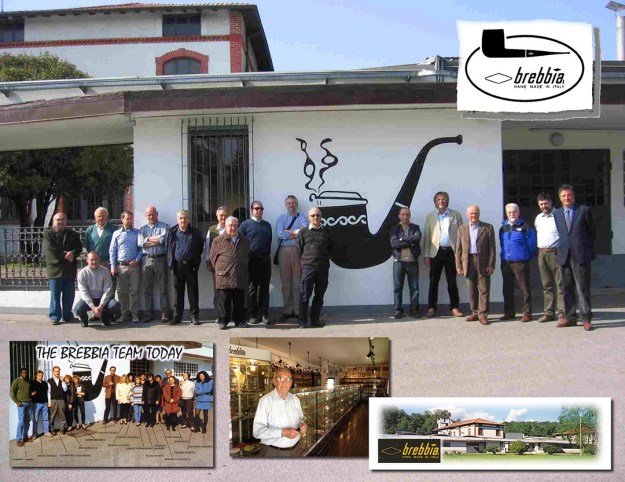
Luciano Buzzi son of Enea manages the company since the 1990s.I turned then to Pipedia for more detail (https://pipedia.org/wiki/Brebbia). I quote from the article on the site. There is some interesting history there. I also have included a photo of the company provided by Doug Valitchka

Pipe Brebbia Srl, or better the M.P.B. (Manifattura Pipe Brebbia) was born in 1953 from the denouement of the association between Achille Savinelli and Enea Buzzi in 1947, where the first was employed in the marketing and the second in manufacturing of pipes under the name of Savinelli. It was made in exclusive up to 1953 and extended without further rights up to 1956.

The production, which is always careful and perfect, has continued in a traditional way for 60 years, using old lathes for the first steps, but finishing every piece by hand.

The secret of their manufacture, if we may put it this way, is the respect for the traditions with the experience acquired in several years of successful work, which could be summed up in two words: high quality.

The factory is currently managed by Enea’s son, Luciano.

For the last few decades, many of Brebbia’s pipes have been made by a number of small, otherwise independent pipe manufacturers, being marketed under the trade name Brebbia. For the northern European market, 9mm filter pipes are being produced, some of which employ VAUEN‘s Konex system (which ensures a good seat of the filter).

Courtesy of Doug Valitchka

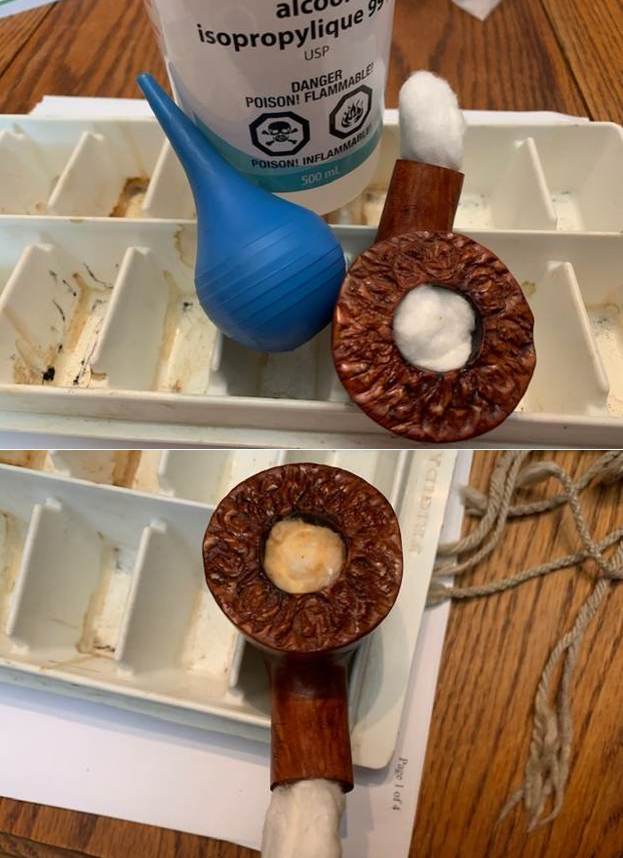
I reamed the bowl with a PipNet pipe reamer and took the cake back to bare walls. I cleaned up the reaming with a Savinelli Fitsall Pipe Knife. I sanded the bowl walls with 220 grit sandpaper wrapped around a piece of dowel. I examined the walls with a lens and they were solid and undamaged. I scraped out the tars and oils in the shank/mortise with a thin pen knife to get rid of the build up on the walls. I cleaned out the airway in the shank and the stem as well as the mortise with isopropyl alcohol, cotton swabs and pipe cleaners. It was quite dirty and now smells much better. I scrubbed the exterior of the bowl with Murphy’s Oil Soap and a tooth brush to remove the grime from the finish of the bowl and rim top. I rinsed off the bowl with warm water and then dried the bowl with a cotton cloth. The grain that came to the surface once it was clean is quite stunning. I worked over the darkening on the inside edge of the bowl and the rim top with a folded piece of 220 grit sandpaper. It began to look a lot better.I polished the briar with micromesh sanding pads – dry sanding with 1500-12000 grit pads. After each pad I wiped the bowl down with a damp cloth to remove the sanding debris. It really took on a shine by the last three sanding pads. To remove the heavy Latakia smell I stuffed the bowl with cotton bolls and filled it with 99% isopropyl alcohol. I put a cotton boll plug in the shank and set it aside to do its work. In the morning you can see that it had pull a lot of the oils out of the briar. I removed the plug and cleaned the shank one more time. The pipe smells fresh.I rubbed the bowl down with Before & After Restoration Balm. I worked it into the surface of the briar where it works to clean, restore and preserve the briar. I let it do its magic for 15 minutes then buffed it off with a cotton cloth. The pipe looks incredibly good at this point in the process. With that the bowl had come a long way from when I started working on it. I set it aside and turned my attention to the stem. I continued to polish the stem with micromesh sanding pads – wet sanding with 1500-12000 grit sanding pads. I wiped it down after each sanding pad with Obsidian Oil. I polished it with Before & After Pipe Stem Polish – both Fine and Extra Fine and wiped it down with Obsidian Oil one more time. I am excited to finish this Brebbia Enea Buzzi Collection Pura Freehand. I put the pipe back together and buffed it with Blue Diamond on the buffing wheel. I gave the bowl and the stem multiple coats of carnauba wax. I hand buffed the pipe with a clean buffing pad to raise the shine. It is fun to see what the polished bowl looks like with beautiful mixed grain all around it. The polished grain on the pipe looks great with the black vulcanite stem. This smooth Hand Carved Enea Buzzi Brebbia Collection is great looking and the pipe feels great in my hand. It is light and well balanced. Have a look at it with the photos below. The dimensions are Length: 5 ¾ inches, Height: 1 ¾ inches, Outside diameter of the bowl: 2 inches, Chamber diameter: ¾ of an inch. The weight of the pipe is 58 grams/2.05 ounces. It turned out to be a beautiful pipe. I will be packing it up and sending it to my friend in Israel. I think he will enjoy this beauty once it is in his hands. Thanks for your time reading this blog and as Paresh says each time – Stay Safe.

An Easy Restore – Big Ben Presidential Imperial 188 Canadian


Blog by Steve Laug

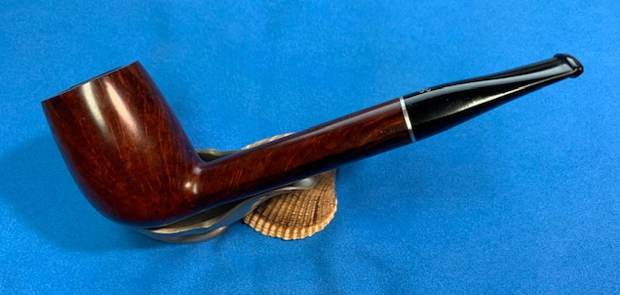
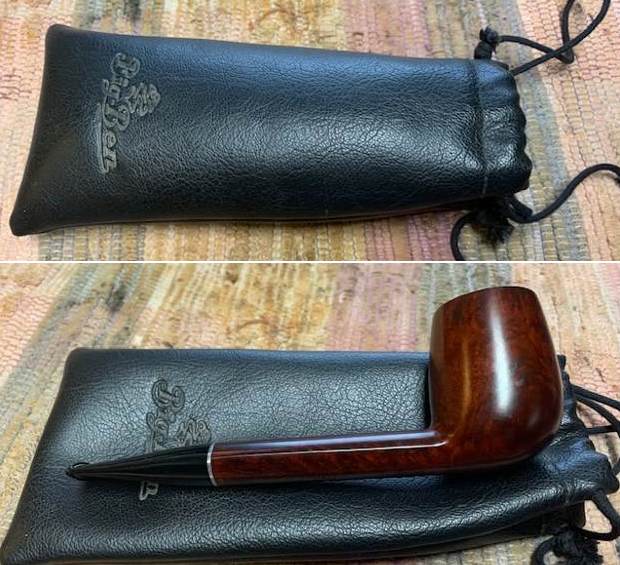
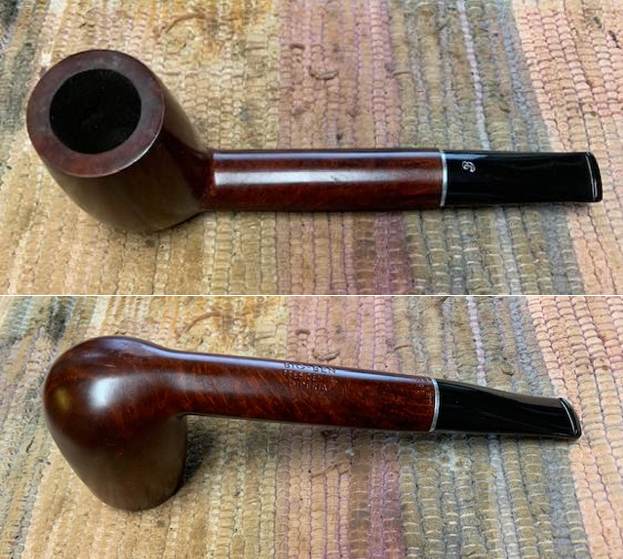
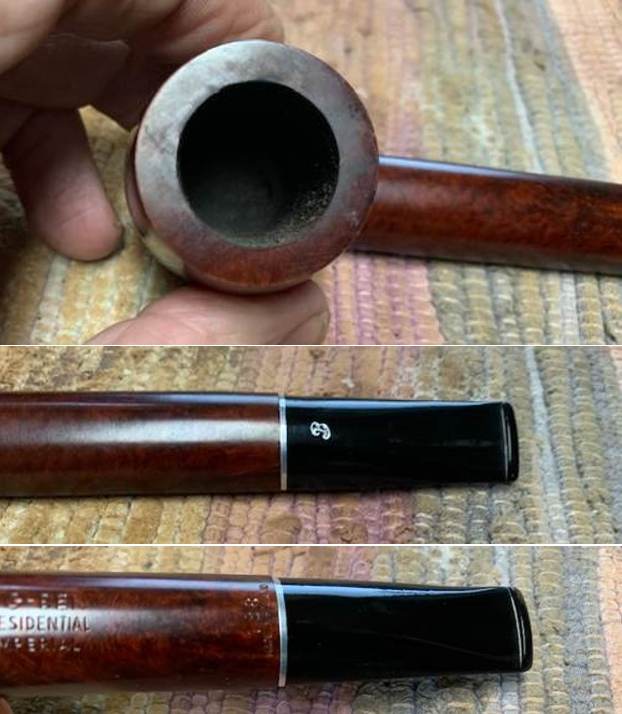
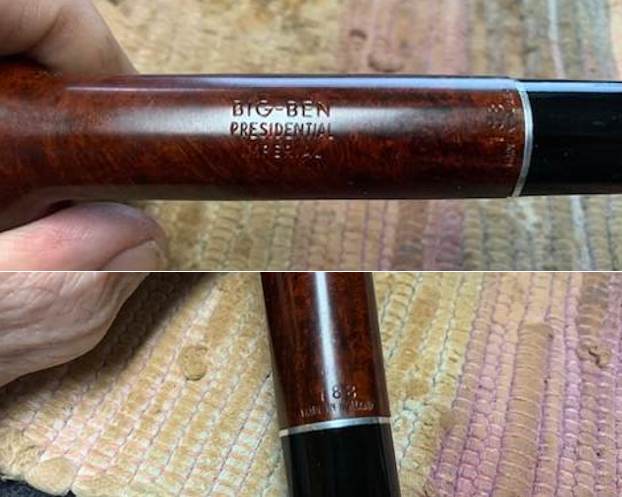
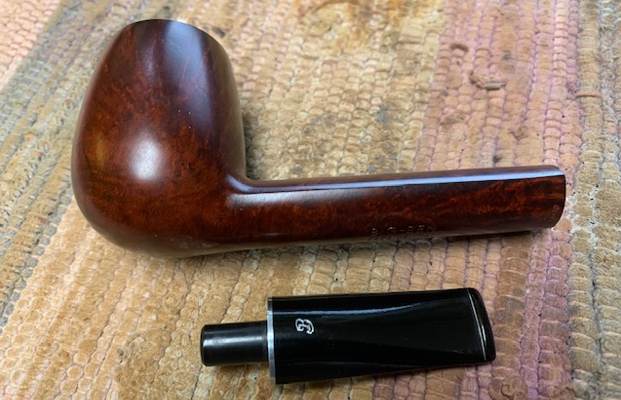
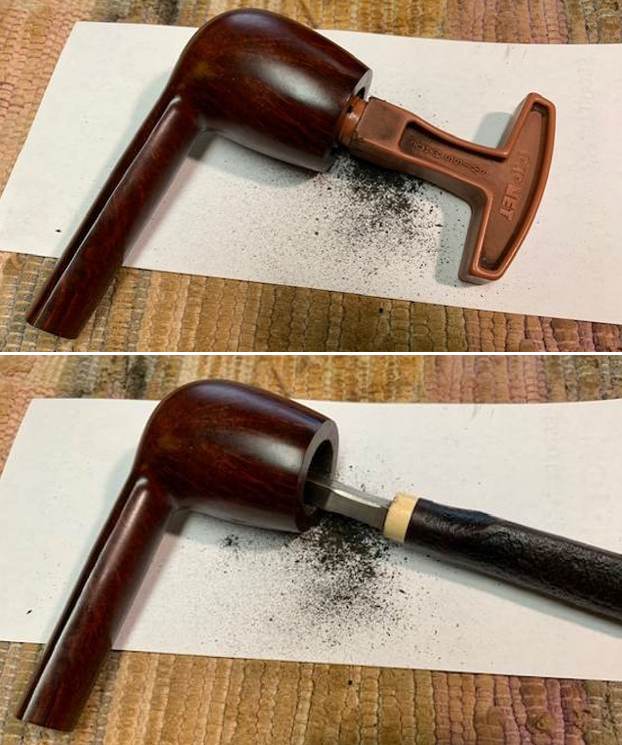
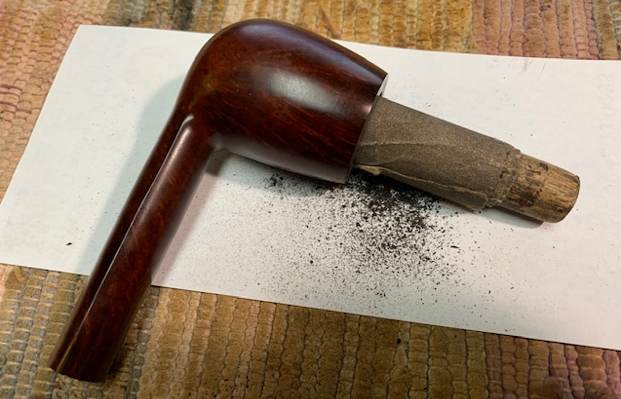
Not too long ago my wife and I had dinner with some good friends here in Vancouver – first time since COVID-19 so it was good to see them. At the beginning of the meal he handed me a box that he said was for me. In it were some pipes that he was giving to me and a bunch of cigars. The pipes included a very nice, lightly smoked Big Ben Canadian that I have included photos of below. It came in a black vinyl bag with the Big-Ben logo and name embossed on it. I took the pipe out and it was a well carved hefty Canadian with a smooth finish. It is stamped on the underside and reads Big-Ben [over] Presidential [over] Imperial. On the end of the underside of shank next to the stem it read 188 [over] Made in Holland. There was an inlaid cursive “B” on the top of the acrylic stem and there was light chatter on both sides near the button. The stem was quite shiny and included a silver spacer. It was going to be a beauty once cleaned up. I took photos of the pipe when I took it to the work table. There was a light cake in the bowl and the rim top had some dirty spots. The edges of the bowl – internal and external were in excellent condition. The shank and airways were lightly dirty with tars and oils. The finish was clean with a light dust on the surface. The stem was shiny with some light tooth chatter on the top and the underside near the button. The button itself was undamaged. Overall the pipe looked good even in its lightly used condition. It really was a stocky looking pipe with its thick oval Canadian shank and taper acrylic stem. I took photos of the rim top and the bowl to show the condition. The rim top was smooth and other than some grime and debris it was in great shape. It is hard to see the light cake in the bowl but it is present (some is visible on the back side of the bowl in the photo below). I also took photos of both sides of the stem to show the light tooth chatter. Over all the pipe was in great condition. I took photos of the stamping on the underside of the shank. It is clear and it reads as noted above.I took a photo of the pipe with the stem removed to give an overall picture of the pipe. It really is quite beautiful.For historical background for those unfamiliar with the brand I turned to Pipephil’s site (http://pipephil.eu/logos/en/logo-bigben.html). There were not any pictures of the series but the introductory information was helpful so I am including that.

Big-Ben is a brand of the Elbert Gubbels & Sons – Royal Dutch Pipe Factory. The company has gone bankrupt on March 2012. Production (2009): 250000 pipes/year See also: Amphora, Humbry, IRC, Roermond, Royal Dutch, Thompson and Porsche Design

I then turned to Pipedia for more information (https://pipedia.org/wiki/Big_Ben). I quote below:

The brand name Big Ben was originally owned by a small trade company in Amsterdam which was already well established in several countries selling pipes among other goods. The firm was bought by Elbert Gubbels & Zonen B.V. – see Gubbels – who were in search for a suitable brand name to further expansion on international markets. Big Ben became Gubbels’ mainstay brand with it’s own website

There was a further link to the Gubbels listing on Pipedia (https://pipedia.org/wiki/Gubbels).

With the help of his family the father of Elbert Gubbels Sr. started a retail shop for tobacco pipes and other smoker’s equipment in 1870.

In 1924 Elbert Gubbels Sr., now father/grandfather of the present owners, transformed it into a wholesale trade business. The company grew steadily and imported pipes from various countries as there were no factories producing briar pipes in the Netherlands. The most important suppliers came from France and England.

When German troops occupied the Netherlands in May of 1940, a period of almost five years began in which the Gubbels family could hardly operate their business at all. During this years of forced rest Elbert Gubbels had a notion to become independent of foreign suppliers and he drew up plans to start his own production of tobacco pipes after World War II.

Immediately succeeding the war it was very difficult to obtain good pipes for the import of foreign pipes was limited and so the time was right to go for something new. In 1946 he launched pipe production at Godsweerdersingel No. 20 in Roermond with a couple of new machines and some workers, a couple of them being foreign specialists and considered himself to commence. Yet the cramped accomodations and the needy equipment of the workshop showed the limits all too soon. It was obvious that the workshop was inadequate and Mr. Gubbels invested in another building covering an area of 900m² that also offered a sufficient warehouse. Now the production could be increased going hand in hand with developing new models and improving the quality of the pipes being produced.

The production grew steadily but it showed now that an “international” brand name was required for further expansion on international markets – obviously no one cared too much for pipes made in the Netherlands. Feeling that the time involved to get a new brand established was too lengthy, Mr. Gubbels bought a small trade company in Amsterdam which owned all the rights to the brand Big Ben and was already well established in other countries selling pipes among other goods. A real happenstance – Gubbels products could be marketed now in all European countries, the USA, Canada and many other countries, and nowadays they can be found in almost every country world-wide.

In December 1972 the company opened new and very modern factory in Roermond at Keulsebaan 505. With the official opening by the Governor of the Province of Limburg, the Gubbels company was, on behalf of Her Majesty Queen Juliana of the Netherlands, granted the title “Royal” so that the official name became: Elbert Gubbels & Zonen – Koninklijke Fabriek van Tabakspijpen (Elbert Gubbels & Sons – Royal Dutch Pipe Factory).

Armed with that history and having a sense of the brand it was now time to do a bit of spiffing with the pipe itself.

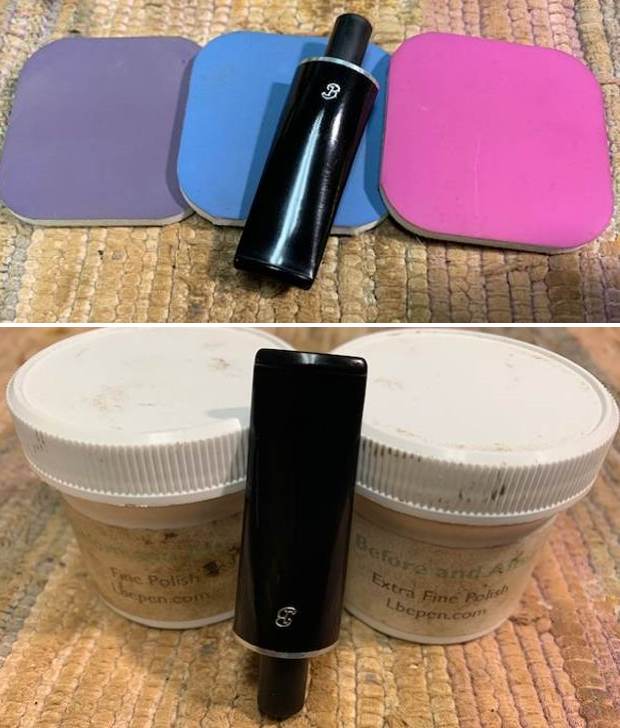
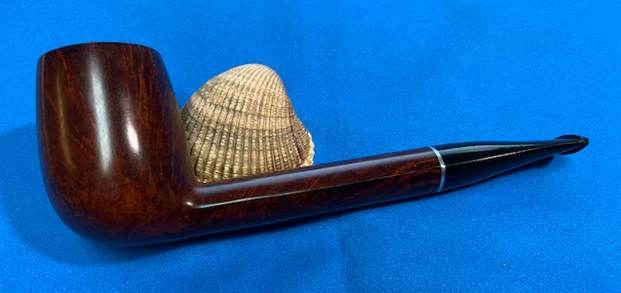
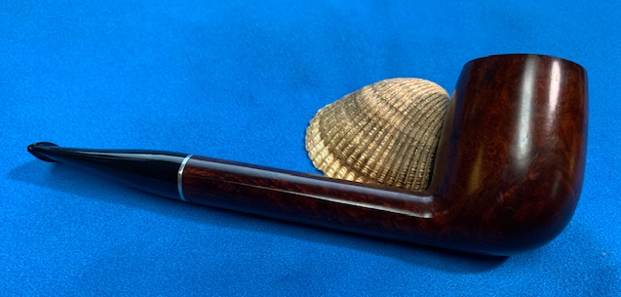
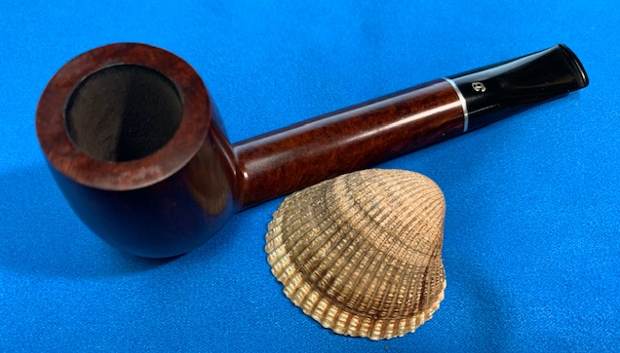
I reamed the pipe with a PipNet pipe reamer to remove the light cake from the bowl walls. It was uneven and needed to be removed so I took it back to bare briar. I cleaned up the reaming with a Savinelli Fitsall Pipe Knife and then sanded the bowl with a dowel wrapped with 220 grit sandpaper to smooth out the walls. I cleaned out the internals with alcohol, cotton swabs and pipe cleaners to remove the debris and the oils from the shank and tenon as well as the airway into the stem and bowl.I scrubbed the rim top with a damp cotton pad to remove the debris and lava. It worked very well. With the top cleaned off I rubbed the bowl down with some Before & After Restoration Balm. I worked it into the briar with my fingertips and a horse hair shoe brush. The product works to clean, renew and protect briar. I let it do its work for 15 minutes then buffed it off with a soft cloth. The pipe is really quite a beauty. I set the bowl aside and turned my attention to the stem. I polished the surface of the acrylic stem on both sides using micromesh sanding pads. I dry sanded the stem with the 1500-12000 grit pads, then wiped it down with a cloth impregnated with Obsidian Oil. I finished polishing it with Before & After stem polish – both Fine and Extra Fine. I gave it a final coat of Obsidian Oil and set it aside to dry. I am excited to finish this Big-Ben Presidential Imperial 188 Canadian. I put the pipe back together and buffed it lightly with Blue Diamond on the buffing wheel. I gave the bowl and the stem multiple coats of carnauba wax. I buffed the pipe with a clean buffing pad to raise the shine and hand buffed it with microfiber cloth to deepen the shine. It is fun to see what the polished bowl looks like with the polished black acrylic stem with the silver spacer. It really was a beautiful pipe. The grain shining through the rich red stain on this Big-Ben Canadian is nice looking and the pipe feels great in my hand. It is light and well balanced. Have a look at it with the photos below. The dimensions are Length: 6 inches, Height: 2 inches, Outside diameter of the bowl: 1 ¼ inches, Chamber diameter: ¾ of an inch. The weight of the pipe is 1.83 ounces/52 grams. It is a beautiful pipe and one that will be on the rebornpipes store in the Pipes From Various Makers Section soon. If you are interested in adding it to your collection let me know. Thanks for walking through the cleanup with me as I worked over this pipe. Thanks to each of you who are reading this blog. Remember we are not pipe owners; we are pipemen and women who hold our pipes in trust until they pass on into the trust of those who follow us.

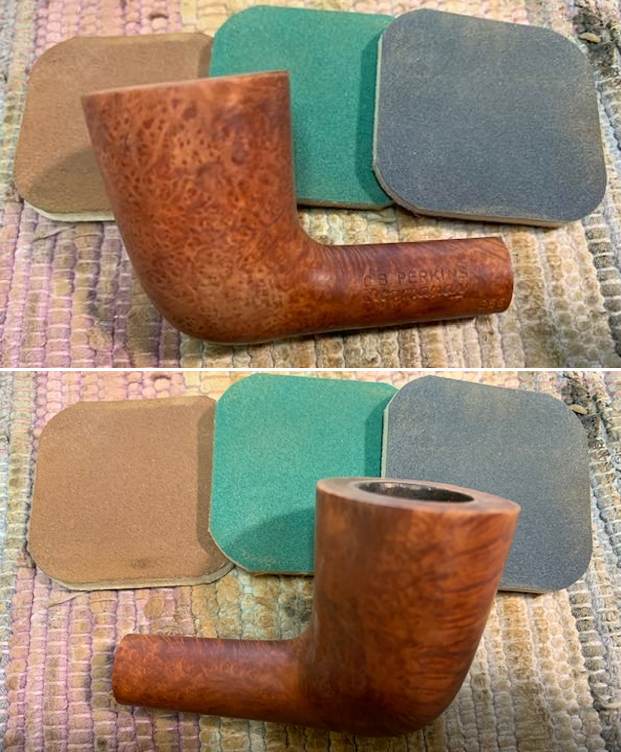
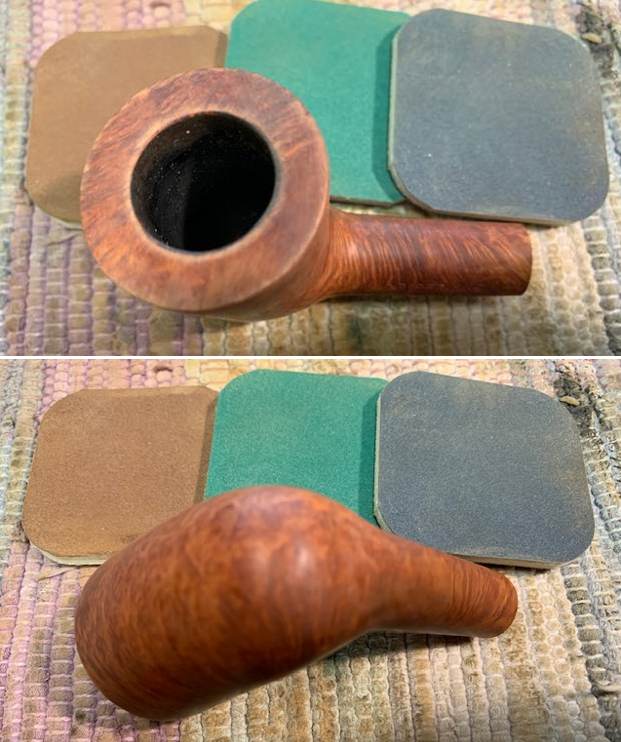
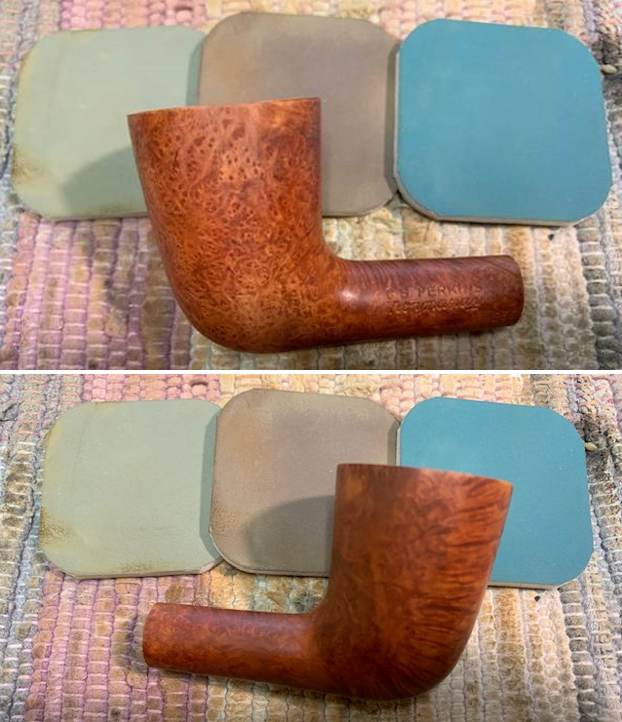
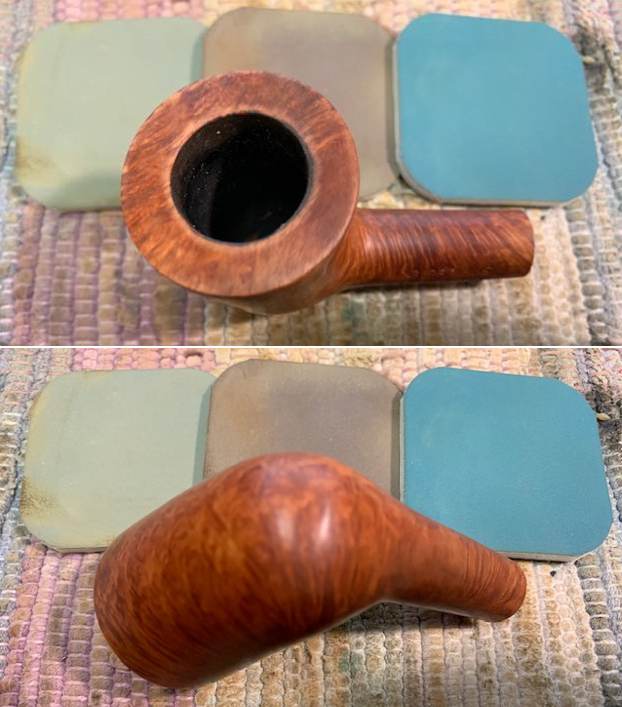
Cleaning up a Lightly Smoked Italian Made C.B. Perkins Normandy 256 Dublin


Blog by Steve Laug

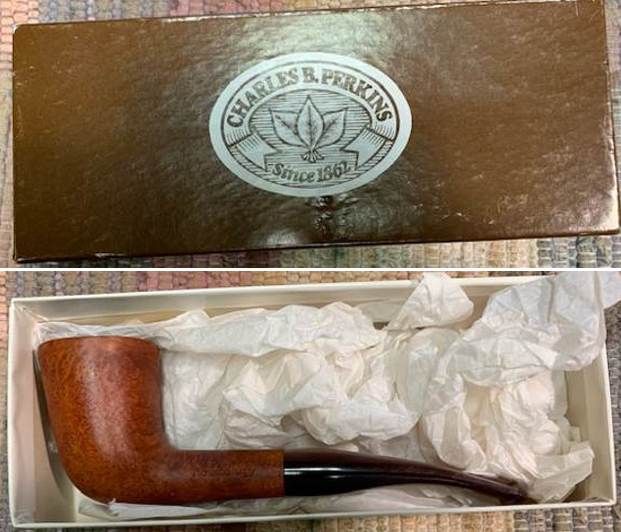
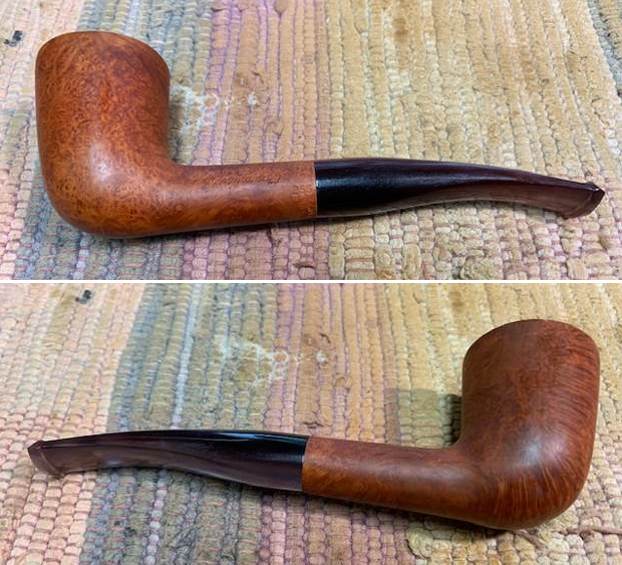
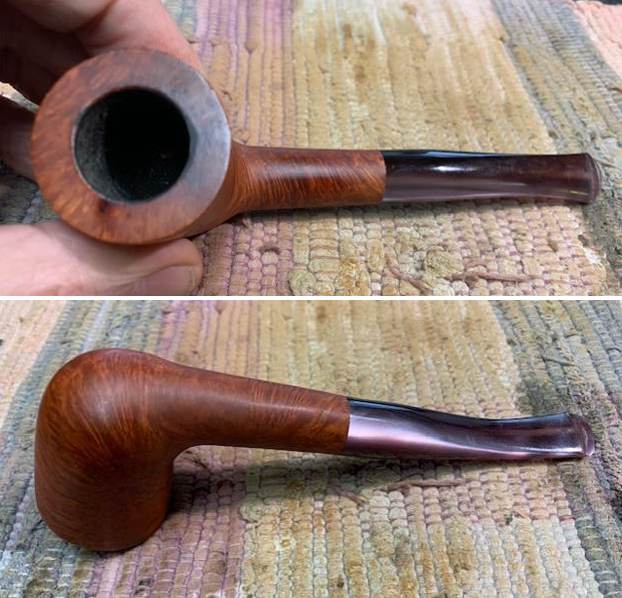
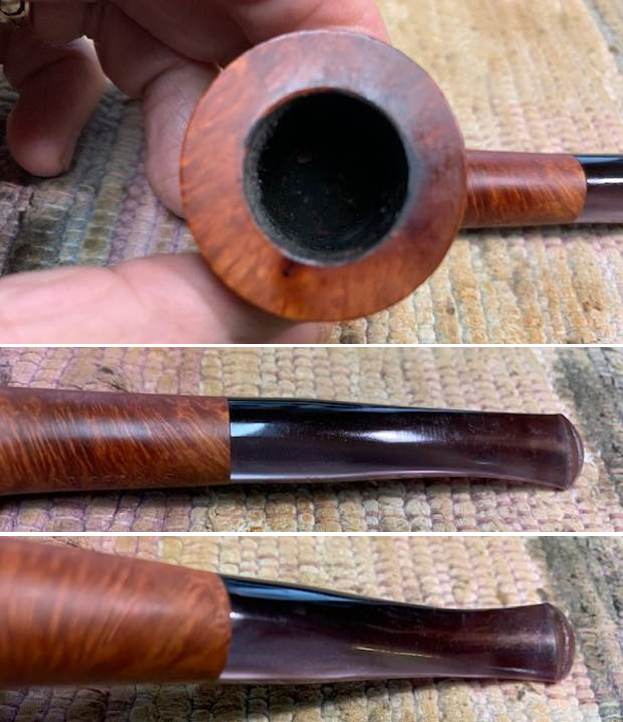
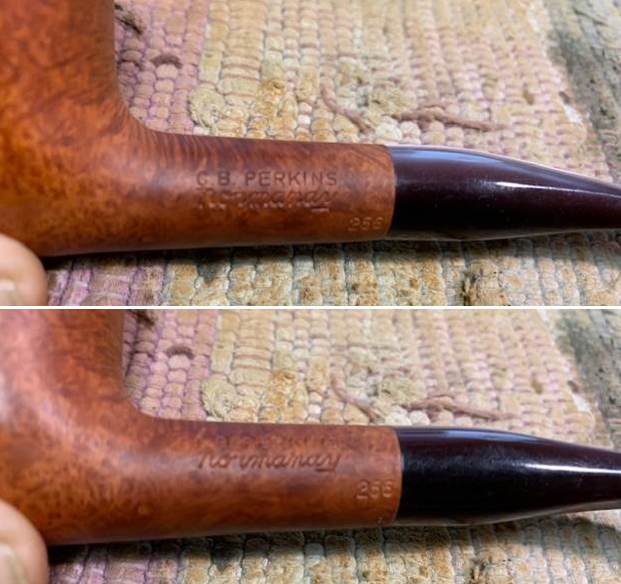
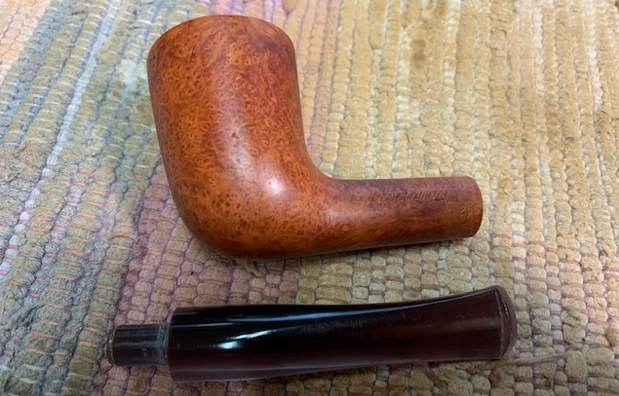
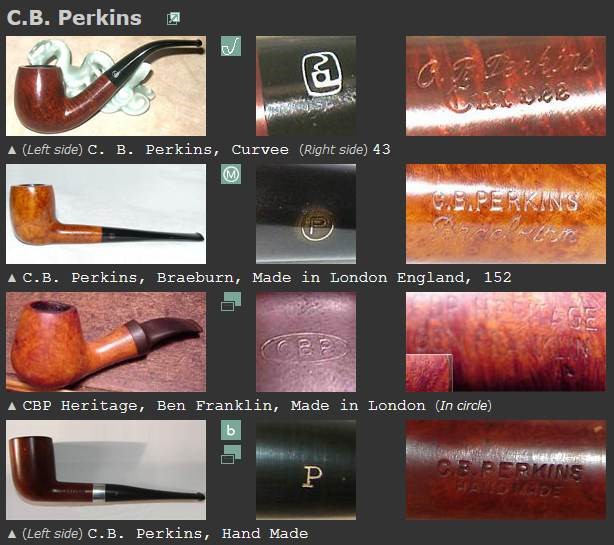
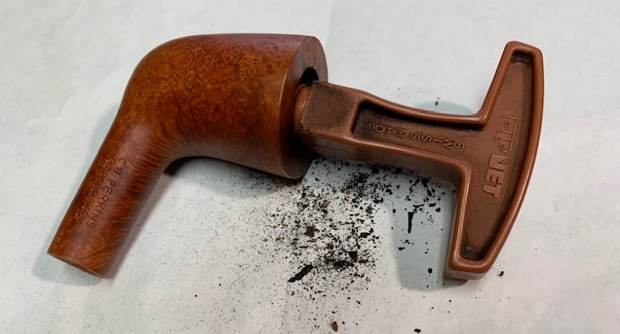
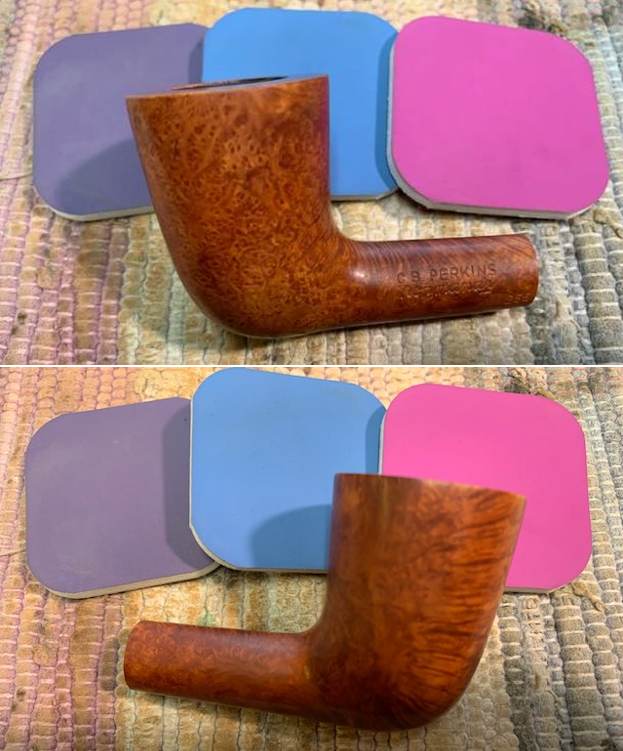
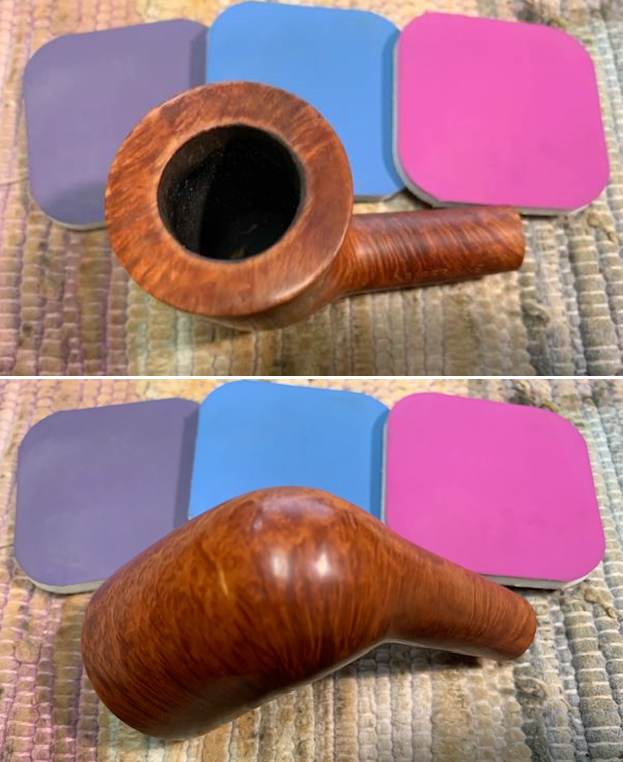
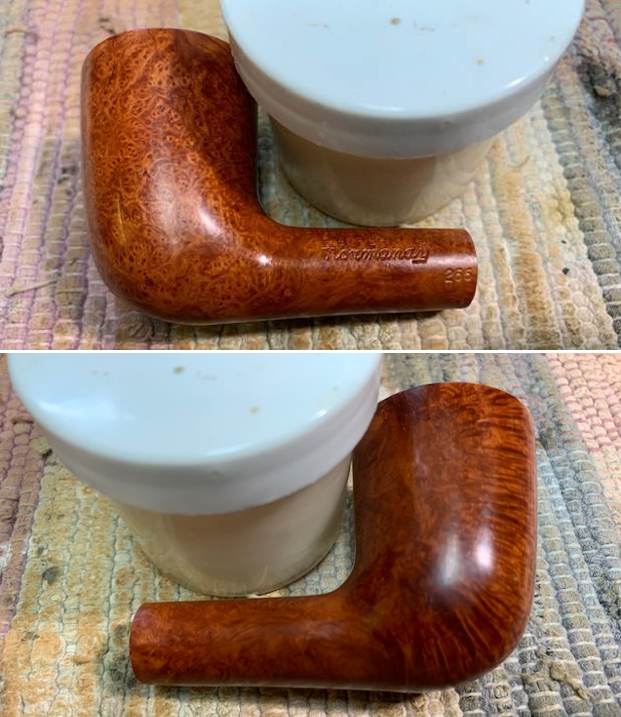
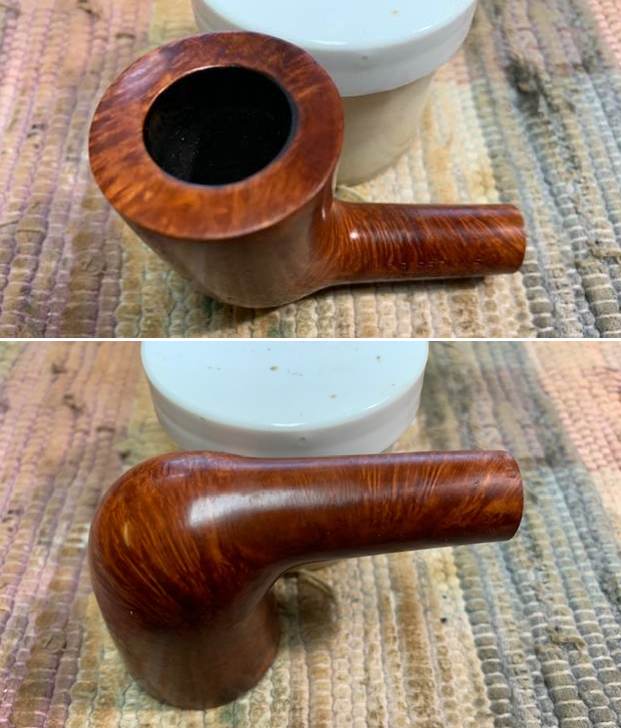
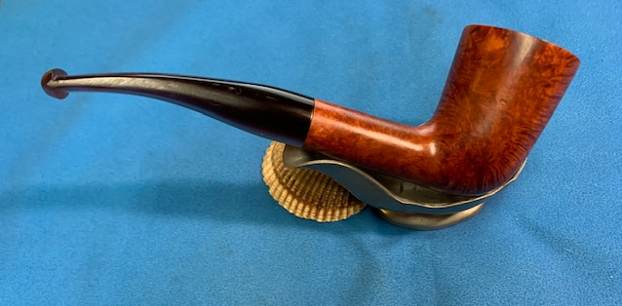
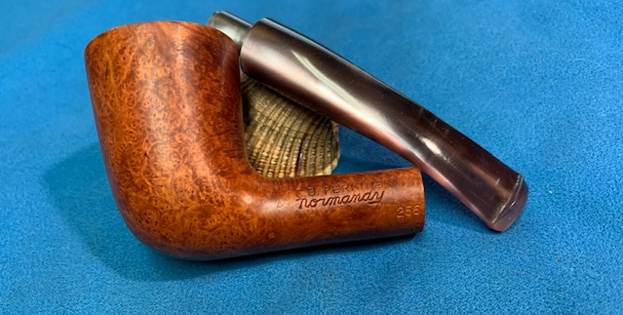
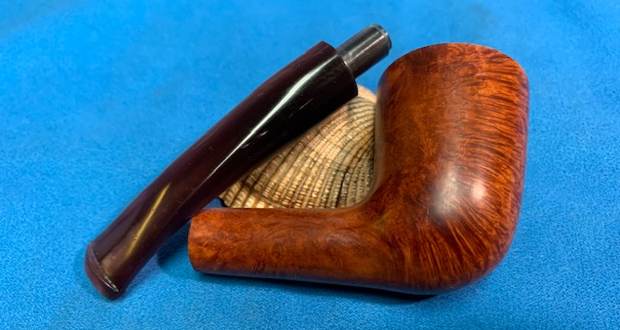
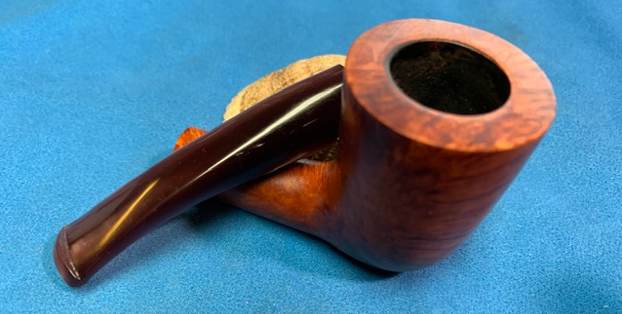
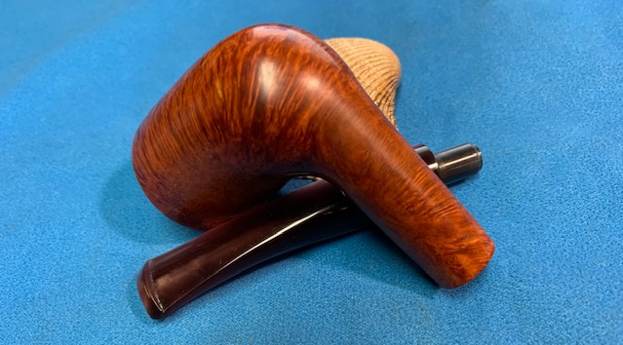
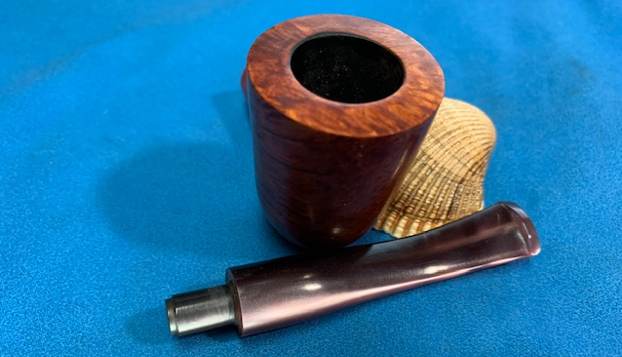
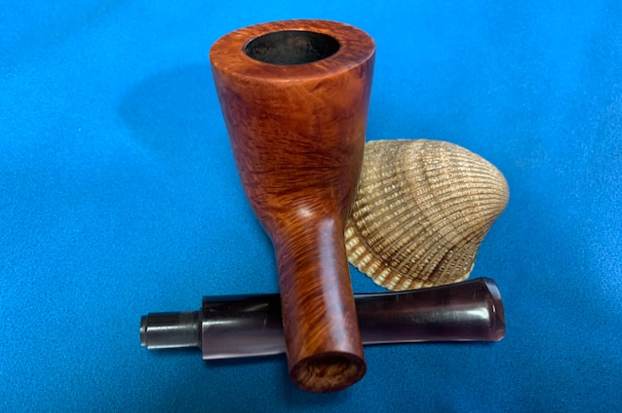
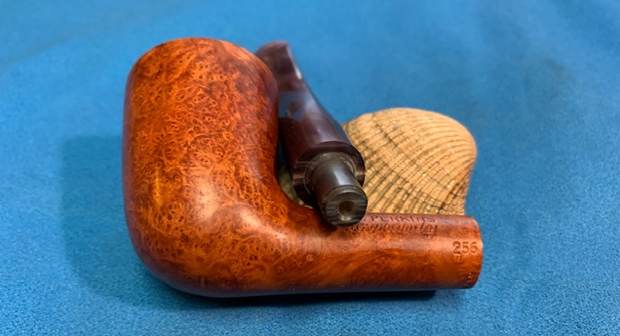
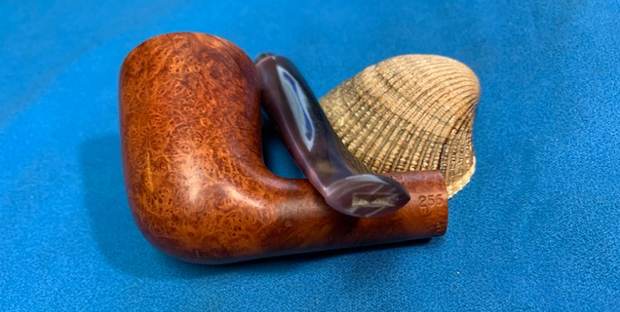
The next pipe I chose to work on is another C.B. Perkins pipe, different from the English Skater I just finished not only in the fact that it was lightly smoked and had an acrylic stem but also in that it was Italian Made. This one was an interesting shape that I call a Dublin with a taper variegated rose coloured acrylic stem. It came in the original box that is in great condition. It had a light cake and some tobacco remnants in the bowl and rim top that showed that some darkening on the inner edge. The finish very good and the pipe had some nice grain around the bowl and shank. There were no visible flaws or fills on the bowl sides or shank. It was stamped on the left side of the shank and read C.B. Perkins. [over] Normandy. Underneath that toward the stem is stamped the shape number 256. On the shank/stem union it is stamped Italy. It has an acrylic taper stem with no logo or marking. The stem has light scratching and tooth chatter on both sides. I took photos of the pipe when I brought it to the work table.  I took photos of the bowl and rim top and the stem surfaces to show the condition of both. The bowl has a thin cake and the rim top and edges have some darkening and lava. The stem is also in great condition other than light tooth chatter on the surface ahead of the button. I took photos of the stamping on the left side of the shank. It took two photos to capture the stamping. It is clear and readable as noted above. On the underside of the shank it is stamped Italy.I took the stem off the shank to show the overall look of this interesting pipe. I just finished a Perkins earlier so I have included the information on the brand that I found for that blog. I checked first on Pipephil site (http://pipephil.eu/logos/en/logo-c1.html#c_bperkins) and found photos of various pipes. None of the photos include the Normandy or the Made in Italy stamp. I am including a screen capture of the pertinent information. There was no other information in the sidebars.Then I turned to Pipedia and was more successful with background information on the company (https://pipedia.org/wiki/C.B._Perkins). I quote a portion of that article below that gives a bit of history and more importantly cleared up where the pipes came from for me.

The first C.B. Perkins store opened in Boston in the early 1900’s. Perkins quickly became the leading retail tobacconist in New England, a position it held for over 75 years. In 1986 Perkins management sold their Pennsylvania and New Jersey stores to DES Tobacco Corporation.

DES is a wholly owned subsidiary of the S. Frieder and Sons Company. S. Frieder and Sons had been a cigar manufacturer since 1920. In 1978 S. Frieder sold its manufacturing business to United States Tobacco so it could focus all its assets and energy on the retail tobacco business under the name of DES Tobacco. Thus, the merger of C.B. Perkins and DES represented four generations of tobacco experience.

 I started my work on this pipe by reaming the bowl. I reamed it with a PipNet Pipe Reamer and took the thin cake back to bare briar. I cleaned up the reaming with a Savinelli Fitsall Pipe Knife. I sanded the walls of the bowl smooth with a piece of dowel and 220 grit sandpaper. I scrubbed the exterior of the bowl with a tooth brush and undiluted Murphy’s Oil Soap. I rinsed it under warm running water to remove the grime and the soap. It is beginning to look good! I scrubbed out the internals of the shank and the stem with pipe cleaners, cotton swabs and isopropyl alcohol. It did not take much to remove the tars and oils. I believe that there was also some stain on the inside of the shank that came out in the process. Both are clean now. I polished the briar with micromesh sanding pads – dry sanding with  1500-12000 grit pads and wiping the bowl down after each pad with a damp cloth. It really is a nice looking piece of briar. I rubbed some Before & After Restoration Balm into the finish of the pipe. I worked it into the briar because the product cleans, enlivens and protects the briar. I let the pipe sit with the Balm for 10 minutes then buffed it off with a soft towel. The Balm did its magic and the pipe looked really good. I set the bowl aside and turned my attention to the stem. I turned my attention to the stem. I polished the stem with micromesh sanding pads – dry sanding with 1500-12000 grit pads. Even though I know that Obsidian Oil is not necessary for acrylic I use it anyway as it gives some bite to the micromesh pads and also removes the dust. I wiped the stem down after each pad with a cloth impregnated with Obsidian Oil. I polished it with Before & After Stem Polish – both Fine and Extra Fine then gave it a final coat of Obsidian Oil and set it aside to dry. This lightly smoked C.B. Perkins Normandy 256 Dublin with a Rose coloured acrylic taper stem looks really good. The grain around the bowl and shank stands out with the contrasting brown stains. I put the pipe back together and buffed the pipe with Blue Diamond on the wheel (being careful of the stamping on the stem so as not to damage that). I gave the bowl and stem multiple coats of carnauba wax and buffed the pipe with a clean buffing pad to raise the shine. I hand buffed it with a microfiber cloth to deepen the shine. The dimensions of this pipe are – Length: 5 ¾ inches, Height: 2 inches, Outside diameter of the bowl: 1 ½ inches, Chamber diameter: ¾ of an inch. The weight of the pipe is 1.45 ounces/41 grams. It is a great looking pipe and one that will be going on the rebornpipes store in the American Pipe Makers section. If you want to add it to your collection let me know via email to slaug@uniserve.com or by message. Thanks for walking through the cleanup with me.

Taking a Breather and Restoring this Geometric Pattern Meerschaum Dublin


Blog by Steve Laug

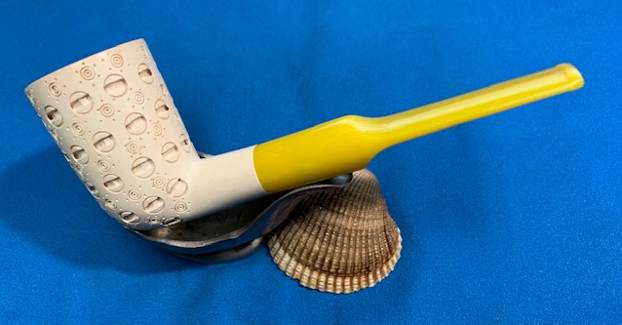
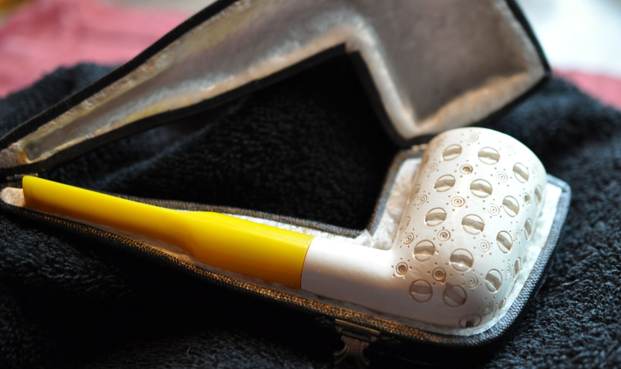
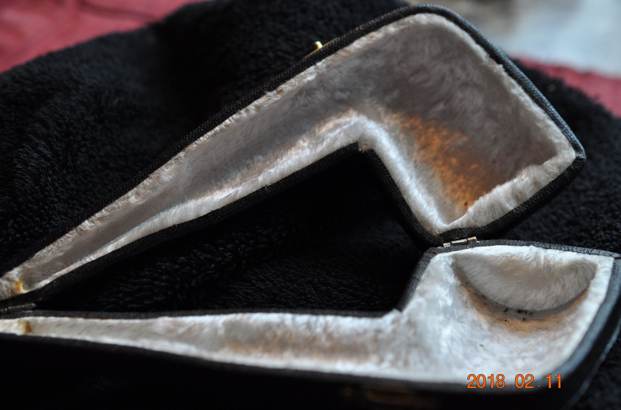
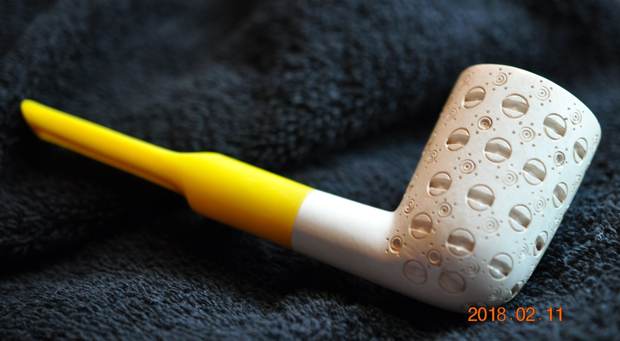
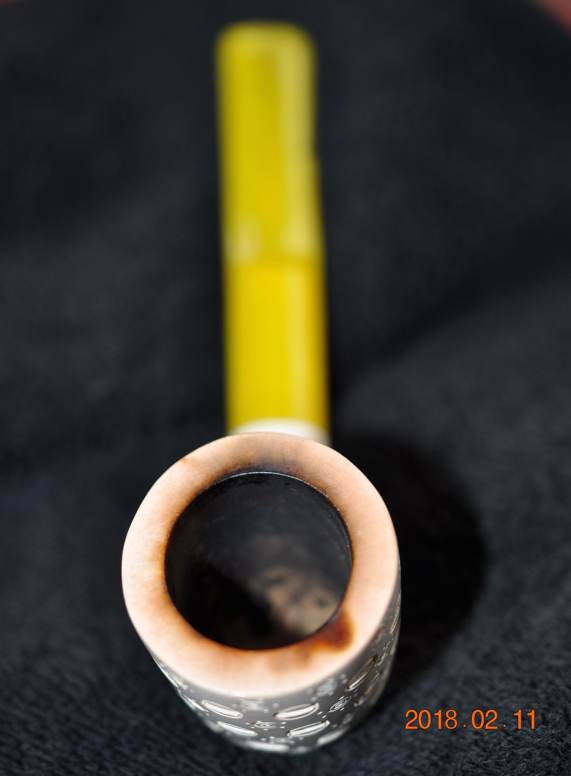
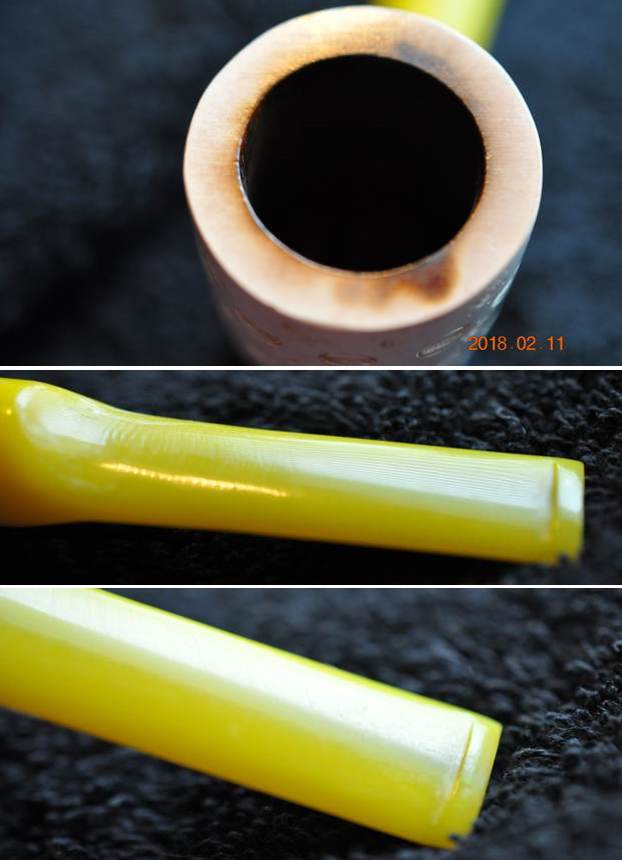
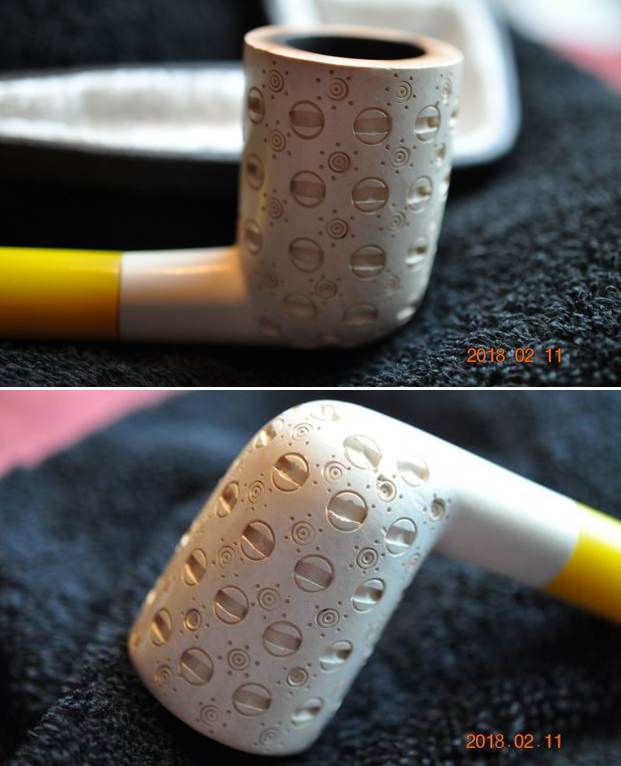
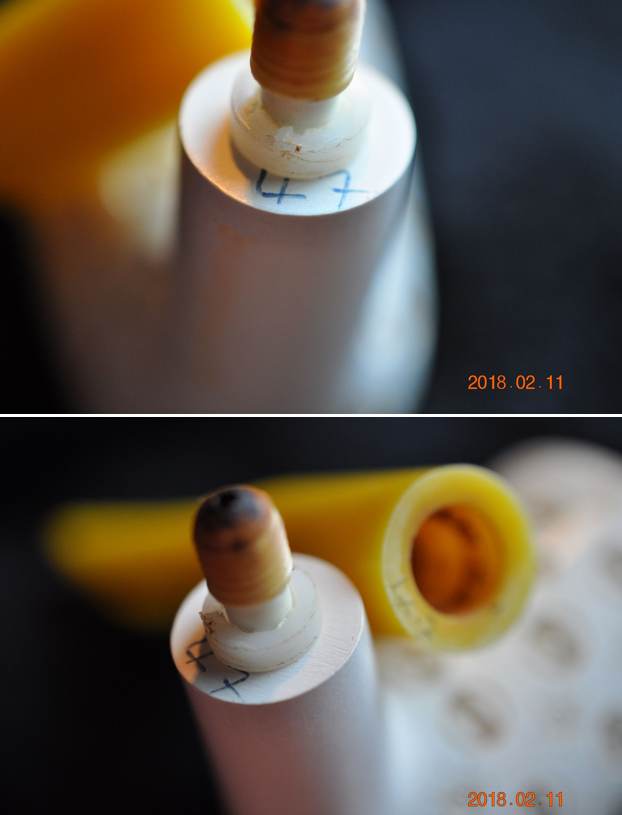
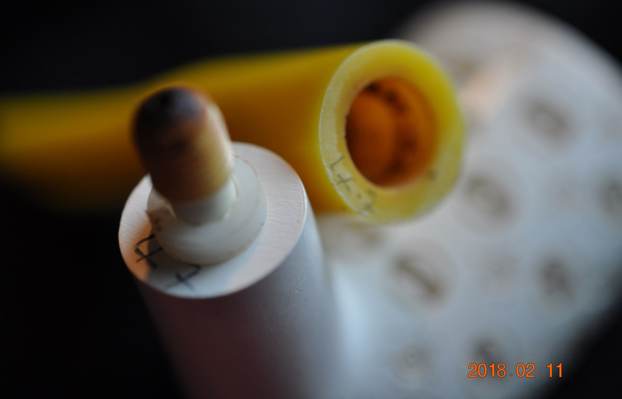
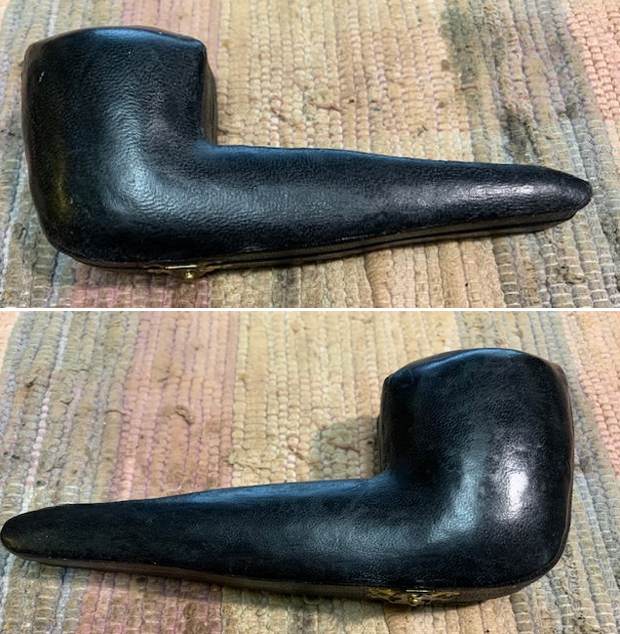
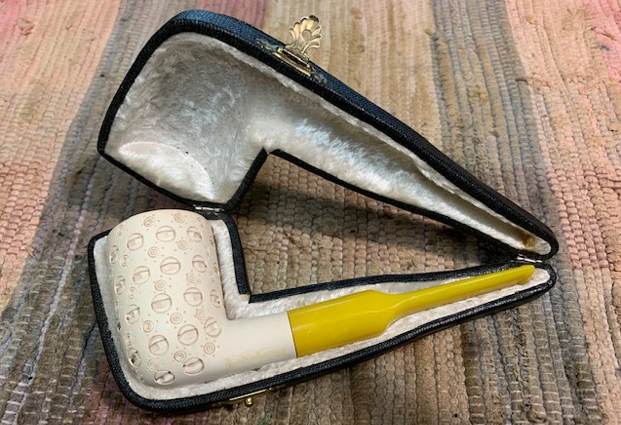
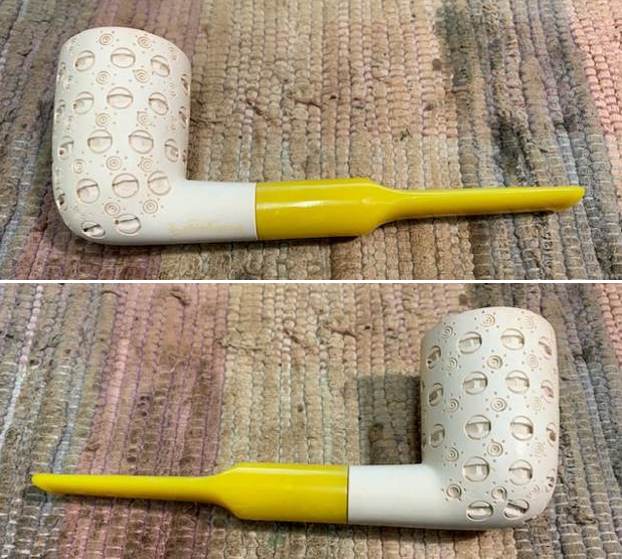
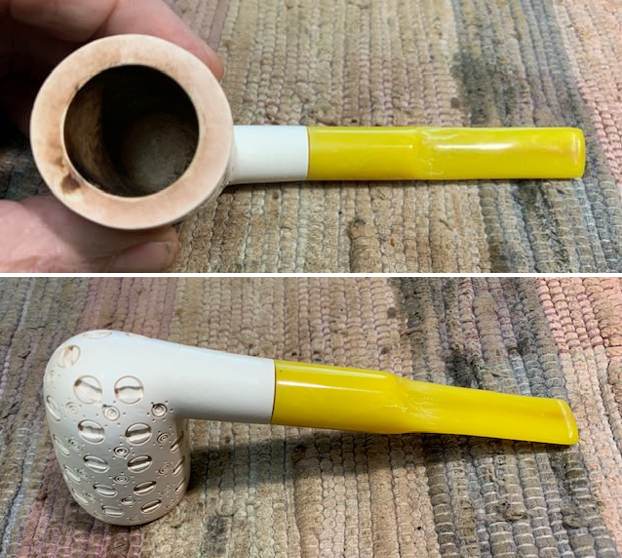
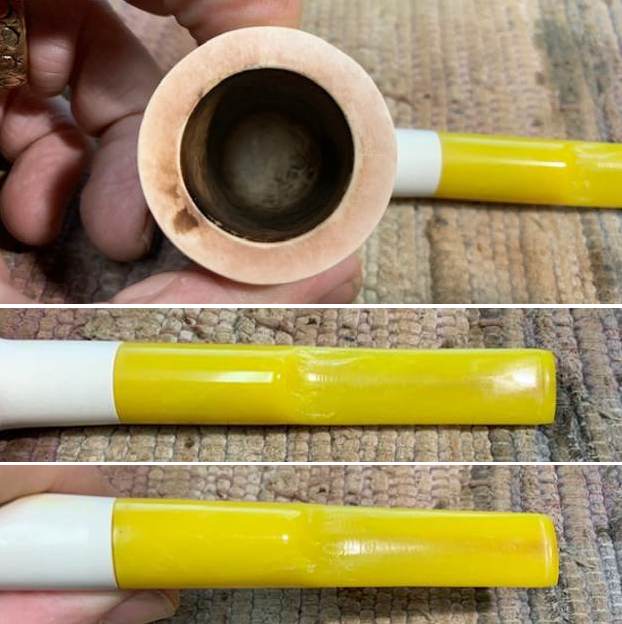
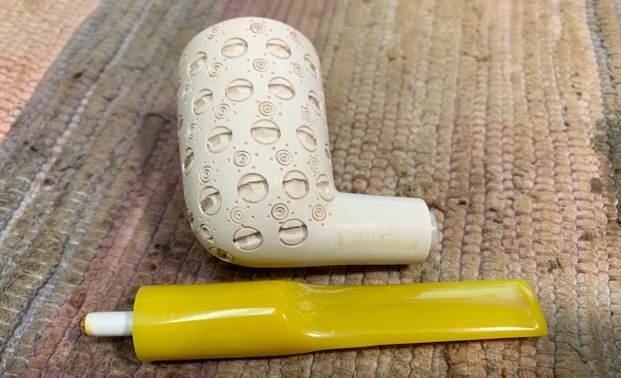
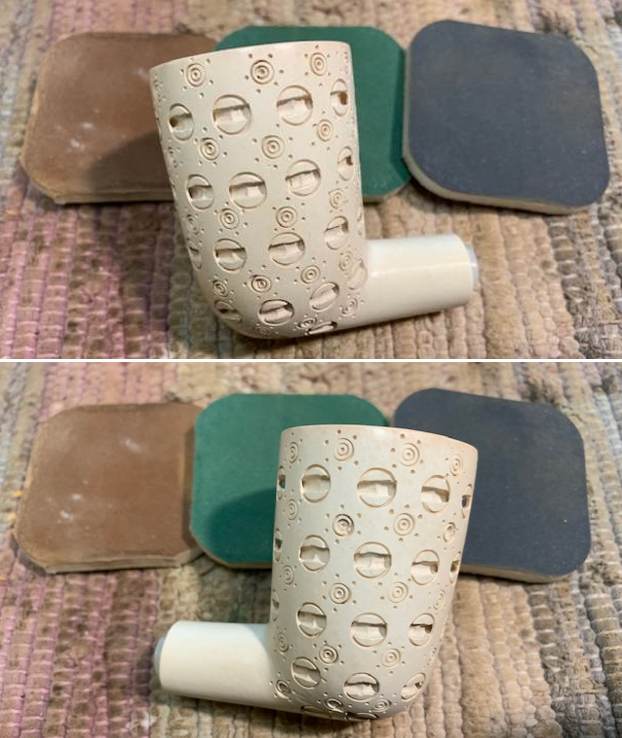
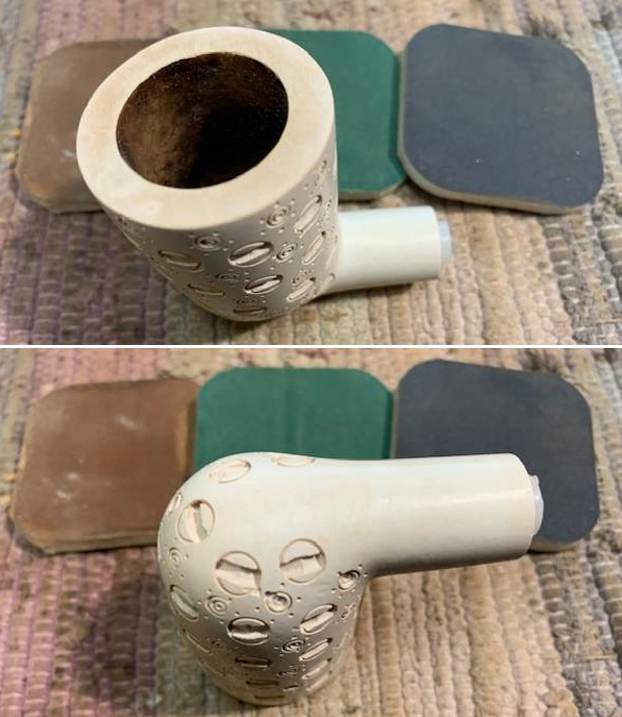
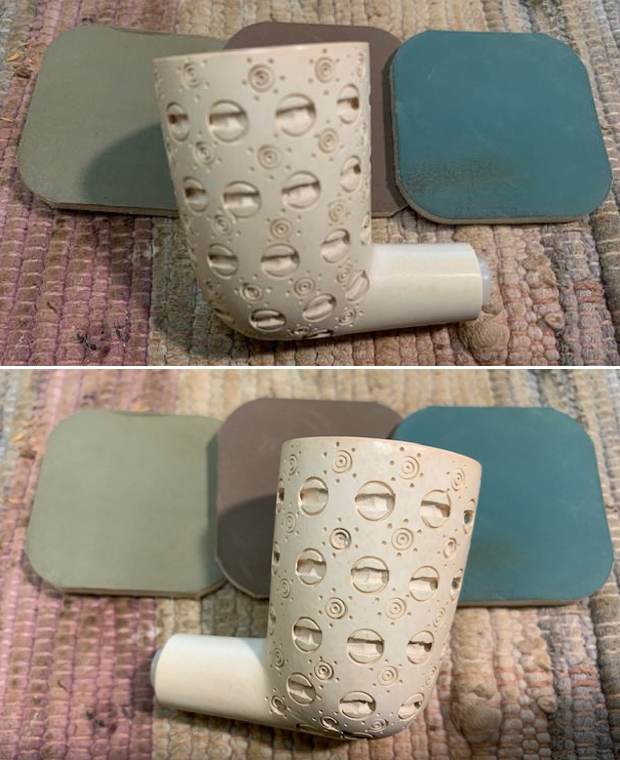
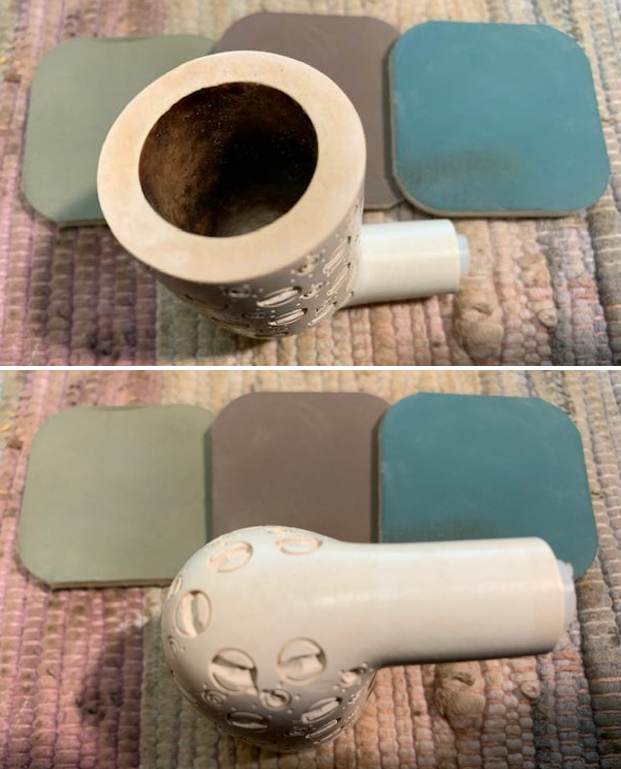
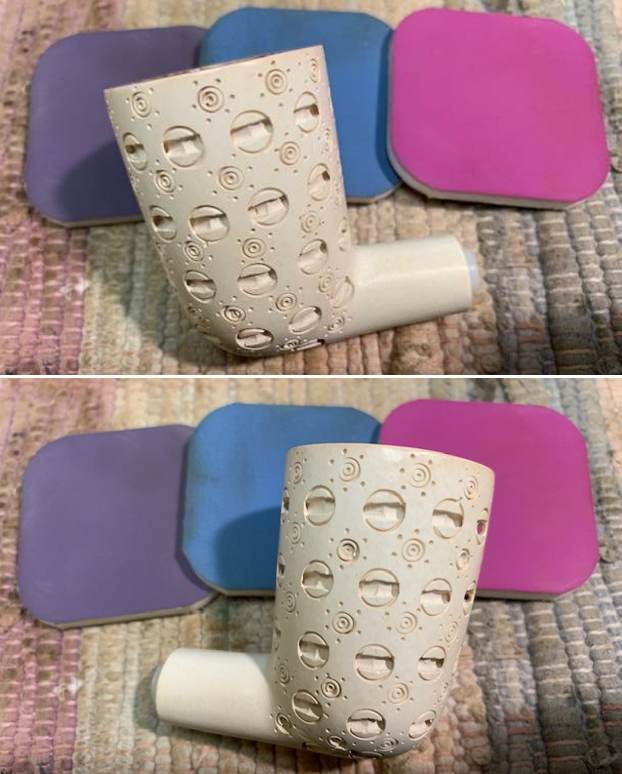
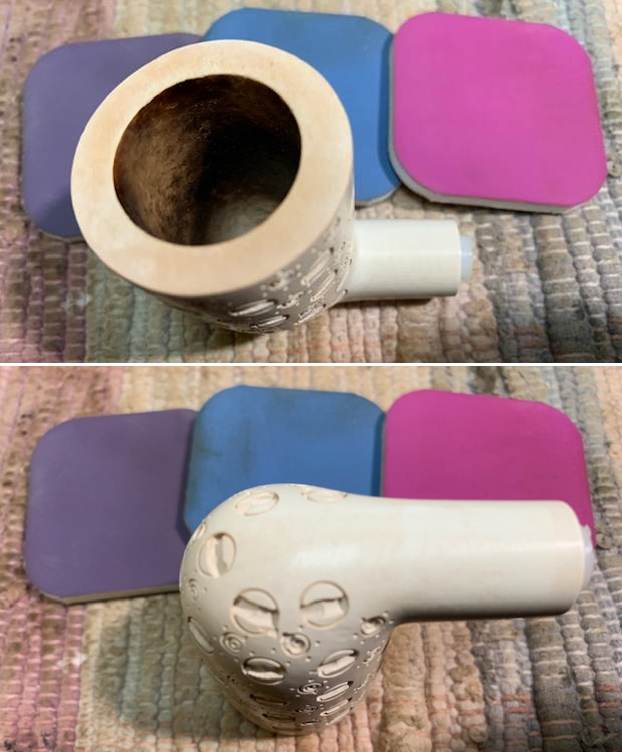
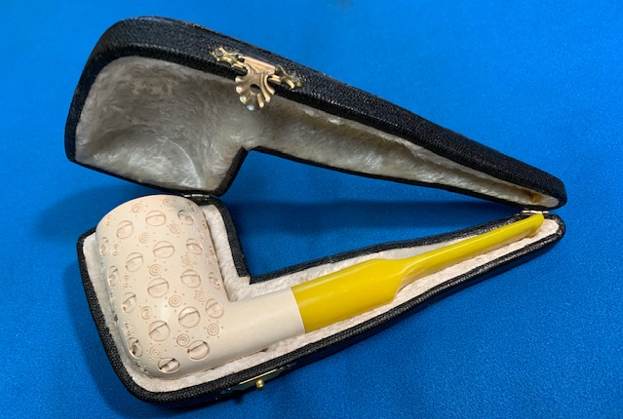
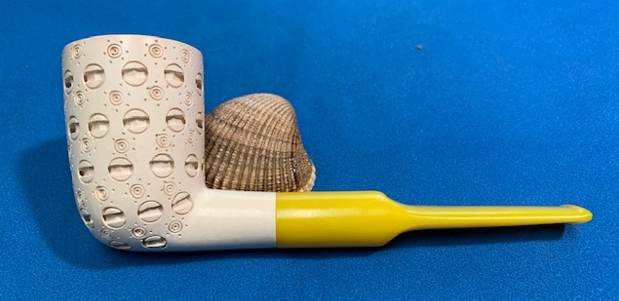
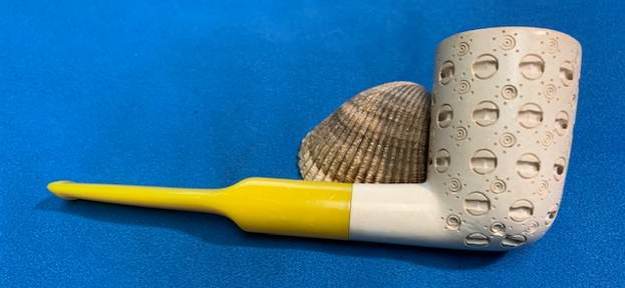
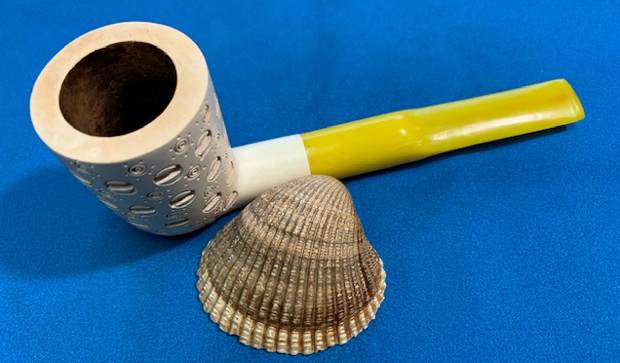
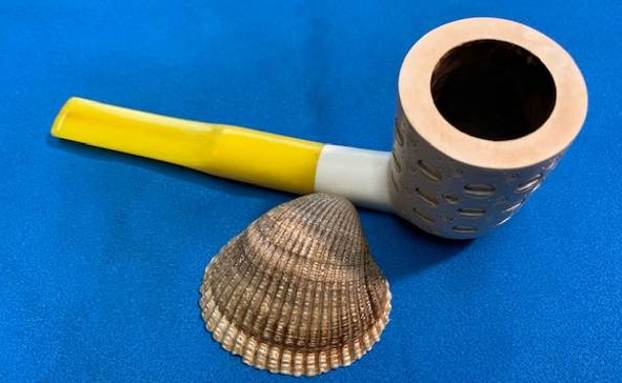
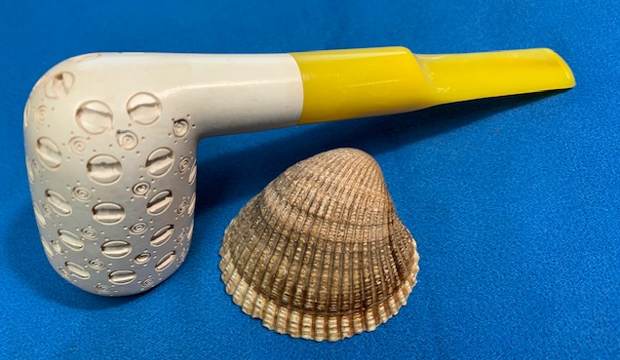
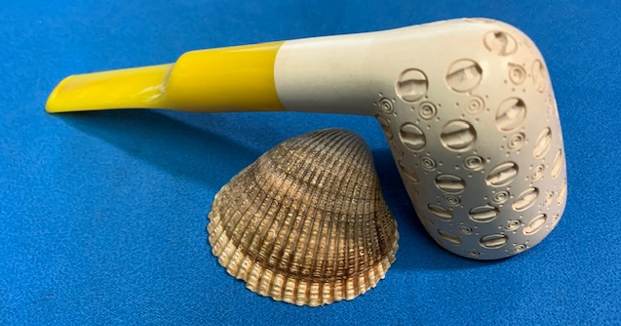
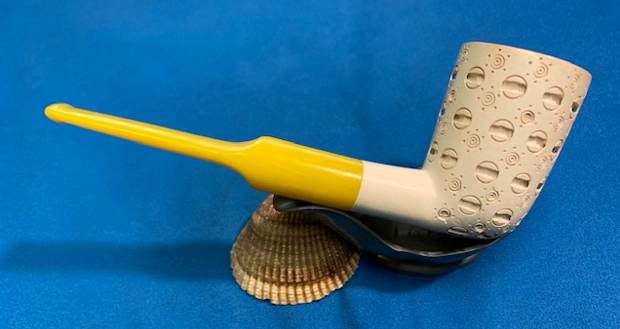
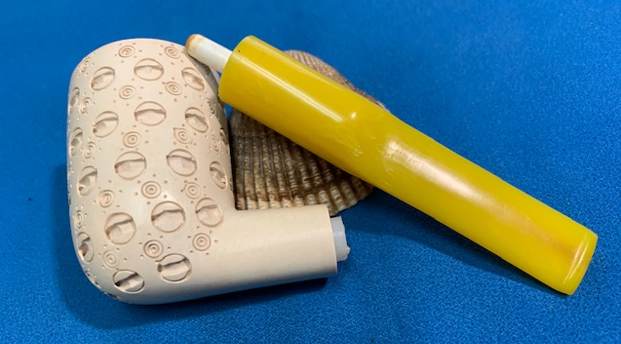
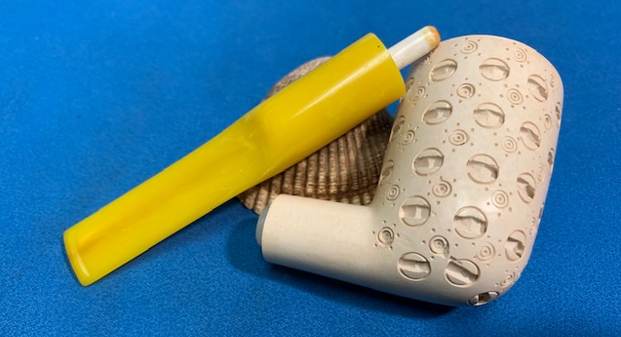
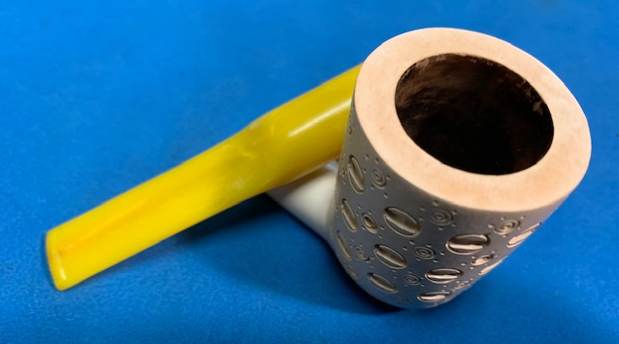
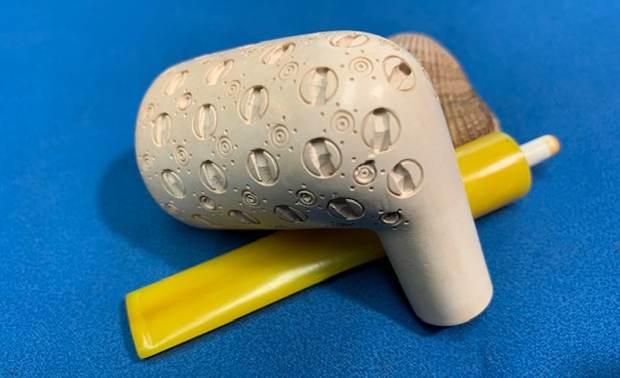
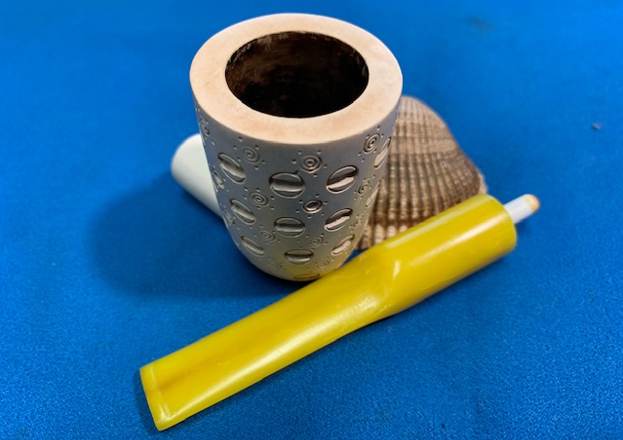
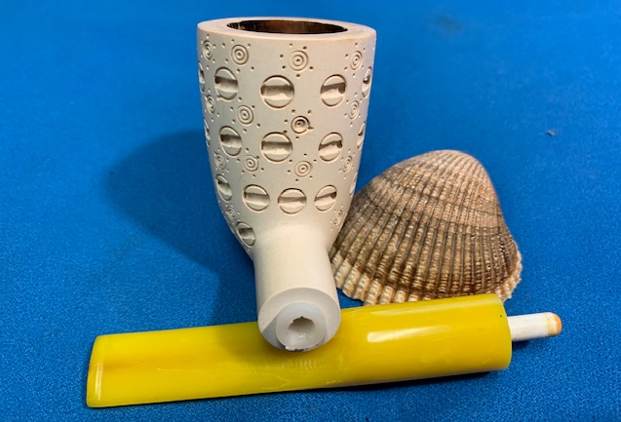
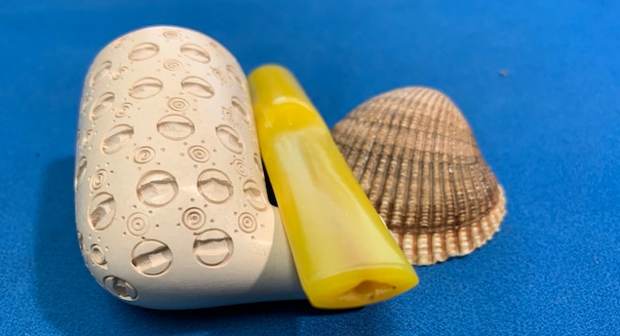
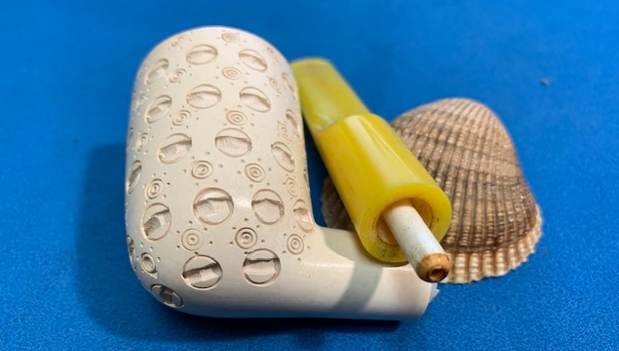
The next pipe on the table is an interesting meerschaum Dublin with geometric designs around the bowl sides and shank. The rim top was smooth. There was no marking on the pipe or on the case to help identify the maker. It is a nicely made pipe by an anonymous carver. The stem is a modified/customized saddle style acrylic in yellow/gold. It is a nice complement to the white of the meerschaum. The finish was surprisingly clean though the top of the rim had some dark spots and lava on it. There was a  thin cake in the bowl that was not too much to deal with. The stem is also quite clean and there was light chatter and marks on both sides near the button. Jeff took some photos of the pipe before he started his clean up work. The first two photos show the pipe in the case and the case without the pipe. It is quite clean and in good condition. Jeff removed it from the case and took photos of the pipe. It is a really nicely made pipe.He took a close up photo of the bowl to show the marks and the lava on the rim top. There was some darkening on the front and back of the top side. The stem photos show the tooth chatter and marks on the top and underside near the button.Jeff took some photos of the sides and heel of the bowl to show the pattern that had been carved around the bowl and shank. Jeff also took photos of the push style tenon. It came out of the stem when turned but remained in the shank. You can also see what appear two numbers 77 on the end of the shank and the stem. My assumption is that the numbers match the parts when the pipe was made. Jeff had cleaned the pipe thoroughly. He had reamed it carefully with a PipNet reamer and cleaned that up with a Savinelli Fitsall Pipe Knife. He worked slowly so as not to damage the inner edge of the bowl. He had scrubbed the exterior of the meerschaum with undiluted Murphy’s Oil Soap and a soft tooth brush. He cleaned out the interior of the shank and airway with alcohol, pipe cleaners and cotton swabs. He cleaned out the acrylic stem with alcohol, cotton swabs and pipe cleaners to remove the debris and oils in the airway and the threads of the push tenon. Once it was clean he turned the tenon into the stem. I took photos of the pipe when it arrived here. The first two photos show the condition of the black case. It was in excellent condition. The third photo shows the pipe in the opened case. It was a great looking pipe. I took the pipe out of the case and took photos of the cleaned pipe. The bowl has the look of a tall Dublin. The exterior of the bowl looked very good as did the stem. There was still some dark spots on the rim top on the front left side. I took some close up photos of the rim top and stem. You can see the marks on the rim top that I noted above. The tooth chatter on both sides of the stem were quite light.I removed the stem from the shank and took a photo of the parts of the pipe. It is well proportioned and looked really good.I decided to start my work on the pipe by polishing the bowl with micromesh sanding pads. I worked over the rim top with the pads at the same time. I used micromesh pads – dry sanding with 1500-12000 grit pads and wiped the bowl down with a damp cloth after each pad. I was able to remove the dark spots and give the bowl a shine. I set the bowl aside and turned my attention to the stem. Since the tooth chatter was quite shallow I polished the newly shaped acrylic stem with micromesh sanding pads – dry sanding with 1500-12000 grit sanding pads. I wiped it down after each sanding pad with a cloth containing some Obsidian Oil. I know Obsidian Oil does nothing for acrylic but I have found that it removes the small particles left behind by the polishing. I finished polishing the surface with Before & After Pipe Stem Polish – both Fine and Extra Fine and buffed it off with a cotton cloth. I gave it a final coat of obsidian Oil and set it aside to dry. It is a beautiful looking golden, yellow acrylic stem. This Carved Meerschaum Dublin with Geometric Patterns turned out to be another fun pipe to work on and I was excited to see it come back together. It was a clean pipe that did not take Jeff too much work to ream and clean. My work was also simpler than expected. I chose not to rewax it because of the shine that still showed on the bowl. I put the stem back on the bowl and lightly buffed the pipe with a clean buffing pad to raise the shine. I hand buffed the pipe with a microfiber cloth to deepen the shine. The rich polished meerschaum on the bowl looks really good with the polished yellow/golden acrylic stem. The bowl and stem came together looking quite spectacular. Give the finished pipe a look in the photos below. I can only tell you that it is much prettier in person than the photos capture. The dimensions of the pipe are Length: 5 ¾ inches, Height: 2 ¼ inches, Outside diameter of the bowl: 1 ½ inches, Chamber diameter: 1 inch. The weight of the pipe is 36 grams/1.27 ounces. This is truly a great looking Meerschaum. Thanks for walking through the restoration with me as I worked over another beautiful pipe. I will be putting it on the rebornpipes store in the Ceramic and Meerschaum Pipe Section. If you are interested in the pipe send me an email or a message. Thanks for your time.

Cleaning up a Savinelli Oceano 320KS Author that I Received on a Trade


Blog by Steve Laug

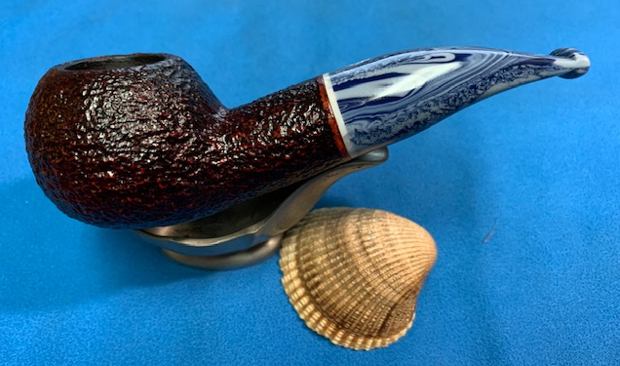
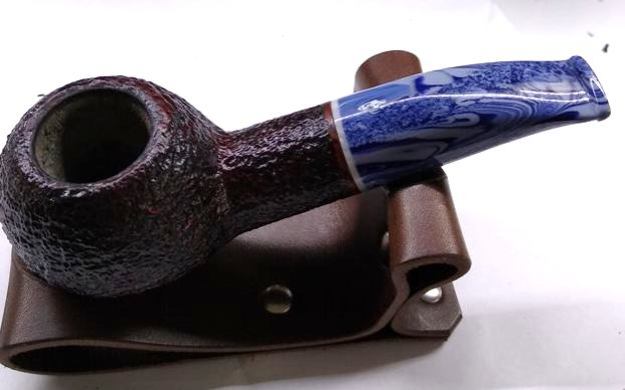
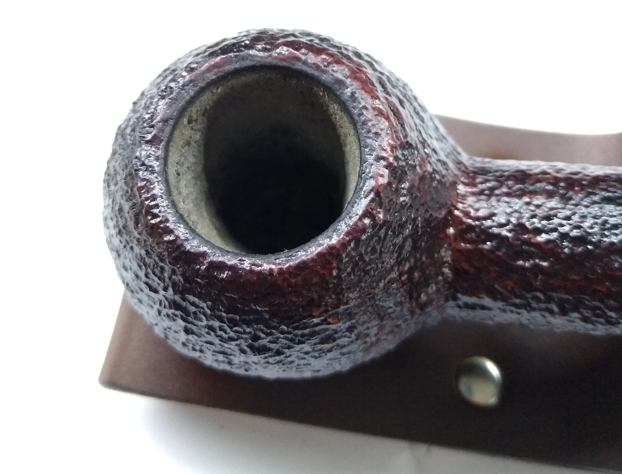
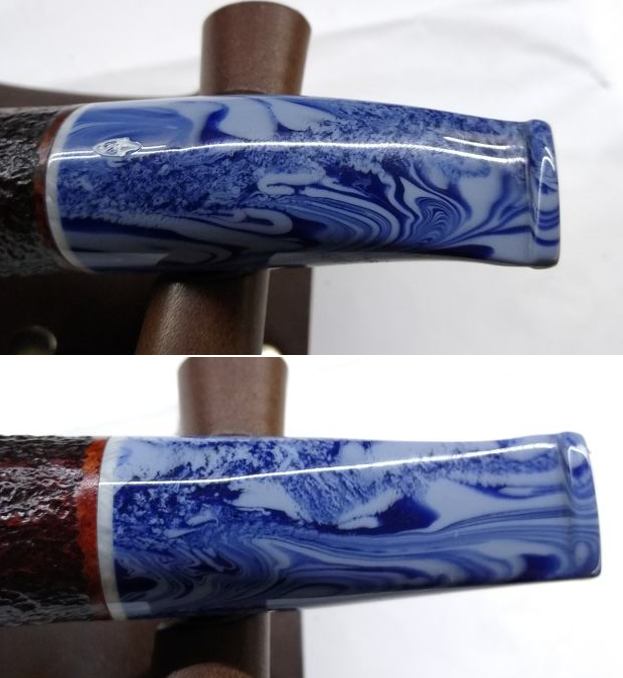
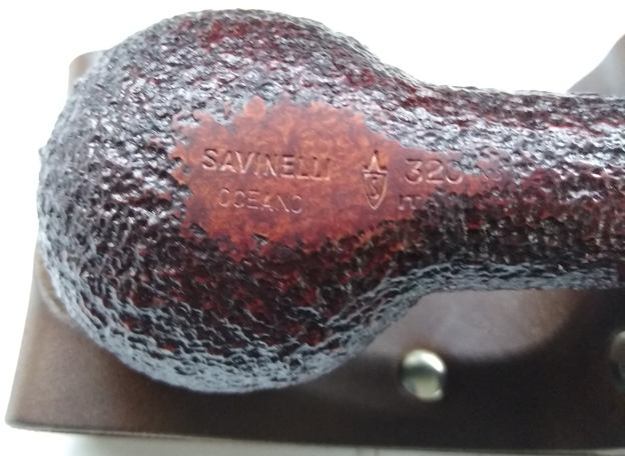
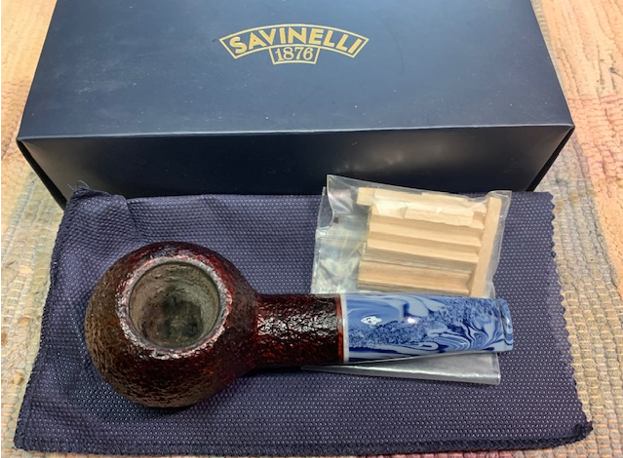
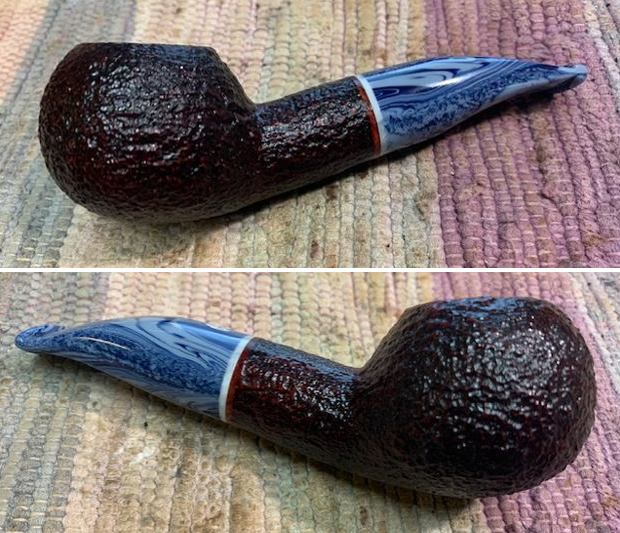
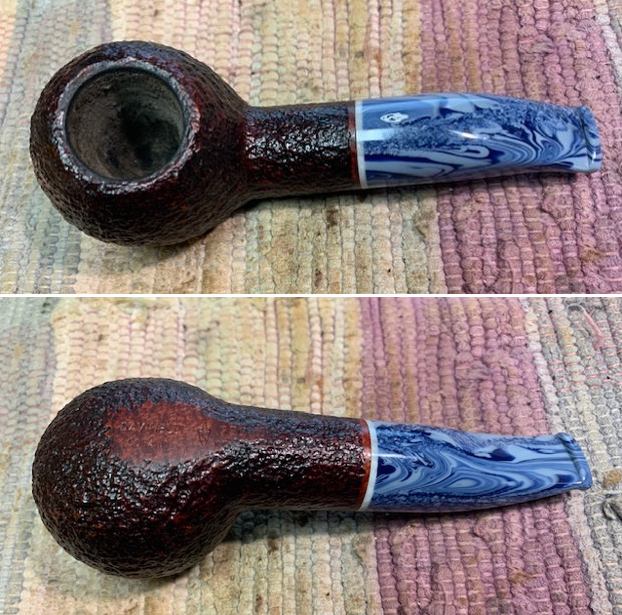
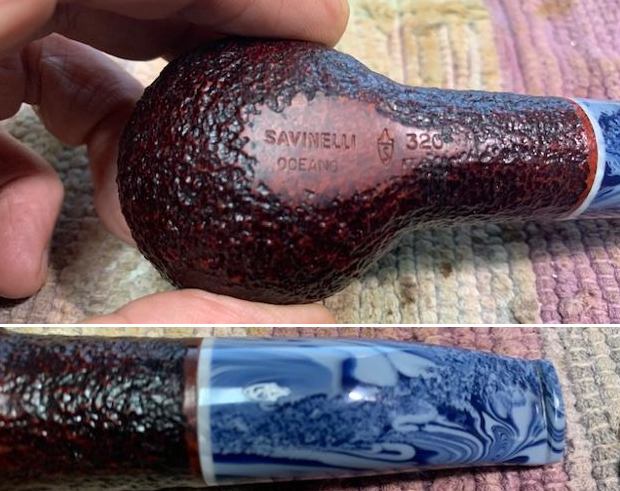
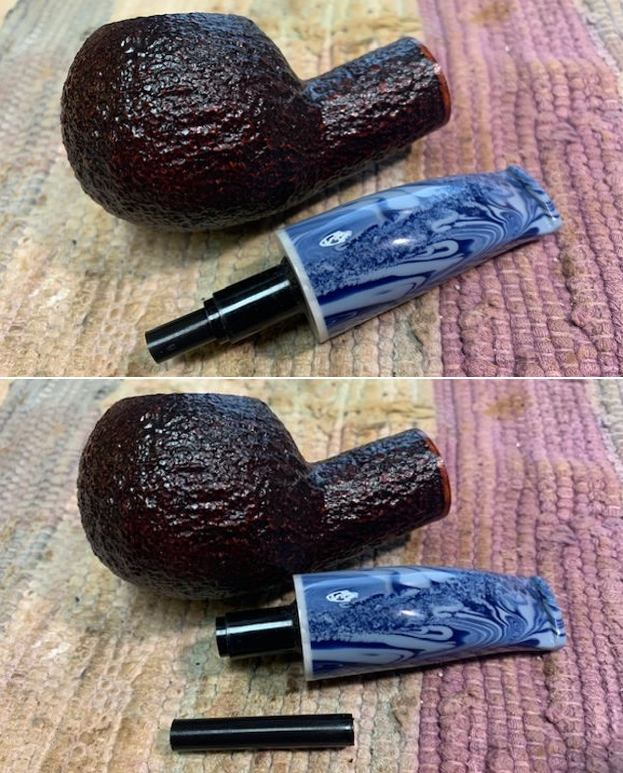
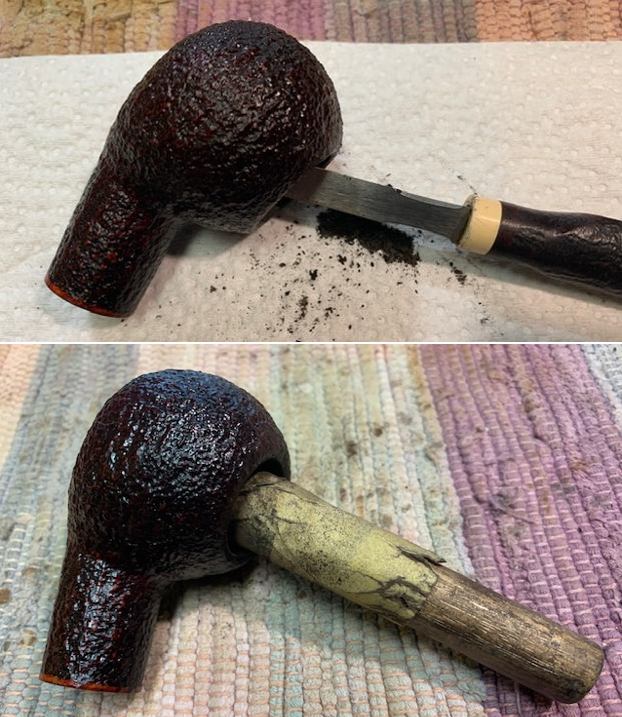
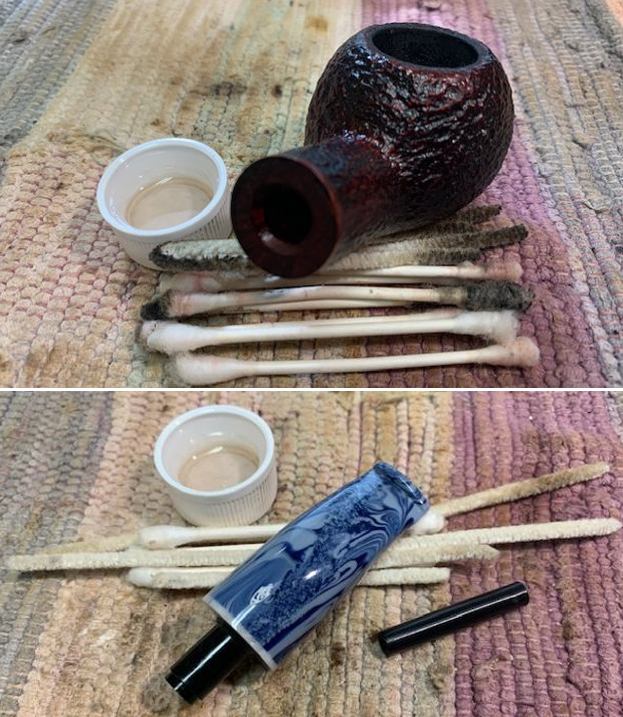
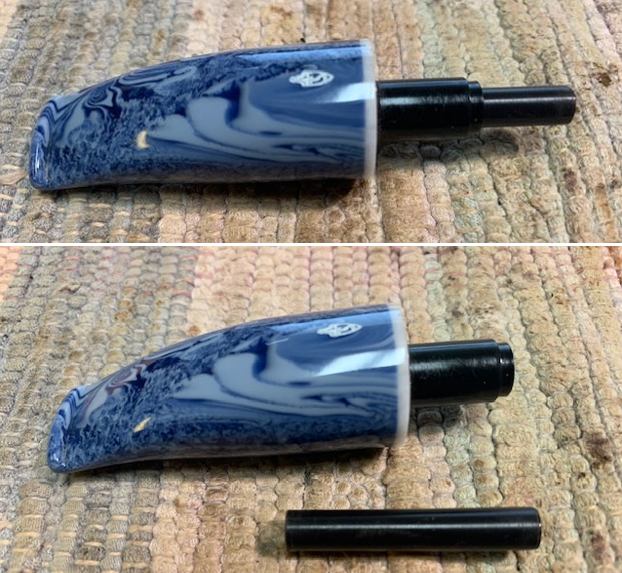
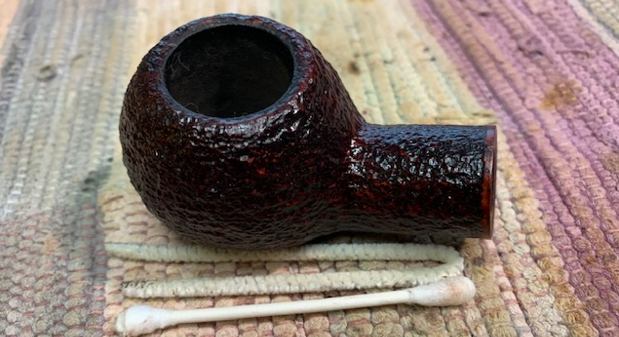
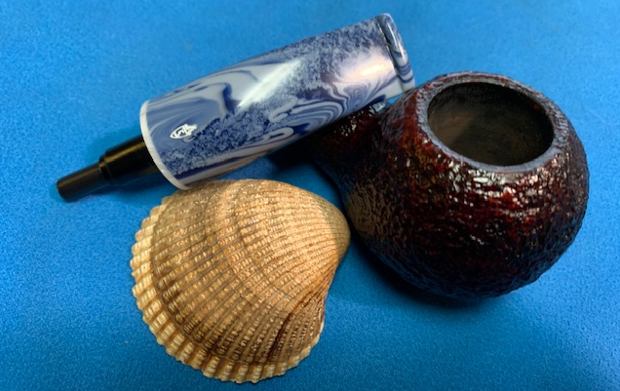
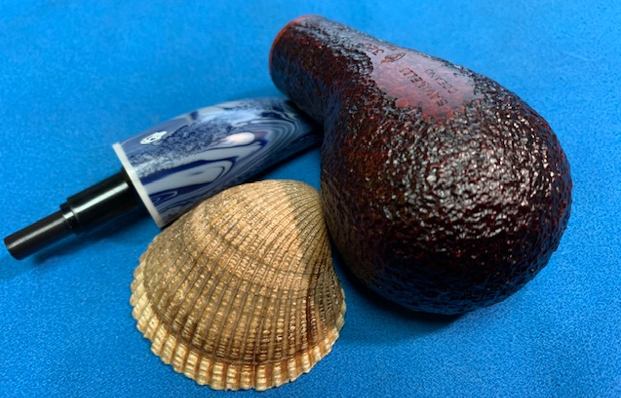
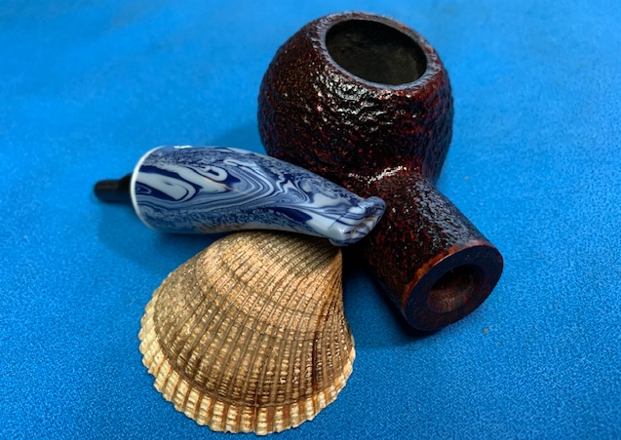
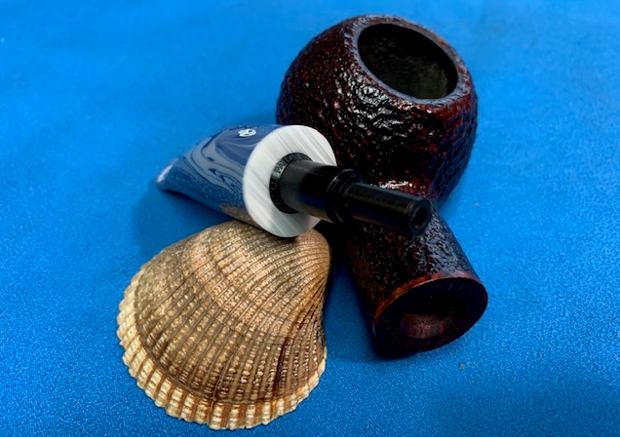
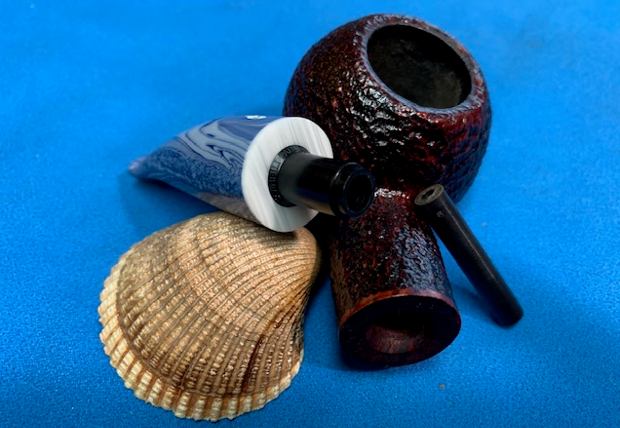
The next pipe I am working on is a beautiful looking Savinelli Oceano 320KS with a swirled blue and white stem and a tightly rusticated bowl. It is stained with an oxblood stain that gives it a red tint in the light. There appears to also be a black stain as an undercoat. The pipe is originally made for the Savinelli Balsa Filter System. The fellow I traded it with said the stem was just too thick for his liking and he was looking to trade it for something he would use. I have included the photos that he sent of the pipe as we talked.The pipe was in great condition. It had a light cake in the bowl which concurred with the fact that he stated he did not smoke it much. The stem was in great condition with some light tooth chatter but nothing serious on either side. He also said that he had the pipe sock it came with and the box as well. He also said he would throw in the balsa filters with the pipe. Over the course of quite a few emails we struck a deal and the pipe came to me. The stamping on the heel was clear and readable as he had mentioned – Savinelli Oceano 320KS.When the pipe arrived in Vancouver I unpacked it and this is what I saw. It came in the original Savinelli Pipe box and included the blue sock, a small booklet in multiple languages on pipe smoking and care and a bag of Balsa Filters. In our discussions I had come to believe the pipe was a filter pipe and unpacking seemed to confirm that for me. Little did I know that once I removed the stem I would see the adapter insert that converted it to a non-filter pipe. The added removable adapter allows the pipe to be smoked with or without a filter.I took photos of the pipe before I started my clean up work on it. You can see the light cake in the bowl and the ash on the walls. The pipe had a strong aromatic aroma to it that I would need to remove before reselling it to the next pipe smoker. The finish was in great condition and the stem was free of tooth marks and only had some light chatter on the surface near the button on both sides. It is stamped on the heel of the bowl and reads Savinelli [over] Oceano followed by the Savinelli S Shield logo and the shape number 320 and a faint KS [over] Italy. I took photos of the bowl and rim top to show the condition. You can see the thickness of the cake in the bowl and general cleanness of the rim top. The stem looks very good other than faint tooth chatter that is hard to capture in the photos.I took a photo of the stamping on the shank and it read as noted above. There is also a Savinelli S Shield logo on the top of the stem.I removed the stem to show the parts of the pipe. In the first photo you can see the adapter in place in the tenon converting it to a standard pipe. The second photo shows the adapter removed and the filter version of the same pipe. It is made for the 6mm filters – Balsa or otherwise.Now it was time to clean up the pipe and try to exorcise the strong and prevalent ghost that was “haunting” the bowl. STEP 1: I reamed the bowl back to briar with a Savinelli Fitsall Pipe Knife and then sanded the walls smooth with a piece of dowel wrapped with 220 grit sandpaper.STEP 2: I scoured the inside of the mortise and the airway in the shank and stem with pipe cleaners, cotton swabs and 99% isopropyl alcohol. I was a little surprised to not only see the tars and oils coming out of the shank but also some oxblood stain that was present under the “gunk”. The stem cleaned up nicely as well. I removed the adapter and cleaned both it and the airway in the tenon. I took photos of the adapter in place and removed from the cleaned stem. It is a great looking stem.
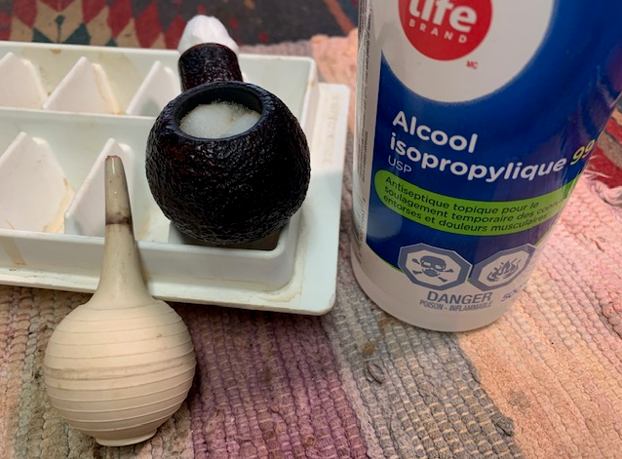
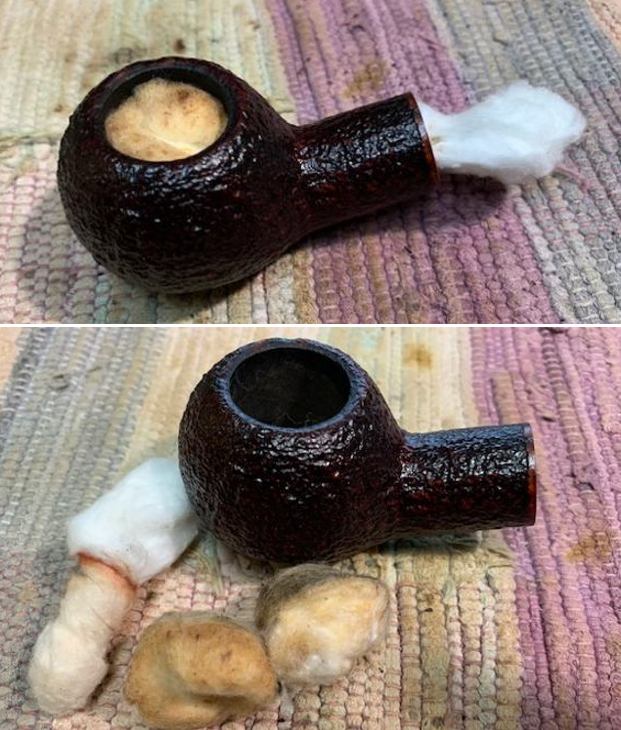
STEP 3: I stuffed the bowl with cotton bolls and twisted one into a wick and turned it into the shank and filled the bowl with 99% isopropyl alcohol being careful to not splash any on the finish of the bowl and damage it. I set the bowl upright in an old ice cube tray that I use for this purpose and left it over night.In the morning I took a photo of the filthy cotton bolls and wick that had drawn the oils and tars from the bowl and the shank of the pipe. I twisted the wick out of the shank and used a dental pick to remove the cotton bolls from the bowl. I cleaned out the shank with alcohol, pipe cleaners and cotton swabs to make sure it was clean. Once it had dried the bowl smelled much better though there was still a slight remnant of the ghost. With the bowl clean and smelling sweeter, I decided to rub the bowl down with some Before & After Restoration Balm. I worked it into the rustication with my finger tips and a horse hair shoe brush. The product is spectacular and works to clean, enliven and protect the finish on briar. I let it sit for 10 minutes then buffed it off with a soft cotton cloth. I really like the way a pipe looks after this process and this one is no exception. I set the bowl aside and turned my attention to the stem. I polished out the tooth chatter with micromesh sanding pads. I dry sanded with 1500-12000 and wiped the acrylic down with some Obsidian Oil on a cloth. I know that it does nothing for acrylic but I find that it really picks up the debris left behind by the sanding pads. I finished polishing it with Before & After Pipe Stem Polishes – both Fine and Extra Fine and wiped it down a final time with Obsidian Oil. With the bowl and stem finished I put the Savinelli Oceano 320KS back together and buffed it on the buffer. I gently buffed the briar with Blue Diamond so as not to clog the valleys and crevices of the finish and buffed the stem with a bit heavier touch to raise a shine. The classic Author shape really looks good with the dark reddish brown stain and the swirled blue acrylic stem. It is a beautiful pipe. The dimensions of the pipe are – Length: 5 ½ inches, Height: 1 ¾ inches, Outer diameter of the bowl: 1 ½ inches, Chamber diameter: 1 inch. The weight of the pipe is 2.47 ounces/70 grams. If you are interested in adding this pipe to your rack let me know via email or messenger. It will be added to the rebornpipes store shortly in the Italian Pipe Makers section. Thanks for walking through the clean up of this beauty.

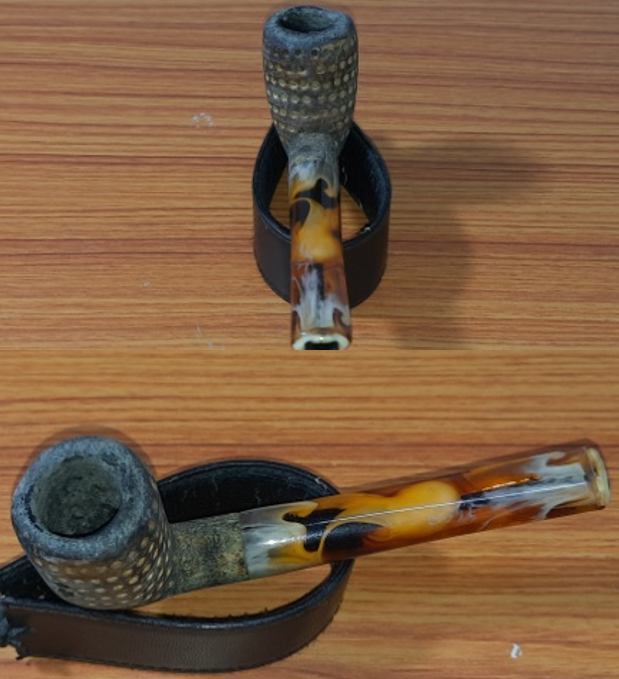
Refurbishing Karthik’s Second Selection – A Stacked Lattice Design Meerschaum


Blog by Paresh Deshpande

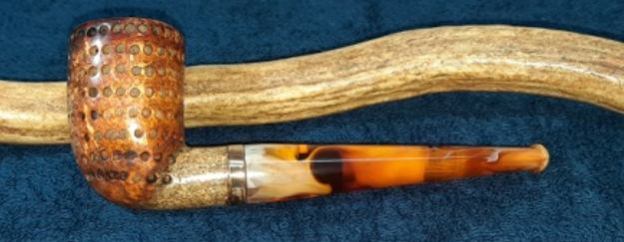
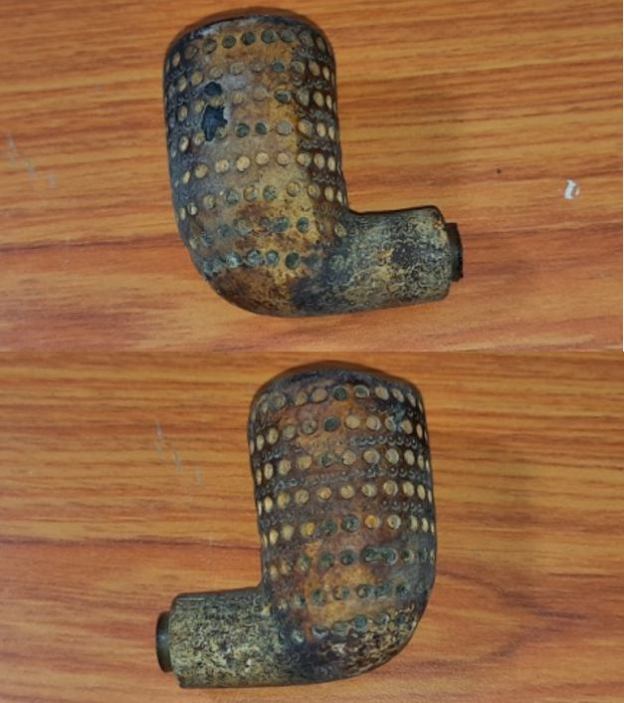
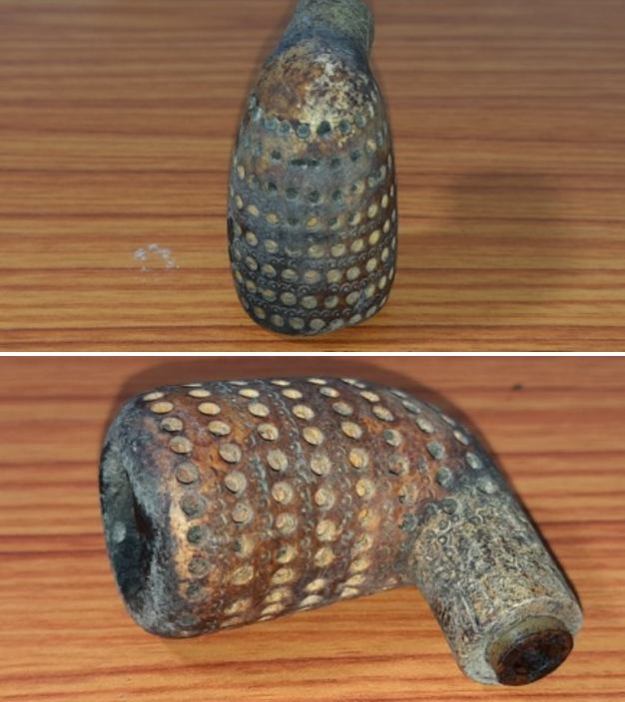
The second pipe that was selected by Karthik was this Meerschaum pipe that came to me in a lot of 40 pipes that Abha and I had purchased on Etsy in October 2019. The pipes in this lot that came to us were in a very sorry state of condition. All or rather 90% of the pipes had seen very heavy use and almost negligible care. Barring a few, none of the pipes attracted any attention at first glance. However, beneath all the grime and sorry condition that the pipes were in, as my friend Dal Stanton aka The Pipe Steward always says, each had great potential. There was something about this meerschaum pipe that called out to Karthik and it is now on my work table.

In November of 2020, I had restored the third pipe from this lot, a Meerschaum lined Orlik pipe that posed intimidating challenges during the restoration process. However, Dal and Steve helped me save this beautiful pipe. Given below is the link to the write up for those desirous to know; A Second Inning For A Meerschaum Lined Orlik Bent Brandy | rebornpipes
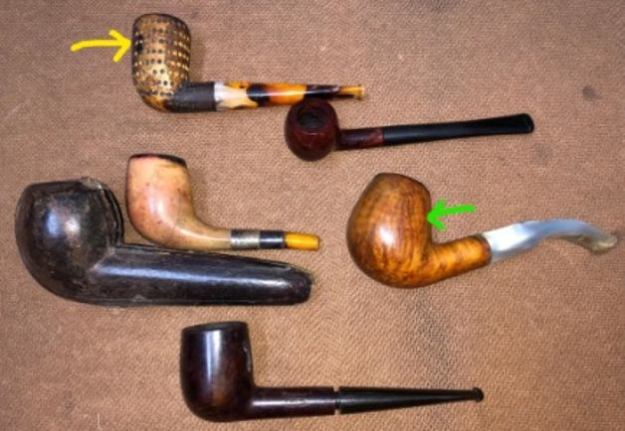
This then, is the fourth pipe from the lot of 40 and is indicated with a yellow arrow while the Meer lined Orlik is indicated in green.There is no stamping anywhere on either the shank or the stem to help with establishing the provenance of this pipe.

Before proceeding with the restoration of the pipes that were selected by Karthik, I had requested him to introduce himself to all the readers of Reborn pipes as a fellow piper and as one interested in pipe restoration. I am sanguine that we shall soon get to know and see his work. I have reproduced his mail here that I had received.

Hi Paresh sir,

Here’s my intro, hope it’s not too long:

Hello world! I’m Karthik, an engineer in India. I picked up pipe smoking last year as a way of staying off cigarettes, but have since fallen in love with the hobby itself. Living in India, I don’t have easy and immediate access to great pipes. So the idea of buying antiques and restoring them piqued my interest and I stumbled upon Reborn Pipes. As I read through post after post, I happened upon one of Paresh’s posts and both his name and his mention of Pune made me fall over myself in my rush to get in touch with him. I immediately emailed Steve, who graciously put me in touch with Paresh. Since then Paresh has been a great guide in my pipe smoking journey. Unfortunately I haven’t been able to start restoring any pipes myself, but I hope to get to that soon. In the meantime, Paresh generously showed me some of his collection and kept me in mind when he found something of interest. I hope to start down the path of restorations in the near future myself, with his guidance. 

 Regards,

Karthik

Definitely Karthik, together we shall learn and progress further.

With the introductions made, I move on to carry out initial inspection of the pipe.

Initial Visual Inspection
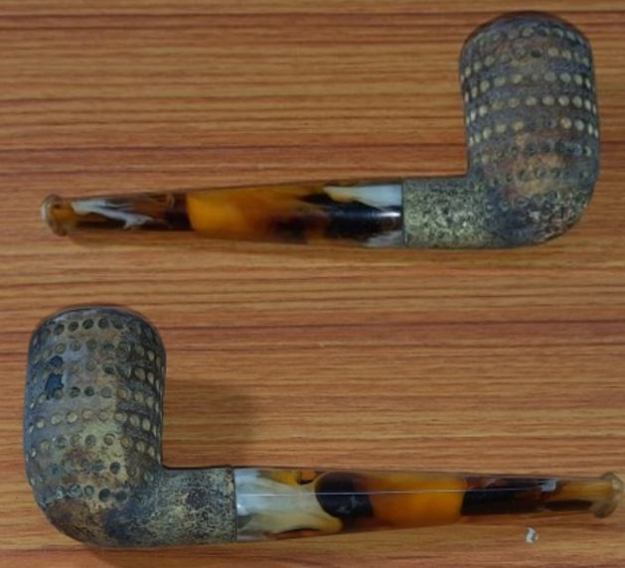
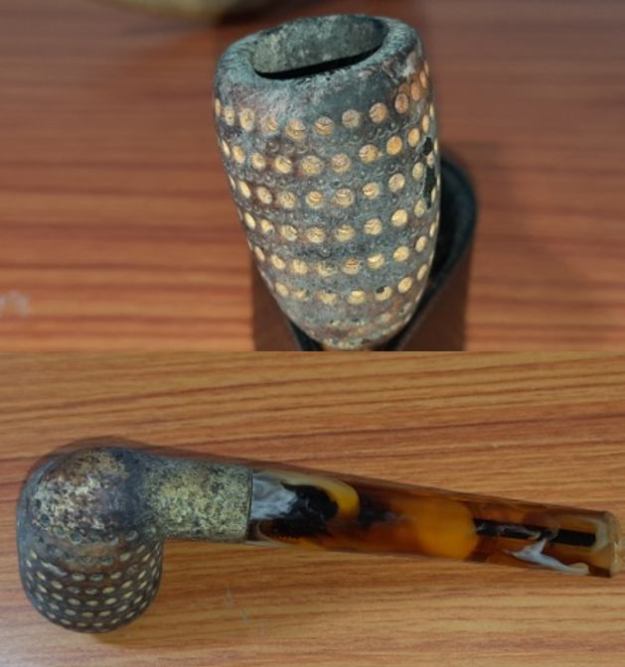
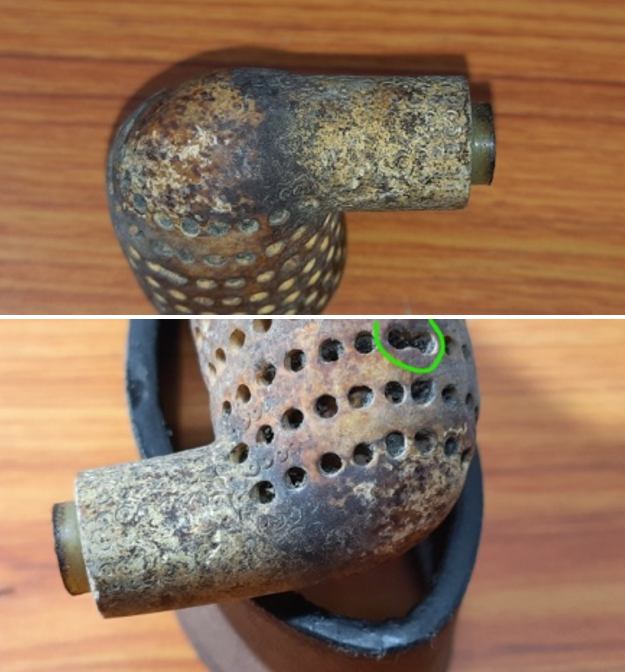
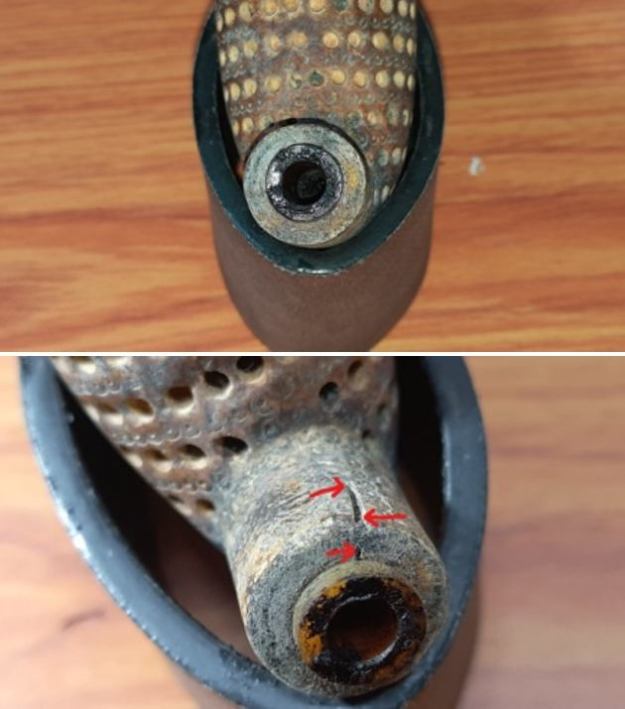
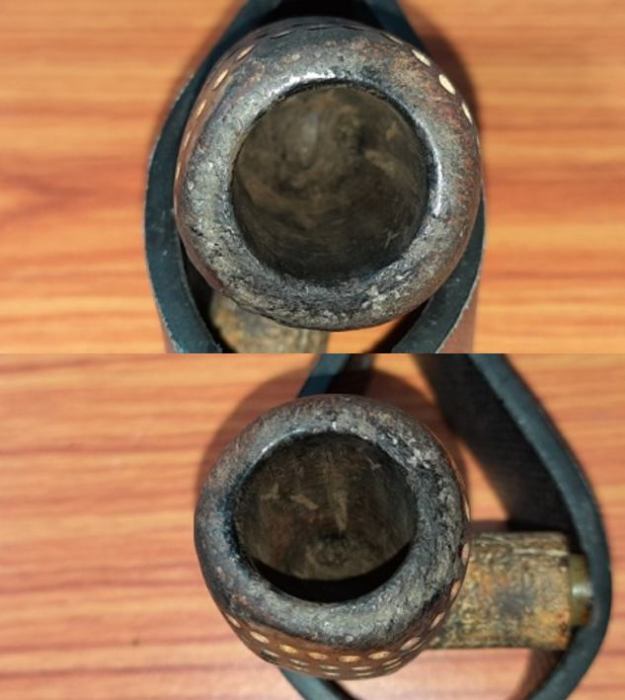
As with the other pipes from this lot, this one is also in a beat up condition. There is a thick layer of cake in the chamber with lava overflowing over the rim top surface. The rim top surface itself is badly damaged and is peppered with chips and dings/ dents. The stummel is covered in the grime of overflowing lava, dirt and dust. The perforations of the lattice design are filled with gunk from the lava overflow. A crack on the top surface at the shank end is easily discernible even to the naked eye. The stem airway appears black due to oils and tars but is devoid of any bite marks in the bite zone. Here are a few “Before” pictures of the pipe as it sits on the work table. Detailed Inspection
For me the detailed inspection is a deliberate act of great importance as it helps me understand the issues that needs to be addressed and formulate the sequence of steps in restoration.

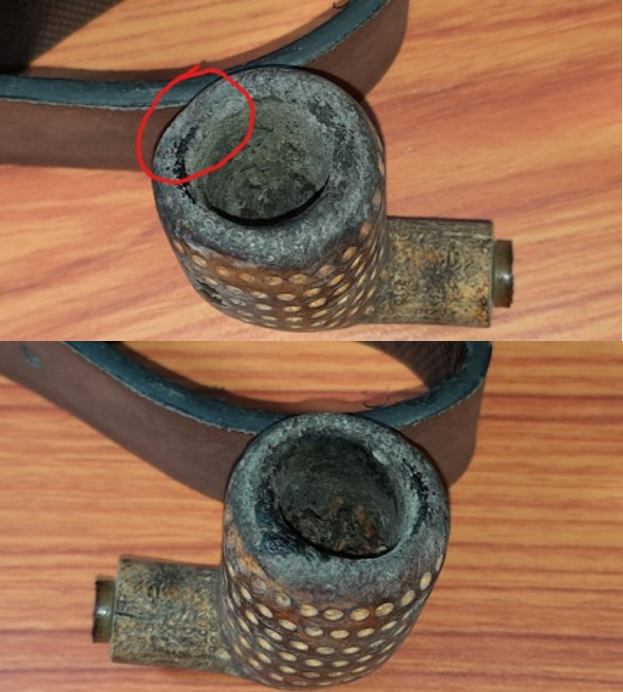
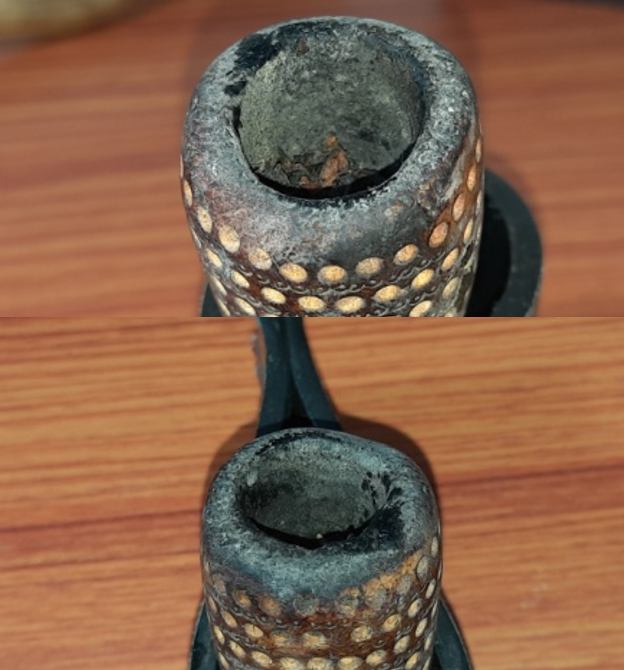
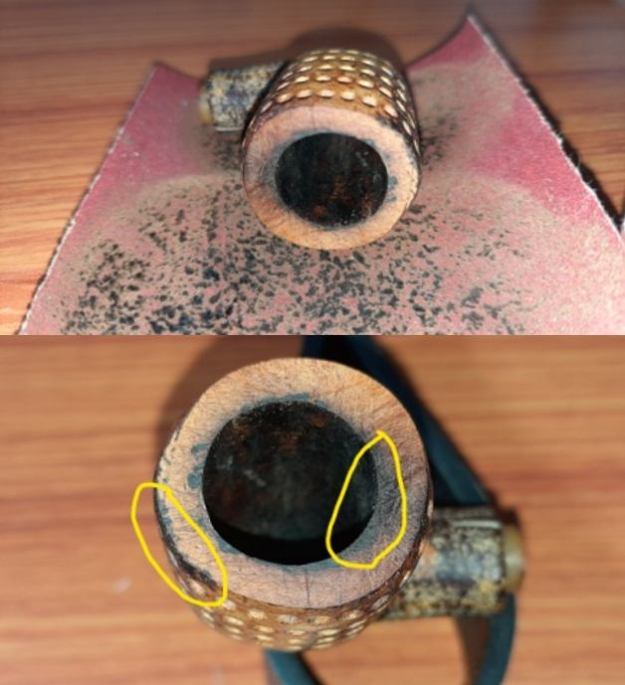
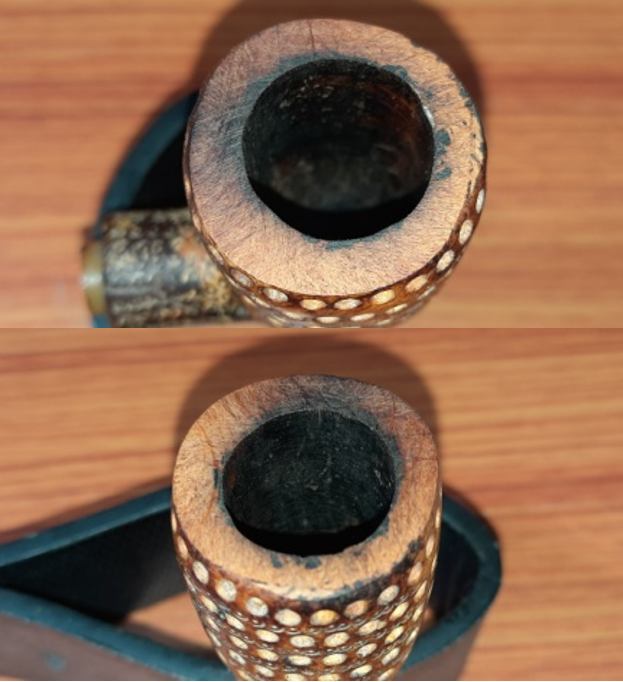
The chamber is heavily caked with copious amounts of lava overflowing the rim top and over the stummel surface. The chamber even has remnants of unburned tobacco. The rim top is of a convex shape and is heavily damaged with numerous dents and chips, probably caused due to knocking against a hard surface, the most severe being in the 12 o’clock direction (encircled in red). This damage has resulted in the chamber being out of round and the rim top, uneven. The condition of the inner walls of the chamber can be ascertained only after the cake has been removed completely; however, no apparent cracks or damage to the stummel surface is seen from the outside. The stummel surface is covered in lava overflow which in turn has attracted a ton of dirt, dust and grime. The stummel surface feels sticky to the touch and appears blotchy due to the patches of grime and dirt. The perforations of the lattice design are filled with gunk from the lava overflow and are damaged / broken in a couple of places (encircled in green). The shank surface too is covered in dirt and grime and is cracked (indicated with red arrows) over the upper surface to boot! Preliminary check with a pipe cleaner revealed that the mortise is ENTIRELY clogged with accumulated oils, tars and remnants of old tobacco. The only silver lining to this stummel is the gorgeous coloration that it has acquired over the years due to heavy smoking but well hidden beneath all the filth over the surface. The following pictures will provide a better visual perspective when compared to words, as to the condition of the stummel. The sordid tale of heavy use and uncared for condition of the stummel and mortise continues with the tapered acrylic variegated stem. The stem airway seems never to have experienced a pipe cleaner passing through it during its entire period of existence to date! It is blocked (can say that with certainty as a pipe cleaner did not pass through even ¼ of an inch from either stem openings) and appears black through the stem surface. The horizontal slot opening and the tenon opening shows heavy accumulation of old dried tars and gunk. The only saving grace is that the bite zone is devoid of any deep tooth indentations and bite marks over the button. Save for some minor superficial scratches, the bite zone is pristine.Overall, this is easily one of the filthiest pipes to be passing over my work table to date, but having said that, this pipe also has great pedigree and stummel coloration to die for, under all that filth.

The Process
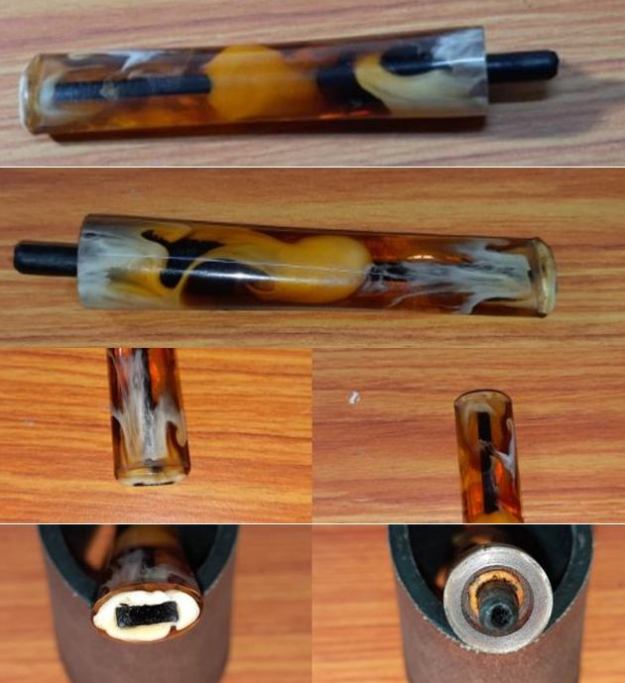
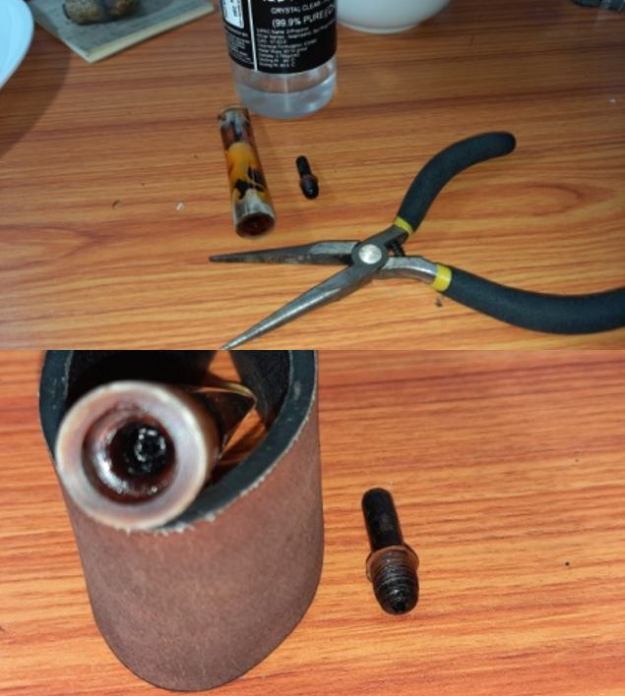
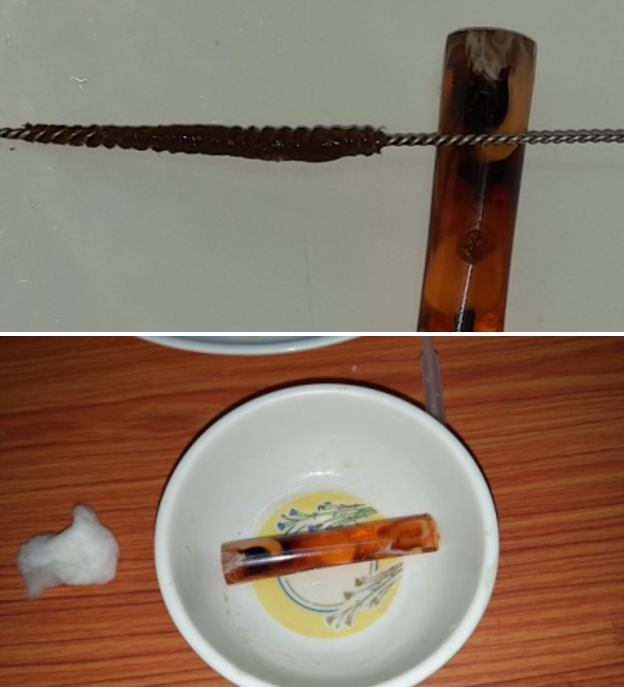
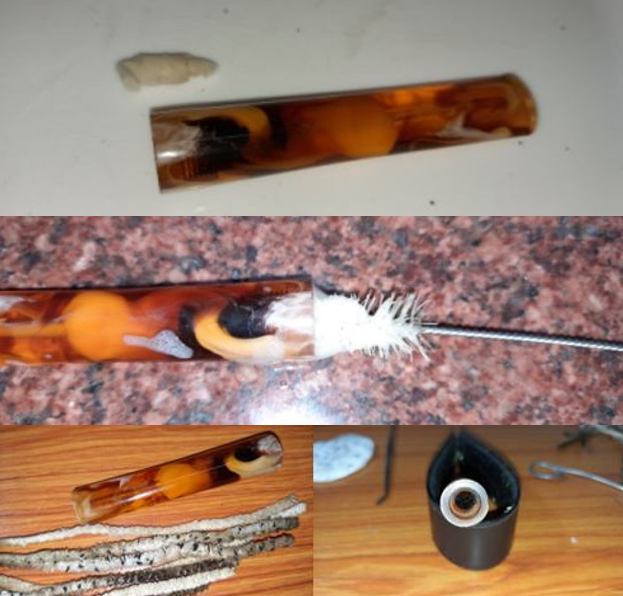
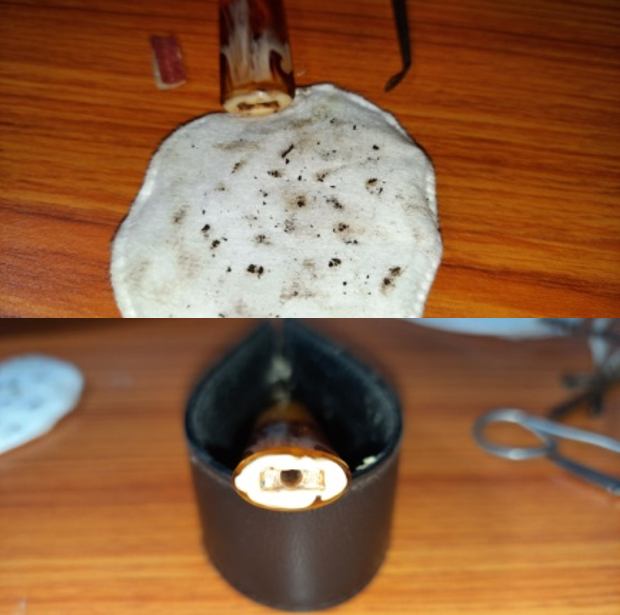
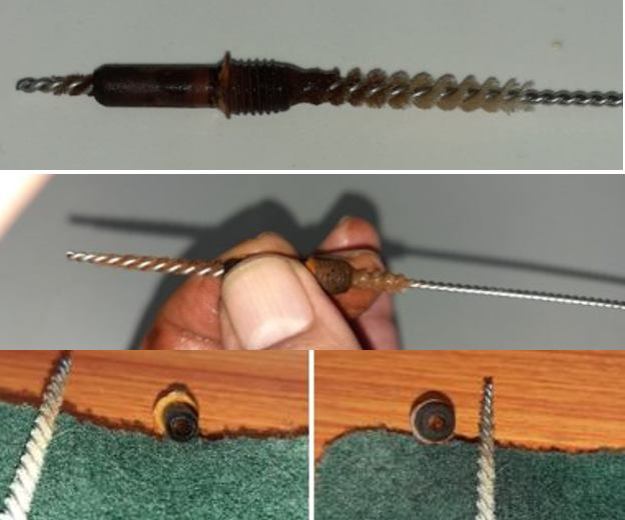
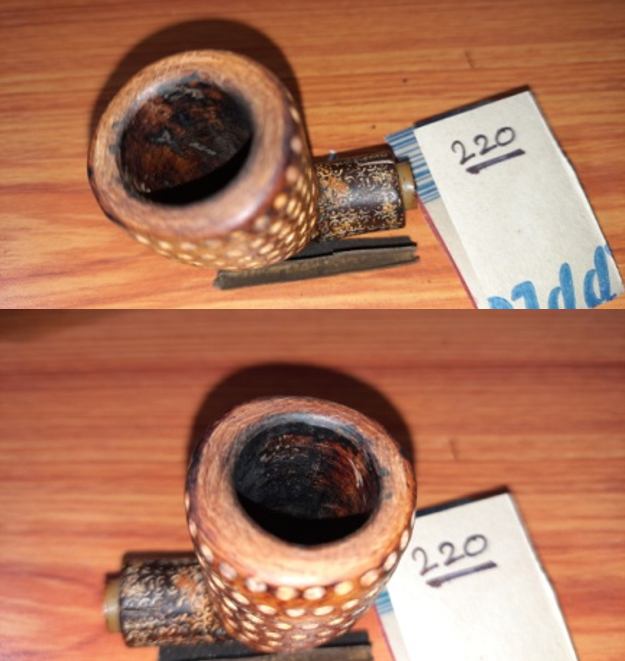
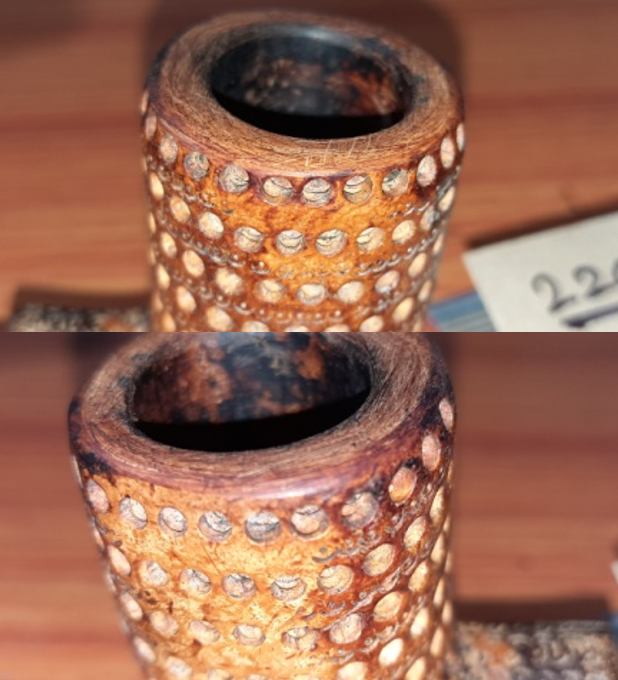
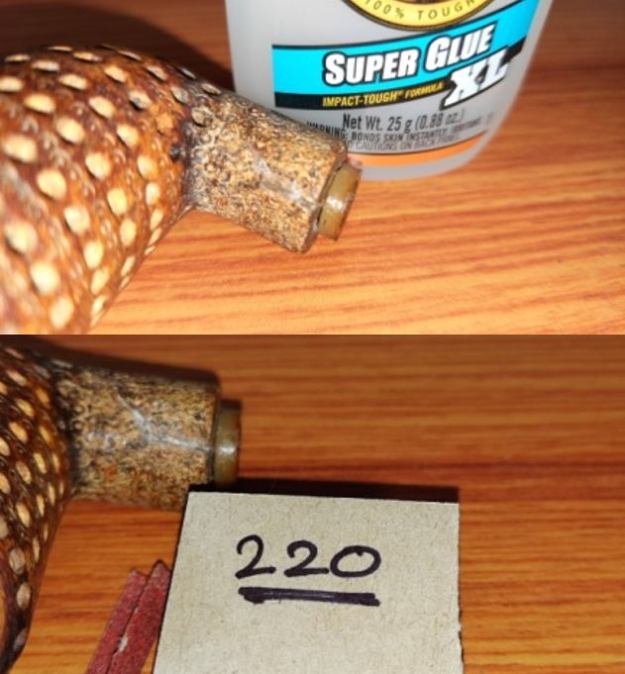
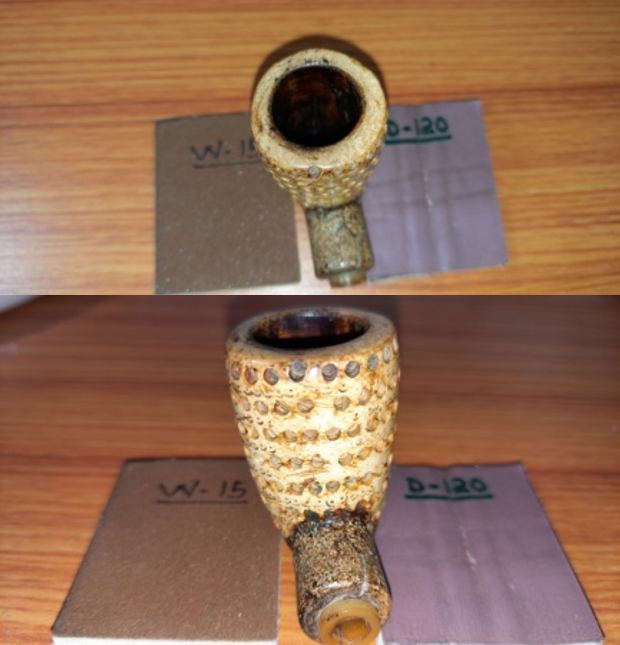
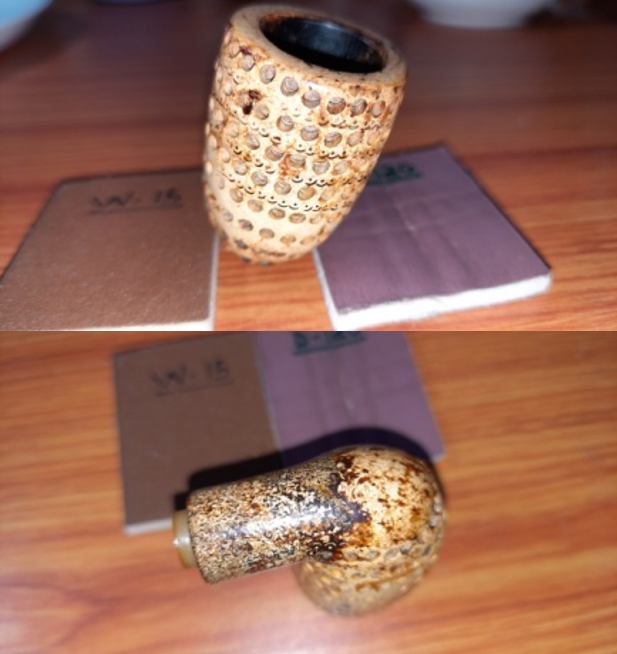
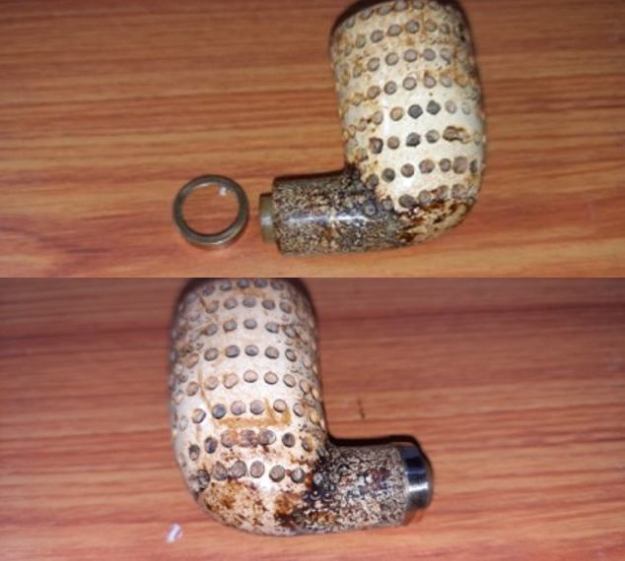
I decided to clean the stem first as I knew that it would take eons and tons of elbow grease to get the stem airway spotlessly clean. The first step towards achieving this goal was to get the screw- in tenon separated from the rest of the stem. I soaked the tenon end in isopropyl alcohol for a few minutes and once the dried oils and gunk had loosened, using nose pliers I unscrewed the threaded tenon from the stem. The now- gooey dirty, filthy mess that stared back from the tenon and stem made my stomach churn… I knew that we were in for some a haul on this stem. Here is what the stem and tenon looked like once they were separated.I launched a determined assault on the stem with a thin shank brush and anti-oil dish washing soap with the aim of cleaning the stem airway. Believe you me, the initial efforts in getting the shank brush out through the other end was beyond difficult. It took me the rest of the evening to get the shank brush moving through the airway with reduced resistance, a total of 6-7 hours. The next morning Abha, my wife, took over the cleaning of the stem from where I had left after she was done with her daily morning chores. Where, for a change, I had missed out on taking pictures for my last evening’s efforts, Abha did take a picture to show the gunk that was being cleaned from the stem airway. To further clean the threads at the tenon end of the stem, she placed a cotton ball soaked in lime juice for about 5 hours.While the tenon end of the stem was soaking in lime juice, I decided to clean up the stummel. I first removed the unburned tobacco and followed it by reaming the chamber with smallest head of the PipNet pipe reamer. I was extremely gentle and careful while using the reamer head since the centrifugal force generated by the rotation of the head inside the chamber may break the meerschaum, if the pressure applied is in excess or uneven. I followed it by scraping the walls of the chamber and the heel with my sharp fabricated knife to remove the residual cake. To smooth out the walls and completely rid the chamber of old cake, I sanded the chamber walls with a folded piece of 220 grit sand paper. It was heartening to note that the chamber walls were in pristine condition. I ran a sharp knife over the rim top surface with just about enough force to remove the lava overflow. It seems that I would have to top the rim surface to make it smooth and even, sacrificing the stummel profile to an extent. By the time I was through with the cleaning of the chamber, the stem had been soaking in the lime juice for about 6 hours since early afternoon and it was my turn to work on cleaning the stem. So I was back at the sink with a shank brush and anti oil dish washing soap as weapons of choice against the stubborn adversary in the form of a filthy stem. A few hours later, as if by magic, the foam turned white and I declared myself a winner! I ran a few pipe cleaners, both hard bristled and regular, to further clean and dry the airway and also clean the threaded end of the stem.I handed over the stem to Abha to clean the horizontal slot and for further sanding and polishing of the stem. Very painstakingly, with a dental tool she cleaned out the entire gunk from the slot end of the stem. It’s been two days that we had been battling the filthy stem and still the minor scratches in the bite zone and sanding/ polishing remains to be addressed!! Not to mention the threaded tenon!While Abha was cleaning the slot end of the stem, I next cleaned the tenon that was equally clogged up. The application of shank brush, anti- oil dish soap and tons of elbow grease spread over three hours cleaned out the tenon airway.Once I was through with the internal cleaning of the tenon, I cleaned the dried oils and tars from the exterior surface of the tenon with a Scotch Brite pad and anti- oil dish washing soap. I was very diligent while cleaning the exterior of the tenon and made sure that all the oils and gunk from the threads of the tenon were thoroughly cleaned. This will ensure smooth seating of the tenon threads into the stem and make its removal and subsequent cleaning a breeze. This piece of information and hint on cleaning is for you Karthik!With the tenon all cleaned up, it was time to clean the mortise and shank internals. Given the state that the stem internals and tenon were in, I had no doubts in my mind as to the condition that the shank internals would be like. And I was not disappointed to say the least. Using hard bristled and regular cleaners dipped in alcohol, I opened up the shank airway. Once the gunk had loosened a bit due to the alcohol, I scraped out the entire gunk with my fabricated curved tool. A few pipe cleaners dipped in alcohol passed through the shank again and I was satisfied with the cleaning job. The colored heap of pipe cleaners and the mound of gunk scraped out from the walls of the shank are proof enough of the filth that was in the shank.Now on to cleaning the exterior of the stummel surface! I wiped the exterior of the stummel with Murphy’s Oil soap on a cotton pad. For the most stubborn and deep seated gunk, I used a tooth brush with a dab of the oil soap. I used a soft wired brass wired brush to clean the rim top surface. I wiped the stummel surface with a soft moist cotton cloth to rid the stummel of the residual soap and cleaned out each and every perforation of the lattice design on the surface with my sharp and pointed dental tools. It was time consuming and laborious, but an essential part of cleaning the stummel surface. I was tempted a number of times to take the stummel to the sink and give it a thorough rinse under running water, but the fear of the meerschaum (not sure if it was solid block meerschaum or pressed meer) disintegrating in my hands prevented me from doing so. The stummel color is now amply evident and shows huge promise and potential. Micromesh pad polishing cycle and a dab of beeswax will further enhance the appearance of the stummel. While I was battling with cleaning the shank internals and exterior of the stummel, in her corner Abha was unobtrusively and quietly working on sanding and polishing the stem. She sanded the stem surface with 400, 600, 800 and 1000 grit sand papers to eliminate the scratches from the surface of the stem. Progressive use of finer grit sand papers helps in reducing the scratch marks left behind by the coarser grit sand papers. She finished the polishing cycle by going through the entire set of micromesh pads, wet sanding with 1500 through to 12000 grit pads. The polished stem looks amazing and should add a dash of sparkle to the entire pipe once the stummel is put through its paces of polishing and waxing. Continuing my battle with the stummel, I topped the rim over a piece of 220 grit sand paper by slowly rotating the rim over the sand paper to address the badly damaged and deformed rim top surface. Though the profile of the stummel was altered to an extent, it was a necessary evil that was inescapable to get the chamber in round and even. Even though the rim top is now clean and even, considerable darkening of the inner rim edge in 6 o’clock direction and to the outer edge in 11 o’clock direction (enclosed in yellow) is prominently visible and would need to be addressed. Also the rim top is thick towards the shank end as compared to the thickness of the rim at the front.To address both the above mentioned issues with the rim top, I created a nice bevel over both the inner and outer rim edges with a piece of 220 grit sand paper pinched between my fingers. I am pretty happy with the appearance of the entire stummel and the rim top in particular at this point.The only other issue that remained to be addressed before progressing to the polishing of the stummel was that of the deep crack at the shank end. I filled the crack with thick CA superglue and pressed the shank ends closer for a tight and seamless fit with my rubberized pliers. I held the shank end together (for a good 30 minutes!!) till the glue had hardened sufficiently and set it aside to cure overnight. The next afternoon, using a folded piece of 220 grit sand paper, I sanded away the excess glue to match the shank surface. The repairs are now solid and will be further strengthened by adding a brass ring over the shank end to prevent it from expanding and cracking open again at a later date.With stummel repairs all completed, I handed over the stummel to Abha for her to work her magic in polishing the stummel. She dry sanded the entire stummel with 1500 to 12000 grit micromesh pads preparing it for the beeswax polish.Before I moved ahead with treating the stummel to a beeswax polish, I attached a tight fitting brass ring over the shank end. This brass ring would provide additional structural rigidity to the shank end and prevent the opening of the seams of the crack on the shank end during its subsequent use.During the course of my journey through the wonderful world of pipe restorations, I have restored a few Meerschaums and each had turned out to be a beautiful pipe. However, none was ever treated to a polish using beeswax, not for any other reason but only because I did not and could not get any beeswax here in India. Recently, while surfing Amazon India, I came across slab of pure organic beeswax and promptly purchased it in sufficient quantity to last me for a very long time. To cut the ramblings short, before proceeding with the polishing of the stummel, I read through a number of blogs on Reborn pipes, The Pipe Steward and also the write ups posted by Charles Lemon of Dads Pipes to understand the nuances of the process of applying beeswax over meerschaum pipes. Once I had chalked out the process I would be following within the constraints faced, I proceeded with applying wax over the stummel of one of my personal meer pipes as a test piece.

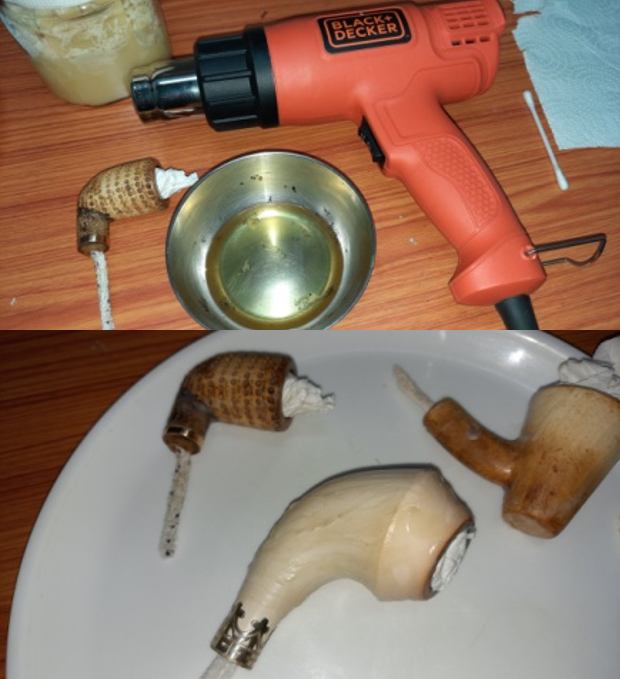
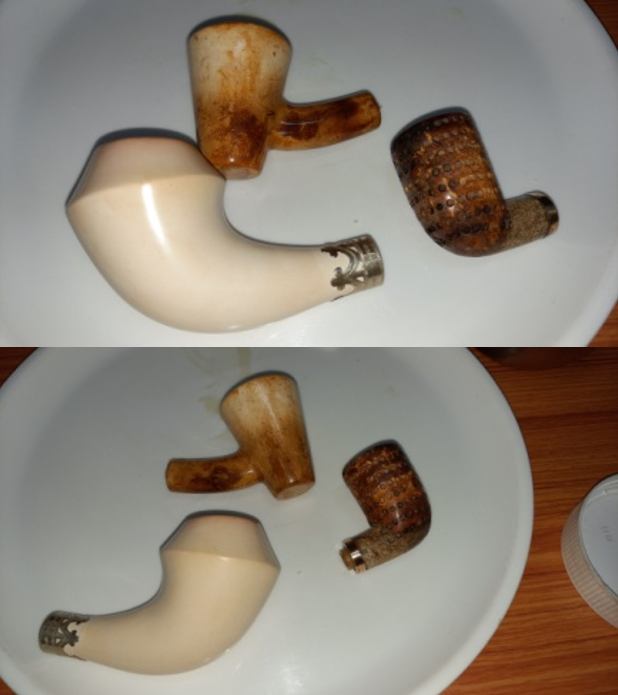
Firstly, I assembled the equipment and materials that would be needed during the process viz heat gun, paper towels, q-tips and a Katori, a steel container graciously lent by Abha from the kitchen and of course, beeswax. I stuffed the chamber with paper towels and the mortise with a folded pipe cleaner to prevent inadvertent seepage of the melted beeswax into either. Next, I melted a sufficient quantity of beeswax in the katori using my heat gun and thereafter heated the stummel. Using the q- tip, I completely coated the stummel with the wax and continued the application till the surface was saturated and set the stummel aside. Having gained sufficient confidence, I applied the wax to Karthik’s meerschaum pipe and another of my expensive meerschaum pipes setting the three pipes aside for the stummel to absorb the wax. I reheated the stummel with the heat gun a few minutes later and let the excess wax either be absorbed or drip off from the stummel surface. The deep golden brown coloration that the meerschaum has taken is a visual treat, especially on the two older meerschaums. The lattice design pipe has taken on a beautiful color that is to die for, it’s really a beautiful pipe and Karthik has chosen well.I rubbed of the excess wax with a soft cotton cloth and brought a deep shine to the surface with a microfiber cloth. The deep dark chocolaty golden brown coloration to the stummel contrasts splendidly with the shining variegated colorful stem and makes for a better visual treat in person than what is seen in the pictures below. I hope Karthik likes it as much as I did and that he enjoys this pipe for years to come. P.S. – This was the last of the three pipes that Karthik had selected; a Pete System pipe which I had posted earlier, this stack Meerschaum pipe and the third was a chubby Comoy’s Monaco Rhodesian pipe that I had restored a couple of years earlier. These will soon be in the hands of this connoisseur of beautiful pipes and would love to see him smoke them filled with his favorite tobacco.

And yes, I take this opportunity to thank Karthik for seeing the beauty that lay hidden beneath all the dirt and selecting this pipe which otherwise would have been lying around at the bottom of the pile of pipes for restoration. Here is a picture of the three pipes that are on their way to Bangalore…Sincere gratitude to all the readers who have shared this part of my journey in to the world of pipe restoration…Cheers!!


This Castello Sea Rock Briar KKKK 65 Ticks All of My Boxes


Blog by Steve Laug

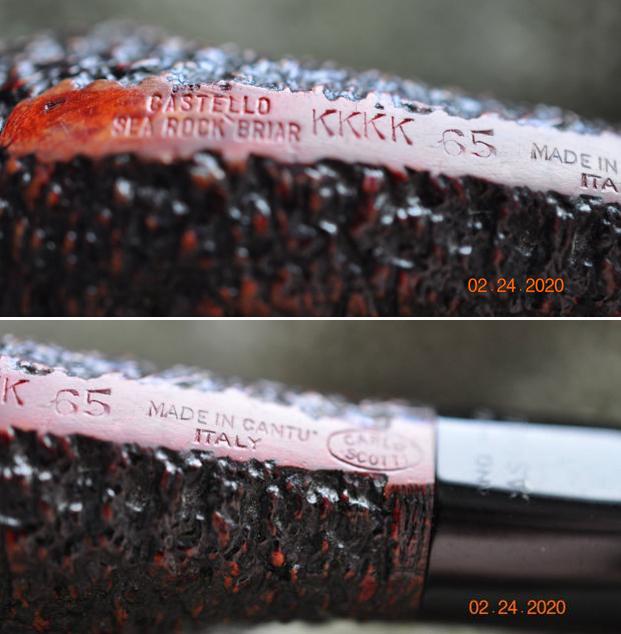
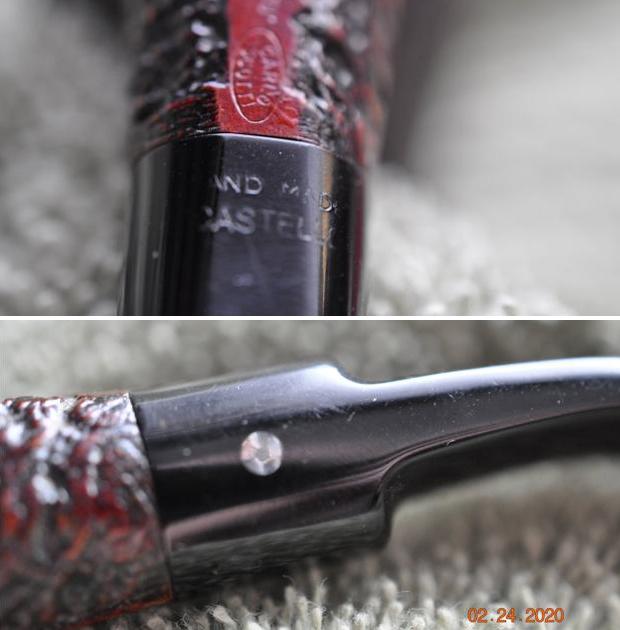
It is another hot day in Vancouver with just some afternoon meetings. After a long week I decided to take bit of time this morning for myself. It is hot enough that I went to the cool of the basement to work on pipes. The next pipe on the table is another one that came to us from the auction in Gonzales, Louisiana, USA. The first one, a Castello Sea Rock Briar KKK16 Billiard, I cleaned up and wrote a blog about yesterday (https://rebornpipes.com/2021/06/24/i-really-love-these-castello-sea-rock-briar-pipes-a-sea-rock-briar-kkk16/). This next one is a Castello Sea Rock Briar and it is what Castello calls a Bent Billiard shape though to me it is like a bent egg. It is a pipe that I like so well that I am cleaning it up for myself. It is stamped on the smooth shank bottom and reads Castello [over] Sea Rock Briar followed by KKKK65. That is followed by Made in Cantu [over] Italy followed by an oval containing the name Carlo Scotti next to the stem shank union. The Castello “diamond” inset is on the left side of the saddle stem letting me know this was a pipe made for US import. On the underside of the stem it is stamped Hand Made [over] Castello with no number. The bowl had a heavy cake and there was thick lava overflow on back top side and inner edge. It was hard to know if there was burn damage on the smooth rim top because of the lava but after cleaning it we would know for sure. The rusticated finish was pretty dirty with dust and grime when we got it but still showed promise. The acrylic stem had deep tooth marks and chatter on both sides near the button. The edges of the button were also marked. Jeff took the following photos of the pipe before he worked his magic on them. The pipe must have been a terrific smoker because the bowl was so heavily caked with the thick lava flowing over the rim top. In its condition it was going to take some work to clean out that bowl and be able to see what the rim looked like underneath the layer of lava. The acrylic/Lucite stem was in good condition other than the deep tooth marks and chatter on both sides of the stem just ahead of the button and on the button surface itself. The rest of the bowl looked dirty but the photos give an idea of what Jeff saw before his cleanup revealed the condition of the pipe. The next photos try to capture the stamping on the flat panel on the underside of the shank. It read as I have noted above. The stem also bears a Hand Made Castello stamp on the underside. Jeff cleaned the pipe with his usual regime that many who read this probably have memorized. He reamed the bowl with a PipNet pipe reamer and cleaned up the remnants with a Savinelli Fitsall Pipe Knife. He scrubbed the internals of the bowl, shank and stem with alcohol, cotton swabs and pipe cleaners. He scrubbed the exterior with Murphy’s Oil Soap to clean off the dust and grime on the rusticated Sea Rock finish. The smooth rim top looked very good under the thick lava coat. The inside of the bowl itself looked great. He scrubbed the stem with Soft Scrub cleanser to remove the grime and grit. The stem was in great shape other than the tooth marks on both sides. It really is a beautiful looking rusticated pipe. I took photos of the pipe when it arrived here. I took some close up photos of the rim top, bowl and stem to show what they looked like after Jeff’s cleanup. It is a startling difference. The rim top looks very good. The stem also looks very good.I took a photo of the stamping on the underside of the shank and the stem. It is clear and readable as noted above.I removed the stem from the shank and took a photo of the pipe to show the proportions of the bowl/shank and the stem length. I cannot seem to retain the details on Castello pipes in my head for long for some reason. The stamping on them – Castello and the Carlo Scotti stamp were things that I wanted to makes sure I understand before I began to work on the pipe. I turned to Pipephil’s site to get a quick summary (http://www.pipephil.eu/logos/en/logo-castello.html). I quote:

Castello PIPA CASTELLO di Carlo Scotti & C. was founded in 1947 by Carlo Scotti (†1988). Franco Coppo (AKA “Kino”) who married Carlo Scotti’s daughter Savina, manages (2012) the corporate since 1985.

The site also gave a good summary of the grading and sizes of the pipes. I quote that in full.

Sizes (ascending):

1K to 4K, G (Giant) and GG (Extra large)

Rusticated grading: SEA ROCK, OLD SEA ROCK, NATURAL VIRGIN,

Sandblasted grading: ANTIQUARI, OLD ANTIQUARI

Smooth grading (ascending): TRADEMARK, CASTELLO, COLLECTION

Other stampings: Great Line (Non-standard or freestyle) Fiammata (Straight grain)

Production (2012): ~4000 pipes / year

I also found a note on the page that the Rhinestone logo was originally on pipes for the US market. It is occasionally used now.

I turned then to Pipedia for more information on the brand (https://pipedia.org/wiki/Castello). The majority of the information was what was already quoted above in abbreviated form. However there was a link to an article by Bob Hamlin that gave some interesting bits of information that I found helpful (http://www.pipes.org/BURST/FORMATTED/196.016.html). I quote in part from that article.

SEA ROCK [Carved Black or dark brown]:  This is the lowest grade of the Castello line and is the most common in the USA.  Sea Rocks are produced by taking a smooth bowl that has not been “final finished” and surface carving the finish with tools. This “carved” finish is then evened out using a steel wire brush, stained and then waxed. The Natural Vergin carved finish is left unstained and unwaxed as a rule, although we have seen waxed and partially waxed “Vergins”.

All carved Castello pipes are graded by the number of K’s that are stamped on each piece and are K-graded by SIZE.  1K is the smallest and fairly rare, 2K is small to medium, with 3K or 4K being the most common and ranges from medium to medium large. Large pieces are stamped “G” for giant and extra large pieces are stamped “GG” for double giant.  In addition to the number of K’s on a carved Sea Rock piece the shape number is almost always added.  As a rule a Sea Rock Castello is stained Black, although recently there have been quite a few coming in stained deep brown and still stamped “Sea Rock”.  American Logo’d Sea Rocks are all priced the same to the consumer, although most are 2 or 3 K’ed models.  G/GG models are charged at a higher price on American pieces and are basically the same as their European counterparts.

The Castello Sea Rock briar I was working on had the 4Ks of a Medium Large sized pipe. It definitely was made for the American Market with the Rhinestone in the stem. It had the black/dark brown finish. The 4K stamp told me that it came out in the late 1960s onward and was a mid-large sized pipe from that time period. The number 65 makes it a Bent Billiard.

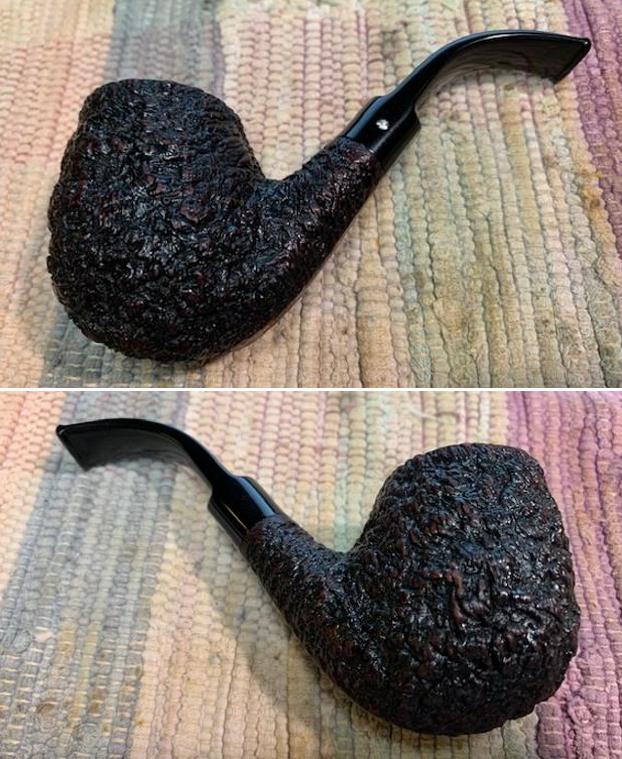
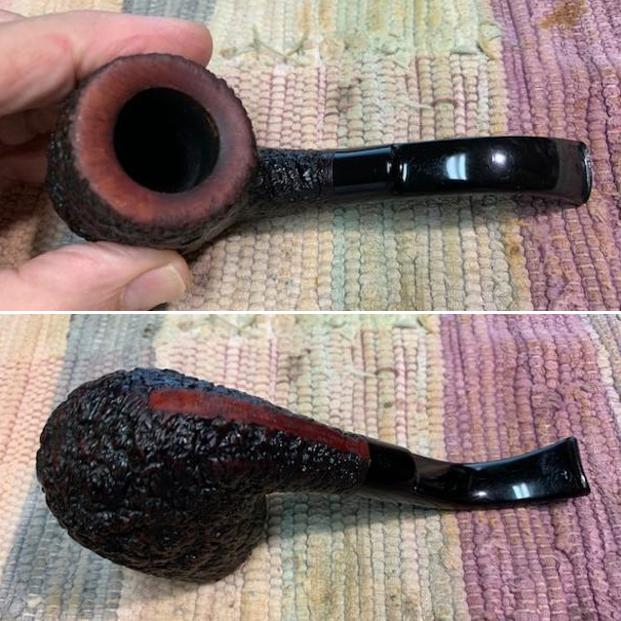
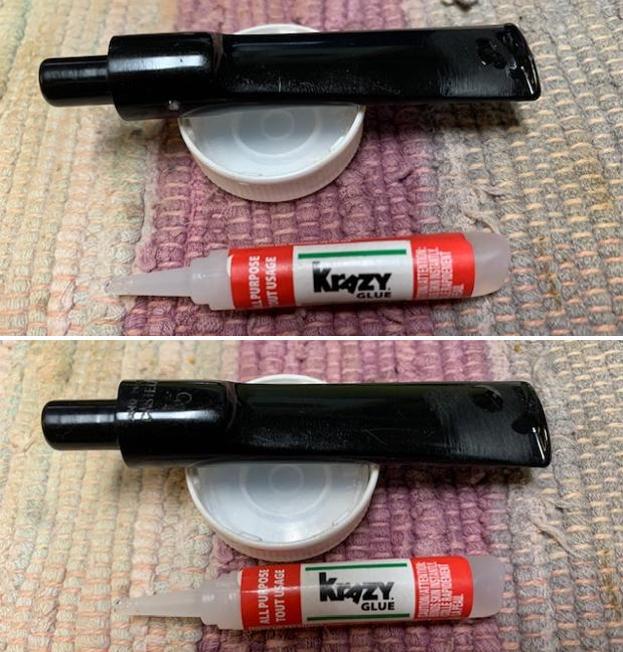
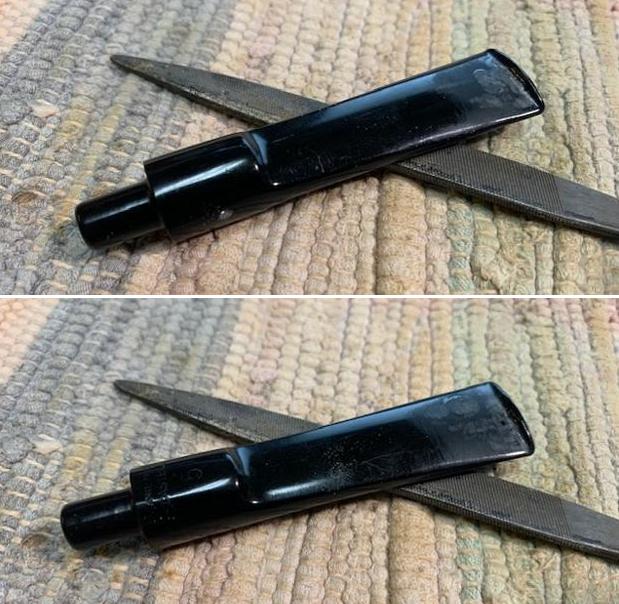
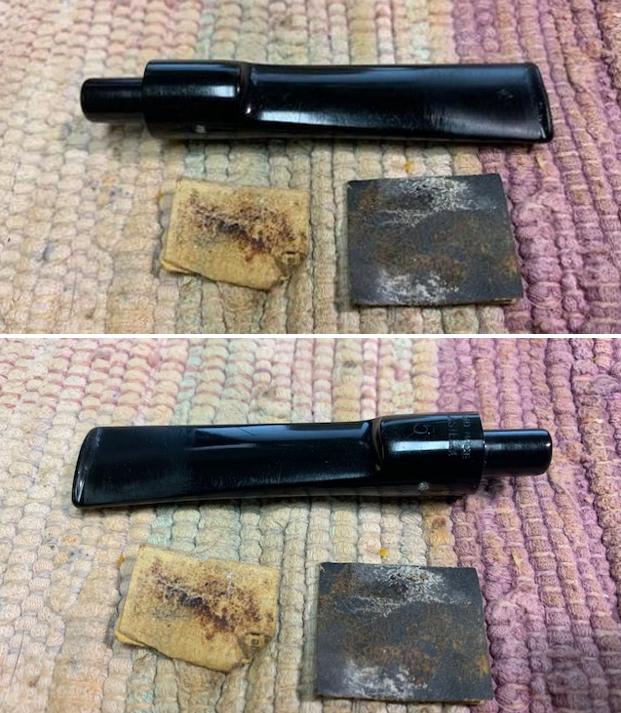
I decided to work on the stem first and try to remove and repair the tooth marks on both sides of the acrylic stem. Since acrylic does not have “memory” like vulcanite I did not try painting the stem surface. I sanded down the chatter in preparation for repairing the tooth marks. I filled in the tooth marks with clear CA glue. Once the repairs cured I used a small file to flatten them out and recut the sharp edge of the button. To blend in the repairs I sanded the stem with 220 grit sandpaper and started the polishing with 400 grit wet dry sandpaper. I polished the stem with 1500-12000 grit pads. I dry sanded it with the pads and wiped it down with a damp cloth after each sanding pad. I finished polishing the stem with Before & After Pipe Polish – both Fine and Extra Fine polishes. I wiped the stem down with a damp cotton pad afterwards and buffed it with a soft microfiber cloth. I set the stem aside and turned my attention to the bowl. I polished the smooth rim top with micromesh sanding pads -1500-12000 grit pads. I wiped the rim top down with a damp cloth between each sanding pad. The rim top began to really shine. I worked some Before & After Restoration Balm into the rusticated Sea Rock finish on the bowl and the rim top. I worked it into the surface of the briar with my fingertips and a horsehair shoe brush to clean, enliven and protect the wood. Once the bowl was covered with the balm I let it sit for about 20 minutes and buffed it off with a soft cotton cloth and the shoe brush. I polished it with a microfiber cloth. I took photos of the pipe at this point in the process to show what the bowl looked like at this point. I put the bowl and stem back together on this beautiful Castello Sea Rock Briar KKKK 65 Bent Billiard. I polished the stem with Blue Diamond to polish out the scratches in the Lucite. I gave the bowl multiple coats of Conservator’s Wax and the stem multiple coats of carnauba wax. I buffed the pipe with a clean buffing pad to raise the shine. I hand buffed it with a microfiber cloth to deepen the shine. The pipe polished up pretty nicely. The contrast of the blacks and dark browns of the briar with the polished black acrylic/Lucite is quite stunning. The dark, coral like rustication around the bowl and shank is quite remarkable and gives the pipe an incredible tactile presence that only improves as it heated from a smoke. The finished pipe is shown in the photos below. The dimensions of the pipe are Length: 5 inches, Height: 2 ¼ inches, Outside diameter of the bowl: 1 ½ inches, Chamber diameter: ¾ of an inch. The pipe weighs 67grams/2.36oz. This is a beauty that will be staying with me as it ticks off all the boxes of a Castello that I have been watching out for. Thanks for walking through the restoration with me. I always enjoy working on Castello pipes. Cheers.

I really love these Castello Sea Rock Briar pipes – a Sea Rock Briar KKK16


Blog by Steve Laug

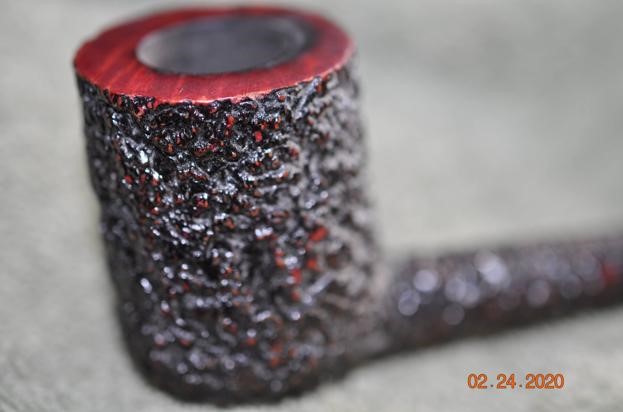
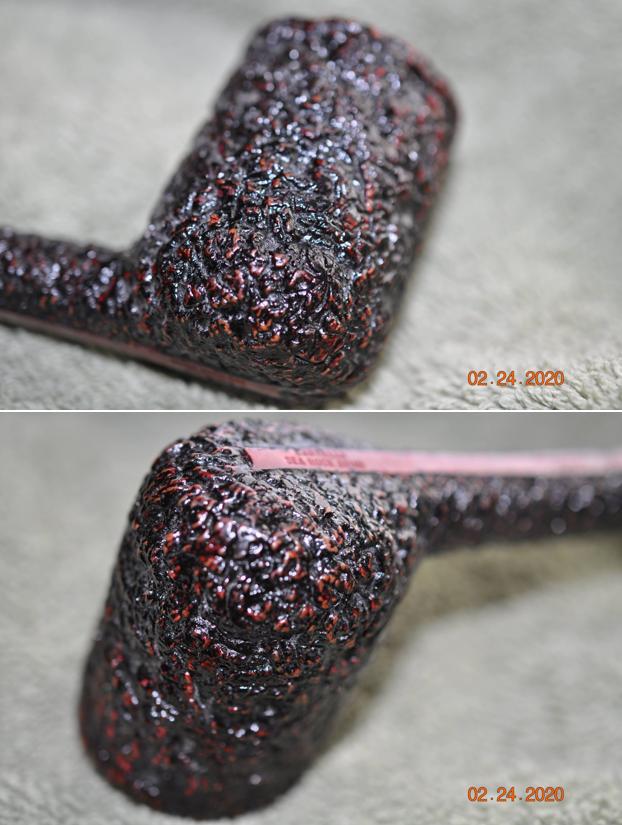
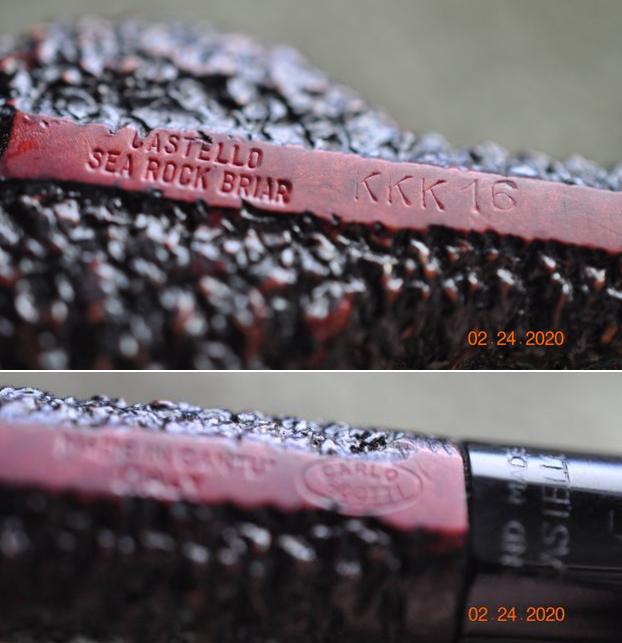
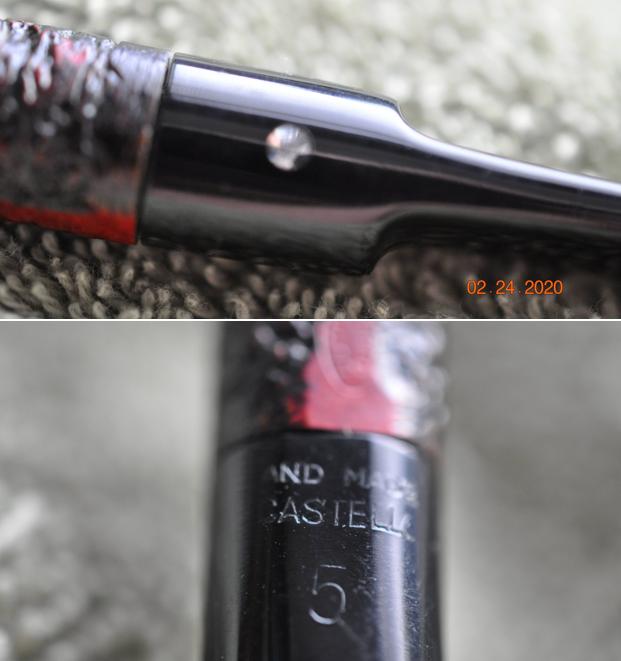
It has been a long hot day in Vancouver with lots of meetings and work all day. It is hot enough that once I quit for the day I decided to go to the cool of the basement and work on pipes. The next pipe on the table came to us from an auction in Gonzales, Louisiana, USA.  It is a Castello Sea Rock Briar and it is a Billiard shape to – both pluses in my book. It is stamped on the smooth heel of the bowl and the shank bottom and reads Castello [over] Sea Rock Briar followed by KKK16. That is followed by Made in Cantu [over] Italy followed by an oval containing the name Carlo Scotti next to the stem shank union. The Castello “diamond” inset is on the left side of the tapered stem letting me know this was a pipe made for US import. On the underside of the stem it is stamped Hand Made [over] Castello [over] 5. The bowl had a moderated cake in it and there was lava overflow back top side and inner edge. It was hard to know if there was burn damage on the smooth rim top because of the lava but after cleaning it we would know for sure. The rusticated finish was pretty dirty with dust and grime when we got it but still showed promise. The acrylic stem had deep tooth marks, scratching and chatter on both sides near the button. The edges of the button were also marked. Jeff took the following photos of the pipe before he worked his magic on them. The pipe must have been a terrific smoker because the bowl was moderately caked with lava flowing over the rim top. In its condition it was going to take some work to clean out that bowl and be able to see what the rim looked like underneath the layer of lava. The acrylic/Lucite stem was in good condition other than the tooth chatter and marks in the top and underside of the stem just ahead of the button. The rest of the bowl looked dirty but the photos give an idea of what Jeff saw before his cleanup revealed the condition of the pipe. The next photos try to capture the stamping on the flat panel on the underside of the shank. It read as I have noted above. The stem also bears a Hand Made Castello 5 stamp on the underside.   Jeff cleaned the pipe with his usual regime that many who read this probably have memorized. He reamed the bowl with a PipNet pipe reamer and cleaned up the remnants with a Savinelli Fitsall Pipe Knife. He scrubbed the internals of the bowl, shank and stem with alcohol, cotton swabs and pipe cleaners. He scrubbed the exterior with Murphy’s Oil Soap to clean off the dust and grime on the rusticated Sea Rock finish. The smooth rim top looked very good under the thick lava coat. The inside of the bowl itself looked great. The stem was in great shape other than the tooth marks on both sides. It really is a beautiful looking rusticated pipe. I took photos of the pipe when it arrived here. I took some close up photos of the rim top, bowl and stem to show what they looked like after Jeff’s cleanup. It is a startling difference. The rim top looks very good. The stem also looks very good.I took a photo of the stamping on the underside of the shank and the stem. It is clear and readable as noted above. I removed the stem from the shank and took a photo of the pipe to show the proportions of the bowl/shank and the stem length.I cannot seem to retain the details on Castello pipes in my head for long for some reason. The stamping on them – Castello and the Carlo Scotti stamp were things that I wanted to makes sure I understand before I began to work on the pipe. I turned to Pipephil’s site to get a quick summary (http://www.pipephil.eu/logos/en/logo-castello.html). I quote:

Castello PIPA CASTELLO di Carlo Scotti & C. was founded in 1947 by Carlo Scotti (†1988). Franco Coppo (AKA “Kino”) who married Carlo Scotti’s daughter Savina, manages (2012) the corporate since 1985.

The site also gave a good summary of the grading and sizes of the pipes. I quote that in full.

Sizes (ascending):

1K to 4K, G (Giant) and GG (Extra large)

Rusticated grading: SEA ROCK, OLD SEA ROCK, NATURAL VIRGIN,

Sandblasted grading: ANTIQUARI, OLD ANTIQUARI

Smooth grading (ascending): TRADEMARK, CASTELLO, COLLECTION

Other stampings: Great Line (Non-standard or freestyle) Fiammata (Straight grain)

Production (2012): ~4000 pipes / year

I also found a note on the page that the Rhinestone logo was originally on pipes for the US market. It is occasionally used now.

I turned then to Pipedia for more information on the brand (https://pipedia.org/wiki/Castello). The majority of the information was what was already quoted above in abbreviated form. However there was a link to an article by Bob Hamlin that gave some interesting bits of information that I found helpful (http://www.pipes.org/BURST/FORMATTED/196.016.html). I quote in part from that article.

SEA ROCK [Carved Black or dark brown]:  This is the lowest grade of the Castello line and is the most common in the USA.  Sea Rocks are produced by taking a smooth bowl that has not been “final finished” and surface carving the finish with tools. This “carved” finish is then evened out using a steel wire brush, stained and then waxed. The Natural Vergin carved finish is left unstained and unwaxed as a rule, although we have seen waxed and partially waxed “Vergins”.

All carved Castello pipes are graded by the number of K’s that are stamped on each piece and are K-graded by SIZE.  1K is the smallest and fairly rare, 2K is small to medium, with 3K or 4K being the most common and ranges from medium to medium large. Large pieces are stamped “G” for giant and extra large pieces are stamped “GG” for double giant.  In addition to the number of K’s on a carved Sea Rock piece the shape number is almost always added.  As a rule a Sea Rock Castello is stained Black, although recently there have been quite a few coming in stained deep brown and still stamped “Sea Rock”.  American Logo’d Sea Rocks are all priced the same to the consumer, although most are 2 or 3 K’ed models.  G/GG models are charged at a higher price on American pieces and are basically the same as their European counterparts.

The Castello Sea Rock briar I was working on had the 3K’s of a Medium sized pipe. It definitely was made for the American Market with the Rhinestone in the stem. It had the dark brown finish. The shape number still needed to be determined.

Pipedia also gave a link to Mike’s Briar Blues site for help in dating and determining shapes (http://www.briarblues.com/castello.htm). I quote a section on the shape numbers.

Shape numbers. Shape numbers are all 2 digits. A 2 in front indicates a “fancy” interpretation, a 3 in front means that the carving is somehow unique. I don’t know when the change was made, but currently, a π symbol is used instead of the 3xx. I’ve only seen this on Sea Rocks, but that doesn’t mean anything…

Now I had more information to work with. The Castello Sea Rock in my hands 3K graded. That told me that it came out in the late 1960s onward. The 3K stamp makes it a mid-sized pipe from that time period. The number 16 makes it a straight shank billiard.

I decided to work on the stem first and try to remove and repair the tooth marks on both sides of the acrylic stem. Since acrylic does not have “memory” like vulcanite I did not try painting the stem surface. I sanded down the chatter in preparation for repairing the tooth marks. I filled in the tooth marks with clear CA glue. Once the repairs cured I used a small file to flatten them out and recut the sharp edge of the button. To blend in the repairs I sanded the stem with 220 grit sandpaper and started the polishing with 400 grit wet dry sandpaper.   I polished the stem with 1500-12000 grit pads. I dry sanded it with the pads and wiped it down with a damp cloth after each sanding pad. I finished polishing the stem with Before & After Pipe Polish – both Fine and Extra Fine polishes. I wiped the stem down with a damp cotton pad afterwards and buffed it with a soft microfiber cloth. I set the stem aside and turned my attention to the bowl. I polished the smooth rim top with micromesh sanding pads -1500-12000 grit pads. I wiped the rim top down with a damp cloth between each sanding pad. The rim top began to really shine. I worked some Before & After Restoration Balm into the rusticated Sea Rock finish on the bowl and the rim top. I worked it into the surface of the briar with my fingertips and a horsehair shoe brush to clean, enliven and protect the wood. Once the bowl was covered with the balm I let it sit for about 20 minutes and buffed it off with a soft cotton cloth and the shoe brush. I polished it with a microfiber cloth. I took photos of the pipe at this point in the process to show what the bowl looked like at this point. I put the bowl and stem back together on this beautiful Castello Sea Rock Briar KKK16 Billiard. I polished the stem with Blue Diamond to polish out the scratches in the Lucite. I gave the bowl multiple coats of Conservator’s Wax and the stem multiple coats of carnauba wax. I buffed the pipe with a clean buffing pad to raise the shine. I hand buffed it with a microfiber cloth to deepen the shine. The pipe polished up pretty nicely. The contrast of the blacks and dark browns of the briar with the polished black acrylic/Lucite is quite stunning. The dark and coral like rustication around the bowl and shank is quite remarkable and gives the pipe an incredible tactile presence that only improve as it heated from a smoke. The finished pipe is shown in the photos below. The dimensions of the pipe are Length: 5 ¾ inches, Height: 2 inches, Outside diameter of the bowl: 1 ½ inches, Chamber diameter: ¾ of an inch. The pipe weighs 53grams/1.87oz. This is a beauty that will be going on the Italian Pipe Makers section of the rebornpipes online store. Let me know if you want it. Thanks for walking through the restoration with me. I always enjoy working on Castello pipes. Cheers.

Chasing the Grain – a Beautiful Ben Wade Martinique Freehand by Preben Holm


Blog by Steve Laug

This particular smooth finished Freehand pipe was purchased from an auction in 2020 in Cedar Springs, Michigan, USA. It really is a nice looking pipe that is shaped chasing the grain around the bowl and shank. It is stamped on the underside of the shank and reads Ben Wade [over] Martinique [over] Hand Made [over] Denmark. It is a smooth finished pipe with a plateau finish on the shank end. The pipe had a moderate cake in the bowl and there was a lava overflow on the rim top and inner edge of the bowl. There was grime ground into the finish and dust and debris in the plateau valleys on the shank end. The original stem had the original Ben Wade Crown logo faintly stamped on the top of the blade of the fancy turned acrylic fancy saddle. It had tooth marks and chatter on both sides near the button. The pipe was dirty but still a beauty. Jeff took photos of the pipe before he started his work on it. Jeff took photos of the rim top and the stem to show the condition of the pipe when we received it. You can see the cake in the bowl and the lava on the rim top and inner edge of the bowl. It is hard to know what it looks like underneath the build up of lava but there may be a bit of rim damage. We will know after cleaning. The turned acrylic stem and has chatter and a few deep tooth marks on both sides near the button. The airway in the stem is stained with tobacco stains and there is a build up of debris there as well. He took photos of the sides of the bowl and the heel to give an idea of the shape and the condition of the briar around the bowl. It really is a nicely shaped pipe that has the classic look of a Freehand carved by Preben Holm. The next photos Jeff took show the stamping on the underside of the  shank. It is clear and readable as noted above.In a previous blog I had researched the brand quite a bit. I have included it below for information on this pipe (https://rebornpipes.com/2020/12/04/restoring-a-gorgeous-ben-wade-martinique-freehand-sitter/). I quote:

I remembered that the Preben Holm pipes were marketed under the Ben Wade label in the US and imported through Lane Ltd. I turned to Pipedia and read the listing on the brand to refresh my memory and flesh out the knowledge of the brand (https://pipedia.org/wiki/Ben_Wade). I have included a photo from that site that was taken from a Tinderbox advertisement. I quote the portion of the article that summarizes the Danish period of the history of the brand:

Young Copenhagen master pipemaker Preben Holm had made a meteoric career heading a pipe manufacture employing 45 people at the age of 22! But around the turn of 1970/71 he was in major financial difficulties. His US distributor, Snug Harbour Ltd. in New York City, left him in the lurch. Holm had three unpaid invoices on his desk and another large shipment was ready for the USA, when Snug Harbour’s manager told him on the phone that there was no money at all on the account to pay him.

So the Dane went to New York for an almost desperate search for a new distribution partner. He made contacts with Lane Ltd. and met Herman G. Lane in February 1971. Lane Ltd. had no interest in Holm’s serial pipes produced at that time but so much the more in the hand-carved freehands because the hype for Danish freehands and fancies in the States was still on its way to the climax then. The meeting resulted in an agreement to start a cooperation. Lane insisted to improve the quality considerably and in return he assured to be able to sell essentially larger quantities.

Holm went back home to work on new samples with all-new designs and altered finishes for Lane. Both, Lane and Holm, agreed that it would be unwise to sell the pipes under Preben Holm’s name as long as Snug Harbour had a considerable stock of Preben Holm pipes and might sell them pipes at very low prices just to bring in some money.

So on Mr. Lane’s proposal it was determined to use the name Ben Wade belonging to Lane Ltd. Lane spent considerable amounts of money for advertising the new brand in the big magazines– the centerpiece being whole-page ads showing a very exclusive Seven Day’s Set.

The cooperation with Lane Ltd. proved to be an eminent business success for both partners. Within a very short time Ben Wade Handmade Denmark sold in much larger quantities and at higher prices than they had ever dreamed of. And the hype these freehands and fancy pipes caused went on unbroken long after Herman G. Lane deceased. Preben Holm – obviously much more brilliant in pipe making than in pipe business – was in major troubles again in 1986 and had to sack most of his staff. The Ben Wade production was significantly lowered but continued until his untimely death in June of 1989.

Up to now Preben Holm made Ben Wade pipes are cult and highly sought for on the estate markets.

With that information my initial thoughts were confirmed. This pipe was a Preben Holm made Freehand distributed in the US by Lane Ltd under the name Ben Wade. The freehand rage occurred in the late 70s and the pipes were made until Preben’s death in 1989. My guess would be that this pipe was made sometime during that time period and potentially in the late 70s.

Jeff had cleaned up the pipe following his normal cleaning process. In short form he reamed the pipe with a PipNet Pipe Reamer and cleaned up the remnants with a Savinelli Fitsall Pipe Knife.  He scrubbed the bowl with undiluted Murphy’s Oil Soap with a tooth brush. He worked over the lava on the rim top and the debris in the plateau shank end and was able to remove it. He rinsed it under running warm water to remove the soap and grime. He cleaned out the inside of the shank and the airway in the stem with alcohol, cotton swabs and pipe cleaners. He scrubbed the stem with Soft Scrub and cotton pads to remove the debris and oils on the stem. He rinsed it with warm water and dried it off. I took photos of the pipe once I received it.  It really looked good. I took close up photos of the stem and the rim top to show both how clean they were and what needed to be addresses with both. The rim top and bowl look good. There was some darkening and damage on the back and right inner edge of the rim that would need attention. The stem looked better and the faint Ben Wade Crown logo was visible on the topside. The tooth marks and chatter were still present. I would need to remove those to bring the stem back.I took a photo of the stamping on the underside of the shank. You can see from the photo that it is readable. It is clearer on the top half of the stamp than the lower but it is still readable. I removed the stem from the bowl and took a photo of the parts to give a sense of the beauty of the pipe.I began my work on the damage on the inner edge of the bowl at the back. I used a folded piece of 220 grit sandpaper to shape and bevel the damaged area to match the rest of the bevel around the inner edge. I used a Maple Stain Pen to touch up the inner edge and blend it to the rim top.I polished the briar with micromesh sanding pads -1500-12000 grit pads. I wiped the bowl down after each sanding pad to remove the dust. The briar began to take on a deep shine. I worked some Before & After Restoration Balm into the surface of the briar with my finger tips and a horse hair shoe brush to get into the crevices of the plateau. The product is incredible and the way it brings the grain to the fore is unique. It works to clean, protect and invigorate the wood. I set the bowl aside and turned my attention to the stem. I sanded the tooth marks and chatter smooth with 220 grit sandpaper to blend them into the surface of the briar. I started the polishing of the stem with 400 grit wet dry sandpaper.I polished the stem with micromesh sanding pads – wet sanding it 1500-12000 pads. I wiped it down with a damp cloth after each pad to remove the dust and polishing debris. I polished it with Before After Pipe Polish – both Fine and Extra Fine. I touched up the stamp on the top of the stem with Rub’n Buff Antique Gold. I rubbed it into the stamp with a tooth pick and buffed it off with a cloth. It looked much better.I am really happy with the way that this Preben Holm made Ben Wade Martinique Danish Made Freehand turned out. It really is a beautiful looking pipe with a great shape and smooth finished bowl and rim and the remnant of plateau on the shank end. The fancy original acrylic saddle stem is really nice. The smokey Topaz colour of the stem works well with the briar. The briar really came alive with the buffing. The rich brown stains of the finish gave the pipe a sense of depth with the polishing and waxing. I put the stem back on the bowl and carefully buffed the pipe with Blue Diamond on the buffing wheel using a light touch on the briar. I gave the bowl and the stem multiple coats of carnauba wax on the buffing wheel. I buffed the pipe with a clean buffing pad to raise the shine. I hand buffed the pipe with a microfiber cloth to deepen the shine. The finished Ben Wade Martinique really is a beauty and feels great in the hand and looks very good. Give the finished pipe a look in the photos below. The dimensions of the pipe are Length: 6 ¼ inches, Height: 2 ¼ inches, Outside diameter of the bowl: 2 inches long x 2 ¼ inches wide, Chamber diameter: 1 inch. The weight of the pipe is 52 grams/1.83 oz. The pipe will be going on the rebornpipes store soon. It will be in the section on Danish Pipe Makers if you would like to add it to your collection. Thanks for reading this blog and my reflections on the pipe while I worked on it. It was a fun one to work on!