Blog by Steve Laug
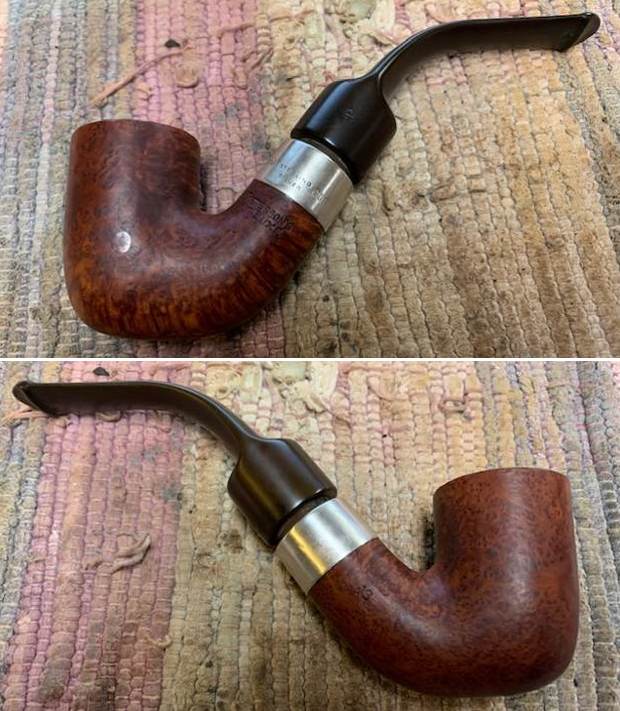
I thought with this blog that I would take a different tack in the write up and take you through my process of working on each pipe that we purchase. Jeff has set up a spread sheet to track where the pipe came from, the date of purchase and what we paid for it so that we know what we have invested in the pipe before we even work on it. This takes a lot of the guess work out of the process. This particular pipe was purchased on 01/26/2023 from Copenhagen, Denmark from a seller we buy a lot of pipes from. I also want you to understand why we take the photos we do. It is not accidental or chance as the photos have been taken to help me make an assessment of the pipe Jeff sees before he starts his clean up work. We do this to record the condition that the pipe was in when received it and to assess what kind of work will need to be done on. When I look at these photos this is what I see.
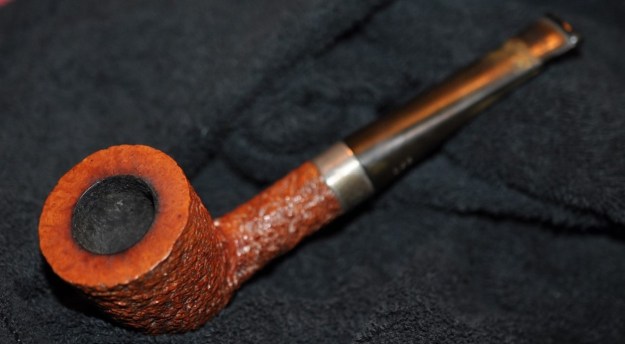
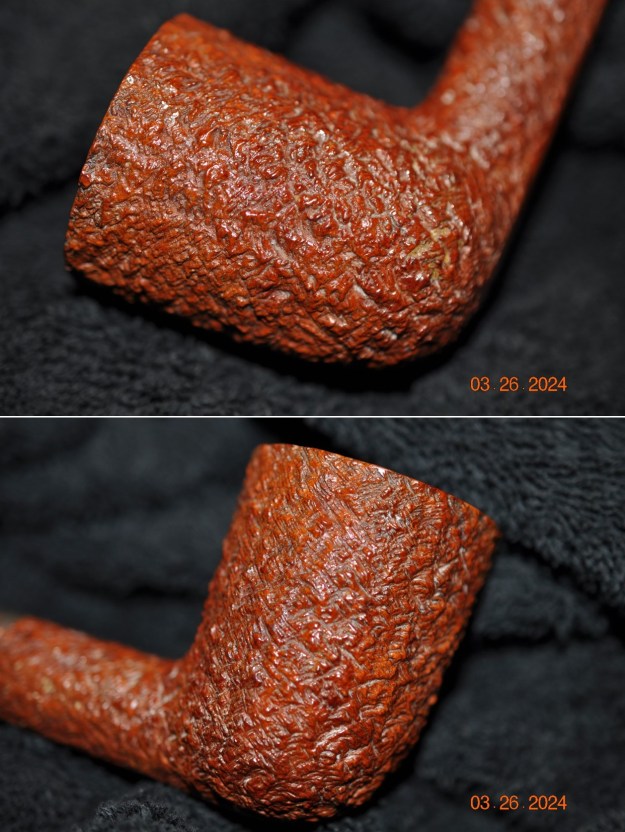
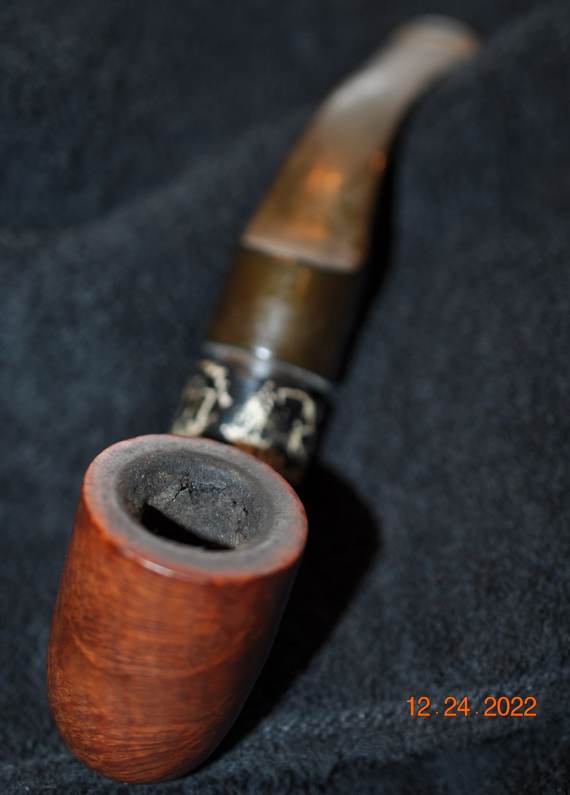
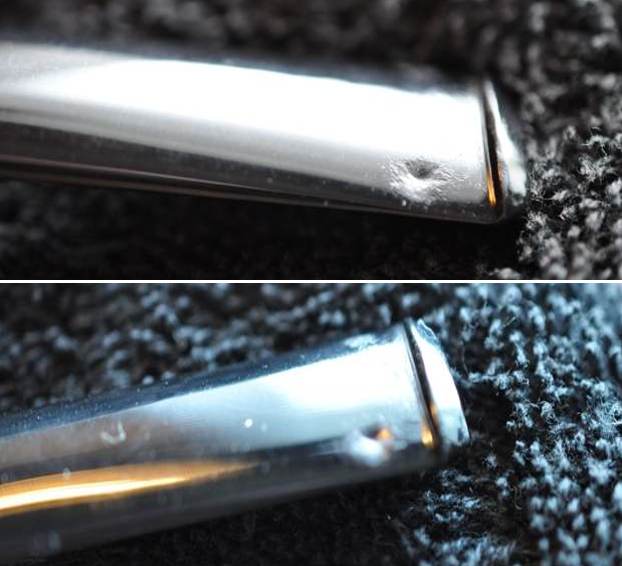
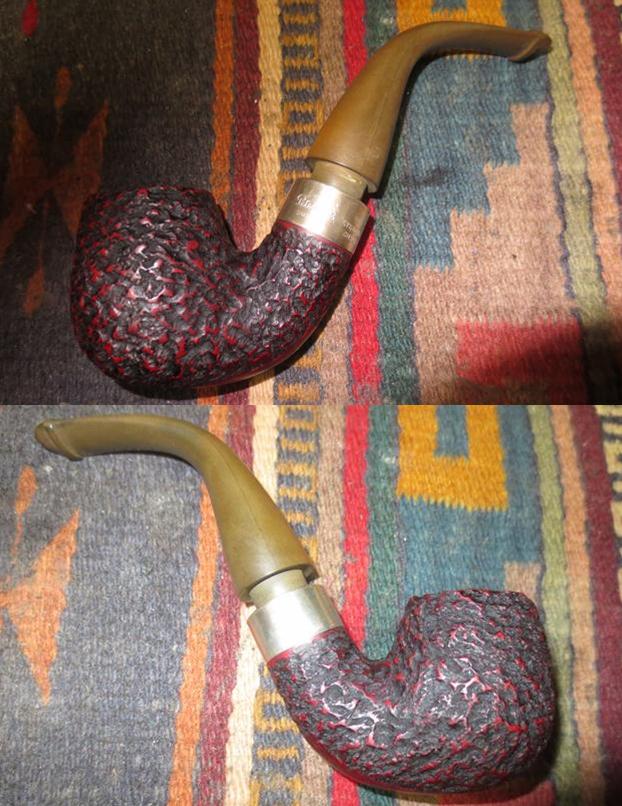
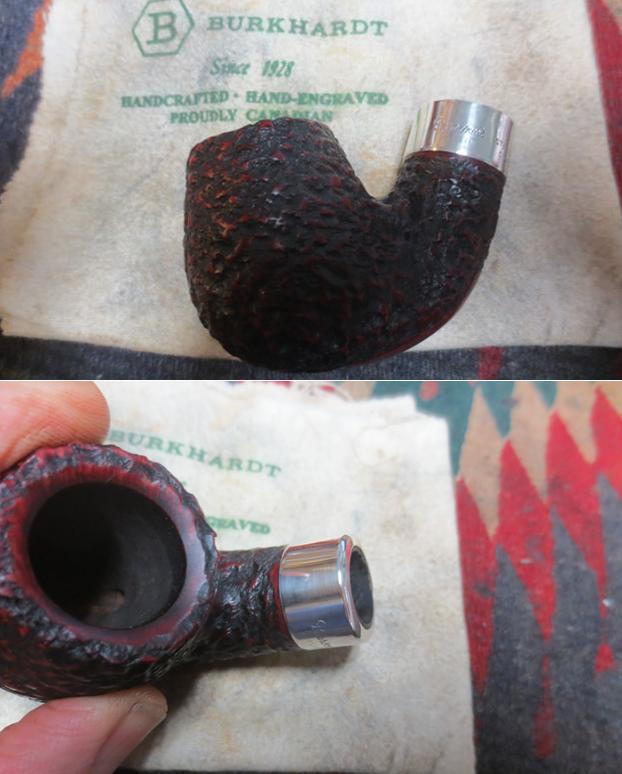
- The finish is dirty and there are nicks in the sides of the bowl from being dropped it looks like. There appeared to be some nice grain under the grime. The shank is fairly short with the factory silver band on the end.
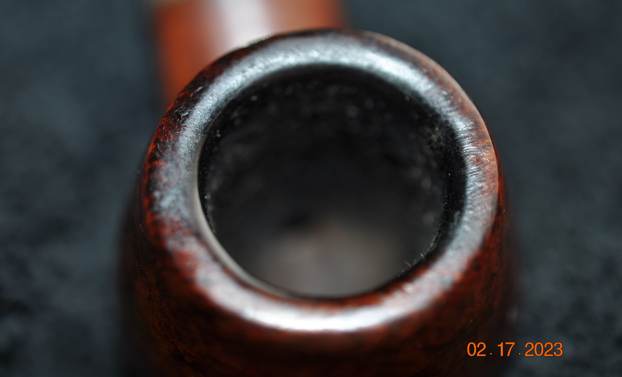
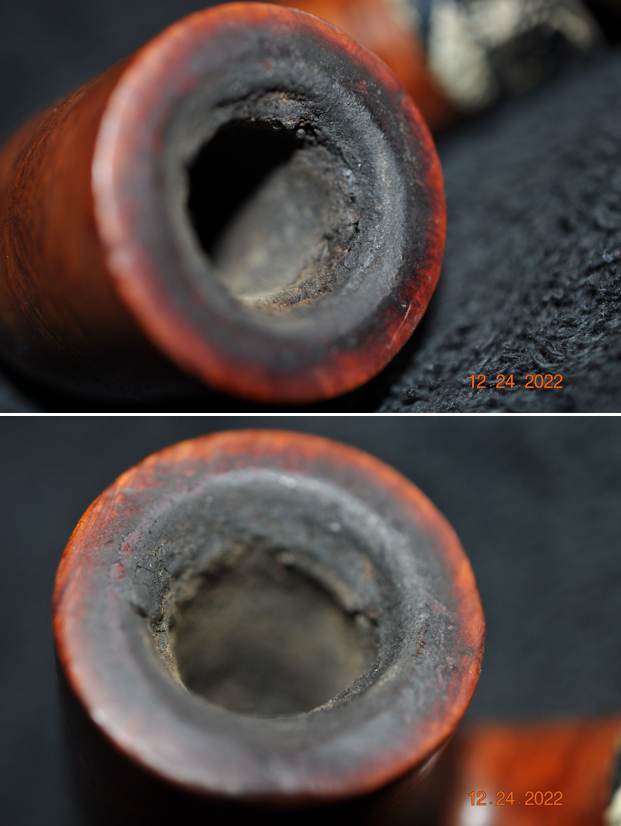
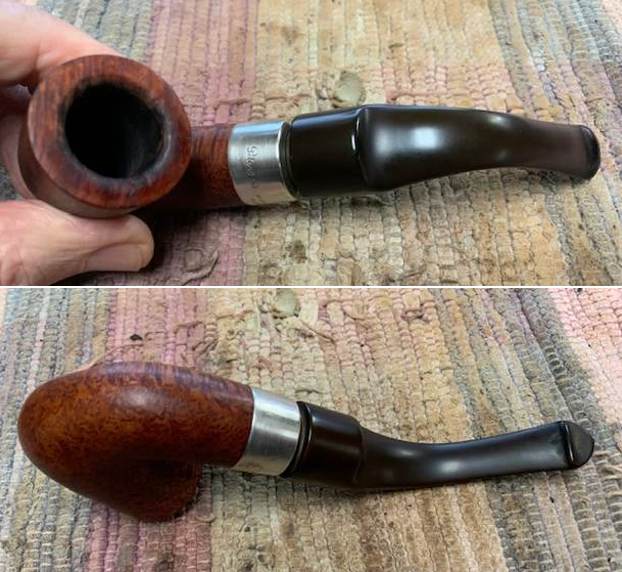
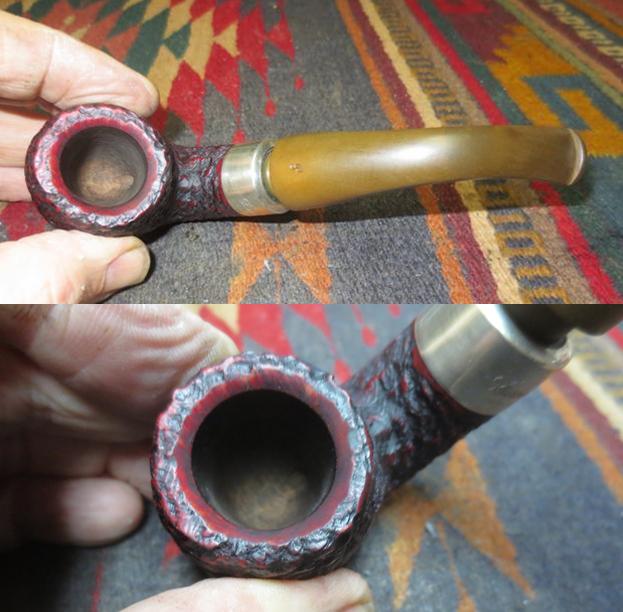
- The slightly crowned rim top had a thick lava overflow from the cake in the bowl. It was thicker on the back half of the rim top. There was also some darkening around the top and edges as well. The inner and outer edges of the bowl looked to be in good condition though covered with thick lava. Its overall appearance is very dirty looking.
- The bowl has a thick cake in it but the inner edge of the bowl actually looks to be undamaged from what I can see at this point. There does not appear to be any burning or reaming damage to the edges of the bowl. You would be surprised (though maybe not) in how many pipes we pick up that have major issues in this area.
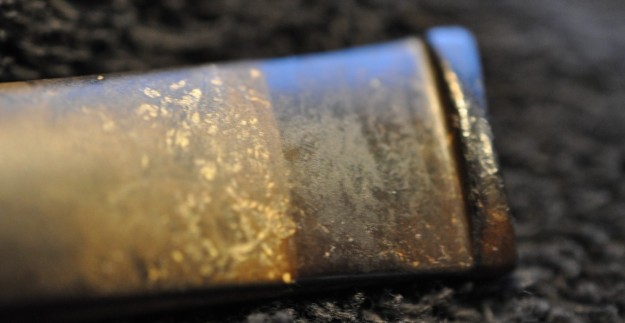
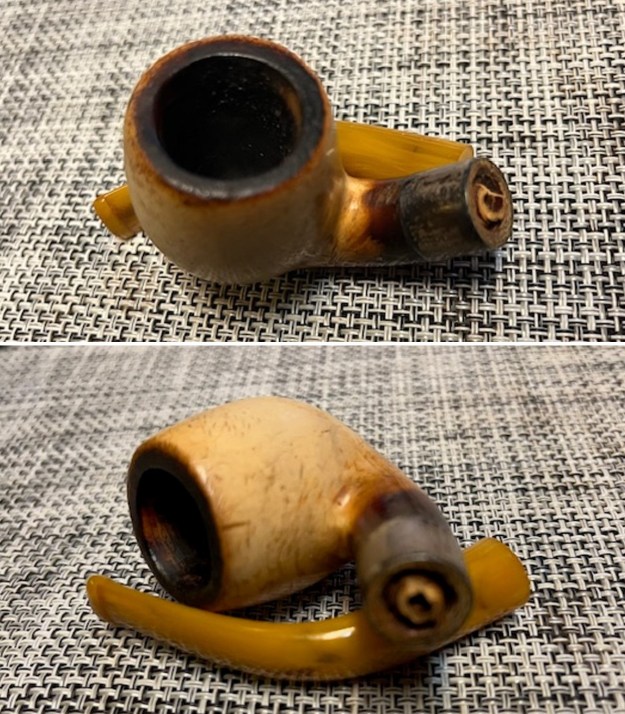
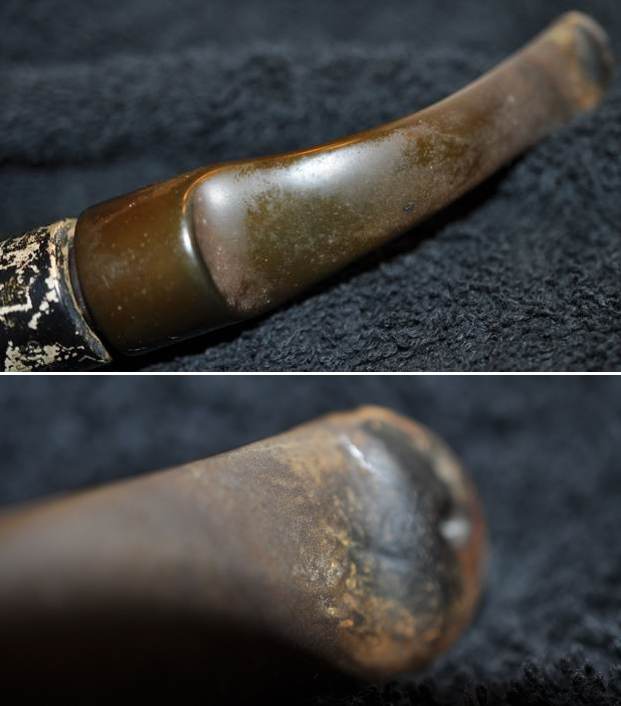
- The stem is an oddity to me. The first inch of the stem from the silver band back down the stem is lighter in colour than the rest of the stem. It appears to combine vulcanite and acrylic bound together somehow. I want to try to understand how the two materials are bound together.
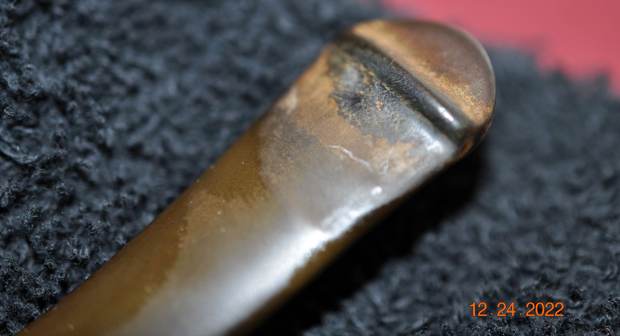
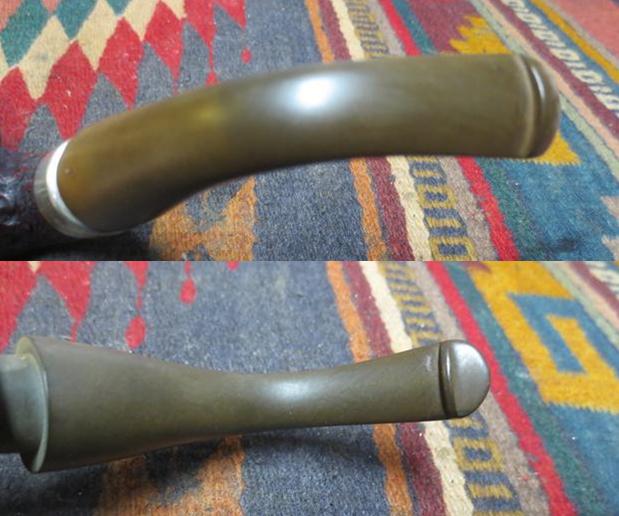
- The stem had some oxidation on the top portion around the logo. The acrylic portion was clean and there were no tooth marks and chatter visible in the photos below.
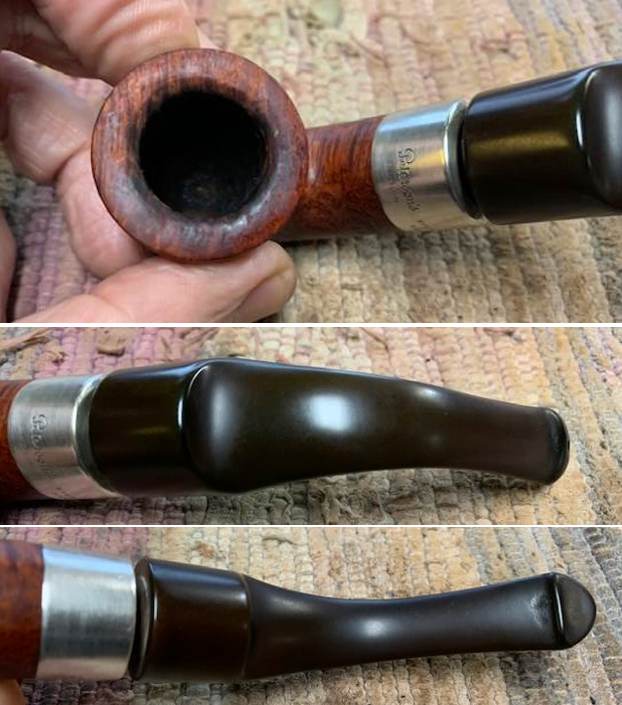
Overall my impressions of this pipe is that it is a beauty that once cleaned up will look pretty amazing. The cake does not seem to hide any burns or checking and the exterior of the bowl does not show any hot spots or darkening. The pipe is very English looking and is a classic Diplomat shape. It has a lot of BBB stylistic touches that I have come to expect as I have worked on a lot of them over the years. The photos below confirm the assessment above.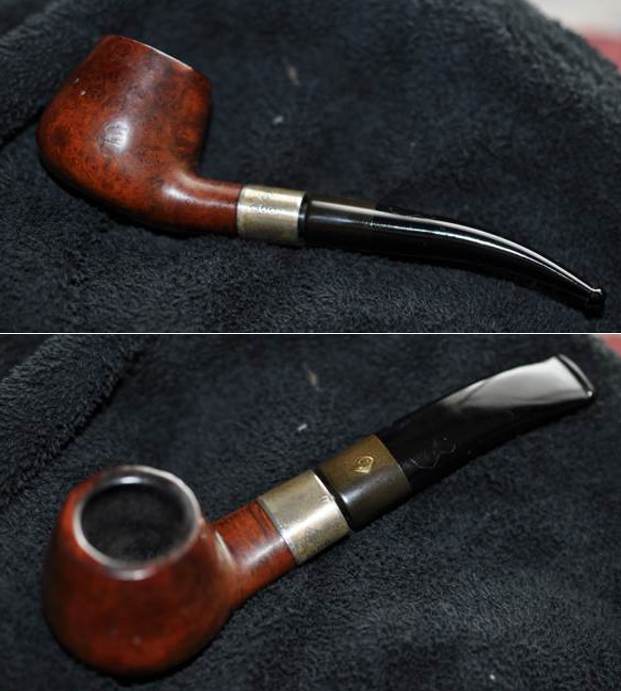 Jeff took close up photos so that I could have a clearer picture of the condition of the bowl and rim edges and top. The rim top photos confirm my assessment above. The cake in the bowl is quite thick and the rim top has lava and debris on it. You can also see the condition of the inner and outer edges of the rim. This is what I look for when assessing a pipe. While there is lava and darkening there is no visible burn damage at this point and the previous reaming has not left damage either. The bowl is still fairly round. There are some scratches in the surface of the crowned rim top.
 His photos of the stem surface confirmed and heightened my assessment of the condition. You can see the oxidation (particularly around the top inch of the stem from the shank end back) and a different appearance to the second part of the stem. It really does appear that they are two separate materials – vulcanite around the brass logo and acrylic on the back two thirds. The stem is quite dirty but otherwise undamaged.
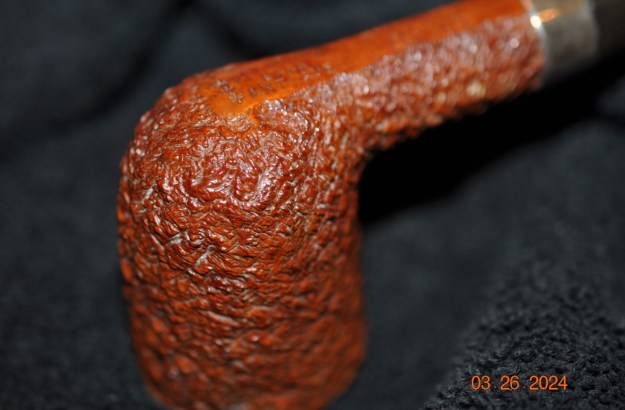
 I always ask Jeff to take photos of the sides and heel of the bowl. While this definitely shows the grain patterns around a bowl it also allows me to do a more thorough assessment of the condition of the briar and the finish. In this case I look at the nicks and scratches around the bowl sides to see if there are any cracks or splits radiating from the pits in the centre of each one. I also look for flaws in the grain as those can also hide cracks or damage. In this case the bowl exterior is sound and should clean up very well. I love the grain patterns and the way the play off the silver band on the shank end.
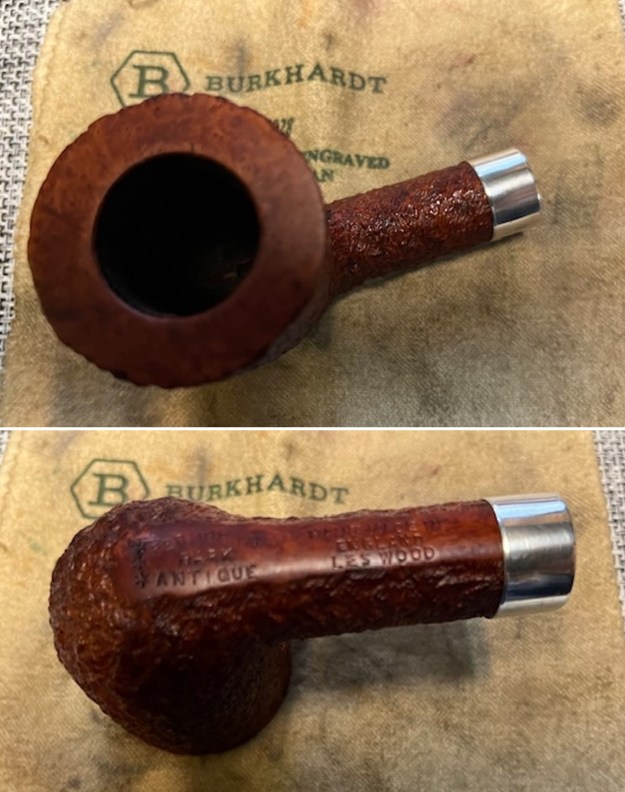
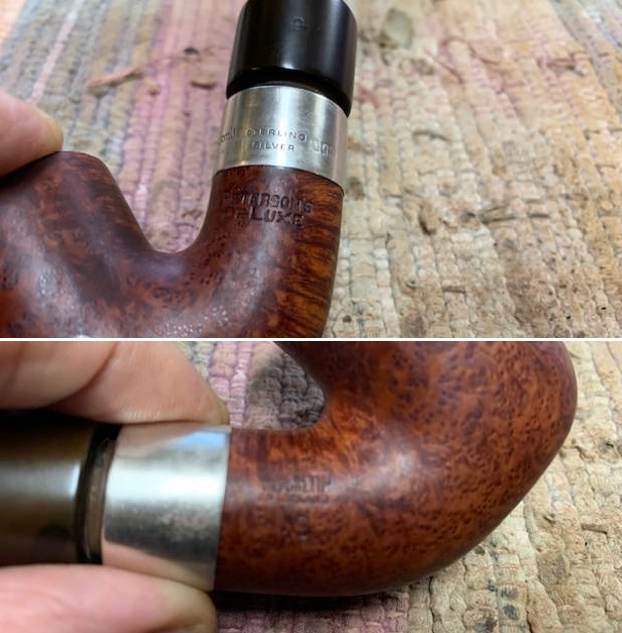
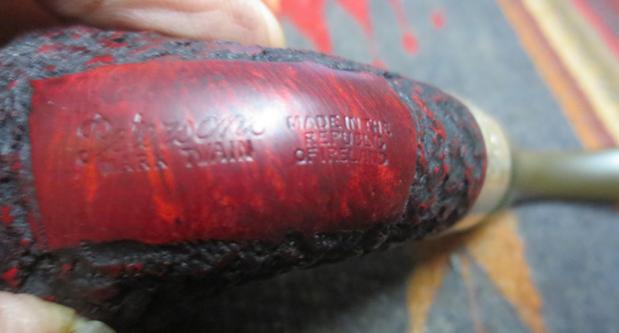
 I also ask him to take photos of the stamping so I can see if it is faint in any spots or double stamped or unclear. It often takes several photos to capture what I am looking for. The stamping on the underside of the shank is actually undecipherable for the most part. It appears to have a BBB diamond logo at the top of the photo (left side). Underneath that is seems to read Own Make (very faint) [over] Made in [over] London England [over] 722. There is also an odd symbol next to the shape number.
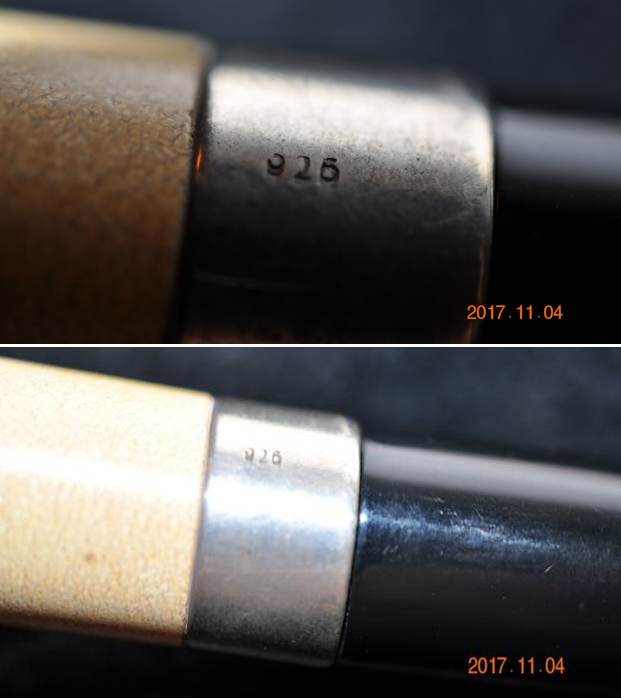
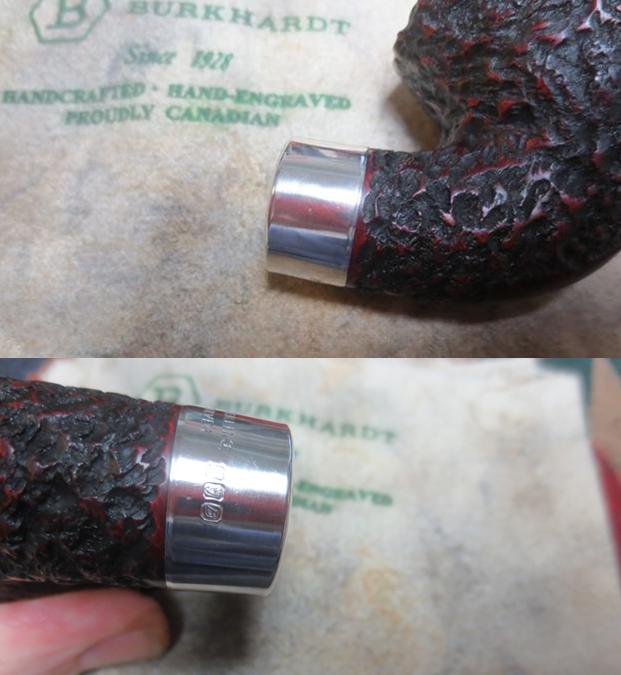
 Jeff also took photos of the stamping on the silver band and the brass inset logo on the top of the stem. The stamp on the band is hallmarked with three silver hallmarks – a rampant lion, a lion’s head and the letter C. The first one tells us that it is sterling silver. The second one tells us that it is a London assay mark. The third one – the C – is a date stamp. I will work on the date of the pipe once I have it in hand. The brass logo is slightly damaged on the lower side of the inset.
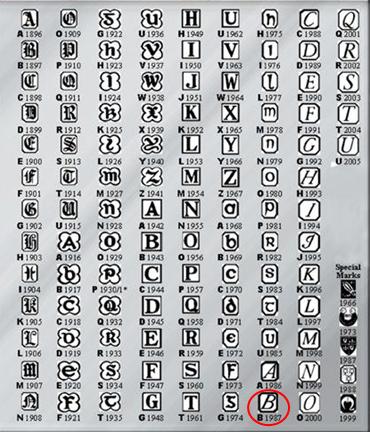
  I love working on background history of the pipes I restore as they add a depth to my ongoing understanding of the pipe. Being able to put it in a specific date on the pipe puts it in a time frame. I turned to a British Silver Makers Hallmarks site that I use all the time. I narrowed down my search to the London pipes. The first two marks as noted above – the rampant lion and the lion’s head were simple to decipher. The Rampant Lion is the symbol for Sterling silver. The The Lion’s Head is the symbol for London Silver makers. I turned to the dates list on the site. I have included it below (https://www.silvermakersmarks.co.uk/Dates/London.html).
 I clicked on the section that had a C stamp like the one on the band and it expanded to a size that I could easily read. I have included the link below as well as a screen capture of the section of the list (https://www.silvermakersmarks.co.uk/Dates/London/Cycle%201975-1999.html).
I knew that the pipe I had was made in London by BBB and the silver assay stamp dates the pipe as 1977 in terms of the shape of the C. The band I am working on does not have a Queen’s Stamp so it is a little different. But I am convinced that the pipe was made in 1977.
I am sure many of you skip my paragraph on the work Jeff has done before the pipe gets here but it is quite detailed in its brevity. I know some laugh at my opening line Jeff did a thorough cleaning of this pipe. However, I want you to know the details of the work. Back in 2020 Jeff wrote a blog about his cleaning process. I am including a link to that now so you can see what I mean about his process. Do not skip it! Give it a read (https://rebornpipes.com/2020/01/20/got-a-filthy-estate-pipe-that-you-need-to-clean/). Here is the introduction to that blog and it is very true even to this day.
Several have asked about Jeff’s cleaning regimen as I generally summarize it in the blogs that I post rather than give a detailed procedure. I have had the question asked enough that I asked Jeff to put together this blog so that you can get a clear picture of the process he uses. Like everything else in our hobby, people have different methods they swear by. Some may question the method and that is fine. But it works very well for us and has for many years. Some of his steps may surprise you but I know that when I get the pipes from him for my part of the restoration they are impeccably clean and sanitized. I have come to appreciate the thoroughness of the process he has developed because I really like working on clean pipe!
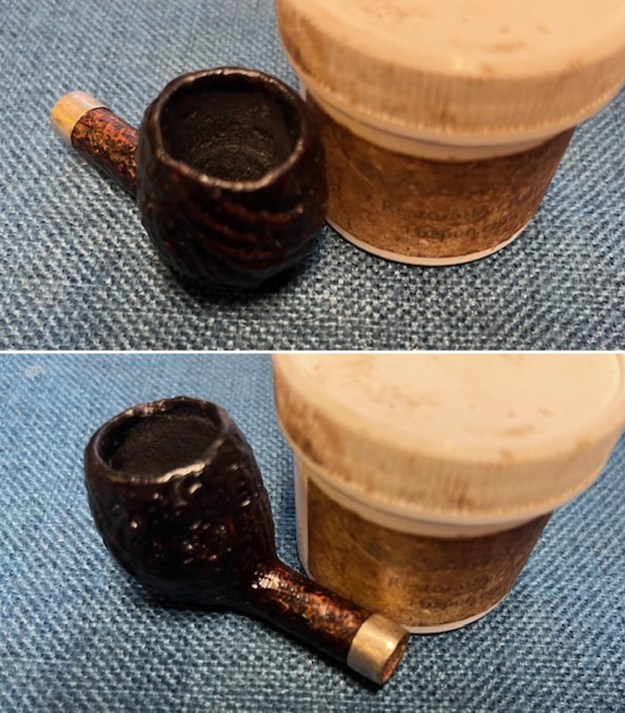
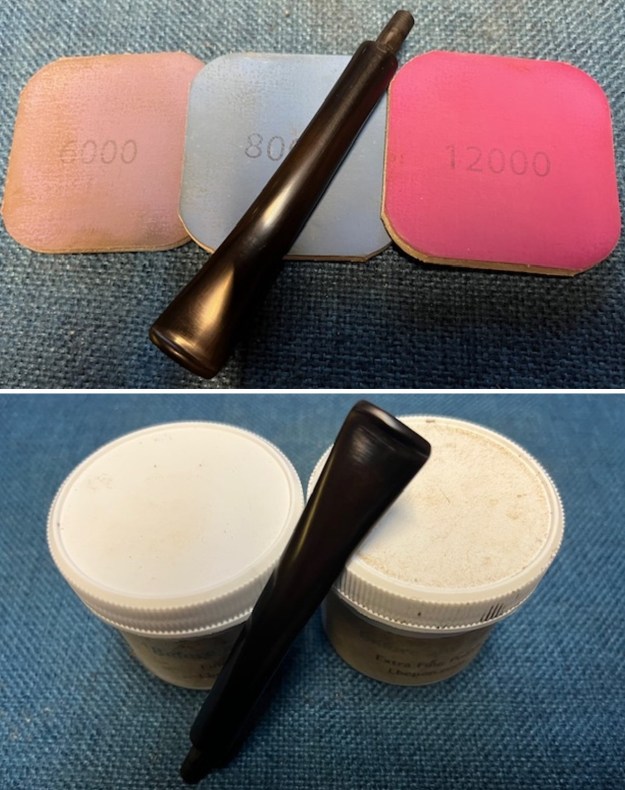
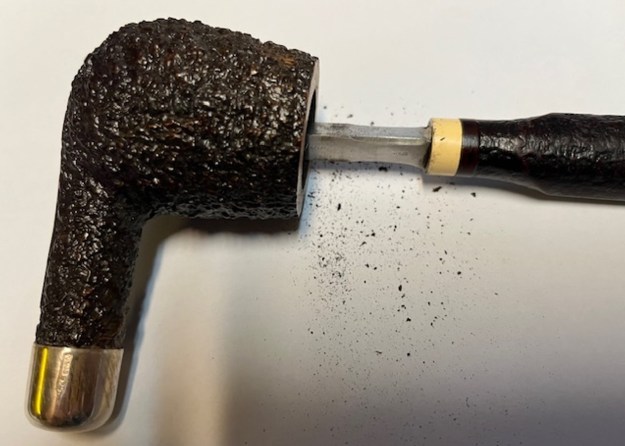
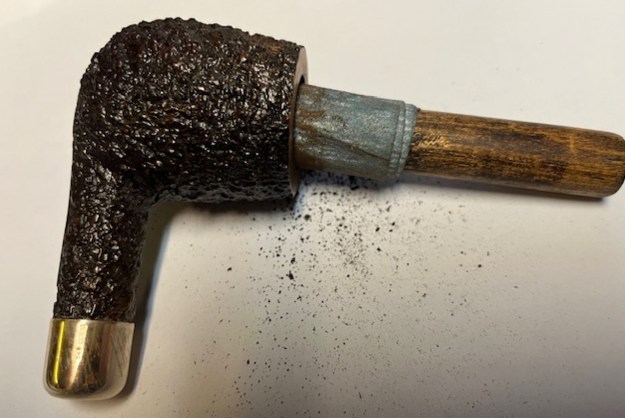
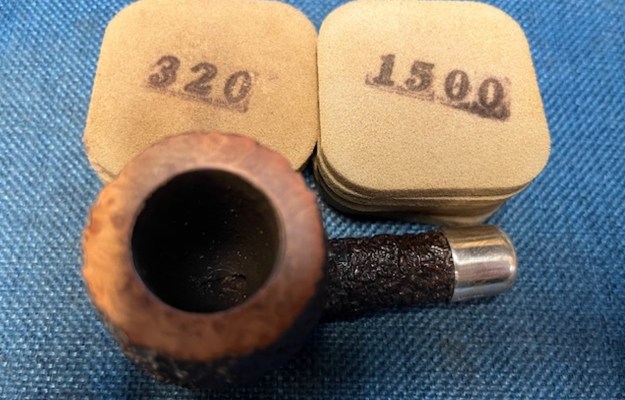
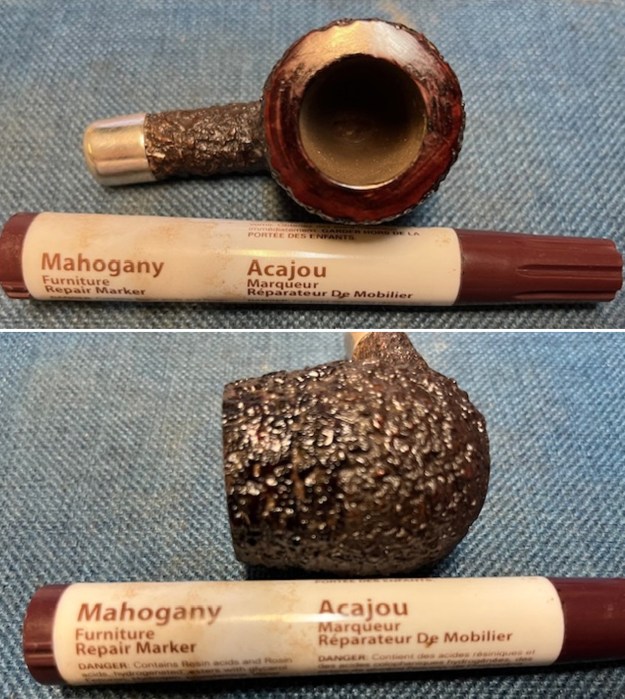
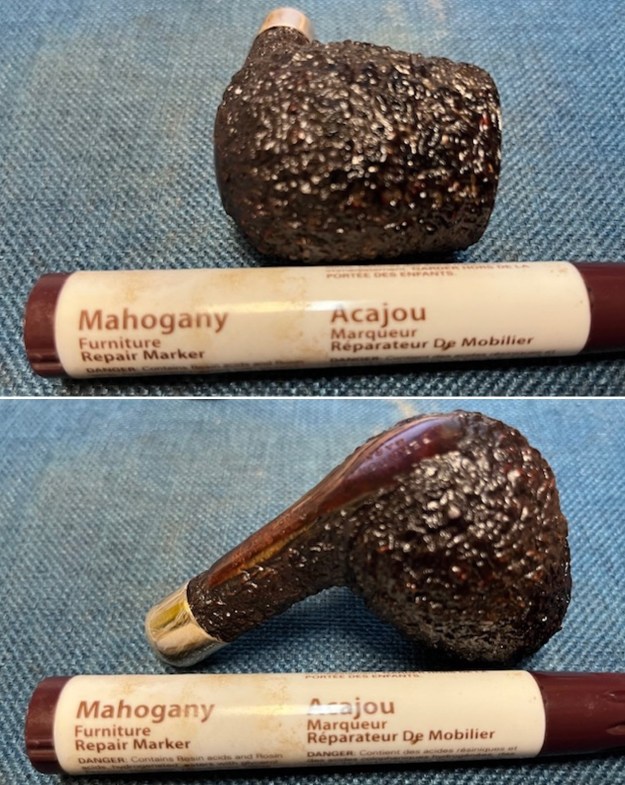
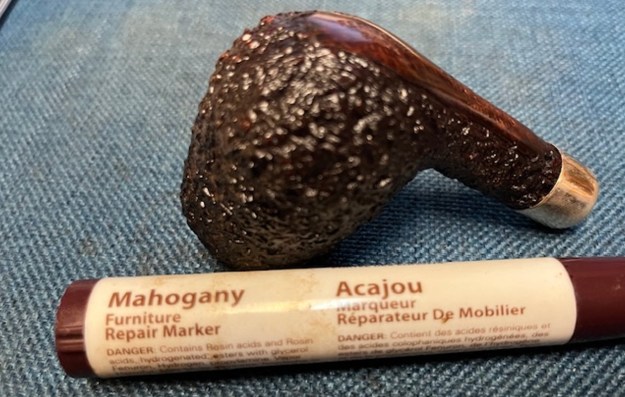
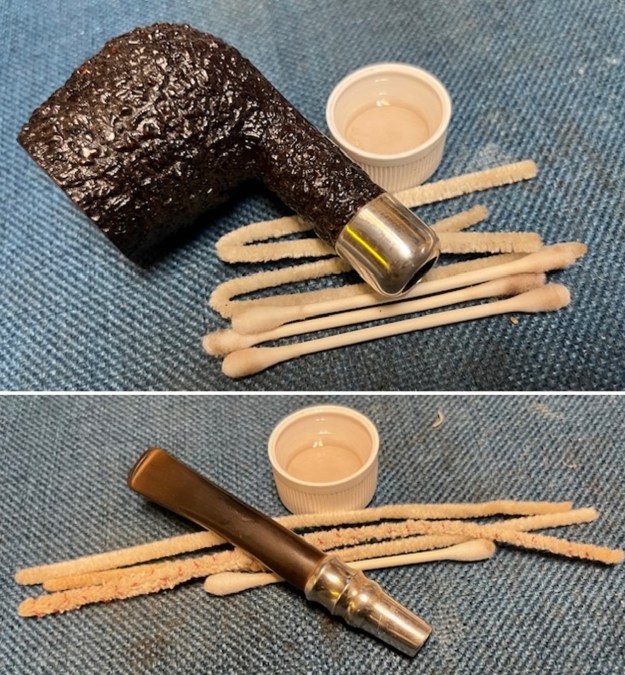
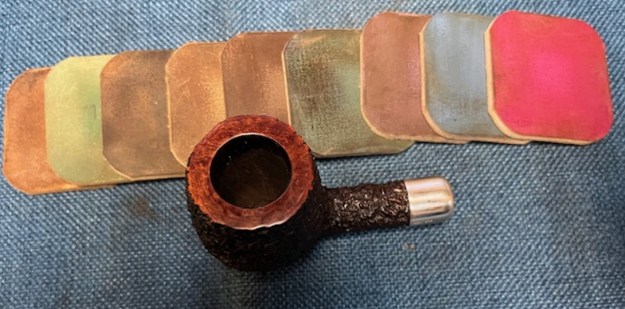
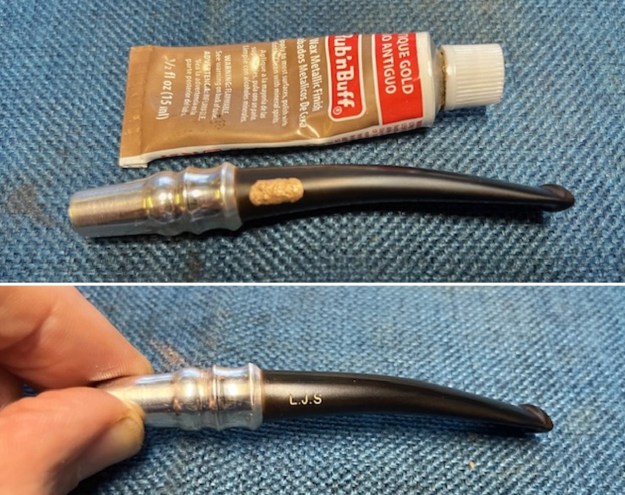
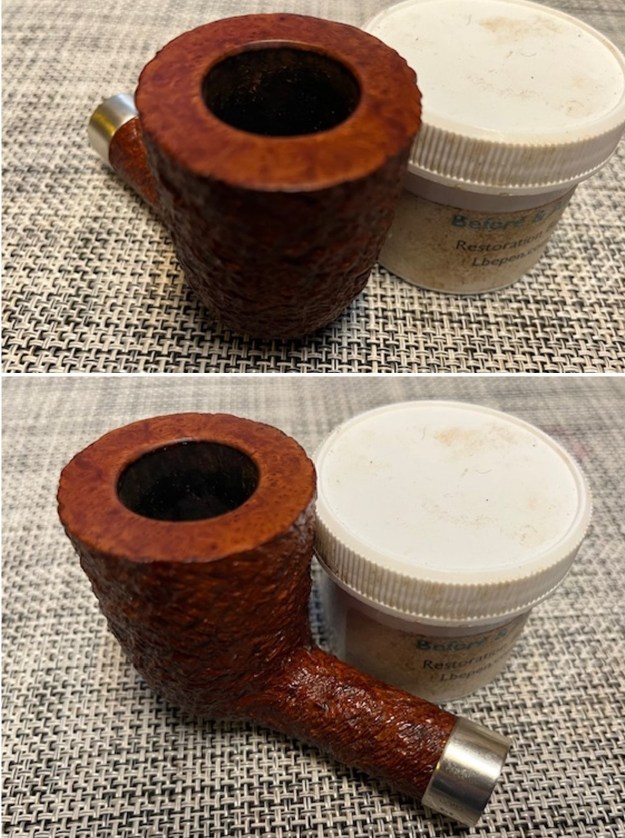
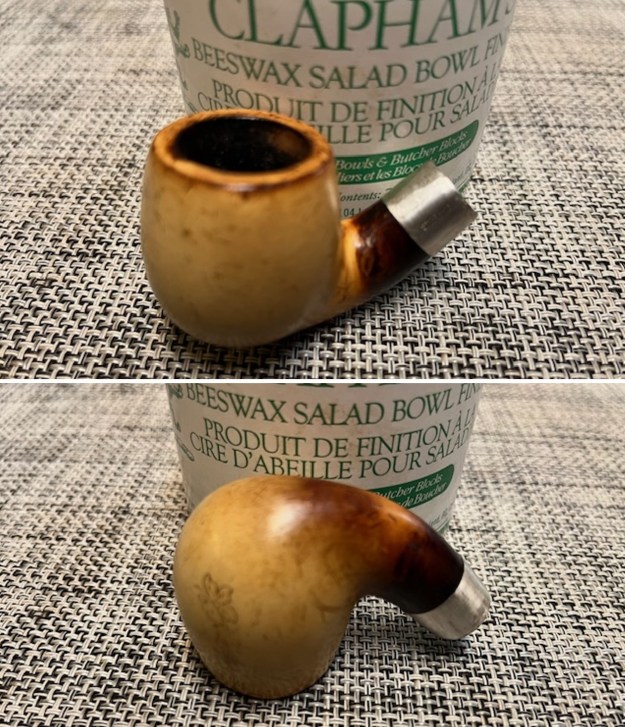
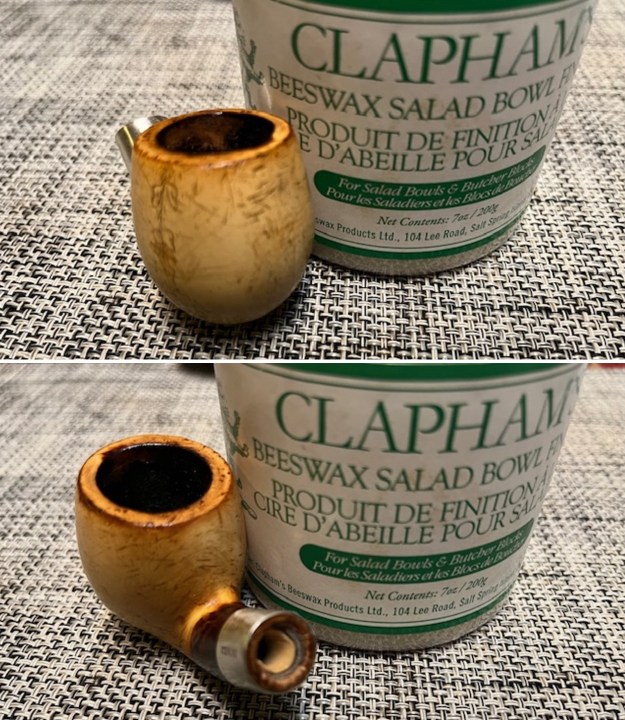
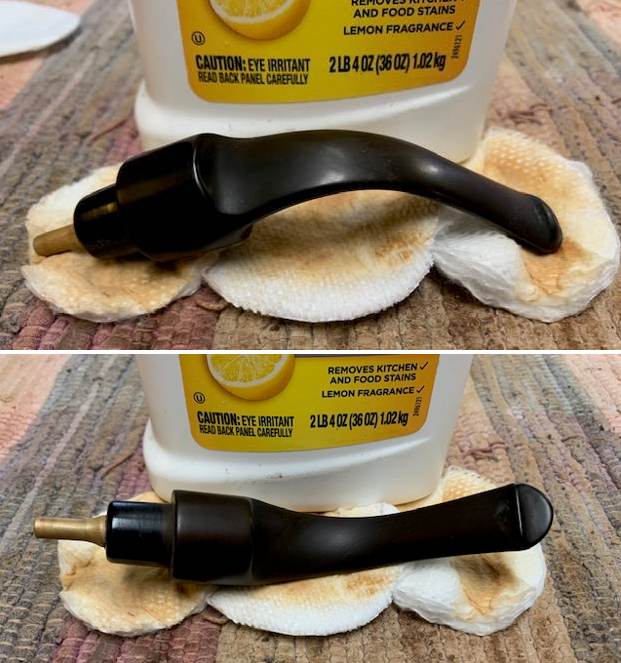
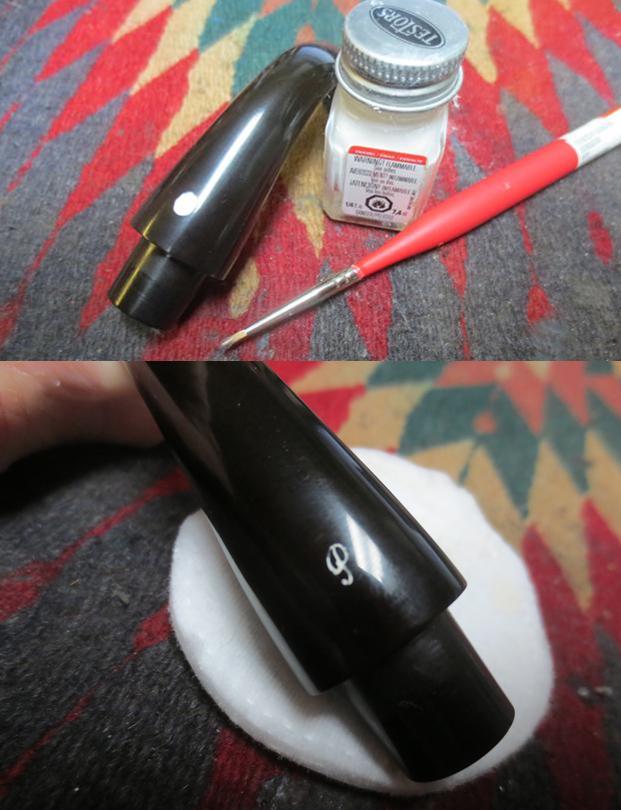
For the benefit of some of you who may be unfamiliar with some of the products he uses I have included photos of three of the items that Jeff mentions in his list. This will make it easier for recognition. These three are definitely North American Products so you will need to find suitable replacements or order these directly on Amazon. The makeup pads are fairly universal as we were able to pick some up in India when we were with Paresh and his family.
In the blog itself he breaks his process down into two parts – cleaning the stem and cleaning the bowl. Each one has a large number of steps that he methodically does every time. I know because I have watched him do the work and I have seen the pipes after his work on them. He followed this process step by step and when the pipe got to me it was spotlessly clean and ready for my work. The inside of the stem, shank and bowl were clean and to me that is an amazing gift as it means that my work on this end is with a clean pipe! I cannot tell you how much difference that makes for my work.
When the pipe arrives here in Vancouver I have a clean pipe and I go over it keeping in mind my assessment shared in the opening paragraph above. I am looking for any significant structural changes in the bowl and finish as I go over it.
- The finish is very clean and the grain stands out on the surface of the clean briar. The scratches in the briar swelled up a bit so that they were not as deep as originally assumed in the first photos. There are no cracks showing up in the grain lines or in the flaws under the leaf carvings. It is sound on the outside. I will need to polish the briar and buff it to bring back the shine.
- The slightly crowned rim top is clean of the lava but there is still some darkening on the top and edges of the bowl. The good news for me is that there are no cracks showing up in the rim top. The bowl was sound.
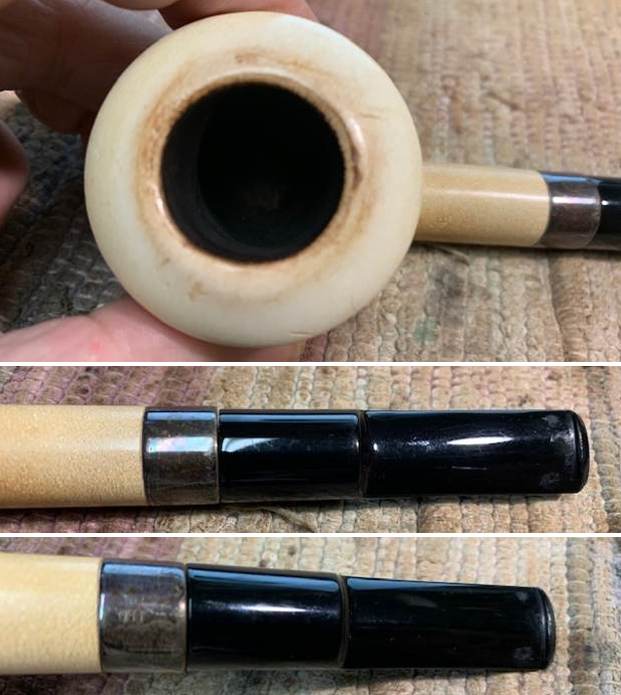
- The bowl was very clean and smelled clean. The clean walls did not show evidence of checking or cracking. There were no hot spots or damage on the walls or around the entrance of the airway into the bowl. It was clean and smooth which is great news for me. The inner edge of the bowl was undamaged and did not show any sign of burning or reaming damage to the edges of the bowl. Both the shank and the bowl were very clean showing no debris on a clean pipe clean run through them. I would need to give it a final cleaning with pipe cleaners and alcohol once I had finished with the external work to remove the debris that may have collected there in the process.
- The oddity I saw in the stem was even more evident now – the vulcanite stem end and the acrylic bit were bound together in a well done manner. It was going to be interesting to examine more closely and possibly remove some of the oxidation on the vulcanite portion.
- The oxidation was much less on the front portion of the stem after Jeff’s work on it. The acrylic portion did not show any tooth marks or chatter. It was in great condition.
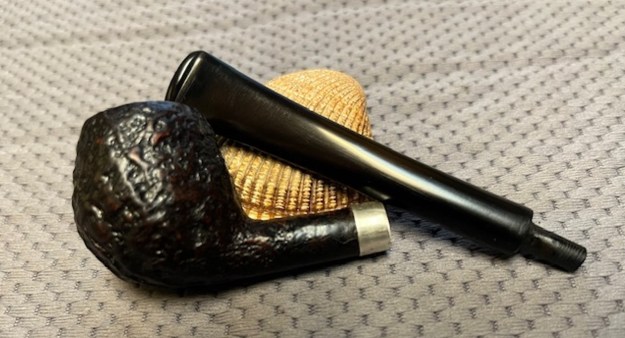
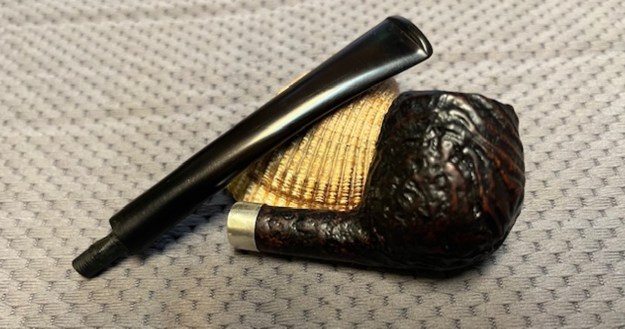
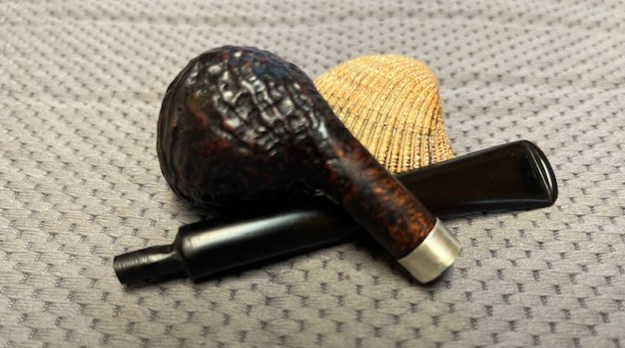
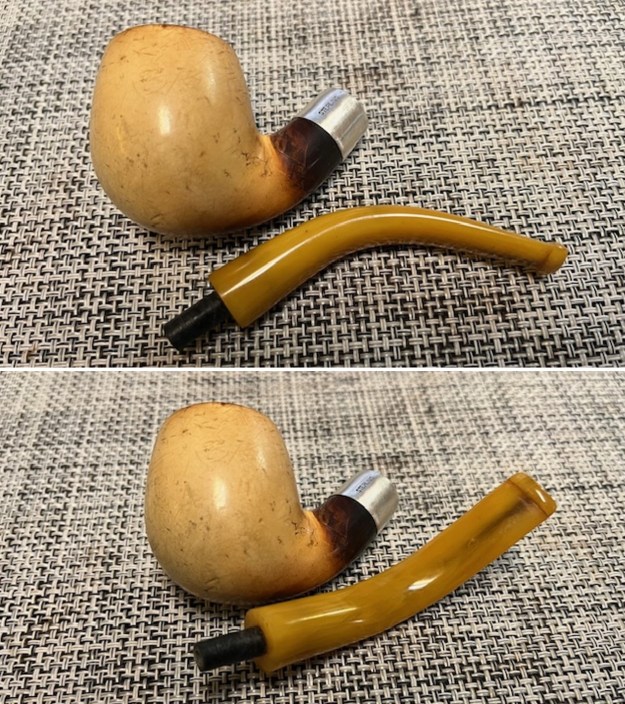
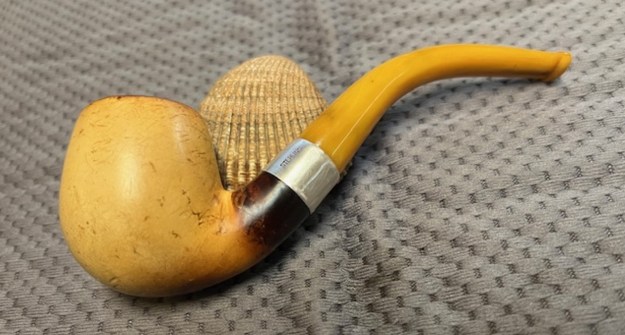
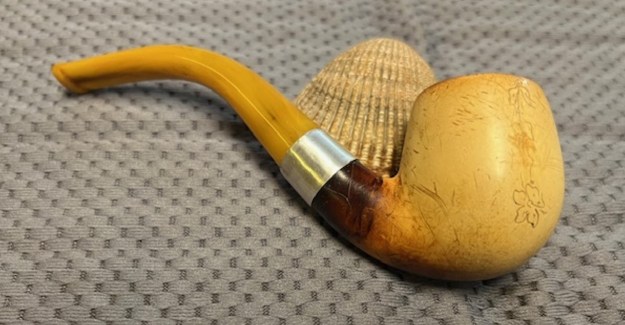
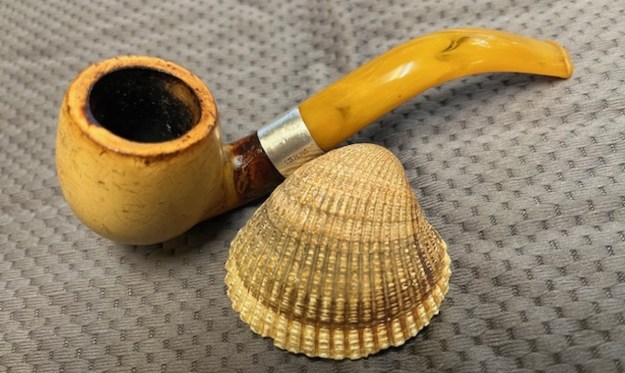
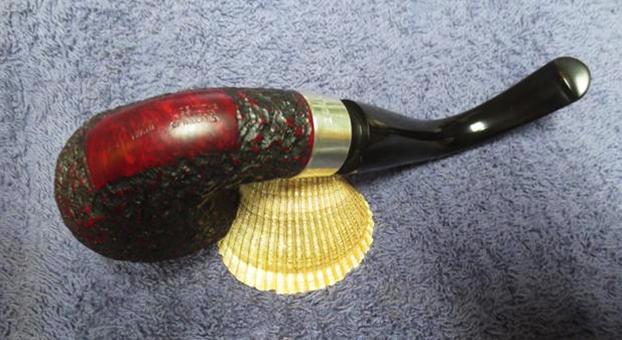
Hopefully the steps above show you both what I look for when I go over the pipe when I bring it to the work table and also what I see when I look at the pipe in my hands. They also clearly spell out a restoration plan in short form. My work is clear and addressing it will be the next steps. I took photos of the whole pipe to give you a picture of what I see when I have it on the table. This is important to me in that it also shows that there was no damage done during the clean up work or the transit of the pipe from Idaho to here in Vancouver.
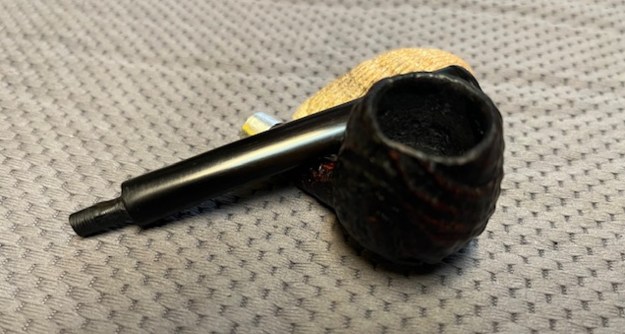
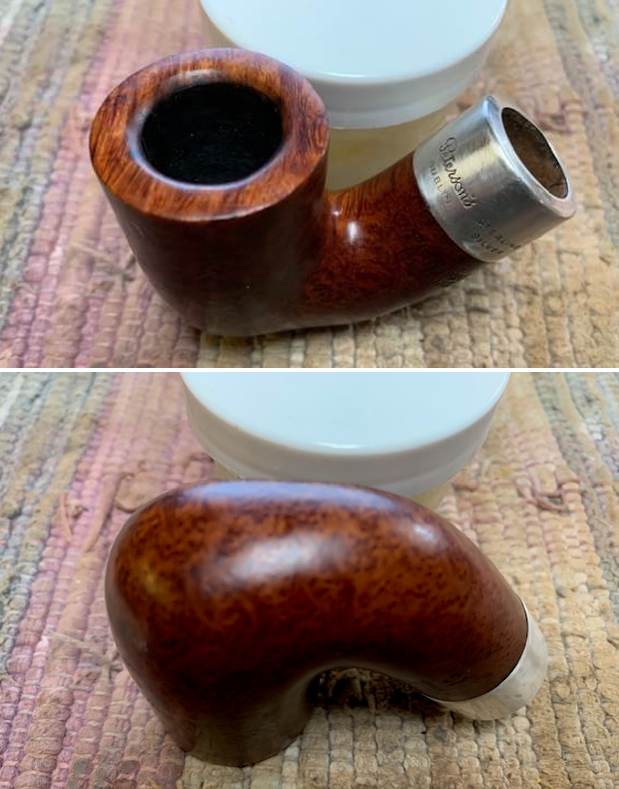
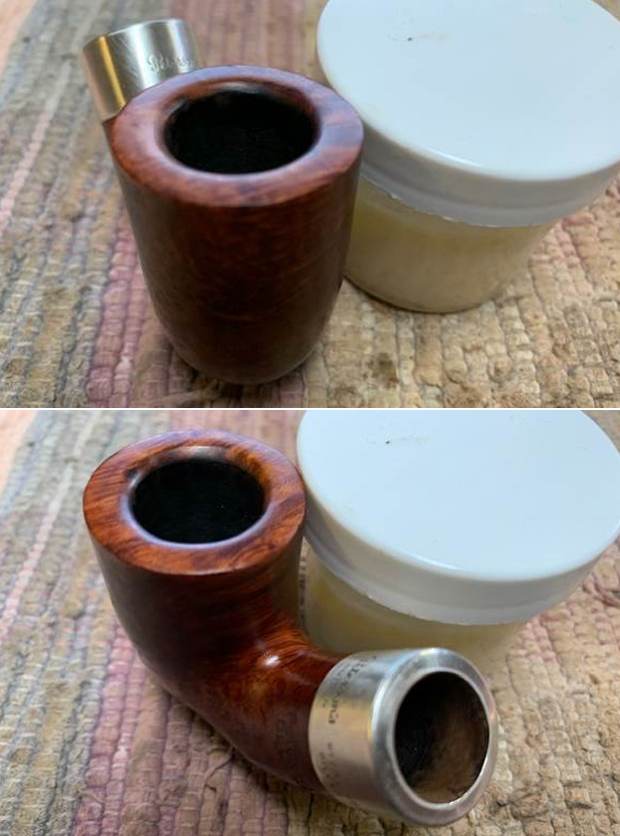
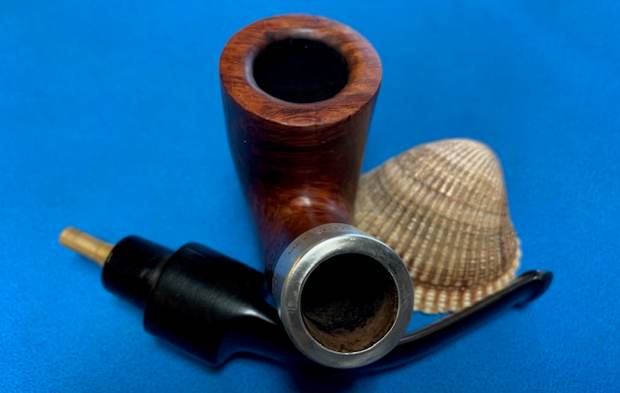
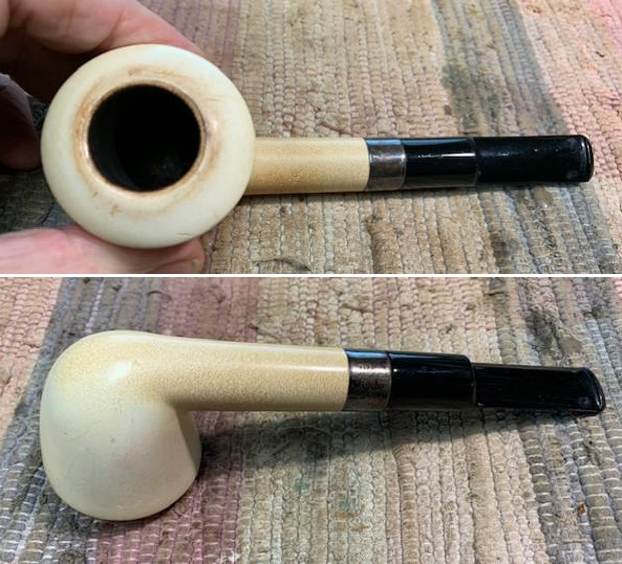
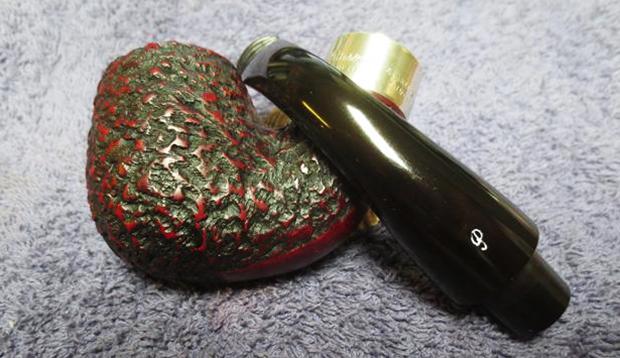
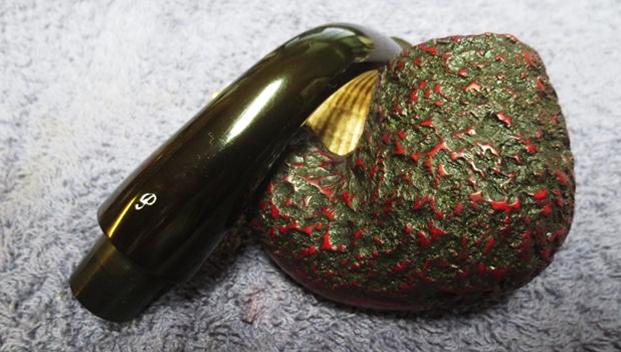
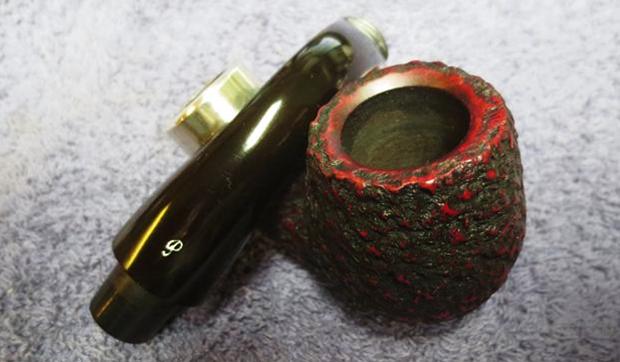
 I take some time to go over the bowl and rim top to get a sense of what is happening there. In this case has some darkening on the top and the inner edge of the bowl. It is clean but will need to be worked on to bring it back to normal. The edges are not damaged and neither is the top of the bowl. That is the good news. I also go over the stem carefully. There were no tooth marks or dents in the stem. The biggest mystery for me is the connection of the two materials on the stem. There is a visible difference in the photos below. I took photos of the rim top and stem sides to show as best as I can what I see when I look at them.
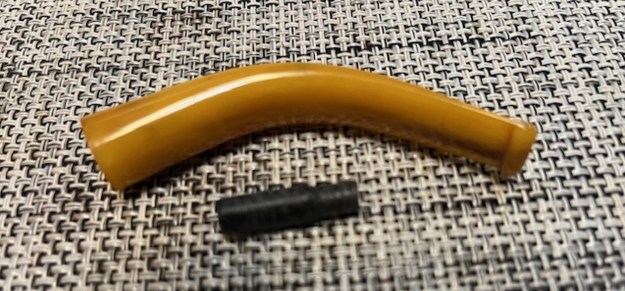
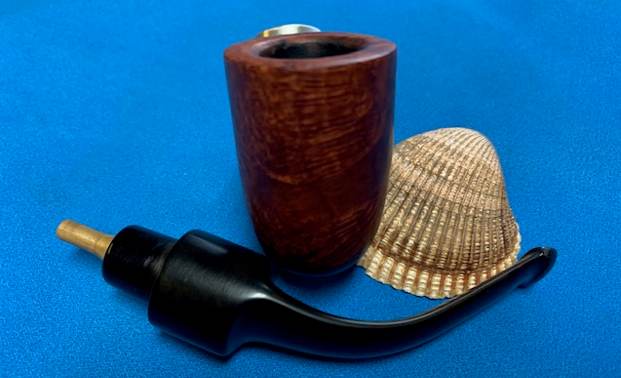
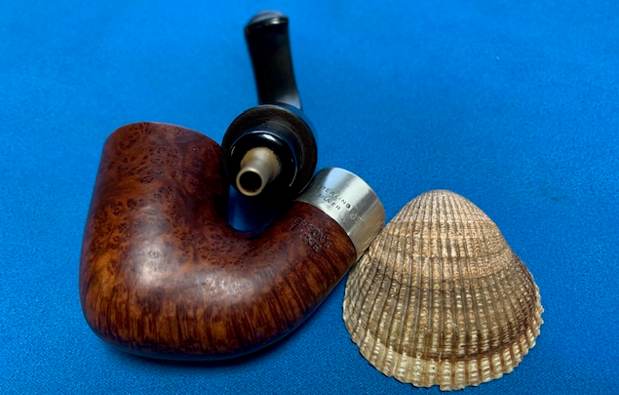
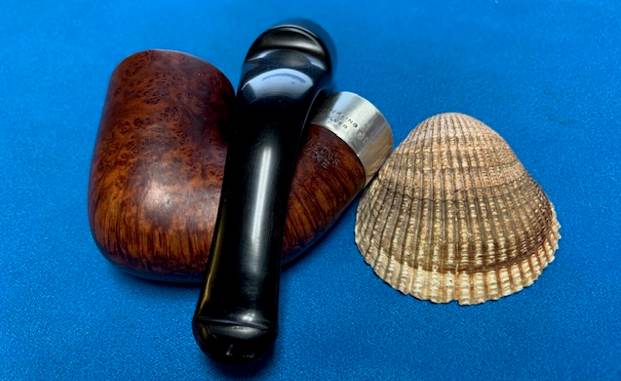
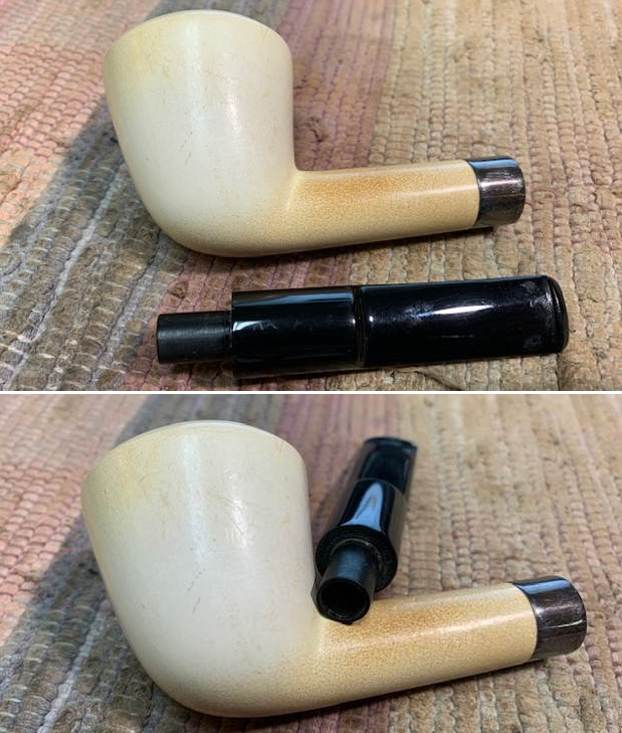
 I always check to make sure that the clean up work did not damage the stamping on the shank in any way. I was hoping that the clean up might have made the stamping more clear but that was not the case. It was as faint as before. You can see a bit of it in the last photo above. I also took a photo of the silver. I also removed the stem from the shank and took a photo to get a sense of what was in the mind of the pipe maker when he crafted the pipe. It is a beauty in flow and shape.
 The question at this point of where to begin the restoration work is always a matter of personal preference. If you read this blog much you will see that each of the restorers who post here all start at different points. I personally almost always start with the bowl because I truly do not like the tedious work of stem repairs and polishing. I always leave that until last even though I know that it needs to be done. So if you are restoring your pipes choose where you want to start and go from there. Just know that it all will need to be done by the end but for me the encouragement of seeing a rejuvenated bowl is the impetus I need to attack the stem work.
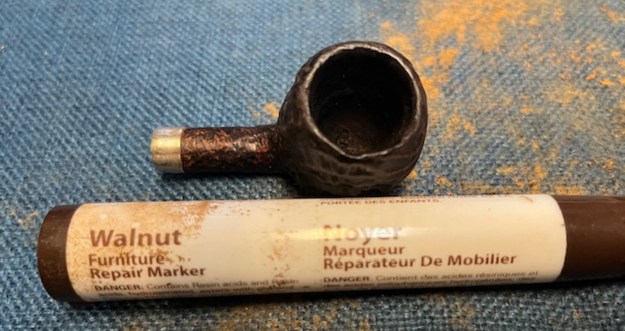
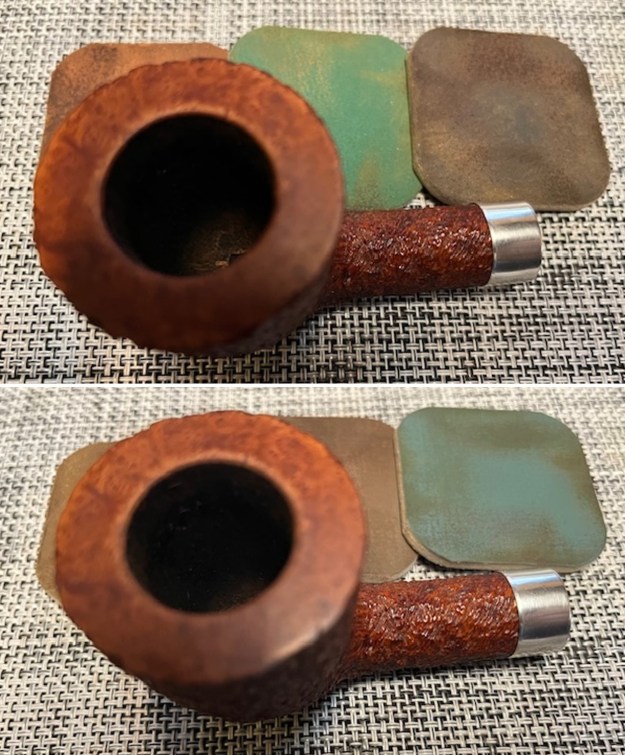
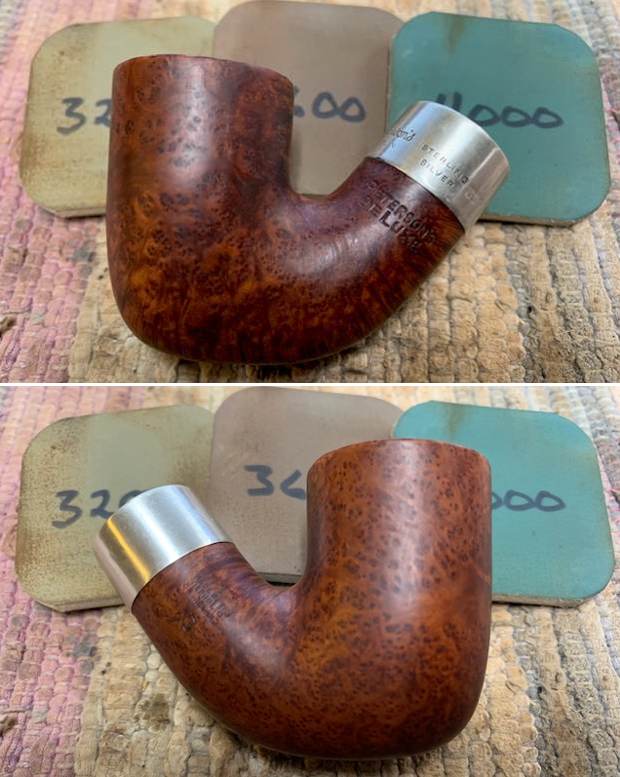
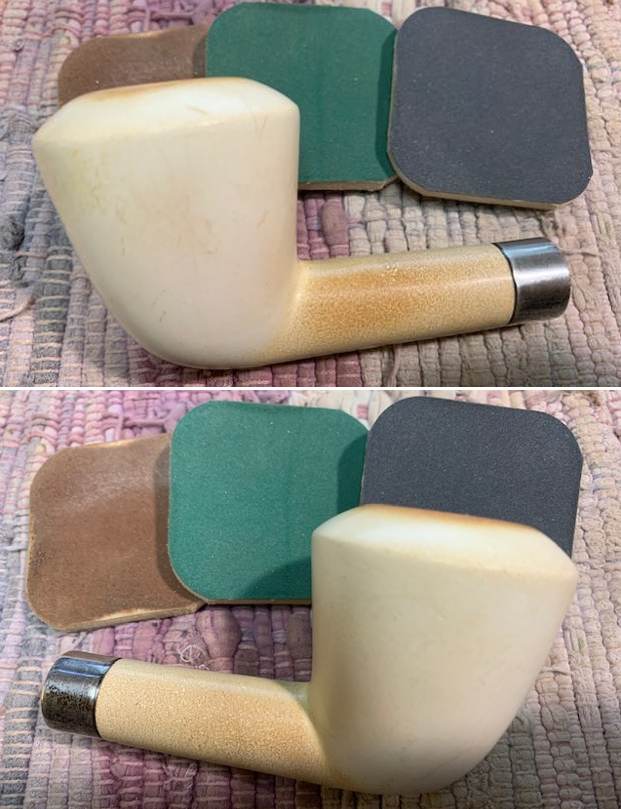
For me then I started working on this pipe by turning to the bowl. I chose to deal with the darkening to the rim edges and top. I used a folded piece of 220 grit sandpaper to reshape and remove the rim top and damage. It took a little work but I was able to remove all of the darkening. It is a beautiful piece of briar with some great grain. When I have to deal with scratch marks like those on the left side of the bowl I generally use a butter knife and a damp cloth to steam them out of the finish as much as possible. I know others use steam irons with great success but I generally use the butter knife and damp cloth to lift them as it allows me to pin point the tip of the knife on the marks. I was able to lift some of them nicely but some still remained when I finished.
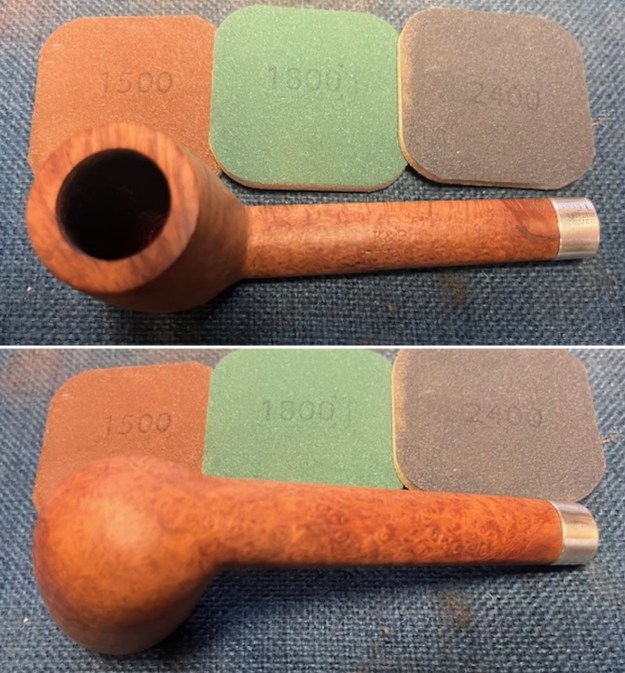
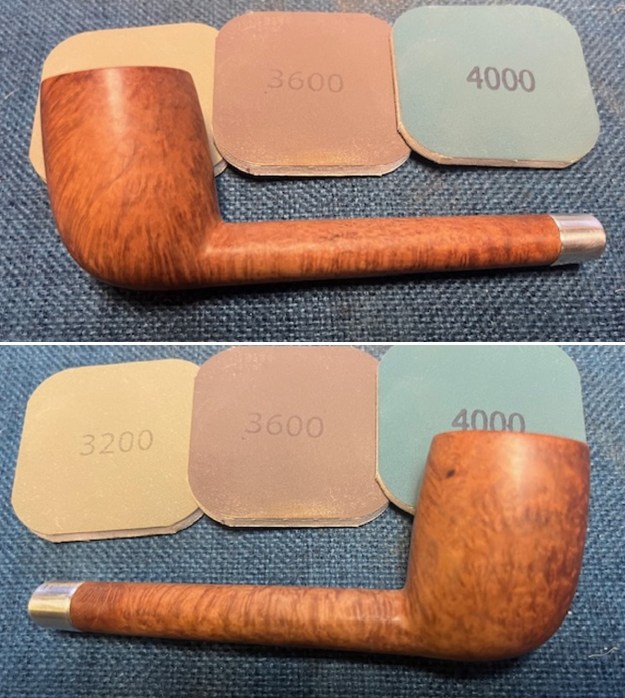
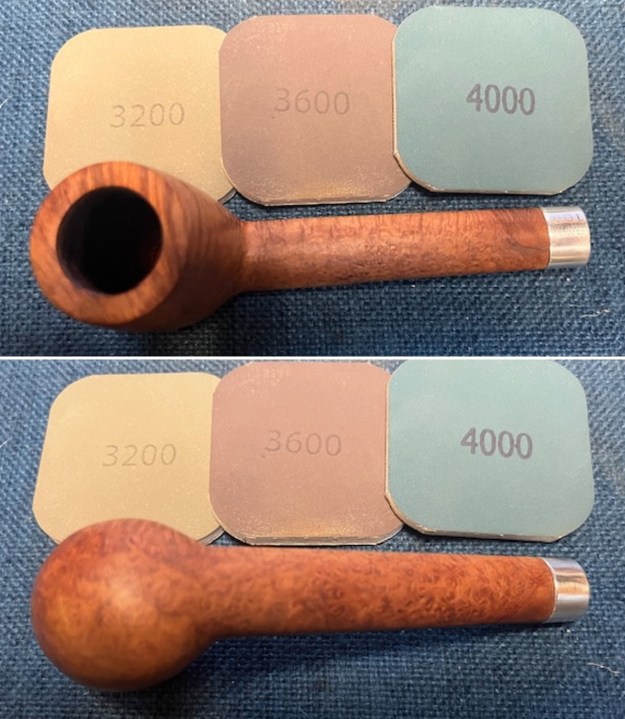
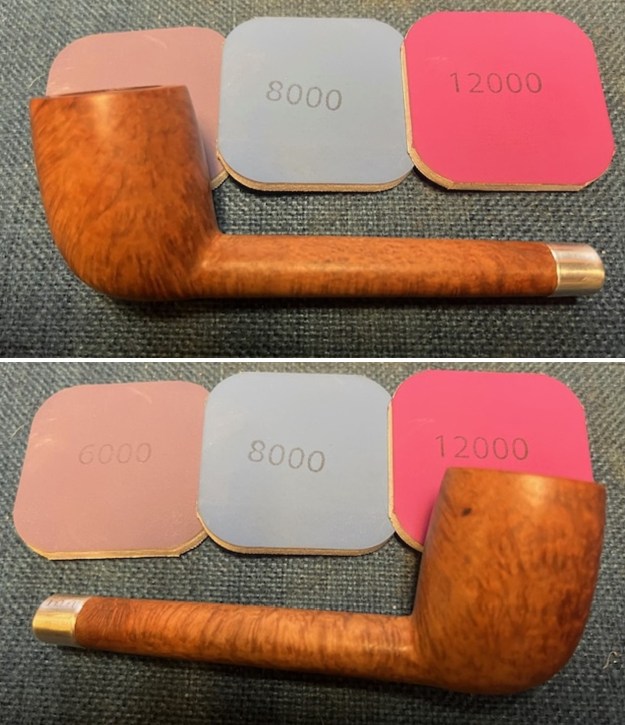
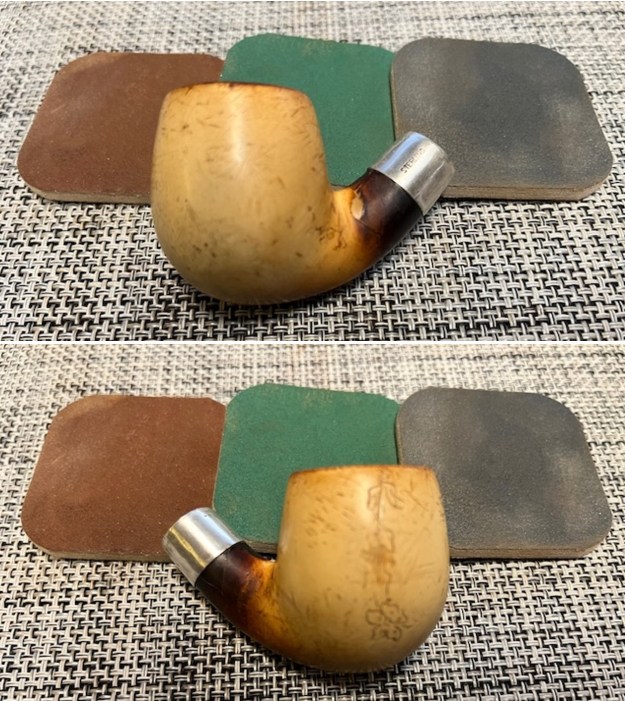
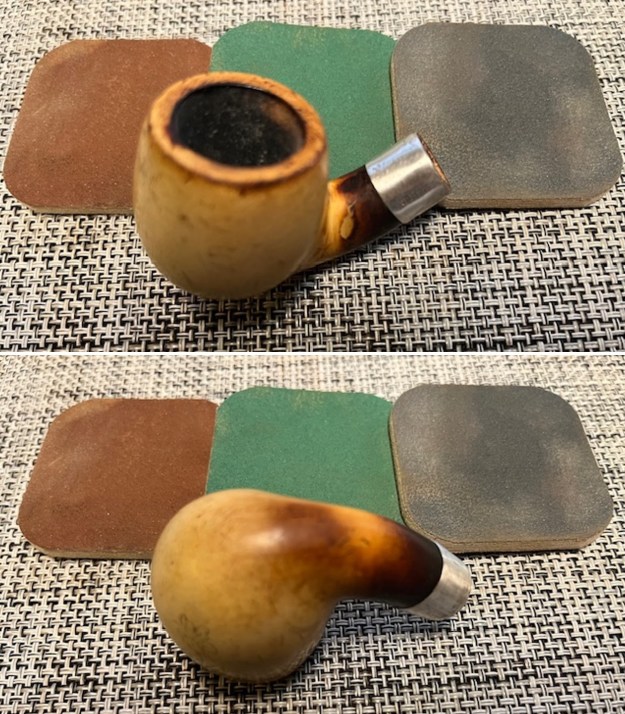
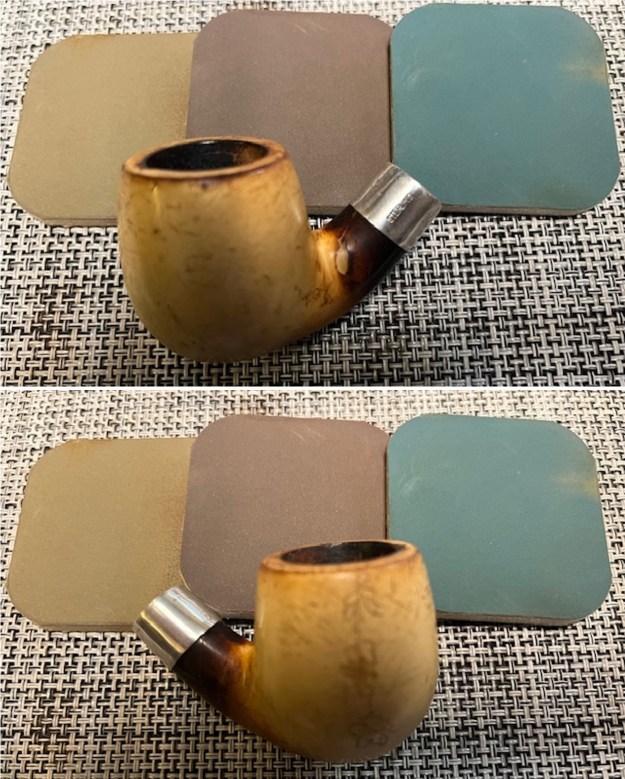
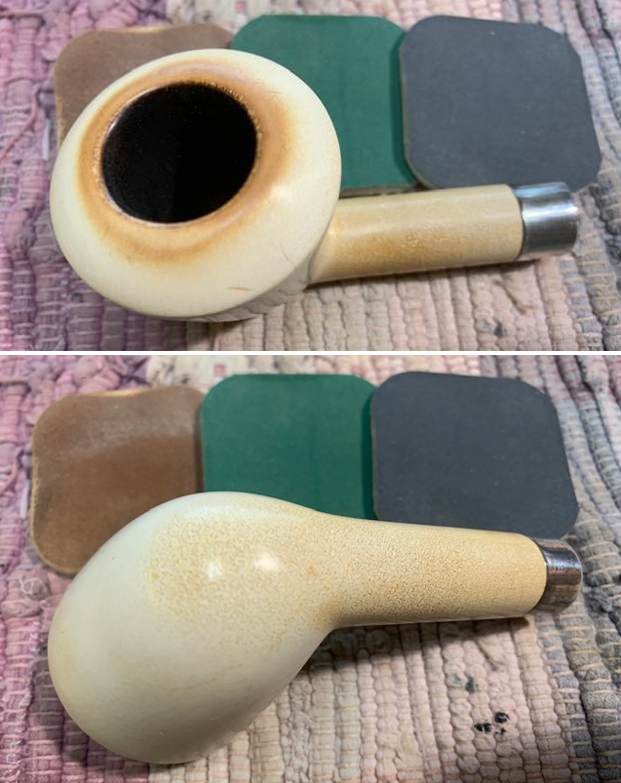
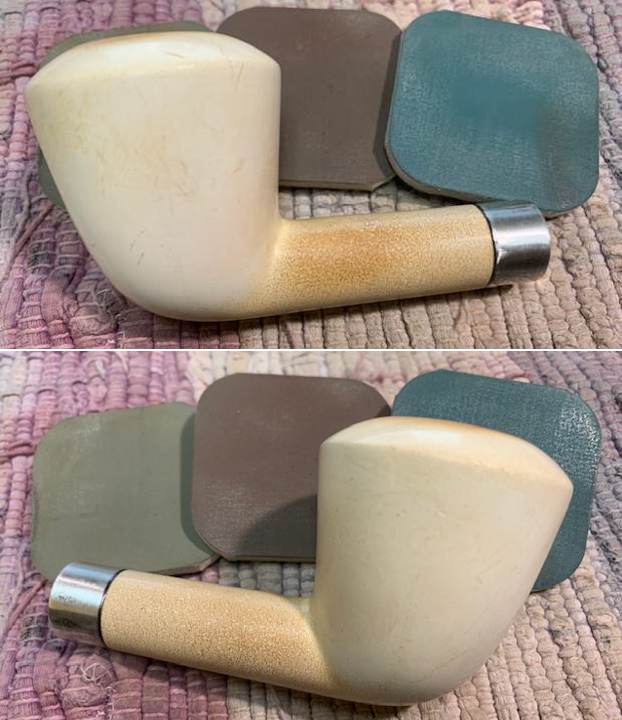
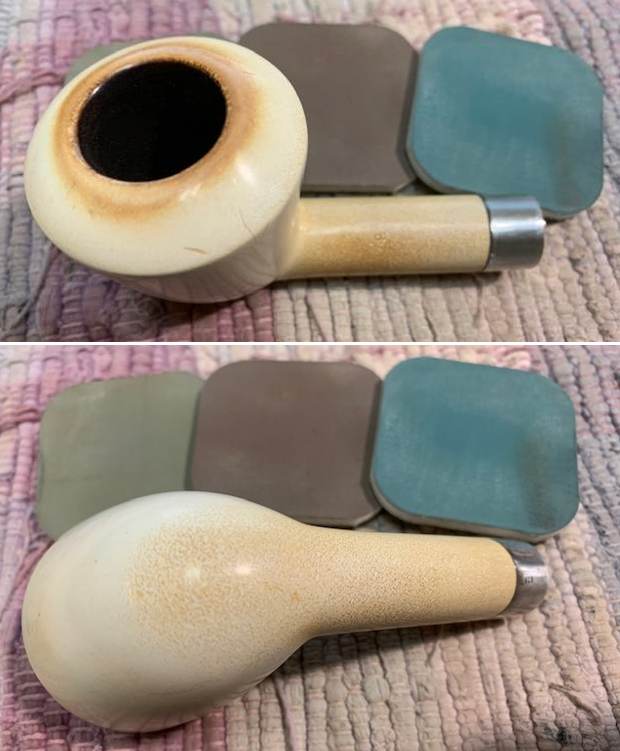
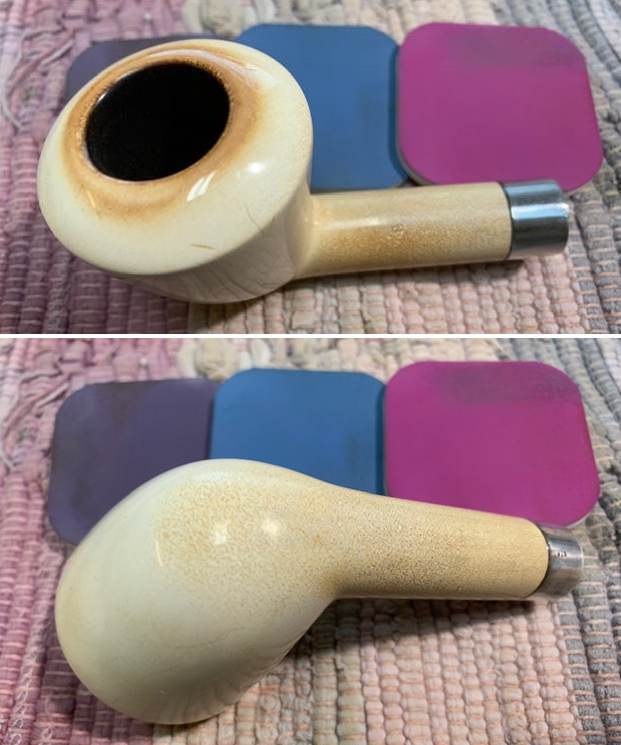
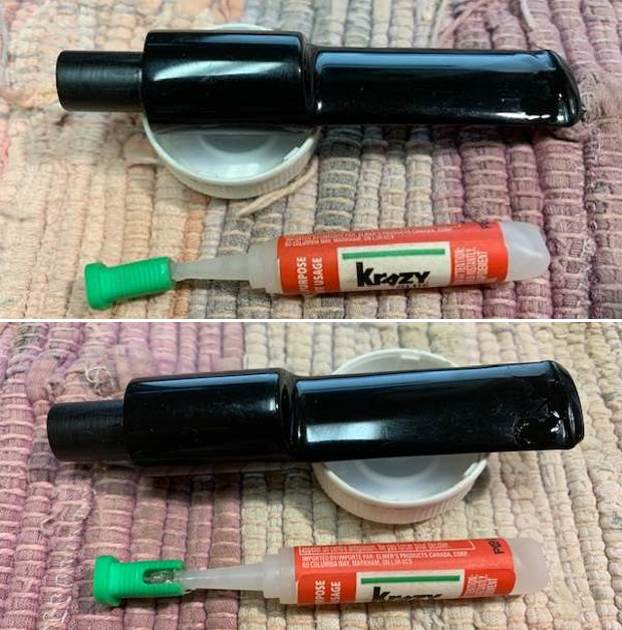
 I used a small bit of CA glue to fill in the three marks that remained (it looks like more glue than it actually is – it is quite thin). I sanded the repairs smooth with 600 grit wet dry sandpaper. I started the polishing with micromesh sanding pads – working it over with 1500 grit pads.
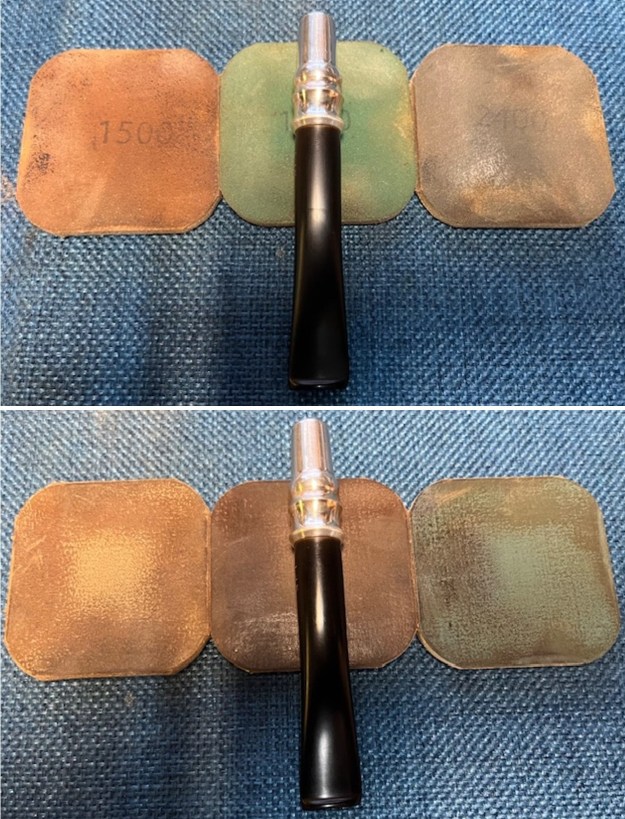
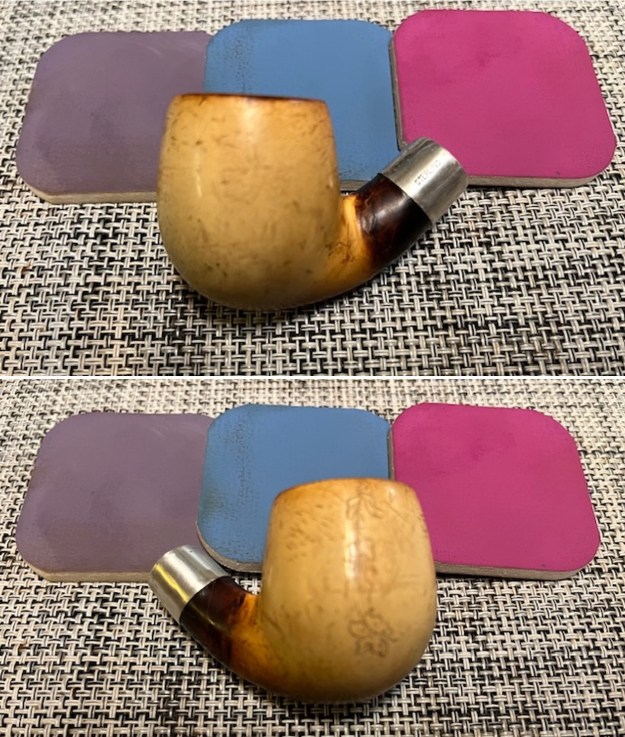
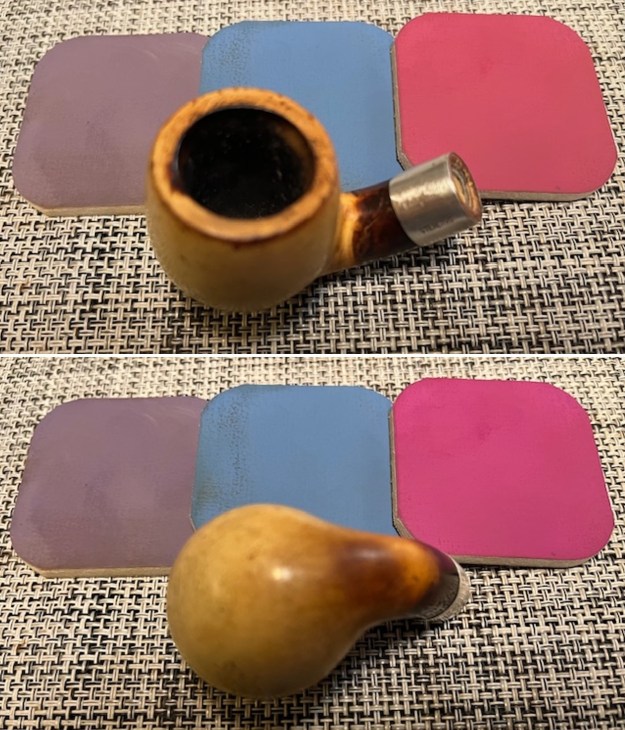
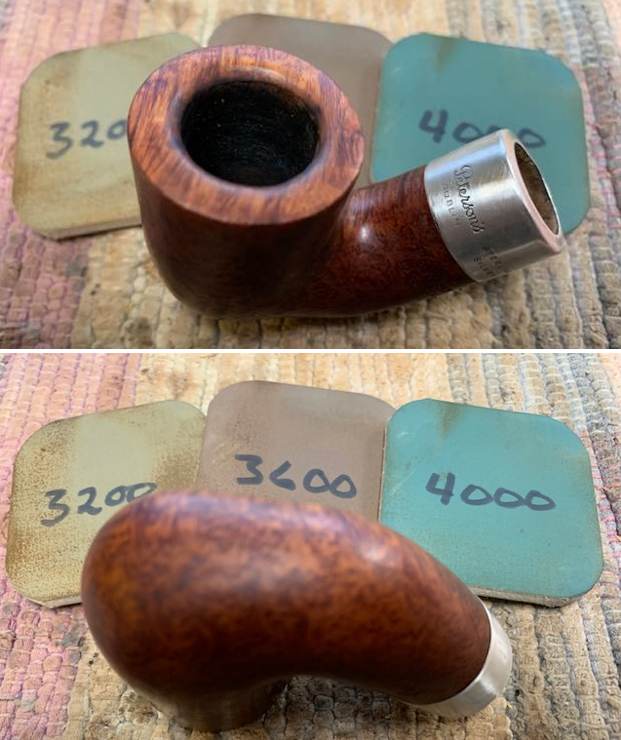
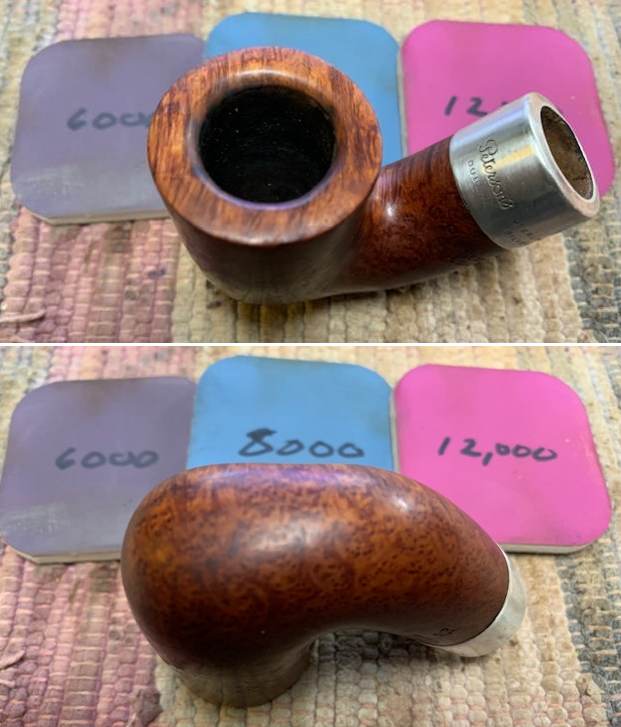
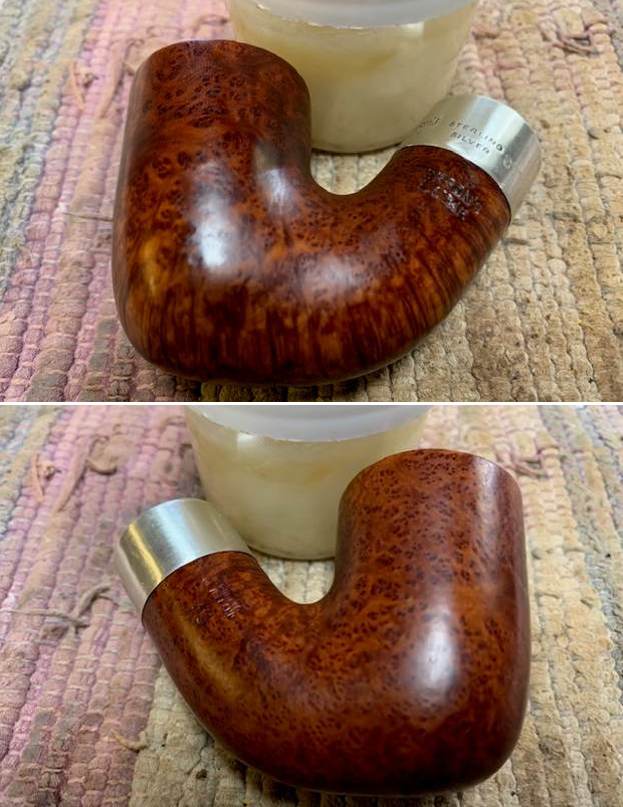
 Once I have the repair sanded smooth I blend them into the surface of the briar. I polished the briar with micromesh sanding pads. I choose to dry sand the briar rather than wet sand it. Again it is a matter of personal preference. I prefer to use the pads dry and find they work very well on the briar. I sand with each pad (9 in total) and group them by threes for ease of reference. I also work over the plateau areas at the same time. I wipe the bowl down after each pad with a damp cloth to remove the sanding debris and check the briar. I love seeing the developing shine on the briar as I move through the pads which is why I include so many photos of this step.


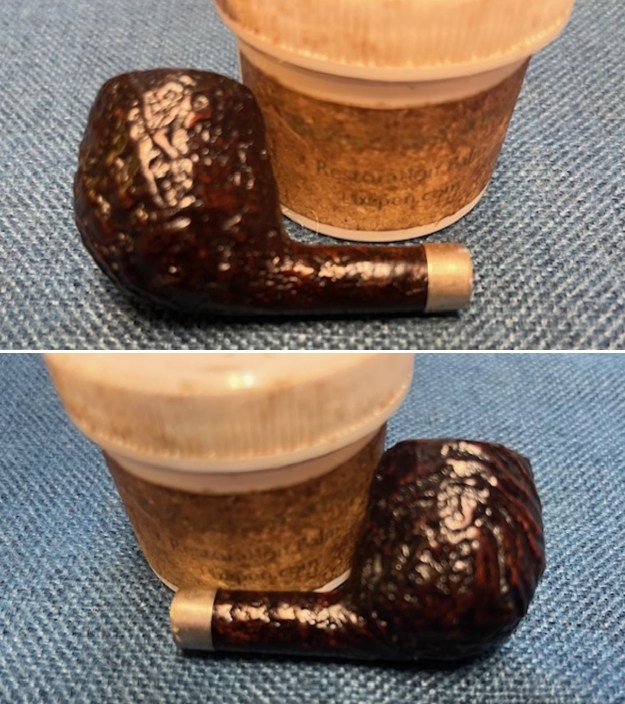
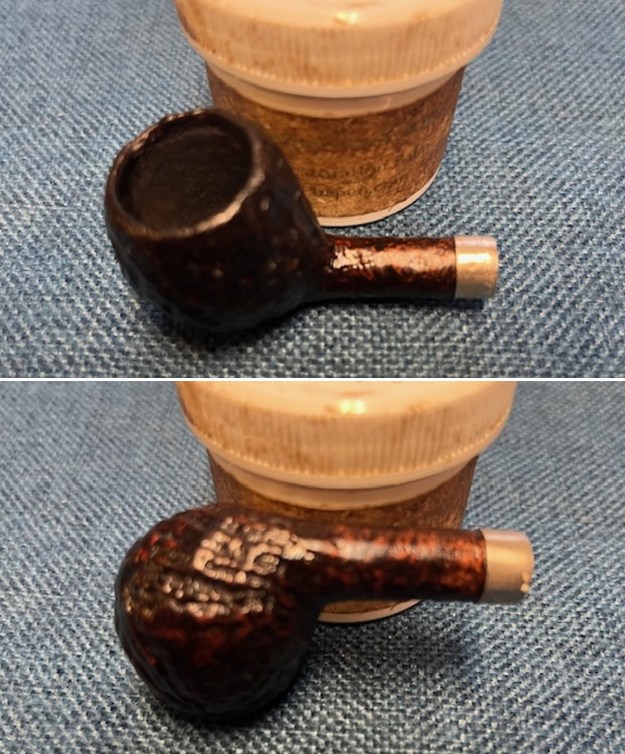
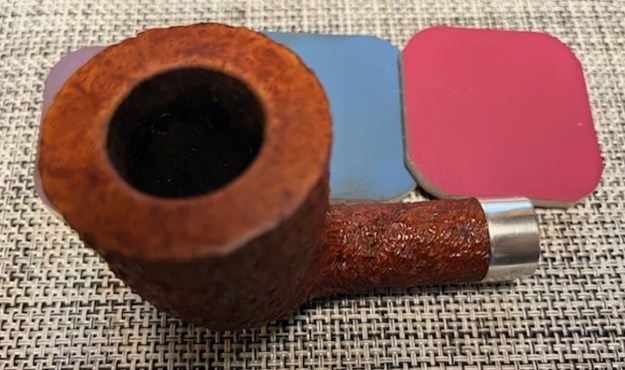
 Once I have a bowl at this point in the process I go over it to see the coverage on the bowl. In this case the finish was very spotty. I chose to restain the bowl with a Light Brown aniline wash. I mixed some brown pigment with some isopropyl alcohol to mix a wash. I used a cotton dauber to cover the surface of the briar with the stain wash. I lit the finish with a lighter and set the stain in the briar. I repeated the process a second time to make sure it was a smooth finish. I took a few photos of the stained bowl. It appears significantly darker than I expected but I knew that buffing it would lighten the finish and perhaps make it match. Buffing would tell the tale.
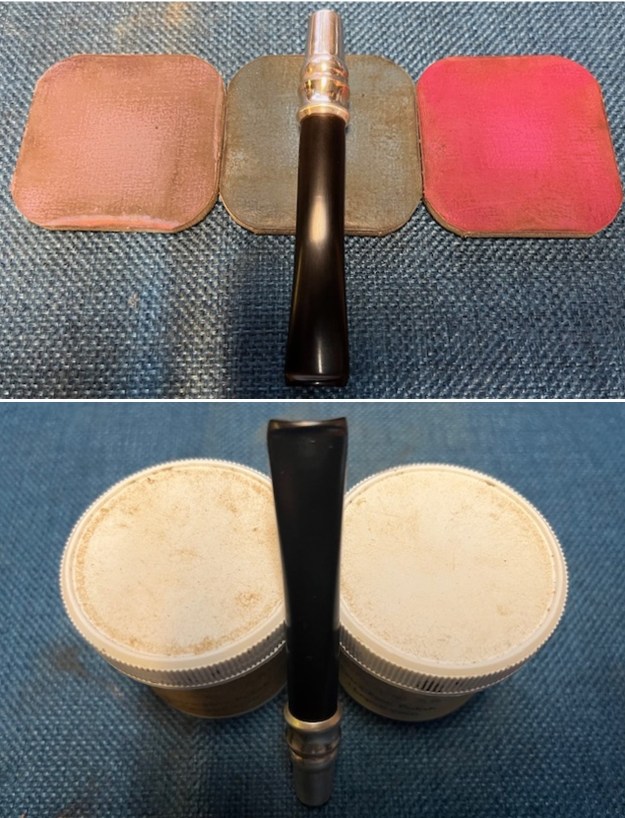
 When I stain a bowl like the one above I take it to the buffer after the stain has dried. I buffed it first with Red Tripoli to remove the “crust” of the new stain. The Tripoli took off the opacity of the stain on the bowl and gave me more of the colour I was hoping for under the stain coat. I buffed it a second time with Blue Diamond and was able to remove more. The bowl also began to take on a deep shine. I took photos of the bowl after buffing and have included them below.

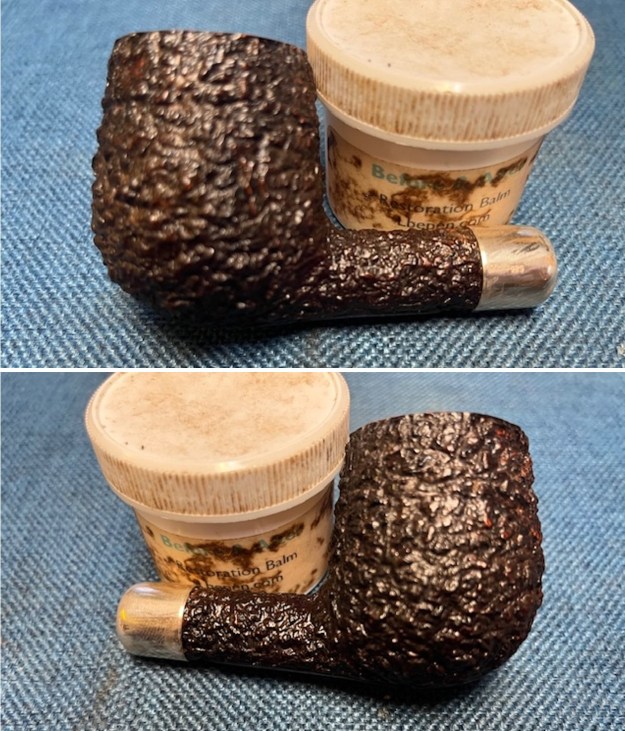
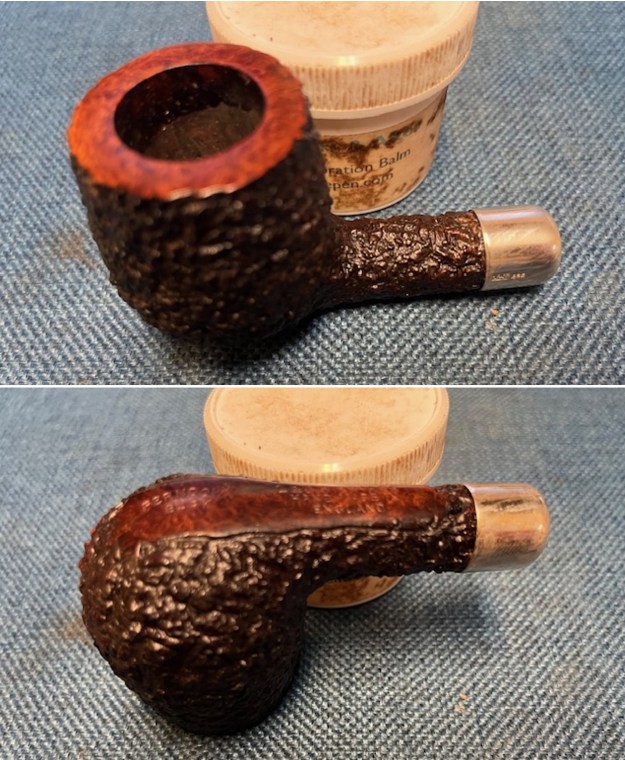
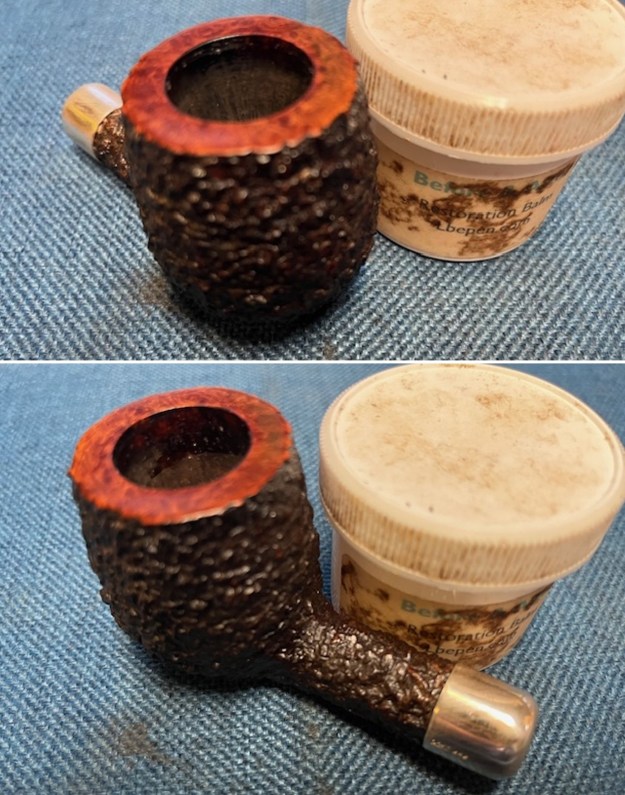
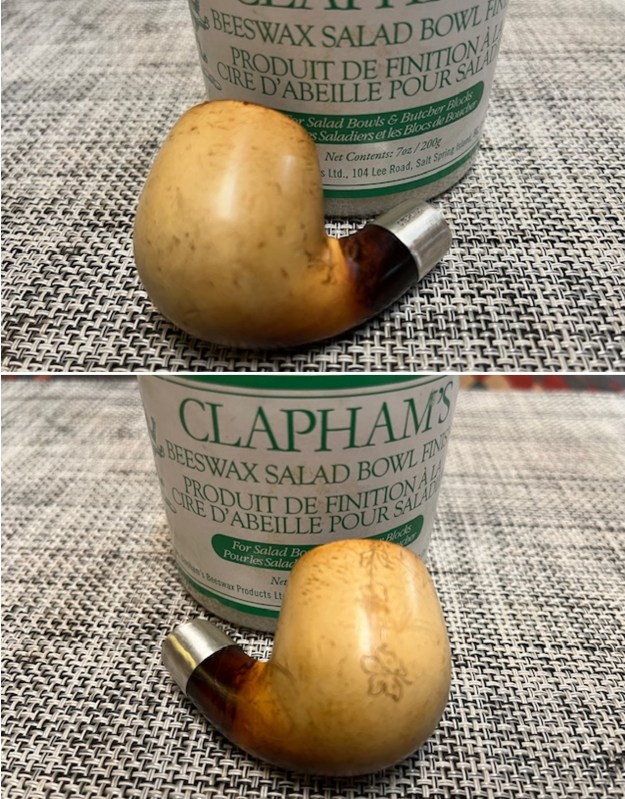
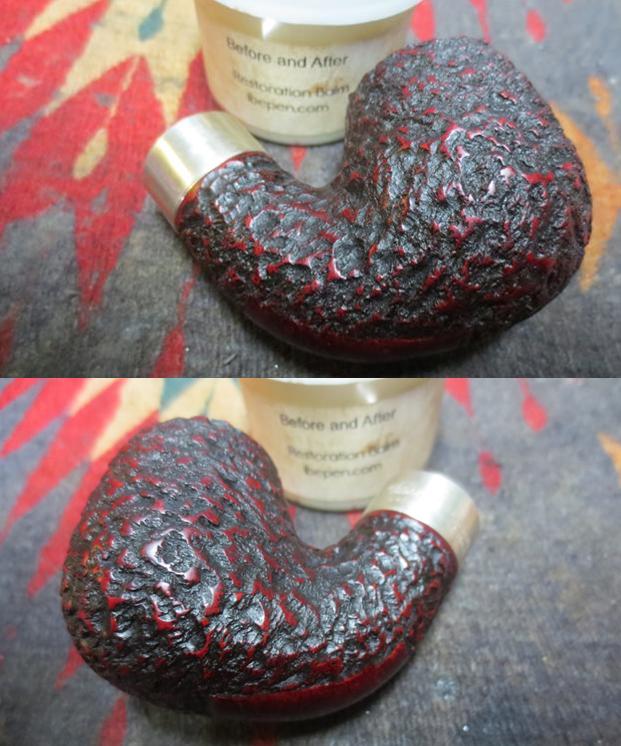
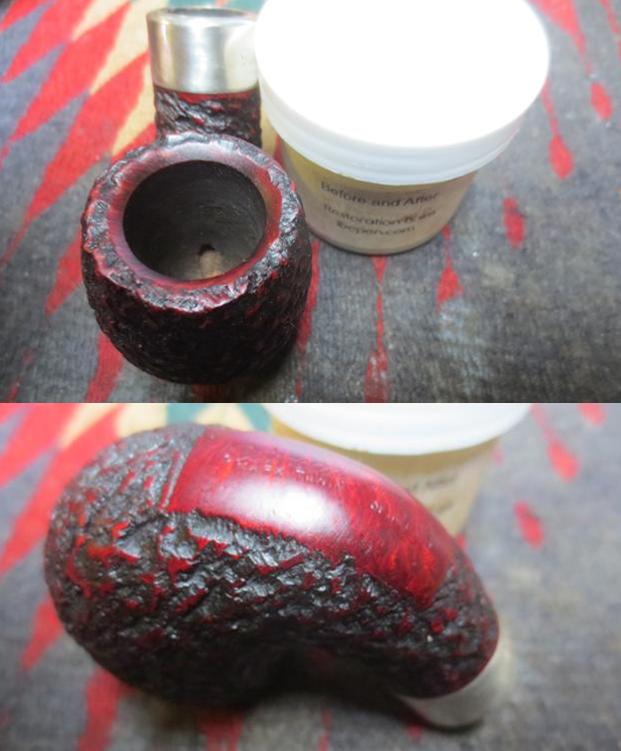
 For the past few years now I have been using a product developed by Mark Hoover called Before & After Restoration Balm. It is a paste/balm that is rubbed into the surface of the briar and the plateau. The product works to deep clean the nooks and crannies of finish, enliven and protect the briar. I worked it into the briar with my finger tips and let it sit for 10 minutes to do its work. I wiped it off with a soft cloth then buffed it with a cotton cloth. The briar really began to have a deep shine in the briar and the grain shone through. The photos I took of the bowl at this point mark the progress in the restoration. It is a gorgeous pipe.

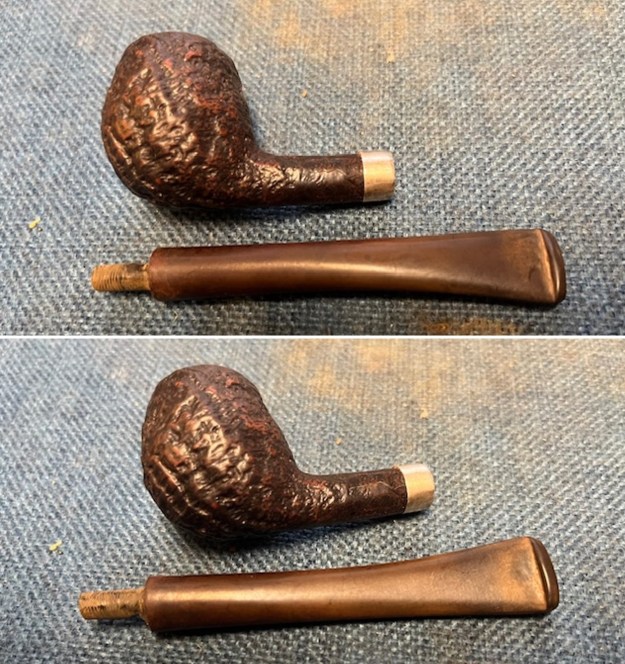
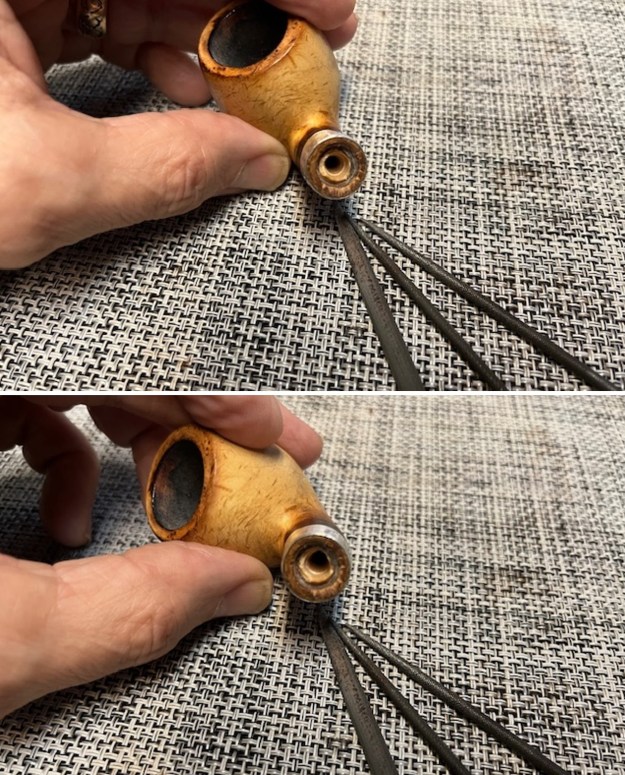
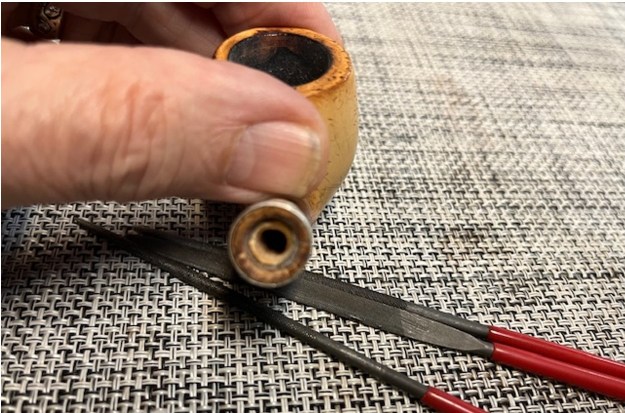
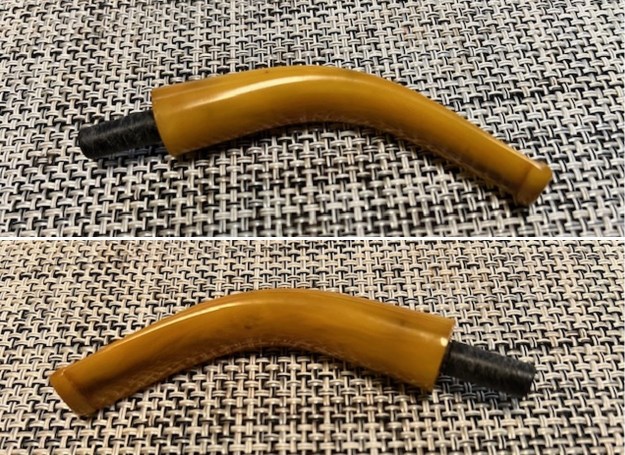
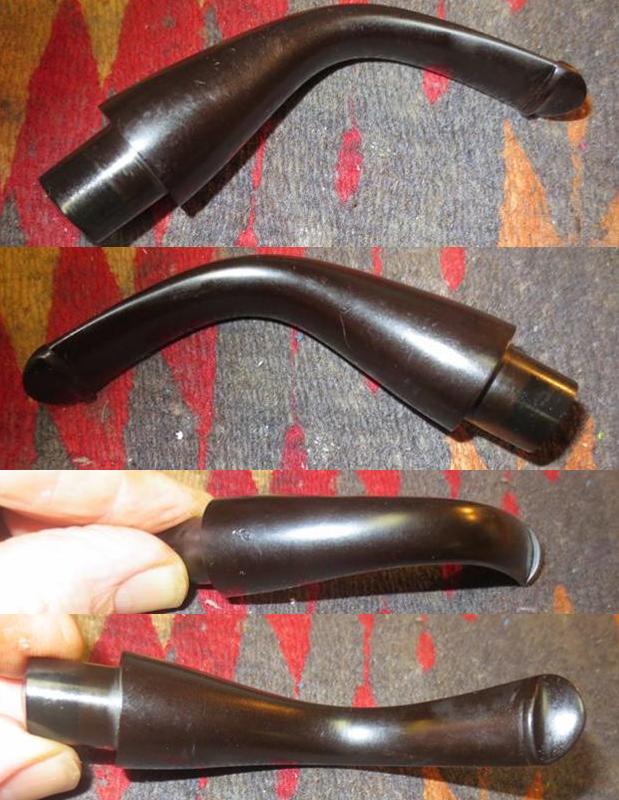
 Now it was time to address the part of the restoration I leave until last. I set the bowl aside and turned my attention to the stem. This one was a unique stem so I was not as slow to start because of damage to the stem it was more to try to put together why the stem has two materials and how they were joined. The junction was flawlessly done and the transition was very smooth. It made me wonder who had done this work and why. I have never seen any other BBB pipe with the compound material stem. Here are a couple of thoughts I have as I have been working on it. There are several possibilities.
The first is that this stem is kind of a Frankenpipe rebuild.
- Somewhere in the life of the pipe the original vulcanite stem was ruined from the button forward. The original owner wanted to keep the front portion next to the shank intact so that original brass logo would not have to be moved.
- A possibility is that the old stem was cut off and an acrylic end was made for it. They were joined together with a tenon and glue that bound the parts together seamlessly.
- The stem was then sanded to make the transition between the two materials seamless.
The second is that it originally came out that way as a means of protecting the stem from bite through. It may well have been a BBB innovation – just one that I have never seen or read about.
I suppose at one level I will never really know for sure but whatever the reason for the mixed material of the stem it is a beauty. Now it was time to work on it.
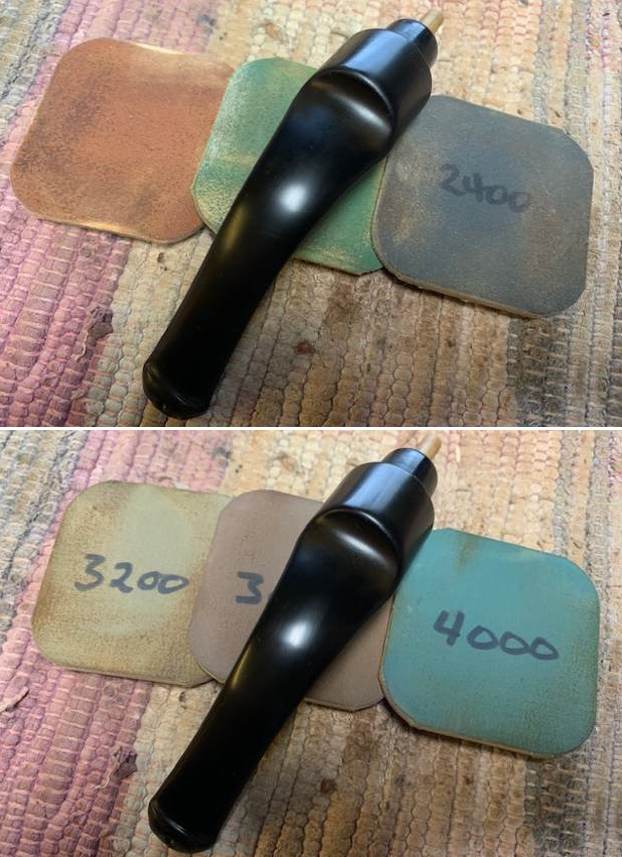
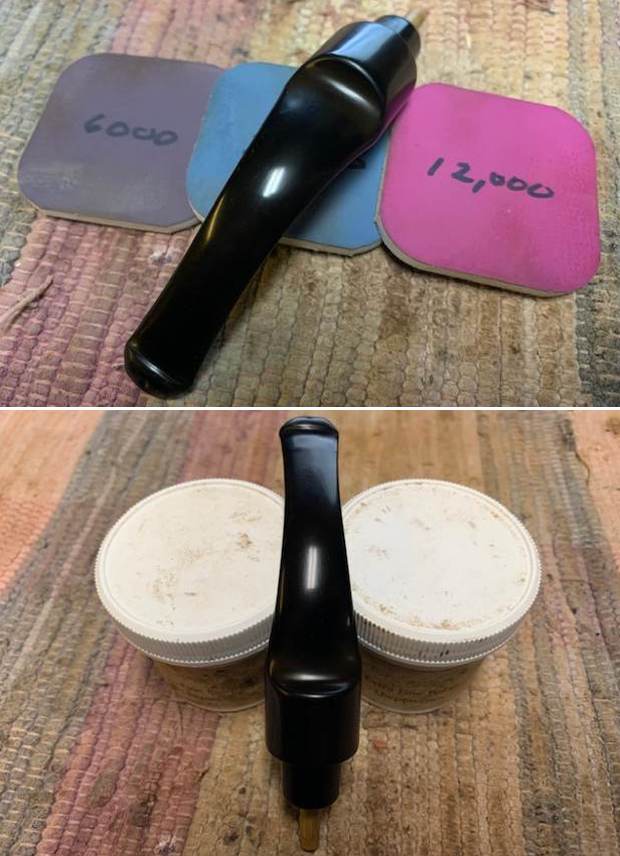
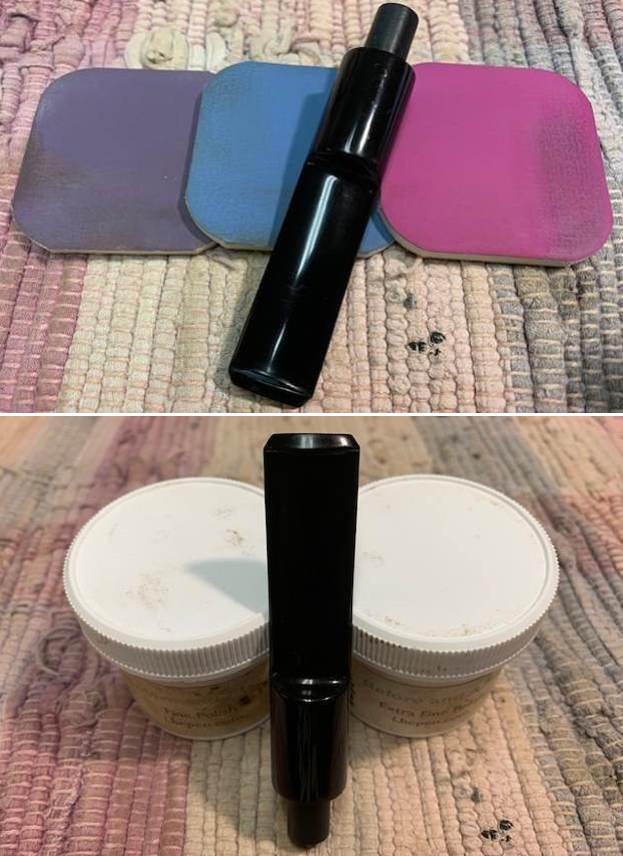
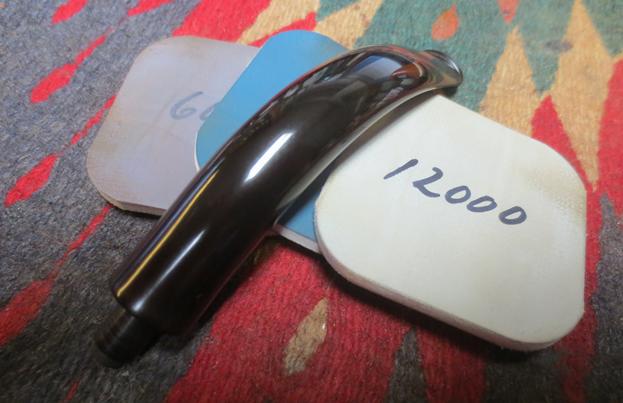
At this point in the process I chose to polish the stem and bring back a shine. I use micromesh sanding pads and water to wet sand the stem with 1500-12000 grit sanding pads. I wiped it down after each sanding pad with Obsidian Oil on a cotton rag after each sanding pad as I find it does two things – first it protects the vulcanite and second it give the sanding pads bite in the polishing process.
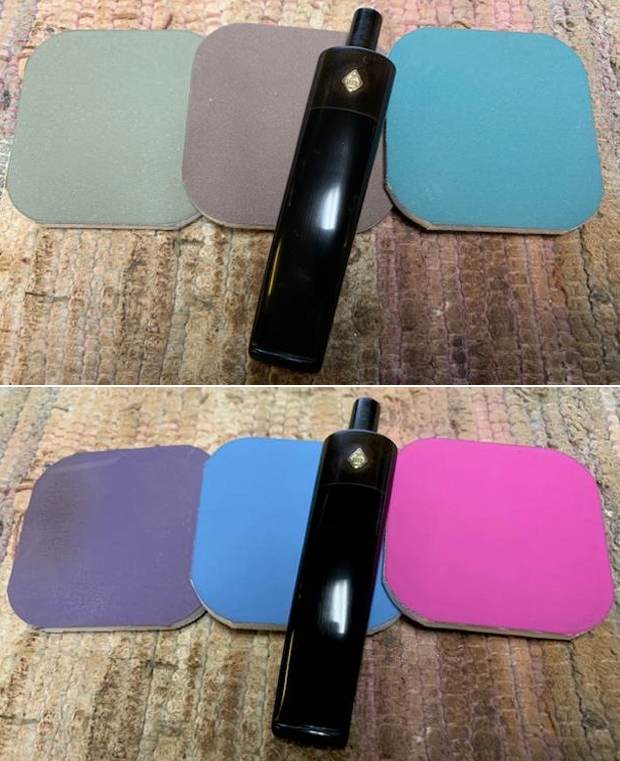 After finishing with the micromesh pads I rub the stem down with Before & After Fine and Extra Fine stem polish as it seems to really remove the fine scratches in the vulcanite. I rub the Fine Polish on the stem and wipe it off with a paper towel and then repeat the process with the extra fine polish. I finish the polishing of the stem down with a final coat of Obsidian Oil and set the stem aside to let the oil absorb. This process gives the stem a shine and also a bit of protection from oxidizing quickly.
 The final steps in my process involve using the buffer. I first buff the stem and the briar with Blue Diamond on the buffing wheel. Blue Diamond is a plastic polish but I find that it works very well to polish out the light scratches in the vulcanite and the briar. I work the pipe over on the wheel with my finger or thumb in the bowl to keep it from becoming airborne. It works well and I am able to carefully move forward with the buffing. The briar and stem just shone!
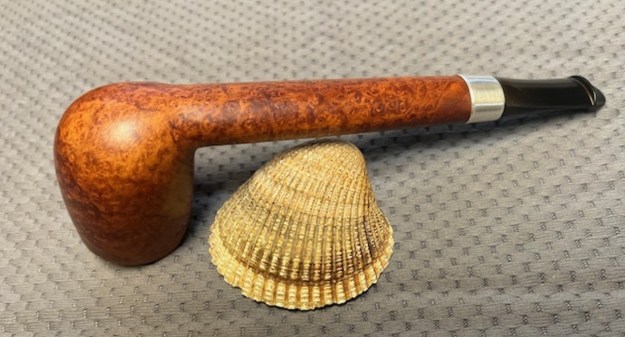
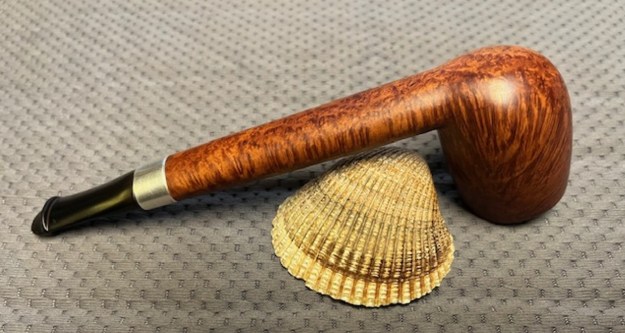
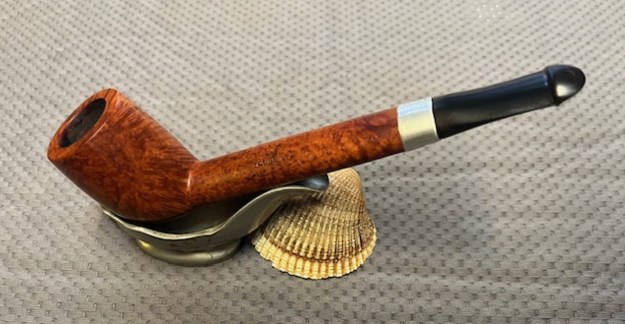
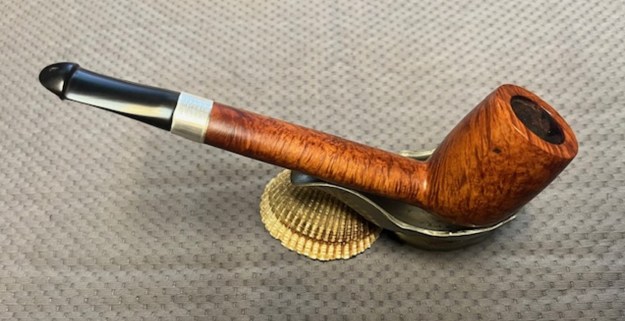
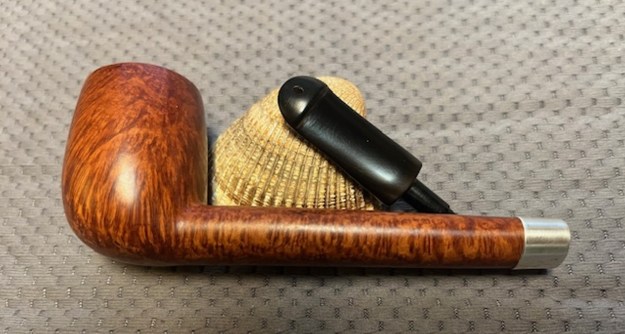
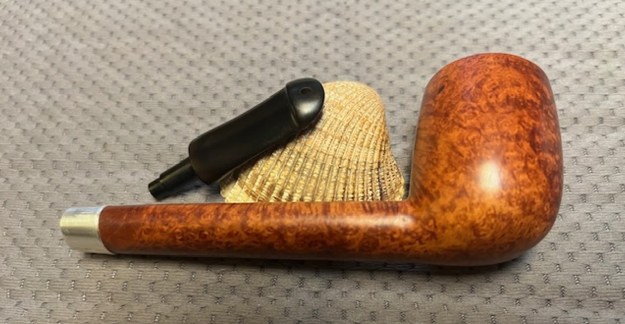
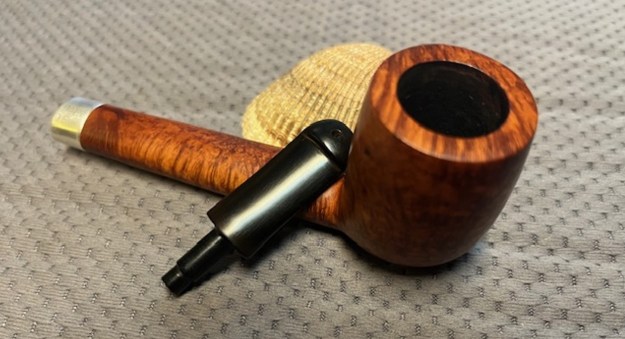
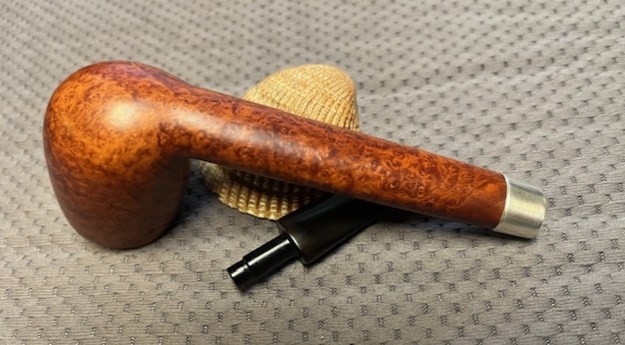
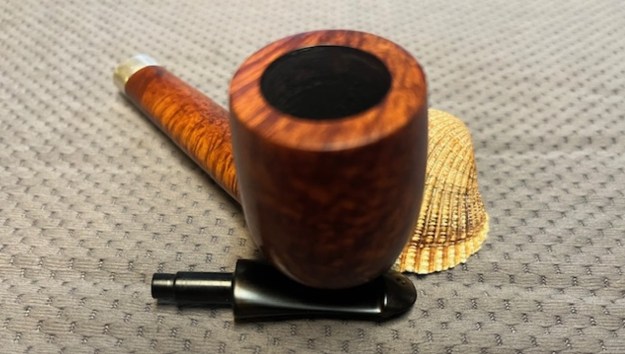
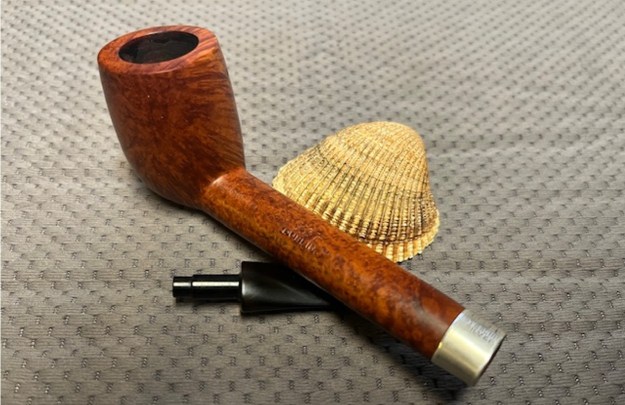
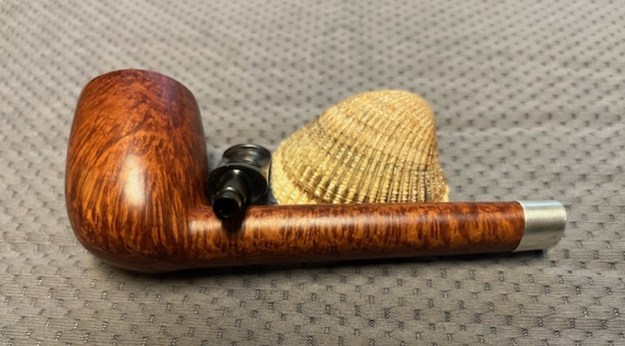
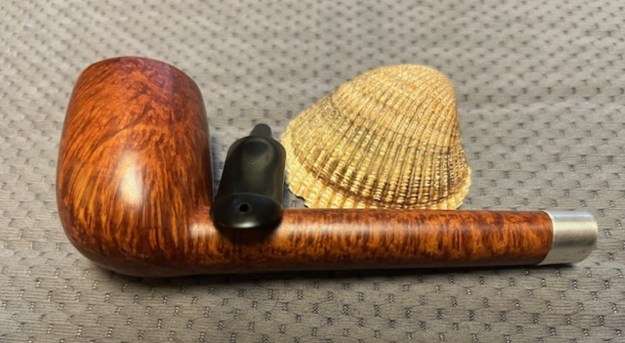
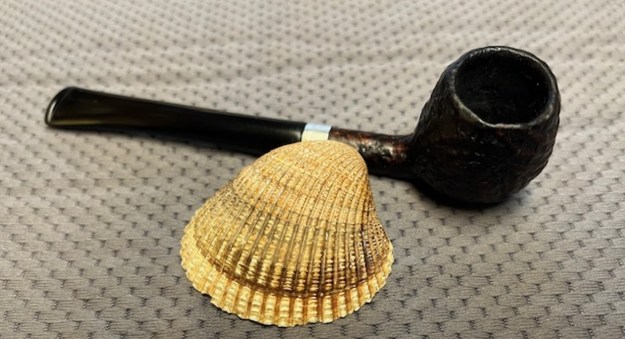
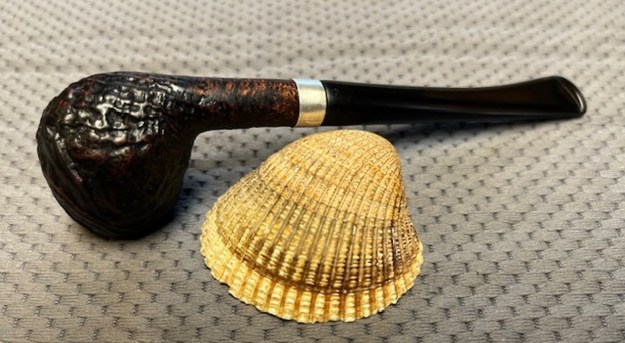
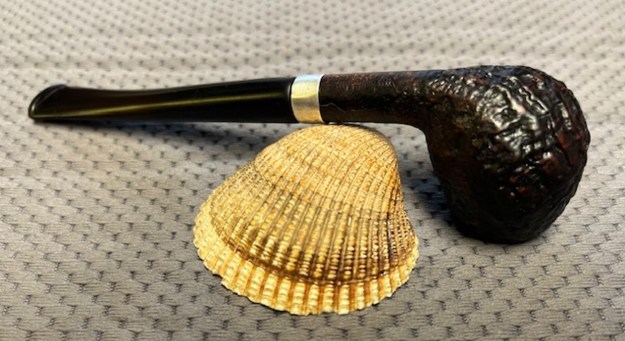
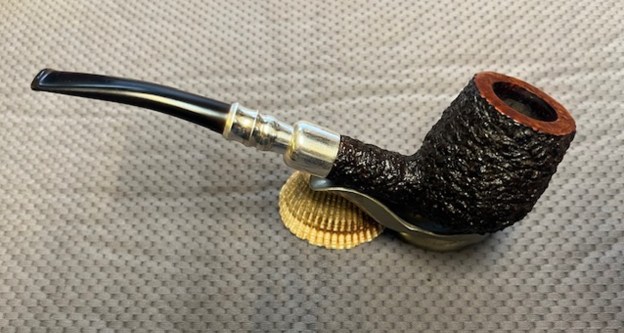
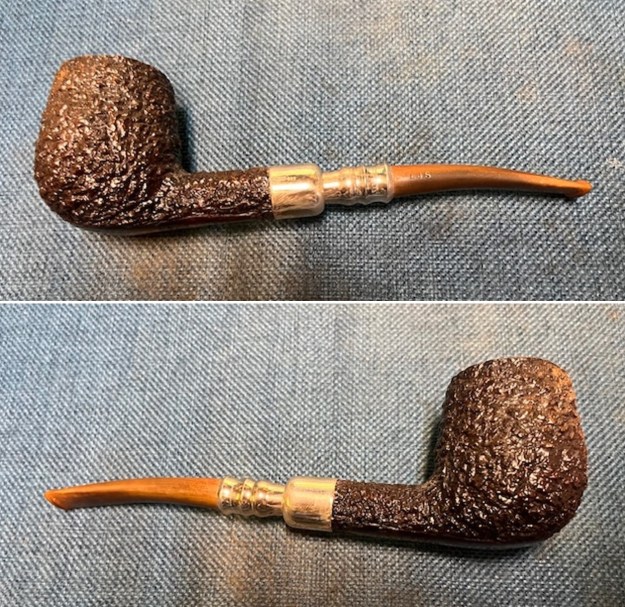
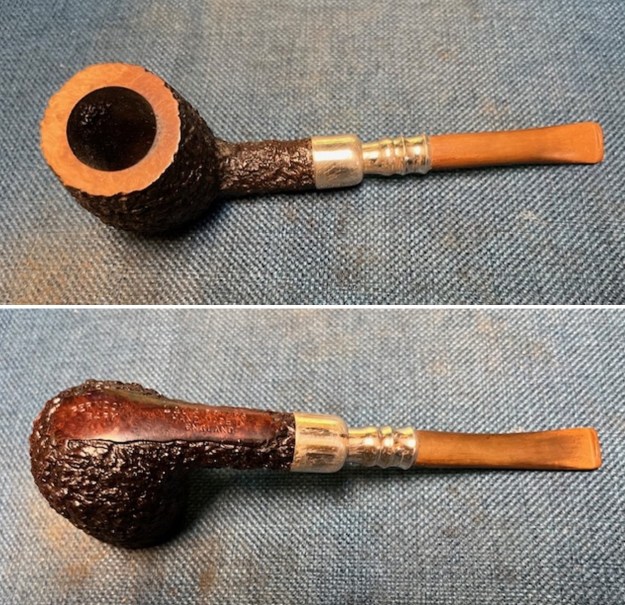
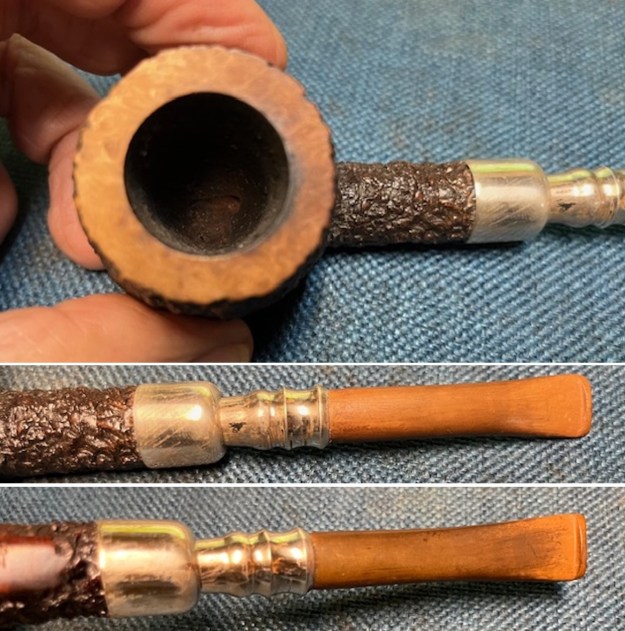
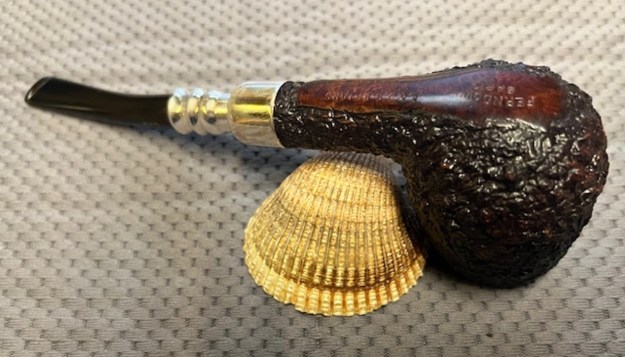
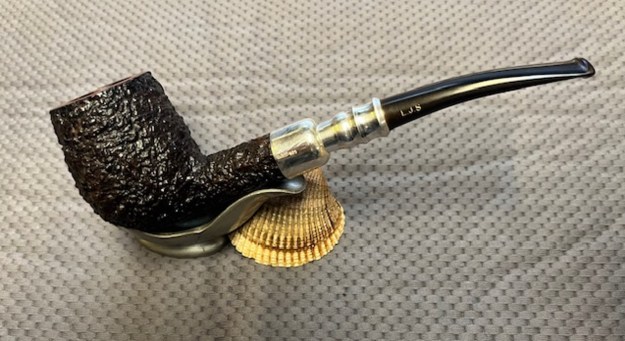
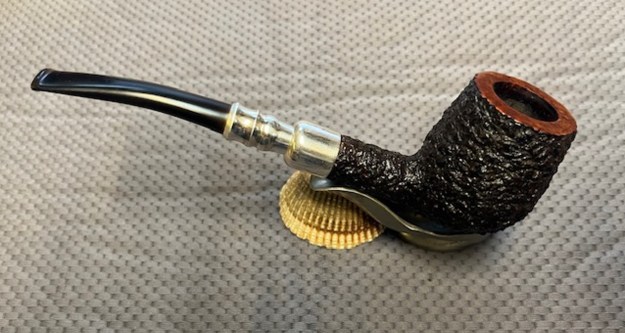
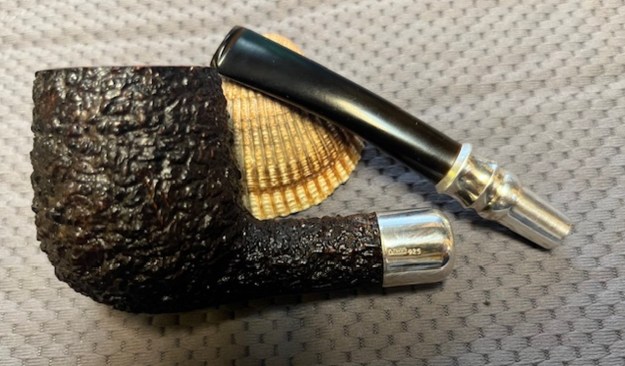
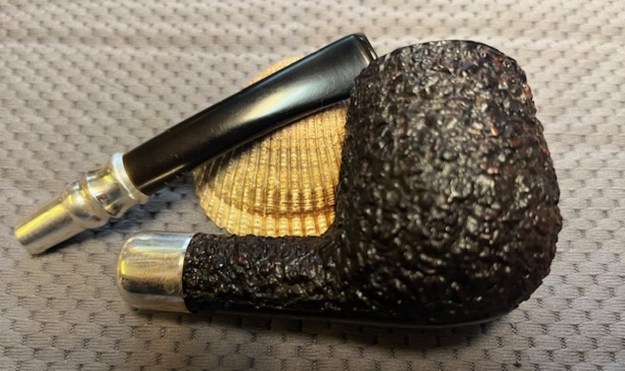
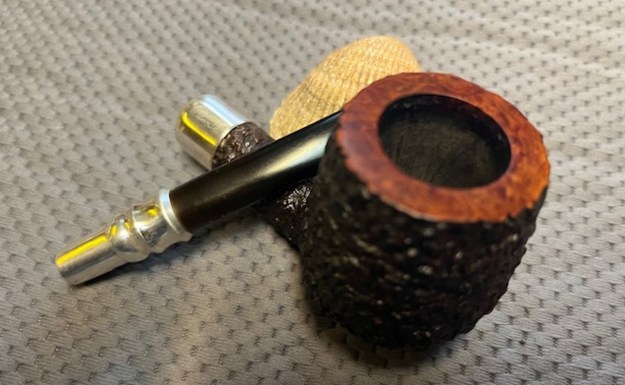
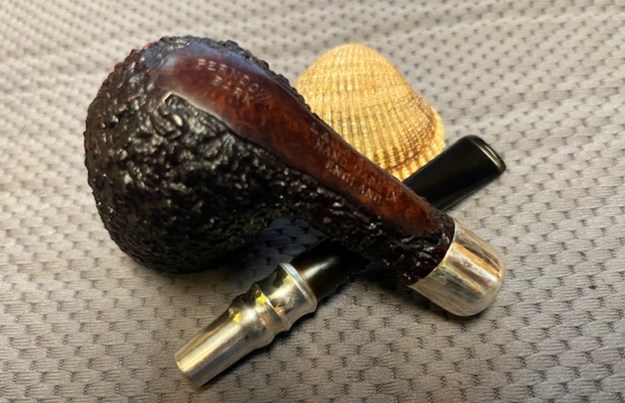
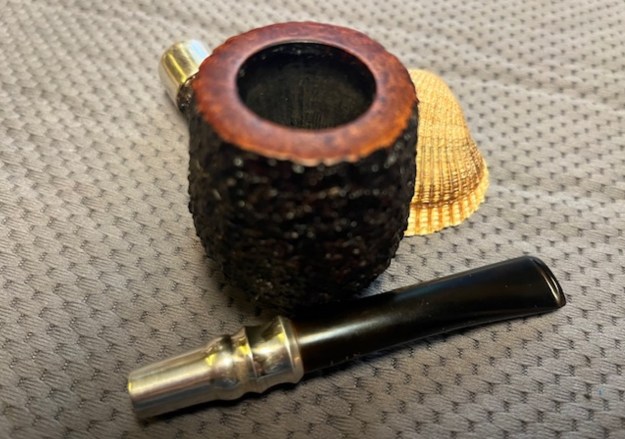
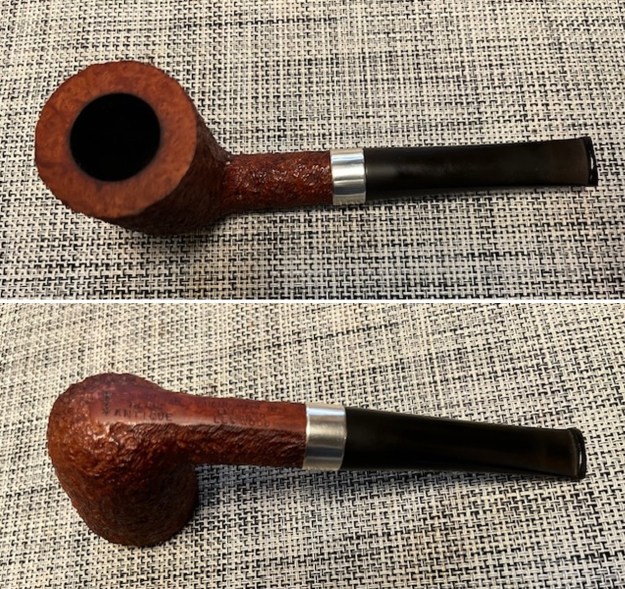
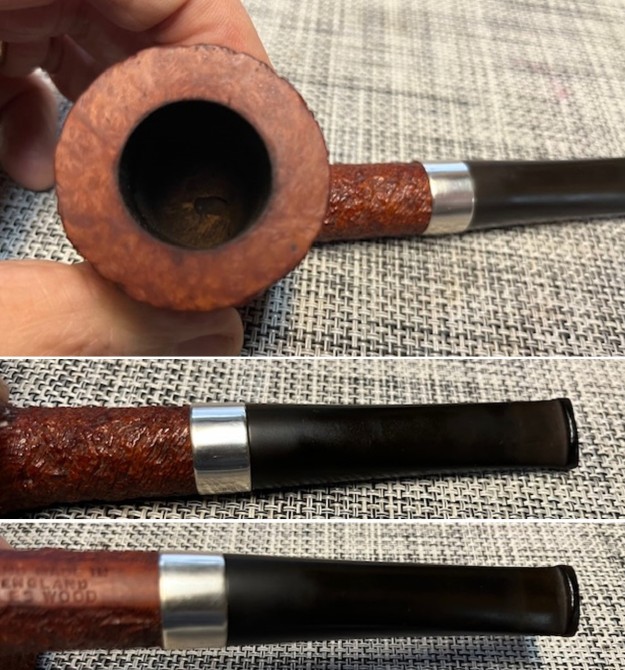
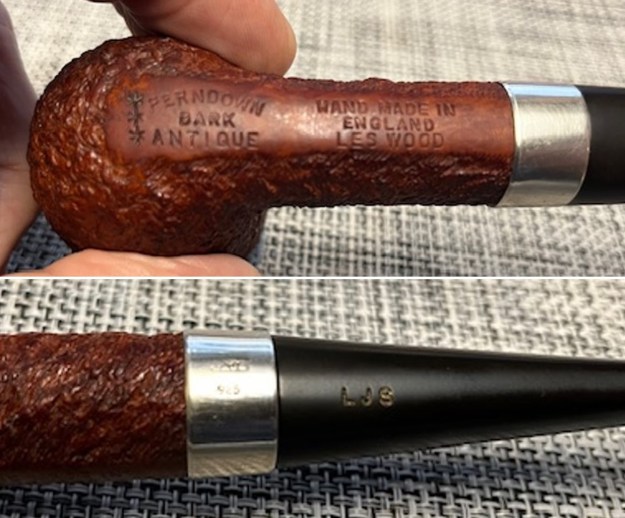
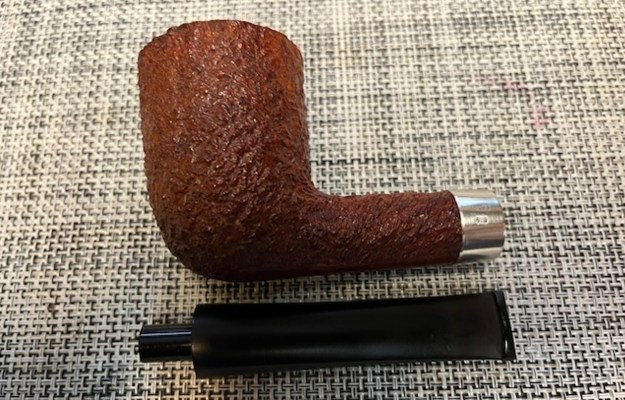
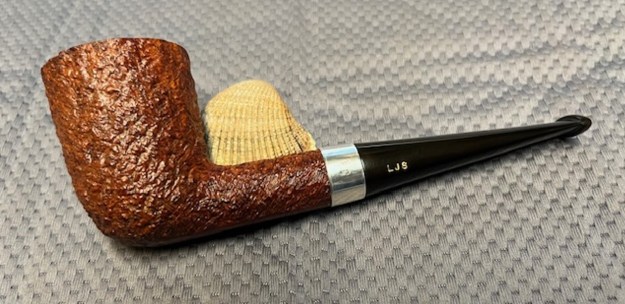
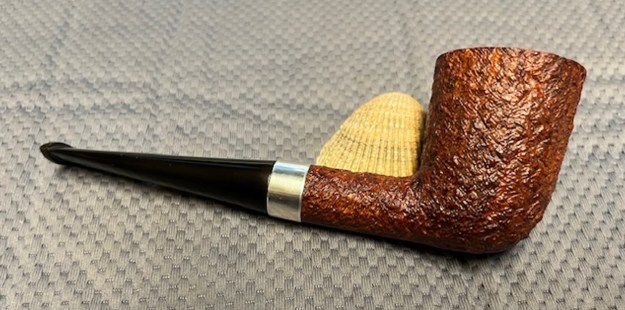
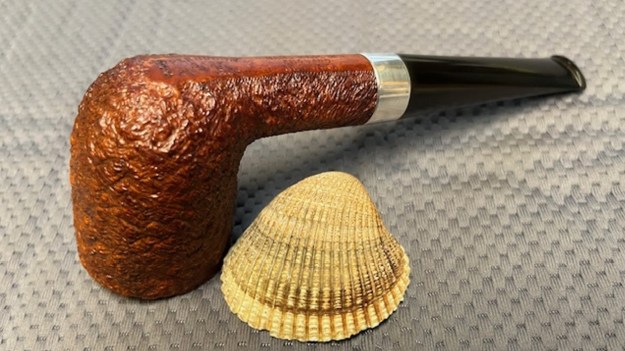
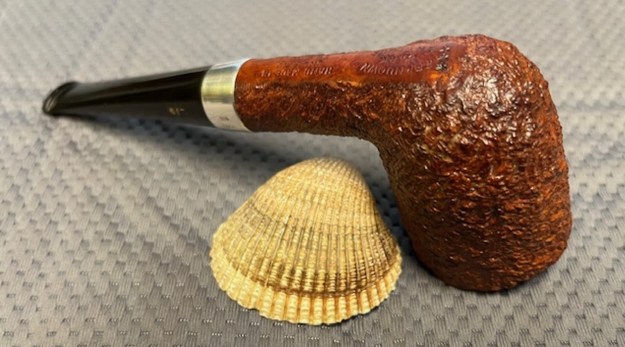
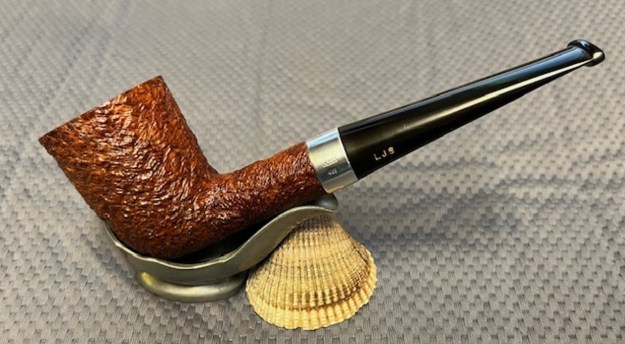
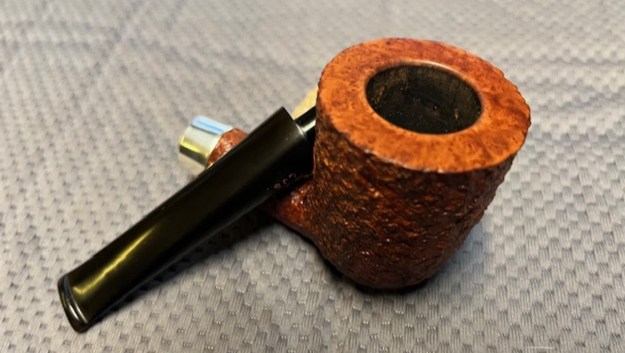
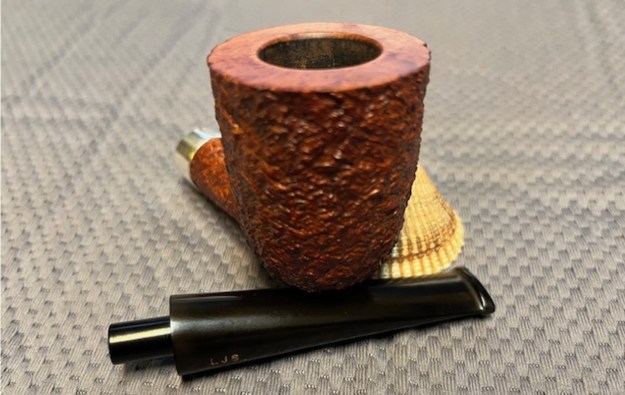
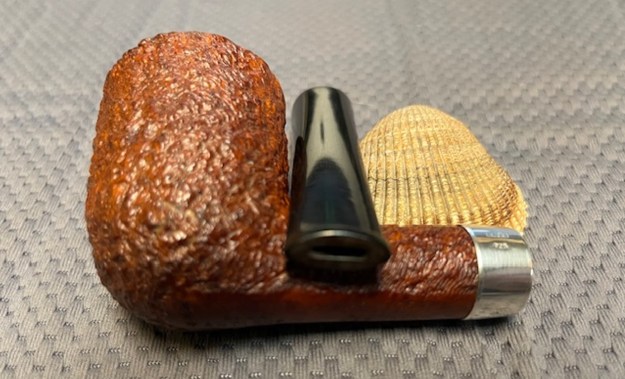
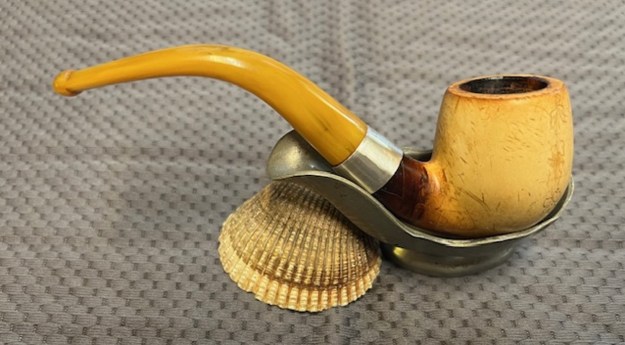
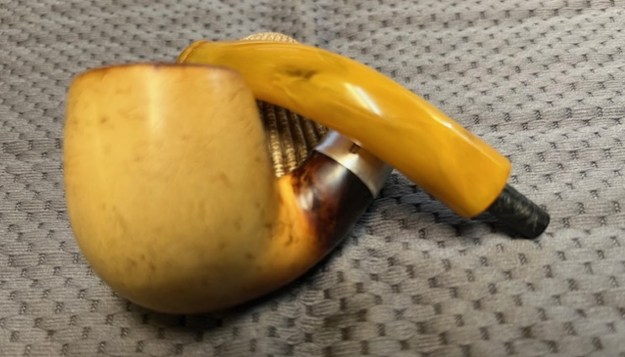
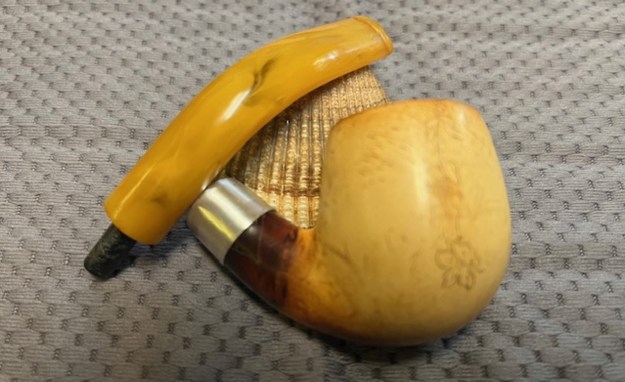
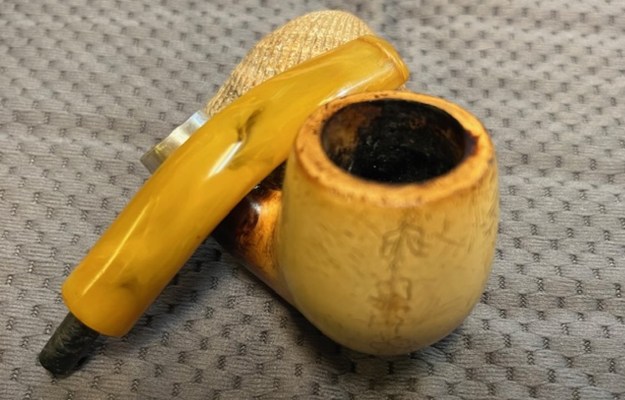
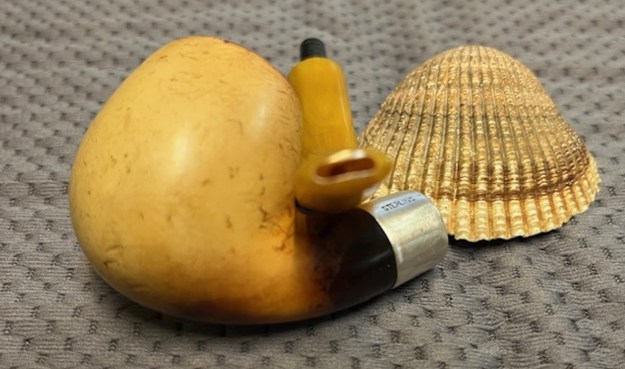
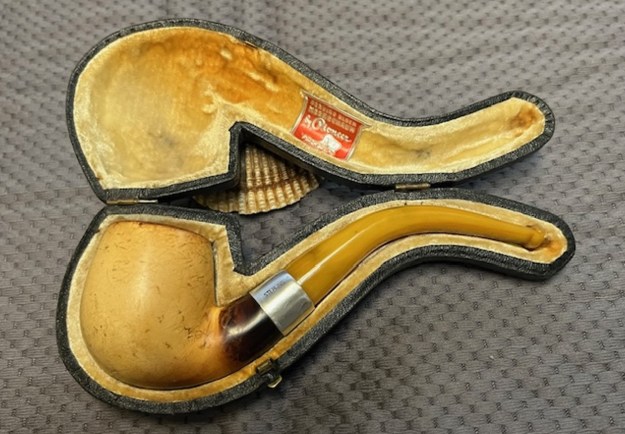
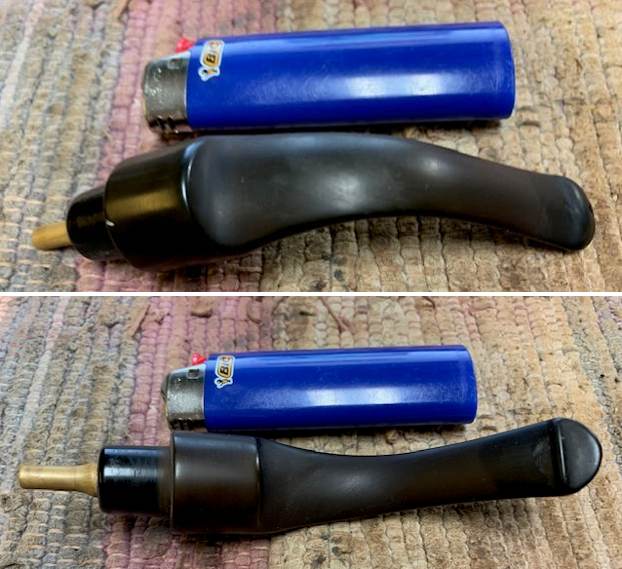
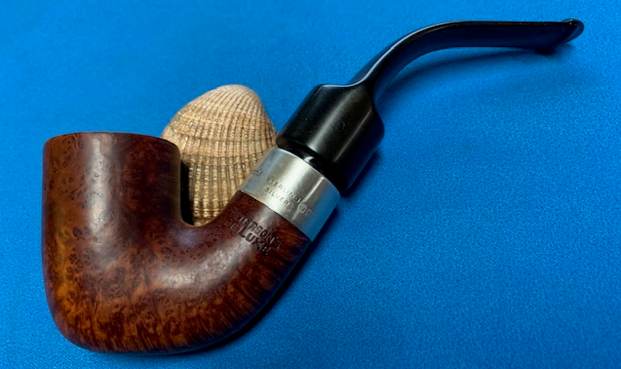
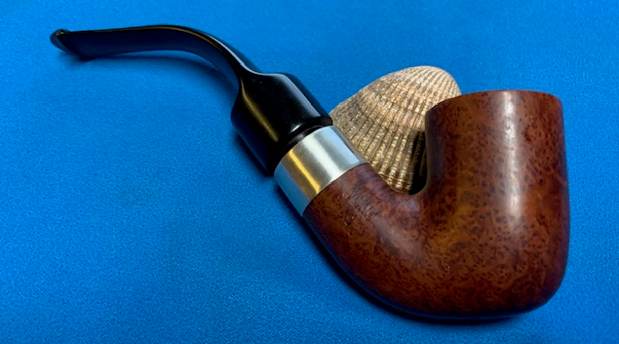
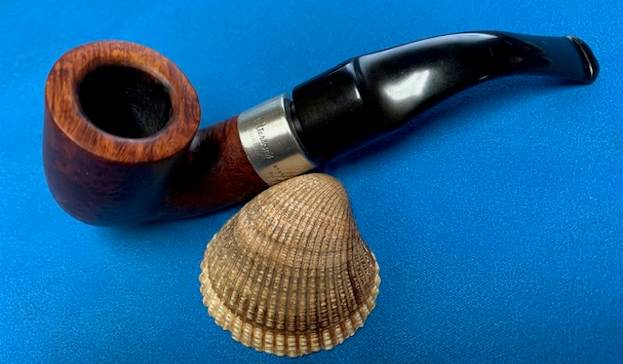
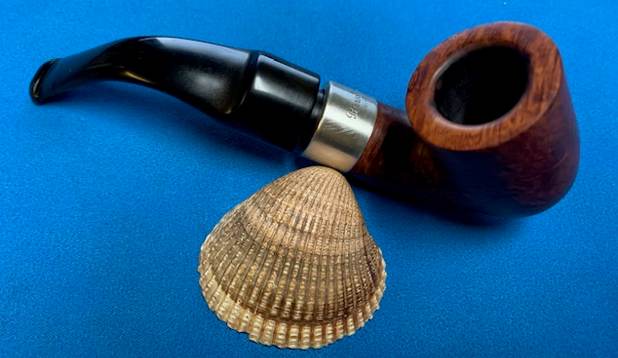
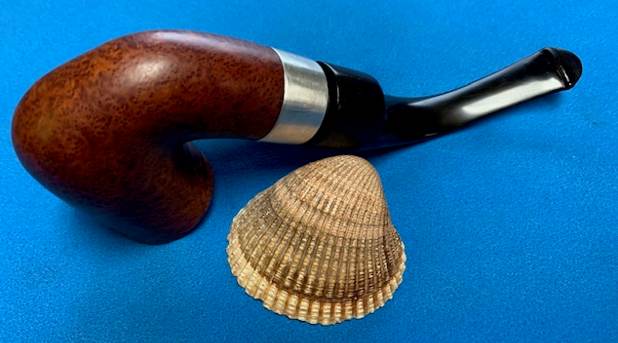
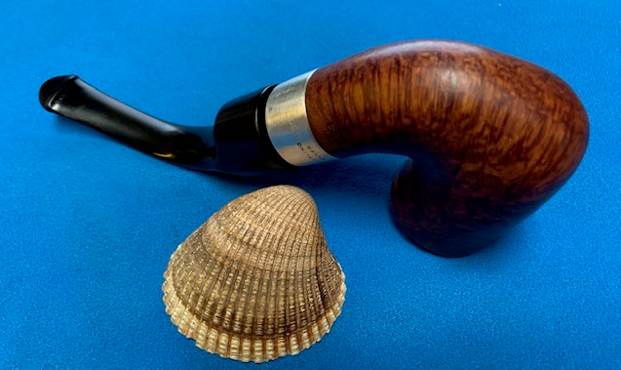
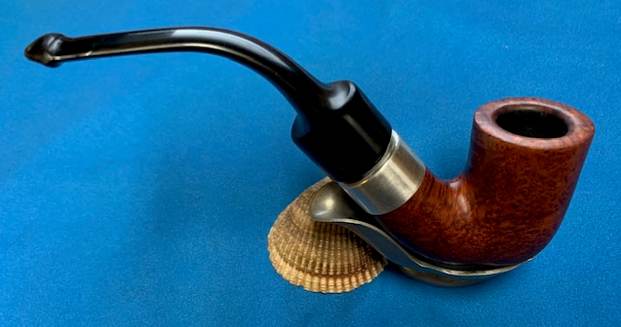
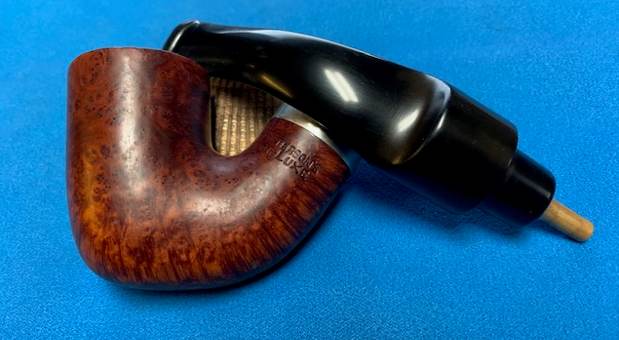
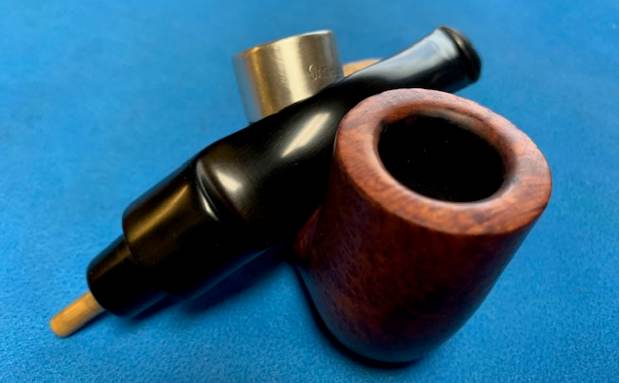
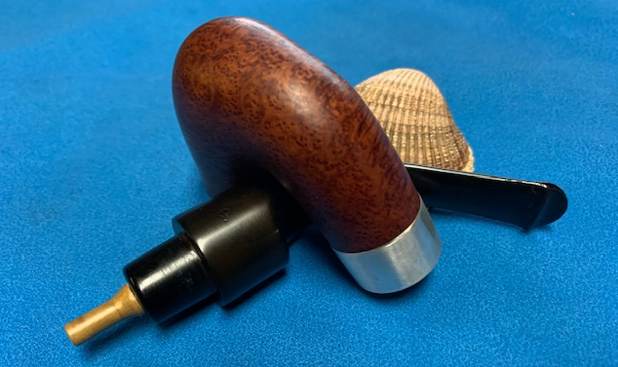
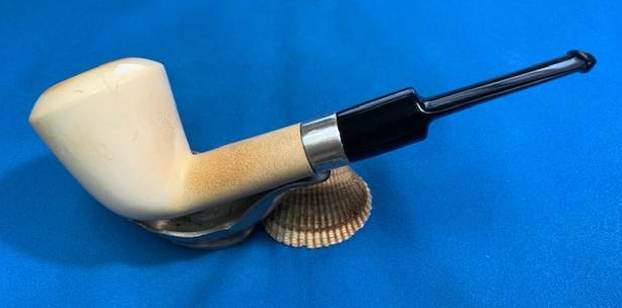
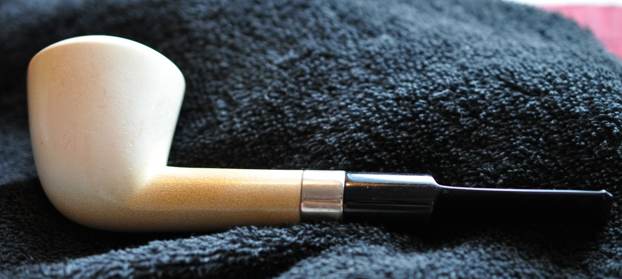
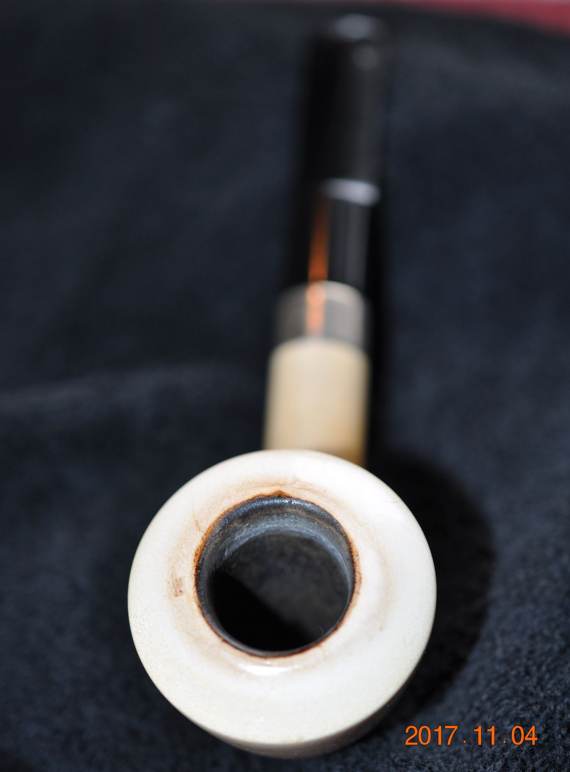
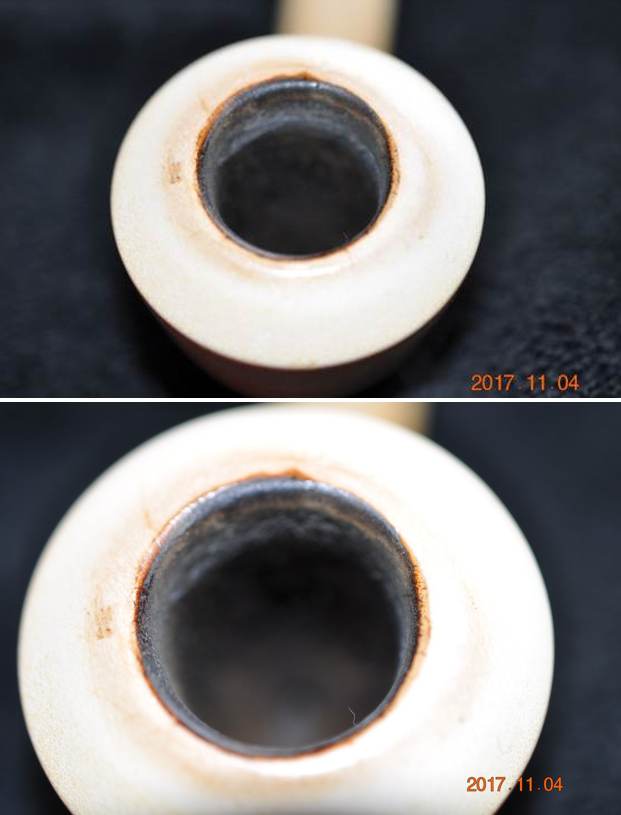
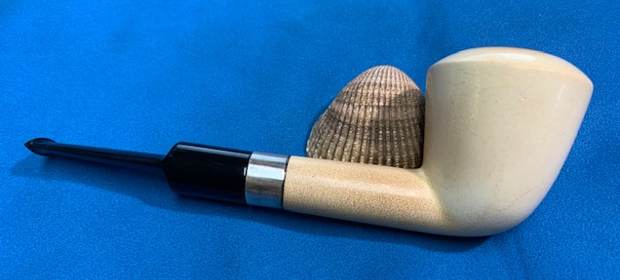
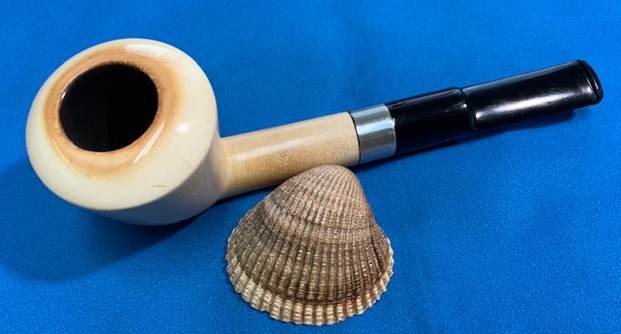
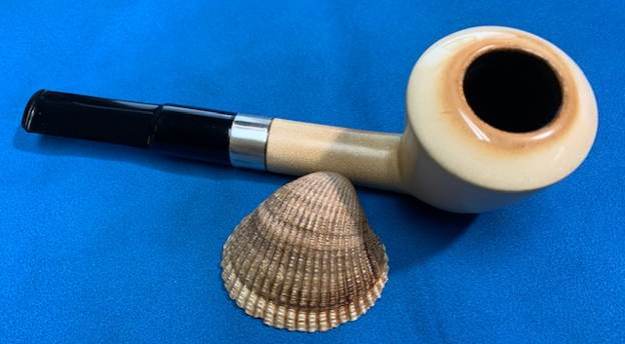
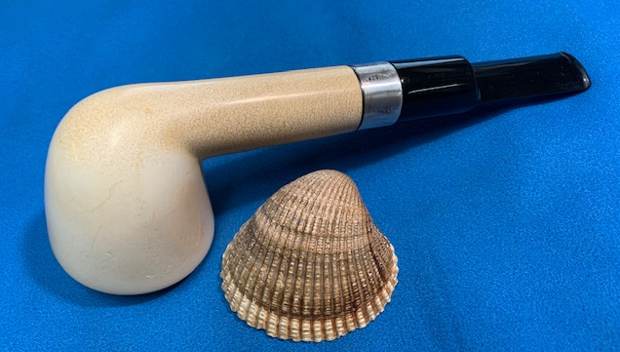
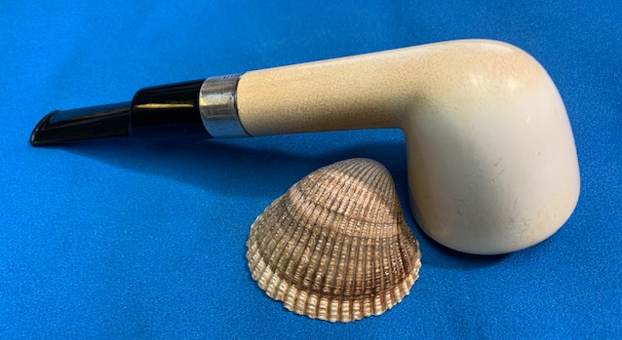
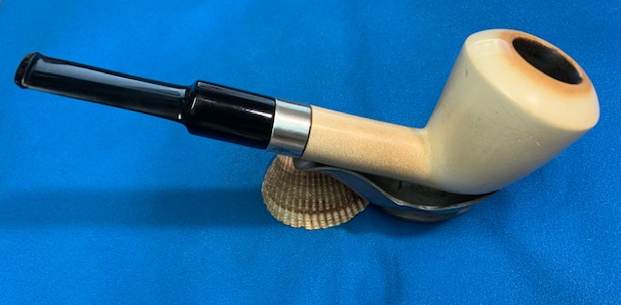
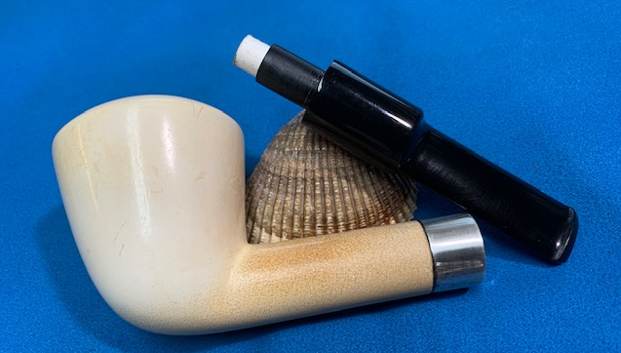
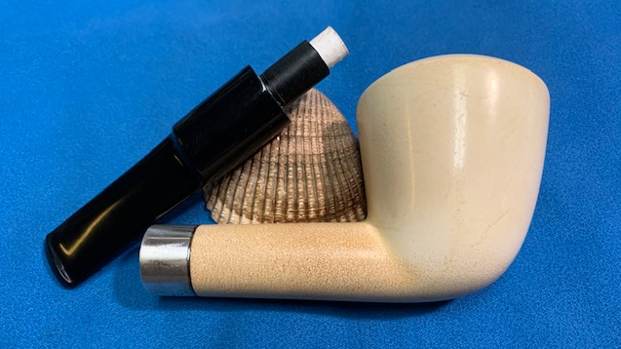
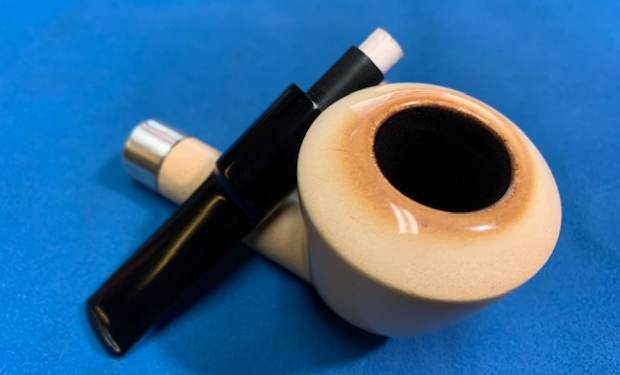
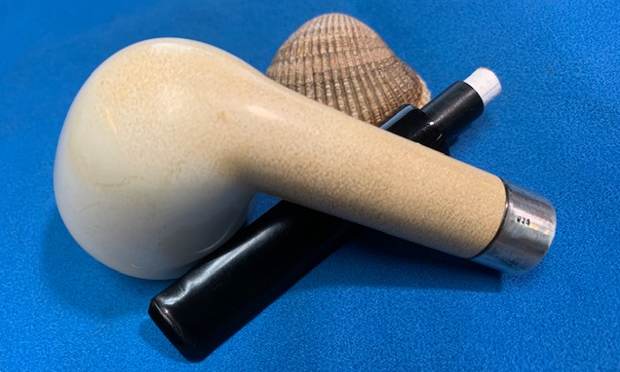
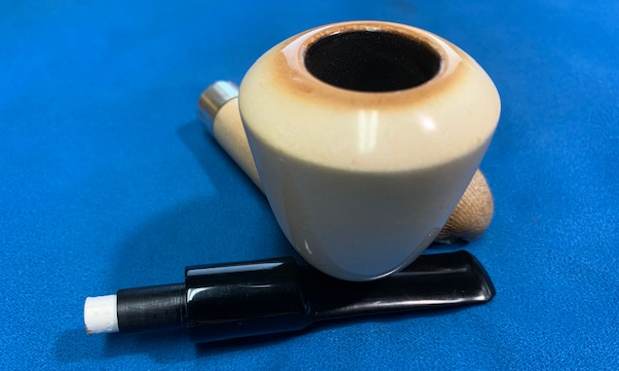
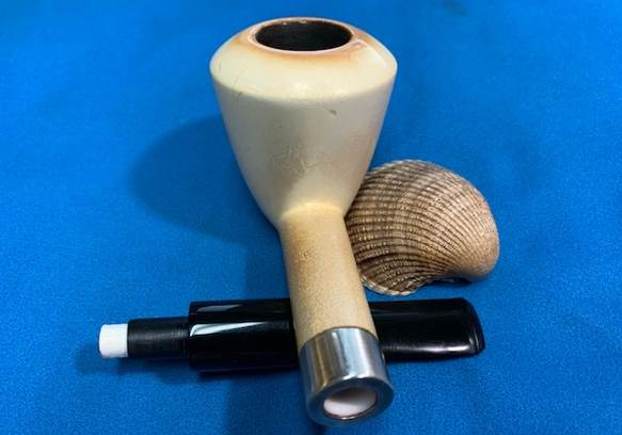
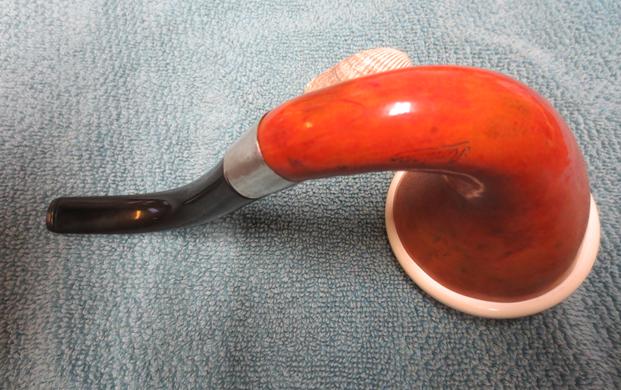
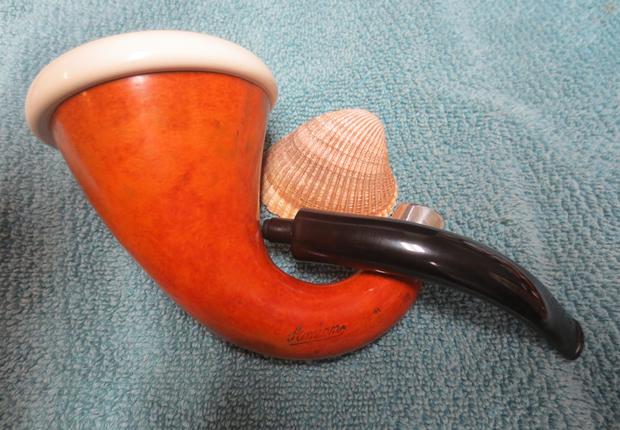
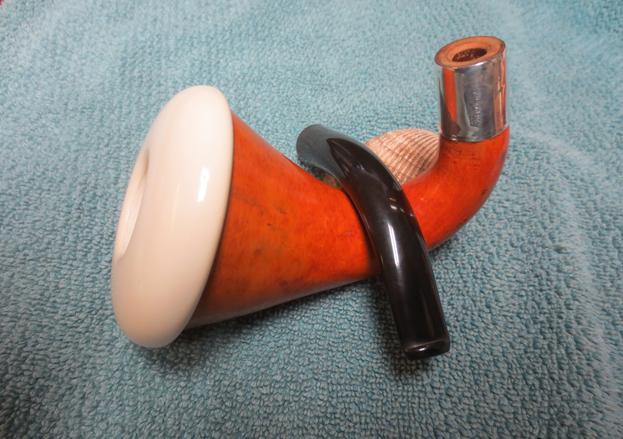
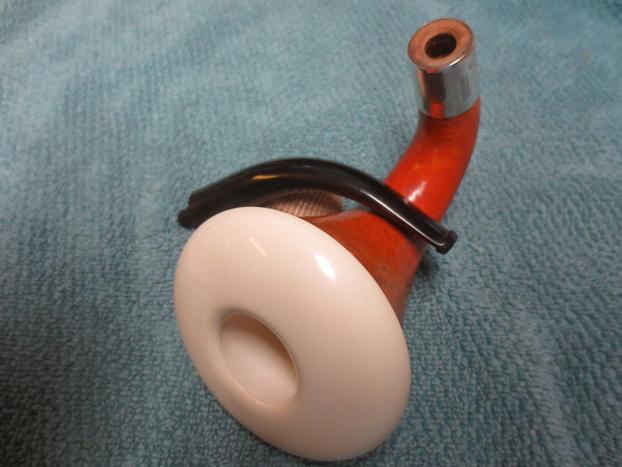
 I finished with the Blue Diamond and moved on to buffing with carnauba wax. Once I have a good shine in the briar and vulcanite I always give the bowl and the stem multiple coats of carnauba wax. I have found that I can get a deeper shine if I following up the wax buff with a clean buffing pad. It works to raise the shine and then I follow that up with a hand buff with a microfiber cloth to deepen the shine. It is always fun for me to see what the polished bowl looks like with the polished vulcanite and acrylic combination stem. It really is a beautiful pipe. The smooth finish around the bowl sides and shank show the grain shining through the rich brown stains of this BBB Own Make 722 Diplomat. The finished pipe feels great in my hand. It is light and well balanced. Have a look at it with the photos below. The dimensions are Length: 5 ½ inches, Height: 1 ½ inches, Outside diameter of the bowl: 1 1/8 inches, Chamber diameter: 7/8 of an inch. The weight of the pipe is 1.59 ounces/44 grams. It is a beautiful pipe and one that I will be putting on the rebornpipes store in the British Pipe Maker section.
Hopefully this tack of writing this blog is helpful to you in some way. In it I show both what I am looking for and how I move forward in addressing what I see when work on a pipe has been helpful to you. It is probably the most straightforward detailed description of my work process. As always I encourage your questions and comments as you read the blog. Thanks to each of you who are reading this blog. Remember we are not pipe owners; we are pipemen and women who hold our pipes in trust until they pass on into the trust of those who follow us.


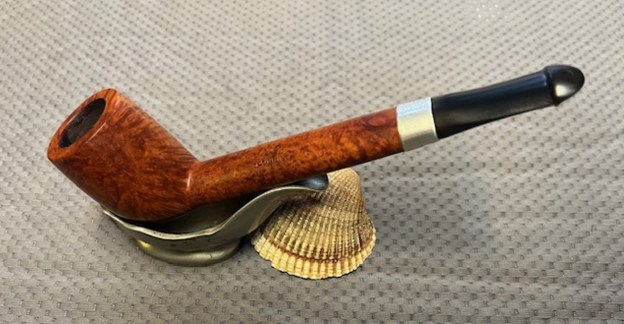
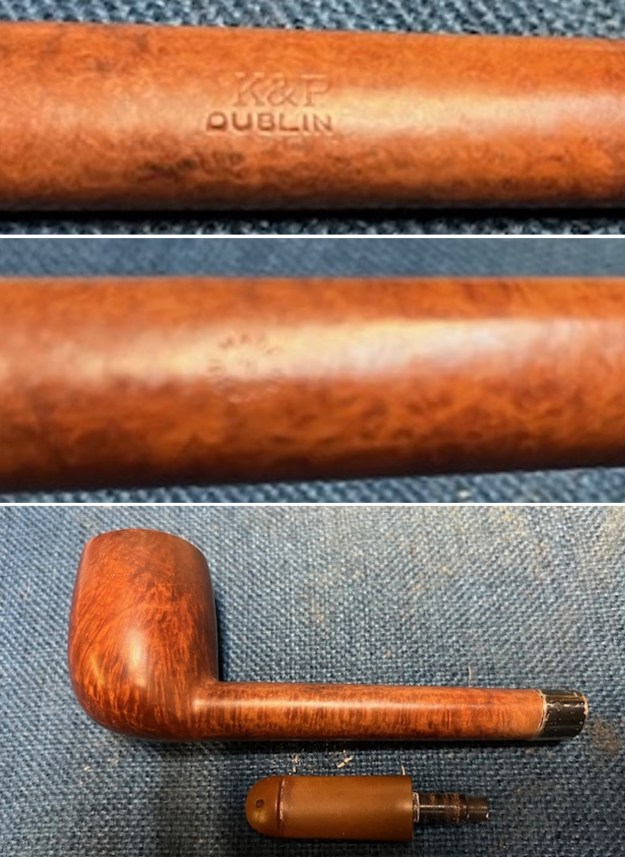
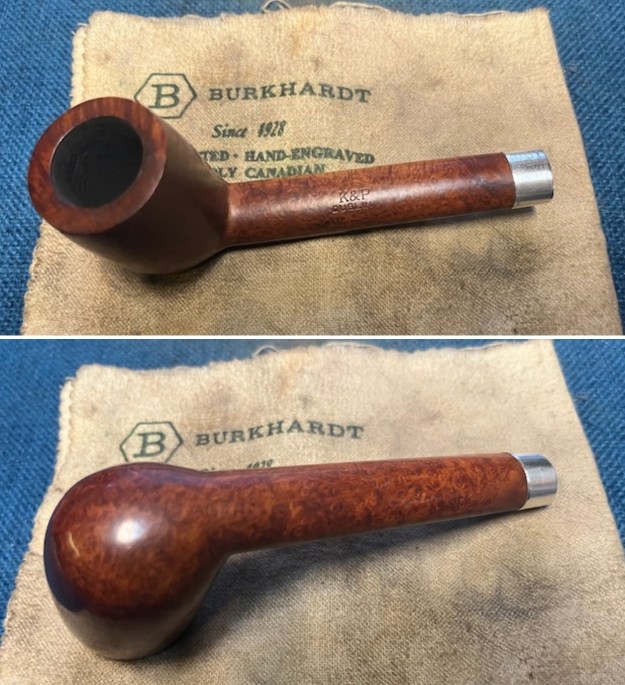
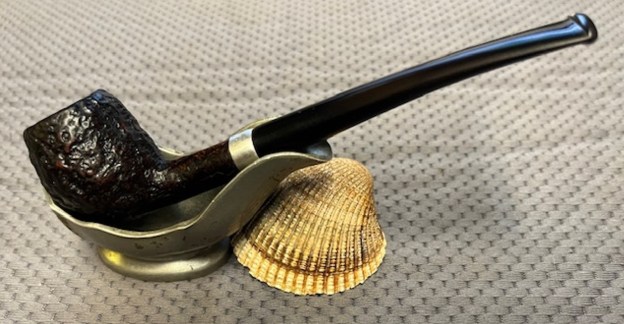
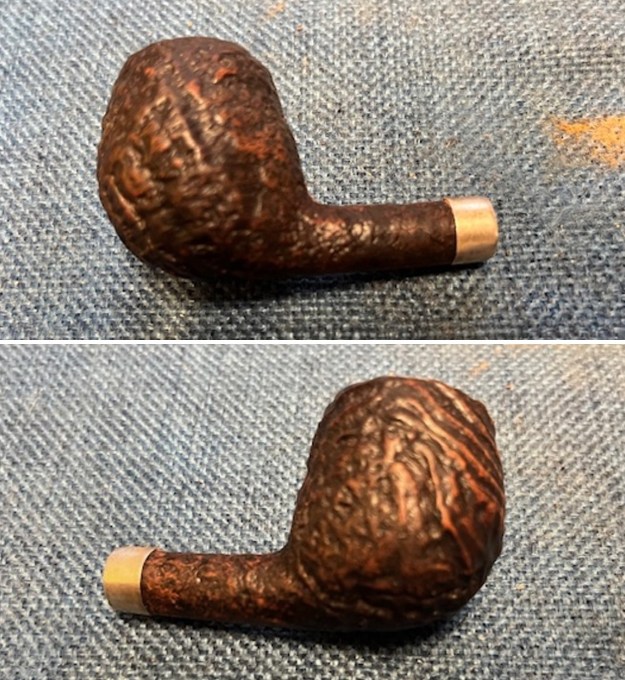
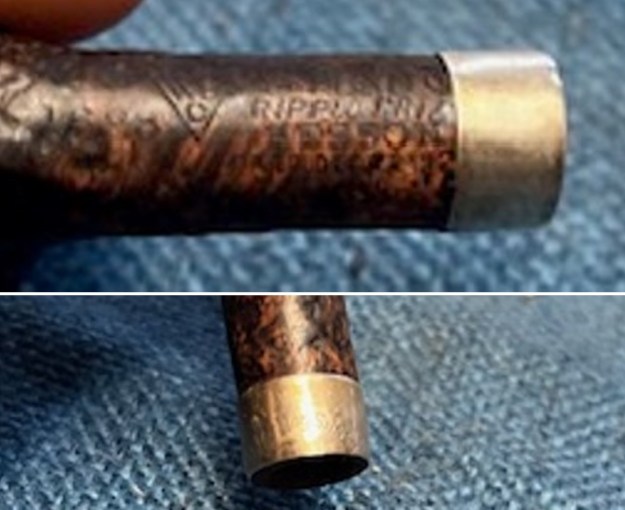
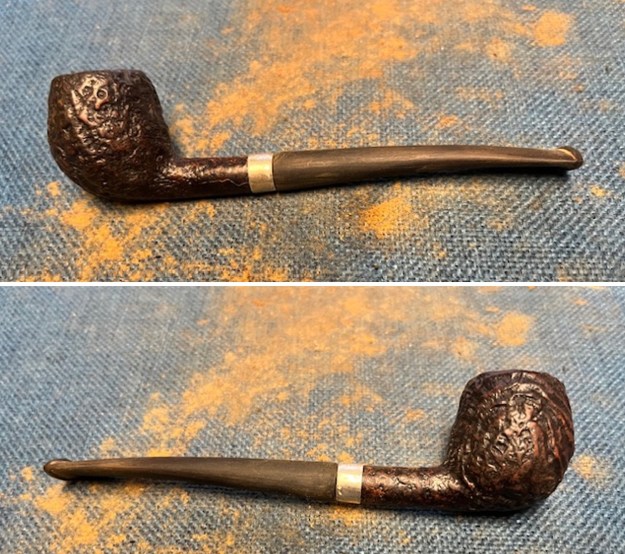
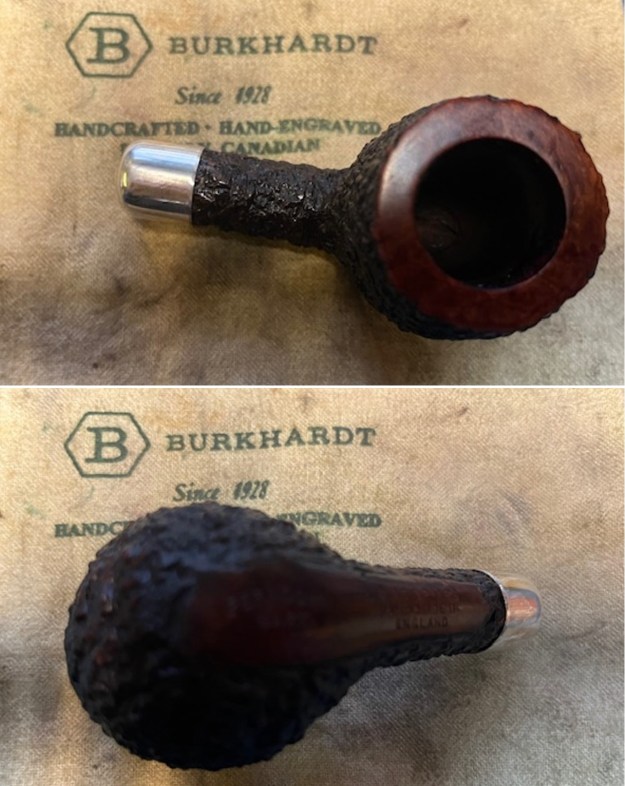
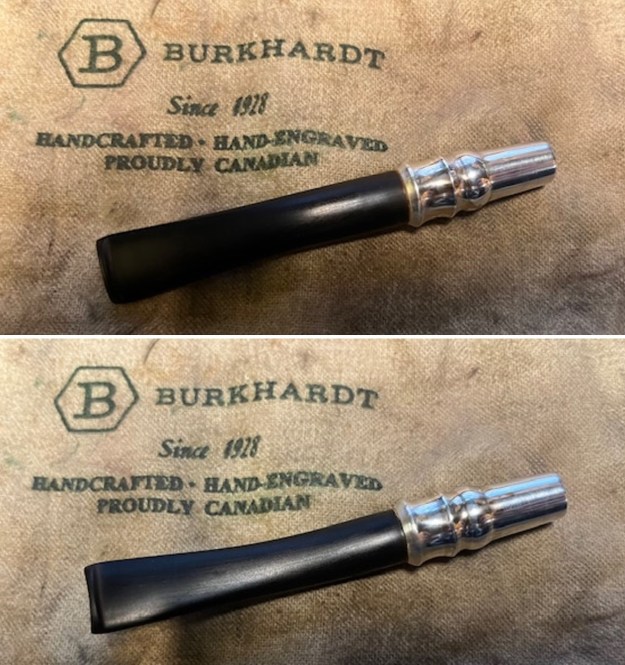
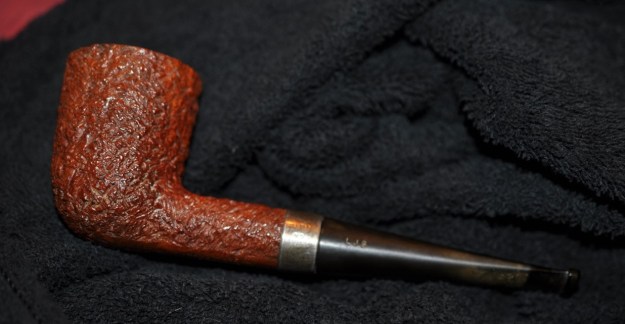
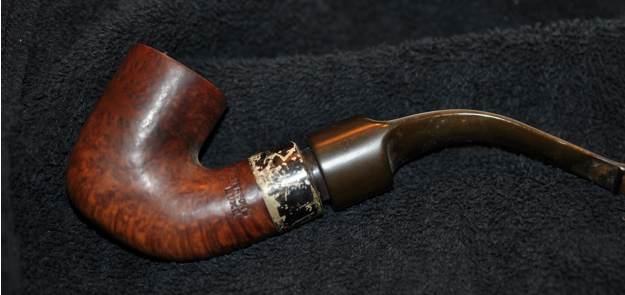
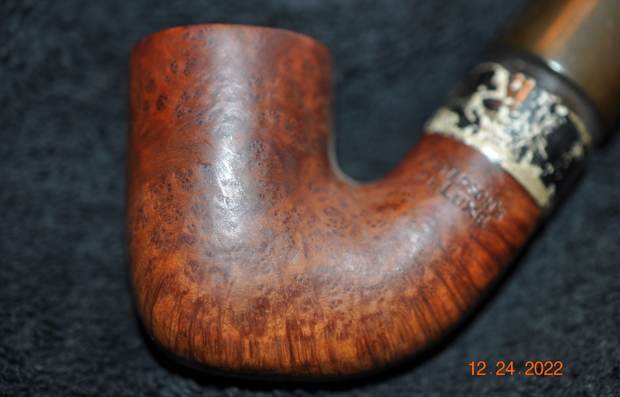
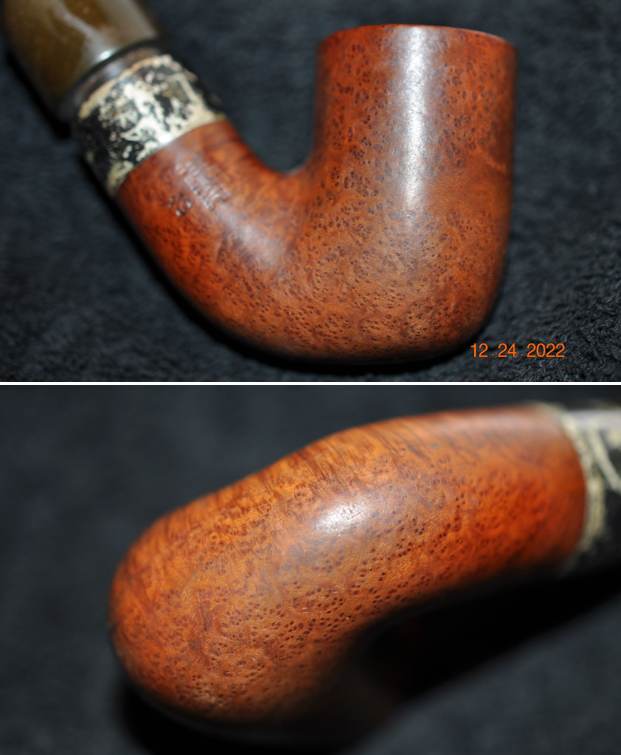
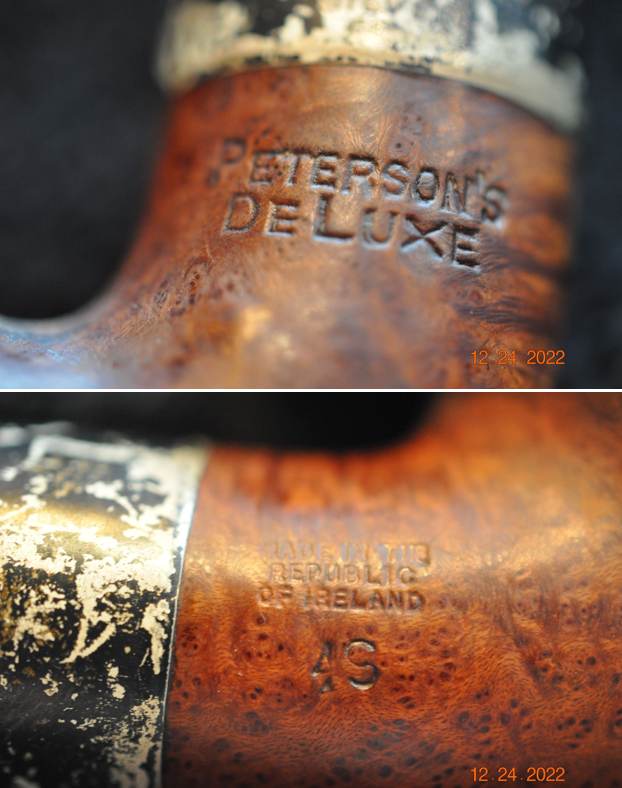
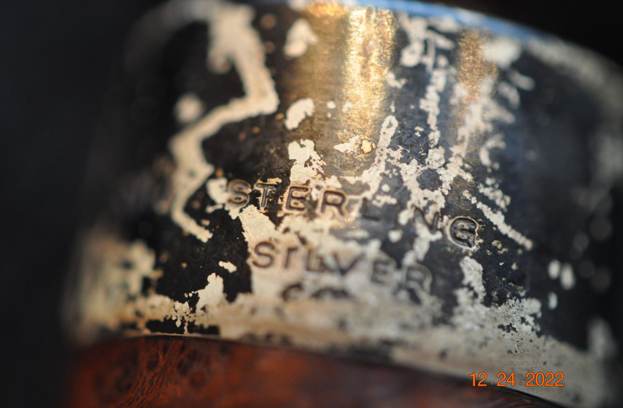
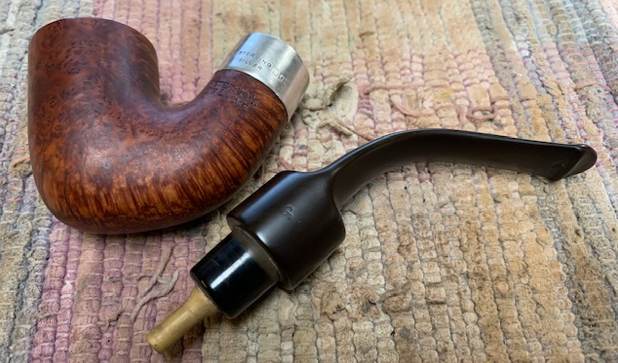
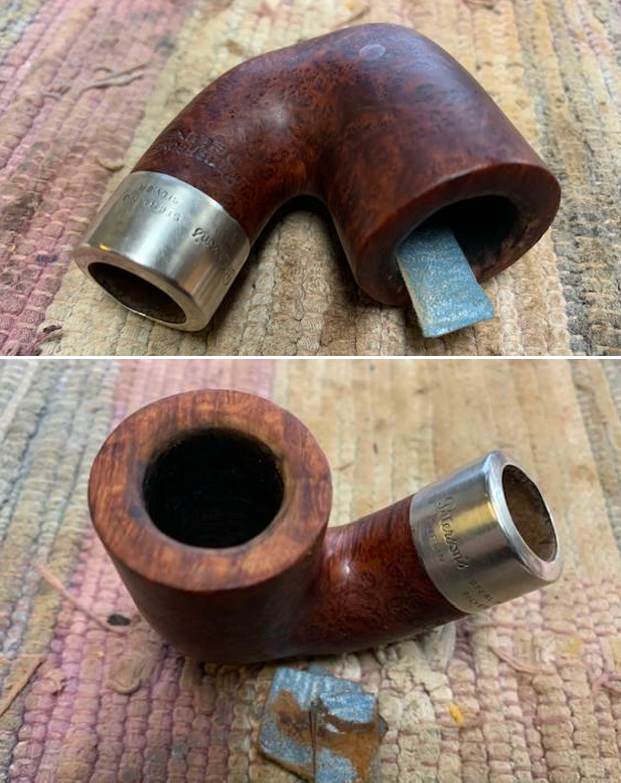
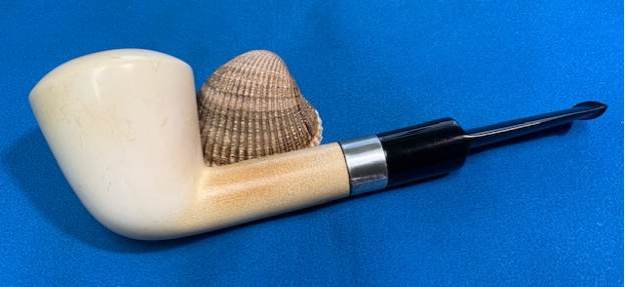
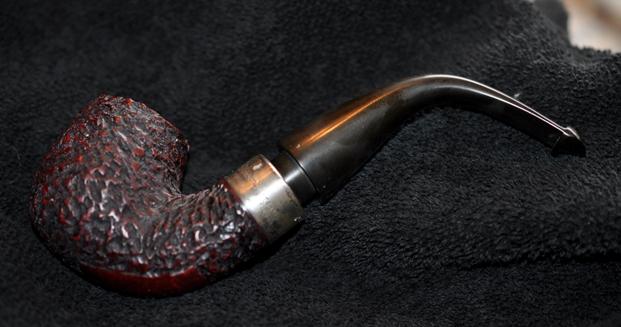
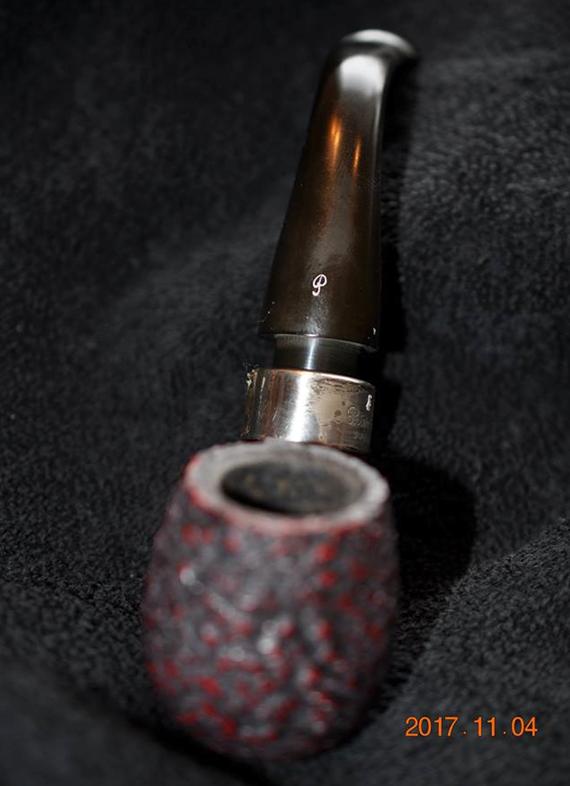
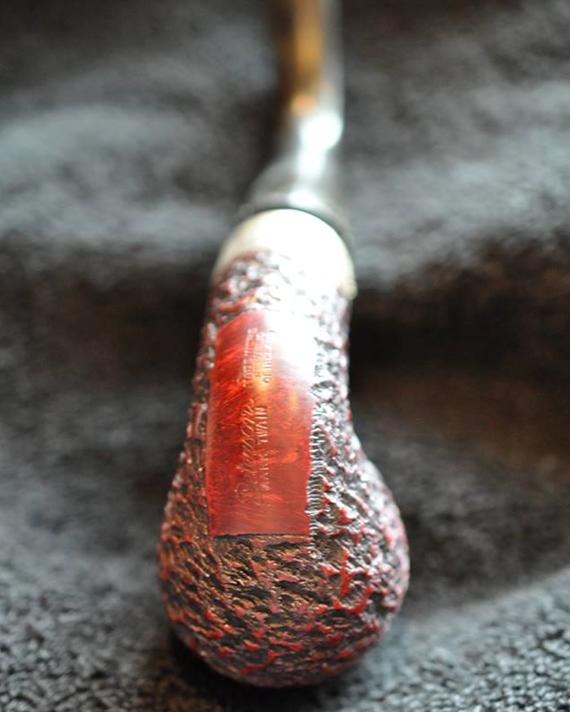
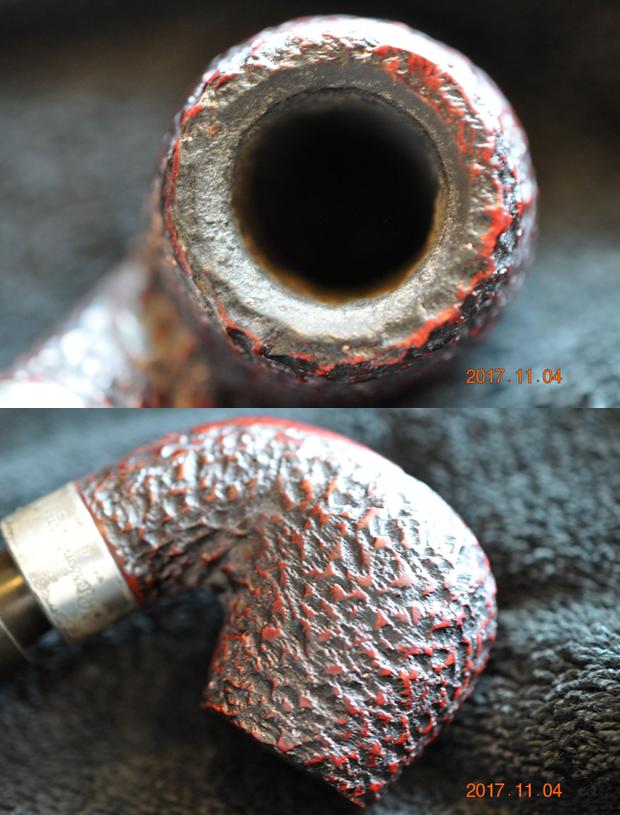
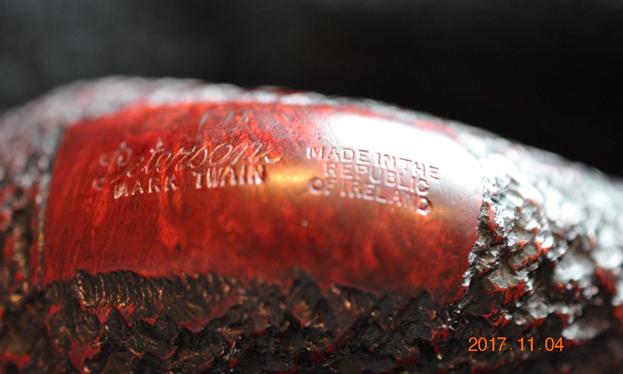
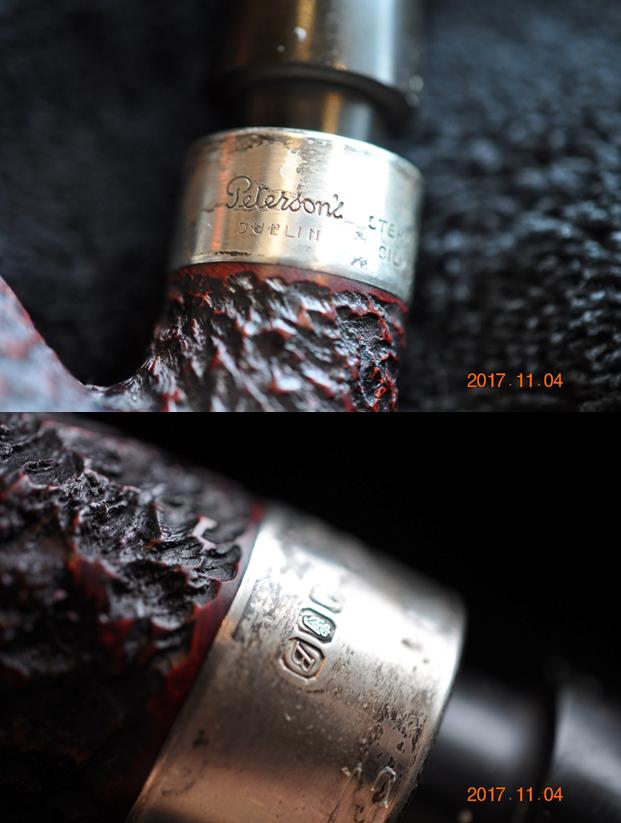
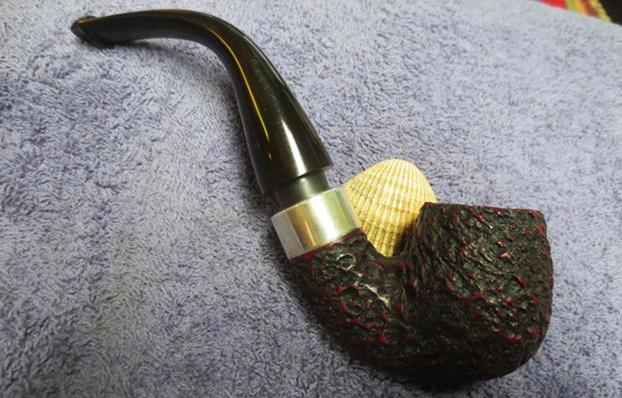
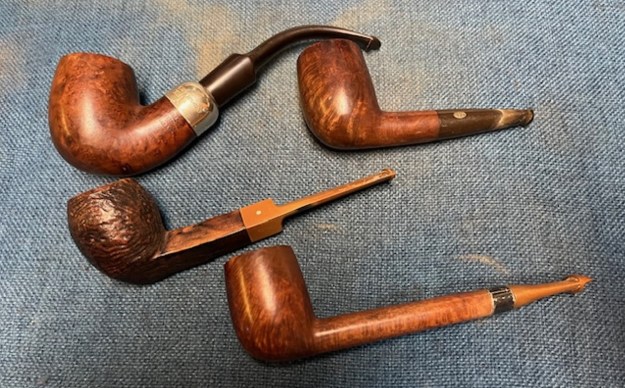 The first of them I chose to bring to the table was the K&P Canadian at the bottom of the above photo. It is a pretty pipe and bears the stamping on the top of the shank that reads K&P [over] Dublin. On the underside the COM stamp is Made in Ireland in a circle. That format for the stamp made the pipe one that was made between 1945-1972. On the worn and oxidized Silver band it is stamped K & P in three shields [over] Sterling [over] Silver. The bowl has a light cake but the rim top and edges are very clean. The shank looks to be clean also. The stem is heavily oxidized and will take some work to bring it back to black. There does not appear to be any stamping or logo on the stem. It is an original P-lip style stem and it is in surprisingly good condition under the oxidation. I took photos of the pipe before I started my clean up work on it.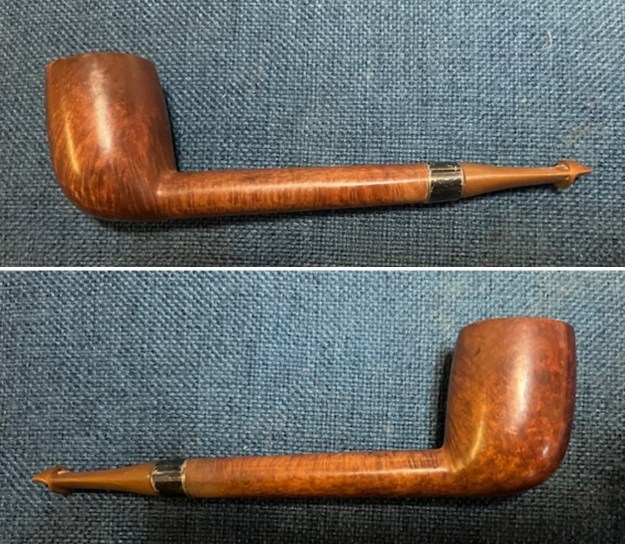
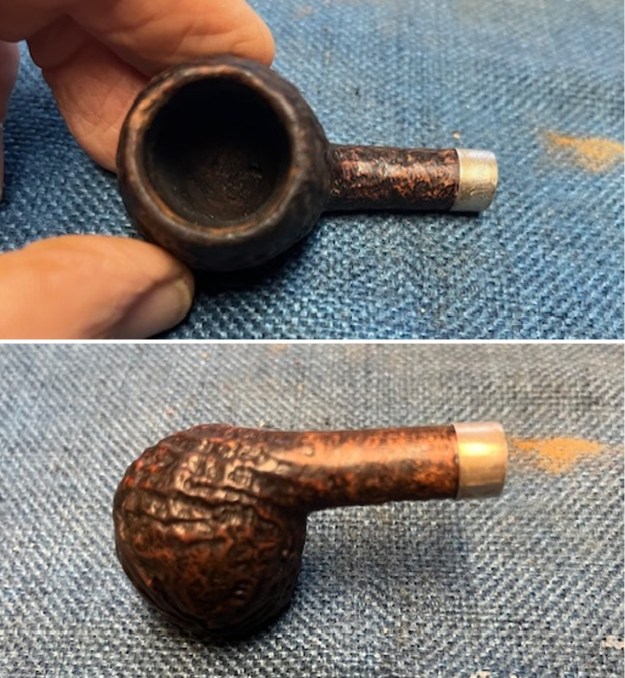
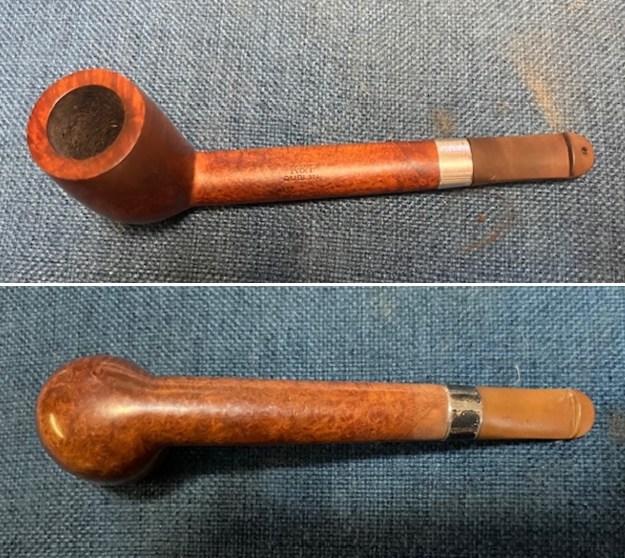 I took a close-up photo of the rim top to show the condition of the bowl and inner edge of the bowl and the stem. You can clearly see the cake in the bowl and the darkening and lava on the rim top. The stem photos show the deep oxidation on the stem and the silver band.
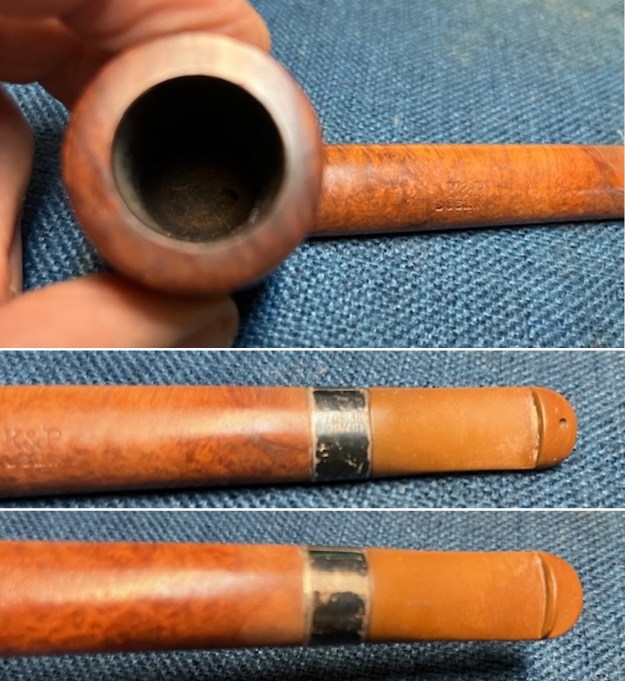 I took a photo of the stamping on the sides of the shank. It is clear and readable as noted above. I removed the stem and took a photo of the parts of the pipe. It is a pretty little pipe.
 Now it was time to work on the pipe. I cleaned up the silver band with a jeweller’s cloth so that I could read the stamping clearly. It read as noted above and the characters were slightly worn under the oxidation. But it is a great addition to the pipe.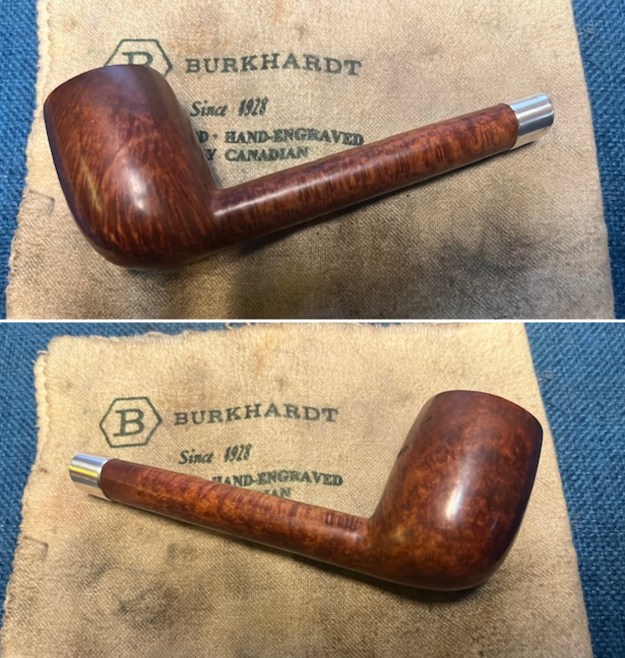
 I reamed the pipe with a Savinelli Fitsall Pipe Knife to remove the thin cake in the bowl and check the bowl walls. I sanded the bowl with a piece of dowel wrapped with 220 grit sandpaper. It looked much better at this point.
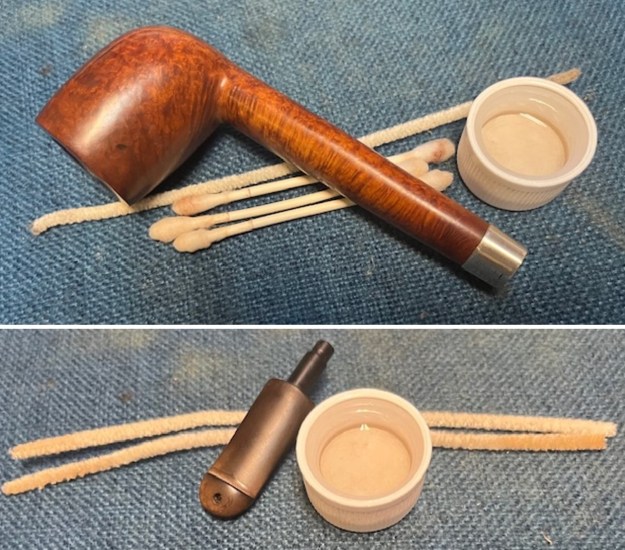
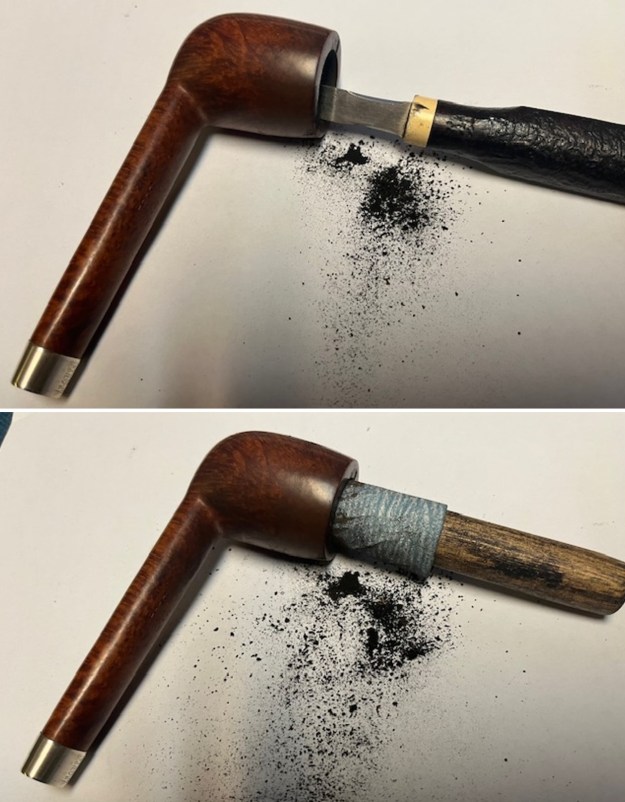 I moved on to clean up the internals. I cleaned out the airway and mortise with pipe cleaners, cotton swabs and alcohol. I cleaned out the airway in the stem at the same time. I was surprised at how clean the internals were.
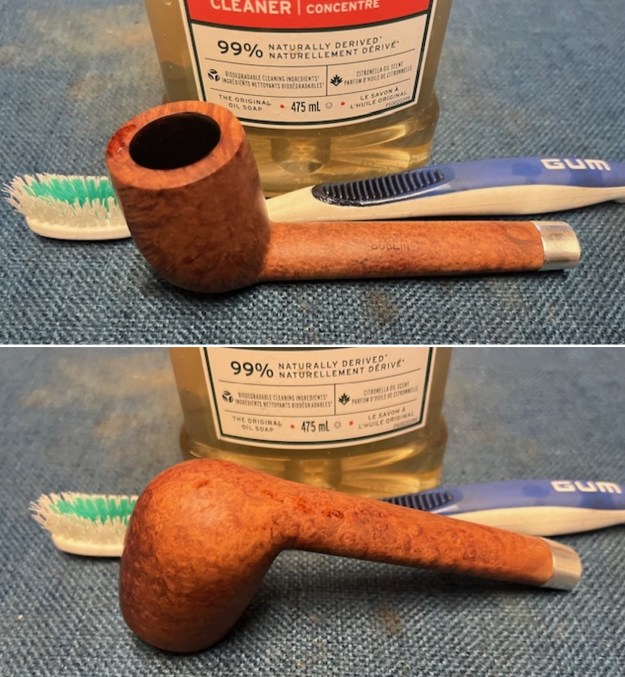
  I scrubbed the externals of the pipe with undiluted Murphy’s Oil Soap and a tooth brush to remove the grime in the finish and on the rim top. I worked on it until it looked much better and then rinsed it off with warm water. I dried it off with a soft cloth.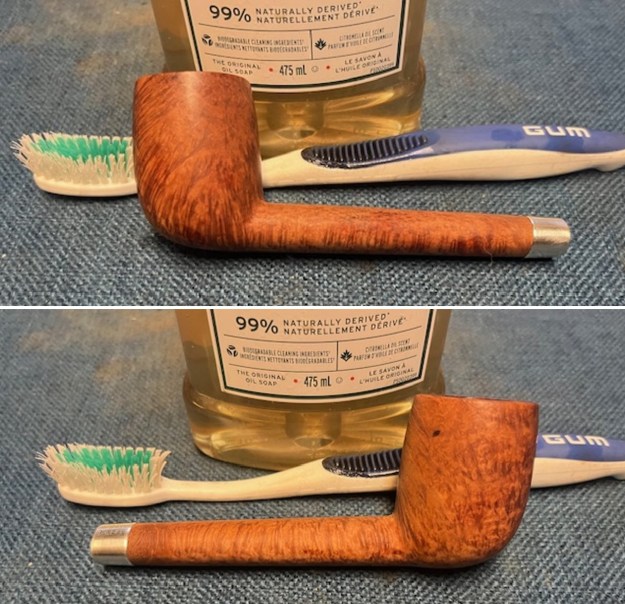
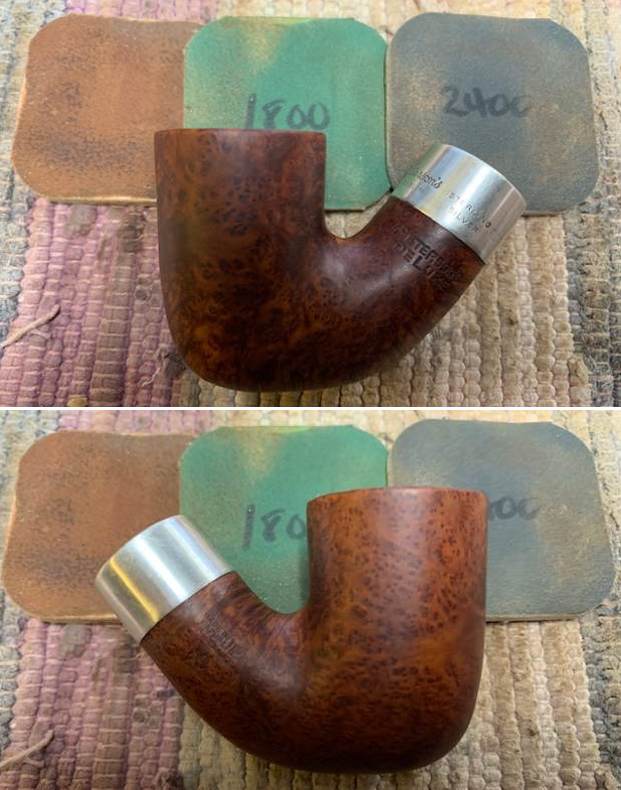
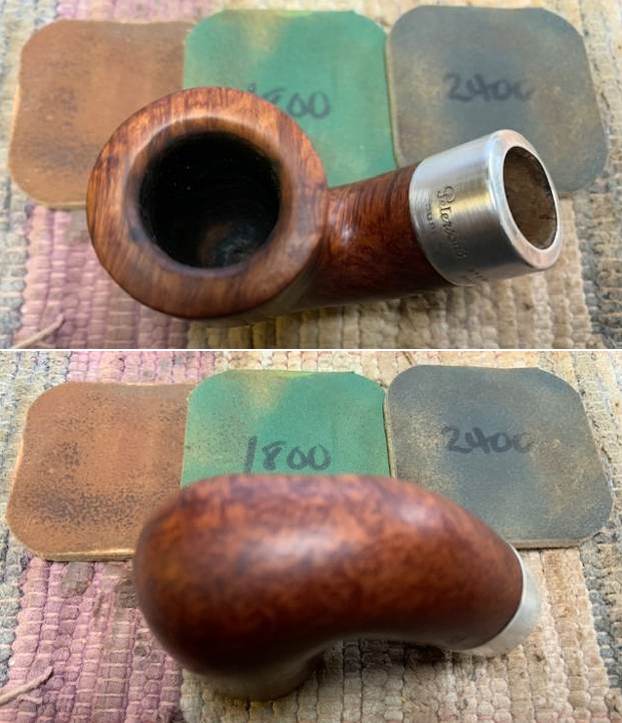
 I polished the bowl with micromesh sanding pads – dry sanding with 1500-12000 grit sanding pads. I wiped it down between pads with a damp cloth. It really began to take on a deep shine. There is a dark spot on the right side of the bowl. It is solid so it is not a fill. My guess is that it is where a root or such came out of the briar.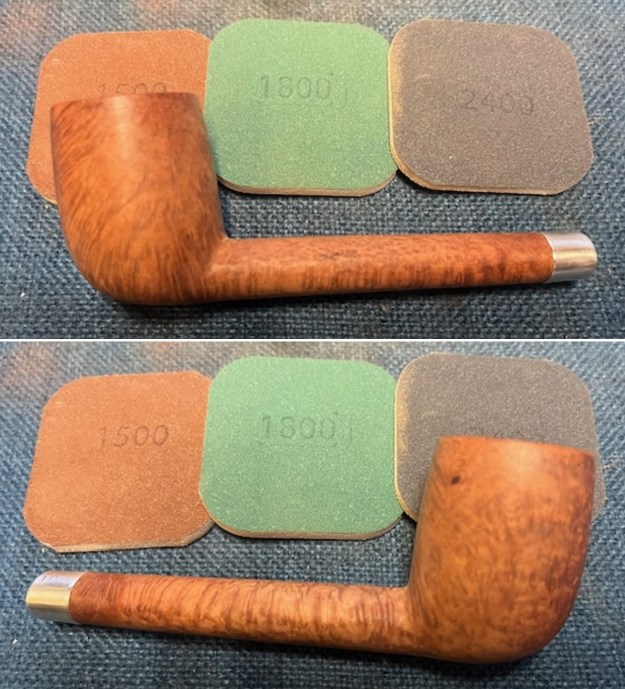
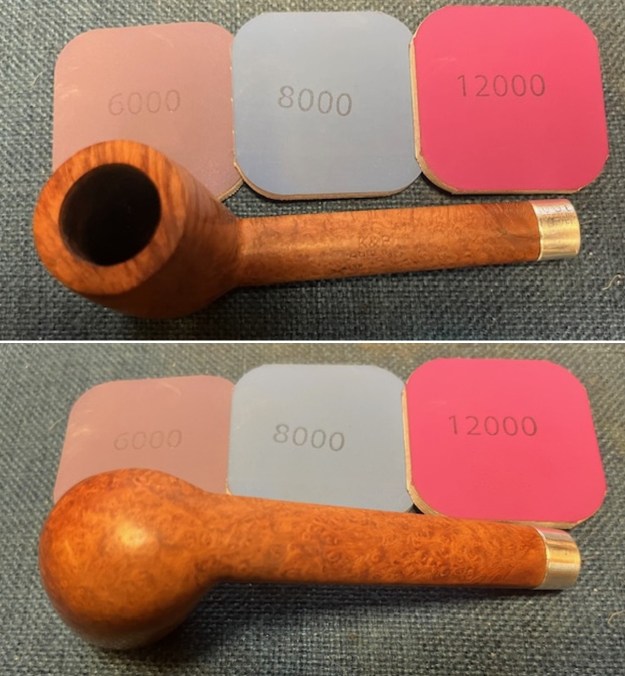 The exterior of the bowl looks better after sanding. I worked some Before & After Restoration Balm into the briar with my finger tips. I let it sit on the bowl for 10 minutes and then buffed it off with a paper towel and soft cloth. The product is a great addition to the restoration work. It enlivens, enriches and protects the briar while giving it a deep glow. It is a product I use on every pipe I restore.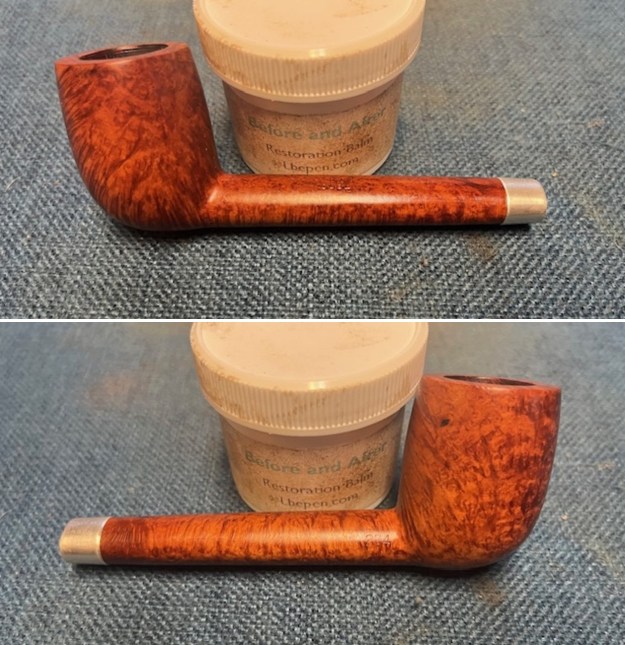
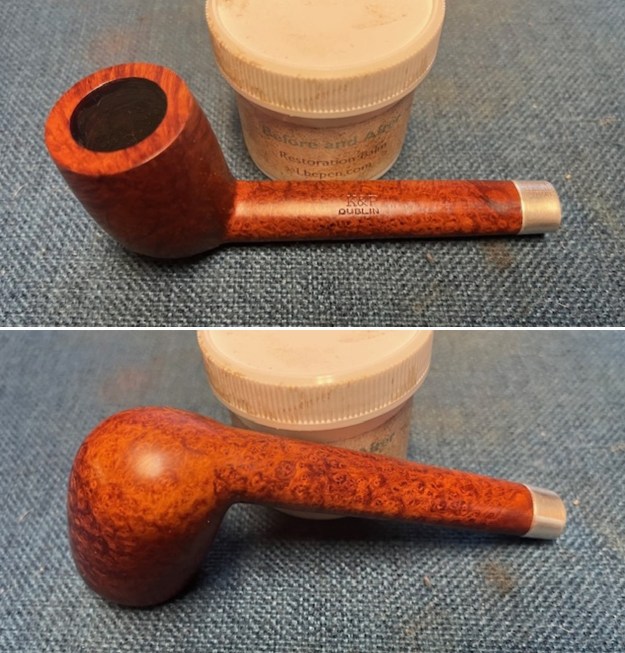
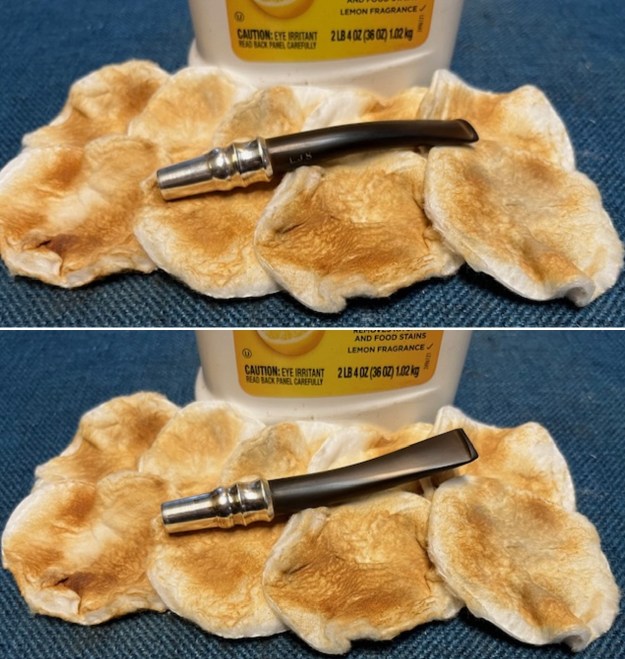
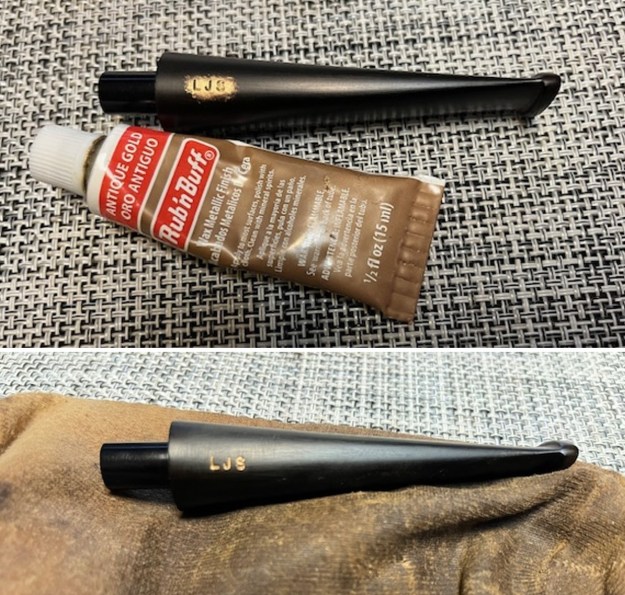
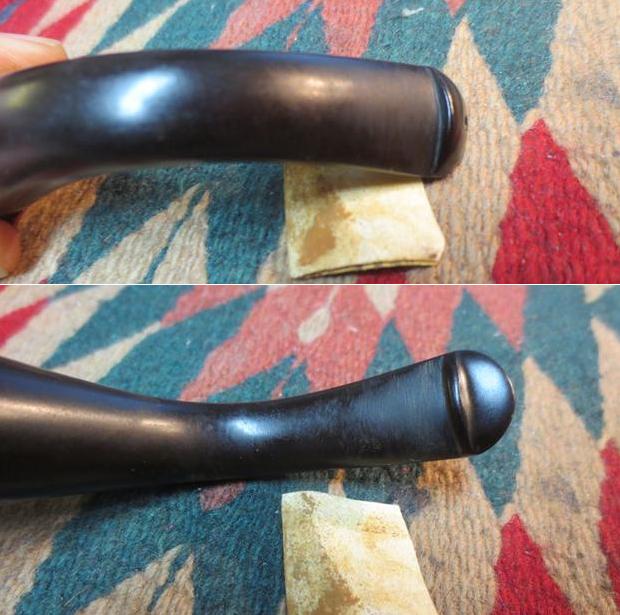
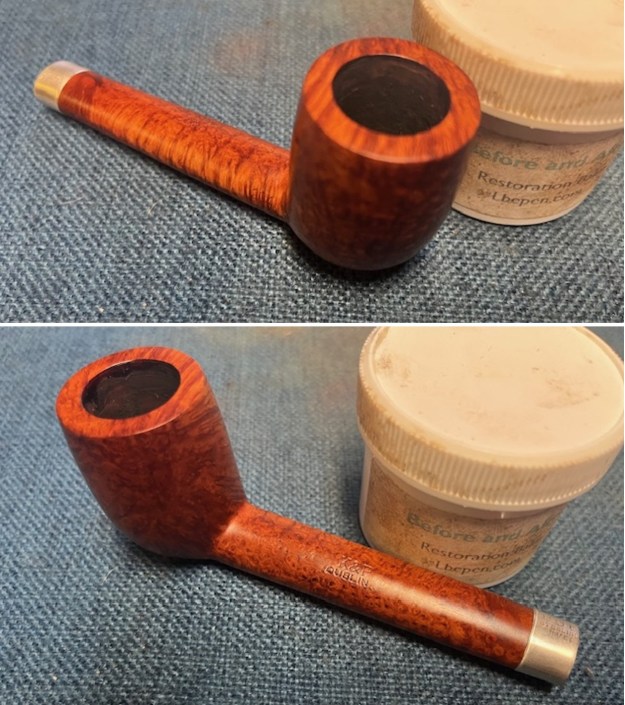 I set the bowl aside and turned my attention to the stem. I scrubbed the stem with Soft Scrub and cotton pads to remove the oxidation. I was able to rid the surface of the majority of the brown and what was left would be able to be sanded off.
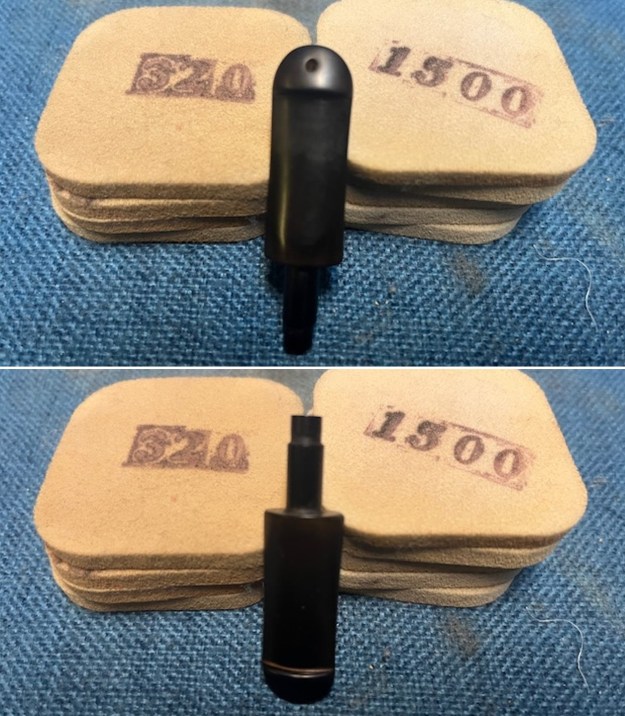
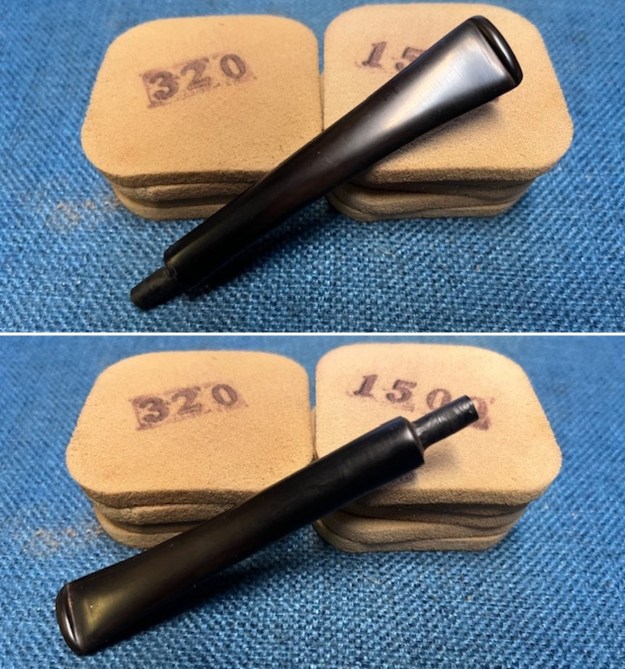
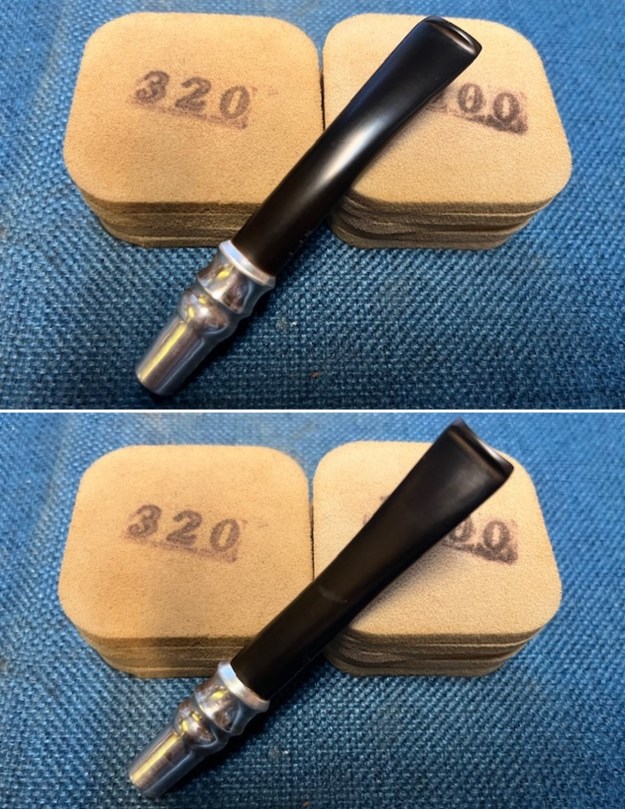
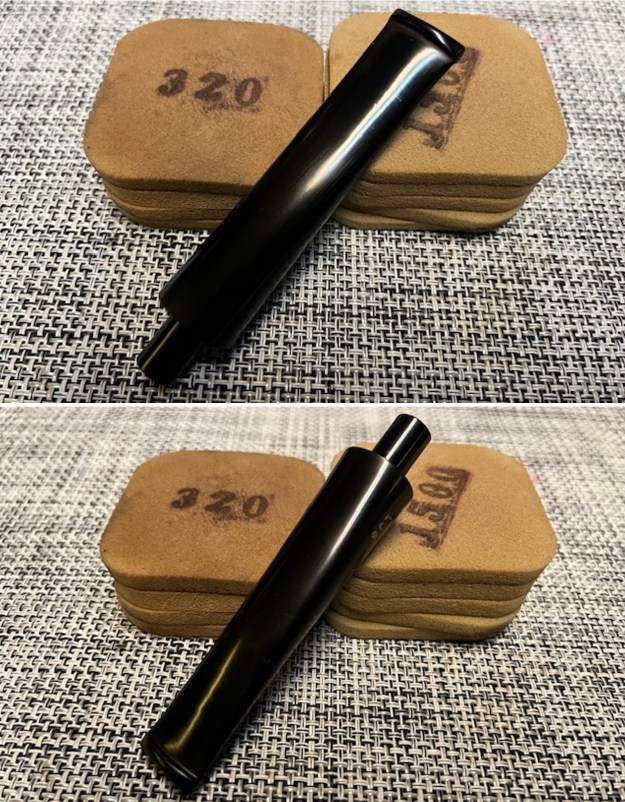
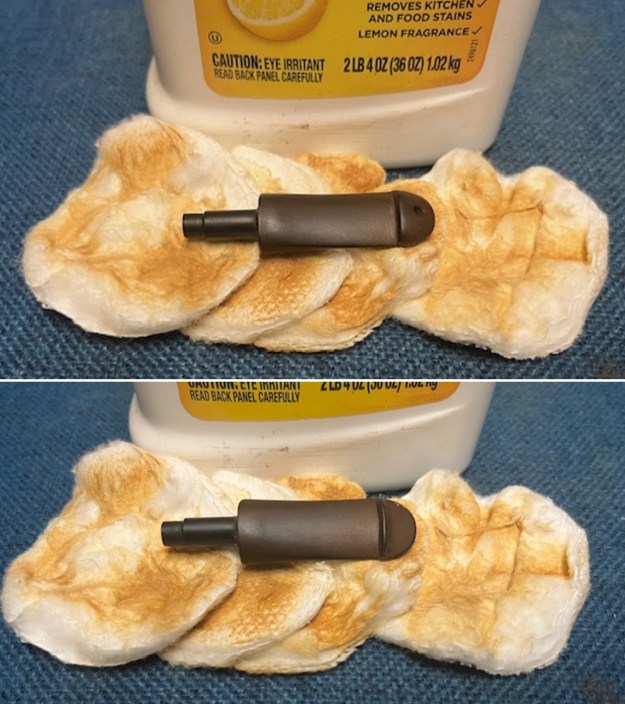 There were no deep marks or chatter so I sanded the stem with 320-3500 grit sanding pads and wiped it down with Obsidian Oil to remove the sanding dust.
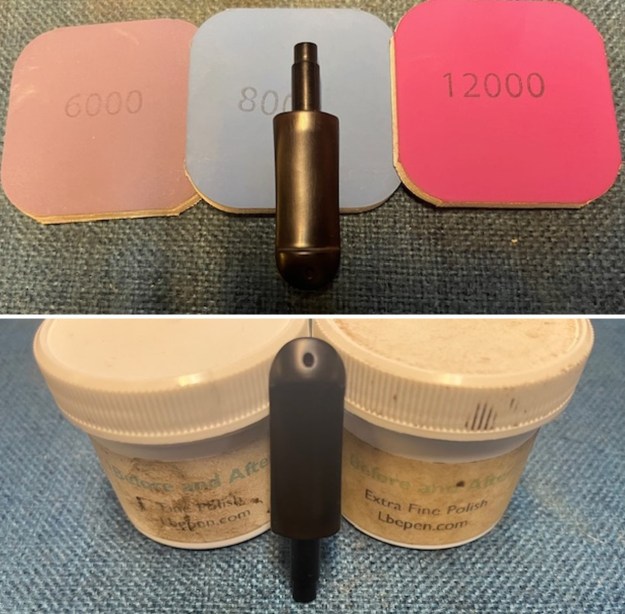
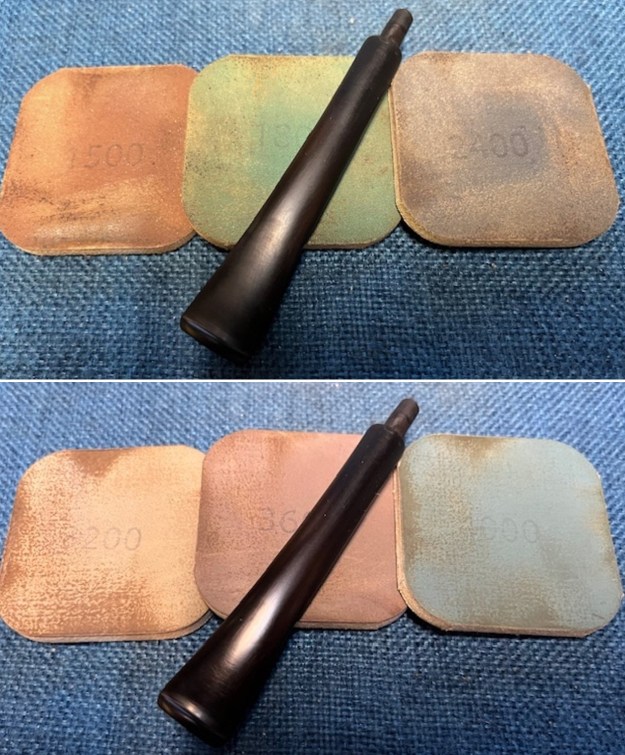
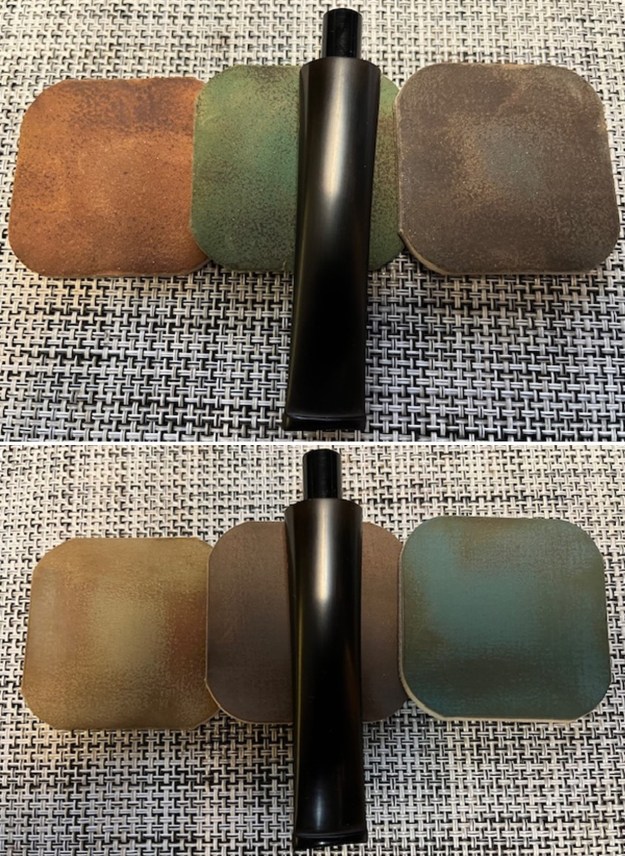
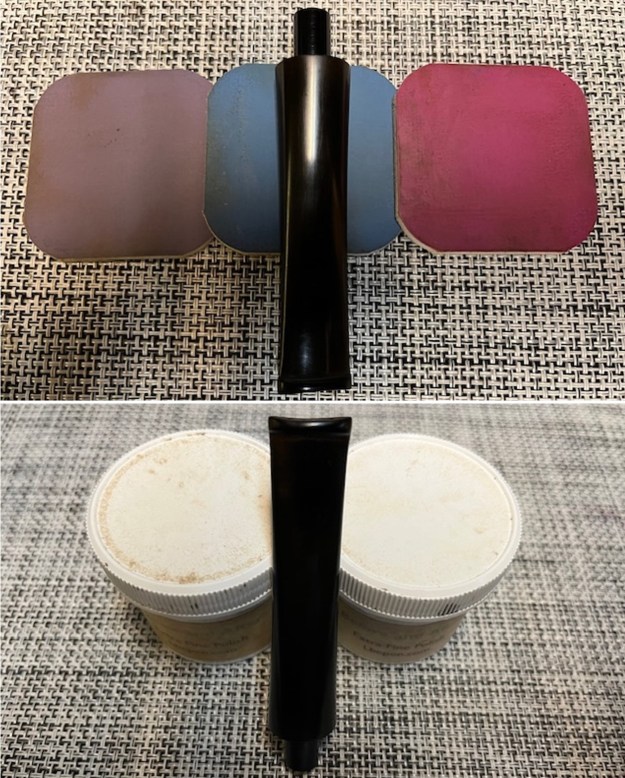
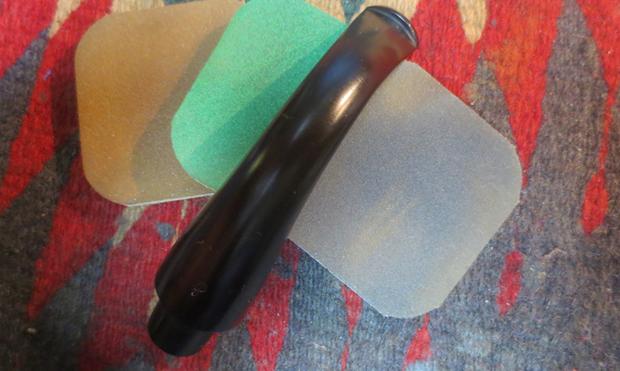
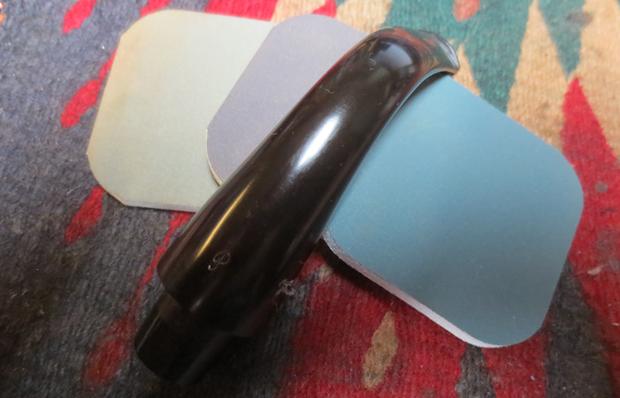
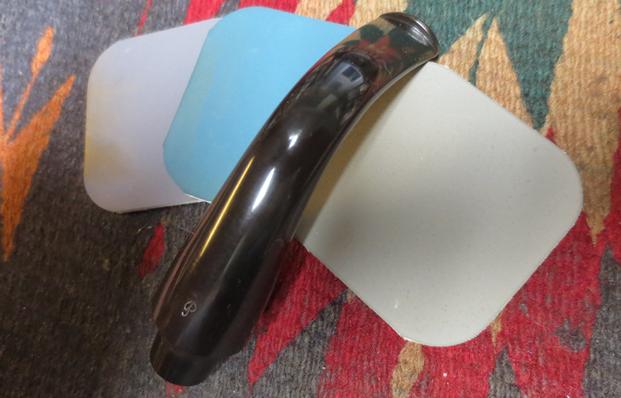
 I polished the stem with micromesh sanding pads – dry sanding with 1500-12000 grit pads. I wiped the stem down after each sanding pad with Obsidian Oil to further protect the vulcanite surface. I finished the polishing with Before & After Pipe Stem Polish – Fine and Extra Fine. I wiped the stem down a final time with Obsidian Oil and a cloth. It really looks very good.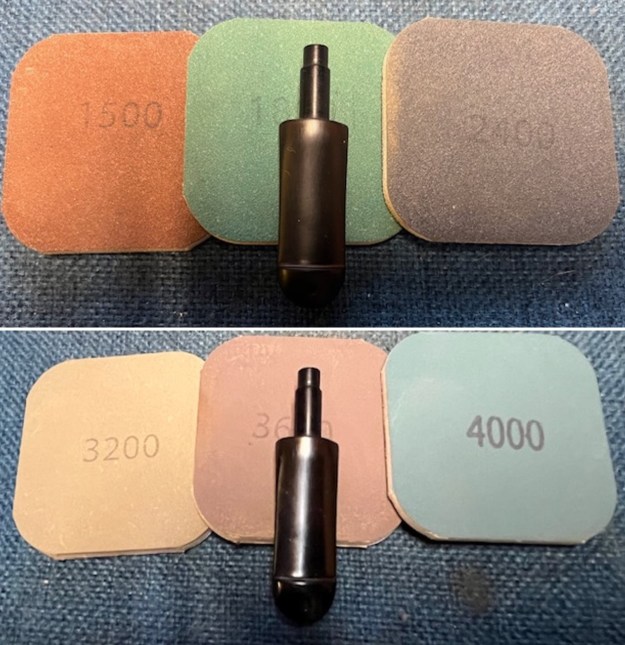
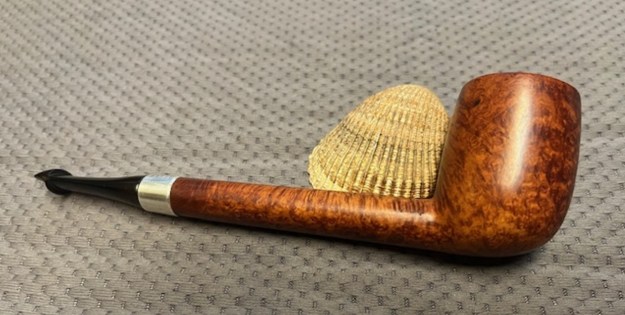
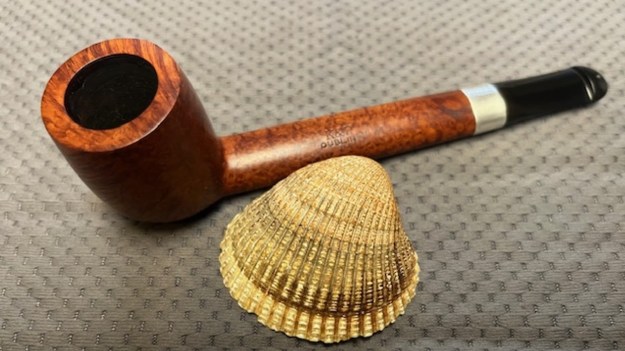
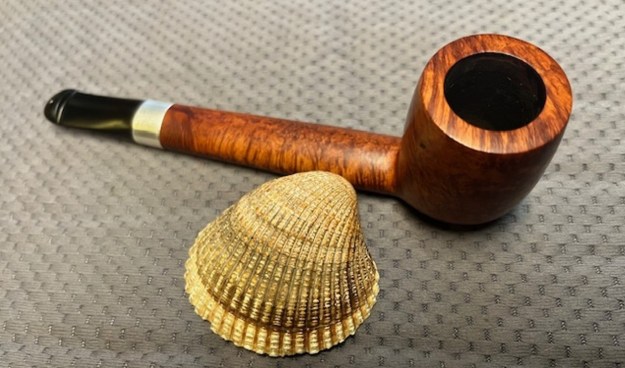
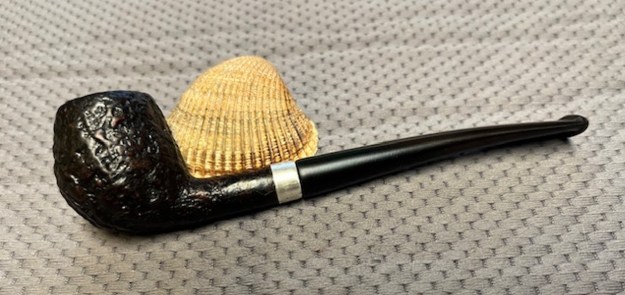
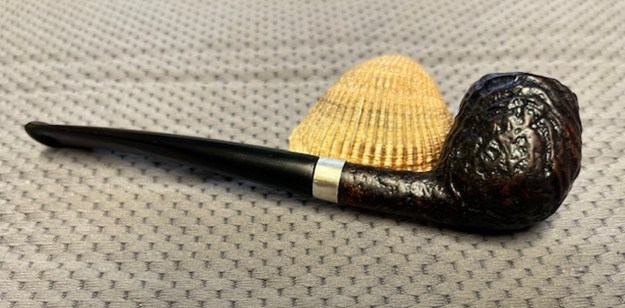
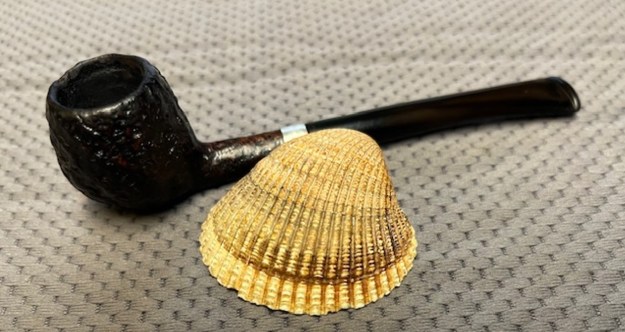
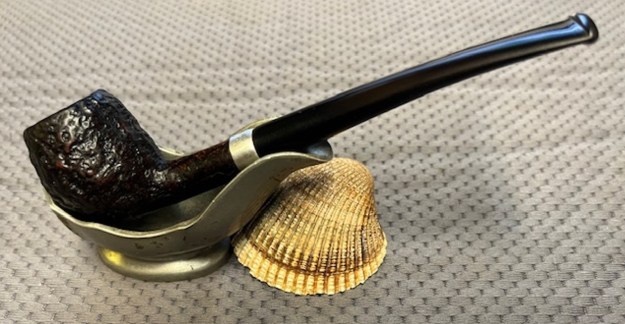
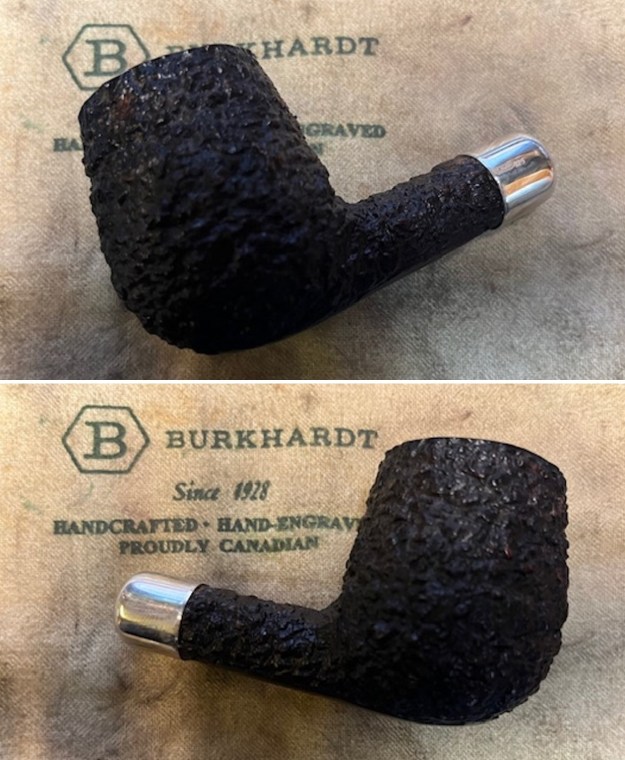
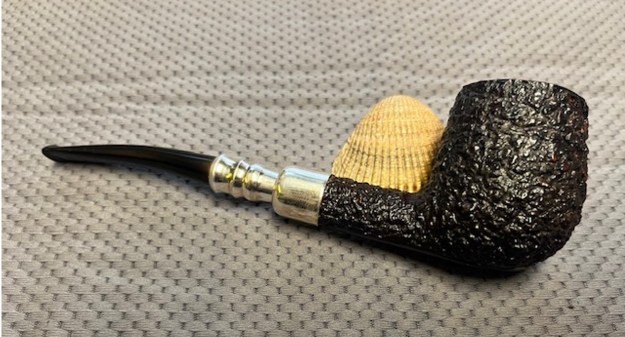
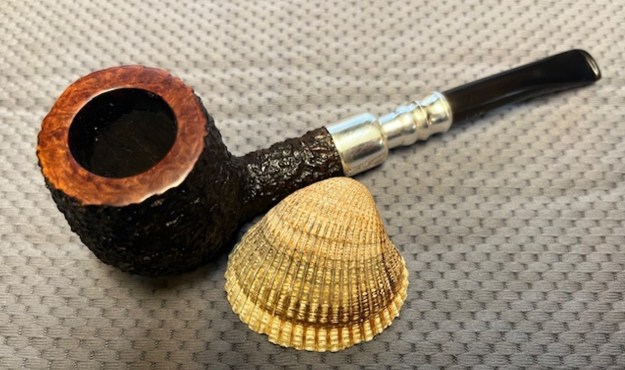
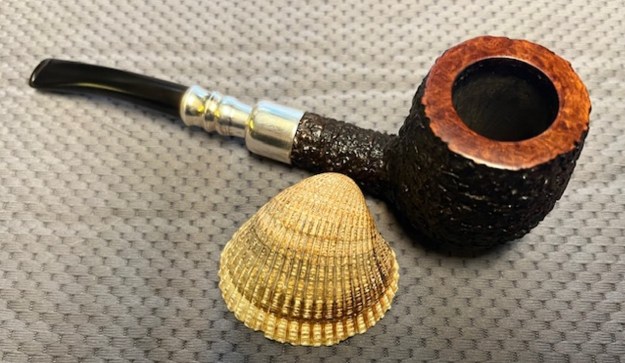
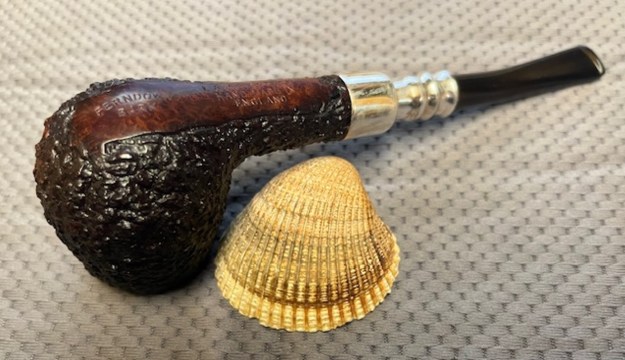
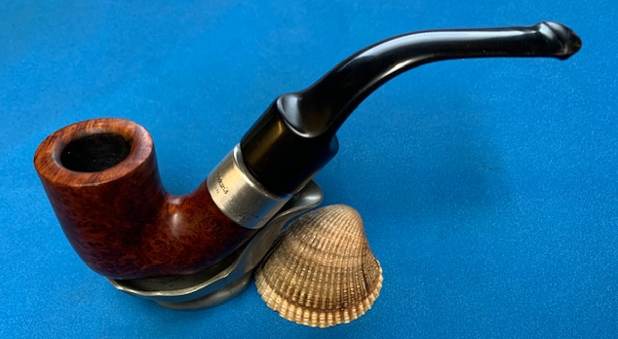
 I am always excited to finish working on a pipe. This K&P Dublin Made in Ireland Canadian made between 1945-1972 is no exception. I put the pipe back together and buffed it with Blue Diamond on the buffing wheel. I gave the bowl and the stem multiple coats of carnauba wax. I buffed the pipe with a clean buffing pad to raise the shine and hand buffed it with a microfibre cloth to deepen the shine. It is fun to see what the polished bowl looks like with polished silver and the black vulcanite taper stem. This Classic looking Peterson’s K&P Dublin Canadian feels great in my hand. It is light and well balanced. Have a look at it with the photos below. The dimensions are Length: 6 inches, Height: 1 ¾ inches, Outside diameter of the bowl: 1 ¼ inches, Chamber diameter: ¾ of an inch. The weight of the pipe is 31 grams/1.09 ounces. I will be putting it on the rebornpipes store shortly in the Irish Pipe Makers Section if you are interested in it. Thanks for walking through the restoration with me as I worked over this pipe. Thanks to each of you who are reading this blog.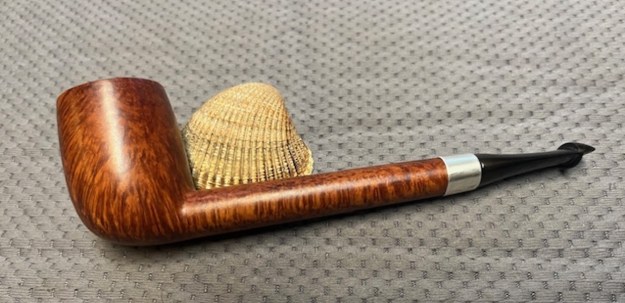






























 rebornpipes