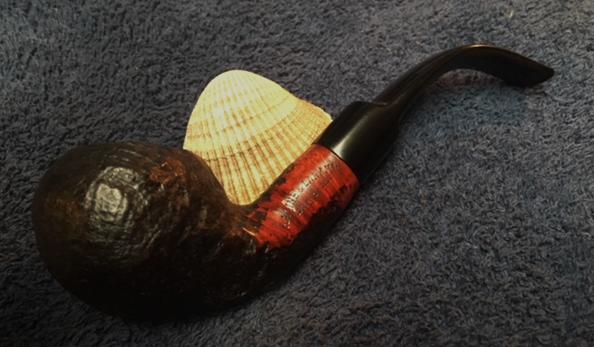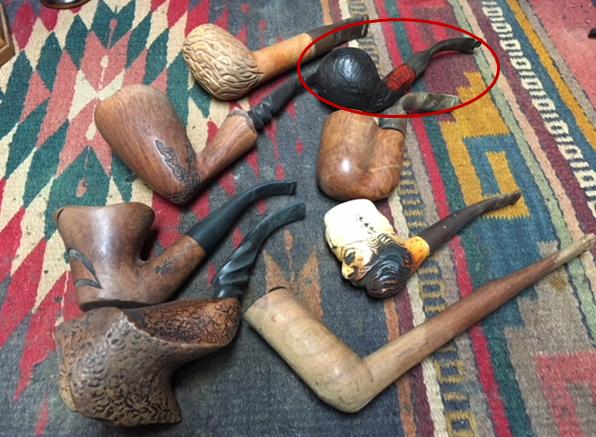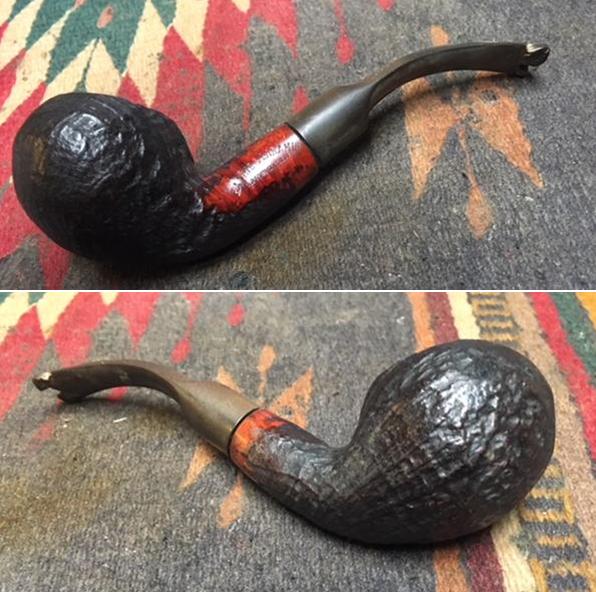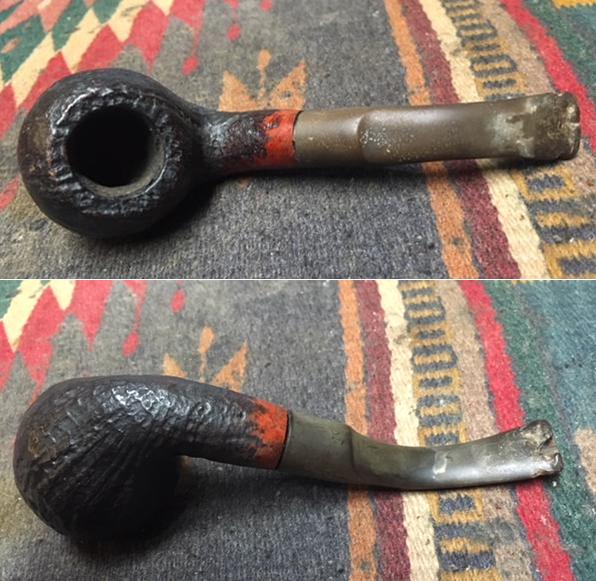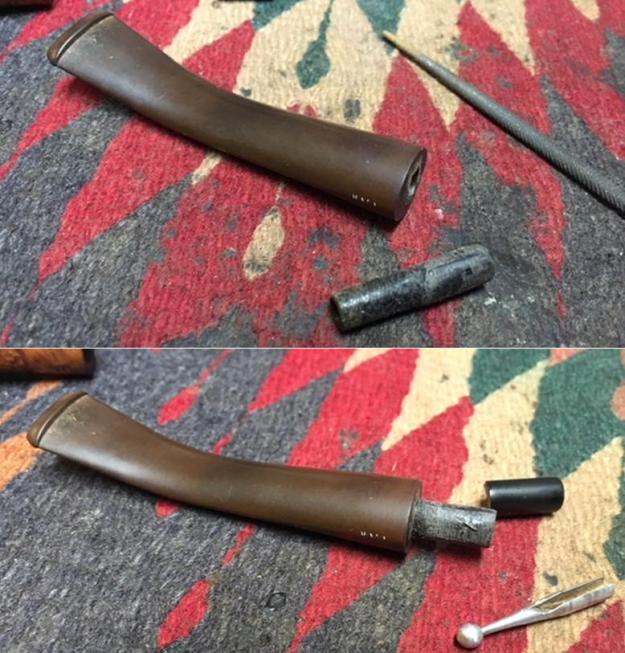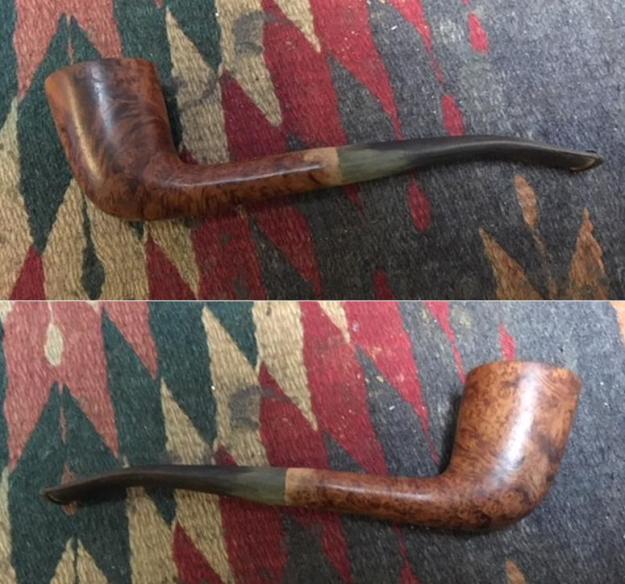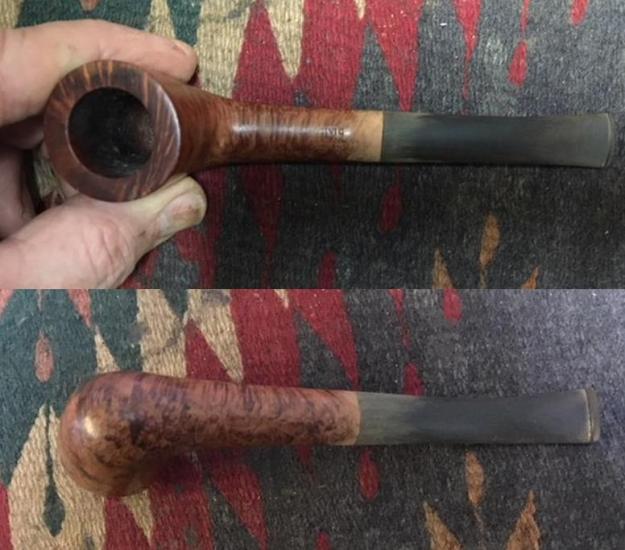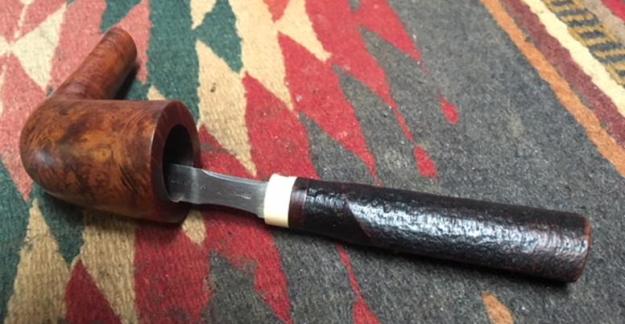
Tag Archives: pipe restemming

Rescuing Another L. J. Peretti Oom Paul: An Upside-Down Stem and Other Hurdles!


Blog by Dal Stanton

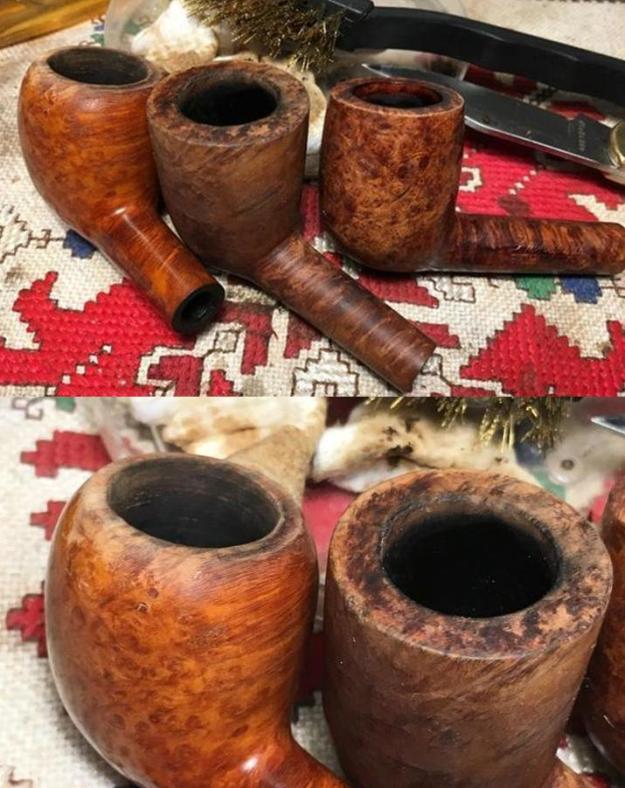
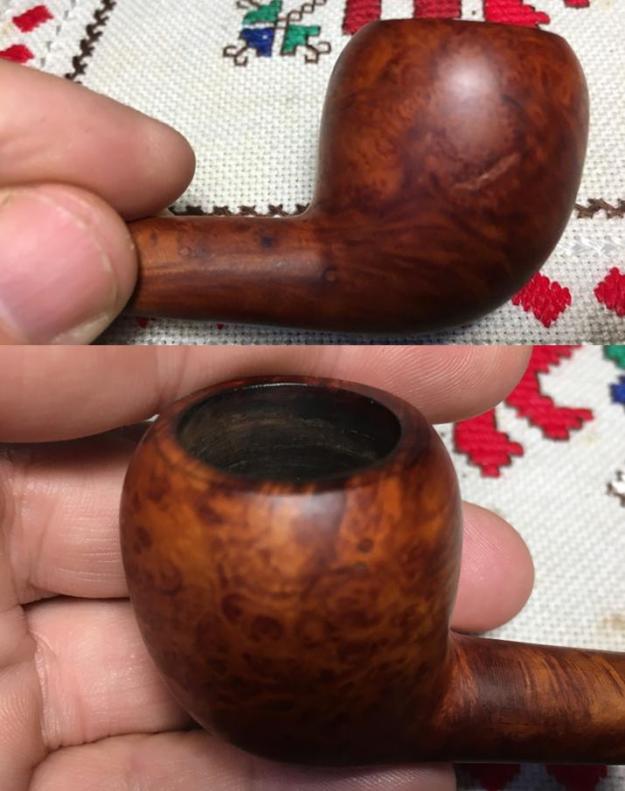
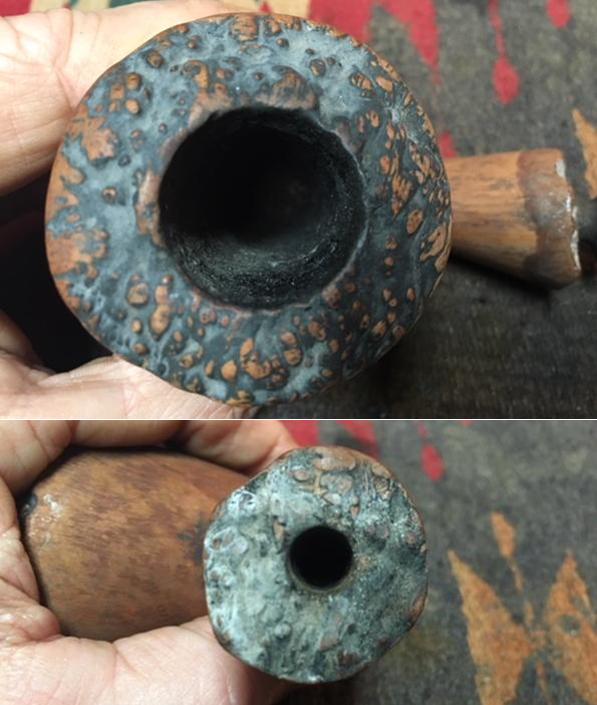
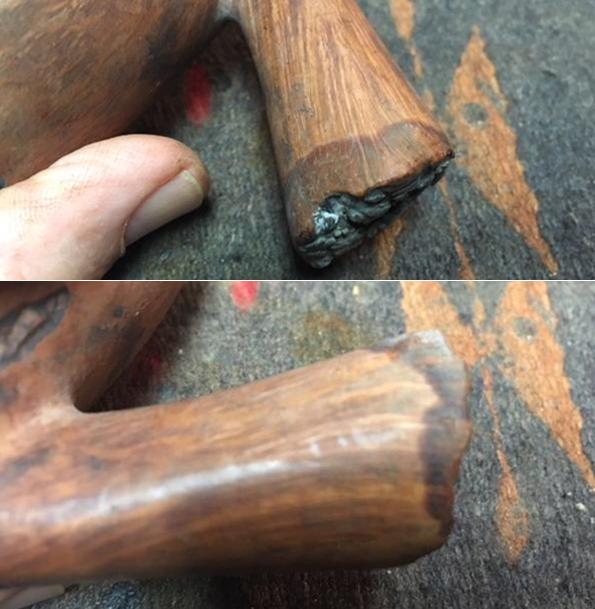
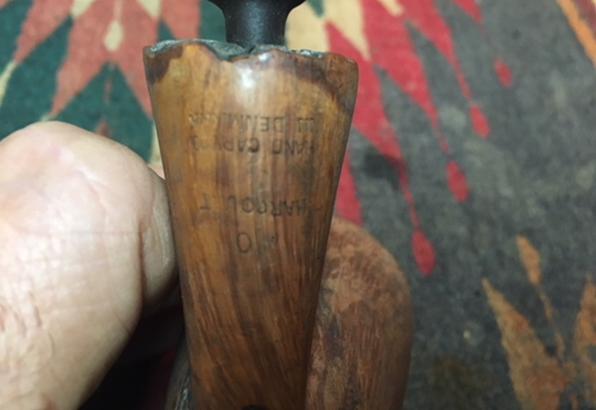
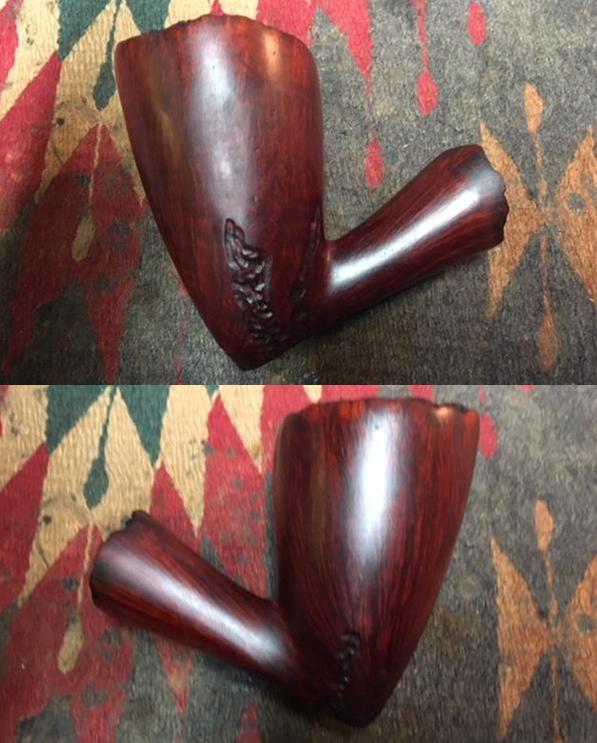
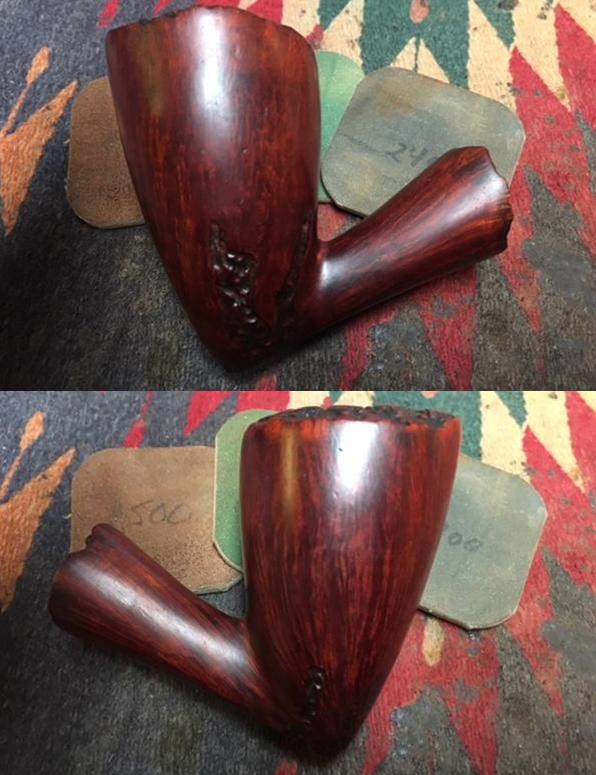
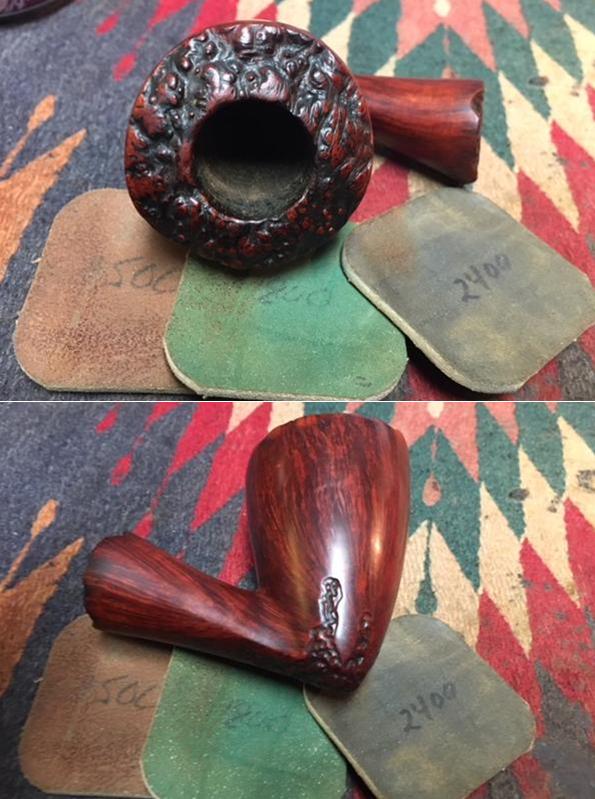
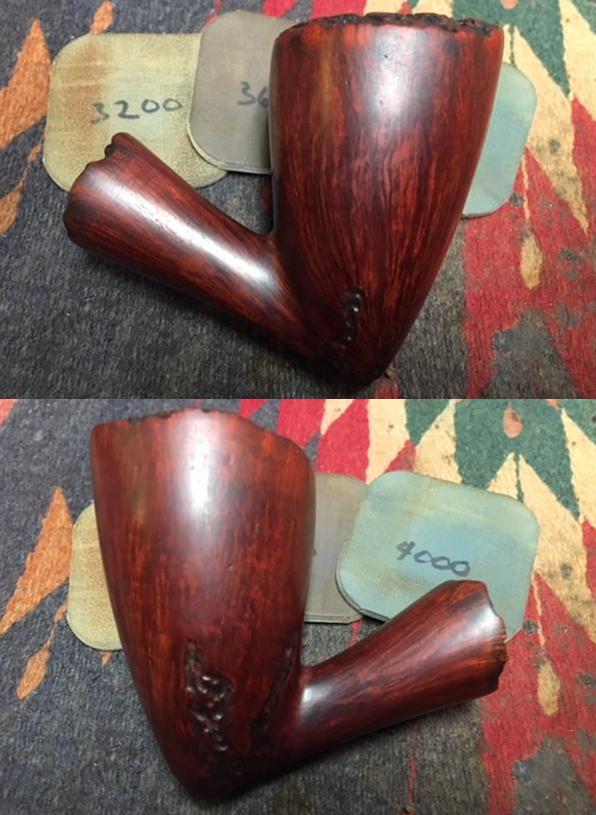
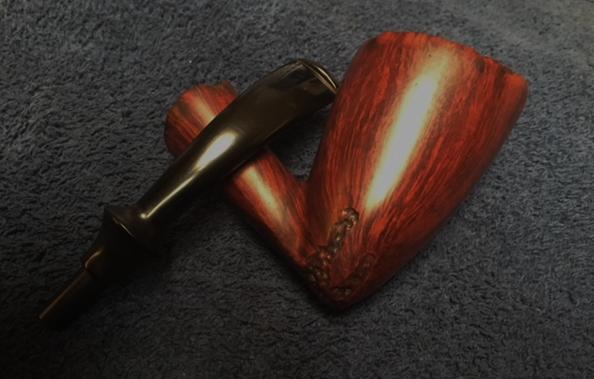
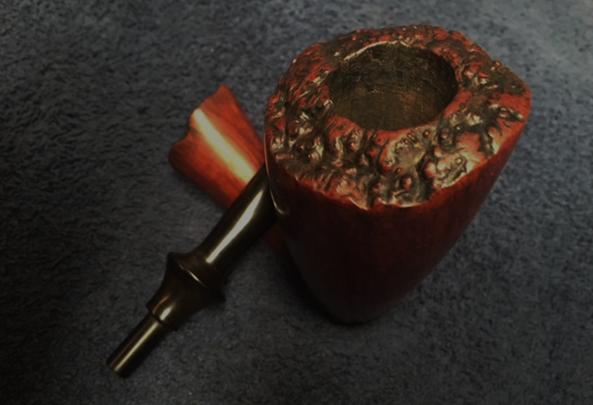
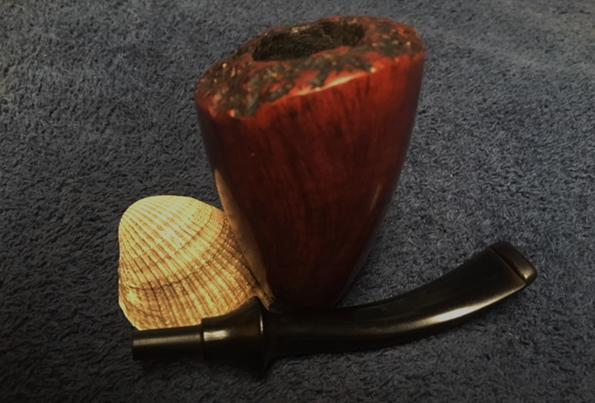
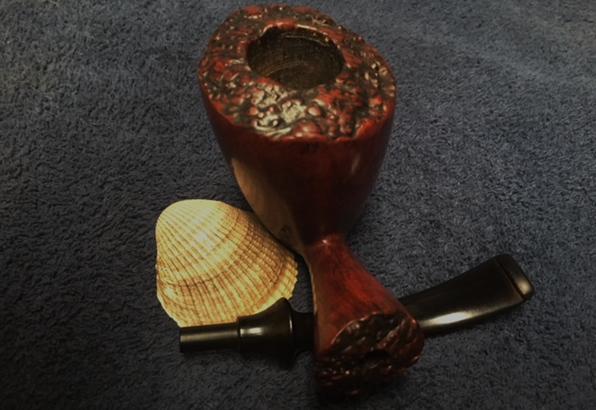
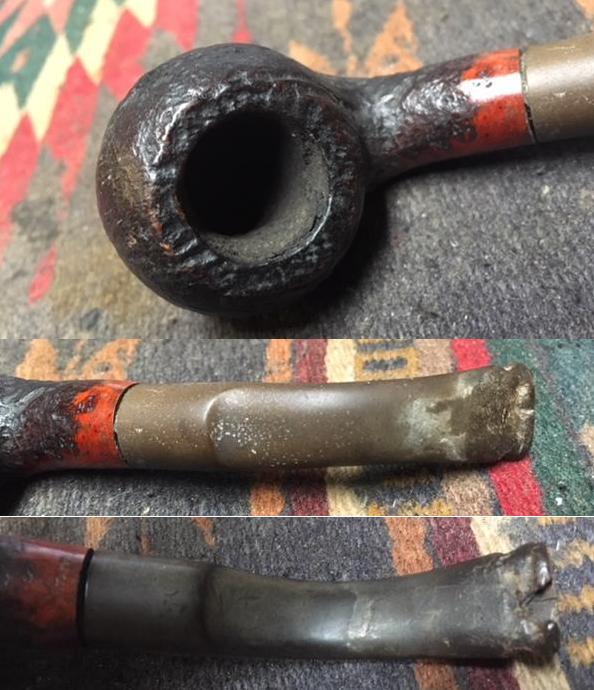
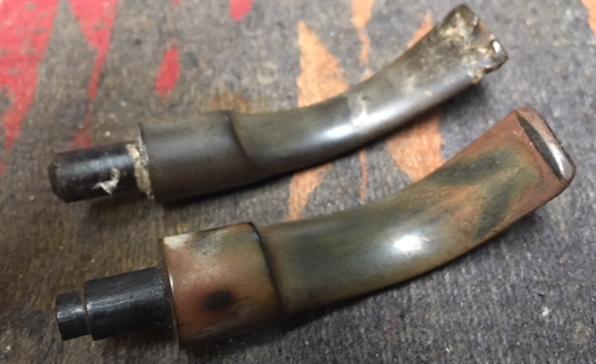
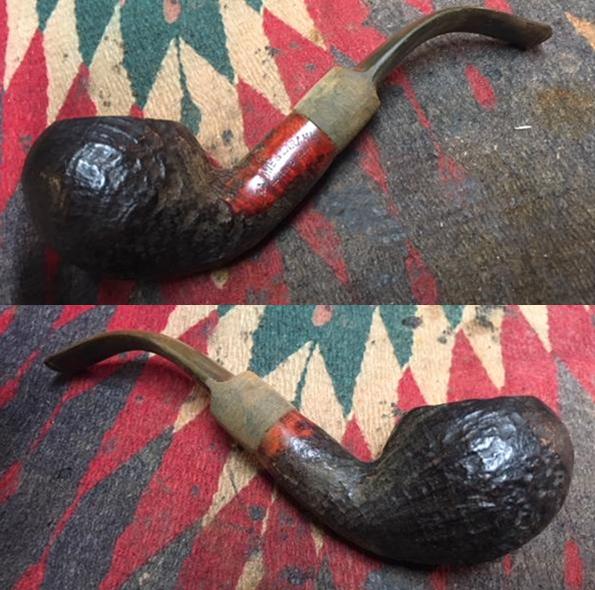
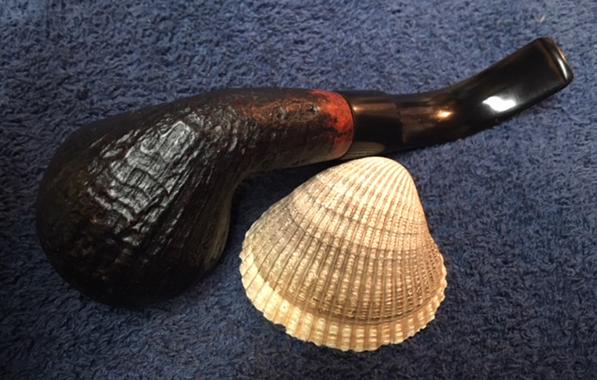
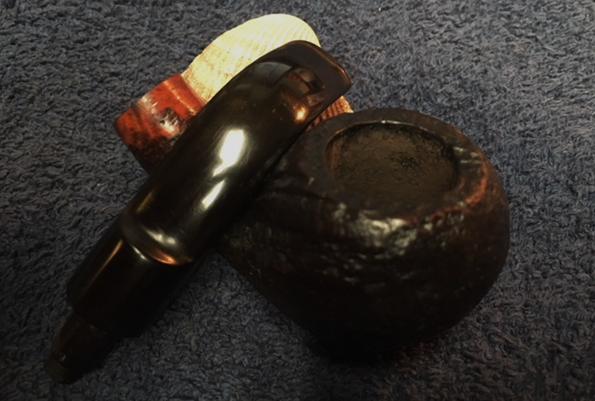
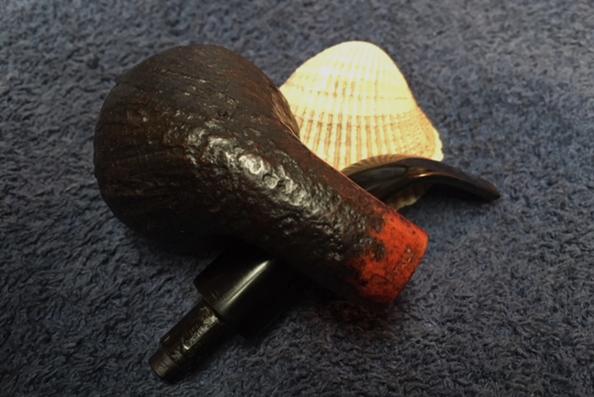
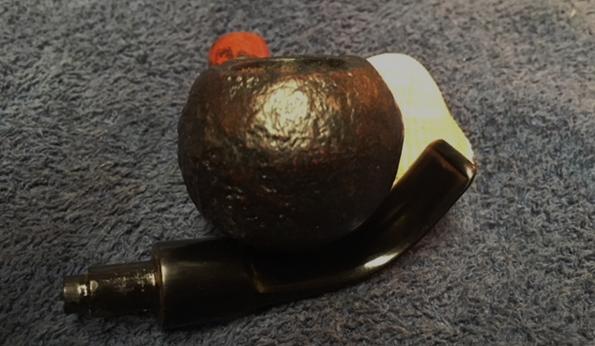
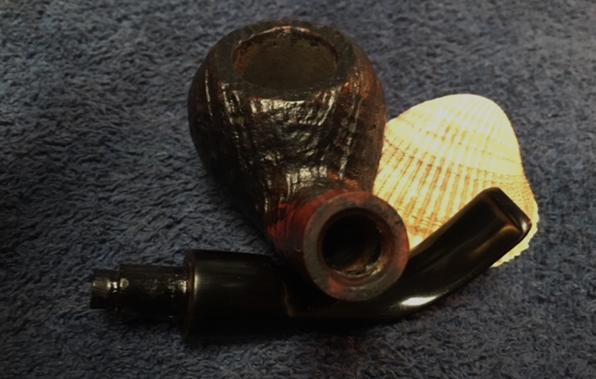
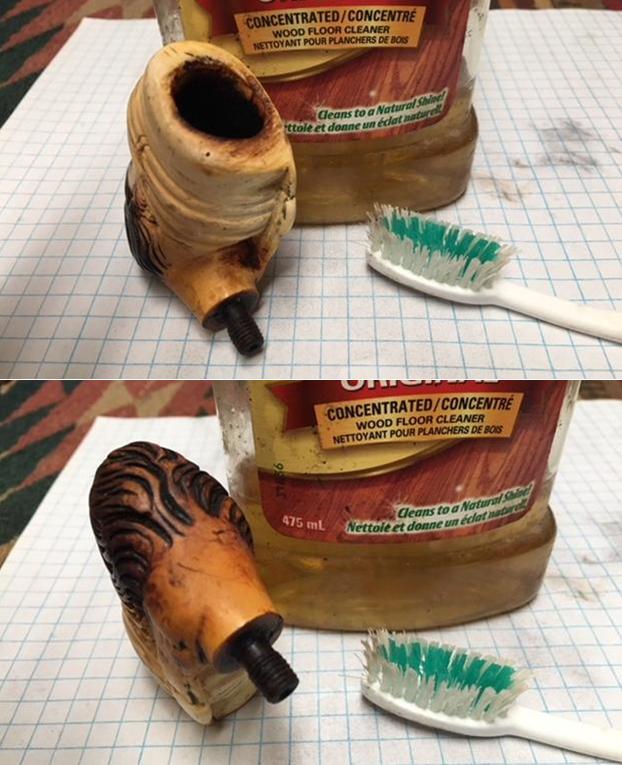
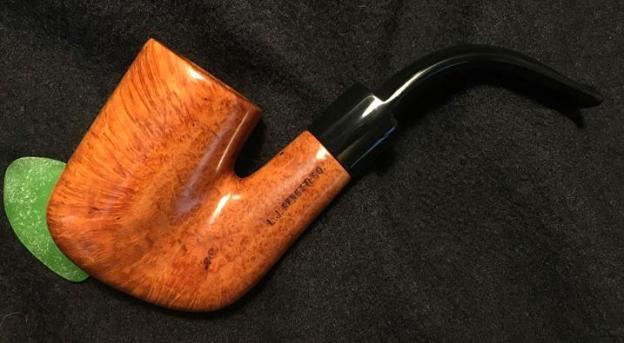
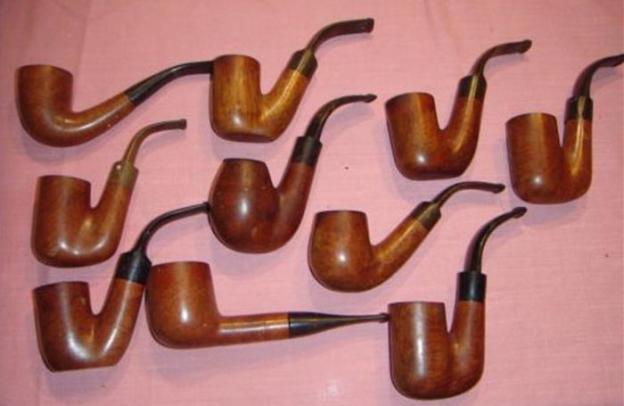
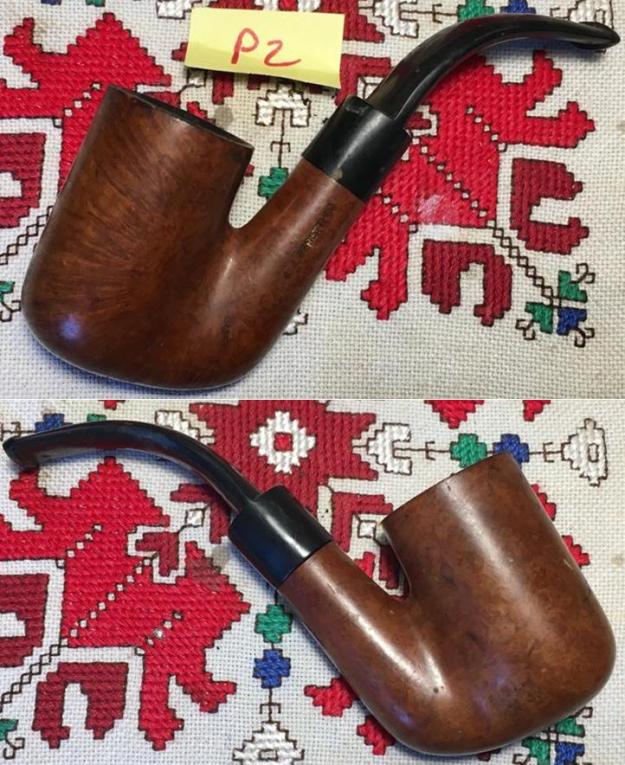
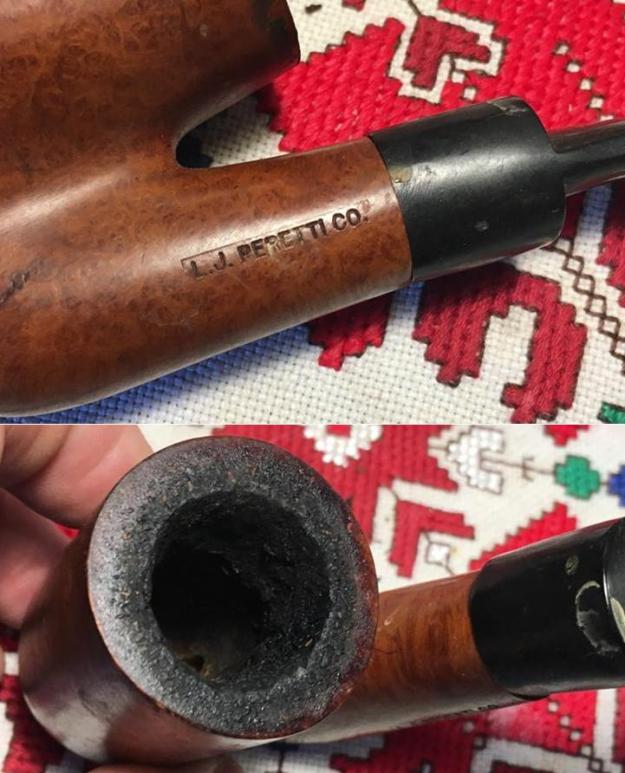
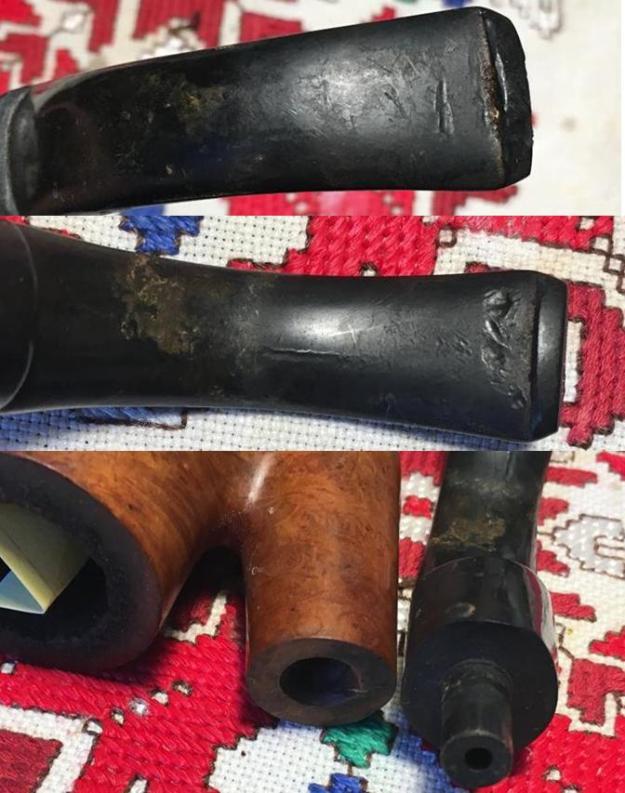
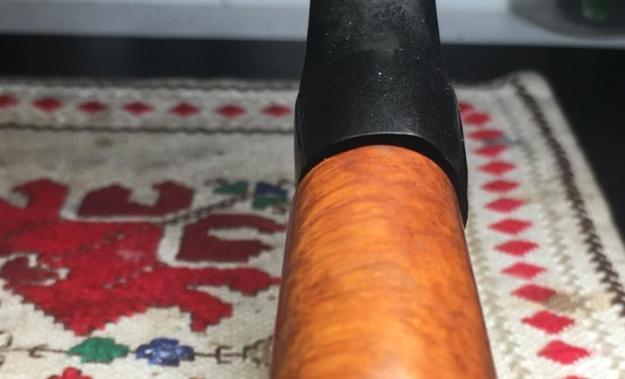
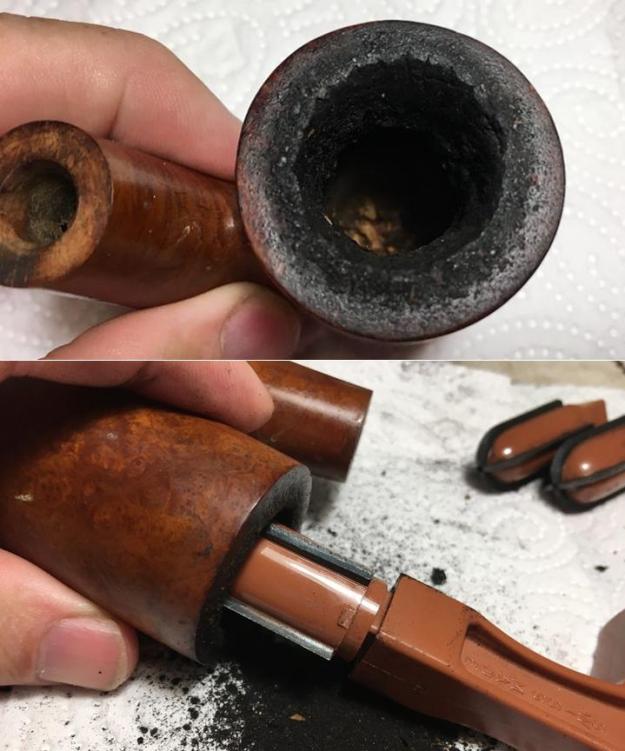
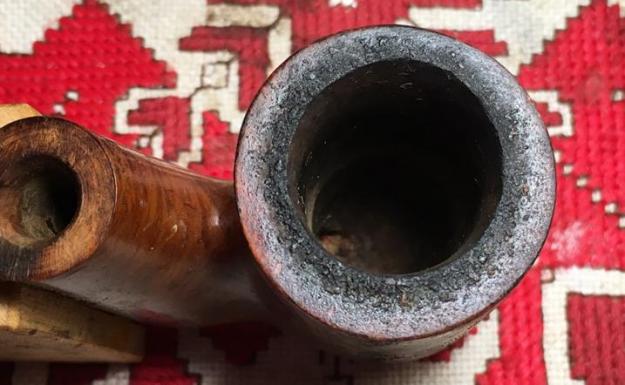
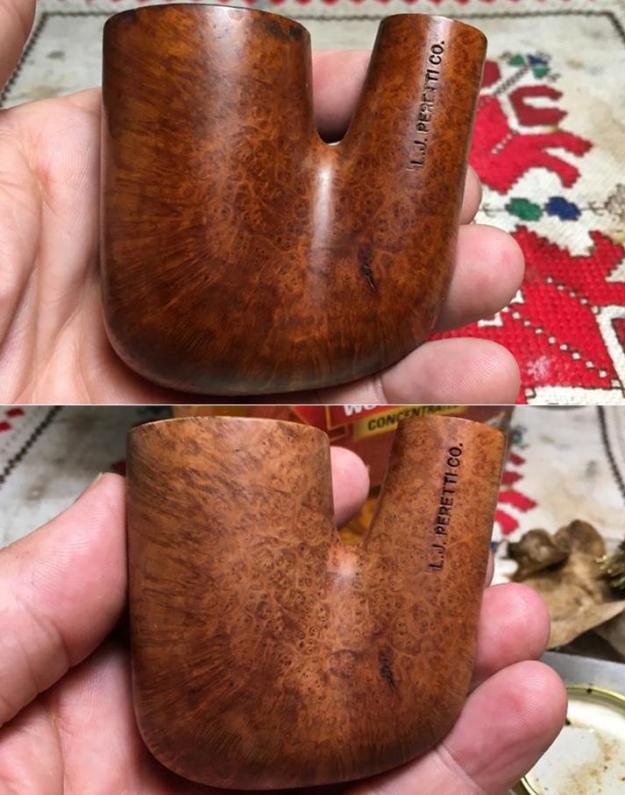
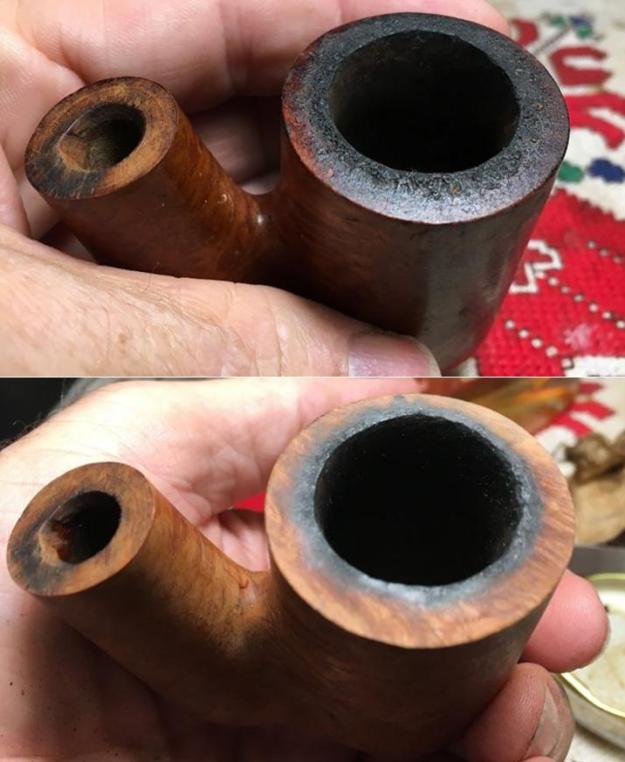
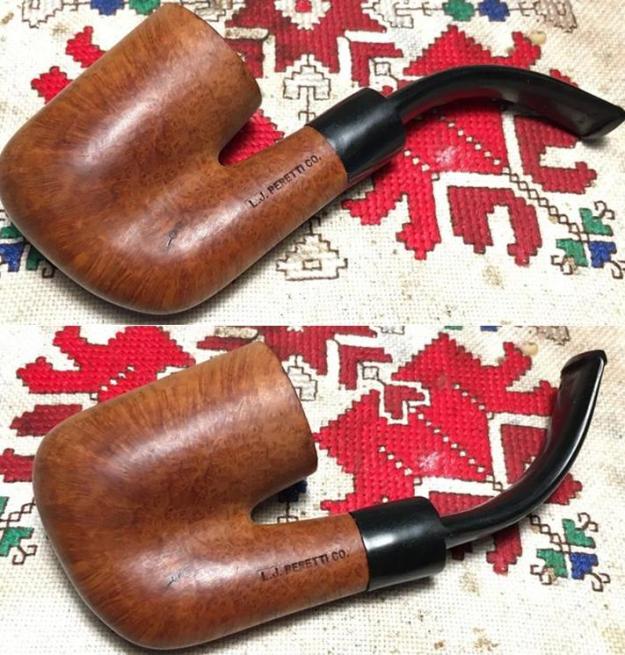
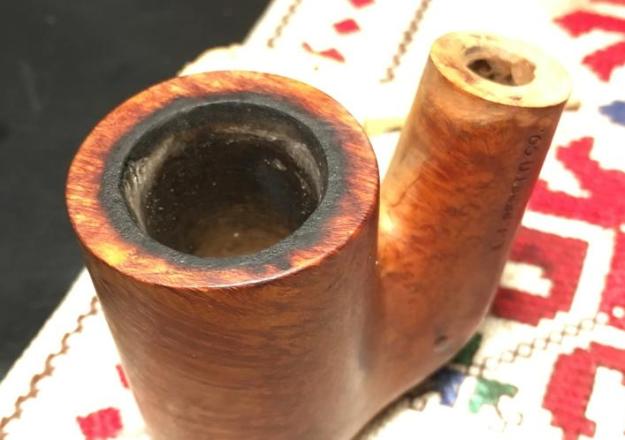
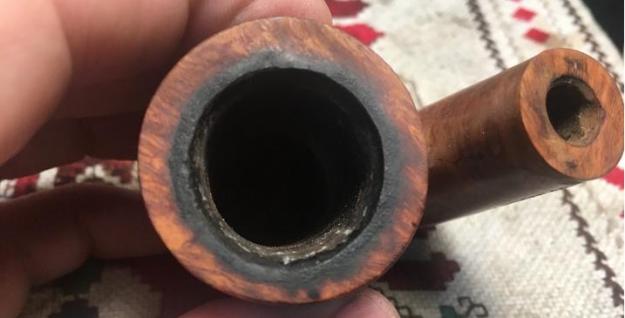
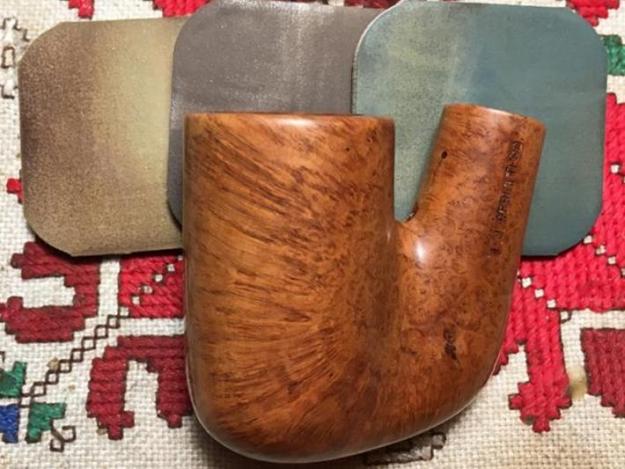
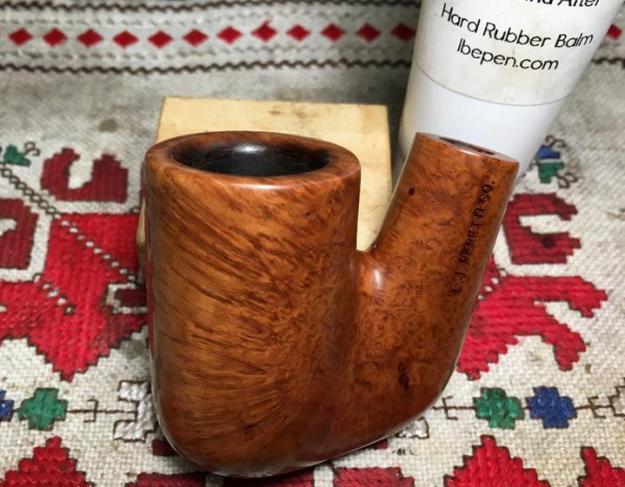
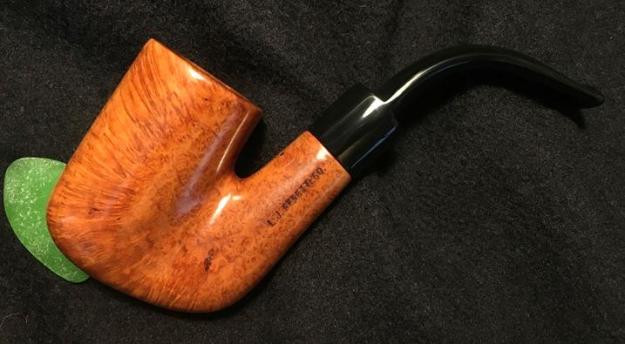
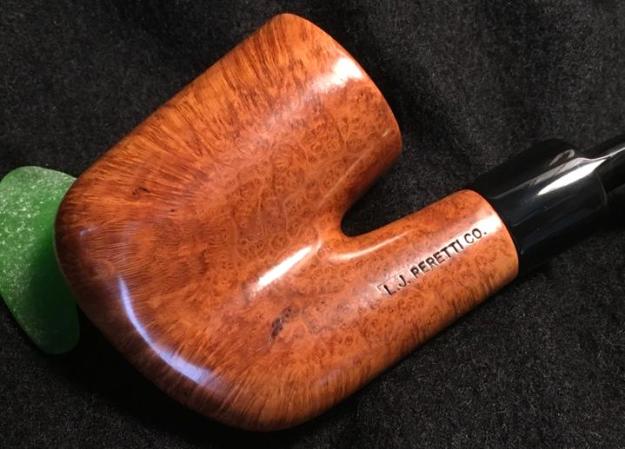
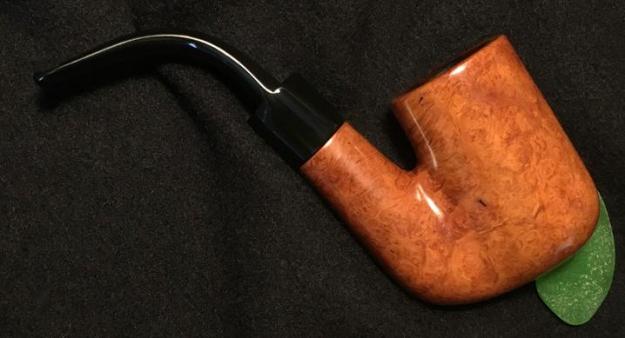
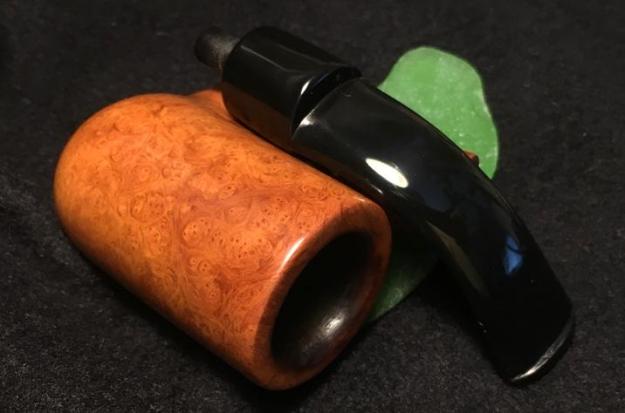
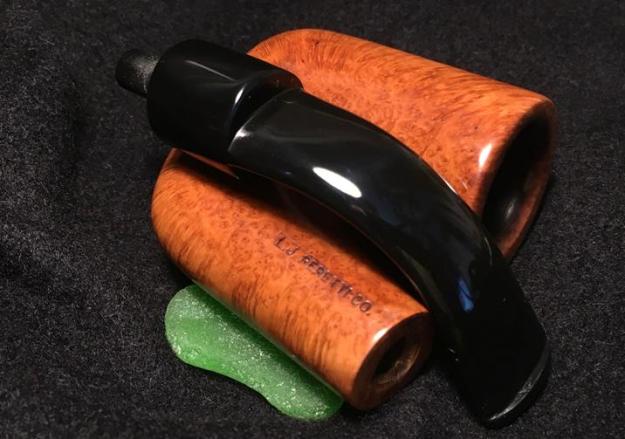
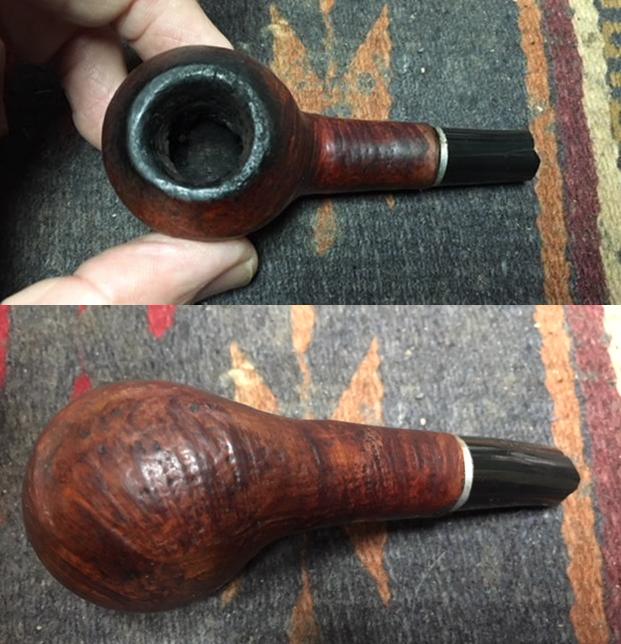
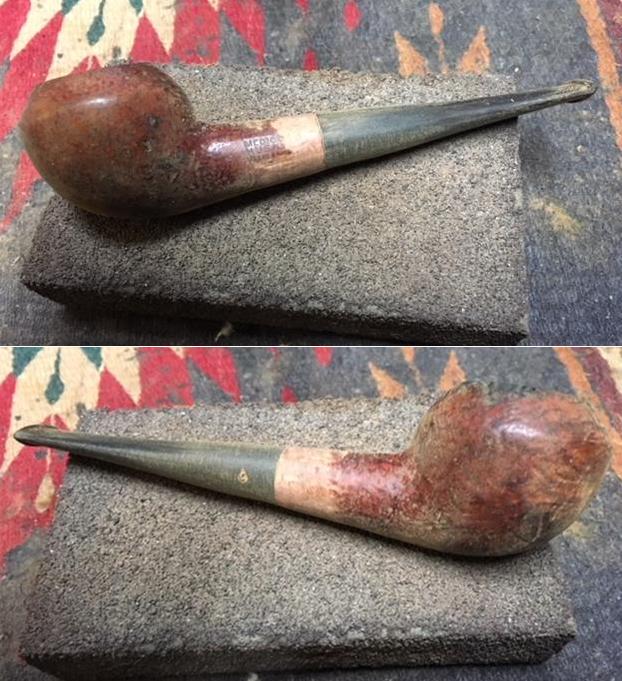
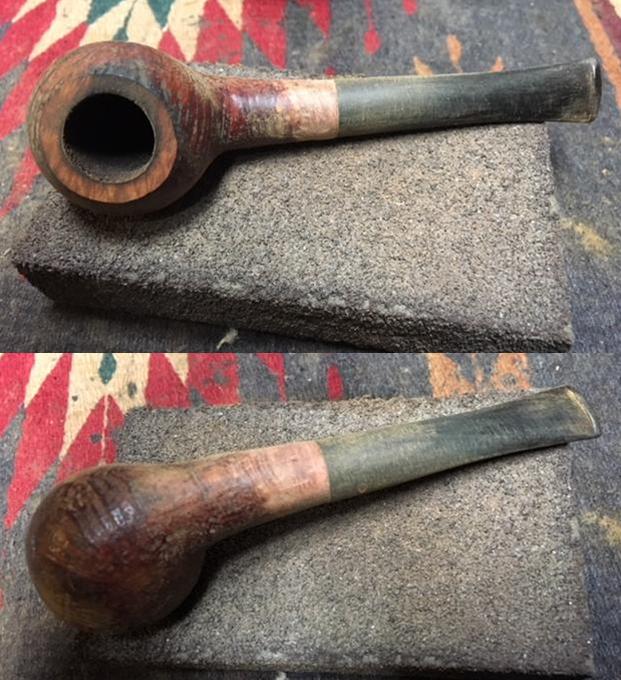
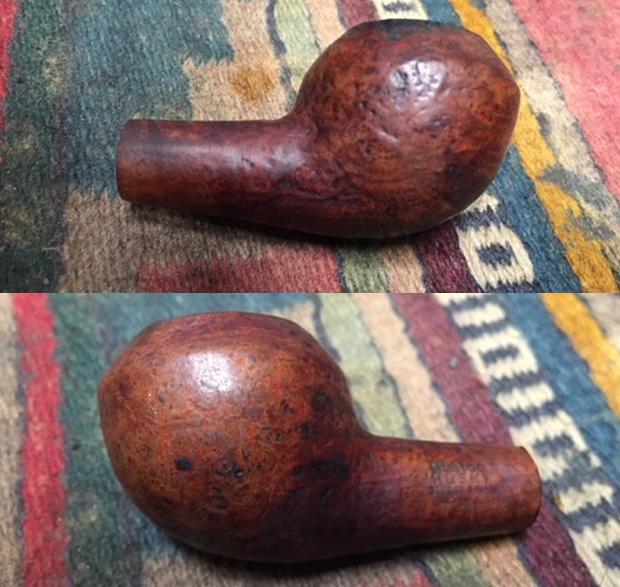
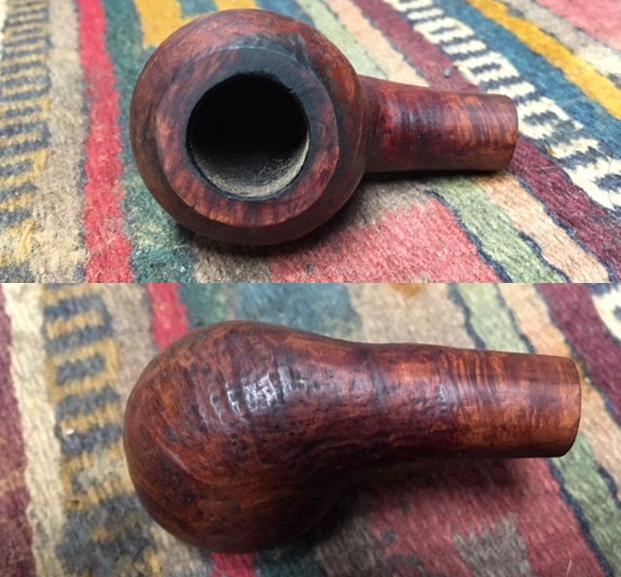
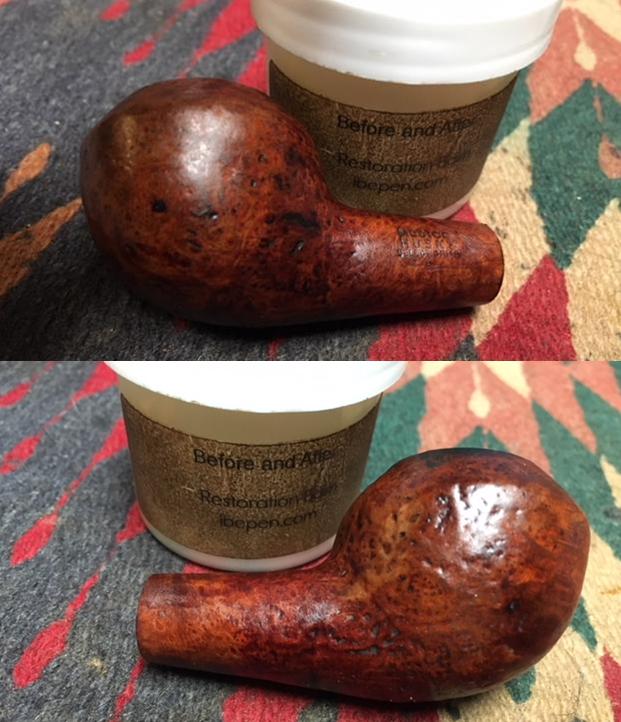
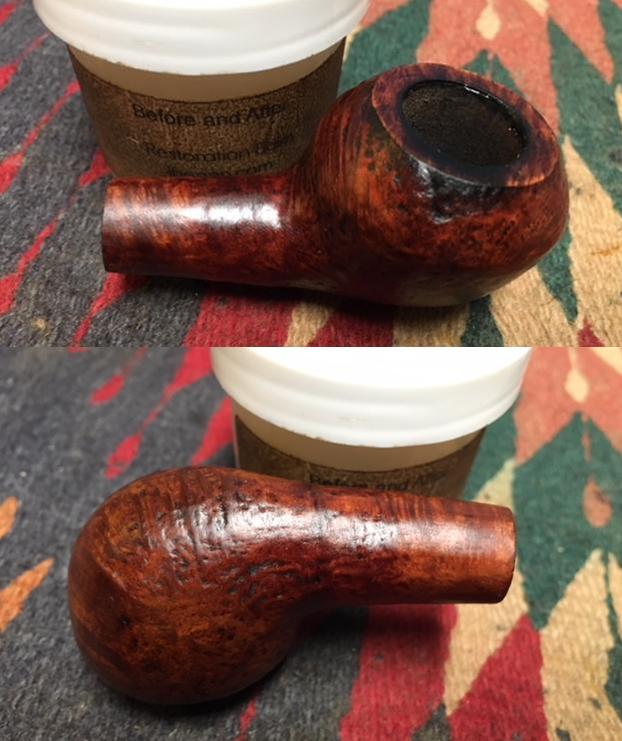
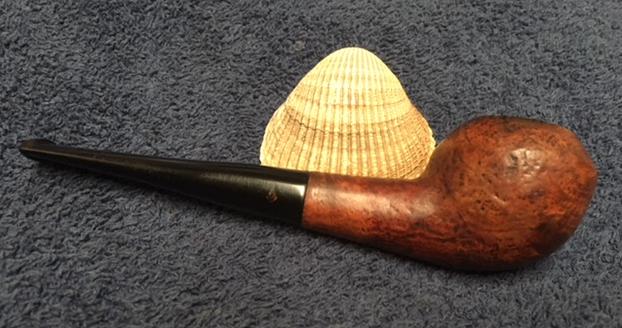
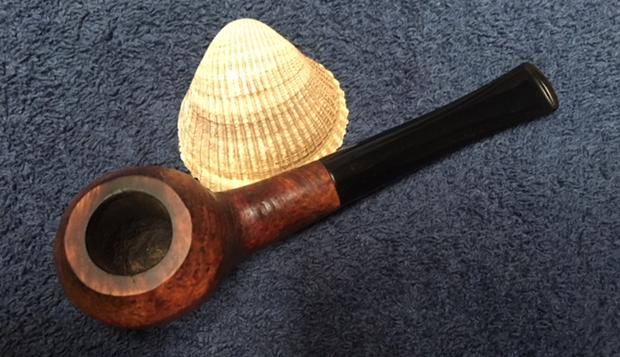
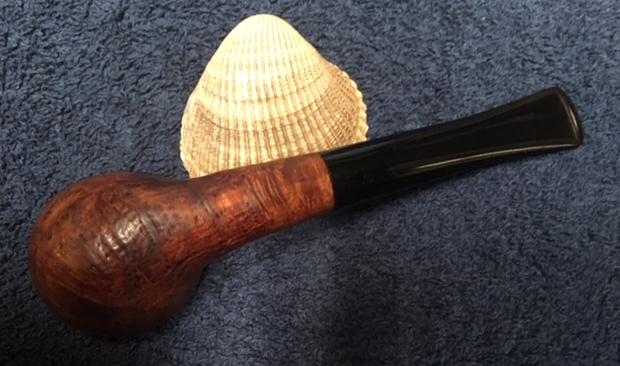
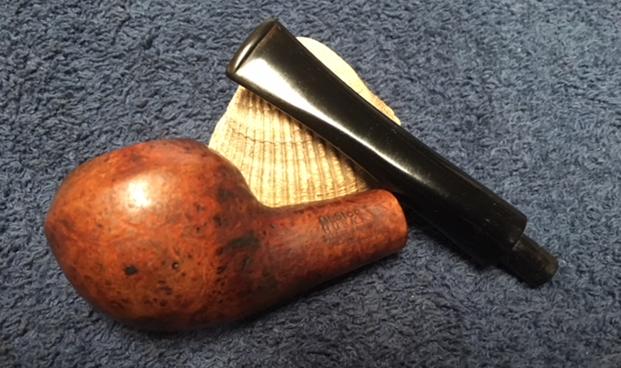
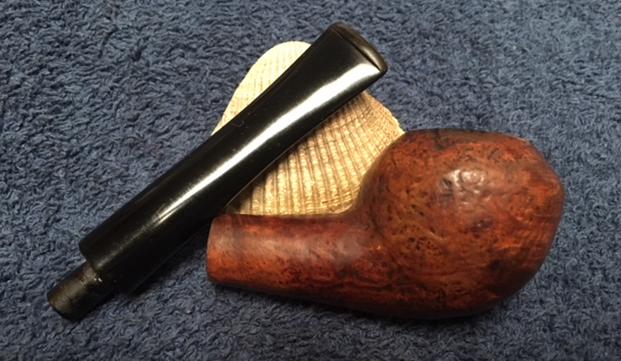
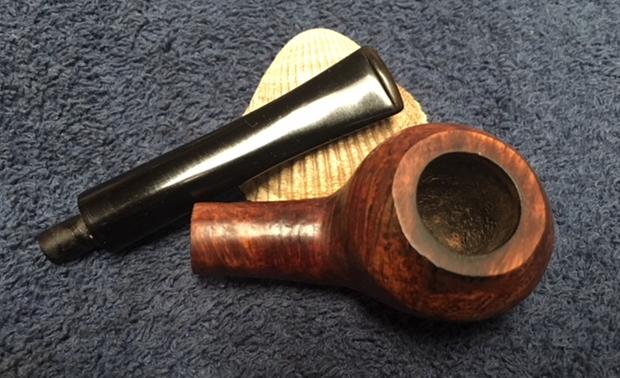
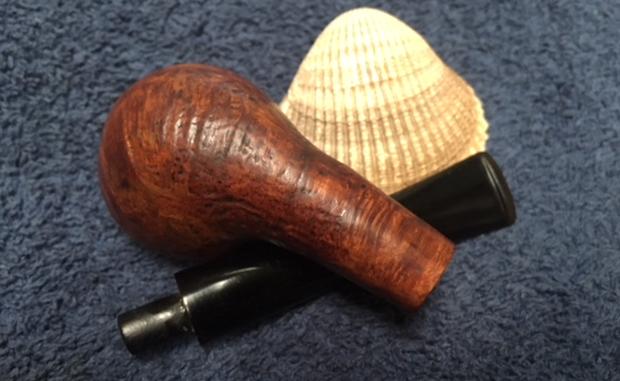
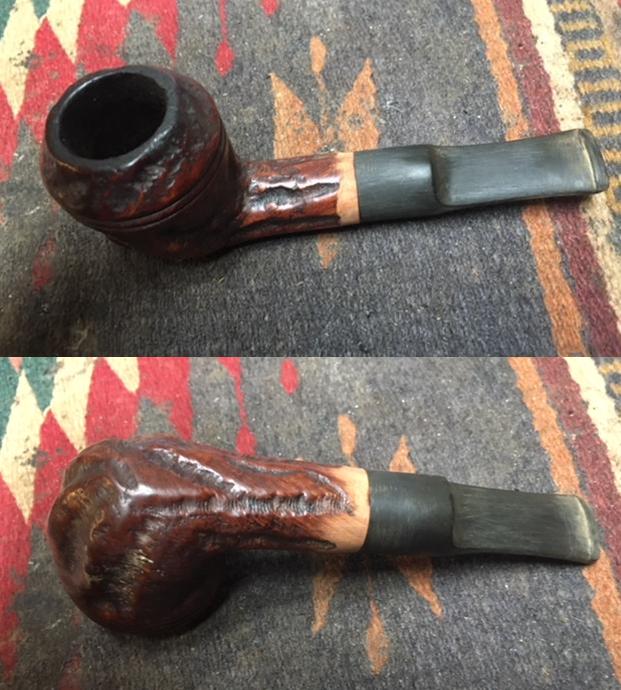
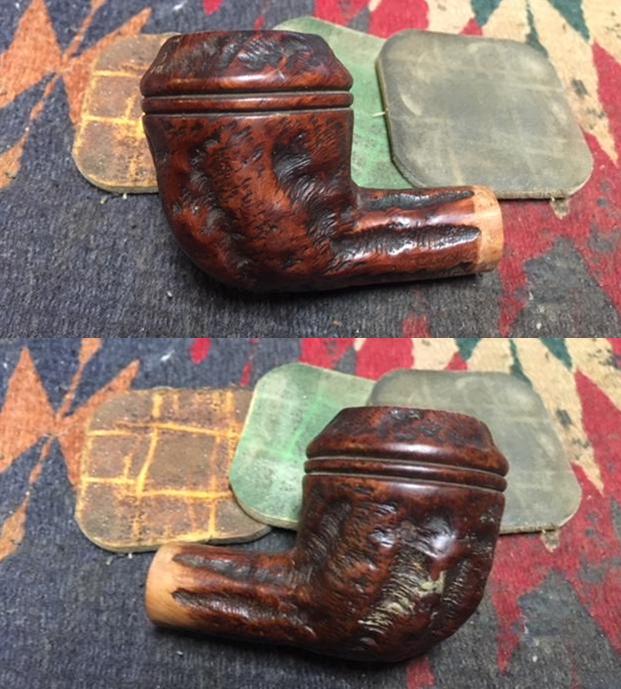
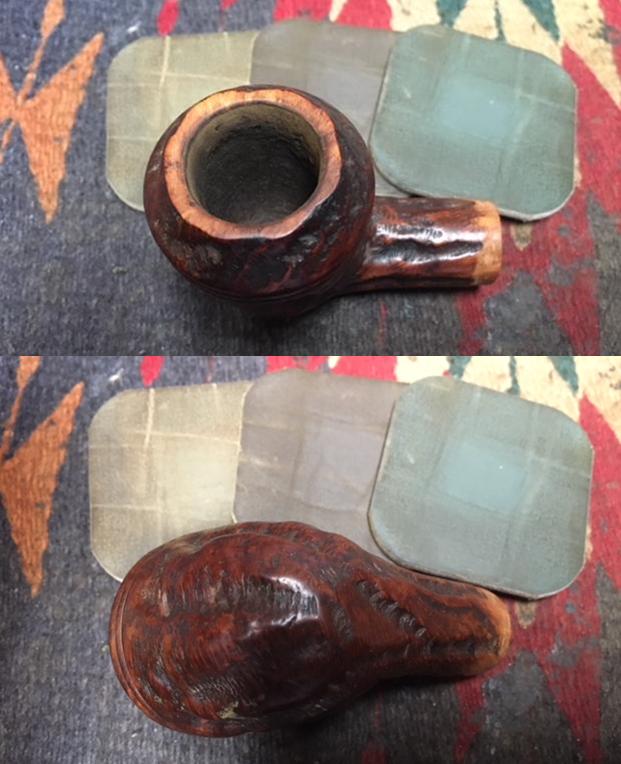
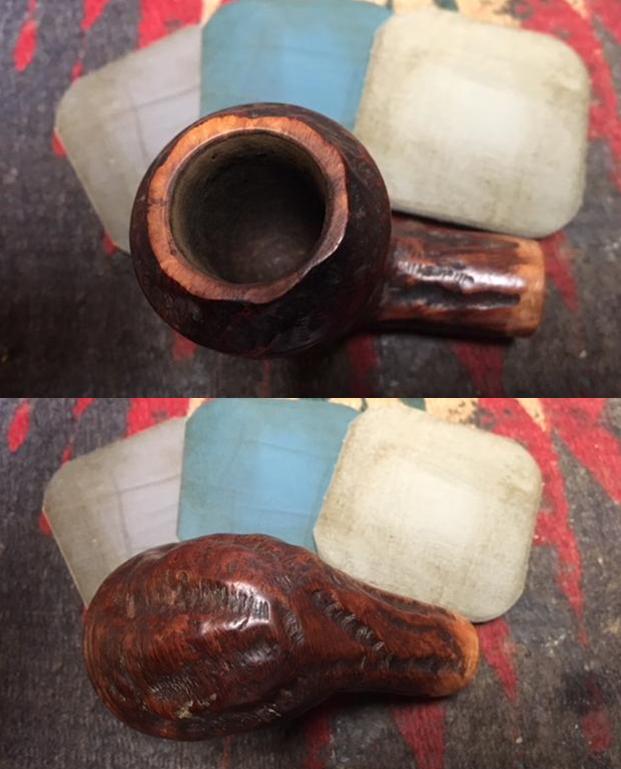
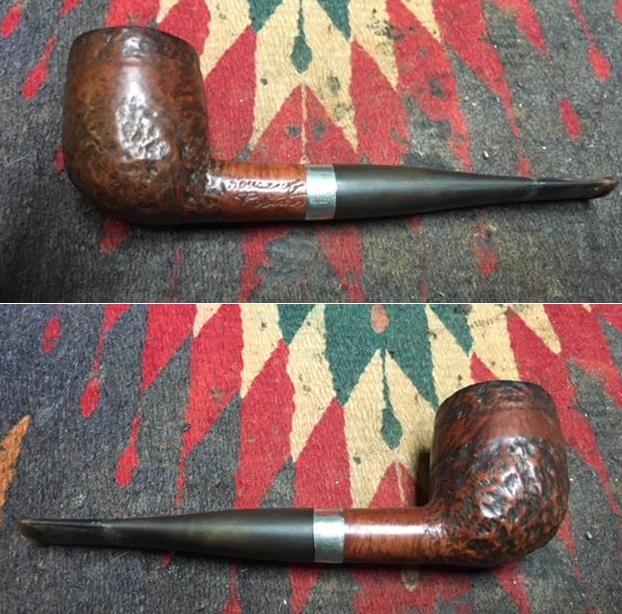
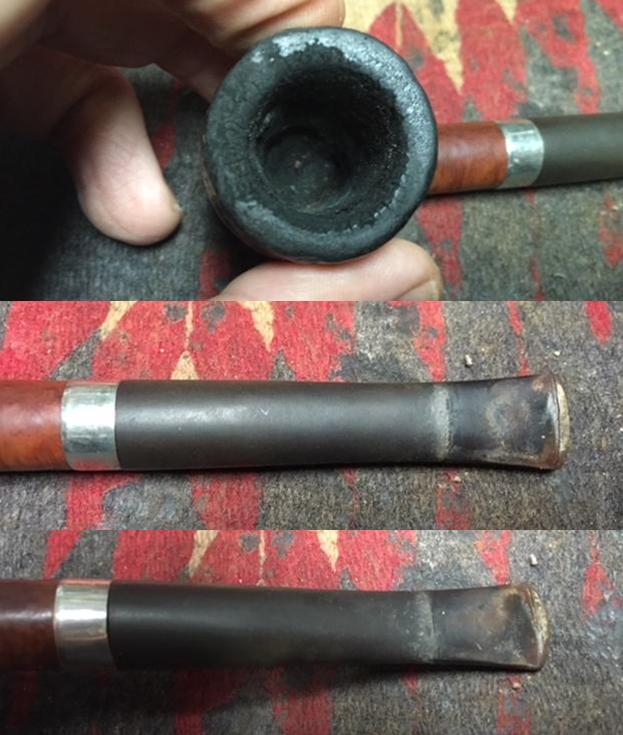
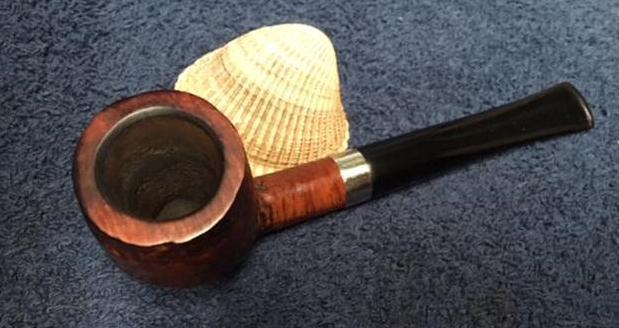
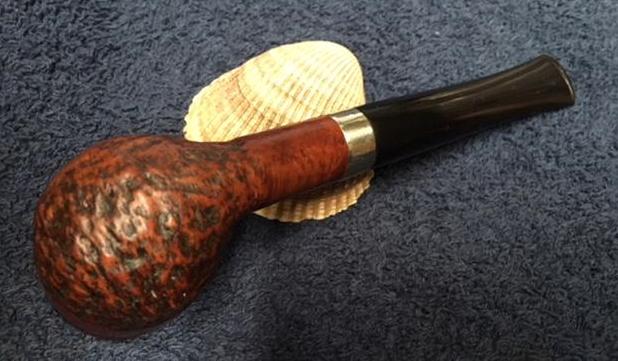
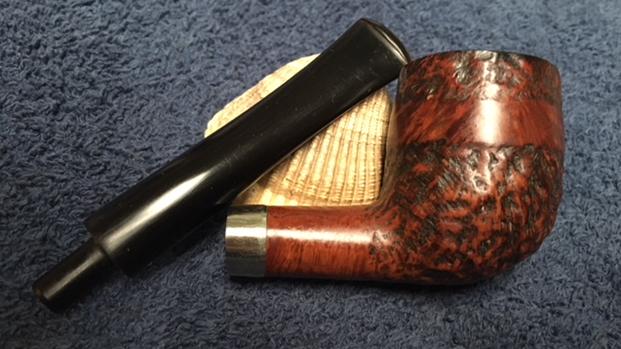
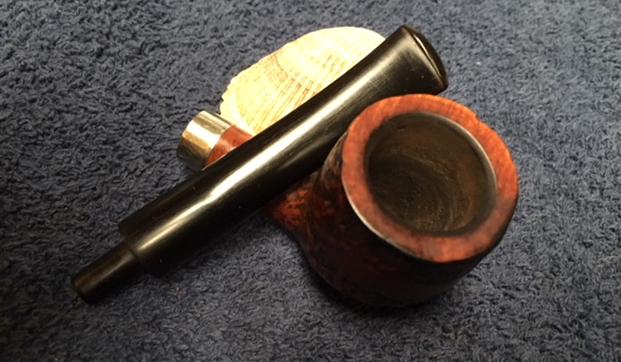
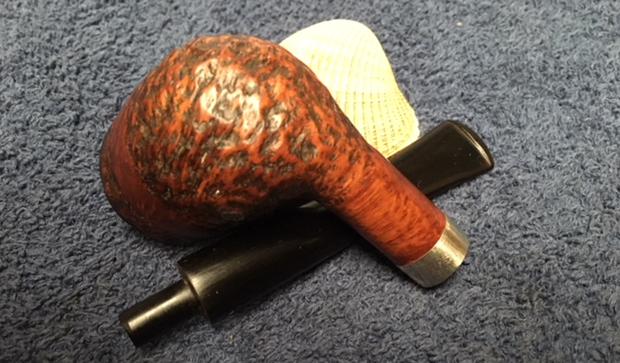
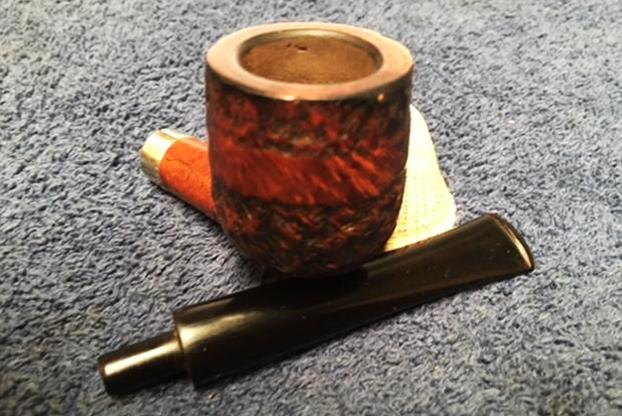
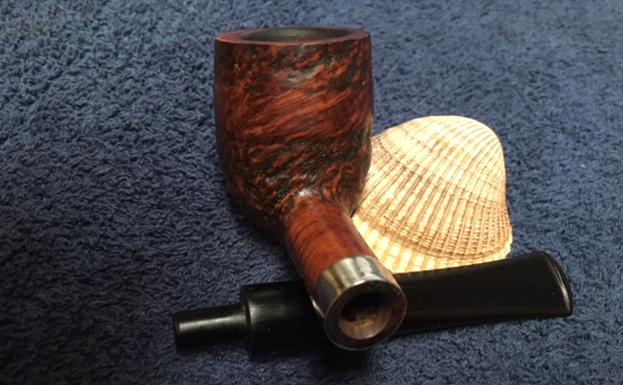
As with people, when you look at pipes, the way you look at them can be cursory – like walking down the sidewalk in the city center of Sofia.  You see colors, fashions, groupings of people, a quick intake of information and not much of the information reaches longer term memory in our brains.  I’ve been looking at the Peretti Lot of 10 that has been my focus over the past weeks as I’ve recommissioned each, one by one.  Interestingly though, not until a pipe reaches the status as “the one” on the worktable do you really start seeing it. The difference might be like walking the city sidewalk as I described above and then comparing this to looking at your new granddaughters for the first time just after their births – which I’ve had the pleasure of in the past several months!  Oh my, you look at toes, each one, fingers, how the ears hang and curl…. There is no end to the enjoyment of taking in the fulness of the detail!  When looking at the ‘the one’ close-up – the detail of an estate pipe in need of restoration, the detail will not be tented with the rose-colored glasses affixed when looking at grandchildren!  Here are the pictures I took from the city ‘side walk’ of the next Peretti Oom Paul now on my worktable when I was cataloging the Peretti Lot of 10 when they arrived here in Bulgaria together. After restoring several of these Perettis, all having the same steward, I’ve become familiar with what to expect.  Each Peretti has the former steward’s ‘MO’.  This Peretti falls in line.  It has thick cake in the chamber and thick, crusty lava covering the rim.  The left side of the chamber/rim is scorched and charred from the tobacco lighting habit of excessively pulling the fire over the side and damaging the briar.  Even as I do what I can to correct it, this Peretti will also leave the worktable with the same limp as his 9 brothers and cousins did in different degrees – an imbalanced and out of round rim/chamber.  Additionally, this Peretti Oom Paul’s stem is dented and chewed with almost the same ‘finger prints’ as the others.  These are the issues stemming from the former steward’s pipe smoking practices.  And yet, the stummel shows great potential – like the others, the grain on this large Oom Paul stummel is quite eye catching under the dirt and grime.  I see normal nicks and bumps of being a faithful servant in the rotation – the briar will clean up well, I’m sure of this.

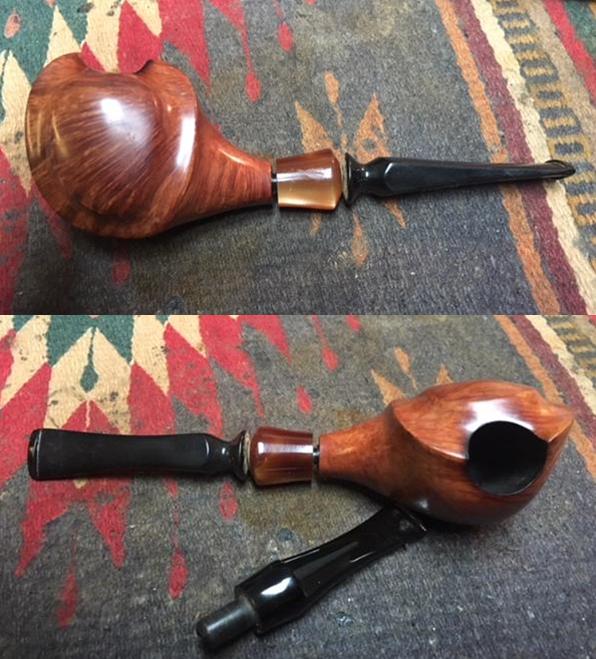
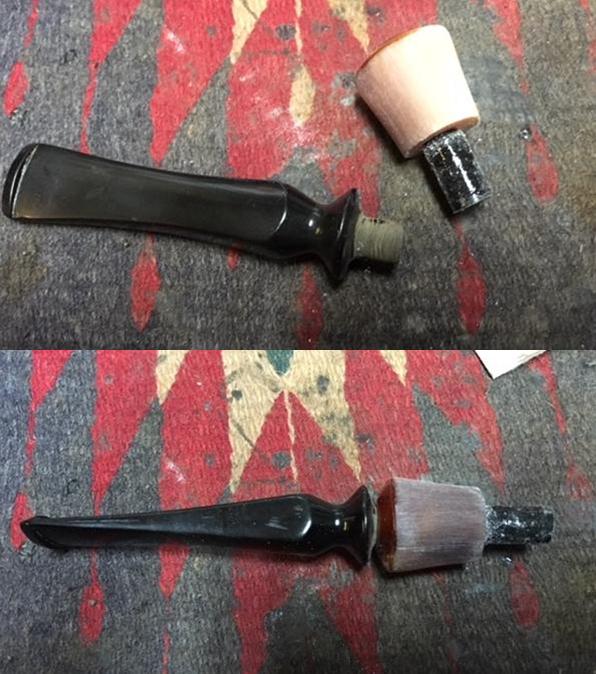
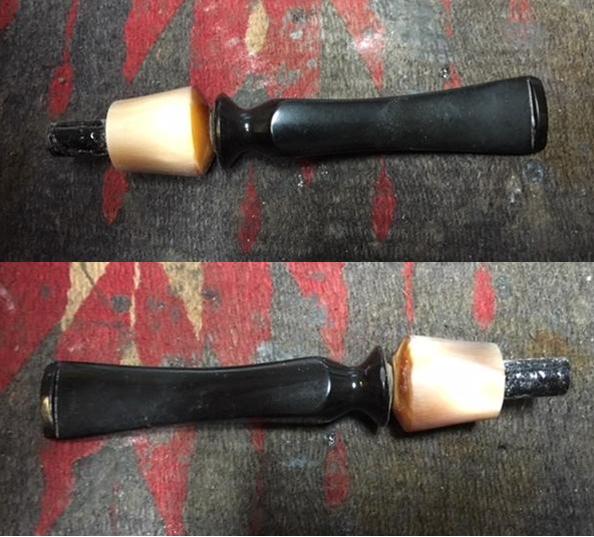
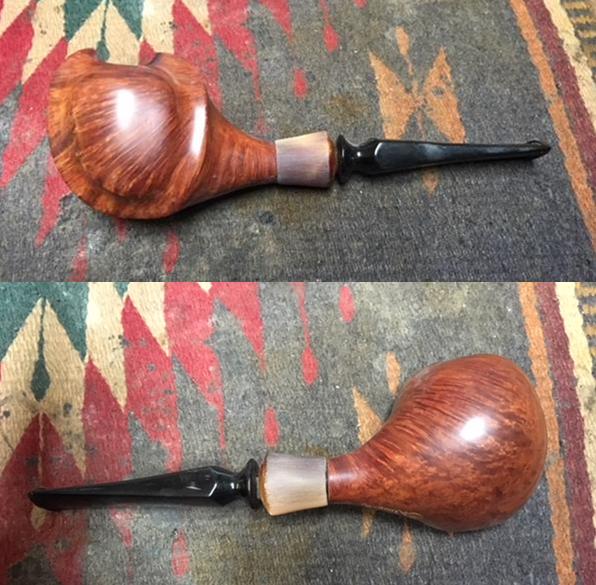
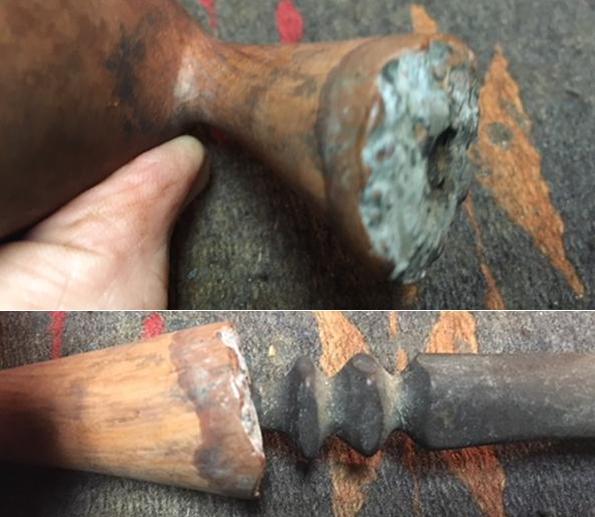
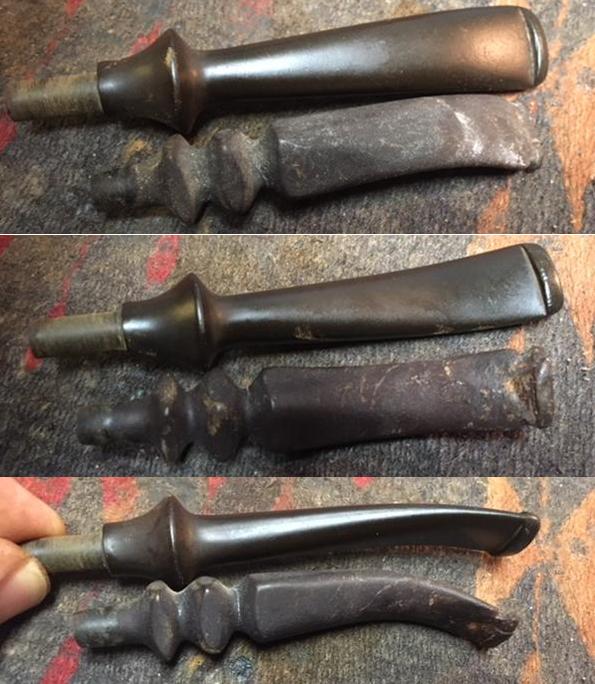
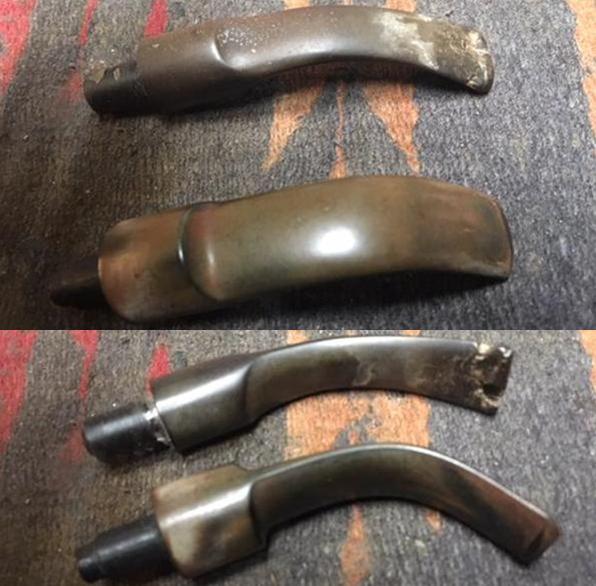
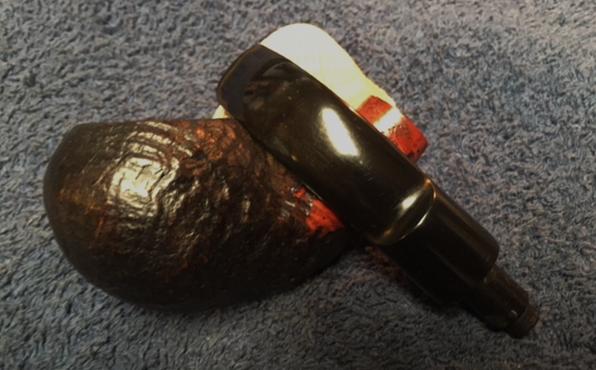
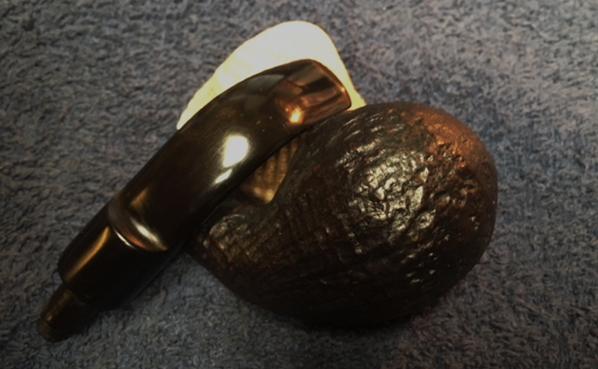
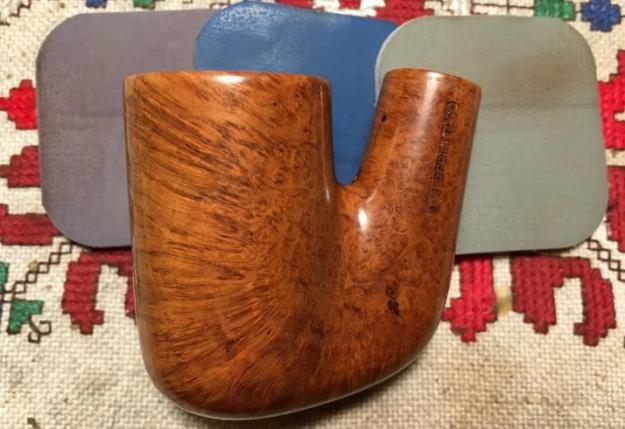
Unfortunately, there’s more to the story.  In my previous write ups of the other Perettis, I had commented that some of the Oom Pauls’ stems were not aligned well with the shanks due to less than ideal drilling precision.  I have never made a pipe and my hat is off to those whose interests and creativity take them in this direction – there are many beautifully done Free Style pipes I see all the time posted by fellow pipe men and women.  I understand that the drilling of a stummel is one of the more complex parts of making pipes – especially when sharp angles require multiple drillings.  When I took a closer look at the pipe my eyes focused on the fact that there was a huge ridge overhanging the shank.  As I turned the pipe over looking at it from different angles, it appeared that somehow the wrong stem was mistakenly joined with this shank!  I looked at the other Oom Paul I have left in the basket to restore, in the queue for a new steward, and it was obvious that the other stem was not matching this stummel.  I came to the sad conclusion that this drilling job simply was shoddy.  Here’s what I see of ‘the one’ on my work table: No matter which angle I chose or how I squinted my eyes it didn’t make what I was looking at any better!  Oh my.  The next thought I had was of Abraham, a Californian and fellow pipe man and member of the Facebook group, ‘The Gentlemen’s Pipe Smoking Society’.  What would he think when he reads this blog after having commissioned this pipe, waiting patiently over the weeks as it slowly moved up in the queue!  Fortunate for him, I AM a man of prayer and this pipe WILL benefit the Daughters of Bulgaria!  I’m already wondering what I will do to rescue this ailing Oom Paul!  I remembered my research on Peretti for my first Peretti restoration a few years ago.  I wondered where the Boston-based L. J. Peretti Co., manufactured their pipes.  I sent an email to the Peretti Tobacconist in Boston and was amazed that I received a response. Here is what I learned:

Hello Dal,

We have been sourcing our proprietary pipes from a number of different manufacturers. That said, it is most likely that Arlington Briars made the pipe you have in your possession. Photos would help us identify the pipe further. I will have to look through some of our old content and see what I can find.

Hope this helps, Tom  LJP

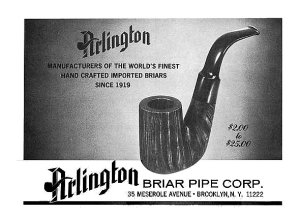
Per Pipedia: Arlington Briar Pipes Corporation was founded in 1919 in Brooklyn, New York, and produced the Arlington, Briarlee, Firethorn, Krona and Olde London brands among dozens of others, primarily acting as a subcontractor making pipes to be sold under other brand names. Among others, in the 1950’s, Arlington turned pipes for the famed Wilke Pipe Shop in New York City. The corporation was dissolved by the State of New York as inactive on December 6, 1978. 

I don’t know for certain that Arlington Briar Pipes produced the Peretti Lot of 10, but when I looked at the Pipedia page, this picture of Arlington’s own brand, this Oom Paul was staring at me.  He looks very familiar!  Well, we won’t know for sure, but the history of L. J. Peretti and the drilling of this Oom Paul interests me!  In the back of my mind as I begin restoring this pipe, is the huge misalignment of the stem and stummel.

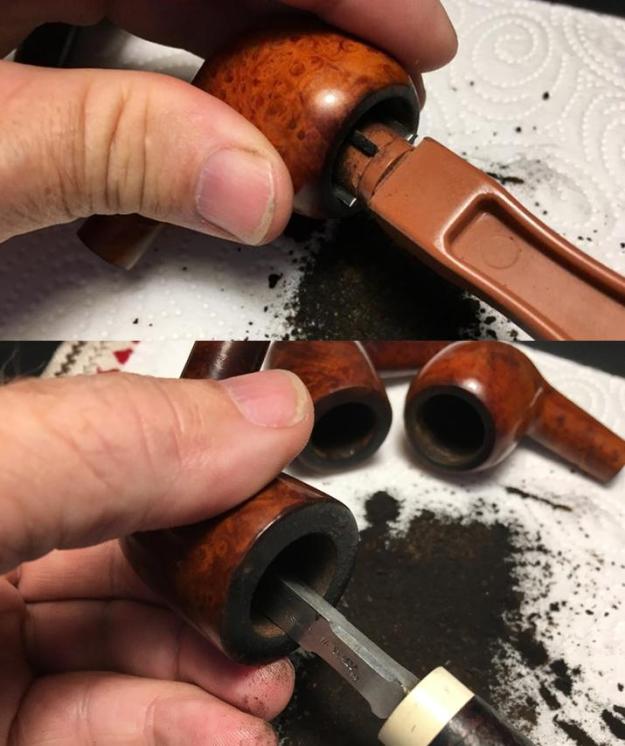
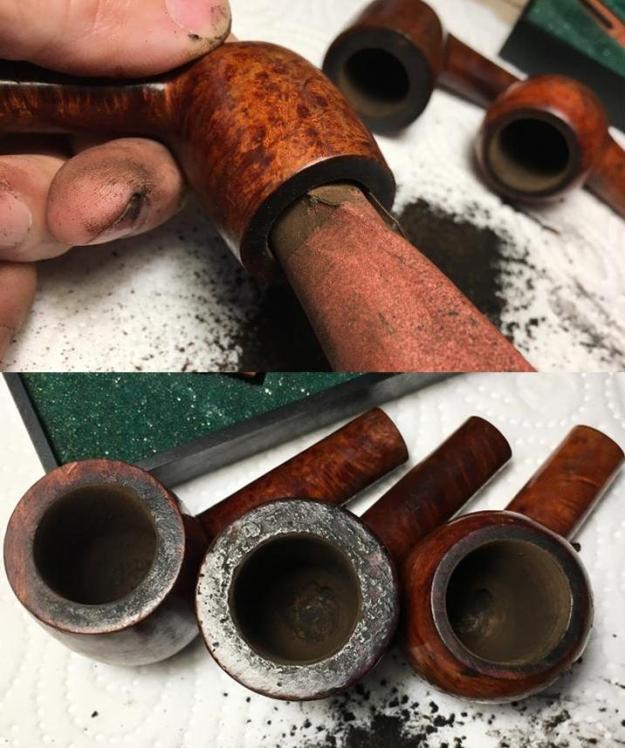
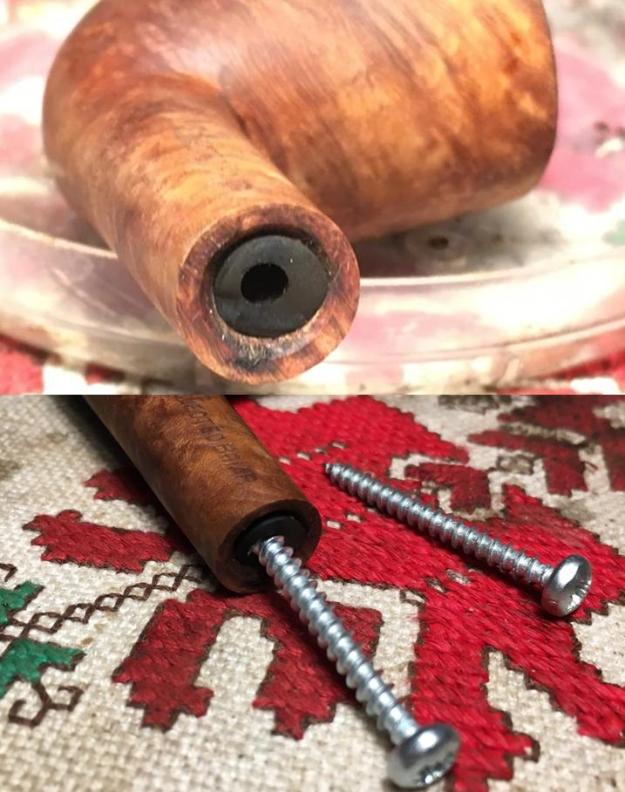
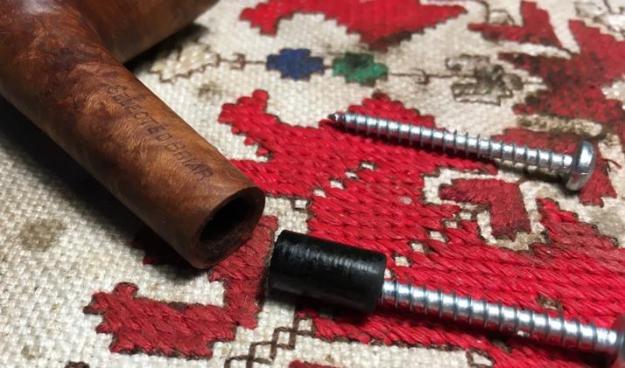
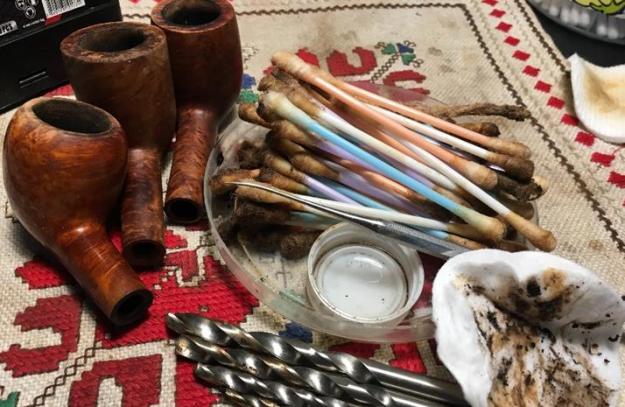
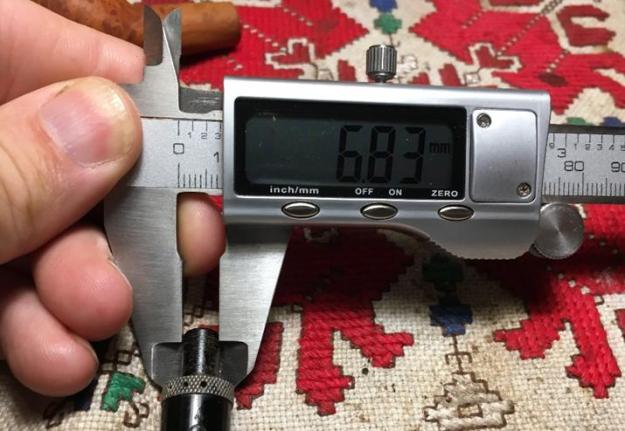
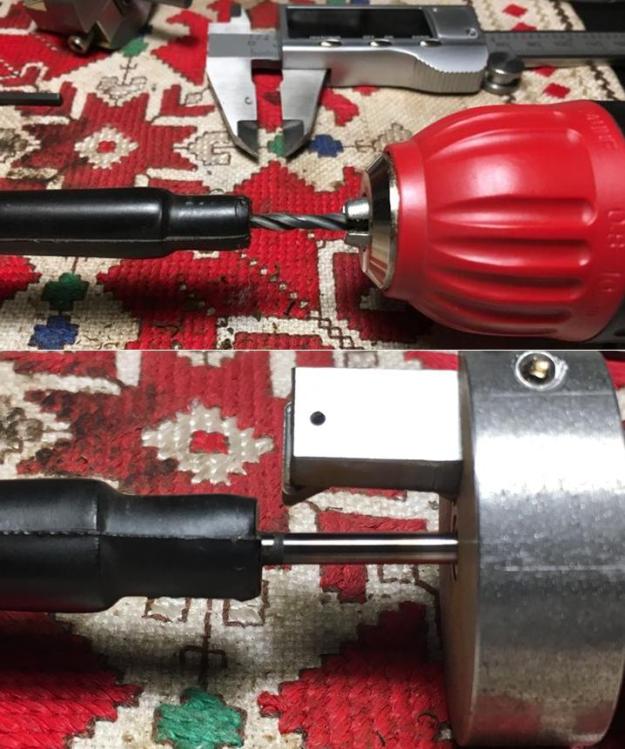
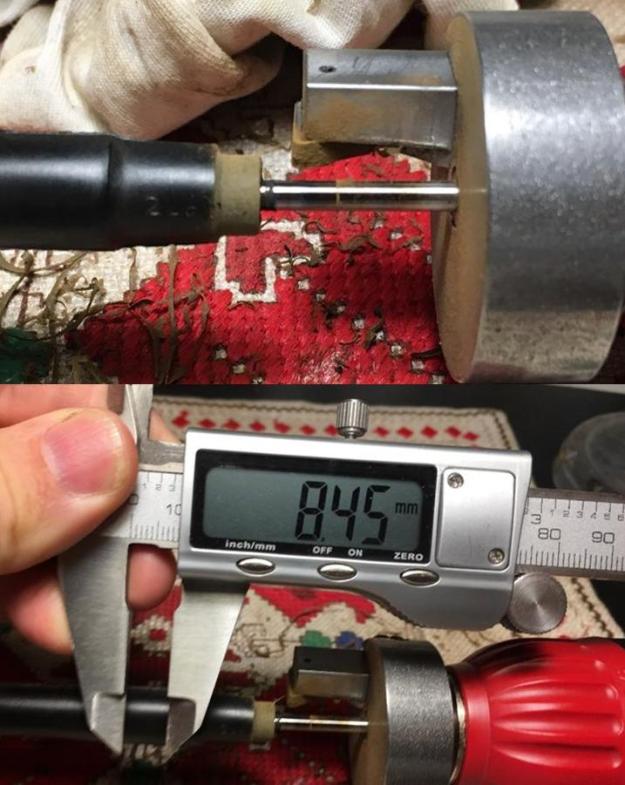
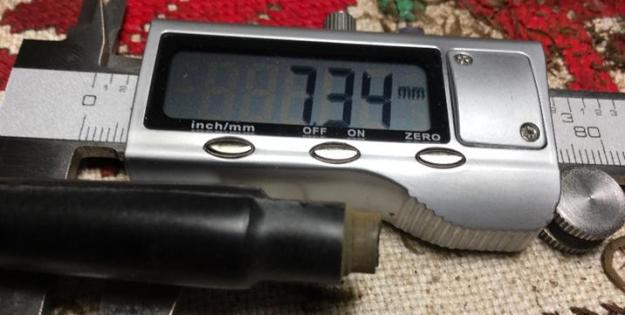
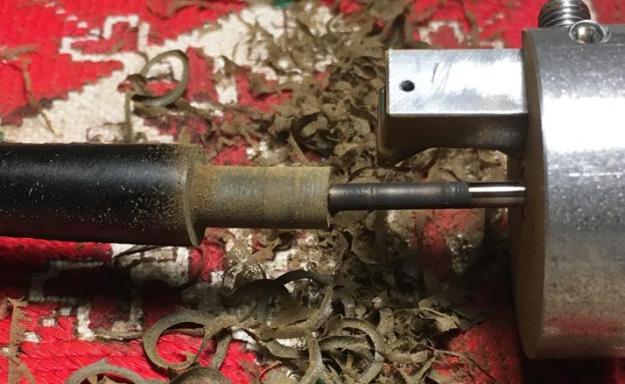
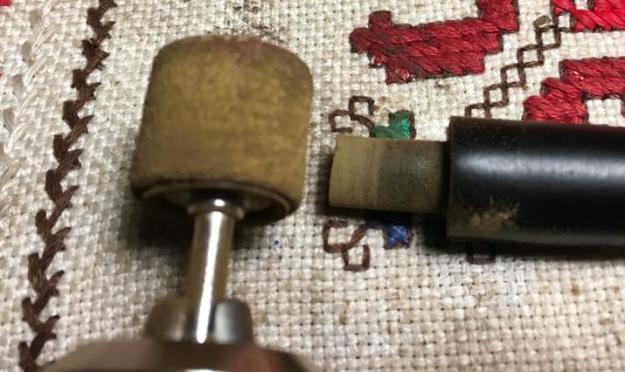
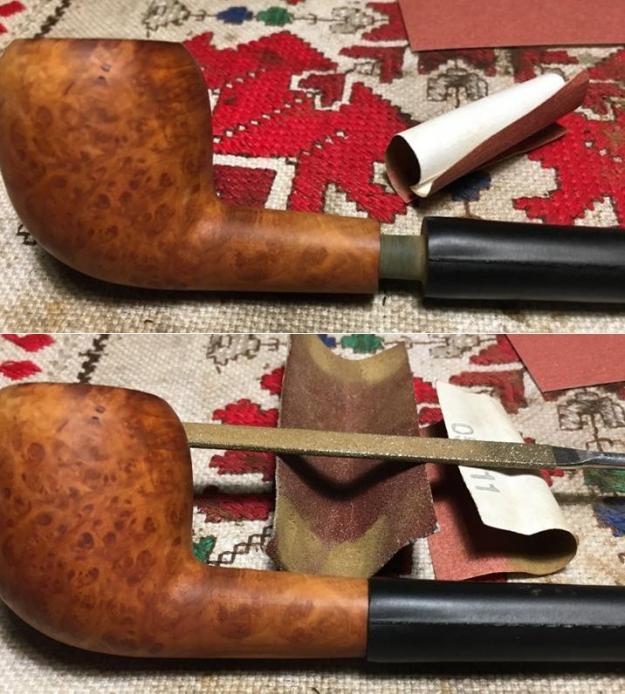
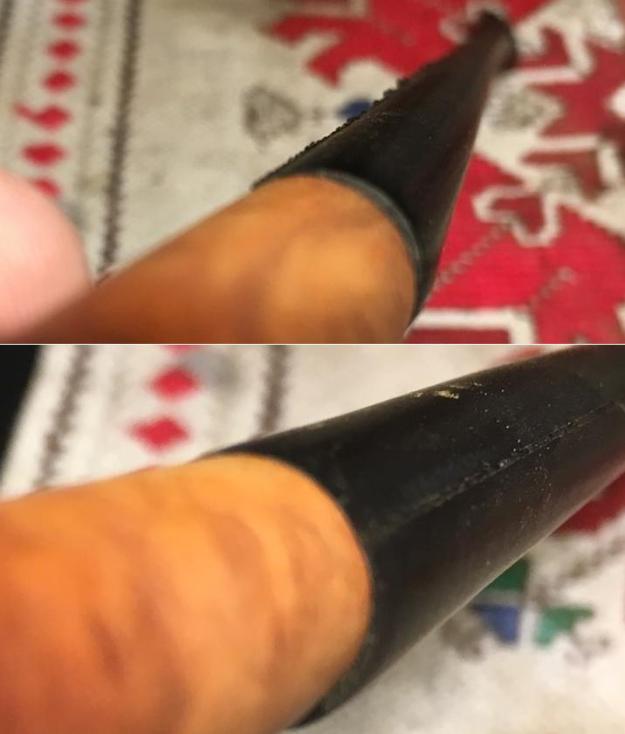
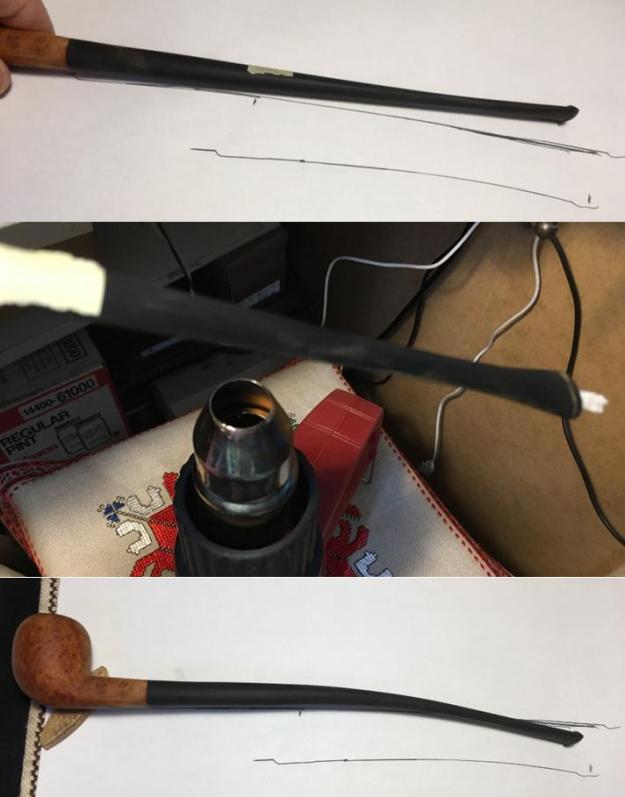
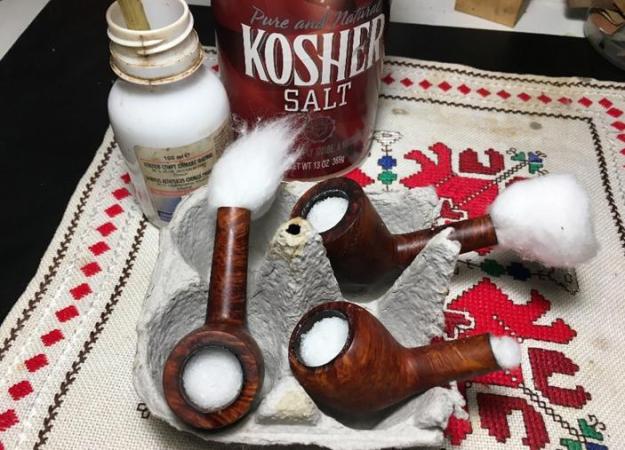
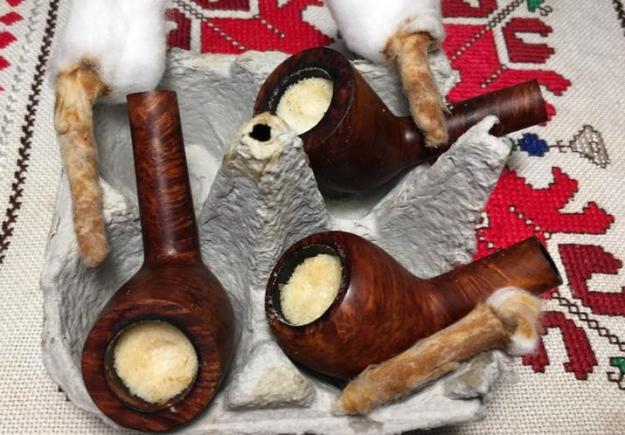
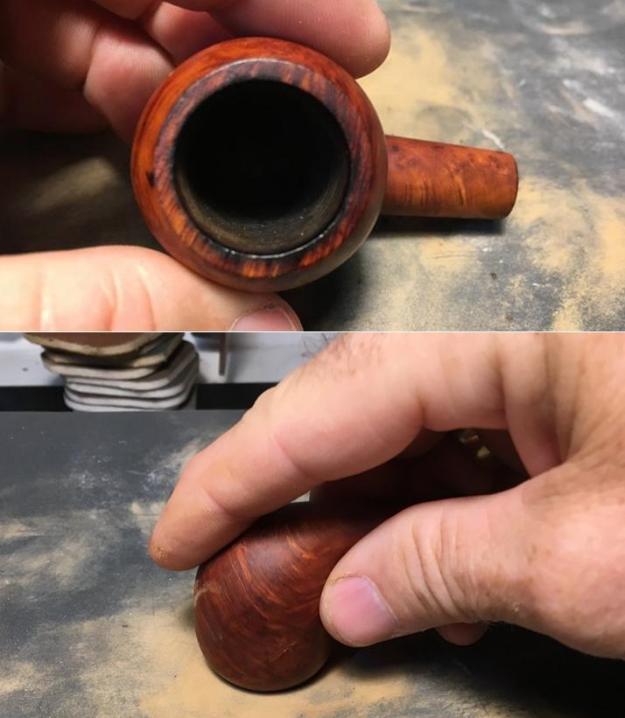
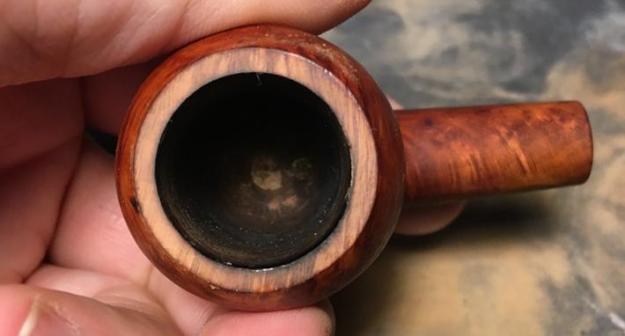
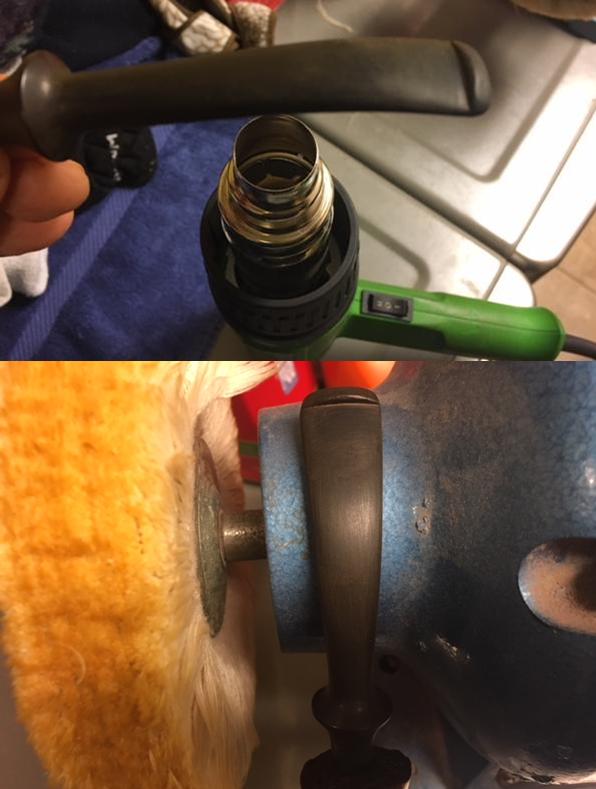
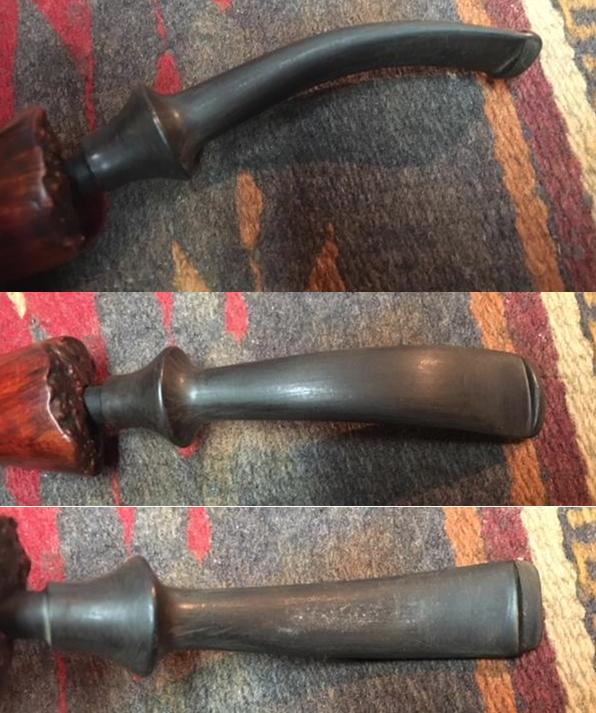
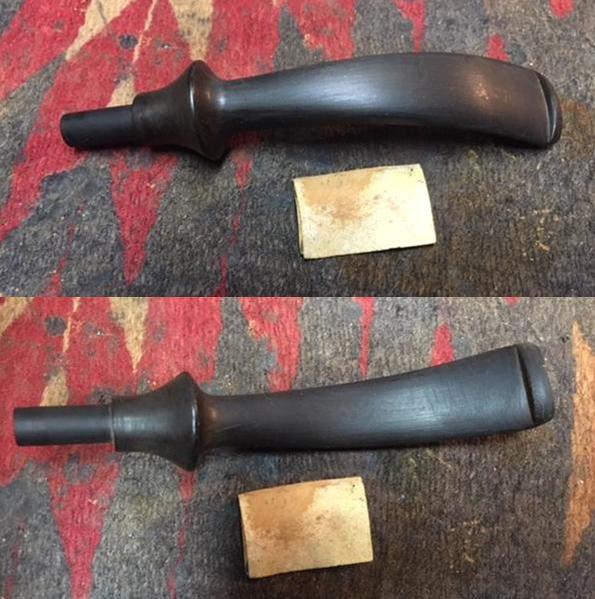
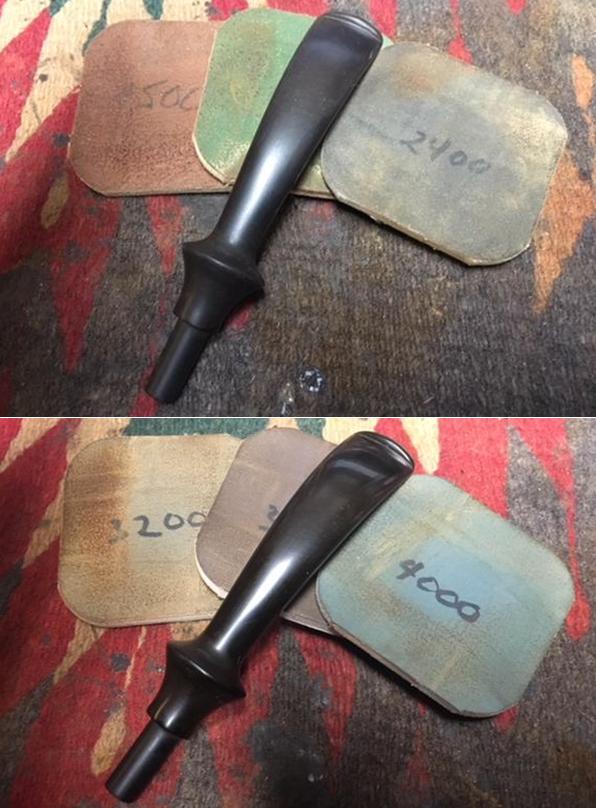
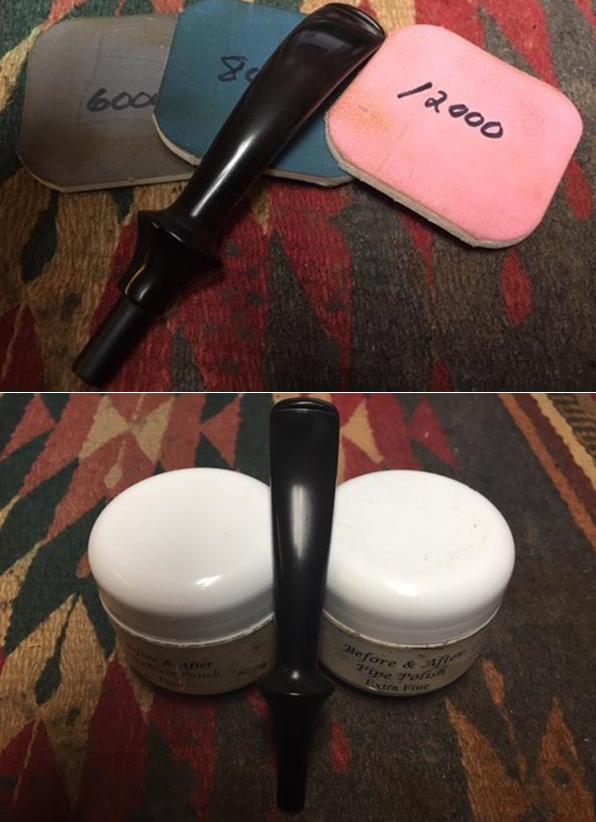
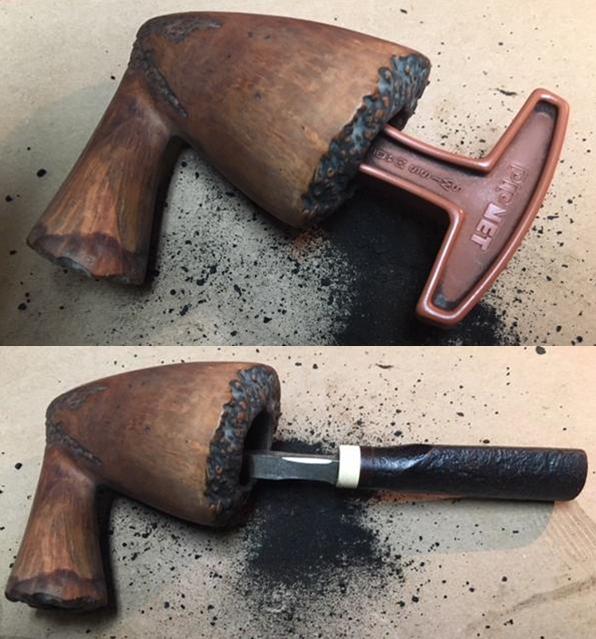
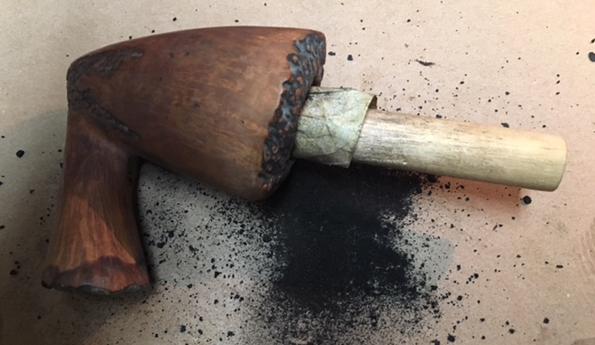
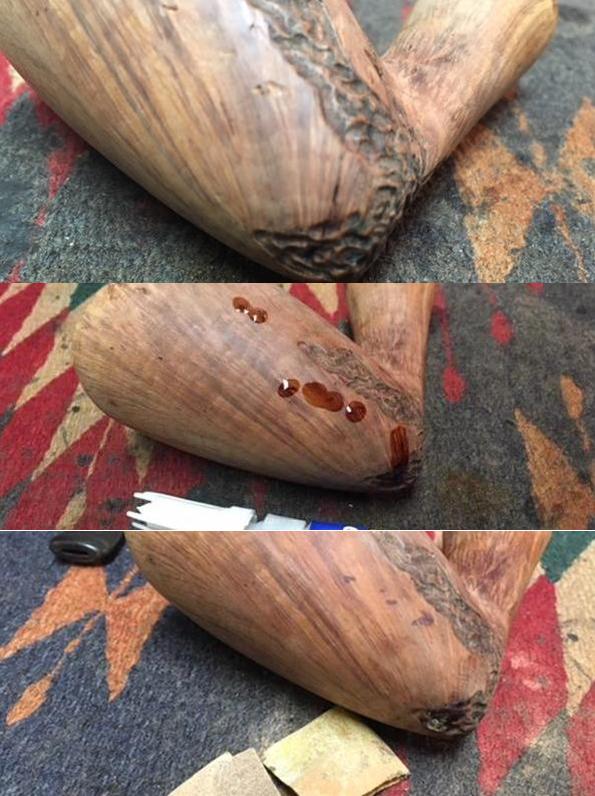
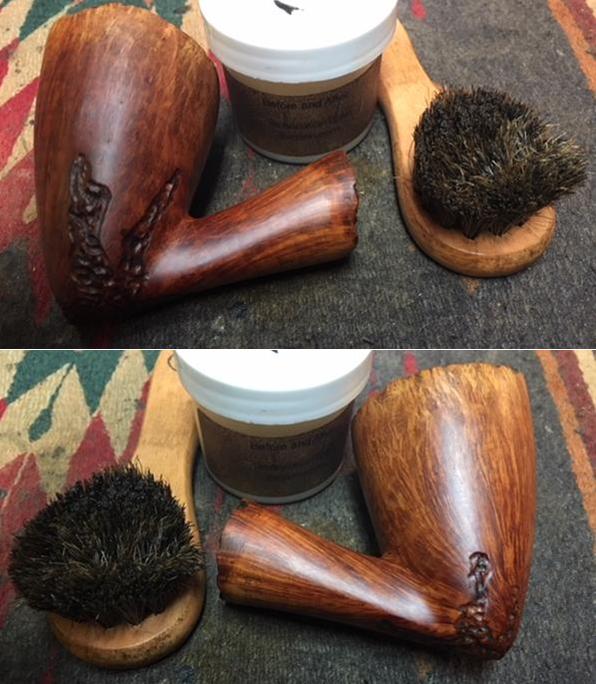
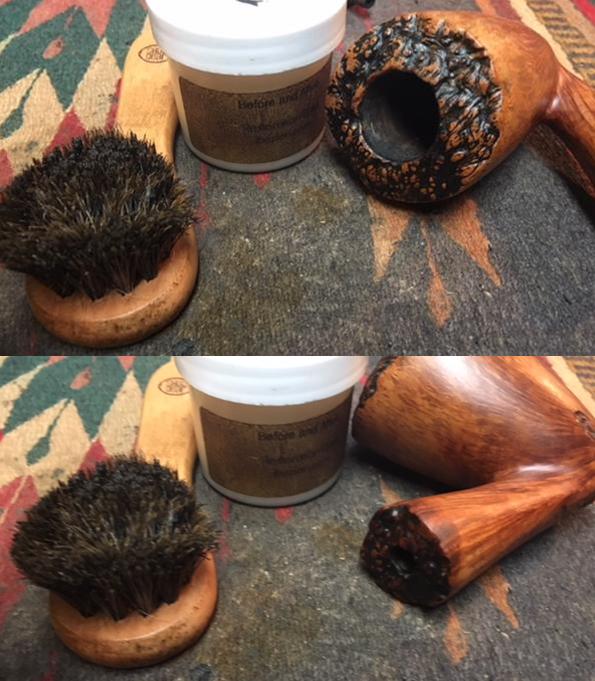
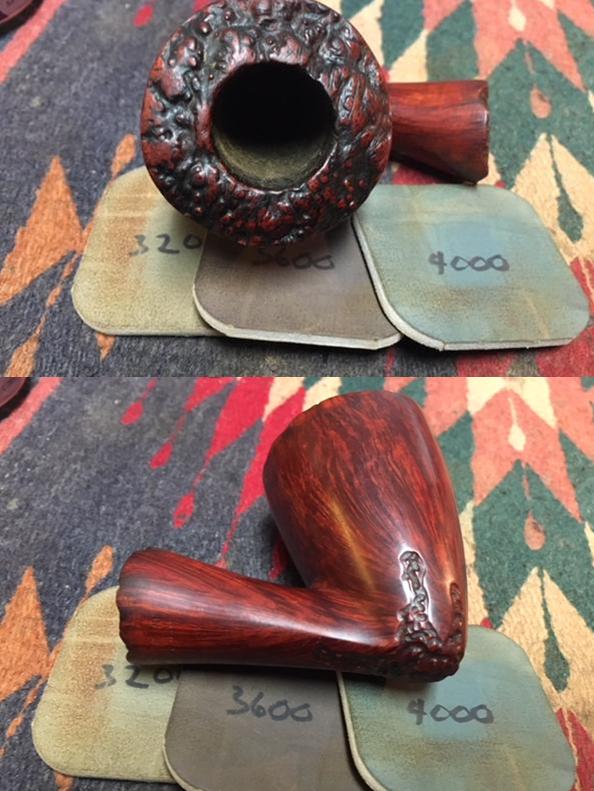
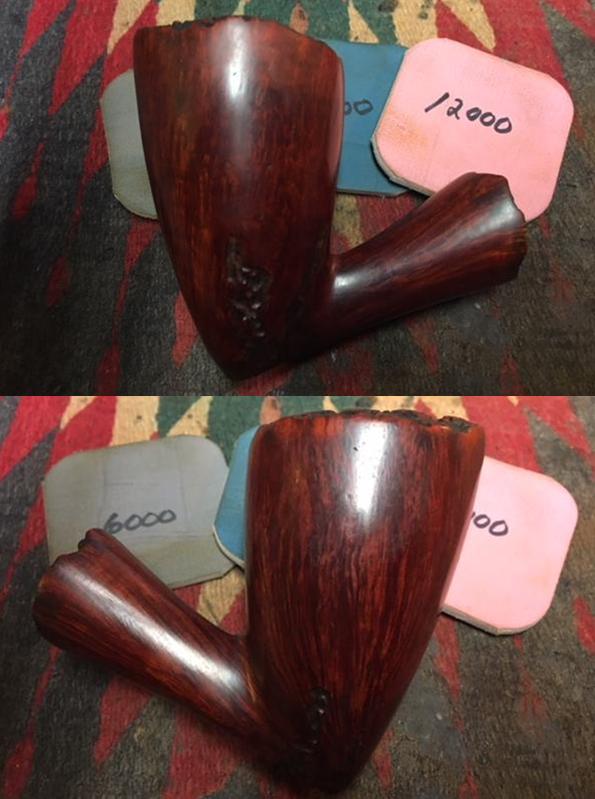
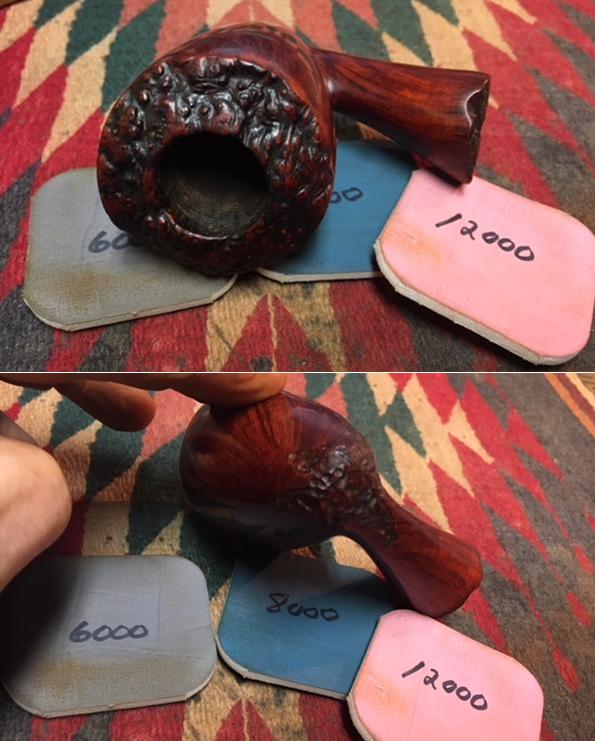
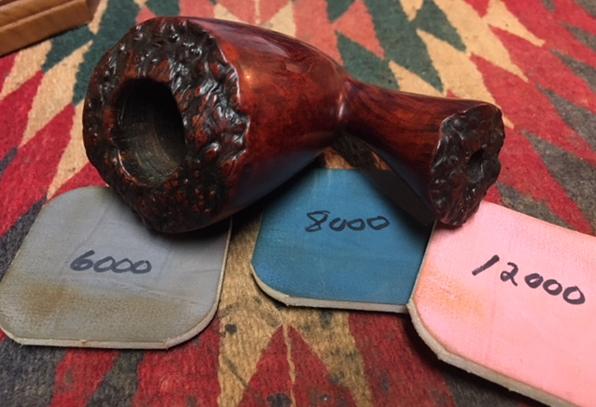
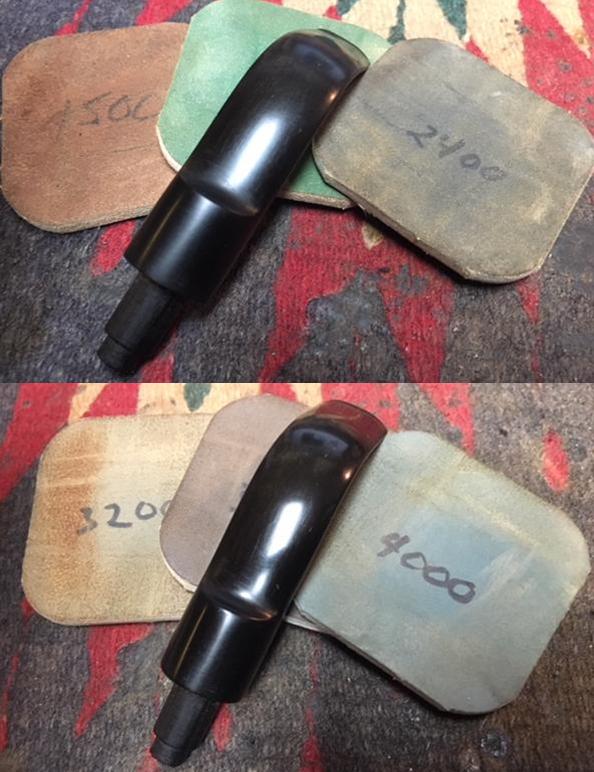
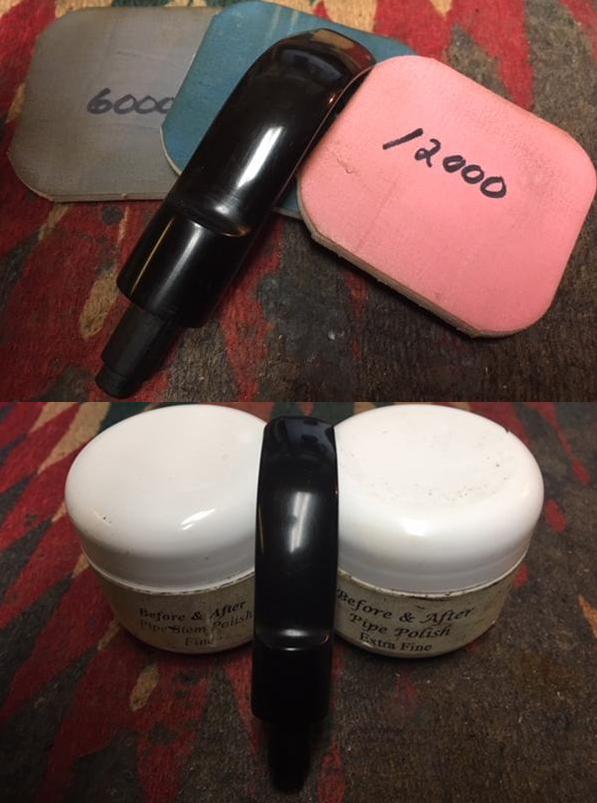
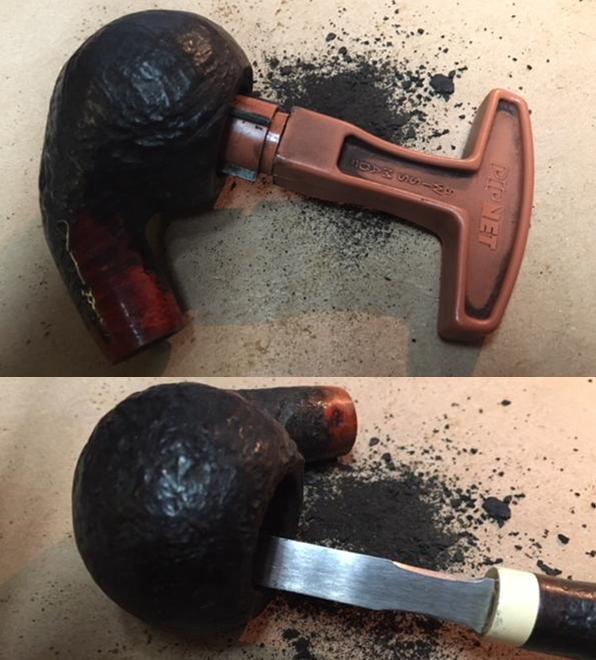
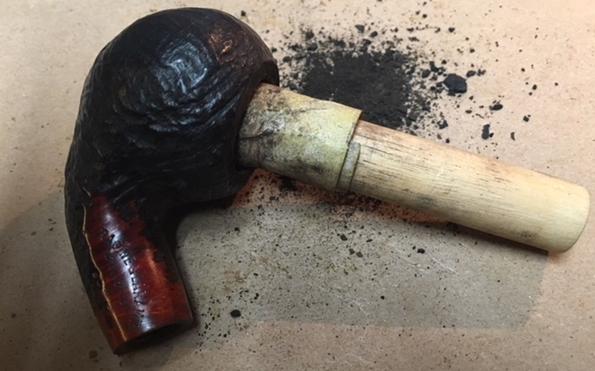
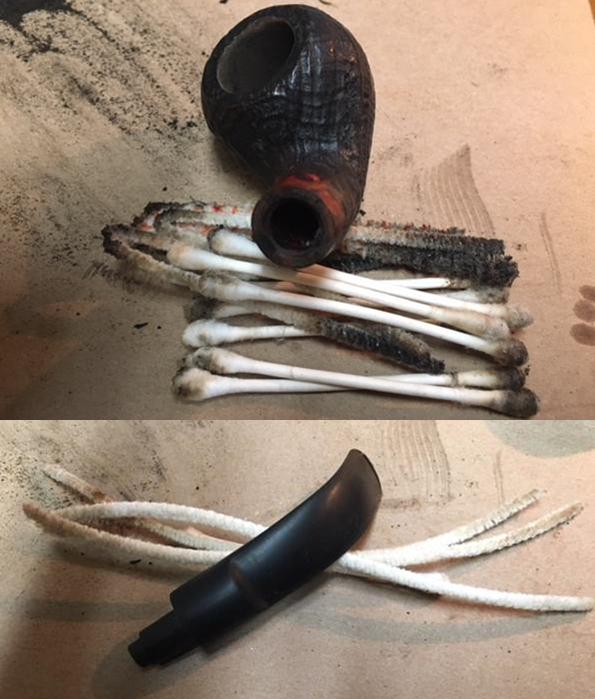
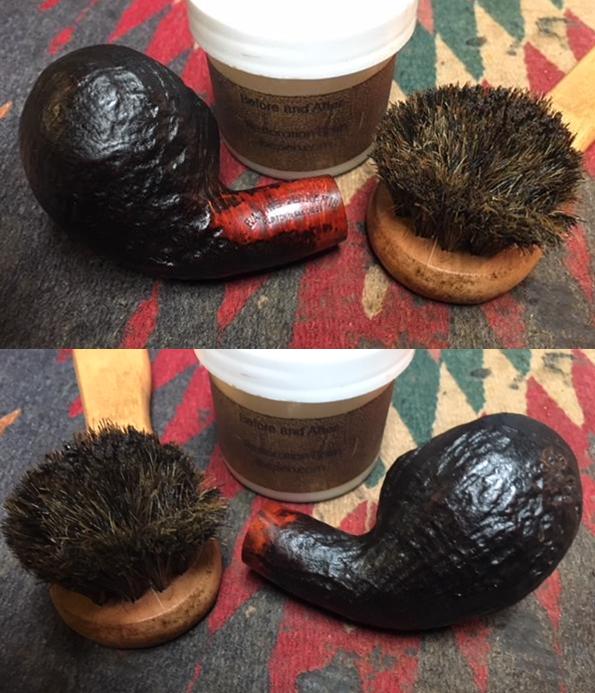
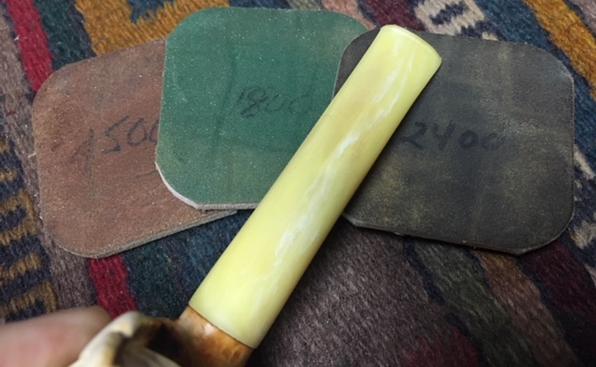
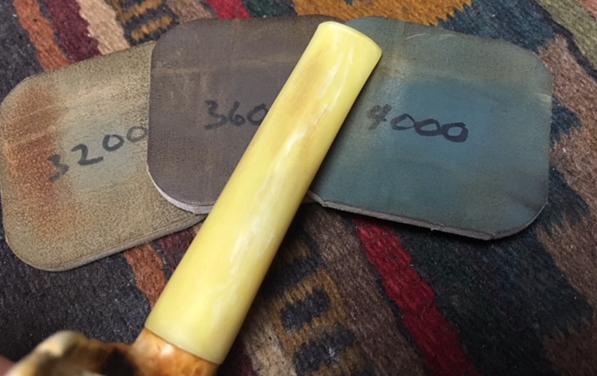
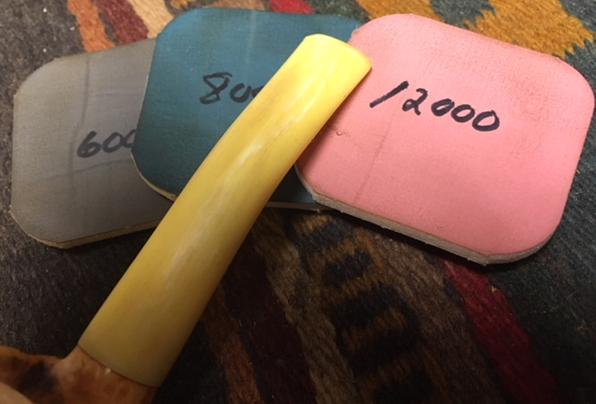
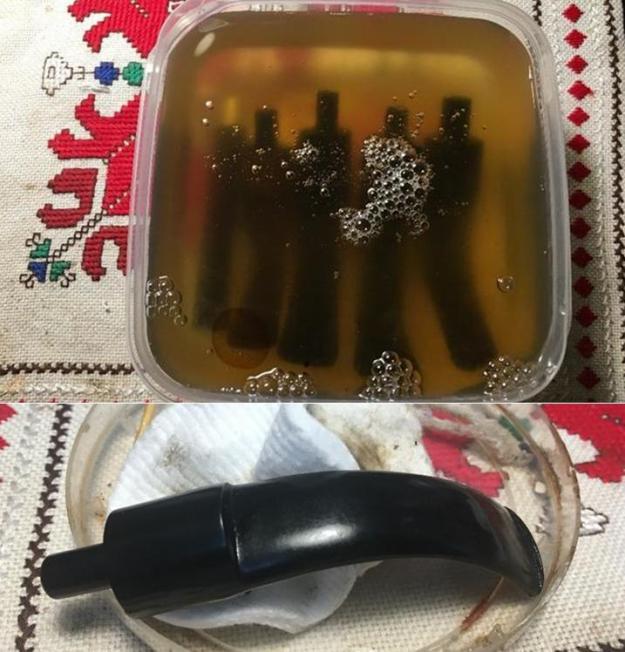
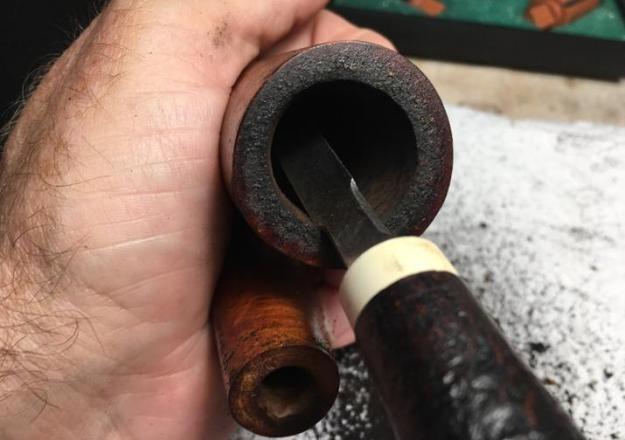
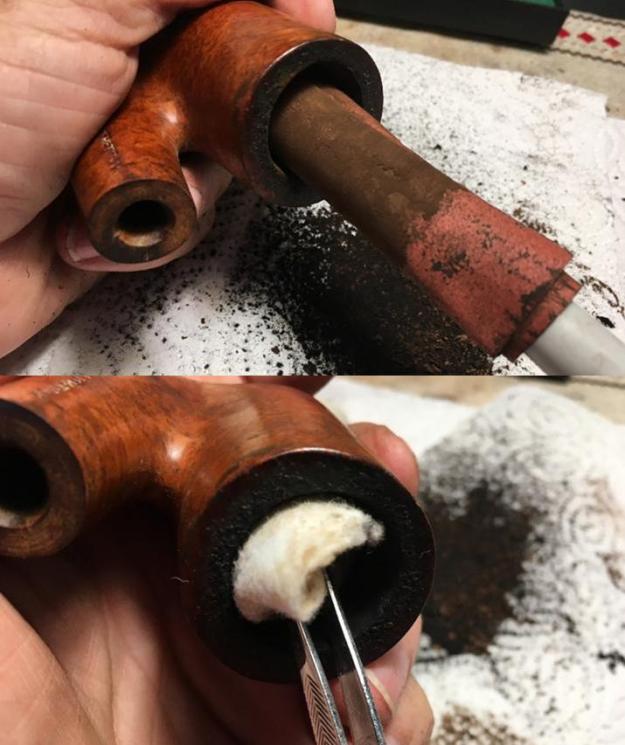
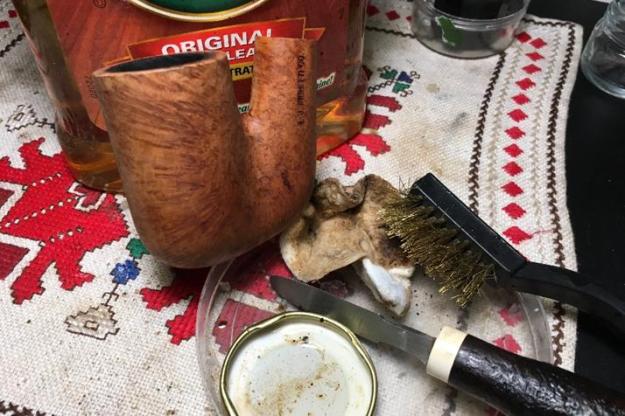
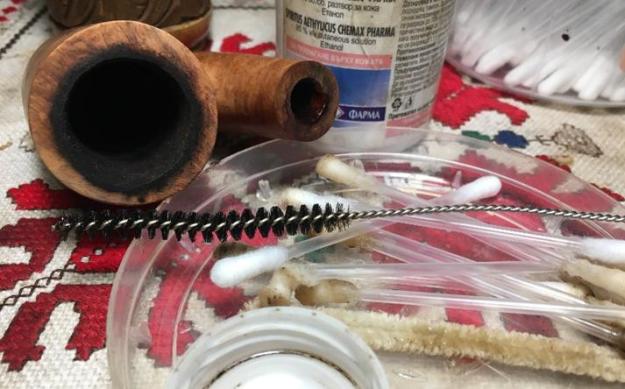
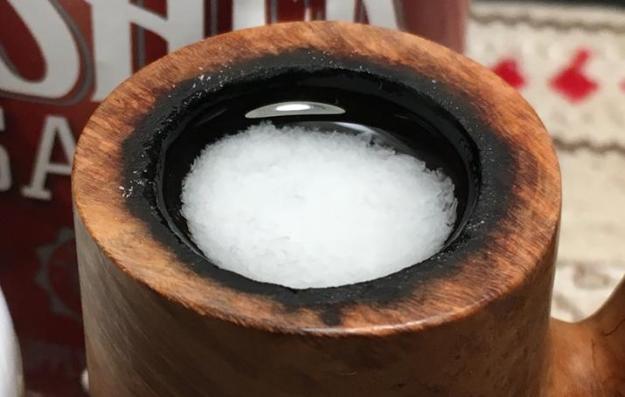
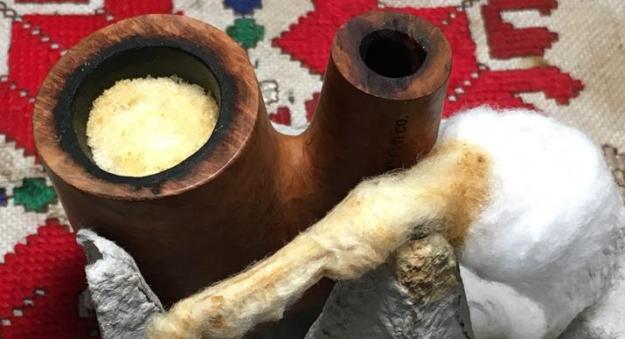
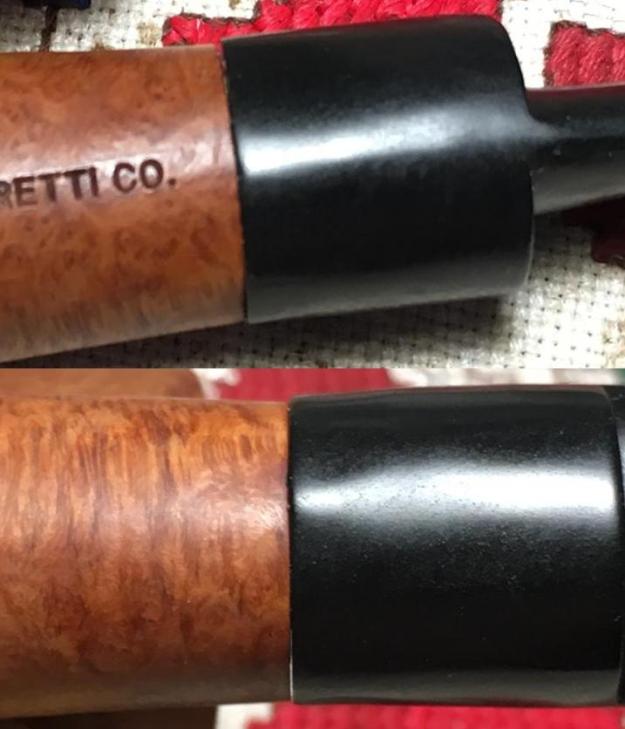
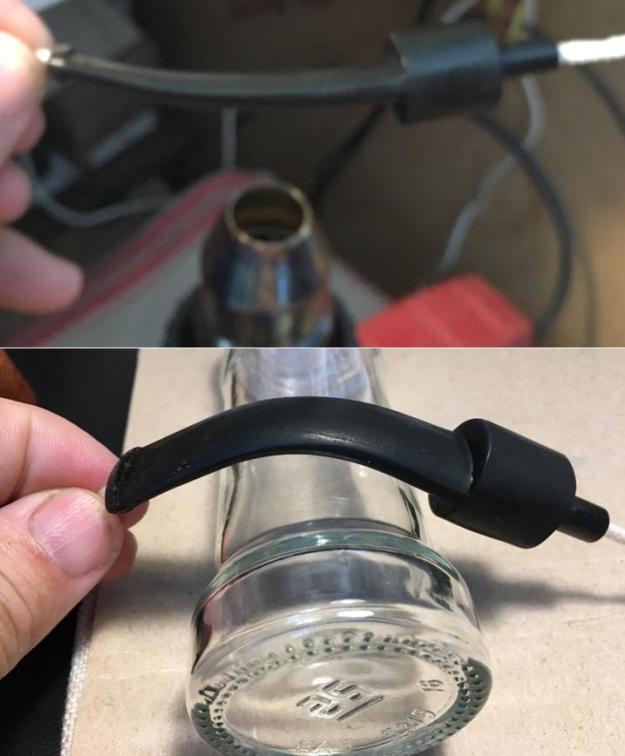
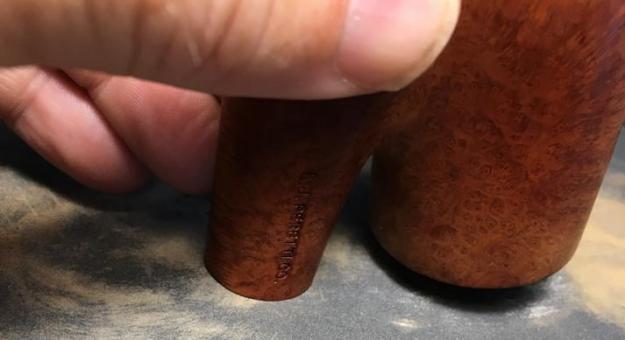
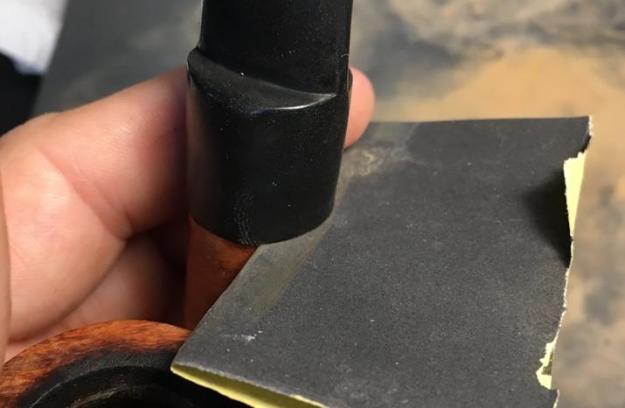
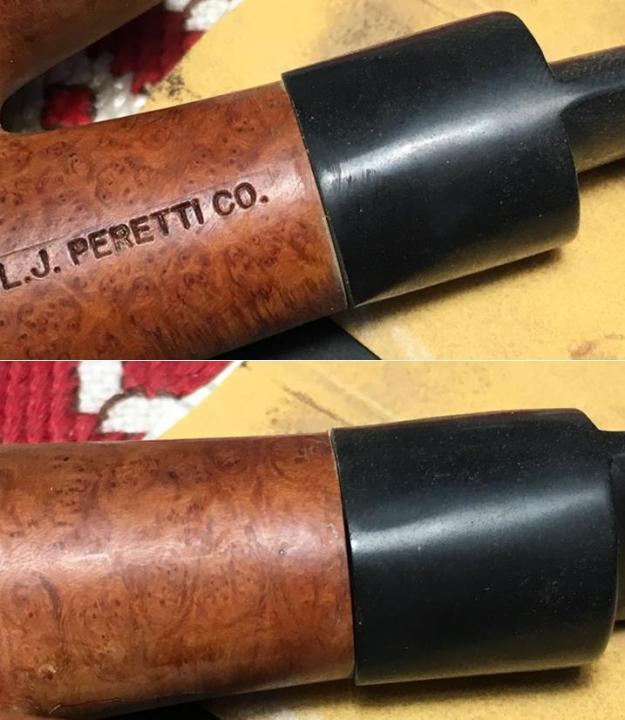
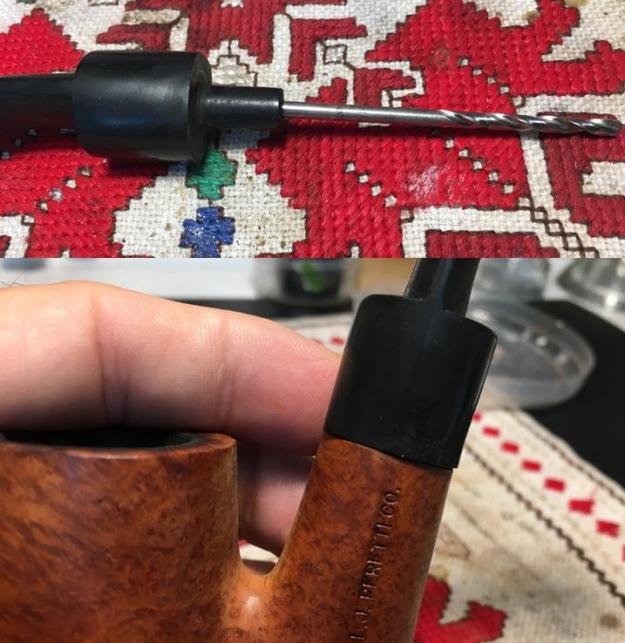
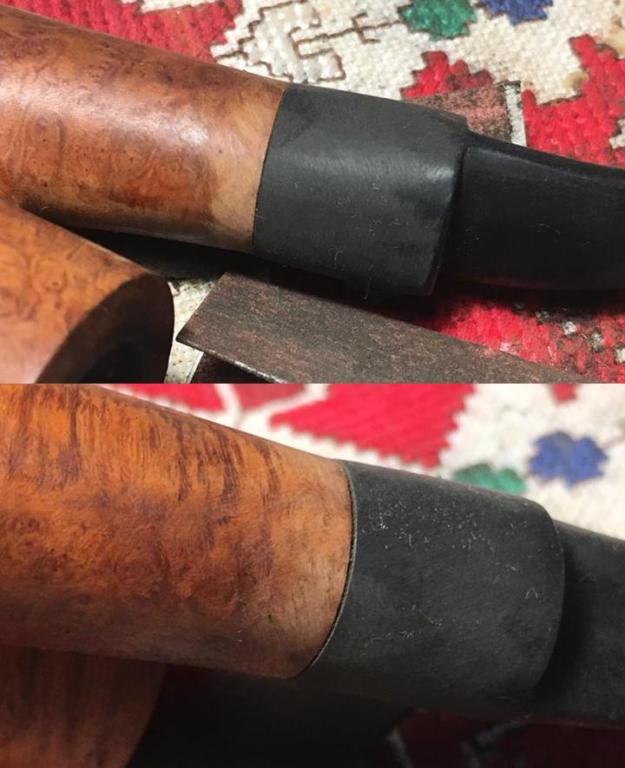
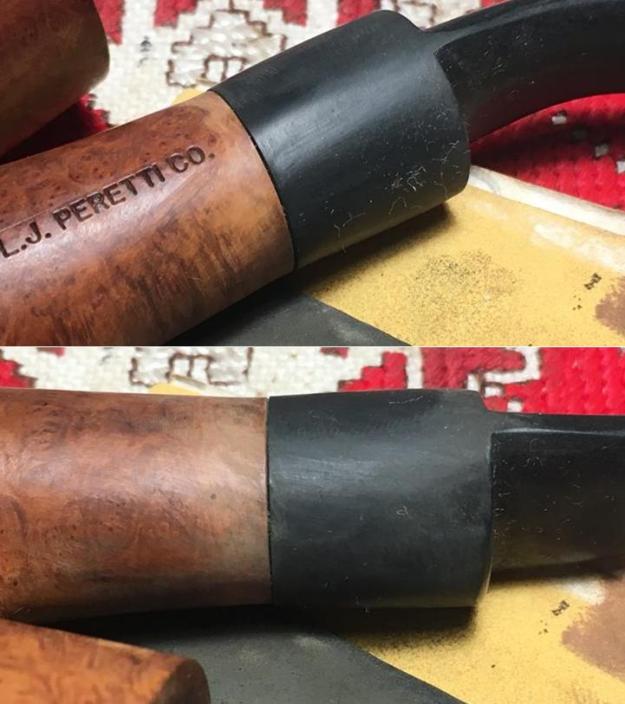
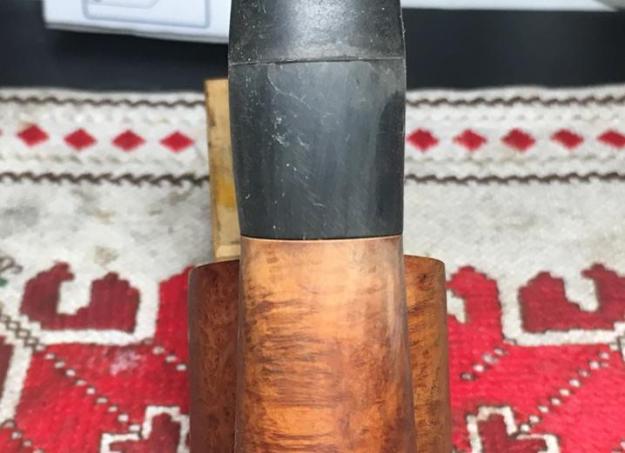
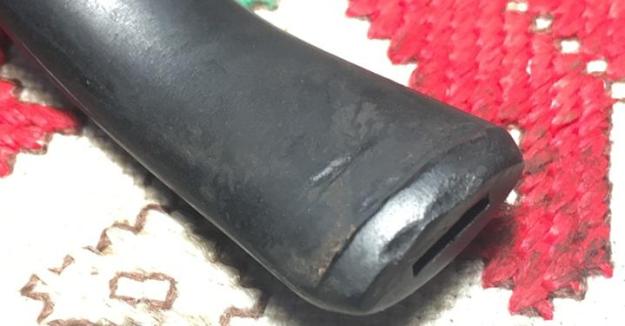
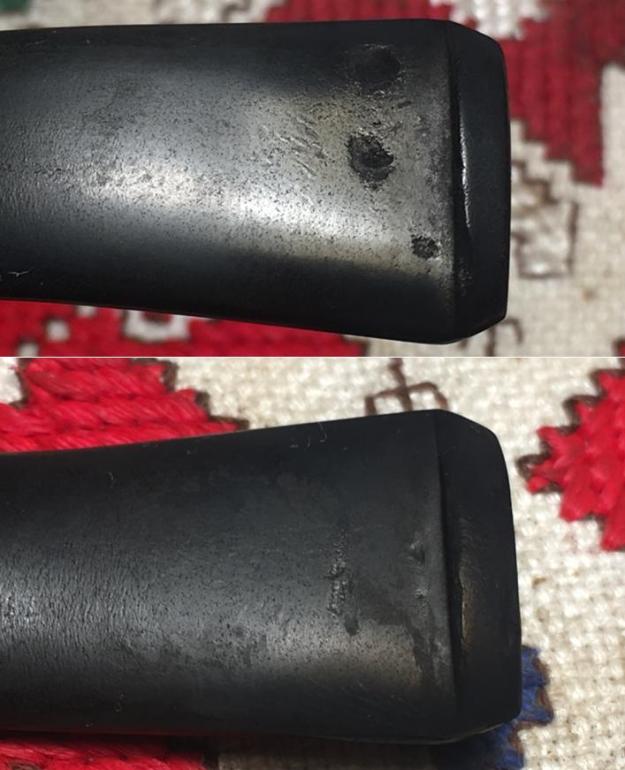
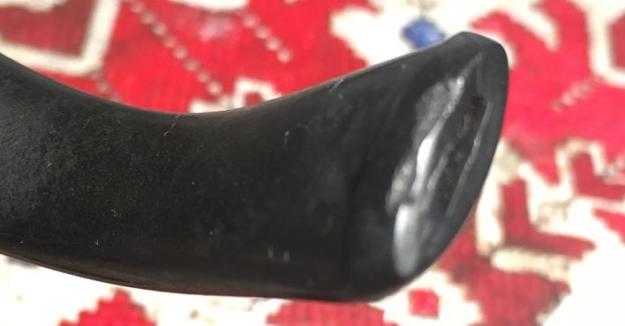
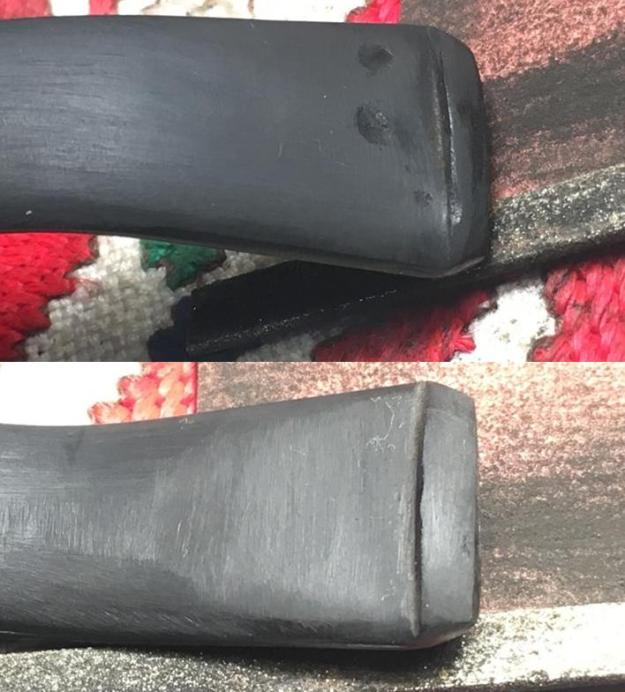
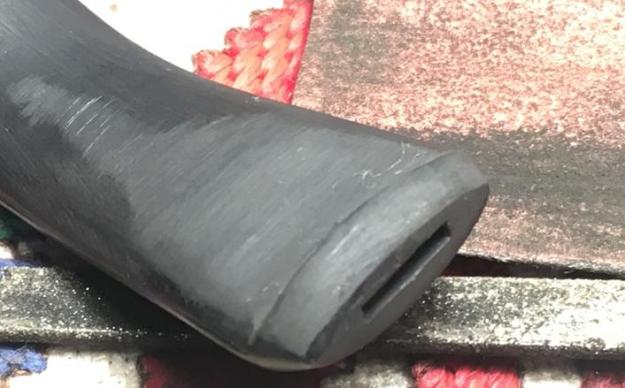
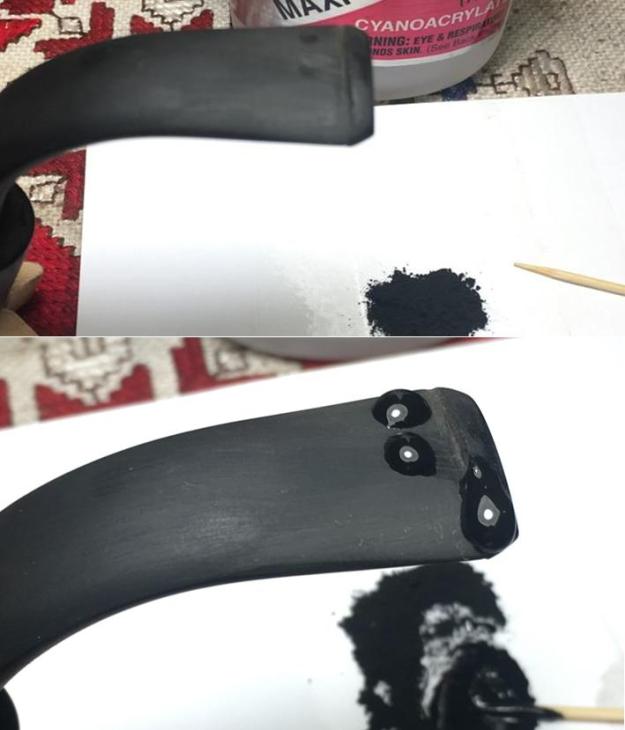
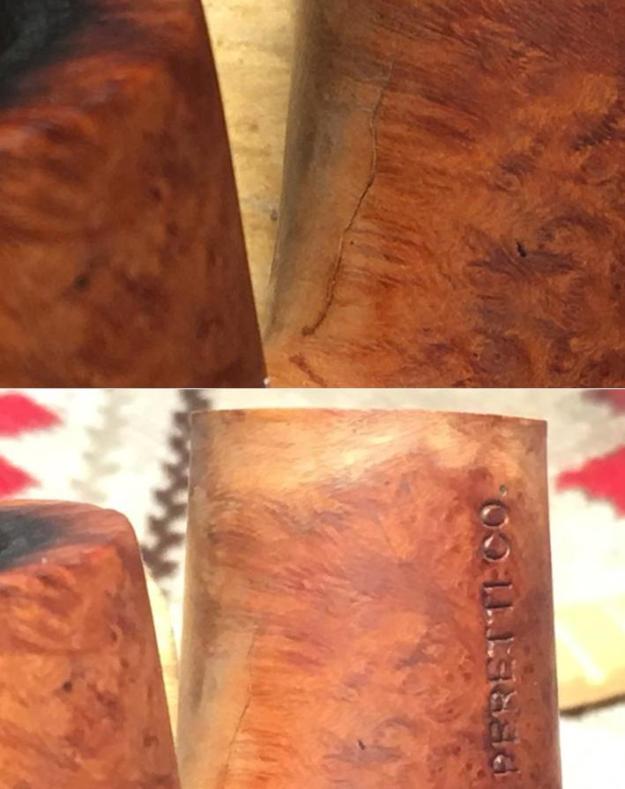
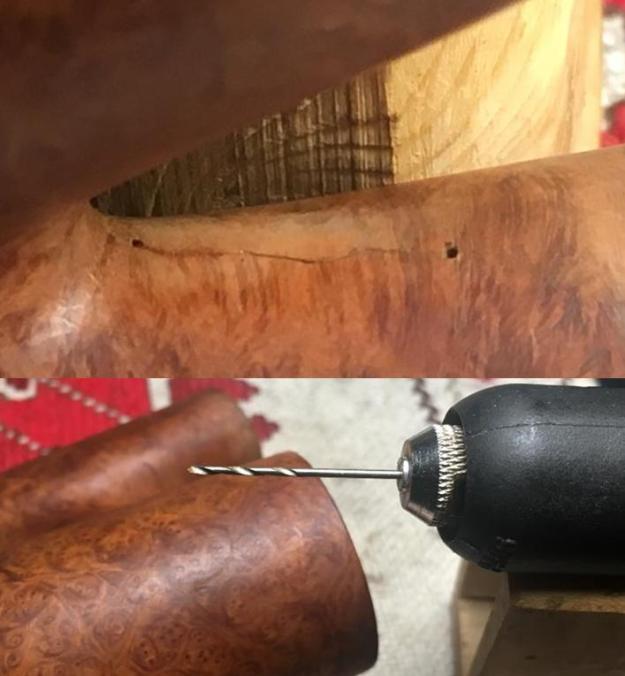
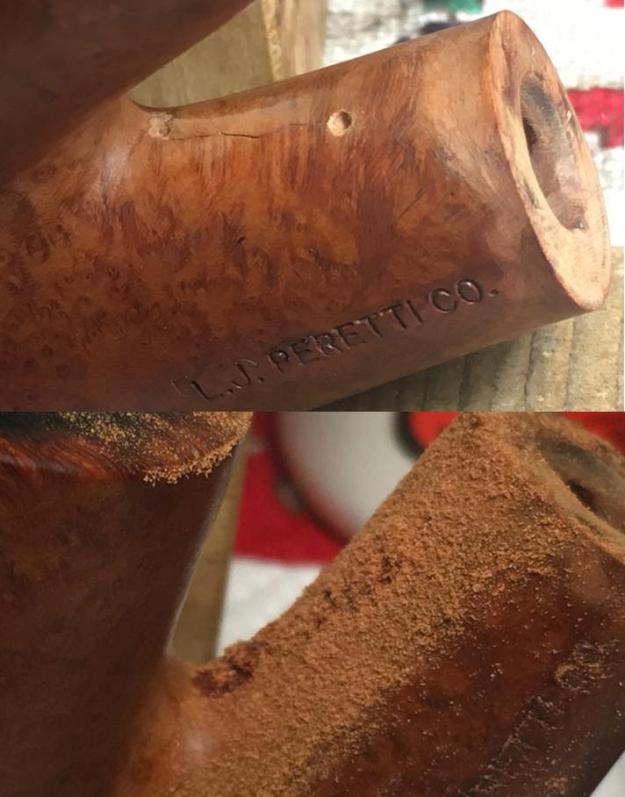
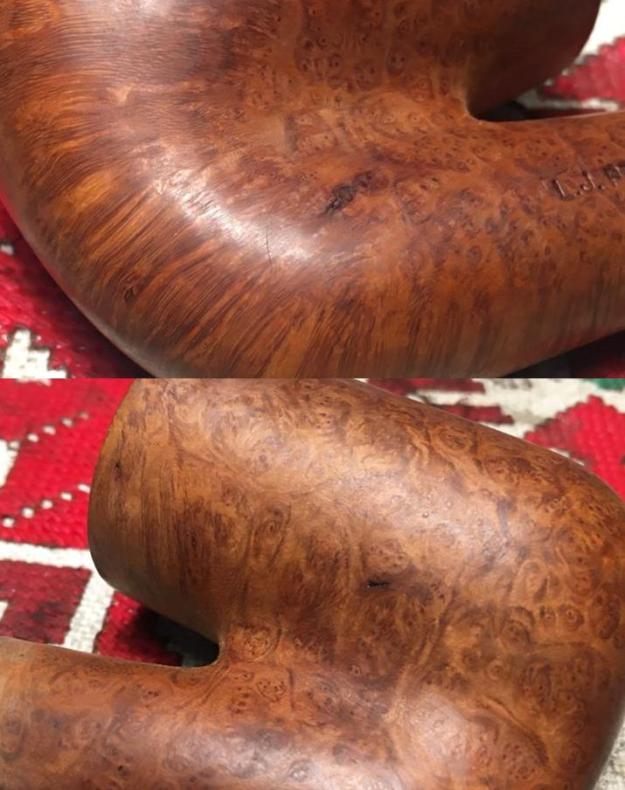
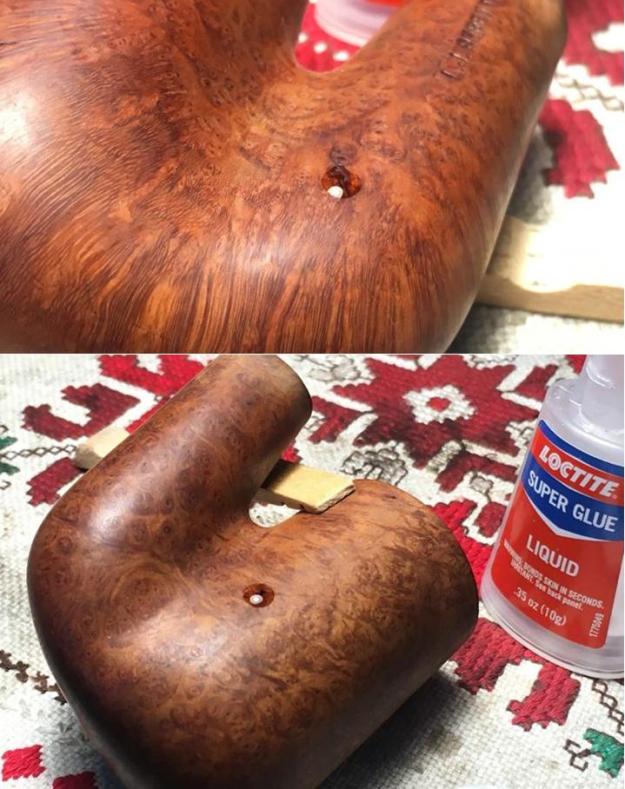
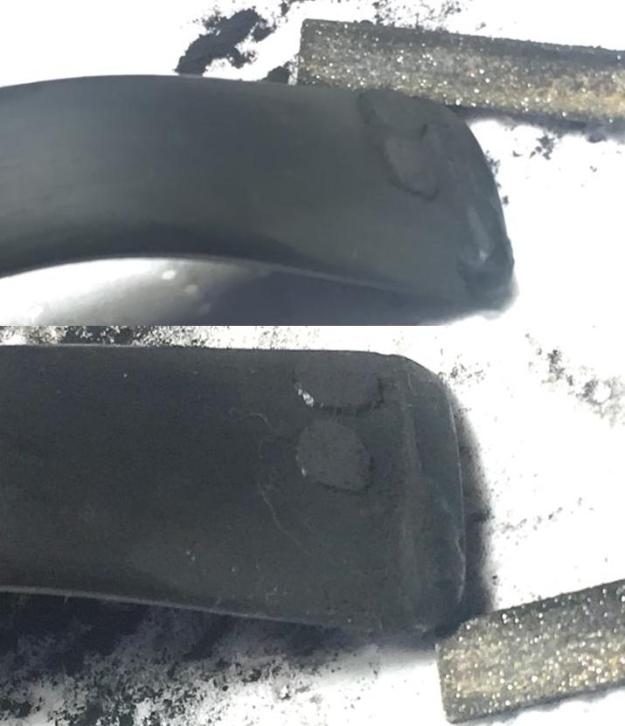
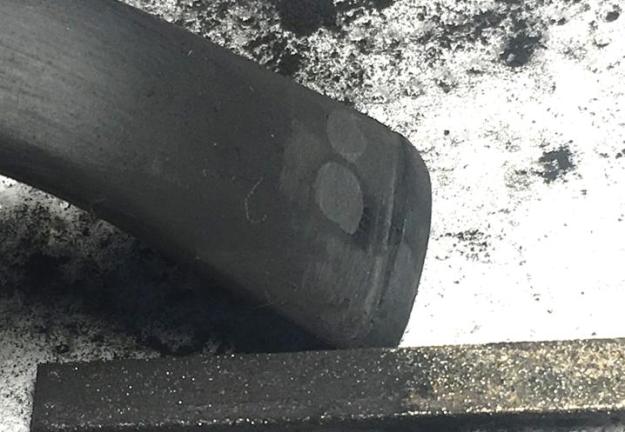
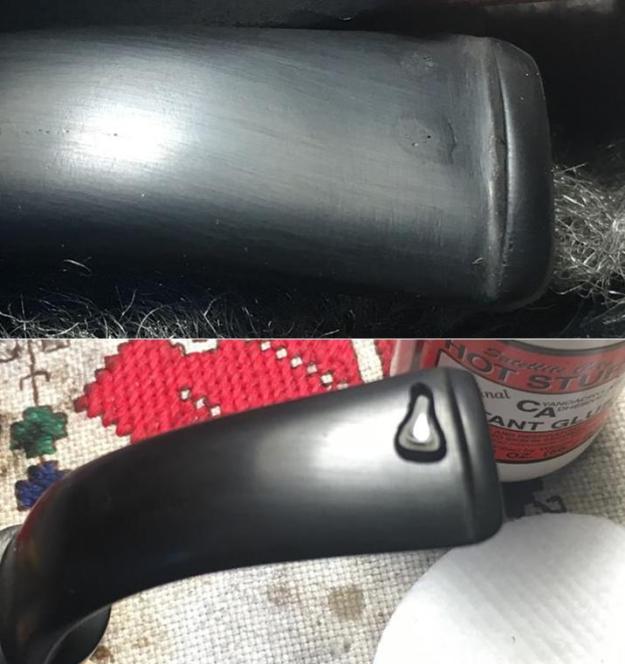
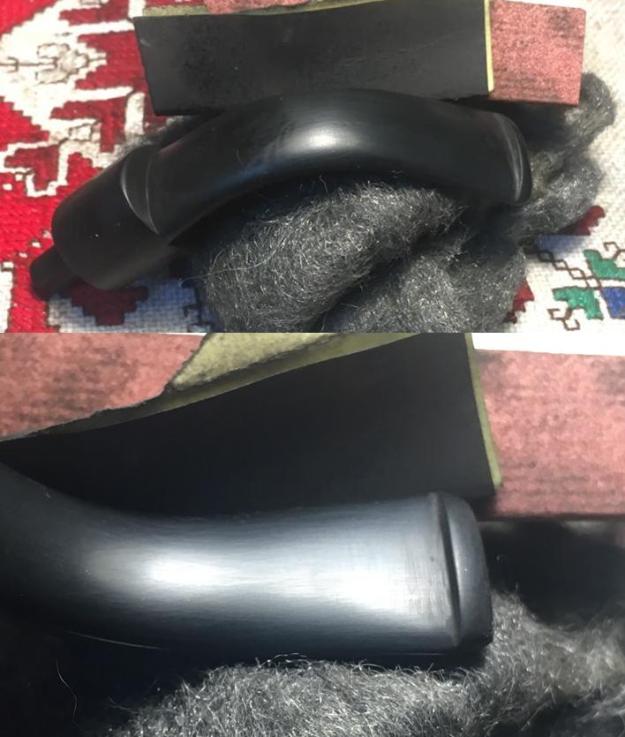
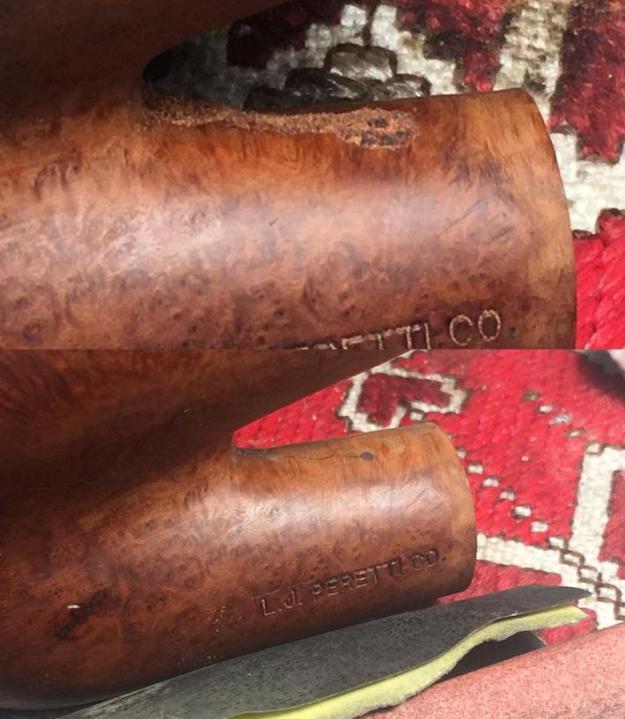
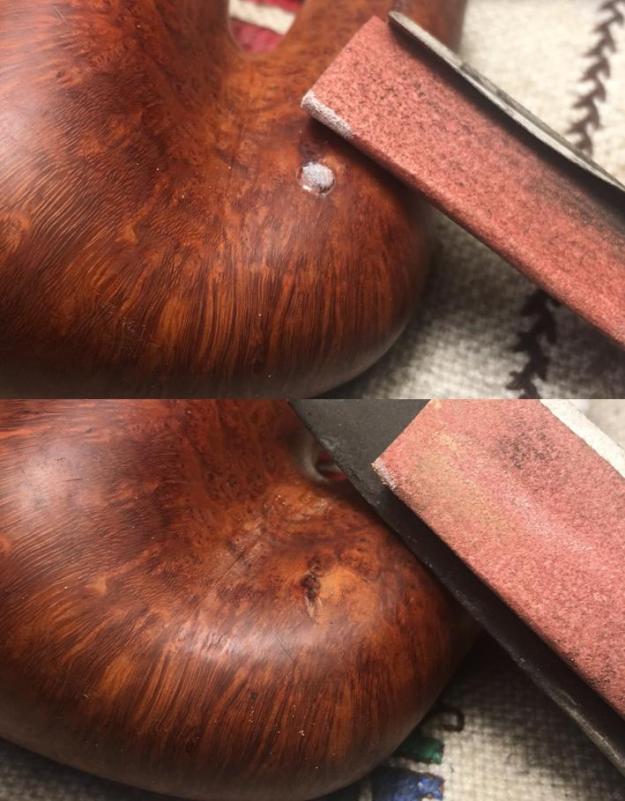
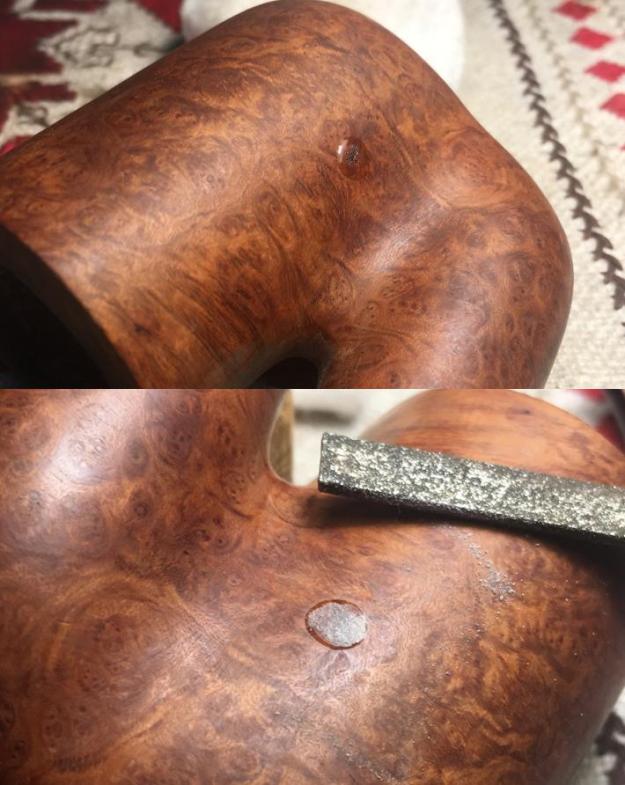
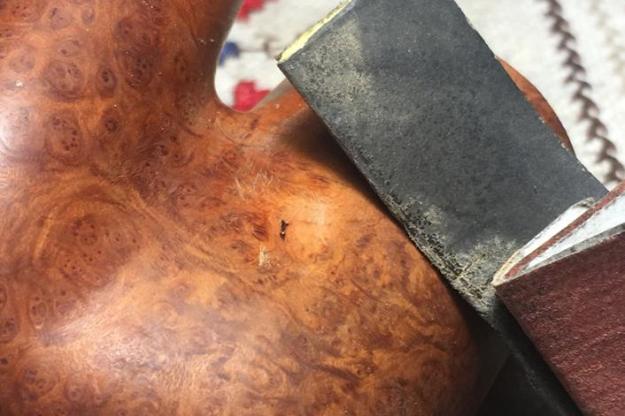
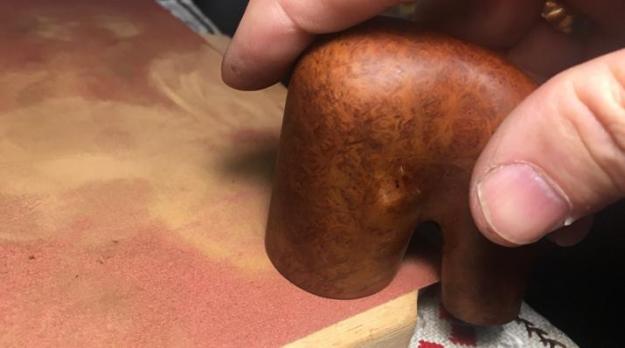
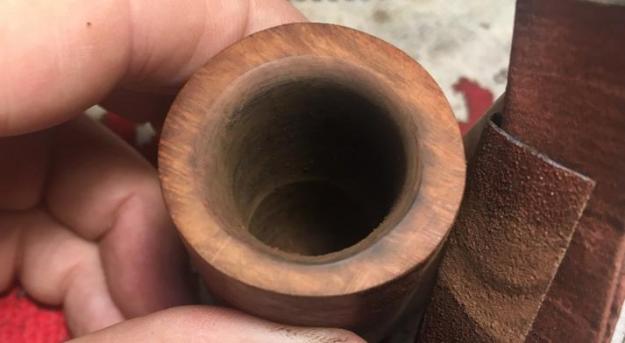
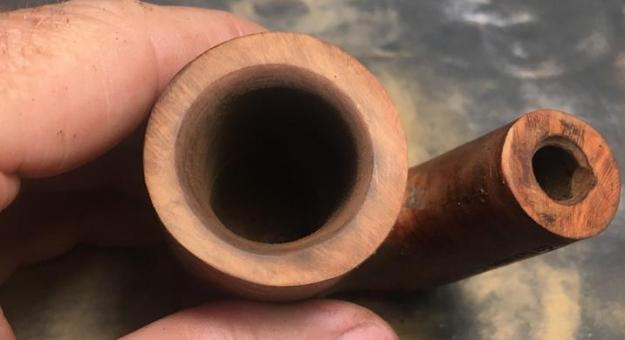
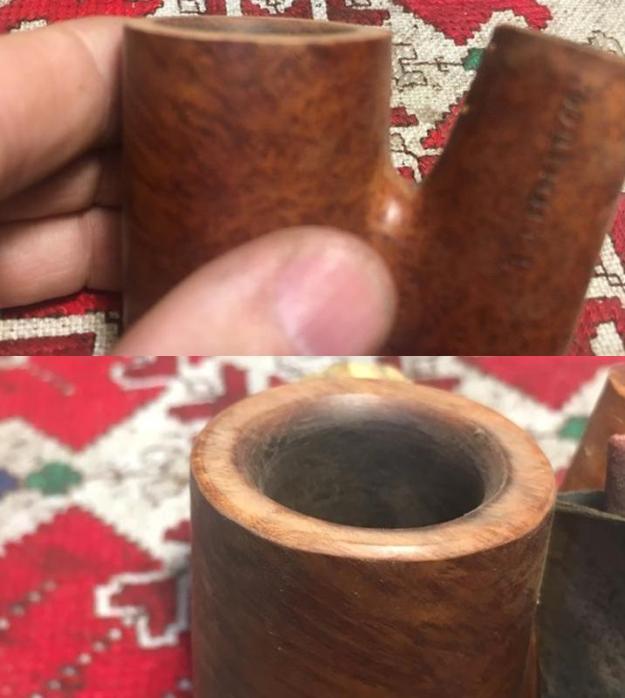
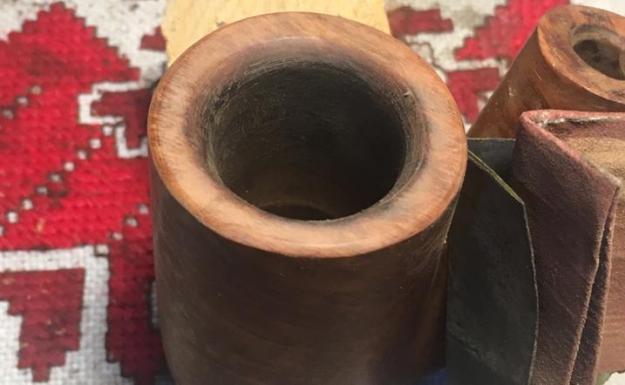
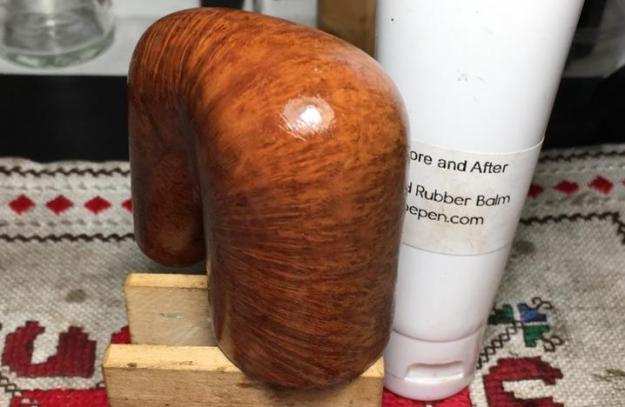
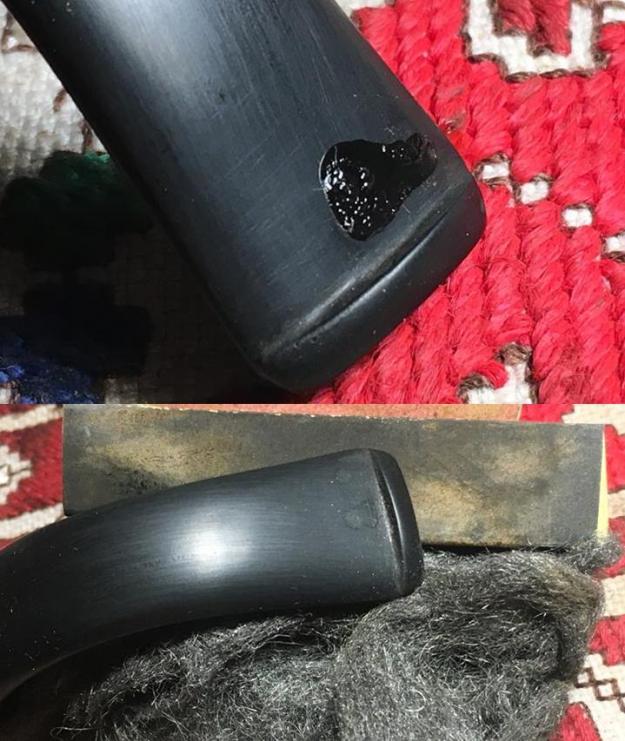
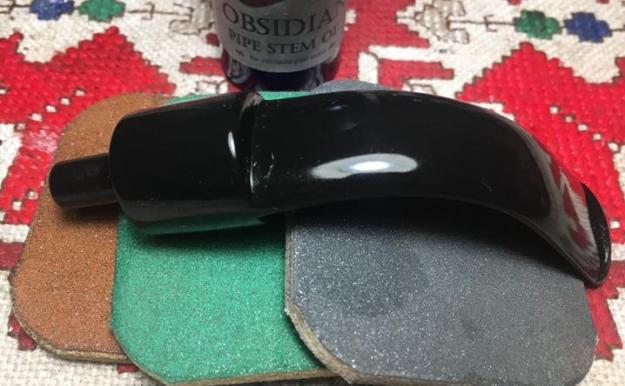
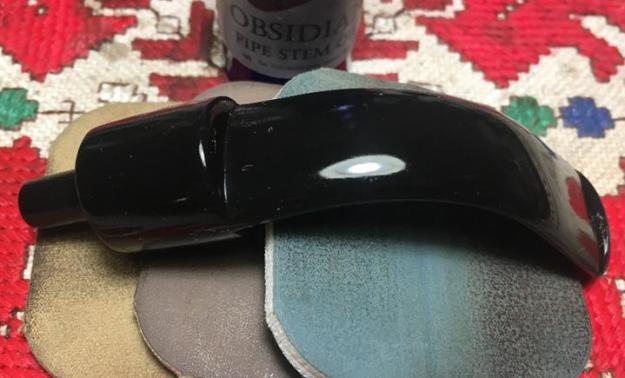
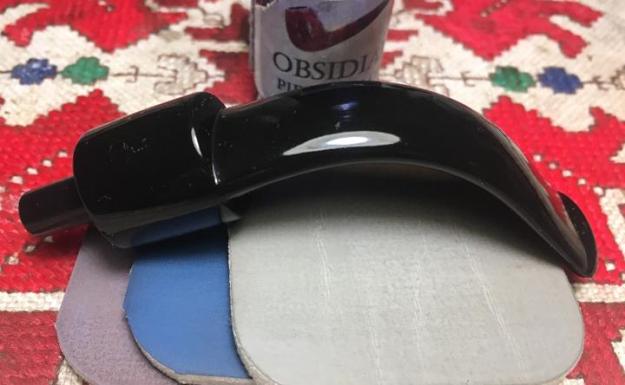
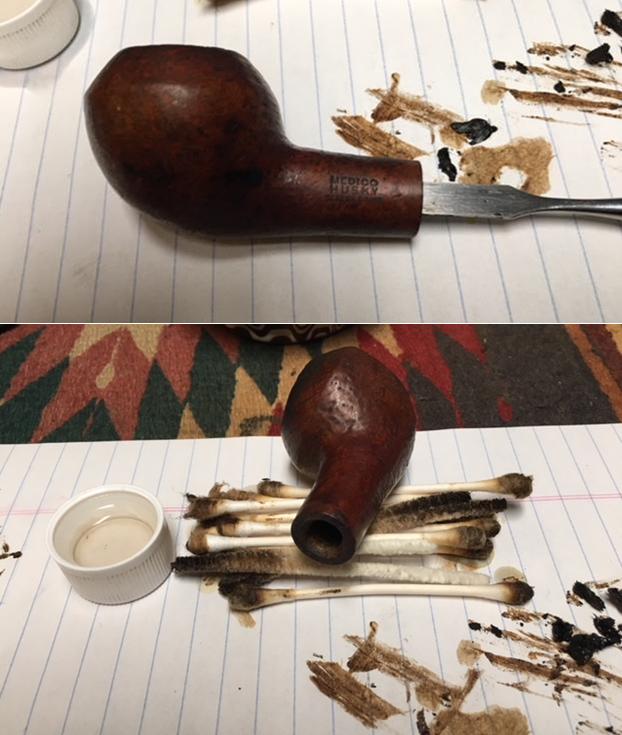
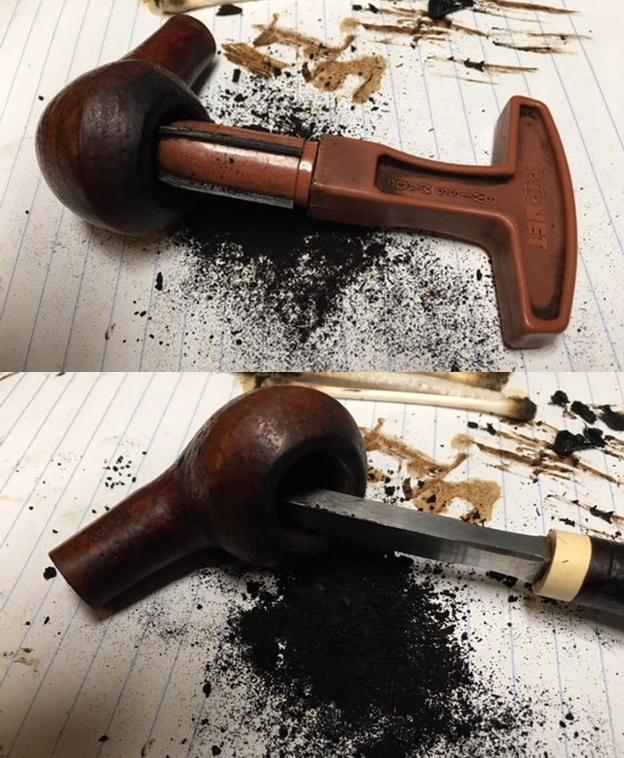
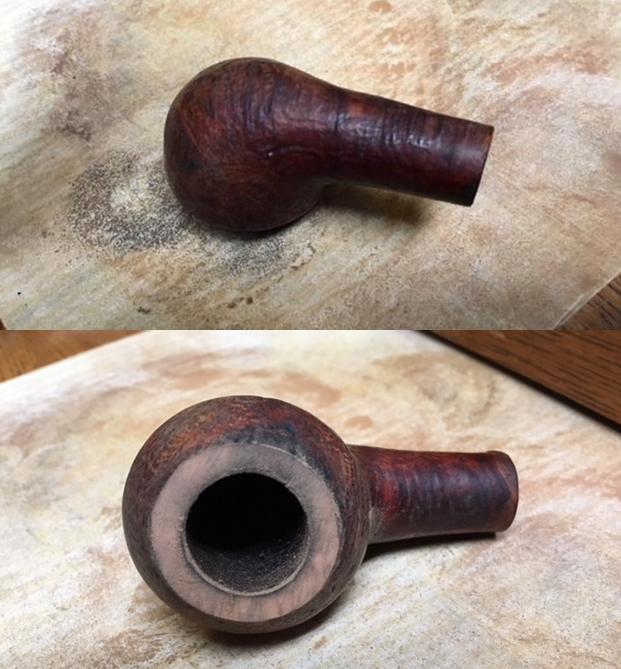
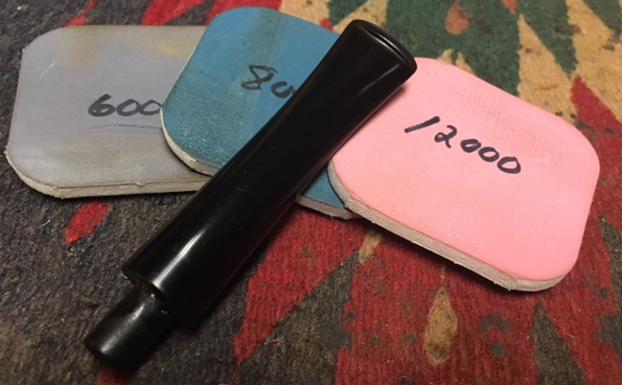
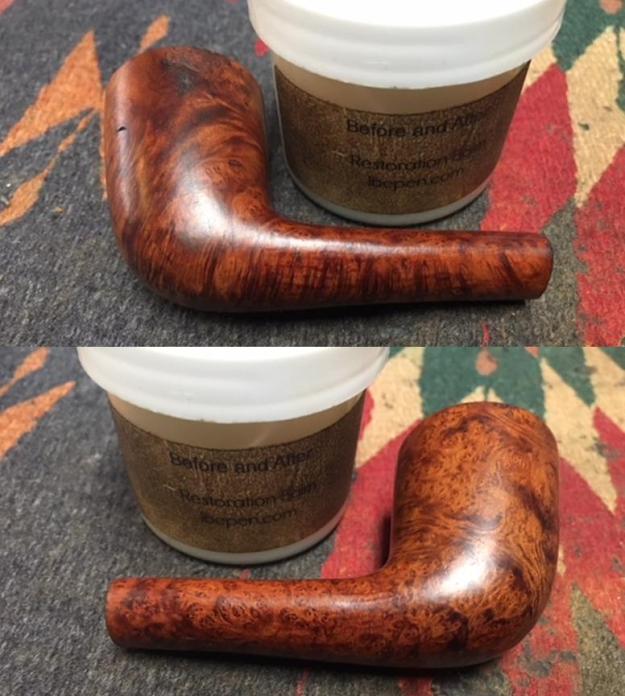
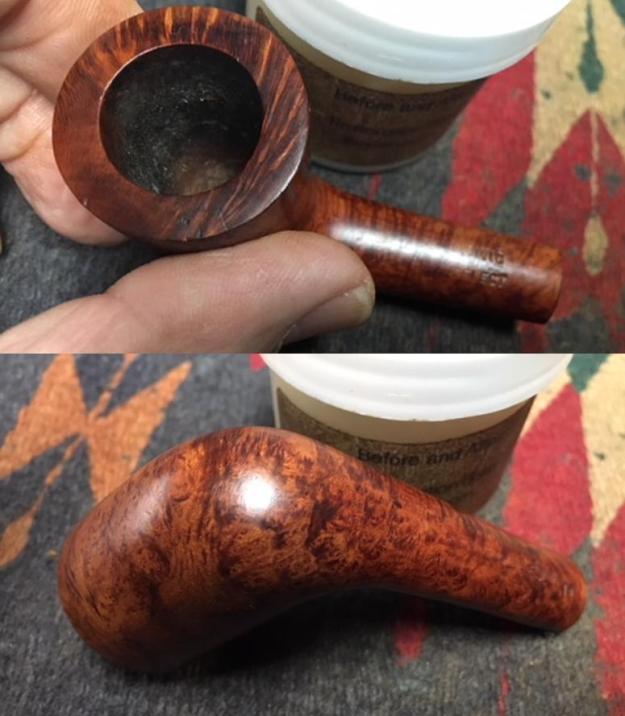
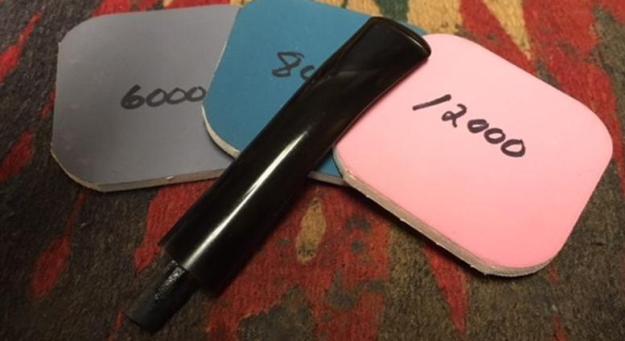
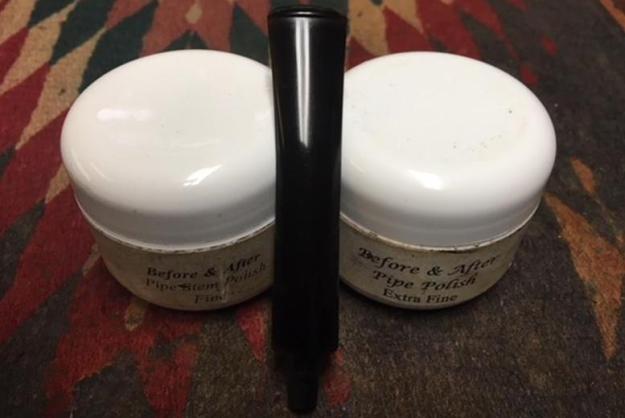
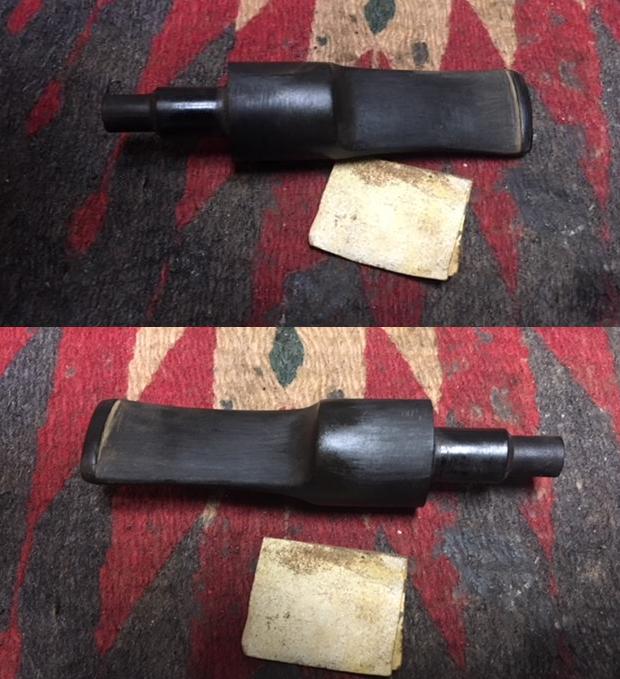
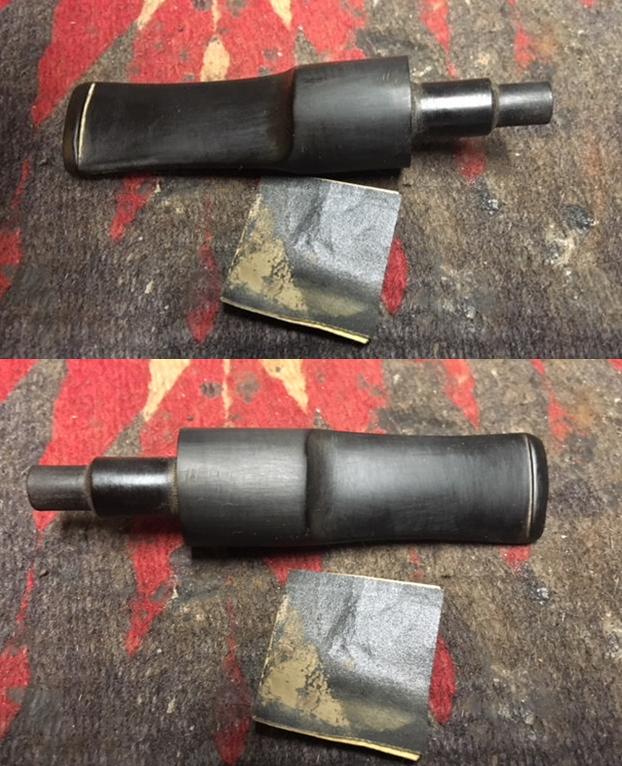
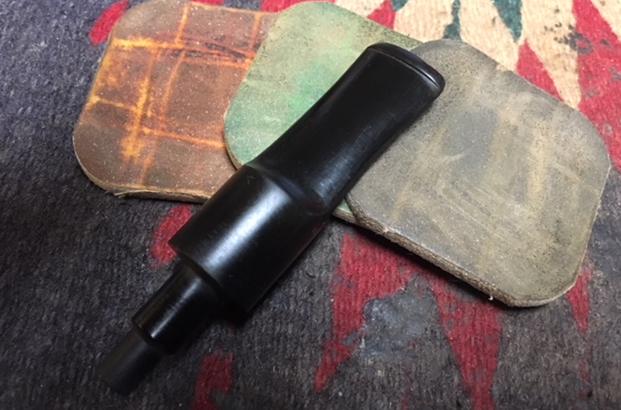
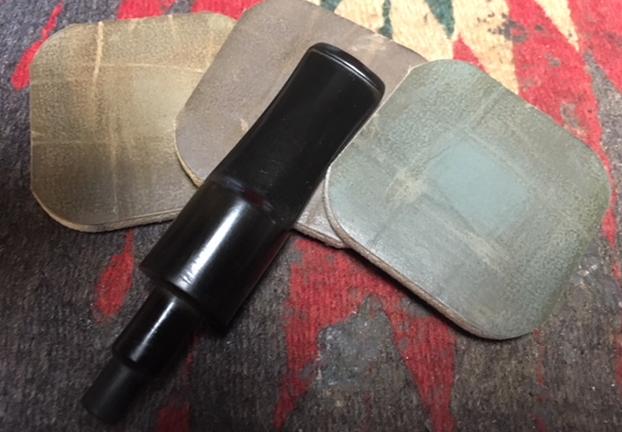
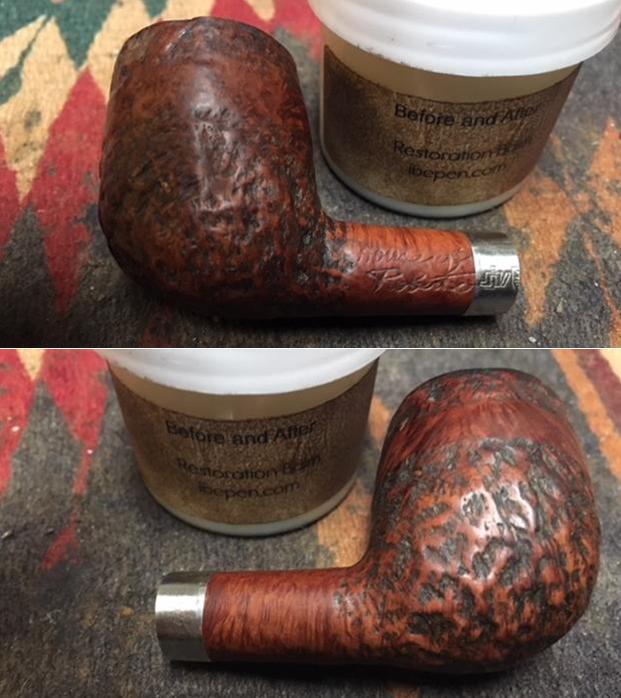
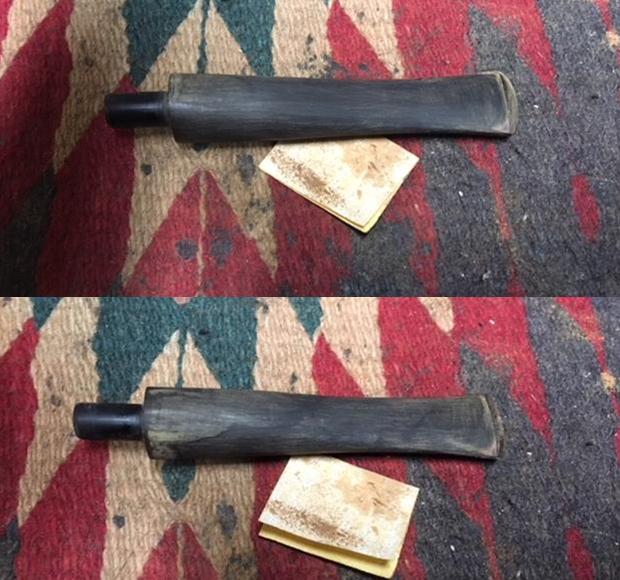
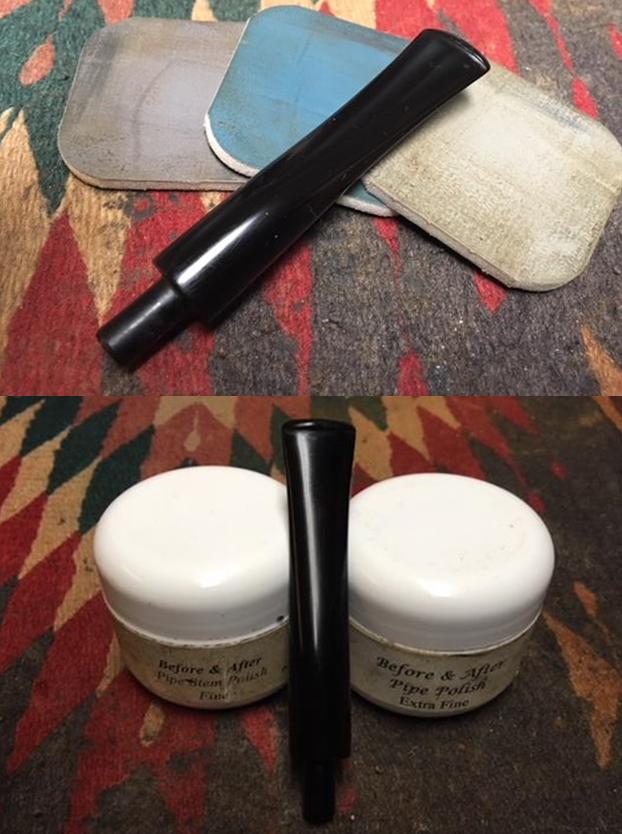
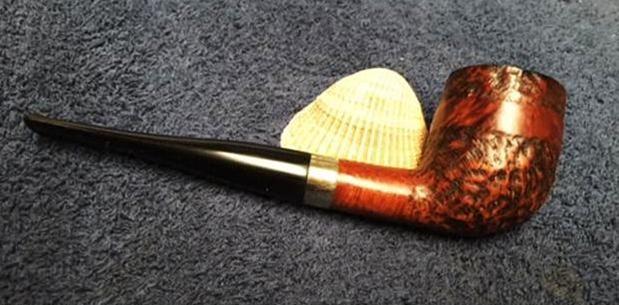
The first step in the restoration of this L. J. Peretti Oom Paul is to add the stem to a bath of Before and After Deoxidizer.  After several hours in the bath with other stems, I take out the stem and drain it of Deoxidizer and wipe it down with a cotton pad wetted with light paraffin oil (mineral oil) to remove the oxidation that was raised during the soak. I then use Before and After Fine Polish followed by Extra Fine Polish to further condition the vulcanite and remove oxidation.  I work the polishes in with my fingers and after a time, wipe them with a cotton cloth.Turning to the Oom Paul stummel, I see that there is still tobacco at the floor of the chamber.  I clear that, and I ream the thick cake using the Pipnet Reaming Kit.  I start with the smallest blade and working to the larger blades as the cake is incrementally removed.  I use three of the four blades in the Pipnet Kit.I then turn to the Savinelli Fitsall Tool to fine tune the reaming job.  This is the most painful part for me – carefully removing the charred briar on the rim and watching the rim grow thinner on the damaged side and out of round!  The good news is that the chamber itself looks stellar. To clean the chamber further I use 240 grit paper wrapped around a Sharpie Pen and sand the chamber.  Finally, I wipe the chamber out with a cotton pad wetted with alcohol to remove the carbon dust for all the reaming.  The pictures show the process. With all the other Perettis, the basic cleaning of the external surface and the rim revealed beautiful grain underneath the grime.  I have the same expectations for this Oom Paul stummel.  Using undiluted Murphy’s Oil Soap and a cotton pad I go to work on the briar surface and the lava on the rim.  I also use a brass brush to work at removing the lava on the rim.  To carefully scrape the rim, I utilize the flat sharp edge of the Savinelli Fitsall Tool.  I rinse the stummel with tap water.  The pictures show the progress, before and after.  Quite a difference!  My eye is drawn to a spider web grain pattern on the stummel’s left side – shown in the first two pictures – very nice! I turn now to clean the internals and it doesn’t take too much. I use pipe cleaners, cotton buds and a shank brush to work on the draft hole and mortise.  Even though the internals are cleaning up nicely, I like to utilize a kosher salt and alcohol soak to freshen and clean even more thoroughly preparing the pipe for a new steward.To prepare the soak, I form a wick using a cotton ball.  I stretch and twist it and then push it down the mortise and draft hole. I use a straight piece of an old wire clothes hanger to push and guide the wick. This wick acts to draw out the residual tars and oils as the salt and isopropyl 95% do their job.  I then position the stummel in an egg carton for stability and fill the chamber with kosher salt.  I asked the question when I first saw this method used, why kosher?  The answer I received was that it didn’t leave an aftertaste as does iodized salt.  Sounded reasonable to me.  I then give the stummel a shake with the chamber cupped to displace the salt.  Then, using a large eye dropper I fill the chamber with isopropyl 95% till it surfaces over the salt.  After a few minutes I top it off with a bit more alcohol because it has absorbed into the fresh cotton wick and salt.  I put the stummel aside and let the soak do its thing. The next morning as expected, the darkening of the salt and wick indicate that more tars and oils were pulled out of the internals.  I thump the stummel on my palm releasing the expended salt in the waste.  I wipe the bowl with paper towel, blowing through the mortise to dislodge remaining salt.  I also use a multi-sized shank brush to do this.  Finally, I run another pipe cleaner and cotton bud dipped in isopropyl 95% in the mortise and draft hole to finalize the cleaning.   After reuniting the stem and stummel again, I take another long, hard look at the goblin stem that was lurking in my subconscious!  I have been mulling over the stem/shank junction and what it would take to repair –  counting the cost in sanding and lost briar.  As I fiddled with the stem, twisting it around checking the looseness of the fit, I stumbled onto the solution to the alignment conundrum!  When I reversed the stem, so that it was upside down, the saddle of the stem and the shank lined up almost perfectly!  The old 70s song came to mind, “Oh happy day!” I have absolutely no idea what was going on in the production line of the Arlington Briar Pipes factory that day, if indeed it was there, but there was a breakdown in communication between the drill man and the stem bending man (or women!).  My mind wonders whether they had a few beers over lunch….  I’m scratching my head, but this restoration was just made a little less difficult!  The junction between the end of the shank and saddle stem shows a bit of gap (daylight) but that can be addressed.  My plan: re-bend the upside-down stem, thereby turning the upside-down stem to right-side up!  Did you follow that? The pictures show the discovery! To make sure I retain the same angle of bend, which seems to be on the money, I trace the stem’s angle on a piece of paper which I’ll use as a template for the reversing bend.  I use a narrow-rounded glass bottle to provide the back-board for the bending.  I then insert a pipe cleaner through the draft hole to help to maintain the stem’s integrity during the heating and bending.  Using a heat gun, I gradually heat the stem in the bend area and when the vulcanite becomes pliable I bend it over the glass and size it up on the template.  When I think I have it right, I place the stem under cool tap water to cool the vulcanite and set the bend.  The first time through, I’m not satisfied that I create enough bend.  I repeat the process again.  The second time was the charm.  I like the bend – the fit is now much, much better in the shank. While I’m on the stem adjustment, I now address the gaps or ‘daylight’ I can see between the shank base and the stem saddle.  I start using by 600 grade paper on the topping board and I VERY gently top the shank base primarily to clean and start with a flat surface.  I then use a piece of 600 grade paper, folded over once, inserting it between the shank base and saddle of the stem as a two-side sanding pad.  I work on sanding down the high spots so that the gaps close.  After a while, I’m not making progress too quickly, so I switch to 470 grade paper – a little coarser, and it does the trick.  It takes quite a while sanding and testing repeatedly and making sure the stem stays in proper straight alignment during the sanding. I’m able to sand the high spots and achieve a much better, not perfect(!) union between the stem and shank. Another adjustment is needed with the fit of the tenon and mortise.  The fit now is looser than I prefer.  I will tighten the fit hopefully by heating the tenon while inserting a slight larger drill bit into the tenon’s airway and expanding it.  I heat the tenon with a Bic lighter and gradually work the smooth end of the drill bit down the airway.  I cool the vulcanite with tap water to hold the expansion and withdraw the bit and test in the mortise.  The fit is now snugger and that is good.  That completes the mechanical adjustments to the stem – its working well!  Even after the stem was turned ‘upside down’ to achieve better alignment, the saddle of the stem is enlarged over the shank at different places creating a ridge as I move my finger toward the stem over the junction.  To correct this, I use 240 sanding paper to work on these ridges of vulcanite.  I keep the stem inserted into the shank to do this.  As I sand at the edge, dealing with the ridge, I’m also sanding up the saddle to taper the angle.  I don’t want a mound of vulcanite to circle the saddle, so I blend the angle through the entire saddle – rounding it as well.  The first picture shows the evidence of a ridge with the vulcanite dust collecting.  The rest of the pictures show the stem flush with the shank and the tapering work on the saddle.  Of course, the ‘L. J. Peretti Co.’, stamping on the shank is carefully safe-guarded during the sanding. After the 240 grade paper, I go over the same area with 470 grit paper followed by 600 which goes much faster because the purpose is to erase the scratches of the previous sanding paper.  I am truly amazed at the recovery of this Oom Paul’s shank/stem alignment issues.  The entire structure of the pipe is now tighter and sharper.  The pictures show the completion of this part of the restoration for which I am thankful!  Now I remove the stem from the stummel and flip the stem over to the bit area to repair the tooth chatter and dents.  I take pictures of the upper and lower bit as well as a severe dent on the lower button lip to mark the starting point.  The first step is to employ the heating method. I use a Bic lighter and paint the vulcanite with the flame.  As a rubber composite, the vulcanite expands with the heating and so the dents will rise reclaiming their original place in the whole – or almost.  The dents have been lessened but not removed.  The lower bit’s dents have almost vanished and will probably only need sanding.  The upper bit and the button lip still have quite a bit of damage. I then take 240 grit paper and sand the bit and button to see what is left to patch. While I’m at it I sand the entire stem since it was re-bent in the extreme opposite, I want to remove any residual ripples in the vulcanite.  The lower bit dents sanded out completely.  The upper bit and button need to be patched.  Pictures show the progress – first, upper then lower bit and button after sanding with 240 grit paper. Now I will patch the upper bit using BSI Maxi-Cure Extra Thick CA glue mixed with activated charcoal dust. I will patch the two dents as well as the left side of the button lip.  It needs to be rebuilt.  After I put a small amount of charcoal dust on an index card, I drop a little CA glue next to the activated charcoal dust.  Then, using a tooth pick, I draw charcoal dust into the dollop of glue mixing it as I go.  Gradually, as I draw more charcoal dust into the CA glue it begins to form a thicker putty.  When it reaches the right consistency – like molasses, I use the tooth pick as a trowel and apply the patch putty to both dents and to the left side of the lower button lip to rebuild it.    I put the stem aside to allow the patches to cure.With the stem patches curing, I now look to the rim damage.  I take another close-up to get another look….  It’s amazing how things jump out – when I took the picture of the rim to begin working on cleaning it up, in the picture I notice what I hadn’t seen before – look beyond the rim to the shank….When I first saw it, I thought it might simply be a wet line left over from cleaning the stummel.  But after closer examination with a magnifying glass it confirmed what I was hoping against!  A crack in the shank emanating from the ‘crook’ or where the shank and bowl join.  I had almost the same thing in a previous Peretti Oom Paul restoration (See: Two of Boston’s L. J. Peretti Oom Pauls Recommissioned) – a shank crack that came from the crook and worked up toward the stem but did not reach the shank end.  I closely inspect the mortise for evidence of an internal crack and I see none.  I really don’t know how this crack started – it appears to be trauma created from the inserted tenon pushing forcefully toward the top of the mortise because of a drop which forced the stem down – my guess.  I would think if this were the case, you would expect more trauma on the back of the shank – as a reaction force.  But I see no indication of this.  I take a few close-ups of the crack to see it more clearly.The good news is that the crack is localized in the briar and has not crept all the way to the end of the shank.  As I did before, to block the ‘crack creep’ I drill small holes at both ends of the crack which will arrest its growth.  Drilling in the crook is not easy!  With the aid of a magnifying glass, I mark the ends of the crack with the sharp point of a dental probe.  I use these as a drill guide (first picture below). I then mount a 1mm drill bit into the Dremel and I VERY carefully drill the holes – not an easy feat holding the Dremel free hand!  I wipe off the area with a cotton pad this apply thin CA glue to both holes as well as along the line of the crack.  The thin CA glue will seep more deeply into the crack helping to seal it.  I then sprinkle briar dust on the entire repair area to help blending later when I sand.  I set the stummel aside to let the crack repair cure. While I’m working on the stummel, I also detect two places that have very small gaps in the briar that I want to fill.  I apply a drop of regular CA glue to each gap.  After applying the first drop, I wait an hour or so for the glue to set so that I can flip the stummel and apply the other patch.  After the first patch sets, I apply the drop of glue on the other side and set the stummel aside to allow the CA glue patches to cure. With stummel patches curing I turn again to the stem and the charcoal dust and CA glue patches are ready to be filed and sanded on the bit and to reshape the button.  I start by using a flat needle file to bring the patch mounds down to the vulcanite surface level.  I also shape the new button with the file.  The pictures show the filing progress.  Switching to sanding paper, I first use 240 grit to bring the patch mounds down to the vulcanite surface and to blend, erasing the file scratches.  I continue to shape and blend the button profile.  Then I switch to 600 grade paper and sand the entire stem to erase the scratches left by the 240 grade paper.  Finally, I use 0000 grade steel wool to sand/buff the entire stem to smooth out the scratches left by the 600 grade paper.  I like the results.  The reformed button looks good.  With a closer look at one of the patches, I detect very small air pocket cavities in the patch which is common.  To rectify this, using a tooth pick, I paint both patches, to be on the safe side, with a thin layer of thin CA glue to fill the cavities.  I wait a few hours for the CA glue to cure and I sand the patch again with 600 grade paper and then again with the 0000 steel wool.   I have sanding patch projects on the stummel to address.  I start first with the crack repair on the shank.  Using 240 grit paper I sand down the patch over both holes on each side of the crack as well as the crack itself.  I then follow with 600 grit paper over the entire area.  The repair looks good and will blend well as I finish the pipe.  The main thing was to protect the pipe from a creeping crack – this is done.Turning to the patches on both sides of the stummel, I use a flat needle file, then 240 grit paper followed by 600 on both sides.  As I file/sand, I try to stay on top of the patch mound to minimize impact on surrounding briar. Patches on the stummel are finished.  Now I turn to the rim repair. I feel like I’ve been around the block a few times with the repairs to the stummel and now I’m finally looking at the rim repair.  I take another picture to get a closer look and mark the starting point.  In the picture below, the bottom of the picture is the left side of the rim that has sustained the most damage from burned briar because of the former stewards practice of lighting his tobacco over the side of the rim instead of over the tobacco. I cannot replace the lost briar but what I try to do as I remove the damaged briar is to restore the balance to the rim as much as possible.  I do this through beveling. First, I take the stummel to the topping board which for me is a chopping board covered with 240 grit paper.  After inverting the stummel, I rotate it over the board in an even, circular motion.  I check the progress often to make sure I’m not leaning in the direction of the damaged area.  It is especially a challenge topping an Oom Paul because his shank is extended beyond the plane of the rim.  So, I hang the shank off the side of the board as I top.  I utilize a flat sanding block as well to direct the topping in specific areas.  When I’ve taken enough off in topping, I switch the paper to 600 grit on the topping board to give the rim a quick smoothing by removing the 240 scratches.  You can see in the pictures below how I unintentionally nicked the shank in the process….Next, to remove the internal ring of scorched briar I use a tightly folded piece of coarse 120 grade paper to cut a bevel around the internal edge.  I increase the bevel on the ‘fat’ areas of the rim seeking to balance the roundness a bit – even though nothing will solve it completely!  The goal is to give the appearance of more balance.  After completing the main shaping of the bevel with the coarser 120 paper, I continue using a rolled piece of 240 grit paper.  I take a picture at this point to mark the progress.I take the stummel back to the topping board with 600 grit paper to define the rim lines again.One last step in the rim repair.  The external edge of the rim is sharp because of the topping.  To soften the appearance of the rim and to enhance the overall presentation of the rim, I cut a small, gentle bevel on the external edge.  I do this with 240 grit paper rolled, then follow with 600 grit paper.  I pinch the paper on the edge of the rim with my thumb and move methodically and evenly around the circumference.  We live in a broken world and many people live their lives with a limp – it reminds us of our frailty.  This Peretti Oom Paul will always have a limp of a bowl that is out of round because of the damage he sustained in the past.  Despite this, the rim looks pretty good considering from where we’ve come! Anxious to move the stummel along, I now address the briar surface.  Using micromesh pads 1500 to 2400 I wet sand the stummel.  I follow this with dry sanding with pads 3200 to 4000 then 6000 to 12000.  I enjoy watching the briar grain emerge through this process! With the previous Peretti restorations, and with this one, I strive to maintain the original Peretti light, natural grain motif.  I have used Before and After Restoration Balm to deepen and enrichen the natural grain color.  I’ve been more than satisfied with the previous restorations and will apply the Balm to this Peretti Oom Paul as well.  I apply Balm to my finger and then I work it into the briar surface with the ends of my fingers.  The Balm starts with an oily feel then it gradually transforms into a thicker wax-like substance.  After I work it in, I set it on the stand to allow the Balm to work.  I take a picture of this and then after several minutes I wipe/buff the Balm off with a microfiber cloth.  The results look great. With the stummel awaiting a stem to catch up, I turn to the stem.  The CA glue painting of the air pocket cavities in the bit patch is ready for sanding and I use 240 grade paper to sand down to the stem surface.  I then use 600 grade paper followed by 0000 grade steel wool to finish it out.  The bit repair is done, and it looks good.  All the air pockets have been removed.I move on to the micromesh pad cycles.  First, I wet sand using pads 1500 to 2400.  I follow by dry sanding with pads 3200 to 4000 then 6000 to 12000.  After each set of 3 pads I apply Obsidian Oil to the stem which rejuvenates the vulcanite.  I love the glassy shine of polished vulcanite! After reuniting stem and stummel, I mount the Dremel with a cotton cloth buffing wheel and apply Blue Diamond compound to the pipe.  I set the Dremel to its slowest speed and apply the compound in a methodical way – not applying too much pressure to the wheel but allowing the speed of the Dremel and abrasiveness of the compound to do the work.  I then wipe the pipe with a felt cloth to remove compound dust.  Then, mounting another cotton cloth buffing wheel to the Dremel, and increasing the speed to about 40% full power, I apply a few coats of carnauba wax to the stem and stummel.  I finish the process by giving the pipe a good hand buffing with a microfiber cloth to raise the shine.

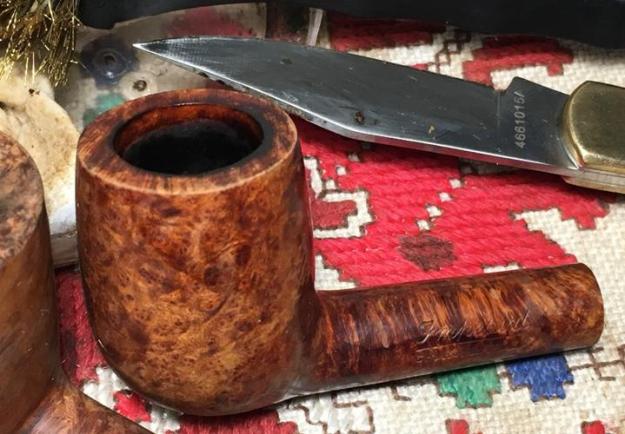
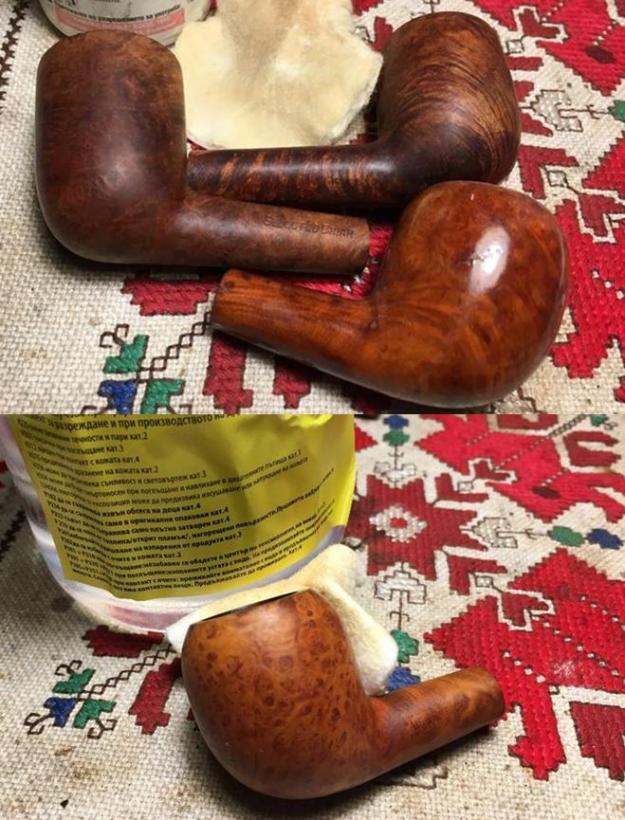
I must admit, I was so occupied with the technical aspects of this restoration that I didn’t fully appreciate the beauty of this pipes color and grain until now.  I especially like the ‘burst’ on the left side of the large Oom Paul stummel.  Earlier I called it a spider web effect – now it looks more like a center of clustered circles, the bird’s eye grain, and sunburst expanding out from it.  Very striking grain showcased on this classic Oom Paul shape. He’s overcome an upside-down stem, a crack in the crook of the shank, a chewed up bit and a burned up rim – I would say he’s looking good now for what he’s been through!  This Peretti was commissioned by Abraham in California and he will have first dips on this L. J. Peretti Oom Paul when he goes into The Pipe Steward Store.  This pipe benefits the work of the Daughters of Bulgaria – helping women and girls (and their children!) who have been trafficked and sexually exploited.  Thank you for joining me!
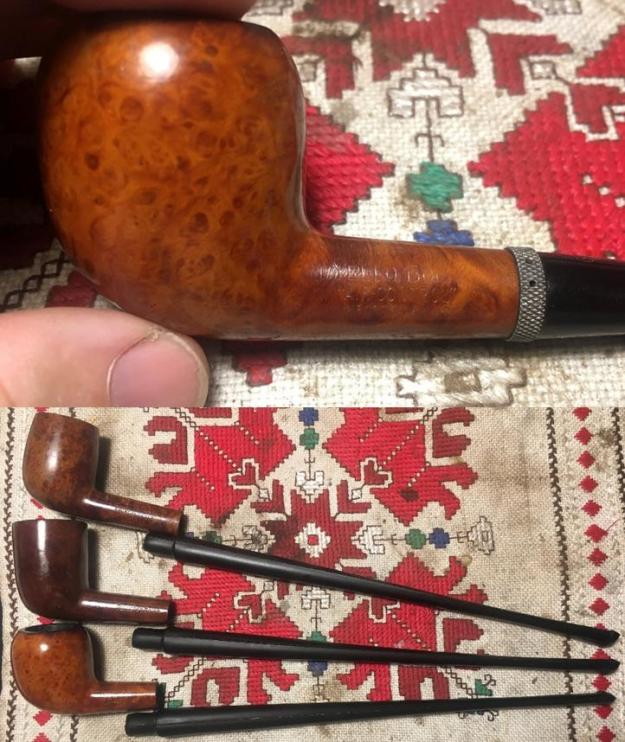
Restemming and Restoring a Tired Medico Husky Rhodesian


Blog by Steve Laug

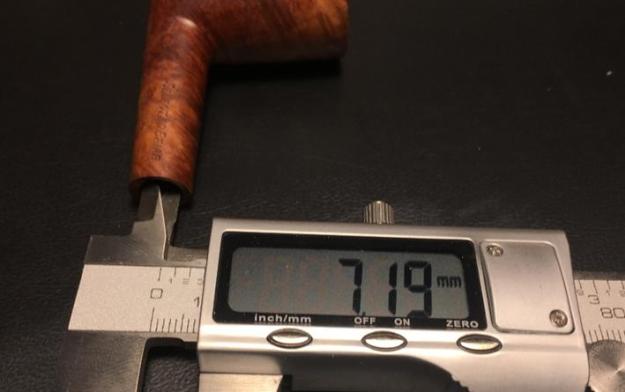
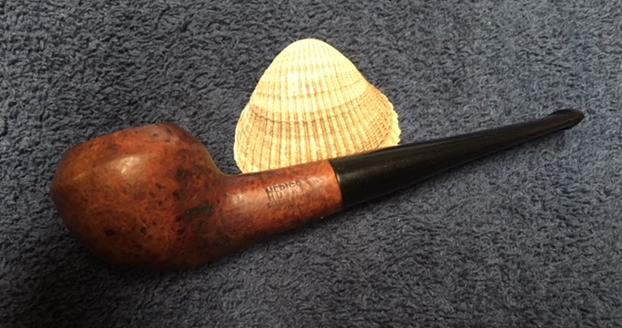
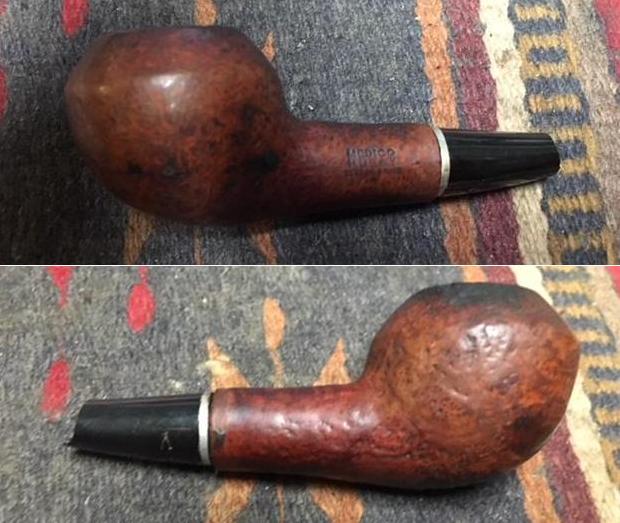
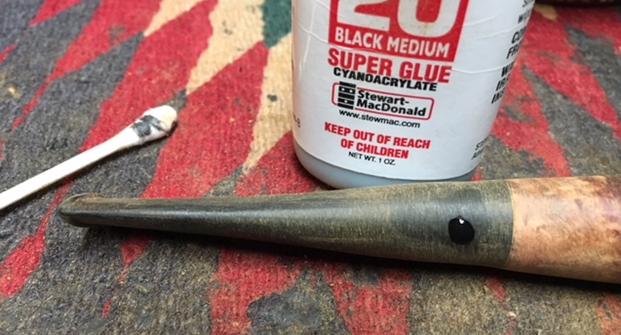
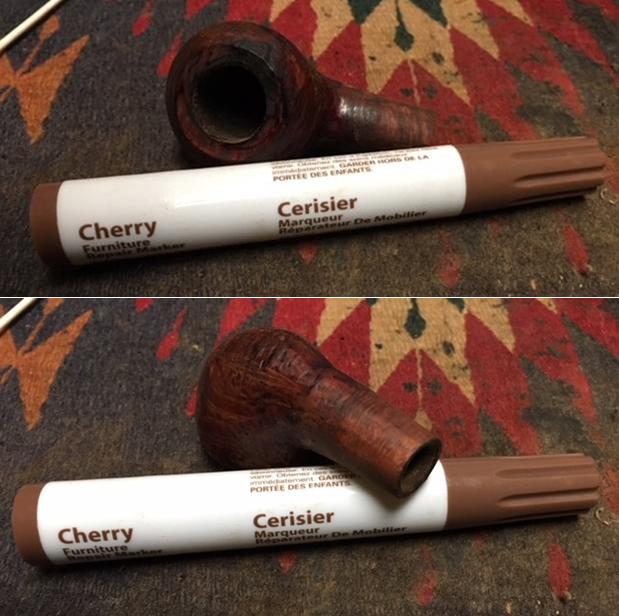
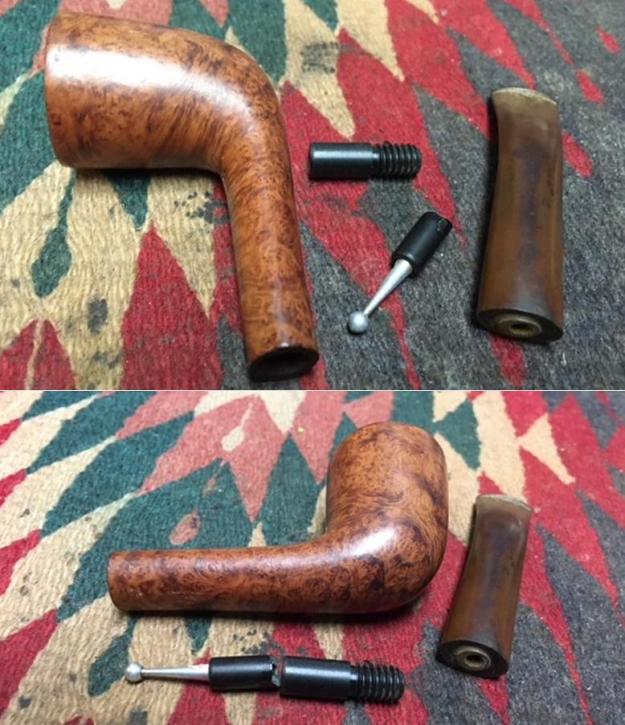
About a week ago I received a call from a woman who had been referred to me by a pipe shop here in Vancouver. As is often the case here in Vancouver, the woman was calling on behalf of her husband. She wanted to know if I could replace a stem on her husband’s pipe. I told her to bring it by for me to have a look at. A little later the same day she showed up at the front door with a small plastic sandwich bag clutched in her hand and somewhat gingerly handed me the bag. The pipe inside was in rough shape. It had been smoked hard and had a thick gooey cake in the bowl, overflowing onto the rim and down the sides of the bowl. The rim top was damaged and slightly out of round. The stem was not even the correct stem and it was broken off. The diameter of the stem was less than the diameter of the shank. I looked at the pipe in the bag I could see the tars oozing out onto the sides of the bag. It smelled pretty sour. It was obviously either her husband’s favourite pipe or maybe his only pipe. She said he wanted a straight stem on the pipe. Could I do the work? We agreed on a price and she left the bag with me. I took the pipe out of the bag and took some before photos. I wanted to get rid of as much of the smell of the pipe as possible – believe me it was sour and it was dirty. I wiped the exterior of the bowl down with alcohol soaked cotton pads and remove the thick grime and sticky tars off the side of the bowl and as much from the damaged top as possible. Sadly I was in such a hurry to do that I forgot to take photos. Once the exterior was cleaned it was time to tackle the inside of the pipe. I scraped out the inside of the mortise with a dental spatula and remove a lot of hardened tars from the walls of the mortise. The airway into the bowl was clogged with thick tars so I used a paper clip to push through and open the airway. I cleaned out the mortise, shank and the airway into the bowl with cotton swabs, pipe cleaners and alcohol. I cleaned until the inside was clean and clear.I reamed the bowl with a PipNet pipe reamer and the second cutting head. I took the cake back to bare briar so I could check out the inside walls of the pipe. I finished cleaning up the remnants of the cake with a Savinelli Fitsall Pipe Knife. The inside walls look surprisingly good, but the top and inner edge of the rim had damage from repeated lighting of the pipe in the same spot.To minimize the damage to the top and edges of the bowl I lightly topped the bowl on the topping board with 220 grit sandpaper. I was able to remove much of the damage. I worked on the inner edge of the rim with a folded piece of sandpaper to smooth out the burn on the front right side. There was some darkening to the rim but it was solid and looked better.With the internals cleaned, the externals cleaned and rim damage minimized it was time to work on the new stem for the pipe. I went through my assorted stems and found one that would work. It had approximately the same taper that the shank had so it would continue the taper back to the button. I sanded the stem and the shank with a medium grit sanding block to make the transition very smooth. I carefully avoided the stamping on the side of the shank so that the Medico over Husky over Imported Briar was undamaged. The stem fits the shank very well and the transition from briar to vulcanite is smooth. The next series of photos show the pipe at this point in the process. The shank on the pipe was not quite round, so I had to do a bit of reshaping to get a round stem to fit it. The stem only fit one way and there was a divot where there had originally been a logo. I filled in the divot with black super glue and set it aside to cure.With the repair to the stem curing I turned my attention to the bowl. I used a Cherry Stain pen to touch up the sanded areas on the rim and the shank. The colour matched the existing colour on the rest of the bowl so I figured it would be a good match.I buffed the bowl with a soft cloth to raise a shine and blend the stains on the briar. I took the following photos to show the overall condition of the bowl at this point in the process. I rubbed the briar down with Before & After Restoration Balm to enliven, clean and protect the wood. I rubbed it in with my finger tips and worked it into the shallow blast on the bowl and the smooth areas as well. I buffed it with a shoe brush and then with a soft cloth to remove the excess balm. I sanded out the scratches in the vulcanite with 220 grit sandpaper and adjusted the fit to the shank of the pipe.I cleaned out the airway in the stem using alcohol and pipe cleaners. The stem was fortunately not very dirty so the cleanup was very simple. I polished the stem with micromesh sanding pads – wet sanding with 1500-2400 grit pads and dry sanding with 3200-12000 grit pads. I wiped the stem down after each pad with Obsidian Oil on a soft cloth. I buffed it with a soft cotton pad. This small, lightly sandblasted Medico Husky pipe looks a lot better now than it did when I started working on it.  The rim top looks much better than when I started. It was chewed up and heavily caked with lava. The newly fitted stem is high quality and shined up well. I buffed the bowl and the stem with Blue Diamond polish to raise the shine on the briar and the vulcanite. I gave the bowl and stem multiple coats of carnauba wax. I buffed the entire pipe with a clean buffing pad to raise the shine. I hand buffed it with a microfiber cloth to deepen the shine. The finished pipe is shown in the photos below. The rich brown stain allows the grain to really stand out on this little pipe and it works well with the rich black of the vulcanite stem. This restemmed Medico is ready to go back to the pipeman who sent it to me. I will be calling his wife shortly so that she can pick it up for her. Thanks for walking through the restoration with me.

Replacing a Broken Tenon on a Civic Select 14 Zulu


Blog by Steve Laug

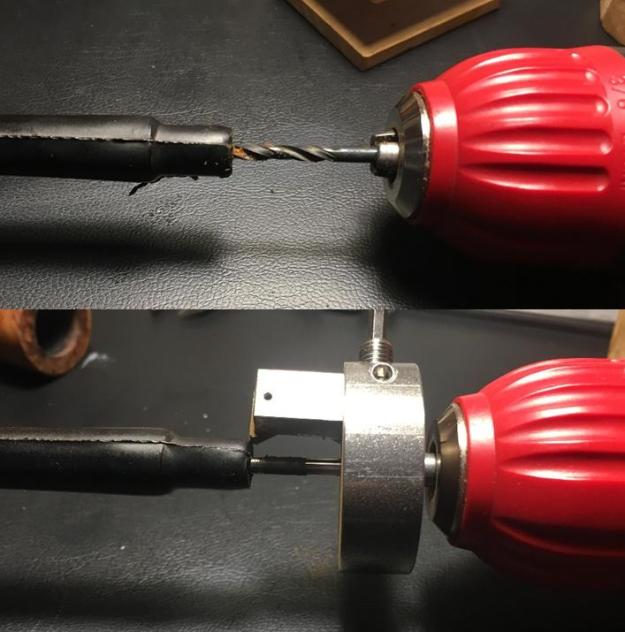
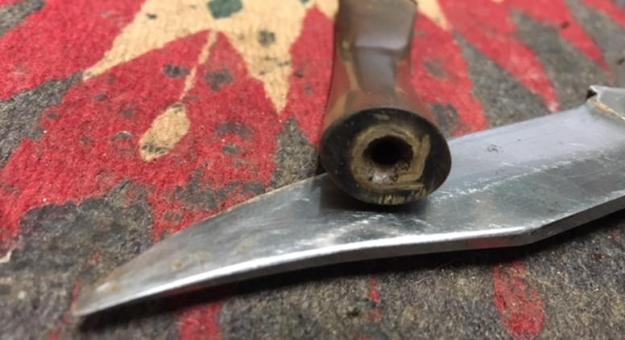
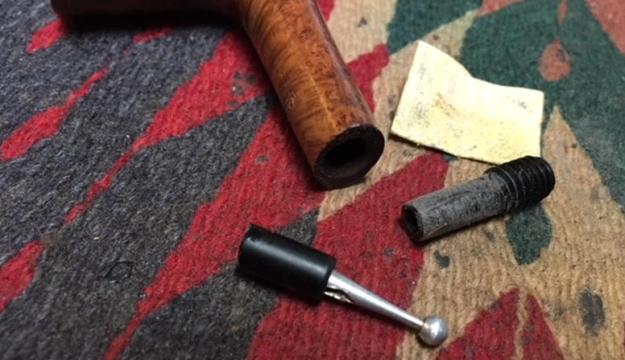
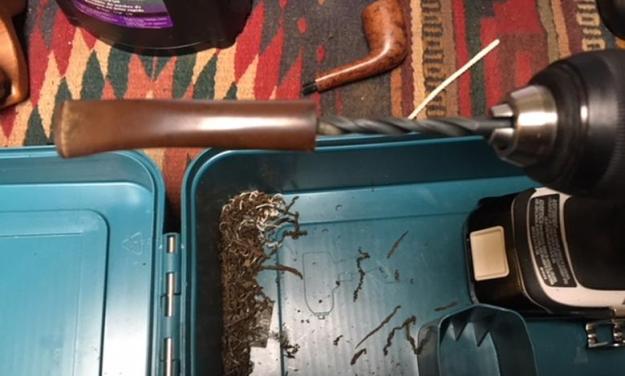
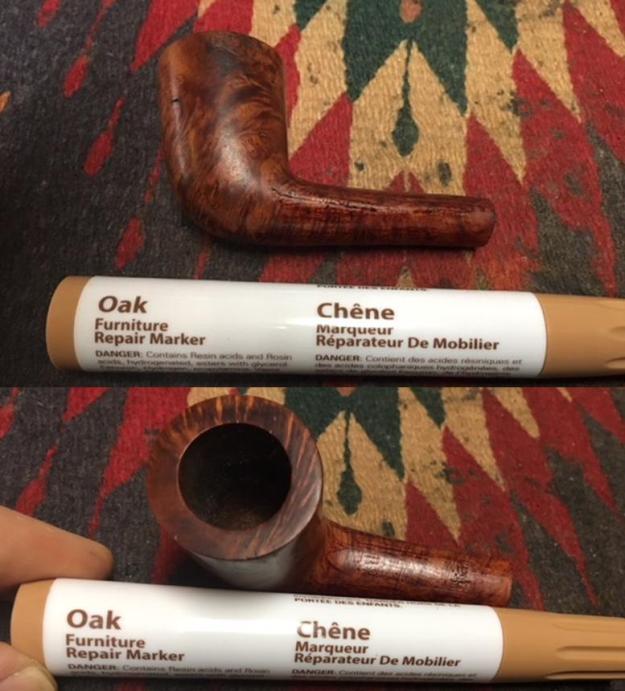
I received a call from a local fellow who had picked up my phone number from a local pipe and cigar shop. He had just returned from a trip and the tenon on his little Civic Zulu had snapped off. As it was his only pipe he wondered if I would be willing to take on the job of repairing it. He had tried to glue it on with epoxy but it had not worked. The pipe was relatively new and half the bowl was not even darkened by smoking. There was raw briar on the bottom half of the bowl. The briar was dirty on the outside from being pocketed in his coat of backpack.  The stem was oxidized and had tooth chatter on both sides at the button. The oxidation is deep in the vulcanite. I told him I would take on the project. I took photos of the pipe before I started working on it.I found a Delrin tenon replacement in my box that would fit well once the diameter was reduced. We talked and he decided to get rid of the stinger to make it a better smoking pipe. The broken angle on the end of the stem would need to be sanded smooth and faced so that the new tenon would fit well. I took some photos of the pipe, stem, broken tenon and new tenon.In preparation for drilling out the stem for the new tenon I used a sharp knife to open and bevel the edges of the airway in the stem. I have found that doing this keeps the drill bit centred and straight in the airway.I used the Dremel and the sanding drum to reduce the diameter of the new tenon. I sanded it with 220 grit sandpaper to smooth out the tenon. I worked on it until the diameter was the same as the broken tenon and the fit in the mortise was snug.I started drilling the airway with a bit slightly larger than the diameter of the airway. I slowed the speed on the cordless drill to make sure it moved slowly and straight. I worked my way up to a bit that was the same diameter as the new tenon end, but not too large to compromise the strength of the stem.I removed some of the diameter on the threaded end of the tenon to get a proper fit in the stem. I cleaned up the inside of the newly drilled end of the stem with a needle file to smooth out the walls. When it was smooth I cleaned up the new tenon, applied glue to the end and pressed it into place in the stem.I sanded the tenon with 4000 grit wet/dry sandpaper to clean up the marks and scratches in the tenon. Once the glue had cured I put the stem on the shank of the pipe. As is usual with these repairs the alignment was not perfect but close. I sanded the shank/stem junction smooth to clean up the alignment. I took pictures of the newly fit stem. I cleaned out the mortise and the airway in the shank and stem with cotton swabs, pipe cleaners and alcohol. I worked on them until they were clean. Since the pipe was barely smoked it was a pretty simple clean up.I reamed out the debris in the bowl with a Savinelli Fitsall Pipe Knife. I wanted the bowl to be clean and smooth.I stained the area where I had sanded the shank with an oak stain pen to blend it into the rest of the shank. It is a bit streaky at this point in the process but that would blend together once I buffed and polished the pipe. I worked Before & After Restoration Balm deep into the briar to clean, enliven and protect it. I worked it into the finish with my fingertips. I worked it into the rim and shank end. I set it aside for a few minutes to let the balm work. I wiped it off and buffed it with a soft cloth to polish it. The briar really began to have a deep shine. I took some photos of the bowl at this point to mark the progress in the restoration. The grain on the bowl is really beginning to stand out and will only do so more as the pipe is waxed. I polished the stem with micromesh sanding pads – wet sanding with 1500-2400 grit sanding pads and dry sanding with 3200-12000 grit pads. I wiped the stem down with Obsidian Oil after each sanding pad. I finished polishing the stem with Before & After Pipe Stem Polish both Fine and Extra Fine to remove the last of the scratches. I gave it a final coat of Obsidian Oil and set it aside to dry. With the stem polished I put it back on the pipe and lightly buffed the bowl with Blue Diamond. I buffed the stem with a more aggressive buff of Blue Diamond. I gave the bowl and stem multiple coats of carnauba wax and buffed the pipe with a clean buffing pad to raise the shine. I hand buffed it with a microfiber cloth to deepen the shine. The pipe polished up pretty nicely. The finished pipe is shown in the photos below. I will call the pipeman soon so he can pick up his pipe and begin to enjoy it once more. He called several nights ago and said he had ordered some new tobacco and it had arrived. He was excited to try it out with his repaired pipe. Thanks for walking through the restoration with me as I worked this pipe over.

Restemming and Restoring a Straight Custombilt Rhodesian


Blog by Steve Laug

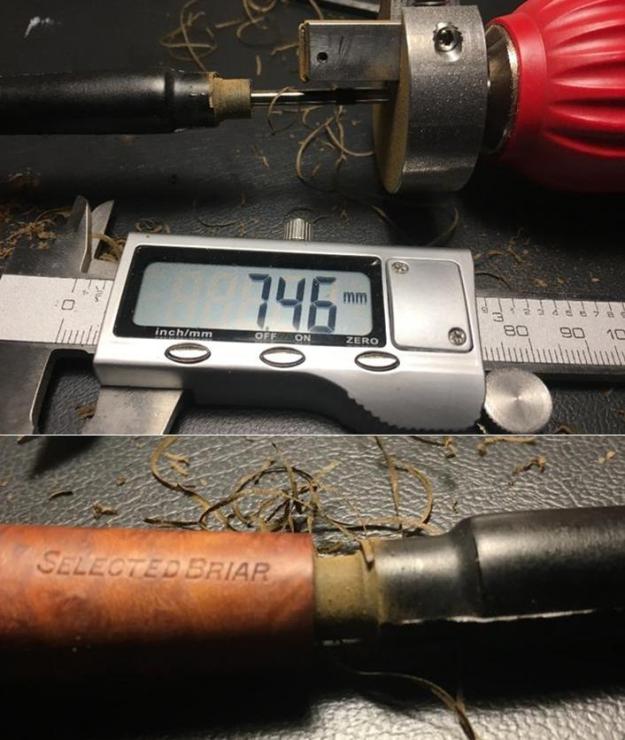
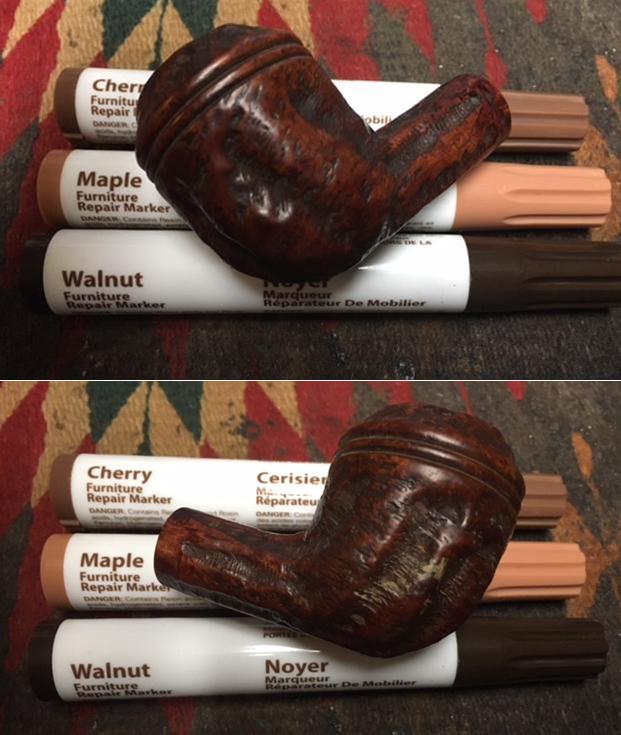
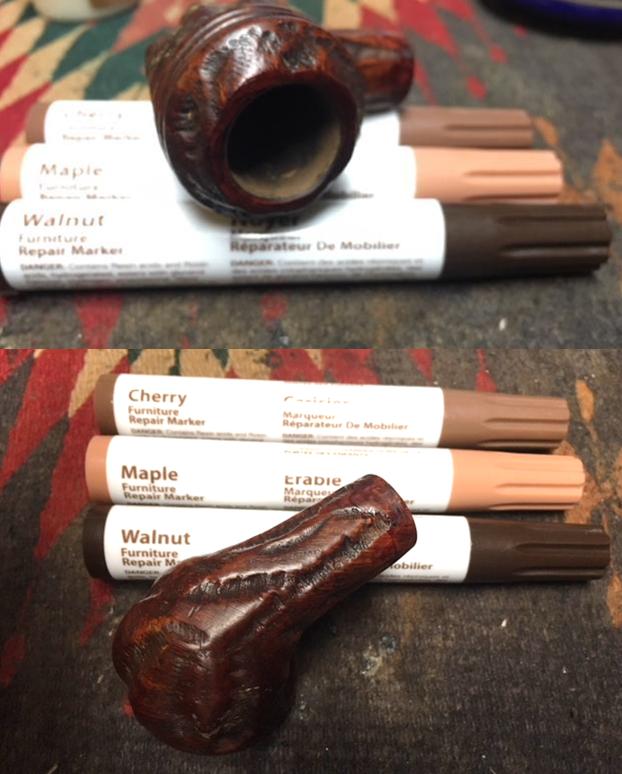
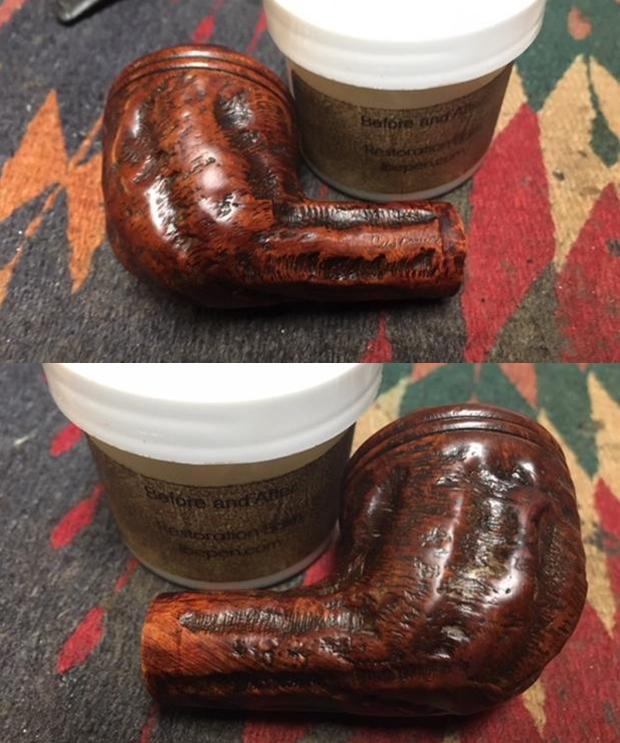
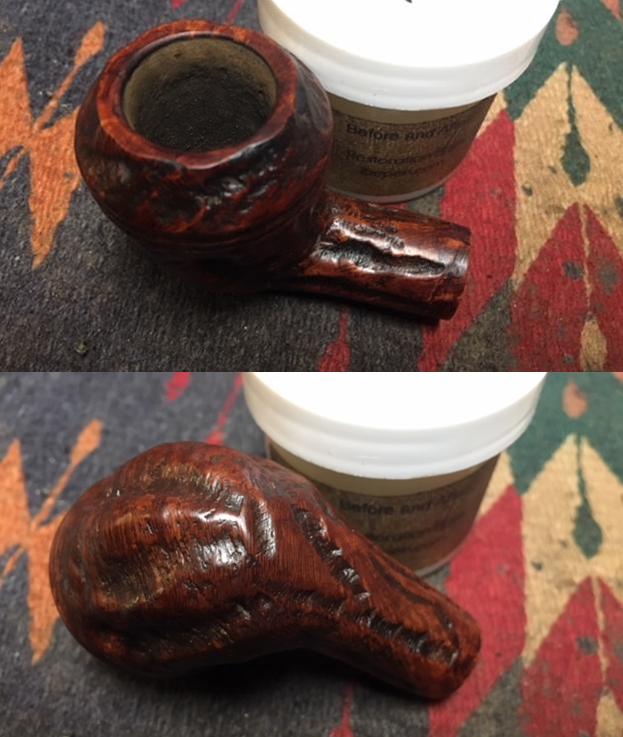
Mike, reader of rebornpipes contacted me about fixing two of his pipes. Probably over a month ago he emailed me. He packed the pipes up and sent them to me. The second one was a Custombilt Rhodesian or probably some would call it a Bulldog I have already repaired and blogged about the pear wood pipe (https://rebornpipes.com/2018/04/06/putting-humpty-dumpty-back-together-again/). The second pipe needed a new stem and a thorough cleaning and restoration. The broken stem looked to be a replacement as the fit to the shank was not perfect and the diameter of the shank and the stem were slightly different. The tenon was also short and did not extend the full length of the mortise like I have come to expect on Custombilt pipes. The inside of the bowl had already been reamed and cleaned when I got it. The top of the rim had a slight lava build up and the inner and edges were out of round. The inside and the outside of the bowl were very dirty. There was a lot of dust and grime in the rustication of the bowl and shank as well as in the twin rings around the cap.  I would soon find out why it was not cleaned. I took a close up photo of the rim top to show the damage to the top surface and the inner edge of the bowl. You can see that the top is rough from knocking the pipe out against a hard surface and the inner edge looks to have been damaged by reaming with a knife. I also took photos of the stem to show the large chunk that was missing near the button. Notice also the fit of the stem to the shank. I went through my can of stems to see if I could find a stem that would fit the shank better. I also did a bit of hunting online and found that often the Custombilt Bulldog had a saddle stem rather than a taper stem. The next stem had a tenon that was the correct length. It was slightly shorter than the broken stem but it would work well on the shank of the pipe.I put the new stem on the shank and took pictures to evaluate the new look. I also sent copies of the photos to Mike to see what he thought. I received and email reply from him that he liked the new look of the pipe so I continued with the fit of the stem. The fit of the stem to the shank was far better than the previous one. Since the shank was not round I would need to work on the shank to round out the two sides to match the stem. The next two photos show that the stem fits well on the top and the bottom of the shank but that both sides are wider than the diameter of the stem (slightly better than the previous stem).I used a folded piece of 220 grit sandpaper to sand down the sides of the shank to match the stem. I worked on it to make it round rather than the slightly off centred broad oval that it was when I started. I sanded the fit against the shank with 400 grit wet/dry sandpaper to smooth out the transition between the stem and shank and remove the scratching in the briar. I cleaned out the interior of the mortise and shank with a dental pick to remove the buildup of tars and oils that were built up in front of where the replacement stem tenon had ended. I cleaned it out with alcohol, cotton swabs and pipe cleaners to remove all of the grime. Once the cleaners and cotton swabs came out clean I was finished with the cleanup. I did the same with the airway in the stem until it too was clean. I used a dental pick to clean around the inside of the slot in the button. I topped the bowl with 220 grit sandpaper on a topping board to remove the damage to the rim top and remove the damage to the inner edge of the rim. I removed very little to smooth out the rim. I also used a folded piece of 220 grit sandpaper to smooth out the inside edge of the rim and remove the damage. I gave the edge a slight bevel to smooth out the edge. I polished the rim top and the reshaped shank end with micromesh sanding pads – wet sanding with 1500-2400 grit pads and dry sanding with 3200-12000 grit pads. I wiped down the surfaces after each pad with a damp cloth. After the final 12000 grit pad I gave it a final wipe before I continued with the restoration work. I used a combination of three stain pens – Cherry, Maple and Walnut to stain the sanded areas of the bowl. I used them on the rim top and around the end of the shank. The three together matched the colour on the rest of the bowl. I worked Before & After Restoration Balm deep into the rusticated patterns of the briar to clean, enliven and protect it. I worked it into the rustications with my fingertips and with cotton swabs. I worked it into the rim and restained shank end. I set it aside for a few minutes to let the balm work. I wiped it off with a soft cloth and buffed it with a horsehair shoe brush to polish it. The briar really began to have a deep shine. I took some photos of the bowl at this point to mark the progress in the restoration. The grain on the bowl is really beginning to stand out and will only do so more as the pipe is waxed.  I sanded the stem surface with 220 grit sandpaper to remove the tooth marks and chatter on both sides of the stem near the button. I also sanded out the deep scratches in the surface of the stem. I followed up by sanding the stem again with 400 grit wet/dry sandpaper to remove the scratches left behind by the 220 grit sandpaper. I polished stem with micromesh sanding pads – wet sanding with 1500-2400 grit pads and dry sanding with 3200-12000 grit pads. I wiped the stem down with Obsidian Oil after each pad. I polished it with Before & After Pipe Stem Polish, both Fine and Extra Fine. I gave it a final coat of Obsidian Oil and set it aside to dry. I waxed the bowl and shank with multiple coats of Conservator’s Wax. I buffed the stem with carnauba wax. I buffed bowl and stem with a clean buffing wheel to raise a shine. The photos below show the finished pipe. It is a great looking pipe. I love the old Custombilt shapes and the look and feel of them in hand. This one is a beauty that looks great with its new stem. Now that I have finished the second of Mike’s pipes I will soon be packing them up and sending them on their way back to New York where I am sure he is waiting to fire them up and enjoy them once again. Thanks for looking.

Restoring a Tired House of Robertson Billiard


Blog by Steve Laug

Not too long ago I sold one of the House of Robertson pipes to a fellow named John who collects them and lives in Salt Lake City, Utah. He loved the pipe that I sent him and wrote and asked if I would be willing to clean up and restore his first House of Robertson (HOR) pipe that had been given to him 30+ years ago by his brother. He said it was a billiard with a mixed finish – both rusticated and smooth. He said he had smoked it heavily as it was a favourite of his and it needed some attention. We made our arrangements and he shipped the pipe to me here in Vancouver. I was looking forward to working on it as I have enjoyed the other House of Robertson pipes that I have restored over the past months.

While I waited for its arrival, between working on other pipes I read over the last restoration blog I had written on an HOR pipe. I thought it might be helpful to add the information I had previously found for those of you who have not read those blogs. “House of Robertson” was in business for many years, but alas, closed their doors in 1999. They were located in Boise, Idaho. They are noted for making rather large and interesting pipes. Thayne Robertson… started the shop about 1947 and his son Jon started working there in 1970 when he finished college, along with Thayne’s daughter. Thayne and his son started making the big pipes at that time, and made them together until 1987 when Thayne passed away. Jon kept the store and his sister moved on to other things. The House of Robertson appears to have closed around 1999. https://pipedia.org/wiki/Robertson

I also received an email from Ed Mitchell from the Boise, Idaho area offering to share some of the history of the shop if I was interested. He was a frequent customer and loves the HOR Pipes. I of course was excited to learn more about the brand so I was looking forward to what he would write. It came in today’s email and I thought you might enjoy Ed’s reminiscences. Thanks Ed for sending me this information.

Hi, Steve

…I do not have any memorabilia, other than a box of two, from the House of Robertson shop. When Jon Robertson closed the store, it caught me by surprise. I do have several of Robertson pipes including a couple that need small repairs. Five or six I bought unsmoked from the widow of one of his Boise customers. The husband apparently was one of Thayne’s many friends and had bought pipes in the course of standing around visiting in his shop. One is a beautiful blond horn that I have saved unsmoked.

Thayne was a bear of a man in his 60s when I met him in the mid-1960s, a great raconteur with strong opinions on politics, religion, people and good pipes. For instance, he hated cigarette smoking; people who popped in to ask for cigarettes were shown the door with instructions on how to find the only other tobacco store in downtown Boise, an institution (still in business) that sold all types of tobacco, men’s magazines and pipes Thayne considered unworthy of any discerning smoker.

Another consequence of Thayne’s hatred of cigarettes was that he created a line of pipes sized and decorated (in some examples with inset bits of bling) for female smokers. He did make pipes in conventional shapes and sizes but preferred big freestyles. I can say I do not remember his ever making two pipes exactly alike. A large part of his business involved creating custom pipes on order. He mailed pipes to customers around the country and internationally. I am not sure what portion of his output was sold outside Boise but I had the impression that it was considerable.

The pipes I remember Thayne smoking in the shop were a couple of huge Oom Pauls about a foot long. The big man liked big pipes, usually loaded with strong English-style or oriental blends. He hooked me on my taste for Latakia tobaccos.

The shop was in one of the long, narrow brick storefronts of the old city core. An old-fashioned glass display case for pipes and accessories dominated the front along with shelves and stacks of at least 50 choices of tobaccos. A narrow flight of stairs led to inventory storage above the dusty workshop located in back behind a curtain.

For a one man shop, Thayne’s output was prodigious especially considering that the individual pipes were unique. His daughter Rosie and son Jon did assist in the shop’s latter years. Both were skilled makers but tended to create more conventionally carved and sized pipes. Most of the pipes made there, even after Thayne died and Jon was doing the work, came from a hoard of old Greek briar Thayne found in Holland around 1970. Some of the bold grain pipes from the latter years were as spectacular as smoking instruments can be. One feature I have never seen is a fill in a Robertson pipe. Thayne liked rusticating briar whenever the grain was flawed or just uninteresting.

Steve, I hope this gives you some brief insight into the House of Robertson. If you have questions to stimulate my ancient memory, I will be glad to try to answer. — Ed Mitchell

When the pipe arrived I took it out of the box to have a look at it and took some photos of it to show its condition before I began. It had a softee bit on the stem that had slid up about ¼ inch up the stem from the button. The finish was dirty and grimy. The rim top was damaged and the bowl was slightly out of round. There was a thick cake in the bowl and a heavy lava overflow on the top of the rim. There was a burn mark that was on the top of the rim at the front and extended down the bowl about a ½ inch. There was a nickel band on the shank that was a typical repair band that is available through repair suppliers. When I examined around the band on the shank end I could not see any cracks in the shank. The band had been cut off slightly so as not to cover the etched House of Robertson name on the left side of the shank. The stem was an obvious replacement that was slightly larger in diameter than the shank. The pipe definitely needed attention. I took a close up photo of the rim top to show the damage to the front of the bowl and the general condition of the pipe. The bowl is thickly caked and the rim has an overflow of lava on the rim top.  You can see how the bowl is thicker on one side than the other. The front of the bowl looks damaged as the lava on that portion is different in texture than the hard stuff on the rest of the rim top. The stem was in decent condition – some calcification on the top and underside where the rubber softee bit had been. There were some light tooth marks and chatter on both sides. The stem was lightly oxidized.I did a quick assessment of the pipe and wrote John a quick email about what I saw as I looked it over. I sent my questions to him to see if he could shed any light on what I was seeing. I am including both my questions and his response as it helps clarify what I saw when I examined the pipe first hand.

  1. Is the band something that you added? It appears to be cosmetic but it could be a repair band. They are available through online pipe parts guys and are made out of nickel. I think it is a later addition as it covers the N in Robertson. Do you know if the shank was ever cracked?? I will leave it there as it is a touch of bling.
  2. Is the stem a replacement stem? It is wider is in diameter than the shank and appears to be a replacement. The shank was drilled for a filter stem and this one is not the original as far as I can tell. It is well made and will clean up nicely. I took the softee bit off and will clean it up. I will send the softee back with the pipe.
  3. What is the hard substance in the bottom of the bowl? It appears that someone added some fill to the bottom of the bowl (unevenly mind you) to lift the bowl bottom to the level of the entry of the airway into the bowl. Is this something you added or was it there previously? I can leave it be as it is as hard as concrete. I can also smooth it out a bit with a coat of JB Weld (which is what I think is in the bottom of the bowl already).

John replied to my queries and I am including the pertinent parts of his answers:

To my recollection, the pipe is the same un-worked-on one my little brother gave me 38 or so years ago, bought directly from Mr. Robertson at his shop — I’m assuming it was the father and not the son, but I can’t remember when the elder died.

I may have had it worked on — possibly a new stem — at Jeannie’s Smoke Shop (now sold to newcomers since my friend Jeannie died; the shop still retains the name) in Salt Lake City. I do remember taking it, or possibly another pipe, to the craftsman she employed. If that was the pipe I took in, I don’t think he would have filled the bottom of the bowl, but he may have replaced the stem. I smoked that pipe a lot years ago and may have bit the mouth piece off. If you don’t think the current stem is one that Robertson used and feel strongly that it should be changed out with new, proper stem, do it. But you indicate that the stem is fine and you can touch it up and smooth it out, that’s fine, too. Your decision. And do what you suggested with smoothing the bottom of the bowl and adding the JB Weld coat. I have no idea why that would have been filled in.

I don’t recall adding a band. I don’t recall if the shank was cracked years ago and that I may have asked the guy at Jeannie’s to fix that. Please do whatever you need to do with that part. A few weeks ago, I thought I detected a slight crack, or maybe just a dark line along the shank. You don’t seem to think that a new band is necessary. The last Robinson you sold me has a silver band; my other two do not have bands. But I am reasonably sure the nickel band is what Robertson had on it when he sold it to my younger brother ($50 at the time! — a lot of money for a 19-year-old’s gift to his older brother). Possibly the stem got damaged when Robertson was making the pipe, and that’s the way he fixed it…

I reamed the bowl with a PipNet pipe reamer – starting with the smallest cutting head and working up to the third one. I cleaned up the remnants with a Savinelli Fitsall Pipe Knife. Surprisingly there was a rock hard substance at the bottom of the bowl – it looked like JB Weld or something like that. It was rock hard and seemed to have been used to bring the bottom of the bowl up to the bottom of the airway’s entrance to the bowl.I scrubbed the exterior of the bowl with Murphy’s Oil Soap and a tooth brush. I worked over the rim top with a brass bristle wire brush to break up the lava flow there. I rinsed the bowl with running water and scrubbed it under the water while it was rinsing. The bowl began to look pretty good at this point. The contrast between the smooth band around the bowl and shank with the rustication above and below the band looked really good. The rim top was so damaged with the burn mark and the nicks around the outer edge that I decided to top the bowl lightly to remove as much of the damage as I could without noticeably changing the profile of the pipe. I worked on the inner edge of the rim and the light bevel with 220 grit sandpaper to clean up the inner edge. I used it to also lightly reshape the outer edge of the bowl. You can see from the photos how out of round the bowl edges are outside and inside. I worked on the bevel to work on it and you can see the result in the third photo.I did not want to add stain to the oil finished bowl so I just rubbed the bowl down with Before & After Restoration Balm to deep clean the rustication on the briar. The rustication was well done and looked almost like a sandblast. I also rubbed it into the smooth portions on the band around the bowl, the rim top and the shank. The product works to clean, enliven and protect the briar. I hand rubbed it with my fingers to work it into the rustication. I wiped it off with a soft cloth. I buffed the bowl with a horsehair shoe brush to polish it. The briar really began to have a rich shine. I took some photos of the bowl at this point to mark the progress in the restoration. I decided to polish the topped rim top once more using micromesh sanding pads as the balm revealed more scratches in the finish. I wet sanded it with 1500-2400 grit pads and dry sanded it with 3200-12000 grit pads. I wiped it down after each pad with a damp cloth. I cleaned out the internals of the mortise and the airway in the shank and the stem with pipe cleaners, cotton swabs and alcohol. (I forgot to take photos of the stem after I cleaned it with alcohol and pipe cleaners).I mixed up a small batch of JB Weld to level the previous repair to the bottom of the bowl. I applied it to the uneven area with the end of a small sanding stick. I pressed it into the indentation and smoothed it out with the tip of my finger.I set the bowl aside and worked on the stem. I sanded out the tooth chatter, tooth marks and oxidation on the button end. I sanded the rest of the stem to remove the oxidation. The diameter of the stem was bigger than that of the shank so I sanded that at the same time to reduce it to the same size as the shank and reshape it at the junction. I polished the stem with micromesh sanding pads – wet sanding it with 1500-2400 grit pads to remove the scratching. I worked on it until the stem surface was smooth and the marks were less visible. I continued to polish it with 3200-12000 grit sanding pads. I wiped it down with Obsidian Oil after each sanding pad. I polished it with Before & After Pipe Stem Polish – both Fine and Extra Fine. I wiped it down a final time with Obsidian Oil. I put the stem back on the bowl and worked the pipe over on the buffing wheel using Blue Diamond to lightly polish both the bowl and the stem. I buffed the bowl and stem to raise the gloss on the briar and the vulcanite. I gave the pipe multiple coats of carnauba wax. I buffed the entire pipe with a clean buffing pad to raise the shine. I hand buffed it with a microfiber cloth to deepen the shine. The finished pipe is shown in the photos below. I don’t think House of Robertson stained the pipes as they have the rich patina of an oil finish. If it had a stain coat it was a tan stain that went well with the rich black of the vulcanite stem. The dimensions of the pipe are: Length: 5 1/2 inches, Height: 1 3/4 inches, Outside Diameter: 1 3/8 inches, Diameter of the chamber: 7/8 inches. This is an interesting piece of briar that shows a mixture of grain on the smooth portions. I really like HOR pipe work the rustication and smooth parts together in unique ways. Once the repair in the bowl cures I will mail it back to John. I know he is looking forward to enjoying it again. Thanks for walking with me through the restoration.

Restoring a Savinelli Churchwarden 3003
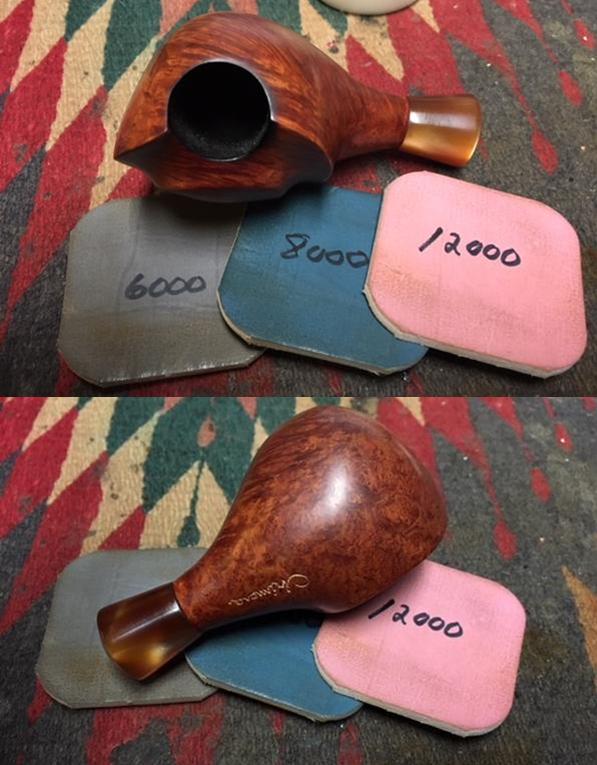

Blog by Steve Laug

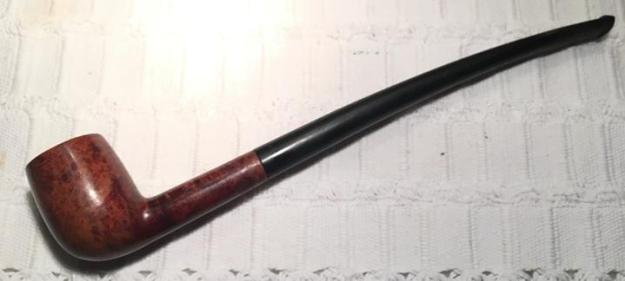
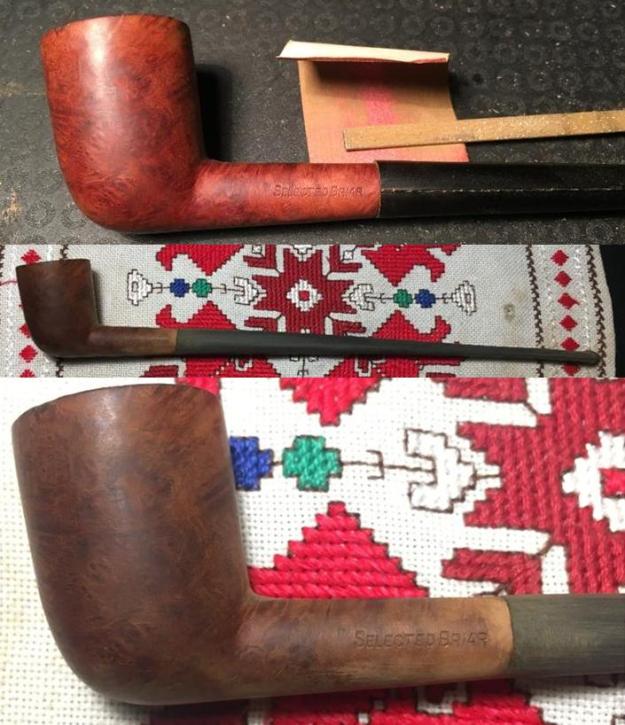
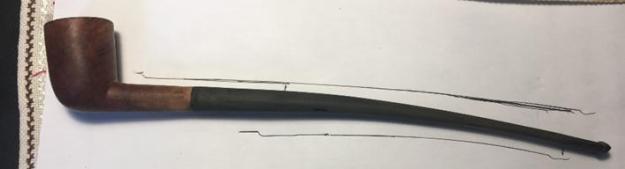
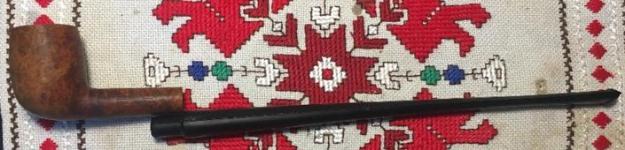
I finished the restoration work on Mark’s uncle’s pipes and a few of his own and sent them back to him in late January of this year. I wrote a blog on each of the restorations. They were a fun batch of pipes to restore for him. He sent me another package a few weeks ago that had just three pipes in it – A GBD Classic Straight Bulldog, a GBD 9242 Rhodesian (one of my holy grail pipes) and a long Churchwarden pipe that had originally belonged to his uncle. Each pipe had a different set of issues that would provide a variety of challenges. The Bulldog was in excellent condition other than the first ½ inch of the stem missing in chunks. The Churchwarden had a broken tenon that was still stuck in the shank. By far the worst of the lot was the 9242 pipe. When I saw it in the bag I was excited. When I took it out of the bag I was saddened at the condition of the pipe. The bowl was dirty and there was some lava and rim darkening on the top. There were a few nicks in the edges of the bowl. The finish was dirty but the grain on the pipe was really nice. If I had stopped my observation at this point I would have been quite happy.
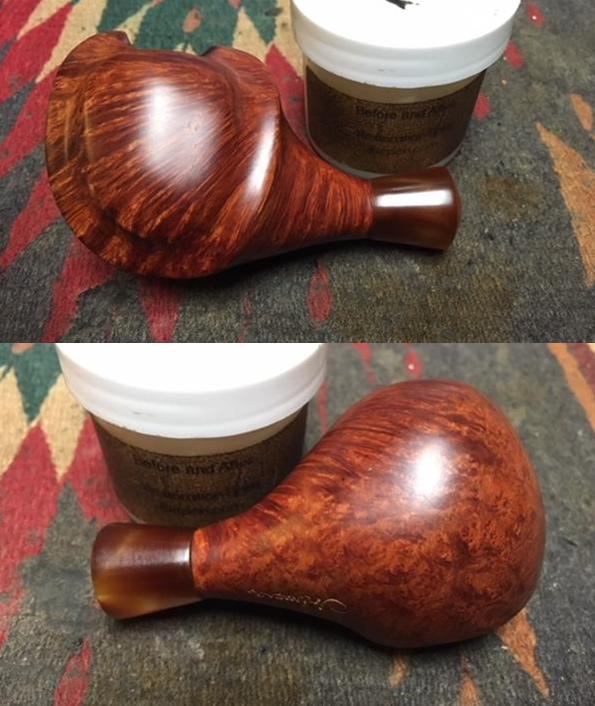
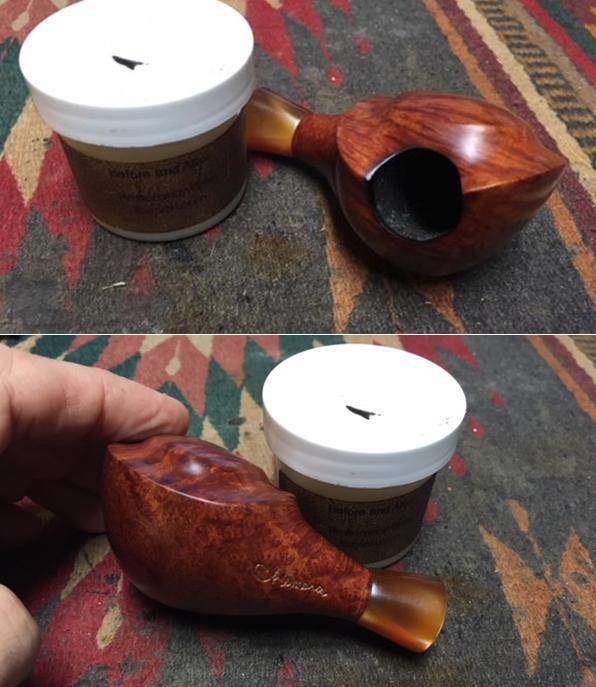
The second pipe I chose to work on from the batch of pipes was the Churchwarden that had belonged to his uncle. The Prince shaped bowl was in decent condition. The bowl was actually quite clean on the inside but the drilling where the airway entered the bowl was slightly off to the right side of the bowl. Other than having the tenon stuck in it; the shank looked pretty good as well. The rim top was dirty and there was a burn mark on the inner bevel of the left side. The finish was dirty and there were quite a few nicks and dents on the surface of the briar. The shank was stamped on the left side with the words Churchwarden over Aged Briar. On the right side of the shank it is stamped with the shape number 3003 and next to that was the Savinelli S shield. The underside of the shank is stamped Savinelli over Italy. The stem was quite oxidized and pitted. There were tooth marks and chatter on both sides of the stem at the button. The broken tenon remnants were on the end of the stem. It was broken pretty close to the stem/shank junction.
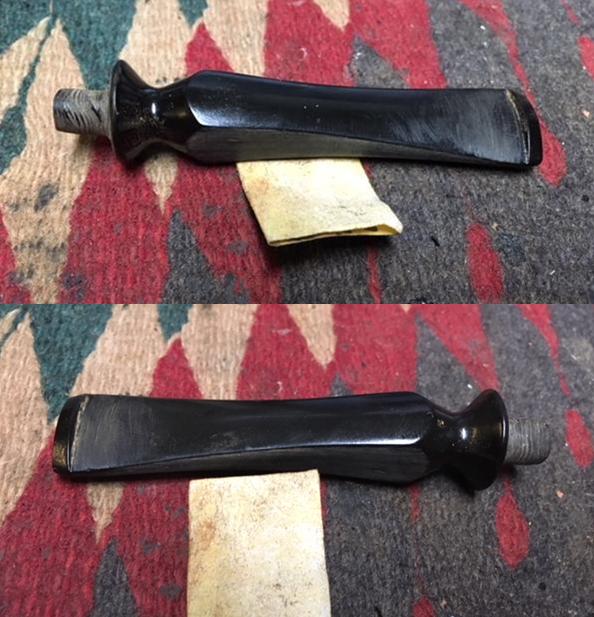
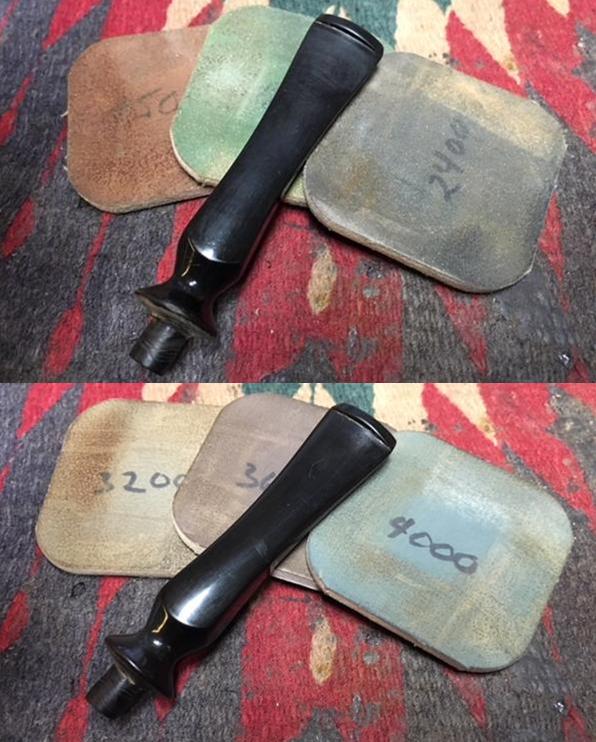
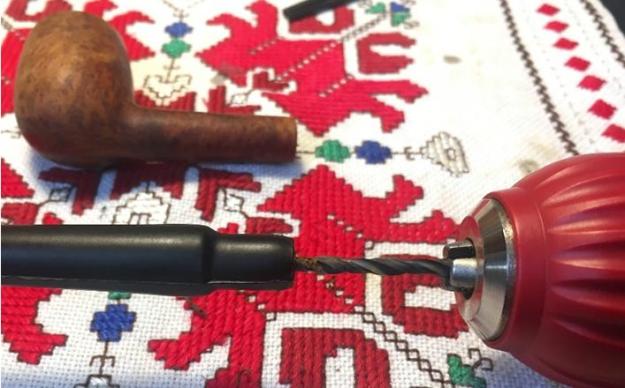
Sooo… here we go on the second of Mark’s restoration projects. I took photos of the pipe to show what it looked like when it arrived in all of its tattered splendour. The bowl had some beautiful grain underneath the grime. The photos show the stem the broken tenon and how close to the shank it was snapped off. The above photo shows the damage on the rim top to the inner edge. It is a burn mark from repeated lighting of the pipe in that spot. The photos below show the chatter and tooth marks on both sides of the stem at the button.The broken tenon was stuck in the shank when I first tried to pull it so I put it in the freezer for 30 minutes. I tried again using a long drywall screw and was able to get it free with the first try. I went through my jar of replacement tenons and found one that I thought would work. It is a threaded Delrin replacement tenon. Once I had the broken tenon out of the shank I compared them and found that the diameter was the same on both.  I tried it in the mortise and found that it was a perfect fit. Even the length was correct. I flattened the broken pieces on the end of the stem with a Dremel and sanding drum and then on the topping board. I wanted a flush surface to mount the new tenon on and also to have a snug fit against the shank. The airway was not centered in the stem so I had to do a bit of fussing with it to get it ready for the new tenon. I used a sharp pen knife to flare the side of the airway that was off to get it more centered before I drilled. Once I had done that I drilled the airway with a bit slightly larger in diameter than the airway and worked to keep it both straight and centered. This is yet another time I wished I had a drill press.I followed that drill bit with one that was the same diameter as the threaded portion of the new tenon. I sanded the threads to slightly reduce the diameter and pressed it into the stem. The fit was very good. I took a photo of the stem  at this point to show the look of the new tenon.I used black super glue that had a medium viscosity so that I had time to align the stem and the shank before the glue set. Once it was aligned I took a few photos of the fit of the stem to the shank. I would need to make a few minor adjustments but considering how off the airway was the fit was quite good. I carefully removed the stem and set it aside to let the glue on the tenon set firmly. I turned my attention to the bowl. The first item of business for me was to work on the rim top. I cleaned up the flat surface of the rim with 1500-2400 micromesh sanding pads and then shaped the inner bevel of the rim with a folded piece of 220 grit sandpaper to minimize the damage on the right inner edge. When I finished it definitely looked better. I would do a bit of finessing it once I worked on it with the micromesh pads.I decided to address the many nicks, scratches and cuts in the surface of the finish by filling them in with clear super glue. The next series of photos show the many spots on the front and bottom of the bowl.Once the repairs had dried I sanded them smooth with 220 grit sandpaper to blend them in with the surface of the bowl. I then wet sanded the entire bowl and rim with 1500-2400 grit micromesh pads and dry sanded it with 3200-12000 grit pads until the rim and the surface of the bowl was smooth and polished. I wiped down the surface of the bowl with a damp cloth to remove the sanding dust between each pad. I decided to highlight the reds in the briar and finish so I stained it with a mahogany stain pen. It looks streaked and poorly applied in the photos but the story is not over yet. I am more interested in getting the bowl covered with a stain that is transparent so when I take the next step the grain will come through the finish. Of course I was in a hurry at this point to call it a night so I forgot to take pictures of the next step. I wiped the bowl down with a cotton pad and isopropyl alcohol to spread the stain and wipe away the excess. When the grain stood out and the repairs remained hidden I rubbed the bowl down with Before & After Restoration Balm. I rubbed it into the finish to clean, enliven and protect the finish. I let it sit for a few moments and buffed it off with a cotton cloth. The photos below show the bowl at this point. Once the bowl was finished I set it aside to work on the stem. I sanded out the tooth marks and chatter on the top and underside of the stem at the button. I sanded the entire stem with 220 grit sandpaper to remove the damage and oxidation.I polished the vulcanite with micromesh sanding pads to remove the scratching and remaining oxidation. I wet sanded it with 1500-2400 grit pads and dry sanded it with 3200-12000 grit pads. I wiped the stem down with Obsidian Oil after each pad to remove the dust. I finished polishing the stem with Before & After Pipe Stem Polish – both Fine and Extra Fine to remove the rest of the scratches in the hard rubber surface. I put the stem back on the bowl and buffed the pipe with Blue Diamond on the buffing wheel. I gave it several coats of carnauba wax and buffed it with a clean buffing pad to raise a shine. I hand buffed it with a microfiber cloth to deepen the shine. The finished pipe is shown in the photos below. The repairs on the finish blend in really well with the overall finish of the pipe. The new tenon on the stem works very well and is a snug fit in the mortise. It really is a nice looking Savinelli Churchwarden. There is some nice grain on the bowl. This is the last of Mark’s uncle’s pipes and it is ready to head back to Mark for his smoking pleasure. I have one more pipe to fix for him then this one and the others will be in the post back to Mark. I think it is better than it was… thanks for looking.


A Challenging Makeover for a GBD New Standard 9242 Rhodesian


Blog by Steve Laug

I finished the restoration work on Mark’s uncle’s pipes and a few of his own and sent them back to him in late January of this year. I wrote a blog on each of the restorations. They were a fun batch of pipes to restore for him. He sent me another package a few weeks ago that had just three pipes in it – A GBD Classic Straight Bulldog, a GBD 9242 Rhodesian (one of my holy grail pipes) and a long Churchwarden pipe. Each pipe had a different set of issues that would provide a variety of challenges. The Bulldog was in excellent condition other than the first ½ inch of the stem missing in chunks. The Churchwarden had a broken tenon stuck in the shank. By far the worst of the lot was the 9242 pipe. When I saw it in the bag I was excited. When I took it out of the bag I was saddened at the condition of the pipe. The bowl was dirty and there was some lava and rim darkening on the top. There were a few nicks in the edges of the bowl. The finish was dirty but the grain on the pipe was really nice. If I had stopped my observation at this point I would have been quite happy.
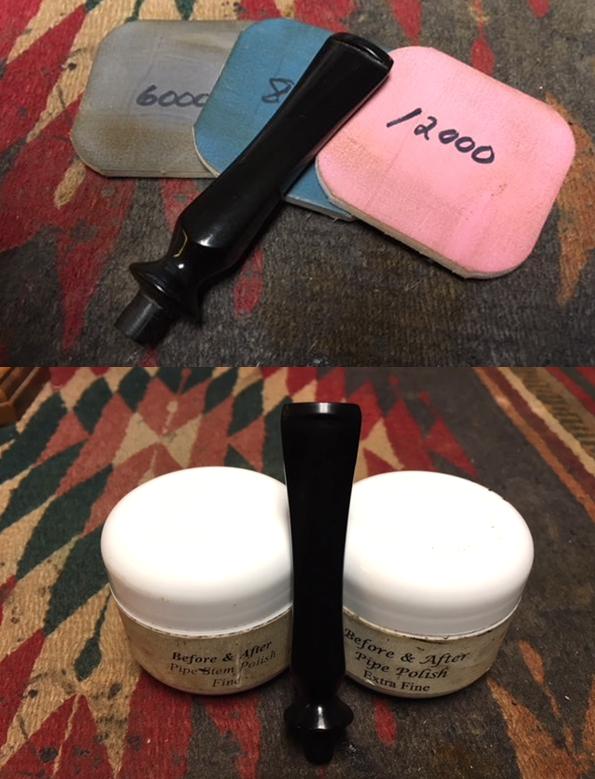
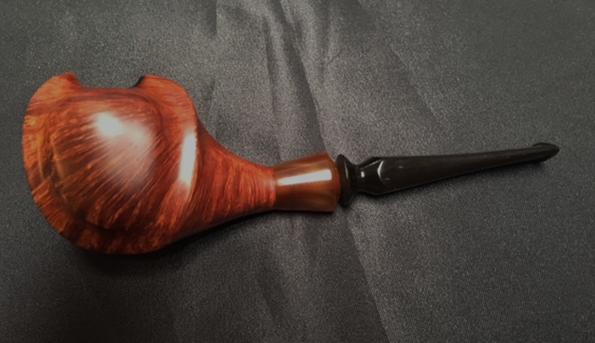
But to stop there would not begin to tell the story of the abuse carried out on this pipe. Someone (I cannot call them other than a hacker) had taken upon themselves to do a stem repair for a broken tenon and in doing so almost destroyed an otherwise nice looking stem. I think that it had a broken tenon so the hacker had pulled out the broken tenon from the shank. He had drilled out the end of the stem – so far so good right. If he had quit then it would have been good. But he did not. He found a piece of steel tubing and drilled out the mortise to fit it – but did so at an angle and hacked up the inside of the mortise. The stem itself was not only drilled but had been opened up even more to accommodate the tube. In fitting it in the stem he had cracked the stem on one side. Fortunately it appeared that it did not go all the way through. He then slopped glue – an amber looking goop, all around the sides of the scored tube and shoved it into the airway on the stem. It was not even close to straight. Then he smeared some of the same glue on top of the crack, wiped it off a bit and called it good. This poor pipe really was in awful condition.

When I wrote Mark to give him my assessment I laid out the issues on this pipe I think he must have laughed. He knew that once I saw it, because it was a shape that is on my hunt list, I would be hooked and have to try to fix it. He as much as said so in his email back to me. Sooo… here we go on that restoration project. The photos show the look of the pipe when it arrived in all of its tattered splendour. Note the beautiful grain on the bowl. It was a beautiful looking piece of briar. Note the stem damage and obvious angle of the stem in the shank. Note the repaired split in the stem. Note the tooth marks on the stem on both the top and underside on and in front of the button. This was a project for certain and I figured I could not really make things worse… but then again who knows. I took a close up photo of the rim top to show the general condition of the pipe. You can see the nicks in the briar rim top and on the inner edge. You can also see the fit of the stem to the shank as well as the tooth marks and damage to the stem from the “repair” that had been done to the stem.I took the stem off the bowl to show the metal tubular tenon on the stem end. It looks to me that the drilling out of the stem and the moving the tenon around in the stem caused the damage in the stem surface.I took photos of the end of the stem showing the tenon and the drilled out mortise in the shank. You can see the damage to both. The metal tenon is not totally round and it is heavily scored and damaged. The fit in the stem is crooked so there is no way to align the stem and the shank.I smoothed out the light damage on the rim top with 220 grit sandpaper and then with 1500-4000 grit micromesh sanding pads. I rubbed the bowl down with Before & After Restoration Balm to deep clean the briar and the smooth rim. The product works to clean, enliven and protect the briar. I hand rubbed it with my fingers and wiped it off with a soft cloth and buffed it with a shoe brush to polish it. The briar really began to have a rich shine. I took some photos of the bowl at this point to mark the progress in the restoration. I set the bowl aside and worked on the stem. I used a cotton swab to dribble acetone around the stem/tenon joint. I repeated that process for several weeks on a daily basis. I wanted to dissolve the epoxy that held the metal tenon in place in the stem. While it sat I filled in the damaged areas on the stem surface and the deep tooth marks in the top and underside of the stem at the button with black super glue and set the stem aside to dry. Once the glue had cured I sanded the repairs smooth with 220 grit sandpaper and blended them into the surface of the stem. There were still some small spots that needed work but overall it was starting to look better. I dribbled acetone into the area around the metal tenon every morning and evening after work. I was pretty certain that after a matter of time the epoxy would give way and I would be able to remove the tenon. I wiggled it daily with a pair of pliers to loosen it. This afternoon it finally came loose and I was able to remove it from the stem.With the metal tenon removed from the stem I was able to clean out the airway in the stem and the drilled out area of the stem. I used pipe cleaners, cotton swabs and alcohol to clean out the debris and tobacco oils.The replacement tenon was a little larger than the mortise and needed to be sanded down. I used a Dremel and sanding drum to reduce the diameter of the tenon. I also carefully sanded the face of the stem to smooth out the damage there, Once I had the fit correct in the shank I worked on anchoring it in the drilled out stem. I coated the threaded tenon with some thick gel glue and inserted it in the hole in the stem. I lined things up with a pipe cleaner in the airway and set the stem aside to dry. While the glue on the new tenon cured I cleaned up the inside of the mortise. I hand turned a drill bit that was the same size as the tenon slowly into the mortise to clean up the jagged drilling on the inside of the mortise. I turned it into the mortise to smooth out the misdrilling that had been done to fit the metal tenon. Once I was finished I sanded it lightly and then put the stem in the shank to have a look. The fit was pretty good at this point. Once the tenon had cured I worked on the stem with micromesh sanding pads – wet sanding with 1500-2400 grit pads and dry sanding with 3200-12000 grit pads. I wiped it down with Obsidian Oil after each micromesh pad. After I finished with the 12000 grit pad I gave it another coat of oil. I polished the stem down with Before & After Pipe Polish – Fine and Extra Fine. I finished by giving it one more coat of Obsidian Oil and put it aside. I put the stem back on the bowl and buffed the pipe with Blue Diamond on the buffing wheel. I gave it several coats of carnauba wax and buffed it with a clean buffing pad to raise a shine. I hand buffed it with a microfiber cloth to deepen the shine. The finished pipe is shown in the photos below. The repair on the right side of the stem is still visible and I will need to work on that a little bit more but the overall look and fit of the stem is far better than when I began on this project. It won’t take too much more work before it is ready to head back to Mark for his smoking pleasure. This is one of those pipes that suffered much at the hands of someone trying to repair something and actually making it worse. I think it is better than it was… thanks for looking.

Restoring a Large Rusticated House of Robertson Panel Billiard


Blog by Steve Laug

After my brother Jeff found an assortment of House of Robertson pipes at an auction in Wilder, Idaho which is an area in the greater Boise, Idaho area. He kept an eye out for more of the brand on his weekly pipe hunts. He found several others that are quite unique in an antique mall near where he lives. There were two large long shanked pipes – one round shanked and one square shanked. The third of the batch that he finds is a nice little classic apple shape. It looks tiny with the size of the other two. The two larger pipes are a combination of smooth and rusticated. They both have smooth panels on the sides or front of the pipes. Both of the large ones are banded with a sterling silver band. It seems to me that the bands on both the square shank and the round shank are decorative rather than a repair for a cracked shank. I finished the restoration of the square shanked sitter, the bottom pipe in the above photos and did the blog write up on it (https://rebornpipes.com/2018/02/28/restoring-a-rusticated-house-of-robertson-war-club/). It is soon on its way to a fellow who was a regular of the House of Robertson Pipe Shop in Boise, Idaho. He is excited to be adding it to his collection. Each of these pipes has the name House of Robertson roughly hand-etched on the side or underside of the shank with an engraving tool. I am also including the information that I found when I received my first of the House of Robertson Pipes. “House of Robertson” was in business for many years, but alas, closed their doors in 1999. They were located in Boise, Idaho. They are noted for making rather large and interesting pipes. Thayne Robertson was a Master Mason, AF & AM, and started the shop about 1947 and his son Jon started working there in 1970 when he finished college, along with Thayne’s daughter. Thayne and his son started making the big pipes at that time, and made them together until 1987 when Thayne passed away. Jon kept the store and his sister moved on to other things. The House of Robertson appears to have closed around 1999. https://pipedia.org/wiki/Robertson

The second pipe, the next House of Robertson pipe I chose to work on is a large rusticated billiard with smooth panels on the sides and front of the bowl and a hexagonal shaped bowl. It is another very different pipe than the others pipes from this Boise based store. It is large and similar to the previous larger pipe in this threesome – 7 long with a bowl that is 2 1/8 inches tall. It is engraved with the House of Robertson signature on the smooth portion of the shank on the left side just ahead of the band. There is a smooth panel on the right, left and front sides of the bowl. The rim top was rusticated. The pipe was dirty but underneath all of the grime it appears to be in excellent condition. The rustication on the bowl and shank was nicely done and was made to look like a sandblast finish. The bottom of the bowl and shank also appeared to be sandblasted. It is definitely an interesting pipe and should clean up very well. The band on the shank is decorative as the shank is undamaged. It has the look of a repurposed band from an older pipe. There are some worn hallmarks on the oxidized Sterling Silver band. The fit of the stem to the shank was good. The stem was oxidized and had some small tooth marks and chatter on both sides of the stem near the button. Jeff took photos of the pipe before he started the cleanup. The next close-up photos show the finish on the top and the sides of the bowl. The first photo shows cake in the bowl and the lava overflowing onto the rim top. The inner and outer edge of the rim looks really good. The finish on the rim top was appeared to be in great condition but the lava coat as pretty thick. The next two photos show sides of the pipe. It was a different rustication from any of the other Robertsons that I have done and it was interesting. The next photo shows the etched name on the left side of shank on a smooth panel of briar. It reads House of Robertson. The second photo shows the stamping on the band. You can also see the general condition of the grime in the rustication of the briar.The tapered stem was oxidized and had tooth chatter and marks on both sides of the stem near the button. The edge of the button had some dents in it as well.This unique pipe was really dirty with a thick cake, overflow of lava on top the rim and dust and debris in the heavy rustication on the sides of the bowl. He reamed the bowl with a PipNet pipe reamer and cleaned up the remnants with the Savinelli Fitsall Pipe Knife. He scrubbed out the mortise and the airway in the shank and the stem with alcohol, cotton swabs and pipe cleaners. He scrubbed the exterior of the bowl, rim and shank with a tooth brush and Murphy’s Oil Soap to remove the dust in the rustication on the bowl and shank as well as the smooth portions. He rinsed it under running water. He dried it off with a soft cloth. Once the dust and debris were removed the finish was dull but appeared to be in excellent condition. I took photos of the pipe to show its condition before I started my work on it. I took a photo of the bowl and rim top to show the condition it was in once it was cleaned off. It has an interesting rustication on the rim top – it has the look of almost a faux plateau. Normally I would include photos of the stem at this point as well to show its condition. Sadly while I was chatting with my brother on Facetime I dropped the pipe on the floor next to my worktable and the stem snapped off leaving the tenon in the shank… Arghhh I hate that. It is not enough to have to clean up and restore an old timer now I have to replace the tenon on the stem and get the fit in the shank correct… oh well these things happen. I am attaching photos of the stem after the “accident” to show what it looked like.Normally my habit at this point in the restoration is to work on the bowl. However, with the broken tenon I decided to address that first before even touching the bowl. I used a long drywall screw to pull the broken tenon out of the shank. I screw it into the airway on the broken tenon and wiggle it out of the shank.I have a small container of threaded replacement tenons that I have on hand for just this kind of “accident”. I went through the tenons and found one that was the same size as broken one. I flattened the broken edges remaining on the stem end with a Dremel and sanding drum to make the face smooth. I started drilling it with a bit slightly larger than the airway to begin to open it up to receive the threaded tenon end. I worked my way up to a bit the same size as the tenon end. The critical part when you are doing this by hand is to keep everything straight or you can end up with a crooked tenon. I finished the drilling and cleaned up the opening in the stem with a needle file to ensure that everything was smooth. Once it was clean and ready I checked out the fit of the tenon and then glued it in place in the stem. The photos show the process. I worked Before & After Restoration Balm deep into the nooks and crannies of the rusticated finish to clean, enliven and protect the briar. I hand rubbed it with my fingers and worked it into the finish with a horsehair shoe brush. I wiped it off with a soft cloth. I buffed the bowl with a cotton cloth to polish it. It really began to have a deep shine in the briar. I took some photos of the bowl at this point to mark the progress in the restoration. The grain on the smooth panels on the sides of the bowl stands out, while the grooves of the rustication look almost undulating. It is another unique and strangely beautiful House of Robertson pipe. Once the glue on the tenon was set I put the stem in the shank and took the following photos to show the fit of the repaired stem to the shank. Finally, after the “accidental” extra steps I am back to where I was when the pipe arrived. It is ready to be cleaned up and restored. I sanded the stem with 220 grit sandpaper to remove the oxidation on both sides of the tapered stem and remove the tooth marks and chatter on the top and bottom sides at the button.I polished out the sanding scratches and marks in the vulcanite with micromesh sanding pads – wet sanding it with 1500-2400 grit pads and dry sanding it with 3200-4000 grit pads. I wiped the stem down with Obsidian Oil after each sanding pad. I buffed the stem with Blue Diamond on the buffing wheel. I brought it back to the table and sanded it with the final three 6000-12000 grit pads. I polished it further with Before & After Pipe Polish –using both the Fine and Extra Fine Polishes. I gave it a rubdown with Obsidian Oil one last time and set it aside to dry. I put the stem back on the bowl and worked the pipe over on the buffing wheel using Blue Diamond to lightly polish the stem. I buffed the bowl with a light touch so as not to get any of the buffing compounds in the grooves of the rustication. I buffed the stem to raise the gloss on the vulcanite. I gave the bowl multiple coats of Conservator’s Wax and gave the stem multiple coats of carnauba wax. I buffed the entire pipe with a clean buffing pad to raise the shine. I hand buffed it with a microfiber cloth to deepen the shine. The finished pipe is shown in the photos below. The medium brown and dark brown stains on the rusticated billiard shaped bowl with a smooth panels and bands works well with the rich black of the vulcanite stem. The polishing of the stem material left this a beautiful and interesting looking pipe. The dimensions of the pipe are: Length: 7 inches, Height: 2 1/8 inches, Outside Diameter: 1 1/2 inches, Diameter of the chamber: 3/4 inches. I will be putting this pipe on the rebornpipes store shortly. It is another big pipe and will make a great addition to someone’s collection. If you are interested in adding this unique pipe let me know. Thanks for looking.

Chasing the Grain and Restoring a Ben Wade by Preben Holm, Part 2


Blog by Robert M. Boughton
With special thanks for the contributions of Lon “Pipe Lon” Schwartz
Copyright © Reborn Pipes and the Author except as cited

His hands are miracles.  I can watch them for hours, transforming wood into something it never dreamed of being. *
— Katja Millay, in The Sea of Tranquility (2012)

INTRODUCTION

Happenstance often plays a major part in major historical, cultural and business changes.  A 25-year-old American named Lon Schwartz, who owned a shop called Pipe Lon on St. Thomas in the Virgin Islands, was in Copenhagen, Denmark pursuing a rather nebulous search for “distinctive” pipes.  Coming upon a certain provision store, Lon went inside and saw 18 pipes fashioned in the newly exploding freehand style.  The young pipe entrepreneur, who now lives in Florida and still puffs on cigars, knew at once that he wanted all of them and more.  Lon’s warm and generous insights made this blog possible.

“I never saw anything like them,” Lon told me.  “I was in the right place at the right time.”

More accurately, as Preben Holm, who had carved the pipes and was 18 at the time and off performing his mandatory military service, which lasts from four to 12 months, Lon was in the right place at almost the right time.  Upon the awaited arrival, Lon met the teenage pipe crafter and was so impressed with the youthful artisan’s work that he repeated his offer to buy all 18 pipes in stock and added that he would like as many more as Holm could produce.  Persistence and determination to make the deal inspired the independent pipe distributor during that frigid winter to visit the Danish capital three times, staying in a small, uncomfortable room when he wasn’t prowling the city for pipes.  One of Copenhagen’s stronger beers helped Lon sleep.

“One or two Carlsberg Elephant Beers, and you’d be out,” Lon said, remembering the 12% ABV content.  Apparently, the alcohol level has been reduced to 7.2% in the intervening 53 years.

Popular with tourists from around the U.S. and elsewhere, St. Thomas was an outstanding starting point for the sale of such unusual pipes exclusively by Pipe Lon, the shop’s name from its beginning in the early 1960s until Lon’s retirement in 1986.

“I sold millions of pipes and had the largest open display of pipes in the world, about 300 feet of them,” Lon said.  Now, for those who are not sports-oriented, that’s the length of a football field, or a 100-yard dash in track and field.

“I had the Virgin Islands rights to all of the brands that were big in the U.S. and Europe,” Lon added.  “They included English makers like Charatan, Barling, GBD and Comoy; some French brands, and Danish names such as Criswell and Stanwell.”

Lon pointed out that most people still don’t know where the U.S. Virgin Islands are, and I will hazard a guess that the same folks would not imagine any one of the three main islands – St. Croix, St. John and St. Thomas – and about 15 minor islands is big enough to hold a football stadium.

Lon’s chance encounter brought about the ensuing wild success of freehand pipes, by Holm and others, in the U.S.  One word I came across in several sources described the resulting introduction to the U.S. market as hype, which translates in the best sense to hoopla, a term I’m sure Holm would have embraced.

Holm wrote of the experience: “I could simply not have had any better starting point, because the taste changes quite a lot from one place in the U.S.A. to another, but here came, as mentioned, pipe-smokers from all the States.  It was wonderful to feel how something one enjoyed making really was accepted.”

That was a tremendous understatement.  By the 1970s, every major Danish pipe maker and more were engaged in business in the U.S. and many on an international basis.

If anyone deserves the esteemed if a tad cliché designation of late great artist, as I have called him before in this forum, it is Holm (1947-1989).  Then again, the best clichés are truths propagated across generations within cultures.  Holm dedicated almost the entirety of his all too brief 42 years to the practice and innovation of pipe craftsmanship, his most outstanding accomplishment.  His vocation pushed those wild vertical and horizontal lines as far as he could during the short time he spent in this dimension; his legacy is the part he played in advancing the style that was called “Unfinished” by Sixten Ivarsson and other names by different early artists.  Now this wonder of woodwork and engineering is known throughout the pipe world as the Danish freehand.

Poul Winslow, another master freehand carver, cut his teeth in pipe making starting when he was 16 and began training under Holm.  Winslow had this to say about his early mentor:  “Preben was a genius.  Maybe a bit wild, always flying from idea to idea and impatient for results.  But could he turn a pipe!  Some of the most extreme freehands came out of our workshop in the ’70s, and whatever his critics say, they sold like crazy, mostly in America.  And when it came to finishing, he was the best in the business.”Many old-schoolers throughout the pipe world, in Denmark and everywhere else, considered the “crazy” shapes offensive.  “They thought these wild new pipes were funny, or stupid,” Lon said.  “It took some time to realize their potential, artistically and financially.”

Maybe if I had been a codger in the 1960s I would have agreed, but as a child then I had already learned to deal with stranger things: Flower Children in their VW Love Vans, Hasbro’s Twister and the Slinky, for example (which was, in fact, introduced in 1945).  Later, as a young man, I added news of the soiled clothes saved by a certain White House intern to the list.

A series of autobiographical articles by Holm, written from 1983-1984, was published later online and in The Pipe Smoker’s Ephemeris magazine (TPSE).   The first article concerns Holm’s earlier years and offers fascinating details of the young boy’s immersion into his father’s large provision shop in Copenhagen, the capitol of Denmark and one of the world’s cultural hubs.  Then there are the blank spots, like spaces in the New York Times daily crossword, that can tell still more about the man   Some can be penciled in with tentative answers to erase and correct from clues provided later in the disjointed narrative; others are enigmatic, parts of tight knots jumbled in Down and Across clusters of cross-questions within questions.

Tom Dunn’s founding of The Universal Coterie of Pipe Smokers (T.U.C.O.P.S.) in 1964, at the time a rag-tag group of pipers held together by Dunn’s untiring work in his Queens, New York apartment, led in short order to TPSE.  As becomes the fate of many pipers, Dunn’s life was plagued by avid collections of books and pipes.  As many, but not all, of the books no doubt concerned pipes, the dual diagnosis would seem to be Book and Pipe Acquisition Disorder (BPAD) and its fraternal twin, Pipe Book Acquisition Disorder (PBAD), or just BPBAD.  Hardbound editions of every TPSE issue from the magazine’s inception in 1964 as an irregular quarterly through 2004 were published by T.U.C.O.P.S./TPSE.  Book Two [1994, pp 670-673] contains the article relied upon most for this part of the essay and was cited by Pipedia in its re-print of the text that I found.

Mindful that, as an autobiographical work, the series called “The Story of My Firm” is written from Holm’s perspective, I took his suggestion that he was behind the transition of old Danish designs into the revolutionary freehand technique with a reporter’s mandatory skepticism, no matter how much I would like to believe.  Here is the passage I didn’t wish to question but had to do so, describing Holm’s life when he was 18 or 19 – in the late-1960s.

“One day while making the rather traditional hand-carved pipes as we had to in order to come by some money, I took a fancy to make something completely untraditional at that time.  From the very beginning I had only worked with the finest Bruyere that could be provided, and on the whole it all had very pretty grain patterns, and that gave me the idea to try something novel.  Contrary to what was done so far I started to form some of the pipes according to the grain pattern, and out of this I got some quite particular models…I began also to let the raw bark-top be part of the design.” 

Considerable research now under the bridge, I found numerous sites suggesting earlier origins of the style, but they were all vague and inconclusive.  Lon confirmed my suspicion that Holm, despite his great achievements as a carver, was not the father of the freehand.

“There were people playing around with new shapes and using the bark in the 1940s and ’50s, before it really got going in the ’60s” Lon said.  Sixten Ivarsson (1910-2001), “the grand old man of Danish pipe making, was just one of these chasers, but many cite him as the rightful patriarch of the now large family.  The truth may never be known, but Ivarsson started repairing pipes after the end of World War II and was soon asked to make them.  The results that at first followed the classic English shapes evolved into variations that were sleeker and curvier, and eventually freeform.

CHILDHOOD’S COST

Holm’s account of his childhood working in his father’s provision shop is conflicted, to say the least, and offers no truly personal insights into the man whatsoever.  As an adult, the son gives alternate descriptions of his father as “somewhat mean” and “altogether a very wise man.”  There are other signs that the boy might have been confused by what he saw as contradictory strictures of his father’s.  For example, Holm’s father forbade the smoking of cigarettes but was not opposed when the boy took to pipes around the age of 13-14.  And in at least the first installment of the series of articles he later wrote, there is the absence of a single mention of the elder Holm’s given name or having a mother much less any other family.  Lon filled in some of the family gaps as well.

“Preben’s mother sewed the pipe pouches, and he had a brother he didn’t talk about,” Lon said.  Holm also had a wife, still alive in Denmark, from whom he was divorced.  “We were very close also.  She came to the Virgin Islands with him.  He was a very odd person, a bit disturbed, and he let all of it out in his pipe making.”

Any concrete conclusions from these signs, however tempting to wade into, I will leave to psychologists.  Furthermore, the overall nature of his youth, other than being a bit precocious with adult duties and interests, may have been more a product of his generation and culture than an outright unpleasant upbringing.

At any rate, the store had three departments – wine; magazines, cigarettes and other convenience items, and the part of the shop that in a short time drew young Preben into its irresistible mysteries, the pipe and tobacco department.  Best of all, the tobacco shop included a small repair service area that Preben soon took over.

Holm’s prodigious start and rapid rise in his father’s family business

Starting as an errand boy when he was 12-13, Holm possessed a pragmatic maturity which led him to the early conclusion that his wage was “a sixth of what I could earn somewhere else, but [continuing with my father], I think, was very sound.”  That young Preben already was considering his advancement options seems clear.  Even as a youngster, Holm saved the tips he made running about town, depositing them in the bank and using his meager wages to purchase fine tobacco that was much more expensive than the lesser Danish blends at the time available at his father’s shop and most other places.  Although at first his father thought this practice “crazy,” so charismatic and business-like was his son, and one can only imagine just as persuasive the samples of superior tobacco mixes provided to the elder Holm by the boy, that the master of the shop was won over and began offering a wide selection of foreign pipe tobacco.  Most of the higher quality blends were English, meaning made in England.

Even before he was put in charge of pipe and tobacco purchases when he was only 14, Holm writes, he had a large role and the adult demeanor to fill it.  “Most likely I was not always popular with the sellers of pipes who considered me too critical, but I thought that necessary in order to live up to the confidence our customers of pipes gradually placed in me.”

In most cultures, the notion of a child manufacturing tobacco pipes would be frowned upon.  Not so in Denmark, where a cursory survey of the Who’s Who of that craft reveals many such examples.  At the age of 15 in Holm’s case, his obsession with pipes had grown so overwhelming that he became fascinated with “an elderly gentleman, who himself made hand-carved pipes.”  The unidentified man visited the shop to sell them and ended up offering to help young Preben obtain the machines he would need.  Holm’s hard-earned savings of 1,400 kroners (USD231.00 today) proved to be enough, again with the guidance of the gentleman, who also supplied other tools.  [I can’t find a handy inflation calculator for Denmark prior to 1981.  Perhaps someone could give me an educated conversion for kroners to kroners starting earlier.] 

 With the equipment installed in a Spartan 13.5 square foot room in the basement, Holm began experimenting late into the nights – after the demanding work of his day job.  But the daily practice paid off, and just short of his 16th birthday, Holm handed over his first batch of pipes he deemed acceptable for sale in the shop.  Without delay, the confident boy decided it was time to tackle the biggest seller in Copenhagen, Pipe Dan, who offered to buy 20-30 pipes every week.  The most Holm ever earned from Pipe Dan, which was quite a bit, was 500kr, or USD83.00 today, for one exceptional pipe – an elaborate freehand.  Holm suspected Pipe Dan didn’t believe the lad could pull it off when he described his plan and made the deal.

Before the end of his partnership with Pipe Dan, Holm and one “journeyman” were able to produce 50-60 pipes per week that the venerable middleman sold.  Holm was one of the most promising pipe crafters to produce the freehand style.  Of still more significance, however, is that he was the crafter responsible for the spread of the new form’s popularity to the U.S. and elsewhere.

Before Holm’s 22nd birthday in 1969, he and his 45 employees at the time were outproducing the sales he and Lon could handle, and the two concluded something needed to change.  The choice of a distribution outfit called Snug Harbour in New York had mixed results, to be nice.  Although sales increased, Holm ended up never seeing much of the money due to the distributor’s eventual failure to pay its bills.  Holm had a hefty supply of pipes ready for export and nobody to move them.

GOING DANISH WITH LANE LTD.

“I set up a meeting with Holm and Herman Lane in New York where I was present,” Lon said.  “Lane and I were very close friends.”  That turning point was in February 1971.

Herman G. Lane was the enormous ego behind Lane Ltd., a continuation of the original pipe and tobacco interest opened in Dresden, Germany in 1890 by Herman’s grandfather and resurrected in Manhattan by the emigrant grandson in 1938.  The Lane Ltd. empire distributed some of the world’s foremost pipe brands, including Dunhill, Charatan and for a while Dr. Grabow, as well as many more, and had made Captain Black tobacco since the family business first opened in Germany.

To say the least, the chance to “team” with the pipe giant was an opportunity for young Holm that he could not have been expected to let slip away.  For the ambitious Lane, on the other hand, the talented but not very business savvy Dane was an easy conquest.  In raising the price of Holm’s pipes higher than they already were, Lane’s goal, of course, was to make money.  That the two did, leading to the aforementioned hoopla.

THE BEN WADE CONNECTION

Lane was only interested in Holm’s freehands, and there was one snag to overcome: Snug Harbour retained a stockpile of Holm’s pipes and could be expected to sell them at cut-rate prices.  To avoid this contingency, Lane and Holm made an exclusive rights deal for distribution of the freehand pipes and agreed the use of Holm’s name was inadvisable.  As Lane Ltd. owned the Ben Wade name, Herman Lane suggested marketing Holm’s Golden Walnut Hand Made in Denmark line under that brand.  One fine example of Holm’s traditional Danish pipes is the following example.Pipedia notes that “Within a very short time Ben Wade Handmade Denmark sold in much larger quantities and at higher prices than they had ever dreamed of.”
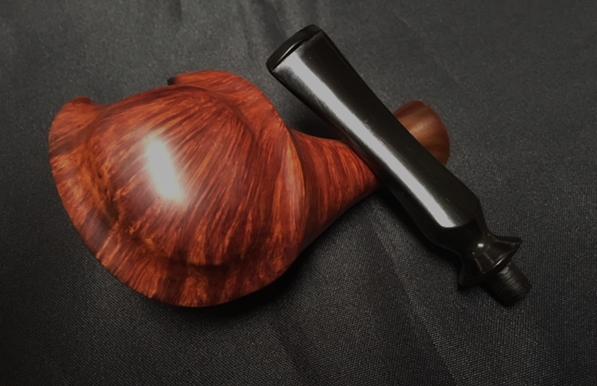
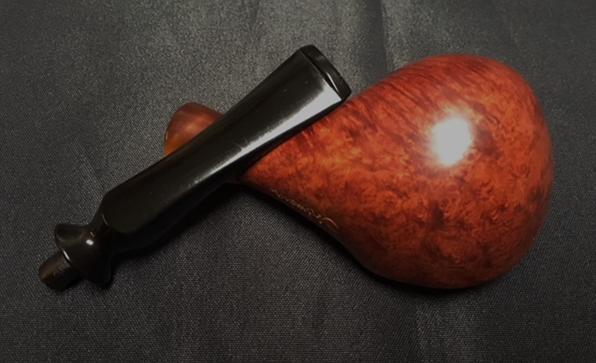
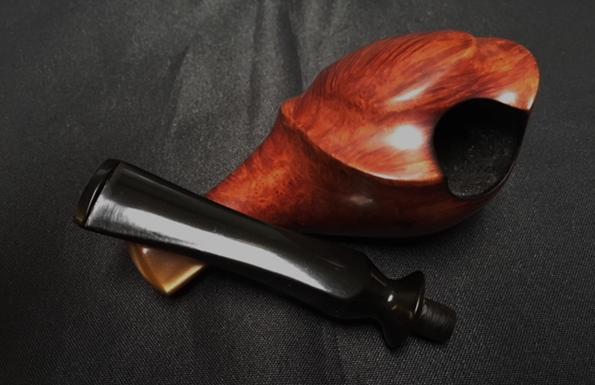
Advertisements hiked the prices well higher than Holm’s pipes ever sold for before, and one key campaign was a New York Times full-page spot for an elegant Seven-Day’s Set.  The set, no surprise, is now difficult to find.

When I began work on these two blogs, I expected to accomplish the task in a single essay.  Becoming bogged down by the complexity of pulling together so much information and realizing the result was becoming massive even by my wildest discourses, I knew I had to do a two-parter.

This installment started as the re-stemming of the first Danish freehand I bought for a pittance on eBay, in January 2015, as a sort of New Year’s excuse to make another P.A.D. gift to myself.  Besides, it was a Buy Now deal for no more than $25 with shipping included, and no other watchers seemed to know it was something special.  I wrote the original “Grooming a Ben Wade Golden Walnut Freehand” blog in 2015 because, until then, I never received an estate pipe from that online source that was anywhere close to being ready to smoke.  The clean-up, in my mind, would be easy, just sanitizing the insides, removing a few petty scratches and deciding what to do with the rough rim and shank opening that were coated black, a condition I pretty much disliked.  I modify the fact that the pipe was the first I bought, as I already had a couple of other freehands, as noted in Part 1.
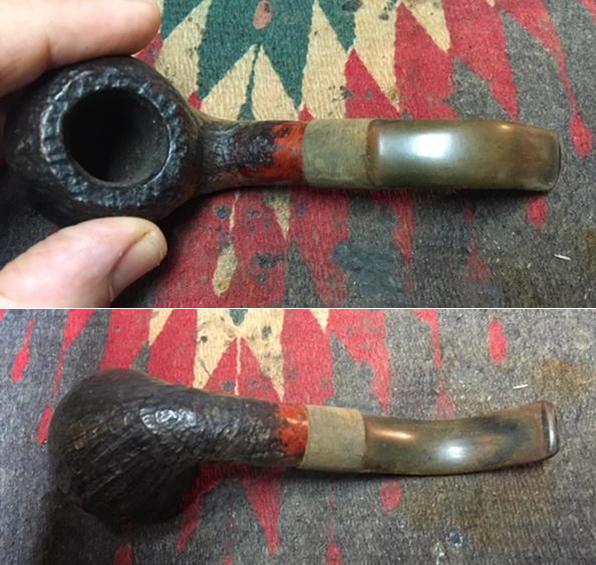
In hindsight, I recognize how, in the easier process of cleaning the freehand, I preserved what I now consider to be an unpleasant though common black finish for the natural, radiant, lighter golden hue of the walnut that was, furthermore, left with what I considered an inappropriate dark brown finish.  And so, instead of the sole re-stemming idea, I found myself with the option of removing the black stain where it was added and lightening the original dark brown stain on the rest as well as the minuscule scratches.  Even though I intended the pipe for my own personal use, I had a compulsion to do the job as I would for sale to a customer.
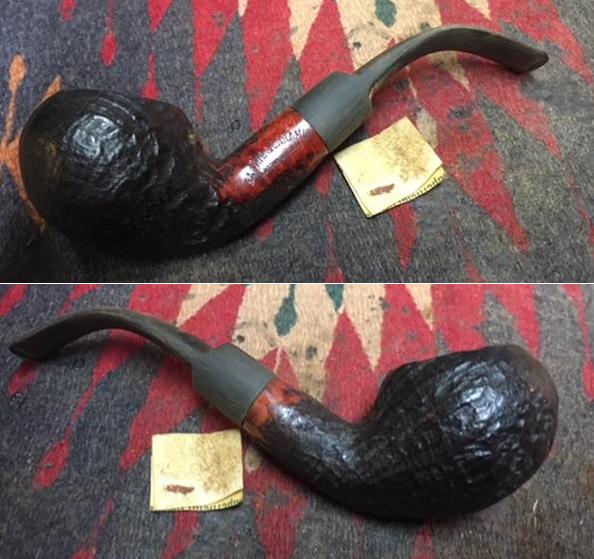
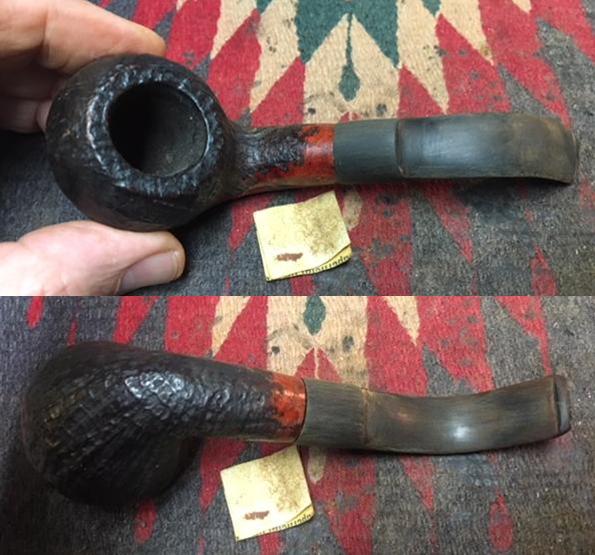
RESTORATION

After choosing the full refurbish course, I began with the replacement of the original Vulcanite bit that had broken during a harried move using my car.  The photos below show the bit as it was before I smoothed it out when I first bought the pipe.Here’s a similar new Lucite bit as it came in the mail, showing the huge 9mm tenon that was almost the same diameter as the one I used.If I owned a proper, electric stem turner, the job of fitting the tenon of the fancy Lucite bit to the shank opening would have been easy.  But I had the pleasure of doing it by hand, and after previous experiments I didn’t want to mess it up with a single miscalculated stroke of a file.  That left the sandpaper method.  And now the fancy replacement, after hours of going over with 150-grit paper and smoothing with a steady, ascending progression, ready to heat in the oven for about 20 minutes at 210° F., and again after bending. I micro meshed the stummel, other than the rim, from 1500-12000.I was ready to soak the stummel in isopropyl alcohol. Micro meshing again, the wood was nice and smooth, and the rim and shank opening only needed some work with the 180-grit side of a sanding pad.Reaming and sanding the chamber from 150-600-grit paper, that part looked much better.Just for good measure, I retorted the pipe, and the result was magnificent.Having re-thought my initial desire to lighten the wood, I used red and brown Tripoli and several coats of carnauba in the buffing. CONCLUSION

Wanting more than anything else to get an idea of what Holm was like as a person, I put the question to Lon.  His answer came back with almost no delay.

“Preben once bought a 1960s Chevy Camaro – a muscle car – for about $3,000.”  After a pause, Lon finished.  “He shipped it back to Denmark.  It cost him crazy money, at least $100,000, to do this, but that’s how he was: a rock star.  He was the only person in Denmark with that kind of car!”

Perhaps because I am a recovered alcoholic with 30 years of sobriety, something in the pervasive silence concerning the cause of Holm’s early death made me suspect that alcohol was involved.  Looking at various photos of Holm, I couldn’t help noting the sadness of his face and eyes.  At last, I found a single comment in a thread about Holm’s Ben Wade pipes on a popular smoker’s forum that read in part, “Preben literally drank himself to death…after his wife bolted with the kids.”

And so, again, but with difficulty, I turned for an answer to the man who might have been the best friend Holm ever had.  There was a long pause before Lon replied.

“When he was very strong working, making crazy money from his pipes, he was drinking a lot, as a youngster will, with everything that goes with that,” Lon said with great care and delicacy.  I didn’t ask him to expand on the last part.  “He was a rock star!  He didn’t know what to do with that.  He was getting everything he wanted and was bored.”

We both fell silent for a moment before Lon concluded, “I think we’ve said everything that needs to be said about that.”

I agree.

My hope is that this two-part essay will inspire future pipe makers, hobbyists and artisans alike to take up Chasing the Grain.  I, for one, intend to try my hand and imagination at the noble goal, even if the results are less than spectacular.

I want to express my deep gratitude to Lon, a consummate gentleman, for his invaluable help filling in details of Preben Holm’s life, craft and various business adventures.  Lon was unstinting in taking the time to share his reminiscences, not one but three times.  The only protest I have is that Lon ignored my repeated requests for a photo of himself of his choosing.  That’s why I was forced to track down, with great difficulty, the one I used.  So, Lon, don’t blame me if you don’t like it!

Lon also opened up about himself.  Born in 1940 in New York and now retired as a pipe buyer and seller, Lon described himself as the only child of highly educated parents who considered him “an idiot” because of his dyslexia.

“That was my motivation to leave home when I was 17 and look for work in the city,” Lon said in a matter-of-fact tone.

The uncontrollable condition, which causes written letters to become jumbled beyond sense, places Lon in the company of such historical and cultural figures as Leonardo da Vinci, Albert Einstein, Tom Cruise, Walt Disney – and even at least three U.S. presidents: George Washington, John F. Kennedy and George W. Bush.

The idea horrifies me, the more so because, when I was a child, I suffered from another optic disorder that mimicked dyslexia but proved curable.  I’ll never forget the shame of not being able to read or write until I turned 10 and moved to Shaker Heights, Ohio, where I was blessed to meet a woman who loved children and teaching more than anything else.  Sonia Golden was an innovator in special education and knew how to do her job when my so-called teachers in California had dismissed me as “borderline retarded.”

On his own in the Big Apple, Lon started out as a sales clerk for Wally Frank, earning $37.50/week.  That’s $321.63 in today’s dollars – not bad for a start, but a long way from the ultimate success he had after discovering Holm, for all intents and purposes, first partnering with the brilliant pipe maker and later, as a friend, guiding him to bigger distributors.

The shop known as Pipe Lon was only for a relatively short time, but the quality pipes he sold there can still be found online.  Lon told me he was in the habit of stamping various pipes he sold, whether they also bore the makers’ marks or not, with the following nomenclature.  In some cases, only the best guesswork can predict the actual craftsman.* The opening quote strikes me as an elegant example of the habit of personifying wood that I discussed in Part 1.

SOURCES

https://www.cia.gov/library/Publications/the-world-factbook/geos/vq.html
https://www.google.com/search?q=poul+winslow&rlz=1C1CHBF_enUS769US769&oq=poul+winslow&aqs=chrome..69i57j0l5.17027j0j4&sourceid=chrome&ie=UTF-8
http://www.danishpipemakers.com/forside/2006/1update/sixten/sixten.html
https://www.finepipes.com/danish
https://pipedia.org/wiki/Holm,_Preben
http://www.scandpipes.com/info.asp?text=3
http://www.pipephil.eu/logos/en/logo-benwade.html
https://pipedia.org/wiki/Ben_Wade
https://pipedia.org/wiki/Lane,_Ltd.
http://www.nytimes.com/1982/08/05/business/business-people-lane-ltd-gets-outsider-lane-tobacco-maker-places-outsider-helm.html
https://trademarks.justia.com/722/75/snug-harbour-72275082.html
http://pipesmagazine.com/forums/topic/ben-wade-by-preben-holm
https://rebornpipes.com/2015/01/24/grooming-a-ben-wade-golden-walnut-danish-freehand/

Kathy’s Dad’s Pipes #8– Restemming & Restoring George Koch’s “Malaga” Freehand


Blog by Steve Laug

This is the eighth of the “Malaga” pipes that I am working on from Kathy’s Dad’s pipes. I will retell the story of the estate. Last fall I received a contact email on rebornpipes from Kathy asking if I would be interested in purchasing her late Father, George Koch’s estate pipes. He was a lover of “Malaga” pipes – all shapes and sizes and she wanted to move them out as she cleaned up the estate. We emailed back and forth and I had my brother Jeff follow up with her as he also lives in the US and would make it simpler to carry out this transaction. The long and short of it is that we purchased her Dad’s “Malaga” pipes. There are some beautiful pipes in that lot. I have never seen this many “Malagas” together in one place in all of my years of pipe restoring and refurbishing. They varied from having almost pristine to gnawed and damaged stems that will need to be replaced. These were some well used and obviously well loved pipes. Cleaning and restoring them will be a tribute to this pipeman. (Here is a link to some history of the Malaga Brand if you are interested: https://rebornpipes.com/tag/malaga-pipes/. There are also links there to a catalogue and the maker George Khoubesser.)Knowing about the pipeman who held the pipes in trust before me gives another dimension to the restoration work. This is certainly true with this lot of pipes. I can almost imagine George picking out each pipe in his assortment at the Malaga shop in Michigan. I may well be alone in this, but when I know about the person it is almost as if he is with me work on his pipes. In this case Kathy sent us not only information but also a photo of her Dad enjoying his “Malagas”. Once again, I am including that information so you can know a bit about the pipeman who held these pipes in trust before they are passed on to some of you. I include part of Kathy’s correspondence with my brother as well…

Jeff…Here is a little about my dad, George P. Koch…I am sending a picture of him with a pipe also in a separate email.

Dad was born in 1926 and lived almost all his life in Springfield, Illinois. He was the youngest son of German immigrants and started grade school knowing no English. His father was a coal miner who died when Dad was about seven and his sixteen year old brother quit school to go to work to support the family. There was not much money, but that doesn’t ruin a good childhood, and dad had a good one, working many odd jobs, as a newspaper carrier, at a dairy, and at the newspaper printing press among others. He learned to fly even before he got his automobile driver’s license and carried his love of flying with him through life, recertifying his license in retirement and getting his instrumental license in his seventies and flying until he was grounded by the FAA in his early eighties due to their strict health requirements. (He was never happy with them about that.) He was in the Army Air Corps during World War II, trained to be a bomber, but the war ended before he was sent overseas. He ended service with them as a photographer and then earned his engineering degree from University of Illinois. He worked for Allis Chalmers manufacturing in Springfield until the early sixties, when he took a job at Massey Ferguson in Detroit, Michigan. We lived in Livonia, and that’s where his love for Malaga pipes began. After a few years he returned to Allis Chalmers and we moved back to Springfield. I remember that when we went back to Michigan to visit friends, Dad had to go to the Malaga store and acquire a few new pipes. Many a year I wrote to Malaga and they picked out a pipe for me to purchase that I could give Dad for a Christmas or birthday present. He was always pleased. His favorites were the straight stemmed medium sized bowl pipes, but he liked them all.  He had some other pipes, but the Malagas were his favorites. I remember him smoking them sitting in his easy chair after work, with feet up on the ledge by the fire burning in the fireplace.  Growing up it was my job to clean them and he liked the inner bowl and stem coated with Watkins vanilla, leaving a little of that liquid in the bowl to soak in when I put them back on the rack. Dad quit smoking later in life and so they’ve sat on the racks for many years unattended, a part of his area by his easy chair and fireplace. Dad passed when he was 89 years old and it finally is time for the pipes to move on. I’m very happy they are being restored by you and your brother and hope they find homes who enjoy them as much as Dad did. Thank-you for your care and interest. — Kathy, the oldest daughter

Kathy, once again I thank you for providing this beautiful tribute to your Dad. We will appreciate your trust in allowing us to clean and restore these pipes. I am also trusting that those of you who are reading this might carry on the legacy of her Dad’s pipes as they will be added to the rebornpipes store once they are finished.

The eighth of the pipes that I chose to work on is another “Malaga” Freehand. This one is a smooth pipe with a carved faux plateau top on the rim and on the shank end. It has a look that is similar to an Alpha Freehand. It had a chewed and ruined vulcanite stem. Some great grain peeks through the grime around the bowl. The warm brown finish on the bowl appeared to be good condition under the dust and tars of time. I am even more certain that Malaga pipes must have been oil cured. The uniform finish and the light weight lead me to think that is the case. Once more there are no fills in the bowl or long shank. I have yet to find a fill in any of the bowls I have worked on in this lot and looking through what remains I think it is fair to say I won’t find any in them either.

The plateau style rim top on this Freehand was originally covered and almost filled in with an overflow of lava from the thick cake in the bowl. The rim top and the inner and outer edge of the bowl were in good condition. The stamping was on the underside of the shank and was clear and read “Malaga” near the shank/stem junction. The black vulcanite stem was ruined with bite marks on the top and a large hole on the underside of the stem. It would need to be replaced. The interior of the pipe was dirty. I know that George thoroughly enjoyed his pipes as is evidenced by the wear that all of them show. Jeff took these photos before he started the cleanup work on the pipe. Jeff took close up photos of the bowl and rim to show the condition of the pipe before he started to work his magic on it. The exterior of the bowl and shank were dirty. You can see the lava on the rim top, the cake and remnants of tobacco in the bowl and the nicks on the rim top and bowl around the outer edge of the rim. The second rim top photo shows the thick cake and debris in the bowl. It is dirty but in otherwise good condition. He also took photos of the side and of the faux plateau on the shank end. He also took a photo of the shank to show the stamping on the underside of the shank. You can see the overall condition of the shank before cleanup.The next photos show the damage to both surfaces of the stem near the button, the worn and chewed down button and the missing underside of the stem. The stem is a write off – misshapen and ruined.Working on this eighth pipe followed the same pattern as all of these pipes. Jeff had reamed the bowl with a PipNet pipe reamer and followed up with a Savinelli Fitsall pipe knife to remove the cake. He scrubbed out the mortise and the airway in the shank and the stem with alcohol, cotton swabs and pipe cleaners. He scrubbed the exterior of the bowl, rim, shank and stem with a tooth brush and Murphy’s Oil Soap to remove the oils and tars on the bowl, rim and shank. He rinsed it under running water. He dried it off with a soft cloth. The lava mess on the rim was thoroughly removed without harming the finish underneath it. Without the grime the finish looked really good. As noted above the stem was a write off and would need to be replaced with a suitable one. I took photos of the pipe to show its condition before I started my work on it.    I took a photo of the rim top to show the condition it was in after the cleanup. Jeff was able to remove all of the lava on the rim top and edges. You can see the faux plateau that has been carved into the top of the rim. It is a nice looking finish. The stem was clean and you can see the tooth chatter and marks on the surface near the button and the bite through on the underside.I went through my can of scavenged stems and found one that was suitable for a replacement for this chewed Freehand stem. It was similar in terms of shape and less than a ¼ inch shorter than the chewed through original. Once it was cleaned up it would work nicely. The tenon was very close to the right size which was a bonus. I took photos of the replacement stem to show the condition it was in. It was lightly oxidized and had some light tooth chatter and dents. I painted the surface of the stem with the flame from a Bic lighter to heat and lift the dents in the vulcanite. This is one of those times that I am glad vulcanite has memory. The marks lifted to the surface and a bit of sanding would smooth things out.There was a nick out of the top of the button on the inner left side. I filled it in with a drop of clear superglue. Once it was dry I sanded it smooth with 220 grit sandpaper. I sanded the rest of the stem at the same time and removed some of the oxidation on the surface.Finally I had a pipe to restem that was quite easy. The only thing I did was smooth out the tenon and then build it up with a light coat of clear nail polish. When the coat dried I put the stem in the pipe and took the following photos to show the progress. I kind of like the look of the stem. It works with the pipe quite well. I polished the briar with micromesh sanding pads – wet sanding with 1500-2400 grit pads and dry sanding with 3200-12000 grit pads. I wiped the briar down after each pad with a damp cloth to remove the sanding dust. I rubbed the bowl down with Before & After Restoration Balm to deep clean the briar and particularly the reshaped areas. The product works to clean, enliven and protect the briar. I hand rubbed it with my fingers and wiped it off with a soft cloth. I buffed the bowl with a horsehair shoe brush to polish it. The briar really began to have a rich shine. I took some photos of the bowl at this point to mark the progress in the restoration. I cleaned out the stem with alcohol, pipe cleaners and cotton swabs. This replacement stem was in far better condition than some of the others I have been using. It did not take much scrubbing  before the airway was clean.I polished the stem with micromesh sanding pads – wet sanding with 1500-2400 grit pads and dry sanding with 3200-12000 grit pads. I wiped the stem down after each pad with a damp cloth to remove the sanding dust. I used the Before & After Pipe Polish to remove the small minute scratches left in the vulcanite. I finished by wiping the stem down with a final coat of Obsidian Oil and set it aside to dry. You may have noticed the roughness of the tenon in the above photos. It is smoother than it looks but I polished it some more to finish it for the final photos.I the polished stem and bowl with Blue Diamond to polish out the remaining small scratches. I gave the bowl multiple coats of Conservator’s Wax and the stem several coats of carnauba wax and buffed the pipe with a clean buffing pad to raise the shine. I hand buffed it with a microfiber cloth to deepen the shine. The pipe polished up pretty nicely. The finished pipe is shown in the photos below. This is the eighth of the many “Malaga” pipes that I am restoring from Kathy’s Dad’s collection. I am looking forward once again to hearing what Kathy thinks once she sees the finished pipe on the blog. This one is heading to India to a pipeman there who will carry on the trust from her father. The dimensions are Length: 5 ½ inches, Height: 2 inches, Outside diameter of the bowl: 1 ½ inches, Chamber diameter: 7/8 inches. Thanks for walking through the restoration with me as I worked over this Malaga from George’s estate. More will follow in a variety of shapes and sizes.