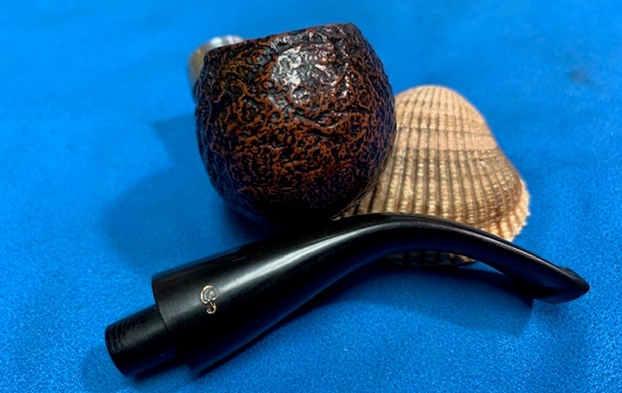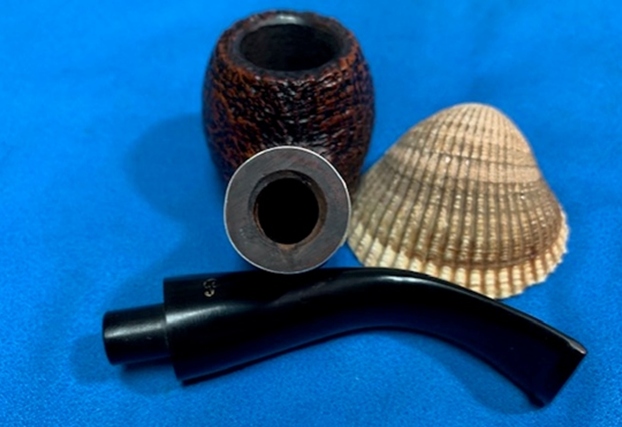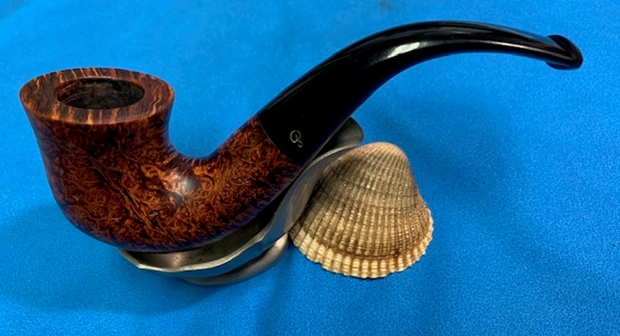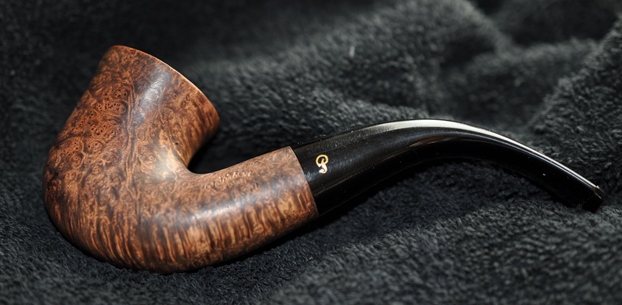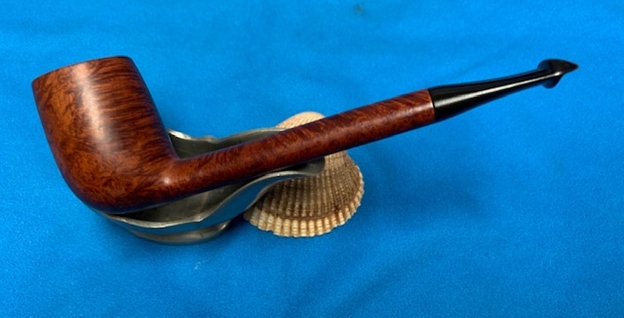
Tag Archives: Petersons Pipes

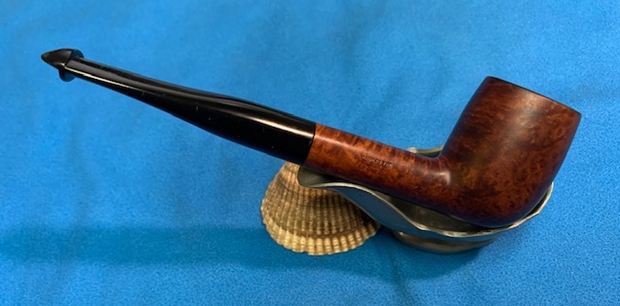
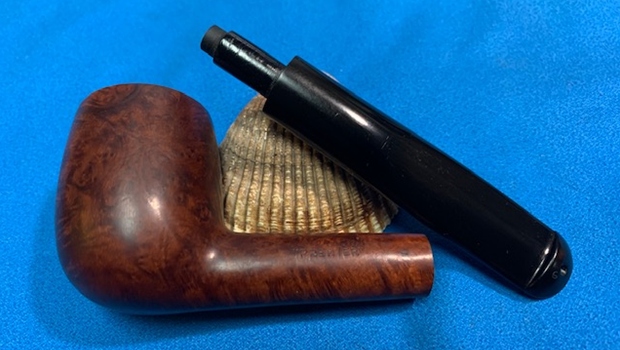
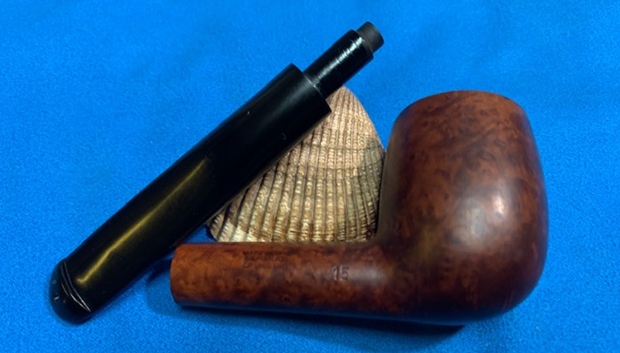
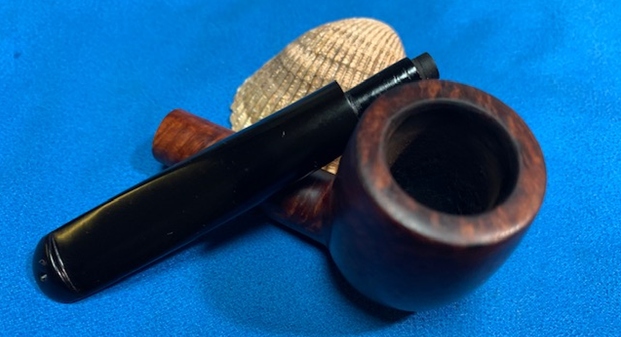
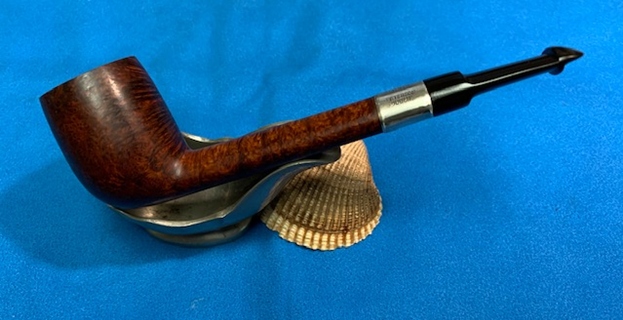
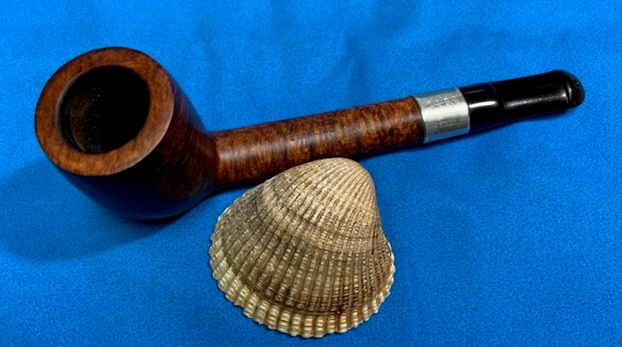
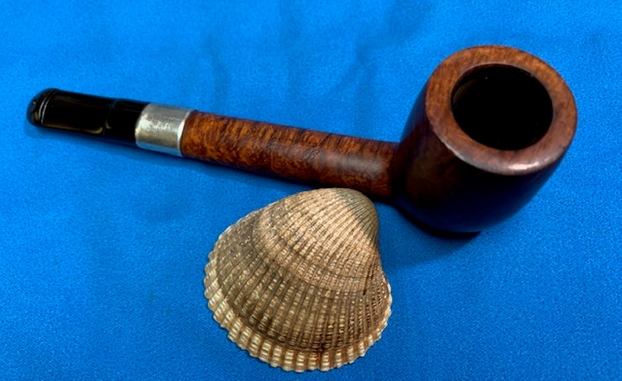
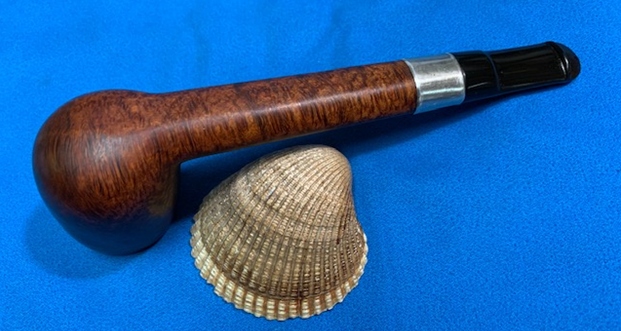
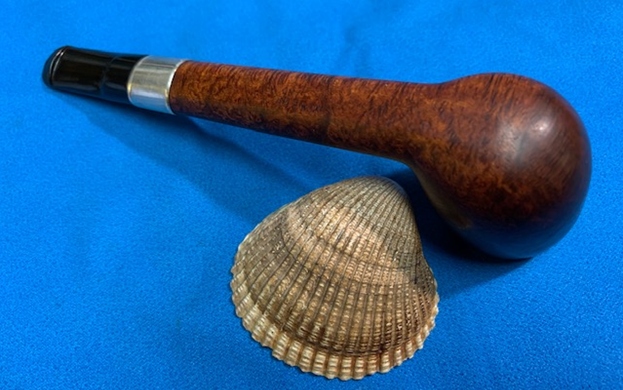
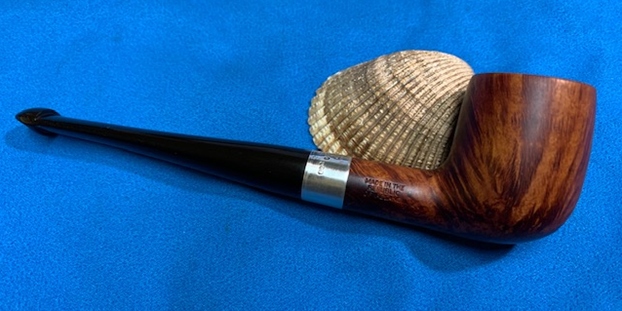
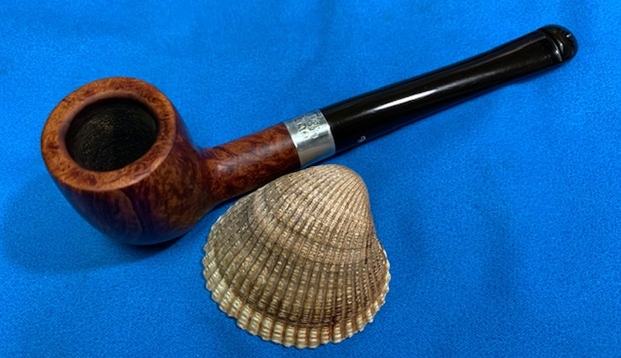
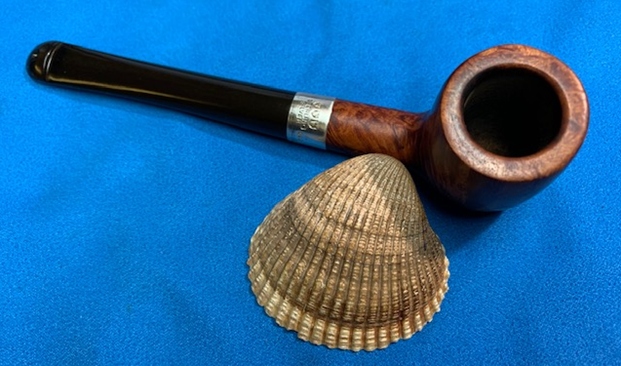
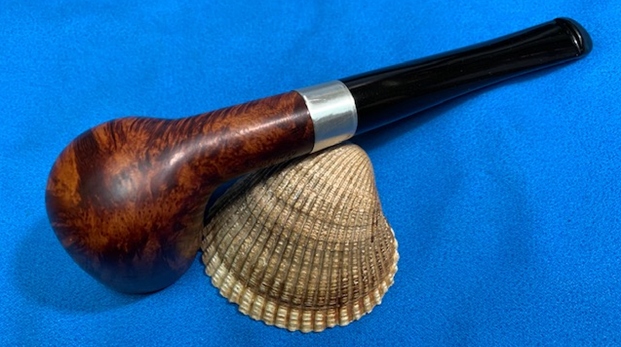
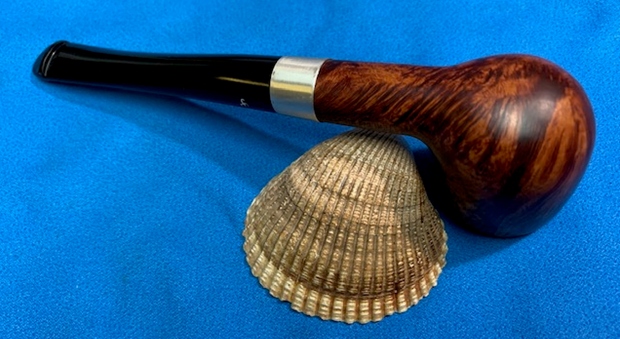
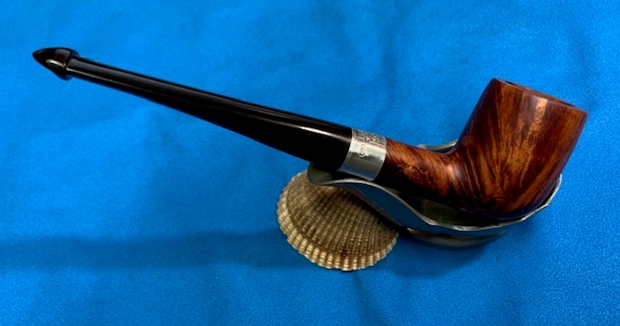
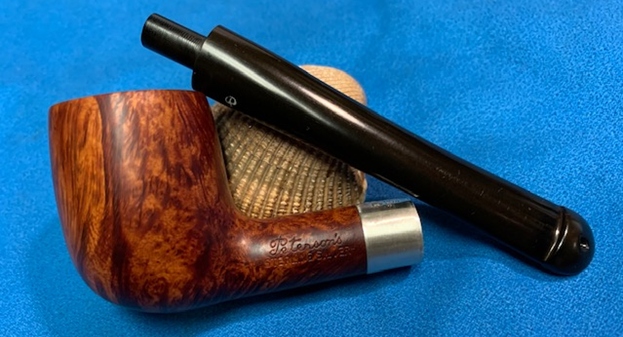
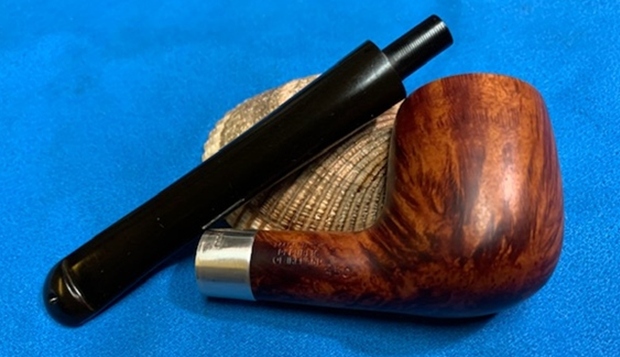
Breathing Life a Peterson’s Republic Era 1999 “Sterling Silver” 450 Billiard


Blog by Steve Laug

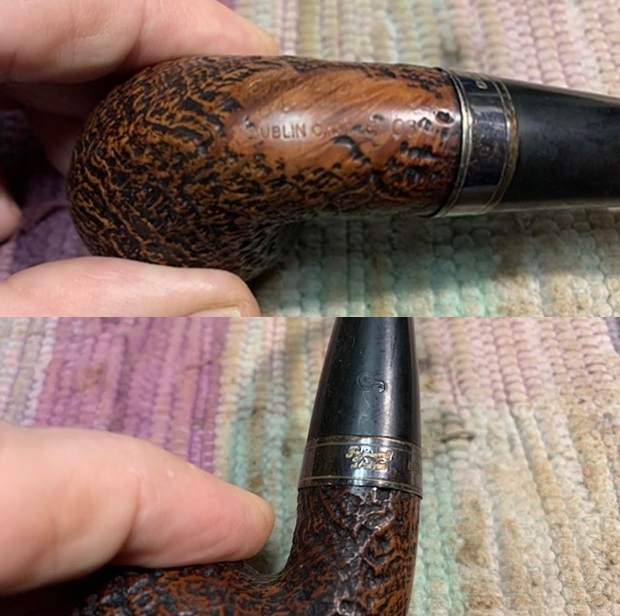
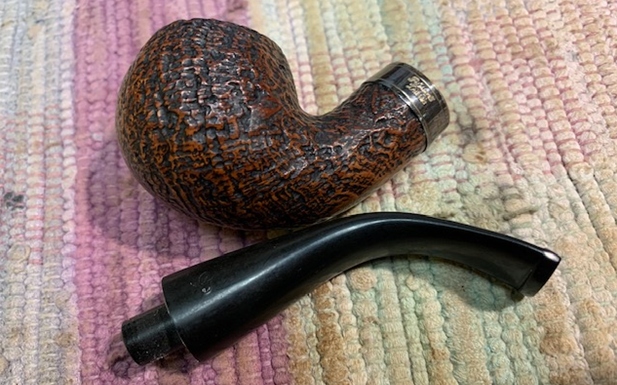
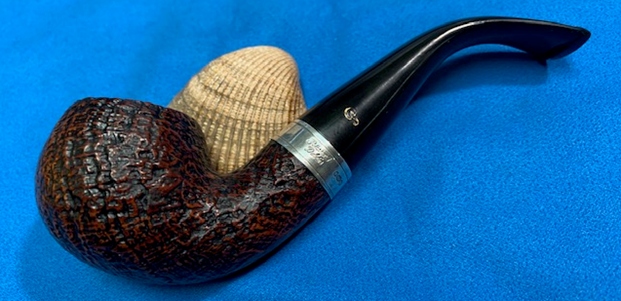
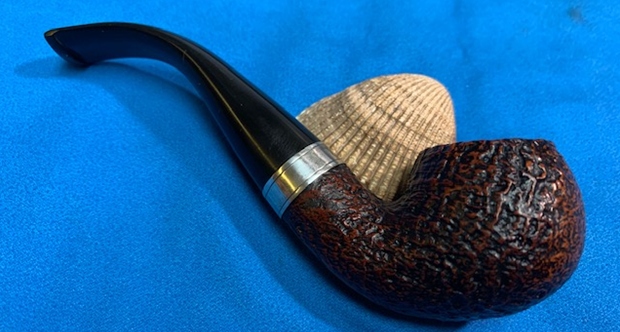
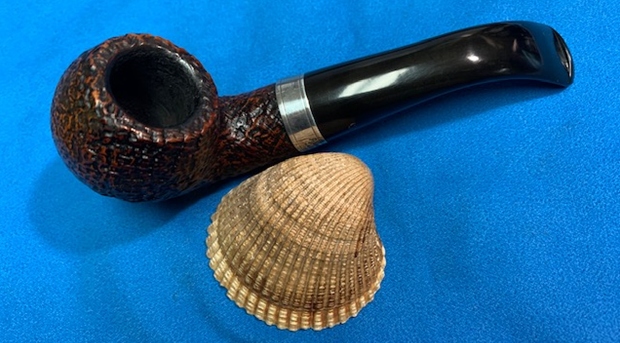
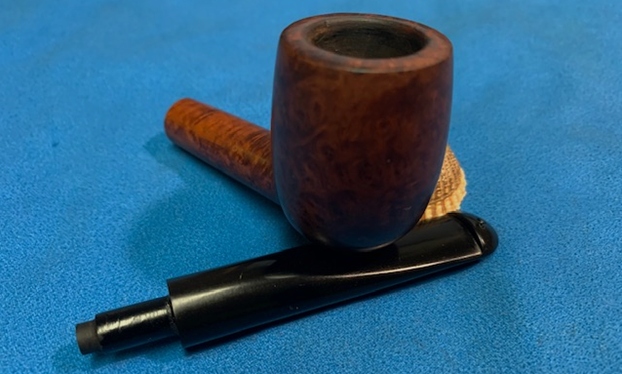
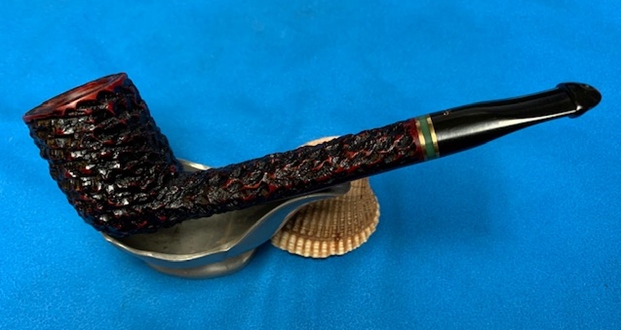
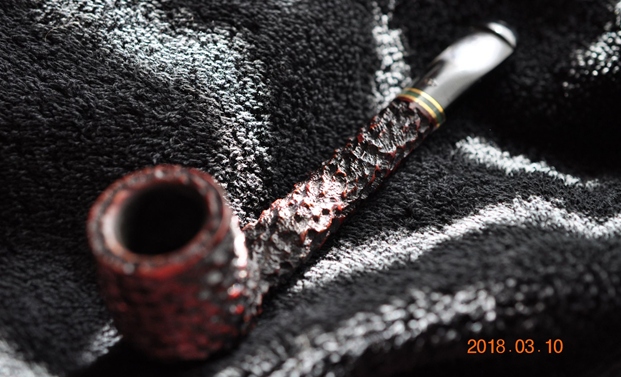
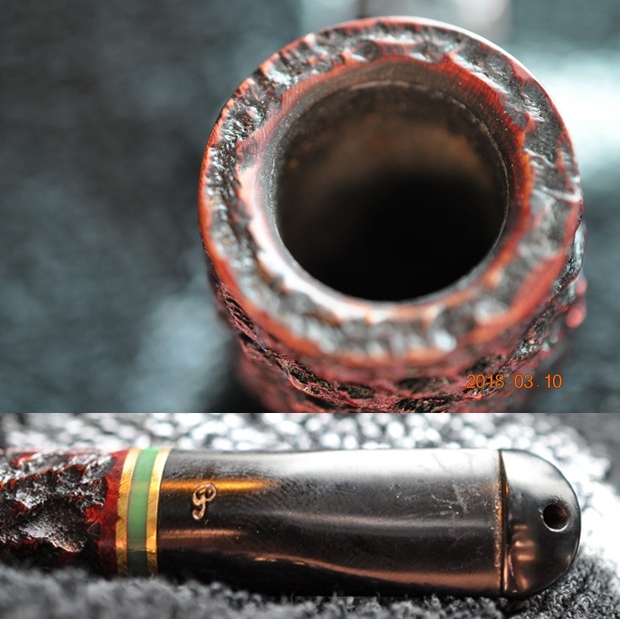
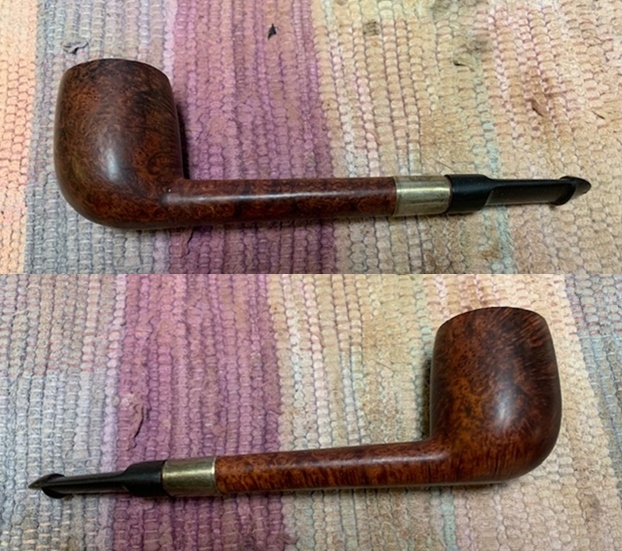
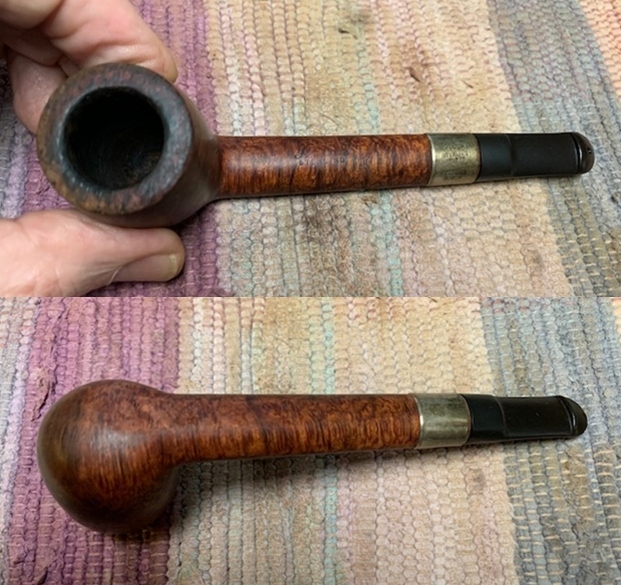
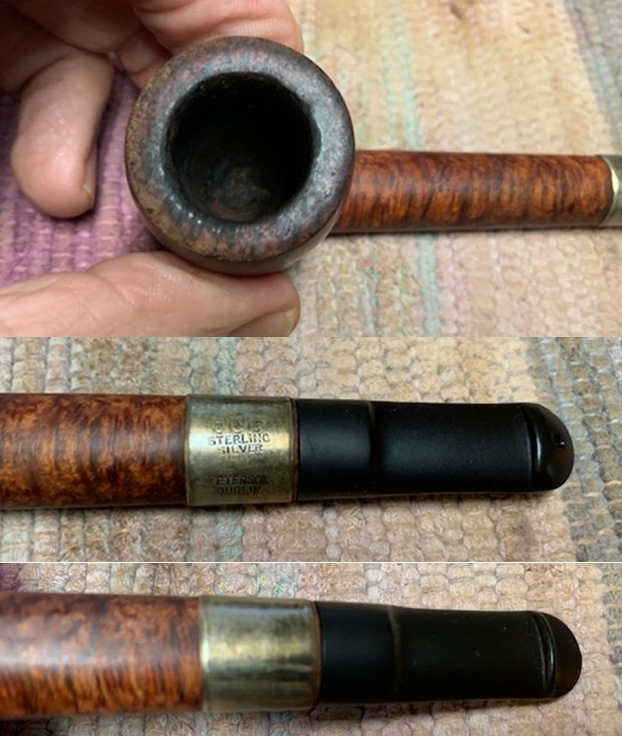
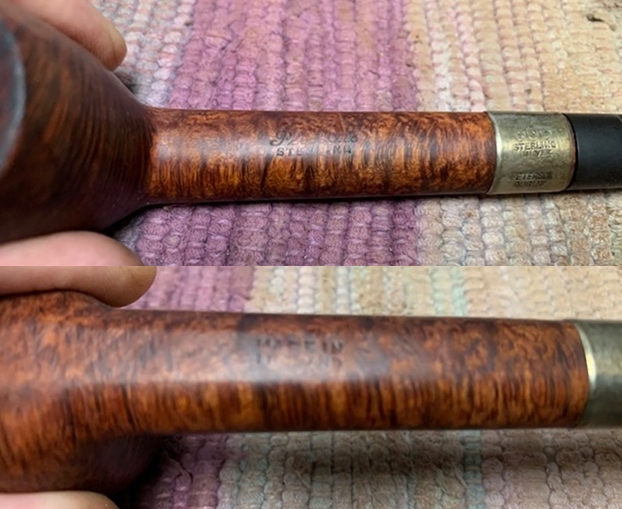
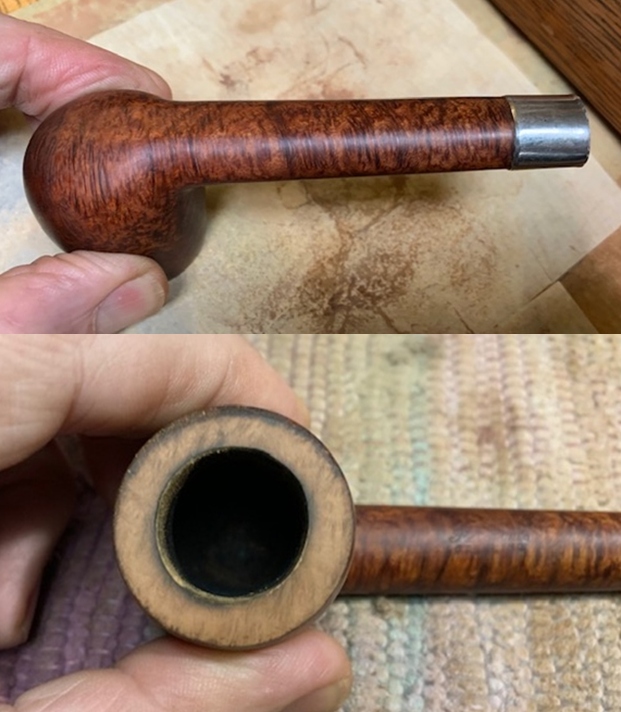
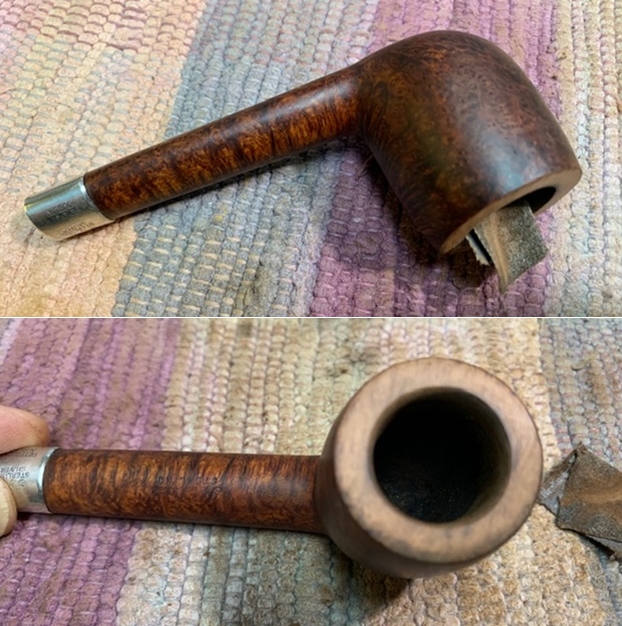
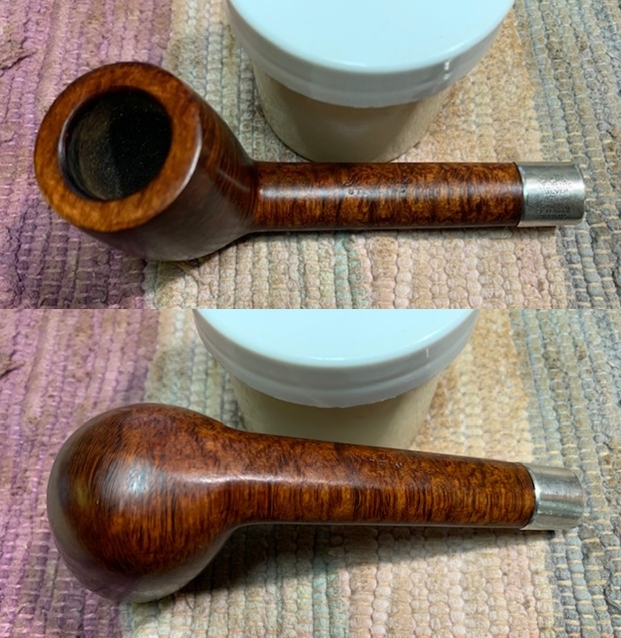
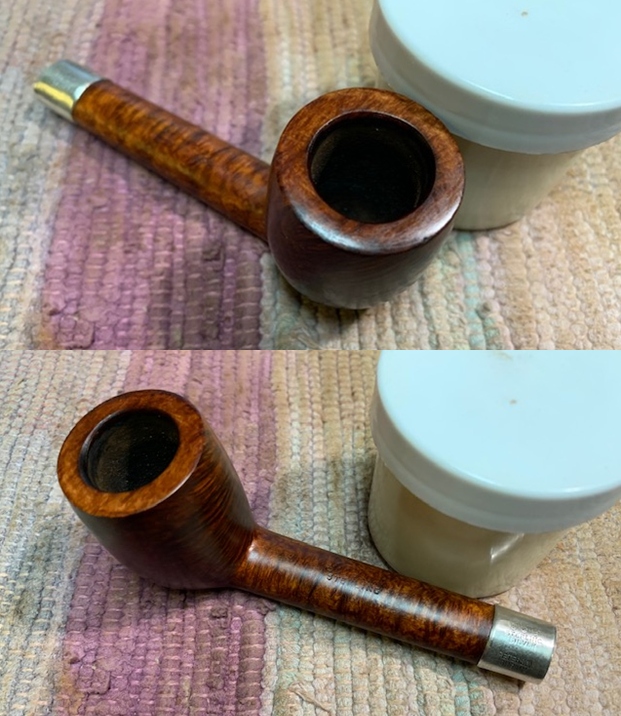
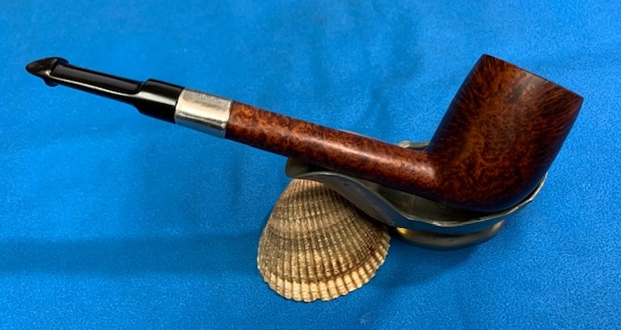
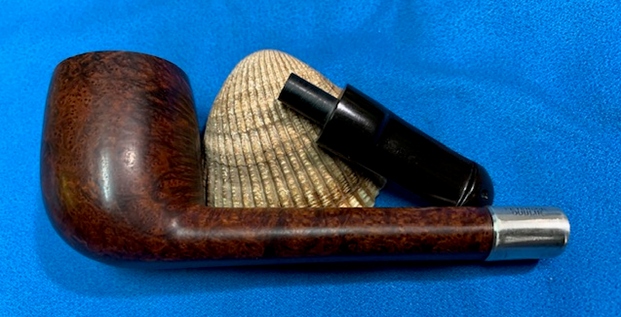
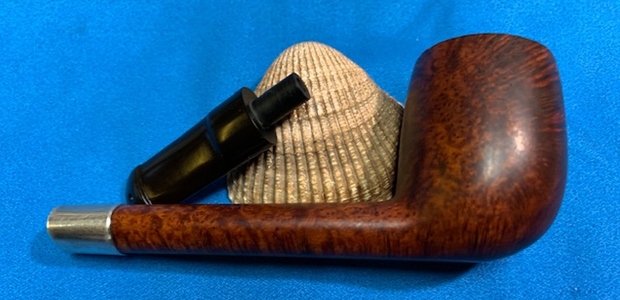
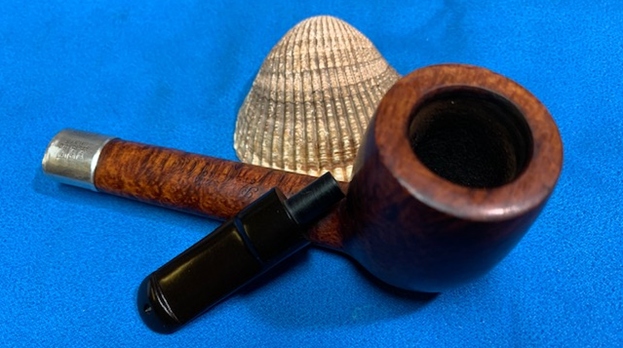
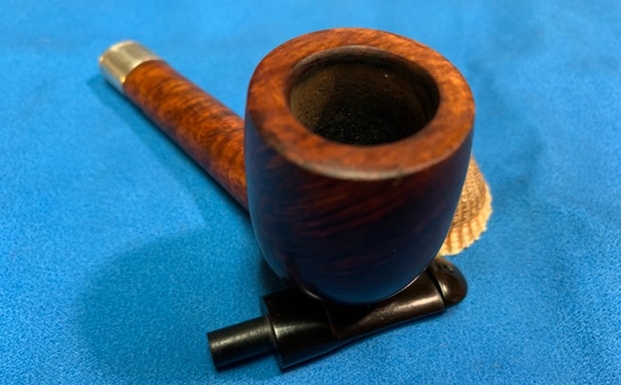
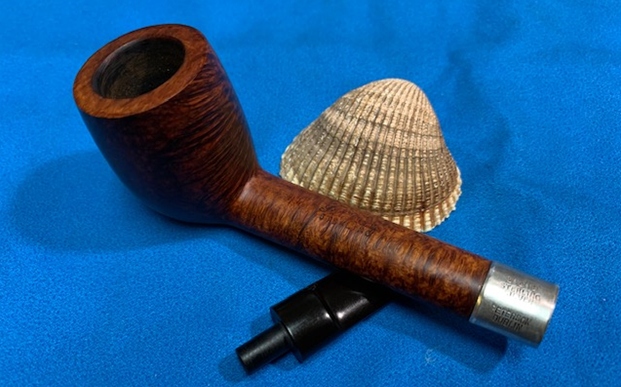
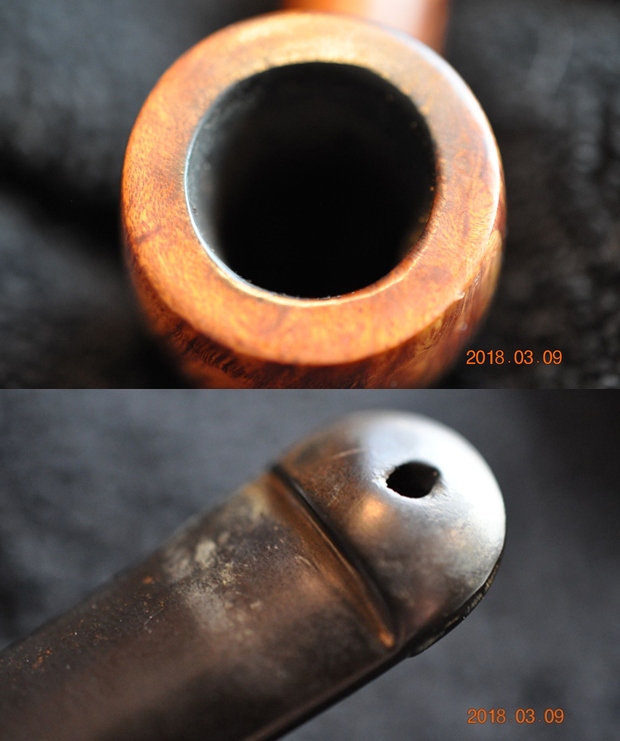
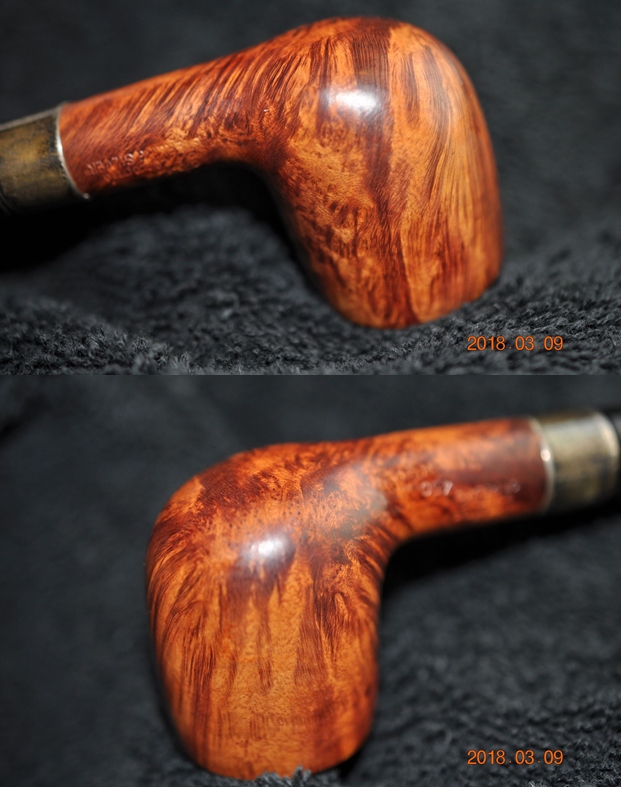
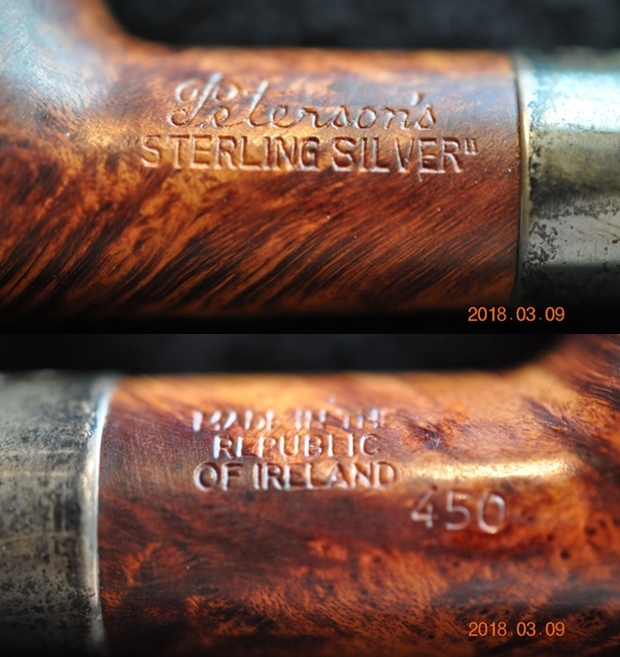
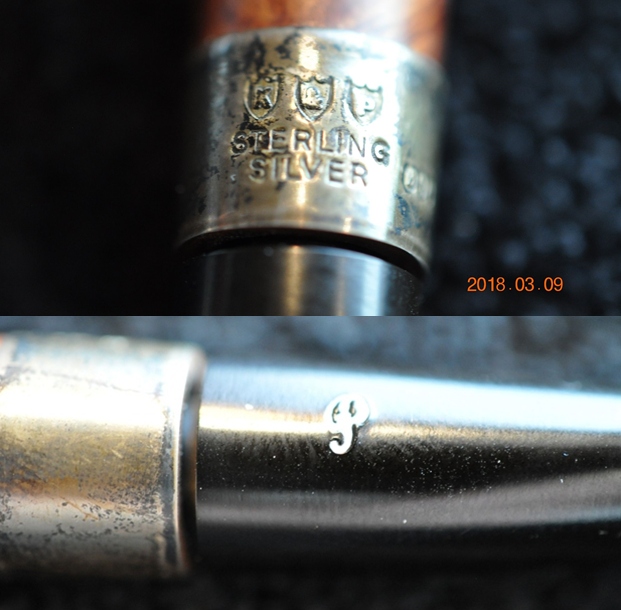
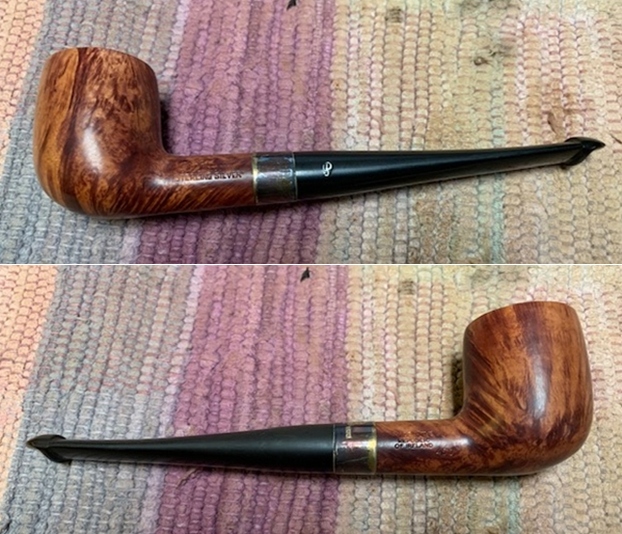
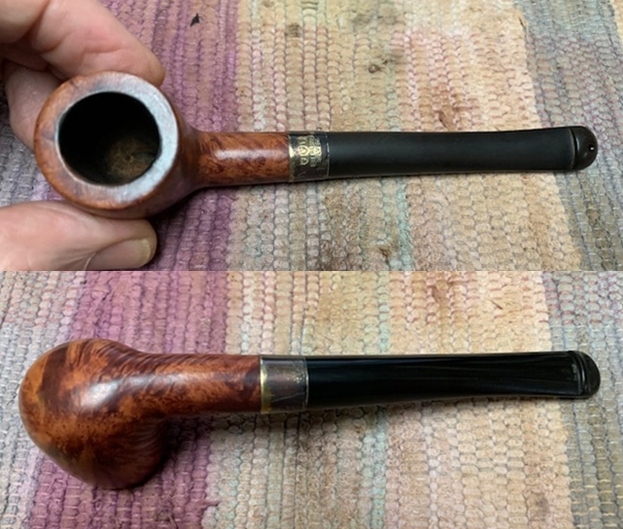
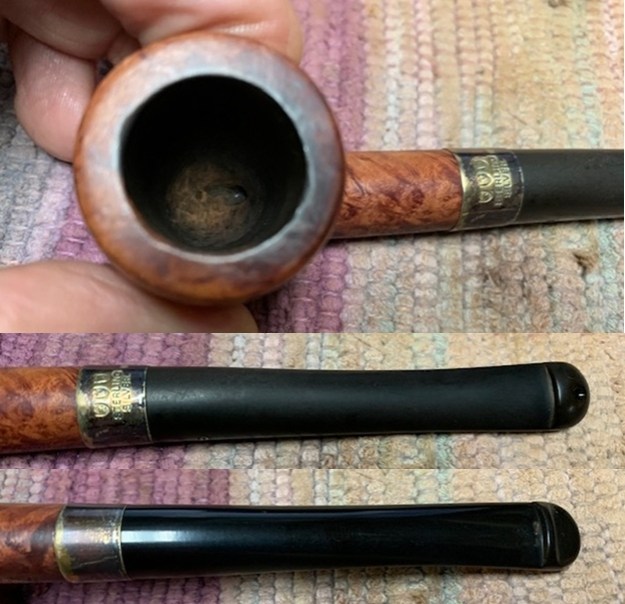
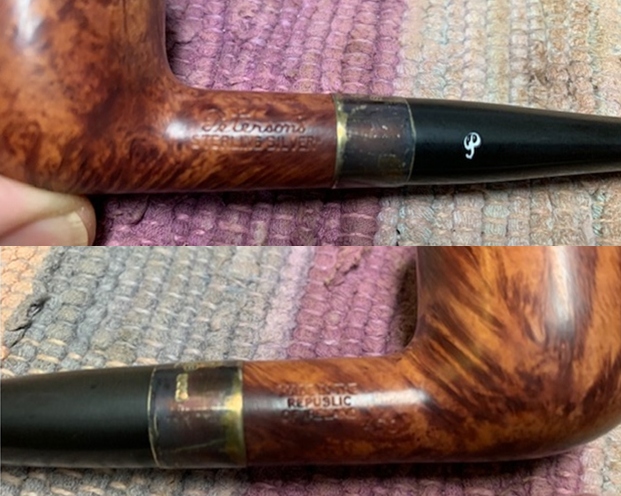
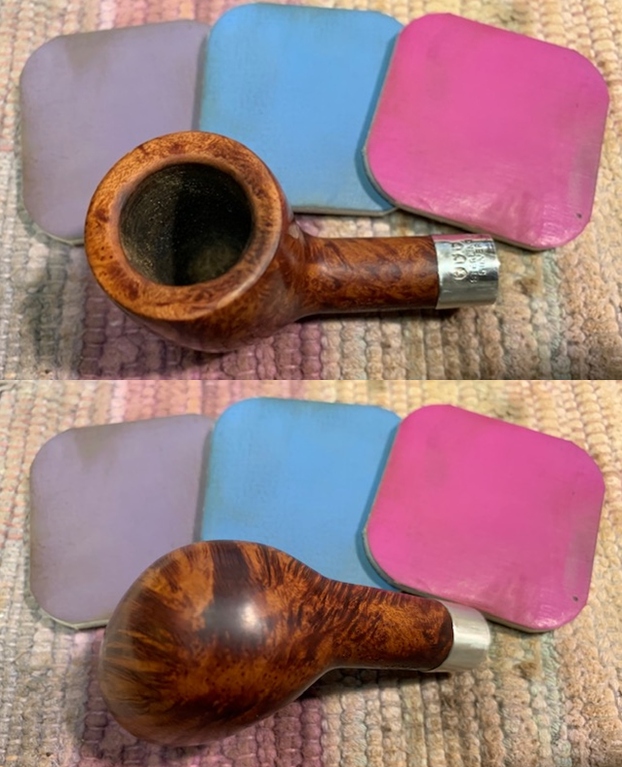
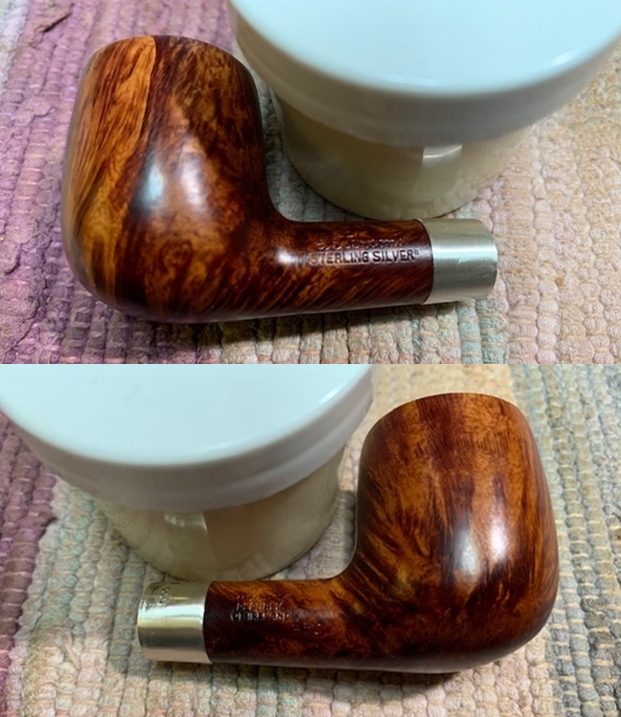
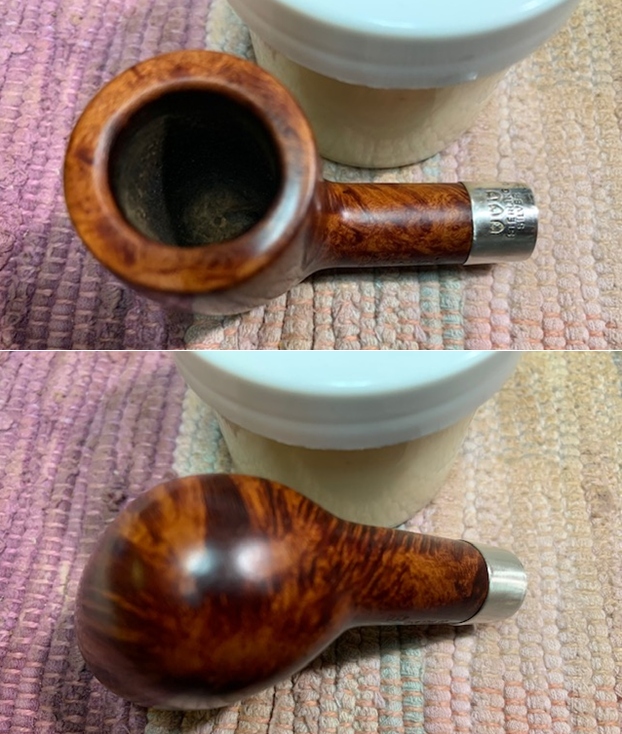
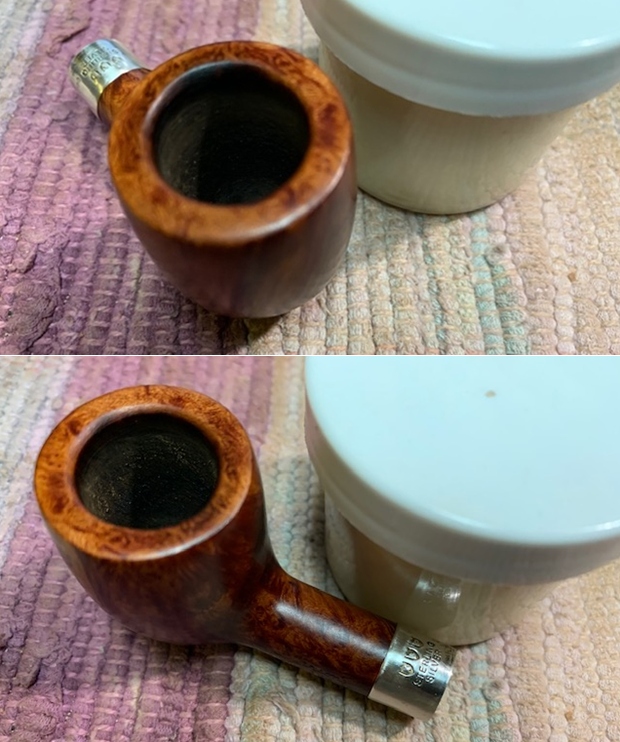
The next pipe I have chosen is smooth finished Peterson’s “Sterling Silver” pipe. This one is a 450 Billiard that has a light coloured finish with amazing grain around the bowl sides and shank. It is also incredibly dirty. It also came to us from the estate of Anglican minister that was a great friend of mine here in Canada. I was in the airport in Hong Kong when his daughter contacted me to tell me of his death and asked if I wanted to take on his pipes. I told her that I was sad to hear of his death but would gladly take on his pipes to restore and sell. This Billiard had a silver band on the shank that was badly oxidized. The grime on the finish was ground into the finish on the bowl sides. The contrast of the brown stains the grain really pop. It was stamped on the left side of the shank and read Peterson’s [over] “Sterling Silver”. It was stamped on the right side and read Made in the Republic of Ireland in three lines. That is over the shape number 450. The tarnished band is stamped with K&P in shields [over] Sterling Silver. That was followed by three hallmarks – the seated woman, the harp and the italic letter N. It was in filthy when he brought it to the table. The finish was dirty with grime ground into the briar sides and rim. There was a thin cake in the bowl and light spattering of lava on the rim top and the inner edge of the bowl. The stem was lightly oxidized and had light tooth marks and chatter on the top and underside on and near the button. Jeff took photos of the pipe before his cleanup work. They tell the story and give a glimpse of the promise that we see in this pipe. Jeff took photos of the rim top and stem to show the general condition of the pipe. The bowl is lightly caked and the rim top and edges have some light lava overflow. The stem is lightly oxidized and has light tooth marks on the top and underside near the button.   Jeff took some photos of the bowl sides and heel to show the amazing grain that was around this bowl. It is a nice looking pipe.He took photos of the underside of the shank to show the stamping. The stamping is readable in the photos below and is as noted above. He also took a photo of the band. I am including the information from Pipedia’s article on Peterson pipes. It is a great read in terms of the history of the brand (https://pipedia.org/wiki/Peterson). I have included a bit of the pertinent history here.
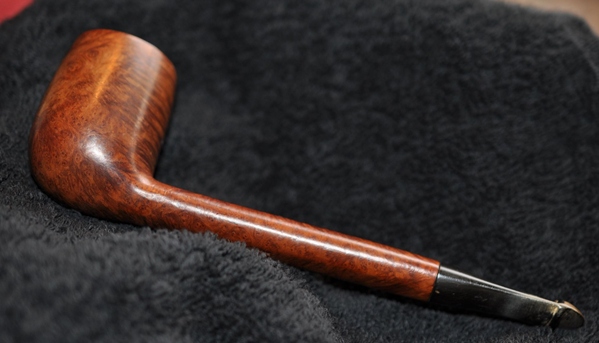
1950 – 1989 The Republic Era – From 1950 to the present time, the stamp for this era is “Made in the Republic of Ireland” in a block format generally in three lines but two lines have been used with or without Republic being abbreviated.

During the 1950’s and 60’s the Kapp & Peterson Company was still in the ownership of the Kapp family. However 1964 saw the retiral of the company Managing Director Frederick Henry(Harry) Kapp.

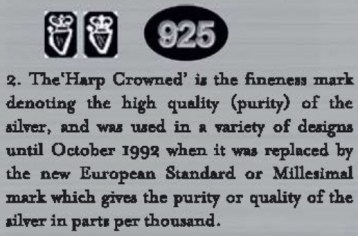
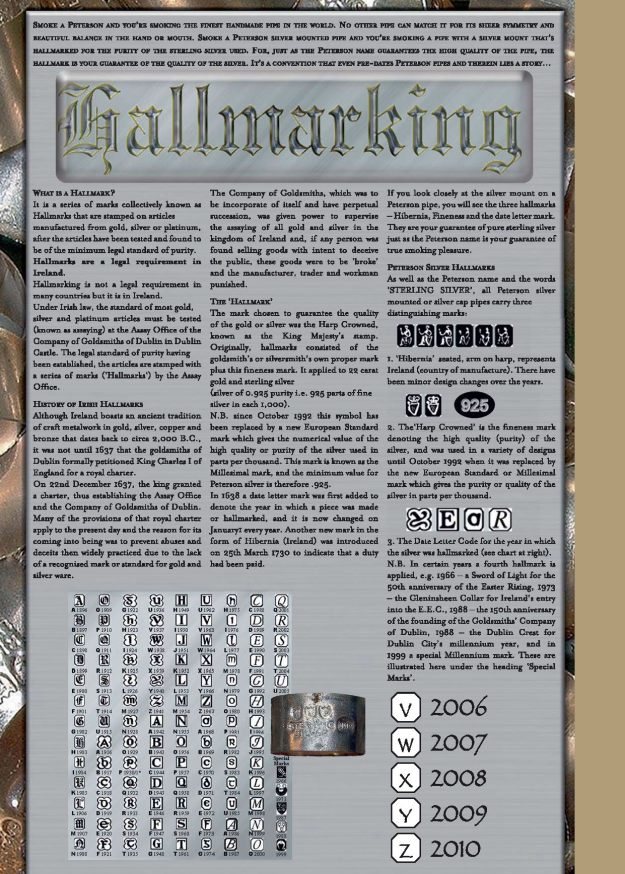
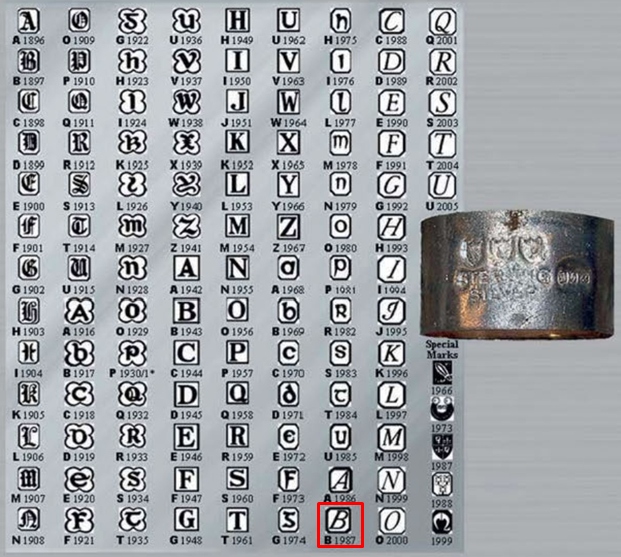
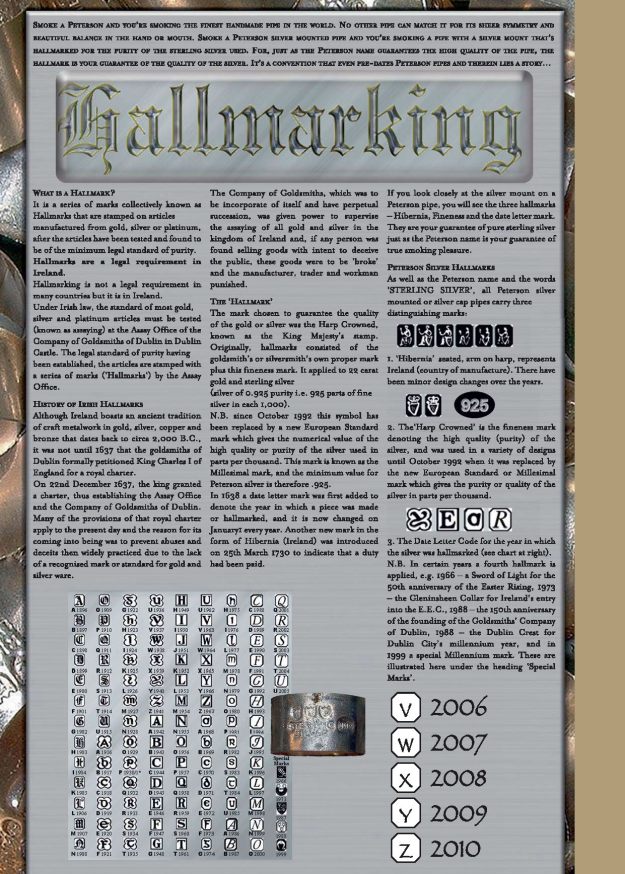
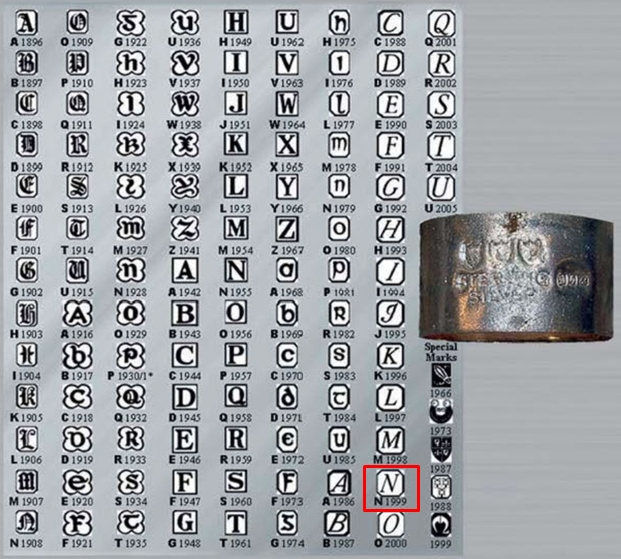
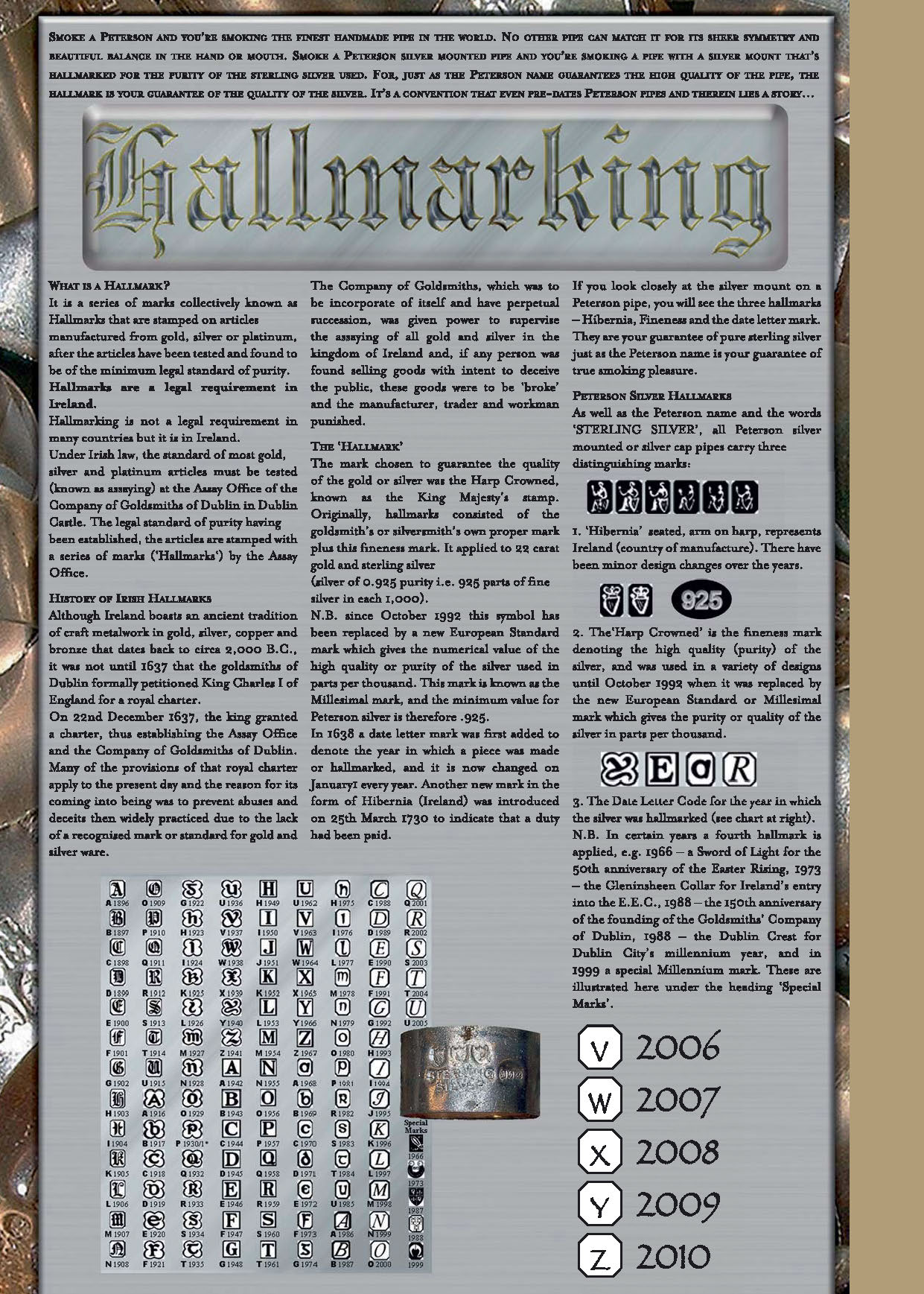
I turned to the hallmarking chart on one of the blogs on rebornpipes to lock down the date for the pipe (https://rebornpipes.com/wp-content/uploads/2015/05/peterson-cataloguecomp_page_27.jpg). The chart defines the meaning of each hallmark. The first one of the seated woman with a harp is known as the Hibernia stamp and identifies the pipe as made in Ireland. The second stamp is a crowned harp which is a fineness mark denoting the high quality of silver that was used. The third stamp is the italic letter N. I have included a larger screen capture of the chart in the lower left of the photo below.I have drawn a square around the date letter below. It identifies the date of this Peterson’s pipe to 1999.I knew that I was dealing with a Republic Era pipe made between 1950 and the present. The hallmarks date the pipe to 1999. Now it was time to work on the pipe.

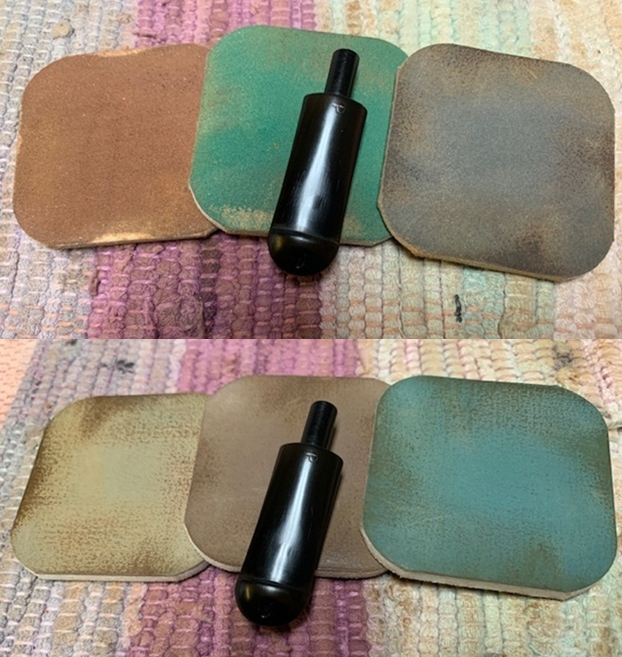
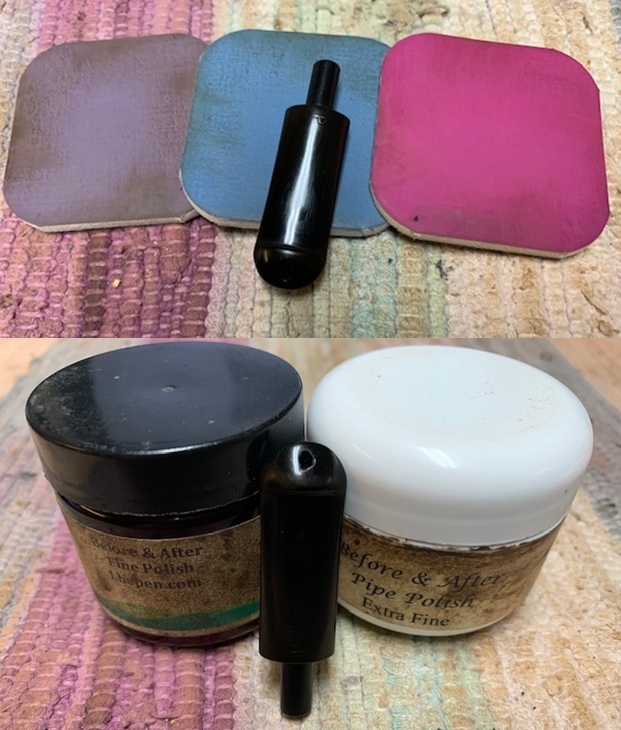
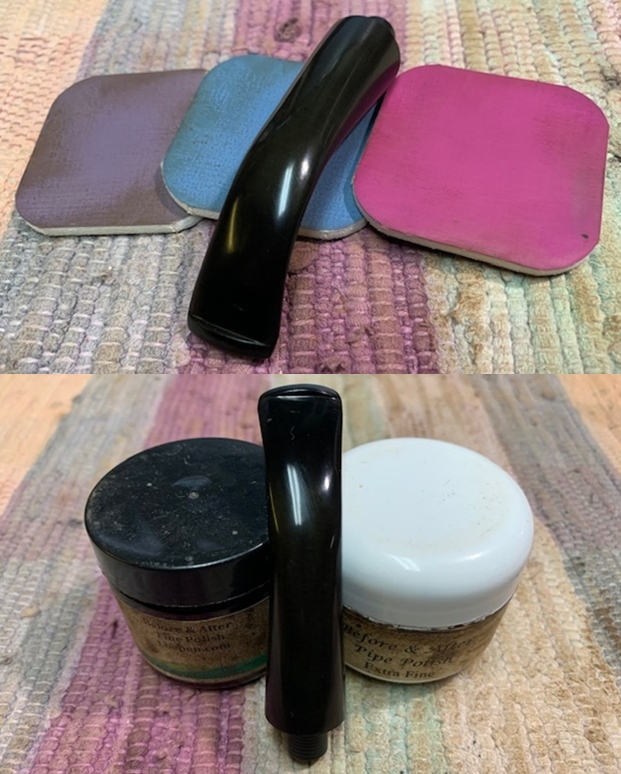
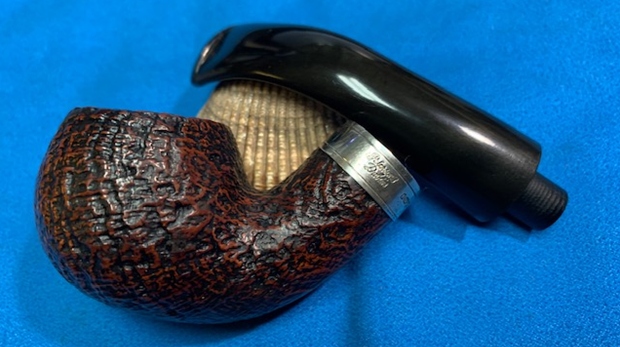
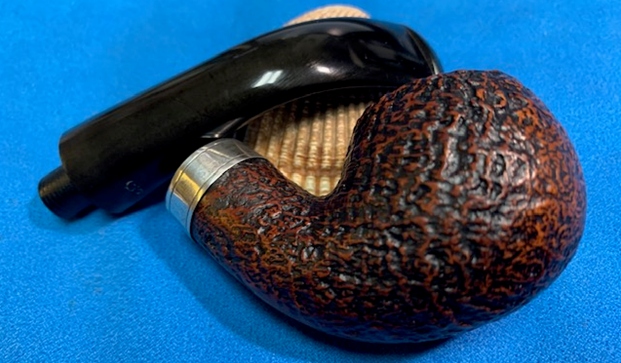
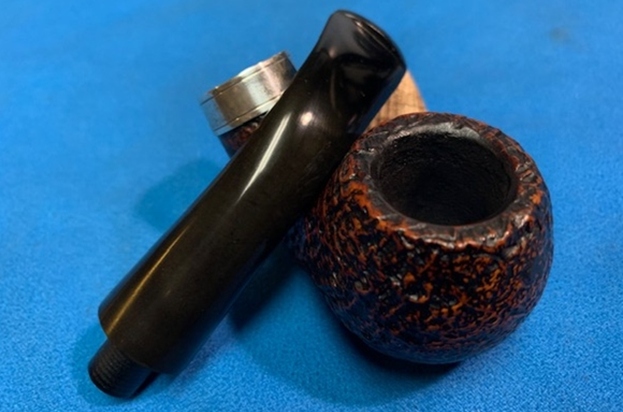
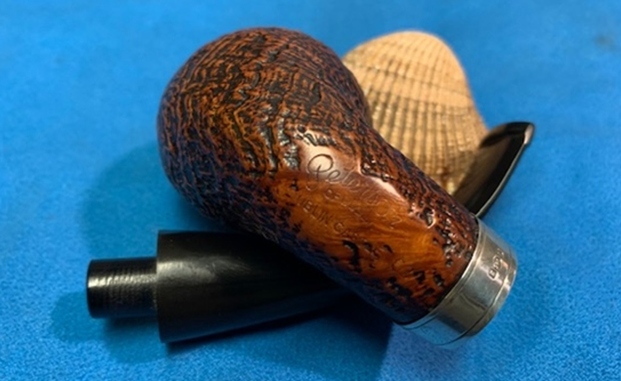
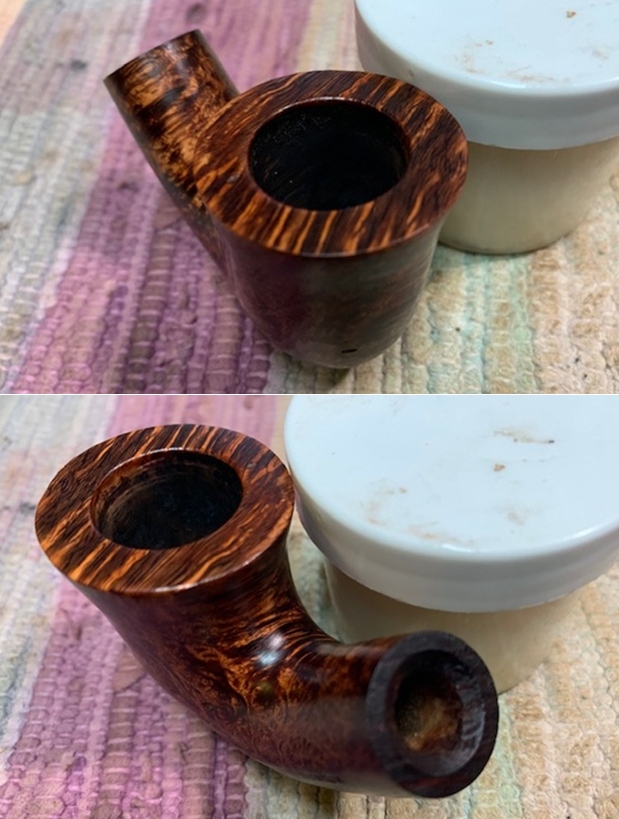
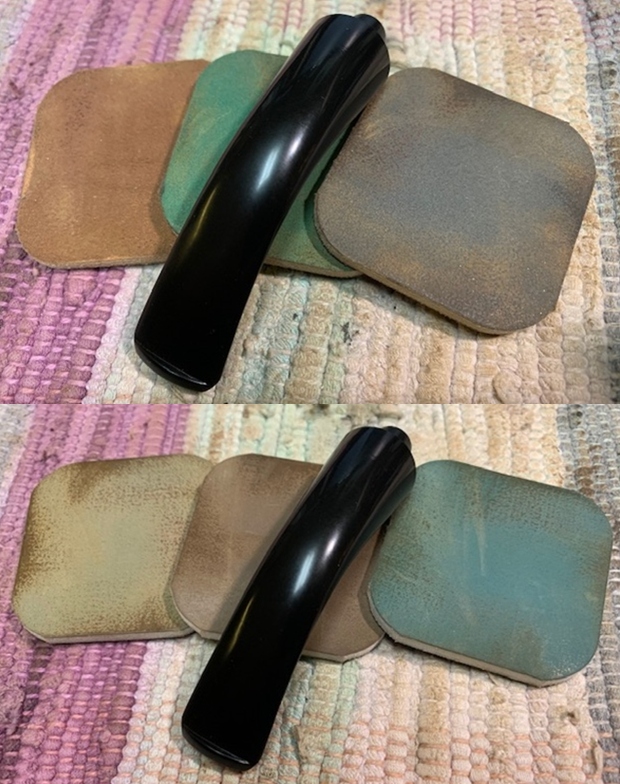
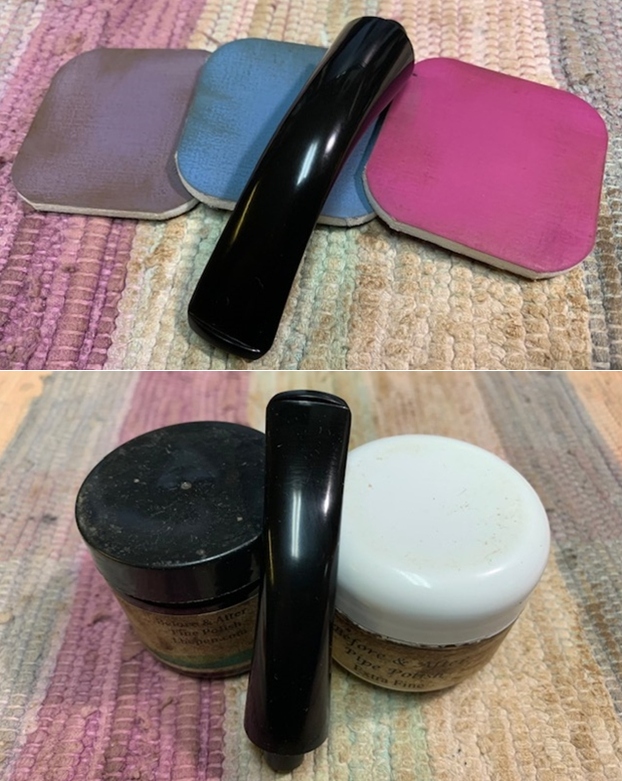
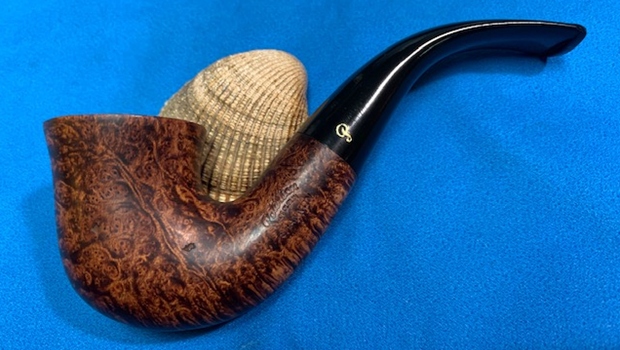
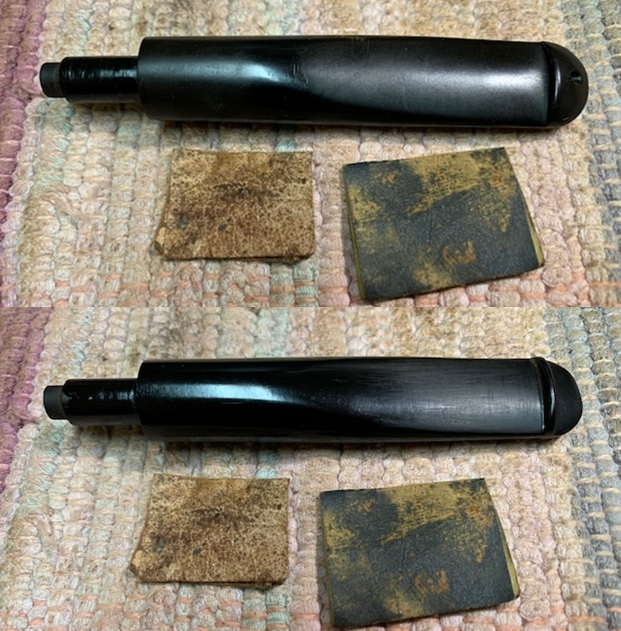
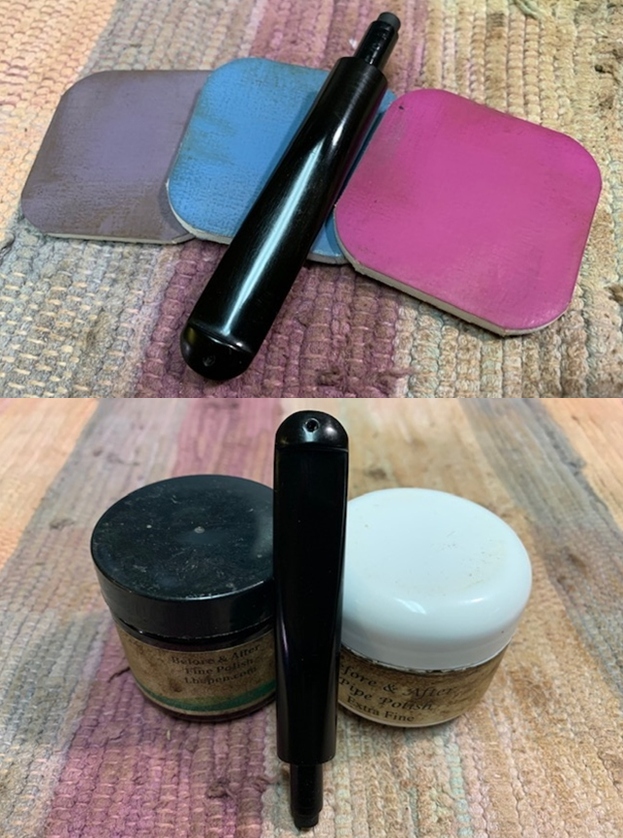
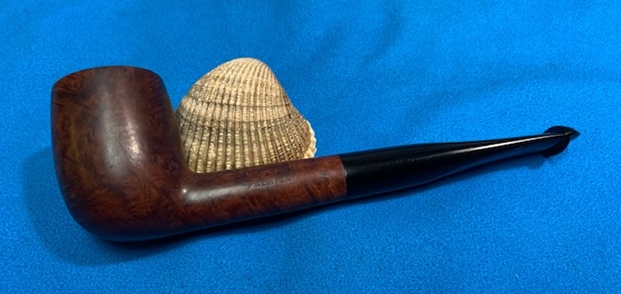
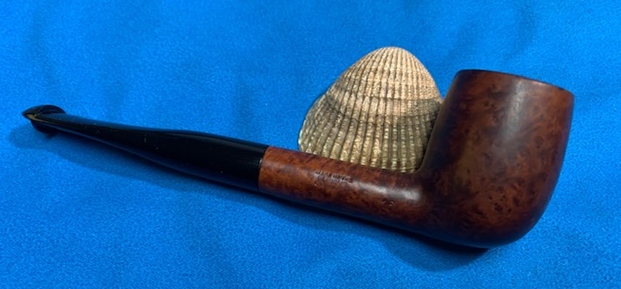
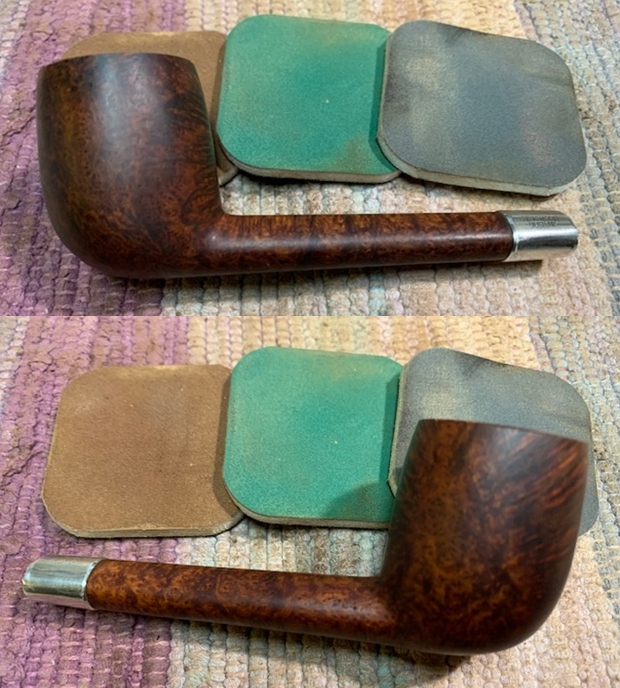
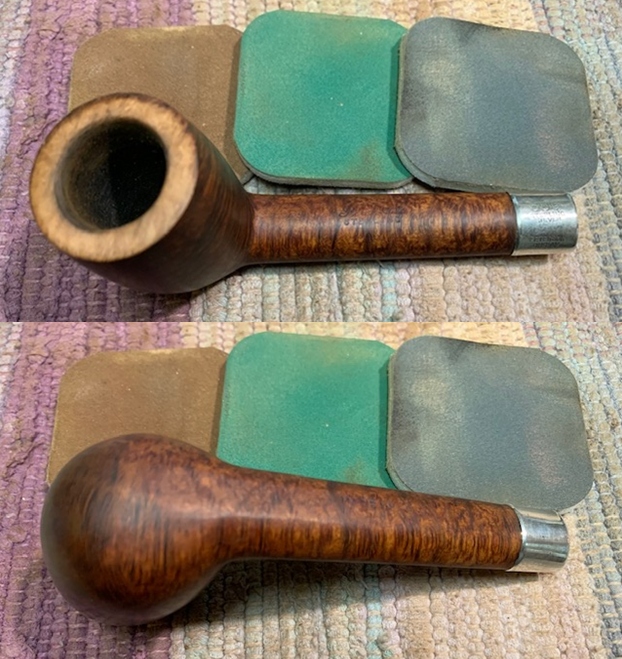
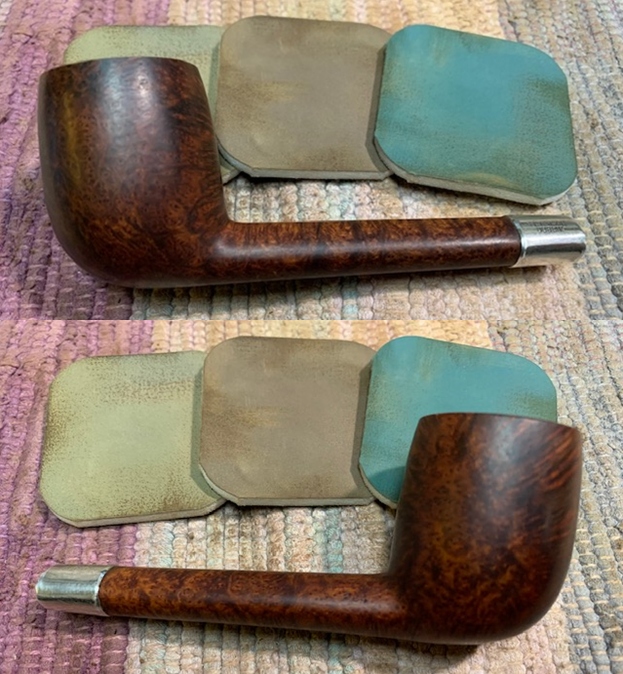
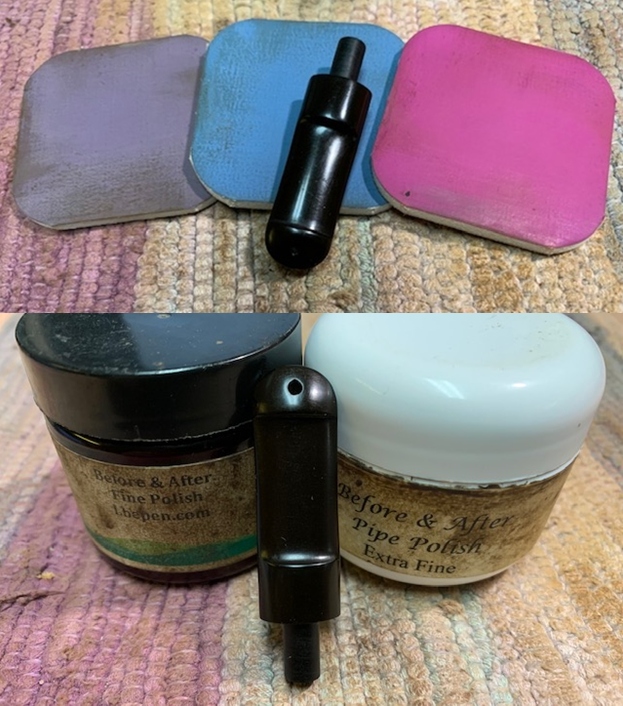
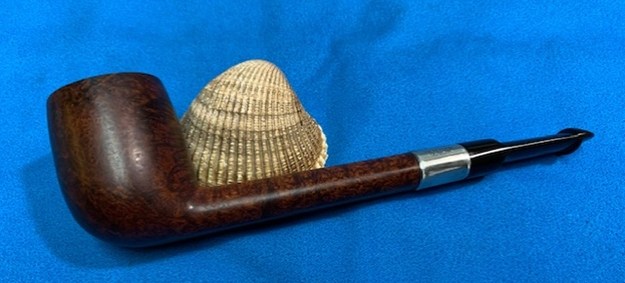
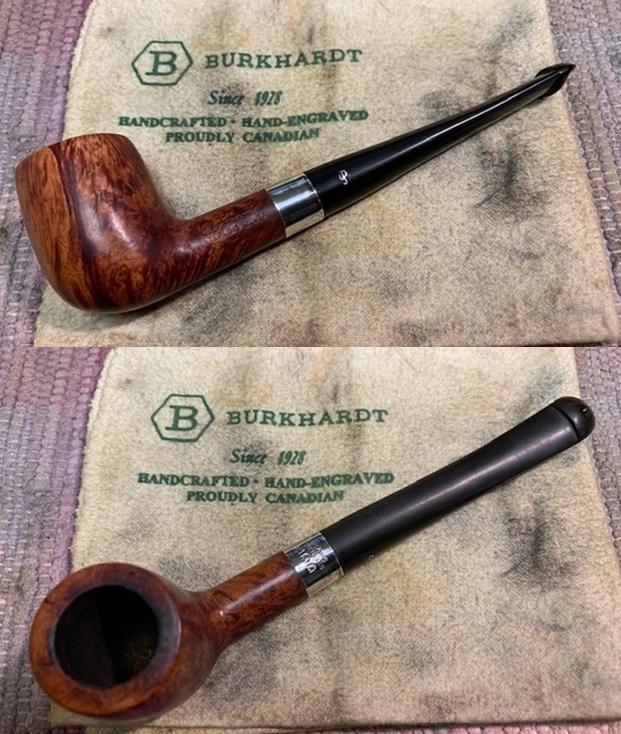
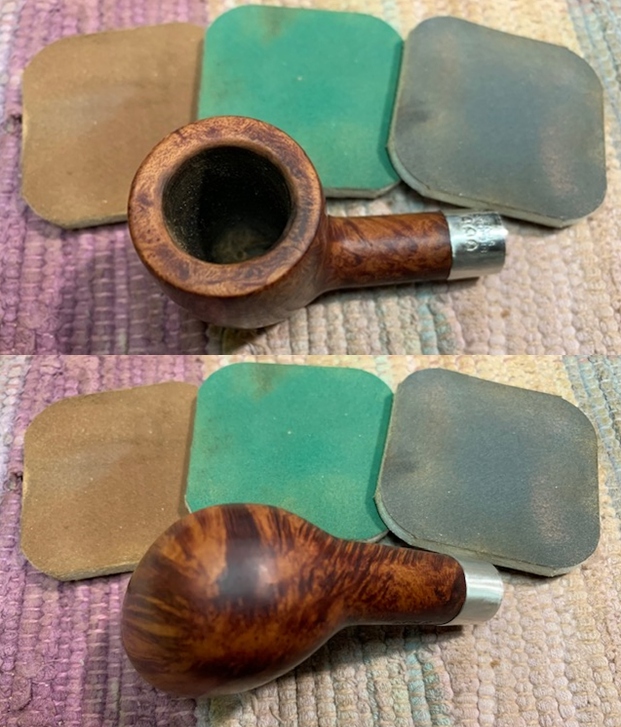
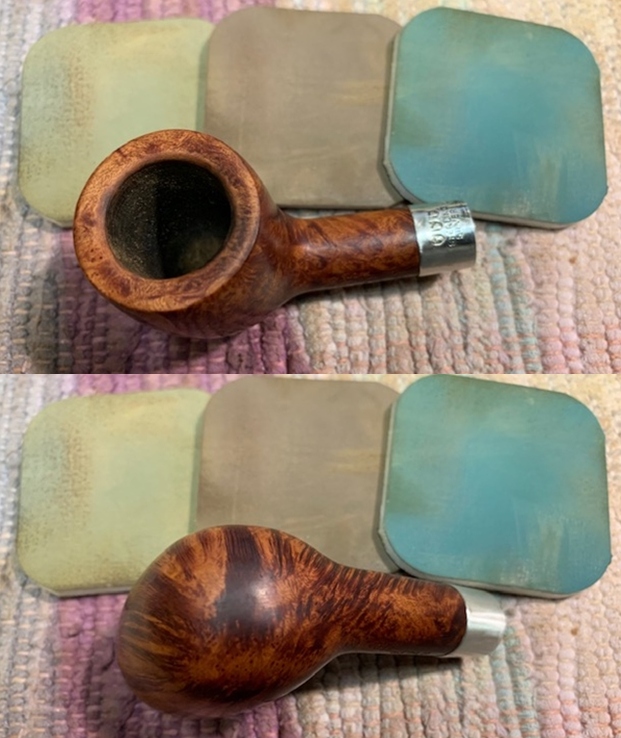
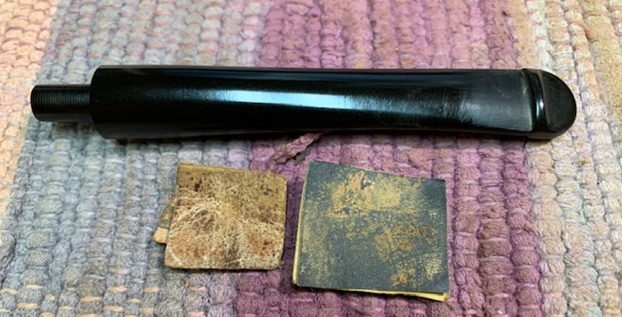
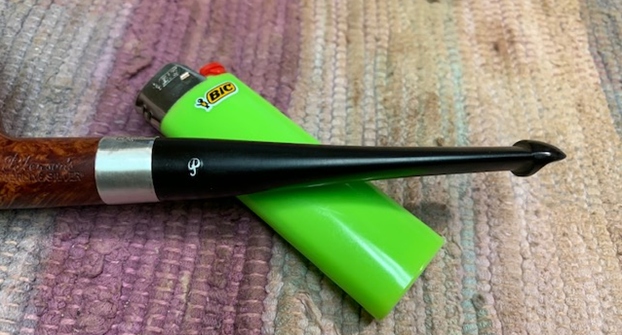
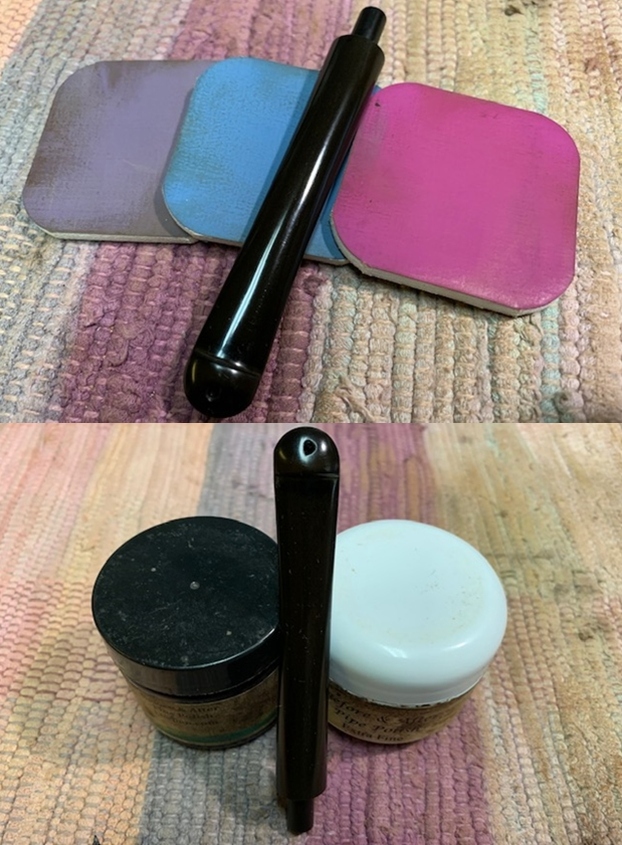
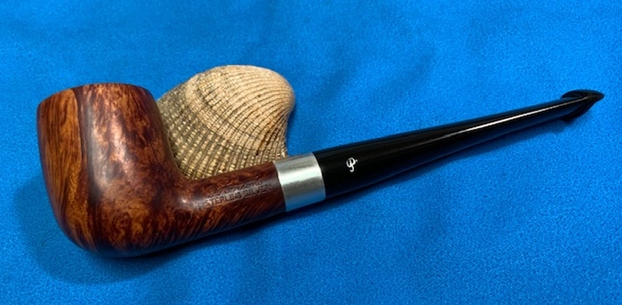
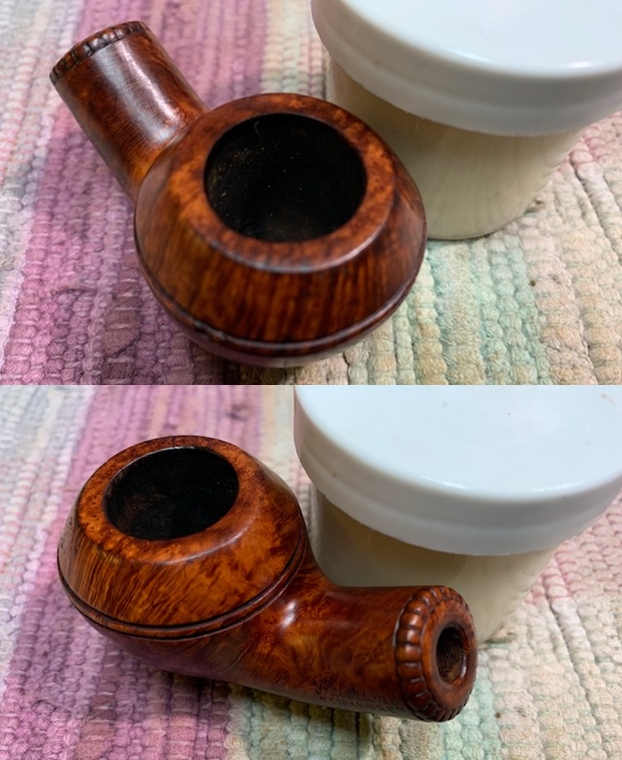
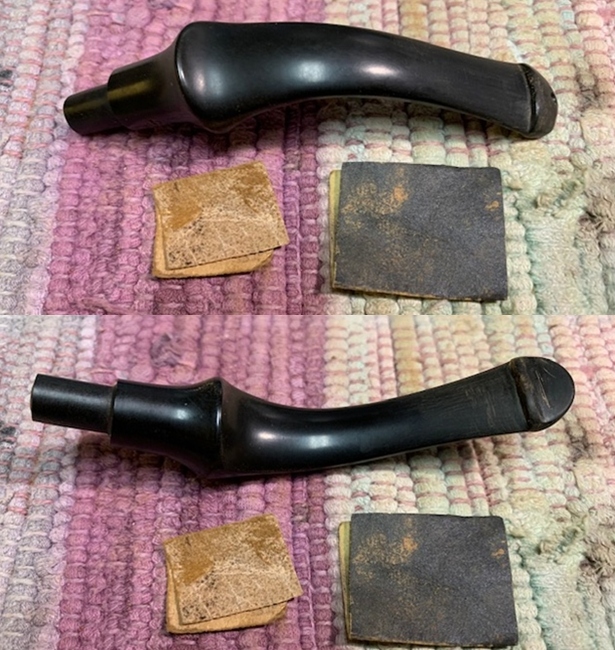
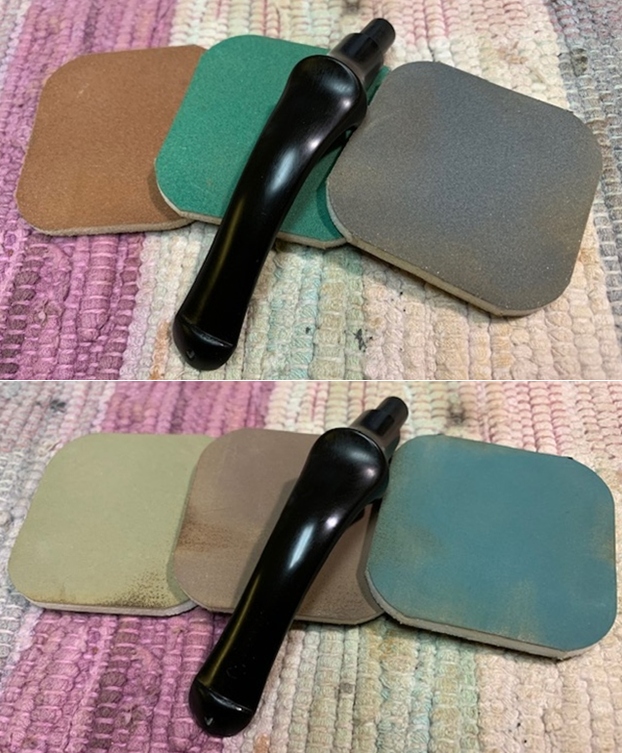
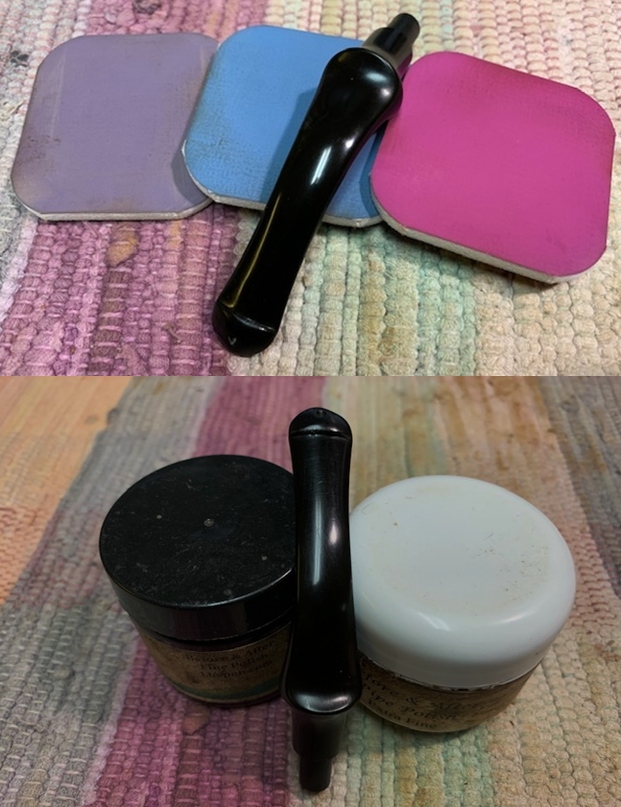
Jeff had done a great job cleaning up the pipe as usual. He reamed the pipe with a PipNet reamer and cut back the cake back to the bare briar. He cleaned up the walls with a Savinelli Fitsall Pipe Knife. He scrubbed the interior of the bowl and shank with pipe cleaners, cotton swabs and alcohol to remove the tars and oils. He scrubbed the exterior of the pipe with Murphy’s Oil Soap and a tooth brush to remove the grime from the finish. He worked on the rim top lava and darkening with the soap and tooth brush. He scrubbed the inside of the stem with alcohol and pipe cleaners. He scrubbed the exterior with Soft Scrub and then soaked it in Before & After Deoxidizer. He washed it off with warm water to remove the Deoxidizer. The pipe looked far better when it arrived. It has been sitting here for 2 years so the silver tarnished once again and would need to be polished. I took some close up photos of the rim top and also of the stem surface. I wanted to show how well it had cleaned up. The rim top had some darkening on the back top and the inner edge had burn damage on the front right and back. It should clean up really well. I also took close up photos of the stem to show the light tooth marks on the surface near the button.   I took photos of the stamping on the sides of the shank. You can see that it is stamped as noted above. It is clear and readable.  I took the pipe apart and took a photo of the pipe. It is a good looking pipe and has a rugged rustication around the bowl. I polished the Sterling Silver band on the shank with a jeweler’s cloth to remove the tarnish and polish it.     I decided to address the out of round bowl first. I used a folded piece of 220 grit sandpaper to give the inner edge of the bowl a slight bevel to accommodate the burned areas and blend them into the surrounding briar.  I polished the briar with micromesh sanding pads – dry sanding with 1500-12000 grit sanding pads. I wiped the bowl down with a damp cloth after each sanding pad.  I worked some Before & After Restoration Balm into the surface of the briar with my fingertips and a horsehair shoe brush to clean, enliven and protect the briar. I let the balm sit for 15 minutes and then buffed with a cotton cloth to raise the shine. The photos show the bowl at this point in the restoration process.    I sanded out the deep tooth marks on the underside of the stem next to the button with 220 grit sandpaper until they were smooth. I started   polishing the stem with 400 grit wet dry sandpaper. The stem was bent slightly upward so I heated it with a lighter flame until it was flexible enough to straighten out. I straightened it and held it in  place until it cooled.I polished the stem with micromesh sanding pads – wet sanding with 1500-12000 grit sanding pads. I wiped it down after each sanding pad with Obsidian Oil. I polished it with Before & After Pipe Stem Polish – both Fine and Extra Fine.   I am excited to finish this Republic Era Peterson’s “Sterling Silver” 450 Billiard. I put the pipe back together and buffed it with Blue Diamond on the buffing wheel. I gave the bowl and the stem multiple coats of carnauba wax. I hand buffed the pipe with a clean buffing pad to raise the shine. It is fun to see what the polished bowl looks like with the grain popping all around it. Added to that the polished Sterling Silver band and the black vulcanite stem was beautiful. This smooth Classic Peterson’s Billiard is nice looking and the pipe feels great in my hand. It is light and well balanced. Have a look at it with the photos below. The dimensions are Length: 6 inches, Height: 1 ¾ inches, Outside diameter of the bowl: 1 ¼ inches, Chamber diameter: ¾ of an inch. The weight of the pipe is 34grams/1.20oz. It is a beautiful pipe and one that will be on the Irish Pipe Makers section of the rebornpipes store soon. If you are interested in adding it to your collection let me know. Thanks for walking through the restoration with me as I worked over this pipe. Thanks to each of you who are reading this blog.

New Life for a Peterson’s Republic Era Dunmore 998/9


Blog by Steve Laug

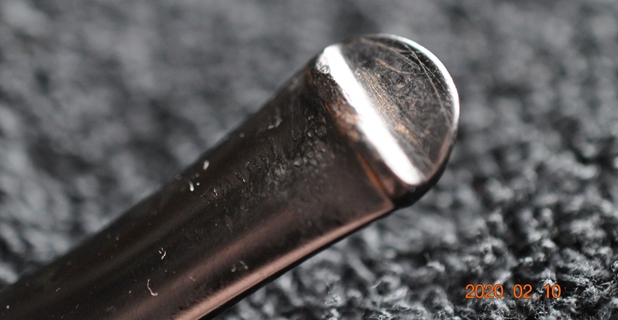
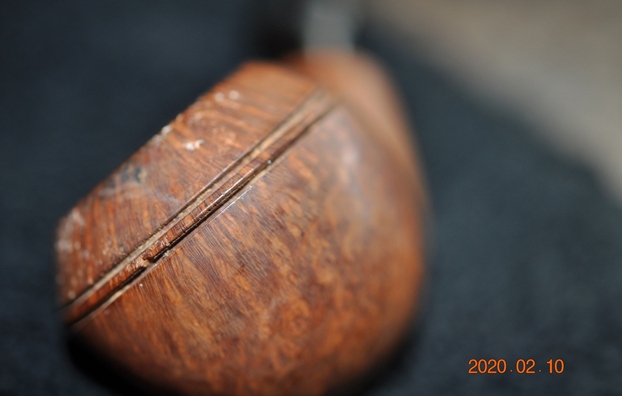
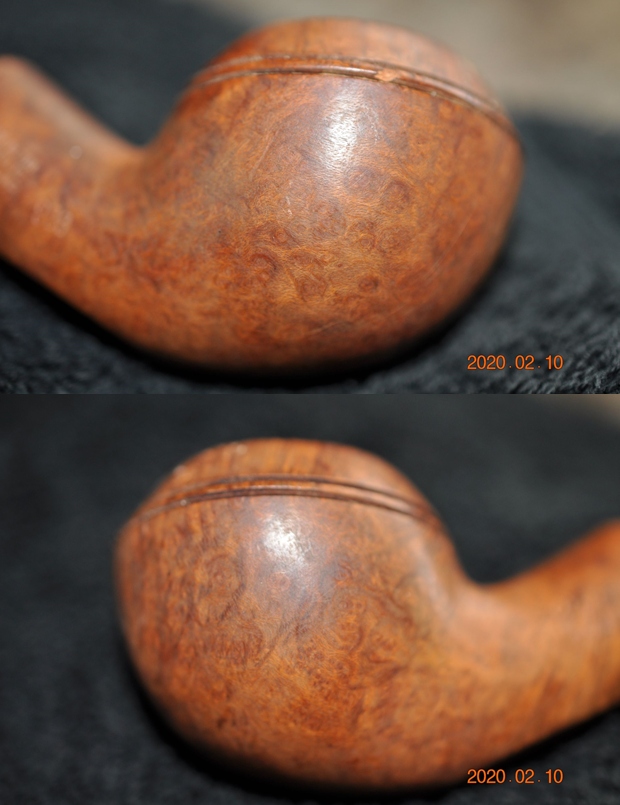
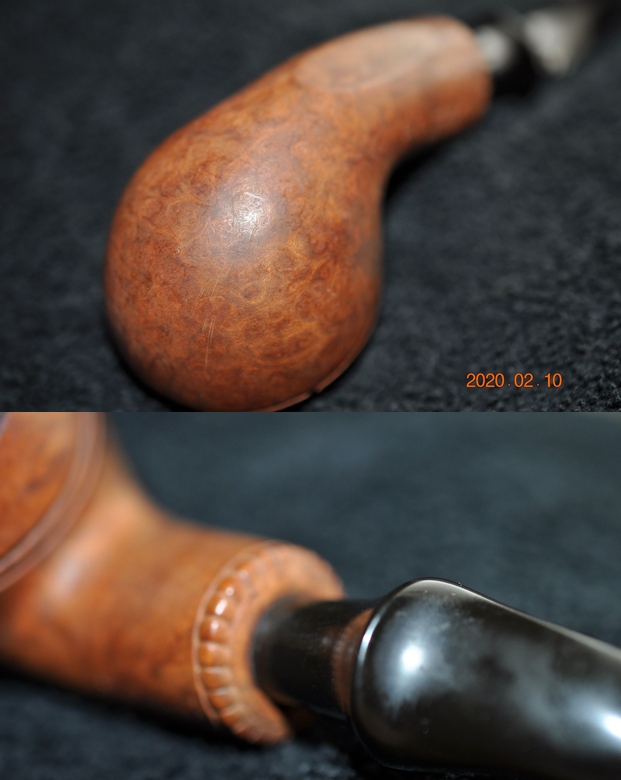
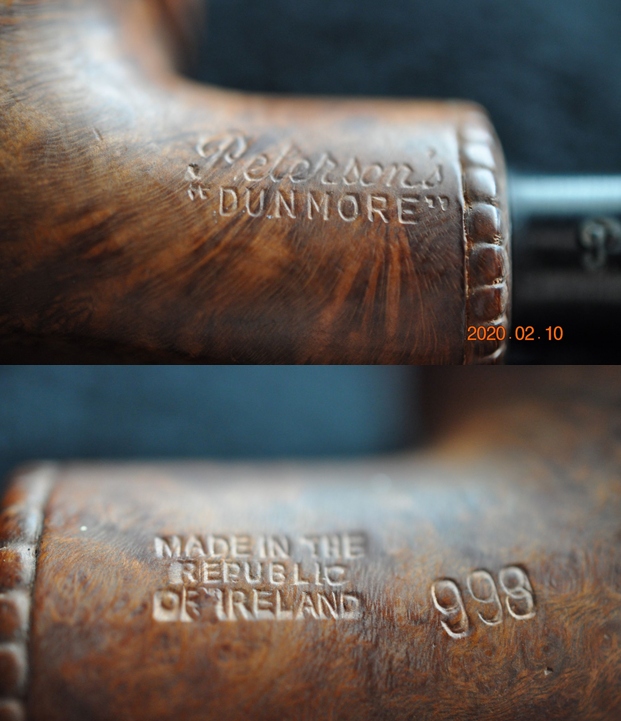
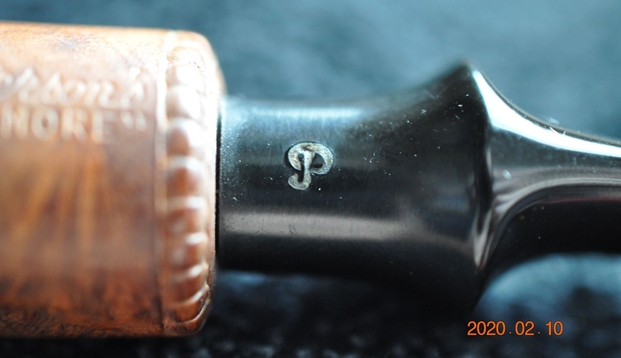
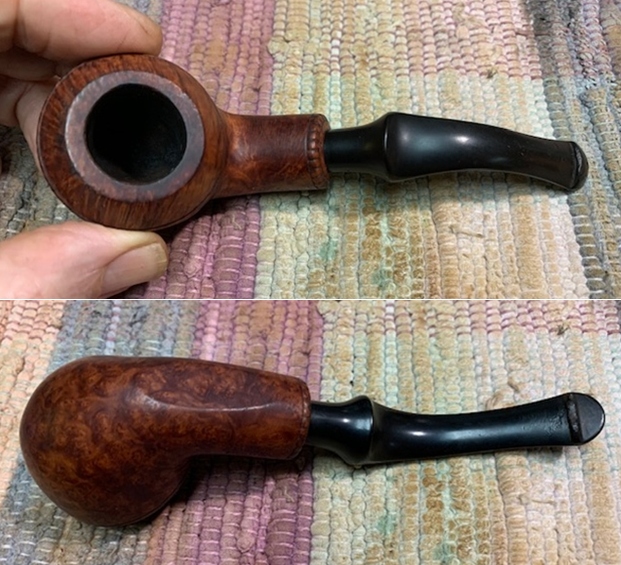
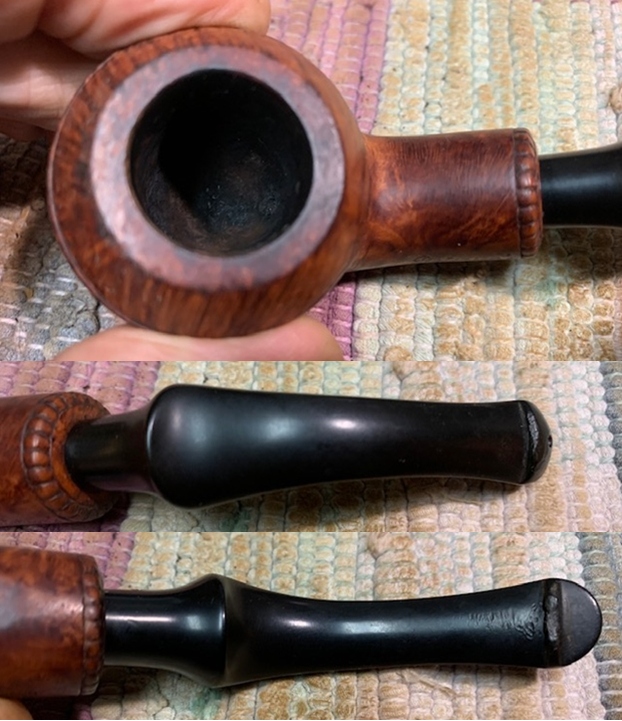
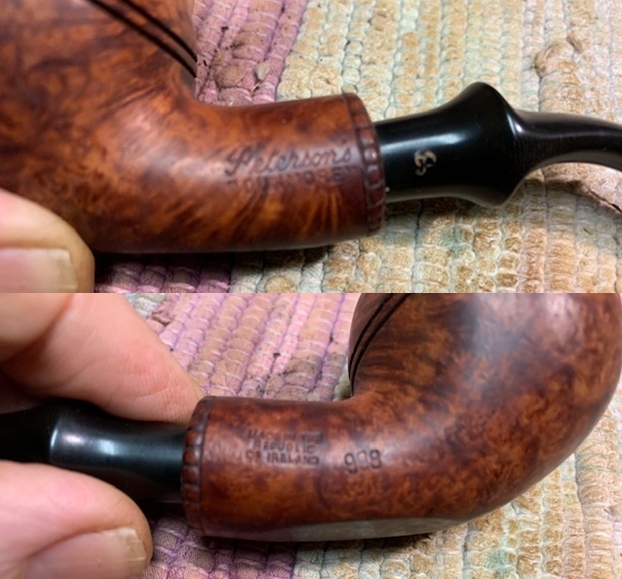
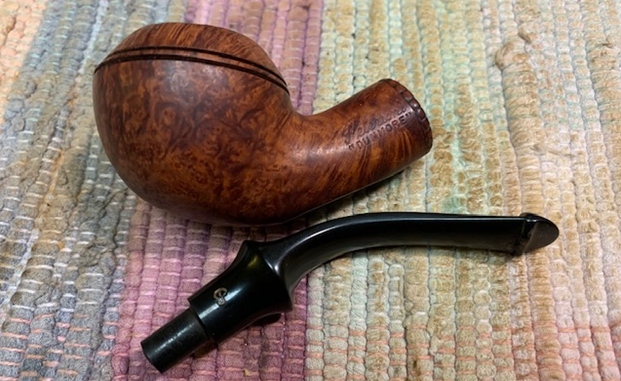
The next pipe I have chosen came to us I a group of pipe that we purchased from a fellow in Los Angeles, USA. It was stamped on the left side of the shank and read Peterson’s [over] “Dunmore”. On the right side it is stamped Made in the Republic of Ireland and the shape number which looks to be 999 over-stamped to read 998. The P-lip stem has the gold P stamping on the left side of the saddle.  It was filthy when Jeff brought it to the table to clean. The finish was dirty with grime ground into the briar sides and rim. There was debris in the twin rings around the cap and there was a chip out of the right side between the rings. There was a thick cake in the bowl and an overflow of lava on the rim top and the inner edge of the bowl. The decorative beaded band around the shank end was dirty but in good condition. The stem was oxidized, calcified and had light tooth marks and chatter on the top and underside on and near the button. Jeff took photos of the pipe before his cleanup work. They tell the story and give a glimpse of the promise that we see in this pipe.   Jeff took photos of the rim top and stem to show the general condition of the pipe. The bowl is heavily caked with a lava overflow on the rim top. You can see the grime on the outside of the bowl. The stem is oxidized, calcified and has tooth marks on the top and underside near the button.     Jeff took some photos of the bowl sides and heel to show grain that was around this bowl. It is a nice looking pipe. Notice the chips out of the middle of the twin rings are different points of the bowl in the photos below. He took photos of the sides of the shank to show the stamping. The stamping is readable in the photos below and is as noted above. I am including the information from Pipedia’s article on Peterson pipes. It is a great read in terms of the history of the brand (https://pipedia.org/wiki/Peterson). I have included a bit of the pertinent history here.
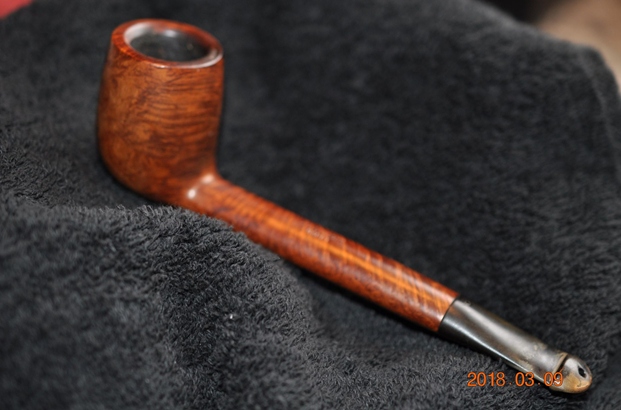
1950 – 1989 The Republic Era – From 1950 to the present time, the stamp for this era is “Made in the Republic of Ireland” in a block format generally in three lines but two lines have been used with or without Republic being abbreviated.

During the 1950’s and 60’s the Kapp & Peterson Company was still in the ownership of the Kapp family. However 1964 saw the retiral of the company Managing Director Frederick Henry(Harry) Kapp.

On rebornpipes Al Jones did a great restoration and write up on the Peterson’s 998 shape (https://rebornpipes.com/2020/01/28/1979-peterson-998-challenge/). It is a helpful blog so I quote it below.

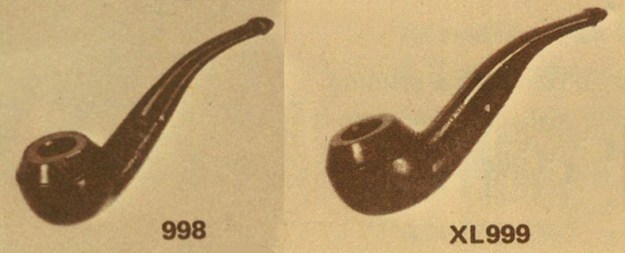
From Mark Irwin’s blog entry on the John Bull, we know that the 998 shape was introduced in the 1970’s.  Below, a picture from a 1977 catalog. Marks blog describes the 998 as:

Around 1977, as seen in the Associated Imports Distributor’s Catalog illustrations above, the John Bull 999 became the XL999, and Peterson introduced shape 998, a stream-lined version of the 999 The two shapes ran alongside one another for several years, which happens when shapes are in transition. The XL999 / 999 Large John Bull was still in the 1987 catalog, but by the 1992 Handmade Brochure it had morphed into the slimmer 998 shape, which number was henceforth deleted from the catalog. I might add it was still called the “John Bull,” and Pete Nuts worthy of the name should educate all comers that while others may call the shape a bent Rhodesian, we know better.

Most 999’s weigh in the mid-50 gram range, while this 998 weighs 40 grams.  I then turned to the book I should have consulted first, The Peterson Pipe, by Mark Irwin and Gary Malmberg to garner some background on the “Dunmore” line. On page 298 there is an entry for Dunmore pipes. It reads as follows:

Dunmore (1971-c.1984 2006-10). Appeared first as Iwan Ries & Co. exclusive line “Dunmoor,” a Premier-grade in light-brown smooth or rustic red in all System shapes, with beading at the shank. Documented in the Associated Imports Catalog from 1973. Classic Range Dunmore shapes from ’78. A third Dunmore line (’06-10) featured standard and some B shapes, with beading around bowl instead of at shank-face, produced for European market.

On page 268 there is a shape chart that does comparison of the shapes in the various lines. There I found the following information:

In the Standard and Premier System it was shape 302. In the De Luxe System it was shape 25. In the Dunmore System (1977-1983) it was shape 70. In the Classic Lines it was shape 02/XL02. The production still continues. It is a Peterson Extra Large Size and was named an Extra Large Apple.

On page 165 there were also photos of pages from a catalogue with the description: The unmounted Dunmore Premier debuted in both System and Classic Range shapes circa 1973 with a final appearance in the 1981 catalogue.

The information blurb on each page read: “Dunmore Briars.” Beautifully grained best quality briar in light-brown, matt or rustic finish. Often described as “Petersons Unmounted System” has all the advantages of the system range. Ten models each fitted with the Peterson Lip mouthpiece.

With that information in hand I knew what I was dealing with in terms of the stamping on the pipe. It is a Late Republic era pipe. It showed up in Peterson Catalogue in 1973 and from what I have learned about the Dunmore, this date fits well. Now it was time to work on the pipe.

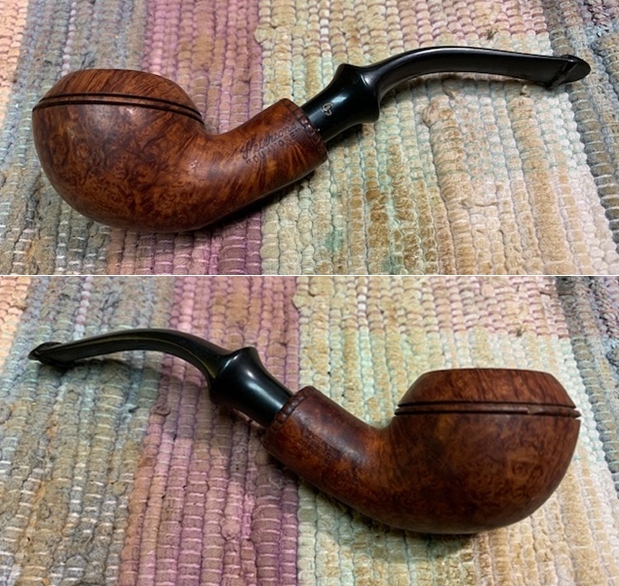
Jeff had done a great job cleaning up the pipe as usual. He reamed the pipe with a PipNet reamer and cut back the cake back to the bare briar. He cleaned up the walls with a Savinelli Fitsall Pipe Knife. He scrubbed the interior of the bowl and shank with pipe cleaners, cotton swabs and alcohol to remove the tars and oils. He scrubbed the exterior of the pipe with Murphy’s Oil Soap and a tooth brush to remove the grime from the finish. He worked on the rim top lava and darkening with the soap and tooth brush. He scrubbed the inside of the stem with alcohol and pipe cleaners. He scrubbed the exterior with Soft Scrub and then soaked it in Before & After Deoxidizer. He washed it off with warm water to remove the Deoxidizer. The pipe looked far better.    I took some close up photos of the rim top and also of the stem surface. I wanted to show how well it had cleaned up. The rim top and edges look quite good. There is a small chip on the back outer edge of the bowl. It should clean up really well. I also took close up photos of the stem to show the light tooth marks on the surface near the button.     I took photos of the stamping on the sides of the shank. You can see that it is stamped as noted above. It is clear and readable.   I took the pipe apart and took a photo of the pipe. It is a good looking pipe and has some great grain around the bowl and shank.I repaired the chip in the twin rings with super glue and briar dust. Once it cured I smoothed it out with 220 grit sandpaper. I sanded the rim top with 220 grit sandpaper to remove some of the darkening on the rim top at the back of the bowl. It came out looking good.  I polished the briar with micromesh sanding pads. I dry sanded with 1500-12000 grit sanding pads. I wiped the briar and bamboo down with a damp cloth after each sanding pad.   I worked some Before & After Restoration Balm into the surface of the briar with my fingertips and a horsehair shoe brush to clean, enliven and protect the briar. I let the balm sit for 15 minutes and then buffed with a cotton cloth to raise the shine. The grain really pops.  I sanded out the tooth marks on the top and underside of the stem with 220 grit sandpaper. I worked over the area ahead of the button and on the button edges as well. I started the polishing process with 400 grit wet dry sandpaper.  I polished the stem with micromesh sanding pads – wet sanding with 1500-12000 grit sanding pads. I wiped it down after each sanding pad with Obsidian Oil. I polished it with Before & After Pipe Stem Polish – both Fine and Extra Fine.     I am excited to finish this Republic Era Peterson’s “Dunmore” 998 Rhodesian. Al Jones’ contribution to the shape number helped to cinch this one for me. It is definitely more petite than the 999 pipes that I have worked on. I put the pipe back together and buffed it with Blue Diamond on the buffing wheel. I gave the bowl and the stem multiple coats of carnauba wax. I hand buffed the pipe with a clean buffing pad to raise the shine. It is fun to see what the polished bowl looks like with the grain popping through on the bowls sides and rim top. The polished black vulcanite stem was beautiful. This Republic Era Rhodesian is a nice looking and the pipe feels great in my hand. It is light and well balanced. Have a look at it with the photos below. The dimensions are Length: 6 inches, Height: 1 ½ inches, Outside diameter of the bowl: 1 ½ inches, Chamber diameter: ¾ of an inch. The weight of the pipe is 42grams/1.48oz. It is a beautiful pipe and one that will be on the Irish Pipe Makers section of the rebornpipes store soon. If you are interested in adding it to your collection let me know. Thanks for walking through the restoration with me as I worked over this pipe. Thanks to each of you who are reading this blog.


Restoring a Peterson’s of Dublin System Standard 303 from a Zippo gift set.


Blog by Steve Laug

The next pipe on the work table came to us from an antique store on one of Jeff’s pipe hunts in Utah, USA. It is a smooth Peterson’s Apple shaped System pipe with a saddle vulcanite stem. The pipe is stamped on the left side of the shank and reads Peterson’s [over] of Dublin [over] System [over] Standard followed by the shape number 303. The nickel ferrule is stamped on the left side and reads ZIPPO and on the right side it reads K & P Peterson. That was interesting information so I did a bit of hunting on the web and found photos of a gift set that was issued by Peterson and Zippo together. I wrote them and asked about when it was first issued. In the mean time I also found a link on Pipesmagazine.com where the gift set was discussed and some photos shared of the original (https://pipesmagazine.com/forums/threads/peterson-zippo-combo.1499/). I have included the photos below as they provide a context for the pipe I am working on. I only wish I had the Zippo lighter that it came with originally! It appears from the photos that the set sold for at least $99.00US.

The pipe on the desk before me now was similar to the one in the above photos. It had different grain but the shape and stamping was identical. The finish had a lot of grime ground into it and it was very dirty. The bowl was moderately caked and there was a lava coat on the flat rim top and the beveled inner edge of the rim. The edges looked okay but we would know more after the cleanup.. The nickel ferrule was undamaged and did not have dents of nicks in the surface. It was oxidized a bit but would clean up very well. It is stamped K&P [over] Peterson on the right side of the ferrule and had the ZIPPO logo on the left side of the ferrule. The stem was oxidized, calcified and had tooth chatter and marks on the top and underside near the P-lip style button. It also had a unique style stem in terms of fitting to the ferrule. The pipe seems petite to me but I do not have another 303 to compare it to so it is only a feeling. The pipe showed promise but it was very dirty. Jeff took photos of the pipe before he started his cleanup work.   He took photos of the rim top and bowl to give a clear picture of the thickness of the cake and the condition of the rim top and edges. He also took photos of the top and underside of the stem to show the oxidation, calcification and chatter and tooth marks.    Jeff took a photo of the side and heel of the bowl to give a picture of what the briar around the pipe looked like.   He took photos of the stamping on the shank and the nickel ferrule. It reads as noted above and is clear and readable.   Jeff had cleaned up the pipe with his usual penchant for thoroughness. He reamed the pipe with a PipNet Pipe Reamer and cleaned up the remnants with a Savinelli Fitsall Pipe Knife.  He scrubbed the bowl with undiluted Murphy’s Oil Soap with a tooth brush. He rinsed it under running warm water to remove the soap and grime. He cleaned out the inside of the shank and the airway in the stem with alcohol, cotton swabs and pipe cleaners. He soaked the stem in Before & After Deoxidizer and rinsed it off with warm water. I took photos of the pipe once I received it. The rim top and inner edge of the rim looked very good with a bit of damage on the inner bevel of the rim surface. The stem surface looked very good with some tooth marks and chatter on both sides near the button. I took a photo of the stamping on the shank. It is clear and readable as noted above.    I removed the stem and took a photo of the pipe to give a sense of the whole. The stem is a fancy saddle version. The pipe was in such good condition that I started by rubbing it down with Before & After Restoration Balm. I worked it into the surface of the bowl sides and shank with my fingertips. The product works to clean, enliven and protect the briar. I let the balm sit for a little while and then buffed with a cotton cloth to raise the shine.     I set the bowl aside and turned to work on the stem. I sanded the tooth chatter and marks with 220 grit sandpaper to smooth them out and blend them into the surface. I started polishing the stem with 400 grit wet dry sandpaper.   I polished the vulcanite stem with micromesh sanding pads – 1500-12000 grit pads. I wiped it down with a damp cloth after each sanding pad. I used Before & After Pipe Polish – both Fine and Extra Fine to further polish the stem.    This Peterson’s of Dublin System Standard 303 Bent Apple originally made in partnership with Zippo with a vulcanite saddle stem is a great looking pipe now that it has been restored. The beautiful grain that shines through the polished finish is stunning. As the pipe is smoked the patina should develop and look even better. I put the stem back on the bowl and carefully buffed the pipe with Blue Diamond on the buffing wheel. I gave the bowl and the stem multiple coats of carnauba wax on the buffing wheel and followed that by buffing the entire pipe with a clean buffing pad. I hand buffed the pipe with a microfiber cloth to deepen the shine. The finished Peterson’s System Standard 303 fits nicely in the hand and feels great. Give the finished pipe a look in the photos below. The dimensions of the pipe are Length: 5 ½ inches, Height: 1 ½ inches, Outside diameter of the bowl: 1 ¼ inches, Chamber diameter: ¾ of an inch. The weight of the pipe is 47gr/1.66oz. If you are interested in adding this pipe to your collection send me a message or an email. Thanks for reading this blog and my reflections on the pipe while I worked on it. There are many more to come!

Restoring a Late Republic Era Peterson’s System Cara 302


Blog by Steve Laug

The next pipe on the work table came to us from an online auction from auction in 2018 from Wilkes Barre, Pennsylvania, USA. It is a smooth Peterson’s Apple shaped System pipe with a tapered vulcanite stem. The pipe is stamped on the left side of the shank and reads Peterson’s [over] System [over] Cara. On the right side of the shank it is stamped Made in the Republic of Ireland [over] the shape number 302. This is a nice piece of briar with interesting grain all the way around the bowl. The finish had a lot of grime ground into it. The bowl was moderately caked and there was a lava coat on the top and the inner edge of the rim. The edges looked okay but we would know more after the cleanup. The stem was oxidized, calcified and had tooth chatter and marks on the top and underside near the button. The nickel ferrule is stamped K&P [over] Peterson. The pipe showed promise but it was very dirty. Jeff took photos of the pipe before he started his cleanup work.   He took photos of the rim top and bowl to give a clear picture of the thickness of the cake and the condition of the rim top and edges. He also took photos of the top and underside of the stem to show the oxidation, calcification and chatter and tooth marks.   Jeff took a photo of the side and heel of the bowl to give a picture of what the briar around the pipe looked like.    He took photos of the stamping on the shank and the nickel ferrule. It reads as noted above and is clear and readable.   I am including the information from Pipedia’s article on Peterson pipes. It is a great read in terms of the history of the brand (https://pipedia.org/wiki/Peterson). I have included a bit of the pertinent history here.

1950 – 1989 The Republic Era – From 1950 to the present time, the stamp for this era is “Made in the Republic of Ireland” in a block format generally in three lines but two lines have been used with or without Republic being abbreviated.

I turned to Pipedia to see if I could find some specific information on the Cara line of System pipes (https://pipedia.org/wiki/Peterson#Peterson_Pipe_Collections). There was nothing specific on the Cara so I was left with little information on the line.

I knew that I was dealing with a Republic Era pipe made between 1950-and the present – a Late Republic pipe. It was a classic line 302 shaped apple with the System style drilling. Now it was time to work on the pipe.

Jeff had cleaned up the pipe with his usual penchant for thoroughness. He reamed the pipe with a PipNet Pipe Reamer and cleaned up the remnants with a Savinelli Fitsall Pipe Knife.  He scrubbed the bowl with undiluted Murphy’s Oil Soap with a tooth brush. He rinsed it under running warm water to remove the soap and grime. He cleaned out the inside of the shank and the airway in the stem with alcohol, cotton swabs and pipe cleaners. He soaked the stem in Before & After Deoxidizer and rinsed it off with warm water. I took photos of the pipe once I received it. The rim top and inner edge of the rim looked very good with a bit of damage on the inner bevel of the rim surface. The stem surface looked very good with some tooth marks and chatter on both sides near the button.    I took a photo of the stamping on the shank. It is clear and readable as noted above.     I removed the stem and took a photo of the pipe to give a sense of the whole. The stem is a fancy saddle version. The pipe was in such good condition that started by rubbing it down with Before & After Restoration Balm. I worked it into the surface of the bowl sides and shank with my fingertips. The product works to clean, enliven and protect the briar. I let the balm sit for a little while and then buffed with a cotton cloth to raise the shine.     I set the bowl aside and turned to work on the stem. I filled in the tooth marks on both sides of the stem just ahead of the button with clear super glue. Once the repairs had cured I sanded them smooth with 220 grit sandpaper to smooth them out and blend them into the surface. I started polishing the stem with 400 grit wet dry sandpaper.   I polished the vulcanite stem with micromesh sanding pads – 1500-12000 grit pads. I wiped it down with a damp cloth after each sanding pad. I used Before & After Pipe Polish – both Fine and Extra Fine to further polish the stem.    This Peterson’s Republic Era Cara System 302 Bent Apple with a vulcanite saddle stem is a great looking pipe now that it has been restored. The beautiful grain that shines through the polished finish is stunning. As the pipe is smoked the patina should develop and look even better. I put the stem back on the bowl and carefully buffed the pipe with Blue Diamond on the buffing wheel. I gave the bowl and the stem multiple coats of carnauba wax on the buffing wheel and followed that by buffing the entire pipe with a clean buffing pad. I hand buffed the pipe with a microfiber cloth to deepen the shine. The finished Peterson’s Cara System 302 fits nicely in the hand and feels great. Give the finished pipe a look in the photos below. The dimensions of the pipe are Length: 6 inches, Height: 1 ¾ inches, Outside diameter of the bowl: 1 ½ inches, Chamber diameter: ¾ of an inch. The weight of the pipe is 70gr/2.47oz. If you are interested in adding this pipe to your collection send me a message or an email. Thanks for reading this blog and my reflections on the pipe while I worked on it. There are many more to come!

Restoring a Late Republic Era Peterson’s Sherlock Holmes Rathbone Bent Tall Billiard


Blog by Steve Laug

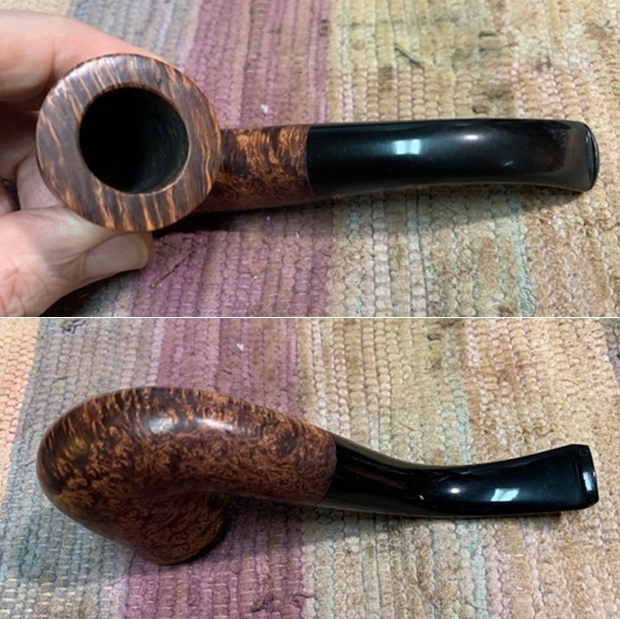
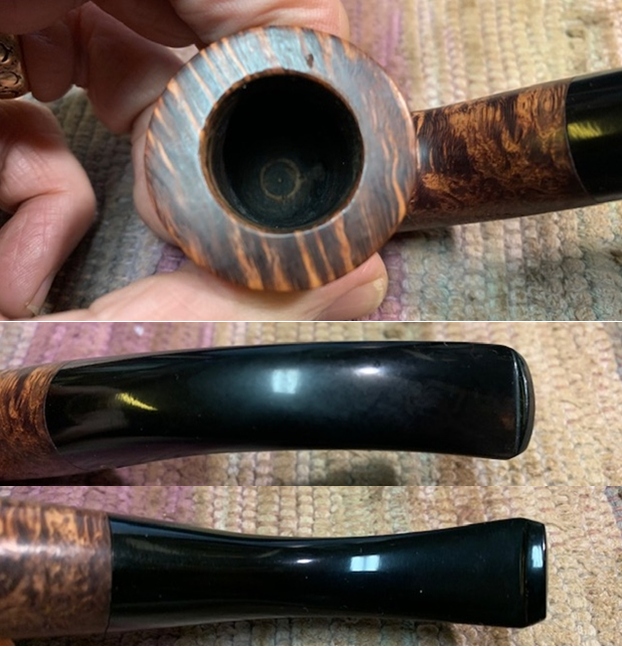
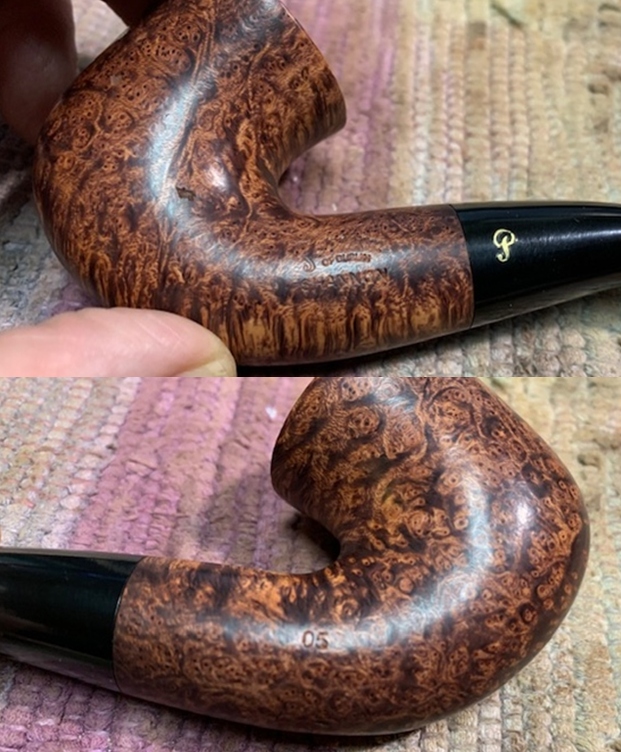
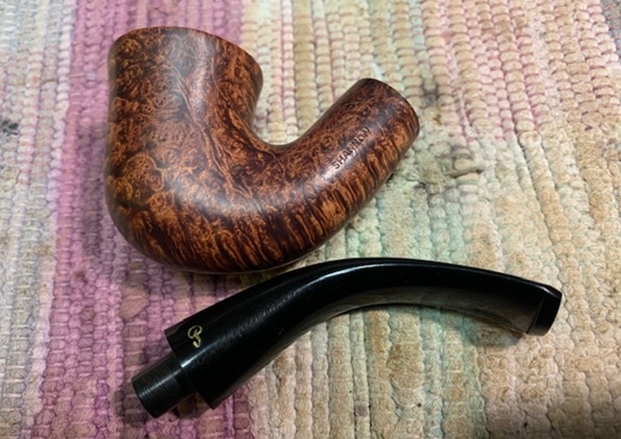
The next pipe on the work table came to us from an online auction from Hermann, Missouri, USA. It is a rusticated Peterson’s Sherlock Holmes line pipe with a tapered vulcanite stem. The pipe is stamped on the underside of the shank and reads Peterson’s [over] Sherlock Holmes [over] Rathbone. That is followed by the stamping Made in the Republic of Ireland. This is a nicer piece of briar than I have seen on some of the firsts I have worked on. The finish had a lot of grime ground into the rusticated finish on the bowl. The bowl was heavily caked and there was a lava coat and the inner edge of the rim. The edges looked okay but we would know more after the cleanup. The stem was oxidized, calcified and had tooth chatter and marks on the top and underside near the button. There a silver P glued onto the left side of the taper stem. The Sterling Silver Band is stamped with the profile of Sherlock Holmes with Sterling Silver above and below the profile. Under that it has three hallmarks that will identify the year the pipe was made. The pipe showed promise but it was very dirty. Jeff took photos of the pipe before he started his cleanup work.   He took photos of the rim top and bowl to give a clear picture of the thickness of the cake and the condition of the rim top and edges. He also took photos of the top and underside of the stem to show the oxidation, calcification and chatter and tooth marks.    Jeff took photos of the sides and heel of the bowl to give a picture of what the briar around the pipe looked like. It is a craggy and rugged rustication.    He took photos of the stamping on the shank and the Sterling Silver band. It reads as noted above and is clear and readable. You can also see the Silver P on the side of the stem. It appears to be loose and lifted from the stem surface. The Sterling Silver band on the shank had the classic Peterson’s Hallmarks. The first mark was the seated Hibernia with her arm on a harp representing Ireland as the country of manufacture. The second mark was a crowned harp used to identify the quality of the silver. The third mark was a slanted capital M that gave the date the pipe was made. I turned to a Peterson’s Hallmark chart that I had on rebornpipes to see if I could identify the date the pipe was made (https://rebornpipes.com/tag/peterson-hallmark-chart/). The slanted letter “M” is the stamp for 1998. That tells me the pipe was made in 1998.I am including the information from Pipedia’s article on Peterson pipes. It is a great read in terms of the history of the brand (https://pipedia.org/wiki/Peterson). I have included a bit of the pertinent history here.

1950 – 1989 The Republic Era – From 1950 to the present time, the stamp for this era is “Made in the Republic of Ireland” in a block format generally in three lines but two lines have been used with or without Republic being abbreviated.

I turned to Pipedia to see if I could find some specific information on the Sherlock Holmes Series (https://pipedia.org/wiki/Peterson#Peterson_Pipe_Collections). The site gave this following information on the series

The Sherlock Holmes Series: Probably the most popular and successful series of pipes ever produced by Peterson. Including the Meerschaum version of the seven day sets. Both briar and Meers can be purchased either as individual pipes or complete seven day sets and stands. Expect to pay around $250 for briars and $300 for individual Meerschaums. The Adventures of Sherlock Holmes runs around $1000 for a 4 pipe boxed set. Complete 7 day sets and stands can be up to $1500 – $2000.

That was followed by the second series the Return of Sherlock Holmes.

I turned to the article on dating Peterson pipes on Pipedia to see if I define the time frame of the Return of Sherlock Holmes Series and it dated it at approximately 1991 (https://pipedia.org/wiki/A_Peterson_Dating_Guide;_A_Rule_of_Thumb#Silver_Band_Dating). That fit this pipe well as it is dated 1998. It clearly links it to the Second or Return of Sherlock Holmes series,

I turned to the catalogue I had on a blog on rebornpipes (https://rebornpipes.com/tag/peterson-hallmark-chart/). I have copied the page from the catalogue on the Sherlock Holmes Original Collection. From that page it appears that the Rathbone was part of the second series of Sherlock Holmes pipes – The Return of Sherlock Holmes.I knew that I was dealing with a Republic Era pipe made between 1950-and the present – a Late Republic pipe. It was a rusticated bent billiard that came out as part of the Return of the Sherlock Holmes Series in 1998. The finish was stained with a combination of brown and black stains. Now it was time to work on the pipe.

Jeff had cleaned up the pipe with his usual penchant for thoroughness. He reamed the pipe with a PipNet Pipe Reamer and cleaned up the remnants with a Savinelli Fitsall Pipe Knife.  He scrubbed the bowl with undiluted Murphy’s Oil Soap with a tooth brush. He rinsed it under running warm water to remove the soap and grime. He cleaned out the inside of the shank and the airway in the stem with alcohol, cotton swabs and pipe cleaners. He soaked the stem in Before & After Deoxidizer and rinsed it off with warm water. I took photos of the pipe once I received it.  (The plastic bag in the bowl contains the silver P which fell off in the clean up.) The rim top and inner edge of the rim looked very good with a bit of damage on the inner bevel of the rim surface. The stem surface looked very good with some remaining oxidation and tooth marks and chatter on both sides near the button.     I took a photo of the stamping on the shank. It is clear and readable as noted above. The second photo shows the spot were the silver P was inset into the vulcanite. I would need to reset the P.I removed the stem and took a photo of the pipe to give a sense of the whole. The stem is tapered. I started my work on the pipe by addressing the loose P logo that needed to be reset in the stem surface. You can see where someone tried to reset it with heat and damaged the vulcanite around the P. I daubed the surface of the P stamp with all clear CA glue and pressed the P into the shape on the stem surface. I set the stem aside while I worked on the bowl. I cleaned up the darkened and damaged beveled inner edge of the bowl with a folded piece of 220 grit sandpaper. Once I had the bevel finished I polished it with 1500-2400 grit micromesh pads and wiped off the dust. I restained it with a Walnut Stain pen to match the rest of the bowl finish.  With the rim cleaned up the bowl was in good condition. I rubbed it down with Before & After Restoration Balm. I worked it into the surface of the bowl sides and shank with my fingertips and worked it into the nooks and crannies of the rustication with a horsehair shoebrush. The product works to clean, enliven and protect the briar. I let the balm sit for a little while and then buffed with a cotton cloth to raise the shine. I set the bowl aside and turned to work on the stem. I smoothed out the damage to the vulcanite around the P with a new 1500 grit micromesh pad. I was able to remove the damage and the stem looked good.  I polished the vulcanite stem with micromesh sanding pads – 1500-12000 grit pads. I wiped it down with a damp cloth after each sanding pad. I used Before & After Pipe Polish – both Fine and Extra Fine to further polish the stem.  This Return of Sherlock Holmes Series Rathbone Bent Tall Billiard with a vulcanite taper stem is a great looking pipe now that it has been restored. The rugged rustication feels great in the hand and should only feel better as the pipe is smoked. I put the stem back on the bowl and carefully buffed the pipe with Blue Diamond on the buffing wheel using a light touch being careful around the silver P and gentle on the rusticated briar. I gave the bowl multiple coats of Conservator’s Wax and the stem multiple coats of carnauba wax on the buffing wheel and followed that by buffing the entire pipe with a clean buffing pad. I hand buffed the pipe with a microfiber cloth to deepen the shine. The finished Sherlock Holmes Rathbone fits nicely in the hand and feels great. Give the finished pipe a look in the photos below. The dimensions of the pipe are Length: 5 ¾ inches, Height: 2 ¼ inches, Outside diameter of the bowl: 1 ½ inches, Chamber diameter: ¾ of an inch. The weight of the pipe is 53gr/1.87oz. If you are interested in adding this pipe to your collection send me a message or an email. Thanks for reading this blog and my reflections on the pipe while I worked on it. There are many more to come!

A Simple Restoration on a Republic Era Peterson’s “Dunmore” 77 Bent Billiard


Blog by Steve Laug

The next pipe on the table was gifted to me by Ray, a reader in Australia. It is a petite Peterson’s “Dunmore” pipe. He had read a restoration of Bob Kerr’s Estate Peterson’s “Dunmore” and thought I would enjoy working what he called “that pipe’s l’il brother”. It is about a Group 2 by Dunhill standards bowl that he had picked up in the 1970s. It is stamped on the left side of the shank and reads Peterson’s [over] “Dunmore”. On the right side it is stamped Made in the Republic of Ireland followed by the shape number 77.  Ray had done the lion’s share of the clean up on the pipe. It had been reamed, cleaned and buffed. It was in great condition. There was some rim top darkening and damage on the inner edge of the bowl but nothing too difficult. The beaded decoration on the shank end is in excellent condition. Like other Dunmore’s I have worked on it had a flattened shank and the pipe functioned as a sitter. The stem was in excellent condition with some very light tooth chatter on both sides ahead of the p-lip. The “P” stamp on the left side of the stem was clear and just needed to be touched up otherwise it looked good. I took photos of the pipe when I finally brought it to my work table. The next photos show the bowl and rim top as well as the stem condition. The bowl was clean and ready to fire up. The rim edge was out of round and showed some damage and darkening. The rim top also had some darkening. The stem looked very good with some light tooth chatter and scratches.  The stamping on the shank sides was very readable and read as noted above. It had been buffed but was not overly damaged.   I took the stem off and took a photo of the parts of the pipe to give a perspective on the size and proportions of this little pipe.After rereading Ray’s email about the pipe and the previous blog on the Dunmore I had worked on I went back and reread the blog (https://rebornpipes.com/2019/08/18/restoring-a-petersons-dunmore-70-bent-apple-sitter-from-bob-kerrs-estate/). I quote from the blog on the Dunmore line below.

I then turned to the book I should have consulted first, The Peterson Pipe, by Mark Irwin and Gary Malmberg. On page 298 there is an entry for Dunmore pipes. It reads as follows:

Dunmore (1971-c.1984 2006-10). Appeared first as Iwan Ries & Co. exclusive line “Dunmoor,” a Premier-grade in light-brown smooth or rustic red in all System shapes, with beading at the shank. Documented in the Associated Imports Catalog from 1973. Classic Range Dunmore shapes from ’78. A third Dunmore line (’06-10) featured standard and some B shapes, with beading around bowl instead of at shank-face, produced for European market.

On page 165 there were also photos of pages from a catalogue with the  description: The unmounted Dunmore Premier debuted in both System and Classic Range shapes circa 1973 with a final appearance in the 1981 catalogue.

The information blurb on each page read: “Dunmore Briars.” Beautifully grained best quality briar in light-brown, matt or rustic finish. Often described as “Petersons Unmounted System” has all the advantages of the system range. Ten models each fitted with the Peterson Lip mouthpiece.

With that information in hand I knew what I was dealing with in terms of the stamping on the pipe. It is a Late Republic era pipe. It showed up in Peterson Catalogue in 1973 which fits Ray’s memory of when he bought the pipe. Now it was time to work on the pipe.

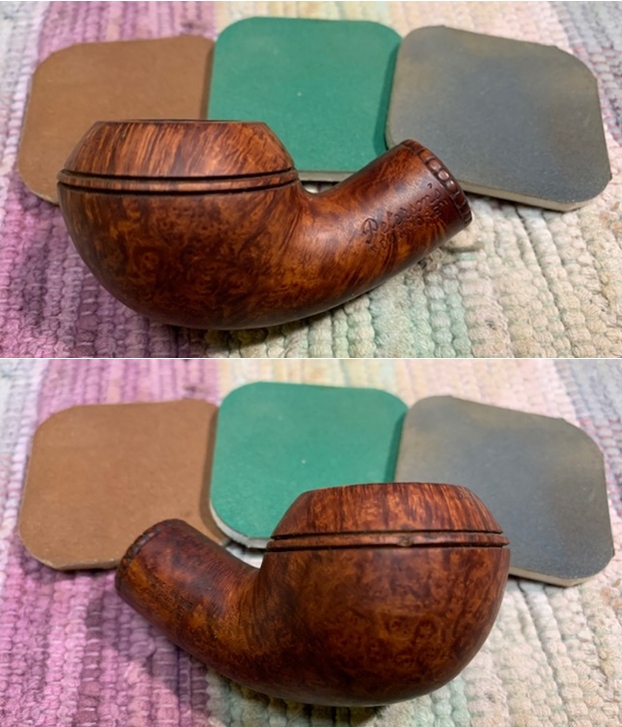
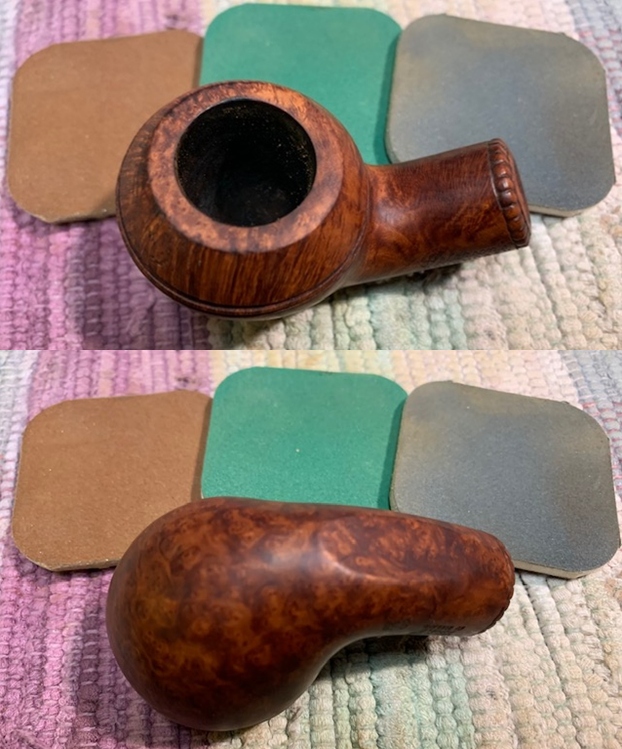
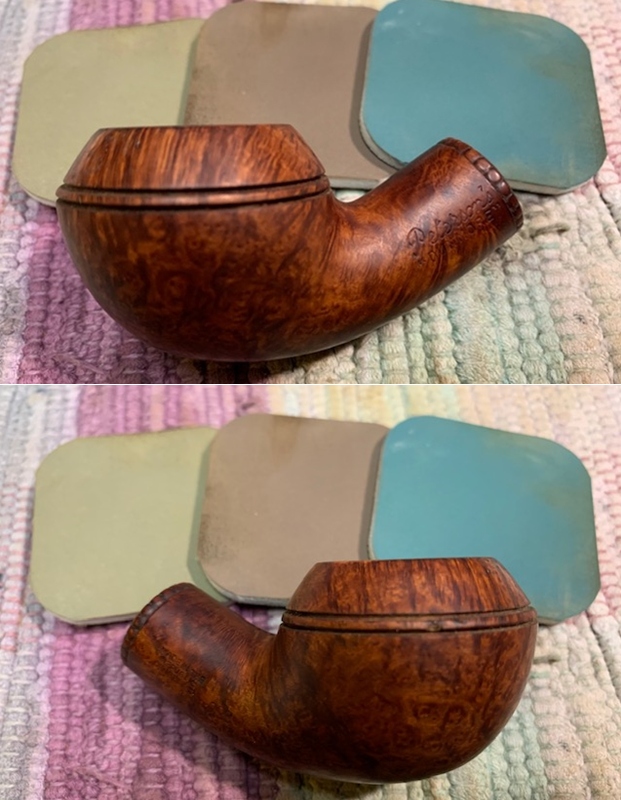
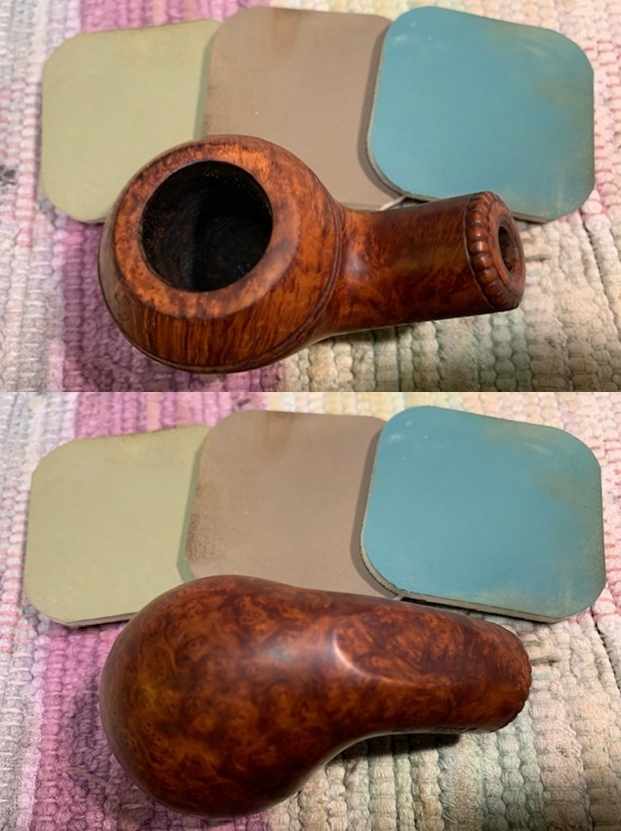
I decided to start my work on this one by reworking the inner edge of the rim with a folded piece of 220 grit sandpaper. I wanted to try and bring it back into round and smooth out the jagged condition.I polished the briar and worked over the rim top with micromesh sanding pads – 1500-12000 grit pads. I wiped the bowl down after each pad with a damp cloth. Once the finish was removed the fills in the briar became very evident.  I rubbed the bowl and shank down with Before & After Restoration Balm. I worked it into the surface of the bowl sides and shank with my fingertips to clean, enliven and protect the briar. I let the balm sit for a little while and then buffed with a cotton cloth to raise the shine.   I touched up the stamp on the left side of the saddle with liquid paper. I applied it and worked it into the stamp with a tooth pick. Once it cured I scraped off the excess. It is definitely better though the stamp is faint in some spots.  I polished the vulcanite stem with micromesh sanding pads – 1500-12000 grit pads. I wiped it down with a damp cloth after each sanding pad. I used Before & After Pipe Polish – both Fine and Extra Fine to further polish the stem.  This nice looking Peterson’s Dunmore 77 Bent Billiard and a classic Peterson’s P-lip vulcanite stem looks much better now that it has been restored. The rim top and edges cleaned up very well. The rich brown stains on the bowl came alive with the polishing and waxing. I put the stem back on the bowl and carefully buffed the pipe with Blue Diamond on the buffing wheel using a light touch on the briar. I gave the bowl and the stem multiple coats of carnauba wax on the buffing wheel and followed that by buffing the entire pipe with a clean buffing pad. I hand buffed the pipe with a microfiber cloth to deepen the shine. The finished Peterson’s Dunmore is a petite beauty and fits nicely in the hand and looks very good. Give the finished pipe a look in the photos below. The dimensions of the pipe are Length: 5 inches, Height: 1 ½ inches, Outside diameter of the bowl: 1 inch, Chamber diameter: ¾ of an inch. If you are interested in adding this pipe to your collection send me a message or an email. Thanks for reading this blog and my reflections on the pipe while I worked on it. There are many more to come!

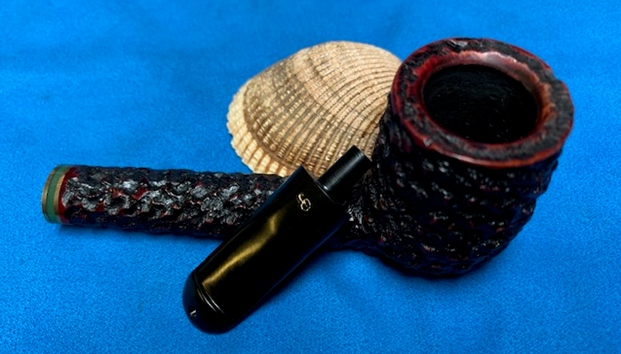
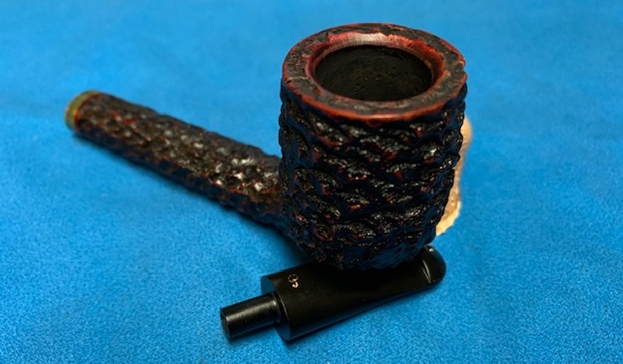
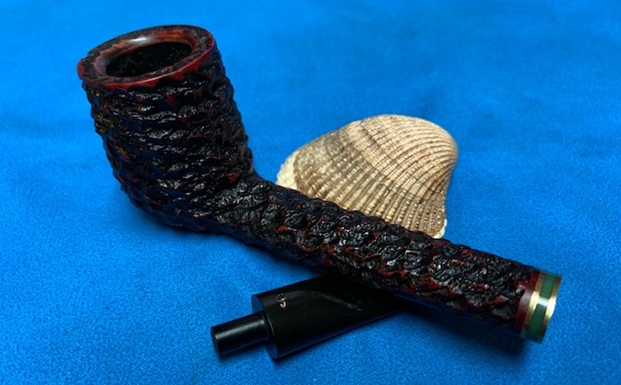
New Life for a Republic Era Peterson’s Jade 150 Bulldog


Blog by Steve Laug

The next pipe I am working on came from a friend, Lee who lives in the US. It is a Peterson’s Straight Bulldog. It is stamped on the left side of the shank and reads Peterson’s [over] Jade. On the right side it is stamped Made in the [over] Republic [over] of Ireland followed by the shape number 150. He sent me an email detailing what he saw in the pipe and gave his assessment as well as several pictures of the pipe. He wrote:

The Peterson Bulldog is hardly in horrible shape, but would like you to go at this thing to bring to ‘showcase’ quality if possible. Of course, you’ll have to see the pipe first before expectations are set. He had picked it up on eBay. Would like you to take this to the best it could be – will leave it to you to assess, but will mention that the ‘jewel’ fastening between bowl and stem fascinates me as something for differentiate the pipe from the rest of my collection. Whatever you can do…

Here are the photos he included. The pipe arrived and I went over it to see what I thought of it before I started my work on it. Here is what I sent to Lee.

Peterson’s Republic Era Jade Bulldog.

  1. Bowl exterior is dirty with a few dings and dents in the ring and on the sharp diamond edges of the shank… particularly on the sides.
  2. Rim top is a bit of a mess. There are a lot of nicks and dings in the briar, some darkening and lava on the inner beveled edge of the bowl. The inner edge looks ok under the lava as far as I can see. Outer edge has some nicks and dings. Worn spots.
  3. Bowl internals show a heavy cake that greatly reduces the bowl capacity. Needs to be reamed and cleaned. Strong Latakia smell.
  4. Stem is scratched and lightly oxidized. There are deep tooth marks on both sides and a lot of tooth chatter marking the stem surface ahead of the button.

Overall in moderately good condition

I took photos of the pipe before I started my cleanup work. They tell the story of what I have noted above in short form. They also give a glimpse of the promise that Lee saw in this pipe.  I took photos of the rim top and stem to show the condition of the bowl and stem. The interior the bowl had a heavy cake that overflowed like lava onto the rim top. There are dings and dents in the rim top and some darkening on the inner edge. The stem is oxidized, calcified and has deep tooth marks and chatter on the top and underside near the button.  The stylized P stamp on the top left side of the saddle is faded but present. I took photos of the sides of the shank to show the stamping. The stamping is readable in the photos below and is as noted above. The decorative band on the shank end is twin brass plates separated by a pearlized acrylic.       I took the stem off the shank and took a photo. It is a nice looking pipe and the shank end decorative piece looks very good.I am including the information from Pipedia’s article on Peterson pipes. It is a great read in terms of the history of the brand (https://pipedia.org/wiki/Peterson). I have included a bit of the pertinent history here.

1950 – 1989 The Republic Era – From 1950 to the present time, the stamp for this era is “Made in the Republic of Ireland” in a block format generally in three lines but two lines have been used with or without Republic being abbreviated.

During the 1950’s and 60’s the Kapp & Peterson Company was still in the ownership of the Kapp family. However 1964 saw the retiral of the company Managing Director Frederick Henry(Harry) Kapp.

I knew that I was dealing with a Republic Era pipe made between 1950-1989. It was a nice looking straight Bulldog with a unique shank end decoration. The finish was stained with a medium brown stain. Now it was time to work on the pipe.

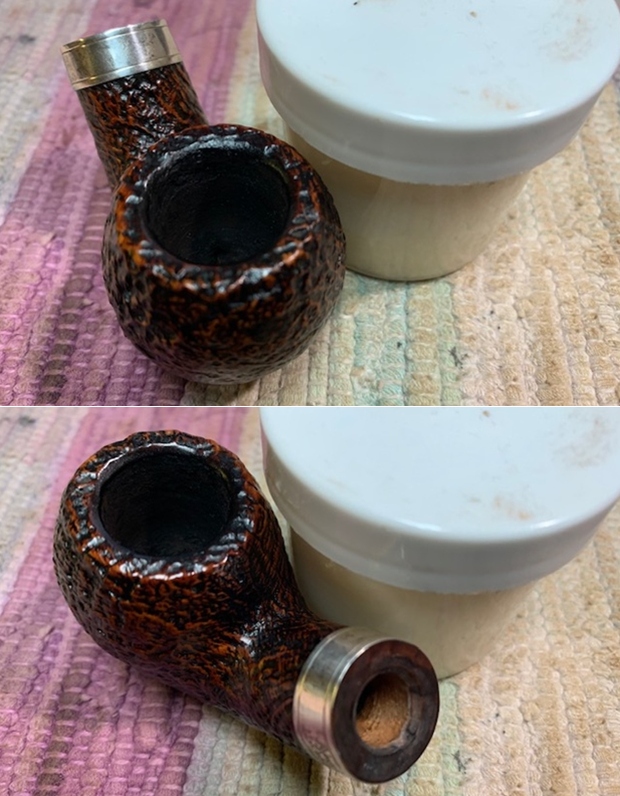
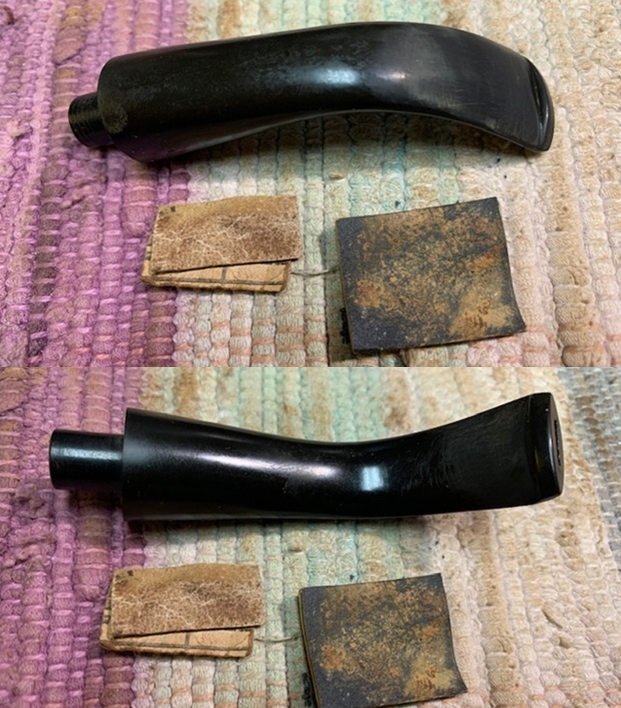
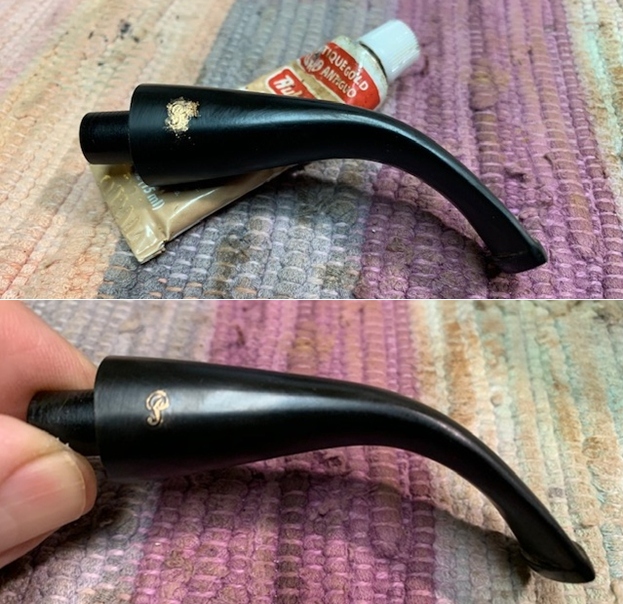
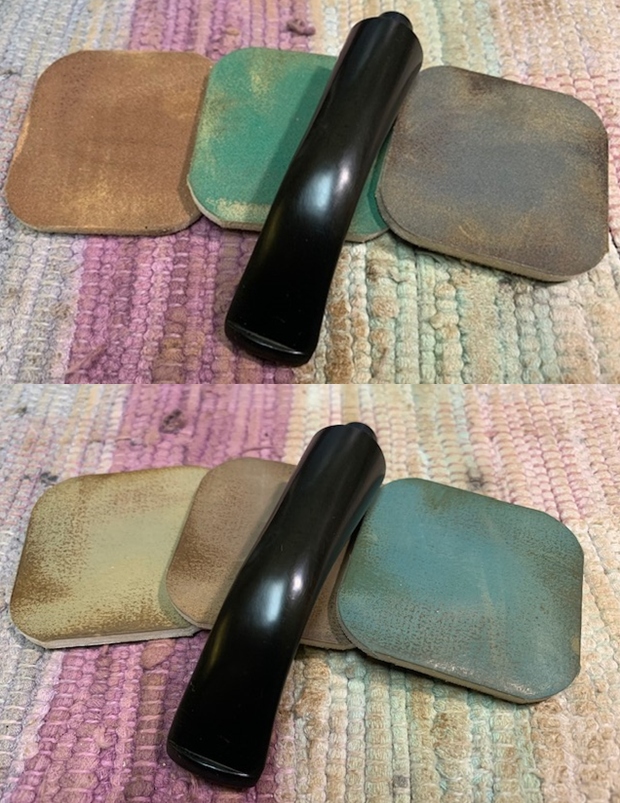
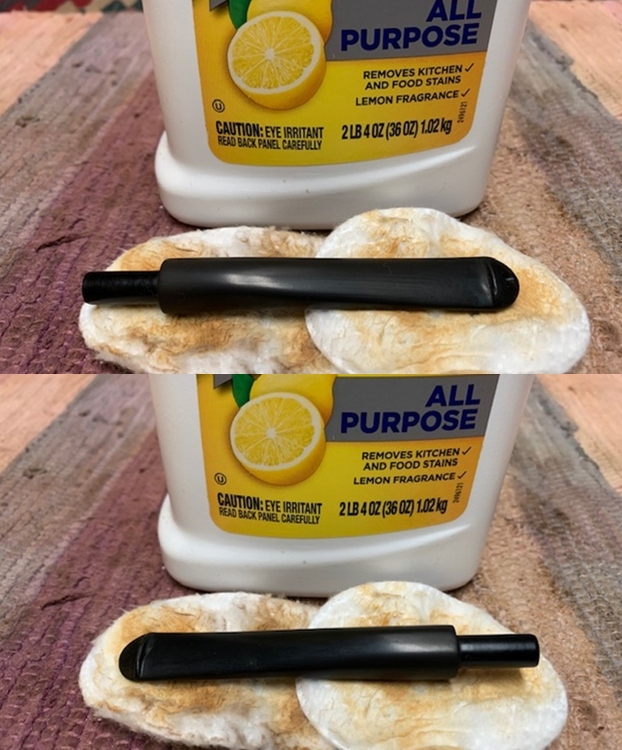
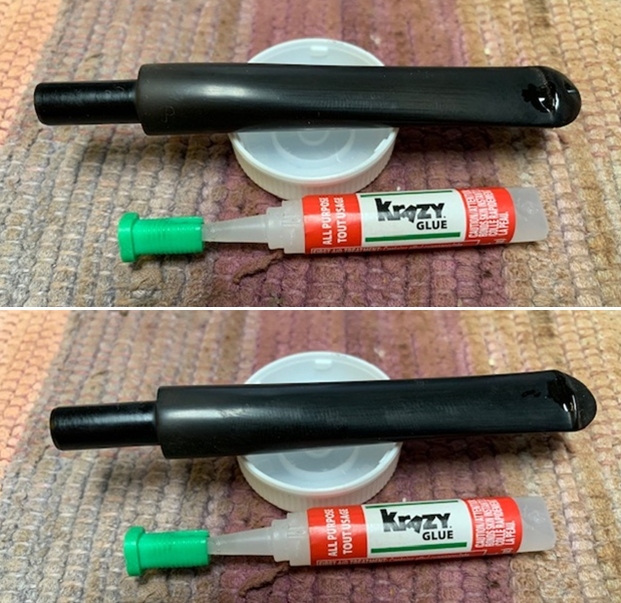
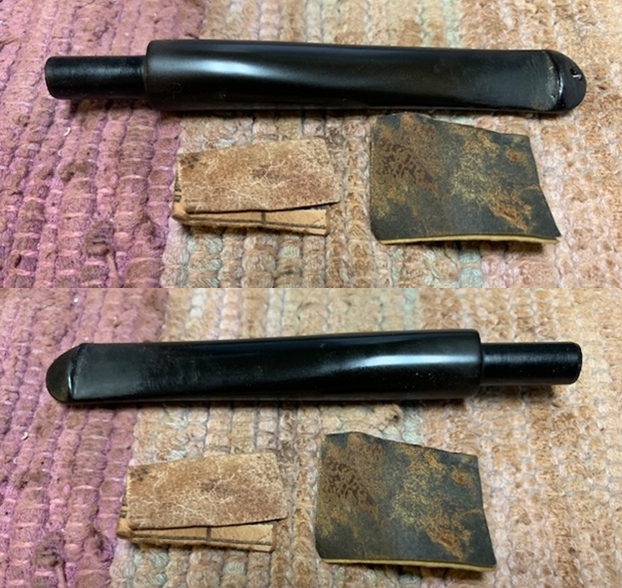
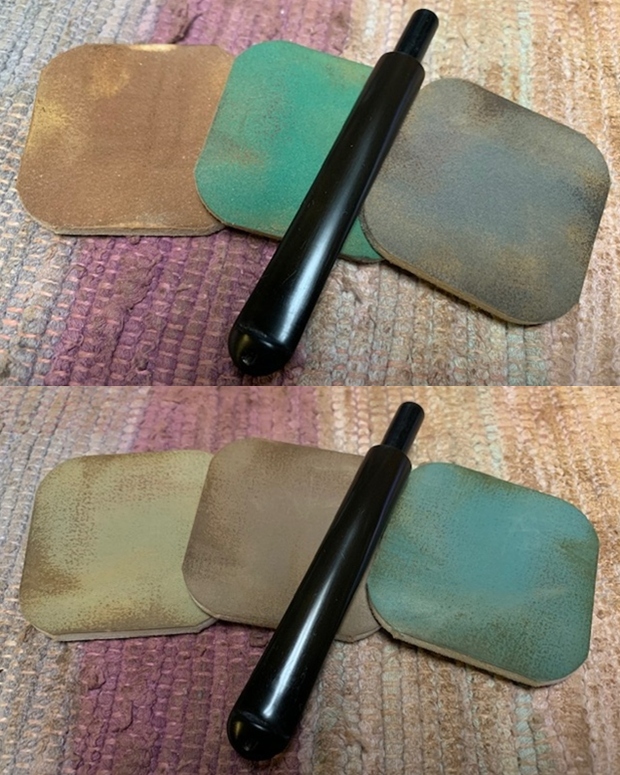
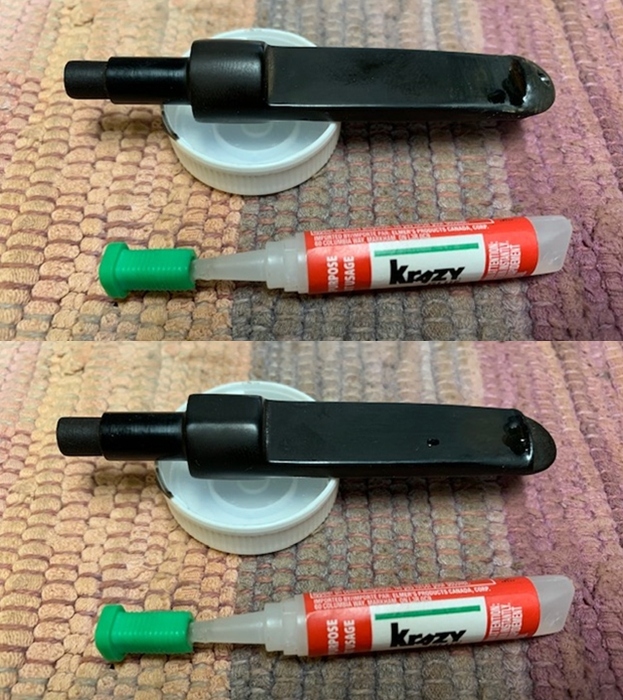
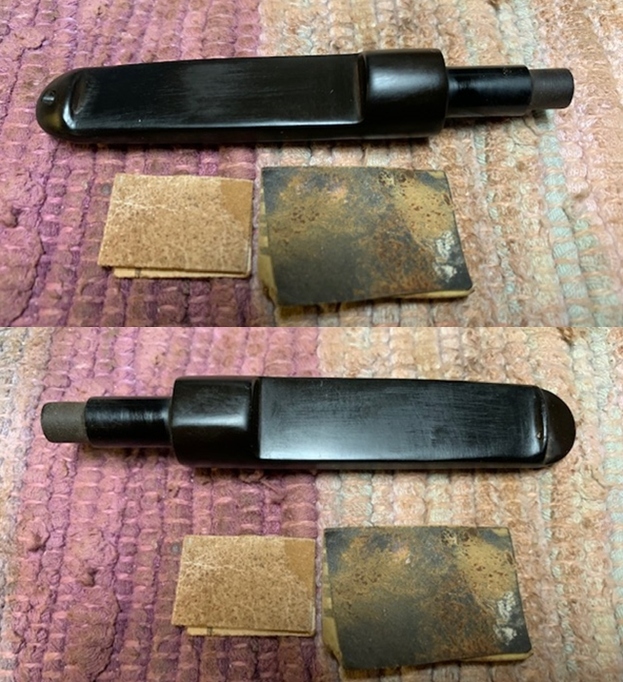
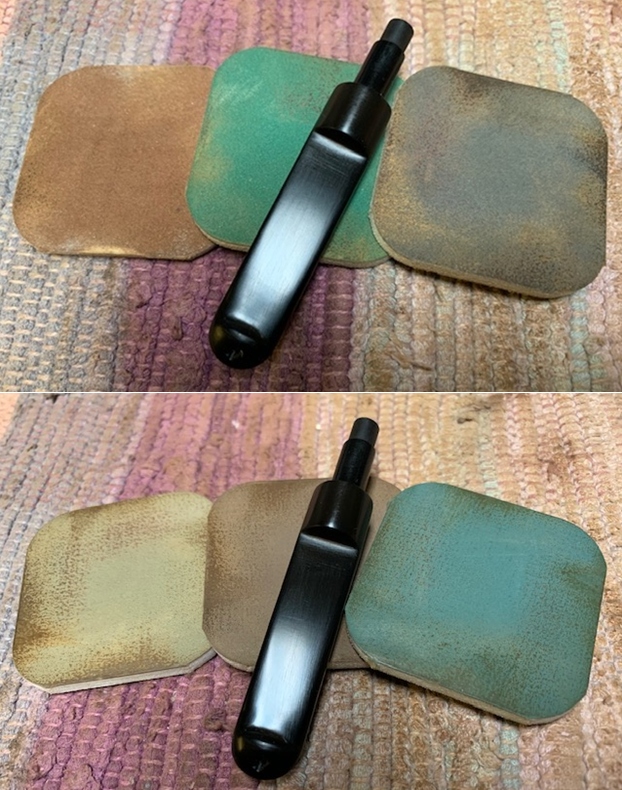
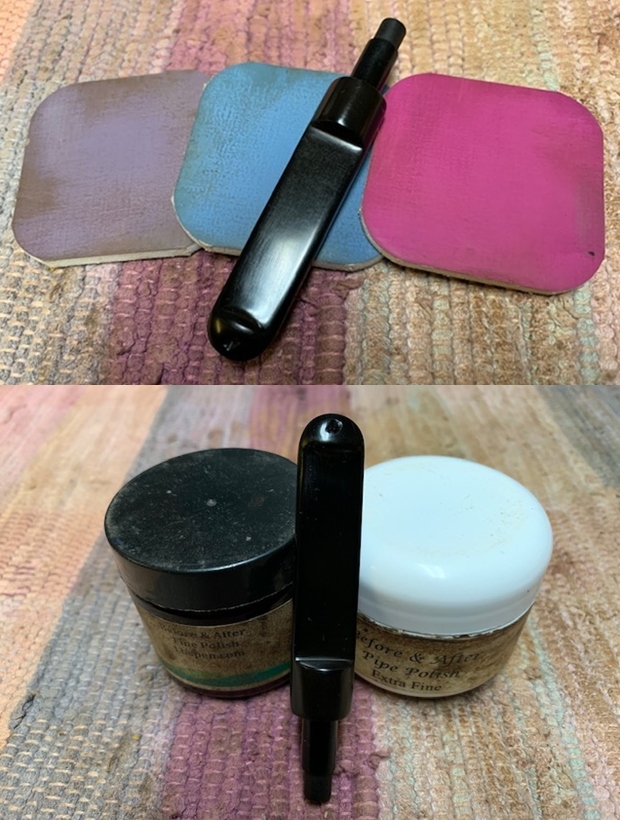
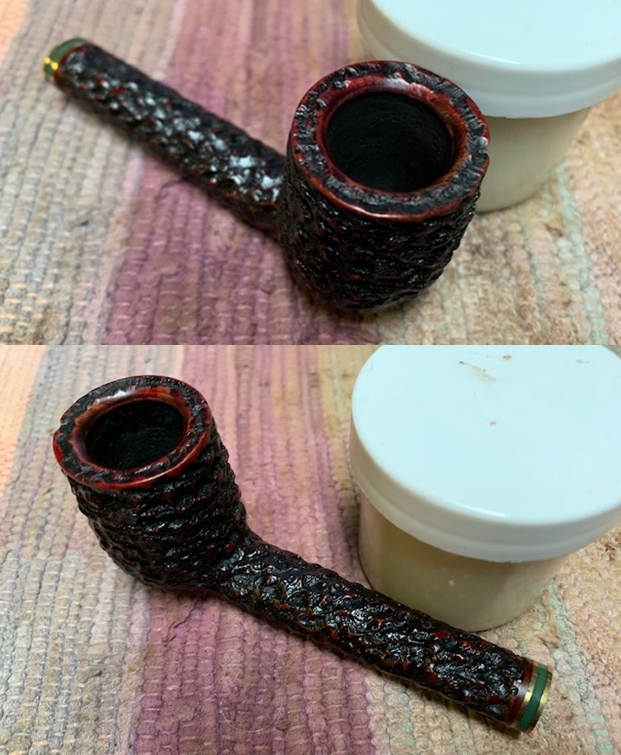
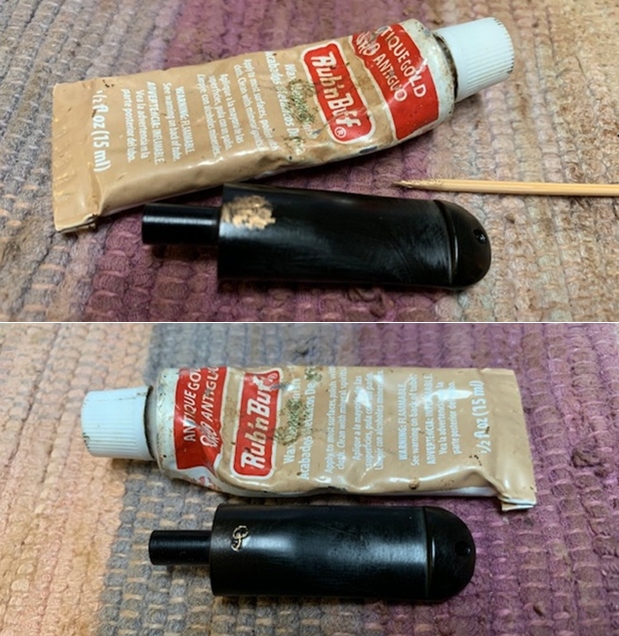
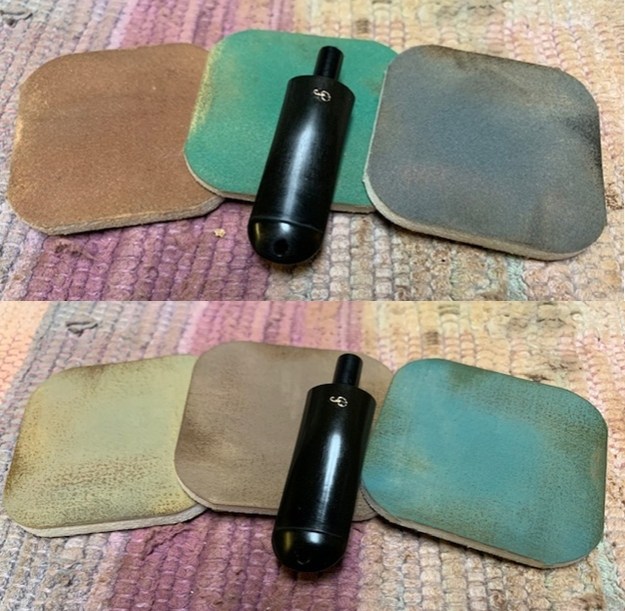
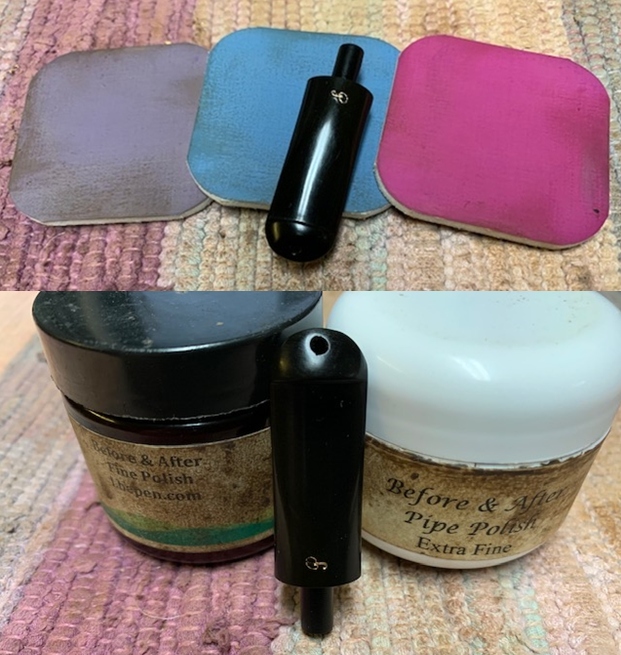
I decided to start my restoration work on this one by starting my cleanup of the bowl. I reamed the thick cake back with a PipNet pipe reamer using the smallest cutting head on this petite pipe. The cake was thick and crumbly and came out easily. I followed that by cleaning up the remnants of cake with a Savinelli Fitsall Pipe Knife and finish with a piece of dowel wrapped in 220 grit sandpaper. I decided to deal with the damaged rim top next. I lightly topped the bowl to remove the significant dents and damage to the top and outer edge. It did not take too much work to remove it. I used a folded piece of 220 grit sandpaper to smooth out the bevel on the inner edge of the bowl and remove the burn damage there. It came out looking much better. Once it is polished it will look very good and match the finish on the bowl quite well.I wiped off the exterior of the bowl with a damp cloth to remove the sanding dust and grime. Once it was clean it was time to deal with the interior. I scrubbed out the shank and the airway in the stem with pipe cleaners, cotton swabs and alcohol to remove the tars and oils. There was also some brown stain that came out of the inside of the shank  and the end of the stem.  I polished the rim top and bowl with micromesh sanding pads – wet sanding with 1500-12000 grit pads. I wiped the briar down after each pad with a damp cloth. The photos tell the story of the progress of the rim and bowl.   I worked some Before & After Restoration Balm into the surface of the briar with my fingertips and a horsehair shoe brush to clean, enliven and protect the briar. I let the balm sit for about 15-20 minutes and then buffed it with a cotton cloth to raise the shine. The photos show the bowl at this point in the restoration process. With that done the bowl was finished other than a final buffing.  I set it aside and turned my attention to the stem. I “painted” the surface of the stem to lift the tooth marks and dents I was able to lift many of them but several remained on the top and underside near the button. I filled them in with black superglue and set them aside to cure. Once they had cured I smoothed them out with a file to start to blend them into the surface of the stem. I sanded the repaired areas with 220 grit sandpaper to smooth out the repairs. I started the polishing with 400 grit wet dry sandpaper.   I scrubbed the surface of the stem to remove the remaining oxidation with Soft Scrub all Purpose cleanser. I rubbed it on and off with a cotton pad and was able to remove a lot of oxidation.    I touched up the P stamp on the left side of the saddle with Rub’n Buff Antique Gold. I applied it to the stamping with a tooth pick. I buffed it off with a paper towel and was pleased by the gold left behind in the stamp.  I polished the stem with micromesh sanding pads – wet sanding with 1500-12000 grit sanding pads. I wiped it down after each sanding pad with Obsidian Oil. I polished it with Before & After Pipe Stem Polish – both Fine and Extra Fine.     I am excited to finish this Republic Era Peterson’s Jade 150 Bulldog. I put the pipe back together and buffed it with Blue Diamond on the buffing wheel. I gave the bowl and the stem multiple coats of carnauba wax. I buffed it with a clean buffing pad to raise the shine and followed that with a quick hand buff with a microfibre cloth to deepen the shine. It is fun to see what the polished bowl looks like with the polished shank decoration on the end and the black vulcanite stem is a great contrast of colour. This Peterson’s Jade Bulldog is a great looking pipe and it feels great in my hand. It is light and well balanced. Have a look at it with the photos below. The dimensions are Length: 5 ¾ inches, Height: 1 ¾ inches, Outside diameter of the bowl: 1 ¼ inches, Chamber diameter: ¾ of an inch. It is a beautiful pipe. Thanks for walking through the restoration with me as I worked over this pipe. I am looking forward to seeing what my friend Lee thinks of the pipe after the restoration. One more of his to restore then I will mail them back to them. Thanks to each of you who are reading this blog. Remember we are not pipe owners; we are pipemen and women who hold our pipes in trust until they pass on into the trust of the next pipeman or woman.

New Life for a Republic Era Peterson’s System 31 Billiard


Blog by Steve Laug

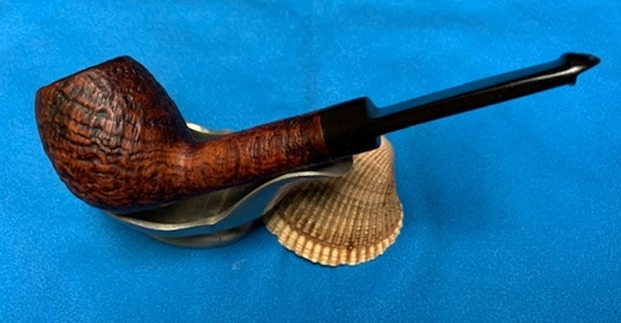
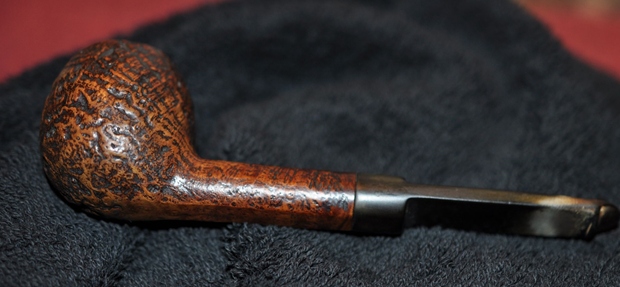
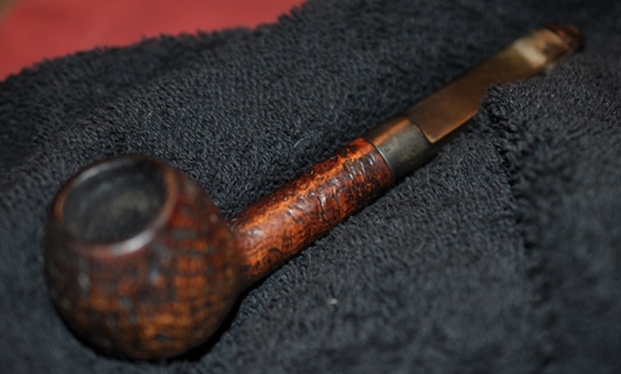
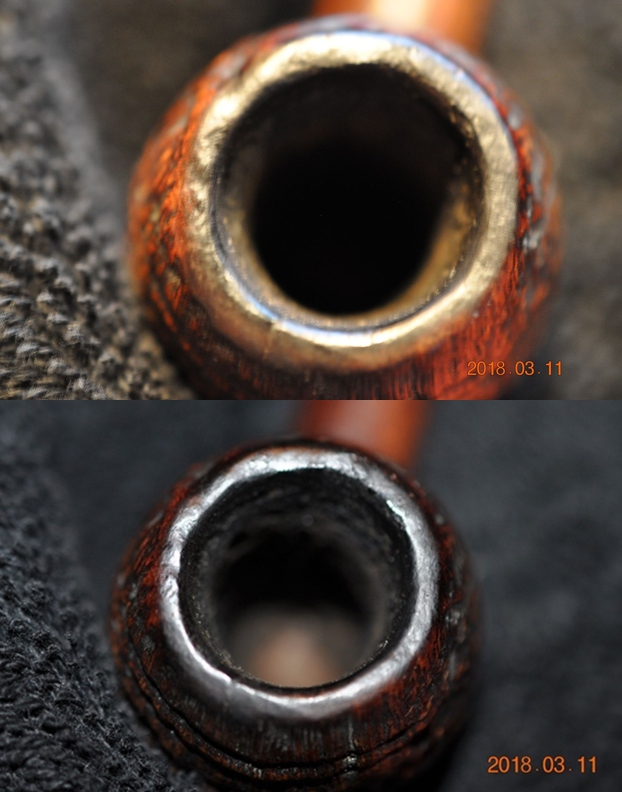
The next pipe I have chosen is a rusticated Peterson’s System 31 Billiard that was incredibly dirty and worn. The grime on the finish pretty much obscured the rustication around the bowl sides and rim top. The brown stain was tired looking and the grime obscured the texture of the rustication. This one also came to me in a box of parts that were part of an estate I purchased here in Vancouver. It was stamped on the underside of the shank. The stamping was faint but readable. It read Peterson’s in an arc over System on the heel of the bowl followed the shape number 31. After that near the nickel band it read Made in the Republic of Ireland. The nickel band is oxidized and dirty but it has the K & P stamp over Peterson Dublin. The band had some nicks and dents and had been repaired by soldering on the right side (where the green oxidation is shown in the second photo below). It should clean up well. It was in rough condition when I brought it to the table. The finish was dirty with grime ground into the briar sides and rim. There was a thick cake in the bowl and an overflow of lava on the rim top that filled in the rim top and edges. The stem had a long tube I the end that is part of the makeup of the stem. The rest of the stem was oxidized, calcified and had light tooth marks and chatter on the top and underside on and near the button. I took photos of the pipe before I started my cleanup work. They tell the story and give a glimpse of the promise that I see in this pipe.  I took photos of the rim top and stem to show the condition of the bowl and stem. The interior the bowl had a heavy cake that overflowed like lava onto the rim top filling in the sandblast. The stem is oxidized, calcified and has light tooth marks and chatter on the top and underside near the button. I took a photo of the underside of the shank to show the stamping. The stamping is faint but readable in the photos below and is as noted above.  The nickel ferrule is stamped with three shields with the inscriptions ‘K ‘&’ ‘P’ [over] PETERSON [over] DUBLIN.   I took the stem off the shank and took a photo. The stem has a long tube/funnel that is an integral part of the tenon.I am including the information from Pipedia’s article on Peterson pipes. It is a great read in terms of the history of the brand (https://pipedia.org/wiki/Peterson). I have included a bit of the pertinent history here.

1950 – 1989 The Republic Era  – From 1950 to the present time, the stamp for this era is “Made in the Republic of Ireland” in a block format generally in three lines but two lines have been used with or without Republic being abbreviated.

During the 1950’s and 60’s the Kapp & Peterson Company was still in the ownership of the Kapp family. However 1964 saw the retiral of the company Managing Director Frederick Henry(Harry) Kapp.

I did a search on Google about the Peterson System 31 Straight Billiard to see if I could learn any specific information on the shape. I found a link to a pipe for sale on Smokingpipes.com. I quote:

The straight-stemmed Peterson System is quite different from their better-known bent-stem version. Rather than a moisture chamber extending past the transition as part of the shank, akin to that of a cavalier-type pipe, the moisture chamber is drilled beneath the bowl itself, with the tobacco chamber’s draft hole drilled straight downward into it. Further, a metal tube is threaded to the base of the vulcanite stem, to extend into the moisture chamber and provide a better, drier smoke (https://www.smokingpipes.com/pipes/new/peterson/moreinfo.cfm?product_id=183783).

Paresh had worked on System 31 pipe so I went back and reread his work on that smooth pipe. It was very helpful for the background information included (https://rebornpipes.com/tag/peterson-system-31-pipe/).

I knew that I was dealing with a Republic Era pipe made between 1950-1989. The K&P mark on the nickel band ties to Kapp & Peterson brings the date to the time between 1950-1964. It was a rusticated Straight billiard with a unique shape and chamber beneath the bottom of the bowl. The finish was stained with a combination of brown and black stains. Now it was time to work on the pipe.

I decided to start my restoration work on this one by starting my cleanup of the bowl. I reamed the thick cake back with a PipNet pipe reamer using the smallest cutting head on this petite pipe. The cake was thick and crumbly and came out easily. I followed that by cleaning up the remnants of cake with a Savinelli Fitsall Pipe Knife and finish with a piece of dowel wrapped in 220 grit sandpaper. I decided to use the cotton ball and alcohol treatment to remove the stink from the bowl. I stuffed a cotton ball in the bowl of the pipe and twisted a second cotton ball into the shank and sump of the pipe. I filled in the bowl and shank with isopropyl alcohol. I set the pipe aside and let it leach out the tars and oils in the bowl. I let it sit for several hours and then removed the cotton from the bowl and shank. It came with a lot of the tars and oils.   I scrubbed the exterior of the bowl with undiluted Murphy’s Oil Soap and a tooth brush to clean up the crevices in the sandblast finish. I rinsed off the debris and the soap with running water and dried the pipe off with a soft towel.    With the exterior clean it was time to deal with the interior. I scrubbed out the shank with pipe cleaners, cotton swabs and alcohol to remove the tars and oils. I also cleaned out the airway in the stem at the same time with pipe cleaners and alcohol.  I worked some Before & After Restoration Balm into the surface of the briar with my fingertips and a horsehair shoe brush to clean, enliven and protect the briar. I let the balm sit for a little while and then buffed with a cotton cloth to raise the shine. The photos show the bowl at this point in the restoration process. With that done the bowl was finished other than a final buffing. I set it aside and turned my attention to the stem. I polished the stem with micromesh sanding pads – wet sanding with 1500-12000 grit sanding pads. I wiped it down after each sanding pad with Obsidian Oil. I polished it with Before & After Pipe Stem Polish – both Fine and Extra Fine.  I am excited to finish this petite Republic Era Peterson’s System 31 Straight Billiard. I put the pipe back together and buffed it with Blue Diamond on the buffing wheel. I gave the bowl multiple coats of Conservator’s Wax and the stem multiple coats of carnauba wax. I buffed it with a clean buffing pad to raise the shine and followed that with a quick hand buff with a microfibre cloth to deepen the shine. It is fun to see what the polished bowl looks like with the variations of colour in the rustication on the bowl sides and rim top. Added to that the polished nickel ferrule and black vulcanite stem is a great contrast of colour. This small Peterson’s System 31 Straight Billiard is a great looking pipe and it feels great in my hand. It is light and well balanced. Have a look at it with the photos below. The dimensions are Length: 5 ½ inches, Height: 1 ½ inches, Outside diameter of the bowl: 1 1/8 inches, Chamber diameter: ¾ of an inch. It is a beautiful pipe. Thanks for walking through the restoration with me as I worked over this pipe. Thanks to each of you who are reading this blog. Remember we are not pipe owners; we are pipemen and women who hold our pipes in trust until they pass on into the trust of the next pipeman or woman. 

New Life for a Republic Era Peterson’s Kapruf 71 Canadian


Blog by Steve Laug

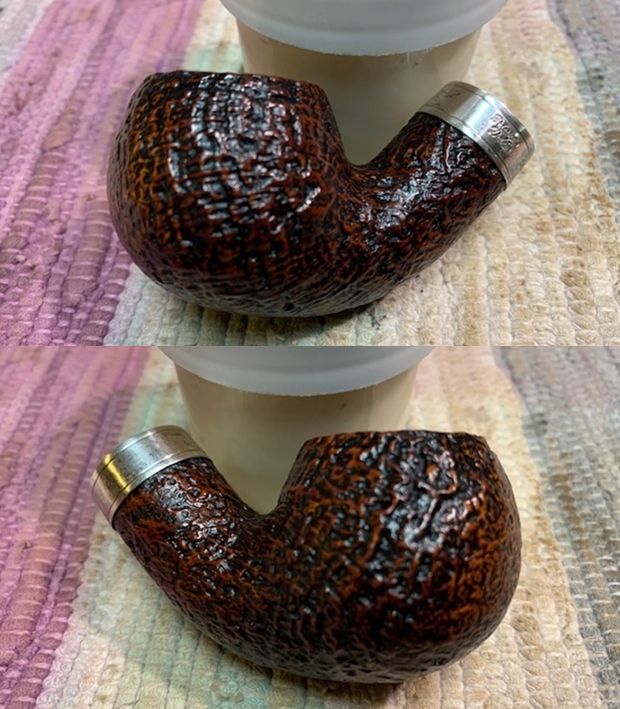
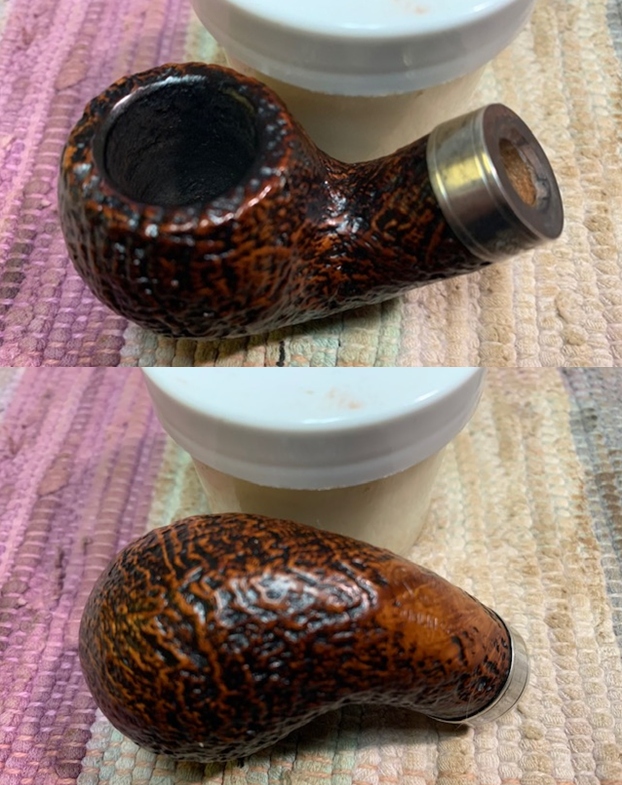
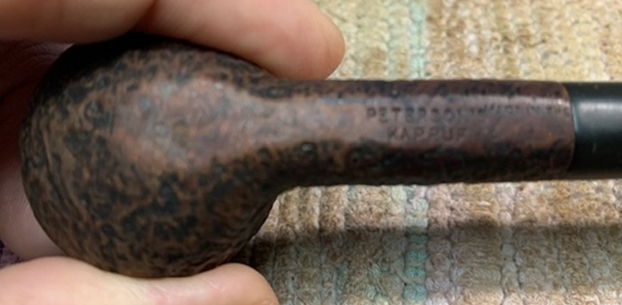
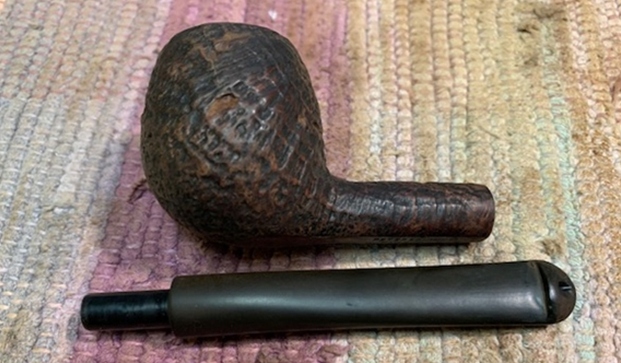
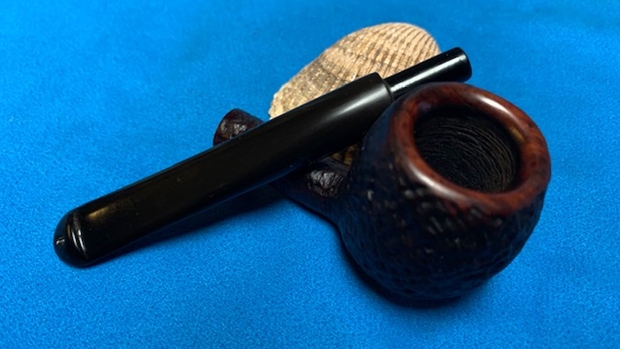
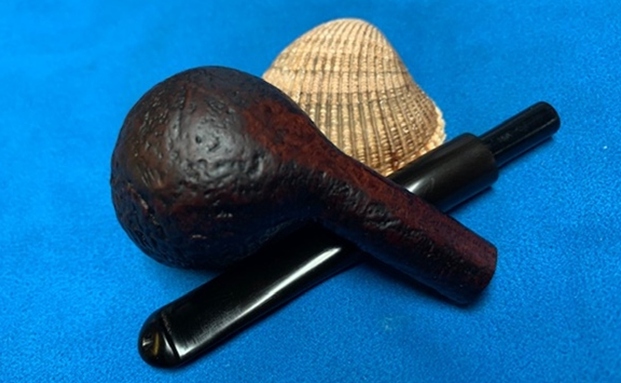
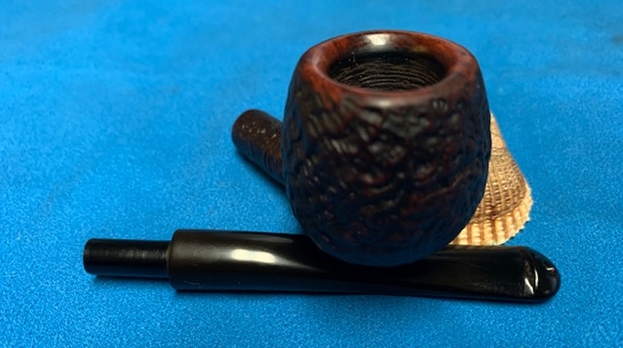
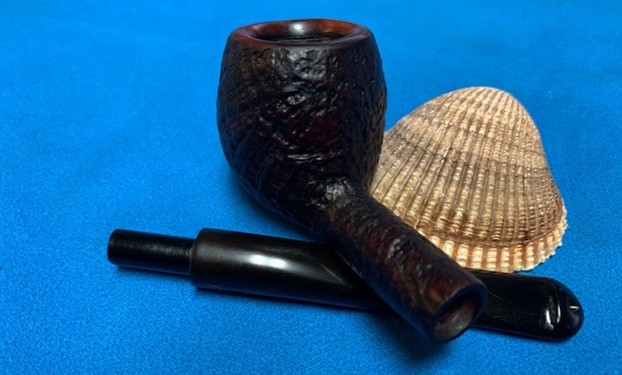
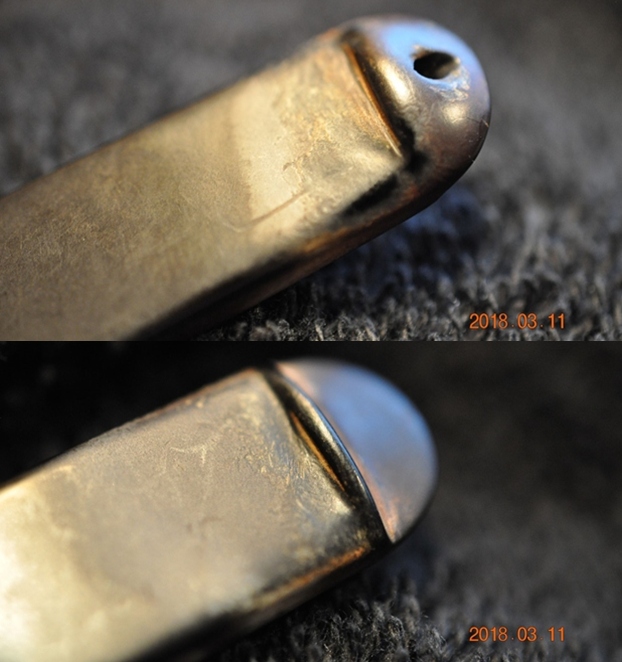
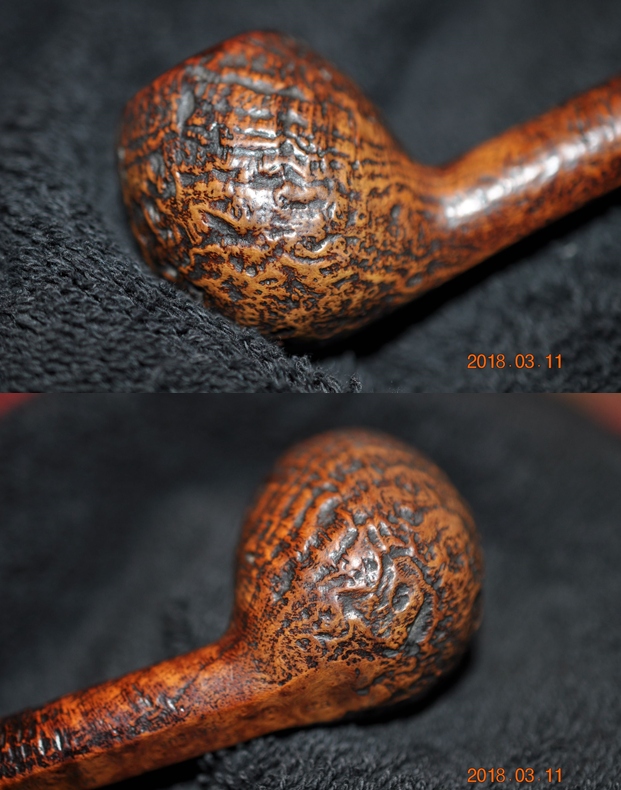
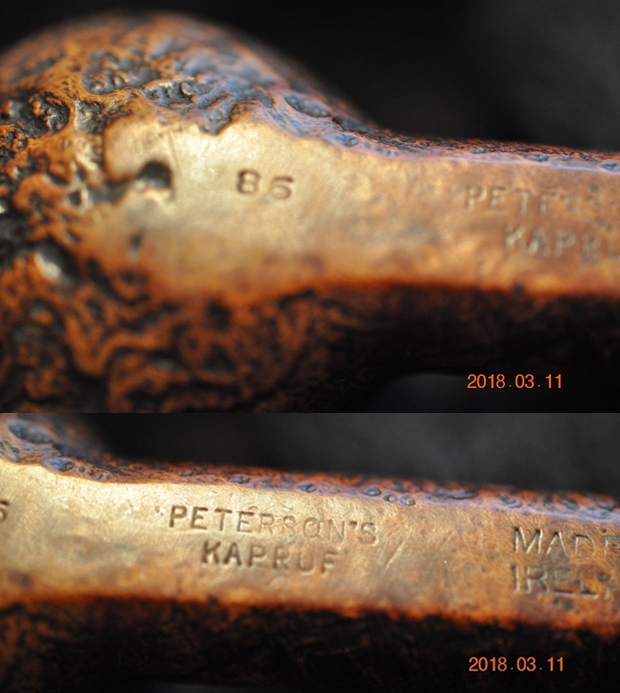
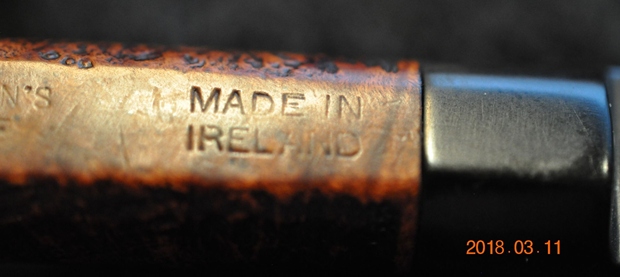
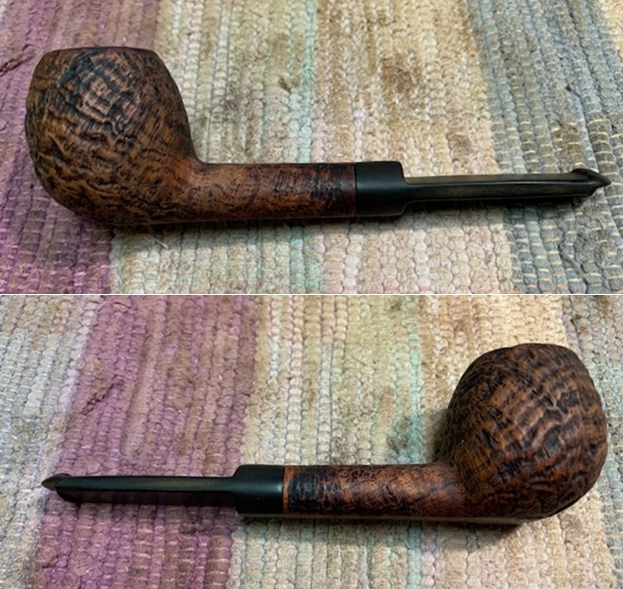
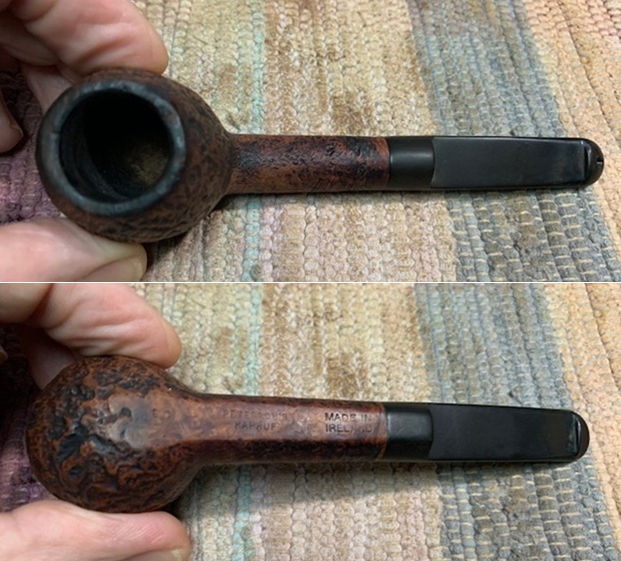
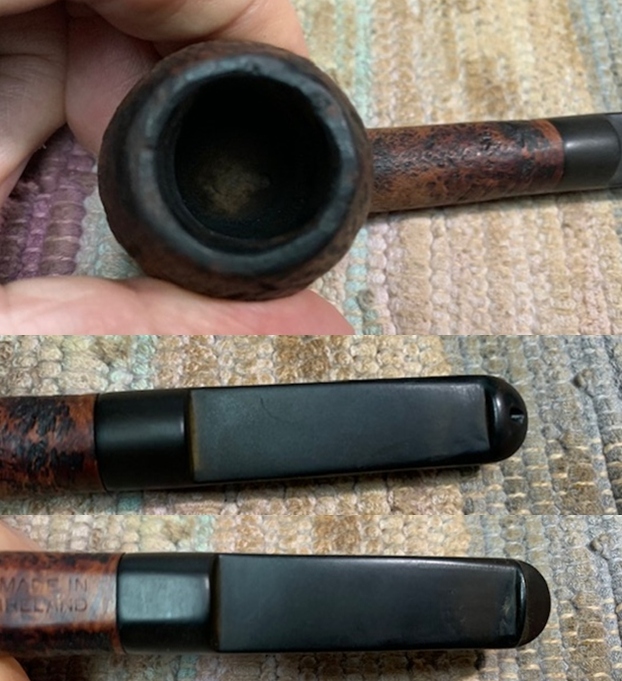
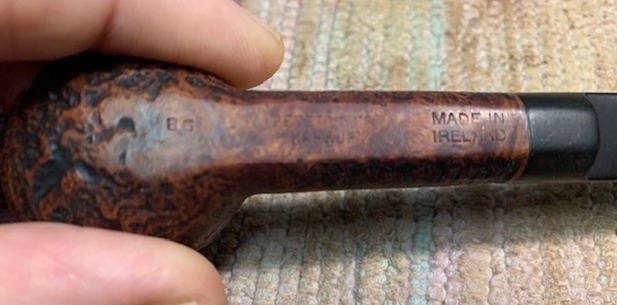
The next pipe I have chosen is a sandblast Peteron’s Kapruf Canadian that was incredibly dirty. The grime on the finish pretty much obscured the sandblasted grain around the bowl sides. The contrast of the brown stain made the texture of the blast stand out clearly. This one came to me in a box of parts that were part of an estate I purchased here in Vancouver. It was stamped on the underside of the shank. The stamping was readable. It read shape #71 on the heel of the bowl followed by Made in the Republic of Ireland mid shank. That is followed by Peterson’s [over] Kapruf. It was in rough condition when I brought it to the table. The finish was dirty with grime ground into the briar sides and rim. There was a thick cake in the bowl and an overflow of lava on the rim top that filled in the blasted rim top and edges. The stem had a broken tenon that was stuck in the shank. The rest of the stem was oxidized, calcified and had light tooth marks and chatter on the top and underside on and near the button. I took photos of the pipe before I started my cleanup work. They tell the story and give a glimpse of the promise that I see in this pipe.  I took photos of the rim top and stem to show the condition of the bowl and stem. The interior the bowl had a heavy cake that overflowed like lava onto the rim top filling in the sandblast. The stem has a broken tenon and the taper is oxidized, calcified and has tooth marks on the top and underside near the button. It has a clear P stamp on the top of the stem.I took a photo of the underside of the shank to show the stamping. The stamping is readable in the photos below and is as noted above. I am including the information from Pipedia’s article on Peterson pipes. It is a great read in terms of the history of the brand (https://pipedia.org/wiki/Peterson). I have included a bit of the pertinent history here.

1950 – 1989 The Republic Era  – From 1950 to the present time, the stamp for this era is “Made in the Republic of Ireland” in a block format generally in three lines but two lines have been used with or without Republic being abbreviated.

During the 1950’s and 60’s the Kapp & Peterson Company was still in the ownership of the Kapp family. However 1964 saw the retiral of the company Managing Director Frederick Henry(Harry) Kapp.

I knew that I was dealing with a Republic Era pipe made between 1950-1989. It was a Kapruf which sported a rugged sandblast finish with a combination of brown and black stains. Now it was time to work on the pipe.

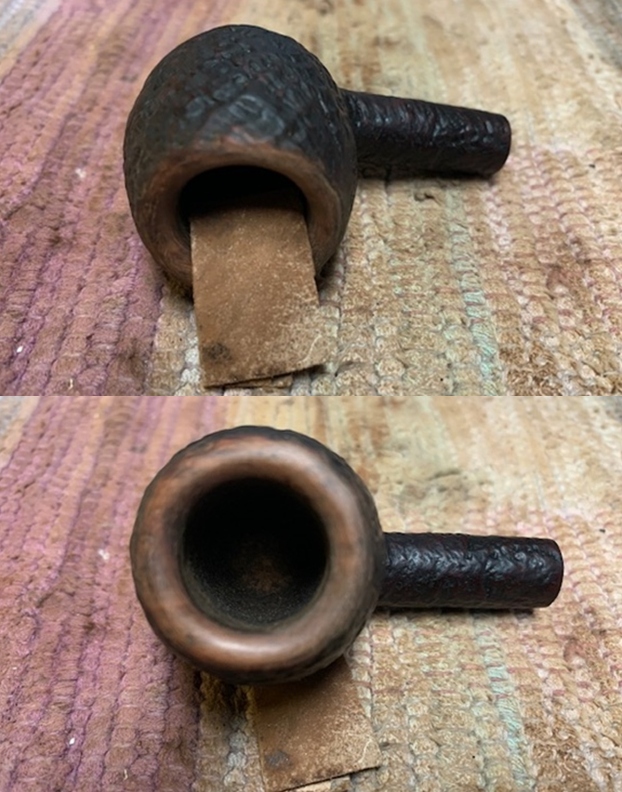
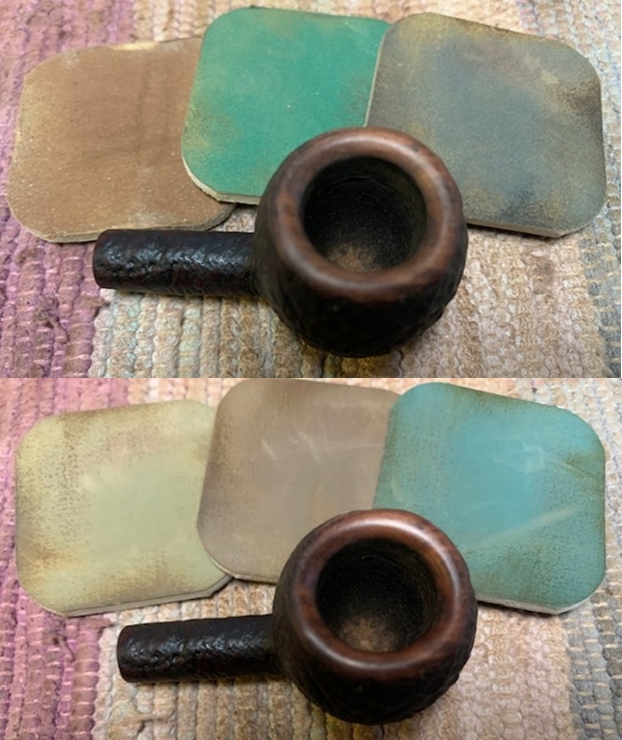
I decided to start my restoration work on this one by dealing with the broken tenon in the shank. When it was removed I would be able to clean out the shank and bowl. I pulled the tenon with a wood screw. I turned it into the airway in the tenon in the shank. Once I had a good grip on the tenon I wiggled it free of the shank. With the tenon removed it was time to clean up the bowl and shank. I reamed the thick cake back with a PipNet pipe reamer using the smallest cutting head on this petite pipe. The cake was thick and crumbly and came out easily. I followed that by cleaning up the remnants of cake with a Savinelli Fitsall Pipe Knife and finish with a piece of dowel wrapped in 220 grit sandpaper. I scrubbed the exterior of the bowl with undiluted Murphy’s Oil Soap and a tooth brush to clean up the crevices in the sandblast finish. I rinsed off the debris and the soap with running water and dried the pipe off with a soft towel. With the exterior clean it was time to deal with the interior. I scrubbed out the shank with pipe cleaners, cotton swabs and alcohol to remove the tars and oils. I also cleaned out the airway in the stem at the same time with pipe cleaners and alcohol.  I worked some Before & After Restoration Balm into the surface of the briar with my fingertips and a horsehair shoe brush to clean, enliven and protect the briar. I let the balm sit for a little while and then buffed with a cotton cloth to raise the shine. The photos show the bowl at this point in the restoration process. With that done the bowl was finished other than a final buffing. I set it aside and turned my attention to the stem. I decided to replace the broken tenon before cleaning up the oxidation on the stem surface. I used a series of drill bit to drill out the airway in the stem for the new tenon replacement. I moved carefully because of the angle of the stem surface. There was no room for error. Once I had it opened I cut a piece of rubber tenon material that I had to match the depth of the hole I had drilled and the depth of the mortise. I glued it in place with black super glue and aligned it so that it would be straight in the shank. Once it was aligned I set it aside for the glue to cure. Once the glue cured I dropped the stem in a bath of Briarville’s Pipe Stem Oxidation Remover and called it a night. This morning I removed the stem from the bath and dried it off with a paper towel. I cleaned out the airway with alcohol and pipe cleaners and other than the P on the top side missing the stem looks very good.  I used some Paper Mate Liquid Paper to touch up the “P” stamping on the top of the stem. Once it cured I scraped off the excess leaving the stamp filled in. I am happy with the way that it came out.   I polished the stem with micromesh sanding pads – wet sanding with 1500-12000 grit sanding pads. I wiped it down after each sanding pad with Obsidian Oil. I polished it with Before & After Pipe Stem Polish – both Fine and Extra Fine.      I am excited to finish this petite Republic Era Peterson’s Kapruf 71 Canadian. I put the pipe back together and buffed it with Blue Diamond on the buffing wheel. I gave the bowl multiple coats of Conservator’s Wax and the stem multiple coats of carnauba wax. I buffed it with a clean buffing pad to raise the shine and followed that with a quick hand buff with a microfibre cloth to deepen the shine. It is fun to see what the polished bowl looks like with the variations of colour in the sandblast on the bowl sides and rim top. Added to that the polished black vulcanite stem is a great contrast of colour. This small Canadian is a great looking pipe and it feels great in my hand. It is light and well balanced. Have a look at it with the photos below. The dimensions are Length: 5 ½ inches, Height: 1 ½ inches, Outside diameter of the bowl: 1 1/8 inches, Chamber diameter: ¾ of an inch. It is a beautiful pipe. Thanks for walking through the restoration with me as I worked over this pipe. Thanks to each of you who are reading this blog. Remember we are not pipe owners; we are pipemen and women who hold our pipes in trust until they pass on into the trust of the next pipeman or woman. 

New Life for a Peterson’s Republic Era System Standard 306 Bent Sitter


Blog by Steve Laug

The next pipe I have chosen is a smooth Peterson’s System Standard Sitter that was incredibly dirty. The grime on the finish pretty much obscured the grain around the bowl sides. The contrast of the dark stain made the grain stand out clearly. Jeff and I picked it up as part of group of pipes we traded for from Hermann, Missouri, USA. It was stamped on the left side of the shank. The stamping was readable. It read Peterson’s [arched over] System [arched over] Standard. On the right side of the shank it was stamped Made in the Republic of Ireland [over] the shape number, 306. It was in rough condition when he brought it to the table. The finish was dirty with grime ground into the briar sides and rim. There was a thick cake in the bowl and an overflow of lava on the rim top and the beveled inner edge of the bowl. The stem was oxidized, calcified and had light tooth marks and chatter on the top and underside on and near the button. Jeff took photos of the pipe before his cleanup work. They tell the story and give a glimpse of the promise that we see in this pipe.  Jeff took photos of the rim top to show the interior the bowl and the beveled inner edge. It is heavily caked with a thick lava overflow. The stem is oxidized, calcified and has tooth marks on the top and underside near the button.   Jeff took some photos of the bowl sides and heel to show grain that was around this bowl. It is a nice looking pipe.  He took a photo of the sides of the shank to show the stamping. The stamping is readable in the photos below and is as noted above – it reads Peterson’s [arched over] System [over] Standard. The nickel ferrule is also stamped K&P Peterson’s on the left side. On the right side it is stamped Made in the Republic of Ireland [over] shape number 306. I am including the information from Pipedia’s article on Peterson pipes. It is a great read in terms of the history of the brand (https://pipedia.org/wiki/Peterson). I have included a bit of the pertinent history here.
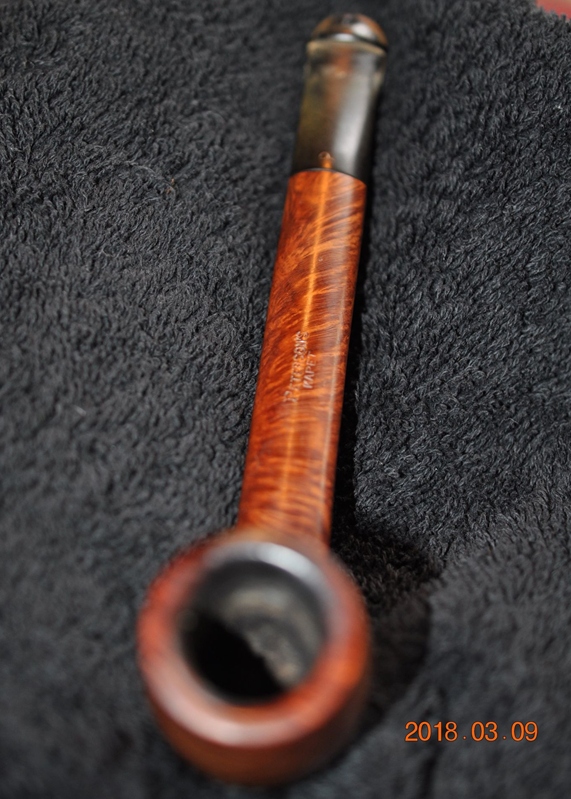
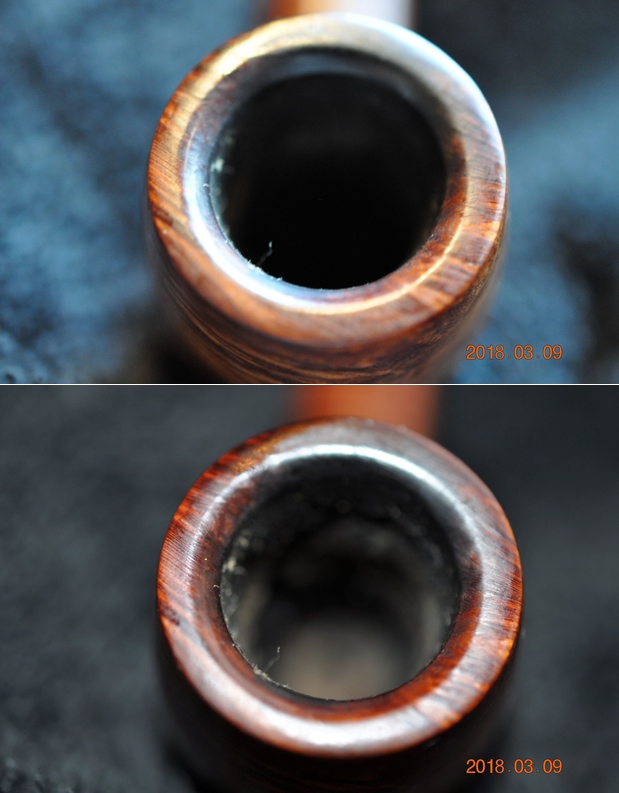
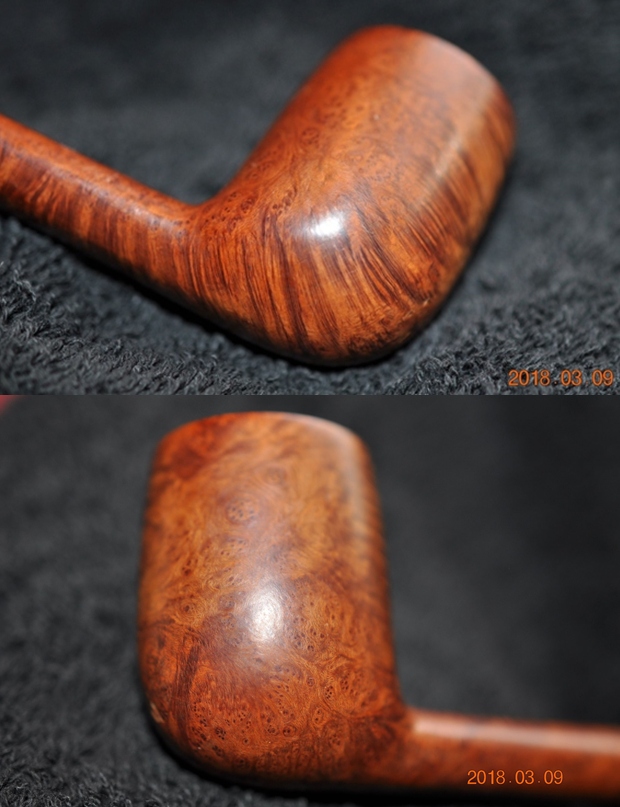
1950 – 1989 The Republic Era  – From 1950 to the present time, the stamp for this era is “Made in the Republic of Ireland” in a block format generally in three lines but two lines have been used with or without Republic being abbreviated.

During the 1950’s and 60’s the Kapp & Peterson Company was still in the ownership of the Kapp family. However 1964 saw the retiral of the company Managing Director Frederick Henry(Harry) Kapp.

I knew that I was dealing with a Republic Era pipe made between 1950-1989. The K&P mark on the nickel band ties to Kapp & Peterson brings the date to the time between 1950-1964. Now it was time to work on the pipe.

Jeff had done a great job cleaning up the pipe as usual. He reamed the pipe with a PipNet reamer and cut back the cake back to the bare briar. He cleaned up the walls with a Savinelli Fitsall Pipe Knife. He scrubbed the interior of the bowl and shank with pipe cleaners, cotton swabs and alcohol to remove the tars and oils. He scrubbed the exterior of the pipe with Murphy’s Oil Soap and a tooth brush to remove the grime from the finish. He worked on the rim top lava and darkening with the soap and tooth brush. He scrubbed the inside of the stem with alcohol and pipe cleaners. He scrubbed the exterior with Soft Scrub and then soaked it in Before & After Deoxidizer. He washed it off with warm water to remove the deoxidizer. The pipe looked far better. The stamping on the side of the stem was very light and the white that had remained was gone. I took some close up photos of the rim top and also of the stem surface. I wanted to show how well it had cleaned up. The rim top and edges show a darkening but are not damaged. It should clean up really well. I also took close up photos of the stem to show the tooth marks on the surface and on the button.  I took a photo of the stamping on the left side of the shank. You can see that it is stamped as noted above. It is clear and readable. I took the pipe apart and took a photo of the pipe. It is a good looking pipe and has some great grain around the bowl and shank.I decided to start my restoration work on this one by dealing with the rim top and the damaged beveled inner edge of the bowl. I sanded the rim top and the inner edge of the bowl with 220 grit sandpaper to remove the darkening and damage.  I started polishing it with 400 grit wet dry sandpaper.I wiped the bowl down with acetone on a pad to remove the remnants of the finish on the briar before I did the repairs to the chips and nicks on the bowl sides. With the bowl cleaned off I filled in the deep nicks and cuts in the briar with clear super glue.   Once the glue repairs cured I sanded them smooth with a folded piece of 220 grit sandpaper to blend it into the surface of the surrounding briar. I polished the briar with micromesh sanding pads – wet sanding it with 1500-12000 grit pads. After each pad I wiped the briar down with a damp cloth.  I worked some Before & After Restoration Balm into the surface of the briar with my fingertips to clean, enliven and protect the briar. I let the balm sit for a little while and then buffed with a cotton cloth to raise the shine. The photos show the bowl at this point in the restoration process. With that done the bowl was finished other than the final buffing. I set it aside and turned my attention to the stem. I filled in the tooth damage with clear CA glue and set the stem aside to cure. I sanded out the repaired tooth marks and chatter with 220 grit sand paper to blend them into the rest of the stem surface. I started to polish it with a folded piece of 400 wet dry sandpaper. Once it was finished it had begun to shine.    I polished the stem with micromesh sanding pads – wet sanding with 1500-12000 grit sanding pads. I wiped it down after each sanding pad with Obsidian Oil. I polished it with Before & After Pipe Stem Polish – both Fine and Extra Fine.     I am excited to finish this Republic Era Peterson’s System Standard 306 Sitter. I put the pipe back together and buffed it with Blue Diamond on the buffing wheel. I gave the bowl and the stem multiple coats of carnauba wax. I hand buffed the pipe with a clean buffing pad to raise the shine. It is fun to see what the polished bowl looks like with the grain popping through on the bowls sides and rim top. Added to that the polished black vulcanite stem with the shining nickel ferrule was beautiful. This mixed grain on the smooth finish Peterson’s Sitter is nice looking and the pipe feels great in my hand. It is light and well balanced. Have a look at it with the photos below. The dimensions are Length: 6 ½ inches, Height: 2 inches, Outside diameter of the bowl: 1 ¼ inches, Chamber diameter: ¾ of an inch. It is a beautiful pipe and one that will be on the rebornpipes store soon. If you are interested in adding it to your collection let me know. Thanks for walking through the restoration with me as I worked over this pipe. Thanks to each of you who are reading this blog. Remember we are not pipe owners; we are pipemen and women who hold our pipes in trust until they pass on into the trust of the next pipeman or woman.