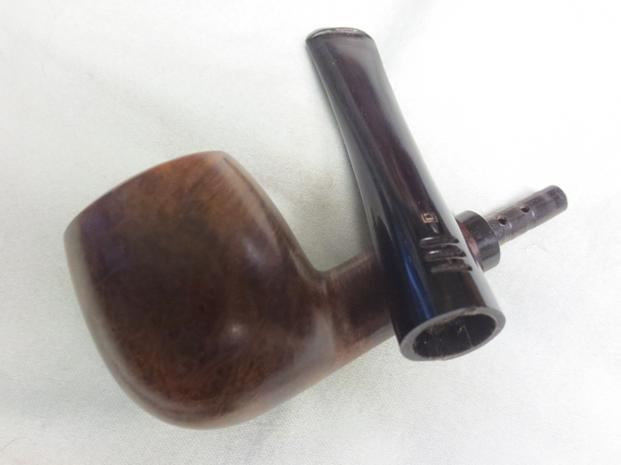
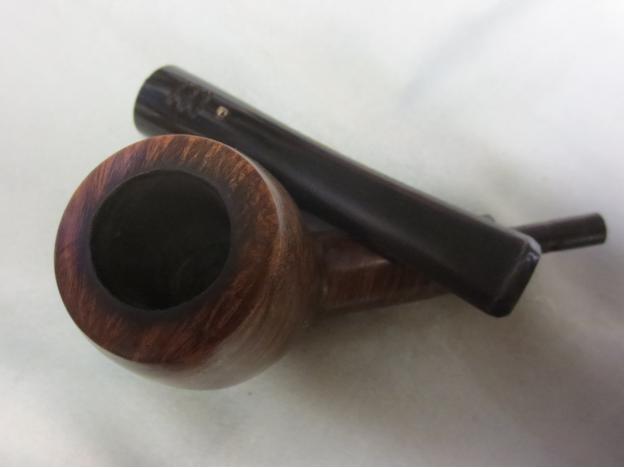
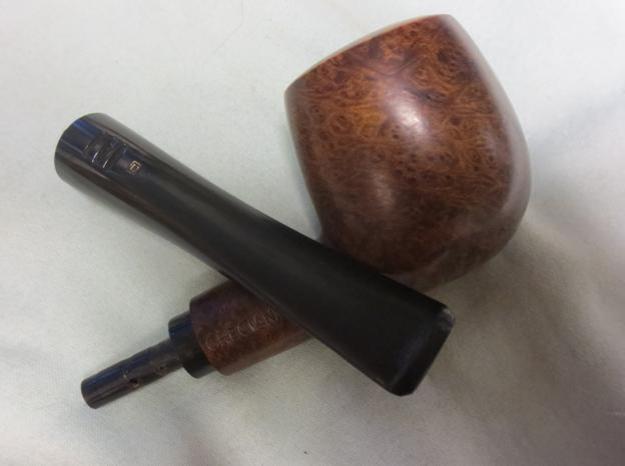
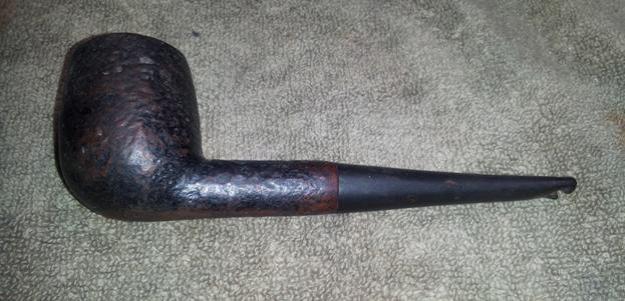
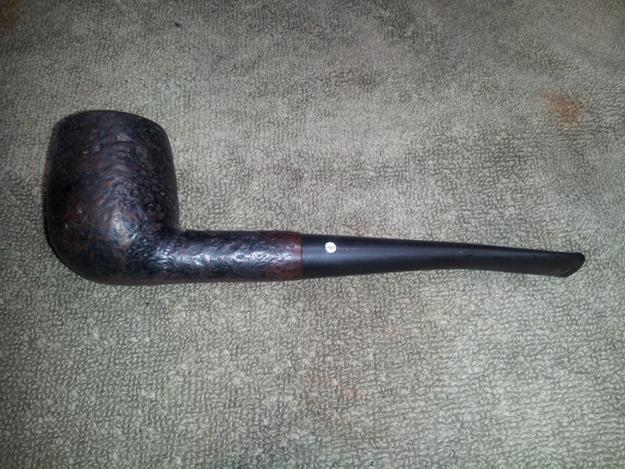
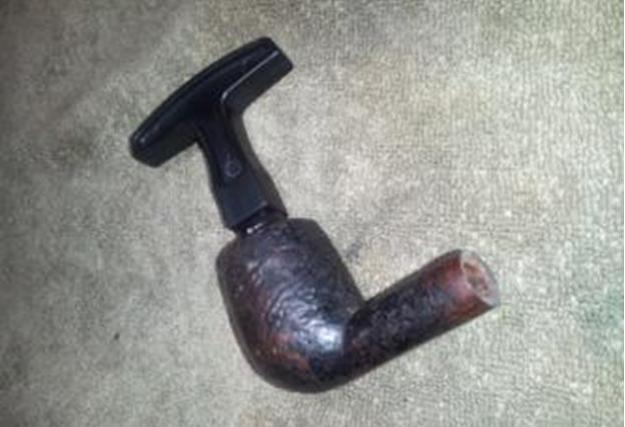
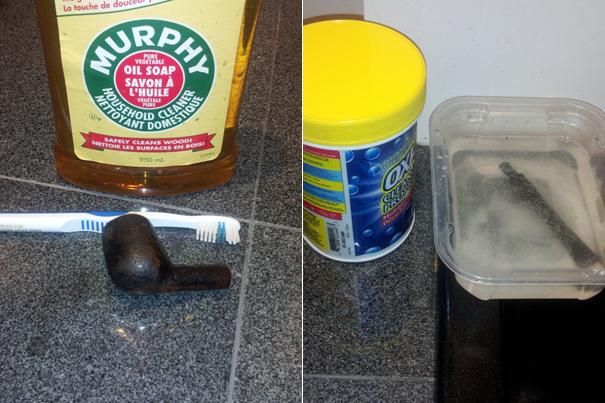
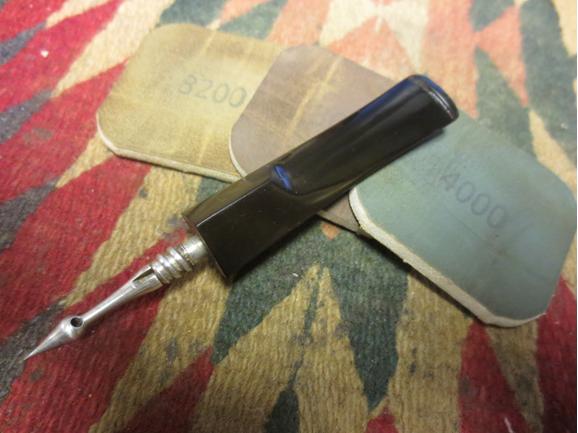
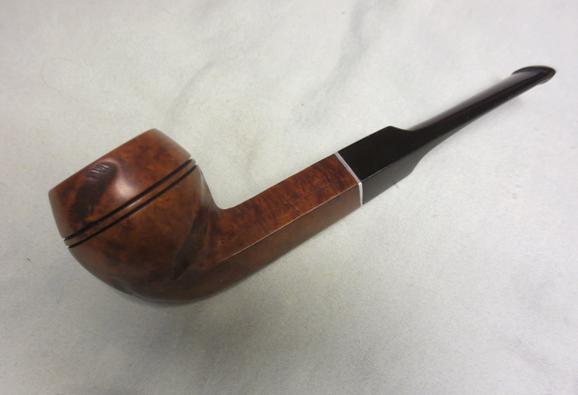
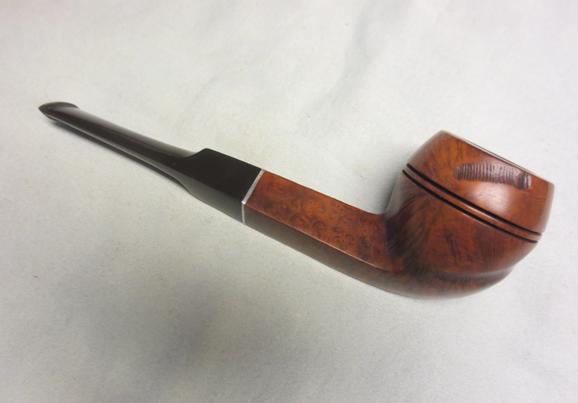
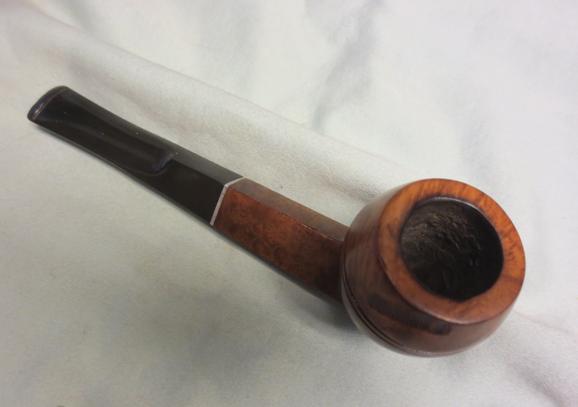
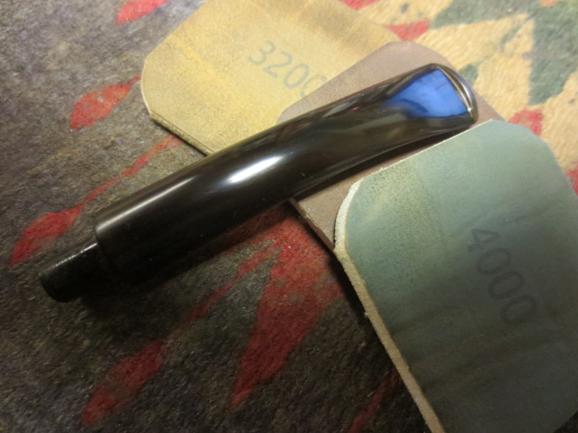
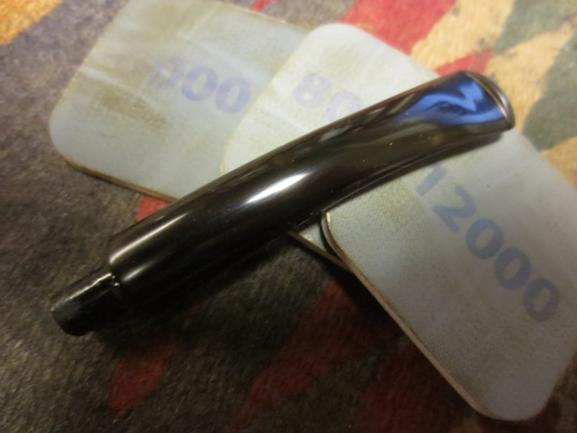
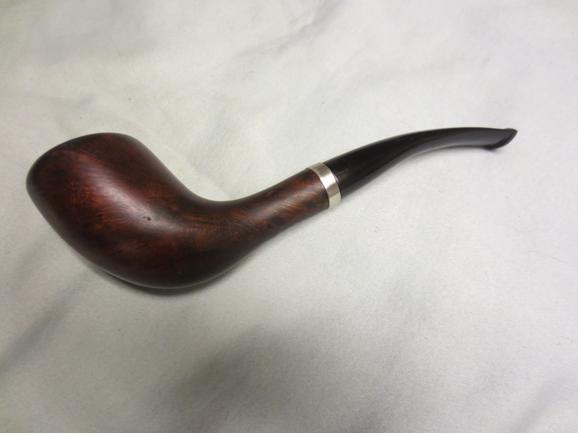
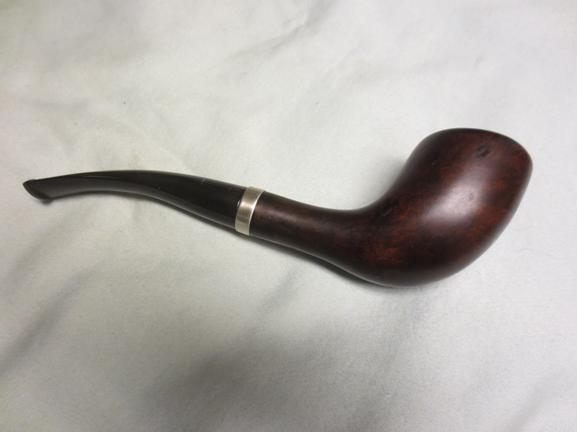
Tag Archives: Oxidation

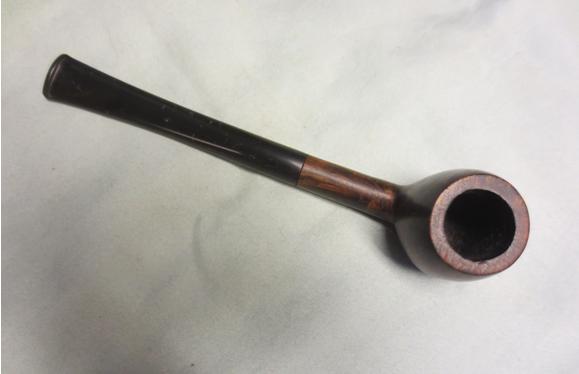
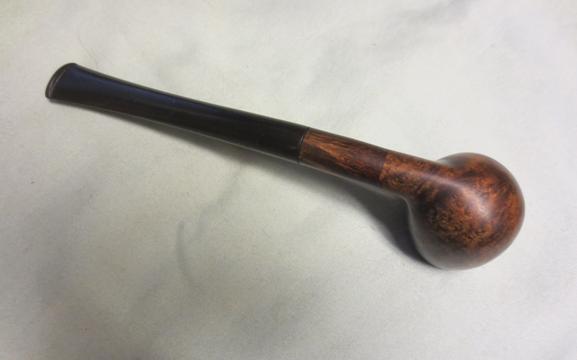
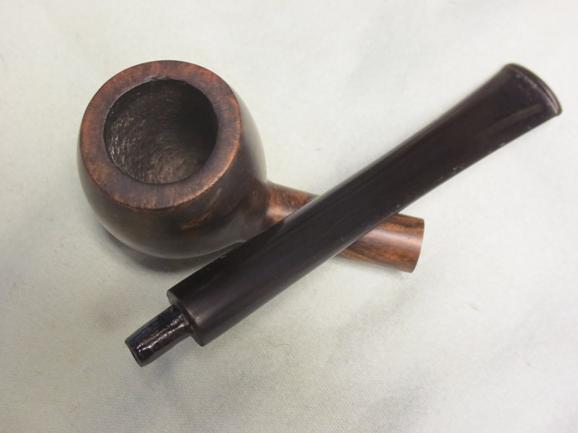
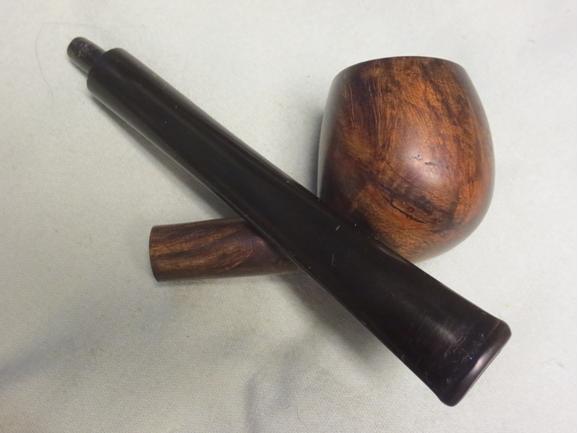
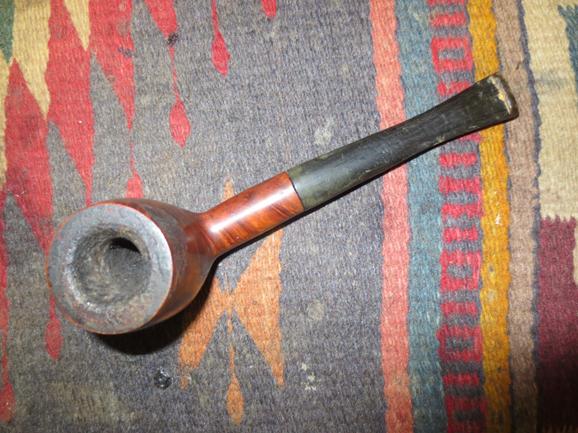
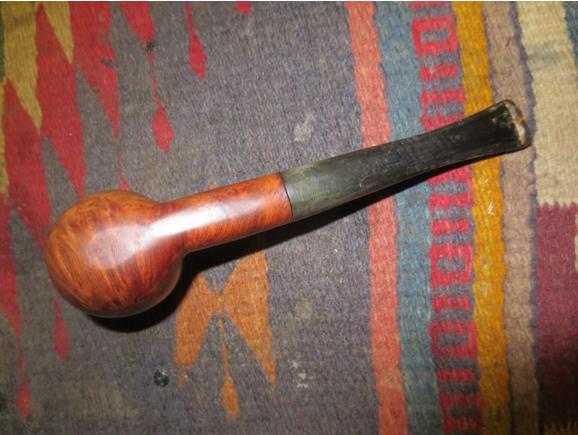
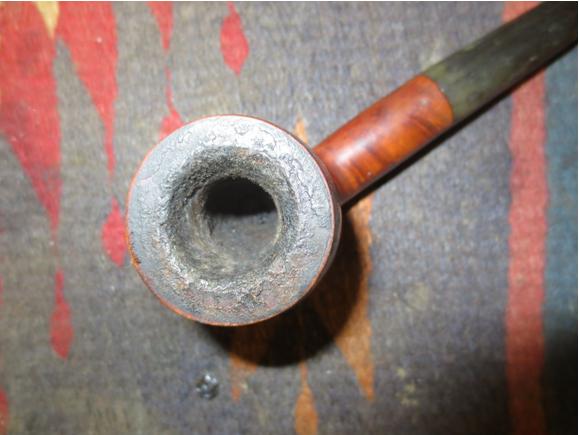
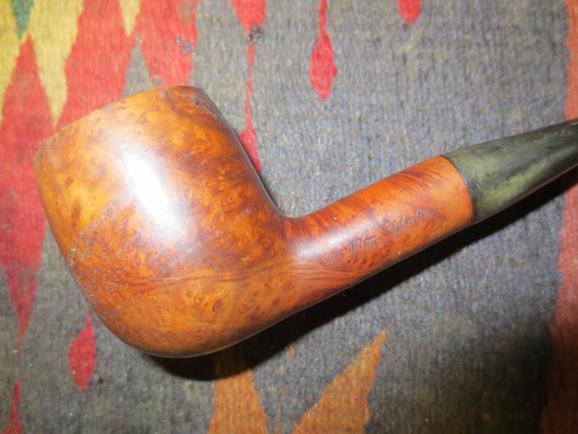
Refitting an existing stem on a Royal Windsor Prince


Blog by Steve Laug

When I was in Idaho my brother showed me the pipes he had picked up in auctions and from antique shops. He had found three meerschaum pipes and two briars. One of the briar pipes that he picked up in an auction was a Royal Windsor Imported Briar Prince. It was included as part of a sculpture that he bought that he really liked. It was an old man with a cap, glasses and a pipe. The old boy in the sculpture looks lost without his pipe in the photo below. It is finished now and it will go out in the mail tomorrow so he should have it back very soon.Statue1
My daughter took the following photo of the sculpture with the pipe. In her photo the table top looks like a sweater.
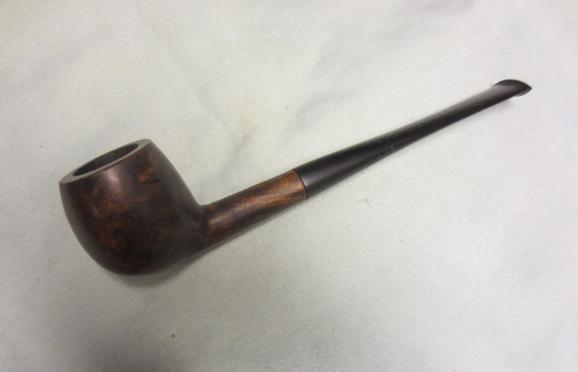
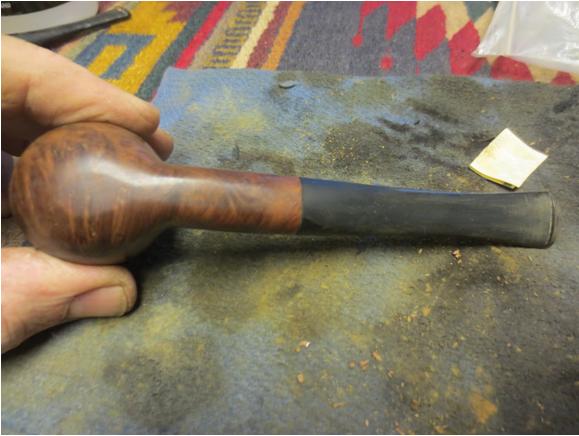
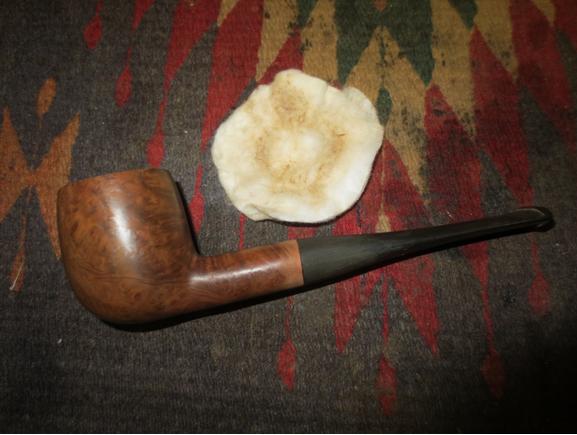
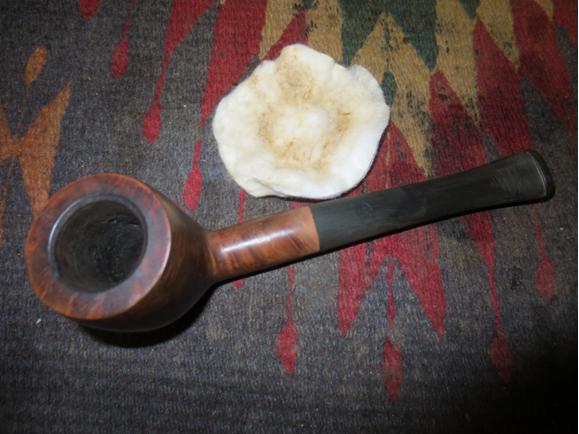
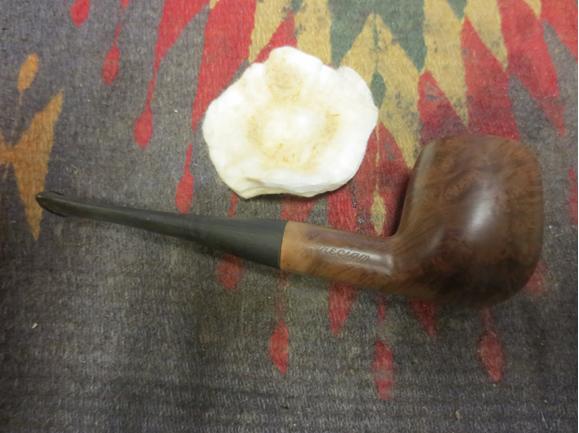
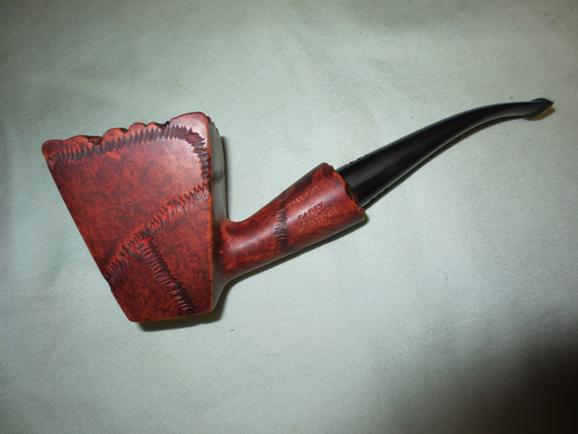
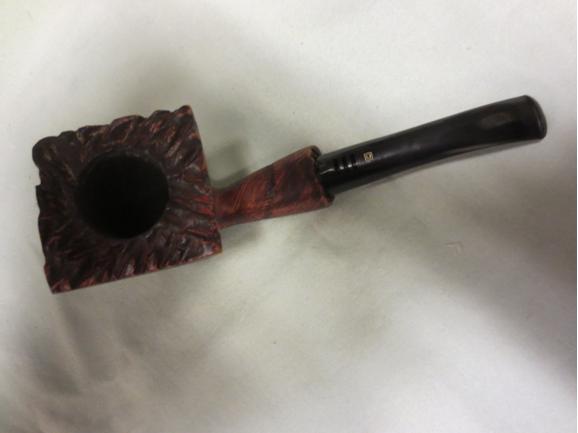
12204991_10156170659610654_1169179242_nThe pipe itself is a clean and quite beautiful little pipe with a rusticated finish and some smooth parts similar to the Stanwell Vario line. In looking at it when I was visiting it was obvious the pipe had been restemmed at some point along the way and the stem shank union was poorly executed. There was a bulge to the stem at that point and it also was not round. The right side and bottom of the stem diameter were wider than the shank of the pipe. The taper of the stem on the underside did not work with the flow of the shank. He wanted to keep it for the sculpture but the fit of the stem bugged me enough that I offered to bring it home and reshape the stem for a better fit. It was also badly oxidized so that would also need to be cleaned up. The bowl itself was quite clean and virtually unsmoked. The first photos below were taken after I had started cleaning up the stem. I began reworking the stem without taking photos and caught myself before I had gone too far.cap1

cap2

cap3

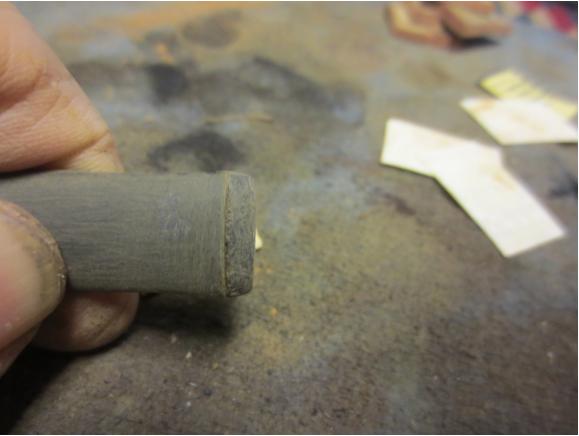
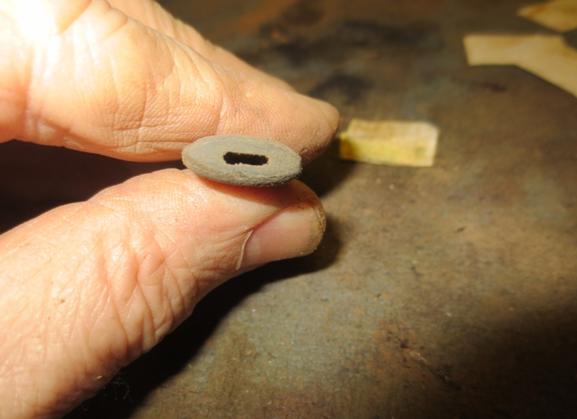
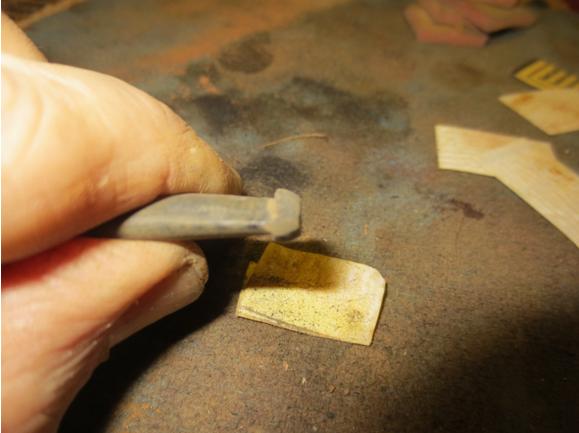
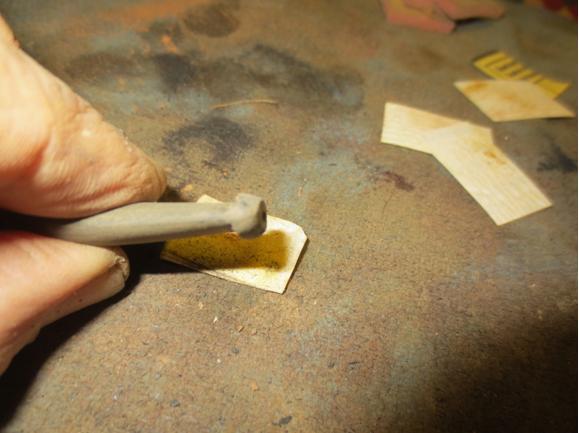
cap4 I put a plastic washer on the tenon to protect the shoulders of the stem from rounding while I worked on the shape of the stem. I sanded it with 220 grit sandpaper to shape and fit the stem to the shank. To me the taper on the underside of the stem did not flow into the shank correctly. I sanded it and removed a lot of material and changed the taper to flow better. I checked the fit often by removing the washer and looking at the stem in place.cap5

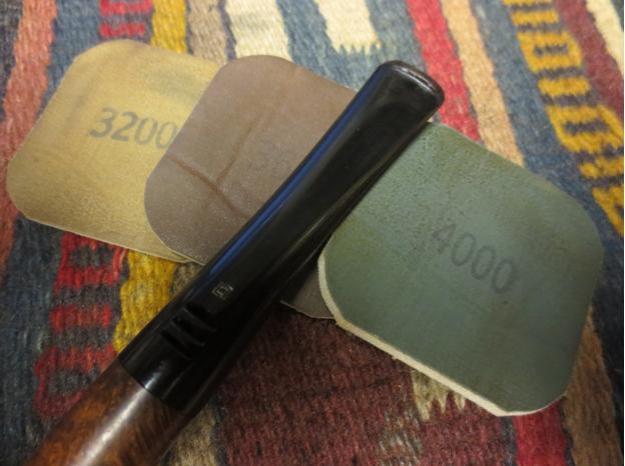
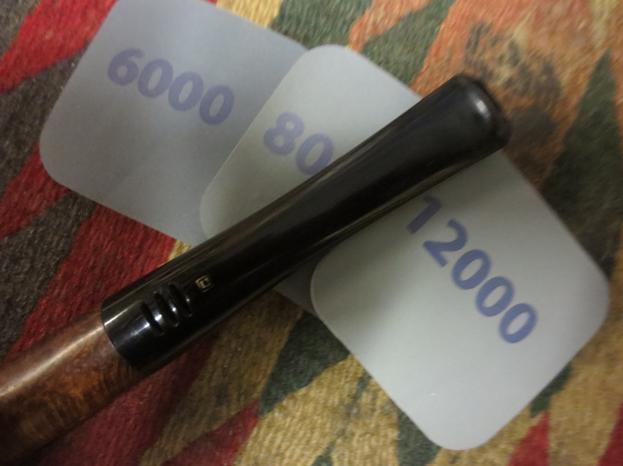
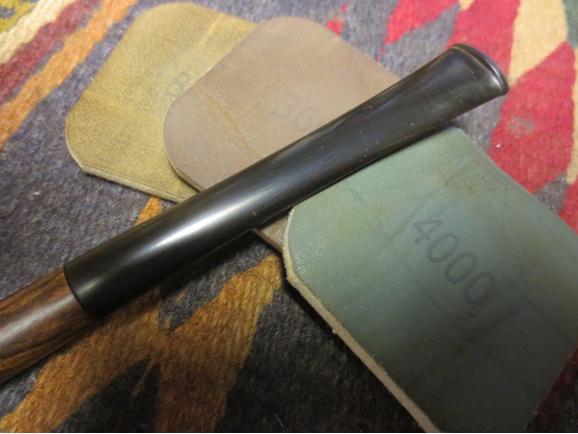
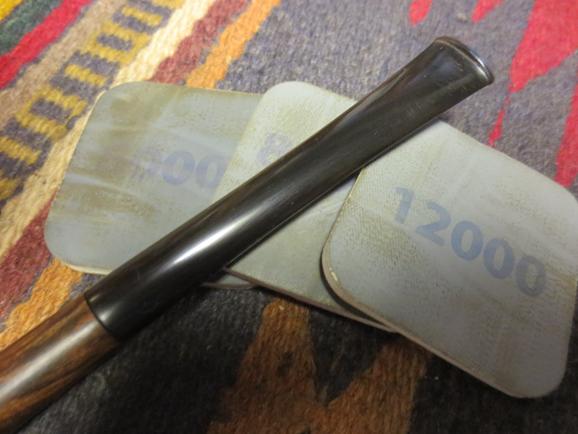
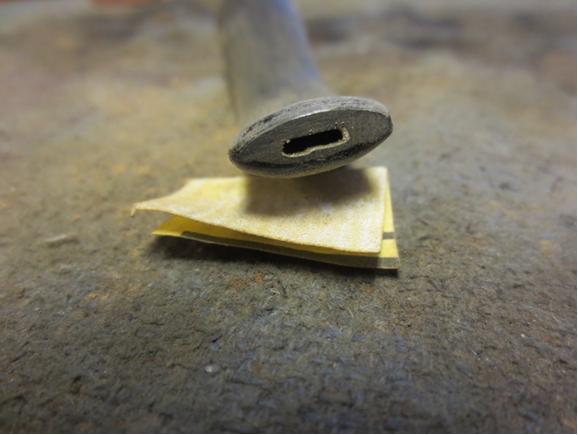
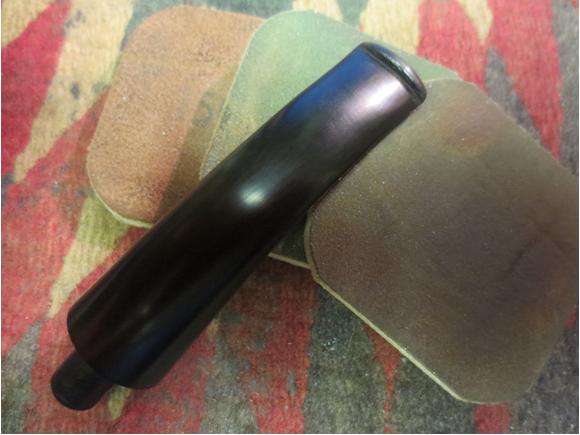
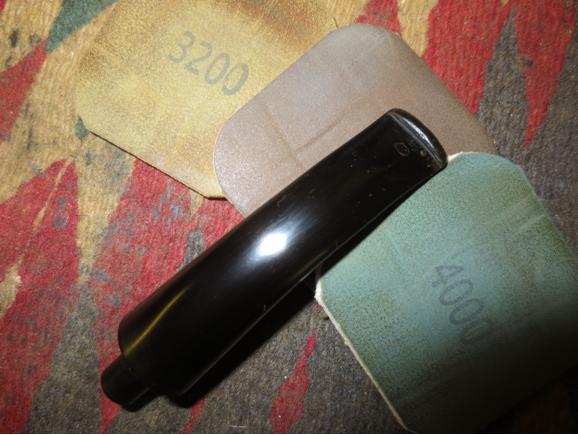
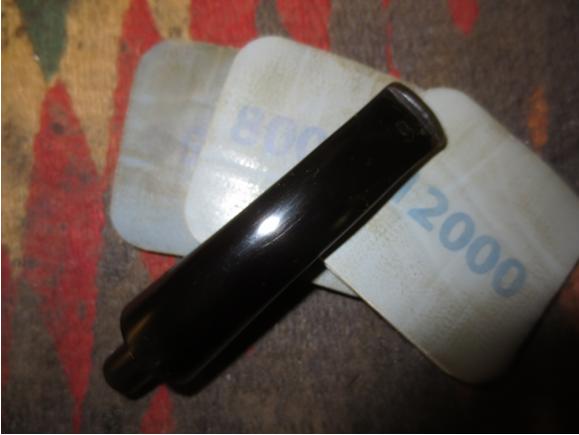
cap6 I refined the shape some more and then sanded the entire stem to remove the surface oxidation. I finished this part of the process by sanding the stem with a medium and a fine grit sanding sponge to remove the scratches left behind by the 220 grit paper.cap7 With the shape and fit greatly improved (at least to my eye ;)) I wet sanded the stem with 1500-2400 grit micromesh sanding pads. I rubbed the stem down with Obsidian Oil and then dry sanded with 3200-4000 grit pads. Another coat of Oil was rubbed into the stem and then I sanded it with the final 6000-12000 grit pads. I gave it a final coat of Obsidian Oil and let it dry.cap8

cap9

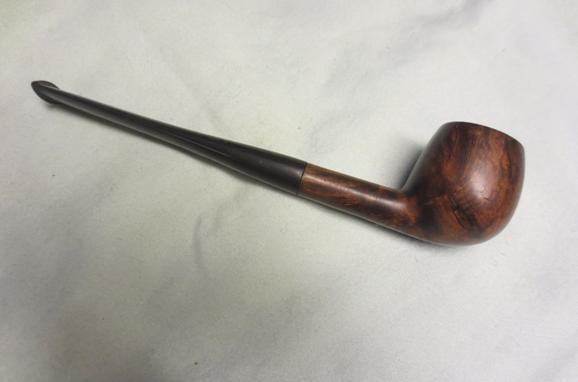
cap10 I buffed the pipe with White Diamond and then Blue Diamond on the wheel. I gave the bowl and stem multiple coats of carnauba wax to protect and shine. I buffed it with a clean flannel buff and then with a microfibre cloth by hand. The finished pipe is shown in the photos below.cap11

cap12

cap13

cap14

cap15

cap16

A Surprising Antique Mall Find – A Medico 14K Gold Band Meerschaum Bulldog


Blog by Steve Laug

On my recent Idaho trip my brother and I went on a pipe hunt through quite a few antique malls. One of them in particular yielded some great finds. The first of these I worked on was the bent diamond shank cob pipe that I wrote about earlier. The next one I worked on was a small Medico Meerschaum Straight Bulldog. I honestly had no idea that Medico made meerschaum pipes so it was a surprise to me. It was in pretty decent shape with a little buildup on the rim and a light cake in the bowl. The meer was clean except for a few small nicks in the sharp edges of the diamond shaped shank and some small scratches on the top surface of the rim. The single ring around the bowl below the cap is in perfect shape with no nicks or dings. It had dust and some grit in the bottom of the ring but otherwise the edges were sharp. The stem has a reverse tenon set up with the tenon permanently inserted in the shank and a permanently inset stinger/filter apparatus that sits in the bottom of the bowl like a grate in a fireplace. The 14K gold band had light scratches and is stamped MEDICO over 1/30 14K RGP. There are no other marking on the pipe or shank. The stem is in decent shape with light tooth chatter on the top and underside near the button and is stamped with an M in a shield. From my research the Medico Meerschaum pipes were carved in Austria by Strambach. This one is stellar.Bulldog1

Bulldog2

Bulldog3

Bulldog4 The next three photos show close up views of the rim and the top and bottom sides of the stem. The top of the rim was dirty and had a slight buildup of tars on the back side and some scratches on the rim top. The stinger apparatus in the bottom of the bowl was darkened and caked as well. The bowl had a light cake buildup that would need to be reamed. The stem had tooth chatter on the top and underside.Bulldog5

Bulldog6

Bulldog7 The next photo shows the stem removed from the shank and the Medico paper filter that was in the shank. It also shows the reverse tenon that is inserted in the shank.Bulldog8 I scrubbed the rim with a cotton pad and saliva to clean off the tars on the surface. I also sanded it with a micromesh sanding pad. I also sanded the sharp edges of the diamond shank to smooth out the nicks and scratches.Bulldog9

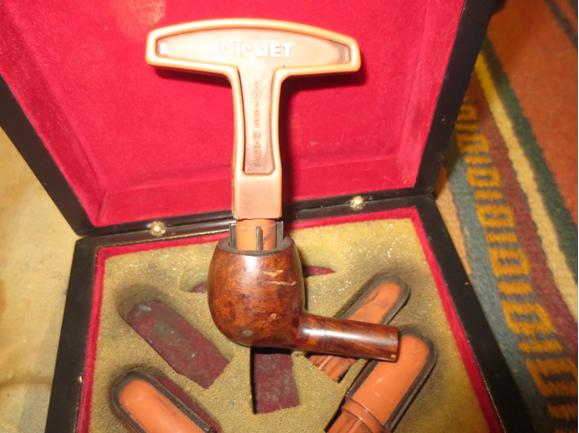
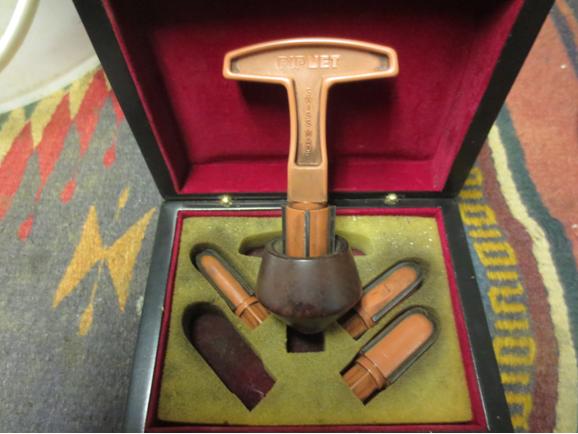
Bulldog10 I reamed the bowl with a PipNet pipe reamer to remove the cake from the bowl. I used a cotton swab to clean off the stinger extension in the bottom of the bowl.Bulldog11

Bulldog12 I cleaned out the airway in the stem with pipe cleaners, cotton swabs and alcohol.Bulldog13 I worked on the stem to remove the tooth chatter on the surface of the top and bottom near the button. I sanded it with 220 grit sandpaper to remove the chatter and then sanded it with a medium and a fine grit sanding sponge. I moved on to use micromesh sanding pads – wet sanding it with 1500-2400 grit pads and then rubbing it down with Obsidian Oil. I dry sanded with 3200-4000 grit pads and rubbed it down again. I finished sanding it with 6000-12000 grit pads and gave it a final coat of Obsidian Oil. I let it dry before taking it to the buffer.Bulldog14

Bulldog15

Bulldog16

Bulldog17

Bulldog18 I buffed the stem and bowl lightly with Blue Diamond Plastic polish on the wheel. A light touch is essential when buffing these nylon stems. It is very easy to melt them and make a mess. The finished pipe is shown in the photos below. It is a beautiful pipe.Bulldog19

Bulldog20

Bulldog21

Bulldog22

Bulldog23

Bulldog24

Bringing new life to an old corn cob


Blog by Steve Laug

When I was in Idaho for the funeral of my mother in law my brother and I took the day after the funeral and went on a pipe hunt. He has been attending auctions and going to antique shops on his travels and he picked up some nice pipes that he passed on to me. I will be working on them for a few months. He also had visited several of the antique malls in Idaho Falls where we were. On that day we visited three of them. In one of them there were a few pipes that caught my fancy one of them was an old corn cob bent with a diamond shank. It was in rough shape in that the glue that usually seals the shank into the bowl was gone and it was pretty loose. The bowl was well smoked and had a cake that I would need to clean up. The rim was also blackened. The bowl has a hardwood plug in the bottom which adds to the durability of the pipe. One unique feature of this pipe was that the shank was made of cob. It had some dings and nicks on it. The bottom of the diamond shank bore the Missouri Meerschaum label. There was a brass band that protected the end of the shank. The stem was Redmanol or Bakelite – a nice rich red coloured plastic that had some tooth chatter but no deep tooth marks or cracks. The orifice button on the stem and the material it was made of made me pretty certain that this was an old timer – possibly from the 30s.

Typical of what happens when I find old pipes like this I can’t wait until I get home to start working on them. In this case I figured I wanted to stabilize the shank in the bowl so that it would not get damaged when I carried it home in my luggage. I bought some Elmer’s Wood Glue and used it to fill in the gap around the entrance of the shank to the bowl. I used it to also repair some of the nicks on the sides of the bowl and the shank. I gave it multiple coats to build it up so that shank bowl union was smooth and the dings and marks were also smooth. Of course being in a rush to work on it I forgot to take pictures of the pipe before or during the early stages of the repair. When I left for Vancouver the bowl and the shank transition were smooth and the nicks and dings were also smooth on the surface of the bowl. I need to sand them and feather them into the surface and take off some of the glue shine.Cob1

Cob2

Cob3 I lightly sanded the rim to remove the blackening and clean up that surface. I reamed the pipe with a PipNet reamer and took the cake back to a very thin coat. The bowl is still round so that will not take further work to fix it.Cob4

Cob5

Cob6

Cob7 I cleaned out the bowl and shank with cotton swabs, pipe cleaners and alcohol until they were clean. Due to the shank being cob I was careful how much alcohol I ran through it as I did not want to soften the shank any further by making it wet. I cleaned out the inside of the stem with pipe cleaners and alcohol again being careful to not damage the Redmanol material.Cob8 I sanded the stem with 220 grit sandpaper and then with a medium grit sanding sponge to remove the too chatter on the top and bottom sides of the stem.Cob9

Cob10

Cob11

Cob12 I wet sanded the stem with 1500-2400 grit micromesh and rubbed it down with Obsidian Oil. I dry sanded it immediately with 3200-4000 grit pads so that the micromesh had some bite to it. The oil provided a surface that allowed the micromesh pads to polish the stem. I dry sanded further with 6000-12000 grit pads and then buffed it with Blue Diamond on the buffing wheel. I gave the stem several coats of carnauba wax and then buffed it with a clean flannel buff to give it a shine. I hand buffed it with a microfiber cloth to finish the polishing.Cob13

Cob14

Cob15 The finished pipe is shown in the photos below.Cob16

Cob17

Cob18

Cob19

Cob20

Cob21

Cob22

Fitting a Stem to an Old Ceramic/Porcelain Pipe Bowl


Blog by Steve Laug

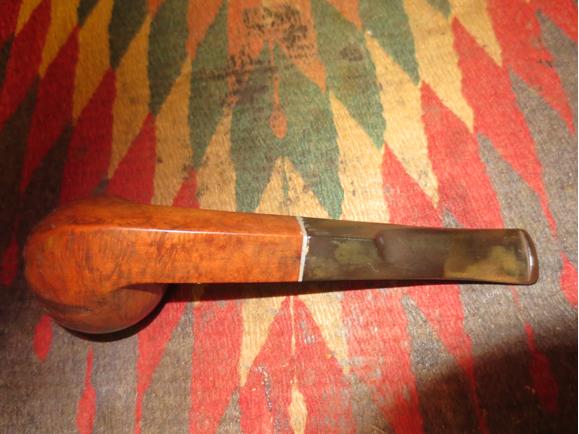
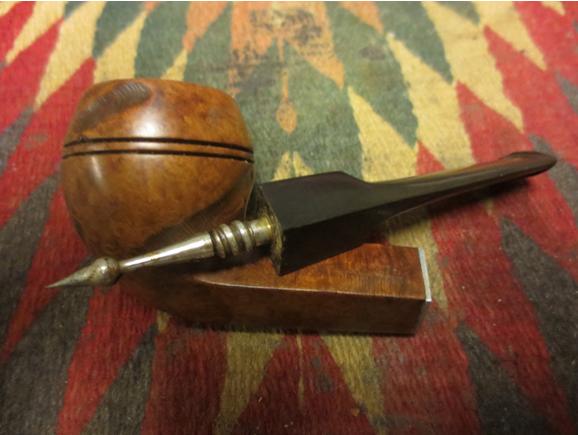
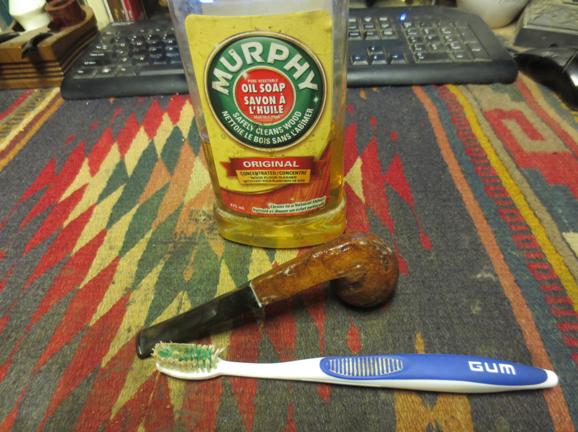
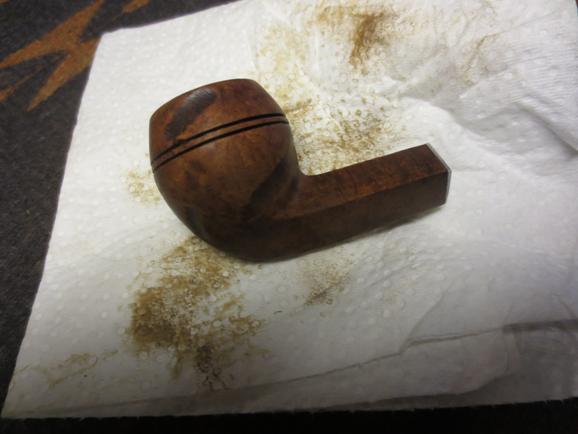
In a box of pipe parts I was given was a hexagonal shaped ceramic/porcelain pipe bowl with a thin pencil shank. It was cut off mid-shank at a slight angle. Looking at it I decided that it would be an interesting looking pipe to restem. The finished pipe would be unique and well worth the work to restem. I am guessing that the pipe originally had been longer and possibly had a bit on the end. There was a tiny chip cracked in the end of the shank. I reglued that and held it in place until it dried. Since the shank had been cut at an angle, I used a topping board to flatten the edge and square the end of the shank as much as possible. I then used a nickel band that I had in my box of bands and heated it and pressed it in place on the shank. I left a small portion of the band extending beyond the end of the shank to help square the fit of the stem to the shank. I went through my can of stems and found one that was the perfect diameter for a match to the shank. The tenon would need to be made smaller to fit in the shank and the mortise would need to be opened further with needle files for the stem to fit well.ceramic1 I scrubbed the bowl with Murphy’s Oil Soap and polished it with a microfibre cloth. There was a small hairline crack on the left side of the bowl coming from the rim downward about one half-inch. It was sealed so it was not currently a problem that I would need to deal with. I took some photos of the newly banded stem and the polished bowl to show the new look of the pipe. The bowl is quite thin so it will be a hot one to hold. It will need to be smoked slowly to keep it cool.ceramic2

ceramic3

ceramic4

ceramic5

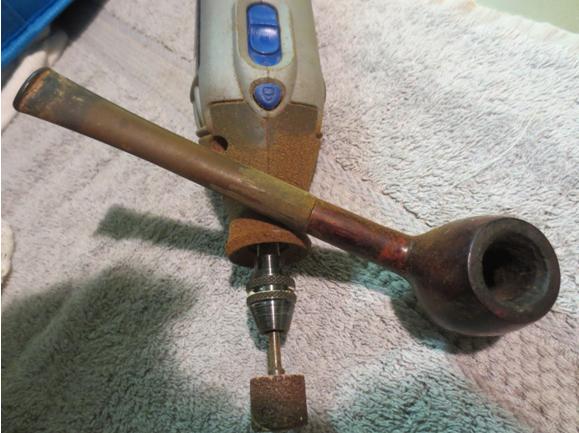
ceramic6 I used a coarse needle file to open up the mortise in the shank to accommodate the tenon. I used a Dremel with a sanding drum to reduce the tenon as much as possible. I worked on the mortise to file down the inside of the shank. It took some careful file work to keep the mortise round so that once the opening was sufficient the tenon would not be loose inside.ceramic7

ceramic8 The next photo shows the finished mortise. The files worked well and the newly shaped tenon fit the shank perfectly.ceramic9 I put the stem in place on the bowl and took some photos to get a better look at the new pipe. The newly stemmed pipe actually looked very good. I loved the delicate look of it. The slight bend in the stem worked well with the bowl and allows the pipe to sit upright on a flat surface.ceramic10

ceramic11

ceramic12

ceramic13 The stem was rough and lightly oxidized. I sanded it with 220 grit sandpaper to loosen the oxidation and then used a medium and a fine grit sanding sponge to smooth out the scratches on the stem. I then wet sanded the stem with 1500-2400 grit micromesh sanding pads and rubbed the stem with Obsidian Oil. I dry sanded it with 3200-4000 grit pads, gave it another coat of oil and then finished sanding with 6000-12000 grit pads. I gave the stem a final coat of Obsidian Oil and let it dry.ceramic14

ceramic15

ceramic16 I buffed the stem and bowl lightly with Blue Diamond polish on the wheels and then gave the stem and bowl multiple coats of carnauba wax. I polished it with a clean flannel buff on the wheel making sure to hold the bowl tightly. To have the buffer grab this one and throw it would be a disaster that the pipe would not survive. Once I finished the buffing on the wheel I hand buffed it with a microfibre cloth to raise the final shine. The finished pipe is shown in the photos below. There is some slight coloring forming on the sides of the bowl midway down from the top. I am wondering if the rest of the bowl will also colour with use. The pipe looks really good with the new stem and band. It will fit well in my collection of unique older pieces.

Thanks for looking.ceramic17

ceramic18

ceramic19

ceramic20

ceramic21

ceramic22

ceramic23

ceramic24

Cleaning up a London Made Charleston Banker


Blog by Steve Laug

When I saw this pipe on Ebay I decided to bid on it. I had bought from this English sell a few times in the past and he generally has some great older pipes. He had listed this one as a Criterion London Made pipe. I had looked and found that Criterion was made by Comoy’s. He described it as a 1/8th bent sandblasted prince. To me it is almost a Banker shape. The bowl is quite large and the oval shank ends with a saddle bit. It is 5 inches (12.75cms) long and the bowl height is 1.5 inches (3.75cms). He described it as lightly smoked, and in very good condition and as usual his description was perfect. He said that the markings on the bottom of shank were very faint and read Criterion over London Made. When the pipe arrived I looked at the faint stamping with a lens and a bright light and it actually reads: Charleston in script over block script LONDON MADE. I had not heard of Charleston pipes before so I did a bit of research and found the brand listed in Who Made That Pipe. It was listed as being made by Sydney Charleston Ltd. London, England. The first two photos are the ones provided by the seller on Ebay.Charleston1 When the pipe arrived I took it to the work table and took a few photos of the state of the pipe before I began to work on it. It was in pretty decent shape. The finish was dirty and the rim had dirt on it. The bowl had a cake build up. The stem was oxidized with a few small tooth marks on the top and bottom of the stem near the button. The slot was virtually plugged so I could not get a pipe cleaner through it to clean the inside.Charleston2

Charleston3

Charleston4

Charleston5 I took the pipe apart and put the bowl in an alcohol bath to soften the hard cake and the stem into an Oxyclean bath to soften the oxidation on the stem. I left them to soak overnight.Charleston6 When I took the bowl out in the morning I scrubbed it with a brass bristle whitewall tire brush to clean out the grooves in the blast on the bowl and the rim. I was able to remove all of the build up and grime from the ridges and grooves.Charleston7

Charleston8 I wiped out the bowl with a cotton swab and then reamed it with a PipNet reamer to remove the cake. The bath had softened the cake so it came out very easily.Charleston9 I took the stem out of the Oxyclean bath and the oxidation had all come to the surface. It was soft and would be easier to remove.Charleston10 I used a dental pick to clean out the slot and then a pipe cleaner to make sure the edges of the Y were wide open to further clean it.Charleston11 I scrubbed down the bowl and stem with a Mr. Clean Magic Eraser and gave the bowl a light rub down with olive oil. I took the following photos. There was progress to be seen.Charleston12

Charleston13 The cleaning and oil seemed to make the stamping more legible. In the photo below you can see the Charleston with a curled line under it and the London Made stamping underneath the line.Charleston14 I cleaned out the bowl, shank and stem with pipe cleaners, cotton swabs and alcohol. It was incredibly dirty. I would need to use the retort to really clean it.Charleston15

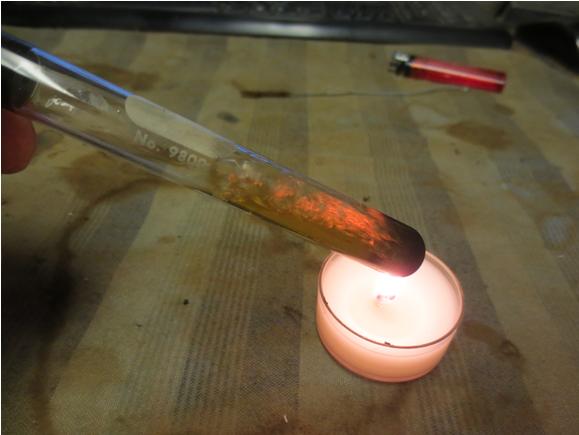
Charleston16 I sanded the stem with 220 grit sandpaper and worked out the tooth marks on the top and underside near the button.Charleston17 I set up the retort and held the tube over the flame to boil the alcohol through the stem and bowl. I ran three test tubes of alcohol through the pipe before it came out clean. The fourth bowl came through with clear.Charleston18

Charleston19 I took the cotton ball out of the bowl, wiped out the bowl with a cotton swab and ran pipe cleaners through the stem and shank to remove any moisture and final debris. The pipe smelled fresh and clean and the interior was clear.Charleston20

Charleston21 I worked on the stem with a medium and a fine grit sanding sponge and then wet sanded with 1500-2400 grit micromesh sanding pads. I rubbed the stem down with Obsidian Oil before dry sanding with 3200-4000 grit pads. I gave it another rub down with oil and then finished sanding with 6000-12000 grit pads. I gave it a final rub down of Obsidian Oil and let it dry.Charleston22

Charleston23 I buffed the pipe with White Diamond and Blue Diamond on the buffing wheel and then gave it multiple coats of carnauba wax. I then buffed it with a clean flannel buff and a final hand buff with a microfibre cloth. The finished pipe is shown in the photos below. It is fresh and ready to smoke. I intend to fire up a bowl today!

Thanks for looking.Charleston24

Charleston25

Charleston26

A Simple Elegance: Cleaning, Restemming and Restoring a Diplomat Billiard


Blog by Steve Laug

On my recent Lethbridge trip I found the Diplomat pipe at an Antique Fair. It is a nice sandblast billiard with a dark undercoat and a brown over stain. The bowl was in decent shape. The sandblast was deep and quite beautiful to look at. The nooks and crannies caused in the process made for an interesting feel in the hand as well. The stain had worn off in spots on the sides of the bowl and along the outer edges of the rim. The finish was also generally dull and lifeless. The surface of the rim was dirty with tars and oils. The inner edge was slightly damaged and would need to be worked on. There was a thick cake around the middle of the bowl and light at bottom and on top. The stem was one that somebody had Gerry-rigged to fit. It was smaller in diameter and the tenon was too small. The previous owner had wrapped the tenon with thread and then with aluminum foil and pressed it into the shank. The stem had also been hacked up to repair a damaged button and grooves had been carved on the top and bottom sides of the stem to make it a dental bit.Dip1

Dip2

Dip3

Dip4

Dip5 I took close-up photos of the top of the bowl and the underside of the shank to give a clear picture of the state of the inner edge of the rim and the stamping on the pipe.Dip6

Dip7 The next two photos show the stem that came with the pipe and the “fancy” work that had been down to make it fit the shank and create grooves on the top and underside that would allow the pipe to be held in the mouth behind dentures.Dip8

Dip9 My first task was to go through my stem can and see if I could find a better stem for this pipe. I did not have a tapered stem that would readily fit but I did have a saddle stem that would look good after shaping and fitting it to the shank.Dip10 I lightly sanded the tenon to get a snug fit in the shank and pushed the new stem home to have a look at the fit. The stem would need to be sanded to bring the diameter at the stem/shank union down to match the shank. I took a few photos to see what the pipe looked like with this new stem.Dip10

Dip11

Dip12

Dip13 I used a Dremel with a sanding drum to carefully reduce the diameter of the saddle portion of the stem. I have found that I can roughly shape the stem to fit better and then finish by hand sanding it (photo 1). Once I had the rough shape I sanded it with a coarse emery paper to remove the gouges and scratches left behind by the sanding drum (photo 2). I slipped a plastic washer on the tenon and put the stem back in place. I sanded it with 180 and 220 grit sandpaper to further shape it and remove the scratches (photo 3).Dip15

Dip16

Dip17 With the basic fit correct and only needing to fine tune it and polish the stem I decided to ream the bowl. I used a PipNet reamer and took the cake back to bare wood.Dip18

Dip19 I cleaned out the inside of the shank and stem with pipe cleaners, cotton swabs and alcohol. Once it was clean I worked on the inner edge of the rim. I sanded it and reshaped it to make it smooth and round once again using a folded piece of 220 grit sandpaper.Dip20

Dip21

Dip22 I sanded the stem some more with 220 grit sandpaper and flattened the bottom side to match the flat bottom of the shank. The next set of three photos show the fit and shape of the stem at this point.Dip23

Dip24

Dip25 The button was quite thin and I decided to build it up with black superglue. I also could see a repair that had been done on the stem before I used it so I worked on that to further blend it into the stem surface.Dip26 When the glue dried I sanded it with 220 grit sandpaper to feather it into the surface of the rest of the stem and also worked on shaping the button. In the second photo below you can see the end view of the built-up and reshaped button.Dip27

Dip28 I sanded the stem and button with a medium and a fine grit sanding sponge to remove the scratches and blend in the patches. I then wet sanded the stem with 1500-2400 grit micromesh sanding pads and then rubbed the stem down with Obsidian Oil. I dry sanded with 3200-4000 grit pads and rubbed it down again with oil. I finished by sanding it with 6000-12000 grit pads and gave the stem a final coat of Obsidian Oil. I set it aside until the oil was dry.Dip29

Dip30

Dip31

Dip32 I touched up the worn spots on the finish of the bowl with a dark brown stain pen and a black permanent marker and then buffed the bowl and stem with White Diamond on the wheel. I buffed it again with Blue Diamond and then gave the pipe multiple coats of carnauba wax. I polished it with a clean flannel buff and then hand buff with a microfibre cloth. The finished pipe is shown in the photos below. I like the looks of the saddle stem and the deep sandblast finish. The pipe has an understated elegance about it that I like.

Thanks for looking.Dip33

Dip34

Dip35

Dip36

Dip37

Breathing new life into an LHS Park Lane De Luxe Billiard


Blog by Steve Laug

When I repaired Troy’s LHS Park Lane Lovat he gifted me this little beauty as a thank you. It is a small billiard and is stamped on the left side of the shank, Park Lane in an arch over the LHS Diamond and underneath the diamond it is stamped De Luxe. On the right side it is stamped with US Pat. 1,908,630. The shape number 19 is stamped on the underside of the shank. The finish was dirty and chipped all around the bowl. The rim had a buildup of tars and lava and the cake in the bowl left the bottom virtually conical. The stem was under clocked slightly. The stem (Bakelite?) was oxidized and had some small tooth marks near the button on the top and bottom sides. I love the swirl patterns of the stem material. They really give the pipe a look of class. When I removed the stem the stinger itself was black with tars and the inside of the shank was also dirty.Bake1

Bake2 I looked up the patent number on the US Patent information website and found out that the patent was filed for the stinger and tenon apparatus in 1933. The one in the diagram is shorter and slightly different from the one in this pipe so I am thinking that it is a later modification that was introduced. That combined with the dates for Bakelite I would put the dates on this pipe in the late 1930s or early 1940s. It is in pretty decent shape for a 75-80 year old pipe.LHS1908630 Patent drawings

LHS1908630 Patent doc I took the next three photos to give an idea of the state of the rim. I was uncertain of the condition of the inside edge of the rim because of the thickness of the build-up. The stamping was weak in the middle and the LHS diamond also quite weak.Bake3 I reamed the bowl with a PipNet reamer. I find that I use that reamer for almost all of the refurbs that I do. The four different sized cutting heads, the T-handle and the carbon steel blade make short order of the most difficult cake. In this case I reamed it back to bare wood. I really wanted to see what the interior looked like as there was significant darkening around the top half of the bowl. The rim itself was just slightly out of round so it would be no issue to clean up.Bake4 I used a brass bristle tire brush on the long aluminum stinger to clean off the tars. I wanted it clean before I heated it to reclock the stem.Bake5 With it clean I heated the stinger with the lighter to loosen the glue in the stem. Once it was loose I was able to align the stem correctly. I let it cool in place.Bake6 With everything aligned I decided to try to pull the end of the stinger to get it to line up with the top of the stem. I wanted the slot in stinger to match the white bar in the stem material. I wrapped the jaws of a pair of needle nose pliers with cellophane tape to protect the aluminum from damage when I clamped them on it. I gently twisted on the end of the stinger and to my surprise the entire tenon unscrewed from the stem. That was a good thing by the way as it made cleaning the stem far simpler.Bake7 I cleaned the inside of the stem and the stinger with pipe cleaners, cotton swabs and isopropyl alcohol. I had already tested the stem material and I knew that it would not dissolve with the alcohol.Bake8 With the inside of the stem clean I put the tenon back in place on the pipe and worked on the exterior. I sanded the surface and particularly the tooth marks with 220 grit sandpaper until they were smooth and blended into the stem surface.Bake9 I decided to work on this pipe from the opposite direction of my normal practice and finished working on the stem first. I wet sanded it with 1500-2400 grit micromesh pads and then rubbed it down with Obsidian Oil. I dry sanded with 3200-4000 grit pads and then gave it another coat of oil. I finished with 6000-12000 grit pads and a final coat of Obsidian Oil. I set the stem aside and let the oil dry.Bake10

Bake11

Bake12 I cleaned out the bowl and shank with pipe cleaners, cotton swabs and alcohol until it was clean and smelled fresh. I thought about using the retort on it but I am just not certain what the hot alcohol will do with this stem material.Bake13 Once the rim was cleaned I could see the chips and damage to the surface so I decided to lightly top the bowl.Bake14 I decided to do some experimenting with Dave Gossett’s method of stripping a bowl finish. I read about it on the Dr. Grabow Collectors Forum. He uses Oxyclean and alcohol he said. I had no idea how he went about it and fired him an email. Due to my impatience I did not wait and just jumped in. I tried to mix the Oxy with the alcohol. It did not work! It made a grit paste but I decided to give that a try anyway. I scrubbed and scrubbed and succeeded in removing a lot of the finish. The mixture left a white/grey ghost on the briar.Bake15

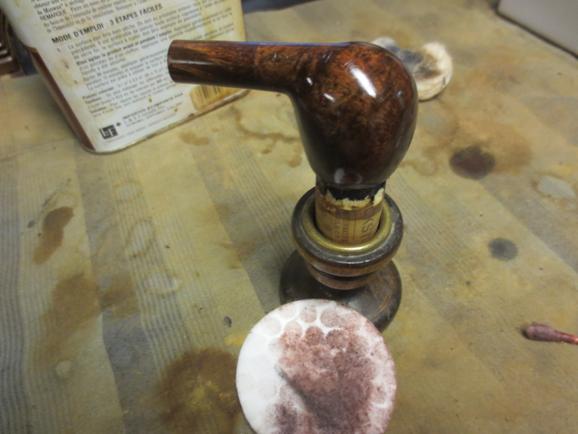
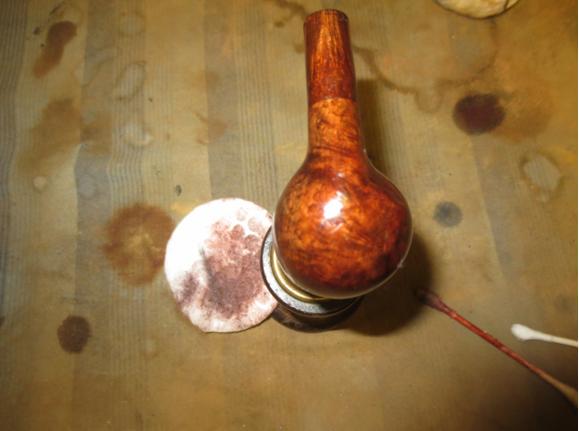
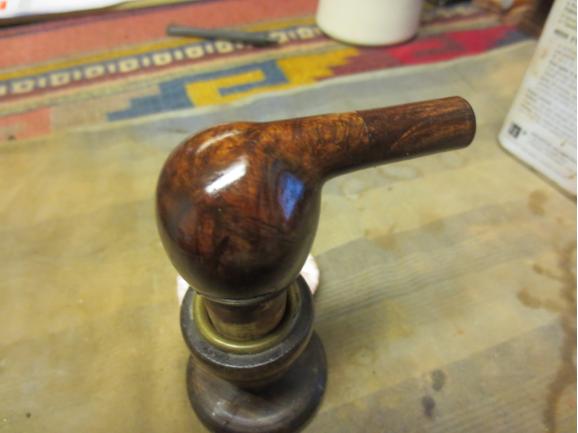
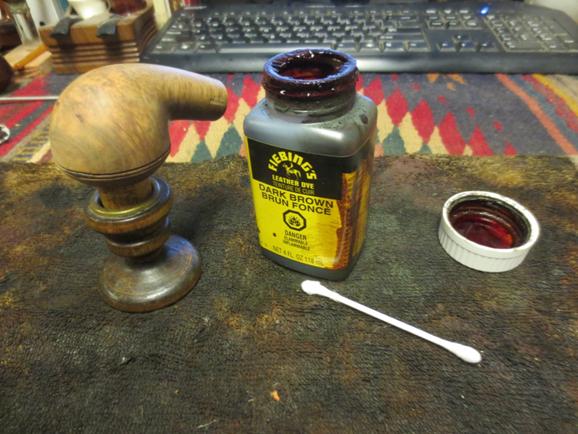
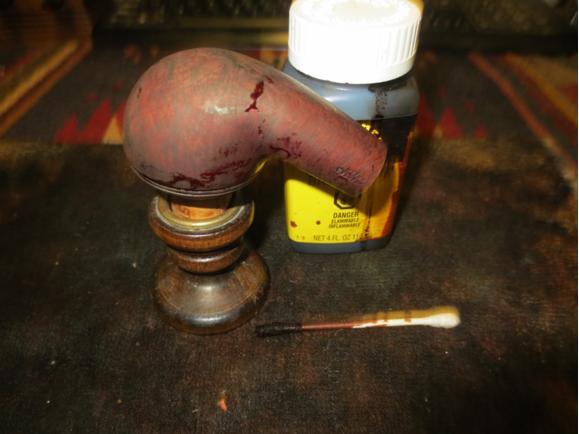
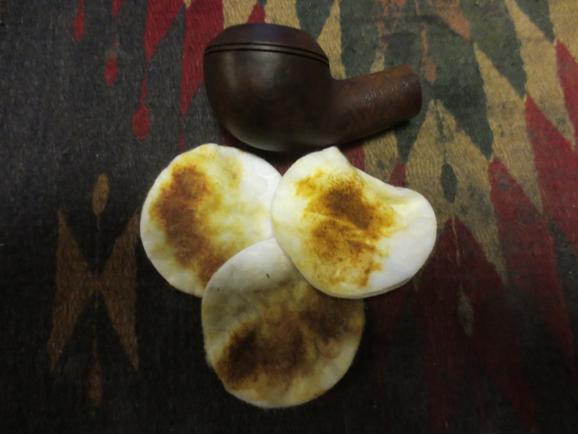
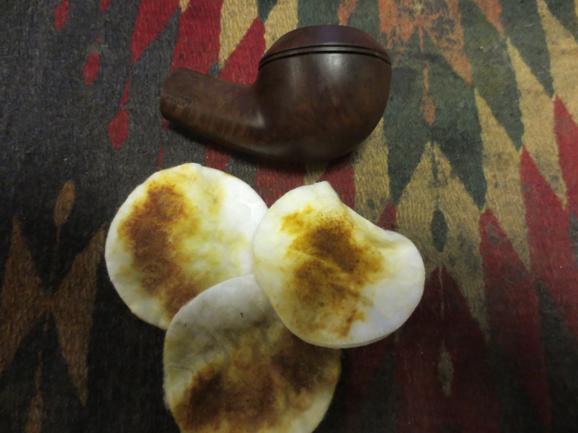
Bake16 I happened to check my email and saw that Dave wrote back. He said that he dissolved the Oxy in hot water and then added the alcohol. He said to be careful of the stamping as the mixture had a tendency to raise the stamping in the weak areas. Boy I wish I had not been impatient. I lost some clarity on the week areas of the stamping. I did the mixture as Dave suggested and wiped down the bowl with it and was able to get some more of the finish removed.Bake17 There were some deep cuts in the surface of the bowl. I steamed out the dents but these did not raise. I repaired them with superglue and briar dust.Bake18 I sanded the repaired areas smooth to match the surface of the bowl. I wiped the bowl down with alcohol to remove the dust. I heated the briar with a blow dryer and then stained it with a Dark Brown aniline stain thinned with 3 part alcohol to 1 part stain. I flamed the stain and set it in the briar.Bake19 I buffed it with White Diamond and found that even with the thinning it was too dark to my liking. I wiped the bowl down with alcohol on cotton pads to remove some of the stain and make it more transparent.Bake20 The grain showed through nicely and the colour once it was waxed would look good with the stem material. I buffed with Blue Diamond and then gave it multiple coats of carnauba wax. I buffed it with a clean flannel buff and then with a microfibre cloth by hand. The finished pipe is shown in the photos below. Thanks for looking.Bake21
Bake22

Bake23

Bake24

Silver Linings: Restoring a Savinelli Silver 320KS


Blog by Anthony Cook

A friend from the Pipe Smoker Unlimited forum recently gifted me a batch of pipes that need a little TLC. In exchange, I offered to do some repair and restoration work on a couple of their own pipes. Believe me when I say that I received the better end of that deal. So, I wanted to go the extra mile on these if I could.

The first of my friend’s pipes that I chose to work on was this Savinelli Silver 320KS. I love the shape of the 320. When I hear “Savinelli,” this is the shape that I think of. Unfortunately, somebody had gotten to this one before me and it wasn’t better for it.

The initial request was just to repair the deep scratches that ran all the way around the rim. However, as I looked the pipe over, I could see that it had a few additional issues. The bowl rim was uneven and looked like it had been heavily buffed. The pipe should have had a deep, cherry red stain from the factory, but this one appeared to have been partially stripped and the stain was uneven and closer to the color of red clay. The silver shank band was loose and it had a couple of small dents on the right side. Finally, the shoulders of the stem face had been rounded with a buffer, which created a thin trench all the way around the stem where it met the band.

Oh, there was one more thing, but for reasons that I can’t explain, I hadn’t noticed it yet. I’m sure that you’ll see it in these photos of the pipe as it was on arrival.Astrid1

Astrid2

Astrid3 Nomenclature and logo details (notice the “trench” on the stem next to the band):Astrid4 This 320 appeared to be pretty clean, but there’s no such thing as a pipe that’s too clean. So, I gave the internals of the stem and stummel a bit of a scrub with isopropyl alcohol, pipe cleaners, cotton swabs, a shank brush, and a percolator cleaner (the fat brush in the upper right). I’m glad that I did. As you can see below, there was still grime to be removed. After that, I gave the surface of the stummel a scrub with acetone on cotton pads to remove the old, spotty finish.Astrid5 I took a few photos of the rim damage, and after seeing them enlarged a few hundred times on the big screen, I noticed that the edges of the marks were rounded. That seemed to indicate that they were more like dents than scratches.Astrid6 So, I decided to see what a little bit of steam would do for them. I used a tea candle to heat the end of a flat-head screwdriver. Then, I placed a wet cloth over the dents and pressed it into the cloth. The steam worked well on the marks, although I had to repeat the process several times to lift the deeper ones. After I had worked my way all the way around the bowl, the rim was in much better shape. It would still need some sanding, but not nearly as much as it would have taken before to get it smooth.Astrid7 I sanded out the remaining dents with 220-grit paper before addressing a couple of small pits that were possibly missing fills on the bottom front of the stummel. I refilled them with a mixture of briar dust and CA, and then sanded them out with 220-grit as well. Three more fills were present on the front of the bowl, but they looked like they were in good shape and I had confidence that they would blend in with the final stain.
Next, I topped the bowl to level it out and chamfered the inner rim to match the original, factory shape with 220-grit paper. Then, I started cleaning up some of the light scratches and blemishes on the stummel with 320-grit.Astrid8 I then heated the stummel to open the grain and prep it for the first stain. I applied a mahogany stain thinned 3:1 with isopropyl alcohol. Mahogany is a nice dark color that gives contrast to the grain and it would play well with the red tones that would come later. After flaming the stain, I hand-buffed it with a soft cloth to remove the excess, and then wet sanded the stummel with 400-grit to remove most of the stain except for what had set into the soft grain.

To start bringing in those red tones I mentioned, I applied a 50/50 oxblood and medium brown stain thinned to the same ratio as the previous application. I again flamed and hand-buffed before lightly wet sanding with 600-grit and 1200-grit paper, and then polishing with Micro-Mesh pads 1500-2400.

I applied a third stain, red this time, and hand-buffed before giving the pipe a Tripoli buff on the buffing wheel. Then, I polished with Micro-Mesh pads 3200-4000. At that point, I didn’t like how bright the red was. So, I decided to darken it up with a thin stain wash. I can’t tell you the exact mix, because I just eyeballed it until it was what I wanted. I can say that it was at least 50% red mixed with a small amount of oxblood for richness and an even smaller amount of dark brown to darken it. I thinned it until it was about the same color density as Kool-Aid and applied it with cotton swab. After that, I hand-buffed the excess off and continued polishing with the remaining grits of Micro-Mesh pads.Astrid9 That finished up the work on the stummel. So, I thought I’d try to do something about those rounded shoulders on the stem face. In a scrap piece of wood, I drilled a hole large enough to easily accommodate the tenon. Then, I clamped a strip of sandpaper over the block and cut a matching hole with an X-Acto knife. I inserted the tenon into the hole and rotated it while applying firm but gentle pressure to keep the plane level. I started removing material with 220-grit and worked up to 600-grit. All in all, I probably removed 1/16 of an inch or less from the end of the stem. It wasn’t enough to completely correct the problem, but it did make it a great deal less obvious. The shoulders were nice and sharp again and I didn’t compromise the flow of the joint by creating a “step” down to a smaller diameter stem. You can see for yourself in the photos below.Astrid10 To be honest, I thought I was done at that point. It wasn’t until the pipe was reassembled and I was preparing to give it the final buff and wax that I noticed the glaring damage that I’m sure you’ve already seen. For the life of me I can’t figure out how it had escaped my attention, especially since I had just done work on the stem, but the button had been severely worn away by overbuffing. There was barely a button left at all. Of course, that wouldn’t do at all. So, after getting permission from the pipe’s owner to do some extra work, I began to create a new button.

I used 220-grit paper to rough up the surface of the damaged button and also a bit of the surrounding area. Next, I applied thin layers of black CA glue to the button to build it up. I lightly sanded between each layer with 220-grit to roughen them and ensure that the next layer had a good surface to cling to. Once the mound of CA was slightly higher than I wanted the button to be, I used 220-grit paper to start shaping the button, needle files and sanding files to carve a sharp edge at the back, and 320-grit paper to refine the shape.Astrid11 I continued to refine the shape and smooth the surface through 400, 600, and 1200-grit paper. Then I polished the button and the rest of the stem with the full range of Micro-Mesh pads and applied a drop of Obsidian oil to wrap up the stem work.

Before reassembling the pipe, I tried to lift the dents in the silver band by placing it over a wooden dowel, pressing firmly, and rotating it from side to side. My attempt was mostly in vain though. I was able to lift them slightly, mostly the one at the edge, but stopped when I began to worry about raising the stamping or tearing the band. I polished the band with Semichrome polish and placed it back on the shank with a small drop of CA to fix the looseness.

Finally, I put the pipe back together and buffed it with White Diamond on the buffing wheel. After buffing again with a clean wheel to remove any excess compound, I gave the pipe several coats of carnauba wax to complete the work on the pipe. The end results can be seen in the photos below.Astrid12

Astrid13

Astrid14

Astrid15 I think the lines of a 320 are iconic and it is a fine example of the author shape. I’m glad that I was able to restore this one to at least a bit of its former glory and get it back into rotation. Thanks for looking!

A Tale of an Ugly Duckling & His Virtually Invisible Swandom


Blog by Steve Laug

All of you are probably familiar with the tale of the ugly duckling. The poor bird hatched from a clutch of duck eggs that came out gangling and very unducklike. His appearance left much to be desired when he walked beside his siblings toward the pond following his “mom’. He was always laughed at and misunderstood. He sat with his head down in shame at how much he did not fit. Each day passed and the down of the ducklings was replaced by feathers. This went on until one day the duckling looked at his reflection in the pond and found that he was not a duck at all but a regal and majestic swan. He had always been a swan inside but the fact of his swandom was not visible to any who beheld him. Instead they saw what they wanted in the misfit duckling and wrote him off as ugly. They never once saw the swan inside until it came out in all of its glory. This tale really captures the pipe that I worked on next.
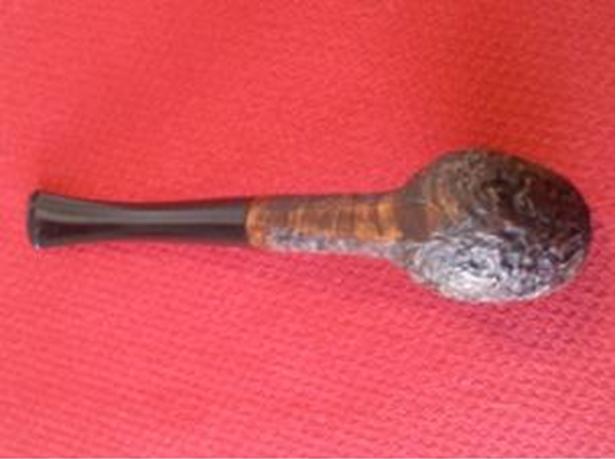
I have had a really rough older Canadian pipe sitting in the refurb box for a long time now. I have taken it out of the box and looked it over time and again but never took the step of cleaning it up. I have no idea who the maker of this old pipe is but it is a rough piece of wood. I say wood because it is clearly not briar. It is lighter and the grain pattern is quite different from briar. It has a Kaywoodie mortise insert and a Kaywoodie stem that has the stinger clipped off. I don’t know if it came that way or some creative soul made it happen. The wood was roughened and not sanded smooth. It looked as if it was rough shaped with a file or wood rasp and then just smoked. Somewhere along the way someone had put a coat of shiny urethane over the entire pipe. The shine hid none of the flaws but actually accentuated them. It had a significant fissure near the shank bowl joint on the left side that needed attention. The roughened finish had file marks going in every direction. The effect was a mess for a finish. The stem had some cardboard or thread pushed on to the threaded tenon that allowed the stem to line up correctly. I cut off the cardboard or thread washer and the stem was seriously overclocked. The bowl had a cake in it that was crumbly and uneven. The interior edge of the rim was not too badly out of round. The outer edges would need some work to smooth out before I could see if they were in round.Canada1

Canada2

Canada3

Canada4 I took some close-up photos of the bowl and the shank to give more of an idea of the kind of finish that the pipe had when I started. You can see the file marks and lines going in every which direction that were left behind in the initial shaping of the pipe. The overall look was very rustic and actually quite ugly. It was truly an ugly pipe. The beautiful Canadian that resided below the ugly exterior was virtually invisible. It would easily been put up there with “folk art” in terms of the rustic and rough finish to the pipe. Yet there was something about that seemed like raw charm that shone through the mess that sat on my table. This evening when I took it out I took more time to sit and look at it for a while before beginning to work on it. The more I looked at it the more I have to tell you that the second thoughts I was having almost caused me to put off working this old timer and just burying it in the box. I really was unsure whether I could do anything with it or that it would even be worth doing the work. I was not convinced that what I had when I was finished would be worth the time and energy that would go into reworking it.Canada5

Canada6

Canada7

Canada8

Canada9 I cleaned off the debris (cardboard or thread) that was on the tenon and then heated the tenon with a lighter to reclock the stem. I heated the metal carefully keeping the flame away from the vulcanite stem. It did not take long before the heat softened the glue that held the tenon in the stem and I was able to turn the stem back into the shank and twist it until it lined up correctly.Canada10

Canada11 I lightly sanded the bowl surface and then stopped to ream it with a PipNet reamer. I decided to take the cake completely out of the bowl so that I could check for cracks in the walls of the bowl.Canada12

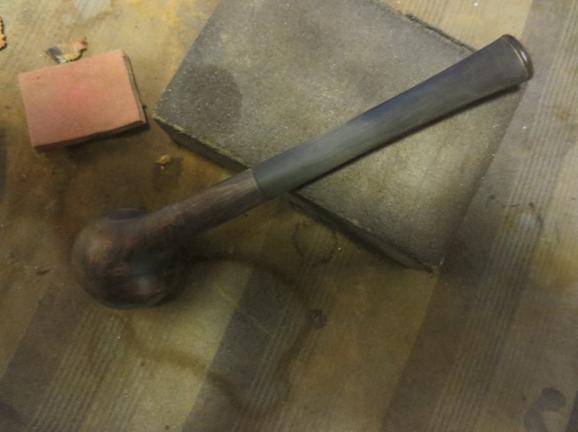
Canada13 With the bowl reamed out I turned my attention to the finish on the exterior. I sanded the bowl and shank with emery paper and with 180 grit sandpaper to remove the roughness of the finish and to sand out the file marks. I wanted to sand the bowl and shank smooth to address the generally poor appearance of the pipe. It took quite a bit of sanding to even start to make a difference in the surface of the pipe. I also sanded it with a rough sanding block to smooth out more of the scratches. I filled the flaw at the union of the shank and bowl on the left side with clear super glue and briar dust. I sanded that repair smooth with 220 grit sandpaper to blend it into the surface of the pipe. There was a dark spot on the outer right edge of the rim that did not seem like a burn. I had the appearance of a stain. It was hard and did not affect the shape of the bowl edge so I left it. I lightly topped the bowl to clean up and flatten out the rim surface.

The more I sanded the grain began to come through the smoother finish of the pipe. It was clearly not briar. My guess is that it is Mountain Laurel or Manzanita. Once I get it sanded smooth and get a better look at the grain and colour I will be able to give a better assessment. The good thing was that a nicely shaped Canadian was emerging from the rough cut pipe that I started with. The shape was well executed and once I finished sanding and smoothing things out this alternative wood Canadian would look really good. My initial reticence gave way to curiosity to see what would emerge when the sanding was finished. You can see for yourself in the next set of photos below what is coming out as it is sanded.Canada14

Canada15

Canada16

Canada17 I continued sanding with 220 grit sandpaper and worked on the shank bowl junction. There were some deep cuts and file marks there that needed to be addressed. I sanded until the surface was smooth to touch. There were still a lot of scratches in the wood but the surface was getting smoother. I sanded it with a coarse and a medium grit sanding block to flatten out the shank and to smooth out the bowl sides, bottom and rim. I used a black permanent mark to cover the fill and line it up with the grain at that point. Once I sanded it more and blended it into the grain of the shank it would become less visible than it is in the photos below. I sanded more with the sanding blocks and then gave the pipe a light coat of olive oil to see what the grain would look like when I was finished. The wood had a red hue to it and some nice looking grain. There is a lot more sanding that needs to be done at this point but it is progressing.Canada18

Canada19

Canada20

Canada21 I have included a few more close-up photos to show the progress of the sanding on the surface of the bowl and shank. There is some nice looking grain coming through in the photos of the bowl sides and shank.Canada22

Canada23 At this point I sanded the bowl and shank with micromesh sanding pads and the oil to give me some traction while sanding. I find that the oil allows the micromesh to cut more deeply and work more effectively. I sanded with older 1500-2400 grit micromesh pads that I reserve for working with oil sanding. Unfortunately I got into the flow of things and did not take photos of this part of the process.
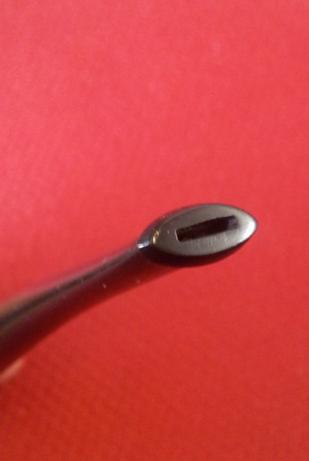
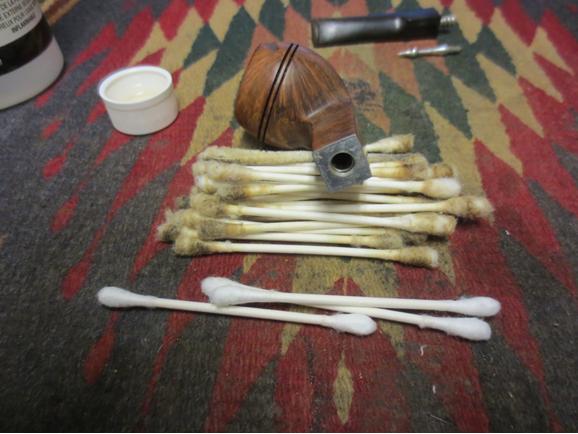
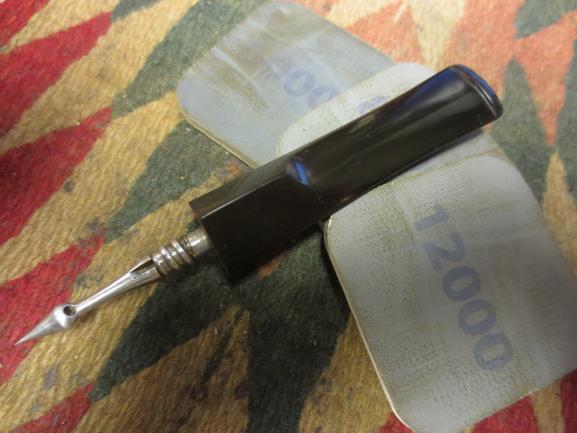
Once I had finished sanding the bowl to this point I worked on the stem. The same file marks went across and the length of the stem. There were gouges and marks and two deep tooth marks near the crease on both the top and bottom of the stem. The next two photos show the scratches and the tooth marks.Canada24

Canada25 I used an emery board to sand out the scratches and the tooth marks. I was able to remove most of the scratches and gouges with the board and then sanded the stem with 220 grit sandpaper to remove some of the deeper scratches and blend in the board marks. I also used the topping board to even out the end of the clipped stinger so that it was not rough.Canada26 The tooth mark on the top needed to be repaired. I cleaned up the sanded area and then filled the remaining tooth mark with clear super glue.Canada27 When the glue dried I used the emery board and the 220 grit sandpaper to blend in the repair with the surface of the stem.Canada28 Once the scratches and marks were gone and the patch smoothed into the surface I went on to wet sand the stem with 1500-2400 grit micromesh sanding pads. I rubbed the stem down with Obsidian Oil and then dry sanded with 3200-4000 grit pads before giving the stem another coat of oil. I finished with 6000-12000 grit pads and then a final coat of Obsidian Oil. I let it dry before taking the pipe to the buffer.Canada29

Canada30

Canada31 I sanded the bowl and shank down with all of the grits of micromesh sanding pads from 1500-12000 grit. By the time I was finished the scratches were virtually gone. The repair on the shank/bowl junction though showing is smooth to the touch. The ugly duckling had become a swan. The Canadian hidden beneath the file marks and rough finish gave way to the beauty of the alternative wood. The finished pipe was truly a thing of beauty.

I buffed the pipe and stem with Blue Diamond Polish on the wheel. I worked it until the remaining scratches disappeared. I gave the bowl and stem several coats of carnauba wax and then buffed the pipe with a soft flannel buff. I finished by hand buffing it with a microfibre cloth. The finished pipe is shown in the photos below. The change in appearance is significant and the feel in the hand is much better. I am still pretty convinced the pipe is Mountain Laurel but could be convinced otherwise if some of you know. Thanks for looking.Canada32

Canada33

Canada34

Canada35

Canada36

Canada37

A Peterson 301 System Pipe Reborn


Blog by Steve Laug

I have this pipe and one other left to clean up of the donated pipes for the benefit of Smokers Forums. This one is a Peterson’s System Standard Bent Pot. It is stamped Peterson’s System Standard on the left side and on the right side it is stamped Made in the Republic of Ireland over 301 which is the shape number. The finish was shot, worn and stained with most of the colour faded out. The nickel ferrule was oxidized and dull. The rim was dirty and nicked on the top surface but undamaged on the inner or outer edge. There were some deep scratches on the underside of the bowl that went across the surface of the briar. They were ragged and I knew that steaming them would not raise them. There was also some road rash on the right side of the bowl where it looked as if the bowl was dropped on concrete. The bowl had a thick cake that was soft and crumbly. The stem was oxidized and dirty with some tooth chatter on the top side and the underside near the p-lip. The interior was also dirty with grit. The inside of the shank/mortise was surprisingly clean with dust and tobacco residue but little tar and oil. The inside of the stem was also dirty. The hole in the end of the button was in great shape.Pete1

Pete2 I took a close up of the rim and bowl to show the thickness of the cake. I reamed the bowl with a PipNet reamer and took the soft cake back to bare briar so that a new hard cake could be developed by the new owner of the pipe.Pete3

Pete4 I sanded out the bowl to remove the ridge that appears in the photo below. You can also see the dents and nicks in the surface of the rim.Pete5 I lightly topped the bowl with a topping board to take out the damaged surface of the rim and clean up the top.Pete6 I wiped down the bowl with acetone on cotton pads to remove the finish and the grime in the grain of the briar.Pete7

Pete8 I filled the deep scratches in the bottom of the bowl with clear super glue and also filled the road rash nicks on the right side of the bowl. I sanded them smooth with 220 grit sandpaper and then sanded them with a medium and a fine grit sanding sponge. I also sanded them with 1500-2400 grit micromesh sanding pads to smooth out the scratches. I stained the bowl with a dark brown aniline stain that I thinned with 3 parts alcohol to 1 part stain. I flamed the stain to set it deep in the grain.Pete9 To make the stain more translucent I scrubbed down the surface with alcohol to lighten the stain and make it more transparent.Pete10 I put a light coat of wax on the bowl to protect it while I cleaned the inside of the pipe. I used pipe cleaners, cotton swabs and alcohol to clean out the shank and mortise area. I polished the nickel ferrule with a silver polishing cloth and was able to remove the oxidation.Pete11

Pete12

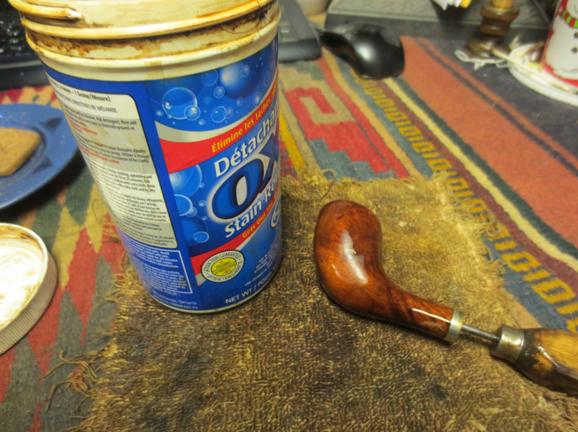
Pete13 I let the stem soak in Oxyclean for several hours while I worked on the bowl and then gave it a vigorous rubdown with coarse cloth to remove the loose oxidation. I then sanded it with 220 grit sandpaper and a medium and a fine grit sanding sponge to further remove the oxidation. Once it was gone I buffed it with red Tripoli and then moved on to sand it with the micromesh sanding pads – wet sanding with 1500-2400 grit pads, rubbing it down with Obsidian Oil and then dry sanding with 3200-4000 grit pads and giving it another rub down. I buffed it with White Diamond and then finished with 6000-12000 grit pads before giving it a final coat of oil and letting it absorb into the stem.Pete14

Pete15

Pete16 I finished by buffing the pipe with Blue Diamond on the wheel and then giving the bowl and stem multiple coats of carnauba wax. I buffed it with a clean flannel buff and then hand buffed with microfibre cloth. The finished pipe is shown below.Pete17

Pete18

Pete19

Pete20