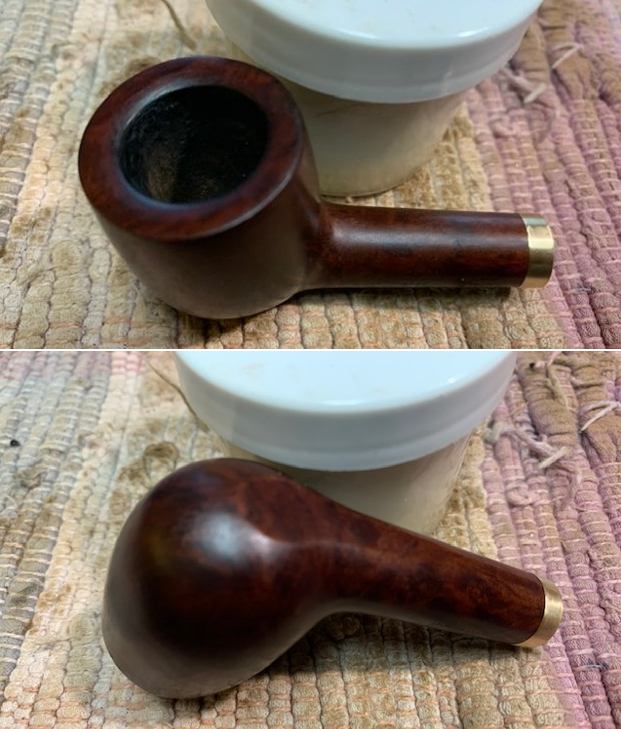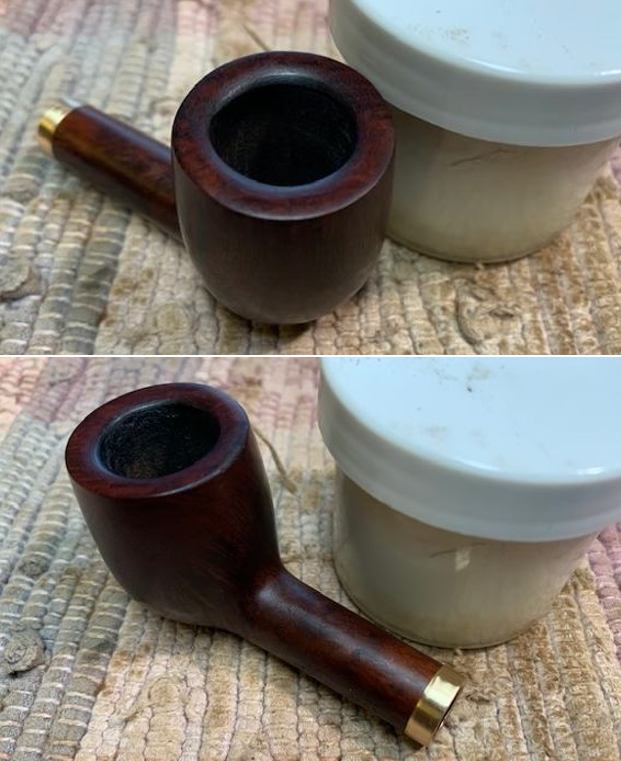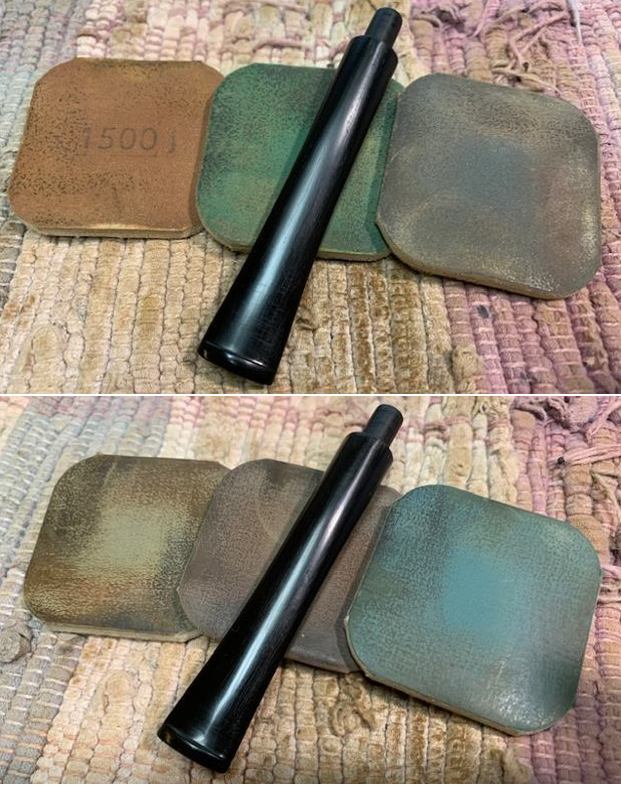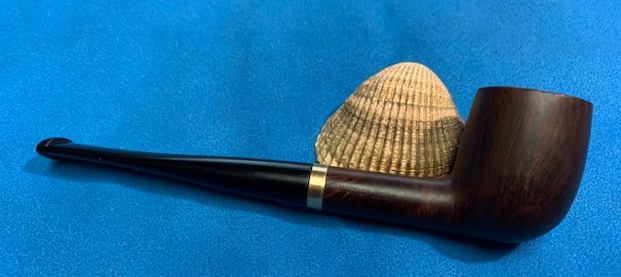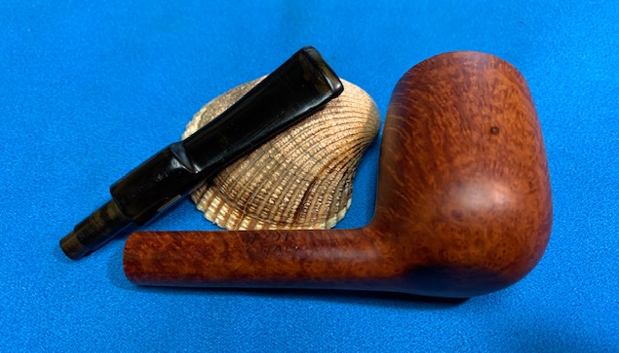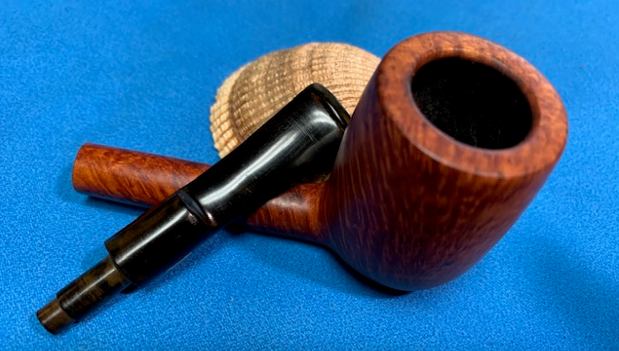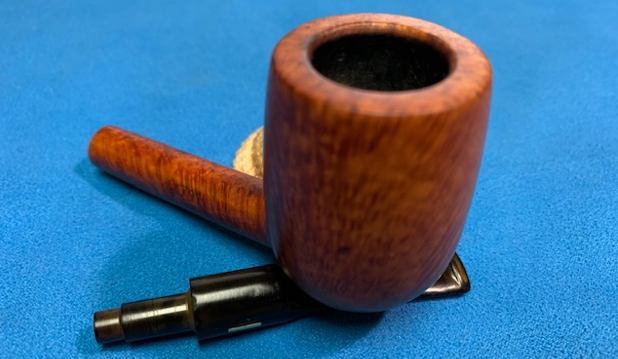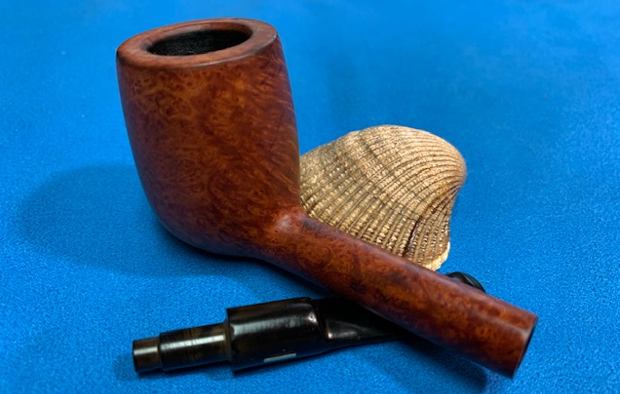
Tag Archives: Oxidation

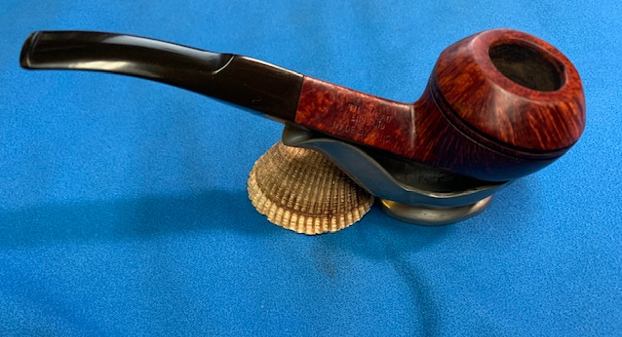
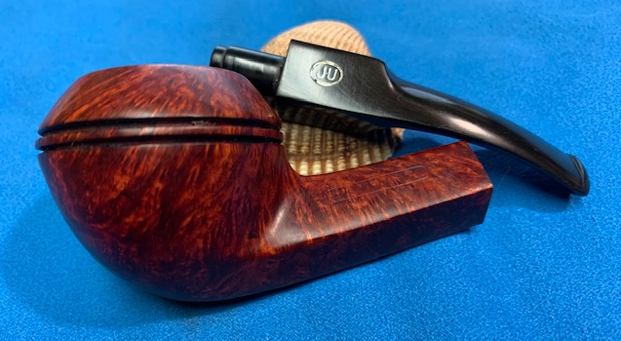
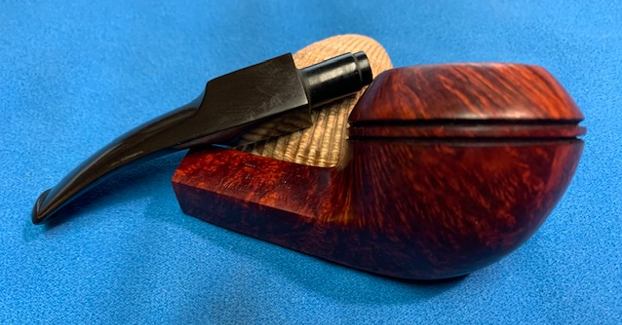
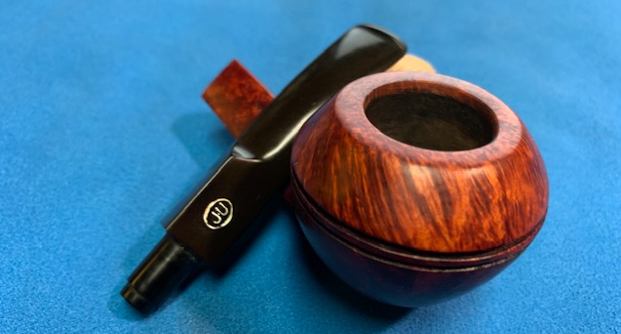
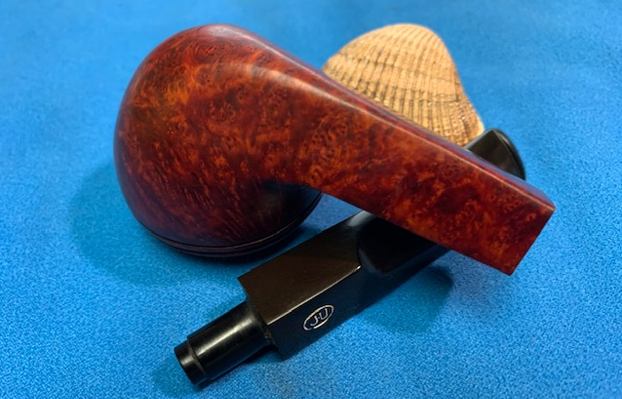
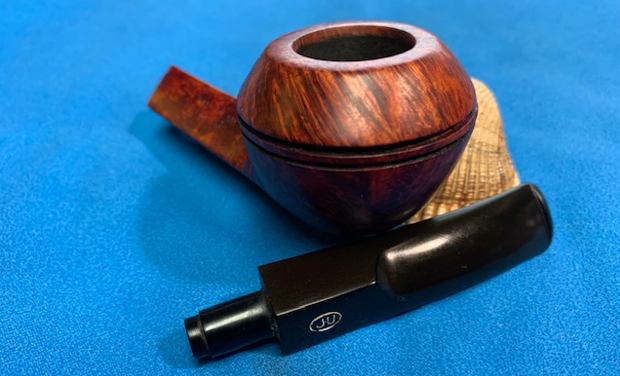
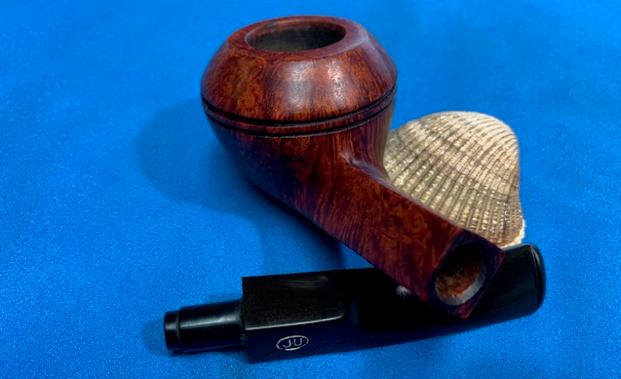
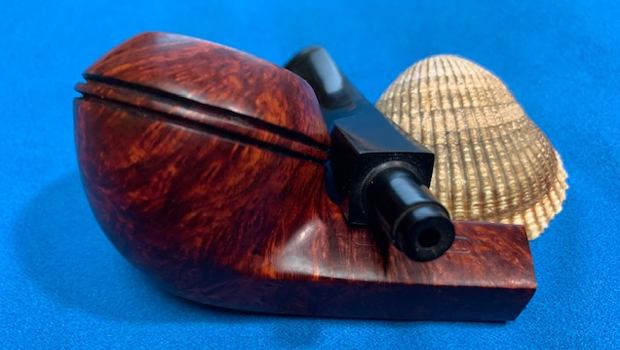
A Pipe That Called Out To A Fine Gentleman…Restoring A James Upshall “Tilshead”


Blog by Paresh Deshpande

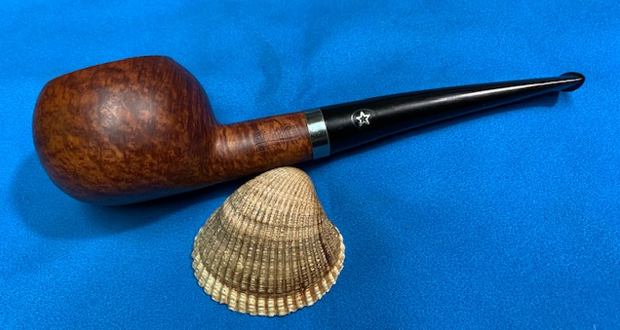
At the beginning of this month I had posted a write up on a briar calabash pipe with a bone stem (Resurrecting A Dreary No Name Briar Calabash Shaped Pipe | rebornpipes) that called out to Lance Dahl (remember the three beautiful cased D.P. Ehrlich Co, Boston Made Meerschaum that Steve had restored last month?). While exchanging emails, I shared a couple of pictures about the pipes that were seeking new ownership and Lance selected one. From what I have seen of Lance, he is one person with an exquisite taste for unique and quality pipes.

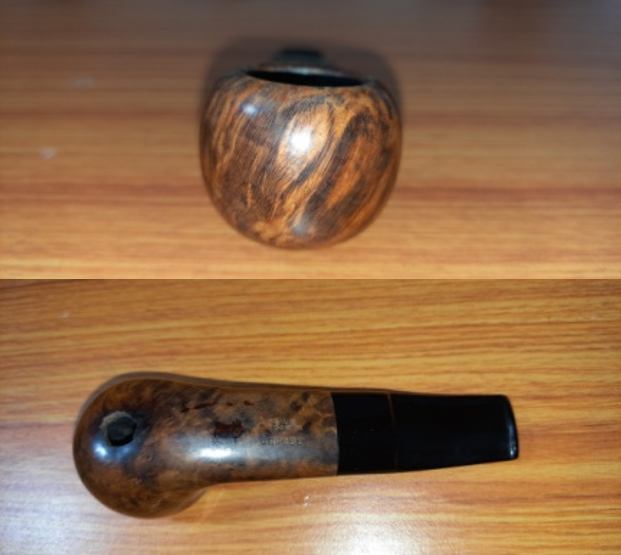
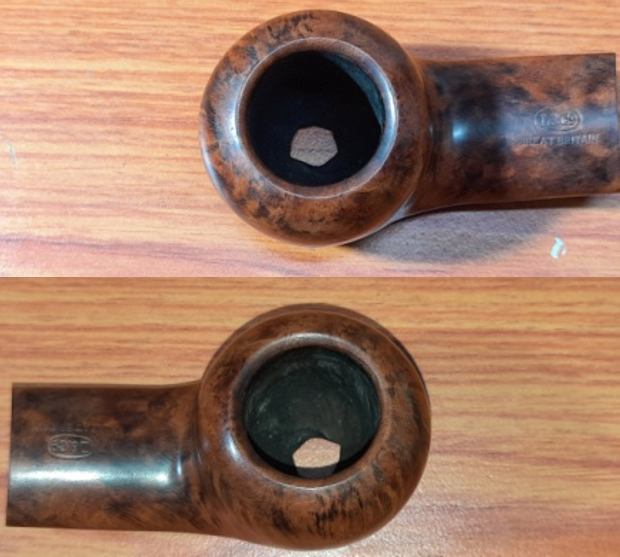
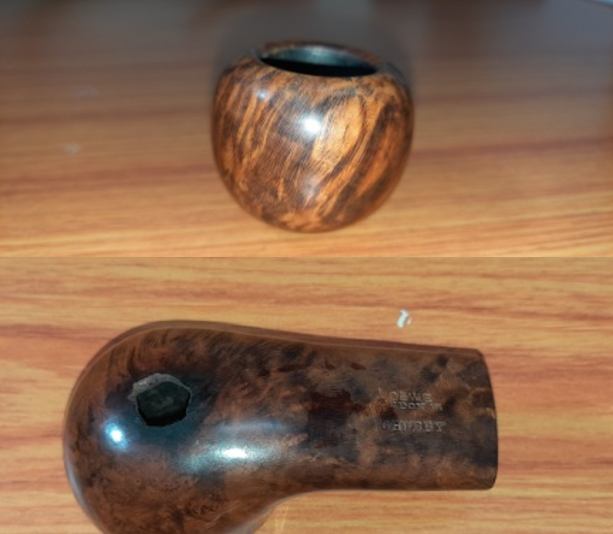
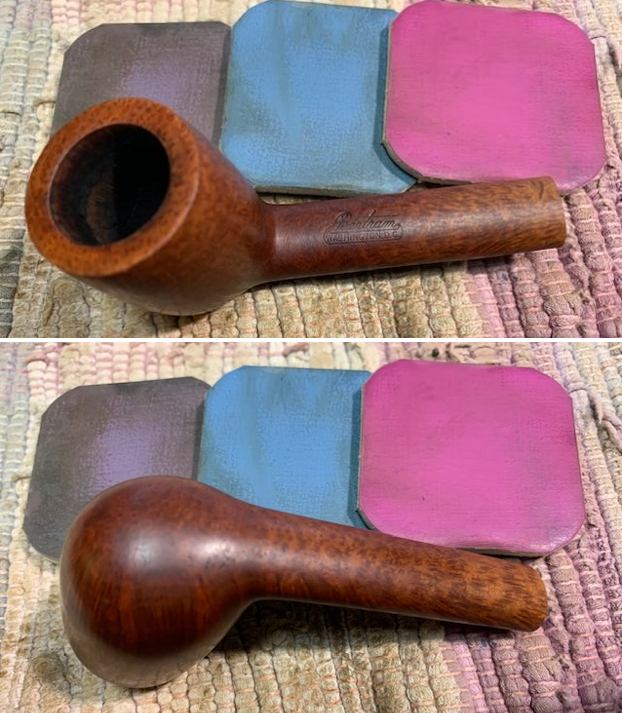
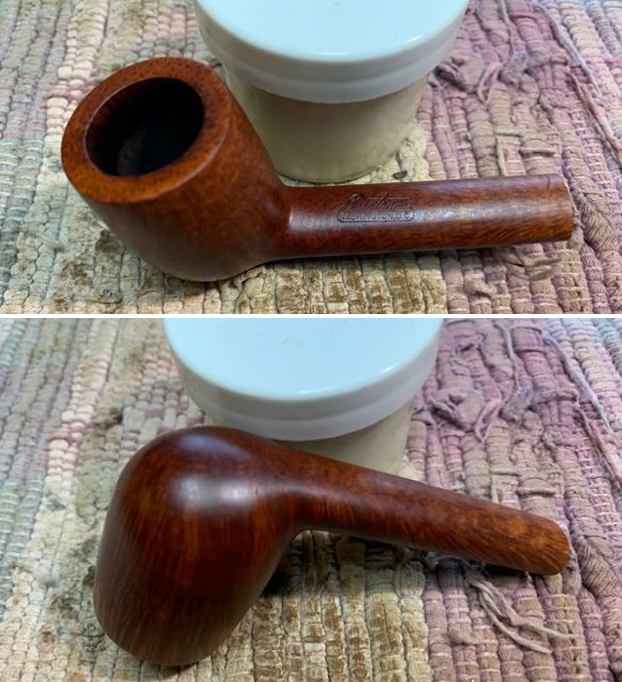
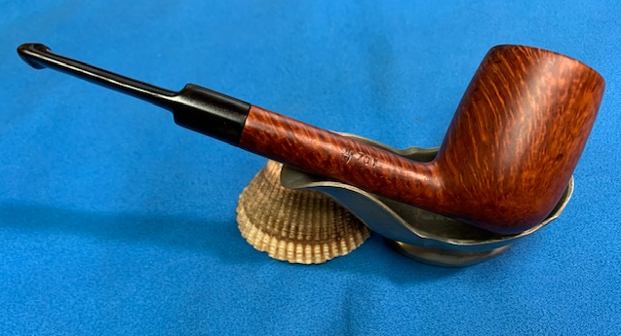
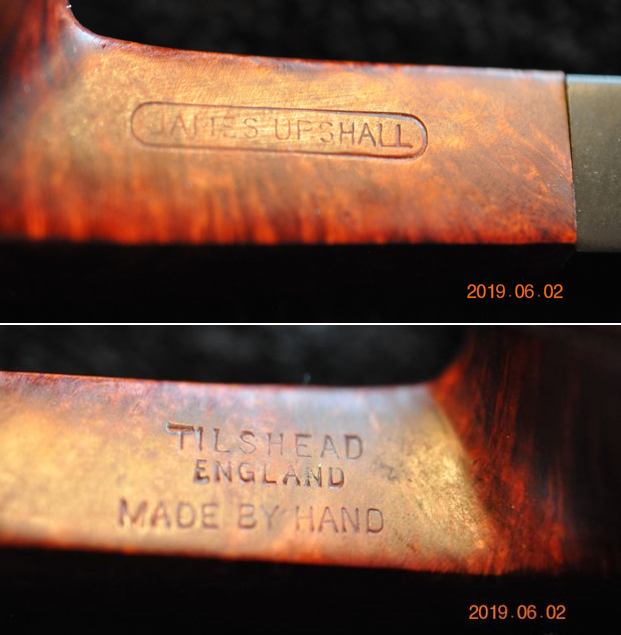
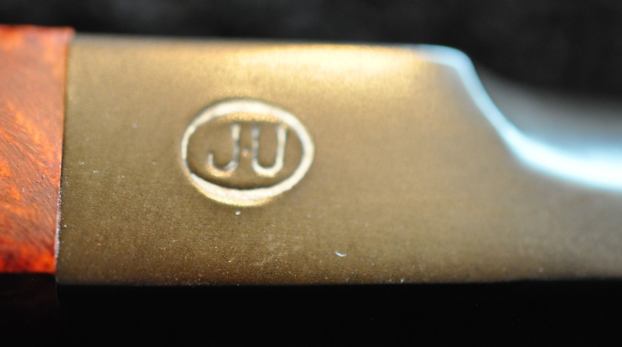
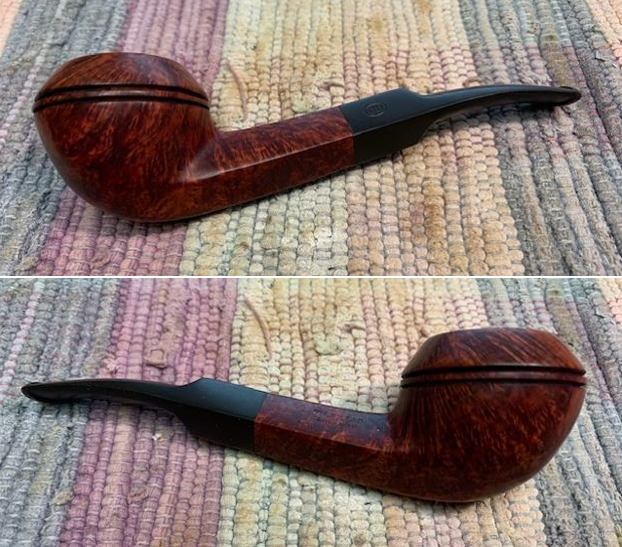
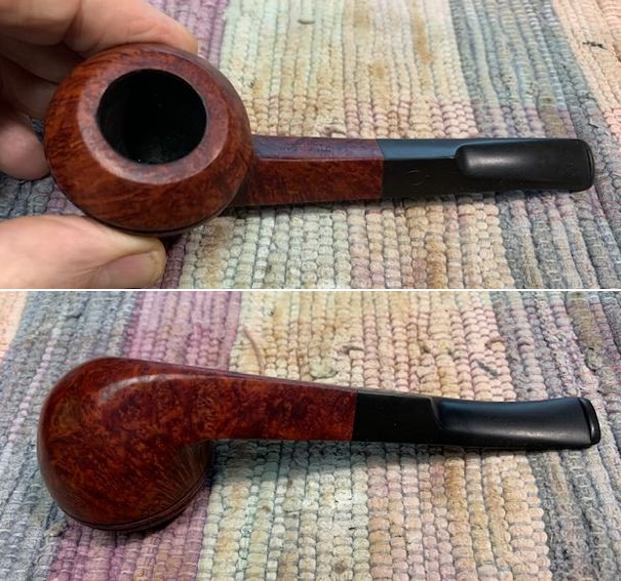
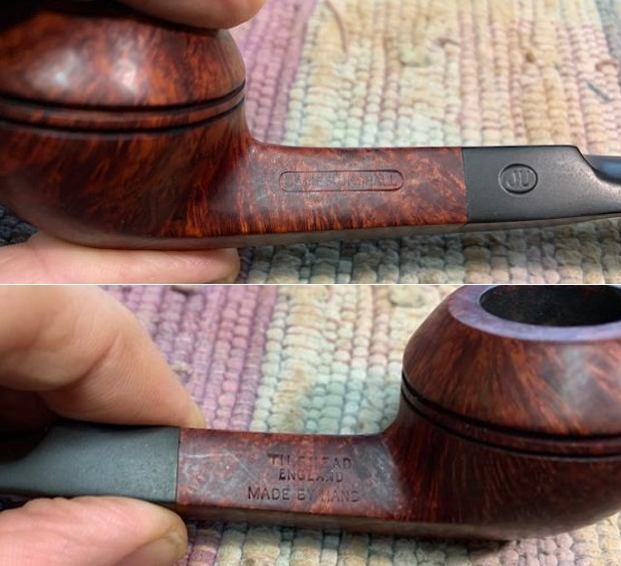
The pipe that Lance has selected and currently on my work table is stamped on the left of the shank as “TILSHEAD” over “ENGLAND”, all in block capital letters. The right side of the shank surface bears the stamp “MADE BY HAND” The high quality vulcanite tapered stem is without any stamp/ logo.I knew TILSHEAD to be the entry level pipe from James Upshall, but that was all I knew about the pipe company!! To get a better understanding of the brand and this grade in particular, I first visited James Upshall – Pipedia.

The entire article makes for an interesting read; however, I have reproduced only the relevant information on the grade of the pipe from the pipe company and particularly the grade of the pipe on my work table:

Grading & Sizing Information

James Upshall pipes are graded by various finishes, i.e. bark, sandblast, black dress and smooth etc. Then by cross grain, flame grain, straight grain and, last but not least, the perfect high grade, which consists of dense straight grain to the bowl and shank. The latter being extremely rare. In addition, the price varies according to group size, i.e. from 3-4-5-6 cm high approximately Extra Large. We also have the Empire Series which are basically the giant size, individually hand crafted pipes which come in all finishes and categories of grain. All our pipes are individually hand carved from the highest quality, naturally dried Greek briar. In order to simplify our grading system, let me divide our pipes into 4 basic categories.

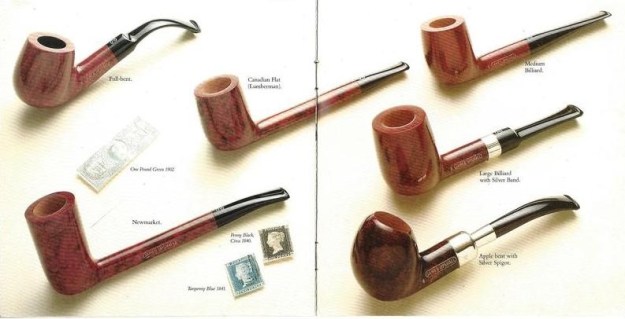
  1. It begins with the Tilshead pipe, which smokes every bit as good as the James Upshall but has a slight imperfection in the briar. In the same category price wise you will find the James Upshall Bark and Sandblast finish pipes, which fill and smoke as well as the high grades.
  2. In this category we have the best “root quality” which means that the grain is either cross, flame or straight, which is very much apparent through the transparent differing color finishes. This group will qualify as the “S”- Mahogany Red, “A” – Chestnut Tan and “P” – Walnut. The latter having the straighter grain.
  3. Here you have only straight grain, high grade pipes, which run from the “B”, “G”, “E”, “X” and “XX”. The latter will be the supreme high grade. Considering the straightness of the grain the latter category is also the rarest. Usually no more than 1% of the production will qualify.
  4. Lastly, we have the Empire Series. These are basically Limited Edition gigantic individually hand crafted pieces, which again are extremely rare due to the scarcity of large, superior briar blocks.

Believe you me Readers, the slight imperfections which destined this pipe to be categorized as TILSHEAD has me in awe of the very high quality standards set by the pipe company. There is not a single fill in the entire stummel surface and the grain is beautiful all around. All in all, this is a beautiful pipe with a quality that would equal or surpass any of the highest grades of line production pipe!

Initial Visual Inspection
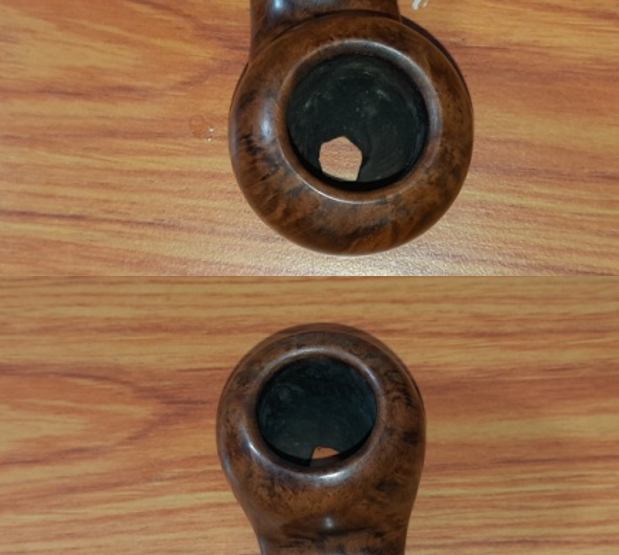
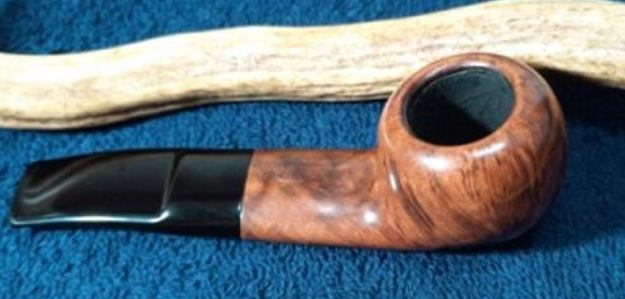
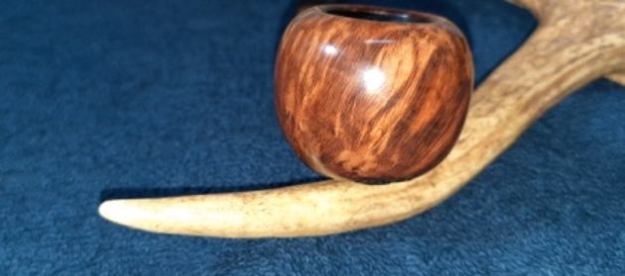
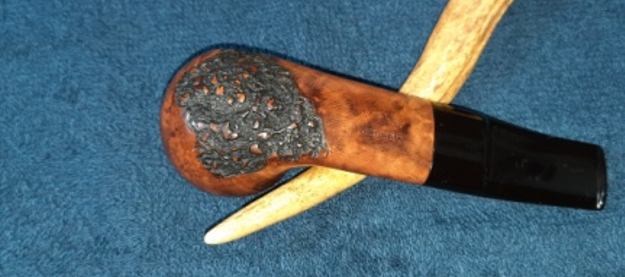
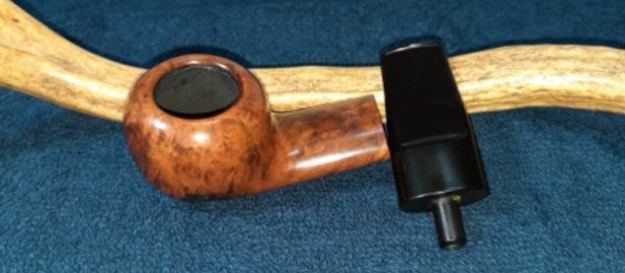
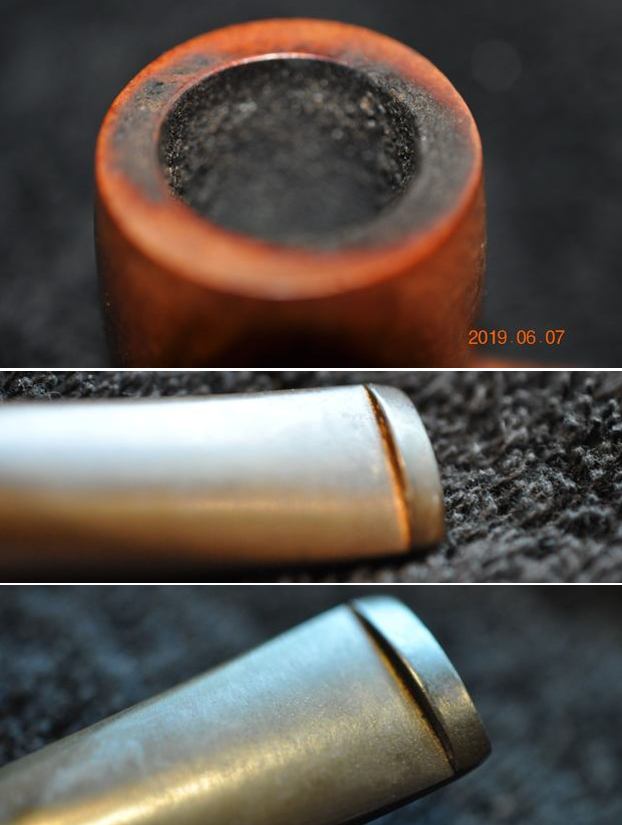
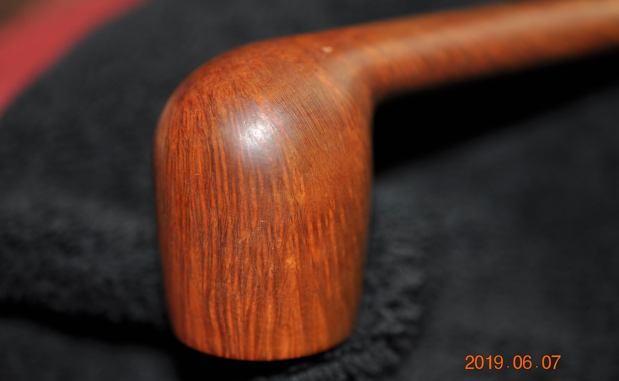
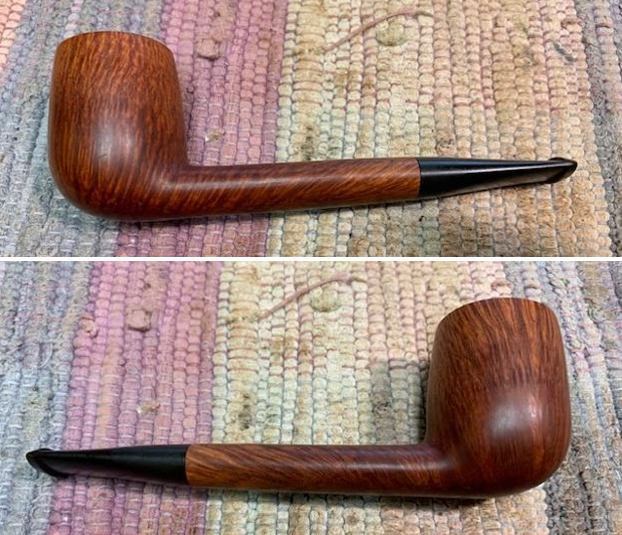
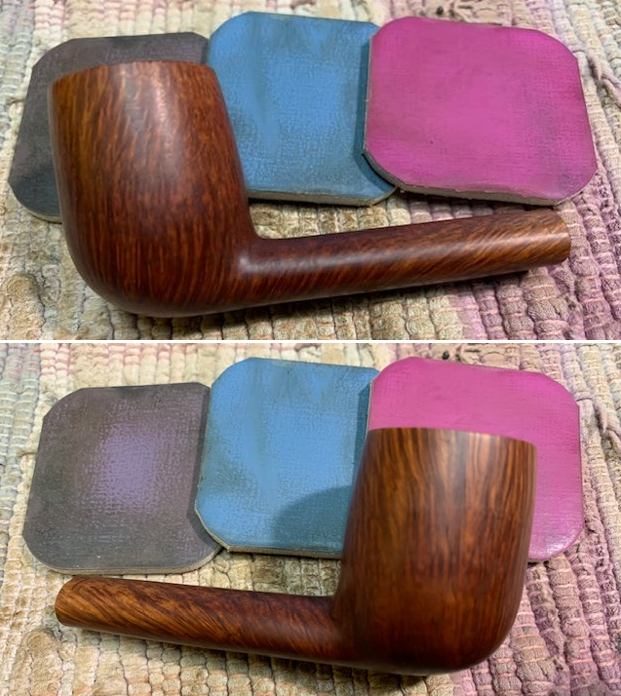
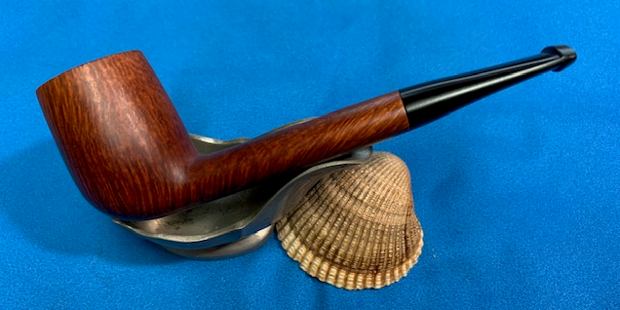
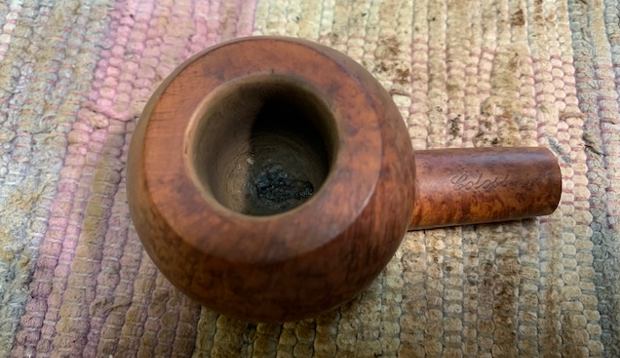
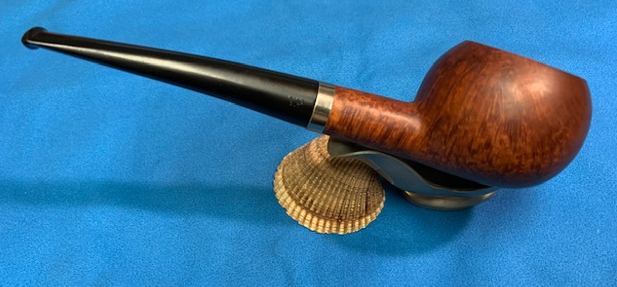
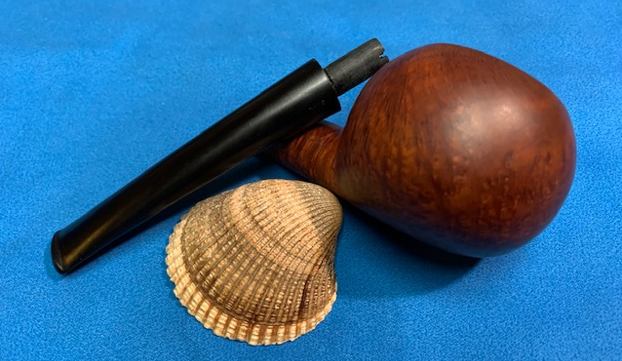
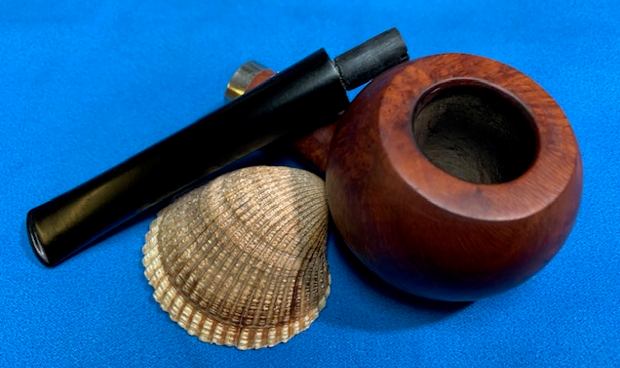
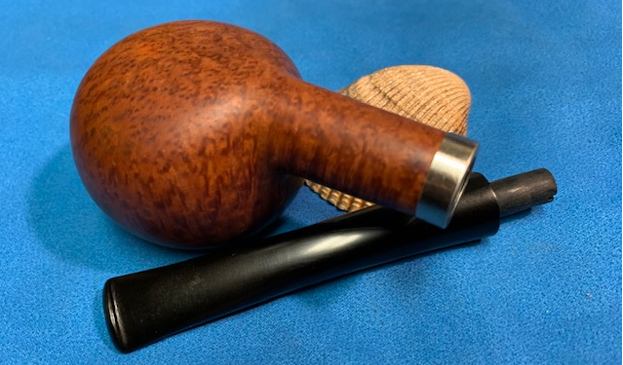
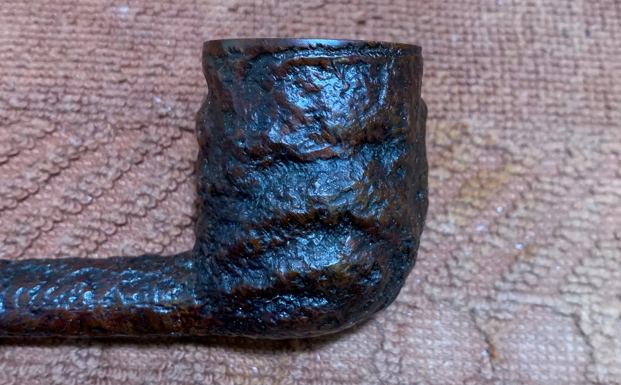
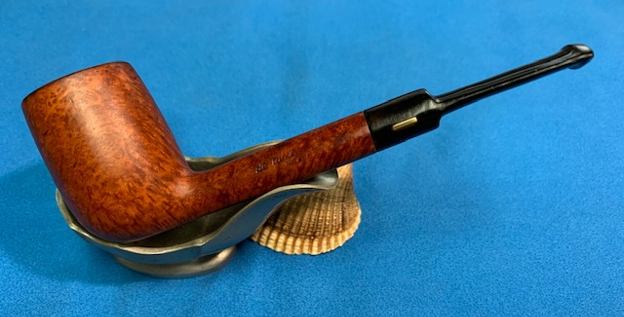
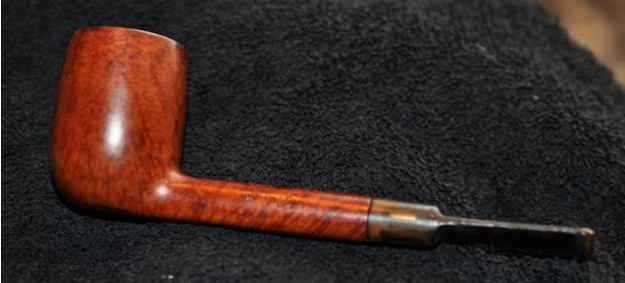
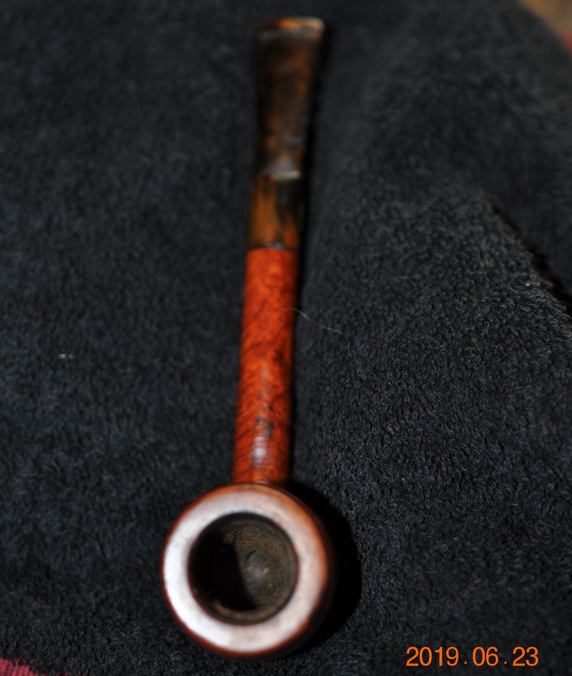
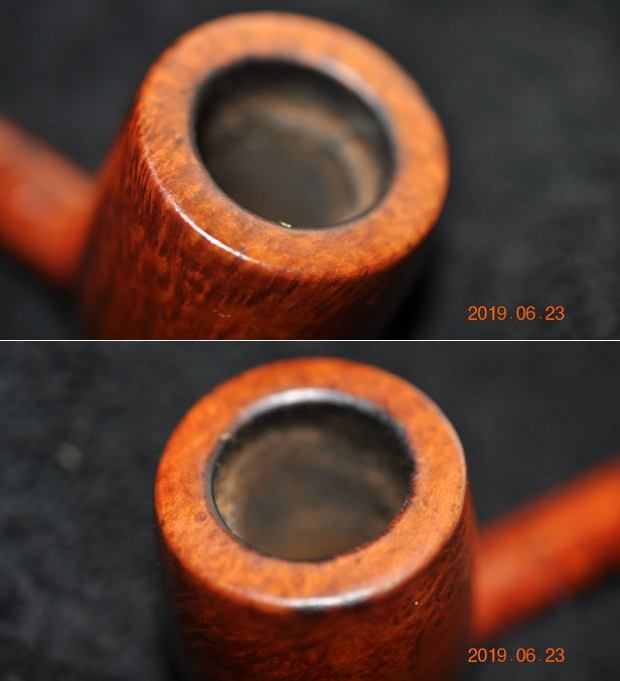
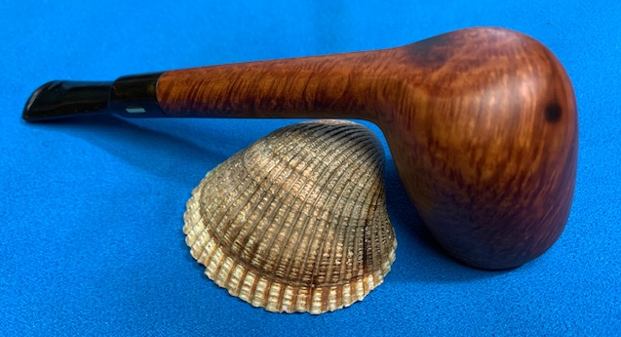
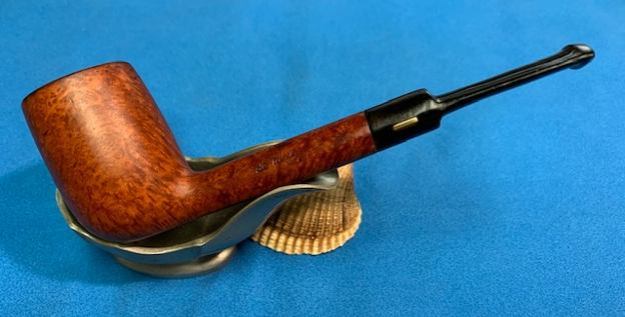
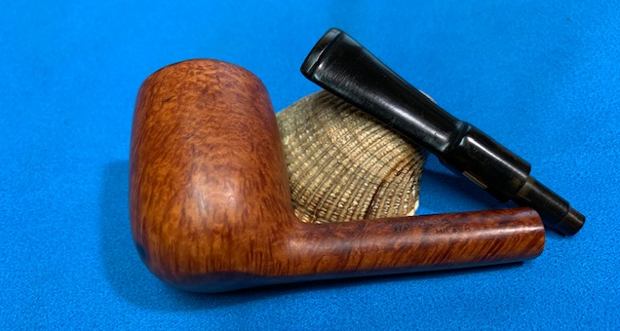
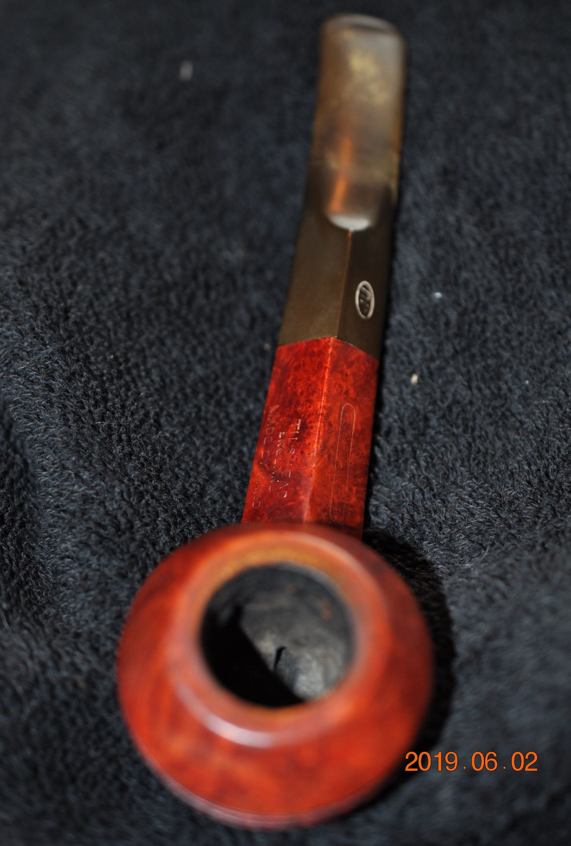
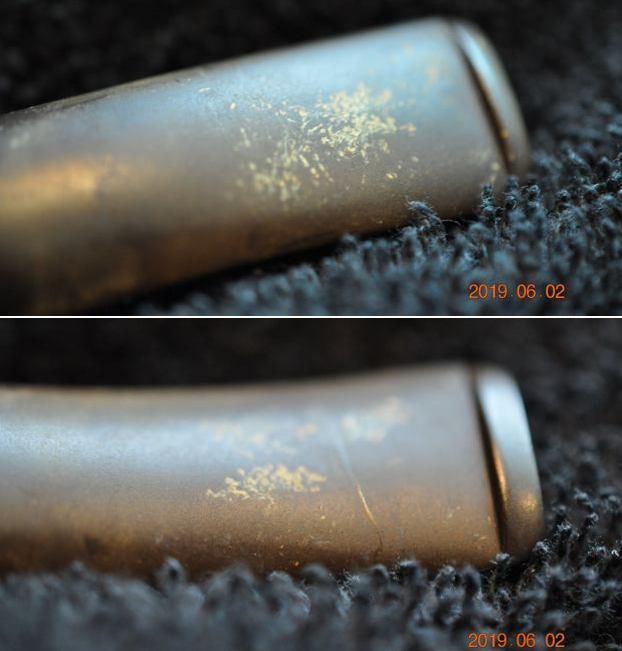
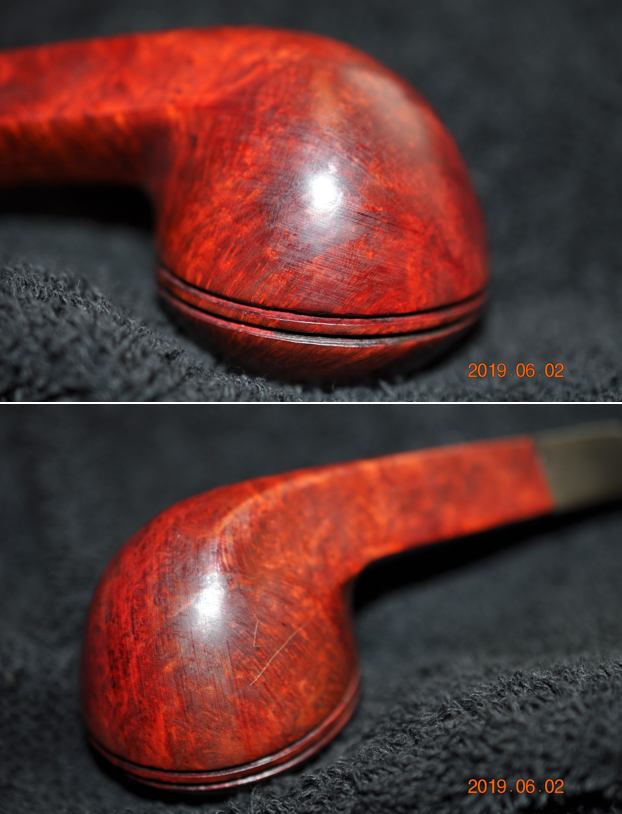
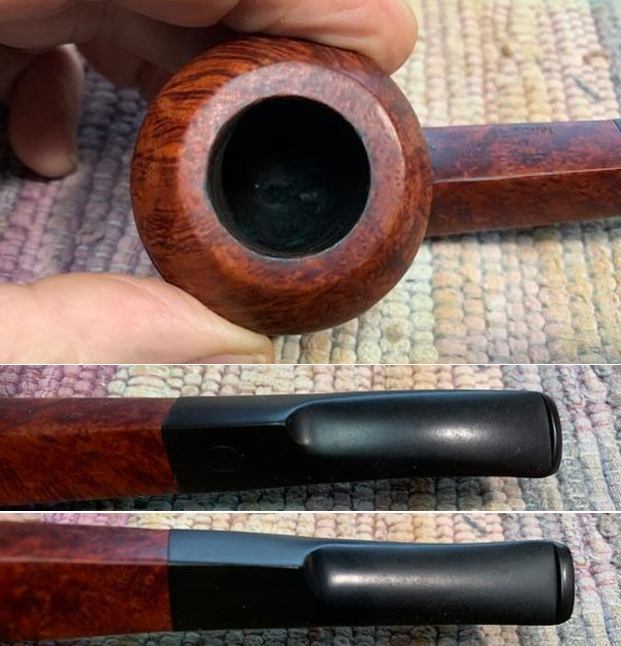
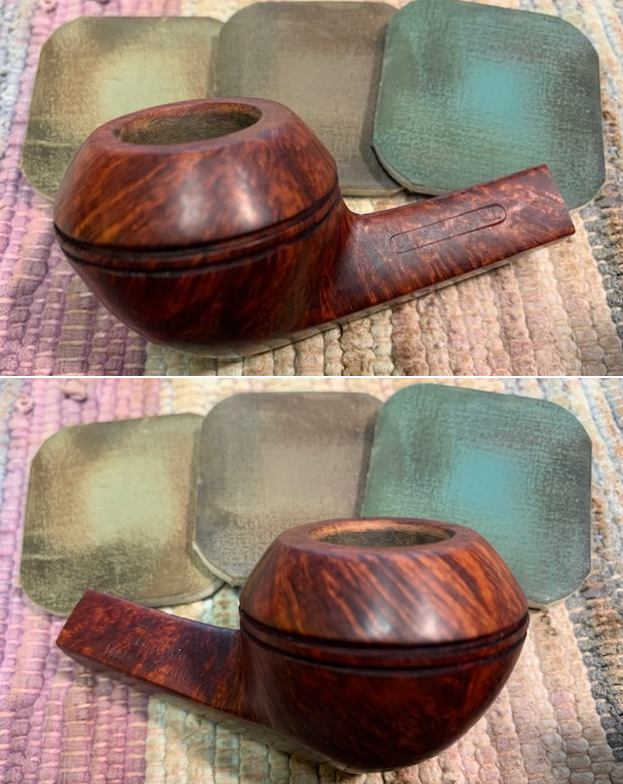
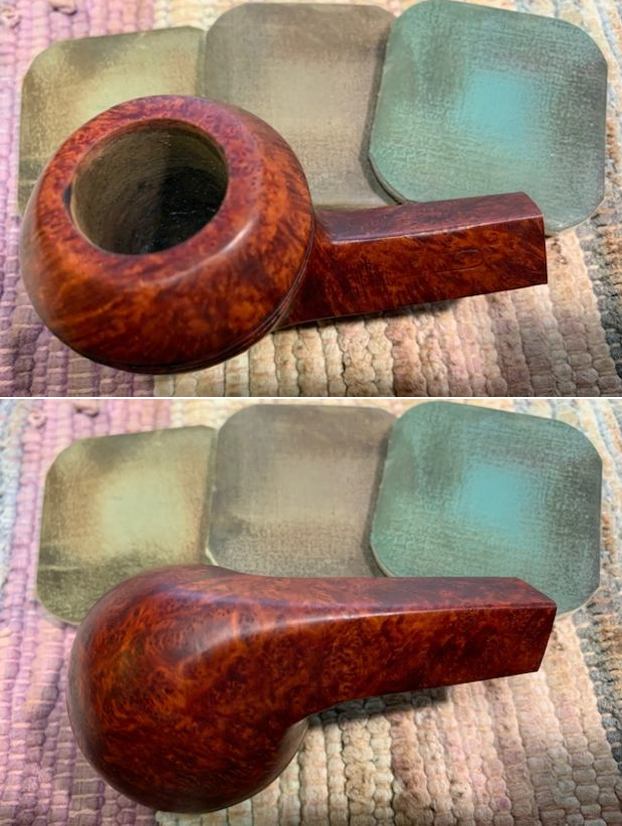
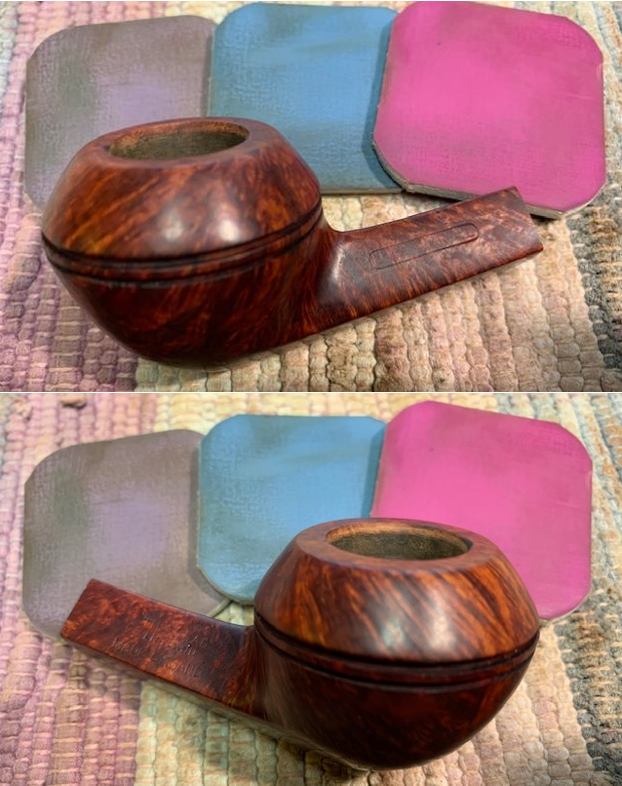
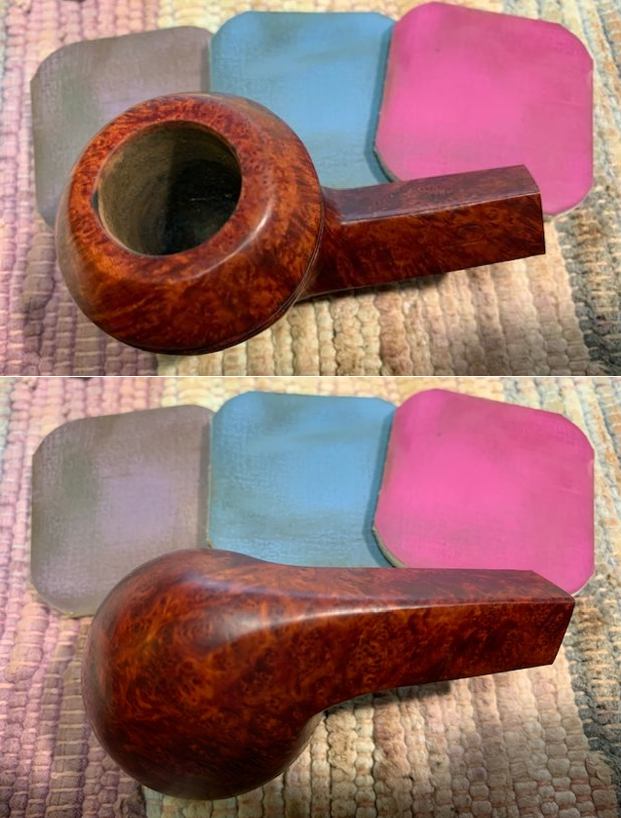
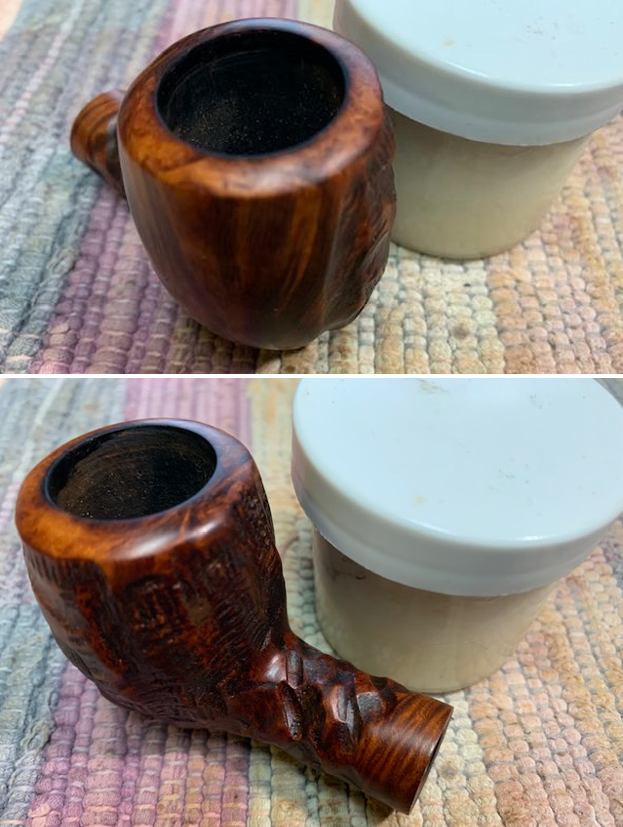
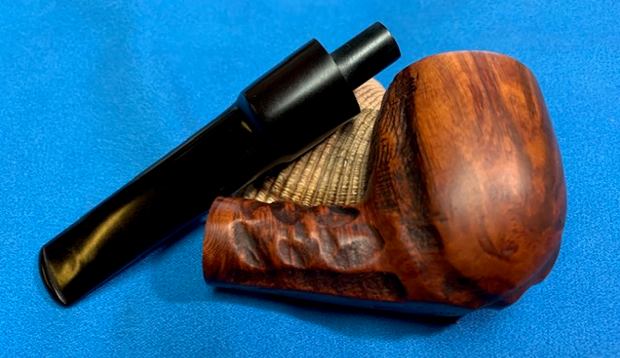
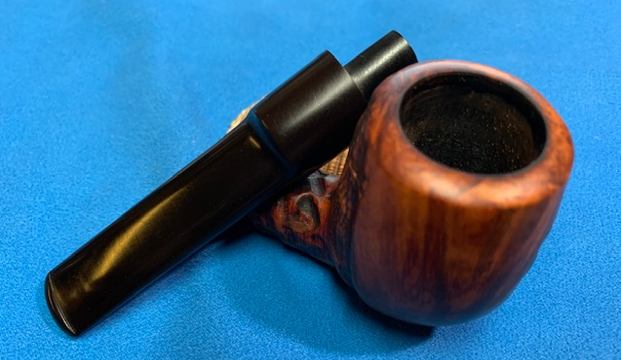
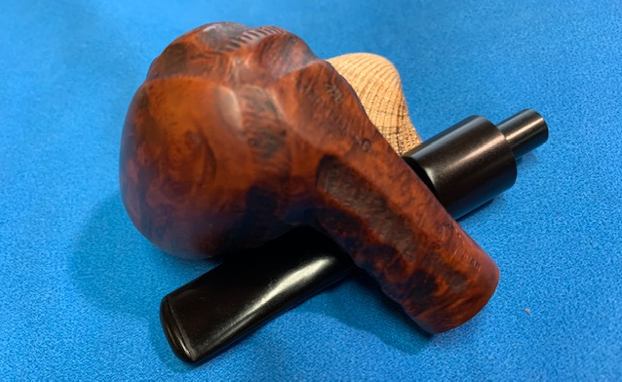
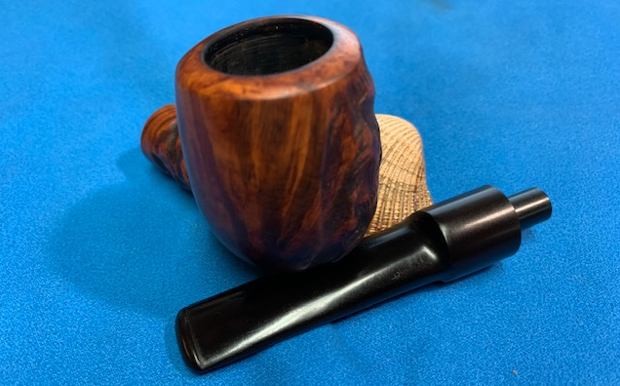
The pipe that is currently on my work table has a Dublin shape (though not a classic Dublin but more of a freehand, the carver’s take on the classic shape while following the grain of the briar block) with thick walls. The stummel has a natural stain and is covered in dirt and grime through which beautiful angel hair grain can be seen all around with loosely packed Bird’s eye grain over the rim top surface. There is a thin layer of cake in the chamber and the outward sloping rim top surface is clean. The rim’s inner and outer edge surfaces is pristine. The vulcanite tapered stem is oxidized with severe damage to the bite zone on either surface. The buttons on both surfaces show bite marks with the upper half button missing. The following pictures will give the Readers an idea of the overall condition of the pipe as it sits on my work table. Overall, the thin layer of cake and excellent condition of the stummel are pointers to the fact that the pipe seems to be well looked after, though the stem damages are a proof of the previous owner’s cavalier chomping of the stem. It should be an easy restoration project, unless some gremlins pop up during the process. Detailed Visual Inspection
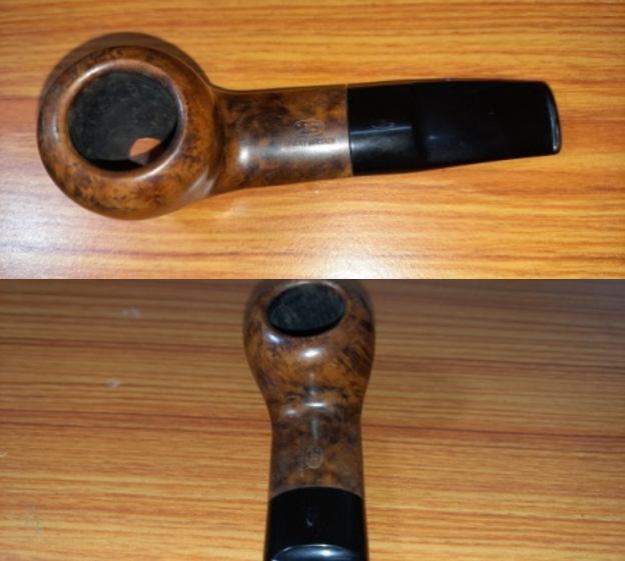
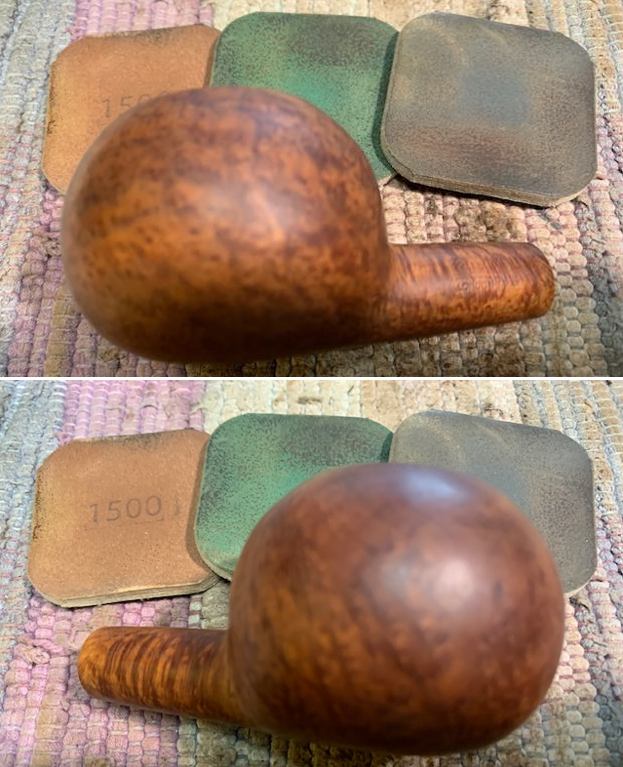
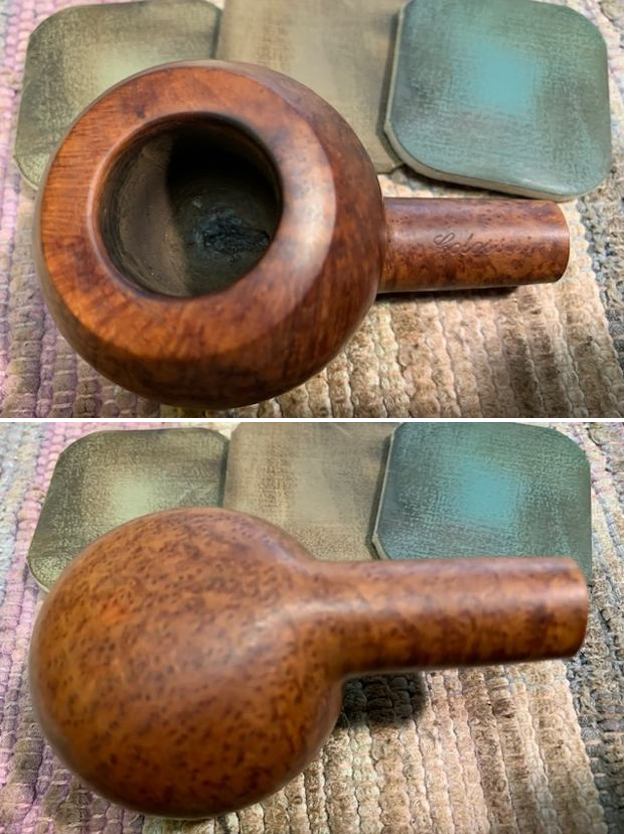
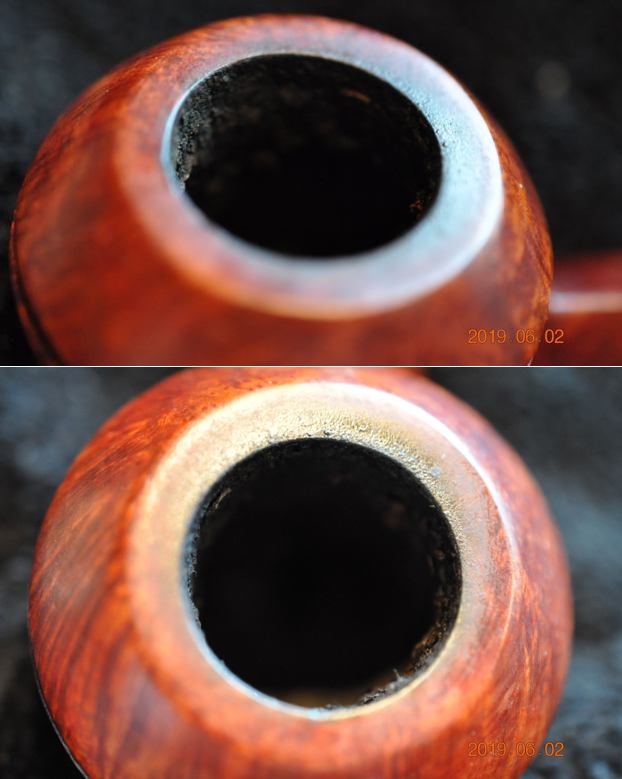
A thin and even layer of cake is seen in the chamber; however, the cake is very hard. The rim top surface is sans any overflow of lava, dirt, dust and grime, though a number of dents and dings (indicated with pastel blue circles and arrows) can be seen on the outward sloping rim surface. The exact condition of the inner walls of the chamber will be known once the cake has been taken down to bare briar. The chamber odor is strong and should be addressed to some extent once the cake has been taken down and the shank internals have been thoroughly cleaned. The stummel feels solid to the touch and I do not foresee any major issues with the condition of the chamber walls. To be honest with you, this pipe being at the start of the ascending order of grading for James Upshall pipes, I had expected to find a few fills and some non-descript graining on the stummel briar. However, I was surprised to note that there are absolutely no fills on the stummel surface and it boasts of some beautiful angel hair flame grains around the sides, front and aft of the stummel surface while loosely packed Bird’s eye adorns the outward sloping rim top. The stummel surface is covered in dirt and grime giving the stummel a dull and dirty appearance. The stummel surface shows a few dents and dings (indicated by yellow arrows). It does have a quality which is seen on some very high end pipes. The mortise shows accumulation of old oils and tars which would need to be cleaned. The dents and dings to the rim surface and over the stummel surface would be addressed by steaming and sanding the surface. A nice polish with micromesh grit pads will bring a nice shine to the stummel and highlight the grains. The vulcanite stem is oxidized and severely damaged. The bite zone on either surface shows some severe tooth indentations with deformed button on either surface. The upper stem surface has a portion of the button lip missing (encircled in green) and would need to be built up again. The lower surface has a very deep bite mark, the causative pressure of which has resulted in a crack (indicated with yellow arrows) that extends over the lower button edge and up to the horizontal slot. The tenon and slot end are clean. All in all, the stem presents the most major damage on this pipe.The Process
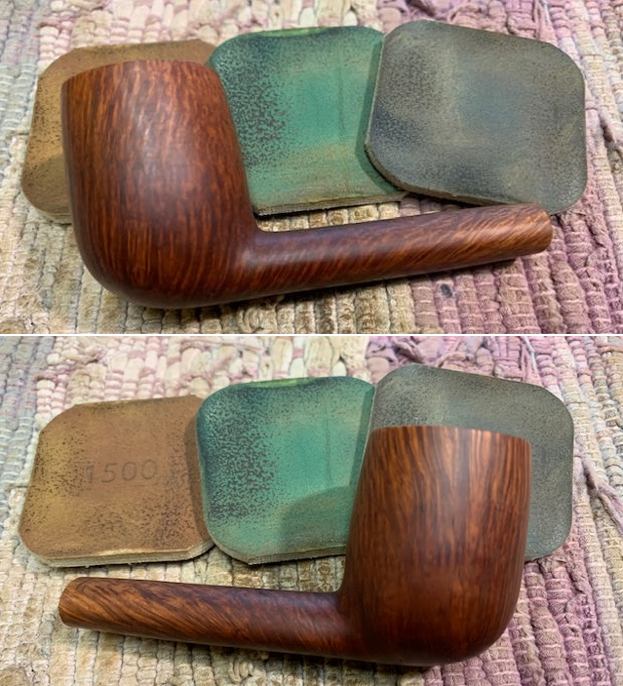
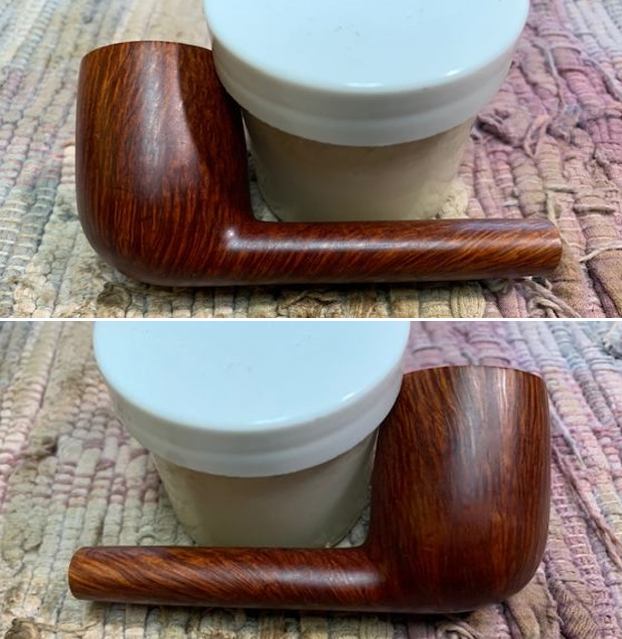
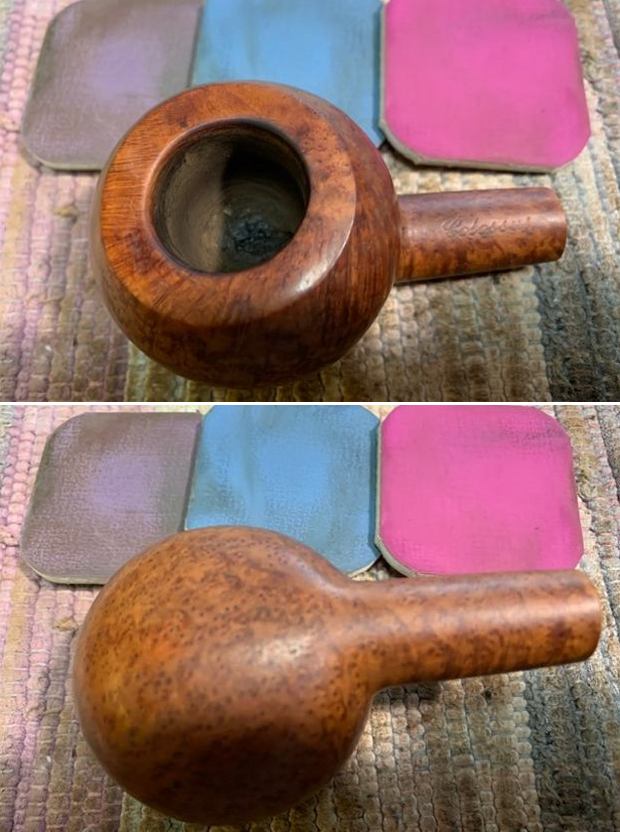
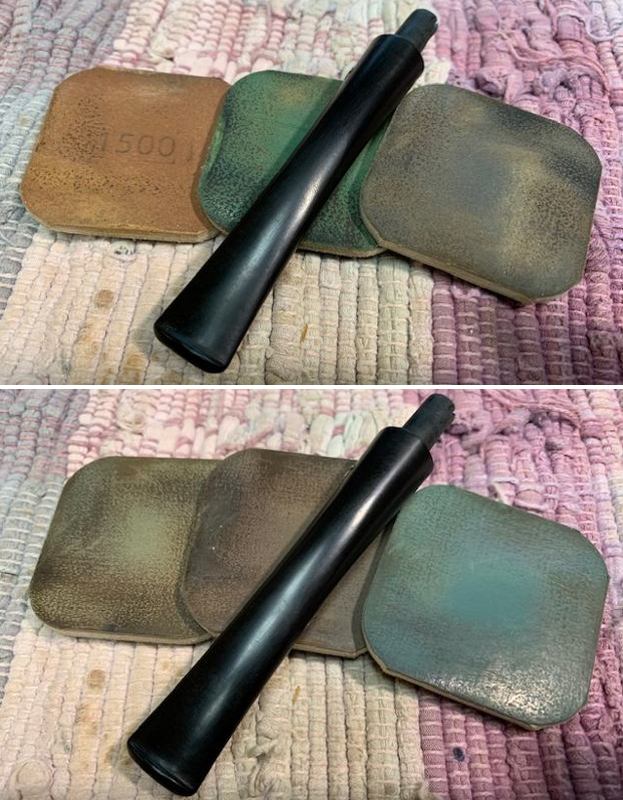
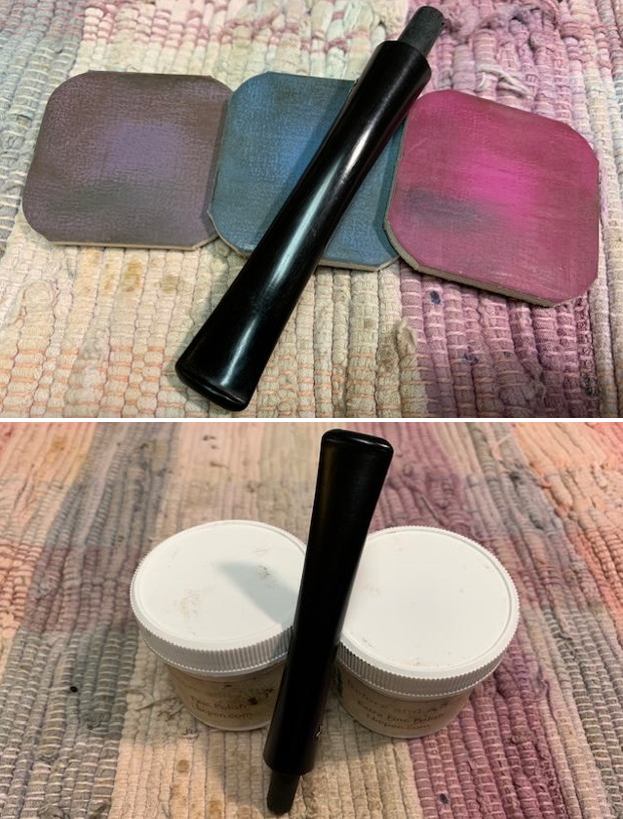
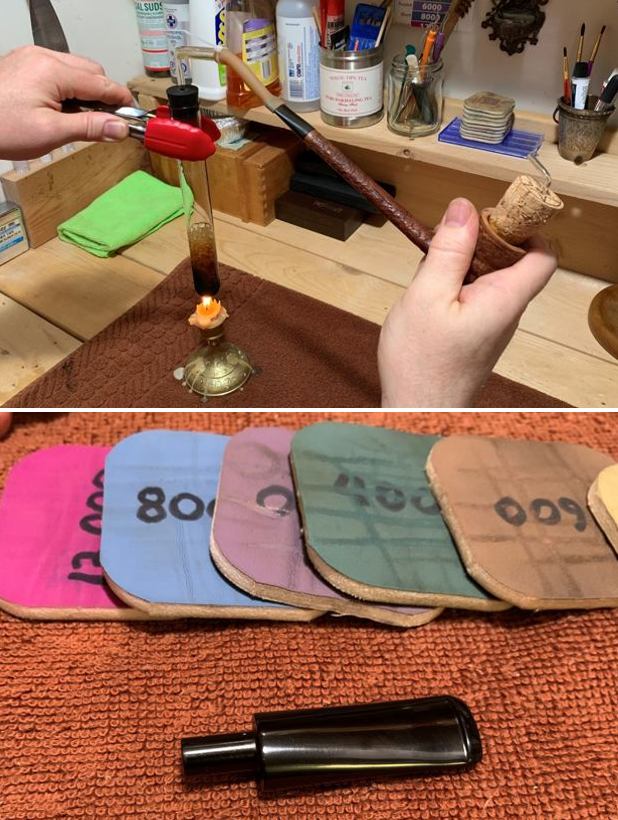
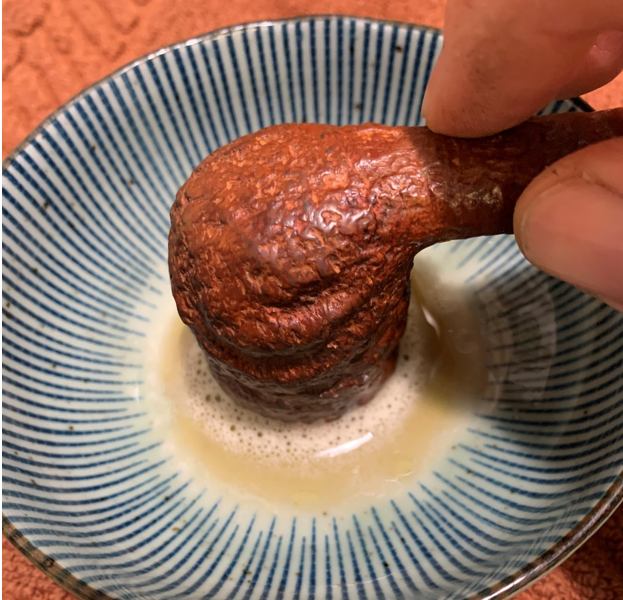
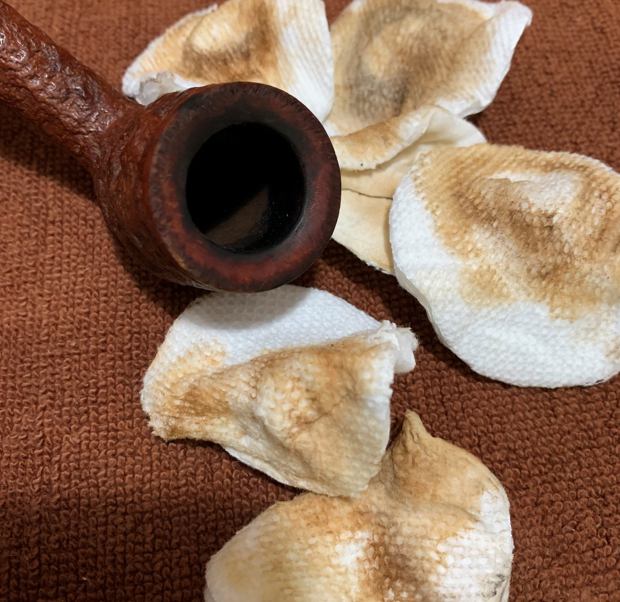
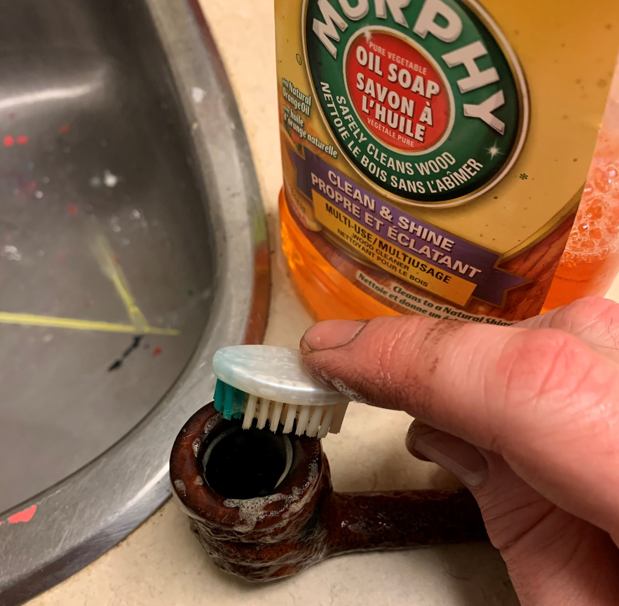
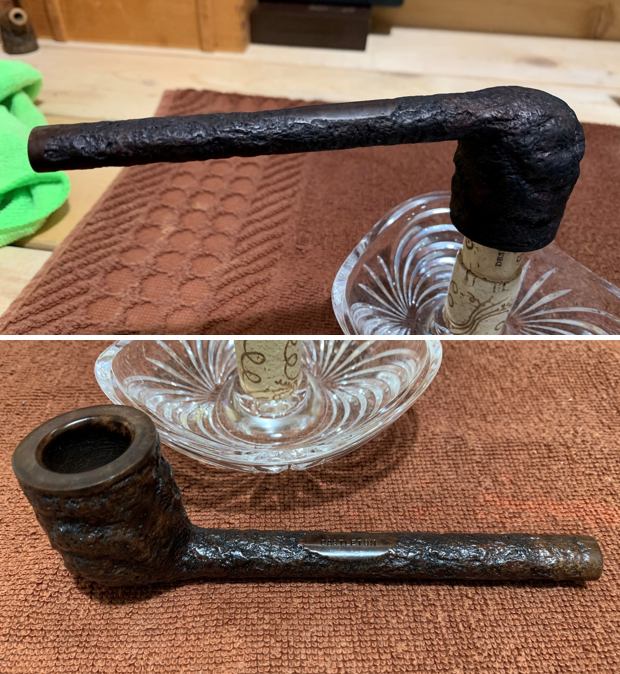
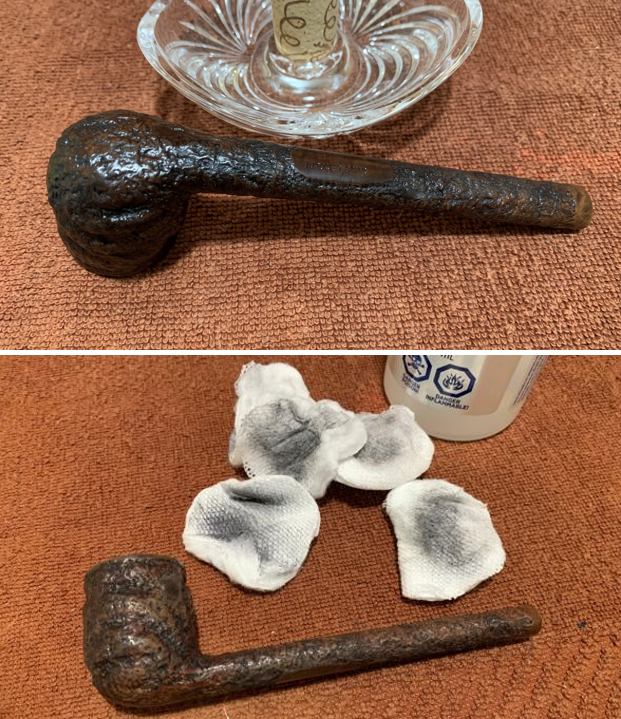
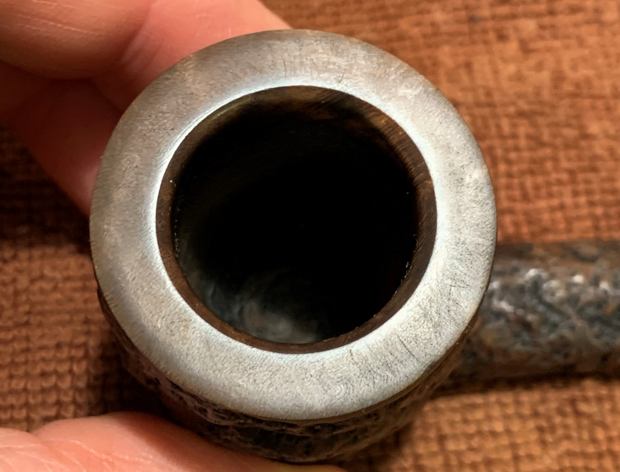
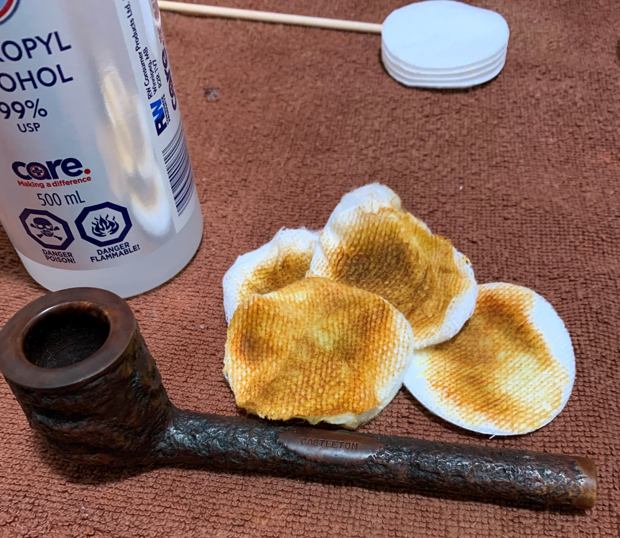
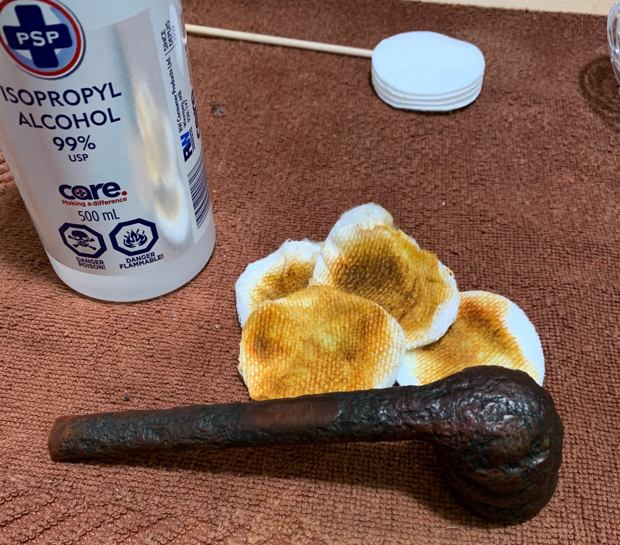
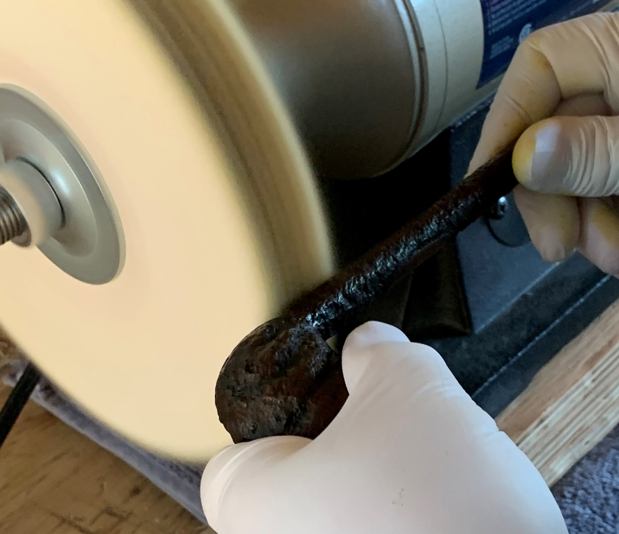
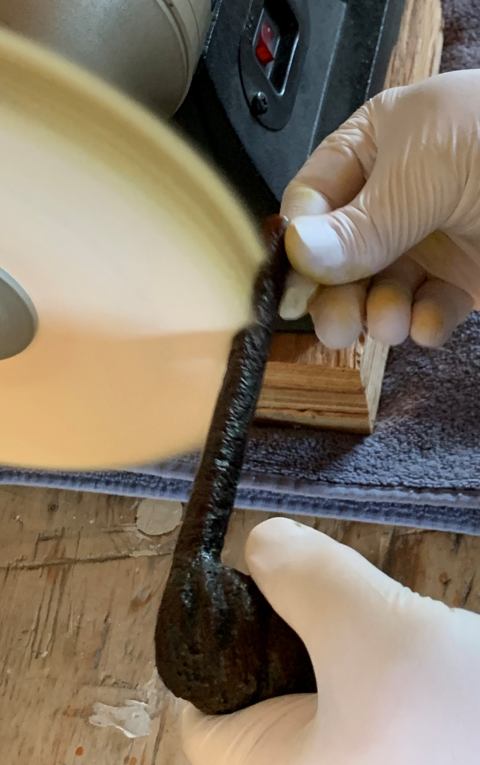
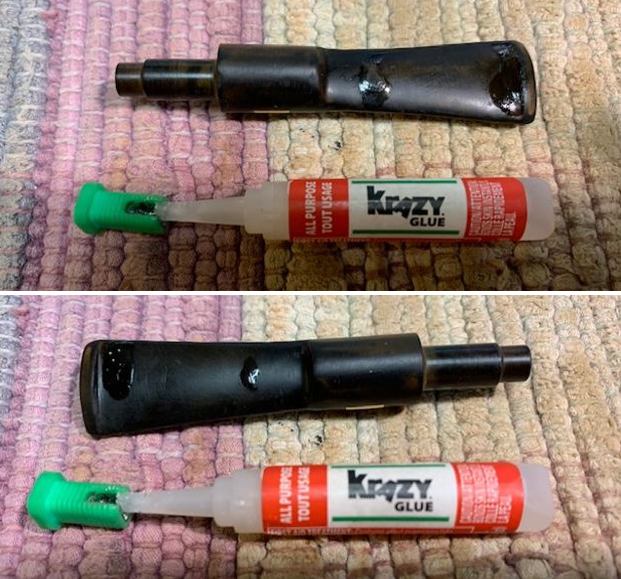
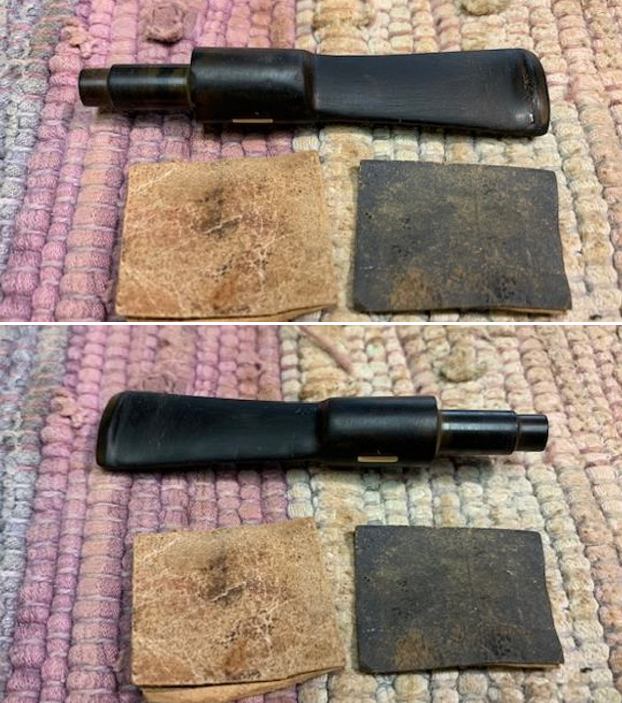
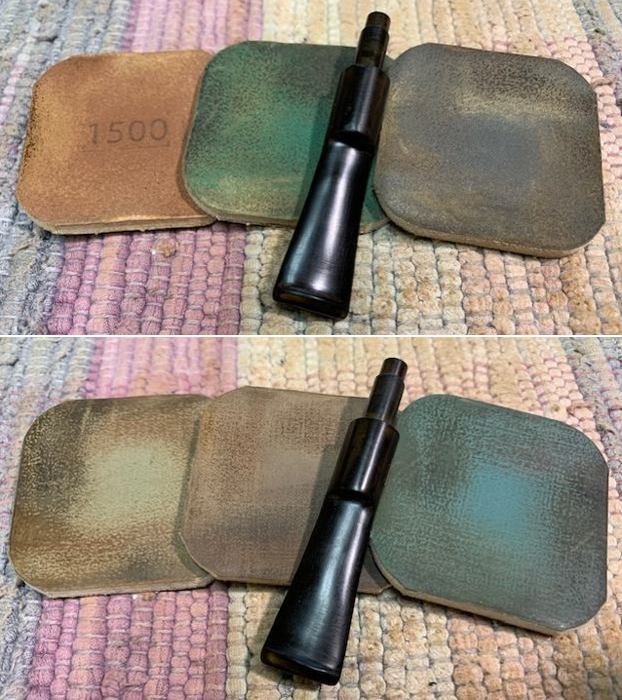
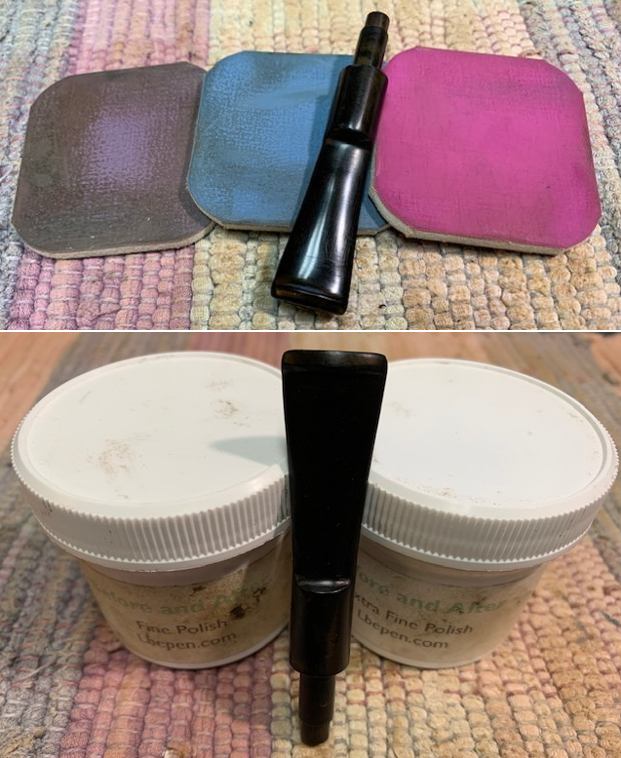
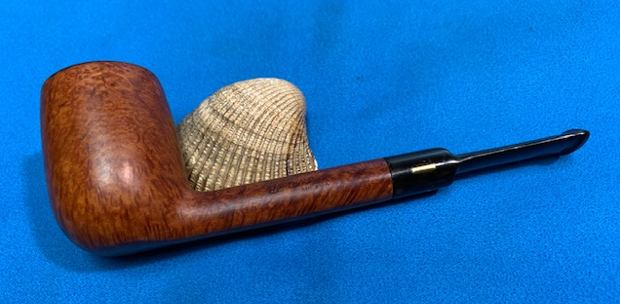
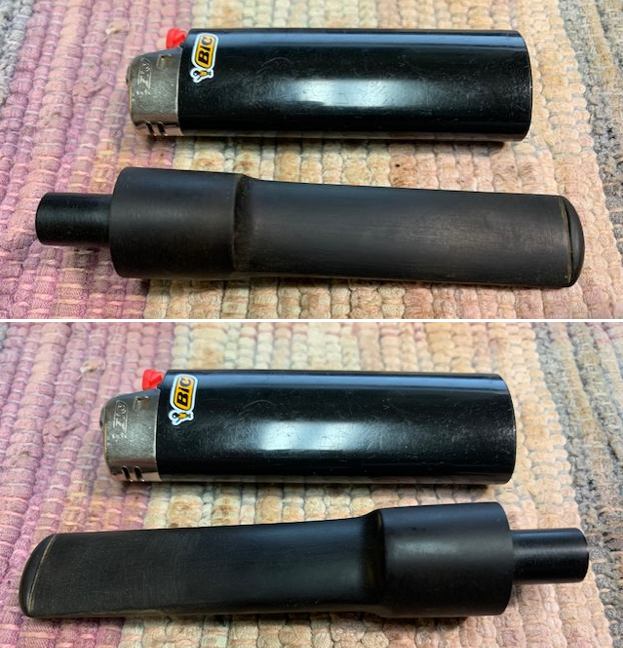
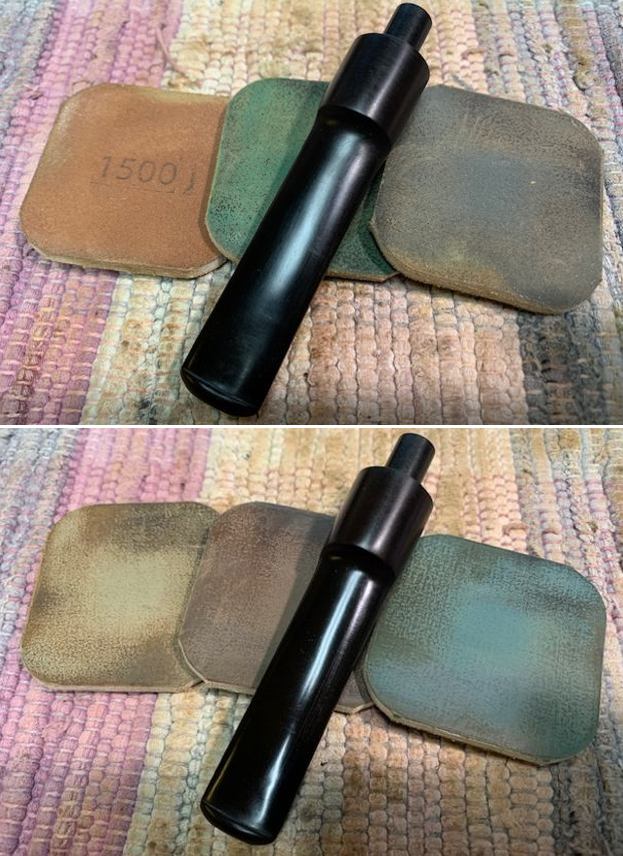
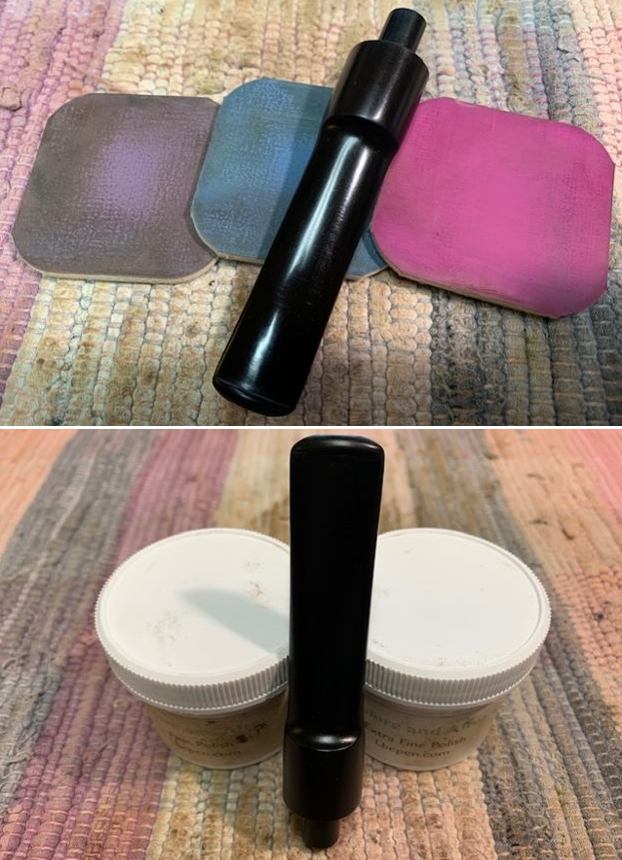
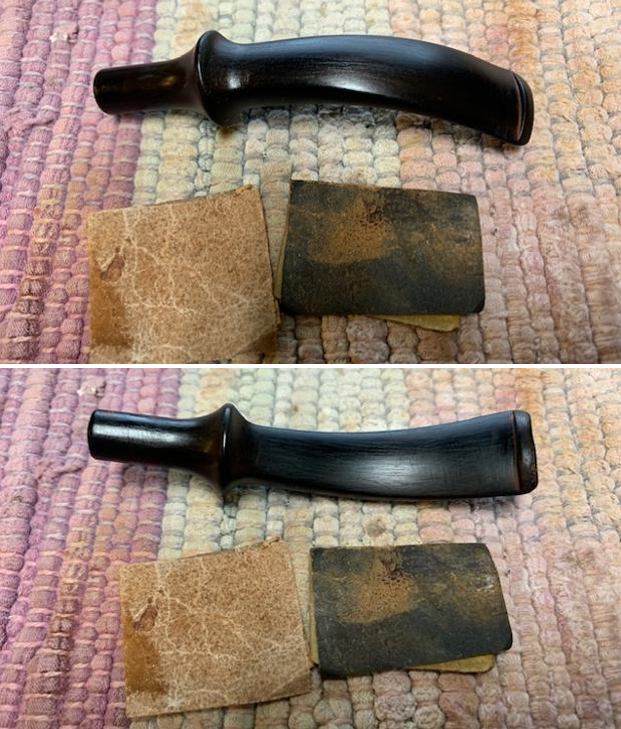
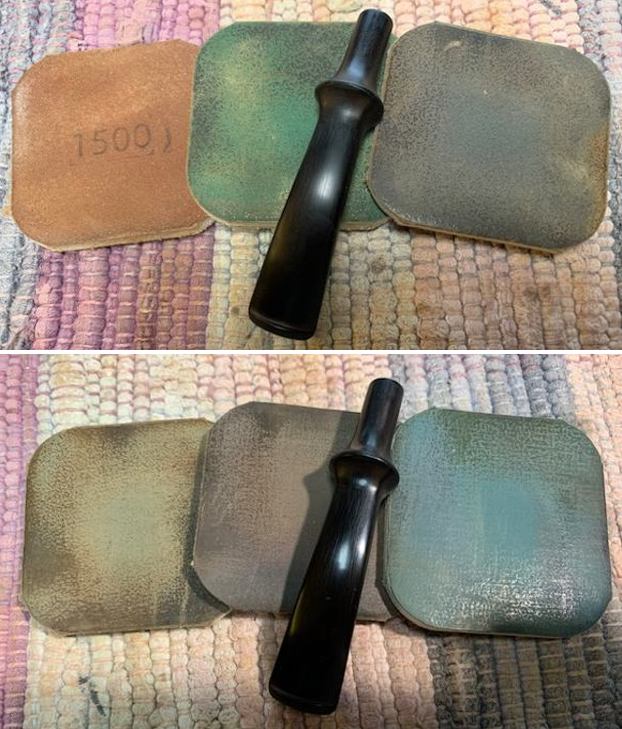
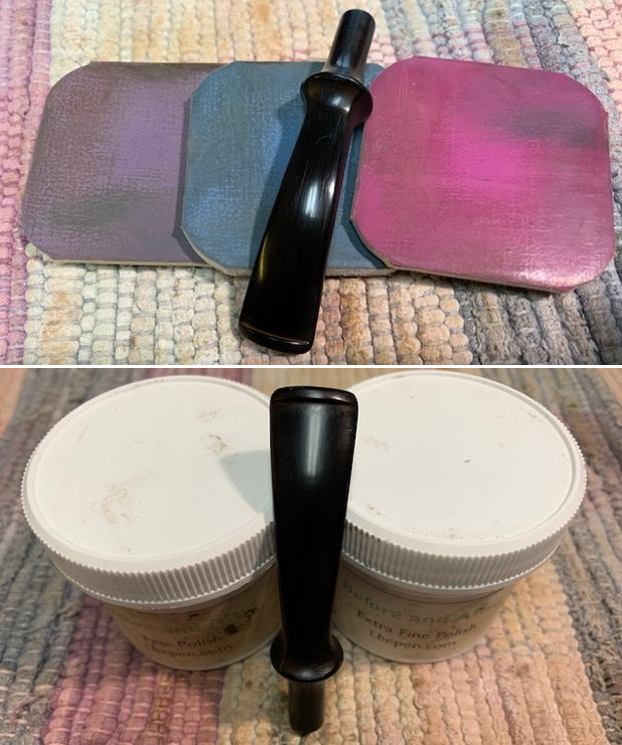
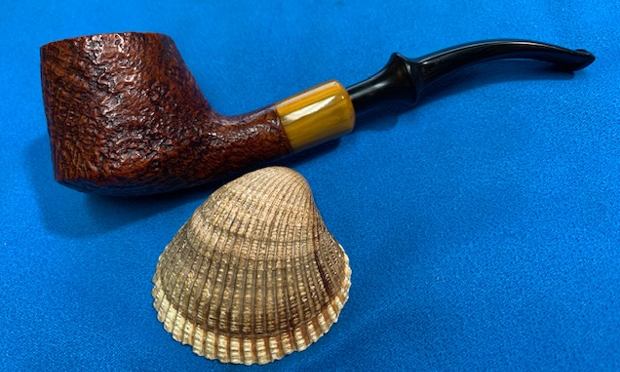
Since the stem on this pipe was most severely damaged and would demand most efforts, I started the restoration process with the stem repairs. I ran a pipe cleaner dipped in alcohol through the stem airway and was pleasantly surprised to find a nice clean pipe cleaner emerge from the other end. There is no doubt that the pipe was kept nice and clean by the previous owner. I flamed the bite zone of either surface over a lit candle to heat and expand the tooth indentation to the surface. It was well worth the try and the surface evenness is much improved than earlier.This step was followed by sanding the entire stem surface with a folded piece of 220 grit sand paper to remove the oxidation from the surface. I wiped the stem with a cotton pad and isopropyl alcohol to clean the surface in preparation for reconstruction of the button edge. I placed a triangulated index card, which has been wrapped in cello tape, into the slot. The tape prevents the superglue from sticking and makes for easy extraction after the glue has cured. I mixed CA superglue with activated charcoal and applied it over the area to be rebuilt / repaired. I set the stem aside for the mix to harden before I could further work on the fill. Little did I know at this stage that this stem was to be such a pain to restore and would lead to a delay of many a day…and yet the end result is not what I usually achieve with my stem rebuilds. While I was working on the stem, Abha cleaned out the chamber of the stummel.  With a fabricated knife, she scraped the chamber walls to remove the thin, hard carbon deposits and also scraped out the lava overflow from the rim inner edge, though there was not much! Once the cake was reamed back to the bare briar, she used a 220 grit sand paper to remove all the traces of remaining cake and also to smooth out the inner walls of the chamber surface. Finally, to remove the residual carbon dust, she wiped the chamber with a cotton pad wetted with 99.9% pure isopropyl alcohol. Next, I cleaned out the internals of the shank and mortise. Using my dental tool, I scraped out all the dried oils, tars and gunk that had accumulated in the draught hole and on the walls of the mortise. I finished the cleaning by running a few pipe cleaners dipped in isopropyl alcohol through the mortise. I shall continue with further cleaning of the shank internals when I clean the internals with cotton and alcohol bath and further during external cleaning of the stummel surface.I continued the cleaning of the chamber and shank internals with a salt and alcohol bath. I used cotton balls which are an at par substitute as I have realized over the years. I drew out a wick from the cotton and along with a folded regular pipe cleaner; inserted it into the mortise and through the draught hole into the chamber. Thereafter, I packed the chamber with cotton balls to about quarter of an inch below the inner rim edge and soaked the cotton balls with isopropyl alcohol up to the brim. About half an hour later, the level of alcohol had gone down, having being absorbed by the cotton. I topped it up once again and set it aside overnight. By next morning, the cotton and alcohol had drawn out all the remaining oils and tars from the chamber and mortise, fulfilling it’s intended task. I removed the cotton balls and ran pipe cleaners through the mortise to clean out all the loosened tars and gunk and further cleaned it with alcohol and q-tips. The chamber now smelled clean and fresh. I set aside the stummel to dry out naturally. With the bowl internals clean, I moved to clean the exterior of the stummel. I used a hard bristled tooth brush and Murphy’s Oil soap to scrub the stummel and rim top. I rinsed the stummel under running warm water with anti oil dish washing detergent till the stummel surface was clean and dried it using paper towels and soft cotton cloth. I simultaneously cleaned the shank internals with the detergent and hard bristled shank brush and set the stummel aside to dry out naturally. Now that the stummel surface was nicely cleaned up and the beautiful angel hair grains exposed, the flip side was that the damages too are exposed! The dents and dings to the rim top surface were now plainly visible and I marked the areas with black sharpie pen as it helps in identifying and placing of the towel while steaming. I steamed out all the minor dents and dings by heating my fabricated knife on a candle and placing it on a wet towel covering the dents. The generated steam pulls the dents to the surface. Most of the dents have been raised to the surface, however, a couple of ones that remain, will be addressed by sanding with a folded piece of 320 grit sand paper. With this, I handed over the stummel to Abha for further polishing and turned my attention to the stem repairs. The stem repairs had hardened considerably over the past 18 odd hours. I used a flat head needle file to achieve a rough match of the patch with the rest of the stem surface. I further evened out the patch with a folded piece of 220 grit sand paper. And it was at this stage in the restoration that my nightmares began! The sanding had revealed what every pipe restorer fears during stem repairs and that is air pockets in the repaired patch. Also I could clearly make out the crack over the button edge on the lower surface of the stem. I had to mix CA superglue and activated charcoal again and apply over the repaired area with a hope and prayer that the air pockets are filled. In all, I had to repeat the process five times and even changed the glue as well as charcoal powder. I even went through the entire process of sanding with sandpapers and polishing with micromesh pads. However, the repairs were not up to my acceptable standards. The following pictures will give the readers an idea of the entire process. After I had been through the entire process of sanding and polishing, the issues of air pockets and visibility of the crack on the lower surface were still apparent and I went to town filing away the repair work with needle file till I reached the bottom of the patch. I reapplied the mix of CA superglue and charcoal powder for the sixth time. On sixth attempt I decided to accept the minor flaws in the aesthetics of the repairs as long as the repairs are solid and lasting. The stem after sixth attempt at repairs is shown in the last two pictures after it was sanded and polished. During the course of my battle with the stem repairs, Abha had been unobtrusively working on the stummel. She sanded the entire stummel with a piece of 320 grit sand paper to remove the minor dings and scratches from the rim top and rest of the stummel surface. She followed it up by wet sanding the stummel with 1500 to 12000 grit micromesh pads to a nice even shine. She wiped the stummel with a moist cloth after every grit pad to remove the sanding dust left behind by the pads. This also helps in monitoring the progress being made and provides an opportunity to take early corrective action, if required. Next, she rubbed a small quantity of “Before and After Restoration Balm” into the briar with her finger tips and worked it deep in to the surface and let it rest for a few minutes. The balm almost immediately works its magic and the briar now has a nice vibrant appearance with the beautiful angel hair flame grains and Bird’s eye grain patterns over the rim top, on full display. The contrast of the dark browns of the grain with the light natural hues of the rest of the stummel adds an interesting dimension to the appearance of the stummel. She further buffed it with a horse hair brush to further deepen the shine. To put the finishing touches, I mounted a cotton cloth buffing wheel on to my hand held rotary tool and polished the stummel and stem with Blue Diamond compound. This compound helps to remove the minor scratch marks that remain from the sanding.Next, I mounted another cotton buffing wheel that I have earmarked for carnauba wax and applied several coats of the wax. I mounted a clean cotton cloth buffing wheel and gave the entire pipe a once over buff. I finished the restoration by giving the entire pipe a rigorous hand buffing using a microfiber cloth to raise the shine further. The finished pipe looks amazingly beautiful and is now on its way to Lance, all ready for its long second innings with him. P.S.- I had tried my level best in addressing and blending in the repairs to the stem with the surrounding surface but to no avail. It would be immensely helpful if our esteemed readers could share a trick or two that I could learn and adopt.

However, I feel the repairs are solid and Lance, if you are reading this, should the stem give you any troubles, just send the pipe back and I shall replace the complete stem at no cost, including shipping! I hope you enjoy the pipes that have traveled across the seas…

Praying for the health and safety of all the readers and their loved ones in these troubled times…

Restoring a Blatter Montreal Billiard


Blog by Steve Laug

The next pipe on the table is another mystery one. What that typically means is that it has been around here for a long time. Neither Jeff nor I have any recollections of where it came from. I know that he cleaned it before it came north but when that was I have no idea. My guess is that is from one of our hunts in 2014-15. It is a nice looking Blatter Montreal Billiard. It is stamped on the left side of the shank and reads Blatter [over] Montreal. There is no other stamping on the pipe. I suspect that the stem is a replacement as it does not have the characteristic Blatter dot on the top side. The fit is well done however and it is a beauty. The finish is in good condition and will come alive with buffing. There are some small nicks on the rim top but the inner and outer edges look very good. The stem has some light oxidation on the top near the shank. There is light chatter on both sides just ahead of the button. I took some photos of the pipe before I began my work on it. I took photos of the rim top and the stem to give an idea of the condition of the pipe. You can see in the photo of the rim top that there are some nicks and scratches on the surface. The stem looks good other than the light oxidation on the top at the shank and the light tooth chatter on both sides.I took a photo of the stamping on the left side of the shank to capture the condition. It is clear and readable and actually better than it appears in the photo below.I removed the stem from the shank to show the look of the parts. I am pretty certain the stem is a replacement but it is well done.I have worked on a lot of Blatter pipes over the years but always find that a quick read of the information on Pipephil (http://pipephil.eu/logos/en/logo-b5.html) is helpful. It has been awhile since I looked at the information and I do not recall seeing the time line before. It is very helpful information. I have done a screen capture of the information and the time line and included them below. The stamping on the pipes changed in the early 1980s from a Germanic script to more current flowing script. The pipe I am working on has the post 1980s script so it was made at least after that change.

I turned to Pipedia (https://pipedia.org/wiki/Blatter_%26_Blatter) to read a bit more about the brand. They have a great article (in French) that is worth a read. As usual Doug Valitchka has some great photos in the side bars and also a collage of the shop exterior and interior. It never ceases to amaze me the collection of photos (if not) pipes that Doug has at his disposal. Thanks Doug for your contributions.

Photos Courtesy Doug Valitchka

I also have included the link to Blatter of Montreal’s own website for your reference (http://www.blatterpipes.com/English.html). Well worth a visit. Now it was time to work on the pipe itself.

I lightly topped the bowl with 220 grit sandpaper on a topping board to remove the damage on the rim top. It took very little work and the top was clean again. I would need to polish out the scratches but the rim top damage was gone.I polished the rim top and the rest of the briar with micromesh sanding pads – dry sanding with 1500-12000 grit pads. I wiped it down with a damp cloth after each sanding pad. As the pipe was polished the rim top began to match the rest of the bowl. By the final sanding pad it blended perfectly. I rubbed some Before & After Restoration Balm into the surface of the briar with my fingertips. The product is remarkable and continues to amaze me with its ability to clean, enliven and protect the briar. I worked it into the surface and let it sit for 10 minutes then buffed it off with a soft cloth. The bowl and rim look amazing! The grain really comes alive. I set the bowl aside and turned my attention to the stem. I “painted” the surface of the vulcanite with the flame of a Bic lighter. I was able to lift the tooth marks almost completely. A little sanding would take care of the rest. I sanded out the remaining marks and the oxidation on the top end of the stem near the shank with 220 grit sandpaper and started the polishing of the stem with 400 grit sandpaper. I polished the vulcanite stem with micromesh sanding pads – dry sanding with 1500-12000 grit pads. I wiped the stem down after each sanding pad with Obsidian Oil. I polished it with Before & After Pipe Stem Polish – both Fine and Extra Fine. I gave it a final coat of Obsidian Oil and set it aside. I put the parts back together and buffed this beautiful Blatter Montreal Billiard with Blue Diamond on the buffing wheel. The grain came alive with the buffing. I gave the bowl and stem multiple coats of carnauba wax and buffed it with a clean buffing pad to raise the shine further. I had buffed it with a microfiber cloth to deepen the shine. I am happy with the look of the Blatter Billiard. The only thing that would make it even better is an original stem for it. The dimensions of the pipe are Length: 6 inches, Height: 1 ¾ inches, Outer diameter of the bowl: 1 ¼ inches, Chamber diameter: ¾ of an inch. The weight of the pipe is 1.62 ounces/46 grams. The pipe is a real beauty. I am probably going to send it to Robert Blatter in Montreal to be restemmed with an original Blatter stem. If I have the stem made for it I will likely hold onto the pipe. Thanks for walking through the restoration with me. As usual there are more to come.

Restemming & Restoring a Weber Custom Made Bullmoose


Blog by Steve Laug

I think I must be on a bit of a roll with restemming some of the bowls I have collected over the years. I decided to do yet another one that has been here for a very long time. The pipe I chose to work on next is a lovely Bullmoose rusticated stummel with a smooth rim top and twin rings around the cap of the bowl. The bowl looked very good. The rustication while not deep was quite nice and an interesting texture. The rim top was a bit rough with nicks and dings in the rim top and wear on the front edge of the cap. There were also burn marks and darkening on the outer edge of the cap. The interior of the bowl was clean and there were not any chips, cracks or checking on the walls. The finish was dull and bit and tired but still quite redeemable. The stamping on the pipe was clear and readable in smooth panels on the shank. On the left side it read Weber in a circle [over] Custom Made. On the right it read Imported Briar. I took some photos of the bowl before I started to work on it. I took a photo of the stamping on the left side of the shank. It reads as noted above and is clear and readable. (I forgot to take a photo of the Imported Briar stamp on the right side). You can also see some of the chips in the twin rings around the bowl – particularly on the cap edge. I went through some of stems and found this saddle style stem that was close to the right diameter but would need to have a tenon replacement. It has a few tooth marks and chatter near the button but it would clean up well. I took a photo of the bowl and stem together to show what the look would be once I fit the stem.I worked on quite a few Weber pipes in the past but decided to have a look on Pipephil anyway (http://pipephil.eu/logos/en/logo-w2.html). I have included a screen capture of the information that was present there.I turned to Pipedia found that it gave significant amount of history and some advertising on the brand as well (https://pipedia.org/wiki/Weber_Pipe_Co.). I quote from the article below:

Carl B. Weber was a German from Bavaria. Aged 21 he emigrated to the USA in 1911. In 1938 he established Weber Briars Inc. in Jersey City, New Jersey. Later renamed in Weber Pipe Co.

The firm grew to be one of the giants of American pipe industry focusing itself in the middle price and quality zone. Trademark: “Weber” in an oval. Beside that Weber – especially in the years after 1950 – was a most important supplier for private label pipes that went to an immense number of pipe shops. Alone in New York, exactly the same pipes were found at Wilke’s, Barclay Rex, Trinity East, Joe Strano’s Northampton Tobacconist in Ridgewood, Queens, Don-Lou in Bensonhurst, Brooklyn… Nearly all pipes for Wilke were unstained and many models, for example the “Wilke Danish Bent”, could hardly deny originating of Weber.

Among other well reputated pipe makers Anthony Passante[1] worked for Weber.

Weber Pipe Co. owned and manufactured Jobey pipes – when mainly sold in the USA by the Tinder Box from 1970’s – 80’s. In addition Jobey / Weber bought Danish freehands from Karl Erik (Ottendahl). These pipes were offered as Jobey Dansk. Ottendahl discontinued exports to the United States in 1987 and in the very same year – obviously only as a ghost brand – Jobey was transferred to Saint-Claude, France to be manufactured by Butz-Choquin.

Carl B. Weber is the author of the famous book “Weber’s Guide to Pipes and Pipe Smoking”.

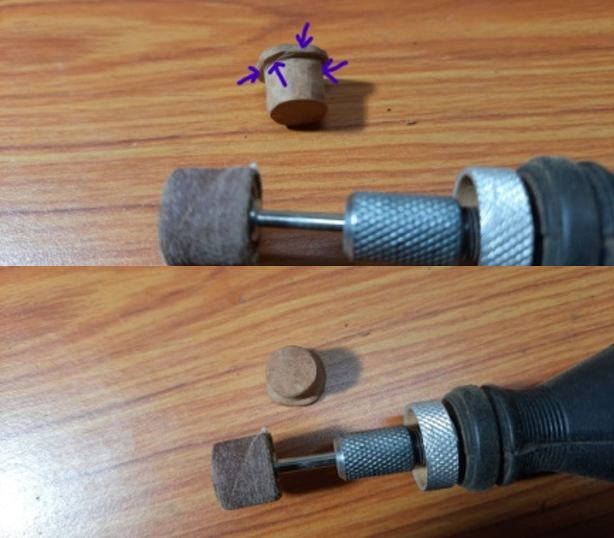
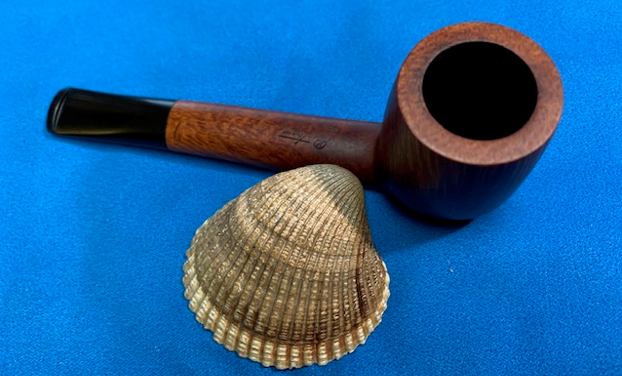
Armed with the confirmation about the maker of the pipe it was time to work on the pipe itself. I started my work on it by replacing the tenon on the stem. I flattened the short stubby tenon with a Dremel and sanding drum to make the surface flat. I found the proper replacement tenon in my box of tenons. I used a cordless drill and a series of bit to drill out the airway to receive the new tenon replacement. I lined up the stem and tenon with the shank and then glued the tenon in the stem with clear CA glue. I set the stem aside to let the glue cure.I decided to put a decorative band on the shank of the pipe. It was not necessary but I liked the look of it. I used a dental spatula to spread the glue on the shank end. I pressed the brass band in place on the shank, wiped off the excess glue with a damp cloth and set it aside to dry.Once the glue on the band and the tenon cured I put the stem in place on the shank and took photos of the new look of the Weber. I have always liked Weber Golden Banded pipes so this brass band approximates that look. Still a lot of work to do on the fit of the stem and the clean up of the rim and top of the bowl.I removed the stem and turned my attention to the bowl of the pipe. I started the clean up of the rim by topping it on a topping board with 220 grit sandpaper. I rebuilt the outer edge with a little bit of CA glue and briar dust and then topped it again to smooth it out. I cleaned up the inner edge of the bowl and the cap of the rim with folded 220 grit sandpaper. It took some work but it looked much better when finished.I wiped off the rim cap and smoothed it with some 400 grit wet dry sandpaper. I wiped it down with a damp cloth. I stained it with an Oak stain pen to match the rest of the bowl and shank.I polished the briar with micromesh sanding pads – dry sanding it with 1500-12000 grit pads. I wiped it down after each pad with a damp cloth. The briar began to take on a rich shine. I worked some Before & After Restoration Balm into the surface of the briar with my finger tips and a shoe brush to get into the valleys and crevices of the blast finish. The product is amazing and works to clean, enliven and protect the briar. I let it sit on the briar for 10 or more minutes and then buff it off with a soft cloth. It really makes the briar come alive and look quite rich. I set the bowl aside and turned my attention to the stem. I sanded out the tooth chatter and the deep scratches on the saddle portion of the stem with 220 grit sandpaper. I started polishing the stem with 400 grit wet dry sandpaper.I polished the stem with micromesh sanding pads – dry sanding with 1500-12000 grit pads. I wiped the stem down after each pad with a cloth and Obsidian Oil. I finished the polishing with Before & After Pipe Stem Polish – both Fine and Extra Fine. I gave it a final coat of Obsidian Oil. I put the pipe together – the bowl with its new stem. This restored and restemmed Weber Custom Made Bullmoose (or Scoop) turned out to be a real beauty. I think the brass band and the chosen stem works well with it. The finish on the bowl came alive with the buffing. I used Blue Diamond on the buffing wheel on both the bowl and stem. I gave both multiple coats of carnauba wax on the wheel then buffed it with a clean buffing pad to raise the shine. I hand buffed it with a microfibre cloth to deepen the shine. The Weber Custom Made feels great in the hand. It is lightweight and the contrast in the browns of the briar, the gold of the band and the polished vulcanite stem with the popping grain on the mixed brown stained bowl is quite amazing. The dimensions of the pipe are Length:5 ½ inches, Height: 1 ½ inches, Outer diameter of the bowl: 1 ¾ inches, Chamber diameter: ¾ of an inch. The weight of the pipe is 1.62 ounces/46 grams. It really is a beauty. I will be putting it on the rebornpipes store in the American (US) Pipe Makers section shortly if you are interested in adding it to your collection. Thanks for walking through the restemming and the restoration with me. Cheers.
Rebanding and Repairing a Jumbo Bench Made Marxman Panel Lovat


Blog by Steve Laug

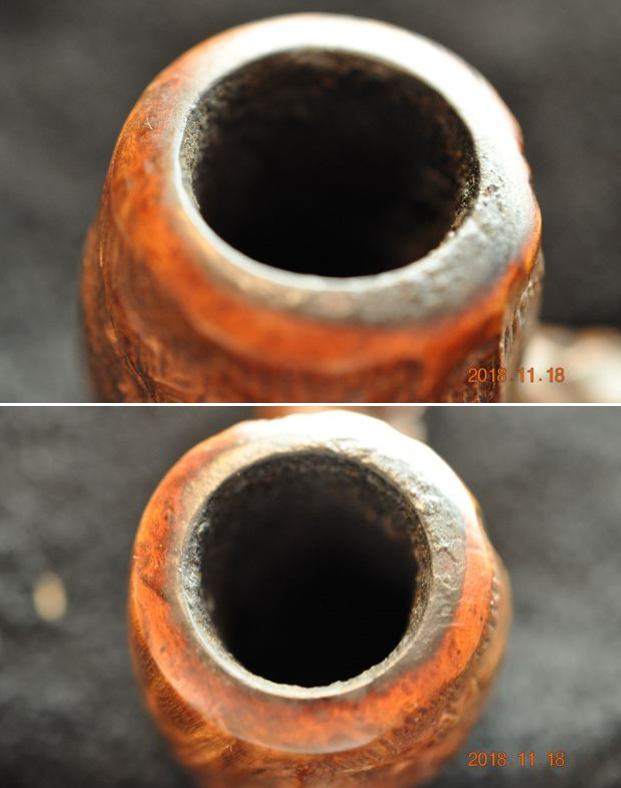
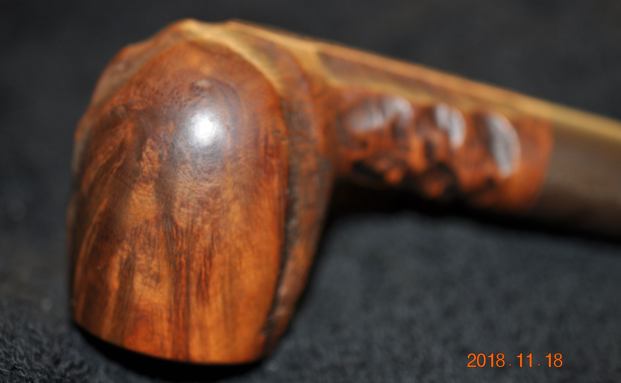
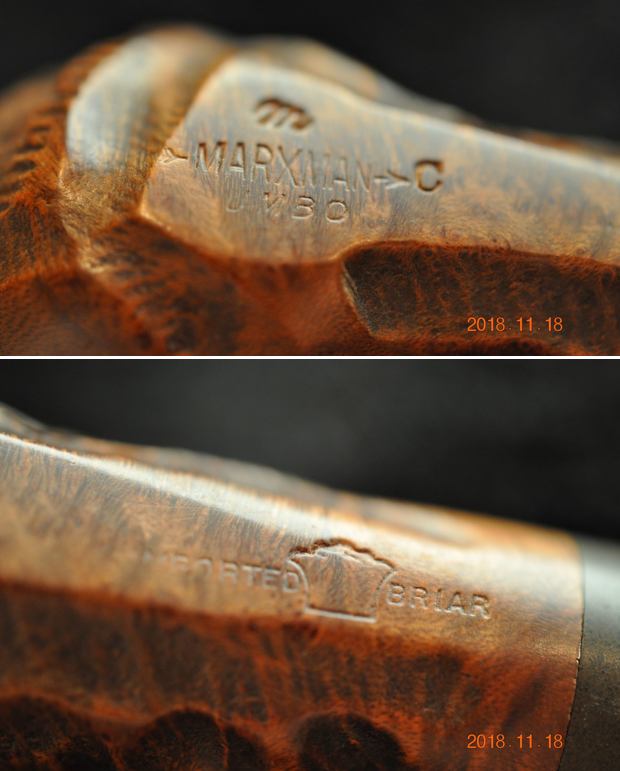
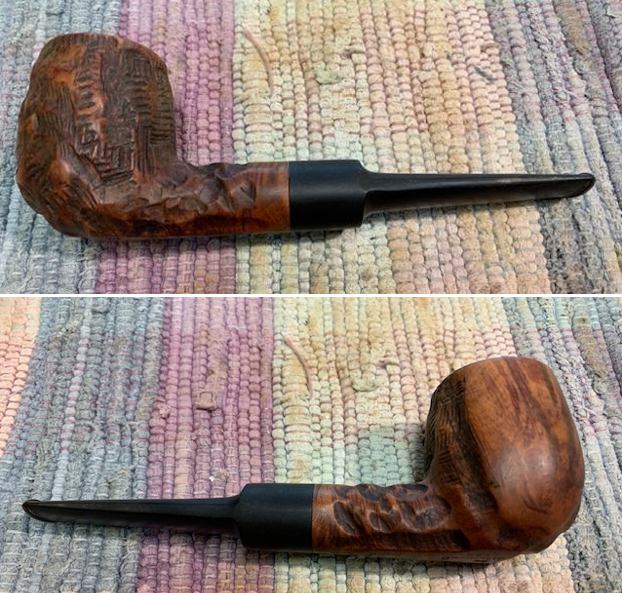
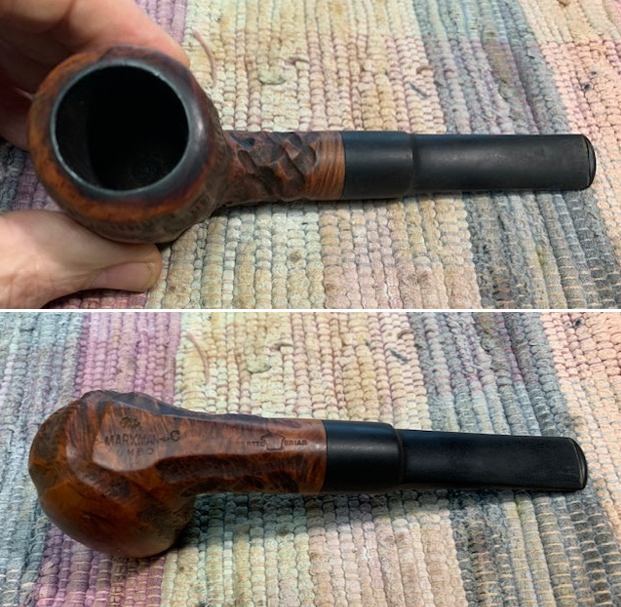
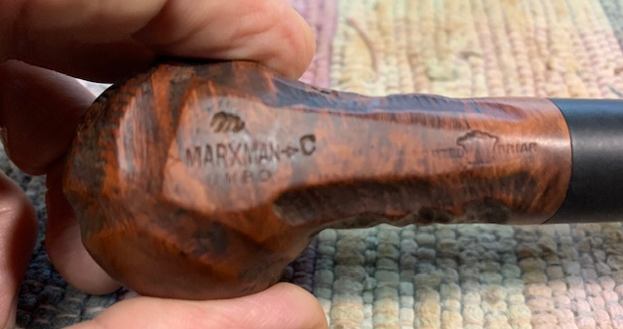
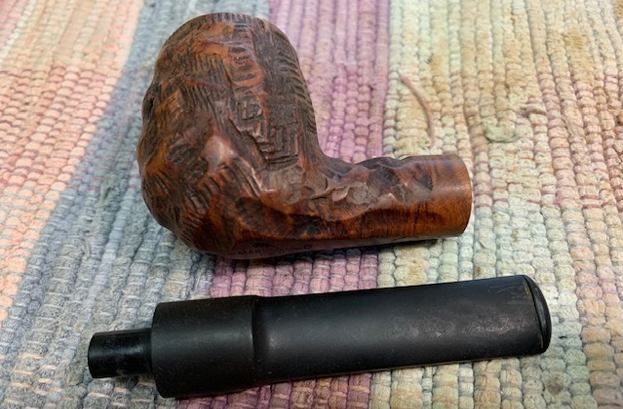
The next pipe I chose to work on was a unique one in many respects. It was a rusticated Panel Lovat that came to us with a very deep silver band. Neither Jeff nor I remember where we got it. But I know it has been here for quite a while. I had no idea what was under the large Sterling silver band but truly expected the worst. The pipe is stamped on the heel of the bowl and reads Jumbo in script [over] Bench Made [over] Marxman (a logo stamp with an arrow going through it), [over] Imported Briar. There was also an upper case “A” stamped at the shank/bowl junction. It has a unique style of rustication that I have become accustomed with on Marxman Jumbo pipe. It includes Tracy Mincer style worm trails but in all different directions with a lot of cross hatching inside the trails. On this pipe the rustication is on the shank and on the left and front of the bowl with smooth portions on the back and right side of the bowl. It is flat bottomed so that it was a sitter. The silver band took away some of the charm of the pipe for me and I was looking forward to removing it and seeing what was underneath.
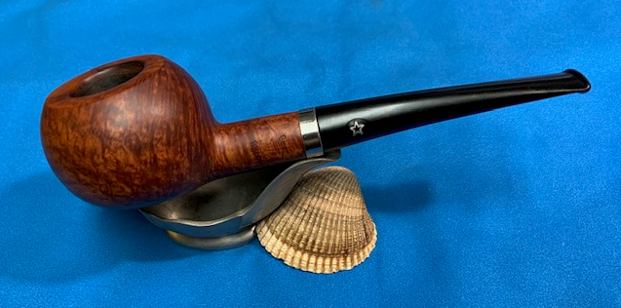
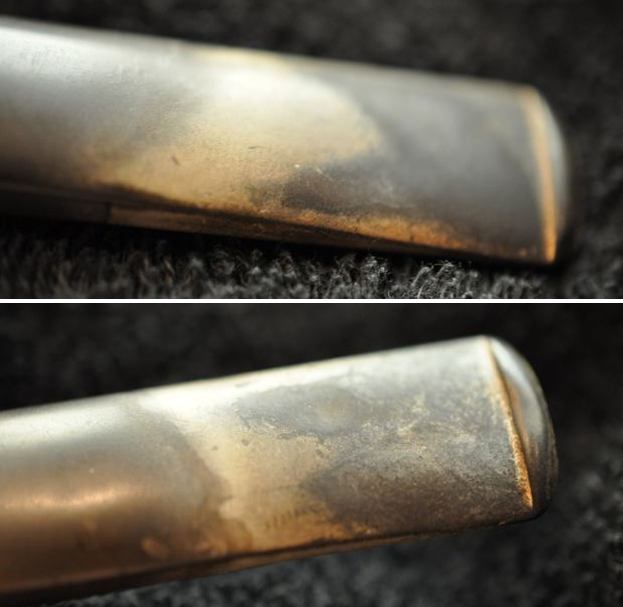
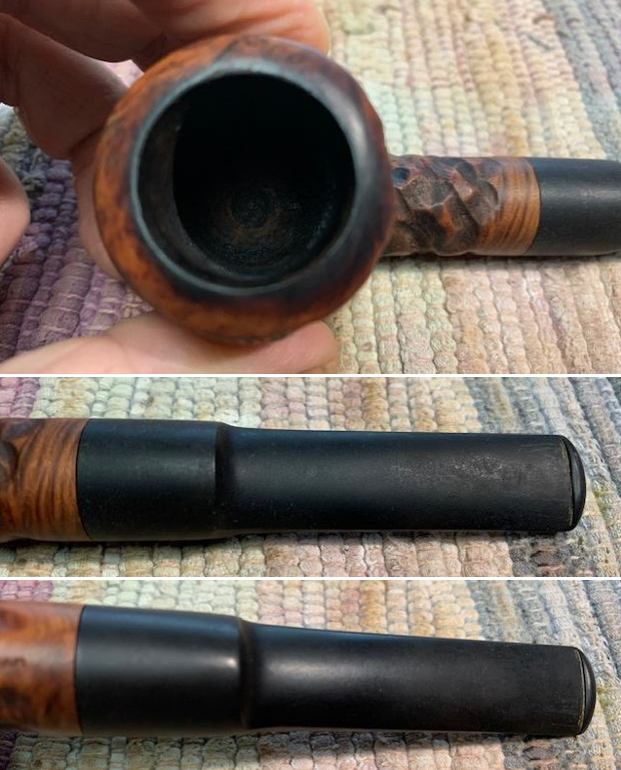
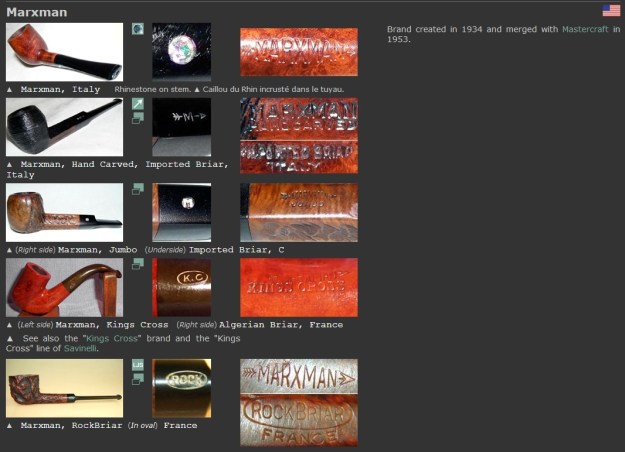
Jeff had done his usual thorough clean up of the pipe. He had reamed it with a PipNet reamer and finished with a Savinelli Fitsall Pipe Knife. He scrubbed the exterior with Murphy’s Oil Soap and the interior with isopropyl alcohol, cotton swabs and pipe cleaners. He worked on the vulcanite stem with Soft Scrub then let it soak in Before & After Pipe Stem Deoxidizer. It has minor tooth marks and chatter on both sides. I took photos of the pipe before I started my work. I took some close up photos of the bowl/rim top and the stem to show the condition they were in at this point. The rim top looked very good and the bowl was clean. The stem had light chatter on both sides near the button.I took a photo of the stamping on the heel of the bowl. It is clear and readable as noted above.I removed the stem from the shank to give a sense of the pipe. You can see that the band on the shank is quite large. It is a bit of a mystery in that I have no idea what is underneath it! Generally with a band this large it covers some serious shank damage.I wanted to refresh my memory of the brand so I turned to Pipephil first to get a short summary of the history (http://www.pipephil.eu/logos/en/logo-m2.html). The site had a side note that the brand was created in 1934 and merged with Mastercraft Pipes in 1953.I then turned to Pipedia to find out more information on the brand and the maker of the pipe (https://pipedia.org/wiki/Marxman). The site quote from Pipes, Artisans and Trademarks, by José Manuel Lopes. I include a portion of that information below.
Marxman (Marxman Pipe Company) was created by Robert (Bob) L. Marx in 1934, when he was 29, and after he had worked for the William Demuth Company. His pipes were not outstanding because of the quality of their wood (probably Algerian), but Bob started making unique sculpted pieces, which brought the brand fame in the World of Hollywood cinema. Actors like Zachery Scott, Dennis Morgan, Jack Carson, Alan Hale, Joel McRae, and Ronald Reagan were some of the faces that appeared on the bowls.

Bob knew how to innovate and took full advantage of marketing and press advertising in order to sell the brand–one of his slogans being “Relax with a Marxman”.

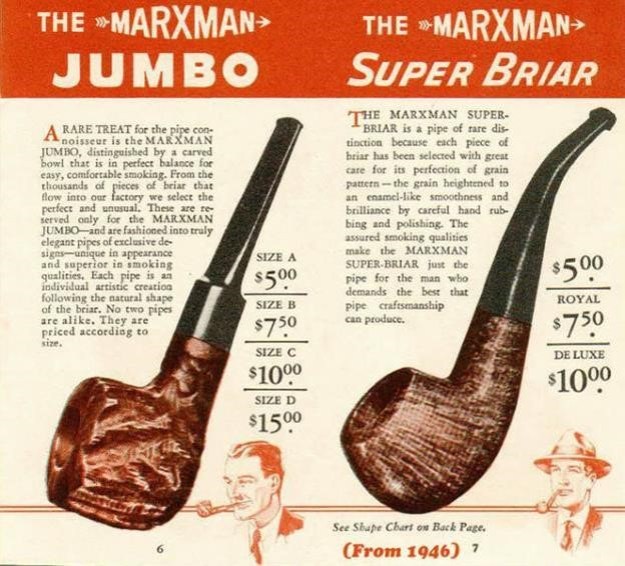
From the information on the two sites I learned that the pipe was made between 1934 when the company started and 1953 when the company was taken over by Mastercraft. I have included an advertisement for the Marxman Jumbo that was included on the article (1946 Ad, Courtesy Doug Valitchka). It includes the following information. “A rare treat for the pipe connoisseur is the Marxman Jumbo, distinguished by a carved bowl that is in perfect balance for easy, comfortable smoking. From the thousands of pieces of briar that flow into our factory we select the perfect and unusual. These are reserved only for the Marxman Jumbo – and are fashioned into truly elegant pipes of exclusive designs – unique in appearance and superior in smoking qualities. Each pipe is an individual artistic creation following the natural shape of the briar. No two pipes are alike. They are priced according to size.”

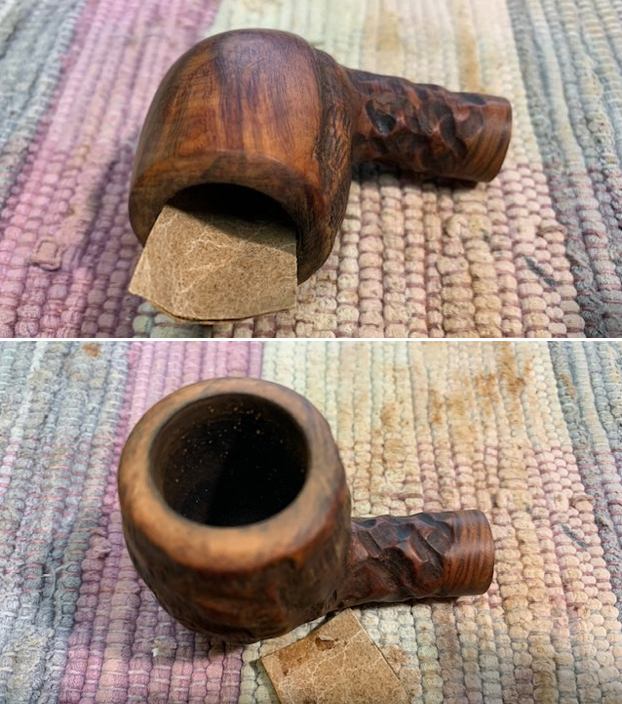
Now it was time to work on the pipe. I decided to try and remove the band from the shank so I could see what was underneath it. To my surprise and joy the glue had dried out on the band and it was quite simple to remove. I checked out the shank and there was a long (approximately 1 inch) crack from the shank end almost straight forward on the underside. At about ½ inch in it split off to the left side of the shank and was about ¼ inch long. It was not wide spread and the repair appears to have been well done under the band. I would know more once I removed the dried glue and debris on the shank surface. I went through my bands and found a nice looking thinner brass band that had an end cap on it that would work well to hold the shank together once I had clean up the repair.I wiped down the shank with acetone on a cotton pad. It worked well to remove the glue and the debris on the shank surface. I was careful around the repair to not get the acetone in the repair itself. The repair itself was lightly pitted but otherwise it looked good. I put a bead of clear CA glue on the crack and the branch crack. I used a dental spatula to fill in the hollow spots with briar dust.I smoothed out the repaired crack with 180 and 220 grit sandpaper. I was able to blend it into the surface of the shank. Once I had it smooth I put some white all purpose glue around the shank end and pressed the band in place on the shank. I wiped off the excess glue and touched up the repaired area with a Cherry Stain Pen. It matched well and the finished shank and band looked good at this point in the process. I took photos of the newly banded shank. I like the thinner depth of this band over the deeper Sterling silver one that had been on the shank previously. The finer band gave the briar a chance to really stand out. I polished the briar and band with micromesh sanding pads – dry sanding it with 1500-12000 grit pads. I wiped the bowl and band down after each pad with a damp cloth. The finish bowl and shank look very good. I worked some Before & After Restoration Balm into the surface of the briar with my finger tips and a shoe brush to get into the valleys and crevices of the rustication. The product is amazing and works to clean, enliven and protect the briar. I let it sit on the briar for 10 or more minutes and then buff it off with a soft cloth. It really makes the briar come alive and look quite rich. I set the bowl aside and turned my attention to the stem. I polished it with micromesh sanding pads – dry sanding with 1500-12000 grit pads. I wiped the stem down after each pad with a cloth and Obsidian Oil. I finished the polishing with Before & After Pipe Stem Polish – both Fine and Extra Fine. I gave it a final coat of Obsidian Oil. I put the Jumbo Bench Made Marxman Panel Lovat back together and buffed it on the buffing wheel with Blue Diamond. It raise a shine on the briar and the stem and gave some depth to the look of the carved grooves. I gave both the bowl and the stem multiple coats of carnauba wax on the wheel and buffed the pipe with a clean buffing pad to raise the shine. I hand buffed it with a microfiber cloth to deepen the shine. The pipe turned out to be a unique beauty in its own rugged way. Flat bottom and the panelled shape make it very different from most of the other Marxman Bench Made Jumbos I have worked on. I like the look of the thinner profile band as it really allows the carving on the shank of this Lovat to show. The dimensions of the pipe are Length:5 ¼ inches, Height: 1 ½ inches, Outer diameter of the bowl: 1 ¼ inches wide x 1 ½ inches long, Chamber diameter: ¾ of an inch. The weight of the pipe is 1.31 ounces/37 grams. It really is a uniquely beautiful pipe. I am not quite certain what I will do with it. I am actually sitting looking at it now as I write this. If I choose to sell it I will put it on the rebornpipes store in the American (US) Pipemakers Section. Thanks for walking through the restoration with me. Cheers.
Restemming & Restoring a Royal Danish 983 Bent Billiard


Blog by Steve Laug

I think I must be on a bit of a roll with restemming some of the bowls I have collected over the years. I decided to do yet another one that has been here for a very long time. The pipe I chose to work on first is a lovely Bent Billiard stummel with a sandblast finish and a smooth panels on the sides of the bowl. The bowl looked very good. The blast, while not deep was quite nice and a the smooth panels had some interesting grain. The rim top was in excellent condition. The interior of the bowl was clean and there were not any chips, cracks or checking on the walls. The finish was dull and bit and tired but still quite redeemable. The stamping on the pipe was clear and readable. On the underside of the bowl an shank it read 983 followed by Royal Danish [over] Made in Denmark. I took some photos of the bowl before I started to work on it. I took a photo of the stamping on the left side of the shank. It reads as noted above and is clear and readable.I went through some of stems and found this fancy saddle style stem that was close to the right diameter and had a tenon that would work as well. It has a few tooth marks and chatter near the button but it would clean up well.I knew that I was working on a Stanwell second from previous experience but decided to have a look on Pipephill anyway (http://pipephil.eu/logos/en/logo-r6.html). I have included a screen capture of the information that was present there.Pipedia also verifies that it is a Stanwell second (https://pipedia.org/wiki/Royal_Danish).

Armed with the confirmation about the maker of the pipe it was time to work on the pipe itself. I started my work on it by fitting the new stem to the shank. I trimmed down the tenon diameter slightly with a file so that the fit in the shank was snug. The stem diameter needed more work so I worked on it with 180 grit sandpaper to match it to the shank. I sanded it with 220 grit sandpaper to smooth out the shank fit. I heated the stem with a heat gun to bend it to the correct angle to match the flow of the bowl and shank.I removed the stem and turned my attention to the bowl of the pipe. I sanded the inside of the bowl with a piece of dowel wrapped 2w9th 220 grit sandpaper to smooth out the walls and further check them for issues. Fortunately the bowl was in excellent condition. I used a brass bristle wire brush to clean off the remaining debris in the sandblast finish on the rim top.I cleaned out the internals of the pipe and the stem with alcohol, cotton swabs and pipe cleaners to remove the sanding debris on both. It also removed any remnants of tars and oils in the shank and stem.I worked some Before & After Restoration Balm into the surface of the briar with my finger tips and a shoe brush to get into the valleys and crevices of the blast finish. The product is amazing and works to clean, enliven and protect the briar. I let it sit on the briar for 10 or more minutes and then buff it off with a soft cloth. It really makes the briar come alive and look quite rich. I set the bowl aside and turned my attention to the stem. I sanded out the tooth marks and smoothed out the sanding I had done on the diameter of the saddle portion of the stem with 220 grit sandpaper. I started polishing the stem with 400 grit wet dry sandpaper.I polished the stem with micromesh sanding pads – dry sanding with 1500-12000 grit pads. I wiped the stem down after each pad with a cloth and Obsidian Oil. I finished the polishing with Before & After Pipe Stem Polish – both Fine and Extra Fine. I gave it a final coat of Obsidian Oil. I put the pipe together – the bowl with its new stem. This restored and restemmed Royal Danish 983 Sandblast Bent Billiard turned out to be a real beauty. I think the chosen stem works well with it. The finish on the bowl came alive with the buffing. I used Blue Diamond on the buffing wheel on both the bowl and stem. I gave both multiple coats of carnauba wax on the wheel then buffed it with a clean buffing pad to raise the shine. I hand buffed it with a microfibre cloth to deepen the shine. The Royal Danish Bent Billiard feels great in the hand. It is lightweight and the contrast in the browns of the sandblast and smooth briar and the polished vulcanite stem with the popping grain on the mixed brown stained bowl is quite amazing. The dimensions of the pipe are Length:5 ½ inches, Height: 1 ¾ inches, Outer diameter of the bowl: 1 1/8 inches, Chamber diameter: ¾ of an inch. The weight of the pipe is 1.16 ounces/33 grams. It really is a beauty. I will be putting it on the rebornpipes store in the Danish Pipe Makers section shortly if you are interested in adding it to your collection. Thanks for walking through the restemming and the restoration with me. Cheers.

New Life for a Beautiful Rusticated Jirsa 167 Calabash


Blog by Steve Laug

I am back to a few other pipes that have been here for a long time. You can see from the photos that Jeff took that it came to us back in 2017 and maybe earlier. It is about time I got around to working on it because it really is quite nice. Jeff purchased this pipe from an antique mall in Sandy, Utah, USA. It had an interesting rusticated brown finish with a smooth band and rim top and a smooth band at the shank. The bowl was classic Calabash shape. There was a thick cake in bowl and lava on the rim top and the inner bevel. The finish was filthy with grit and grime ground into the surface of the briar. The pipe is stamped on the underside of the shank Jirsa [over] the shape number 167. The polished aluminum band is a part of the stem. The stem surface was oxidized and had a rotting Softee bit with a lot of awful looking sludge built up around it. The Jirsa logo on the topside of the saddle stem looked pretty good. Jeff took photos of the pipe before he started his clean up work. I like to have an idea of how the pipe was smoked before we got it and what the bowl and rim top looked like. Jeff always takes some photos of the bowl and rim from various angles to show what it looked like. He took photos of the stem with and without the Softee bit to show the condition. He took photos of the sides and heel of the bowl to give a sense of the rustication on the pipe. The next two photos show the stamping on the underside of the shank. It is clear and readable as noted above. Jeff also captured the Jirsa Logo stamp on the topside of the saddle stem. The band is part of the stem.I did a quick scan of rebornpipes and found a link to the Jirsa Octagonal Panel that I had restored (https://rebornpipes.com/2021/05/01/rebirthing-an-oldrich-jirsa-bent-octagonal-panel-138-billiard/). Rather than start over in my research on the brand I am quoting from that blog and the work I did there.

I turned to Pipephil’s site to see what he had on the Jirsa brand (http://pipephil.eu/logos/en/logo-j2.html). He had an entry that I did a screen capture of and also the following information on the brand. Artisan: Oldrich Jirsa (born 1962) makes pipes since 1994.I turned to Pipedia for more information on the brand (https://pipedia.org/wiki/Jirsa). I quote from the article below.

Jirsa is a Czech Republic brand owned by the family company headed by the artisan Oldrich Jirsa. They use Ebonite and Cumberland stems. Best Grading: SG (Grain), three stars. Symbol: stylized J coming out of an oval. I knew that I was working on a Czech made pipe by Oldrich Jirsa. The stem on the one I was working on was vulcanite and had a built in metal adornment on it. Now it was time to work on the pipe.

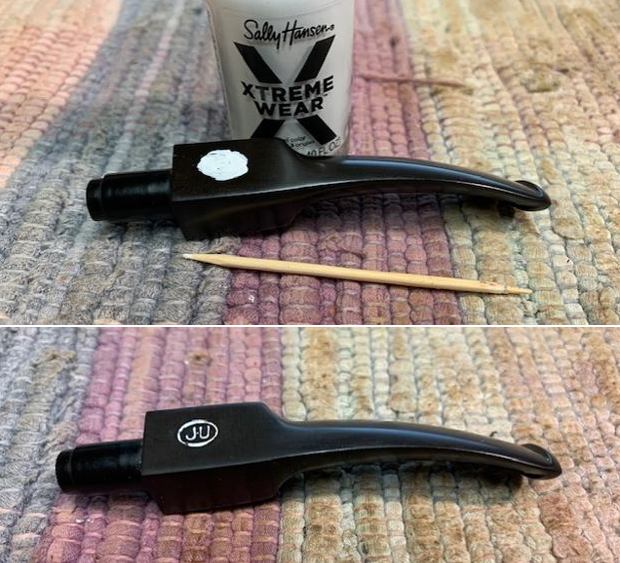
Jeff had done a great cleanup on the pipe. He reamed the bowl with a PipNet pipe reamer and followed up with a Savinelli Fitsall pipe knife to remove the cake. He scrubbed out the mortise and the airway in the shank and the stem with alcohol, cotton swabs and pipe cleaners. He scrubbed the bowl exterior with a tooth brush and Murphy’s Oil Soap to remove the grime on the finish of the bowl and the lava from the rim top. He rinsed it under running water. One of the benefits of this scrub is that it also tends to lift some of the scratches and nicks in the surface of the briar. He dried it off with a soft cloth. He cleaned the internals and externals of the stem with alcohol, pipe cleaners and cotton swabs. He soaked the stem in Before & After Pipe Stem Deoxidizer and rinsed it off with warm water and cleaned out the airway in the stem with alcohol. When I received it the pipe looked very good. I took a photo of the rim top and stem to show the condition. The rim top and the beveled inner edge and outer edge of the bowl were in good condition. The stem was vulcanite and there was some light tooth chatter on both sides ahead of the button. The stamping on the pipe is clear and readable as noted above. The Jirsa logo on the stem is deep and needs to be repainted with white.I removed the stem from the shank and took a photo of the pipe to give a sense of the whole. I polished the smooth portions of the briar with 1200-1500 micromesh sanding pads and wiping it down with damp cloth after each sanding pad. As I worked through the cycle of pads the shine developed with each change of pad. The pipe looks very good. I rubbed the bowl and shank down with Before & After Restoration Balm. I worked it into the surface of the bowl sides and shank with my fingertips and a horsehair shoe brush to clean, enliven and protect the briar. I let the balm sit for 10 minutes, then buffed with a cotton cloth to raise the shine. The Balm did its magic and the grain on the smooth portions stood and the rustication showed depth. I set the bowl aside and turned my attention to the stem. I touched up the BC stamp on the left side of the stem with white acrylic nail polish. I worked it into the stamp with a tooth pick and then sanded off the excess once it had dried with a 1500 micromesh sanding pad.I polished the stem and built in band with micromesh sanding pads – 1500-12000 grit pads. I wiped it down with Obsidian Oil after each sanding pad. I used Before & After Pipe Polish – both Fine and Extra Fine to further polish the stem. The photos below show the polished stem. This Czech Rusticated Jirsa 167 Calabash with a vulcanite stem is a great looking pipe now that it has been restored. The rich browns of the stain made the grain and rustication come alive with the polishing and waxing. I put the stem back on the bowl and carefully buffed the pipe with Blue Diamond on the buffing wheel using a light touch on the briar. I gave the bowl multiple coats of Conservator’s Wax and the stem multiple coats of carnauba wax on the buffing wheel. I buffed the entire pipe with a clean buffing pad to raise the shine. I hand buffed the pipe with a microfiber cloth to deepen the shine. The finished Jirsa 167 Calabash really is a beauty and fits nicely in the hand. Give the finished pipe a look in the photos below. The dimensions of the pipe are Length: 5 ¾ inches, Height: 2 inches, Outside diameter of the bowl: 1 ¾ inches, Chamber diameter: 7/8 of an inch. The weight of the pipe is 2.08 oz./59 grams. This beauty will be going on the rebornpipes store in the Pipes from Various Makers section. Let me know if you are interested in adding it to your collection. Thanks for reading this blog and my reflections on the pipe while I worked on it. There are many more to come!

Restemming a No Name (Anonymous) Oval Shank Sandblast Billiard


Blog by Steve Laug

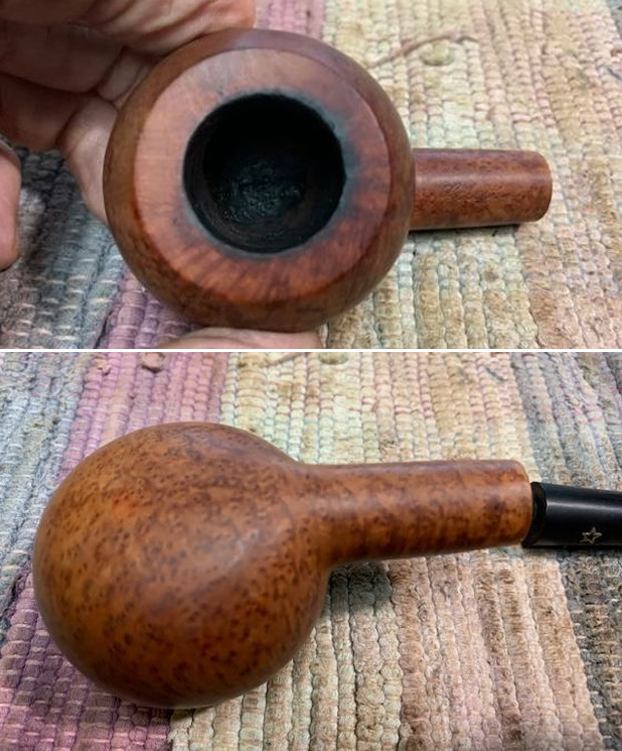
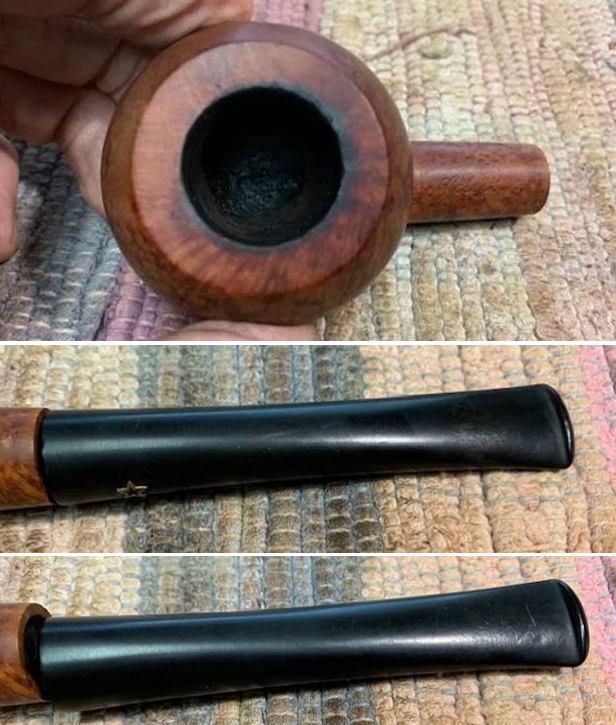
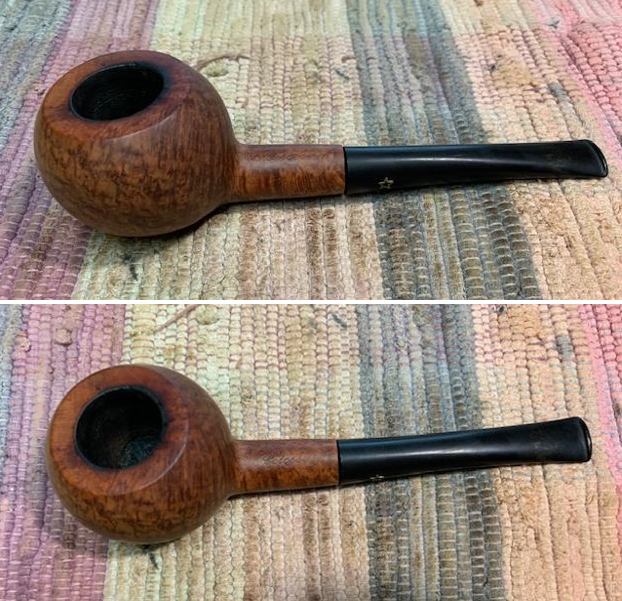
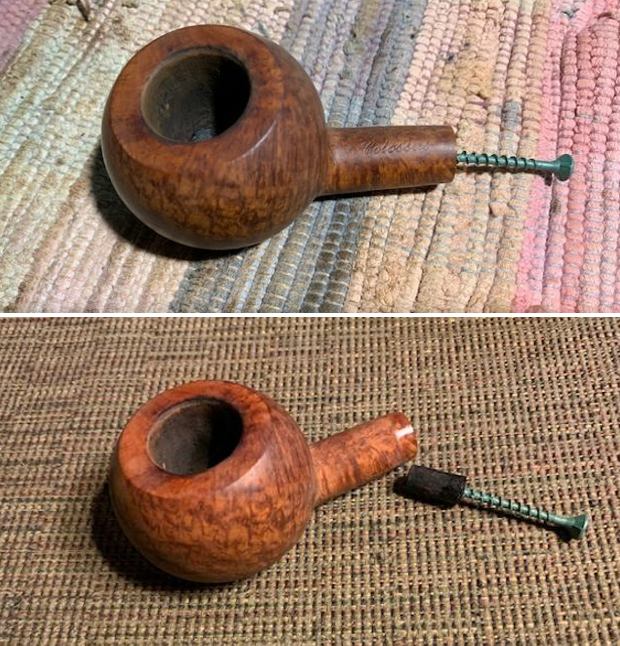
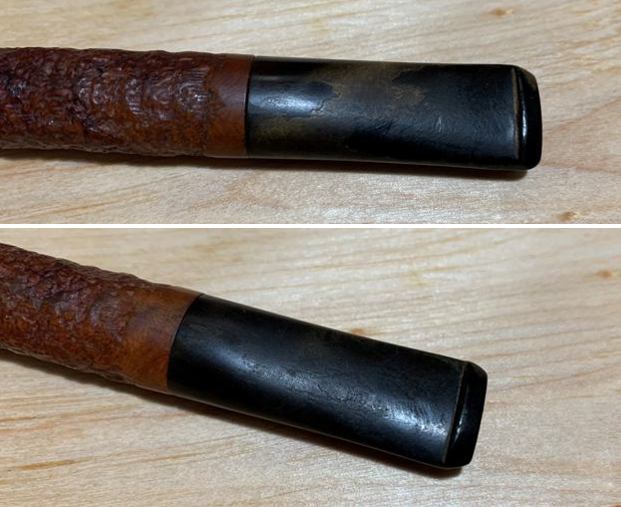
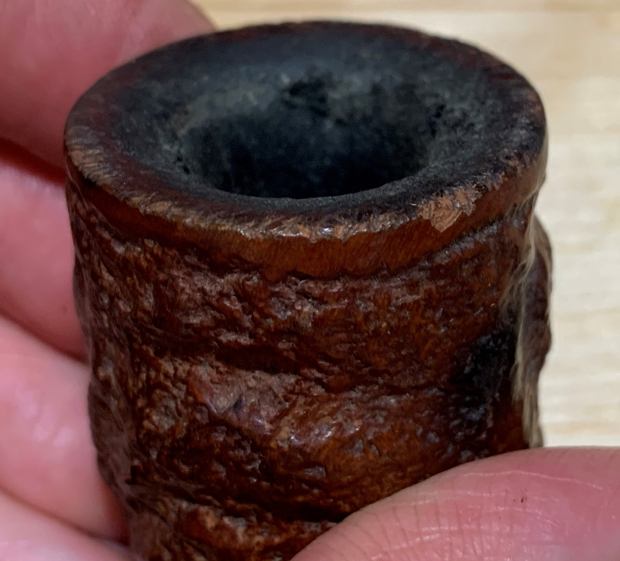
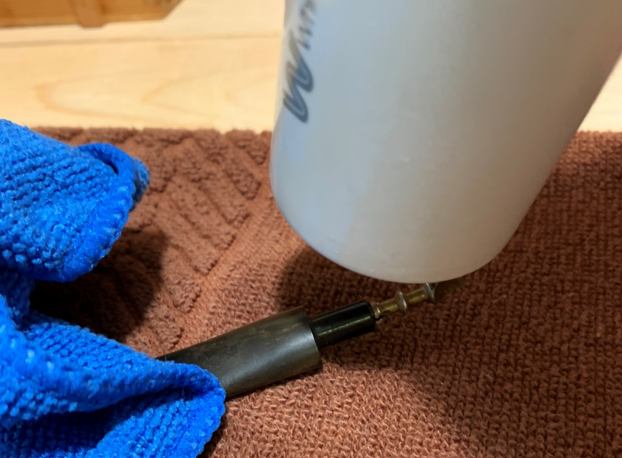
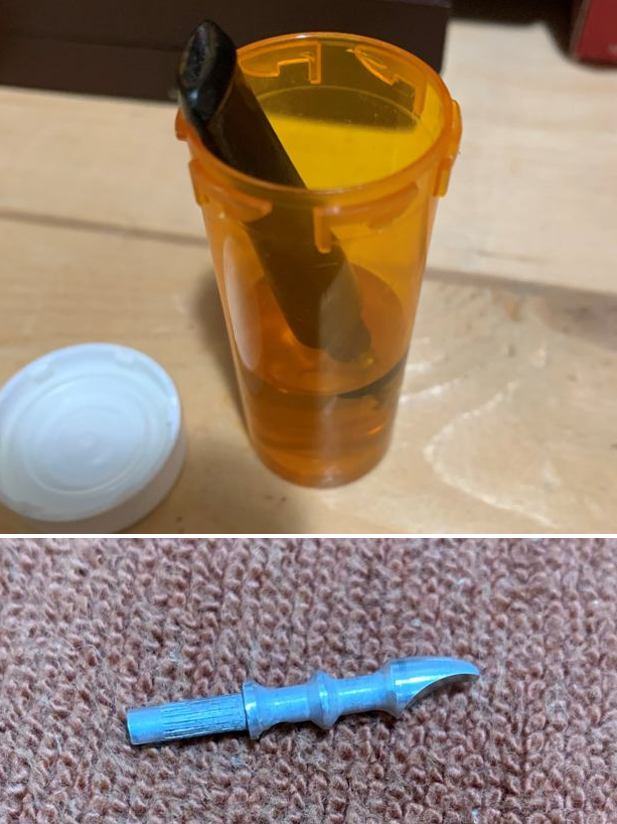
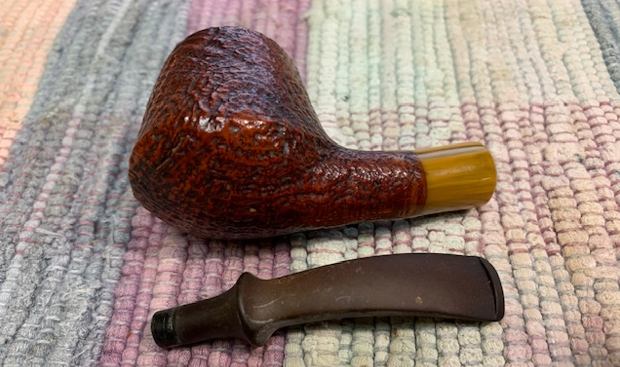
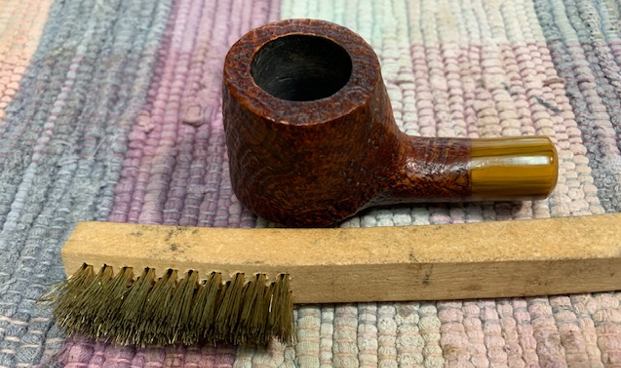
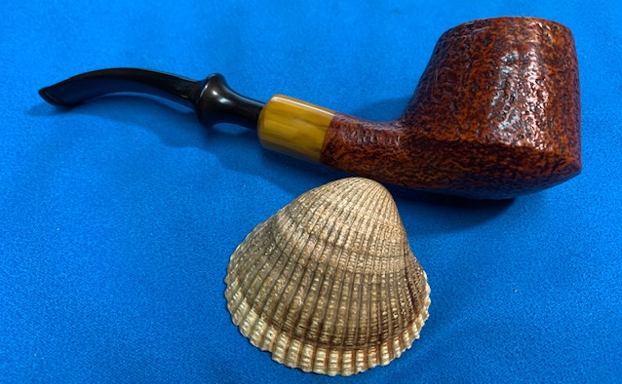
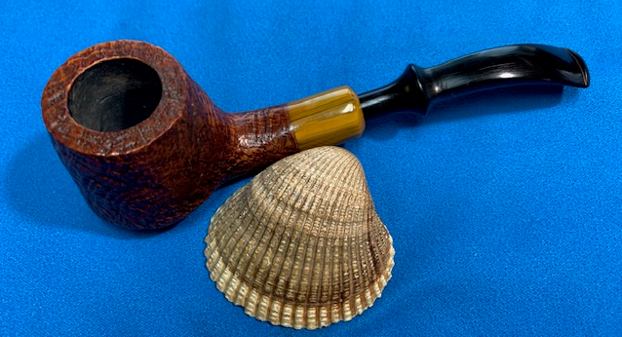
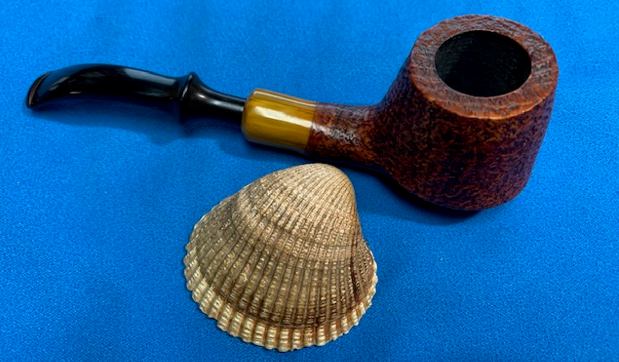
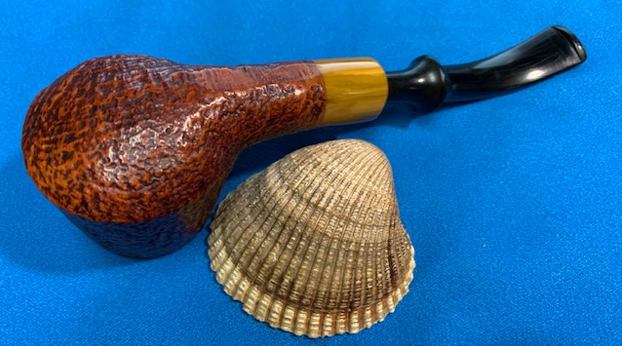
The next pipe is bowl that I have had in the box for a very long time. The rugged and very tactile sandblast really caught my eye and the cocobolo shank extension (at least it looks like that to me) and the thin ivory coloured spacer looked really good. I figured some day I would restem it and bring it back to life again. Since I am in the mood to restem a few pipes today turned out to be that day! It had a broken tenon in the shank when I put it away but the stem had disappeared long before it arrived in my care. The sandblast is very visible in the photos below. The pipe was very clean with no cake in the bowl and a decent finish in good condition. The cocobolo wood shank extension was lightly scratched but otherwise in good condition. It really is a beautiful looking oval shank Billiard. (I had already started wiggling out the broken tenon when I remembered to take these photos.)    I started to work on the pipe quickly as there was no stamping or identifying features that I could dig into regarding the maker of the pipe. The first thing that had to be done was to remove the broken tenon from the shank. I used a drywall screw with coarse threads to lock into the airway in the tenon and remove it. It took a bit of wiggling to do so but it came out.I went through a can of stems that I have here and almost immediately found one that looked like it would work with the pipe. I took some photos of it. There were some tooth marks and chatter on both sides near the button. The tenon fit perfectly. The stem was a little wide on the right side and would need to have the shape reduced to fit snugly against the shank like the left side. Otherwise it was a perfect fit. I have to say that does not happen very often but it keeps me picking up used stems because one day “I will need them!”. In the second and third photo below I gave them a quick sand to see how deep the tooth marks were. I was pleasantly surprised.I wiped off the stem with some Obsidian Oil and put it in place in the shank. I took photos of the fit to the shank to give a clear picture of what the stem looked like. It would only take a bit of adjusting on the right side and clean up of the tooth marks. It would be a great looking pipe with the addition of this stem. I moved on to sand the shape of the stem fit it evenly to the shank. The stem diameter needed more work so I worked on it with 180 grit sandpaper to match it to the right side of the shank. I sanded it with 220 grit sandpaper to smooth it out. I repaired the tooth marks on each side o f the stem at the same time. I smoothed out the repairs with 220 grit sandpaper. I started the polishing of the stem with 400 grit wet dry sandpaper. I set the stem aside and polished the cocobolo shank extension with micromesh sanding pads – dry sanding with 1500-12000 grit pads and wiping it down with a damp cloth after each pad. It really began to shine.I worked some Before & After Restoration Balm into the surface of the smooth briar with my finger tips. The product is amazing and works to clean, enliven and protect the briar. I let it sit on the briar for 10 or more minutes and then buff it off with a soft cloth. It really makes the grain sing. I set the bowl aside and turned my attention back to the stem. I polished the stem with micromesh sanding pads – dry sanding with 1500-12000 grit pads. I wiped the stem down after each pad with a cloth and Obsidian Oil. I finished the polishing with Before & After Pipe Stem Polish – both Fine and Extra Fine. I gave it a final coat of Obsidian Oil. I put the pipe together – the bowl with its new stem. This restored and restemmed No Name (Anonymous) Sandblast Oval Shank Billiard is quite stunning and I think the chosen stem works well with it. The sandblast on the bowl came alive and showed the depth of the crevices with the polishing. I used Blue Diamond on the buffing wheel on both the shank extension and stem (carefully avoiding the bowl so as not to fill in the crevices). I gave the bowl multiple coats of Conservator’s Wax and the stem carnauba wax on the wheel then buffed it with a clean buffing pad to raise the shine. I hand buffed it with a microfibre cloth to deepen the shine. The attractive Anonymous Sandblast Billiard feels great in the hand. It is lightweight and the contrast in the browns of the briar, the cocobolo shank extension and the polished vulcanite stem is quite amazing. The dimensions of the pipe are Length:5 ¾ inches, Height: 1 ¾ inches, Outer diameter of the bowl: 1 ¼ inches, Chamber diameter: ¾ of an inch. The weight of the pipe is 1.34 ounces/38 grams. It really is a beauty. I will be putting it on the rebornpipes store in the American Pipe Makers section shortly if you are interested in adding it to your collection. Thanks for walking through the restemming and the restoration with me. Cheers.

Restemming & Restoring a Bertram 60 Bent Bulldog


Blog by Steve Laug

Sometimes the repetitive work on similar pipes and stems gets tiring to me and to alleviate the inevitable boredom I change things up a bit to refresh me. I have a box of stummels (bowls) here that I periodically go through and see if I have a potential stem that would fit them. Sunday afternoon I went through the box and picked out two bowls and found workable stems for them both. They were in different states of need but all had been thoroughly cleaned before I boxed them up. The pipe I chose to work on next is a nicely grained Bulldog stummel. The bowl looked very good. The grain around the sides was quite nice and a mix of flame and birdseye grain. There was one small fill on the right side of the shank but it was in good condition. The rim top was in excellent condition with a bit of darkening toward the rear of the bowl. The interior of the bowl was clean and there were not any chips, cracks or checking on the walls. The finish was dull and bit and tired but still quite redeemable. The stamping on the pipe was clear and readable. On the left side it read Bertram in script [over] Washington DC in a ribbon. The grade 60 stamp was on the same side near the bowl/shank junction. I took some photos of the bowl before I started to work on it.   I took a photo of the stamping on the left side of the shank. It reads as noted above and is clear and readable.I went through some of stems and found this diamond saddle style stem that was close to the right diameter and had a tenon that would work as well. It has some file damage on the surface near the button but it would clean up well. I also took a photo of the stem and bowl together to give a sense of the look.The pipe is a Bertram from the Bertram Pipe Shop in Washington DC. I have posted a lot of different blogs on the brand so the information available is quite accessible. I am including pic of a post card that a reader of the blog sent me. It is a great memento that I love to spend time looking at. I started my work on the pipe by fitting the new stem to the shank. I trimmed down the tenon diameter slightly with a file so that the fit in the shank was snug. The stem diameter needed more work so I worked it with a file to match it to the shank. I sanded it with 220 grit sandpaper to smooth it out. I removed the stem and polished the briar (bowl and sanded shank end) with micromesh sanding pads – dry sanding with 1500-12000 grit pads and wiping it down with a damp cloth after each pad. It really began to shine. I restained the shank end where I had sanded it to make the transition to the new stem smooth with an Oak stain pen. The colour was a perfect match. Once the bowl was buffed the newly stained section will blend in even better. I worked some Before & After Restoration Balm into the surface of the smooth briar with my finger tips. The product is amazing and works to clean, enliven and protect the briar. I let it sit on the briar for 10 or more minutes and then buff it off with a soft cloth. It really makes the grain sing. I set the bowl aside and turned my attention to the stem. I flattened out the file marks as much as possible with a flat file. I knew I would not remove them this way but I wanted make them flatter. I filled in the deeper cut marks with clear CA glue and once it was hard smoothed out the repairs with 220 grit sandpaper and started polishing the stem with 400 grit wet dry sandpaper. I polished the stem with micromesh sanding pads – dry sanding with 1500-12000 grit pads. I wiped the stem down after each pad with a cloth and Obsidian Oil. I finished the polishing with Before & After Pipe Stem Polish – both Fine and Extra Fine. I gave it a final coat of Obsidian Oil. I used my heat gun to bend the vulcanite stem to match the angles of the bowl and give it a proper Bent Bulldog look. I put the pipe together – the bowl with its new stem. This restored and restemmed Bertram Washington DC Grade 60 Bent Bulldog is a real beauty and I think the chosen stem works well with it. The grain on the bowl came alive with the buffing. I used Blue Diamond on the buffing wheel on both the bowl and stem. I gave both multiple coats of carnauba wax on the wheel then buffed it with a clean buffing pad to raise the shine. I hand buffed it with a microfibre cloth to deepen the shine. The Bertram Bent Bulldog feels great in the hand. It is lightweight and the contrast in the browns of the briar and the polished vulcanite stem with the popping grain on the mixed brown stained bowl is quite amazing. The dimensions of the pipe are Length:5 ½ inches, Height: 1 ¾ inches, Outer diameter of the bowl: 1 ¾ inches, Chamber diameter: ¾ of an inch. The weight of the pipe is 1.31 ounces/37 grams. It really is a beauty. I will be putting it on the rebornpipes store in the American Pipe Makers section shortly if you are interested in adding it to your collection. Thanks for walking through the restemming and the restoration with me. Cheers.

Restemming & Restoring a “The Londoner” Bent Dublin


Blog by Steve Laug

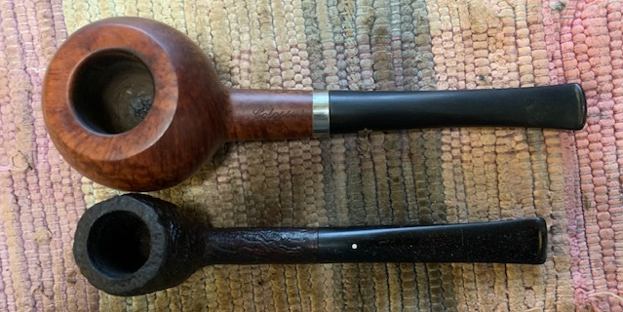
Sometimes the repetitive work on similar pipes and stems gets tiring to me and to alleviate the inevitable boredom I change things up a bit to refresh me. I have a box of stummels (bowls) here that I periodically go through and see if I have a potential stem that would fit them. Sunday afternoon I went through the box and picked out two bowls and found workable stems for them both. They were in different states of need but all had been thoroughly cleaned before I boxed them up. The pipe I chose to work on first is a lovely Bent Dublin stummel. The bowl looked very good. The grain around the sides was quite nice and a mix of flame and birdseye grain. There were a few fills on the right side of the bowl and shank but there were in good condition. The rim top was in excellent condition. The interior of the bowl was clean and there were not any chips, cracks or checking on the walls. The finish was dull and bit and tired but still quite redeemable. The stamping on the pipe was clear and readable. On the left side it read The Londoner in script and there are no other stamping on the pipe. I took some photos of the bowl before I started to work on it.   I took a photo of the stamping on the left side of the shank. It reads as noted above and is clear and readable.I went through some of stems and found this saddle style stem that was close to the right diameter and had a tenon that would work as well. It has a few tooth marks and chatter near the button but it would clean up well.The pipe is stamped “The Londoner” which is not listed with that style of stamp on either Pipephil or Pipedia. There was a Londoner made by Barlings but it is stamped differently than this one and does not have the article in front of the name. So the maker of the pipe remains a mystery for now. Now it is time to work on the pipe.

I started my work on the pipe by fitting the new stem to the shank. I trimmed down the tenon diameter slightly with a file so that the fit in the shank was snug. The stem diameter needed more work so I worked it with a file to match it to the shank. I sanded it with 220 grit sandpaper to smooth it out. I removed the stem and polished the briar (bowl and sanded shank end) with micromesh sanding pads – dry sanding with 1500-12000 grit pads and wiping it down with a damp cloth after each pad. It really began to shine. I restained the shank end where I had sanded it to make the transition to the new stem smooth with a Cherry stain pen. The colour was a perfect match. Once the bowl was buffed the newly stained section would blend in well. I worked some Before & After Restoration Balm into the surface of the smooth briar with my finger tips. The product is amazing and works to clean, enliven and protect the briar. I let it sit on the briar for 10 or more minutes and then buff it off with a soft cloth. It really makes the grain sing. I set the bowl aside and turned my attention to the stem. I “painted” the stem surface with a Bic lighter flame to raise the tooth marks (no pictures). I was able to lift some of them to the surface. I filled in the remaining spots with clear CA glue and once it was hard smoothed out the repairs with 220 grit sandpaper and started polishing the stem with 400 grit wet dry sandpaper. I polished the stem with micromesh sanding pads – dry sanding with 1500-12000 grit pads. I wiped the stem down after each pad with a cloth and Obsidian Oil. I finished the polishing with Before & After Pipe Stem Polish – both Fine and Extra Fine. I gave it a final coat of Obsidian Oil. I put the pipe together – the bowl with its new stem. This restored and restemmed “The Londoner” Bent Dublin is a real beauty and I think the chosen stem works well with it. The grain on the bowl came alive with the buffing. I used Blue Diamond on the buffing wheel on both the bowl and stem. I gave both multiple coats of carnauba wax on the wheel then buffed it with a clean buffing pad to raise the shine. I hand buffed it with a microfibre cloth to deepen the shine. “The Londoner Dublin” feels great in the hand. It is lightweight and the contrast in the browns of the briar and the polished vulcanite stem with the popping grain on the mixed brown stained bowl is quite amazing. The dimensions of the pipe are Length:5 ½ inches, Height: 2 inches, Outer diameter of the bowl: 1 ½ inches, Chamber diameter: 7/8 of an inch. The weight of the pipe is 1.62 ounces/46 grams. It really is a beauty. I will be putting it on the rebornpipes store in the British Pipe Makers section shortly if you are interested in adding it to your collection. Thanks for walking through the restemming and the restoration with me. Cheers.

Cleaning up an Interesting Italian Made Folding Pocket Pipe


Blog by Steve Laug

The next pipe on the worktable is another interesting piece of pipe history that comes from the bag of old unsmoked and lightly smoked pipes that I have been working on intermittently. It is a folding Pocket Pipe with an oval bowl. The bowl is lightly smoked. Surprisingly it is in better shape than many of these old timers. The pipe is dirty but there is some amazing grain around the sides and wedges of rustication look good as well .The stem is hard rubber which makes me think is a bit older than some similar pipes with vulcanite stems. It has a push tenon from the same material that is part of the stem. Other than some tooth chatter on the stem surface the stem is in really good shape. A short description would be that it is an Italian made lightly smoked Folding Pocket Pipe with a hard rubber stem. It is stamped on the left side of the shank and reads Imported Briar [over] Made in Italy. I would guess that the pipe was made by Savinelli as I have seen several very similar pipes shaped like this one made by them. The rim top was dirty and the inner edge had some lava. The exterior of the bowl was dirty and dusty and band was oxidized. Grain stood out in the smooth portions around the bowl sides and bottom and the interesting rustication wedges worked well. There was tooth chatter on both sides of the stem ahead of the button but nothing deep. I took some photos of this interesting Pocket Pipe extended and folded to show the condition when we received it. It was dusty, dirty and had some grime worked into the surface of the briar from being shuffled around a lot since it was made. I took close up photos of the bowl and rim top and the stem to show their condition. You can see the thin cake on the bowl sides and the thin lava on the rim top. The stem looks good with light chatter and tooth marks on both sides. I took a photo of the stamping on the left side of the shank. You can see that it is somewhat faint but still readable.I removed the stem from the shank and took a photo of the parts to give a sense of the beautiful proportions of this nice little pipe. It is going to take a little work but I think it will be quite stunning once it is restored.I reamed the bowl with a Savinelli Fitsall Pipe Knife to deal with the oval shape of the chamber. I scraped out the thin and uneven cake until the walls were clear. They looked very good. There was no heat damage or checking present. I cleaned out the mortise and the airway in the shank and stem with pipe cleaners, cotton swabs and isopropyl alcohol. The stem was an interesting challenge due to the right angle bend but it is now clean.I scrubbed off the shiny varnish coat on the bowl and shank with alcohol and a cotton pad. It came off quite easily and the grain really stood out. It is a nice piece of briar.I polished the briar with micromesh sanding pads – dry sanding with 1500-12000 grit pads. I wiped the bowl down after each pad to check and make sure there was progress. By the end the there was a rich shine to the bowl.I rubbed the bowl and shank down with Before & After Restoration Balm. I worked it into the surface of the bowl sides and shank with my fingertips to clean, enliven and protect the briar. I let the balm sit for 10 minutes, then buffed with a cotton cloth to raise the shine. The Balm did its magic and my colours worked well.I set the bowl aside and addressed the tooth chatter in the hard rubber stem. I sanded it out with 220 grit sandpaper and started the polishing with 400 grit wet dry sandpaper.I polished out the scratches in the surface of the stem with micromesh sanding pads – 1500-12000 grit pads. I was able to remove the tooth chatter on both sides. I wiped it down with Obsidian Oil after each pad. I used Before & After Pipe Polish – both Fine and Extra Fine to further polish the stem. I gave it a final coat of Obsidian Oil and set it aside to cure.This interesting Italian Made Folding Pocket Pipe was fun to work on. I love the final touches that make it sing. I put the bowl and stem back together to have a look at the whole with the newly fit band on the shank. I carefully buffed the bowl and stem with Blue Diamond on the wheel. I gave it several coats of carnauba wax and buffed the pipe with a clean buffing pad to raise the shine. I hand buffed it with a microfiber cloth to deepen the shine. It is fun to see what the polished bowl looks like with the polished shank band and the black, hard rubber stem. This richly finished Pocket Pipe is light weight and it is clean and ready load up with a favourite tobacco. Have a look at it in the photos below. When extended its measurements are Length: 4 ½ inches, Height: 1 ¾ inches, Outside diameter of the bowl: 1 inch x 1 ¼ inches, Diameter of the chamber: ½ inch x 1 inch. The folded measurements are Length: 3 inches, Height: 2 ¼ inches, Diameter of the outside and the chamber remain the same. The weight of the pipe is 33 grams/1.13 oz. I will be putting it on the rebornpipes store in the Italian Pipe Makers section if you wish to add it to your collection. Thanks to each of you who are reading this blog. Remember we are not pipe owners; we are pipemen and women who hold our pipes in trust until they pass on into the trust of the next generation.