
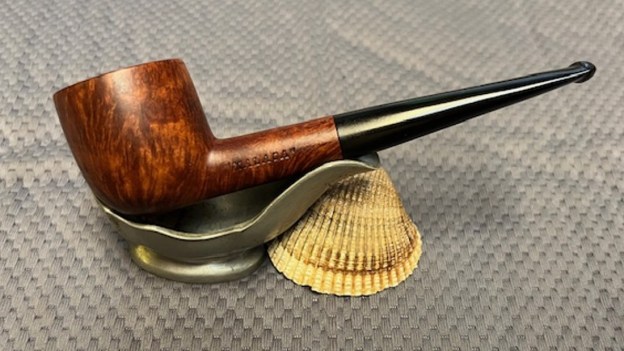
 I have another Malaga Pipe that Jeff sent me to work on. It is a Malaga shape I would call a Pot. Jeff saw it on eBay and purchased it on 07/12/2023 from a seller in Point Pleasant Beach, New Jersey, USA. The grain on this pipe is quite nice. Once again it was obviously someone’s favourite smoker. It is stamped on the left side of the shank and read “MALAGA” and on the right side it is stamped Algerian Briar. The smooth bowl and shank were dirty and there were tars and oils ground into the surface of the briar. The bowl had a thick cake that flowed over the top of the smooth rim in a thick lava coat. It was hard to clearly assess the condition of the inner edge. The condition of the rim edge and top would become clear in the cleaning process. The outer edge looked very good. The taper stem was vulcanite. There were light tooth marks on the top and the underside of the stem ahead of the button. Jeff took photos of the pipes before he started his clean up work.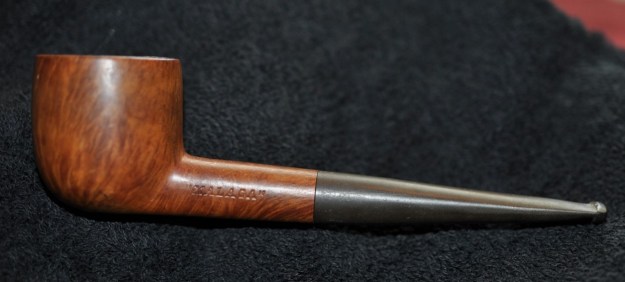
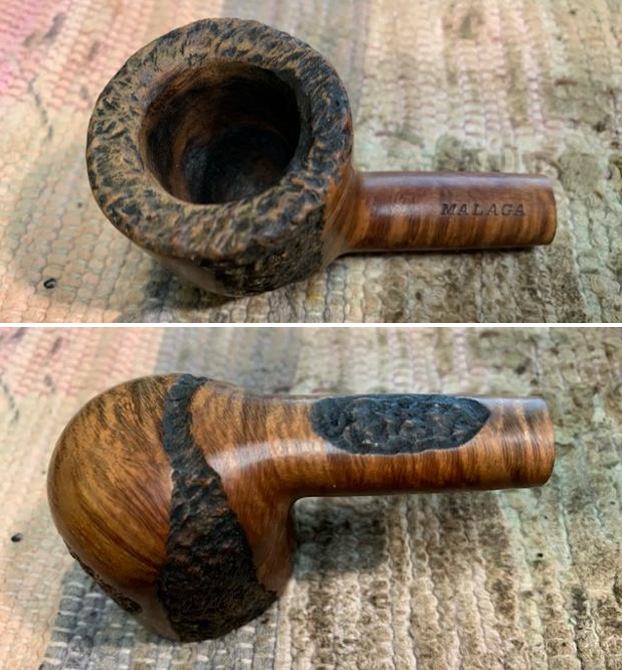
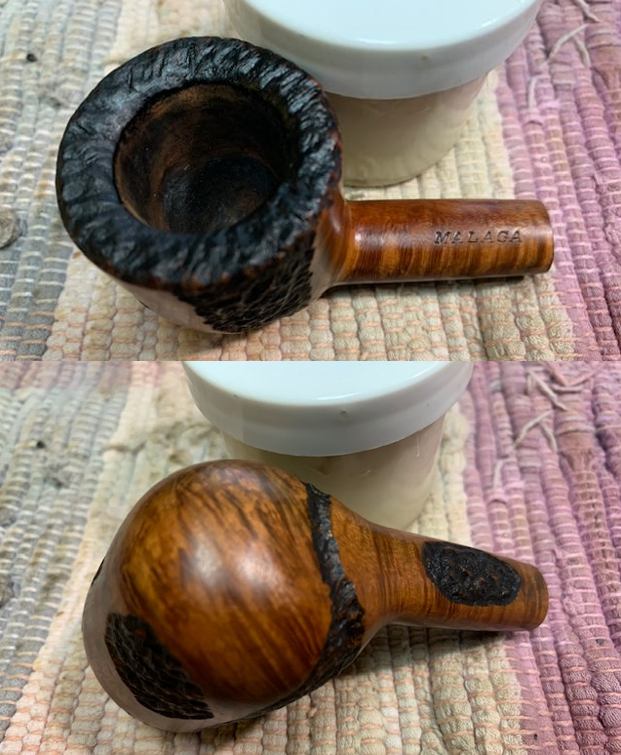
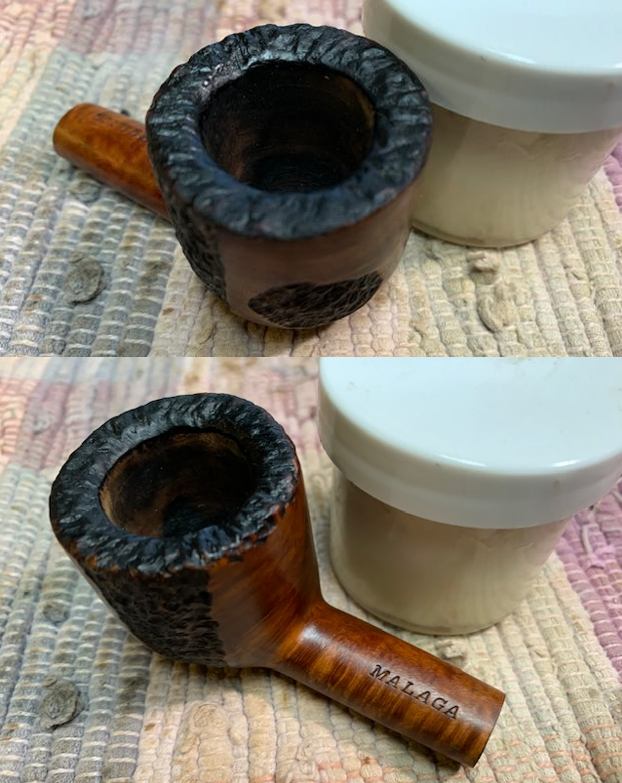
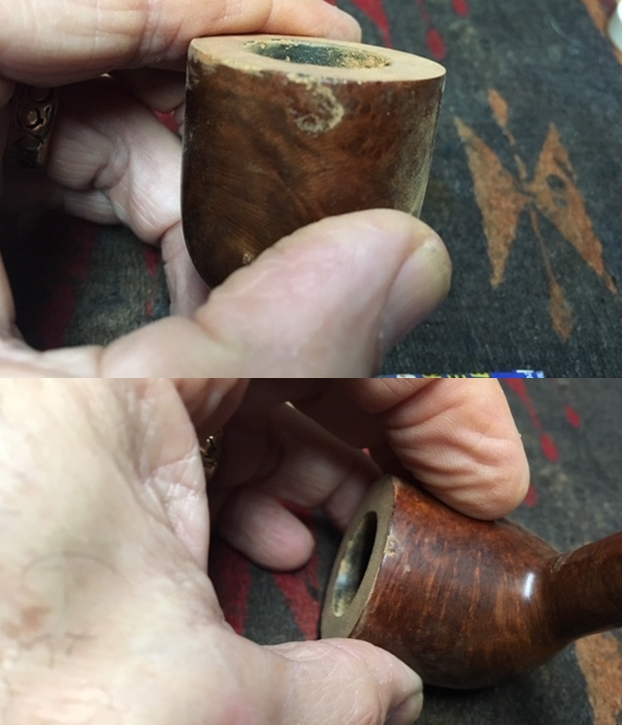
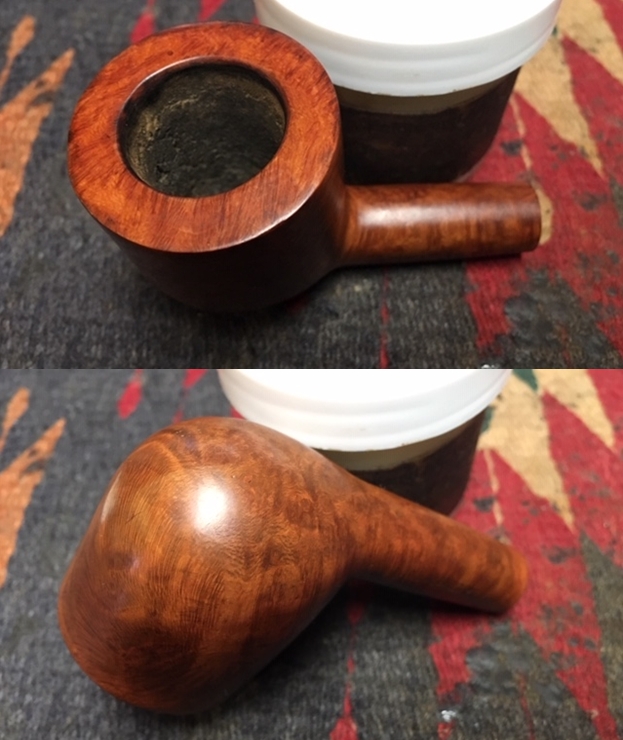
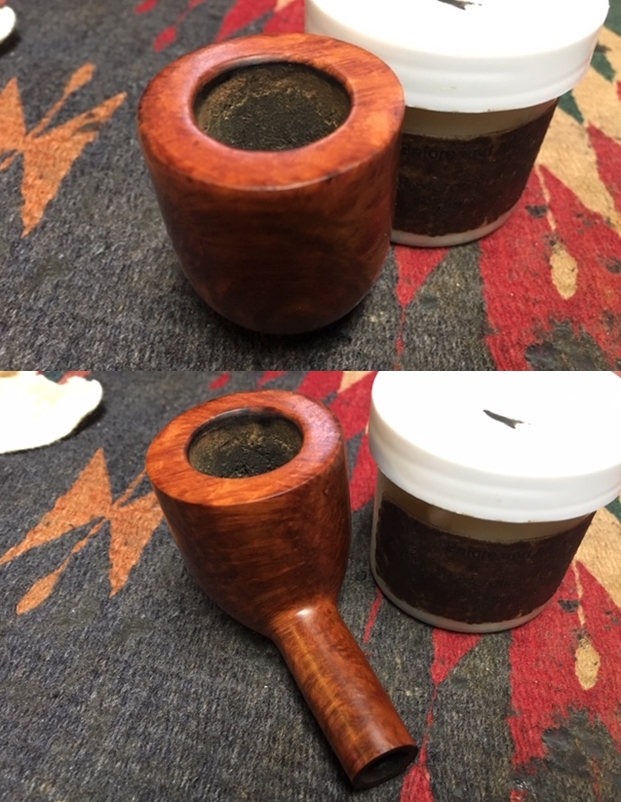
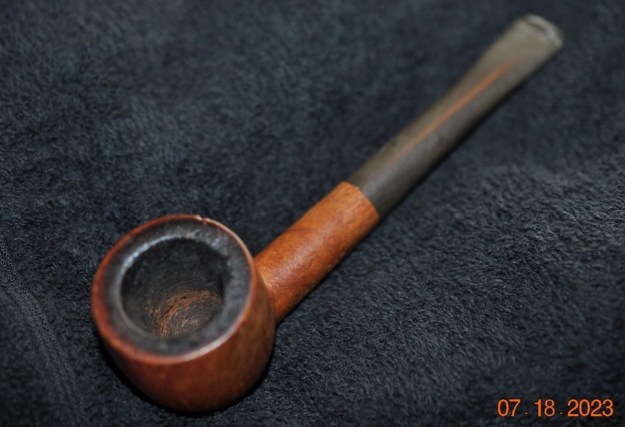 Jeff took photos of the rim and bowl to show the cake and the lava on the rim top and edges. The inner edge of the rim showed thick cake coming up to the top and flowing over the edge. The outer edge showed some deep damage on the back side of the bowl. It was a dirty pipe but still a beauty. The vulcanite taper stem had light tooth marks and chatter on the top and underside of the stem ahead of the button.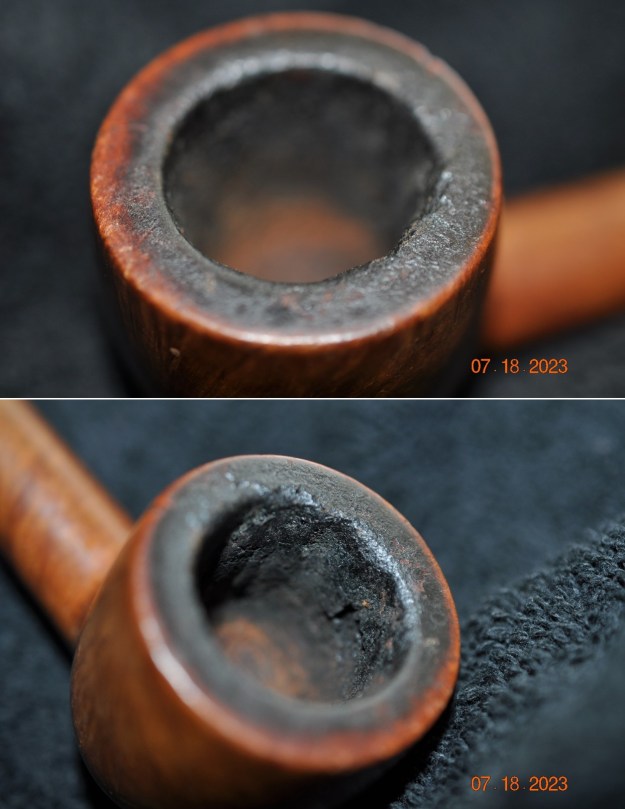
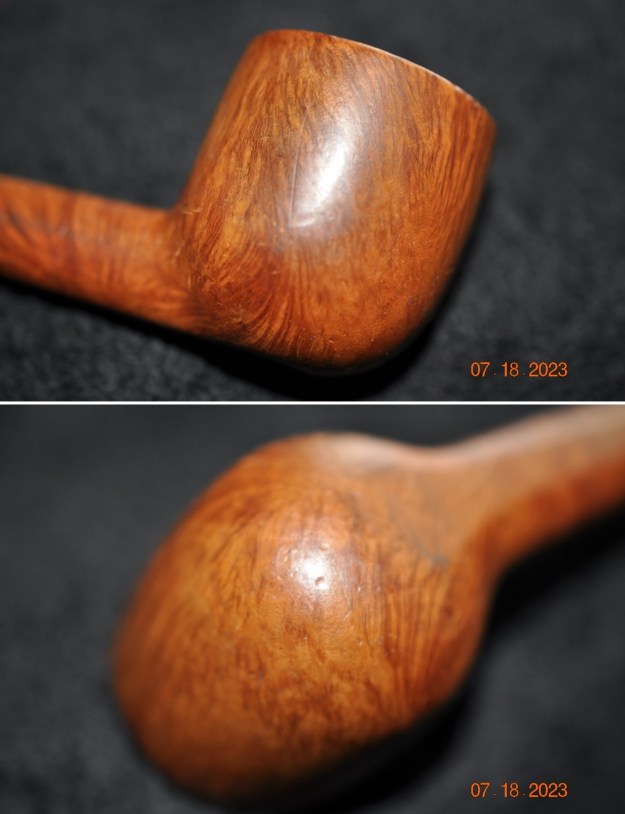
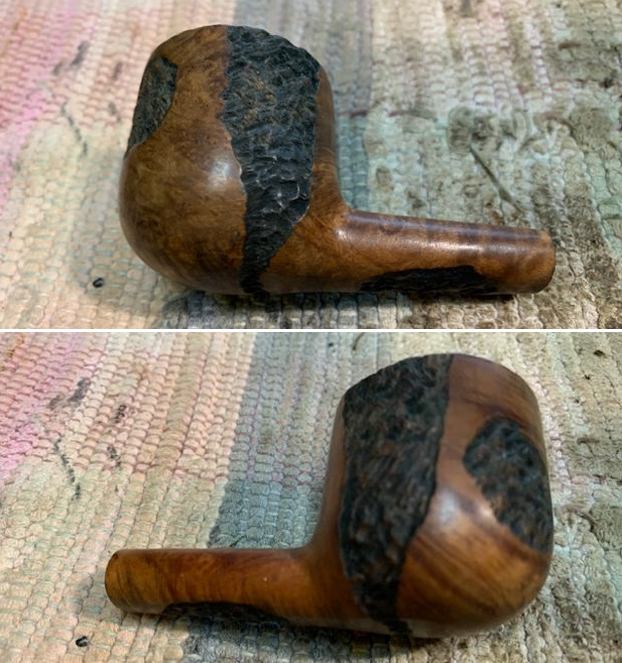
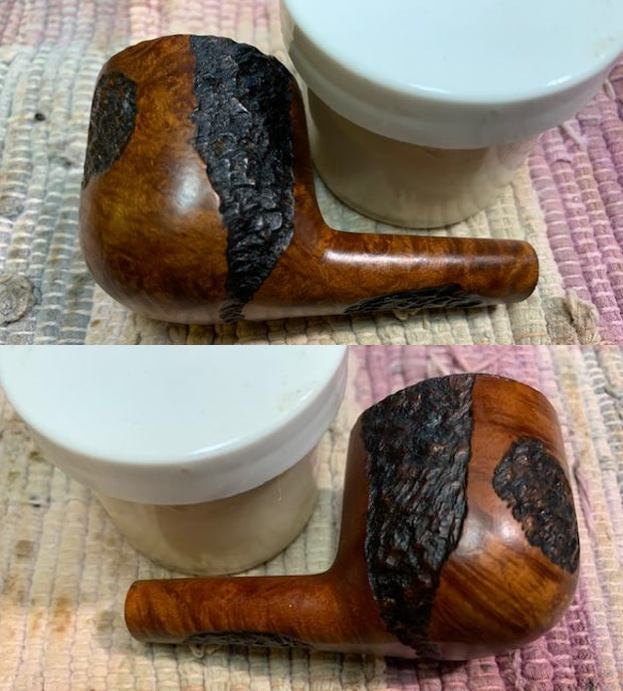
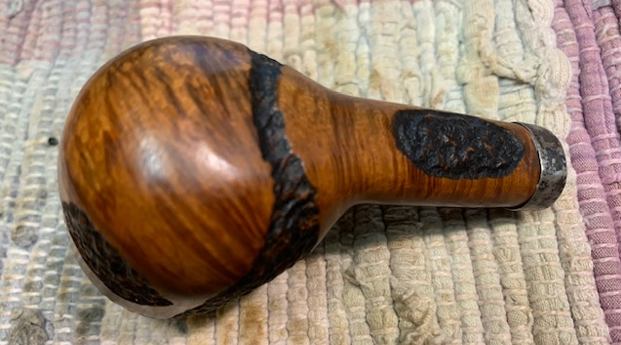
 The photos of the sides and heel of the bowl show some stunning and unique grain all around the pipe. The oil curing/finish makes the grain really stand out on the bowl and shank.
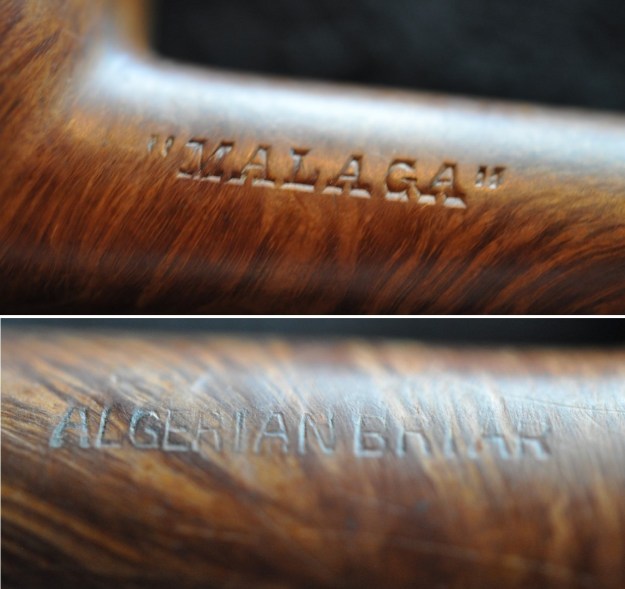
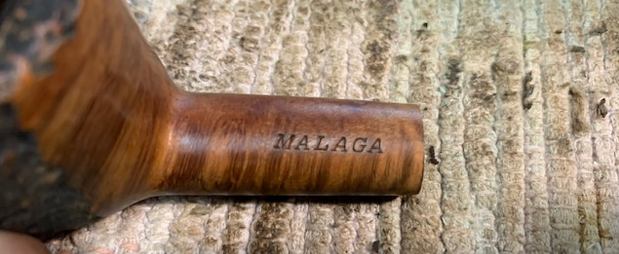
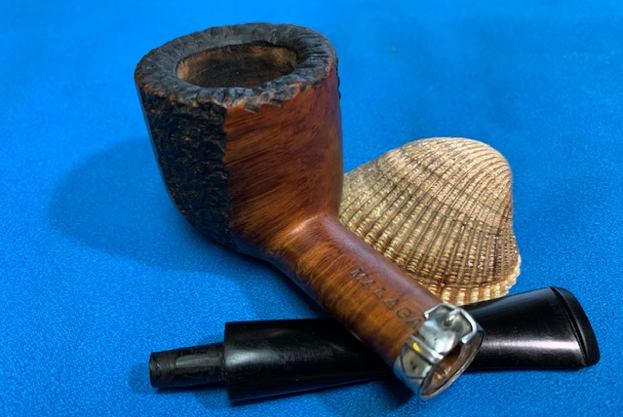
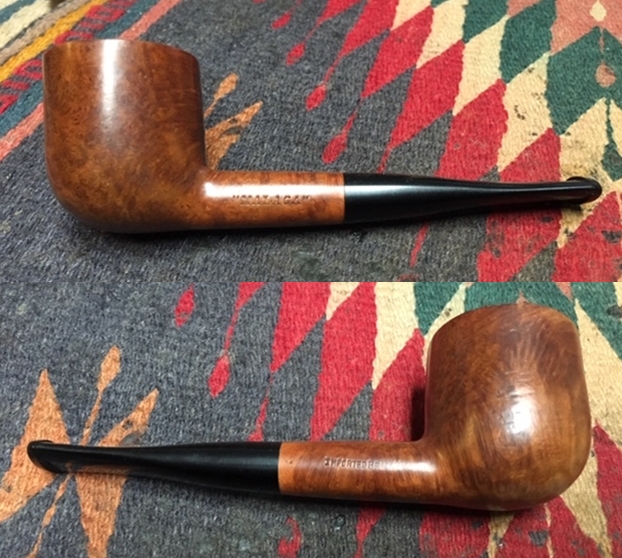
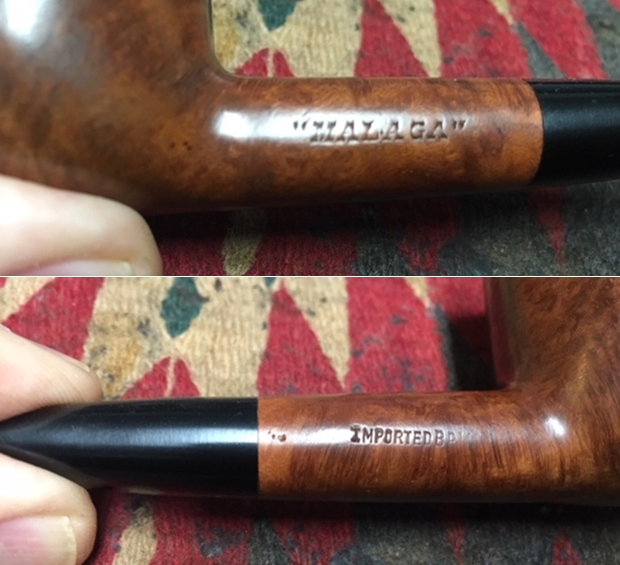
 Jeff took a photo of the stamping on the left side of the shank. On the left it read “MALAGA” as noted above. He did not take a photo of the right side but it read Algerian Briar. The stamping was clear and readable.
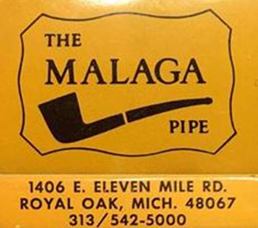
 For those of you who are unfamiliar with the brand, I am also including the link to a blog that I wrote that gives some of the history of the Malaga brand and the Malaga Pipe Shop in Royal Oak, Michigan in the USA. Here is the link – https://rebornpipes.com/2013/02/09/george-khoubesser-and-malaga-pipes/. That blog also includes links to a catalogue and the history of the pipemaker George Khoubesser. If you are interested to learn more then I invite you to follow the link to get a feel for the brand and the pipemaker.
I am also am including a link to some printed material on the Malaga brand that came to me from the daughter of George Koch (we purchased George’s pipes from his daughter) to help identify the particular stamping on the pipe. The link takes you to the entire collection of materials that were sent to me (https://rebornpipes.com/2019/02/27/malaga-pipes-catalogue-of-pipes-and-tobaccos/).
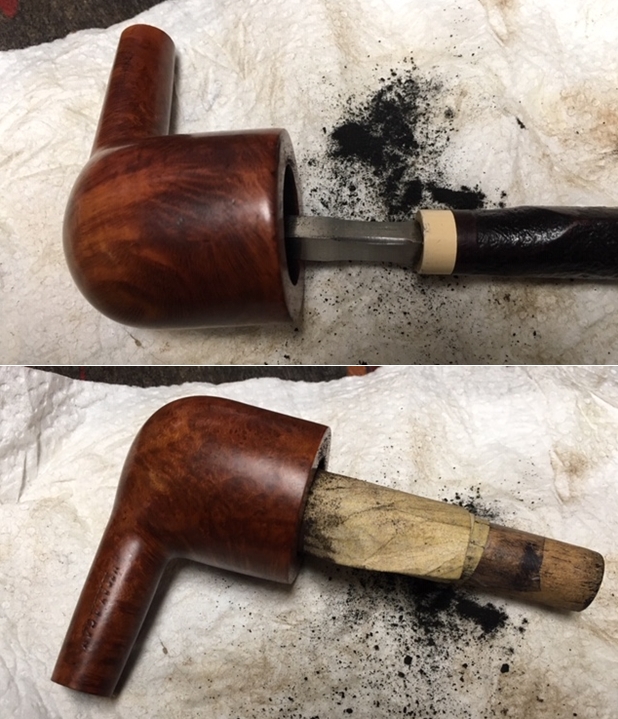
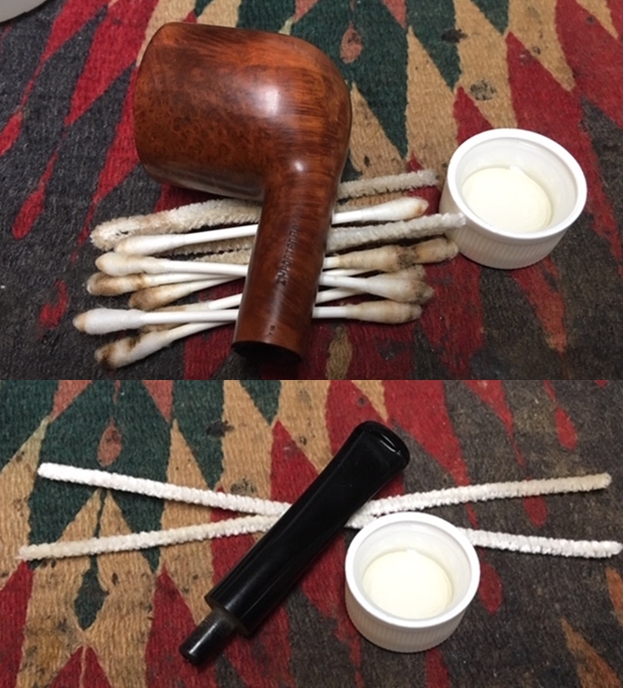
Jeff had cleaned up the pipe using his usual procedure. He reamed the pipe with a PipNet pipe reamer and removed the rest of it with a Savinelli Fitsall Pipe Knife. He scrubbed the bowl with undiluted Murphy’s Oil Soap with a tooth brush. He rinsed it under running warm water to remove the soap and grime from around the bowl sides. It looked much better. He cleaned out the inside of the shank and the airway with alcohol, cotton swabs and pipe cleaners. The stem looked much better and the light tooth marks on both sides were still visible and would need a little work. I took photos of the pipe once I received it. 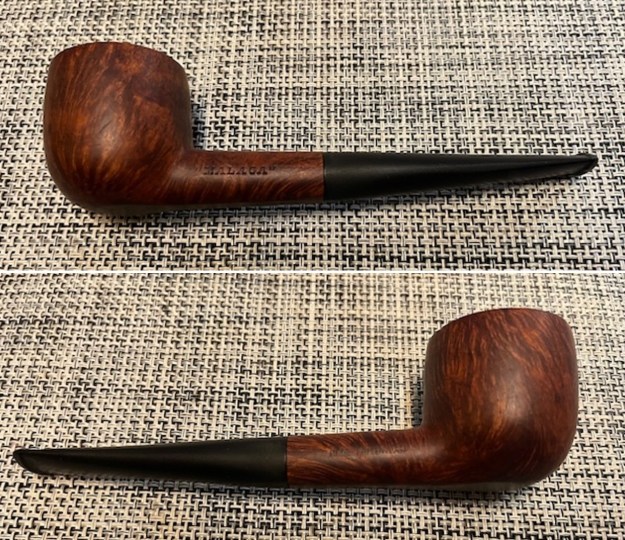
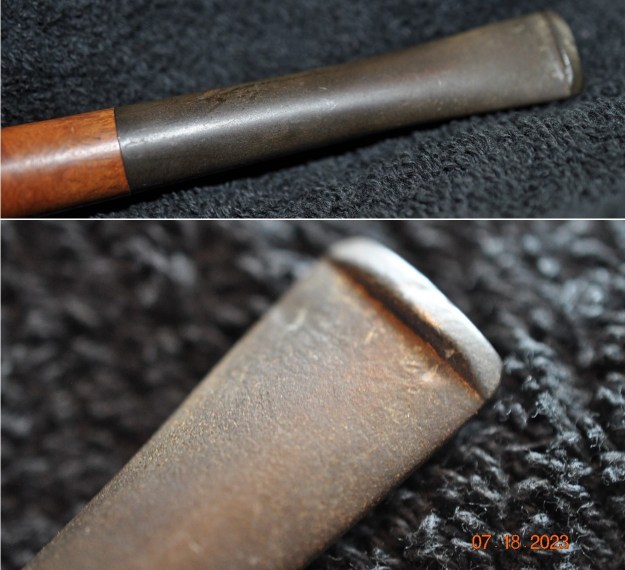
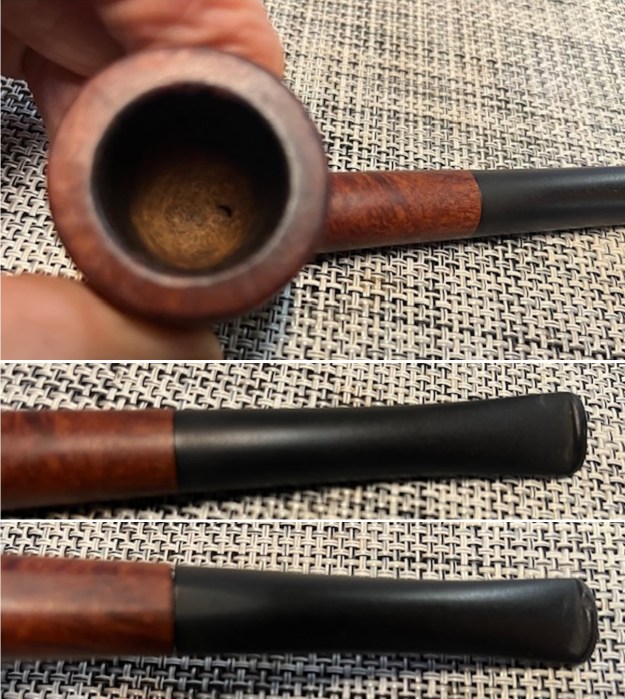
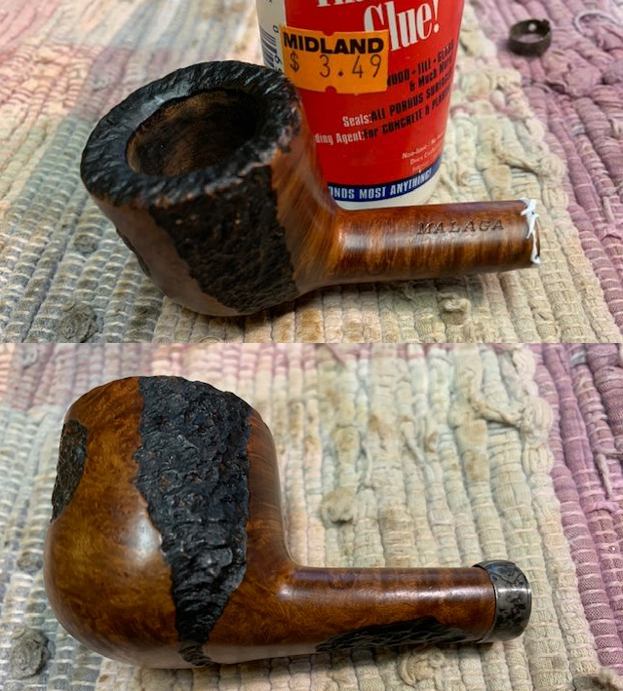
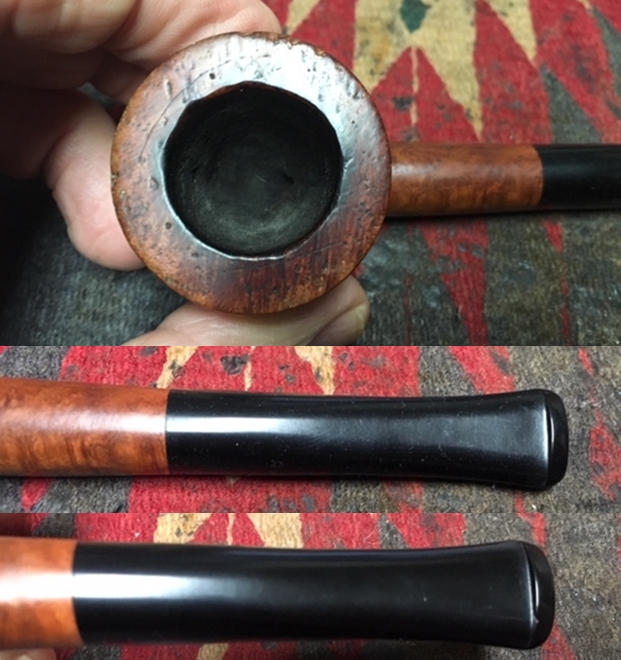
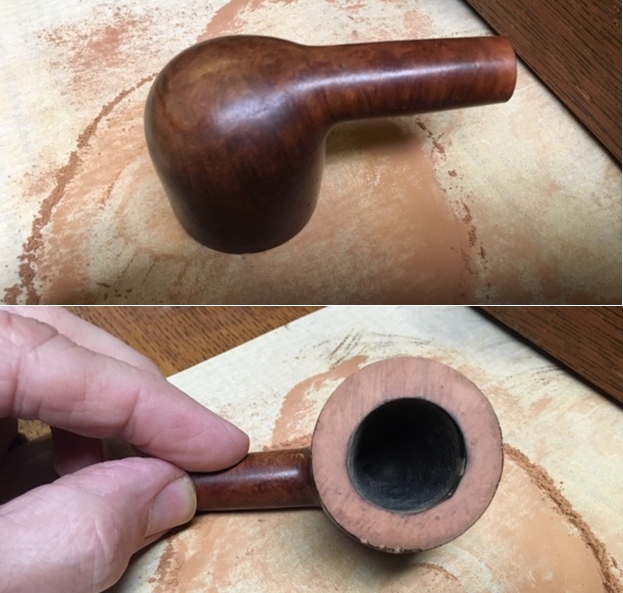
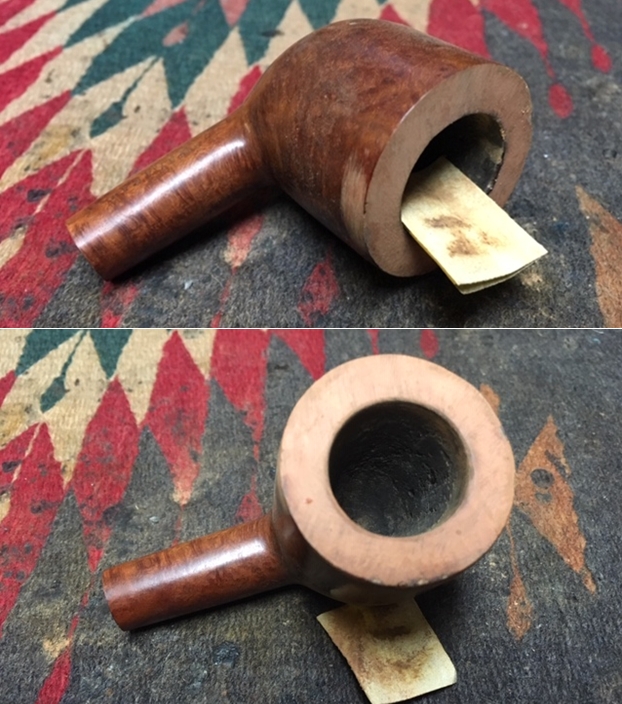
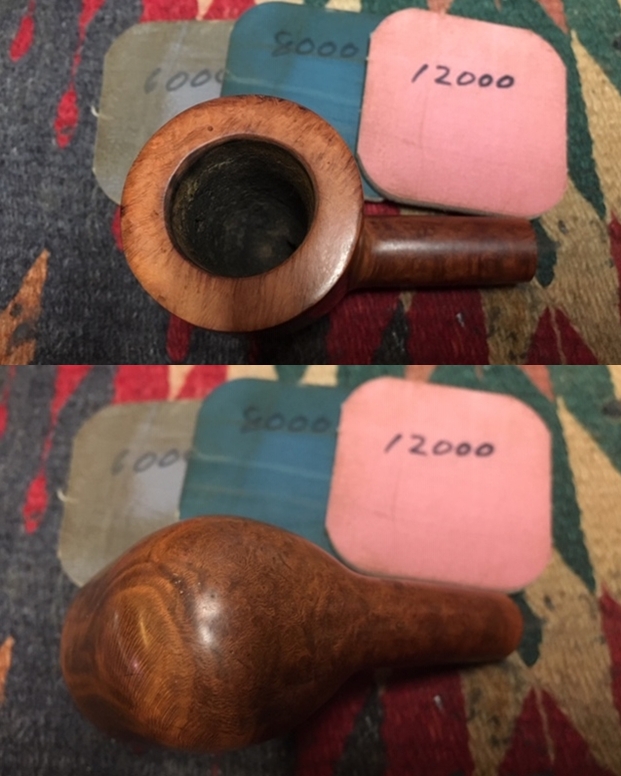
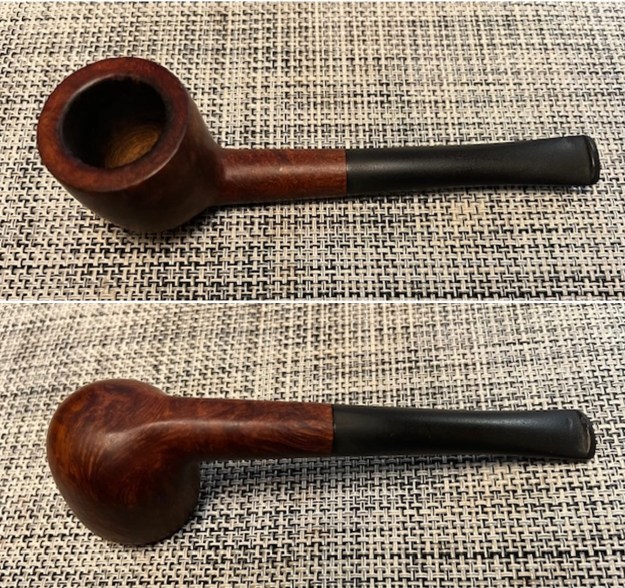 I took a photo of the rim top and the stem to show their condition. Jeff was able to clean up the cake and the lava overflow that was shown in the rim and bowl photos above. The rim top was clean and looked good. There was some darkening and damage on the rim top and inner and outer edges of the bowl (particularly on the back side of the bowl). The grain on it was quite nice. The stem looked better, though there were deep tooth marks and chatter on both sides ahead of the button.
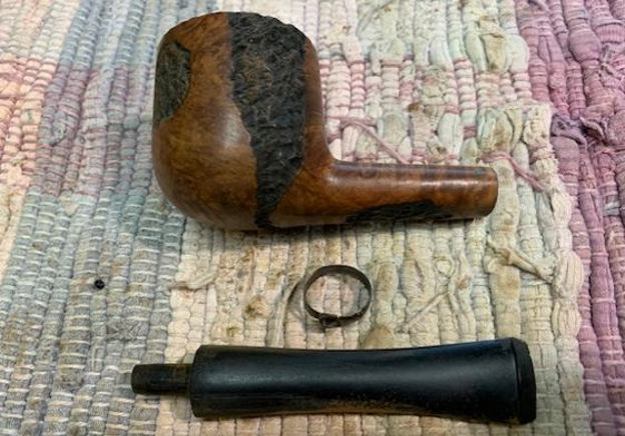
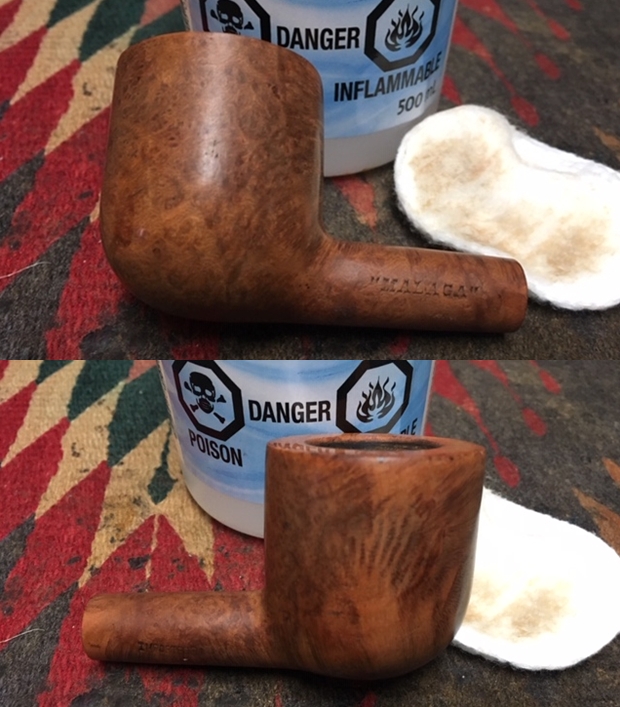
 I took photos of the stamping on the shank to show that the clean up had not damaged them at all. It looked good. I removed the stem from the shank and took a photo of the parts to give a sense of what the pipe looks like.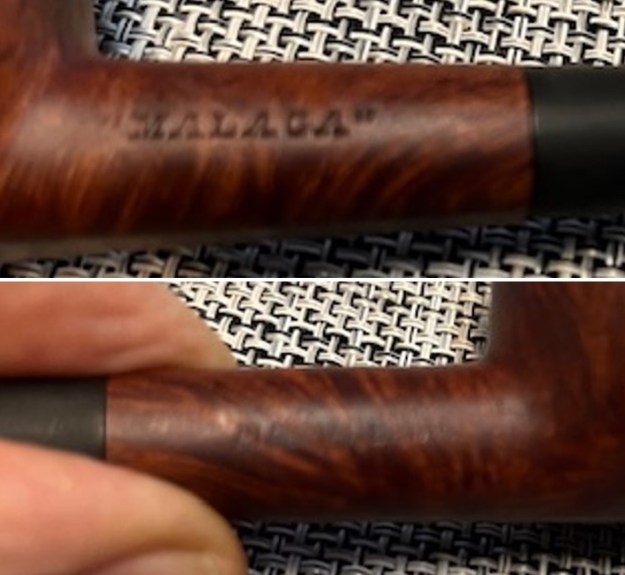
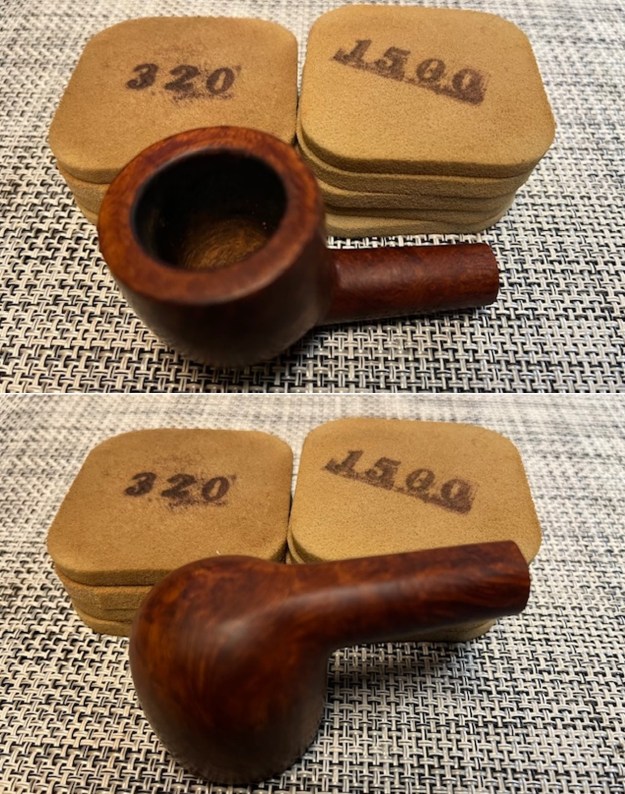
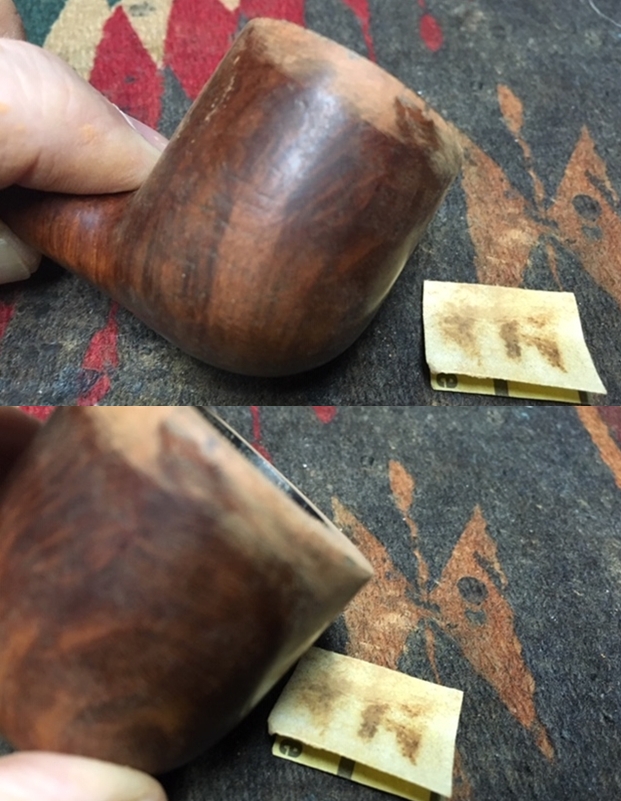
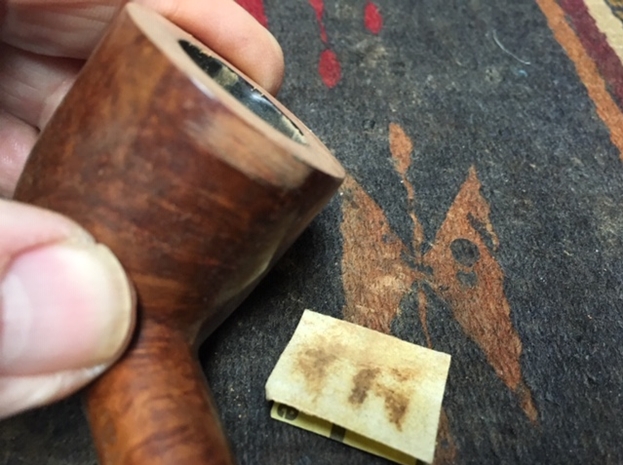
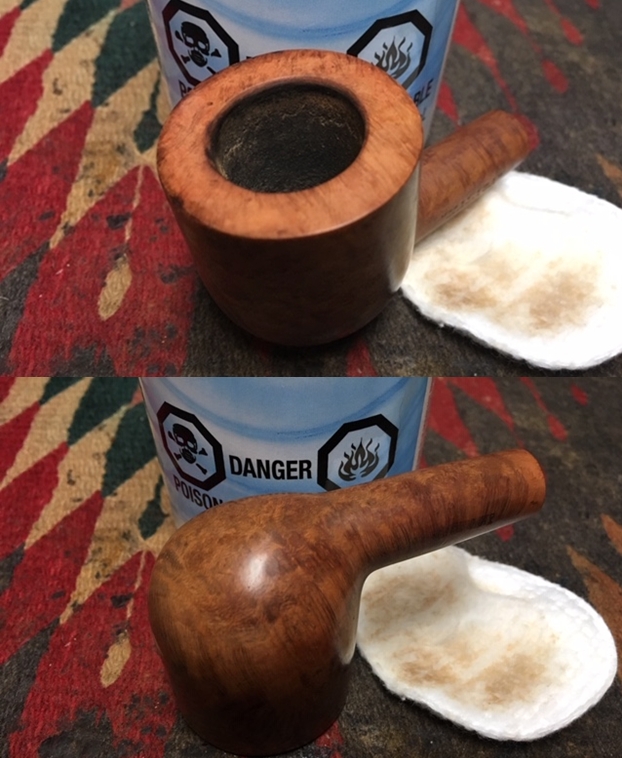
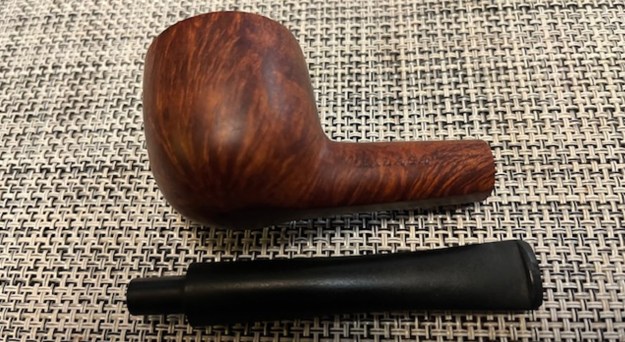 I started my work on the pipe by sanding the rim top and the finish around the bowl with the 2-inch square 320-3500 grit sanding pads. I wiped down the briar after each sanding pad. The bowl began to look very good.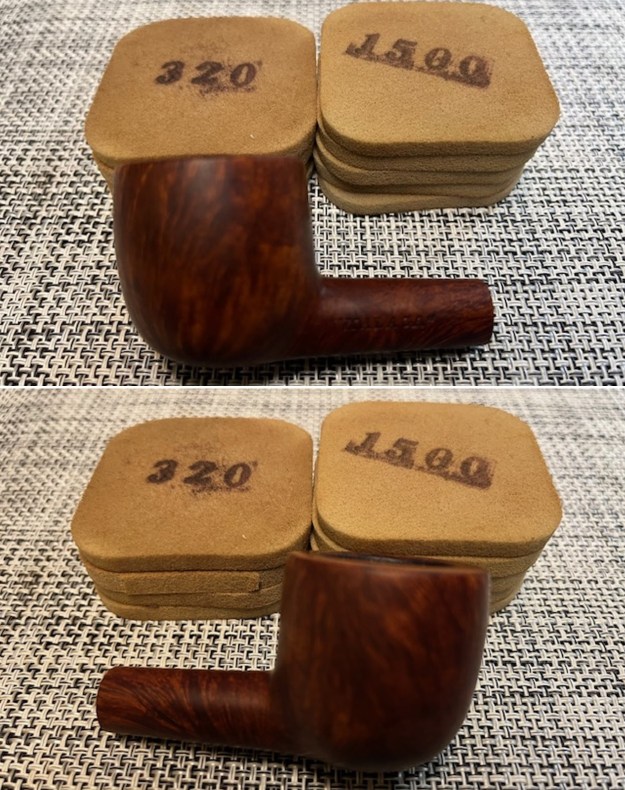
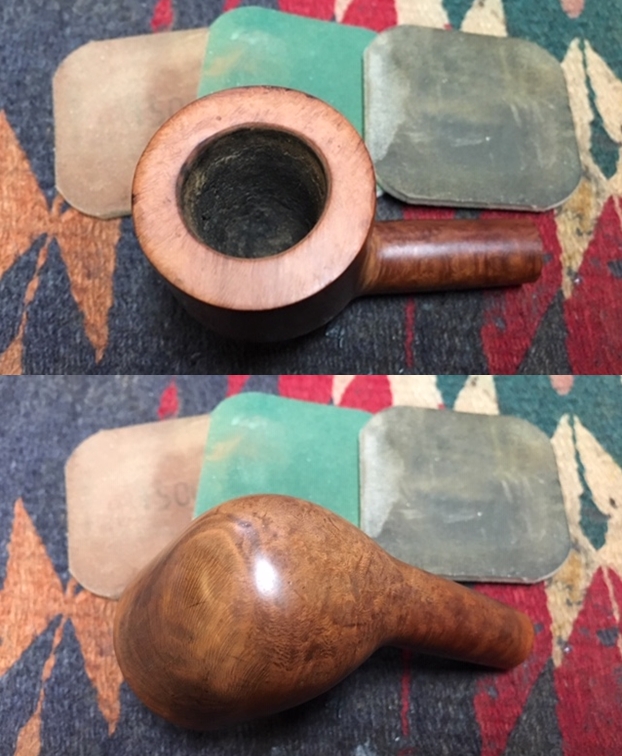
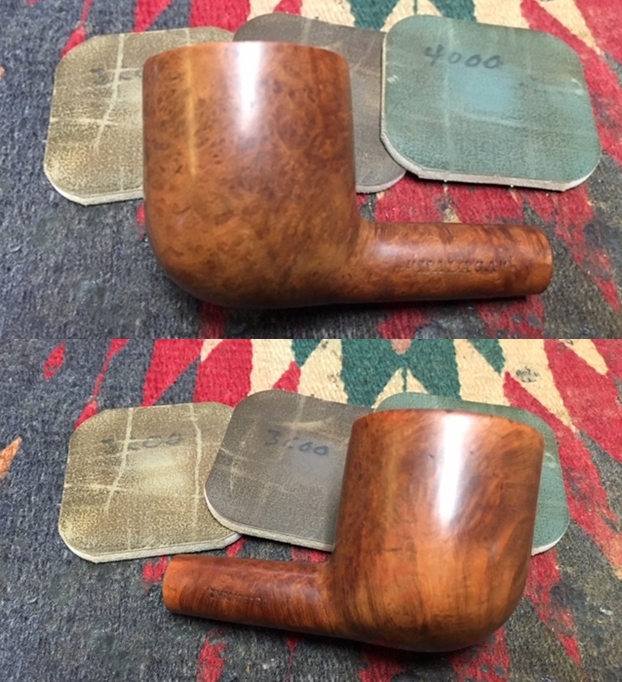
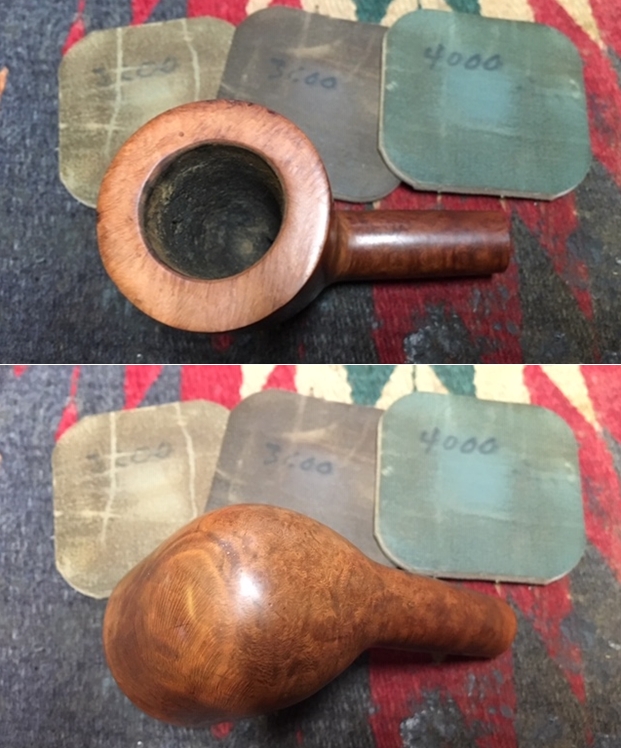
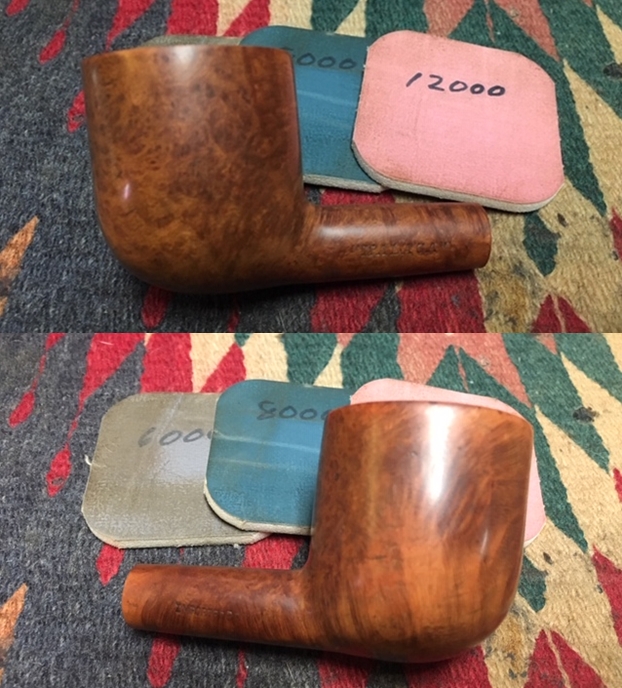
 I polished the bowl sides and the smooth rim top with micromesh sanding pads. I dry sanded it with 1500-12000 grit micromesh pads. I wiped it down after each pad. It really began to be beautiful.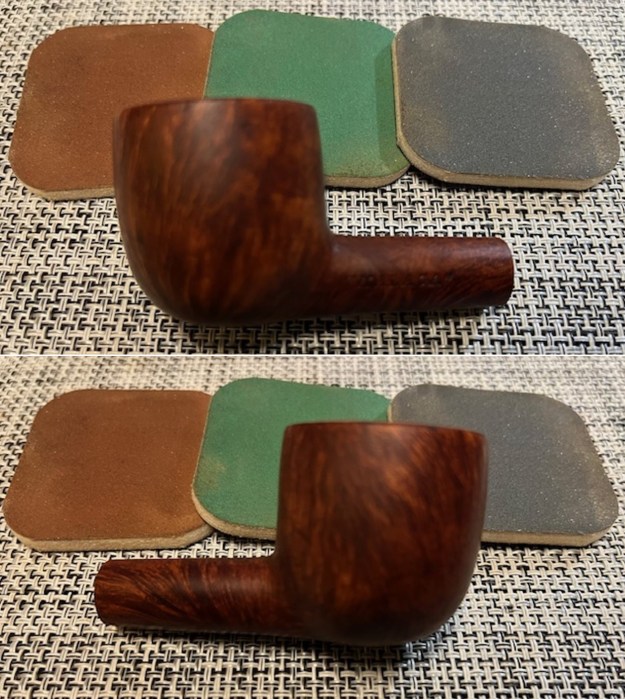
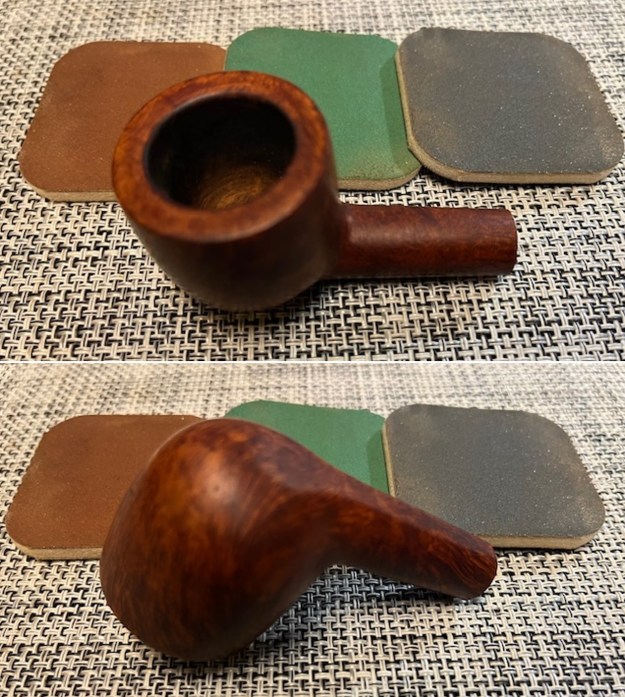
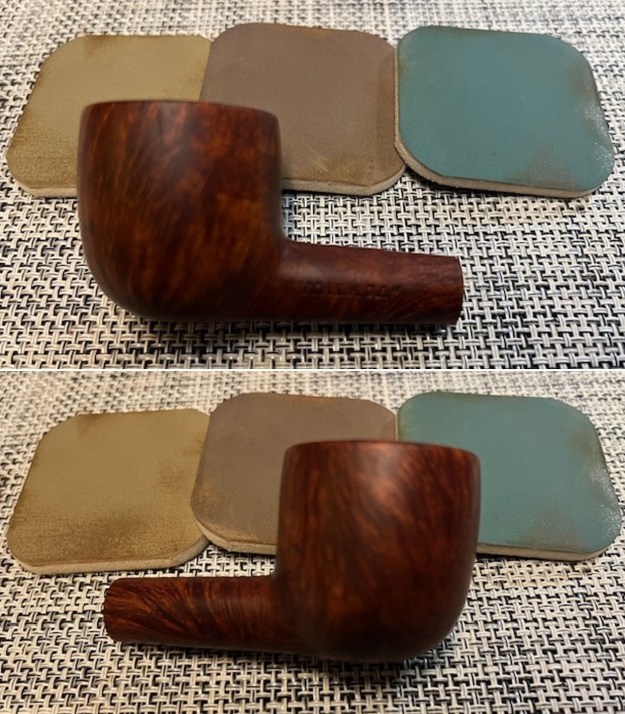
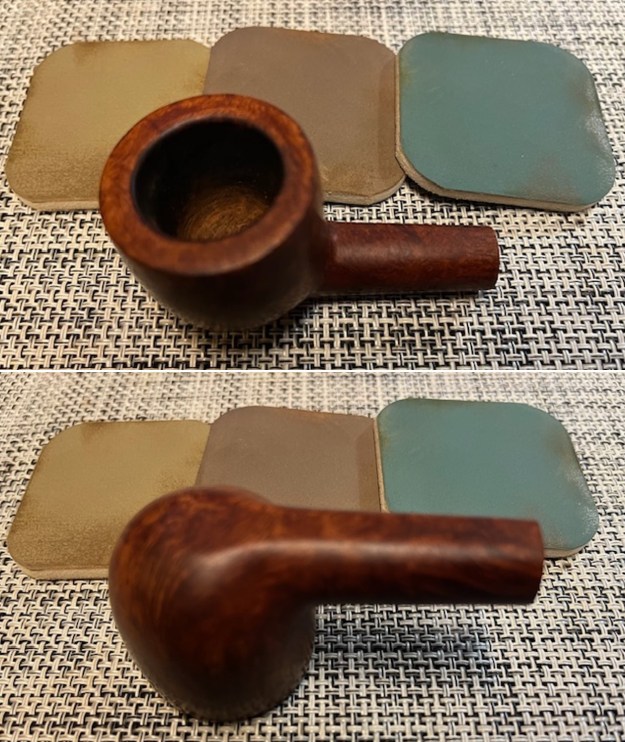
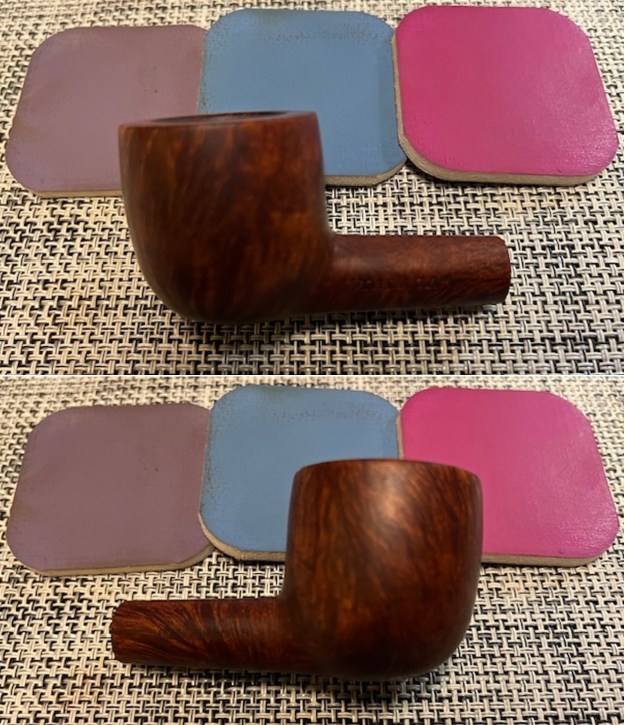
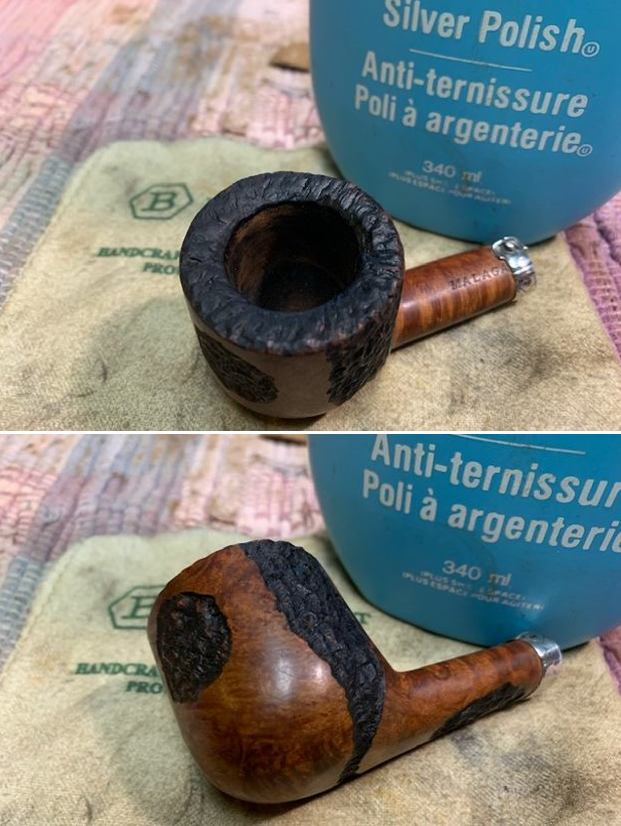
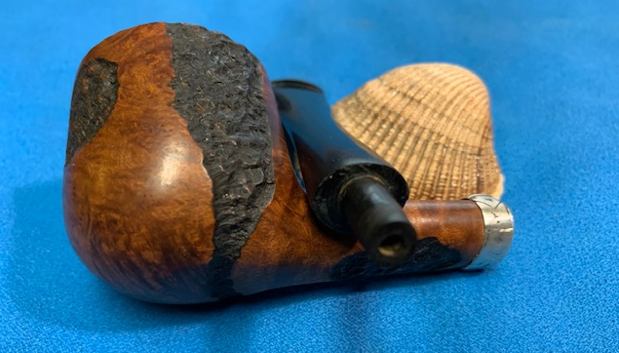
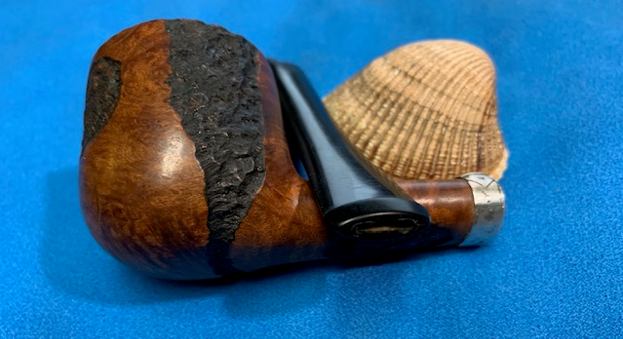
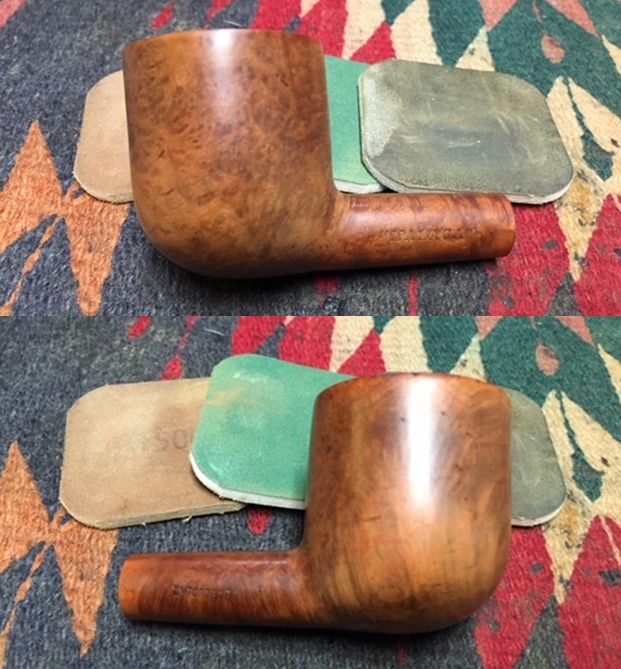
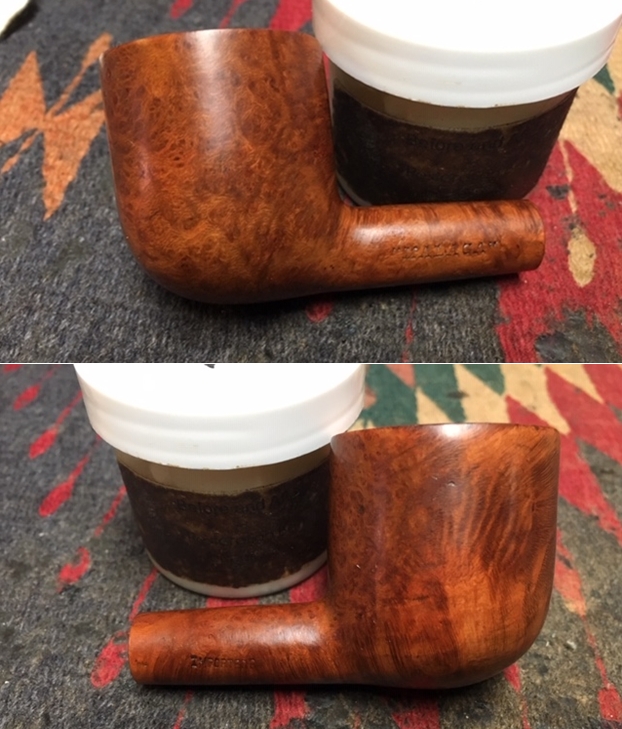
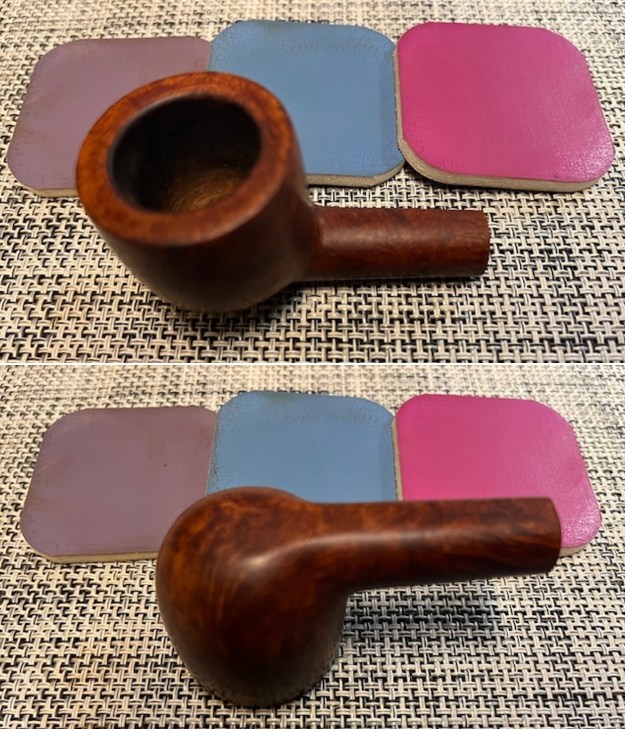 I rubbed the bowl and shank down with Before & After Restoration Balm to deep clean the finish on the bowl and shank. The product works to clean, enliven and protect the briar. I worked it in with my fingers to get it into the briar. I worked it into the twin rings in the bowl cap with a shoe brush to get deep in the grooves. I let it sit for 10 minutes then I wiped it off and buffed it with a soft cloth. The briar really began to have a rich shine. I took some photos of the bowl at this point to mark the progress in the restoration. It is a beautiful bowl.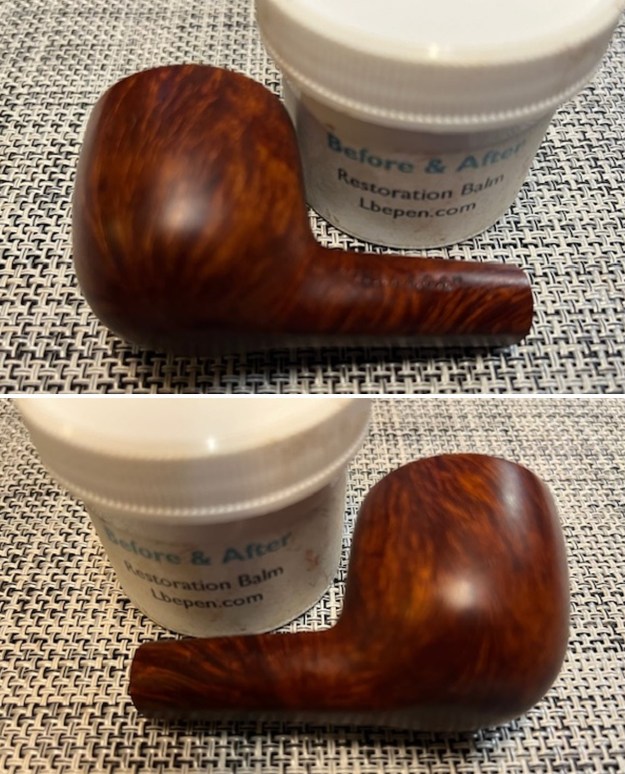
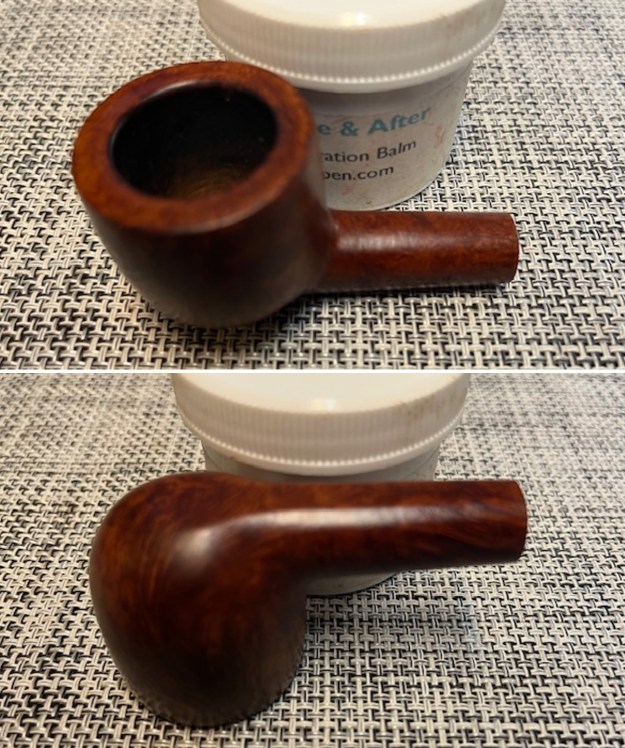
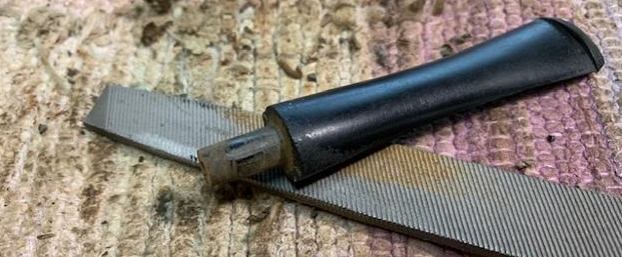
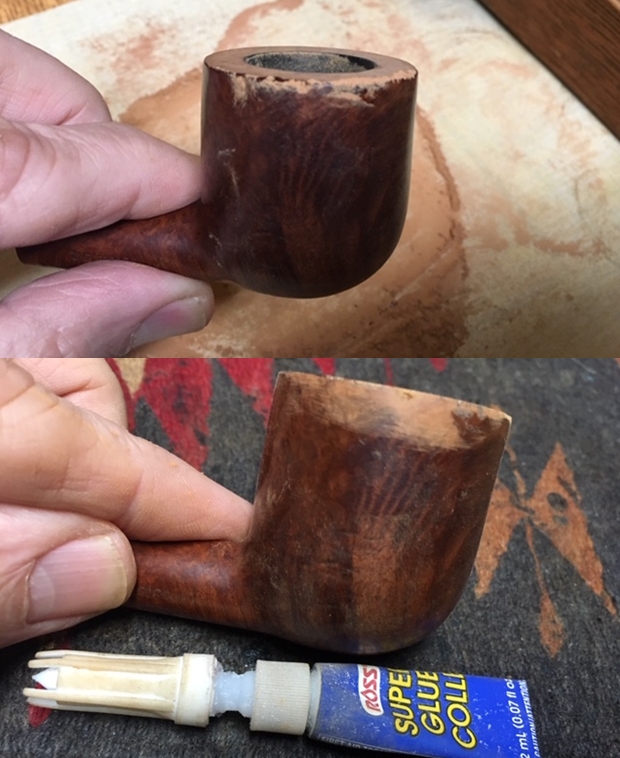
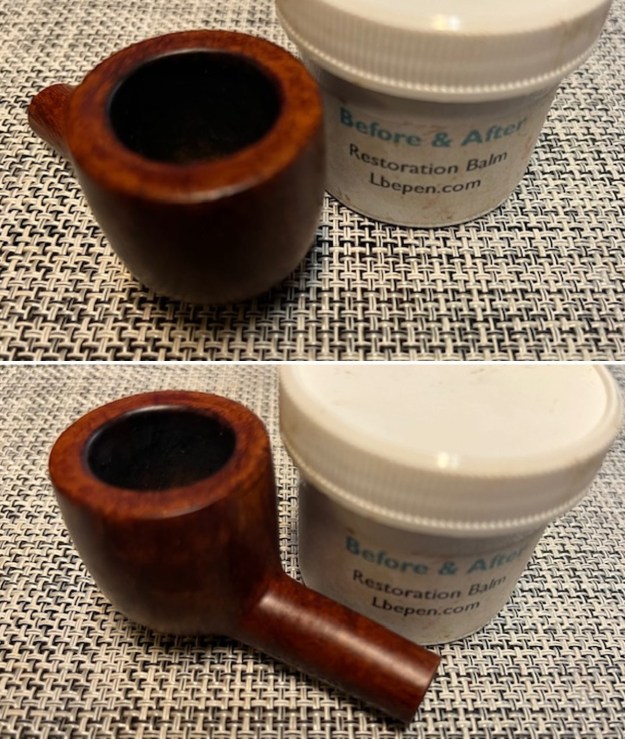 I set the bowl aside and turned my attention to the stem. There were several deep tooth marks that I filled with CA glue. Once the glue hardened I recut the button edge and flattened the repairs with a small file.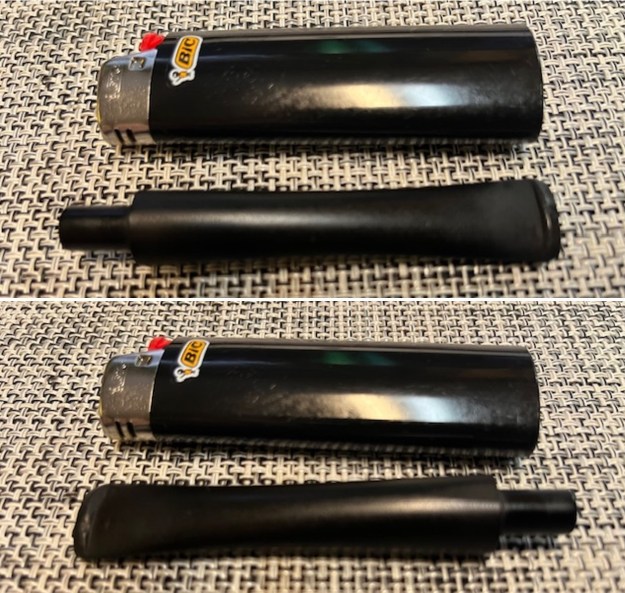
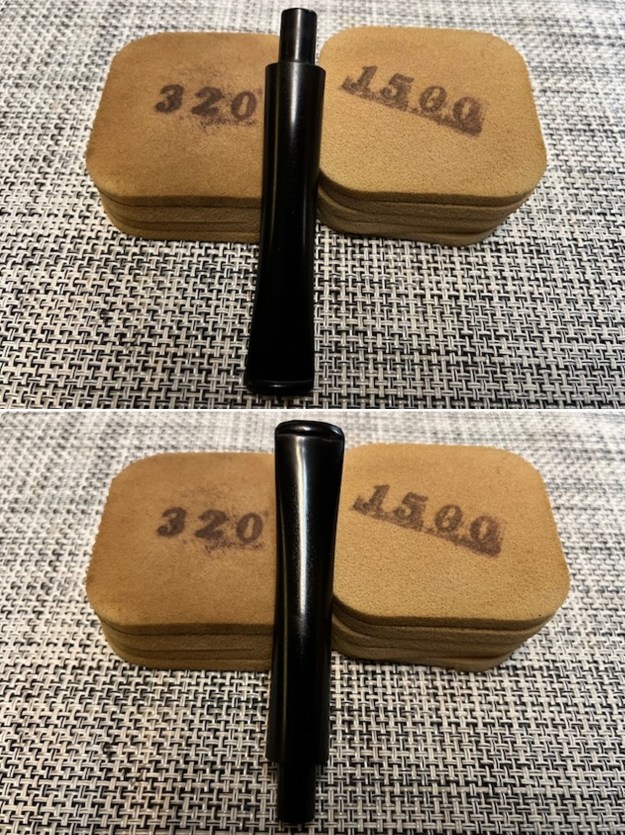
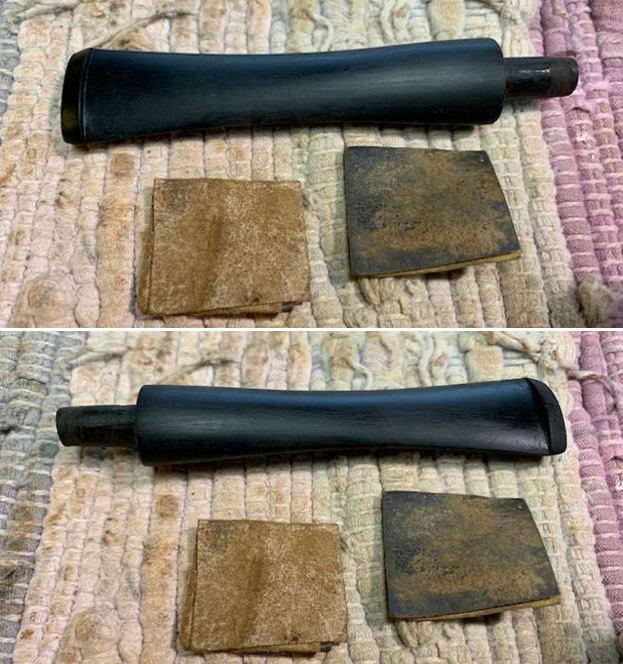
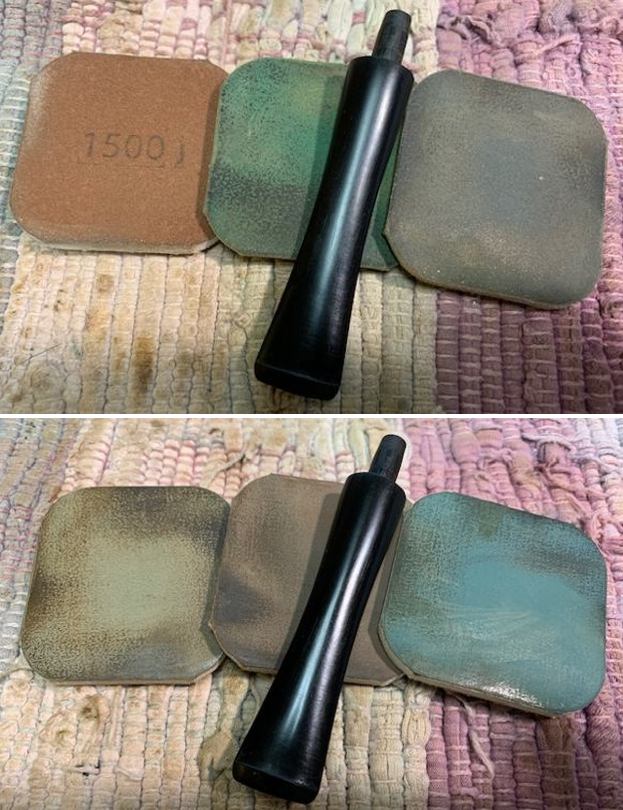
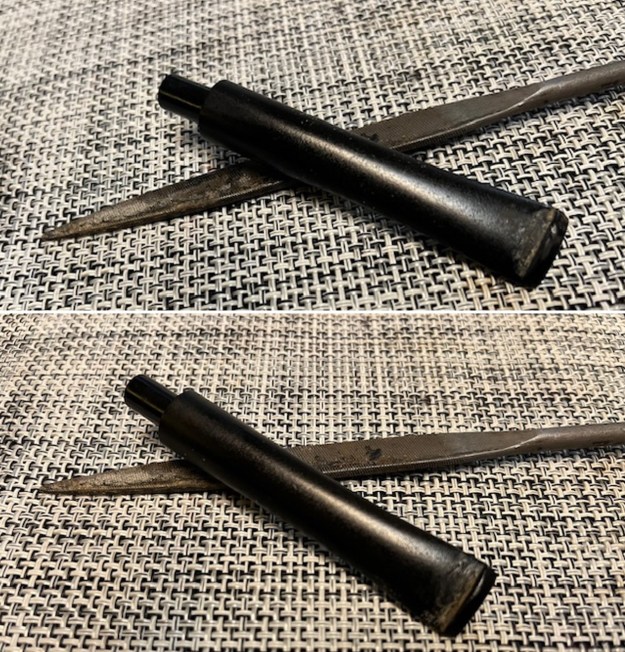 I sanded the stem with the 2 inch square 320-3500 grit sanding pads. I wiped down the stem after each sanding pad. I was able blend in the repairs on both sides with the pads. The stem looked very good.
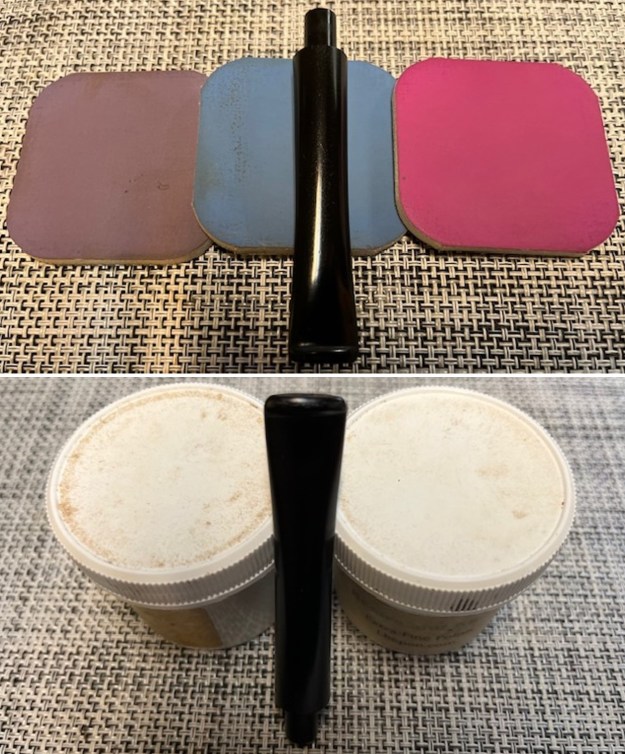
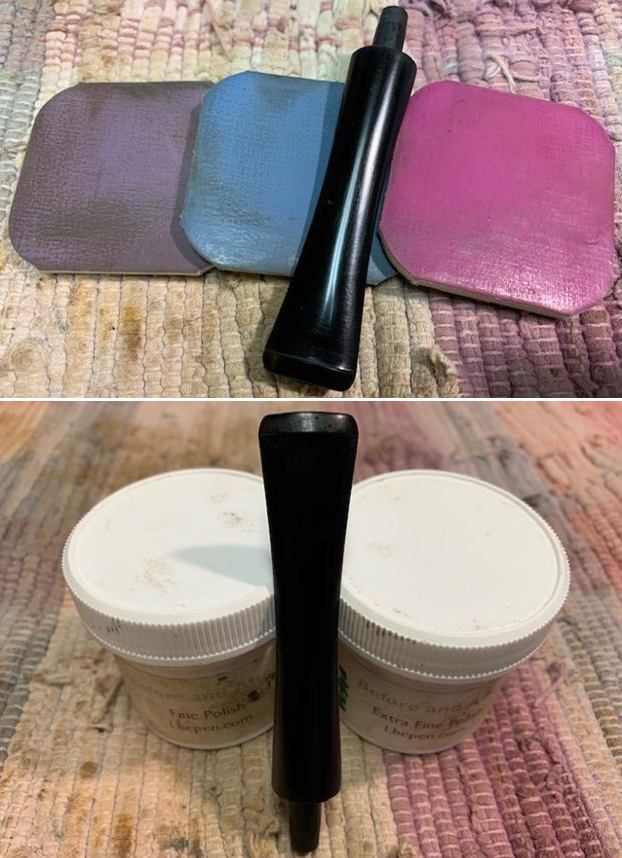
 I polished the stem with micromesh sanding pads – dry sanding with 1500-12000 grit pads. I wiped the stem down after each sanding pad with Obsidian Oil. I did a final hand polish of the stem with Before & After Pipe Stem Polish – both Fine and Extra Fine. I gave it a coat of Obsidian Pipe Stem Oil. It works to protect the stem from oxidizing. I set it aside to dry.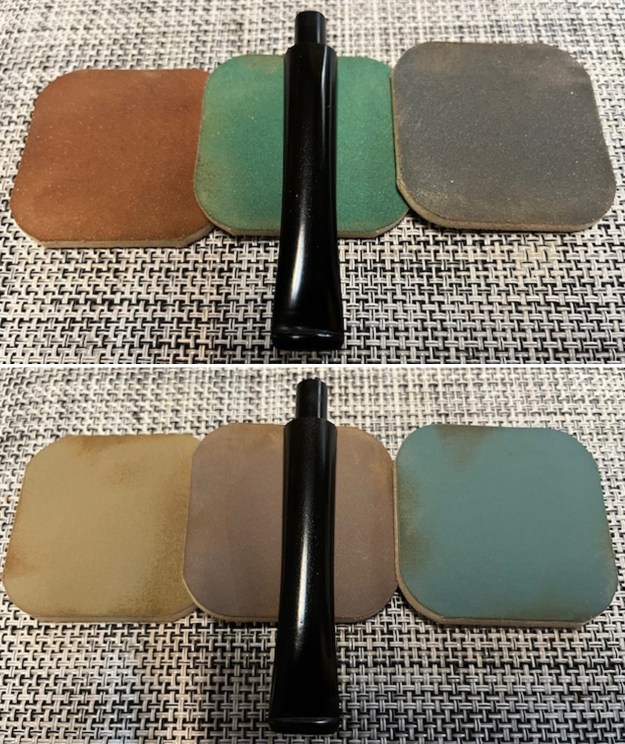
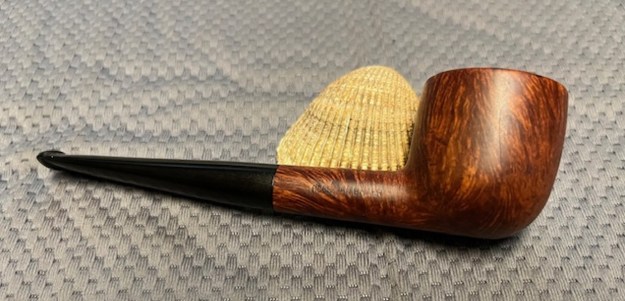
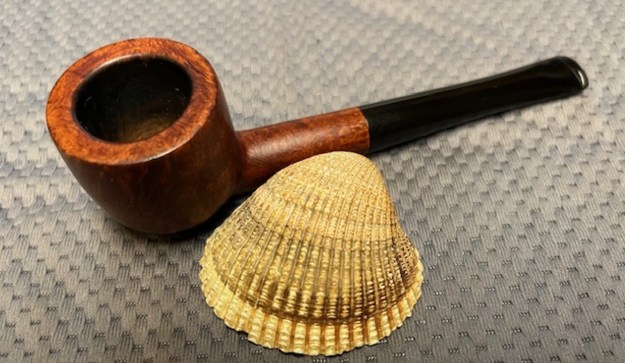
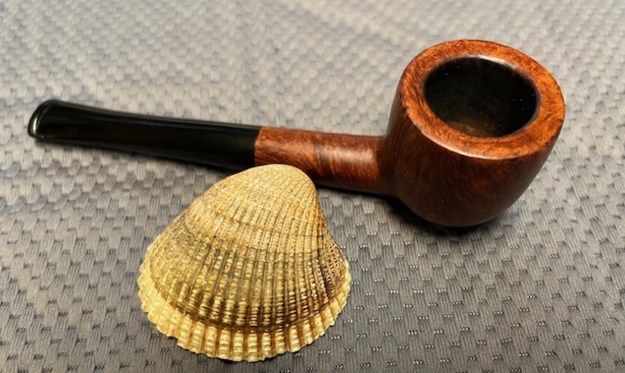
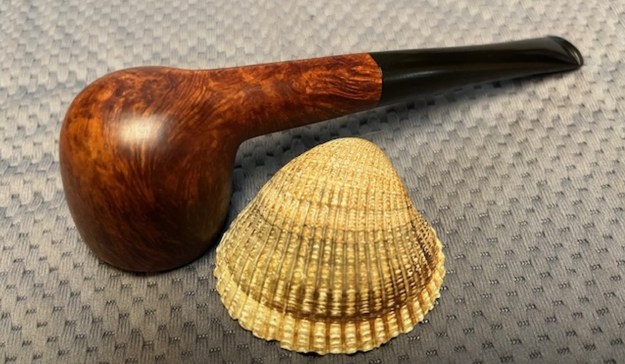
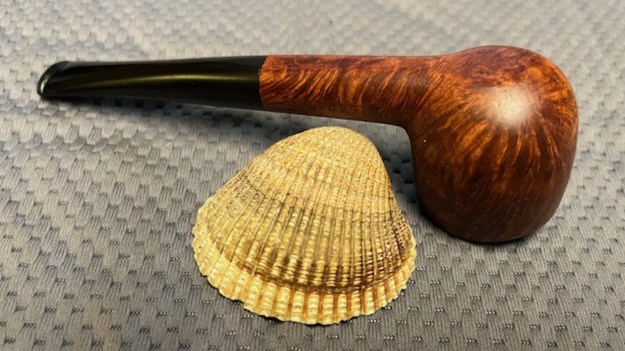
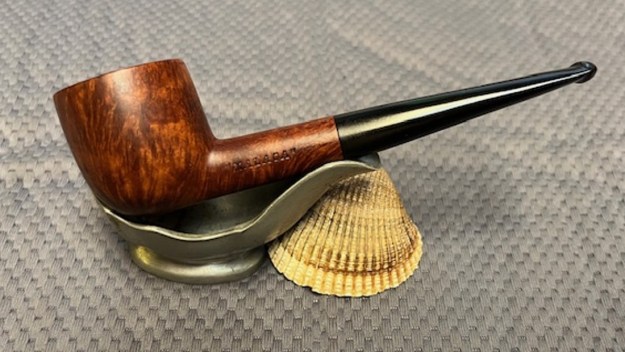
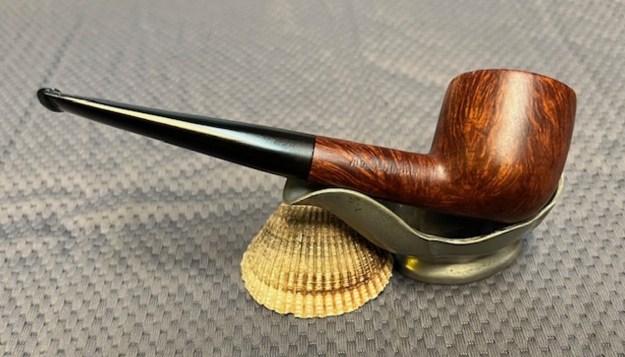
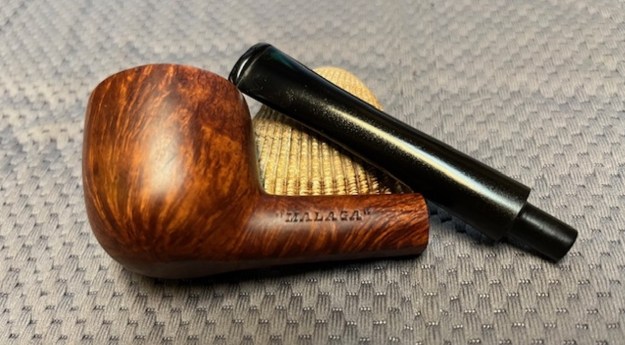
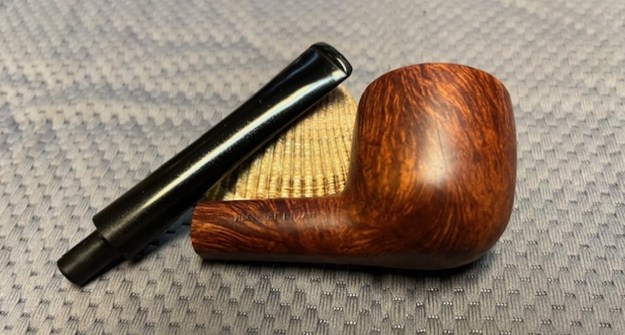
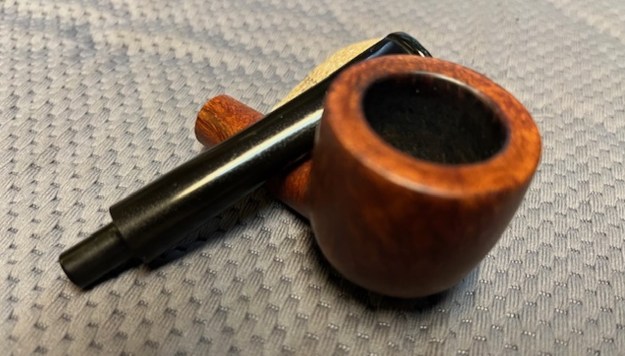
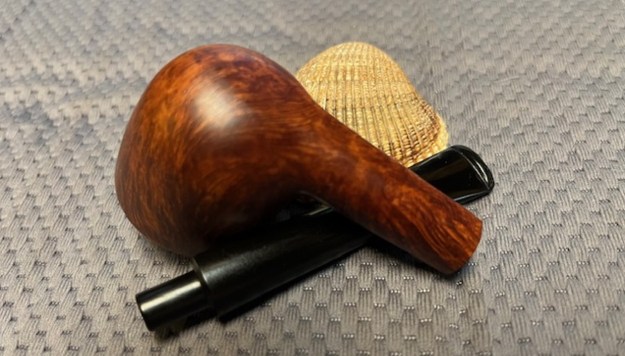
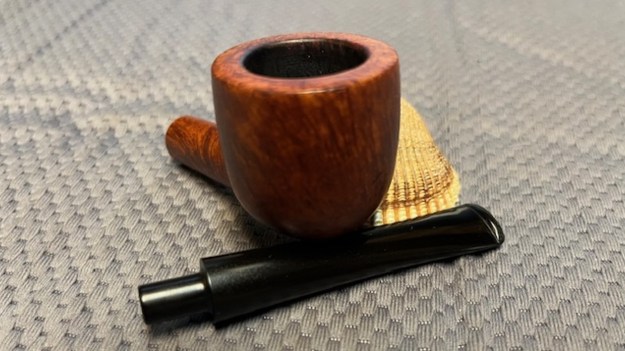
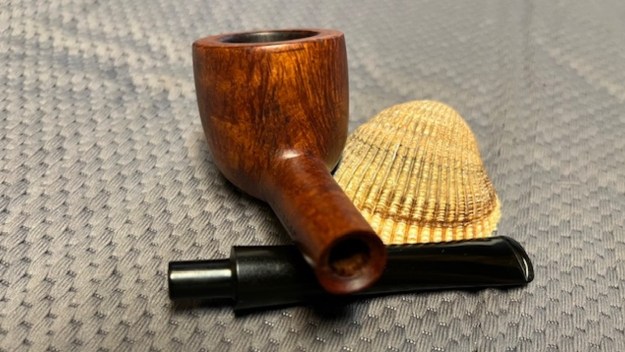
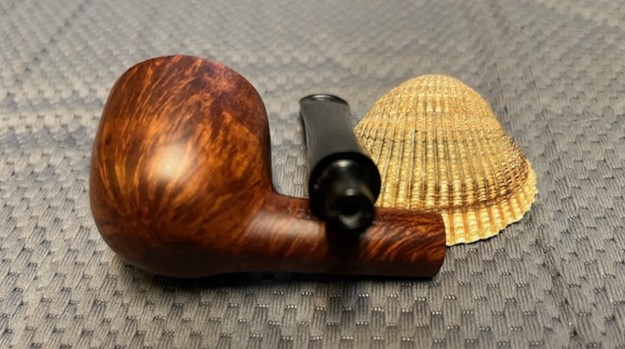
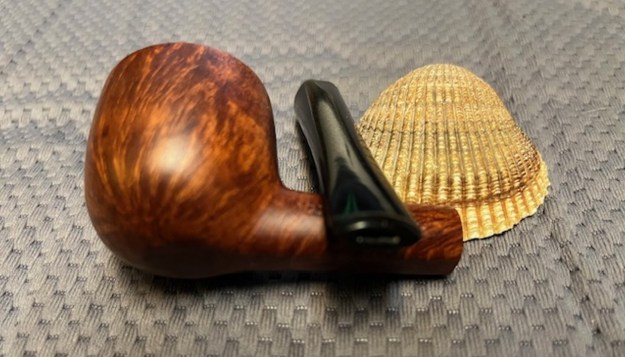
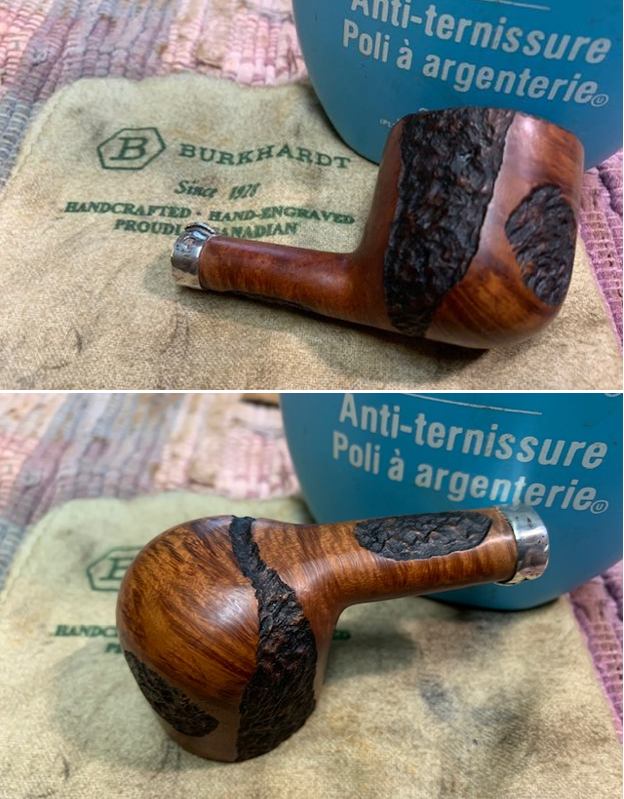
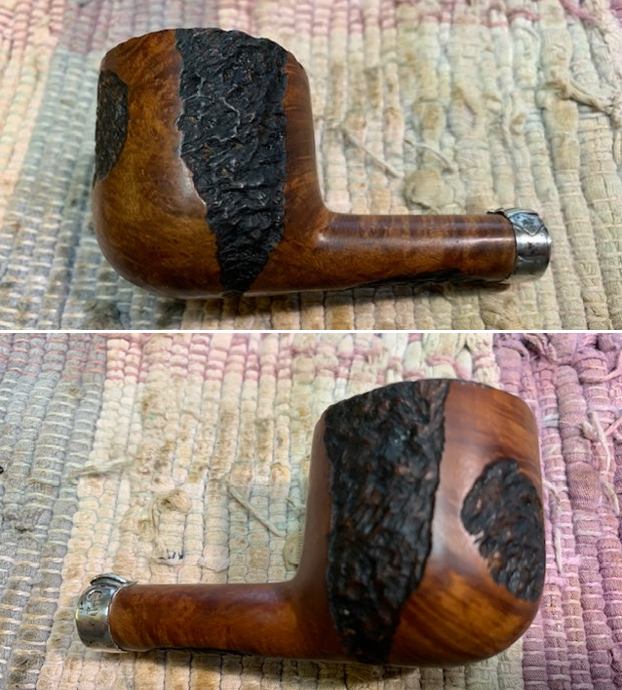
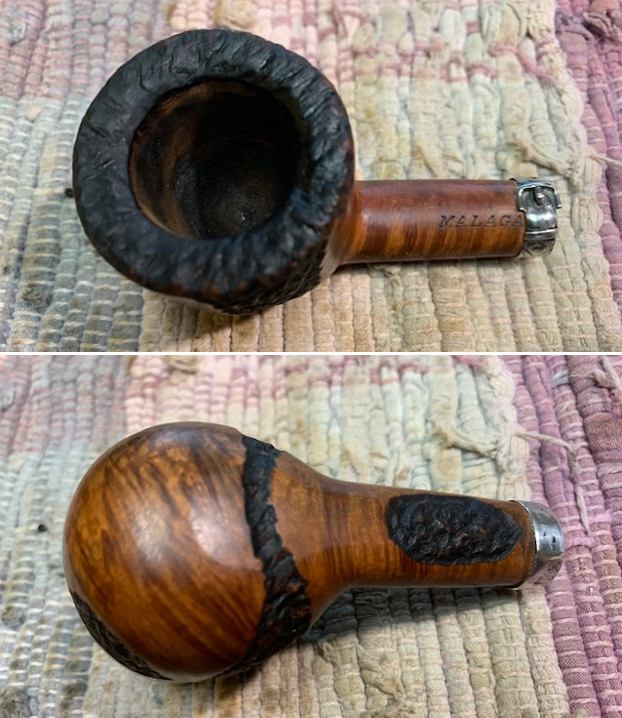
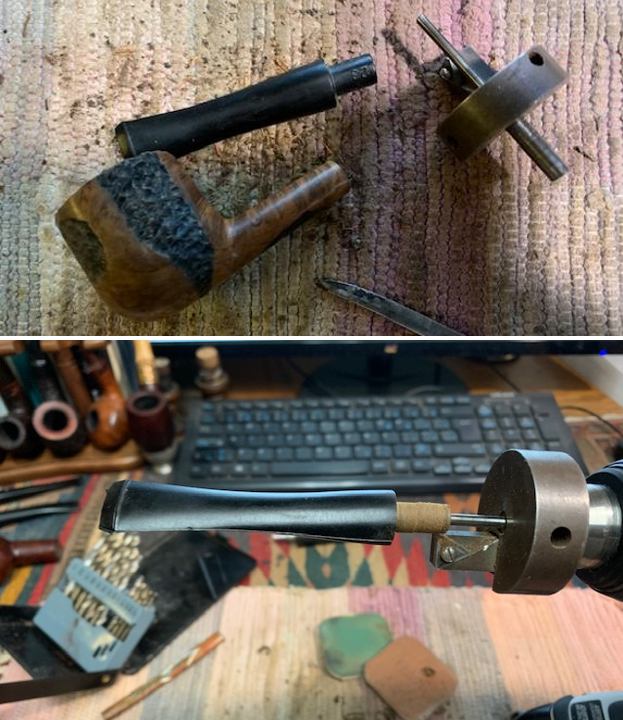
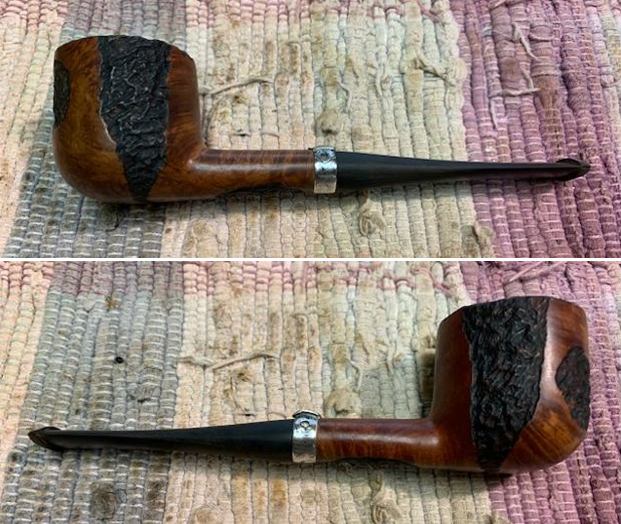
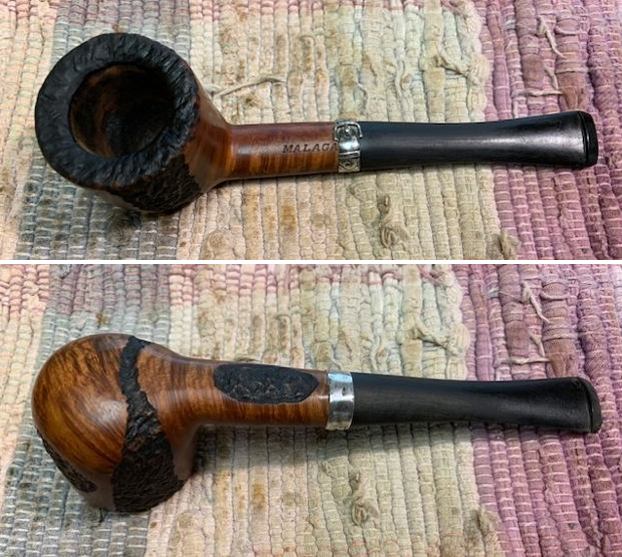
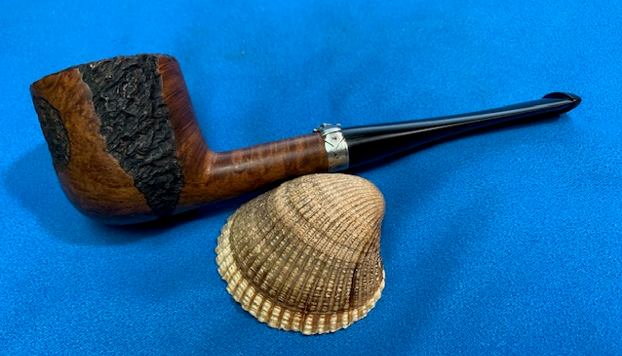
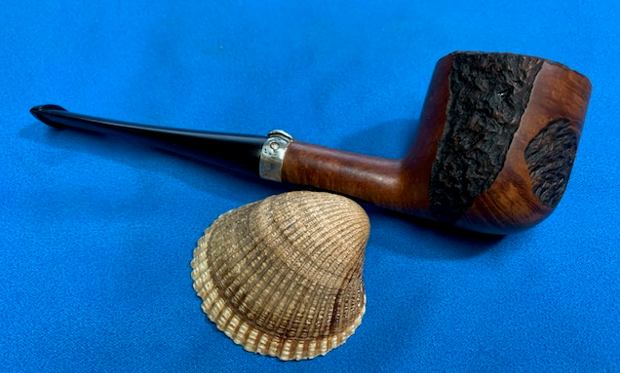
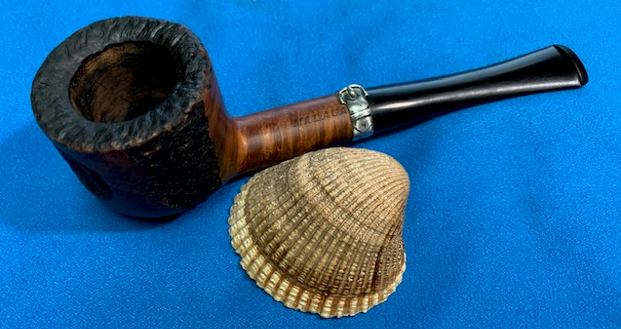
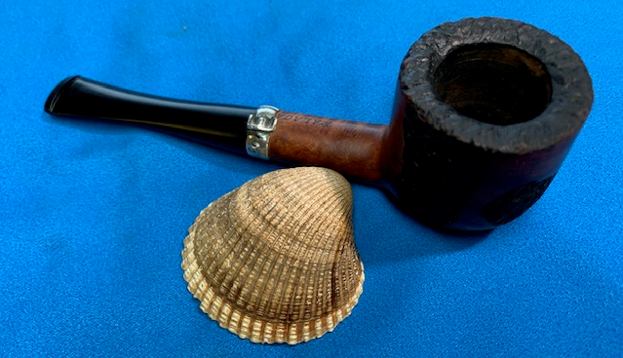
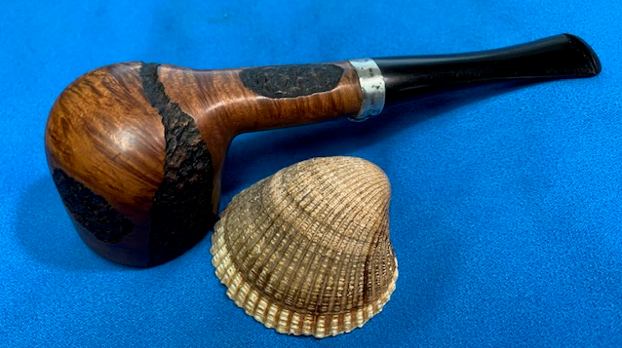
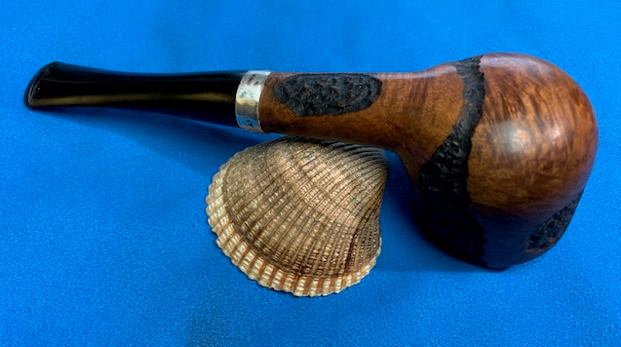
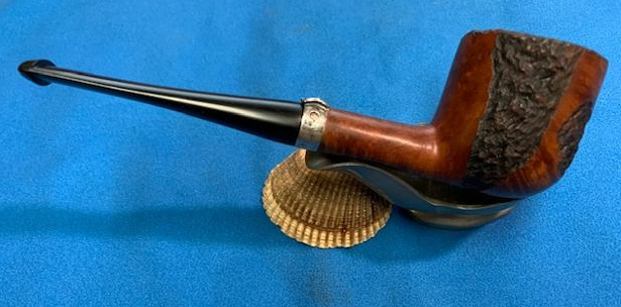
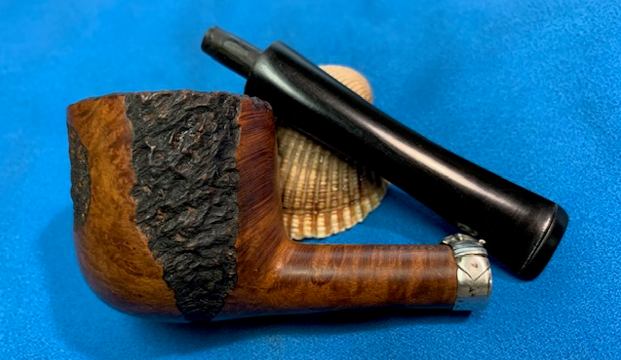
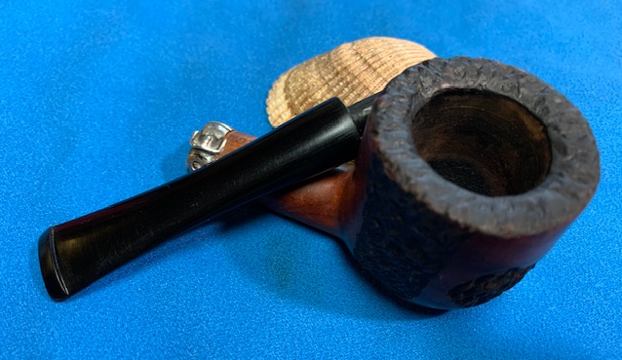
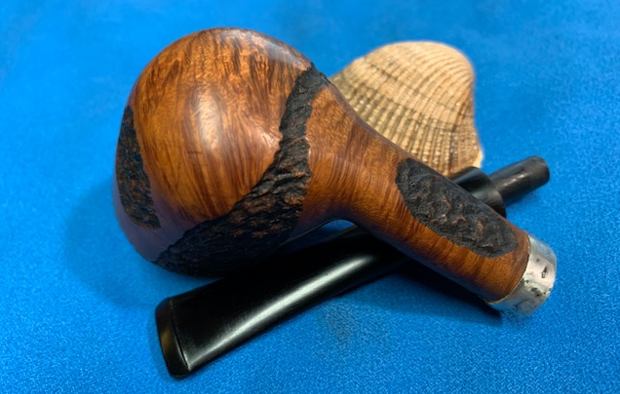
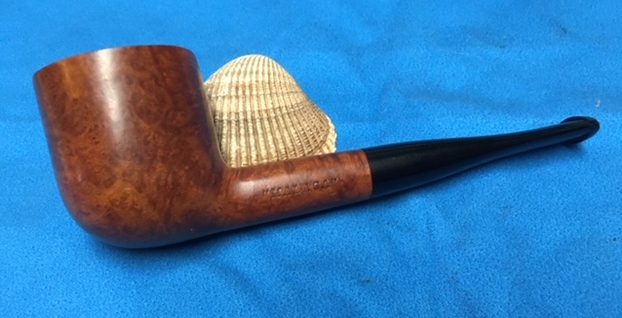
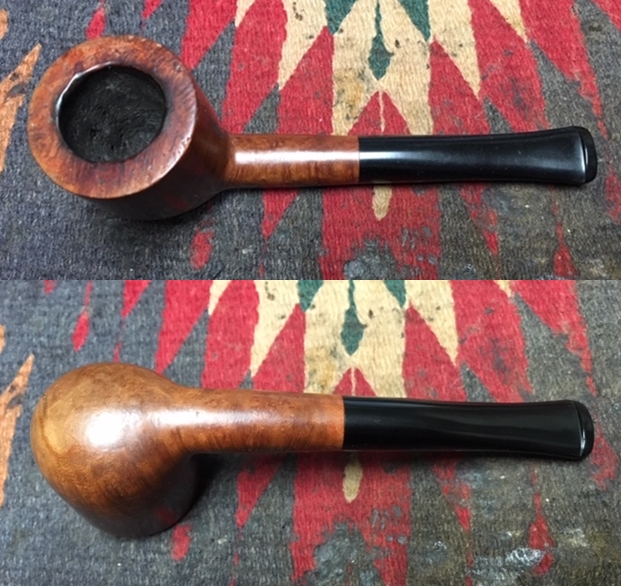
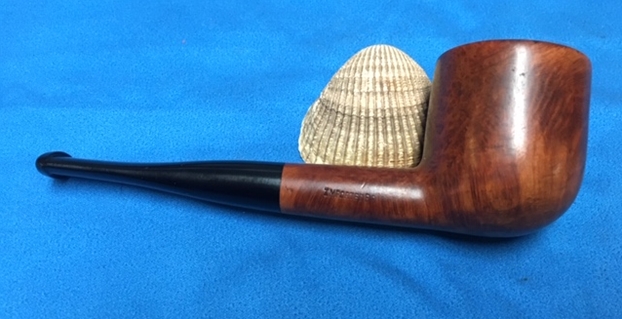
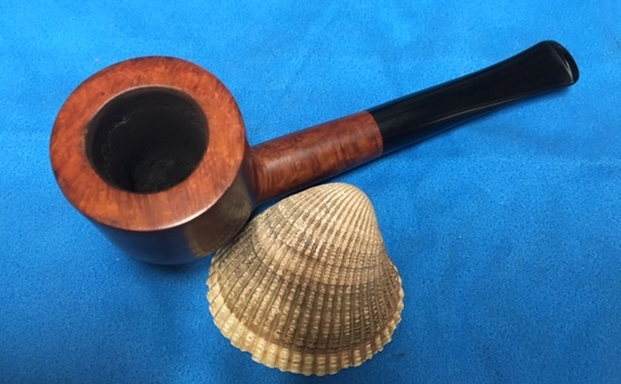
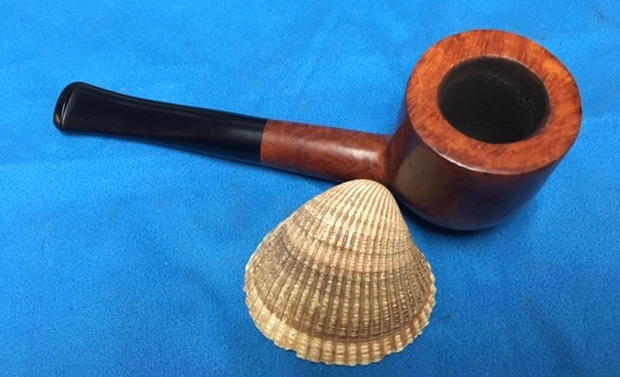
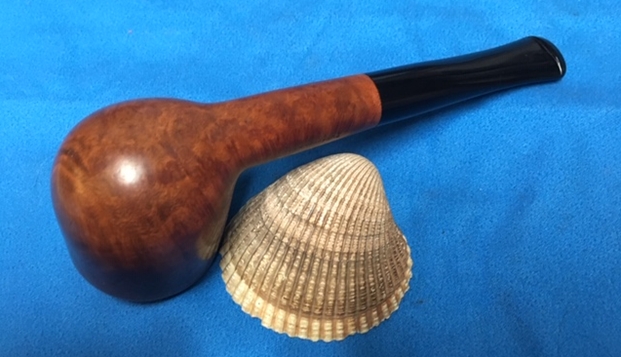
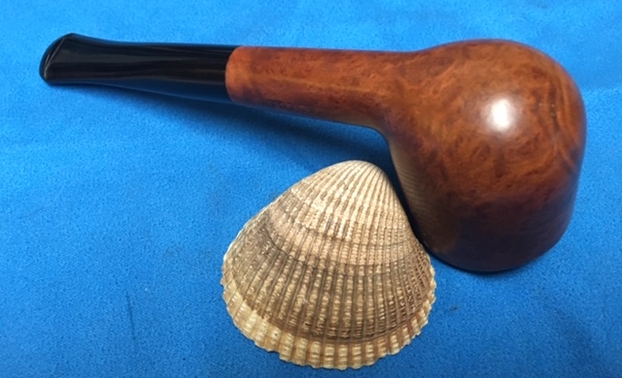
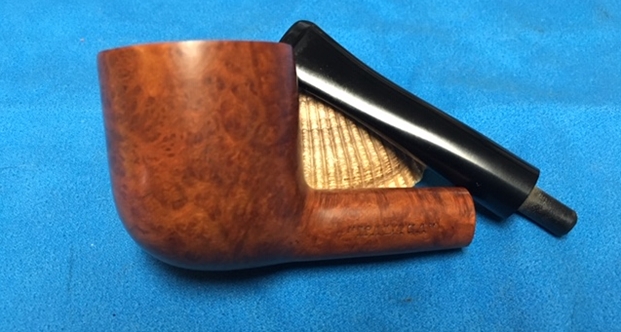
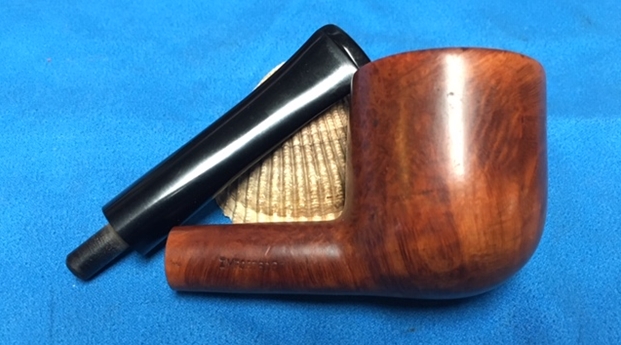
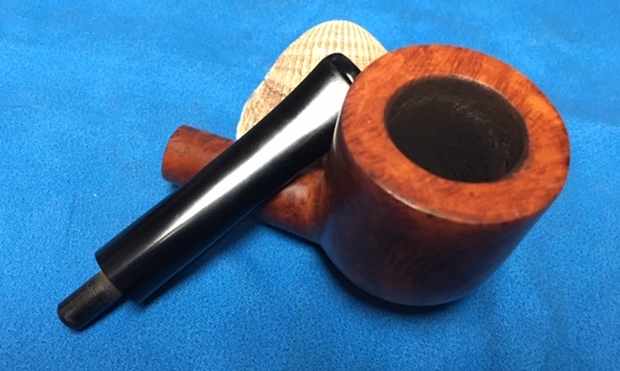
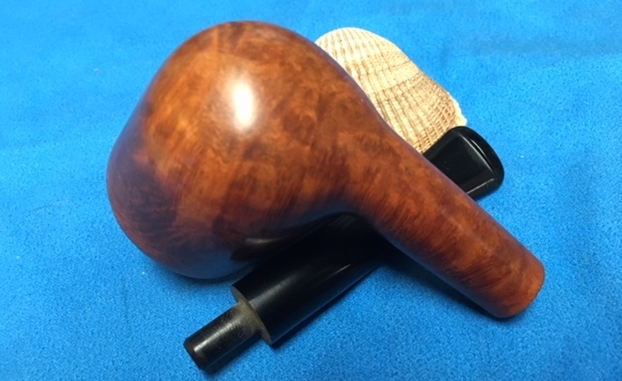
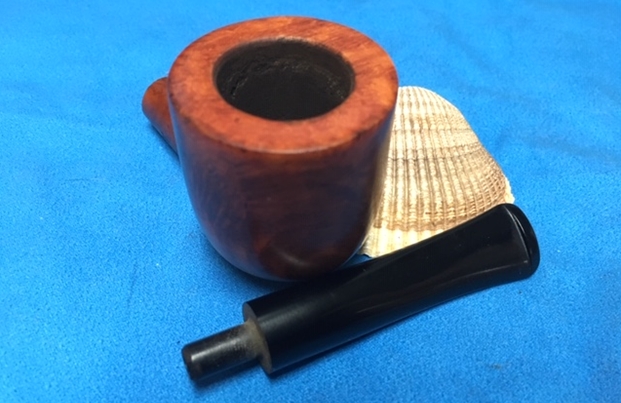
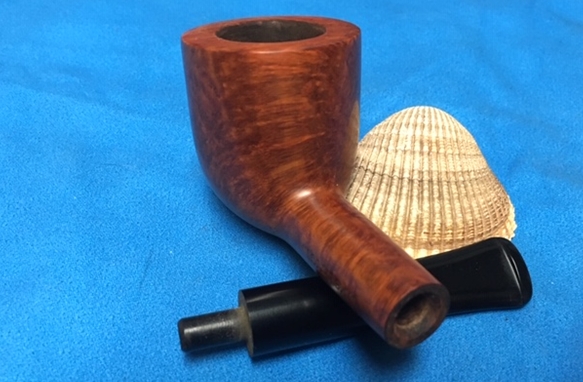
 I put the stem back on the “MALAGA” Algerian Briar Pot and took it to the buffer. I buffed the bowl and stem with Blue Diamond to polish the briar and the vulcanite. Blue Diamond does a great job on the smaller scratches that remain in both. I gave the bowl and the stem several coats of carnauba wax and buffed the pipe with a clean buffing pad to raise the shine. I hand buffed it with a microfiber cloth to deepen the shine. I am amazed at how well it turned out. The finished pipe is shown in the photos below. This is beautiful smooth finished “MALAGA” Algerian Briar Pot and the vulcanite taper stem combine to give the pipe a great look. The dimensions of the pipe are Length: 5 ½ inches, Height: 1 ½ inches, Outside diameter of the bowl: 1 3/8 inches, Chamber diameter: 7/8 of an inch. The weight of the pipe is 1.09 ounces/31 grams. This is another pipe that I will be putting on the rebornpipes online store in the American Pipe Makers and Pipemaking Companies Section shortly, if you are interested in adding it to your collection. Thanks for walking through the restoration with me on this beauty!
As always, I encourage your questions and comments as you read the blog. Thanks to each of you who are reading this blog. Remember we are not pipe owners; we are pipe men and women who hold our pipes in trust until they pass on into the trust of those who follow us.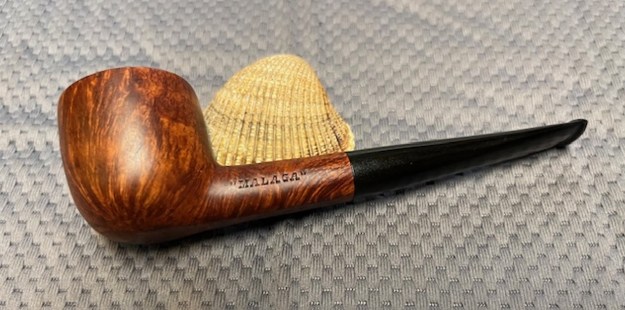





 rebornpipes