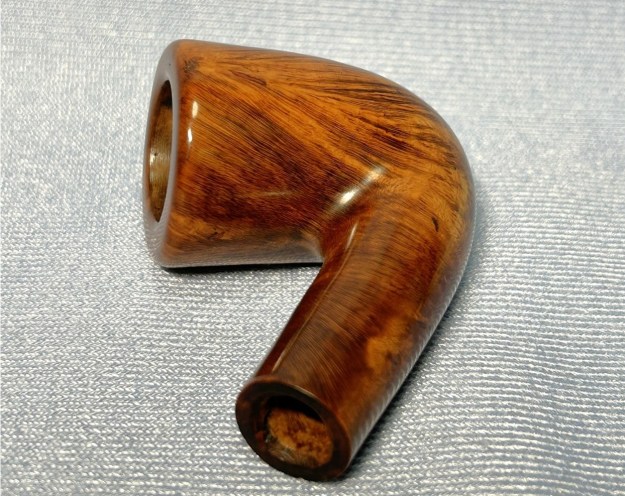
Tag Archives: Kenneth Lieblich article

Spiffing Up a NOS Kriswill Bulldog


Blog by Kenneth Lieblich

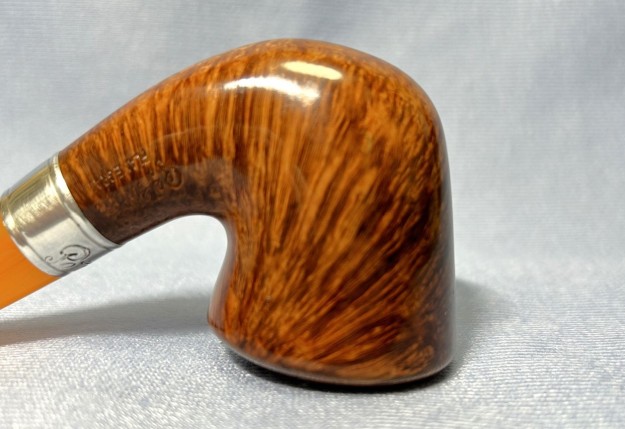
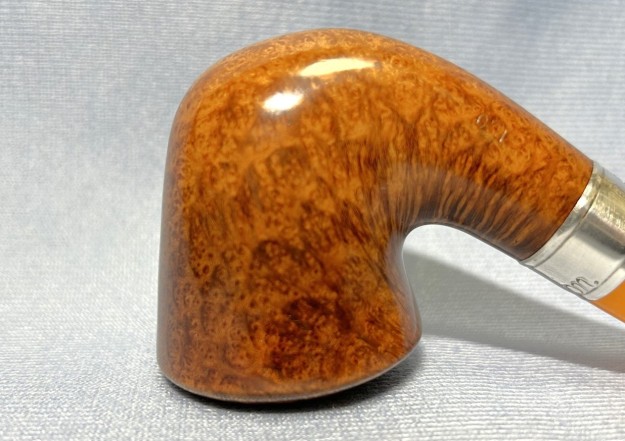
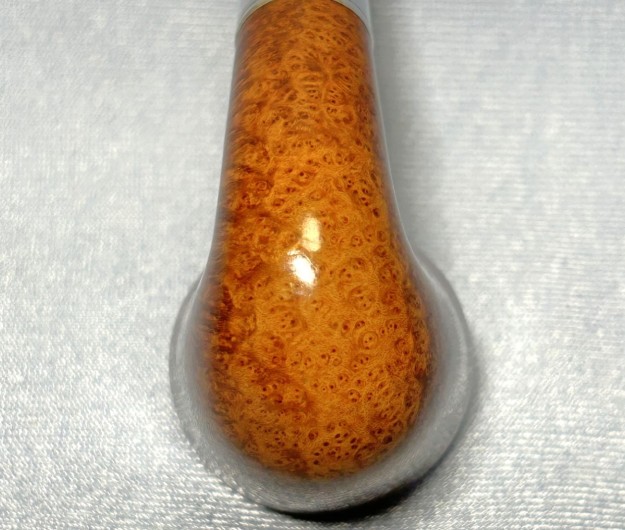
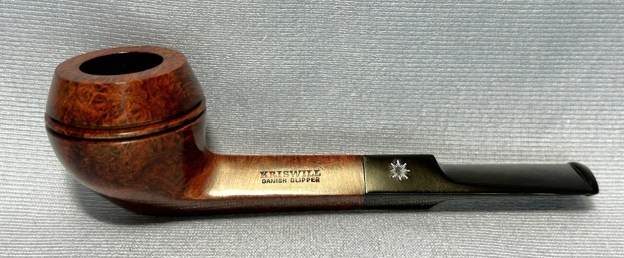
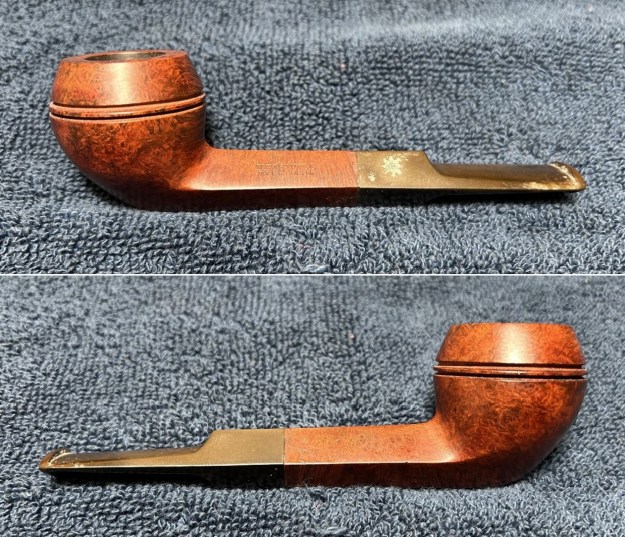
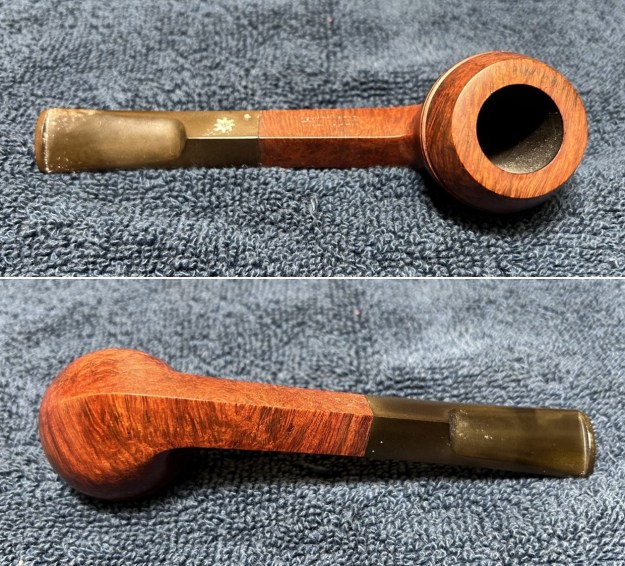
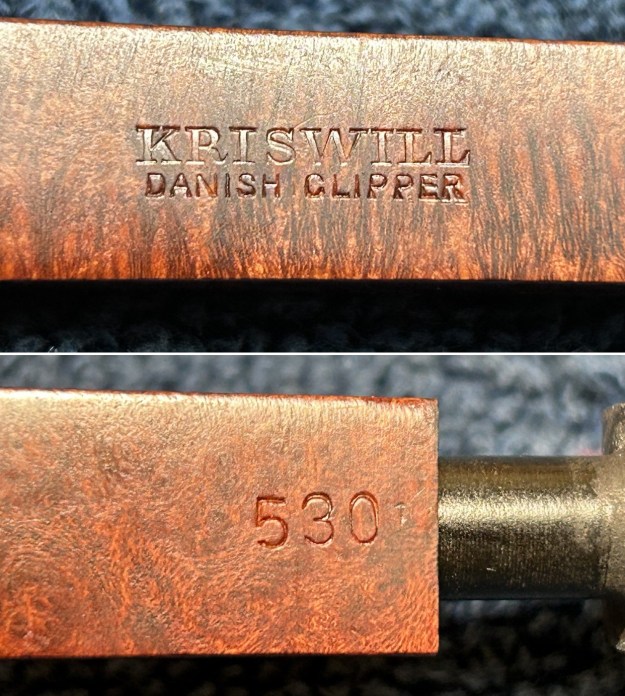
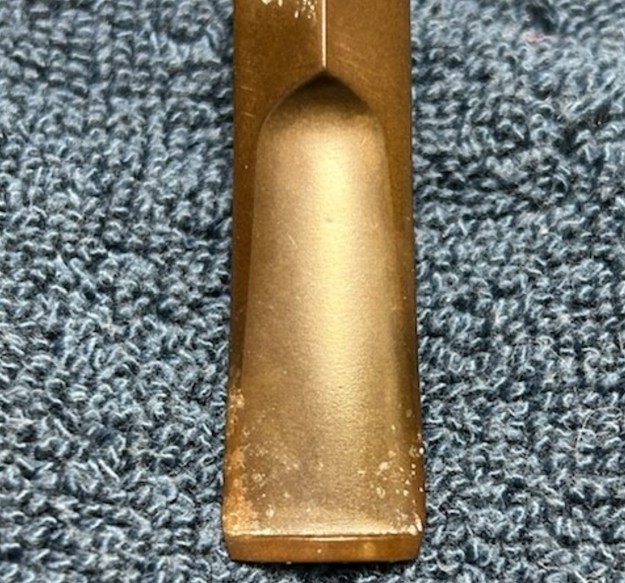
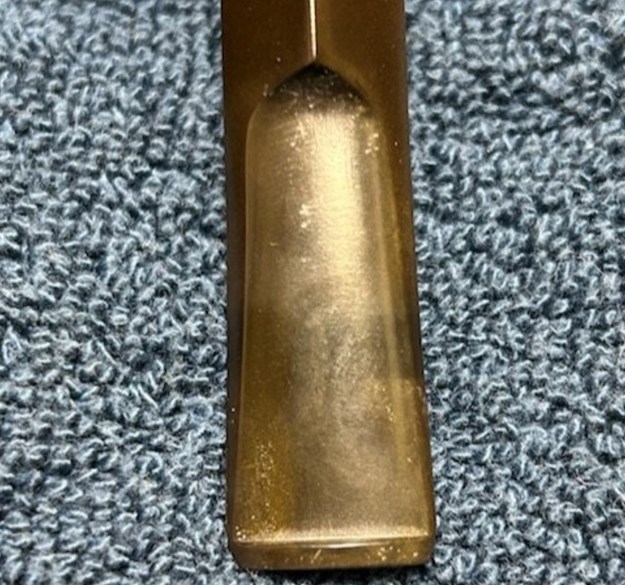
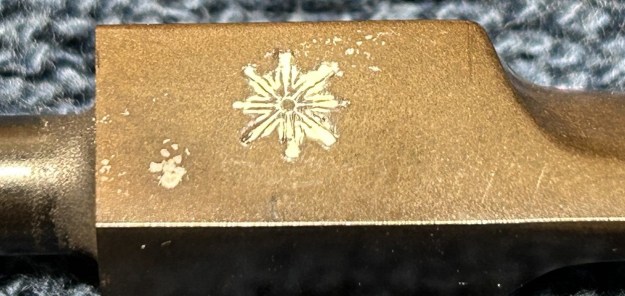
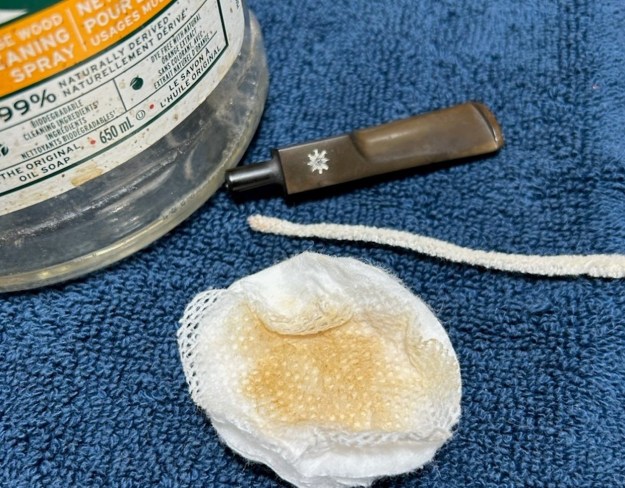
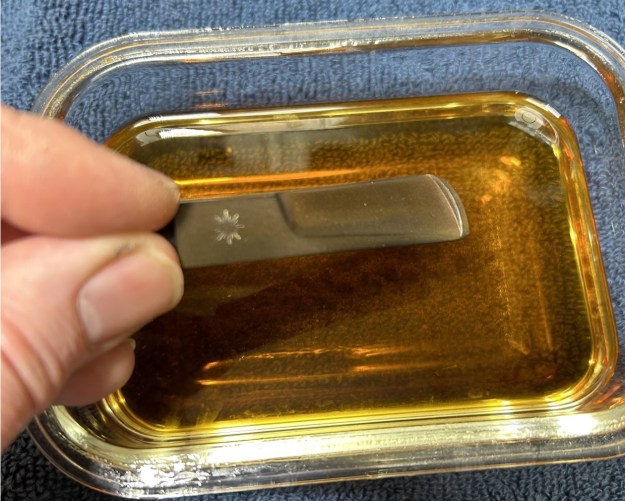
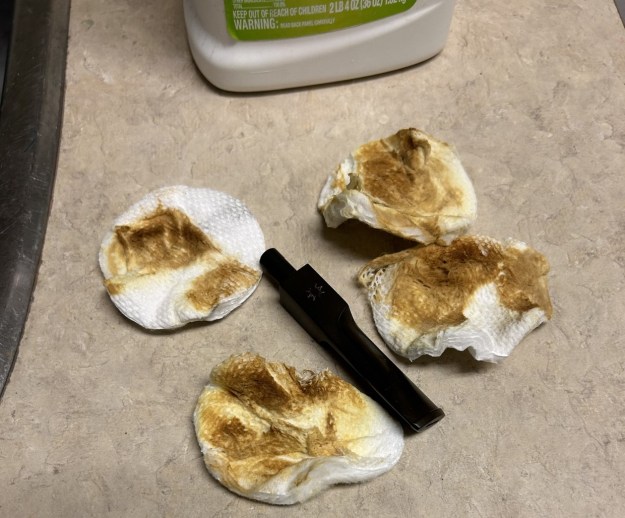
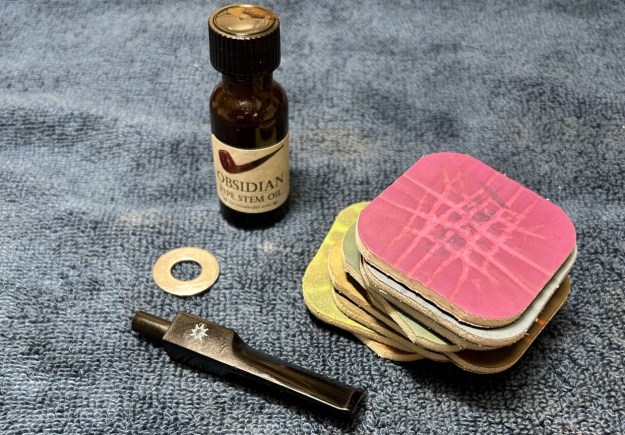
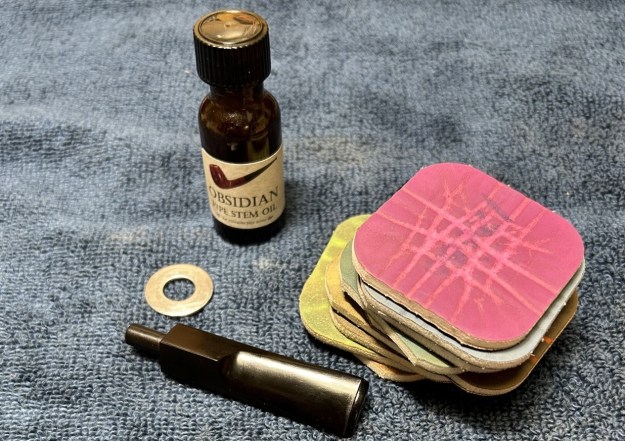
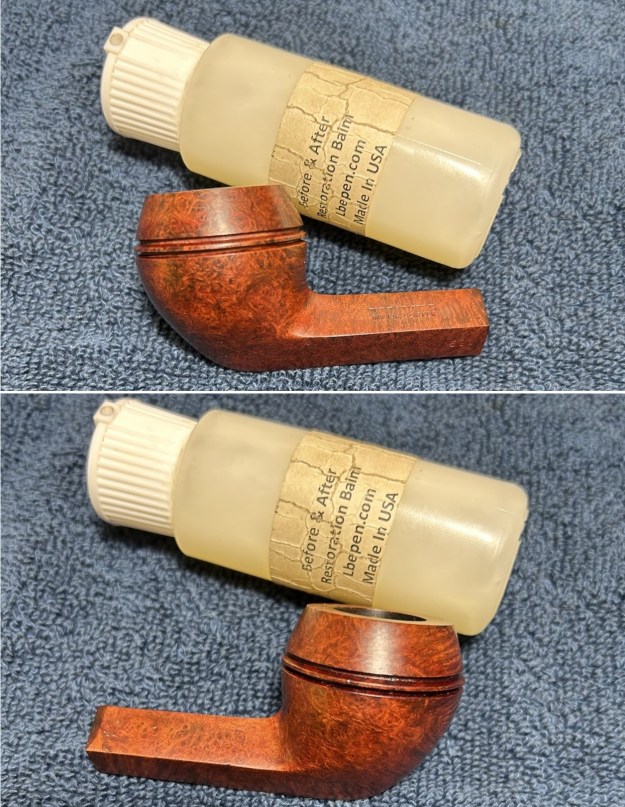
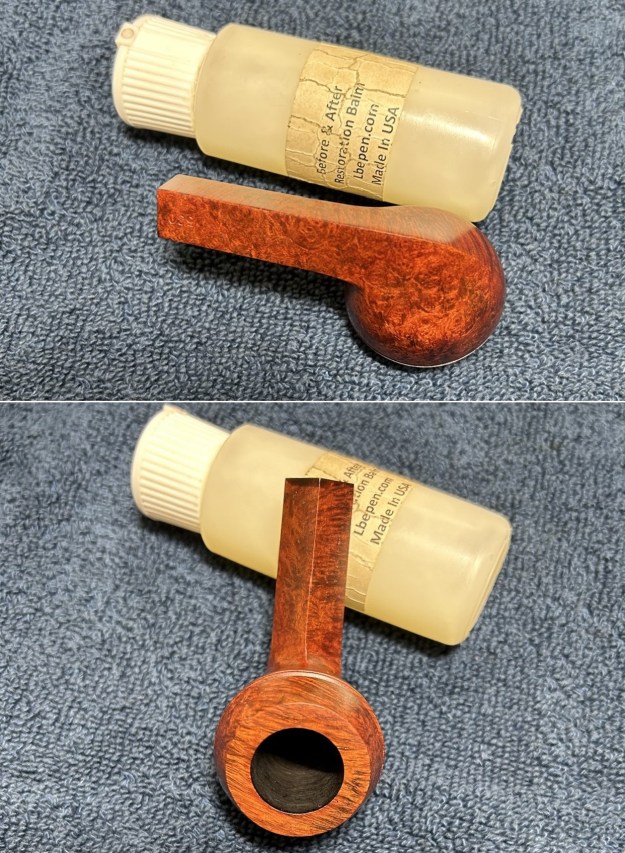
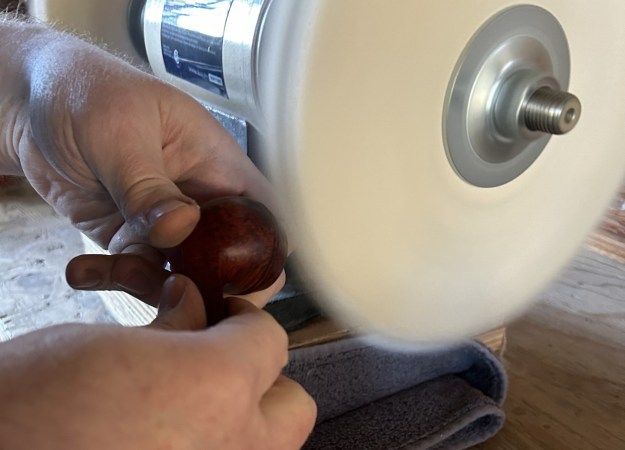
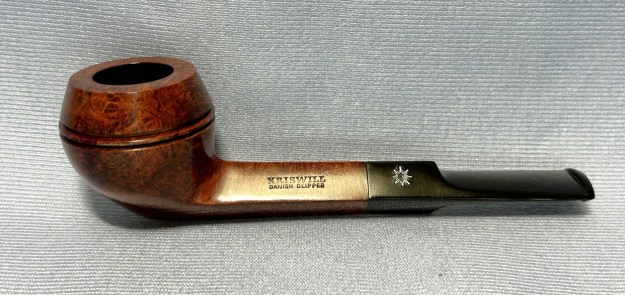
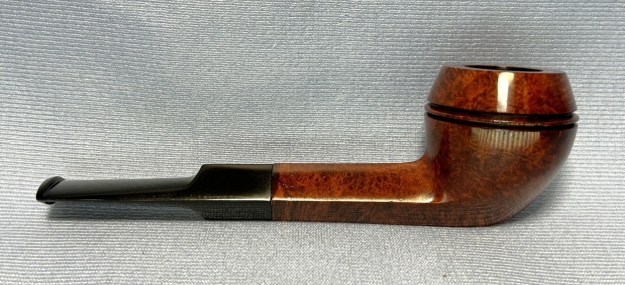
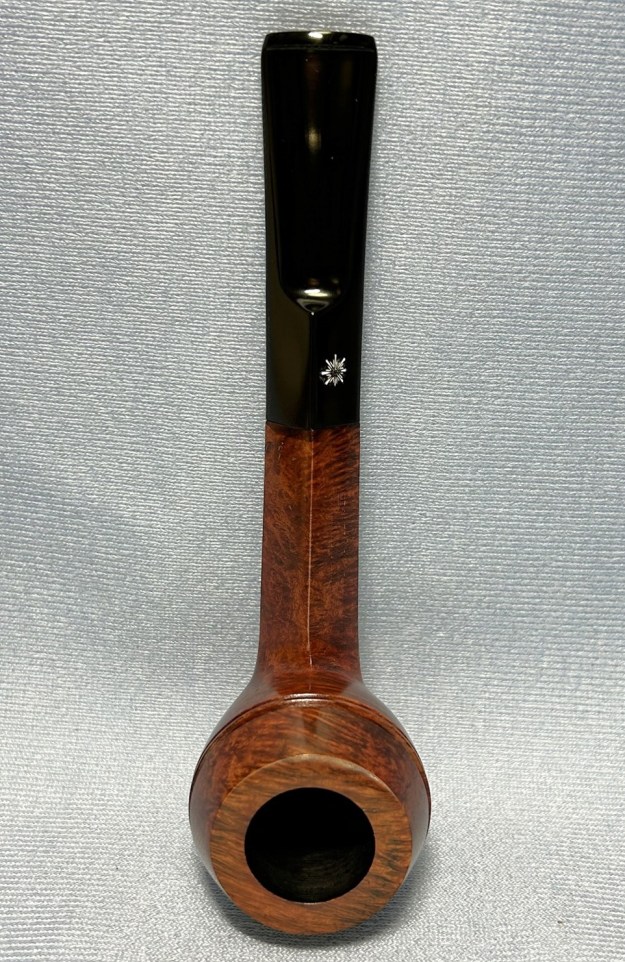
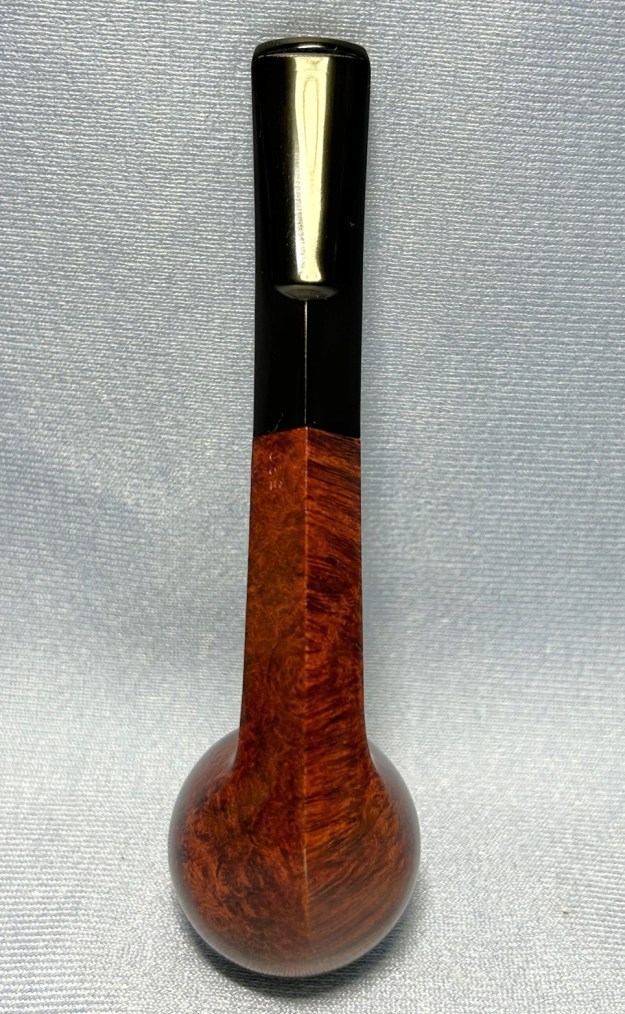
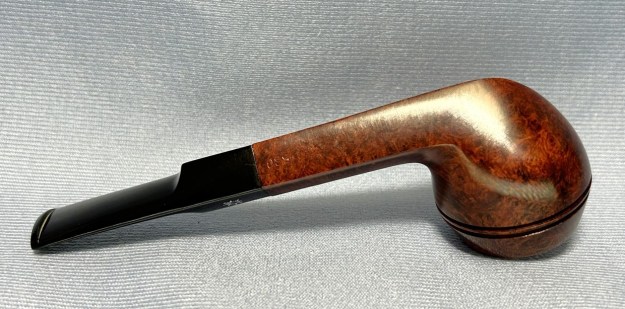
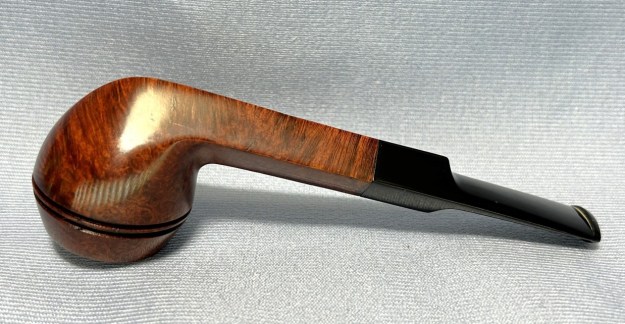
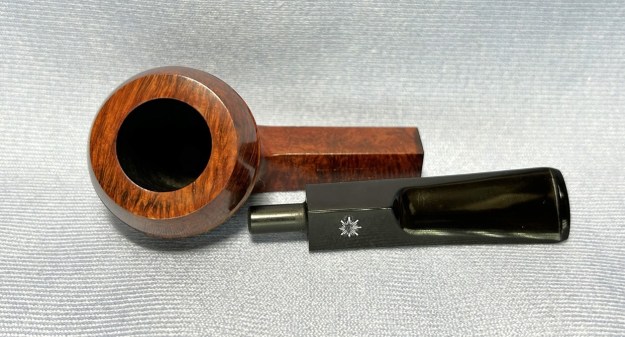
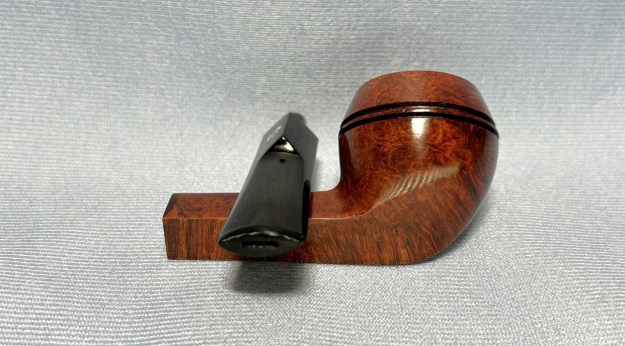
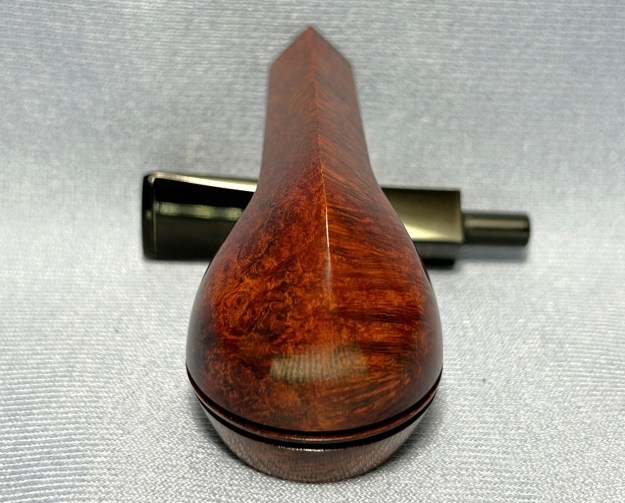
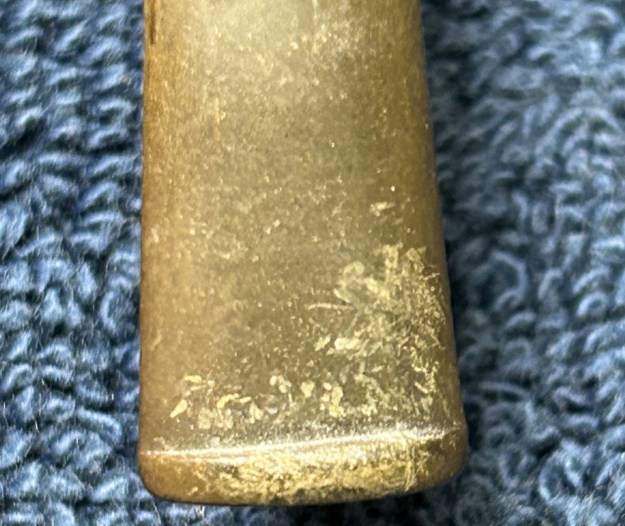
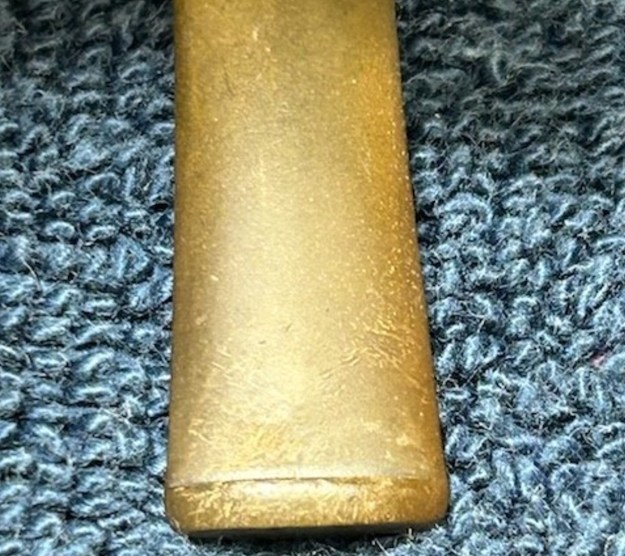
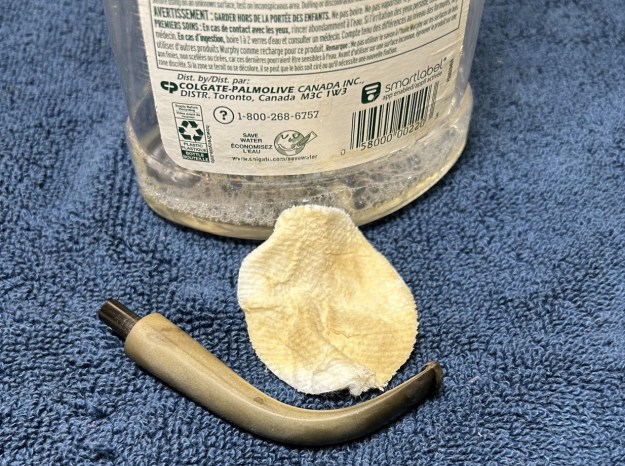
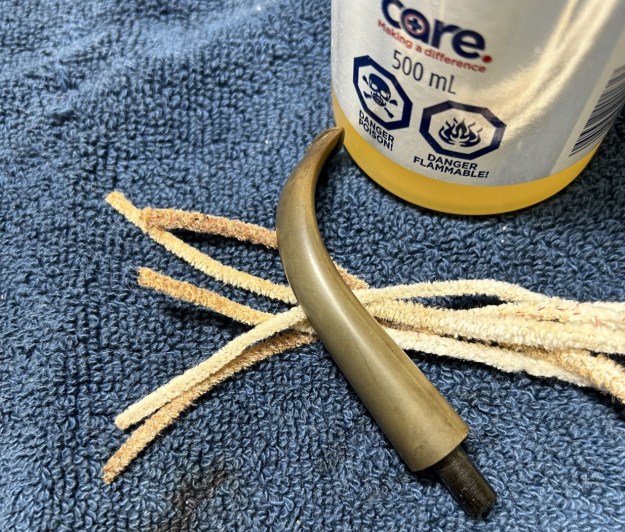
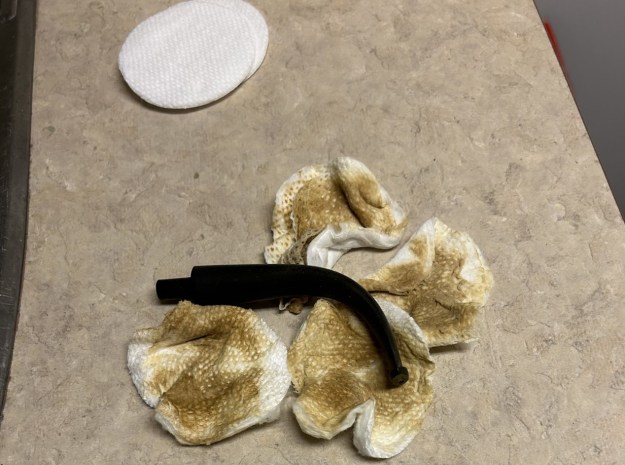
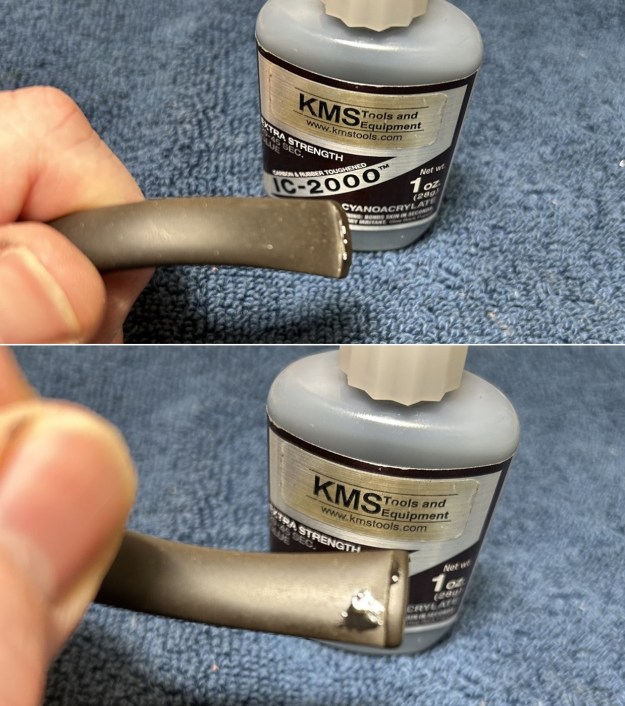
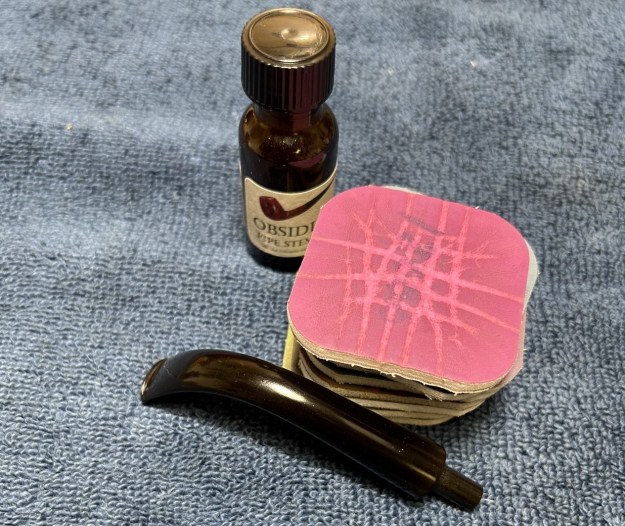
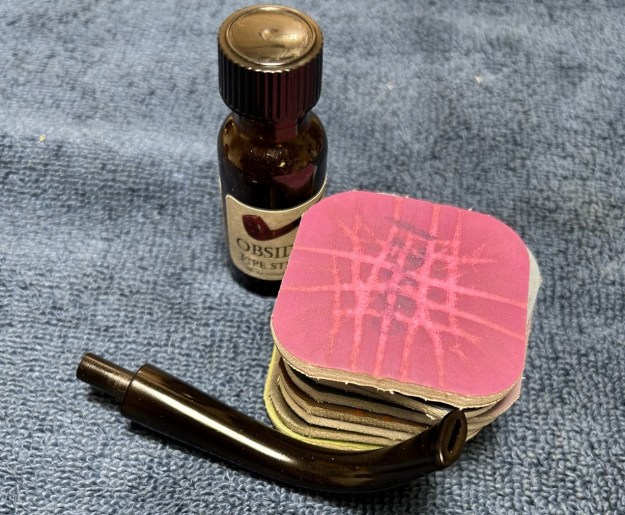
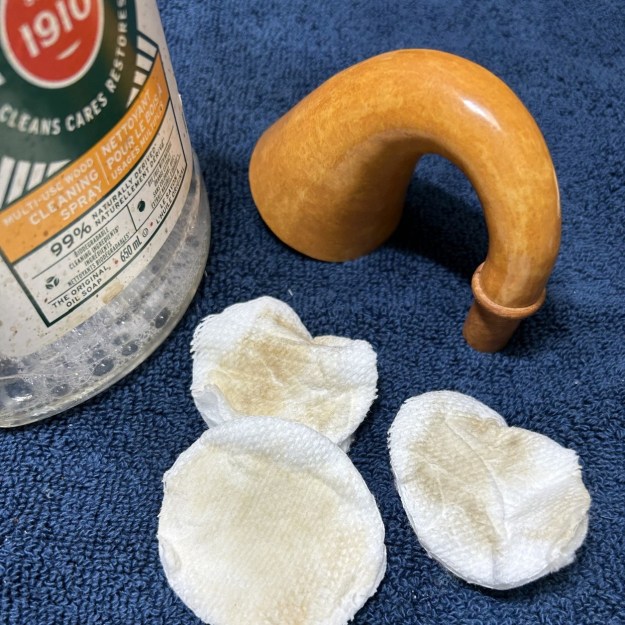
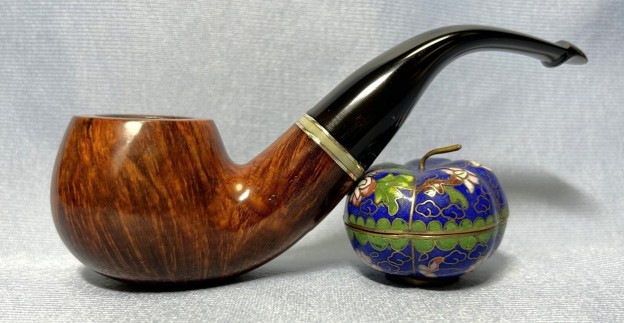
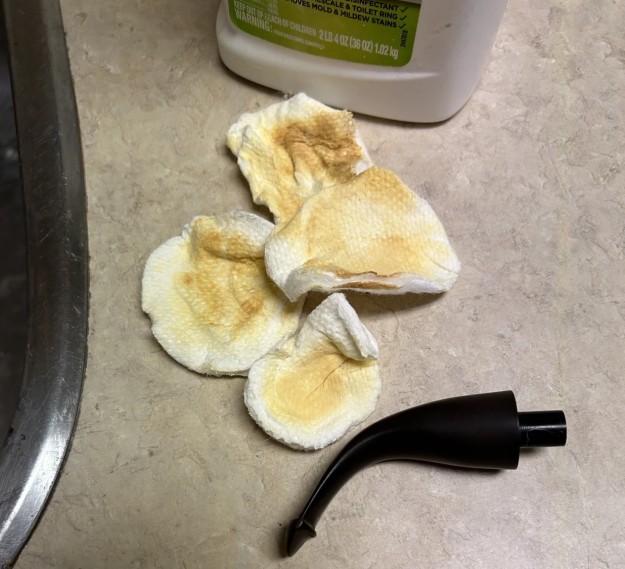
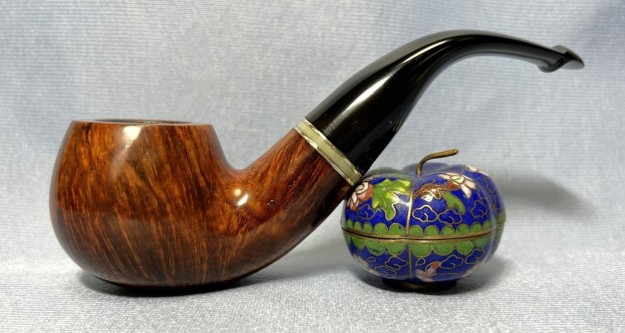
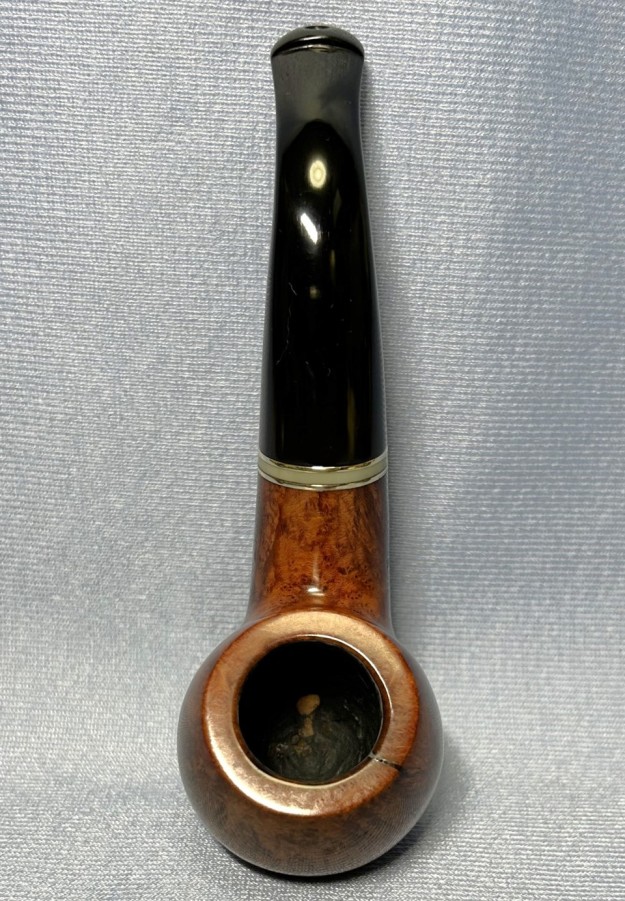
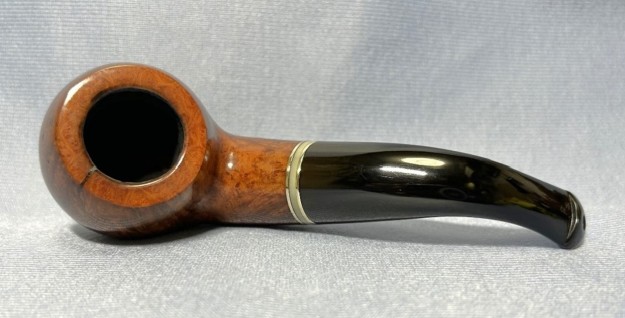
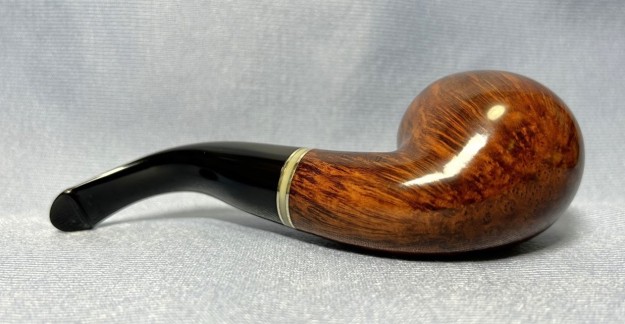
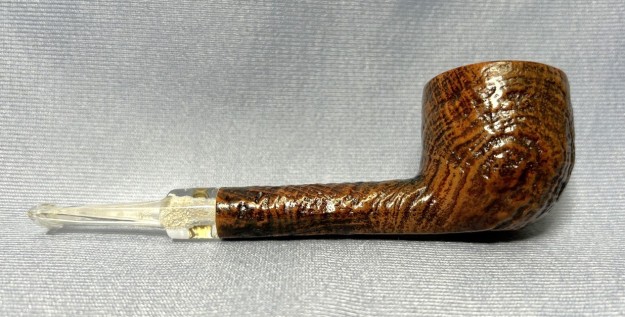
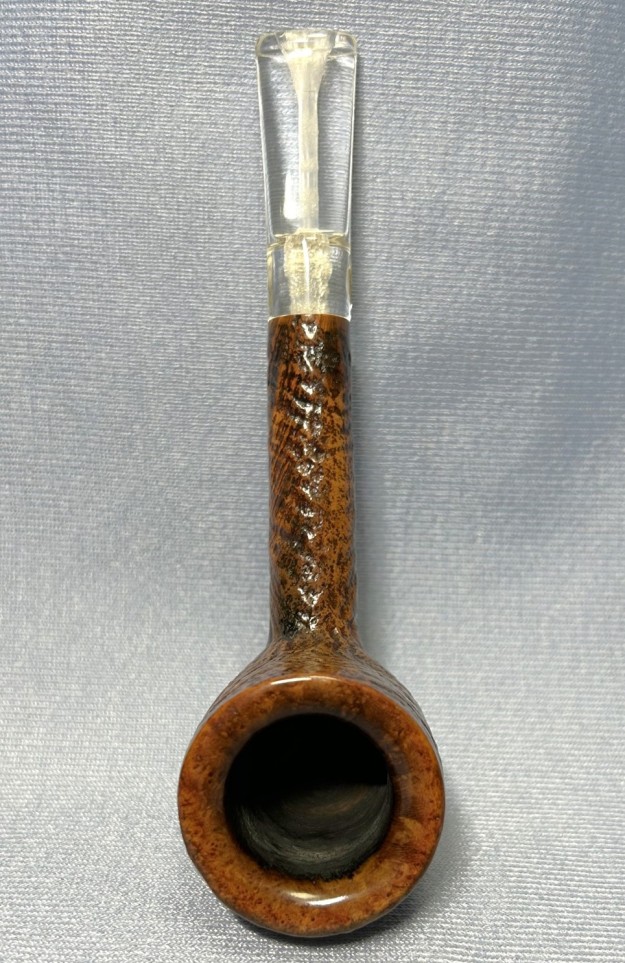
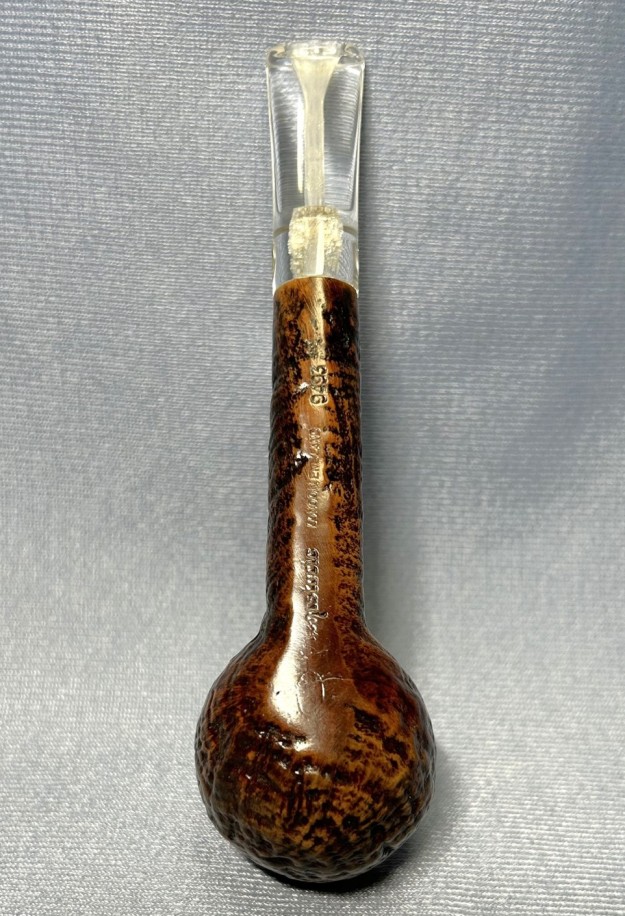
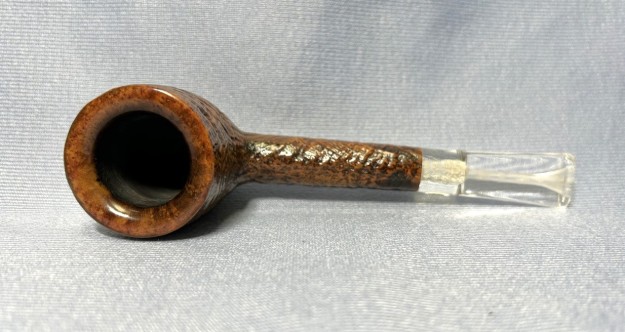
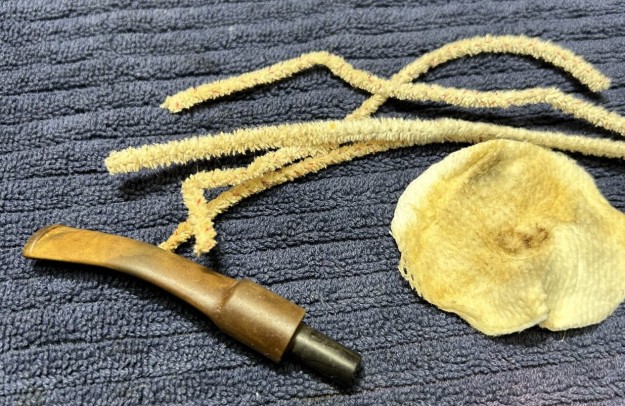
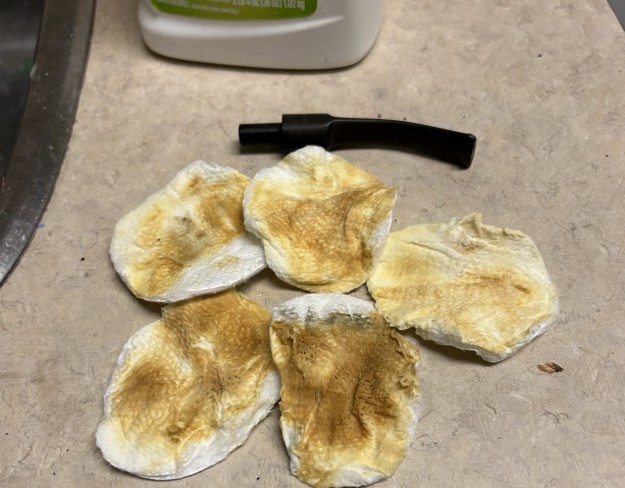
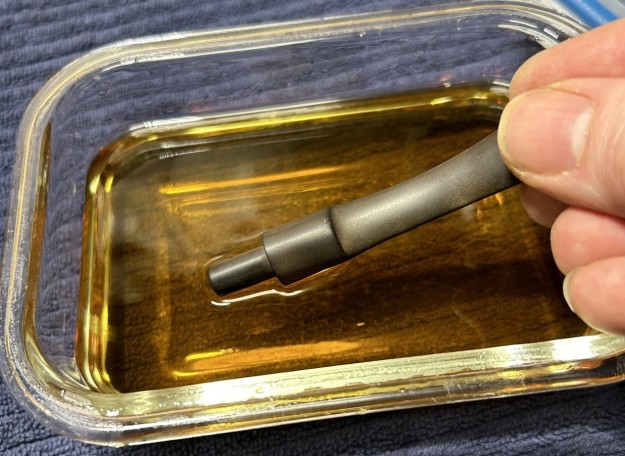
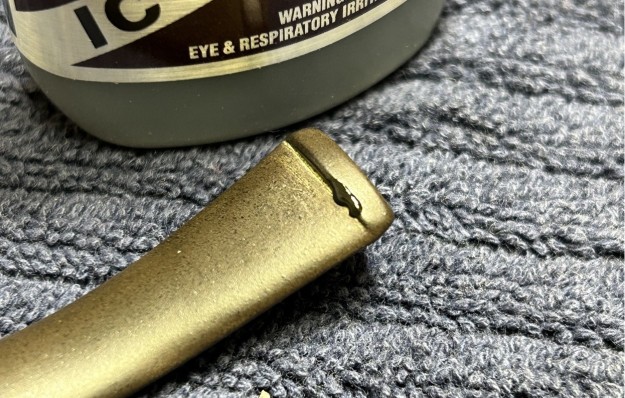
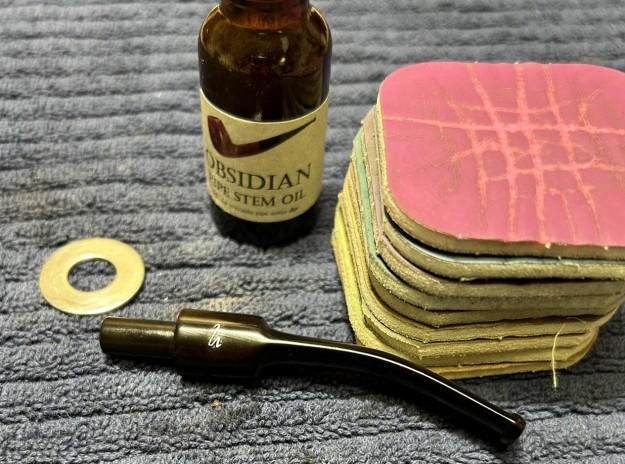
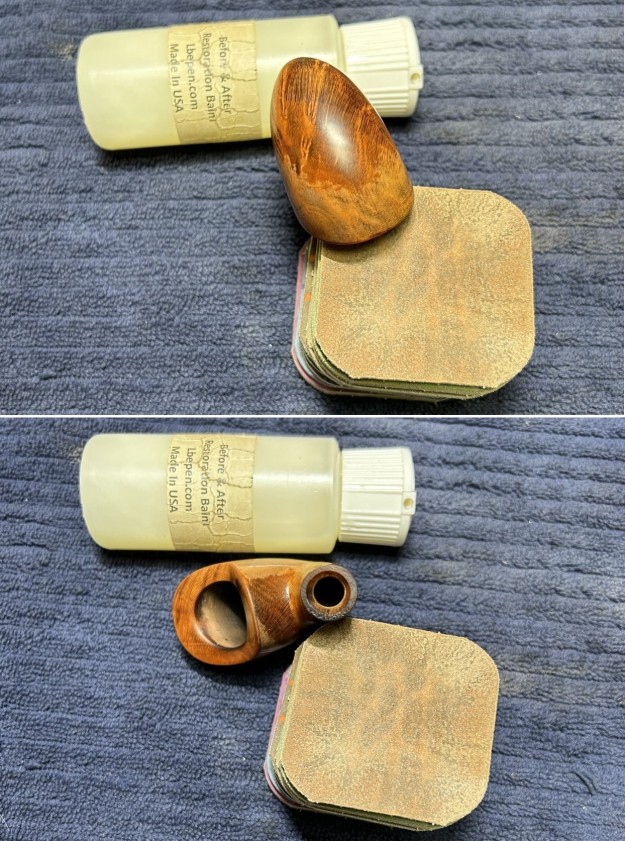
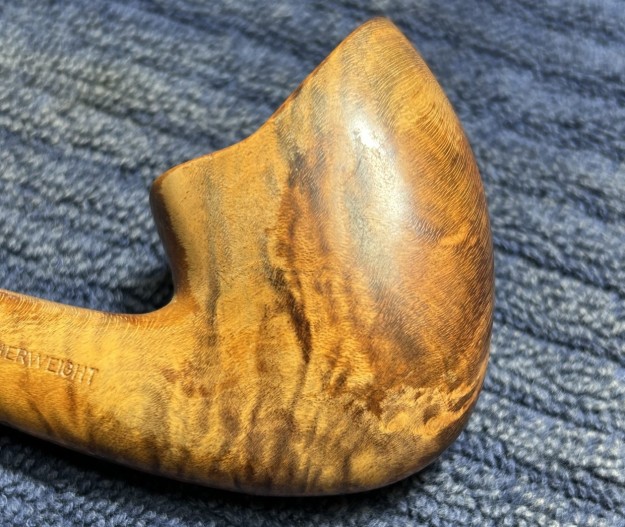
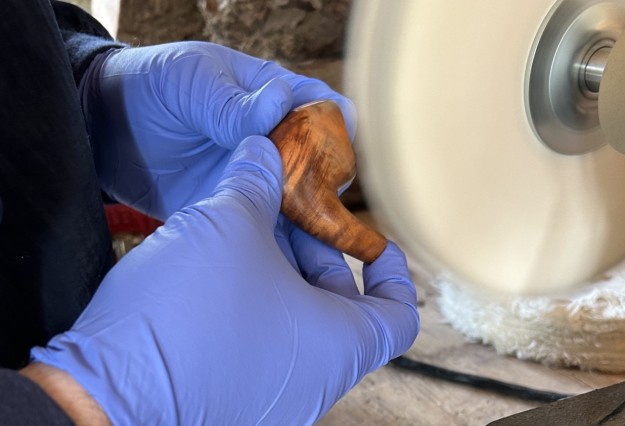
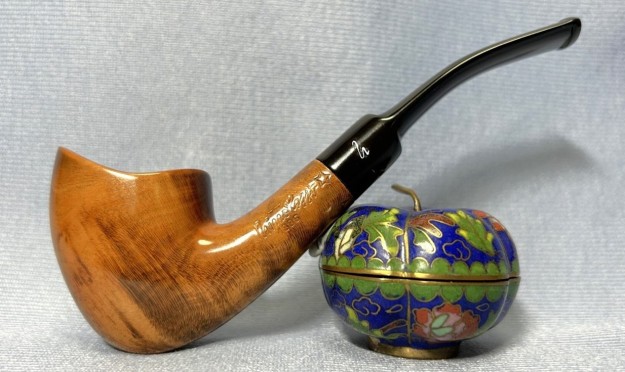
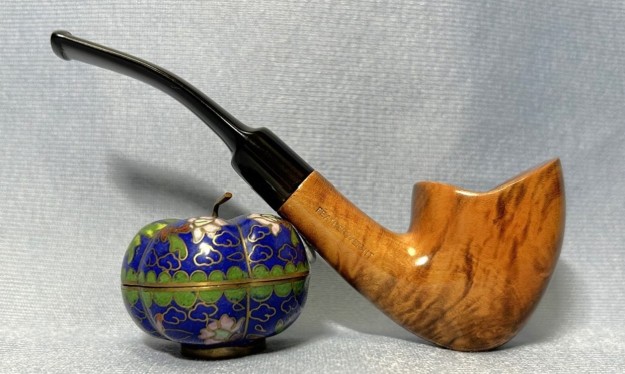
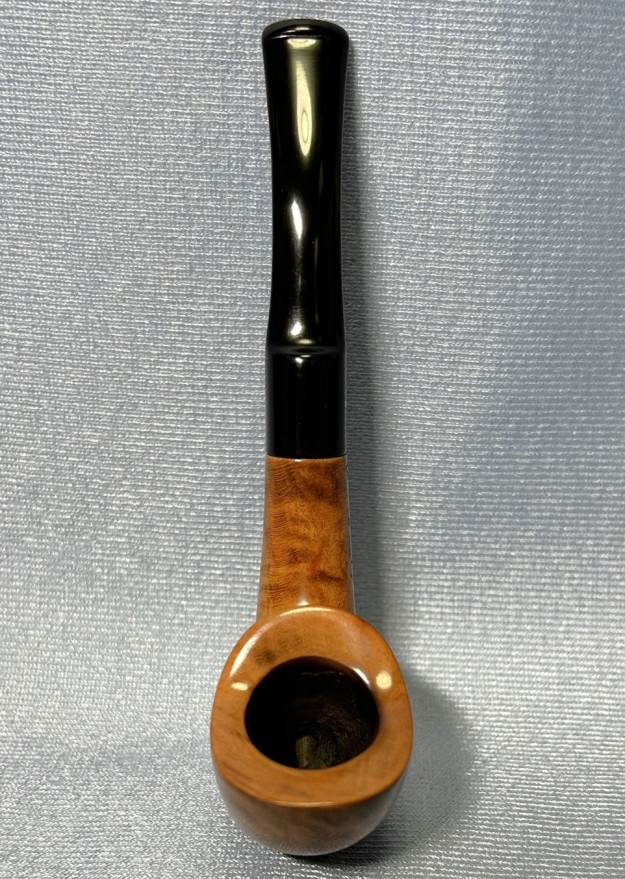
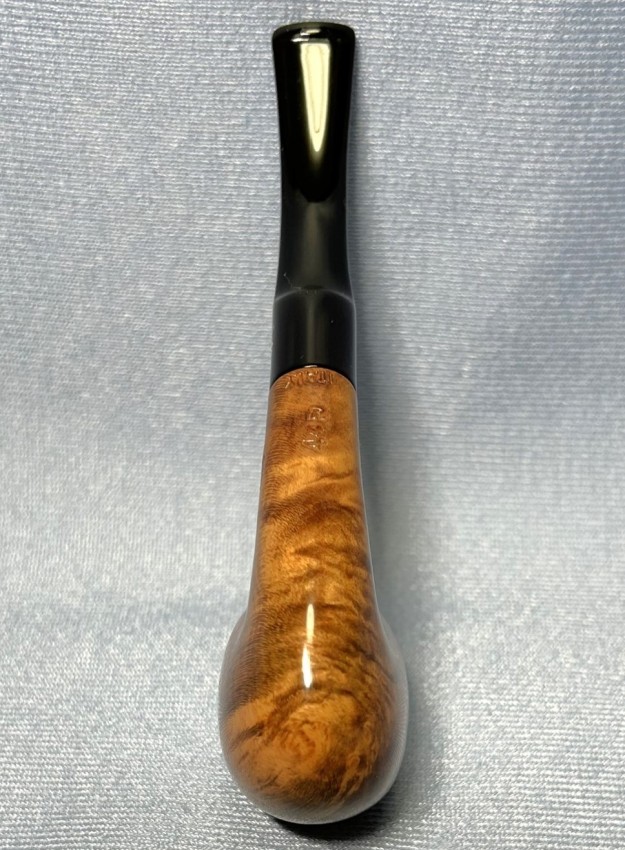
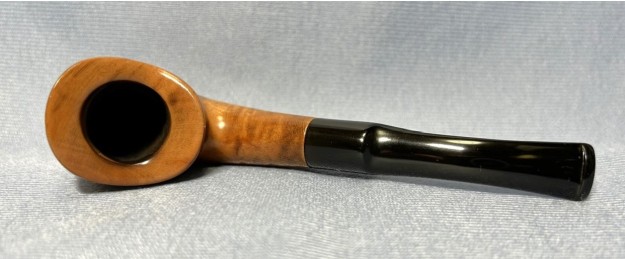
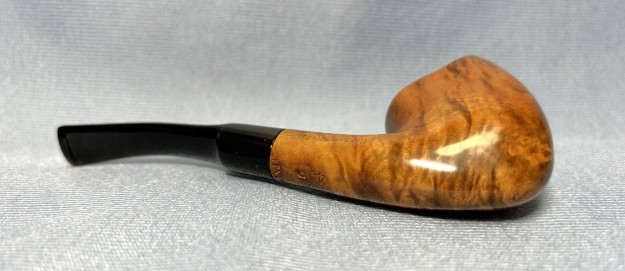
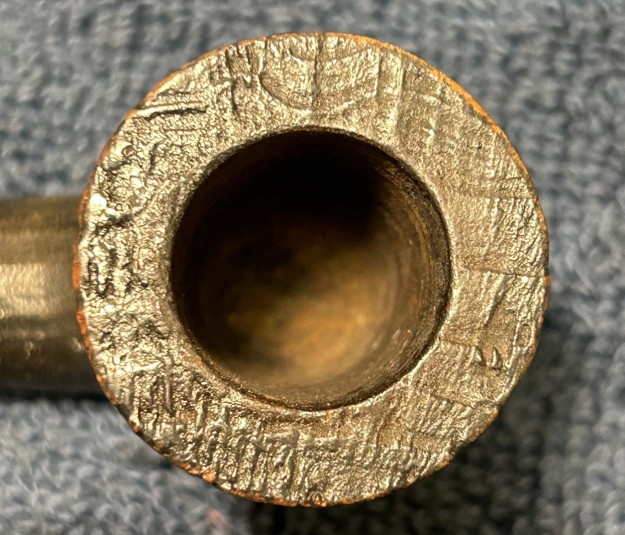
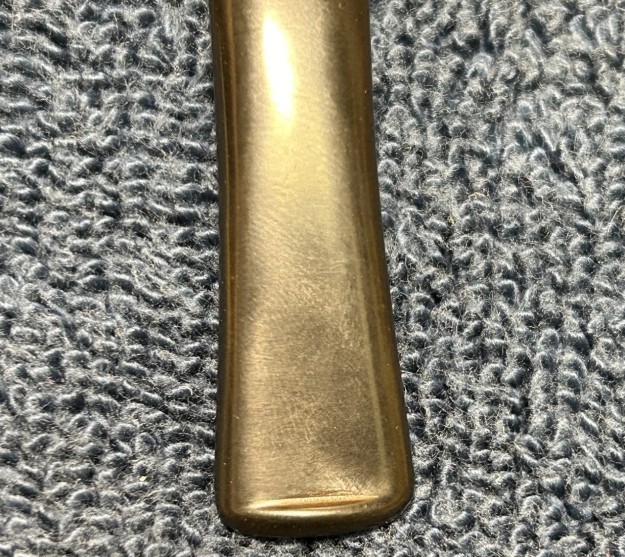
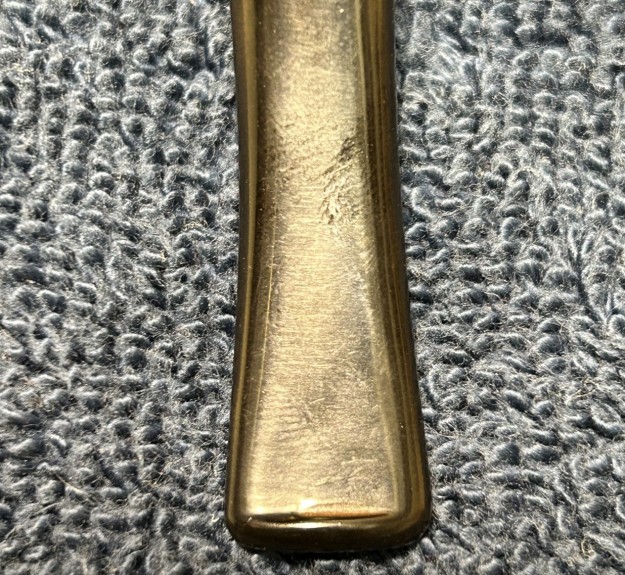
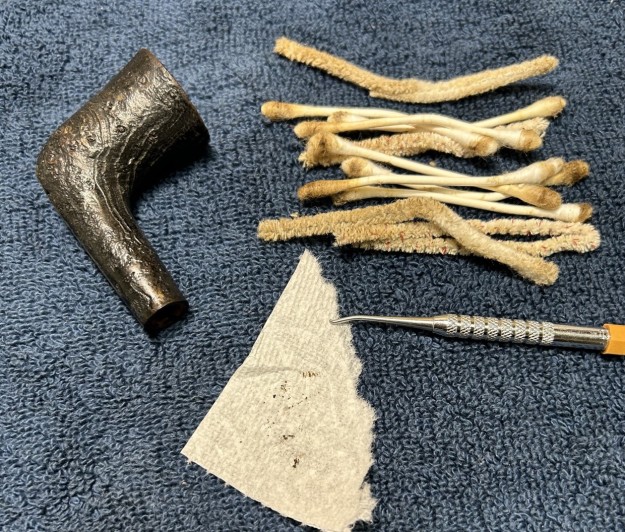
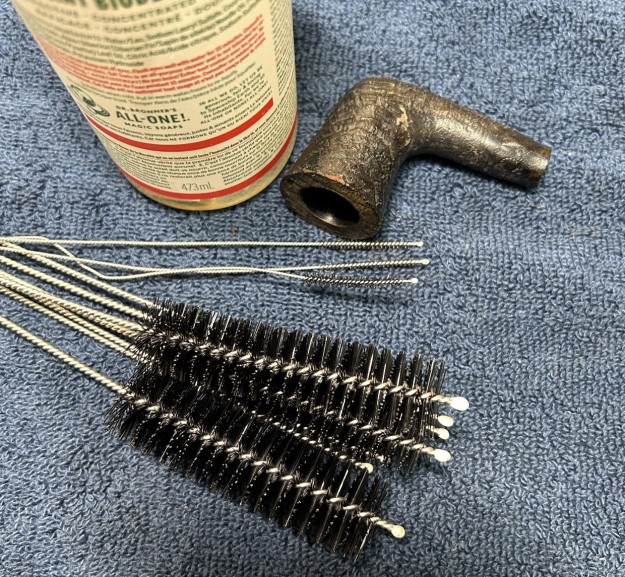
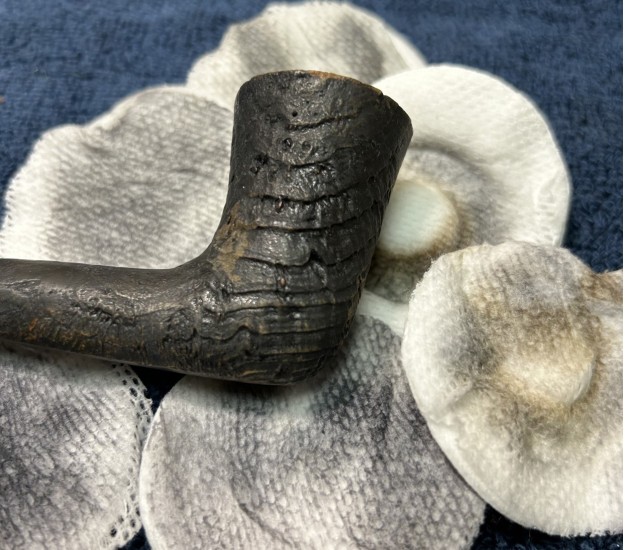
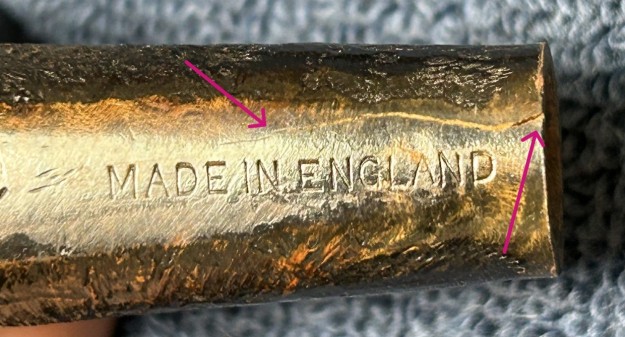
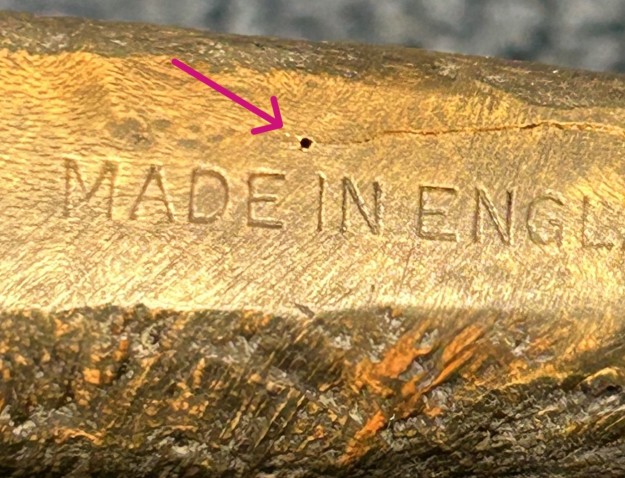
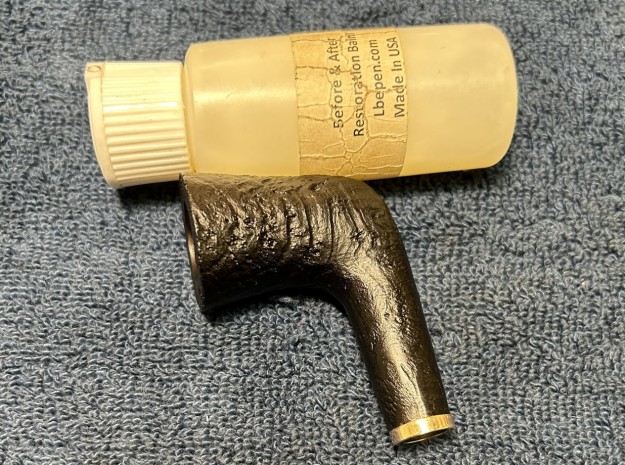
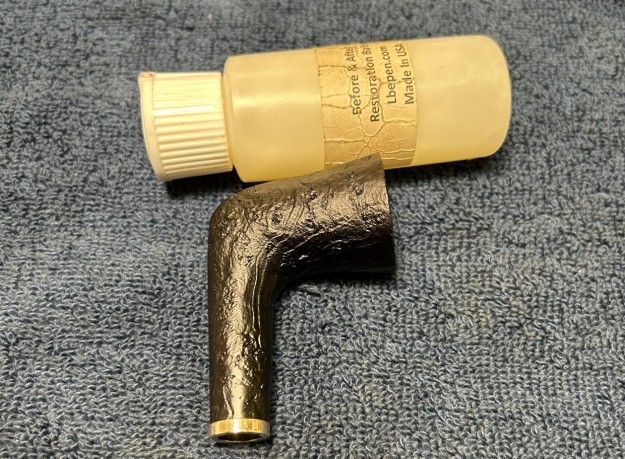
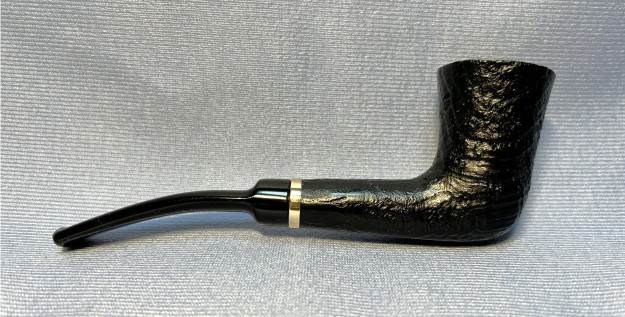
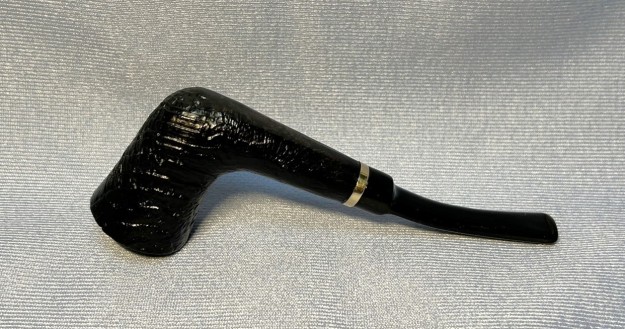
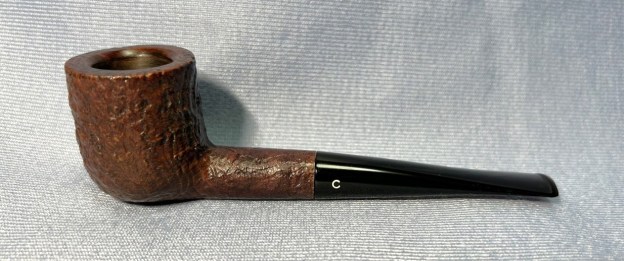
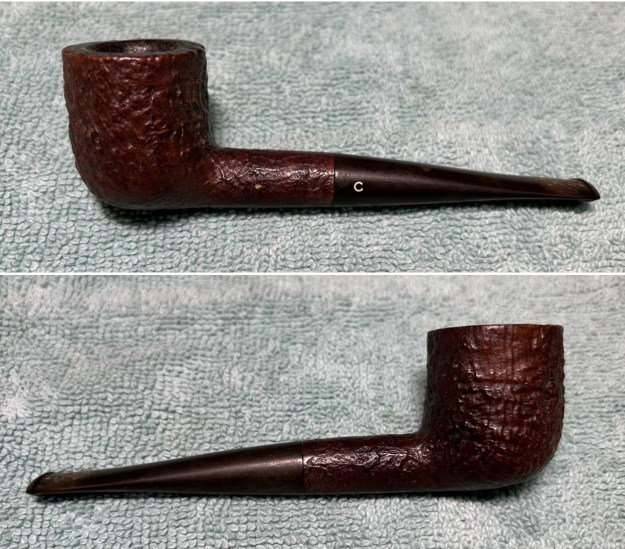
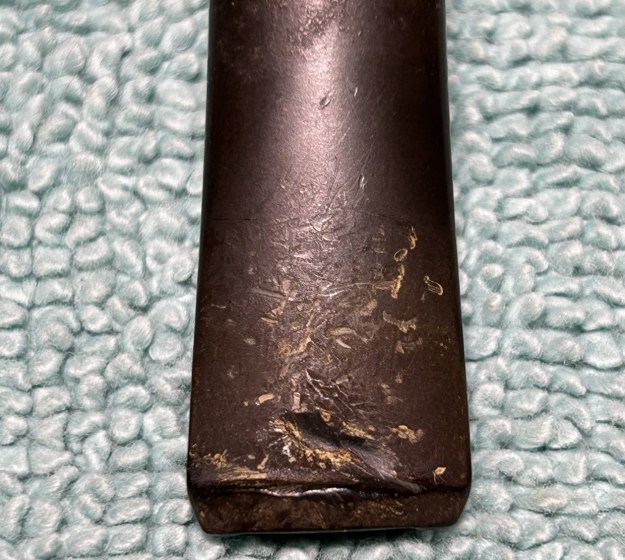
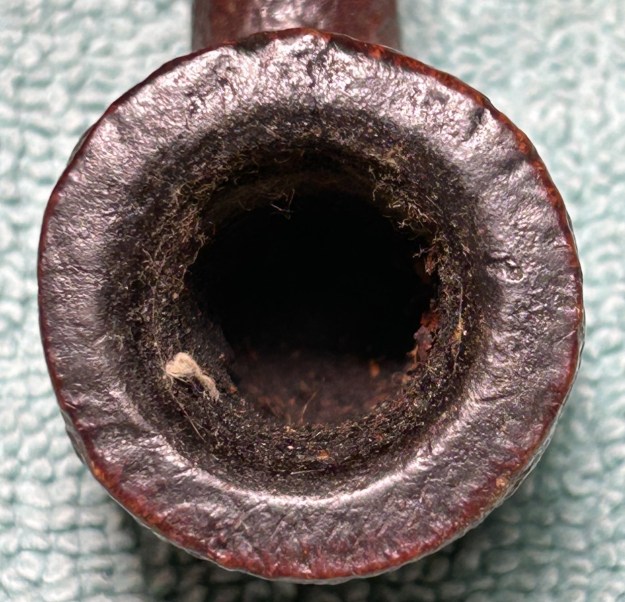
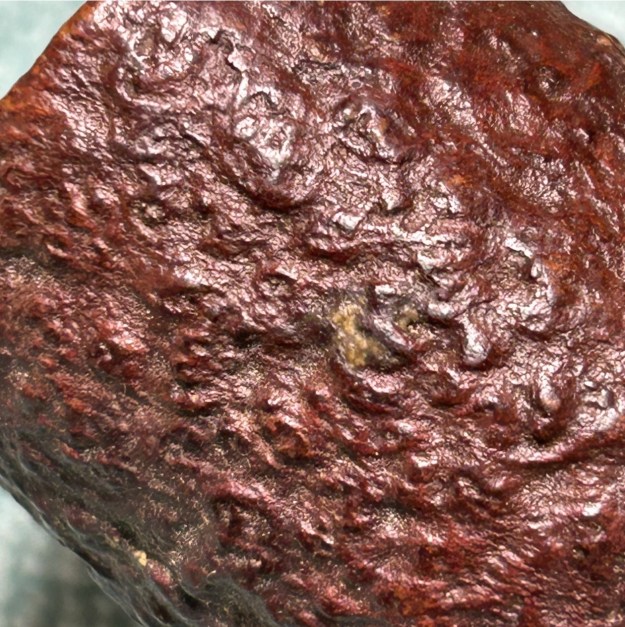
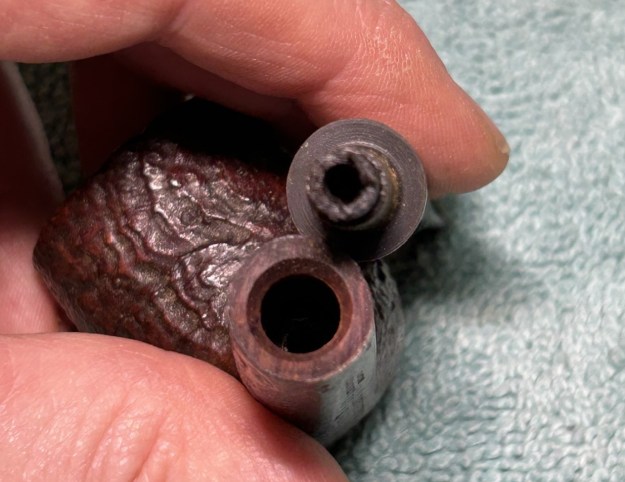
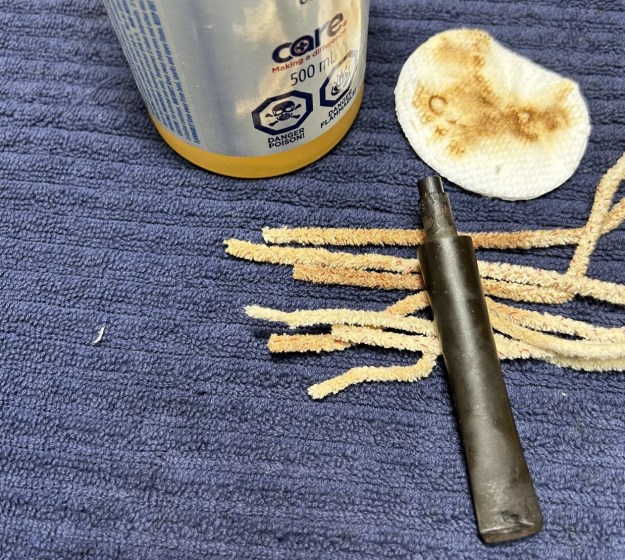
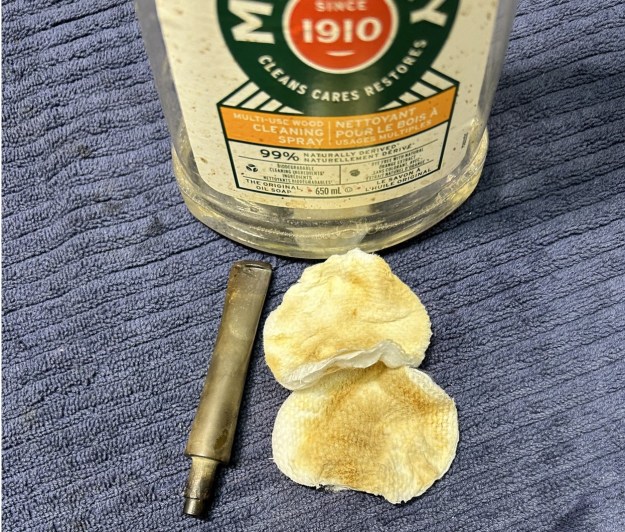
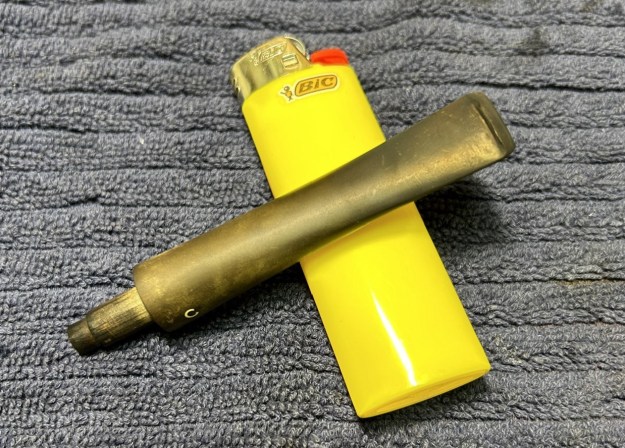
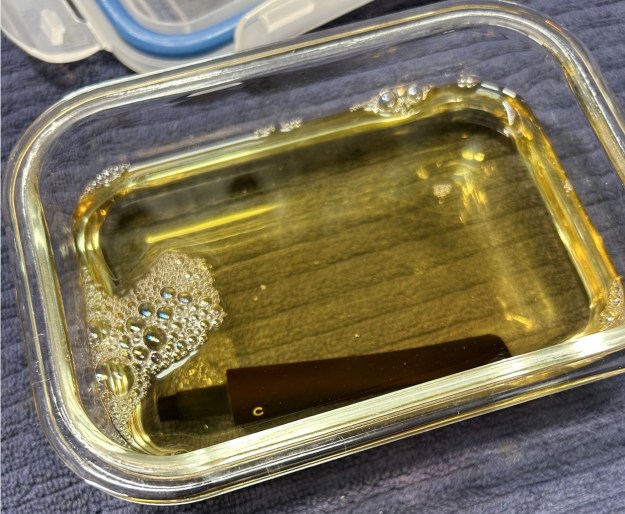
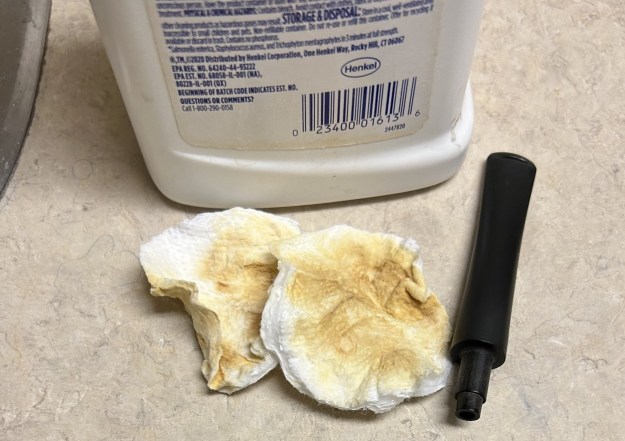
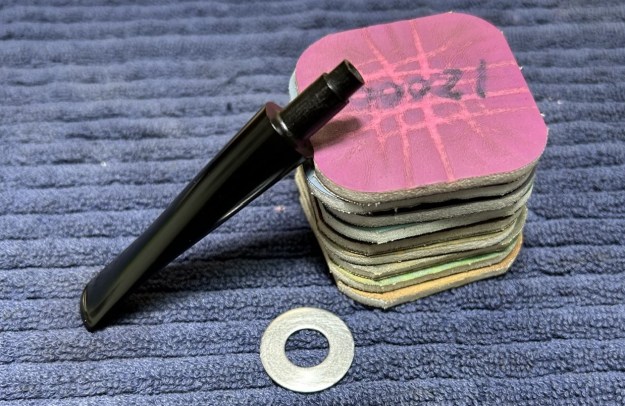
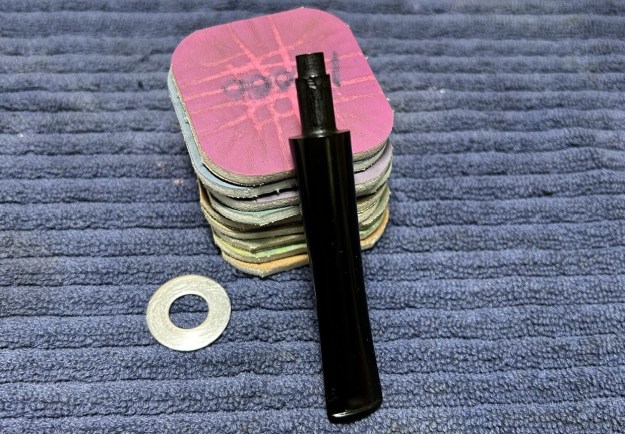
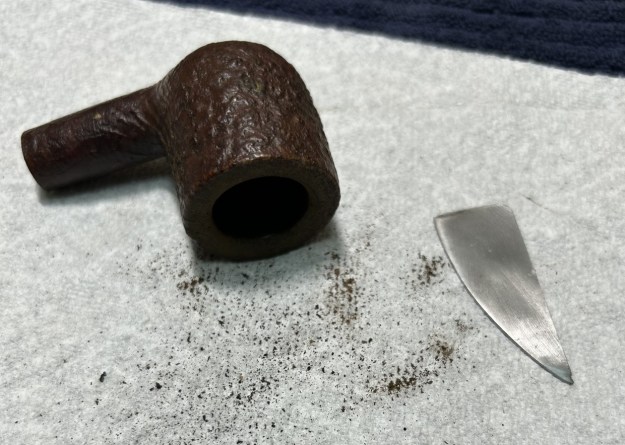
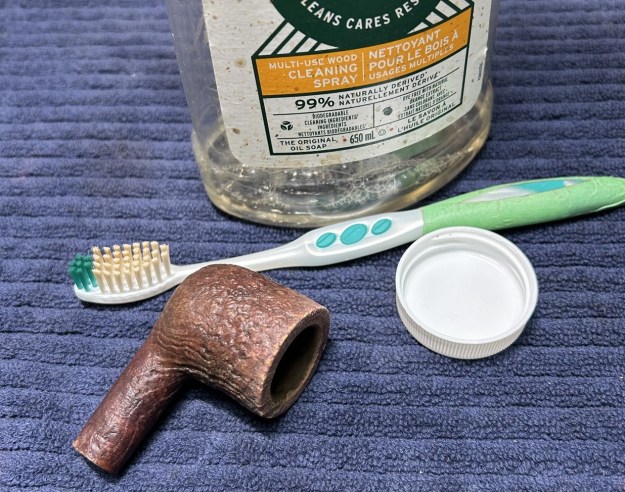
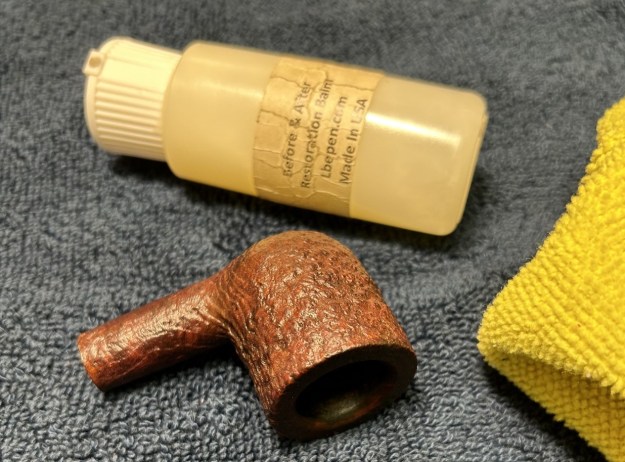
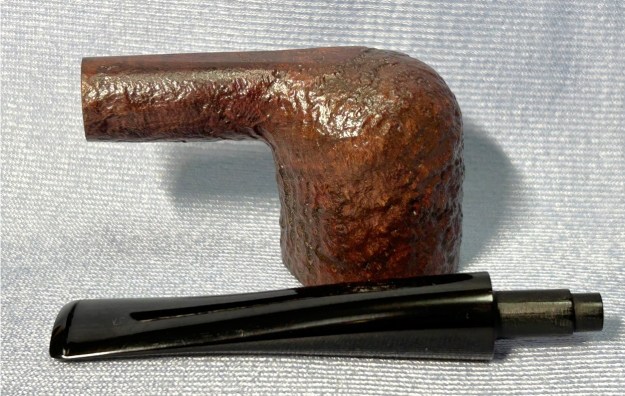
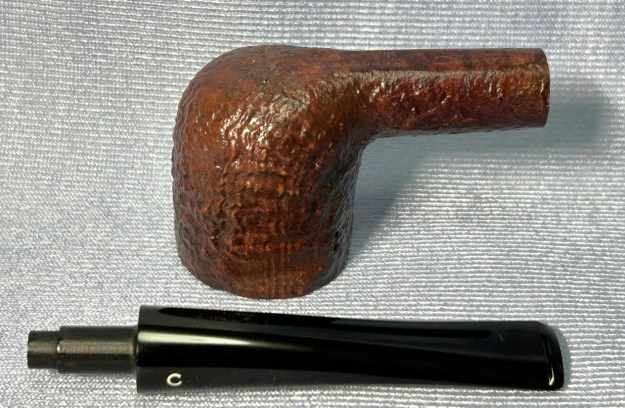
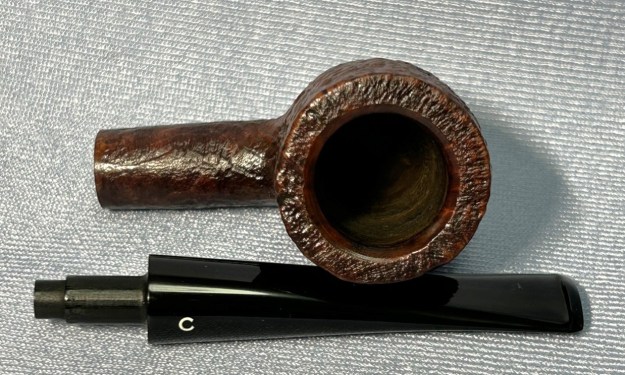
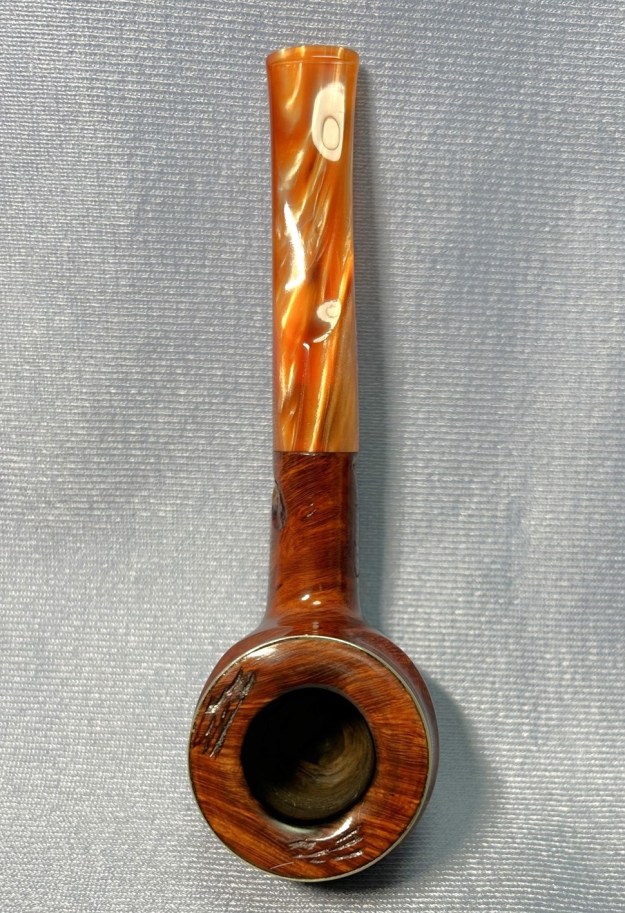
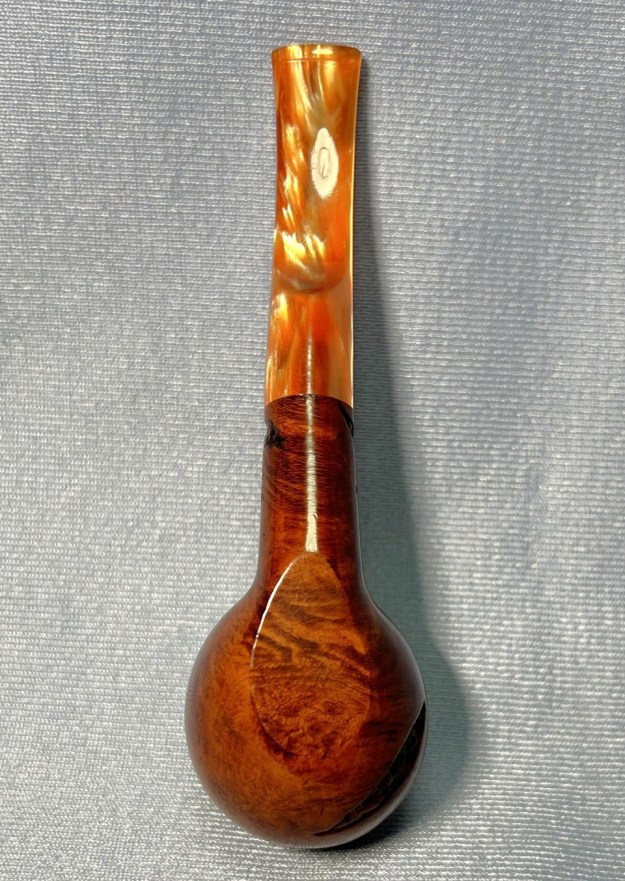
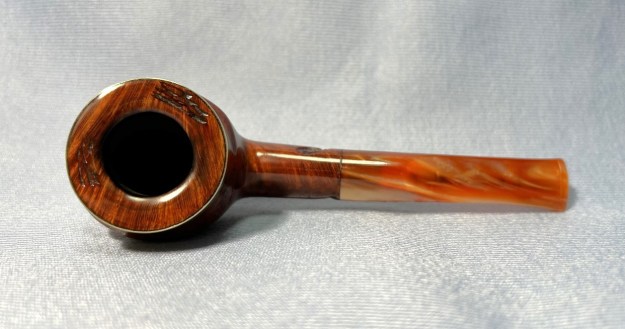
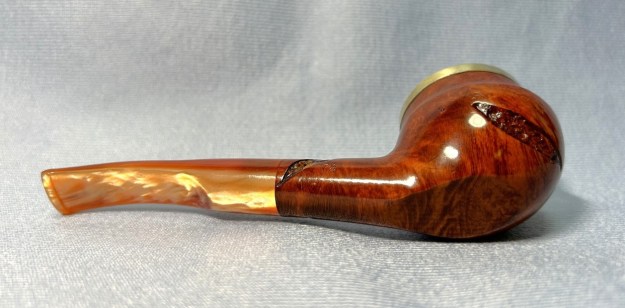
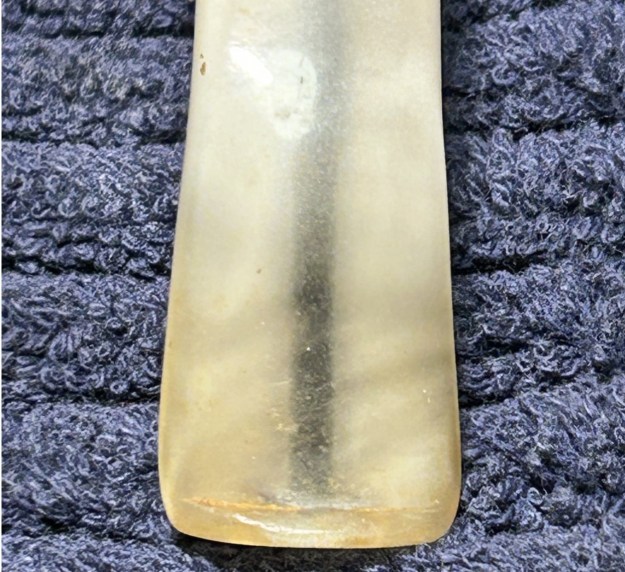
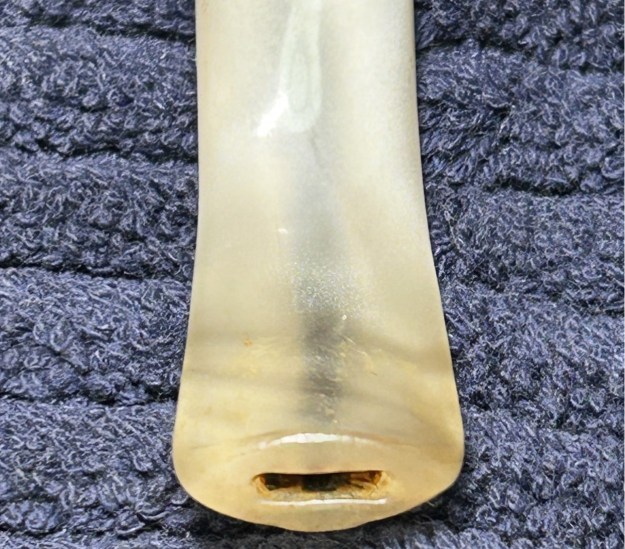
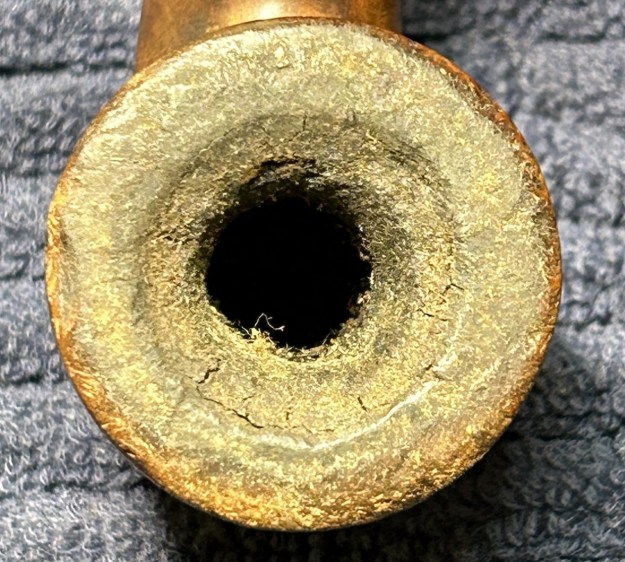
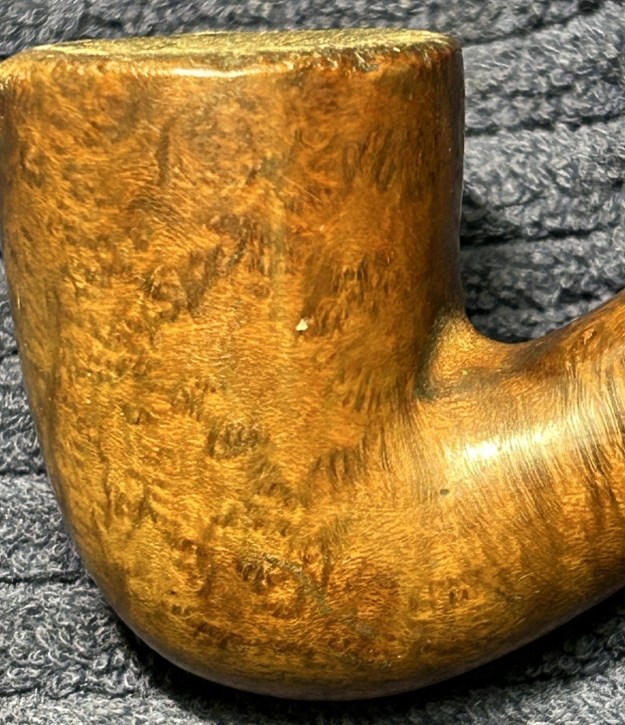
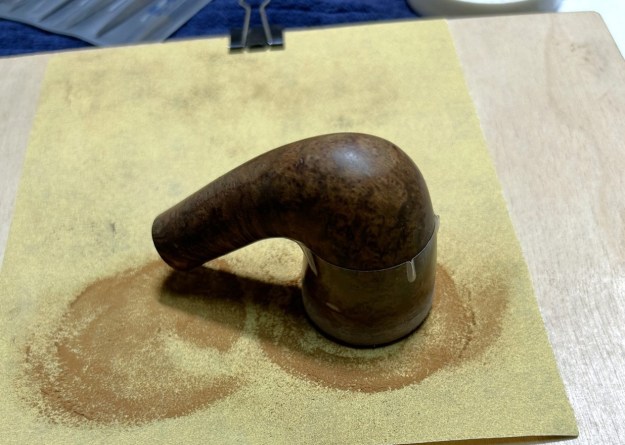
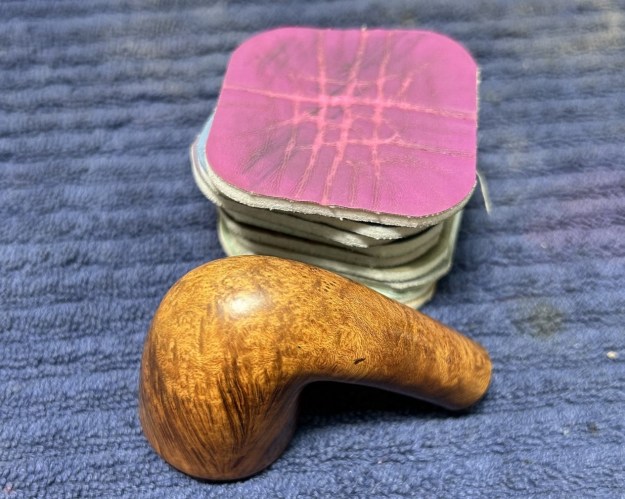
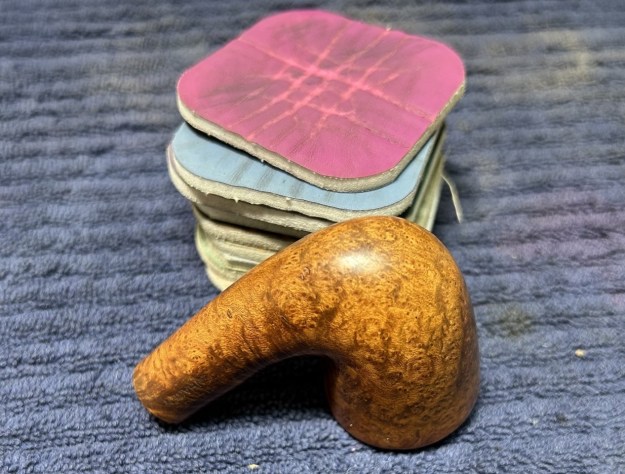
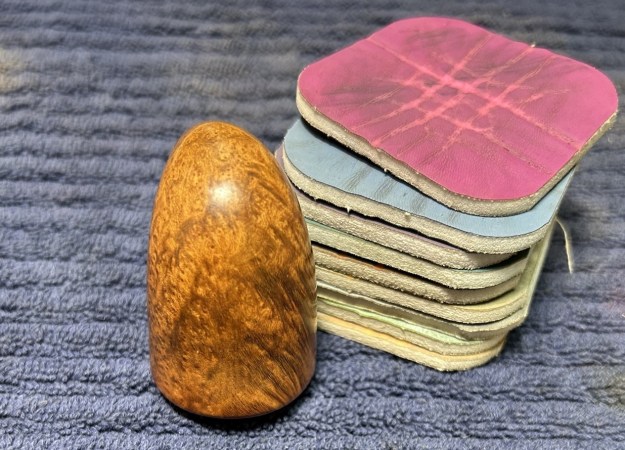
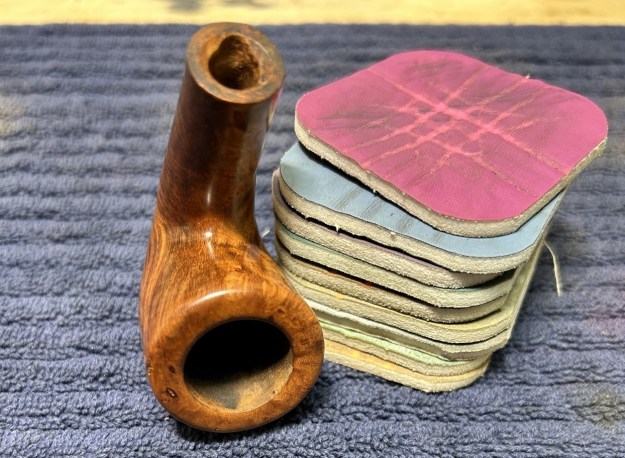
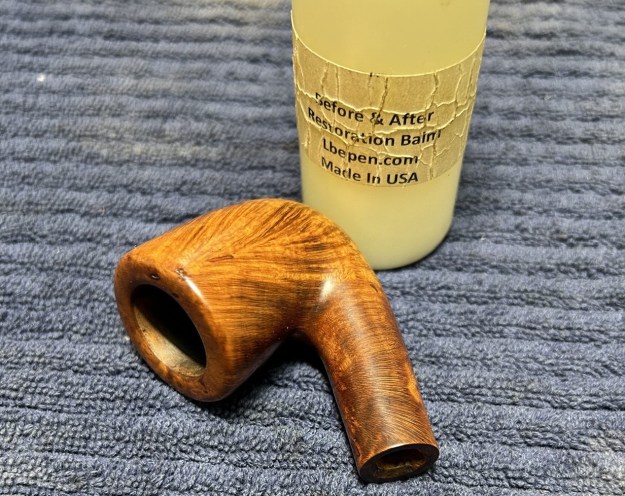
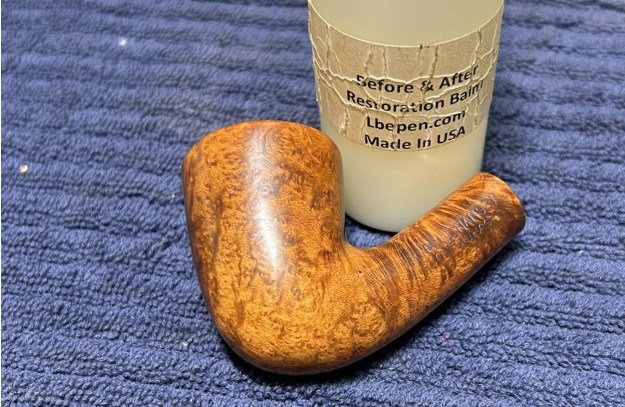
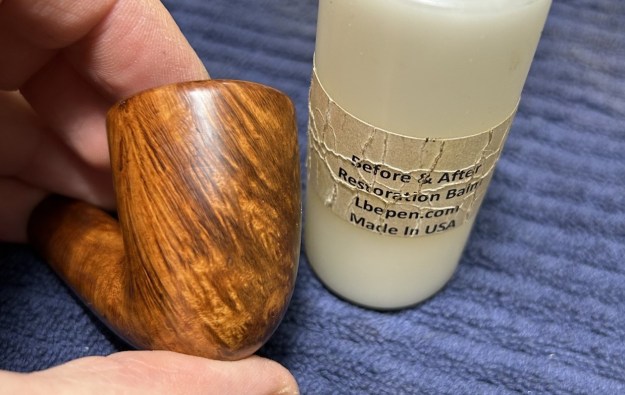
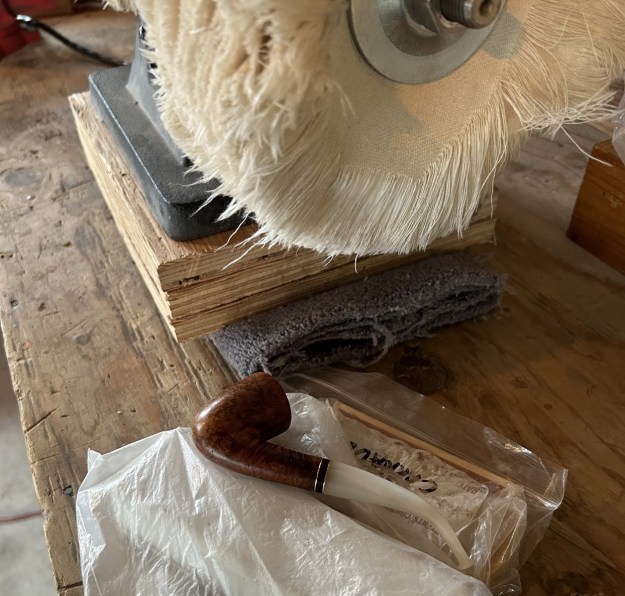
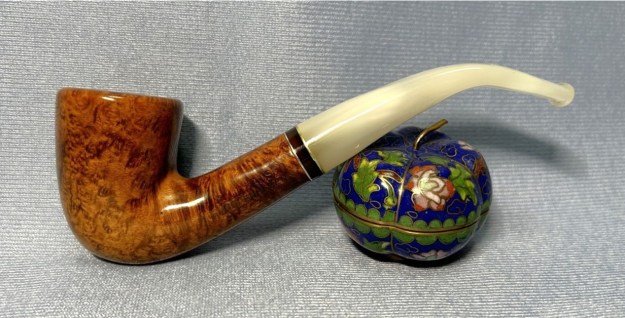
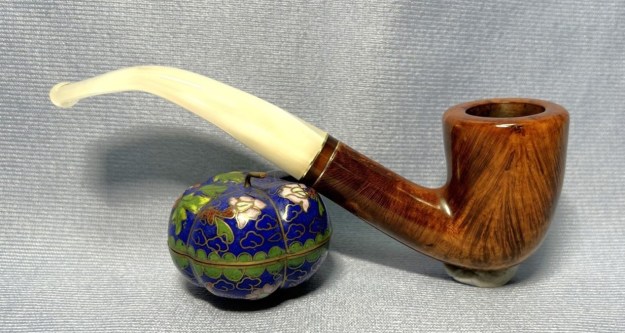
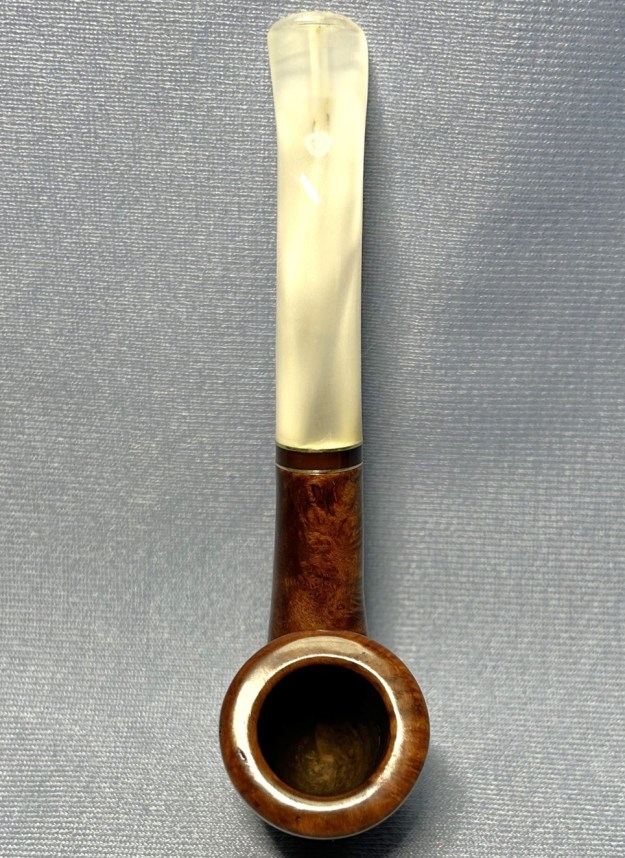
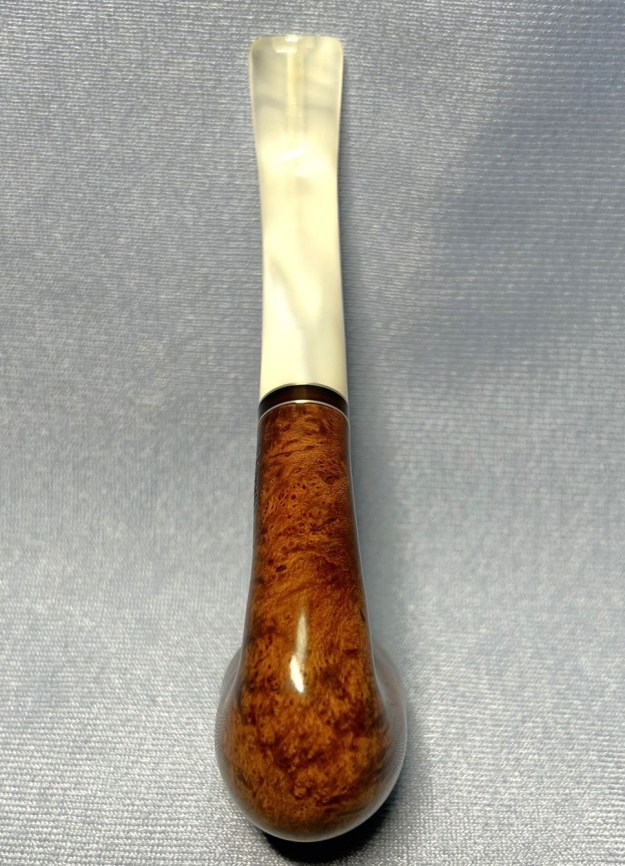
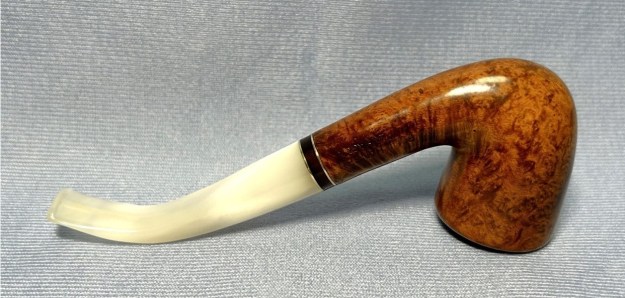
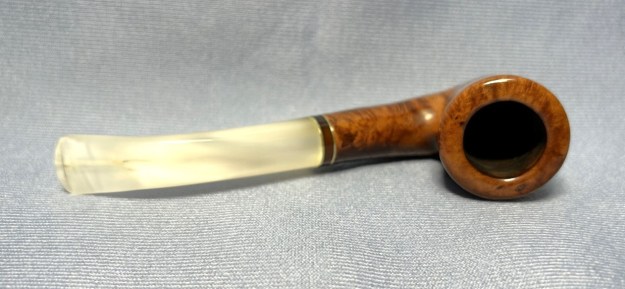
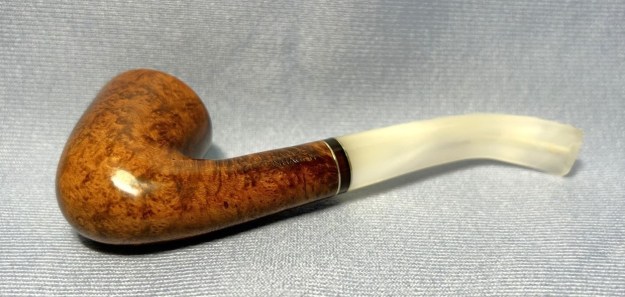
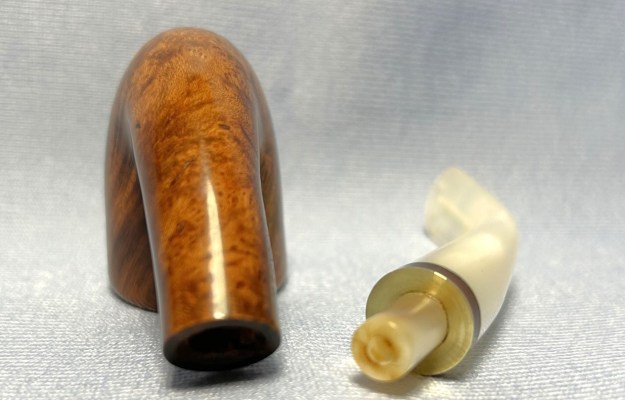
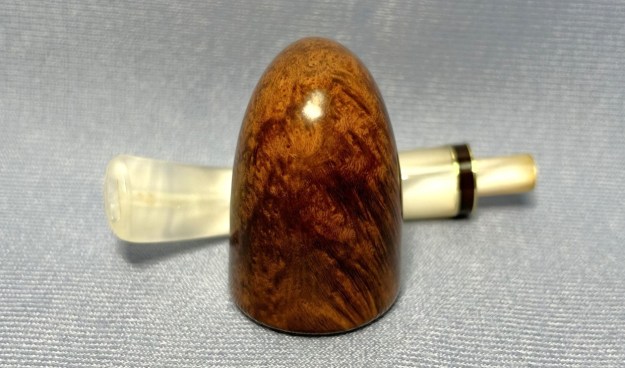
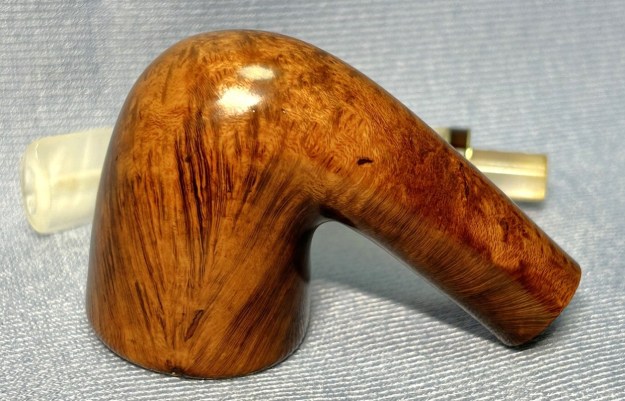
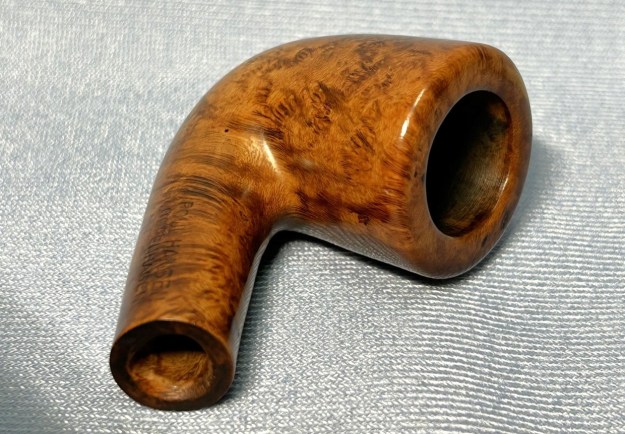
I have a pipe that came my way recently and I decided to clean it up and get it ready. Not much of a restoration story on this one – just a beautiful pipe. I gave it a quick (but thorough) once over and now it’s time to turn it over to you. The pipe is a Kriswill Danish Clipper 530 Bulldog – it has never been smoked and is very handsome. The only work of note that I did on this pipe was to the stem. It was kind of dingy from sitting around for ages and had acquired some oxidation. I wiped the outside down with Murphy’s Oil Soap on some cotton pads. After that, I wiped down the stem with SoftScrub cleaner to remove surface oxidation. Once this process was done, the stem went for an overnight soak in the Pipe Stem Oxidation Remover. This allows me to clean the oxidation off in a couple of ways: by applying a mild cleaner to the surface and sanding the stem. The next day, I used SoftScrub again with some cotton rounds and more oxidation came off. I used some nail polish to restore the logo on the stem. I painted the area carefully and let it set before proceeding. I then used my Micromesh pads, but, since the stem was new, I only used the last five to bring out the lovely black lustre on the stem. I also used Obsidian Pipe Stem Oil in between each pad scrubbing. After that, a light application of Before & After Restoration Balm brought out the best in the stummel’s grain. This is a very nice pipe. A dose of White Diamond and a few coats of carnauba wax were applied with my bench polisher and – wow – we have a real looker! This Kriswill Danish Clipper 530 Bulldog is a really handsome pipe. If you are interested in acquiring it for your collection, please have a look in the “Danish” pipe section of the store here on Steve’s website. You can also email me directly at kenneth@knightsofthepipe.com. The approximate dimensions of the pipe are as follows: length 5½ in. (141 mm); height 1⅝ in. (43 mm); bowl diameter 1⅛ in. (39 mm); chamber diameter ¾ in. (19 mm). The weight of the pipe is 1¼ oz. (35 g). If you are interested in more of my work, please follow me here on Steve’s website or send me an email. Thank you very much for reading and, as always, I welcome and encourage your comments.

Finishing Touches for a Lovely Gourd Calabash


Blog by Kenneth Lieblich

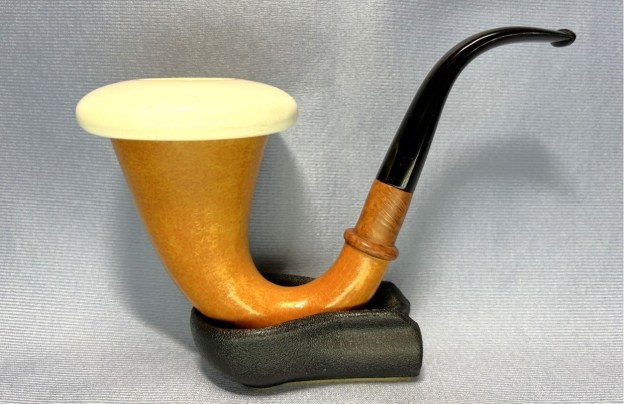
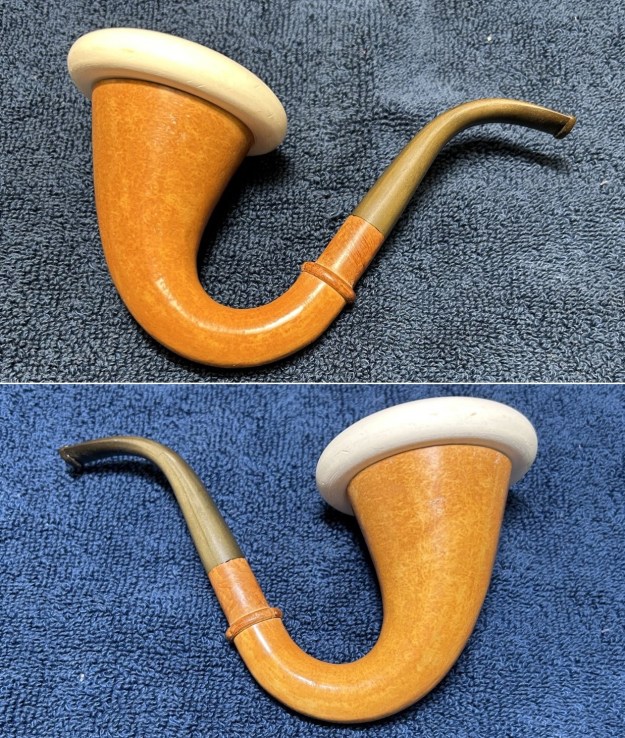
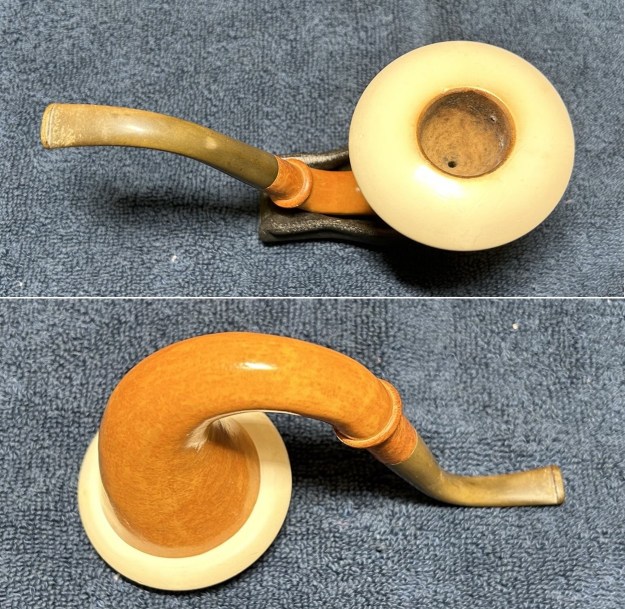
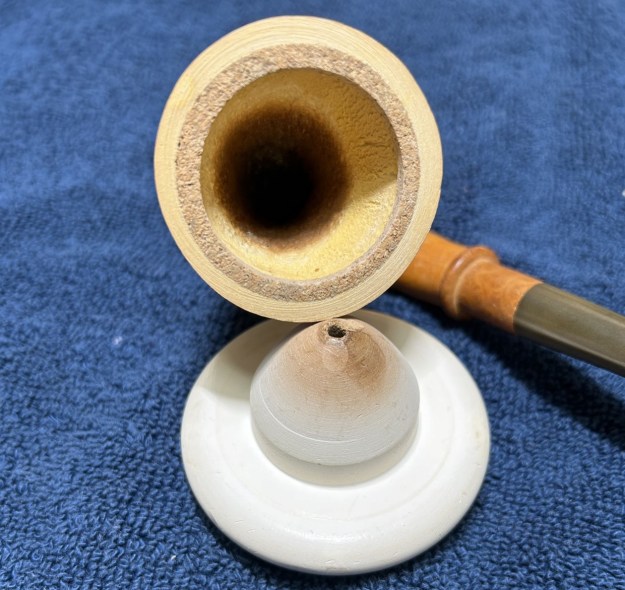
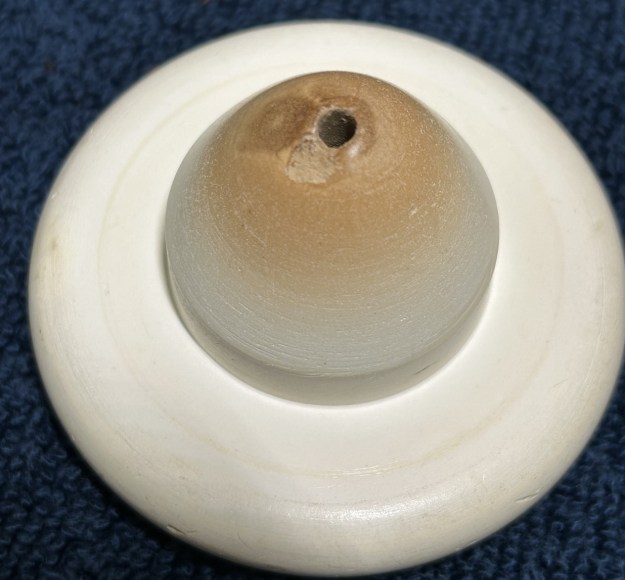
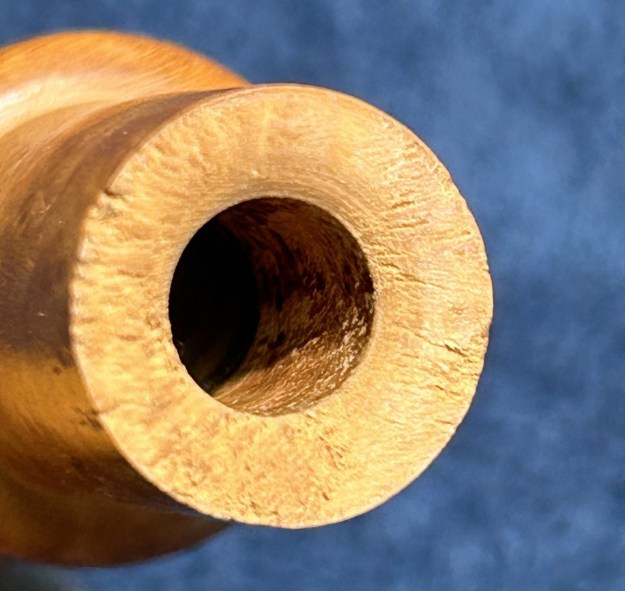
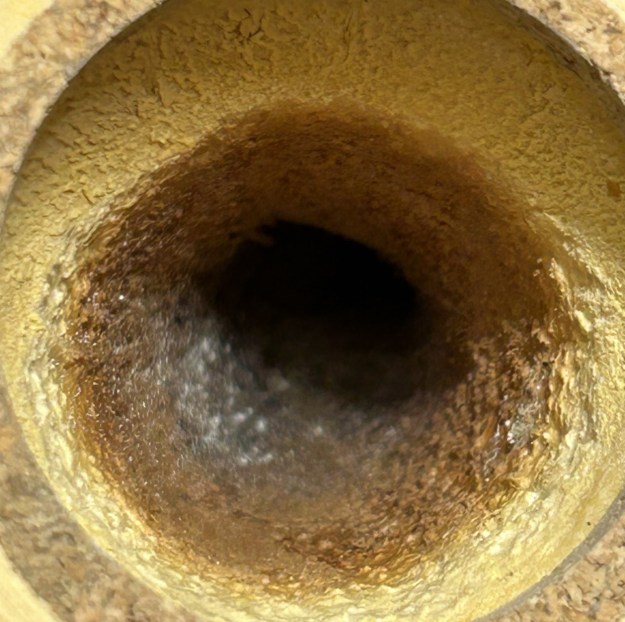
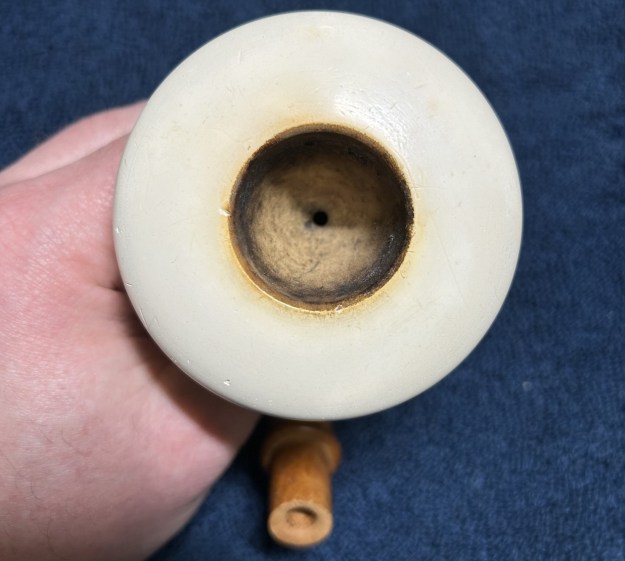
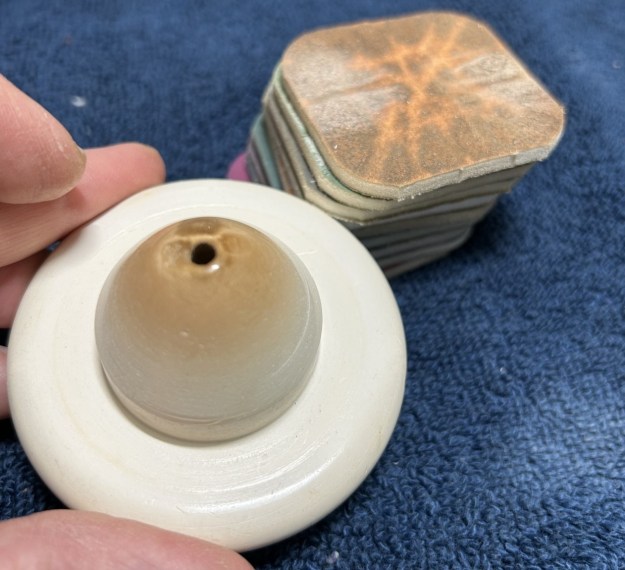
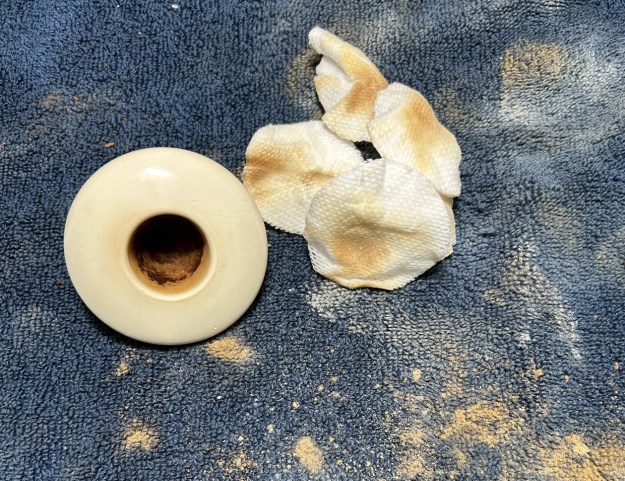
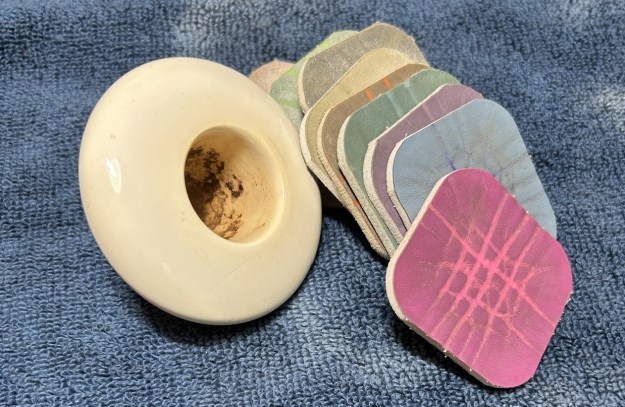
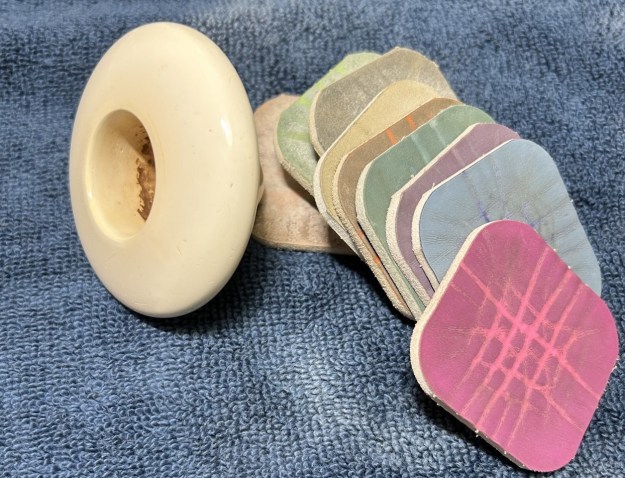
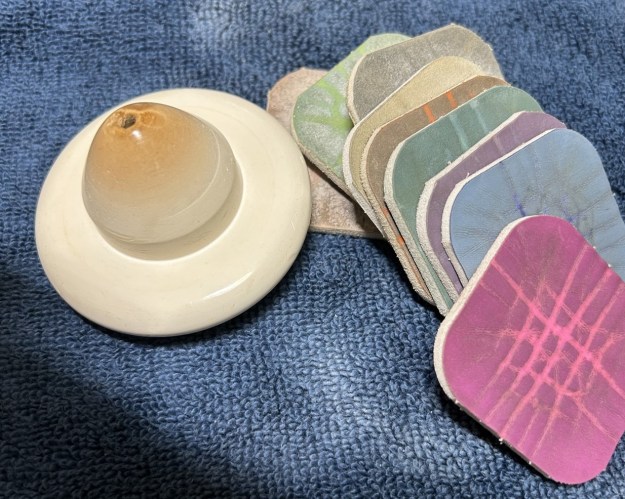
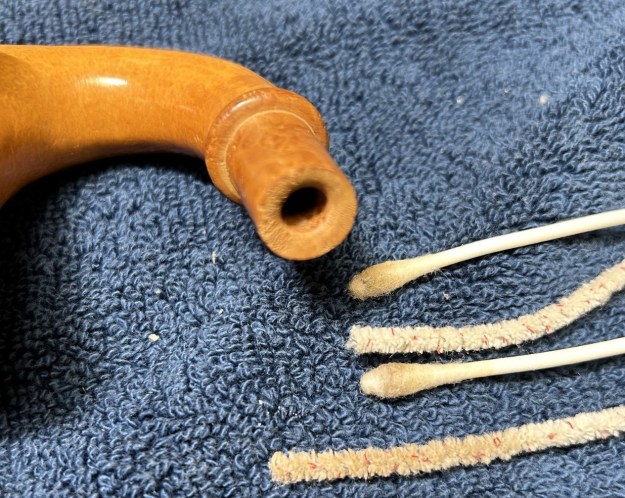
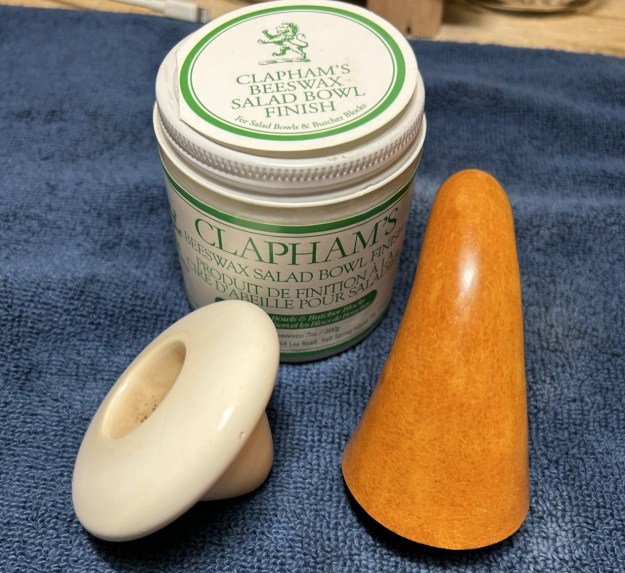
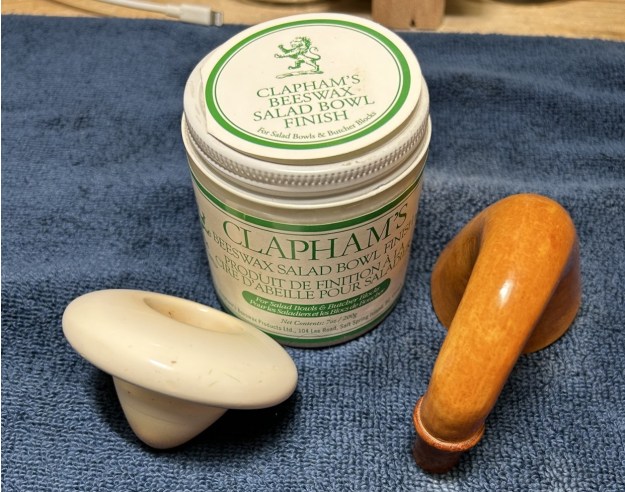
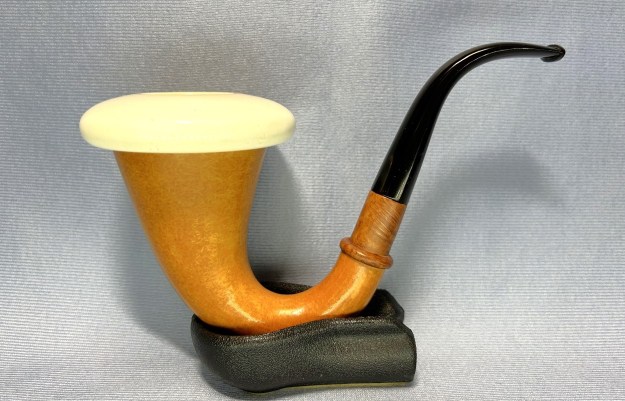
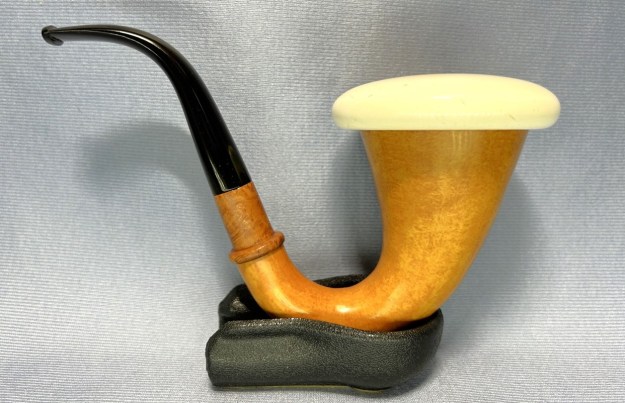
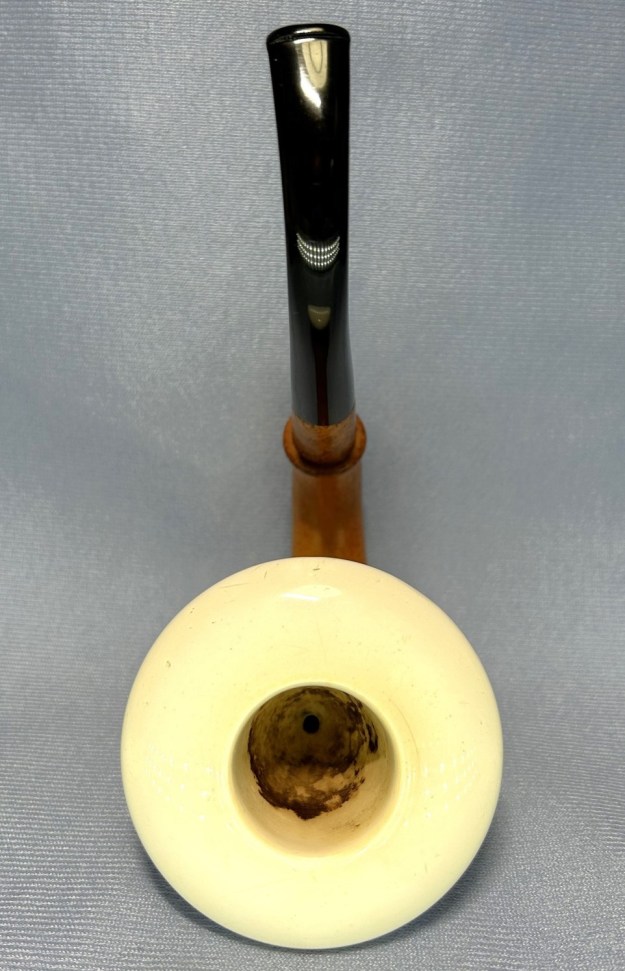
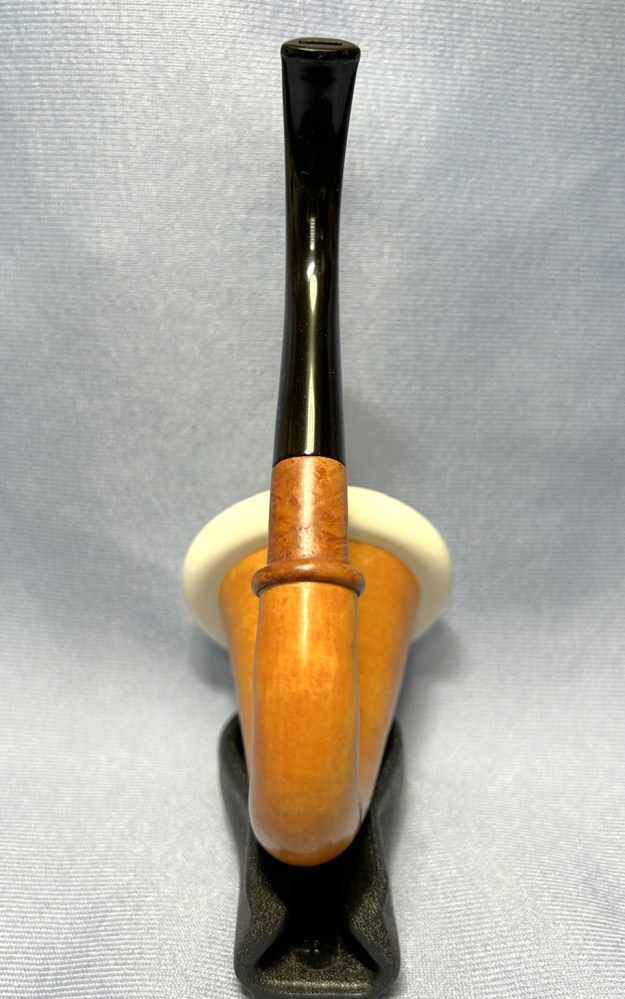
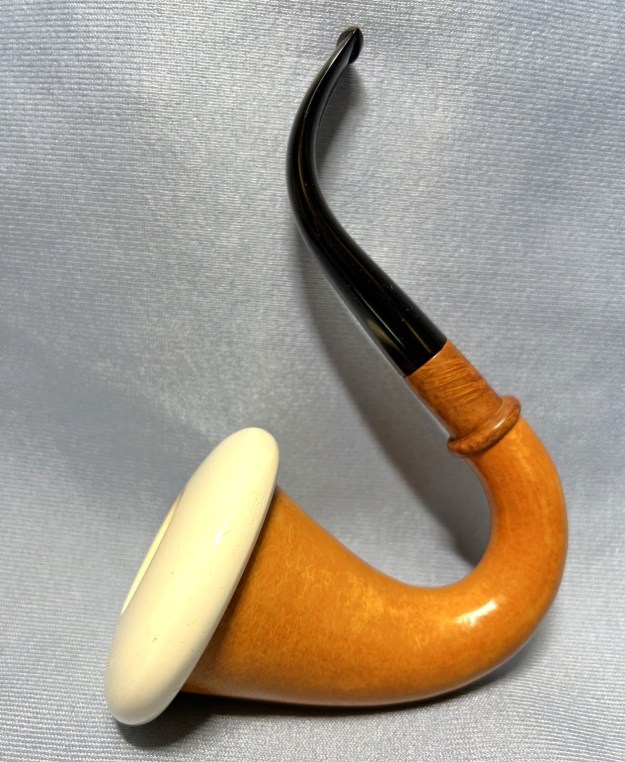
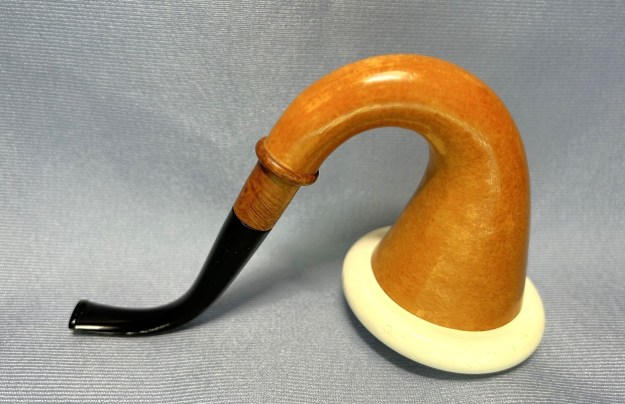
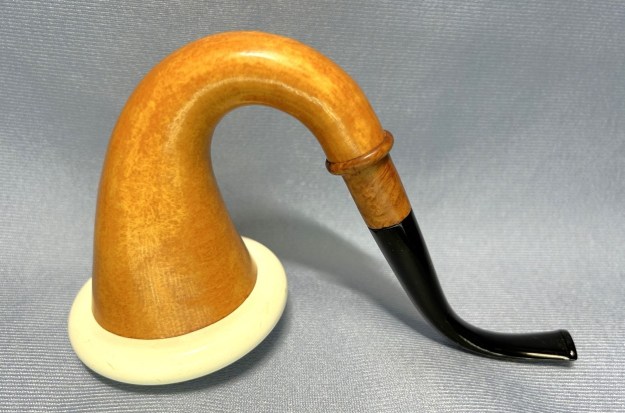
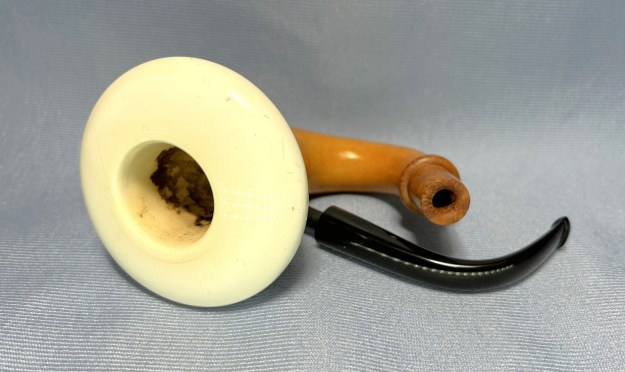
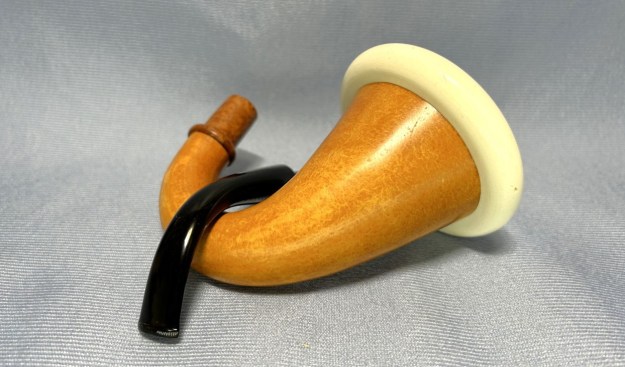
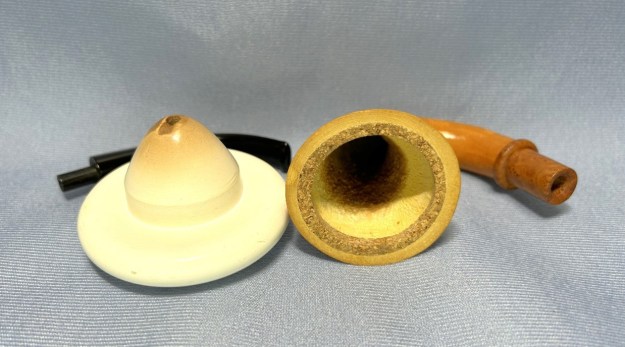
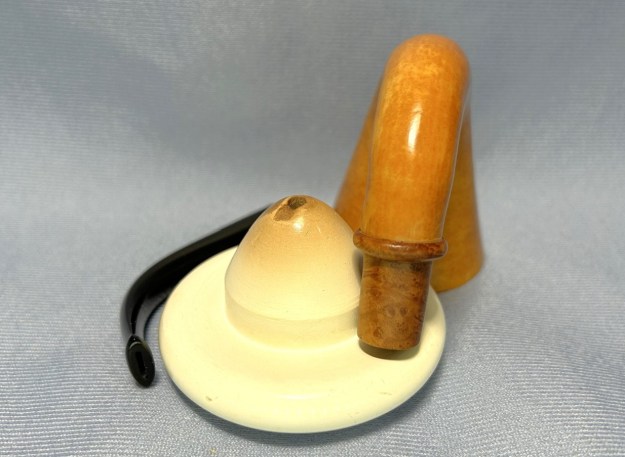
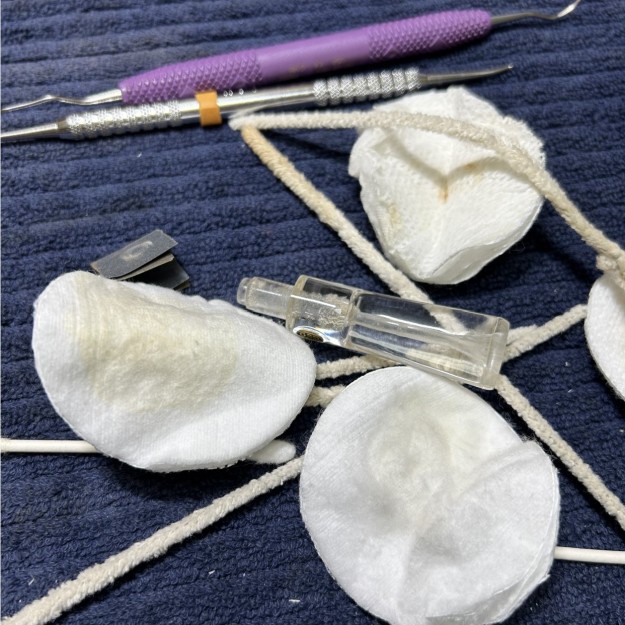
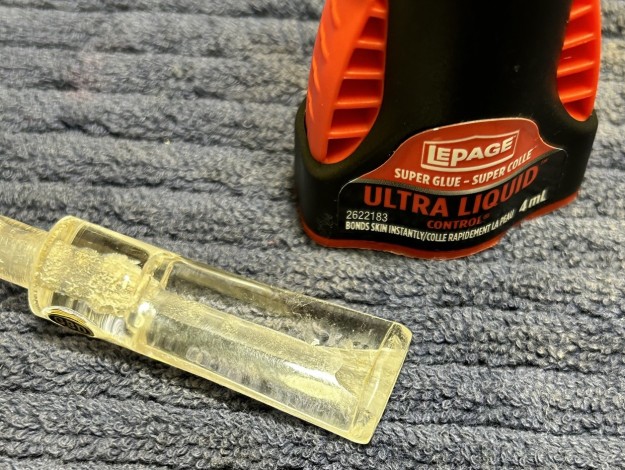
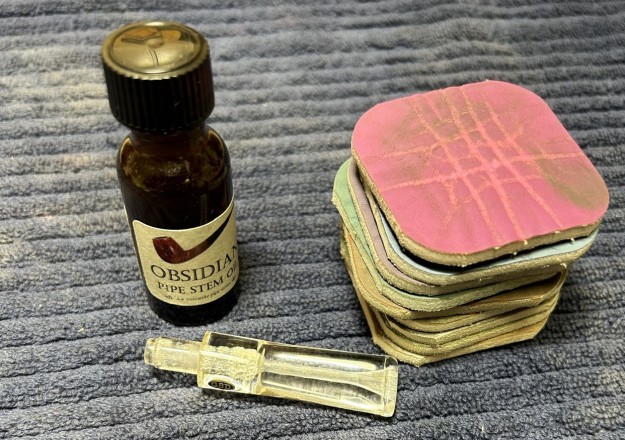
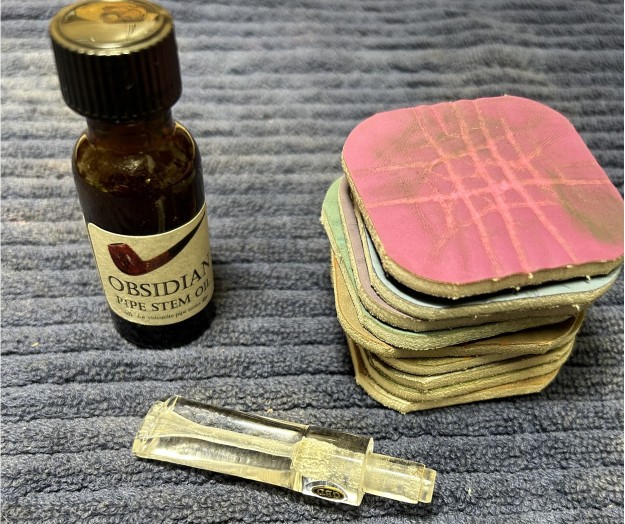
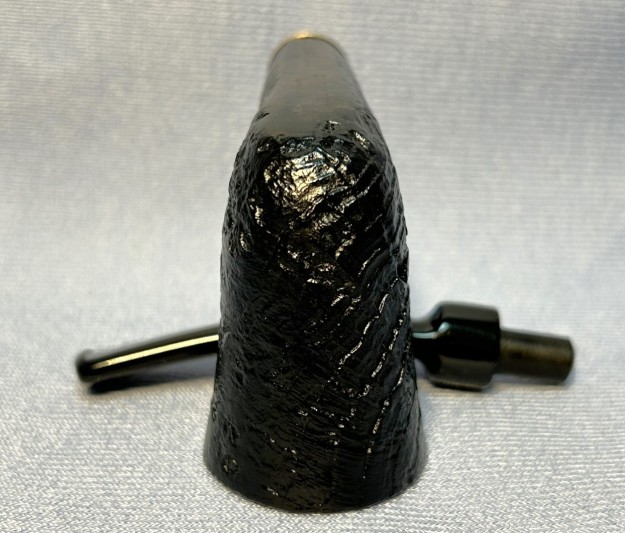
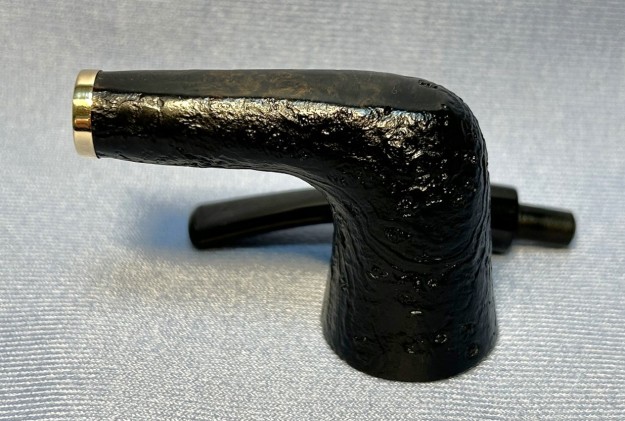
I recently came upon this calabash pipe and thought it was terrific. There is an elegance to the lines of this pipe, with its swan-like curves. Really nice looking, and in good shape. This one had obviously been seldom smoked – maybe a couple of times only. And maybe this is the pipe for you! Let’s take a closer look at it. The bowl is beautifully-shaped meerschaum. It has some minor signs of wear, but nothing serious. Similarly, the gourd is in lovely condition. No wear to speak of and the cork gasket is perfect. The gourd also has a wood shank extension in nice shape. Finally, the stem is also great. It has some notable oxidation and some small signs of wear, but nothing to worry about. The stem was first on my list. I wiped down the outside of the stem with Murphy’s Oil Soap on some cotton pads. Then, I cleaned out the insides of the stem with pipe cleaners and isopropyl alcohol. Once this process was done, I used SoftScrub and cotton pads to wipe down the stem before throwing it in the Pipe Stem Oxidation Remover. The following day, I cleaned all of the de-oxidizing mess and again scrubbed with SoftScrub on some cotton pads to remove the leftover oxidation. This worked well.Before I moved on to the Micromesh pads, I built up the dents on the stem with cyanoacrylate adhesive and let them fully cure.I sanded the adhesive down with 220- and 400-grit sandpapers to meld seamlessly into the stem. I then used all nine Micromesh pads (1,500 through 12,000 grit) to bring out the lovely black lustre on the stem. I also used Obsidian Pipe Stem Oil in between each pad scrubbing. On to the bowl. Meerschaum is too fragile for a proper reamer, so I used 220-grit sandpaper on the end of a wooden dowel to clean out the bowl and it turned out very well. I sanded down the entire piece of meerschaum with my Micromesh pads. One of the frustrations of cleaning meerschaum is that once smoked, the stains never go away. However, I did what I could and it definitely improved. I also rubbed some Clapham’s Beeswax into the meerschaum. Then I let it sit for 20 minutes, buffed it with a microfiber cloth and then repeated the beeswax process. Worked like a charm!

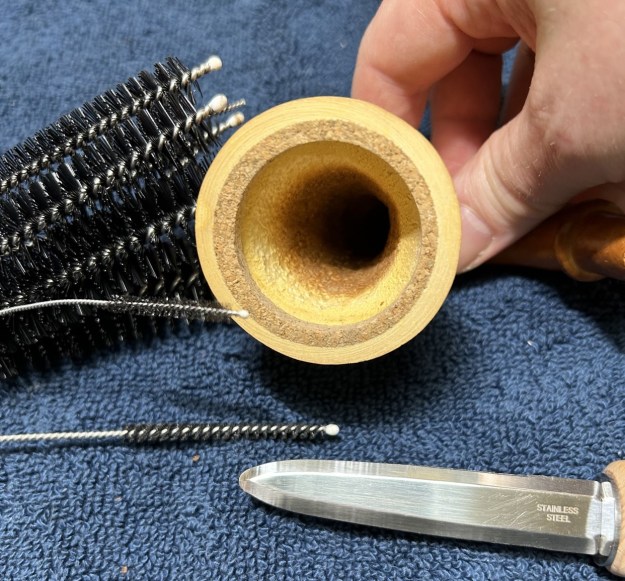
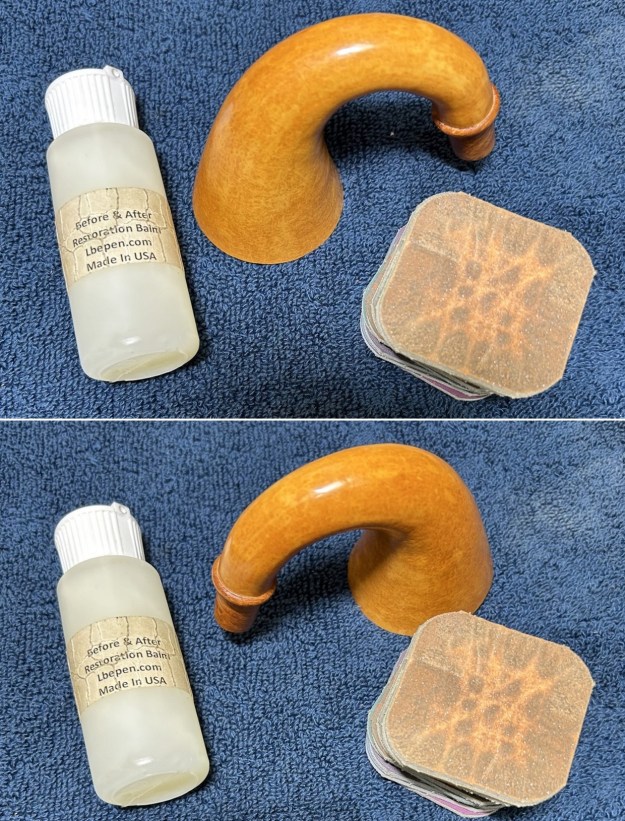
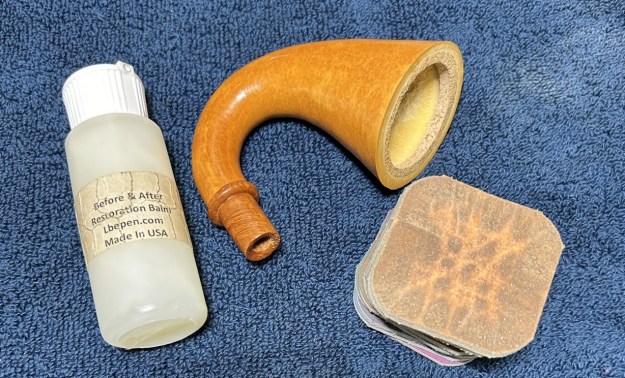
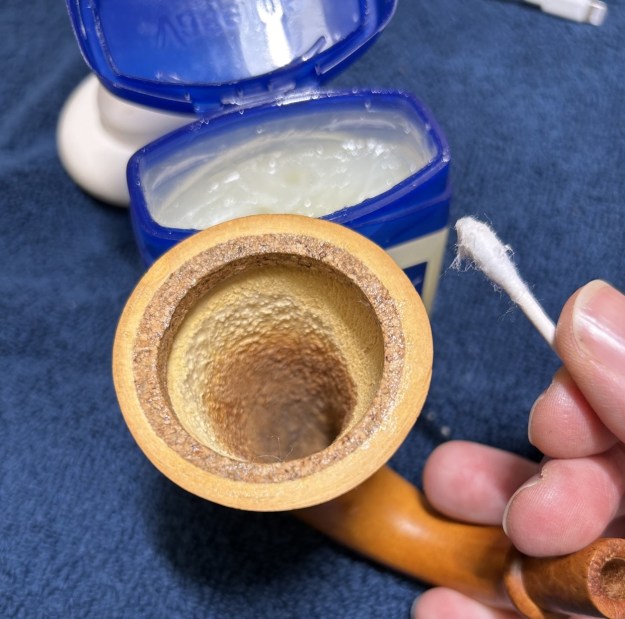
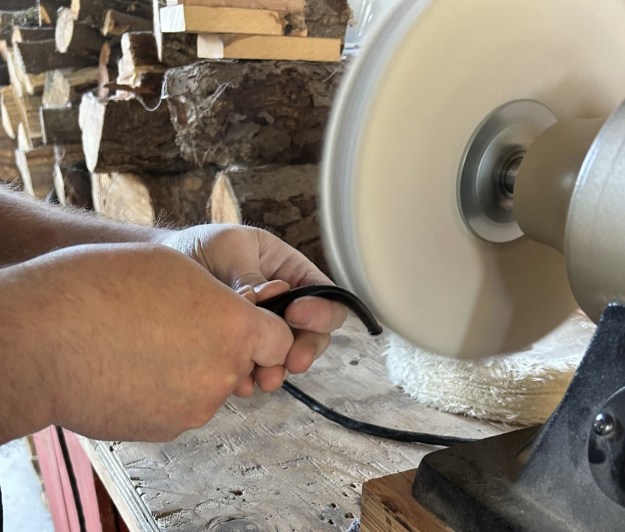
I cleaned the exterior of the gourd with some Murphy’s Oil Soap on a few cotton rounds. I cleaned inside the gourd gently by scraping with my reaming knife and some tube brushes. I was pleased with the results. I sanded down the wooden shank extension (but not the gourd) with my Micromesh pads. I also cleaned out the inside with cotton swabs and alcohol. It wasn’t very dirty. I then coated the gourd and shank extension with Restoration Balm and let it sit for 20 minutes. After that, I buffed it with the microfibre cloth. Finally, I applied some Vaseline to the cork gasket. Even though the gasket was in perfect shape, it’s a good idea to lubricate it in this way in order to maintain its elasticity. I set it aside to absorb and moved on.Before I went off to the buffer, I gave the meer and the gourd another going over with Clapham’s beeswax rub. This really worked well. I only took the stem to the buffer, as meerschaum and gourds don’t tolerate those high speeds very well! This gourd calabash was a delight from the start and its beauty only increased through the restoration process. I am pleased to announce that this pipe is for sale! If you are interested in acquiring it for your collection, please have a look in the ‘Calabash’ pipe section of the store here on Steve’s website. You can also email me directly at kenneth@knightsofthepipe.com. The approximate dimensions of the pipe are as follows: length 6¼ in. (160 mm); height 4½ in. (115 mm); bowl diameter 2¾ in. (70 mm); chamber diameter 1⅛ in. (28 mm). The weight of the pipe is 3 oz. (88 g). I hope you enjoyed reading the story of this restoration as much as I enjoyed restoring it. If you are interested in more of my work, please follow me here on Steve’s website or send me an email. Thank you very much for reading and, as always, I welcome and encourage your comments.

Fixing a Cracked Peterson Emerald


Blog by Kenneth Lieblich

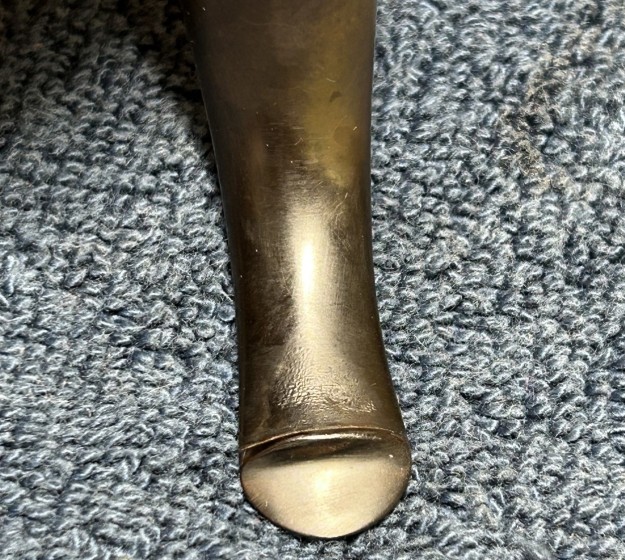
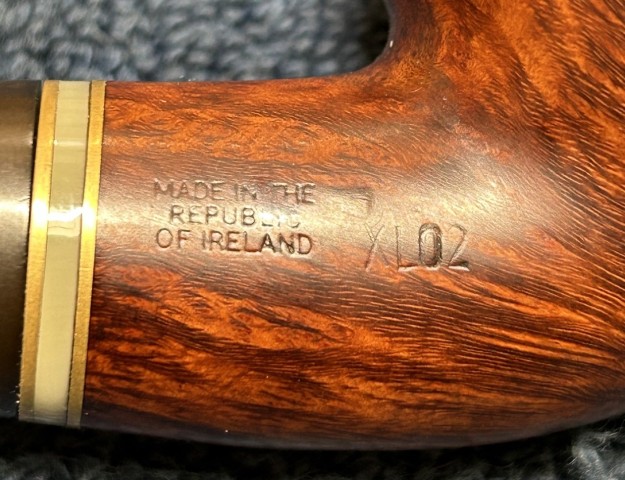
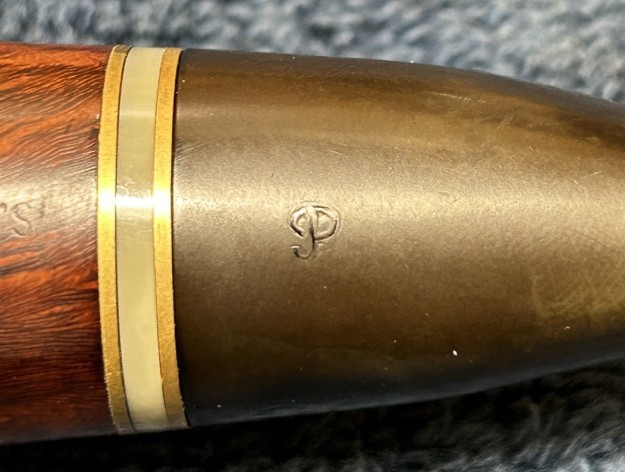
This is the fourth and final pipe I repaired for the gentleman in Washington. All four pipes have been great to work on, but I think I like this one best. It’s a portly and handsome Peterson Emerald XL02 Bent Apple. The pipe is smooth and has a P-lip stem. It is an elegant pipe with beautiful lines – and it feels so comfortable! Can’t wait to get this one done. Let’s take a closer look at the pipe. On the left side of the shank, it reads Peterson’s [over] Emerald. On the right side of the shank, it reads Made in the [over] Republic [over] of Ireland. To the right of that is the shape number, XL02. On the stem was the normal, stylized P of the Peterson firm. Interestingly, this P was in bas relief, rather than engraved. In an effort to learn more about the Emerald line of pipes, I went to Pipedia’s Peterson page – and learned precisely nothing. Pipephil provided just as much. Even the Peterson website itself had nothing on the historical Emeralds except to discuss the current crop of heavily rusticated pipes. So, naturally, my reliable source for all things Peterson is Mark Irwin from Peterson Pipe Notes. He has a blog post on the Emeralds – specifically the rusticated ones, but he does reference the smooth ones too. Have a look at the article here.Irwin and Gary Malmberg’s book, The Peterson Pipe: The Story of Kapp & Peterson, also made mention of the Emerald line:

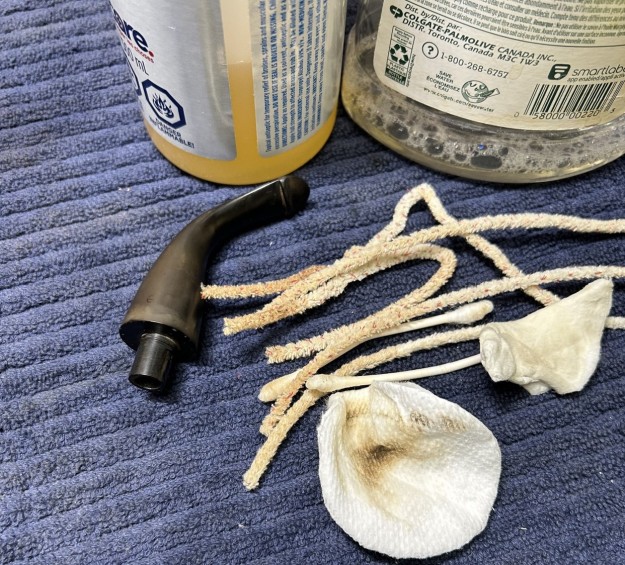
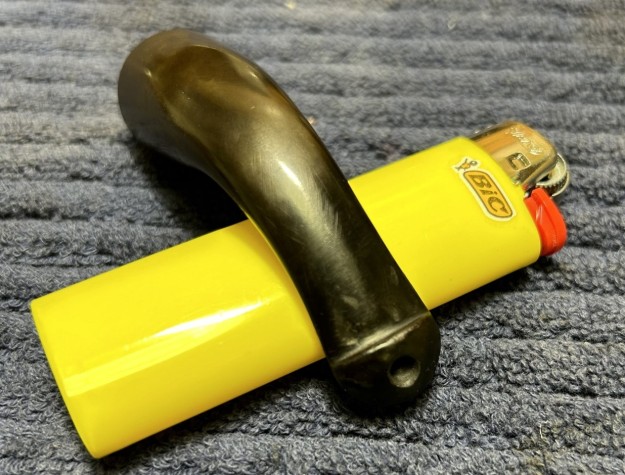
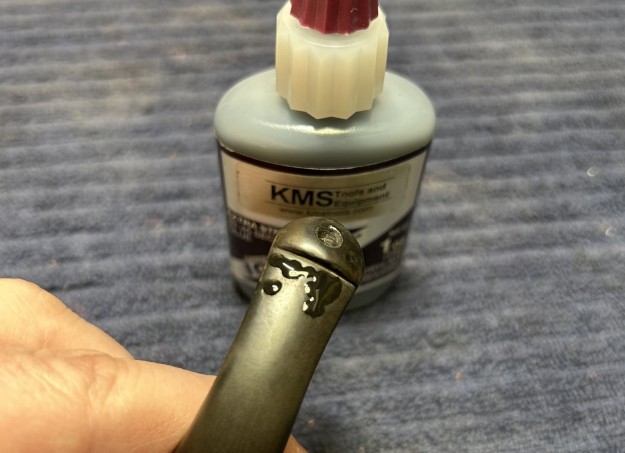
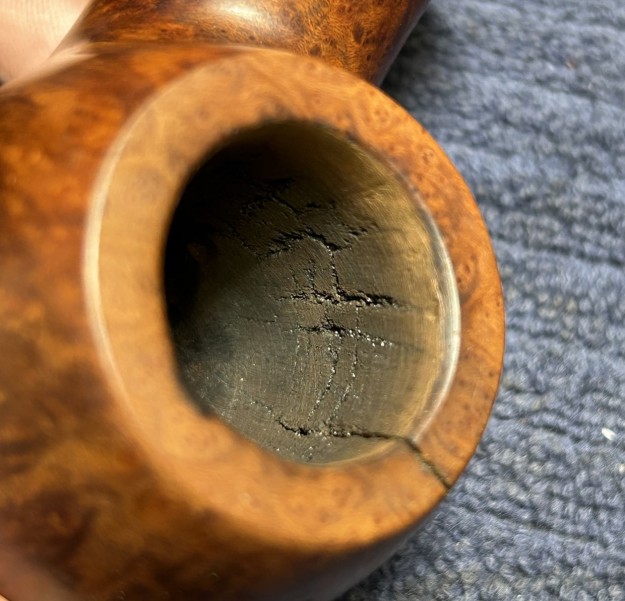
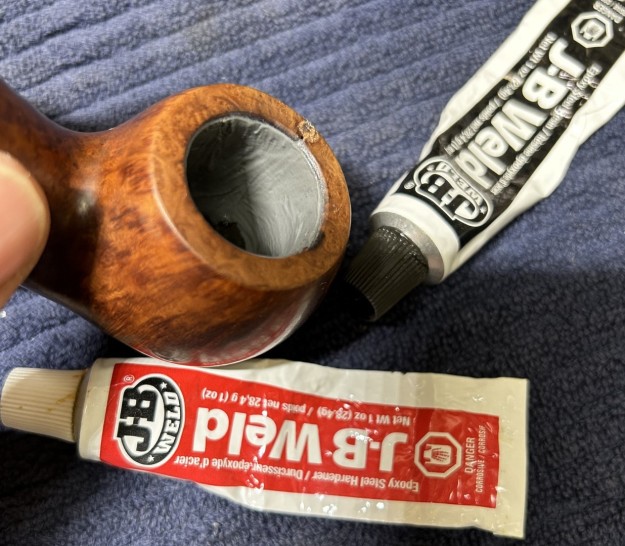
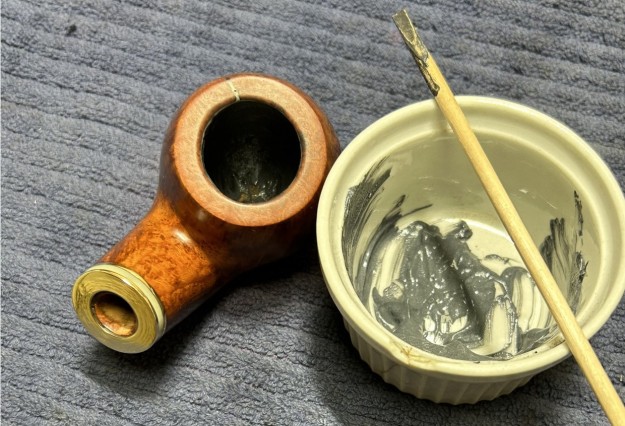
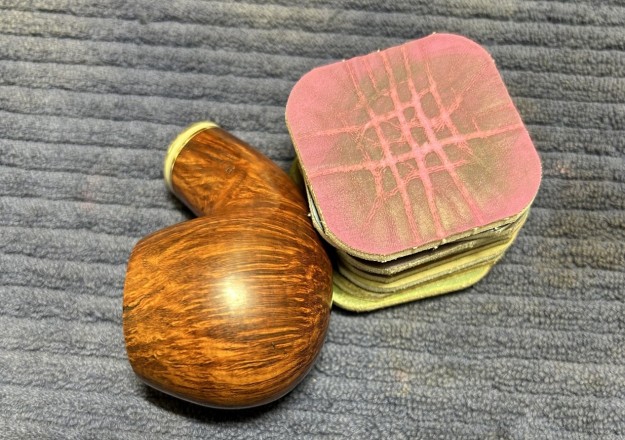
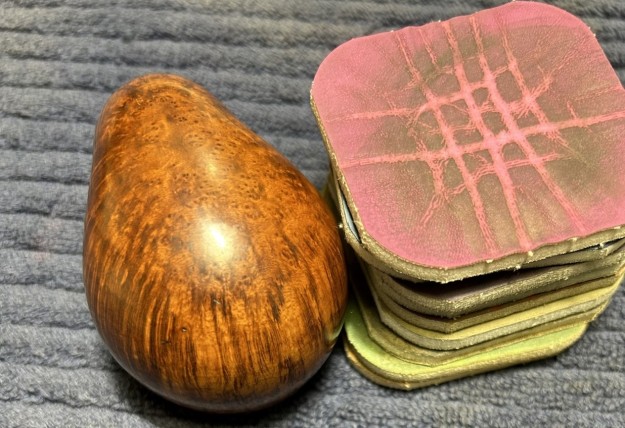
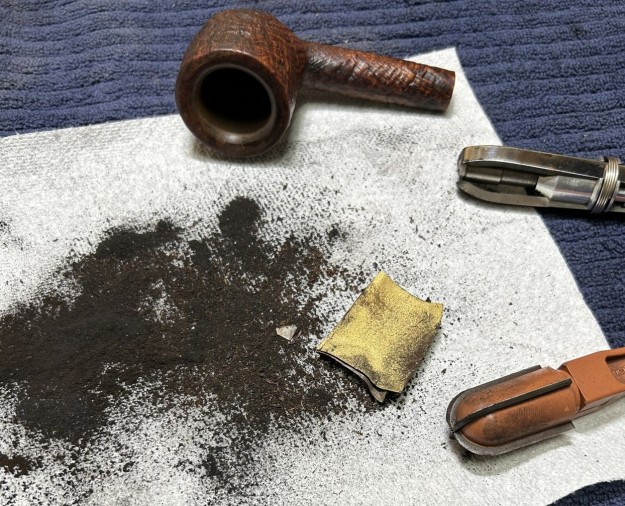
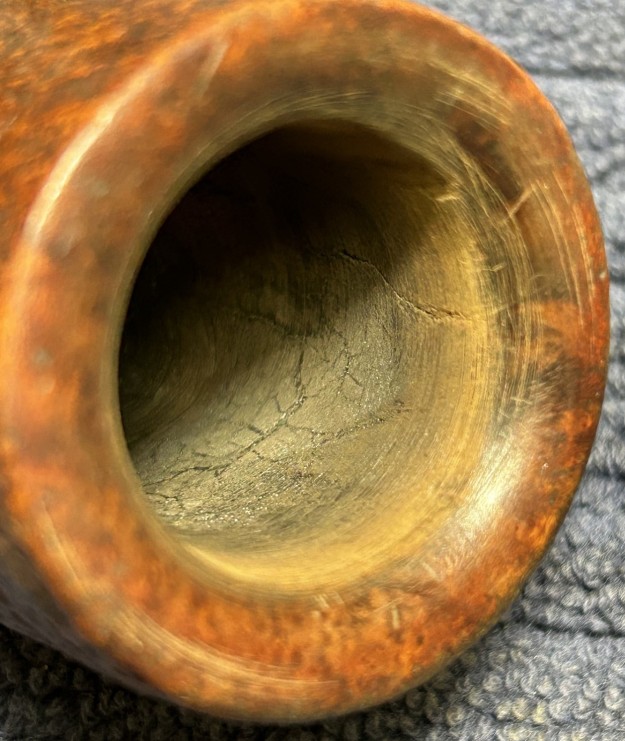
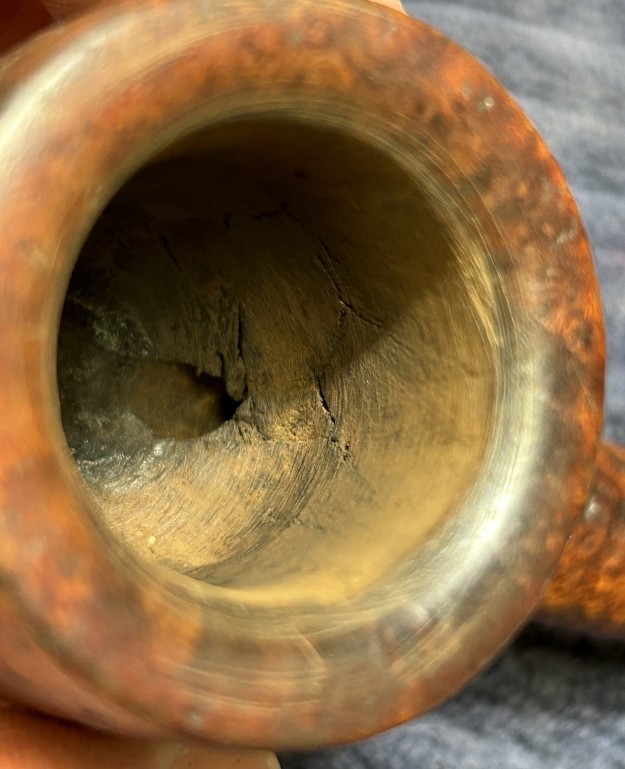
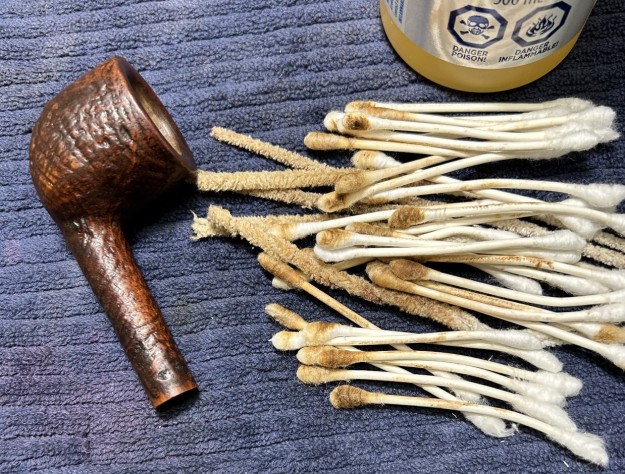
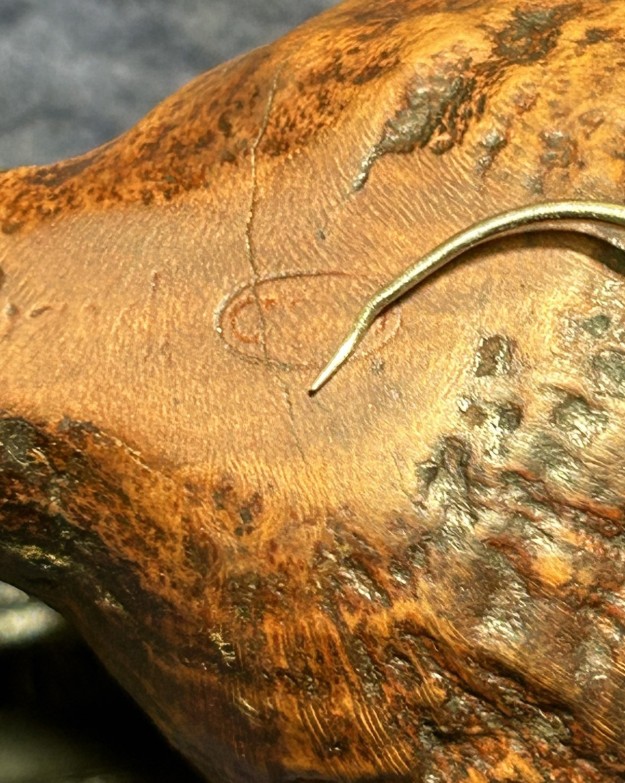
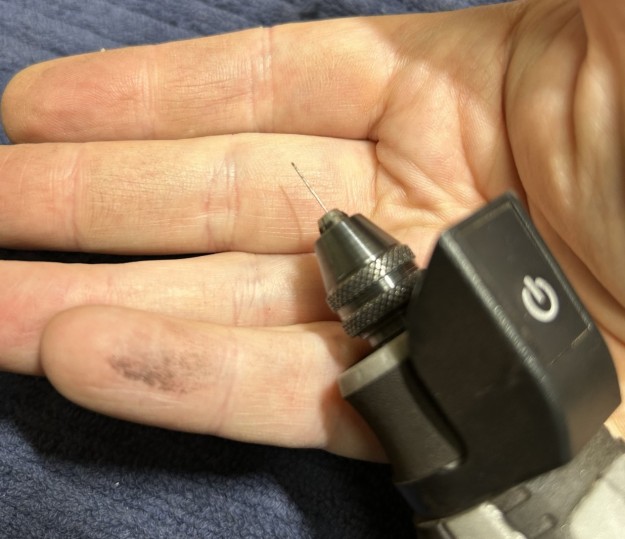
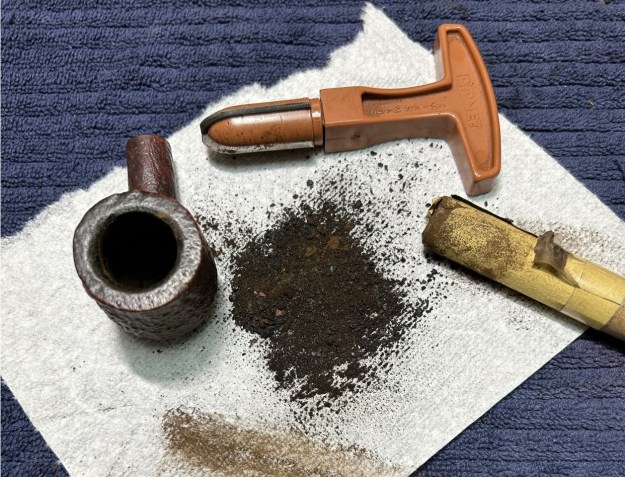
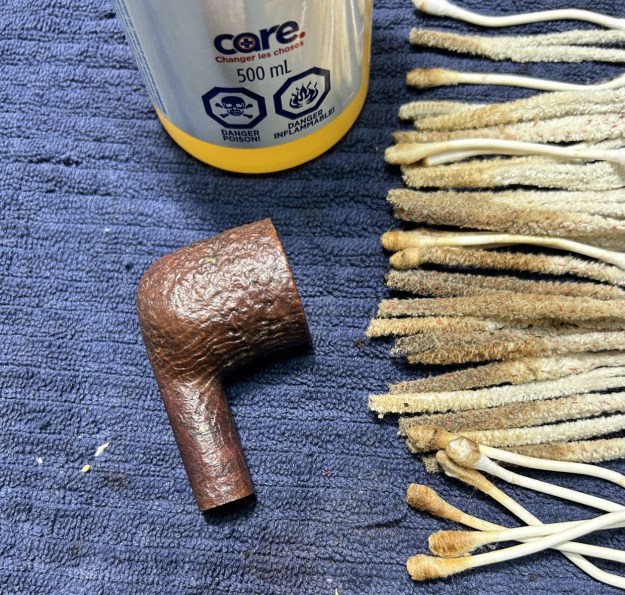
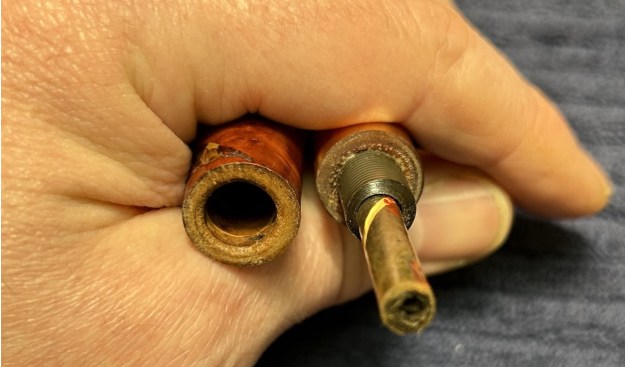
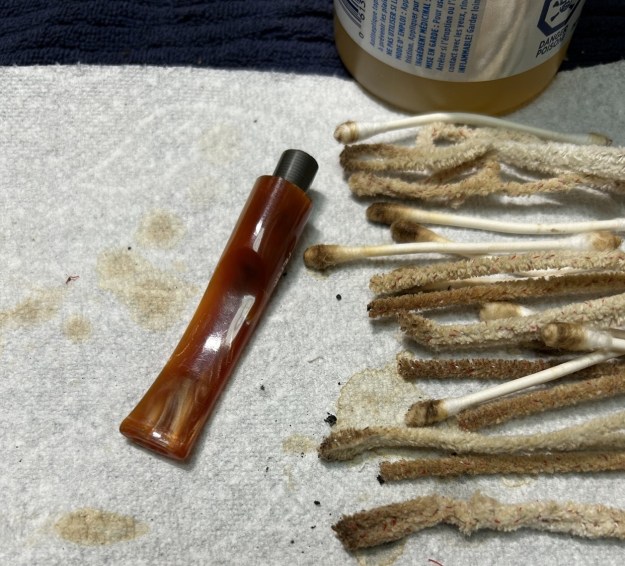
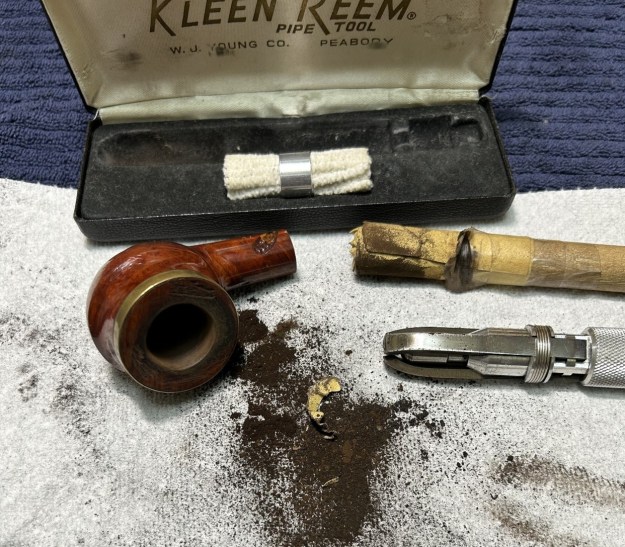
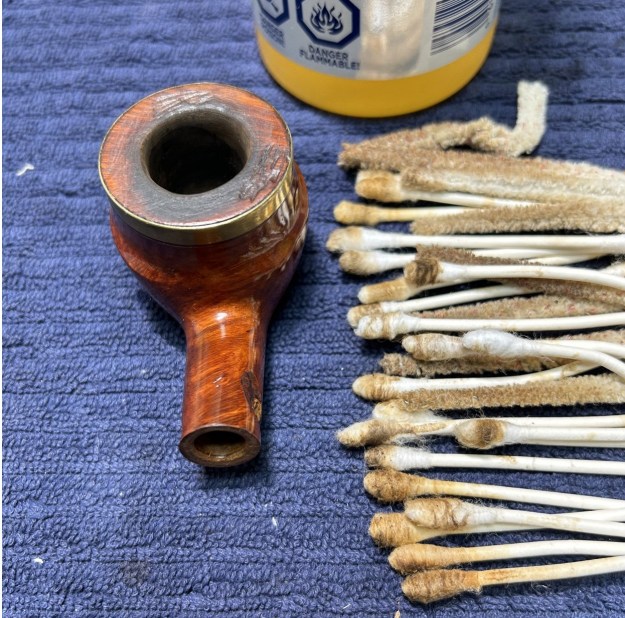
Emerald (1987-) Moderate-priced line in Bordeaux and black rustic finish with a shank band of green acrylic between brass rings, P-lip mouthpiece; smooth walnut version added in ’91. Fishtail mouthpiece added in ’97. Identical line and finishes named Jade from early eighties until ’87.Putting all the bits and pieces together, I think we can safely say that this pipe dates from between 1991 and 1997.On to the stem. As usual, I cleaned the insides with lemon-infused isopropyl alcohol and some pipe cleaners. Fortunately, it wasn’t too dirty inside. Then I wiped down the outside of the stem with Murphy’s Oil Soap on some cotton rounds – that removed some exterior dirt. Then, of course, I stuck it in the deoxidizing solution overnight. The next day, I scrubbed it down with some SoftScrub on cotton rounds. I built up the tooth marks on the stem with black cyanoacrylate adhesive and let them fully cure. I had tried the BIC lighter trick, but it didn’t work. I then sanded the adhesive down – first with a small file, then with 400-grit sandpaper to meld seamlessly into the stem. I then used all nine Micromesh pads (1,500 through 12,000 grit) to bring out the lovely black lustre on the stem. I also used Obsidian Pipe Stem Oil in between each pad scrubbing (from 3,600 on). Moving on to the stummel, I used the PipNet Reamer to remove the built-up cake and followed that with 220-grit sandpaper taped to a dowel to eliminate as much as I could. I took the chamber down to bare briar. For now, I proceeded to clean out the insides of the shank with Q-tips, pipe cleaners, and lemon-infused isopropyl alcohol. There was quite a bit of filth inside this stummel and it took a fair amount of cotton to get it clean. I already knew there were going to be some big, bad problems inside, so no sense in delaying the inevitable work. As the photos show, there were many heat fissures in the briar and the major crack on the outside of the bowl was made to look even more dramatic once I cleaned the stummel. I used a dental pick to remove extra debris lodged inside this crack. Before moving to pipe surgery, I decided to de-ghost the pipe in order to remove any lingering smells of the past. I thrust cotton balls into the bowl and the shank and saturated them with 99% isopropyl alcohol. I let the stummel sit overnight. This caused any remaining oils, tars and smells to leach out into the cotton. The bowl was nice and clean after this.Repairing the crack first involves drilling a tiny hole at the end of the crack to stop it from elongating any further. I took my micro drill bit (see how tiny!) and delicately drilled a hole through the briar. I then administered a dose of CA glue (mixed with briar dust) along the crack and let it cure. This was done on the side of the bowl, as well as on the rim, of course. This crack was simply too severe to plug with pipe mortar. Instead, I prepared some J.B. Weld epoxy and filled the cracks and gouges, ensuring that the epoxy was evenly spread throughout the bowl. Of course, I did plug the draught hole with a folded pipe cleaner (coated in Vaseline) to make sure none of the epoxy made its way up there. Once done, a good 24 hours was needed to ensure that the epoxy was properly set.Once cured, I gently sanded the inside of the bowl to provide a surface for what was to come next. I coated the entire inside of the bowl with a mixture of activated charcoal and my wife’s homemade yogourt. Once hardened, this provided a good, slightly abrasive surface for a new cake to build.After all of that, I used all nine Micromesh pads (1,500 through 12,000 grit) all over the stummel to make it lovely and smooth. I then used my restoration balm and rubbed that into the wood to have its nourishing properties work on the wood. I let it set for 20 minutes or so. Afterwards, I rubbed down the stummel with a microfibre cloth. At long last, I was off to my bench buffer to put the final touches on this pipe. I first gave it a thorough going-over with White Diamond compound. Following that, several coats of carnauba wax created a beautiful, glossy seal on the pipe and provided some closure to this involved repair.This Peterson Emerald XL02 Bent Apple is such a good-looking pipe. I’m thrilled to have completed all of my customers pipes and I trust that he will enjoy this one (and the others) for many years. I hope you enjoyed reading the story of this pipe as much I as I did in restoring it. If you are interested in more of my work, please follow me here on Steve’s website or email me directly at kenneth@knightsofthepipe.com. Thank you very much for reading and, as always, I welcome and encourage your comments.

Reclaiming a GBD Prehistoric 9493


Blog by Kenneth Lieblich

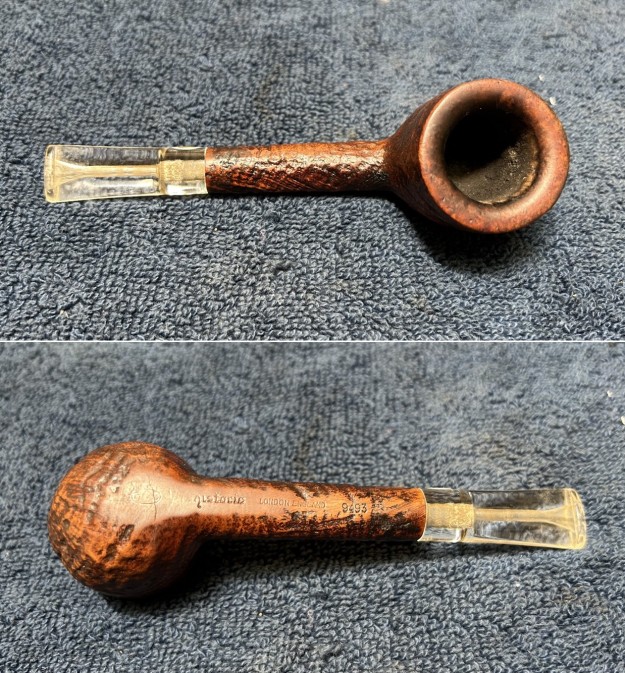
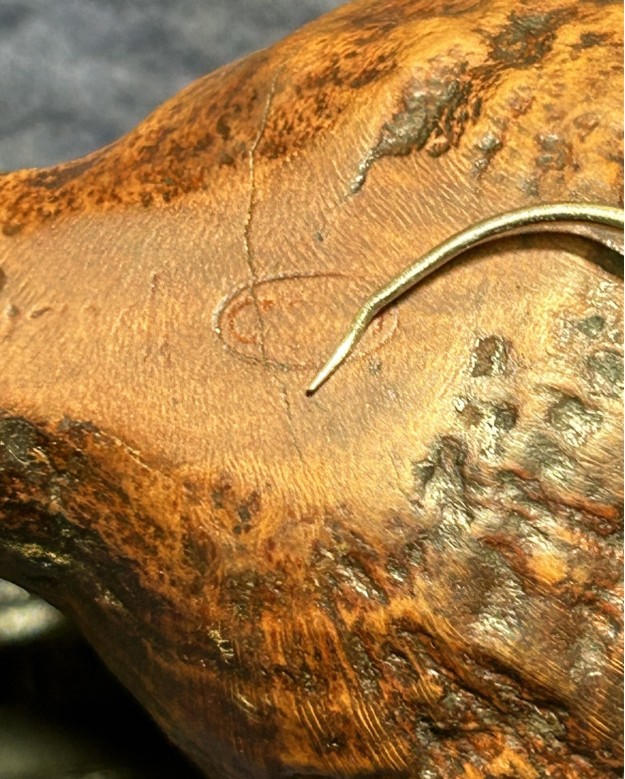
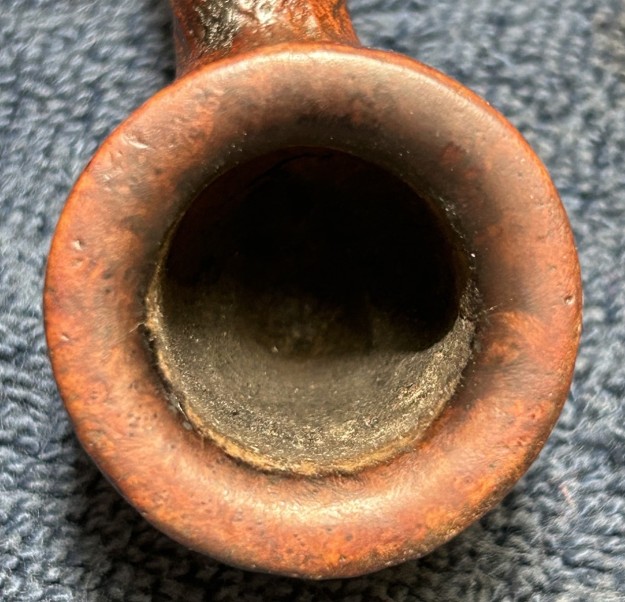
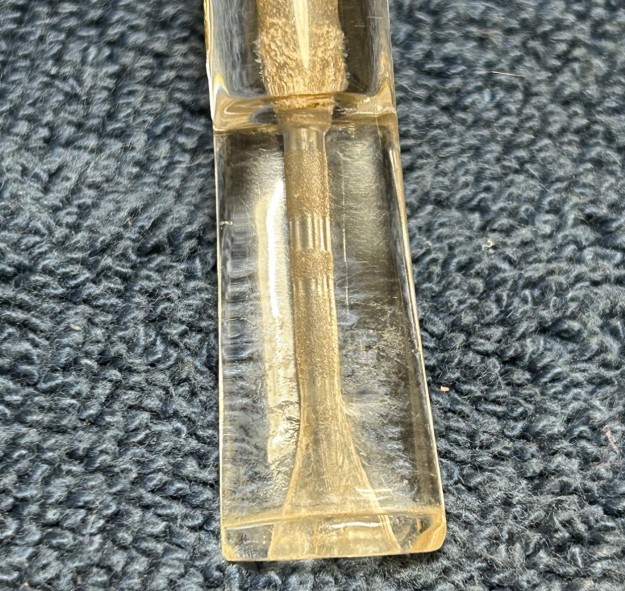
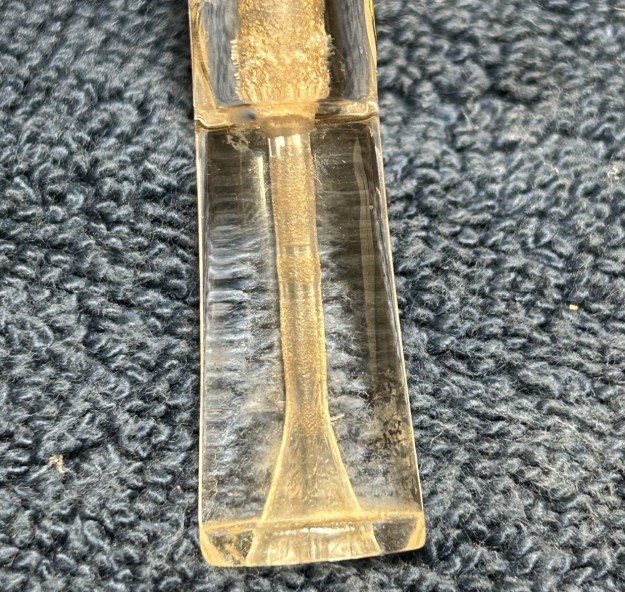
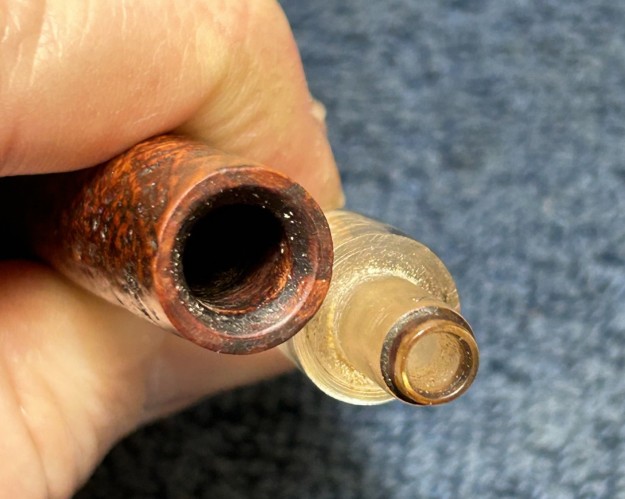
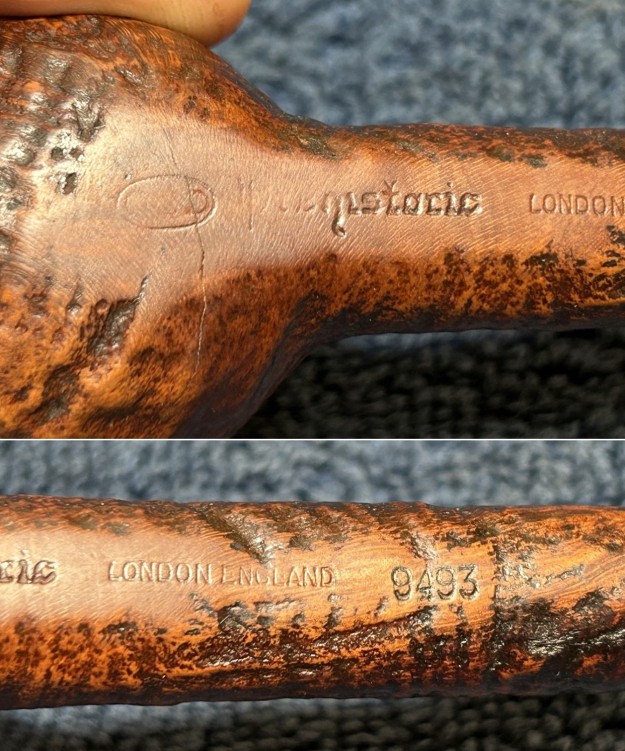
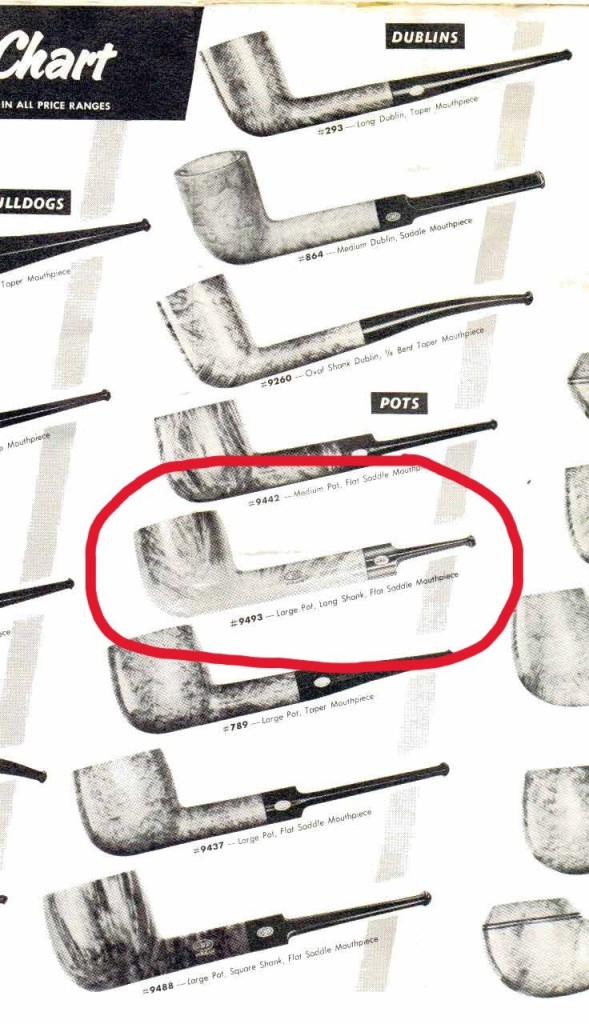
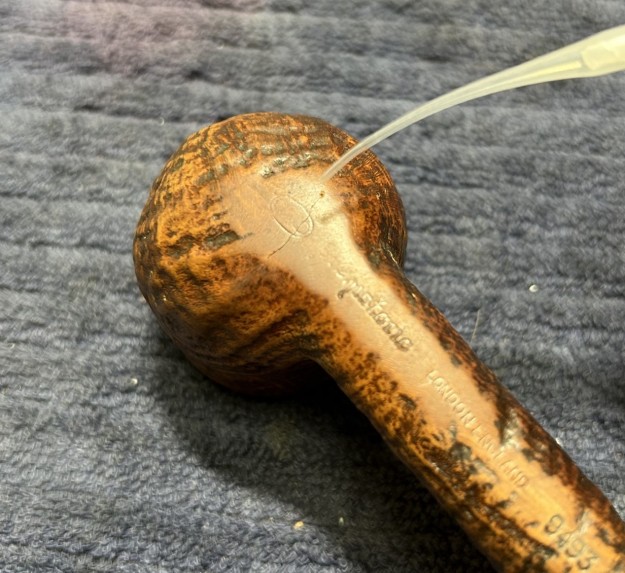
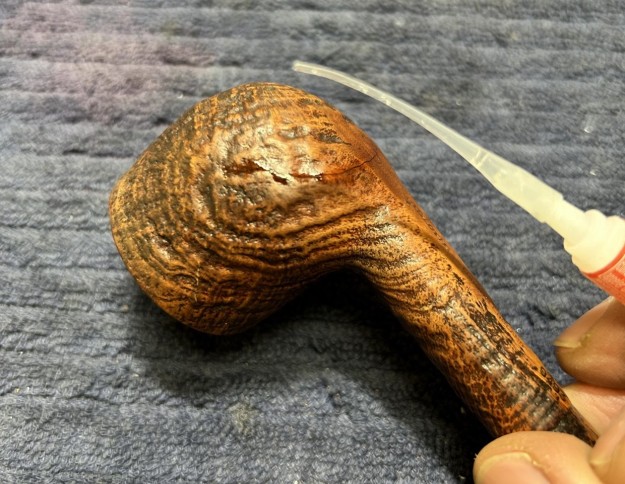
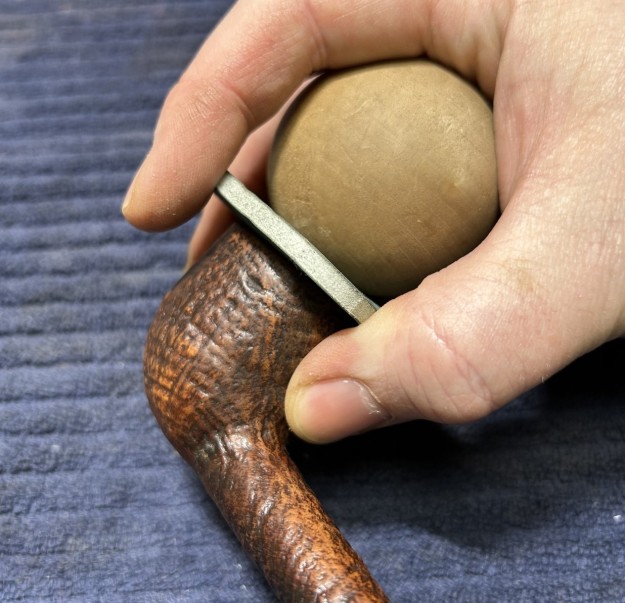
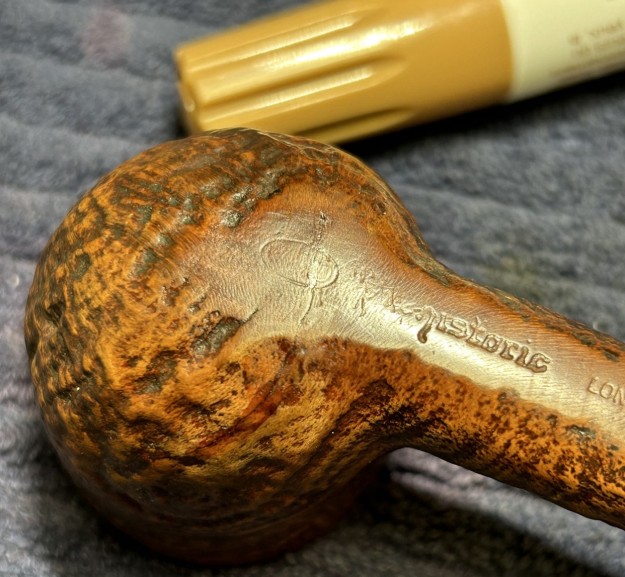
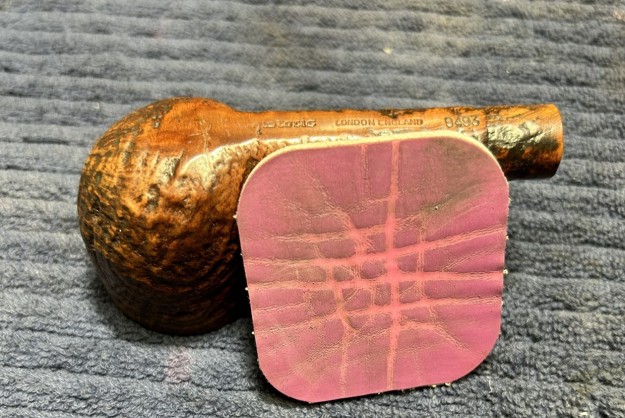
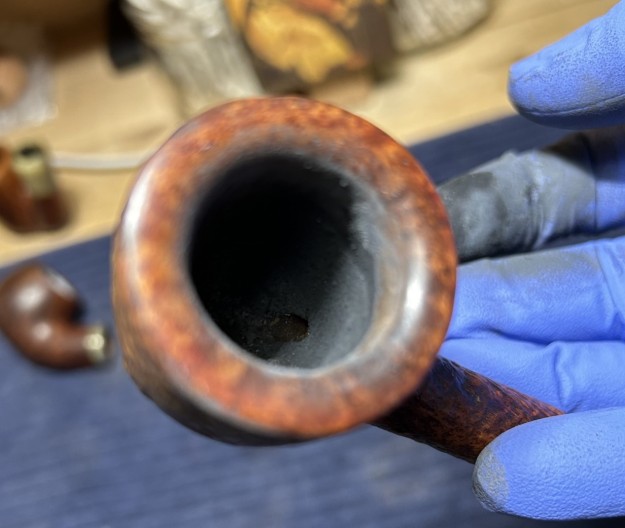
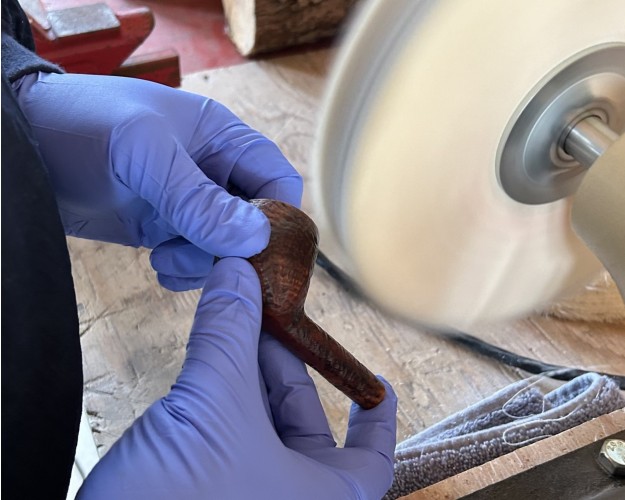
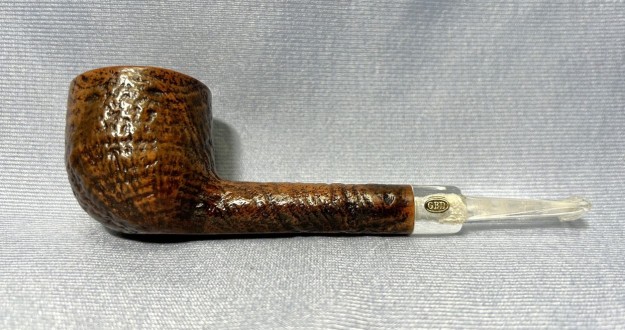
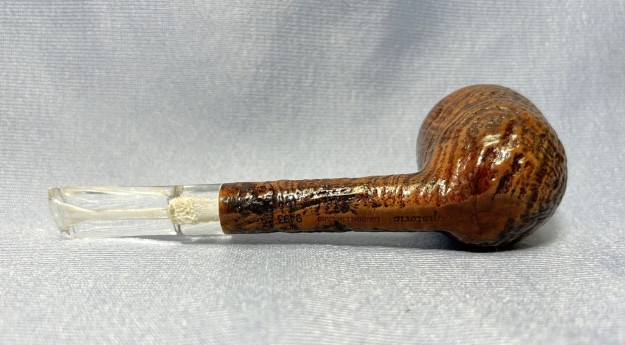
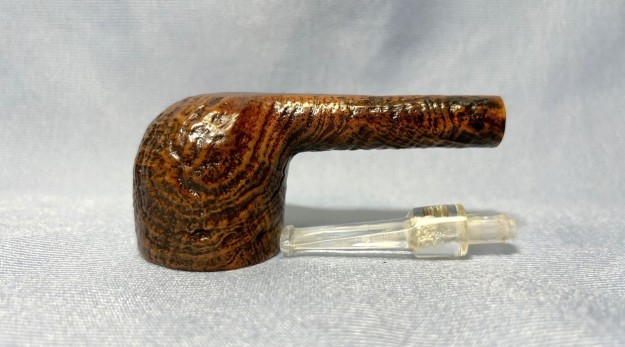
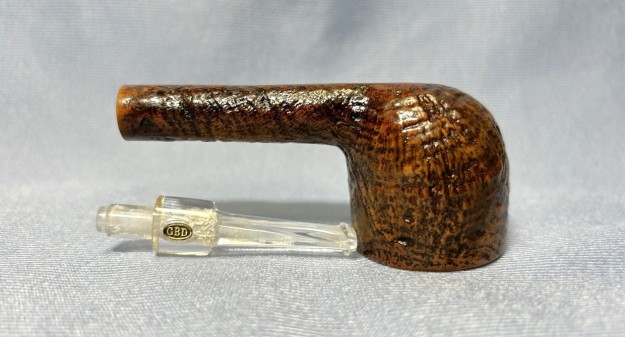
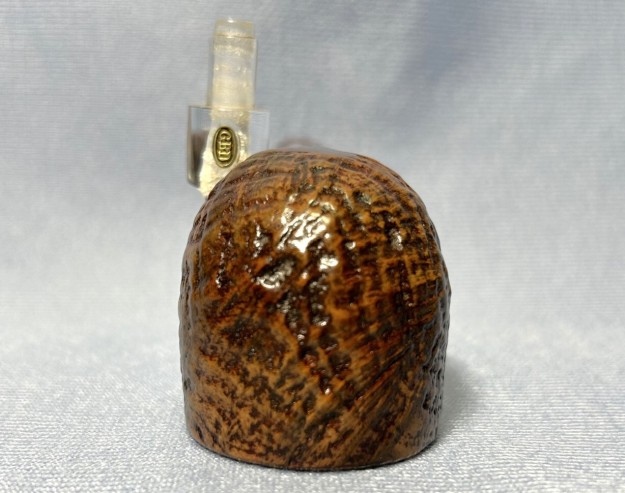
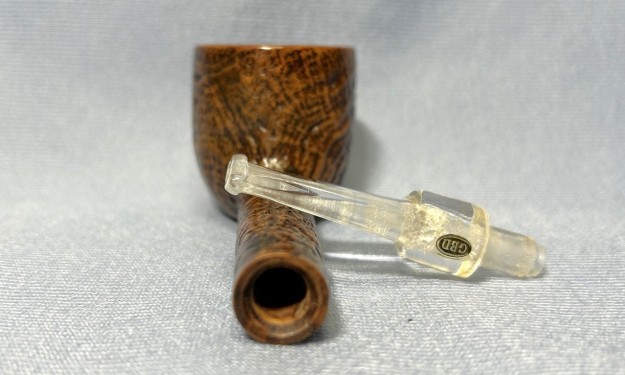
Here’s another terrific pipe from my gentleman customer in Washington. This is a GBD Prehistoric 9493 pot with a Perspex stem – well, it’s officially listed as a pot, but some (like Greg Pease) call it a long-shank pot, and I thought it was a lovat when I first saw it. I’m arbitrarily calling it a “lovat pot” – so there! I love GBDs and I was delighted to work on this one. However, there was one significant issue: a very thin, but very long, crack on the underside of the bowl. As the English say, I would have to use all of my “nous” to repair it without making it look like a dog’s breakfast. Let’s look at the pipe’s markings. On the underside, going from left to right, we see GBD in an oval (albeit very worn); next to that is the word Prehistoric; next to that are the words London England; and, finally, next to that is the shape number 9493. I wouldn’t like to hazard a guess on the specific age of this pipe, other than to say that the brass oval on the stem suggests that it (fortunately) predates the merger Comoy’s. This pipe is likely from the 1960s or 1970s.A page from a 1961 GBD catalogue shows our shape (if not the model). It reads, “#9493 – Large Pot, Long Shank, Flat Saddle Mouthpiece”. That matches our pipe’s description.Let’s start with the Perspex stem. As an aside, Perspex simply means a type of clear, cast acrylic. GBD has used it since the 1930s, apparently. As I’ve mentioned in previous blog posts on acrylic stems, they are tricky to get completely clean because the tobacco stains the material quite thoroughly. This one wasn’t too bad and I worked hard on this one – using dental tools, pipe cleaners, and alcohol. Having had some success with other acrylic stems, I also used SoftScrub on some pipe cleaners for further scrubbing. I was pleased with the results.There were a few tooth marks, etc. on the stem, and I addressed those by filling them with some clear cyanoacrylate adhesive. Once that had cured, I sanded the stem down – first with some sandpaper, then with my Micromesh pads and pipe stem oil. I was really pleased with the way it came out in the end. Lovely shine! On to the stummel, and the usual cleaning procedures were in order for this pipe. The bowl was quite wide and I used both the KleenReem and the PipNet to remove the built-up cake, and followed that with 220-grit sandpaper to remove as much as I could. I wanted to take the bowl down to bare briar. Unfortunately, there were many heat fissures on the inside of the bowl. I would address those later. I then proceeded to clean out the insides of the shank with cotton swabs, pipe cleaners, and isopropyl alcohol. There was quite a bit of filth inside this stummel – it took many pipe cleaners et cetera to clean it out. As usual, I followed that up by cleaning the insides with some soap and tube brushes. In fact, at that point, I took the opportunity to also use a toothbrush and gently clean the sandblast. Much improved. I decided to de-ghost the pipe in order to remove any lingering smells of the past. I thrust cotton balls into the bowl and the shank and saturated them with 99% isopropyl alcohol. I let the stummel sit overnight. This caused any remaining oils, tars and smells to leach out into the cotton. The bowl was nice and clean after this.Now on to the tricky business of repairing that long crack on the underside of the bowl. The technique I use for repairing these is one I learned from Steve long ago. It involves drilling a tiny hole at the very end of the crack to stop it from progressing any further in years to come. Now, it’s often challenging at the best of times to find the end of a crack on a smooth bowl, but it’s nigh on impossible on a sandblasted one! Nonetheless, I took my time and ever so carefully searched and found the ends of the crack. I took my micro drill bit and delicately drilled a hole through the briar right at both ends of the crack. I then carefully laid a thin bead of CA glue along the crack and let it cure. This bead of glue was placed with a needle-nosed nozzle, so that excess glue wouldn’t be an issue around the crack. I obviously didn’t want to sand the sandblast, so being extra careful with the glue was important. The next step was to sand the rim down. I started with some sandpaper on a wooden sphere and then used my nine Micromesh pads. On the rest of the stummel, I only used the last couple of pads, as I didn’t want to lose any of the beautiful blast. Where it was required, I touched up a couple of spots on the wood with my furniture pens. Of course, I used my restoration balm and rubbed that into the wood to have its nourishing properties work on the wood. I left it set for 20 minutes or so. While I was waiting, I took some of my pipe mortar and lined the briar walls with it. It was necessary for repairing the fissures inside the bowl. It’ll make a world of difference to the long-term viability of this great pipe. Afterwards, I rubbed down the stummel with a microfibre cloth.Then it was off for a trip to the buffer. A dose of White Diamond and several coats of Conservator’s Wax were just what this pipe needed. The handsome sandblast just popped and looked great.This GBD Prehistoric 9493 lovat pot is much improved. I’m delighted and I’m sure my customer in Washington will be too. I hope you enjoyed reading the story of this pipe as much I as I did in restoring it. If you are interested in more of my work, please follow me here on Steve’s website or email me directly at kenneth@knightsofthepipe.com. Thank you very much for reading and, as always, I welcome and encourage your comments.

Enflamed by Peterson’s Grain


Blog by Kenenth Lieblich

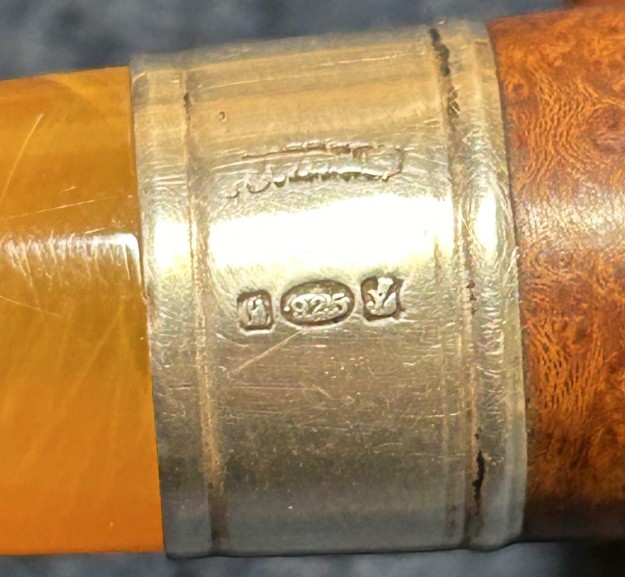
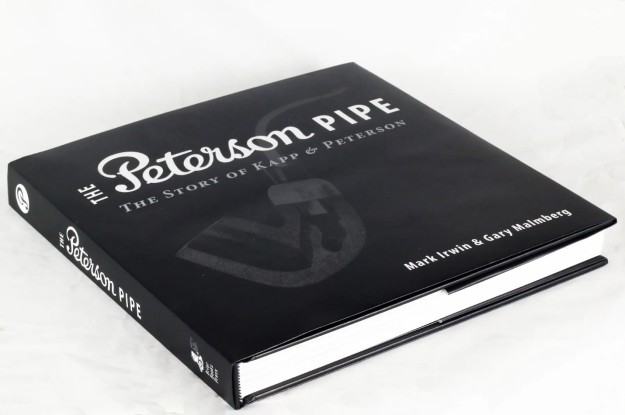
This beauty is a Peterson Flame Grain B10 calabash pipe with a P-lip stem. It is the second pipe of four that I’m restoring for a customer in Washington. It’s an awfully handsome pipe, but has some serious issues to be addressed. Let’s see what we can do to revivify this great pipe. I’m looking forward to the challenge. One note: I unfortunately lost several photos that I took of this pipe, so the photographic evidence won’t be as thorough as usual. The Peterson website says that this pipe shape “combines elements of traditional bent Dublin, Calabash, and Rhodesian archetypes”. I can see what they mean, but I’m calling it a calabash – so there! The markings are quite interesting. On the left side of the shank, it reads Peterson [over] of Dublin [over] Flame Grain. On the right side of the shank, it reads B10. There is also a sterling silver band which provides some additional marks: Peterson and a word which I assume to be Sterling (but it is somewhat obliterated). There are also some hallmarks: Hibernia – a woman seated, her arm on a harp, representing Ireland. Then .925 in an oval, confirming that this is 92.5% silver. The third mark, I believe, is supposed to be a letter indicating the year of manufacture. However, the third mark here didn’t look like a letter to me. Steve thought it could be the letter Y (indicating 2009), but suggested I ask Peterson expert, Mark Irwin, about it. He confirmed that it is, indeed, a Y. I know something about Peterson pipes, but wanted to know more about the Flame Grain line, so I went over to Pipedia to have a look. Obviously, there is a long and very good article about Peterson – here is the link. No significant mention was made of the Flame Grain line there, but Mark Irwin and Gary Malmberg’s book, The Peterson Pipe: The Story of Kapp & Peterson, did make mention of it:
Flame Grain (1997-) Smooth flame-grained with brass band 1997-c.2000, sterling silver thereafter. Stamped arched Peterson over arched OF DUBLIN over FLAME GRAIN. Black vulcanite mouthpiece, also amber coloured (2010-), P-Lip mouthpiece, hot foil stamped P.Meanwhile, Mark Irwin’s website, Peterson Pipe Notes, has an article about the B shapes. You can read the whole thing here. He includes this point:
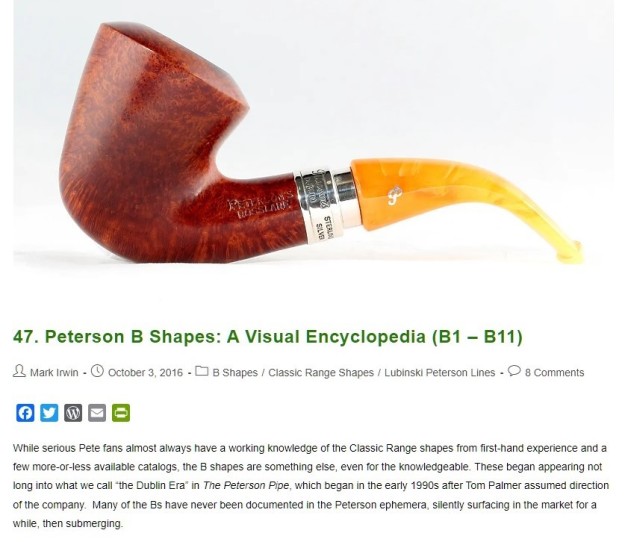
The B10 and B11 seem to have been released at the same time, and both have found a home in the Classic Range in almost every line Peterson issues. Sykes Wilford describes the B10 as a “Calabash variation,” featuring “the softly convex rim, blending elements of the bent Dublin, bent Bulldog along with the Calabash shape.” I have both pipes in the Rosslare Royal Irish line (with the faux spigot), hallmarked “S” for 2003, although it may have been issued before that date.All of this information seems to confirm that this pipe is among the first iterations of the B10 with the amber-coloured stem, starting in 2010.
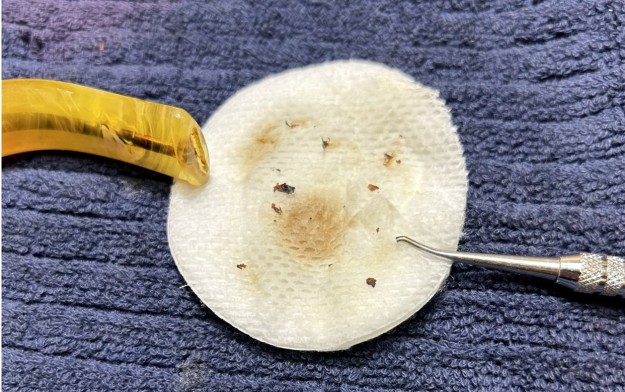
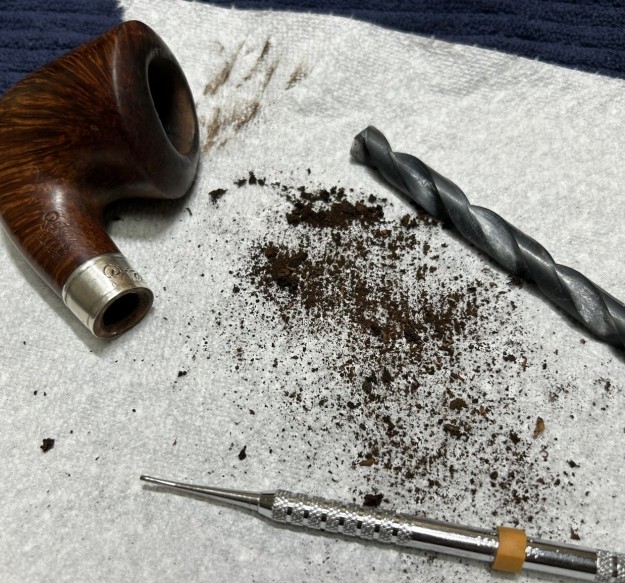
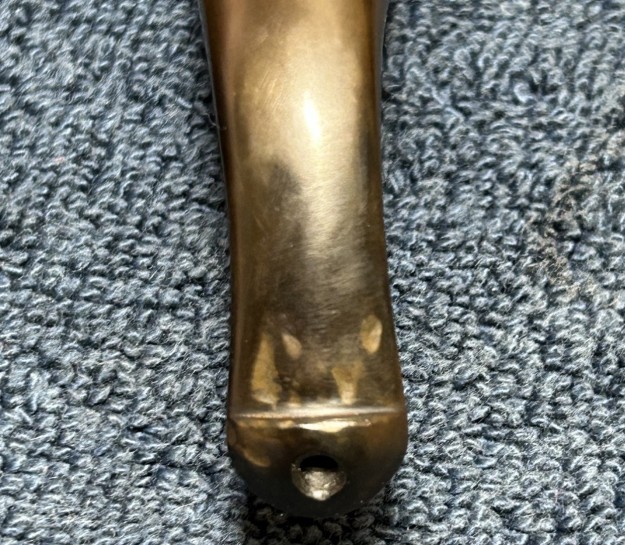
The pipe’s got a handsome, golden acrylic stem, presumably made to look like amber. One of the things that drives me nuts about acrylic stems is how difficult they are to clean inside. I can certainly disinfect and scrub them without any problem, but the stains of the tobacco are awfully stubborn and almost never go away completely. I began by using a dental tool to clean out the filth in the bore. There was quite a bit of debris there. Moving on, I set about doing the best I could on this one – using pipe, cleaners, and alcohol as usual. In fact, upon finishing that, I also used some SoftScrub on some pipe cleaners to see if I can get some further benefit to the cleaning. It did help, and I was pleased with that, but it would never be like new. The stylized P of Peterson was engraved on the left side of the stem, and I used some silver Rub’n’Buff to restore that back to its original state.There were a few tooth marks, etc. on the bit of the stem, and I addressed those by filling them with some superglue. Once that had cured, I sanded the stem down – first with some sandpaper, then with my micromesh pads and pipe stem oil. I was really pleased with the way it came out in the end. On to the stummel, and this is where the major issues lie. First and foremost, the rim, as the photos show, was in very bad shape. It had quite a bit of burning on it, and had been reamed so aggressively that the opening was badly out of round. The damage was significant enough that I knew I would not be able to make it invisible, but I also knew that I could improve it substantially.Before that, however, I reamed the pipe to remove the considerable cake in the bowl. It was very nasty. The inside of the bowl was in rough shape – there were many heat fissures. Whoever previously owned this pipe must have smoked the dickens out of it. Furthermore, I needed to use a drill bit in the shank to loosen up some of the hardened debris. That worked quite well at assisting me. I then cleaned out the insides with cotton swabs, pipe, cleaners, and alcohol. It was pretty dirty inside, so considerable work was needed. Following that, I de-ghosted the pipe with cotton balls and some alcohol. I let that sit overnight to remove even more filth and stench from the old pipe. After that, I cleaned the insides with soap and tube brushes. Then I cleaned the outside with Murphy’s and some cotton rounds and a toothbrush. Once thoroughly clean, the extent of the damage to the stummel was apparent. Even though this is a young pipe, it’s had a hard life. It’s my job to extend its life expectancy! First things first: there was a notable fill on the side of the bowl. I opted to fill it with CA glue and briar dust.Naturally, the rim was the major issue. Since the top edge was quite uneven and beat up, I began by “topping” the pipe – that is to say, I gently and evenly sanded down the rim on a piece of 220-grit sandpaper. This effectively evened the top edge (and removed a bit of damage), without altering the look of the pipe.This is the point where I’m missing some photos. After topping, I wanted to address the serious burns. It was bad – really bad – and it would be a challenge to make the pipe look normal. At the same time, it was necessary to address the bowl being so badly out of round. I used a solid wooden sphere (wrapped with sandpaper) on the inner edge of the rim in order to repair some of this. In addition, I also sanded down the outside of the bowl, near the rim, so as to minimize the visual effect of the roughened edge. I sanded all the way around to ensure that the pipe retains its look. Next, I used all nine Micromesh pads (1,500 through 12,000 grit) all over the stummel to make it lovely and smooth. It was a laborious process to sort out these issues, but I was reasonably pleased in the end. In order to fill in the heat fissures and prevent any further internal damage, I mixed up some of my pipe mortar and lined the briar walls with it. This will definitely extend the life of this terrific pipe.Then, applying some Before & After Restoration Balm added that certain something which brings out the wood’s beauty. I also took out my jewellery cloth and buffed up the lovely sterling silver band. Then it was off for a trip to the buffer. A dose of White Diamond and a few coats of carnauba wax were just what this pipe needed. The lovely shine made the wood very attractive. Despite its flaws, this is a very handsome pipe and will provide many years of smoking pleasure.This Peterson Flame Grain B10 calabash is back from the brink and I hope my friend in Washington will enjoy taking it on as his own. I hope you enjoyed reading the story of this pipe as much I as I did in restoring it. If you are interested in more of my work, please follow me here on Steve’s website or email me directly at kenneth@knightsofthepipe.com. Thank you very much for reading and, as always, I welcome and encourage your comments.
Cleaning Up a Charming Rossi Featherweight Acorn


by Kenneth Lieblich

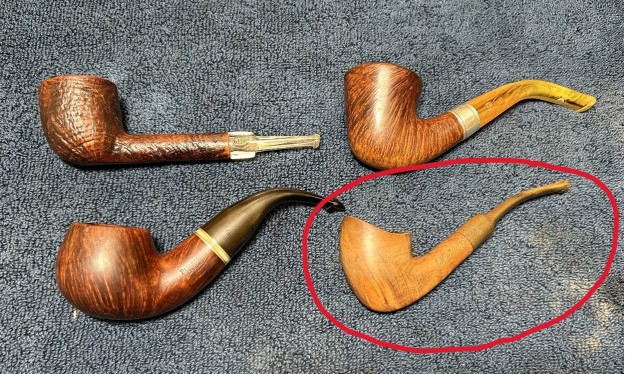
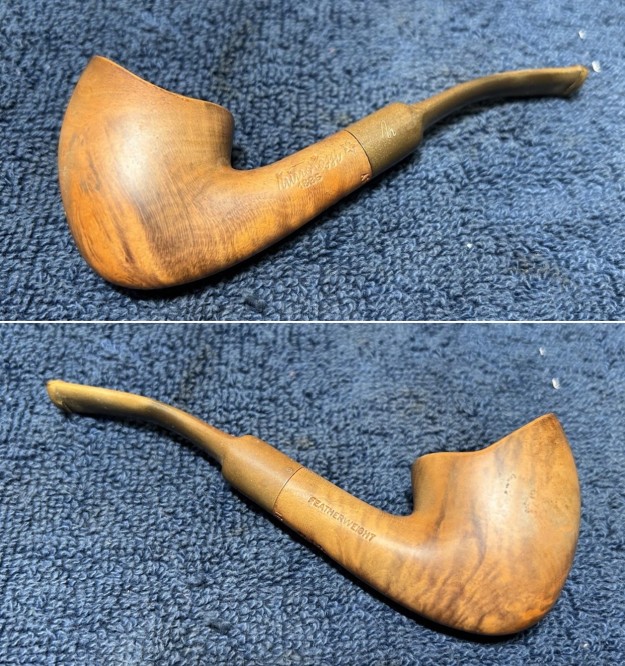
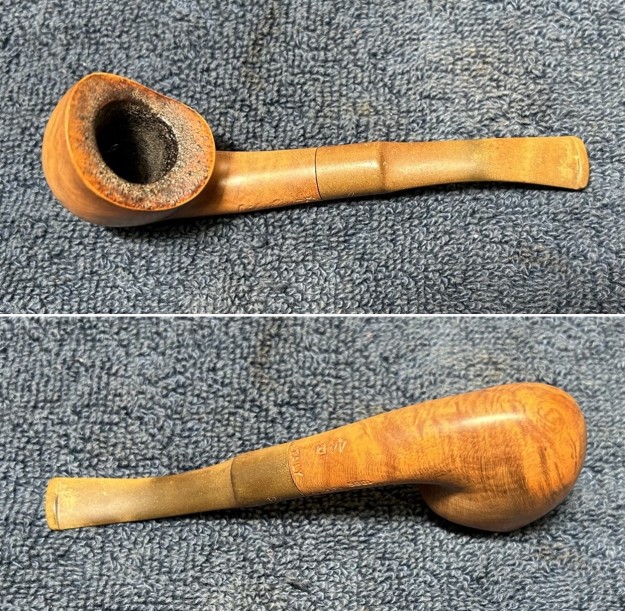
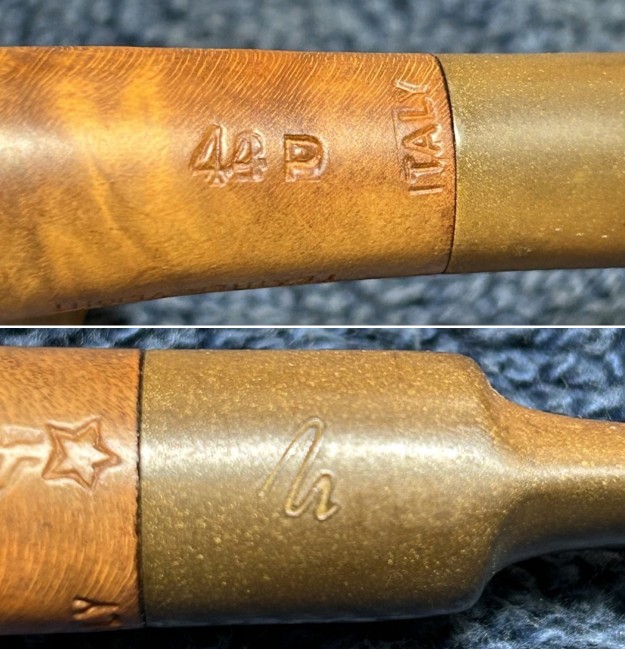
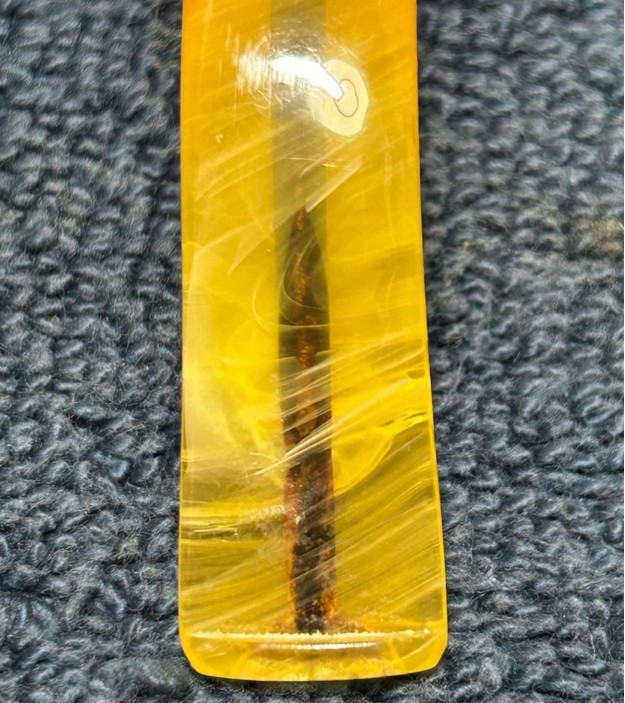
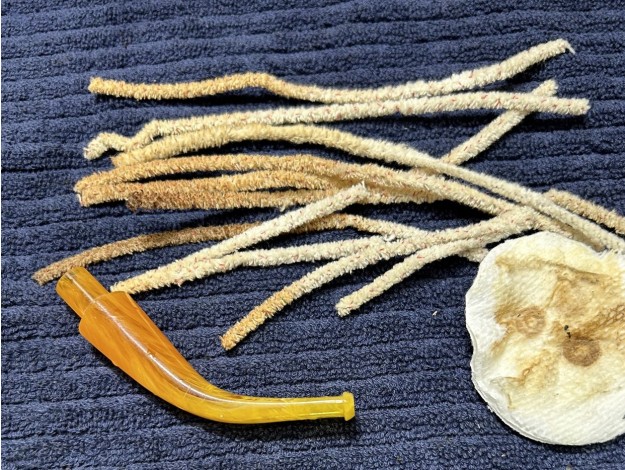
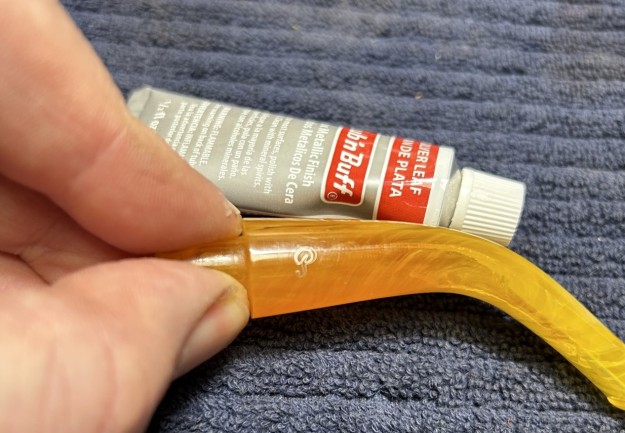
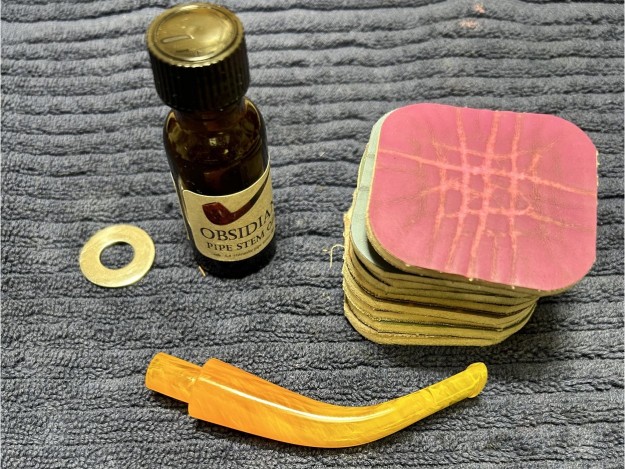
A fine gentleman from Washington contacted me recently and asked if I would restore some pipes for him. Of course, I was only too happy to oblige. This is the first of the four, and it’s the only one that doesn’t have major issues. This is a Rossi Featherweight 44P acorn pipe. It’s a pretty little pipe and I’m sure will serve its owner well. The markings on the pipe were clear and sharp. On the left-hand side of the shank, read Nino Rossi [over] 1886 – and to the right of that, a star. On the right side of the shank was the word Featherweight. On the underside of the shank, was 44P and, to the right of that, at 90 degrees, was the word Italy. On the stem was a stylized letter N. Rossi was founded by Ferdinando Rossi, in Italy, as Fabbrica di Pipe di Radica Rossi. The company dates from the mid-to-late 19th century. I would encourage you to read the Pipedia article on the company – there’s quite a bit of information: https://pipedia.org/wiki/Rossi. The article includes an important detail regarding this particular pipe:

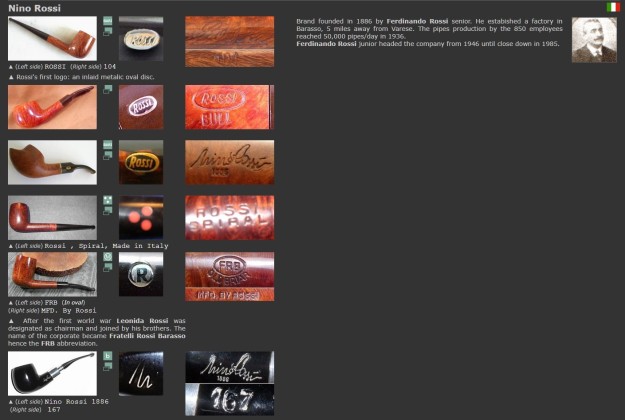
From, approximatively, seventies, until 1985, Rossi pipes were marked with “ROSSI”, into an oval (sometimes there was also “ITALY” on the shank); on the stem, there was “ROSSI”. In these years, appeared the signature “Nino Rossi” (in cursive font): he was the last heir of the factory.

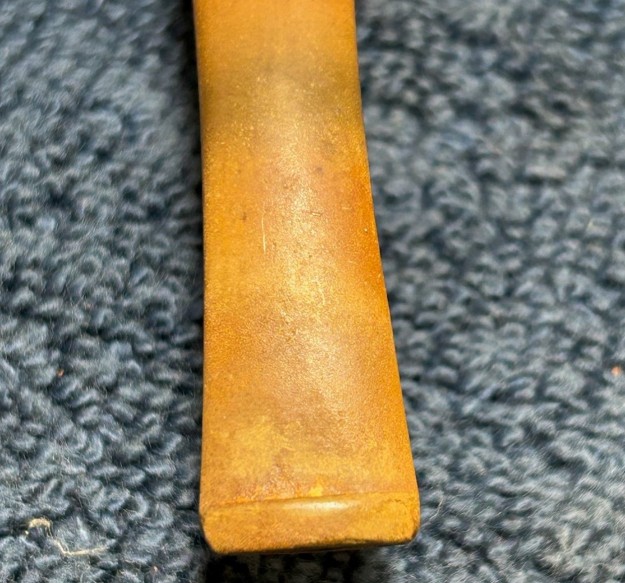
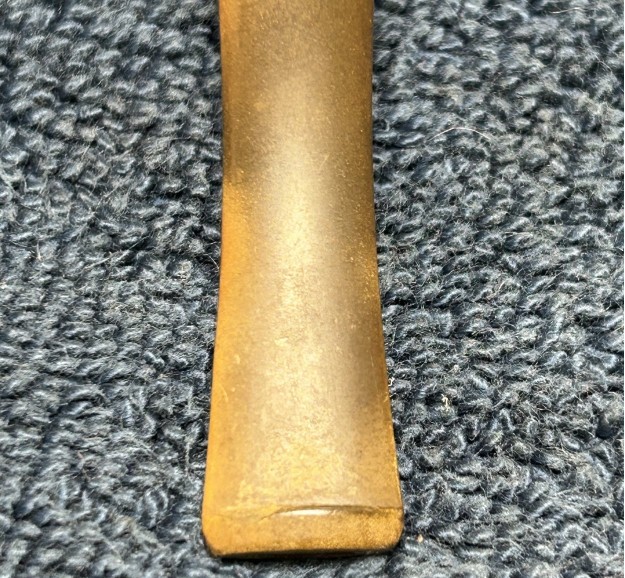
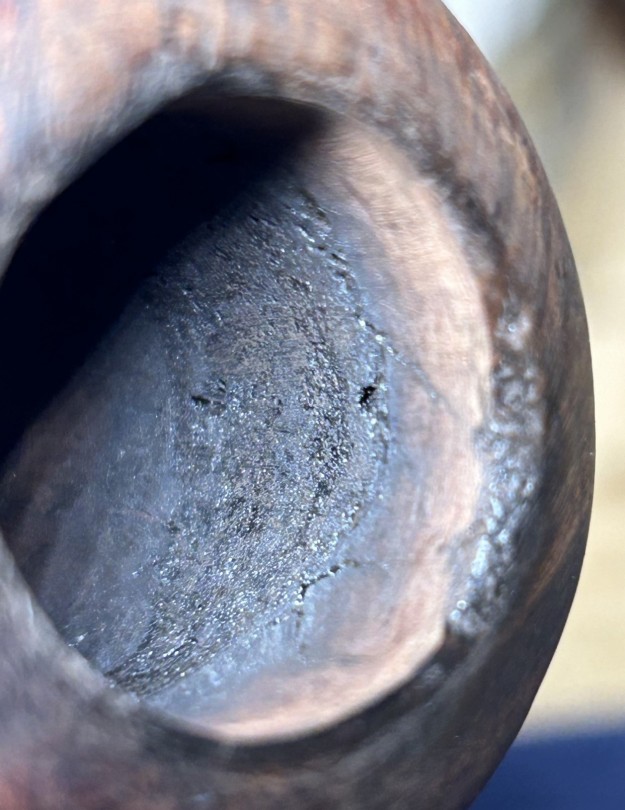
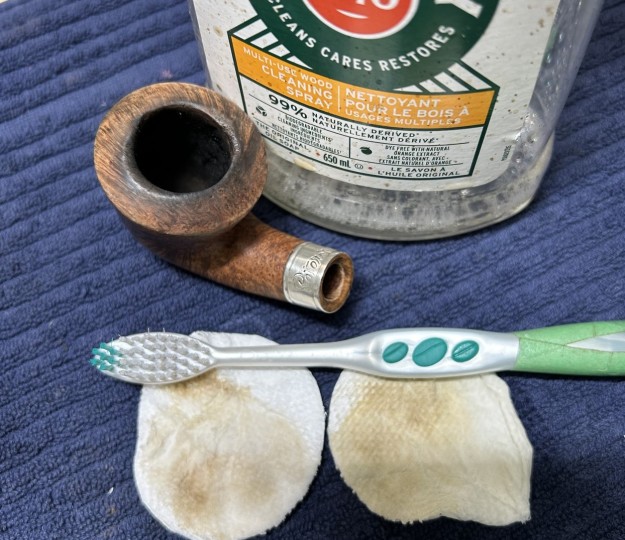
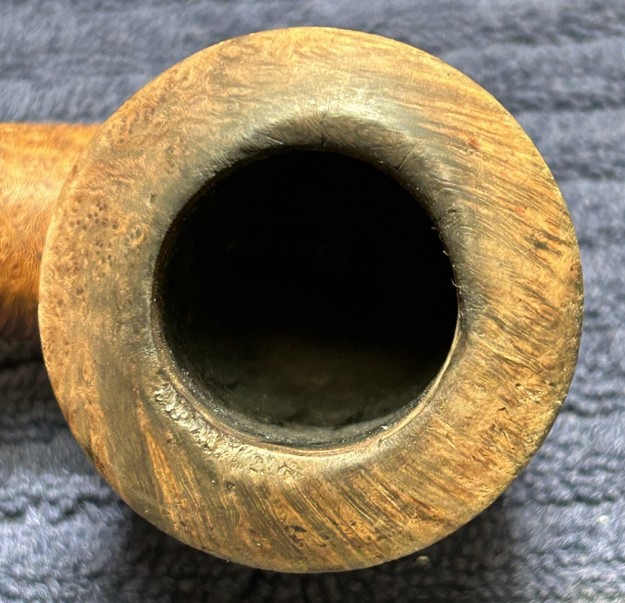
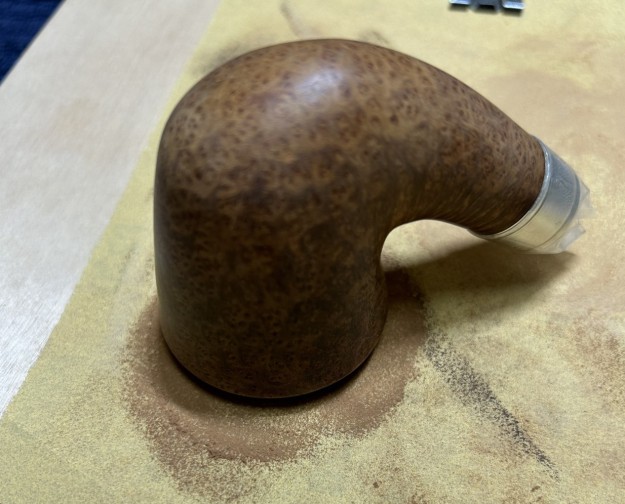
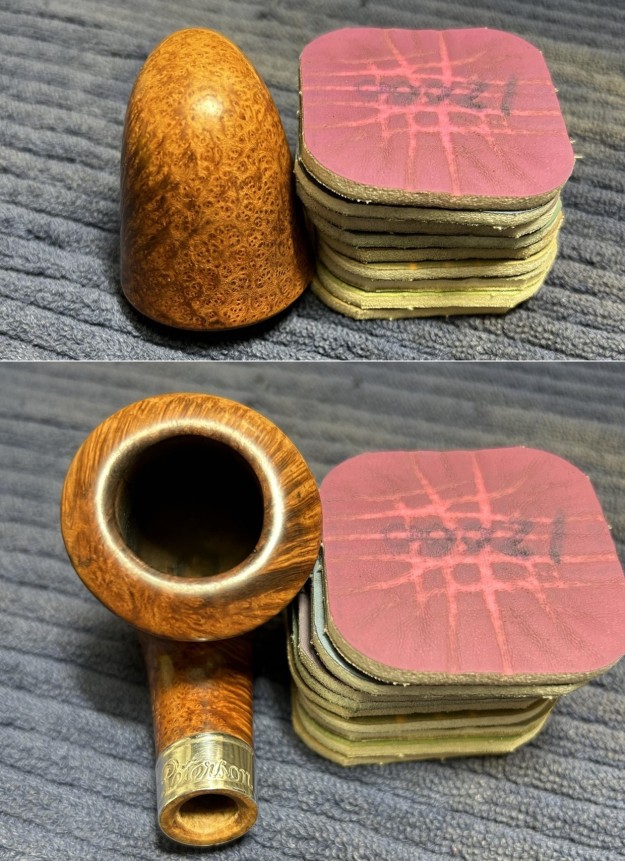
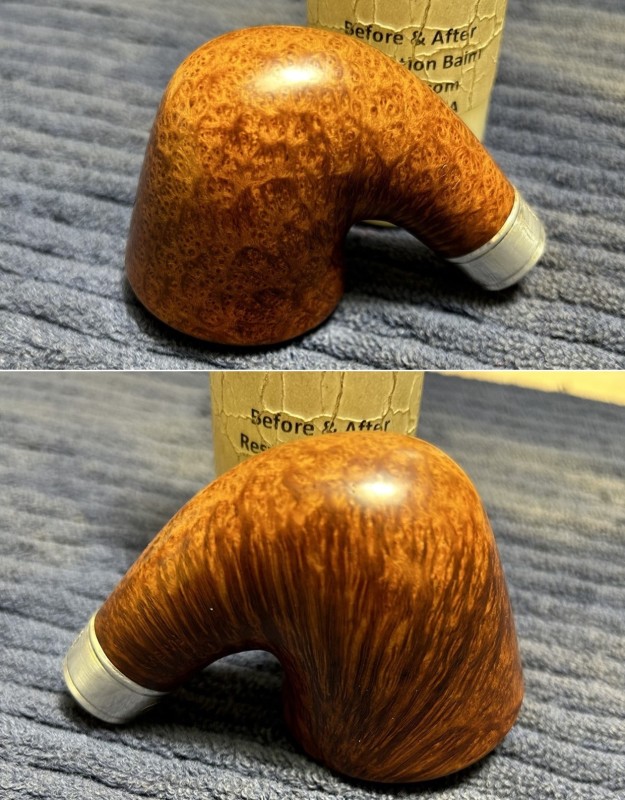
From this point, we can deduce that this pipe is from the 1970s or ‘80s. Here is in an image capture from Pipephil:The pipe was in good condition and just needed some TLC to bring it back to working order. The stem was a bit dirty and thoroughly oxidized. The stummel was in decent shape, but it had a strange residue on the rim. I’d need to look into that more closely. First, I cleaned out the inside of the stem with pipe, cleaners and some lemon infused 99% isopropyl alcohol. It was pretty dirty, but not too terrible. I was more concerned about the oxidation, which was pretty heavy. I scrubbed it down with some SoftScrub cleanser and then tossed it in my deoxidizing fluid to sit overnight. The next day, I managed to scrub off even more oxidation with more SoftScrub. Before sanding the stem, I took out some nail polish and made sure to add it to the stylized N on the left side of the stem. I let that dry before moving on.I also repaired a few small nicks in the stem with some black cyanoacrylate adhesive and let it cure. That done, I proceeded to sand down the stem with my nine micromesh sanding pads. I also used some pipe stem oil during the sanding to bring out some extra lustre and beautify the stem. Just like the stem, I cleaned out the insides of the stummel with pipe, cleaners, cotton swabs, and alcohol. Took a bit of work, but I got it clean. In order to sort out the stuff stuck to the rim, I took a piece of machine metal and gently scraped it away, not wanting to do any more invasive work than I needed to. It came away reasonably easily and I carried on. I then set it up for a de-ghosting session. I put some cotton balls in the bowl and in the shank and saturated them with 99% isopropyl alcohol. I let that sit overnight to allow all of the lingering smells and stains leach out into the cotton. After that it was much improved. I wiped it down with some Murphy’s and finished up by scrubbing the insides with soap, and some tube brushes. I sanded down the stummel with my micromesh pads to make it smooth and lovely. Of course, I added some of my restoration balm to the wood and let it sit for 20 minutes or so. BUT, there was a bit of a problem. The sanding and application of balm revealed some mottling on the surface of the briar. Clearly, there was some remnants of an old lacquer or shellac. It looked awful and I couldn’t let it be. I couldn’t get rid of it with any solvents, so, unfortunately, I had to re-sand the whole thing. That worked and it looked much improved.Finally, I applied some another batch of Before & After Restoration Balm and buffed it with a microfiber cloth. This balm does beautiful things to the wood and really generates a beautiful shine. I then took the pipe to my bench polisher and buffed it with White Diamond and a few coats of carnauba wax. Wow – the pipe really looks lovely.This Nino Rossi Featherweight 44P acorn will suit my friend in Washington very well and I’m sure that he will appreciate smoking it for many years to come. I hope you enjoyed reading the story of this pipe as much I as I did restoring it. If you are interested in more of my work, please follow me here on Steve’s website or email me directly at kenneth@knightsofthepipe.com. Thank you very much for reading and, as always, I welcome and encourage your comments.

Clearing Up Some Birks Confusion


Blog by Kenneth Lieblich

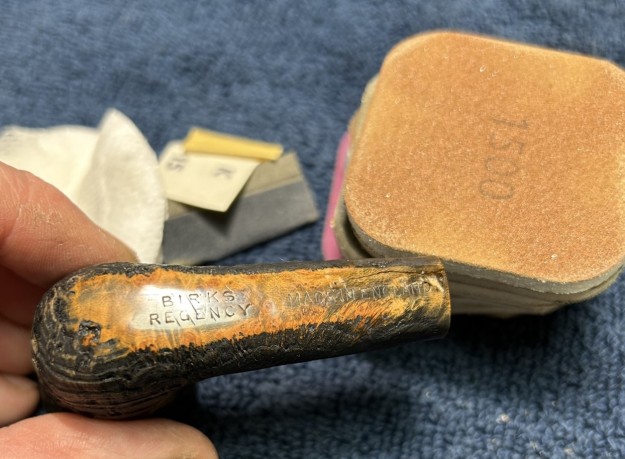
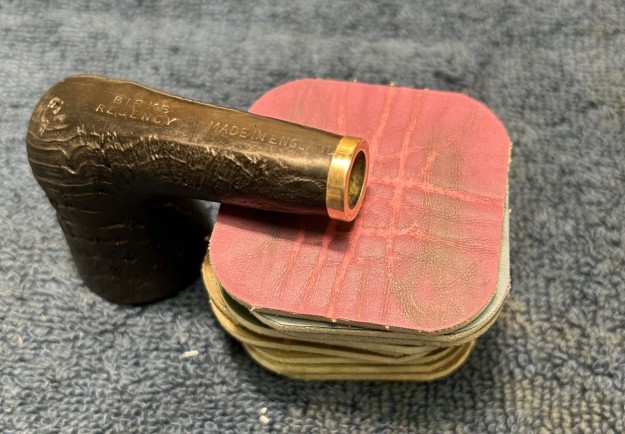
This happy little fellow is a sandblasted, stylized bent Zulu by Birks. My cousin gave me three pipes to repair – this is the first one I grabbed. I was interested in it for two reasons. First there was a cracked shank, and I always like giving life back to a pipe with a cracked shank. Second, the pipe comes with the name of the famous Canadian jewellery house, Birks. I’m interested in this because I have several Birks pipes in my workshop and they’re all a little different. More on that in a moment. The markings on the pipe don’t tell us much – but they tell us enough. The only markings are on the underside of the stummel and they read Birks [over] Regency. To the left of that are the words Made in England. Allow me to explain some of this.Birks refers to Henry Birks & Sons, a venerable and well-known luxury store based in Canada (now known as Maison Birks). It has focused primarily on jewellery throughout its history, but also other luxury items like watches, silverware, etc. There has been some discussion in pipe circles about whether Birks sold pipes or not – and whether Birks actually refers to an English company (as Wilczak and Colwell suggested in Who Made That Pipe?). I can say definitively that Henry Birks & Sons sold pipes. They did not manufacture their own, but had others make them for sale at Birks’ stores. Steve has already restored some Birks-branded pipes made by Savinelli. I have Birks-branded pipes made in England and in Denmark.Two further points about this. First, I wonder if Wilczak and Colwell were thinking of an English razor company (also called Birks) that frequently used a maker’s mark that was in the shape of a pipe (rather unhelpfully). For more on that, click here. Second (as I mentioned earlier), this particular pipe has the word Regency on it. Regency specifically refers to a Henry Birks line of silverware, china, etc. – so that makes sense.

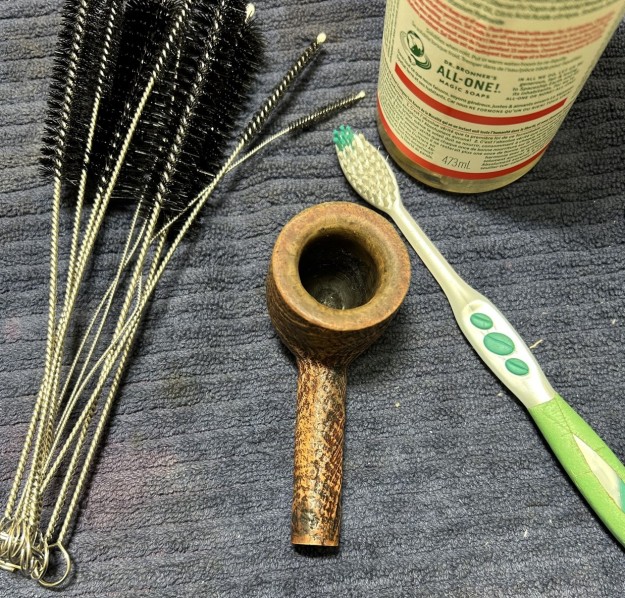
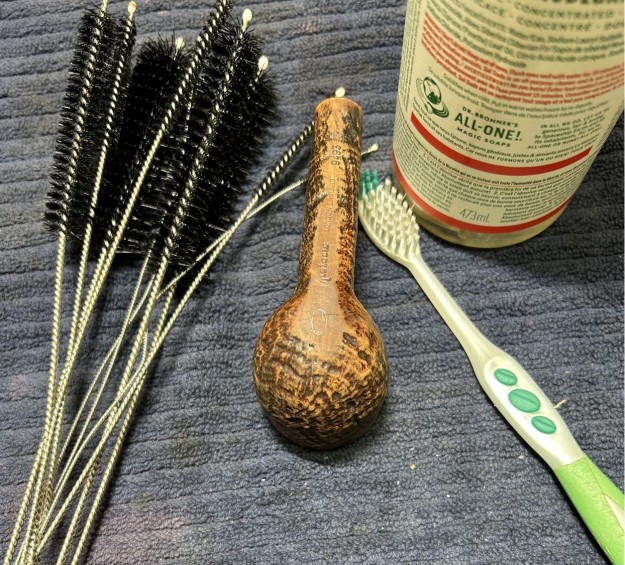
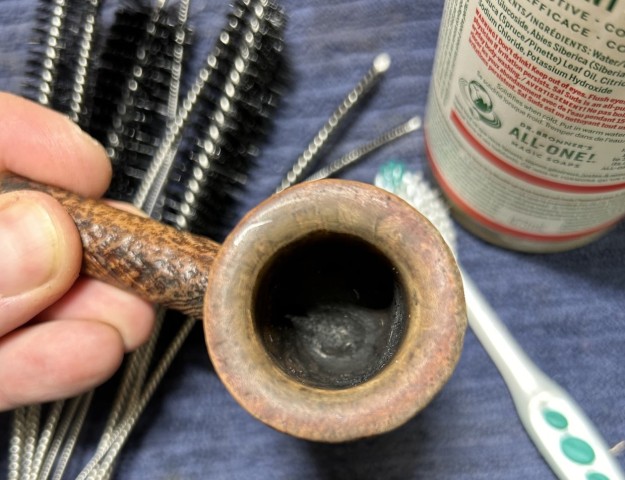
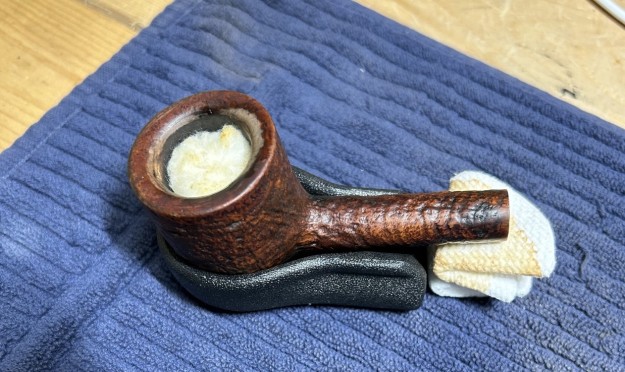
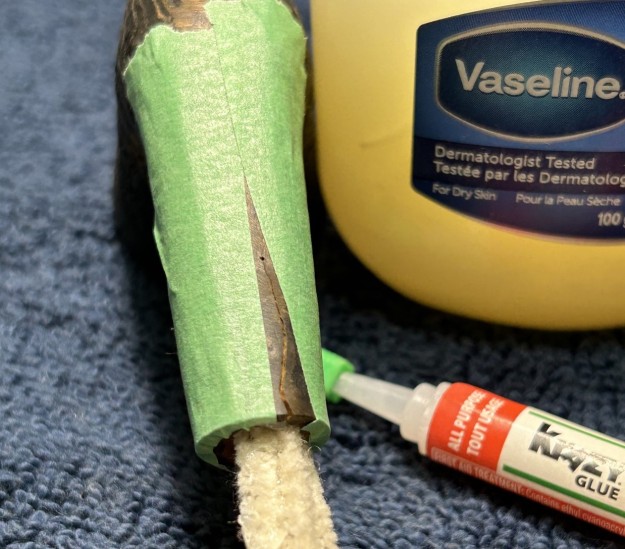
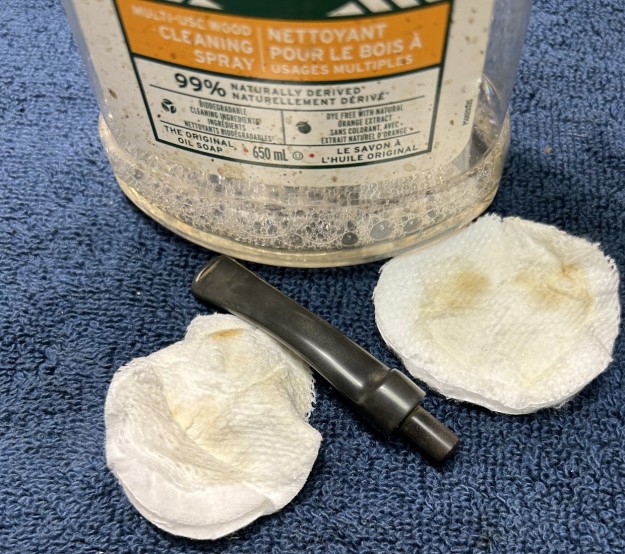
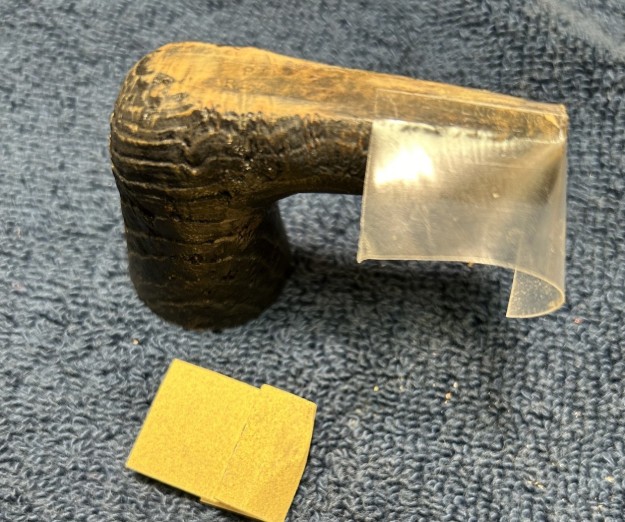
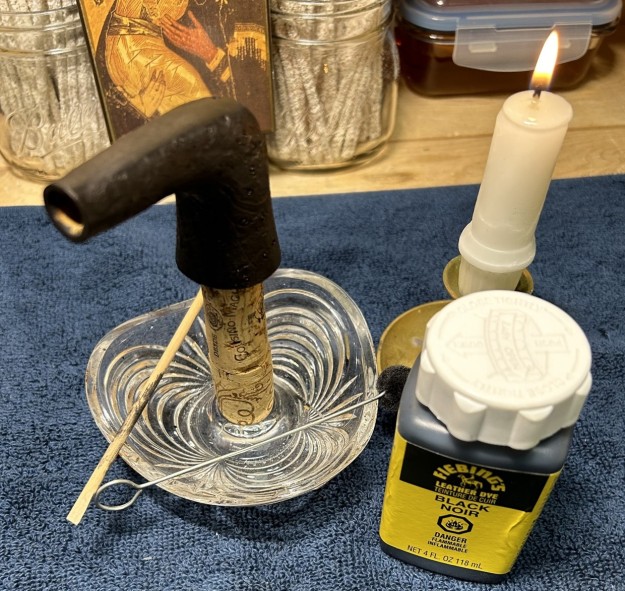
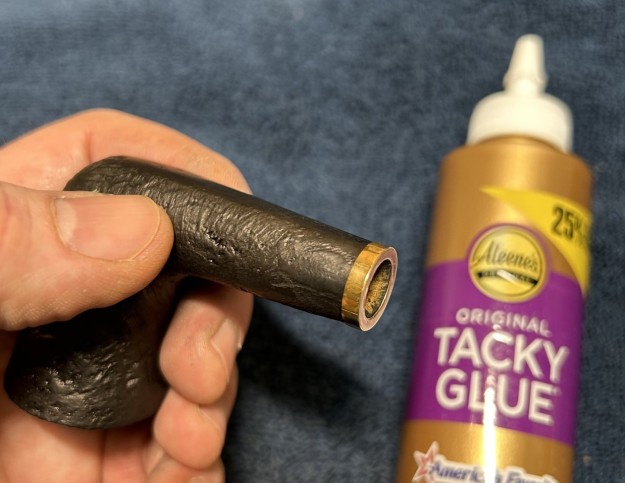
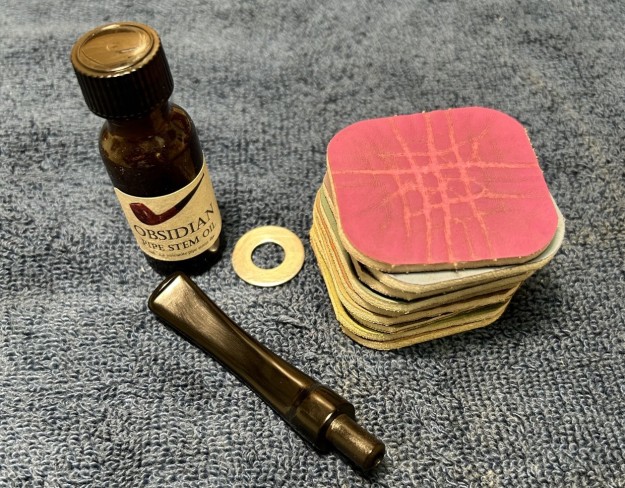
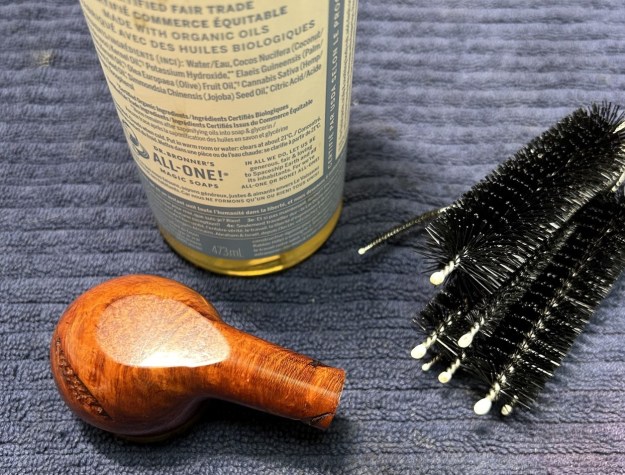
The stummel was surprisingly clean when I took hold of it. I did use a few cotton swabs and pipe, cleaners, along with isopropyl alcohol, but it didn’t take much to finish it. I followed that up with some Castile soap, and tube brushes to really scrub the insides. Came out beautifully. I’ve then took some Murphy’s, and a toothbrush and gently scrubbed the years of filth and oil, etc. off of the sandblast. It certainly looked much cleaner after that, albeit much more faded. A new coat of stain will be required, I think. As a result, I took the opportunity to wipe down the stummel, with alcohol to remove some excess old stain, and make sure everything was clean for the repair to the crack in the shank. Let’s move onto the primary repair to this pipe: that crack in the shank. First of all, I took the most micro of micro drill bits and drilled a hole with my Dremel right through the shank wall into the airway. This is an important step as it stops the crack from extending later on in life. The drill bit is so thin that it’s always a bit nerve-racking, because I fear snapping the bit through such hardwood. Fortunately, it worked like a charm this time. I also stuffed the mortice with pipe cleaners coated in Vaseline, so that if – God forbid – any cyanoacrylate adhesive drip into the mortise, it can be easily removed by the petroleum jelly. I ran a thin bead of cyanoacrylate adhesive along the length of the crack, and then held the two sides of the crack together with some vice grips. I let it sit for a few hours to cure. Moving along to the stem. Like the stummel, it was also quite clean, but needed a few more pipe cleaners to finish the job. Of course, I used isopropyl alcohol with them. I then wiped down the stem with Murphy’s on a cotton round. Once done, I put the stem in the deoxidizing fluid, even though there wasn’t much oxidation to speak of. It can’t hurt, and it’ll remove what little there is. After the adhesive cured on the shank, I set about sanding the underside of the stummel because there were a lot of scratches there. I also needed to sand down the bead of adhesive that I put there. It was tricky, because there wasn’t much room to move, with the markings so nearby. I started out by masking those markings with hockey tape, which is a perfect masking material as it is extremely scratch resistant. However, it ended up being more trouble than it was worth given the tight spaces to work in. Instead, I just sanded the area down, freehand, so to speak. It was time to stain the pipe, so I took out my Fiebling’s black leather dye. I thoroughly coated the stummel with a dauber, then flamed it with my BIC lighter to set the color. I repeated this process three more times to ensure a really deep, rich, black colour. it worked a treat.In order to ensure the crack in the shank doesn’t open up again, I decided to add a band to the shank to secure everything in place. The bands always look a little dull when they come out of my drawer, so I polished it up with my micromesh sanding pads. Naturally, I did the same to the stem. Came out beautifully. The next step, of course, was adding the restoration balm to the wood. This not only enriches and enlivens the briar, but helps add a protective layer to the dye in the wood. Off to my bench polisher! As usual, I used white diamond as my first compound, but instead of the regular conservator’s wax that I would use on sandblasted or rusticated pipes, I opted to use Halcyon II this time. It also gives a nice polish to the pipe, but slightly less shiny than normal – which is what I was aiming for.This Birks Bent Zulu looks beautiful once again. I’m sure my cousin will love it. I hope you enjoyed reading the story of this pipe as much I as I did restoring it. If you are interested in more of my work, please follow me here on Steve’s website or email me directly at kenneth@knightsofthepipe.com. Thank you very much for reading and, as always, I welcome and encourage your comments.
Just a Beautiful Comoy’s


Blog by Kenneth Lieblich

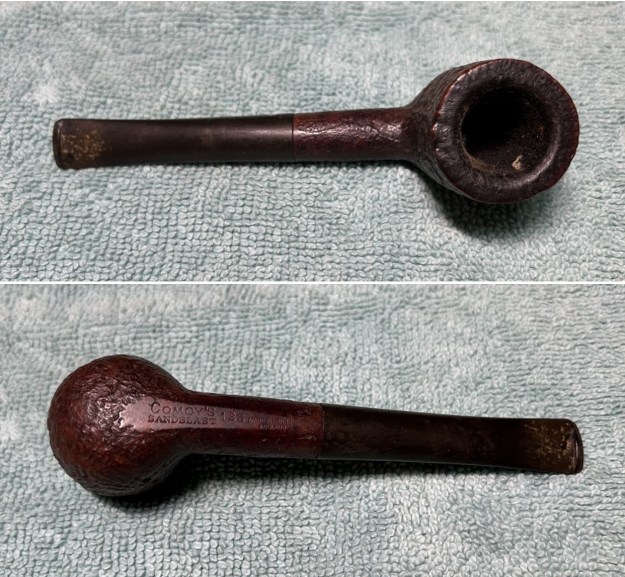
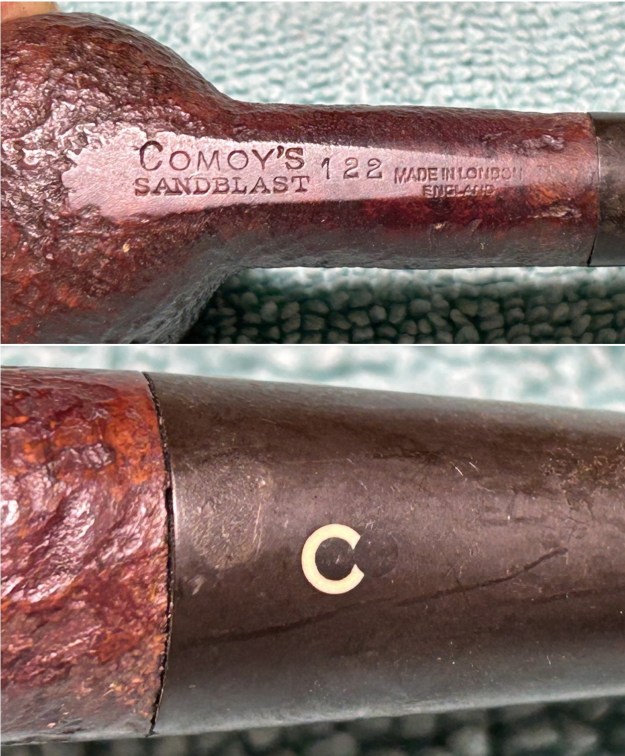
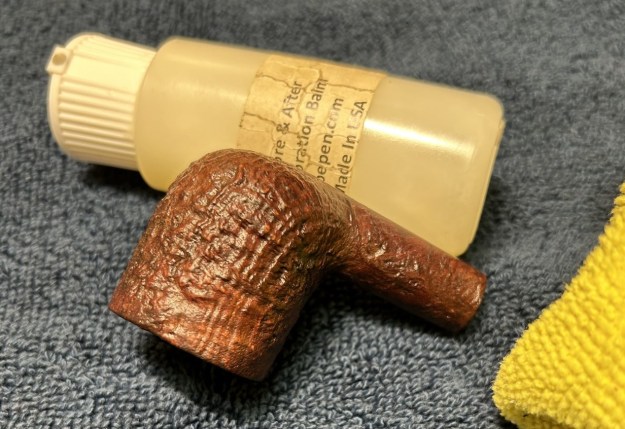
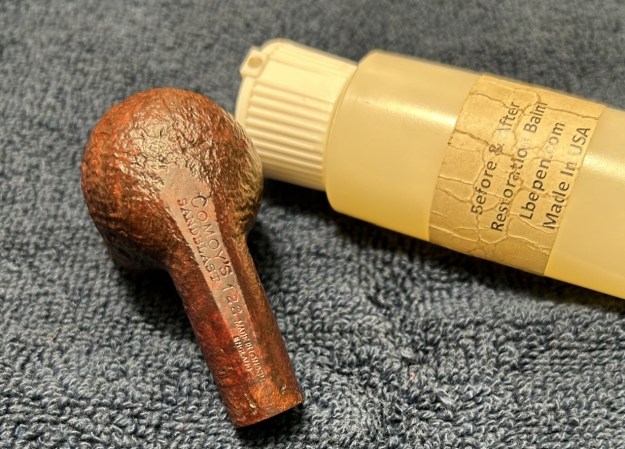
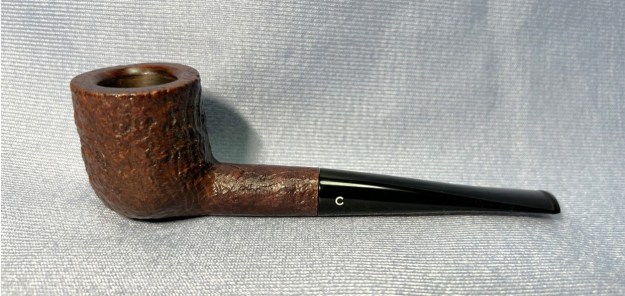
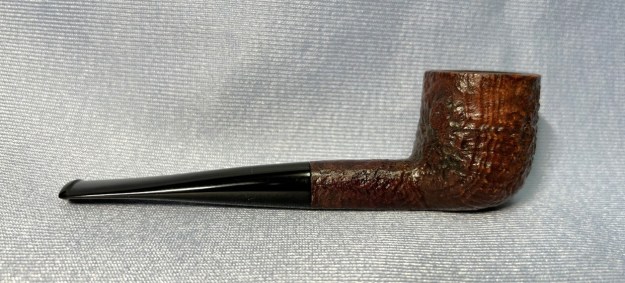
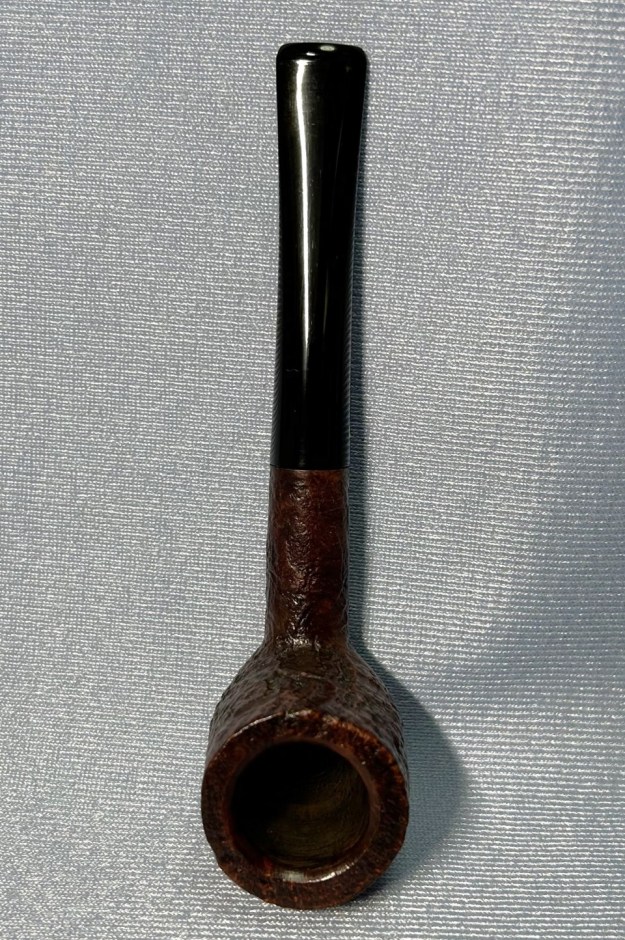
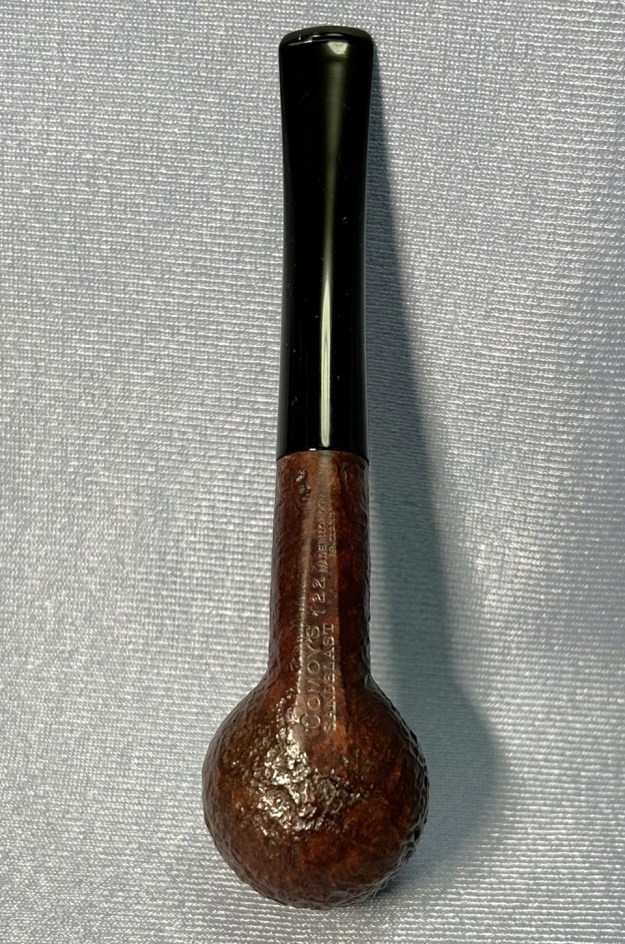
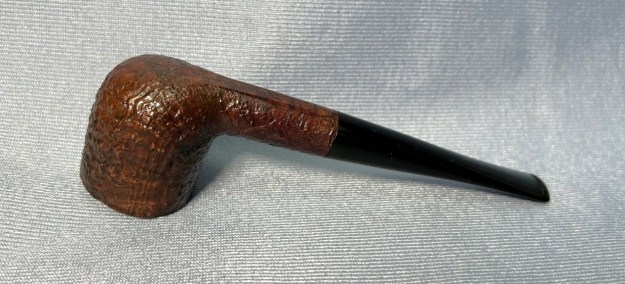
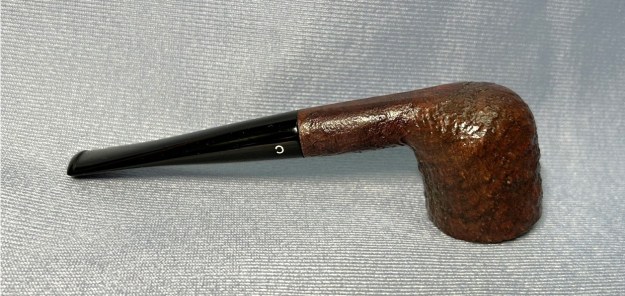
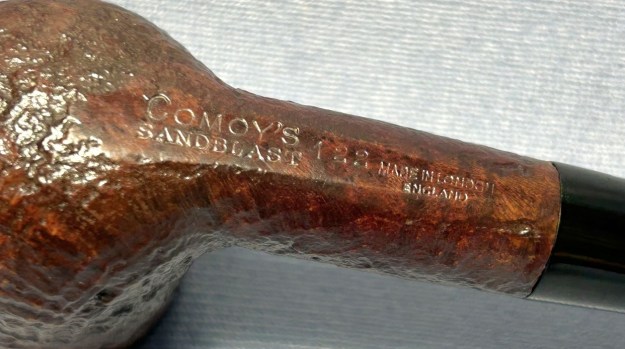
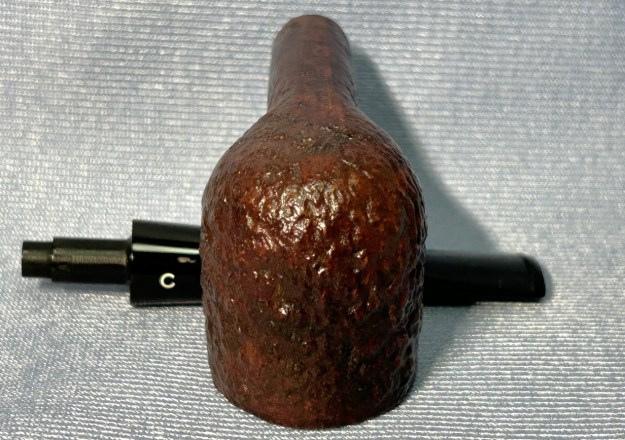
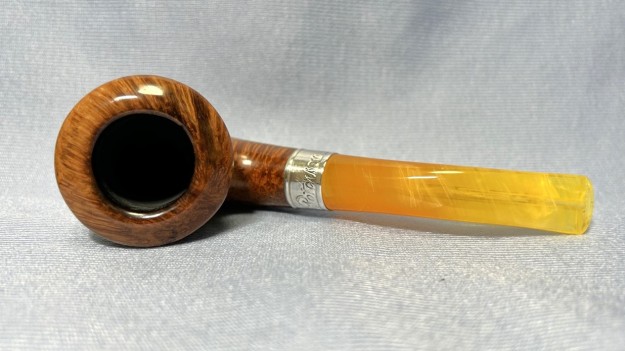
Sometimes one comes across a pipe that oozes comfort and class – this is that pipe. It’s a Comoy’s 122 Sandblast pot and it could hardly be more handsome. This pipe is so attractive that it practically demands to be caressed and smoked. I got it sometime ago from a lot of fine pipes that belonged to an old fellow who had gone to meet his maker. And speaking of makers, let’s talk about Comoy’s. There is plenty of history to be had on this company and I would encourage you to read Pipedia’s article here and Pipephil’s article here. The markings on the pipe are straightforward. On the underside of the shank, we see Comoy’s [over] Sandblast. Immediately to the right of that is the shape number: 122. Again, immediately to the right of that is Made in London [over] England. In addition, the left side of the stem has the so-called three-piece “C”.

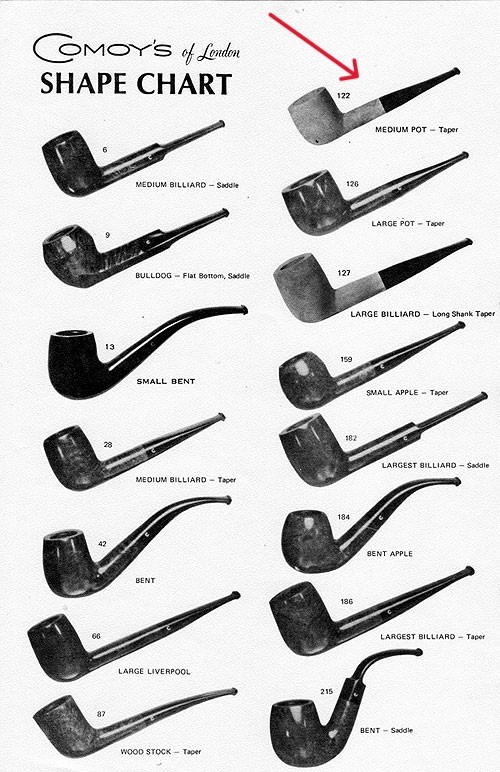
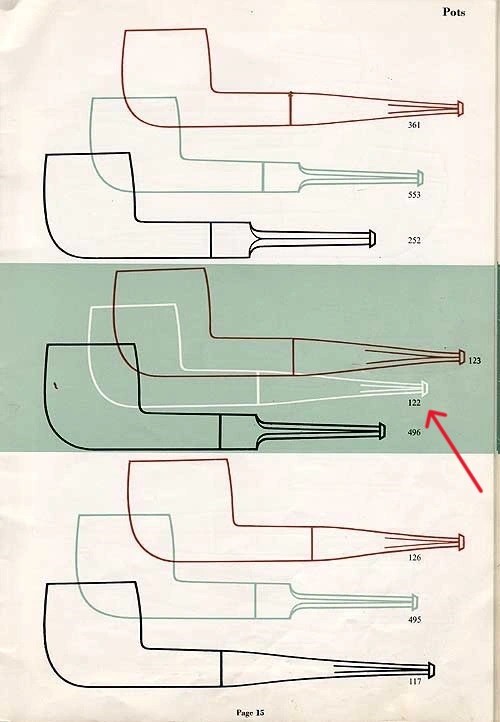
Comoy’s shape number chart lists the number 122 as being a medium-sized, straight-stemmed pot and that just about sums it up. I consulted with the dating guide on Pipedia to narrow down the date of this pipe. If you want to read along, please have a look at https://pipedia.org/wiki/Comoy%27s_Dating_Guide in order to see what I’m taking about. This pipe dates from the 1950s onwards and corresponds to the first variant of Comoy’s stamp during this period, which is

A simple block-letter style without serifs but with the C larger than the other letters and the apostrophe before the “S”.

You can see that this matches my markings. One thing that is interesting (and has not been noted anywhere in this guide) is that the letters in “Comoy’s” are indeed without serifs EXCEPT for the “S”. If you look closely, you’ll see that the S after the apostrophe does indeed have serifs. I don’t know what this indicates, but if YOU do, please tell us in the comments below. In addition, the “Made in” stamp also corresponds to the same time period as above.The three-piece “C” on the stem also dates from the 1950s onwards and was discontinued in the early 1980s, when Cadogan took over. So we know this pipe is before the Cadogan era. We are left with the rather vague date of somewhere between 1950 and 1980. I am making an assumption that because this pipe corresponds to the first stamping variant listed in the guide, it is of an earlier part of that range. However, I have reason to make that assumption. I looked at Greg Pease’s writeup on Comoy’s and his dating information is basically the same as the Pipedia stuff above. Pease, however, adds this important tidbit:

Sometime in the 60’s, it the serifs were returned to the “COMOY’S” lettering, though, as mentioned above, the typeface is not as fancy as the earlier one. It appears that some grades carried different stamps or at least that the stamping changed in different years for some grades. At this point, this is highly speculative, as my sample size is too small to verify it.

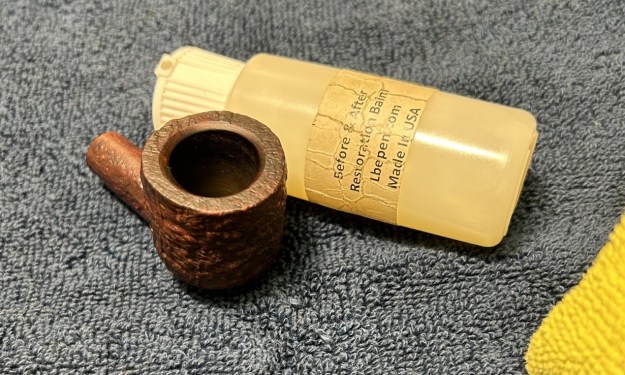
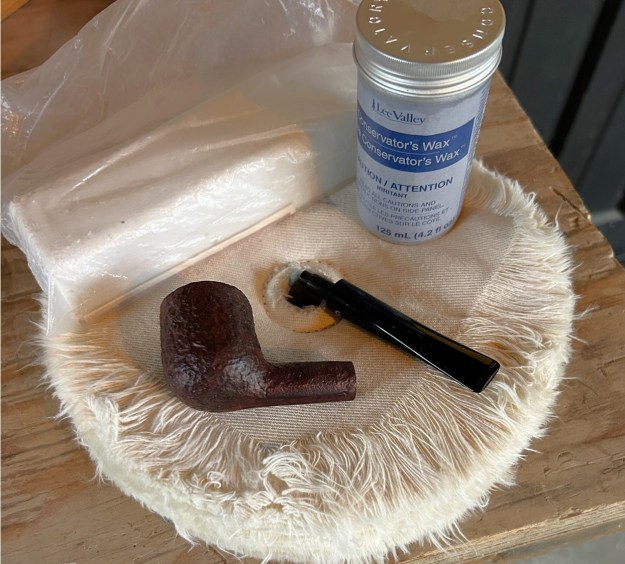
Based on this, I am going to suggest that this pipe probably (but not definitely) dates from the 1950s. Once again, if you can shed some light on this, please do. Moving on to the pipe itself…Let’s have a closer look at the stem. It’s certainly dirty and has obviously been well loved. There are a few scratches from teeth and a few dents. The button will need a bit of work. There’s definitely some calcification on the stem and a little bit of oxidation nothing too bad. The stummel was also in nice condition. It had a few small blemishes, but very minor. I was sure I could make it beautiful again.I started out by cleaning the inside of the stem with lemon-infused 99% isopropyl alcohol and some pipe cleaners. It was dirty, but not too bad. I also cleaned the stem with some Murphy’s on some cotton rounds. As you can see, the stem was pretty dirty, and will need a good soaking. I took my BIC lighter to the stem, in order to try and raise the tooth dents. I knew full well this wasn’t going to be fully successful, but it was worth a shot. The top side of the stem came out pretty well, but the underside was not so good.After all that, the stem went for a dip in the stem oxidation remover. I let it sit overnight, to allow all the oxidation to rise to the surface of the stem. The next day, I cleaned up the stem with some cleanser on some cotton pads. This worked very nicely. I then repaired the tooth dents with some carbon-and-rubber-imbued black cyanoacrylate adhesive. Forgot to take a photo though. Onto the stummel. In order to clean out the cake in the bowl, I used the Pipnet reamer and followed that up with a piece of sandpaper taped to a wooden dowel. I sanded down the cake until I hit the briar walls, so that I could inspect them for potential damage. Everything looked good on the inside, which is great.I proceeded to clean out the inside of the shank with 99% isopropyl alcohol and pipe cleaners and cotton swabs. It was surprisingly dirty in there! But I got it clean in the end.When that was done, I set up to de-ghost the pipe. I put some cotton balls into the bowl and the shank and soaked them with 99% isopropyl alcohol. I let that sit overnight so that any remaining smells and/or filth would leach out into the cotton.Meanwhile, back to the stem. The cyanoacrylate glue worked well, and I sanded down those spots to bring them close to level with the surrounding vulcanite. I then took my nine Micromesh pads and sanded the whole stem until it was shining like new. I also used my pipe stem oil in between the pads to bring out some extra lustre. And back to the stummel! It was in very nice shape, although the rim did have some lava on it. I used a piece of machine metal to gently scrape off as much of this as I could so as to avoid damaging the rim. A good amount of debris came off, which was nice to see.I then set the rim to soak in some lightly diluted Murphy’s to soften up some of that stuff. After soaking for 10 minutes or so, I brushed the rim with a toothbrush to loosen up that gunk. I also brushed some Murphy’s all over the stummel in order to clean it.Some spots had lightened over the course of this pipe’s life, so I used one of my furniture pens to simply dot the areas that were missing colour. It blended in perfectly. I then took my Before and After Balm, rubbed it in the wood and let it sit for about 20 minutes. This balm is fantastic stuff and does wonderful things to nourish the wood. After letting it sit, I used a microfibre cloth and buffed it. Off to the bench polisher to put the final touches on this pipe. I first gave it a thorough (but light-handed) going-over with White Diamond compound. One doesn’t want to use too much for fear of gumming up the sandblast. Following that, several coats of conservator’s wax created a beautiful, glossy seal on the pipe.All done! This Comoy’s 122 Sandblast pot looks fantastic and is ready to be enjoyed again by the next owner. I am pleased to announce that this pipe is for sale! If you are interested in acquiring it for your collection, please have a look in the “British” section of the store here on Steve’s website. You can also email me directly at kenneth@knightsofthepipe.com. The approximate dimensions of the pipe are as follows: length 5⅜ in. (137 mm); height 1⅝ in. (41 mm); bowl diameter 1⅓ in. (34 mm); chamber diameter ¾ in. (20 mm). The weight of the pipe is 1⅛ oz. (33 g). I hope you enjoyed reading the story of this pipe’s restoration as much as I did restoring it. If you are interested in more of my work, please follow me here on Steve’s website or send me an email. Thank you very much for reading and, as always, I welcome and encourage your comments.

Cleaning Up an Interesting Paradis Star Freehand Pot


Blog by Kenneth Lieblich

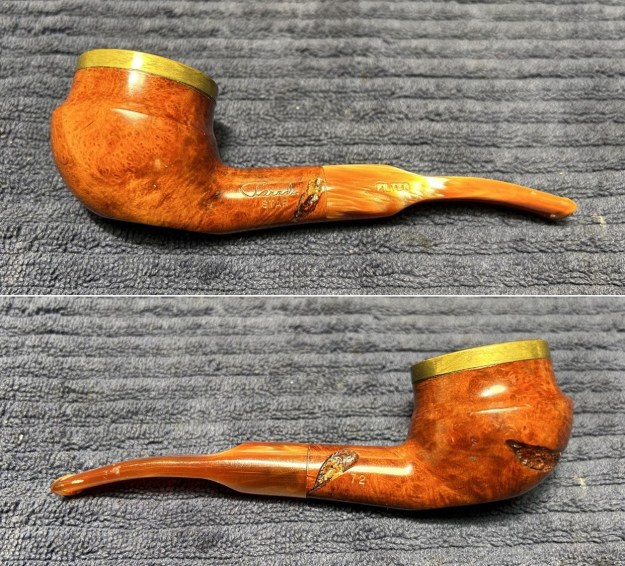
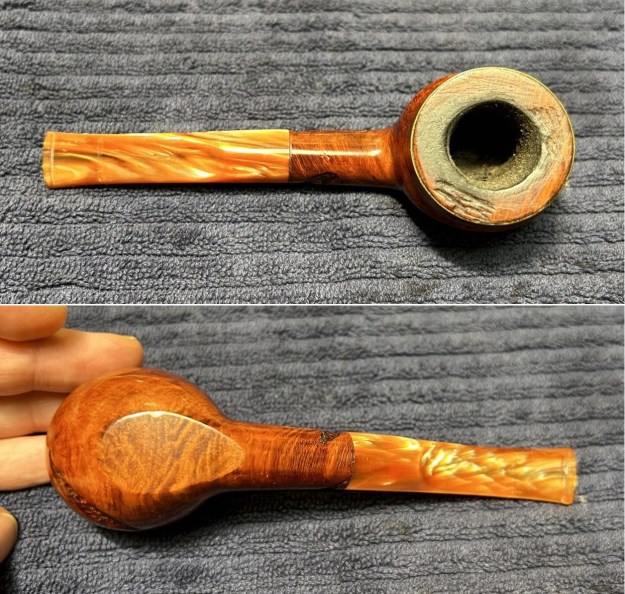
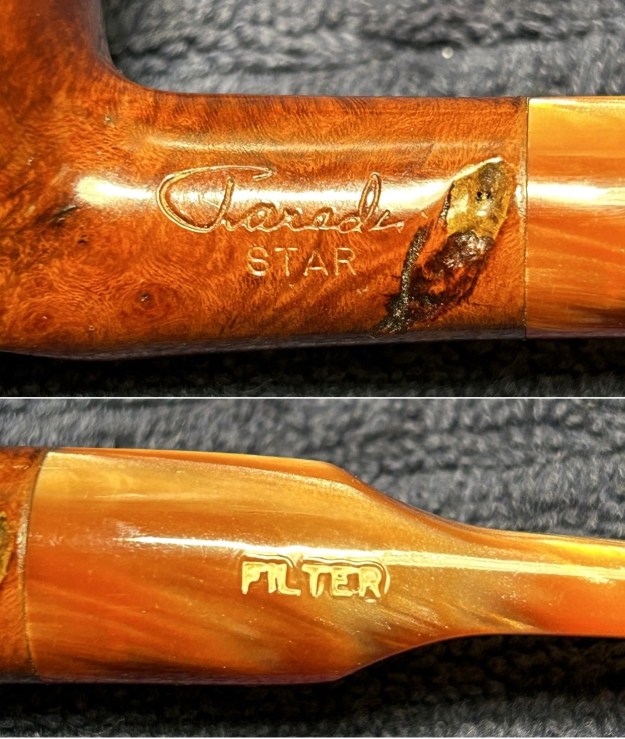
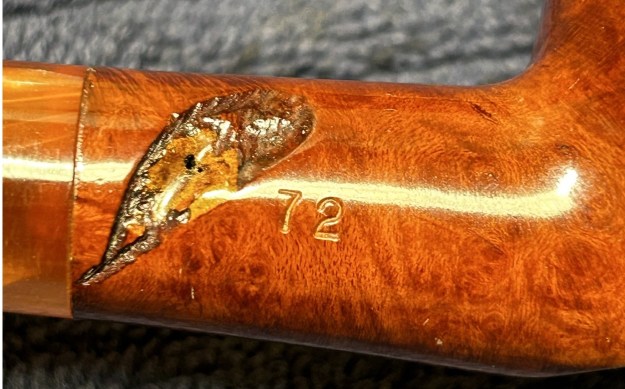
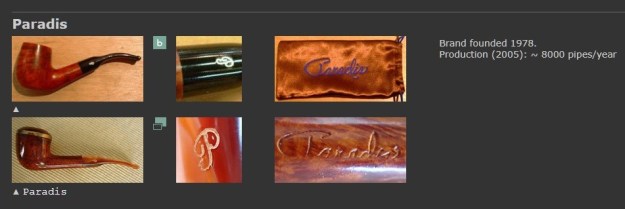
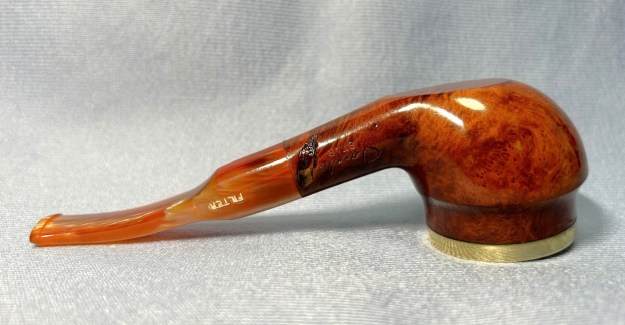
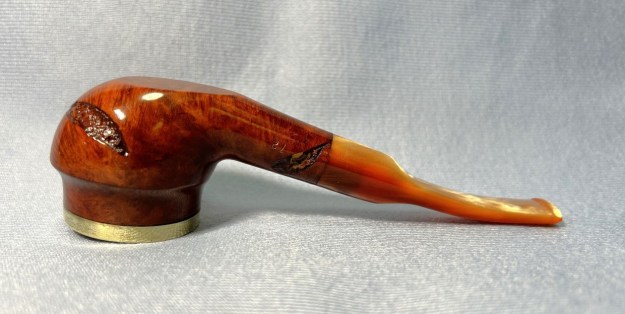
A fine gentleman from out east contacted me asking for this pipe to be restored. Naturally, I obliged and managed a relatively quick job on it. This is just a quick-and-dirty report because it was really more of a cleaning job than a repair job – and I missed out on a few photos. This pipe is a Paradis Star 72 Freehand Pot. The markings on the pipe are as follows: the left side of the shank read Paradis [over] Star; on the right side of the shank read the number 72 – the shape number; and on the left side of the stem was the word Filter. This pipe did indeed have a 6 mm filter and so that makes sense. I knew Paradis Pipes to be a Canadian pipe company, based in Montréal, but I went over to Pipedia and Pipephil to seek out more information. Here’s some of what I found (after correcting the many spelling errors):

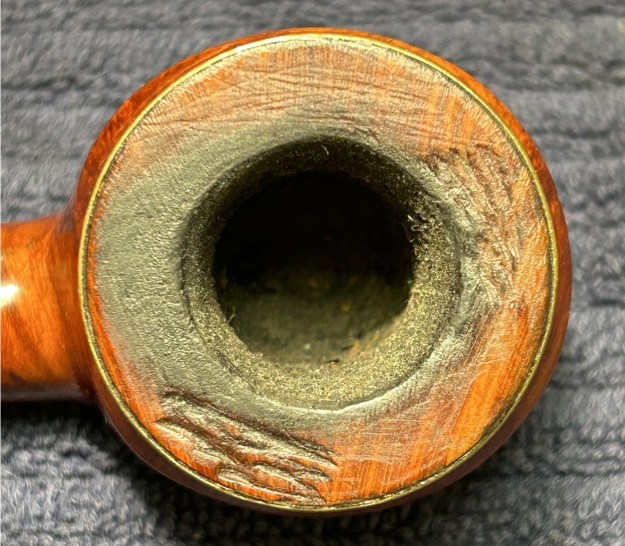
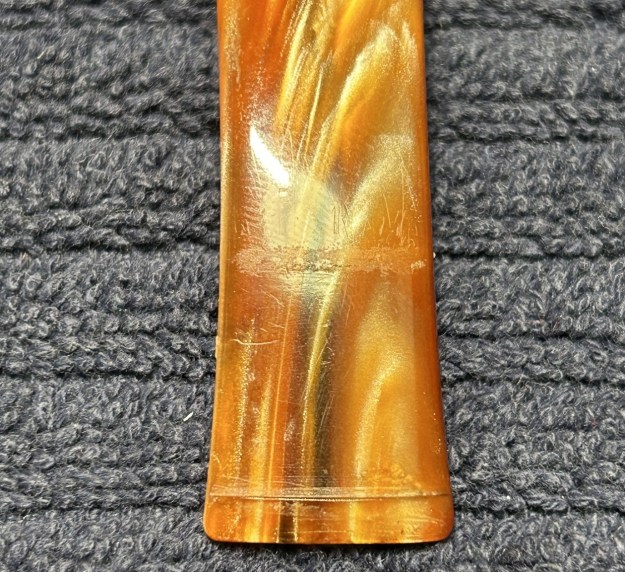
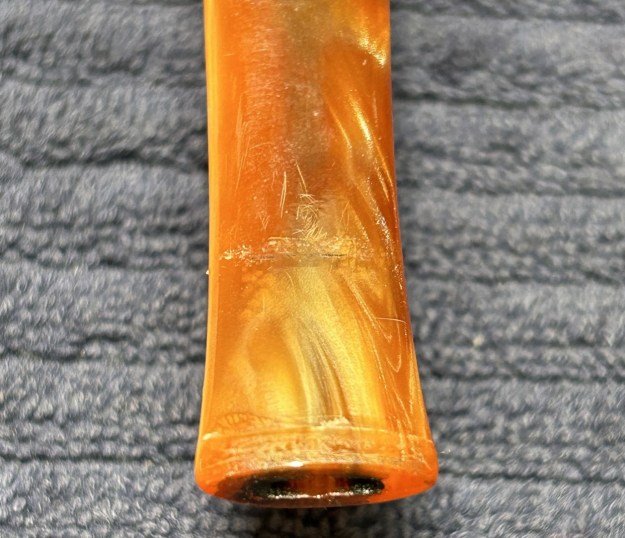
Paradis Pipes is the Canadian brand of the brothers Gilles and Fernand Paradis. In 1922 the Paradis family moved to the USA, when Lucien Paradis (1906-1979) was 16 years old. It was at this age that he started as an apprentice at his uncle’s pipe factory: Joseph B. Desjardins, maker of (JD) pipes, in Fall River, MA. Joseph Desjardins was issued two patents during this period, one for a new machine for making pipe stems and another for a new design of pipe reamer. The company employed 60 workers at one stage. In 1930, due to the Great Depressions, Lucien lost his job and returned to Quebec to work in the agricultural machine industry. In his spare time, be made pipes, selling them door to door. Three years later the rest of the family joined him, and Lucien founded a pipe factory with two of his brothers. The company eventually employed 18 workers and in the 1960s produced over 50,000 pipes a year, under brads like JBL, Dr. Thomas, Fernand Gignac, S.C. Pipes, New London Golfer, and Jo Thomassin. Paradis was founded in 1978, at the Salon of Quebec Artisans, and is available in tobacconists all over the country today. The brand produces 8,000 pipes a year (400 “handmade”), with Greek briar.The pipe was in decent condition. It had been well-smoked, and the bowl and shank were fairly dirty. The bowl had some cake on the inside and a bit of lava on the rim. But there was clearly some burning there too. The brass ring around the bowl was in good condition, just a bit scratched up. Meanwhile, the stem was relatively dirty. It was made of acrylic, so no oxidation to speak of, but there were what I would describe as “typical” tooth scratches on the bit. Fortunately, no dents – but someone did leave a heavily used filter behind. Delicious. The stem was first on my list. I wiped the outside down with Murphy’s Oil Soap on some cotton pads. I cleaned out the insides with lemon-infused isopropyl alcohol and some pipe cleaners and cotton swabs.I then used all nine Micromesh pads (1,500 through 12,000 grit) to make the swirling colours of the stem’s acrylic shine again. I also used Obsidian Pipe Stem Oil in between each pad scrubbing (from 3,600 onward).

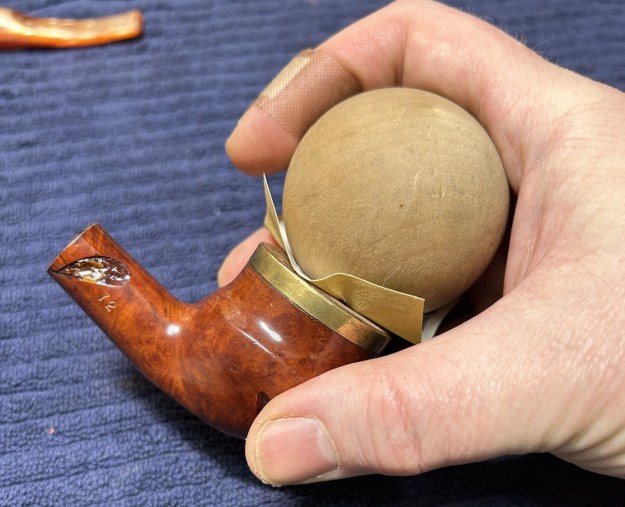
Now for the stummel. I reamed out the bowl to remove the built-up cake and followed that with 220-grit sandpaper taped to a dowel to eliminate as much as I could. I took the chamber down to bare briar, as I wanted to ensure there were no hidden flaws in the wall. Fortunately, there were none.I then proceeded to clean out the insides of the shank with Q-tips, pipe cleaners, and lemon-infused isopropyl alcohol. There was quite a bit of filth inside this stummel and it took a fair amount of cotton to get it clean. I used cotton rounds and some Murphy’s Oil Soap to wipe the outside of the stummel. I also used my toothbrush on the rim to see if I could lift some the burn marks there. Only so much was cleaned up. I followed that up by cleaning the insides of the stummel with some Castile soap and tube brushes. Next, I decided to de-ghost the pipe in order to remove any lingering smells of the past. I thrust cotton balls into the bowl and the shank and saturated them with 99% isopropyl alcohol. I let the stummel sit overnight. This caused any remaining oils, tars and smells to leach out into the cotton. The bowl was nice and clean after this.In order to safely remove the damage on the rim, I used a piece of 220-grit sandpaper wrapped round a wooden sphere. This effectively removed the damage, without altering the look of the pipe. This worked very well and I was pleased with the results. I tidied up some of the lost colour with one of my furniture pens. Then I sanded the rim down with all nine Micromesh pads (1,500 through 12,000 grit). I also made sure to use the Micromesh pads on the brass ring, in order to remove some scratches and bring back its shine. Finally, I applied some Before & After Restoration Balm and buffed it with a microfiber cloth. I then took the pipe to my bench polisher and buffed it with White Diamond and a few coats of carnauba wax. Wow – the pipe looks much improved.This unusual Paradis Star 72 Freehand Pot will suit the buyer very well and I’m sure that he will enjoy smoking it for many years to come. I hope you enjoyed reading the story of this pipe as much I as I did restoring it. If you are interested in more of my work, please follow me here on Steve’s website or email me directly at kenneth@knightsofthepipe.com. Thank you very much for reading and, as always, I welcome and encourage your comments.
Bringing Back a Lovely Poul Hansen Bent Dublin


Blog by Kenneth Lieblich

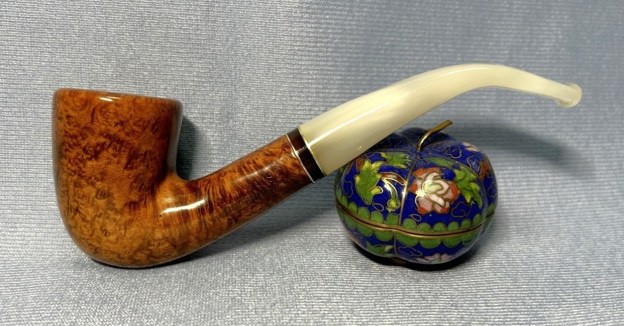
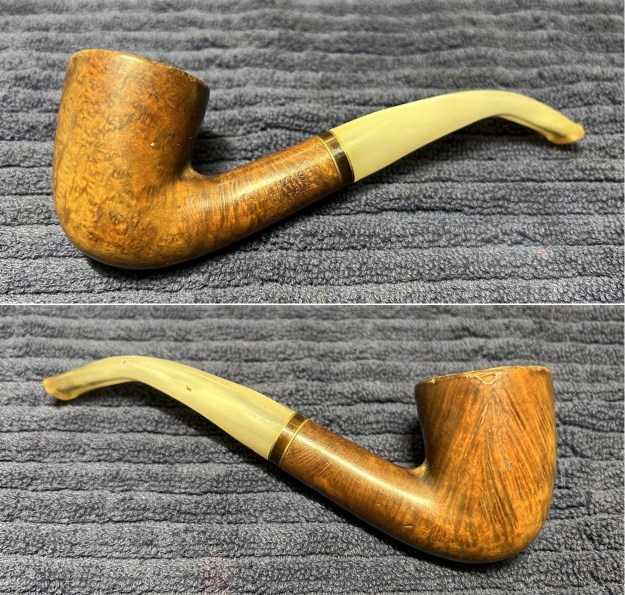
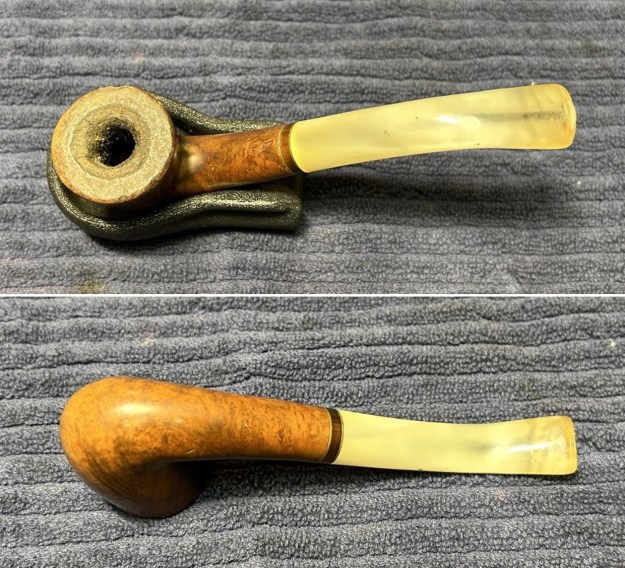
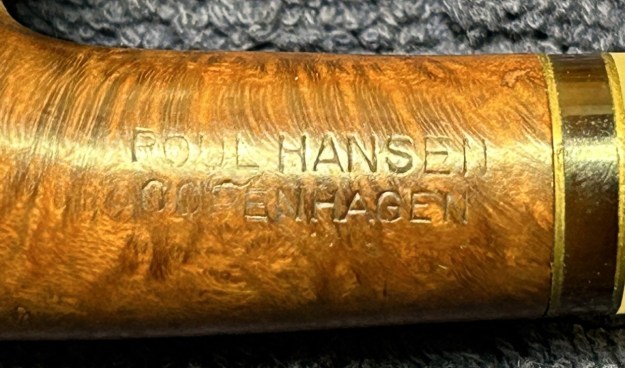
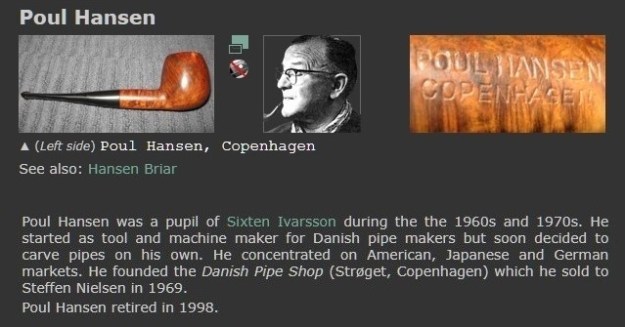
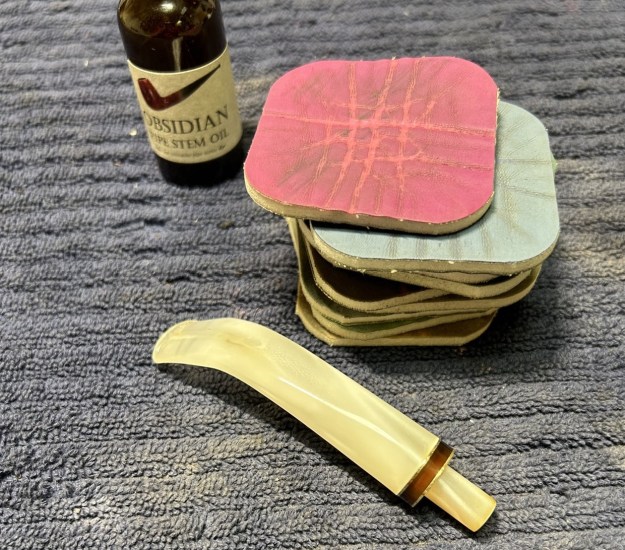
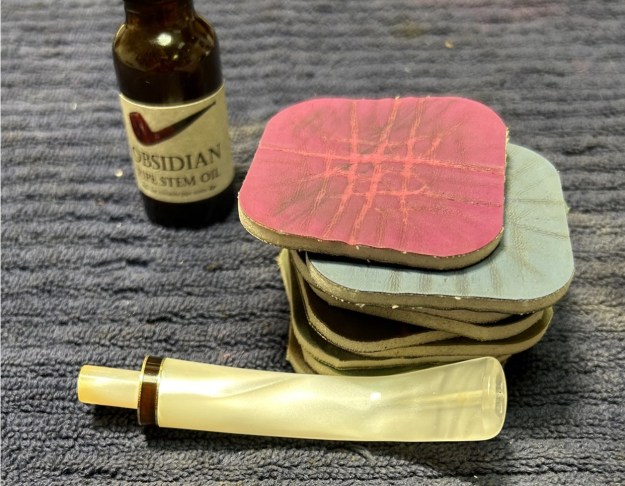
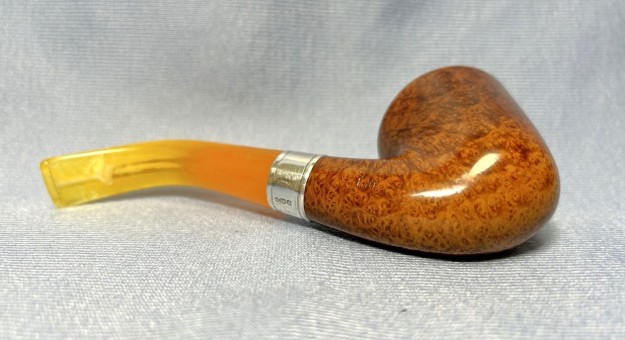
This charming pipe came across my workbench recently and, despite its rough appearance, I could tell there was a beautiful and well-made pipe in there. It was a very attractive shape and felt very good in my hand. Given the amount of abuse heaped on this pipe, it was clearly someone’s favourite. Let’s have a closer look. This pipe is a bent Dublin, made by Poul Hansen. It’s a lovely briar bowl and a white acrylic stem with a brass and wood band. That band is really attractive. The markings on the left side of the shank are Poul Hansen [over] Copenhagen. No other markings were found. I checked the usual sources for information about Poul Hansen. I knew that his pipes were mostly from the 1960s and 70s and commanded the same prices as Preben Holm, Rasmussen and other high-end Danish carvers. Pipephil offered this lovely little tidbit about the man:Over to Pipedia – they had a bit more information, and I include some, but not all, of it below:

Poul Hansen was a very skilled toolmaker and builder of machine tools. Around 1960 he got in contact with the workshops of Pibe-Dan, W.Ø. Larsen and others. So he began to make a lot of special tools and machines for a large number of the Danish pipemakers in the early 60’s. He was inspired by the many beautiful pipes he saw when he visited the pipemakers and soon he decided to try out the art himself. Poul Hansen was basically “self taught” and his early attempts suffered from kind of awkward shapes and finishing. Things turned for the better significantly when Sixten Ivarsson, appreciating the talent, began to tutor Hansen for a while and taught him the vital “tricks” of pipemaking. Soon after Hansen was in business fine. Right from the start he avoided the competition at home and concentrated on the American, Japanese and German markets. Hansen carved the bulk of his pipes during the 1960’s and 1970’s. Around the midst of the 1970’s he took over a small Copenhagen tobacconist’s shop from it’s retiring owner. Now, operating the shop took a lot of his time but vice versa secured a steady income, and Hansen reduced his output considerably. BTW In Denmark he only sold a very limited amount of pipes – but some of his very best. Poul Hansen is little known in today’s circles, those collectors (especially in the States) who have his pipes, tend not to sell them.

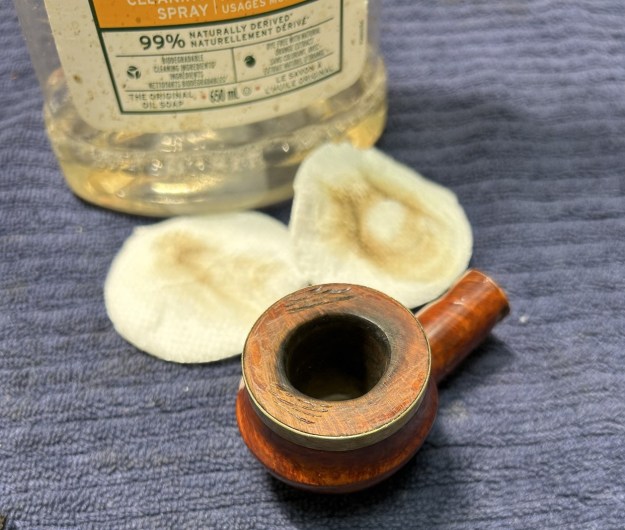
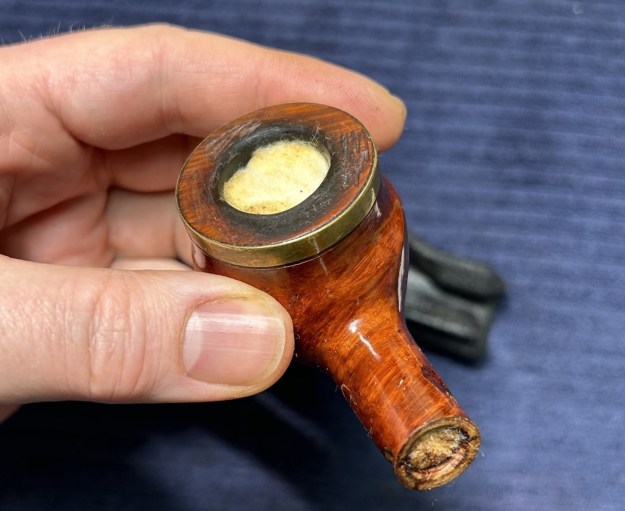
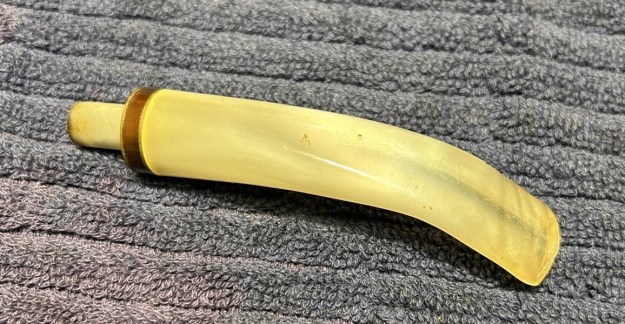
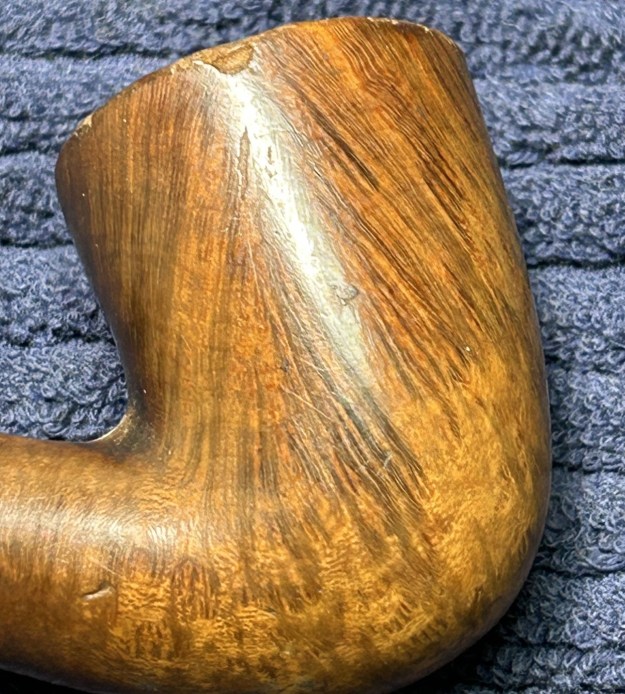
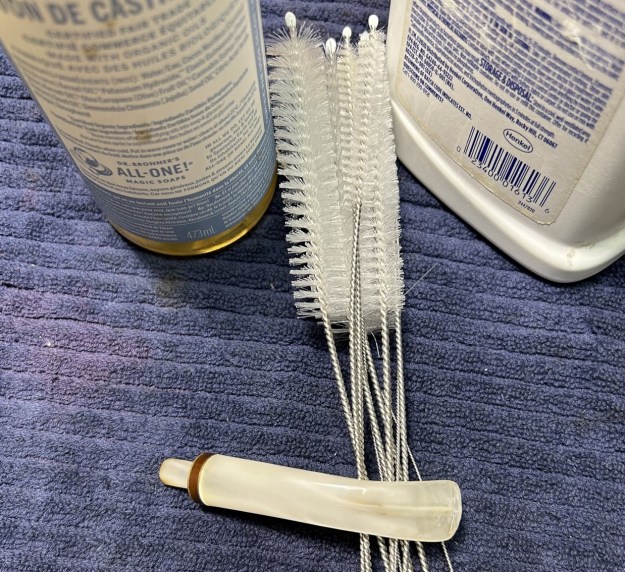
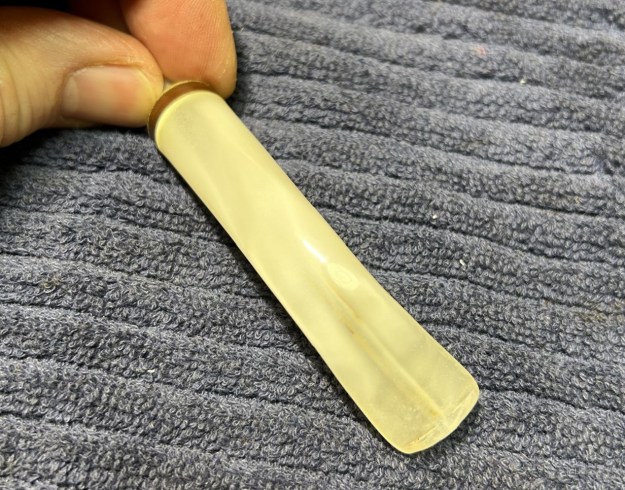
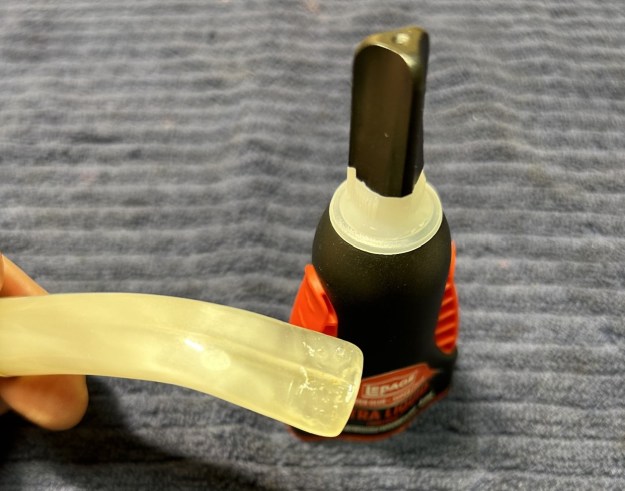
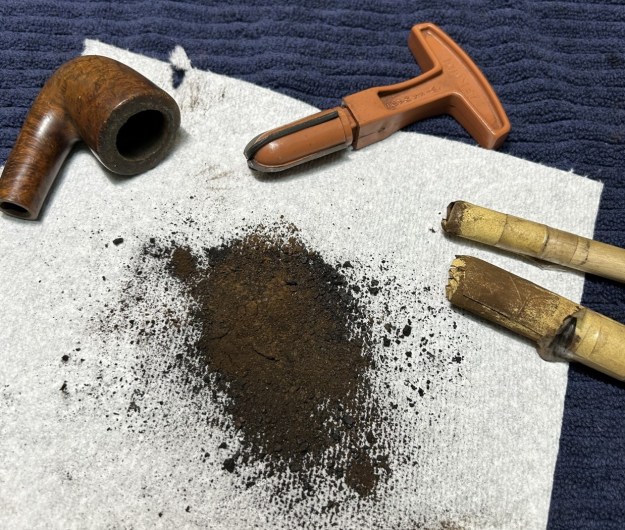
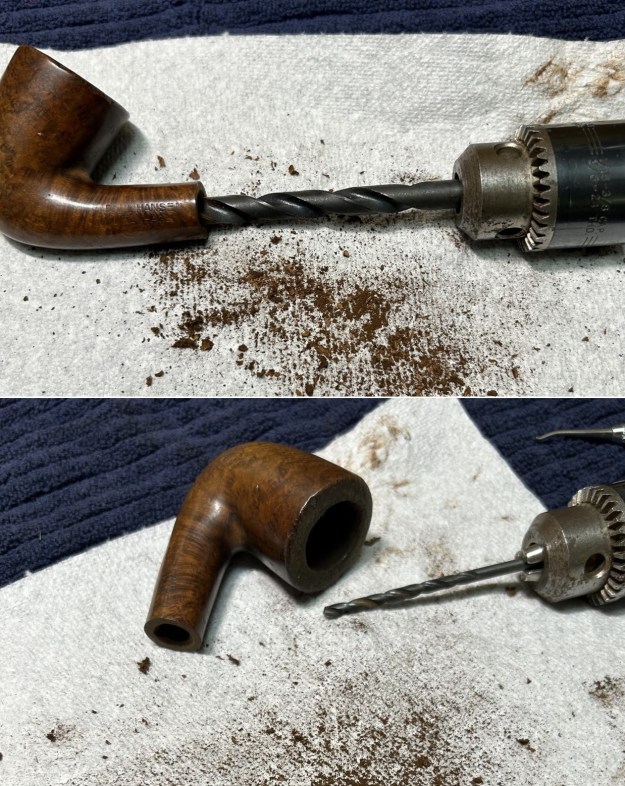
On to the pipe itself: it was very dirty and harshly treated. The bowl was filthy and had quite a bit of lava and plenty of cake – just look at the photos! The rim had been heavily bashed in – presumably from banging out dottle etc. The outside of the bowl had some small fills and some minor scratches. The stem was in better shape, but still needed help. It had some tooth dents and it was dirty on the inside – through the draught hole. To work! The stem was first on my list. I wiped the outside down with Murphy’s Oil Soap on some cotton pads. Then I cleaned out the inside with pipe cleaners and isopropyl alcohol. These acrylic stems are so frustrating to clean and it took a lot of elbow grease. In fact, I also used my tube brushes and Castile soap to get out as much filth as I could. Fortunately, these acrylic stems don’t require deoxidizing, so I moved on. I built up the dents on the stem with clear cyanoacrylate adhesive and let them cure. I then sanded the adhesive down with 220- and 400-grit sandpapers to meld seamlessly into the stem. I then used all nine Micromesh pads (1,500 through 12,000 grit) to polish it and highlight the pearl-like colouring on the stem. I also used Obsidian Pipe Stem Oil in between each pad scrubbing. Moving on to the stummel, I first decided to ream out the bowl. It was unbelievably occluded with cake. I used the PipNet Reamer to remove the built-up cake and followed that with 220-grit sandpaper taped to a couple of dowels to eliminate as much as possible. I took the chamber down to bare briar to ensure there were no hidden flaws in the wall. Fortunately, there were none.The stummel’s insides were absolutely clogged with filth. The previous owner must not have been a fan of cleaning his pipe! I actually used two drill bits (by hand – not in a drill) to break into the encrusted gunk in the stem.Then, I started cleaning the inside with lemon-infused isopropyl alcohol, Q-tips, and pipe cleaners. This took a long while. The inside was terribly dirty and it took an awful lot of cotton. As usual, I followed that up by cleaning the insides with some Castile soap and tube brushes.I soaked the rim of the pipe in some Murphy’s Oil Soap to loosen up the hardened stuff and, after about ten minutes, used a toothbrush to help that process along. I then used cotton rounds and some Murphy’s to scrub the outside of the stummel. I decided to de-ghost the pipe in order to remove any lingering smells of the past. I thrust cotton balls into the bowl and the shank and saturated them with 99% isopropyl alcohol. I let the stummel sit overnight. This caused any remaining oils, tars and smells to leach out into the cotton. The bowl was nice and clean after this.Then I was able to address the small nicks on the rim and the bowl. I dug out my iron and a damp cloth to try to raise the nicks. The hot and moist steam can often cause the wood to swell slightly and return to shape. This worked very well and many of the scratches were corrected with this method. Now it was time to address the remaining fills on the bowl. I repaired them with a mixture of briar dust and cyanoacrylate adhesive. This ensures a strong repair and one that looks similar to the surrounding wood. I sanded the repairs down with 200- and 400-grit sandpaper until they were level with the surrounding briar. Now I could address the roughness on the rim. I “topped” the pipe – that is, I gently and evenly sanded the rim on a piece of 220-grit sandpaper. But I didn’t go as far as I usually do – this rim originally had fillet edges on both the inside and outside of the rim. I wanted to keep this shape and so I did most of the shaping by hand.Then, I used all nine Micromesh pads (1,500 through 12,000 grit) on the stummel to finish it off and make it lovely and smooth. At this point, I rubbed some Before & After Restoration Balm into the briar and left it to sit for 20 minutes or so. I polished it with a microfibre cloth. The B&ARB does wonderful things to the wood, and I really like the natural colour of the briar. I also polished up the bit of brass on the stem’s band. Off to the bench polisher to put the final touches on this pipe. I first gave it a thorough going-over with White Diamond compound. Following that, several coats of carnauba wax created a beautiful, glossy seal on the pipe.And that’s that! This Poul Hansen Bent Dublin looks fantastic and is ready to be enjoyed again by the next owner. I am pleased to announce that this pipe is for sale! If you are interested in acquiring it for your collection, please have a look in the “Danish” section of the store here on Steve’s website. You can also email me directly at kenneth@knightsofthepipe.com. The approximate dimensions of the pipe are as follows: length 5⅓ in. (135 mm); height 2⅛ in. (55 mm); bowl diameter 1¼ in. (32 mm); chamber diameter ¾ in. (20 mm). The weight of the pipe is 1¼ oz. (37 g). I hope you enjoyed reading the story of this pipe’s restoration as much as I did restoring it. If you are interested in more of my work, please follow me here on Steve’s website or send me an email. Thank you very much for reading and, as always, I welcome and encourage your comments.