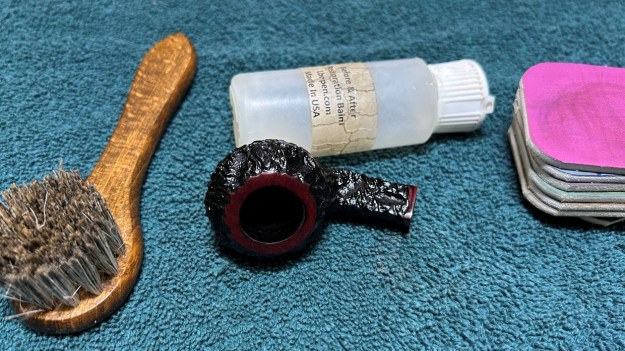
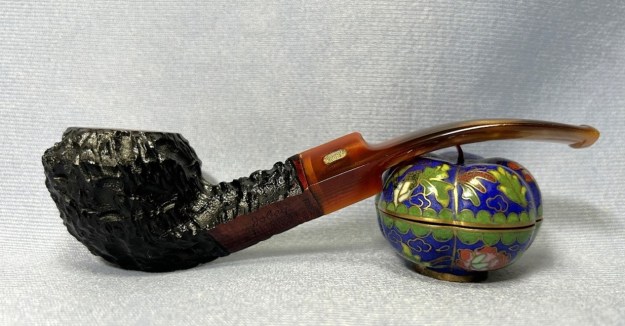
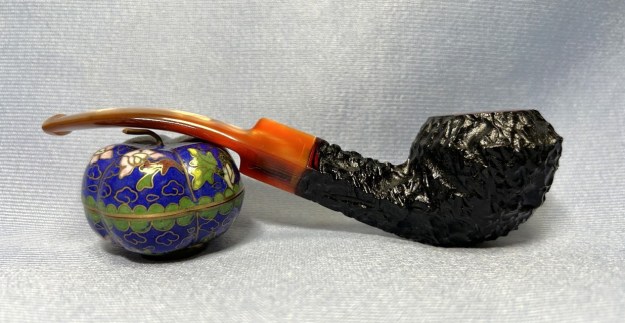
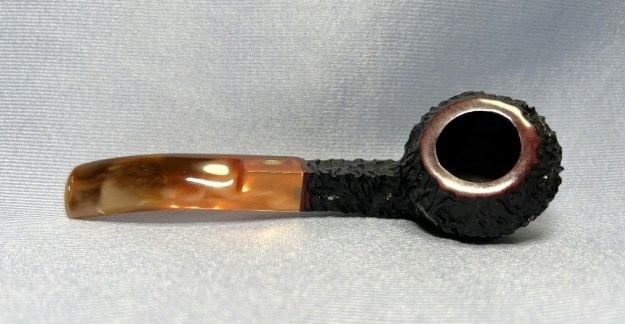
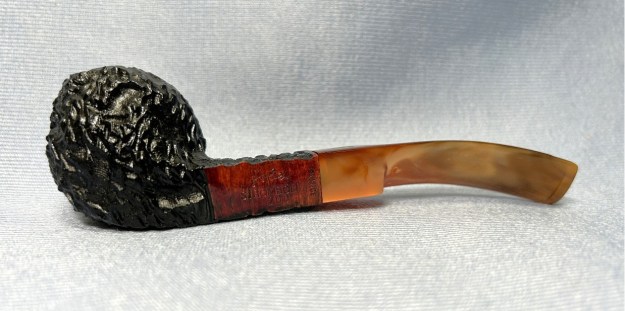
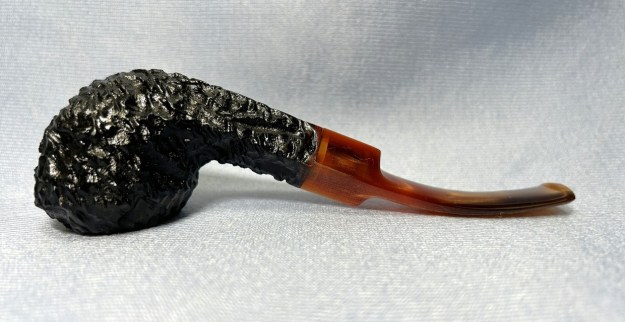
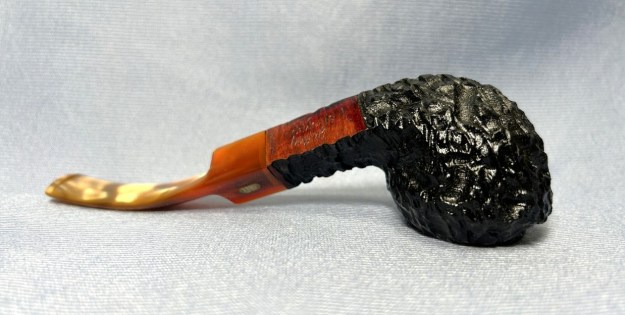
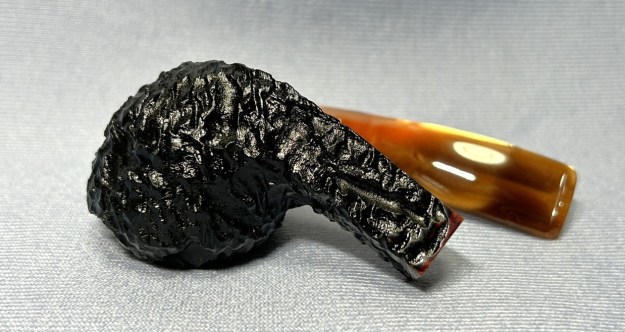
Tag Archives: Jobey pipes

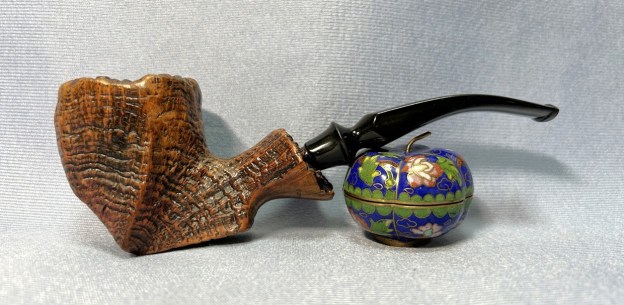
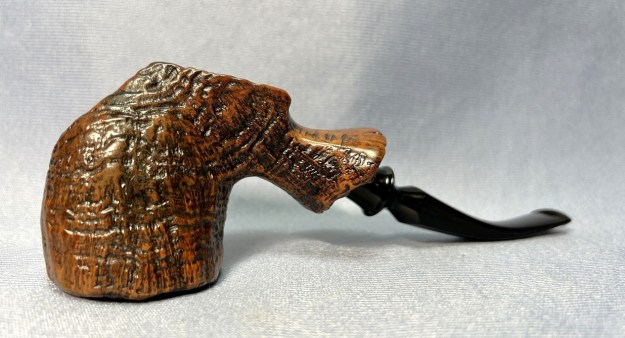
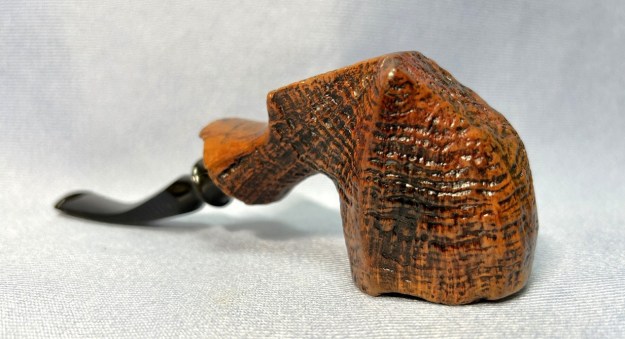
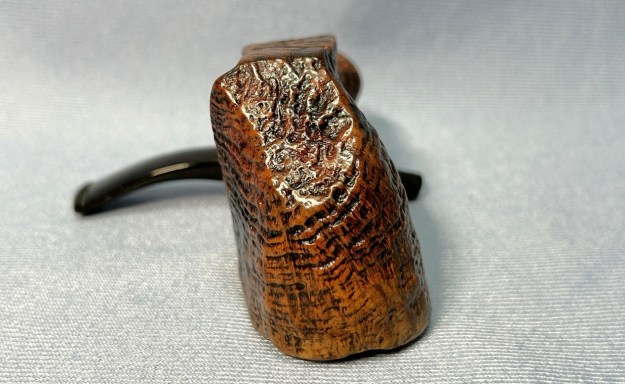
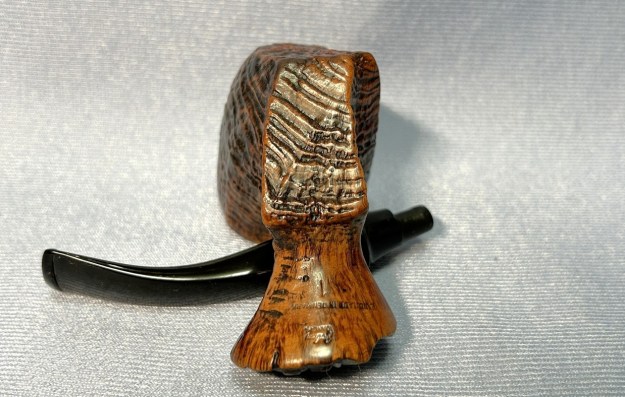
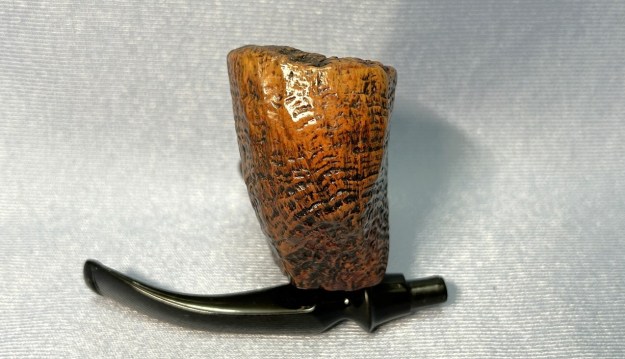
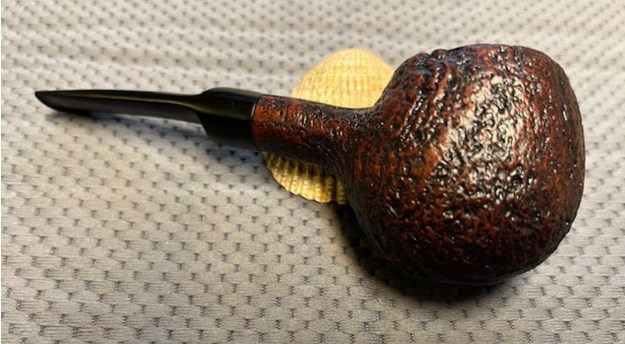
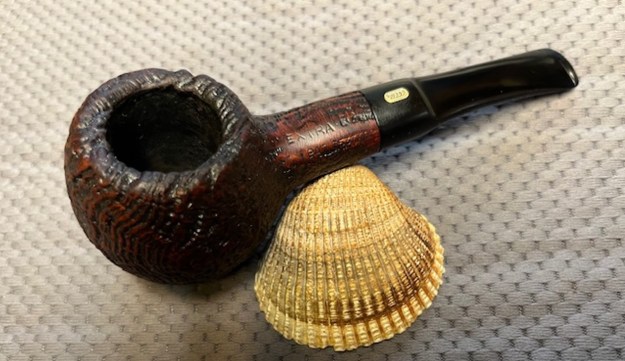
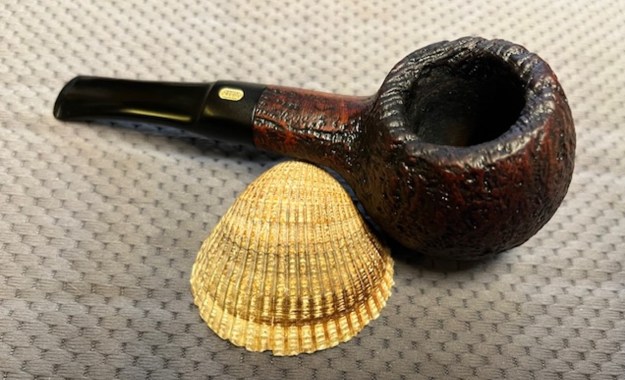
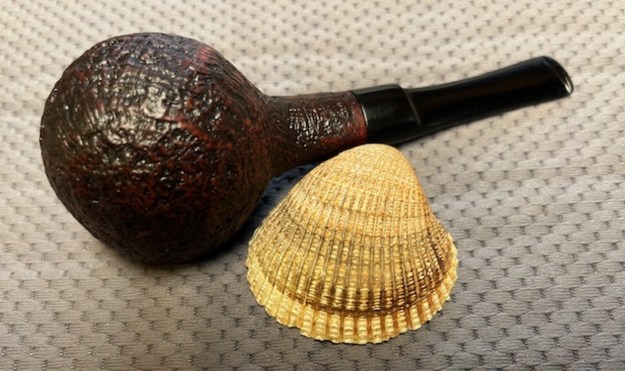
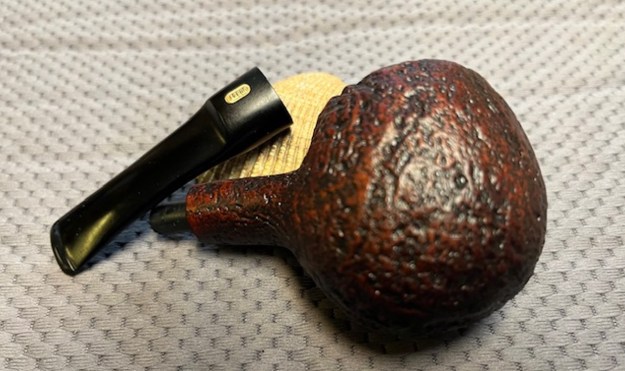
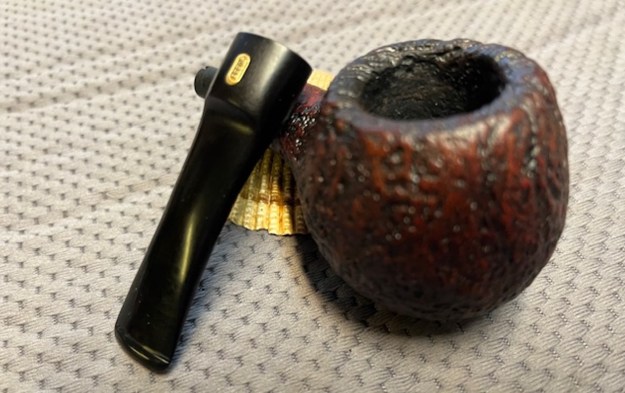
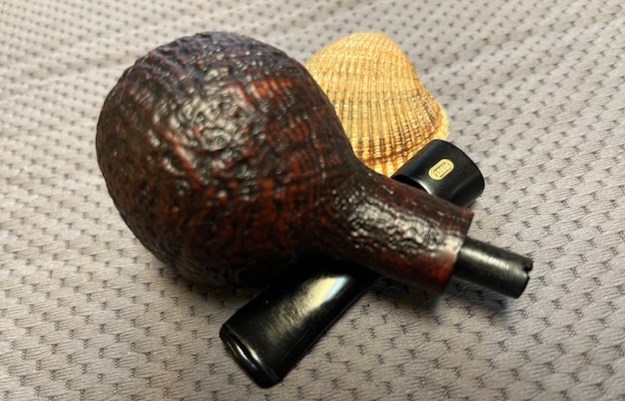
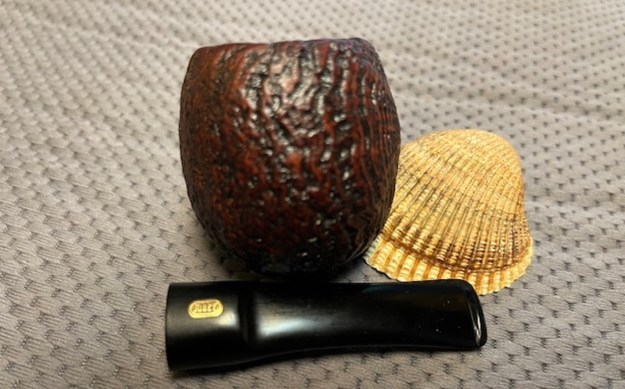
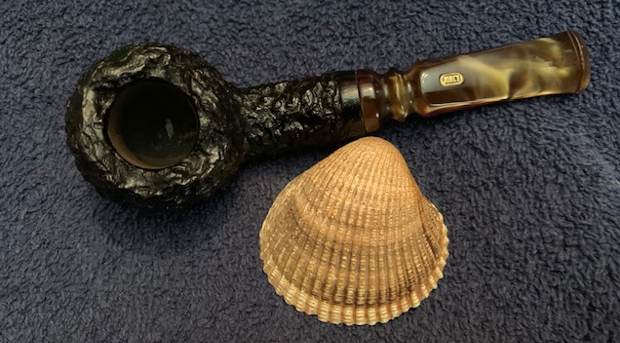
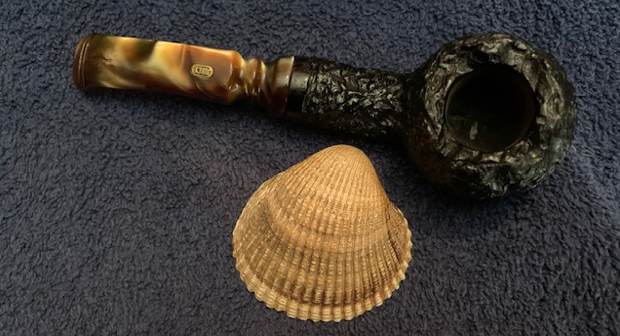
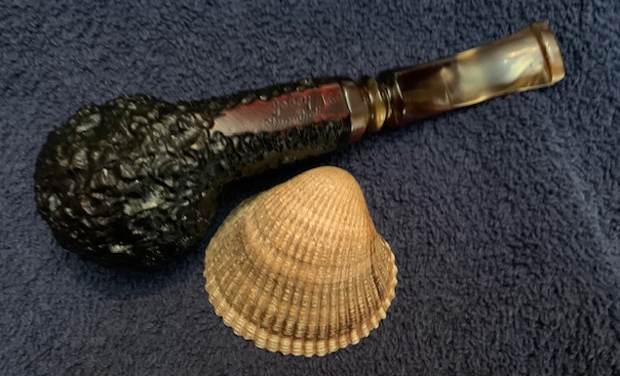
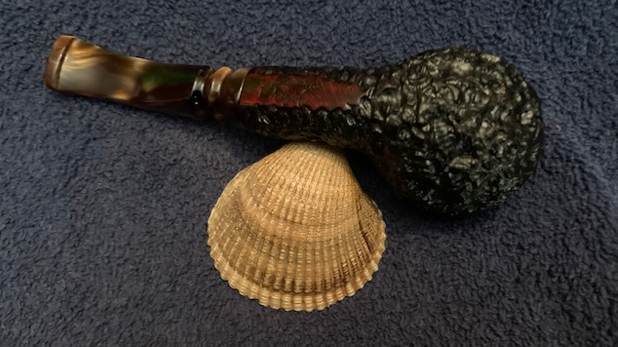
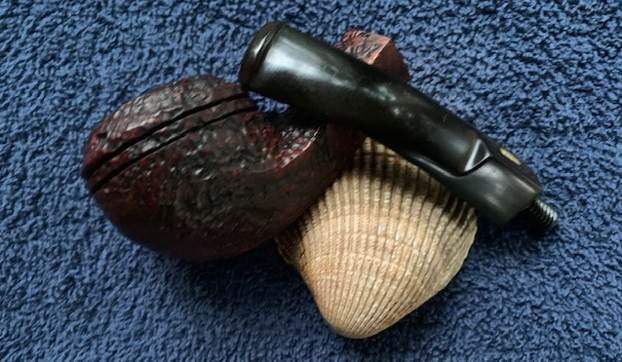
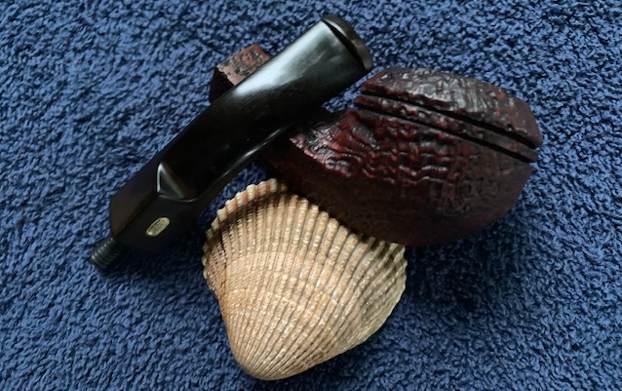
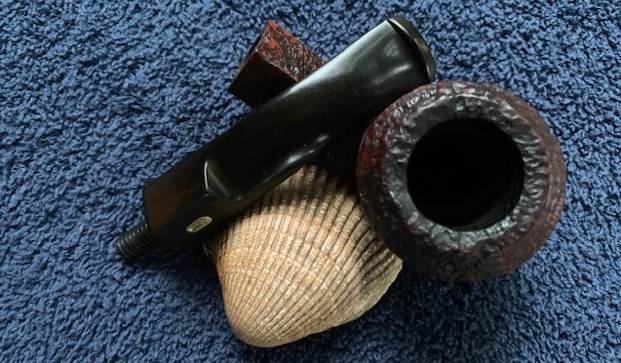
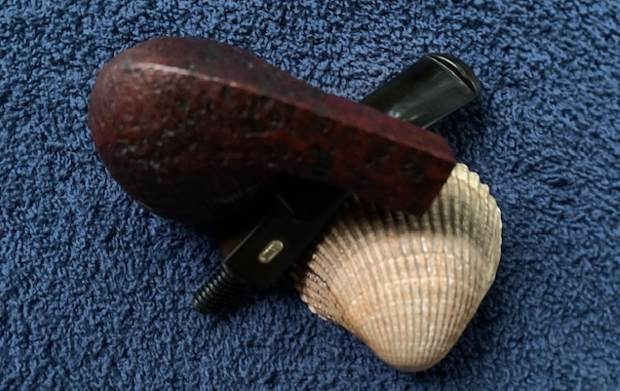
Cleaning Up a Stylish Jobey Shellmoor Extra Hawkbill


by Kenneth Lieblich

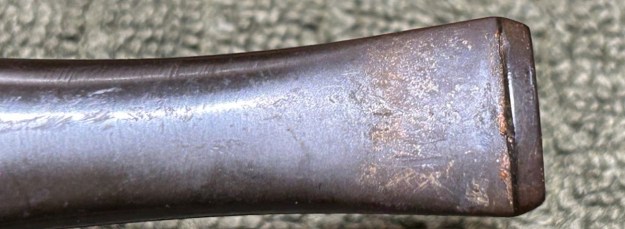
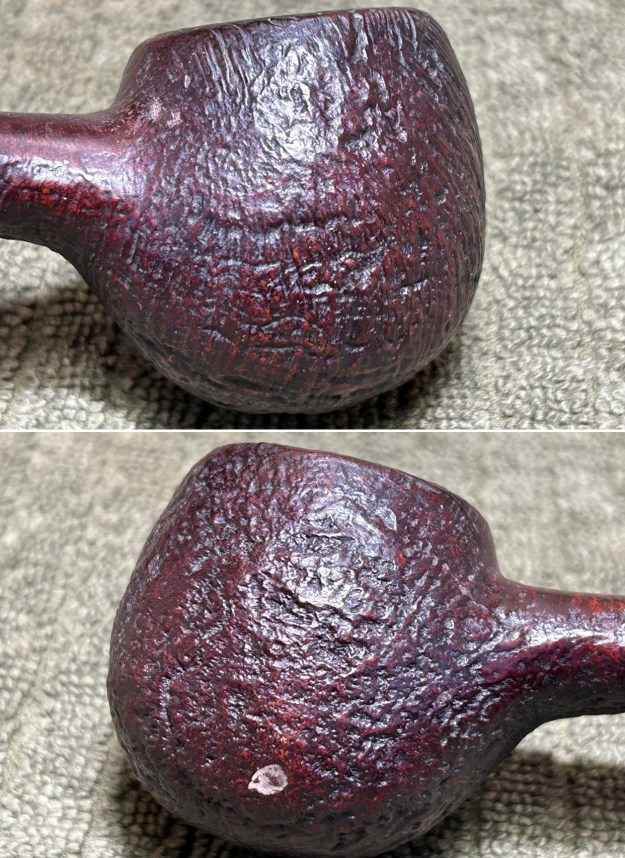
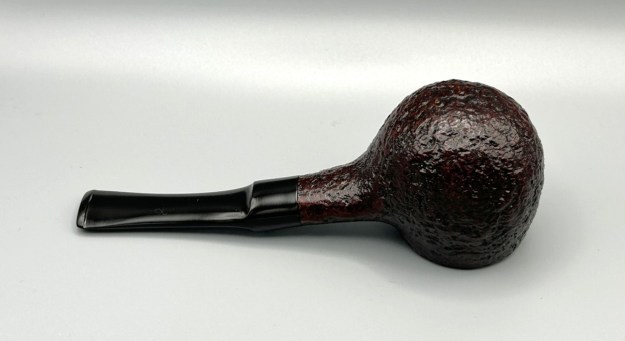
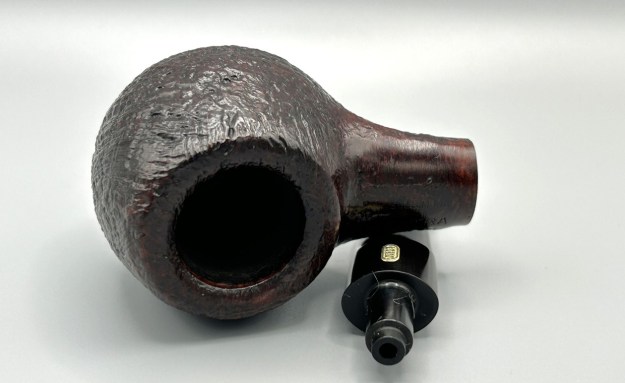
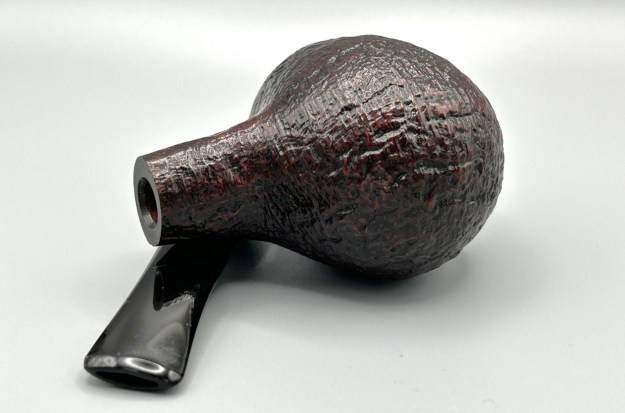
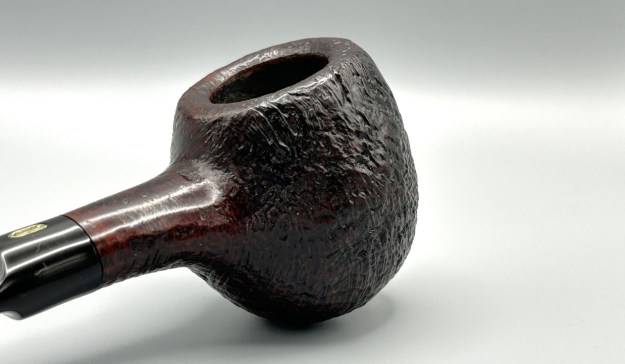
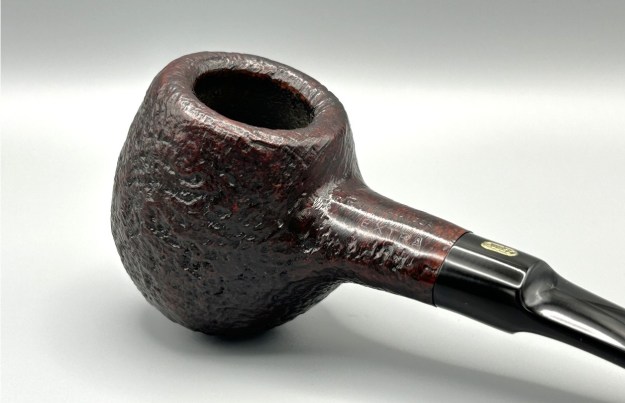
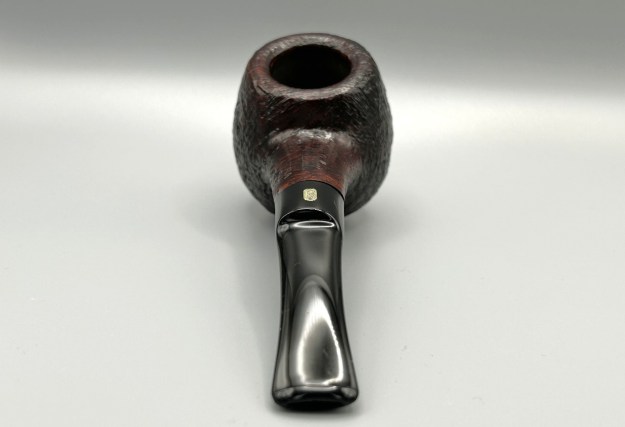
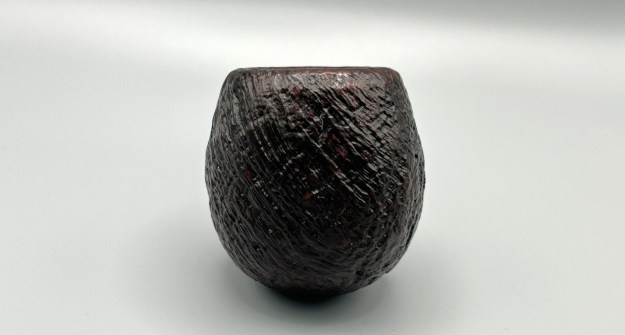
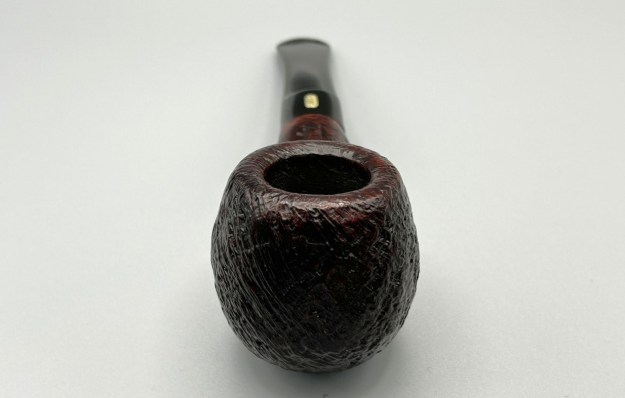
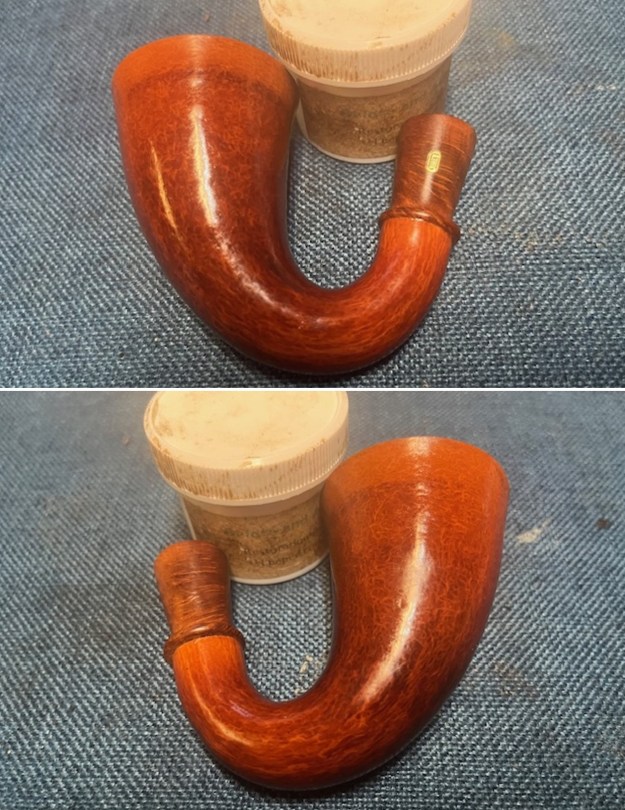
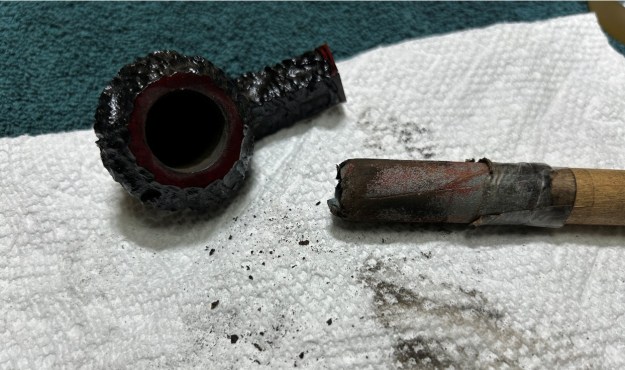
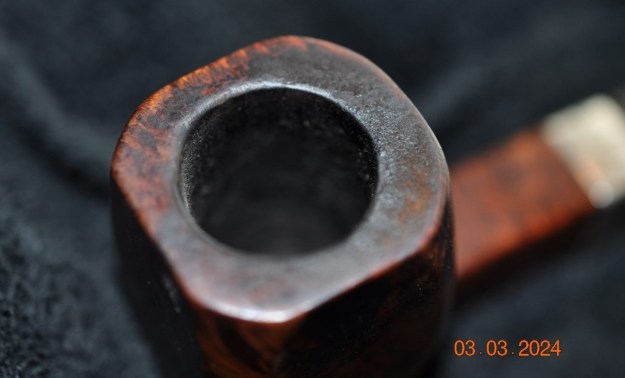
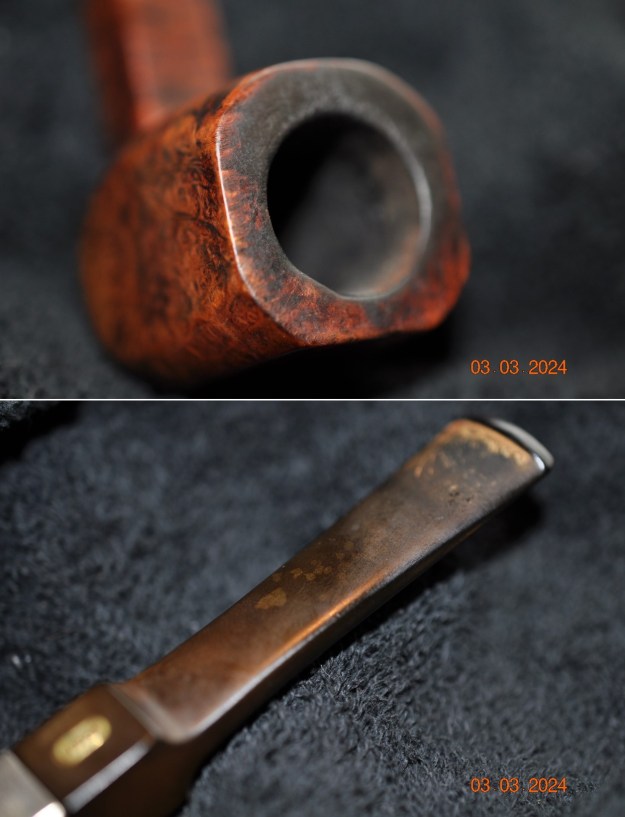
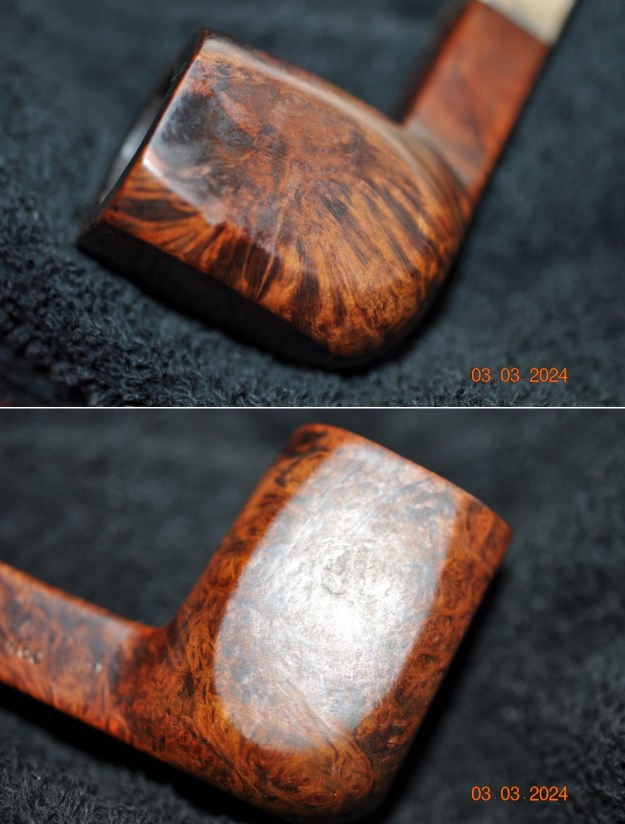
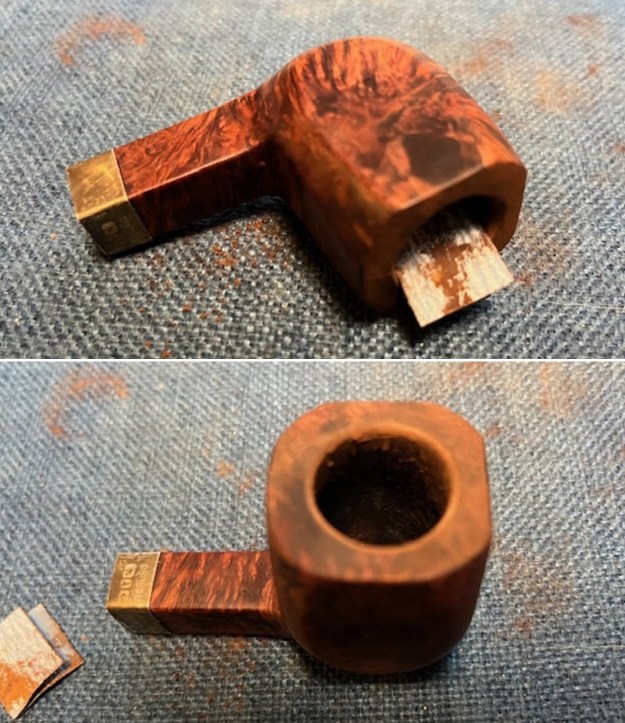
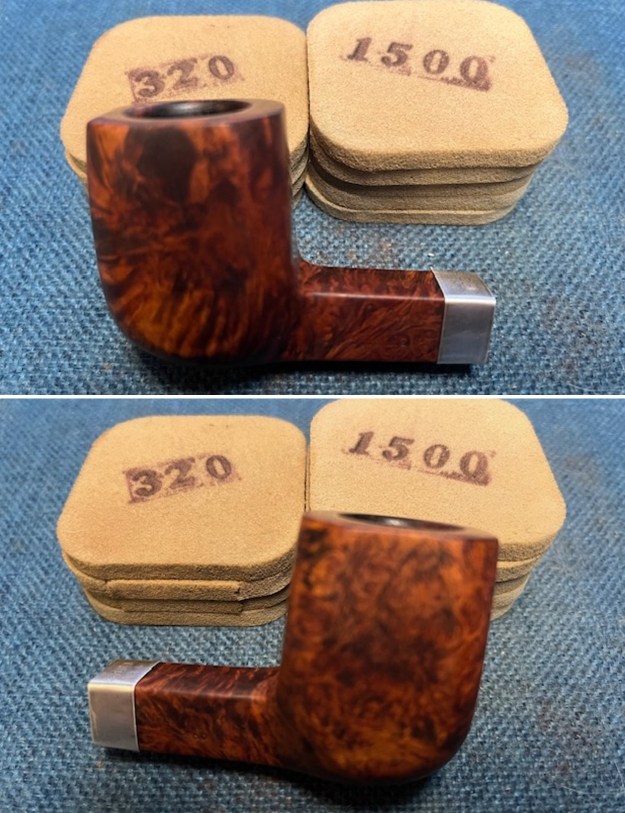
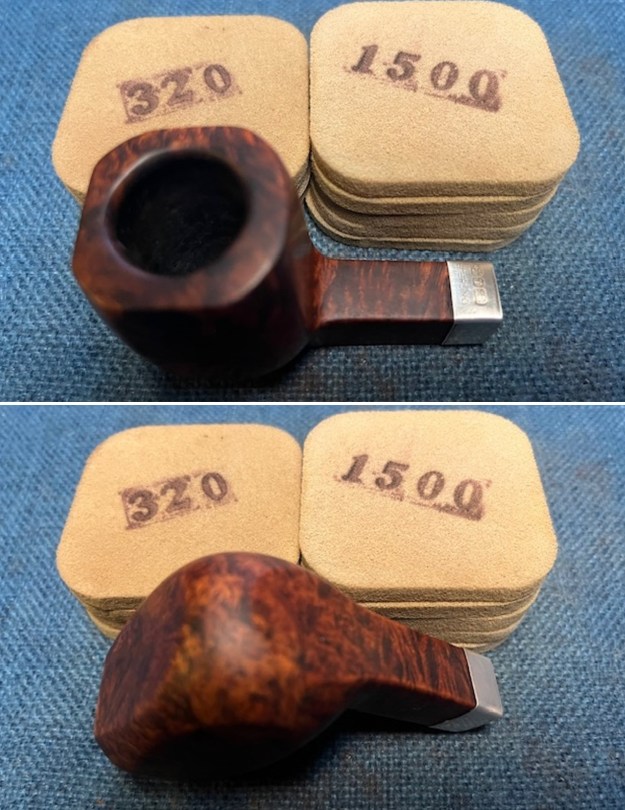
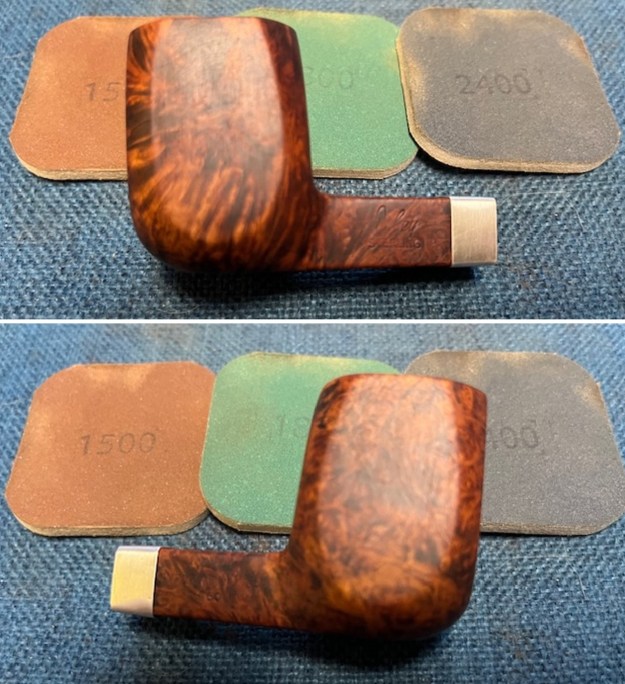
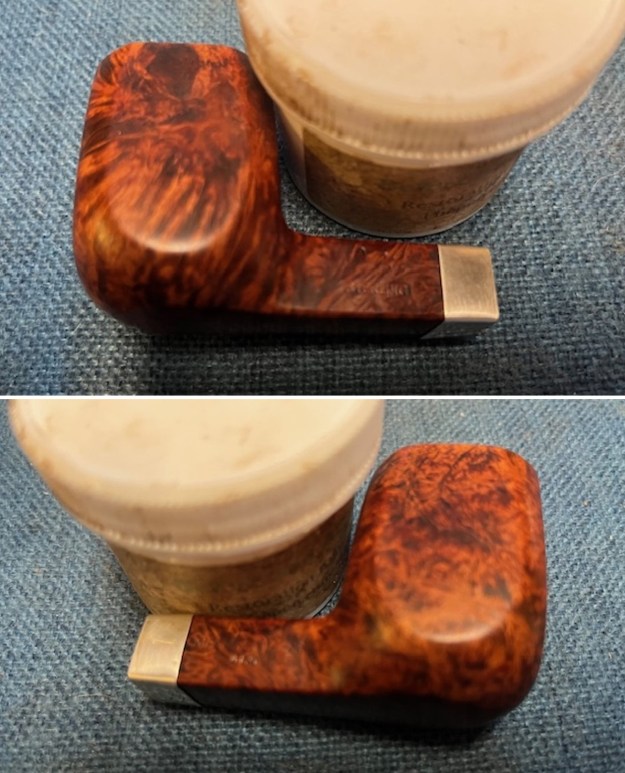
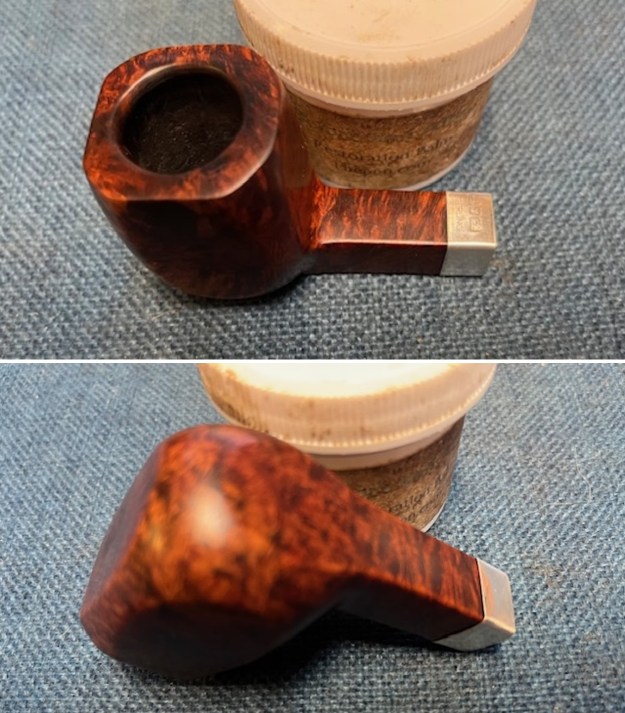
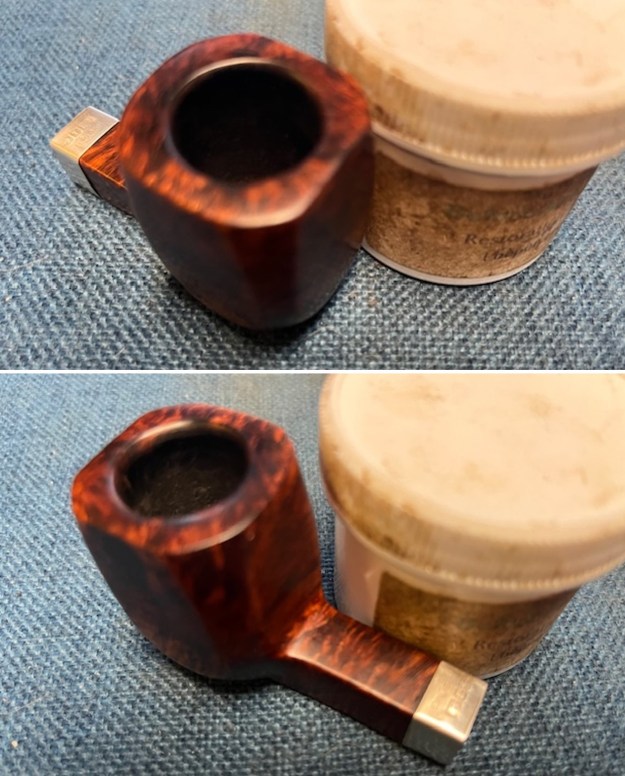
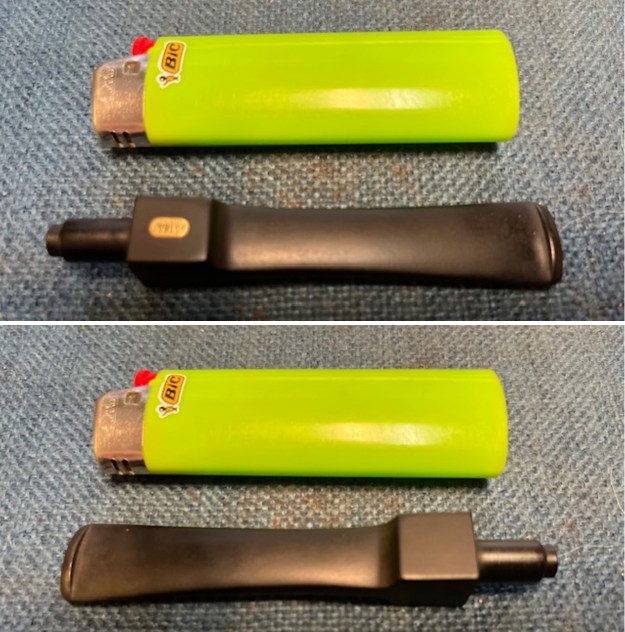
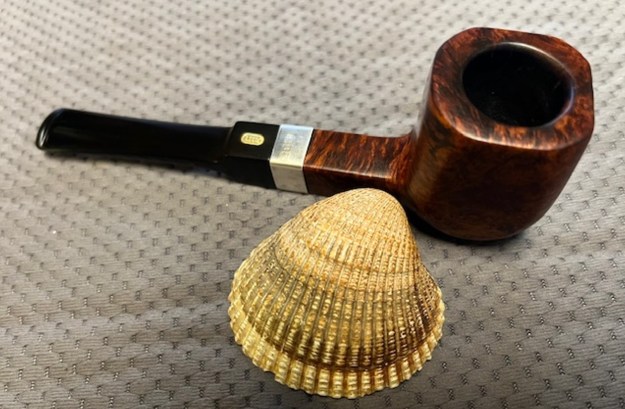
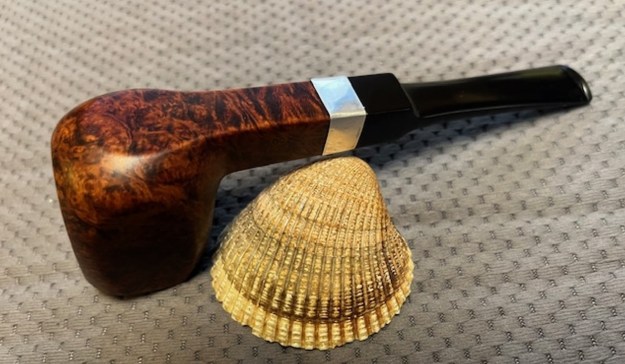
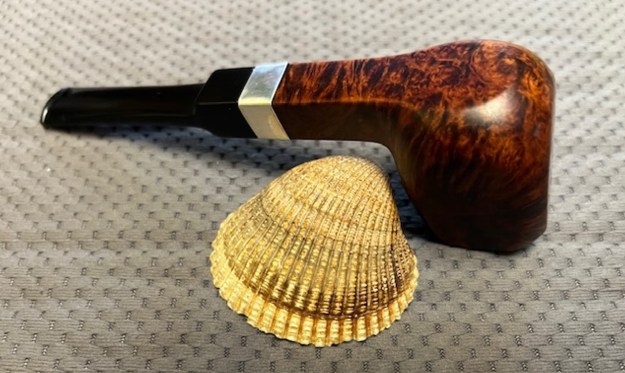
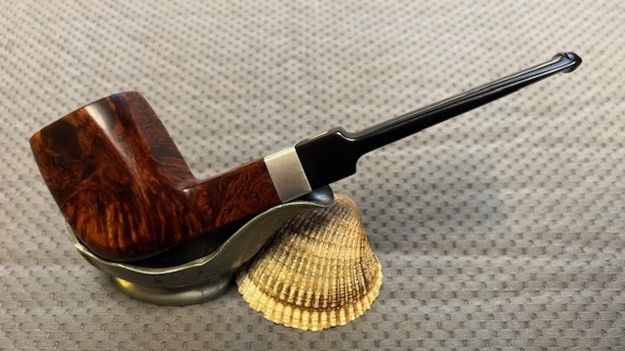
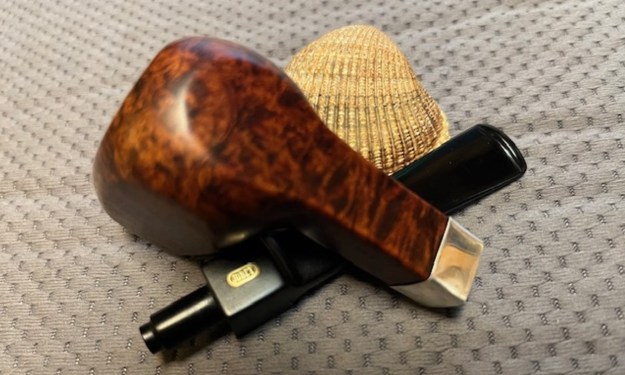
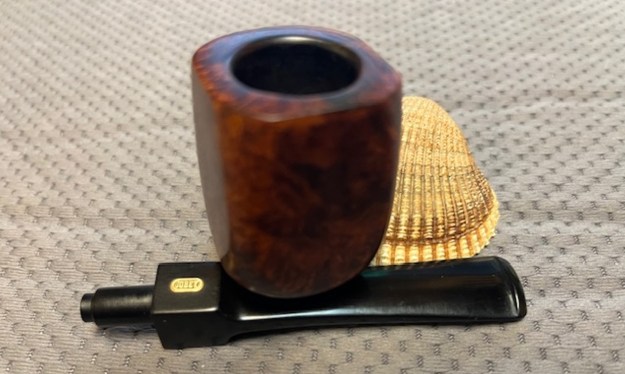
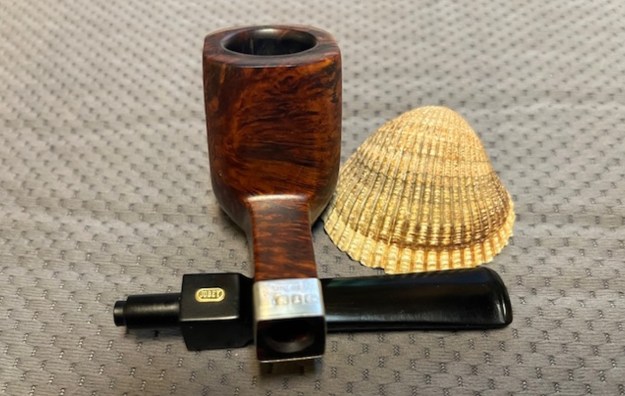
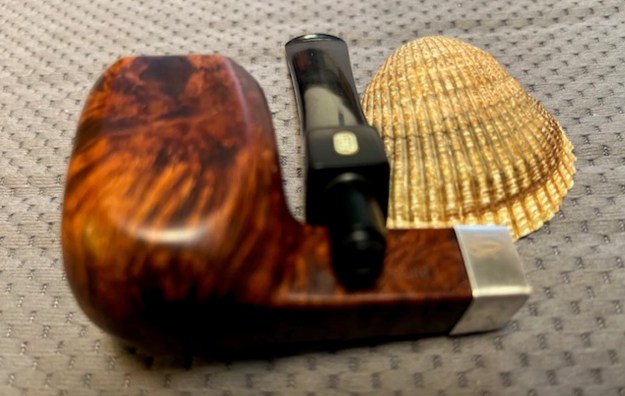
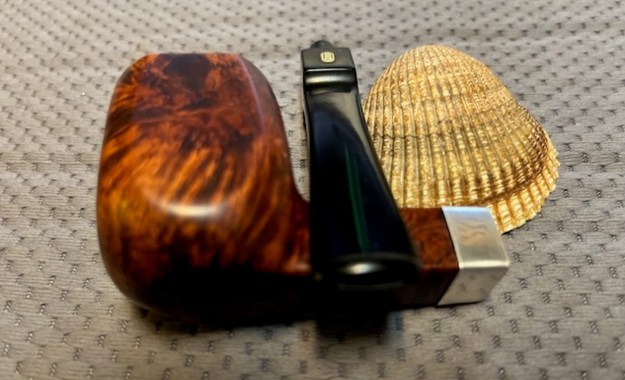
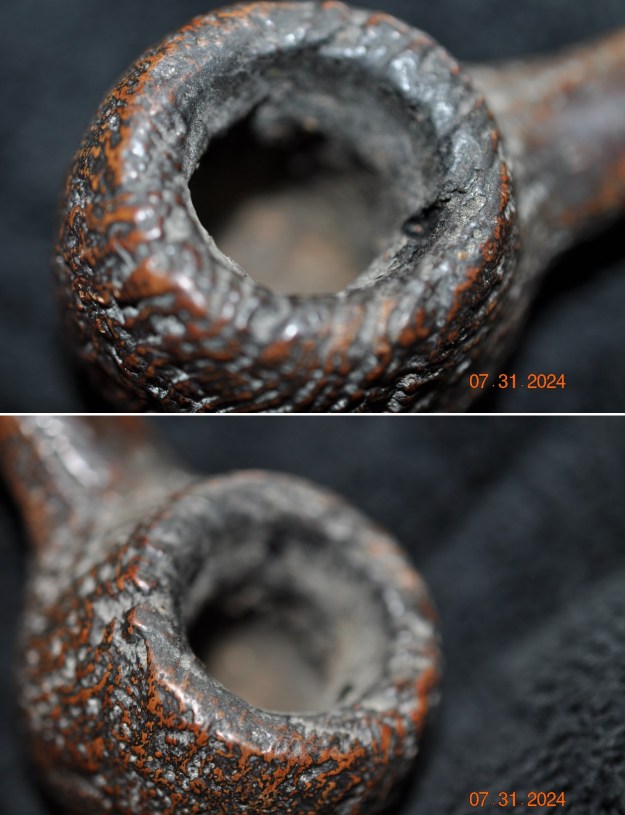
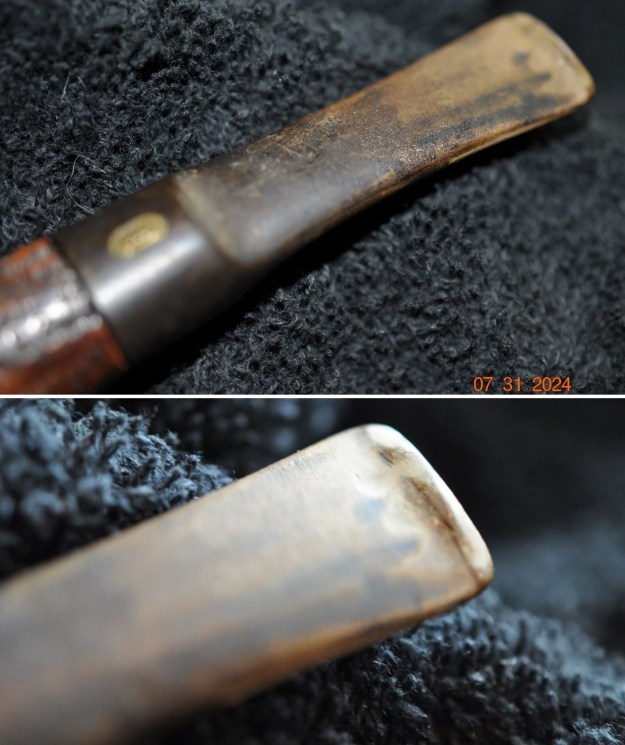
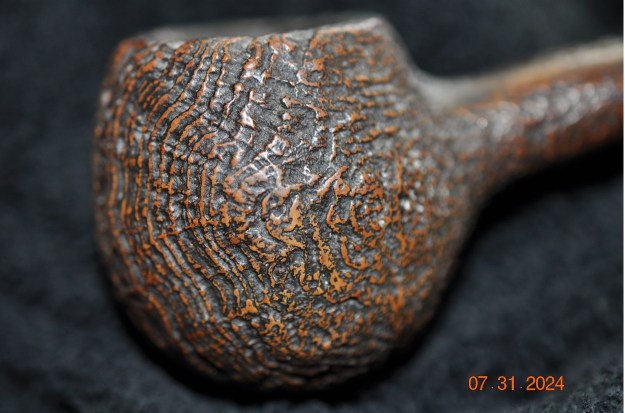
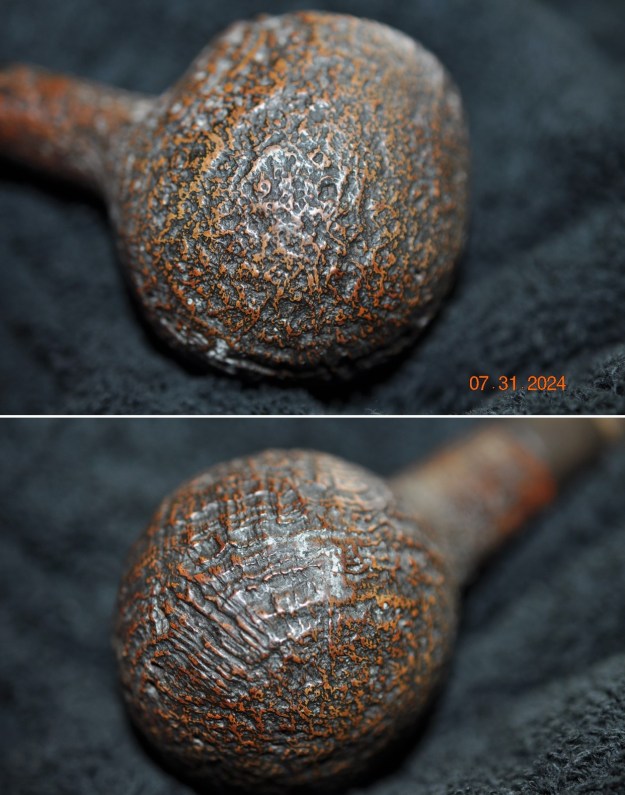
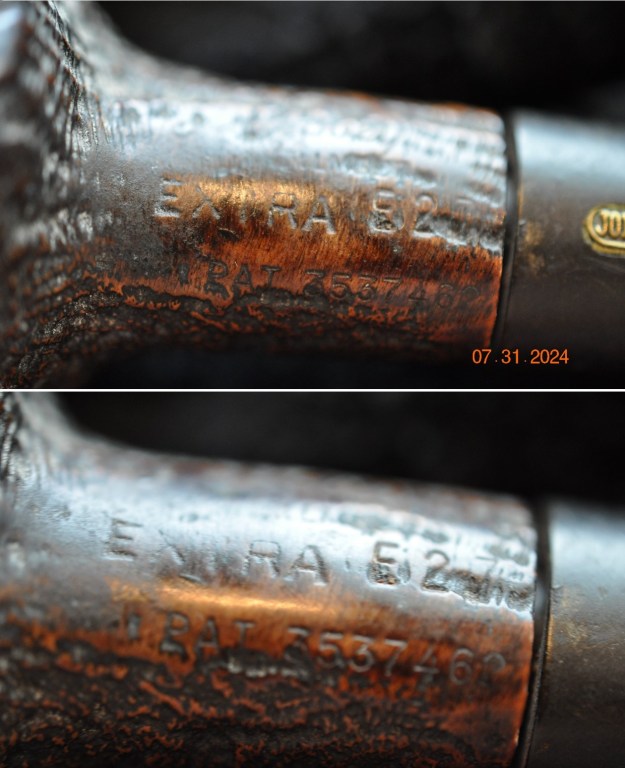
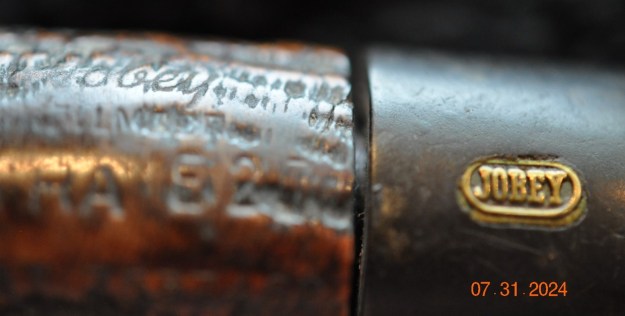
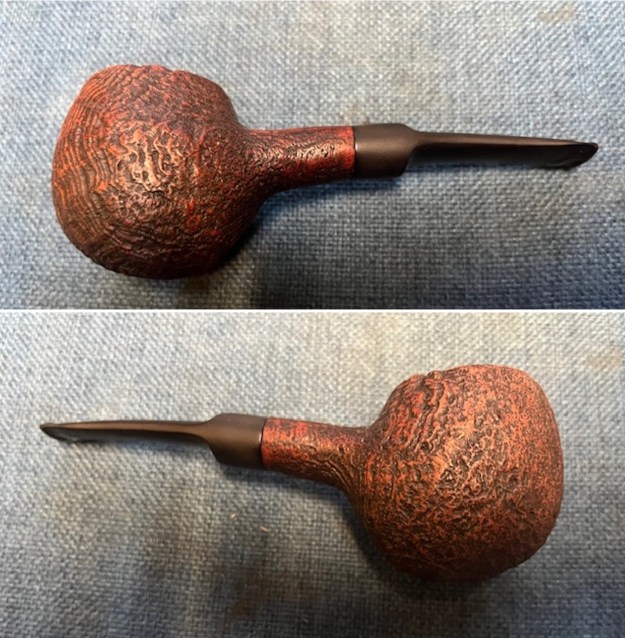
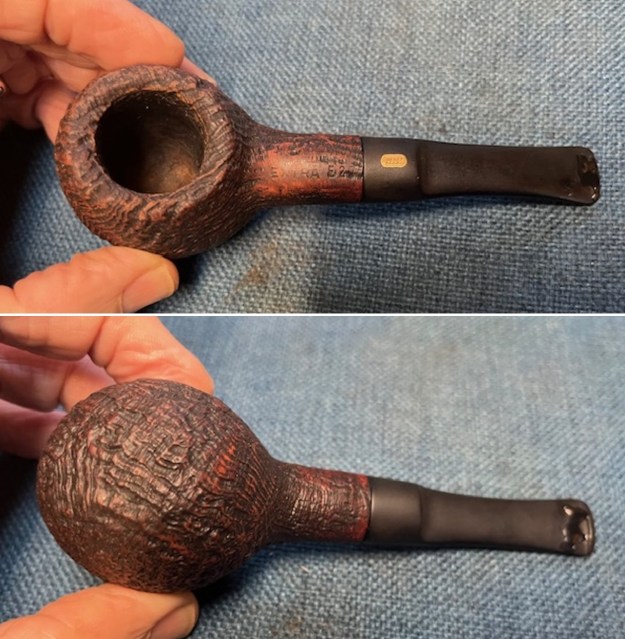
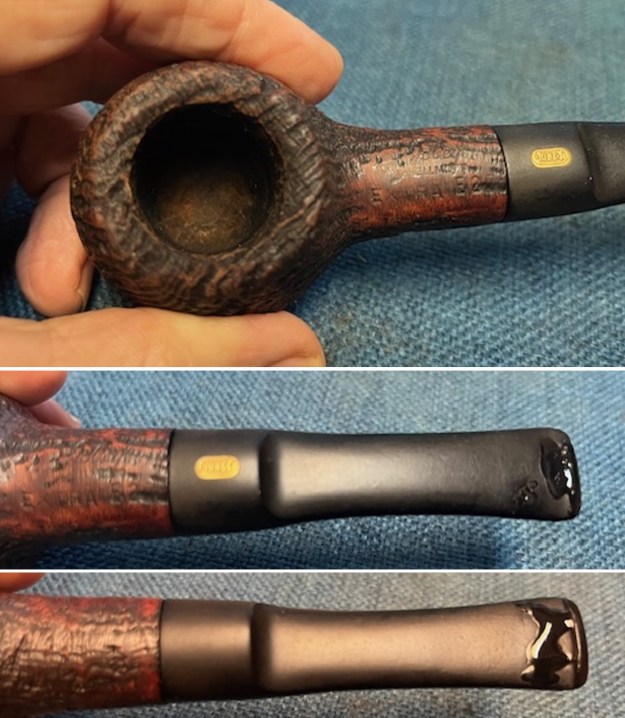
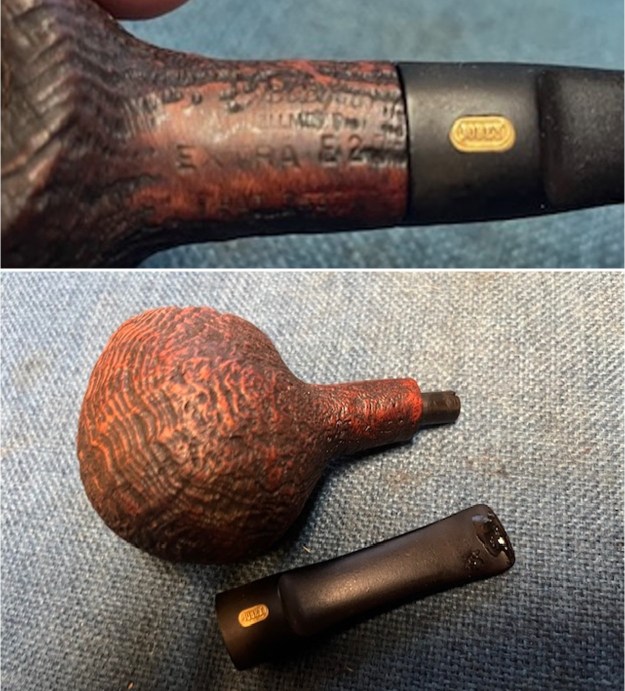
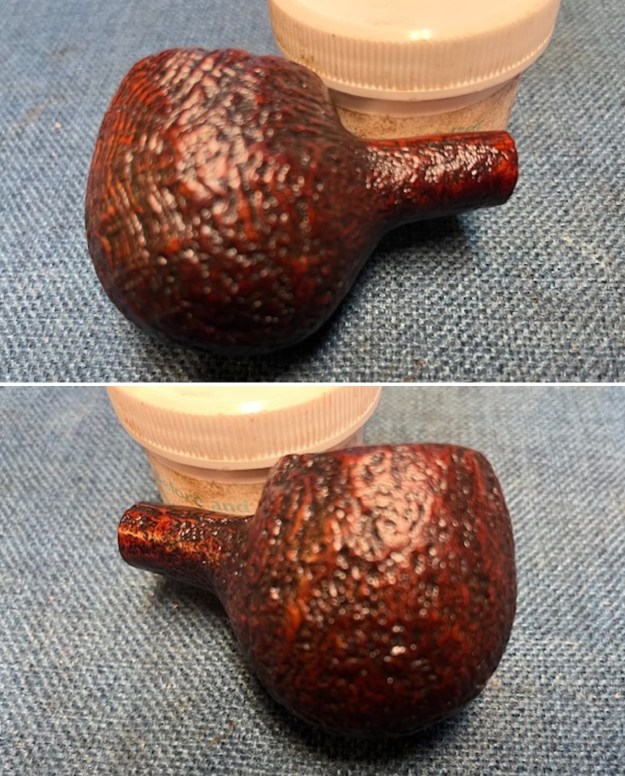
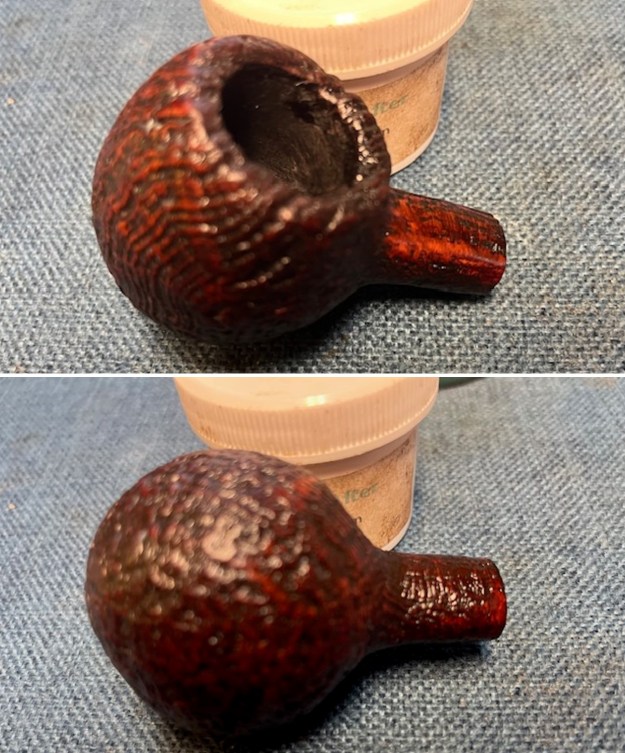
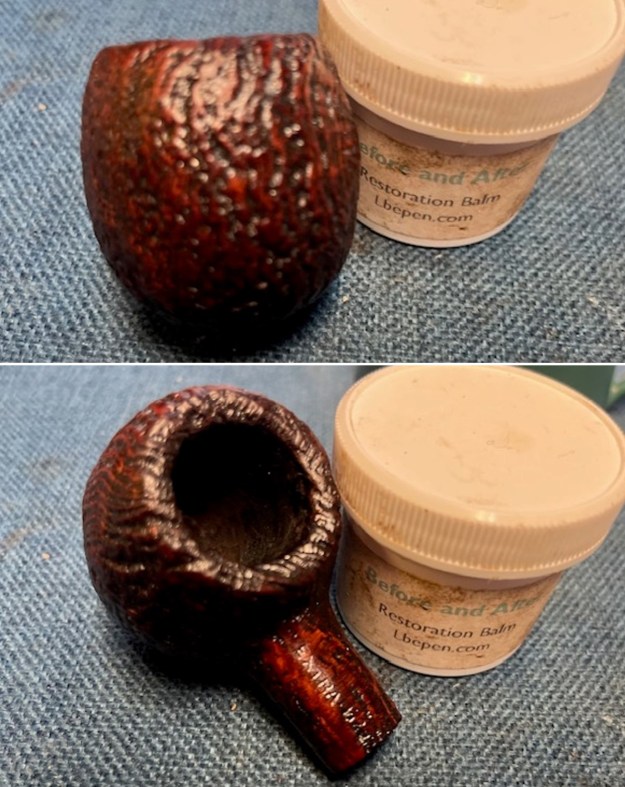
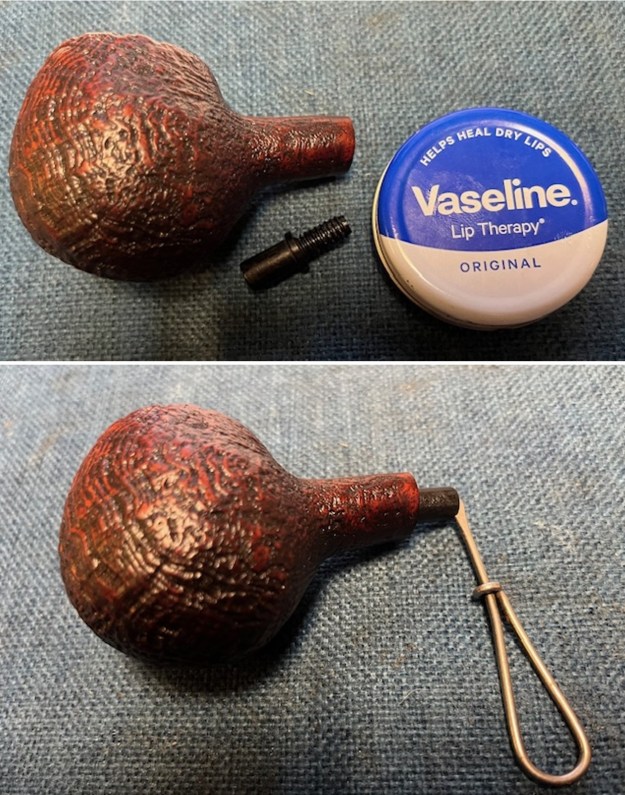
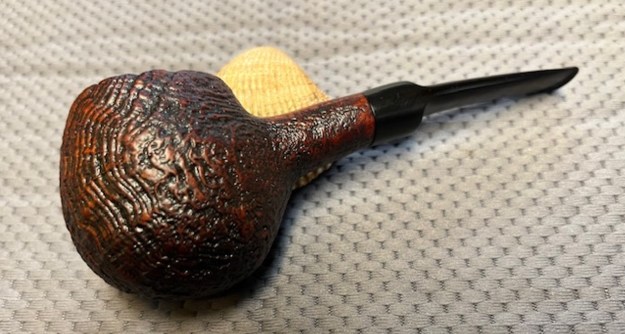
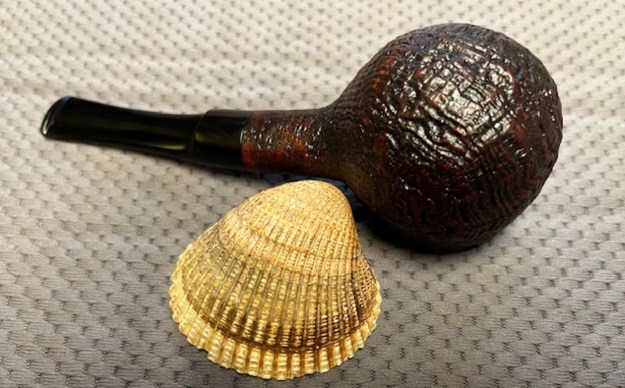
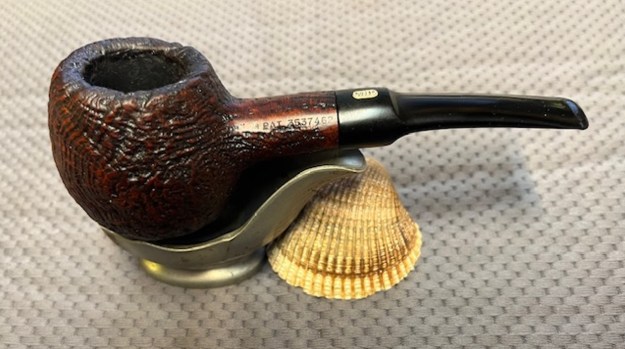
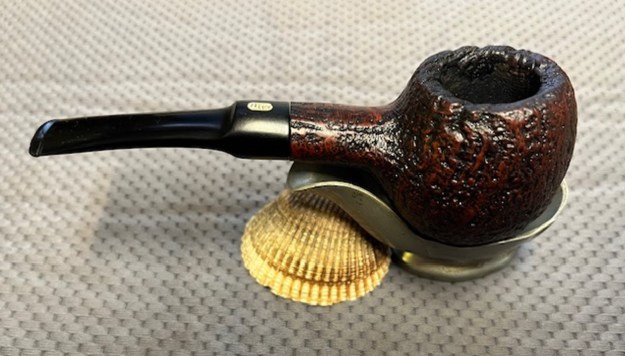
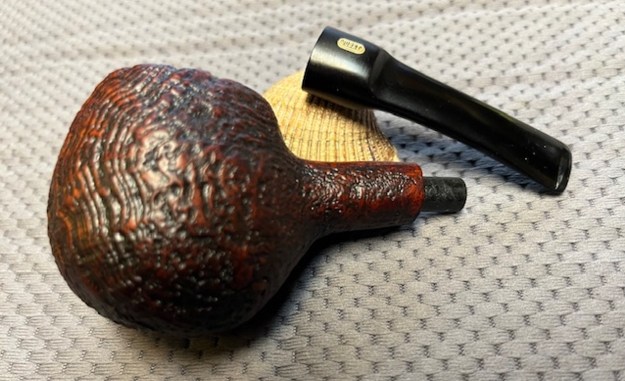
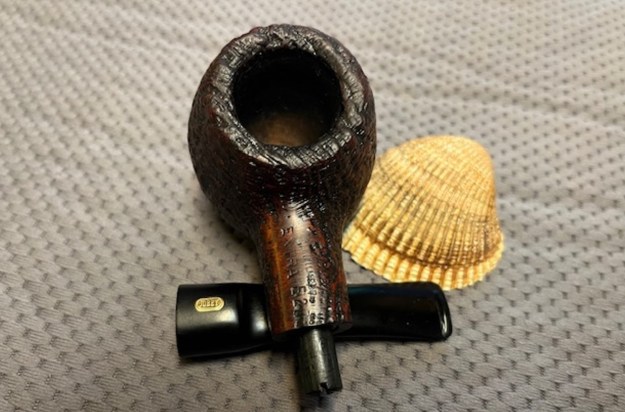
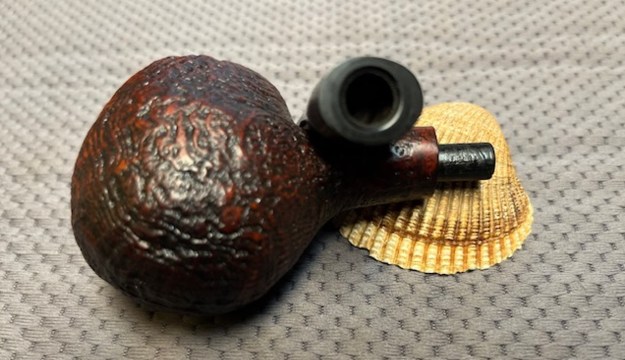
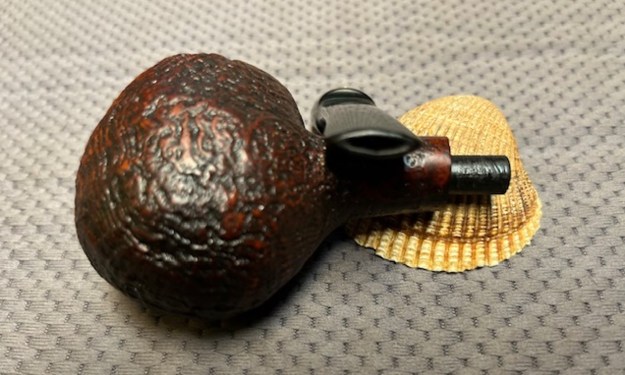
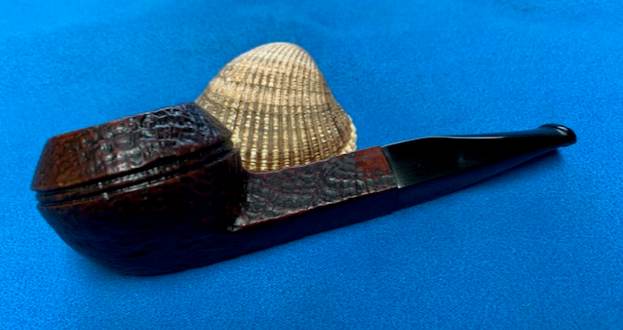
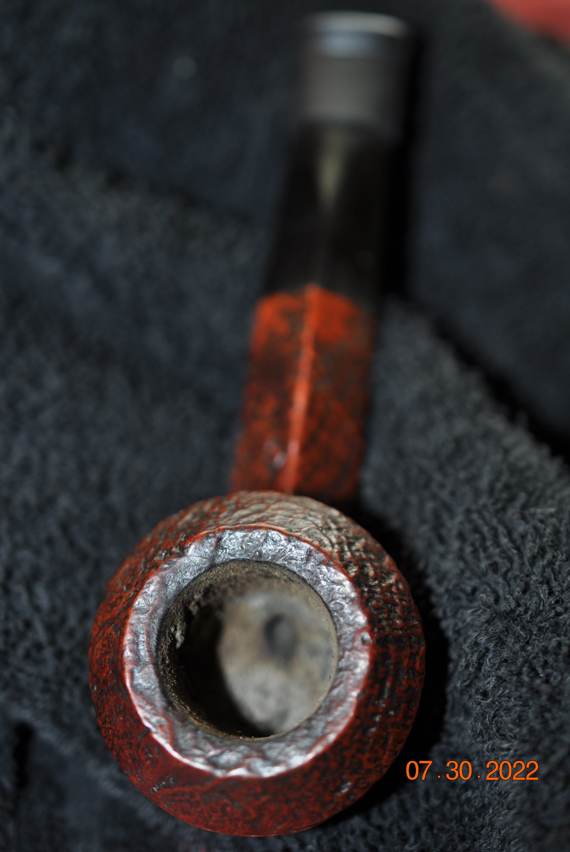
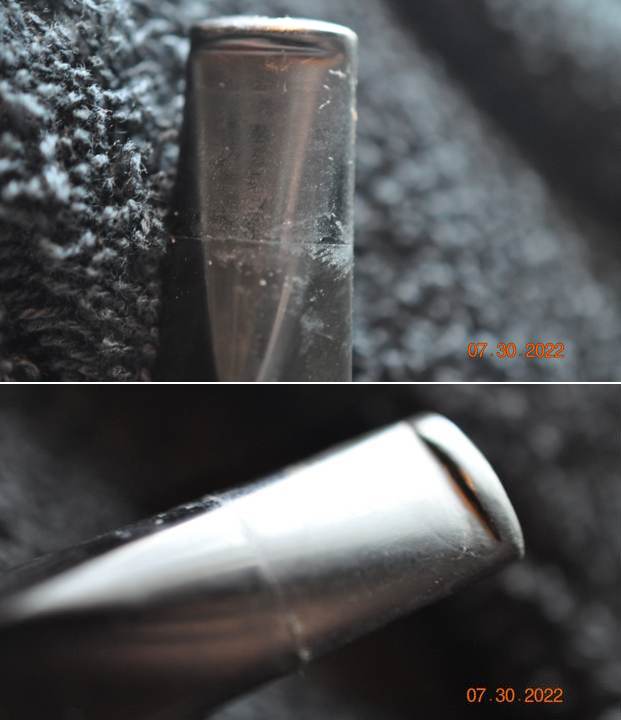
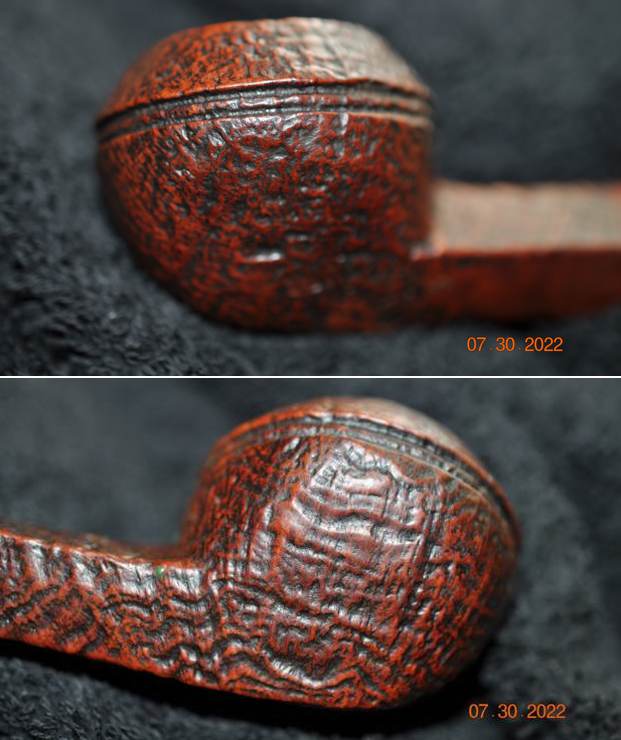
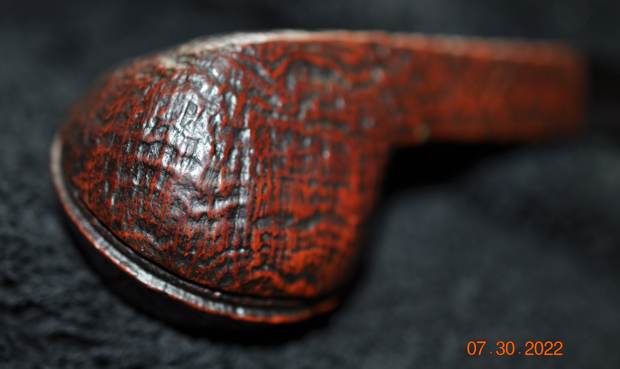
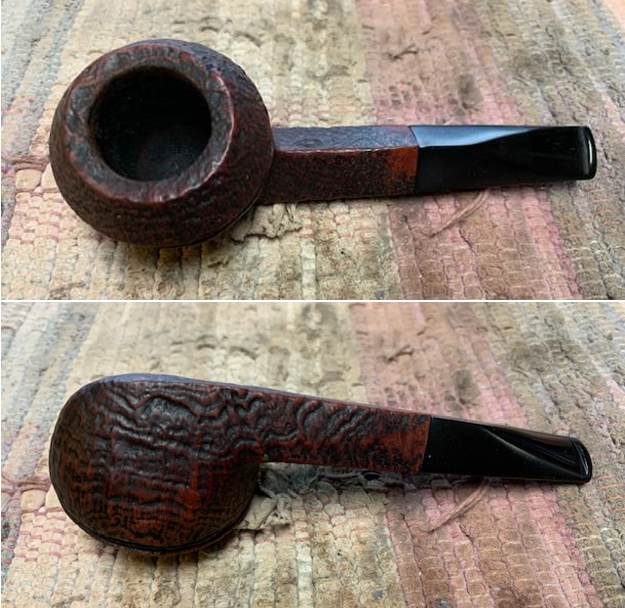
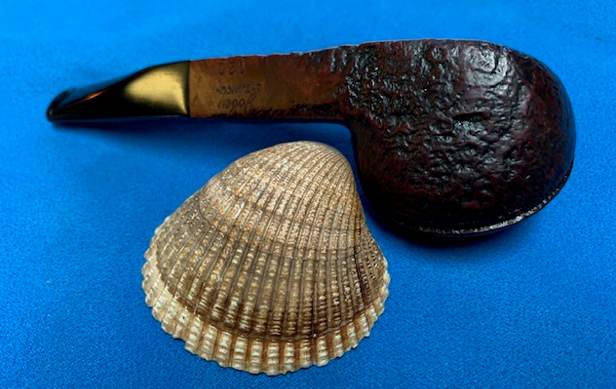
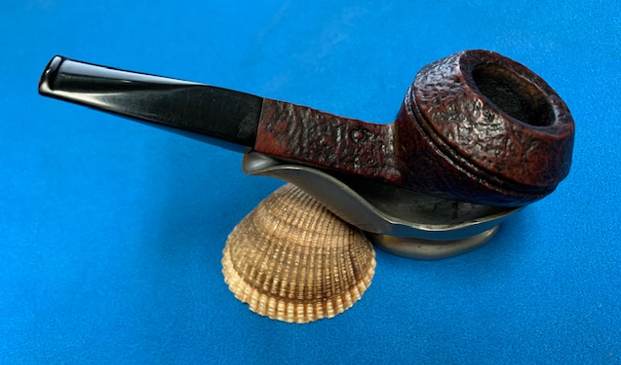
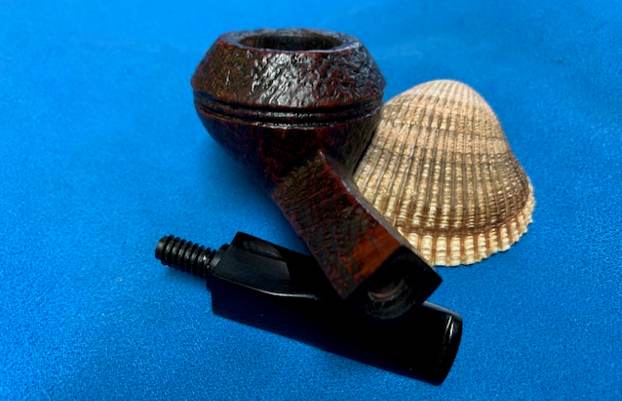
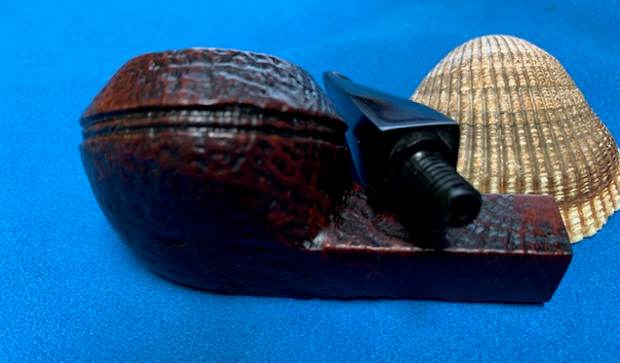
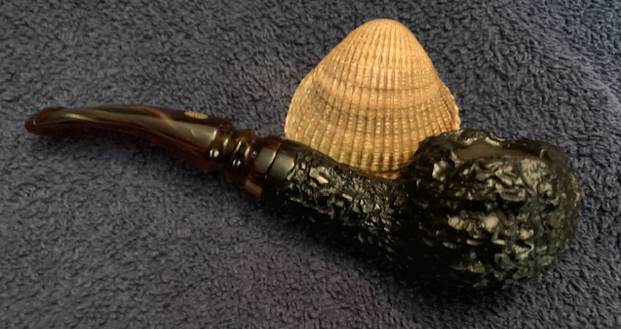
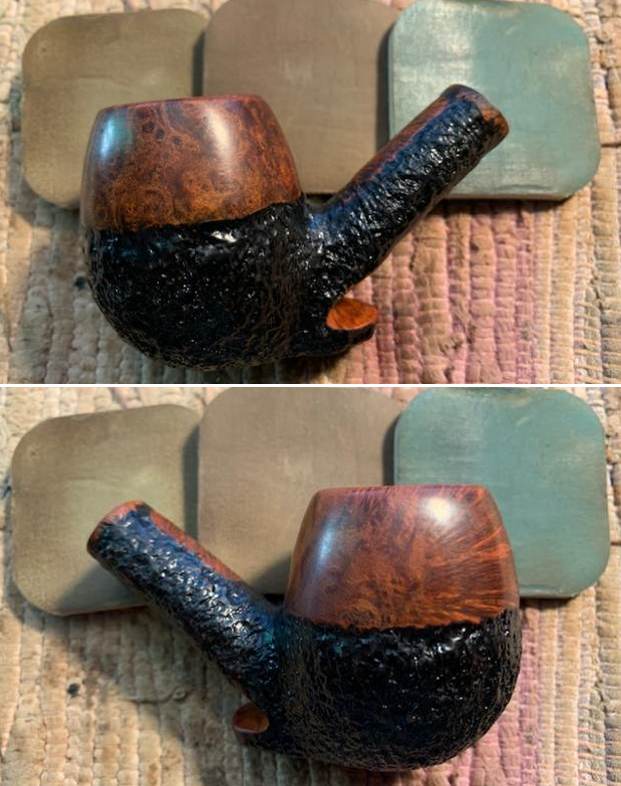
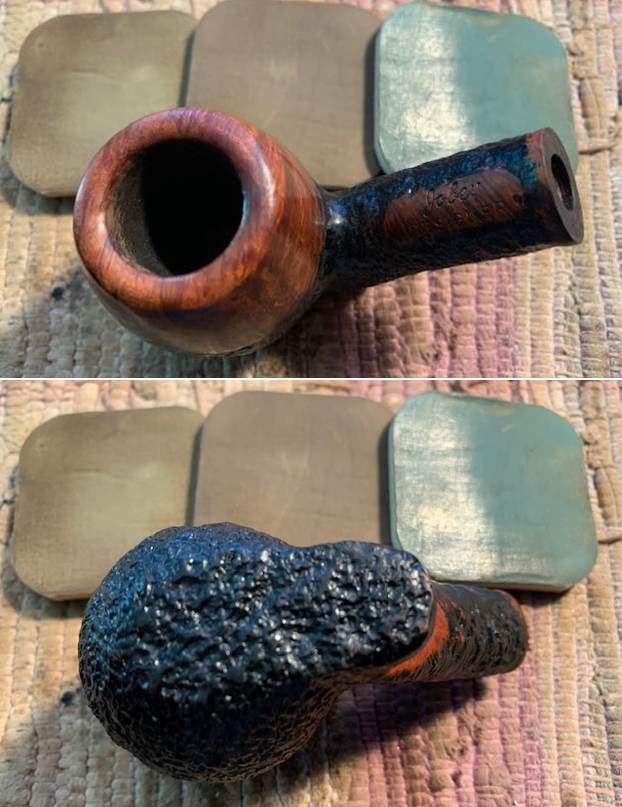
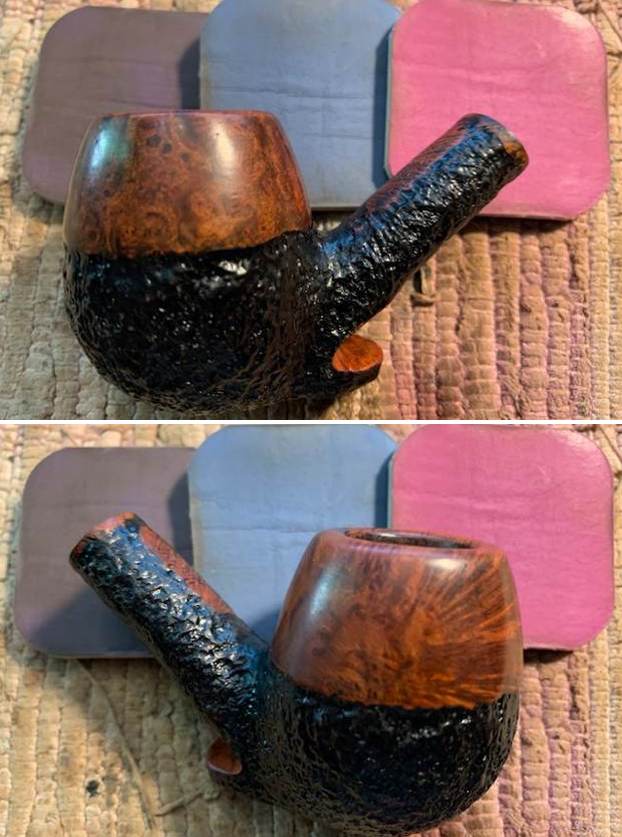
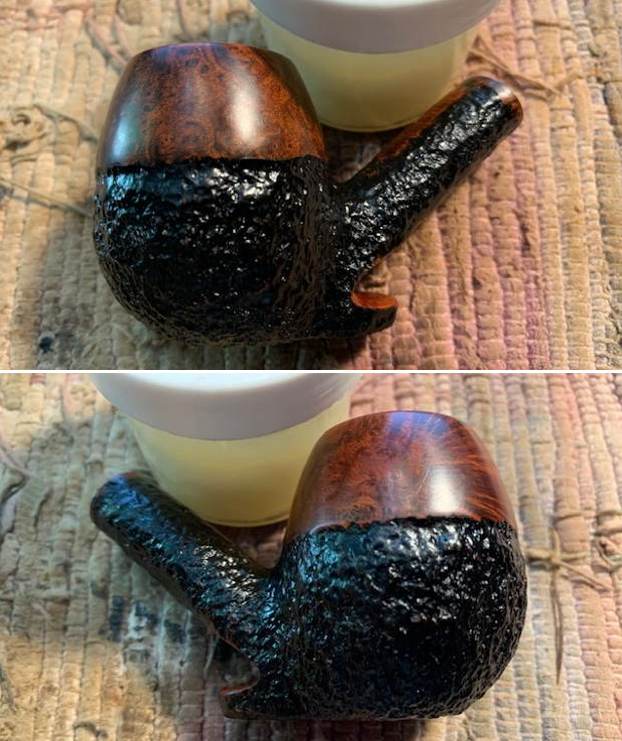
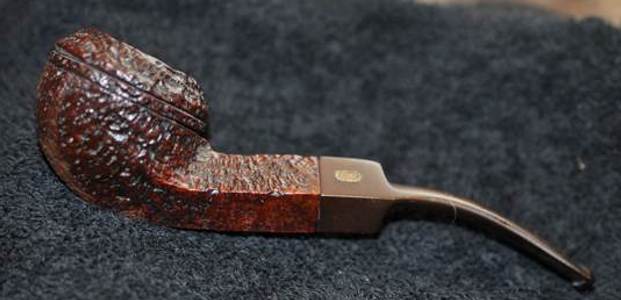
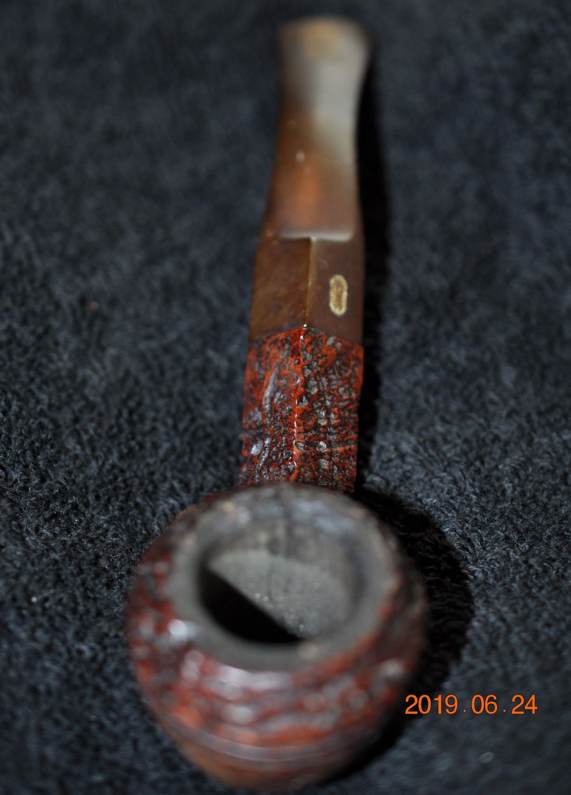
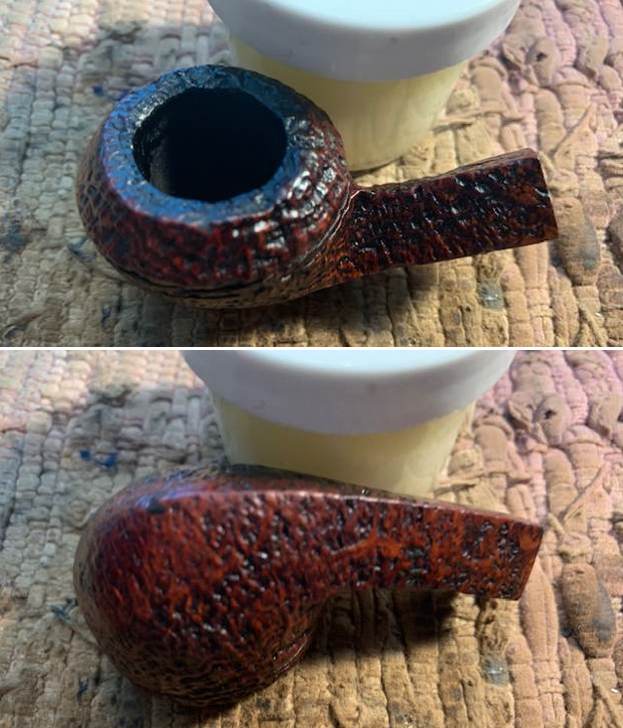
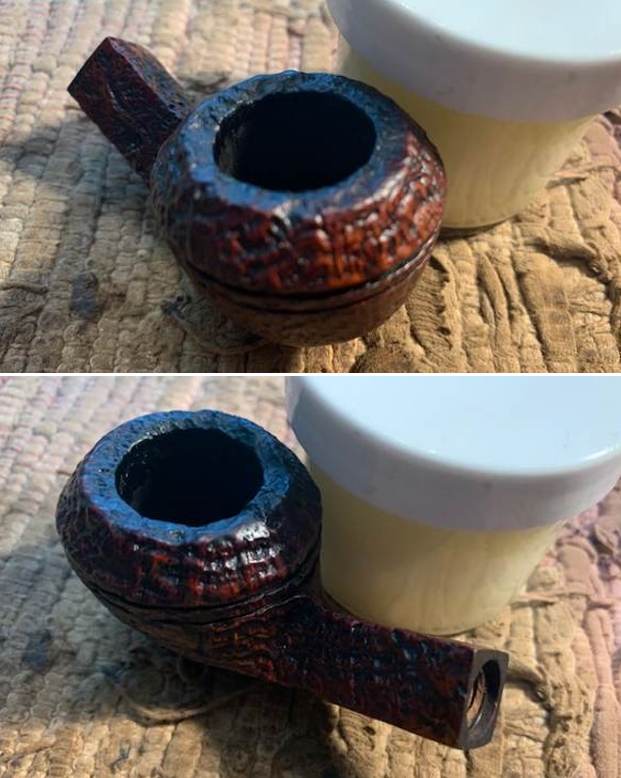
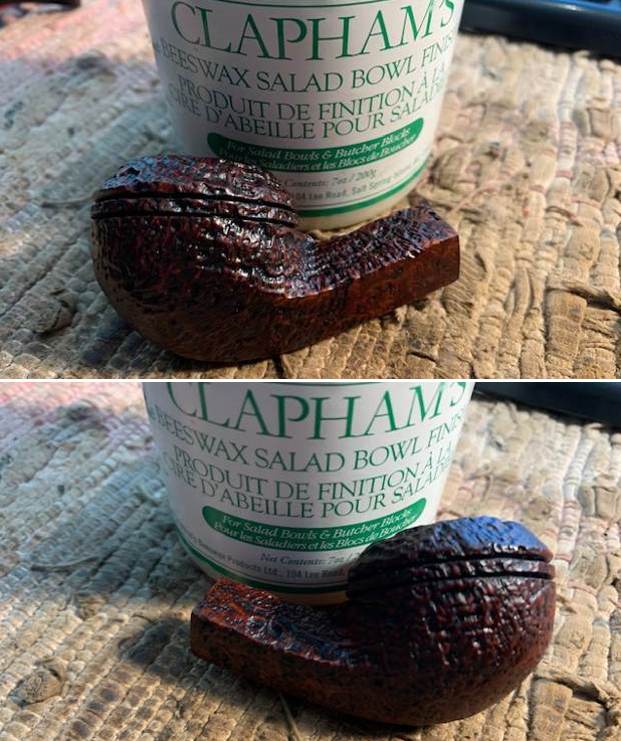
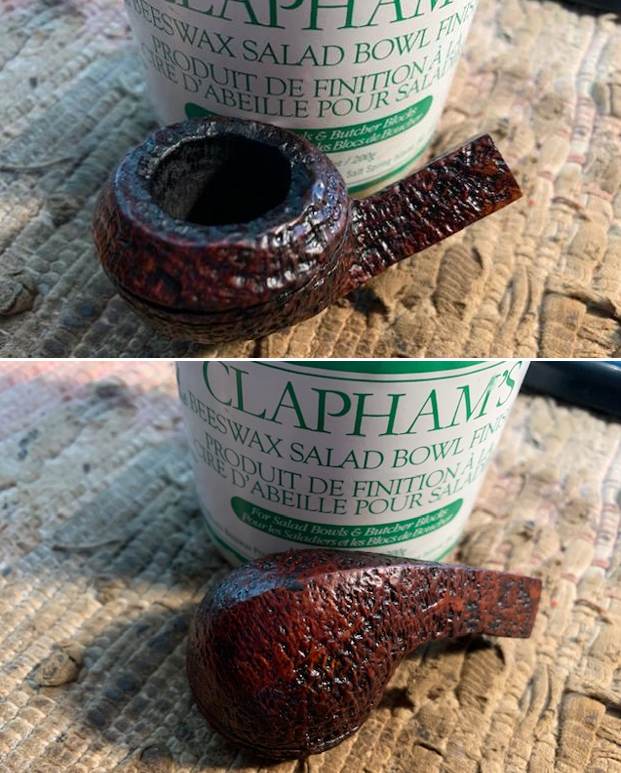
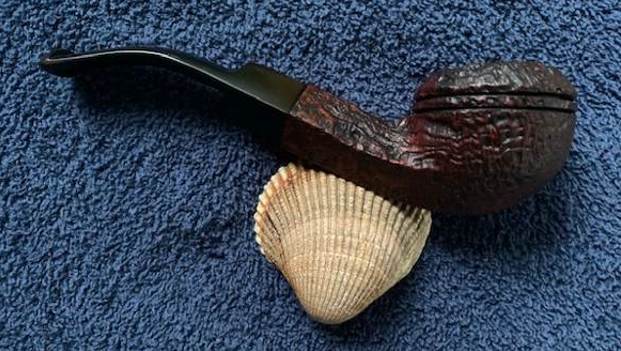
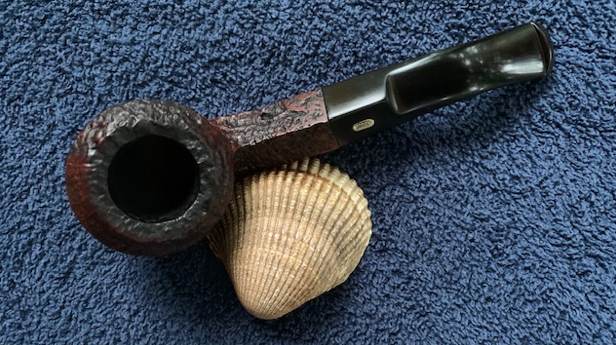
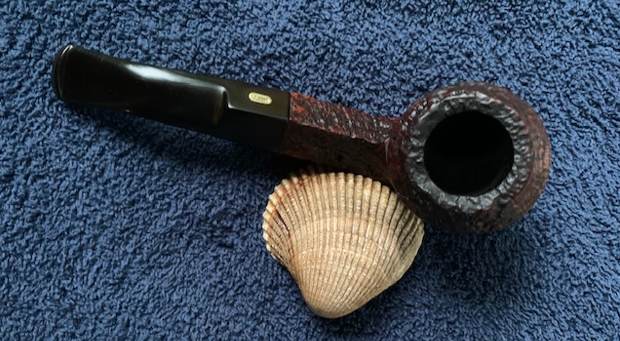
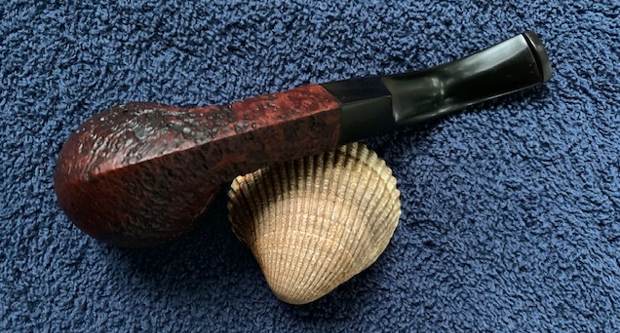
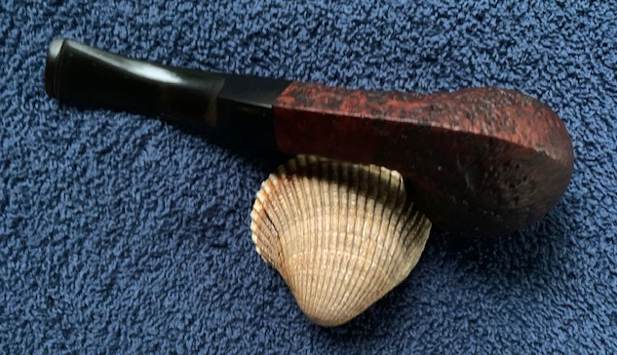
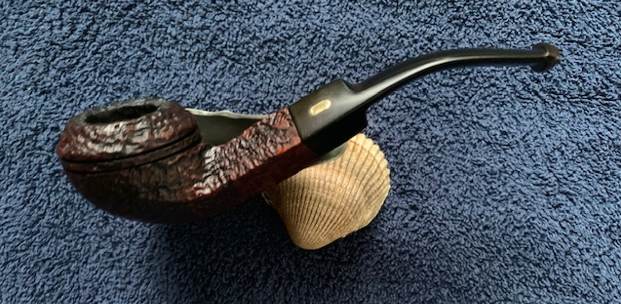
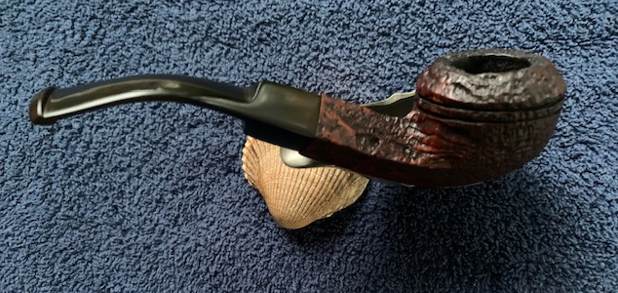
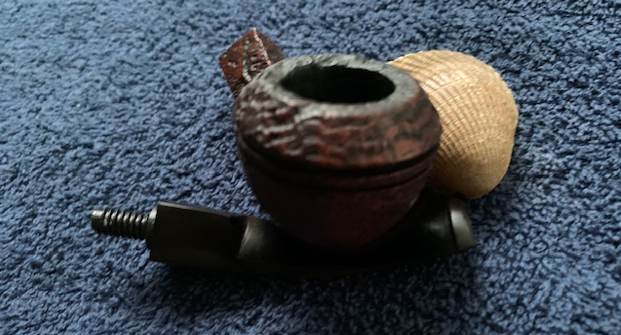
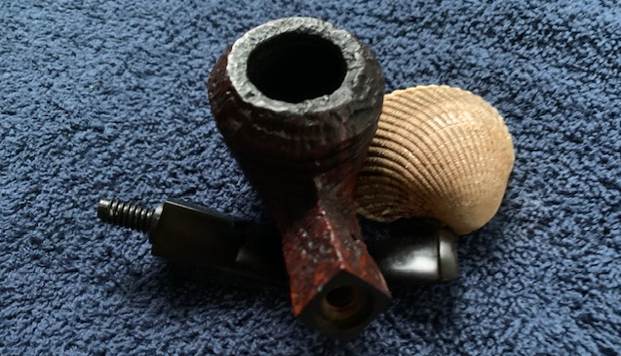
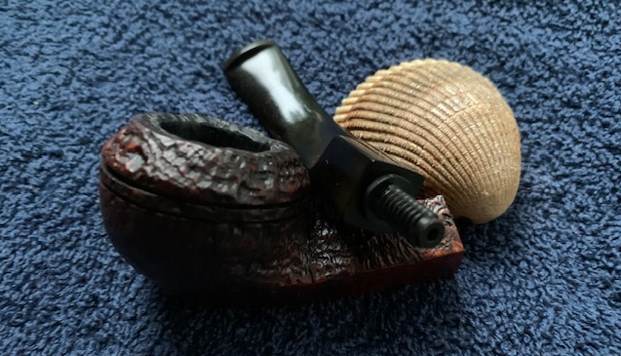
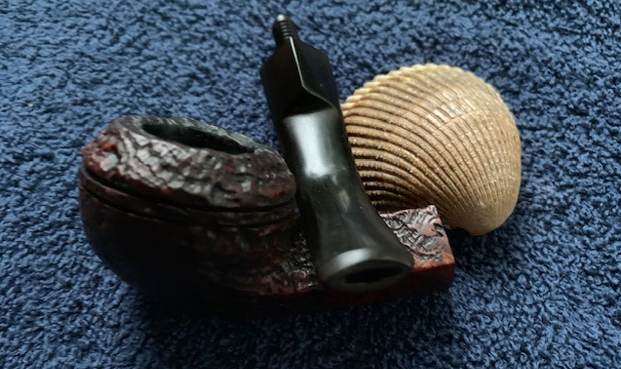
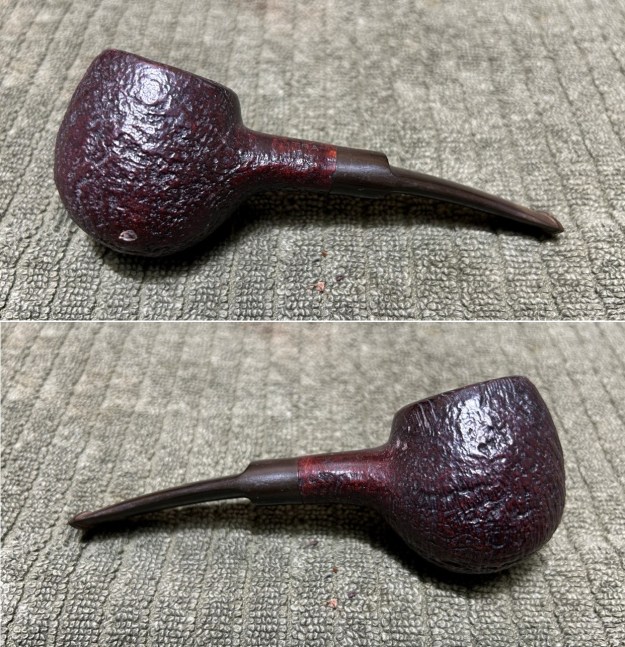
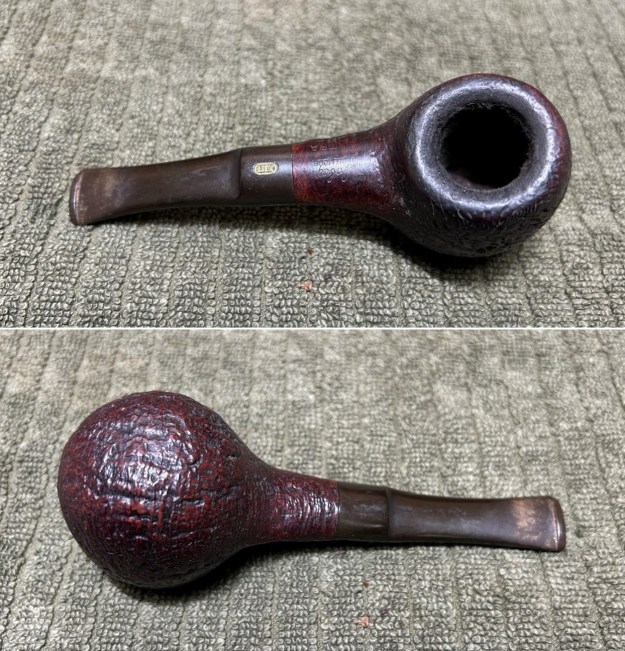
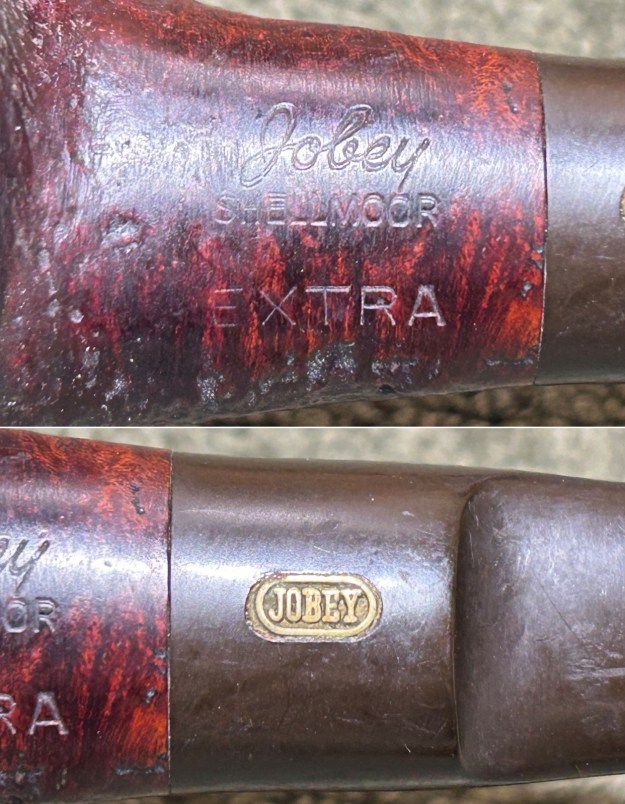
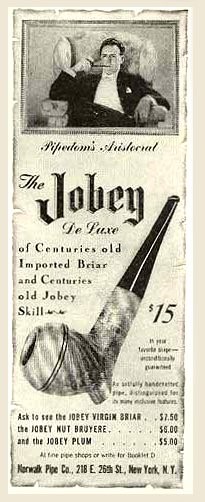
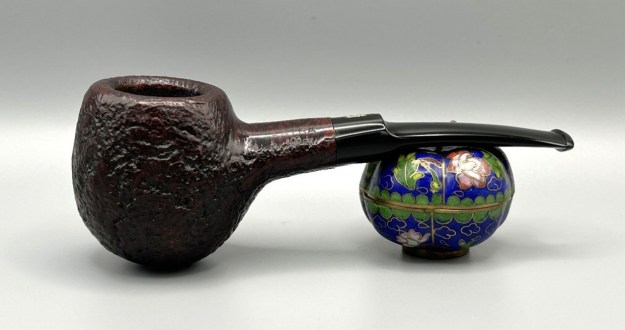
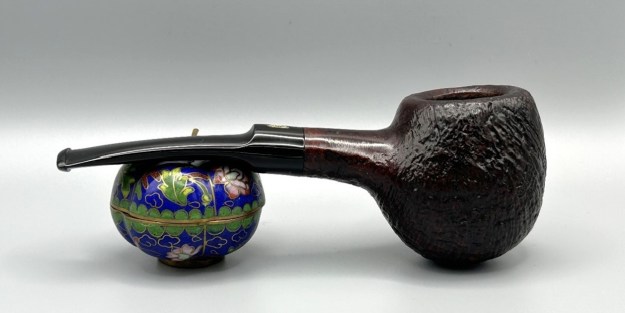
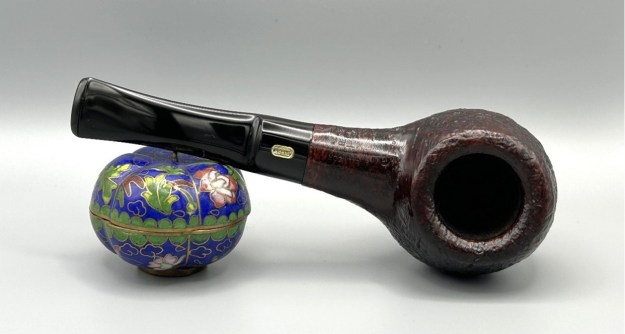
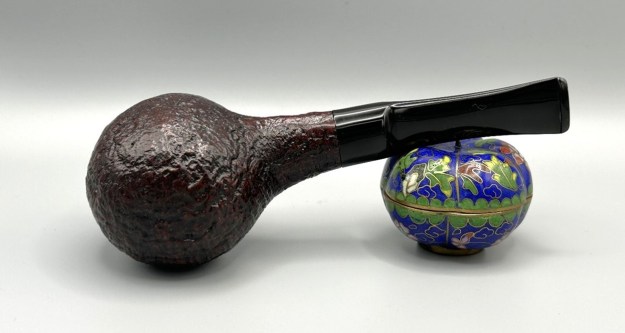
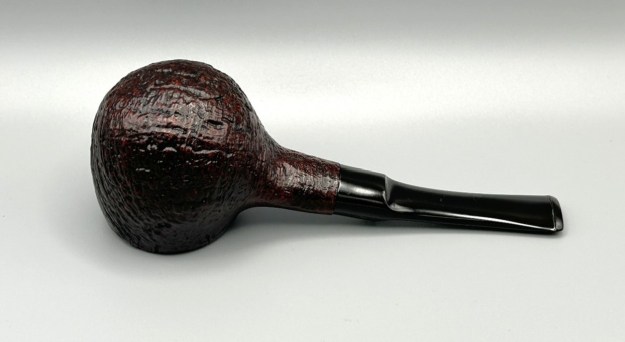
This good-looking pipe came from the great state of Washington and I’ve been meaning to clean it up for some time. This is a Jobey Shellmoor Extra pipe, in the hawkbill shape, and, although this particular pipe doesn’t show any shape number, it is identical to a Jobey Shellmoor Extra E527 that Steve restored last year. You can read that restoration here. It’s not immediately clear to me why this one doesn’t have a number, but no matter! Let’s look at the markings that do appear on this pipe. On top of the shank, we see Jobey [over] Shellmoor [over] Extra. On the stem, we see the Jobey logo inlaid in brass.Regarding the Jobey company itself, there is precious little background information. The Pipedia article on Jobey (which I encourage you to read here) begins with this tidbit:
English – American – Danish – French… Sadly, solid information about Jobey is scant. Probably established in England around 1920(?) the brand hiked into the USA later.

And Pipephil adds this note:

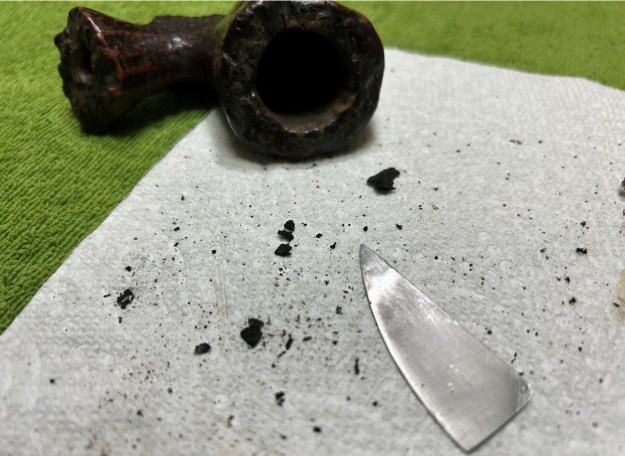
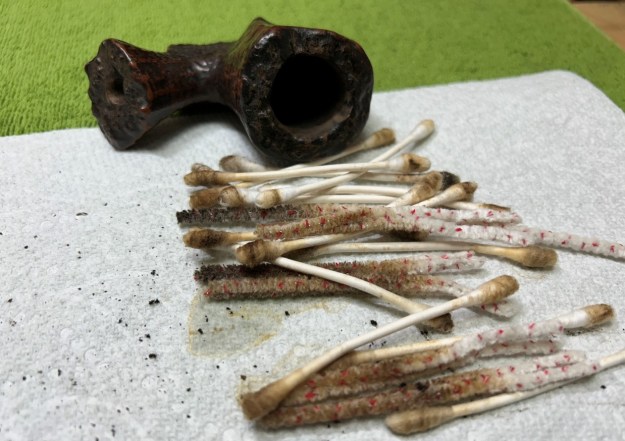
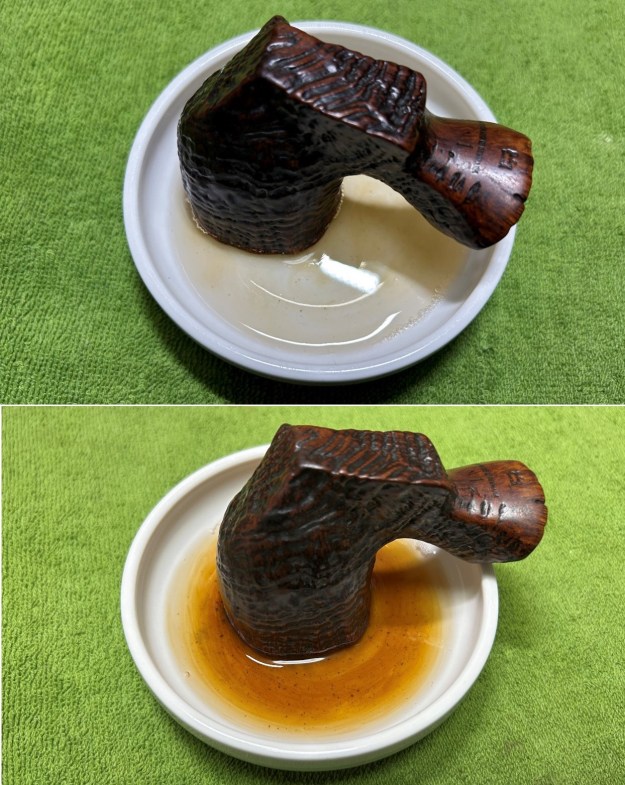
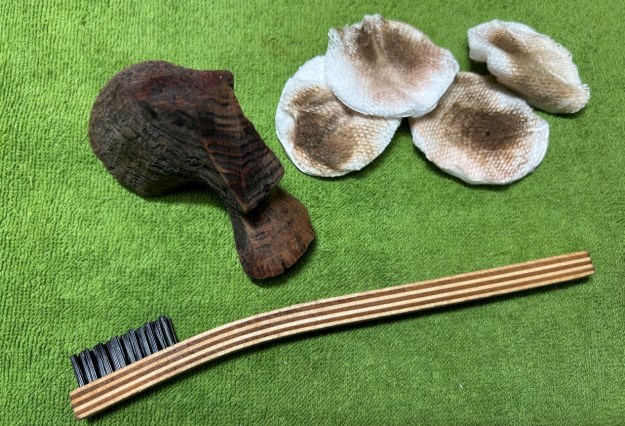
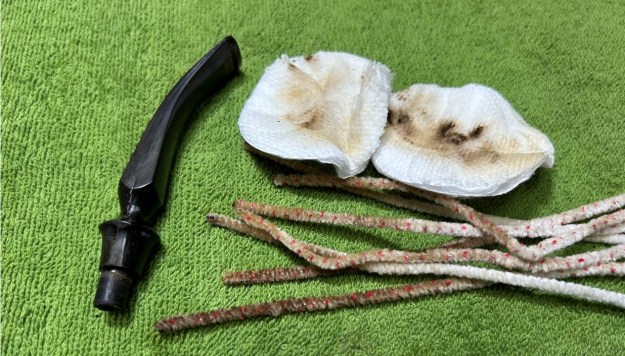
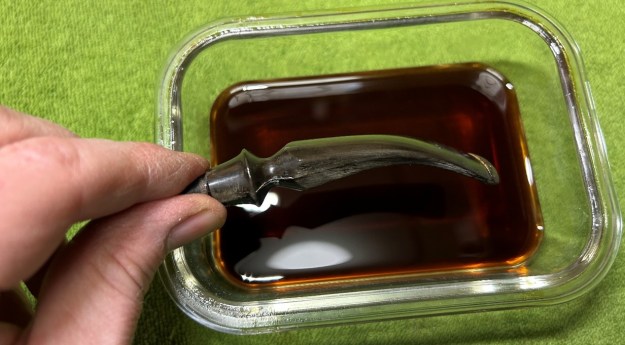
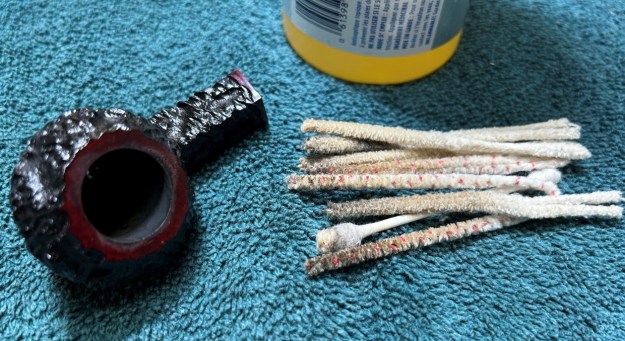
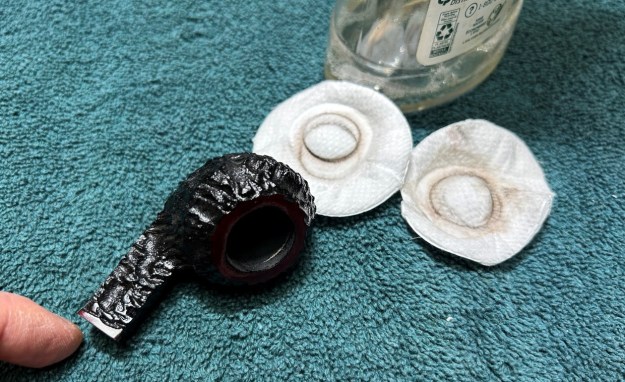
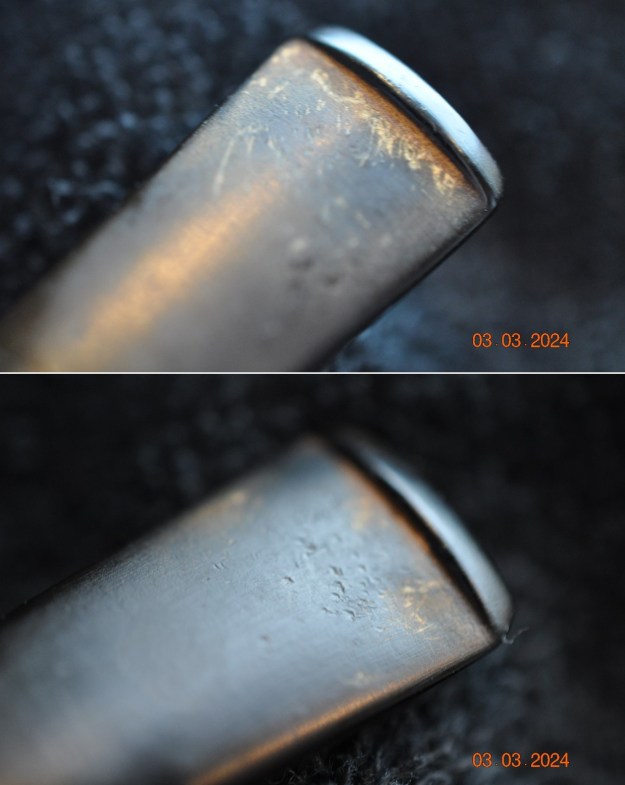
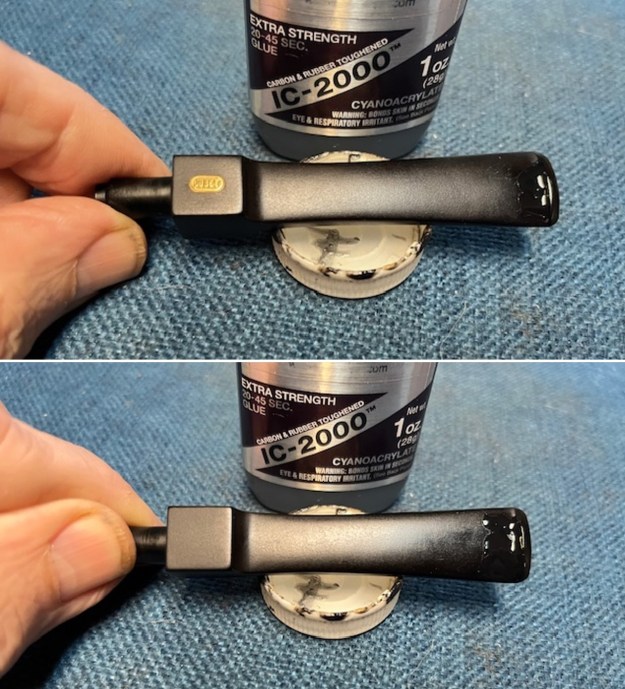
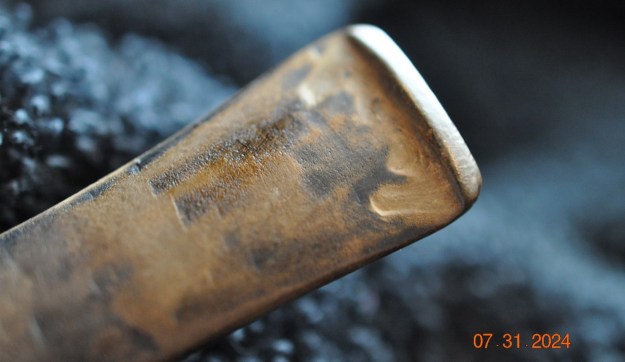
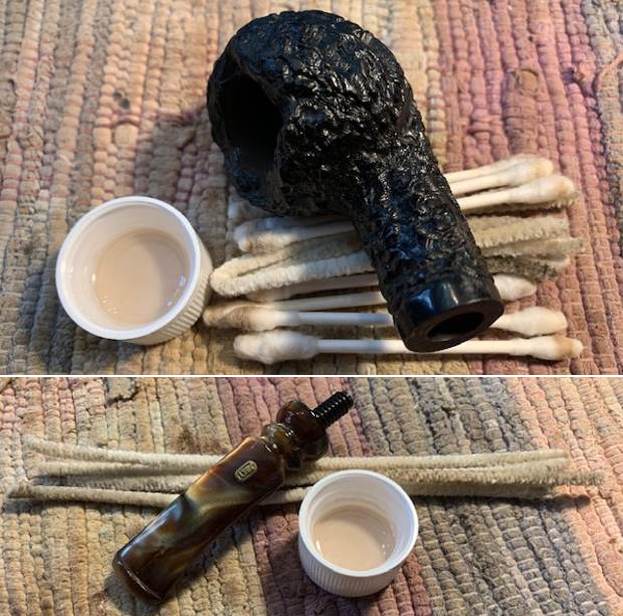
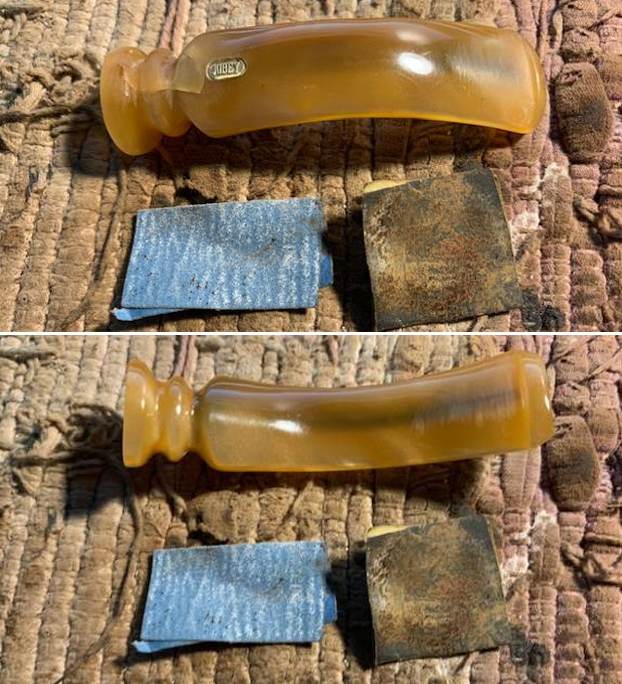
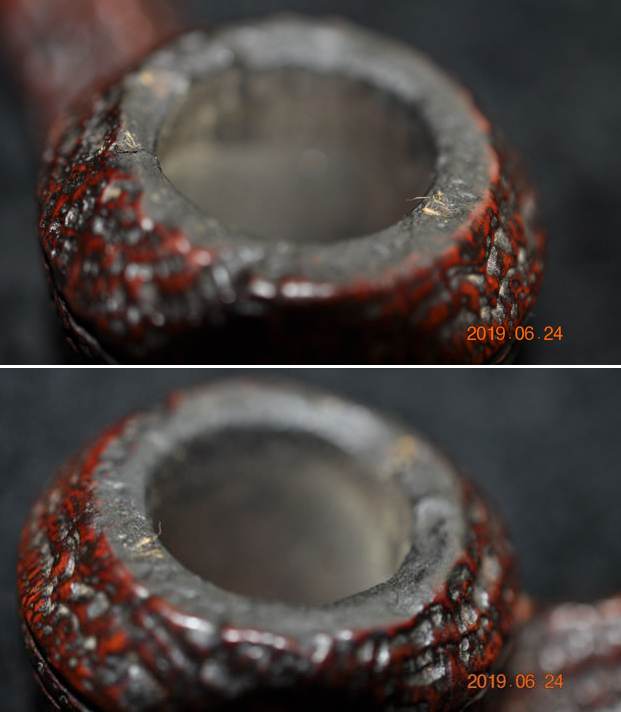
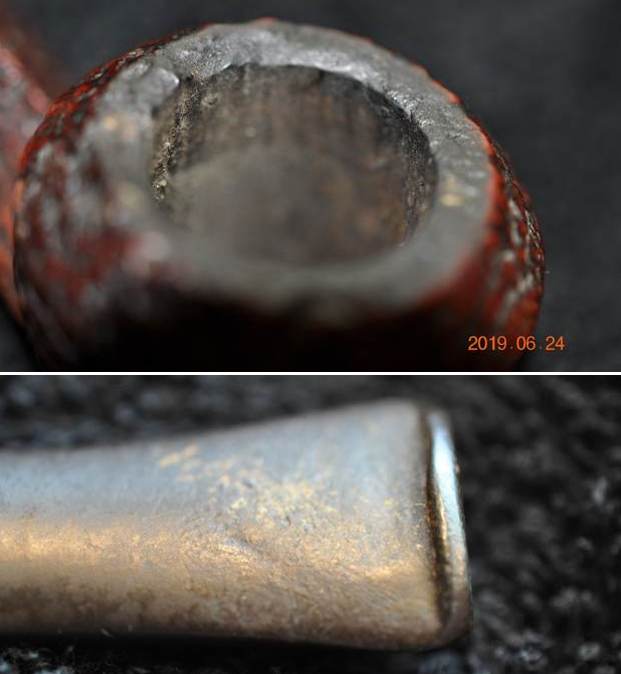
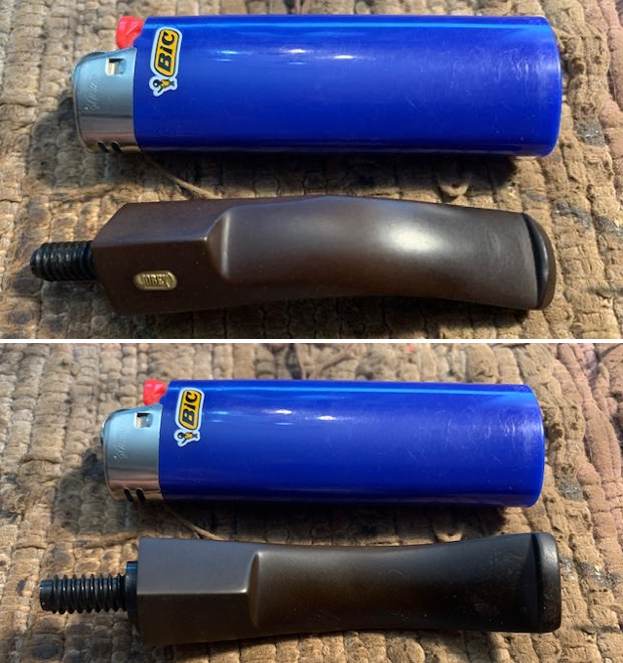
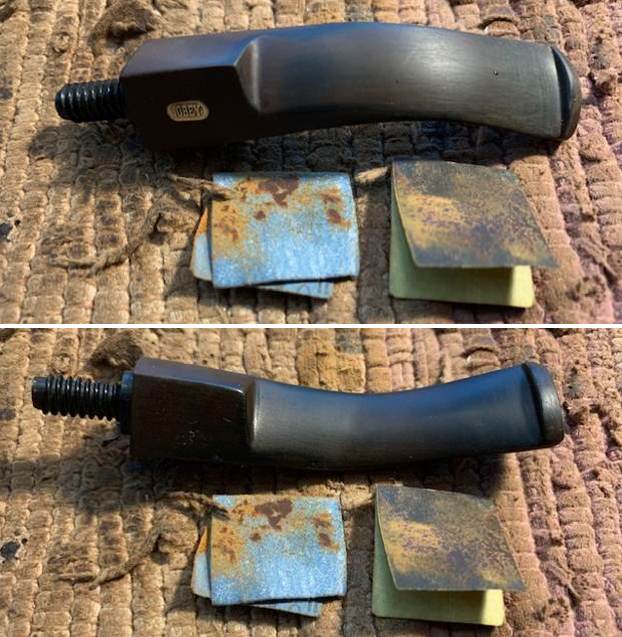
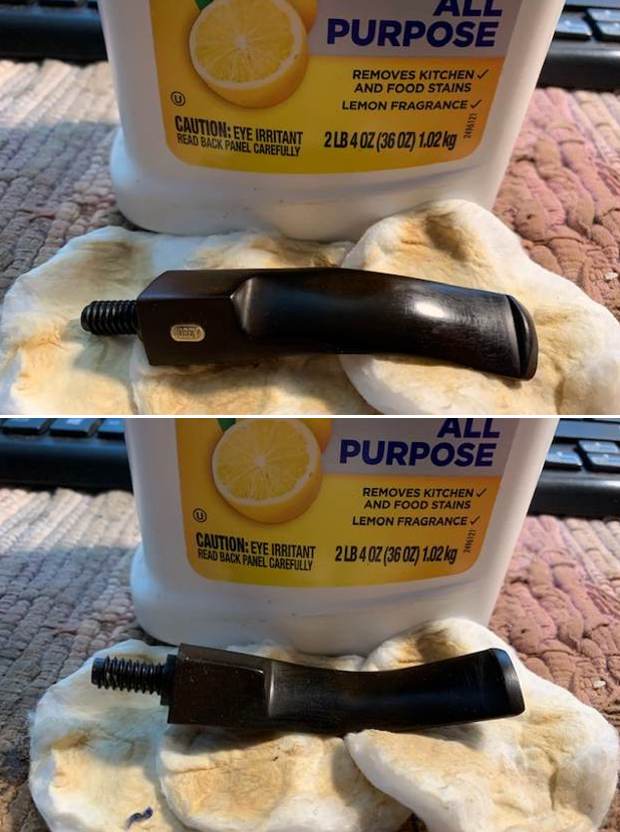
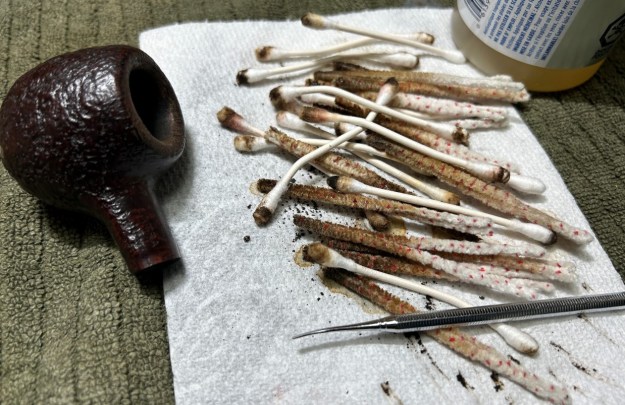
These pipes are made in St Claude (France) by Butz-Choquin (Berrod-Regad group) since 1987. Before this date some were manufactured in England and Denmark (Jobey Dansk).So? Not much history to learn, sadly. Let’s clean this pipe up. Fortunately, this pipe was in good condition and didn’t require too much labour. The stummel is dirty but sound. The rim is coated in lava. The bowl has a decent amount of cake in it. The stem is also dirty, oxidized, and shows signs of calcification. There are lots of tooth scratches and some minor dents. I used isopropyl alcohol on a few cotton rounds and wiped down the stem to provide an initial cleaning of filth before moving on to the next steps. The primary cleaning came next. I disinfected the inside of the stem with both pipe cleaners and cotton swabs dipped in lemon-infused 99% isopropyl alcohol. I scrubbed thoroughly to make sure the interior was very clean. Actually, it wasn’t too bad inside.The goal of the next step is the removal (or minimization) of oxidation. Going to my sink, I used cream cleanser, cotton rounds, and a toothbrush, and scoured the stem to remove as much surface oxidation as possible. As the photos show, the result was a hideous, ochre-coloured mess – but better off the stem than on it.Once the stem was reasonably clean, I soaked it overnight in some Briarville Stem Oxidation Remover. This solution works to draw oxidation in the stem to the surface of the vulcanite. This is a major aid and an important step in ensuring a clean stem. The following day, I drew out the stem from its bath and scrubbed the lingering fluid with a toothbrush.As the stem was now clean and dry, I set about fixing the marks and dents in the vulcanite. This was done by filling those divots with black cyanoacrylate adhesive, impregnated with carbon and rubber. I left this to cure and moved on.
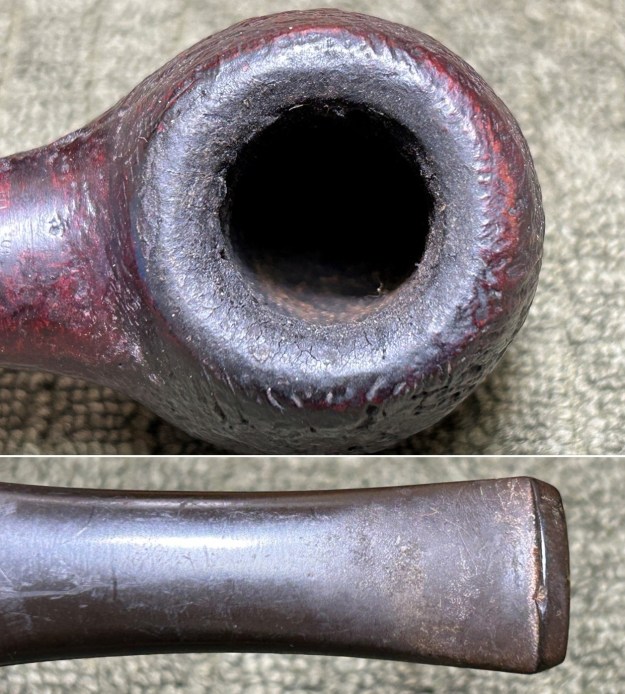
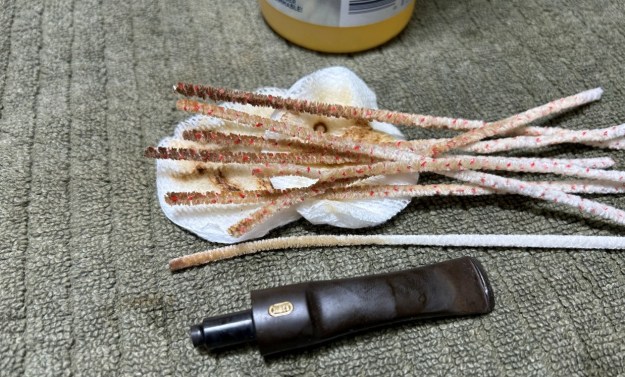
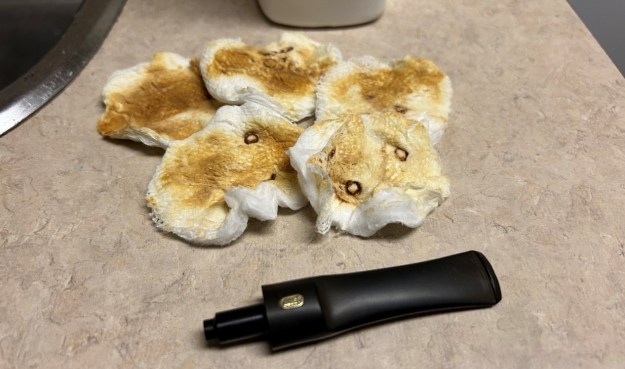
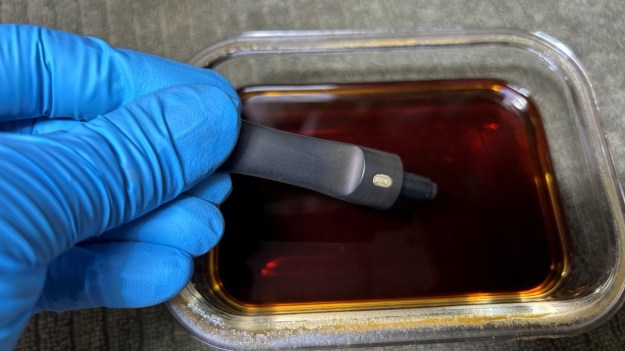
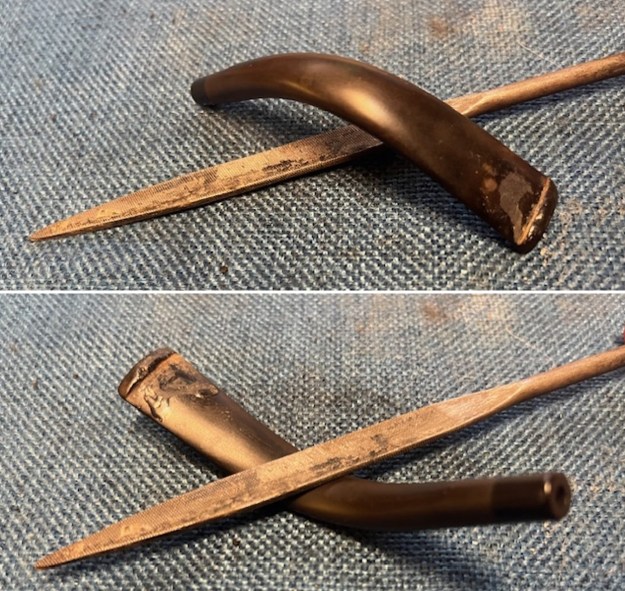
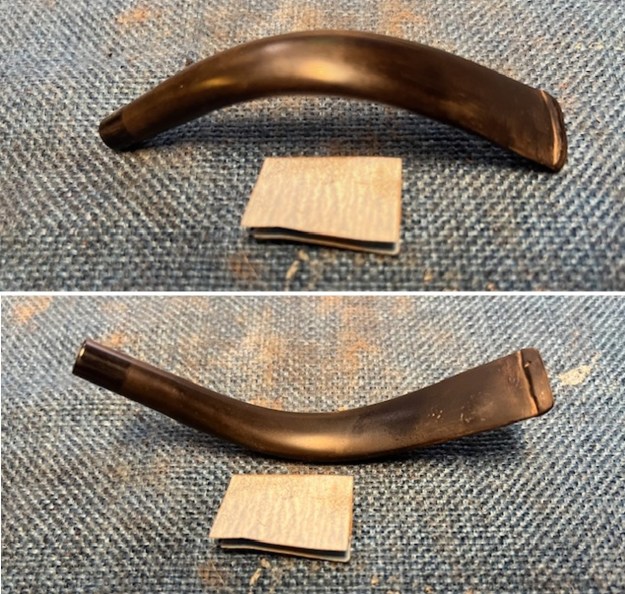
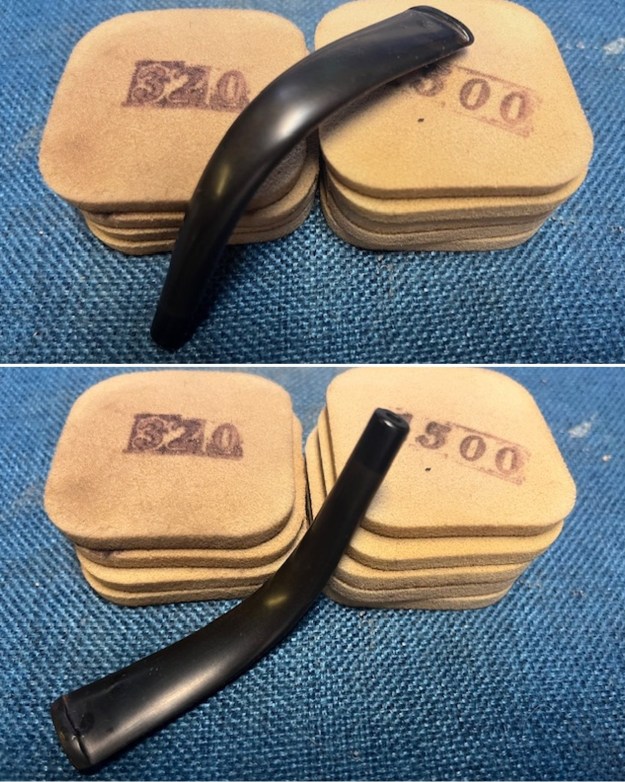
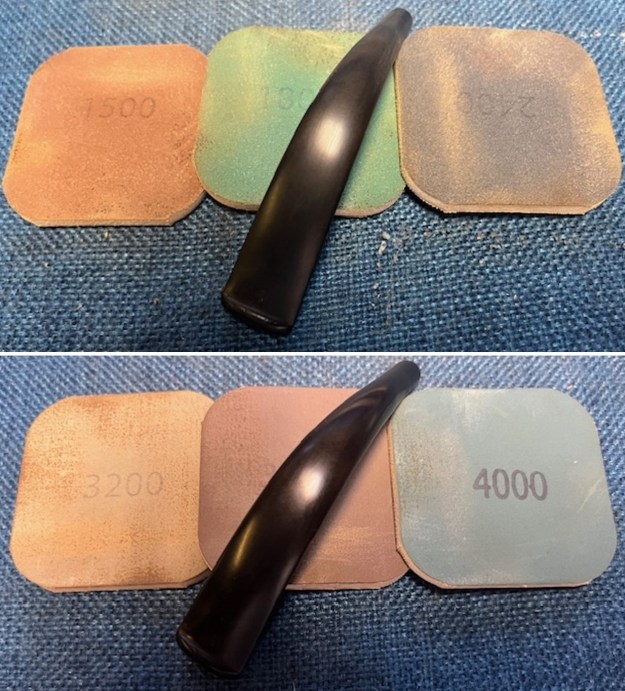
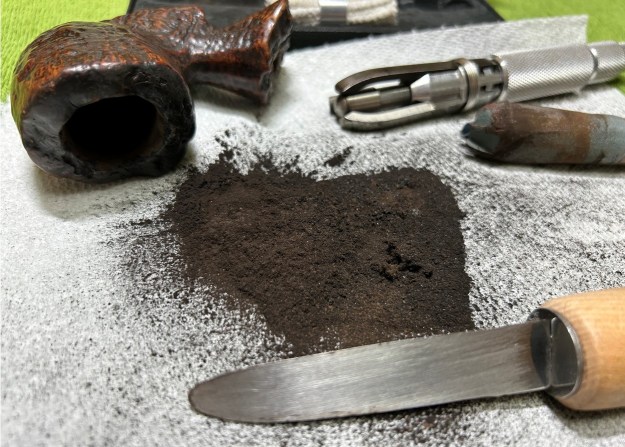
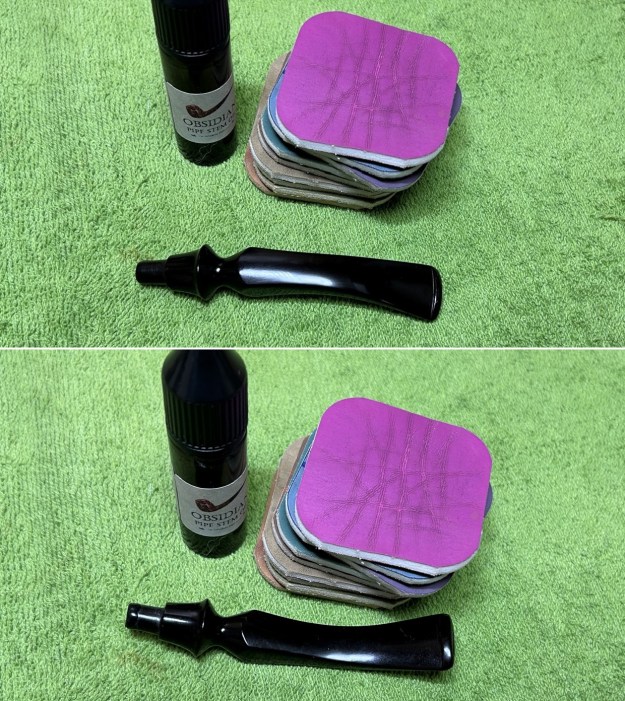
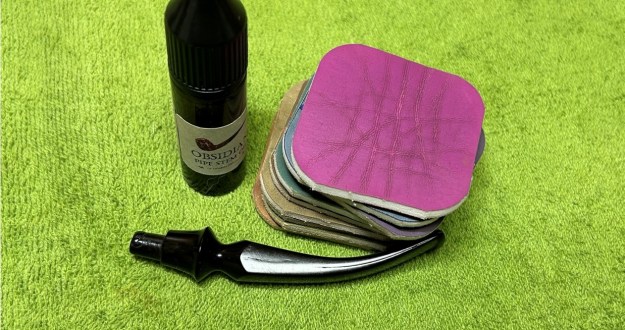
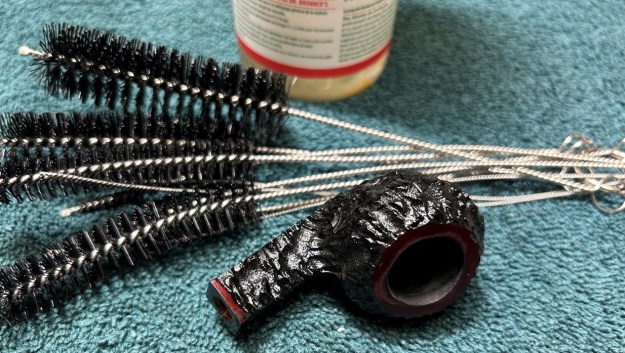
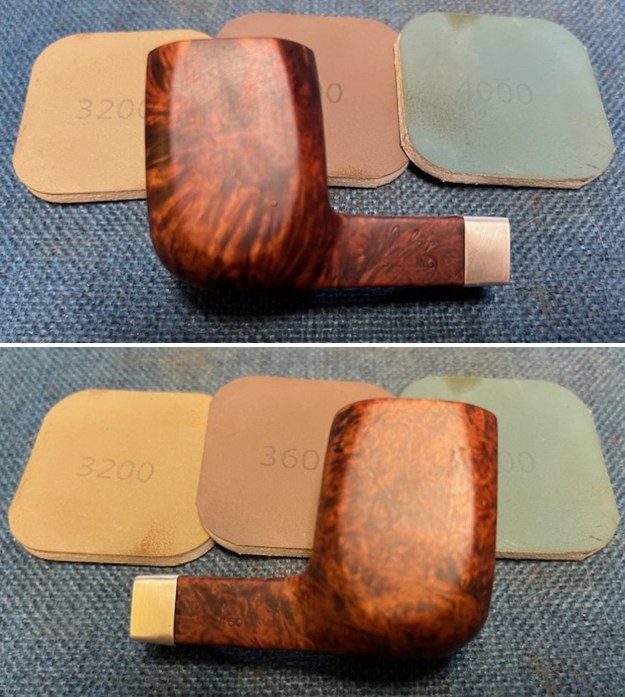
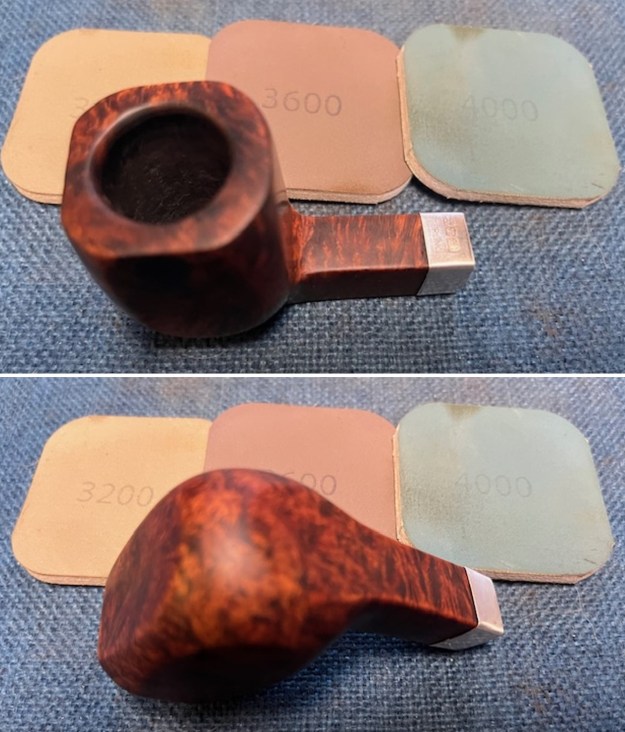
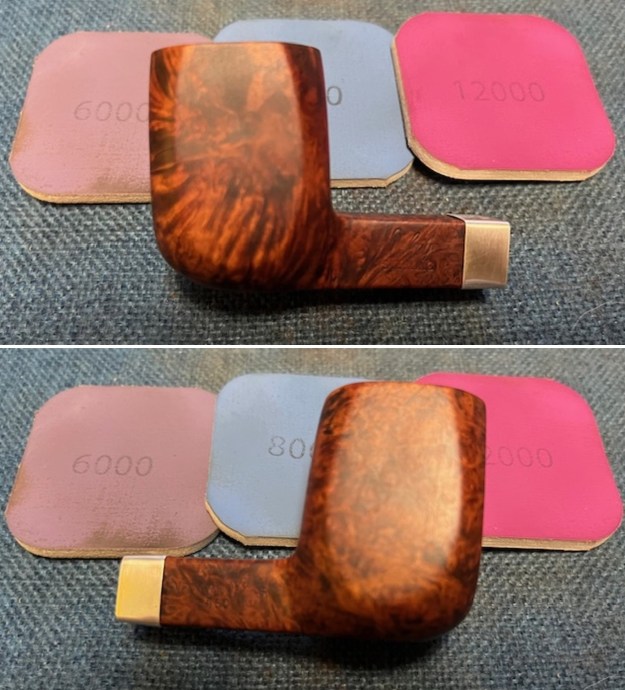
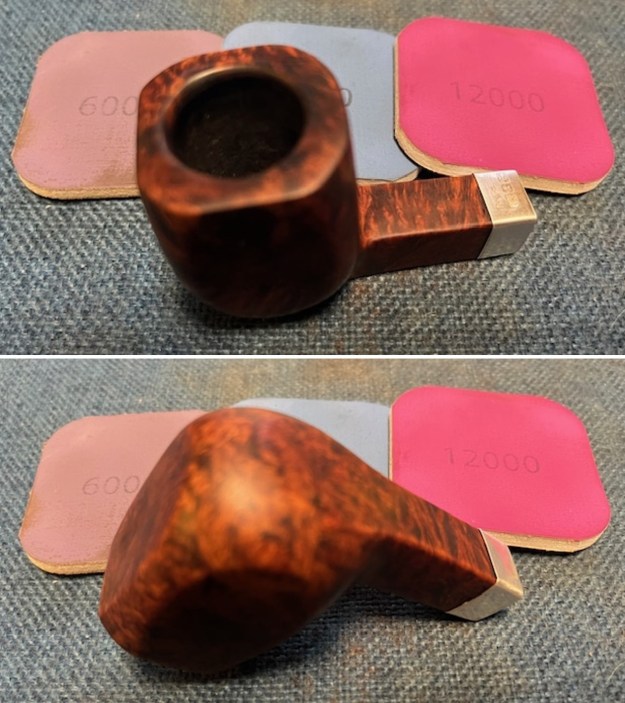
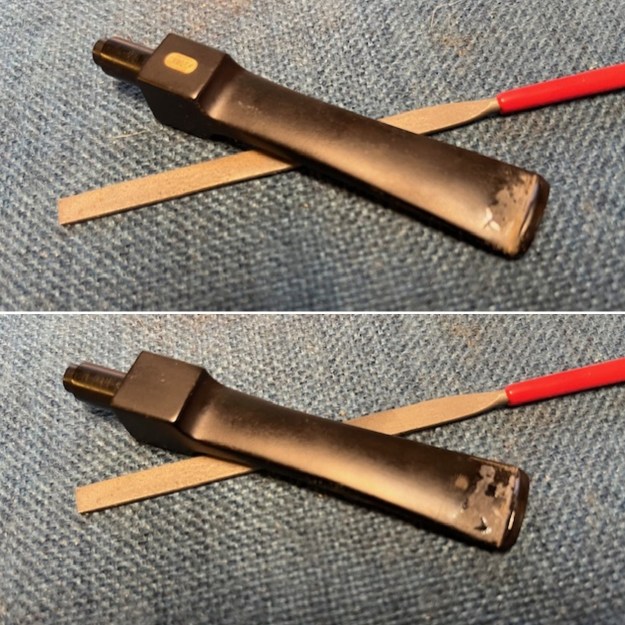
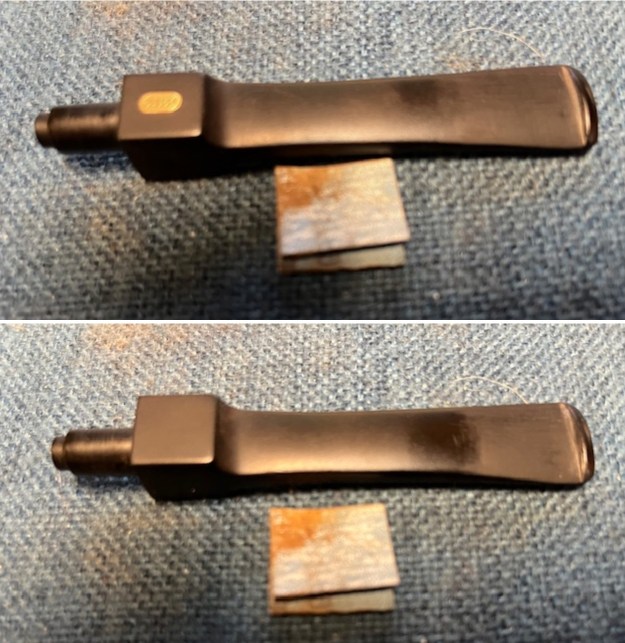
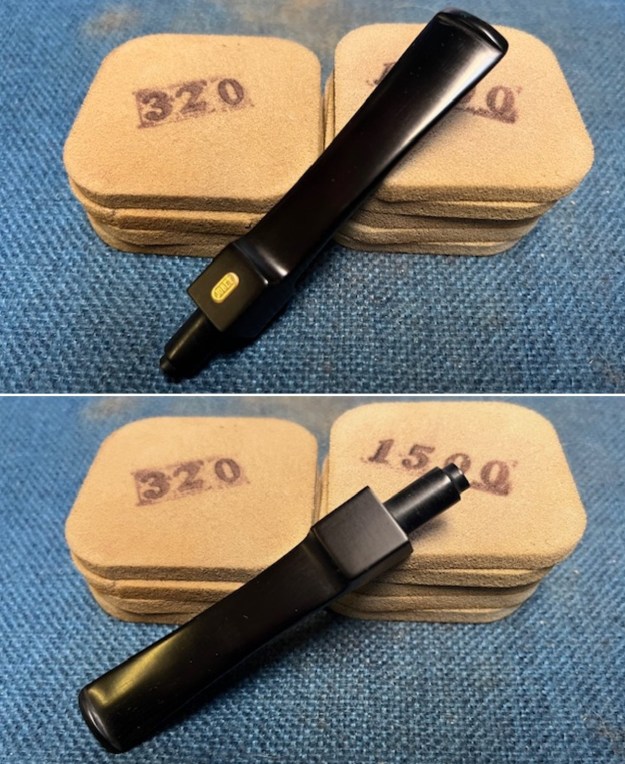
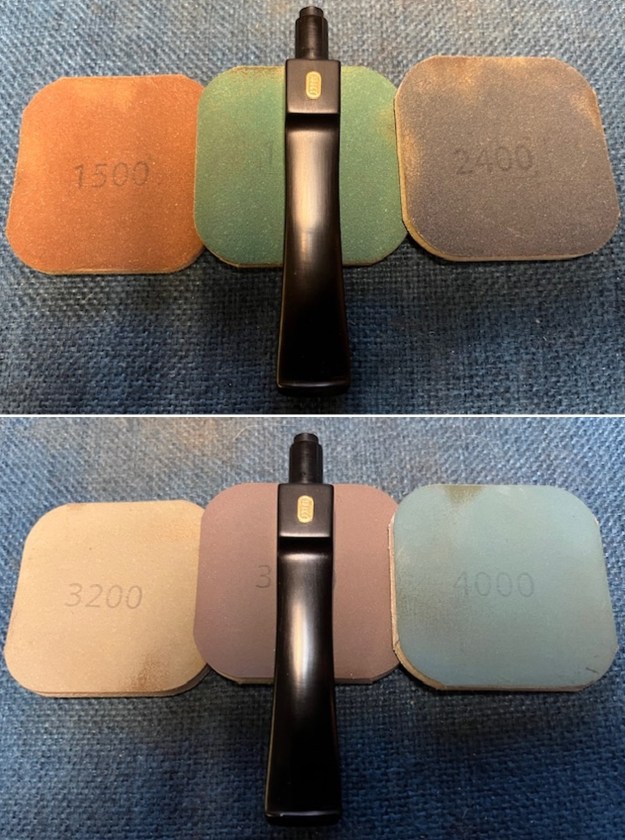
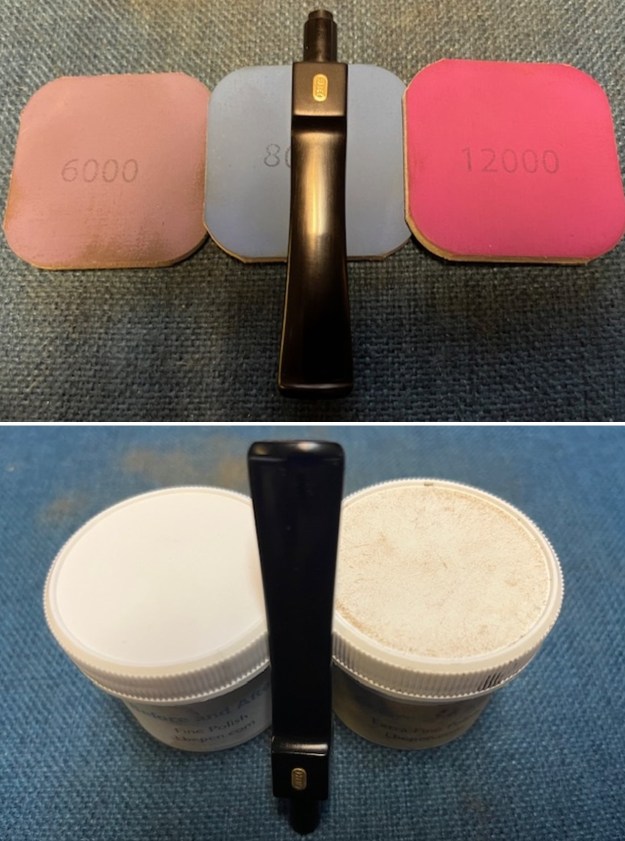
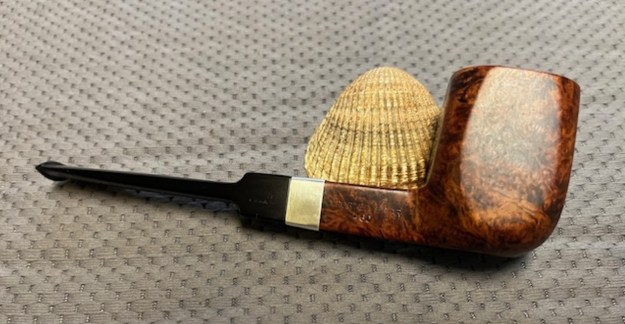
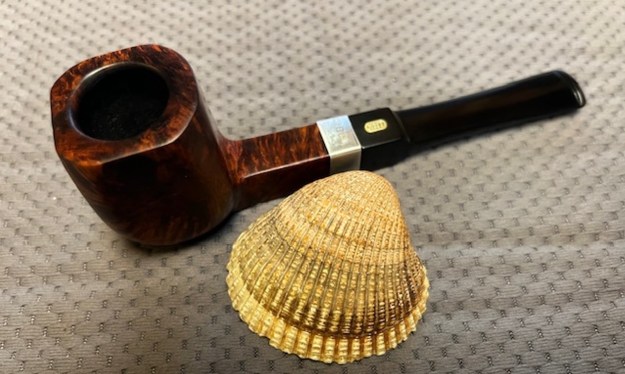
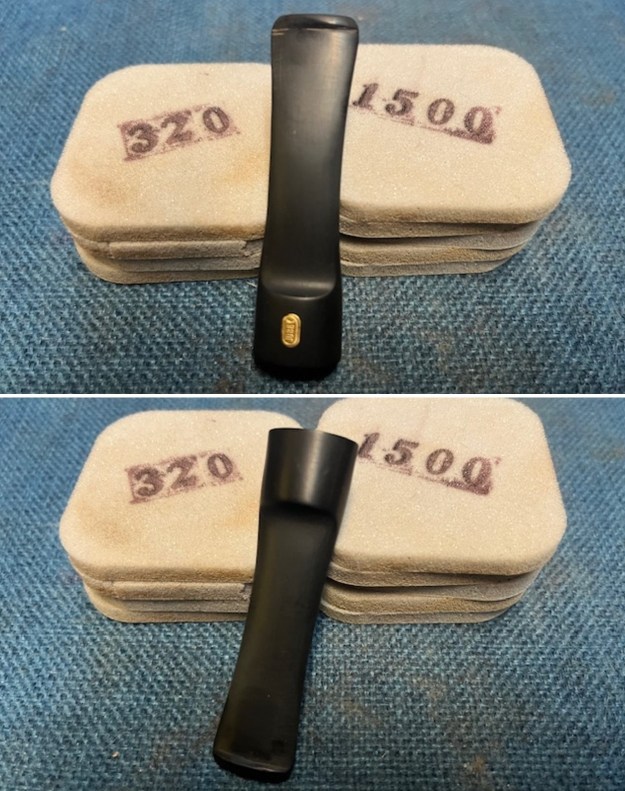
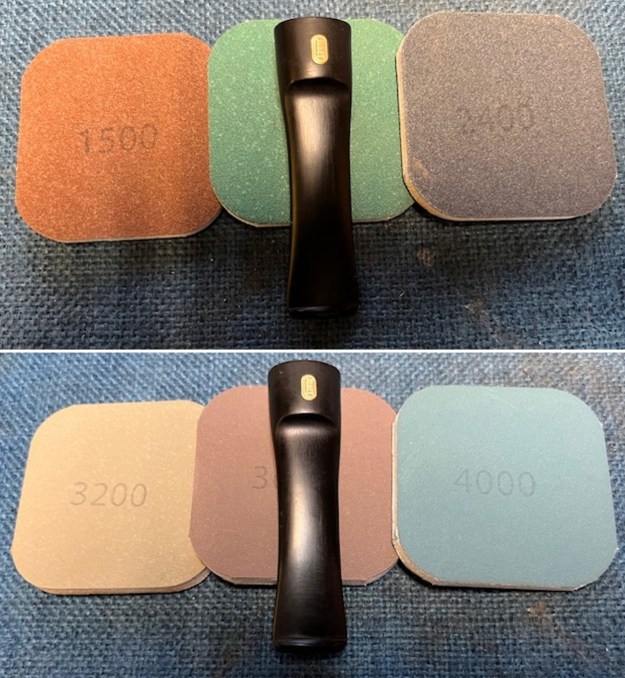
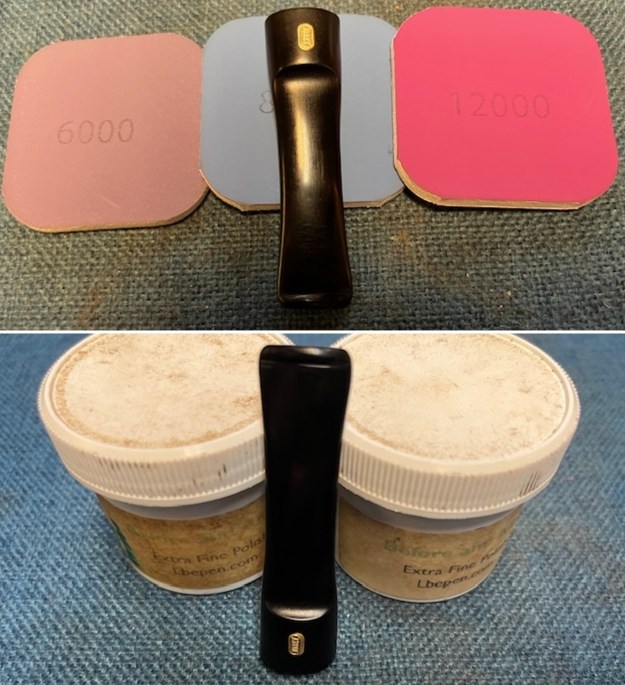
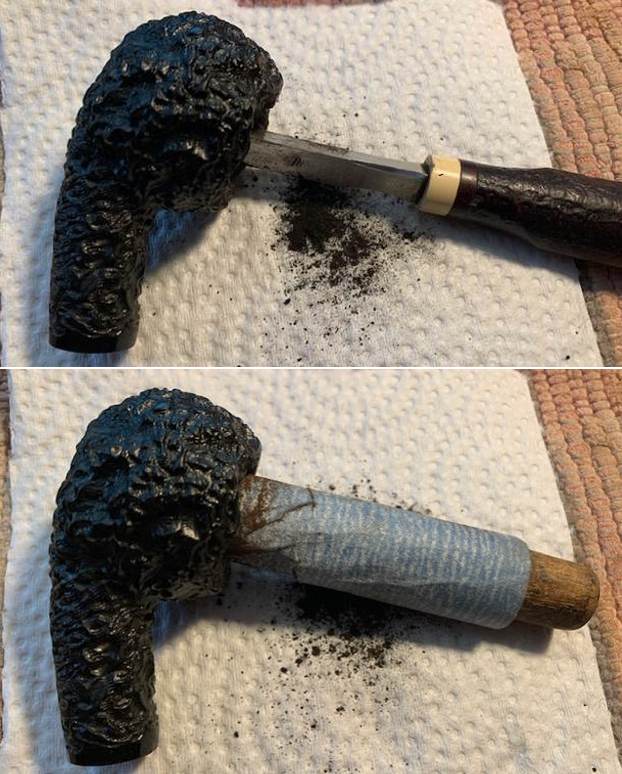
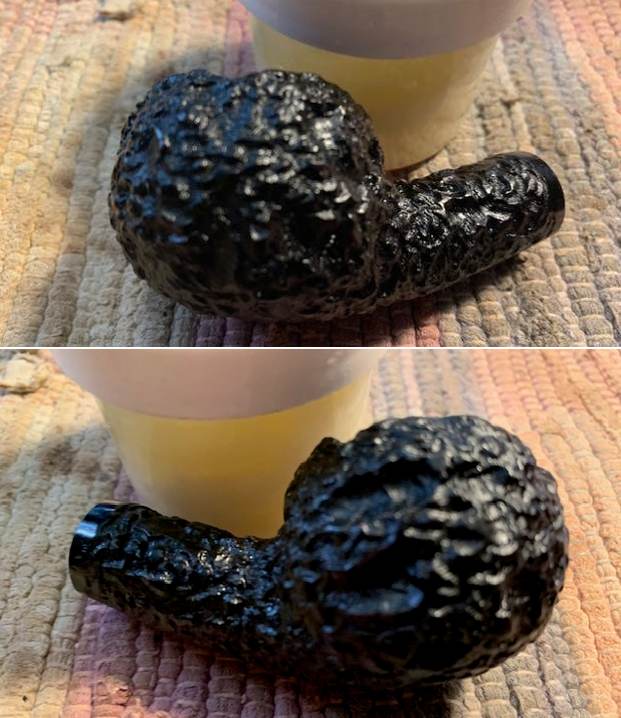
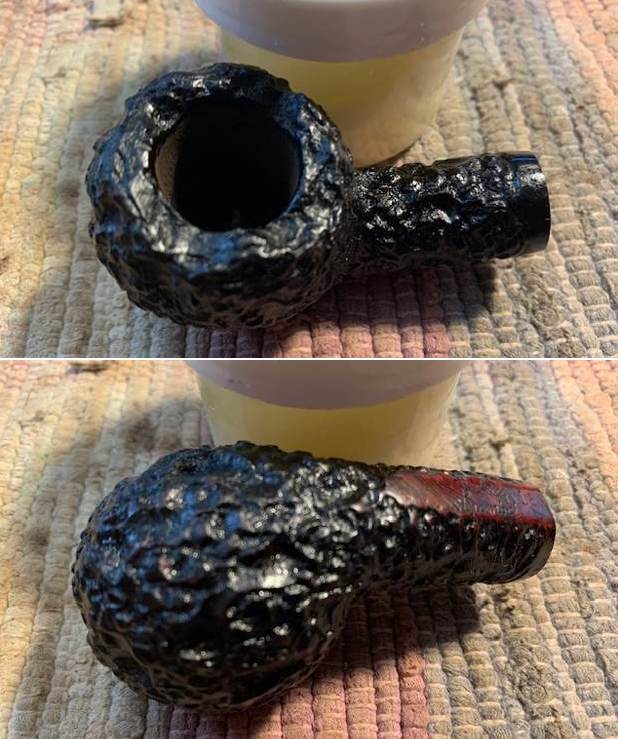
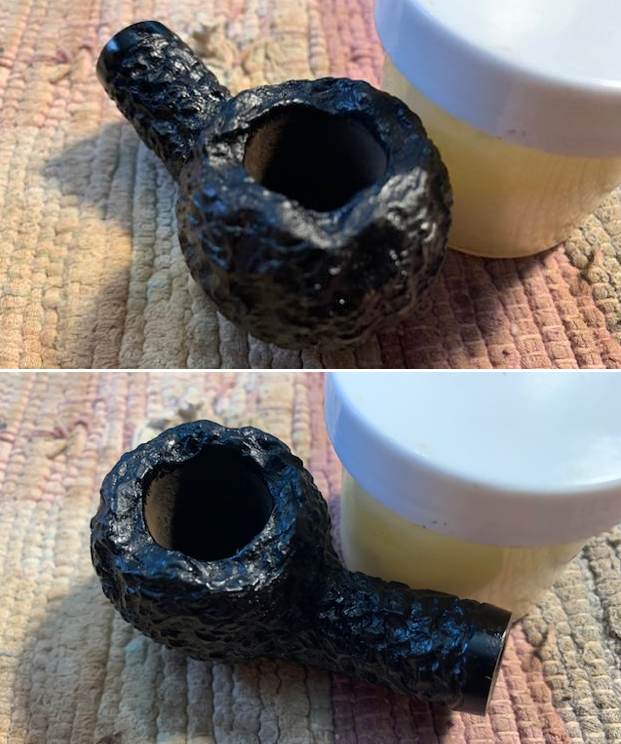
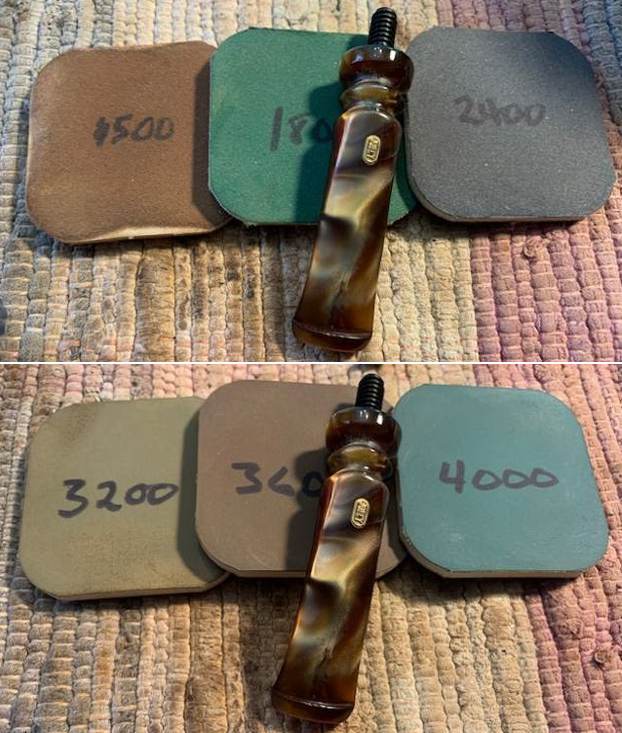
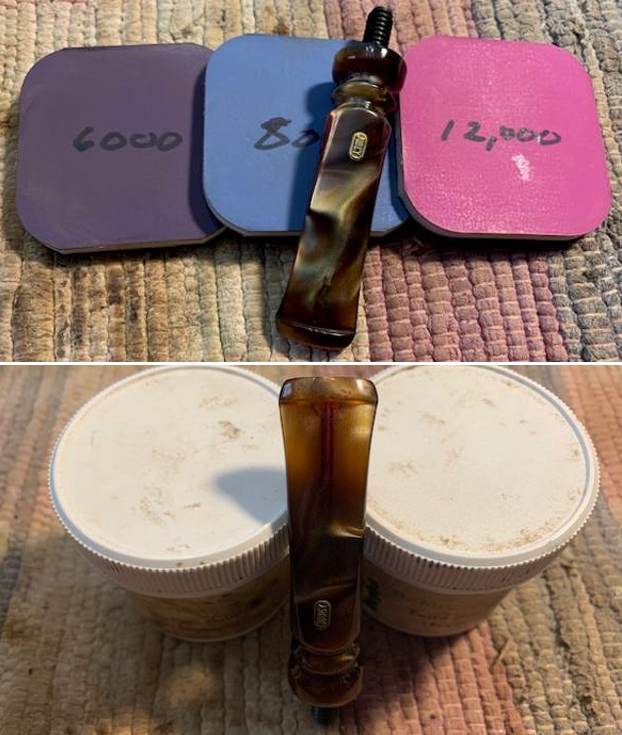
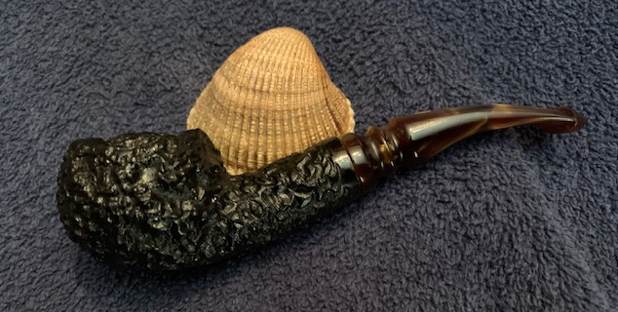
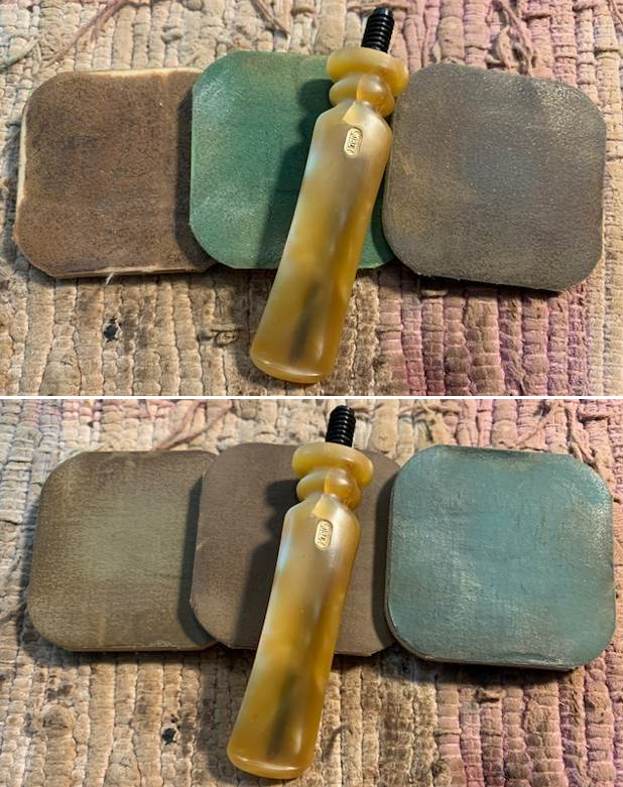
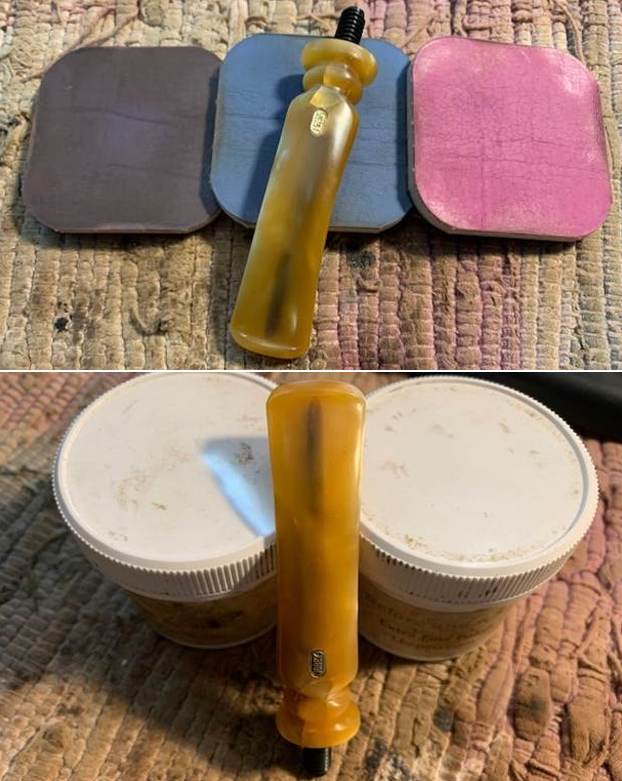
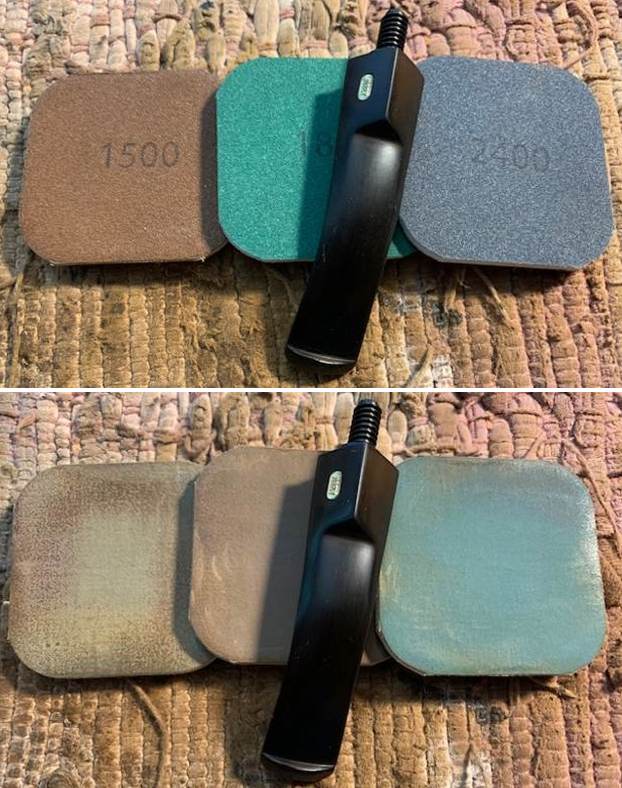
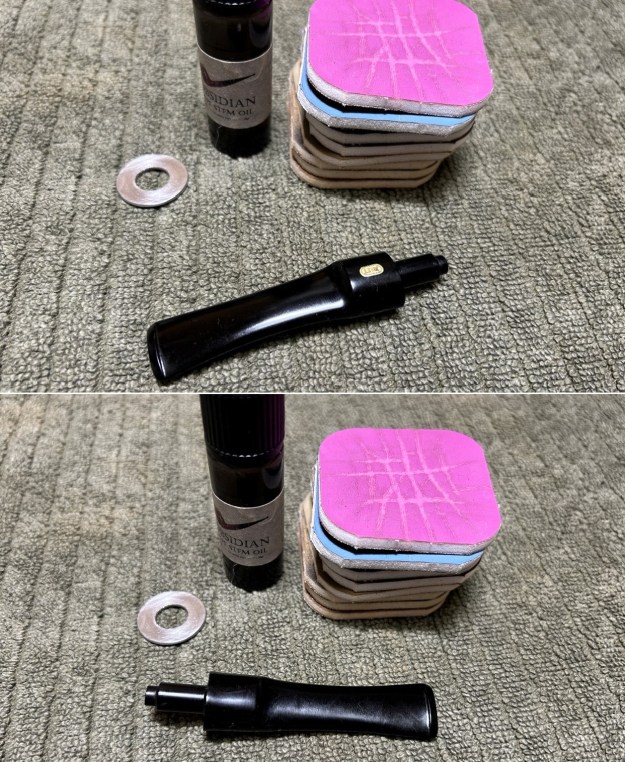
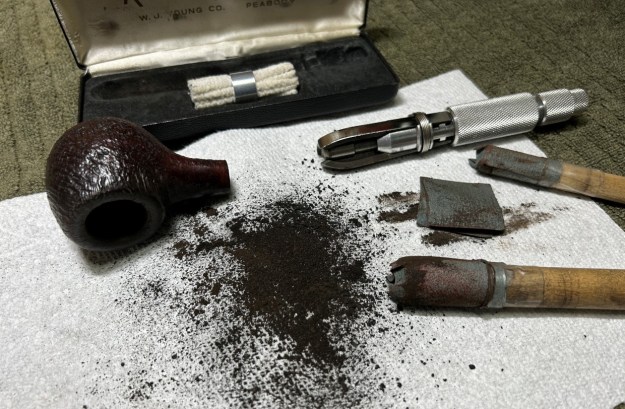
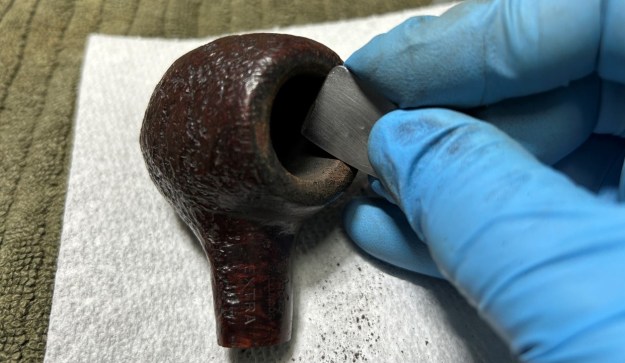
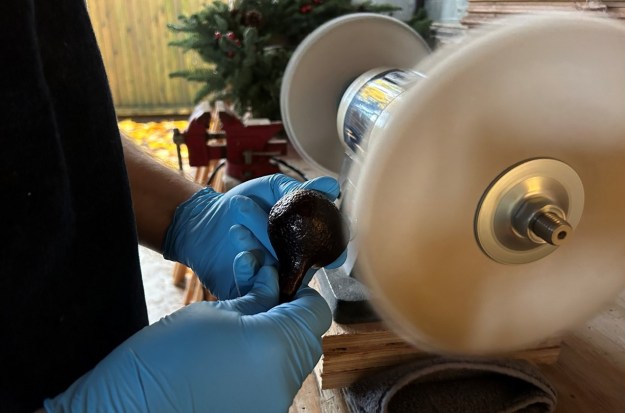
The penultimate step for the stem is sanding. First, with my set of needle files, I reduced the bulk of the cyanoacrylate repairs. I removed the excess adhesive as near to the surface as possible, without cutting into the vulcanite. Following that, I used all nine of the micromesh sanding pads (1,500 through 12,000 grit) to sand out flaws, even out the vulcanite, and provide gentle polishing of the finished surface. I also applied pipe-stem oil while using the last five micromesh pads. There was a wonderful, deep black shine to the stem when I was done.As the stem was (nearly) complete, I moved on to the stummel. The first step was to ream out the bowl – that is to say, remove all the cake inside the bowl. This accomplished a couple of things. First (and most obviously), it cleaned the bowl and provided a refurbished chamber for future smoking. Second, when the old cake was removed, I could inspect the interior walls of the bowl and determine if there was damage or not. I used a reamer, a pipe knife, and a piece of sandpaper taped to a wooden dowel. Collectively, these ensured that all the debris was removed.My next step was to remove the lava on the rim. For this, I took a piece of machine steel and gently scraped the lava away. The metal’s edge is sharp enough to remove what I need, but not so sharp that it damages the rim. Similar to the stem, I then cleaned the stummel with both pipe cleaners and cotton swabs dipped in lemon-infused 99% isopropyl alcohol. With a pipe this dirty, it took quite a while and much cotton to clean.I then decided to ‘de-ghost’ the pipe – that is to say, exorcize the remaining filth from the briar. I filled the bowl and the shank with cotton balls, then saturated them with 99% isopropyl alcohol. I let the stummel sit overnight. This caused the remaining oils, tars and smells to leach out into the cotton.To tidy up the briar, I wiped down the outside, using a solution of a pH-neutral detergent and some distilled water, with cotton rounds. I also used a toothbrush in the crevices. This did a good job of cleaning any latent dirt on the surface of the briar. The last step of the cleaning process was to scour the inside of the stummel with the same mild detergent and tube brushes. This was the culmination of a lot of hard work in getting the pipe clean.I rubbed some LBE Before & After Restoration Balm into the briar and let it sit for 30 minutes or so. The balm moisturizes the wood and gives a beautiful depth to the briar. I then buffed the stummel with a microfibre cloth. For the final step, I took the pipe to my bench polisher and carefully buffed it – first with a blue diamond compound, then with three coats of carnauba wax. This procedure makes the pipe look its best – the stummel sings and the stem glows.This Jobey Shellmoor Extra hawkbill pipe looks fantastic again and is ready to be enjoyed by its next owner. I am pleased to announce that this pipe is for sale! If you are interested in acquiring it for your collection, please have a look in the ‘American’ pipe section of the store here on Steve’s website. You can also email me directly at kenneth@knightsofthepipe.com. The approximate dimensions of the pipe are as follows: length 5⅓ in. (135 mm); height 1⅞ in. (48 mm); bowl diameter 1⅞ in. (47 mm); chamber diameter ⅞ in. (22 mm). The weight of the pipe is 2⅛ oz. (62 g). I hope you enjoyed reading the story of this pipe’s restoration as much as I did restoring it. If you are interested in more of my work, please follow me here on Steve’s website or send me an email. Thank you very much for reading and, as always, I welcome and encourage your comments.
Rebirthing a Damaged Jobey Gourd Calabash and Meerschaum Bowl


by Steve Laug

While I was in Idaho visiting my Dad last month I received an email from John about whether I could repair his Jobey Calabash. I have included the email below

Hello, I’m looking for a pipe repair shop. I have a Jobey Calabash pipe dropped it, and well it broke. I’m hoping I can send it to you for repair. Thank you, John

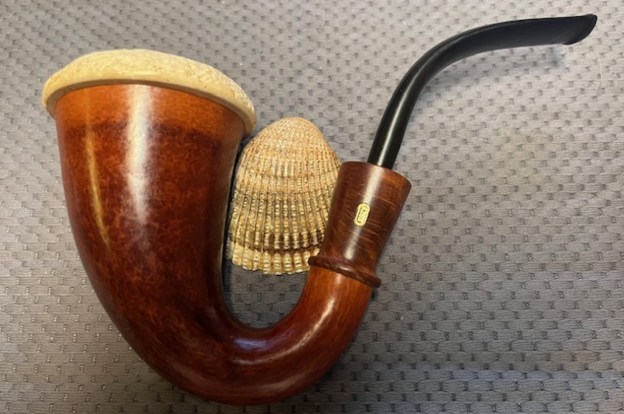
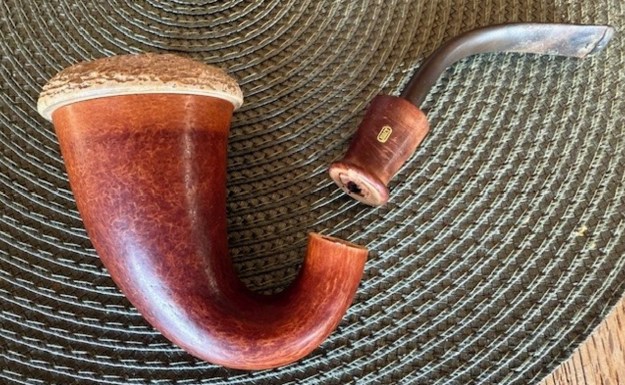
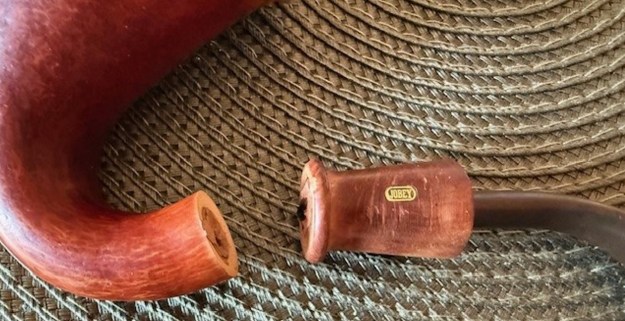
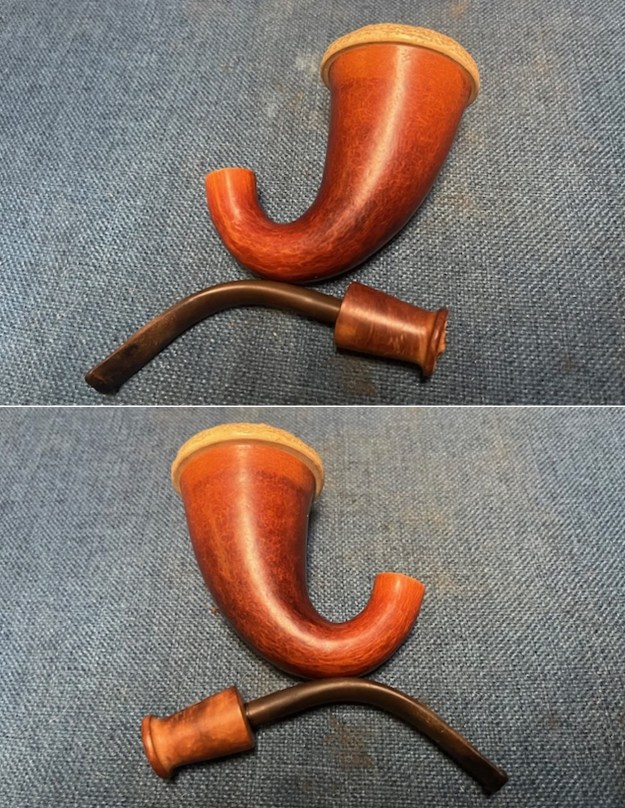
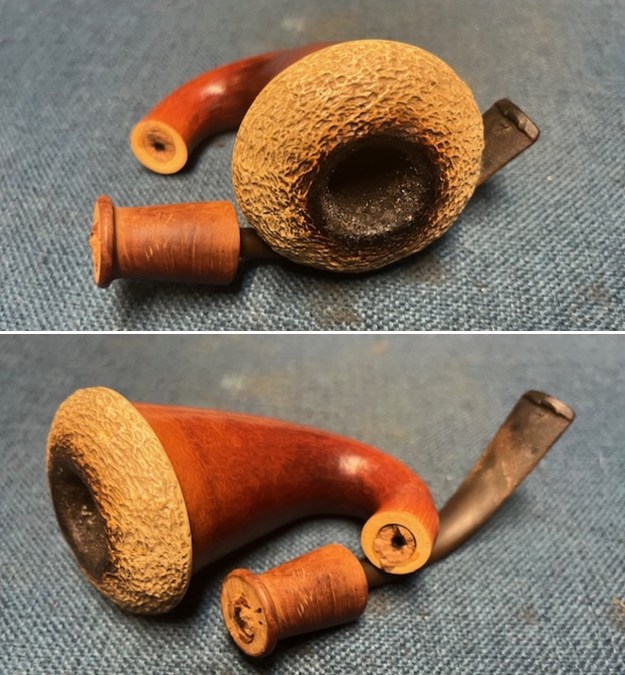
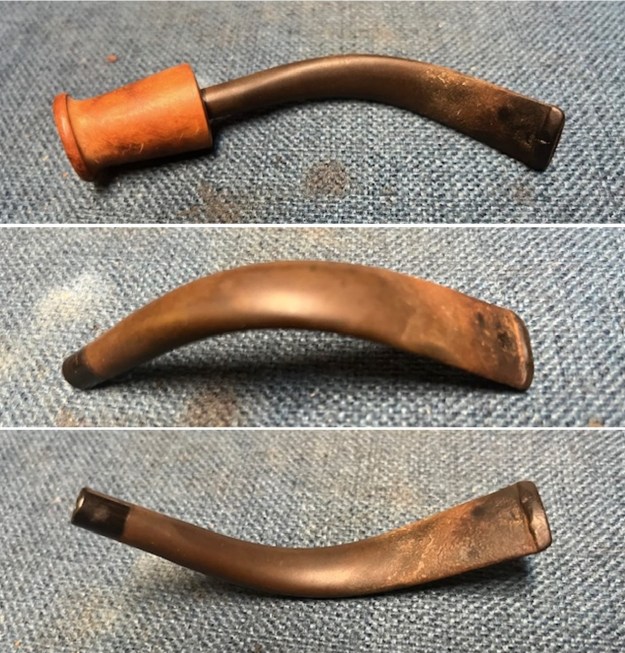
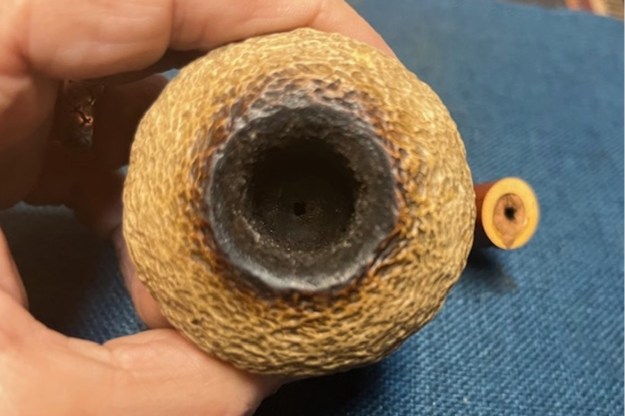
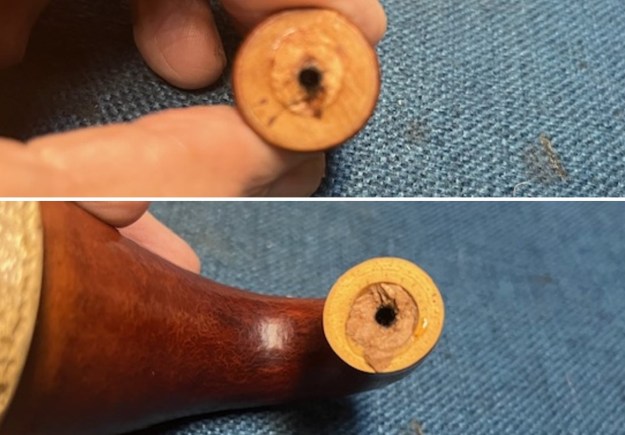
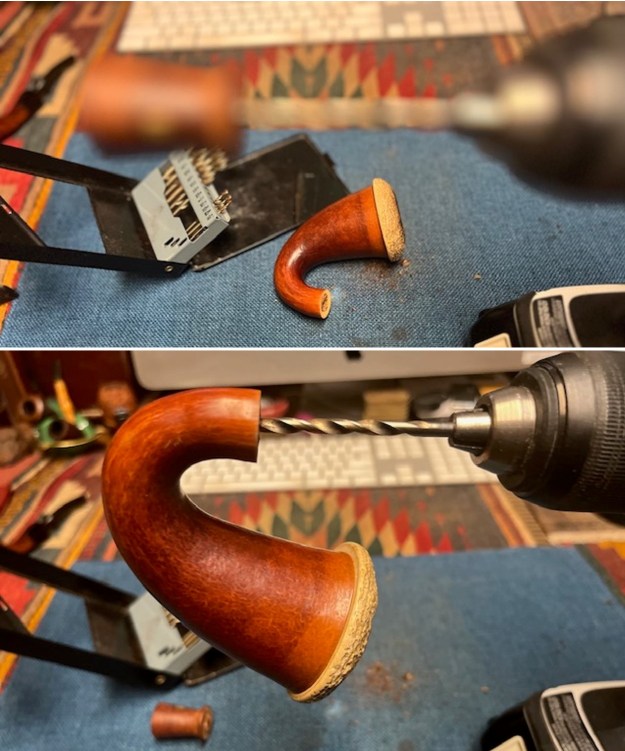
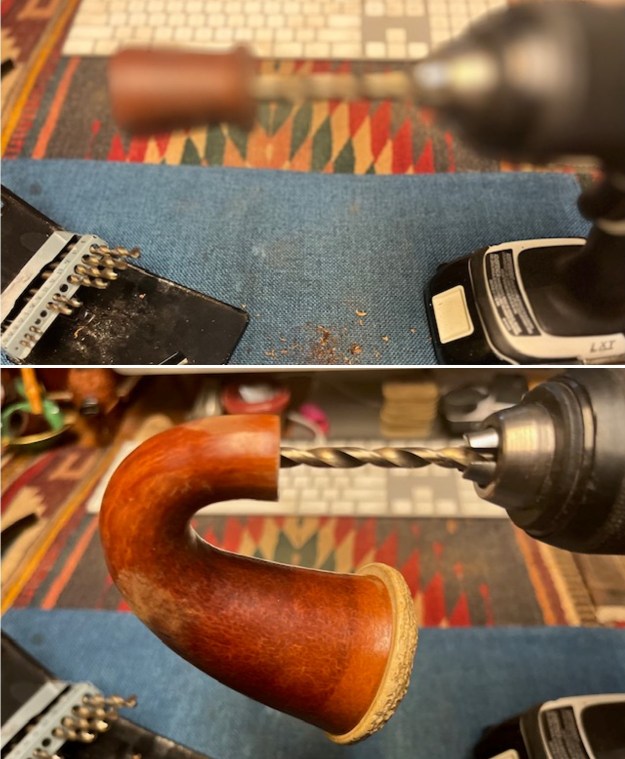
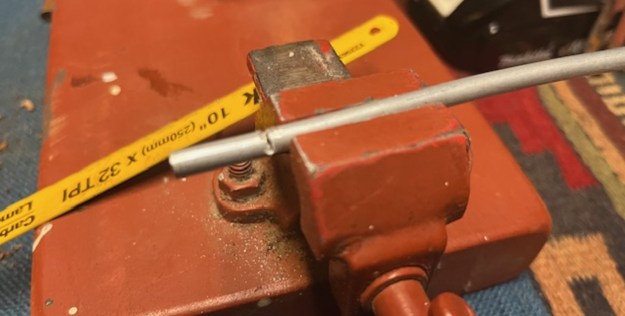
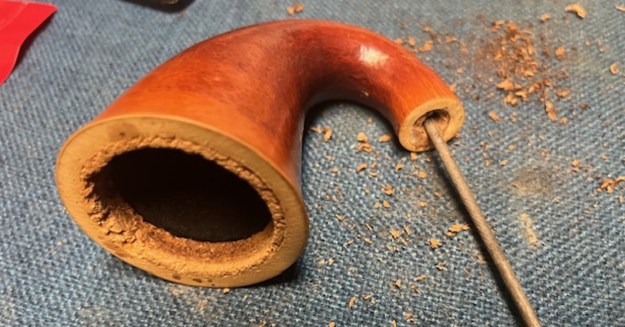
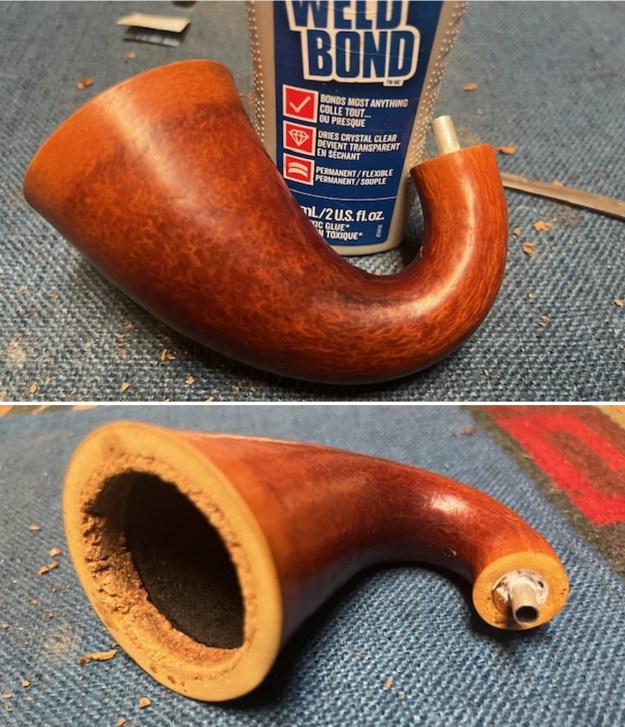
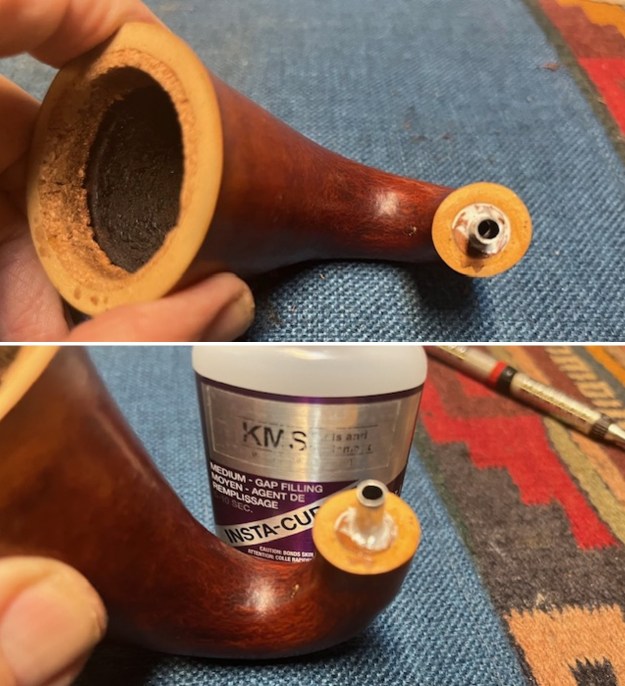
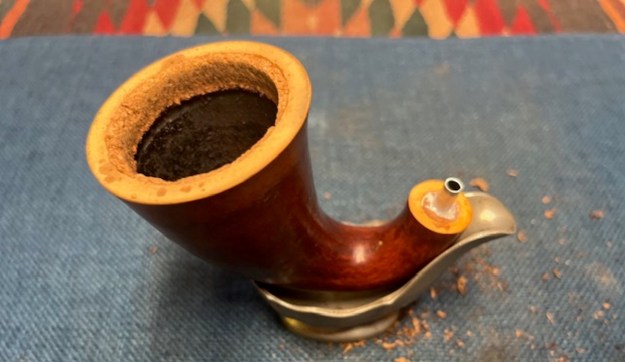
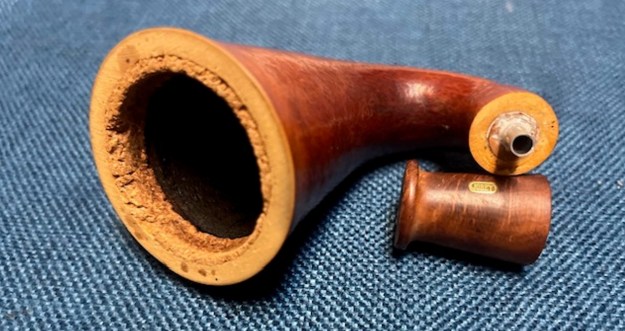
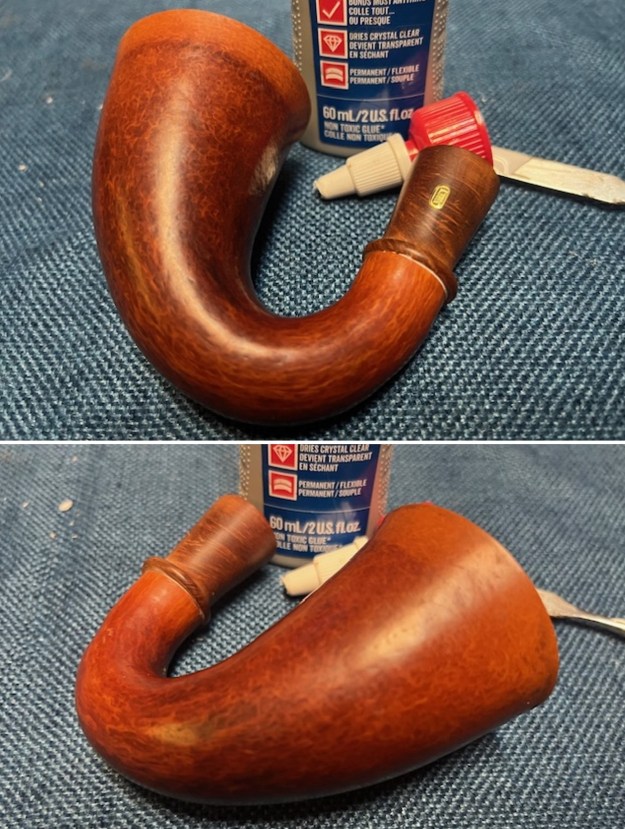
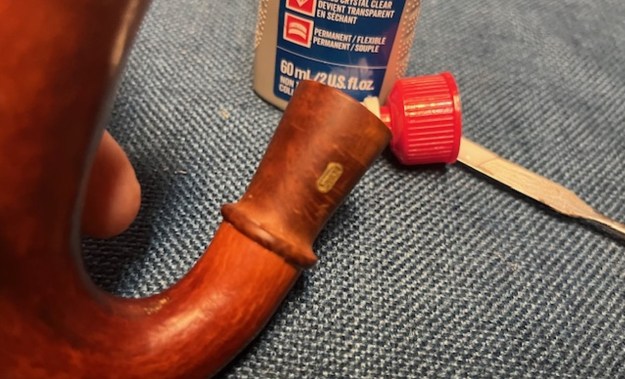
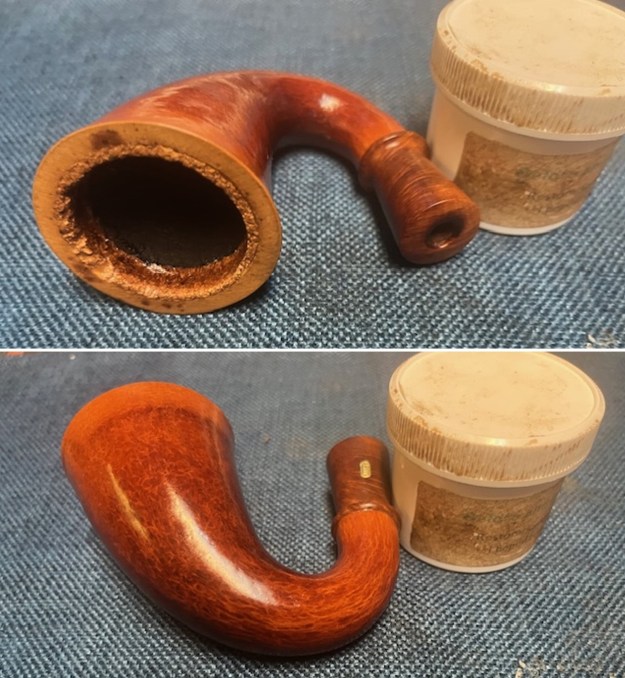
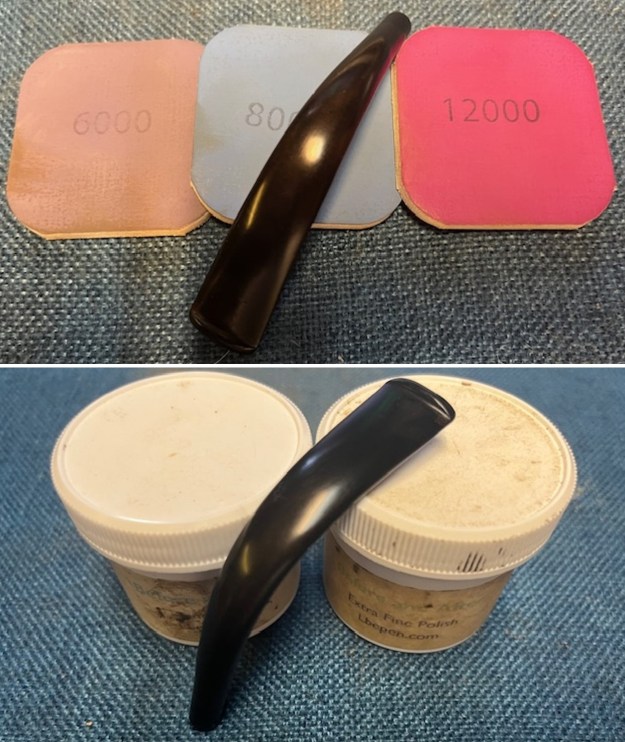
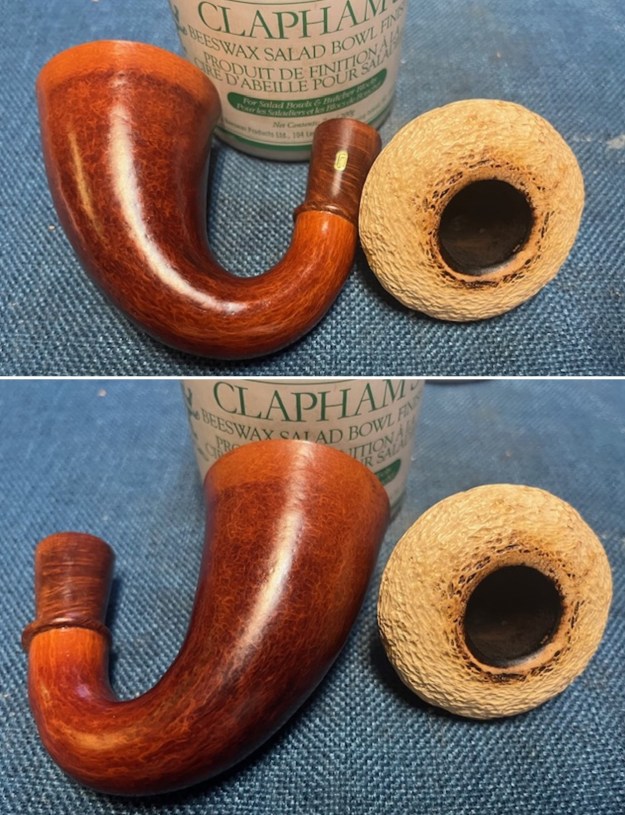
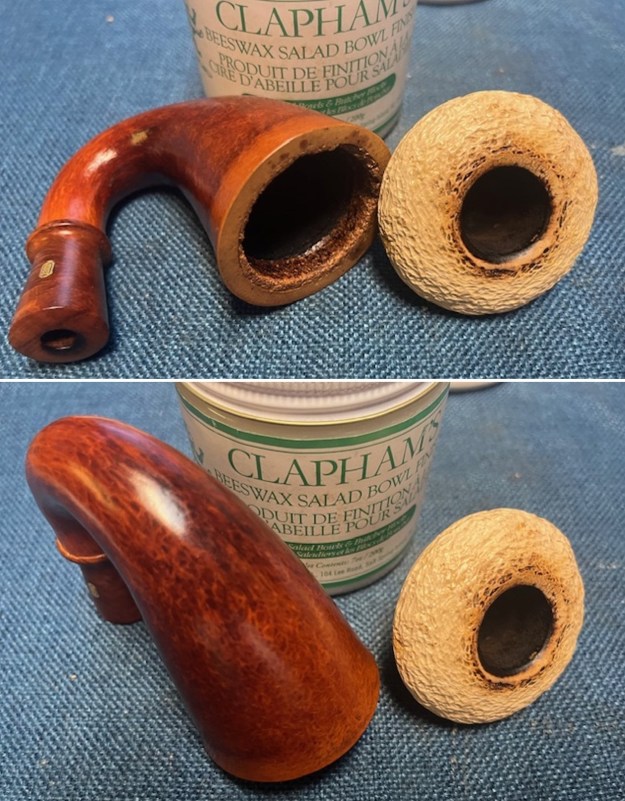
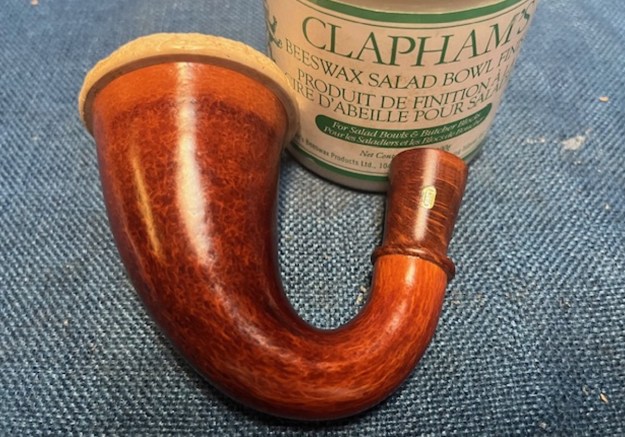
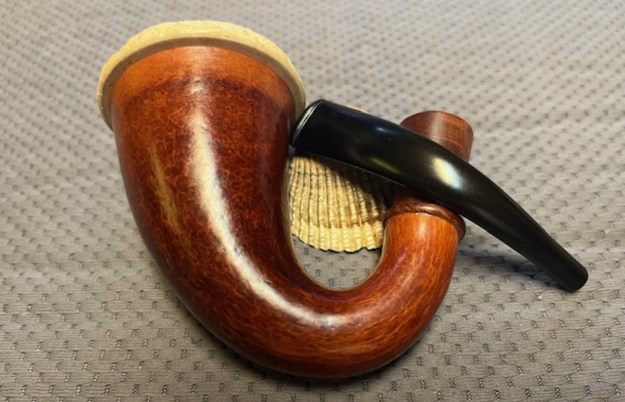
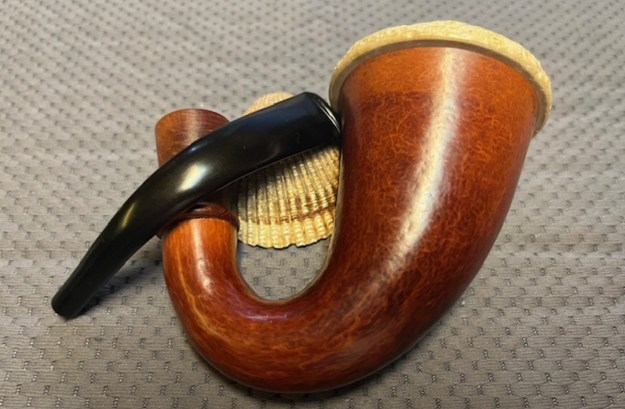
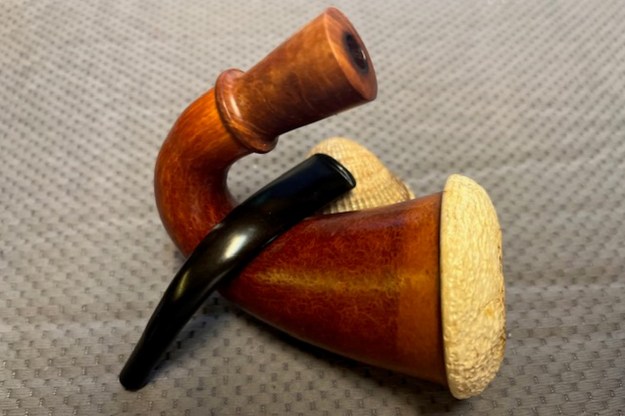
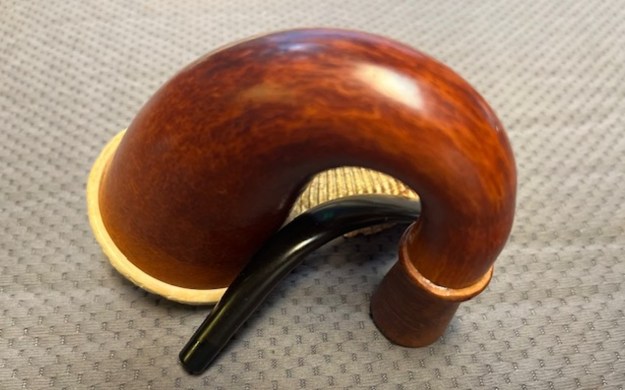
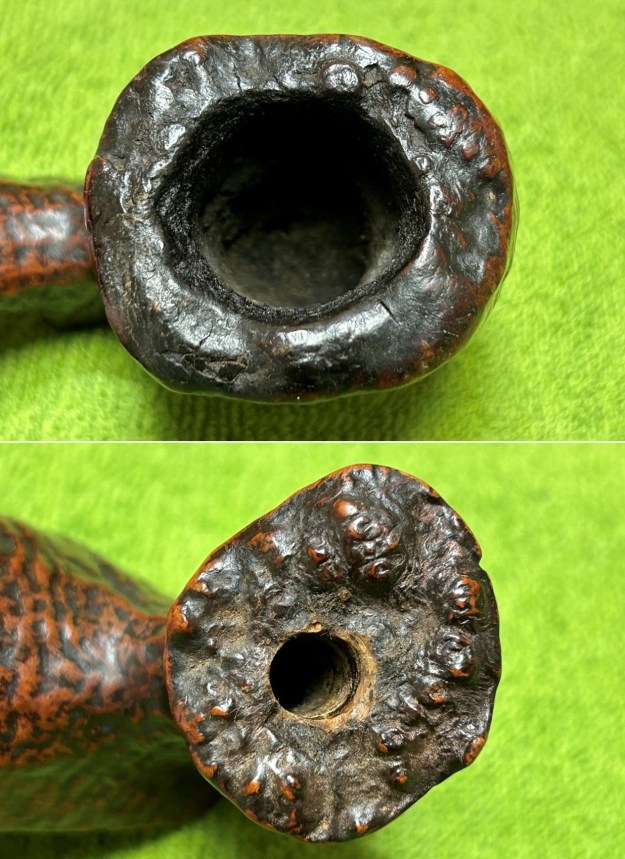
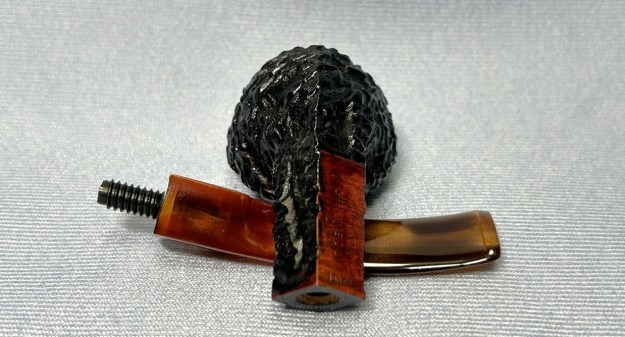
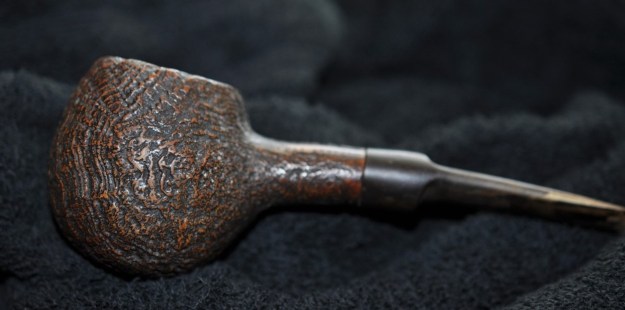
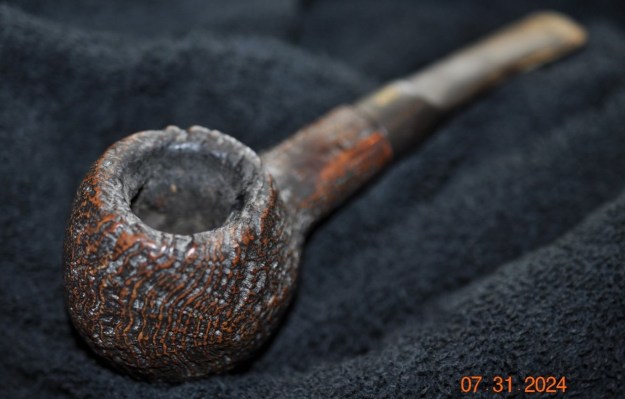
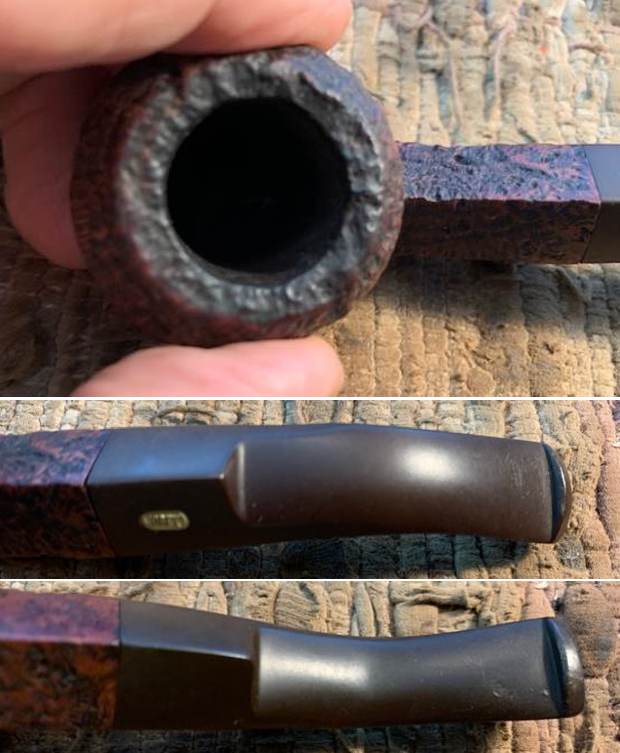
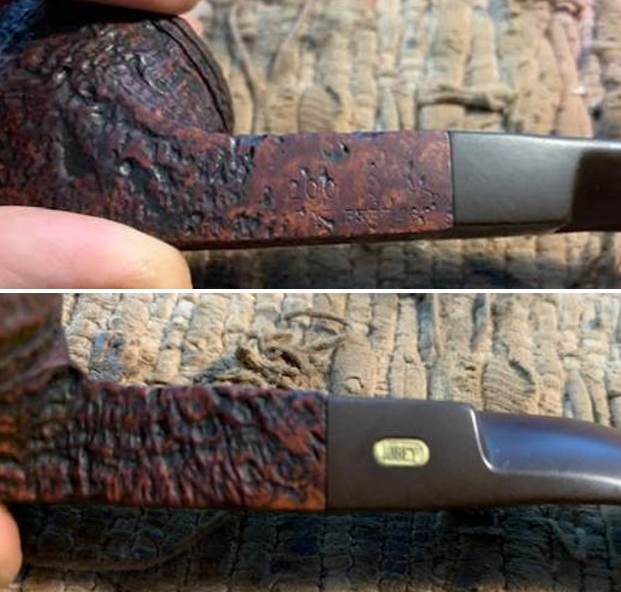
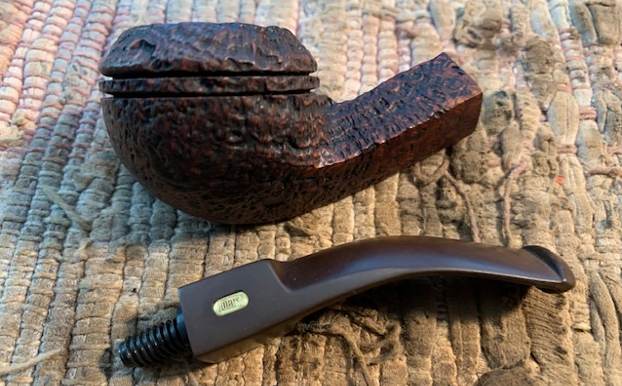
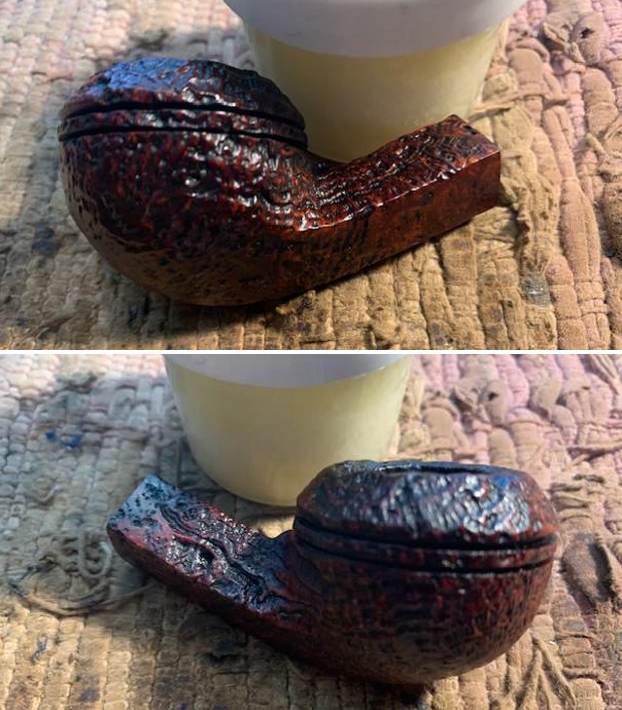
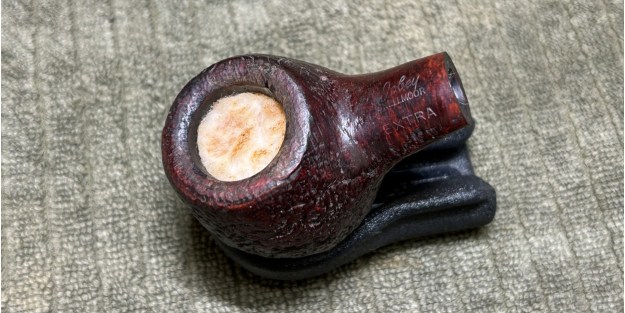
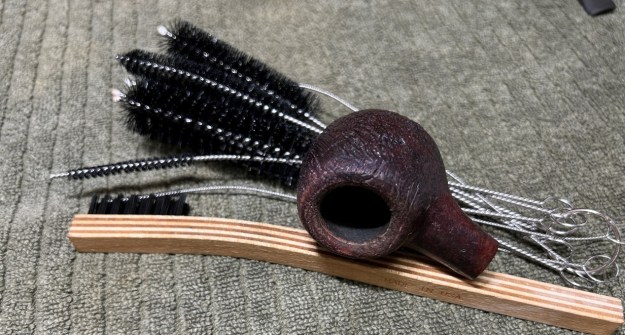
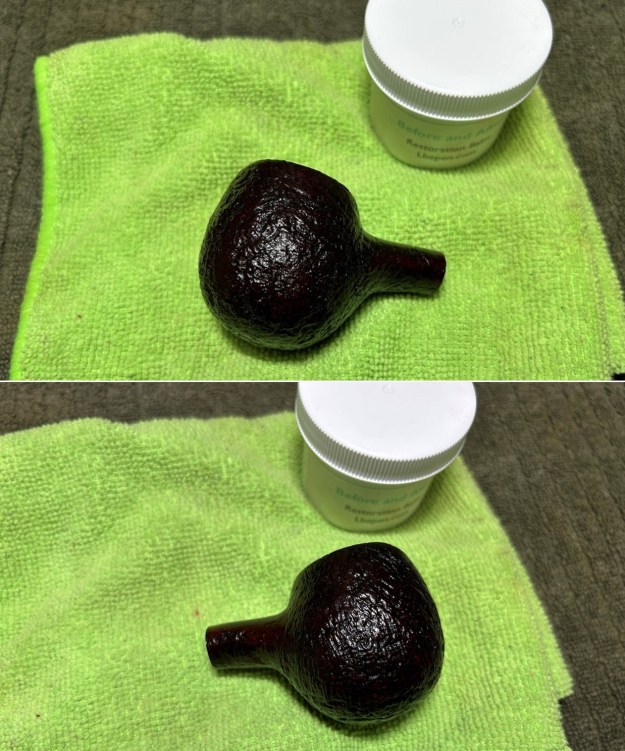
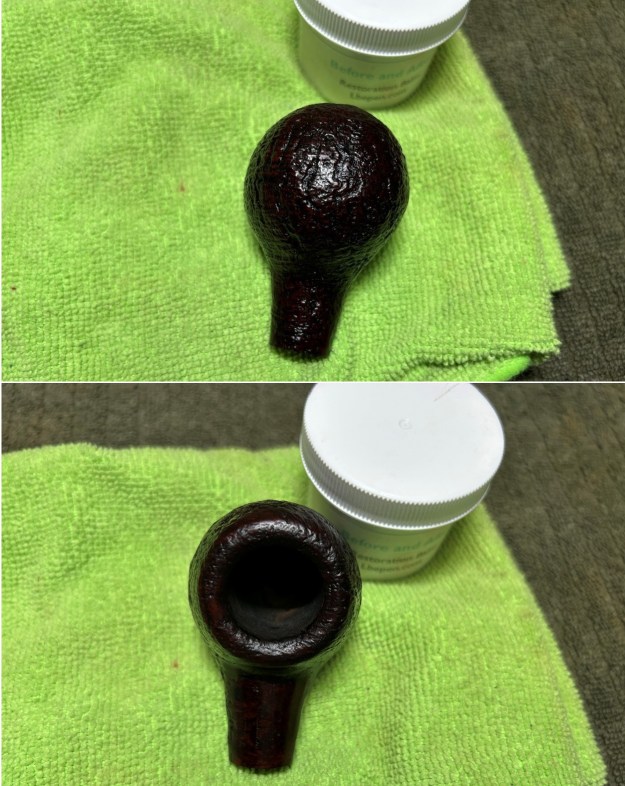
I wrote back and asked for photos to clarify what had broken when the pipe had dropped. I have visions of a cracked bow, a cracked gourd or even worse. I have learned to ask for photos before I make any commitment to repairing a pipe. John sent me the two photos below that show the condition of the break. It is probably the easiest break to deal with. In the drop the wooden dowel tenon that held the briar shank extension to the gourd had snapped off. It was a very clean break from what I could see in the photos. I could not see the condition of the bowl or the rest of the pipe but I figured that what he sent me was what was broken. It had a rusticated meerschaum bowl and a vulcanite stem that showed oxidation. I have included his photos below so you can see what I saw before I received the pipe. I explained to John what I saw and asked a few questions regarding cracks in the gourd or the briar shank extension is Jobey used. There were none that he could see. I told him to pack it up and send it to me and I would repair it. I was gone for about a month but yesterday at the end of week two at home the package arrived from John. It was a large box and when I opened it the pipe was well packed with bubble wrap. In the centre of the packing was two small bubble wrapped bundles. I removed the tape from them and removed the parts. The larger of the two was the gourd and the meerschaum bowl. The second, smaller bundle was the stem in the shank extension. I tried to remove the stem but it was solidly stuck in place. I examined the broken dowel tenon. It was indeed a clean break. There were some spots where the glue held remnants of the dowel on the surface of the briar and the wooden plug in the end of the gourd. I would need to flatten the spots before I tried to rejoin the parts. Here are some photos of the pipe.The bowl was 2/3s full with the last tobacco smoked in it. The dottle was dry and brittle. I took a photo of the bowl to show a bit of that and the tarry lava build up on the rim top and inner edge of the bowl as well as the thick cake in the meer bowl itself. It was quite a mess to look at and my wife and daughters commented about the smell. Ah well, such is the life of those who live with a pipe restorer/repair person. I took some photos of the bowl to give a sense of that look. In the second photo below, you can see the wooden plug and down in the shank of the gourd.I tried to remove the stem from the shank extension piece and it was frozen solid. I put it in the freezer for 30 minutes and when I took it out the stem turned easily from the extension. The photos show the stem in place solid and also once I had removed it. The stem was oxidized and had some deep tooth marks on both sides on the button edge and the ahead of the button. One of the deep marks on the topside was almost a bite through.I took a photo of the thick cake in the bowl and the overflow of lava on the rim top. It should clean up fairly well though the darkening in the rustication may remain. Before I started drill out the extension and the plug on the end of the calabash shank I took photos to show the alignment of the airway. The airway is not centred but it should be easy to open up and reset the fit.I used a cordless drill and a bit slightly larger than the airway in both parts. While the picture of the shank extension is out of focus you can see the principle in the photos of the drilling. I used the same bit in the gourd shank. Once it was open I stepped up one size in the drill bit to open the hole further. I once again have an out of focus photo of the shank extension but you can see the bit size in the photo of the gourd shank. The second drill bit opened the airway in both parts to the same size as the metal tubing I use to join them together. I measured the length of tube I needed so that the tube would not extend to deep in the mortise. I used a small vise to hold it while I cut the length with a hacksaw blade.I used a small round file to centre the airway in both the shank of the gourd and the extension. Once it was well centred I was good to start the process of joining the parts.I used the same type of All Purpose white glue as had been used previously on the tenon. I glued the metal tenon in place in the shank of the gourd and filled in the hollow around the tube with the glue. Once it had hardened I gave the glue a coat of clear CA glue to set the tube in place. I set the gourd aside to let the glue cure over night. In the morning when the glue was cured I painted the tubing with the glue as well as the end of the shank and the extension. I put the glue on a little heavy as I wanted it to bind well. I pressed the extension in place and aligned the Jobey brass logo on the left side in line with the shank. I clamped the extension in place until the glue cured and the shank extension was immovable. I set it aside to let it cure for the rest of the day. While the repair to the shank extension cured I turned my attention to the meerschaum cup or bowl. I carefully scarped out the thick cake with a sharp knife and worked over the rim top at the same time. I used a Savinelli Fitsall Pipe Knife to further clean the cup so that the bowl was no longer sticky with the tars and oils of the tobacco. I also scraped out the gourd with the same tools as well as a brass bristle brush. It was much less sticky than it was before. I cleaned out the airway in the shank (carefully) as well as the inside of the bowl with alcohol and pipe cleaners – both bristle and smooth. I cleaned the airway in the stem at the same time. The pipe began to smell much better.I greased the cork gasket in the calabash with Vaseline. I rubbed it in with my fingertips and set the gourd aside to absorb the Vaseline. I worked some Before & After Restoration Balm into the surface of the briar shank extension and the gourd calabash. Once it was all covered with the product I let it sit for 10 minutes or more to do its magic. The product works to deep clean, restore and renew the gourd and briar. I wiped it down with a clean cloth and buffed it by hand. It looked very good. I set the gourd aside to dry and turned my attention to the meerschaum cup. I scrubbed it with a tooth brush and undiluted Murphy’s Oil Soap. I scrubbed the outside and inside of the bowl at the same time. I rinsed it with warm running water. The cup looked significantly better though still having some stains on the rustication. I set the bowl aside to air dry. I turn my attention to the stem. I scrubbed the surface of the stem with Soft Scrub Cleanser on cotton pads. I was able to remove the heavy oxidation. The rest would come off as I cleaned the stem.I checked to tooth marks on the stem surface. The deep one on the top of the stem was almost a bit through. In fact there may well have been a small hole. I greased a pipe cleaner with Vaseline and slipped it into the button airway. I filled in the tooth marks on both sides with black rubberized CA glue and set the stem aside for the repairs to cure.Once the repairs cured I used a small file to flatten the against the surface and clean up the sharp edge of the button. I sanded the repaired areas with a folded piece of 220 grit sandpaper to further flatten and blend them into the surface. I sanded the stem further with 2×2 inch sanding pads to smooth out the stem surface. I wiped it down with a damp cloth after each sanding pad. I took photos of the stem after the sanding.I polished the stem with micromesh sanding pads – wet sanding with 1500-12000 grit sanding pads. I wiped it down after each sanding pad with some Obsidian Oil. I finished polishing it with Before & After Pipe Stem Polish – both Fine and Extra Fine and buffed it off with a cotton cloth. I gave the gourd and the meerschaum bowl multiple coats of Clapham’s Soft Beeswax mixed with Carnauba. I let it dry and then buffed it with a soft cloth. It is a beautiful bowl. Normally at this point I put the stem back on the bowl and take the pipe to the buffing wheel to work it over. This time I took the parts to the buffing wheel. I gently buffed the meerschaum cup and rim with Blue Diamond to polish the meerschaum cup. I carefully buffed the gourd base and briar shank extension with Blue Diamond being cautious about the pressure I put on the gourd. I buffed the stem with Blue Diamond to raise the gloss on the vulcanite. I took the pipe back to the work table and gave the gourd and meerschaum bowl multiple coats of Clapham’s Beeswax paste. I gave the stem several coats carnauba wax. I buffed the parts of the pipe with a clean buffing pad to raise the shine. I hand buffed it with a microfiber cloth to deepen the shine. The finished Jobey Meerschaum pipe is shown in the photos below. This one is heading back to John later this week so he can return it to his son. I think he will really enjoy the unique look of his new pipe. Thanks for looking.

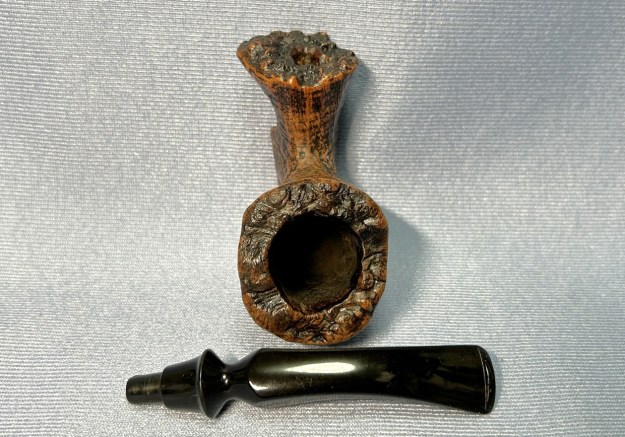
Restoring and Restemming a Jobey Dansk #1 Freehand


by Kenneth Lieblich

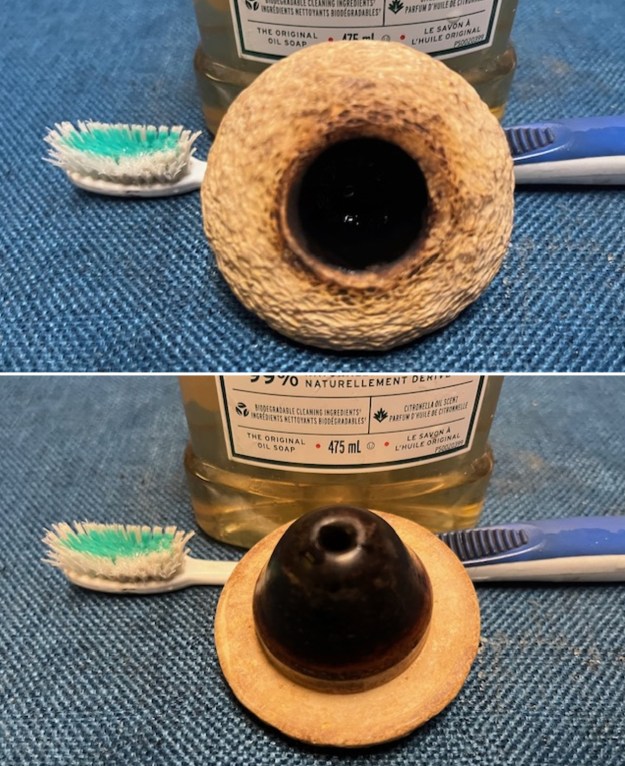
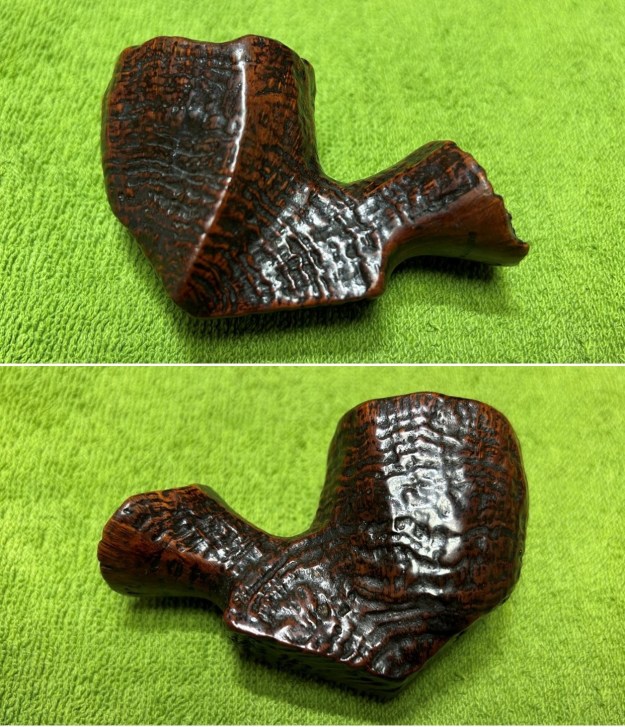
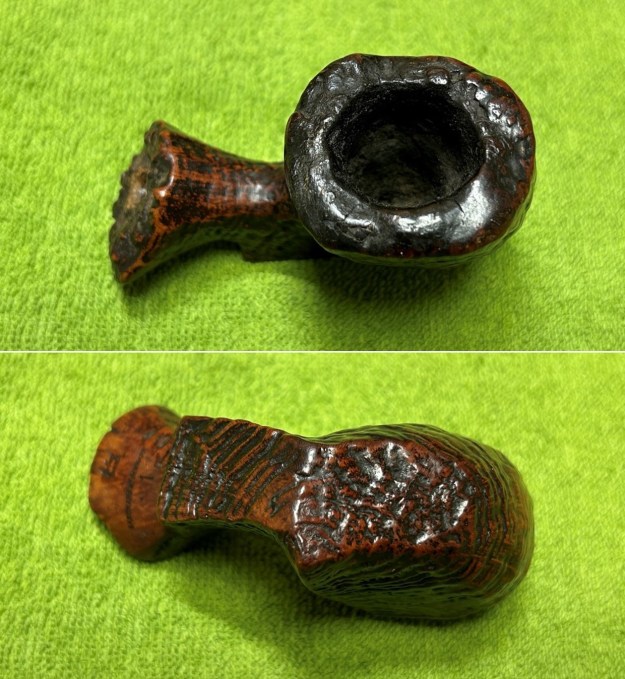
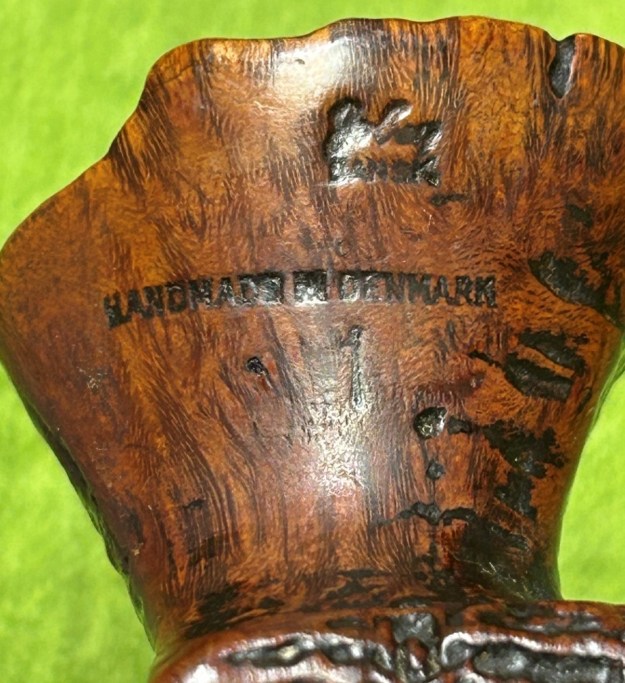
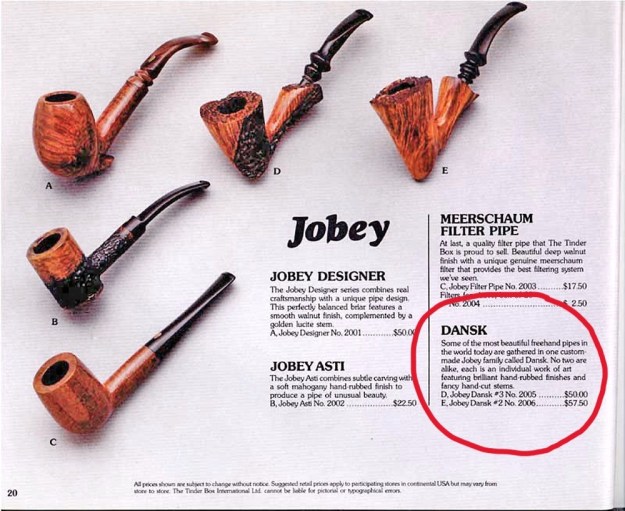
I found this stemless stummel in a lot of pipes I bought recently. It’s a really good-looking piece of wood and I felt sorry for this lonely hunk of briar. I have a good number of spare stems kicking around, and I figured that I could find one that would match well. One noticeable aspect of this pipe is that it was coated with something waxy and unattractive. This doesn’t seem like it would have been original to the pipe – perhaps it was added later. Regardless, I didn’t like it, as it detracted from the handsome wood. An attractive pipe was hidden under there and it was my job to find it. The markings on the pipe were clear enough. On the underside of the shank, read Jobey [over] Dansk [over] Handmade in Denmark [over] 1.This was useful information, so I went looking into Jobey Dansk a bit more. Here is some of what Pipedia had to say:

Throughout decades Jobey pipes were mainly sold in the USA, Canada and England but remained almost unknown in continental Europe. The bulk of Jobeys were predominantly made according to classical patterns and mainly in the lower to middle price range. The predominant judgment of the pipe smokers reads: “A well made pipe for the price.” So there is hardly anything very special or exciting about Jobey pipes although a flyer from ca. 1970 assures: “The briar root Jobey insists upon for its peer of pipes is left untouched to grow, harden and sweeten for 100 years. […] Jobey uses only the heart of this century old briar and only one out of 500 bowls turned measures up to the rigid Jobey specifications.” 99.80% of cull… that makes the layman marveling! Yet then there are partially really exciting Freehands mainly in the seventies, that Jobey – Weber owned back then – bought from Danish pipe genius Karl Erik Ottendahl. These pipes were offered as Jobey Dansk – ’70’s pure! (BTW waning sales caused Ottendahl to discontinue exports to the United States in 1987.)I read somewhere (can’t remember where) that the number on the shank indicates the grading. I wasn’t immediately sure if the ‘1’ on this pipe meant top of the line or bottom of the line. However, a page from an old 1979 Jobey catalogue provided the answer:Here, you can see that the #2 is more expensive than the #3, which leads me to conclude that the #1 would be more expensive again. So, this would appear to be a top-of-the-line Jobey Dansk freehand. Excellent!I began with the stummel. The first step was to ream out the bowl – that is to say, remove all the cake inside the bowl. This accomplished a couple of things. First (and most obviously), it cleaned the bowl and provided a refurbished chamber for future smoking. Second, when the old cake was removed, I could inspect the interior walls of the bowl and determine if there was damage or not. I used a reamer, a pipe knife, and a piece of sandpaper taped to a wooden dowel. Collectively, these ensured that all the debris was removed. The photo doesn’t quite communicate it, but there was an incredible amount of cake inside this pipe. Took ages to clean out.My next step was to remove the lava on the rim – and, boy, there was a lot. For this, I took a piece of machine steel and gently dug away at the lava. The metal’s edge is sharp enough to remove what I need, but not so sharp that it damages the rim. Quite frankly, this was insufficient, as there was just too much stuff here.The inside of the stummel needed to be cleaned thoroughly. However, this pipe was so clogged, that I first needed to open the horribly occluded airway. So, I took a long drill bit, held in a drill chuck, and hand-cranked it to dislodge the dreadful detritus inside. Hand cranking is essential because it provides a precision and caution that a power drill cannot provide. I then cleaned the stummel with both pipe cleaners and cotton swabs dipped in lemon-infused 99% isopropyl alcohol. With a pipe this dirty, it took quite a while and much cotton to get clean.In order to advance on the rim, I soaked it in a dish of oil soap. I left it for 30ish minutes to soften up. I then took a nylon-bristle brush and scrubbed like crazy. I did this on the rim, of course, but also on the entire outside of the stummel to remove whatever goo and dirt had coated it. This worked well – despite the faded look to the pipe. I wasn’t worried about that at all. I knew that the colour and character was still there. I then decided to ‘de-ghost’ the pipe – that is to say, exorcize the remaining filth from the briar. I filled the bowl and the shank with cotton balls, then saturated them with 99% isopropyl alcohol. I let the stummel sit overnight. This caused the remaining oils, tars and smells to leach out into the cotton.After that, some small spots on the wood needed to be touched up. I used some of my furniture pens (which is simply dye in pen form) to match the colours. I rubbed some LBE Before & After Restoration Balm into the briar and let it sit for 30 minutes or so. The balm moisturizes the wood and gives a beautiful depth to the briar. I then buffed the stummel with a microfibre cloth. Beauty! I then went to my drawers of pipe stems and found the perfect one to complement this pipe. It was dirty and needed some TLC, but I really like the way it worked with the freehand stummel. I used oil soap on a few cotton rounds and wiped down the stem to provide an initial cleaning of filth before moving on to the next steps. The primary cleaning came next. I disinfected the inside of the stem with both pipe cleaners and cotton swabs dipped in lemon-infused 99% isopropyl alcohol. I scrubbed thoroughly to make sure the interior was very clean. Once the stem was reasonably clean, I soaked it overnight in some Briarville Stem Oxidation Remover. This solution works to draw oxidation in the stem to the surface of the vulcanite. This is a major aid and an important step in ensuring a clean stem. The following day, I drew out the stem from its bath and scrubbed the lingering fluid with a toothbrush.Following that, I used all nine of the micromesh sanding pads (1,500 through 12,000 grit) to sand out flaws, even out the vulcanite, and provide gentle polishing of the finished surface. I also applied pipe-stem oil while using the last five micromesh pads. There was a wonderful, deep black shine to the stem when I was done. For the final step, I took the pipe to my bench polisher and carefully buffed it – first with a blue diamond compound, then with three coats of conservator’s wax. This procedure makes the pipe look its best – the stummel sings and the stem glows.All done! This Jobey Dansk #1 Freehand looks fantastic again and is ready to be enjoyed by its next owner. I am pleased to announce that this pipe is for sale! If you are interested in acquiring it for your collection, please have a look in the ‘Danish’ section of the store here on Steve’s website. You can also email me directly at kenneth@knightsofthepipe.com. The approximate dimensions of the pipe are as follows: length 6⅜ in. (162 mm); height 2⅛ in. (56 mm); bowl diameter 1¾ in. (45 mm); chamber diameter 1 in. (25 mm). The weight of the pipe is 2⅛ oz. (62 g). I hope you enjoyed reading the story of this pipe’s restoration as much as I enjoyed restoring it. If you are interested in more of my work, please follow me here on Steve’s website or send me an email. Thank you very much for reading and, as always, I welcome and encourage your comments.
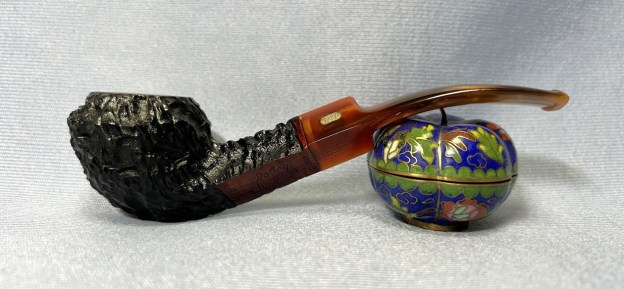
Cleaning Up a Terrific Jobey Stromboli 200 Bulldog


by Kenneth Lieblich

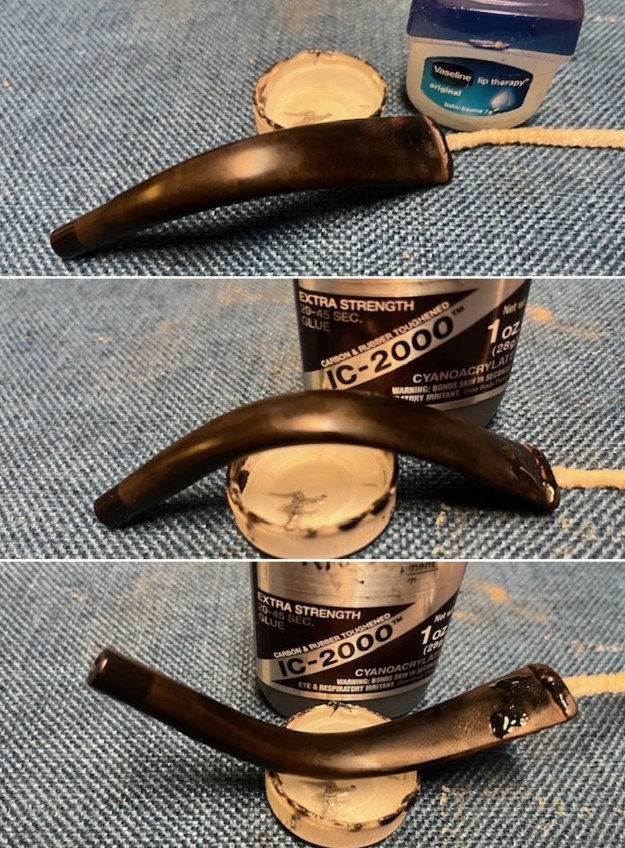
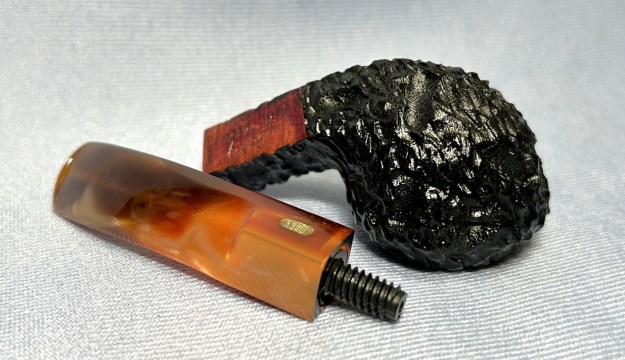
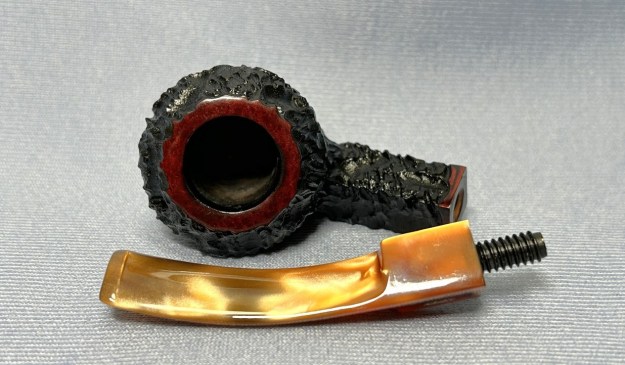
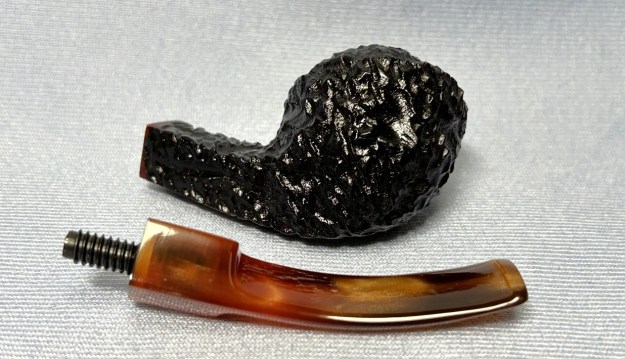
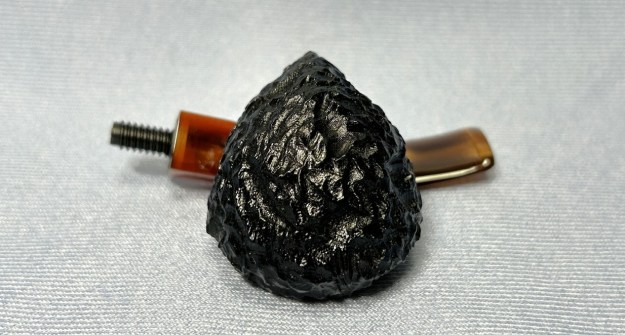
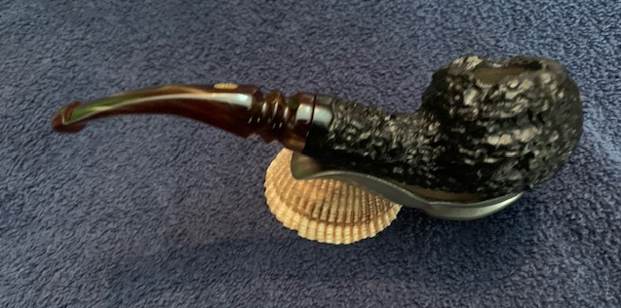
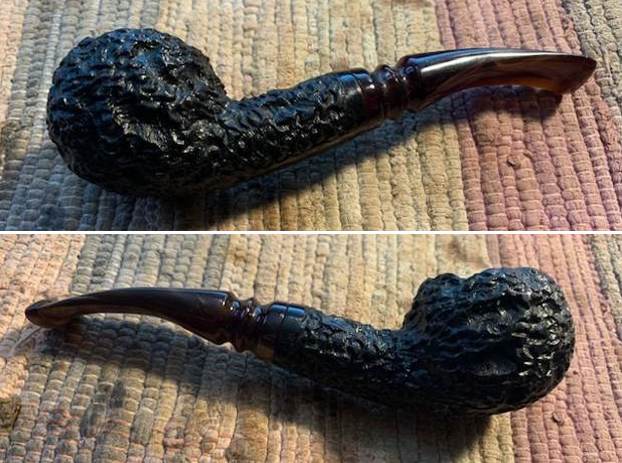
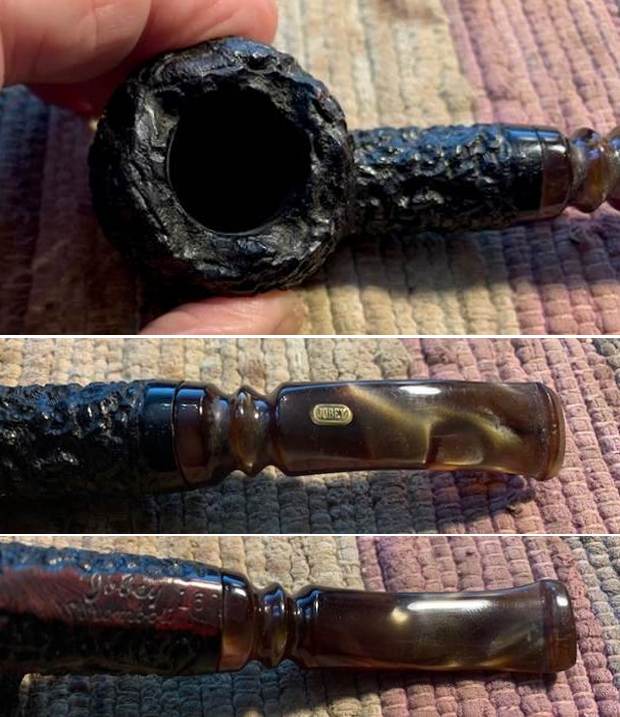
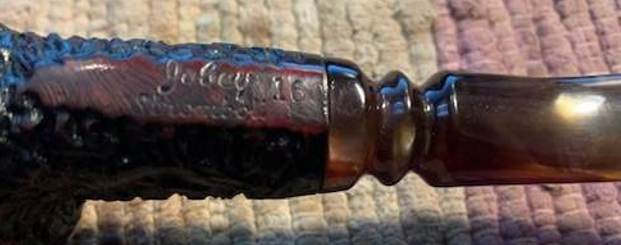
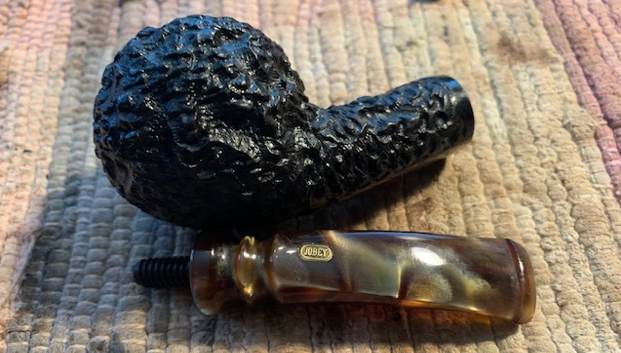
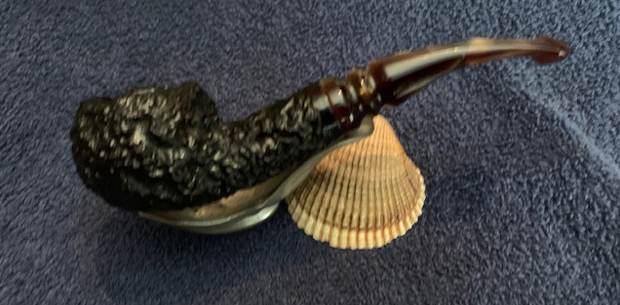
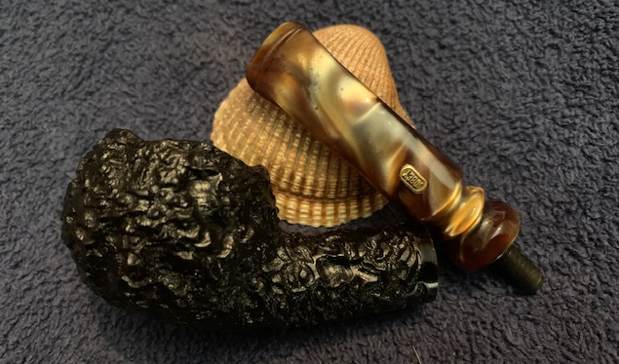
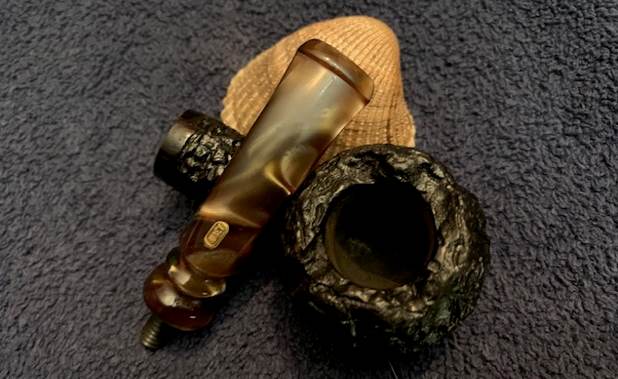
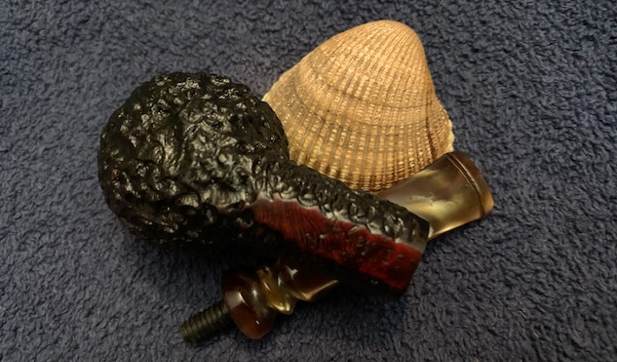
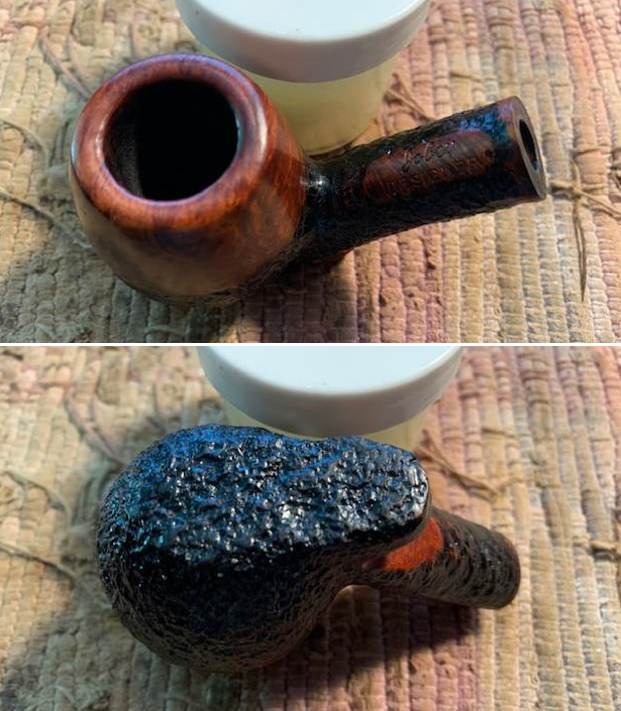
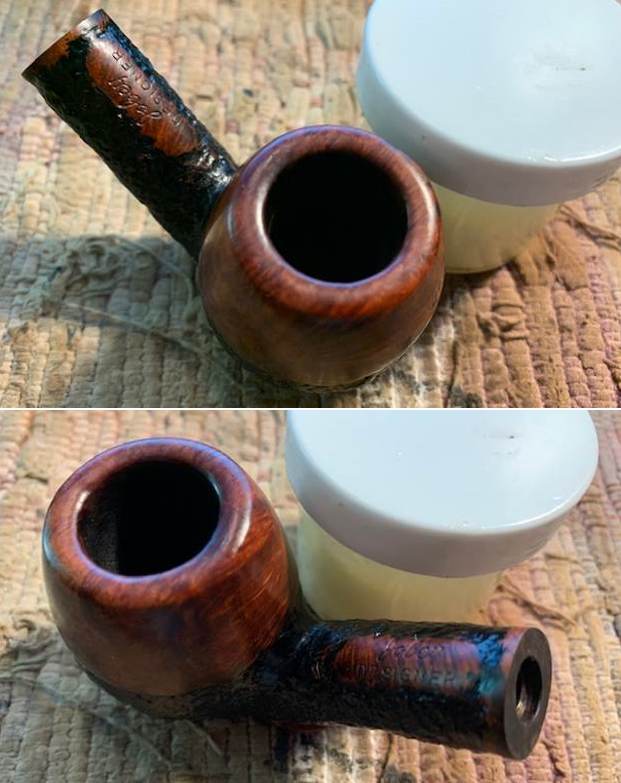
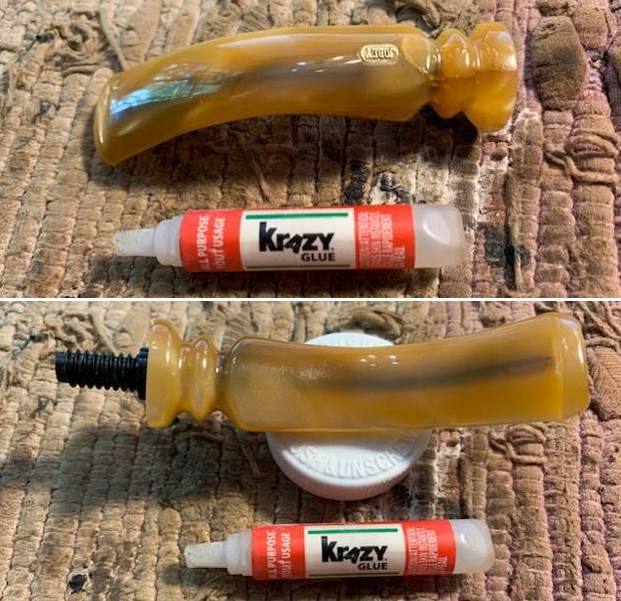
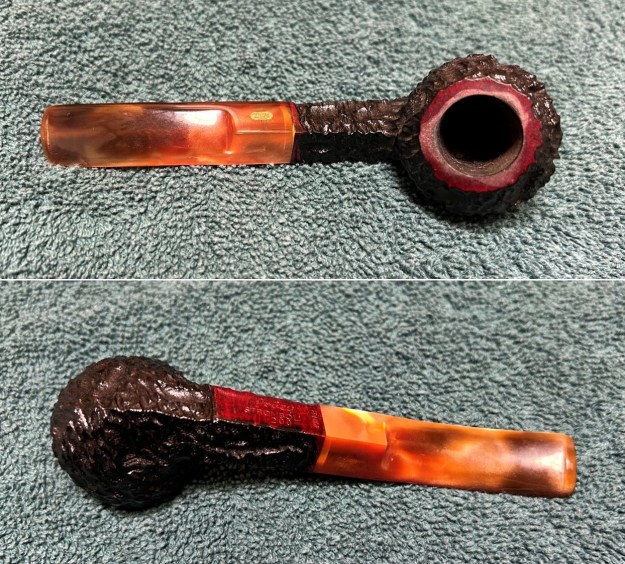
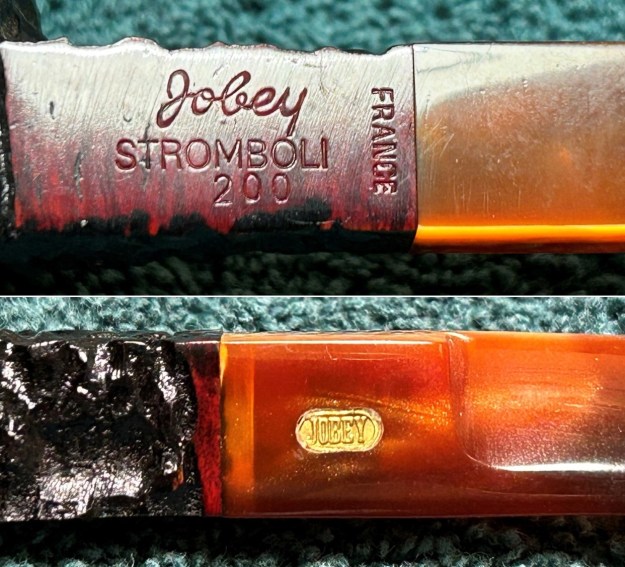
Ah, there’s something awfully satisfying about a really rugged rustication – the craggy, rock-like formation is a very fine thing. This Jobey Stromboli 200 bent bulldog has that great rustication in spades. The pipe had a precise diamond shank and a beautiful acrylic stem with a Jobey link system screw tenon. I acquired this pipe in a lot, where most of the pipes had been very well cared for. This was no exception and looked like a fun pipe to restore. On the underside of the shank were the markings. They read Jobey [over] Stromboli [over] 200. To the right of that, at a 90-degree angle from the other text, was the word France. Finally, on the stem was the Jobey logo in a brass oval. Regarding Jobey, Pipephil tells us that “These pipes are made in St Claude (France) by Butz-Choquin (Berrod-Regad group) since 1987. Before this date some were manufactured in England and Denmark (Jobey Dansk).”This Jobey was in very good condition and didn’t require much work – as the photos attest. The stem had only minimal wear and was hardly dirty. The stummel was equally clean, but the rim had been lit a bit aggressively. Perhaps a cigar lighter was foolishly used – who knows? Moving on… Since the stem is acrylic, there is no issue with oxidation. I used oil soap on a few cotton rounds and wiped the stem down to provide an initial cleaning before moving on to the next steps. The primary cleaning comes next. I cleaned the inside of the stem with both pipe cleaners and cotton swabs dipped in 99% lemon-infused isopropyl alcohol. I scrubbed thoroughly to make sure the interior was clean. Actually, it was quite clean to start with. Holding the stem to the light, you can see how clean it is – if it was heavily smoked, this would be very dark. Now that the stem is clean and dry, I set about fixing the few marks in the acrylic. This is done by filling those divots with clear cyanoacrylate adhesive. I left this to cure and moved on. The penultimate step for the stem is sanding. First, with my set of needle files, I reduce the bulk of the cyanoacrylate repairs. I want to remove the excess adhesive as near to the surface as possible, without cutting into the acrylic. Following that, I use all nine of the micromesh sanding pads (1,500 through 12,000 grit) to sand out flaws and provide gentle polishing of the finished surface. I also apply pipe-stem oil while using the last five micromesh pads. There was a wonderful shine to the stem when I was done. Now that the stem is (nearly) complete, I can move on to the stummel. The first step for me is to ream out the bowl – that is to say, remove all the cake inside the bowl. This accomplishes a couple of things. First (and most obviously), it cleans the bowl and provides a refurbished chamber for future smoking. Second, when the old cake is removed, I can inspect the interior walls of the bowl and determine if there is damage or not. The pipe was so seldom used that I only used a piece of sandpaper taped to a wooden dowel. This ensured that all the debris is removed.My next step was to remove the lava on the rim. For this, I took a piece of machine steel and gently scraped the lava away. The metal’s edge is sharp enough to remove what I need, but not so sharp that it damages the rim. This work revealed that some minor scorching had occurred. It wasn’t serious, but I would have to repair it. Similar to the stem, I then cleaned the stummel with both pipe cleaners and cotton swabs dipped in 99% lemon-infused isopropyl alcohol.To tidy up the briar, I also wiped down the outside with some oil soap on cotton rounds (and a toothbrush). This does a good job of cleaning any latent dirt on the surface of the briar.The last step of the cleaning process is to scour the inside of the stummel with some soap and tube brushes.In order to lessen the burns on the rim, I ‘topped’ the pipe – that is to say, I gently and evenly sanded the rim on a piece of 220-grit sandpaper. This effectively minimizes the damage, without altering the look of the pipe. I used all nine micromesh pads (1,500 through 12,000 grit) on the rim to finish it off. This sanding minimizes flaws in the briar and provides a beautiful smoothness to the wood. After that, the bare wood needed to be tinted in the same colour as the rest of the stummel. I used some of my furniture pens (which is simply dye in pen form) to match the colours. I rubbed some Before & After Restoration Balm into the briar and let it sit for 20 minutes or so. The balm moisturizes the wood and gives a beautiful depth to the briar. I then buffed it with a microfibre cloth and a horsehair brush. For the final step, I took the pipe to my bench buffer and carefully polished it with three coats of conservator’s wax. This procedure makes the pipe look its best – the stummel sings and the stem glows.All done! This Jobey Stromboli 200 Bulldog looks fantastic again and is ready to be enjoyed by its next owner. I am pleased to announce that this pipe is for sale! If you are interested in acquiring it for your collection, please have a look in the ‘French’ section of the store here on Steve’s website. You can also email me directly at kenneth@knightsofthepipe.com. The approximate dimensions of the pipe are as follows: length 5⅔ in. (144 mm); height 1½ in. (39 mm); bowl diameter 1⅔ in. (42 mm); chamber diameter ¾ in. (19 mm). The weight of the pipe is 1¼ oz. (37 g). I hope you enjoyed reading the story of this pipe’s restoration as much as I enjoyed restoring it. If you are interested in more of my work, please follow me here on Steve’s website or send me an email. Thank you very much for reading and, as always, I welcome and encourage your comments.
Breathing Life into a Jobey Sterling Square Shank Panel 460 Billiard 


by Steve Laug

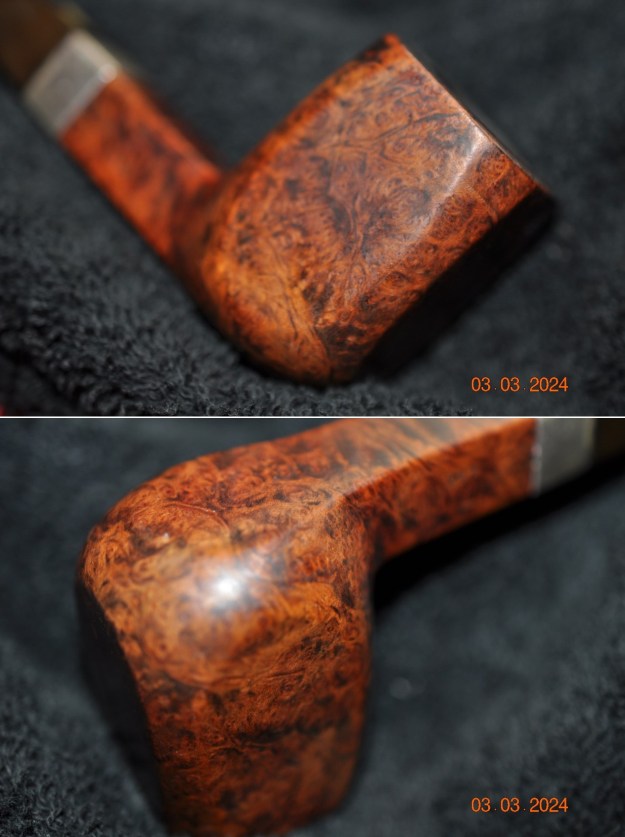
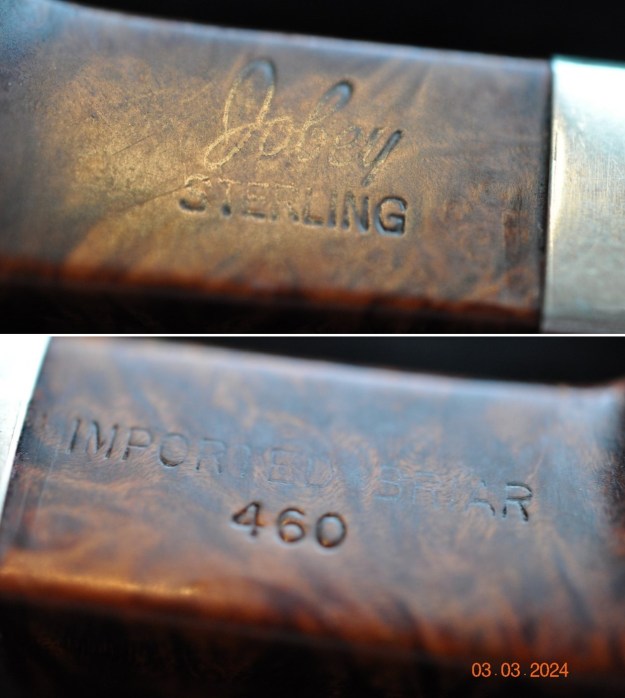
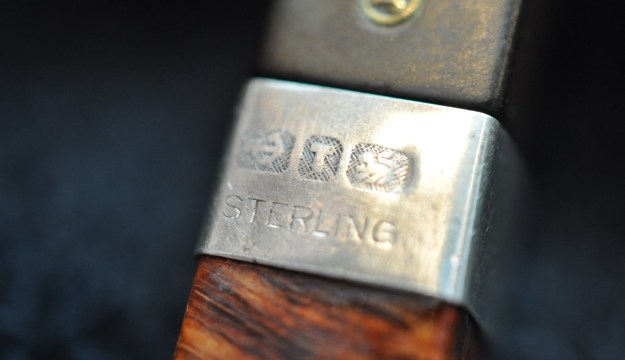
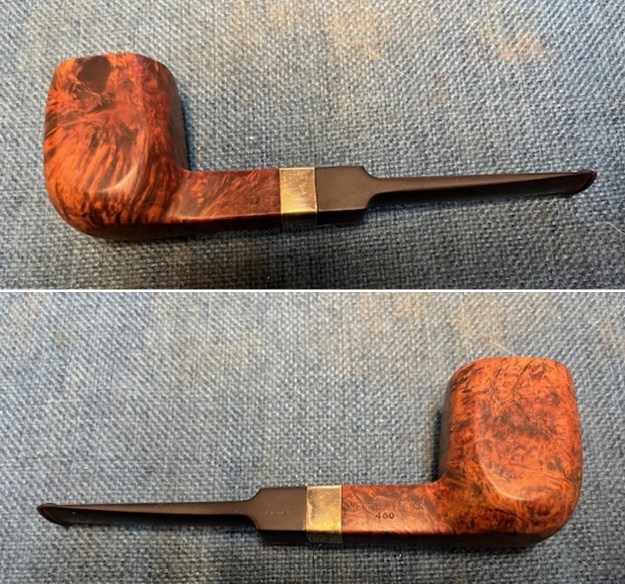
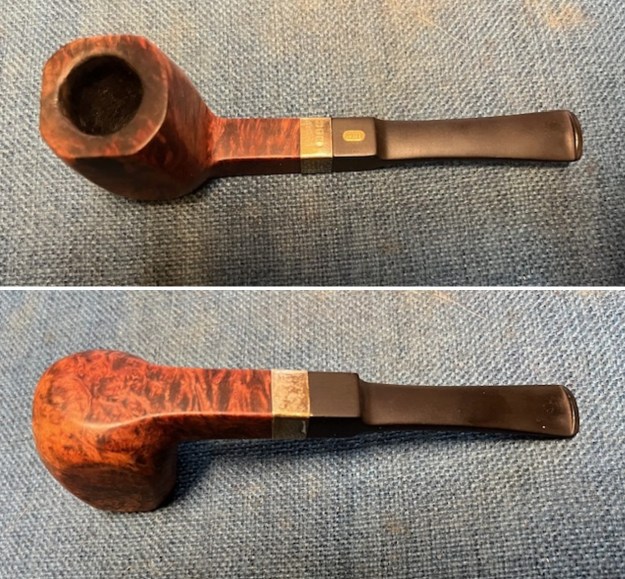
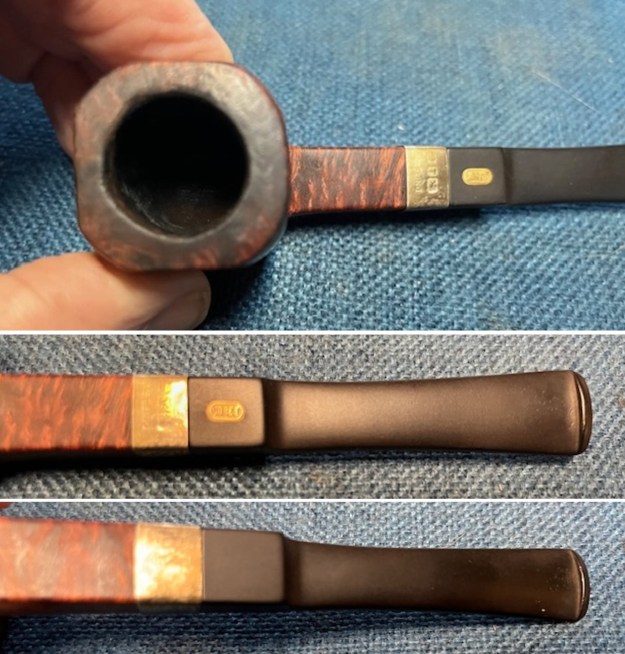
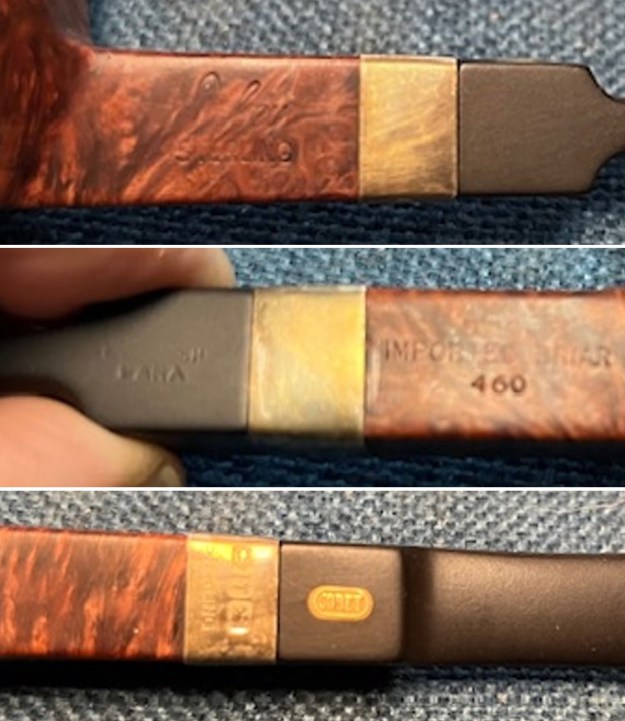
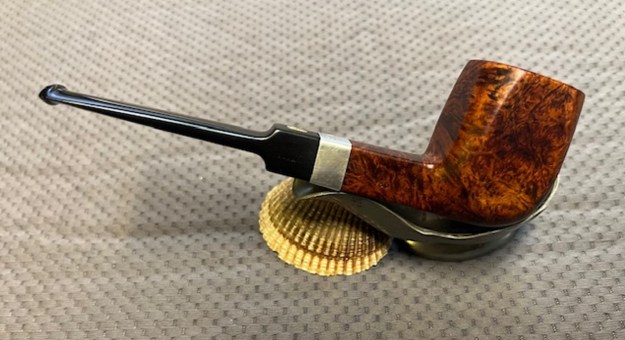
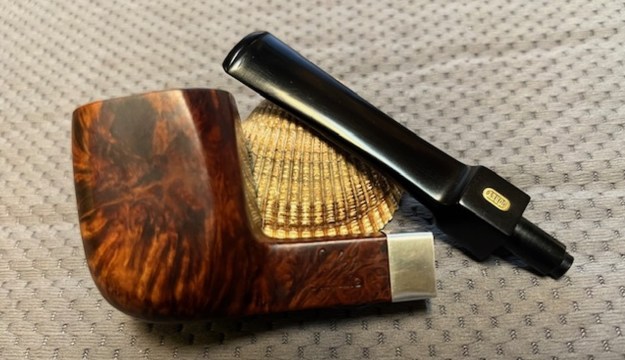
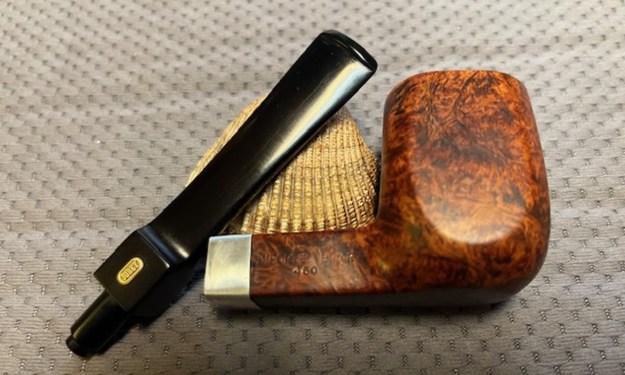
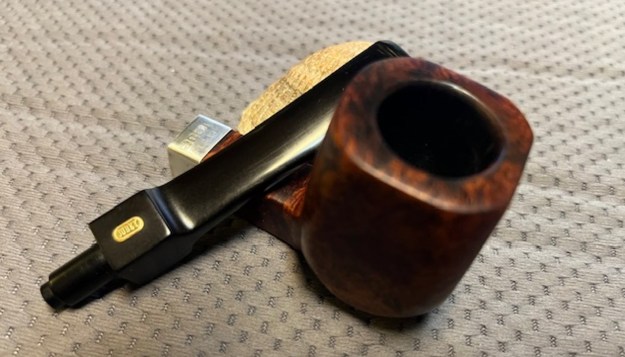
I picked some older pipes to work on next. The next of these is a Jobey Panel Billiard. We purchased this one on 01/22/2024 from an online seller in Jordan, Minnesota, USA. This square shank Panel Bent Billiard is stamped on the left side of the shank and reads Jobey in script [over] Sterling and on the right side it is stamped Imported Briar [over} the shape number 460. The Sterling Silver Band is also stamped and reads STERLING with three hallmarks – an anchor (Birmingham, England) a letter T (date) and a rampant lion (signifying the .925 Sterling quality). The pipe was well used. The finish was dirty with dust and debris ground into the finish. There were some dark marks on the sides of the bowl that looked to be on the surface. The bowl had a thick cake in it and some lava on the rim top and the inner edge. There was some roughening to the inner edge and darkening on the top of the bowl. The Sterling Silver band was oxidized. The vulcanite stem was oxidized, calcified and had some tooth marks on the surface ahead of the button. Jeff took photos of the pipe before he started his cleanup work. He took some closer photos of the rim top and bowl to show the condition. You can see the thick cake in the bowl and the lava on the rim top and inner edge. It is hard to know for certain but it looks like there is some roughening and damage to the right side of the inner edge. He also took photos of the stem to show its condition. You can see the oxidation, calcification and tooth marks and chatter on the stem at the button. Jeff took some photos of the sides and heel of the bowl to show the smooth finish and the grain around the bowl and shank. He captured the stamping on the left and right sides of the shank. It is clear and faint in spots and reads a noted above. The brass inset Jobey oval logo on the top side of the saddle stem is clear and undamaged. On the right side of the stem it appears to be stamped English Para. He took a photo of the stamping on the sterling silver band. As noted above it is stamped and reads STERLING with three hallmarks – an anchor (Birmingham, England) a letter T (date) and a rampant lion (signifying the .925 Sterling quality). The anchor is easily identifiable as the assay mark and giving the location of the silver maker. In this case the location signifies Birmingham, England. The rampant lion at the end of the three hallmarks is knows the indicator of the quality of the silver. In this case it is .925 which is the normal amount for Sterling Silver. That leaves us with the T hallmark in the centre of the threesome.To figure out the date of the stamp I turned to several silver Hallmarks lists for Birmingham. I have included the link below to the chart that I regularly use to help identify the date on pipes with this(https://www.silvermakersmarks.co.uk/Dates/Birmingham/Date%20Letters%20T.html). The helpful thing about this chart is that it is organized by letter and you can click on a letter and get all of the hallmarks with that letter – in this case T. This where it gets a bit tricky to me. If you look at the hallmark in the photo above the “T” stamp clean and straight with no tail on the base or the cross bar of the “T”. It is similar to a non-italic T in 1968. None of the other ones (1943 or 1993) with the capital T work so that is the mystery to me. So the date is not clearly identifiable from the charts.I reread several of the blogs I have written on the brand in the past restorations of Jobey pipes and decided to include the material on the brand before I write about the cleanup of the pipe. I wanted to spell out the link from the hallmarks above to British made Jobeys. Here is the link to the blog (https://rebornpipes.com/2020/04/03/restoring-jennifers-dads-jobey-asti-245-pot/). I quote:
I turned to Pipephil’s site for a quick review of the brand (http://www.pipephil.eu/logos/en/logo-j3.html). I quote a section of the post on the Jobey brand: These pipes are made in St Claude (France) by Butz-Choquin (Berrod-Regad group) since 1987. Before this date some were manufactured in England and Denmark (Jobey Dansk).

I turned then to Pipedia to gather further information regarding the brand and quote the first part of the article (https://pipedia.org/wiki/Jobey).

English – American – Danish – French… Sadly, solid information about Jobey is scant…

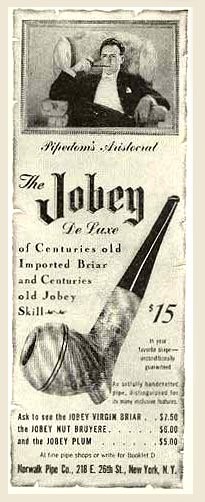
Probably established in England around 1920(?) the brand hiked into the USA later. In the course of time owner, distributor and manufacturer changed repeatedly. As far as is known the following companies have been involved with the brand:

George Yale Pipes & Tobacco, New York (1942), Norwalk Pipe Co., New York (1949), Arlington Briar Pipes Corp., Brooklyn (when?), Hollco International, New York (1969), Weber Pipe Co., Jersey City, NJ (1970’s), The Tinder Box, (1970’s – 80’s).

Throughout decades Jobey pipes were mainly sold in the USA, Canada and England but remained almost unknown in continental Europe. The bulk of Jobeys was predominantly made according to classical patterns and mainly in the lower to middle price range. The predominant judgment of the pipe smokers reads: “A well-made pipe for the price.” So, there is hardly anything very special or exciting about Jobey pipes although a flyer from ca. 1970 assures: “The briar root Jobey insists upon for its peer of pipes is left untouched to grow, harden and sweeten for 100 years. […] Jobey uses only the heart of this century old briar and only one out of 500 bowls turned measures up to the rigid Jobey specifications.” 99.80% of cull… that makes the layman marveling!
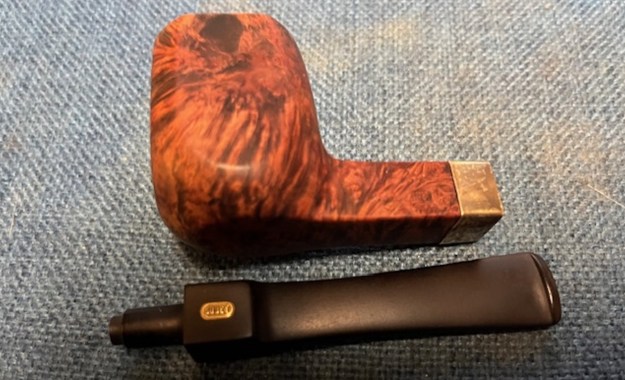
Now to work on the pipe itself. Jeff had cleaned up the pipe and it looked very good. He reamed the pipe with a PipNet pipe reamer and removed the rest of it with a Savinelli Fitsall Pipe Knife. He scrubbed the bowl with undiluted Murphy’s Oil Soap with a tooth brush. He rinsed it under running warm water to remove the soap and grime. He cleaned out the inside of the shank and the airway in the stem with alcohol, cotton swabs, shank brushes and pipe cleaners. He soaked the stem in Briarville’s Stem Deoxidizer and rinsed it off with warm water. It removes the oxidation, grime on the stem. I took photos of the pipe before I started my part of the restoration work. The rim top and outer edge of the bowl look good. The inner edge and spots on the top have some darkening and light damage. The stem surface was still lightly oxidized and there were tooth marks and chatter on both sides near the button.The stamping on sides of the shank is faint in spots but readable. It is stamped as noted above. The stamping on the stem side is pretty clear and reads English Para. I removed the stem and took a photo of the pipe to give a sense of the whole. The panel saddle stem is nice and the photo shows the step down tenon. I cleaned up the top and the inner edge of the bowl with a folded piece of 220 grit sandpaper to smooth out the damage to the edge and the darkening on the rim top. I sanded the bowl with 320-3500 grit sanding pads to smooth out the nicks and marks in the briar around the sides of the bowl. I wiped it down with a damp cloth after each sanding pad. It was looking pretty good once I finished. I polished the bowl and the rim top with micromesh sanding pads. I dry sanded it with 1500-12000 grit pads and wiped the bowl down with a damp cloth to remove the sanding dust. By the final pad it was starting to real take on a great shine. I rubbed the bowl and shank down with Before & After Restoration Balm. I worked it into the surface of the bowl sides and shank with my fingertips. It works to clean, enliven and protect the briar. I let the balm sit for 15 minutes and buffed with a cotton cloth to raise the shine. The grain came alive. I set the bowl aside and turned my attention to the stem. I set the bowl aside and turned my attention to the stem. I “painted” the tooth marks with the flame of a lighter to lift them. The heat did a great job lifting most of them. The marks and chatter that remained I filled in with black CA glue strengthened with carbon and rubber. Once cured I flattened them and redefined the button edge with a file and blended them into the surface by sanding with 220 grit sandpaper. I polished the sanding and scratch marks and smoothed the stem with 320-3500 grit sanding pads. I wiped the stem down after each sanding pad with an Obsidian Oil impregnated cloth. It removes the dust and also gives the sanding pads some bite. By the final pad it was looking quite good.I polished the vulcanite stem with micromesh sanding pads – 1500-12000 grit pads. I wiped it down with Obsidian Oil after each sanding pad. I used Before & After Pipe Polish – both Fine and Extra Fine to further polish the stem. I rubbed it down with a final coat of Obsidian Oil and let it dry. This English Made Jobey Sterling 460 Panel Billiard is a real beauty. I buffed the bowl and the vulcanite saddle stem with Blue Diamond on the wheel and was amazed at how the grain popped and the stem began to shine. I gave the bowl and stem multiple coats of carnauba wax and buffed them with a clean buffing pad. I finished by hand buffing the pipe with a microfibre cloth. The finished pipe is shown in the photos below. I think you will agree that it is a great example of a Jobey Sterling. The grain and the stem work really well together. The finished Jobey Sterling 460 Panel Billiard fits nicely in the hand and feels great. Give the finished pipe a look in the photos below. The dimensions of the pipe are Length: 5 ½ inches, Height: 1 ¾ inches, Outside diameter of the bowl: 1 ¼ inches, Chamber diameter: ¾ of an inch. The weight of the pipe is 38 grams/1.34 ounces. I will be putting it on the rebornpipes store in the British Pipemakers Section shortly. If you are interested in adding this pipe to your collection send me a message or an email. Thanks for reading this blog and my reflections on the pipe while I worked on it. I appreciate your support and time!
New Life for a Jobey Shellmoor Extra E527 Hawkbill


by Steve Laug

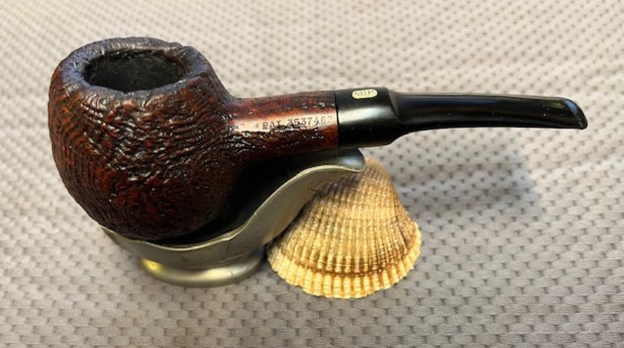
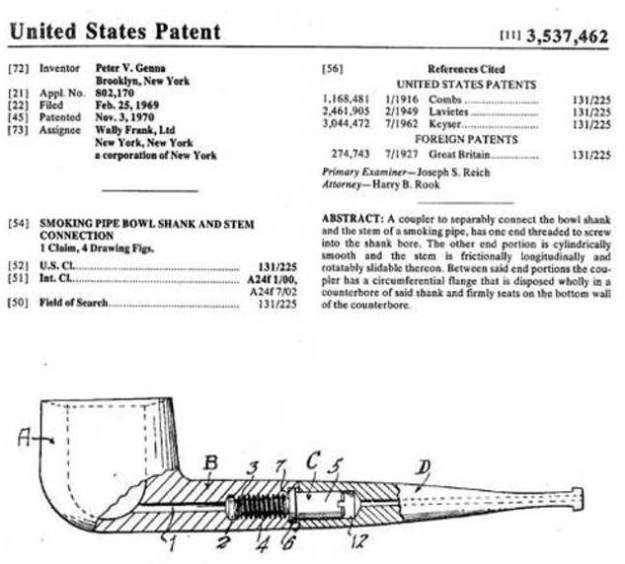
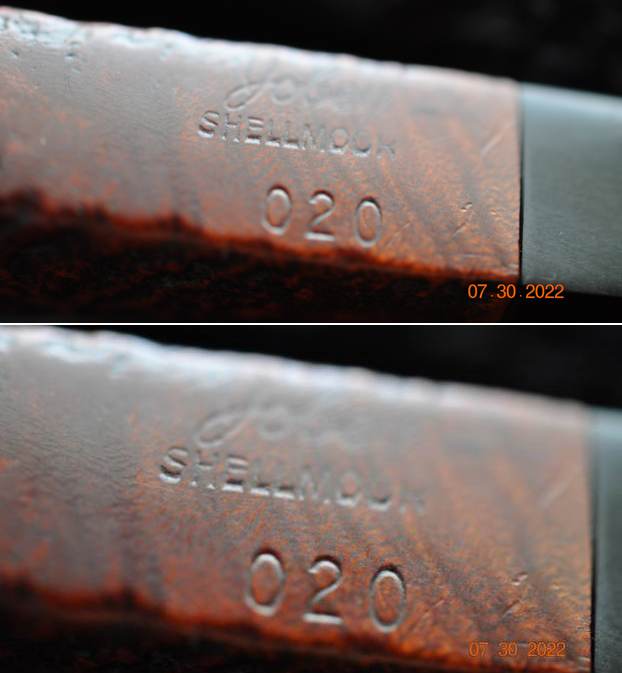
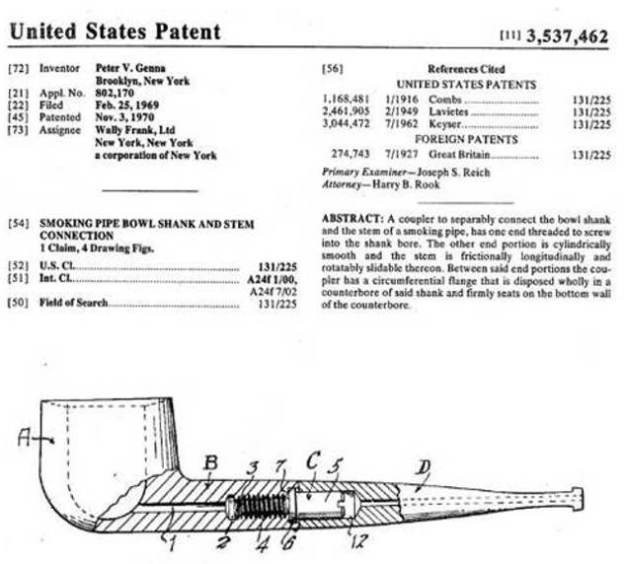
The next pipe on the table is one that has been in our work bins for over two years. It is nice looking sandblasted Hawkbill. We purchased it from an Antique Store in Bozeman, Montana, USA on 05/01/2022. It is a great looking pipe with lots of promise. The sandblast is very defined, not deep or rugged but really highlighting the grain around the bowl. There is a lot of dust and grit in the crevices of the blast. The pipe is stamped on the topside of the shank. There are faints spots but it readable. It is stamped Jobey (in script) [over] Shellmoor [over] Extra. Under that it is stamped – PAT. 3537462. The shape number E527 is right after the Extra stamp. The bowl has a heavy cake and tobacco debris in the bowl with lava overflowing and filling in much of the sandblast on the rim top. It is hard to know for sure what the edges look like because of the lava and cake but cleaning would tell all. Other than being dirty the finish is in good condition. The stem has a Jobey brass oval inlaid on the topside of the saddle stem. It has a saddle stem and is connected to the shank by the patented Jobey Link system. It is oxidized, calcified and has some deep tooth marks and chatter on both sides ahead of the button. Jeff took photos of the pipe before he started his clean up work. He took a photo of the bowl and rim top to show the condition of the pipe. You can see the cake in the bowl and the heavy lava on the rim top. The stem photos also show the oxidation, calcification and deep tooth marks and chatter on the top and underside ahead of the button. He took photos of the sandblast on the sides and heel on the bowl. It really is a nice looking blast and unusual shape. He took photos of the stamping on the underside of the diamond shank. It is clear and readable as noted above. There are some faint spots but it is readable. The Jobey brass oval logo stamp is inlaid on the top left side of the stem. Before I started to work on the pipe I wanted to understand the patent number on the shank. To understand the information, I turned to the US Patent search site and entered the numbers. I was able to find both a description of the invention and a diagram that was submitted with the Patent application. The patent is for the Jobey Link that connects the stem and shank on the pipe. Here is the link to the site and a screen capture of the information found there. https://pdfpiw.uspto.gov/.piw?docid=03537462&SectionNum=1&IDKey=6F776849C285&HomeUrl=http://patft.uspto.gov/netacgi/nph-Parser?Sect1=PTO1%2526Sect2=HITOFF%2526d=PALL%2526p=1%2526u=%25252Fnetahtml%25252FPTO%25252Fsrchnum.htm%2526r=1%2526f=G%2526l=50%2526s1=3537462.PN.%2526OS=PN/3537462%2526RS=PN/3537462 With that information, I turned to work on the pipe itself. Jeff had thoroughly cleaned up the pipe. He reamed the pipe with a PipNet Pipe Reamer and cleaned up the remnants with a Savinelli Fitsall Pipe Knife.  He scrubbed the bowl with undiluted Murphy’s Oil Soap with a tooth brush. He rinsed it under running warm water to remove the soap and grime. He cleaned out the inside of the shank and the airway in the stem with alcohol, cotton swabs and pipe cleaners. He scrubbed the exterior of the stem with Soft Scrub to remove as much of the oxidation as possible. He soaked it in Before & After Pipe Stem Deoxidizer and rinsed it with warm water. The acrylic stem was clean but had tooth marks and chatter on both sides ahead of the button. There was an Jobey Brass Oval logo inlaid on the left side of the stem. I took photos of the pipe before I started my work on it. It was an amazing looking pipe.  I took photos of the rim top and bowl as well as the stem to give a sense of the condition of both. The rim top and edges looked very good. The stem cleaned up well and the tooth marks on the top and underside ahead of the button were very light.I took a photo of the stamping on the topside of the shank. It is readable as noted above. I took the stem out of the shank and took a photo of the overall look of the pipe.The bowl was in excellent condition. The rim top and edges looked really good. I started my work by working some Before and After Restoration Balm into the surface of the sandblast bowl. I worked it into the crevices with a shoe brush. It works to preserve, clean and renew the briar. I let it sit for 10 minutes and then buffed it off with a soft cloth. The bowl really looked good at this point. I coated the threaded end of the Jobey Link with Vaseline and threaded it into the shank end. I used a screw driver to turn it into the shank end. The stem will fit over the non-threaded end of the stem.I set the bowl aside and turned my attention to the stem. I “painted” the stem with the flame of a Bic lighter to lift the tooth marks on both sides. I was able to lift them a bit. I filled in what remained with black CA glue. Once it cured I used small files to shape the button and flatten the repairs. I sanded out the remaining repairs with 220 grit sandpaper to flatten them out and blend them into the surface. I sanded the stem with 320-3500 grit sanding pads. I wiped the stem down after each pad with Obsidian Oil. It began to take on a deep shine after each pad.I polished the stem with micromesh sanding pads – dry sanding it with 1500-12000 grit sanding pads and wiping it down after each pad with some Obsidian Oil. I finished polishing it with Before & After Pipe Stem Polish – both fine and extra fine. I gave it a final coat of Obsidian Oil. This Patent Jobey Shellmoor E527 Hawkbill with a vulcanite saddle stem is a great looking pipe now that it has been restored. The beautiful sandblast on the briar shines through the polished finish is stunning. I put the stem back on the bowl and carefully buffed the pipe with Blue Diamond on the buffing wheel. I gave the bowl multiple coats of Conservator’s Wax and the stem multiple coats of carnauba wax on the buffing wheel and followed that by buffing the entire pipe with a clean buffing pad. I hand buffed the pipe with a microfiber cloth to deepen the shine. The finished Jobey Shellmoor E527 Hawkbill fits nicely in the hand and feels great. Give the finished pipe a look in the photos below. The dimensions of the pipe are Length: 5 ½ inches, Height: 2 inches, Outside diameter of the bowl: 1 ½ inches, Chamber diameter: 7/8 of an inch. The weight of the pipe is 59 grams/2.08 ounces. I will soon be adding it to the rebornpipes store in the American Pipe Makers Section. If you are interested in this pipe send me a message or an email. Thanks for reading this blog and my reflections on the pipe while I worked on it. There are many more to come!

Cleaning up a nice looking Sandblast Jobey Shellmoor 020 Squat Bulldog


Blog by Steve Laug

I am continuing with the same tack I have taken on the last few pipes I have worked on and take you through my process of working on each pipe that we purchase. Jeff has set up a spread sheet to track where the pipe came from, the date of purchase and what we paid for it so that we know what we have invested in the pipe before we even work on it. This takes a lot of the guess work out of the process. This particular pipe was purchased on 05/25/2022 from an antique store in Portland, Oregon, USA. I also want you to understand why we take the photos we do. It is not accidental or chance as the photos have been taken to help me make an assessment of the pipe Jeff sees before he starts his clean up work. We do this to record the condition that the pipe was in when received it and to assess what kind of work will need to be done on. When I look at these photos this is what I see.

  1. The finish is dirty with debris and dust collecting in the twin rings on the bowl cap. The sandblast is quite nice but also very dirty. There appears to be a few nicks along the top of the twin rings around the cap.
  2. The rim top is dirty and there is a lava overflow from the cake in the bowl and some darkening on the rim top. The sandblast is filled in with lava on some of the rim top and well need to be cleaned out.
  3. The bowl has a thick cake in it but the inner bevel and outer edge of the bowl actually look to be undamaged other thank the scratches and darkening. There does not appear to be any burning or reaming damage to the edges of the bowl.
  4. The diamond shaped stem is vulcanite and there is no logo in the surface.
  5. The vulcanite stem has some light oxidation ahead of the softee bit but was dirty. The softee bit on the stem end kept the stem from having any tooth marks or damage. Interestingly it is also a Jobey Link System stem. There is also some rounding on the shoulder of the stem at the shank junction.

Overall my impressions of this stubby, squat Bulldog was that it was in solid shape some light damage to the twins rings but nothing terrible. The cake does not seem to hide any burns or checking but I will know more once it is cleaned and reamed. The exterior of the bowl does not show any hot spots but with the grime in the sandblast it is very hard to know with certainty. It is a good looking pipe in spite of the poor care it has had. The photos below confirm the assessment above. Hopefully as you have learned from the last few blogs we always include close up photos of key areas on the pipe we buy. We do this so that I can have a clearer picture of the condition of the bowl and rim edges and top since Jeff does the clean up and we live quite far apart. The rim top photos confirm my assessment above. The cake in the bowl is quite thick and the rim top has some lava and debris in the grooves of the sandblast. You can also see the condition of the inner and outer edges of the rim. You can see that there does not appear to be any over reaming or burn damage to the edges. This is what I look for when assessing a pipe. His photos of the stem surface confirmed and heightened my assessment of the condition. You can see the light oxidation on the stem surface ahead of the softee bit. You can see the rubber softee bit protected the stem from tooth marks and chatter. Jeff removed the softee bit to confirm the assessment of the conditon of the stem. Remember that we include photos of the sides and heel of the bowl for me to do a more thorough assessment of the condition of the briar and the finish before I have it in hand. The finish is dirty but the mixed grain shows through the sandblast nicely and cleaning should remove that. There were no cracks or splits following the grain or coming down from the rim edges. There were no cracks in the shank. In this case the bowl exterior is sound and should clean up very well. We take photos of the stamping so I can see if it is faint in any spots or double stamped or unclear. It often takes several photos to capture what I am looking for. The stamping on the left underside of the shank is clear and readable in the pictures below. It reads Jobey [over] Shellmoor [over] the shape number 020. The Jobey stamp is faint but still readable as is the second half of the Shellmoor stamp. The shape number is very clear.For me researching the brand and the maker are an important part of the restoration process. It gives me the background on the philosophy of the pipemakers as well as an understanding of their perspective in making a pipe. That is why I generally include it in my restoration write ups. It is important for me and it is important in educating us on those who have left behind a rich heritage. A unique feature of this pipe is the Jobey Link feature. I did some digging into the patent for the Link. To get the background information I turned to the US Patent search site and entered the numbers. I was able to find both a description of the invention and a diagram that was submitted with the Patent application. The patent is for the Jobey Link that connects the stem and shank on the pipe. Here is the link to the site and a screen capture of the information found there. https://pdfpiw.uspto.gov/.piw?docid=03537462&SectionNum=1&IDKey=6F776849C285&HomeUrl=http://patft.uspto.gov/netacgi/nph-Parser?Sect1=PTO1%2526Sect2=HITOFF%2526d=PALL%2526p=1%2526u=%25252Fnetahtml%25252FPTO%25252Fsrchnum.htm%2526r=1%2526f=G%2526l=50%2526s1=3537462.PN.%2526OS=PN/3537462%2526RS=PN/3537462 While I am sure that some of you will skip the next section of this blog I encourage you to read the process that we use to clean our pipes. It is an important part of the our work of restoration. Jeff wrote a detailed blog about his cleaning process. I am including a link to that now so you can see what I mean about his process. Do not skip it! Give it a read (https://rebornpipes.com/2020/01/20/got-a-filthy-estate-pipe-that-you-need-to-clean/). Here is the introduction to that blog and it is very true even to this day.

Several have asked about Jeff’s cleaning regimen as I generally summarize it in the blogs that I post rather than give a detailed procedure. I have had the question asked enough that I asked Jeff to put together this blog so that you can get a clear picture of the process he uses. Like everything else in our hobby, people have different methods they swear by. Some may question the method and that is fine. But it works very well for us and has for many years. Some of his steps may surprise you but I know that when I get the pipes from him for my part of the restoration they are impeccably clean and sanitized. I have come to appreciate the thoroughness of the process he has developed because I really like working on clean pipe!

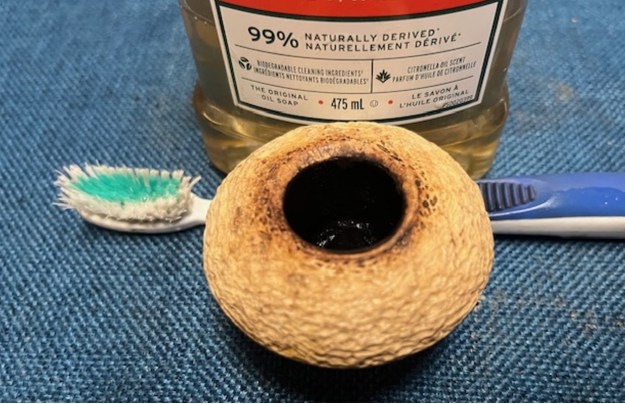
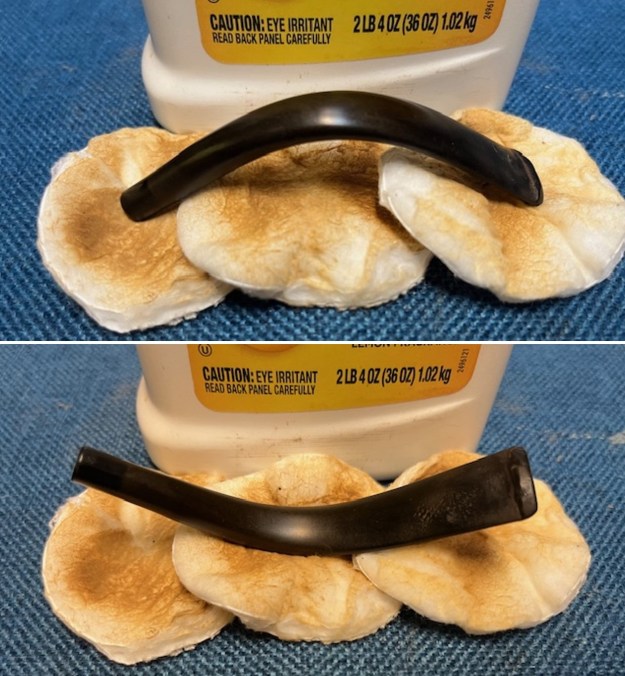
For the benefit of some of you who may be unfamiliar with some of the products he uses I have included photos of three of the items that Jeff mentions in his list. This will make it easier for recognition. These three are definitely North American Products so you will need to find suitable replacements or order these directly on Amazon. The makeup pads are fairly universal as we were able to pick some up in India when we were with Paresh and his family.

In the blog itself he breaks his process down into two parts – cleaning the stem and cleaning the bowl. Each one has a large number of steps that he methodically does every time. I know because I have watched him do the work and I have seen the pipes after his work on them. He followed this process step by step and when the pipe got to me it was spotlessly clean and ready for my work. The inside of the stem, shank and bowl were clean and to me that is an amazing gift as it means that my work on this end is with a clean pipe! I cannot tell you how much difference that makes for my work.

When the pipe arrives here in Vancouver I have a clean pipe and I go over it keeping in mind my assessment shared in the opening paragraph above. I am looking for any significant structural changes in the bowl and finish as I go over it.

  1. The finish cleaned up really well and the oils and grime ground into the briar have been removed. The twin rings around the bowl cap are very clean and there was no grime in the grooves. With all the grime removed it was a great looking pipe.
  2. The rim top cleaned up well and the lava was gone. The inner and outer edges of the bowl looked very good.
  3. The bowl was very clean and the top and inner edge of the bowl. The bowl walls are also very clean and smooth with no checking or burn marks on the inside or out of the bowl. The walls were undamaged.
  4. The diamond shaped stem is vulcanite and there is no logo in the surface but it cleaned up very well.
  5. The vulcanite stem clearly shows the effectiveness of the rubber softee bit in protection the stem from tooth marks. It definitely has some rounding on the stem shoulders at the shank joint. It is bothersome but there is not much that can be done with it. I will try to minimize it but for the most part this is one part of the stem restoration that cannot be undone when done poorly

Hopefully the steps above show you both what I look for when I go over the pipe when I bring it to the work table and also what I see when I look at the pipe in my hands. They also clearly spell out a restoration plan in short form. My work is clear and addressing it will be the next steps. I took photos of the whole pipe to give you a picture of what I see when I have it on the table. This is important to me in that it also shows that there was no damage done during the clean up work or the transit of the pipe from Idaho to here in Vancouver. Also things stand out that I did not see in the photos. For example I had no idea I was working with an orific button rather than a slot but it works with the pipe. I suppose it could be a replacement stem but it appears original other than the lack of a Jobey logo. I spent some time going over the bowl and rim top to get a sense of what is happening there. The bowl looked very good and the walls were smooth. There was no damage internally. The rim top was clean and I could clearly see the sandblast around the rim top. It was clean and clear. The inner and outer edge looked very good. I also went over the stem carefully. I examined the stem and the button edge and was happy to see that they were in great condition. I took photos of the rim top and stem sides to show as best as I can what I see when I look at them.As usual I checked the stamping to make sure that the clean up work did not damage the stamping on the shank in any way. I know Jeff is cognizant of this but I do it anyway and take a photo to show what I see when I examine it. In this case it seems more readable than before the clean up. It is clear and distinct. I removed the stem from the shank and checked the tenon. You can see the Jobey Link System Tenon. It is threaded and screw into the shank. The other end is smooth and fits by friction in the stem. I lay the parts of the pipe out to get a sense of the proportion that was in the mind of the pipe maker when he crafted the pipe. It is a beauty in flow and shape.This is one of my unusual restorations – I did not need to do work on the rim top or edges and the shank was clean. When I get a bowl that is this clean I use Before & After Restoration Balm. It is a paste/balm that is rubbed into the surface of the briar. The product works to deep clean the finish, enliven and protect the briar. I worked it into the briar with my finger tips to make sure that it covers every square inch of the pipe. I used a horsehair shoe brush to get into the twin rings around the cap. I set it aside for 10 minutes to let it do its work. Once the time has passed I wiped it off with a soft cloth then buffed it with a cotton cloth. The briar really began to have a deep shine. The photos I took of the bowl at this point mark the progress in the restoration. You see the shine that the briar has taken on and the depth that the sandblast finish has. It is a gorgeous pipe. Now it was time to address the part of the restoration I leave until last. It is one of the rare cases where it was not a big deal so I could easily have started with it but old habits die hard! I set the bowl aside and turned my attention to the stem. Fortunately it took very little work as there were no tooth marks. It was the time now to polish the stem and bring back a shine. Over the years I have developed my own process for this. It is all preparation for the buffing that will come last. I use micromesh sanding pads and water to wet sand the stem with 1500-12000 grit sanding pads. I wiped it down after each sanding pad with Obsidian Oil on a cotton rag after each sanding pad as I find it does two things – first it protects the vulcanite and second it give the sanding pads some bite in the polishing process. I sought with the sanding pads to square up the sides to reduce the rounded shoulders on the stem sides and while it helped it was still not perfect. After finishing with the micromesh pads I always rub the stem down with Before & After Fine and Extra Fine stem polish as it seems to really remove the fine scratches in the vulcanite. I rub the Fine Polish on the stem and wipe it off with a paper towel and then repeat the process with the Extra Fine polish. I finish the polishing of the stem by wiping it down with a final coat of Obsidian Oil and set the stem aside to let the oil absorb. This process gives the stem a shine and also a bit of protection from oxidizing quickly.The final steps in my process involve using the buffer. I first buff the stem and the briar with Blue Diamond on the buffing wheel. Blue Diamond is a plastic polish but I find that it works very well to polish out the light scratches in the vulcanite and the briar. I work the pipe over on the wheel with my finger or thumb in the bowl to keep it from becoming airborne. It works well and I am able to carefully move forward with the buffing. I lightly buff sandblast bowl and shank making sure to keep the product from building up in the grooves of the finish. I finished with the Blue Diamond and moved on to buffing with carnauba wax. Once I have a good shine in the briar and vulcanite I always give the bowl and the stem multiple coats of carnauba wax. I have found that I can get a deeper shine if I following up the wax buff with a clean buffing pad. It works to raise the shine and then I follow that up with a hand buff with a microfiber cloth to deepen the shine. It is always fun for me to see what the polished bowl looks like with the polished vulcanite stem. This Jobey really is a beautiful pipe. The sandblast finish around the bowl sides and shank highlights the mix of grain shining through the rich brown stains of this Jobey Shellmoor 020 Squat Bulldog. The finished pipe feels great in my hand. It is light and well balanced. Have a look at it with the photos below. The dimensions are Length: 5 inches, Height: 1 ½ inches, Outside diameter of the bowl: 1 ¼ inches, Chamber diameter: 7/8 of an inch. The weight of the pipe is 1.16 ounces/33 grams. It is a beautiful pipe and one that I will be putting on the rebornpipes store in the American (US) Pipe Maker section.

Hopefully this tack of writing this blog is helpful to you in some way. In it I show both what I am looking for and how I move forward in addressing what I see when I work on a pipe has been helpful to you. It is probably the most straightforward detailed description of my work process. As always I encourage your questions and comments as you read the blog. Thanks to each of you who are reading this blog. Remember we are not pipe owners; we are pipemen and women who hold our pipes in trust until they pass on into the trust of those who follow us.

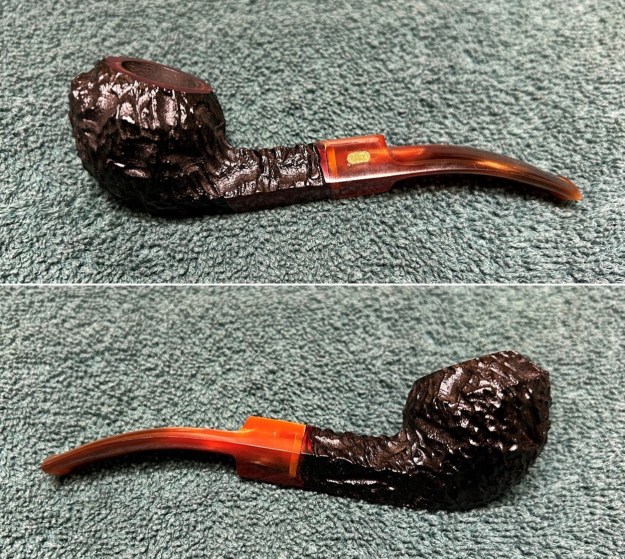
Moving another one of my own – a Jobey Stromboli 160 Bent Author


Blog by Steve Laug

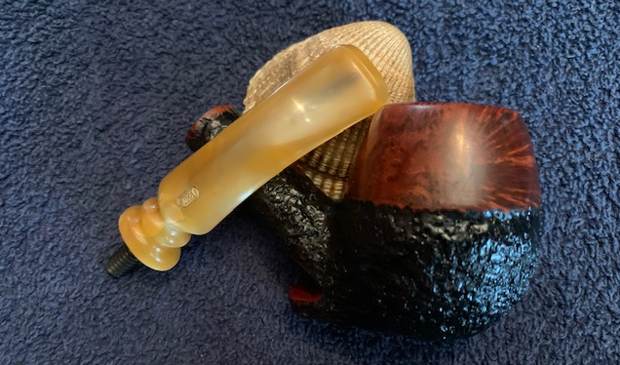
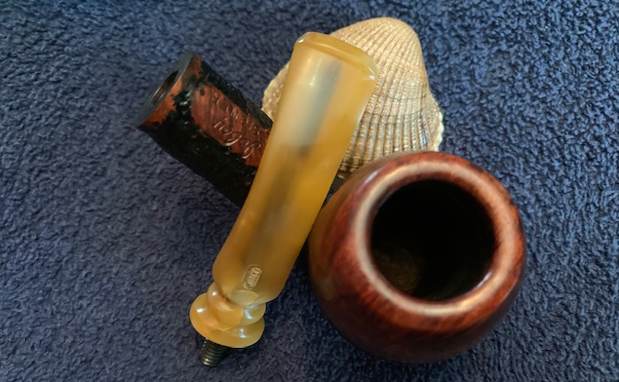
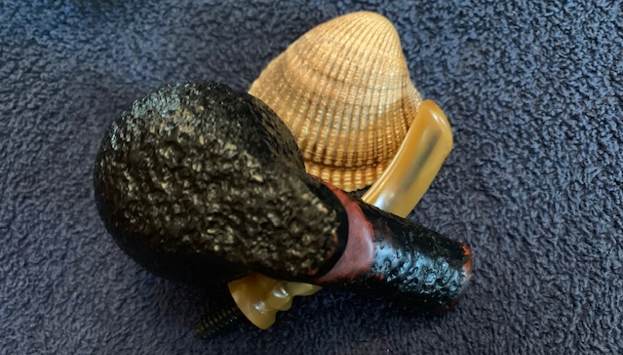
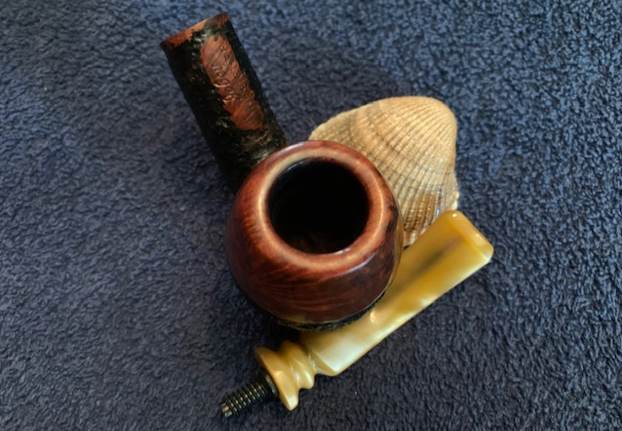
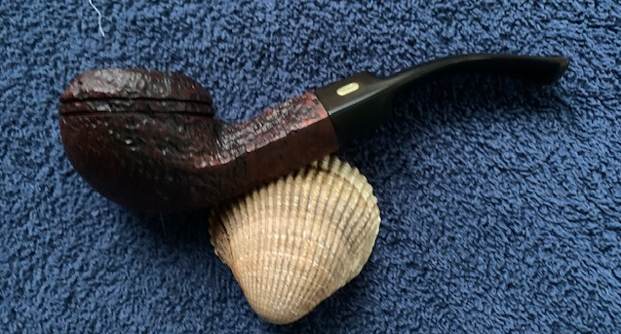
This is another pipe that I have taken out of my personal collection as I just do not use enough to warrant keeping it. This pipe was given to me in a group of pipes and I used it a bit when it came in. It is from a period of my journey where I smoked solely Virginia tobaccos so it is quite clean. The airway in the shank and the mortise were quite clean. The rusticated finish and rim top were in excellent condition. It is stamped on the underside of the shank and reads Jobey in script [over] Stromboli. The shape number 160 follows that. There was a light cake in the bowl but the top and inner edge of the bowl clean. The Jobey link system is in the shank and the stem slides on to it. The variegated brown/tan/gold acrylic stem is in good condition with some light tooth chatter ahead of the button on both sides. I took photos of the pipe before I did my clean up work on it. I took a photo of the bowl and rim top to verify the description above. I also took photos of the stem surface showing the light chatter on either side.I took a photo of the stamping on the underside of the shank. It is clear and readable as noted above.  I took the stem off the bowl and took a photo of the pipe to give a sense of proportion of the pipe. You can also see the deep and rugged rustication on the briar and it is a beauty.Now it was time to work on the pipe. I cleaned up the light cake in the bowl with a Savinelli Fitsall Pipe Knife. I sanded the bowl walls with a piece of dowel wrapped in 220 grit sandpaper.I cleaned the mortise and airways in the shank and stem with cotton swabs, pipe cleaners and isopropyl alcohol to remove the debris and tars from my smoking. You can see that it was not too bad as I tend to keep my pipes clean. The bowl was in such good condition that decided to give the bowl and shank a coating of Before & After Restoration Balm. I worked it into the surface of the briar with my fingertips and a horsehair shoe brush to clean, enliven and protect the briar. I let the balm sit for 15 minutes and then buffed with a cotton cloth to raise the shine. The photos show the bowl at this point in the restoration process. Since the stem was in quite good condition other than tooth chatter I polished out the chatter with micromesh sanding pads – dry sanding with 1500-12000 grit pads. I rubbed it down between pads with Obsidian Oil. I polished it with Before & After Fine and Extra Fine Pipe Stem Polish. I wiped it down with some Obsidian Oil and buffed it off. It is a beautiful stem. I am excited to put the final touches on this great looking Jobey Stromboli Rusticated Author. I put the pipe back together and buffed the stem with Blue Diamond on the buffing wheel. I gave the bowl multiple coats of Conservator’s Wax and the stem multiple coats of carnauba wax. I hand buffed the pipe with a clean buffing pad to raise the shine. It is fun to see what the polished bowl looks like with the rugged rustication all around it. Added to that the polished brown/ gold/tan acrylic stem combined with the bowl and make a stunning pipe. This rusticated Jobey Stromboli is great looking and the pipe feels great in my hand. It is light and well balanced. Have a look at it with the photos below. The dimensions are Length: 5 ½ inches, Height: 1 ½ inches, Outside diameter of the bowl: 1 ½ inches, Chamber diameter: ¾ of an inch. The weight of the pipe is 43 grams/1.52 ounces. It is a beautiful pipe that I will soon be putting on the rebornpipes store in the American Pipe Makers Section. If you are interested in adding it to your collection send me an email or a message. Thanks for walking through the restoration with me as I worked over this pipe. Thanks to each of you who are reading this blog.

Restoring a Unique Jobey Designer Bent Egg Sitter


Blog by Steve Laug

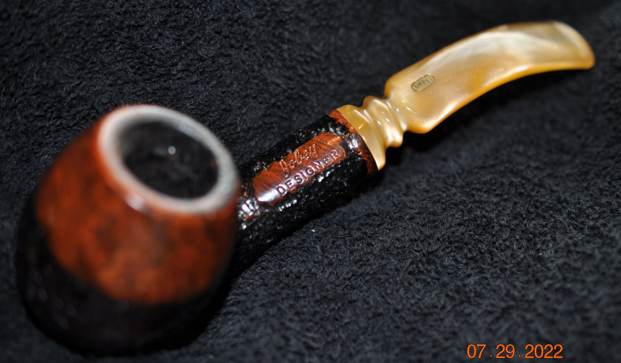
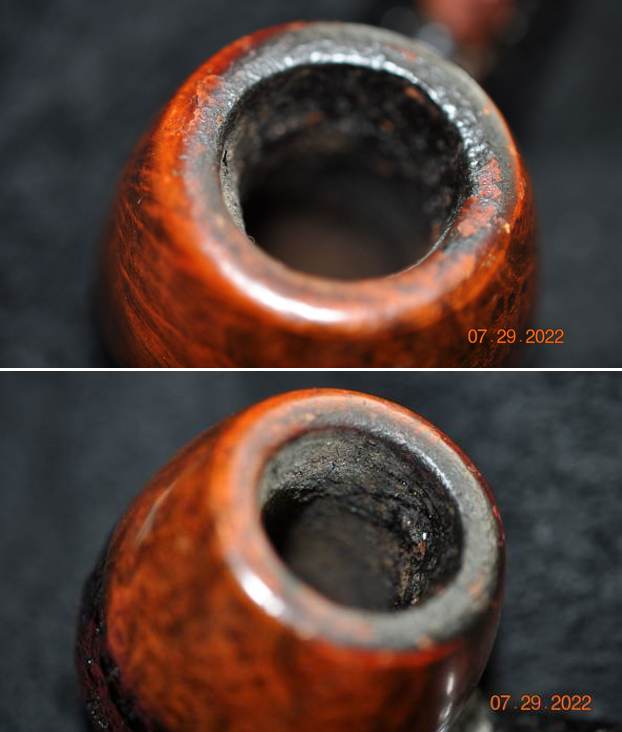
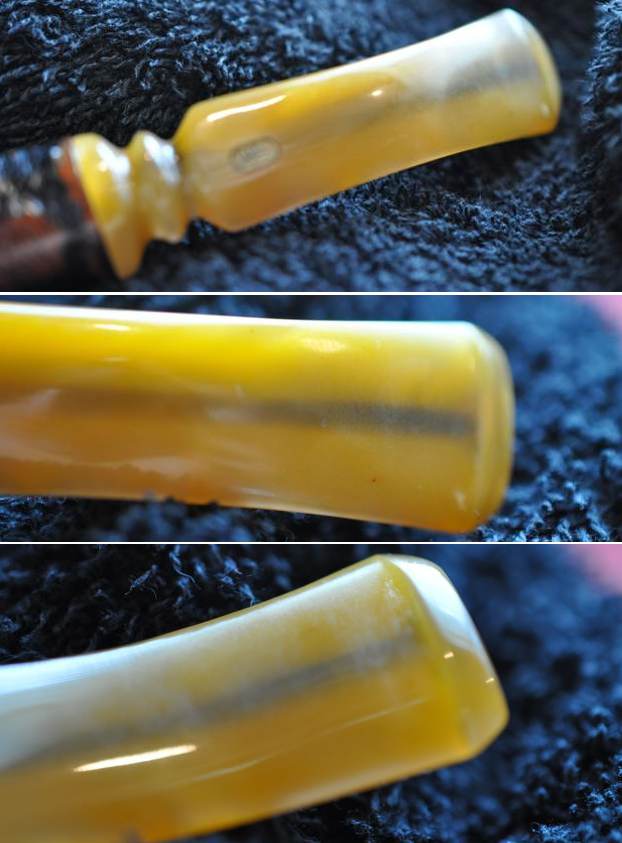
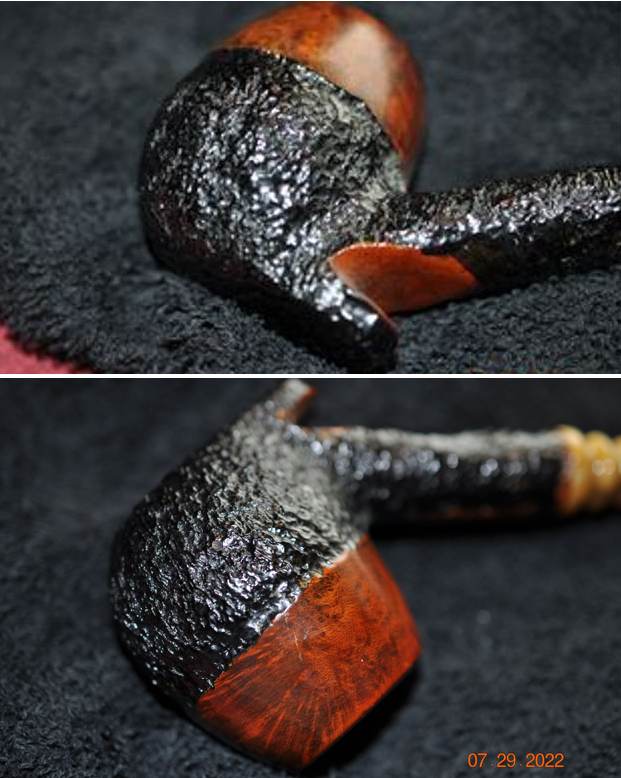
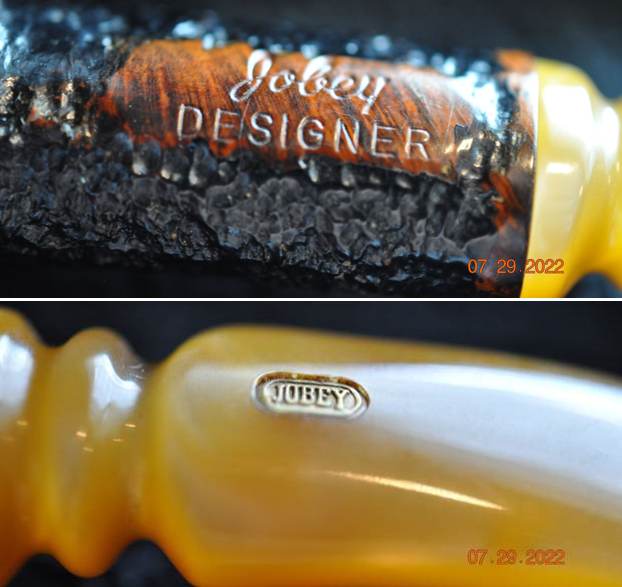
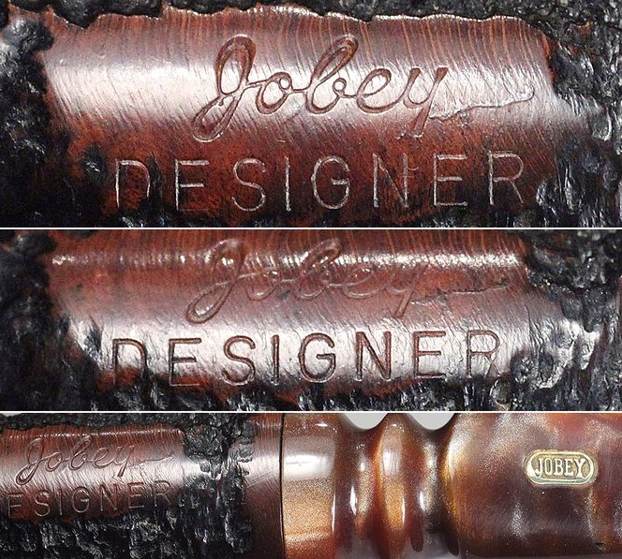
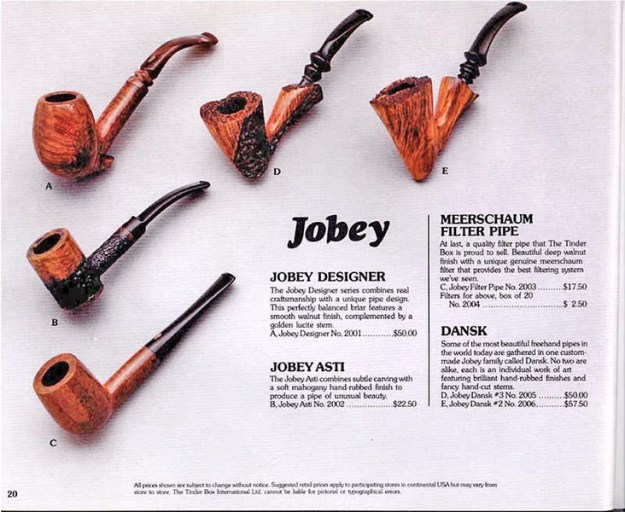
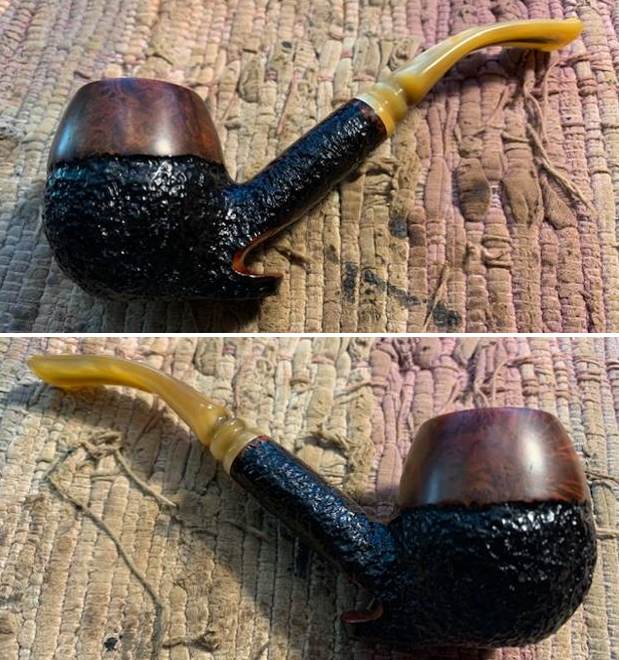
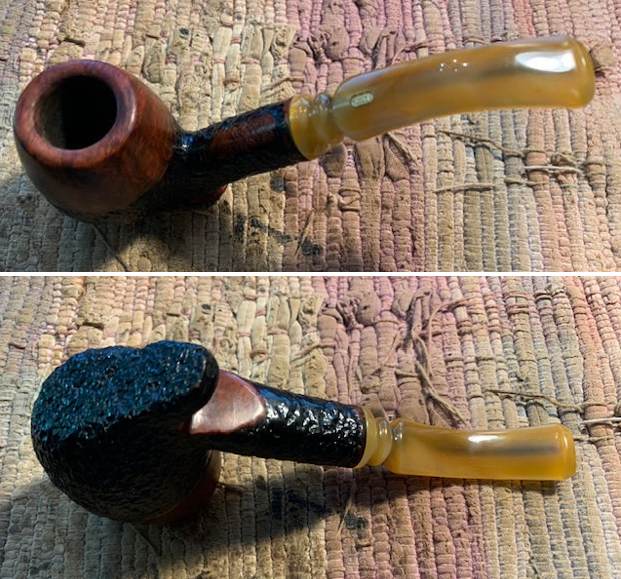
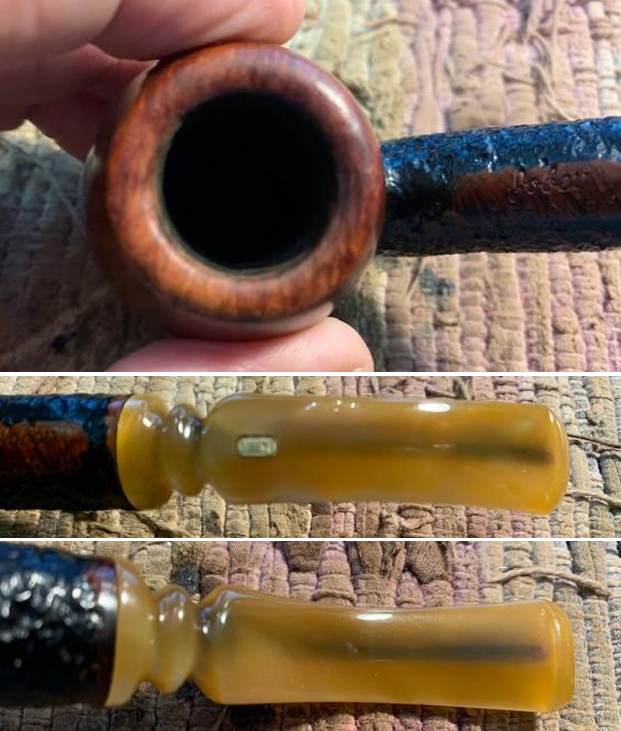
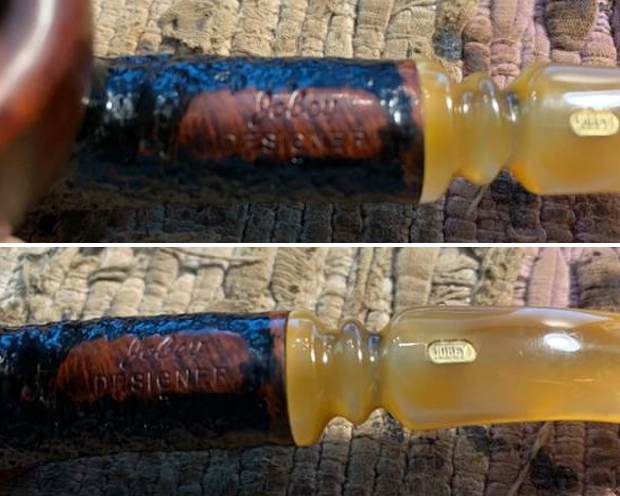
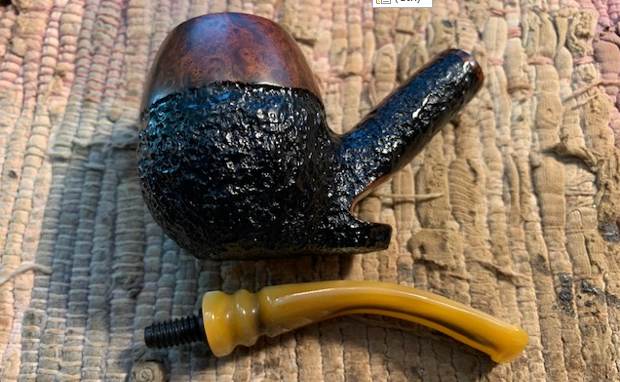
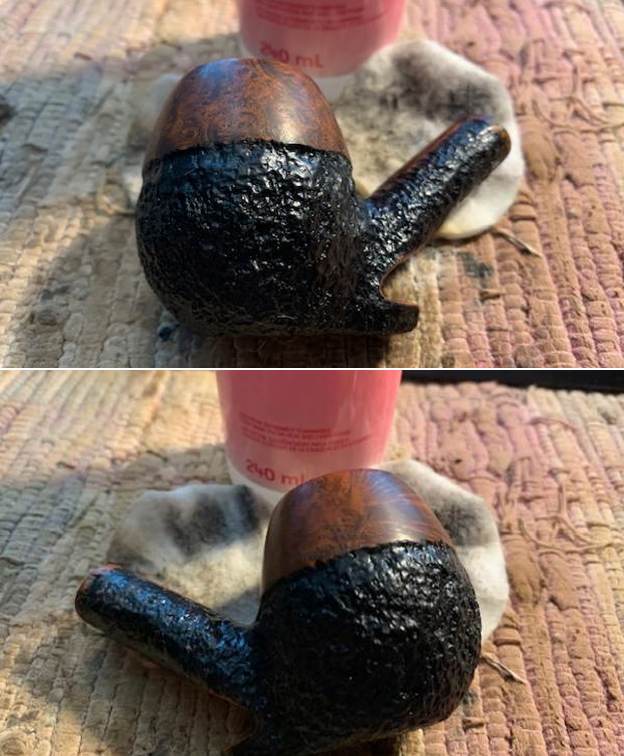
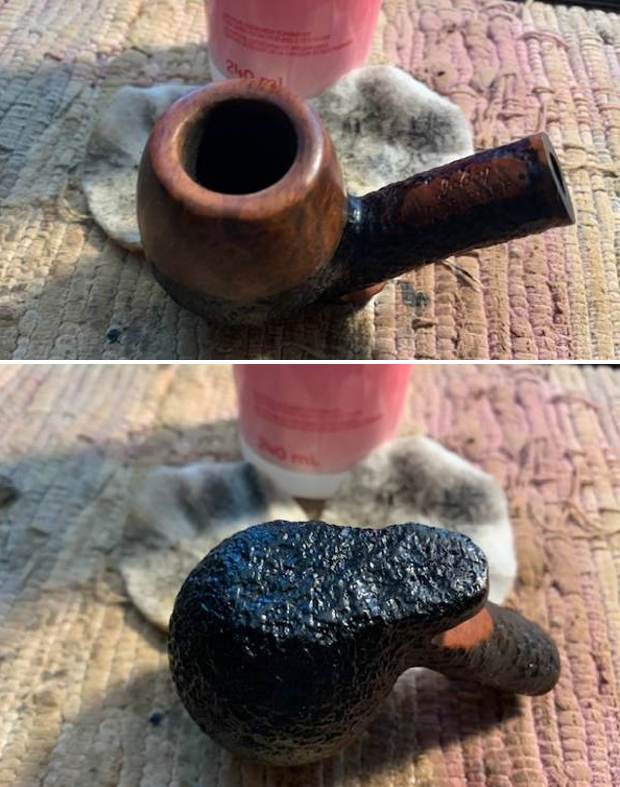
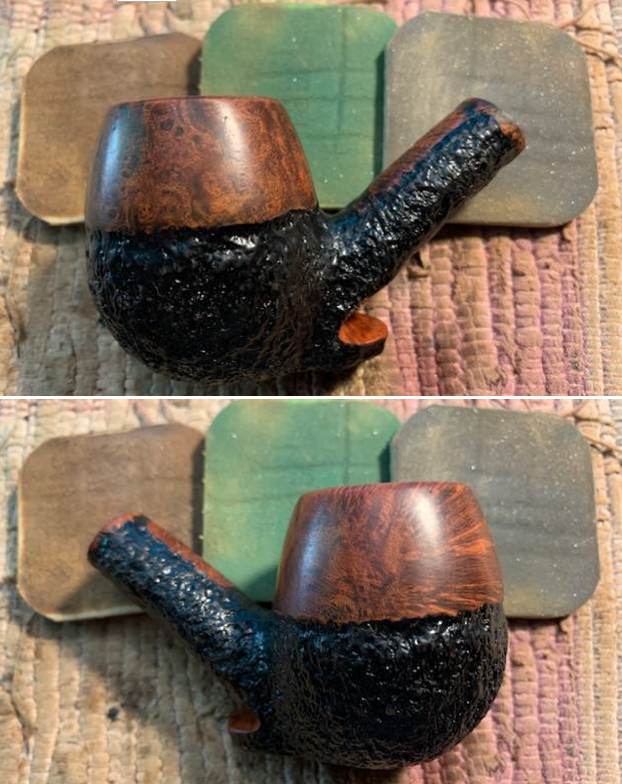
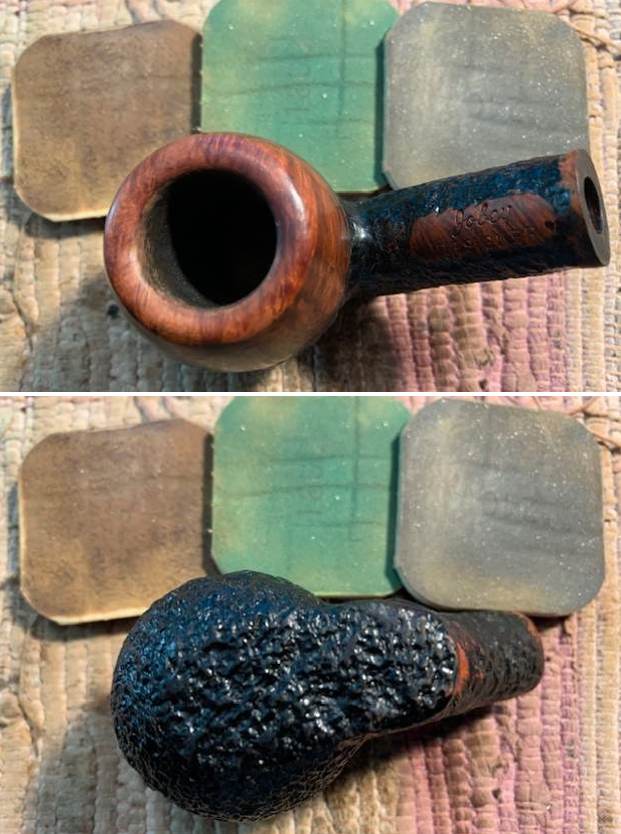
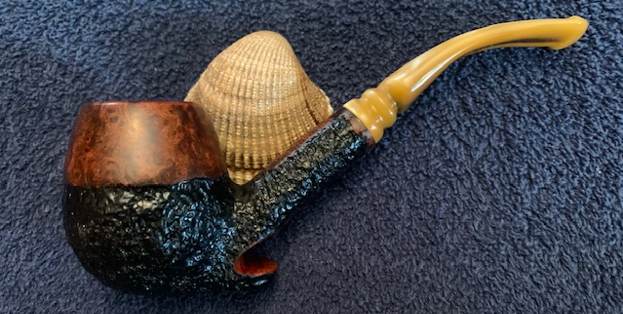
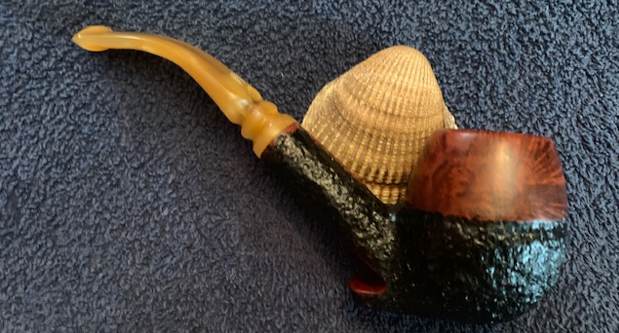
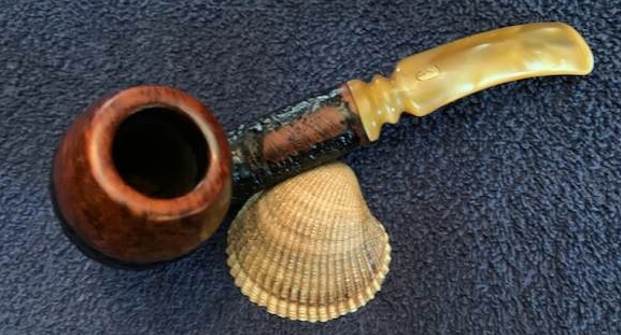
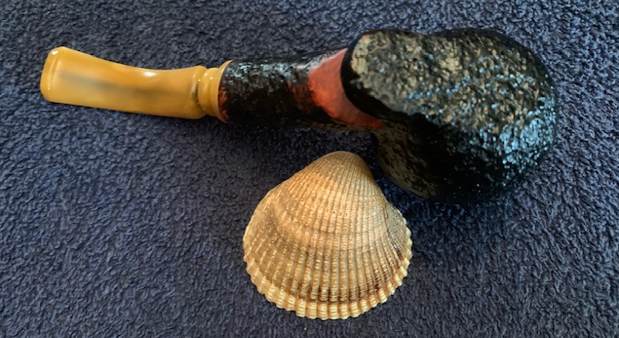
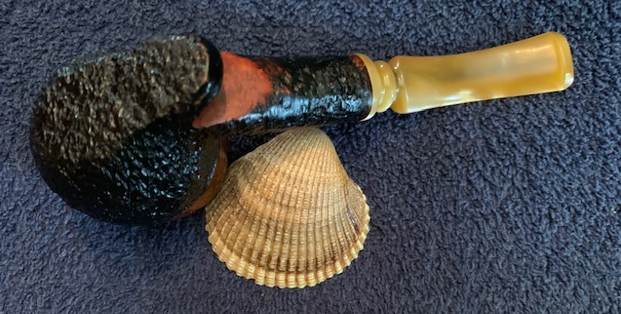
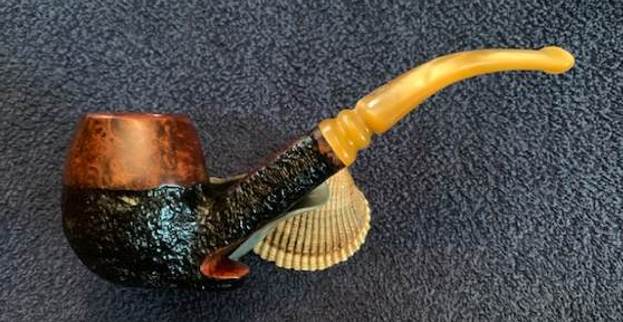
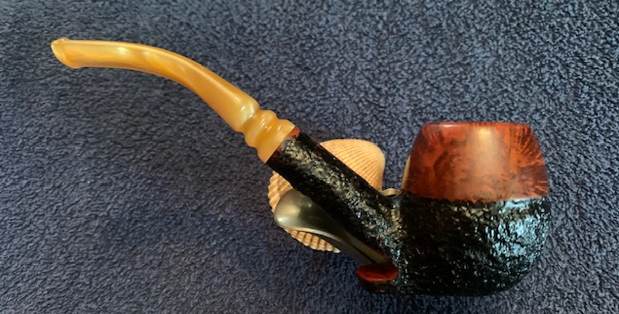
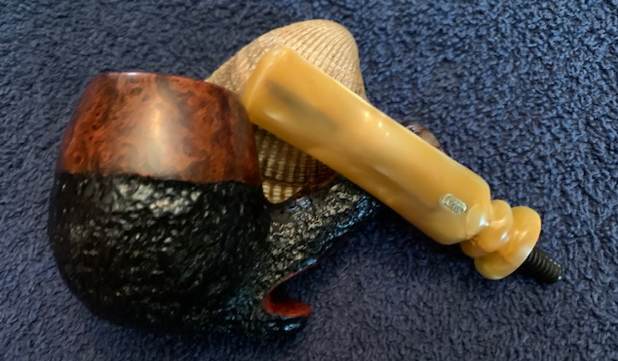
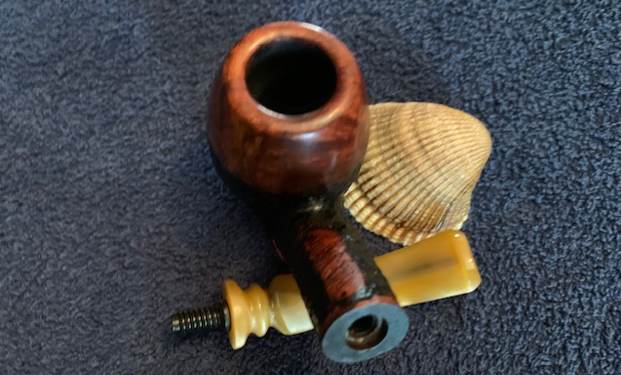
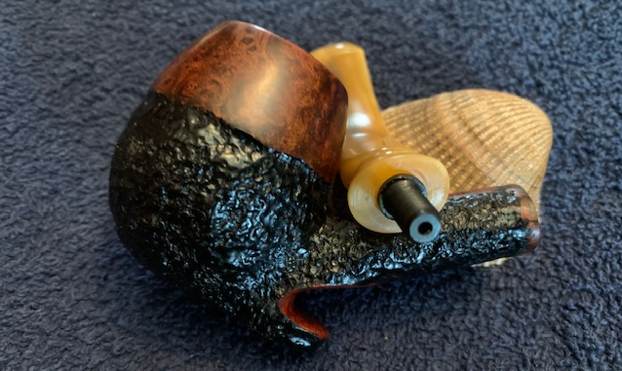
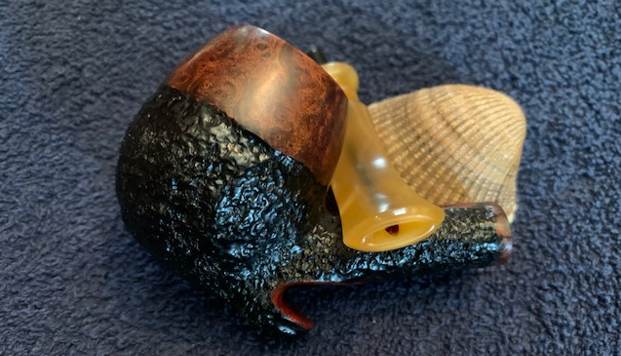
The next pipe on the table was purchased on 05/10/22 from an antique mall in Astoria, Oregon, USA. This unique Jobey has a flat base with a short tail that stabilizes the sitter. It has a rugged, finish that looks like a combination of sandblast and rustication (blastication) with lots of nooks and crannies in the briar. The top of the shank and the upper 1/3 of the bowl are smooth briar. The come together and really are quite beautiful! The pipe is stamped on a smooth panel on the topside of the shank and reads Jobey [over] Designer. The valleys and ridges of the “blasticated” grain showing through the grime and dirt are a mixture that leaves a rich texture. It had rich dark and medium contrasting brown stains that do not look too bad. There was a thick cake in the bowl with remnants of tobacco stuck on the walls. There was a lava overflow on the crowned top of the rim and covering the inner edge. It was hard to know if the rim edges were damaged. It was a beautiful pipe that was dirty and tired looking but there was a thick coat of shiny varnish or shellac covering the whole thing. The stem was golden variegated acrylic that had fancy turnings on the saddle. The tenon was the patented Jobey Link System that was developed to protect the shank. There was a hairline crack on the top of the stem where the tenon fit but it was not open and was very fine. There were tooth marks and chatter on the stem near the button on both sides. There is a brass Jobey oval logo on the top of the stem identifying it as a Jobey pipe. Jeff took photos of the pipe before he cleaned it up. He took photos of the bowl and rim top to show the cake in the bowl and the lava build up on the rim top and edges of the bowl. It was thick and hard but hopefully it had protected the rim and edges from damage. It was hard to know for sure from the photos. Jeff took photos of the top and underside of the stem showing the tooth chatter, scratching on the stem surface and wear on the edges of the button. The airway in the stem was stained with the tars and oils that would need to be cleaned up. Jeff took photos of the sides and heel of the bowl to show the condition of the finish. You can see the rugged dark look of the blastication. There is a lot of dust and grime filling in the valleys. The smooth portions on the top 1/3 of the bowl, the underside of the shank and foot as well as the patch on the top of the shank.  He took a photo of the stamping on the smooth panel on the topside of the shank. The stamping was readable as you can see from the photos and read as noted above. He also captured the logo brass insert on the top of the stem.  I turned to Pipedia to see if I could find a Jobey Designer or any information on the line  (https://pipedia.org/wiki/Jobey). Along with the history of the brand that is there which you can read if you are interested there was also a photo of the same pipe that I am working on with a dark stem rather than the yellow of the one on the table. The shape and stamping are identical so I have included them below. I am also including and advertisement that was included on the site. I have included it below along with an enlargement of the section on Jobey Designer pipes. The Designer series combines real craftsmanship with a unique pipe design. This perfectly balanced briar features a smooth walnut finish, complemented by a golden Lucite stem. It sold for $50USD

Now it was time to work on the pipe. Jeff reamed it with a PipNet pipe reamer and cleaned up the reaming with a Savinelli Fitsall Pipe Knife. He scrubbed out the internals of the shank and stem with alcohol, pipe cleaners and cotton swabs until the pipe was clean. He scrubbed the exterior of the bowl with Murphy’s Oil Soap and a tooth brush to remove the grime and grit on the briar and the lava on the rim top. The finish looks very good with good looking sandblast around the bowl and shank. Jeff scrubbed the stem with Soft Scrub and rinsed it with running water. When the pipe arrived here in Vancouver for the second stop of its restoration tour it looked a lot better. The airway in the stem still had some darkening and would need to be cleaned up some more. I took photos before I started my part of the work. I took some close up photos of the rim top and also of the stem surface. I wanted to show what cleaned bowl and rim top looked like. The rim top and edges looked very good. I also took close up photos of the stem to show the light tooth marks and the staining in the airway on the stem.  The hairline crack is in the darkened spot near the shank end.I took a photo of the stamping on the topside of the shank and it is clear and readable. I also took a photo of the Jobey oval brass inset on the top of the stem.  I took the stem off the shank and took a photo to give a clear picture of the pipe from the left side profile and the top looking down. It is a really pretty pipe.I wiped down the briar with acetone on a cotton pad to remove the shiny varnish coat. It took some scrubbing but the grain really stood out on the smooth portion much better. I polished the extension with micromesh sanding pads – dry sanding with 1500-12000 grit pads. I wiped the surface off after each pad to remove sanding debris. It is becomes more shiny with each sanding pad.  I rubbed the bowl down with Before & After Restoration Balm. I worked it into the surface of the briar with my fingertips and a horsehair shoe brush to clean, enliven and protect it. I let the balm sit for 10 minutes and then buffed with a cotton cloth and shoe brush to raise the shine. Mark Hoover’s Balm is a product that I have come to appreciate and one I use on every pipe I have been working on. I set the bowl aside and turned my attention to trying to get some of the tars from the stem. I removed the Jobey Link Tenon from the stem and worked it over with cotton swabs, pipe cleaners and alcohol. It was amazing how much grit and grime came out of the stem. I then used some Soft Scrub on the pipe cleaners and continued to work on the airway and was able to remove a lot of it. I flushed it a final time with alcohol. It was much better when I finished. The only draw back (if it is one) is that the hairline crack was very visible after cleaning.There was a tooth mark that was deep on the top left side of the stem next to the button. There was also a small crack in the turned area of the stem and top. I filled both of them both in with clear CA glue and set the stem aside to cure. Once it cured I sanded the repaired areas smooth with 220 grit sandpaper and started polishing it with 400 grit wet dry sandpaper. I polished the Lucite stem with micromesh sanding pads – 1500-12000 grit pads. I wiped it down with a damp cloth after each sanding pad. I used Before & After Pipe Polish – both Fine and Extra Fine to further polish the stem. This Unique Jobey Designer Egg Sitter turned out to be a great looking pipe. The mix of dark stains highlights the smooth and rusticated portions around the bowl sides, top and bottom. The golden coloured acrylic stem works very well with the natural and dark finish on the bowl. I put the stem back on the bowl and carefully buffed the pipe with Blue Diamond on the buffing wheel using a light touch on the briar. I gave the bowl and the stem multiple coats of carnauba wax on the buffing wheel. I buffed the entire pipe with a clean buffing pad followed by hand buffing with a microfiber cloth to deepen the shine. The finished full bent Jobey Designer Bent Egg Sitter fits nicely in the hand and feels great. Give the finished pipe a look in the photos below. The dimensions of the pipe are Length: 5 ¾ inches, Height: 2 inches, Outside diameter of the bowl: 1 ¼ inches, Chamber diameter: ¾ of an inch. The weight of the pipe is 2.26 ounces/64 grams. I will be adding it to the American Pipe Makers Section on the rebornpipes store soon. If you are interested in carrying on the pipeman’s legacy with this pipe send me a message or an email. Thanks for reading this blog and my reflections on the pipe while I worked on it.

Breathing Life into a Jobey Shellmoor 200 Patent Bulldog


Blog by Steve Laug

The next pipe on the table is one that has been here for over three years. It is nice looking sandblasted bent Bulldog. We purchased it from an online auction on 06/18/19 in Huntington Station, New York, USA. It is a great looking pipe with lots of promise. The sandblast is quite rugged and there is a lot of dust and grit in the crevices. The pipe is stamped on the underside of the shank on the left side. The shape number 200 is followed by the Patent Number – PAT. 3537462. Above that it is stamped Jobey (in script) [over] Shellmoor. The bowl has a heavy cake and tobacco debris in the bowl with lava overflowing and filling in much of the sandblast on the rim top. The edges look quite good. Other than being dirty the finish is in good condition. The stem has a Jobey brass oval inlaid on the left side of the saddle stem. It has an saddle stem and is connected to the shank by the patented Jobey Link system. It is oxidized and has tooth chatter on both sides ahead of the button. Jeff took photos of the pipe before he started his clean up work. He took a photo of the bowl and rim top to show the condition of the pipe. You can see the cake in the bowl and the lava on the rim top. The stem photos also show the oxidation and tooth chatter on the top and underside ahead of the button. He took photos of the sandblast on the sides and heel on the bowl. It really is a nice looking blast and shape.He took photos of the stamping on the underside of the diamond shank. It is clear and readable as noted above. There are some faint spots but it is readable. The Jobey brass oval logo stamp is inlaid on the top left side of the stem. Before I started to work on the pipe I wanted to understand the patent number on the shank. To understand the information I turned to the US Patent search site and entered the numbers. I was able to find both a description of the invention and a diagram that was submitted with the Patent application. The patent is for the Jobey Link that connects the stem and shank on the pipe. Here is the link to the site and a screen capture of the information found there. https://pdfpiw.uspto.gov/.piw?docid=03537462&SectionNum=1&IDKey=6F776849C285&HomeUrl=http://patft.uspto.gov/netacgi/nph-Parser?Sect1=PTO1%2526Sect2=HITOFF%2526d=PALL%2526p=1%2526u=%25252Fnetahtml%25252FPTO%25252Fsrchnum.htm%2526r=1%2526f=G%2526l=50%2526s1=3537462.PN.%2526OS=PN/3537462%2526RS=PN/3537462 With that information, I turned to work on the pipe itself. Jeff had thoroughly cleaned up the pipe. He reamed the pipe with a PipNet Pipe Reamer and cleaned up the remnants with a Savinelli Fitsall Pipe Knife.  He scrubbed the bowl with undiluted Murphy’s Oil Soap with a tooth brush. He rinsed it under running warm water to remove the soap and grime. He cleaned out the inside of the shank and the airway in the stem with alcohol, cotton swabs and pipe cleaners. He scrubbed the exterior of the stem with Soft Scrub to remove as much of the oxidation as possible. He soaked it in Before & After Pipe Stem Deoxidizer and rinsed it with warm water. The acrylic stem was clean but had tooth marks and chatter on both sides ahead of the button. There was an Jobey Brass Oval logo inlaid on the left side of the stem. I took photos of the pipe before I started my work on it. It was an amazing looking pipe.  I took photos of the rim top and bowl as well as the stem to give a sense of the condition of both. The rim top and edges looked very good. The stem cleaned up well and the tooth marks on the top and underside ahead of the button were very light.I took photos of the stamping on the underside of the shank. They are readable as noted above. I took the stem out of the shank and took a photo of the overall look of the pipe.The bowl was in excellent condition. The rim top and edges looked really good. I started my work by working some Before and After Restoration Balm into the surface of the sandblast bowl. It works to preserve, clean and renew the briar. I worked it into the crevices with a shoe brush. I let it sit for 10 minutes and then buffed it off with a soft cloth. The bowl really looked good at this point. I stopped by Lee Valley Tools to pick up some micromesh sanding pads and came across a new product that they had displayed. It is Clapham’s Beeswax Salad Bowl Finish  composed of mineral oil, beeswax and carnauba wax that is applicable without a buffer. I picked up a jar of it to try out and figured this sandblast finish would be a great test case. I applied it by hand and buffed it off with a soft cloth. I set the bowl aside and turned my attention to the stem. I “painted” the stem with the flame of a Bic lighter to lift the tooth marks on both sides. I sanded out the remaining tooth marks and chatter with 220 grit sandpaper and started the polishing with 400 grit wet dry sandpaper. I scrubbed the stem with Soft Scrub all purpose cleanser and cotton pads to remove the residual oxidation that was still in the stem. It worked very well and the stem was greatly improved.I polished the stem with micromesh sanding pads – dry sanding it with 1500-12000 grit sanding pads and wiping it down after each pad with some Obsidian Oil. I finished polishing it with Before & After Pipe Stem Polish – both fine and extra fine. I gave it a final coat of Obsidian Oil. This Patent Jobey Shellmoor 200 Sandblast Bent Bulldog with a vulcanite saddle stem is a great looking pipe now that it has been restored. The beautiful grain on the briar shines through the polished finish is stunning. I put the stem back on the bowl and carefully buffed the pipe with Blue Diamond on the buffing wheel. I gave the bowl multiple coats of Clapham’s Wax and the stem multiple coats of carnauba wax on the buffing wheel and followed that by buffing the entire pipe with a clean buffing pad. I hand buffed the pipe with a microfiber cloth to deepen the shine. The finished Jobey Shellmoor 200 Bent Bulldog fits nicely in the hand and feels great. Give the finished pipe a look in the photos below. The dimensions of the pipe are Length: 5 ½ inches, Height: 1 ½ inches, Outside diameter of the bowl: 1 ½ inches, Chamber diameter: ¾ of an inch. The weight of the pipe is 36 grams/1.27 ounces. I will soon be adding it to the rebornpipes store in the American Pipe Makers Section. If you are interested in this pipe send me a message or an email. Thanks for reading this blog and my reflections on the pipe while I worked on it. There are many more to come!