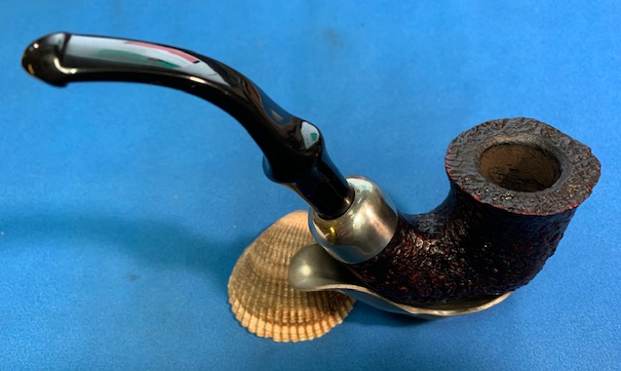
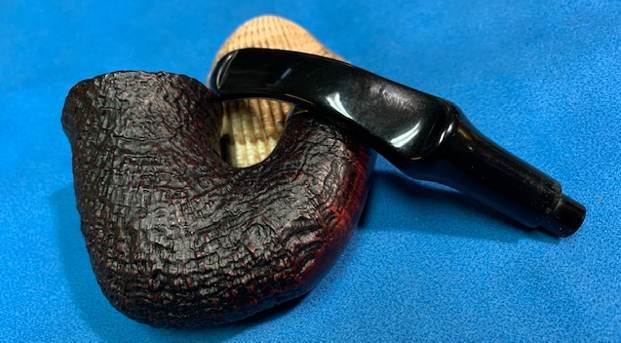
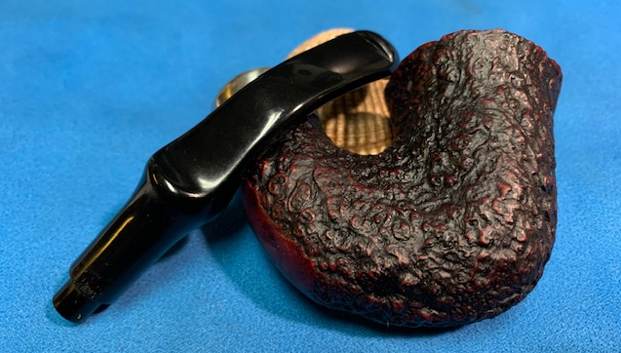
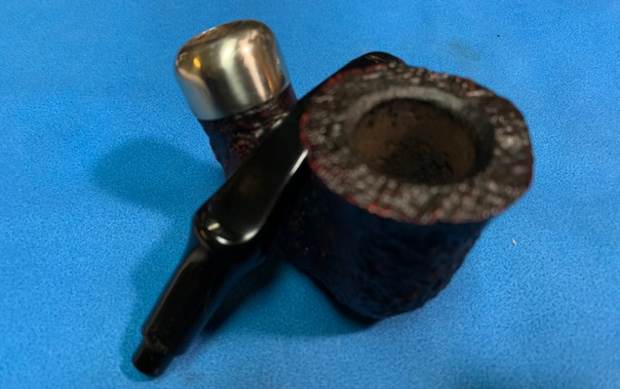
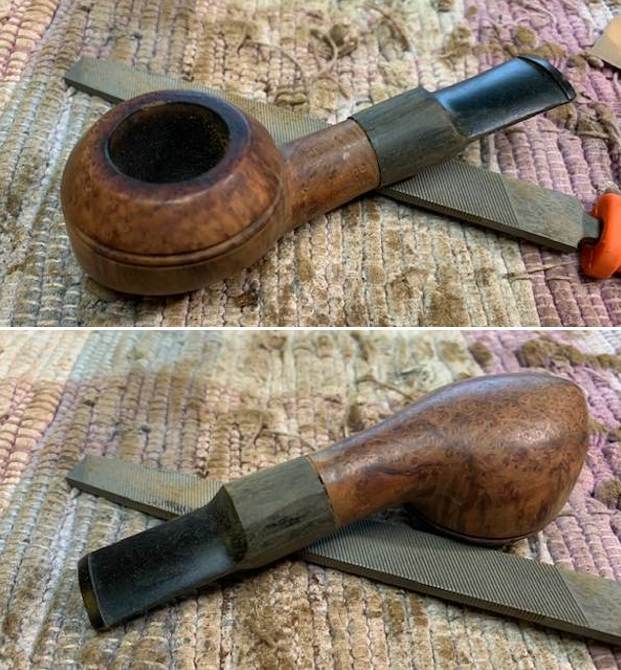
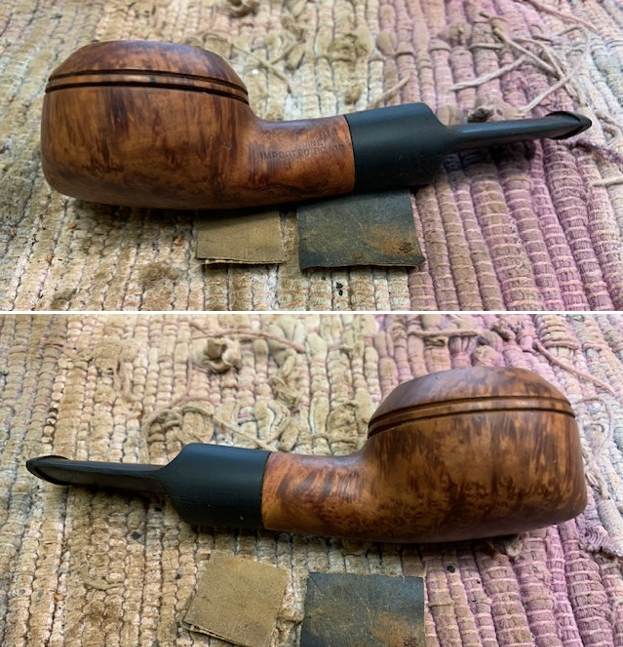
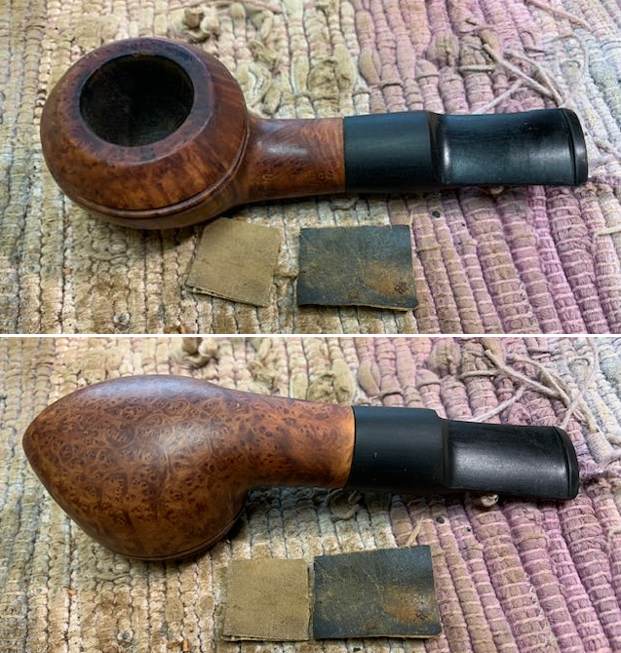
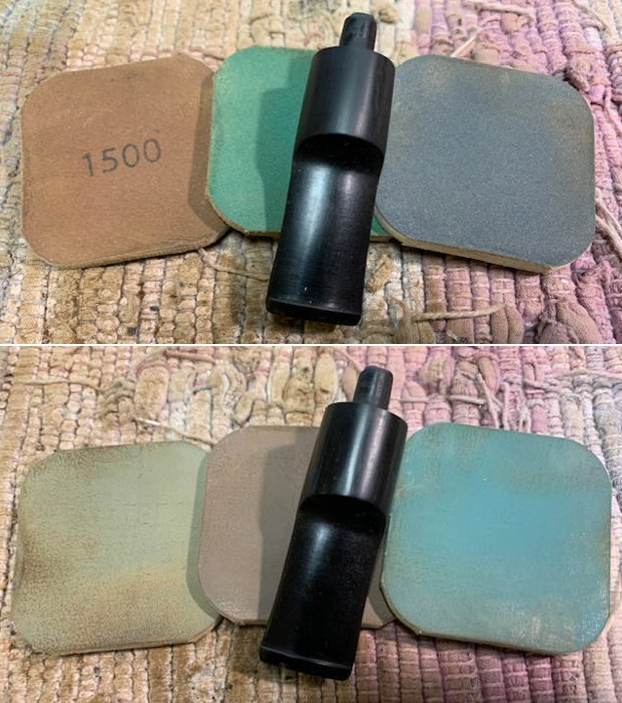
Tag Archives: fitting a stem

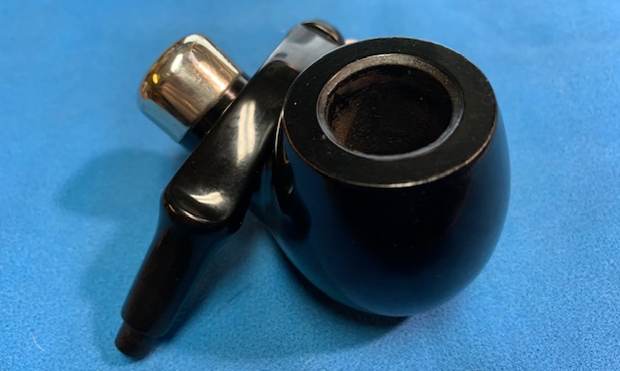
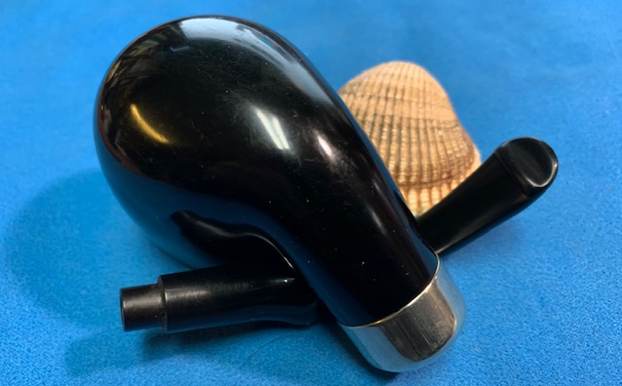
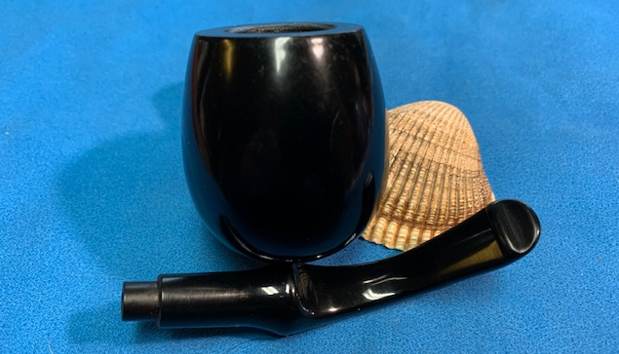
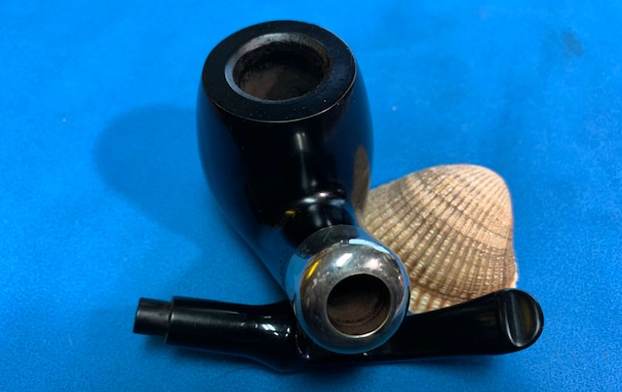
Restoring a Republic Era Peterson’s System Standard Bent 307 Billiard


Blog by Steve Laug

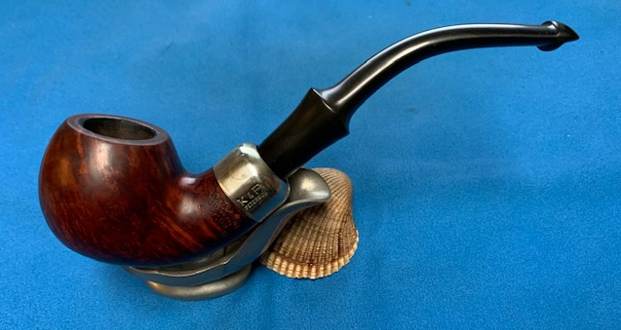
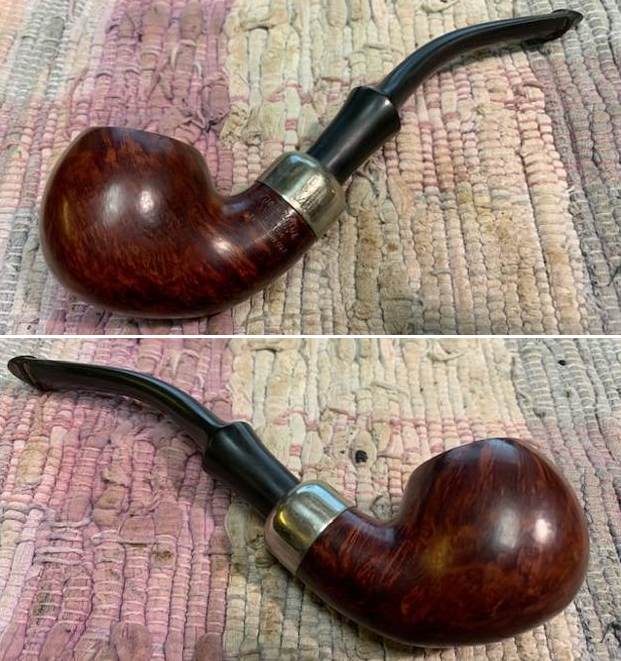
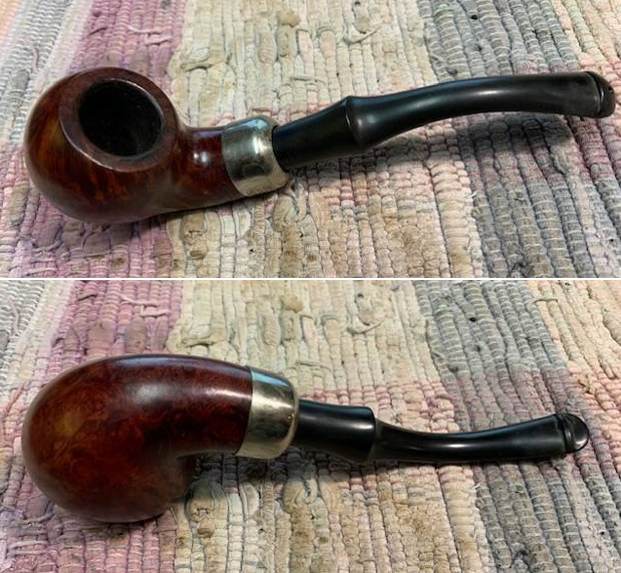
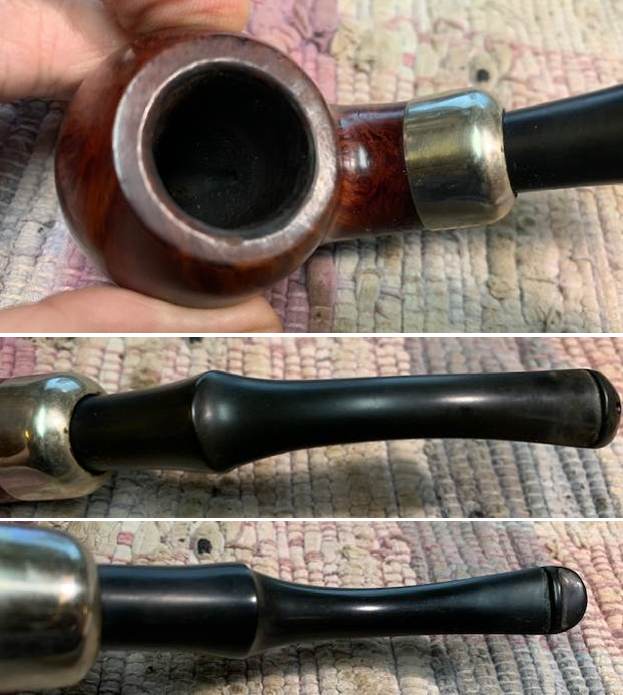
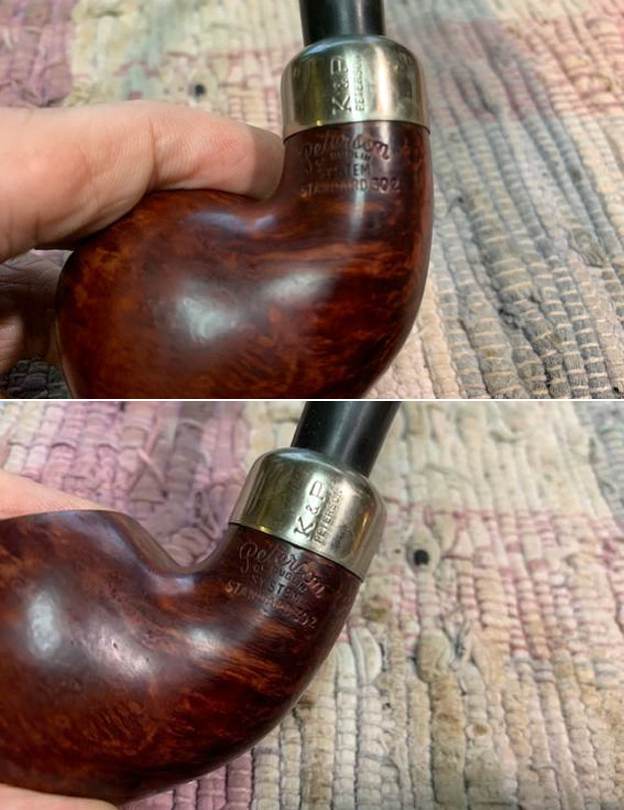
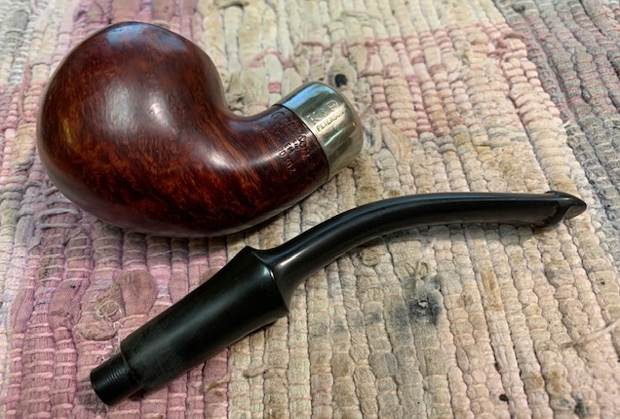
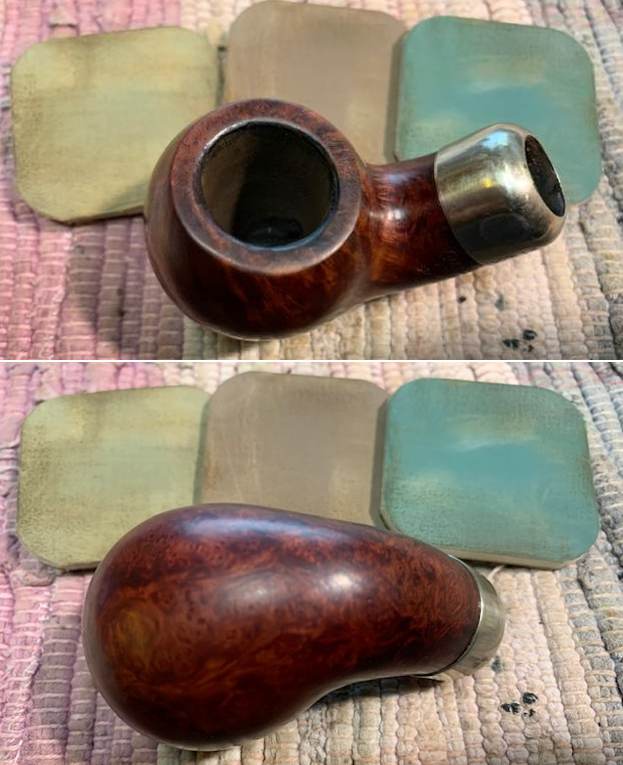
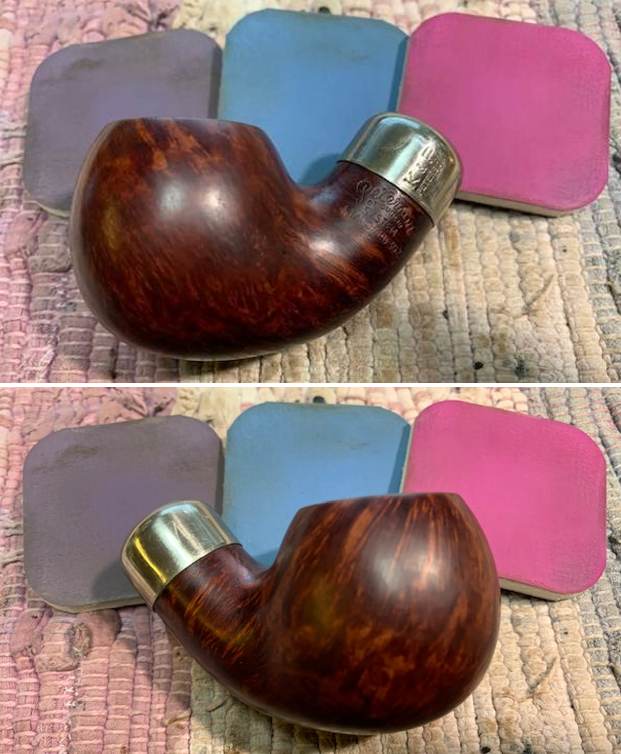
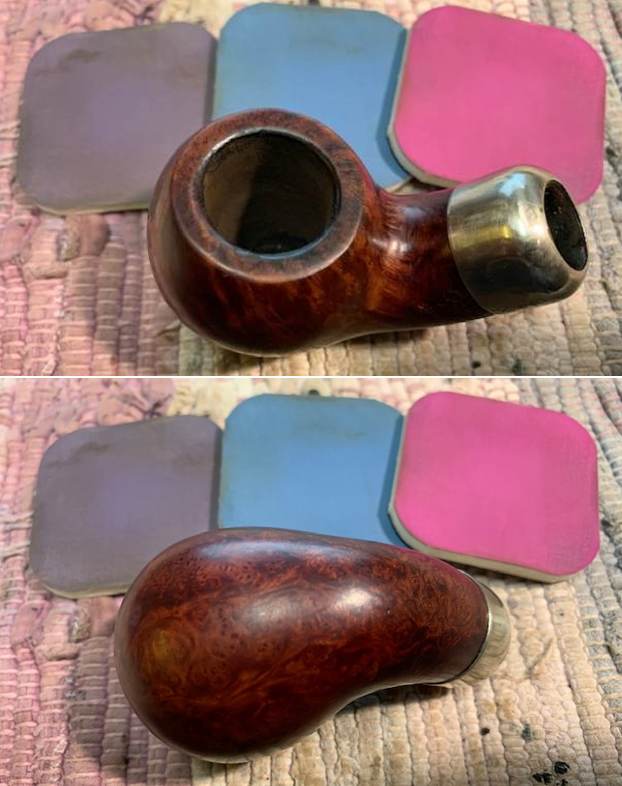
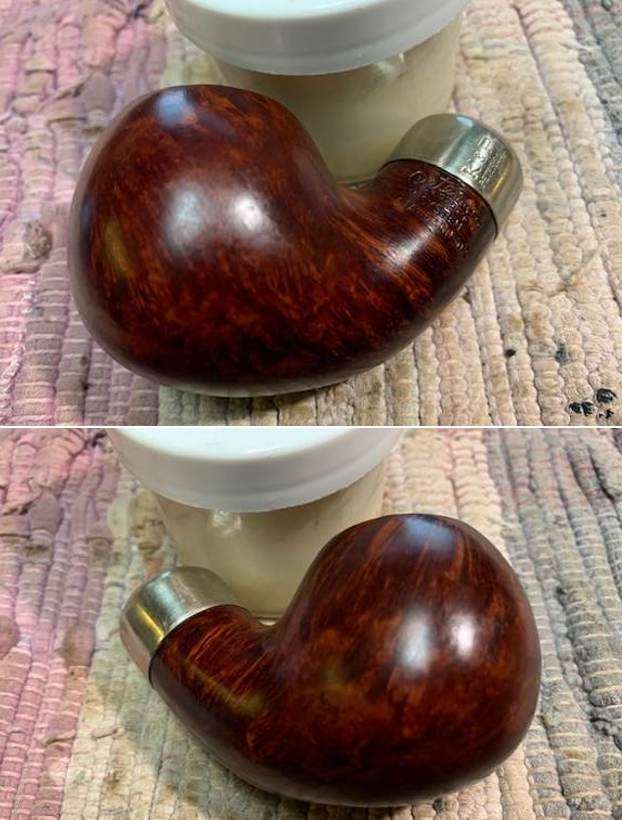
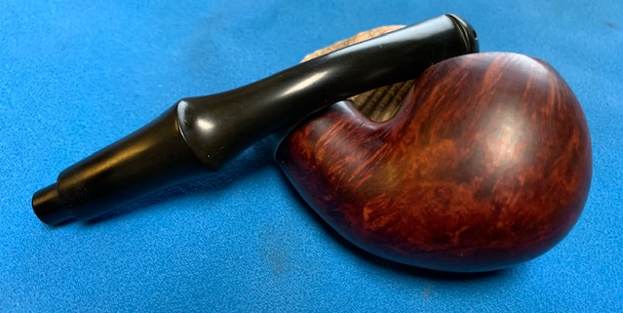
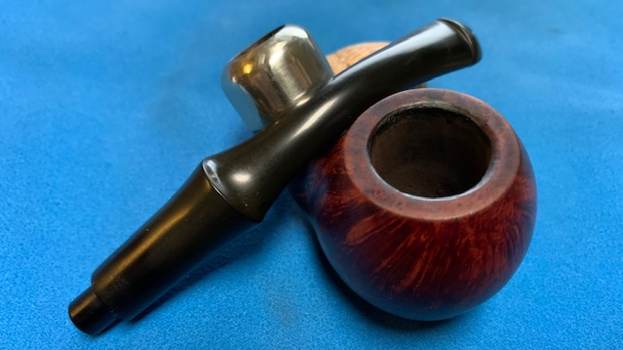
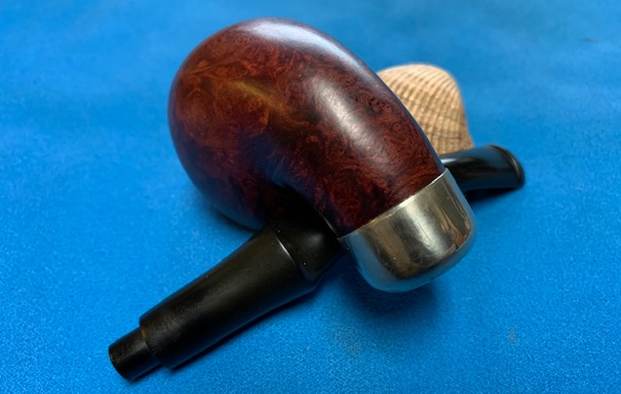
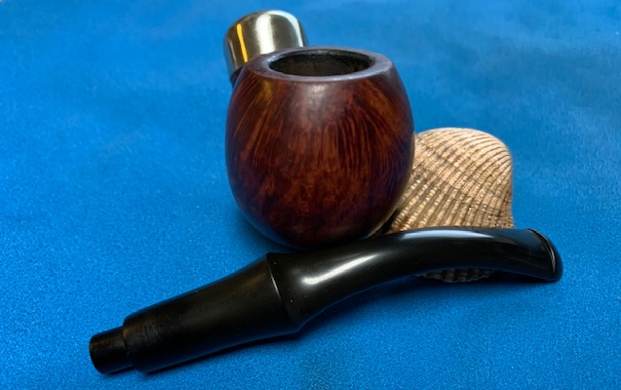
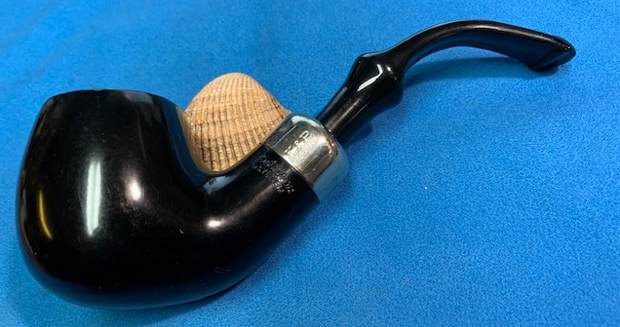
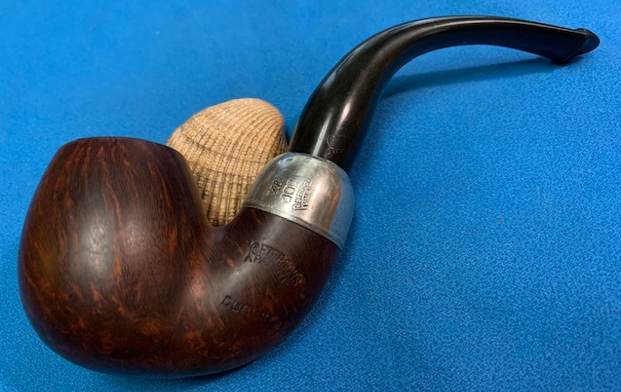
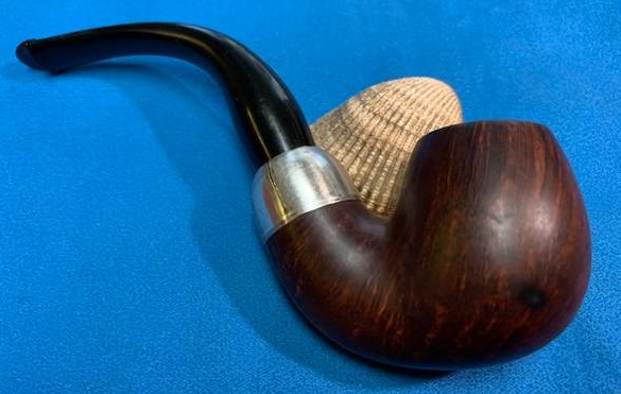
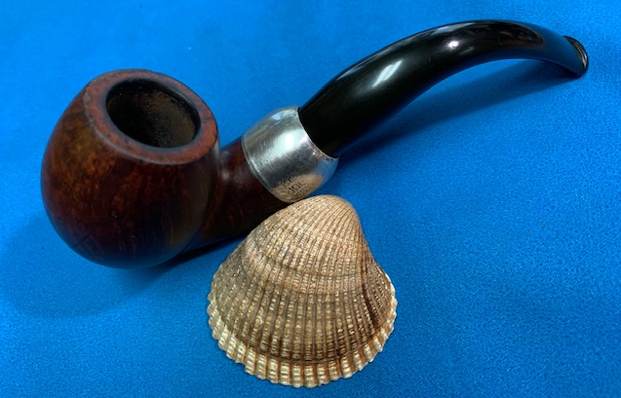
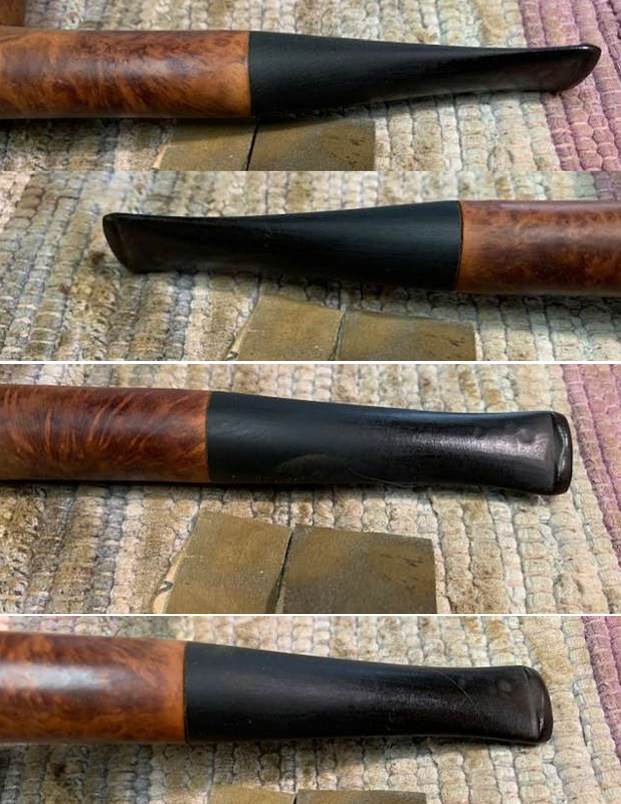
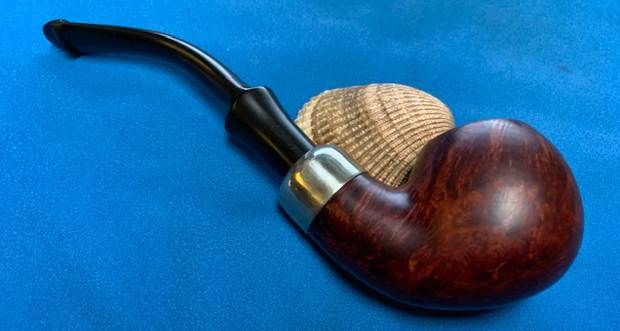
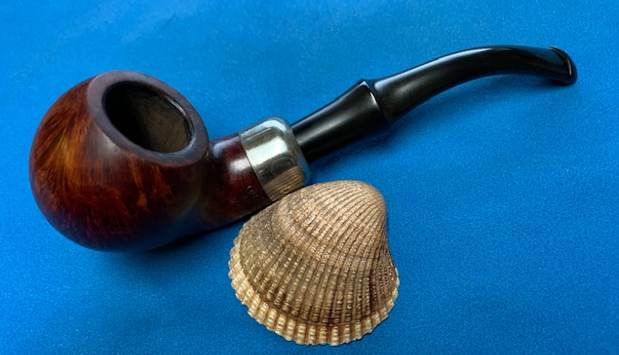
The next pipe I have chosen is another smooth finished Peterson’s System – this time a System Standard shape 307. It was the fourth of four pipes that came to me from a friend for work. This one also had very loose stem that did not seem to hold on in the shank that he wanted me to have a look at as well as cleaning and freshening it up. The stem had also straightened out a bit over time and needed to be rebent. The finish was smooth with some nice grain around the sides and shank. There was one noticeable fill on the left side near the rim top. The pipe was stamped on the left side of the shank and read Peterson’s [arched over] System [over] Standard. On the right side it was stamped Made in the Republic of Ireland in three lines over the shape number 307. It was in good condition when I brought it to the table. There was a heavy cake in the bowl and some light lava and darkening on the rim top. The nickel ferrule was in good shape but had some scratches that would need to be polished. It is stamped as well and reads K & P [over] Peterson on the left. The vulcanite stem was unstamped and in good condition. There was some oxidation, calcification and light chatter near the button that would polish out. It also was in need of being bent again. I took photos of the pipe before I started my work.   I took photos of the rim top and stem to show the general condition of the pipe. The bowl is heavily caked and the rim top and edges have a thick lava overflow. The stem looks good but it has tooth marks on the top and underside near the button. I took photos of the stamping on the left shank side. It reads as noted above. I also tried to capture the stamping on the ferrule and it is clear and readable.    I removed the stem and took a photo of the pipe to have a look at the parts and overall look.I am including the link to the Pipedia’s article on Peterson pipes. It is a great read in terms of the history of the brand (https://pipedia.org/wiki/Peterson).

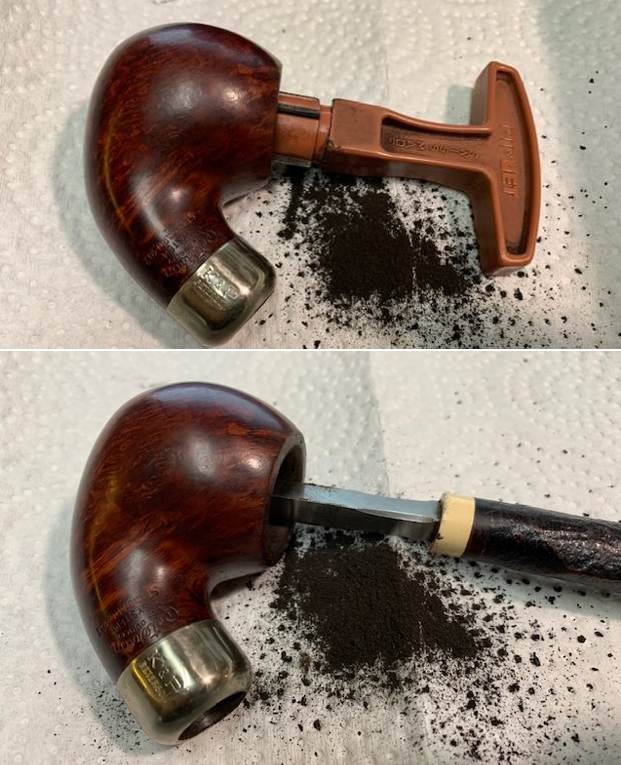
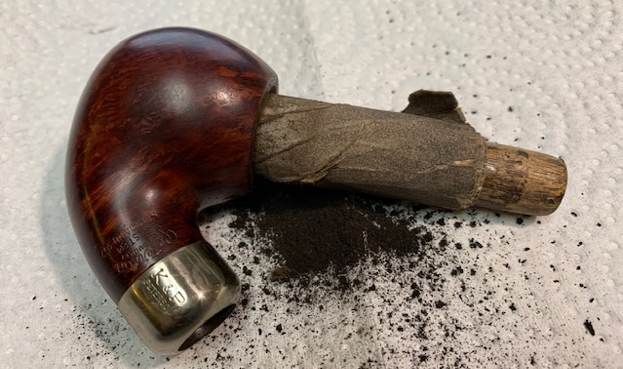
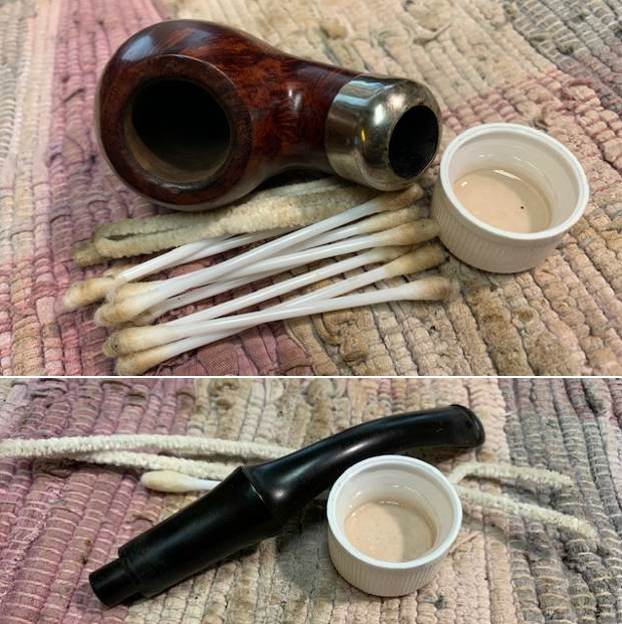
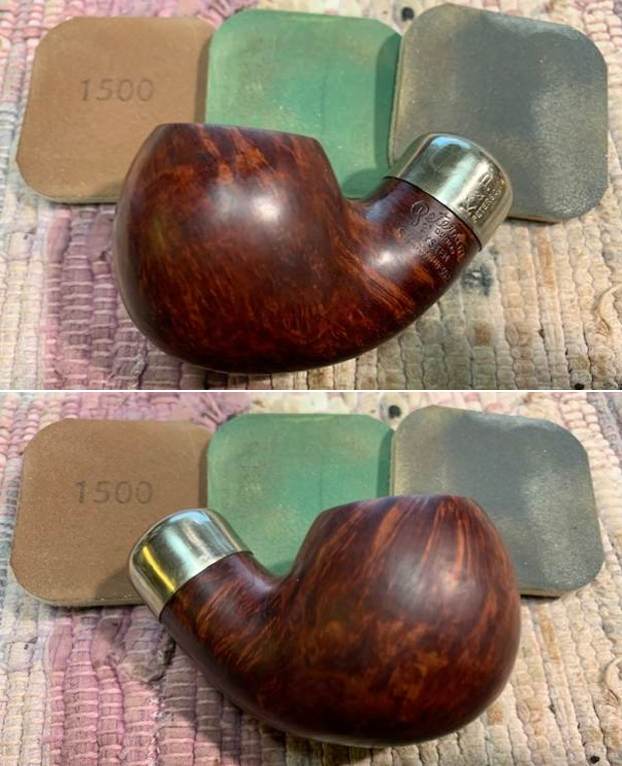
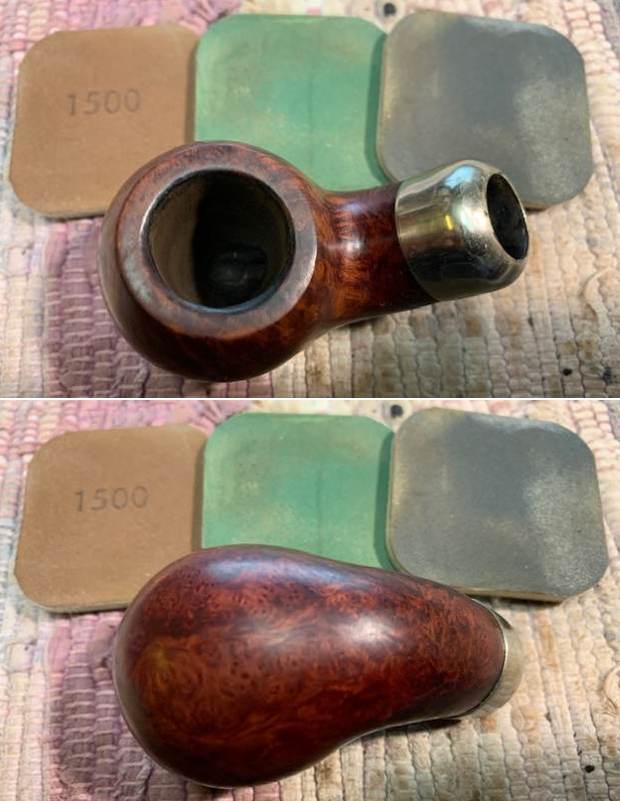
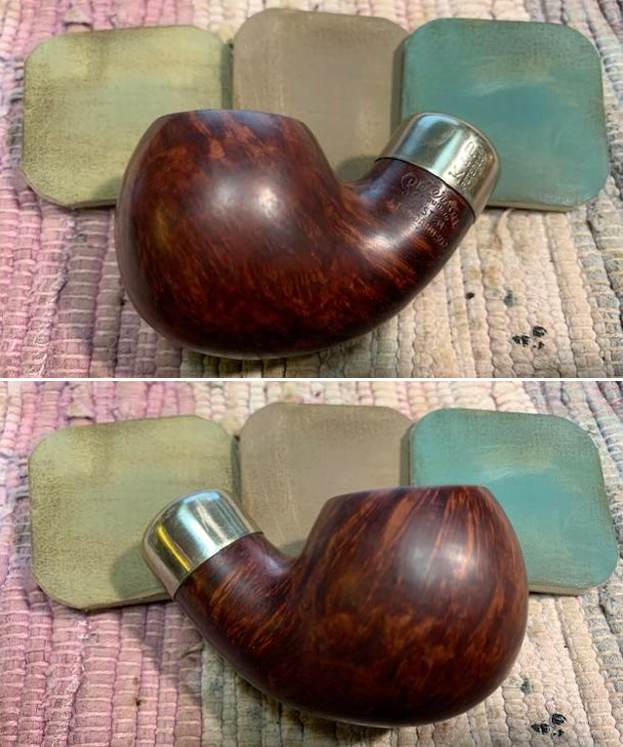
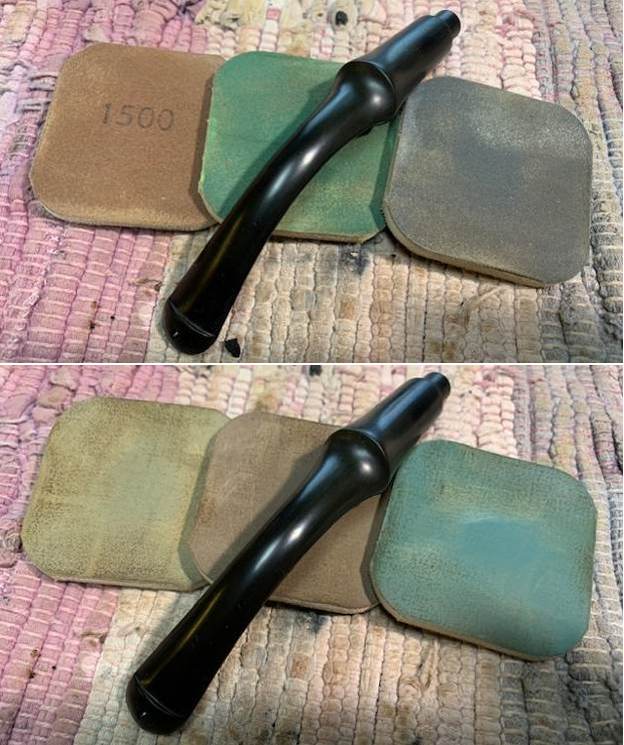
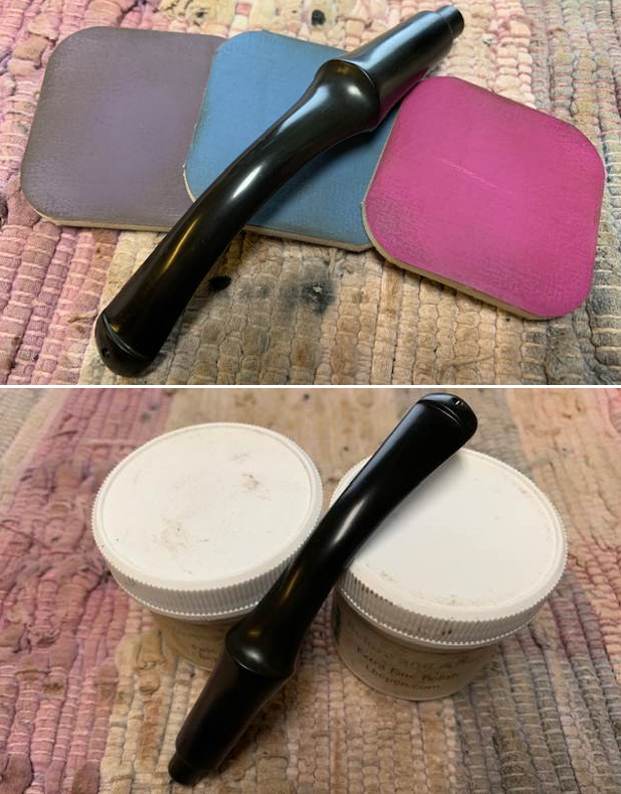
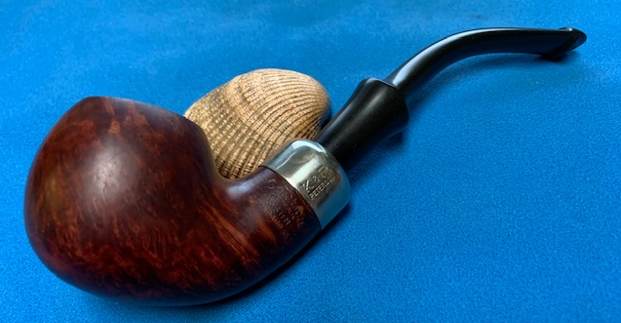
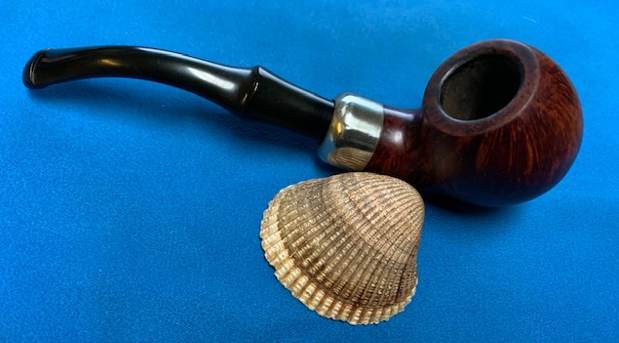
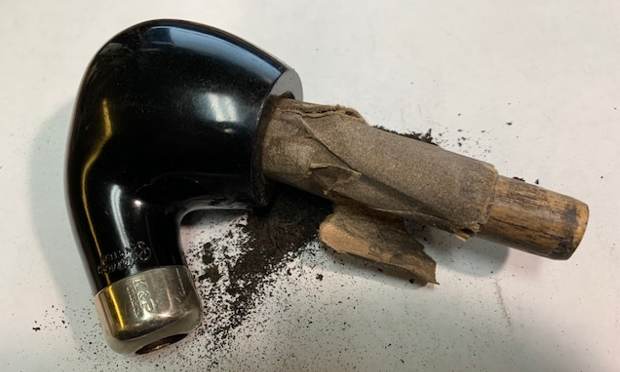
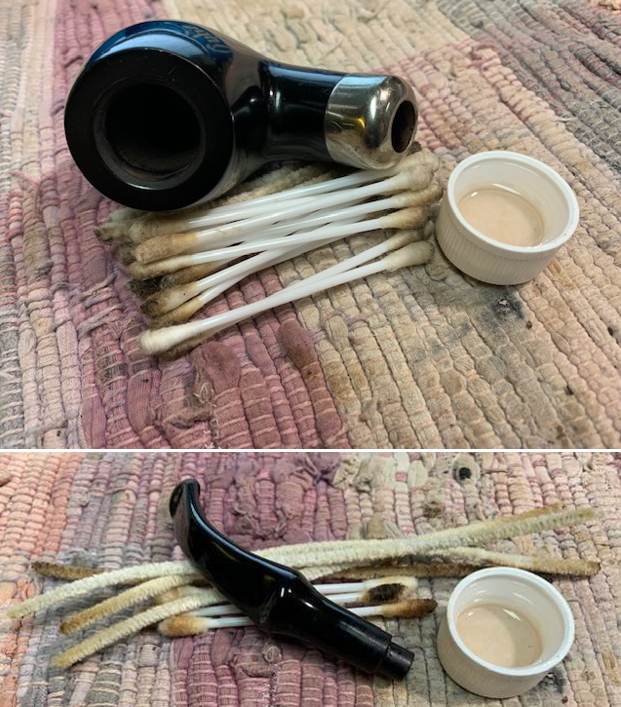
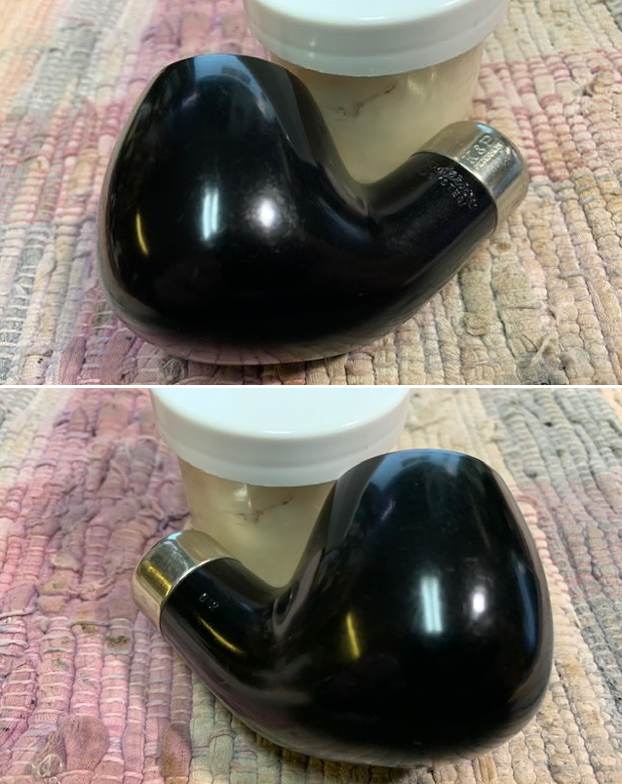
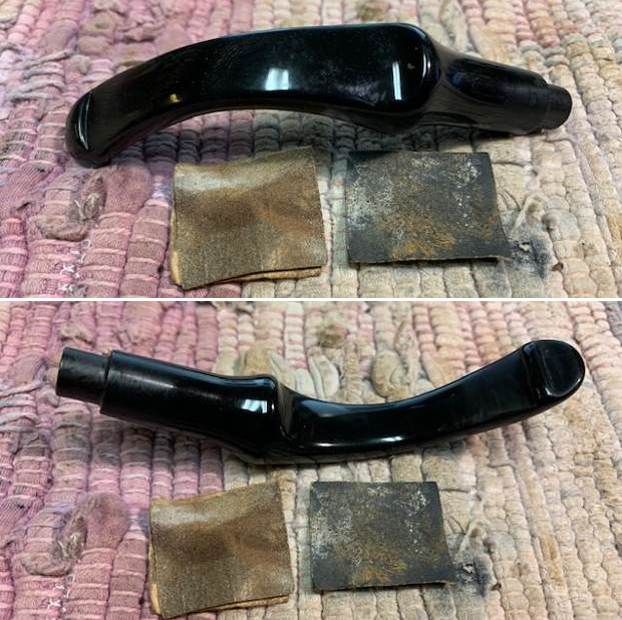
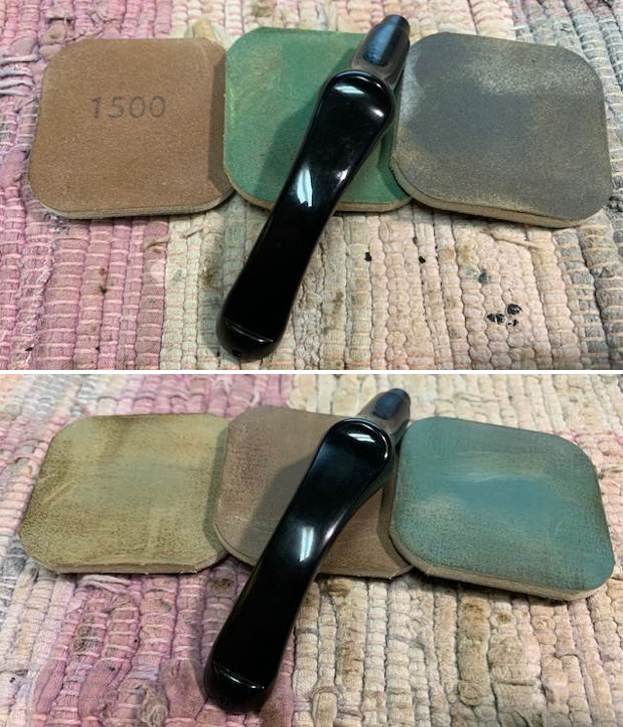
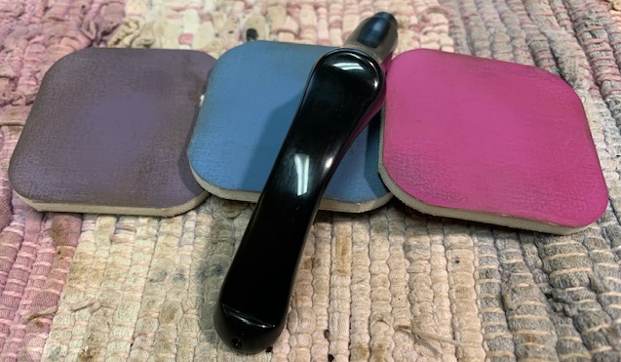
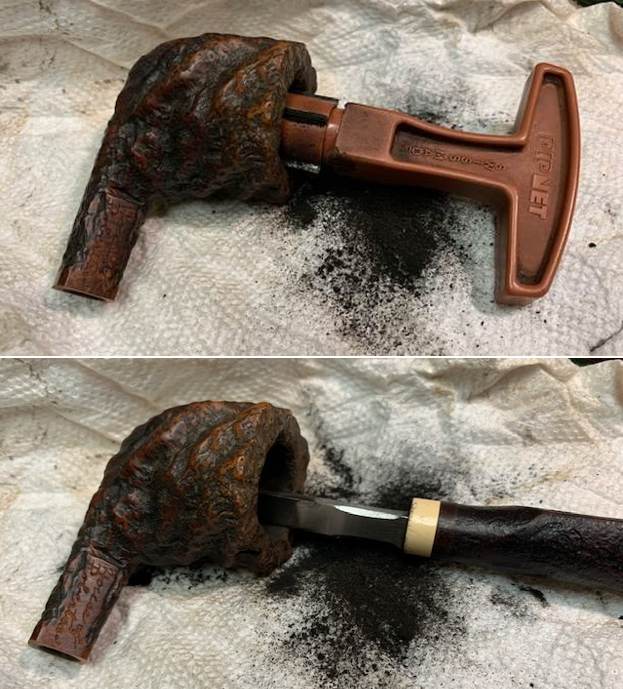
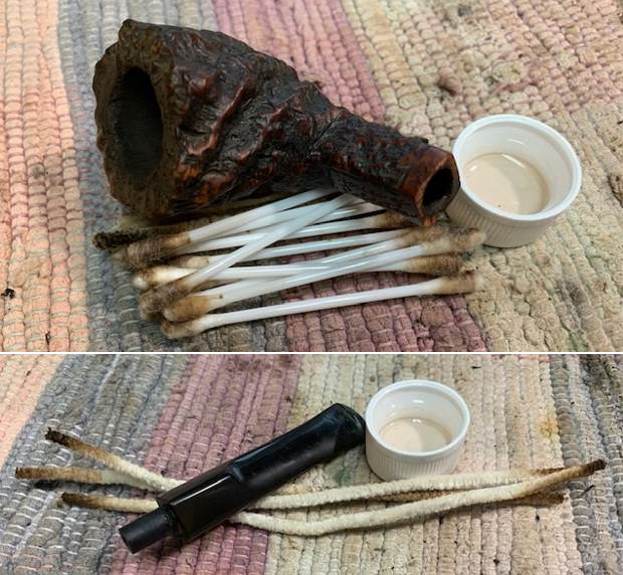
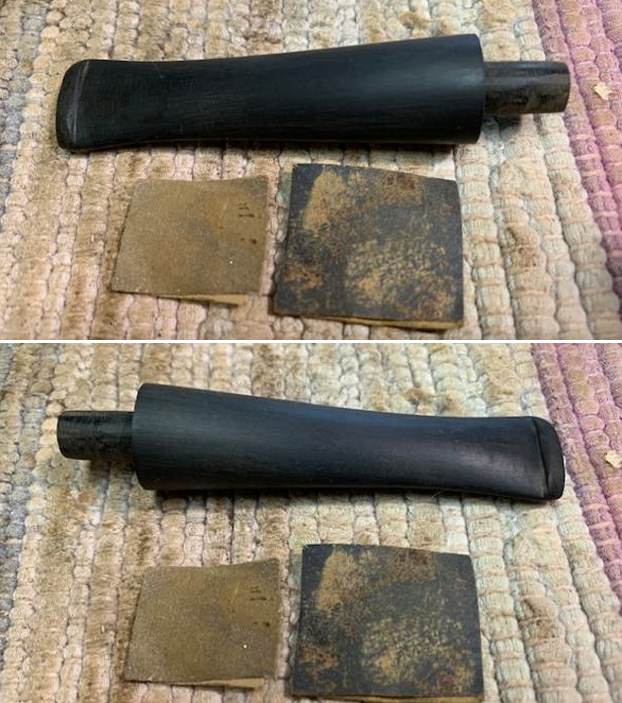
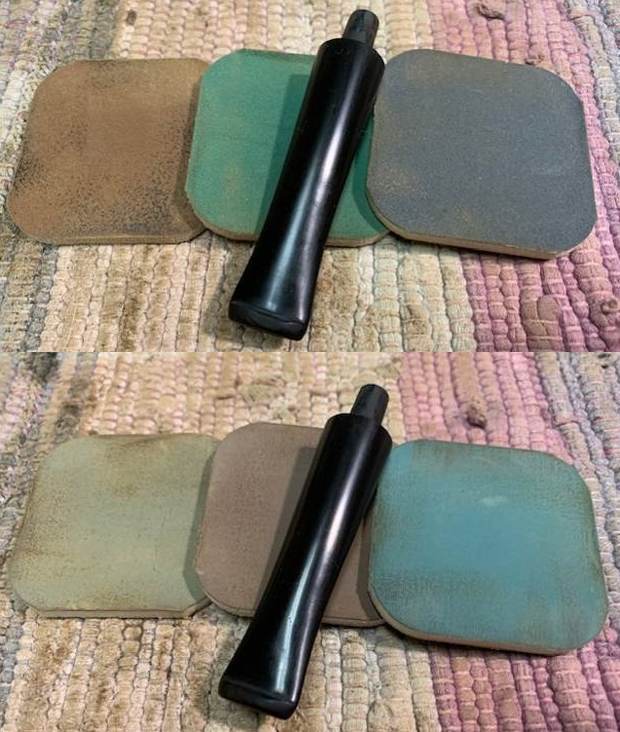
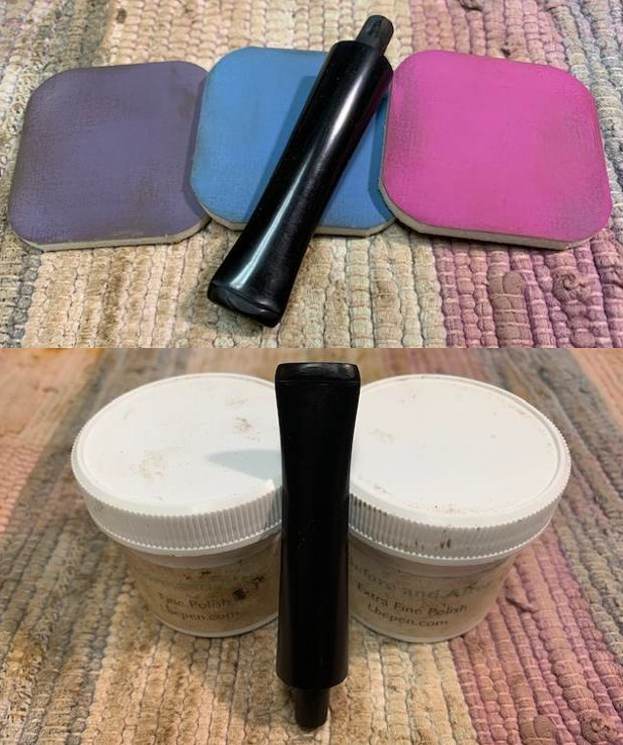
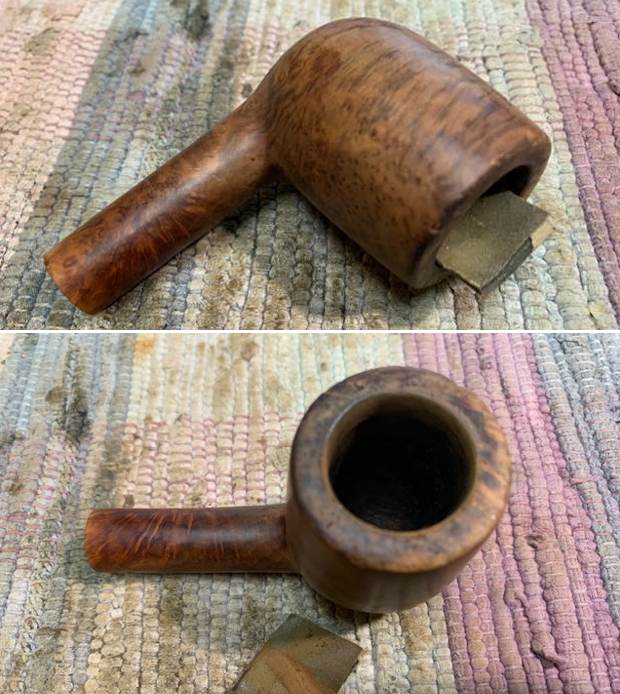
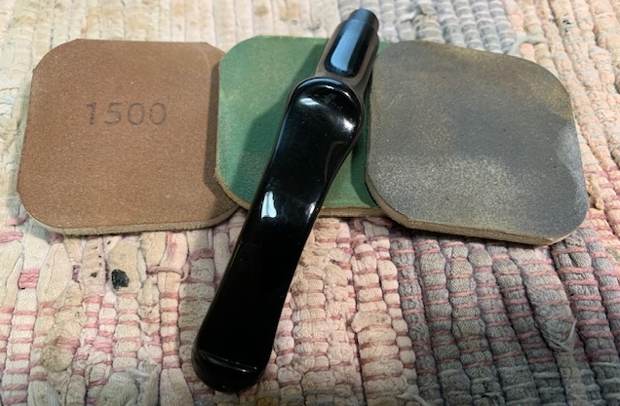
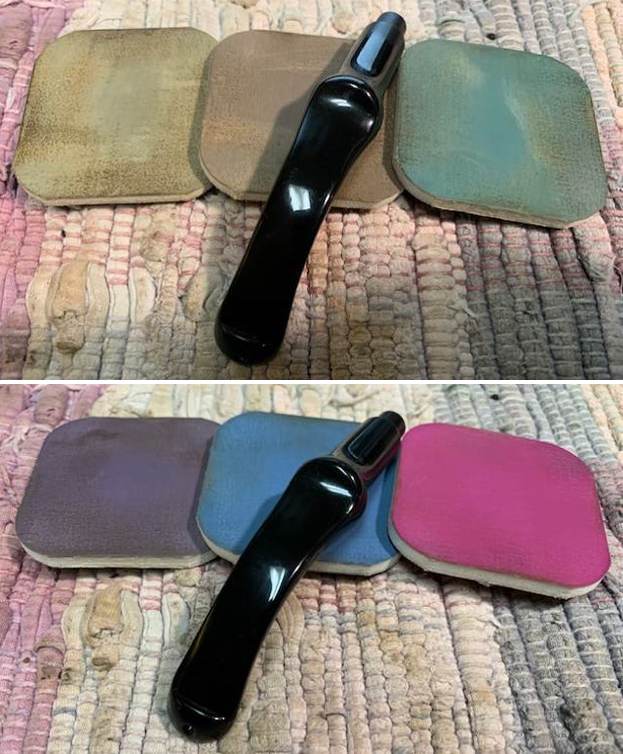
I turned to work on the pipe itself. I started my clean up by reaming the bowl with a PipNet reamer and cut back the cake back to the bare briar. I cleaned up the walls with a Savinelli Fitsall Pipe Knife. I finished the cleaning of the bowl with a piece of dowel wrapped in 220 grit sandpaper. I smoothed out the bowl walls and checked for cracks and flaws. All looked very good.   I scrubbed the interior of the bowl, shank and stem with pipe cleaners, cotton swabs and alcohol to remove the tars and oils. It was full of tars and oils that with a bit of work came clean. I cleaned up the rim top and the beveled inner edge with a piece of 220 grit sandpaper. I removed the burn damage and darkening on both and it looked better.  I stained the pink putty fill with a Brown and Black Sharpie Pen. It blended in much better than the pink had before.I polished the briar with micromesh sanding pads – dry sanding with 1500-12000 grit pads. I wiped it down with a damp cloth after each pad. I used it to clean off the rim top at the same time. I worked some Before & After Restoration Balm into the surface of the briar with my fingertips to clean, enliven and protect the briar. I let the balm sit for 15 minutes and then buffed with a cotton cloth to raise the shine. The photos show the bowl at this point in the restoration process.    I polished the nickel ferrule with a jewelers cloth give it a shine and to remove the oxidation.    I set the bowl aside and turned my attention to the stem. I decided to bend it to the correct angle so I heated it with a heat gun to soften it and then bent it so that it sit correctly in the shank. It looked much better.   I sanded out the tooth marks on the button and ahead of the button with 220 grit sandpaper and adjusted the fit of the tenon end to the taper of the shank. I started the polishing with 400 grit wet dry sandpaper.  I polished the stem with micromesh sanding pads – wet sanding with 1500-12000 grit sanding pads. I wiped it down after each sanding pad with Obsidian Oil. I finished polishing it with Before & After Pipe Stem Polish – both Fine and Extra Fine. I gave it a final coat of Obsidian Oil and let it dry before buffing.   I am excited to finish this Peterson’s System Standard 302 Bent Apple. I put the pipe back together and buffed it lightly with Blue Diamond on the buffing wheel. I gave the bowl and the stem multiple coats of carnauba wax. I buffed the pipe with a clean buffing pad to deepen the shine. I hand buffed the pipe with a microfiber cloth to further raise the shine. It is fun to see what the polished bowl looks like with deep sandblast all around it. Added to that the polished black acrylic stem was beautiful. This System Standard 302 Bent Apple is great looking and the pipe feels great in my hand. It is light and well balanced. Have a look at it with the photos below. The dimensions are Length: 6 inches, Height: 2 inches, Outside diameter of the bowl: 1 ½ inches, Chamber diameter: ¾ of an inch. The weight of the pipe is 63 grams/2.26 oz. It is a beautiful pipe and the fourth of the four I am working on for my friend. Now that they are all finished they will be sent back to him. Thanks for walking through the restoration with me as I worked over this pipe. Thanks to each of you who are reading this blog.

Restoring a Peterson’s System Standard Bent 302 Apple


Blog by Steve Laug

The next pipe I have chosen is another smooth finished Peterson’s System – this time a System Standard shape 302. It was the third of four pipes that came to me from a friend for work. This one had very loose stem that did not seem to hold on in the shank that he wanted me to have a look at as well as cleaning and freshening it up. The stem had also straightened out a bit over time and needed to be rebent. The finish was smooth with some nice grain around the sides and shank. It was stamped on the left side of the shank and read Peterson’s [arched over] System [over] Standard followed by the shape number 302. It was in great condition when I brought it to the table. There was a heavy cake in the bottom half of the bowl and some light lava on the rim top. The nickel ferrule was in good shape but had some scratches that would need to be polished. It is stamped as well and reads K & P [over] Peterson on the left. The vulcanite stem was unstamped and in good condition. There was some oxidation, calcification and light chatter near the button that would polish out. I took photos of the pipe before I started my work.   I took photos of the rim top and stem to show the general condition of the pipe. The bowl is heavily caked and the rim top and edges have a thick lava overflow. The stem looks good but it has tooth marks on the top and underside near the button. I took photos of the stamping on the left shank side. It reads as noted above. I also tried to capture the stamping on the ferrule and it is clear and readable. I removed the stem and took a photo of the pipe to have a look at the parts and overall look.I am including the link to the Pipedia’s article on Peterson pipes. It is a great read in terms of the history of the brand (https://pipedia.org/wiki/Peterson).

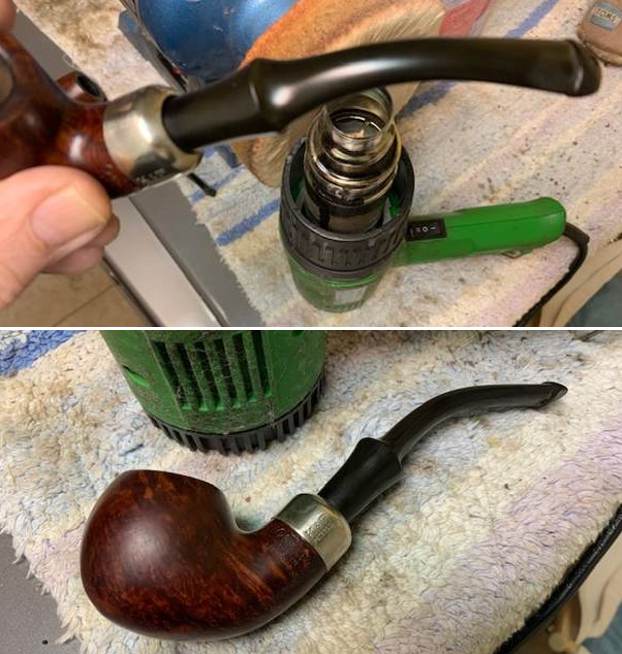
I turned to work on the pipe itself. I started my clean up by reaming the bowl with a PipNet reamer and cut back the cake back to the bare briar. I cleaned up the walls with a Savinelli Fitsall Pipe Knife. I finished the cleaning of the bowl with a piece of dowel wrapped in 220 grit sandpaper. I smoothed out the bowl walls and checked for cracks and flaws. All looked very good. I scrubbed the interior of the bowl, shank and stem with pipe cleaners, cotton swabs and alcohol to remove the tars and oils. It was full of tars and oils that with a bit of work came clean. I polished the briar with micromesh sanding pads – dry sanding with 1500-12000 grit pads. I wiped it down with a damp cloth after each pad. I used it to clean off the rim top at the same time.   I worked some Before & After Restoration Balm into the surface of the briar with my fingertips to clean, enliven and protect the briar. I let the balm sit for 15 minutes and then buffed with a cotton cloth to raise the shine. The photos show the bowl at this point in the restoration process.   I polished the nickel ferrule with a jewelers cloth give it a shine and to remove the oxidation.    I set the bowl aside and turned my attention to the stem. I decided to bend it to the correct angle so I heated it with a heat gun to soften it and then bent it so that it sit correctly in the shank. It looked much better.   I polished the stem with micromesh sanding pads – wet sanding with 1500-12000 grit sanding pads. I wiped it down after each sanding pad with Obsidian Oil. I finished polishing it with Before & After Pipe Stem Polish – both Fine and Extra Fine. I gave it a final coat of Obsidian Oil and let it dry before buffing.   I am excited to finish this Peterson’s System Standard 302 Bent Apple. I put the pipe back together and buffed it lightly with Blue Diamond on the buffing wheel. I gave the bowl and the stem multiple coats of carnauba wax. I buffed the pipe with a clean buffing pad to deepen the shine. I hand buffed the pipe with a microfiber cloth to further raise the shine. It is fun to see what the polished bowl looks like with deep sandblast all around it. Added to that the polished black acrylic stem was beautiful. This System Standard 302 Bent Apple is great looking and the pipe feels great in my hand. It is light and well balanced. Have a look at it with the photos below. The dimensions are Length: 6 inches, Height: 2 inches, Outside diameter of the bowl: 1 ½ inches, Chamber diameter: ¾ of an inch. The weight of the pipe is 63 grams/2.26 oz. It is a beautiful pipe and the second of the four I am working on for my friend. Once the other two are finished it will be sent back to him. Thanks for walking through the restoration with me as I worked over this pipe. Thanks to each of you who are reading this blog.

Restoring a Peterson’s System Bent Dress Black B42


Blog by Steve Laug

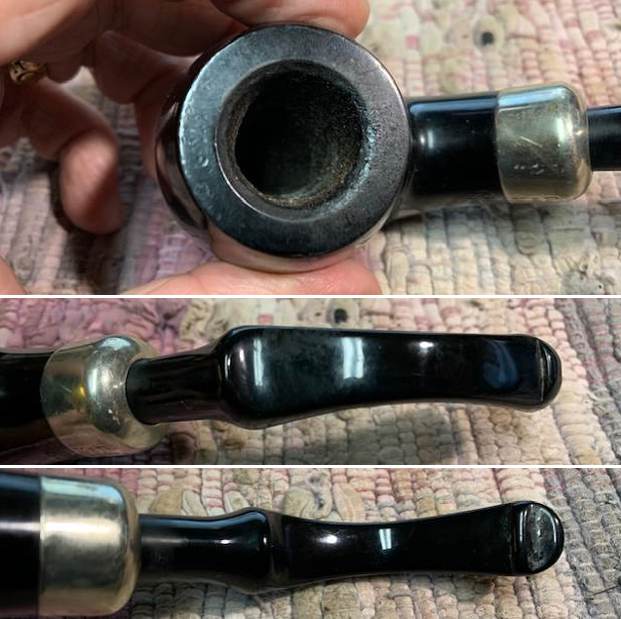
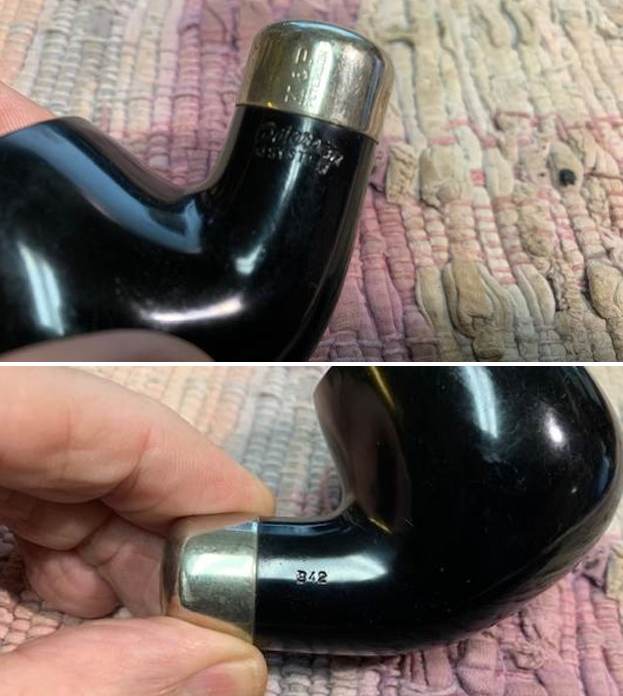
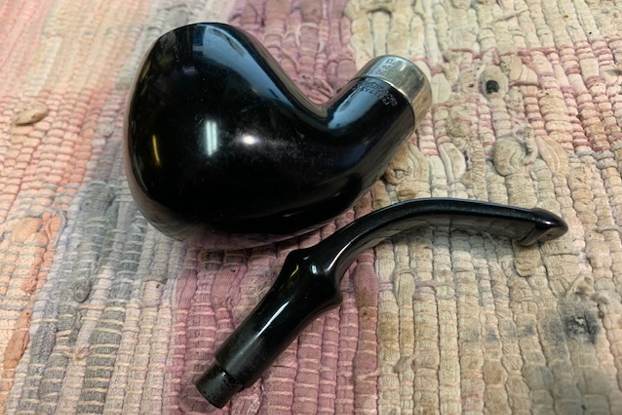
The next pipe I have chosen is another smooth finished Peterson’s System – this time a B42 (Brandy) in Dress Black. It was the second of four pipes that came to me from a friend for work. This one had very loose stem that did not seem to hold on in the shank that he wanted me to have a look at as well as cleaning and freshening it up. The finish was smooth and painted with a dress black. It was stamped on the left side of the shank and read Peterson’s [arched over] System. On the right side of the shank it is stamped with the shape number B42. It was in great condition when I brought it to the table. There was a heavy cake in the bowl and some lava on the rim top. The nickel ferrule was in good shape but had some scratches that would need to be polished. It is stamped as well and reads K & P [over] Peterson on the left. The stem appears to be acrylic (perhaps a replacement) and was unstamped and in good condition. There was some light chatter on and near the button that would polish out. I took photos of the pipe before I started my work. I took photos of the rim top and stem to show the general condition of the pipe. The bowl is heavily caked and the rim top and edges have a thick lava overflow. The stem looks good but it has tooth marks on the top and underside near the button. I took photos of the stamping on the shank sides. It reads as noted above. I also tried to capture the stamping on the ferrule and it is readable but the photo just could not capture it well.    I removed the stem and took a photo of the pipe to have a look at the parts and overall look.I am including the link to the Pipedia’s article on Peterson pipes. It is a great read in terms of the history of the brand (https://pipedia.org/wiki/Peterson).

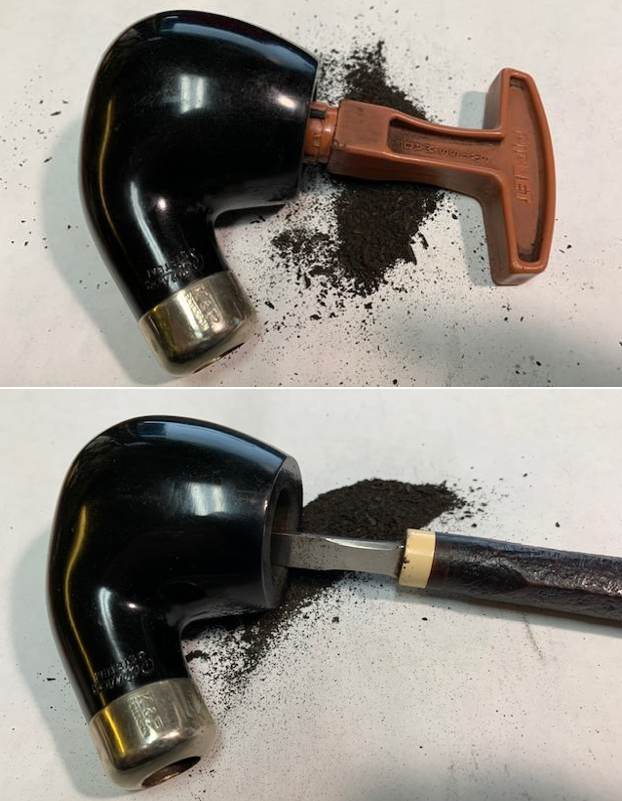
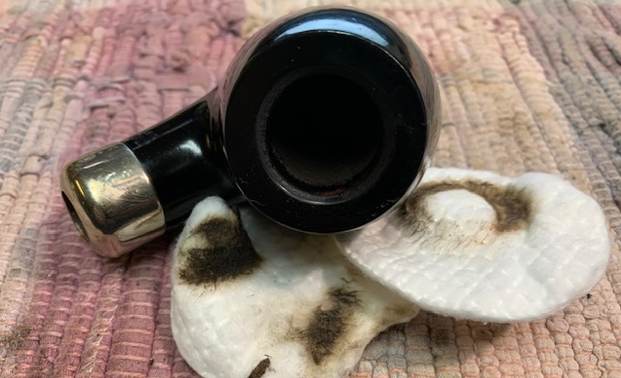
I turned to work on the pipe itself. I started my clean up by reaming the bowl with a PipNet reamer and cut back the cake back to the bare briar. I cleaned up the walls with a Savinelli Fitsall Pipe Knife. I finished the cleaning of the bowl with a piece of dowel wrapped in 220 grit sandpaper. I smoothed out the bowl walls and checked for cracks and flaws. All looked very good. I cleaned off the build up on the rim top with damp cotton pads and was able to remove all of the lava on the rim. It actually looked very good.I scrubbed the interior of the bowl, shank and stem with pipe cleaners, cotton swabs and alcohol to remove the tars and oils. It was full of tars and oils that with a bit of work came clean.   I worked some Before & After Restoration Balm into the surface of the briar with my fingertips to clean, enliven and protect the briar. I let the balm sit for 15 minutes and then buffed with a cotton cloth to raise the shine. The photos show the bowl at this point in the restoration process.      I polished the nickel ferrule with a jewelers cloth give it a shine and to remove the oxidation.   I set the bowl aside and turned my attention to the acrylic stem. I sanded out the tooth marks in the surface of the stem on both the top and underside with 220 grit sandpaper and started the polishing process with 400 grit wet dry sandpaper.  I also sanded the area on the shank end for the first inch to clean it up and make the taper match the shank taper. I polished it as well with the 400 grit wet dry sandpaper.I polished the stem with micromesh sanding pads – wet sanding with 1500-12000 grit sanding pads. I wiped it down after each sanding pad with Obsidian Oil. I am excited to finish this Peterson’s System B42 Dress Black Bent Brandy. I put the pipe back together and buffed it lightly with Blue Diamond on the buffing wheel. I gave the bowl and the stem multiple coats of carnauba wax. I buffed the pipe with a clean buffing pad to deepen the shine. I hand buffed the pipe with a microfiber cloth to further raise the shine. It is fun to see what the polished bowl looks like with deep sandblast all around it. Added to that the polished black acrylic stem was beautiful. This Dress Black System B42 is great looking and the pipe feels great in my hand. It is light and well balanced. Have a look at it with the photos below. The dimensions are Length: 6 inches, Height: 2 inches, Outside diameter of the bowl: 1 ½ inches, Chamber diameter: ¾ of an inch. The weight of the pipe is 83 grams/2.93 oz. It is a beautiful pipe and the second of the four I am working on for my friend. Once the other two are finished it will be sent back to him. Thanks for walking through the restoration with me as I worked over this pipe. Thanks to each of you who are reading this blog.

Restoring a Peterson’s of Dublin System Standard 2 XL315 Bent Calabash


Blog by Steve Laug

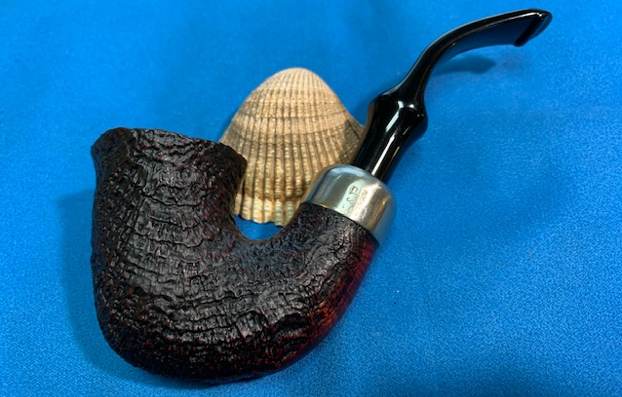
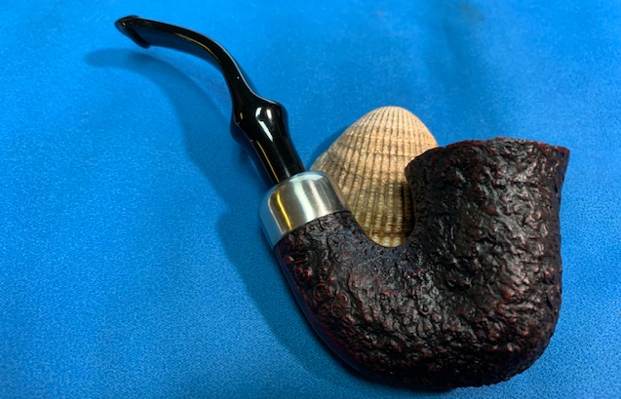
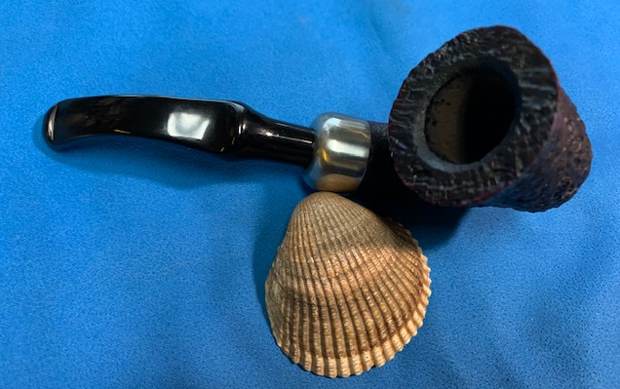
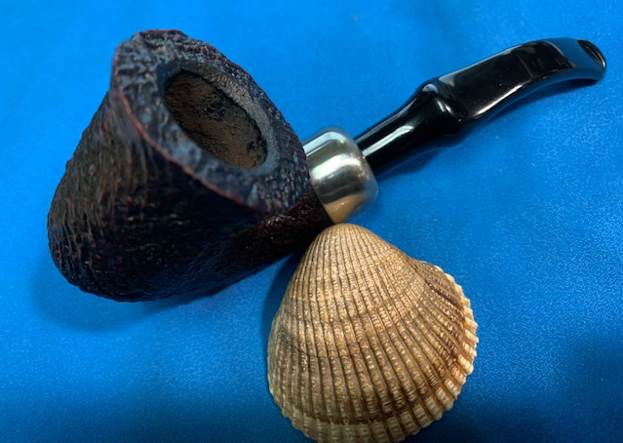
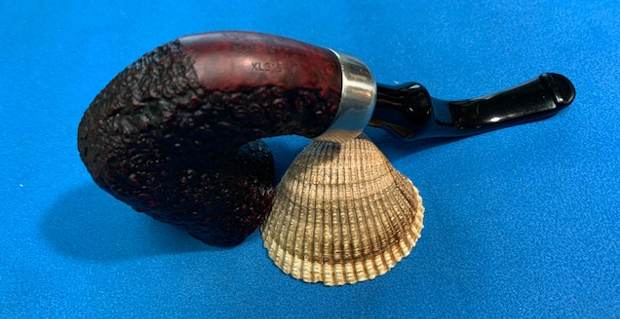
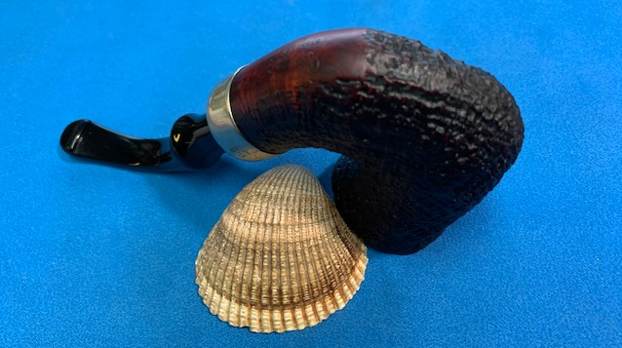
The next pipe I have chosen is a Peterson’s System Standard 2 XL315 sandblast bent Calabash. It was one of four pipes that came to me from a friend for work. This one had very loose stem that did not seem to hold on in the shank that he wanted me to have a look at as well as cleaning and freshening it up. The finish is deeply sandblasted and tactile with some grim in the finish and some lava on the rim top. It was stamped on the underside of the shank and read Peterson’s [arched over] of Dublin [over] System Standard followed by a 2 [over] the shape number XL315. It was in great condition when I brought it to the table. There was a heavy cake in the bowl and some lava in the sandblast on the rim top. The nickel ferrule was in good shape but scratches that would need to be polished. It is stamped as well and reads K & P [over] Peterson on the left. The stem was unstamped and was in good condition. There was some light chatter near the button that would polish out. I took photos of the pipe before I started my work. I took photos of the rim top and stem to show the general condition of the pipe. The bowl is heavily caked and the rim top and edges have a thick lava overflow. The stem is lightly oxidized and has tooth marks on the top and underside near the button. I tried to take photos of the underside of the shank to show the stamping but the stamping is quite faint though readable with a lens. It reads as noted above. I also tried to capture the stamping on the ferrule and it is readable but the photo just could not capture it well.    I removed the stem and took a photo of the pipe to have a look at the parts and overall look.I am including the link to the Pipedia’s article on Peterson pipes. It is a great read in terms of the history of the brand (https://pipedia.org/wiki/Peterson).

I turned to “The Peterson Pipe” by Mark Irwin and Gary Malmberg to get some background on the Peterson’s Of Dublin pipes. On page 298 it had the following information.

Dublin 1906-2003 Although Dublin appears under Peterson’s on many pipes over the decades, it has served mostly as part of the brand name. The word first appeared on pipes hallmarked 1906-11 Stamped Peterson’s over Patent over Dublin. The simpler Peterson’s over Dublin first appeared on pipes hallmarked 1912 after the expiration of the patent. Illustrations of pipes in the ’37 catalogue show a random dispersion of the stamp Peterson’s over Of Dublin together with the ordinary Peterson’s over Dublin on every model offered. Specimens of the former will either bear an Irish COM or London Made over England COM and almost certainly date from 1945-62. It was first mentioned in print as part of a model name in ’68 price list, as K&P Dublin, in ’92 for a Danish market line and in 2017.

The stamping of Peterson’s Of Dublin is very broad and cannot really help pin down the date on the pipe. However, XL315 shape came out in 1998 so the pipe is definitely post 1998.

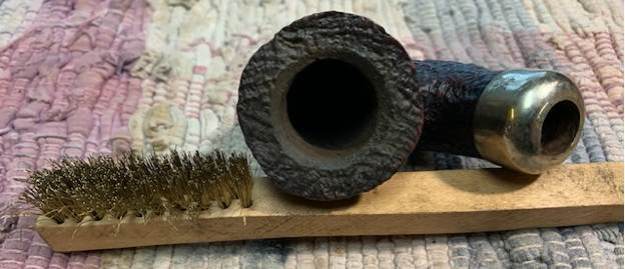
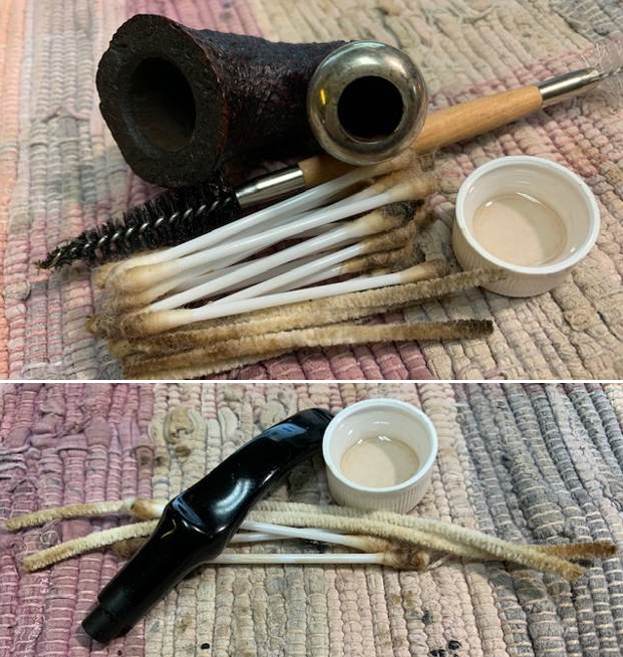
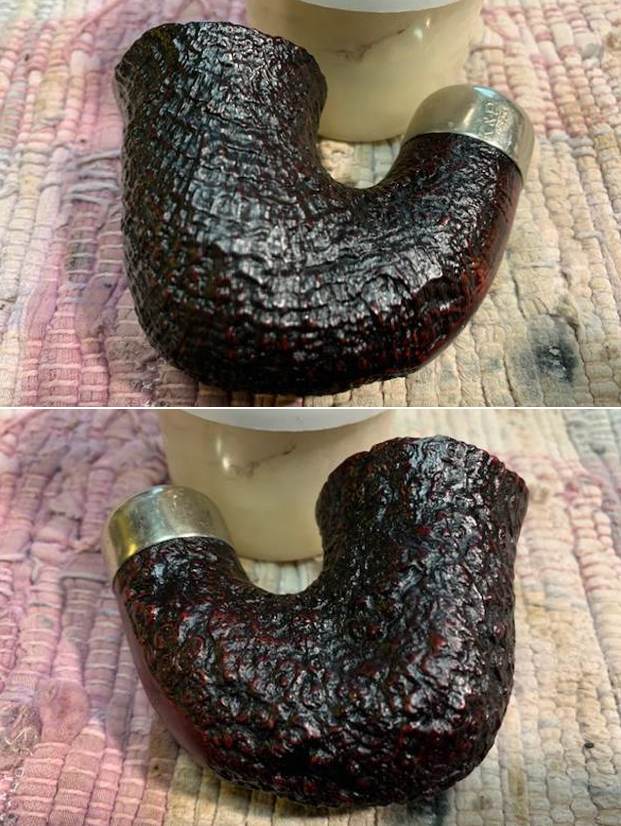
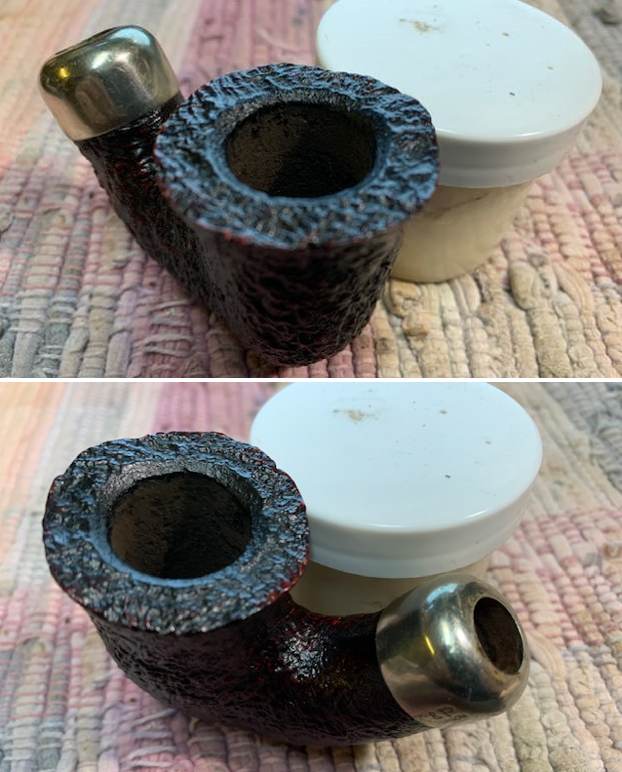
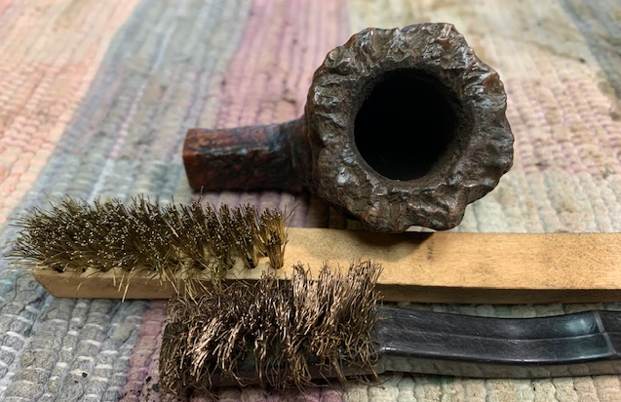
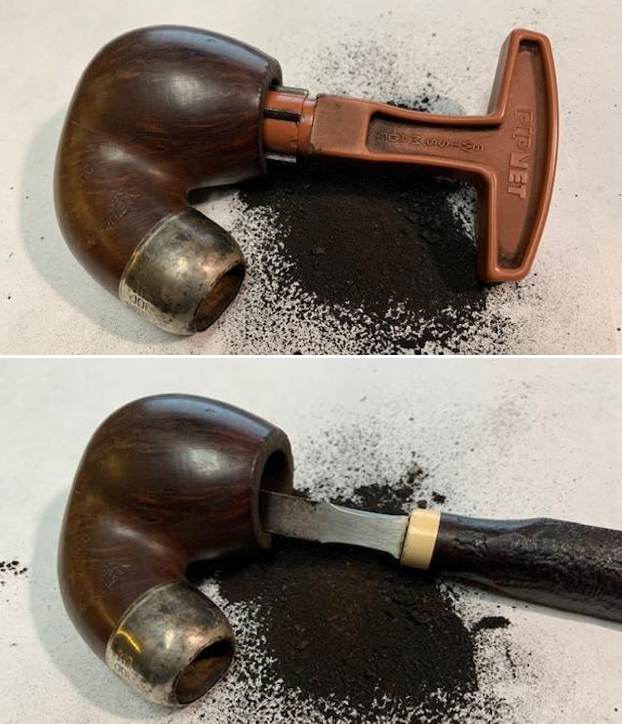
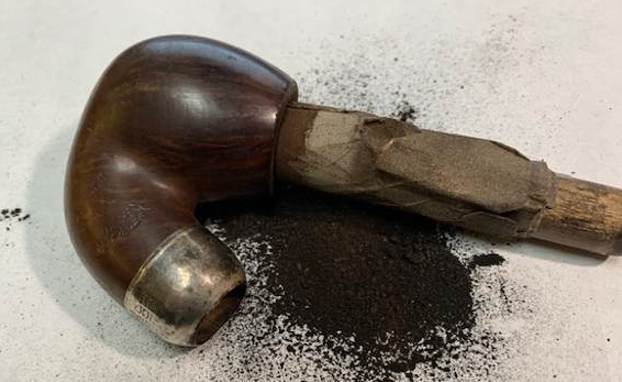
I started my clean up of the pipe by reaming it with a PipNet reamer and cut back the cake back to the bare briar. I cleaned up the walls with a Savinelli Fitsall Pipe Knife. I finished the cleaning of the bowl with a piece of dowel wrapped in 220 grit sandpaper. I smoothed out the bowl walls and checked for cracks and flaws. All looked very good. I cleaned off the build up in the sandblast on the rim top with a brass bristle brush. I was able to leave it absolutely clean.I scrubbed the interior of the bowl, shank and stem with pipe cleaners, cotton swabs and alcohol to remove the tars and oils. It was full of tars and oils that with a bit of work came clean.   I worked some Before & After Restoration Balm into the surface of the briar with my fingertips and a horsehair shoe brush to clean, enliven and protect the briar. I let the balm sit for 15 minutes and then buffed with a cotton cloth to raise the shine. The photos show the bowl at this point in the restoration process.      I polished the nickel ferrule with micromesh sanding pads – using 1500-12000 grit pads. I wiped it down with a jewelers cloth to polish it and remove the oxidation. I sanded the area on the shank end of the stem for the first inch to clean it up and make the taper match the shank taper.

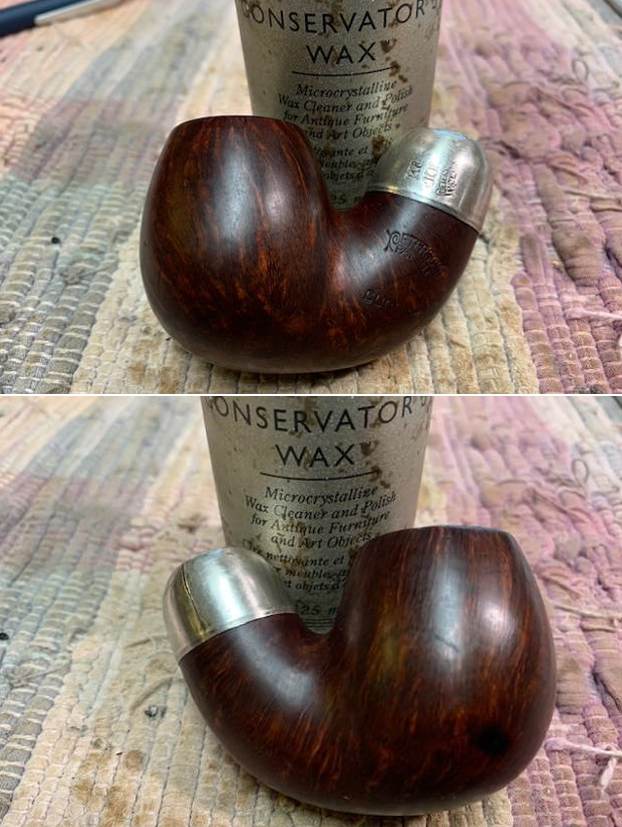
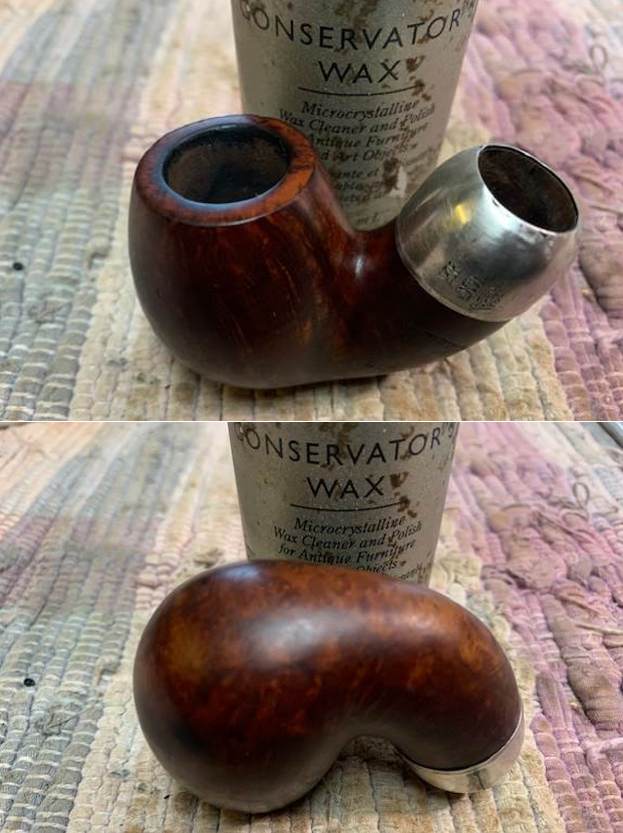
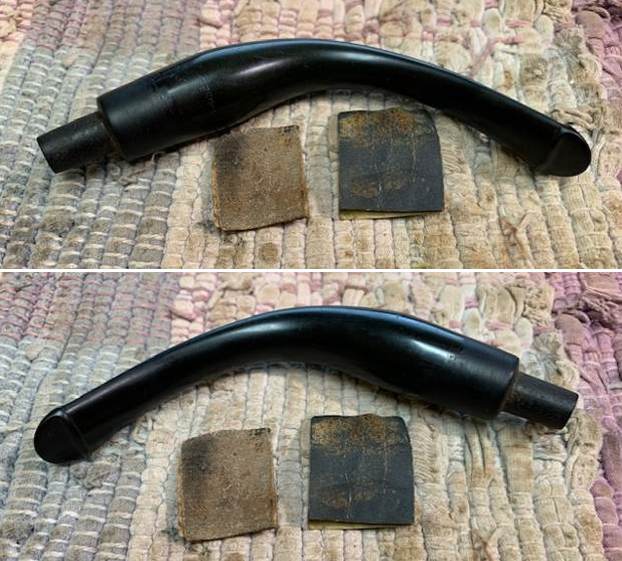
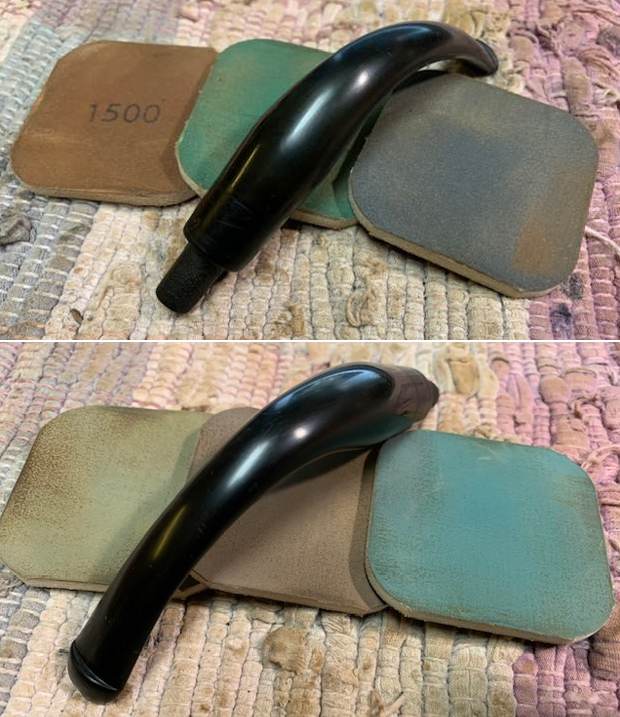
I polished the stem with micromesh sanding pads – wet sanding with 1500-12000 grit sanding pads. I wiped it down after each sanding pad with Obsidian Oil.  I am excited to finish this Peterson’s Of Dublin System Standard 2 XL315 Bent Calabash. I put the pipe back together and buffed it lightly with Blue Diamond on the buffing wheel. I gave the bowl multiple coats of Conservator’s Wax and the stem multiple coats of carnauba wax. I buffed the pipe with a clean buffing pad to deepen the shine. I hand buffed the pipe with a microfiber cloth to further raise the shine. It is fun to see what the polished bowl looks like with deep sandblast all around it. Added to that the polished black vulcanite stem was beautiful. This sandblast System Standard 2 XL315 is great looking and the pipe feels great in my hand. It is light and well balanced. Have a look at it with the photos below. The dimensions are Length: 6 inches, Height: 2 inches, Outside diameter of the bowl: 1 ½ inches, Chamber diameter: ¾ of an inch. The weight of the pipe is 54 grams/1.90 oz. It is a beautiful pipe and the first of the four I am working on for my friend. Once the other three are finished it will be sent back to him. Thanks for walking through the restoration with me as I worked over this pipe. Thanks to each of you who are reading this blog.

Replacing a tenon and restoring a House of Robertson Rusticated Dublin


Blog by Steve Laug

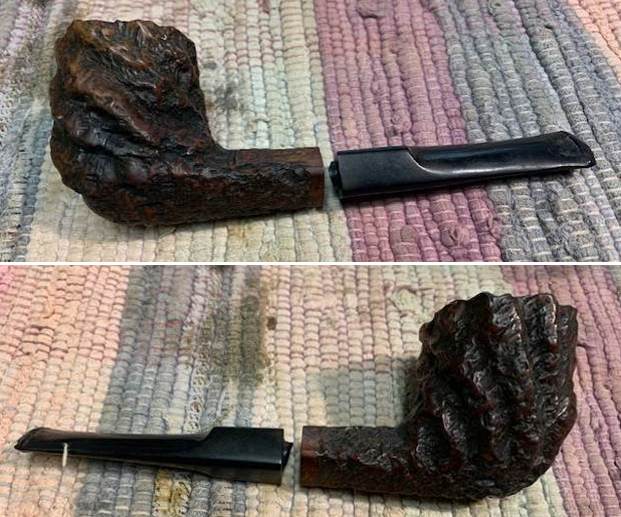
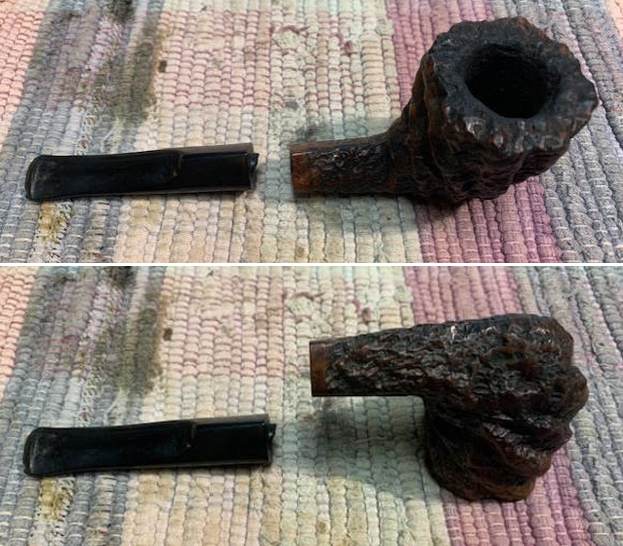
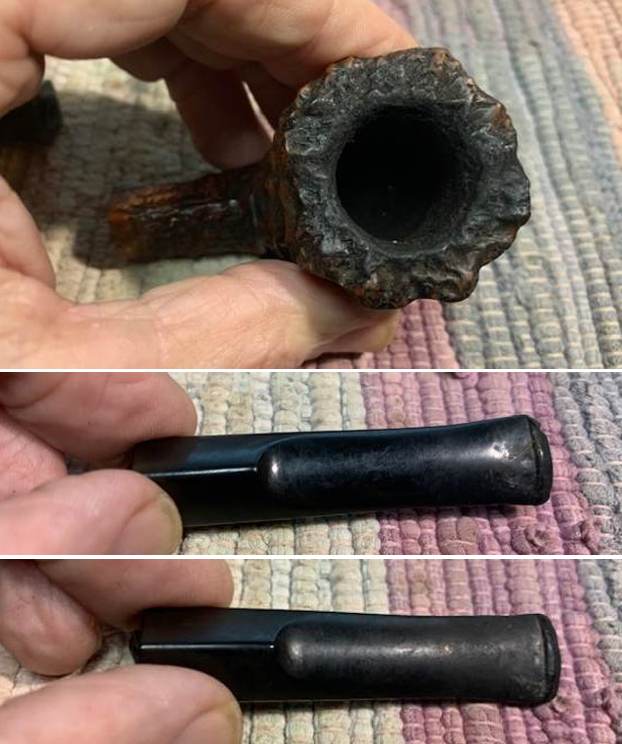
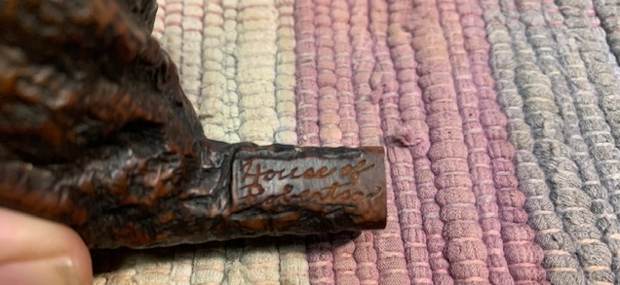
The next pipe on the table is a House of Robertson Rusticated Dublin with a tapered, vulcanite Bite Through stem. The rustication on the briar is very tactile and deep. There are grooves around the bowl and shank and those have been deeply rusticated. The pipe is stamped on the left side of the diamond shank and reads House of [over] Robertson. It really is a beautiful pipe and the rustic finish works very well with the diamond twin bore saddle stem. The fellow who sent it to me is a previous customer and in his box were two pipes with a snapped tenon – the Radice (which I have repaired already) and this House of Robertson. This one was quite dirty with a thick cake in the bowl and overflowing onto the rim top. There was some burn damage on the inner edge of the rim around the bowl and the pipe was dull and dusty. The tenon had snapped off cleanly at the shank end with no damage to the briar. The stem had tooth marks on both the top and underside ahead of the button and was also dirty. I took some photos of the pipe before I started my work on it. I took a close up photo of the rim top to show the condition of the bowl and inner edge. You can see the damage on the inner edge of the rim. It will become more evident once the bowl has been reamed and cleaned. The photos of the stem show the tooth marks and chatter on both sides near the button.I took photos of the stamping on the left side of the diamond shank to capture how the classic House of Robertson signature looked.House of Robertson pipes were made by Thayne Robertson in Boise, Idaho. He did some beautiful work and all had the etched stamp on them. I have worked on many of these pipes over the years and done the research on the brand previously. Here is a link to one of the pipes where I have included background information (https://rebornpipes.wordpress.com/wp-admin/post.php?post=60954&action=edit&classic-editor).

“House of Robertson” was in business for many years, but alas, closed their doors in 1999. They were located in Boise, Idaho. They are noted for making rather large and interesting pipes. Thayne Robertson was a Master Mason, AF & AM, and started the shop about 1947 and his son Jon started working there in 1970 when he finished college, along with Thayne’s daughter. Thayne and his son started making the big pipes at that time, and made them together until 1987 when Thayne passed away. Jon kept the store and his sister moved on to other things. The House of Robertson appears to have closed around 1999. https://pipedia.org/wiki/Robertson

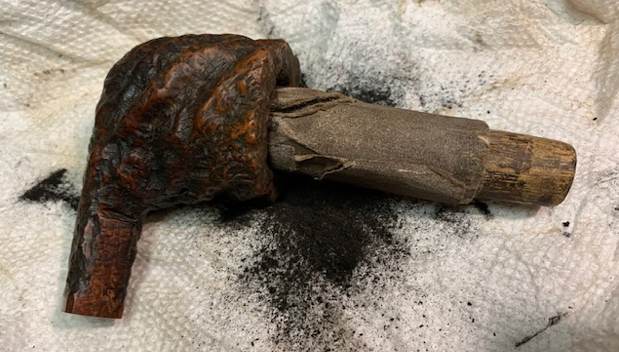
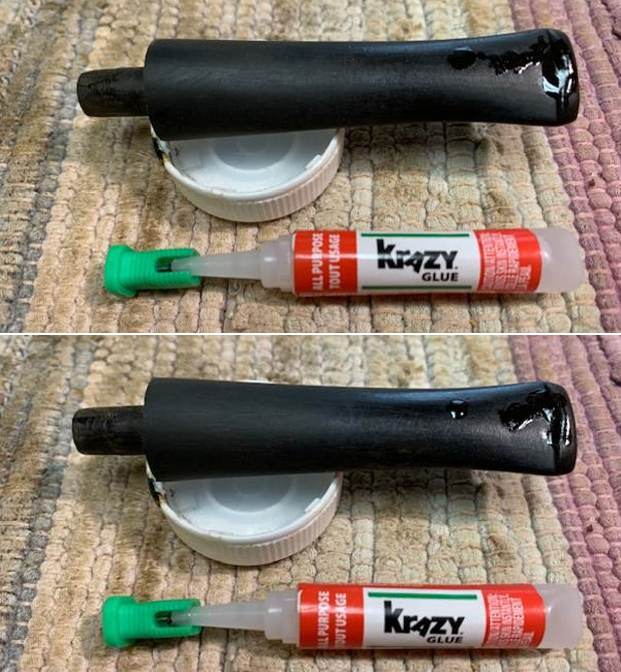
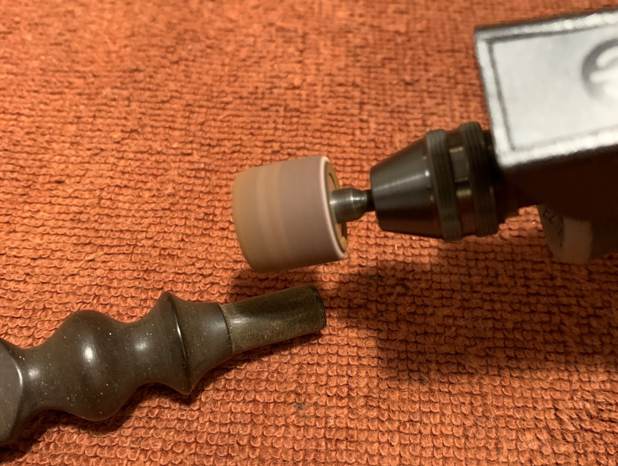
I began my work on this pipe by pulling the broken tenon from the shank. I generally use a dry wall screw and twist it into the airway of the broken tenon and wiggle it free. This one was stuck. I put it in the freezer while I had lunch and afterward it came out quite easily. I went through my replacement tenons and found one that would work on this stem. I sanded the broken end of the tenon remaining on the stem with a sanding drum on my Dremel. I also sanded the diameter of the new tenon at the same time to get a good fit in the shank. I took photos of the tenon in the shank at this point to show the fit. I drilled out the airway on the stem with successively larger drill bits to accommodate the tenon. The last bit was ¼ inch which is perfect for the tenon. I slipped the stem over the tenon and took photos of the pipe at this point. It looks very good. With that done I turned my attention to the bowl. I reamed it with a PipNet reamer and took the cake back to briar. I cleaned up the remnants with a Savinelli Fitsall pipe knife. I sanded the bowl walls with a piece of dowel wrapped with 220 grit sandpaper. I cleaned up the rim top with a brass bristle wire brush to remove the lava in the sandblast and a bit of the burn damage on the inner edge of the bowl.I cleaned out the internals on the stem and shank with pipe cleaners, cotton swabs and alcohol until they were clean.I rubbed down the bowl with Before & After Restoration Balm to clean, enliven and protect the briar. I worked it into the blast with a horsehair shoe brush. I let it sit and do its magic for 10 minutes and then buffed it off with a soft cloth.I set the bowl aside and turned my attention to the vulcanite stem. I glued the new tenon in the shank with black super glue. While it cured, I “painted” the surface of the vulcanite stem with the flame of a lighter to lift the tooth chatter and marks. Many of them lifted significantly with the heat. Those that remained I filled in with black super glue and set the stem aside to cure. Once it had cured I flattened out the repairs with a small flat file. I sanded them with 220 grit sandpaper to further flatten them out and blend them into the surrounding area. I started polishing the stem with 400 grit wet dry sandpaper. I polished the vulcanite bite through stem with micromesh sanding pads – dry sanding with 1500-12000 grit pads. I wiped the stem down after each pad with Obsidian Oil. I finished the polishing with Before & After Stem Polishes – both Fine and Extra Fine. I wiped the stem down with a cloth impregnated with Obsidian Oil to protect and give the deep shine to the stem. I was happy to be finished with this beautiful House of Robertson Rusticated Diamond Shank Dublin. The vulcanite stem fit well and looked good with the rich finish of the rusticated bowl and shank. I lightly buffed the pipe with Blue Diamond on the buffing wheel and gave the bowl and shank multiple coats of Conservator’s Wax. I buffed it with a clean buffing wheel to raise the shine. I hand buffed it with a microfiber cloth to deepen the shine. The House of Robertson’s Dublin is a great looking pipe that has an amazing looking rustication. The dimensions of the pipe are Length: 5 ½ inches, Height: 2 inches, Outer Diameter of the bowl: 1 ½ inches, Diameter of the chamber: ¾ of and inch. The weight of the pipe is 42 grams/1.48 ounces. I will be packing it up to send back to my friend in Idaho along with the first pipe – the Radice Silk Cut Billiard. Thanks for reading the blog.
Breathing New Life into a 1906 Peterson’s Patent System Shape 14


Blog by Steve Laug

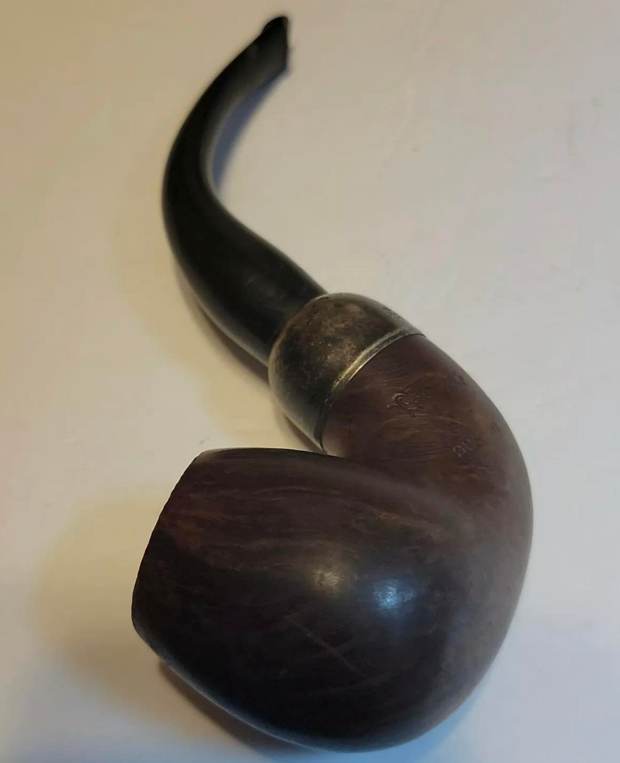
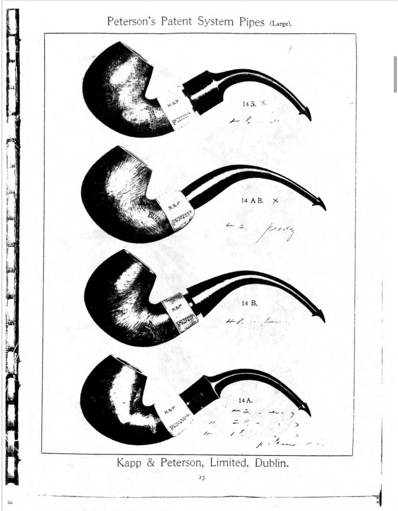
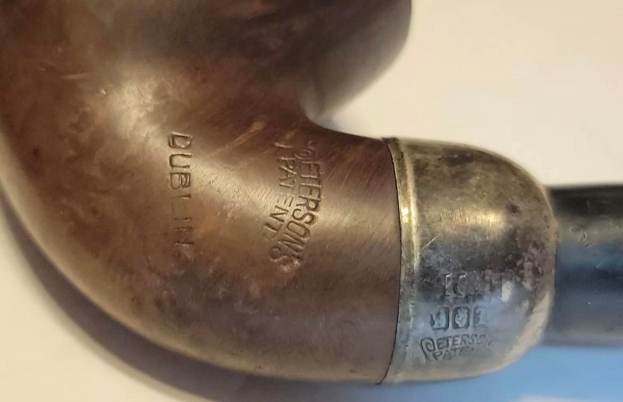
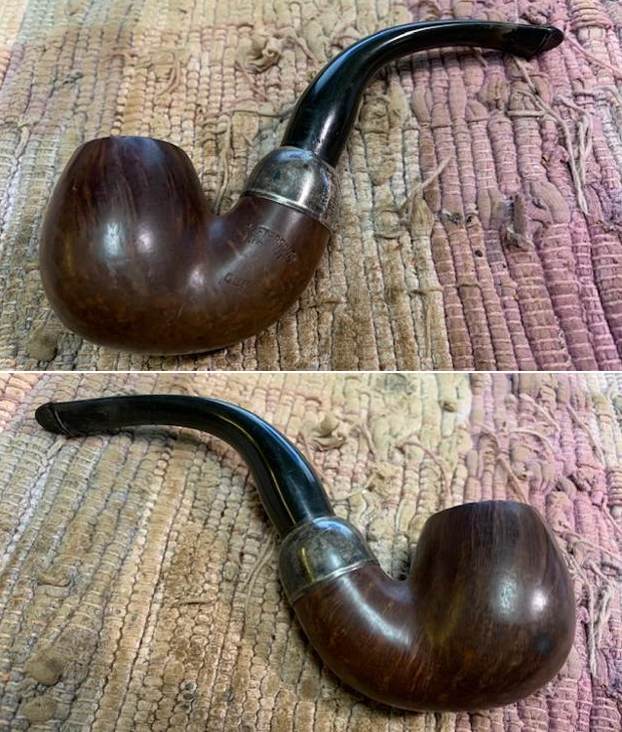
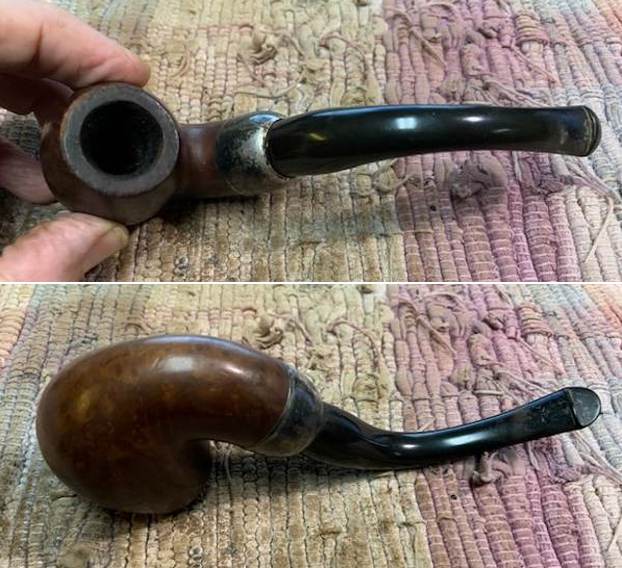
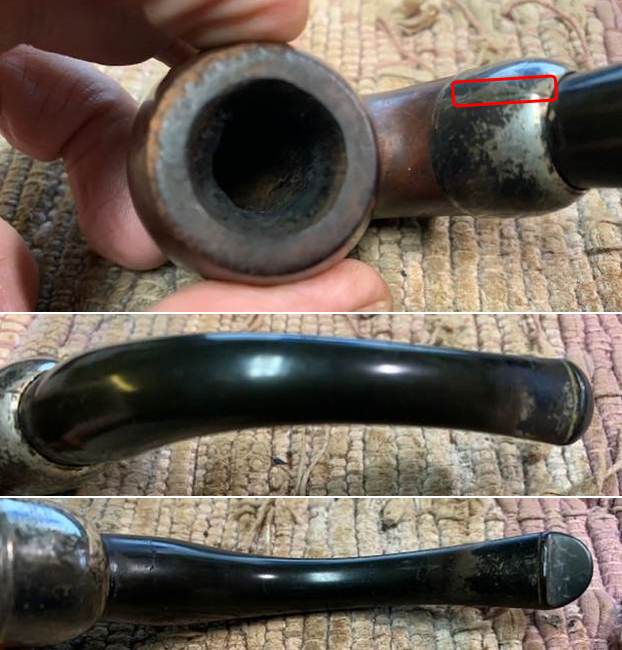
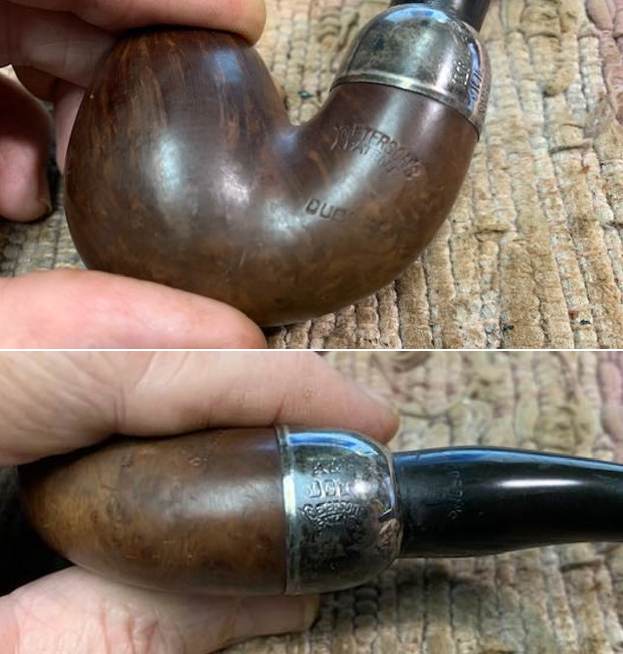
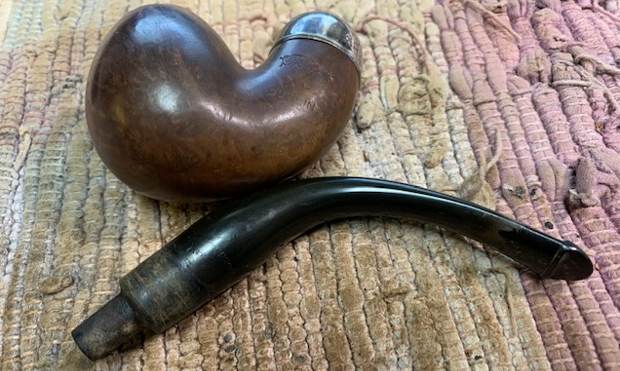
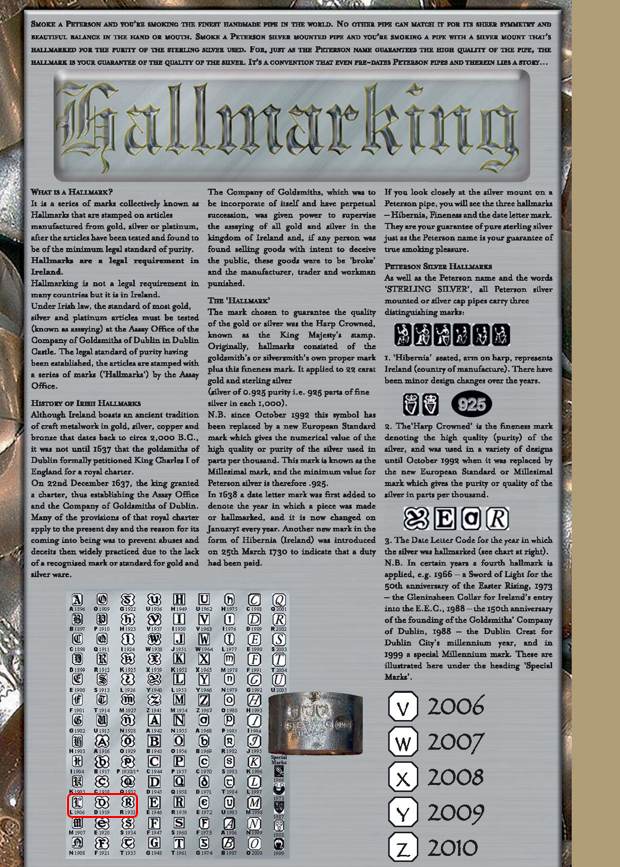
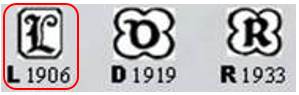
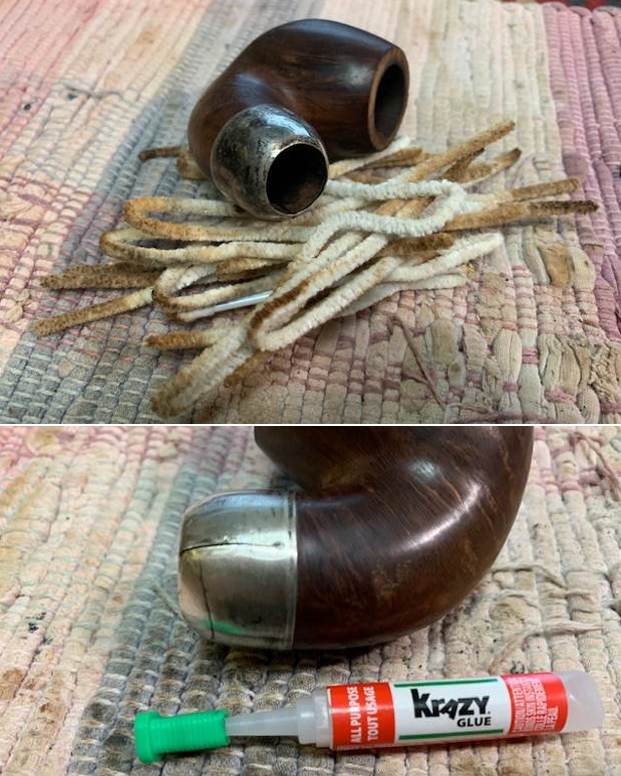
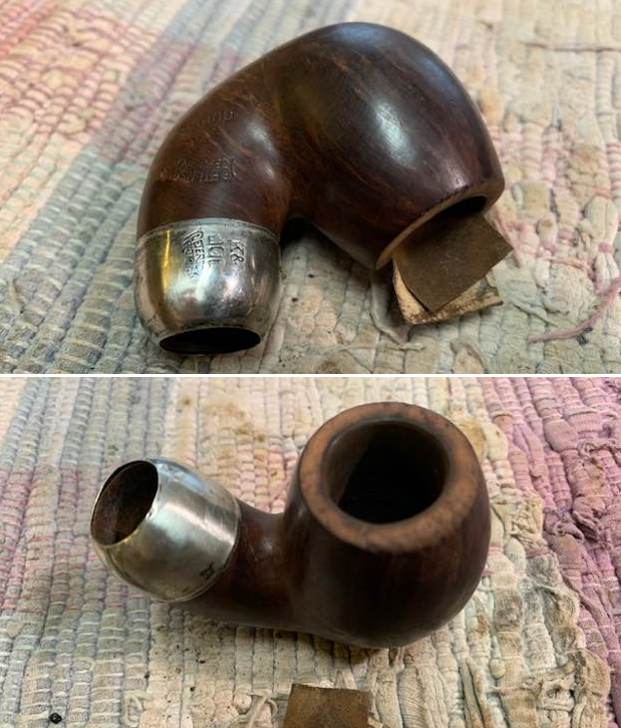
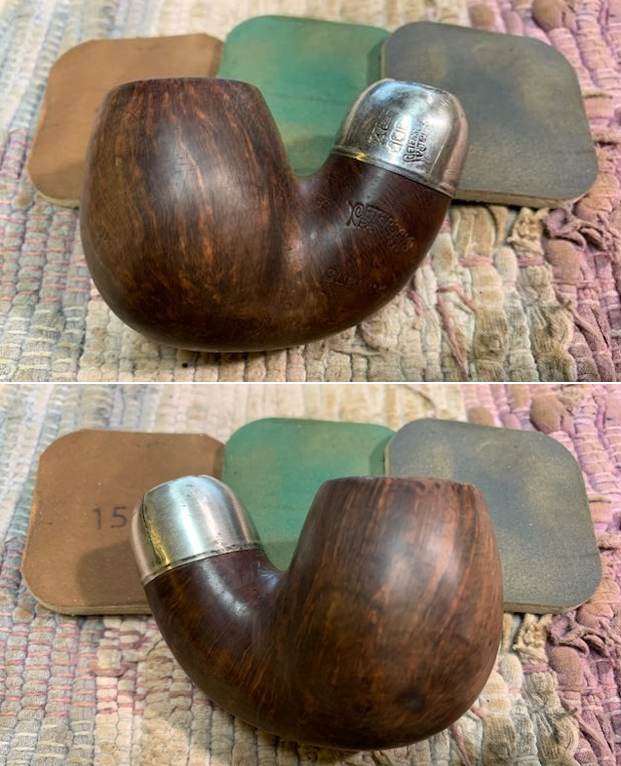
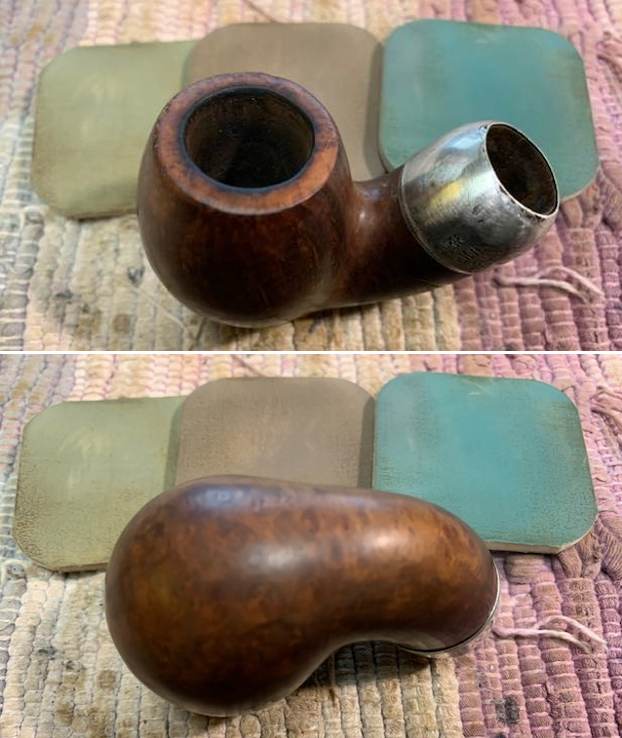
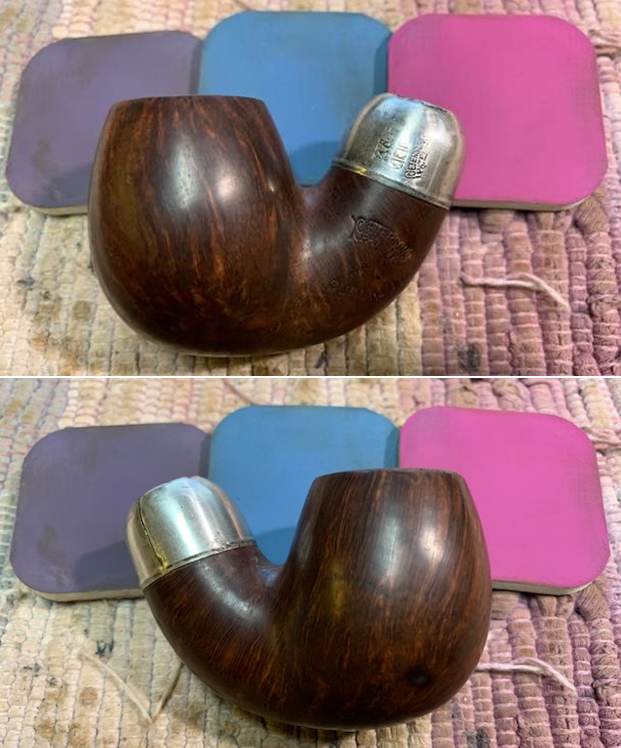
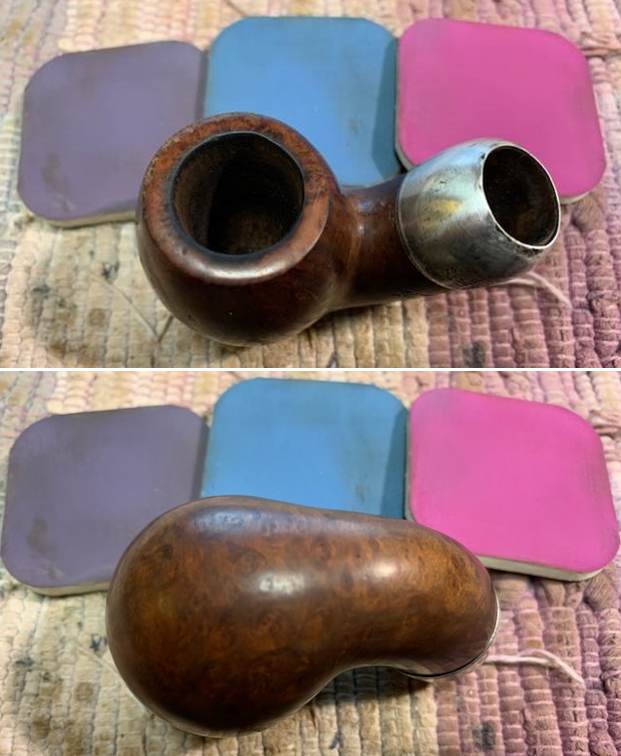
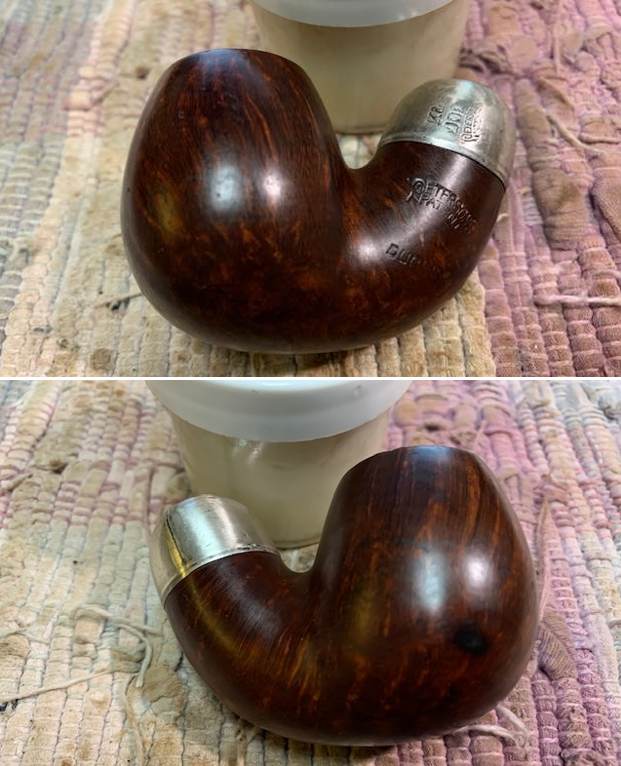
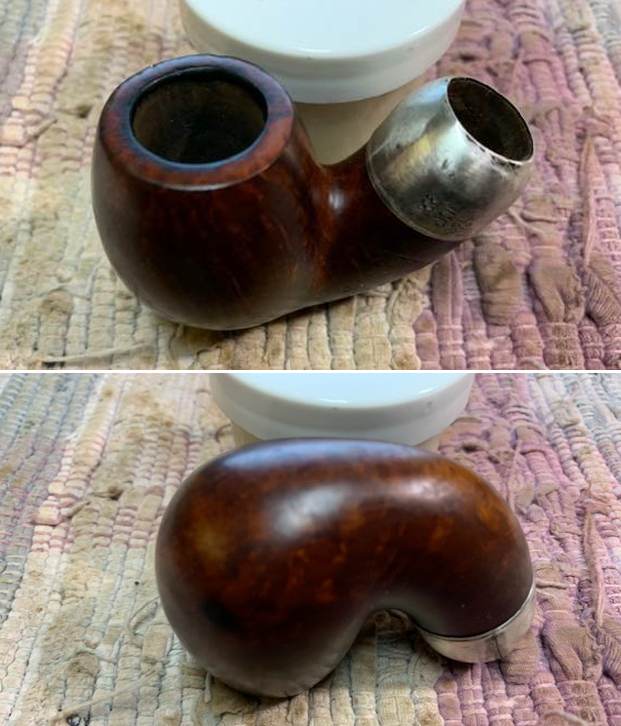
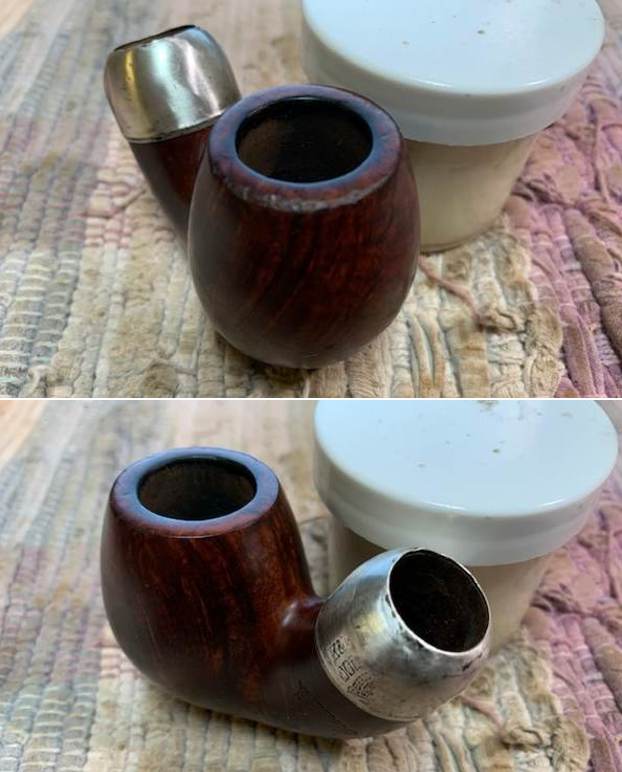
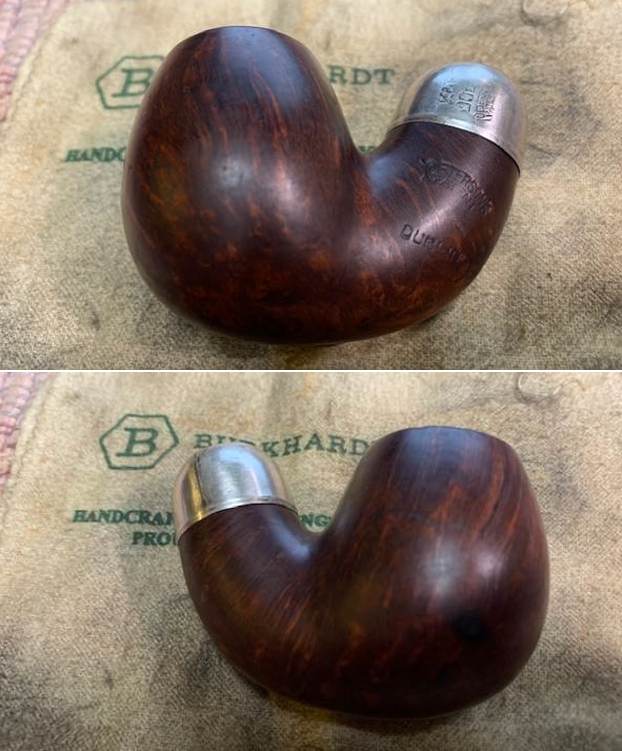
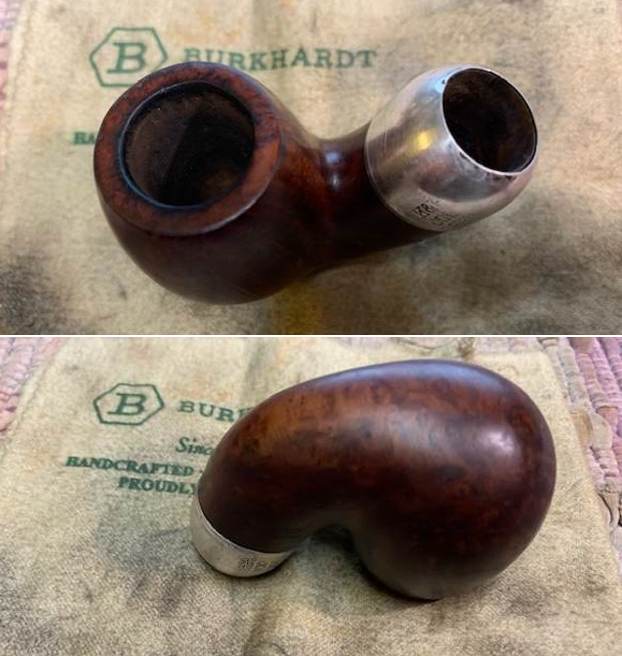
The next pipe is the second of four Peterson’s that came to me for work from a friend of mine. It is another older, nice looking Peterson’s System Pipe that was quite a mess. The finish was worn and dirty. The rim top was lightly damaged, darkened and had a lava build up. The inner edges of the rim were worn but looked okay. The silver ferrule was tarnished but the stamping was readable. The stamping on the shank sides was readable with a lens. It is stamped across the shank horizontally on the left side and reads Peterson’s [over] Patent [over] Dublin. There is no stamping on the right side of the shank. The silver ferrule is stamped K&P [over] three hallmarks -1. Hibernia seated on a throne (represents Ireland) 2. Crowned harp (signifying the quality of the silver) 3. The letter “L” (giving the year of manufacture). All are in square shaped cartouches. Under these it is stamped Peterson’s [arched over] Dublin. I will need to confirm the date stamps and the stamping to confirm the dating of the pipe. There appears to be a split in the silver ferrule under the tarnish on the right top side. The stem is also stamped and reads Peterson’s arched over Patent. I have included the pictures of the pipe that my friend sent to me early on in our conversation. My friend also sent along a page out of the 1906 Peterson catalog that one of his friends has a copy of. I have included the photo below. His pipe is the second one down in the photo below. It is a shape 14. He also included a  photo of the stamping on the shank and the silver ferrule. It reads as noted above. The ferrule has turned downward over time. It took nearly a month for the pipes to arrive in Canada for me to work on. I took photos of them to have an idea of what I was dealing with. You can see from the photos what I saw. The finish is really worn and dirty almost obscuring the amazing grain that is on the bowl sides. Rim top showed darkening as noted above and there were cuts or marks on the top of the rim. The inner edge and outer edge of the bowl was in surprising good shape. There was a build up of lava on the rim top and a thick cake in the bowl. The airway in mortise is very constricted and clogged and will need to be opened once again. The silver ferrule had a split on the top right side but it did not go from top to bottom It was very tarnished but readable. The original style patent stem is present and in remarkable good condition. There were light tooth marks and a lite calcification at ahead of the button on both sides. I took some photos of the rim top and bowl to capture the condition of the pipe. You can see the cake in the bowl. There is a light lava coat and some darkening. There was damage all around the outer edge of the bowl that was heavy on the right front edge. You can see the marks of a crack in the ferrule on the right side in the first photo. The older style P-lip system stem is in good condition with some calcification on the top and underside of the stem near the button. There were light tooth marks and chatter on both sides.I took photos of the stamping on the shank sides and the silver ferrule to try and capture them as best as I could. They were weak but they are readable with a lens. They read as noted above.I removed the stem from the bowl and took a photo of it to show its appearance. The tenon end of the stem has some calcification (or possibly some dried silver polish) where it sat against the silver.Before I started the restoration process on the pipe I wanted to confirm the date that my friend had sent to me for this pipe. I turned to Peterson’s Hallmark Chart that I have on rebornpipes to pin down the date (https://rebornpipes.com/tag/peterson-hallmark-chart/). I have include a copy of that chart below. I drew a red box around the date stamp that matches the one on the pipe. It is a 1906 Peterson Patent System Pipe Shape 14.I expanded the chart above and captured the section that included the section from 1906-1933 below. It confirms that the date is indeed 1906.Now I knew that I was working on a Peterson’s Patent System pipe made in 1906 and the Dublin stamp tells me it was made in Dublin.
I turned to Peterson’s Dublin in the book, The Peterson Pipe by Mark Irwin & Gary Malmberg. I quote from that section below:
 Dublin (1906-2003) Although DUBLIN appears under PETERSON’S on many pipes over the decades, it has served mostly as part of the brand name. The word first appeared on pipes hallmarked 1906-11, stamped PETERSON’S over PATENT OVER DUBLIN. The simpler PETERSON’S over DUBLIN first appeared on pipes hallmarked 1912 after the expiration of the patent. Illustrations of pipes in the ’37 catalogue show a random dispersion of the stamp PETERSON’S over OF DUBLIN together with the ordinary PETERSON’S over DUBLIN on every model offered. Specimen of the former will bear either an Irish COM or LONDON MADE over ENGLAND COM and almost certainly date from 1945-62. It was first mentioned in print as part of a model name in the ’68 price list, as K&P DUBLIN, in ’92 for a Danish market line…
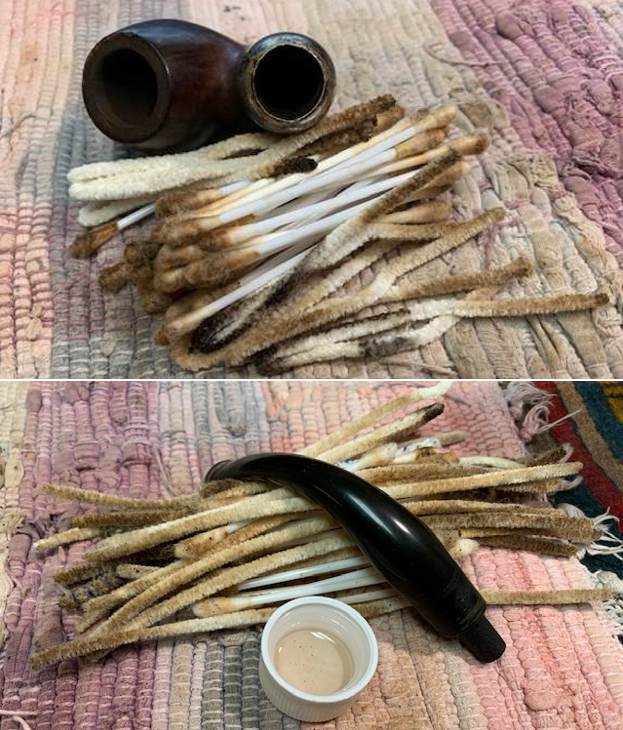
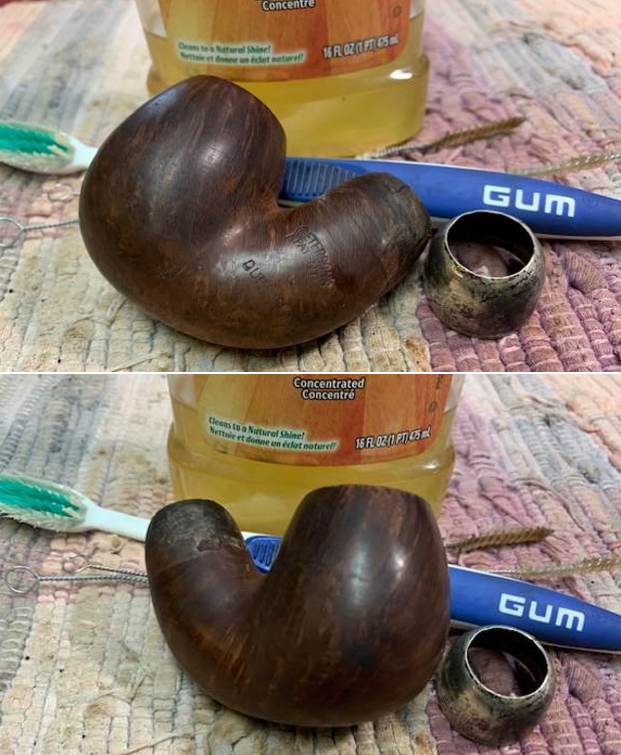
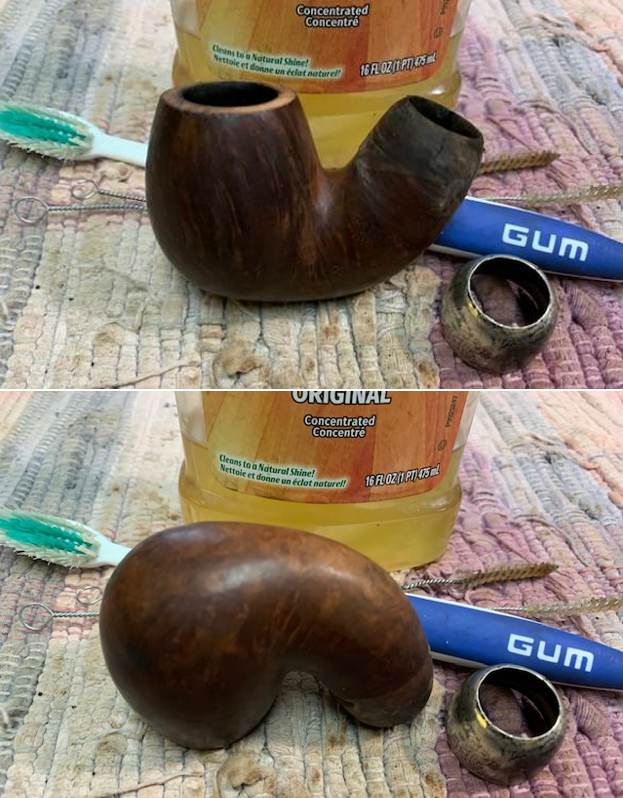
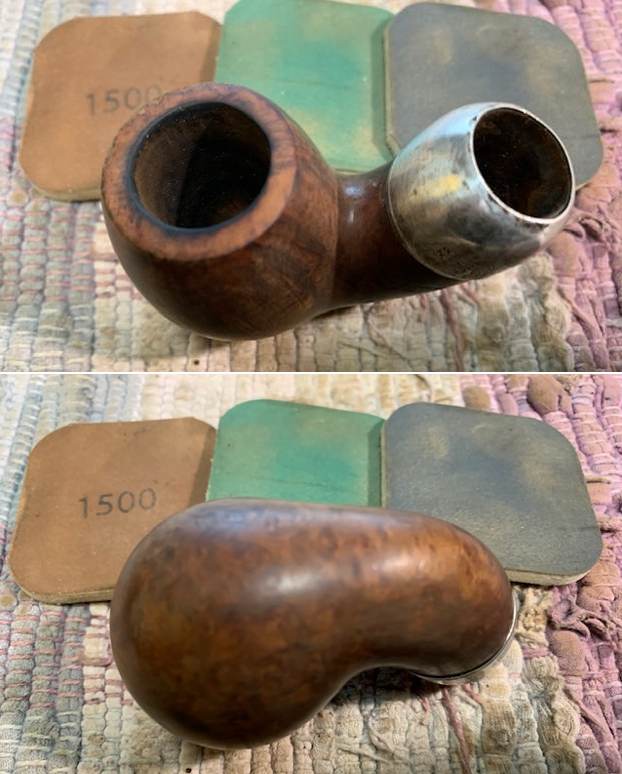
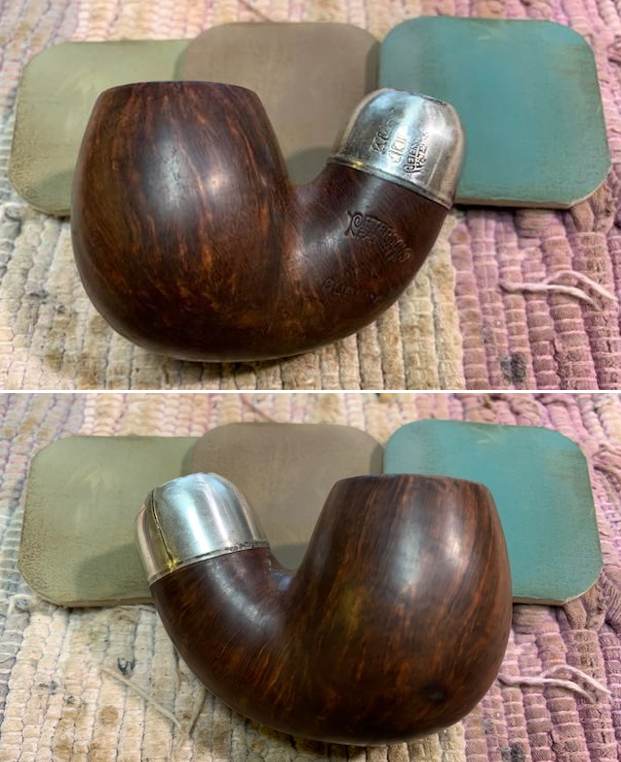
Armed with this information I started working on the pipe. I reamed the bowl with a PipNet pipe reamer to remove the cake from the bowl. I cleaned up the remaining cake with a Savinelli Fistall Pipe Knife. I sanded the bowl with 220 grit sandpaper wrapped around a piece of dowel to smooth out the inside of the bowl. The walls looked very good with no checking or heat damage. I cleaned out the shank with pipe cleaners, cotton swabs and 99% alcohol to remove the oils from the walls. It was filthy and when I was finished it smelled clean and fresh. I cleaned out the inside of the stem with alcohol and pipe cleaners.I scrubbed the bowl with Murphy’s Oil Soap to clean off the thick oils and grime ground into the surface of the briar. When the warm water hit the ferrule it slipped off into my hands. (Great news as it had turned and needed to be reset correctly). I scrubbed it on undiluted and rinsed it off with warm water to remove the soap and the grime. The bowl looked much better and the grain really began to stand out clearly. I also used some small shank brushes to try to open the airway into the bowl. With a little bit of work the draught is perfect. I ran some more pipe cleaners and cotton swabs through the shank and airway to remove the tars that had loosened by scrubbing. Once finished I aligned the stamping on the ferrule and carefully slid it in place on the shank. I also ran a light bead of CA glue along the split in the ferrule to stop it from going further. My friend would need to take it to a jeweler to have it soldered with silver for a proper restore.I worked over the top and the inner edge of the bowl with 220 grit sandpaper to smooth out the burned edge and the rim top. I also worked a bit on the outer edge damage on the front o the bowl at the same time. It definitely came out looking much better. The trick on these old pipes is not to go overboard on the repairs but to leave a bit of the story behind as it changes the shape and feel of the pipe. I polished the briar (carefully avoiding the areas where the pipe is stamped on the shank sides) with micromesh sanding pads. I dry sanded it with 1500-12000 grit sanding pads. I wiped it down after each pad with a damp cloth to remove the sanding debris. I worked some Before & After Restoration Balm into the surface of the smooth briar with my finger tips. The product is amazing and works to clean, enliven and protect the briar. I let it sit on the briar for 10 or more minutes and then buff it off with a soft cloth. It really makes the grain sing. I polished the silver ferrule with a jewelers cloth to remove the remaining tarnish/oxidation and protect it against further tarnishing. There are a few dings in the silver but I chose to leave them as part of the story of the pipe. I carefully buffed the briar and avoided the silver. I did not want to further damage it or cause it to loosen so I chose to wax it by hand with Conservator’s Wax and buffed it with a soft cloth. I set the bowl aside and turned my attention to the stem. I examined it closely and saw the Peterson’s Patent stamp on the stem. The frustrating thing is that it was intermixed with the deep scratches on the shank end of the stem. I carefully sanded the scratched areas, avoiding the stamping on the stem. I used a small piece of 220 grit sandpaper and polished it with 400 grit wet dry sandpaper.I polished the vulcanite with micromesh sanding pads – dry sanding with 1500-12000 grit pads. I wiped down the stem with Obsidian Oil after each sanding pad. I have an oil impregnated piece of cloth that I use after each pad. I polished it further with Before & After Stem Polish both Fine and Extra Fine polishes. I gave it a further coat of Obsidian Oil and set it aside to dry. I put the pipe back together – the bowl with its new stem. This smooth finished 1906 Peterson’s Patent  System Pipe Shape 14 is a real beauty with great grain around the bowl. The thin P-lip style vulcanite stem works very well with silver ferrule and the medium brown briar. This Irish made System pipe is a very collectible part of Peterson’s history. The grain on the bowl is quite beautiful and came alive with the buffing. I used Blue Diamond on the buffing wheel on both the bowl and stem. I gave both multiple coats of carnauba wax on the wheel then buffed it with a clean buffing pad to raise the shine. I hand buffed it with a microfibre cloth to deepen the shine. The Peterson’s Patent System feels great in the hand. It is lightweight and the contrast in the browns of the briar, the sterling silver ferrule and the polished vulcanite stem is quite amazing. The dimensions of the pipe are Length: 6 inches, Height: 2 inches, Outer diameter of the bowl: 1 1/8 inches, Chamber diameter: ¾ of an inch. The weight of the pipe is 2.19 ounces/62 grams. It really is a beauty. I have two more  pipes left to work on from my friends collection and then I will send them all back to him. Thanks for walking through the restemming and the restoration with me. Cheers.

Restemming & Restoring a Stanhope Genuine Imported Briar Smooth Bullmoose


Blog by Steve Laug

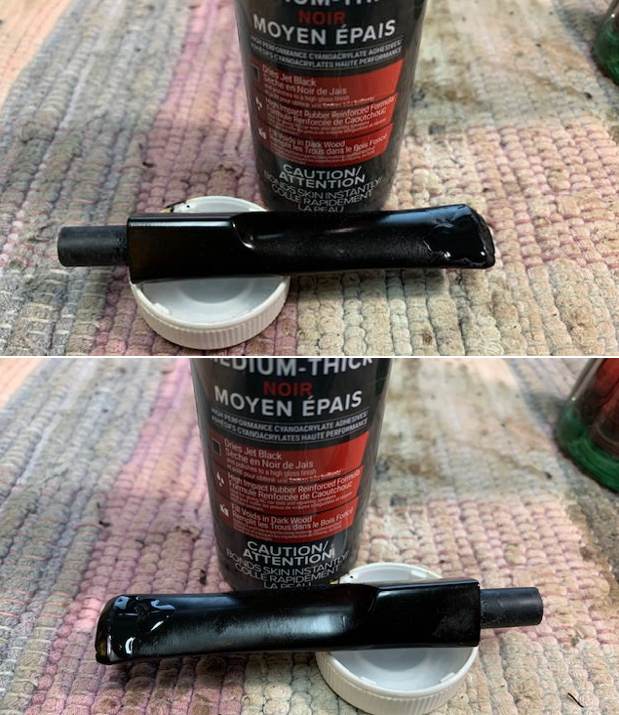
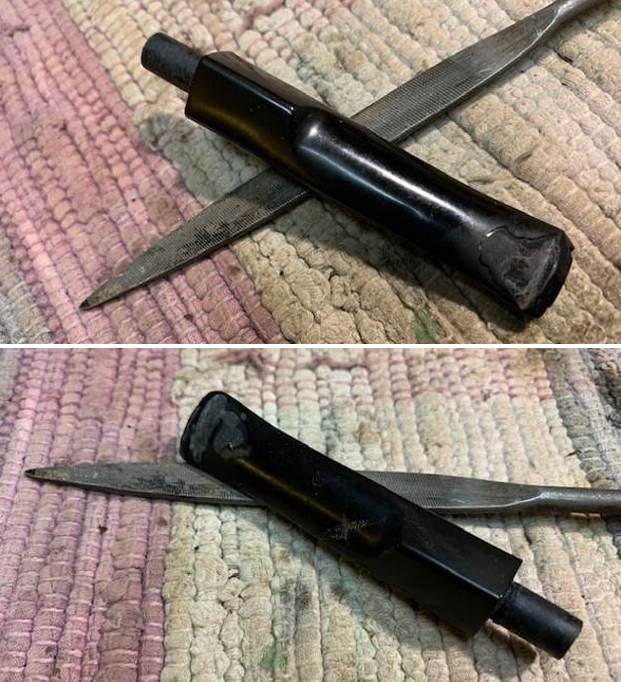
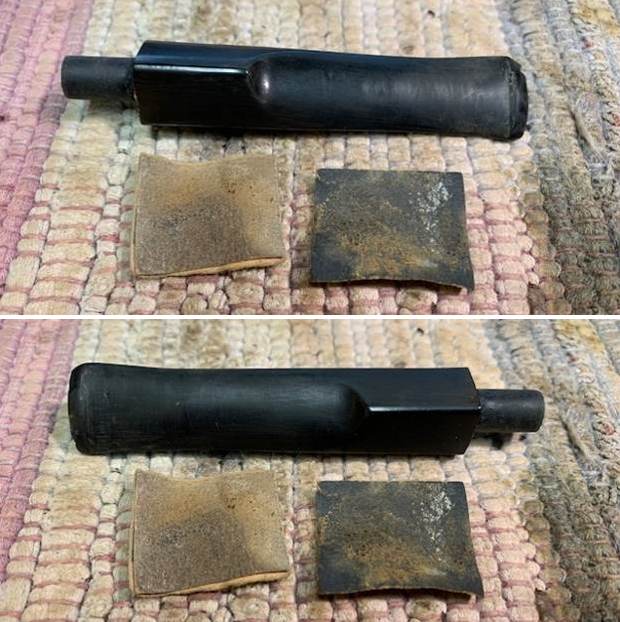
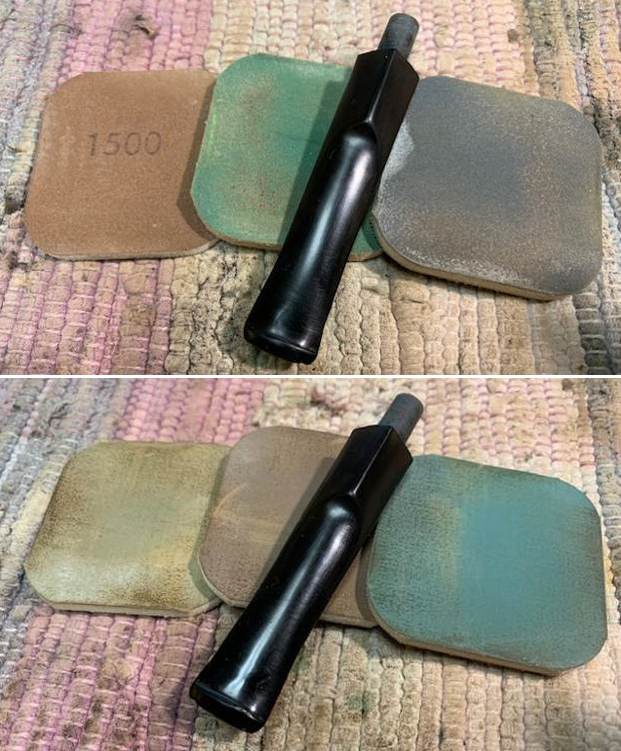
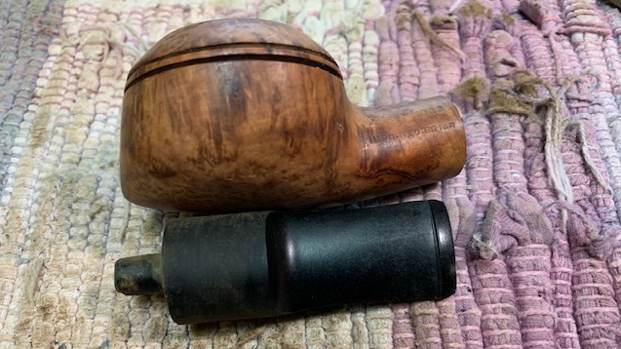
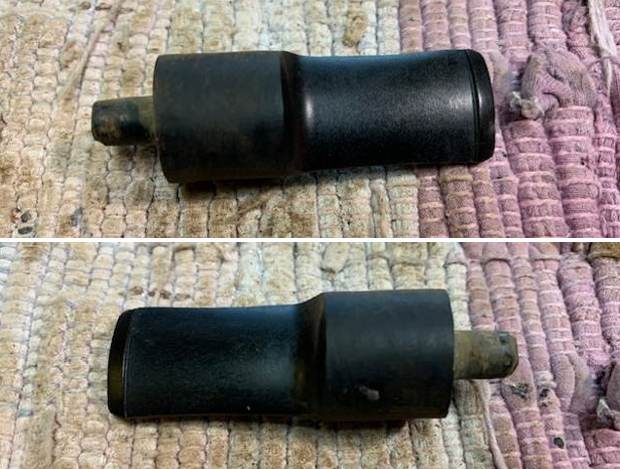
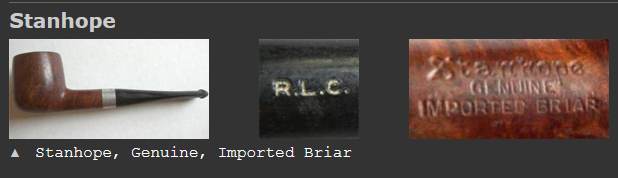
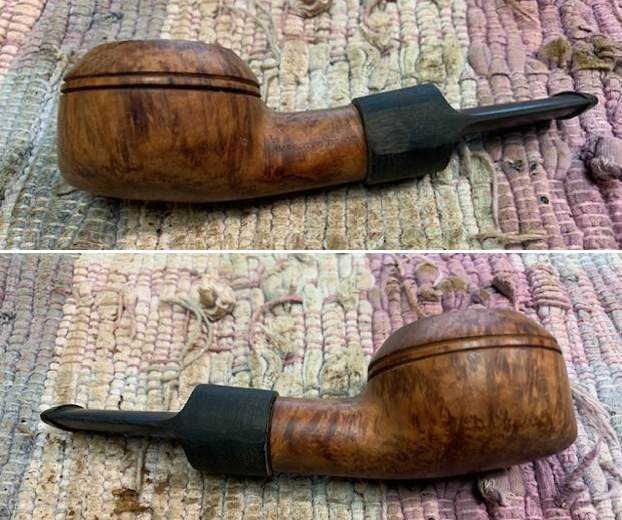
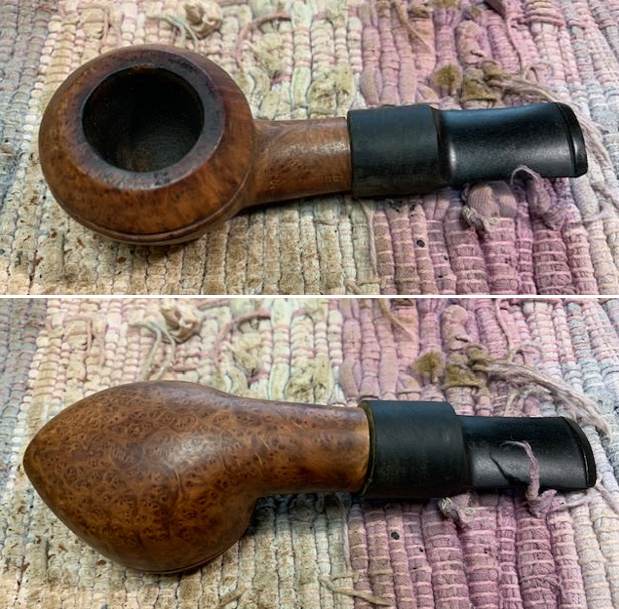
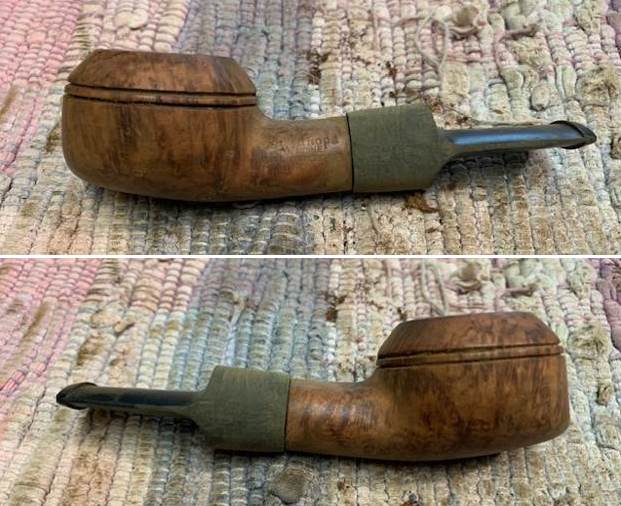
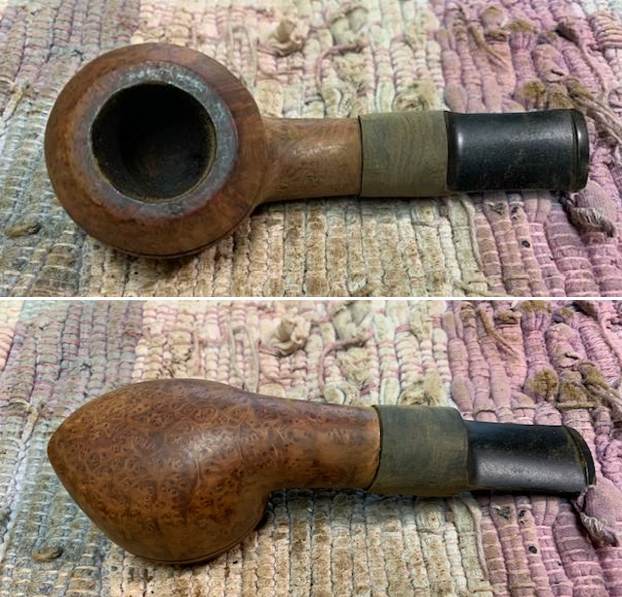
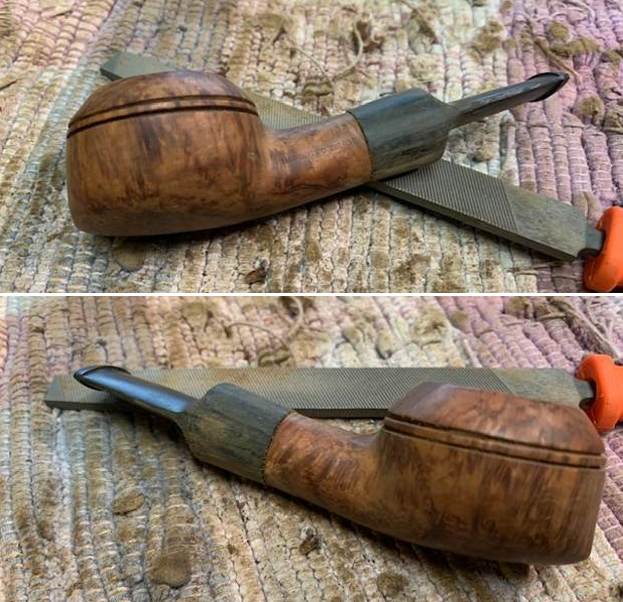
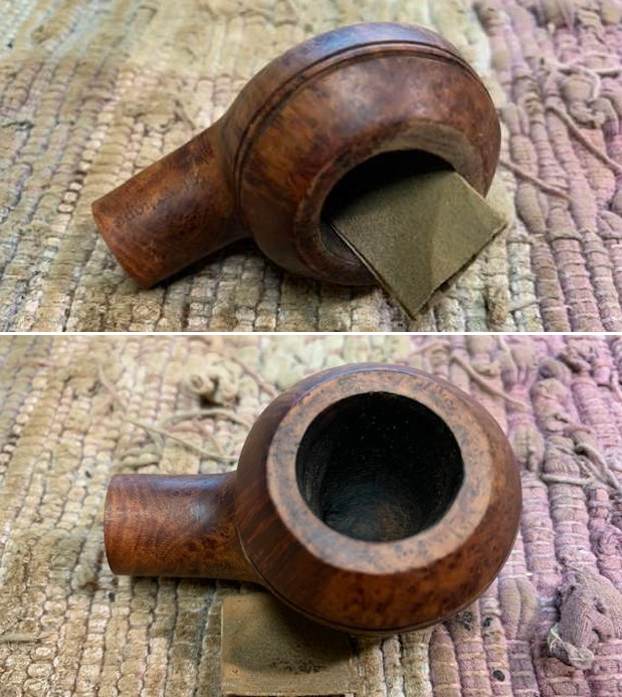
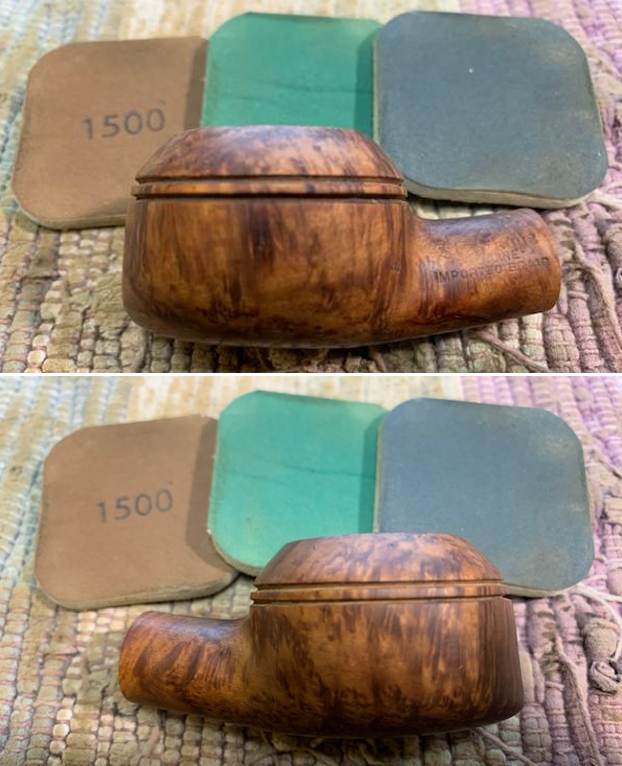
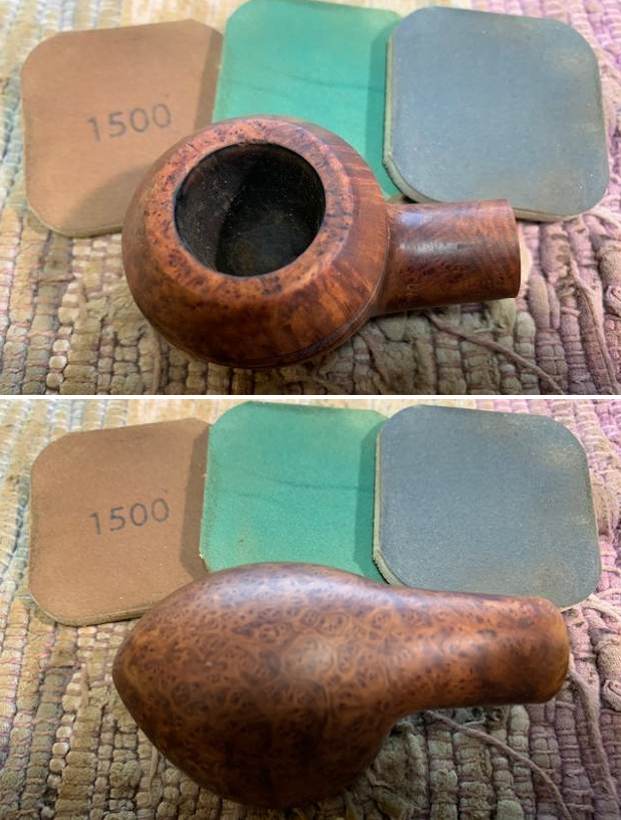
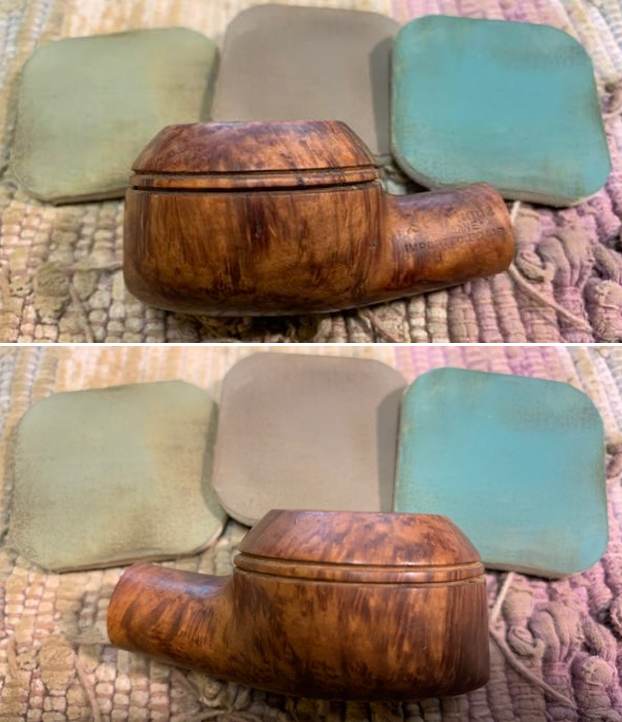
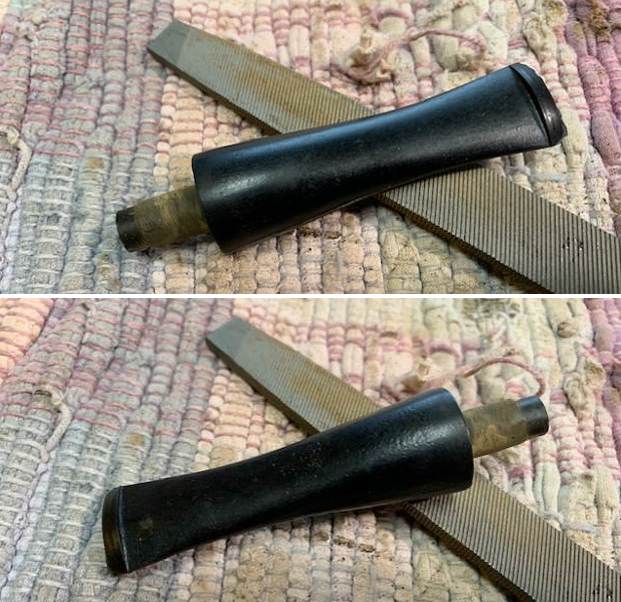
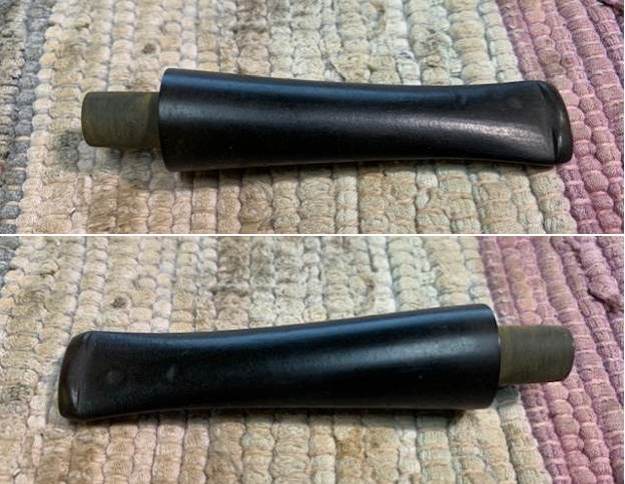
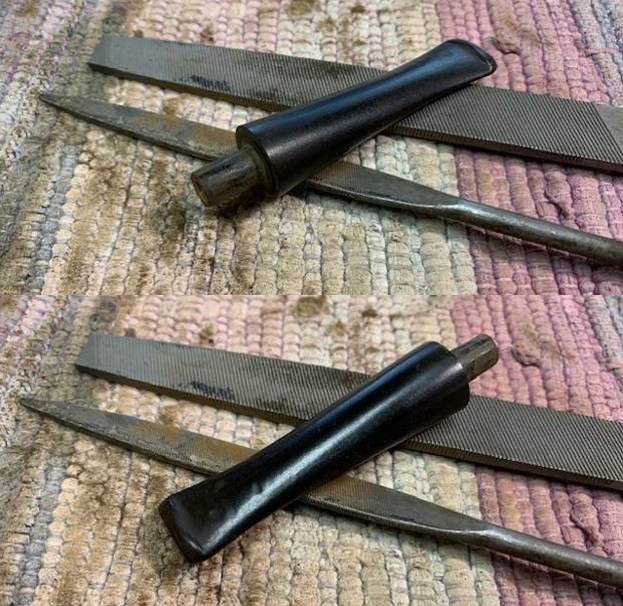
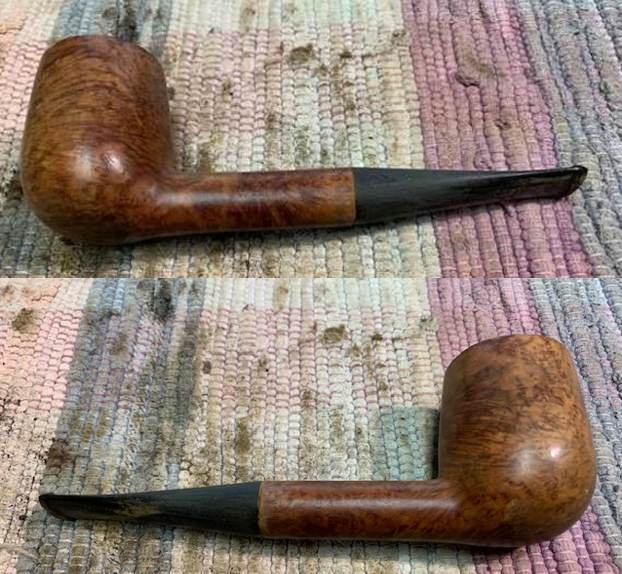
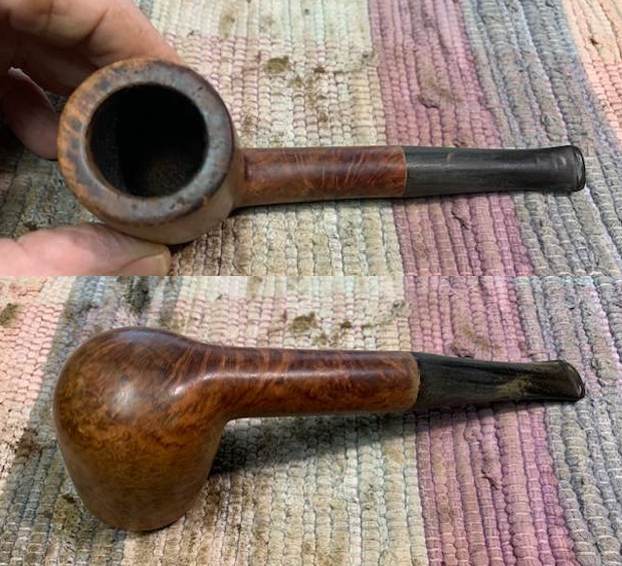
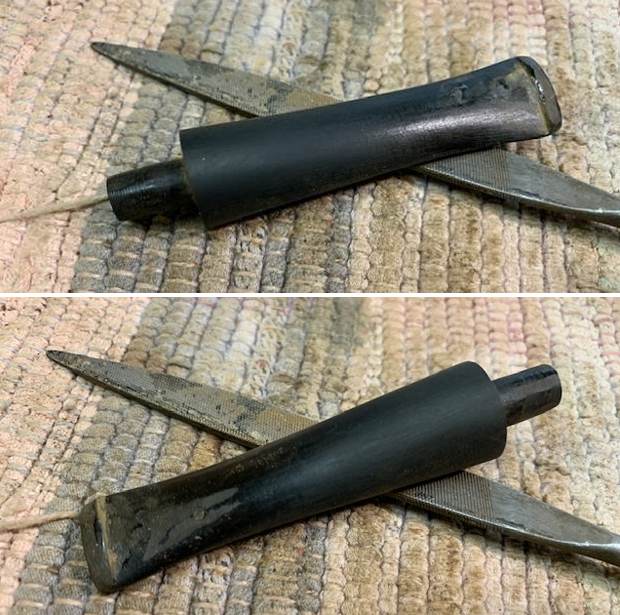
I continue on a restemming binge with stummels (bowls) that I periodically go through and see if I have a potential stem that would fit. This is the final bowl of the three stummels that took out to restem last week. The first one was the Malaga Second, the second was a Yorkshire Bullmoose. (https://rebornpipes.com/2022/01/20/restemming-restoring-a-malaga-second-long-shank-billiard/; https://rebornpipes.com/2022/01/21/restemming-restoring-a-yorkshire-imported-briar-bullmoose/). This particular bowl is a smooth Bullmoose style pipe. The grain on the bowl was quite nice with a mix of straight and birdseye. The rim top had some darkening but the inner and outer edges were in good condition. The interior of the bowl was clean and there were not any chips, cracks or checking on the walls. The mortise was clean and well drilled with no issues. The finish was clean and the grain stood out against the light background. It is worn and tired looking. The stamping was clear and readable. On the left side it read Stanhope [over] Genuine [over] Imported Briar. I took photos of the bowl before I started to work on it. I took a photo of the stamping on the side of the shank. It reads as noted above and is clear and though the Stanhope stamp is faint it is still readable.I went through some of stems and found this nice looking saddle stem blank that would work with the bowl. It had already been turned with a tenon tool so that portion of the work was finished. I would need to reduce the tenon diameter slightly for a snug fit. The stem was significantly larger in diameter than the shank. I decided to see what Pipephil’s site had on the brand (http://pipephil.eu/logos/en/logo-s11.html). I found that the pipe was made by LHS (L.H. Stern). I did a screen capture of the particular brand. I have included it below. Now it was time to work on the stem and fit it to the shank of the pipe. The diameter of the tenon was close. I used a flat file that I have here that works well for me to do the fine tuning of the fit. I used it to straighten out the sides of the tenon next to the surface that face the shank. It worked well and fit the shank. I used a Dremel and sanding drum to reduce the diameter of the stem as much as possible before I proceeded. I ran the sanding drum around the diameter of the saddle portion and stem sides to reduce it the also worked it lengthwise to remove more of material. The photos below show the fit at this point. Looking better but still a long ways to go. I continued to reduce the diameter of the stem with a flat file. It was taking quite a bit of time to finish the fit but it was getting there. I think that the stem would look very good once it was properly fit. The fit against the shank was better. There were spots where the stem diameter and the shank diameter did not match were greatly reduced. I used a folded piece of 220 grit sandpaper to smooth out the transition even more between the two. I left a slight Danish style flare to the flow of the saddle. I started polishing it with 400 grit wet dry sandpaper. I polished the stem with micromesh sanding pads – dry sanding with 1500-12000 grit pads. I wiped the stem down after each pad with a cloth and Obsidian Oil. I finished the polishing with Before & After Pipe Stem Polish – both Fine and Extra Fine. I gave it a final coat of Obsidian Oil. I set the stem aside and turned my attention to the bowl. I started by cleaning up the rim top and edges with a folded piece of 220 grit sandpaper. I was able to remove the darkening on the rim top and the inner edge of the bowl.I polished the briar with micromesh sanding pads – dry sanding with 1500-120000 grit pads. I wiped the bowl down after each pad with a damp cloth. The grain began to stand out and the briar took on a shine. I worked some Before & After Restoration Balm into the surface of the smooth briar with my finger tips and a horsehair shoe brush. The product is amazing and works to clean, enliven and protect the briar. I let it sit on the briar for 10 or more minutes and then buff it off with a soft cloth. It really makes the grain sing.   Now it was time to bent the stem to fit the flow of the pipe. I heated the stem with a heat gun on the low setting until the vulcanite was  pliable. I bent it to proper angle and then set it with cool water. I put the pipe back together – the bowl with its new stem. This smooth finished Stanhope Genuine Imported Briar Bullmoose is a real beauty and the chosen stem works well with it. It is an American made pipe with connections to L.H. Stern. The grain on the bowl is quite beautiful and came alive with the buffing. I used Blue Diamond on the buffing wheel on both the bowl and stem. I gave both multiple coats of carnauba wax on the wheel then buffed it with a clean buffing pad to raise the shine. I hand buffed it with a microfibre cloth to deepen the shine. The Stanhope Bullmoose feels great in the hand. It is lightweight and the contrast in the browns of the briar and the polished vulcanite stem is quite amazing. The dimensions of the pipe are Length: 5 inches, Height: 1 ½ inches, Outer diameter of the bowl: 1 ¾ inches, Chamber diameter: 7/8 of an inch. The weight of the pipe is 1.69 ounces/48 grams. It really is a beauty. I will be putting it on the rebornpipes store in the American (US) Pipe Makers section shortly if you are interested in adding it to your collection. Thanks for walking through the restemming and the restoration with me. Cheers.

Restemming & Restoring a Yorkshire Imported Briar Bullmoose


Blog by Steve Laug

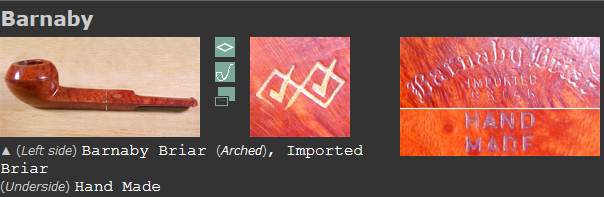
I continue on a restemming binge. I have a box of stummels (bowls) here that I periodically go through and see if I have a potential stem that would fit them. This is the second of the three stummels that took out to restem. The first one was the Malaga Second (https://rebornpipes.com/2022/01/20/restemming-restoring-a-malaga-second-long-shank-billiard/). This particular bowl was a bit of a mystery to me. I honestly don’t remember where or when we picked it up but we had reamed and cleaned it before boxing it. It has a mix of smooth and Custom-Bilt style rustication on the bowl and shank. There were some deep groves and valleys around the bowl and rim. The grain on the smooth portions was quite nice worked well with the deep worm trail style rustication and craters. The rim top and edges were in good condition. The interior of the bowl was clean and there were not any chips, cracks or checking on the walls. The mortise was clean and well drilled with no issues. The finish was clean and the fills in the rustication stood out clearly in contrast to the dark stain. The stamping was clear and readable. On the left side it read Yorkshire (in old English Script) [over] Imported Briar. I took photos of the bowl before I started to work on it. I took a photo of the stamping on the side of the shank. It reads as noted above and is clear and though the Yorkshire stamp is faint it is still readable. I took some photos of the putty fills around various parts of the bowl and shank. Interestingly they were in the rusticated portions of the bowl – probably by design. They would need to be stained to blend them into the surrounding briar.I went through some of stems and found this nice looking taper stem blank that would work with the bowl. It had already been turned with a tenon tool so that portion of the work was finished. I would need to strip back the casting materials on the button and sides of the stem and reduce the tenon diameter slightly but the diameter of the stem itself was very close to that of the shank.I decided to see what Pipephil’s site had on the brand (http://pipephil.eu/logos/en/logo-y.html) and interestingly found two different Yorkshire Brands. The first had a plain stamp on the side of the shank that did not match the one I was working on. The second on had the same Old English Style stamp over Imported Briar. The difference of course was the one in the photo below was an all briar pipe. The one I had was a Custom-Bilt style that would have had a vulcanite stem.I followed the clue on the above screen capture and turned to the section on Barnaby Briars (http://pipephil.eu/logos/en/logo-b1.html#barnaby). There I found out that the company was a Smoking Pipe Retailer located at 28 Powell Str., Brooklyn (NY). They must have had the pipes made by someone else but they carried both the Barnaby Briar and the Yorkshire Imported Briar.Now it was time to work on the stem and fit it to the shank of the pipe. The diameter of the tenon was close. I used a flat file that I have here that works well for me to do the fine tuning of the fit. I used it to straighten out the sides of the tenon next to the surface that face the shank. It worked well and looked much better.I cleaned up the file marks with 220 grit sandpaper and the tenon fit well in the mortise. The fit against the shank was clean but there were spots where the stem diameter was slightly larger than the shank diameter. I worked these over with the file to clean up the transition. The photos below show the fit at this point. Looking better but still a long ways to go. The fit against the shank was better. There were spots where the stem diameter and the shank diameter did not match were greatly reduced. I used a folded piece of 220 grit sandpaper to smooth out the transition even more between the two. I started polishing it with 400 grit wet dry sandpaper. With the fit against the shank and diameter corrected and the stem sanded with 220 and 400 grit sandpaper it was now time to bent the stem to fit the flow of the pipe. I heated the stem with a heat gun on the low setting until the vulcanite was pliable. I bent it to proper angle and then set it with cool water. I polished the stem with micromesh sanding pads – dry sanding with 1500-12000 grit pads. I wiped the stem down after each pad with a cloth and Obsidian Oil. I finished the polishing with Before & After Pipe Stem Polish – both Fine and Extra Fine. I gave it a final coat of Obsidian Oil. I set the stem aside and turned my attention to the bowl. I started by touching up the visible fills. I used a Walnut Stain Pen to fill them in to match the other worm trail rustication around the shank and bowl sides. Once it dried the match was perfect. I worked some Before & After Restoration Balm into the surface of the smooth briar with my finger tips and a horsehair shoe brush. The product is amazing and works to clean, enliven and protect the briar. I let it sit on the briar for 10 or more minutes and then buff it off with a soft cloth. It really makes the grain sing. I put the pipe back together – the bowl with its new stem. This restored Partially Rusticated Yorkshire Bullmoose is a real beauty and the chosen stem works well with it. I don’t have a lot of information on the maker other than it is American made. The grain on the smooth portions of the bowl is quite beautiful and the deep worm trails and rugged crevices came alive with the buffing. I used Blue Diamond on the buffing wheel on both the bowl and stem. I gave both multiple coats of carnauba wax on the wheel then buffed it with a clean buffing pad to raise the shine. I hand buffed it with a microfibre cloth to deepen the shine. The Yorkshire Bullmoose feels great in the hand. It is lightweight and the contrast in the browns of the briar and the polished vulcanite stem is quite amazing. The dimensions of the pipe are Length: 6 inches, Height: 2 inches, Outer diameter of the bowl: 1 ½ inches, Chamber diameter: 7/8 of an inch. The weight of the pipe is 2.19 ounces/63 grams. It really is a beauty. I will be putting it on the rebornpipes store in the American (US) Pipe Makers section shortly if you are interested in adding it to your collection. Thanks for walking through the restemming and the restoration with me. Cheers.

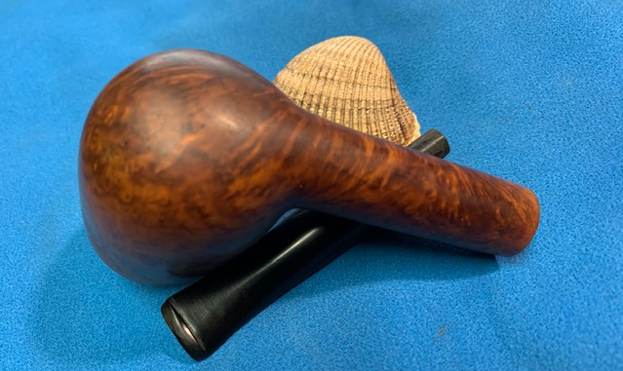
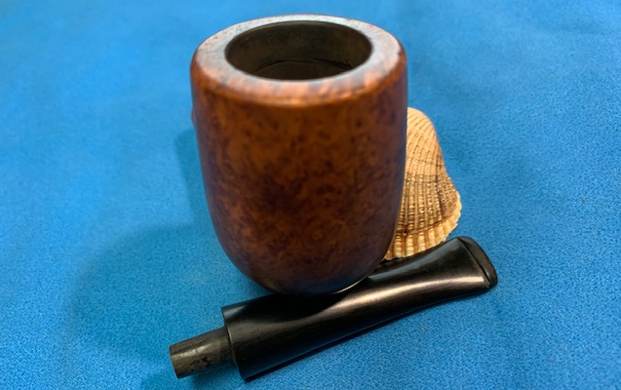
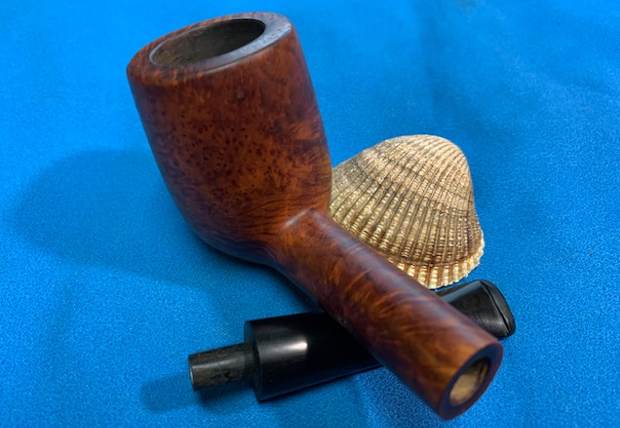
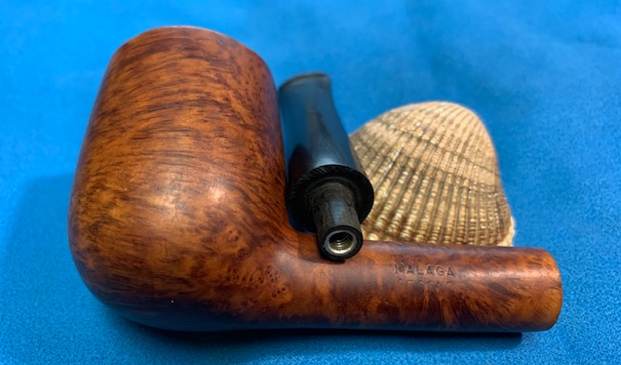
Restemming & Restoring a Malaga Second Long Shank Billiard


Blog by Steve Laug

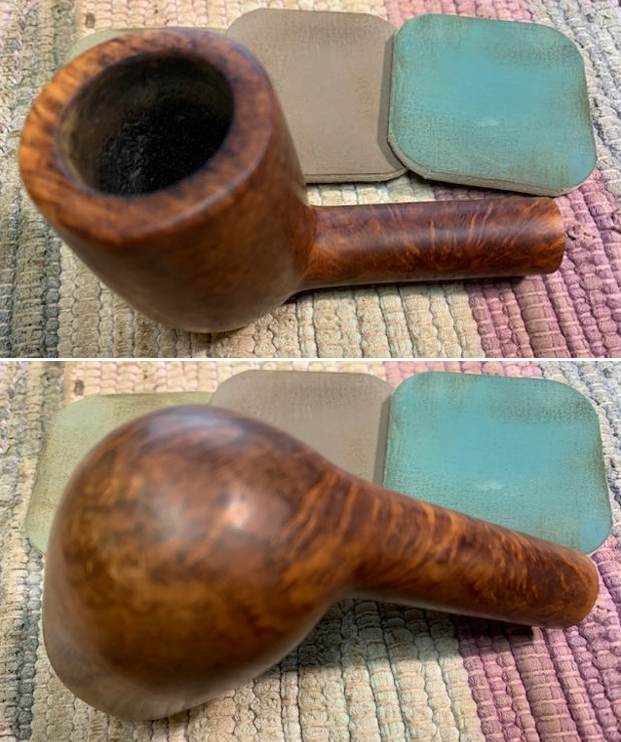
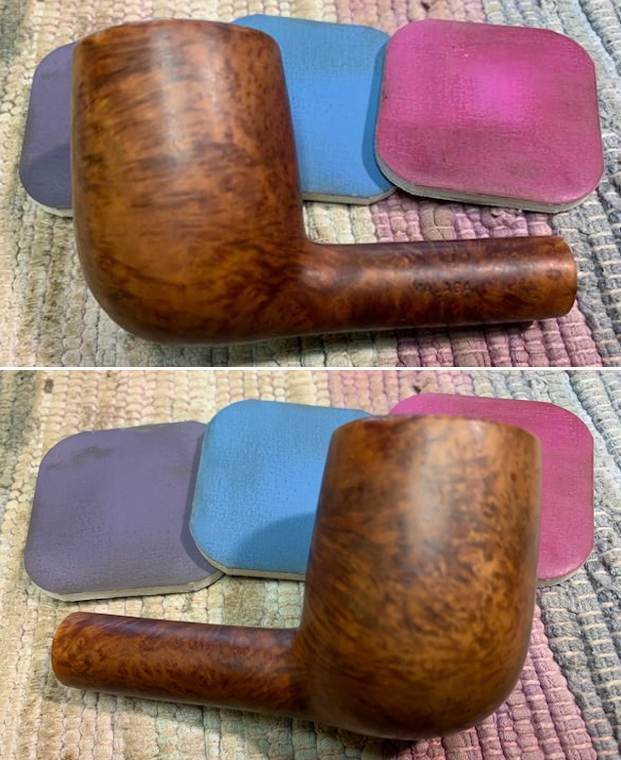
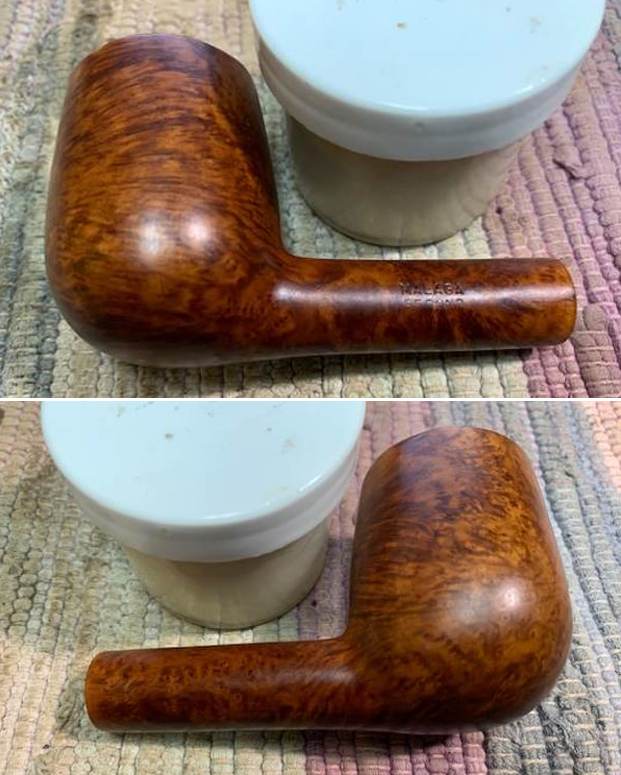
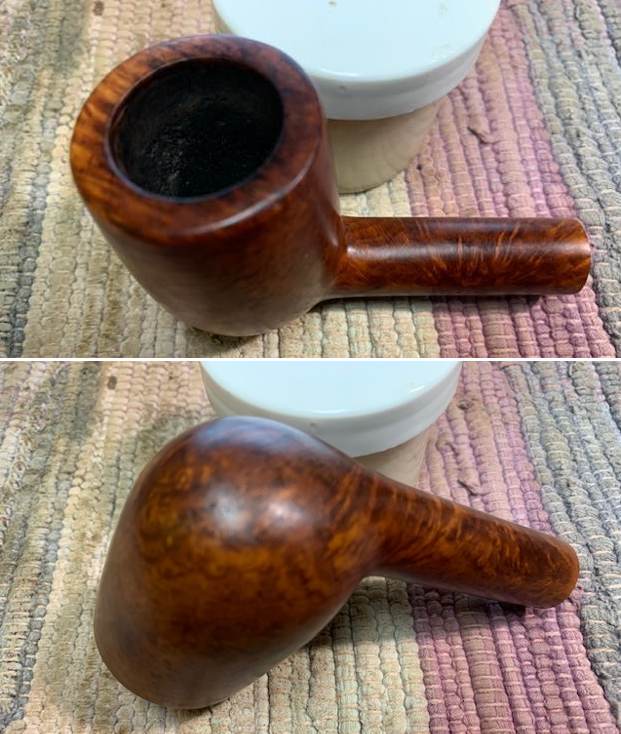
I have been on a restemming binge for the last week or so. I have a box of stummels (bowls) here that I periodically go through and see if I have a potential stem that would fit them. Yesterday when I finished the restoration and restem on the Viking Brandy, I went through the box and picked out three bowls and found workable stems for them. All were in different states of need but all had been thoroughly cleaned before I boxed them up. The first of those that I chose to restem and restore is a lovely Malaga Second Long Shank Billiard stummel. If you have followed me for long you will know that I have worked on a lot of Malaga pipes in the past so I am not a stranger to the brand. This particular bowl is actually quite beautiful and for the life of me I have no idea why is stamped a Second.

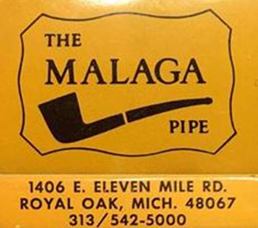
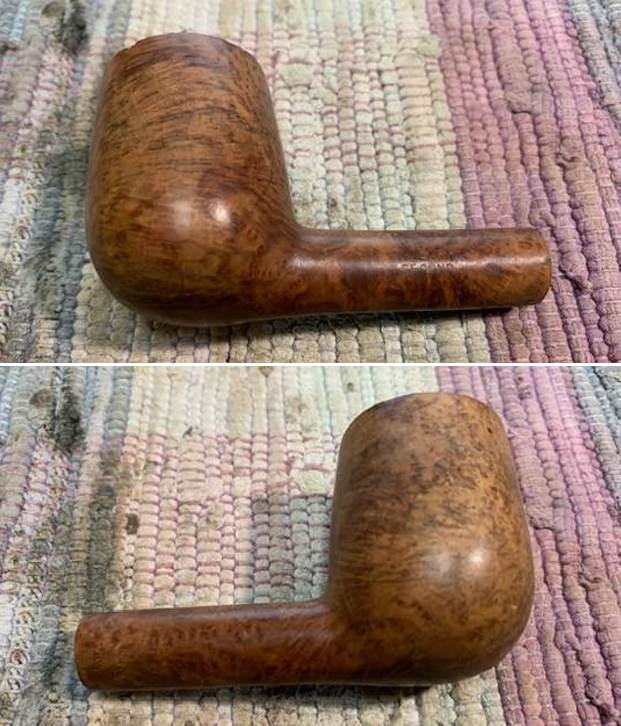
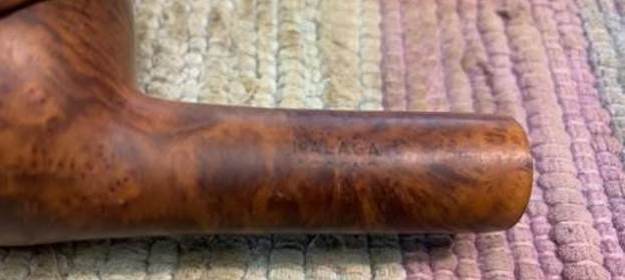
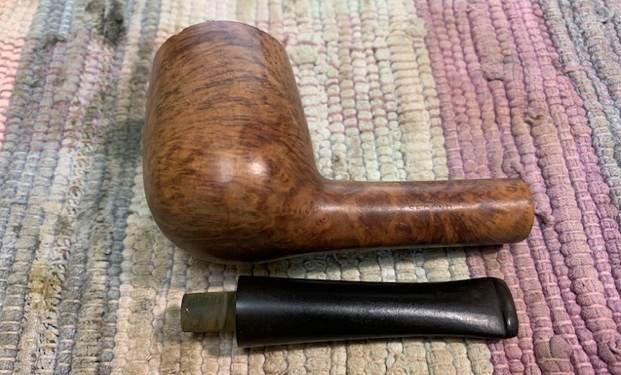
The bowl looked very good. The grain around the sides was quite nice and a mix of cross grain and birdseye grain. The rim top had light damage to the inner edge and some nicks of flaws in the outer edge. The rim top had been beat about a bit and showed the wear and damage and there was darkening around the top and edges. The interior of the bowl was clean and there was some light checking on the walls. Examining the mortise it was clean and well drilled with no issues. The finish was washed out and bit and tired but still quite redeemable. The stamping on the pipe was clear and readable. On the left side it read MALAGA [over] Second. I took some photos of the bowl before I started to work on it. I took a photo of the stamping on the side of the shank. It reads as noted above and is clear and readable.I went through some of stems and found this shorter taper stem that needed some work on the tenon and diameter at the shank but it was exactly what I wanted. It has a few tooth marks and chatter on both sides near the button but it would clean up well. I have worked on quite a few Malaga pipes and blogged their restorations, so rather than repeat previous blogs, I am including the link to one that gives some of the history of the Malaga brand and the Malaga Pipe Shop in Royal Oak, Michigan in the USA from a catalogue. It gives a sense of the brand and the history in their own words. Follow the link to get a feel for the brand and the pipemaker – https://rebornpipes.com/2013/02/09/george-khoubesser-and-malaga-pipes/.

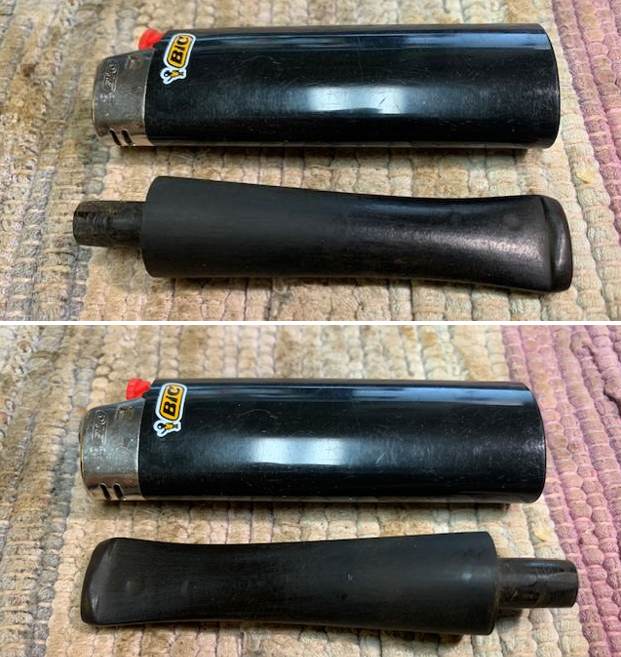
Now it was time to work on the stem and fit it to the shank of the pipe. The diameter of the tenon was close. I used the Dremel and sanding drum to bring it close to a fit and then used two files that I have here that work well for me to do the fine tuning of the fit.I used a piece of 220 grit sandpaper to smooth out the file marks on the tenon and make sure it was round. It is an interesting stem in that it has a tube in the tenon for making it “unbreakable”. I fit it on the pipe and took photos of the fit at this point. The fit against the shank was perfect. There were spots where the stem diameter and the shank diameter did not match. I used a folded piece of 220 grit sandpaper to smooth out the transition between the two so it was smooth.I set the bowl aside and turned my attention to the remainder of the stem. I “painted” the stem surface with a Bic lighter flame to raise the tooth marks. I was able to lift some of them to the surface. I filled in what remained with clear CA glue. Once it cured I flattened the repairs and reshaped the button with a small flat file. I then repaired areas 220 grit sandpaper to blend them into the rest of the surrounding vulcanite. I finished this part of the process by starting the polishing of the stem with 400 grit wet dry sandpaper. I polished the stem with micromesh sanding pads – dry sanding with 1500-12000 grit pads. I wiped the stem down after each pad with a cloth and Obsidian Oil. I finished the polishing with Before & After Pipe Stem Polish – both Fine and Extra Fine. I gave it a final coat of Obsidian Oil. I set the stem aside and turned my attention to the bowl. I started with the rim top issues. I used a folded piece of 220 grit sandpaper to smooth out the inner and the outer edge of the rim. I topped the bowl on a topping board with 220 grit sandpaper to smooth out and minimize the damage on the rim top. The top and edges looked much better at this point in the process. I polished the briar with micromesh sanding pads – dry sanding with 1500-12000 grit pads and wiping it down with a damp cloth after each pad. It really began to shine. I worked some Before & After Restoration Balm into the surface of the smooth briar with my finger tips. The product is amazing and works to clean, enliven and protect the briar. I let it sit on the briar for 10 or more minutes and then buff it off with a soft cloth. It really makes the grain sing. Before I finished the buffing on the pipe I wanted to address the checking on the inside of the bowl. I noticed it while I was taking the photos. Sometimes it is part of the cake and sometimes not. This time I was able to clean out the majority of it with a Savinelli Fitsall Pipe Knife and then sandpaper wrapped around a piece of dowel. There is still some shallow checking on the front of the bowl toward the top and a little on the backside but it is far better and should be good for many years. I cleaned out the bowl, shank and stem with alcohol and pipe cleaners to remove the sanding and scraping debris.I put the pipe back together – the bowl with its new stem. This restored Malaga Second Long Shank Billiard is a real beauty and the chosen stem works well with it. I have no idea why it would be marked a second other than the pits on the rim top. The grain on the bowl is quite beautiful came alive with the buffing. I used Blue Diamond on the buffing wheel on both the bowl and stem. I gave both multiple coats of carnauba wax on the wheel then buffed it with a clean buffing pad to raise the shine. I hand buffed it with a microfibre cloth to deepen the shine. The Malaga Second Billiard feels great in the hand. It is lightweight and the contrast in the browns of the briar and the polished vulcanite stem is quite amazing. The dimensions of the pipe are Length: 6 inches, Height: 2 inches, Outer diameter of the bowl: 1 ½ inches, Chamber diameter: 7/8 of an inch. The weight of the pipe is 1.98 ounces/56 grams. It really is a beauty. I will be putting it on the rebornpipes store in the American (US) Pipe Makers section shortly if you are interested in adding it to your collection. Thanks for walking through the restemming and the restoration with me. Cheers.

A Rare Beauty


Blog by Kenneth Lieblich

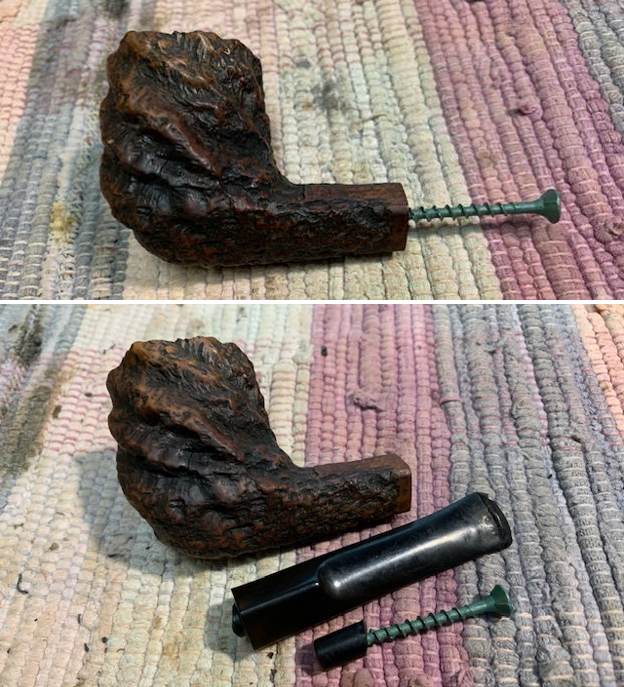
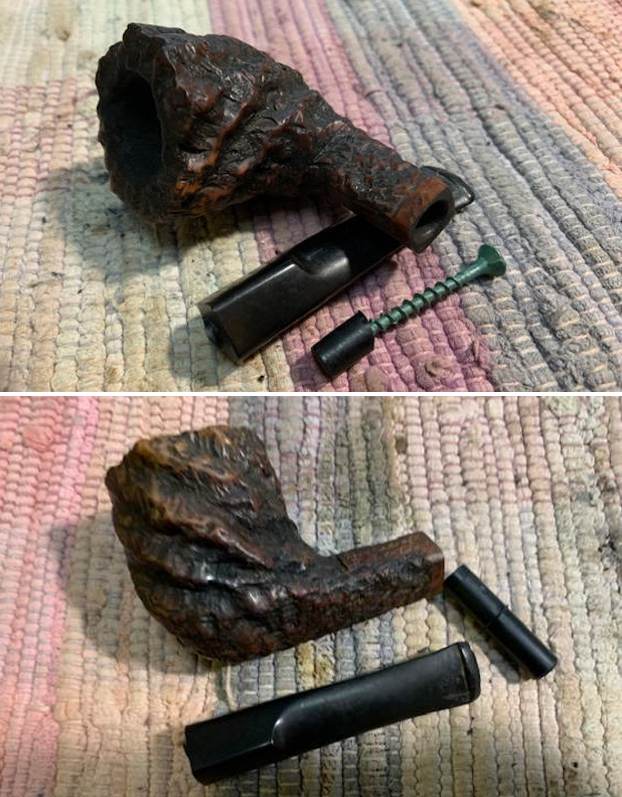
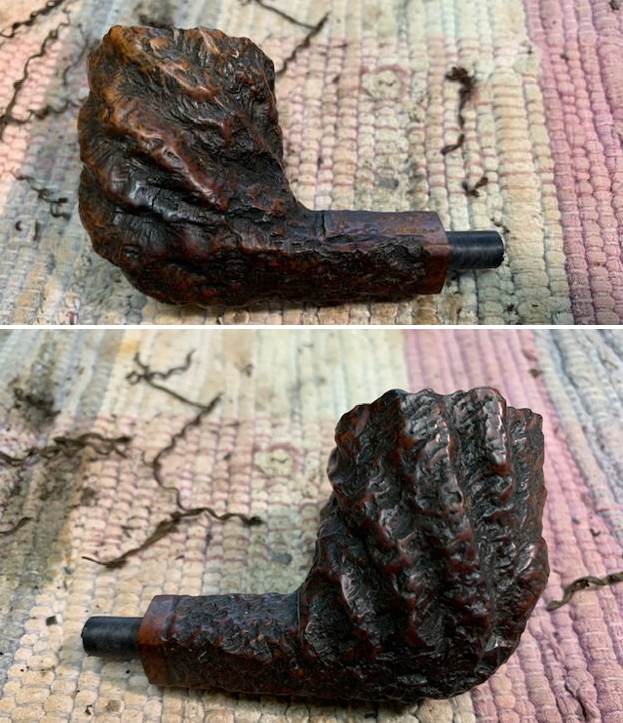
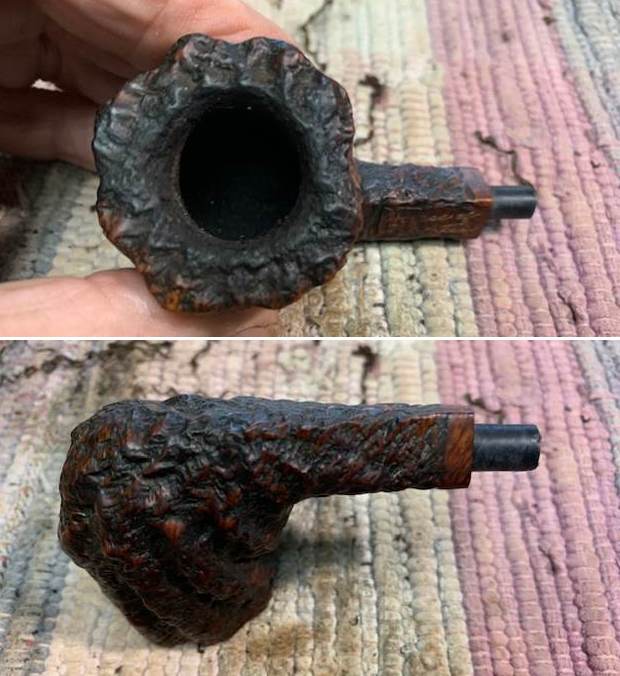
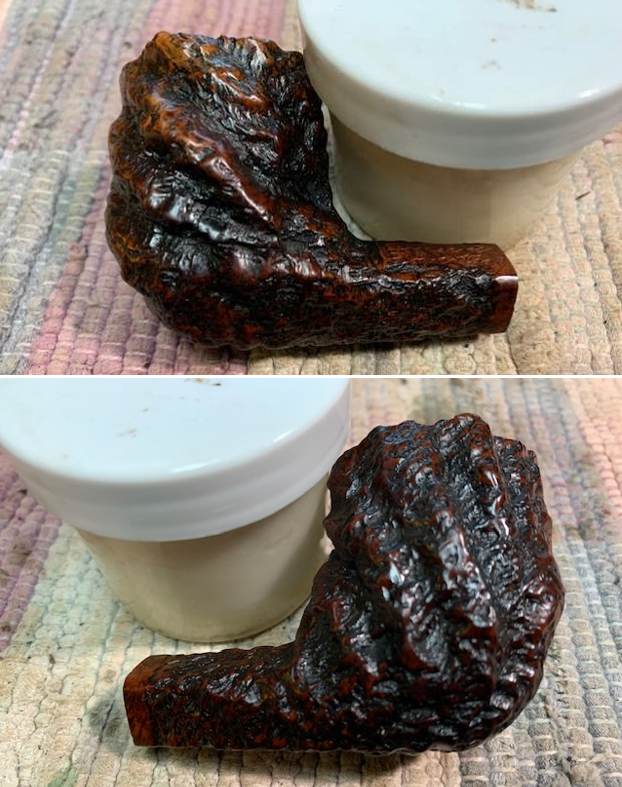
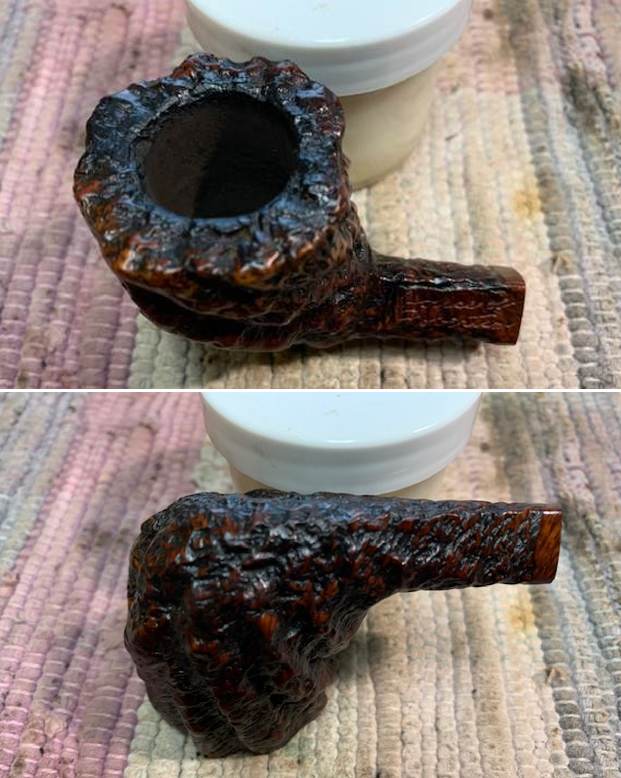
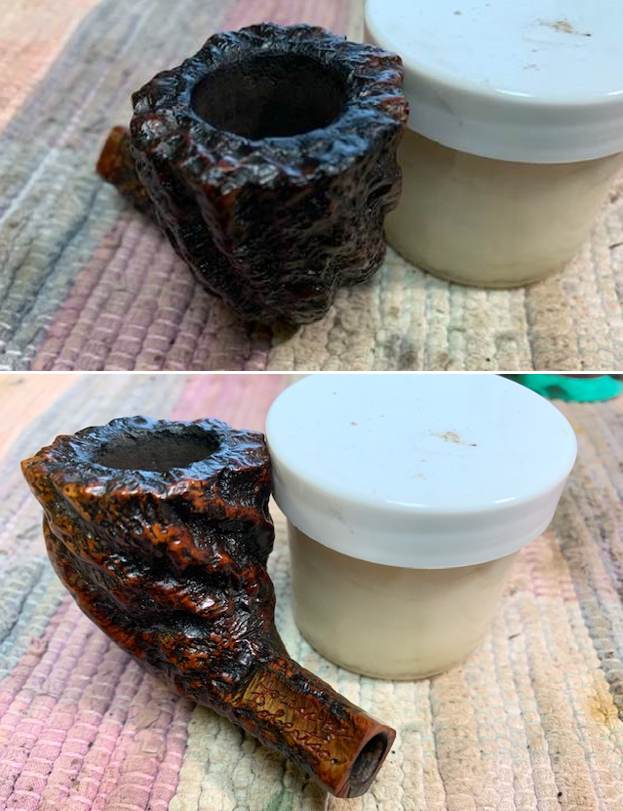
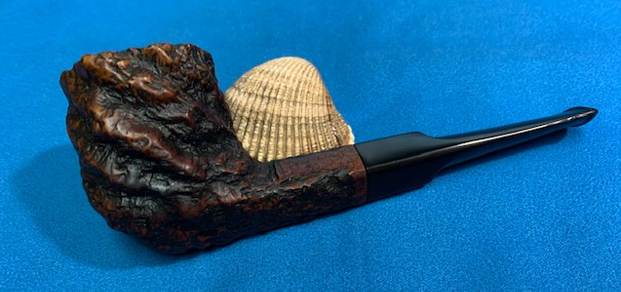
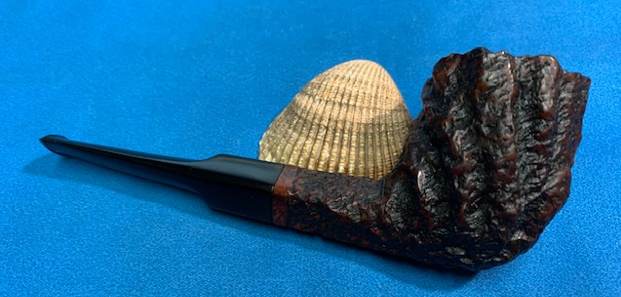
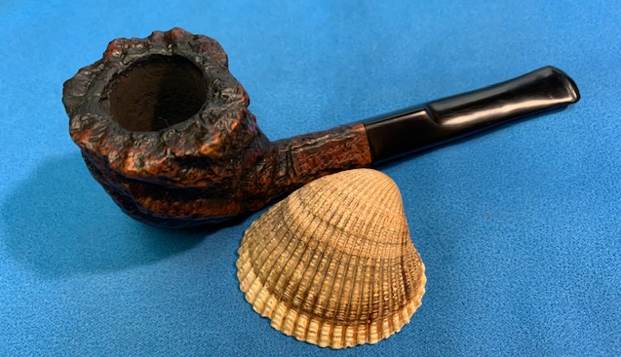
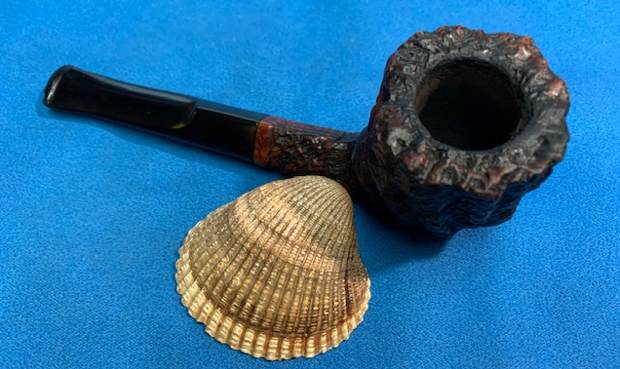
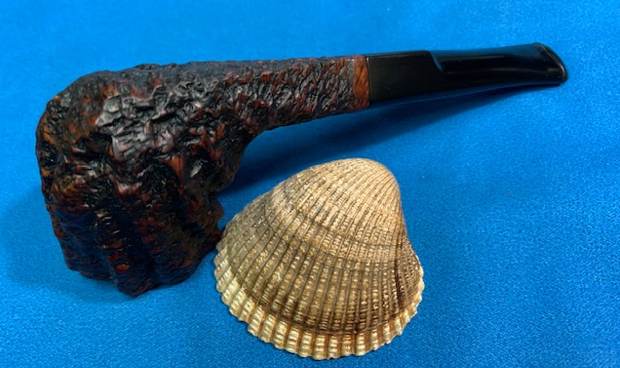
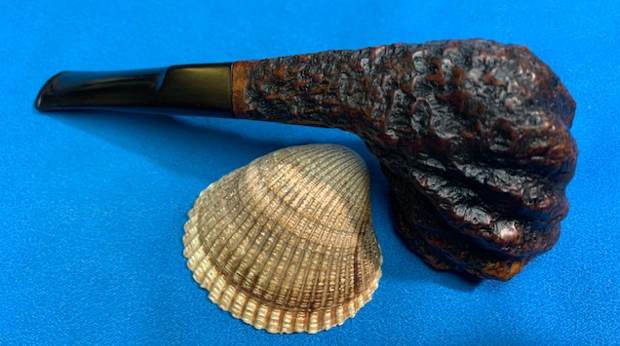
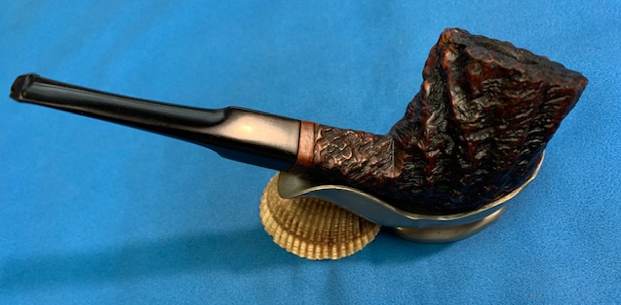
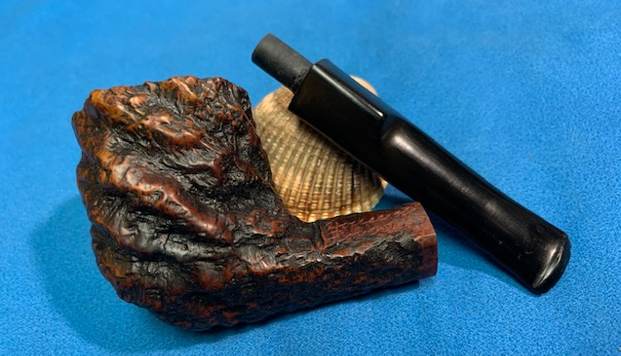
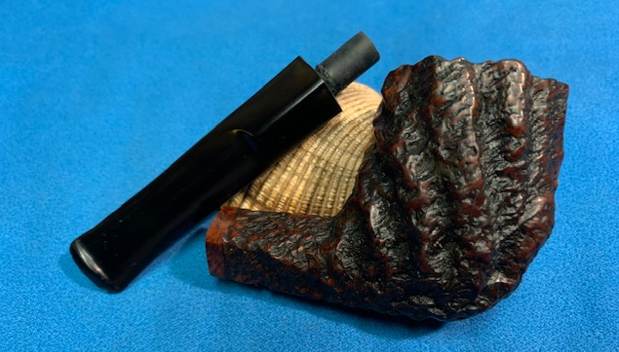
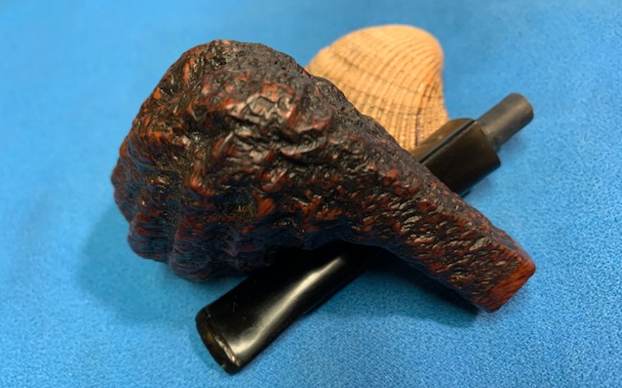
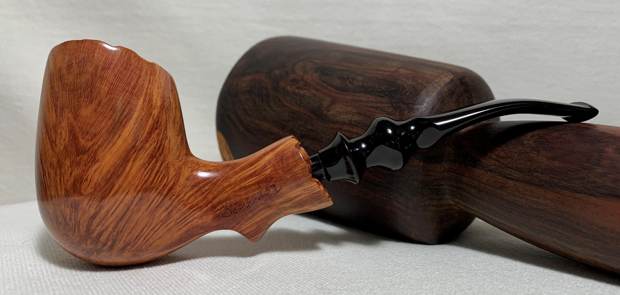
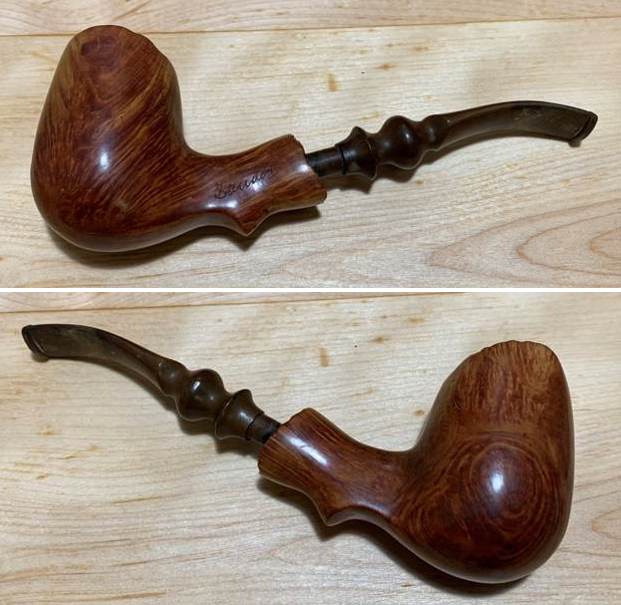
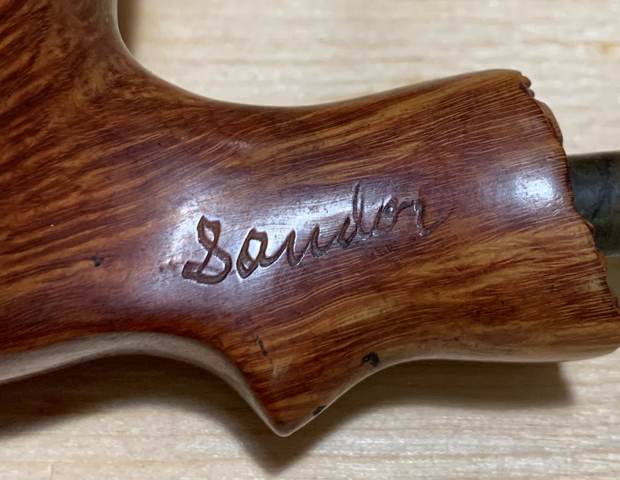
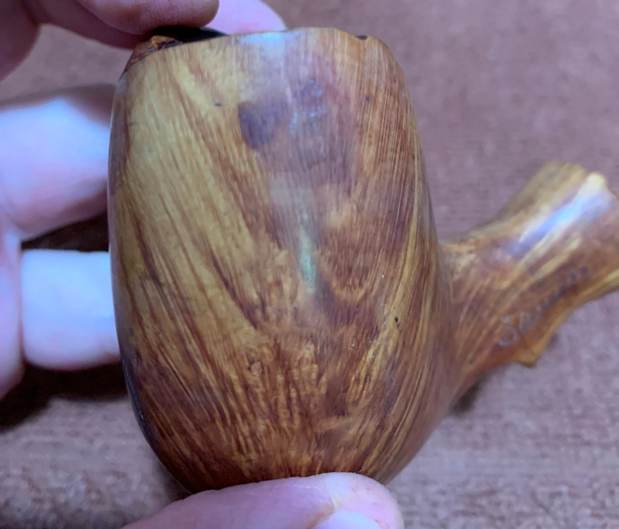
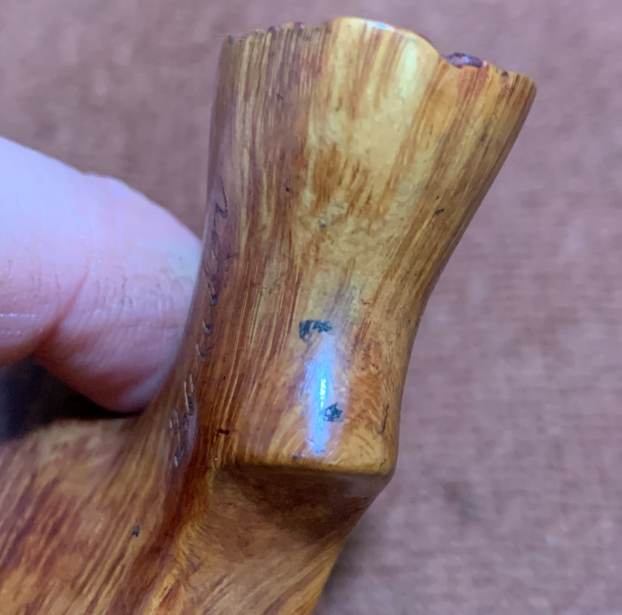
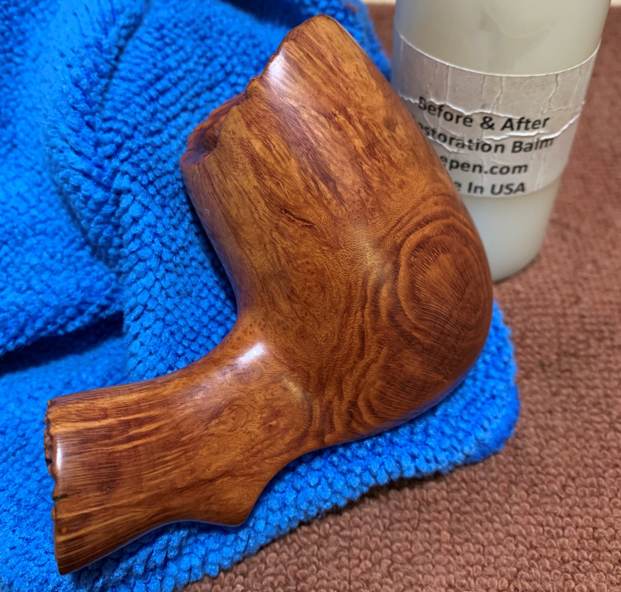
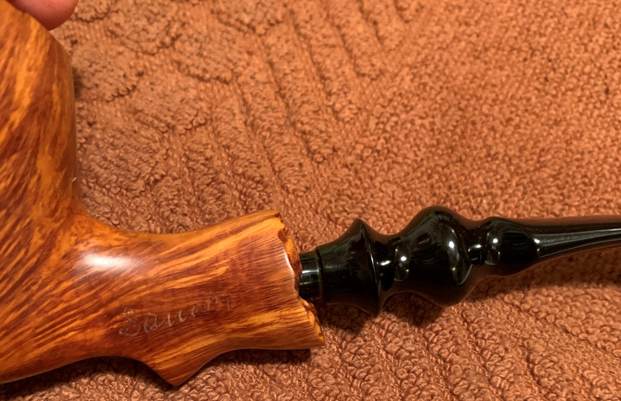
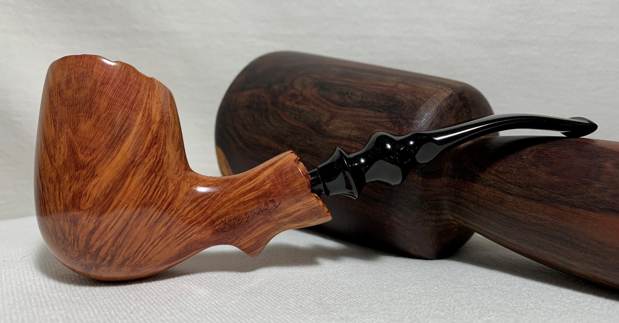
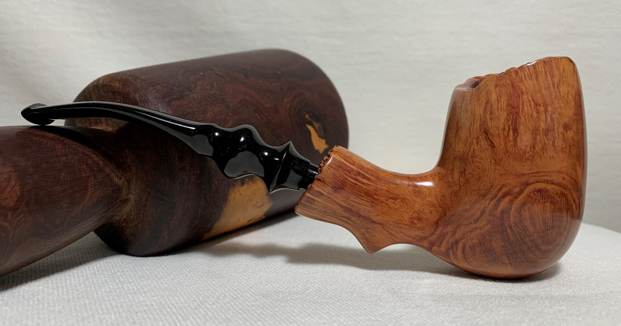
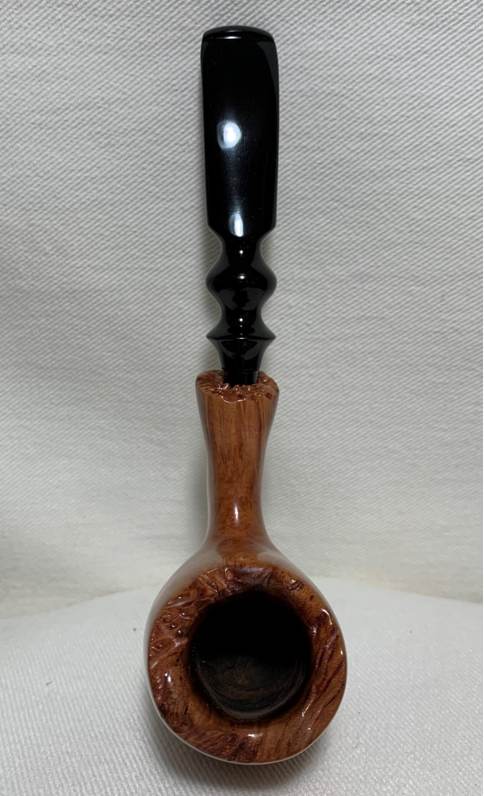
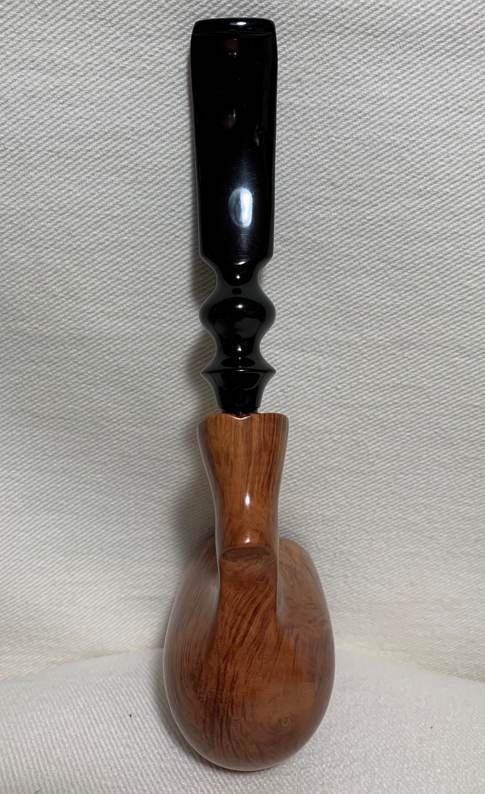
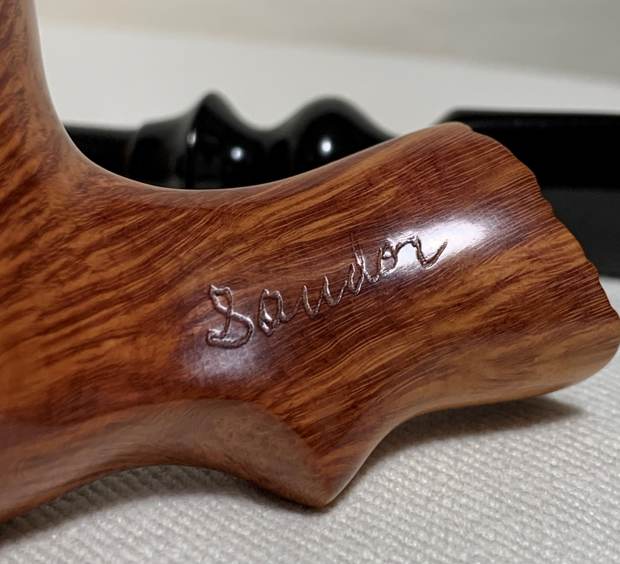
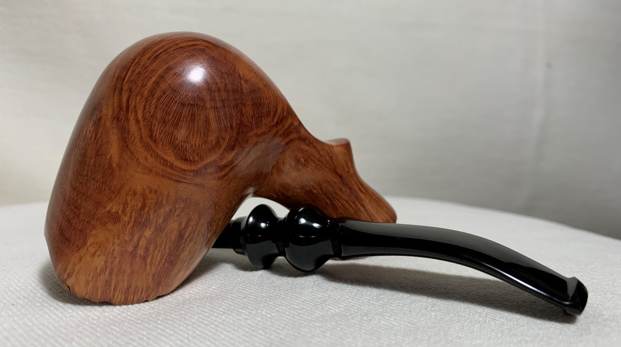
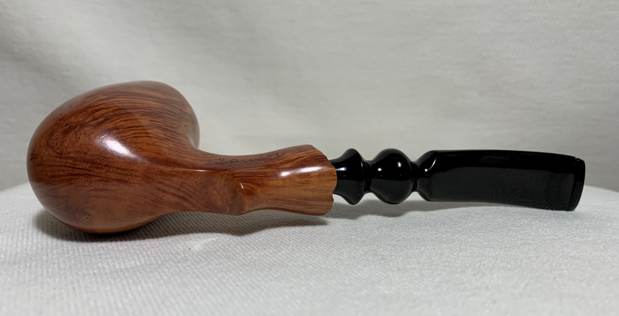
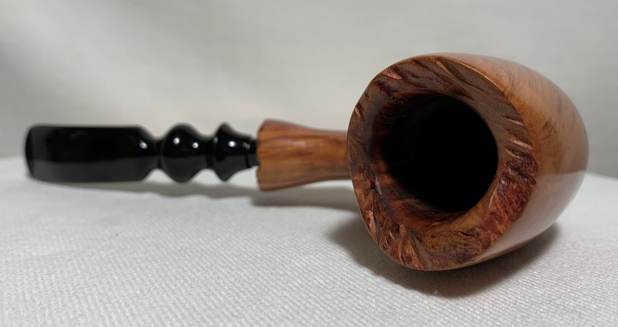
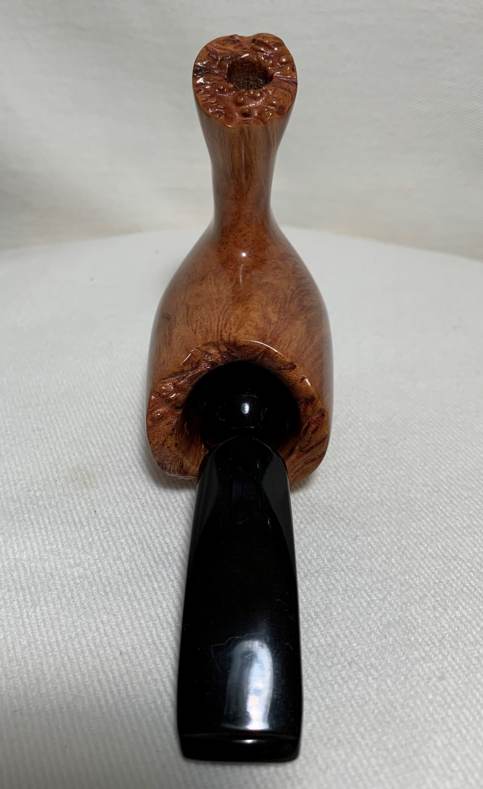
Next on the chopping block is a spectacular freehand pipe that came in a group of pipes that I bought from Chicago. Freehand pipes have been all the rage among collectors for many years, thanks to the Danes. But this one is not from Denmark – it is from the United States. The pipe is absolutely beautiful and a superb example of American pipe-making craftsmanship. I have been wanting to work on this pipe for ages, but other things always got in the way. Now is the time. Carpe diem!The pipe is a American freehand pipe by the esteemed pipemaker, Sandor Herskovitz. You’ve never heard of him? Do not worry – few have! Not many of his pipes are available on the secondary market. The gorgeous briar wood on this pipe really makes an impression. I am not able to date the pipe, as the photo shows all of the markings to be seen. It simply shows the word Sandor on the left-hand side of the stummel.Little information exists on Pipepedia about him. What information they do have comes from the proprietor of the Red Door Consignment Gallery in Harrisburg, Pennsylvania:

Sandor Herskovitz (of Flushing, NY) used to make pipes and sell them out of a public park in Harrisburg, Pennsylvania in the late 50s and early 60s. Tom Benz had a pipe created for his wife, Hilda, that is a foot with a big toe sticking up. Sandor signed it “Made for Hilda, Sandor”. Tom Benz gave the pipe to a friend who later passed. His daughter gave it to the Red Door Consignment Gallery in Harrisburg, PA to sell. Coincidentally, my father, Leonard Berman, saw the pipe and asked me to e-mail Tom Benz to ask who the man was who used to make pipes in the park. By sheer coincidence, Tom Benz wrote back with the name Sandor Herkovitz and said the pipe was originally his! Of course, I offered it back but he declined and is allowing the public to enjoy it at our gallery. I will continue to research this pipe maker and hope others will contribute as well.

I did my own sleuthing on Sandor Herskovitz. I do not know his life-span for certain, but US genealogical records indicate that a man named Sandor Herskovitz was born in Hungary in 1898, naturalized in Pittsburgh, Pennsylvania in 1923, and died in Erie, New York in 2002. This seems likely to be our man.

I also found two newspaper articles that mentioned Herskovitz in the 1970s. The first article comes from the Washington Post on 13 April 1978, regarding the Spring Arts and Crafts Fair in Gaithersburg, Maryland:

Finding the unusual can be an important factor in the craftsman’s success. By applying his trade to his hobby, Sandor Herskovitz of Flushing, N.Y., found a distinctive way to sculpt briar pipes. For shapes, he found inspiration in the shoes he had been selling for years for Genesco, a shoe corporation. From making pipes in the shape of Benedict Arnold’s boot and Abigail Adams’ shoe he has gone on to make a camera shape for a Nikon executive, a foot shape for a podiatrist and a vertebra shape for an osteopath. His Liberty Bell pipe sent to Washington for the Bicentennial caught the eye of pipe-smoker Gerald Ford. “Maybe I got a little ham in me, maybe that’s why I do it,” said Herskovitz. “You take a piece of wood and you never know what’s inside.”

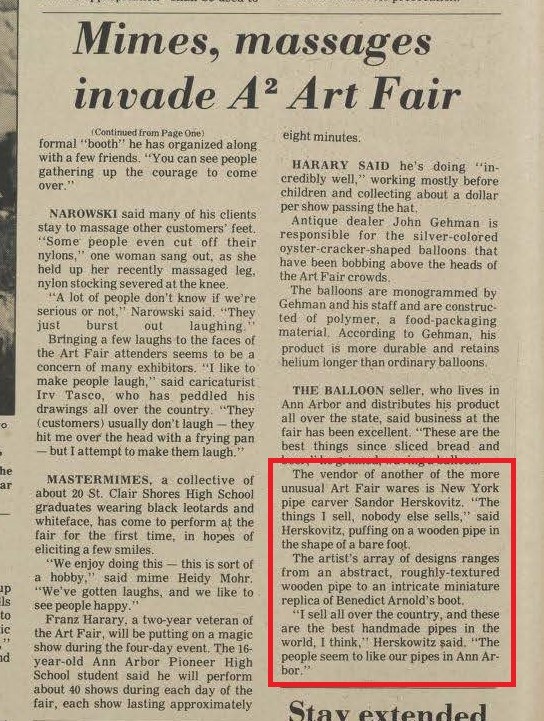
The second article comes from the Michigan Daily on 20 July 1978, regarding the Ann Arbor Art Fair in Ann Arbor, Michigan:

The vendor of another of the more unusual Art Fair wares is New York pipe carver Sandor Herskovitz. “The things I sell, nobody else sells,” said Herskovitz, puffing on a wooden pipe in the shape of a bare foot. The artist’s array of designs ranges from an abstract, roughly-textured wooden pipe to an intricate miniature replica of Benedict Arnold’s boot. “I sell all over the country, and these are the best handmade pipes in the world, I think,” Herskowitz said. “The people seem to like our pipes in Ann Arbor.”Clearly, Herskowitz was an experienced and talented pipe man. It seems likely that the pipe dates from the 1950s–1970s. I am delighted to be able to work on a pipe like this. One can not only see, but also feel, the quality of the briar and the work he put into it.

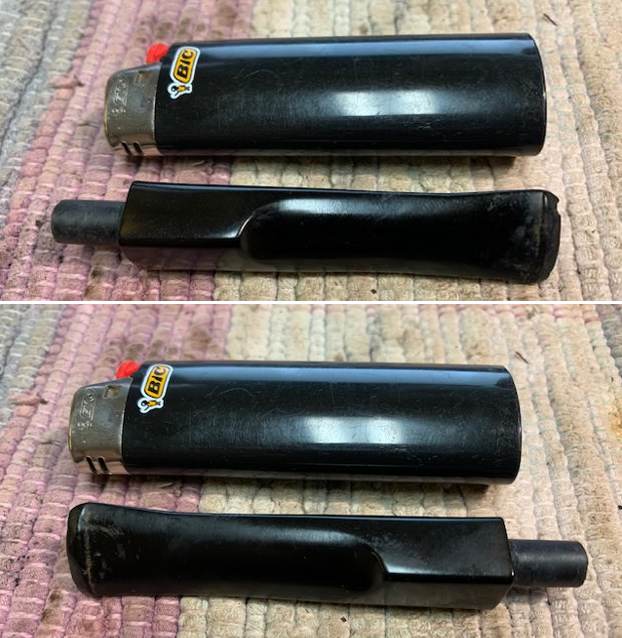
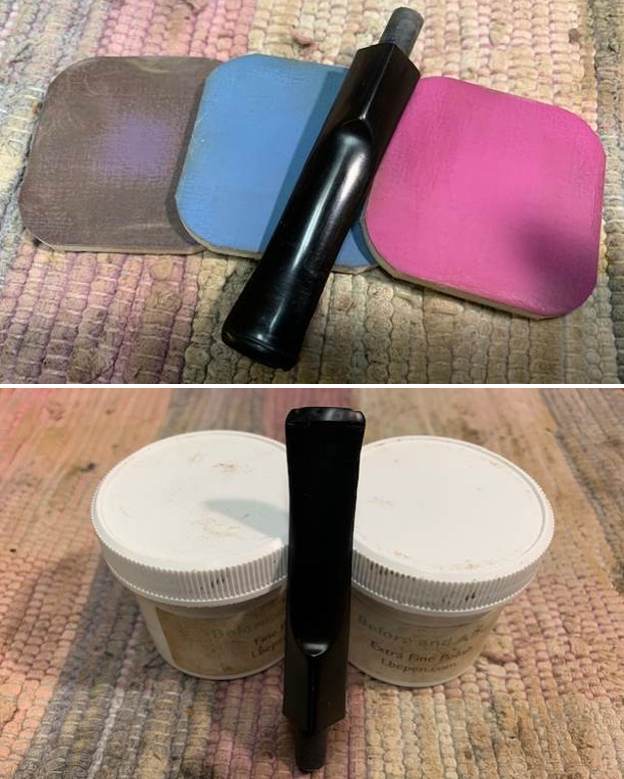
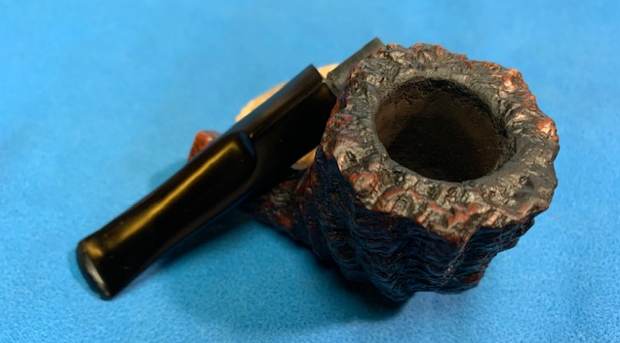
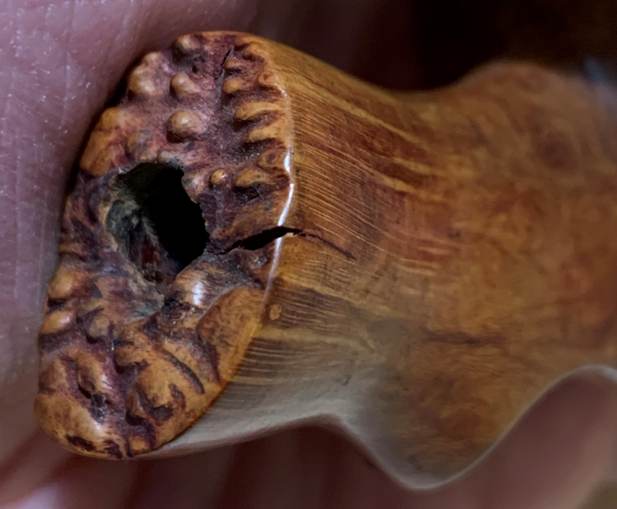
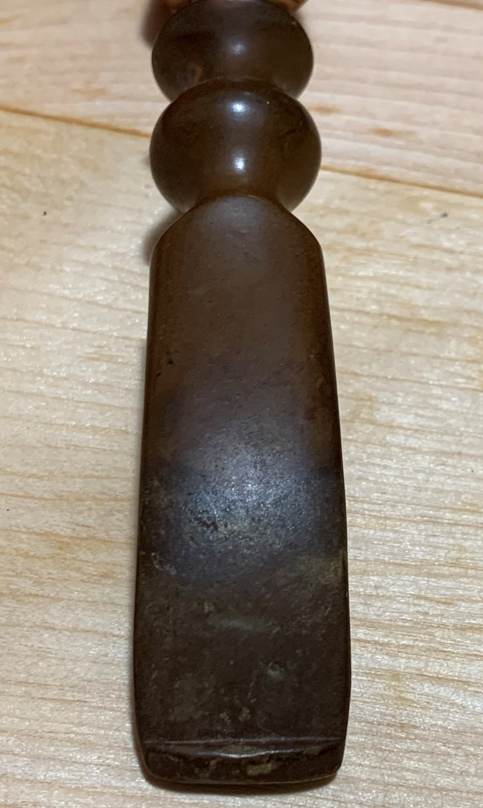
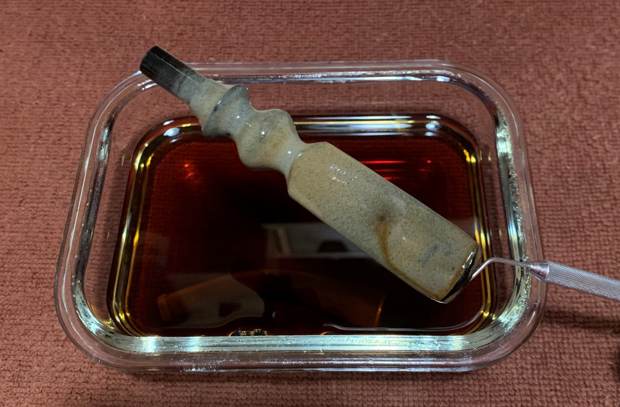
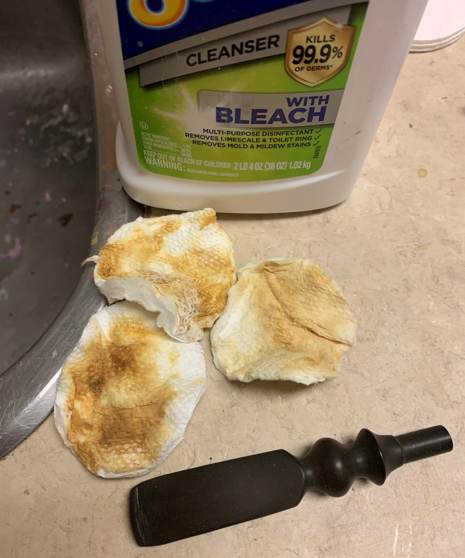
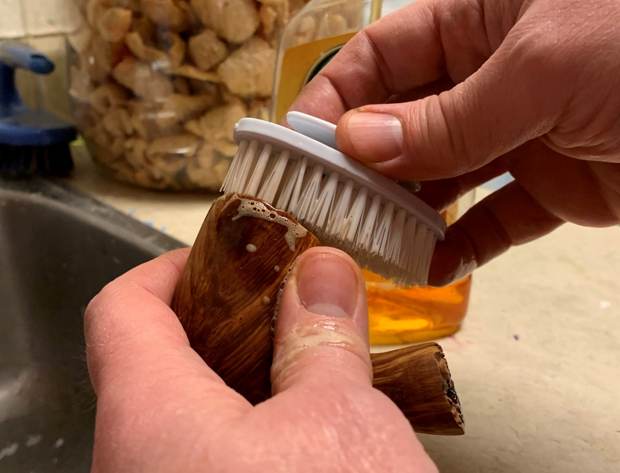
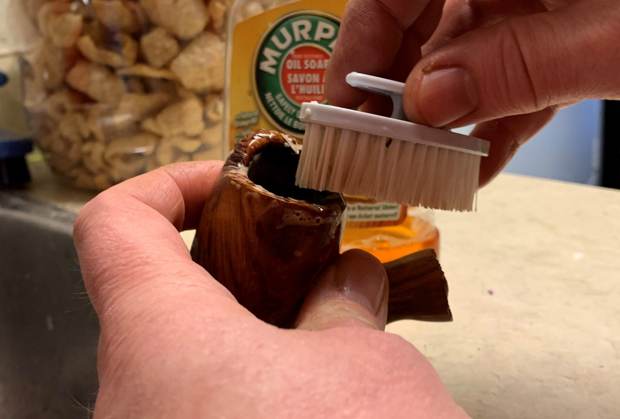
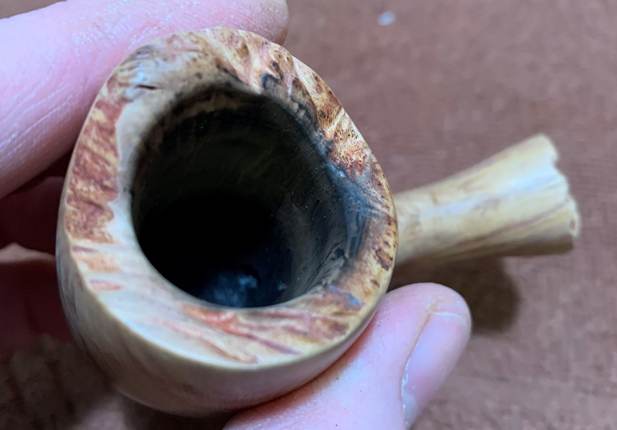
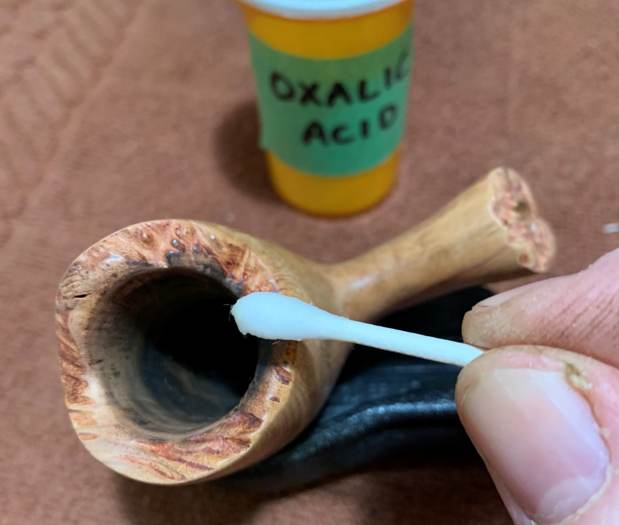
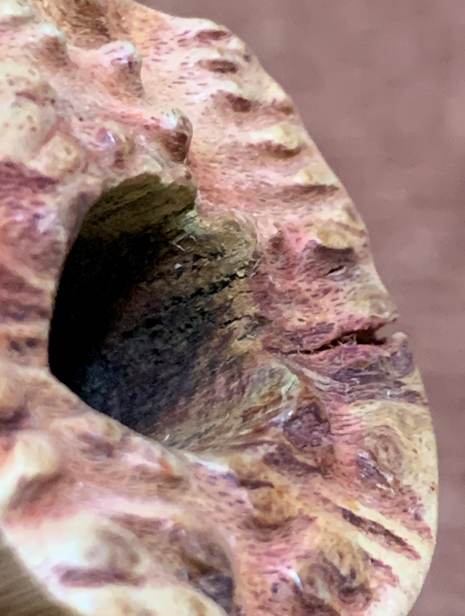
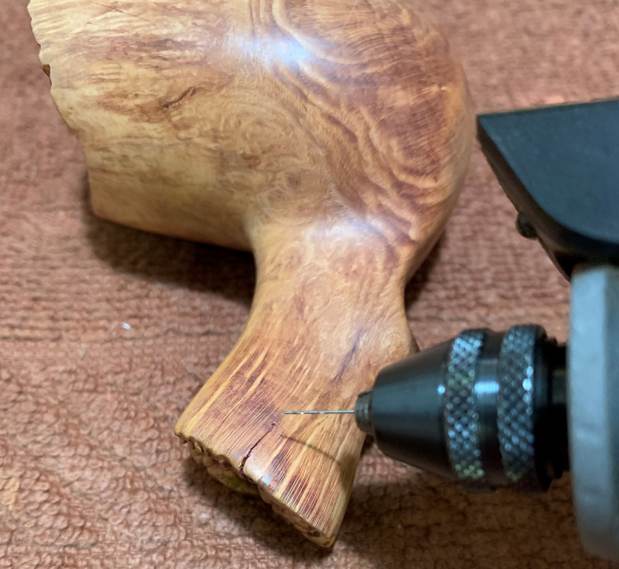
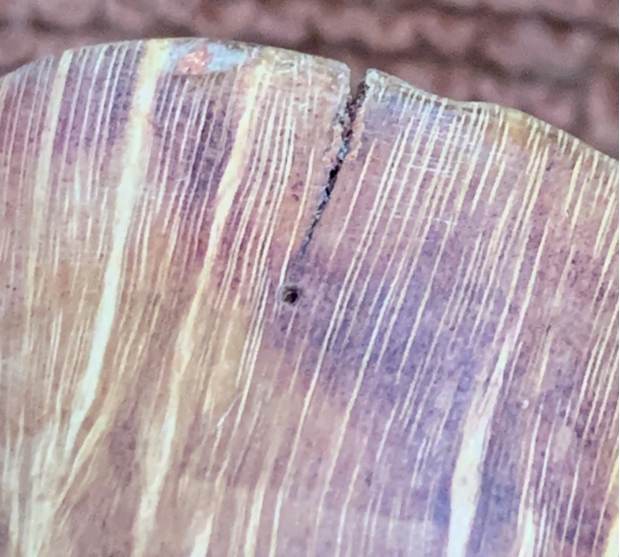
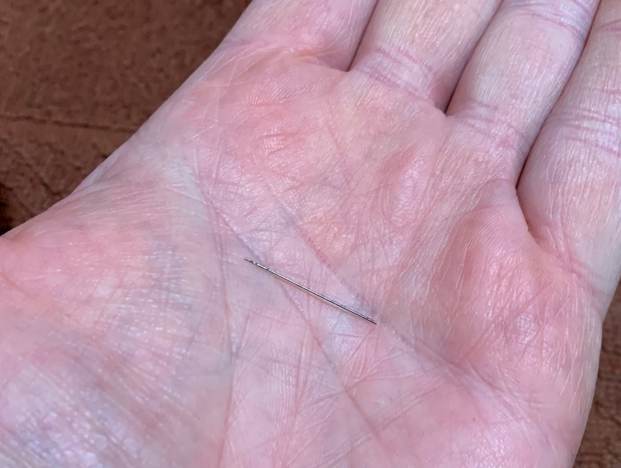
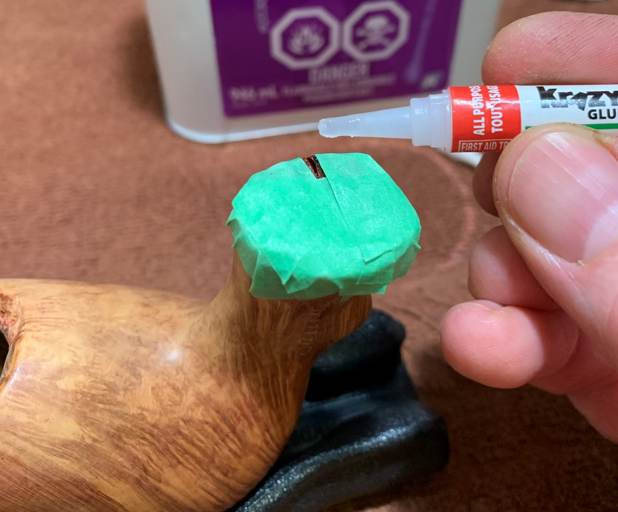
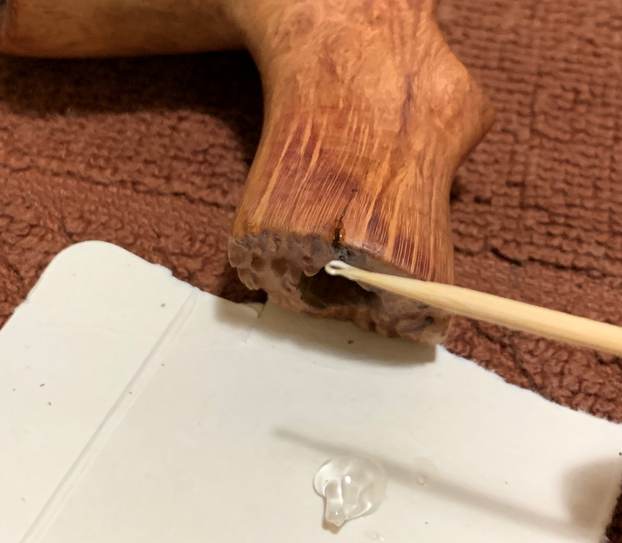
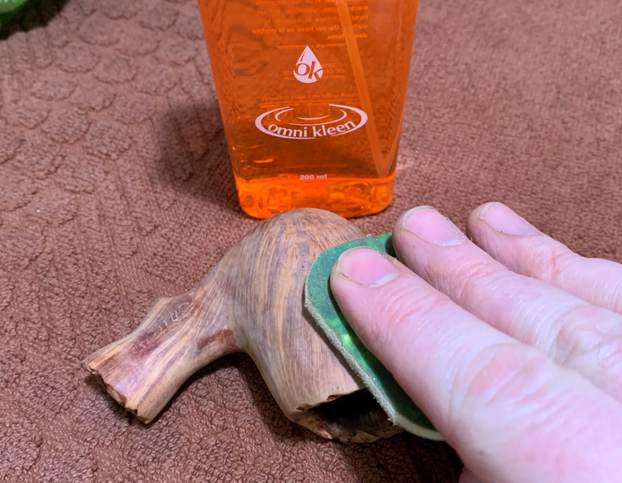
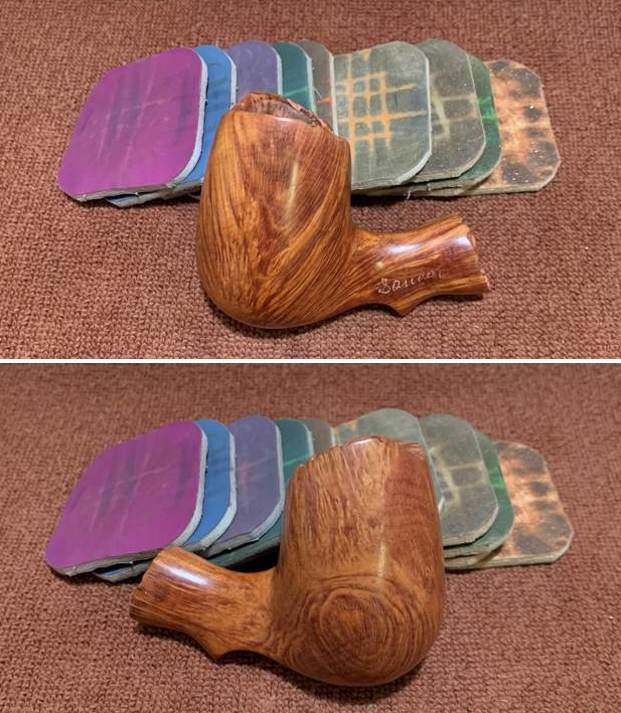
On to the pipe and, beautiful though it was, it had a few issues. The stem had some oxidation and plenty of tooth chatter and scratches. It desperately needed a polish. It also had problem with the tenon insofar as it did not fit properly in the stummel’s mortise. Meanwhile, the stummel also had some problems. There was plenty of lava on the rim (and some minor burning), lots of cake in the bowl, and the bowl was pretty darn dirty. In addition, there was a small crack in the wood of the face of the shank. It seems reasonable to deduce that the crack may have been as a result of the misfitting tenon on the stem. This pipe was going to require some work, but it was definitely worth it for such a beauty. The stem was first on my list. I took a BIC lighter and ‘painted’ the stem with its flame in order to lift the tooth marks. This was fairly successful in raising the dents. Then, I cleaned out the insides of the stem with pipe cleaners and isopropyl alcohol. Once this process was done, the stem went for an overnight soak in the Pipe Stem Oxidation Remover. The following day, I cleaned all of the de-oxidizing mess off with alcohol, pipe cleaners, et cetera. The oxidation had migrated to the surface and would be fairly straightforward to remove. I scrubbed vigorously with SoftScrub on some cotton pads to remove the leftover oxidation. Next, I had to carefully remove some of the bulk from the stem’s tenon. Since I do not have a tenon-turning tool, I used my Dremel Rotary Tool. This was a bit scary, since the Dremel tends to have a mind of its own. I had to work precisely and gingerly. In the end, I managed to remove just enough and the stem now fits perfectly in the stummel.Before I moved on to the Micromesh pads, I built up the dents and the button on the stem with cyanoacrylate adhesive and let them fully cure. I then sanded the adhesive down with 220-, 400-, and 600-grit sandpapers to meld seamlessly into the stem. I did the same to the remaining tooth marks. I then used all nine Micromesh pads (1,500 through 12,000 grit) to bring out the lovely black lustre on the stem. I also used Obsidian Pipe Stem Oil in between each pad scrubbing.On to the stummel, and the usual cleaning procedures were in order for this pipe. I used both the PipNet Reamer and the KleenReem to remove the built-up cake and followed that with 220-grit sandpaper to eliminate as much as I could. I took the bowl down to bare briar, as I wanted to ensure there were no hidden flaws in the walls of the bowl. Fortunately, there were none. I then proceeded to clean out the insides of the shank with Q-tips, pipe cleaners, and isopropyl alcohol. There was some nastiness inside this stummel, but fortunately not too much – it only took a handful of pipe cleaners etc. to sort that out. I followed that up by cleaning the insides with some dish soap and tube brushes. I then moved on to cleaning the outside of the stummel with Murphy’s Oil Soap and some cotton pads. That removed any latent dirt and the miserable stains that blighted the wood. I had to work especially hard on the rim of the pipe. Obviously, this is a freehand (with a freehand sort of rim) and, as a result, I do not have the luxury of using a topping board to remove some of the lava. I used a small butter knife to gently chip away at the lava. I then used more Murphy’s with a scrub brush to get into the crevasses. This actually worked quite well. As I mentioned earlier, there were some small burn marks on the rim of the stummel that also needed to be addressed. A lot of this was removed by the Murphy’s. For the burns that remained, I took some oxalic acid on a Q-tip and rubbed and rubbed and rubbed! As you will see, the treatment worked very well and the rim is much improved.On to another issue with this pipe: the crack in the shank. My first step was to ensure that the crack would not continue to creep after I had repaired it. To that end, I took a micro-drill bit, inserted it in my Dremel, and very carefully drilled a hole right through the wall of the shank. This was quite nerve-wracking, but it worked perfectly. Look how thin that drill bit is! I then needed to apply cyanoacrylate adhesive to the crack in order to seal and repair it. I covered the end of the shank with painters’ tape. That done, I carefully applied some adhesive to the tiny hole and the length of the crack. Finally, I clamped it shut and let it sit overnight to cure. This was a great success – obviously, the crack would always be visible, but I was really pleased with how the repair looked. After this, the entire stummel was treated to a scrubbing with all nine Micromesh pads (1,500 through 12,000 grit) and some distilled water. A light application of Before & After Restoration Balm brought out the best in the stummel’s grain. The wood on this pipe is stunning! Now it was off for a trip to the buffer. A dose of White Diamond and a few coats of carnauba wax were just what this pipe needed. I had to be especially careful with the bench polisher on the stummel, since the edges have a tendency to catch on the buffing wheels. I have to admit, this did put my heart in my throat a few times!

This pipe was a delight from start to finish and its beauty only increased through the restoration process. I am pleased to announce that this pipe is for sale! If you are interested in acquiring it for your collection, please have a look in the ‘American’ pipe section of the store here on Steve’s website. You can also email me directly at kenneth@knightsofthepipe.com. The approximate dimensions of the pipe are as follows: length 6¼ in. (160 mm); height 2½ in. (60 mm); bowl diameter 1½ in. (40 mm); chamber diameter ¾ in. (20 mm). The weight of the pipe is 2 oz. (60 g). I hope you enjoyed reading the story of this pipe’s restoration as much I as I did restoring it. If you are interested in more of my work, please follow me here on Steve’s website or send me an email. Thank you very much for reading and, as always, I welcome and encourage your comments.