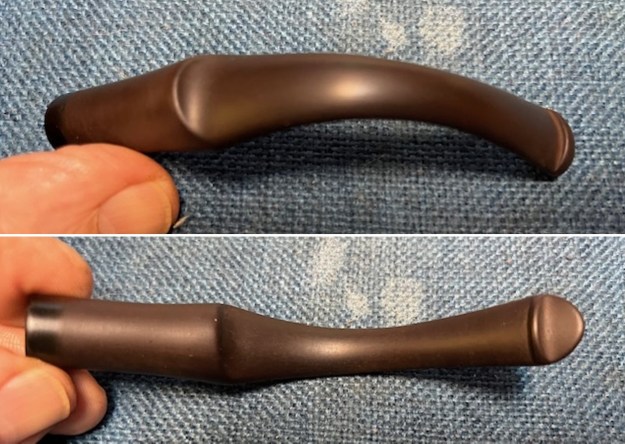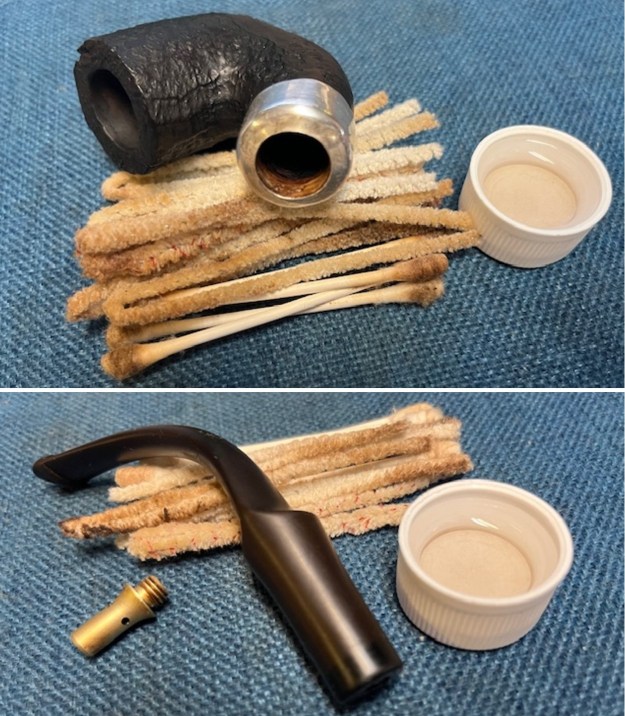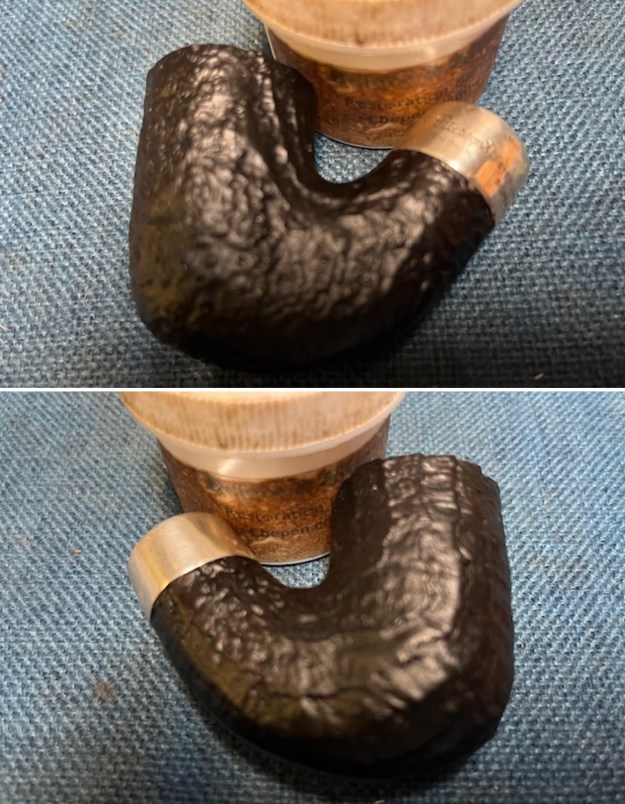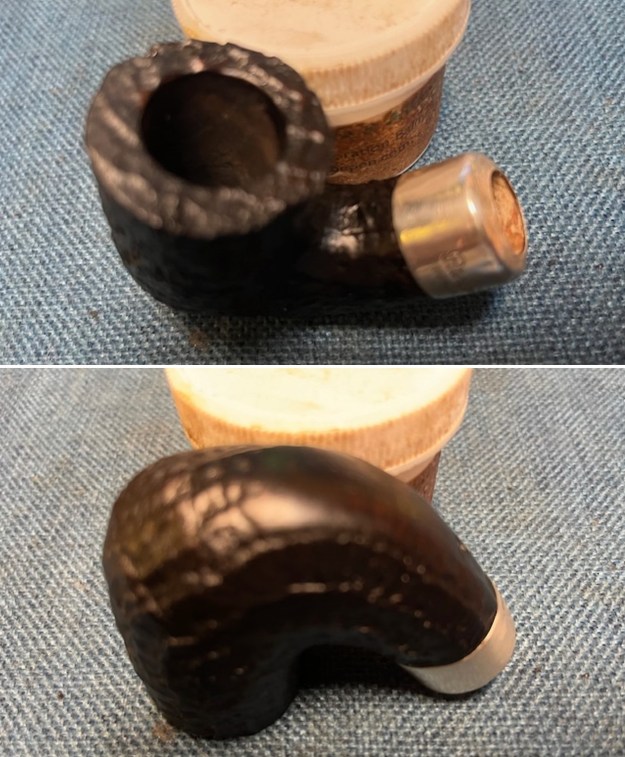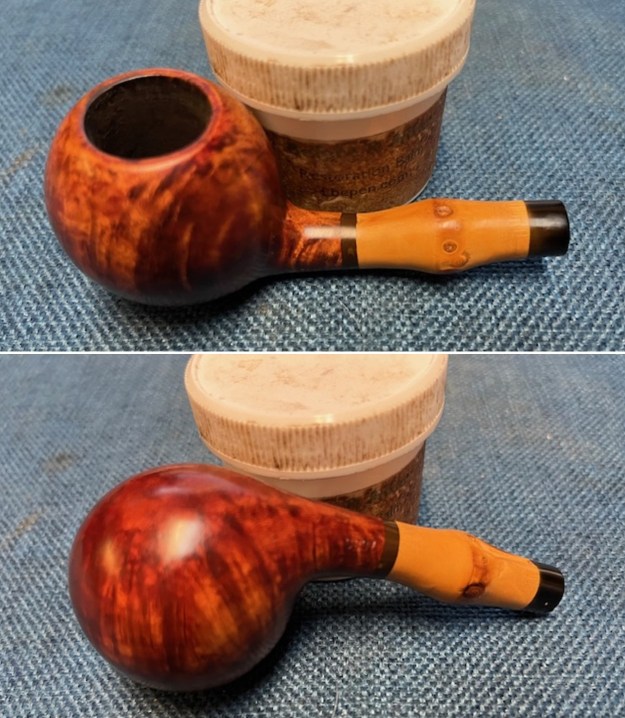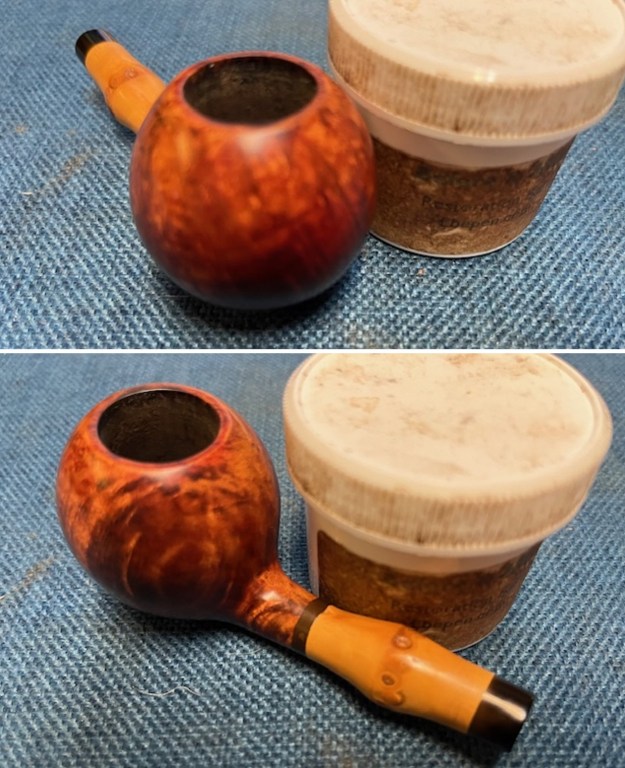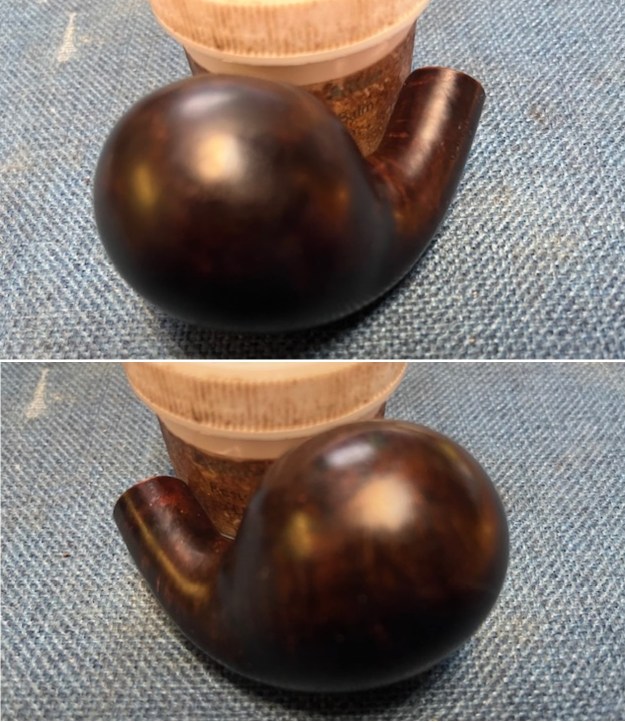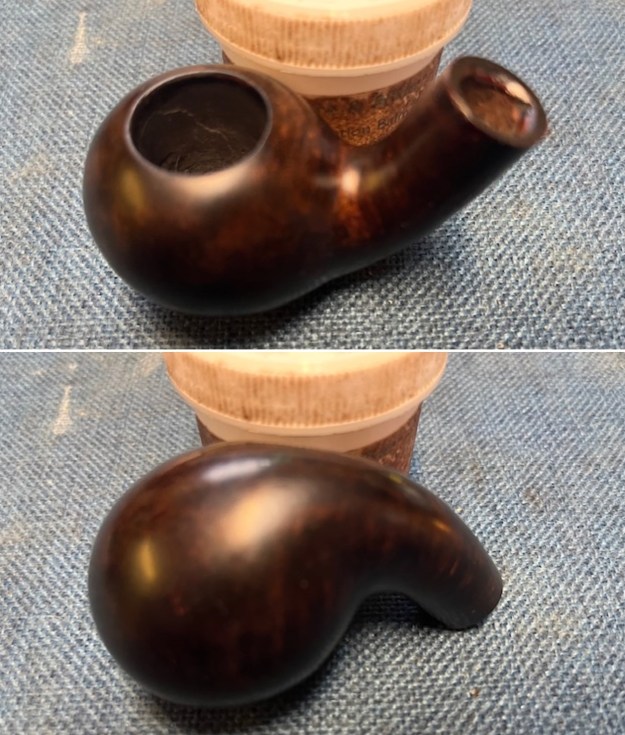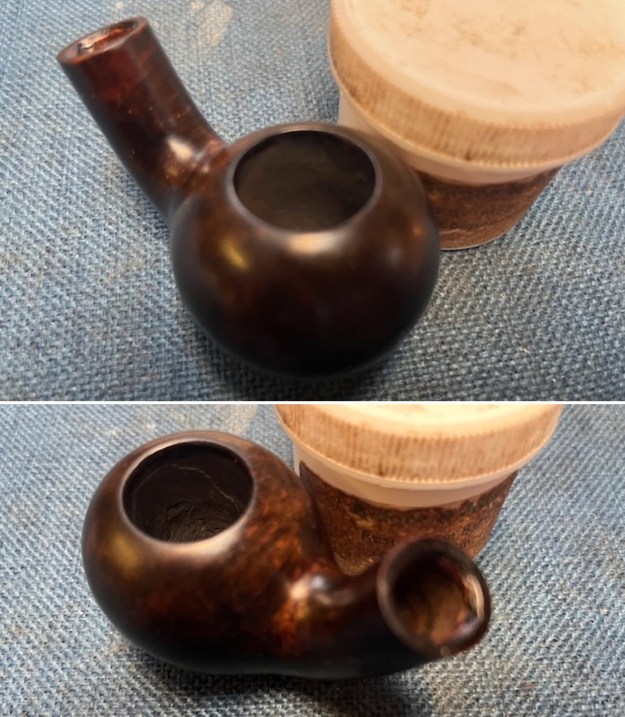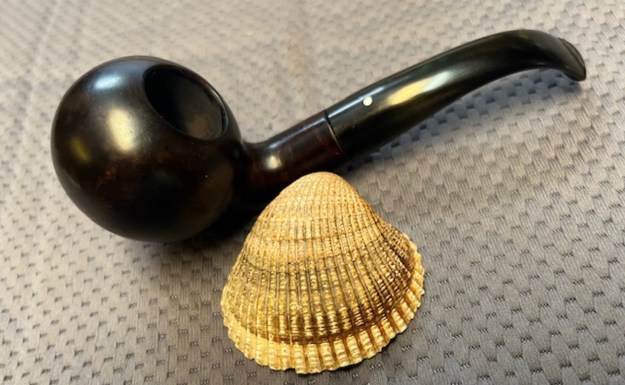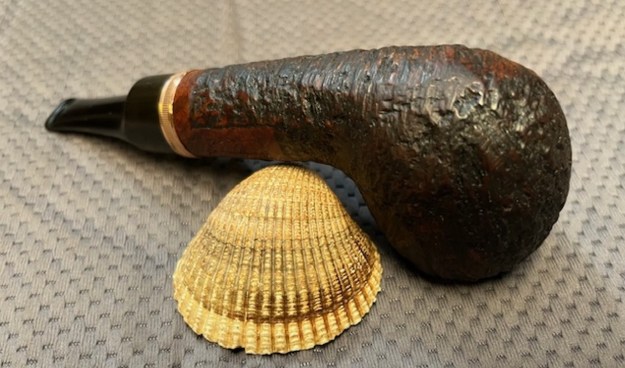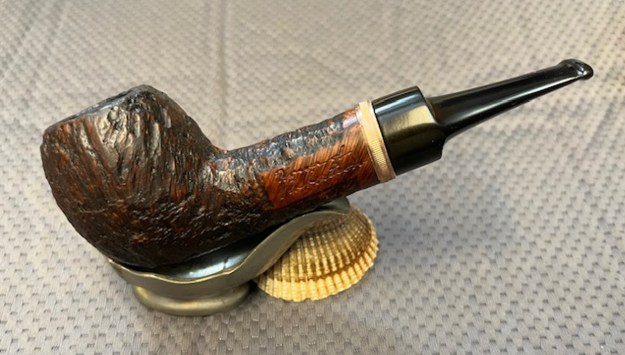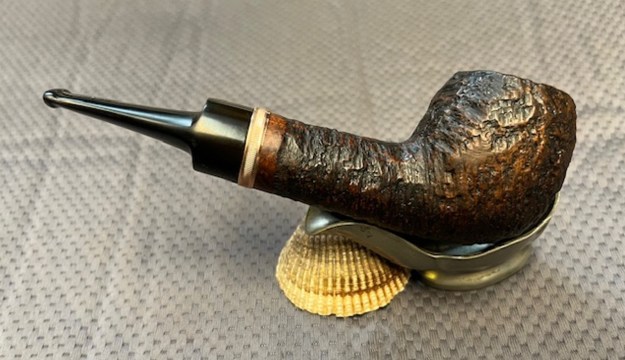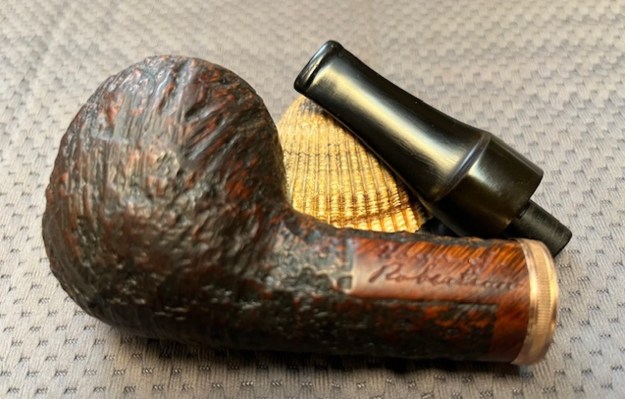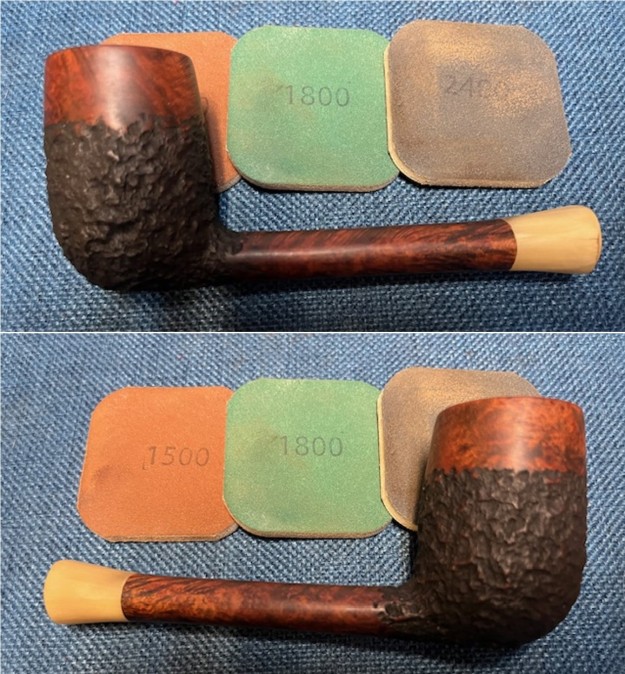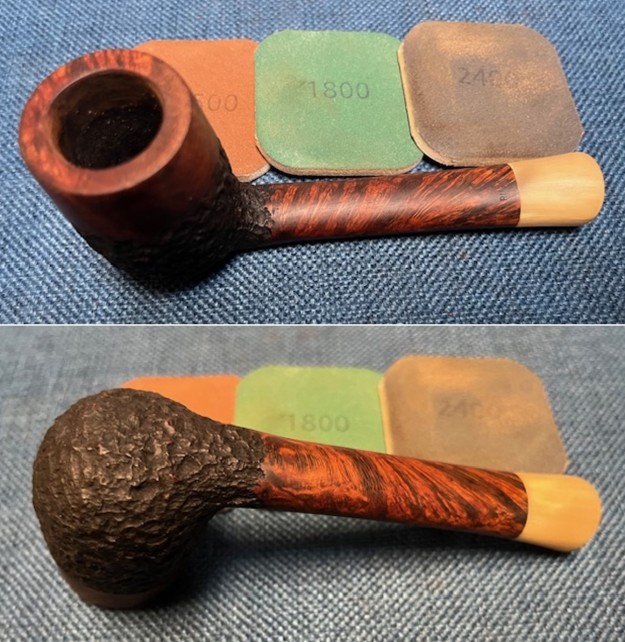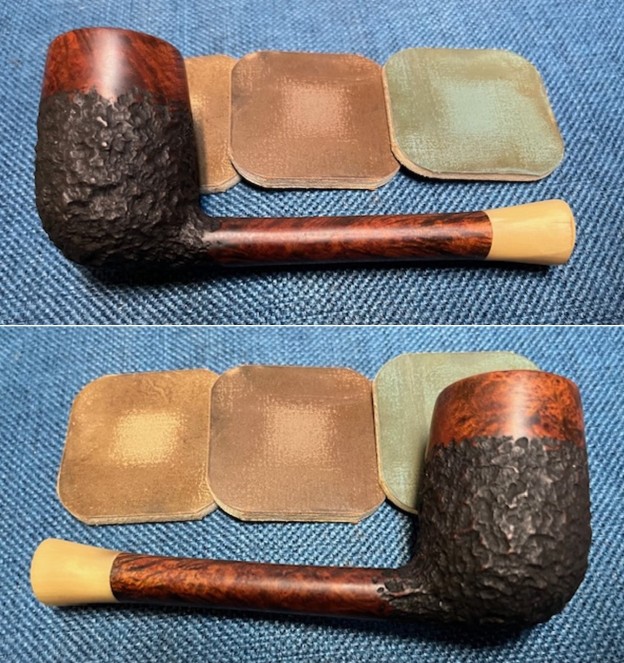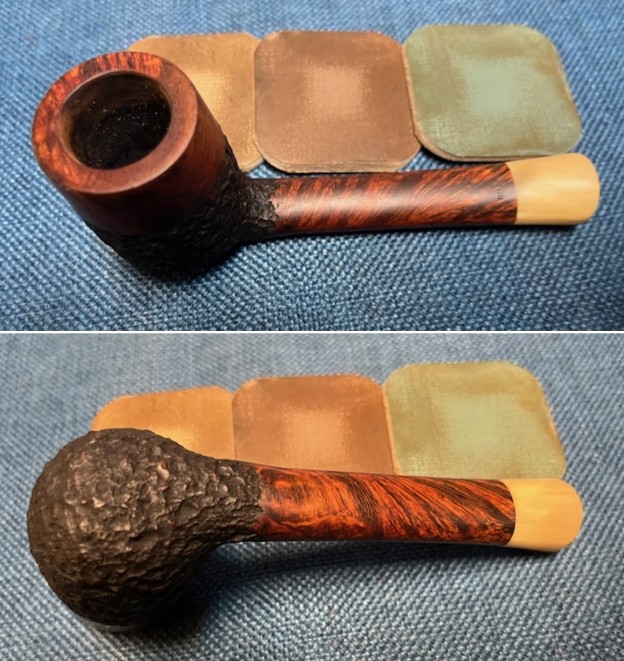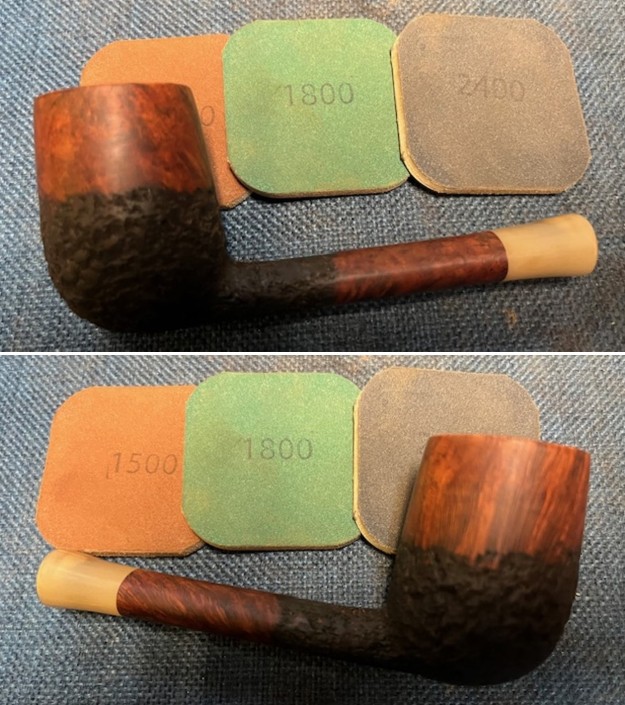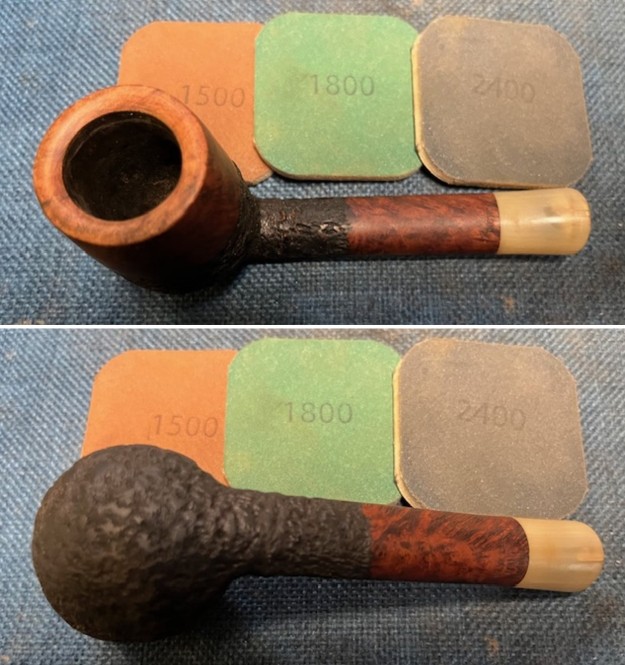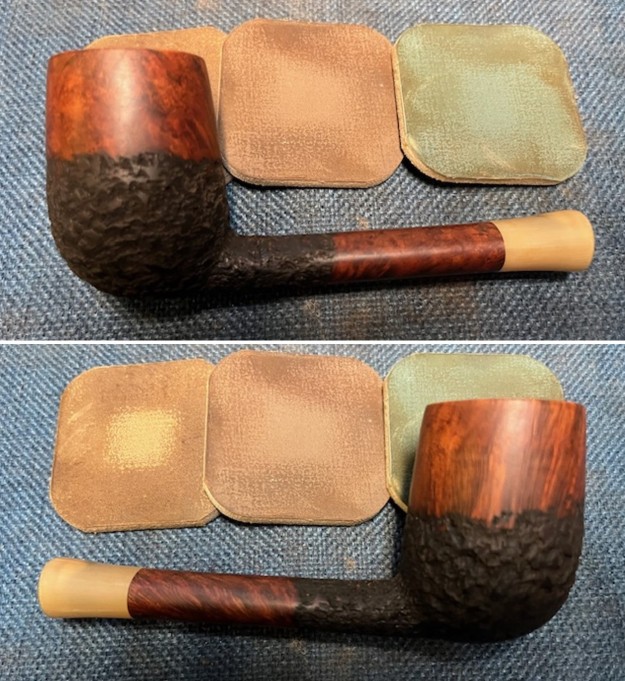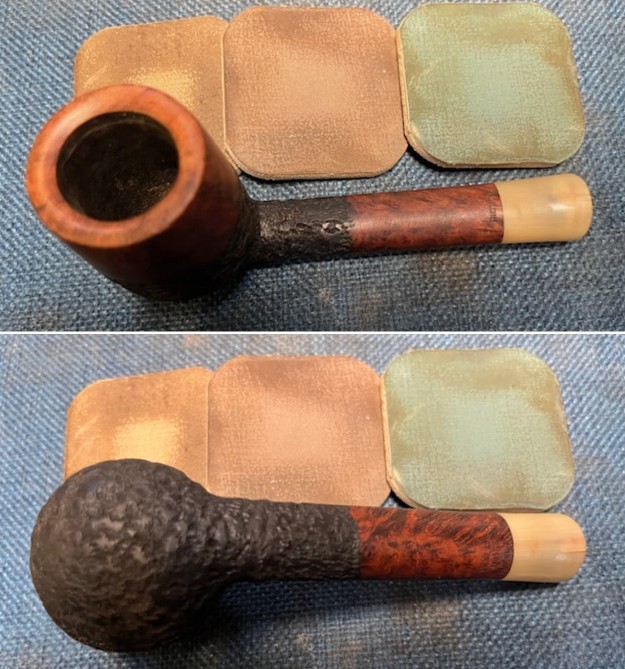
Tag Archives: fitting a stem

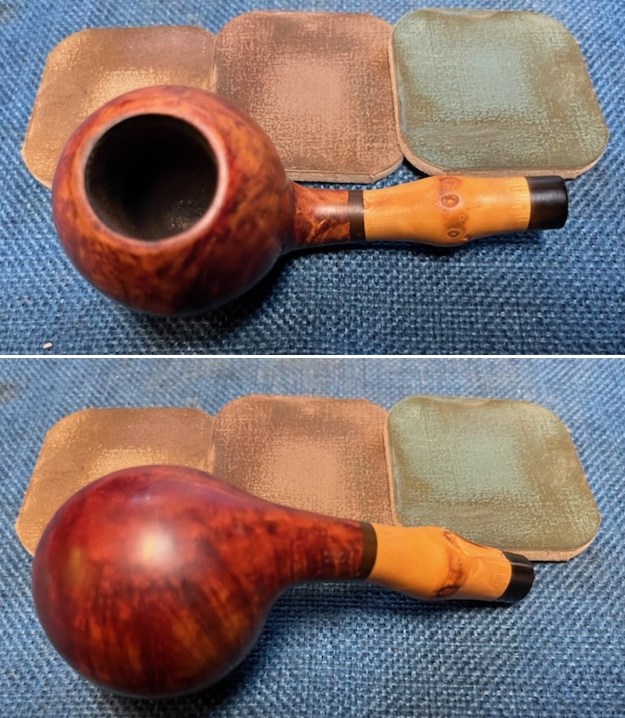
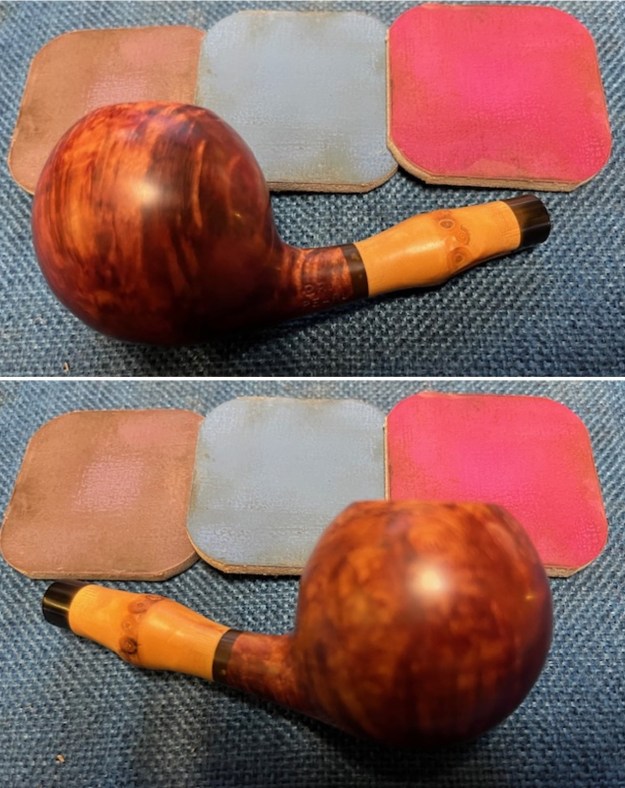
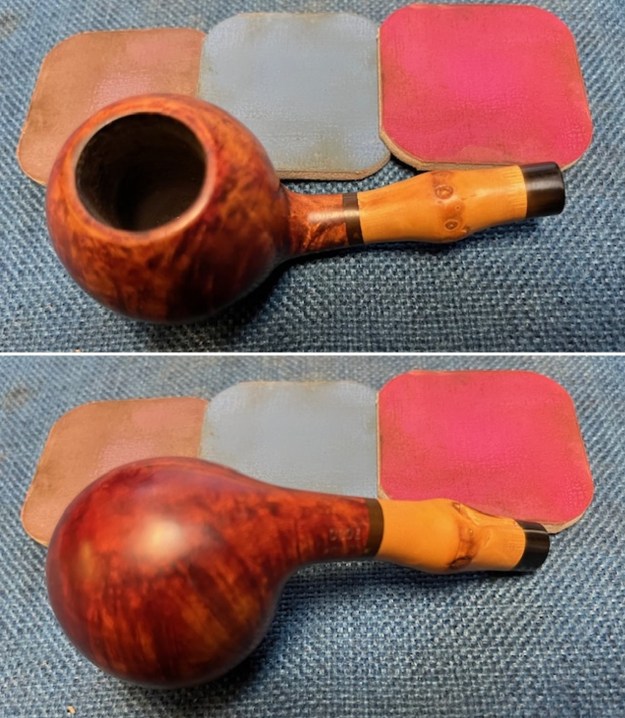
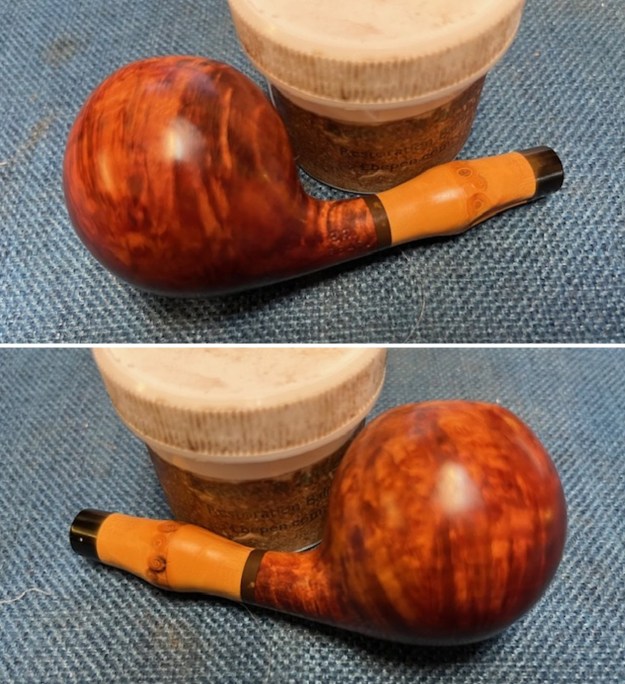
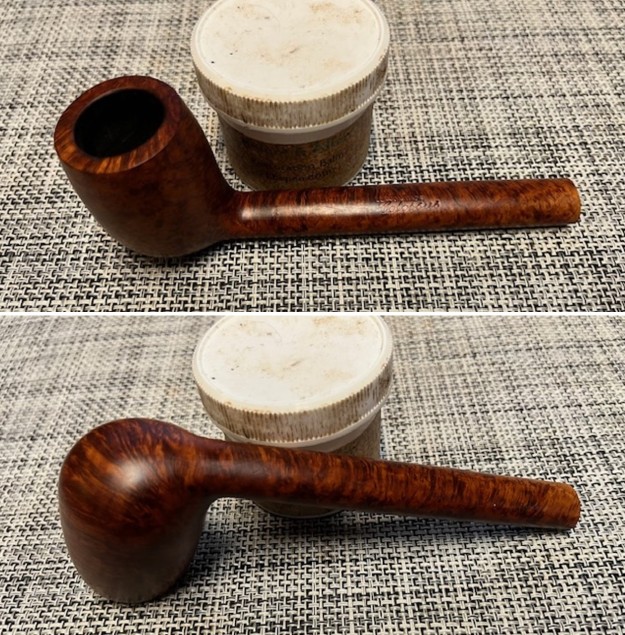
Refurbishing An Early Butz Choquin “A Metz” Bent Billiard


Blog by Paresh Deshpande

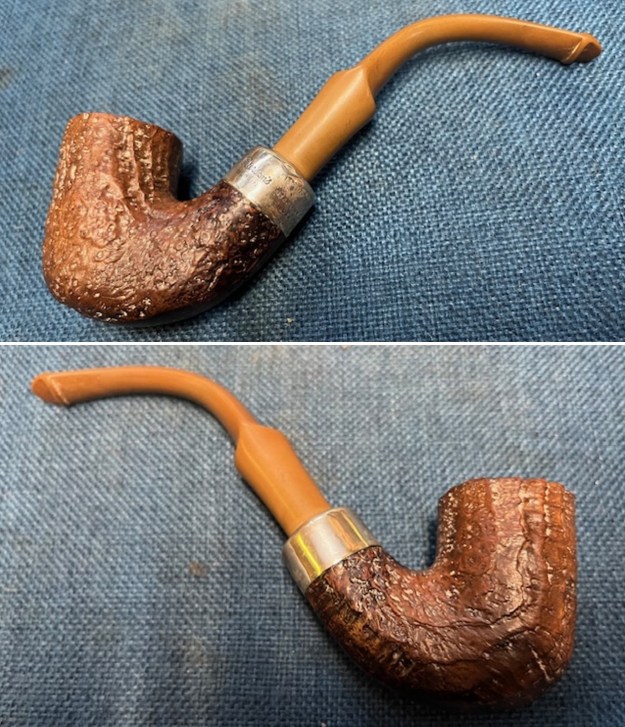
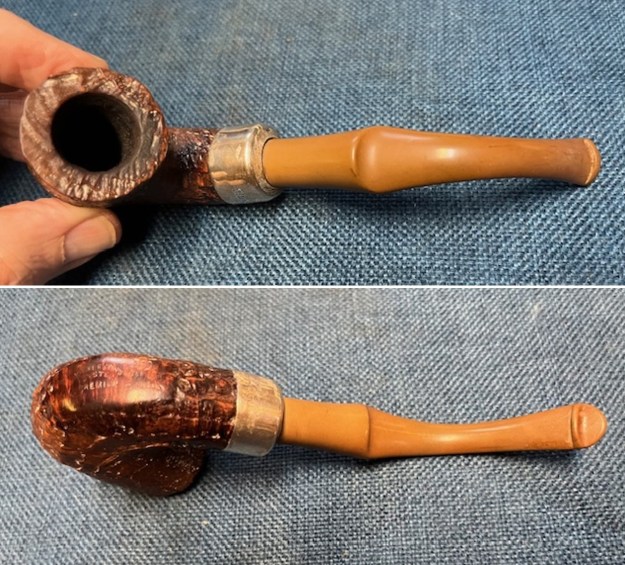
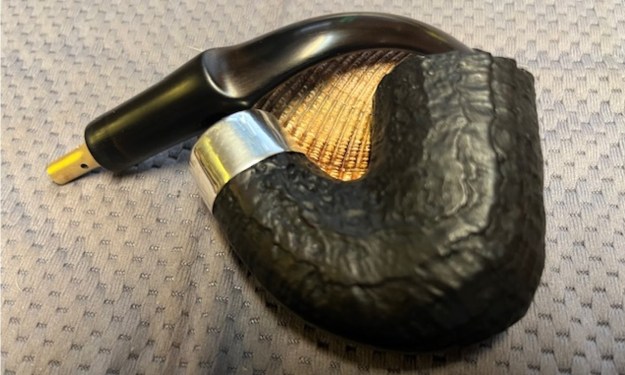
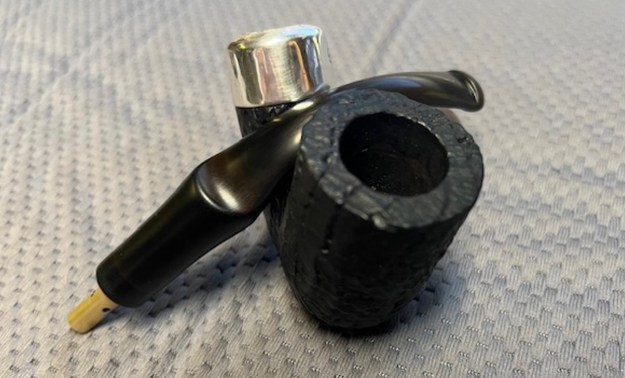
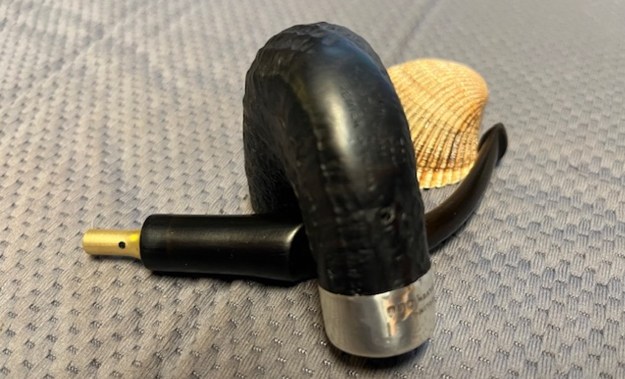
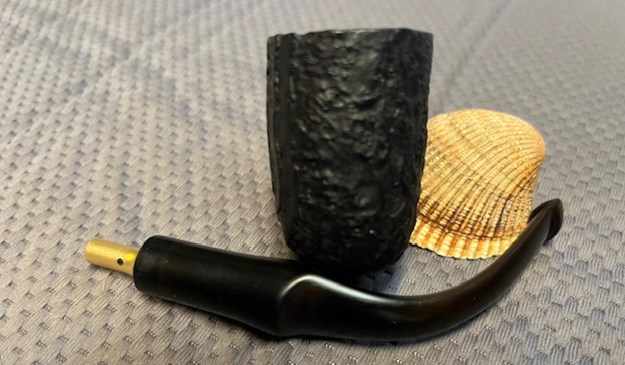
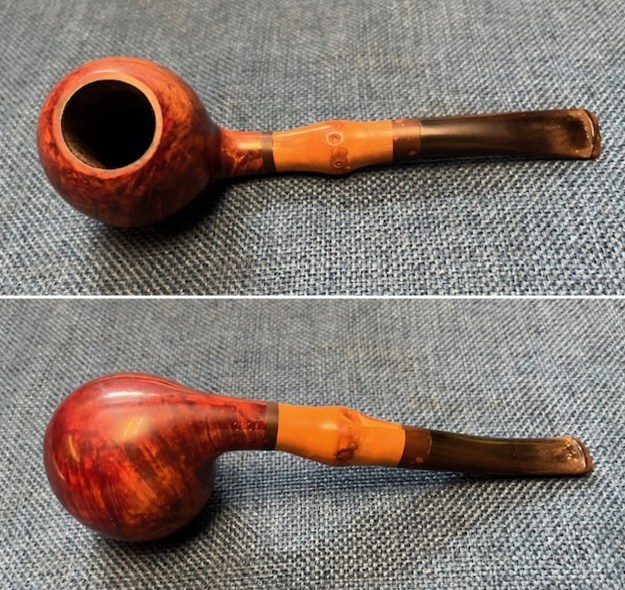
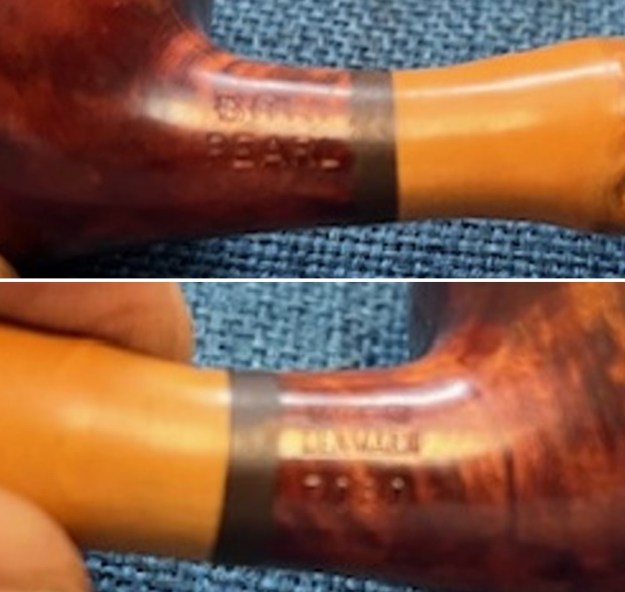
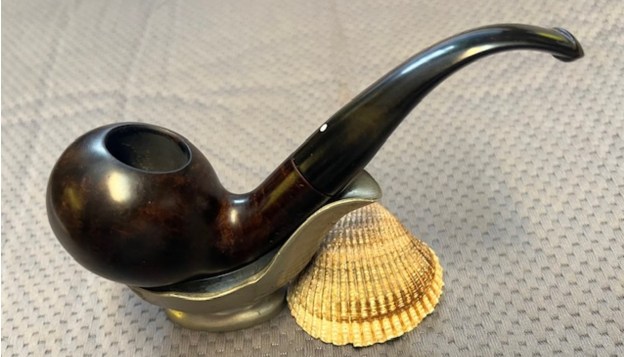
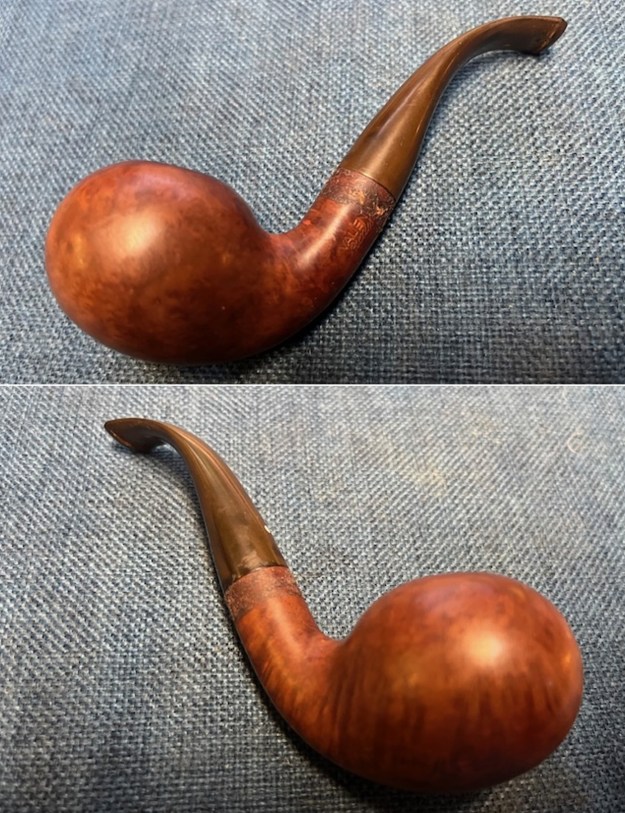
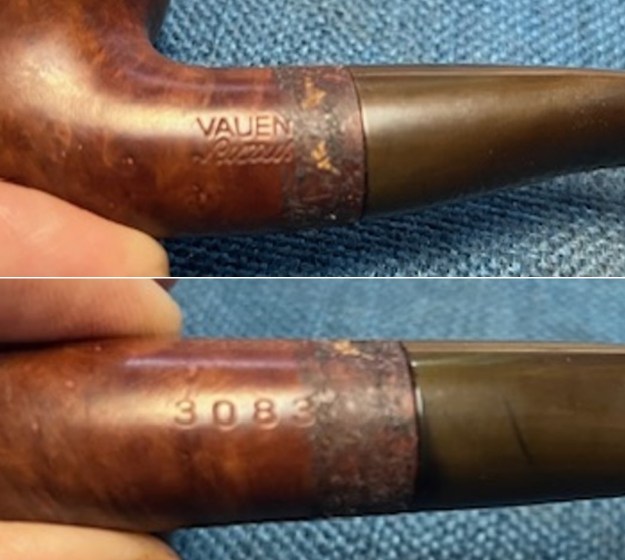
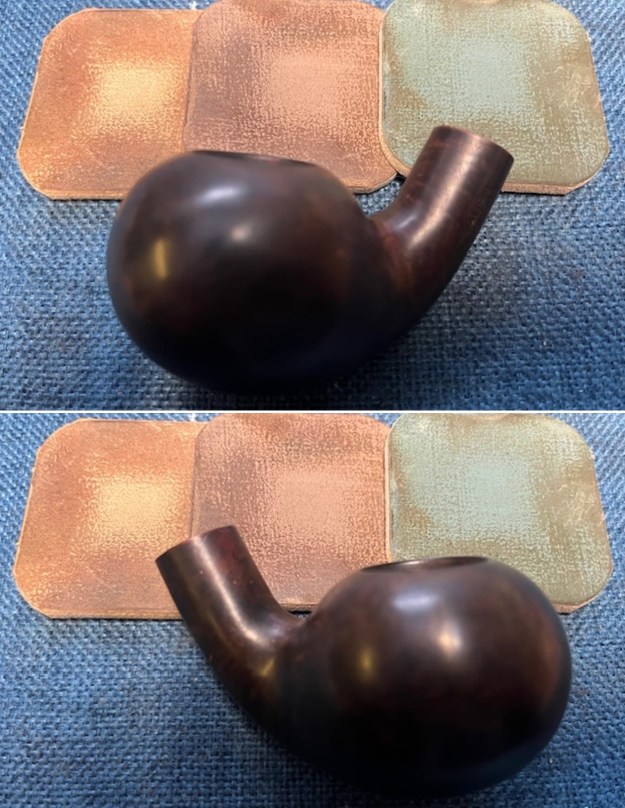
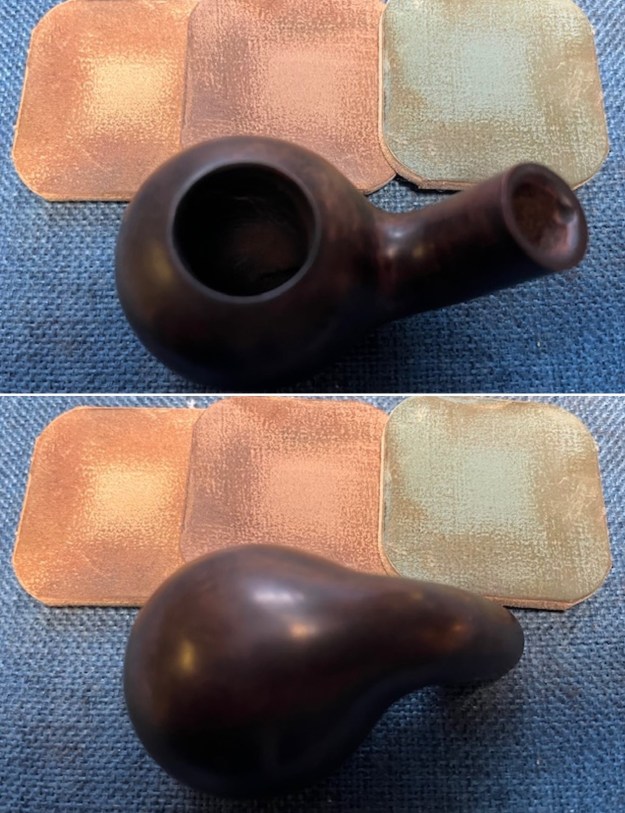
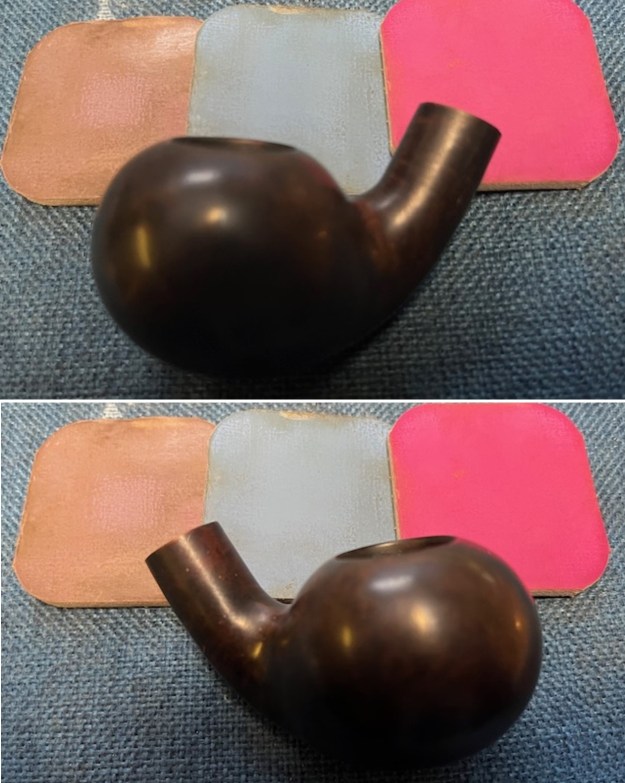
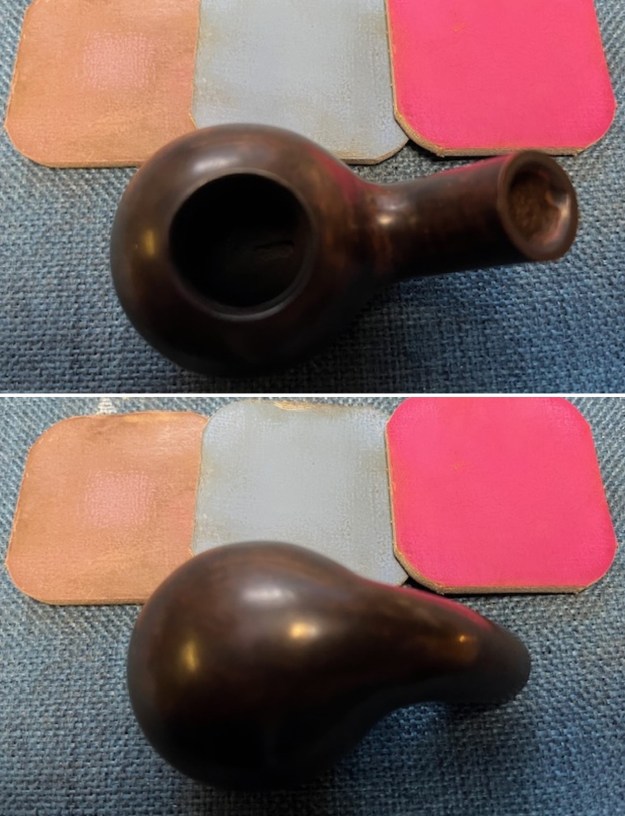
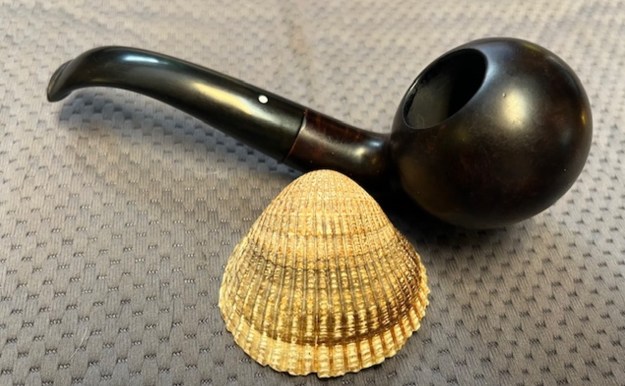
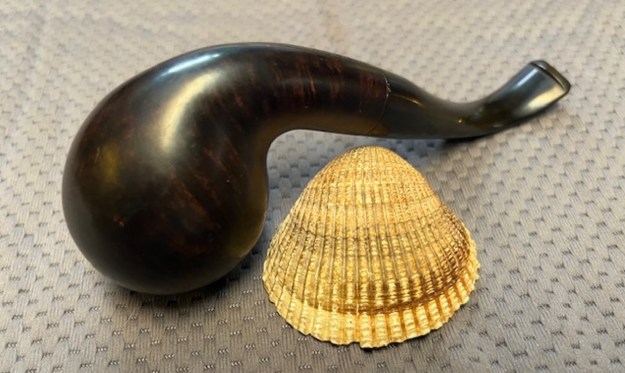
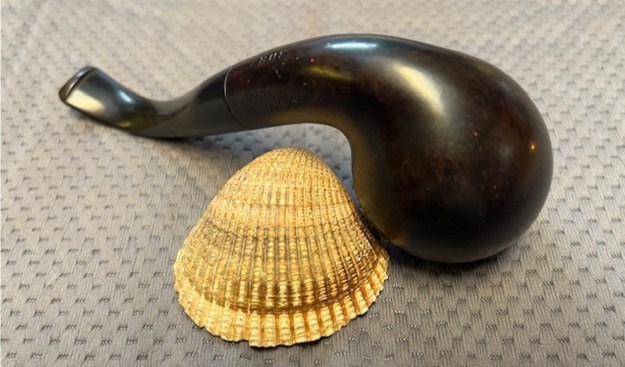
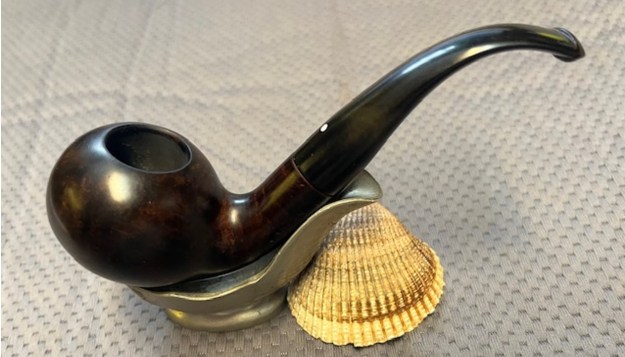
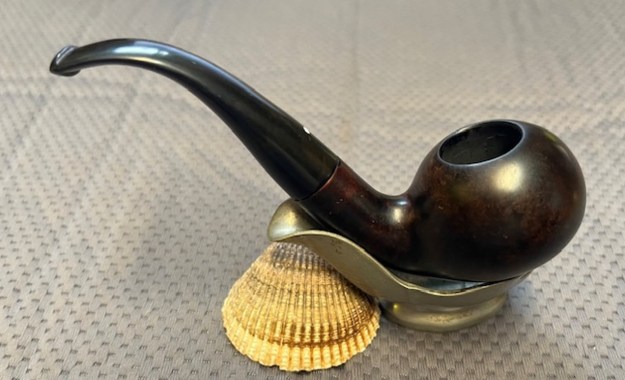
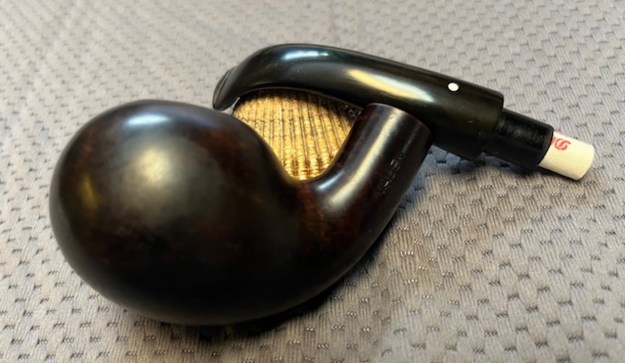
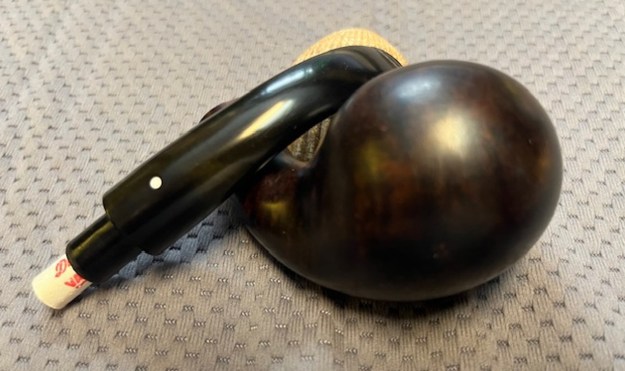
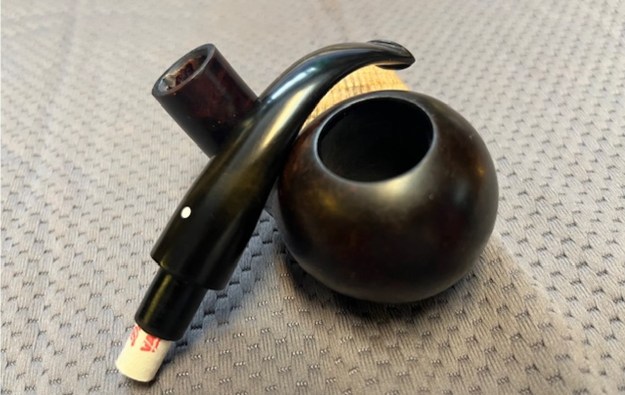
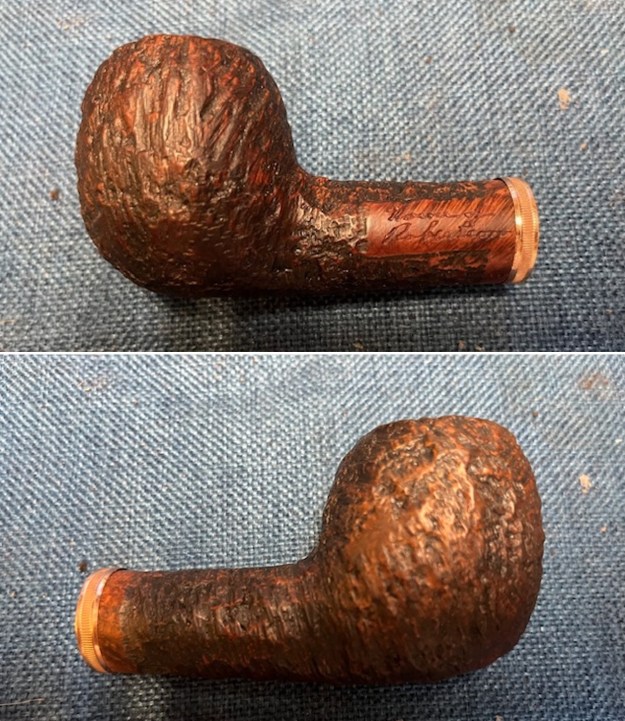
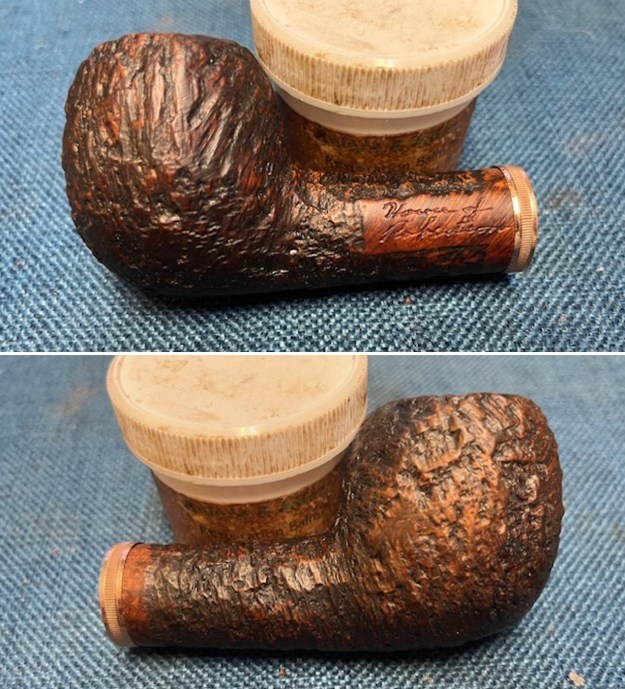
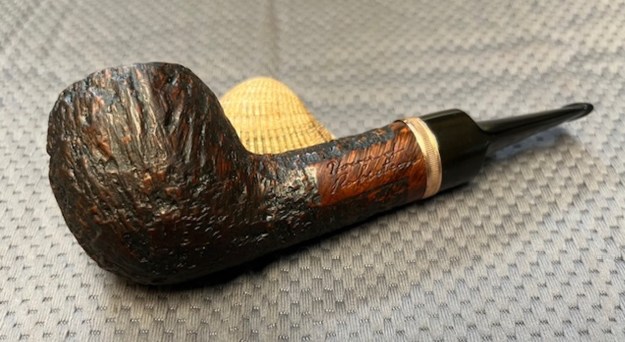
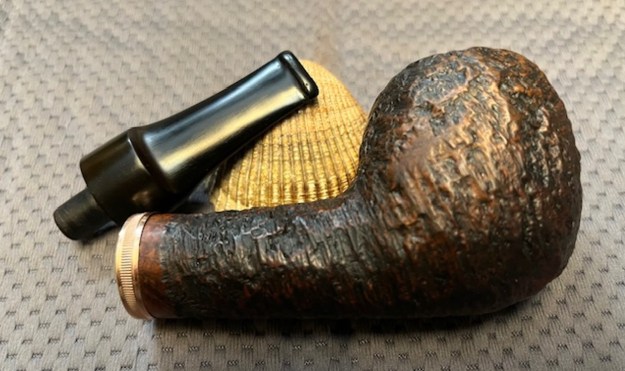
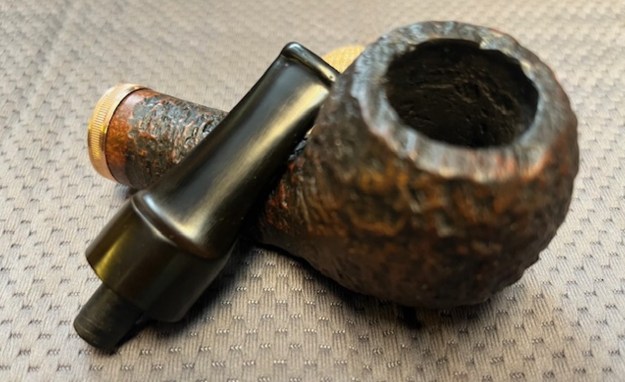
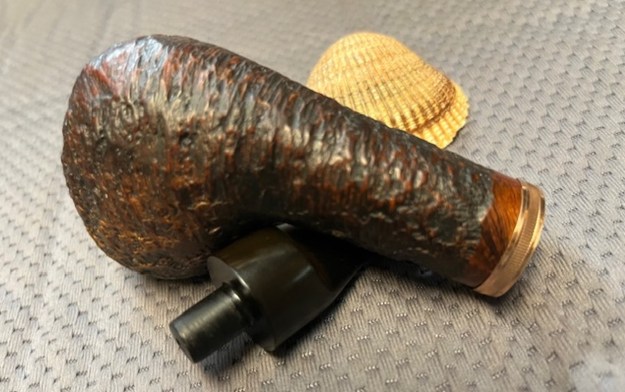
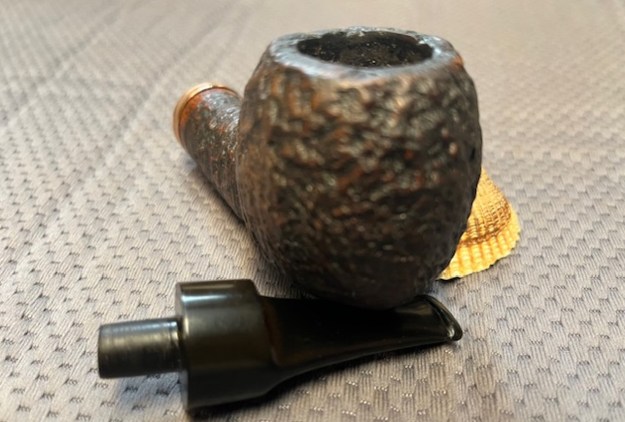
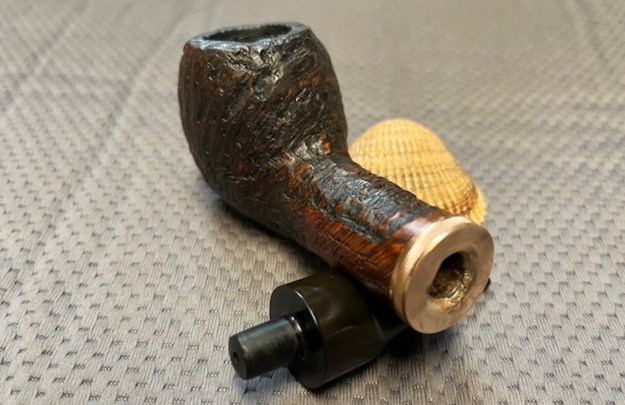
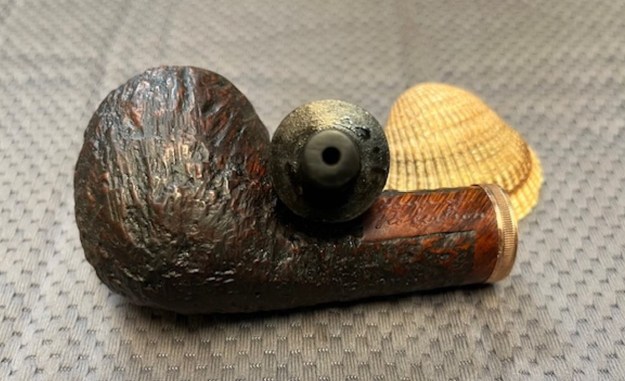
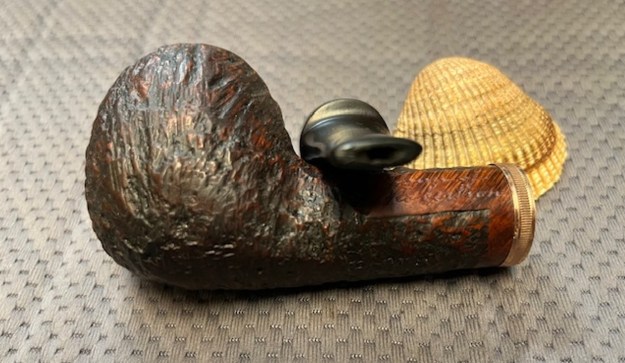
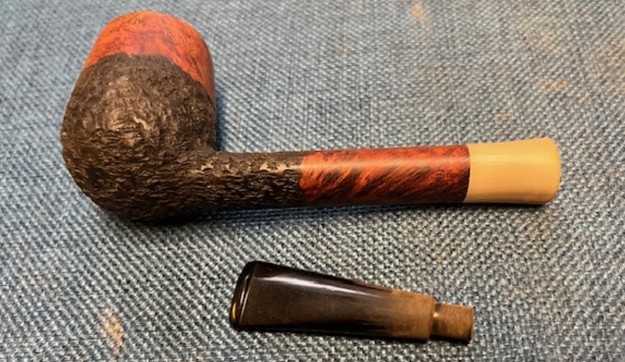
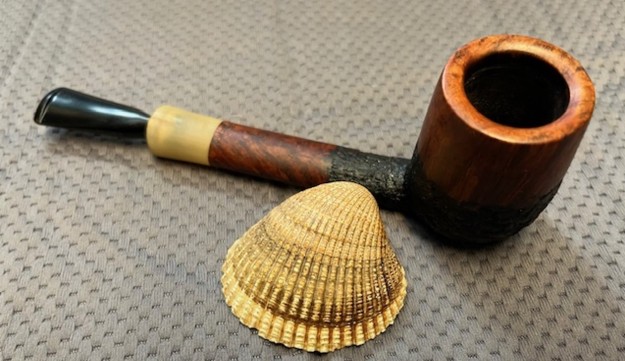
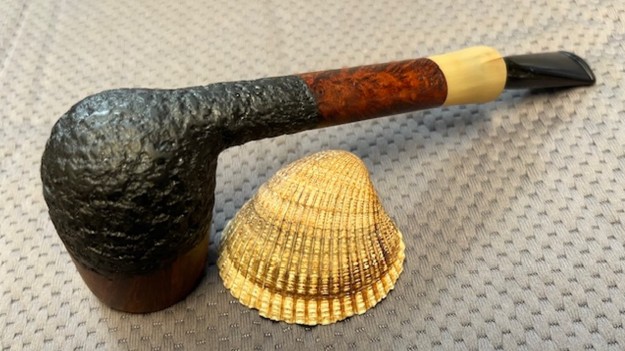
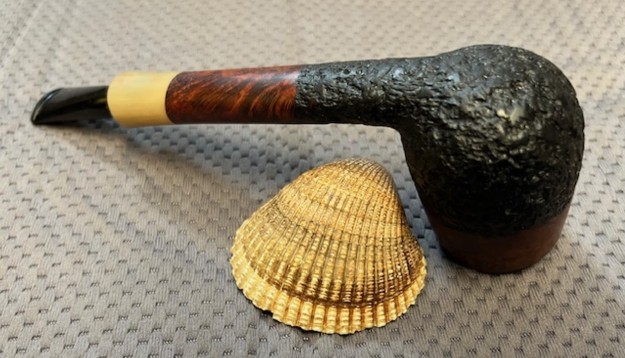
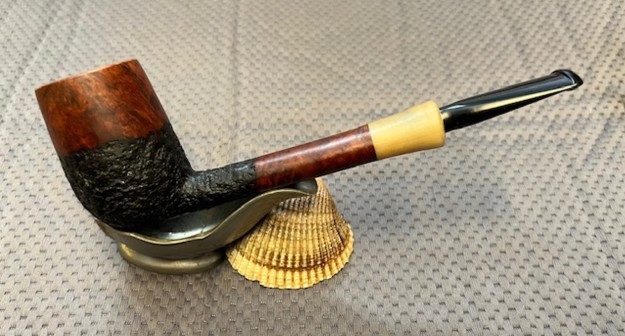
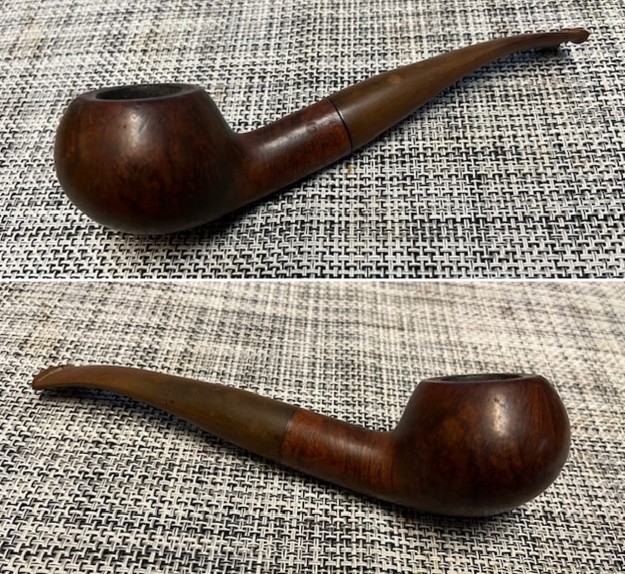
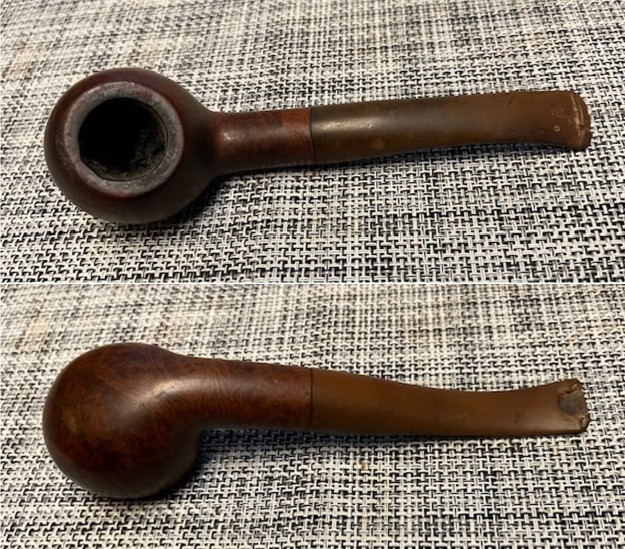
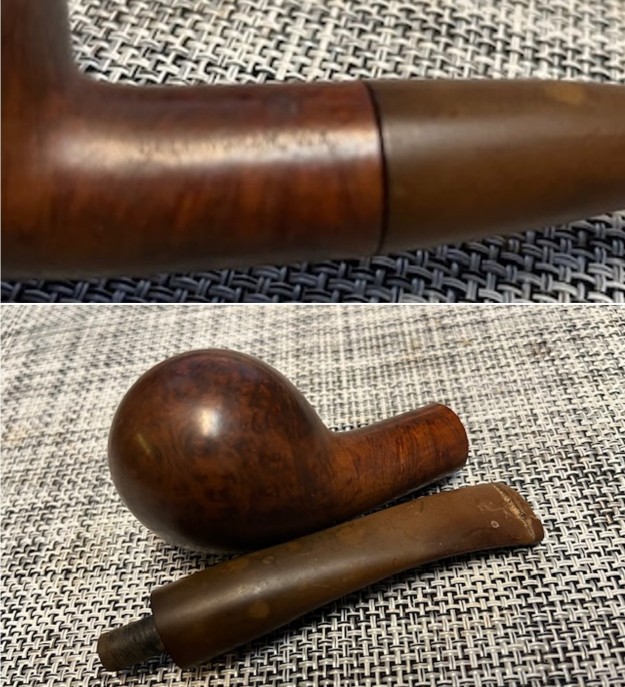
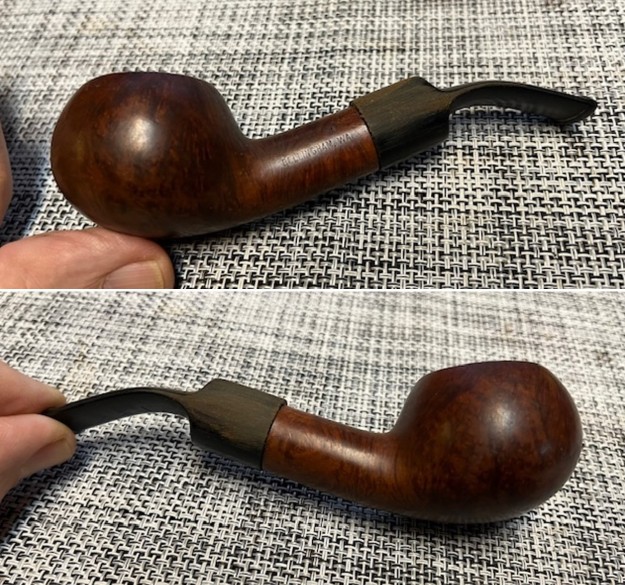
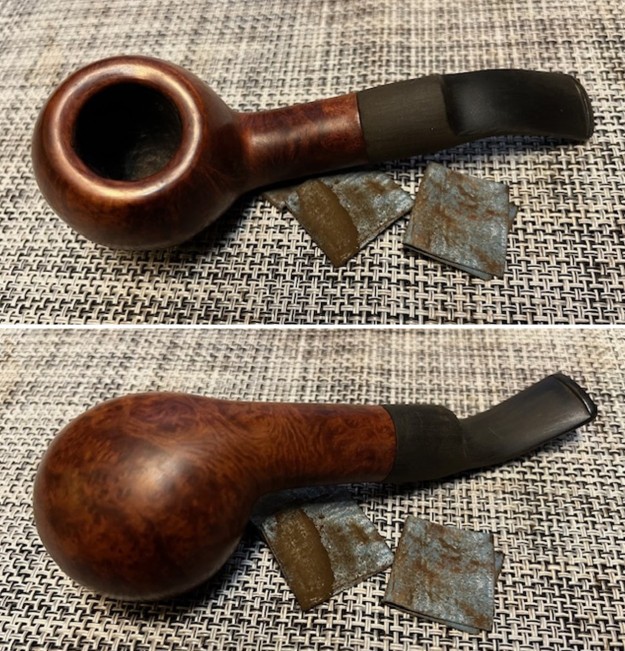
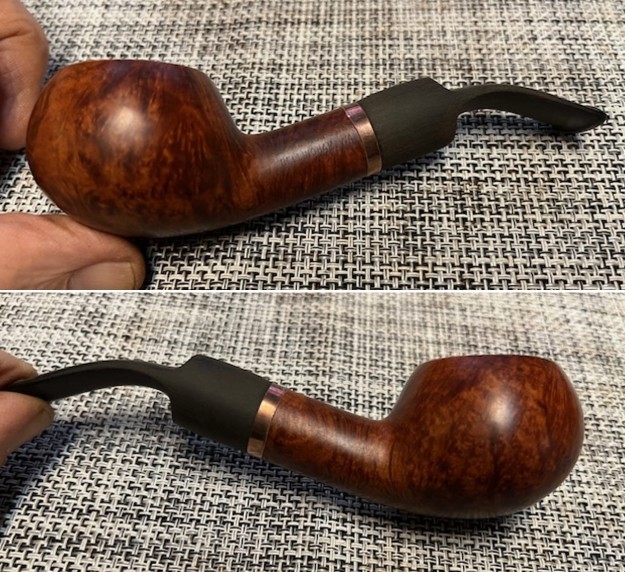
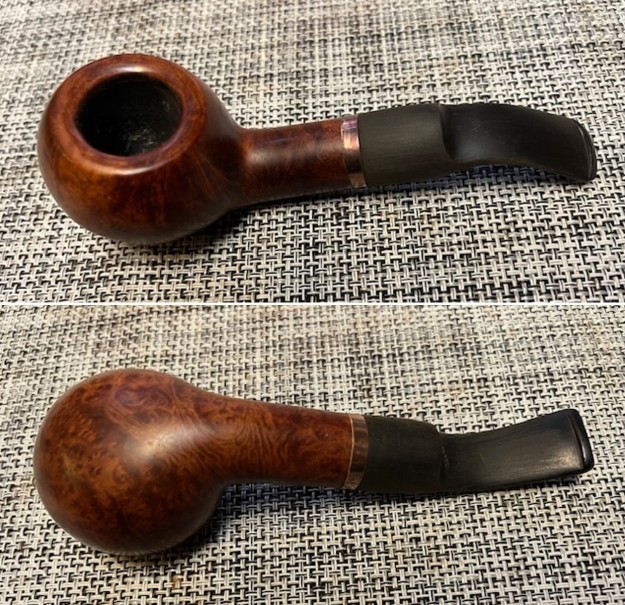
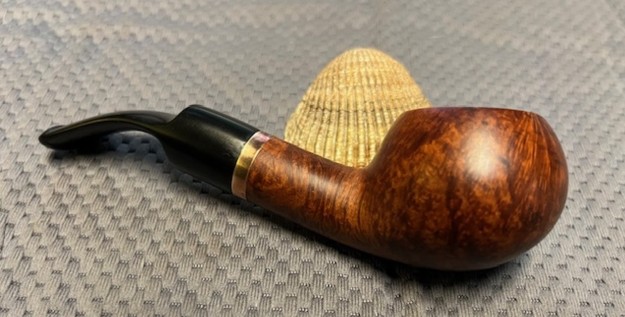
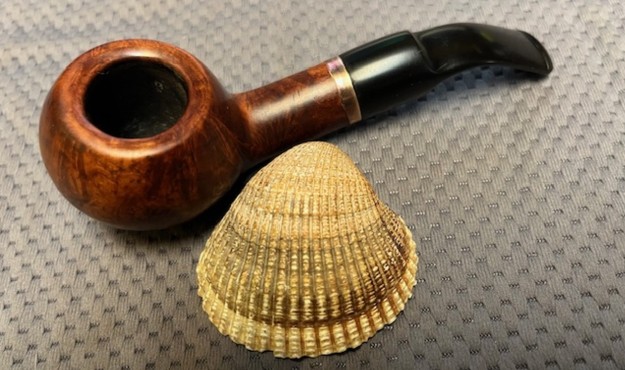
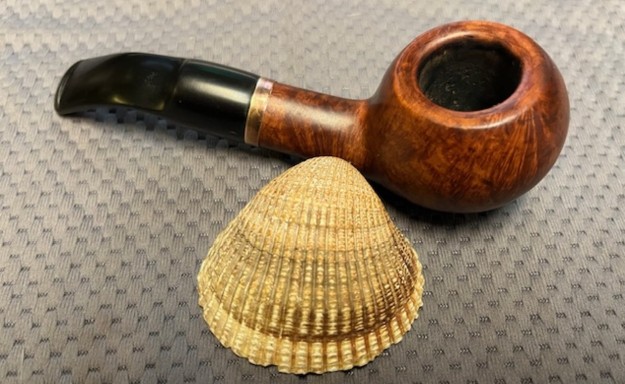
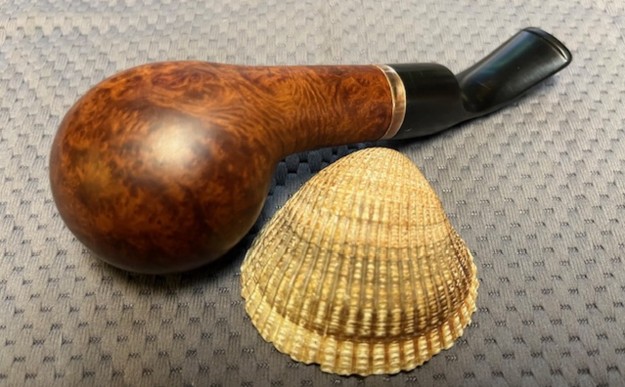
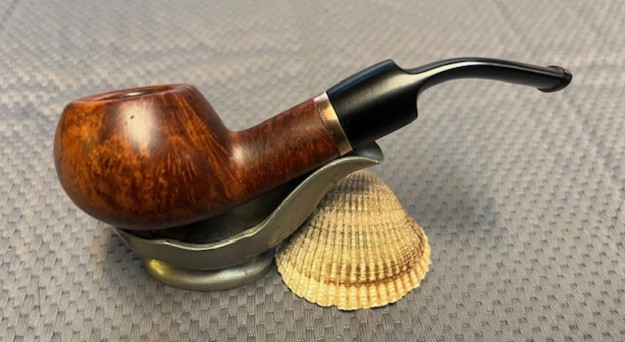
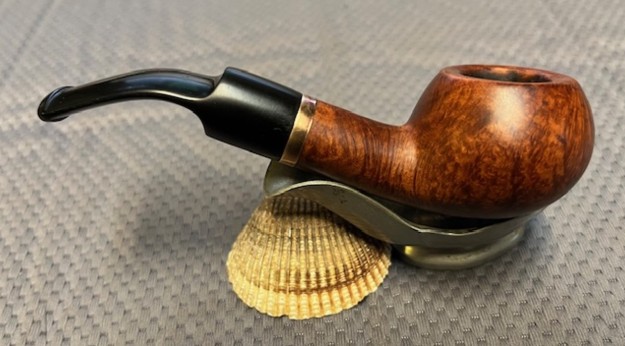
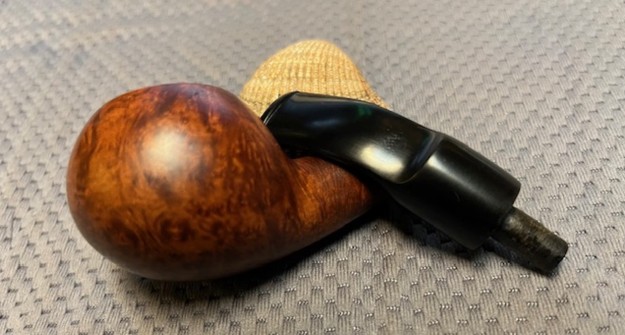
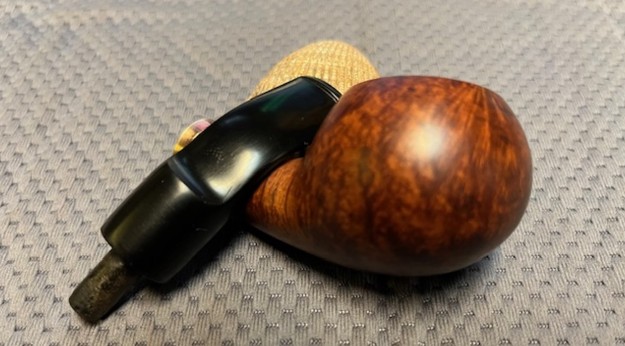
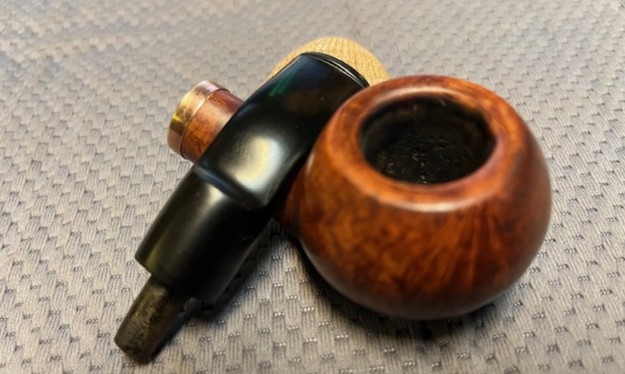
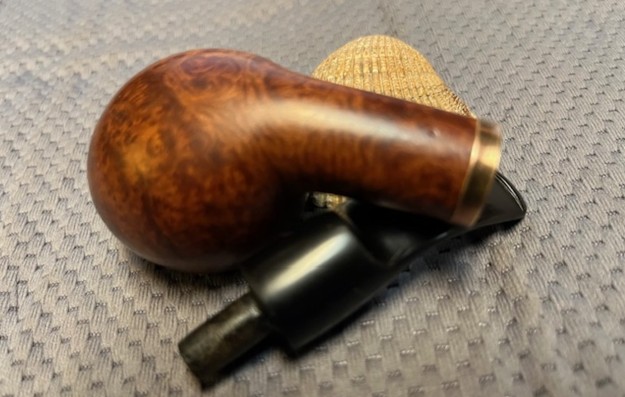
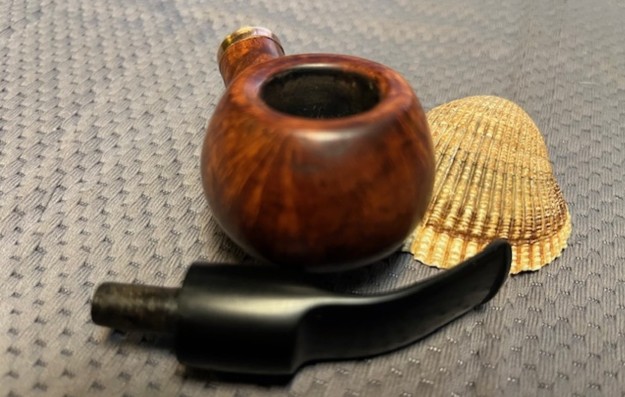
This pipe too came to me in that lot of 40 pipes purchased from Etsy.fr of which I have restored a few, the ROPP PNEUMATIC being the latest project. This pipe is a large billiard with a swan neck like graceful bend to the shank that extends over to the horn stem. The stummel appears dull and lifeless and yet through this, beautiful cross grains can be faintly made out over the sides of the stummel with bird’s eye grain at the foot. A copper band adorn the shank end with it’s crimped shank end edges covering the shank face. It is stamped over the left shank surface as “BUTZ-CHOQUIN” over “A” over “METZ”. The copper band has minuscule cartouche with some mysterious stampings that are neither visible under bright light nor under magnification.A couple of years ago, I had worked on an early Butz Choquin pipe that was very similarly stamped. I had studied the brand then and also before that when I had refurbished my inherited CHOQUIN PIPE from first era 1858. Given below is the link to the write up on the similarly stamped pipe. For the sake of brevity, I have avoided reproducing the information and implore readers to follow the link for better understanding the brand and establishing the provenance of the pipe (https://rebornpipes.com/2022/04/17/restoring-a-beautiful-older-butz-choquin-a-metz-pipe/).

After reading through the material and correlating the dates, I can, with certainty, claim that this pipe (broadly) is from pre 1951 when Berrod- Regad took over Butz Choquin and moved production from Metz to St. Claude as evidenced from the A METZ stamping.

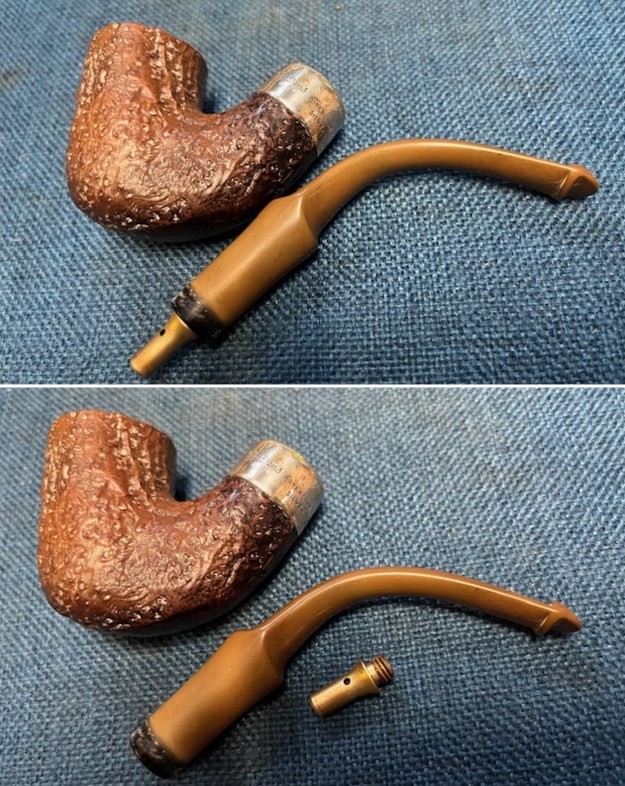
Further narrowing down the period, I strongly feel that this pipe dates to pre 1920. This conclusion is based on the fact that; firstly, the stem and tenon material used is horn and bone respectively which were the preferred material after Amber during this period for making stems as hard rubber/ vulcanite gained prominence during 1920s. Secondly, the round orifice at the stem end was commonly used until 1920s when vulcanite/ hard rubber with elliptical slot end gained prominence subsequently. Thirdly, use of cork lining inside the mortise to firmly seat the bone tenon in to the mortise.

Any inputs and corrections to my above understanding are solicited and encouraged. Such healthy discussions not only promote interaction between us but also enhance knowledge about pipes and establishing its provenance by sharing information.

Initial Visual Inspection
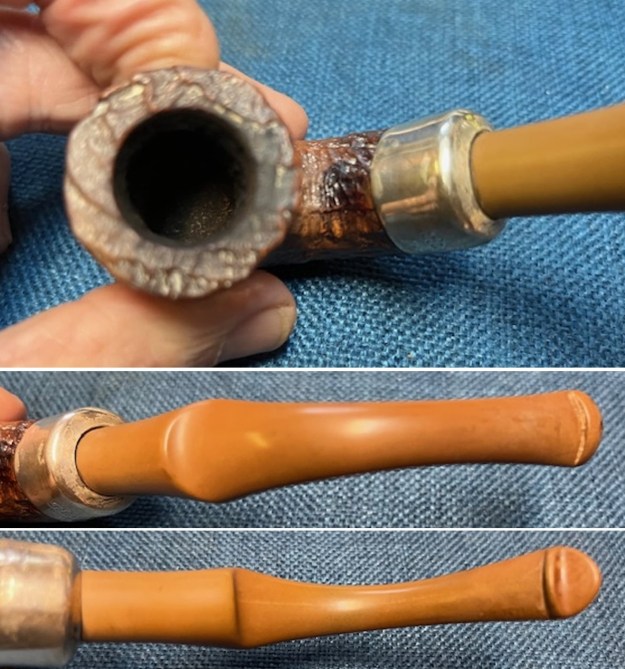
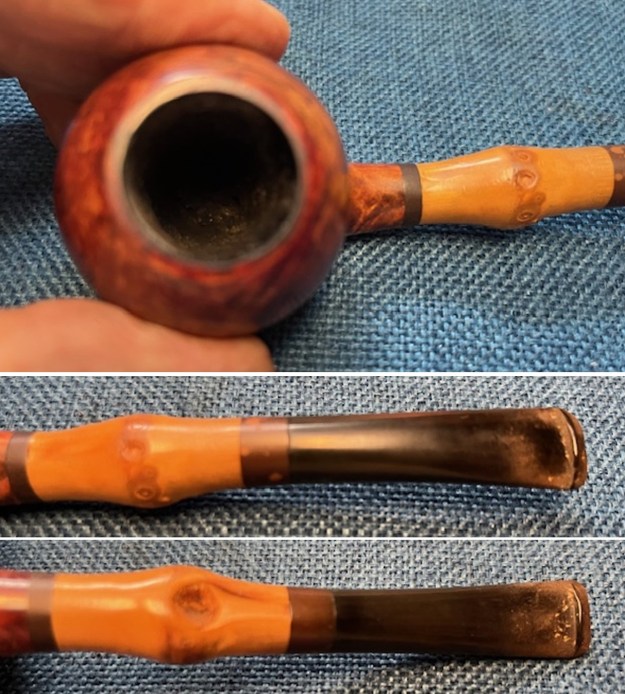
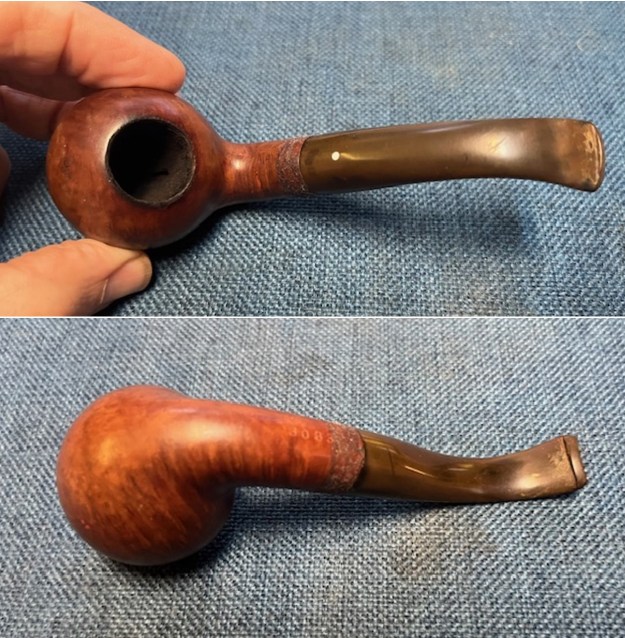
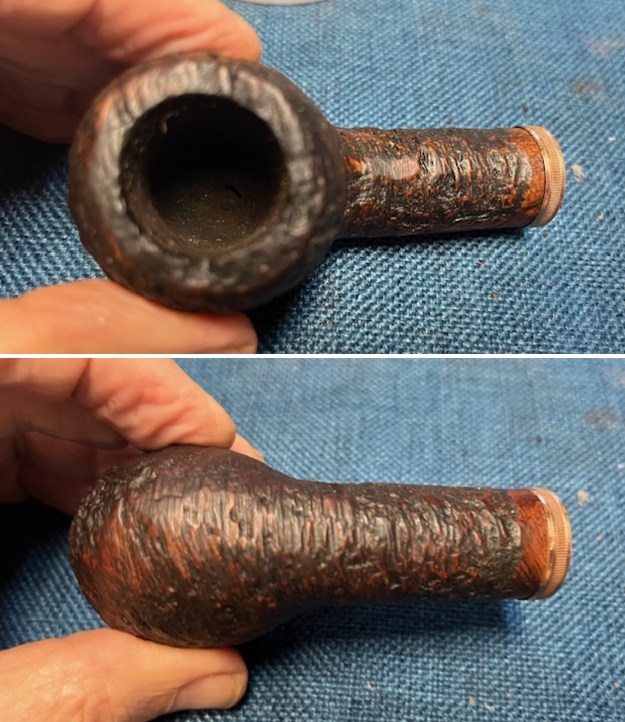
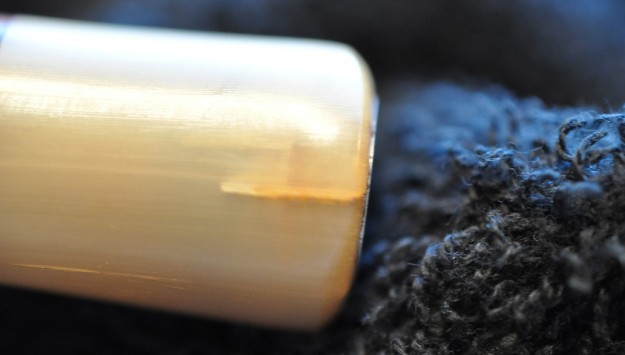
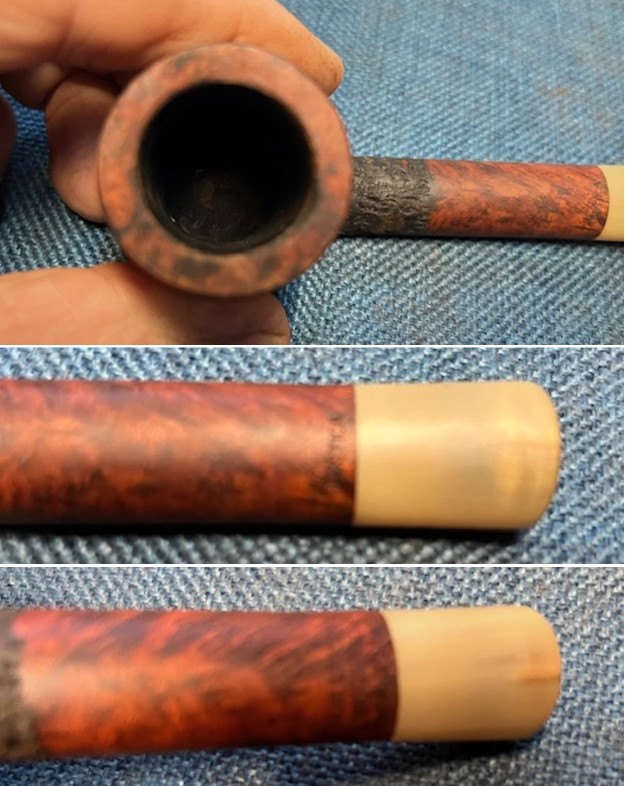
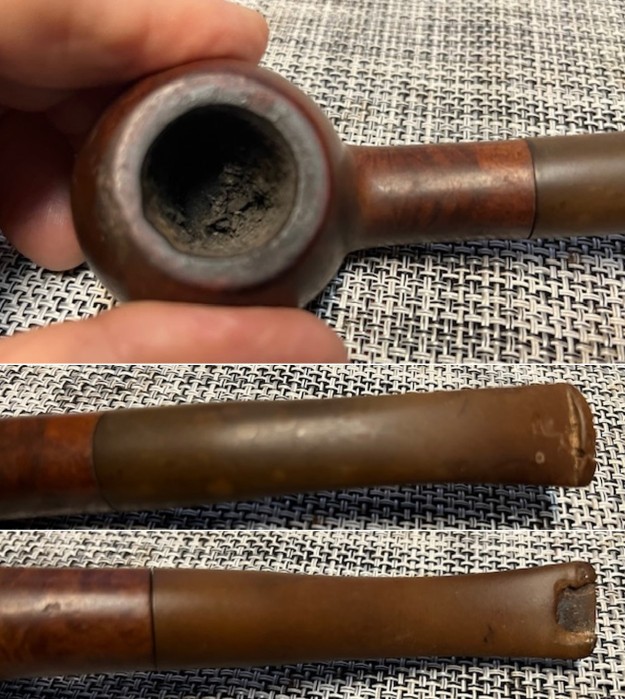
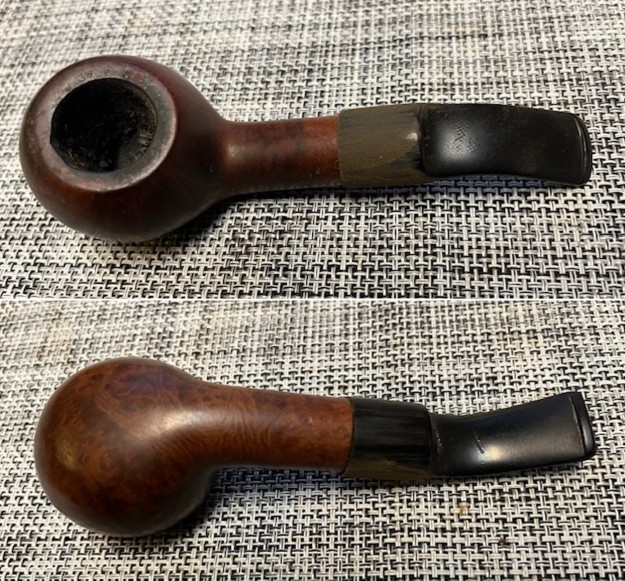
The elegant swan neck shape of the shank that extends into the stem is the USP of this pipe. The chamber appears to have an even thin layer of cake that appears to have been meticulously maintained by the previous owner. There are a few minor dings to both the inner and outer rim edges. The stummel boasts of beautiful cross grains over the surface with bird’s eye grains at the foot of the stummel. The briar looks dull and lifeless. The mortise has residual old oils and gunk making the draw hard. The horn stem with bone tenon is dull, dry and shows signs of beginnings of cracks over the surface. Both the tenon and orifice slot are clogged with old tars and grime. This one will require a ton of work to spruce it up to its former glory. Following pictures should provide a better understanding of the condition of the pipe before I begin my work. Detailed Visual Inspection
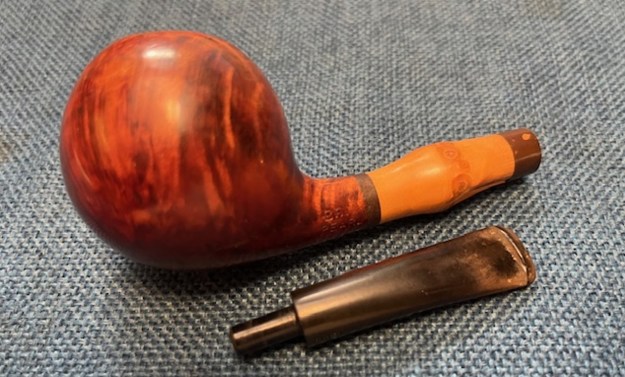
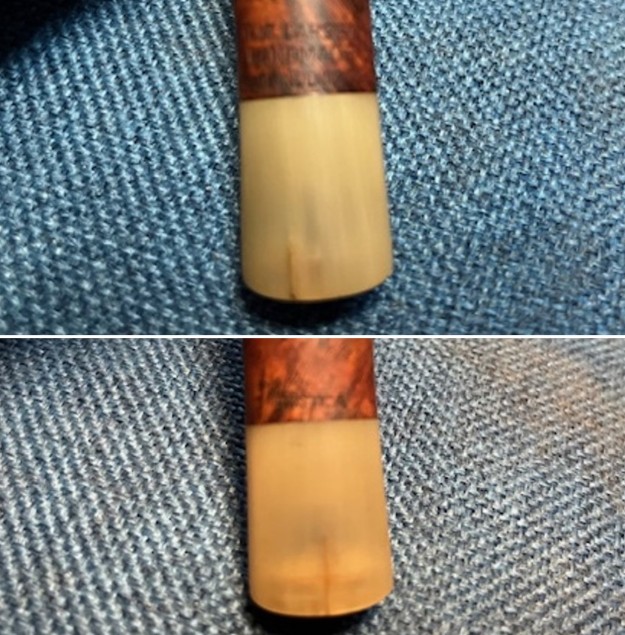
The first impression that I got at a glance of the chamber was an even well maintained layer of cake with practically no darkening of the rim surface or accumulation of carbon overflow. This definitely was either a well cared for pipe or the seller had done so for bargaining a better price. There a few dings on the right and left side of the outer rim edge (encircled in blue). The inner rim edge is intact save for some very minor divots that should be easily addressed with a couple of passes of a piece of 180 grit sandpaper along the edge. The rim top is nicely even and clean, requiring no topping, which I tend to avoid as much as possible. The stummel is dull, lifeless and lacklustre. Under all the dullness and poor appearance, lurks some beautiful cross grains and bird’s eye over the feet of the stummel awaiting exposure. The stummel has developed a deep dark patina from all the years of smoking and handling. There is one fill (encircled in yellow) that would need to be refreshed. Also a couple of minor divots (encircled in red) mark the stummel surface. The mortise is chock-a-block with old oils, tars and gunk and this leads me to the conclusion that it was the seller who had reamed the cake and cleaned the rim surface to ask for a better price. The copper band at the shank end is dull and covered in dust, grime and oxidation. The first issue that I noticed on close examination of the stem surface were a number of cracks all over the upper and lower surfaces. I drew out my magnifying glass and had a hard look at the cracks under bright light. Thankfully, almost all of these cracks were minor and very superficial, save for a few (encircled in red) over the upper surface and would need to be addressed. These cracks are caused because of drying of the horn material due to lack of usage and hot weather conditions. These cracks would need to be stabilized, repaired and hydrated. There are deep tooth indentations in the bite zone, very close to the button edges on either surface of the stem. The long bone tenon has darkened considerably and is covered in grime with the opening showing accumulation of oils, tars and gunk. This condition is similar at the orifice slot. The seating of the stem in to the mortise is very loose. The Restoration Process
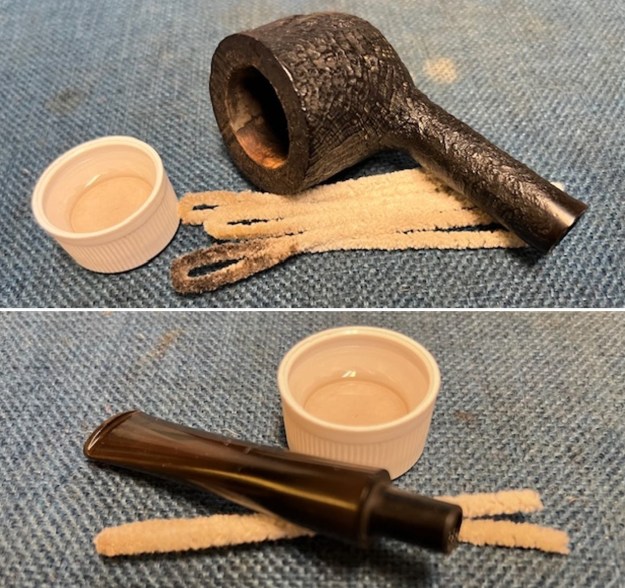
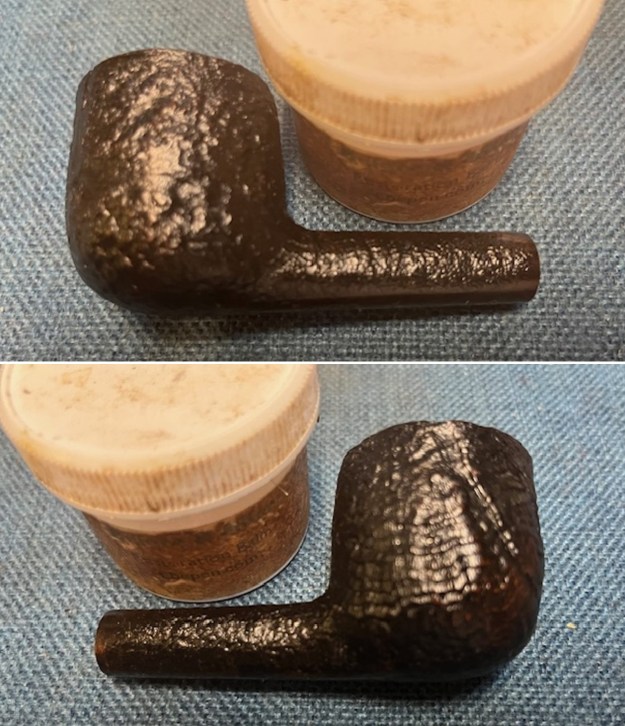
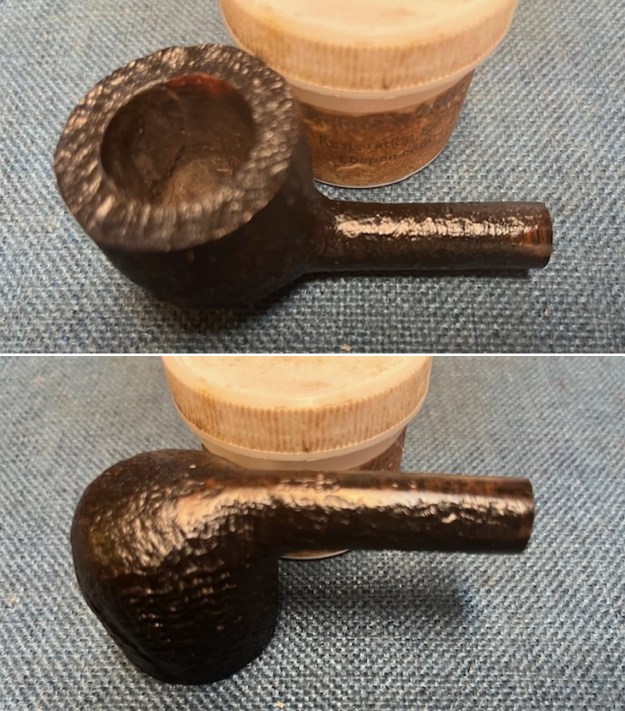
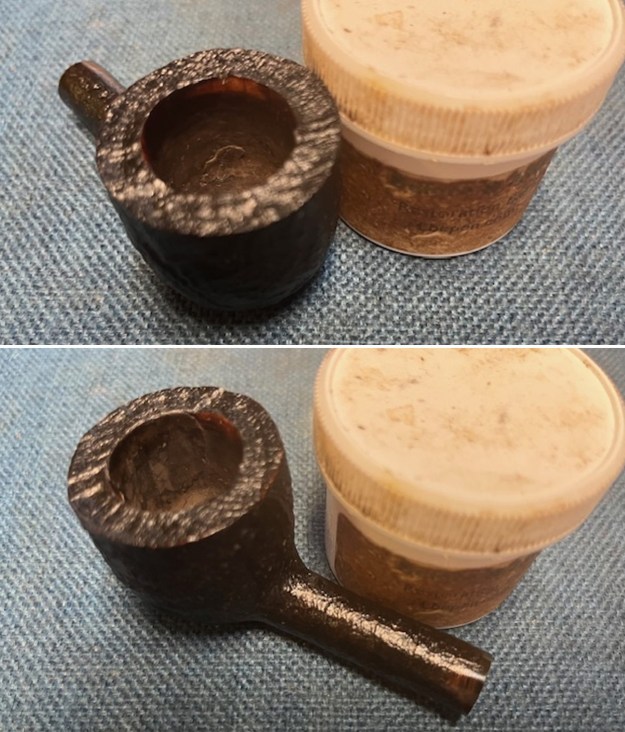
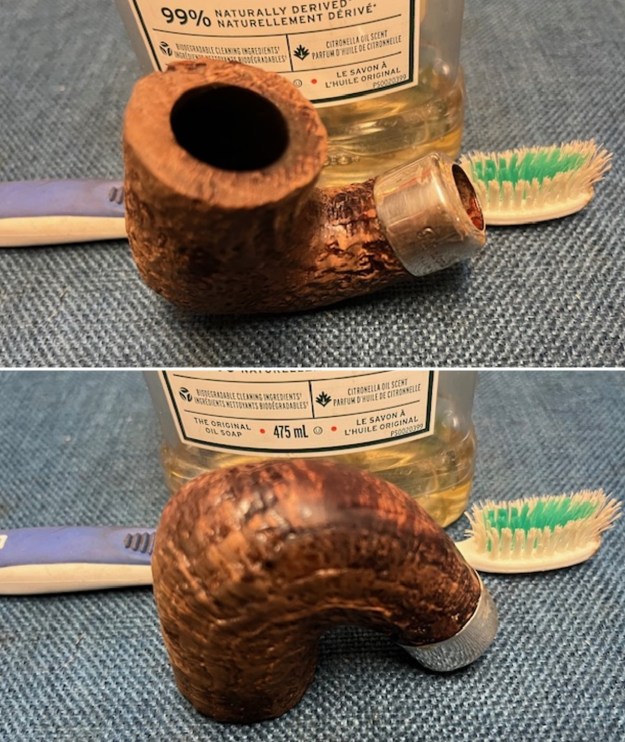
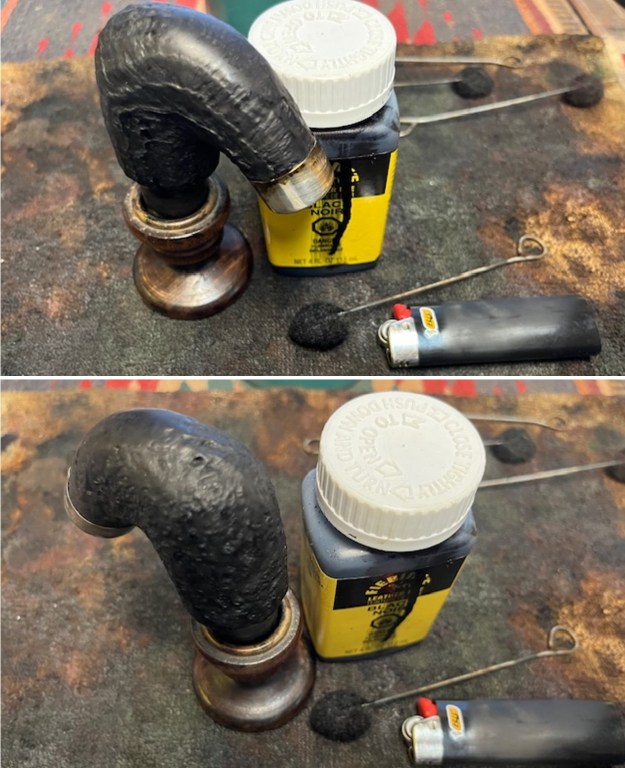
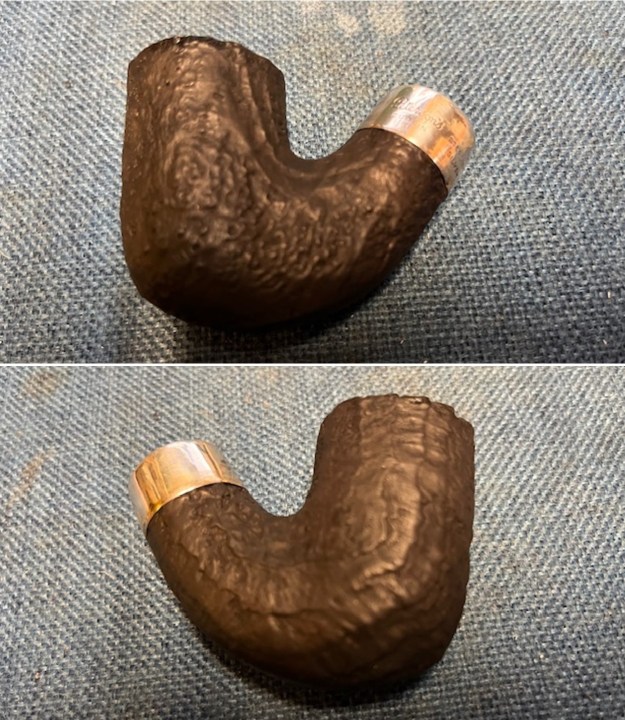
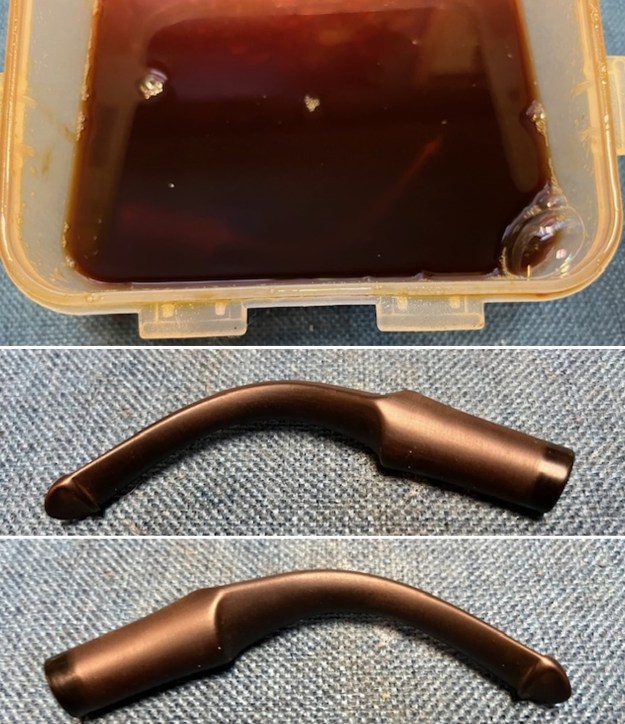
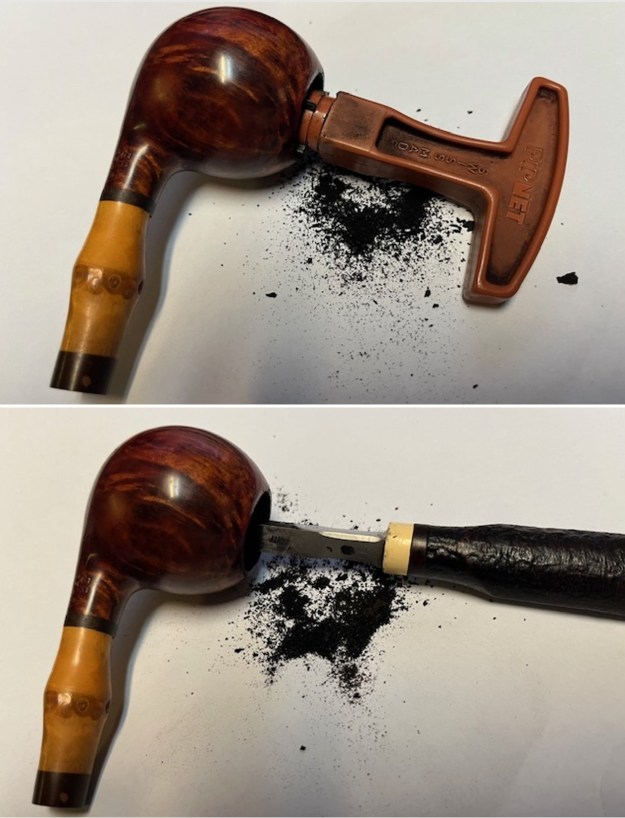
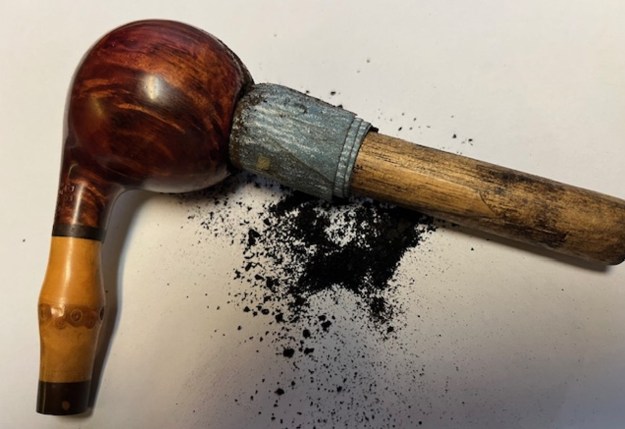
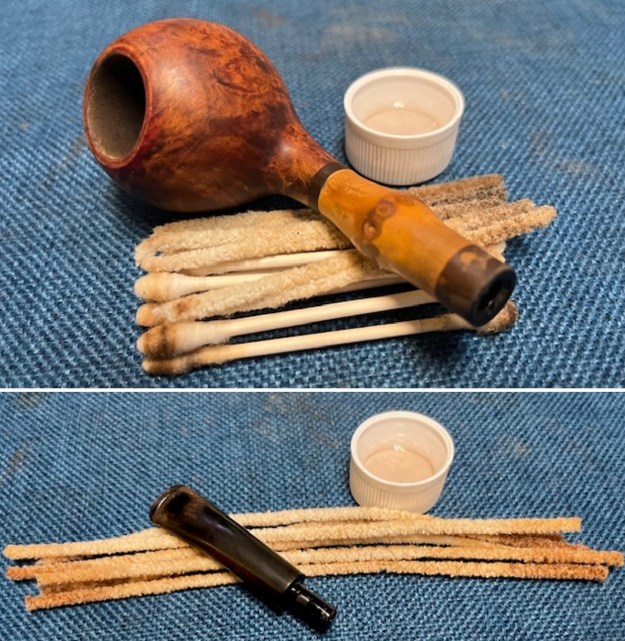
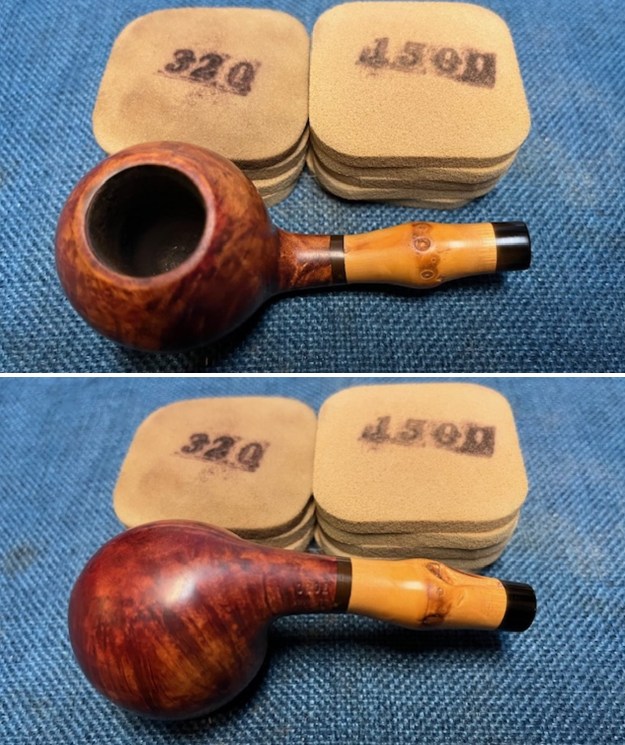
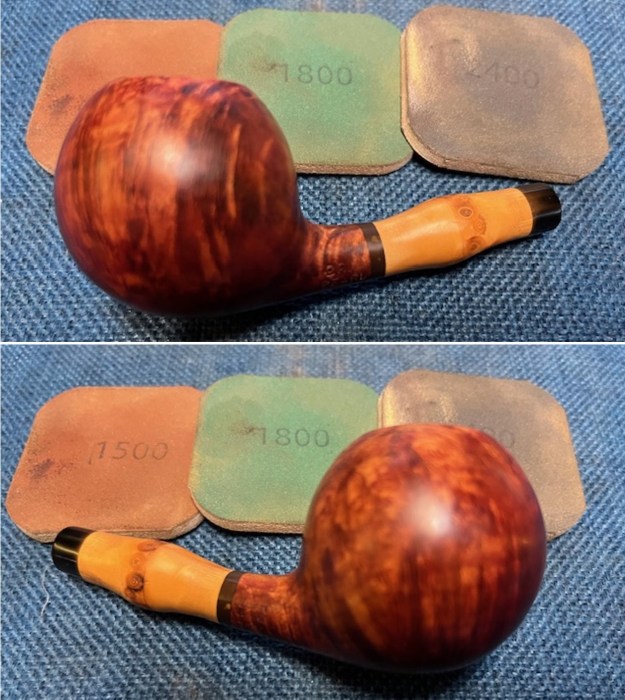
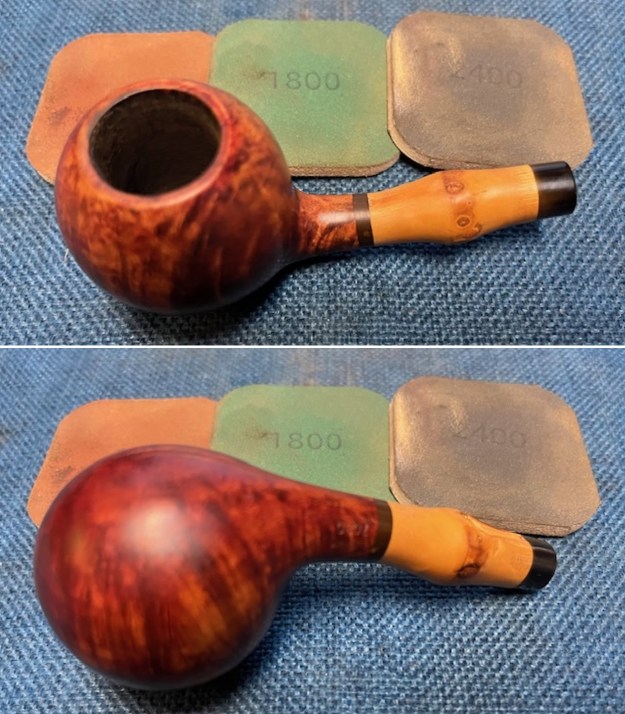
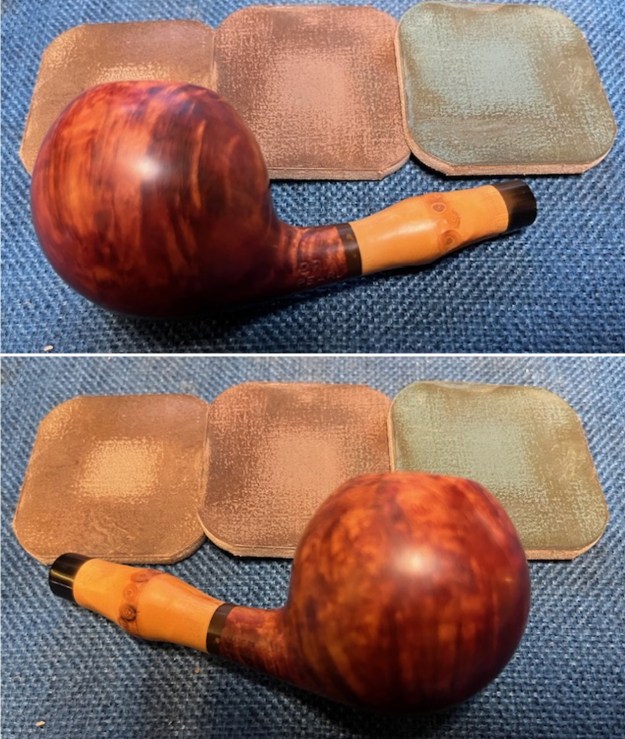
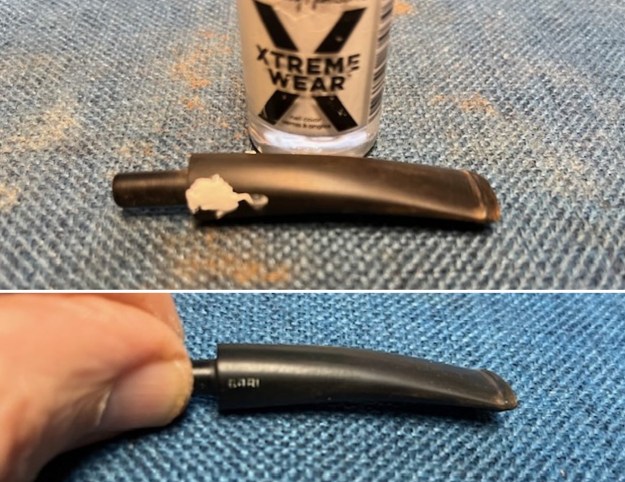
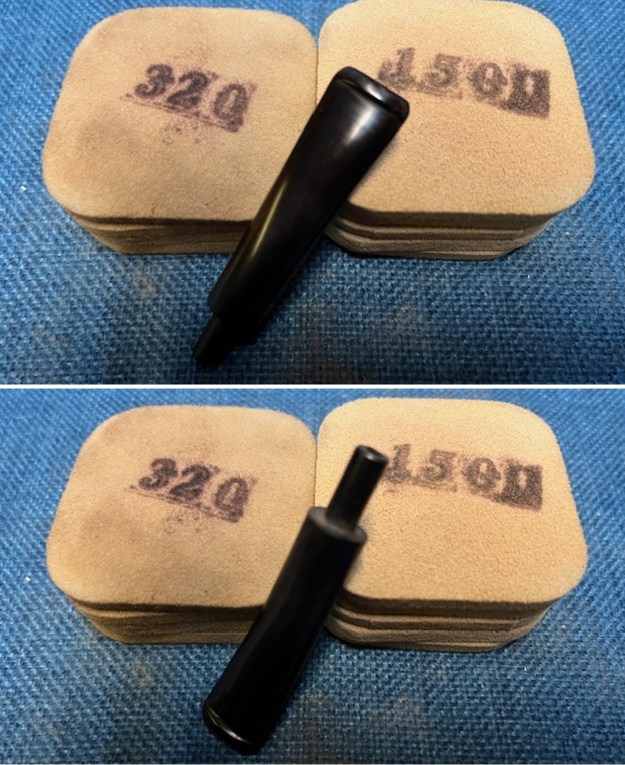
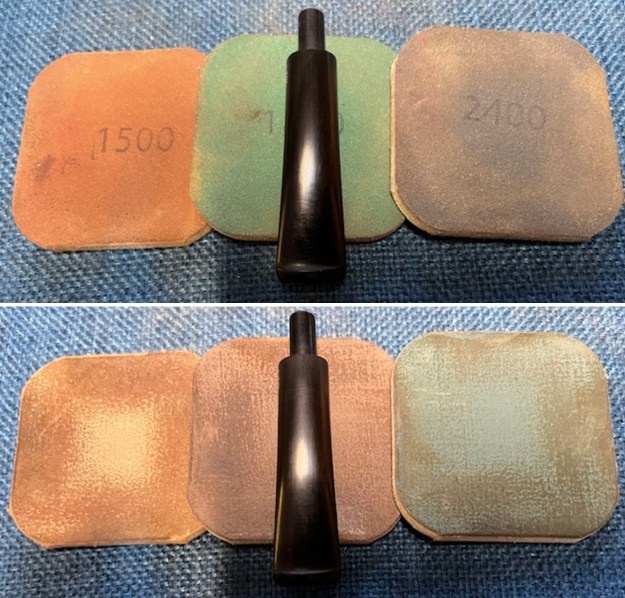
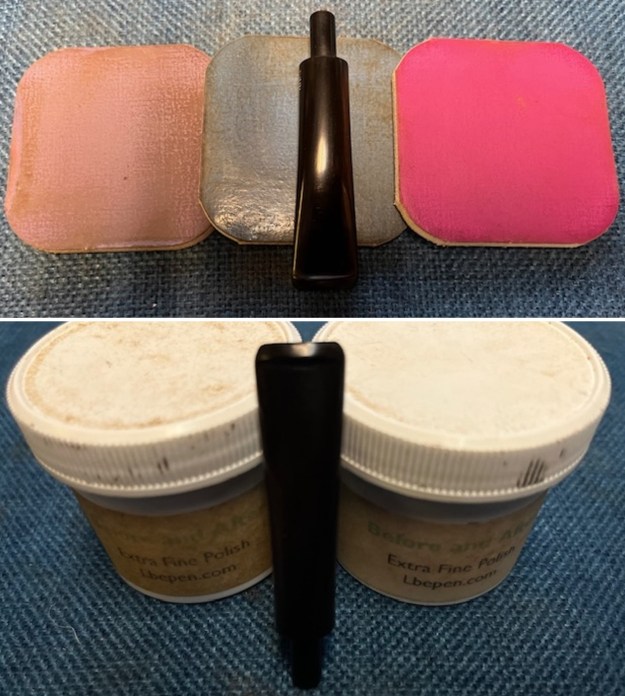
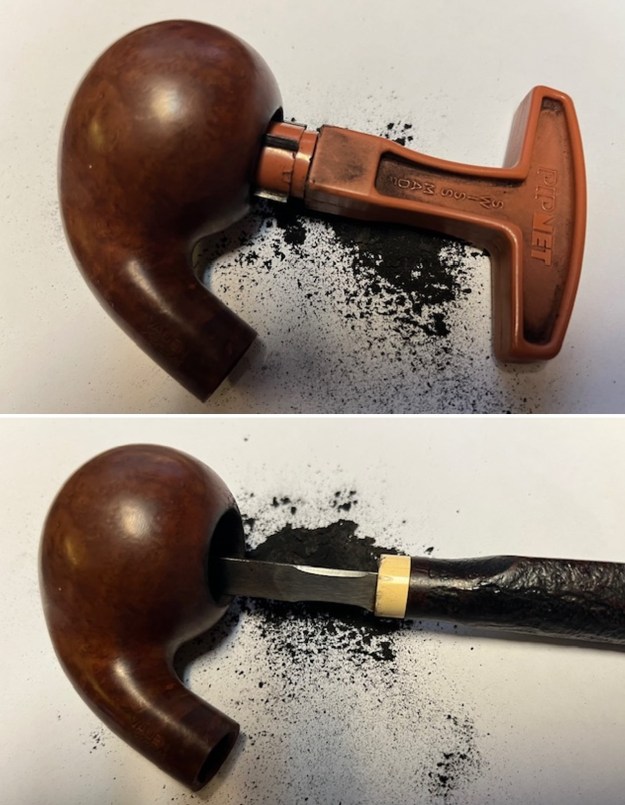
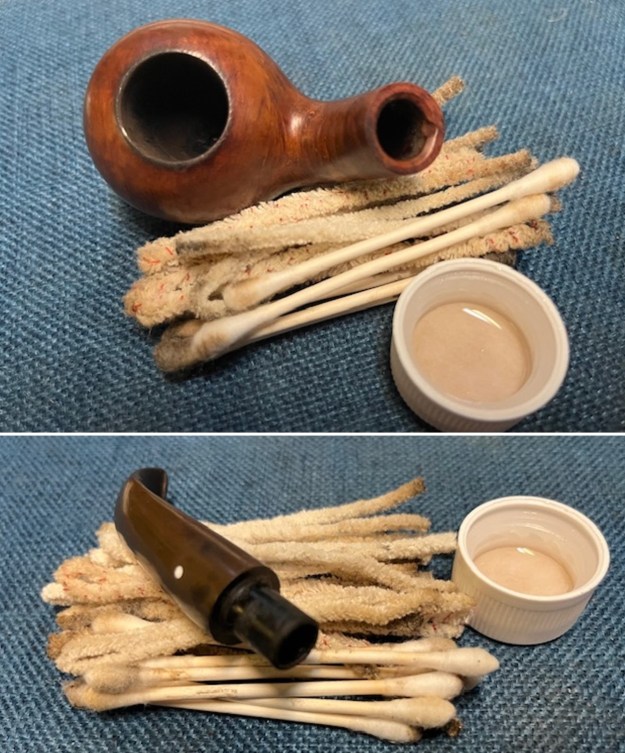
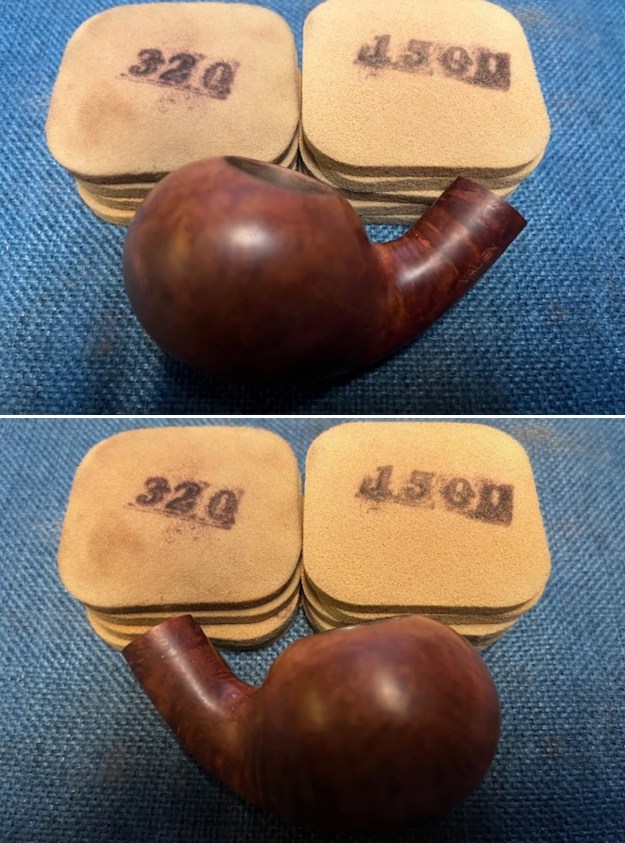
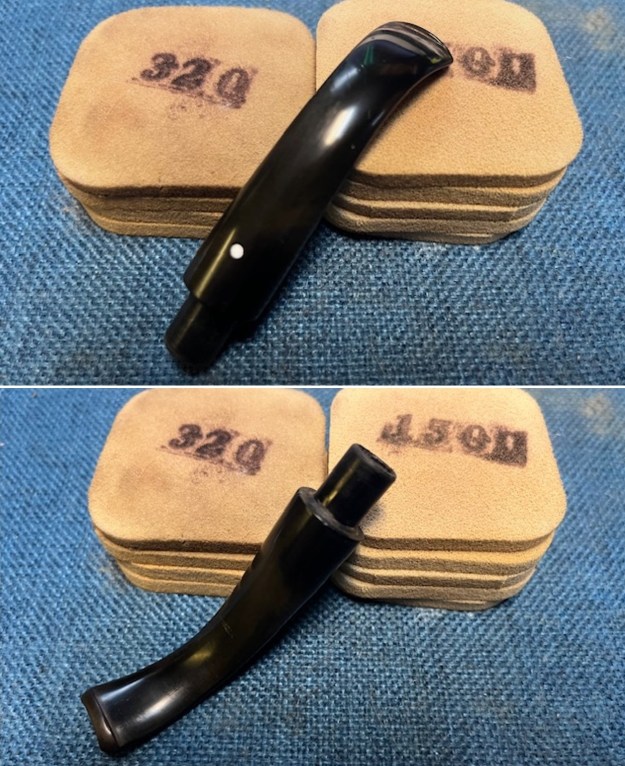
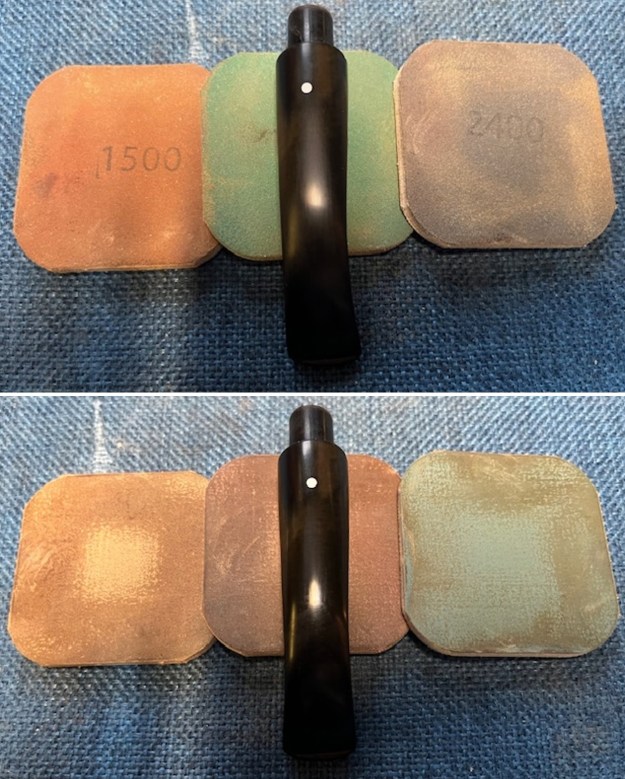
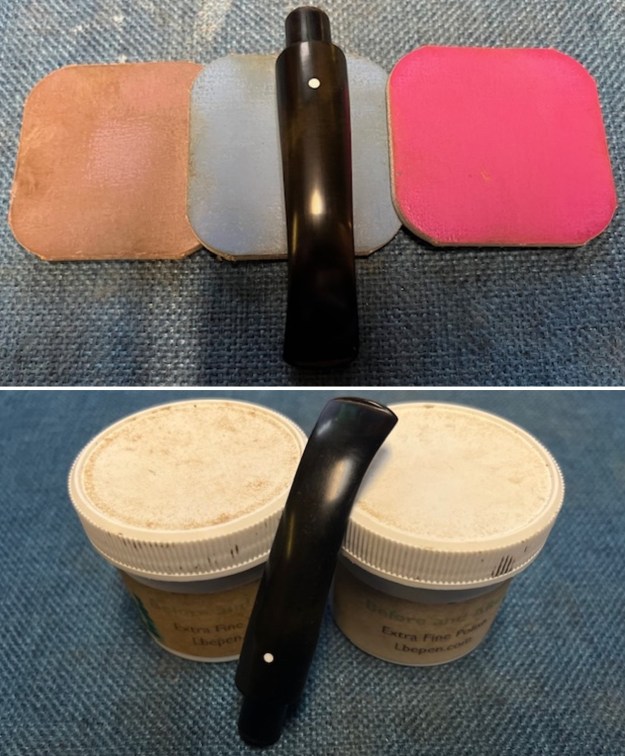
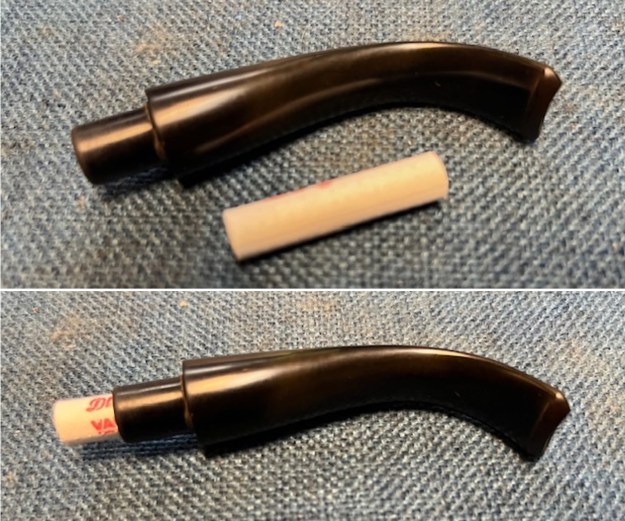
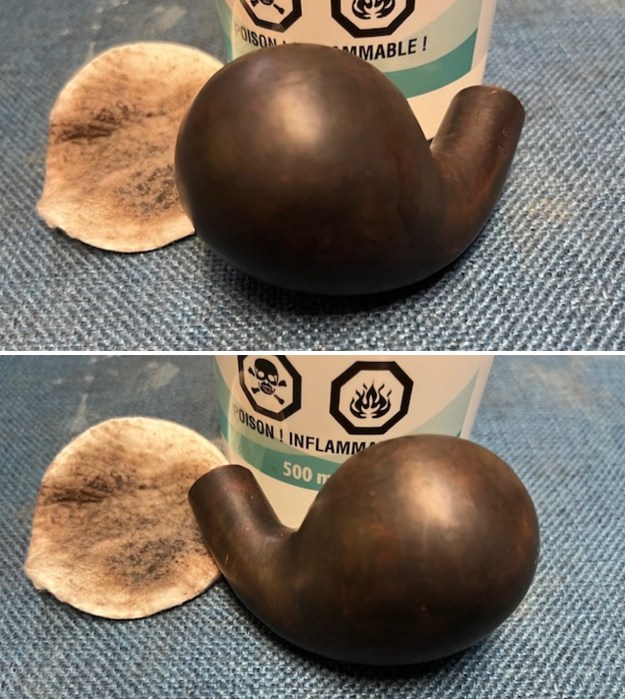
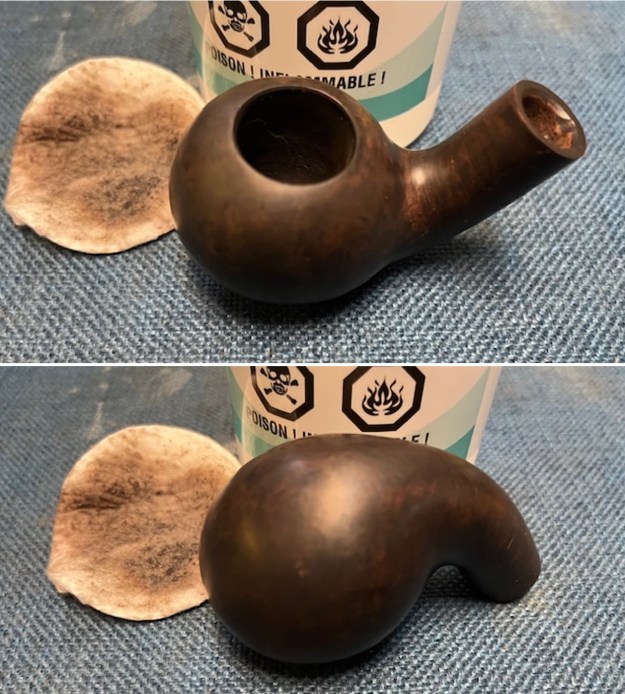
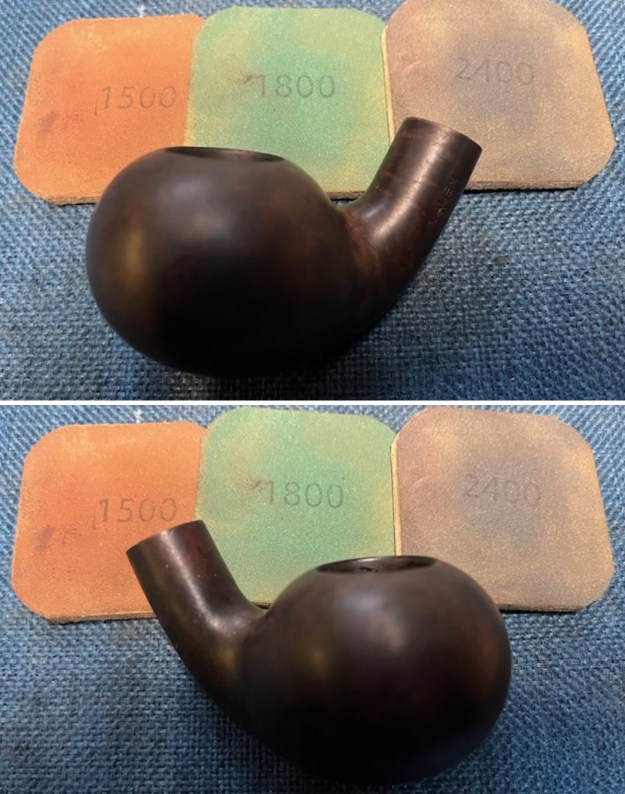
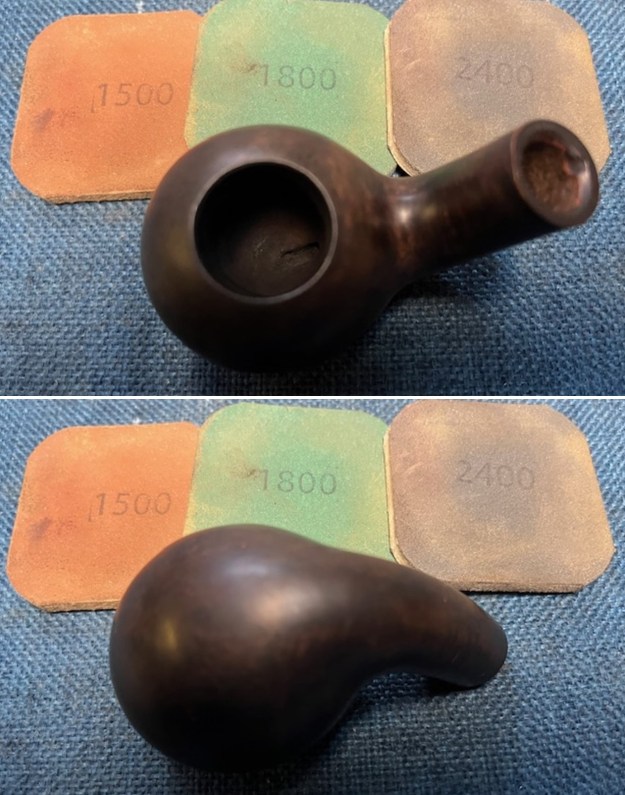
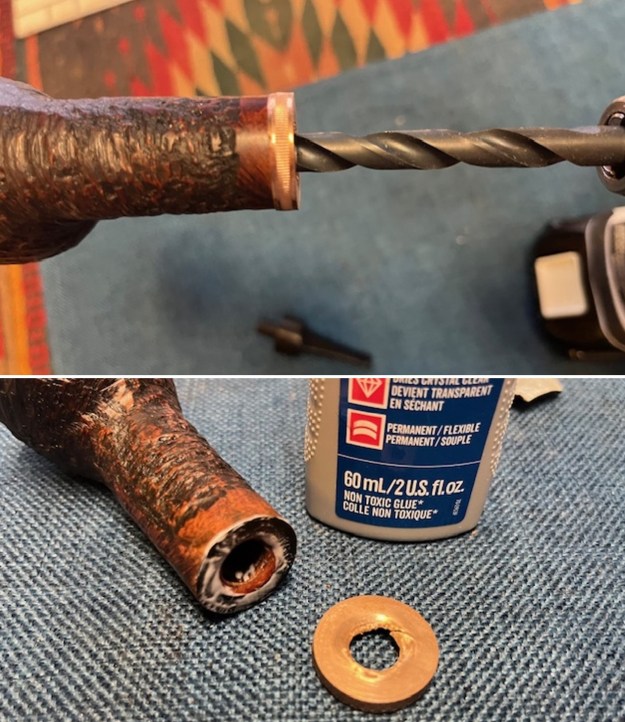
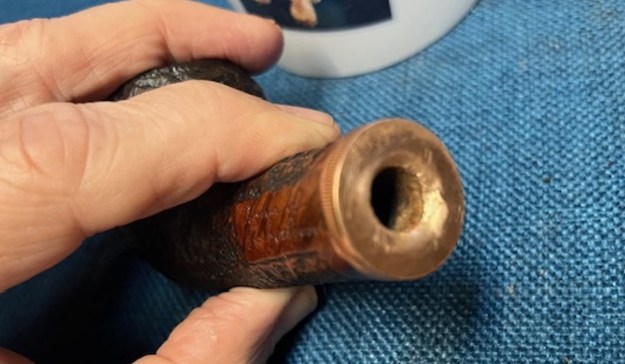
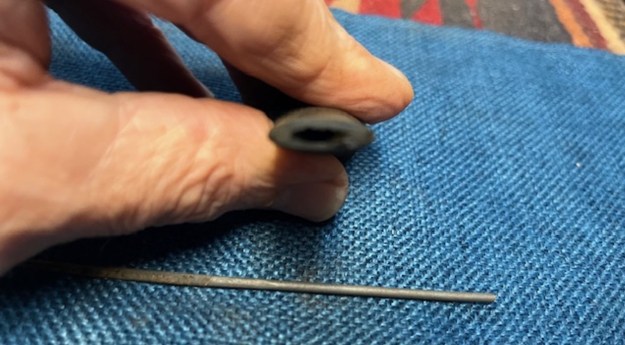
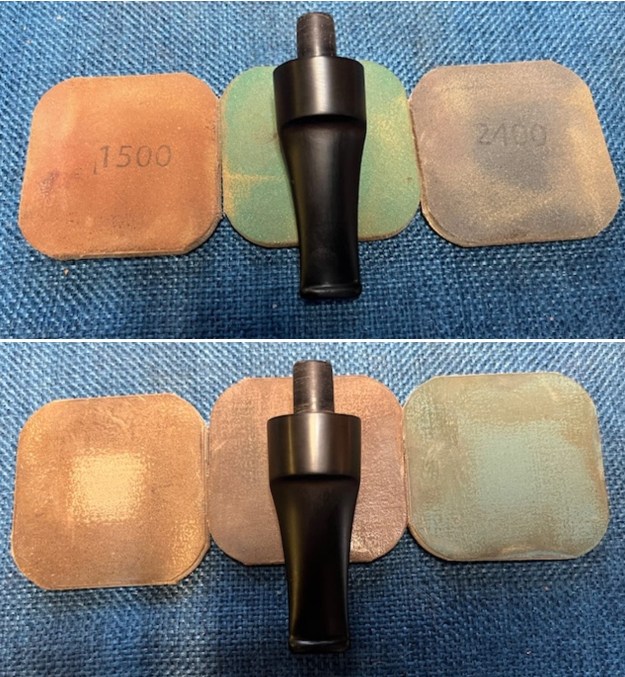
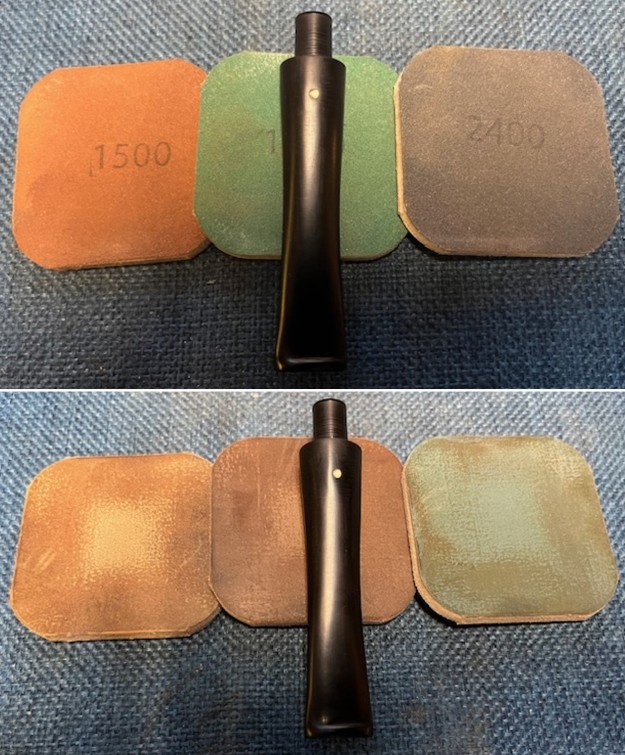
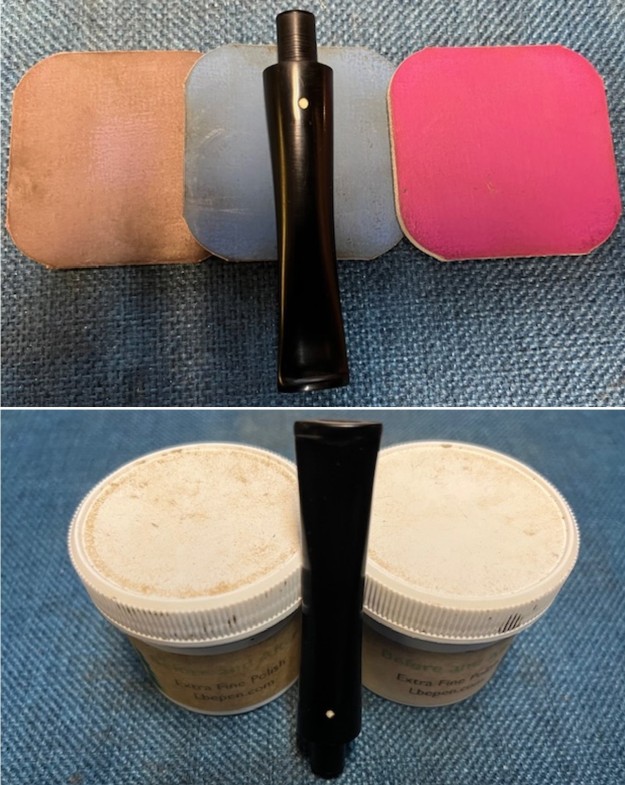
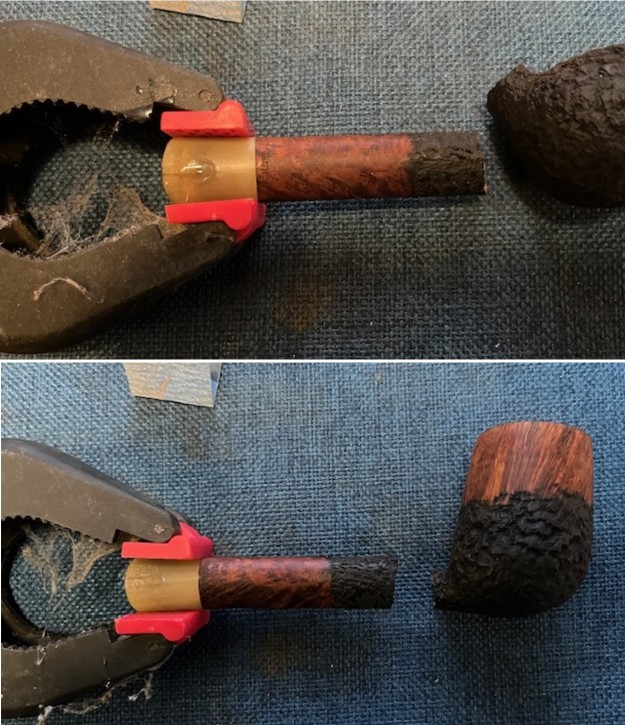
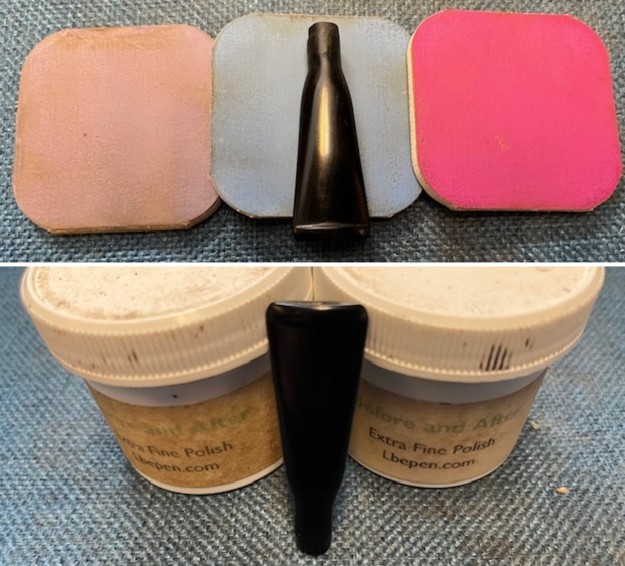
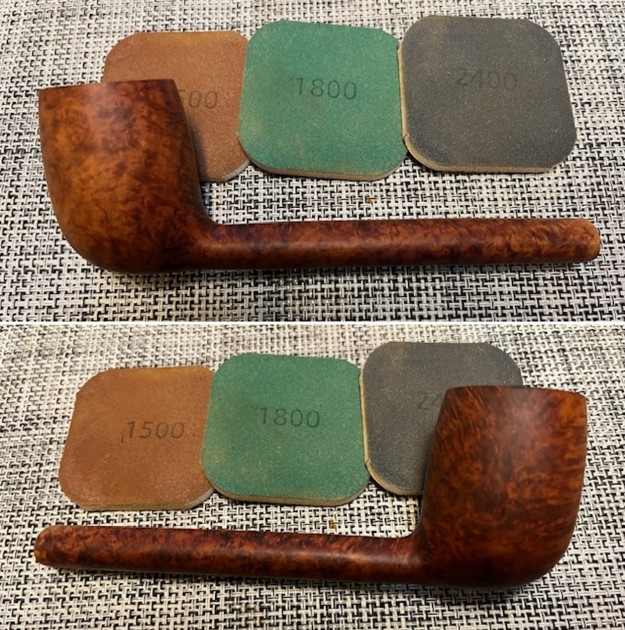
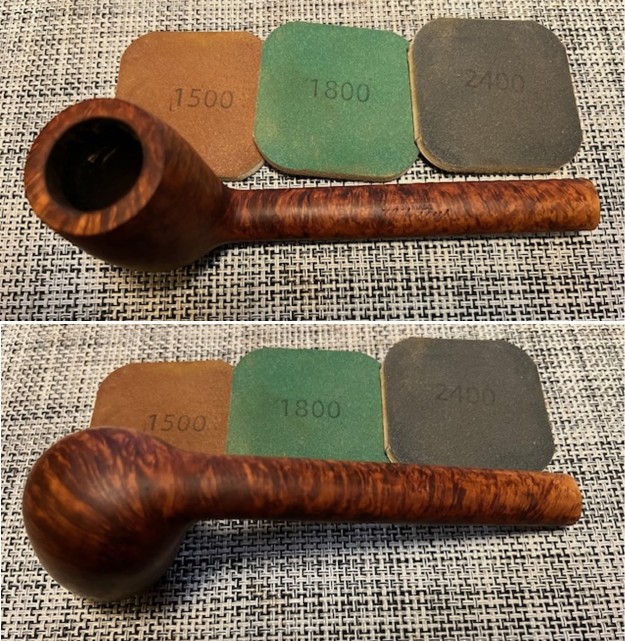
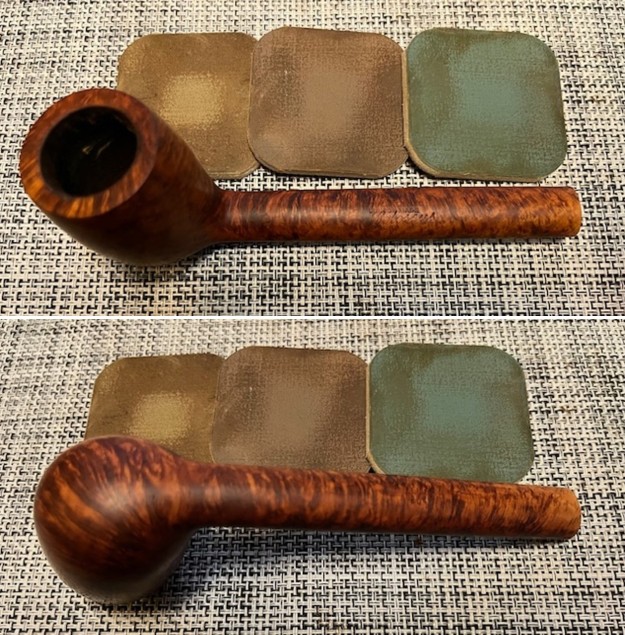
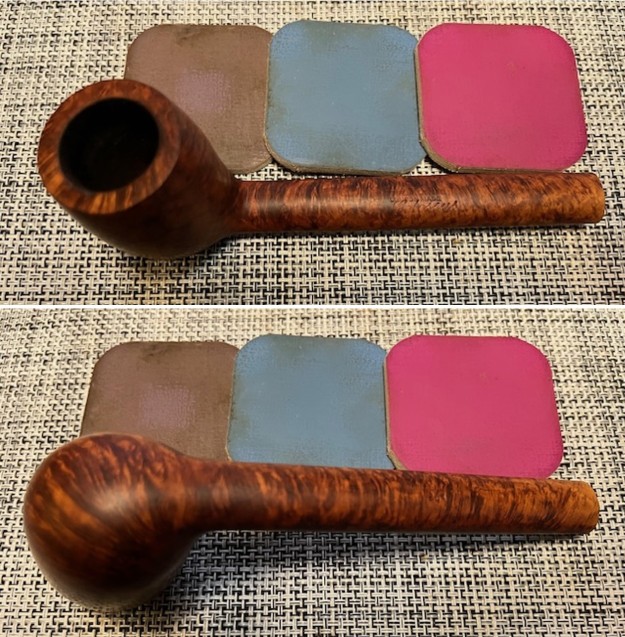
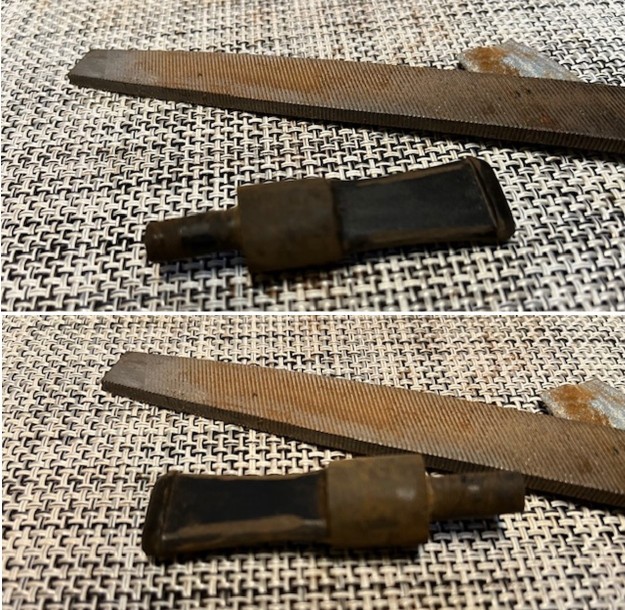
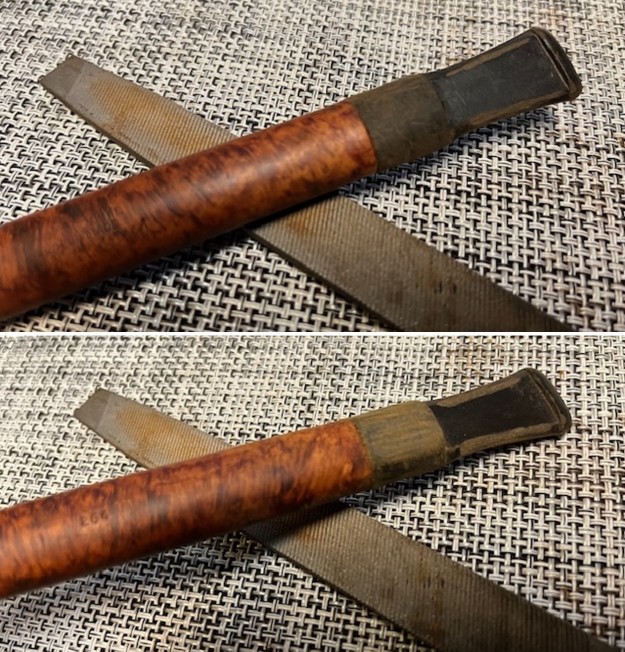
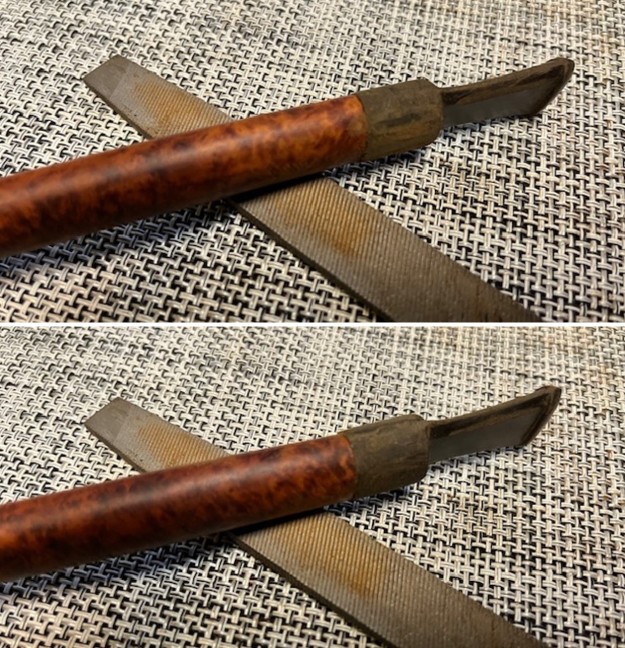
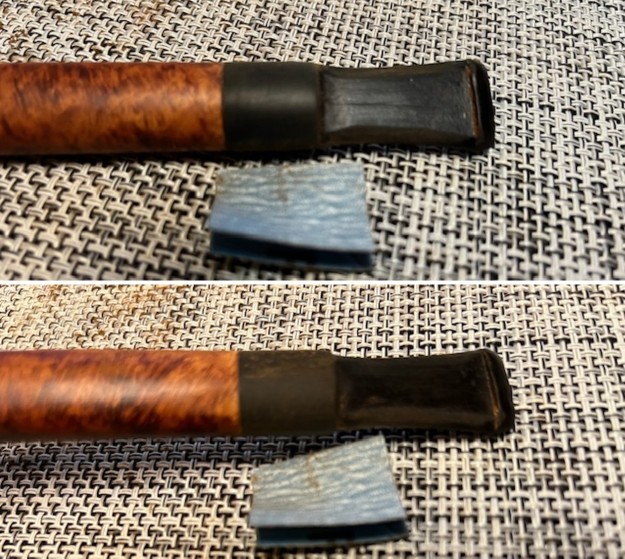
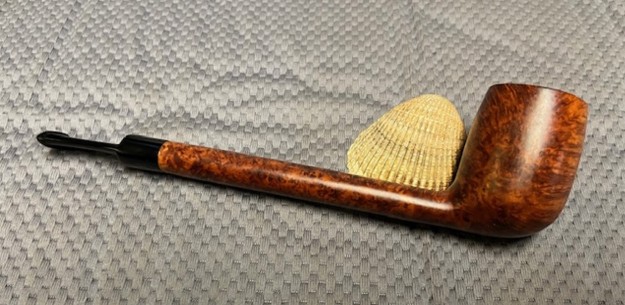
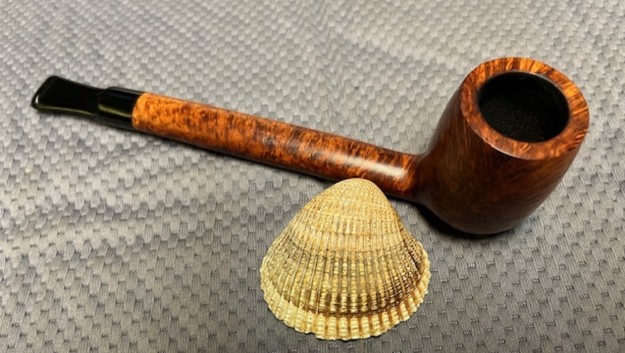
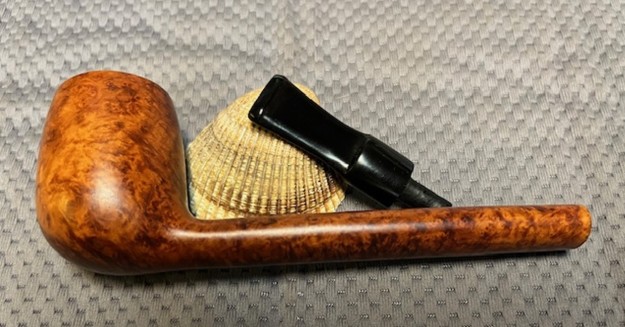
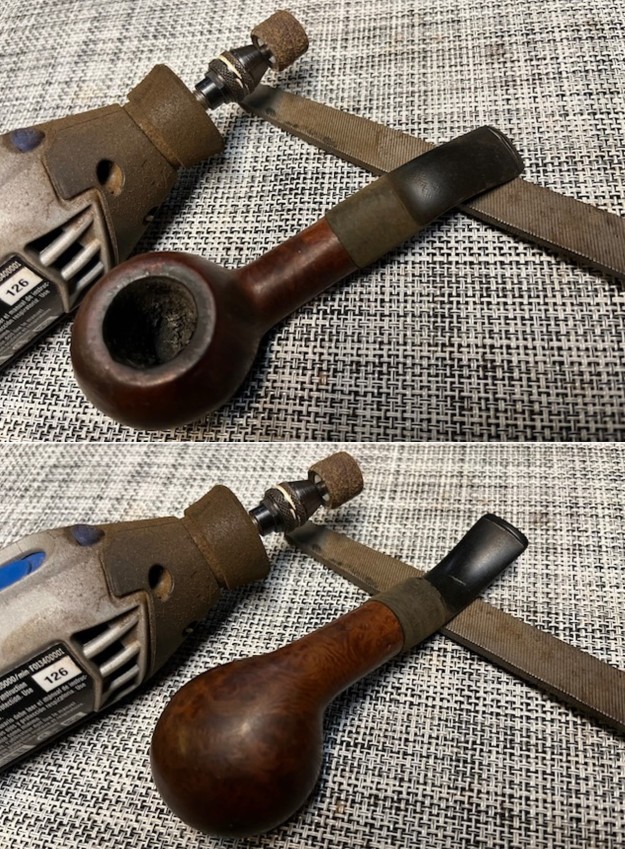
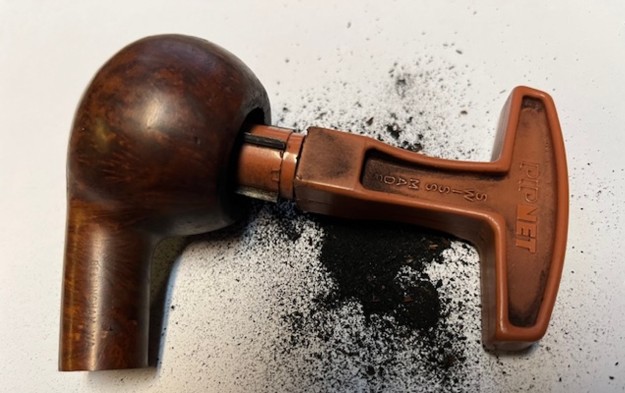
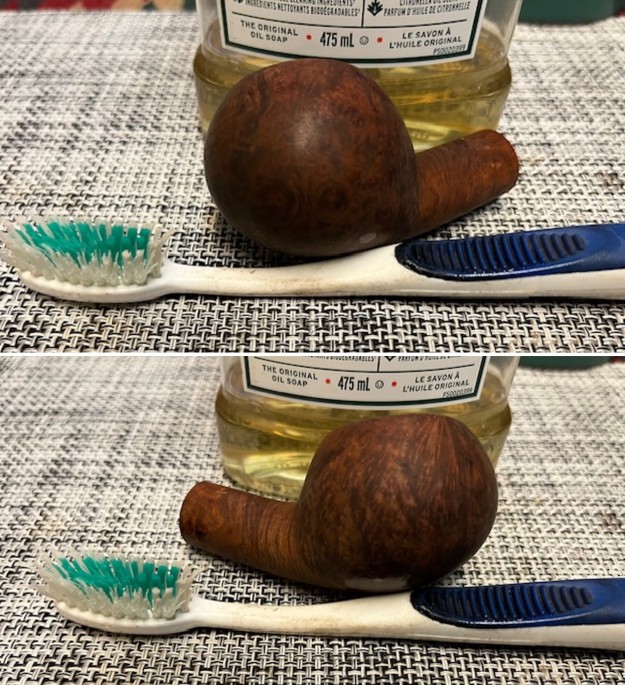
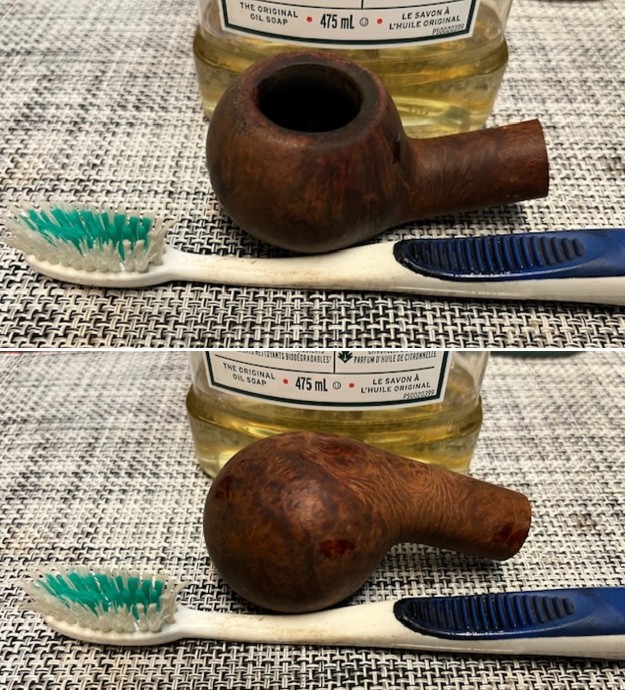
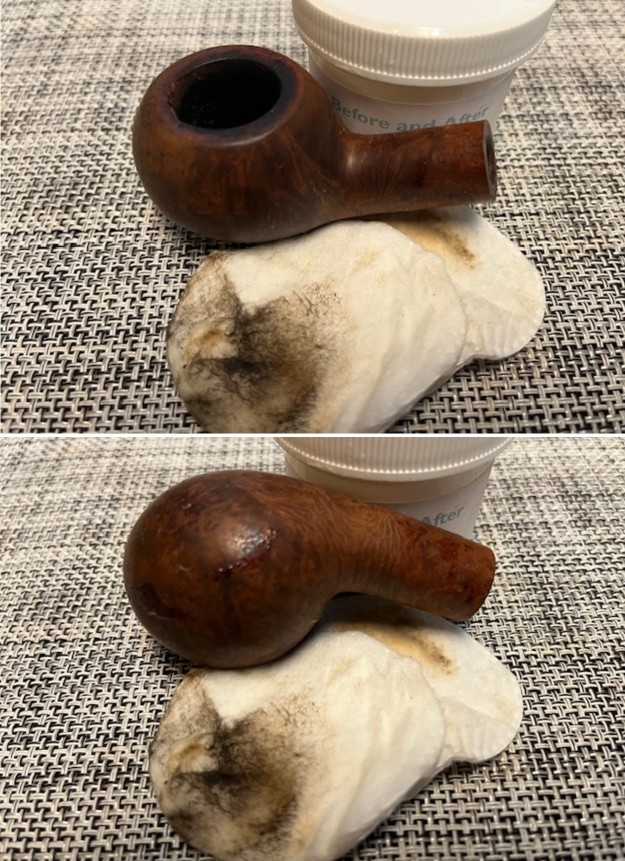
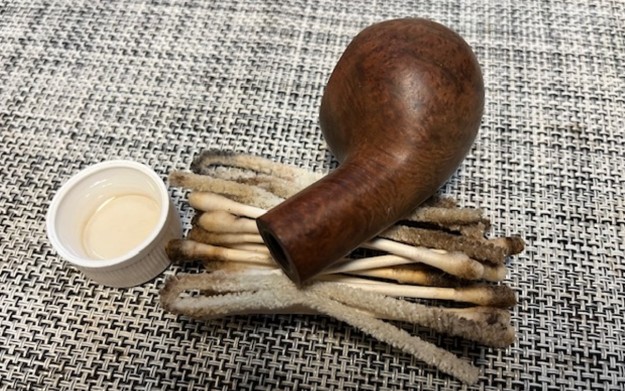
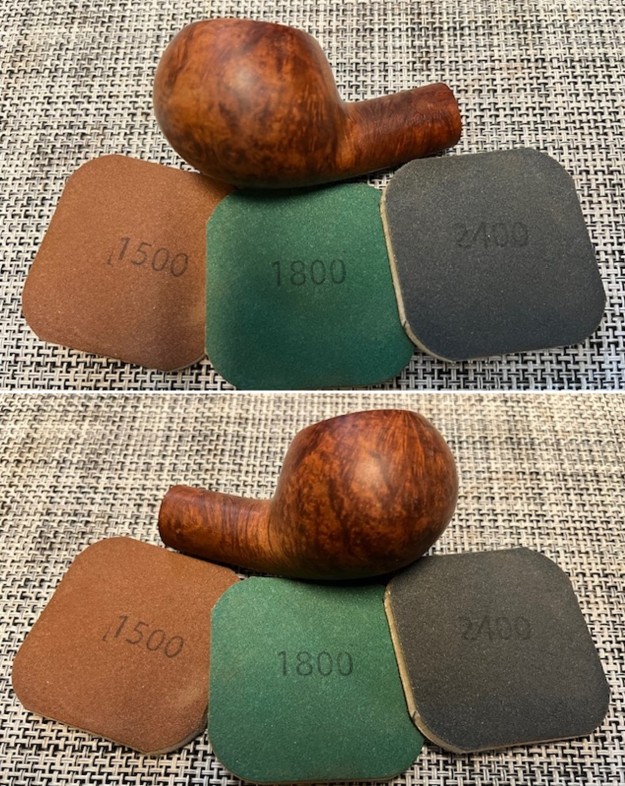
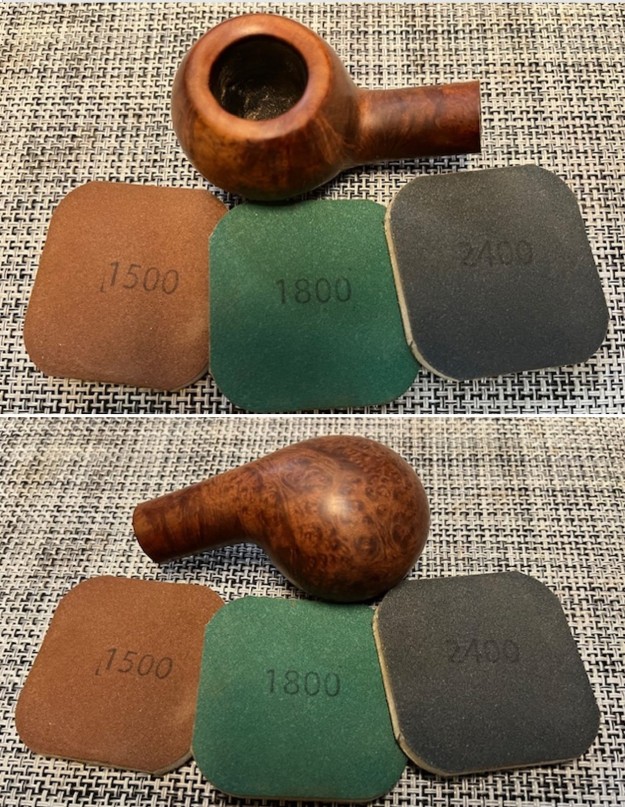
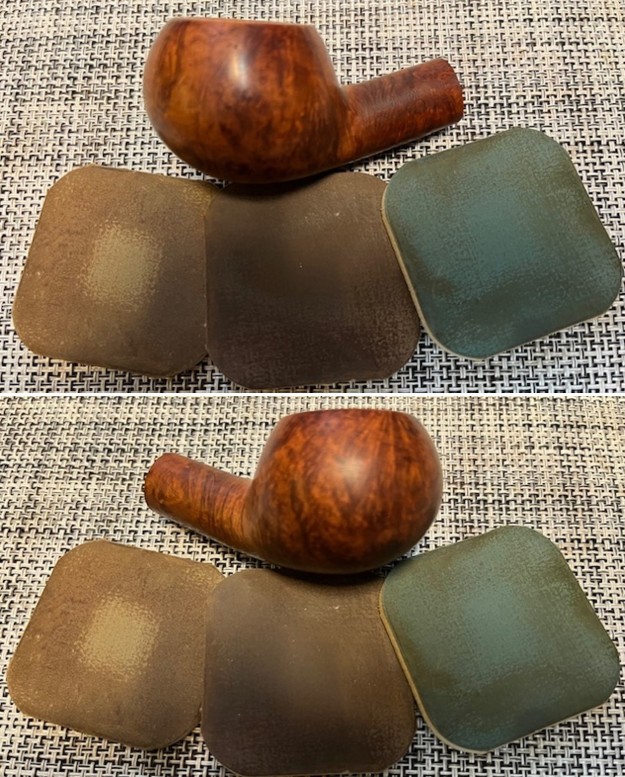
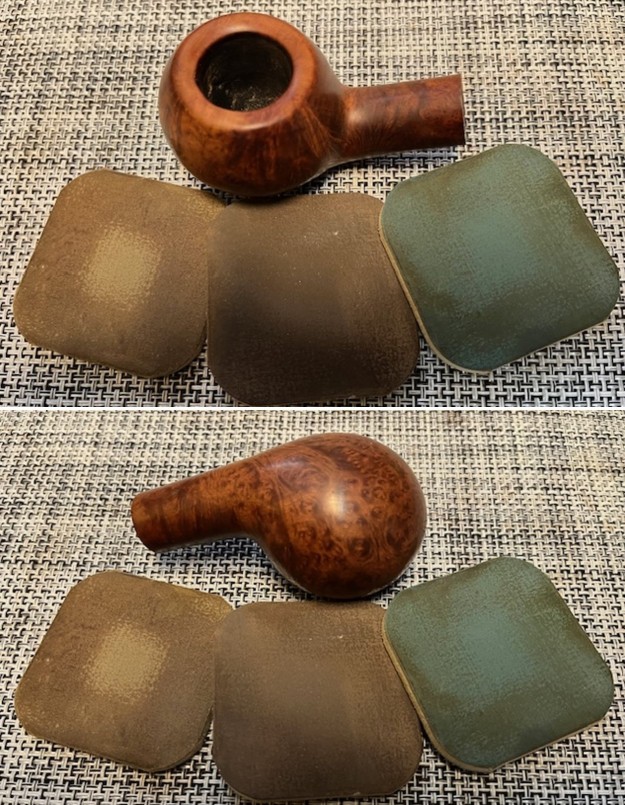
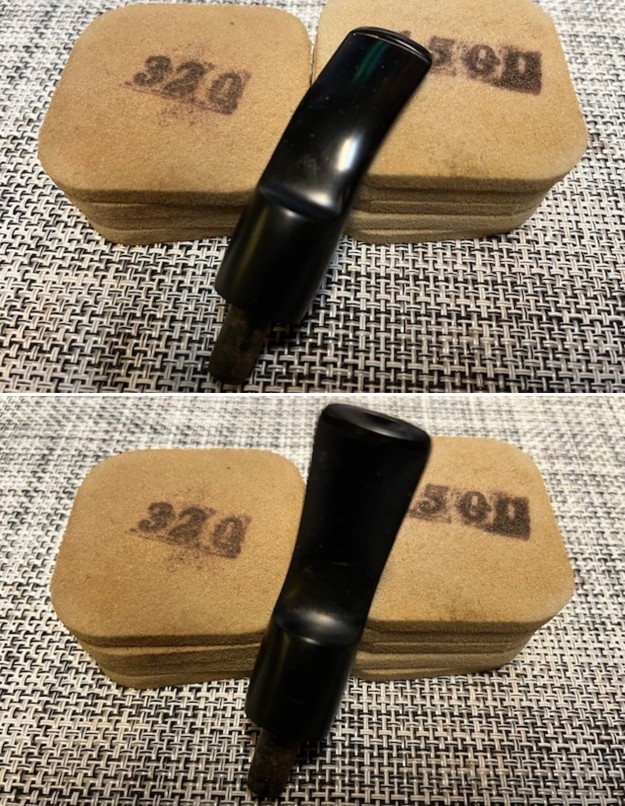
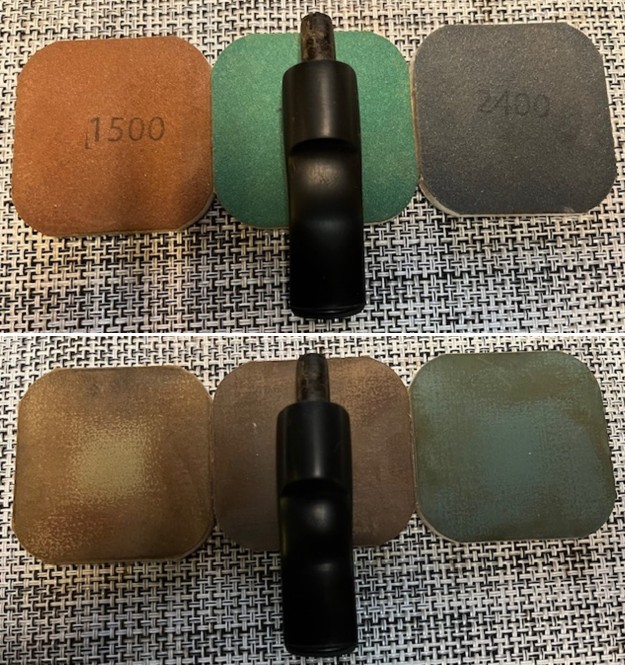
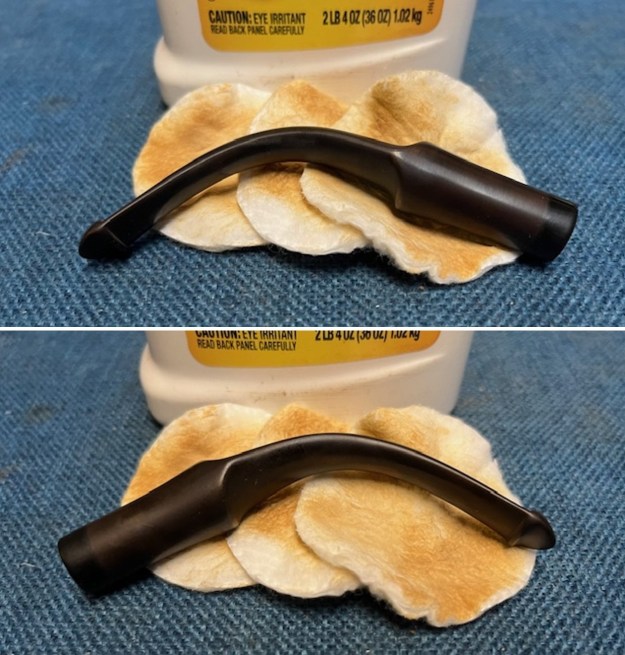
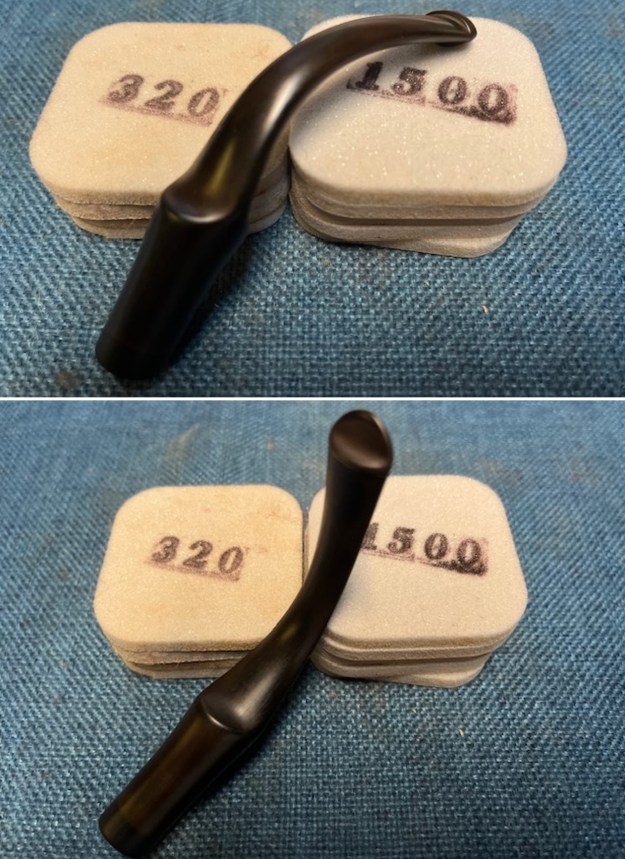
The process of this restoration started with stem repairs. I first cleaned the stem airway by running a few hard bristled and regular pipe cleaners dipped in isopropyl alcohol followed by further cleaning with anti oil dish washing soap and thin shank brushes. The pipe cleaners pictured below and the gunk that was removed while cleaning with the shank brushes of which pictures were not clicked, tell a story of how dirty the stem internals were. I continued cleaning of the stem air way till white foam was seen coming out from the air way. I also scrubbed the stem surface with a Scotch Brite pad and soap. The next step was to stabilize the cracks on the top surface of the stem. Using a 1 mm drill bit mounted on a hand held rotary tool, I drilled counter holes at the start and end points of these cracks. These counter holes prevent the further expansion of the cracks in either directions. I filled these holes, cracks and the tooth indentations in the bite zone with CA superglue and set it aside for the glue to harden. I was still sometime away from hitting the sack and with the stem set aside for the repairs to cure; I decided to work the stummel. I began with reaming the chamber with size 1 head followed by size 2 head of the PipNet reamer. The heap of dislodged carbon did surprise me as I had anticipated a far less cake formation along the walls. I further scraped the chamber walls with my fabricated knife to remove the remaining carbon deposits where the reamer head could not reach. Once the cake was reamed back to the bare briar, I used a 220 grit sand paper to remove all the traces of remaining cake and also to smooth out the inner walls of the chamber surface. Finally, to remove the residual carbon dust, I wiped the chamber with a cotton pad wetted with 99.9% pure isopropyl alcohol. The chamber walls are solid without any heat lines or fissures.While I was handling the bowl, the copper band at the shank end came loose and it was then that I saw the cork lining along the walls of the mortise that was in place to ensure a snug fit of the long bone tenon in to the mortise. This cork lining has dried and needs to be revitalized. This lining also means that I would have to be careful while I clean the mortise so as not to erode and break the cork thus disturbing the seating of the stem.As observed above, the mortise is completely clogged with old oils, tars and ash resulting in a very hard and laborious draw. This was the issue that I addressed next. Using dental tools and fabricated poker, I scraped out the entire gunk from the walls of the mortise taking care that the cork lining is not damaged in the process. I used the drill bit from the Kleen Reem to remove and open up the shank airway. It was a tedious and time consuming work, but well worth the caution and efforts. The heap of crud extracted from the shank confirms the reason for the hard and laborious draw. I ran a few hard and regular pipe cleaners dipped in alcohol through the mortise and airway to remove residual gunk. The mortise is now clean with a much better open and easy draw. I shall continue with the cleaning process when I clean the stummel surface.The last agenda for the night was the external cleaning of the bowl and further internal cleaning of the mortise. I cleaned the external surface with a hard-bristled toothbrush and concentrated Murphy’s oil soap. I scrubbed the rim top and stummel surface with the soap and Scotch Brit pad. I rinsed the stummel under warm running water and dried it with paper towels and soft cotton cloth. The grains are now clearly visible and awaiting a nice polish to pop out. This cleaning also brought a few dents and scratches over the stummel surface and outer rim edge to the fore that would need to be addressed and the fill observed near the foot has loosened that would need to be refreshed. I extended my work time for a while and cleaned out the shank internals. I cleaned the shank walls by scrubbing it with shank brushes and anti-oil dish washing soap while being careful around the cork! The bowl is now clean and fresh. I set the bowl aside to dry under a heat lamp.The next evening with the stummel now dry and the stem repairs completely cured, I had the option of either working on the stummel or the stem. There was this small step that was needed to address the fill that required to be refreshed and that is where I began. With sharp dental tool, I removed the old fill and cleaned the area with alcohol. Next, I mixed briar dust with CA superglue to form putty and applied this mix over the area to be filled. I set the stummel aside for an hour or so for the mix to harden, which is almost instantaneous over the surface.I set the stummel aside and worked on the stem repairs next. The repairs had completely hardened and all that needed to be done was to blend in these repairs with the rest of the stem surface. I began by sanding the fills with a flat needle file to achieve a rough match followed by sanding the entire stem with a worn folded piece of 180 grit sandpaper. The button edges were also evened out and sharpened during the process. The fills will be further blended during the polishing cycle using various grit sandpapers and micromesh pads. I applied a generous layer of EVO and massaged it in to the horn stem to hydrate it and set it aside for the oil to be absorbed into the horn.Using the same tools and sandpaper, I blend in the stummel fill with the rest of the briar surface. This blending of the fill will be further fine-tuned when I sand the stummel surface with 220 grit sandpaper to address the issue of dings and scratches over the surface.I addressed the dents and dings to the outer rim edge by creating a bevel with a folded piece of 180 grit sandpaper pinched between fingers and running them evenly over the outer edge surface. I am quite happy with the appearance of the bowl with the bevelled outer rim. Next, I cleaned the copper ferrule at the shank end with “Pitambari”, a powder that is available all across India that is used to clean and shine brass, copper and silver ware. This compound is a very fine powder and is least abrasive with fantastic results. The band is now a nice shining piece and will provide a nice contrast between the shining horn stem and the dark brown stummel. I attached the band at the shank end with all-purpose glue.The next step was to sand the entire stummel surface with sandpaper to remove the scratches and dings that are visible. I used a well worn piece of 180 grit sandpaper to sand the surface. The sanding marks that are now visible will not be so once the bowl is subjected to polishing regime with micromesh pads and compounds. There are a couple of dings and scratches that are still visible, but I shall let them be as part of the pipe’s century old existence! I followed it by wet sanding the entire stummel with 1500 to 12000 grit micromesh pads, wiping frequently with a moist cloth to check the progress. I rubbed a small quantity of “Before and After Restoration Balm” deep in to the briar with my finger tips and let it rest for a few minutes. The balm almost immediately works its magic and the briar now has a nice vibrant appearance with the beautiful grain patterns displayed in their complete splendor. The contrast of the dark browns of the Bird’s eye and cross grains with the natural patina of the rest of the stummel adds an interesting dimension to the appearance of the stummel which cannot be sufficiently described in words and be rather seen in person. I really like the looks of the stummel at this point in restoration. The grains and the clean lines of this piece of briar is really appreciable. With the stummel set aside, I polished the stem by wet sanding, starting with 400 and progressing through 600, 800, 1000, 1500 and 2000 grit sandpapers. I rubbed a good amount of EVO in to the stem surface and set it aside to be absorbed.A few hours later, I wiped the stem surface with paper towels and began the polishing cycle using micromesh pads. I wet sanded the stem surface going through 1500 to 12000 grit pads. I set the stem aside after rubbing it down with EVO again.To complete the restoration, I mount a cotton cloth buffing wheel on to my hand held rotary tool and polished the stummel and stem with Blue Diamond compound. This compound helps to remove the minor scratch marks that remain from the sanding. With another cotton buffing wheel that I have earmarked for carnauba wax, I applied several coats of the wax. I finished the restoration by giving the entire pipe a rigorous hand buffing using a microfiber cloth to raise the shine further. The finished pipe looks amazingly beautiful and is ready to join my collection. I only wish it could share with me its life story of the past years while I enjoy smoking my favorite Virginia blend in it or maybe an English blend or maybe just keep admiring it! Big thank you to all the readers who have joined me on this path by reading this write up as I restored and completed this project.

Cleaning up one of my restorations from many years ago


Blog by Steve Laug

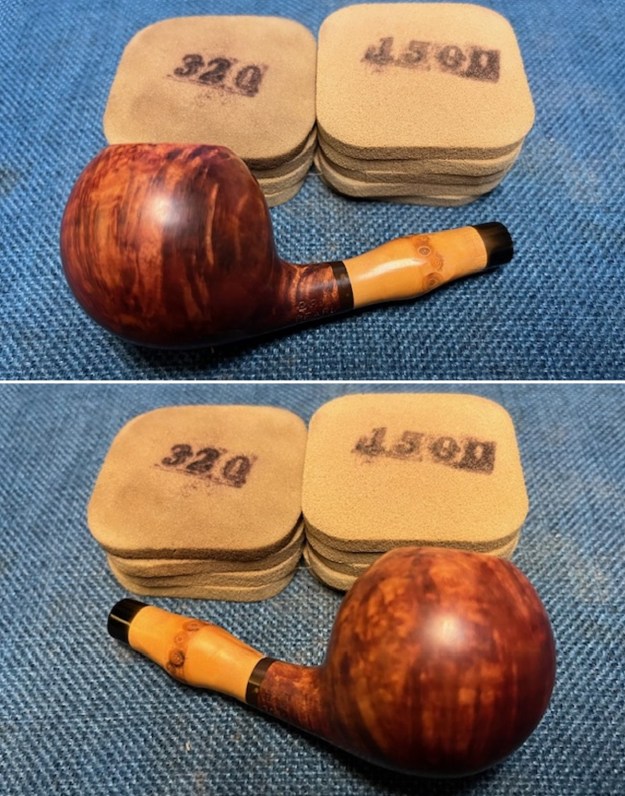
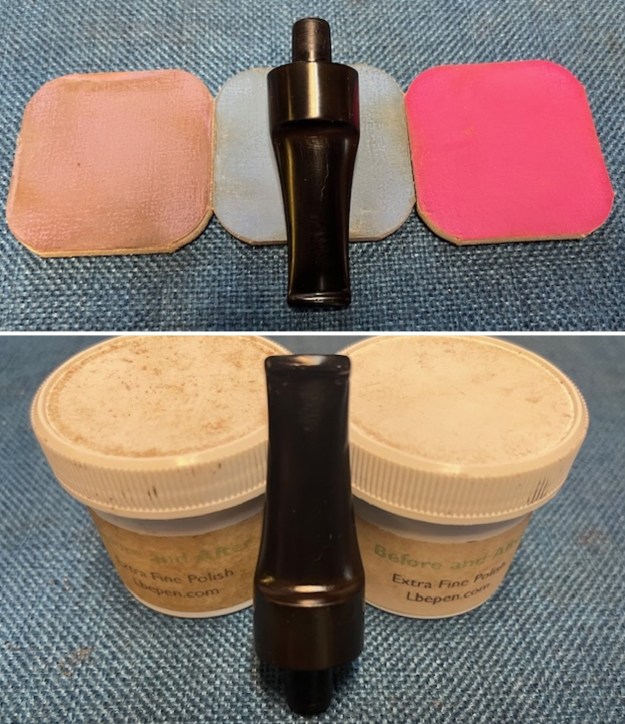
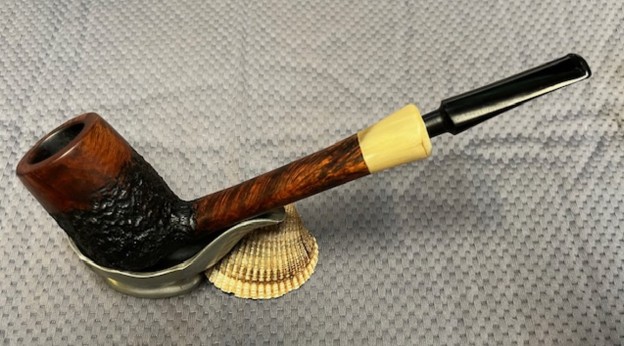
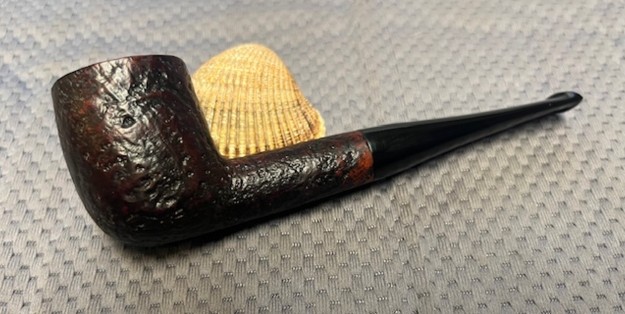
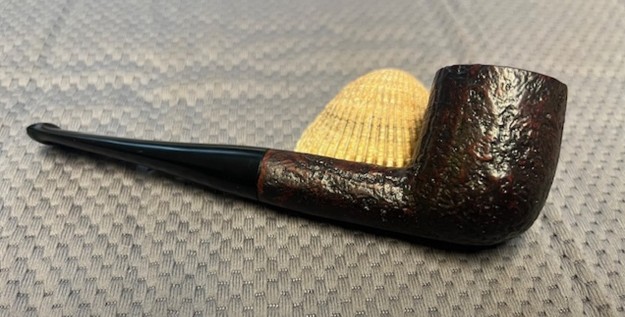
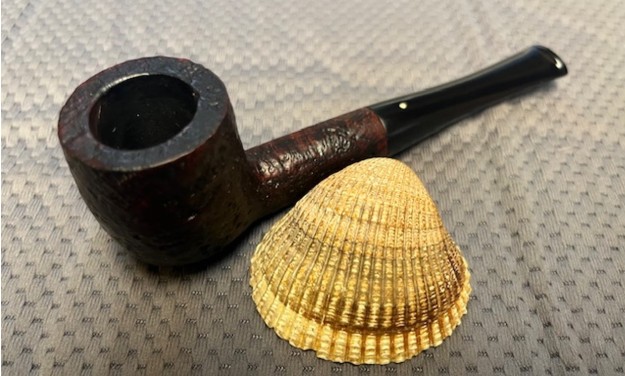
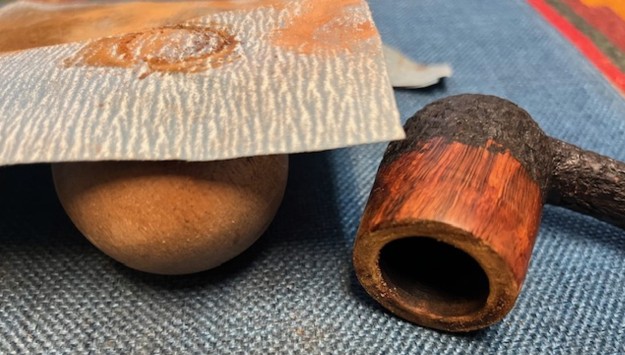
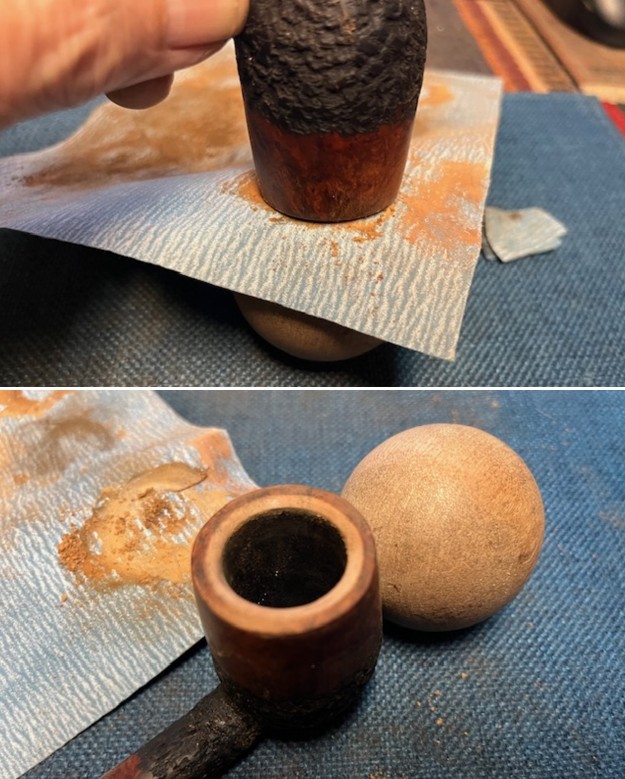
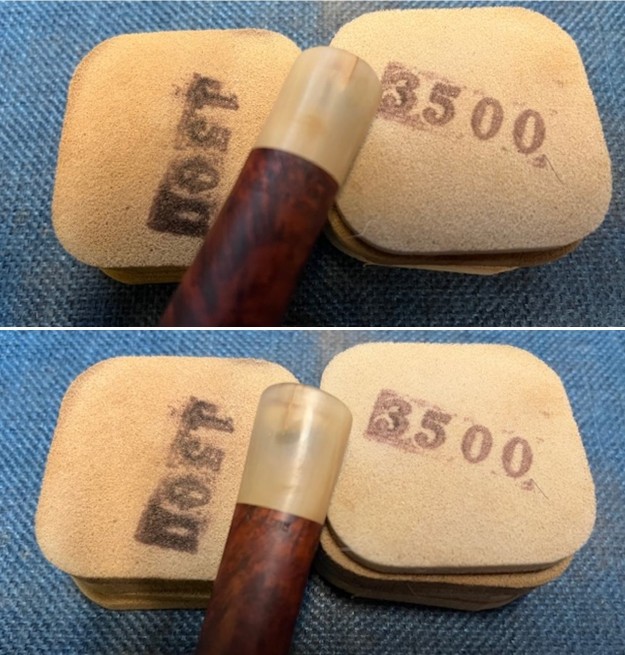
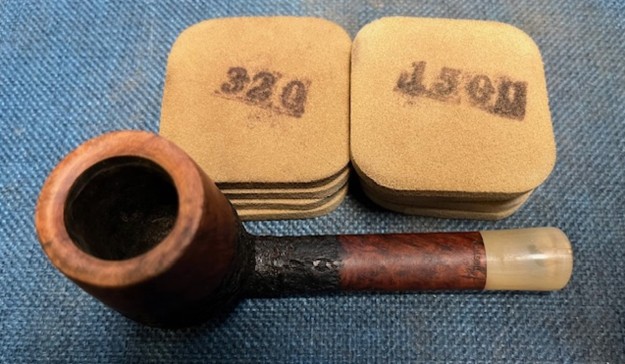
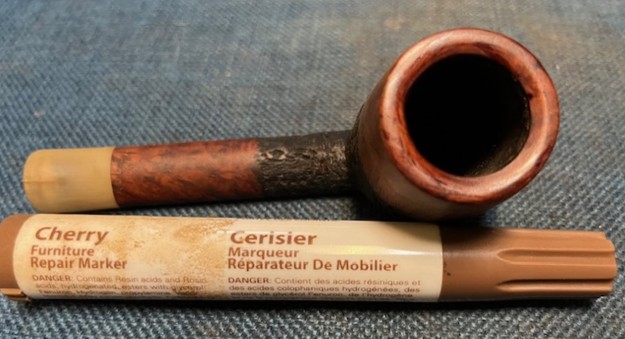
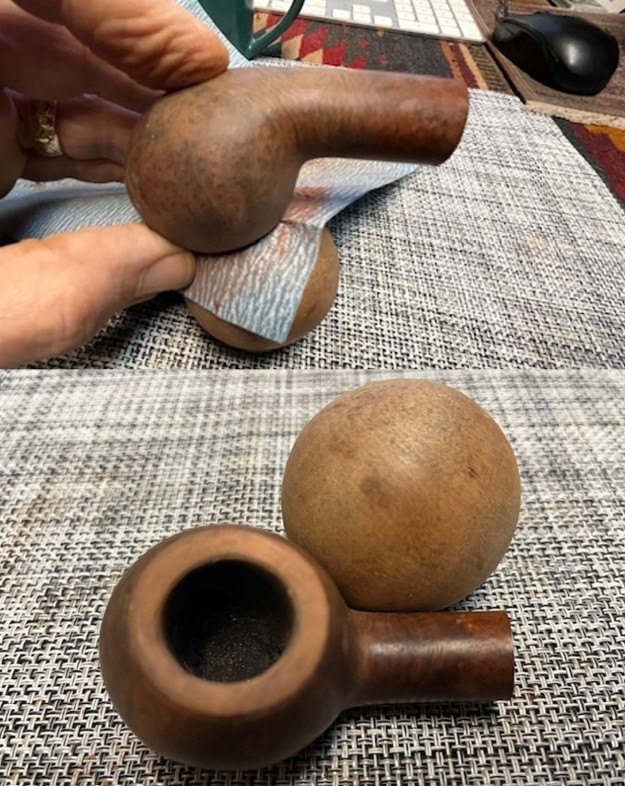
I have always liked the GBD 9438 shaped pipe and this one was one of the first that I picked up many years ago when I first started working on pipes. I found it at an antique shop. It was in the early days when I picked up most every pipe I found. I believe that like others I found in the early days this pipe cost me about $6CDN. Just remembering that reminds me how much things have changed over the years. It became a favourite shape of mine and over the years I have purchased many more 9438 pipes made by GBD for their main and their seconds lines such as Irwin and Dr. Plumb. I have added them to my collection. Here is a link to a blog I did on my collection back in 2013 (https://rebornpipes.com/2013/12/12/my-gbd-9438-saddle-stems-and-tapered-stem-rhodesians/). I have 12 – some were in rough shape and others not so bad. I have been sorting through my pipe collection and thinning out pipes that I am willing to part with. I have sold many already and others are currently on the store. For the most part these pipes have been early restorations and all need a bit of work to bring them up to my current standard. I have set aside three 9438 pipes that I decided to rework. The first of them is stamped on the left side Dr. Plumb [over] London Made. On the right side it is stamped London England [over] 943810. While it was very workable and I had actually smoked it quite a bit over the years I knew that original restoration on it was less rigorous than my current standards. So, before I listed it for sale I wanted to work it over again. I took photos of the pipe to give a sense of the beauty and the work that needed to be done. I took photos of the pipe’s bowl and rim top to show the moderate cake in the bowl and some damage to the inner edge of the bowl. There was also burn damage on the rim top and darkening on the rear and front right top of the bowl. I also took photos to capture the condition of the stem. You can see in the first photo below the dark dot on the top of the saddle. It was originally a Dr. Plumb style logo but over time it had darkened. Fortunately, I am not a biter or stem chewer so there were no deep tooth marks on the top and underside of the stem. There was some oxidation on the vulcanite stem and some chatter around the button.I took photos of the stamping on each side of the shank. It is readable and clear as noted above.I took the stem off the shank and took a photo of the look of the pipe. It really is a beauty.I decided to address the damage to the rim top and inner edge of the bowl. To deal with the burned inner edge of the rim and the rim top damage I lightly topped it on a piece of 220 grit sandpaper. I used a piece of 220 grit sandpaper on a wooden ball to give the rim top a light bevel. It took a bit of work to smooth out the damage and lightly bevel the inner edge of the bowl. I used a Cherry stain pen to restain the rim top and begin the process of blending it in. I reamed the bowl with a Savinelli Fitsall Pipe Knife to take out the cake. I removed ti back to bare briar. I sanded the bowl walls with a piece of 220 grit sandpaper wrapped around a dowel to smooth out the walls. It looked very good. No burn damage or checking on the bowl walls.I scrubbed out the shank and the stem with pipe cleaners, cotton swabs and alcohol to remove the tars and oils. The shank was dirty though the stem airway was not too bad. It cleaned up well. I sanded the bowl and rim top to clean up the damage and repairs to the edge and start the polishing of the bowl. I used 320-3500 grit sanding pads. I wiped the bowl down with a damp cloth after each pad. It really began to take on a shine. I polished the briar with micromesh sanding pads – dry sanding with 1500-12000 grit pads. I wiped it down after each sanding pad with a damp cloth to remove the sanding debris on the surface. I rubbed the bowl down with Before & After Restoration Balm. I worked it into the surface of the briar with my fingertips to clean, enliven and protect it. I let the balm sit for a little while and then buffed with a cotton cloth and shoe brush to raise the shine. I set the bowl aside and turned to address the stem. It was in good condition other than the light tooth chatter so I polished the vulcanite with micromesh sanding pads – 1500-12000 grit pads. I wiped it down with Obsidian Oil after each sanding pad. I used Before & After Pipe Polish – both Fine and Extra Fine to further polish the stem. I gave it a final coat of Obsidian Oil and set it aside to dry. This Dr. Plumb London Made 943810 Bent Rhodesian cleaned up much better this second time around and looks very good. The Before & After Restoration Balm brought the colours and grain out in the smooth finish on the pipe. It works well with the polished vulcanite saddle stem. I put the stem back on the bowl and carefully buffed the pipe with Blue Diamond on the buffing wheel using a light touch on the briar. I gave the bowl and the stem multiple coats of carnauba wax on the buffing wheel. I followed that by buffing the entire pipe with a clean buffing pad. I hand buffed the pipe with a microfiber cloth to deepen the shine. The finished Dr. Plumb London Made Rhodesian 943810 fits nicely in the hand and I think it will feel great as it heats up with a good tobacco. Give the finished pipe a look in the photos below. The dimensions of the pipe are Length: 5 ½ inches, Height: 1 ½ inches, Outside diameter of the bowl: 1 ¼ inches, Chamber diameter: ¾ of an inch. The weight of the pipe is 1.76 ounces/50 grams. I will be adding this one to the British Pipemakers Section of the rebornpipes store shortly. If you want to add it to your collection let me know. Thanks for reading this blog and my reflections on the pipe while I worked on it.

Restoring a Nicely Grained Churchill 999 Imported Briar Pot


Blog by Steve Laug

Last week I received a text from Robert about restoring three pipes his brother had found in Eastern New York. There were two Kaywoodies and a Churchill. The Kaywoodies included a small apple stamped Campus and an octagonal pipe stamped Kaywoodie Standard. The Churchill was a 999 Pot shaped pipe. He sent along two photos of the pipes. You can see the condition of the three pipes. They are dirty and worn. The last pipe in the photo, the Campus has what appears to be a broken shank and a potential repair. It looks to be poorly done. Robert said that he was fairly certain that the stem was glued onto the shank with the repair. On Saturday he brought the pipes by for me to look at. I now had three more pipes to clean up and repair. The Churchill 999 Pot and the Kaywoodie Standard Oxagonal 44 Apple were dirty but were in good repair. I had finished the little KW Campus repair and the pipe looked good (https://rebornpipes.com/2024/04/21/repairing-and-restoring-a-kaywoodie-campus-apple/). I also cleaned up the second Kaywoodie, the Octagonal Apple and it looked good. Here is the link to that blog (https://rebornpipes.com/2024/04/22/restoring-a-kaywoodie-standard-octagonal-44-apple/). There was a moderate cake in the bowl with tobacco debris. There was a coat of lava on the rim top that was quite thick and the inner edge showed some damage. The outer edge looked very good. The finish was dirty but otherwise showed some nice grain underneath. The stamping on the pipe is very simple. On the left side of the shank it is stamped Churchill’s arched over 999 with Imported Briar underneath. The stem was very oxidized and there was light tooth chatter on both sides ahead of the button. The stem was also plugged with tars and debris in the slot and airway was narrowed down.
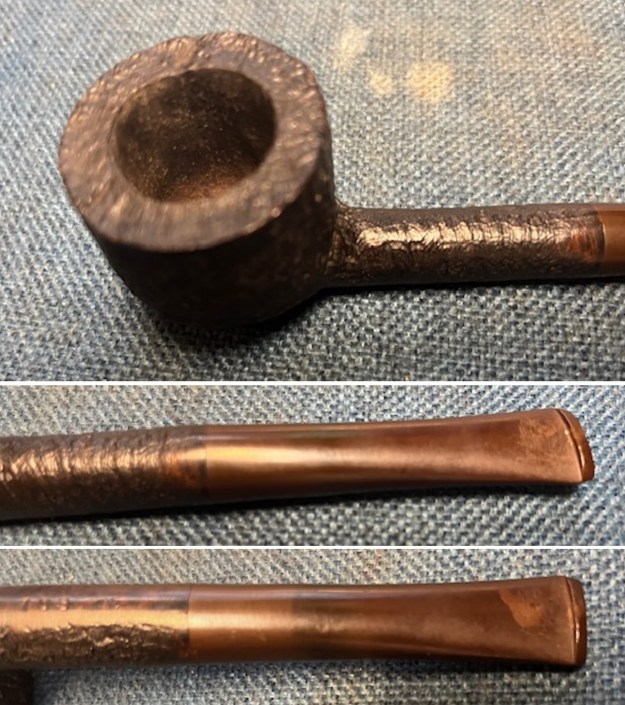
I have worked on several Churchill pipes over the years and have done research on the brand when I worked on them. Here is a link to one of them that I had worked on. Here is the link to the blog (https://rebornpipes.com/2013/09/08/churchills-bent-pot/). I am including that information below.I am fairly certain that the pipe came from Churchill’s Tobacco Shop in Norwich, England. I found the following information on the Pipes and Logos website http://pipephil.eu/logos/en/logo-c4.html On the site there is a small paragraph which I have copied as follows: “Churchill’s Tobacco shop is situated in St Andrew’s Street at the corner of Bridewell Alley in Norwich, England. The shop was next to a church and at the bottom of two hills, and that’s how it became “Churchill’s”. Former manager: John Elvin (retired on May, 31 2008). Current owner (2008): Keith Garrard.” I have included these pictures from that website as they show the stamping on both the shank and stem that is identical to the pipe that I have just refurbished.According to the Churchill’s website it is the last remaining specialist tobacconist in Norwich, originally standing at 32 St Andrews Street for over 23 years. http://www.churchillsofnorwich.com/index.php?_a=viewDoc&docId=1 The site also notifies the shop’s clients that Keith Garrard, who had a wealth of knowledge and was an avid pipe and cigar smoker himself, passed away on 23rd March 2012. His wife Coral continues to maintain the business in his honour.

I took photos of the pipe when I brought it to the worktable. I wanted to show the general condition of the pipe before I started my work on it. You can see the cake in the bowl and the lava on the rim top. The rim top appears to be good under the lava. The stem is dirty and heavily oxidized as noted and light tooth marks are on the top and underside ahead of the button. I took some close up photos of the rim top and the stem surface. I wanted to show the condition of both more closely. The rim top and the inner and outer edges of the bowl heavily cake in lava and you can see the marks on the inner bowl edge. I also took close up photos of the stem to show the oxidation and the light tooth marks on the stem surface. I took a photo of the stamping on the left side of the shank and it is clear and readable. It is stamped as noted above. I removed the stem for the shank and took a photo of the bowl and stem to give a picture of what it looked like. Now it is time to clean up the pipe. I reamed the bowl with a PipNet pipe reamer and the second cutting head. It cleaned up most of the cake. I used a Savinelli Fitsall Pipe Knife and cleaned up the remaining cake leaving bare briar. I sanded the bowl walls with 220 grip sandpaper wrapped around a piece of dowel. I smoothed out the bowl walls and they looked very good. There was no heat damage or checking on the walls. I scrubbed the exterior of the bowl and shank with a tooth brush and undiluted Murphy’s Oil Soap. It works exceptionally well to remove unwanted oils from the briar and also the grime on the rim and the bowl sides. I rinsed it in warm water while scrubbing with the tooth brush. The pipe looks very good at this point. The rim top is clean enough to know the condition it is in and what I need to do to deal with it. There are scratches and nicks on the rim top and they are very visible now that the lava has been removed. I scrubbed out the shank and the stem with pipe cleaners, cotton swabs and alcohol.
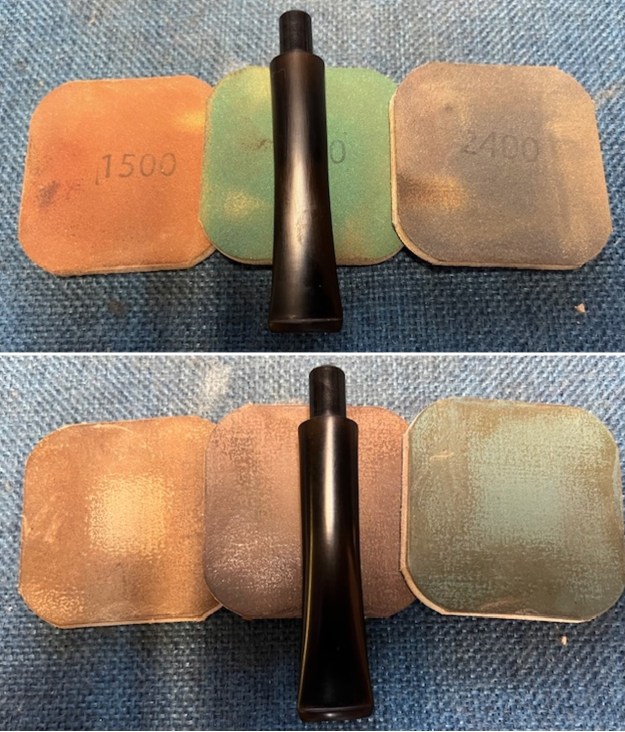
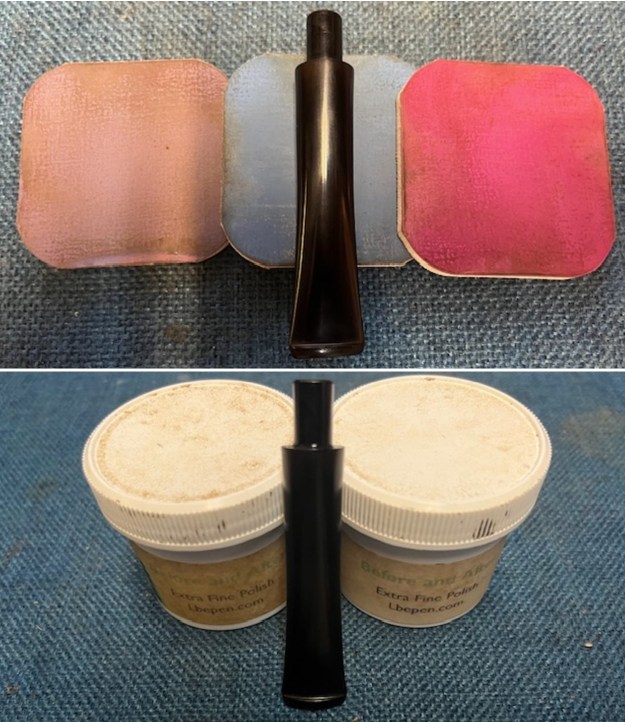
I gently topped the bowl to remove the damage on the rim top and to minimize it on the rear edge where the most damage was. I used a topping board and 220 grit sandpaper.There was some damage and wear on the front outer edge of the bowl. Built it up with CA glue and briar dust to fill in the damage. I smoothed out the damage with 220 grit sandpaper and reshaped it to follow the flow of the bowl. I sanded it further with 320 grit sandpaper to smooth out the repair. It really started to look very good.I touched up the stain on the rim top and on the front of the bowl with a Walnut stain pen. It is a little streaky at this point. It will work better when I finish the sanding and polishing of the rim and bowl.I sanded the bowl and rim top to clean up the damage and repairs to the edge and start the polishing of the bowl. I used 320-3500 grit sanding pads. I wiped the bowl down with a damp cloth after each pad. It really began to take on a shine. I polished the briar with micromesh sanding pads – dry sanding with 1500-12000 grit pads. I wiped it down after each sanding pad with a damp cloth to remove the sanding debris on the surface. I rubbed the bowl down with Before & After Restoration Balm. I worked it into the surface of the briar with my fingertips to clean, enliven and protect it. I let the balm sit for a little while and then buffed with a cotton cloth and shoe brush to raise the shine. I set the bowl aside and turned to address the stem issues. I scrubbed the stem oxidation with Soft Scrub and cotton pads. I was able to remove the majority of the oxidation. Then, I sanded it with a folded piece of 220 grit sandpaper. It looked much better at this point. To remove the remnants of oxidation from the vulcanite I sanded it with 320-3500 grit sanding pads. I wiped it down after each sanding pad with a damp cloth. By the final 3500 grit sanding pad the rim top had a shine.The stem was in good condition so I polished the vulcanite with micromesh sanding pads – 1500-12000 grit pads. I wiped it down with Obsidian Oil after each sanding pad. I used Before & After Pipe Polish – both Fine and Extra Fine to further polish the stem. I gave it a final coat of Obsidian Oil and set it aside to dry. This Churchill 999 Imported Briar Pot cleaned up really well and looks very good. The Before & After Restoration Balm brought the colours and grain out in the smooth finish on the pipe. It works well with the polished vulcanite taper stem. I put the stem back on the bowl and carefully buffed the pipe with Blue Diamond on the buffing wheel using a light touch on the briar. I gave the bowl and the stem multiple coats of carnauba wax on the buffing wheel. I followed that by buffing the entire pipe with a clean buffing pad. I hand buffed the pipe with a microfiber cloth to deepen the shine. The finished Churchill 999 Pot fits nicely in the hand and I think it will feel great as it heats up with a good tobacco. Give the finished pipe a look in the photos below. The dimensions of the pipe are Length: 5 ¼ inches, Height: 1 ½ inches, Outside diameter of the bowl: 1 ¼ inches, Chamber diameter: 7/8 of an inch. The weight of the pipe is 1.13 ounces/32 grams. I know Robert is going to enjoy this last pipe of the three once I return them to him. Thanks for reading this blog and my reflections on the pipe while I worked on it.
Repairing and restoring a Kaywoodie Campus Apple


Blog by Steve Laug

Last week I received a text from Robert about restoring three pipes his brother had found in Eastern New York. There were two Kaywoodies and a Churchill. The Kaywoodies included a small apple stamped Campus and an octagonal pipe stamped Kaywoodie Standard. The Churchill 999 Pot shaped pipe. He sent along two photos of the pipes. You can see the condition of the three pipes. They are dirty and worn. The last pipe in the photo, the Campus has what appears to be a broken shank and a potential repair. It looks to be poorly done. Robert said that he was fairly certain that the stem was glued onto the shank with the repair. On Saturday he brought the pipes by for me to look at. The Churchill 999 Pot and the Kaywoodie Standard Oxagonal billiard were dirty but were in good repair. The one that got my attention was the little Campus with the cracked shank. I looked it over carefully and Robert was correct it appeared that the stem had been glued in the shank and it was overclocked. The repair was odd. It appeared that half of the shank that fit the depth of the metal threaded insert had cracked completely off. It had been repaired with what appeared to be white wood glue. It did not fit well and there were gaps on the top and bottom side as shown in the photos. There was also a moderated cake in the bowl with tobacco debris. There was some lava on the rim top that was quite thick but the inner and outer edge looked very good. The finish was dirty but otherwise showed some nice grain underneath. The stem was overclocked and dirty with light tooth chatter on both sides ahead of the button. I have seen other Kaywoodie Campus pipes but other than a faint memory was not clear where they fit in the line and when they were made. I turned to Pipephil’s site to refresh my memory and see what he had on the brand (http://www.pipephil.eu/logos/en/logo-kaywoodie-1.html). I did a screen capture of the pertinent section and have included the side bar information below the photo.The Campus Kaywoodie line was introduced in 1957 and these pipes do not bear the 2 digit shape code. Campus and Colt series are Kaywoodies smallest pipes (to be smoked between two classes). Although the Campus pipes have a Synchro Stem like screw-in attachment, the stinger itself is not of the Drinkless type (see enlarged view #2 – http://www.pipephil.eu/logos/en/lightbox/images/next.png)

I learned that the line was introduced in 1957 and did not have any shape numbers. The pipes were designed on the small side to give a quick smoke between classes on campus. The tenon/stinger was not a typical Drinkless type but the fit to the stem was the same threaded type of attachment. From that I knew that I was working on an older pipe.
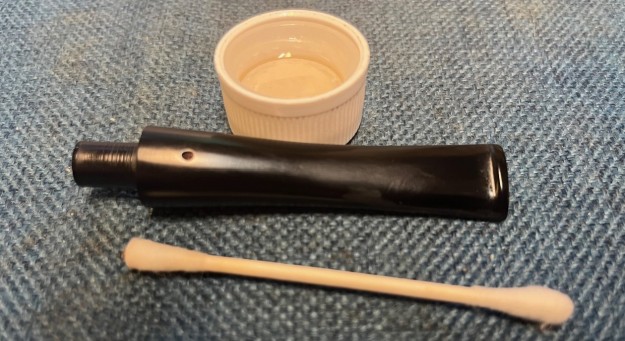
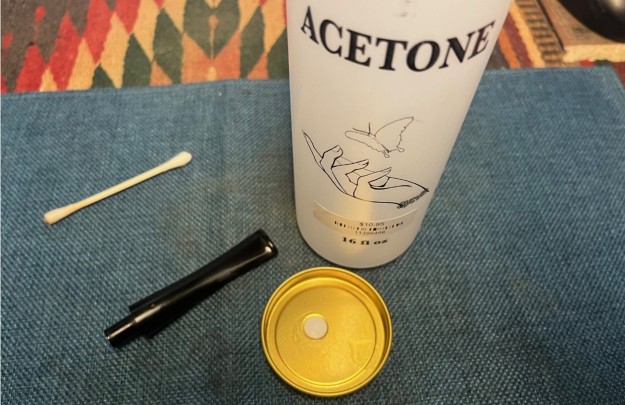
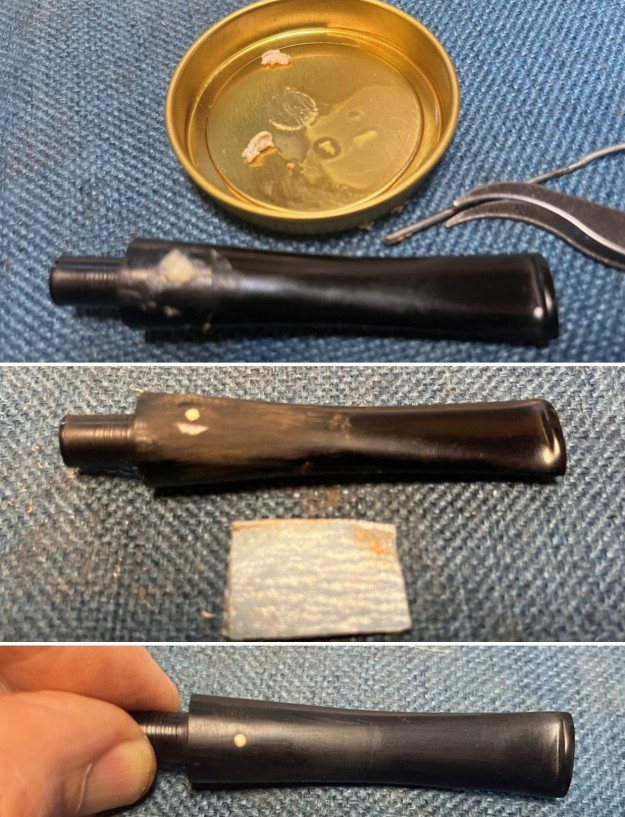
Now it was time to work on the pipe. I started my work on the pipe by seeing if I could loosen the stem from the shank. I used a cotton swab to push acetone into the cracked area and the metal fitment on the shank. I repeated the process then soaked a cotton pad and wrapped it around the shank connection. I let it sit for 30 minutes while I worked on another pipe.I once again tried to turn the stem on the shank and it easily came free of the shank. The threads were very dirty but I could see no glue visible on the threads. I took some pictures of the shank repair at this point in the process. You can see how the white glue that filled in the cracks around the shank had begun to dissolve showing the damage clearly in the shank fit.I soaked the crack with more acetone using a q-tip. It did not take much for the broken piece to come free of the shank. I took a photo of the pipe at this point. You can see the cracked portion still glued to the metal insert in the shank. You can also see the grime in the threads of the tenon and in the ridges on the insert. It is dirty.I soaked the broken piece of briar in a small bowl of acetone to loosen the briar from the metal shank insert. It did not take long for the glue to soften on the shank piece and it floated free of the metal insert. I cleaned up the broken pieces of the briar and glued it in place on the shank. I pressed the parts together until the glue set. Once the repair cured I cleaned up the shank insert and painted the surface with wood glue then pressed it into the shank end. I let it sit until the glue hardened.I filled in the divots and cracked areas in the shank end with clear CA glue and briar dust to build up a smooth surface on the shank end. I sanded the repairs with 220 grit sandpaper to smooth out the surface.I used a rasp to reduce the size of the metal insert edge and the high spots on the briar of the shank in preparation for fitting it with a repair band to bind everything together. I sanded out the file marks on the briar. Once I had it smooth enough for fitting the band I fit the band on the shank end and heated it with the flame of a lighter. I pressed it against a hard surface to push it fully onto the shank end. I took photos of the newly fitted band on the shank and it looked very good. Now it is time to clean up the pipe. I reamed the bowl with a Savinelli Fitsall Pipe Knife and took the cake back to bare briar. I sanded the bowl walls with 220 grip sandpaper wrapped around a piece of dowel. I smoothed them out and the bowl walls looked very good. There was no heat damage or checking on the walls.I scrubbed out the shank with pipe cleaners, cotton swabs and alcohol. I had already done this to some degree when I had the pipe in parts earlier but I wanted to clean it up further. I also swabbed out the inside of the bowl with a folded pipe cleaner to remove the dust. I cleaned out the inside of the stem with pipe cleaners and alcohol.Quite awhile ago now, Mark Hoover of Before & After Restoration Balm fame sent me a sample of his briar cleaner. When it arrived it had leaked all over the package so there was very little left in the bottle. It was a mess to clean up so I just set it aside where it has been sitting for several years now. I thought I might as well scrub the briar with it. I scrubbed it down with a tooth brush and rinsed it off with some warm running water. I dried it off with a soft cloth. It looked much better. I touched up the stain on the rim top and around the end of the newly place band with a Cherry stain pen.I polished the briar with micromesh sanding pads – dry sanding with 1500-12000 grit pads. I wiped it down after each sanding pad with a damp cloth to remove the sanding debris on the surface. I rubbed the bowl down with Before & After Restoration Balm. I worked it into the surface of the briar with my fingertips to clean, enliven and protect it. I let the balm sit for a little while and then buffed with a cotton cloth and shoe brush to raise the shine. I set the bowl aside and turned to address the stem issues. To address the scratches and marks in the surface of the vulcanite as well as some residual oxidation. I sanded it with 320-3500 grit sanding pads. I wiped it down after each sanding pad with a damp cloth. By the final 3500 grit sanding pad the rim top had a shine.The stem was in good condition to I polished the vulcanite with micromesh sanding pads – 1500-12000 grit pads. I wiped it down with Obsidian Oil after each sanding pad. I used Before & After Pipe Polish – both Fine and Extra Fine to further polish the stem. This Kaywoodie Campus Saddle Stem Apple cleaned up really well and looks very good. The Before & After Restoration Balm brought the colours and grain out in the finish on the pipe. It works well with the polished vulcanite saddle stem. I put the stem back on the bowl and carefully buffed the pipe with Blue Diamond on the buffing wheel using a light touch on the briar. I gave the bowl and the stem multiple coats of carnauba wax on the buffing wheel. I followed that by buffing the entire pipe with a clean buffing pad. I hand buffed the pipe with a microfiber cloth to deepen the shine. The finished Kaywoodie Campus Saddle Stem Apple fits nicely in the hand and I think it will feel great as it heats up with a good tobacco. Give the finished pipe a look in the photos below. The dimensions of the pipe are Length: 5 ½ inches, Height: 1 ¼ inches, Outside diameter of the bowl: 1 inch, Chamber diameter: ¾ of an inch. The weight of the pipe is .81 ounces/23 grams. I know Robert is going to enjoy this pipe once I return it to him with the other pipes he dropped off. Thanks for reading this blog and my reflections on the pipe while I worked on it. m
Cleaning an El-Is Ferit Orersoy Black Meerschaum Rhodesian with a Yellow Acrylic Stem


Blog by Steve Laug

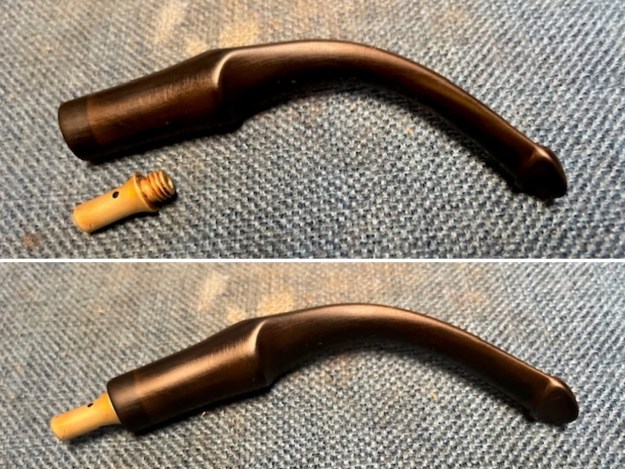
We purchased two of these El-Is Ferit Orersoy Black Meerschaum pipes from a seller in Vilas, North Carolina, USA on 12/01/23. The 2 pipes were both straight Rhodesian style pipes – one with black stem and one with yellow stem. One was smoked and one was clean and unsmoked. Both were boxed in their original cardboard box that is stamped on the top and reads El-Is [over] Ferit Orersoy [over] 1, Kordon 1382 So – 2/8 [over] Izmir. The boxes are light weight and include the original cotton piece the pipe sat on as well as a leaflet on the care of the black meerschaum. The unsmoked pipe will be looked at in the next blog but this one was smoked. It had a light cake in the bowl and some lava overflow on the rim top. The finish was a little spotty where the fingers held it. It would lessen when I cleaned and waxed it. The shank was very dirty as was the bone tenon that held the stem in place. The tenon was threaded into the shank of the pipe first and then the stem screwed onto it to allow for proper alignment. The tenon was lightly stained with tobacco as was the airway in the stem. There was some blackening at the airway’s entrance to the button slot. The pipe smelled dirty and would need to be cleaned up. When I examined it, I noticed a light build up of lava on the rim top. Because of the colour of the meer it is more noticeable to touch than sight. It is a dullness to site. When I was touching it I also felt the inner edge and noticed there was a light cake in the bowl and some tobacco debris. The stem had some darkening in the button area and in the first inch of the airway. There were light tooth marks and chatter on the stem surface. But I knew I would need to give this pipe a good cleaning. I removed the stem to give a sense of the parts and to showing the staining on the bone tenon.I thought I would include the information from the leaflet that is in each box. It is helpful information on the brand and the meerschaum.  I have left out the address on the leaflet as I have included it above. I quote:

THIS PIPE IS MADE FROM PURE BLOCK MEERSCHAUM

Meerschaum is a stone or block mostly found in the Asia Minor. It is imbedded in red clay and usually found 40 to 150 feet under the surface of the ground. Meerschaum is not a clay or mineral but is organic in origin, being fossilized remains of minute sea animals like coral. These little animals died many millions of years ago and the remains of their shells were compressed by earthquakes, washed over repeatedly by the ocean and by floods which deposited earth and rock on top of them, and were moved and shifted by floods and successive glacial movements.

Today, the meerschaum is found only in Asia Minor in sufficient quantity and of quality suitable for commercial use. Meerschaum is very light in weight and is one of the most porous substances found in nature. Consequently, it absorbs nicotine and tobacco is thus filtered in the meerschaum pipe. During the millions of years the outside part of the meerschaum stones or blocks has deteriorated so far that only the kernel of sound meerschaum is left in the middle. The decompose outer parts are 10 to 20 times as much as the sound kernel which is used for pipes.

HAND CARVED

Each pipe is deftly cut by hand and has its own character, and colours gradually as it is smoked, taking on a rich brown colour with the years. The meerschaum is impregnated with wax which helps to give it the beautiful velvety finish for which meerschaum pipes are famous. Each pipe has its own individual character given to it by the artisan who made it.

HOW TO BREAK IN YOUR PIPE

Meerschaum pipes should be broken in much in the same manner as a briar pipe. For the first few smoked, the pipe should be filled only half full and the tobacco packed lightly. This way the outside of the bowl will colour gradually from the bottom up taking on an even, rich brown tone with the years of smoking pleasure. The smoker is cautioned not to touch the warm bowl with his fingers as the moisture left there will affect the eventual colouring.

BLACK MEERSCHAUM PIPES

Not all of us may like a white pipe or some may have preference for the colour of black, so quite rightly they may like to have a black meerschaum pipe. El-Is proudly present black meerschaum pipes. An El-Is specialty, in order to meet its customers demands. These pipes are not painted but given their colour by way of pyrography and then polished. This way, the pipe does not lose its characteristics and retain its colour even after extended usage.
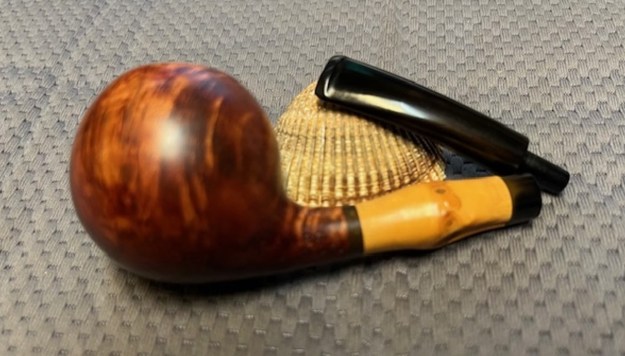
Now it was time to clean up the pipe itself. I carefully scraped the cake out of the bowl with a Savinelli Fitsall Pipe Knife. I took all the cake out then sanded the bowl walls with 220 grit sandpaper wrapped around a piece of dowel. Once I finished the bowl was clean and all cake was a thing of history.I cleaned out the dirty internals in the airway in the shank, the mortise and the airway in the stem with pipe cleaners, cotton swabs and 99% isopropyl alcohol. It took a few to get it cleaned but eventually the cleaners came out clean. I also wiped down the top of the rim with a cotton pad dampened with alcohol and was able to remove the lava coat.I lightly polished the rim top with micromesh sanding pads – dry sanding with 1500-1200 grit pads and lightly wiping the rim top down with a damp cloth after each pad. It cleaned up very well. I rubbed down the surface of the meerschaum with Before & After Restoration balm. I worked it into the surface of the meer to clean, polish and preserve the pipe. It looks good and the spottiness of the black finish looked much better. I applied several coats of Clapham’s Beeswax/Carnauba mix to the surface of the meerschaum. I set it aside to dry between coats and gave it a brisk buff with a soft cloth after each one dried. I set the bowl aside and turned my attention to the stem. There was a deep tooth divot on the underside of the stem ahead of the button. I filled it in with clear CA glue. Once it cured I sanded it smooth with 220 grit sandpaper.I polished the acrylic stem with micromesh sanding pads – dry sanding with 1500-12000 grit pads. I wiped the stem down after each pad with some Obsidian Oil. I finished polishing it with some Before & After Pipe Stem polish – both Fine and Extra Fine. I wiped the stem down with a final coat of Obsidian Oil. The stem took on a rich glow. This nice looking El–Is Black Meerschaum Bent Rhodesian with a yellow acrylic bent taper stem is a great looking pipe now that it has been restored. The black meerschaum is clean and the light weight bowl has a rich glow to it. I put the bone tenon in the shank and then attached the stem to align correctly. If the tenon is in the stem first it does not align with the shank correctly but in the shank it aligns correctly. I put the stem back on the bowl and carefully/lightly buffed the pipe with clean buffing wheel using a light touch on the meer. I gave the bowl and the stem multiple coats of Claphams Beeswax mixed with Carnauba and hand buffed the pipe with a microfiber cloth to deepen the shine. The finished El-Is Black Meerschaum Bent Rhodesian really is a beauty and feels great in the hand and looks very good. Give the finished pipe a look in the photos below. The dimensions of the pipe are Length: 5 ½ inches, Height: 1 ¾ inches, Outside diameter of the bowl: 1 ½ inches, Chamber diameter: ¾ of an inch. The weight of the pipe is 33 grams/21.16 ounces. This beautiful pipe will soon be on the rebornpipes store in the Ceramic & Meerschaum Pipes Section. It should make a great smoker for the next trustee. Thanks for reading this blog and my reflections on the pipe while I worked on it. It was a fun one to work on.

Restoring a Huge Cellini Original Pickaxe Freehand


Blog by Steve Laug

The next pipe on the table is a Freehand with some rustication at the shank/bowl joint and plateau on the rim top.  It has a well shaped thick vulcanite taper stem. We purchased it from an estate sale in Idaho Falls, Idaho, USA on 09/16/2023. The pipe is stamped on the left side of the shank and reads Cellini [over] Original. There is no other stamping on the bowl or shank. There was a thick cake in the bowl and some darkening and lava on the inner edge of the bowl and the first part of the plateau rim top. It was hard to know for certain the condition of the inner edge though it appeared to be in good condition. There were oils and grime ground into the bowl sides gives the finish a flat look though there is some great grain. The shank is thick and has a slight curve to it giving the pipe the appearance of a pick axe. The shape of the taper stem also matches the curves of the bowl and shank. It is a dirty stem with calcification, oxidation, grime and grit on the surface. There were also light tooth marks on both the top and underside of the stem just ahead of the button. Jeff took photos of the pipe before he started his clean up work. I have included them below.He took photos of the pipe’s bowl and rim top to show the cake in the bowl, the darkening on the inner edge and the lava coat overflowing onto the top. There are some oil stains on the rim top in various spots among the plateau finish. It is another dirty pipe. He also took photos to capture the oxidation, calcification and the light tooth marks on the top and underside of the stem near the button. He took photos of the sides and heel of the bowl to show the grain around the bowl and the amount of grime ground into the surface of the briar. He took a photo of the stamping on the left side of the shank. It is clear and quite readable. I turned to Pipephil’s site (http://pipephil.eu/logos/en/logo-c3.html) for a summary of the information he had gathered on the brand and perhaps some photos. I have included both the information from the sidebar as well as a screen capture of some photos. I quote:

The shop in Chicago, Illinois, USA (opening: April 27, 1929)  was exclusively devoted to pipes. These generally were imported and Brebbia was the most important supplier. The shop closed down on February 28, 1991.From there I turned to Pipedia where as usual there was a great history of the brand to read about (https://pipedia.org/wiki/Cellini). I quote several pertinent paragraphs to whet your interested. Make sure to go to the site and read it in its entirety.

Cellini, or better, the Cellini Pipe Shop as it became known for its brand “Cellini” from its company name, Victory Pipe Craftsmen, was located in the heart of downtown Chicago, Illinois: 170 N. Franklin St, Chicago IL, 60606. Ideally for those who liked short ways, one of Cellini’s locations was across the street from Zimmerman’s Liquor Store. The company got it’s start in 1927 aided by a friendship between Arthur (Art) Silber and Tracy Mincer(??) who went for Custom-Bilt fame in 1934.

Art Silber (also known as the “Art” of pipe smoking) made Cellini a full service Pipe and Tobacco Shop offering tobacco blends and a complete line of accessories as well as an extensive and varied line of pipes ranging from Indian Peace Pipes to porcelain, cherrywoods, meerschaums and hefty sculptured freehands. The Catalogues were nearly 100 pages long – including some cigars, but absolutely NO cigarettes! – primarily pipes and pipe-related products! Cellini Pipes have Good Collectible value of their own commanding good prices on auctions today, developing somewhat of a Cult Following among Collectors.

Art was joined by his wife Ruth, daughter Bobbe (short for Barbara, also an established artist) and his 2 sons Stuart (who created the Cigar Pipe, crafted various Cellini pipes and freehands, became a cigar aficionado, was an antique and Meerschaum repair expert and more),and Elliot (who also worked as a physicist and an organic chemist).

Victory Pipe Craftsmen became the largest pipe repair shop in the country (probably in the world), repairing up to 2000 pipes per week for some 1200 pipe shops in the U.S., from replacing and customizing stems (mouthpieces) to Meerschaum and antique repair. Art Silber innovated many developments in the pipe industry. He invented a keyless 4-jaw chuck for nearly instant mounting of almost every shape mouthpiece. The result was finely crafted, custom-fitted complete stem replacement (including sanding with 3 grades of sandpaper, proprietary custom staining to match, bending if needed, and polishing on 2 different polishing wheels) in 8 1/2 minutes!! Cellini was famous for while-u-wait pipe repairs, which of course allowed the customer to browse the thousands of Cellini pipes on display…

…Although Cellini offered a very small variety of brands by other makers, their primary business was selling their own pipes made in their Chicago factory. Art Silber (also known as the “Art of pipe smoking”), who made pipes himself once upon a time, employed his own pipemakers (with “Primo Polidori”, former factory supervisor of the Chicago Dr. Grabow/Linkman factory, being the most recognizable name). The company was Victory Pipe Craftsmen, (Victory Pipe Craftsmen Inc. was the actual corporate name for “Cellini of Chicago”) The most experienced pipemaker there was Primo Polidori

After the death of it’s founder Art Silber, The Cellini Pipe Shop survived until the late 1980’s, run by Art’s oldest son Stuart, Bobbe and Elliot, ending a significant chapter in American pipemaking history. Art Silber’s sons Stuart (sometimes called “The Legend”) and Elliot are still liquidating the residue of the shop’s inventory. The charismatic Bobbe and their mother Ruth Silber have since passed on. All those interested should be aware that some of the Cellini Pipes seen on today’s online auctions may be flawed or rejected pipes that were not offered for sale while the company was in operation. Be sure to ask the seller to distinguish their pipes. Cellini specialized in natural finish, no lacquer, no varnish, no fills or wood putty. If flaws were found, the shape was changed, carving was done, or the pieces were used for repair of broken pipes…

From that information I knew that the pipe that I was working on was carved by one of the in house carvers at Cellini Pipe Shop in Chicago. I also knew that it was made before their closing in 1991. I had no idea how old it was as the shop started in 1929. Now it was time to work on the pipe on my end.

When I received it from Jeff this past week it did not look like the same pipe. It was clean and the finish had life. He reamed it with a PipNet pipe reamer and got rid of the cake. He cleaned up the reaming with a Savinelli Fitsall Pipe Knife so that we could see the walls of the bowl and assess for damage. It was in good condition. He cleaned the internals of the shank and stem with cotton swabs, pipe cleaners and alcohol. He scrubbed the exterior with undiluted Murphy’s Oil Soap and a tooth brush. He rinsed the pipe under warm water. He dried it off with a cloth and then let it air dry. The stem was scrubbed with Soft Scrub and soaked in Briarville’s Stem Deoxidizer. It came out looking very good. The finish on the bowl and the rim top cleaned up nicely. I took pictures of the pipe to show how it looked when I unpacked it.  I took some photos of the rim top and stem to show the condition of them both when the pipe arrived. Overall it looked good. There is some darkening and damage to the inner edge of the bowl. The stem had some light tooth chatter and marks ahead of the button and on the button surface on both sides.I took a photo of the stamping on the left side of the shank. It is readable and in great condition. I removed the stem from the shank and took a photo of the pipe to show the look of the pipe.I started my work on the pipe by addressing the stain spots and darkening on the rim top. I decided to stain the rim top with a black stain pen. I worked the stain into the valleys of the plateau as much as possible. Once it dried I would sand off the stain on the high spots giving a real sense of contrast.I polished the briar on the bowl as well as the high spots on the plateau top with the 320-3500 grit sanding pads. I worked over the rim top and bowl with each pad and then wiped it down with a damp cloth. The pipe really began to take on a shine and the rim top began to match the rest of the briar. I polished the bowl with micromesh sanding pads – dry sanding with 1500-12000 grit pads. I wiped the briar down after each pad with a damp cloth. The bowl is starting to look very good. I worked some Before & After Restoration Balm into the surface of the briar with my fingertips to clean, enliven and protect it. I let the balm sit for a little while and then buffed with a cotton cloth to raise the shine. The photos show the bowl at this point in the restoration process. I “painted” the stem surface with the flame of a lighter to lift the tooth marks. I was able to lift the majority of the marks but there was a deep one that remained on the to on the right side of the bit ahead of the button and on the underside. I filled them in with clear CA glue and set it aside to cure. I flattened the repairs with a small needle file and then sanded the stem with 220 grit sandpaper to blend them into the surface of the stem. I sanded it with 320-3500 grit sanding pads. I wiped it down after each sanding pad with a damp cloth. By the final 3500 grit sanding pad the rim top had a shine.I polished the stem with micromesh sanding pads – wet sanding with 1500-12000 grit sanding pads. I wiped it down after each sanding pad with some Obsidian Oil. I finished polishing it with Before & After Pipe Stem Polish – both Fine and Extra Fine and buffed it off with a cotton cloth. This is a large hand made Cellini Original Freehand Pickaxe with a plateau rim top made by the Cellini Pipe Company with a bent vulcanite stem. It has a great look and feel. The shape fits well in the hand with the curve of the bowl and shank junction a perfect fit for the thumb around the bowl when held. I polished stem and the bowl with Blue Diamond polish on the buffing wheel. I gave the bowl and the stem multiple coats of carnauba wax. I buffed the pipe with a clean buffing pad to raise the shine. I hand buffed it with a microfiber cloth to deepen the shine. The pipe polished up pretty nicely. The rich combination of browns in the smooth finish and the black and brown of the plateau rim top and rusticated patches on the shank bowl union took on life with the buffing. The rich colour of the briar works well with the polished hard rubber stem. I like the grain and finished look of this Cellini Bent Plateau Freehand. Have a look at it with the photos below. The shape, finish and flow of the pipe and stem are very well done. The dimensions are Length: 7 ½ inches, Height: 3 ½ inches, Outside diameter of the bowl: 2 ¼ wide, Chamber diameter: 1 inch. The weight of the pipe is 86 grams/ 3.03 ounces. This Danish style Freehand is a real beauty. Thanks for walking through the restoration with me as I worked over another beautiful pipe. This one will be going on the rebornpipes store in the American Pipe Making Section shortly if you would like to add it to your collection. Thanks for your time.

Repairing a Broken Tenon and Cracked shank on a Rusticated Kriswill Bernadotte Design 1210


Blog by Steve Laug

I decided to put my hand to something different this afternoon. I have been working on a lot of pipes that Jeff and I have purchased. The one on the table this after was a pipe that I received for repair from a fellow in Toronto. We had been chatting via email and phone about a nice Kriswill Handmade Bernadotte that he had purchased. When it arrived in Toronto the stem was stuck in the shank and in trying to remove it he had managed to snap the tenon in the shank. He wanted me to repair the tenon for him so I told him to ship it my way. He did a thorough cleaning of the bowl, shank and stem so it was in good condition. It arrived this week and I brought it to the work table and looked it over and put it back in the box. Today, Sunday afternoon I was ready to tackle the task. I took some photos of the bowl and the stem to give a sense my first impression as I looked at quickly.

Here are my thoughts as I turned it over in my hands. The pipe has a conical shaped bowl that is pretty clean. There was little or no cake on the walls. The rim top was rusticated and quite clean. There was an inward bevel on the rim edge that was also clean and excellent condition. The shank was triangular with a smooth band on the shank end. There was a smooth panel on the underside of the shank that was stamped Kriswill [over] Handmade [over] in Denmark. That is followed by Bernadotte in script [over] Design in block letters. There is the shape number 1210 stamped on the end of the shank right along the edge. The tenon was snapped evenly in the shank leaving just a little bit of debris on the stem end. The tenon was stuck and I would need to do the freezer trick to remove it. The stem was lightly oxidized and there was debris and sticky marks from price tags on the stem surface. There were light tooth marks on both sides just ahead of the button. It really is a beautiful little pipe. I took a photo of the stamping on the smooth panel on the underside of the shank. It is clear and really readable as noted above.To start my work on the pipe I decided to pull the broken tenon from the shank. I used a screw and tuned it into the airway and it was very tight. I put the bowl in the freezer for 30 minutes and when I took it out the screw easily removed the broken tenon from the shank. I took photos of the process. Before I went any further in the process I decided to do a bit of background work on the pipe. I turned to Pipephil’s site first (http://www.pipephil.eu/logos/en/logo-k3.html). I did a screen capture of the section on the Kriswill Bernadotte Handmade in Denmark pipe. I have included it below and the pertinent sidebar information below that.Kriswill is a brand of Kriswork Briar Trading, in Kolding (Denmark) established about 1955.

Some of Kriswill pipes were designed by Sigvard Bernadotte, Swedish prince and brother to the late Queen Ingrid of Denmark. He collaborated with his Danish partner Acton Bjørn.

At the end of the quote above there was a link to the photo below. It is a series of portraits of Sigvard Bernadotte the designer of the pipe that I am working on.

I turned to Pipedia (https://pipedia.org/wiki/Kriswill) for more detailed information. There is a great writeup there on the history of the brand that is fascinating. I have quoted the pertinent section below. I have also highlighted the connection to Sigvard Bernadotte in red in the last paragraph. He is one who designed his own series of pipes for Kriswill.

Kriswill began immediately after World War II. Karl Robert Kris, an engineer for the shipping company AP Møller at the time, was in port (undoubtedly in the Mediterranean) when he encountered a shipment of briar. The briar blocks awakened his curiosity and he took some home. About this time the the shipping trade become difficult due to the war, causing Kris to consider other business opportunities. In 1947, Kris (then 47 years old) established himself as a pipe maker in his hometown of Kolding.

Kriss started his pipe making operation in a house located at Haderslevvej 115 in Kolding, and was soon joined by 3-4 employees. The pipes were sold under the name Rocky and supplied the domestic market. Within 6 months the company had grown, more employees hired, and their sales expanded to markets abroad.

Due to increasing production and marketing, Karl Robert Kris decided in the mid-1950s to expand. An entirely new factory was built at Sdr. Ring road on the outskirts of Kolding. At that time the pipes were branded Kriswell. That name did not last long, however, as Stanwell believed that name was too close to theirs. The compromise was to change the name to Kriswill. Kriswill soon grew to become a serious competitor to Stanwell, especially in the export markets. The Kriswill factory logo, stamped on the stem, became the stylized compass rose – as a reference to the manufacturer’s maritime background.

Kriswill pipes excelled in design and craftsmanship. Karl Robert Kris was not afraid of new designs and had a good eye on the US market, where larger and more innovative designs were increasingly popular. Craftsmanship was given top priority throughout Kriswill’s production. A local designer / architect had designed the first models. Later, the famous architects Sigvard Bernadotte (Swedish prince and brother of Queen Ingrid) and Acton Bjørn designed their own series, which were known as Bernadotte designed.

There was also a catalogue page on the Bernadotte Design line that shows the various pipes in the line. The second pipe down is the Hand carved 1210 which was made in black and in brown.I repaired chip and crack in the underside of the triangle shape stem with black CA glue. I wanted to do this prior to drilling the airway and opening it up for the new tenon end. I set the stem aside to let the repair cure.While I waited for the stem repair to cure I went through my tenons and found one that was very close in diameter to the shank. I reduced the diameter of the portion that would go into the stem with a Dremel and sanding drum. I repeated the process on the end of the tenon that would go in the shank. It was ready for the fit once the repair on the stem had cured and I was able to drill out the airway.I was a bit nervous drilling out the thin walled stem with the repair on the underside. I envisioned it splitting and ruining everything. I used a thin pen knife to begin the process of opening up the airway. I opened it to be large enough to take the first of the drill bits. I put the drill bit in my cordless drill and slowly turned it into the airway. I opened it up with several drill bit until the new tenon end fit in the stem. I cleaned up the airway with a set of needle files to make the airway the same diameter the depth of the drill. The fit in the stem was perfect. I painted the end of the tenon with black CA glue and pushed it in place in the airway. I set it aside to let the glue cure.I set the stem aside to allow the glue to cure. I wanted the tenon to be set in the stem so that once I put it in the shank it would not come out of the stem. I turned my attention to the bowl and shank. The shank had two small hairline cracks in in on the right side of the triangle. It would need to be glued and banded to accomplish a tight repair. I shaped a round brass band into a triangle and sanded it against a sanding board to thin the depth of the repair band. I fitted on the shank and put the stem in place to get a sense of what it would look like. I sent a few picks to the trustee in Toronto to show him what was going on. He approved of the repair.
I glued the band on the shank with some all purpose white glue. I painted the surface of the shank with the glue making sure to get into the cracks. I pressed the band on the shank and wiped off the excess glue with a damp cloth.I rubbed the briar down with Before & After Restoration Balm. I worked it into the briar with my fingertips and a horsehair shoe brush to work it into the nooks and crannies of the rusticated finish. The product works to clean, enliven and preserve the briar. I let it sit for 10 minutes then I buffed it with a cotton cloth to deepen the shine. The briar really comes alive with the balm. I set the bowl aside and turned to finish the stem. To address the scratches and marks in the surface of the vulcanite I sanded it with 320-3500 grit sanding pads. I wiped it down after each sanding pad with a damp cloth. By the final 3500 grit sanding pad the rim top had a shine.I polished the vulcanite with micromesh sanding pads – 1500-12000 grit pads. I wiped it down with Obsidian Oil after each sanding pad. I used Before & After Pipe Polish – both Fine and Extra Fine to further polish the stem. I always look forward to this part of the restoration when all the pieces are put back together. I put the Kriswill Bernadotte 1210 pipe back together and buffed it with Blue Diamond on the buffing wheel. I gave the bowl multiple coats of Conservator’s Wax and the stem multiple coats of carnauba wax. I hand buffed the pipe with a clean buffing pad to raise the shine. It is fun to see what the polished bowl looks like with the new brass band on the shank end. The combination of grain and the thin band add some elegance to the pipe when combined with the polished black vulcanite stem. This royalty designed Kriswill Bernadotte 1210 Skater is nice looking and feels great in my hand. The pipe is another light weight that could be clenched and smoked while doing other things as it is very well balanced. Have a look at it with the photos below. The dimensions are Length: 5 ¾ inches, Height: 2 inches, Outside diameter of the bowl: 1 ¼ inches, Chamber diameter: ¾ of an inch. The weight of the pipe is 1.06 ounces/30 grams. This one will be heading back to Toronto soon. I am looking forward to what the pipeman who sent it thinks of this restoration. Lots more to do in this lot! Thanks to each of you who are reading this blog. Remember we are not pipe owners; we are pipemen and women who hold our pipes in trust until they pass on into the trust of the next pipeman or woman.

Restoring one of Gene’s Favourite Pipes – A Savinelli Made Bings Favorite Italy


Blog by Steve Laug

In January Jeff found out about an estate sale in Pocatello, Idaho, USA. It turned out that the sale was for a fellow Jeff and I had purchased pipes from in the past, Gene. He had been the owner of Outwest Tobacco in Pocatello (long closed now) and I bought tobacco and other smoking items from him in the past. As I think about it now, it seems that I had known Gene for over 30 years Jeff and I had been to his home and enjoyed coffee and a few pipes together. I have no idea how many pipes we bought on those visits as well as to the antique shop of his daughter. I know that there were many pipes. When we heard that it was Gene’s personal collection that was for sale and that he had passed away we decided for Jeff to go to the house and have a look. He went on January 25, 2024 to scope it out as we had seen his personal collection of pipes and there were definitely some among those well smoked old warriors that would be great to pick up. Perhaps there would even be one that could join my own collection in memory of Gene.

Jeff went to the house and looked through the racks, pipe bags, tobacco both bulk and tinned as well as a variety of pipes. All the pipes were well smoked and needed serious cleaning. Another one of the pipes he picked up was this Savinelli Made Bings Favorite pipes with a poorly fit replacement black vulcanite taper stem. It was very dirty and was a reddish, brown coloured pipe when it started. The smooth finish around the bowl was dirty and had hand oils ground into the grooves. The bowl had a thick cake that overflowed in lava onto the rim edge and top of the bowl. The bottom of the bowl was flattened so the pipe could be set on a desktop. The stem was vulcanite that was very dirty and had the marks of a rubber Softee Bit on the end. It had become discoloured and there was a line where the debris from smoking had accumulated along the edge and under the bit protector. The good news was that there were some deep tooth marks and chatter under the calcification and grime. The rest of the stem was dirty and had lost the characteristic shine. The pipe was stamped on the left side of the shank and read Bings Favorite. On the right side of the shank it is stamped Italy. On the underside of the shank it was stamped Savinelli Product. Jeff took photos of the pipe so I could have a sense of what it looked like before he started his work on it.Jeff took photos of the stem surfaces and the bowl and rim to give a sense of condition of the pipe. You can see the thick cake in bowl and the spots of lava overflow on the edges and rim top of the bowl. It is had to know if there is any damage as the cake and lava is quite thick. The stem surface is very dirty and you can see the area on the end of the stem where the Softee Bit had protected it from chewing though there were some previous deep tooth marks covered by the dirt and debris. I am pretty sure the stem was a replacement and it did not fit the diameter of the shank properly. It was larger than the shank and would need to be fitted. He also took photos of the sides of the bowl and the heel to show the interesting grain that went around the bowl. The grain is beautiful and you can see the oils and debris in the surface of the briar.  He took photos of the stamping on the sides of the shank. It is clear and readable on all the shank sides as noted above. I turned to Pipephil’s site (http://www.pipephil.eu/logos/en/logo-savinelli1.html) to get a sense of the Bing’s Favorite. It is a Savinelli Product and it is listed in the Savinelli pipe section. I did a screen capture of the section and included it below. The stamping on the stem confirms that the stem I have is a replacement.I turned to Pipedia (https://pipedia.org/wiki/Savinelli) and after reading through the history I focused on a section entitled Editions in the “Favorite” line. I have included that section below.

We are compiling a sub-list of known editions in the “Favorite” line of Savanelli pipes, starting with those in Fred Huening’s collection. If you know of others, or have additional information about this line of pipes, please add it here, or send them to sethile.pipes@gmail.com and we can add them for you:

  • Bing’s Favorite
  • Byron’s Favorite
  • Clark’s Favorite
  • Ginger’s Favorite
  • Achille’s Favorite (apparently, I, II, and III)

Now it was my turn to work on the pipe. Jeff had done an amazing cleanup of the pipe. He reamed the cake with a PipNet reamer and cleaned up that with a Savinelli Fitsall Pipe Knife. He scrubbed the internals of the bowl and stem with alcohol, cotton swabs and pipe cleaners. He scrubbed the externals with undiluted Murphy’s Oil Soap and rinsed the bowl off with running water. He soaked the stem in Briarville’s Pipe stem Deoxidizer and once it had soaked, rinsed it off with warm water to remove the residual solution. He dried it off and rubbed it down to remove any oxidation that was still on the stem. The pipe looked very good when I received it. I took a photo of the rim top to show the condition. You can see the clean bowl. The bowl is in excellent condition and is clean. The rim top and the front inner edge was in great condition. The stem came out looking clean. There were definitely deep tooth marks and chatter on both sides. I took photos of the stamping on the shank. It is faint but still very readable. I removed the stem from the shank and took a photo of the pipe parts to show what I was working with. The pipe had cleaned up so well that I turned to polish the briar with micromesh sanding pads. I dry sanded it with 1500-12000 grit sanding pads and wiped the bowl down after each pad with a damp cloth. By the final pads the briar really had a shine. I rubbed the briar down with Before & After Restoration Balm. I worked it into the briar with my fingertips. The product works to clean, enliven and preserve the briar. I let it sit for 10 minutes then I buffed it with a cotton cloth to deepen the shine. The briar really comes alive with the balm. I set aside the bowl and turned my attention to the stem. I “painted” the stem surface with the flame of a lighter. I was able to lift the tooth marks significantly. There were still some deep marks. I filled them in with a coat of clear CA glue and spread it across the surface with a dental spatula. Once the repairs cured I flattened them with a small file. I started the process of blending them into the surface of the surrounding vulcanite.Once I finished that work I addressed the diameter of the stem. I needed to take off the excess so that the flow between the shank and the stem were smooth. I used a flat rasp to quickly remove the excess then sanded it with 220 grit sandpaper to clean up the file marks and smooth out the surface of the stem. I moved on to further smooth out the surface of the vulcanite. I sanded it smooth with 320-3500 grit sanding pads to further blend them into the surface of the stem.I polished the vulcanite with micromesh sanding pads – 1500-12000 grit pads. I wiped it down with Obsidian Oil after each sanding pad. I used Before & After Pipe Polish – both Fine and Extra Fine to further polish the stem. It really took on a shine and I knew that once it was buffed it would look amazing. I put the stem back on the Bings Favorite ¼ Bent Vulcanite Stem Long Billiard and took it to the buffer. I worked it over with Blue Diamond to polish out the remaining small scratches. I gave the bowl and the stem several coats of carnauba wax and buffed the pipe with a clean buffing pad to raise the shine. I hand buffed it with a microfiber cloth to deepen the shine. The pipe polished up really well and the rim top looked good. I was happy with the look of the finished pipe. The photos below show what the pipe looks like after the restoration. The Bings Favorite Savinelli Product is a beautiful and unique take on a classic shape. The polished, reshaped vulcanite taper stem looks really good with the browns of the briar. The dimensions of the pipe are Length: 6 ½ inches, Height: 1 ¾ inches, Outside diameter of the bowl: 1 ¼ inches, Chamber diameter: ¾ of an inch. The weight of the pipe is 1.23 ounces/35 grams. This is another pipe that I will be putting it on the rebornpipes store in the Italian Pipe Makers Section shortly, if you are interested in adding it to your collection. The long shank and tall bowl look and feel great in the hand. This one should be a great smoker. Thanks for walking through the restoration with me on this beauty!

A Rather Sad, Well Used Peterson March 17, 2009 B2 Bulldog


Blog by Steve Laug

In January Jeff found out about an estate sale in Pocatello, Idaho, USA. It turned out that the sale was for a fellow Jeff and I had purchased pipes from in the past, Gene. He had been the owner of Outwest Tobacco in Pocatello (long closed now) and I bought tobacco and other smoking items from him in the past. As I think about it now, it seems that I had known Gene for over 30 years Jeff and I had been to his home and enjoyed coffee and a few pipes together. I have no idea how many pipes we bought on those visits as well as to the antique shop of his daughter. I know that there were many pipes. When we heard that it was Gene’s personal collection that was for sale and that he had passed away we decided for Jeff to go to the house and have a look. He went on January 25, 2024 to scope it out as we had seen his personal collection of pipes and there were definitely some among those well smoked old warriors that would be great to pick up. Perhaps there would even be one that could join my own collection in memory of Gene.

Jeff went to the house and looked through the racks, pipe bags, tobacco – both bulk and tinned as well as a variety of pipes. All the pipes were well smoked and needed serious cleaning. Another one of the pipes that he picked up was this Peterson March 17 2009 with a black vulcanite taper fish tail stem. It was very dirty and was a reddish, brown coloured pipe when it started. The smooth finish around the bowl was dirty and had hand oils ground into the grooves. The bowl had a thick cake that overflowed in lava onto the rim edge and top of the bowl. The bottom of the bowl was flattened so the pipe could be set on a desktop. The stem was vulcanite that was very dirty and had the marks of a rubber Softee Bit on the end. It had become discoloured and there was a line where the debris from smoking had accumulated along the edge and under the bit protector. The good news was that there were only light tooth marks or chatter. The rest of the stem was dirty and had lost the characteristic shine. The pipe was stamped on the polished nickel band on the shank and read Peterson [arched over] a Shamrock with March 17 2009 arched underneath. On the right side of the shank it was stamped with the shape number B2. Jeff took photos of the pipe so I could have a sense of what it looked like before he started his work on it.Jeff took photos of the stem surfaces and the bowl and rim to give a sense of condition of the pipe. You can see the thick cake in bowl and the lava overflow on the edges and rim top of the bowl. It is had to know if there is any damage as the cake and lava is quite thick. The stem surface is very dirty and you can see the area on the end of the stem where the Softee Bit had protected it from chewing but had left it dirty and discoloured. The stem no longer fit in the shank correctly. He also took photos of the sides of the bowl and the heel to show the interesting grain that went around the bowl. There were a few spots on the right side of the bowl that seemed to have a flaw or a shrunken fill. The grain is beautiful and you can see the oils and debris in the grooves of the rim cap.  He took photos of the stamping on the nickel band on the left side of the shank. He did not capture shape number on the right side. The stamping on the band is clear and readable as noted above.I did a bit of searching on the internet to see what I could find. Interestingly turning to Peterson’s Pipe Notes I found the pipe I have in my hand (https://petersonpipenotes.org/tag/st-patricks-day-pipe-2009/). Note that in Mark Irwin’s information below the date he gives for the shape I have is 2010 but the band on mine is definitely marked 2009. Ah well another Peterson anomaly. Either way it is a nicely shape Irish Bulldog.Now it was my turn to work on the pipe. Jeff had done an amazing cleanup of the pipe. He reamed the light cake with a PipNet reamer and cleaned up that with a Savinelli Fitsall Pipe Knife. He scrubbed the internals of the bowl and stem with alcohol, cotton swabs and pipe cleaners. He scrubbed the externals with undiluted Murphy’s Oil Soap and rinsed the bowl off with running water. He soaked the stem in Briarville’s Pipe stem Deoxidizer and once it had soaked rinsed it off with warm water to remove the residual solution. He dried it off and rubbed it down to remove any oxidation that was still on the stem. The pipe looked very good when I received it. I took a photo of the rim top to show the condition. You can see the clean bowl. The bowl is in excellent condition and is clean. The rim top has a small burn mark on the front inner edge and darkening on the back of the rim top and edges. The stem came out looking good. There were definitely light tooth marks and chatter on both sides. I took a photo of the stamping on the shank. The first photo shows that there is no stamping on the briar but the nickel band stamp is very clear. The shape number, B2 on the right side of the shank is also very clear. There was a faint remnant of the P stamp on the left side of the stem.  I removed the stem from the shank and took a photo of the pipe parts to show what I was working with. I also took photos of the pipe with the longer Churchwarden stem in place. It is a nice looking pipe. I started my work on the pipe by addressing the damage on the inner edge of the rim. I used a folded piece of 220 grit sandpaper to smooth out the roughness. I then used 220 grit sandpaper and a wooden ball to give the inner edge of the bowl a slight bevel. It looked much better at this point in the process. I touched up the stain on the rim top with a Cherry Stain Pen and the match to the rest of the bowl is perfect. Once the bowl is finished it will blend very well.I sanded the briar rim top and the sides of the bowl with 320-3500 grit sanding pads. I wiped the bowl down with a damp cloth after each pad. By the time I finished with the 3500 grit pad the briar had taken on a rich glow. The pipe had cleaned up so well that I turned to polish the briar with micromesh sanding pads. I dry sanded it with 1500-12000 grit sanding pads and wiped the bowl down after each pad with a damp cloth. By the final pads the briar really had a shine. I rubbed the briar down with Before & After Restoration Balm. I worked it into the briar with my fingertips and a horsehair shoe brush to work it into the nooks and crannies of the sandblast finish. The product works to clean, enliven and preserve the briar. I let it sit for 10 minutes then I buffed it with a cotton cloth to deepen the shine. The pipe really comes alive with the balm. I set aside the bowl and turned my attention to the stem. I “painted” the stem surface with the flame of a lighter. I was able to lift the tooth marks significantly. Those that remained were more like waves in the stem surface. I filled them in with a coat of clear CA glue and spread it across the surface with a dental spatula. Once the repairs cured I sanded it with a folded piece of 220 grit sandpaper to flatten it further. I sanded it with 320-3500 grit sanding pads to further blend them in and smooth out the surface of the stem.The P stamp on the left side of the stem was faint but I thought I would give it a shot and see how it work. I painted the stamp with white acrylic fingernail polish and let it dry. Once it had dried I scraped off the excess and polished it with a worn 1500 grit micromesh sanding pad. It was faint though it is still readable.I polished the vulcanite with micromesh sanding pads – 1500-12000 grit pads. I wiped it down with Obsidian Oil after each sanding pad. I used Before & After Pipe Polish – both Fine and Extra Fine to further polish the stem. I put the stem back on the Peterson March 17 2009 B2 Bulldog and took it to the buffer. I worked it over with Blue Diamond to polish out the remaining small scratches. I gave the bowl and the stem several coats of carnauba wax and buffed the pipe with a clean buffing pad to raise the shine. I hand buffed it with a microfiber cloth to deepen the shine. The pipe polished up really well and the rim top looked good. I was happy with the look of the finished pipe. The photos below show what the pipe looks like after the restoration. The Peterson St. Patrick’s Day March 17, 2009 Irish Bulldog is a beautiful and unique take on a classic shape. The polished vulcanite taper stem looks really good with the browns of the briar. The dimensions of the pipe are Length: 5 ½ inches, Height: 2 inches, Outside diameter of the bowl: 1 ¼ inches, Chamber diameter: ¾ of an inch. The weight of the pipe is 2.08 ounces/60 grams. This is another pipe that I will be putting it on the rebornpipes store in the Irish Pipe Makers Section shortly, if you are interested in adding it to your collection. The long shank and tall bowl look and feel great in the hand. This one should be a great smoker. Thanks for walking through the restoration with me on this beauty!

Restemming a Stemless Sandblast Larsen Super Canadian


Blog by Steve Laug

The next pipe on the worktable is a Danish made pipe from the workshop W.O. Larsen. It is a sandblast Canadian with silver band on the shank end. The bowl is a classic Danish looking Canadian with almost a Brandy shaped bowl. It came without a stem. The pipe came to us from eBay on 01/22/2024 from a seller in Jordan, Minnesota, USA.  The pipe is very dirty with a thick cake in the bowl and heavy lava on the rim top. The rim edge looks to be okay but it was hard to know what was under the lava coat on the top and edges. It is stamped on the underside of the bowl and shank on a smooth panel. It reads * followed by Larsen [over] Copenhagen. That is followed by Handmade [over] Made in Denmark. That is followed by the stamping Super. The finish was dusty and there were oils and grime ground into the sandblast finish around the sides of the bowl. The silver band was in good condition and was faintly stamped Sterling Silver arched on the top back of the band. Jeff took some photos of the pipe before he started his cleanup work. Jeff took a photo of the rim top to show the thick build up of lava in the sandblast of the rim top. It is also built up on the inner edge of the bowl. The thick cake in the bowl is very visible.He took photos of the sides and the heel of the bowl to show the blast finish on the pipe. It is a unique blast that really shows the birdseye and other grain around the bowl sides. He took a series of photos to capture the stamping on the heel of the bowl and the underside of the shank. The first photo shows the * on the heel of the bowl. Each one moves down the shank to the band on the shank end. It is clear and readable as noted above. He also took photos of he band on the end of the shank. It is well fit and it is cosmetic rather than a repair band. There is no crack in the shank end.The shape and stamping on this one reminded me of another Larsen Super Canadian I had worked on in the past. I remembered the shape and look of the pipe. I looked up the link and have included it below (https://rebornpipes.com/2021/10/25/restoring-a-sandblast-canadian-hand-made-designed-by-w-o-larsen-super-tan-65/). I also quoted the information on  the brand that I had researched at that time.

I turned to Pipephil (http://www.pipephil.eu/logos/en/logo-l2.html) to get a quick view of the brand once again. I did a screen capture of the site’s information and have included that below. The pipe I am working on is a W.O. Larsen as it is stamped similarly to the ones in the photos. It is interestingly stamped with a lot more detail than any of the ones shown in the screen capture below. I turned to Pipedia (https://pipedia.org/wiki/W.%C3%98._Larsen) for a quick read. The site is worth reading the history of the shop and the brand and its influence on Danish pipe carving. There was no additional information on this pipe.

What I learned from the research is that the pipe is a W.O. Larsen made pipe that was probably esigned by W.O Larsen himself or at least one of the shop carvers. It is a beauty though.

With that information I moved forward to work on the pipe itself and see what I had to do with it. Jeff had done an amazing job in removing all of the cake and the lava on the sand blast rim top. He had reamed the bowl with a PipNet Pipe Reamer and cleaned up the remnants with a Savinelli Fitsall Pipe Knife. He took the cake back to bare briar so we could check the walls for damage. He scrubbed the exterior of the bowl with Murphy’s Oil Soap and a tooth brush to remove the grime on the bowl and rim and was able to remove the lava and dirt. The finish on the bowl and rim top looked very good showing a unique and beautiful sandblast. He cleaned out the interior of the bowl and shank with pipe cleaners, cotton swabs and alcohol until they came out clean. I took photos of the pipe before I started my part of the restoration. I took a photo of the stamping on the underside of the shank to show the condition after the cleanup. This stamping is clearer than the photo shows. The Sterling Silver stamp on the band is scratched with wear but still readable. I went through my collection of stems looking for one that would match the previous Larsen Super that I referred to above (https://rebornpipes.com/2021/10/25/restoring-a-sandblast-canadian-hand-made-designed-by-w-o-larsen-super-tan-65/). I found one that was the right shape and length. It was a little wider so it would take some work to fit it to the shank size. The tenon was very close so a little sandpaper would remember that and make the fit proper. Here is a photo of the stem. NB: This is the reason I am always picking up stems where ever I can find them. I just know that one day I will need one and it might just be the one!I decided to start my work this time following Kenneth’s pattern of working on the stem first. This something I rarely ever do, but there is always room for change. I started with the stem fitting. I marked the stem width with a pencil, ran some sandpaper over the tenon for a fit and took off the excess width on the stem on the top and each side with a rasp. With a bit of careful fiddling and fussing I was able to get a proper fit on the stem. I put it on the shank and took the photos below. Now I needed to sand it to clean up the file marks and fine tune the shape.I started polishing the stem with 320-3500 grit sanding pads. I worked on the file marks and fine shaping of the stem fit against the shank. The pads worked to polish out the marks and the fit to the shank was very good. The stem began to take on a rich shine in the vulcanite by the time I sanded it with the 3500 grit pad.I set the bowl aside and polished it with micromesh sanding pads – dry sanding with 1500-12000 grit sanding pads. I wiped it down after each sanding pad with a cloth containing some Obsidian Oil. I finished polishing it with Before & After Pipe Stem Polish – both Fine and Extra Fine and buffed it off with a cotton cloth.  I set the finished stem aside and turned my attention to the bowl. I worked over the sandblast surface on the rim top and bowl sides with a brass bristle brush to remove any residual debris from the valleys in the finish. I wiped it down with a damp cloth to remove anything that remained. It was a nice sandblast finish. I worked some Before & After Restoration Balm into the surface of the sandblast briar with my fingertips and a horsehair shoe brush to clean, enliven and protect the briar. I let the balm sit for about ten minutes and then buffed with a cotton cloth to raise the shine. The photos show the bowl at this point in the restoration process. I polished the silver band with a jeweller’s cloth to raise the shine and protect it from oxidation. The scratches have been lessened, though still remaining. It looks much better at this point. This Larsen Hand Made Larsen Super Canadian is a great looking pipe now that it has been restored. The shape is elegant and flowing with a thin turned vulcanite stem. I put the new stem on the bowl and carefully buffed the pipe with Blue Diamond on the buffing wheel using a light touch on the briar. I gave the bowl multiple coats of Conservator’s Wax and the stem multiple coats of carnauba wax on the buffing wheel and followed that by buffing the entire pipe with a clean buffing pad. I hand buffed the pipe with a microfiber cloth to deepen the shine. The finished Larsen Super Canadian fits nicely in the hand and feels great. Give the finished pipe a look in the photos below. The dimensions of the pipe are Length: 6 inches, Height: 2 inches, Outside diameter of the bowl: 1 ¼ inches, Chamber diameter: 7/8 of an inch. The weight of the pipe is 1.69 ounces/49 grams. I will be putting it on the Danish Pipe Maker Section of the rebornpipes store shortly. If you are interested in adding this pipe to your collection send me a message or an email. Thanks for reading this blog and my reflections on the pipe while I worked on it. There are many more to come!