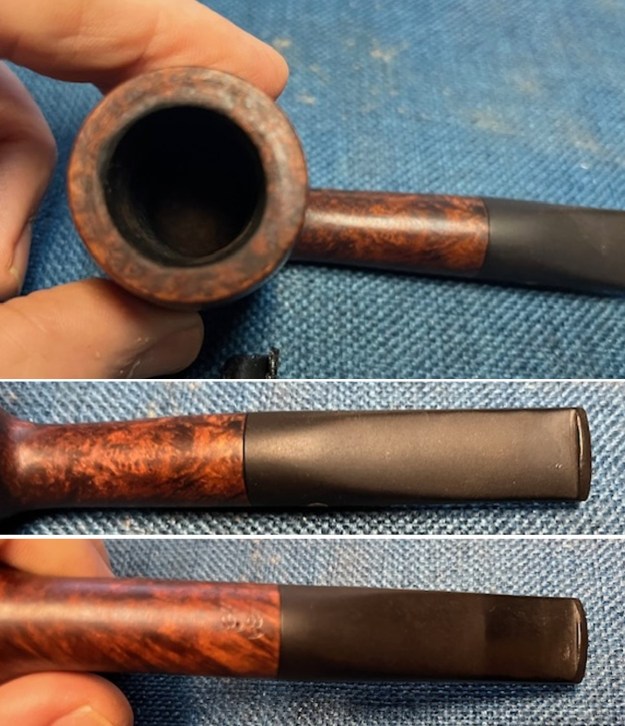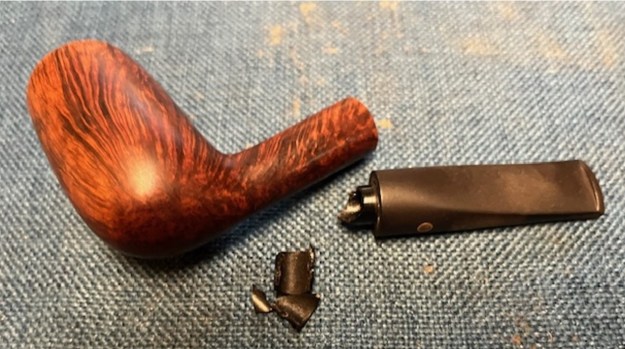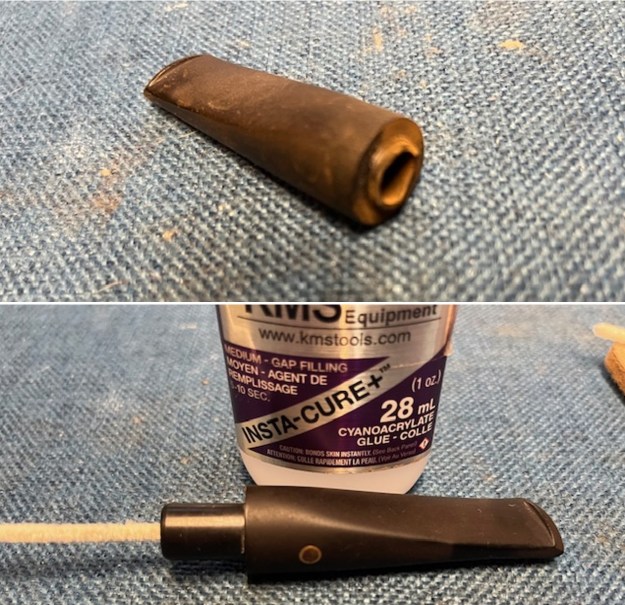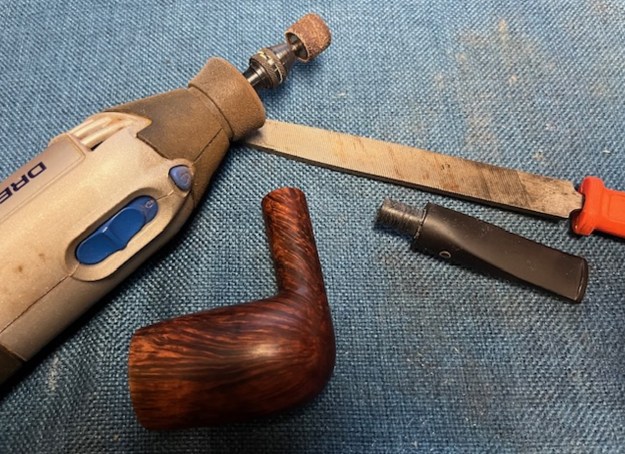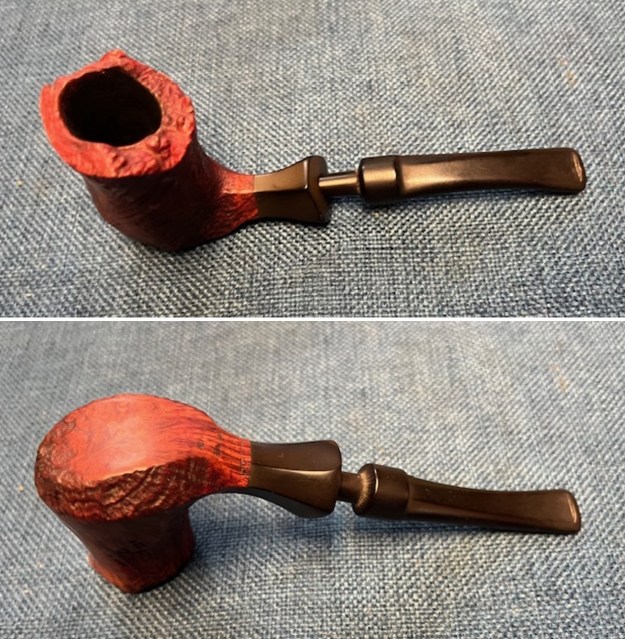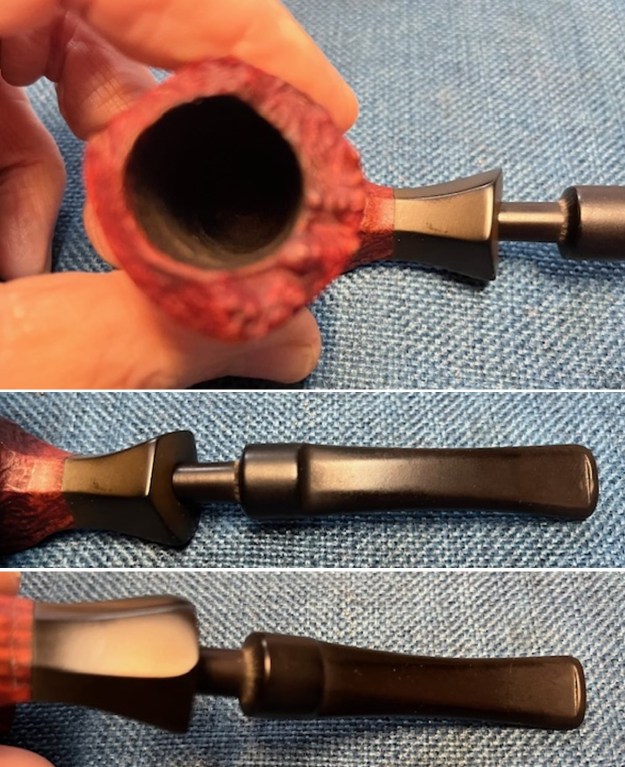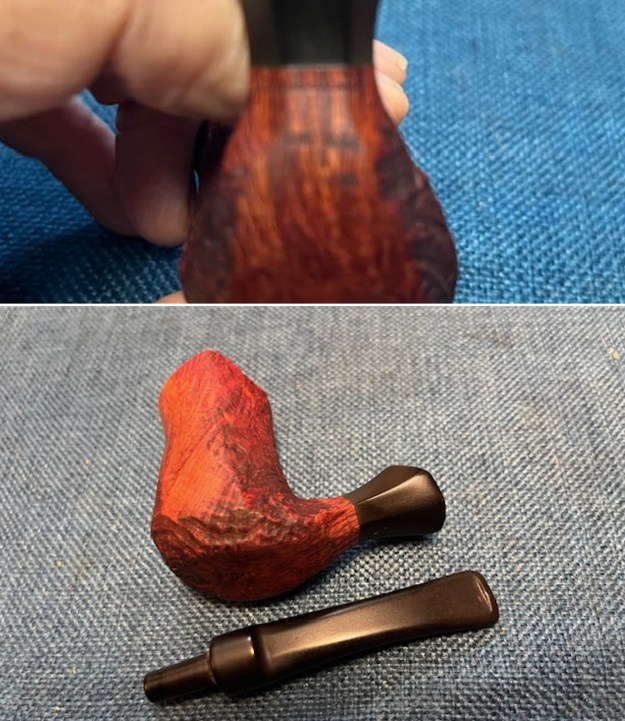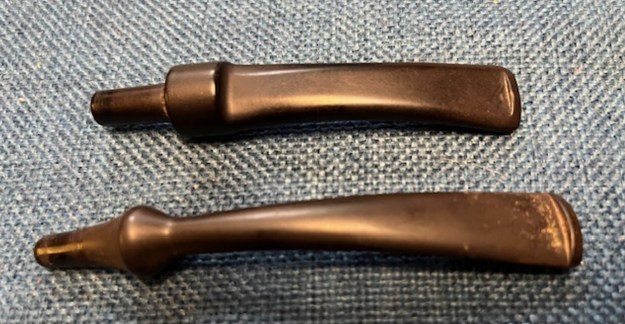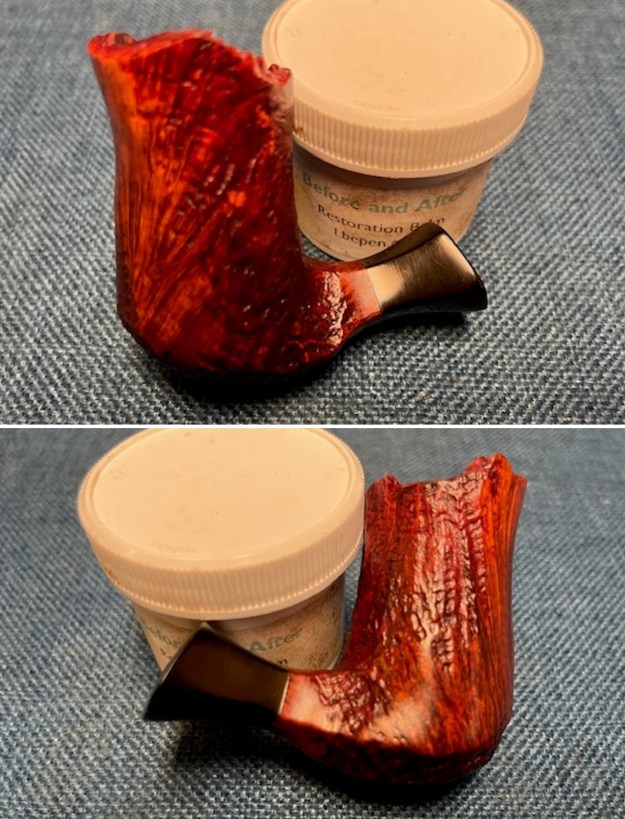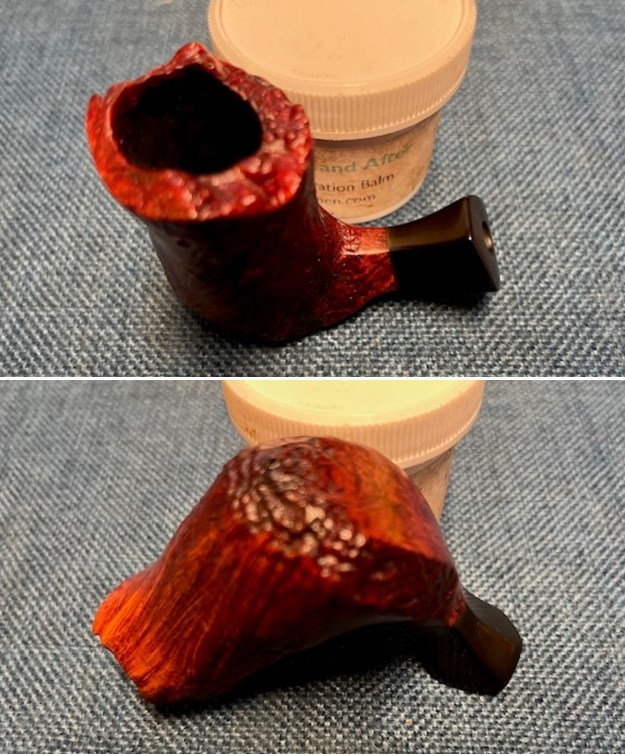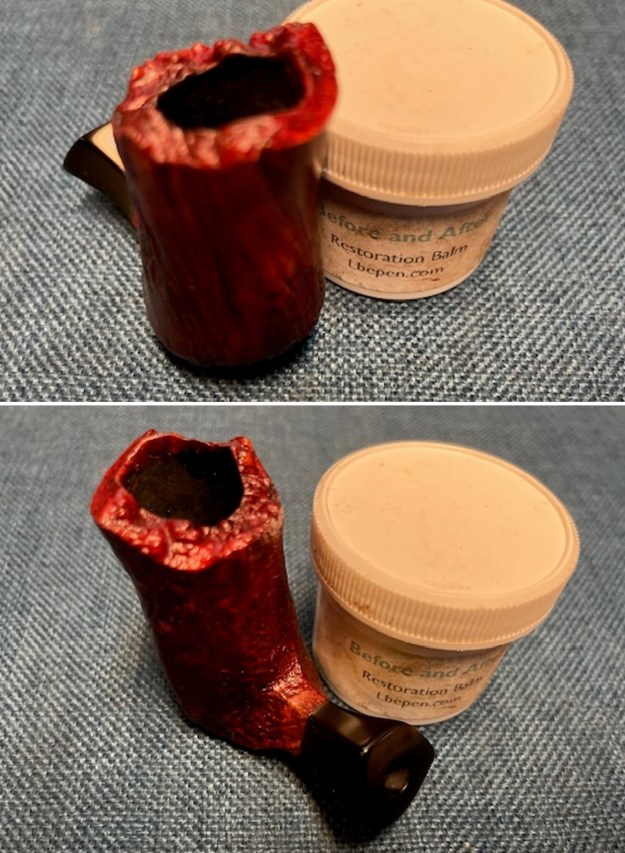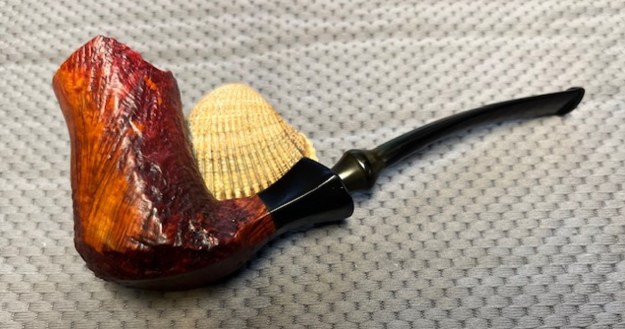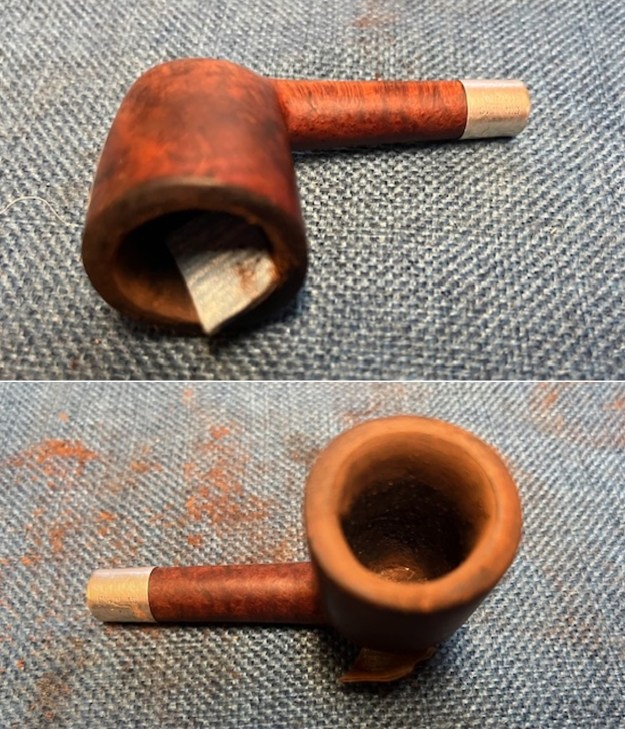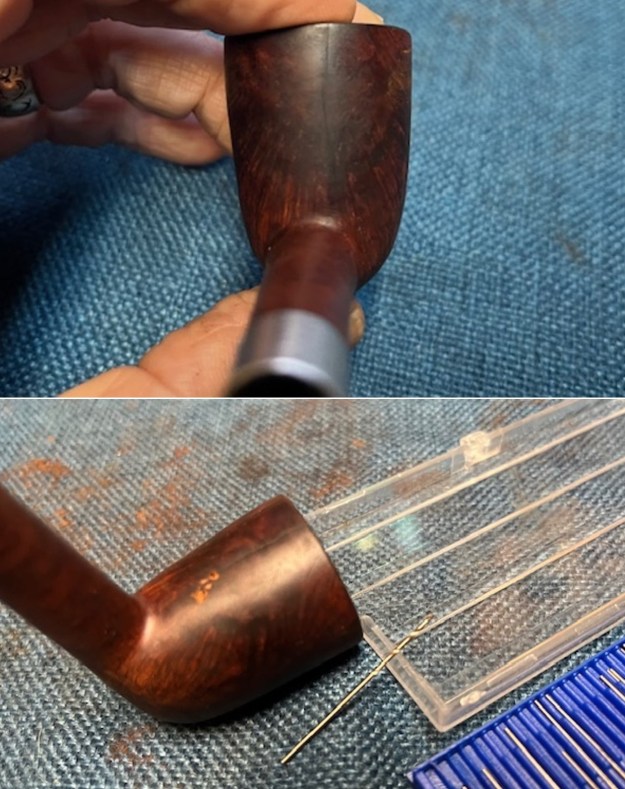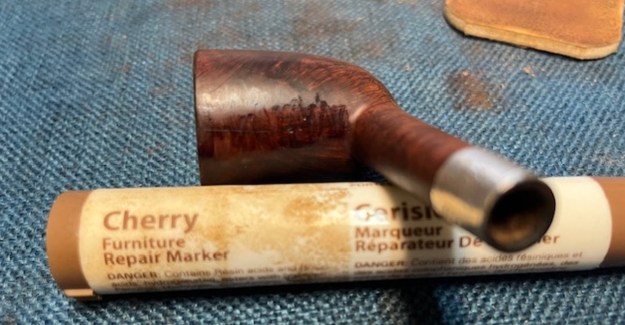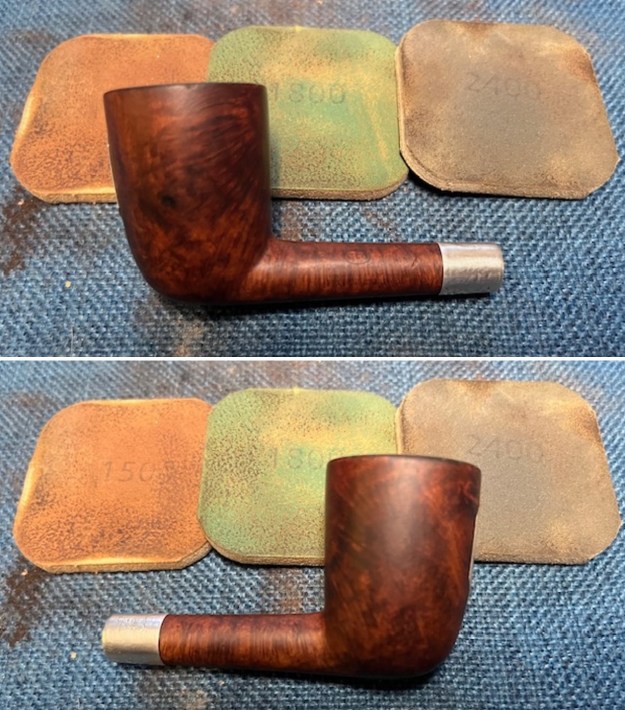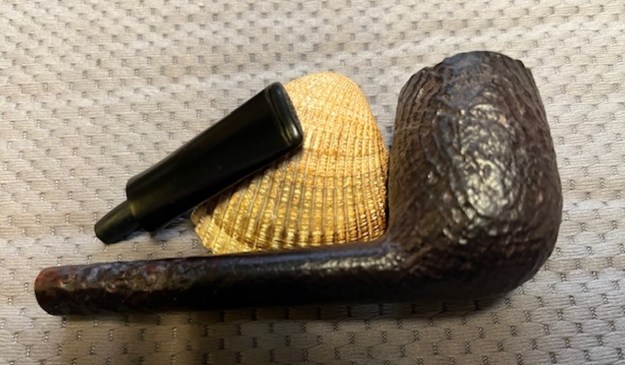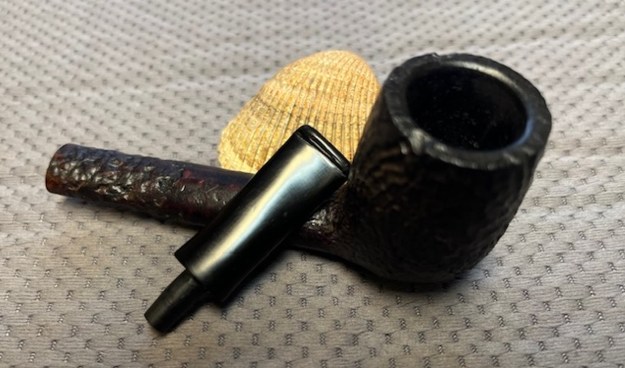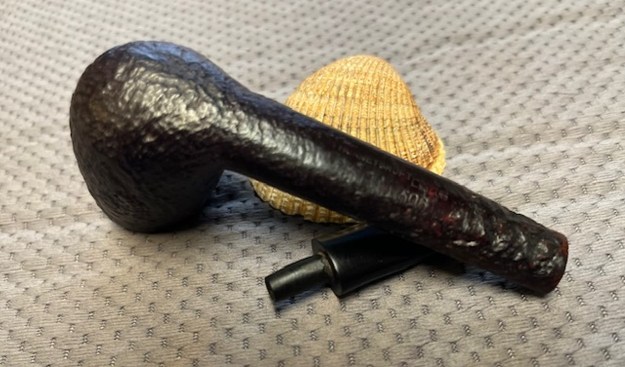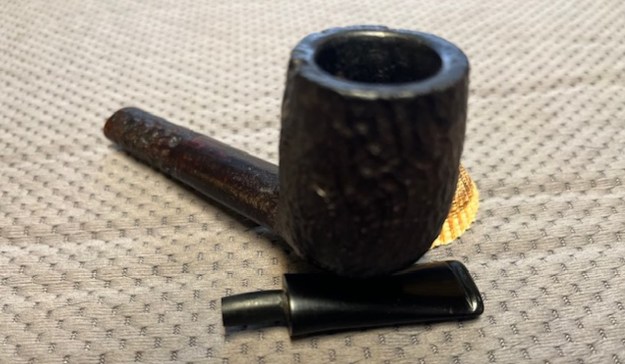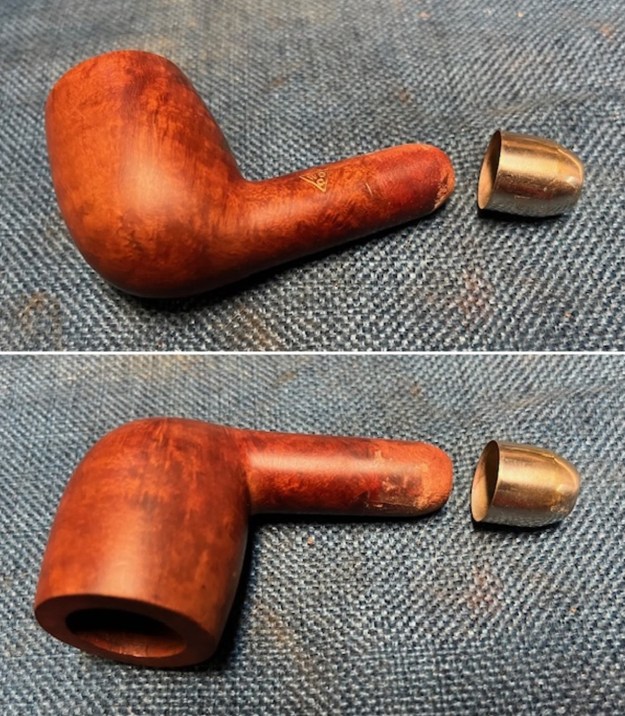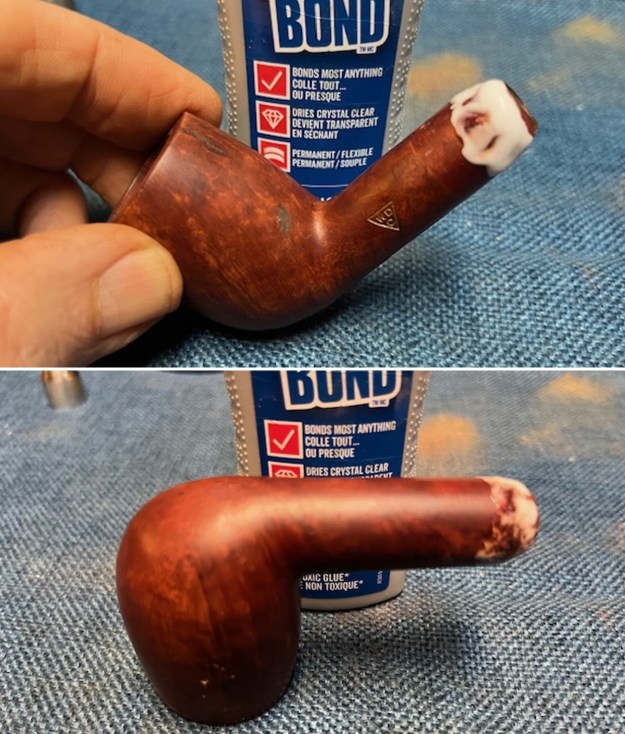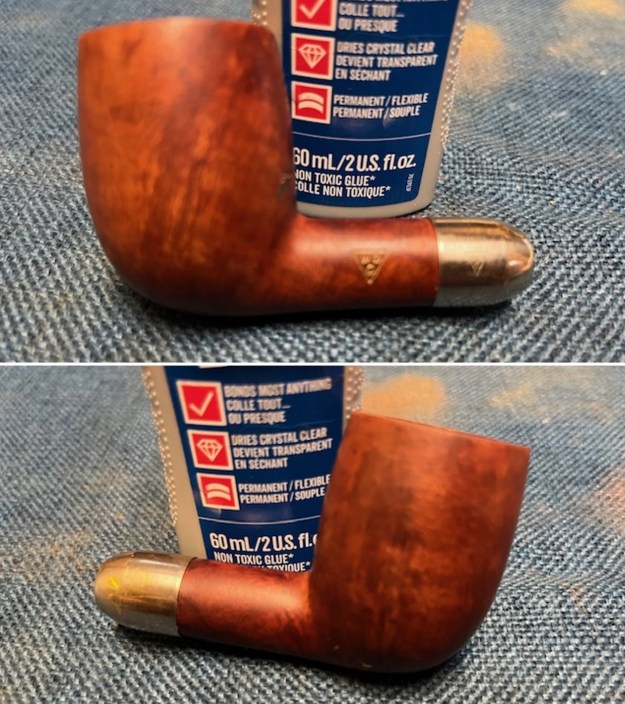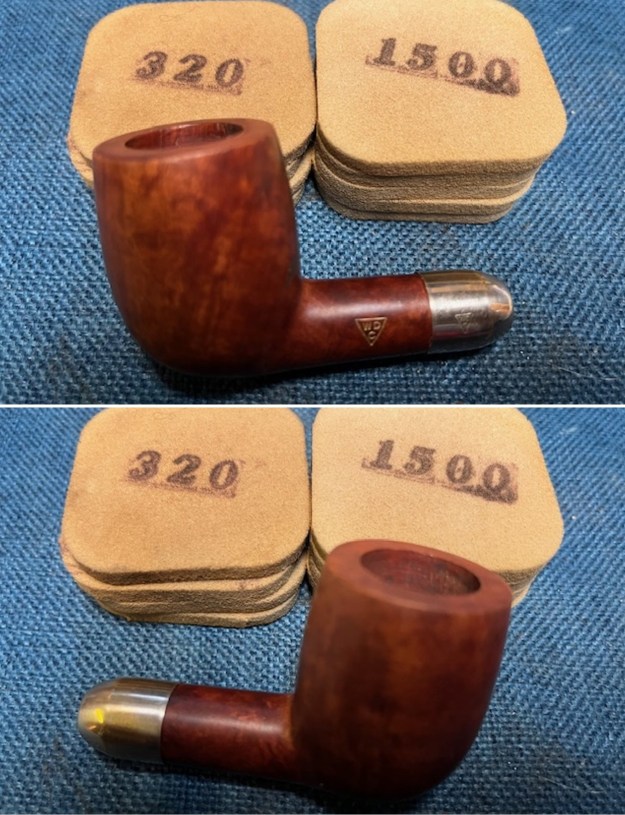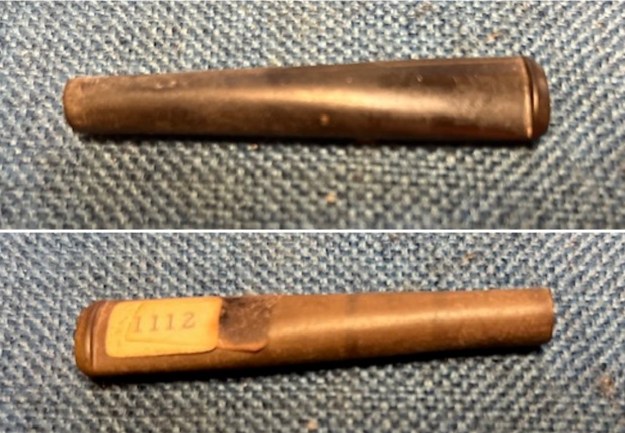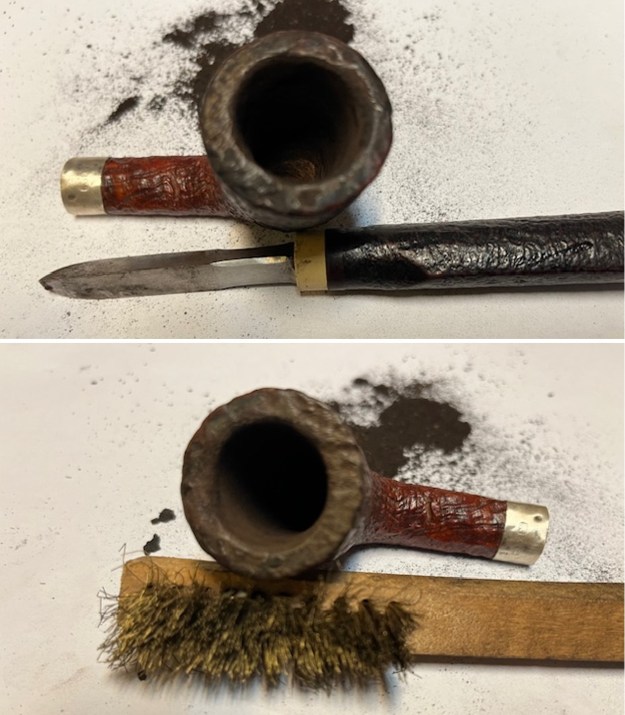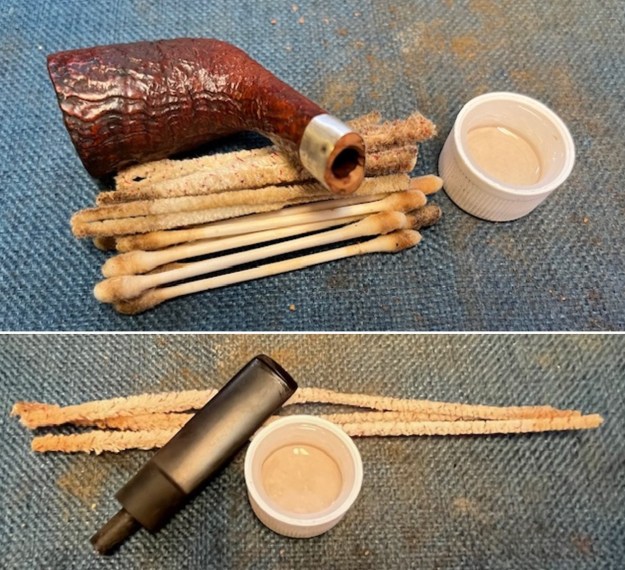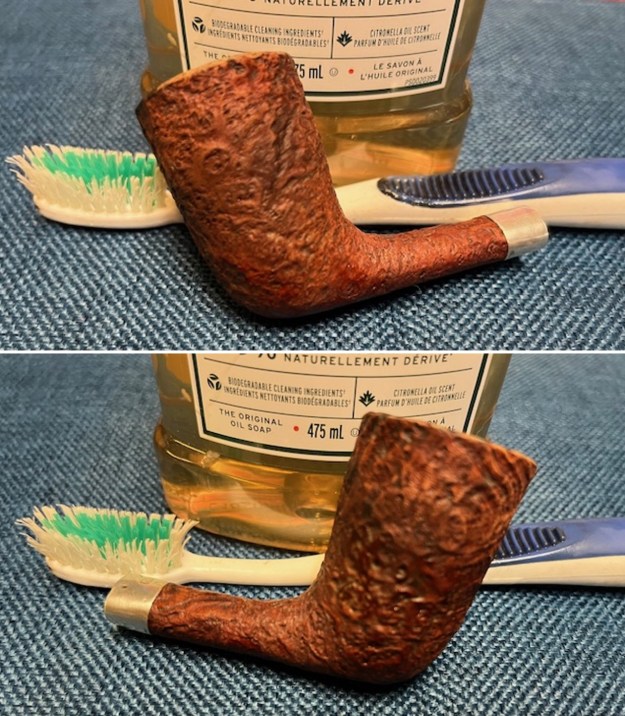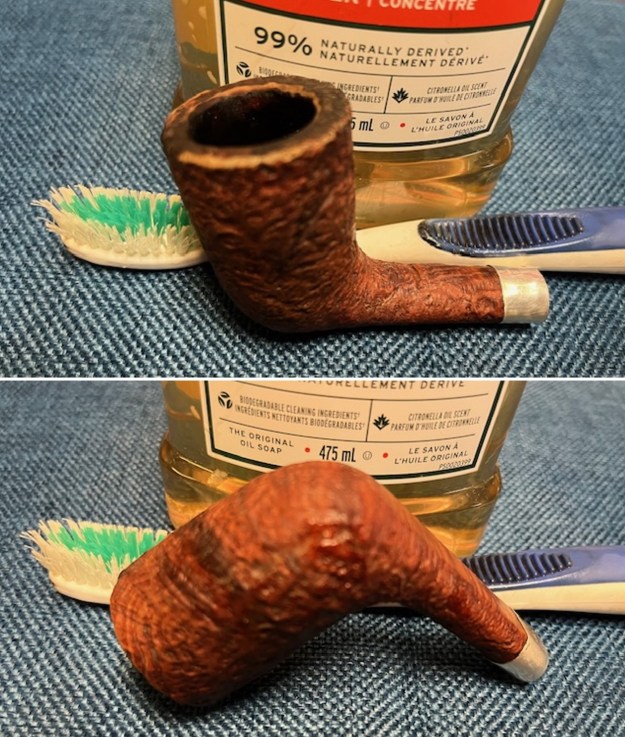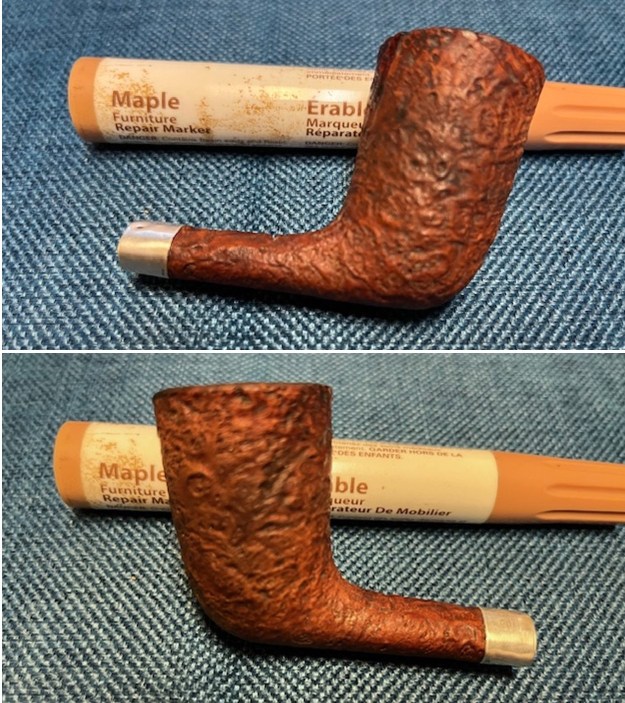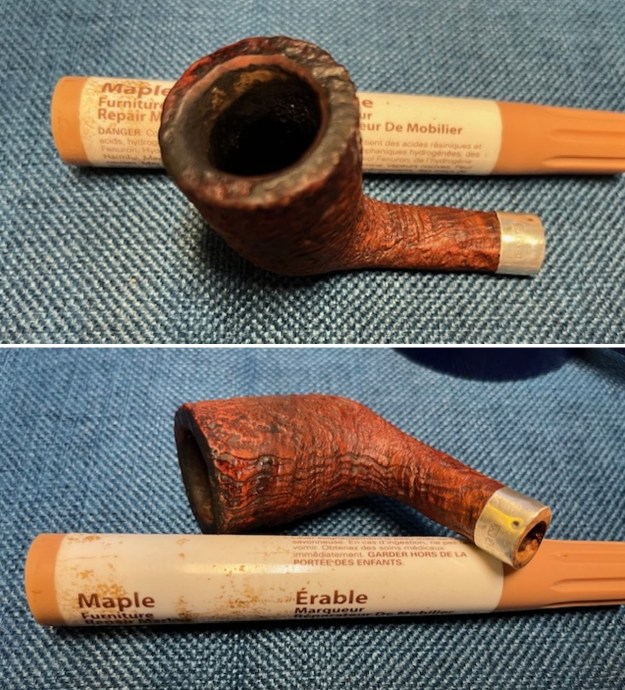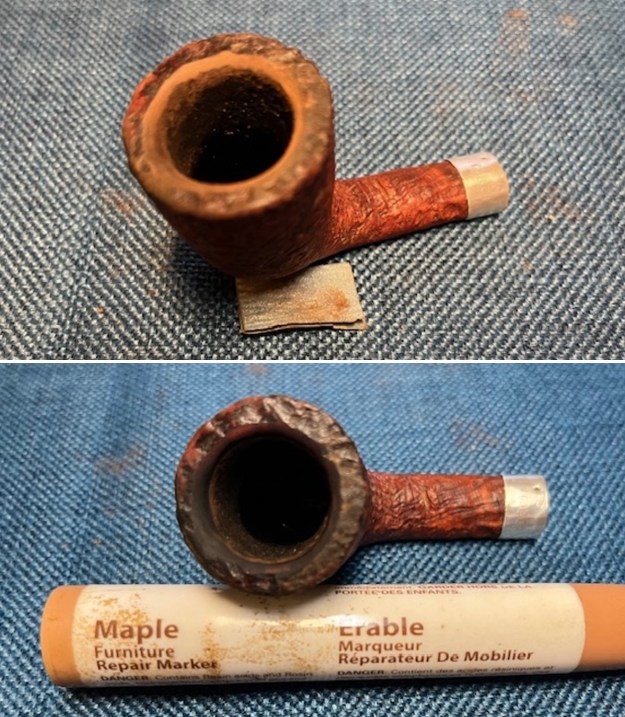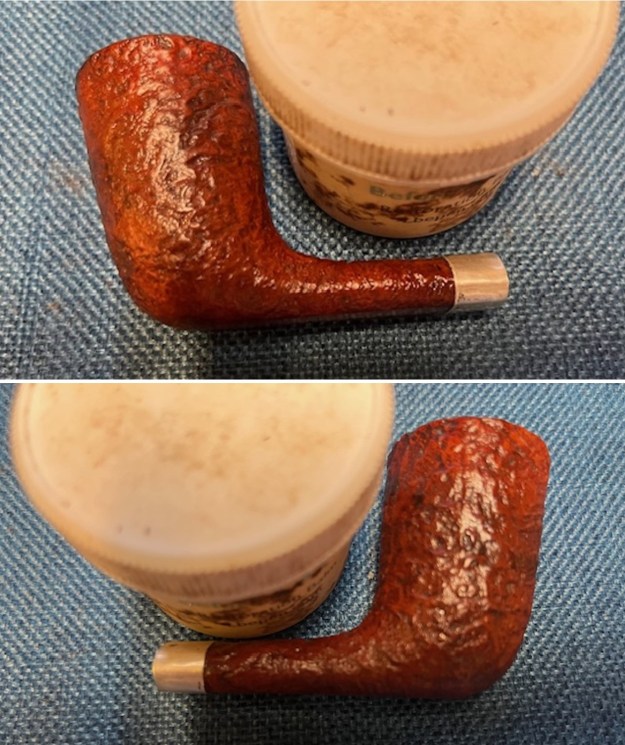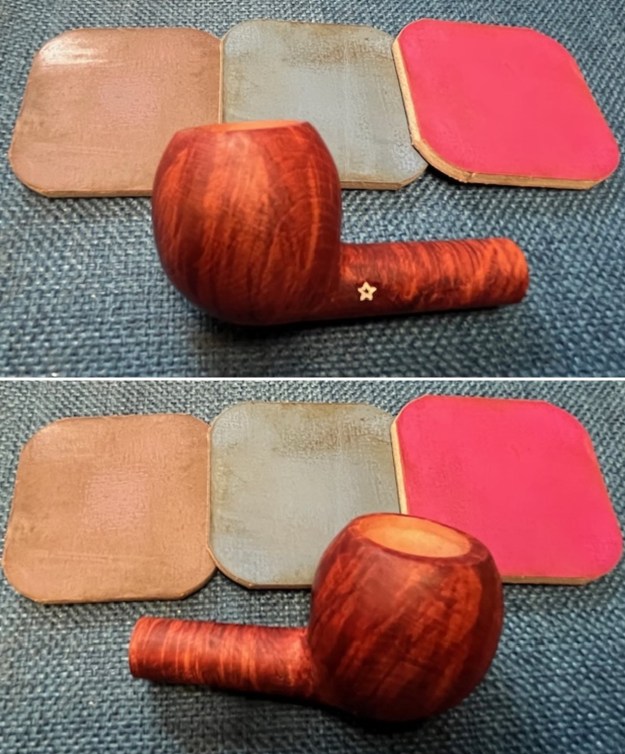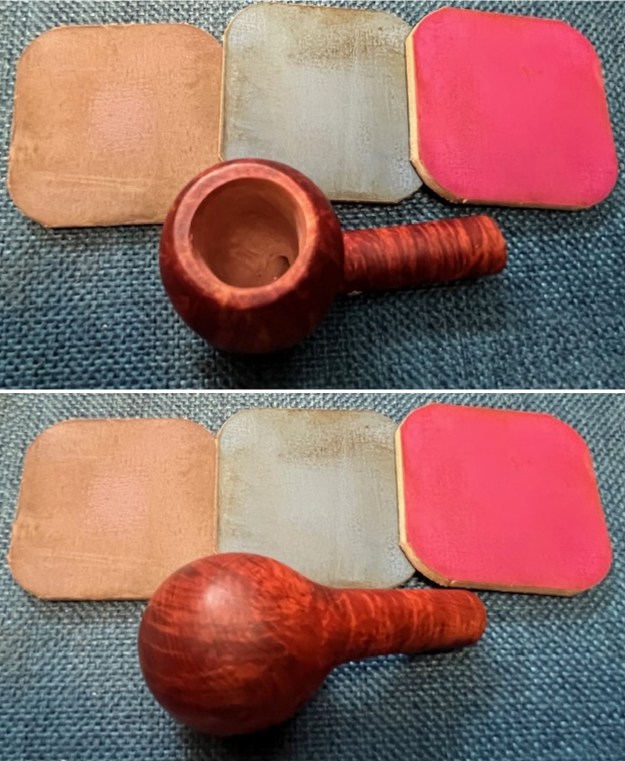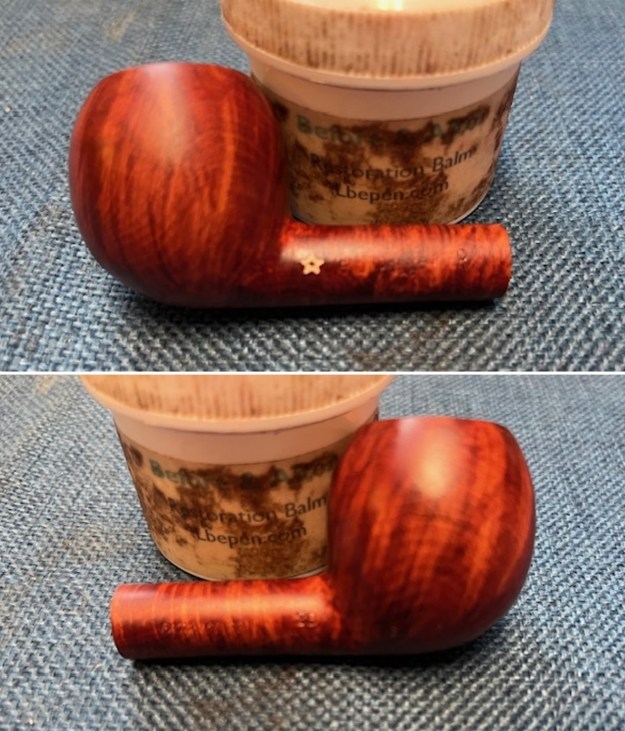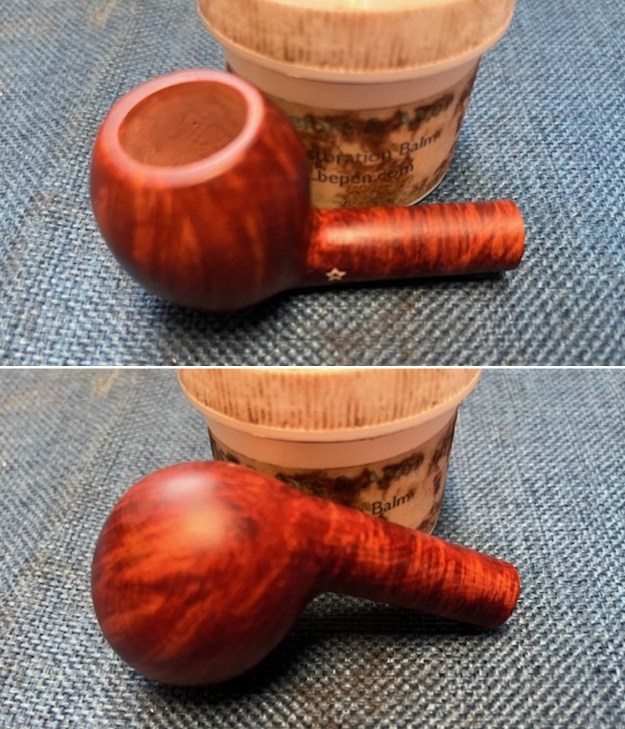
Tag Archives: fitting a stem

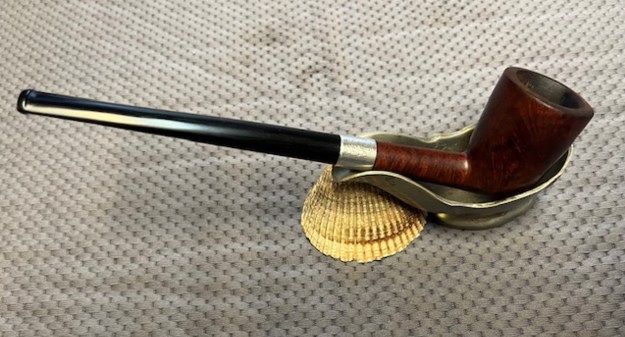
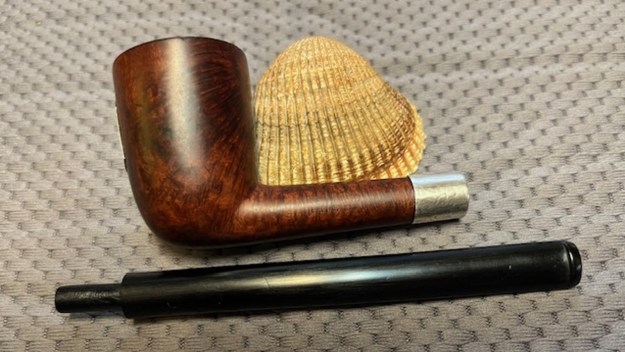
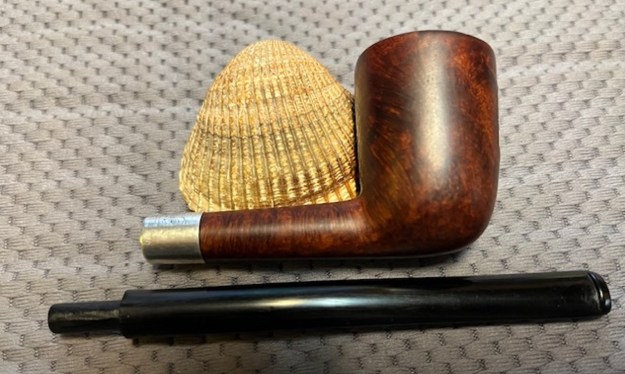
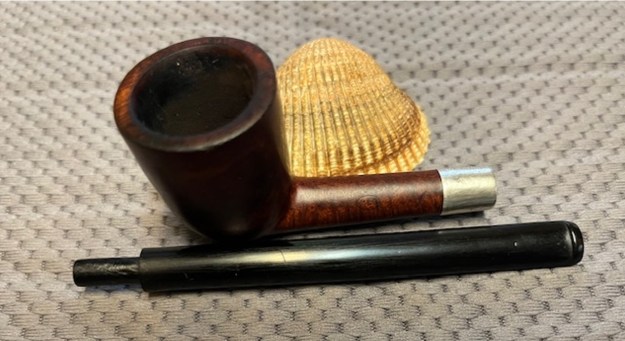
Cleaning up another one of my restorations from many years ago


by Steve Laug

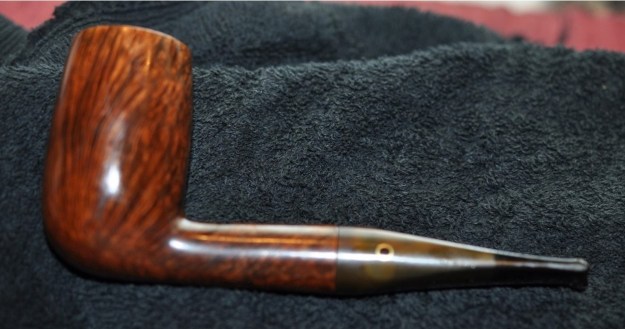
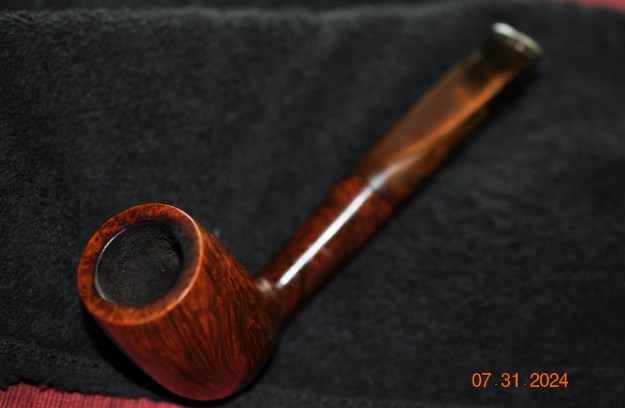
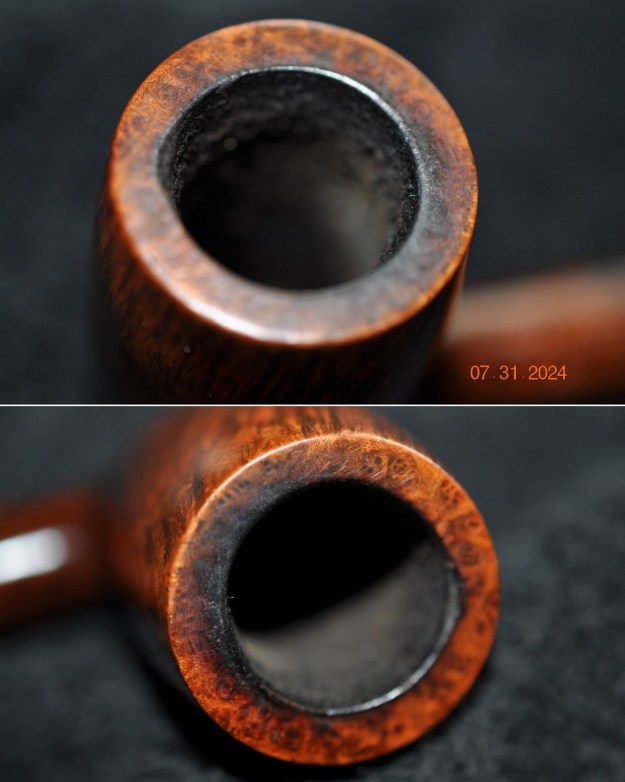
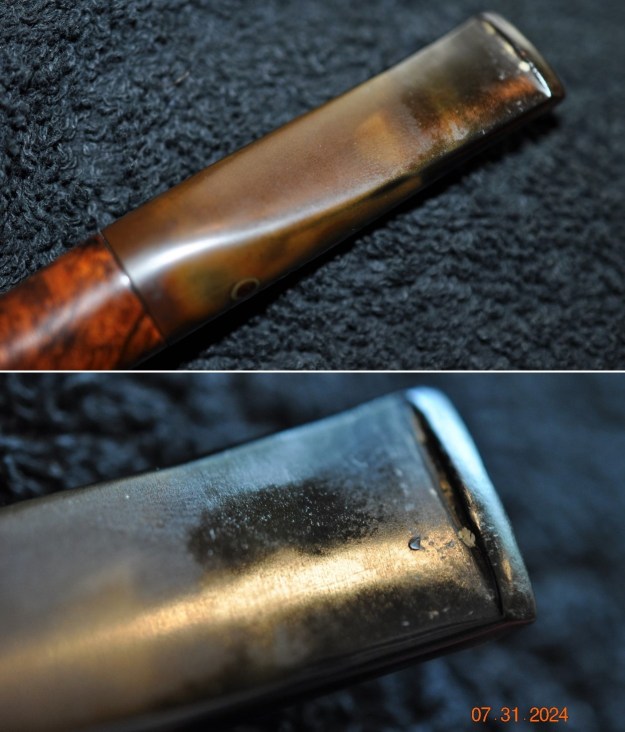
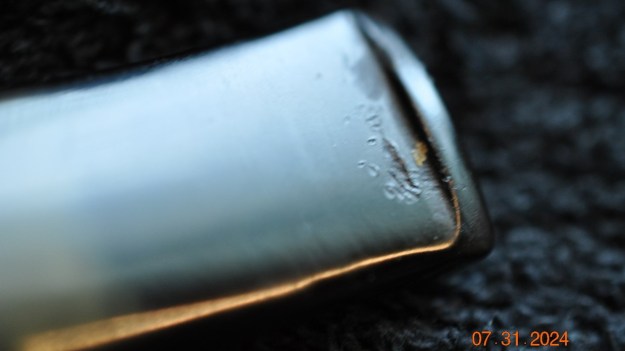
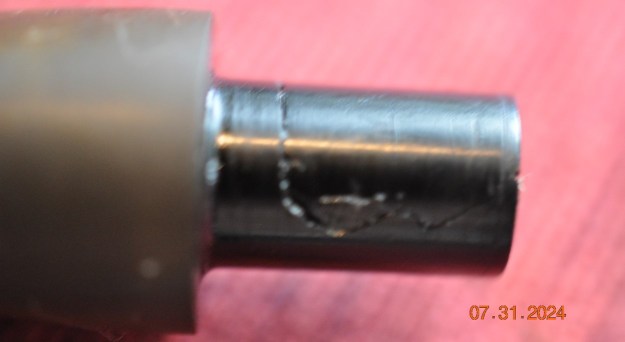
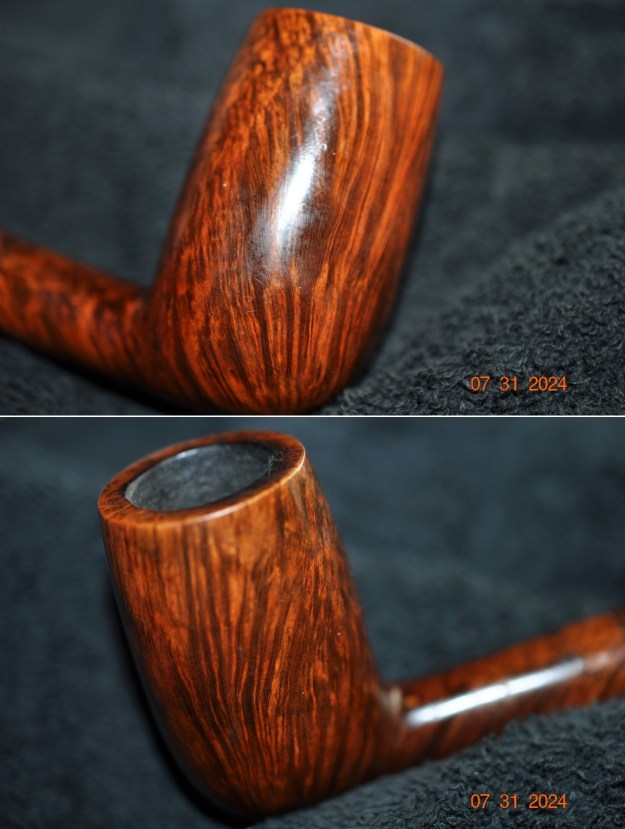
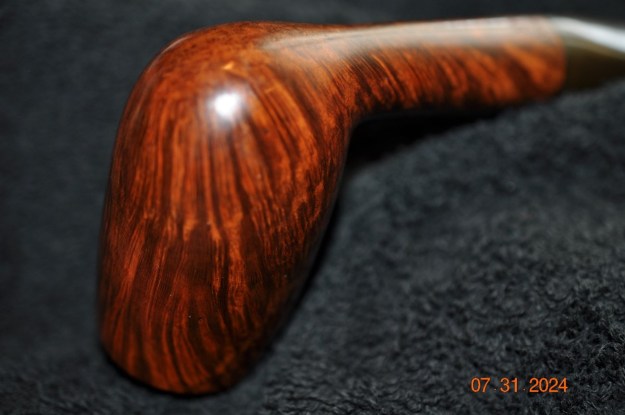
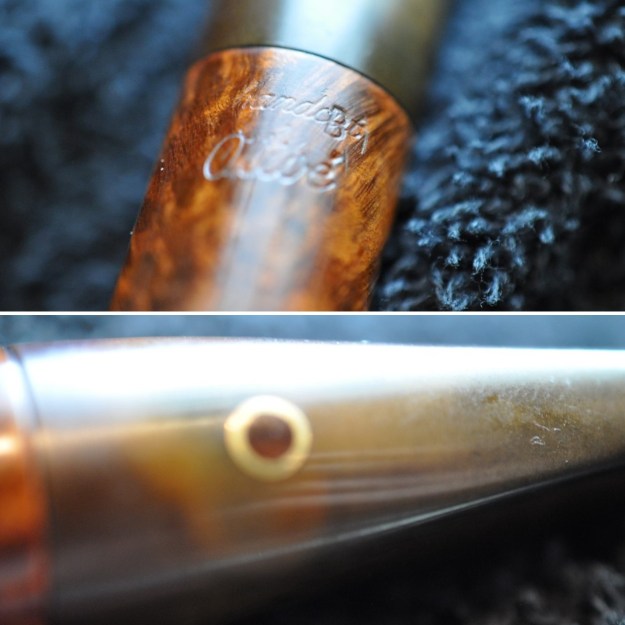
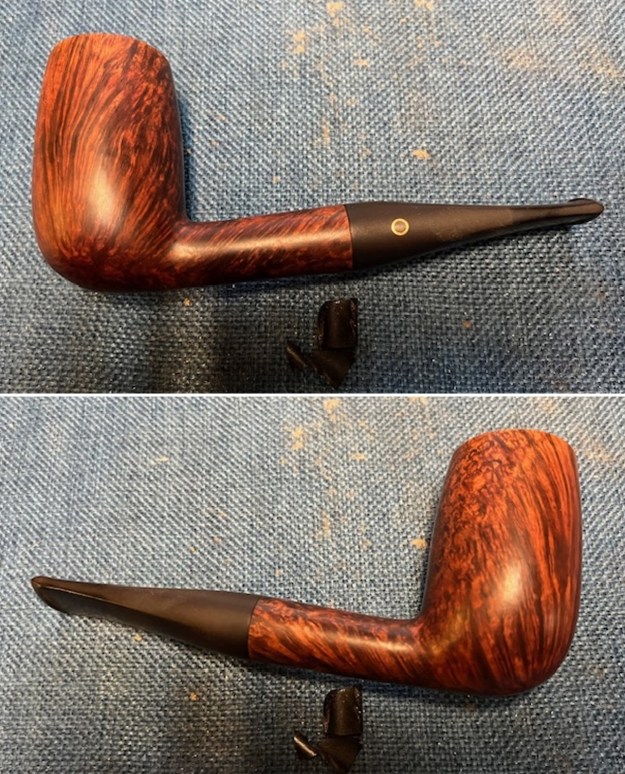
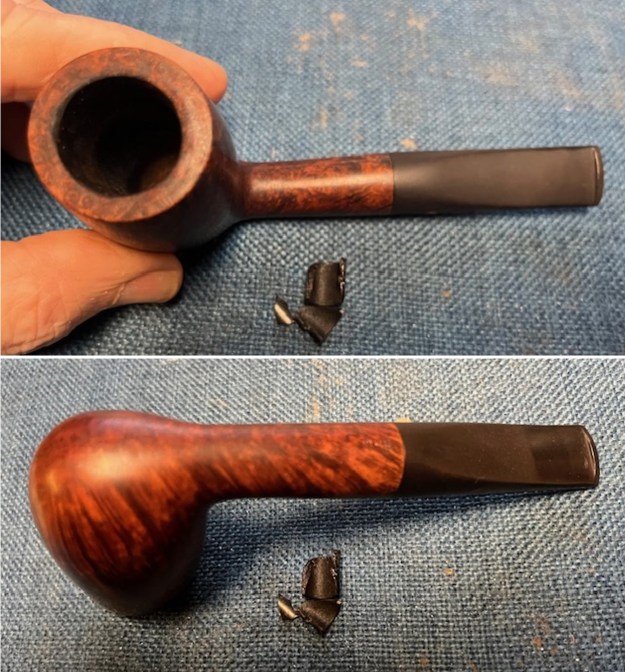
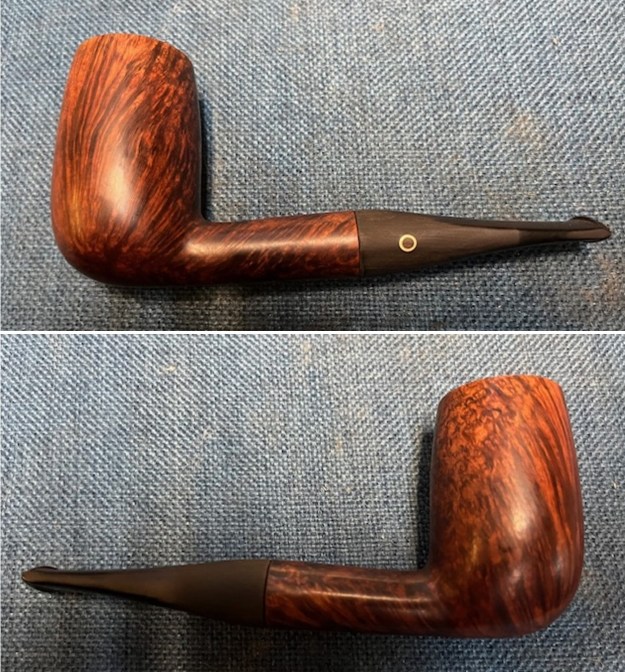
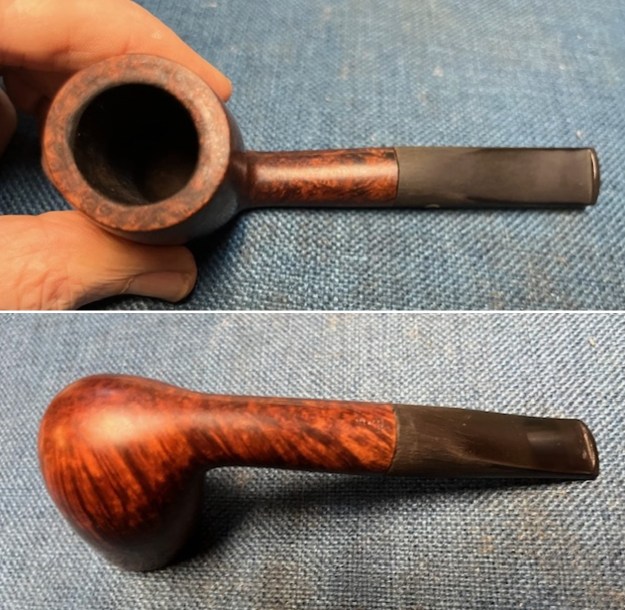
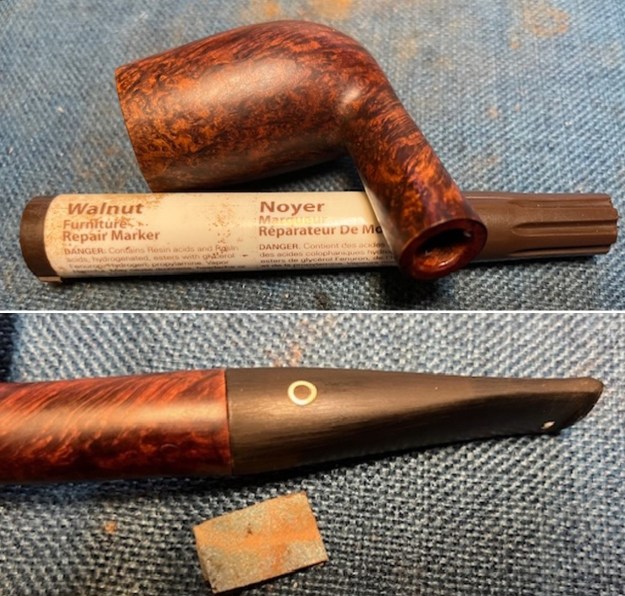
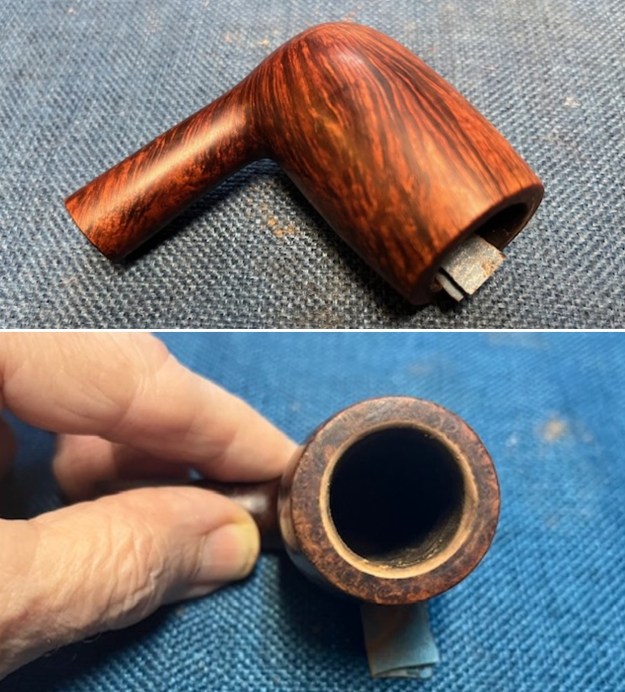
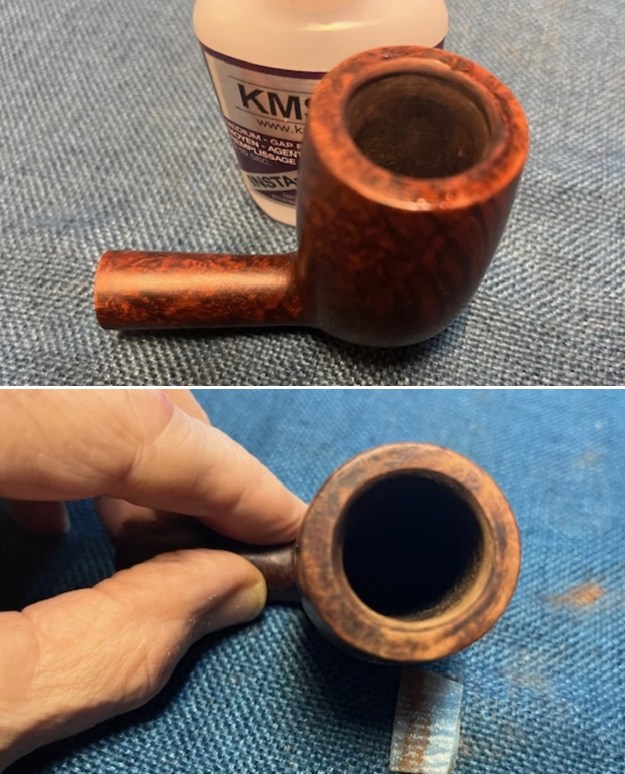
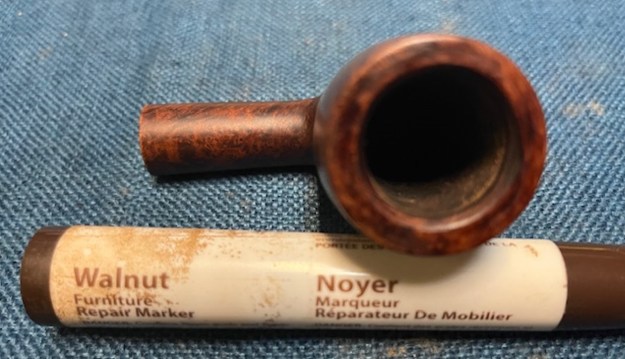
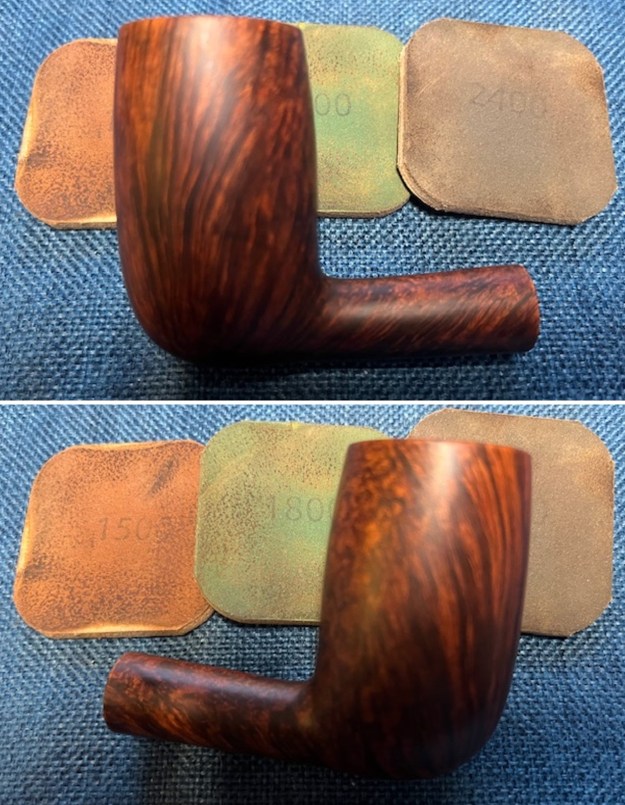
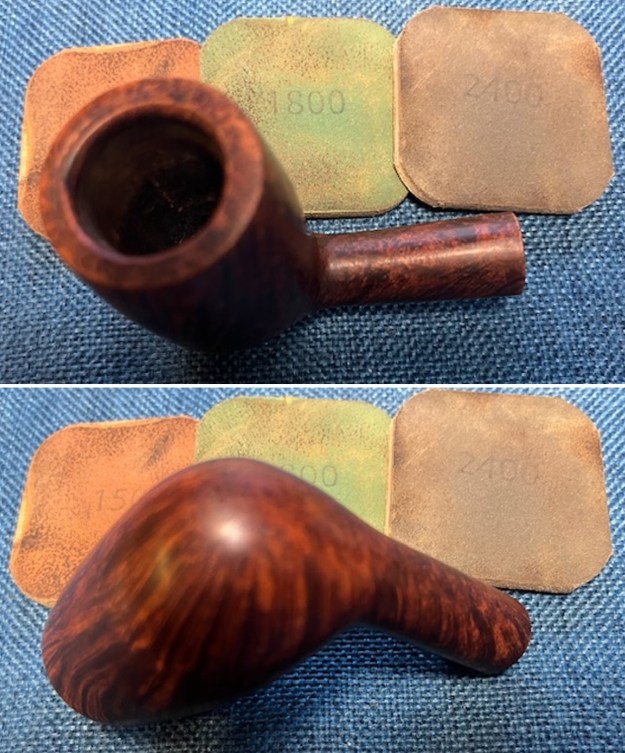
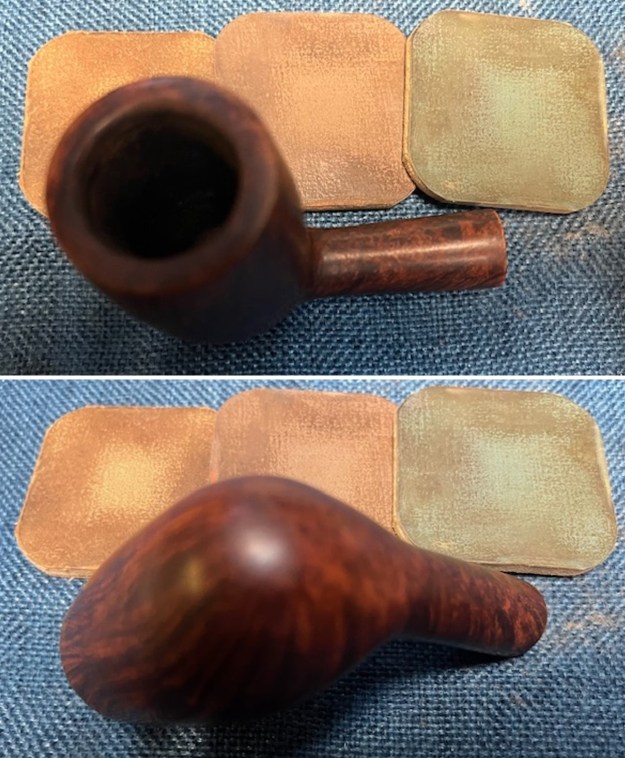
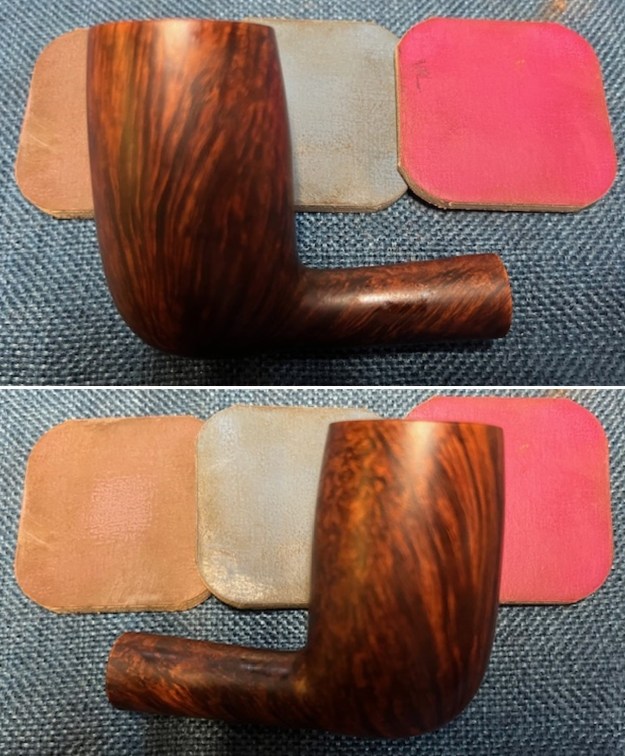
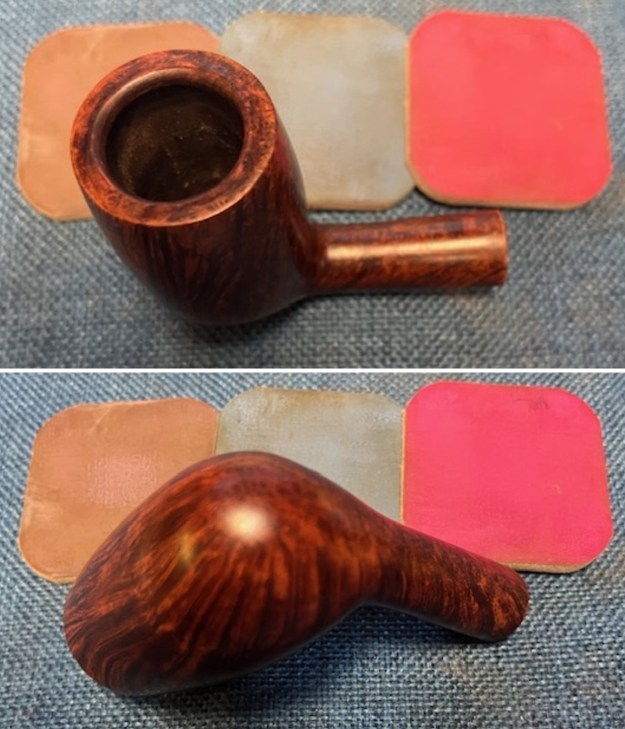
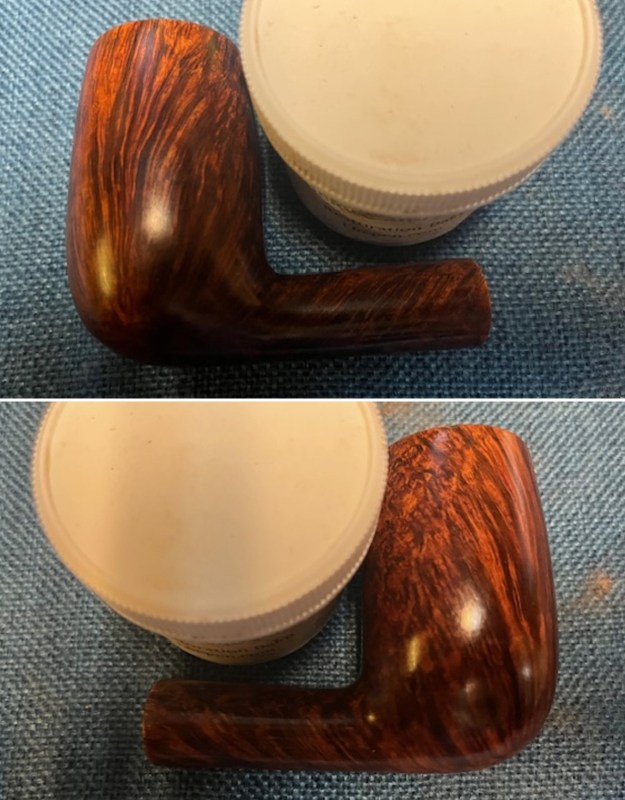
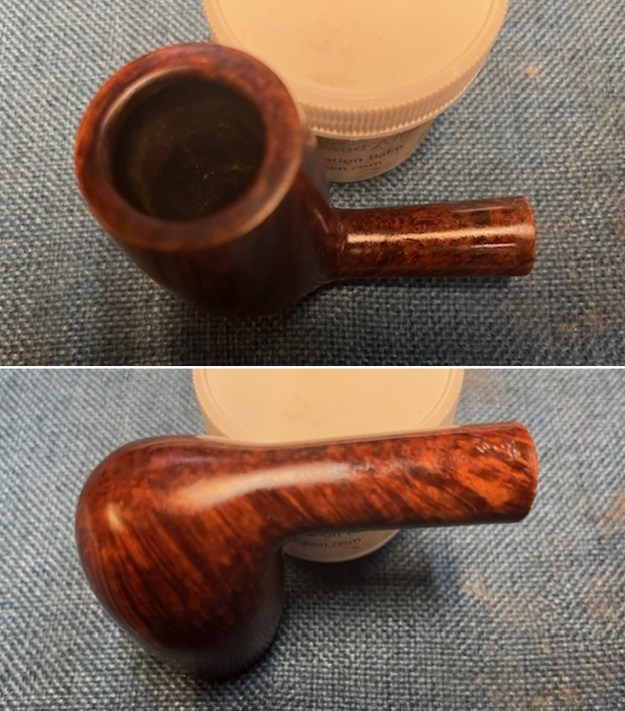
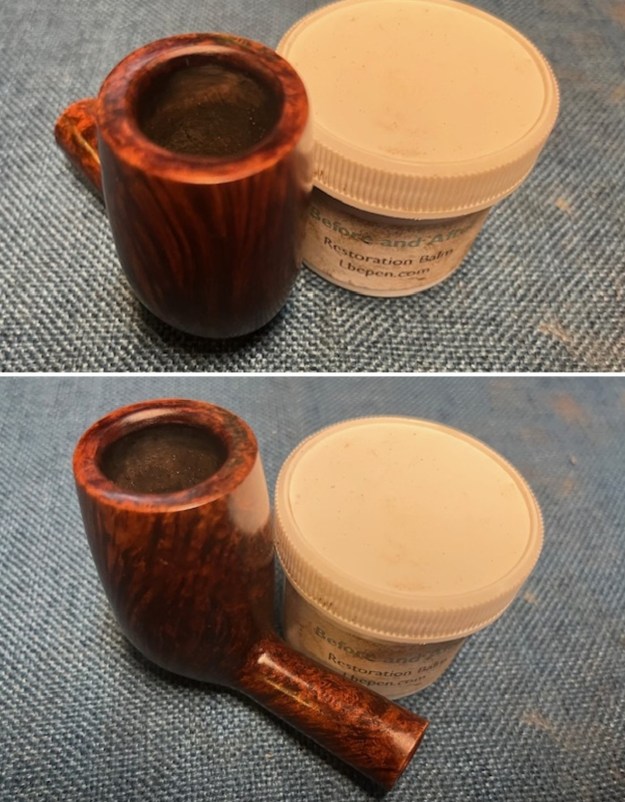
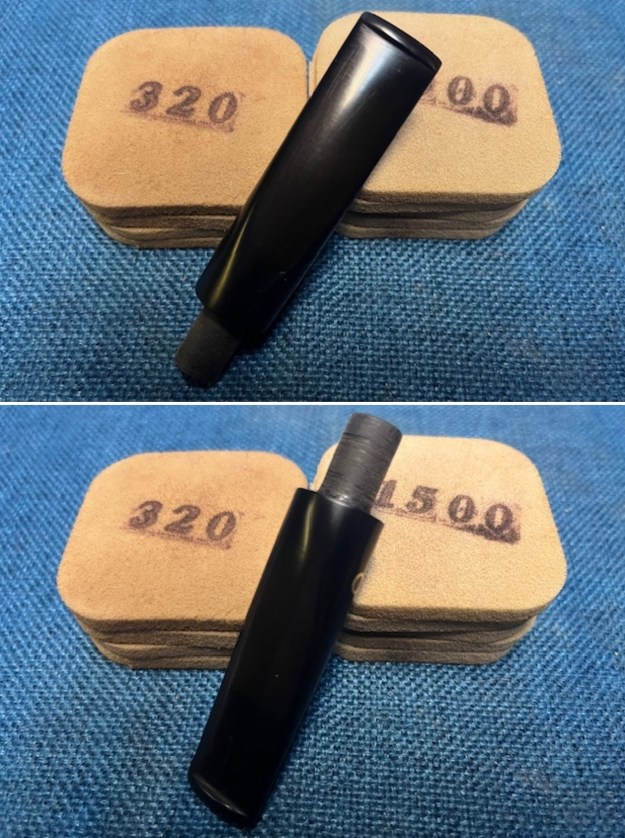
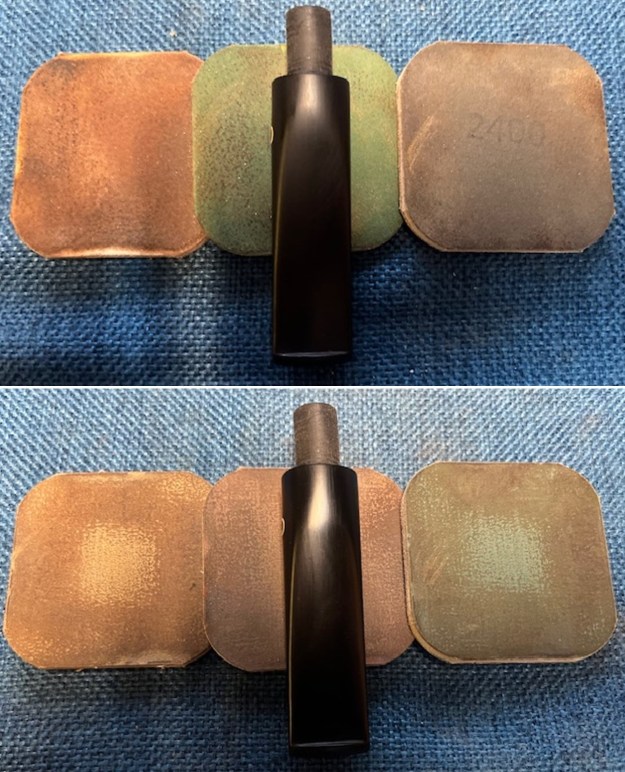
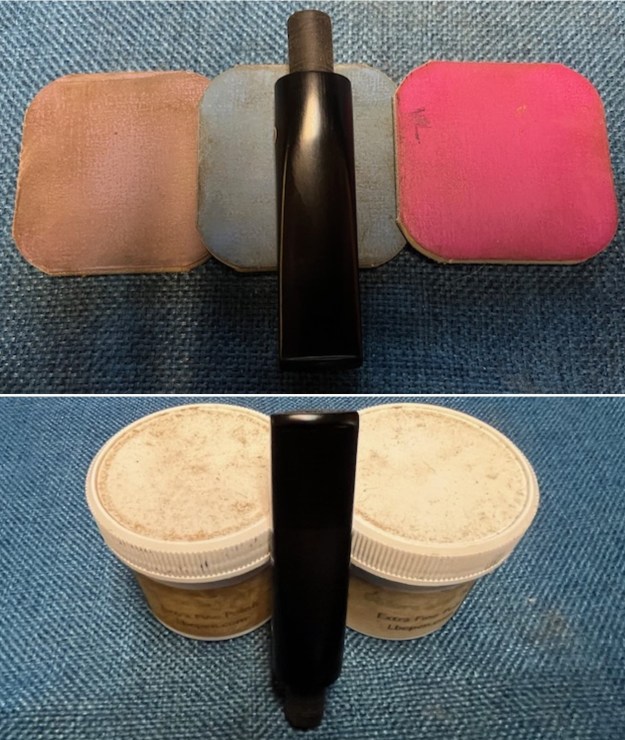
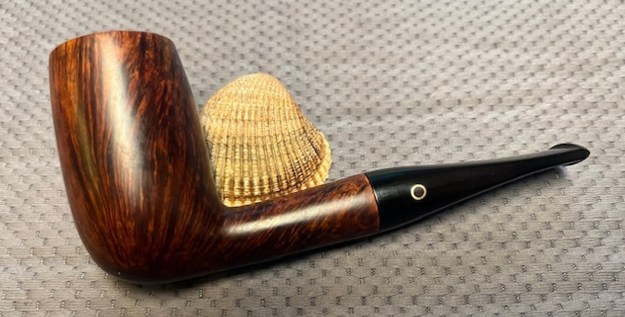
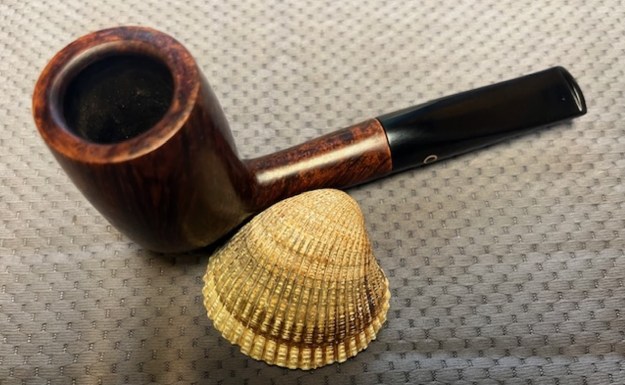
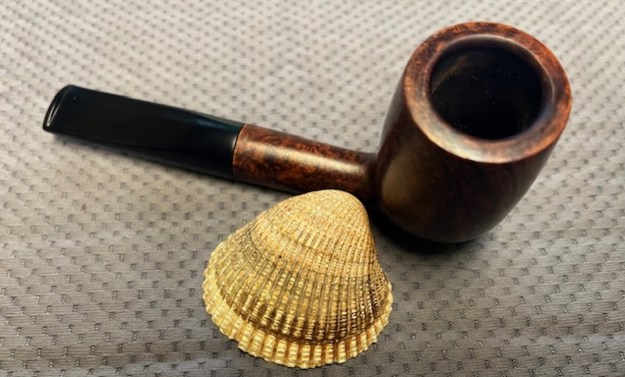
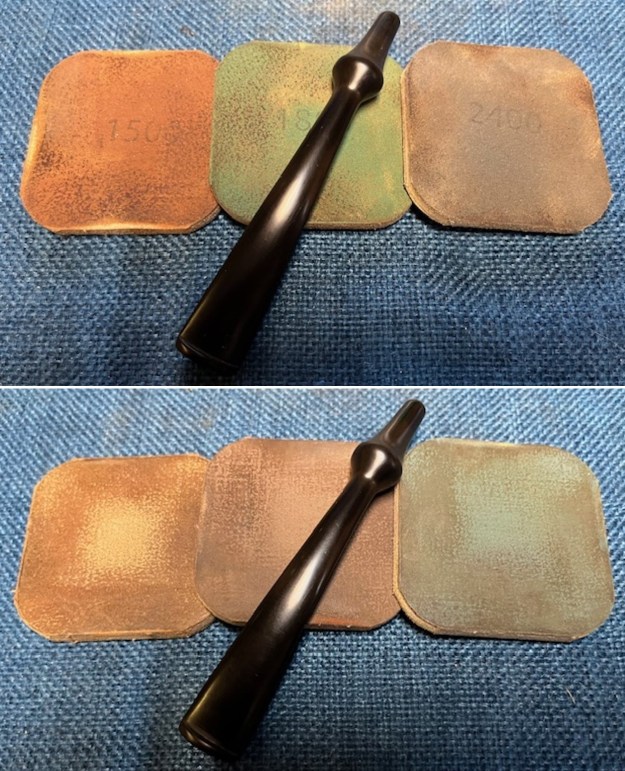
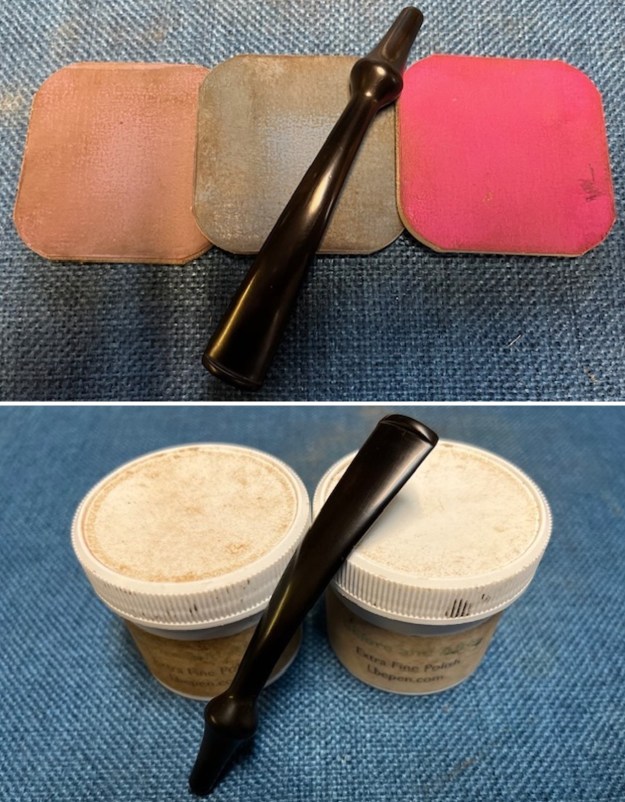
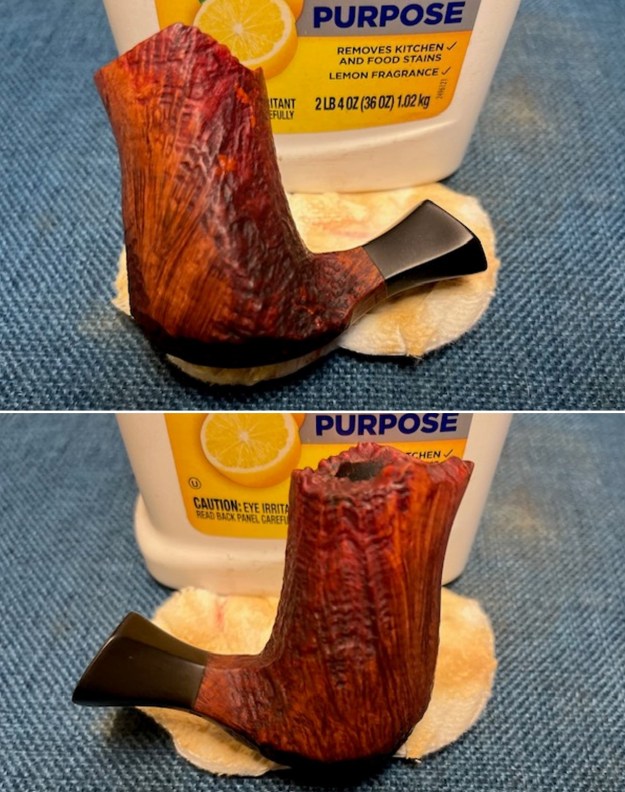
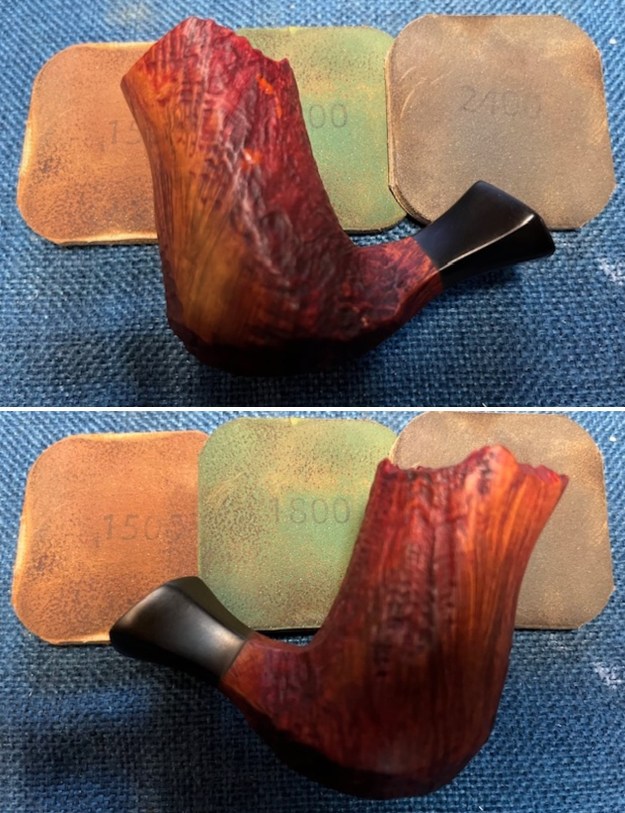
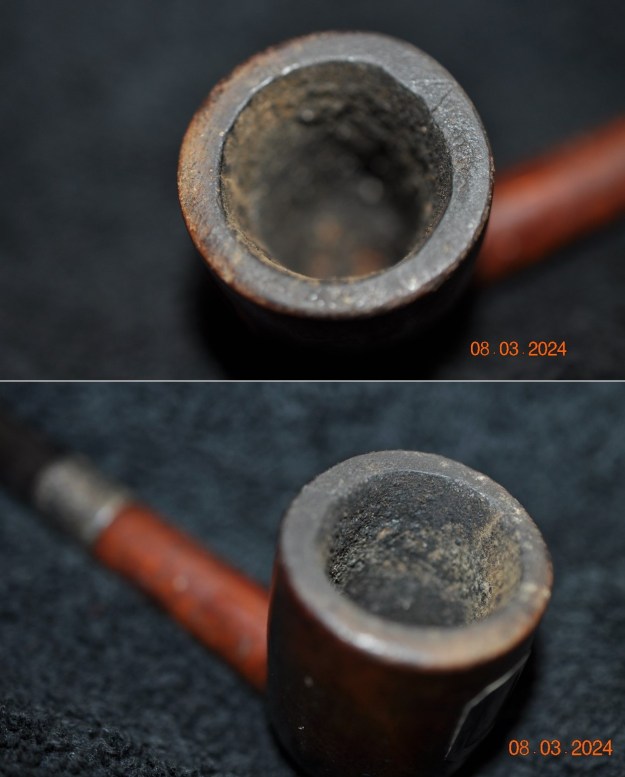
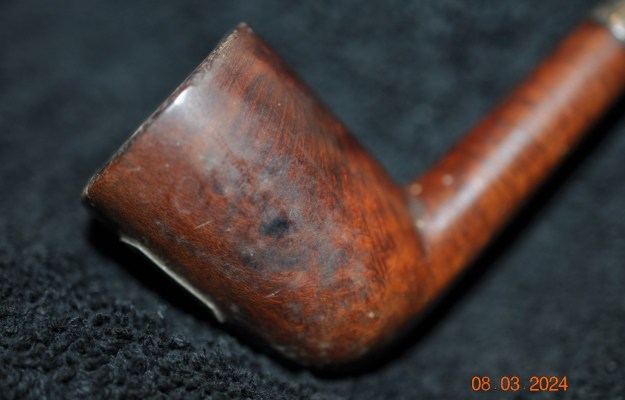
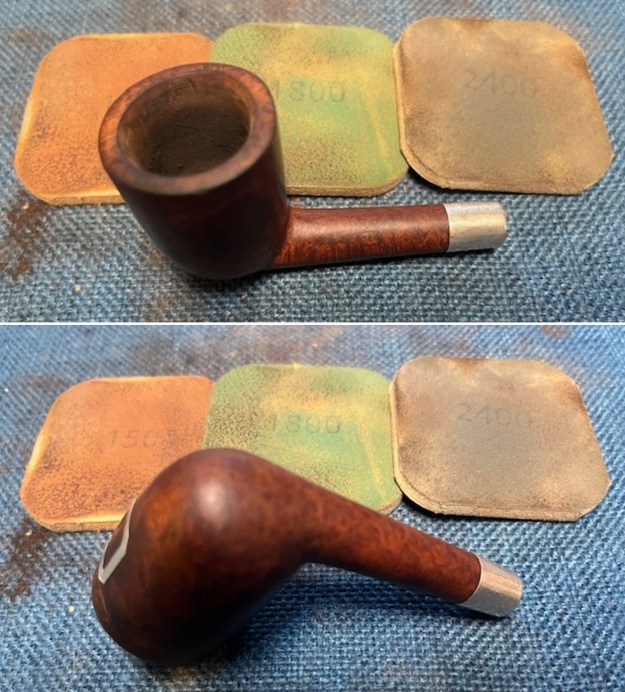
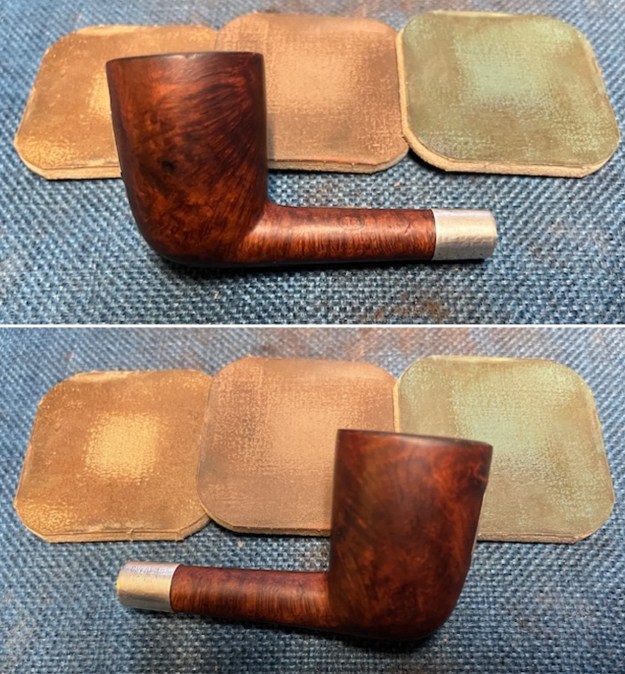
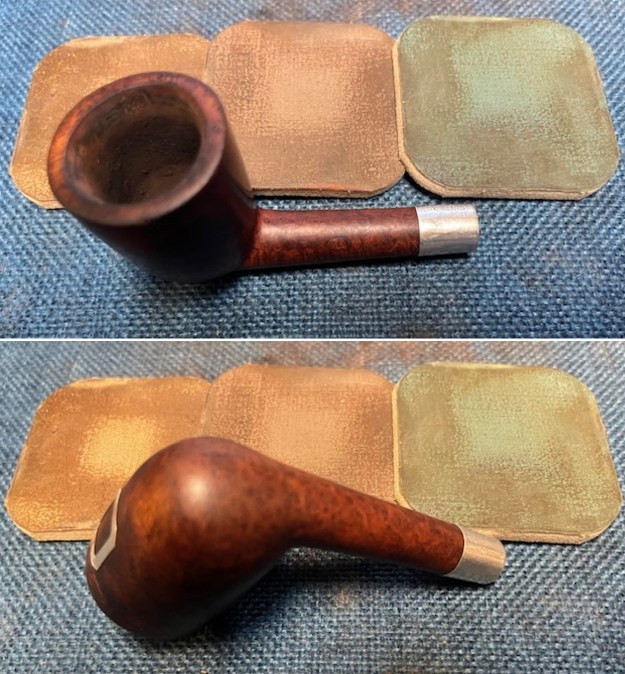
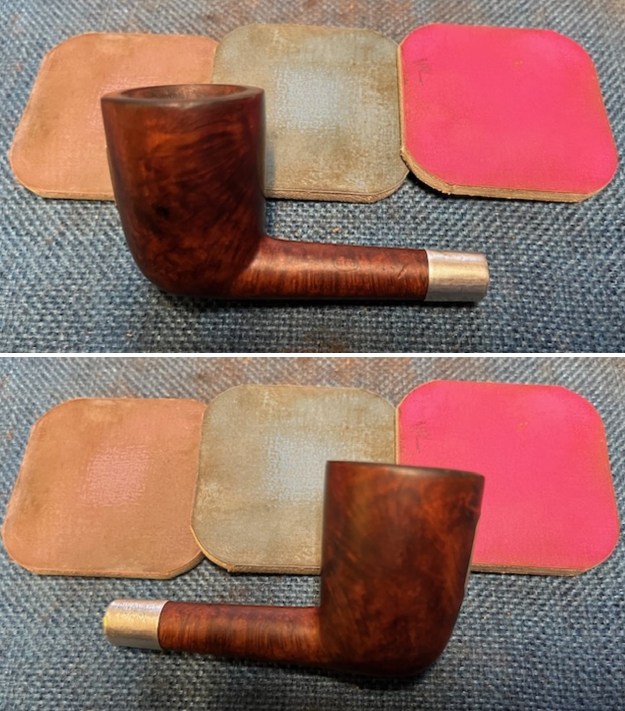
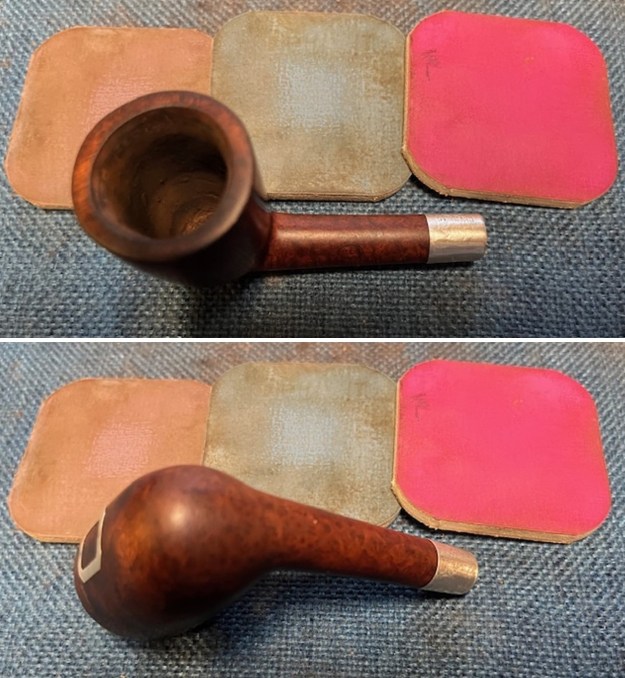
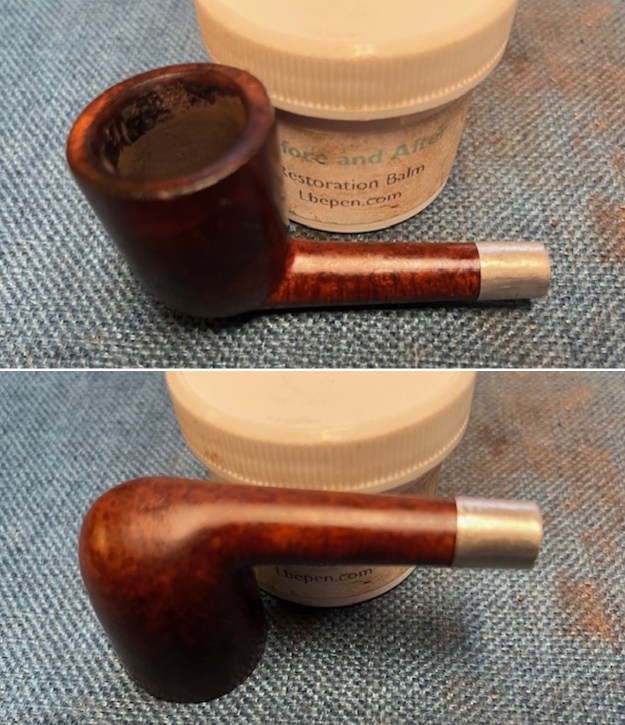
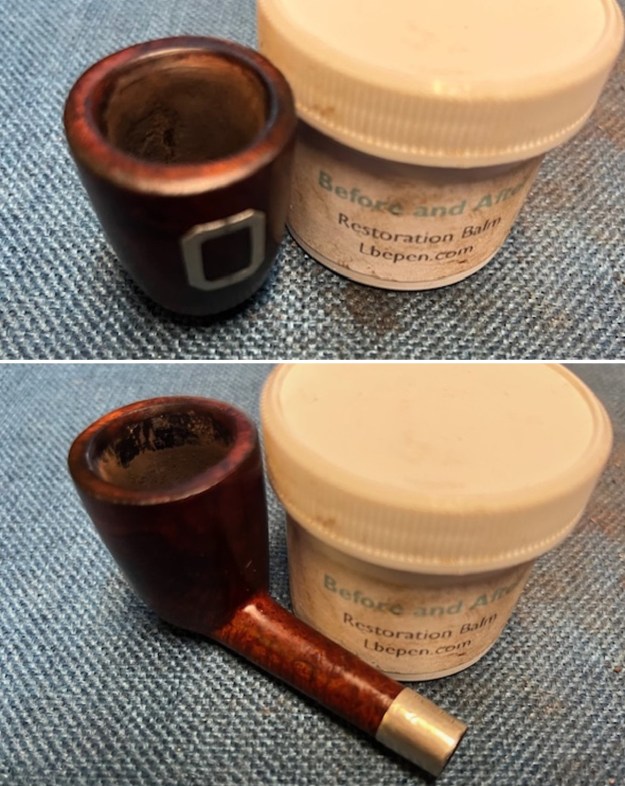
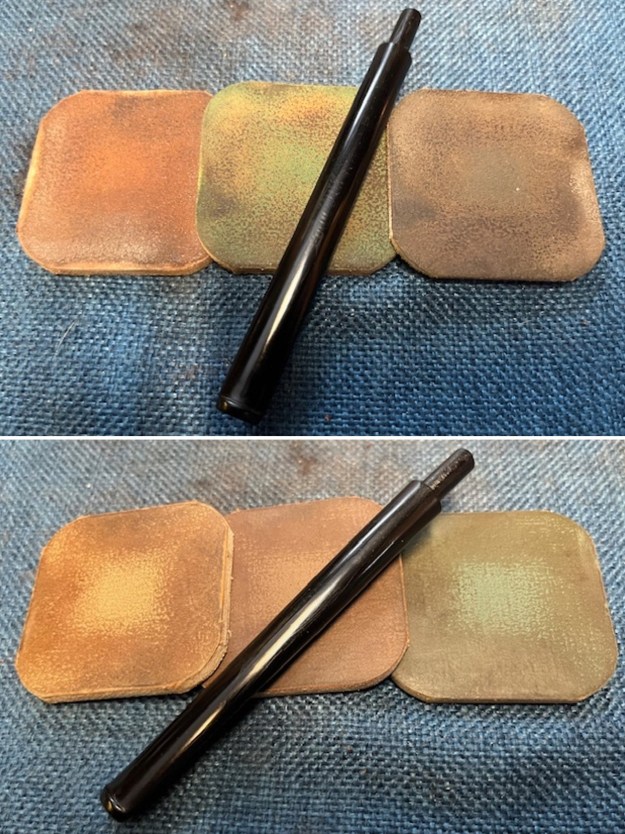
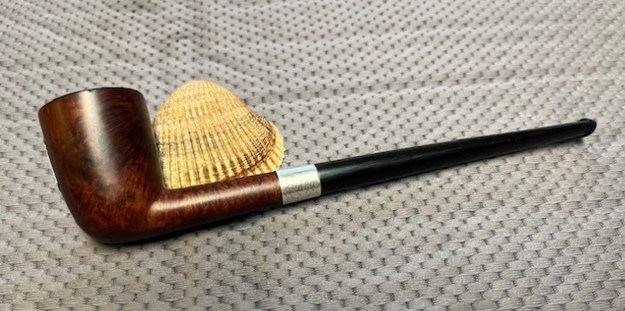
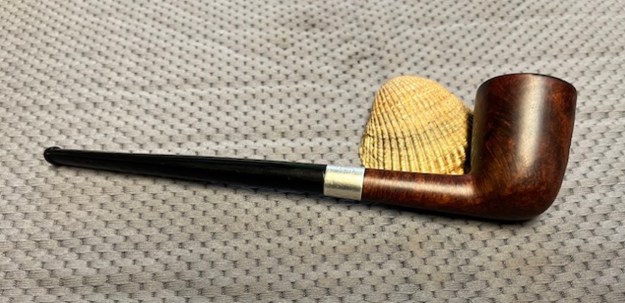
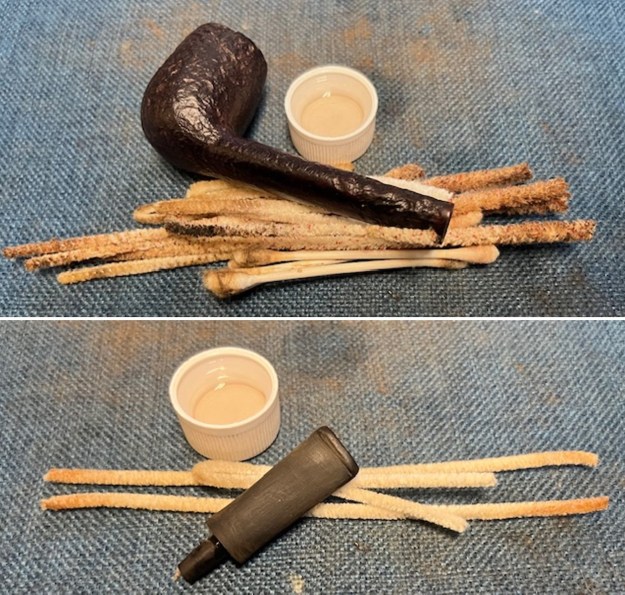
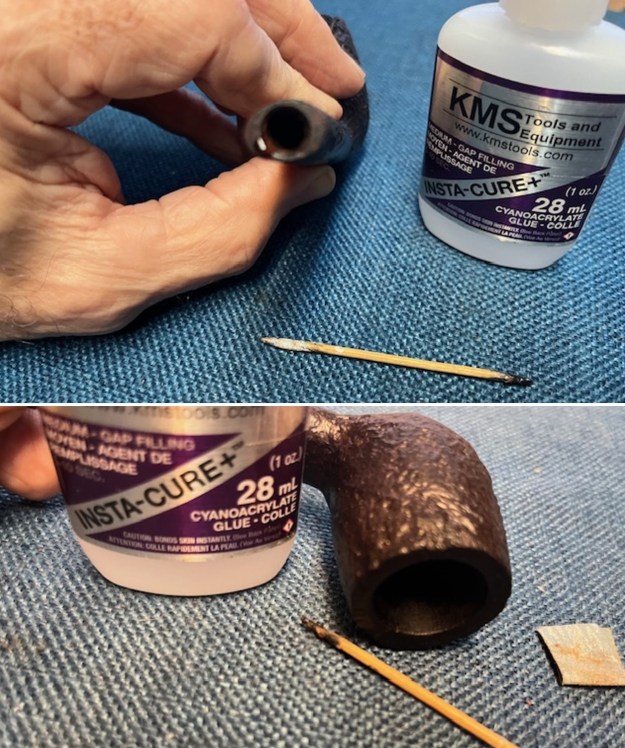
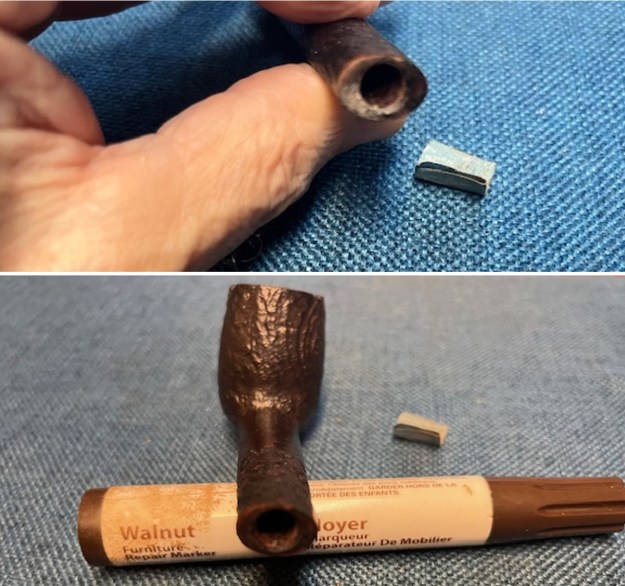
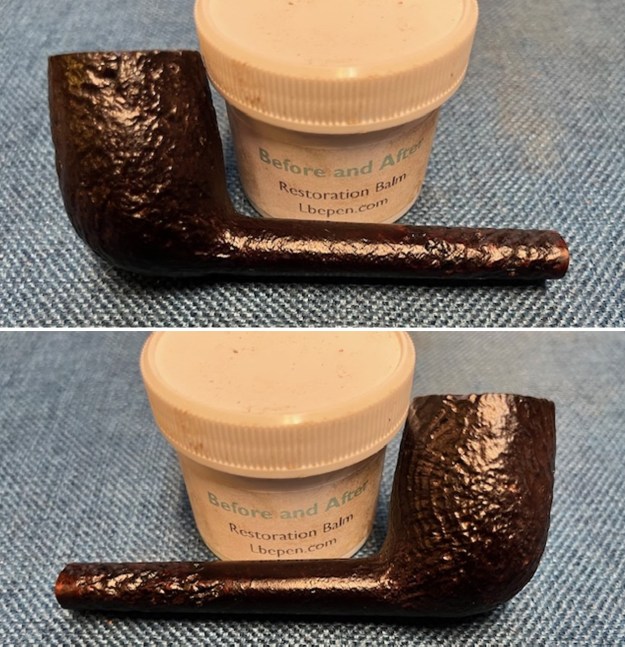
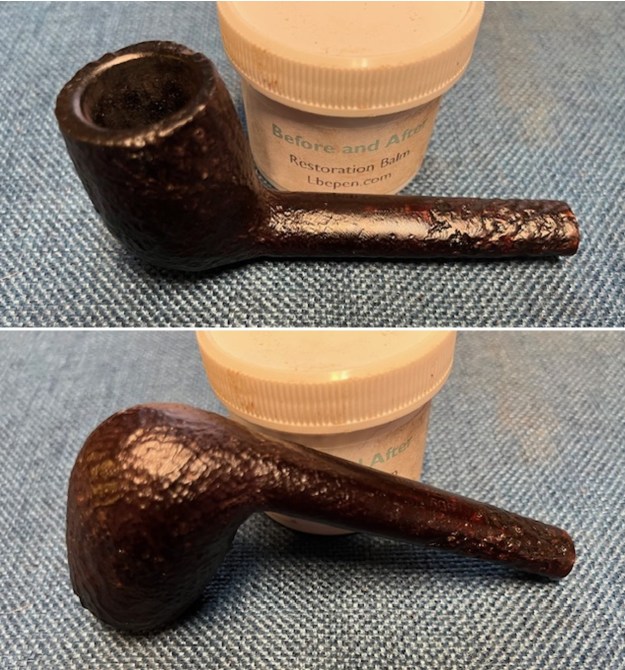
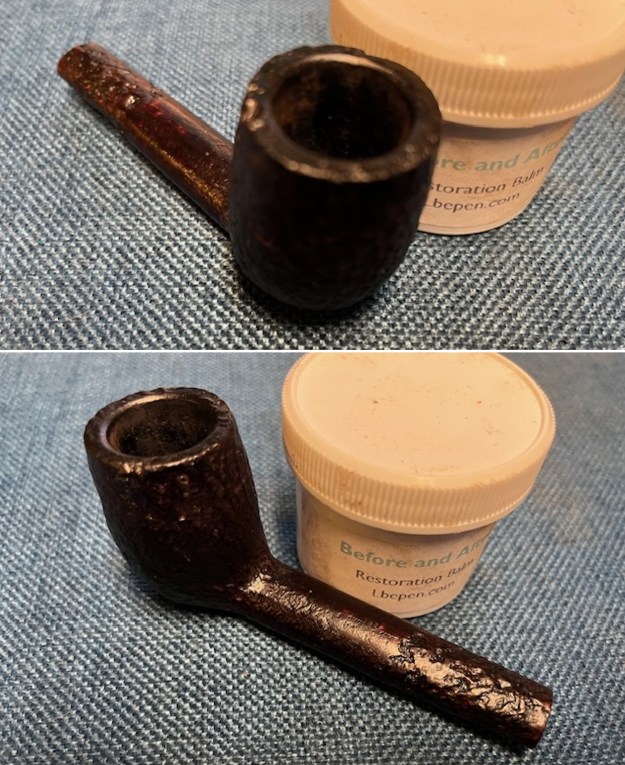
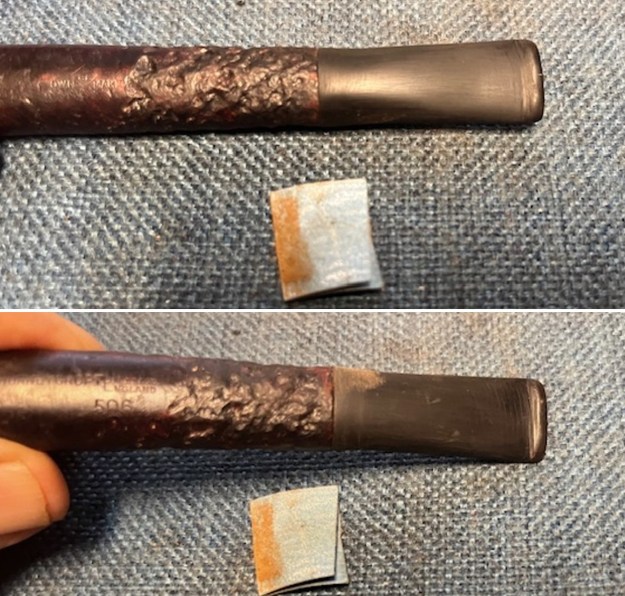
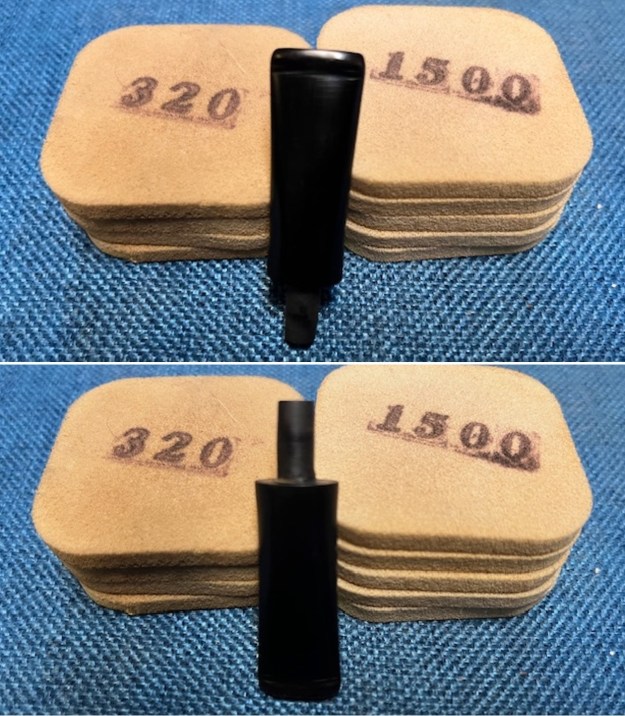
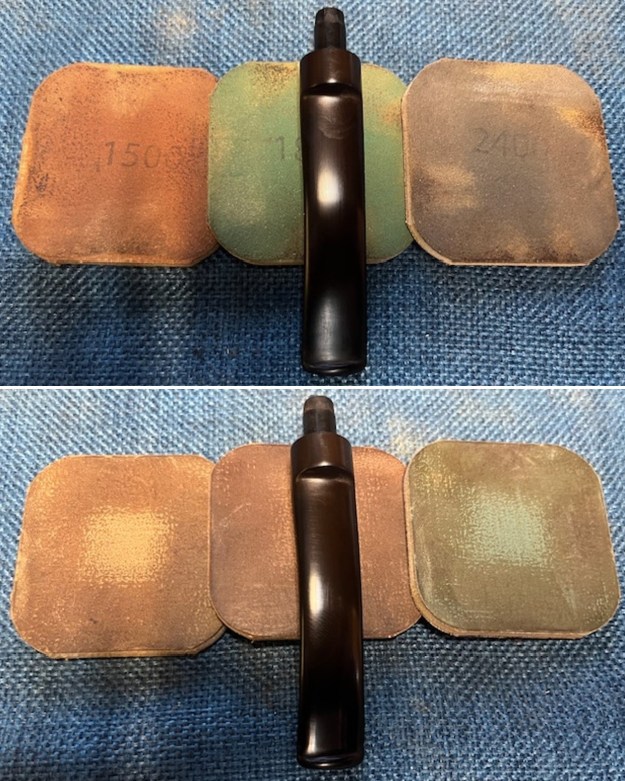
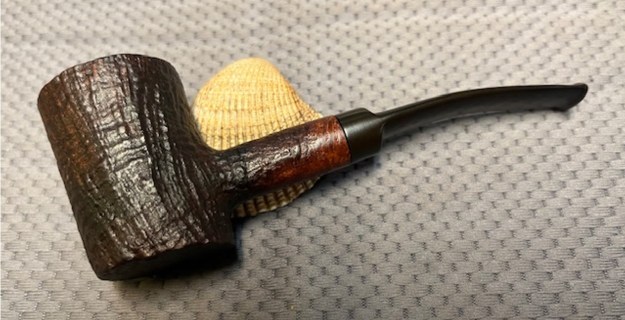
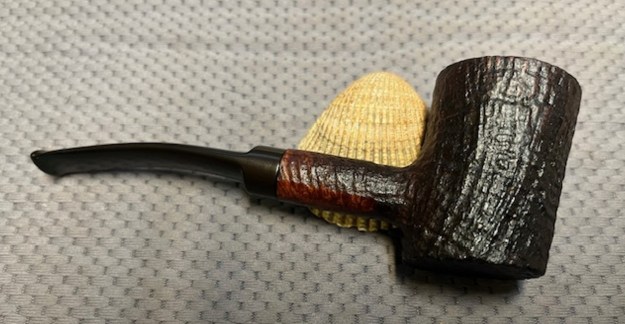
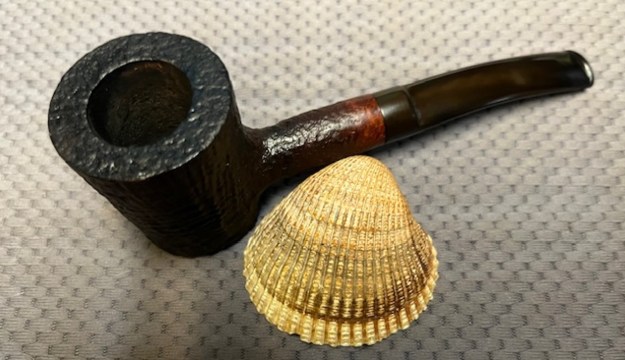
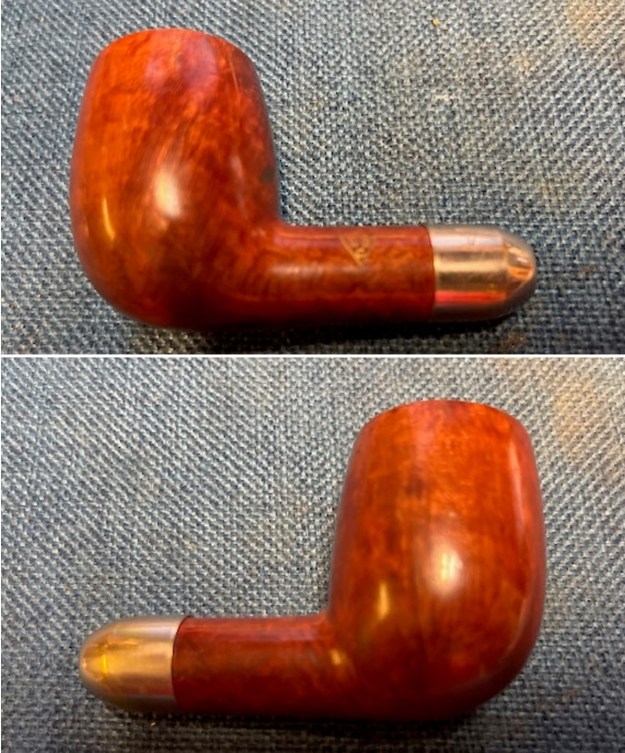
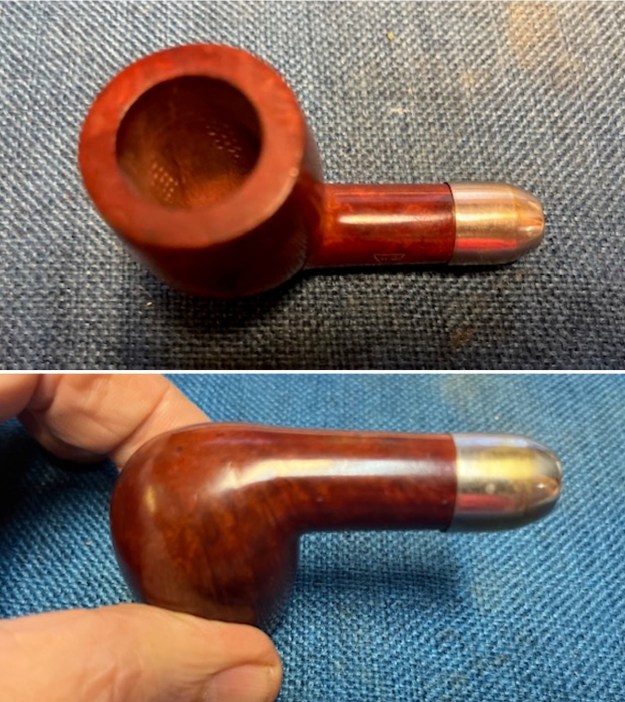
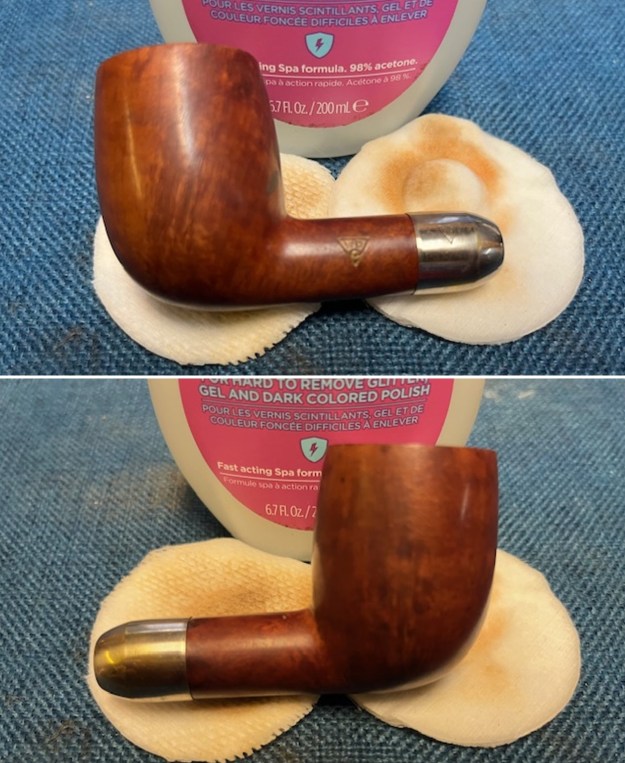
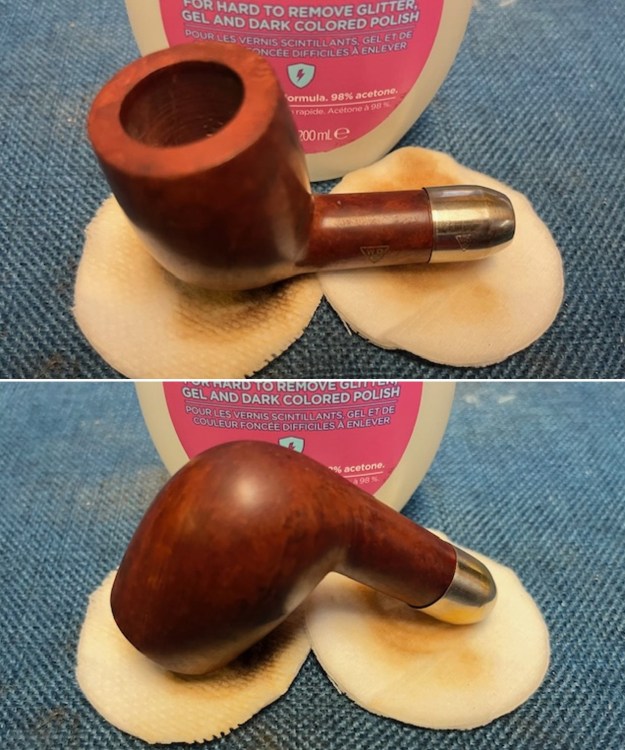
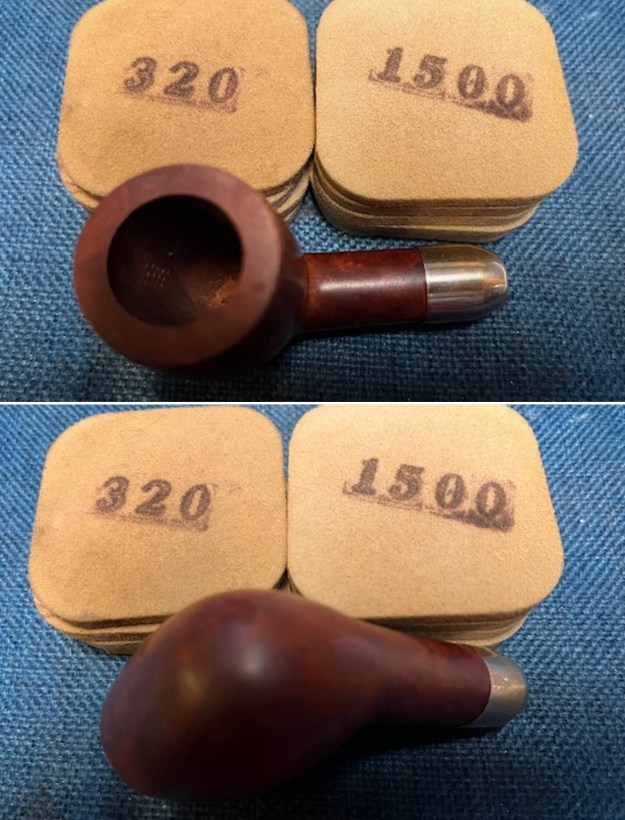
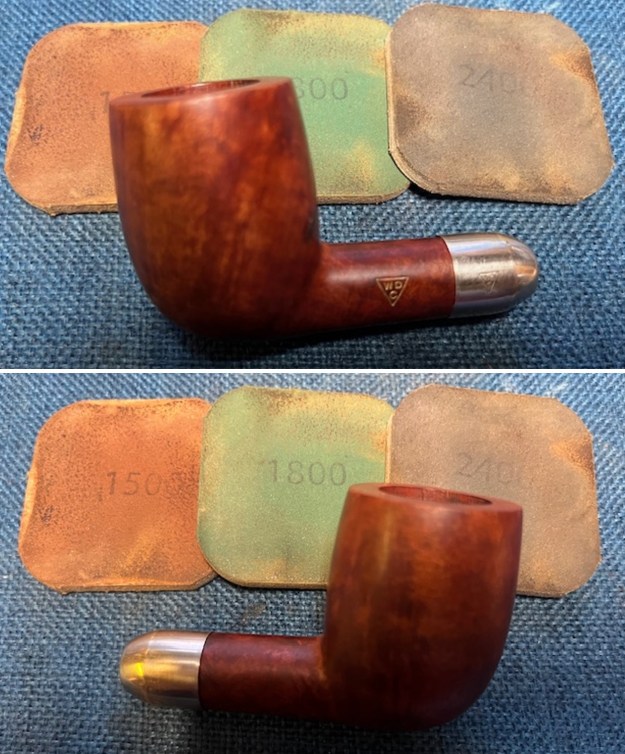
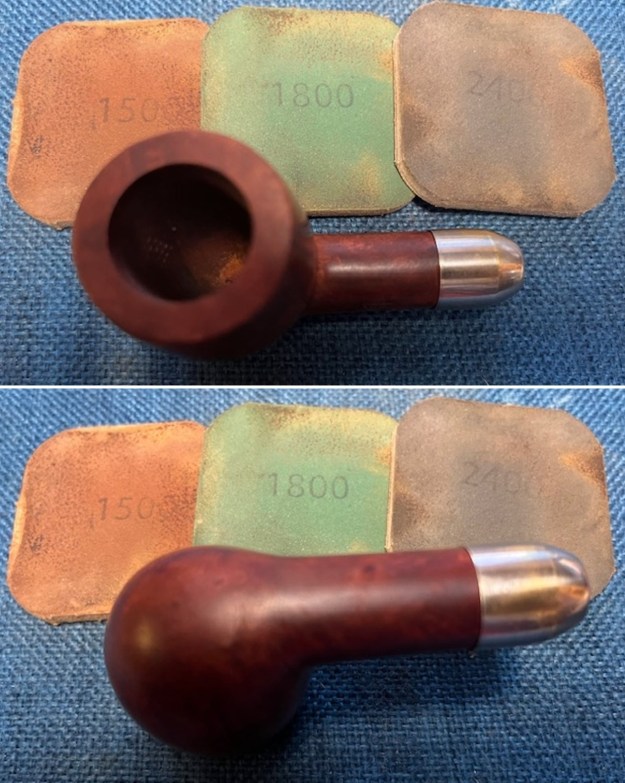
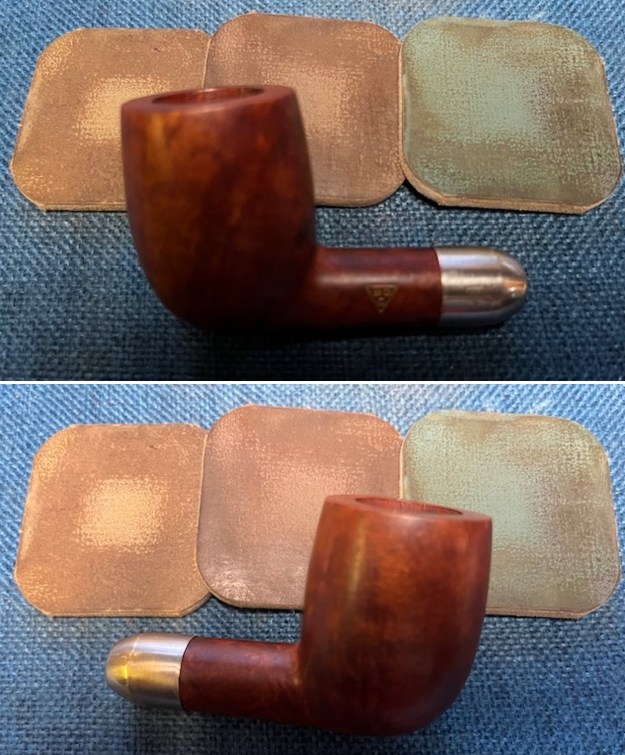
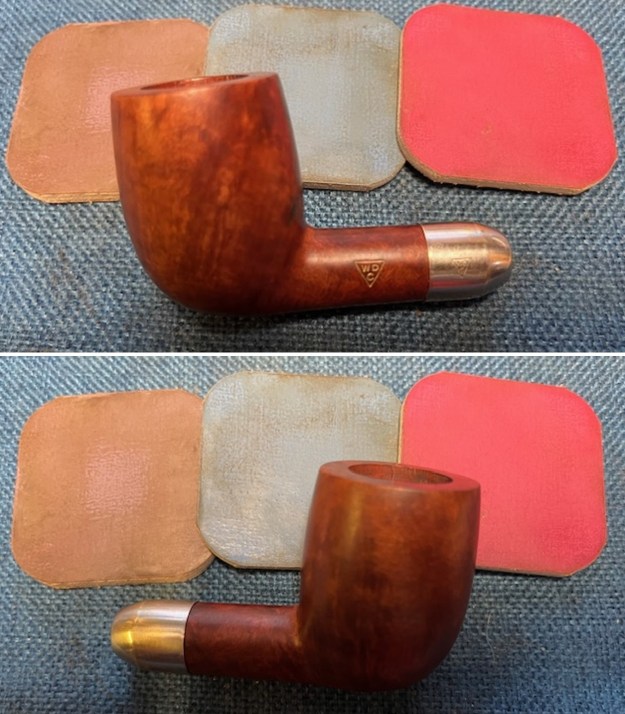
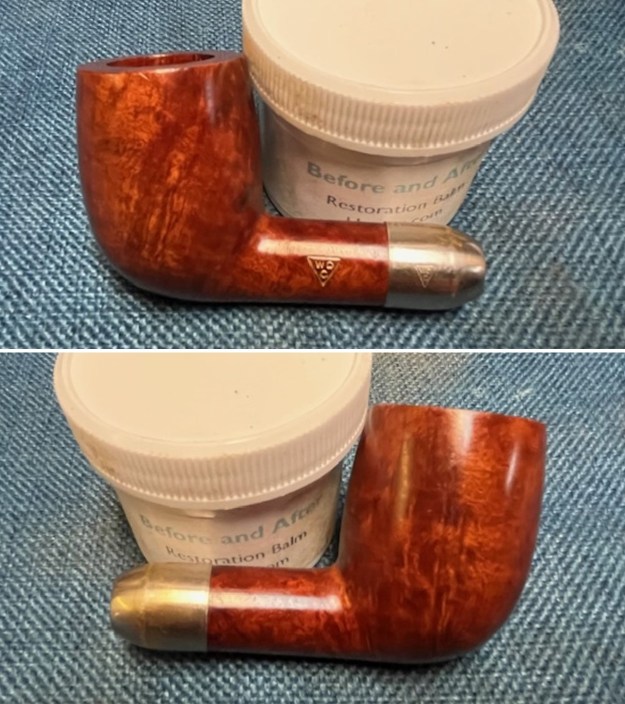
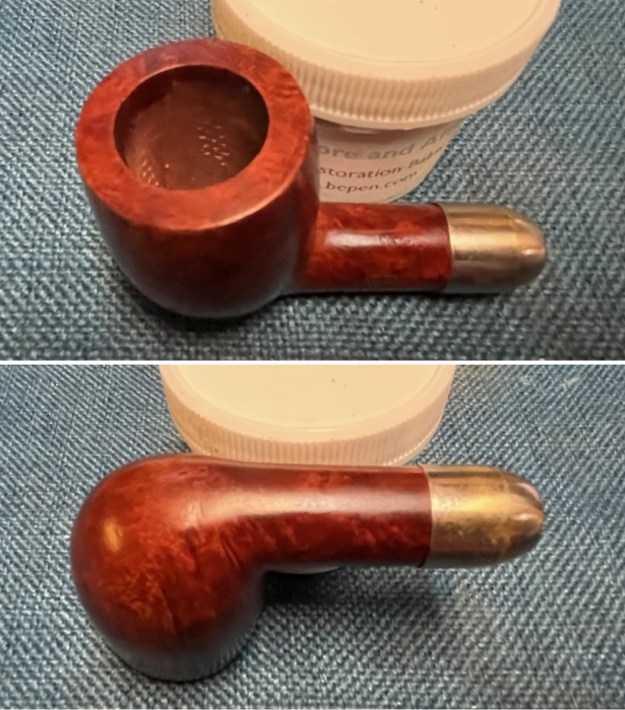
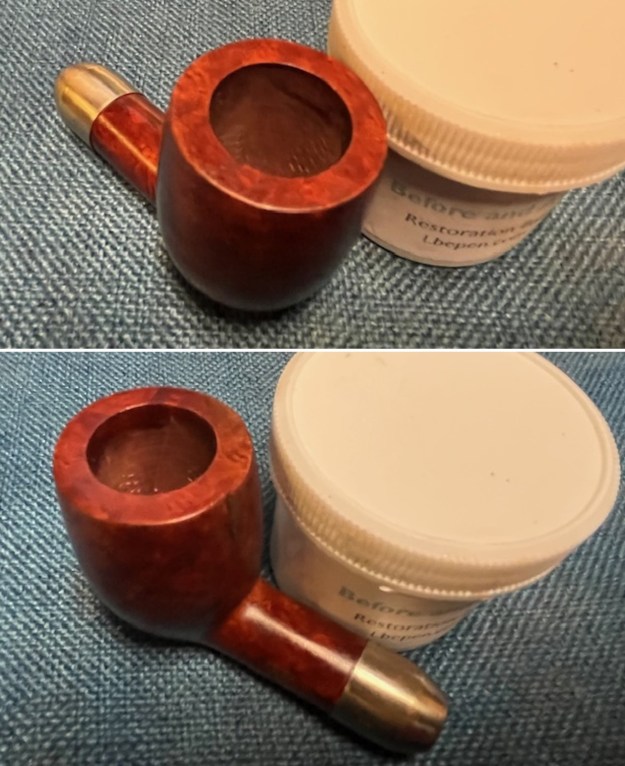
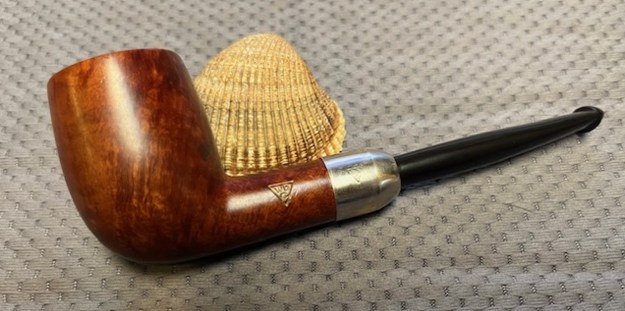
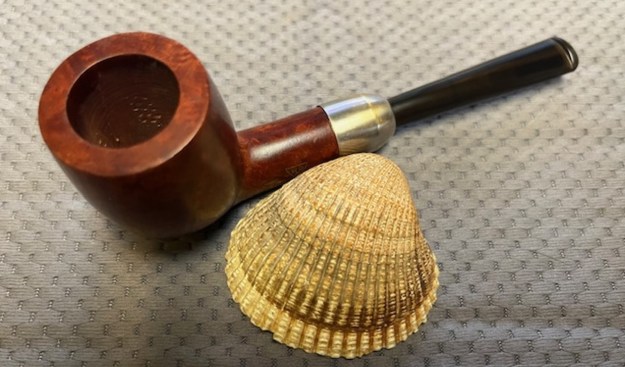
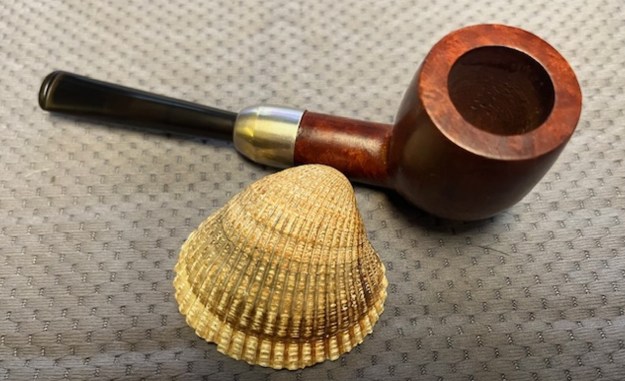
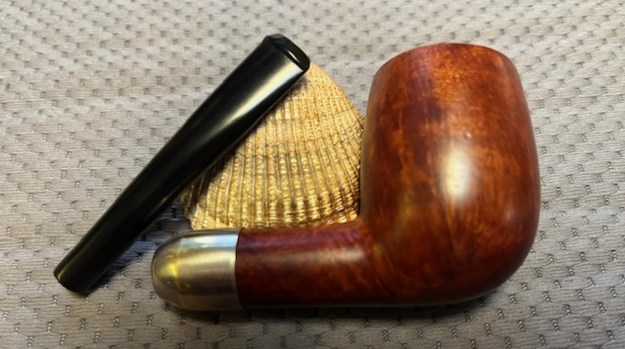
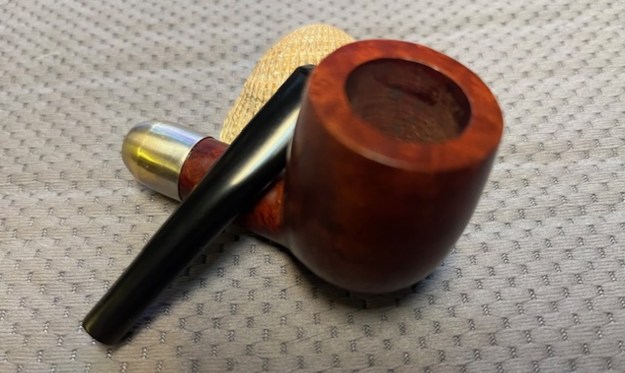
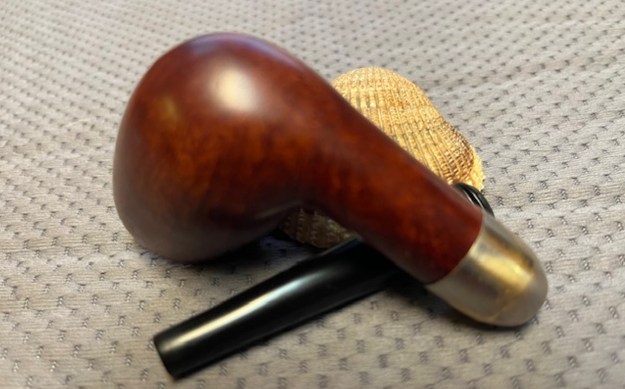
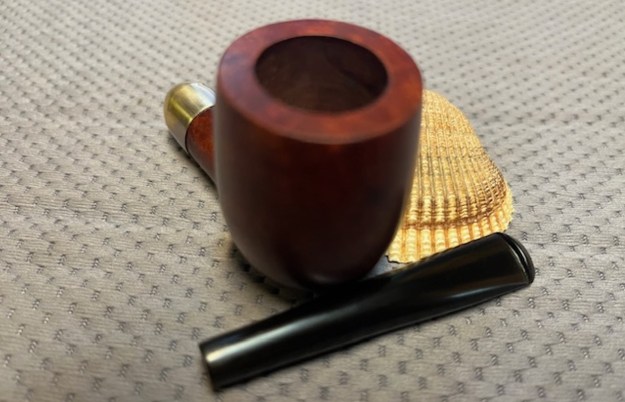
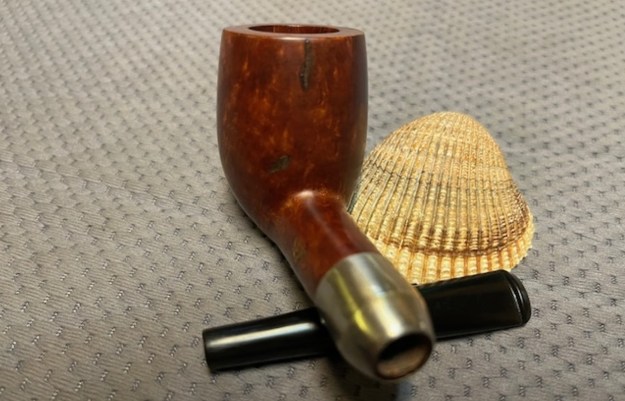
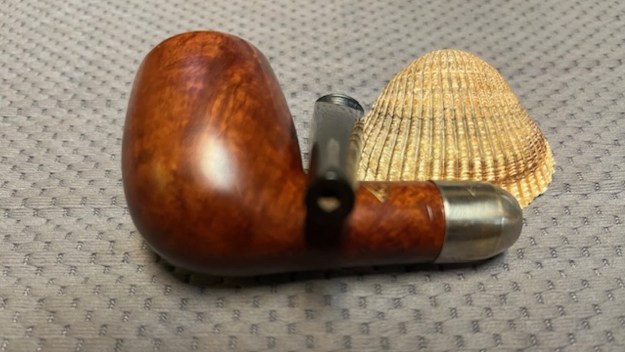
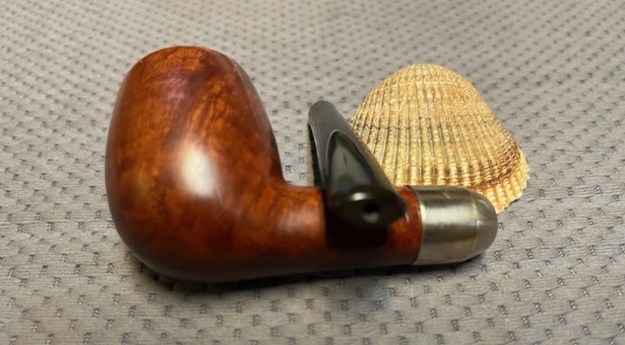
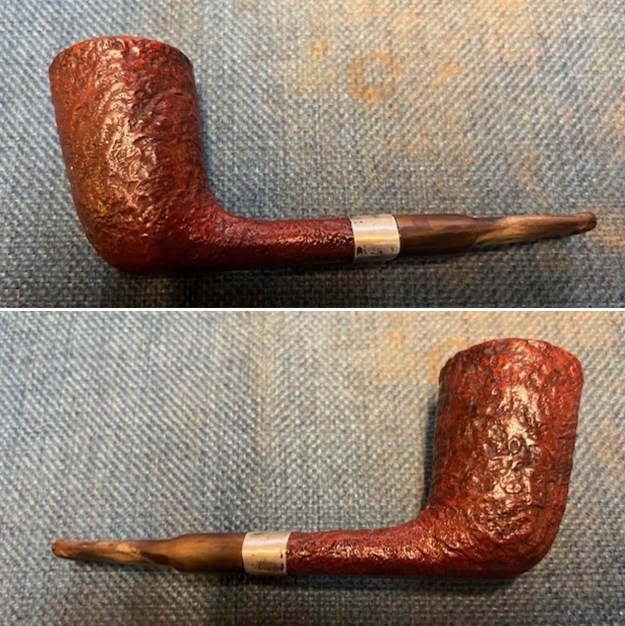
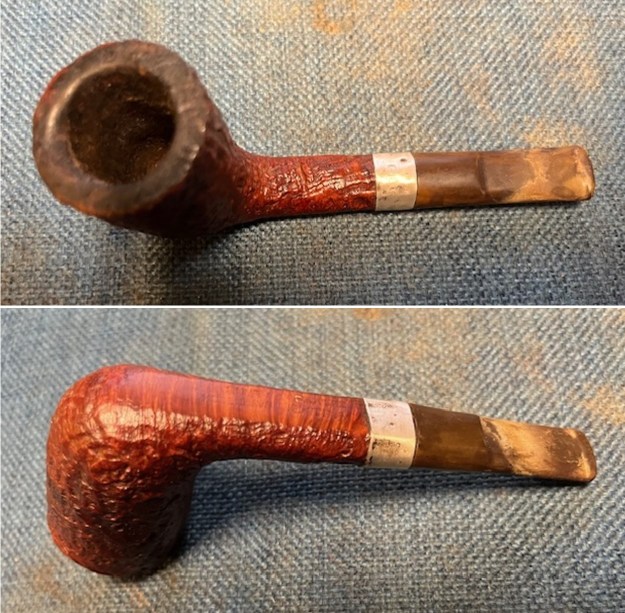
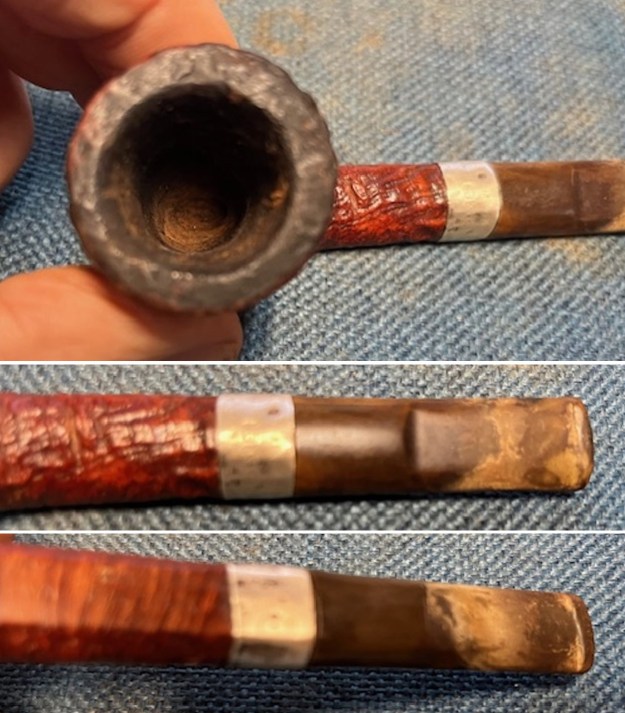
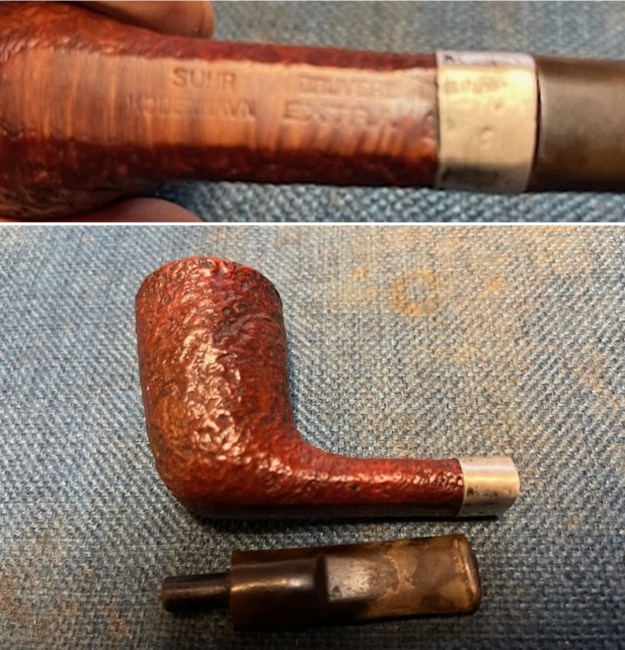
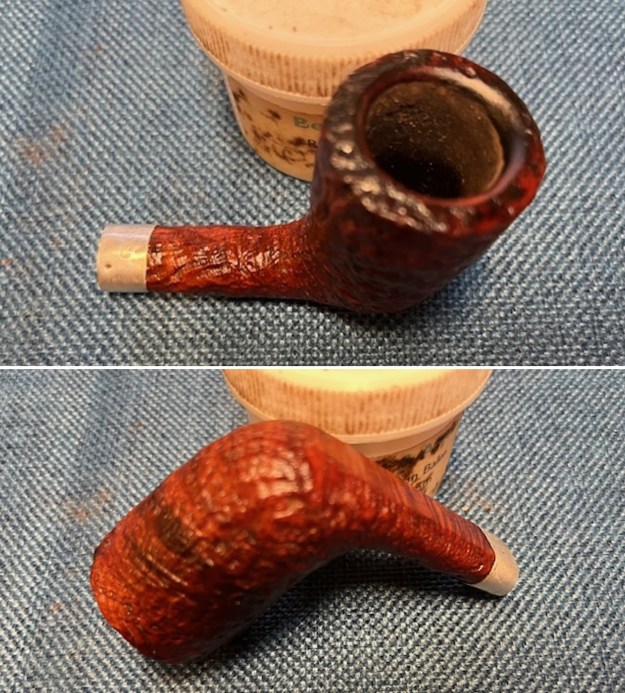
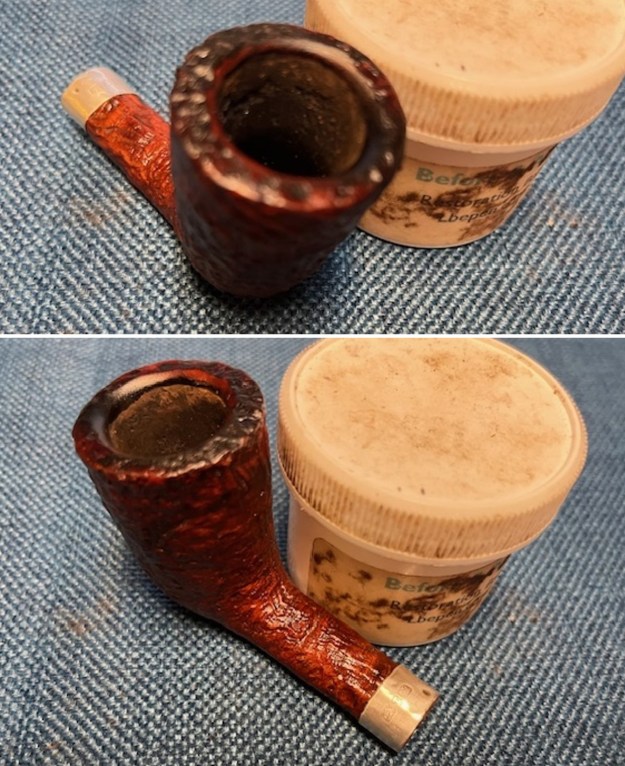
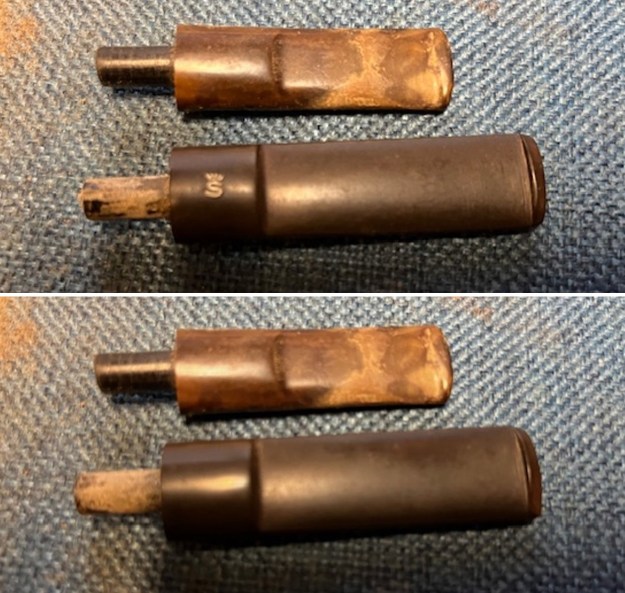
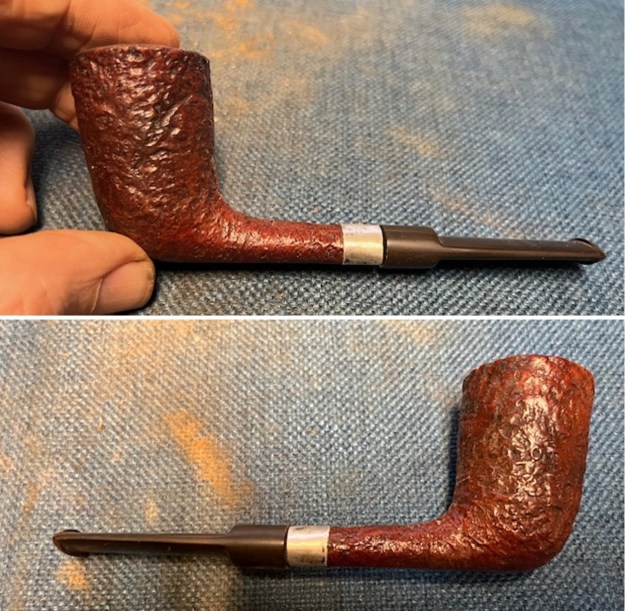
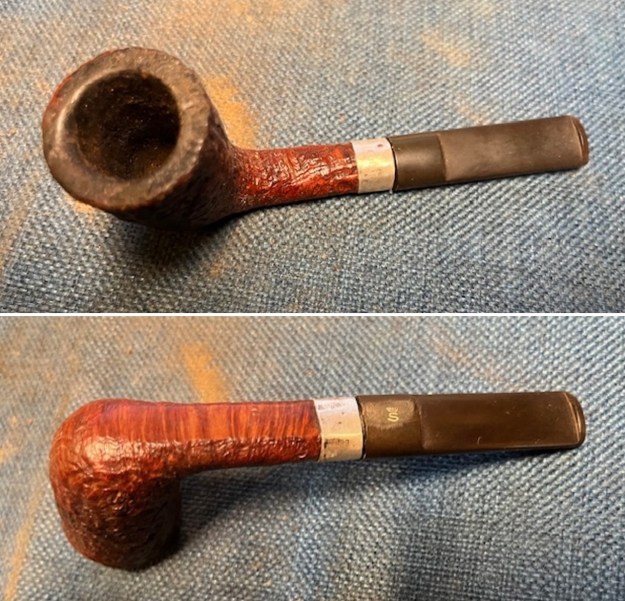
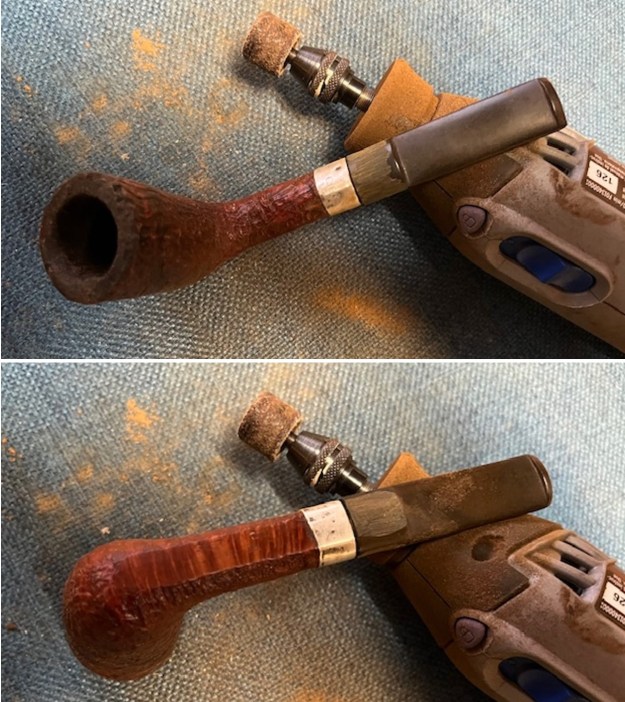
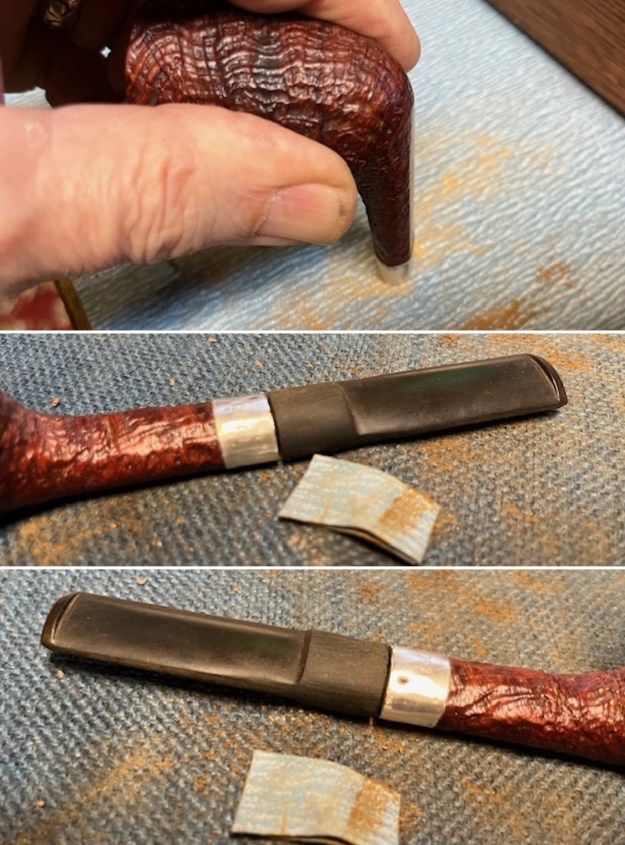
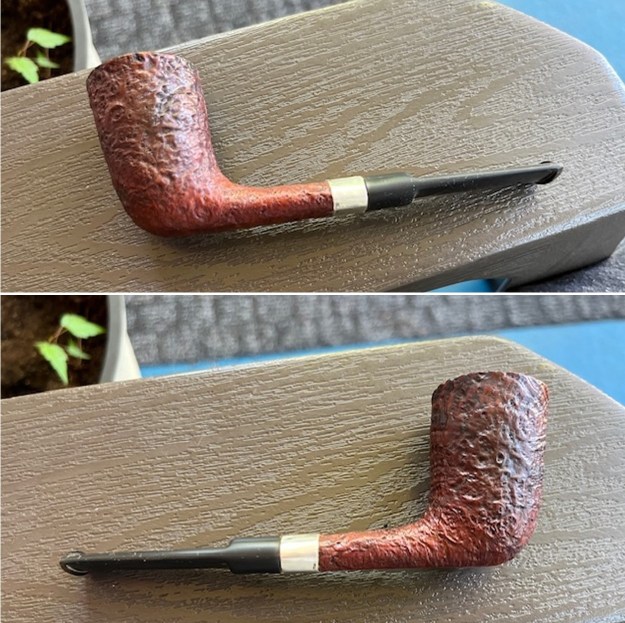
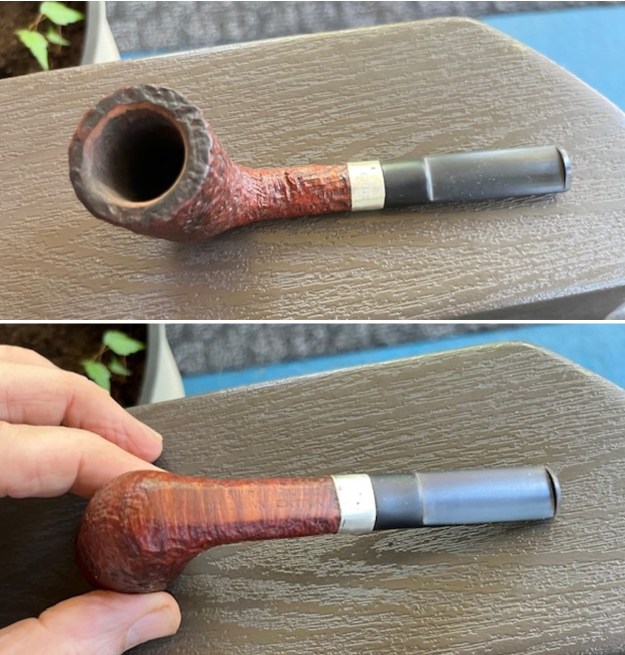
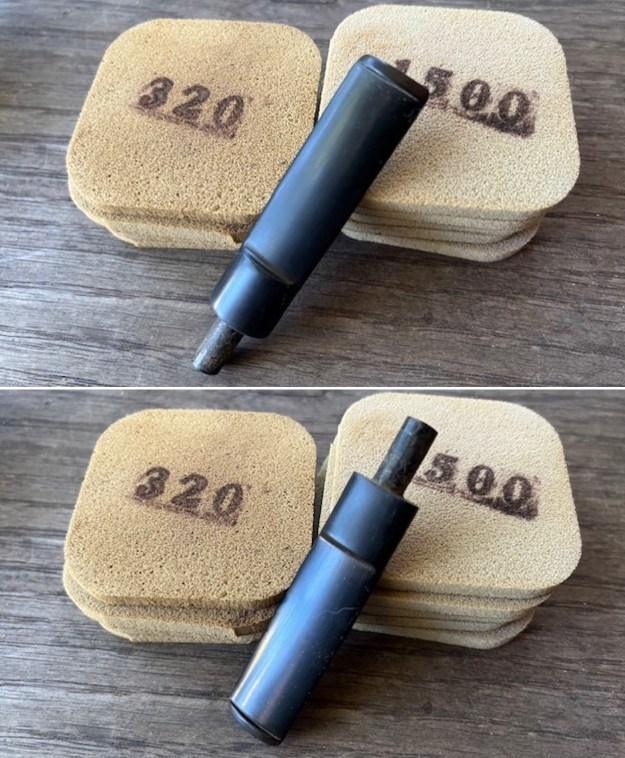
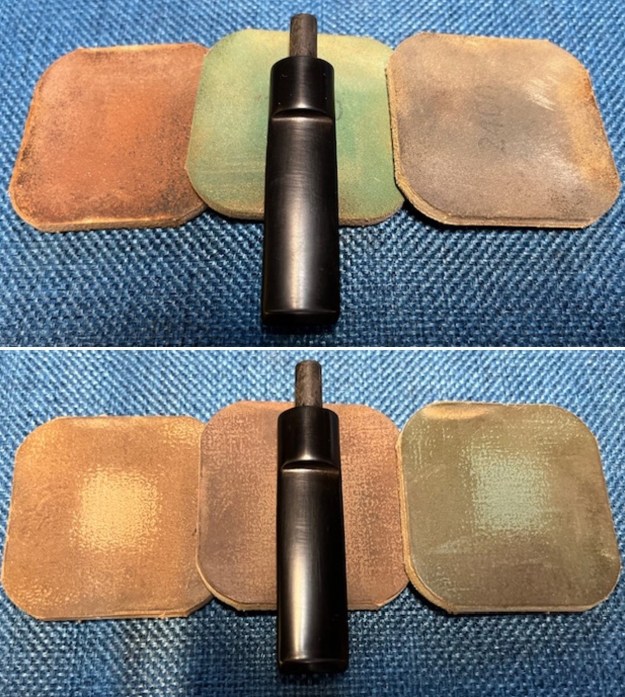
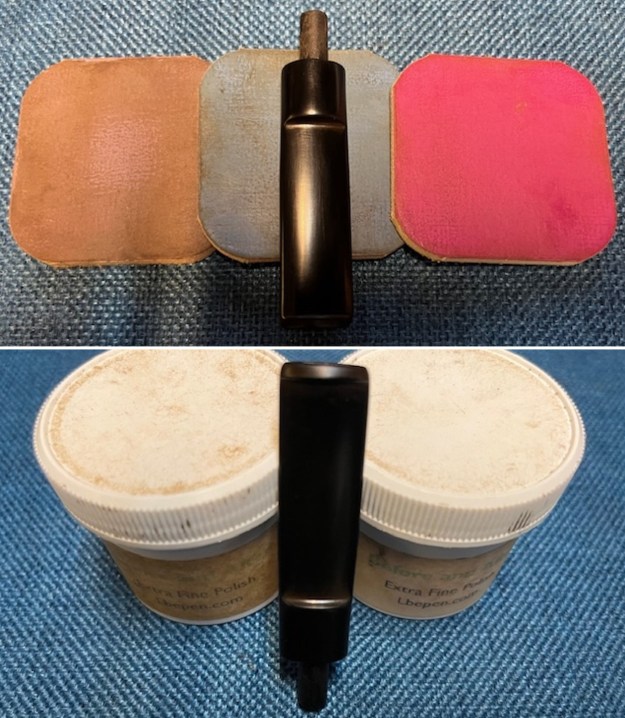
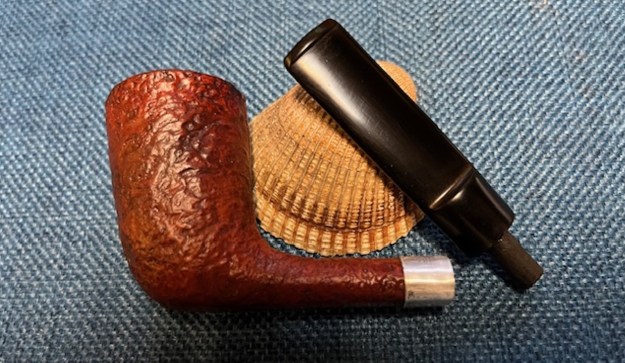
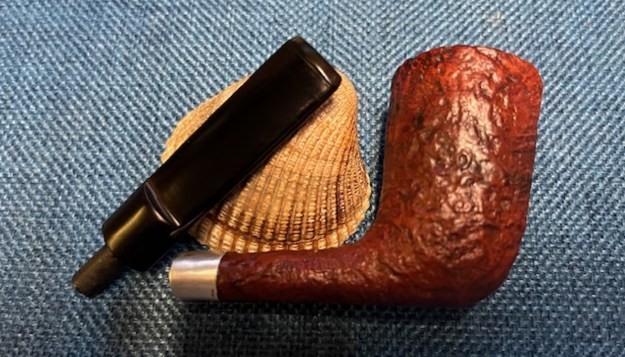
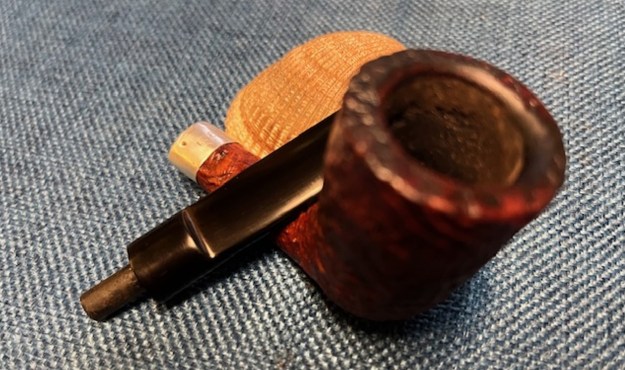
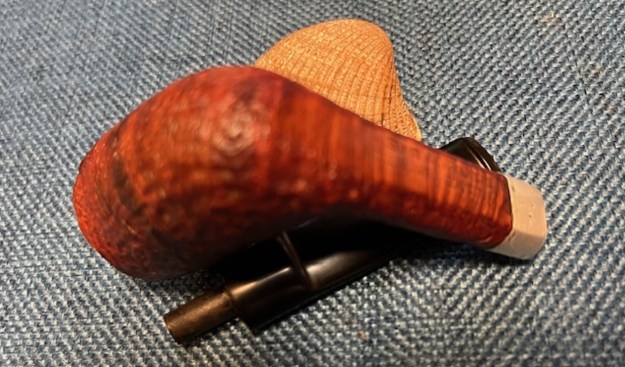
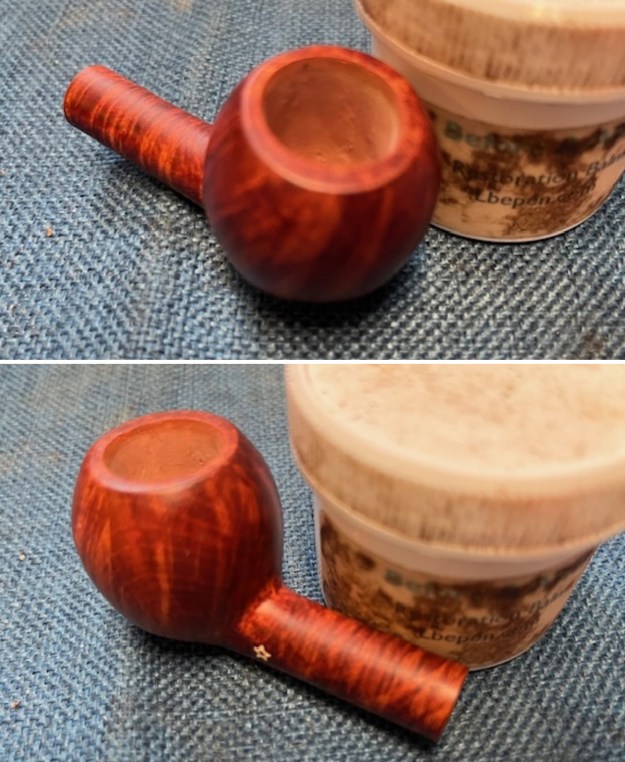
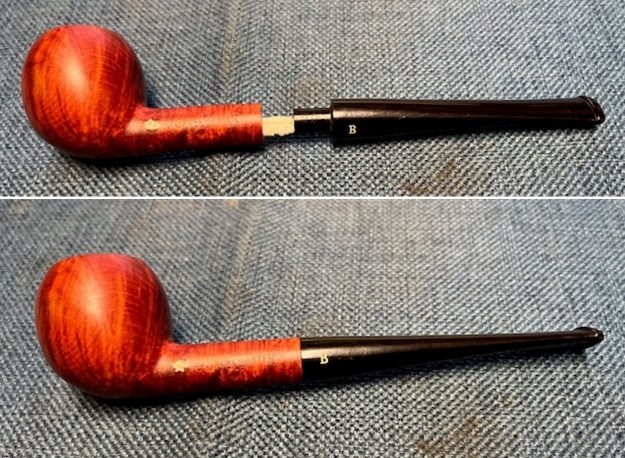
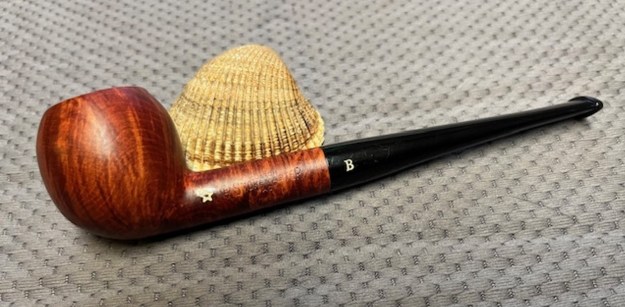
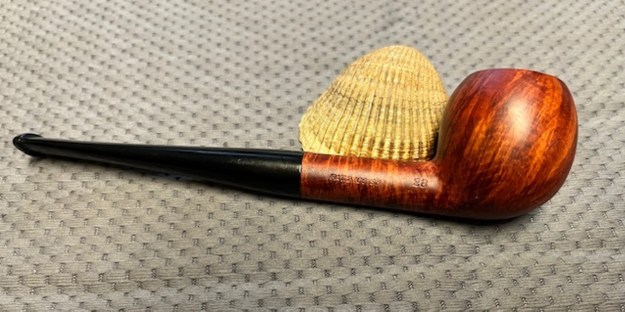
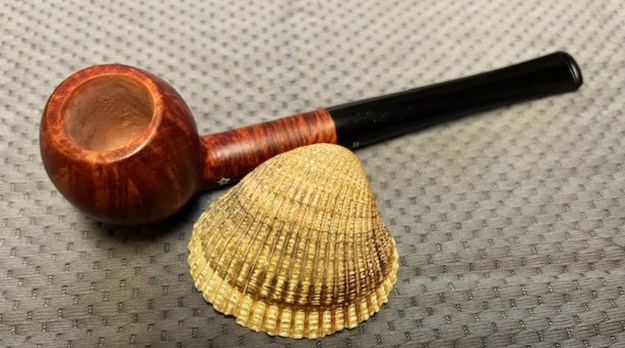
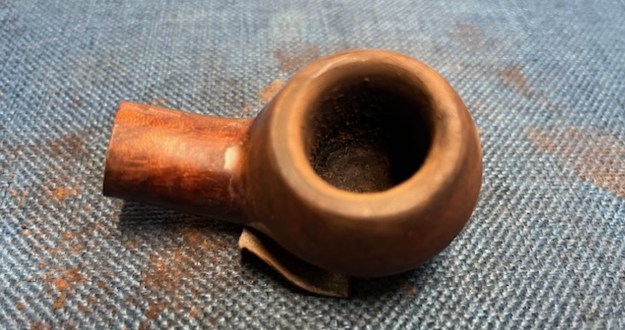
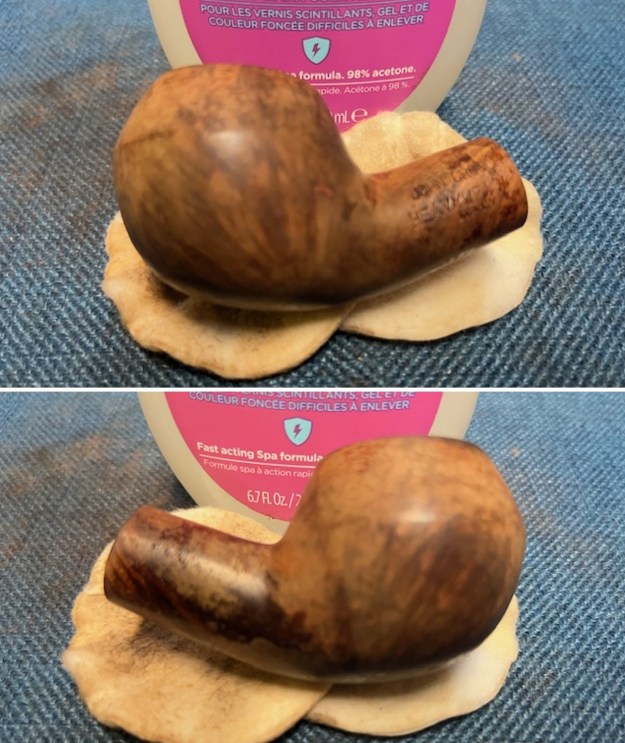
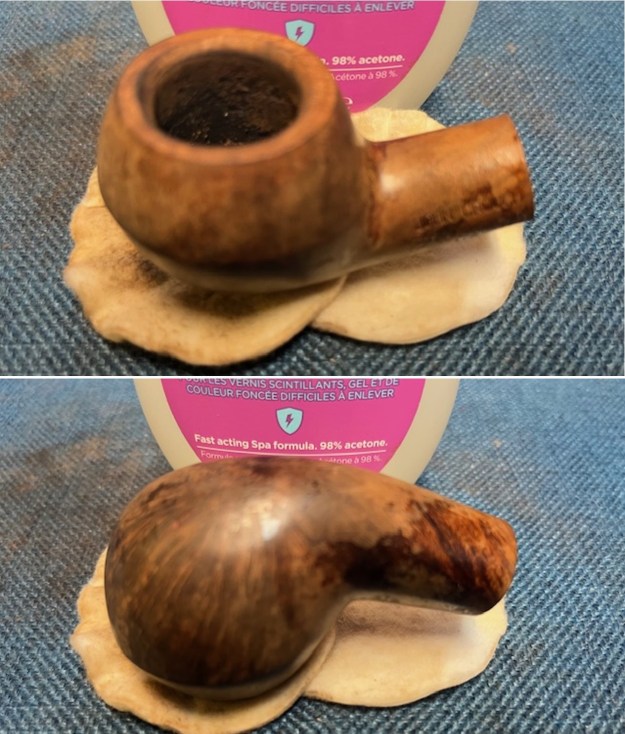
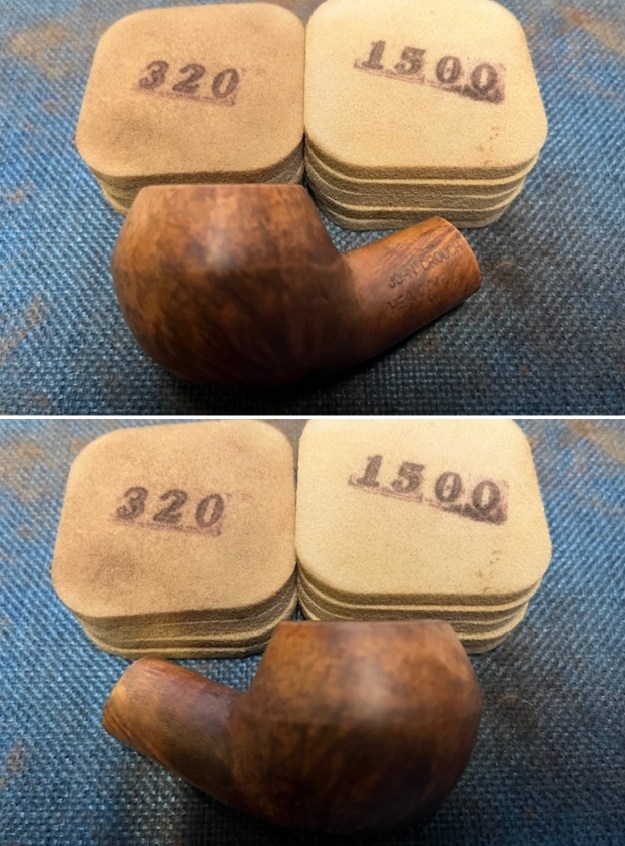
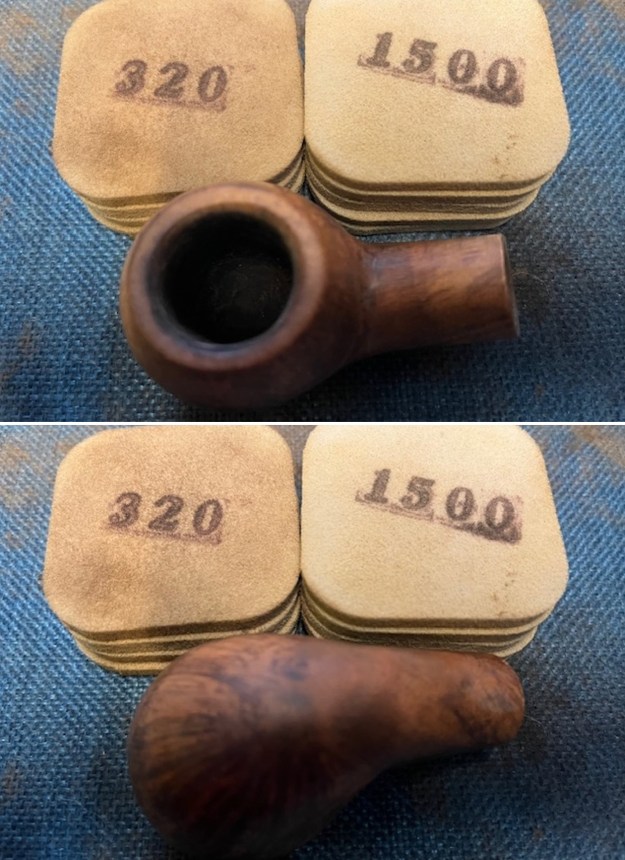
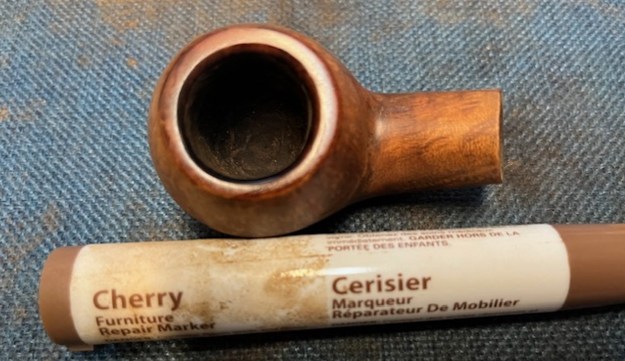
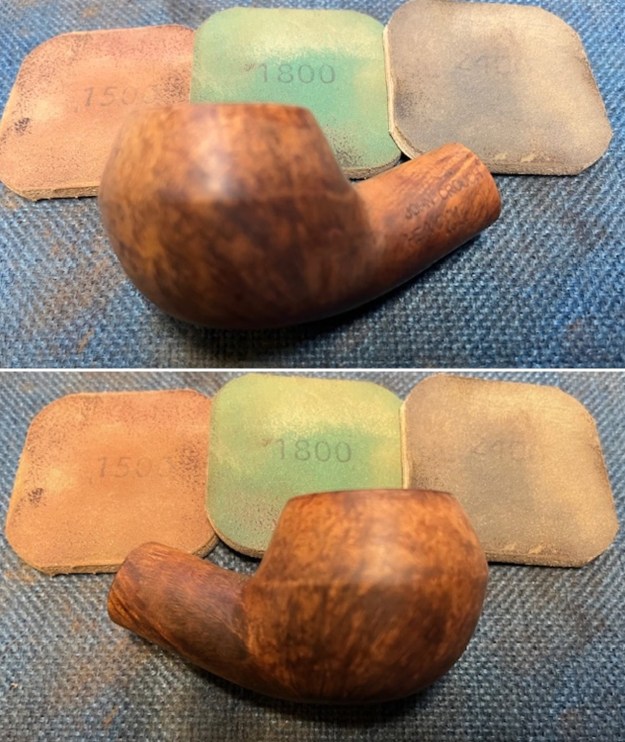
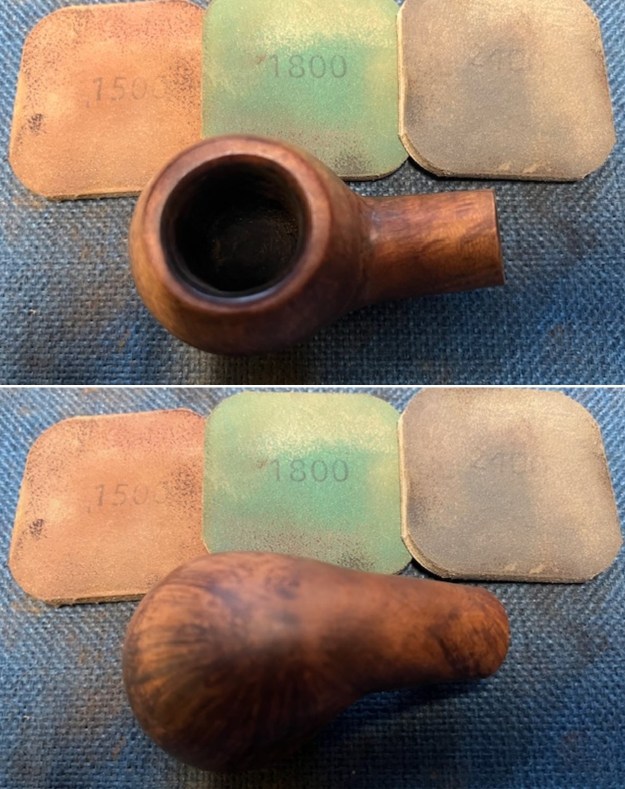
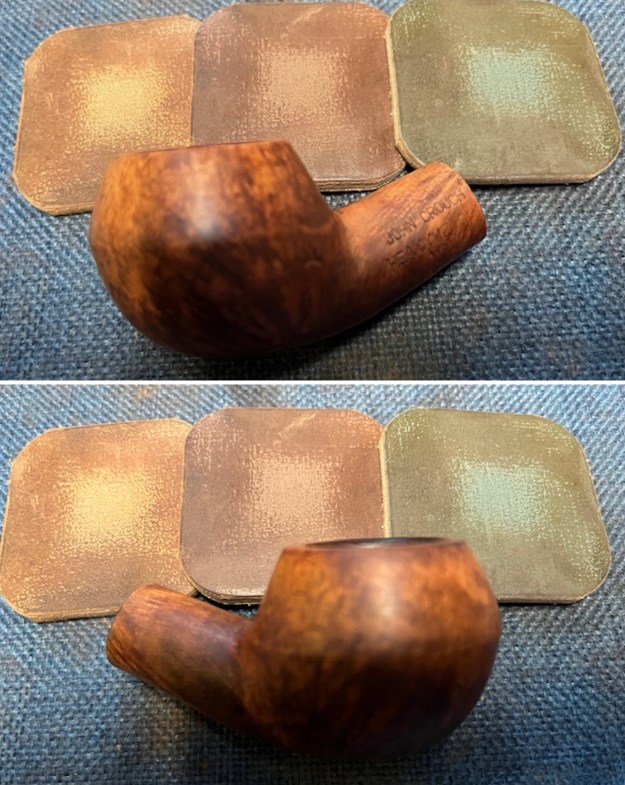
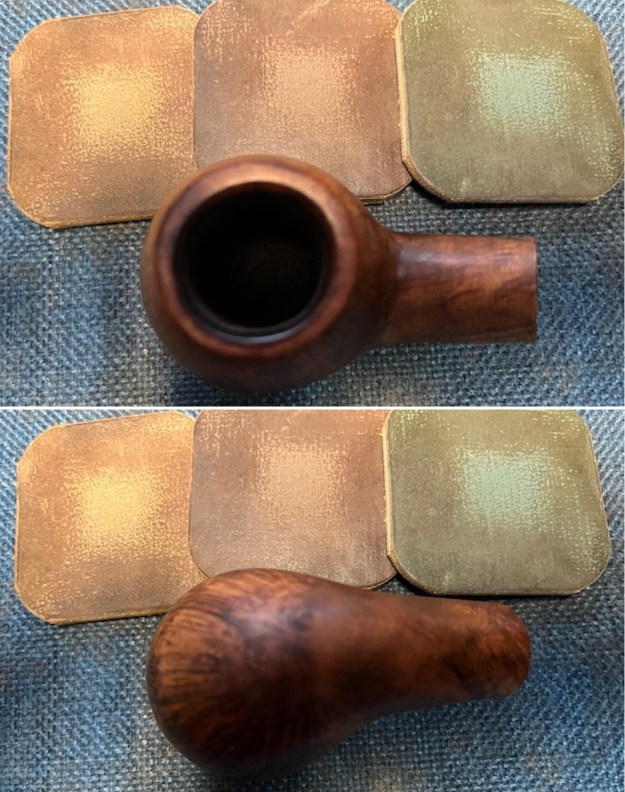
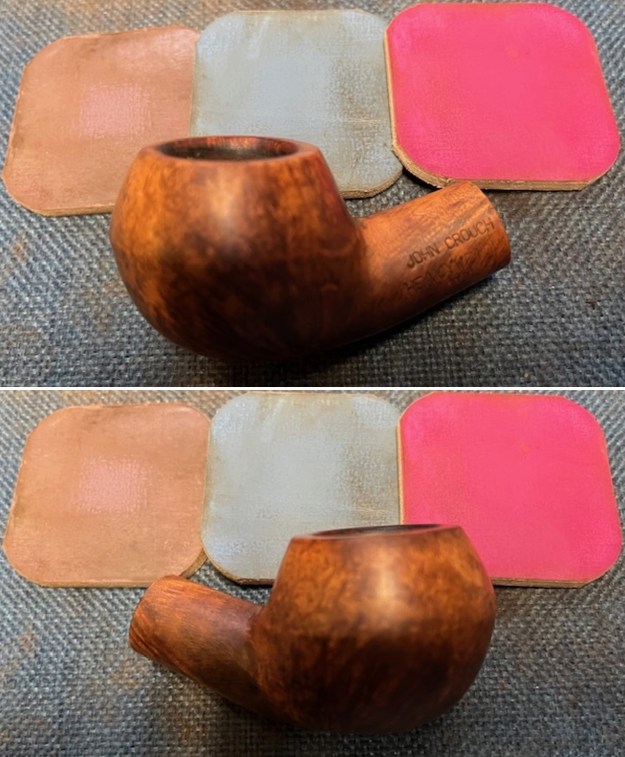
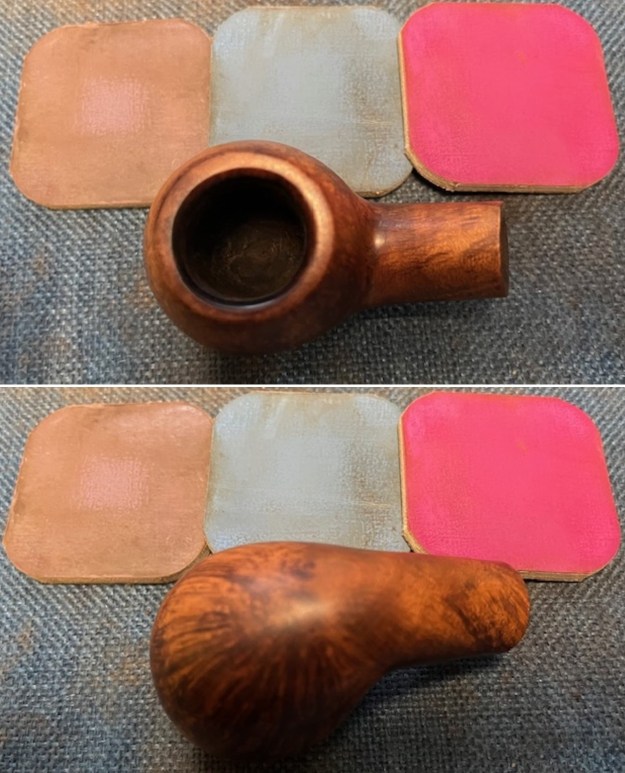
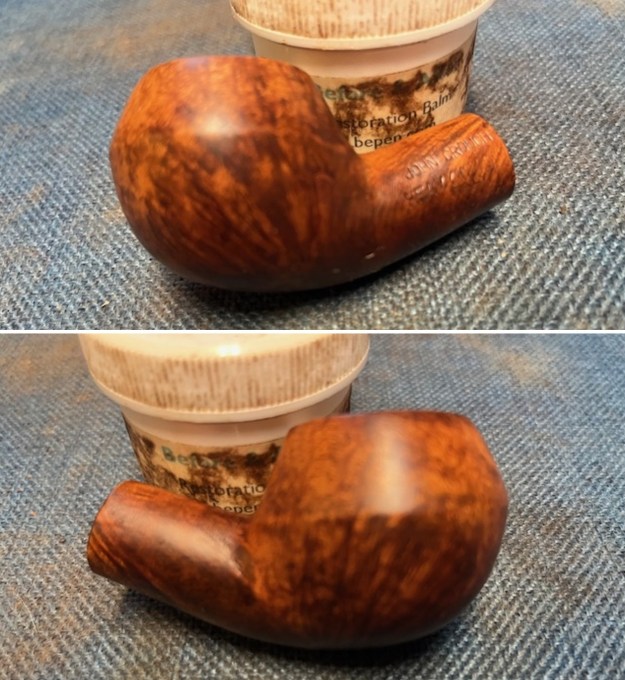
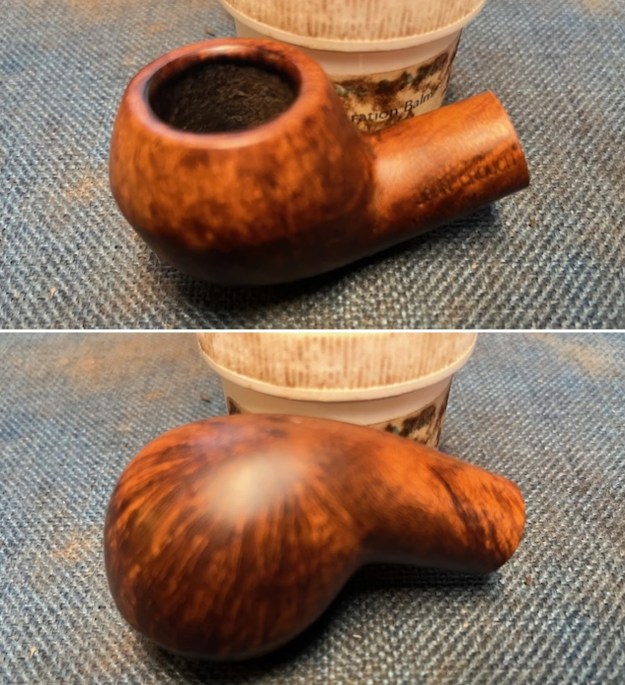
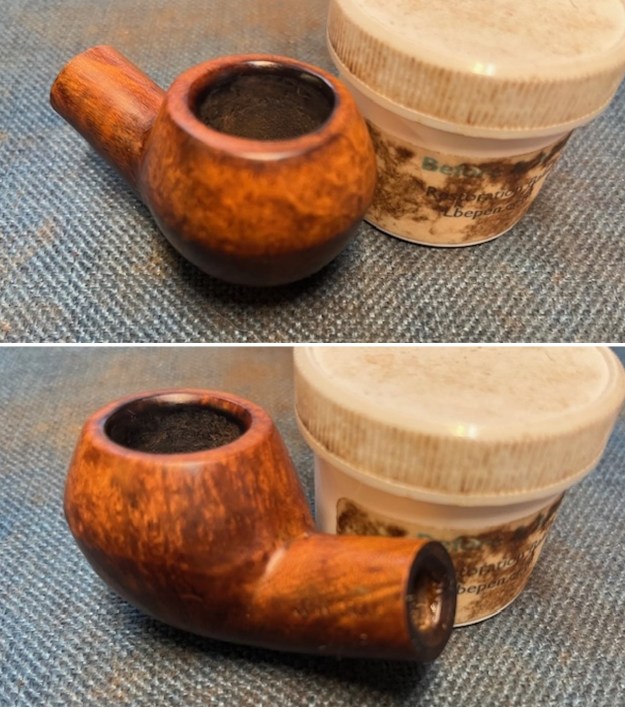
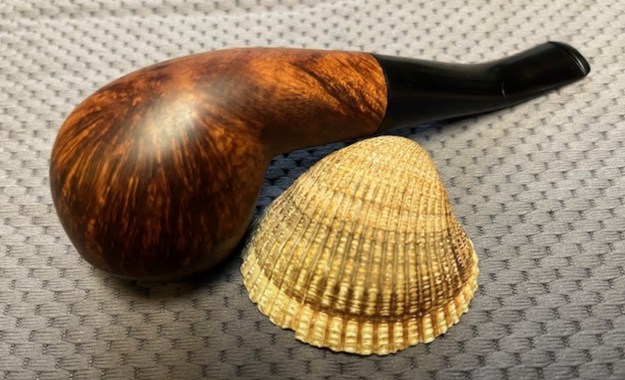
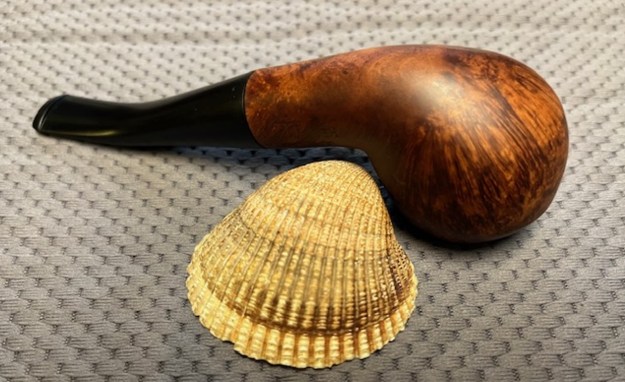
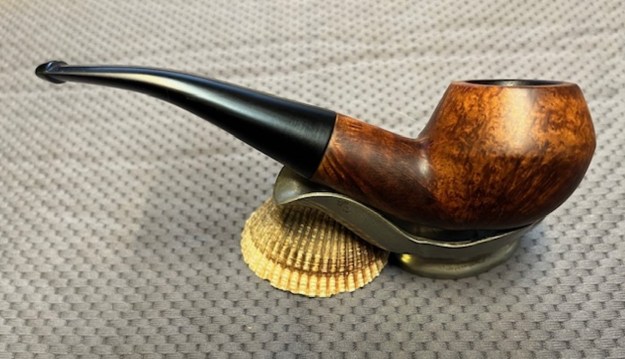
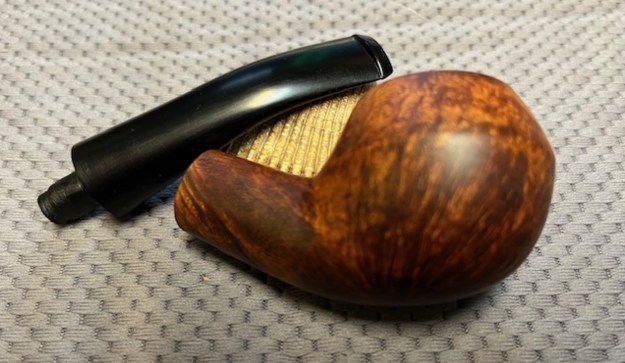
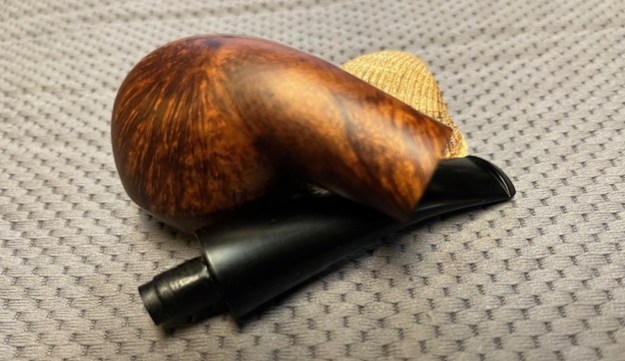
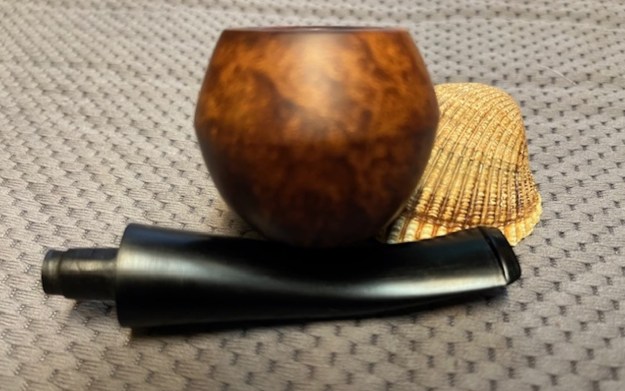
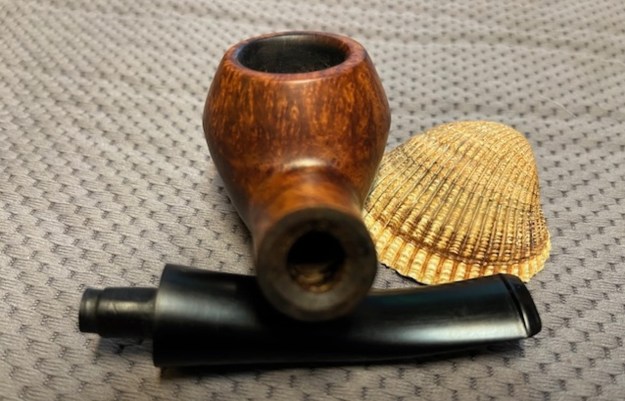
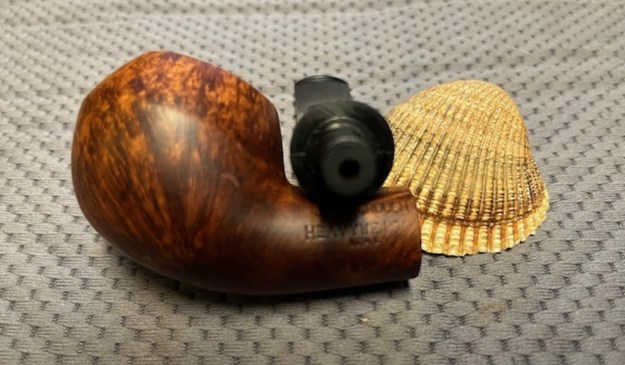
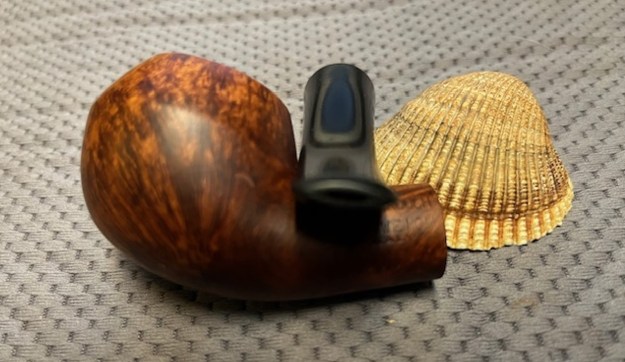
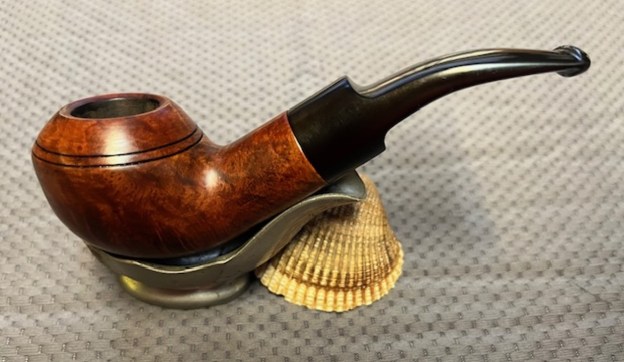
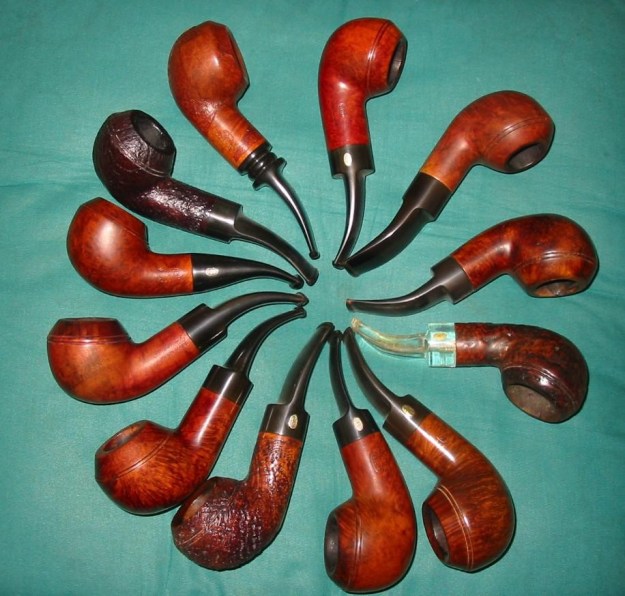
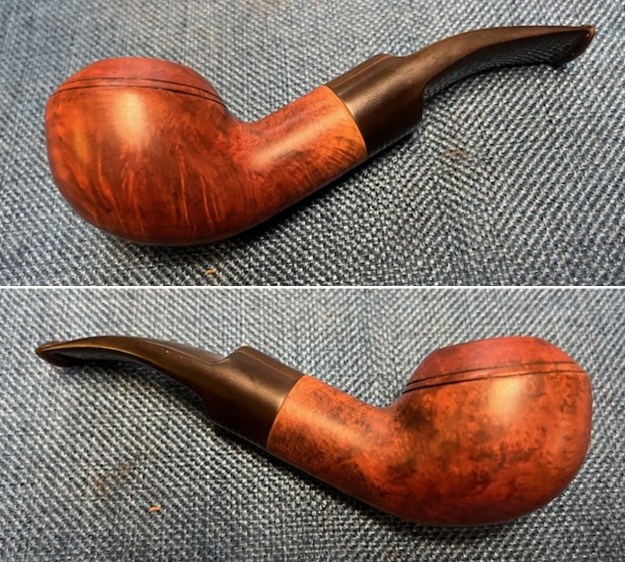
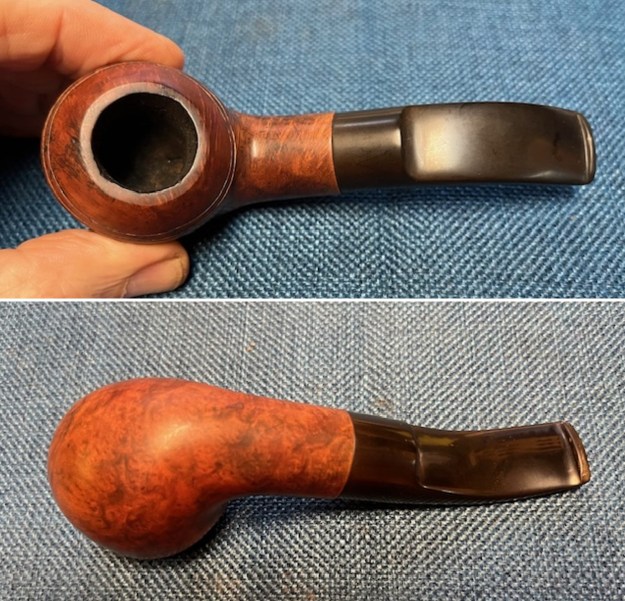
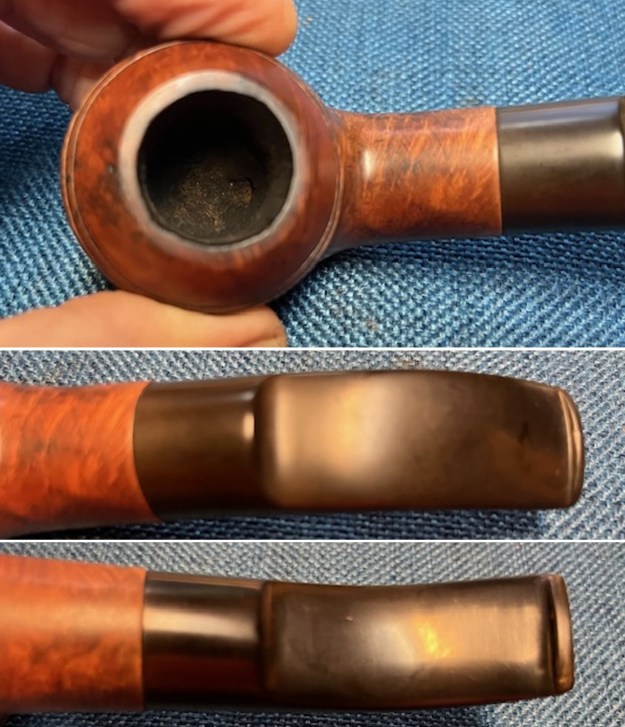
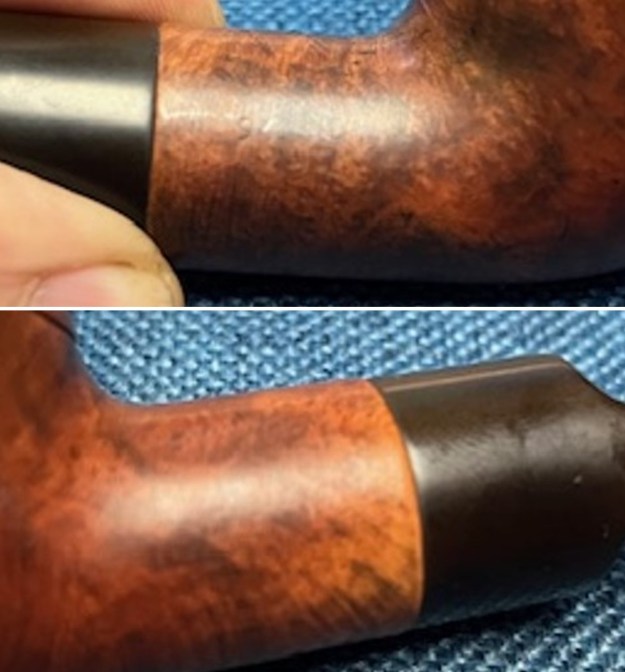
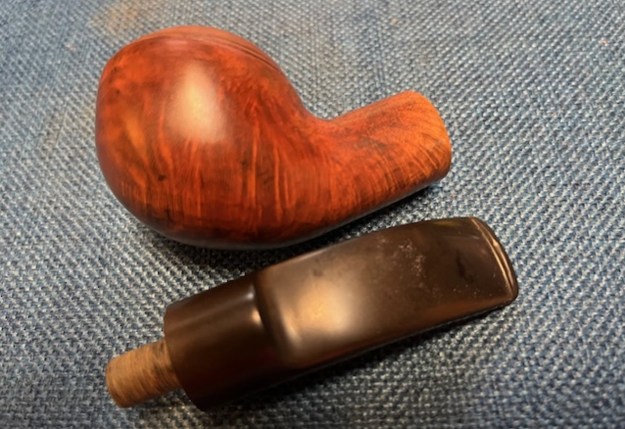
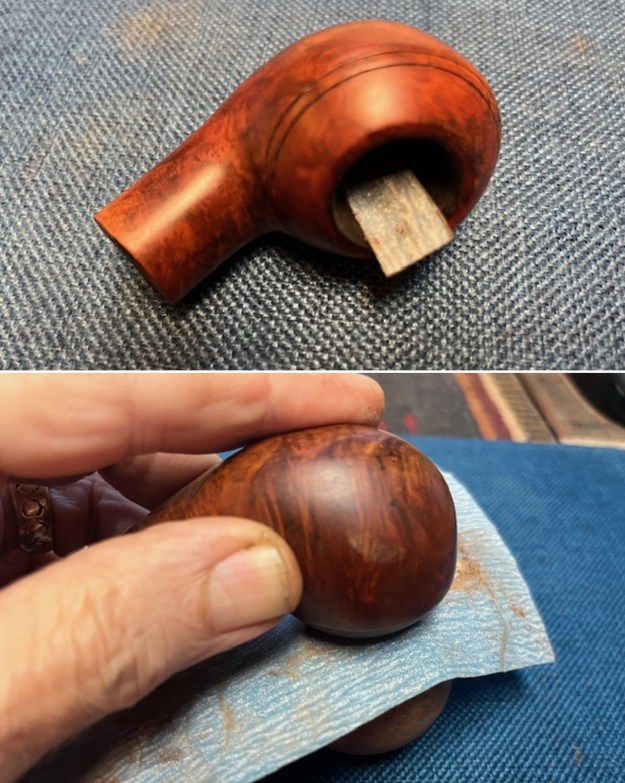
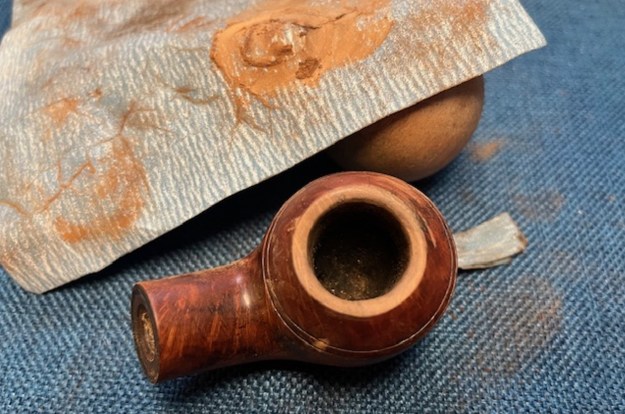
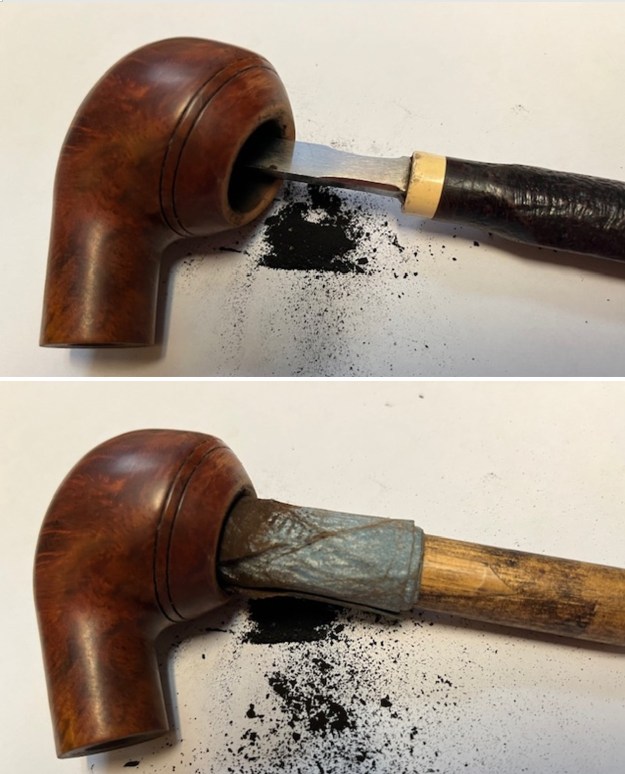
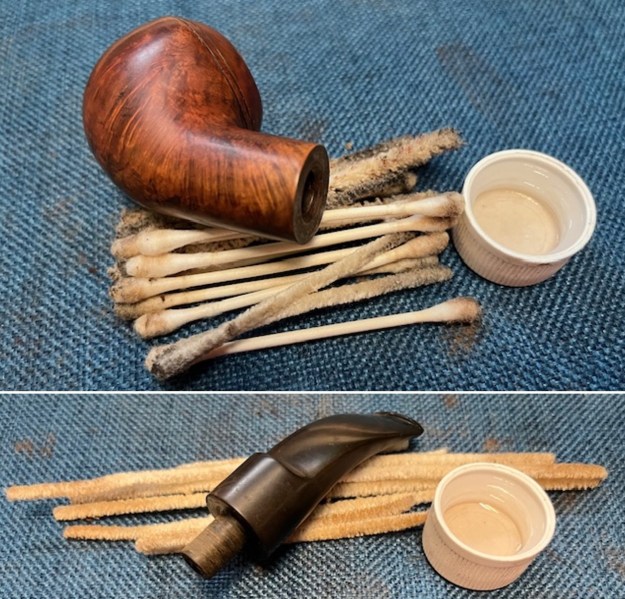
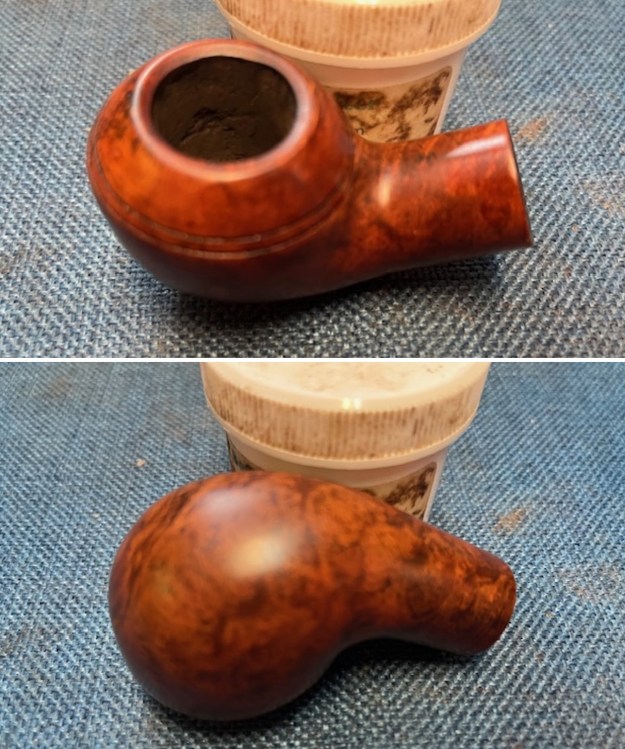
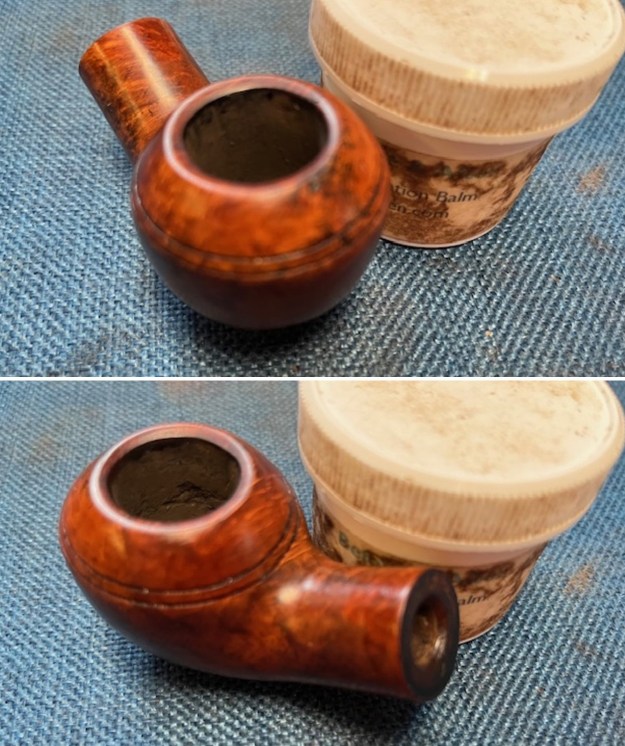
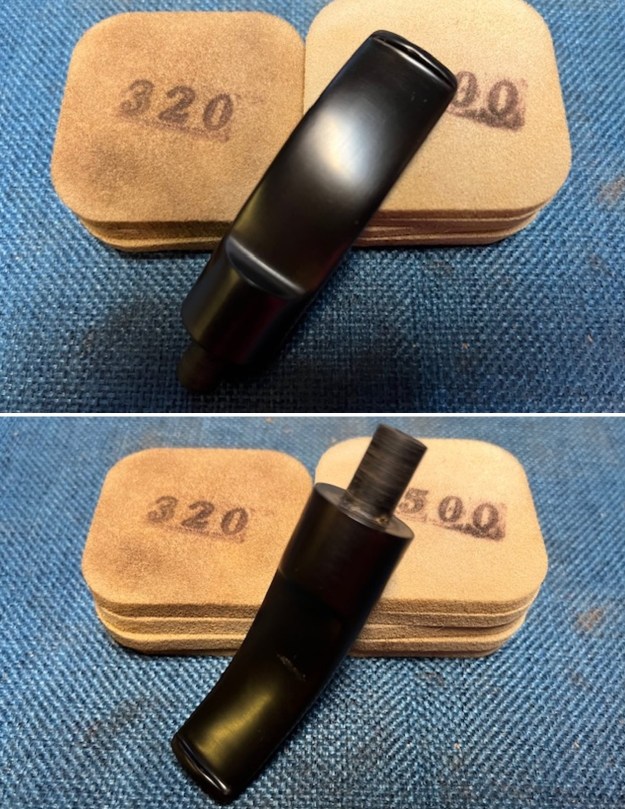
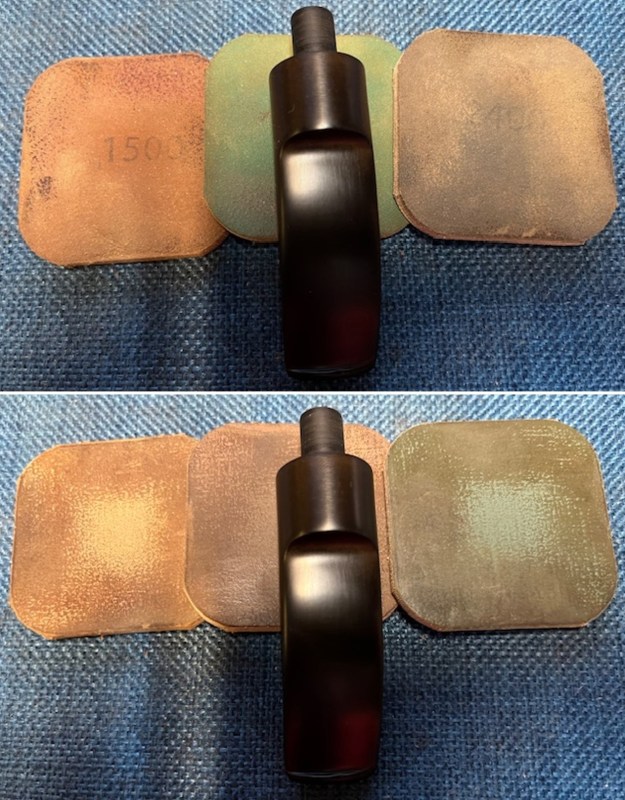
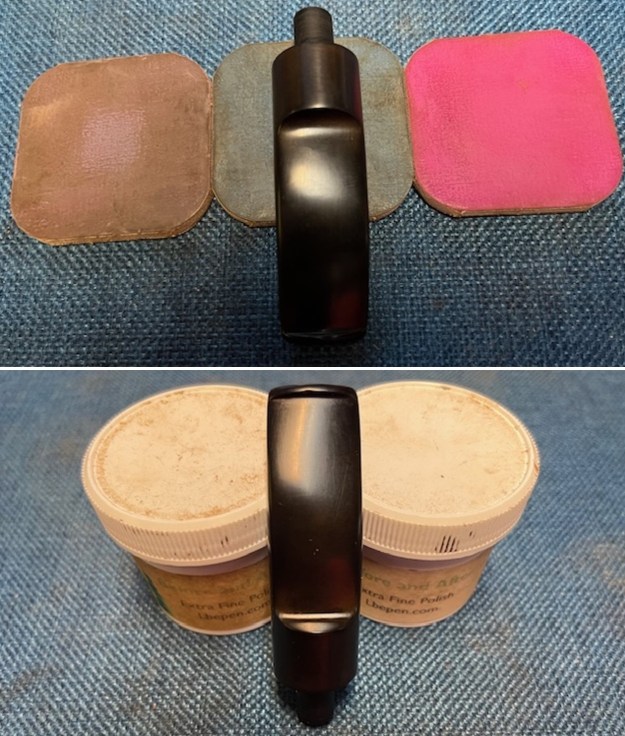
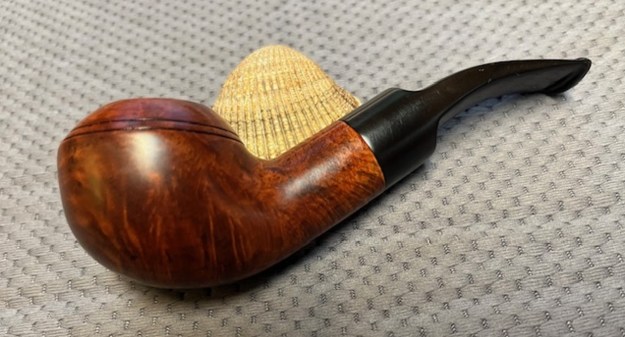
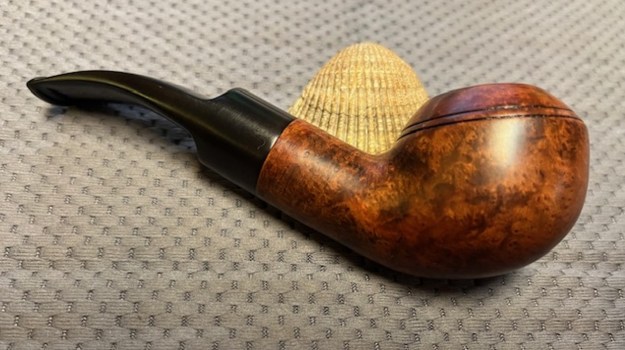
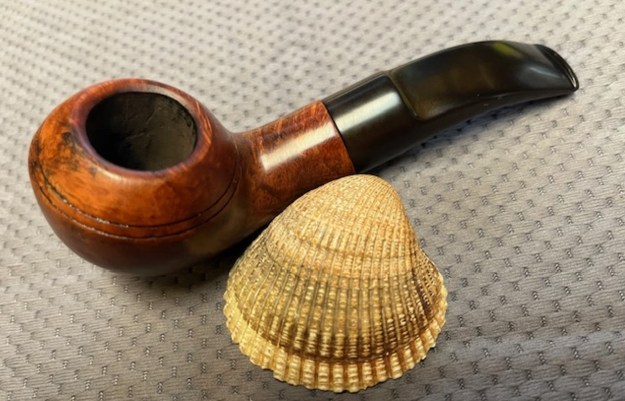
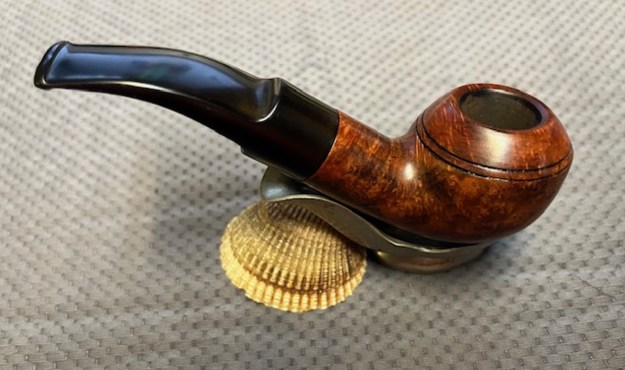
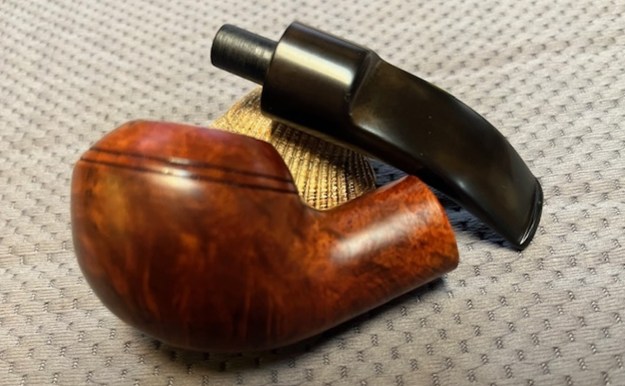
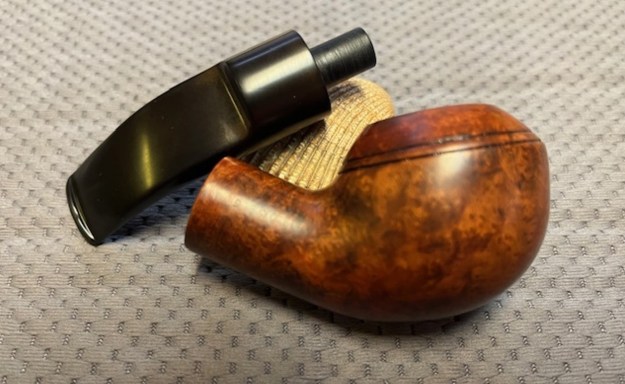
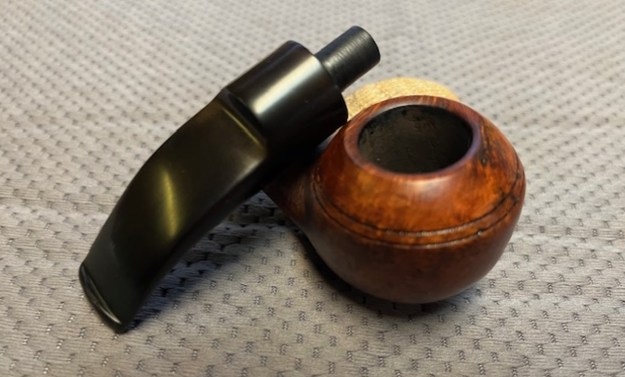
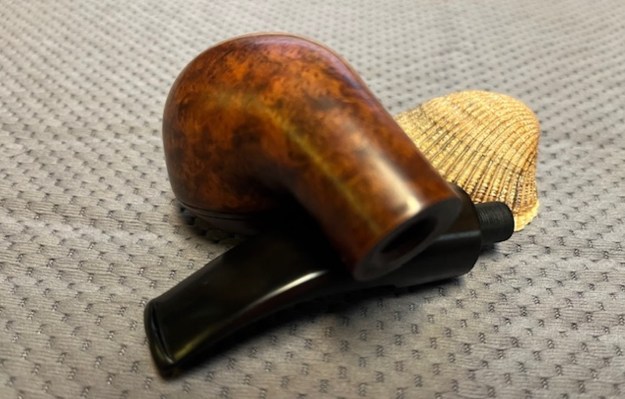
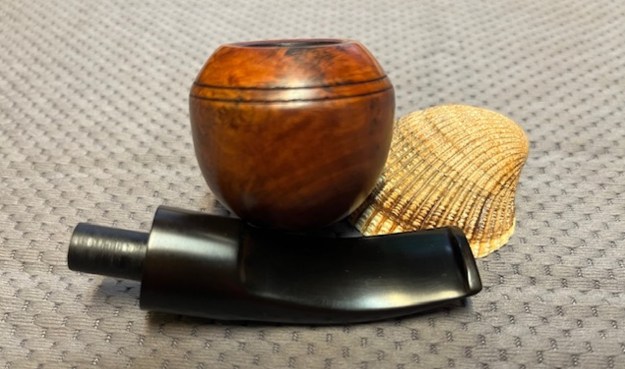
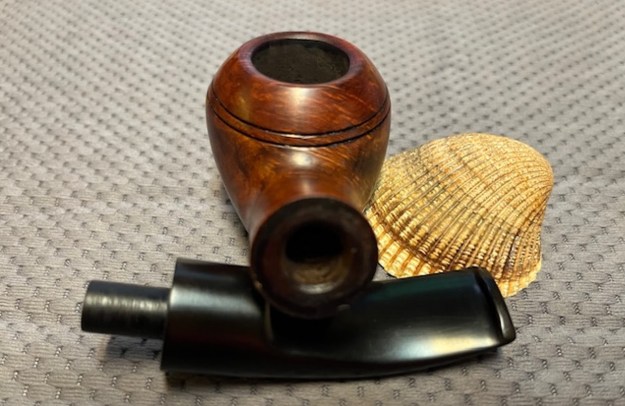
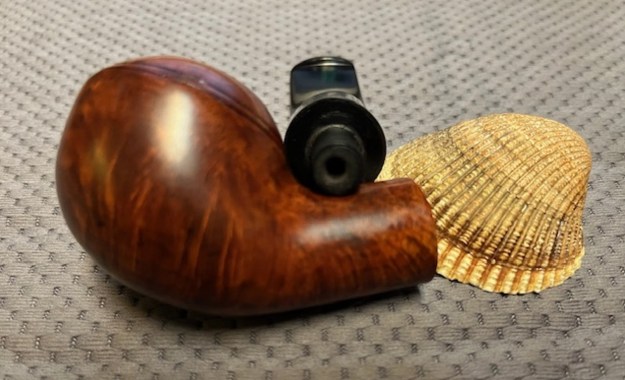
I have always liked the GBD 9438 shaped pipe and this one was one that I picked up many years ago when I first started working on pipes. I found it at an antique shop. It was in the early days when I picked up most every pipe I found. I believe that like others I found in the early days this pipe cost me about $6CDN. Just remembering that reminds me how much things have changed over the years. It became a favourite shape of mine and over the years I have purchased many more 9438 pipes made by GBD for their main and their seconds lines such as Irwin and Dr. Plumb. I have added them to my collection. Here is a link to a blog I did on my collection back in 2013 (https://rebornpipes.com/2013/12/12/my-gbd-9438-saddle-stems-and-tapered-stem-rhodesians/). I have 12 – some were in rough shape and others not so bad. I have been sorting through my pipe collection and thinning out pipes that I am willing to part with. I have sold many already and others are currently on the store. For the most part these pipes have been early restorations and all needed a bit of work to bring them up to my current standard. I have set aside three 9438 pipes that I decided to rework. This is the second of them. It is stamped on the left side GBD in the oval [over] Gold Label [over] Made in France. On the right side it is stamped with the shape number 9438. While it was very workable and I had actually smoked it quite a bit over the years I knew that original restoration on it was less rigorous than my current standards. So, before I listed it for sale I wanted to work it over again. I took photos of the pipe to give a sense of the beauty, the French take on the 9438 shape and the work that needed to be done. I took photos of the pipe’s bowl and rim top to show the moderate cake in the bowl and some darkening on the bevelled rim top and a nick on the front outer edge of the bowl. I also took photos to capture the condition of the stem. It had some light oxidation and tooth chatter and marks on the top and underside ahead of the button.I took photos of the stamping on each side of the shank. It is readable and clear as noted above. The oval GBD brass rondel is visible on the left side of the saddle stem.I took the stem off the shank and took a photo of the look of the pipe. It an interesting take on a 9438 shape. Unique and beautiful.I decided to address the damage to the rim top and inner edge of the bowl. To deal with the burned inner edge of the rim and the rim top damage I worked on the edge with a piece of 220 grit sandpaper. I used a piece of 220 grit sandpaper on a wooden ball to further clean up the bevel. It took a bit of work to smooth out the damage and the darkening on the bevelled inner edge of the bowl. It looked much better at this point. I reamed the bowl with a Savinelli Fitsall Pipe Knife to take out the cake. I removed ti back to bare briar. I sanded the bowl walls with a piece of 220 grit sandpaper wrapped around a dowel to smooth out the walls. It looked very good. No burn damage or checking on the bowl walls.I scrubbed out the shank and the stem with pipe cleaners, cotton swabs and alcohol to remove the tars and oils. The shank was dirty though the stem airway was not too bad. It cleaned up well.I sanded the bowl and rim top to start smoothing out the rim top and start the polishing of the bowl. I also worked on the burn mark on the lower right of the bowl/shank union. I used 320-3500 grit sanding pads. I wiped the bowl down with a damp cloth after each pad. It really began to take on a shine. I polished the briar with micromesh sanding pads – dry sanding with 1500-12000 grit pads. I wiped it down after each sanding pad with a damp cloth to remove the sanding debris on the surface. I rubbed the bowl down with Before & After Restoration Balm. I worked it into the surface of the briar with my fingertips to clean, enliven and protect it. I let the balm sit for a little while and then buffed with a cotton cloth and shoe brush to raise the shine. I set the bowl aside and turned to address the stem. I “painted” the stem with the flame of a Bic lighter to lift the remnants of tooth marks that remained in the stem from the last time I worked on it. It worked very well and the dents lifted so that sanding the marks that remained removed all the remnants.I sanded the stem surface with 320-3500 grit sanding pads to remove all the marks remaining from the tooth damage. I wiped the stem down after each pad with a cloth impregnated with Obsidian Oil. It looked much better.It was in good condition other than the light tooth chatter so I polished the vulcanite with micromesh sanding pads – 1500-12000 grit pads. I wiped it down with Obsidian Oil after each sanding pad. I used Before & After Pipe Polish – both Fine and Extra Fine to further polish the stem. I gave it a final coat of Obsidian Oil and set it aside to dry. This GBD Gold Label Made in France 9438 Bent Rhodesian cleaned up much better this second time around and looks very good. The Before & After Restoration Balm brought the colours and grain out in the smooth finish on the pipe. It works well with the polished vulcanite saddle stem. I put the stem back on the bowl and carefully buffed the pipe with Blue Diamond on the buffing wheel using a light touch on the briar. I gave the bowl and the stem multiple coats of carnauba wax on the buffing wheel. I followed that by buffing the entire pipe with a clean buffing pad. I hand buffed the pipe with a microfiber cloth to deepen the shine. The finished GBD Gold Label 9438 Rhodesian fits nicely in the hand and I think it feel greats as it heats up with a good tobacco. Give the finished pipe a look in the photos below. The dimensions of the pipe are Length: 5 inches, Height: 1 ½ inches, Outside diameter of the bowl: 1 ¾ inches, Chamber diameter: 1 inch. The weight of the pipe is 2.08 ounces/59 grams. It is time to move it on to someone who will give it proper attention. I will be adding this one to the French Pipemakers Section of the rebornpipes store shortly. If you want to add it to your collection let me know. Thanks for reading this blog and my reflections on the pipe while I worked on it.

The Final Pipe from Salmon Arm for Restoration – A Parade News Briar Shop Oom Paul


by Steve Laug

A few weeks ago, I received an email from a friend, Sonny in Salmon Arm, BC. We have worked together on pipes over the past few years either ones that I have sold to him or those he has picked up on auctions or sales that I have restored. He wrote that he had some pipes that needed restoration.

I also have some of those old estates I still need to send to you for restoration. Hopefully I will be able to pack them up and get them off to you this week. Thank you again, Steve! – Sonny

He followed that up with another email regarding what he wanted done on the various pipes. I have included it below. 

I would like the Vauen bent ball shape to have no band on it. It looks like it may have had a band there at one time and I’m not sure why. And if any of them needs to be stained again, I would like them to be black, especially the Peterson 309 and that ball Vauen. Let me know what you think.

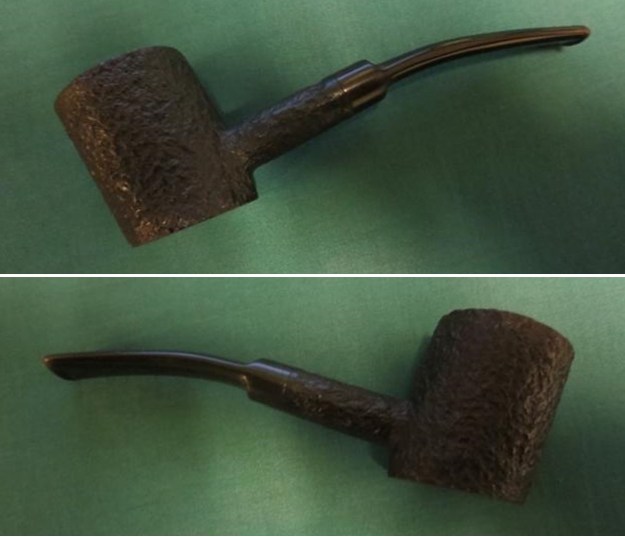
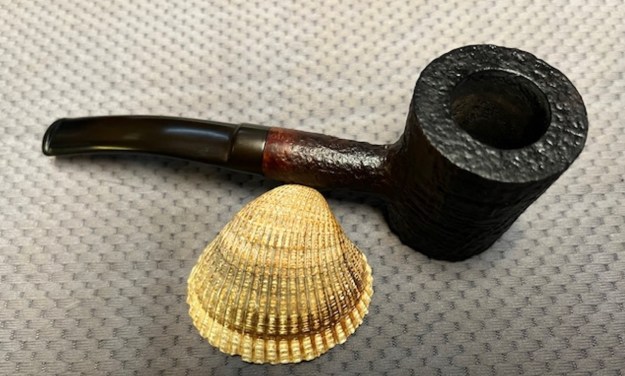
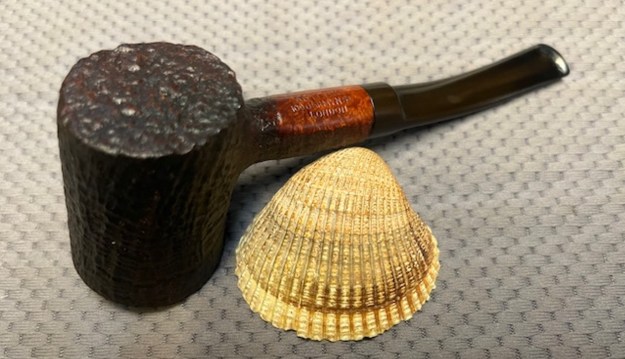
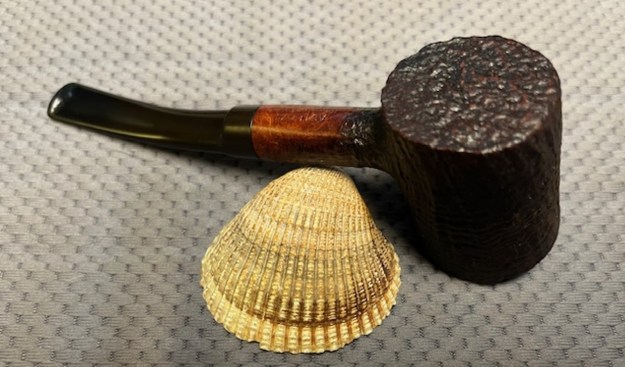
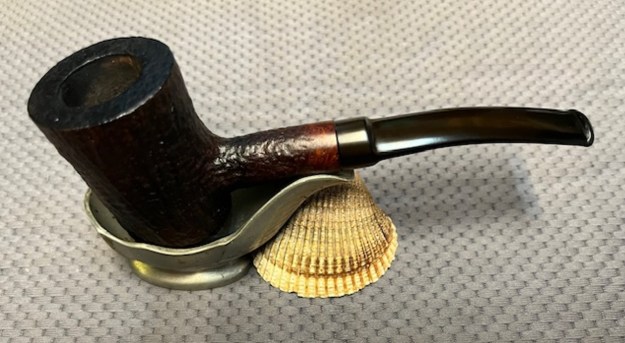
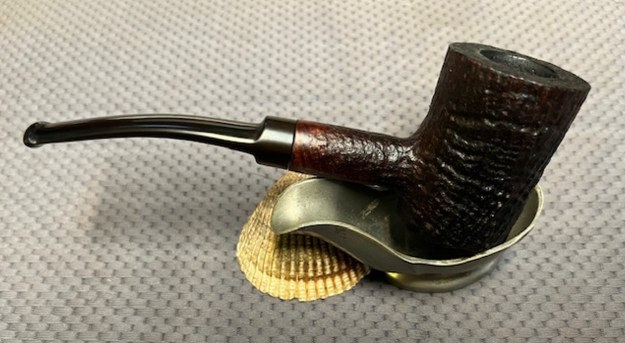
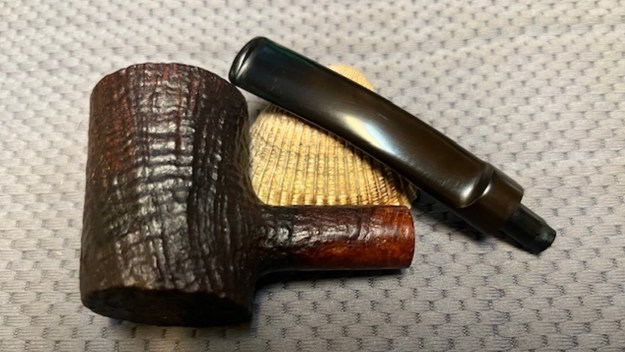
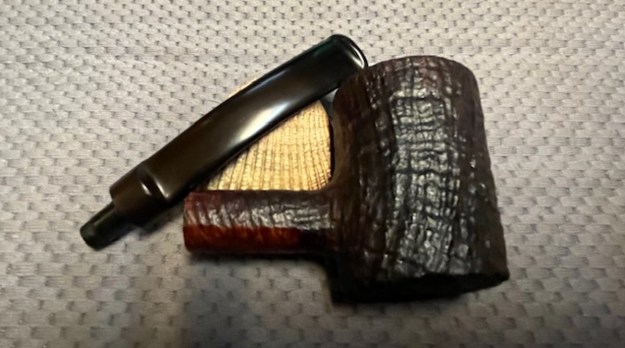
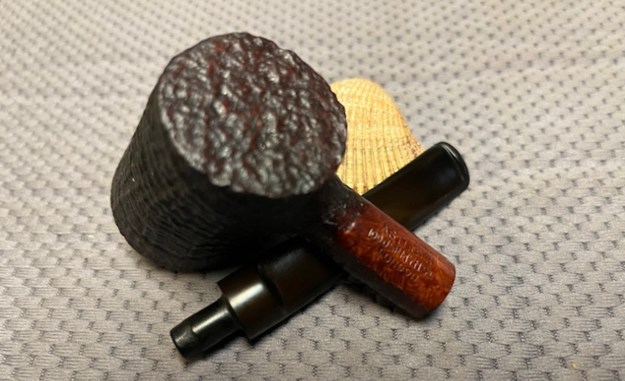
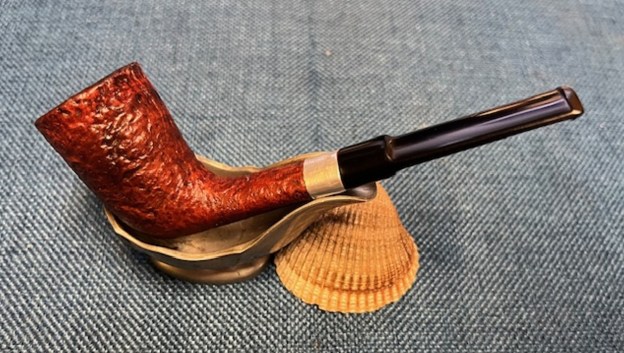
I took a photo of the box of six pipes once I unwrapped them. There were 6 interesting pipes – a Vauen Luxus Bent Ball, a Vauen Dr. Perl Billiard, a Sand Blast Vauen Dr. Perl Pot, a Parade News Briar Shop Oom Paul, a Bari Pearl Bamboo shank Ball and Peterson’s System Premier 309 Bent Billiard. All were in need of various degrees of restoration.The last pipe left to work on was a sandblast Oom Paul with a saddle stem. It is stamped on a smooth panel on the right side and reads Parade News [over] Briar Shop [over] Imported Briar. The sandblast finish was in excellent condition and was quite clean. The was no cake in the bowl and no lava rim top and some darkening. The pipe had been reamed and cleaned somewhere along its journey. The stem had straightened slightly and there was lightly oxidized and there was tooth marks and chatter ahead of the button. I took these photos before I started my work on the pipe. I took a photo of the rim top and bowl to show the condition of both of them. There is a light cake in the bowl and the rim top is in excellent condition. I would say that the pipe has been lightly smoked. The photos of the stem show the oxidation and tooth marks/chatter on both sides ahead of the button. It also will need to be re-bent correctly.I took a photo of the stamping on the side of the shank. The stamping was clear and readable as noted above. I removed the stem from the shank and took a photo to show the proportions of the pipe.There was no information to be found on the brand so I turned my attention to cleaning up the pipe. I reamed the bowl with a PipNet reamer using the second and third cutting head to remove the cake. I cleaned up what remained of the cake with a Savinelli Fitsall Pipe Knife. I sanded the walls of the bowl to remove any remnants with 220 grit sandpaper wrapped around a piece of dowel. Once finished the inside of the bowl was smooth and the briar was bare.Once the pipe was reamed I worked on the internals – the mortise, sump and airway in the shank and airway in the stem. I scraped the shank walls with a pen knife to remove the tars and thick carbon. It appeared that the pipe has been lightly smoked in terms of the cake but the shank and sump seem to have never been cleaned. The stem was more of the same. I cleaned them all with pipe cleaners, cotton swabs and alcohol. It used a lot of them but the results are very good. Because the bowl was in such good condition I did not have to scrub the externals. I went immediately to Before & After Restoration Balm. It is a paste/balm that works to deep clean the finish, enliven and protect the briar. I work it into the briar with my finger tips and a shoe brush to make sure that it covers every square inch of the pipe. I set it aside for 10 minutes to let it do its work. Once the time has passed I wiped it off with a soft cloth then buffed it with a cotton cloth. The briar really began to have a deep shine. The photos I took of the bowl at this point mark the progress in the restoration. You see the shine that the briar has taken on and the way sandblast has depth. I set the bowl aside and turned my attention to the stem. The stem needed to be bent to match the curve of the bowl. I heated it with the flame of a Bic lighter to soften the vulcanite and then bent it to the right curve. I held it in place until the bent was set in place.I sanded the stem surface with 220 grit sandpaper to smooth out the tooth chatter and the oxidation on the top and underside. I was able to remove all of the marks in the stem surface. It looked much better.I sanded the stem with 320-3500 grit sanding pads to break up the remaining oxidation. I wiped it down after each sanding pad with an Obsidian Oil impregnated cloth. It began to look good.I polished the stem with micromesh sanding pads – dry sanding with 1500-12000 grit pads. I wiped the stem down after each sanding pad with Obsidian Oil. I polished it with Before & After Pipe Stem Polish – both Fine and Extra Fine. Once I had finished the polishing I gave it final coat of Obsidian Oil and set it aside to dry. As usual at this point in the restoration process I am excited to be on the homestretch. I look forward to the final look when I put a pipe back together, polished and waxed. I polished the bowl and stem with Blue Diamond to polish out the scratches in the briar and the vulcanite. I gave the bowl multiple coats of Conservator’s Wax and the stem multiple coats of carnauba wax. I buffed the pipe with a clean buffing pad to raise the shine. I hand buffed it with a microfiber cloth to deepen the shine. The pipe polished up pretty nicely. The sandblast pops with the wax and polish. The shiny black vulcanite stem is a beautiful contrast to the dark browns of the bowl and shank. This Parade News Briar Shop Oom Paul was another fun pipe to work on. The pipe is comfortable pipe to hold in the hand. The finished pipe is shown in the photos below. The dimensions of the pipe are Length: 5 ½ inches, Height: 2 inches, Outside diameter of the bowl: 1 ¼ inches, Chamber diameter: ¾ of an inch. The weight of the pipe is 1.87 ounces/52 grams. It is the last of Sonny’s pipes and soon I will send them all back to him. Thanks for reading this blog and my reflections on the pipe while I working on it. As always, I encourage your questions and comments as you read the blog. Thanks to each of you who are reading this blog. Remember we are not pipe owners; we are pipemen and women who hold our pipes in trust until they pass on into the trust of those who follow us.

The Fifth of Six Pipes from Salmon Arm for Restoration –A Vauen Dr. Perl 3288 Billiard


Blog by Steve Laug

A few weeks ago, I received an email from a friend, Sonny in Salmon Arm, BC. We have worked together on pipes over the past few years either ones that I have sold to him or those he has picked up on auctions or sales that I have restored. He wrote that he had some pipes that needed restoration.

I also have some of those old estates I still need to send to you for restoration. Hopefully I will be able to pack them up and get them off to you this week. Thank you again, Steve! – Sonny

He followed that up with another email regarding what he wanted done on the various pipes. I have included it below.

I would like the Vauen bent ball shape to have no band on it. It looks like it may have had a band there at one time and I’m not sure why. And if any of them needs to be stained again, I would like them to be black, especially the Peterson 309 and that ball Vauen. Let me know what you think.

I took a photo of the box of six pipes once I unwrapped them. There were 6 interesting pipes – a Vauen Luxus Bent Ball, a Vauen Dr. Perl Billiard, a Sand Blast Vauen Dr. Perl Pot, a Parade News Briar Shop Oom Paul, a Bari Pearl Bamboo shank Ball and Peterson’s System Premier 309 Bent Billiard. All were in need of various degrees of restoration.The fifth pipe I chose to work on was another Vauen Dr. Perl but this time a saddle stem Billiard. It is stamped on the left side and reads Vauen [over] Dr. Perl. On the underside it is stamped with the shape number 3288 followed by a pair of crossed bent pipes. The finish was dull with grime on the surface of the sides of the bowl. The was a moderate cake in the bowl – heavier in the bottom half. There was some light lava on the rim top and some darkening. The filter stem was lightly oxidized and there was tooth marks and chatter ahead of the button. I took these photos before I started my work on the pipe. I took a photo of the rim top and bowl to show the condition of both of them. There is a moderate cake in the bowl and some lava and rim darkening on the top and inner edge. The photos of the stem show the oxidation and tooth marks/chatter on both sides ahead of the button.I took photos of the stamping on the sides of the shank. The stamping was very clear and readable as noted above. I removed the stem from the shank and took a photo to show the proportions of the pipe. I am including the background on the Vauen brand that I have used before. I always read over it before I start my work on a pipe. It is an important part of the restoration to me as it adds colour to the pipe I am working on. I turned to Pipephil’s site (http://pipephil.eu/logos/en/logo-v1.html). I did a screen capture of the information on the site. There was a great sidebar that gave some history of the brand. I include both of them below. In 1848, Karl Ellenberger and his partner Carl August Ziener establish a pipe factory in Nuremberg. In 1901 they merge with Gebhard Ott an other factory in town and they create a firm named Vereinigten Pfeifenfabriken Nürnberg (abbreviated : VPFN*). Shortly after Ernst Eckert, a member of the Ott family became manager of the society. During the 20th century Adolf, Ernst (jr) and Alexander Eckert (CEO in 2012) followed one another at Vauen’s head.* VPFN : “V” is said VAU in German (pronounce faou) and “N” becomes EN. Hence VAUEN.

Dal Stanton (Pipesteward.com) wrote a great piece on the history of the brand on a Vauen pipe that he worked on. I reread that and quote a section from the blog below that gives a great sense of the history of the German brand and some photos from the website (https://rebornpipes.com/2021/04/27/breathing-new-life-into-a-german-vauen-6294-p-lip-saddle-billiard-for-a-special-young-lady/).

… I turn to the question of the history of the VAUEN name? I look to the History section of the VAUEN website and again, I am impressed with the presentation. Whenever I work on a pipe, and especially when a pipe name is new to me, I enjoy looking at its history to appreciate the pipe more fully now on my worktable. From VAUEN’s website:Quality and a wealth of ideas have a long tradition at VAUEN. 160 years of VAUEN: that means 160 years of skilled workmanship and modern technology and 160 years of experience in fulfilling the individual wishes of today’s pipe lovers, and those of tomorrow.

In Nuremberg in 1848, Karl Ellenberger and his partner Carl August Ziener turned an idea into reality: Germany’s first pipe manufacturer produced tobacco pipes for connoisseurs around the world using a selection of the best wood. In an amalgamation with the Gebhard Ott pipe factory, which was founded in 1866 in Nuremberg, the Vereinigten Pfeifenfabriken Nuremberg (United Pipe Factories Nuremberg, or VPFN) was born in 1901.  Under the management of Ernst Eckert, a descendent of the founding Ott family, a company was born whose products and services would shape the tobacco and smoking culture in Europe and overseas for the next 160 years and counting.

The question about the name, VAUEN, not being a name of a person and why it is capitalized throughout is explained:

In his search for a name that would be easily remembered by all pipe lovers, Ernst Eckert’s son, Adolf Eckert, coined a new name for the company in 1909: VAUEN – a composition of the first letters V (pronounced vow) of Vereinigte Pfeifenfabriken and N (pronounced en) of Nuremberg. A brand for the future was born.

Armed with that information I turned my attention to the pipe itself. I reamed the bowl with a PipNet reamer using the second and third cutting head to remove the cake. I cleaned up what remained of the cake with a Savinelli Fitsall Pipe Knife. I sanded the walls of the bowl to remove any remnants with 220 grit sandpaper wrapped around a piece of dowel. Once finished the inside of the bowl was smooth and the briar was bare. I cleaned up the rim top to remove the darkening and the lava. I used a Savinelli Fitsall knife to scrape off the lava. I sanded the top with a 320 grit sanding pad. It looked much better. I cleaned up the rim top to remove the darkening and the lava. I used a Savinelli Fitsall knife to scrape off the lava. I sanded the top with a 320 grit sanding pad. It looked much better.I touched up the rim top and edge with a Cherry Stain pen to match the rest of the surrounding briar.Once the pipe was reamed and the rim top cleaned I worked on the internals – the mortise and airway in the shank and airway in the stem. I scraped the shank with a pen knife to scrape off the tars and thick carbon. It appeared that the pipe has been heavily smoked without the filter and the inside of the shank was a mess. The stem was more of the same. I cleaned them all with pipe cleaners, cotton swabs and alcohol. It used a lot of them but the results are very good. I scrubbed the externals of the bowl with Before & After Briar Cleaner and a tooth brush. I rinsed off the grime and grit from the cleaning with warm water and dried it with a soft cloth. I polished the briar by dry sanding with 1500-12000 grit micromesh sanding pads. I wiped the briar down with a damp cloth after each sanding pad. By the last three pads the briar really took on a rich shine. When I get the bowl to this point in the process I use Before & After Restoration Balm. It is a paste/balm that works to deep clean the finish, enliven and protect the briar. I work it into the briar with my finger tips to make sure that it covers every square inch of the pipe. I set it aside for 10 minutes to let it do its work. Once the time has passed I wiped it off with a soft cloth then buffed it with a cotton cloth. The briar really began to have a deep shine. The photos I took of the bowl at this point mark the progress in the restoration. You see the shine that the briar has taken on and the way sandblast has depth. I set the bowl aside and turned my attention to the stem. I “painted” the stem surface with the flame of a Bic lighter to lift the tooth marks and chatter on the stem surface. I was able to lift all of the marks significantly and then sanded them out with 220 grit sandpaper. I sanded the stem with 320-3500 grit sanding pads to break up the remaining oxidation. I wiped it down after each sanding pad with an Obsidian Oil impregnated cloth. It began to look good.I took out my box of Vauen 9mm filters and put a new filter in the tenon of the stem. It fit perfectly and sat in the stem and shank as expected. I polished the stem with micromesh sanding pads – dry sanding with 1500-12000 grit pads. I wiped the stem down after each sanding pad with Obsidian Oil. I polished it with Before & After Pipe Stem Polish – both Fine and Extra Fine. Once I had finished the polishing I gave it final coat of Obsidian Oil and set it aside to dry. As usual at this point in the restoration process I am excited to be on the homestretch. I look forward to the final look when I put a pipe back together, polished and waxed. I polished the bowl and stem with Blue Diamond to polish out the scratches in the briar and the vulcanite. I gave the bowl and the stem multiple coats of carnauba wax. I buffed the pipe with a clean buffing pad to raise the shine. I hand buffed it with a microfiber cloth to deepen the shine. The pipe polished up pretty nicely. The grain really pops with the wax and polish. The shiny black vulcanite stem is a beautiful contrast to the  browns of the bowl and shank. This Vauen Dr. Perl 3288 Saddle Stem Billiard was another fun pipe to work on. The pipe is comfortable pipe to hold in the hand. The finished pipe is shown in the photos below. The dimensions of the pipe are Length: 6 inches, Height: 2 inches, Outside diameter of the bowl: 1 ¼ inches, Chamber diameter: ¾ of an inch. The weight of the pipe is 1.45 ounces/41 grams. Just one more of Sonny’s pipes to work on before I send them all back to him. Thanks for reading this blog and my reflections on the pipe while I working on it. As always, I encourage your questions and comments as you read the blog. Thanks to each of you who are reading this blog. Remember we are not pipe owners; we are pipemen and women who hold our pipes in trust until they pass on into the trust of those who follow us.

The Fourth of Six Pipes from Salmon Arm for Restoration –A Vauen Dr. Perl 103 Sandblast Pot


by Steve Laug

A few weeks ago, I received an email from a friend, Sonny in Salmon Arm, BC. We have worked together on pipes over the past few years either ones that I have sold to him or those he has picked up on auctions or sales that I have restored. He wrote that he had some pipes that needed restoration.

I also have some of those old estates I still need to send to you for restoration. Hopefully I will be able to pack them up and get them off to you this week. Thank you again, Steve! – Sonny

He followed that up with another email regarding what he wanted done on the various pipes. I have included it below.

 I would like the Vauen bent ball shape to have no band on it. It looks like it may have had a band there at one time and I’m not sure why. And if any of them needs to be stained again, I would like them to be black, especially the Peterson 309 and that ball Vauen. Let me know what you think.

I took a photo of the box of six pipes once I unwrapped them. There were 6 interesting pipes – a Vauen Luxus Bent Ball, a Vauen Dr. Perl Billiard, a Sand Blast Vauen Dr. Perl Pot, a Parade News Briar Shop Oom Paul, a Bari Pearl Bamboo shank Ball and Peterson’s System Premier 309 Bent Billiard. All were in need of various degrees of restoration.The fourth pipe I chose to work on was the Vauen Dr. Perl Pot. It is stamped on the underside and reads Vauen [over] Dr. Perl. To the right of that it is stamped with the shape number 103 followed by a pair of crossed bent pipes. The finish was quite clean with light dust in the sandblast grooves. This bowl was an odd one. It was quite clean but when I took it out of the box there were a couple chunks that fell out in my hand. I examined the bowl with a lens and found that the bowl had been given a thick bowl coating that was cracked and chipping. As I examined it I hit a few spots with my fingernail and the coating chipped off. There was no cake in the bowl as it appeared to have been cleaned before the bowl coating had been applied. The coating was very thick and very brittle and I figured it would all come out quite simply. The stem was lightly oxidized but otherwise clean. There was a paper filter in the filter mortise. That filter was in decent condition with some yellowing on the paper. There did not appear to be anything other than tooth chatter ahead of the button. I took these photos before I started my work on the pipe. I took a photo of the rim top and bowl to show the condition of both of them. There is something on the walls of the bowl but the cake is gone. It appears to be a bowl coating of some sort but it is in rough condition. Otherwise the bowl is clean and in good condition. The photos of the stem show the heavy oxidation and tooth marks/chatter on both sides ahead of the button.I took photos of the stamping on the underside of the shank. The stamping was clear and readable as noted above. It is much clearer in person but is hard to capture on the curve of the shank. I removed the stem from the shank and took a photo to show the proportions of the pipe. I removed the filter from the shank. It is a bit of a unique filter made by Vauen that I have not seen before. I am including the background on the Vauen brand that I have used before. I always read over it before I start my work on a pipe. It is an important part of the restoration to me as it adds colour to the pipe I am working on. I turned to Pipephil’s site (http://pipephil.eu/logos/en/logo-v1.html). I did a screen capture of the information on the site. There was a great sidebar that gave some history of the brand. I include both of them below.In 1848, Karl Ellenberger and his partner Carl August Ziener establish a pipe factory in Nuremberg. In 1901 they merge with Gebhard Ott an other factory in town and they create a firm named Vereinigten Pfeifenfabriken Nürnberg (abbreviated : VPFN*). Shortly after Ernst Eckert, a member of the Ott family became manager of the society. During the 20th century Adolf, Ernst (jr) and Alexander Eckert (CEO in 2012) followed one another at Vauen’s head.* VPFN : “V” is said VAU in German (pronounce faou) and “N” becomes EN. Hence VAUEN.

Dal Stanton (Pipesteward.com) wrote a great piece on the history of the brand on a Vauen pipe that he worked on. I reread that and quote a section from the blog below that gives a great sense of the history of the German brand and some photos from the website (https://rebornpipes.com/2021/04/27/breathing-new-life-into-a-german-vauen-6294-p-lip-saddle-billiard-for-a-special-young-lady/).

… I turn to the question of the history of the VAUEN name? I look to the History section of the VAUEN website and again, I am impressed with the presentation. Whenever I work on a pipe, and especially when a pipe name is new to me, I enjoy looking at its history to appreciate the pipe more fully now on my worktable. From VAUEN’s website:Quality and a wealth of ideas have a long tradition at VAUEN. 160 years of VAUEN: that means 160 years of skilled workmanship and modern technology and 160 years of experience in fulfilling the individual wishes of today’s pipe lovers, and those of tomorrow.

In Nuremberg in 1848, Karl Ellenberger and his partner Carl August Ziener turned an idea into reality: Germany’s first pipe manufacturer produced tobacco pipes for connoisseurs around the world using a selection of the best wood. In an amalgamation with the Gebhard Ott pipe factory, which was founded in 1866 in Nuremberg, the Vereinigten Pfeifenfabriken Nuremberg (United Pipe Factories Nuremberg, or VPFN) was born in 1901.  Under the management of Ernst Eckert, a descendent of the founding Ott family, a company was born whose products and services would shape the tobacco and smoking culture in Europe and overseas for the next 160 years and counting.

The question about the name, VAUEN, not being a name of a person and why it is capitalized throughout is explained:

In his search for a name that would be easily remembered by all pipe lovers, Ernst Eckert’s son, Adolf Eckert, coined a new name for the company in 1909: VAUEN – a composition of the first letters V (pronounced vow) of Vereinigte Pfeifenfabriken and N (pronounced en) of Nuremberg. A brand for the future was born.

Armed with that information I turned my attention to the pipe itself. I reamed the bowl with a PipNet reamer to remove the brittle and crumbling bowl coating. It was very strange stuff and little fell apart as I touched it. I cleaned up what remained of the coating with a Savinelli Fitsall Pipe Knife. I sanded the walls of the bowl to remove any remnants with 220 grit sandpaper wrapped around a piece of dowel. Once finished the inside of the bowl was smooth and the briar was bare of the coating. Once the pipe was reamed, cleaned I worked on the internals – the mortise and airway in the shank and airway in the stem with pipe cleaners, cotton swabs and alcohol. The shank was quite clean other than the dust from my work on the bowl. The stem was also very clean.When I get the bowl to this point in the process I use Before & After Restoration Balm. It is a paste/balm that works to deep clean the finish, enliven and protect the briar. I work it into the briar with my finger tips to make sure that it covers every square inch of the pipe. I set it aside for 10 minutes to let it do its work. Once the time has passed I wiped it off with a soft cloth then buffed it with a cotton cloth. The briar really began to have a deep shine. The photos I took of the bowl at this point mark the progress in the restoration. You see the shine that the briar has taken on and the way sandblast has depth. I set the bowl aside and turned my attention to the stem. I worked over the stem with Soft Scrub cleanser and cotton pads to further remove the oxidation in the surface of the vulcanite.I sanded the stem with 320-3500 grit sanding pads to break up the remaining oxidation. I wiped it down after each sanding pad with an Obsidian Oil impregnated cloth. It began to look good.Since I did not have any filters for the Vauen like the one that was in place I used it again. It was discoloured from time but had not been used so it was clean.I polished the stem with micromesh sanding pads – dry sanding with 1500-12000 grit pads. I wiped the stem down after each sanding pad with Obsidian Oil. I polished it with Before & After Pipe Stem Polish – both Fine and Extra Fine. Once I had finished the polishing I gave it final coat of Obsidian Oil and set it aside to dry. As usual at this point in the restoration process I am excited to be on the homestretch. I look forward to the final look when I put a pipe back together, polished and waxed. I polished the bowl and stem with Blue Diamond to polish out the scratches in the briar and the vulcanite. I gave the bowl multiple coats of Conservator’s Wax and the stem multiple coats of carnauba wax. I buffed the pipe with a clean buffing pad to raise the shine. I hand buffed it with a microfiber cloth to deepen the shine. The pipe polished up pretty nicely. The sandblast finish really pops with the wax and polish. The shiny black vulcanite stem is a beautiful contrast to the dark browns of the bowl and shank. This Vauen Dr. Perl 103 Pot was another fun pipe to work on. The pipe is comfortable pipe to hold in the hand. The finished pipe is shown in the photos below. The dimensions of the pipe are Length: 5 ½ inches, Height: 1 ½ inches, Outside diameter of the bowl: 1 ½ inches, Chamber diameter: 7/8 of an inch. The weight of the pipe is 1.20 ounces/33 grams. Just two more of Sonny’s pipes to work on before I send them all back to him. Thanks for reading this blog and my reflections on the pipe while I working on it. As always, I encourage your questions and comments as you read the blog. Thanks to each of you who are reading this blog. Remember we are not pipe owners; we are pipemen and women who hold our pipes in trust until they pass on into the trust of those who follow us.

The Third of Six Pipes from Salmon Arm for Restoration –A Peterson’s System Premier 309


Blog by Steve Laug

A few weeks ago, I received an email from a friend, Sonny in Salmon Arm, BC. We have worked together on pipes over the past few years either ones that I have sold to him or those he has picked up on auctions or sales that I have restored. He wrote that he had some pipes that needed restoration.

I also have some of those old estates I still need to send to you for restoration. Hopefully I will be able to pack them up and get them off to you this week. Thank you again, Steve! – Sonny

He followed that up with another email regarding what he wanted done on the various pipes. I have included it below.

I would like the Vauen bent ball shape to have no band on it. It looks like it may have had a band there at one time and I’m not sure why. And if any of them needs to be stained again, I would like them to be black, especially the Peterson 309 and that ball Vauen. Let me know what you think.

I took a photo of the box of six pipes once I unwrapped them. There were 6 interesting pipes – a Vauen Luxus Bent Ball, a Vauen Dr. Perl Billiard, a Sand Blast Vauen Dr. Perl Pot, a Parade News Briar Shop Oom Paul, a Bari Pearl Bamboo shank Ball and Peterson’s System Premier 309 Bent Billiard. All were in need of various degrees of restoration.The third pipe I chose to work on was the Peterson’s System Premier. It is stamped on the underside and reads Peterson’s [arched over] System [over] Premier. To the right of that it is stamped with the shape number 309 [over] Made in the [over] Republic [over] of Ireland. The pipe was dirty and there were white spots of paint in the sandblast finish. There was a silver ferrule on the shank end. It is stamped Peterson’s [over] Dublin followed by Sterling [over] Silver. That is followed three silver hallmarks: Hibernia seated arm on a harp for the country of manufacture; the crowned Harp designating sterling quality and the date letter marks which in this case was the letter I. The bowl has a thick cake in it and some lava in the sandblast on the rim top. The stem is a system stem with a metal chimney. It was very dirty with heavy oxidation and light tooth marks and chatter on both sides ahead of the button. I took these photos before I started my work on the pipe. I took a photo of the rim top and bowl to show the condition of both of them. There is a moderate cake in the bowl and some lava on the thin rim top. There is also debris in the bowl. The photos of the stem show the heavy oxidation and tooth marks/chatter on both sides ahead of the button.I took photos of the stamping on the underside of the shank. The stamping was clear and readable as noted above. It is much clearer in person but is hard to capture on the curve of the shank. I also tried to capture the stamping on the silver ferrule. I removed the stem from the shank and took a photo to show the proportions of the pipe. The first of those photos shows it with the chimney in place and the second shows it unscrewed. Before I started working on the pipe I wanted to dig into the detail on the stamping on the pipe. I knew what some of the stamping meant regarding the rough age of the pipe.

 Because the pipe was stamped Made in the Republic of Ireland I knew that I was dealing with a Republic Era pipe made between 1950-1989. It was a Sandblast Peterson’s System Premier 309 Billiard with an interesting blast finish. The stain on the bowl was a mess with fading and paint in the blast. Originally it looked like the bowl had been stained with a combination of brown stains. Now it was time to tighten down the date on the pipe from the hallmarks on the Sterling Silver ferrule.

I turned to the hallmarking chart on one of the blogs on rebornpipes to lock down the date for the pipe (https://rebornpipes.com/wp-content/uploads/2015/05/peterson-cataloguecomp_page_27.jpg). The chart defines the meaning of each hallmark. The first one of the seated woman with a harp is known as the Hibernia stamp and identifies the pipe as made in Ireland. The second stamp is a crowned harp which is a fineness mark denoting the high quality of silver that was used. The third stamp is an italic lower case “i”. I have included a larger screen capture of the chart in the lower left of the photo below. I have drawn a RED CIRCLE around the date letter below. It is a lower case “i” as seen in the circled letter below. It identifies the date of this Peterson’s pipe to 1976. I knew that I was dealing with a Republic Era pipe made between 1950 and the present. The hallmarks date the pipe to 1976. Now it was time to work on the pipe.

Armed with that information I turned my attention to the pipe itself. I reamed the bowl with a PipNet reamer to remove the cake. I cleaned up what remained with a Savinelli Fitsall Pipe Knife. I sanded the walls of the bowl to remove any remnants of cake with 220 grit sandpaper wrapped around a piece of dowel. Once finished the inside of the bowl was smooth. I scrubbed the exterior of the bowl with undiluted Murphy’s Oil Soap and a tooth brush. I also worked over the interior of the shank and bowl with brushes and soap at the same time. I rinsed the pipe off with warm running water and dried if off with a soft towel. The pipe is certainly cleaner. In speaking with Sonny I knew that he wanted the bowl stained black as he preferred that colour. So, this morning early I obliged him and stained the pipe with a black aniline stain. I applied it with the wool dauber and then flamed it to set the stain. I repeated the process until the coverage was even around the bowl.Once the stain dried I buffed it with a coarse cloth to remove any excess stain and to blend it into the surrounding surface smoothly. It looks good with the black stain. I sent photos to Sonny and he approves! Before I cleaned the inside of the shank and the stem I took the stem out of the Briarville’s Pipe Stem deoxidizer where it had been sitting over night and rubbed it briskly with a coarse cotton cloth to remove the oxidation on the surface and dry off the remaining deoxidizer on the stem. I am pleased with how well the product worked even after I have used this batch for over a year. Once the pipe was reamed, cleaned and stained and the stem was deoxidized I worked on the internals – the mortise, sump and airway in the shank and airway in the stem. I cleaned out the airway to the bowl, the mortise, sump and the airway in the stem with pipe cleaners, cotton swabs and alcohol. I also worked over the aluminum chimney that screwed into the tenon on the stem.When I get the bowl to this point in the process I use Before & After Restoration Balm. It is a paste/balm that works to deep clean the finish, enliven and protect the briar. I work it into the briar and the bamboo with my finger tips to make sure that it covers every square inch of the pipe. I set it aside for 10 minutes to let it do its work. Once the time has passed I wiped it off with a soft cloth then buffed it with a cotton cloth. The briar really began to have a deep shine. The photos I took of the bowl at this point mark the progress in the restoration. You see the shine that the briar has taken on and the way rustication has depth. The black stain works on the pipe and it is a beauty. I set the bowl aside and turned my attention to the stem. I wiped the stem down with Soft Scrub cleanser and cotton pads to further remove the remnants of oxidation in the surface of the vulcanite.I sanded the stem with 320-3500 grit sanding pads to break up the remaining oxidation. I wiped it down after each sanding pad with an Obsidian Oil impregnated cloth. It began to look good.Once finished that I screwed the aluminum chimney back into the tenon on the stem. The fit and look is very good. I polished the stem with micromesh sanding pads – dry sanding with 1500-12000 grit pads. I wiped the stem down after each sanding pad with Obsidian Oil. I polished it with Before & After Pipe Stem Polish – both Fine and Extra Fine. Once I had finished the polishing I gave it final coat of Obsidian Oil and set it aside to dry. I polished the silver ferrule with a jeweller’s cloth and the silver took on a deep shine. It is a pretty pipe with the shinning silver and the black stain on the bowl. I am excited to finish restoration and reworking of this Republic Era Peterson’s System Premier 309. I put the pipe back together and buffed it lightly with Blue Diamond on the buffing wheel. I gave the bowl multiple coats of Conservator’s Wax and the stem multiple coats of carnauba wax. I hand buffed the pipe with a clean buffing pad to raise the shine. It is fun to see what the polished bowl looks like with beautiful mixed grain all around it. The polished sandblast on bowl along with the silver ferrule look great with the black vulcanite stem. This sandblast Peterson’s System Premier 309 Bent Billiard is great looking and the pipe feels great in my hand. It is light and well balanced. Have a look at it with the photos below. The dimensions are Length: 6 inches, Height: 2 inches, Outside diameter of the bowl: 1 ¼ inches, Chamber diameter: ¾ of an inch. The weight of the pipe is 49 grams/ 1.73 ounces. It is a beautiful pipe that I will be sending back to Sonny once finish the remaining three pipes of the six he sent to me for restoration. I look forward to hearing what he thinks of it. As always, I encourage your questions and comments as you read the blog. Thanks to each of you who are reading this blog. Remember we are not pipe owners; we are pipemen and women who hold our pipes in trust until they pass on into the trust of those who follow us.

The Second of Six Pipes from Salmon Arm for Restoration –A Bari Pearl Bamboo Shank Apple


by Steve Laug

A few weeks ago, I received an email from a friend in Salmon Arm, BC. We have worked together on pipes over the past few years either ones that I have sold to him or those he has picked up on auctions or sales that I have restored. He wrote that he had some pipes that needed restoration.

I also have some of those old estates I still need to send to you for restoration. Hopefully I will be able to pack them up and get them off to you this week. Thank you again, Steve! – Sonny

He followed that up with another email regarding what he wanted done on the various pipes. I have included it below.

I would like the Vauen bent ball shape to have no band on it. It looks like it may have had a band there at one time and I’m not sure why. And if any of them needs to be stained again, I would like them to be black, especially the Peterson 309 and that ball Vauen. Let me know what you think.

I took a photo of the box of six pipes once I unwrapped them. There were 6 interesting pipes – a Vauen Luxus Bent Ball, a Vauen Dr. Perl Billiard, a Sand Blast Vauen Dr. Perl Pot, a Parade News Briar Shop Oom Paul, a Bari Pearl Bamboo shank Ball and Peterson’s System Premier 309 Bent Billiard. All were in need of various degrees of restoration.The second pipe I chose to work on was the Bari Pearl 7080 Bamboo Apple. It is stamped on the left side and reads Bari [over] Pearl. On the right side is stamped Made in [over] Denmark [over] the shape number 7080. The taper stem is stamped Bari on the left side of the taper. The pipe was dirty but the bamboo shank has some nice patina. The vulcanite ahead of and following the Bamboo shank is oxidized and almost brown. The finish was shiny but very dirty with lots of grime ground into the surface of the briar. The bowl had a moderate cake and debris in it and there was some lava on the rim top. The stem was very dirty with oxidation, calcification on the surface and light tooth marks and chatter on both sides ahead of the button. I took these photos before I started my work on the pipe. I took a photo of the rim top and bowl to show the condition of both of them. There is a moderate cake in the bowl and some lava on the thin rim top. There is also debris in the bowl. The photos of the stem show the oxidation, calcification and tooth marks/chatter on both sides ahead of the button.I took photos of the stamping on the left side and the right side of the shank. The stamping was clear and readable as noted above. It is much clearer in person but is hard to capture on the curve of the shank. I removed the stem from the shank and took a photo to show the proportions of the pipe. I turned to Pipephil to see if I could find information on the Pearl model but there was nothing there on the model (http://pipephil.eu/logos/en/logo-b1.html). I quote from the sidebar below and also have included a screen capture of the information.

Brand founded by Viggo Nielsen in 1950 and sold to Van Eicken Tobaccos in 1978. At this time Age Bogelund managed Bari’s production. The company has been bought in 1993 by Helmer Thomsen. Bari’s second: Don, Proctus.I then turned to Pipedia for some history of the brand and also to see if there as information on the Pearl model (https://pipedia.org/wiki/Bari). I have included the history below. There was also a photo that was done by Smoking Pipes.com and had a copy right so I did not include it. It did help me determine the kind of stem to use on the pipe.

Bari Piber was founded by Viggo Nielsen in Kolding around the turn of 1950/51. Viggo’s sons Kai Nielsen and Jørgen Nielsen both grew into their father’s business from a very young age and worked there till 1975.

Bari had very successfully adapted the new Danish Design that had been started mainly by Stanwell for it’s own models. When Viggo Nielsen sold Bari in 1978 to Joh. Wilh. von Eicken GmbH in Hamburg Bari counted 33 employees.

From 1978 to 1993 Åge Bogelund and Helmer Thomsen headed Bari’s pipe production. Thomson bought the company in 1993 re-naming it to Bari Piber Helmer Thomsen. The workshop moved to more convenient buildings in Vejen. Bogelund, who created very respectable freehands of his own during the time at Bari got lost somehow after 1993.

Bari’s basic conception fundamentally stayed the same for decades: series pipes pre-worked by machines and carefully finished by hand. Thus no spectacular highgrades but solid, reliable every day’s companions.

The most famous series are the smooth “Classic Diamond” and the blasted “Wiking”.

I did a quick Google search for the Bari Pearl pipe and found that Smokingpipes.com had quite a few different shapes of the model. It was interesting that all of them had a single knuckle like the one that I was working on and that the bamboo had been shaped and tapered on the front toward the bowl and toward the shank end. All of them had a vulcanite space on both ends of the bamboo. They were pretty pipes.

I then turned to Pipedia for some history of the brand and also to see if there as information on the Pearl model (https://pipedia.org/wiki/Bari). I have included the history below. There was also a photo that was done by Smoking Pipes.com and had a copy right so I did not include it.

Bari Piber was founded by Viggo Nielsen in Kolding around the turn of 1950/51. Viggo’s sons Kai Nielsen and Jørgen Nielsen both grew into their father’s business from a very young age and worked there till 1975.

Bari had very successfully adapted the new Danish Design that had been started mainly by Stanwell for it’s own models. When Viggo Nielsen sold Bari in 1978 to Joh. Wilh. von Eicken GmbH in Hamburg Bari counted 33 employees.

From 1978 to 1993 Åge Bogelund and Helmer Thomsen headed Bari’s pipe production. Thomson bought the company in 1993 re-naming it to Bari Piber Helmer Thomsen. The workshop moved to more convenient buildings in Vejen. Bogelund, who created very respectable freehands of his own during the time at Bari got lost somehow after 1993.

Bari’s basic conception fundamentally stayed the same for decades: series pipes pre-worked by machines and carefully finished by hand. Thus, no spectacular highgrades but solid, reliable every day’s companions.

The most famous series are the smooth “Classic Diamond” and the blasted “Wiking”.

Armed with that information I turned my attention to the pipe itself. I reamed the bowl with a PipNet reamer to remove the cake. I cleaned up what remained with a Savinelli Fitsall Pipe Knife. I sanded the walls of the bowl to remove any remnants of cake with 220 grit sandpaper wrapped around a piece of dowel. Once finished the inside of the bowl was smooth. I cleaned up the inner edge and top o f the bowl with a folded piece of 220 grit sandpaper to remove the lava coat and the darkening. It looked much better.Once the pipe was reamed and clean I took the opportunity to work on the internals – the mortise and airway in the shank and stem. I cleaned out the airway to the bowl, the mortise and the airway in the stem with pipe cleaners, cotton swabs and alcohol. I worked on the vulcanite spacers on both ends of the bamboo shank. I scrubbed them with Soft Scrub and cotton pads. While it is still lightly oxidized it is looking better. I sanded the bowl and the vulcanite shank spacers with 2 x 2 inch sanding pads using grits 320-3500 to remove oxidation on the shank spacers and the remaining finish on the bowl. It worked well and the pipe and shank look much better at this point in the process. I sanded the bowl with the micromesh sanding pads 1500-12000 grit to smooth out the finish and to allow the grain to stand out clearly. I dry sanded the briar rather than wet sand it. I prefer to use the pads dry and find they work very well on the briar. I sand with each pad (9 in total) and group them by threes for ease of reference. I wipe the bowl down with a damp cloth after each pad to remove the sanding debris and check the briar. I love seeing the developing shine on the briar as I move through the pads. I include many photos of the bowl so you can see the change. Pay attention to the changes in the briar in these photos as you work through them.  When I get the bowl to this point in the process I use Before & After Restoration Balm. It is a paste/balm that works to deep clean the finish, enliven and protect the briar. I work it into the briar and the bamboo with my finger tips to make sure that it covers every square inch of the pipe. I set it aside for 10 minutes to let it do its work. Once the time has passed I wiped it off with a soft cloth then buff it with a cotton cloth. The briar really began to have a deep shine. The photos I took of the bowl at this point mark the progress in the restoration. You see the shine that the briar has taken on and the way the grain just pops. It is a gorgeous pipe. I set the bowl aside and turned my attention to the stem. I pained the stem with the flame of a lighter to lift the tooth marks and was able to lift them all. I sanded out those that remained along with the oxidation and calcification with a folded piece of 220 grit sandpaper. I touched up the faint Bari stamp with some white acrylic fingernail polish to see if I good get it a bit more legible. Once it dried I scraped the excess off and sanded it with a worn 400 grit sanding pad. It was better, but still a little faint.I sanded the stem with 320-3500 grit sanding pads to break up the remaining oxidation. I wiped it down after each sanding pad with a soft cloth. It began to look good. I polished the stem with micromesh sanding pads – dry sanding with 1500-12000 grit pads. I wiped the stem down after each sanding pad with Obsidian Oil. I polished it with Before & After Pipe Stem Polish – both Fine and Extra Fine. Once I had finished the polishing I gave it final coat of Obsidian Oil and set it aside to dry. I am excited to finish restoration of this Bari Pearl 7080 Bamboo Shank Apple. I put the pipe back together and buffed it with Blue Diamond on the buffing wheel. I gave the bowl and the stem multiple coats of carnauba wax. I hand buffed the pipe with a clean buffing pad to raise the shine. It is fun to see what the polished bowl looks like with beautiful mixed grain all around it. The polished grain on the pipe looks great with the black vulcanite stem. This smooth Bari Pearl Bamboo Shank Apple is great looking and the pipe feels great in my hand. It is light and well balanced. Have a look at it with the photos below. The dimensions are Length: 5 ½ inches, Height: 1 ½ inches, Outside diameter of the bowl: 1 ¼ inches, Chamber diameter: ¾ of an inch. The weight of the pipe is 45 grams/ 1.59 ounces. It is a beautiful pipe that I will be sending to a friend of mine who included this pipe among the six he sent to me for restoration. I look forward to hearing what he thinks of it. As always, I encourage your questions and comments as you read the blog. Thanks to each of you who are reading this blog. Remember we are not pipe owners; we are pipemen and women who hold our pipes in trust until they pass on into the trust of those who follow us.

The First of Six Pipes from Salmon Arm for Restoration –A Vauen Bent Ball Filter Pipe


Blog by Steve Laug

A few weeks ago, I received an email from a friend in Salmon Arm, BC. We have worked together on pipes over the past few years either ones that I have sold to him or those he has picked up on auctions or sales that I have restored. He wrote that he had some pipes that needed restoration.

I also have some of those old estates I still need to send to you for restoration. Hopefully I will be able to pack them up and get them off to you this week. Thank you again, Steve! – Sonny

He followed that up with another email regarding what he wanted done on the various pipes. I have included it below.

 I would like the Vauen bent ball shape to have no band on it. It looks like it may have had a band there at one time and I’m not sure why. And if any of them needs to be stained again, I would like them to be black, especially the Peterson 309 and that ball Vauen. Let me know what you think.

I took a photo of the box of six pipes once I unwrapped them. There were 6 interesting pipes – a Vauen Luxus Bent Ball, a Vauen Dr. Perl Billiard, a Sand Blast Vauen Dr. Perl Pot, a Parade News Briar Shop Oom Paul, a Bari Pearl Bamboo shank Ball and Peterson’s System Premier 309 Bent Billiard. All were in need of various degrees of restoration.The first pipe I chose to work on was the Vauen Bent Ball. It is stamped on the left side and reads Vauen [over] Luxus. On the underside is the shape number 3083. The pipe was dirty and the shank appeared to have had band on it at one time. There were no cracks or damages on the shank end or sides so it was cosmetic. Where the band had been there was some dried glue and debris on the shank. The finish was very dirty with lots of grime ground into the surface of the briar. The bowl had a thick cake in it and there was some lava on the rim top. The stem was a 9mm filter stem and it was very dirty in the tenon and the airway in the stem was plugged. The airway in the shank was heavily tarred and there were light tooth marks and chatter on both sides ahead of the button. I took these photos before I started my work on the pipe. I took a photo of the rim top and bowl to show the condition of both of them. You can also see the debris where the shank band had been. The photos of the stem show the oxidation and tooth marks/chatter on both sides ahead of the button.I took photos of the stamping on the left side and underside of the shank. The stamping was clear and readable as noted above.As usual I do some background reading to remind myself of the background on the Vauen brand before I started my work on the pipe. It is an important part of the restoration to me as it adds colour to the pipe I am working on. I turned to Pipephil’s site (http://pipephil.eu/logos/en/logo-v1.html). I did a screen capture of the information on the site. There was a great sidebar that gave some history of the brand. I include both of them below.In 1848, Karl Ellenberger and his partner Carl August Ziener establish a pipe factory in Nuremberg. In 1901 they merge with Gebhard Ott an other factory in town and they create a firm named Vereinigten Pfeifenfabriken Nürnberg (abbreviated : VPFN*). Shortly after Ernst Eckert, a member of the Ott family became manager of the society. During the 20th century Adolf, Ernst (jr) and Alexander Eckert (CEO in 2012) followed one another at Vauen’s head.* VPFN : “V” is said VAU in German (pronounce faou) and “N” becomes EN. Hence VAUEN.

Dal Stanton (Pipesteward.com) wrote a great piece on the history of the brand on a Vauen pipe that he worked on. I reread that and quote a section from the blog below that gives a great sense of the history of the German brand and some photos from the website (https://rebornpipes.com/2021/04/27/breathing-new-life-into-a-german-vauen-6294-p-lip-saddle-billiard-for-a-special-young-lady/).

… I turn to the question of the history of the VAUEN name? I look to the History section of the VAUEN website and again, I am impressed with the presentation. Whenever I work on a pipe, and especially when a pipe name is new to me, I enjoy looking at its history to appreciate the pipe more fully now on my worktable. From VAUEN’s website:Quality and a wealth of ideas have a long tradition at VAUEN. 160 years of VAUEN: that means 160 years of skilled workmanship and modern technology and 160 years of experience in fulfilling the individual wishes of today’s pipe lovers, and those of tomorrow.

In Nuremberg in 1848, Karl Ellenberger and his partner Carl August Ziener turned an idea into reality: Germany’s first pipe manufacturer produced tobacco pipes for connoisseurs around the world using a selection of the best wood. In an amalgamation with the Gebhard Ott pipe factory, which was founded in 1866 in Nuremberg, the Vereinigten Pfeifenfabriken Nuremberg (United Pipe Factories Nuremberg, or VPFN) was born in 1901.  Under the management of Ernst Eckert, a descendent of the founding Ott family, a company was born whose products and services would shape the tobacco and smoking culture in Europe and overseas for the next 160 years and counting.

The question about the name, VAUEN, not being a name of a person and why it is capitalized throughout is explained:

In his search for a name that would be easily remembered by all pipe lovers, Ernst Eckert’s son, Adolf Eckert, coined a new name for the company in 1909: VAUEN – a composition of the first letters V (pronounced vow) of Vereinigte Pfeifenfabriken and N (pronounced en) of Nuremberg. A brand for the future was born.

Armed with that information I turned my attention to the pipe itself. To clean up the hardened glue and debris on the shank end I washed it off with acetone on a cotton pad. I was able to remove the debris and glue as well the shiny varnish coat on the bowl. It looked much better than when I started. I reamed the bowl with a PipNet reamer to remove the cake. I cleaned up what remained with a Savinelli Fitsall Pipe Knife. I sanded the walls of the bowl to remove any remnants of cake with 220 grit sandpaper wrapped around a piece of dowel. Once finished the inside of the bowl was smooth. Once the pipe was reamed and clean I took the opportunity to work on the internals – the mortise and airway in the shank and stem. I cleaned out the airway to the bowl, the mortise and the airway in the stem with pipe cleaners, cotton swabs and alcohol.I sanded the bowl with 2 inch sanding pads using grits 320-3500 to remove the lava on the rim top and the remaining finish on the bowl. All of it was done to prepare the bowl for a restaining. Sonny had asked that once the pipe was cleaned up if I would stain it black for him. He also did not want the and in place on it. I stained it with a black aniline stain – Feibing’s Black Shoe Dye. I applied it with a dauber and flamed it with a Bic lighter to set the stain in the briar. I set it aside to dry.I set the bowl aside to let the stain cure. I turned my attention to the stem. I worked it over with cotton pads and Soft Scrub cleanser. I was able to remove the oxidation and the stem began to look very good at this point.I sanded the stem with 320-3500 grit sanding pads to break up the remaining oxidation. I wiped it down after each sanding pad with a soft cloth. It began to look good. I polished the stem with micromesh sanding pads – dry sanding with 1500-12000 grit pads. I wiped the stem down after each sanding pad with Obsidian Oil. I polished it with Before & After Pipe Stem Polish – both Fine and Extra Fine. Once I had finished the polishing I gave it final coat of Obsidian Oil and set it aside to dry. Once I finished the stem, I fit it with a clean 9mm filter. I have a small box of Vauen Dr. Perl Junior filters that I have here and they fit the stem perfectly.From there I moved to polishing the briar with micromesh sanding pads. Before I sanded the bowl, I wiped it down with isopropyl alcohol on a cotton pad to make the stain a bit more transparent. Then it was ready for sanding. I sanded the newly stained bowl to allow the grain to stand out clearly. I dry sanded the briar rather than wet sand it. Again, it is a matter of personal preference. I prefer to use the pads dry and find they work very well on the briar. I sand with each pad (9 in total) and group them by threes for ease of reference. I wipe the bowl down with a damp cloth after each pad to remove the sanding debris and check the briar. I love seeing the developing shine on the briar as I move through the pads. I include the many photos of various angles of the bowl so you can see the change. Pay attention to the changes in the briar in these photos as you work through them. When I get the bowl to this point in the process I use Before & After Restoration Balm. It is a paste/balm that works to deep clean the finish, enliven and protect the briar. I work it into the briar with my finger tips to make sure that it covers every square inch of the pipe. I set it aside for 10 minutes to let it do its work. Once the time has passed I wiped it off with a soft cloth then buff it with a cotton cloth. The briar really began to have a deep shine. The photos I took of the bowl at this point mark the progress in the restoration. You see the shine that the briar has taken on and the way the grain just pops. It is a gorgeous pipe. I finished with the Blue Diamond and moved on to buffing with carnauba wax. Once I have a good shine in the briar and stem I always give the bowl and the stem multiple coats of carnauba wax. I have found that I can get a deeper shine if I following up the wax buff with a clean buffing pad. It works to raise the shine and then I follow that up with a hand buff with a microfiber cloth to deepen the shine. It is always fun for me to see what the polished bowl looks like with the polished stem. It really is a beautiful pipe. The smooth finish around the bowl sides and shank show the grain shining through the polished black stains on this Vauen Luxus 3083 Filter Ball and the polished stem is a great addition. The finished pipe feels great in my hand. It is light and well balanced. Have a look at it with the photos below. The dimensions are Length: 5 ¾ inches, Height: 1 ¾ inches, Outside diameter of the bowl: 1 ¼ inches, Chamber diameter: 7/8 of an inch. The weight of the pipe is 1.20 ounces/34 grams. It is a beautiful pipe that I will be sending to a friend of mine who is collecting older Vauen pipes. I look forward to hearing what he thinks of it. As always I encourage your questions and comments as you read the blog. Thanks to each of you who are reading this blog. Remember we are not pipe owners; we are pipemen and women who hold our pipes in trust until they pass on into the trust of those who follow us.

Finishing a Restoration on a Recently Purchased House of Robertson Chunky Apple


By Steve Laug

The next pipe on the work table is a bit of a break for me after working on the last four heavily damaged pipes. That lot of pipes was a lot of work and I still have one hard one to work on. Sometimes I need to take a deep breath and work on something else for a bit. If you have followed rebornpipes for a while you will recognize that we love old House of Robertson pipes. They were made in Boise, Idaho by Thayne Robertson and something about them always intrigues me. Perhaps it is because I spent a lot of my early youth in Idaho and the thought of a pipe made in Idaho catches my attention. I am not sure why but I know that when we see them for sale we always look and often we pick them up.

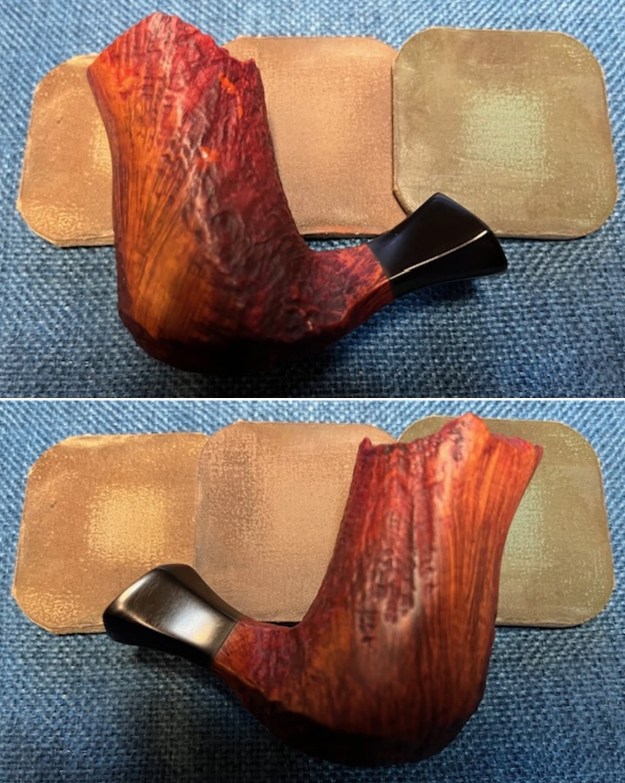
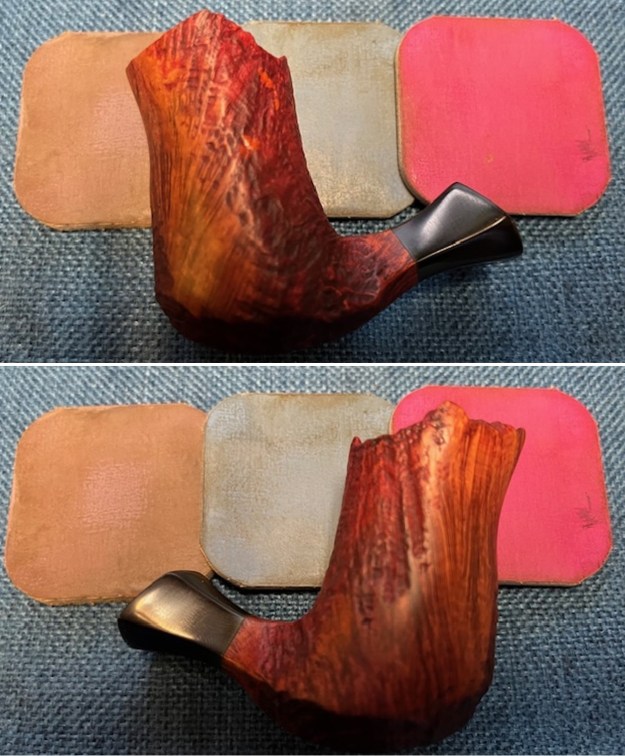
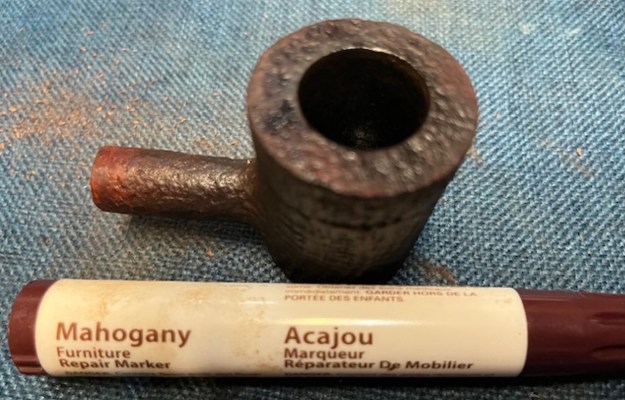
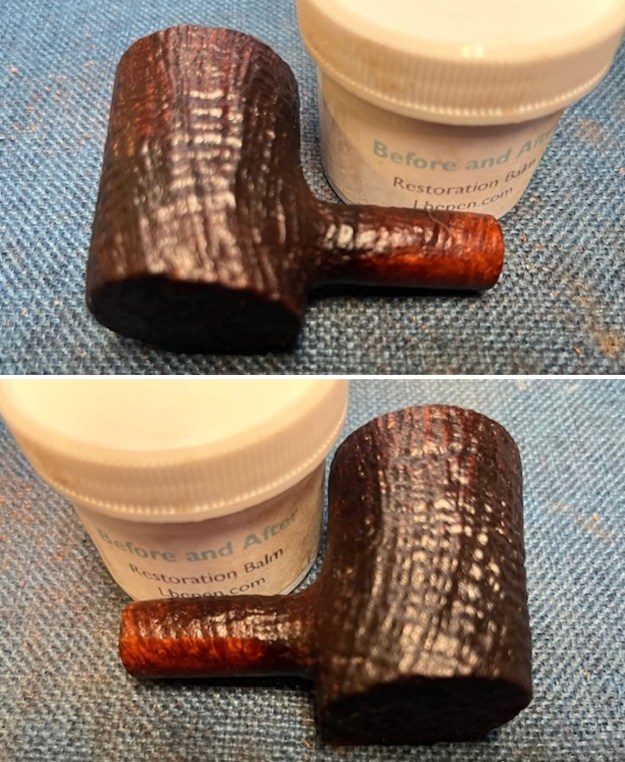
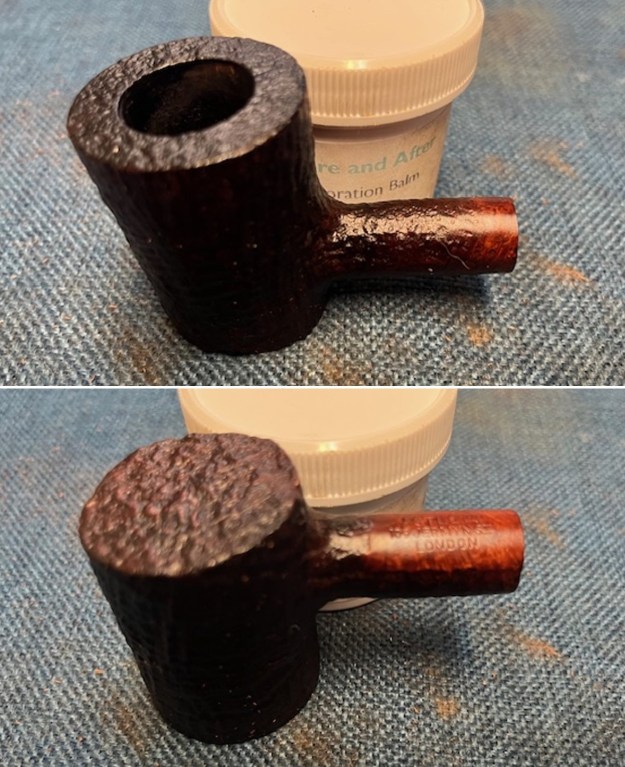
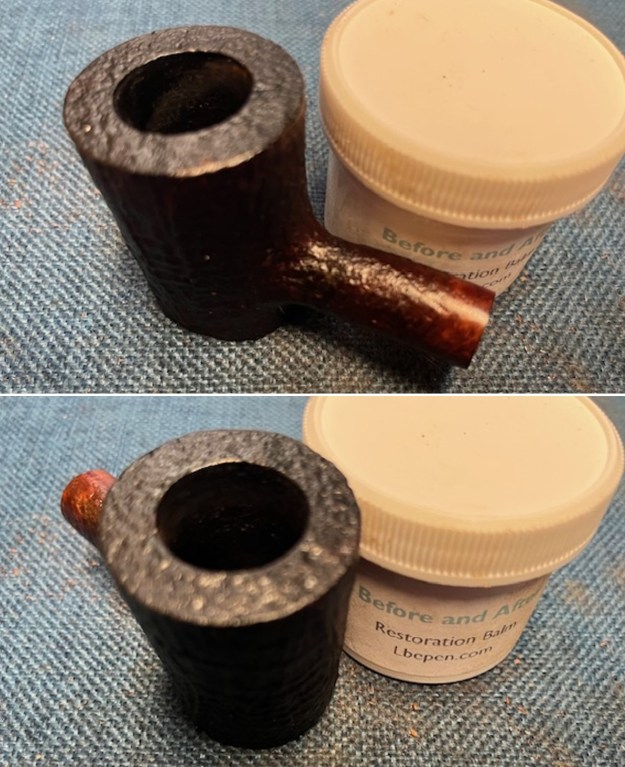
The Robertson that one I have chosen to work on is a beautiful chunky rusticated Apple with a saddle stem. We purchase it on 05/20/24 from a seller in Austin, Texas, USA. The name House of Robertson is roughly hand-etched on the left side of the shank with an engraving tool. This pipe is a huge, thick shank Apple with a saddle stem. The bowl has an interesting bark like rustication on the sides of the bowl and shank. There is a smooth panel for the brand mark on the left side and a band around the shank end. The seller had done a lot of clean up work on the pipe before he sold it. This often makes me leery of purchasing it as it generally inflates the price and rarely meets our standard. The bowl had been reamed but there was still too much cake in it for my liking as I want to know what is underneath. It is important for me to see the bowl walls and check for heat and burn damage. The rim top and edges of the rim were in good condition. The pipe was quite clean and it appears to be in excellent condition. It is definitely an interesting pipe that caught my interest. The fit of the stem to the shank left a gap. The saddle stem had been modified by the seller. The original button had been cut off and a new one imposed on the stem end. It was rough but workable and would take some time to clean and smooth out. I took photos of the pipe while I visited Jeff. Before I started my work on it I have included them below for you to see. I took photos show the condition of the bowl and the stem. The photos of the bowl and rim show the moderated cake remaining in the bowl but the rim top was in excellent condition. The rustication on the top of the bowl and the inner and outer edge of the rim looks really good. The finish was well cleaned. The saddle stem had been recut and a new button formed. It was rough at best and needed a bit of work to make it work for me. The button edge was sharp which was good but there was a trough ahead of it to give it definition. The taper of the stem dropped off at the trough. I would need to redefine the taper of the stem to get rid of the trough and make the flow more seamless between the new button and the slope of the stem. I would also need to shape the button to be more of an ellipse curving to a point on each end of the outer edges and clean up the slot and make it extend across the button surface and taper into the airway like a “Y”. You can also see that the stem does not sit tight against the shank end.The next photo shows the etched name on the left side of shank on the shank. It reads House of Robertson.I am including the information that I found when I received my first of the House of Robertson Pipes. I found a link on Pipedia that gave me the only information I could find on the brand. I include that in total as it is interesting to read (https://pipedia.org/wiki/Robertson).

“House of Robertson” was in business for many years, but alas, closed their doors in 1999. They were located in Boise, Idaho. They are noted for making rather large and interesting pipes. Thayne Robertson was a Master Mason, AF & AM, and started the shop about 1947 and his son Jon started working there in 1970 when he finished college, along with Thayne’s daughter. Thayne and his son started making the big pipes at that time, and made them together until 1987 when Thayne passed away. Jon kept the store and his sister moved on to other things. The House of Robertson appears to have closed around 1999.

Since then I have worked on a lot of House of Robertson pipes and have been able to track down more information. I am including a link to a Catalogue that I picked up on eBay. Click on the link and have a look at this interesting book of information on the brand and the pipe maker himself (https://rebornpipes.com/2022/12/11/a-house-of-robertson-catalogue-filled-with-great-examples-of-thayne-robertsons-work/). I am including a page below that helps with understanding the shape and finish on this particular pipe. It is clear that it is what he calls a Knarled Bark pipe. The catalogue describes it as follows:

Handcut like knarled bark on rustic old trees. Very individual, appealing. Dark finish. Medium $30.00. Medium-large $40.00. Large $50.00. Secret-cured…I am also including a biography of Thayne Robertson that I found on Facebook from a fellow in Boise, Idaho. It is an interesting glimpse into the mind and life of the pipe maker. Make sure to take time to read it (https://rebornpipes.com/2021/10/31/house-of-robertson-pipes-boise-pipe-carver-thayne-robertson/).

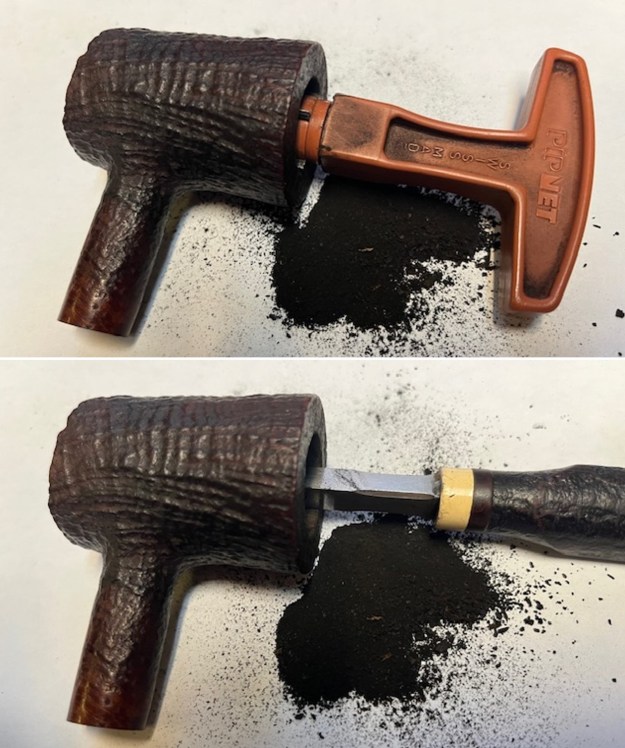
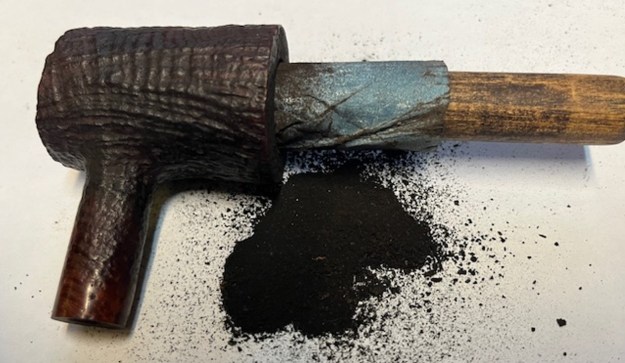
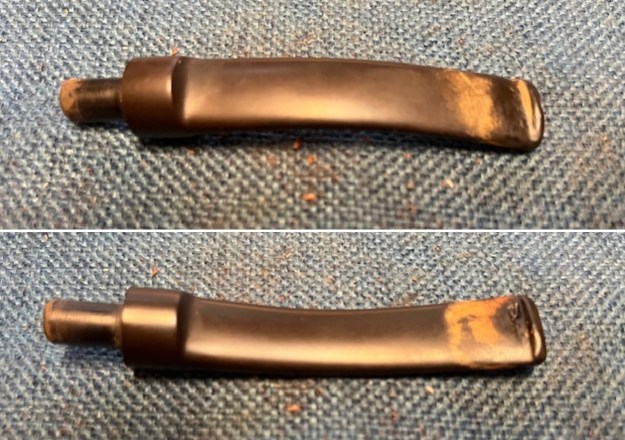
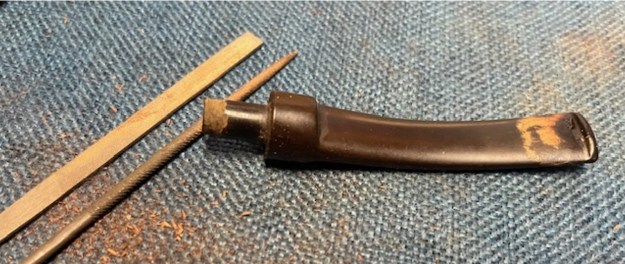
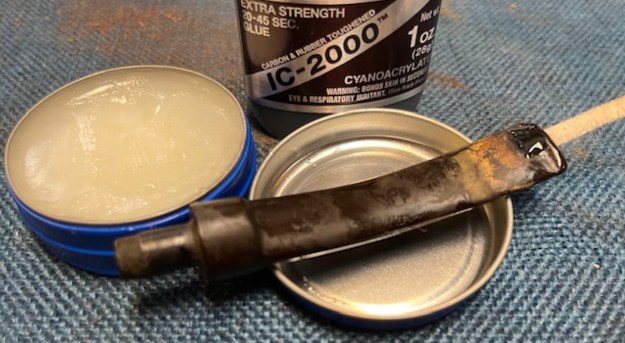
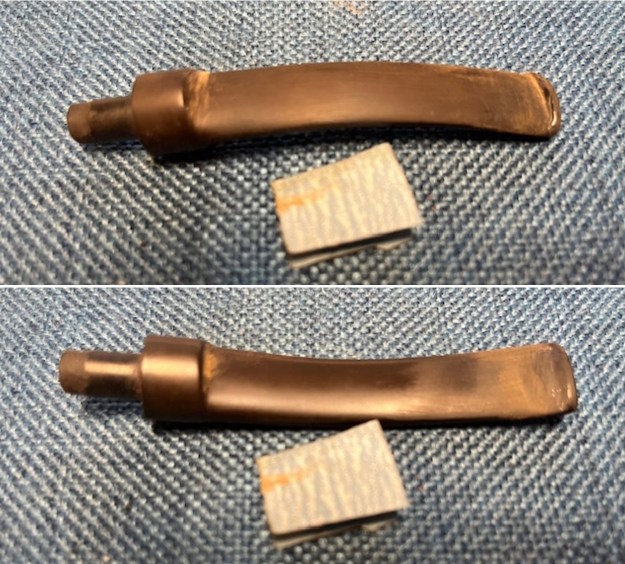
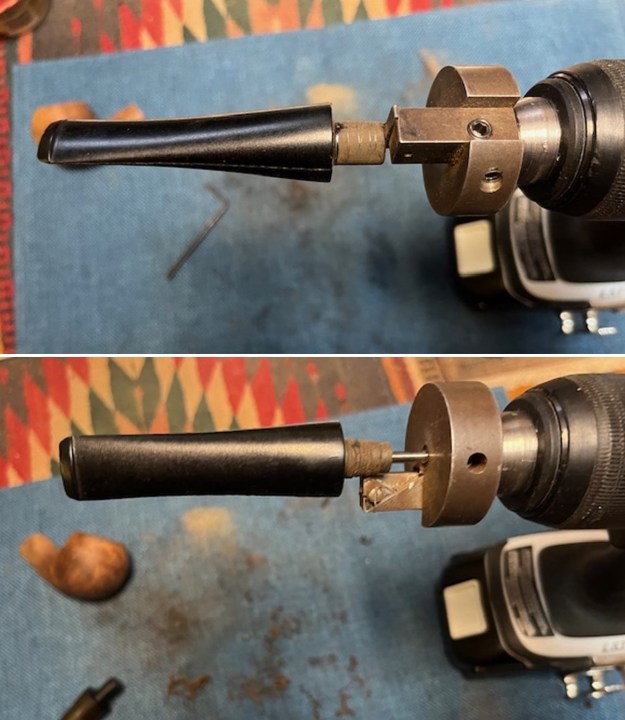
Now it was time to work on the pipe itself. Because the seller had done a fairly good job in his clean up it would not take much on the bowl and shank. I decided to take the cake back to bare briar so I could check out the condition of the walls. I cleaned up the remaining cake in the bowl with a Savinelli Fitsall Pipe Knife. I sanded the bowl walls with 220 grit sandpaper wrapped around a piece of dowel. I wiped down the inside with a damp cloth and checked for damage to the walls. There was no heat or burn damage on the walls which is always a relief for me.I did a quick clean up of the shank and the stem. Both were very clean and by and large I just removed dust and some debris in the shank from the reaming. The stem photo shows the stem after my rework of the button and slope so inevitably debris on the pipe cleaners came from that. It was nicely cleaned up by the seller.I decided to use the least intrusive method of getting the stem to seat well in the shank first. I used a knife to give the inner edge of the shank a bevel and sanded it smooth. I wanted to see if that would help. Unfortunately, it did not seem to make a difference. The fit still wans not snug. (By the way you can see the button shape in the first photo below. It shows the trough and the new button quite clearly.)I looked through the various bands and ferrules I have in a bag here and found an interesting thin brass ferrule that file well and did not cover the signature on the shank. The hole in the center was not quite big enough for the tenon to slip in. I used a cordless drill and drill the hole to fit. I found that doing it on the shank held it firmly in place and kept me from drilling off centre. Oh if I had a drill press it certainly would have been much easier but I have to use what is available to me at the moment. I tried the fit of the stem to the shank and it was perfect. I glued the ferrule in place with all-purpose glue. Once the glue set I gave the edges of the drilled hole a slight inward bevel and started polishing it out. I would need to take it through the regimen of the micromesh pads but it was looking pretty good. I took photos of the newly capped shank end to show the look of the pipe at this point. Once I finished the reshaping of the stem and the button I would put them together and take photos. I put the stem on the shank and looked it over and was happy with what I saw at this point. I worked Before & After Restoration Balm deep into the smooth finish to clean, enliven and protect the briar. I rubbed it in with my fingers and a shoe brush. I worked it into the finish then set it aside to dry for 10-15 minutes. I wiped it off with a soft cloth and buffed the bowl with a cotton cloth to polish it. It really began to have a deep shine in the briar. I took some photos of the bowl at this point to mark the progress in the restoration. The rustication on the bowl stands out with interesting lines moving across the sides of the bowl and the shank. I set the bowl aside and turned my attention to reshaping the stem and the button. I started the process by filling in the notches on each side of the button and stem surface with black CA glue. I also filled in some of the deeper pits in the button surface at the same time that had been left behind when the button had been shaped. This was merely the first step so it is hard to know what it looks like yet. Once the repairs cured I used a rasp to flatten out the stem surface ahead of the trough that had been carved. I want to change the flow of the pipe to a smoother transition from the stem to the button. The trough was ragged and did not work for me.I used a folded piece of 220 grit sandpaper to continue to shape the stem and the button. I wanted to smooth out the transition of the trough and the angle of the stem from the saddle to the button. There was still a ways to go but it was definitely looking better. I started polishing the stem flow and shape of the button with sanding pads – dry sanding with 320-3500 grit pads. I wiped down the stem after each pad with an Obsidian Oil cloth and the stem began to really show the shape of the button and the flow from the saddle to the button.With the stem ready for the final polishing I decided to pause and reshape the slot in the button. The first photo shows where I started. It was basically a rectangular cut. I wanted to make it follow the width and curve of the elliptical button shape. I used some small needle files to accomplish what I was looking for. I used a triangular shaped blade to start the process of taking the cut to the edges of the button. I followed that with an oval and a round needle file to get an elliptical shape. I cleaned up the top and bottom edge of the slot with a round needle file. I think it looks much better and the slot is shaped like a Y thus spreading the smoke into the smoker’s mouth. I polished the vulcanite stem with micromesh sanding pads – dry sanding it with 1500-12000 grit pads. I wiped the stem down after each sanding pad with Obsidian Oil and set it aside to dry. I polished it further with Before & After Pipe Polish – using both the Fine and Extra Fine Polishes. I gave it a rubdown with Obsidian Oil one last time and set it aside. I put the House of Robertson Chunk Bark Finish Apple and reshaped saddle stem back together and worked the pipe over on the buffing wheel using Blue Diamond to lightly polish the stem. I buffed the bowl and stem to raise the gloss on the briar and the vulcanite. I gave the bowl multiple coats of Conservator’s Wax and the stem multiple coats of carnauba wax. I buffed the entire pipe with a clean buffing pad on the wheel to raise the shine. I hand buffed it with a microfiber cloth to deepen the shine. The finished the House of Robertson Chunky Apple is shown in the photos below. The dark brown stains on the Bark finish of the chunky apple bowl works well with the rich black of the vulcanite stem. The dimensions of the pipe are: Length: 6 inches, Height: 2 inches, Outside Diameter: 1 ¼ inches, Diameter of the chamber: ¾ of an inch. The weight of the pipe is 73 grams/2.54 ounces. This is an interesting piece of briar with a rugged old tree bark rustication is unique and looks great. I hope to enjoy this pipe tomorrow afternoon on the front porch with a great bowl of good Virginia. Thanks for walking with me through the restoration process.

Restoring and Repairing a Larsen Copenhagen Handmade Made in Denmark Rustica


By Steve Laug

The next pipe on the worktable is a Danish made pipe from the workshop W.O. Larsen. It is a combination of rustication and smooth portions and a horn shank extension. The bowl is a classic Danish looking Canadian. The pipe came to us from eBay on 01/22/2024 from a seller in Jordan, Minnesota, USA.  The pipe is very dirty with a thick cake in the bowl and lava on the rim top. The rim edge looks like it might be slightly out of round but it was hard to know what was under the lava coat on the top and edges. It is stamped on the underside of the bowl and shank on a smooth panel. It reads Larsen [over] Copenhagen [over] Handmade [over] Made in Denmark. On the top side it is stamped Rustica. The finish was dusty and there were oils and grime ground into the rusticated and the smooth finish around the sides of the bowl. The horn shank extension had a metal insert to protect it from cracked and a tube inside connecting the extension to the shank. The stem fit well and was oxidized and dirty with tooth marks and chatter on both sides ahead of the button. Jeff took some photos of the pipe before he started his cleanup work. Jeff took a photo of the rim top to show the thick build up of lava on the rim top. It is also built up on the inner edge of the bowl. The thick cake in the bowl is very visible. He captured the oxidation and tooth marks on both sides of the stem ahead of the button as well. He took photos of the sides and the heel of the bowl to show the combined smooth and rusticated finish on the pipe. It is a unique finish that really gives depth to the rustication and shows the grain in the smooth portions. He took two photos to capture the stamping top and underside of the shank just ahead of the horn extension. Each one moves down the shank to the horn shank extension. It is clear and readable as noted above. You can also see that the horn extension is loose from the shank end.Once the stem was removed the shank extension came off in his hand. He took a photo of the parts.I turned to Pipephil (http://www.pipephil.eu/logos/en/logo-l2.html) to get a quick view of the brand once again. I did a screen capture of the site’s information and have included that below. The pipe I am working on is a Larsen as it is stamped similarly to the ones in the photos. It is interestingly stamped with a lot more detail than any of the ones shown in the screen capture below.I turned to Pipedia (https://pipedia.org/wiki/W.%C3%98._Larsen) for a quick read. The site is worth reading the history of the shop and the brand and its influence on Danish pipe carving. There was no additional information on the unique stamping on this pipe.

What I learned from the research is that the pipe is a Larsen made pipe that could have been designed by W.O Larsen himself or at least one of the shop carvers. It is a beauty that uses a unique finish to give definition to the shape. It is very similar to a previous Larsen that I restemmed and repaired (https://rebornpipes.com/2024/06/09/argggh-sometimes-the-easiest-restoration-becomes-a-real-nightmare/).

With that information I moved forward to work on the pipe itself and see what I had to do with it. Jeff had done an amazing job in removing all of the cake and the lava on the sand blast rim top. He had reamed the bowl with a PipNet Pipe Reamer and cleaned up the remnants with a Savinelli Fitsall Pipe Knife. He took the cake back to bare briar so we could check the walls for damage. He scrubbed the exterior of the bowl with Murphy’s Oil Soap and a tooth brush to remove the grime on the bowl and rim and was able to remove the lava and dirt. The finish on the bowl and rim top looked very good showing a unique and beautiful combination of smooth and rusticated finishes. He cleaned out the interior of the bowl and shank with pipe cleaners, cotton swabs and alcohol until they came out clean. He cleaned the stem with Soft Scrub on the outside and alcohol, pipe cleaners and cotton swabs on the inside. He soaked it in Briarville’s stem deoxidizer to remove the oxidation. It certainly looked better when it arrived.  I took photos of the pipe before I started my part of the restoration.  I took some close up photos of the rim top showing the inner edge of the bowl – damages and nicks in the edge. I took photos of the stem to try and capture the tooth marks but they are hard to see in the photos.I took photos of the stamping on the top and underside of the shank to show the condition after the cleanup. This stamping is clearer than the photos show. I took a photo of the bowl with the stem next to it to show the overall look of the pipe. I decided to start my work on this pipe by regluing the horn shank extension to the briar. I have used different types of glue in the past but I have gone back to using Weld Bond all purpose glue. It gives me lots of time to fine tune the fit to the shank. Once I have it in place I push the parts together to squeeze out the excess glue and let it start to cure. I wiped down the excess glue on the briar and horn and set it aside to cure over night. Once the repair cured I went on to address the chipping and marks on the inner edge of the rim. I used a folded piece of 220 grit sandpaper to smooth out the damage. I gave the rim a very subtle bevel and the damage disappeared.I polished the briar and the horn shank extension with micromesh sanding pads – dry sanding with 1500-12000 grit pads. I wiped the bowl down after each pad with a damp cloth to remove the sanding dust. I rubbed the bowl down with Before & After Restoration Balm. I worked it into the smooth and the rusticated finish of the bowl, rim top and shank with my fingertips and a shoe brush to clean, enliven and protect it. I find that the balm really makes the briar come alive again. The contrasts in the layers of stain and the contrasting finish really made the grain stand out. I let the balm sit for 15 minutes and then buffed with a cotton cloth and shoe brush to raise the shine. I set the bowl aside and turned my attention to the stem. I polished it with micromesh sanding pads – dry sanding with 1500-12000 grit sanding pads. I wiped it down after each sanding pad with a cloth containing some Obsidian Oil. I finished polishing it with Before & After Pipe Stem Polish – both Fine and Extra Fine and buffed it off with a cotton cloth. This Larsen Copenhagen Handmade Rustica Canadian is a great looking pipe now that it has been restored. The shape is elegant and flowing with a thin, fitted taper vulcanite stem. I put the stem on the bowl and carefully buffed the pipe with Blue Diamond on the buffing wheel using a light touch on the briar. I gave the rusticated parts of the bowl multiple coats of Conservator’s Wax and the smooth portions and the stem multiple coats of carnauba wax on the buffing wheel and followed that by buffing the entire pipe with a clean buffing pad. I hand buffed the pipe with a microfiber cloth to deepen the shine. The finished Larsen Copenhagen Rustica Canadian fits nicely in the hand and feels great. Give the finished pipe a look in the photos below. The dimensions of the pipe are Length: 7 inches, Height: 2 inches, Outside diameter of the bowl: 1 ¼ inches, Chamber diameter: ¾ of an inch. The weight of the pipe is 1.98 ounces/56 grams. I will be putting it on the Danish Pipe Maker Section of the rebornpipes store shortly. If you are interested in adding this pipe to your collection send me a message or an email. Thanks for reading this blog and my reflections on the pipe while I worked on it. There are many more to come!
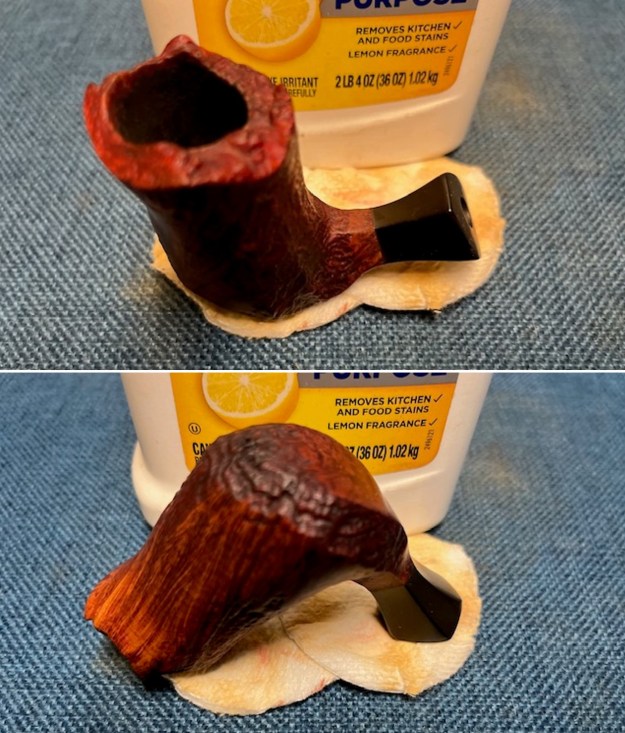
Fresh Life for a 1976 Dunhill Shell Briar 126 3S Billiard


By Steve Laug

The next pipe on the work table is a lovely Dunhill small sandblast Billiard shaped briar pipe. We purchased it from our contact in Copenhagen, Denmark on 01/22/2024. It is a classic Dunhill Sandblast Billiard shaped bowl. It has a sandblast, rich brown stained bowl that really highlights the grain in the briar. The bowl is dirty with grime in the finish. There also appears to be a shiny varnish coat over the grime in the sandblast. There appears to be a varnish coat on the stem as well. The bowl has a moderated cake and a light lava overflow on the sandblast rim top and edges. The stamping on the pipe is clear and readable and on the under side it reads 126 the shape number [followed by] Dunhill [over Shell Briar. That is followed by Made in England the superscript date number 16 is stamped after the D in England. There is a circle 3S following the date stamp that identifies the pipe as a group 3 sized pipe in a Shell finish. The stem had a white spot that is damaged and shrunken on the top side of the taper. It is lightly oxidized and has tooth chatter and deep tooth marks on both sides ahead of the button. The sad thing is that once again the stem is covered with a varnish coat. Jeff took photos of the pipe before he started his cleanup. He took photos of the pipe’s bowl and rim top to show the cake in the bowl and the lava coat overflowing onto the top. It is another dirty pipe. You can see the shiny coat on top of the finish and the grime in the photos. He also took photos of the stem to capture the tooth marks on the top and underside near the button. He took photos of the sides and the heel of the bowl to give a sense of the sandblast finish on this one. Even under the grime and shiny varnish coat in the grooves the blast is quite beautiful. Jeff took photos of the stamping on the underside of the shank. It is clear and readable though it is faint in some spots. I wanted to unpack the Dunhill stamping on the shank and work to understand each element of the stamp. I generally use the Pipephil site to gather as much initial information as possible (http://pipephil.eu/logos/en/dunhill/shell-briar1.html). The stamping is interpreted as follows: The number 126 is the shape number for a taper stem Billiard. The Shell Briar stamp refers to the finish. The underlined, superscript number 16 following the D of England would give the date the pipe. The circle 3S tells me that the pipe is a group 3 sized pipe and the S is for the Shell finish. The photo below is of the stamping on a Don shape but the stamping is similar on this one.Pipephil also has some helpful dating keys on the site that are basically flow charts that you can walk through to date your pipe (http://pipephil.eu/logos/en/dunhill/cledat-en1.html). I turned to Part 1 of the Dating Key and followed the chart. This pipe has 16 following the D in England. There was no patent number so that took me to the section on the chart below (column one) which instructed me that the pipe could be dated as being made “posterior to 1954”.I followed the link under “Your pipe is posterior to 1954. Narrow down your dating”. That took me to Page 2 of the dating key (http://pipephil.eu/logos/en/dunhill/cledat-en1a.html). The second column – suffic [1…4] or [11…39] led me to the next section. Since the 16 after the D in England the date of the pipe spelled as 1960 + 16 making the date 1976.I then turned to Pipedia’s section on Dunhill Shell Briar to get a bit of background on the Dunhill finishes (https://pipedia.org/wiki/Dunhill#Root_Briar). I quote:

Shell

A deep craggy sandblast with a black stain finish (usually made using Algerian briar) – the color of the stain used has varied over the years. Although there is some doubt as to them being the first to sandblast pipes, Dunhill’s Shell pipes, and the sandblasting techniques developed to create them are considered one of Dunhill’s greatest and most lasting contributions to the art of pipe making.

The documented history of Dunhill’s inception of the Shell is largely limited to patent applications — there are no catalog pages or advertisements promoting blasted pipes at the time. The preliminary work on the English patent (No. 1484/17) was submitted on October 13, 1917. The patent submission was completed half a year later, on April 12, 1918, followed by the granting of the English patent on October 14, 1918. This was less than a month before the end of The Great War on November 11th.

In 1986 Dunhill released a line of premium Shell finish pipes – “RING GRAIN”. These are high-quality straight grain pipes which are sandblasted. Initially only Ring Grain, but now in two different finishes. In 1995 the “Shilling” was introduced with Cumberland finish – it is an extremely rare series. These pipes exhibit a deeper blast characteristic of that of the 1930’s – mid-1960’s (and the limited ‘deep blast’ pipes of the early 1980s) and show a fine graining pattern. These are considered the best new Dunhills by many enthusiasts today and are very rare. The finish is sometimes described as tasting like vanilla at first, with the taste becoming more normal or good as the pipe breaks in.

I turned to work on the pipe itself. Jeff had done an amazing cleanup of the pipe. He reamed the cake with a PipNet reamer and cleaned up that with a Savinelli Fitsall Pipe Knife. He scrubbed the internals of the bowl and stem with alcohol, cotton swabs, pipe cleaners and shank brushes. He scrubbed the externals with undiluted Murphy’s Oil Soap and rinsed the bowl off with running water. His scrubbing removed the varnish on the bowl with just a few spots remaining. He soaked the stem in Briarville’s Pipe stem Deoxidizer and once it had soaked rinsed it off with warm water to remove the residual solution. He dried it off and rubbed it down to remove any oxidation that was still on the stem. The soak did not penetrate the varnish on the stem at all but it certainly looked better. Other than the shiny spots in the finish where the varnish remained, the pipe looked very good when I received it. You can also see the sunken state of the white spot on the stem surface. I took a photo of the rim top to show the condition. It looks good with the tars and oils removed from the rim top. The inner edge of the bowl was in excellent condition. The bowl itself was very clean. The stem came out clean but the varnish coat remained and discoloured the white spot. The photos clearly pick up the shrunken white spot on the stem top. The varnish coat gave the whole stem an artificial shine that hid the tooth marks and chatter underneath.I took a photo of the underside of the shank to show the stamping. The photo shows the stamping and it is very readable other than the date stamp which is visible in person. I removed the stem from the shank and took a photo of the pipe parts to show what I was working with. I think once the varnish is removed the pipe will be a nicer looking piece.The briar was actually very clean and the varnish coat had been eliminated on the bowl so I had a bit of an easier job than on the previous 126 that had a heavy varnish coat. I rubbed the bowl down with Before & After Restoration Balm. I worked it into the surface with my fingertips and a horsehair shoe brush to work it into the nooks and crannies of the sandblast finish. The product works to clean, enliven and preserve the briar. I let it sit for 10 minutes (it varies how long I leave it not for any specific reason but because I get preoccupied with other things). Once it has done its magic I buff it with a cotton cloth to deepen the shine. The pipe really comes alive with the balm. I sanded the stem with 320-3500 grit sanding pads to remove the varnish coat that covered it. I wiped it down after each sanding pad with a damp cloth. By the final 3500 grit sanding pad the stem had a more normal shine and the varnish, tooth marks and chatter were gone. With that done I was ready to address the shrunken and discoloured white spot.Once I hard removed the varnish coat I cleaned up the sunken white spot with a cotton swab and isopropyl alcohol. I was able to remove the staining on the spot and the grime that had built up in the hole. It was now ready for the patch. Mark Hoover has some small white acrylic dots that can be used to fill in the hole in the stem top.  I followed Mark’s direction and put one acrylic dot into a small amount of acetone for a couple of seconds. I then pushed it into the hole with some tweezers. Mark had said that if the drilled hole goes a bit deeper and is not to the level with the surface of the stem then wait a minute or two and put another on top. I let it harden and then I sanded it smooth with 220 grit sandpaper. I polished the vulcanite with micromesh sanding pads – 1500-12000 grit pads. I wiped it down with Obsidian Oil after each sanding pad. I used Before & After Pipe Polish – both Fine and Extra Fine to further polish the stem. This 1976 Dunhill Shell Briar 126 Billiard with a vulcanite taper stem has a beautiful, unique Dunhill Sandblast finish that is very deep and craggy. The Shell Briar mixed brown finish highlights some great grain around the bowl and shank. It has a unique sandblast that Dunhill specialized in making. The removal of the varnish gave a clearness to the stem surface. The polished vulcanite taper stem adds to the mix. I put the stem back on the bowl and buffed the pipe with Blue Diamond on the buffing wheel being careful to not buff the stamping. I gave the bowl multiple coats of Conservator’s Wax and the stem multiple coats of carnauba wax on the buffing wheel and followed that by buffing it with a clean buffing pad. I hand buffed the pipe with a microfiber cloth to deepen the shine. The finished Dunhill Shell Briar 126 Billiard is quite nice and feels great in the hand. Give the finished pipe a look in the photos below. The dimensions of the pipe are Length: 5 ¼ inches, Height: 1 ½ inches, Outside diameter of the bowl: 1 ¼ inches, Chamber diameter: ¾ of an inch. The weight of the pipe is 1.13 ounces/32 grams. Thanks for walking through the restoration with me as I worked over another beautiful pipe. This one will be going on the rebornpipes store in the English Pipe Makers Section. Thanks for your time.