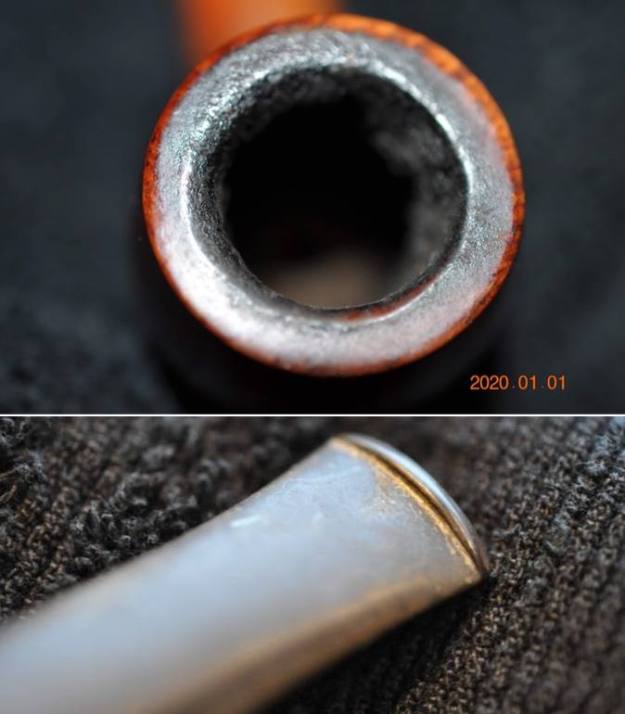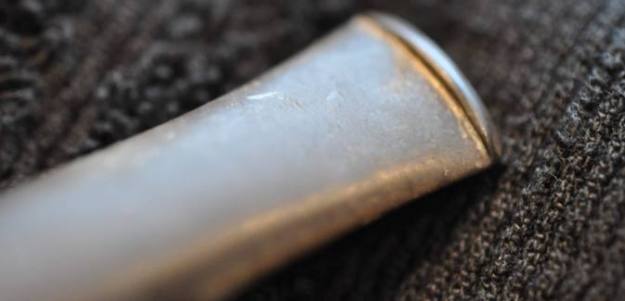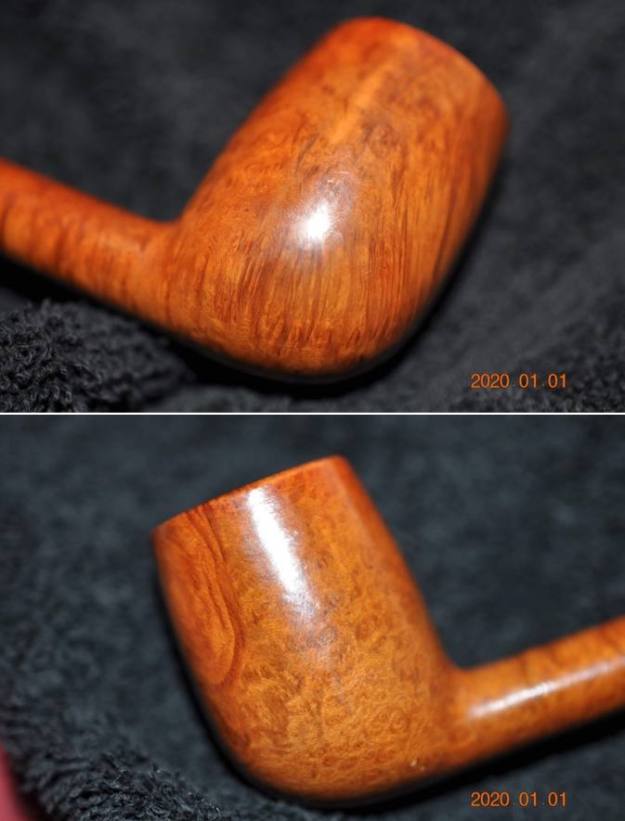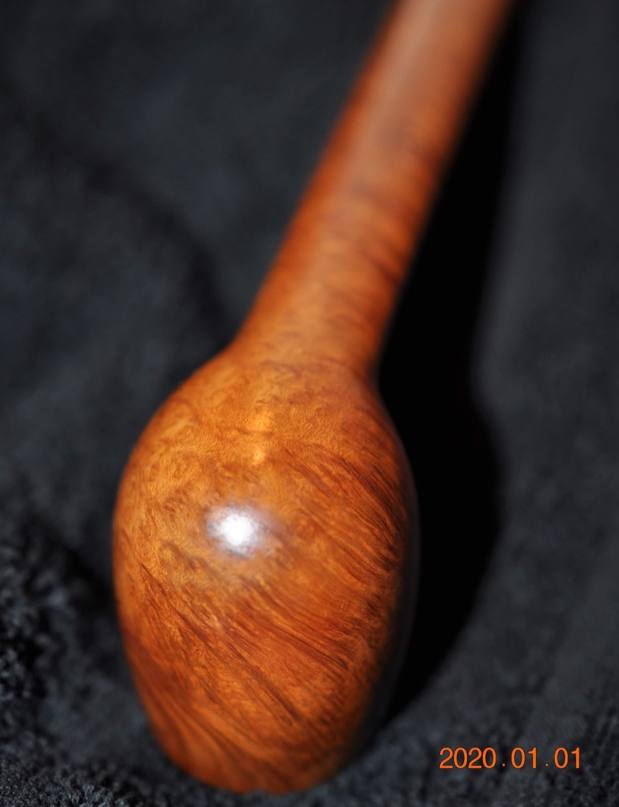
Tag Archives: Edwards Algerian Briar Pipes

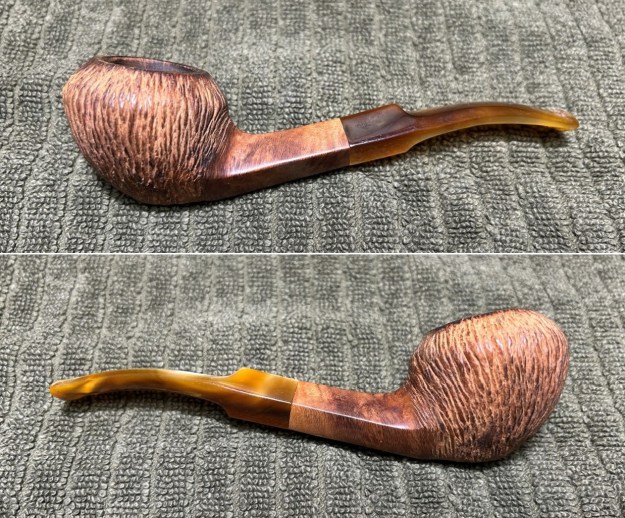
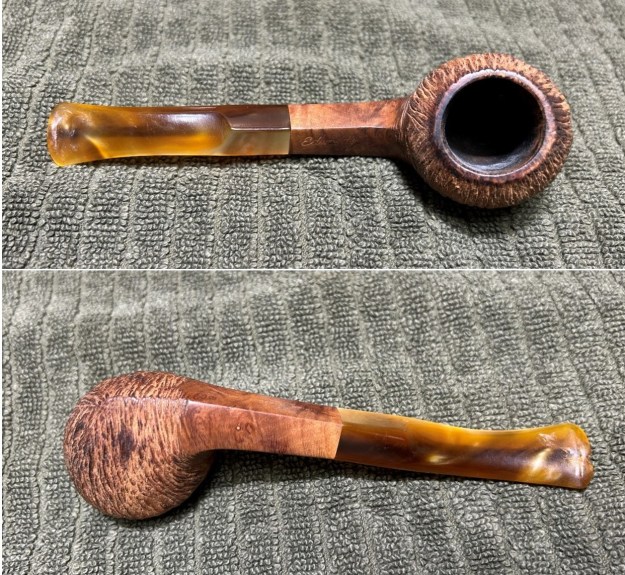
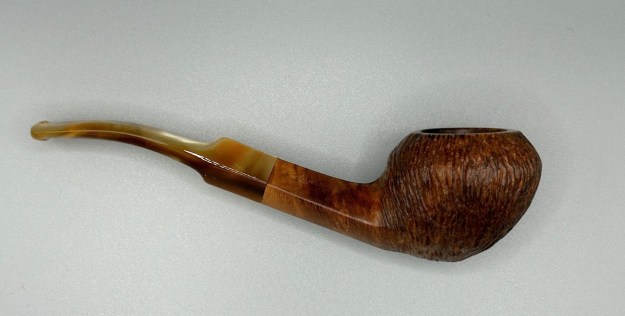
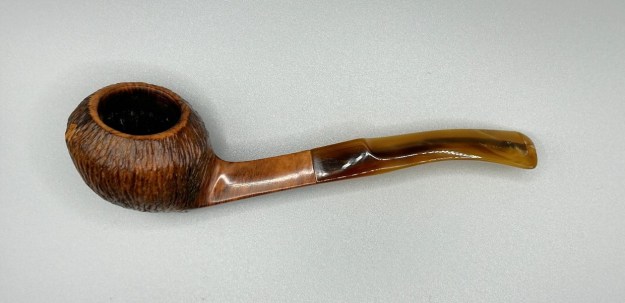
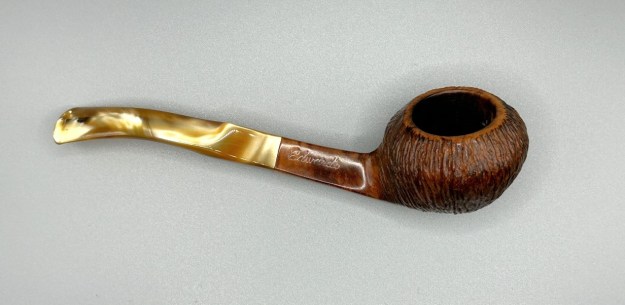
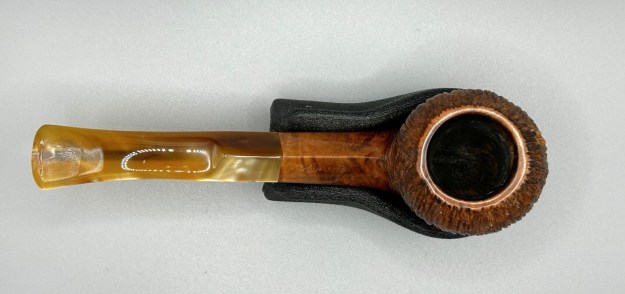
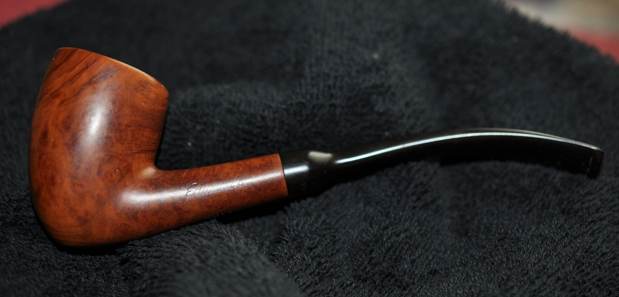
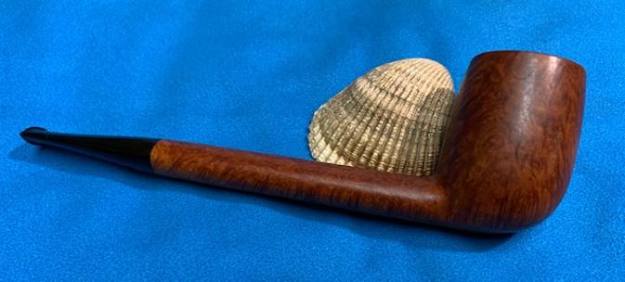
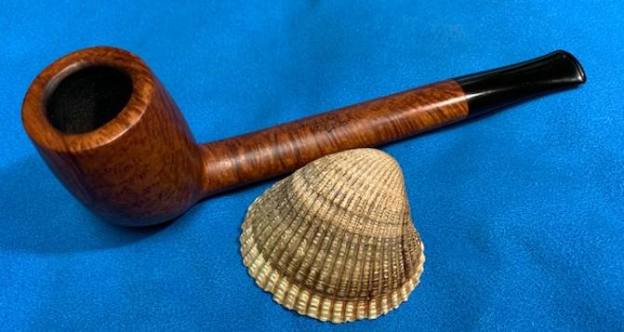
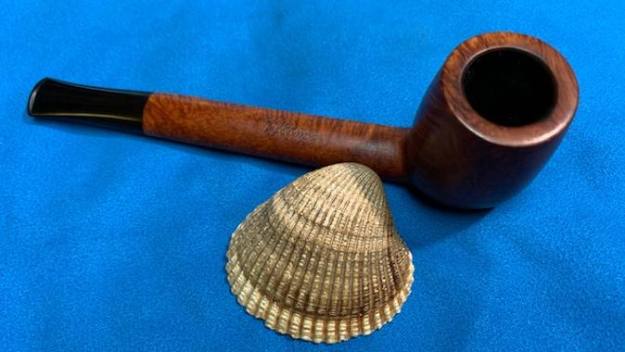
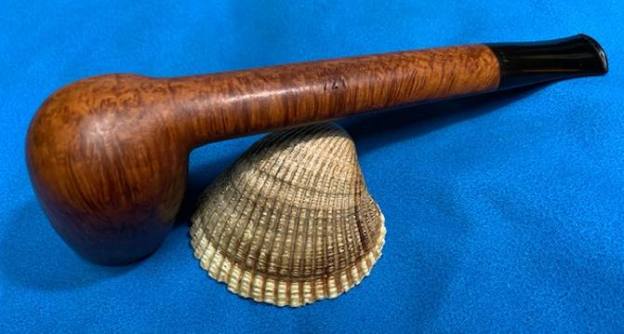
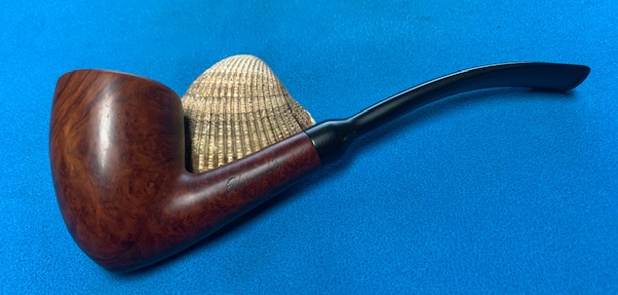
Restoring a Danish Looking Edwards Algerian Briar 770 Acorn


Blog by Steve Laug

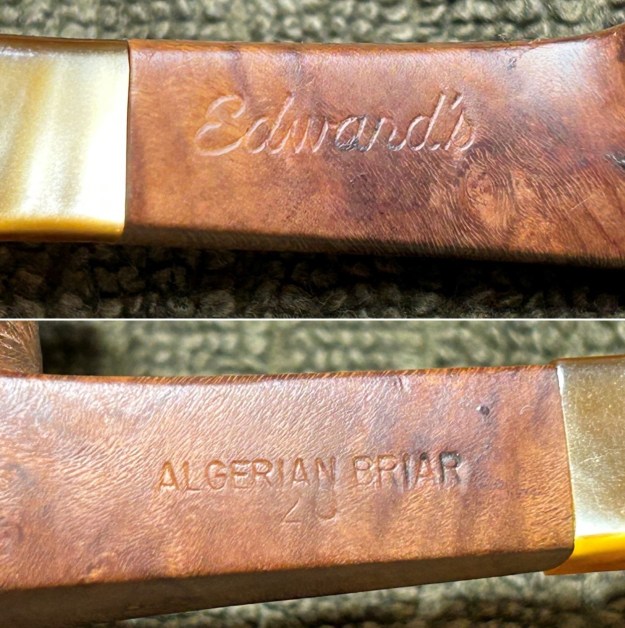
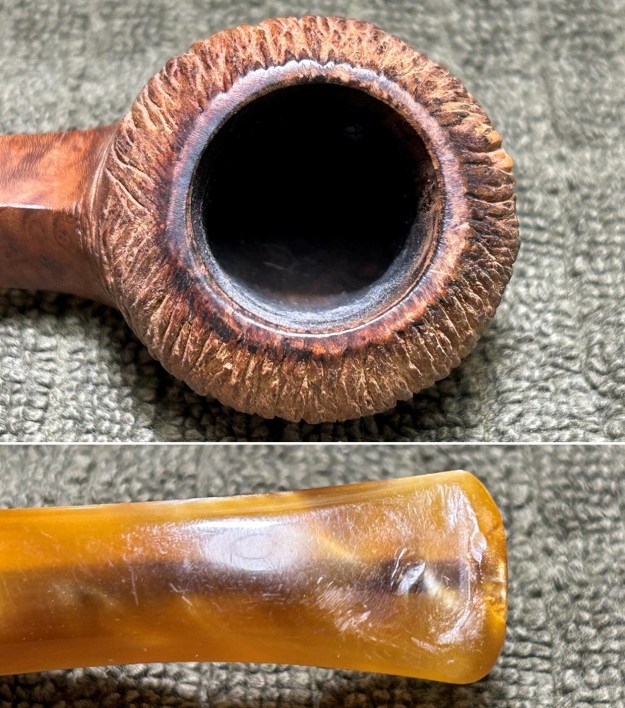
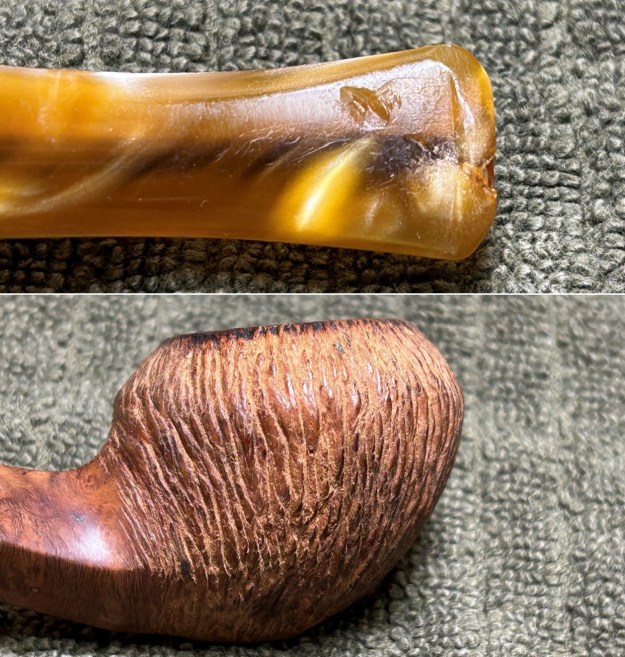
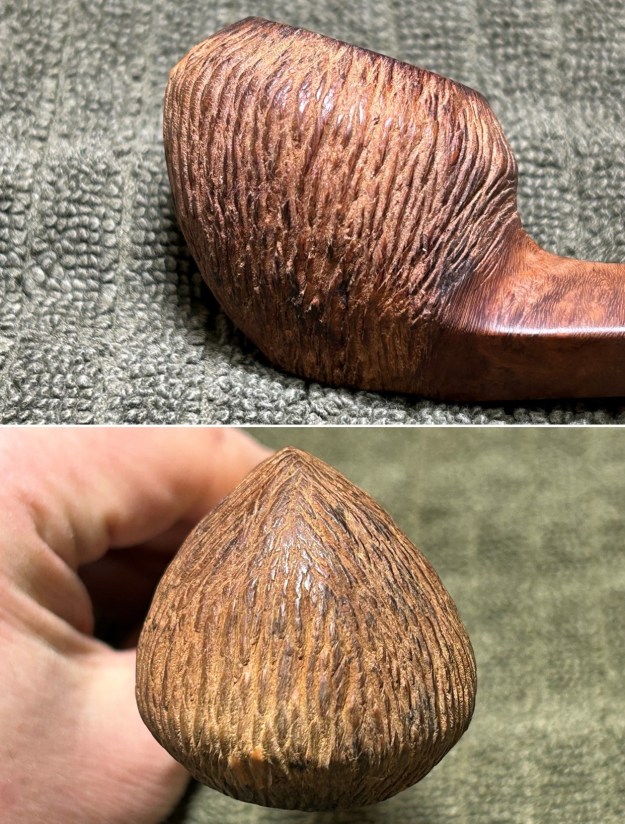
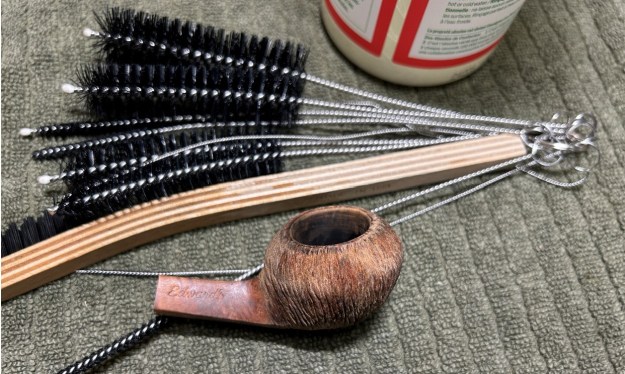
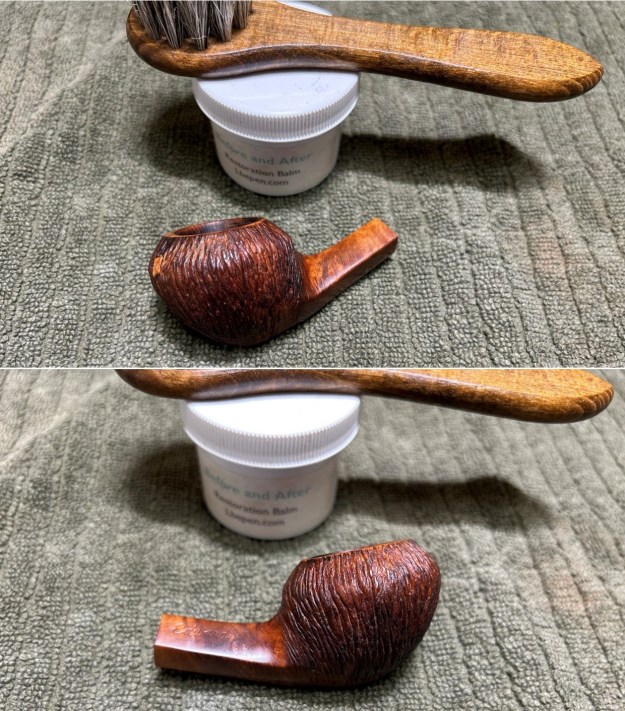
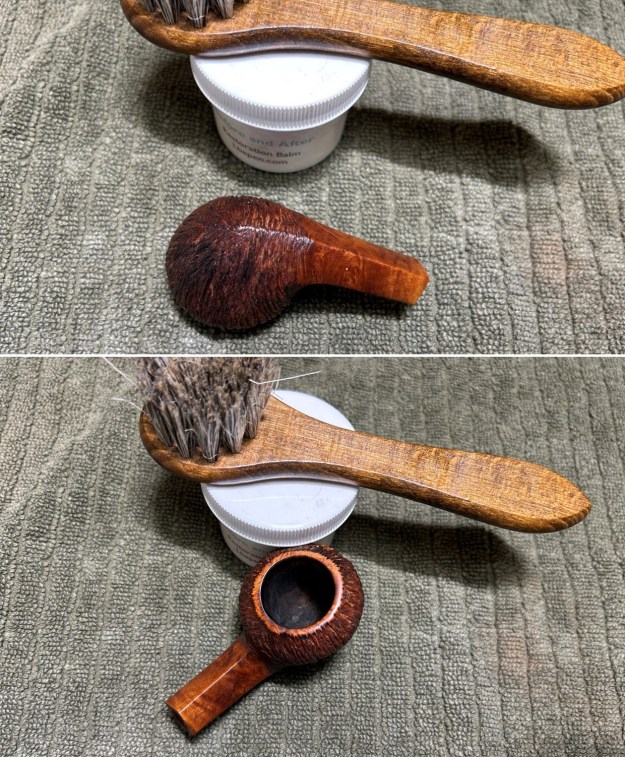
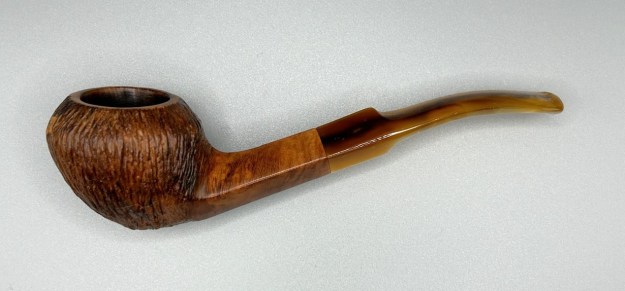
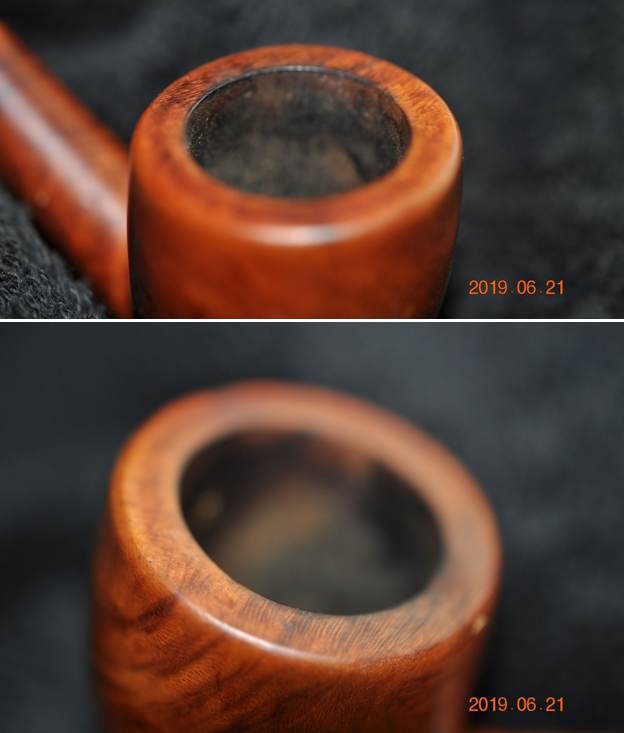
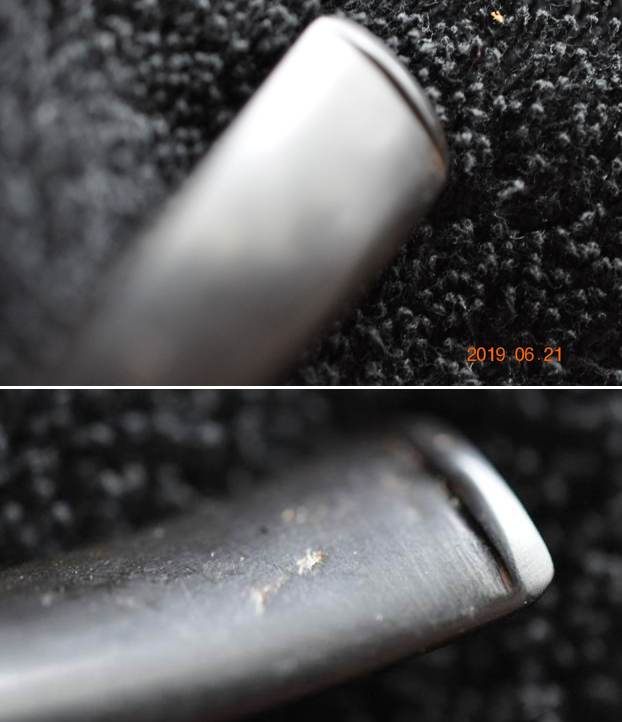
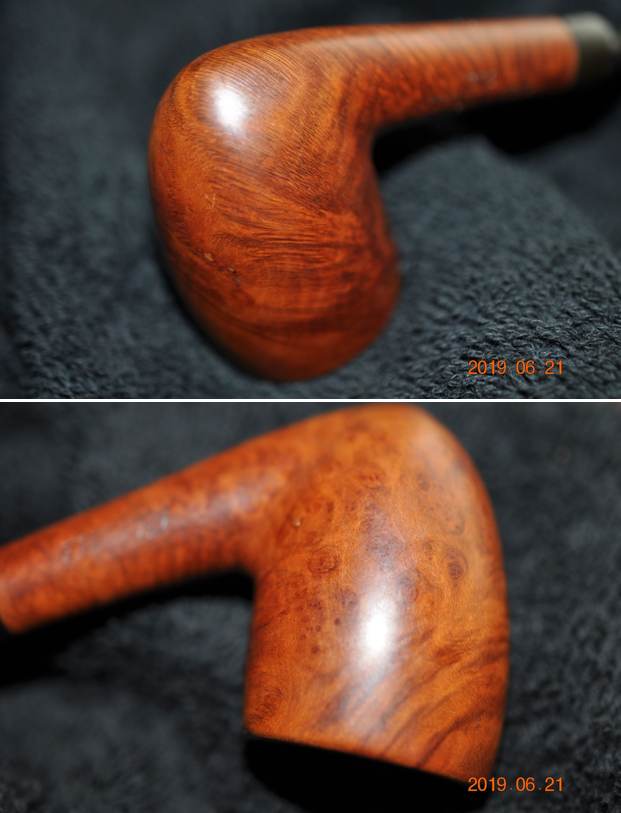
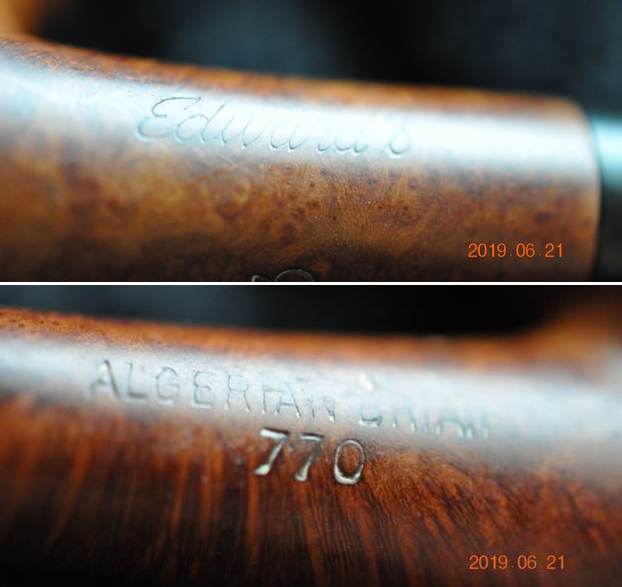
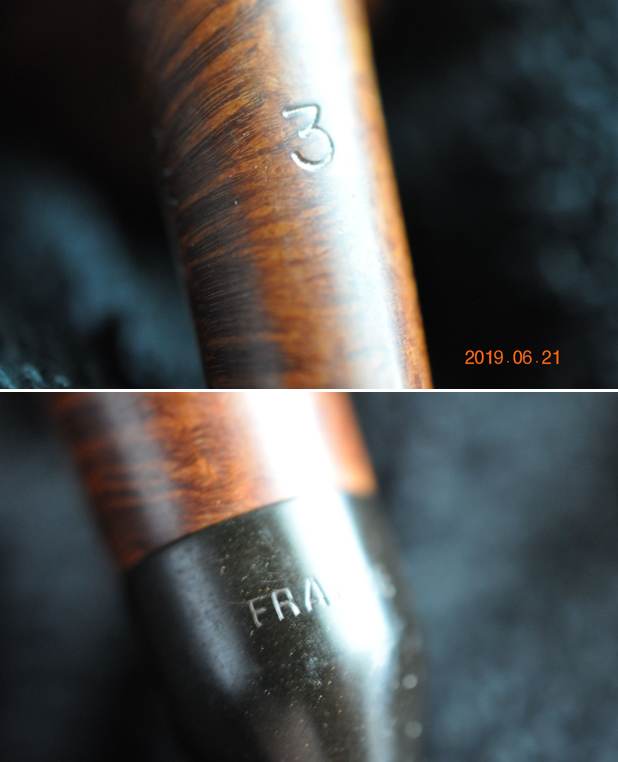
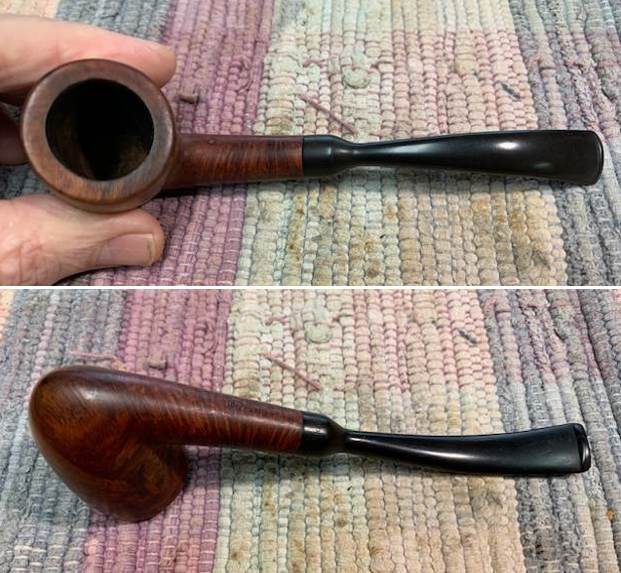
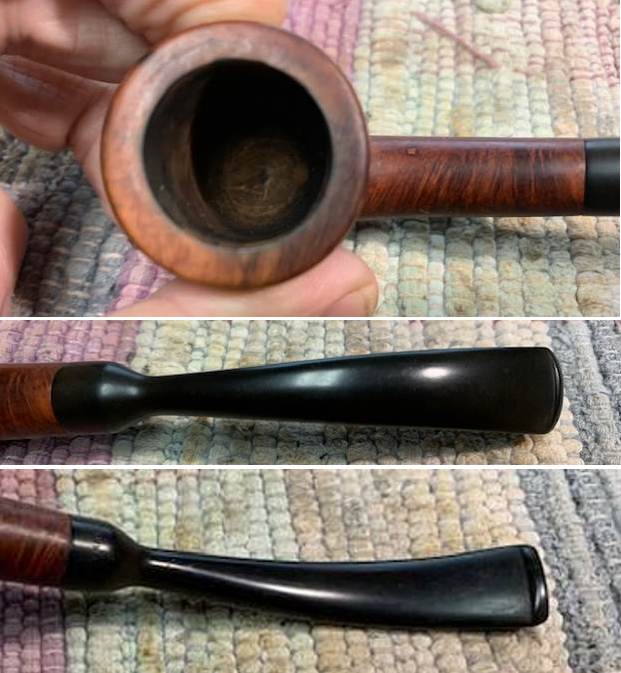
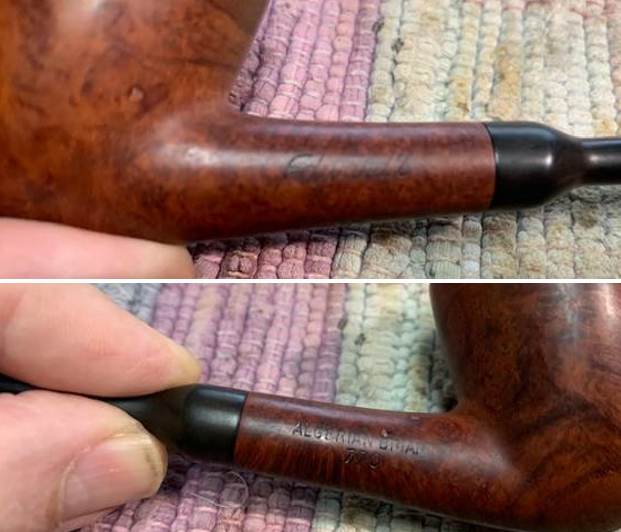
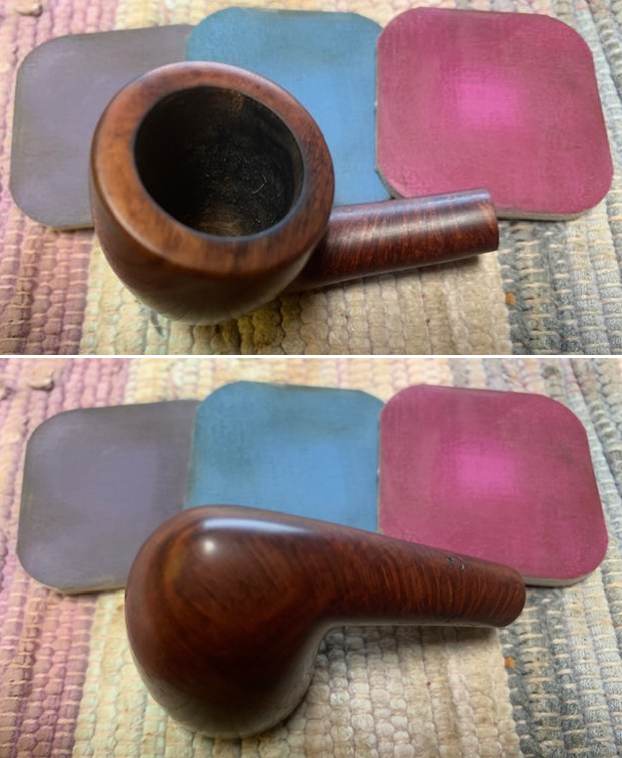
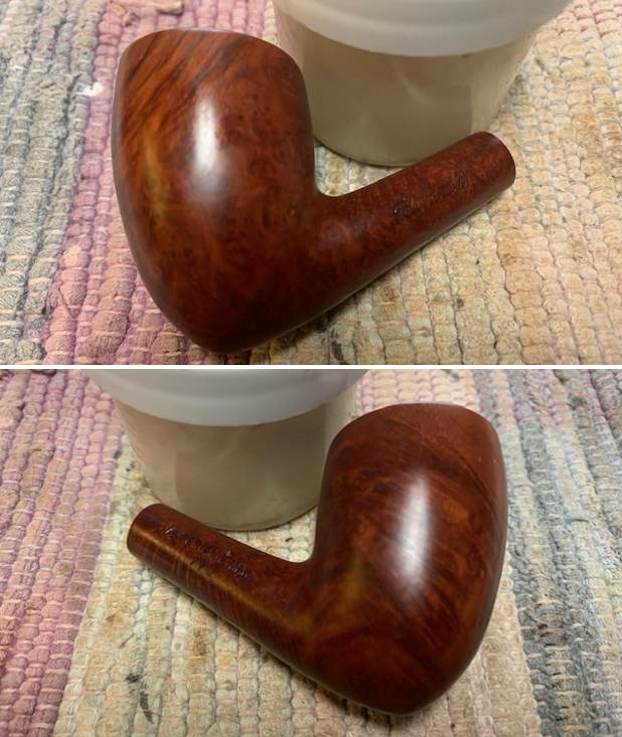
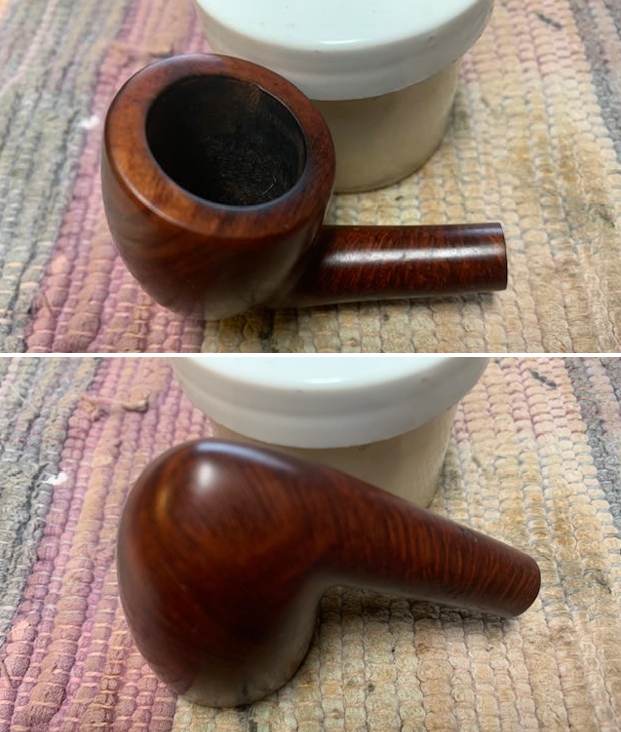
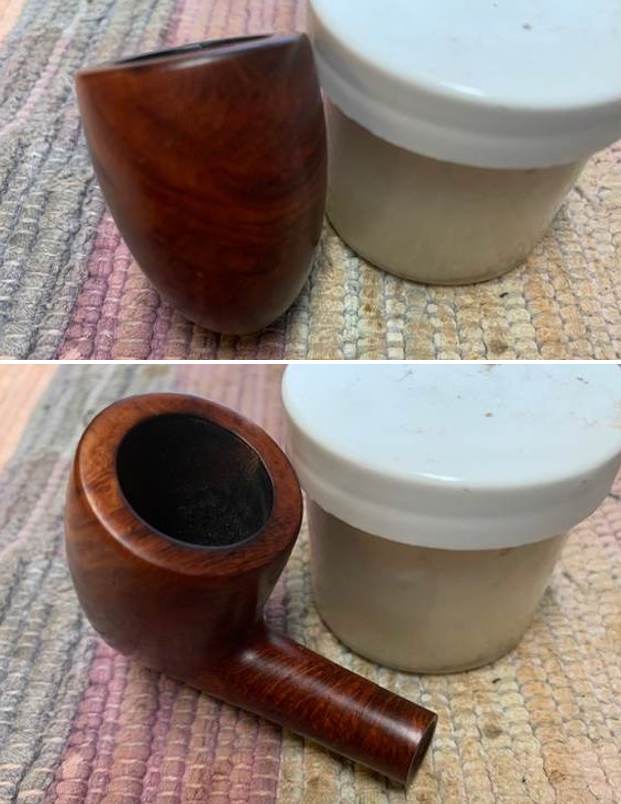
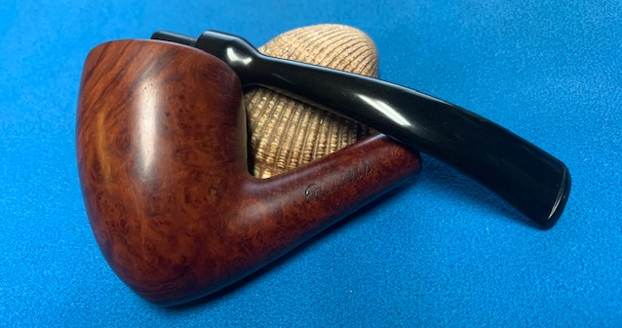
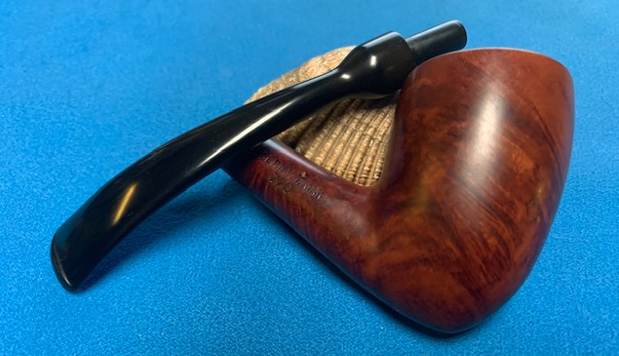
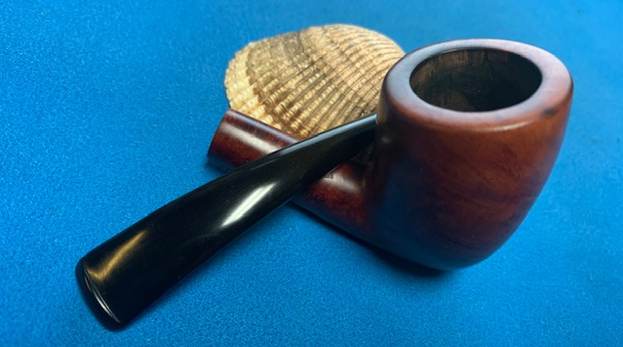
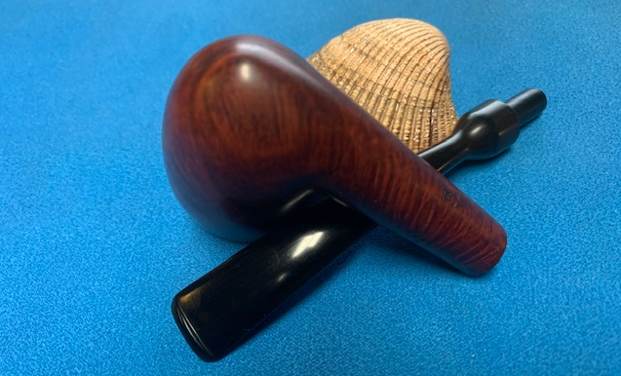
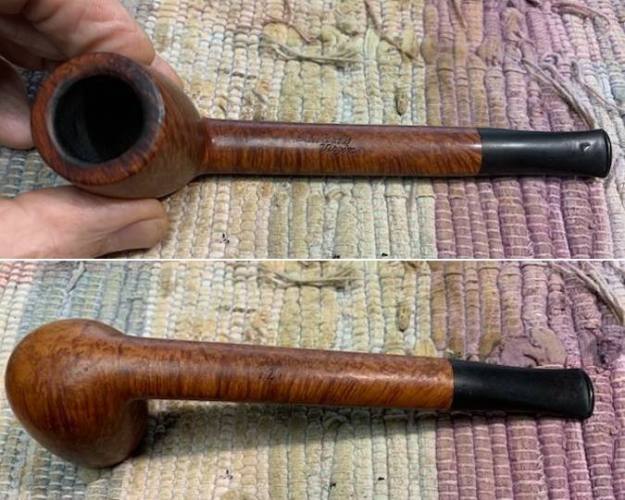
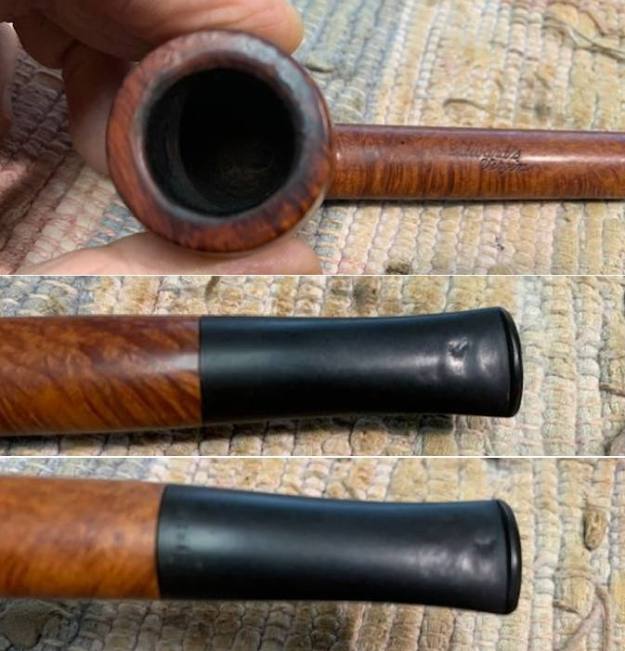
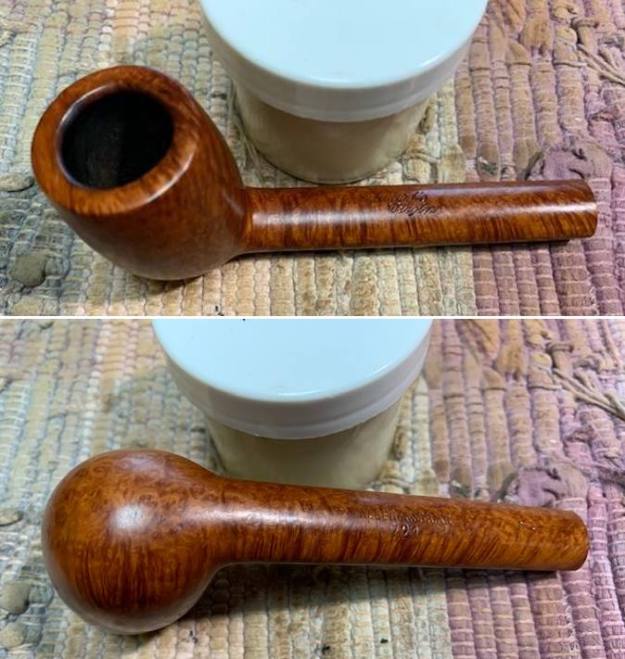
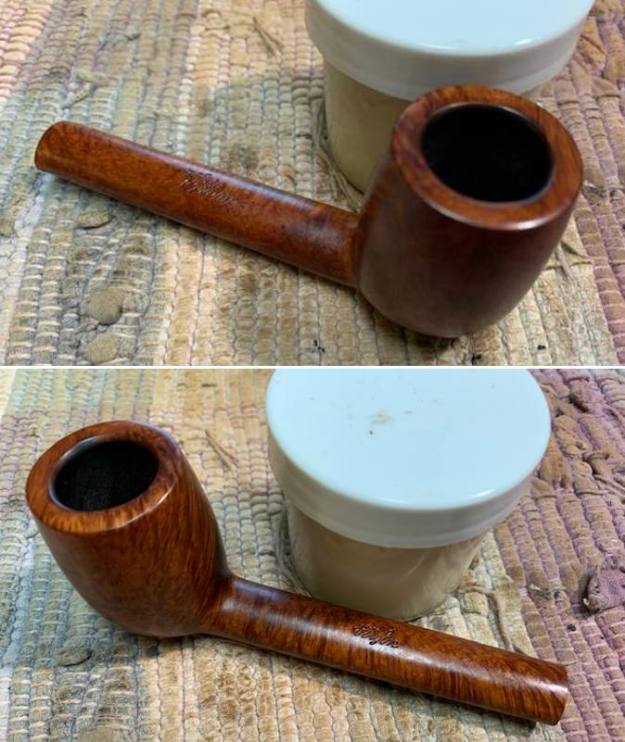
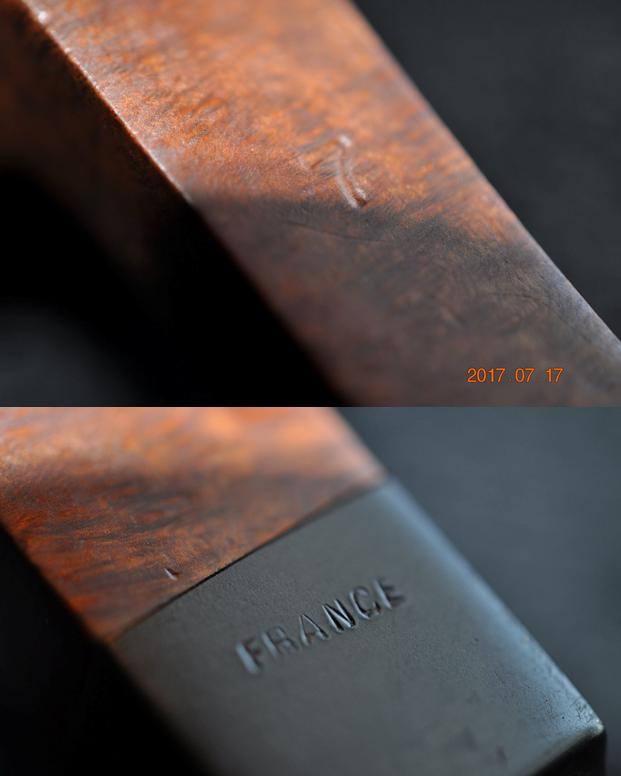
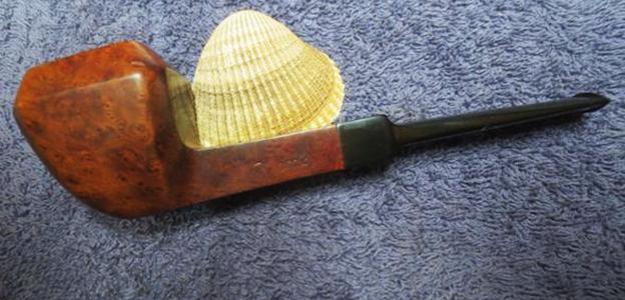
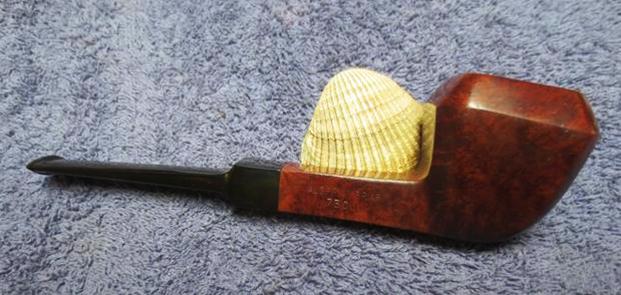
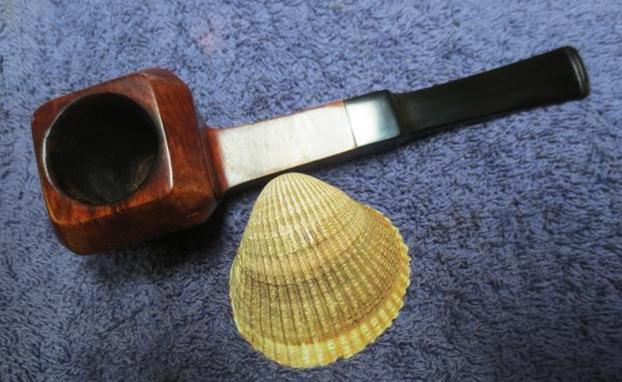
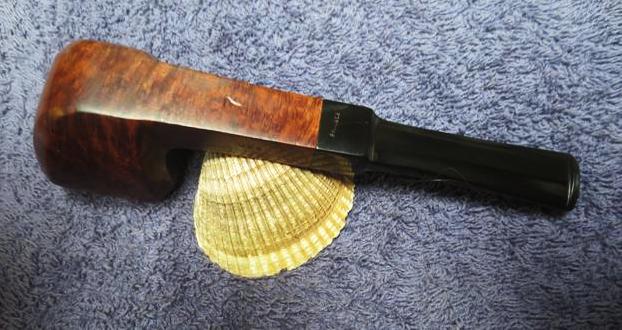
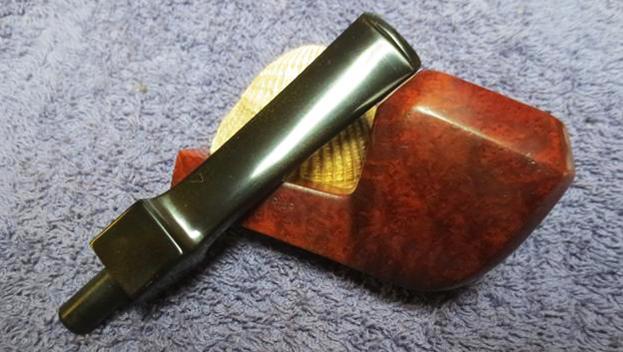
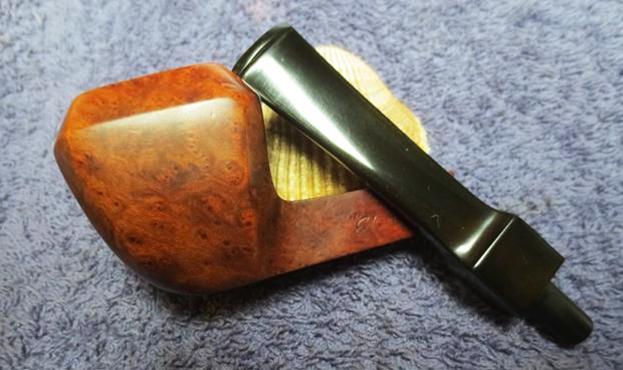
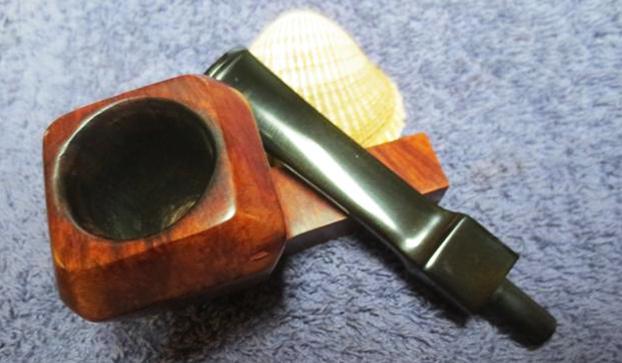
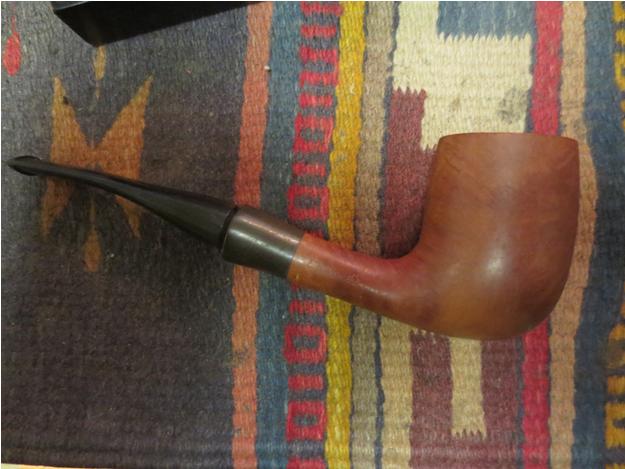
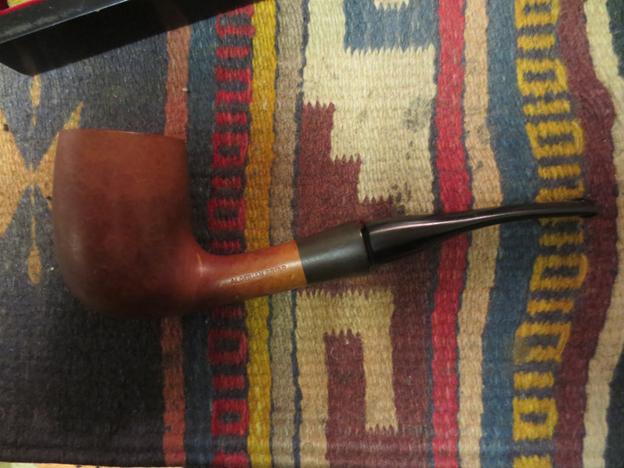
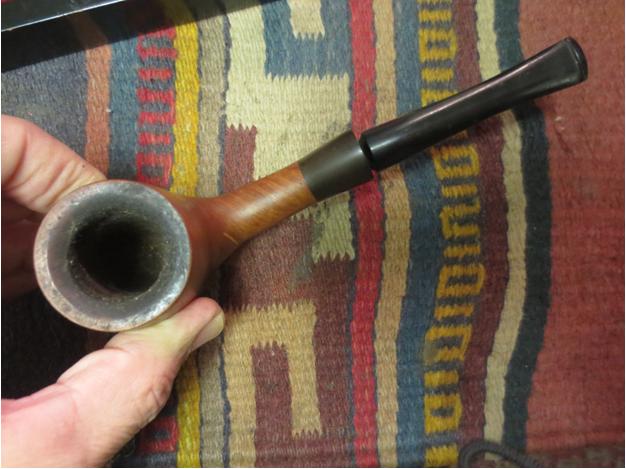
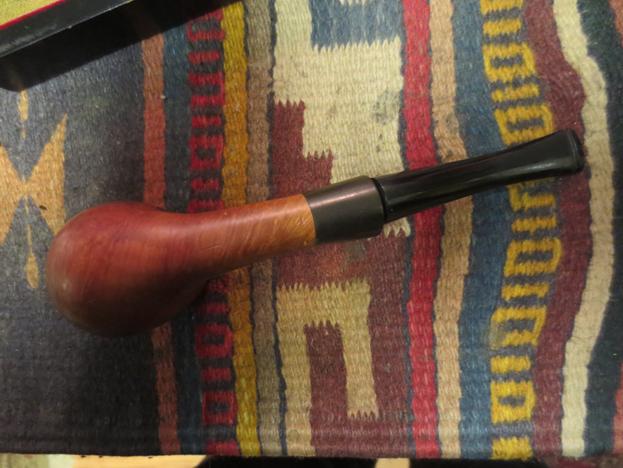
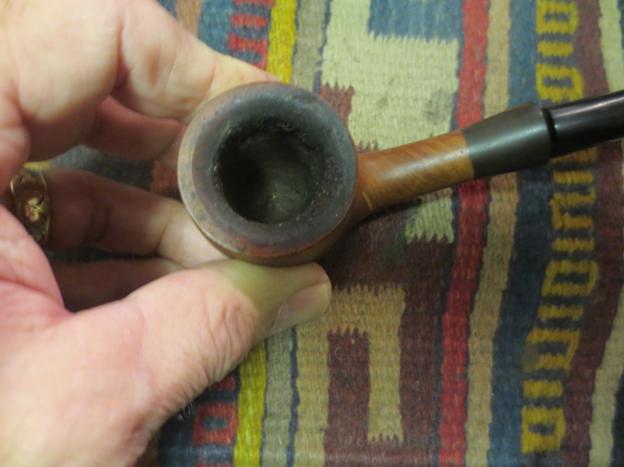
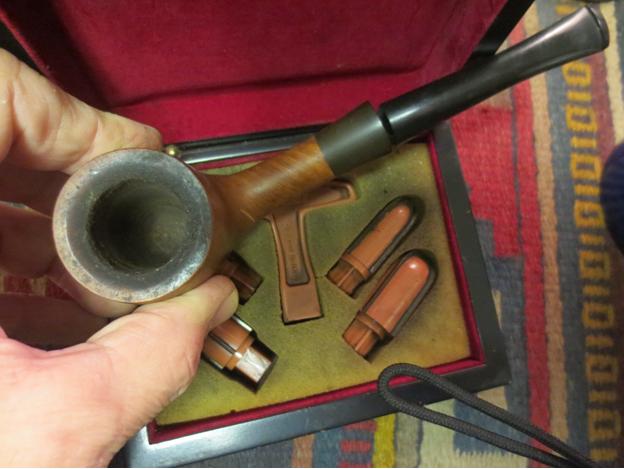
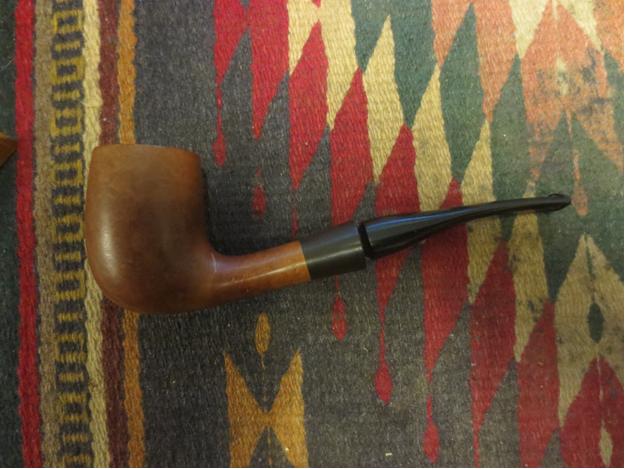
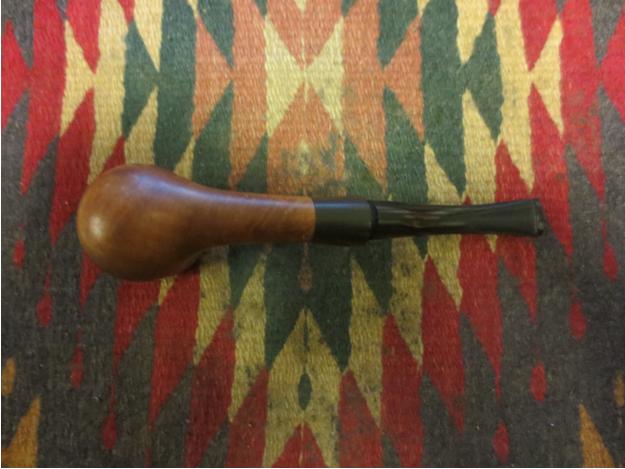
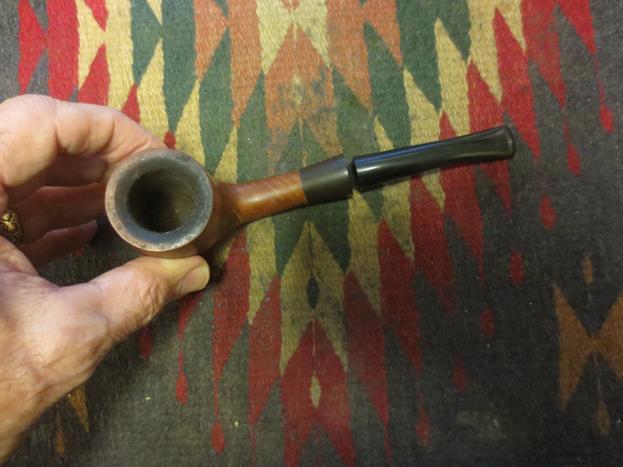
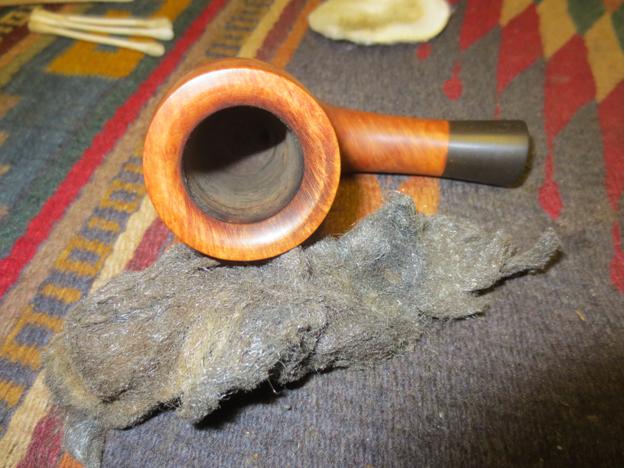
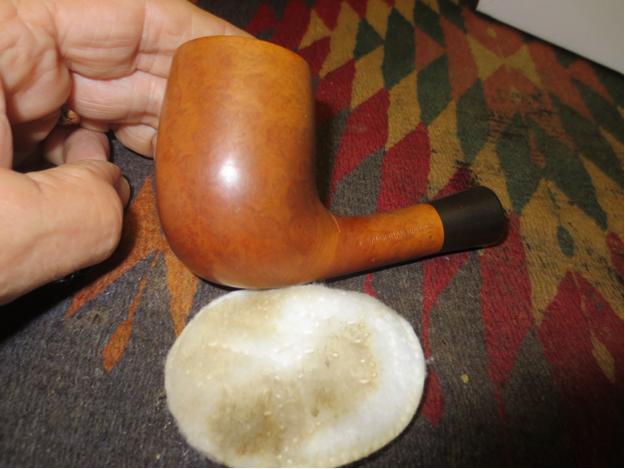
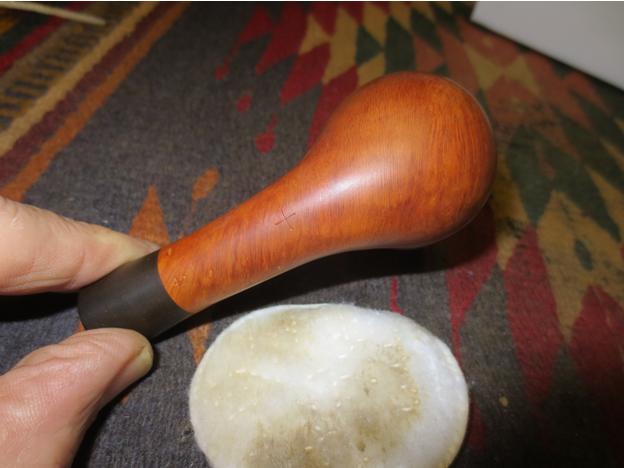
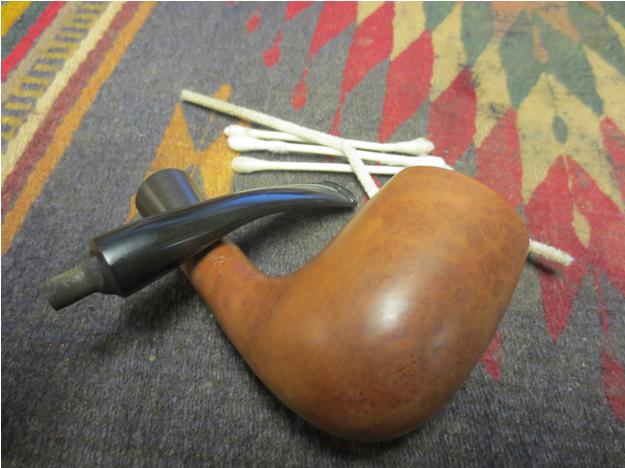
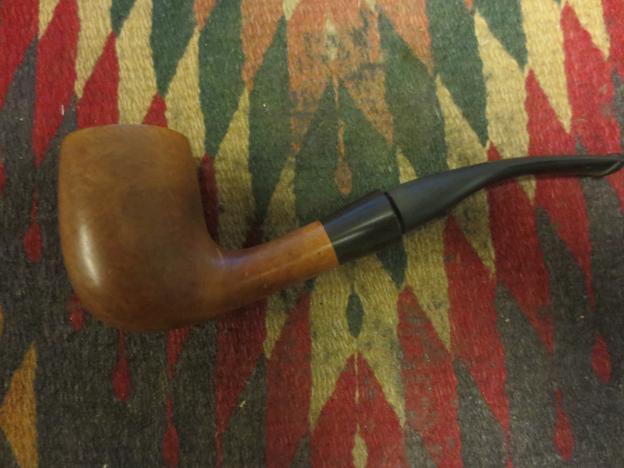
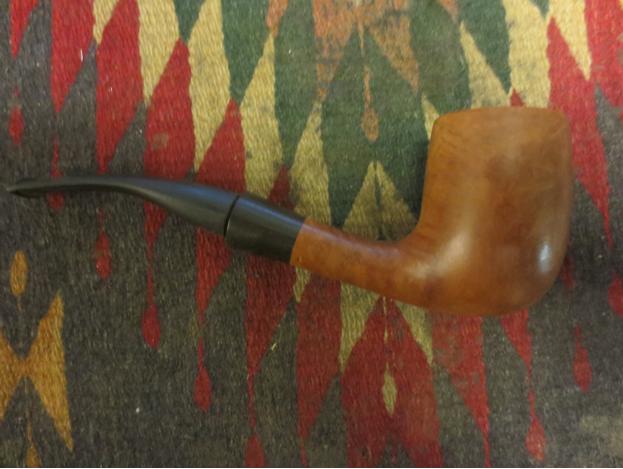
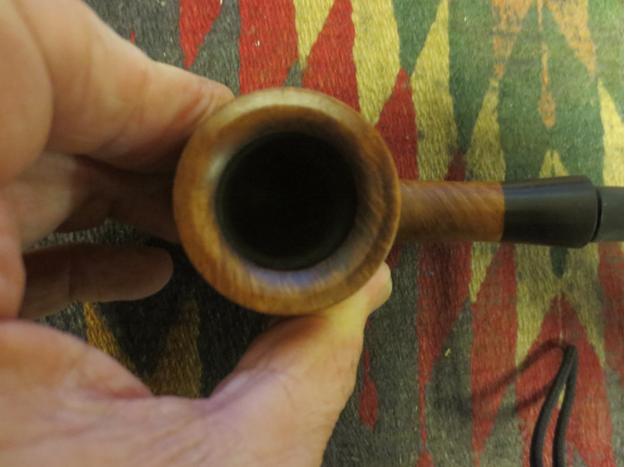
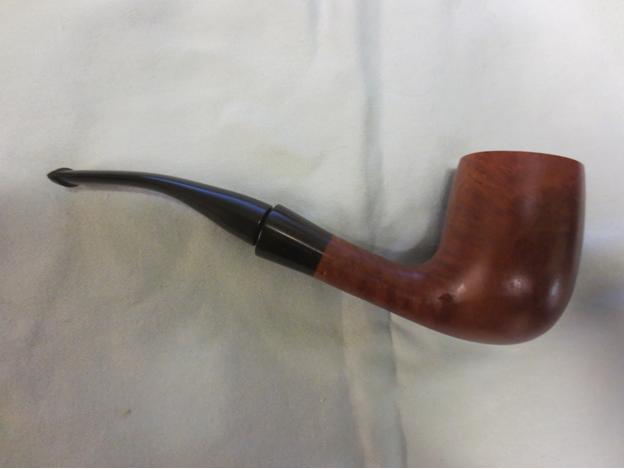
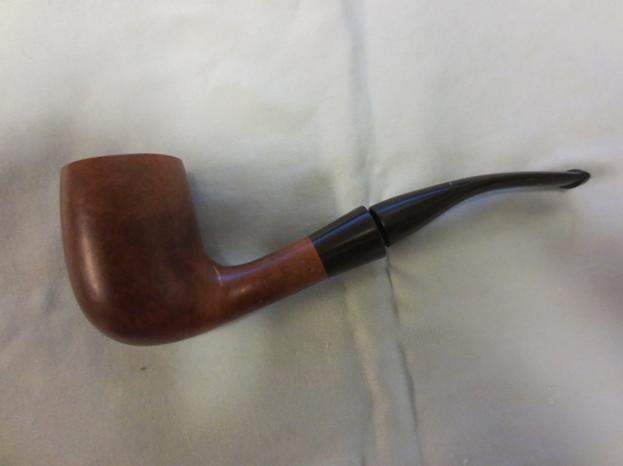
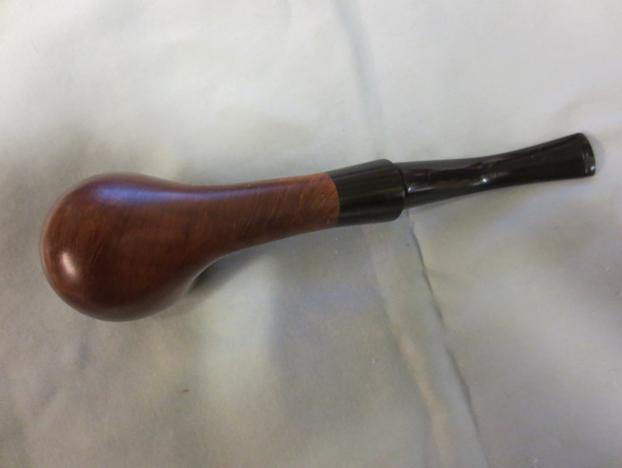
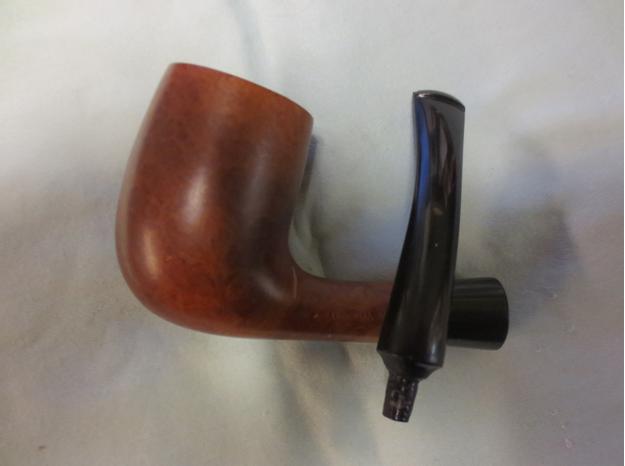
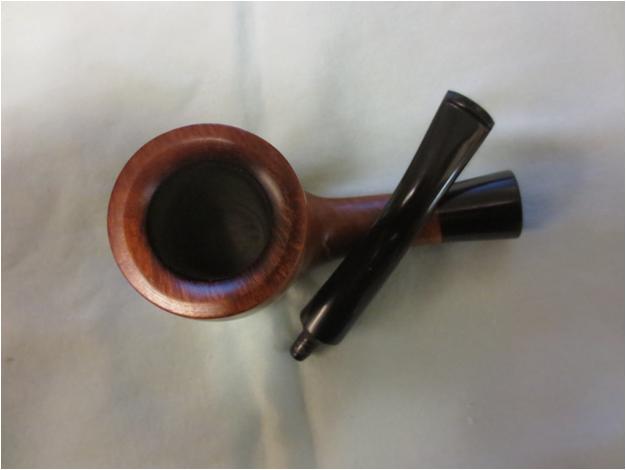
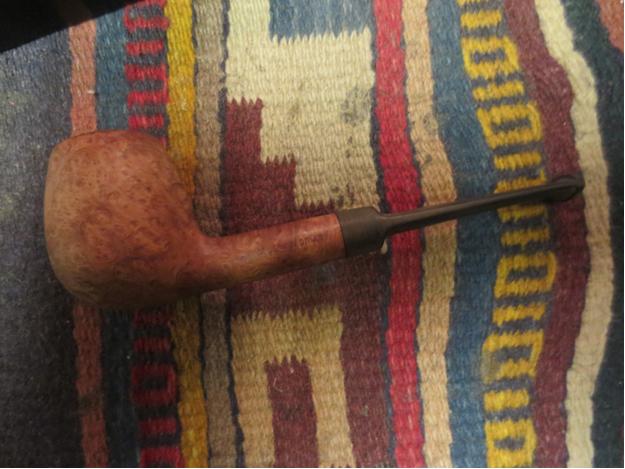
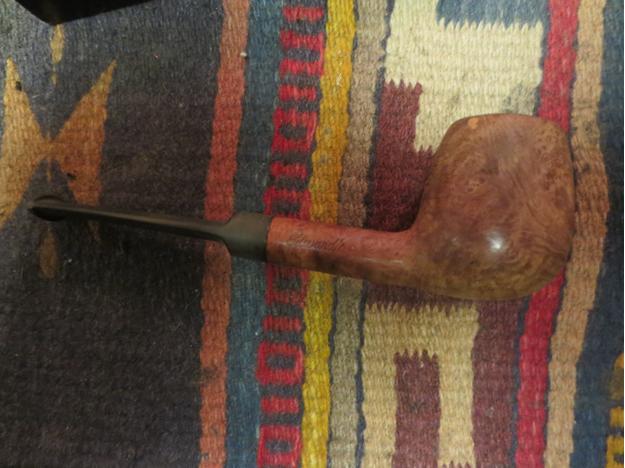
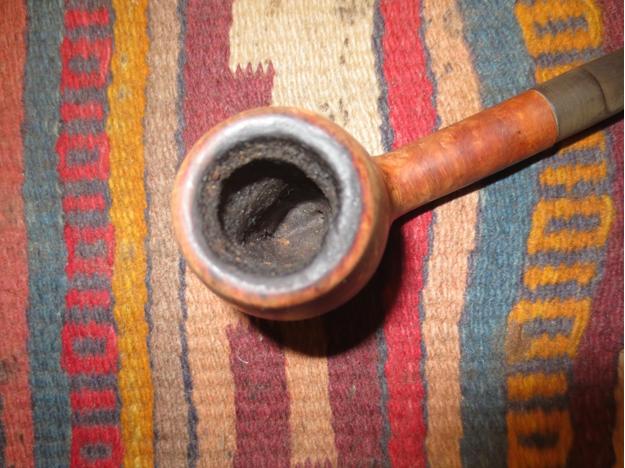
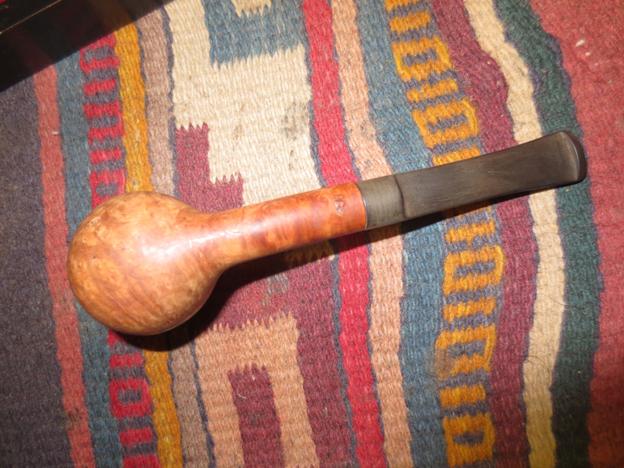
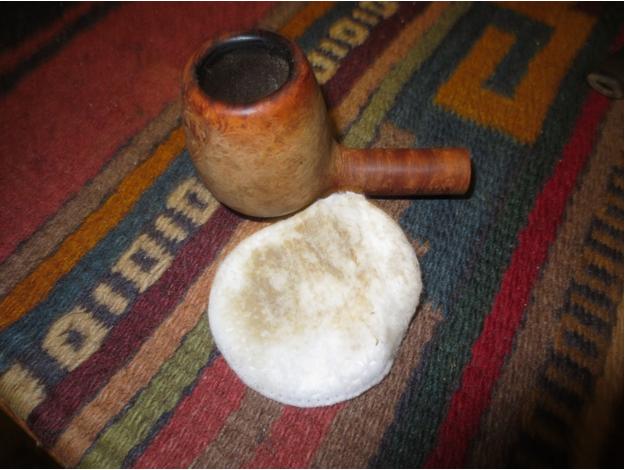
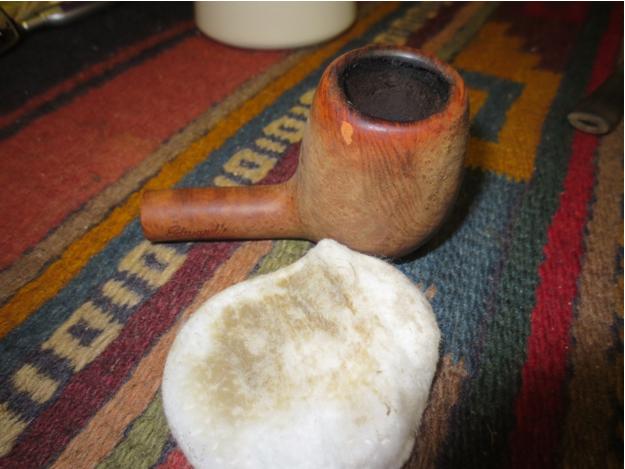
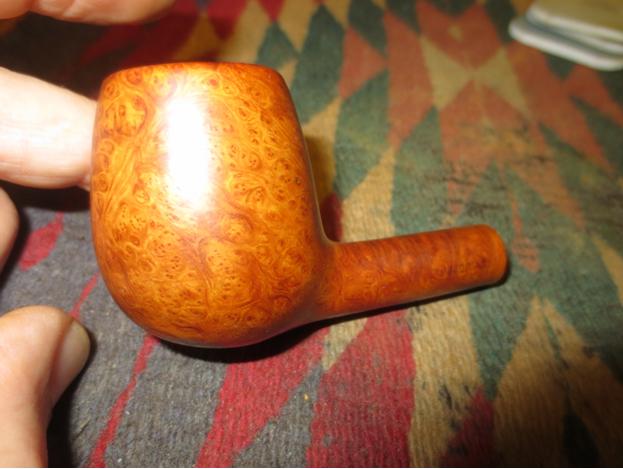
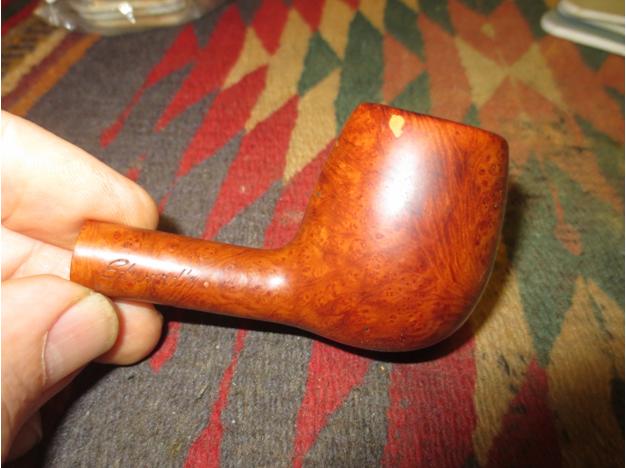
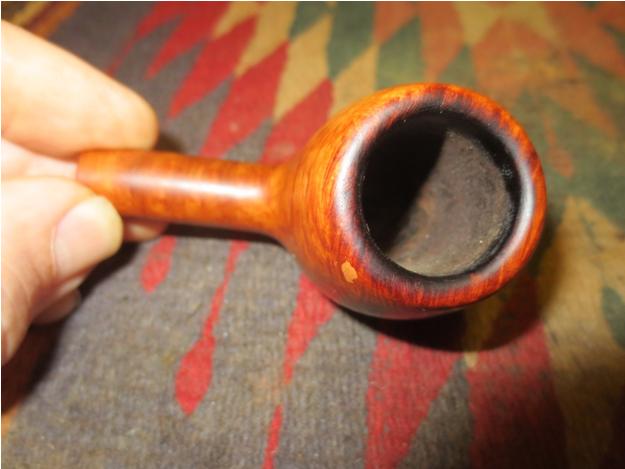
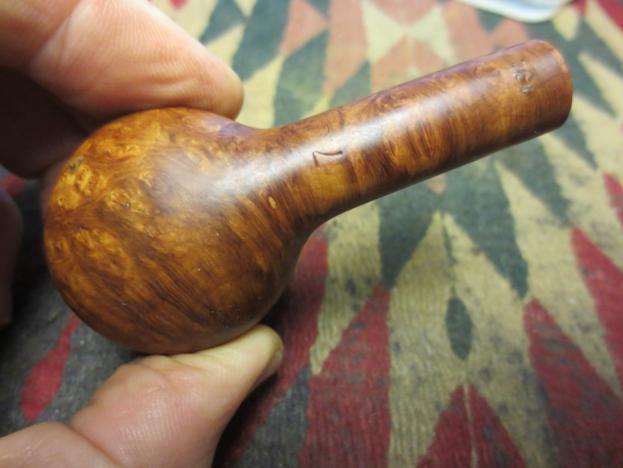
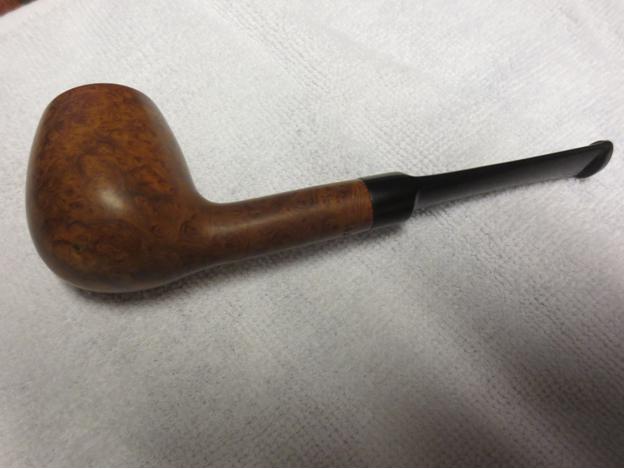
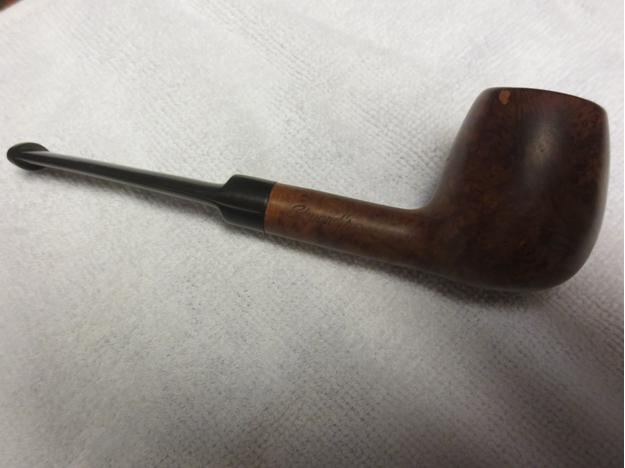
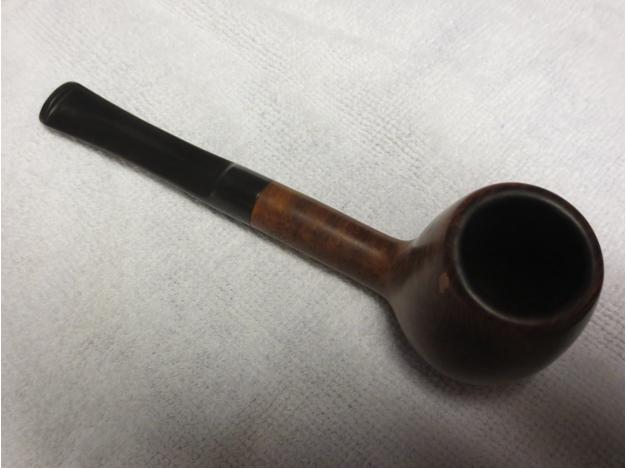
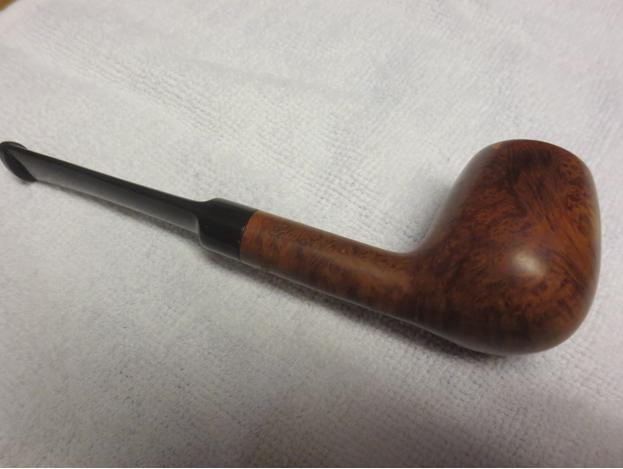
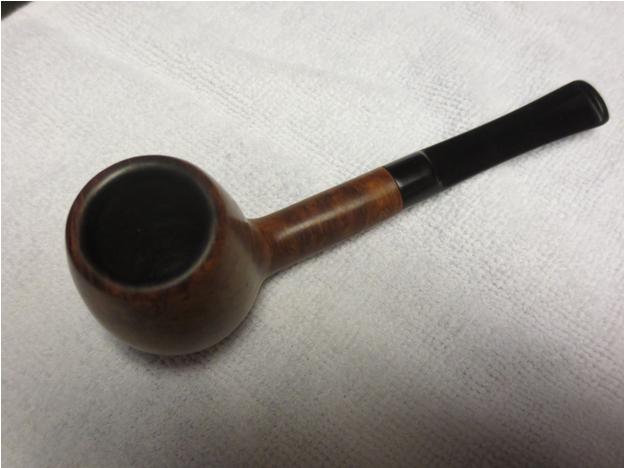
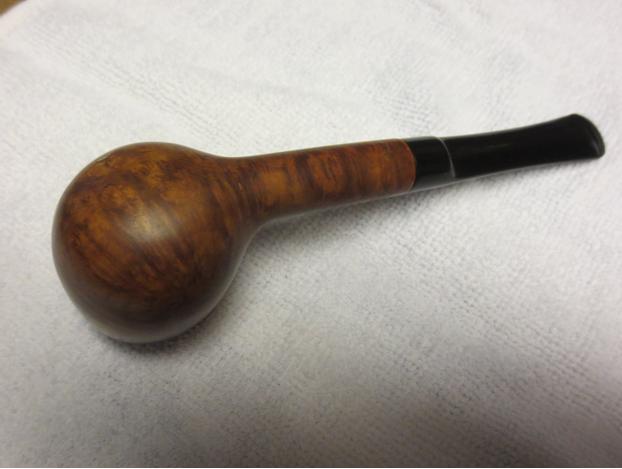
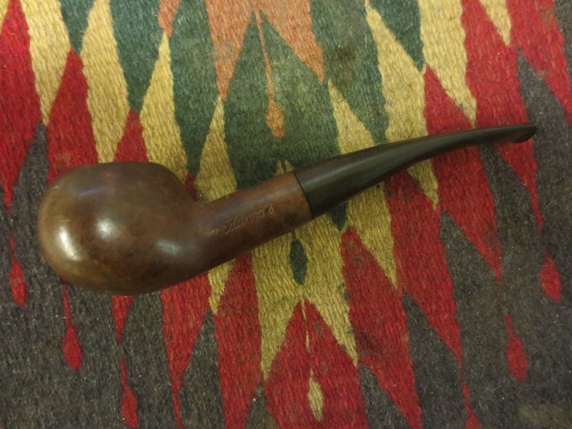
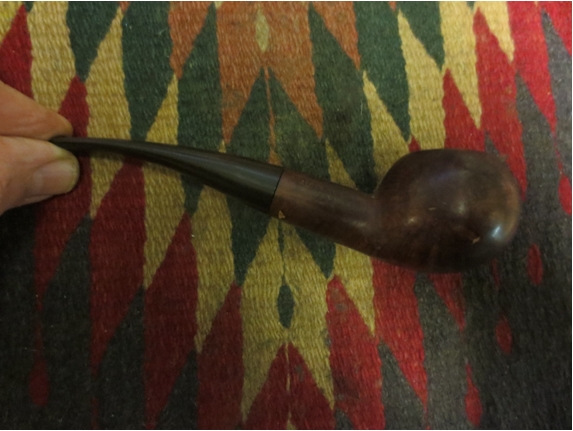
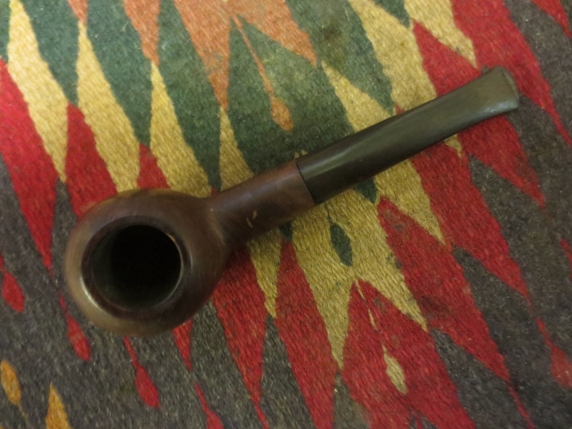
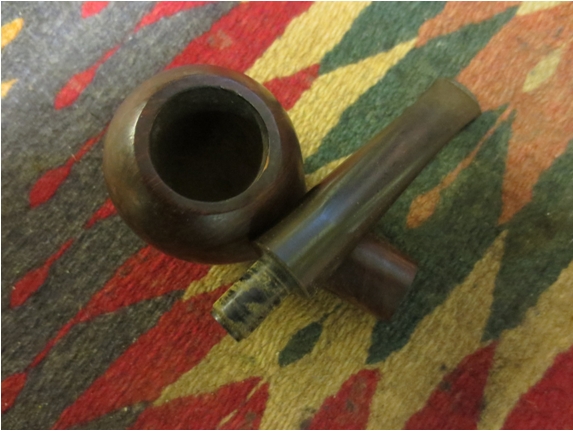
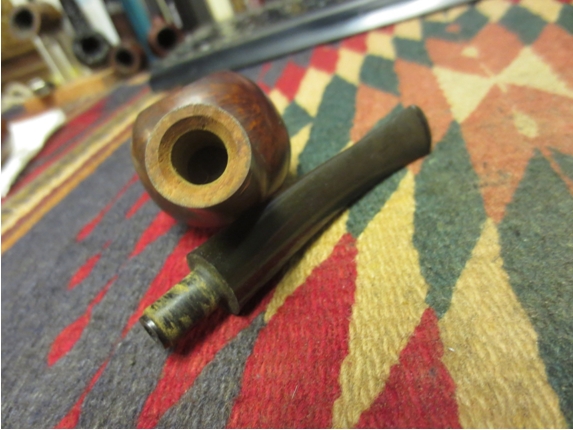
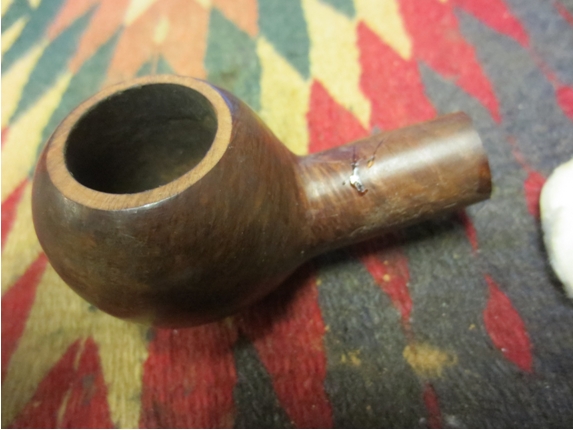
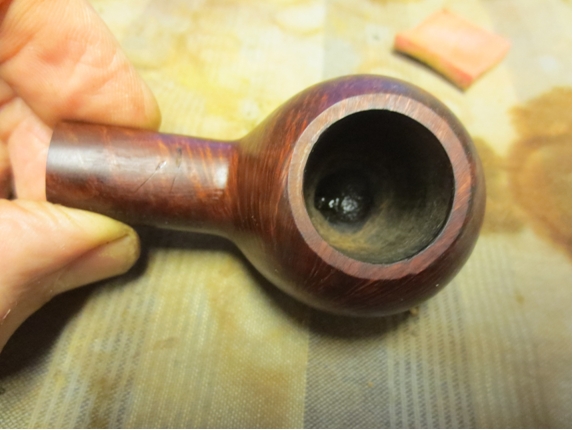
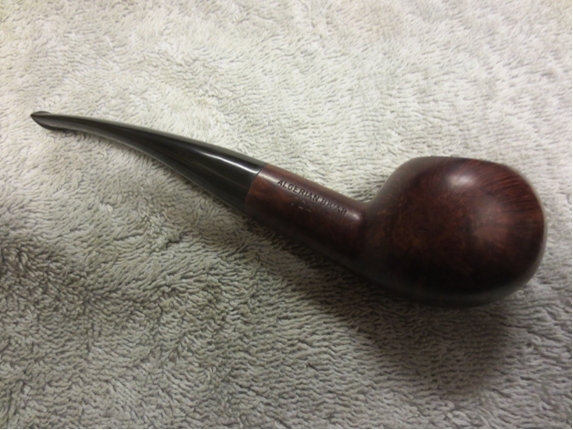
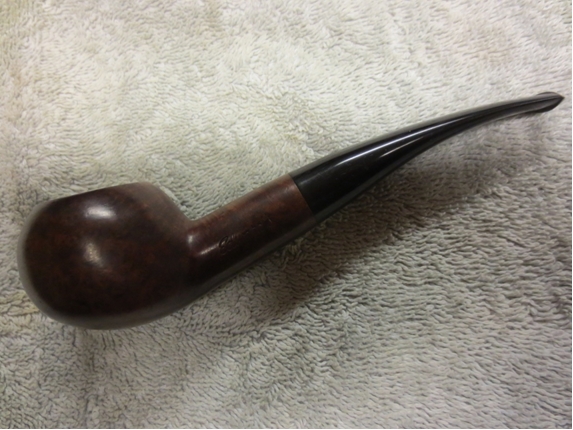
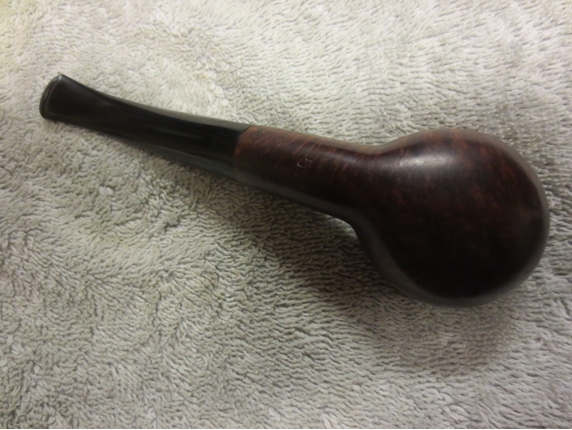
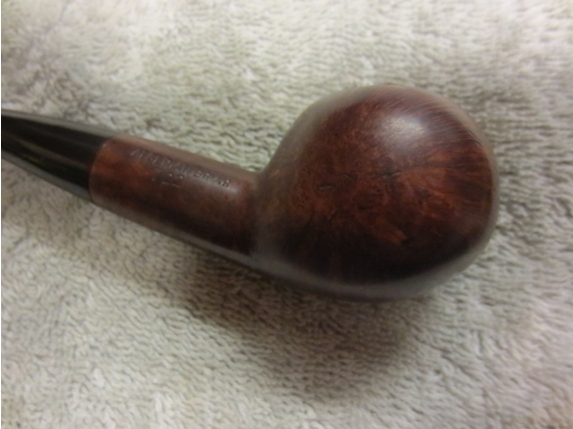
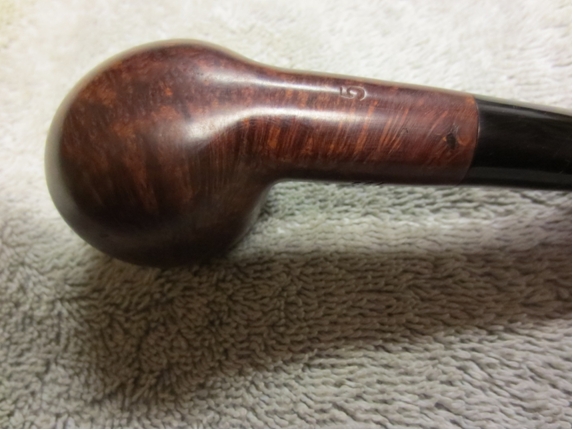
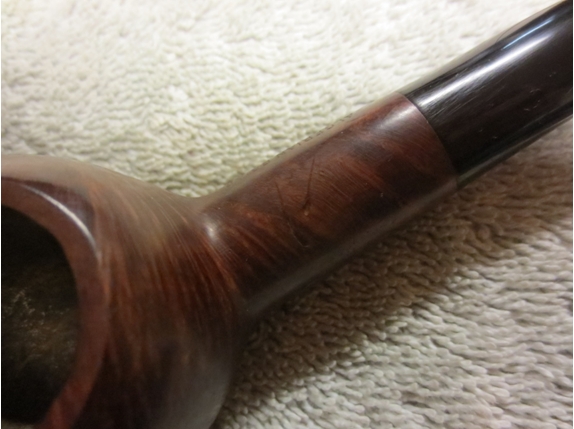
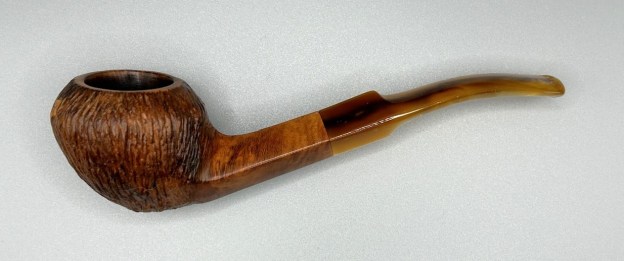
The next pipe on my work table a Danish looking Edwards Acorn shaped pipe. It is stamped Edwards in script on the left side of the shank. On the underside of the shank it is stamped with a 3. On the right side of the shank it is stamped Algerian Briar over the shape number 770 mid shank. The fancy saddle stem is stamped FRANCE on the underside of the saddle. The briar has a mix grain around the bowl and shank. There are a few small fills in the briar toward the front of the bowl on both sides. This pipe was bought from an online auction on March of 2019 in Wilkes Barre, Pennsylvania, USA. The finish was dirty but the grain shone through well. The rim top was clean but there was some darkening on the inner edge. There was a moderate cake in the bowl and some tobacco debris. The shank and stem airway was very dirty. The stem was lightly oxidized, calcified and had light tooth marks and chatter on both sides ahead of the button. Jeff took photos of the pipe before he started his clean up. He took photos of the rim top and bowl to show the cake in the bowl, the darkening on the inner edge and the light lava on the rim top. The stem photos show the oxidation, calcification and tooth chatter and marks very well. Jeff took photos of the sides of the bowl to highlight the grain around the bowl sides and base.He captured the stamping on the shank sides in the next photos. They are clean and readable as noted above. I have worked on quite a few Edwards Algerian Briar pipes in the past so I turned to a blog on one of them to read the background on the brand and remind myself how to understand the stamping on the shank. Here is the link (https://rebornpipes.com/2020/03/21/refurbishing-an-edwards-unique-i-have-no-idea-what-to-call-the-shape/). I quote from the blog below rather than redo the research.

Across the board they were all Algerian Briar and all were unstained waxed or oiled briar. I remember reading that actually oil curing was a feature of their pipes. I did a quick look on Pipedia (https://pipedia.org/wiki/Edward’s) and found that I was correct. I quote:

Edward’s pipes were originally produced in St. Claude France when France actually was a world-class pipe maker with longstanding business & political connections to Colonial Algeria that allowed them to obtain the finest briar.

During the tumultuous 1960’s, Edward’s created a business model to offer the finest briar available in both Classic and Freehand shapes – all at a fair price. They bought the company & equipment and cornered the market on the finest, choice Algerian Briar just before the supply vanished in political turmoil of Algeria’s independence. Edward’s packed up both machinery and briar-treasure to America, safely caching the essentials to create a new pipe-making dynasty. This was a coup, for the 70’s and 80’s were grim years for pipe smokers as quality briar all but disappeared.

All of Edward’s pipes are Algerian Briar – a fact very few pipe companies can claim, and all are oil-cured utilizing natural finishes – no strange concoctions are used to interfere in your tastebud’s dance with the briar. Algerian, Calabrian, Sardinian, Corsican – take your pick, but Algerian Briar is generally considered the finest smoking briar ever used. When combined with oil-curing, Algerian takes on a magical quality that even Alfred Dunhill recognized as far back as 1918 as the choice for both his Bruyere and Shell.
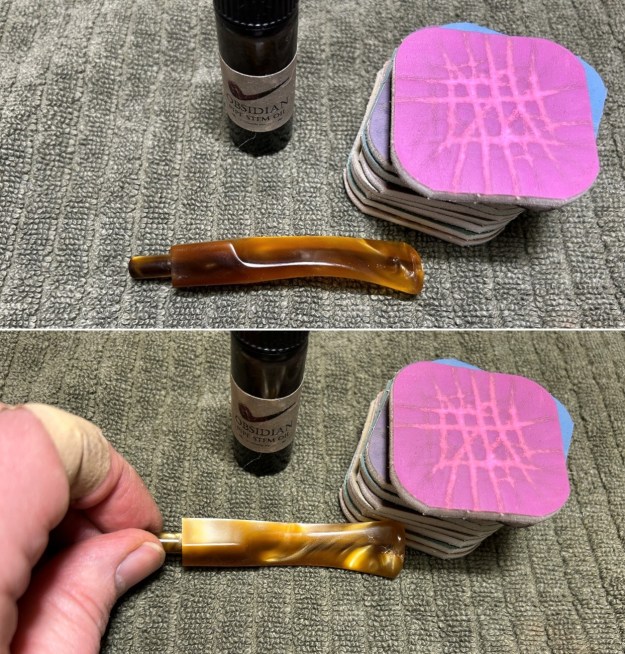
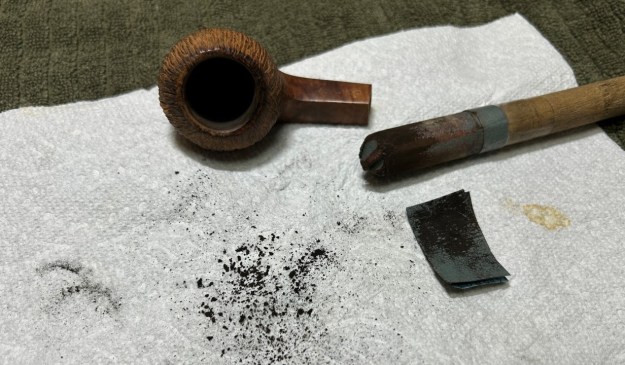
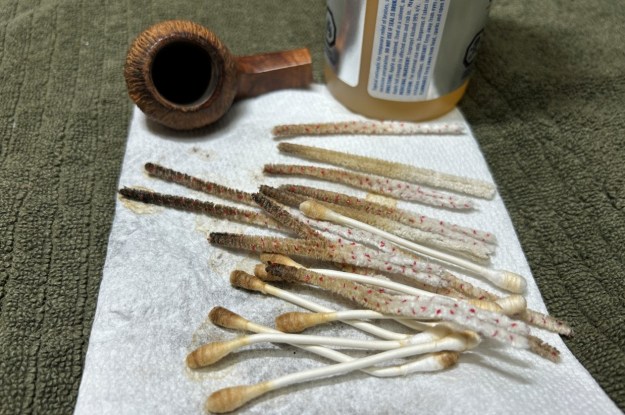
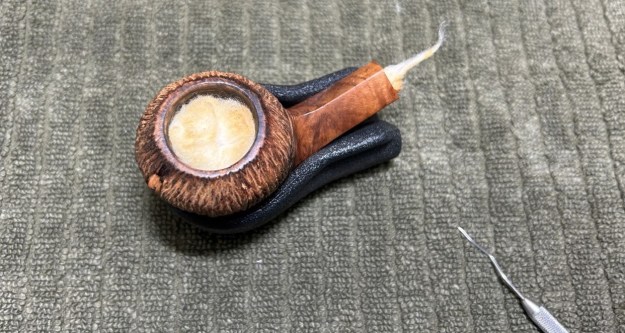
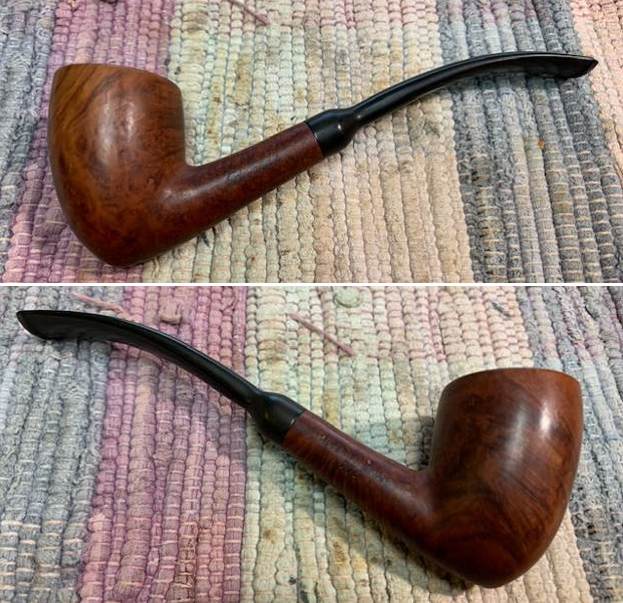
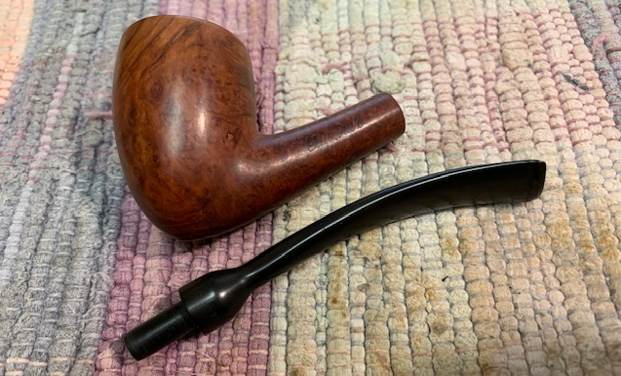
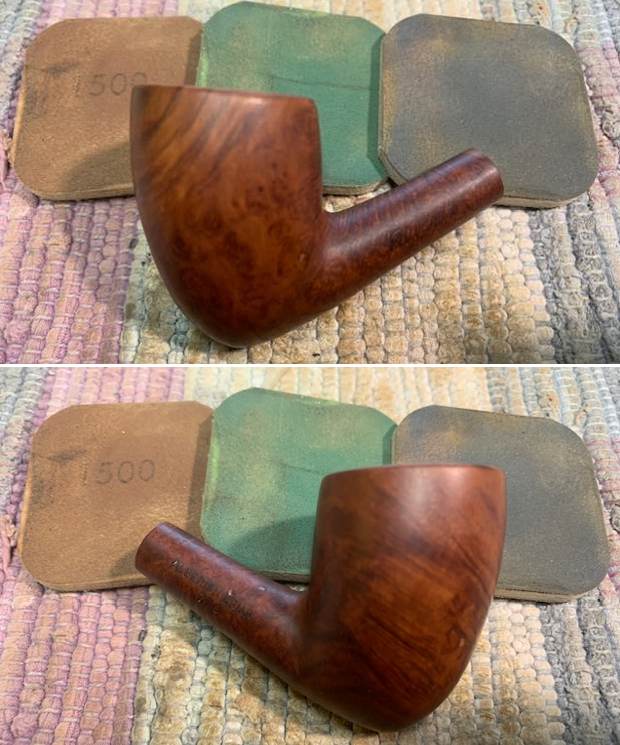
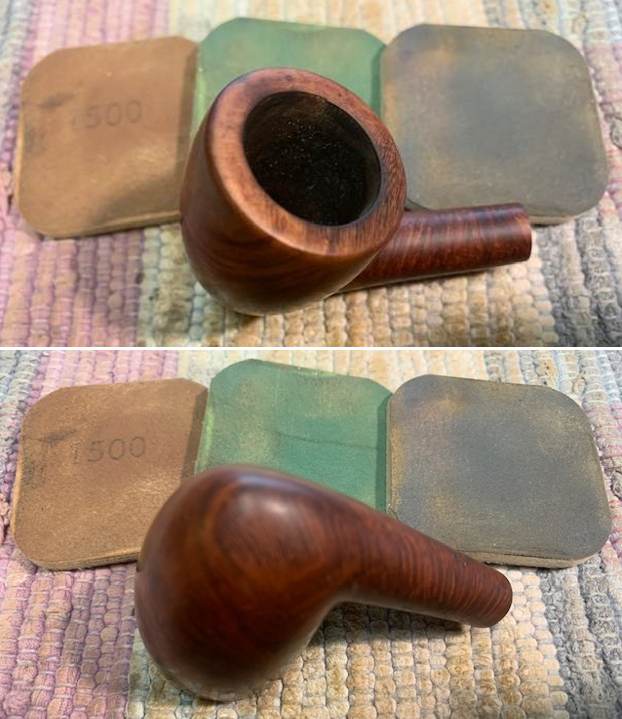
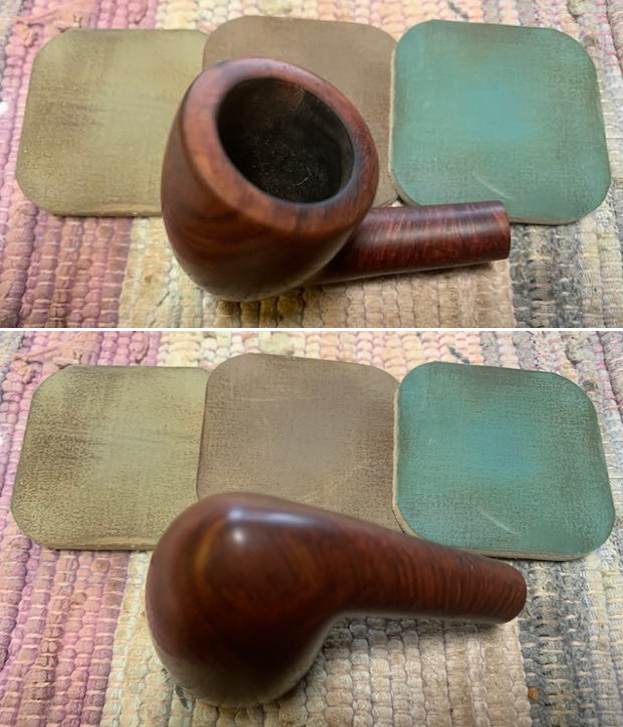
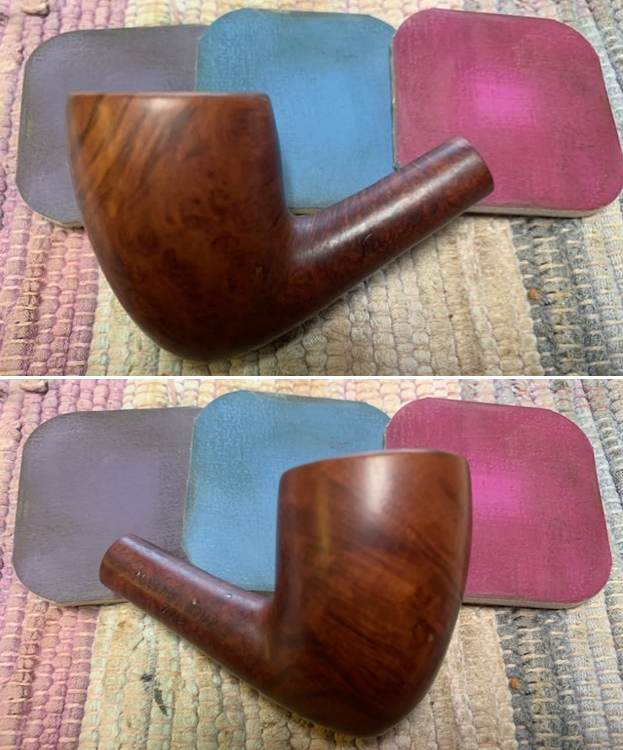
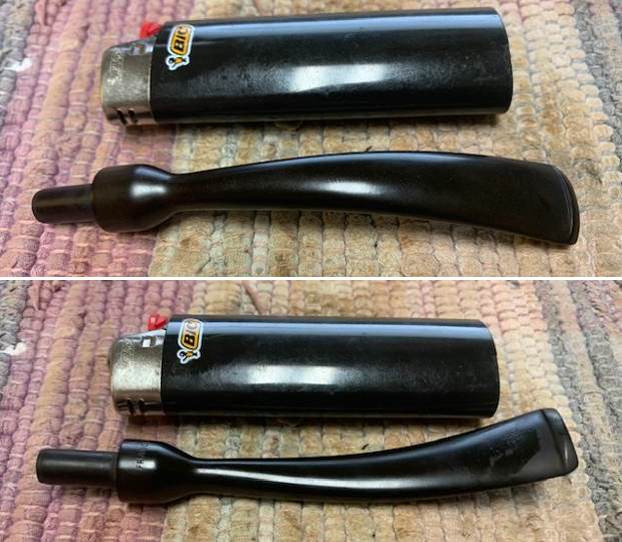
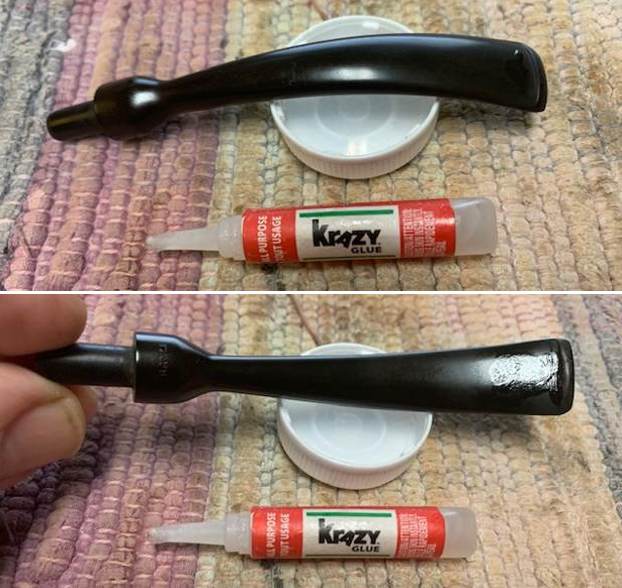
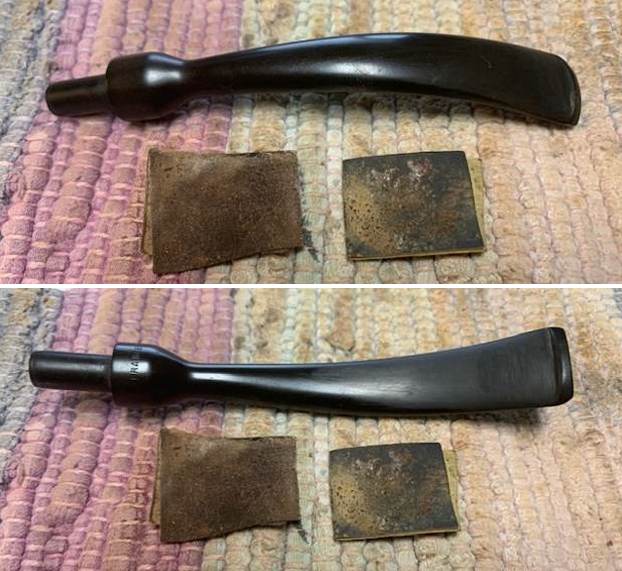
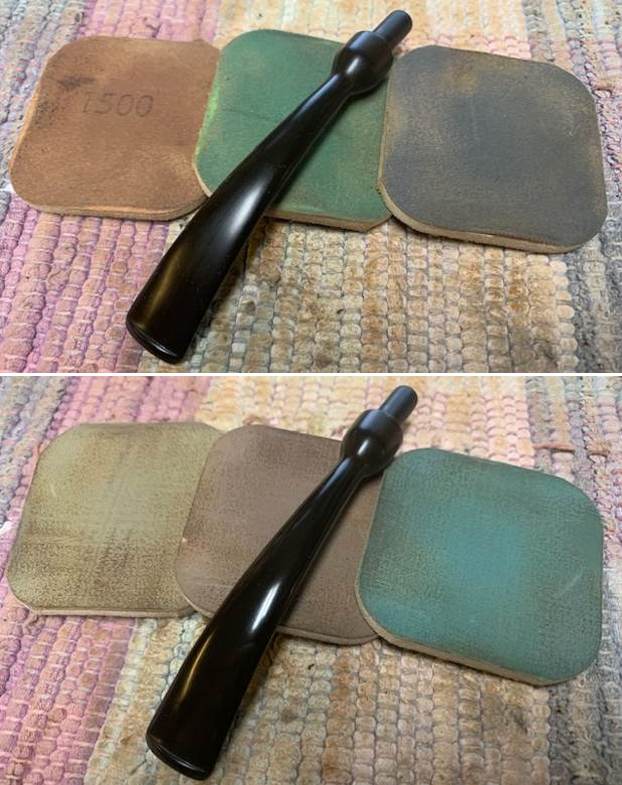
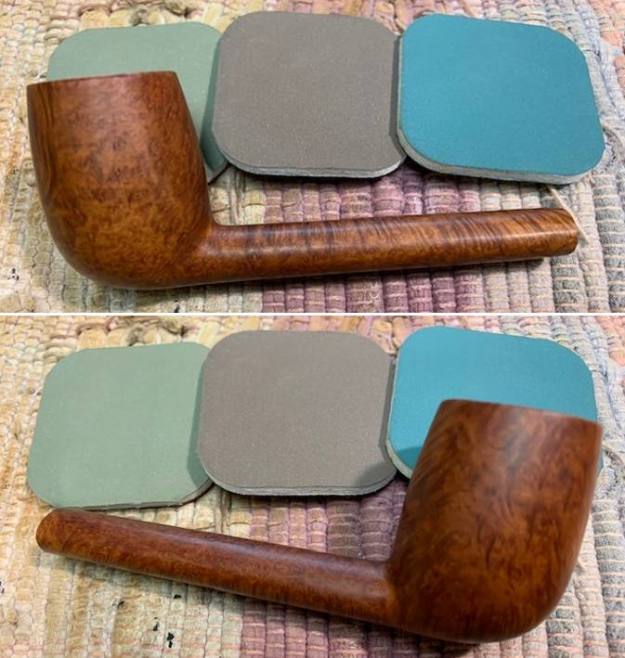
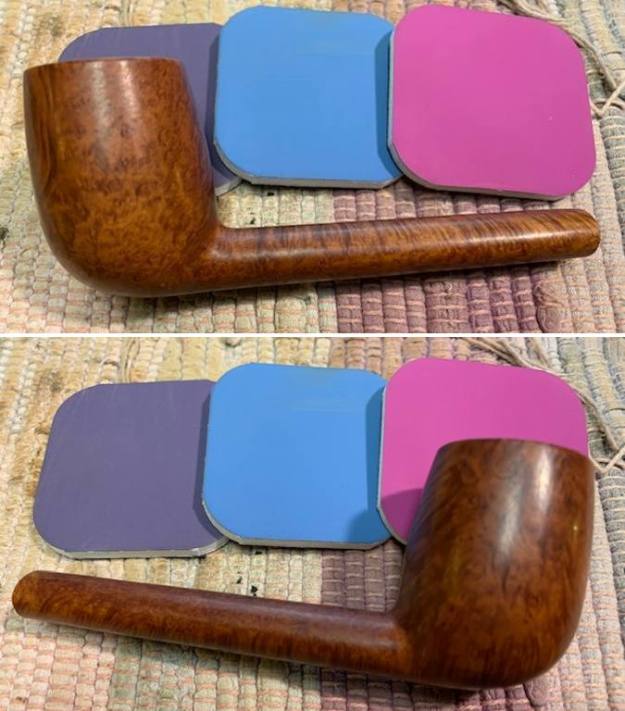
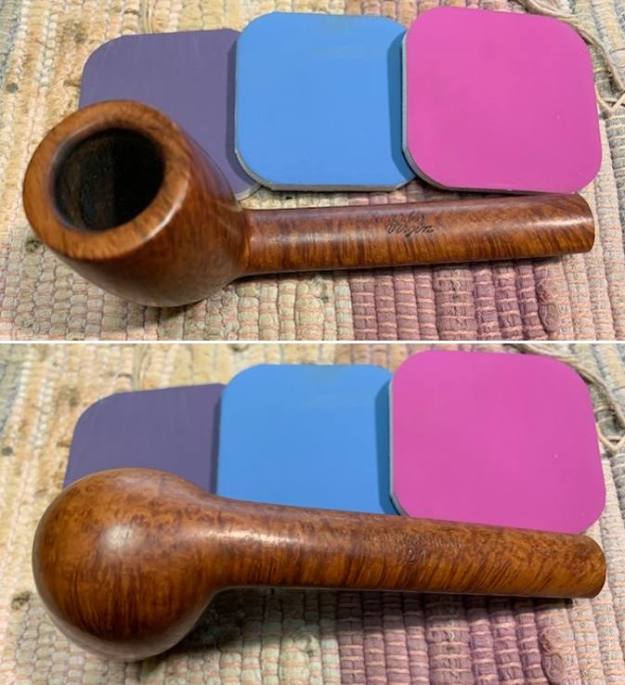
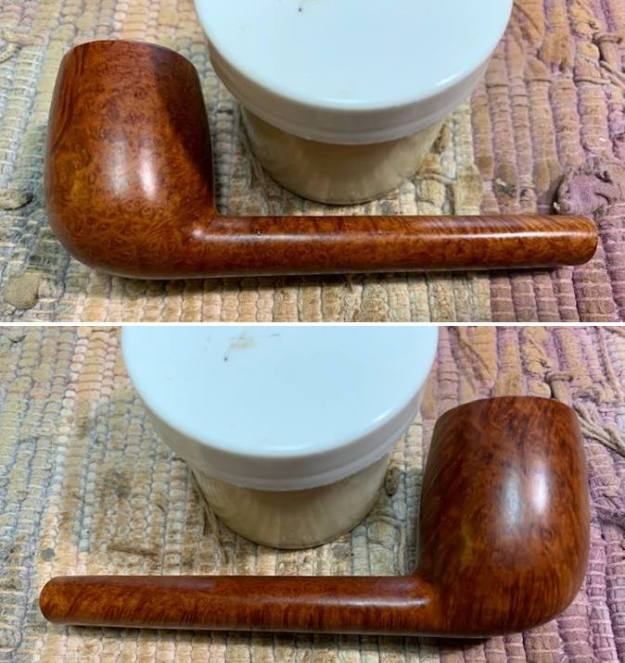
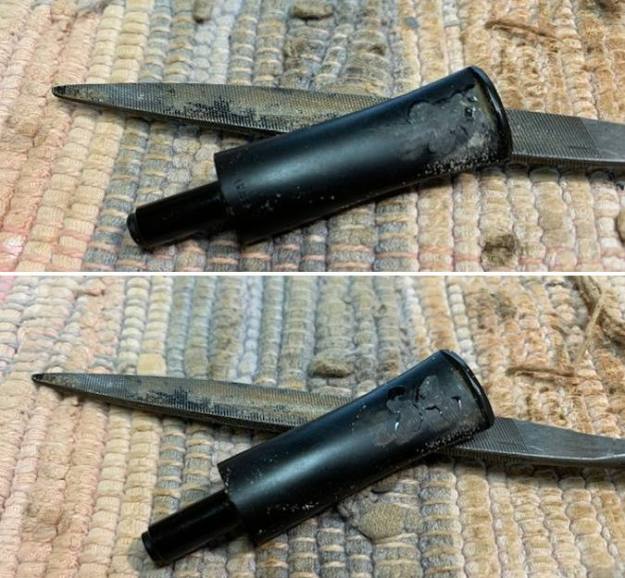
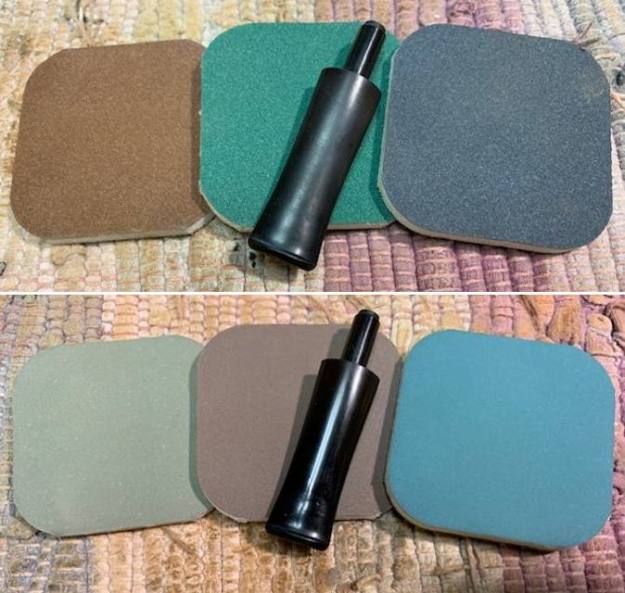
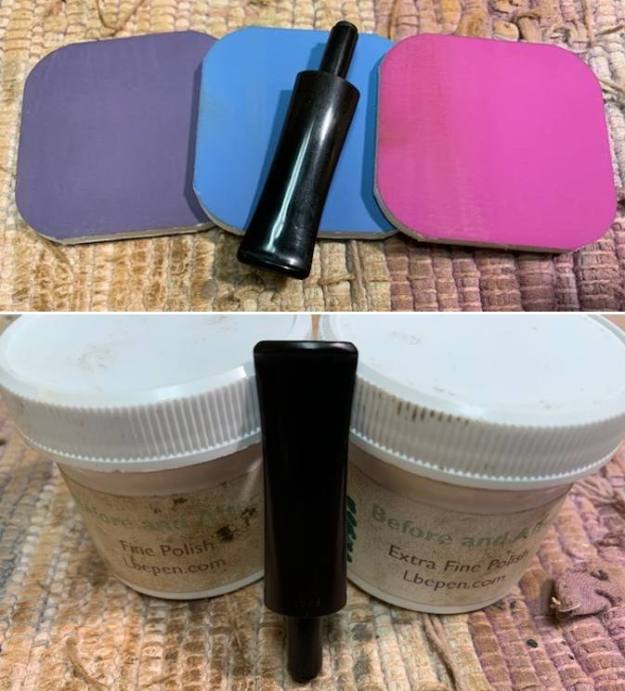
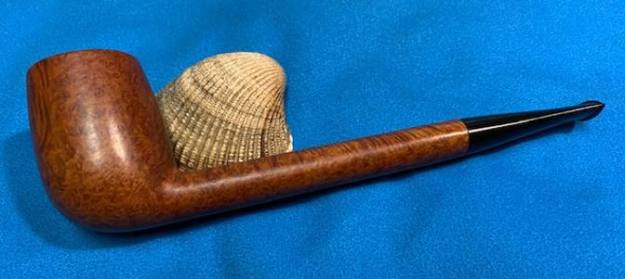
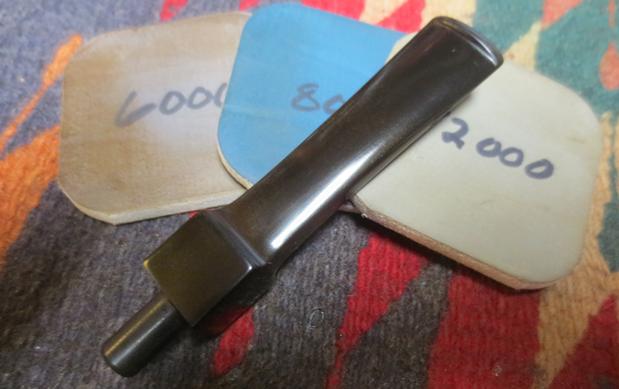
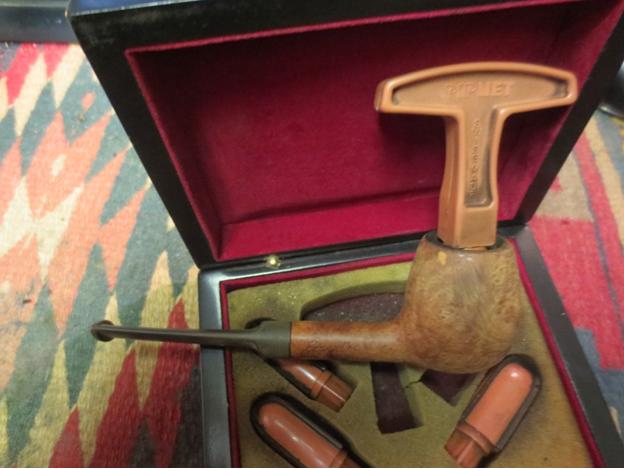
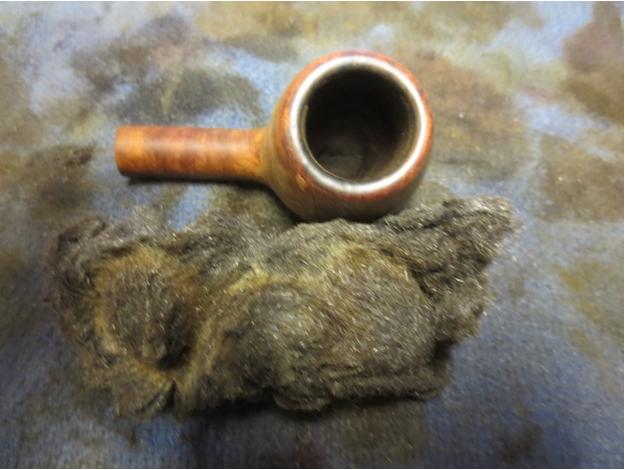
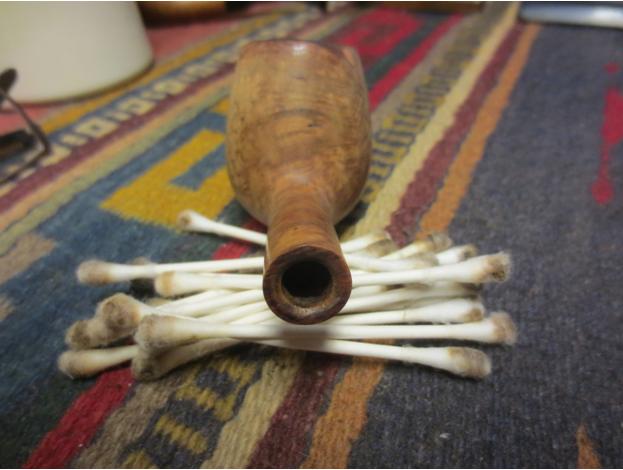
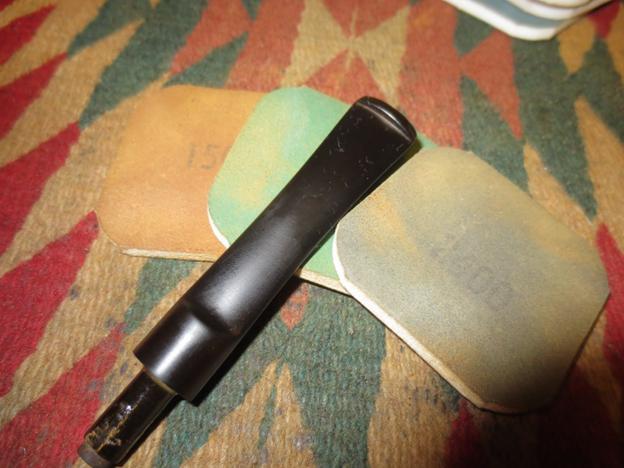
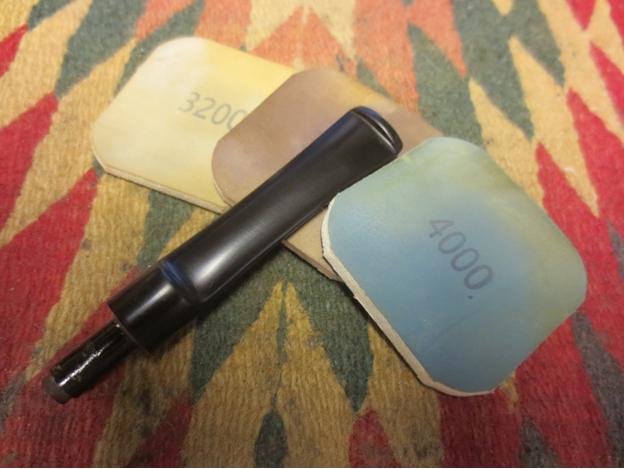
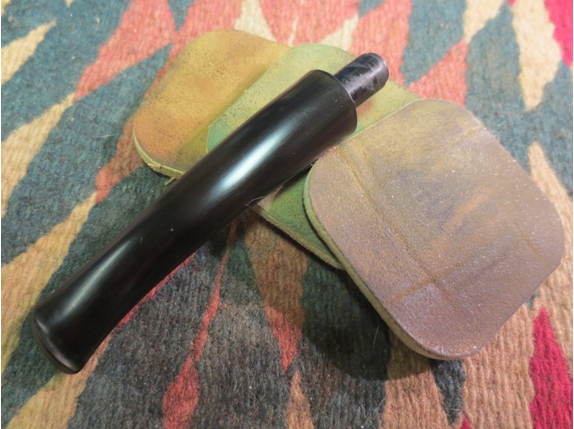
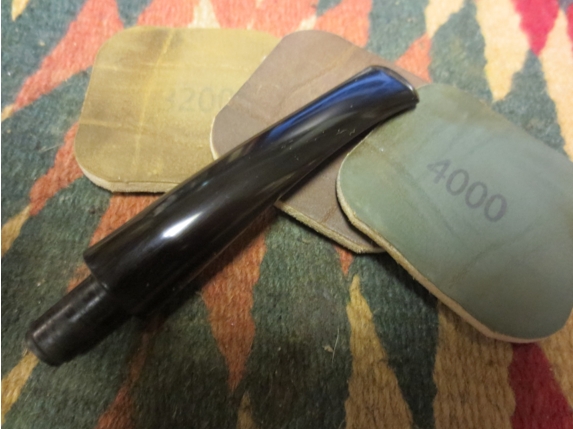
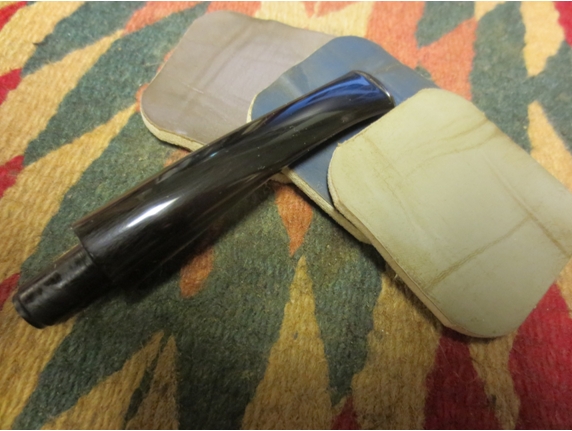
Jeff cleaned up the pipes with his usual thoroughness – reaming the bowl with a PipNet pipe reamer and cleaning up the reaming with a Savinelli Fitsall Pipe Knife. He scrubbed the internals of the shank and the stem with alcohol, cotton swabs and pipe cleaners. He scrubbed the exterior with Murphy’s Oil Soap to clean off the dust and grime on the finish. When he sent it the pipe was ready to restore. I could not believe how good the rim top looked in comparison to what it was when he started. I took photos of the pipe when I unpacked it. The briar was clean and the grain quite stunning. The finish looked dull and lifeless. I took a close up photo of the bowl and rim top after Jeff had cleaned it up. The look of the rim top and edges is very good. He had been able to remove the cake and the lava very well. The bowl was spotless. The stem is also shown and was very clean. He had scrubbed it with Soft Scrub and then soaked it in Mark’s Before & After Deoxidizer. There was light tooth chatter and marks still remaining.I took some photos of the stamping on the shank sides. The first photo shows the Edwards cursive script stamp on the left side shank. The second shows the Algerian Briar [over] the shape number 770 on the right side.  On the underside it is stamped with the number 3. All stamping is clear and readable.I removed the stem from the shank and took a photo of the pipe to show the look of the pipe. It is a real beauty.I polished the briar with micromesh sanding pads – dry sanding (carefully avoiding the stamping on the shank sides) with 1500-12000 grit pads. I wiped the bowl down with a damp cloth between each pad. The grain to take on a shine. I rubbed the briar down with Before & After Restoration Balm. I worked it into the briar with my fingertips and let it do its magic. The product cleans, enlivens and preserves the briar. I let it sit for 10 minutes and then buffed it off with a cotton cloth. The bowl really is looking good at this point. I set the bowl aside and turned my attention to the stem. I “painted” the tooth marks with the flame of a Bic Lighter. I was able to raise most of them. Those that remained I filled in with clear CA glue. I set the stem aside to let the repairs cure. I smoothed out the repairs with a folded piece of 220 grit sandpaper. I started polishing it with 400 grit wet dry sandpaper.I polished the stem with micromesh sanding pads – dry sanding with 1500-12000 grit pads. I wiped the stem down after each pad with a cloth impregnated with Obsidian Oil. I polished it with Before & After Stem Polish – both Fine and Extra Fine then gave it a final coat of Obsidian Oil and set it aside to dry. This is another beautiful pipe – this one is an Edwards Algerian Briar 770 Acorn 3. The oil cured Algerian Briar is very light weight and from my experience with other Edwards pipes, smokes very well. The grain on the pipe is quite nice and the few small fills are hidden in the finish. I put the stem on the shank and buffed the pipe with Blue Diamond on the wheel (being careful of the stamping so as not to damage that). I gave the bowl and stem multiple coats of carnauba wax and buffed the pipe with a clean buffing pad to raise the shine. I hand buffed it with a microfiber cloth to deepen the shine. The dimensions of this pipe are – Length: 6 inches, Height: 2 inches, Outside diameter of the bowl: 1 ¼ inches, Chamber diameter: ¾ of an inch. The weight of the pipe is 1.16 ounces/33 grams. It is a great looking pipe and one that will be going on the rebornpipes store in the American Pipe Makers section. If you want to add it to your collection let me know via email to slaug@uniserve.com or by message. Thanks for walking through the restoration with me.
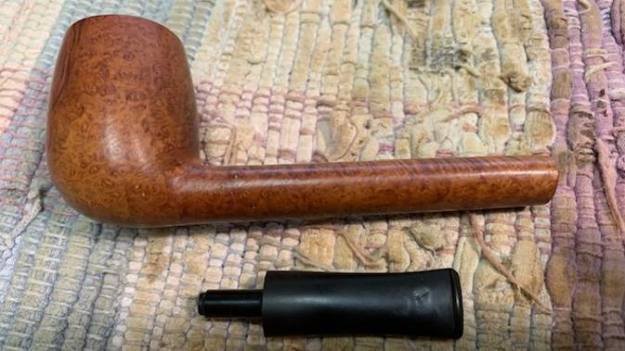
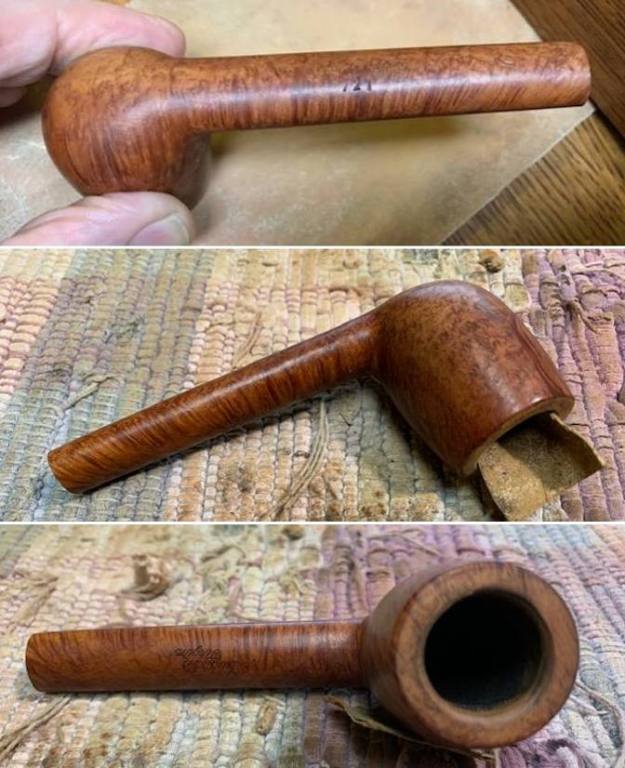
Next on the table is an Edward’s Virgin Algerian Briar 721 Canadian


Blog by Steve Laug

Photo, Courtesy of Doug Valitchka

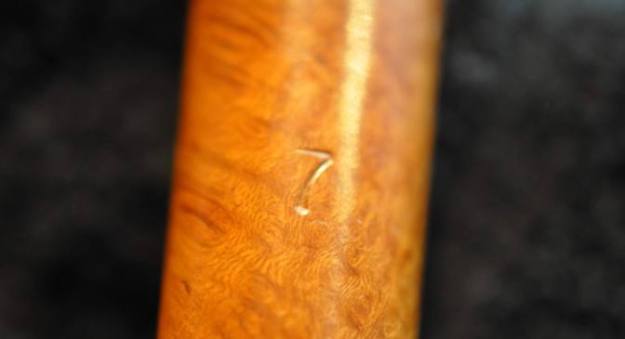
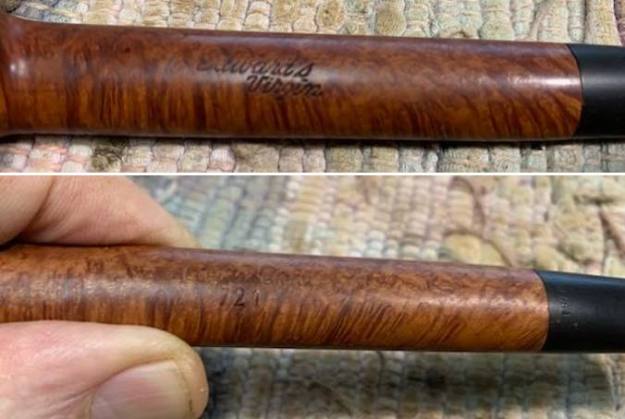
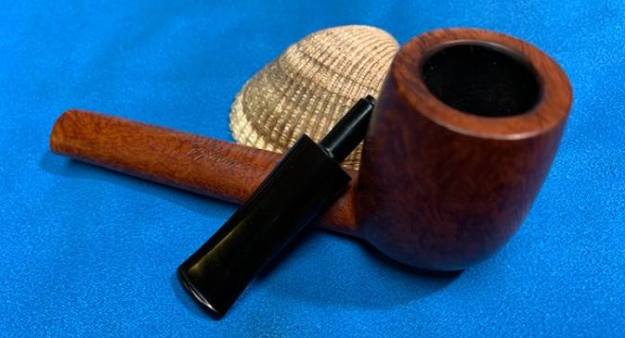
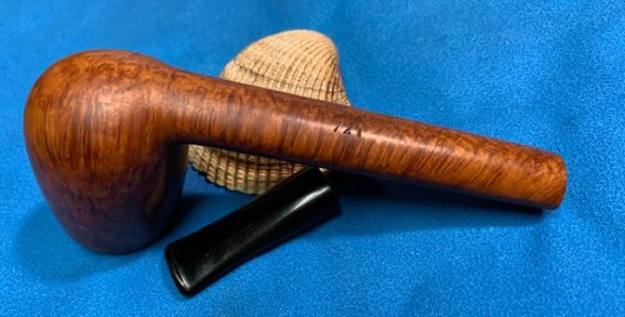
The next pipe on the work table is an Edward’s pipe that we bought in a group of pipes from a fellow in Los Angeles, California, USA. It is a classic looking Canadian in terms of the flow of the stem and shank. The bowl had a thick cake and lava overflow on the rim. It was hard to estimate the condition of the rim top and the edges of the bowl with the cake and lava coat but I was hoping it had been protected from damage. The bowl was smooth and a natural finish. The finish was dusty and tired but had some nice grain under the grime and the finish appeared to be in good condition. The pipe was stamped on the top of the shank and read Edwards [over] Virgin. On the underside it was stamped Algerian Briar [over] the shape number 721. On the underside near the shank end it is vertically stamped with the number 7. I am guessing this is a quality or grade stamp. A lot would be revealed once Jeff had worked his magic on it. The stem was dirty, oxidized, calcified and had some tooth chatter and deep tooth marks near the button on both sides. Jeff took photos of the pipe before he started his cleanup work. Jeff captured the condition of the bowl and rim top with the next series of photos. You can see the work that is ahead of us in the photos. The cake is very thick and heavy. The rim looked like it might have some damage on the back inner edge of the bowl. The last two photos of the stem show the top and underside of the stem. It is oxidized and calcified an you can see the tooth marks and chatter on the surface of both sides. Jeff took some great photos of the sides of the bowl and heel showing what is underneath the grime and debris of time and use. You can see the fills in briar on the right side. It will be interesting to see what happens as the pipe is cleaned and restored. He captured the stamping on the top and underside of the shank. They are clear and readable as  noted above. I turned first to Pipephil’s site for a quick review of the brand (http://pipephil.eu/logos/en/logo-e1.html). I did a screen capture of the information that was there.I also am including the sidebar information below.

Edward’s Pipes, headquartered in Tampa, FL, got its start importing pipes from France and continued to do so from 1958 to 1963 when it started producing pipes in Florida from prime Algerian Briar, a practice they continue to this day (2010). Randy Wiley, pipe carver in the USA, got his start at Edward’s.

The Edwards Canadian I am working on bears a stamp on the underside of the stem that reads FRANCE which makes sense with the information given above. It also helps to date the pipe to the time period of 1958-1963.

I the turned to Pipedia to have a look at a bit of history on the brand and gain more information on the pipe line (https://pipedia.org/wiki/Edward%27s). I quote the article in full below.

Edward’s pipes were originally produced in Saint-Claude, France when France actually was a world-class pipe maker with longstanding business & political connections to Colonial Algeria that allowed them to obtain the finest briar.

During the tumultuous 1960’s, Edward’s created a business model to offer the finest briar available in both Classic and Freehand shapes – all at a fair price. They bought the company & equipment and cornered the market on the finest, choice Algerian Briar just before the supply vanished in political turmoil of Algeria’s independence. Edward’s packed up both machinery and briar-treasure to America, safely caching the essentials to create a new pipe-making dynasty. This was a coup, for the 70’s and 80’s were grim years for pipe smokers as quality briar all but disappeared.

Edward’s Design Philosophy is hard to pin down, think of their style as the “American Charatan” with unique & clever twists all their own. Today, they fashion pipes in several locations across the USA. All of Edward’s pipes are Algerian Briar – a fact very few pipe companies can claim, and all are oil-cured utilizing natural finishes – no strange concoctions are used to interfere in your tastebud’s dance with the briar. Algerian, Calabrian, Sardinian, Corsican – take your pick, but Algerian Briar is generally considered the finest smoking briar ever used. When combined with oil-curing, Algerian takes on a magical quality that even Alfred Dunhill recognized as far back as 1918 as the choice for both his Bruyere and Shell.

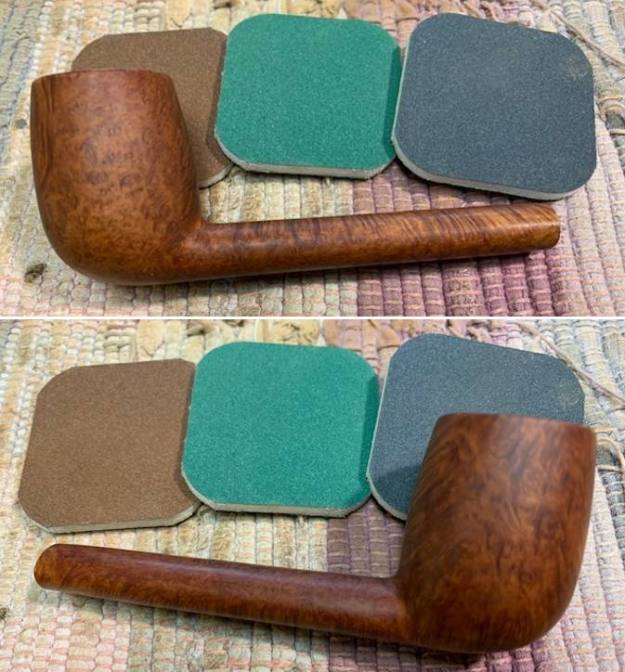
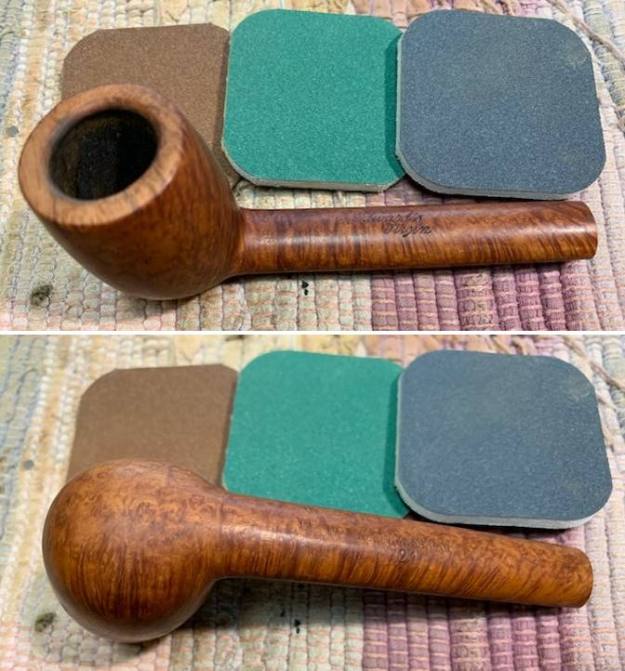
Now it was time to work on the pipe. I took it out of the box of pipe and looked it over. It was amazingly clean and looked like a different pipe. Jeff reamed it with a PipNet pipe reamer and cleaned up the reaming with a Savinelli Fitsall Pipe Knife. He scrubbed out the internals with alcohol, pipe cleaners and cotton swabs until the pipe was clean. He scrubbed the exterior of the bowl with Murphy’s Oil Soap and a tooth brush to remove the grime and grit on the briar and the lava on the rim top. The bowl looked very good. He scrubbed the stem with Soft Scrub to remove the grime and soaked it in Before & After Deoxidizer. When he took it out of the soak it came out looking far better. I took photos before I started my part of the work. I took some photos of the rim top and stem. The rim top is clean but there is damage to the inner edge on the front, back and right half of the bowl. The bowl itself looks very clean. The close up photos of the stem shows that is it very clean and the deep tooth marks are very visible. I took photos of the stampings on the shank because they had cleaned up very well. I missed a clear photo of the 7 on the shank near the stem. If you look closely you can see FRANCE on the stem in the second photo.I removed the stem from the shank and took a photo of the bowl and to give a sense of the proportion of the pipe. It is a classic looking Canadian for sure.I decided to take care of the damage on the rim top and inner edge first. I lightly topped the bowl on a topping board with 220 grit sandpaper. I worked over the inner edge with a folded piece of 220 grit sandpaper and cleaned up the existing bevel. Once I had finished the bowl looked very good. I polished the briar and the shank with micromesh sanding pads – dry sanding with 1500-12000 grit pads. I was able to blend in the repairs into the side of the bowl. I wiped the bowl down after each pad with a damp cloth. The grain really began to stand out and the finish took on a shine by the last sanding pad. The photos tell the story! I worked some Before & After Restoration Balm into the surface of the smooth briar with my fingertips. The product works to clean, enliven and protect the briar. I let the balm sit for about twenty minutes and then buffed with a cotton cloth to raise the shine. The photos show the bowl at this point in the restoration process. I set the bowl aside and turned to deal with the stem. I “painted” the surface of the stem with the flame of a Bic lighter to lift the tooth marks. I was able to lift most of them significantly. The few that remained I filled in with clear CA glue. Once it had hardened I flattened the repairs with a file. I sanded smooth with 220 grit sandpaper to blend them into the surrounding surface of the vulcanite. I then sanded it with 400 grit wet dry sandpaper to further blend it into the vulcanite. I polished the vulcanite stem with micromesh sanding pads – dry sanding with 1500-12000 grit sanding pads. I wiped it down after each sanding pad with a cloth containing some Obsidian Oil. I finished polishing it with Before & After Pipe Stem Polish – both Fine and Extra Fine and buffed it off with a cotton cloth. This oil cured Edward’s Virgin Algerian Briar 721 Canadian was another fun pipe to work on and I really was looking forward to seeing it come back together again. With the grime and debris gone from the finish it was a beauty and the grain just pops at this point. I put the stem back on the bowl and buffed the pipe with Blue Diamond on the buffing wheel. I carefully avoided the stamping on the shank during the process. I gave the bowl and the stem multiple coats of carnauba wax on the buffing wheel and followed that by buffing it with a clean buffing pad on the buffer. I hand buffed the pipe with a microfiber cloth to deepen the shine. The rich natural finish on the bowl looks really good with the polished black vulcanite stem. It is very well done. Give the finished pipe a look in the photos below. I can only tell you that it is much prettier in person than the photos capture. The dimensions of the pipe are Length: 6 inches, Height: 1  ¾ inches, Outside diameter of the bowl: 1 1/8 inches, Chamber diameter: ¾ of an inch. The weight of the pipe is 35grams/1.23oz. This is truly a great looking Edward’s. Thanks for walking through the restoration with me as I worked over another beautiful pipe. I will be adding it to the American Pipe Makers section of the rebornpipes store soon. If you want to add it to your collection send me an email or a message! Thanks for your time.

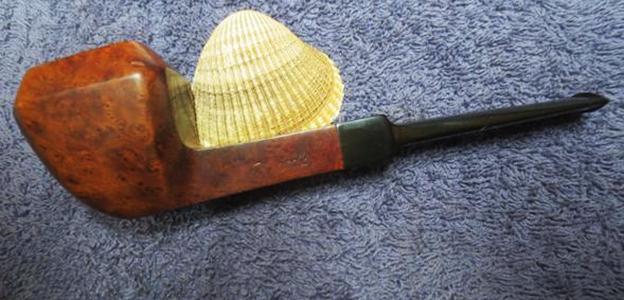
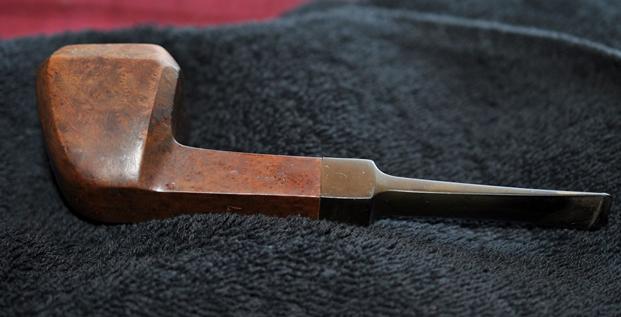
Restoring an Edwards 730 – 4 Panel Rhodesian with a Square Shank


Blog by Steve Laug

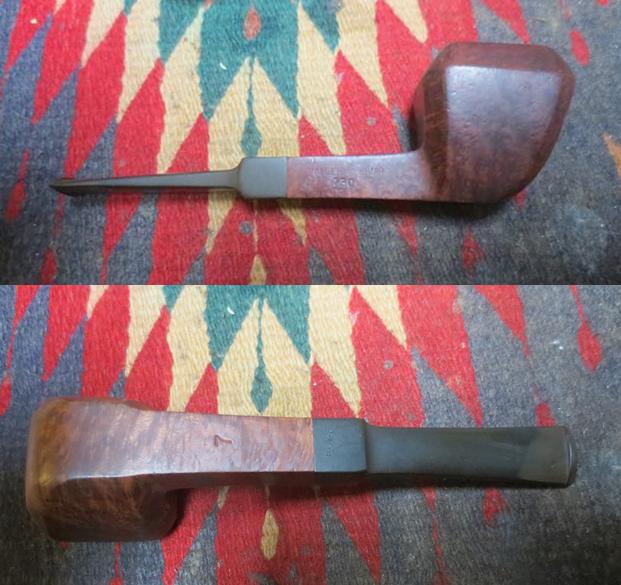
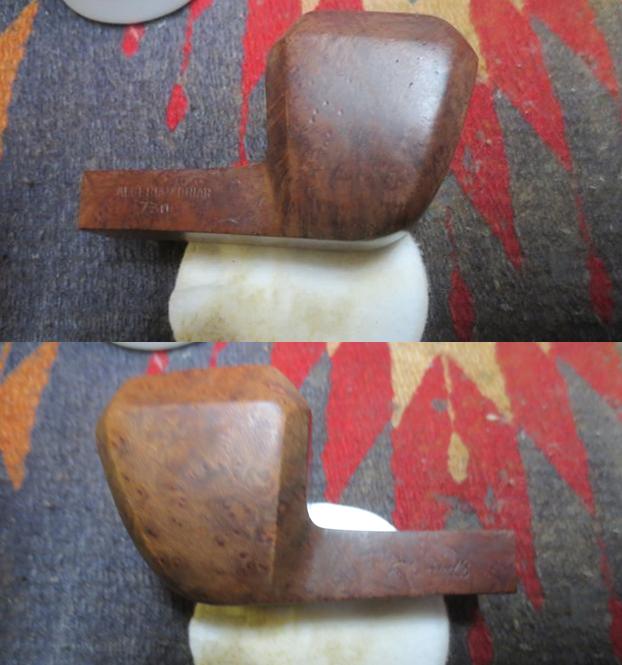
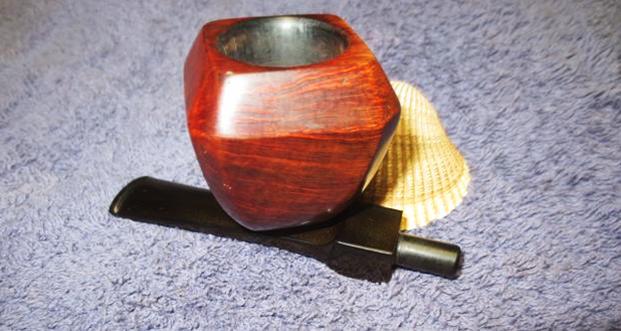
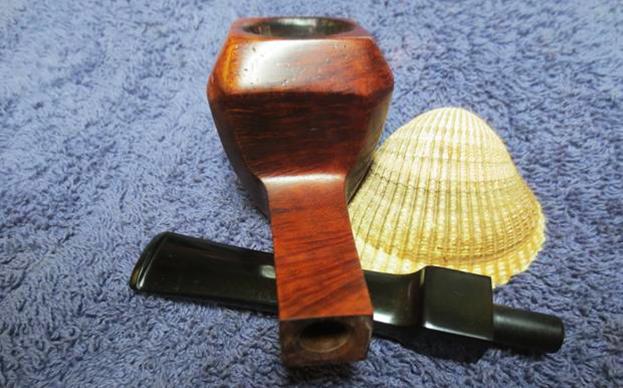
When my brother sent me this Edwards Panel Rhodesian (at least that is what I would call it), I immediately thought of William and wondered if he would be interested in it. He had earlier purchased an Edwards paneled pipe from me so it was not a far stretch to wonder if he might be interested in this one as well. I set it aside and pretty much forgot about my initial thought. However, not long afterward, William wrote about a pipe he wanted to send me to clean up for him. He sent the package to me and when it arrived, I opened it to find an Edwards Octagon shaped paneled Dublin that he wanted reworked. When I saw that, I remembered the other pipe I had that might interested him. I wrote and sent him photos of this pipe to see if he had any interest in adding it to his collection. He wrote back and said he was definitely interested in it. I figured I would restore it the same time I worked on his other pipe and could save postage by mailing them both back to him in the same package. With that in mind, I worked on the pair at the same time. I have already written about the restemming and the restoration of his Octagon shaped pipe (https://rebornpipes.com/2017/10/17/restoring-an-edwards-hexagon-dublin-sitter-97/).

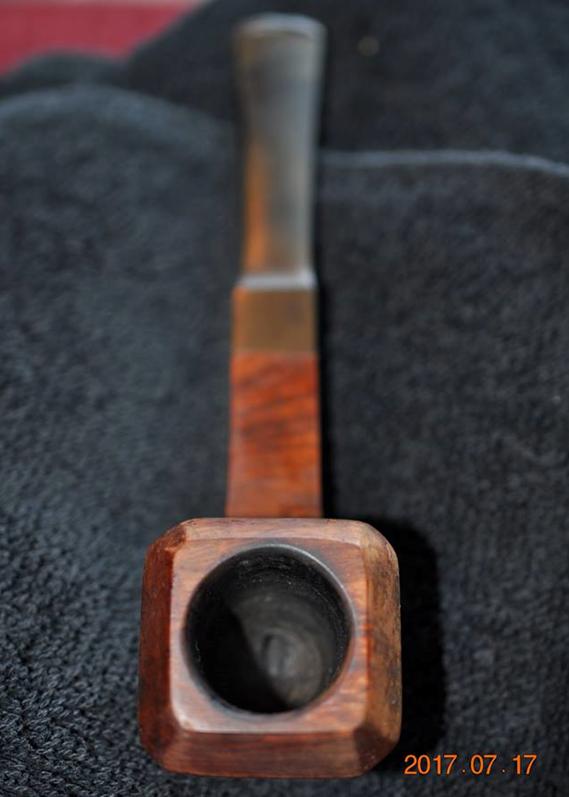
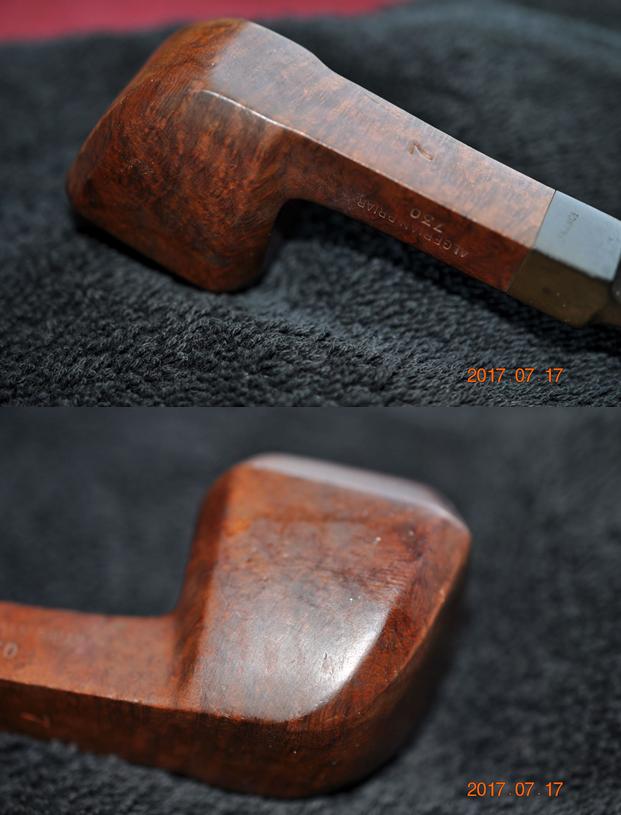
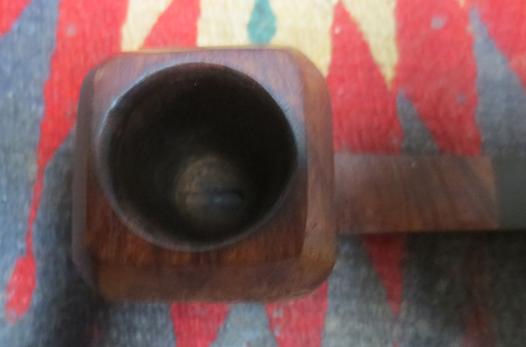
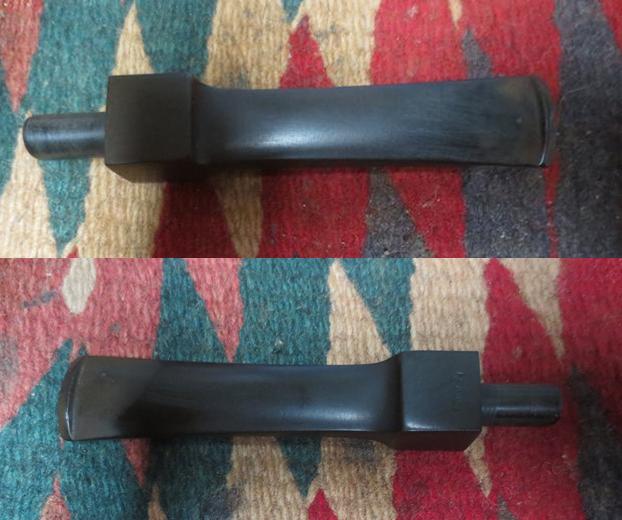
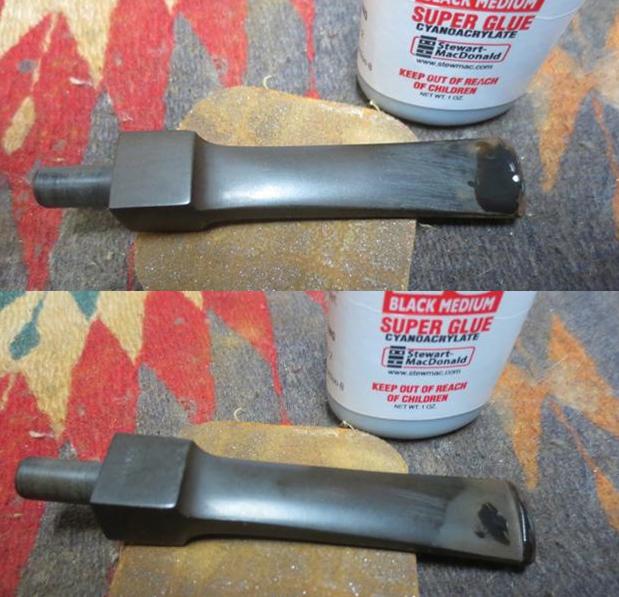
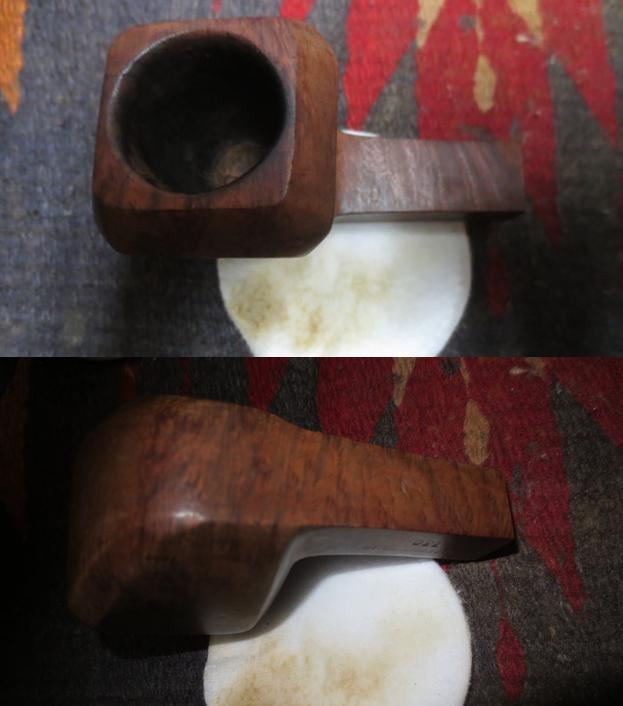
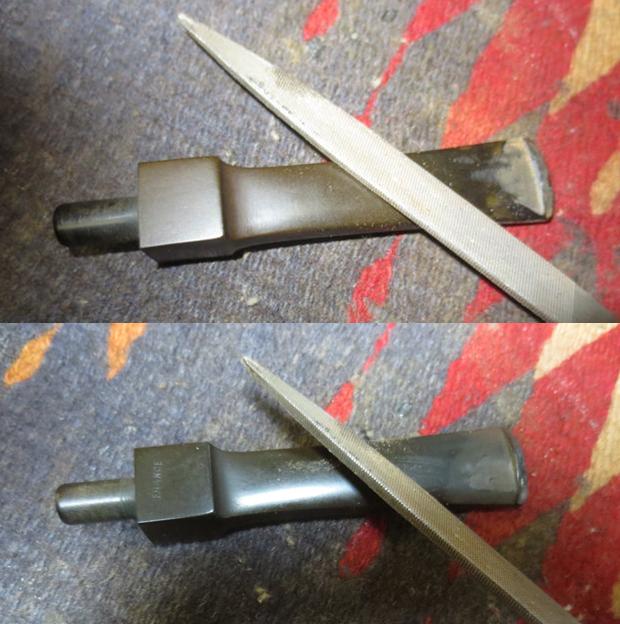
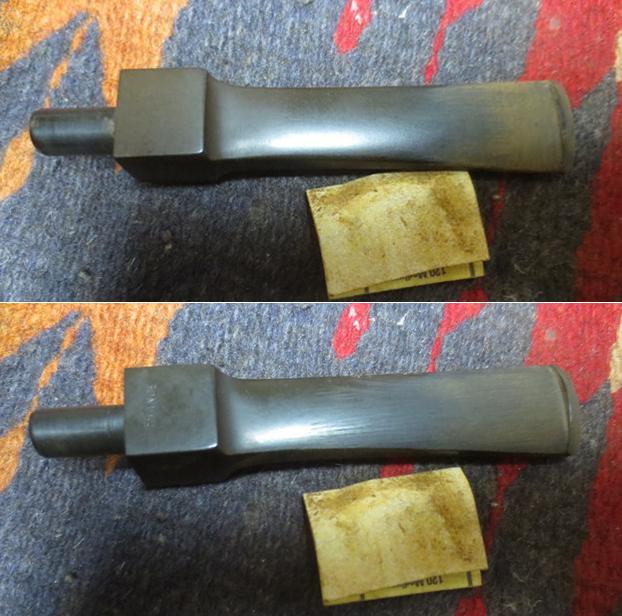
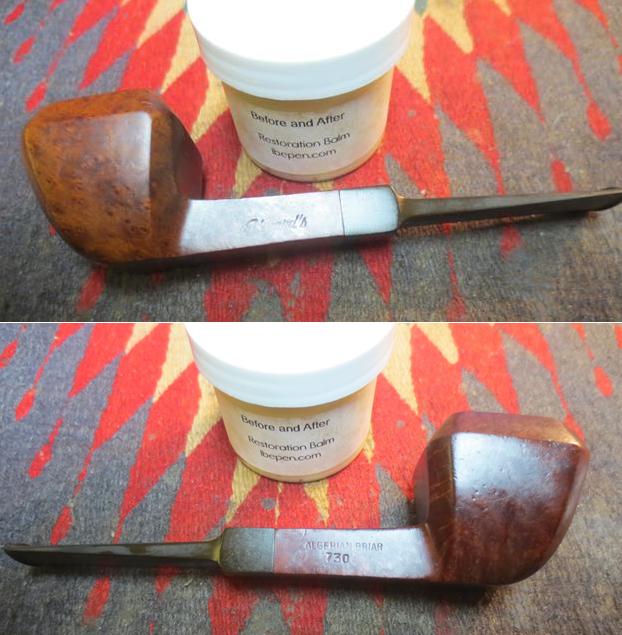
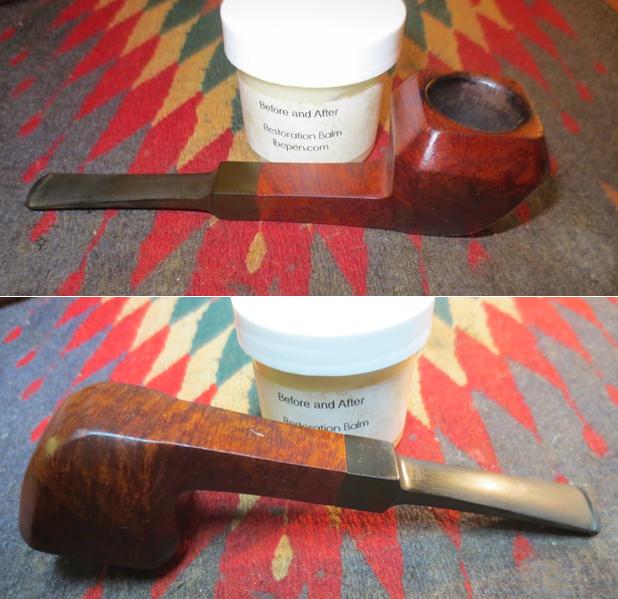
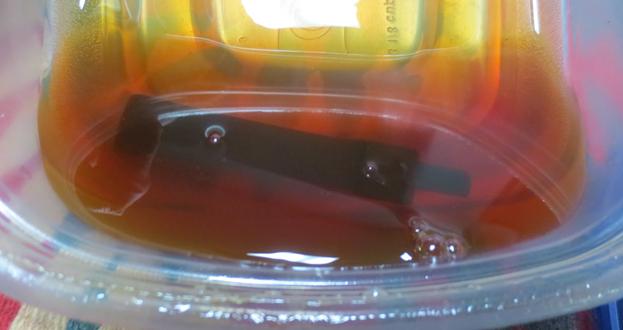
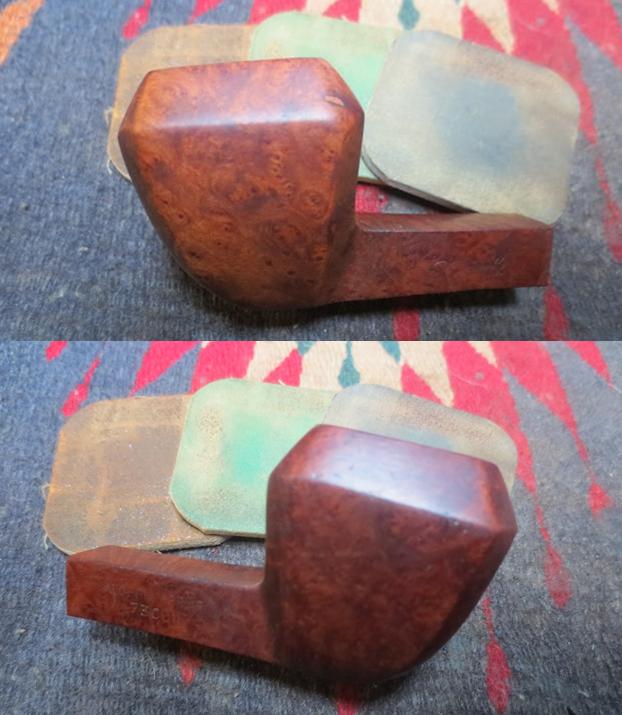
The pipe is stamped Edwards on the left side of the shank and on the right it reads Algerian Briar over the shape number 730. The underside of the shank bears as a large number 7. The Edwards stamp while readable was faint in the middle. The pipe was in pretty decent shape for an estate. There was a light cake in the bowl and some darkening on the rim top but nothing thick or horrible. Even the inner beveled edge of the bowl was in good shape. The finish has some nicks and scratches on the sides and front of the bowl. There were a few small fills in the briar on the rim cap but the pipe was in very god condition. The next series of photos show the condition of the finish on the bowl. The old oiled finish that Edwards put on their pipes was worn but the grain still showed through. There was a mix of grains on the sides and bottom of the bowl and shank – cross grain, birdseye and mixed. The next photos show the stamping on the shank of the pipe. All of it is readable. The last picture shows the France stamp on the underside of the saddle stem. The stem was oxidized and had tooth chatter and tooth marks on both sides near the button. There was some damage to the top edge of the button as well from being chomped.Jeff did his usual impeccable job cleaning off the debris and grime on this old bowl. He reamed the light cake from the bowl with a PipNet reamer and smoothed the walls of the bowl with a Savinelli Fitsall pipe knife. He scrubbed out the mortise and the airway in the shank and the stem with alcohol, cotton swabs and pipe cleaners. He scrubbed the exterior of the bowl, rim and shank with a tooth brush and Murphy’s Oil Soap to the oils and tars on the bowl, rim and shank. He rinsed it under running water. He dried it off with a soft cloth. Once the grime was removed the finish underneath was in decent condition. The rich patina on the grain of the older briar really stood out after the pipe was cleaned. I took photos of the bowl to show its condition before I started my work on it. The condition of the bowl and rim was good. There was a little damage on front right of the inner edge that I had not seen before that would need to be address but otherwise it was clean.The stem had some oxidation around the saddle portion of the stem and the tooth chatter and marks would need to be addressed.I decided to start working on the stem first. I lightly sanded the tooth chatter and marks out of the surface of the stem on both sides at the button. I heated the stem with a lighter to try to raise the marks. While many of them responded well to the heat some of them remained. I have found that if the marks are dents they respond well to heat and typically return to a flat condition. If however, they have any sharp edges on then the heat only works minimally well. I filled in the larger tooth mark and the damage to the top edge of the button with black super glue. I also filled in the lighter, smaller mark on the underside at the same time.While the stem repair was drying I worked on the bowl itself. I wiped down the surface with acetone on cotton pads to remove any remnants of debris and grime that had escaped my brother’s attention or had been picked up in the shipping wrappers. I lightly sanded the inner edge of the bowl to take care of the light damage on the front right edge. By this time the repair on the stem was dry. I recut and reshaped the button with a needle file and smoothed out the surface repairs. I sanded the stem with 220 grit sandpaper to blend the repairs into the rest of the stem. I sanded the stem to remove the oxidation that is visible in the next photos. I put the stem on the bowl and rubbed the bowl down with Before & After Restoration Balm. As part of my ongoing experiment I thought it would be good to use it on an oil finished bowl and this one was a prime candidate. I rubbed it in (using the stem for a handle) and wiped it off with a cotton pad. I removed the stem and dropped it in a bath of Before & After Pipe Stem Deoxidizer to attack the oxidation. My bath is getting older and it is not as effective as it was when I first started using it but it would help minimize the work on the stem for me. (I am waiting for a new jar of the deoxidizer to replace this one. I have cleaned between 80-90 stems with the product so it is tired.) I put the lid on the bath and left it to soak until morning.Before calling it a night I worked on the finish on the bowl some more. I lightly buffed the bowl with red Tripoli to remove as many of the surface scratches and nicks as I could. Doing that got rid of a lot of them and polishing it with micromesh would minimize what remained. I hand polished the briar with micromesh sanding pads – wet sanding with 1500-2400 grit pads and dry sanding with 3200-12000 grit pads. I worked on the beveled inner edge of the bowl to clean it up the damage and the darkening a bit more. I wiped the bowl down with a damp cloth after each pad. I hand buffed it with a microfibre cloth after the 12000 grit pad. The pictures below show the progress of the polishing on the briar. In the morning I took the stem out of the bath and let the excess product drain off into the bath before wiping it down with a cotton pad to remove the oxidation that was attached to the product. I ran a pipe cleaner through the airway with alcohol to remove the remnants of the bath. The stem looked good but more work would need to be done before the final black gleam was back. I buffed the stem with red Tripoli to remove the remaining oxidation. I polished the stem with micromesh sanding pads – wet sanding it with 1500-2400 grit pads and wiping it down after each pad with Obsidian Oil to give the next pad more bite when I sanded. I dry sanded it with 3200-12000 grit pads and again wiped it down with the oil after each pad. After the final pad I wiped it a final time with the oil and set it aside to dry. I put the stem back on the bowl and buffed the entire pipe with Blue Diamond on the buffing wheel to polish the stem and the bowl. I used a soft touch around the stamped areas as I did not want to flatten them or polish them away. I buffed stem hard to work over the remaining scratches in the rubber. It took some work but they are smoothed out. I gave the bowl and the stem multiple coats of carnauba wax buffed it with a clean buffing pad to raise a shine. I hand buffed the pipe with a microfiber cloth to deepen the shine. The four panel Rhodesian shaped bowl, and the square shank and saddle stem combine to present a beautiful pipe. I find these interesting shaped Edwards four sided, six sided and eight sided Dublin shaped pipe a real pleasant variation on the normal classic shapes. The combination of grains and the natural oil finish give the pipe a rich patina that is highlighted by the black of the polished vulcanite stem. The finished pipe is shown in the photos below. I think William is going to really like this new pair of Edwards pipes. They are both ready to pack up and head back to him in the mail. Thanks for looking.

Restoring and Restemming a Large Edward’s Bent Billiard with a Vulcanite Ferrule


Blog by Steve Laug

Label Logo_medium The last of the foursome of Edward’s pipes that I cleaned up for the fund raiser on Smoker’s Forums is a large Billiard with a vulcanite ferrule. It came to me without a stem so I would need to go through my stem can and see if I had any stem that would work with this bowl. The pipe is stamped Edward’s in script on the right side of the shank. On the left side it is stamped Algerian Briar in block letters. On the underside of the stem there is a large + sign and the shape number 42 near the ferrule. The bowl was in rough shape. The finish was dirty and there are some large and small fills along the shank from the bowl shank union to the ferrule. The ferrule was oxidized. The internals of the bowl and shank were dirty. The bowl was caked with the same heavy soft cake as the other Edward’s pipes. The tars had flowed over the beveled inner rim of the pipe and hardened into a dark hard cake. The briar itself was quite beautiful under the grime so a good cleaning would reveal some excellent grain as it had in the other three pipes.

I found a stem in my stem can that fit the shank well and looked pretty decent. It would need to be bent slightly and the roughness of the stem would need to be sanded down to make the fit right but I took photos of the pipe with this stem to get an idea of how it would look. At this point the pipe has not been cleaned up or reamed.Free1

Free2

Free3

Free4 I took one close-up photo of the bowl to show the state of the rim and the cake in the bowl. It would take some work to clean off the lava and bring the finish back to pristine.Free5 I reamed the bowl with the PipNet reamer and took it back to bare wood to remove the crumbling, soft cake in the bowl.Free6

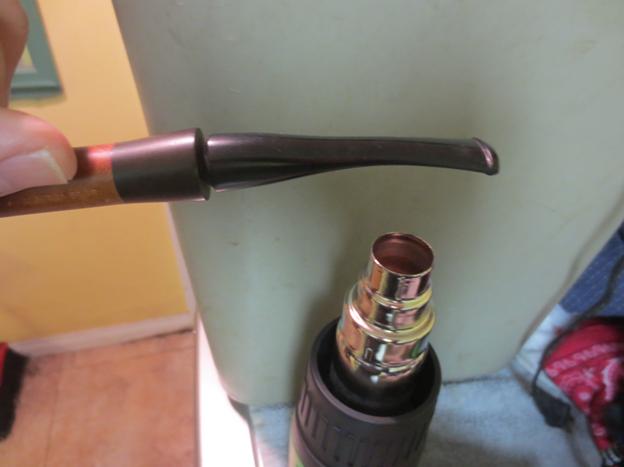
Free7 Once I had the bowl reamed I took a photo of the stem and then took it to the heat gun to soften and rebend it to fit the bend of the pipe. There was a slight wave in the top of the stem that needed to be straightened as a part of the new bend.Free8

Free9 I heated it until the vulcanite was pliable and then straightened it before rebending it to match the curve of the bowl and when held in the mouth was horizontal with the top of the bowl.Free10

Free11

Free12

Free13 I liked the look of the stem with the new bend so I set it aside and went to work on the bowl. I used 0000 steel wool on the rim to remove the lava overflow and repolish the rim. I am finding that this works really well as Troy shared in various blog posts he has done here and on his own site. There is always something new to learn and add to the refurbishing skill set.Free14 With the rim cleaned up I wiped down the bowl with acetone on a cotton pad to remove the grime in the finish and refresh the briar.Free15

Free16

Free17

Free18 I cleaned out the bowl, shank and the airway in the stem with pipe cleaners, cotton swabs and alcohol. It was pretty clean which is amazing when you consider the condition of the rim and the cake.Free19

Free20 I sanded the stem with 220 grit sandpaper to clean up the shape and smooth out the angles and make the sides proportionally the same when the stem was in the mortise. I finished by sanding it with a medium and fine grit sanding sponge to smooth out the scratch marks left behind by the sandpaper.Free21

Free22 I lightly sanded the bowl and the rim with micromesh sanding pads – wet sanding with 1500-2400 and dry sanding with 3200-4000. I also sanded the vulcanite ferrule at the same time to remove the oxidation.Free23 I sanded the stem with the micromesh sanding pads as well – wet sanding with 1500-2400 grit pads and then rubbing it down with Obsidian Oil. I also used the oil on the ferrule. I dry sanded with 3200-4000 grit pads and rubbed it down again with the oil.Free24

Free25 I buffed the stem with Tripoli and White Diamond before sanding it with the final grits of micromesh pads. I finished with 6000-12000 grit pads and then gave the stem and ferrule a final rub down with the Obsidian Oil. I let it soak in and dry before taking it to the buffer.Free26 I gave the bowl a light coat of olive oil to bring life back into the briar and then gave it a buff with Blue Diamond on the buffing wheel. I gave the bowl and stem multiple coats of carnauba wax and then buffed it with a clean flannel buff. I finished by hand buffing it with a microfibre cloth to bring depth to the shine. The finished pipe is shown below. The first photo is of the pipe with the Edward’s large apple to give a sense of the size of the pipe. It is a large piece of briar.Free27

Free28

Free29

Free30

Free31

Free32

Free33

Cleaning up an Edward’s Brandy Shaped pipe


Blog by Steve Laug

Label Logo_mediumThe third Edward’s pipe that came to me in the box of pipes to clean up and sell for the support of Smokers Forums is stamped Algerian Briar in block print on the left side of the shank and on the right side Edward’s in script. There is a large 7 toward the bowl end of the underside of the shank. Near the shank it is stamped 13L which according to Edwards shape charts generally has a 7 as the first number. I think this is the same age as the previous pipes I have been working on and it only has the two digits and the letter L. That numbering is called a large apple. On the original pipes it appears that the pipe originally had a taper stem. That would explain why this stem is slightly loose and does not perfectly match the diameter of the shank.

It is about the same size as the Dublin and the apple that I just finished restoring. It has similar grain. The back and front of the bowl are cross grain and the sides are birdseye grain. The top and the bottom of the bowl and the shank are cross grain as well. The finish on the bowl was in rough shape. The briar was dry and lifeless looking. The surface of the pipe was dirty and grimy. The rim was covered with an overflow of lava like the other pipes in the lot. The bowl had a thick cake that had the same sticky and crumbling consistency as it had in the other bowls. The stem was oxidized and had some tooth chatter on the top and the bottom of the stem. The internals of the stem and the shank were very dirty and covered in a thick tar. There were quite a few fills in the bowl. There was a large on the back right side near the top of the bowl. There were several smaller fills on the front of the bowl and on the underside at the bowl shank junction. There were also some small sandpits that were not filled. Like all of the Edward’s pipes that I have worked on this one was natural briar. Once it was cleaned up it would have a rich natural look that would darken over time and use.Brandy1 Brandy2 Brandy3I took a close-up photo of the bowl to show the build up on the rim and also the odd configuration of the cake.Brandy4 Brandy5I reamed the bowl with a PipNet pipe reamer and started with the smallest cutting head and worked my way up to the head that was the same diameter as the bowl. I reamed it back to bare wood and cleaned out the debris that was left with a pen knife.Brandy6 Brandy7I scrubbed the rim with 0000 steel wool to remove the lava overflow that had hardened on the rim. I have used the steel wool on the last two pipes and I am impressed with how easy it makes this process. Of course it helps that the bowl is a natural finish so I am not damaging any of the original finish on the bowl with the steel wool.Brandy8I cleaned the internals with pipe cleaners, cotton swabs and alcohol until the inside was clean and sweet smelling. I swabbed out the bowl with a cotton swab and alcohol to clean up any of the dust left behind by the steel wool.Brandy9I scrubbed the exterior of the bowl with acetone on cotton pads to remove the ground in grime in the finish. I scrubbed it until the finish was clean and lifeless looking.Brandy10 Brandy11 Brandy12I gave the bowl a light coat of olive oil and rubbed it in to bring some of the original colour back to the briar and give it a little life. The photos below show the bowl after this treatment. It has some awesome grain – along with a few sandpits and fills.Brandy13 Brandy14 Brandy15 Brandy16With the bowl finished it was time to work on the stem. I am pretty certain that this is a replacement stem as the fit is not quite right and according to the charts it was supposed to be a taper stem. However, I decided to go with the stem that came with it in the box I received and clean it up and make it fit as best as possible. I sanded the stem with a medium and a fine grit sanding sponge and then went on to sand with micromesh sanding pads. I wet sanded with 1500-2400 grit pads and then rubbed the stem down with Obsidian Oil. I went on to dry sand it with 3200-4000 grit pads and gave it another coat of oil.Brandy17 Brandy18I buffed the stem with Tripoli and then White Diamond before sanding it with the final three grits of micromesh – 6000-12000 grit.Brandy19I buffed the pipe with Blue Diamond Plastic polish on the wheel and then gave bowl and stem multiple coats of carnauba wax. I buffed it with a clean flannel buff and then took it back to the table and hand buffed it with a microfibre cloth. The finished pipe is shown below. I kind of like the saddle stem as it gives the pipe a bit of an English flair.Brandy20 Brandy21 Brandy22 Brandy23 Brandy24 Brandy25

Restoring one of my favourite pipe shapes – an Edwards Author 722


Blog by Steve Laug

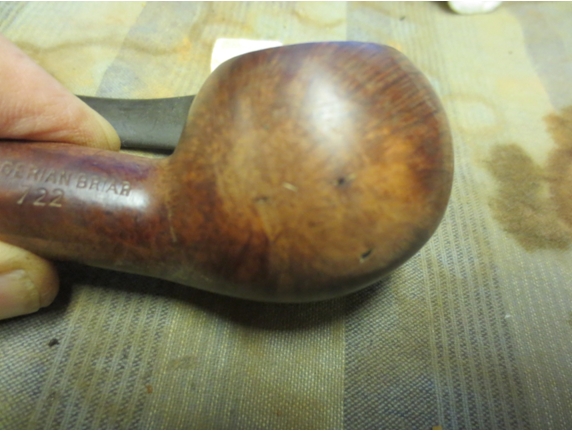
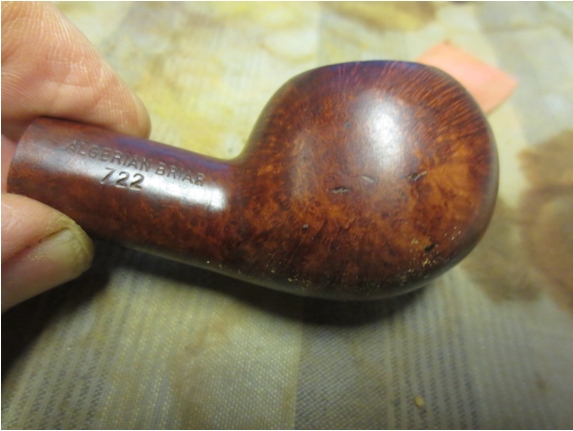
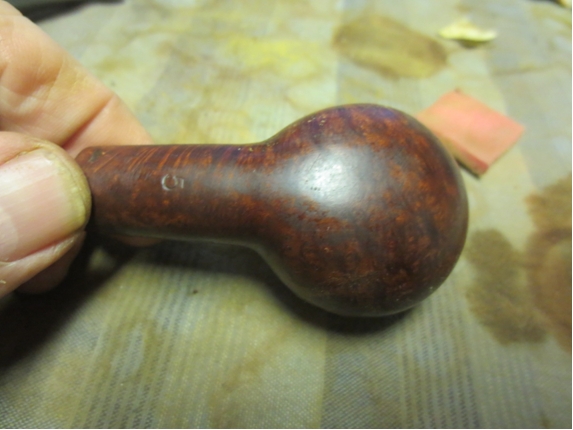
This Edwards Author 722 came to me in the gift box I received. The shape has always been one of my favourites. This one is stamped Edwards in script on the left side of the shank. On the right side it is stamped Algerian Briar over 722. I am guessing that the 722 is the shape number. I have looked but cannot find any information on the Edwards shapes. On the underside of the shank it is stamped with a large number 5. On the underside of the stem was stamped the word FRANCE.Ed1

Ed2 From what I could find Edwards left all of their pipes with a natural finish, as was the case with this one. It was dirty and had darkened from smoking but it did not have a finish or stain on the briar. The bowl had been reamed and cleaned and the shank was clean. The briar had fills on the topside and the underside of the shank and on the left side of the bowl. They were white putty and some of them were shrunken and missing bits of the putty. The rim was dirty and slightly damaged.Ed3

Ed4 The stem was very tight in the shank and I carefully twisted it slowly from the shank. There was a yellow waxy substance on the tenon like old and dried beeswax. The mortise area was clean briar and was unstained by tars or oils. The fit of the stem to the shank was perfect. It was a smooth transition with no ridges or gaps.Ed5

Ed6 I wanted to know more about the brand. I have had several Edwards pipes over the years and still have them. I checked out my two usual sources Pipedia and PipePhil’s site. Reading on Pipedia I found the following information that I quote. http://pipedia.org/wiki/Edward%27s

“Edward’s pipes were originally produced in St. Claude, France when France actually was a world-class pipe maker with longstanding business & political connections to Colonial Algeria that allowed them to obtain the finest briar. During the tumultuous 1960’s, Edward’s created a business model to offer the finest briar available in both Classic and Freehand shapes – all at a fair price. They bought the company & equipment and cornered the market on the finest, choice Algerian Briar just before the supply vanished in political turmoil of Algeria’s independence. Edward’s packed up both machinery and briar-treasure to America, safely caching the essentials to create a new pipe-making dynasty. This was a coup, for the 70’s and 80’s were grim years for pipe smokers as quality briar all but disappeared.”

“Edward’s Design Philosophy is hard to pin down, think of their style as the “American Charatan” with unique & clever twists all their own. Today, they fashion pipes in several locations across the USA. All of Edward’s pipes are Algerian Briar – a fact very few pipe companies can claim, and all are oil-cured utilizing natural finishes – no strange concoctions are used to interfere in your tastebud’s dance with the briar. Algerian, Calabrian, Sardinian, Corsican – take your pick, but Algerian Briar is generally considered the finest smoking briar ever used. When combined with oil-curing, Algerian takes on a magical quality that even Alfred Dunhill recognized as far back as 1918 as the choice for both his Bruyere and Shell.”

There was also a non-working link to http://www.otcpipes.com that reference a collection of vintage Edward’s pipes and scans of Edward’s catalogs. I wish I could get that link to work. (If anyone has information on this please let me know as I would love to view this site and its information.)

I found a bit of additional information on the PipePhil site (http://www.pipephil.eu/logos/en/logo-e1.html). I quote it here as well.

“Edward’s Pipes, headquartered in Tampa, FL, got its start importing pipes from France and continued to do so from 1958 to 1963 when it started producing pipes in Florida from prime Algerian Briar, a practice they continue to this day (2010).”

I also found an interesting exchange on the Pipes Magazine site regarding Edwards that was posted three years ago. http://pipesmagazine.com/forums/topic/edwards-pipe I have copied one portion of that interchange by a poster named cypresspipe. He adds a personal dimension to the information having worked for Edwards in the 70’s. I quote him in full below.

“I worked at an Edward’s Pipe Shop in Jacksonville in the 70’s and I can provide more information about Edward’s pipes. Edward’s still exists with a few remaining shops around the country. Like the rest of the industry, they are primarily cigar stores and gift shops now. Edward’s pipes were and are their house brand and they were made in their factory in Tampa. I visited the Tampa store several years ago and they told me that Edward’s pipes are now made in Spain. They also told me that they were running out of Algerian Briar and, as a result, many of their pipes were no longer carrying that stamping.”

“If you are familiar with Randy Wiley pipes, he started out making pipes in the Edward’s factory in Tampa back in the 1970’s.”

“The models Skylark, Skipper, Royce, Benton, etc. are fairly recent name categories, probably starting in the 90’s. They didn’t use these names when I worked there, except the “Skipper” was a pipe with a particular style of etching on it. At the time they made some very nice high-grade freehands that sold in the $100-150 price range (several hundred dollars today).”

“While the individual Edward’s shops are franchisee-owned the parent company is FGT Enterprises of Tampa, Florida. The company makes pipes under the “Benton” brand for other shops around the country, and makes private label pipes for some shops as well. They are a leading wholesaler of smoking accessories. You can go to their website and download their catalog (www.fgtenterprises.com–you might want to check out the “About Us” page on the site. FGT at one time did not stress their connection to the Edward’s shops, as they wanted to downplay the fact that they were associated with stores that were competitors to some of their other customers.”

“I have about 20-30 Edward’s pipes from the time I worked there and they have always been good smokers. The only problem with them is that pipes in the 70’s tended to be smaller (about group 3) than they are today.”

“As far as I know, there are still Edward’s shops in Los Altos (CA), Englewood (CO), Tampa, Atlanta, Jacksonville, and Dallas. In case you are interested Edward’s was named after Edward Rowley, a Tampa TV personality of the 50’s and 60’s who founded the company in partnership with Frank Smith (“Smitty”). Rowley was essentially the “face” of the shops while Smitty was the tobacco and pipes guy. Smitty bought out Rowley’s interest in the company sometime in the late 70’s or early 80’s.”

Armed with that information I went to work cleaning up the pipe. I started by topping the bowl with 220 grit sandpaper on a topping board to smooth out the rim and even out the smooth surface. I followed that by sanding it with a medium and a fine grit sanding sponge.Ed7

Ed8 I picked out the ugly pink/white fills with a dental pick. I scrubbed the bowl down with acetone on cotton pads to remove the grime and the dust from the fills. When the bowl was clean I refilled the sand pits with briar dust from the rim and clear super glue. I have learned that these turn almost black but that is far easier to work with than the pink/white putty.Ed9

Ed10

Ed11 I sanded the repairs with 220 grit sandpaper and then with a medium and fine grit sanding sponge. I followed that by sanding with 1500-2400 grit micromesh sanding pads.Ed12

Ed13

Ed14 I have a dark alcohol bath – I filter out the sludge monthly but leave the alcohol dark. I have found that a soak in it not only removes the finish but also gives a patina to the briar. It tends to make blending the repairs and the topped rim much easier.Ed15 While the bowl soaked in the bath I turned to the stem. I sanded the tooth marks and tooth chatter on the stem with 220 grit sandpaper to remove it and smooth out the surface.Ed16

Ed17 By the time I finished the initial sanding of the stem it was time to remove the bowl from the bath. I dried off the bowl and took the photos below to show the colour that the bath added to the briar.Ed18

Ed19

Ed20

Ed21 I set it aside and finished working on the stem. I sanded it with medium and fine grit sanding sponges and then with micromesh sanding pads. I wet sanded with 1500-2400 grit pads and dry sanded with 3200-12,000 grit pads.Ed22

Ed23

Ed24 I buffed the stem with White Diamond and Blue Diamond on the buffing wheel. I gave it several coats of carnauba wax and lightly buffed it with a flannel buff. I am always careful when buffing the stem without the bowl (in fact I rarely do it) because it is very easy to round the shoulders on the stem making a tight fit against the shank impossible.Ed25

Ed26 I buffed the bowl with red Tripoli and White Diamond to remove the surface scratches around the patches. I buffed the rim carefully with the same product. I took the next two close-up photos of the rim to show the repaired and polished rim.Ed27

Ed28 The finished pipe is shown in the photos below. The rich patina is only from the alcohol bath. I used a stain pen to touch up the light spots around the patches on the right side of the bowl and shank. I gave the pipe several coats of carnauba wax and buffed it with a soft flannel buff to raise a shine. All that is left to do is to load the bowl and fire it up. Something I hope to do before the end of the week.Ed29

Ed30

Ed31

Ed32

Ed33

Ed34

Ed35