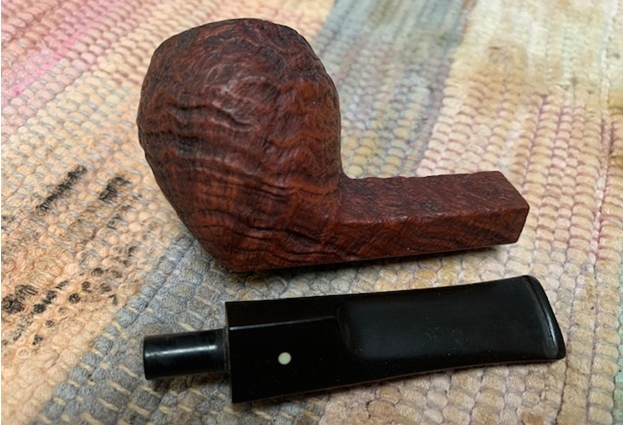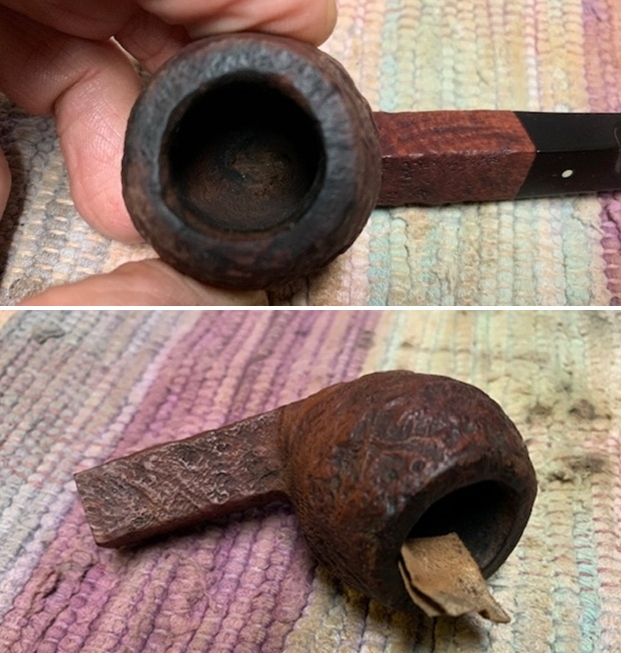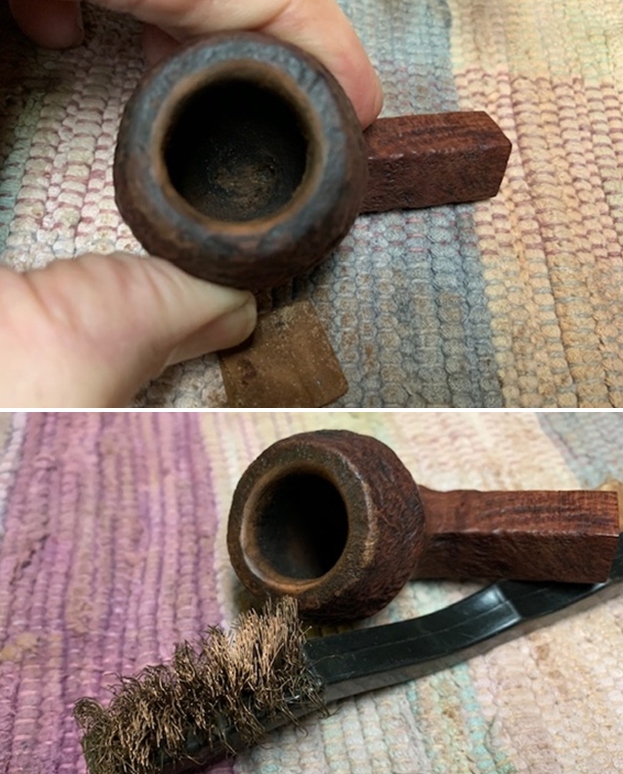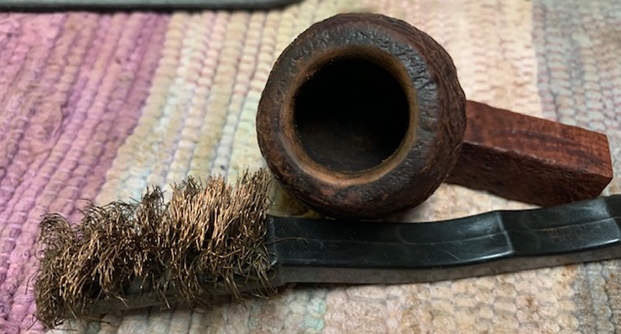
Tag Archives: Dunhill Pipes

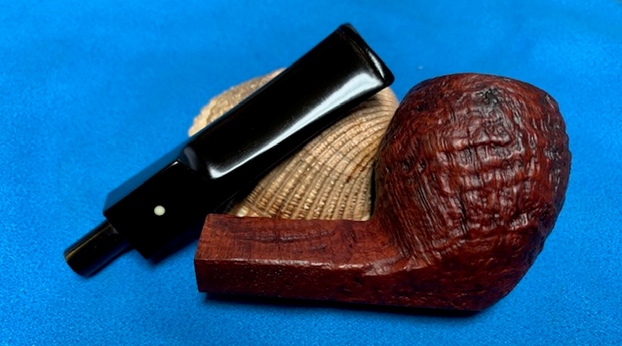
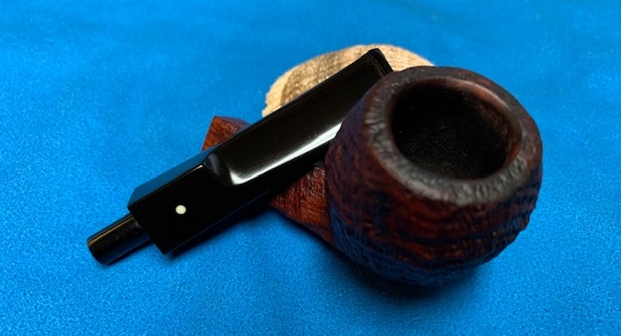
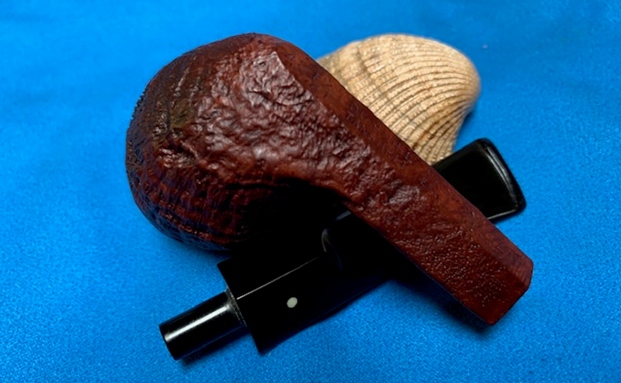
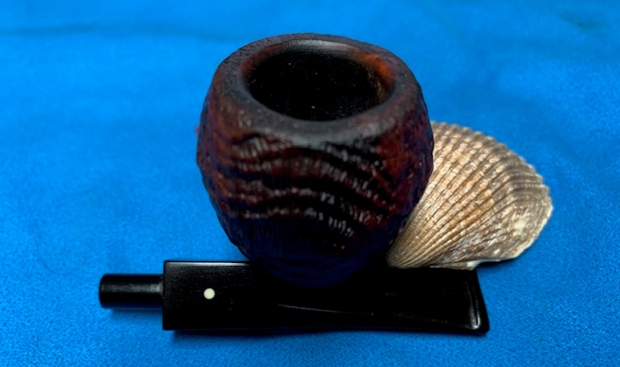
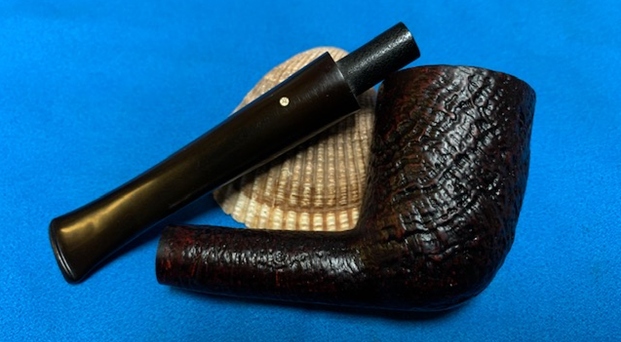
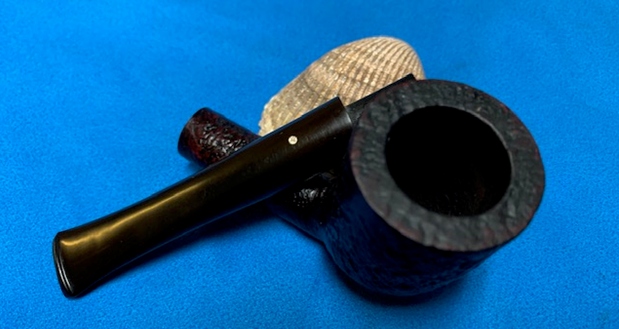
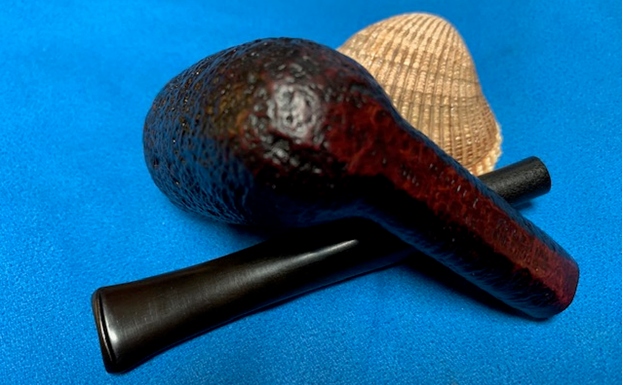
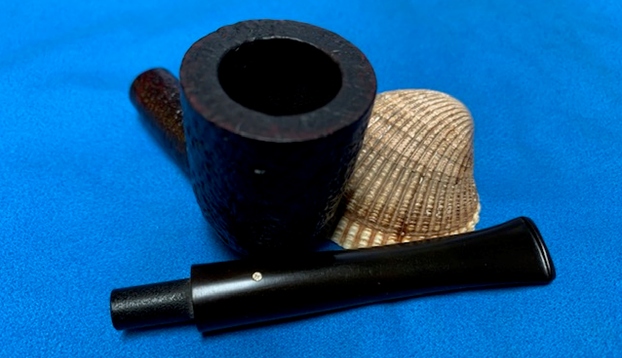
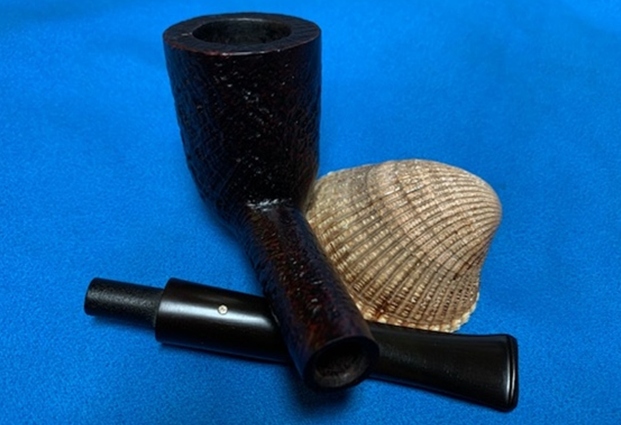
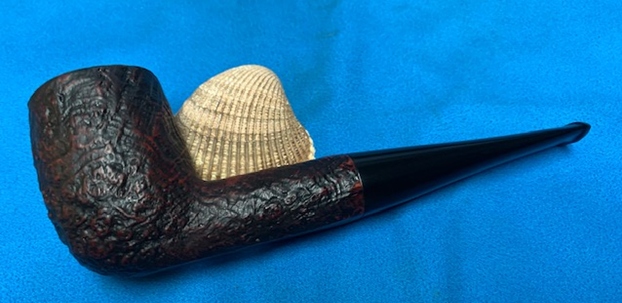
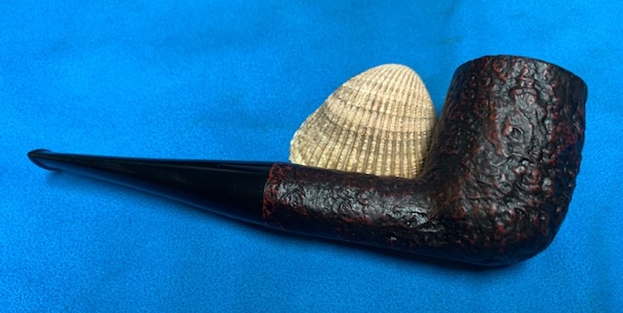
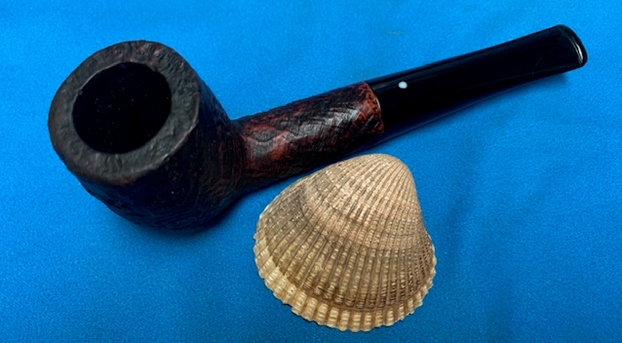
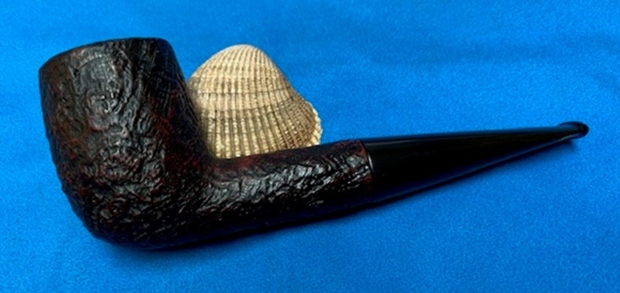
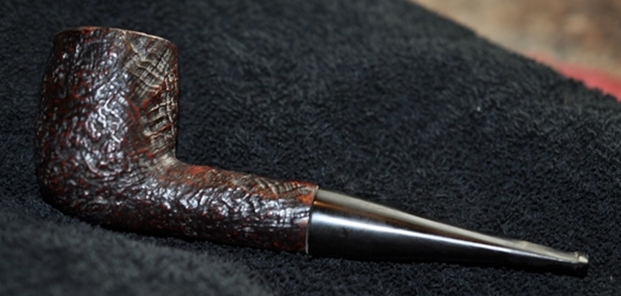
Breathing Life into a 1955 Dunhill Tanshell 48 F/T Group 4 Bulldog


Blog by Steve Laug

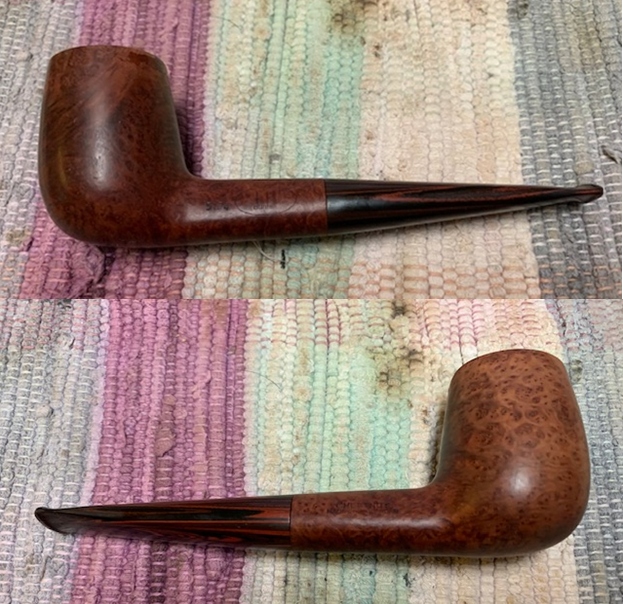
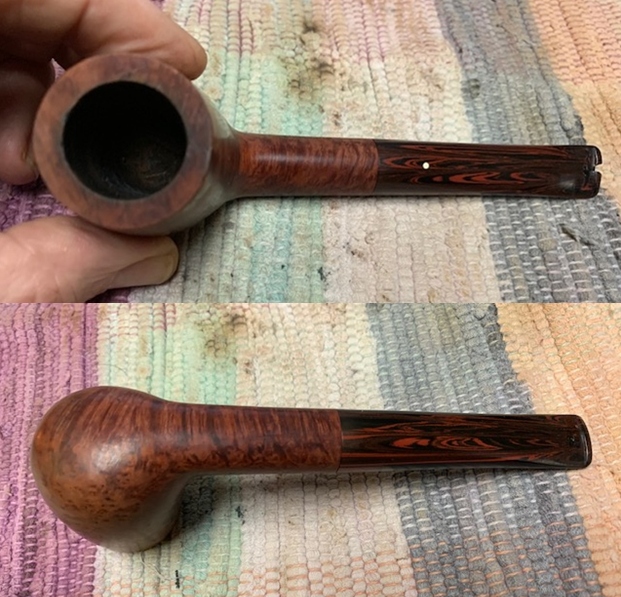
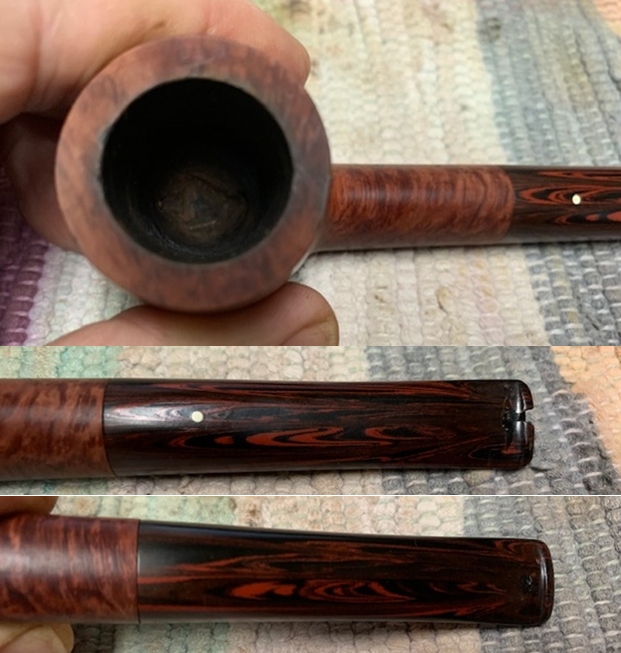
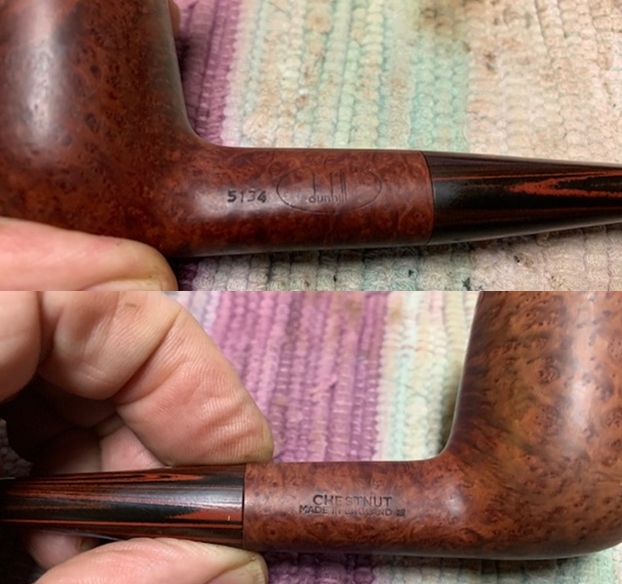
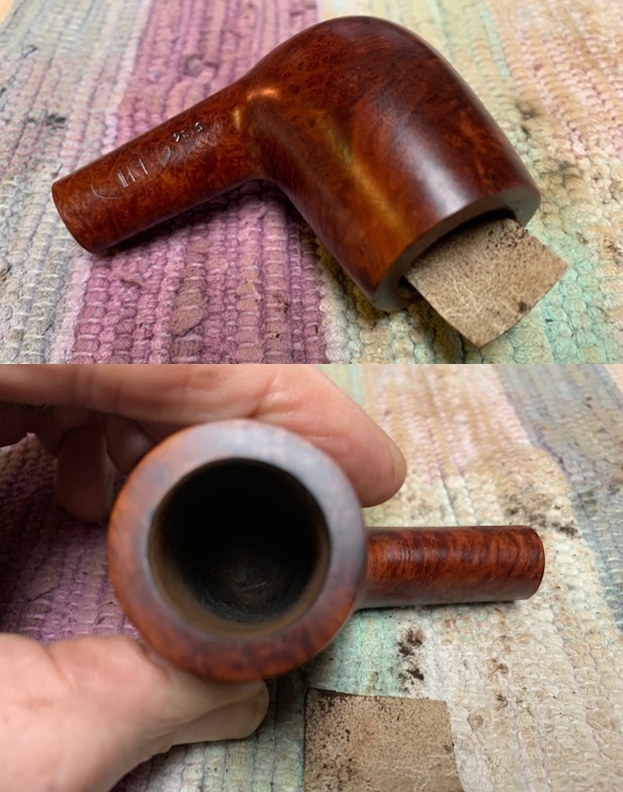
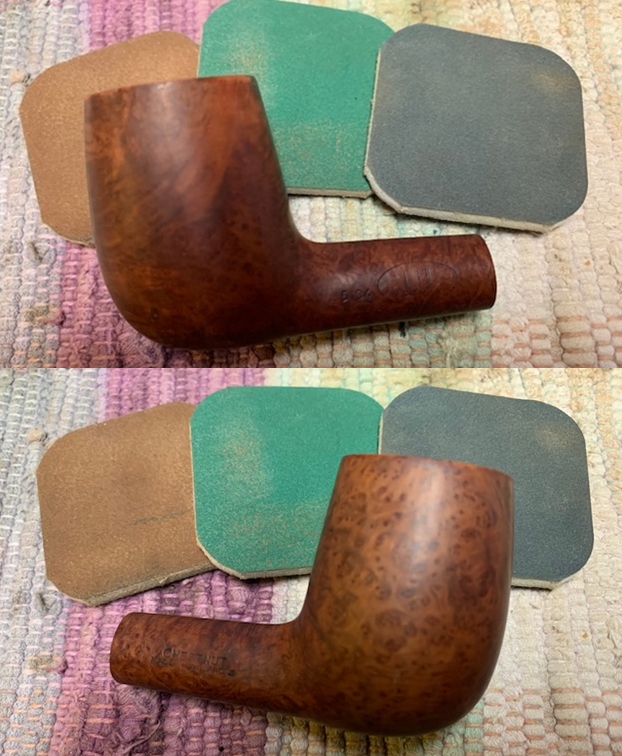
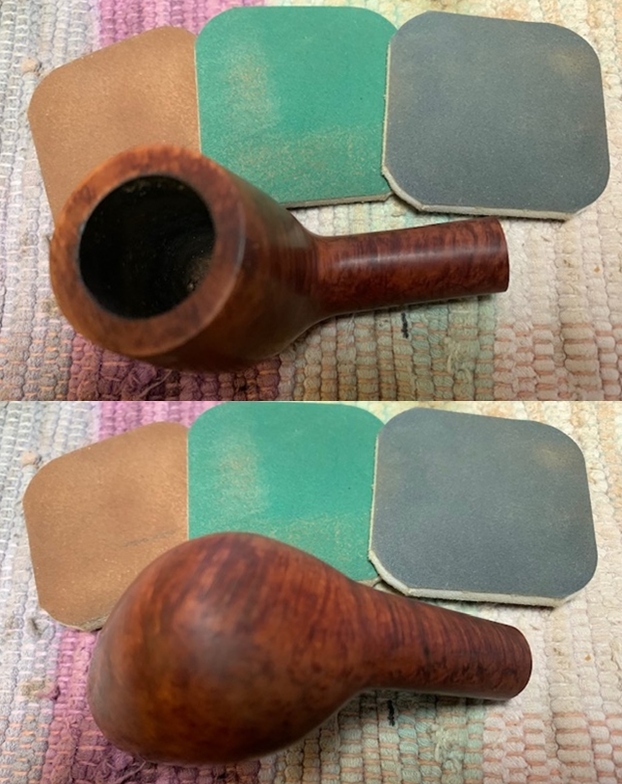
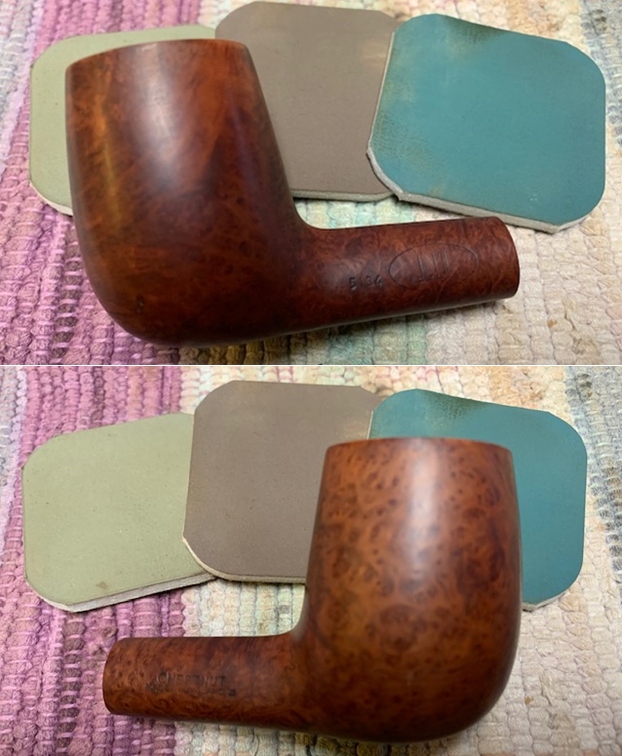
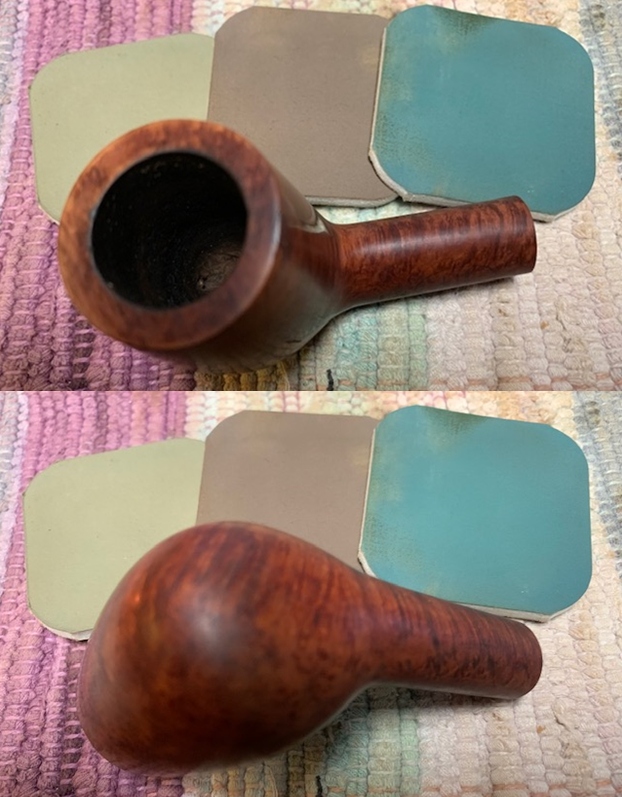
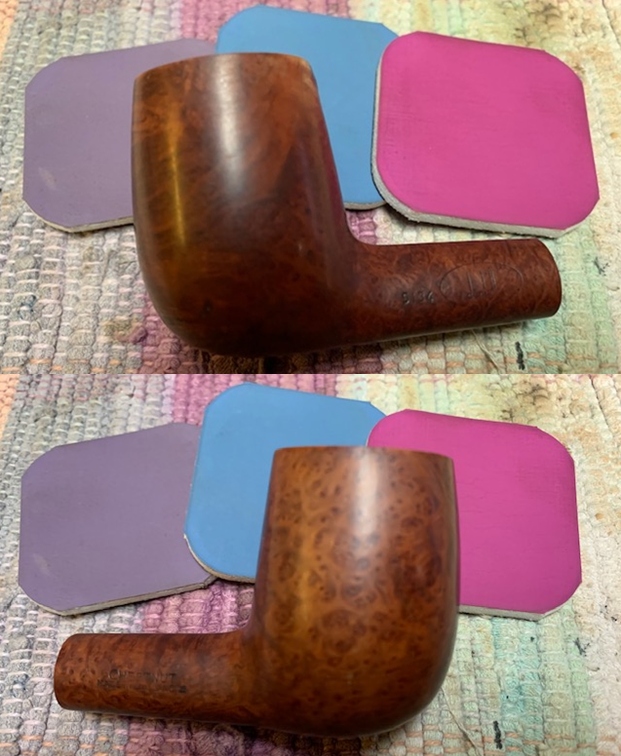
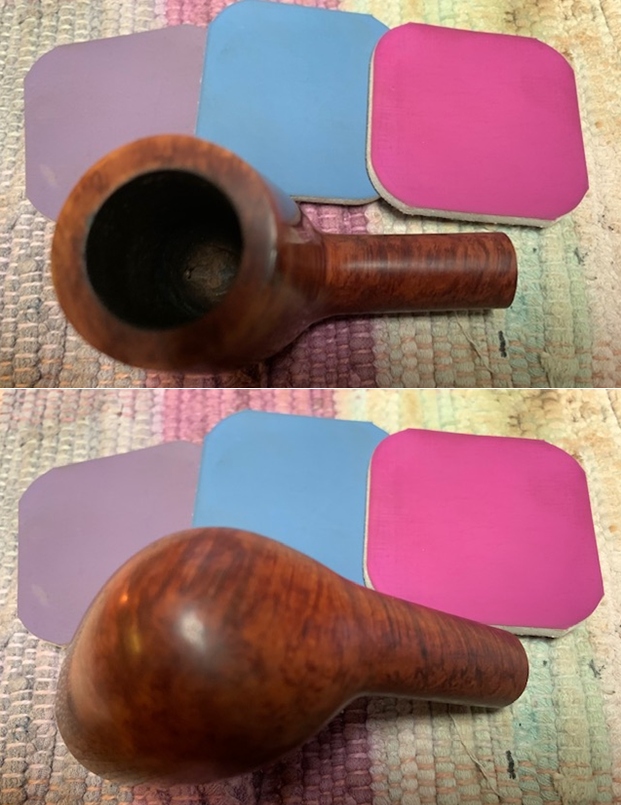
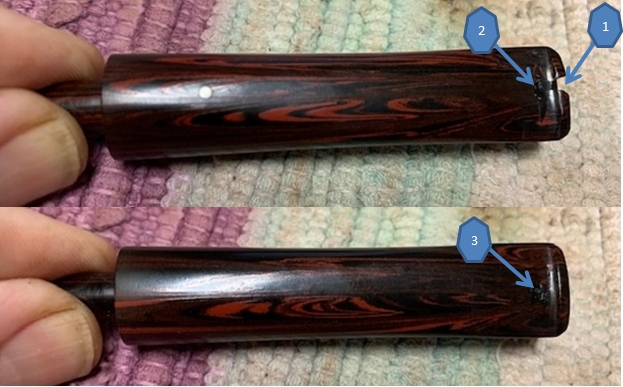
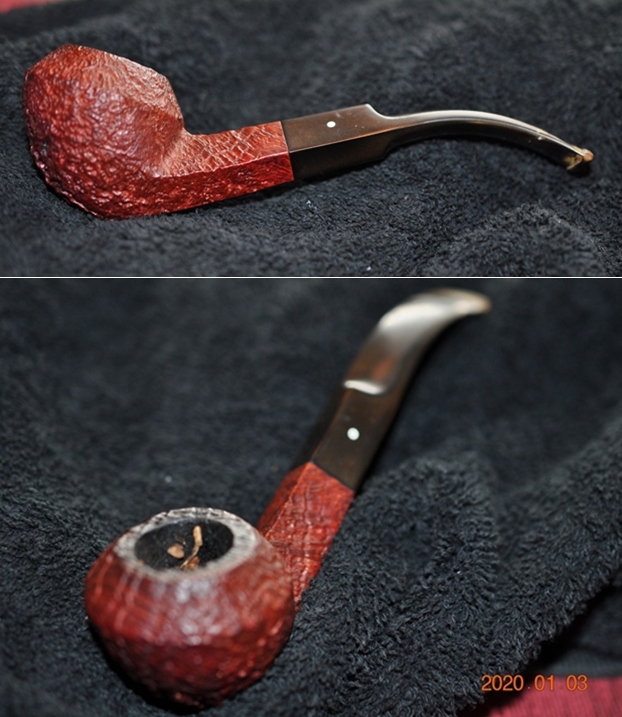
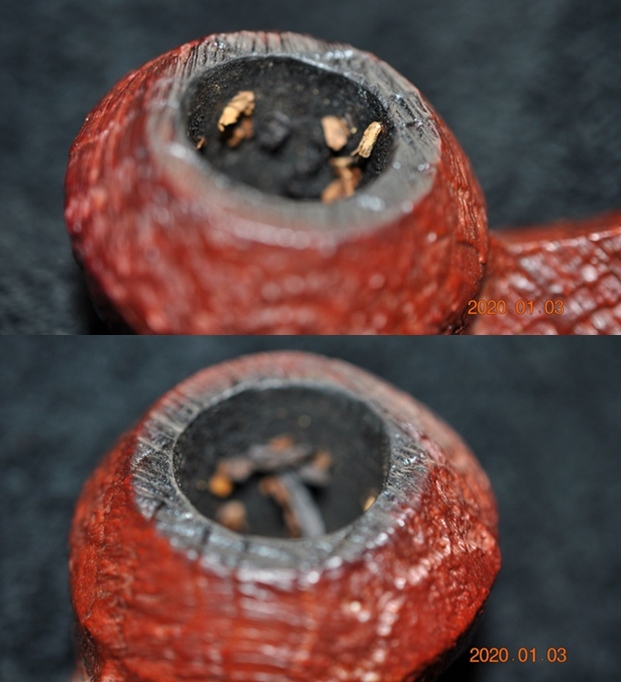
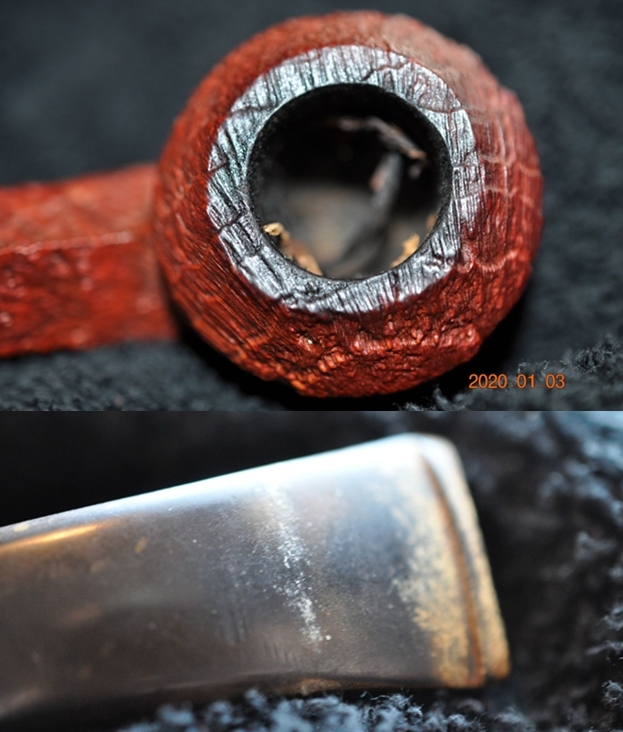
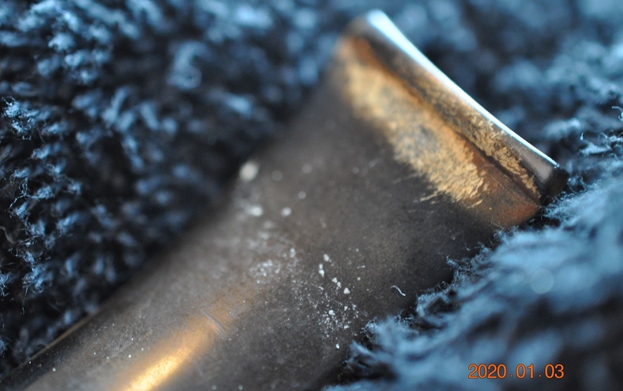
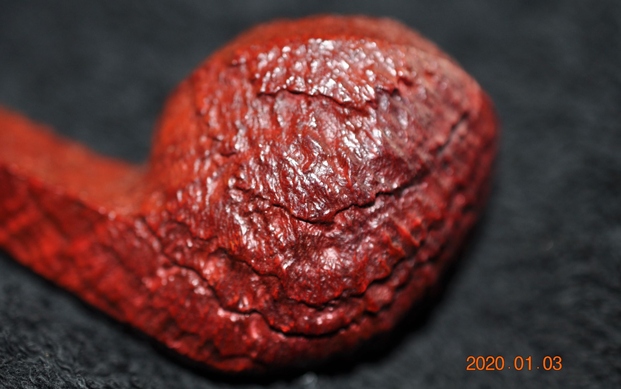
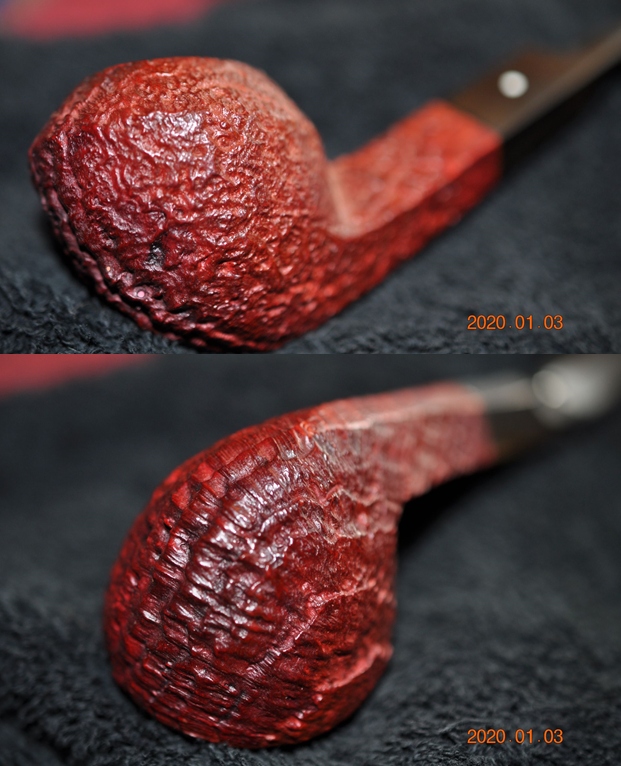
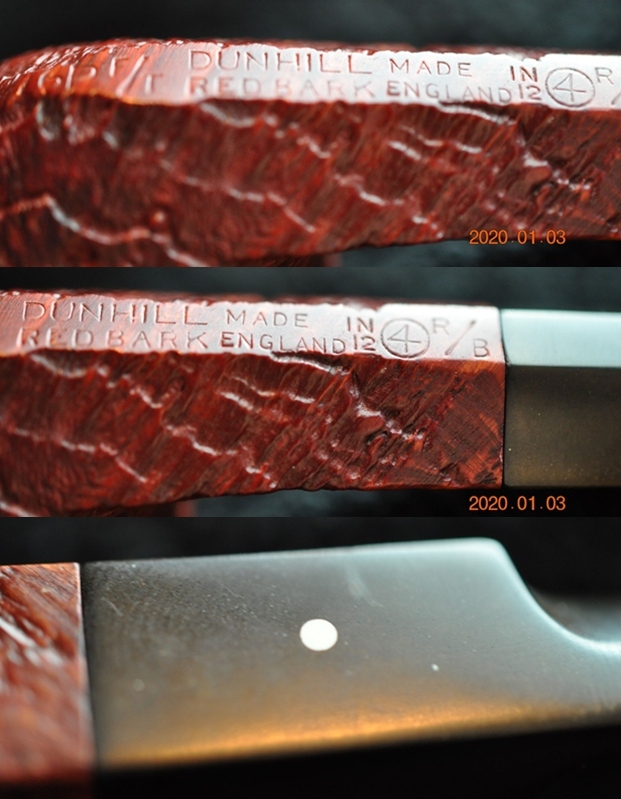
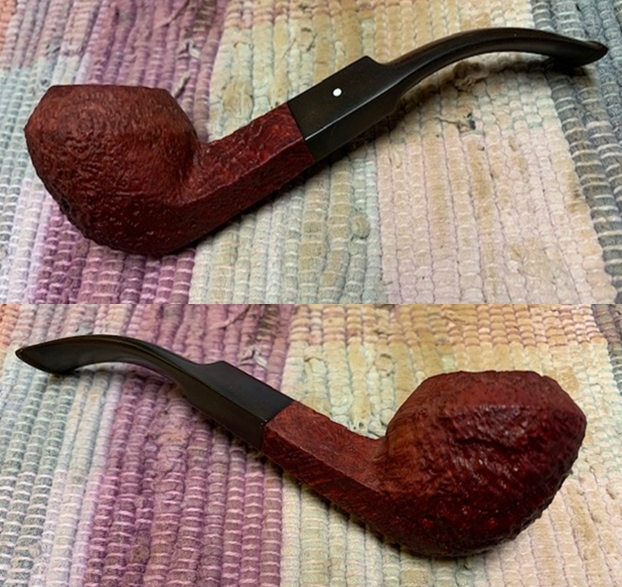
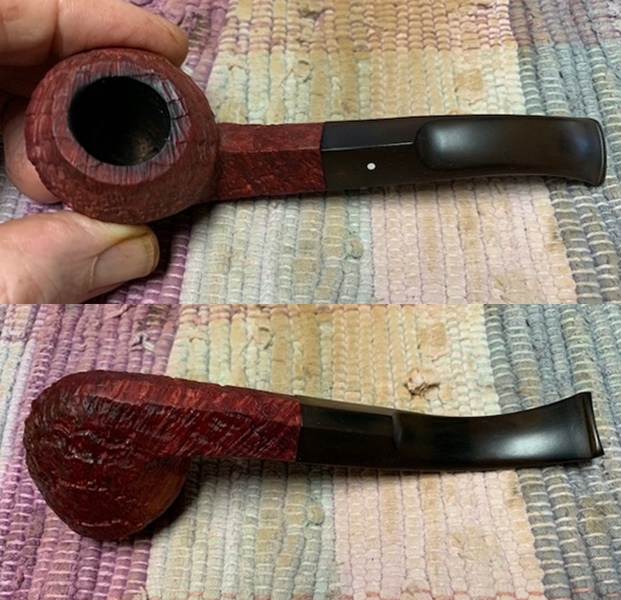
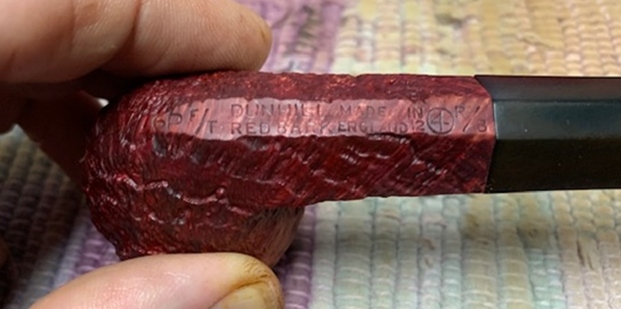
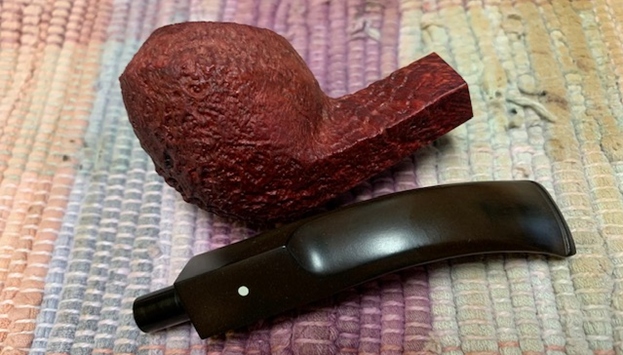
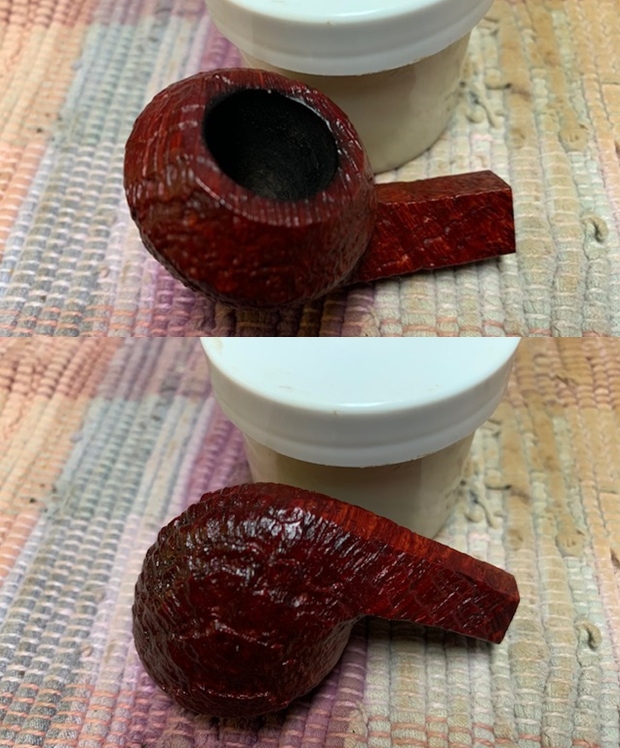
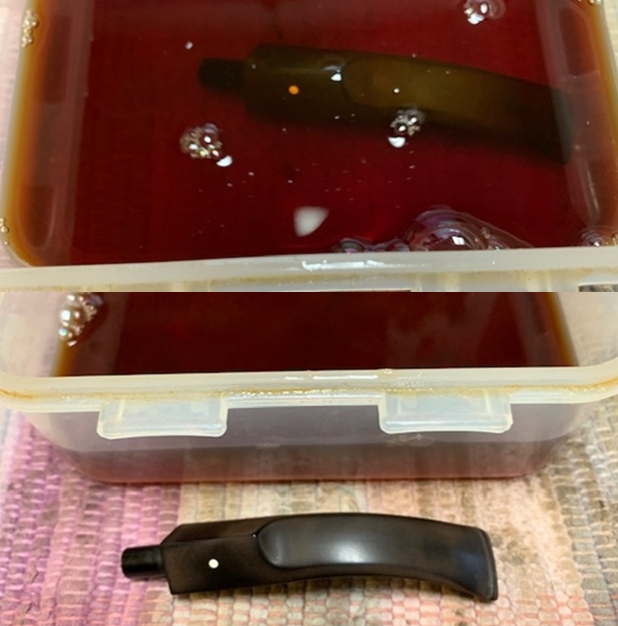
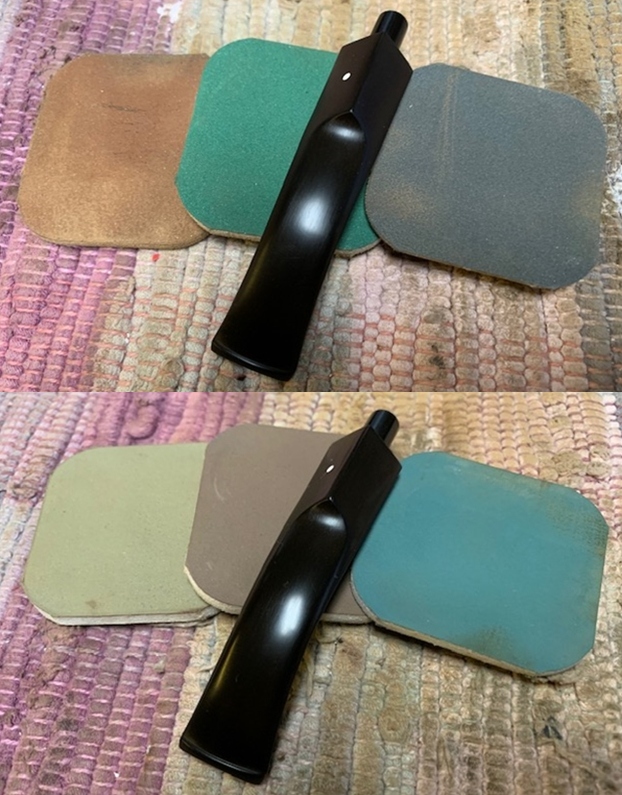
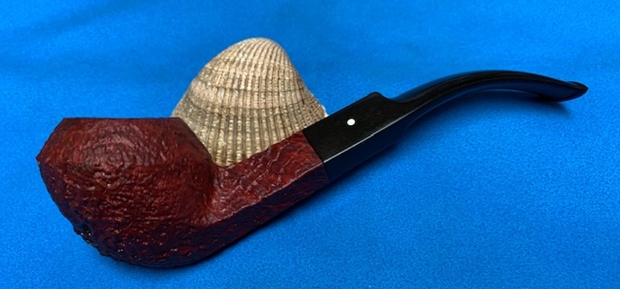
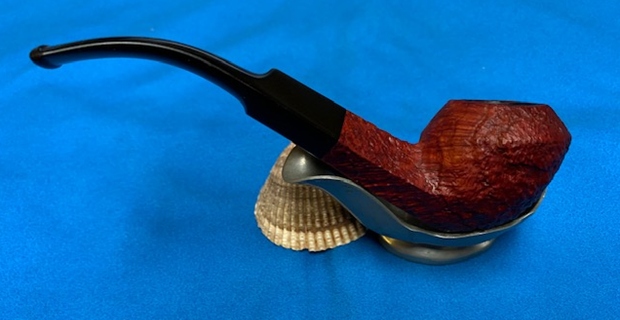
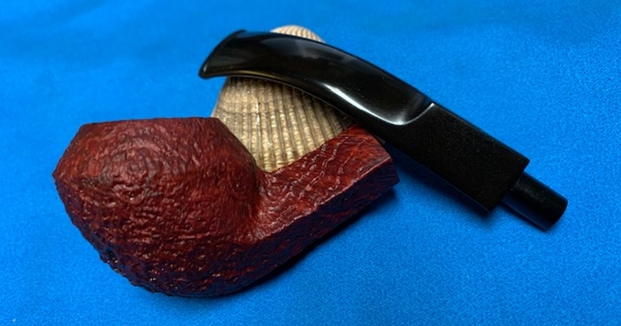
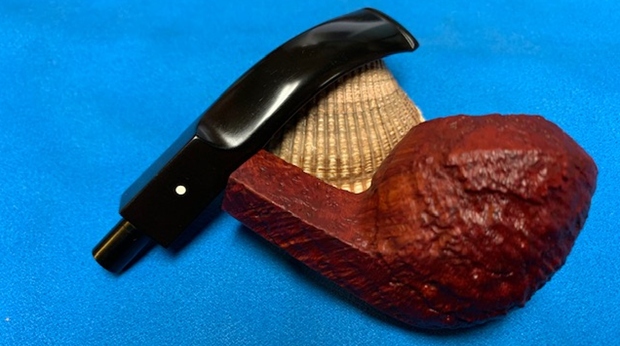
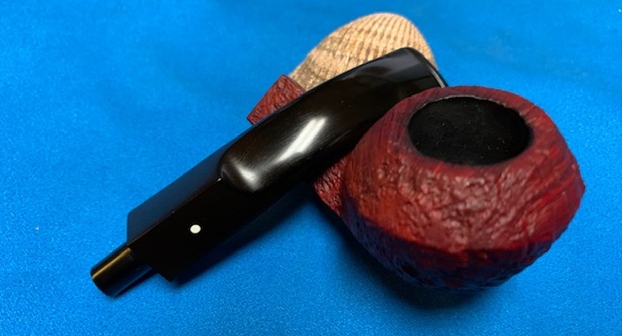
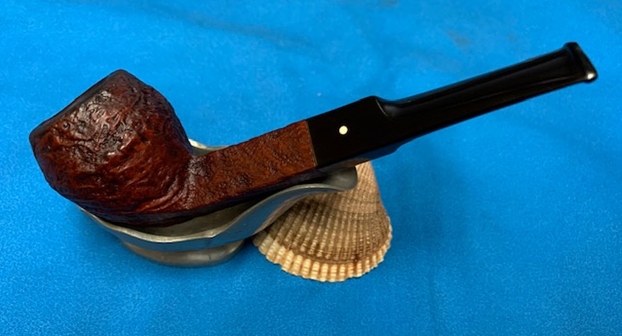
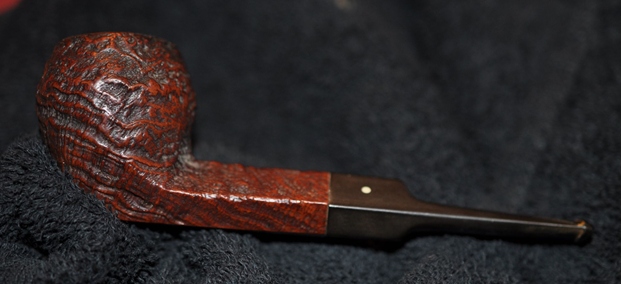
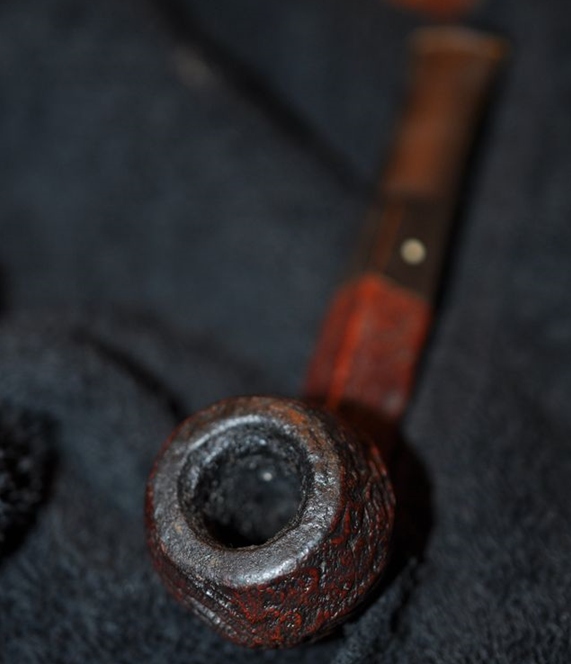
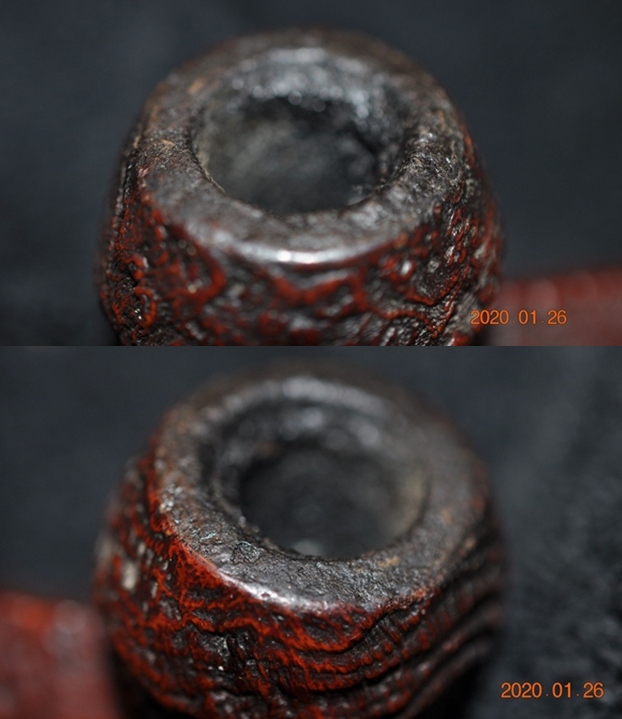
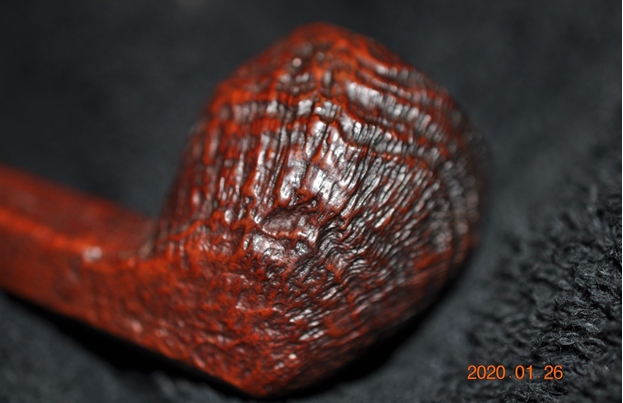
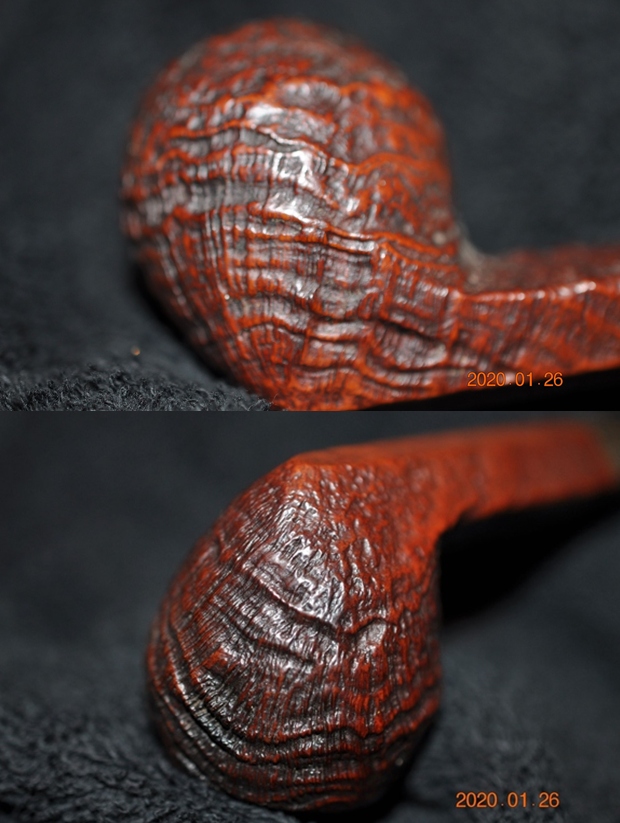
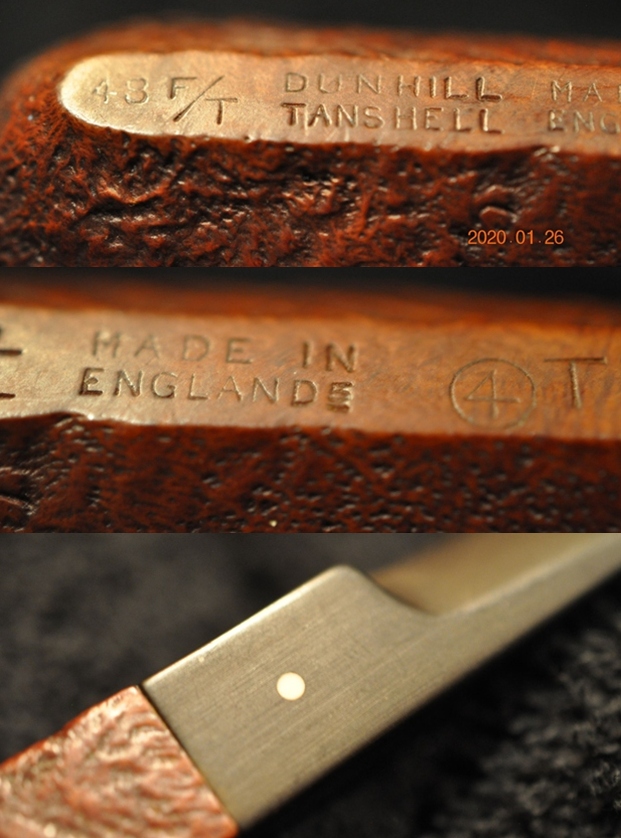
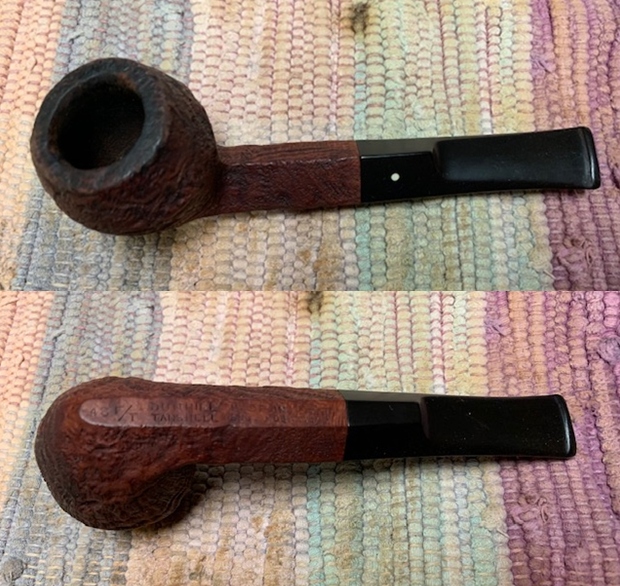
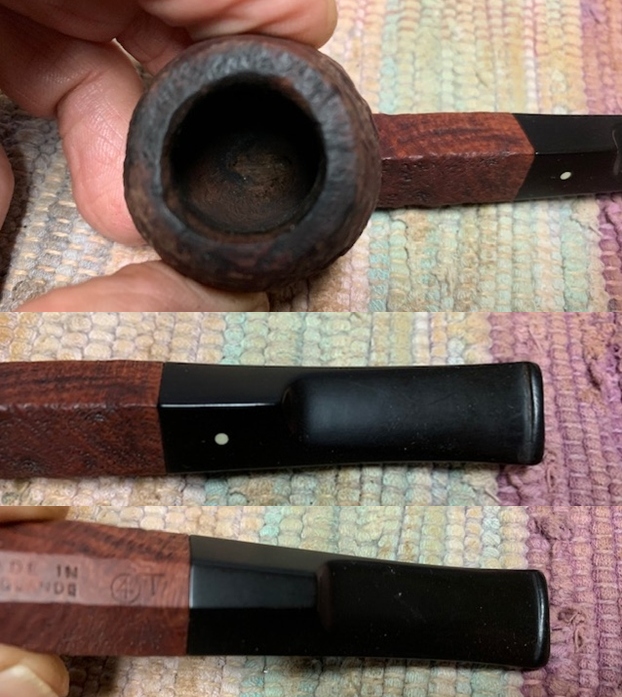
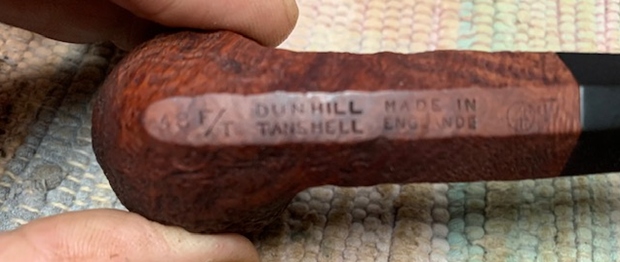
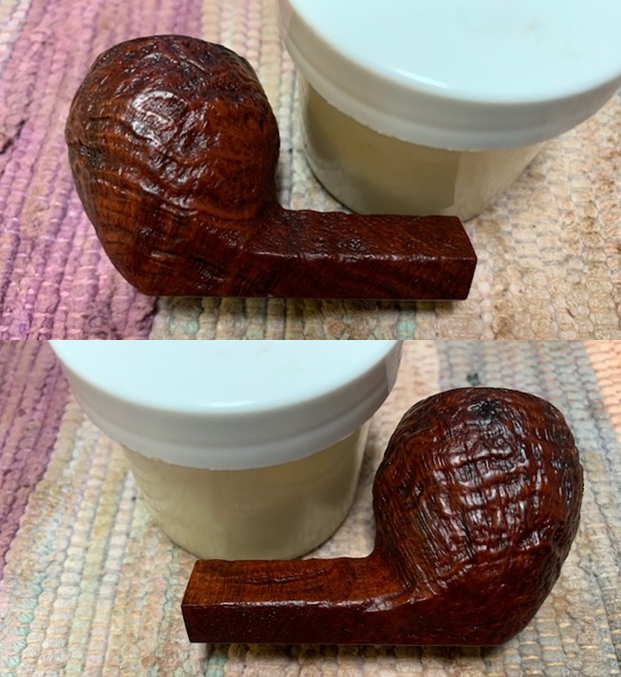
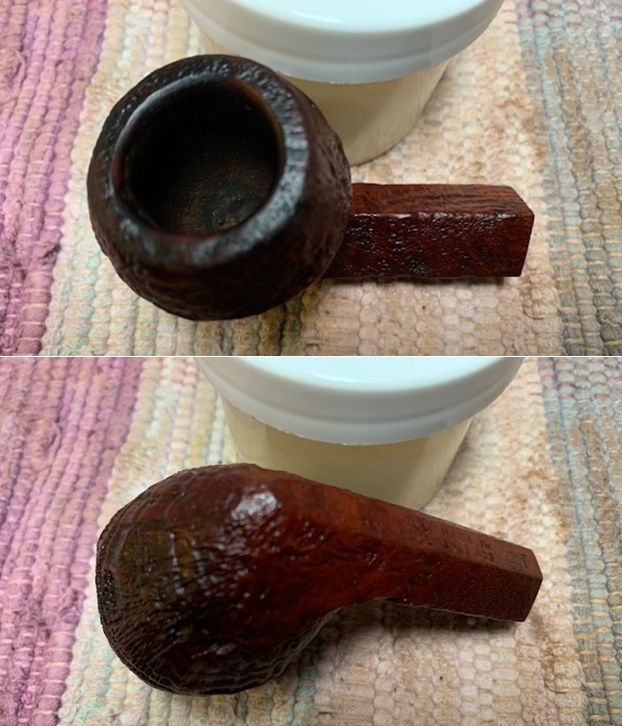
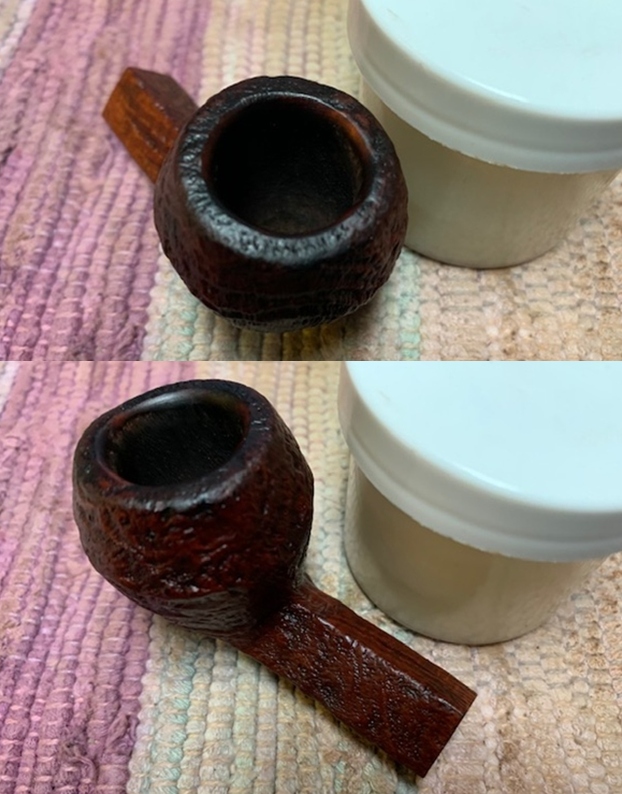
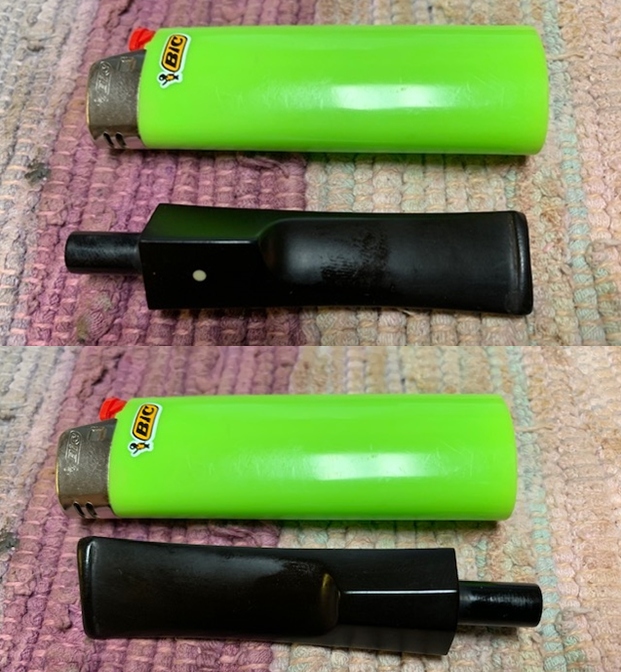
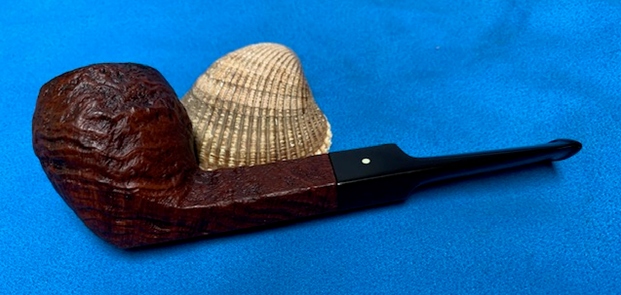
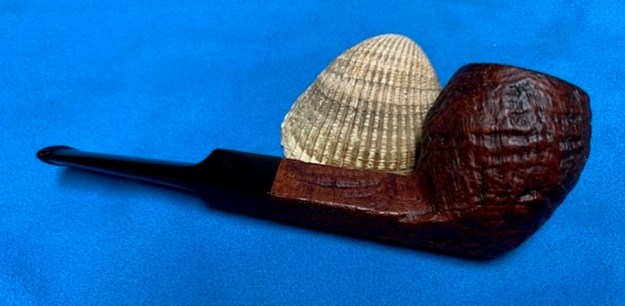
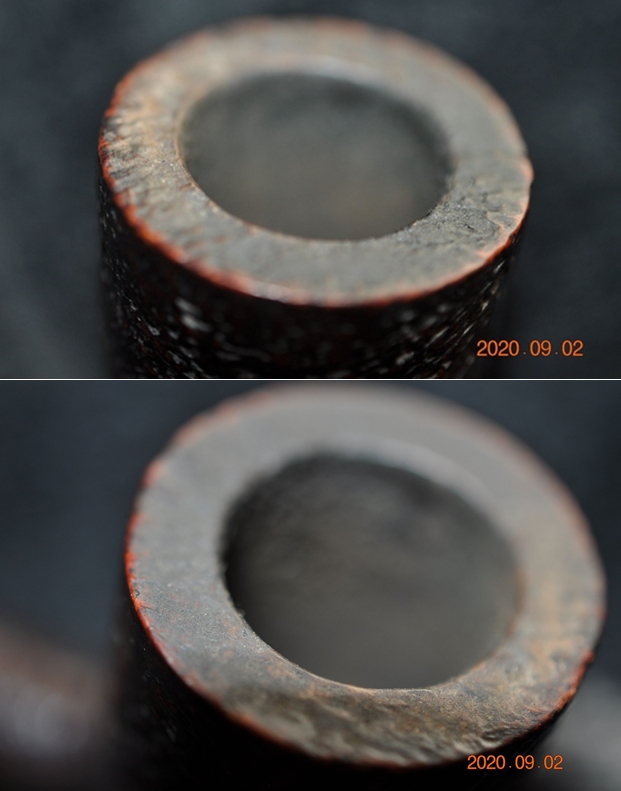
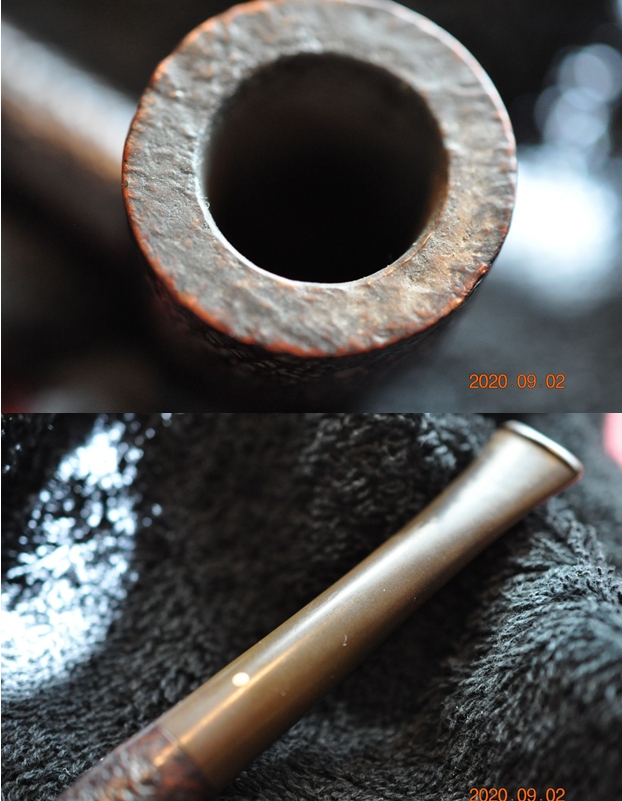
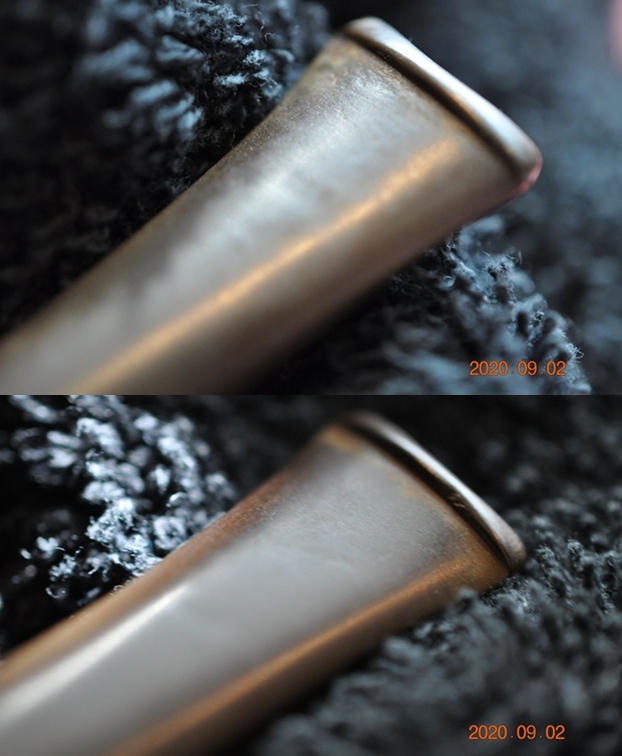
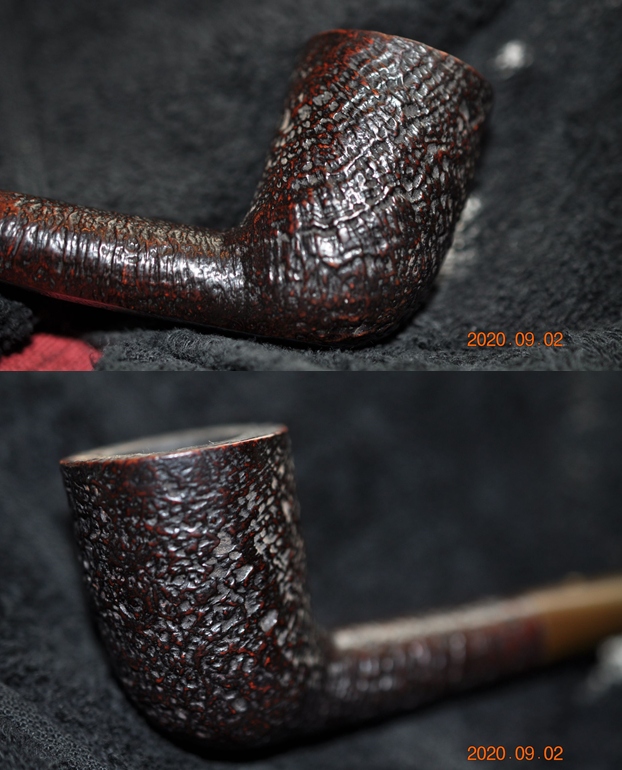
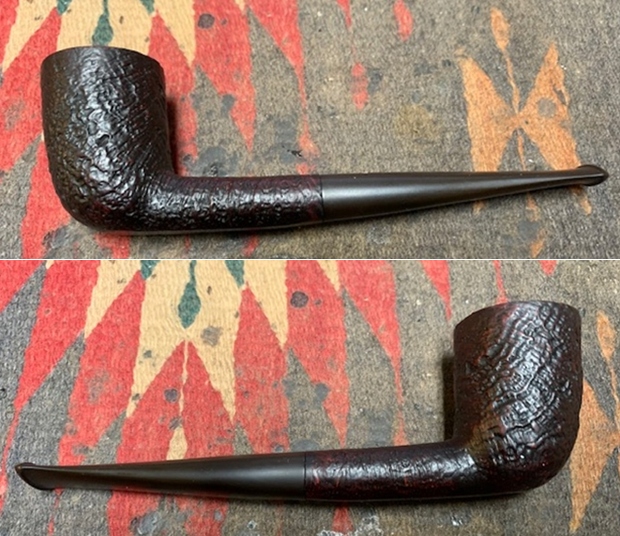
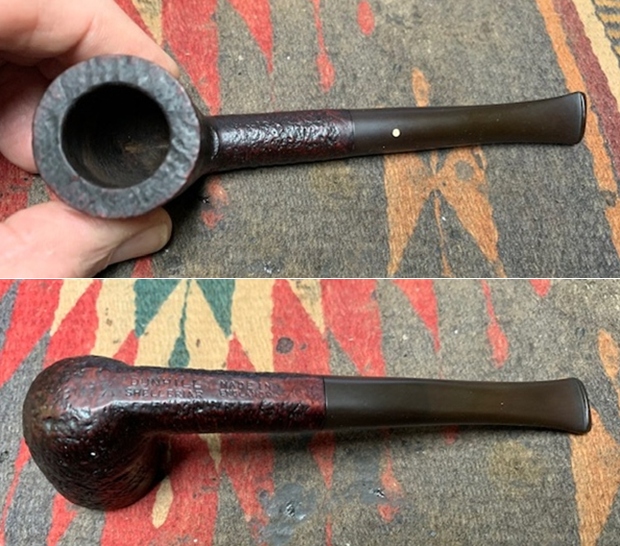
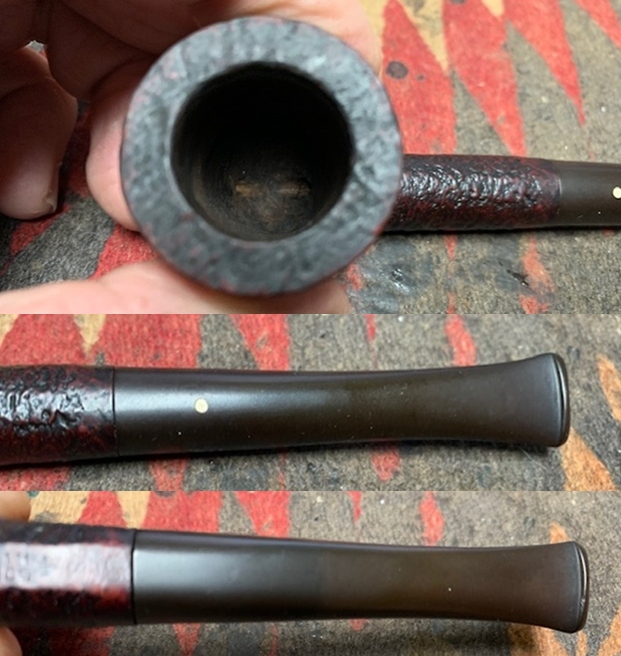
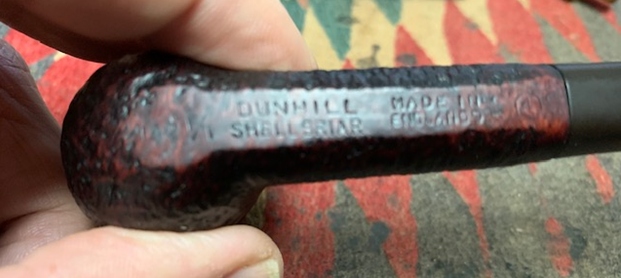
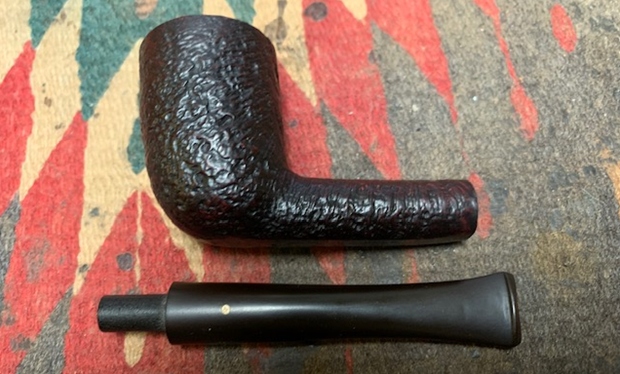
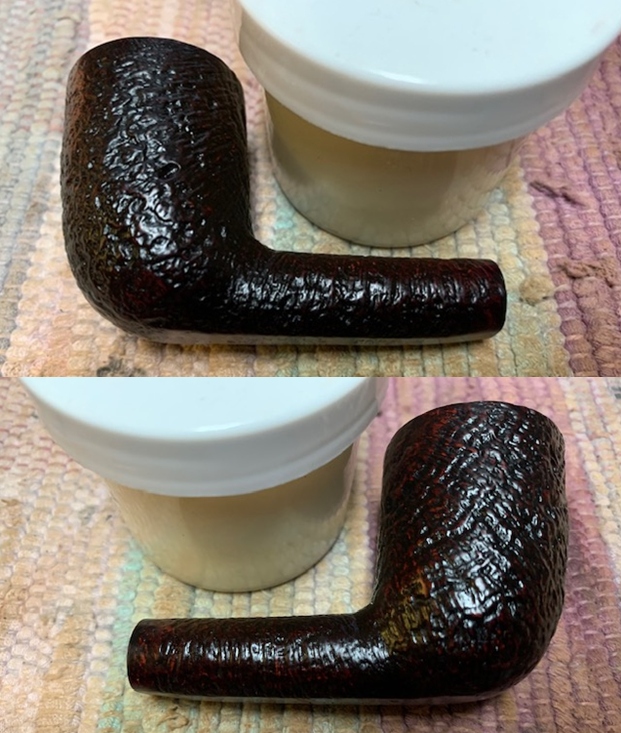
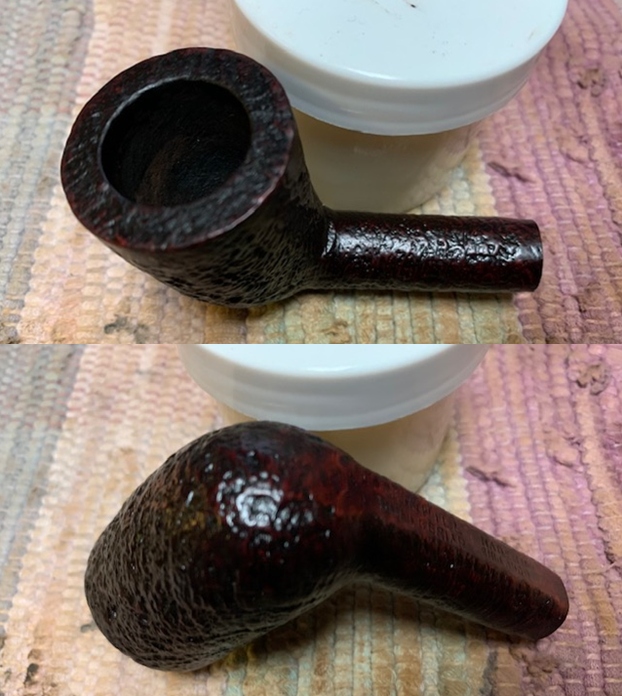
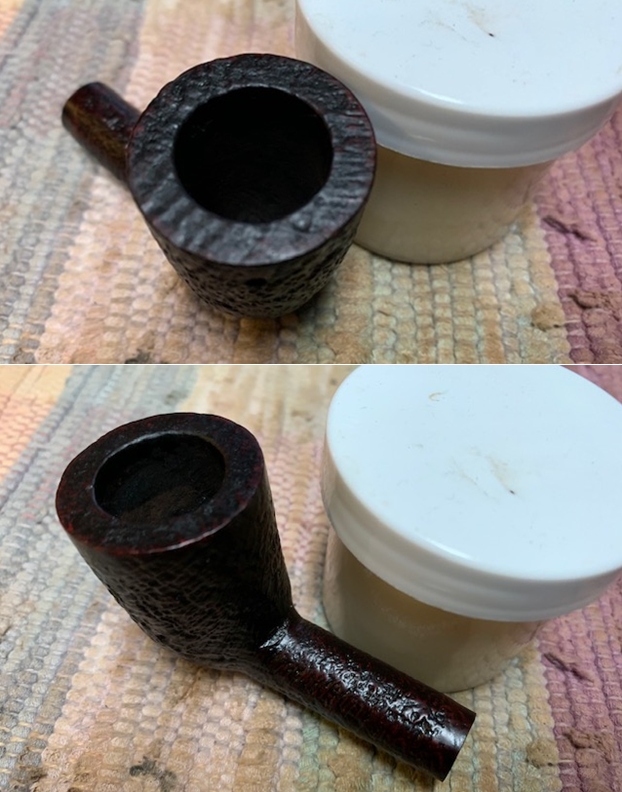
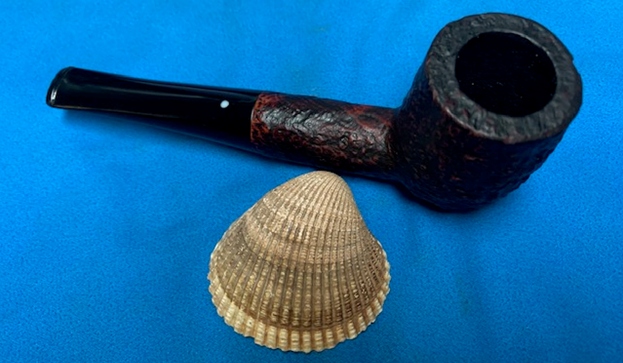
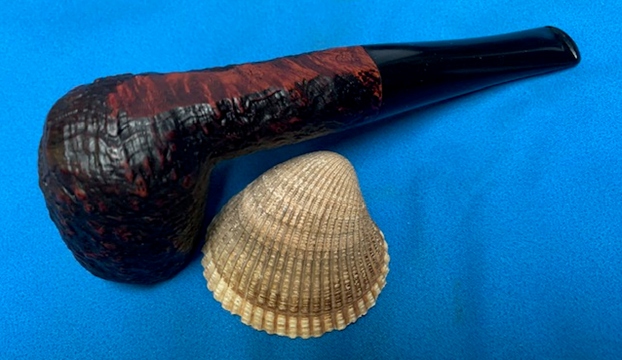
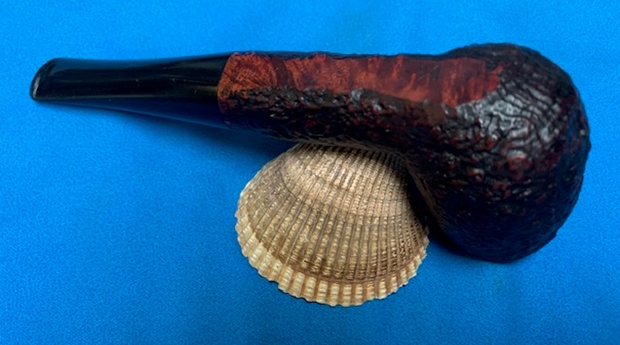
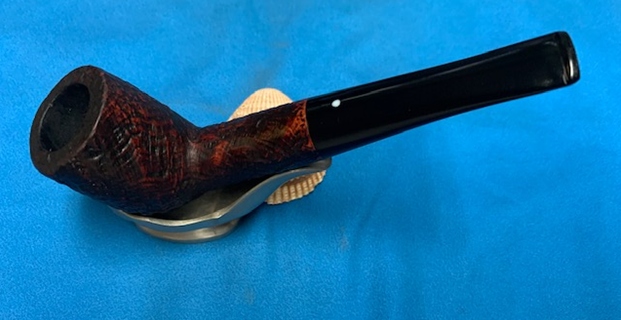
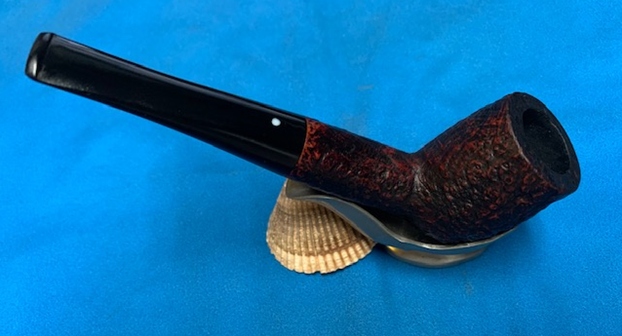
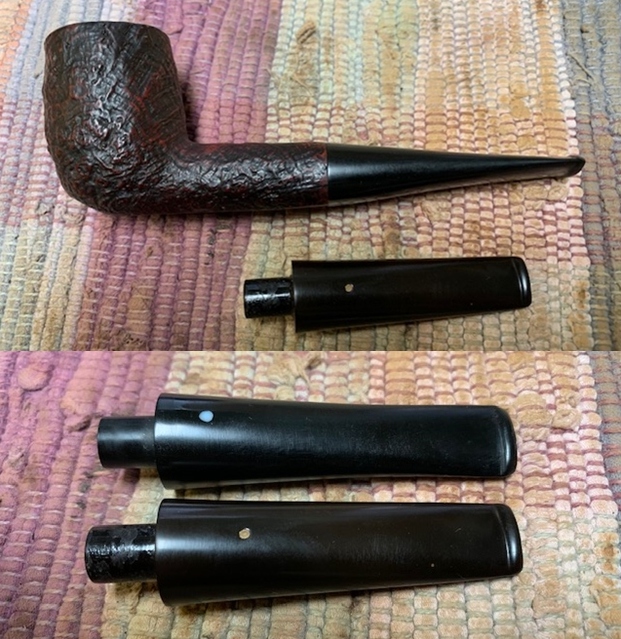
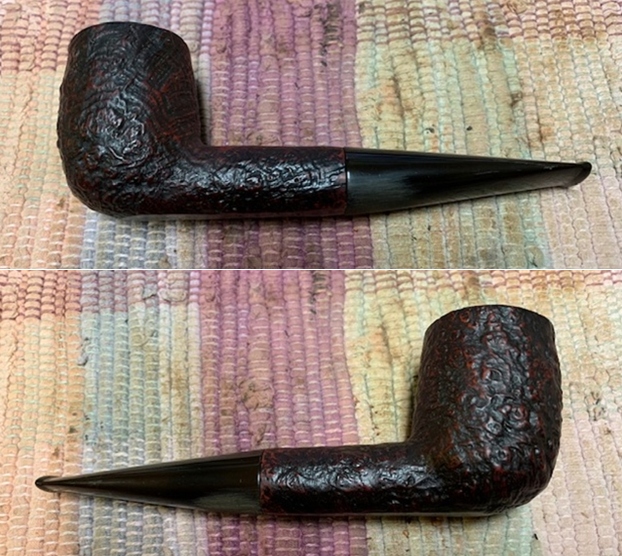
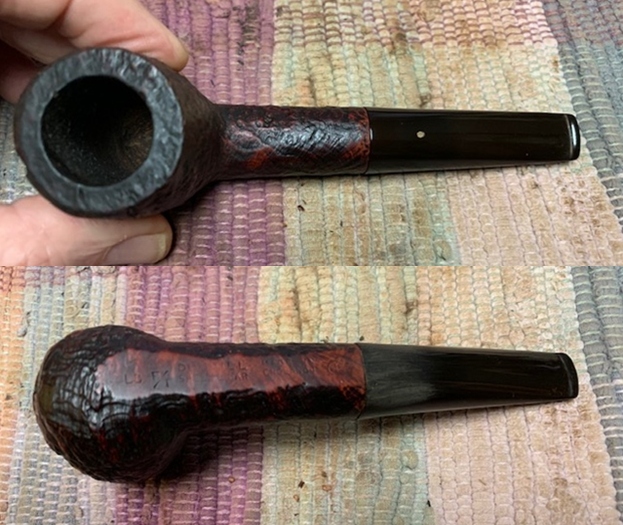
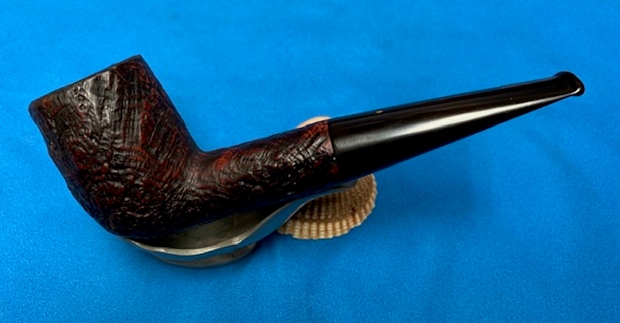
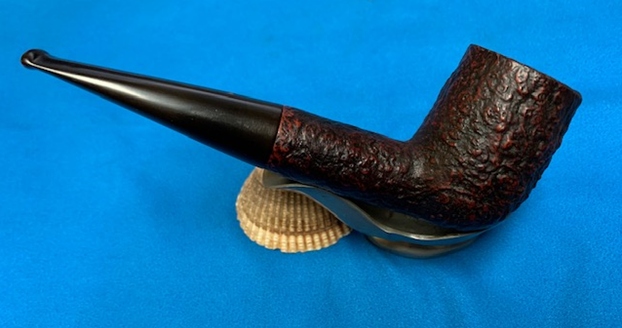
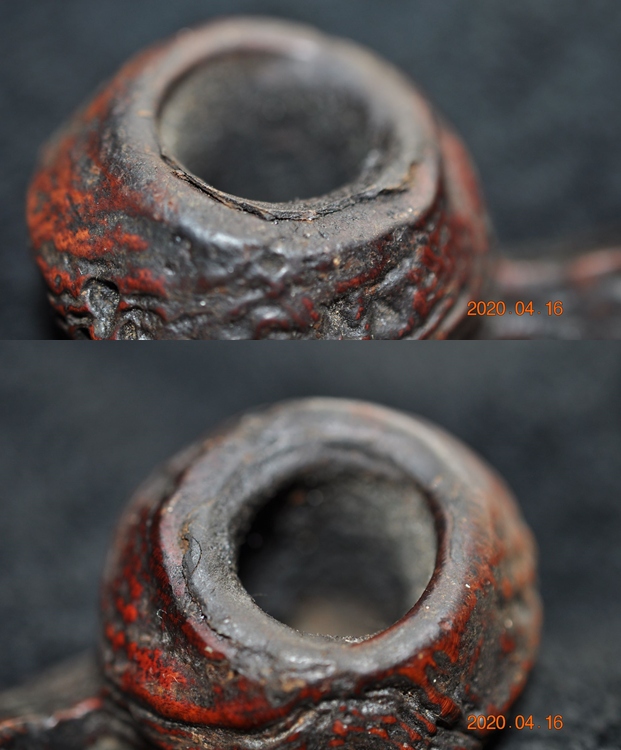
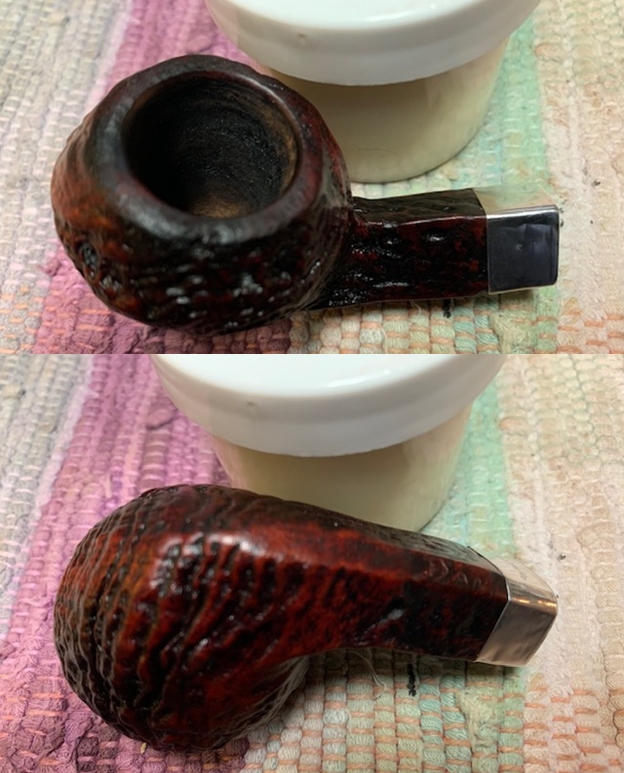
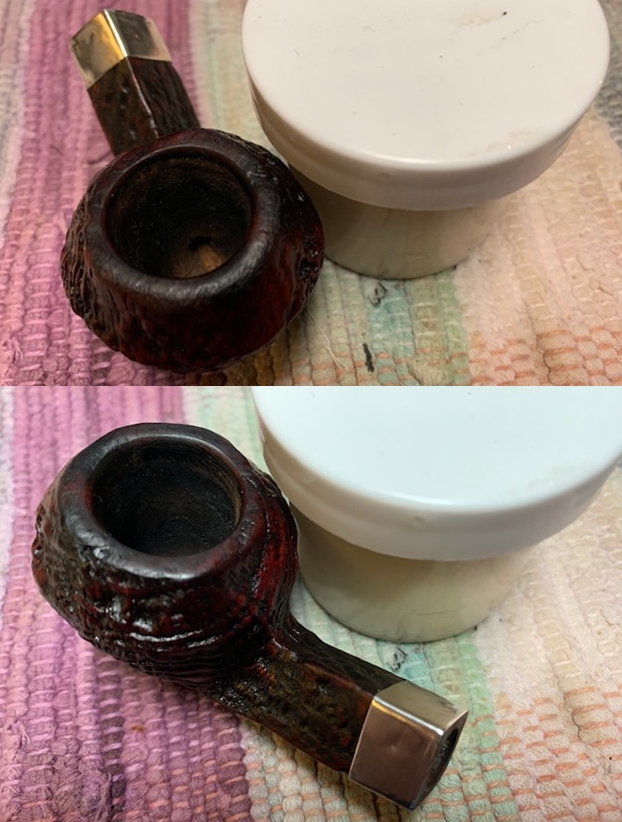
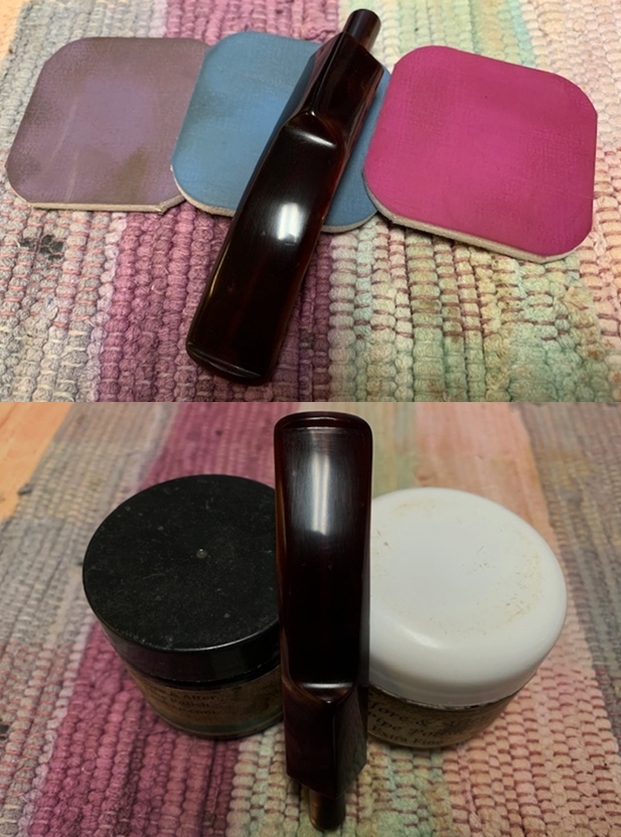
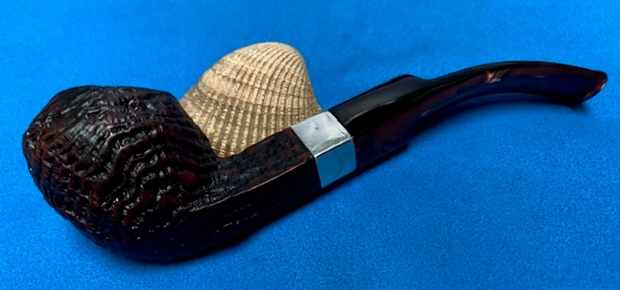
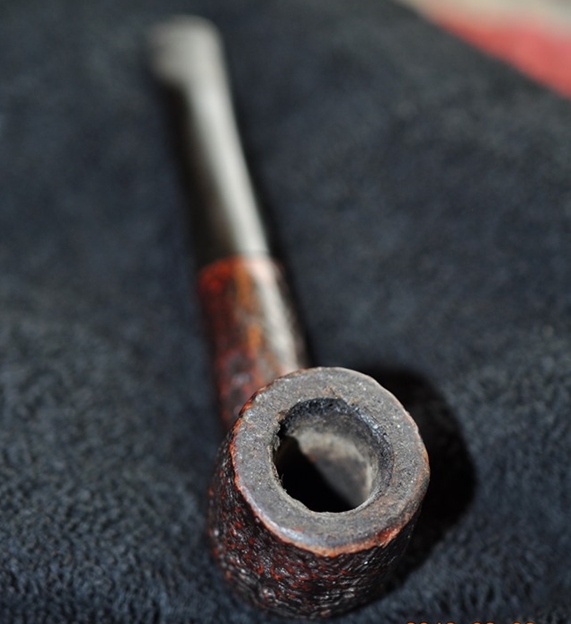
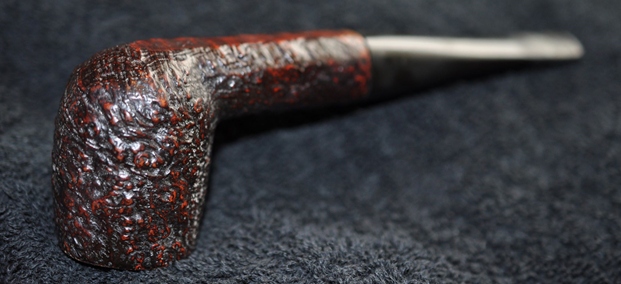
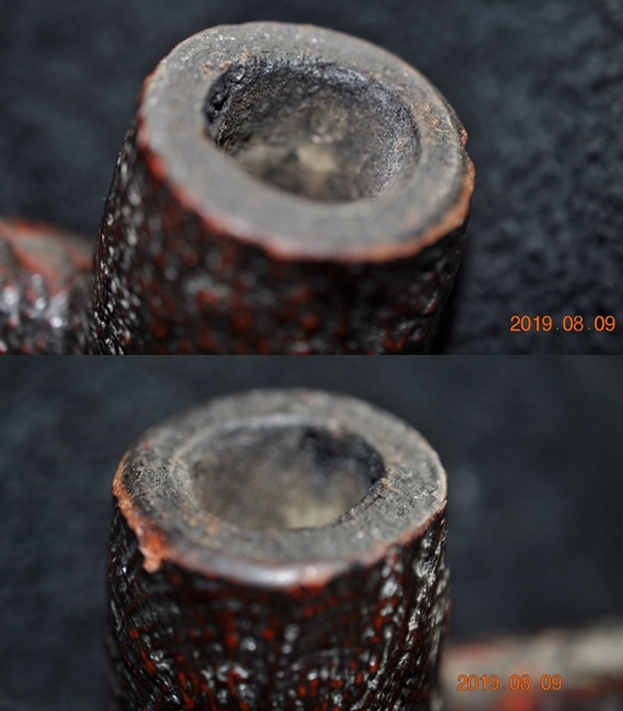
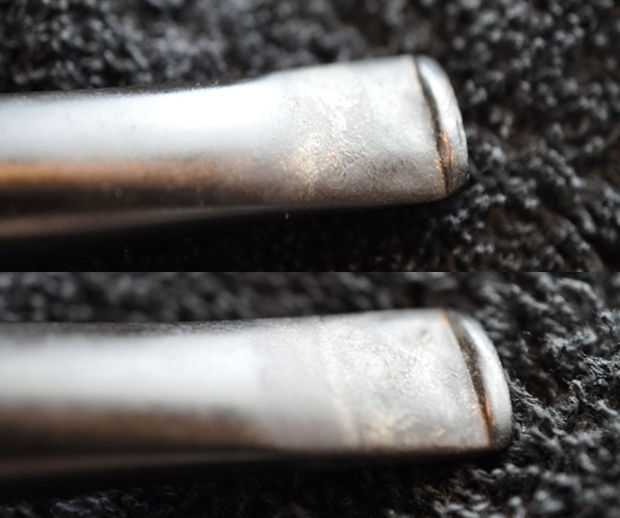
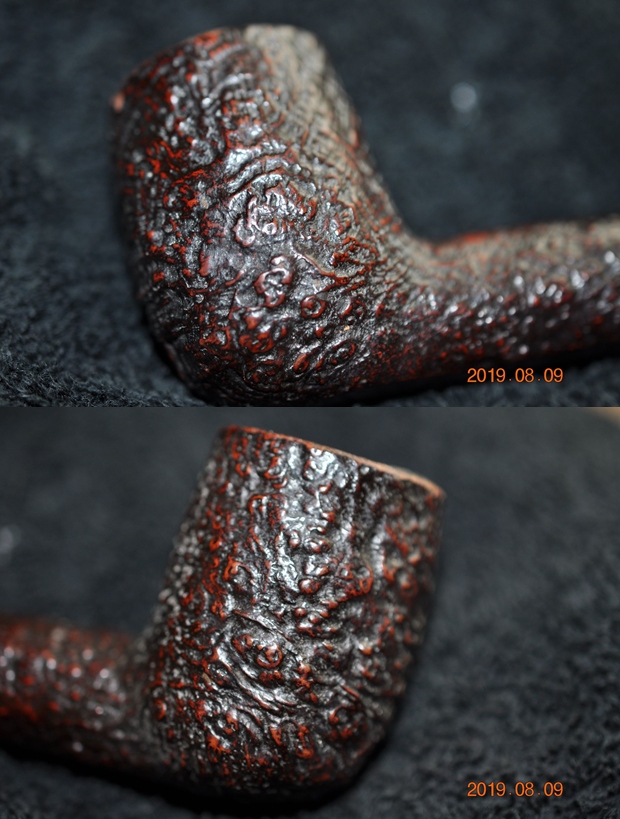
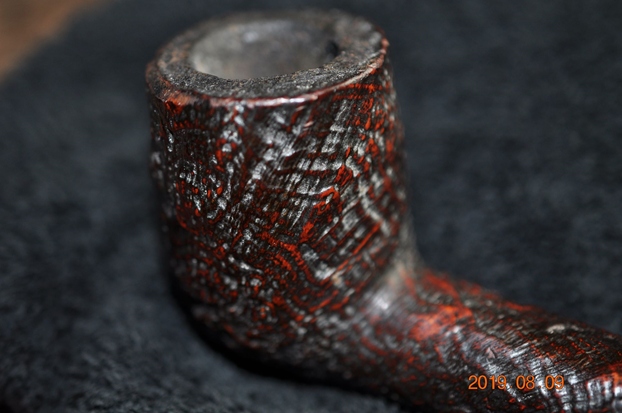
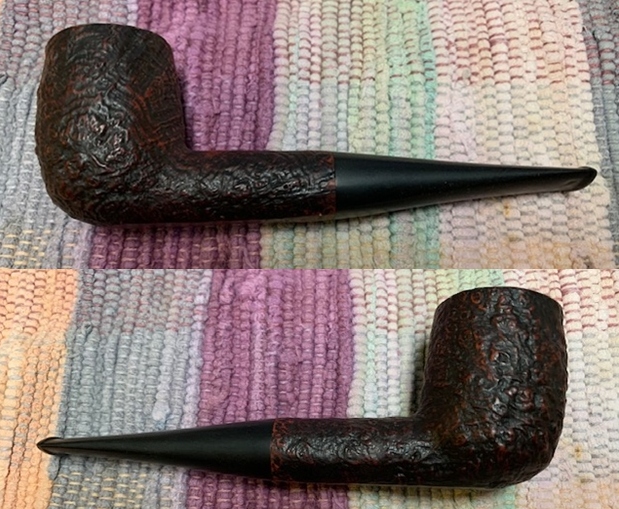
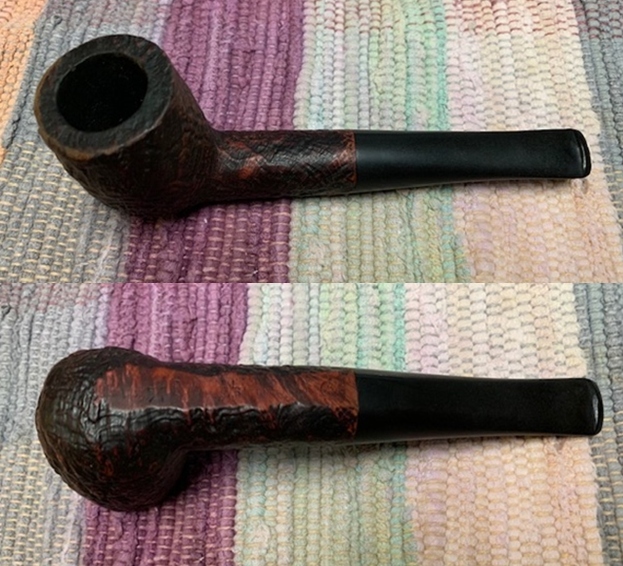
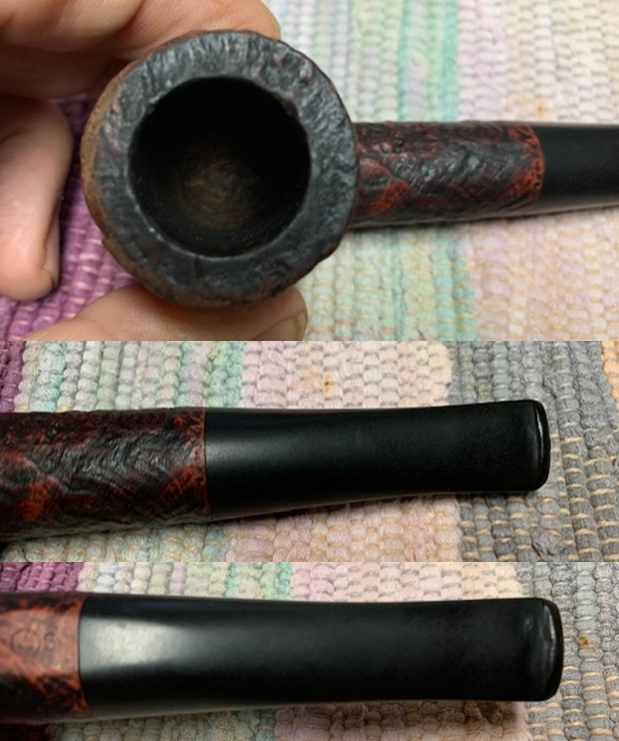
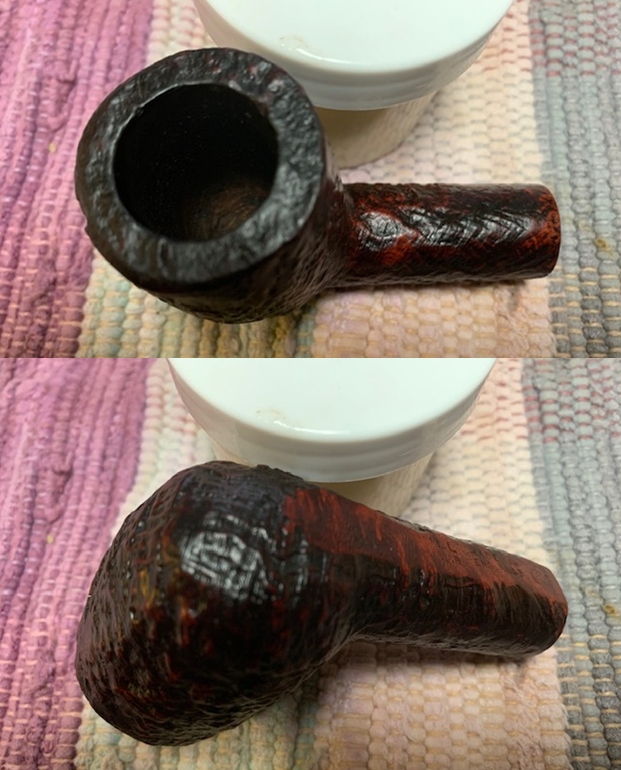
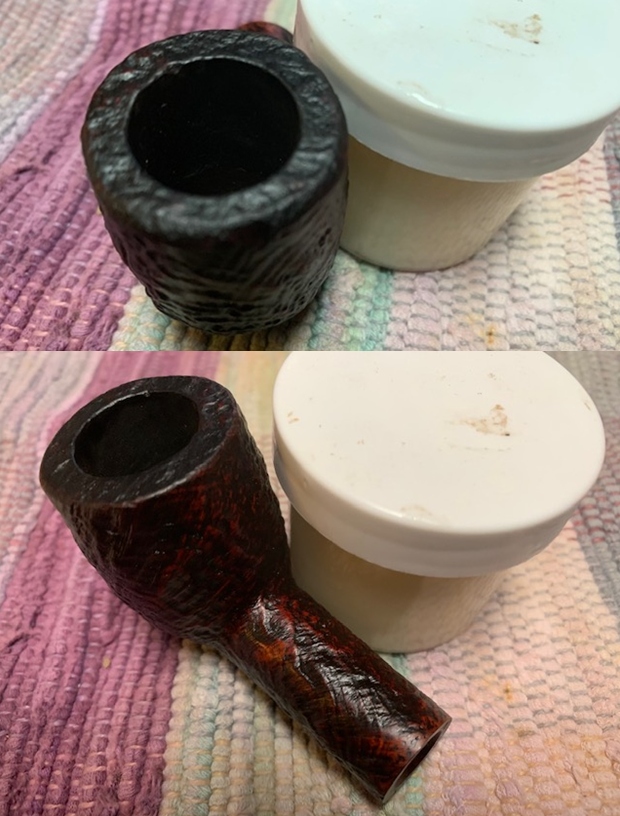
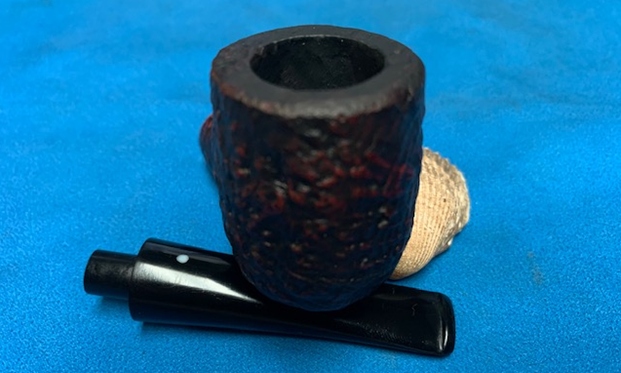
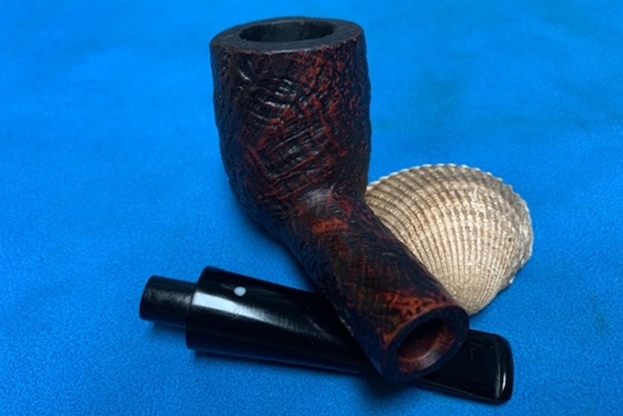
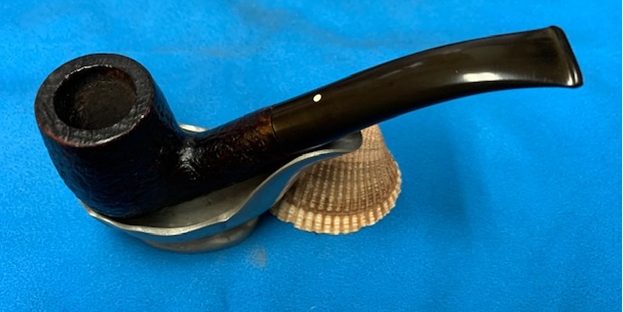
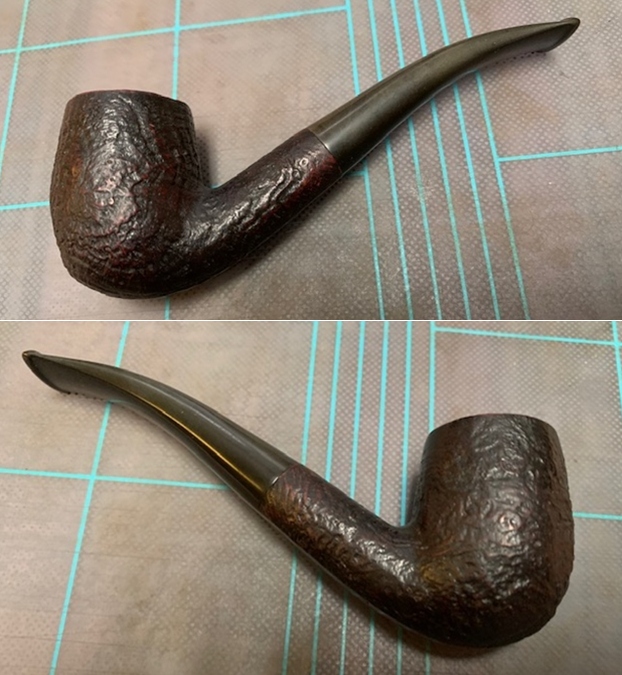
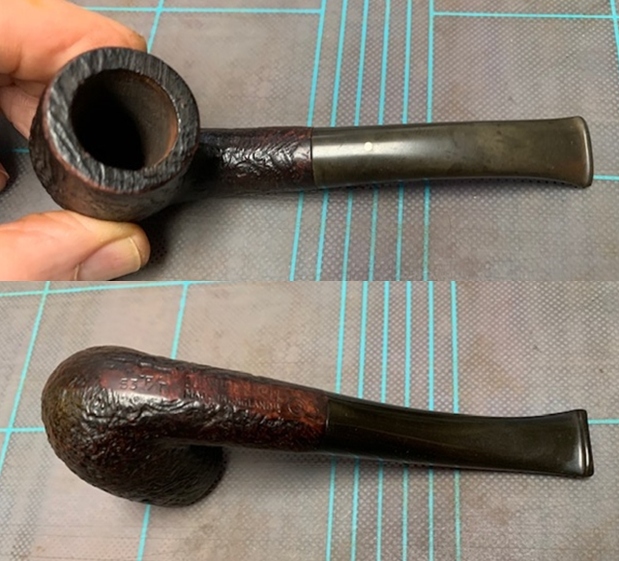
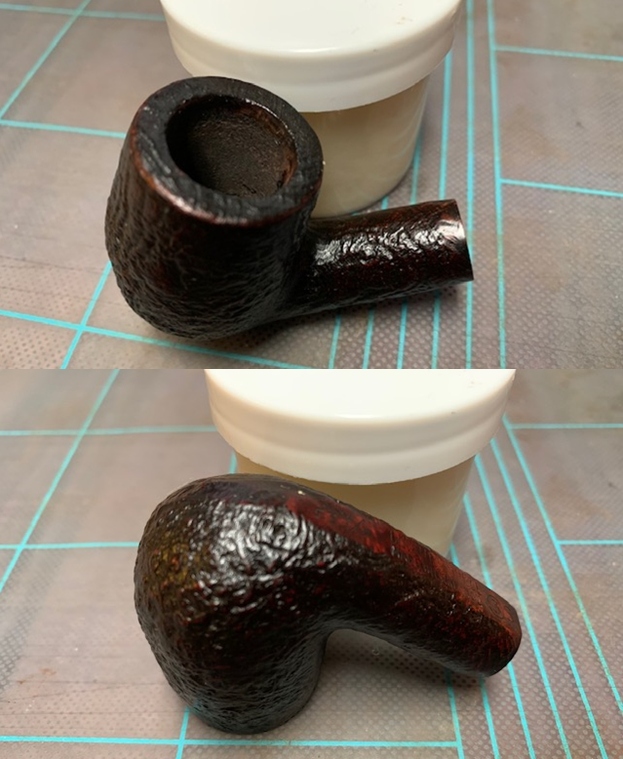
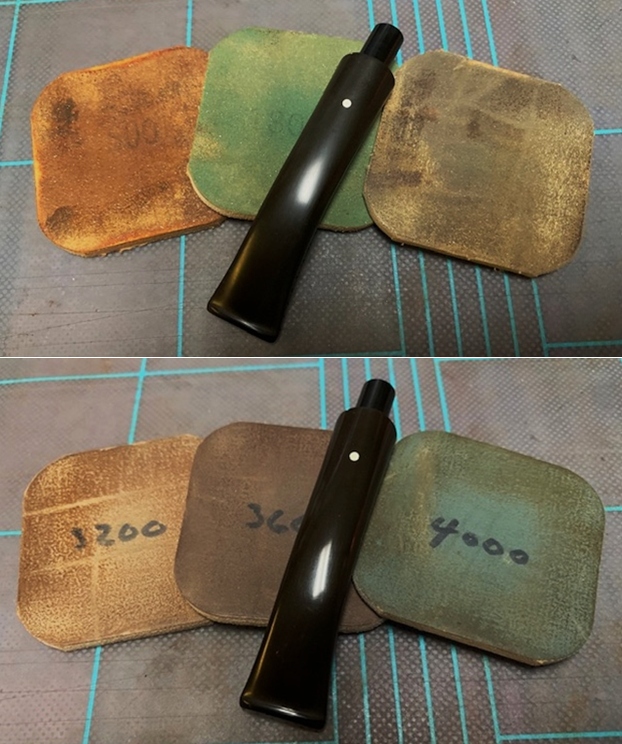
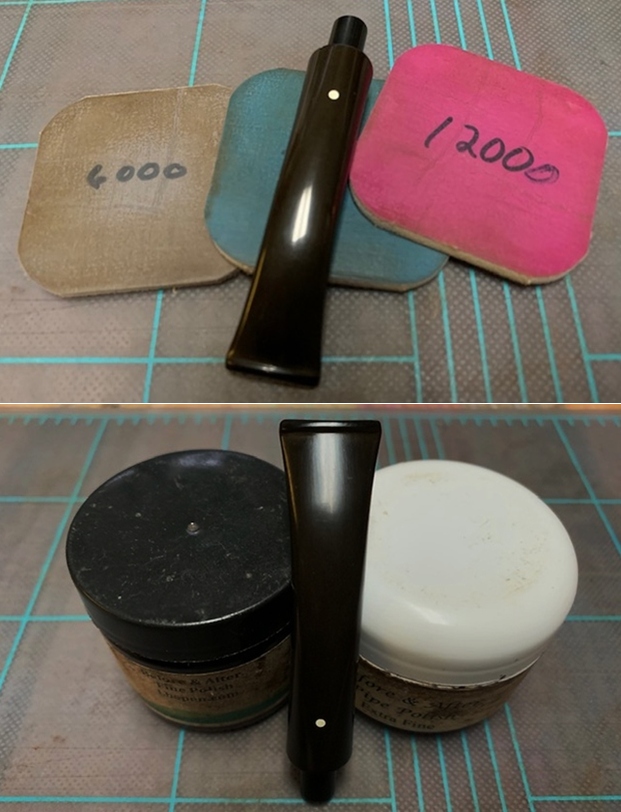
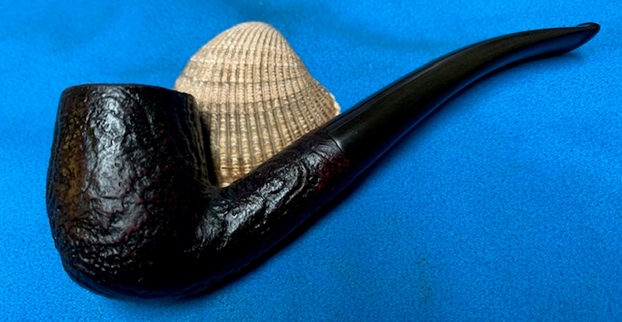
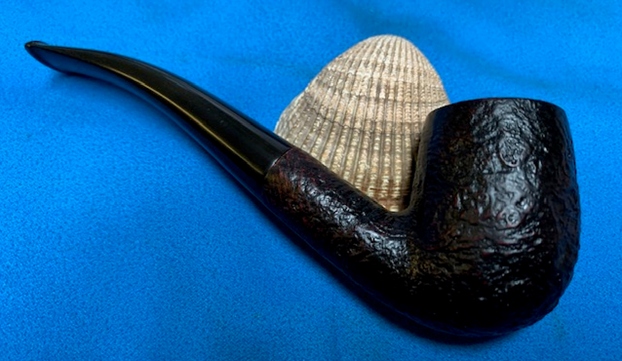
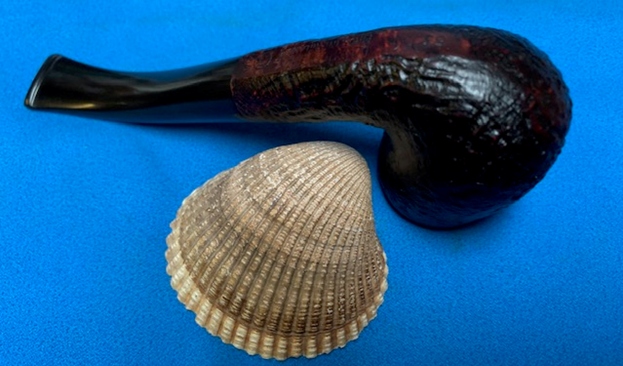
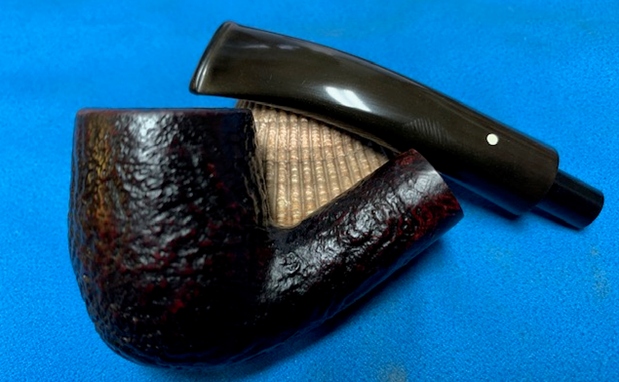
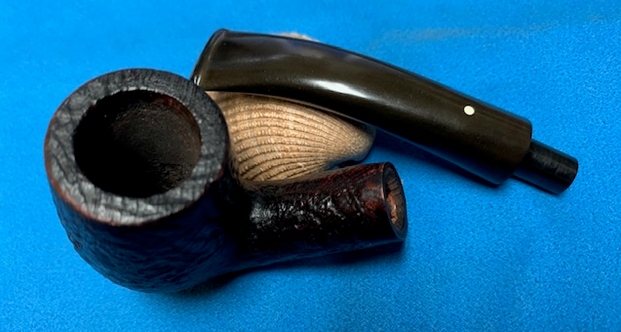
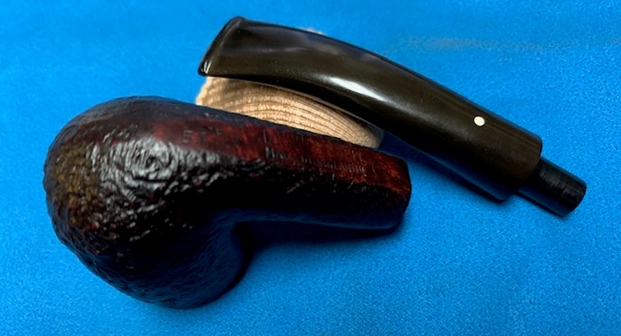
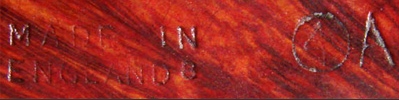
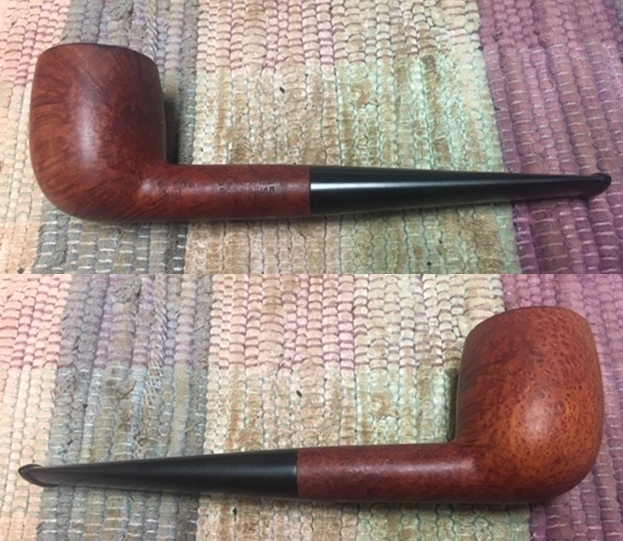
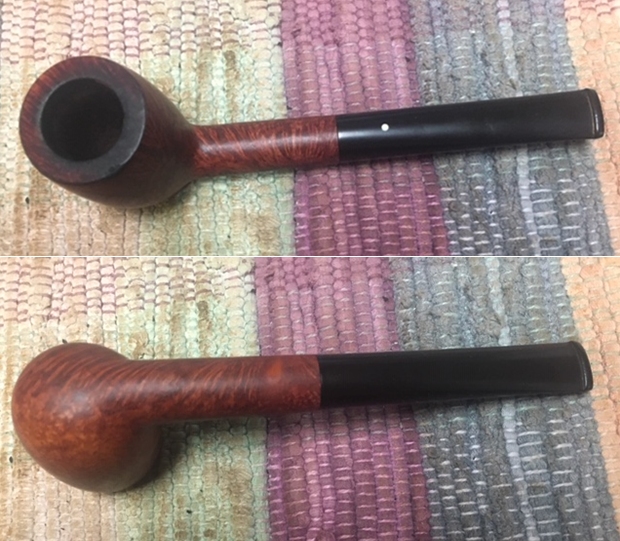
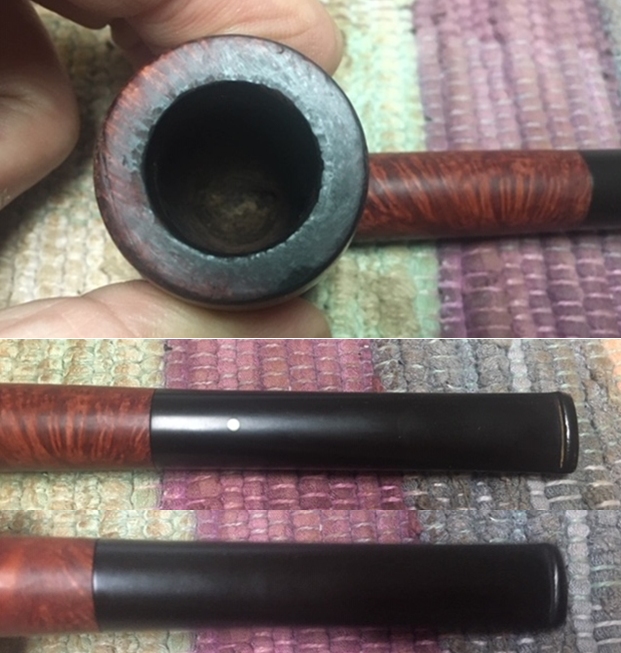
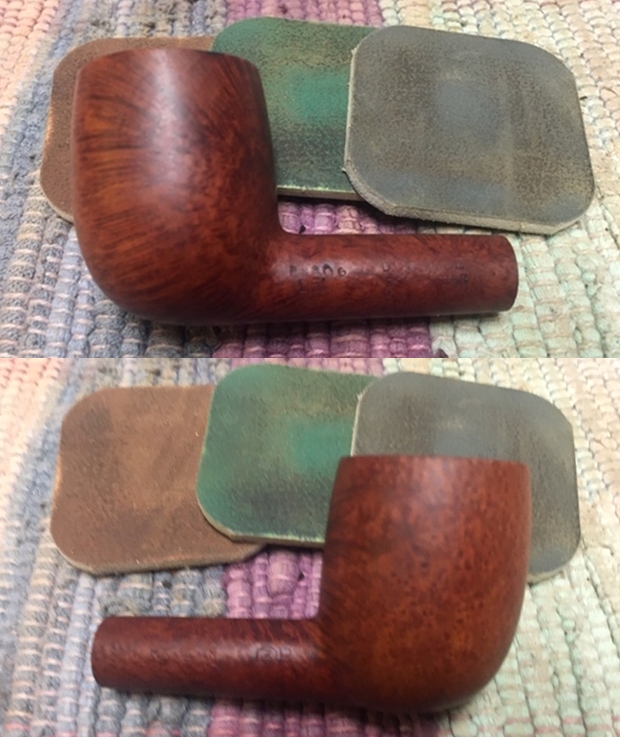
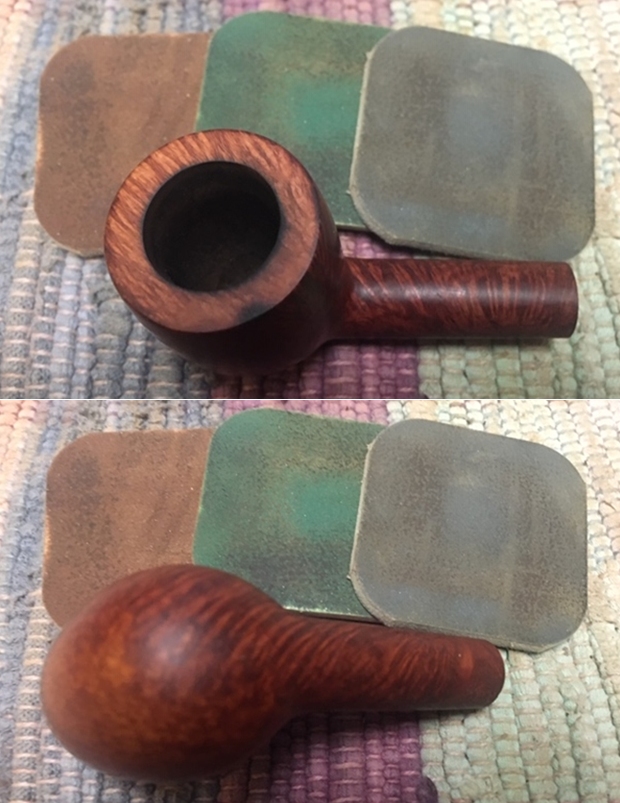
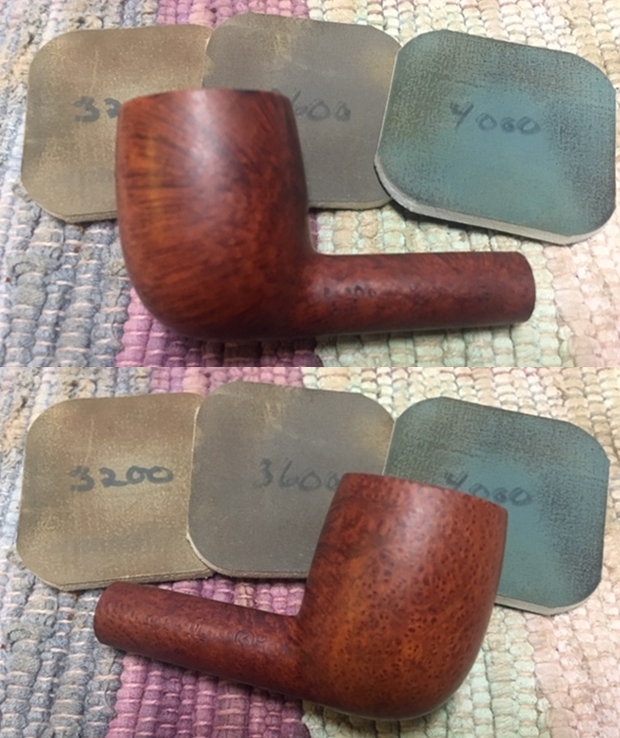
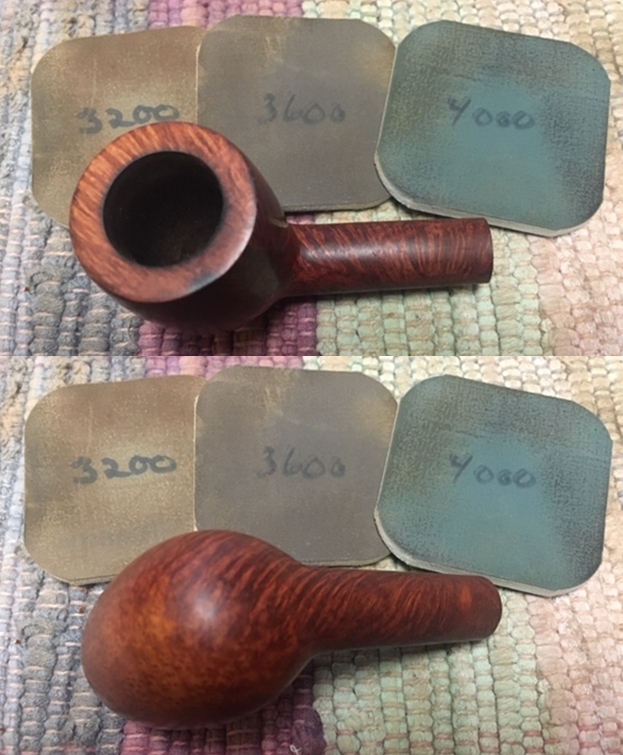
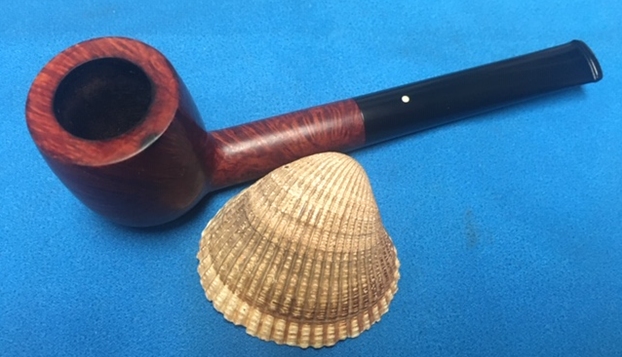
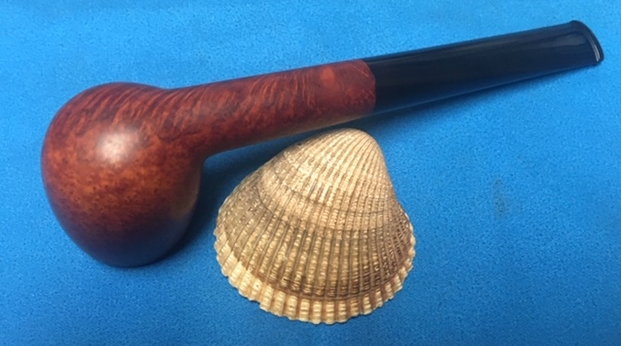
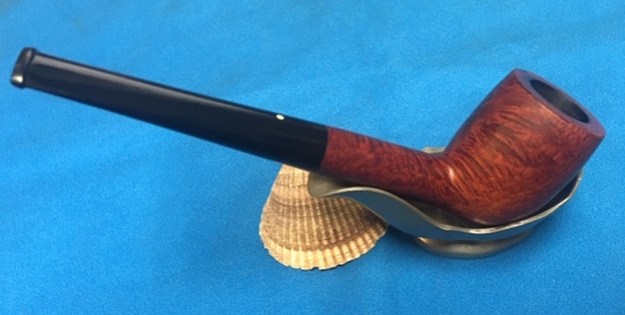
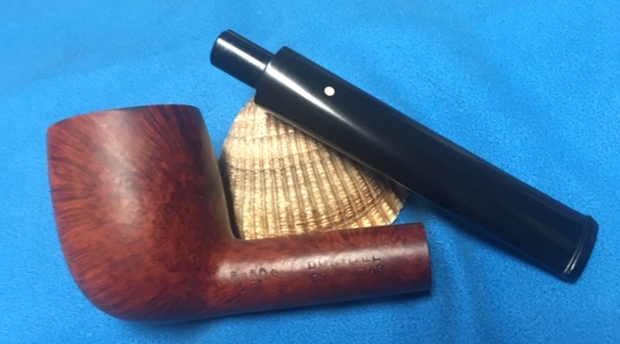
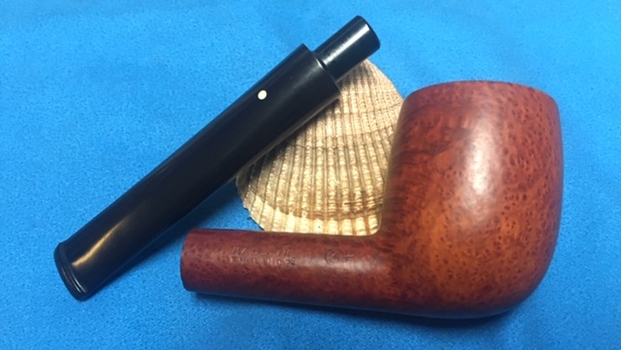
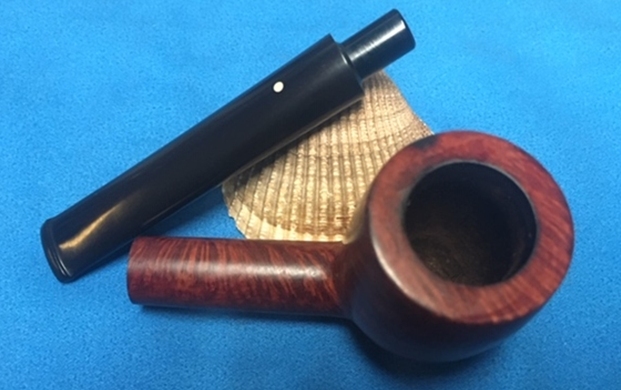
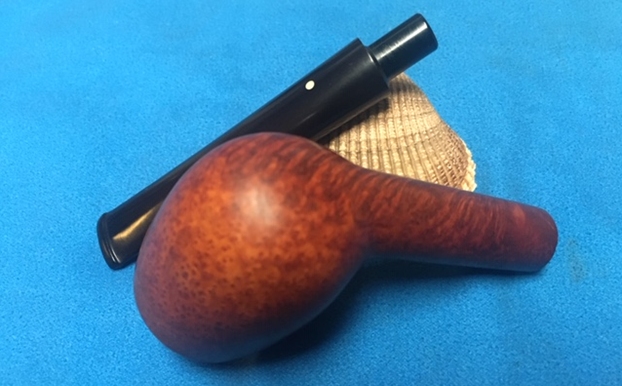
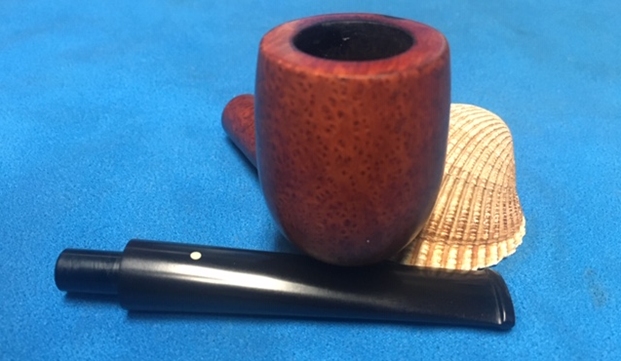
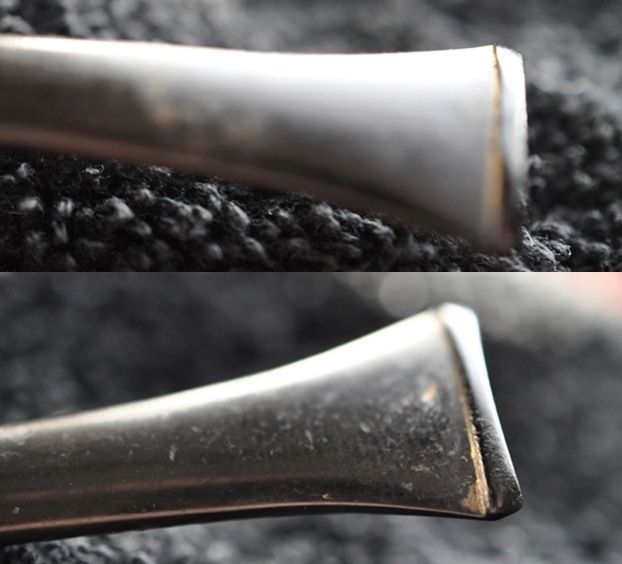
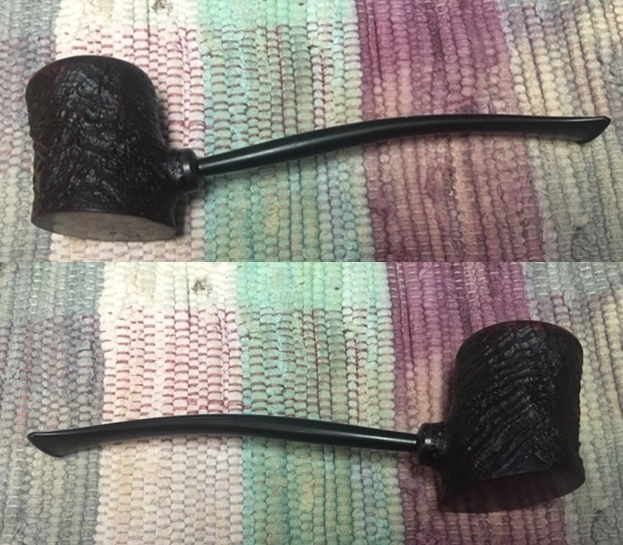
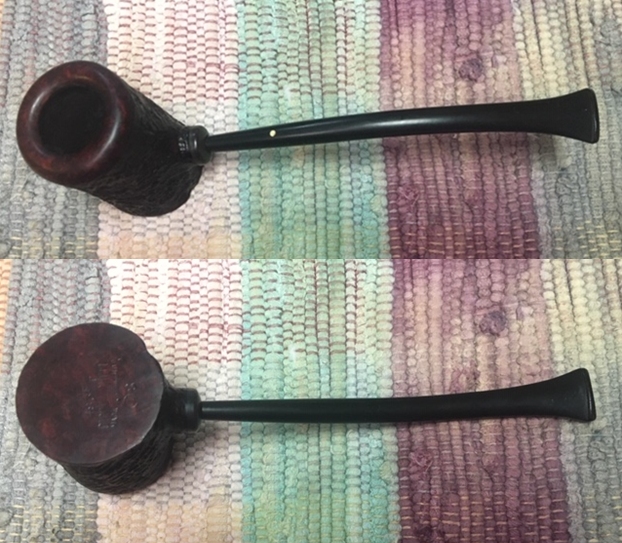
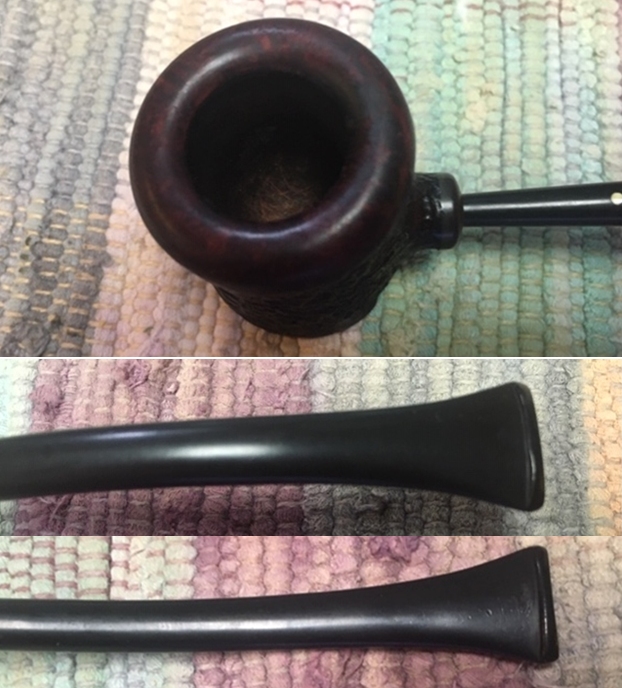
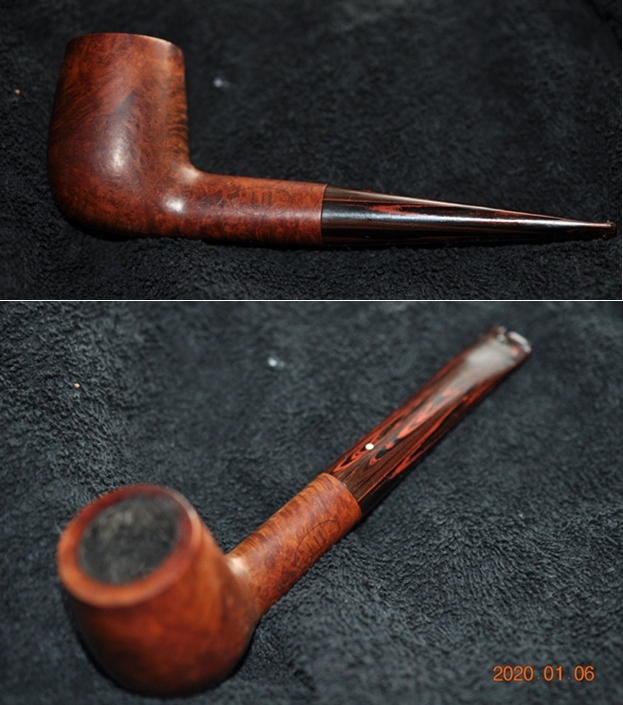
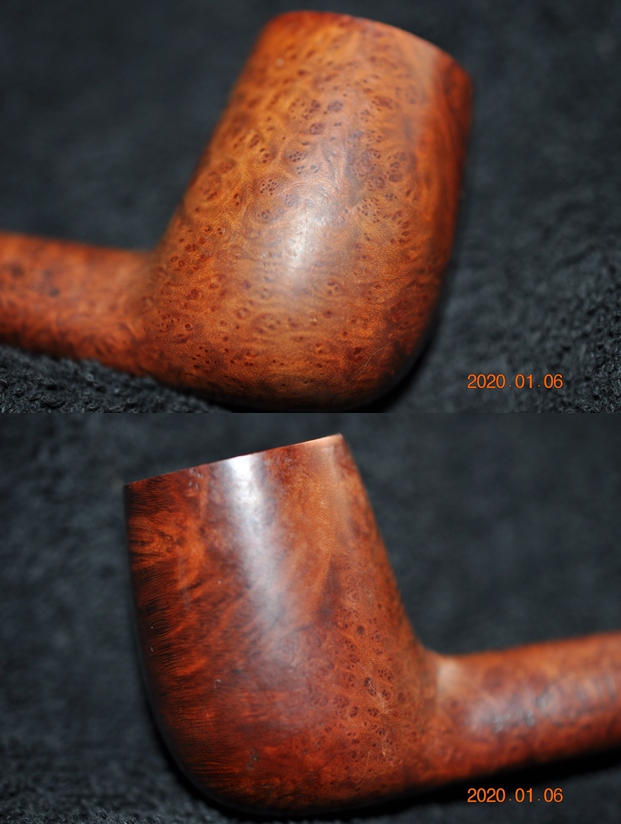
The next pipe on the table came to us from a group of pipes that Jeff picked up on one of his pipe hunts along the Oregon Coast, USA. It is a Dunhill TanShell Briar Bulldog that is in great condition. It is stamped on a smooth panel on the underside of the shank. On the heel of the bowl it is stamped with the shape number 48F/T followed by Dunhill [over] Tanshell Briar followed by Made in England 5. That is followed by 4 in a circle followed by T for Tanshell. Interpreting that stamp it is as follows: The 48 is the shape for a straight saddle stem Bulldog and the F/T is the designation for the button shape – a Fish Tail stem. The Dunhill Tanshell is the finish which is corroborated the T at the end of the stamping. The 5 following the D of England gives the date the pipe was made and identifies it as 1955. The stamping is clear and readable. The age of the pipe and the oils in the sandblast finish has given the pipe a rich medium brown finish. There is also some amazing grain that the shape follows well. The finish was dirty with dust around the nooks and crannies of the sandblast. There was a thick cake in the bowl and a heavy overflow of lava on the rim top. The vulcanite saddle stem was oxidized and had light tooth marks and chatter ahead of the button.  Jeff took photos of the pipe to show what it looked like before he started working on it. He took photos of the bowl and rim top to show the thickness of the cake and the lava overflow. The photos of the stem show the light oxidation and tooth marks and chatter on the surface on both sides.  The photos of the sides and heel of the bowl show the deep sandblast grain on the pipe. It is a beauty under the grime and dust.    The stamping on the underside of the shank is shown in the photo below. It looks very good and readable. It reads as noted and explained above. The third photo shows the white spot on the stem.   I turned to Pipedia’s section on Dunhill Tanshell Pipes to get a bit of background on the Duhill finishes (https://pipedia.org/wiki/Dunhill#Root_Briar). I quote:
Tanshell

The first lot was distributed in 1952 (usually made using Sardinian briar). The prototype was called “Root Shell “, produced in 1951. The Tanshell is a light tan sandblast. Sardinian briar was used for this sandblast. There is a distinct contrast in the sandblasts using Sardinian as opposed to Algerian briar. The Sardinian is much denser and much harder. The resulting pattern, when blasted, is far more even and regular both in terms of the surface texture and the finish.

The TanShell was Dunhill’s fourth finish and its first major post-war line addition. Introduced in 1951/1952 the TanShell was a naturally stained sandblasted pipe made exclusively from Sardinian briar through the 1960s. The TanShell apparently was not simply a light stained Shell but rather was also the product of “certain processes [unrevealed] not previously employed.” Initially, it appears that the pipe was to be named the Root Shell and a stamp to that effect was ordered and received by Dunhill in May 1951. Ultimately, however, the name TanShell was settled upon but the stamp for the TanShell name was not received by Dunhill until the beginning of December. Thus while the Tanshell was in production in 1951 it appears that most if not all TanShells made in that year did not enter into retail distribution until 1952 and were given a 1952 date code. Loring, J. C., The Dunhill Briar Pipe, The Patent Years and After (self-published, Chicago, 1998).

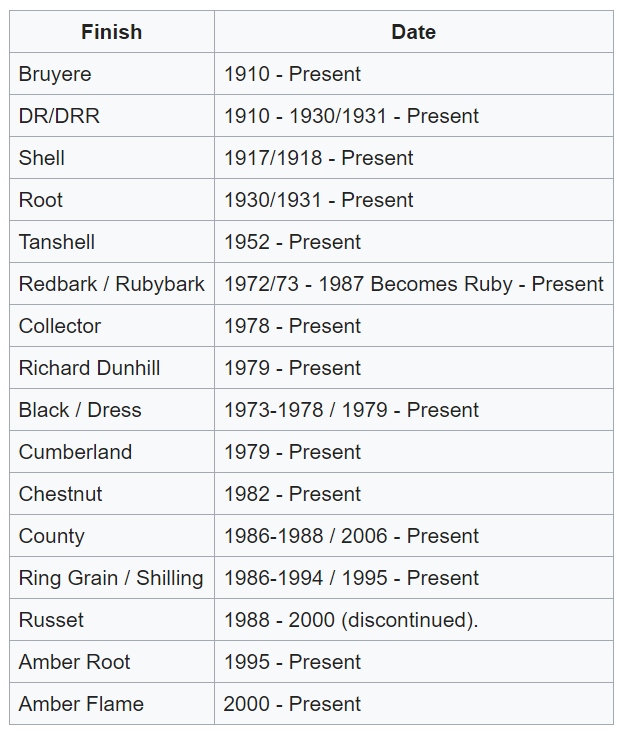
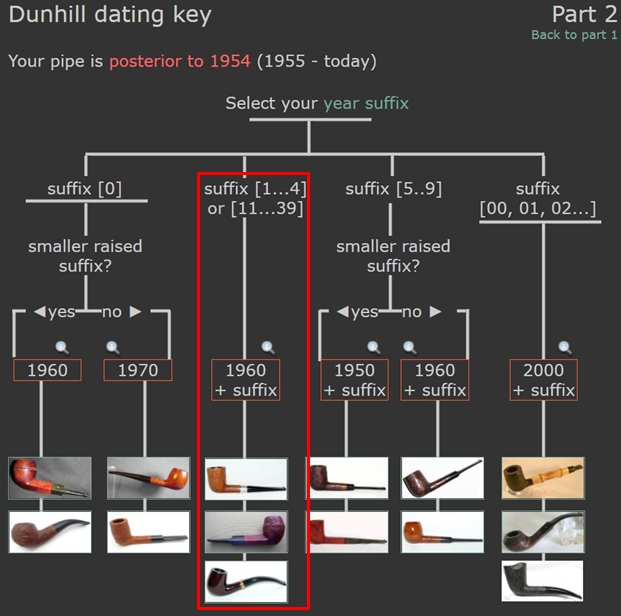
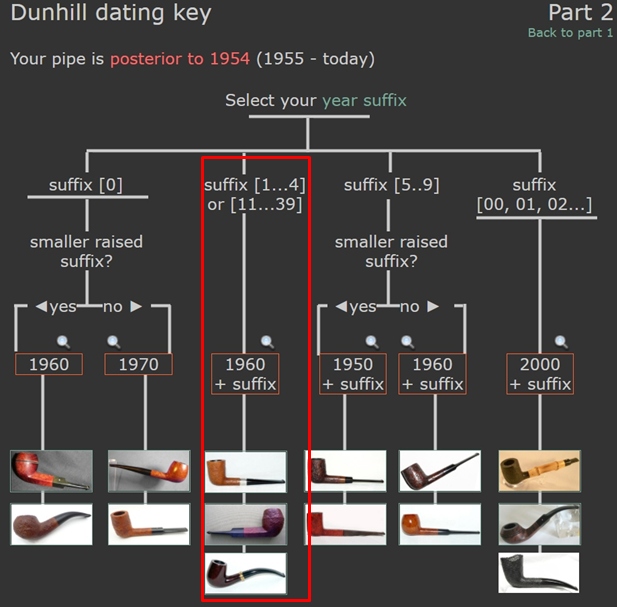
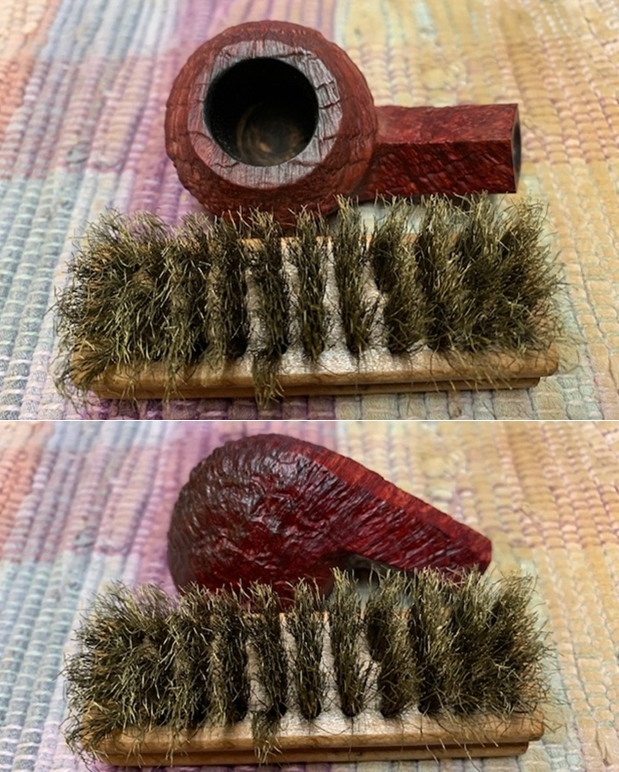
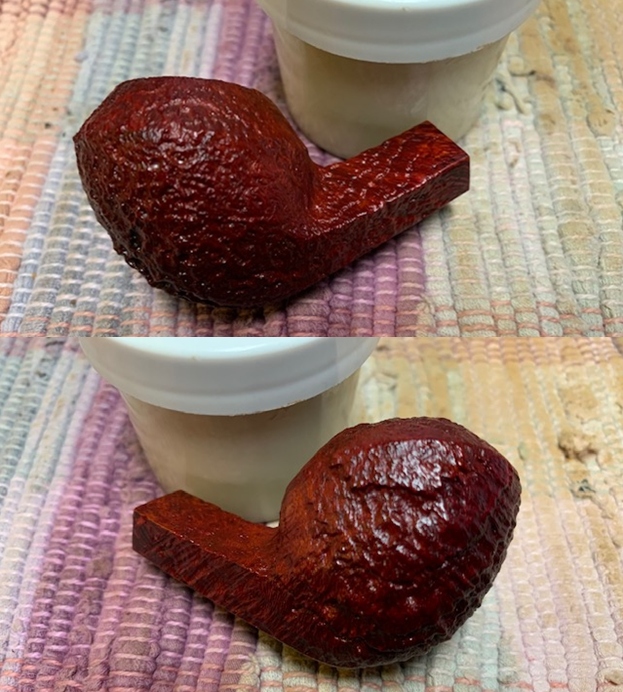
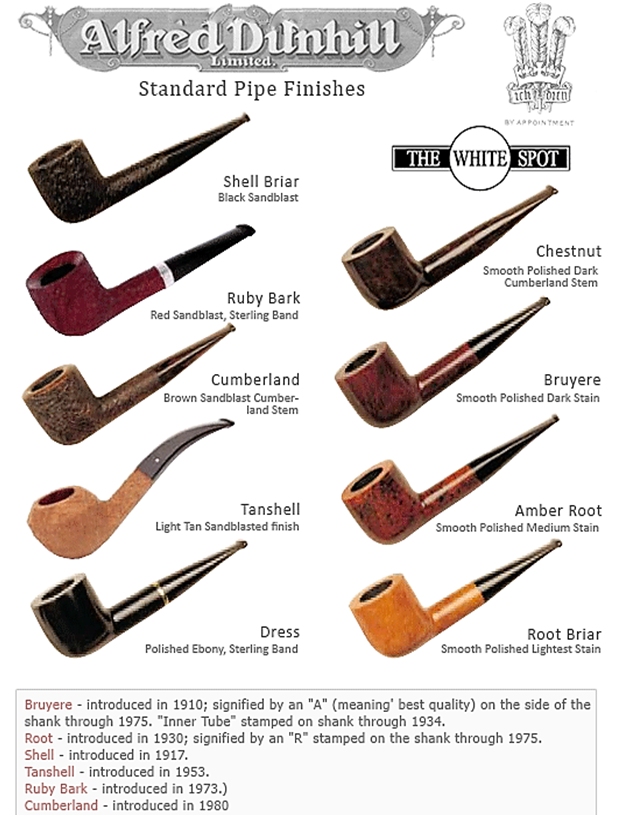
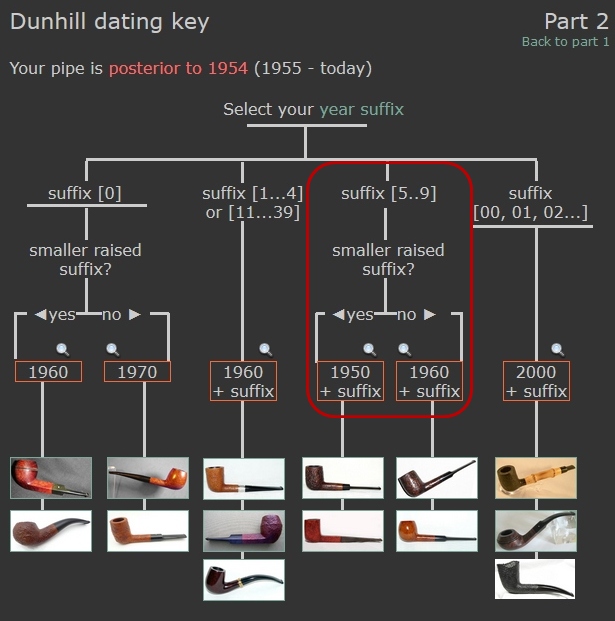
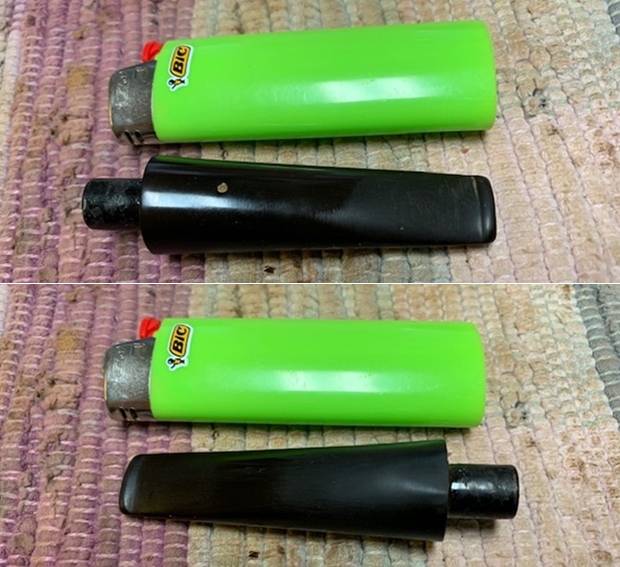
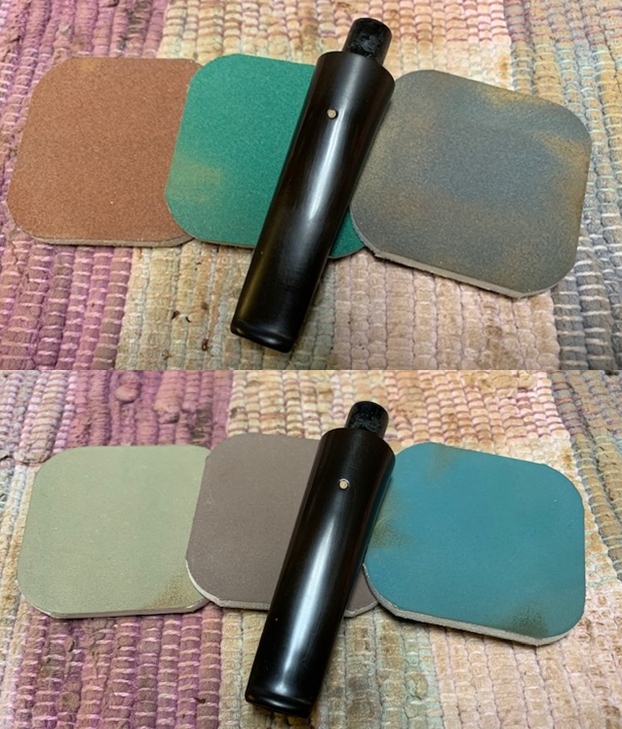
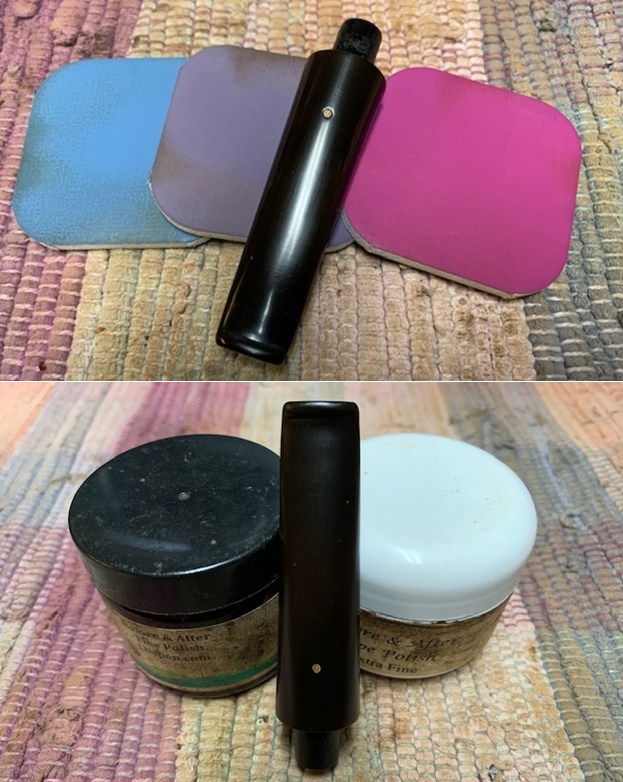
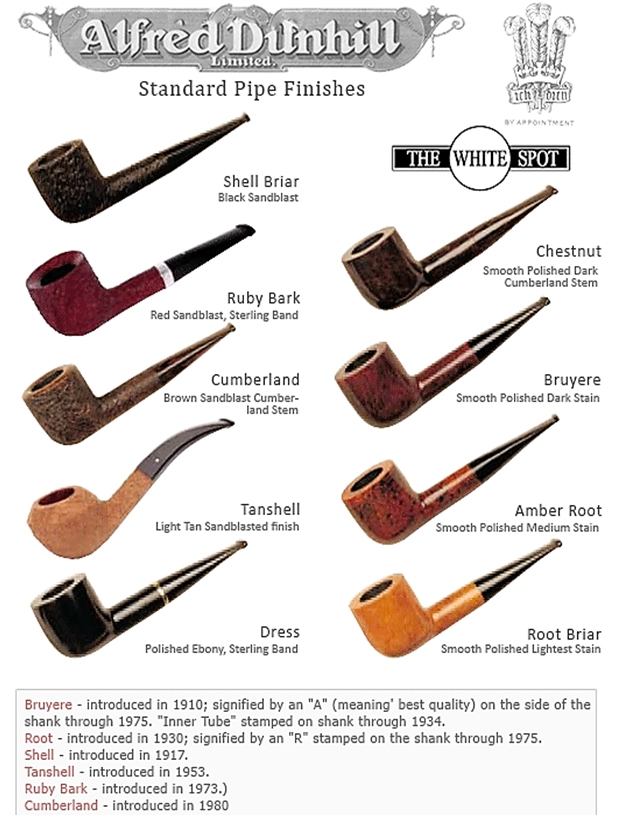
I have also included a chart from the site from Dunhill spelling out the Standard Pipe Finishes and giving short information and a timeline.I turned to Pipephil’s dating guide to show how I arrived at the date of manufacture for this pipe (http://www.pipephil.eu/logos/en/dunhill/cledat-en1a.html). I am including the chart that is provided there for the dating a pipe. I have drawn a red box around the section. Since the pipe I am working on has a smaller raise 5 it points to the 1950+ suffix line on the chart below.I turned to work on the pipe itself. Jeff had carried out his usual thorough cleanup of the pipe. He had reamed it with a PipNet reamer to remove the cake and cleaned the reaming up with a Savinelli Fitsall Pipe Knife. He scrubbed the internals of the bowl and stem with alcohol, cotton swabs and pipe cleaners. He scrubbed the externals with undiluted Murphy’s Oil Soap and rinsed the bowl off with running water. He soaked the stem in Before & After Deoxidizer and once it had soaked rinsed it off with warm water to remove the residual solution. He dried it off and rubbed it down to remove any oxidation that was still on the stem. The pipe looked very clean when I received it.  I took a photo of the rim top to show the condition. You can see the damage on the inner edge on the left front. It is roughened and chipped and out of round. The saddle stem came out looking quite good. There are light tooth marks and chatter on both sides near the button.   I took a photo of the underside of the shank to show the stamping. It is clear and readable with some faint spots. I removed the stem from the shank and took a photo of the pipe parts to show what I was working with. It is a nice looking pipe.I decided to start the restoration on this one by working on the damage to the inner edge of the rim. I used a folded piece of 220 grit sandpaper to give the inner edge of the rim a slight bevel to bring it back into round.  While the finished rim edge is not perfect it is far better. I used a brass bristle tire brush to clean up the darkening on the rim top and clean up the sandblast portion.    With the repair completed I rubbed the briar down with Before & After Restoration Balm. I worked it into the briar with my fingertips and a horsehair shoe brush to work it into the nooks and crannies of the sandblast finish. The product works to clean, enliven and preserve the briar. I let it sit for 15 minutes while I worked on the stem. After the time passed I buffed it with a cotton cloth to deepen the shine. The briar really comes alive with the balm.   I set the bowl aside and turned my attention to the stem. I “painted” the tooth marks on the stem to lift them up. I was able to lift them to the point that I would be able to polish out those that remained with micromesh pads.    I polished the vulcanite with micromesh sanding pads – 1500-12000 grit pads. I wiped it down with Obsidian Oil after each sanding pad. I used Before & After Pipe Polish – both Fine and Extra Fine to further polish the stem.   This Dunhill 48F/T Tanshell Bulldog is a beautiful sandblast with the unique Sandblast finish made in 1955. It is a great looking pipe that came out looking very good. The Tanshell finish has a great rugged sandblast that Dunhill specialized in making. The finish on the pipe is in excellent condition. The oils off the smoker’s hands and the tan stain on the bowl works well to highlight the grain. The polished black vulcanite saddle stem adds to the mix. With the dust gone from the finish and the bowl it was a beauty and is eye-catching. I put the stem back on the bowl and buffed the pipe with Blue Diamond on the buffing wheel being careful to not buff the stamping. I gave the bowl multiple coats of Conservator’s Wax and the stem multiple coats of carnauba wax on the buffing wheel and followed that by buffing it with a clean buffing pad. I hand buffed the pipe with a microfiber cloth to deepen the shine. The finished 48 F/T Tanshell Briar Bulldog is quite nice and feels great in the hand. Give the finished pipe a look in the photos below. I can only tell you that like the other pipes I am working that it is much prettier in person than the photos capture. The dimensions of the pipe are Length: 5 inches, Height: 1 ¾ inches, Outside diameter of the bowl: 1 ¼ inches, Chamber diameter: ¾ of an inch. The weight of the pipe is 29grams/1.02oz. Thanks for walking through the restoration with me as I worked over another beautiful pipe. Remember we are not pipe owners; we are pipemen and women who hold our pipes in trust until they pass on into the trust of the next generation.

Breathing Life into a 1969/74 Dunhill Shell Briar 142 F/T Group 4S Dublin


Blog by Steve Laug

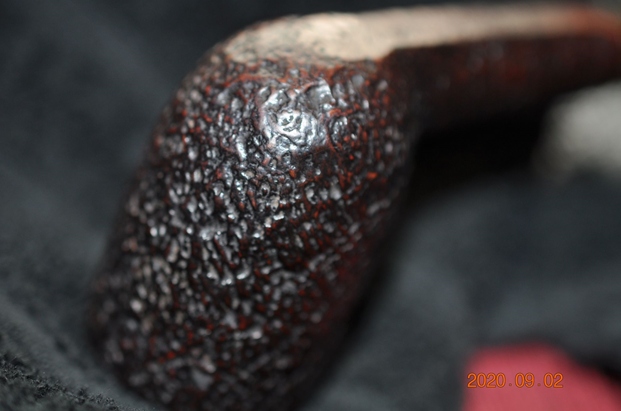
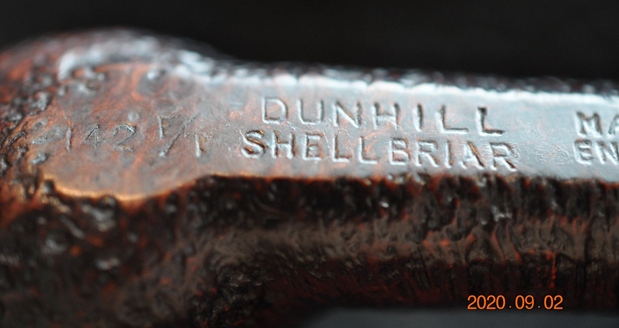
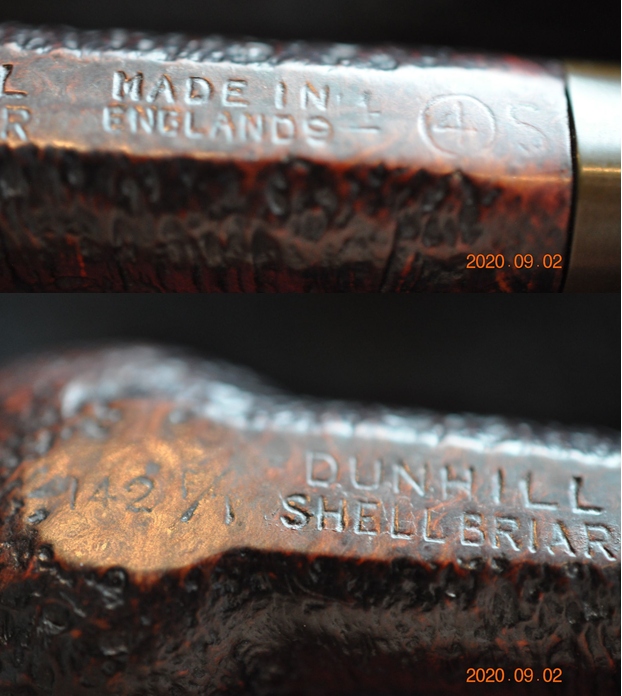
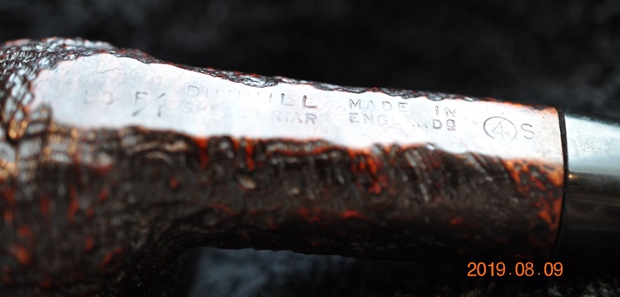
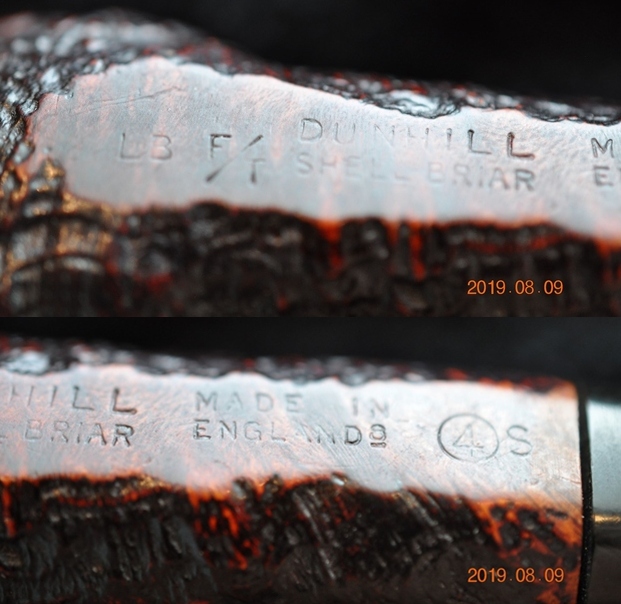
The next pipe on the table came to us from a group of pipes that Jeff picked up on a recent pipe hunt in Utah. It is a Dunhill Shell Briar Dublin that is in decent condition. It is stamped on a smooth panel on the underside of the heel and shank. On the heel of the bowl it is stamped with the shape number 142F/T followed by Dunhill [over] Shell Briar followed by Made in England 9 and superscript 14. That is followed by 4 in a circle followed by S for shell. Interpreting that stamp it is as follows: The 142 is the shape for a Dublin and the F/T is the stem shape – a Fish Tail stem. The Dunhill Shell Briar is the finish which is corroborated the S at the end of the stamping. The 9 and the superscript 14 following the D of England gives the date the pipe was made and identifies it as 1969 and a 1974. This means that the pipe was made in 1969 and sold in 1974. The stamping is clear and readable. The pipe has a mix of black, cordovan and brown stains on a sandblast finish and some amazing grain that the shape follows well. The finish was dirty with dust around the nooks and crannies of the sandblast. There was a cake in the bowl and lava on the rim top. The rim top and edges appeared to be in very good condition. The taper stem was oxidized and had tooth marks and chatter ahead of the button.  Jeff took photos of the pipe to show what it looked like before he started working on it.     He took photos of the bowl and rim top to show how clean they were and of the stem to show the light oxidation and lack of damages to the surface of the stem on either side.    The photos of the sides and heel of the bowl show the deep sandblast grain on the pipe. It is a beauty under the grime and dust.  The stamping on the underside of the shank is shown in the photo below. It looks very good and readable. It reads as noted and explained above. Jeff captured the overall look in the first photo followed by some closer photos of sections of the stamp so you can read it. I turned to Pipedia’s section on Dunhill Root Briar to get a bit of background on the Duhill finishes (https://pipedia.org/wiki/Dunhill#Root_Briar). I quote:
Shell

A deep craggy sandblast with a black stain finish (usually made using Algerian briar) – the color of the stain used has varied over the years. Although there is some doubt as to them being the first to sandblast pipes, Dunhill’s Shell pipes, and the sandblasting techniques developed to create them are considered one of Dunhill’s greatest and most lasting contributions to the art of pipe making.

The documented history of Dunhill’s inception of the Shell is largely limited to patent applications — there are no catalog pages or advertisements promoting blasted pipes at the time. The preliminary work on the English patent (No. 1484/17) was submitted on October 13, 1917. The patent submission was completed half a year later, on April 12, 1918, followed by the granting of the English patent on October 14, 1918. This was less than a month before the end of The Great War on November 11th.

In 1986 Dunhill released a line of premium Shell finish pipes – “RING GRAIN”. These are high-quality straight grain pipes which are sandblasted. Initially only Ring Grain, but now in two different finishes. In 1995 the “Shilling” was introduced with Cumberland finish – it is an extremely rare series. These pipes exhibit a deeper blast characteristic of that of the 1930’s – mid-1960’s (and the limited ‘deep blast’ pipes of the early 1980s) and show a fine graining pattern. These are considered the best new Dunhills by many enthusiasts today and are very rare. The finish is sometimes described as tasting like vanilla at first, with the taste becoming more normal or good as the pipe breaks in.

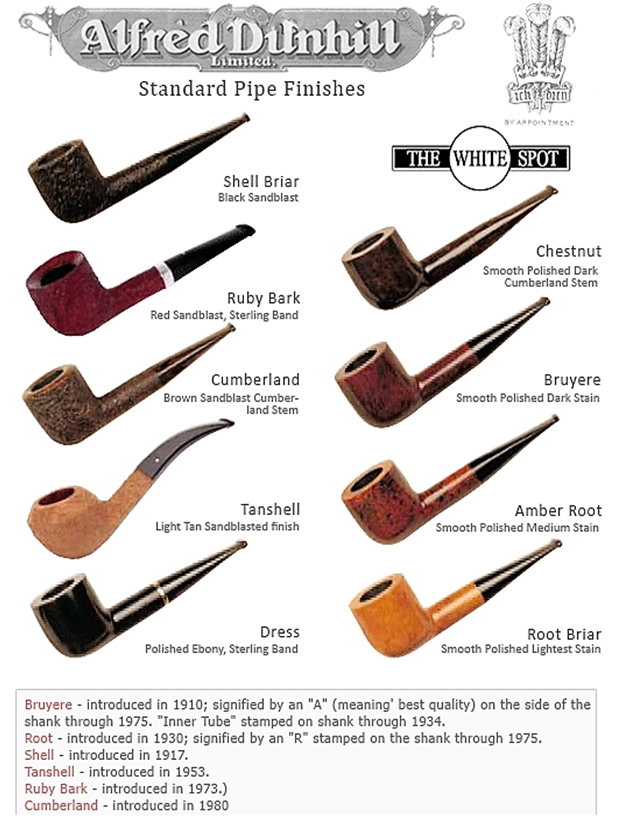
I have also included a chart from the site from Dunhill spelling out the Standard Pipe Finishes and giving short information and a timeline.I turned to work on the pipe itself. Jeff had carried out his usual thorough cleanup of the pipe. He had reamed it with a PipNet reamer to remove the cake and cleaned the reaming up with a Savinelli Fitsall Pipe Knife. He scrubbed the internals of the bowl and stem with alcohol, cotton swabs and pipe cleaners. He scrubbed the externals with undiluted Murphy’s Oil Soap and rinsed the bowl off with running water. He soaked the stem in Before & After Deoxidizer and once it had soaked rinsed it off with warm water to remove the residual solution. He dried it off and rubbed it down to remove any oxidation that was still on the stem. The pipe looked very good when I received it. I took a photo of the rim top to show the condition. The rim top and edges look very good. The bowl is clean. The stem came out looking quite good. There are some tooth marks and chatter on both sides and some remaining oxidation.   I took a photo of the underside of the shank to show the stamping. It is clear and readable with some faint spots.I removed the stem from the shank and took a photo of the pipe parts to show what I was working with. It is a nice looking pipe.Since the bowl was in such excellent condition I started the restoration by rubbing the briar down with Before & After Restoration Balm. I worked it into the briar with my fingertips and a horsehair shoe brush to work it into the nooks and crannies of the sandblast finish. The product works to clean, enliven and preserve the briar. I let it sit for 10 minutes while I worked on the stem. After the time passed I buffed it with a cotton cloth to deepen the shine. The briar really comes alive with the balm.      I set the bowl aside and turned my attention to the stem. I “painted” the tooth marks on the stem to lift them up. I was able to lift them all and sanding with micromesh pads would polish out the remaining chatter.    I polished the vulcanite with micromesh sanding pads – 1500-12000 grit pads. I wiped it down with Obsidian Oil after each sanding pad. I used Before & After Pipe Polish – both Fine and Extra Fine to further polish the stem.      This Dunhill Shell Briar 142 F/T Group 4 Dublin is a beautiful sandblast with the unique Dunhill sandblast finish made in 1969 and sold in 1974. It is a great looking pipe that is in almost new condition. The dark finish that is identified as a black stain highlights some great grain in the sandblast around the bowl sides and the heel. It is a less rugged sandblast on this one than on others Dunhill Shell Briars. The finish on the pipe is in excellent condition and the rim top looks very good. The mix of stains works well to highlight the grain. The polished black vulcanite taper replacement stem adds to the mix. With the dust gone from the finish and the bowl it was a beauty and is eye-catching. I put the stem back on the bowl and buffed the pipe with Blue Diamond on the buffing wheel being careful to not buff the stamping. I gave the bowl multiple coats of Conservator’s Wax and the stem multiple coats of carnauba wax on the buffing wheel and followed that by buffing it with a clean buffing pad. I hand buffed the pipe with a microfiber cloth to deepen the shine. The finished 142 F/T Shell Briar Dublin is quite nice and feels great in the hand. Give the finished pipe a look in the photos below. I can only tell you that like the other pipes I am working that it is much prettier in person than the photos capture. The dimensions of the pipe are Length: 5 ¾ inches, Height: 1 ¾ inches, Outside diameter of the bowl: 1 ¼ inches, Chamber diameter: ¾ of an inch. Thanks for walking through the restoration with me as I worked over another beautiful pipe. This one will be on the rebornpipes store shortly if you are interested in adding it to your rack. Thanks for your time.
 

I was Gifted an LB Stem for my Dunhill Shell Briar LB F/T Chunky Billiard


Blog by Steve Laug

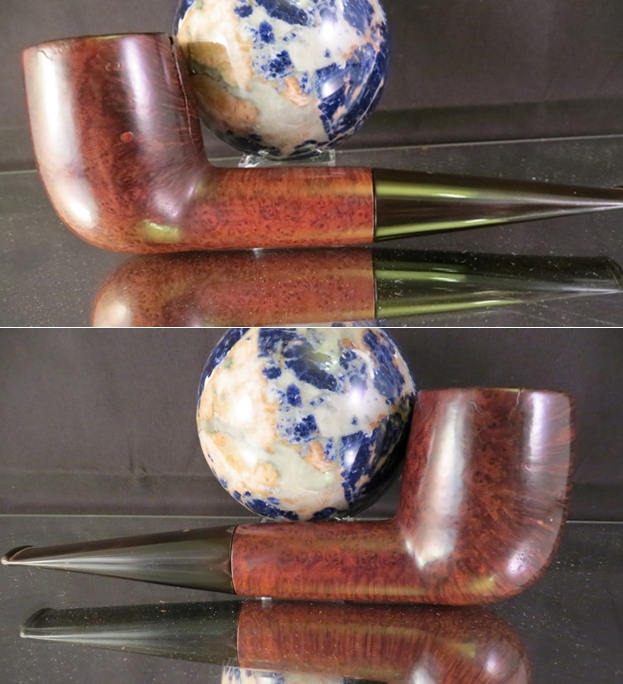
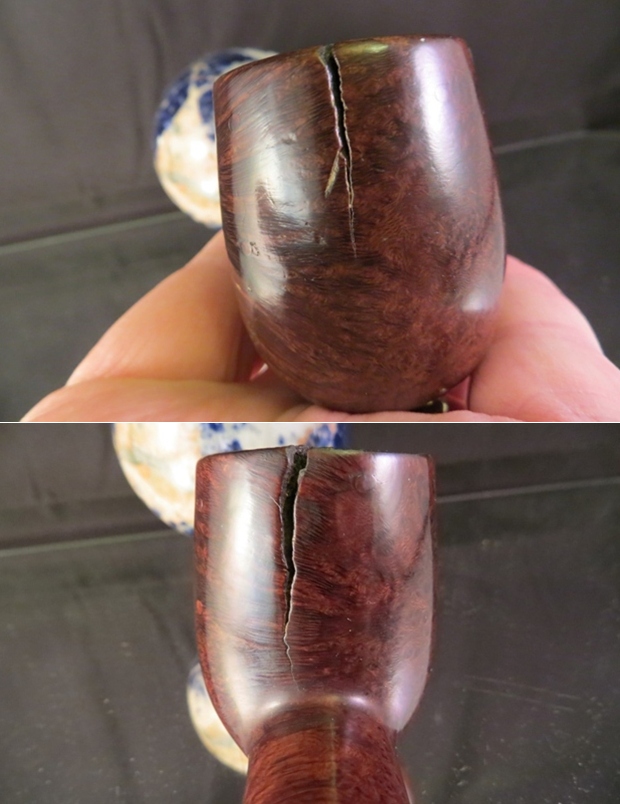
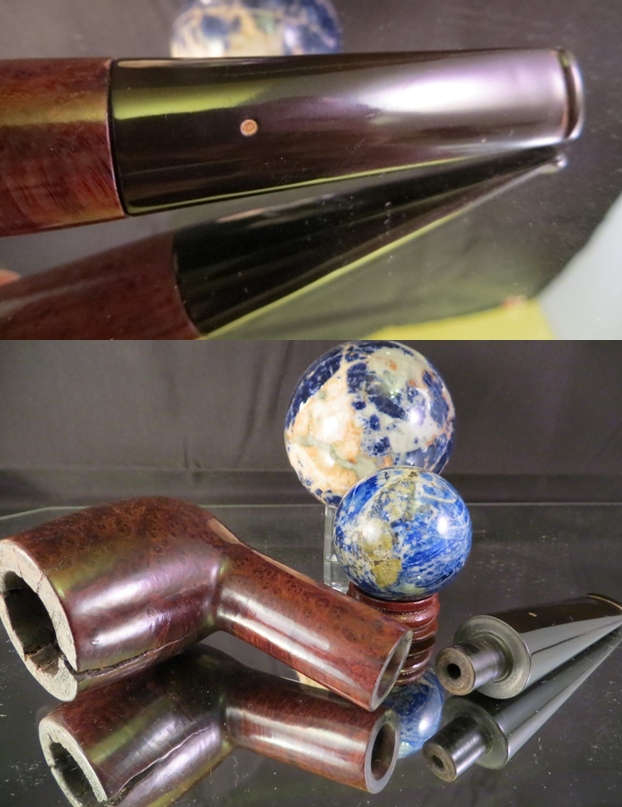
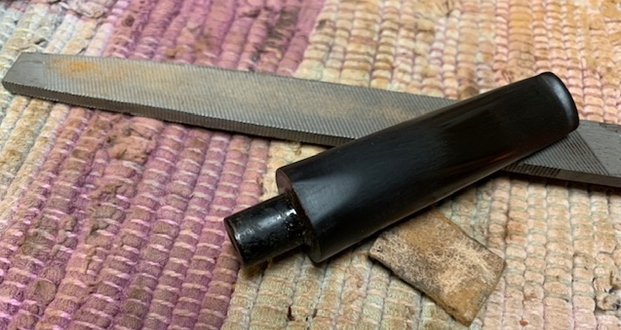
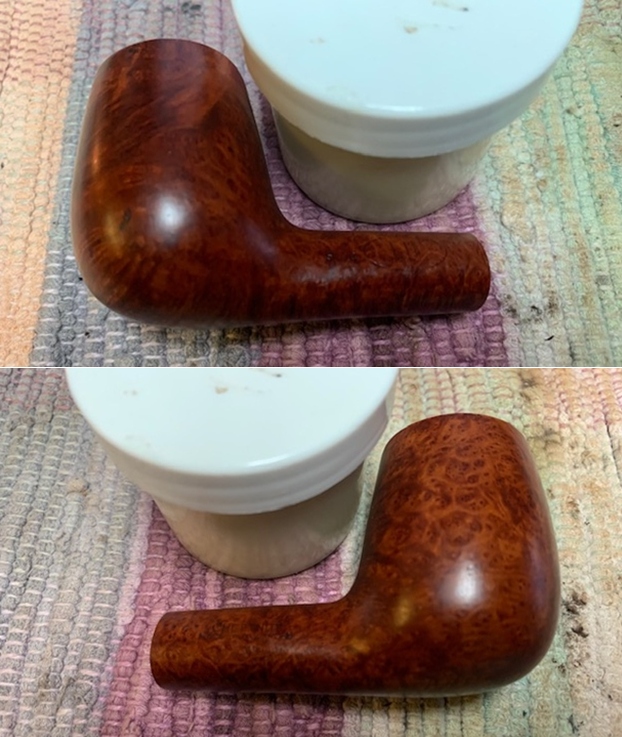
When I restored this Dunhill Shell Briar LB F/T Chunky Billiard I closed the blog asking that if anyone came across a stem for an LB that they would be willing to part with to contact me as I really wanted a Dunhill stem on this pipe (https://rebornpipes.com/2020/07/26/breathing-life-into-a-1968-dunhill-shell-briar-lb-f-t-group-4-billiard/). The pipe is a beautiful sandblasted Billiard with the unique Dunhill Sandblast finish made in 1968 (since that time I am leaning toward a 1958 date for the pipe). It is a great looking pipe that is in almost new condition. The dark finish that is identified as a black stain highlights some great grain around the bowl sides and the heel. It has some great rugged sandblast that Dunhill specialized in making. The finish on the pipe is in excellent condition and the repaired area on the front outer edge of the rim top looks very good. The mix of stains works well to highlight the grain. The polished black replacement vulcanite taper replacement stem adds to the mix. I had drilled and inserted a blue dot on the top of the stem to get by while I hunted for a proper stem. Here are some photos of the pipe once I had finished the restoration of both the bowl and stem. Not too long ago I was on one of the Facebook pipe groups and David Andrew Goostree of Banjo Bob’s Fine Pipes posted a picture of a Dunhill LB with a ruined bowl – vertical cracks all around the bowl that he was willing to part with. I quickly wrote him a note to see what he wanted for it as I had the above LB that needed the stem from his ruined bowl. We exchanged a few messages back and forth and he sent the pipe to me. It arrived in Canada yesterday (Monday) and David had included a small sample of Old Gowrie in the box.  Here are a few pictures that David sent me of the pipe before he sent it.   I took a photo of the new stem next the pipe and replacement stem and then of the two stems side by side. The look and shape is similar. I tried the stem on the shank of the LB bowl that I had and the fit was perfect in the shank. The bowl I have has a flat bottom so I would need to flatten the bottom of the stem to match the shank but other than that the fit was good. I took some photos of the fit to send to David. I had already started the shaping of the underside because I was impatient to see what it would look like. I am including those photos below so you can see the fit in the shank. I used a rasp/flat file to flatten the bottom of the stem to match the flow of the shank. I smoothed out the flattened area with 220 grit sandpaper to remove the file marks in the vulcanite.The stem had some tooth marks in the surface on both sides ahead of the button. I “painted” the surface with the flame of a Bic lighter and the tooth marks lifted. I would easily be able to sand the remnants out with micromesh. I polished the stem with micromesh sanding pads – wet sanding with 1500-12000 grit sanding pads. I wiped it down after each sanding pad with Obsidian Oil. I polished it with Before & After Pipe Stem Polish – both Fine and Extra Fine.     With the stem fitting work finished I put the new stem on the Dunhill LB and gave the bowl several coats of Conservator’s Wax and the stem several coats of carnauba wax on the buffing wheel. I buffed the pipe with a clean buffing pad to raise the shine and hand buffed it with a microfibre cloth to deepen the shine. I took photos of the LB with the stem I received from David and I really like the look of an original Dunhill stem. Have a look! I am looking forward to loading the bowl with some of the Old Gowrie that David sent along and taking it for its initial smoke. Thanks David for the stem and thank you all for reading this update.

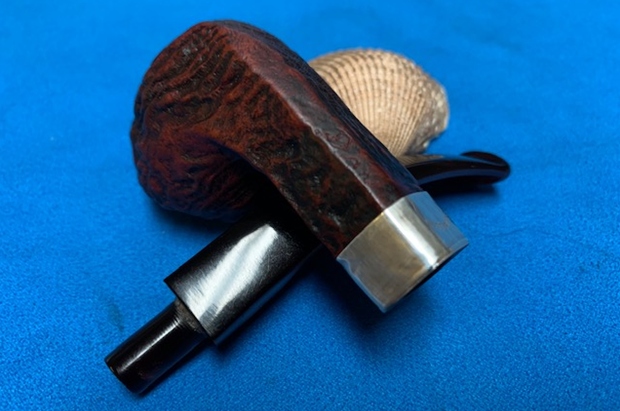
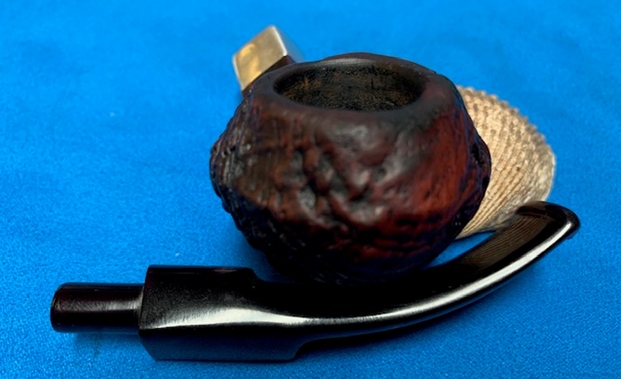
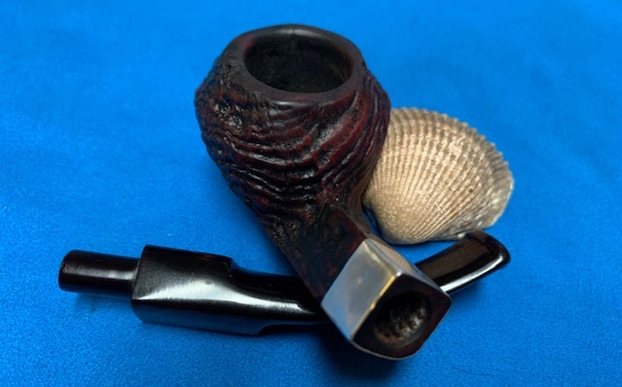
Restoring a Tired and Cobbled Dunhill Shell Patent Era Bulldog


Blog by Steve Laug

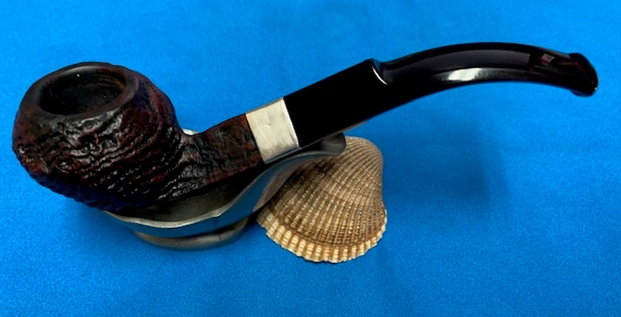
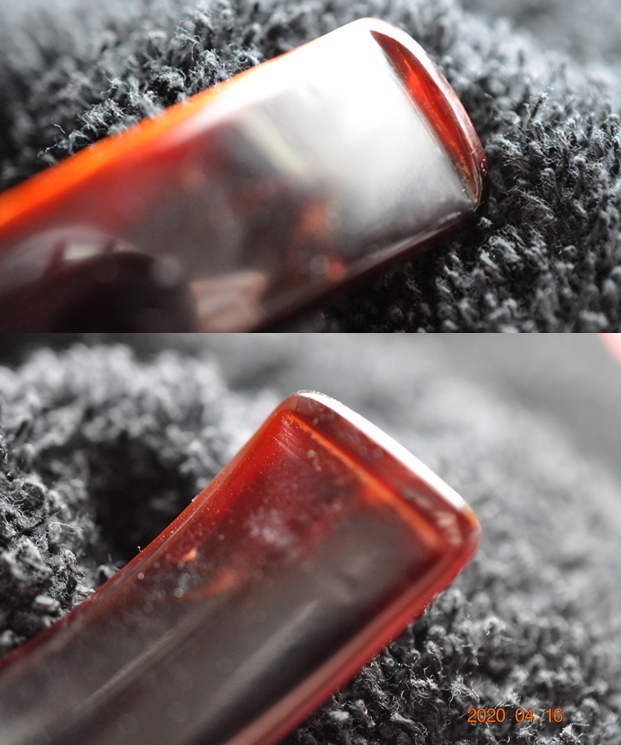
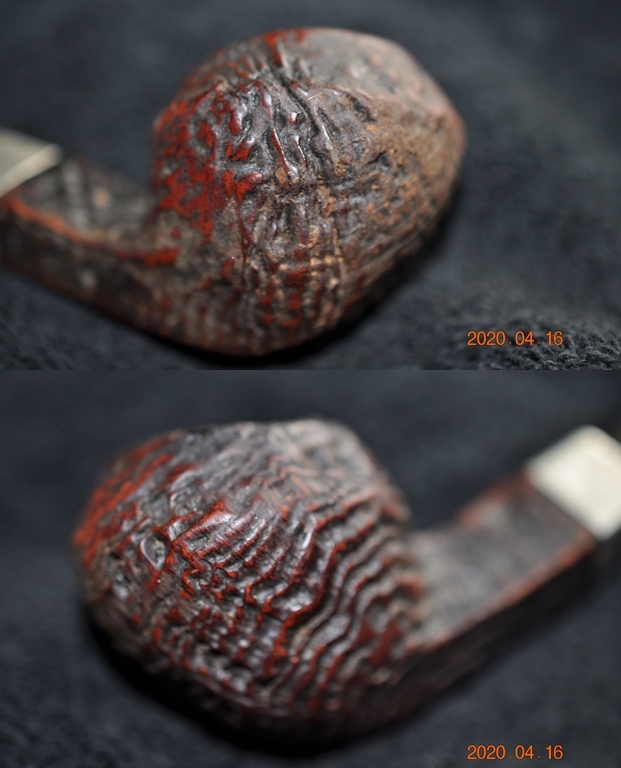
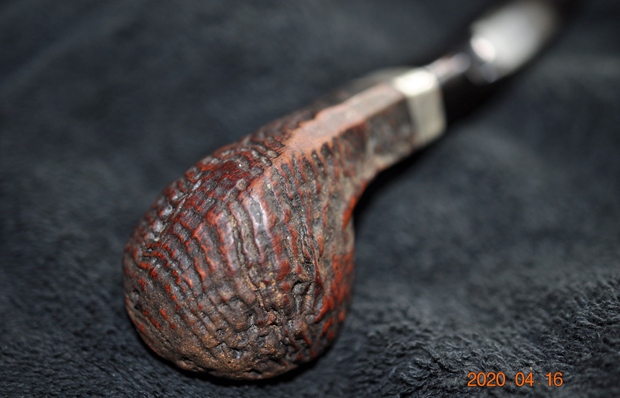
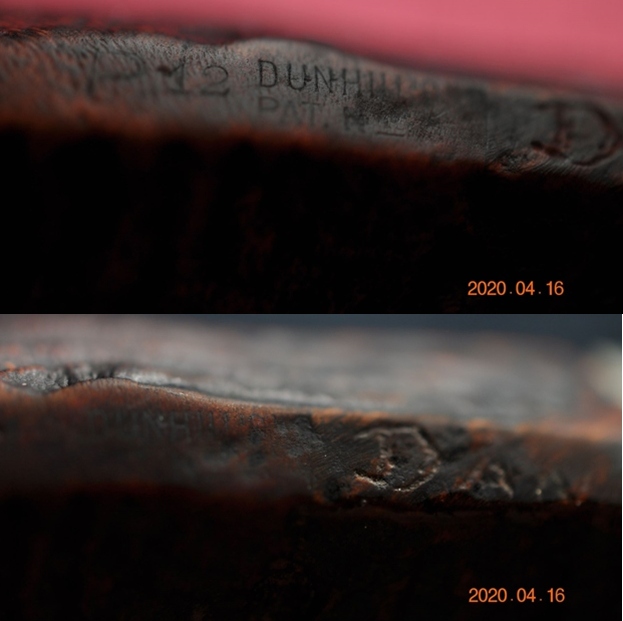
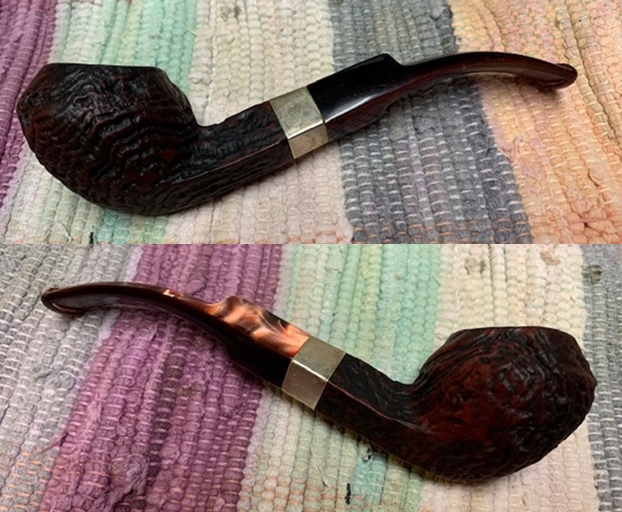
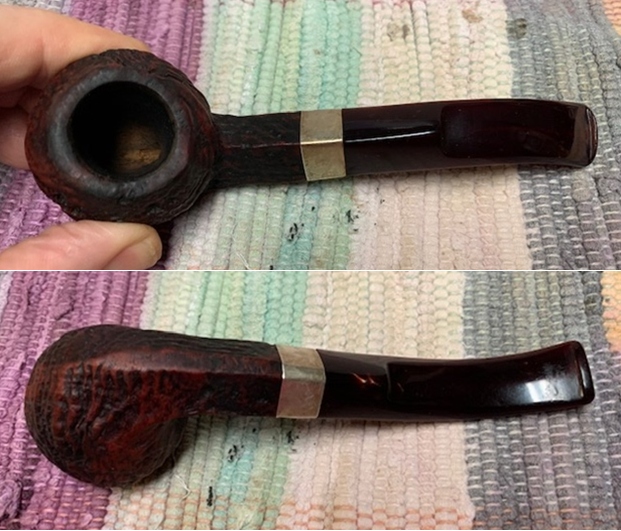
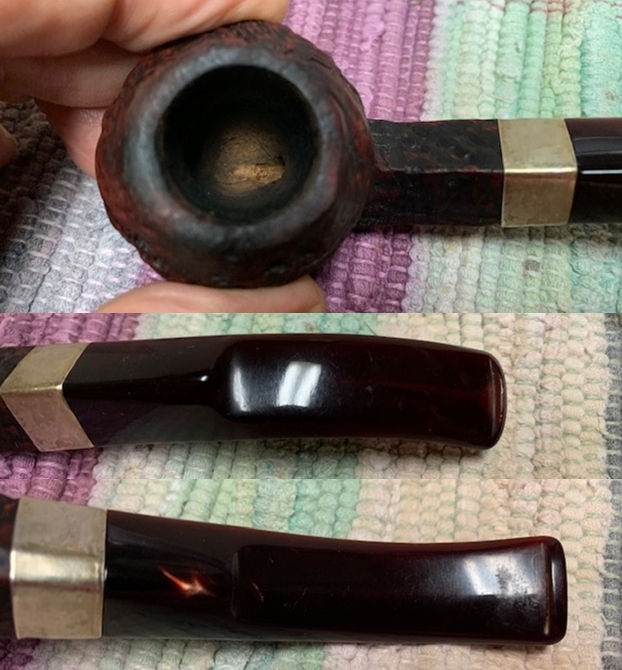
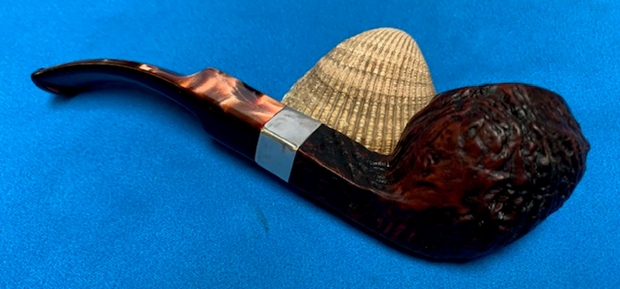
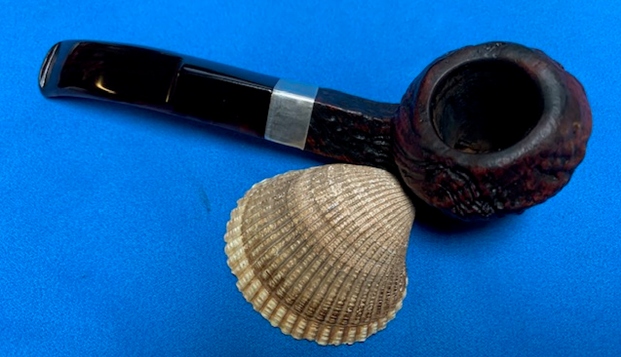
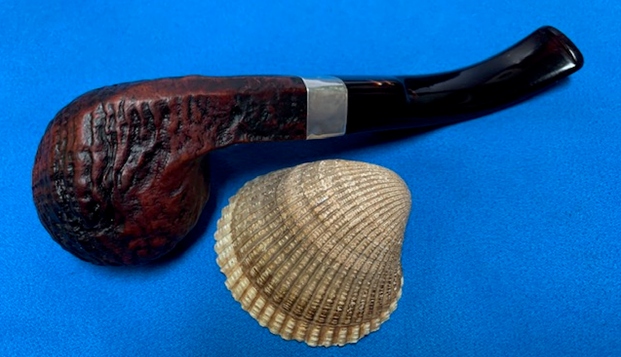
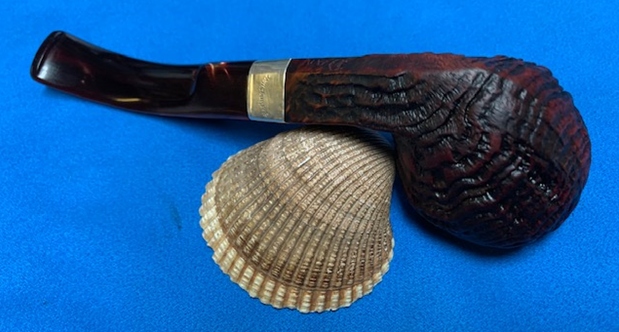
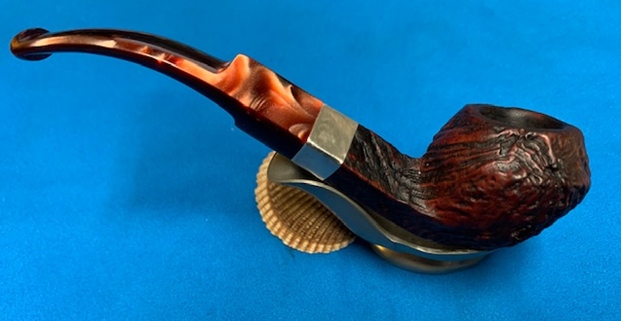
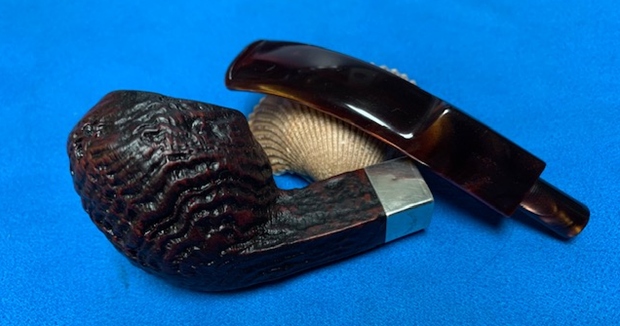
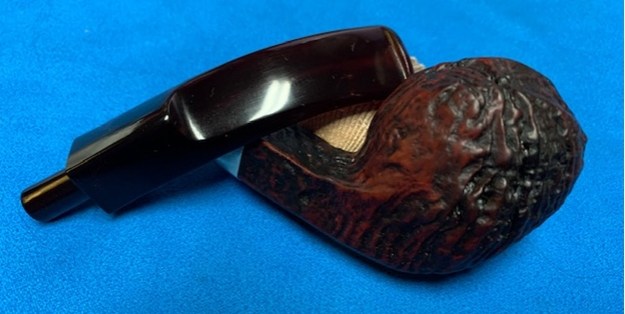
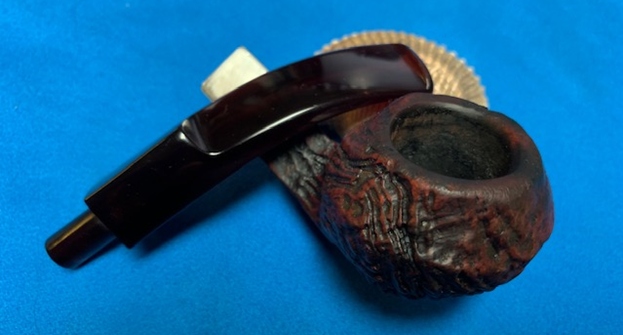
The next pipe on the work table came to us from one of Jeff’s hunts. It is a Bent Bulldog with a copper/brown variegated acrylic stem and a rugged sandblast around the bowl. It has an oxblood/brown/black finish that highlights the grain in the sandblast. When I first took the pipe out of the box to work on it this morning I thought that the blast reminded me of early Dunhill pipes but the band and the acrylic stem made me not connect it to Dunhill. Later when I turned the pipe over to try to decipher the stamping with a light and lens I was surprised that it was indeed a Dunhill. It is stamped on the flat underside of the shank and reads P12 followed by Dunhill Shell [over] Pat. No. with the numbers and the rest of the stamping blurred out with what looks like the previous owner’s initials DAV or DAN carved by hand.  So it is a Patent Shell with no way of dating it and having an aftermarket band and acrylic stem. The acrylic stem and silver band were well fitted to the shank and matched the angles. From my experience it is unusual to see this kind of workmanship in an aftermarket stem and band. It is always a shame to me when a very old and well-made pipe is changed this much! Jeff took photos of the pipe before he started his cleanup.He took photos of the rim top to show the thick cake and the heavy lava overflow on the top. It is an incredibly dirty pipe. He also captured the tooth marks on the top and underside of the stem near the button.    He took photos of the sides and heel of the bowl to show the deep blast around the bowl and the amount of grime ground into the surface of the briar. He took photos of the stamping on the underside of the shank and the carved initials near the stem/shank junction. He also took a photo of the stamping on the silver band on the shank. I turned Pipephil’s helpful Dunhill section to see if I could at least establish parameters for the age of the pipe (http://www.pipephil.eu/logos/en/dunhill/index.html).

From there I knew that the Dunhill Shell was introduced in 1917 and the Patent stamped lasted from 1920 until 1954.

From the shape lettering chart I learned that the P stamp was correct for a ½ Bent Bulldog (http://www.pipephil.eu/logos/en/dunhill/shapes-l.html_).

I turned to Pipedia and looked up the specifics of the Shell line. (https://pipedia.org/wiki/Dunhill#Shell)

Shell – A deep craggy sandblast with a black stain finish (usually made using Algerian briar) – the color of the stain used has varied over the years. Although there is some doubt as to them being the first to sandblast pipes, Dunhill’s Shell pipes, and the sandblasting techniques developed to create them are considered one of Dunhill’s greatest and most lasting contributions to the art of pipe making.

The documented history of Dunhill’s inception of the Shell is largely limited to patent applications — there are no catalog pages or advertisements promoting blasted pipes at the time. The preliminary work on the English patent (No. 1484/17) was submitted on October 13, 1917. The patent submission was completed half a year later, on April 12, 1918, followed by the granting of the English patent on October 14, 1918. This was less than a month before the end of The Great War on November 11th.

In 1986 Dunhill released a line of premium Shell finish pipes – “RING GRAIN”. These are high-quality straight grain pipes which are sandblasted. Initially only Ring Grain, but now in two different finishes. In 1995 the “Shilling” was introduced with Cumberland finish – it is an extremely rare series. These pipes exhibit a deeper blast characteristic of that of the 1930’s – mid-1960’s (and the limited ‘deep blast’ pipes of the early 1980s) and show a fine graining pattern. These are considered the best new Dunhills by many enthusiasts today and are very rare. The finish is sometimes described as tasting like vanilla at first, with the taste becoming more normal or good as the pipe breaks in.

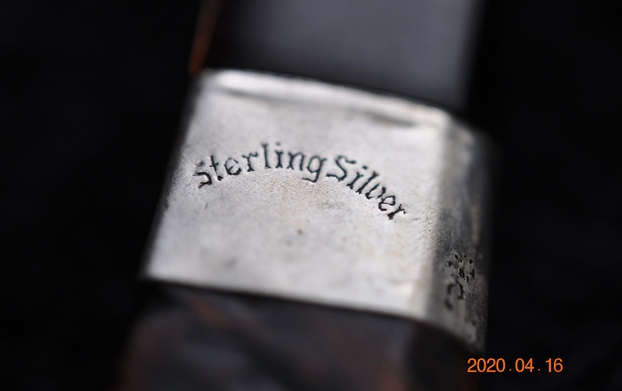
I knew that the Dunhill Shell pipe I was working was made between 1920-1954. I probably would not get much closer than that for a date on the pipe. I also knew that the previous owner had not only personalized the pipe with his initials but had also added a Sterling Silver band for decoration (no cracks or damage to the shank visible) and a variegated acrylic stem that looked very 1970s. Now it was time to work on the pipe.

Jeff had done his usual thorough cleanup on the pipe. He reamed the bowl with a PipNet pipe reamer and followed up with a Savinelli Fitsall pipe knife to remove the cake. He scrubbed out the mortise and the airway in the shank and the stem with alcohol, cotton swabs and pipe cleaners. He scrubbed the exterior of the bowl, rim, shank and stem with a tooth brush and Murphy’s Oil Soap to remove the oils and tars on the rim and the grime on the finish of the bowl. He rinsed it under running water. He dried it off with a soft cloth. He cleaned the internals and externals of the stem with alcohol, pipe cleaners and cotton swabs. I took a photo of the rim top and stem to show the condition. They cleaned up really well and the burn damage on the top of the rim at the front and left side are visible. The rest of the rim top is worn with the sandblast smoothed out. The inner edge of the bowl had some low spots and damage that would need to be addressed. The acrylic replacement stem was well crafted and fit very well with the shank and angles of the shank. The stem surface looked very good with light tooth chatter and marks on both sides ahead of the button.  I took a photo of the stamping on the left and underside of the shank. It read as noted above.  You can see the wear on the stamping and the DAV initials just ahead of the tarnish silver band.I removed the stem and took a photo of the pipe to give a sense of the whole. It is a well shaped bent Bulldog shape that looks craggy and inviting.Now it was time to do my work on the pipe. I cleaned up the inner edge of the bowl and gave it a slight bevel to minimize the damage. It also brought the bowl back into round.   Since it was clean and looked good I rubbed the bowl and shank down with Before & After Restoration Balm. I worked it into the surface of the sandblast bowl sides and shank with my fingertips and a horsehair shoe brush to clean, enliven and protect the briar. I let the balm sit for a little while and then buffed with a cotton cloth to raise the shine. It helped to give depth to the stain around the bowl.  The final buffing would bring the pipe alive. I polished the Sterling Silver band with a jeweler’s cloth to remove the remaining oxidation that was on the silver.  I set the bowl aside and turned my attention to the stem. I used 220 grit sandpaper to smooth out the tooth chatter and marks and blend them into the stem surface. I started the polishing with 400 grit wet dry sandpaper.   I polished the acrylic stem with micromesh sanding pads – 1500-12000 grit pads. I wiped it down with a damp cloth after each sanding pad. I used Before & After Pipe Polish – both Fine and Extra Fine to further polish the stem. This beautifully sandblasted Dunhill Shell Bent Bulldog with a variegated copper and brown acrylic replacement saddle stem is a great looking pipe now that it has been restored. I was able to minimize damages on the edge of the bowl and rim. I gave a bevel to the inside edge of the bowl to remove the burn damage and out of round bowl. The rich Shell coloured finish came alive with the polishing and waxing. The dimensions of the sandblast really popped. I put the stem back on the bowl and carefully buffed the pipe with Blue Diamond on the buffing wheel using a light touch on the briar. I gave the bowl multiple coats of Conservator’s Wax and the stem multiple coats of carnauba wax on the buffing wheel. I buffed the pipe with a clean buffing pad to raise the shine. I hand buffed the pipe with a microfiber cloth to deepen the shine. The finished Dunhill Shell Bulldog is a beauty and fits nicely in the hand and looks very good. Even though the stem and band are aftermarket it still looks good. Give the finished pipe a look in the photos below. The dimensions of the pipe are Length: 6 inches, Height: 1 ½ inches, Outside diameter of the bowl: 1 ½ inches, Chamber diameter: ¾ of an inch. If you are interested in adding this pipe to your collection send me a message or an email. Thanks for reading this blog and my reflections on the pipe while I worked on it. There are many more to come!

Breathing Life into a 1968 Dunhill Shell Briar LB F/T Group 4 Billiard


Blog by Steve Laug

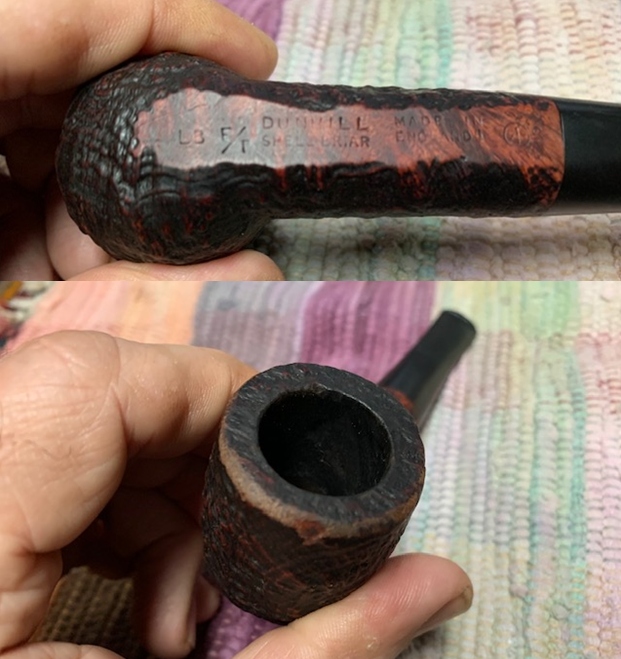
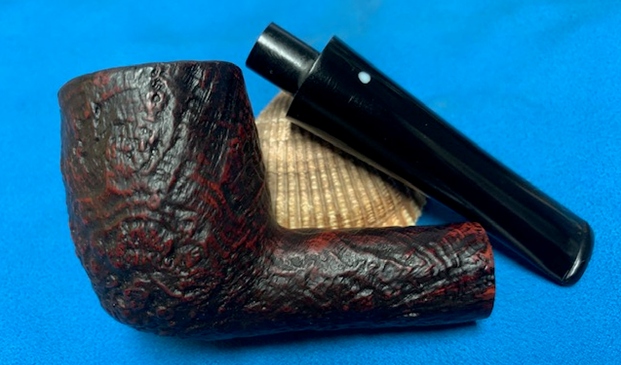
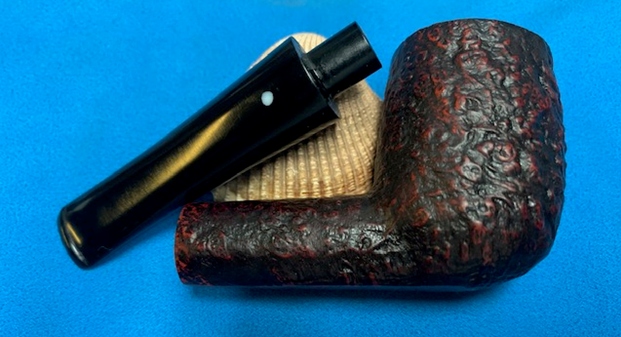
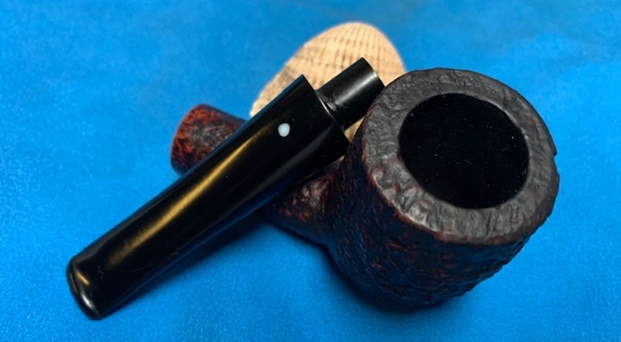
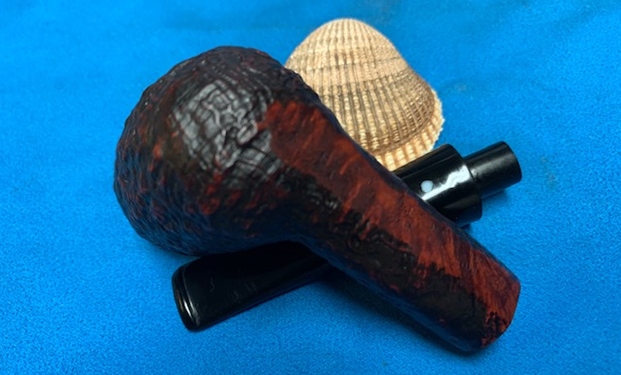
The next pipe on the table came to us from a group of pipes that Jeff and I purchased from a pipeman in late 2018. It is a Dunhill Shell Briar Billiard that is in decent condition. The stem is a replacement and I need to find an original stem for it but it works. It is stamped on a smooth panel on the underside of the shank. On the heel of the bowl it is stamped with the shape number LB F/T followed by Dunhill [over] Shell Briar followed by Made in England 8. That is followed by 4 in a circle followed by S for shell. Interpreting that stamp it is as follows: The LB is the shape for a larger thick shank billiard and the F/T is the stem shape – a Fish Tail stem. The Dunhill Shell Briar is the finish which is corroborated the S at the end of the stamping. The 8 following the D of England gives the date the pipe was made and identifies it as 1968. The stamping is clear and readable. The pipe has a mix of black, cordovan and brown stains on a sandblast finish and some amazing grain that the shape follows well. The finish was dirty with dust around the nooks and crannies of the sandblast. There was a cake in the bowl and lava on the rim top. There was damage on the front outer edge of the rim from tapping against something hard. The replacement taper stem was oxidized and had tooth marks and chatter ahead of the button.  Jeff took photos of the pipe to show what it looked like before he started working on it. He took photos of the bowl and rim top to show how clean they were and of the stem to show the oxidation, calcification and tooth marks and chatter on both sides of the stem. The photos of the sides and heel of the bowl show the deep sandblast grain on the pipe. It is a beauty under the grime and dust.    The stamping on the underside of the shank is shown in the photo below. It looks very good and readable. It reads as noted and explained above. Jeff captured the overall look in the first photo followed by some closer photos of sections of the stamp so you can read it. I turned to Pipedia’s section on Dunhill Root Briar to get a bit of background on the Duhill finishes (https://pipedia.org/wiki/Dunhill#Root_Briar). I quote:

Shell
A deep craggy sandblast with a black stain finish (usually made using Algerian briar) – the color of the stain used has varied over the years. Although there is some doubt as to them being the first to sandblast pipes, Dunhill’s Shell pipes, and the sandblasting techniques developed to create them are considered one of Dunhill’s greatest and most lasting contributions to the art of pipe making.

The documented history of Dunhill’s inception of the Shell is largely limited to patent applications — there are no catalog pages or advertisements promoting blasted pipes at the time. The preliminary work on the English patent (No. 1484/17) was submitted on October 13, 1917. The patent submission was completed half a year later, on April 12, 1918, followed by the granting of the English patent on October 14, 1918. This was less than a month before the end of The Great War on November 11th.

In 1986 Dunhill released a line of premium Shell finish pipes – “RING GRAIN”. These are high-quality straight grain pipes which are sandblasted. Initially only Ring Grain, but now in two different finishes. In 1995 the “Shilling” was introduced with Cumberland finish – it is an extremely rare series. These pipes exhibit a deeper blast characteristic of that of the 1930’s – mid-1960’s (and the limited ‘deep blast’ pipes of the early 1980s) and show a fine graining pattern. These are considered the best new Dunhills by many enthusiasts today and are very rare. The finish is sometimes described as tasting like vanilla at first, with the taste becoming more normal or good as the pipe breaks in.

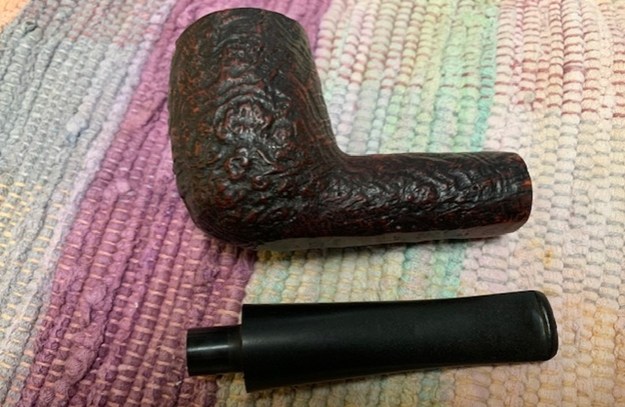
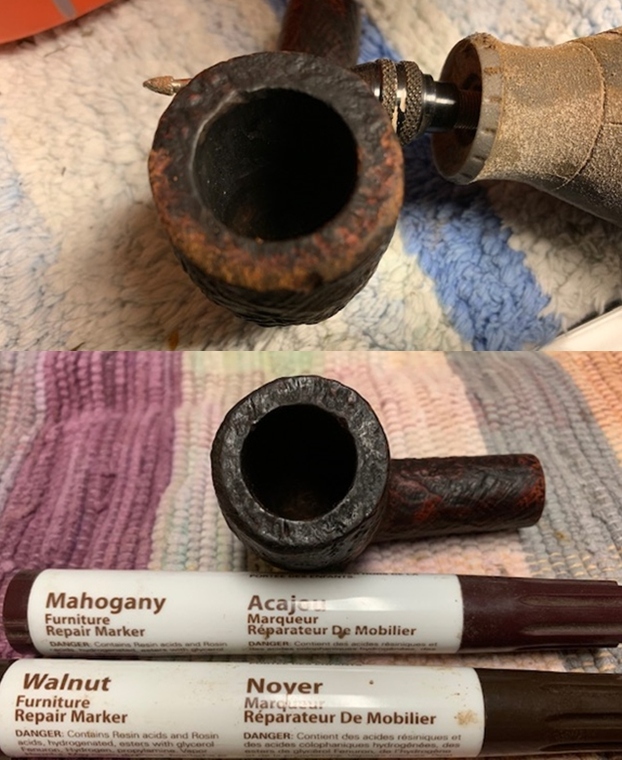
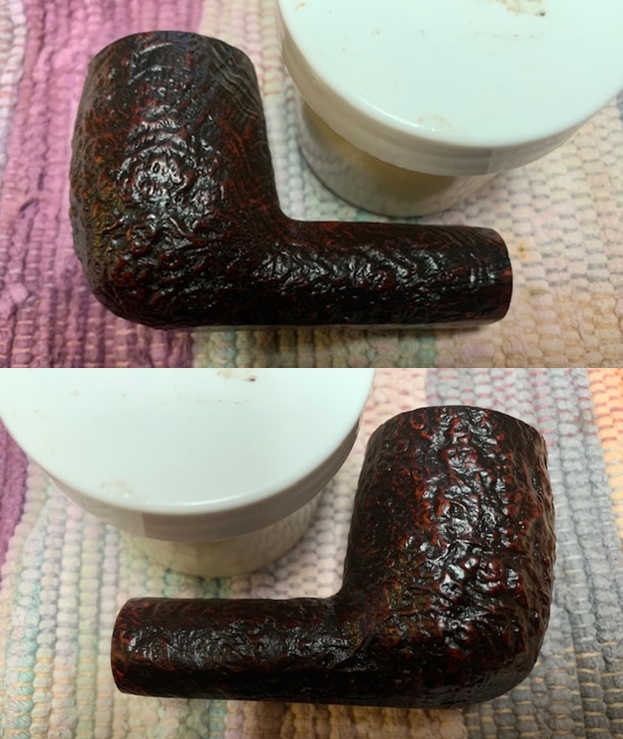
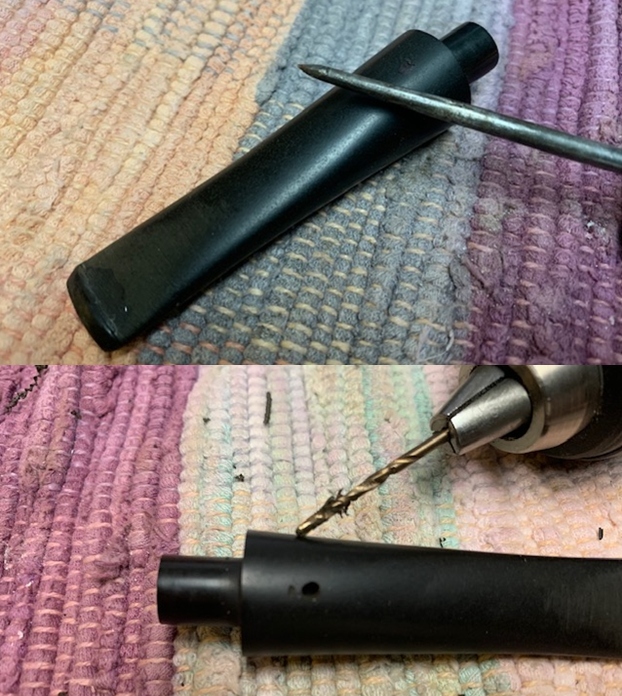
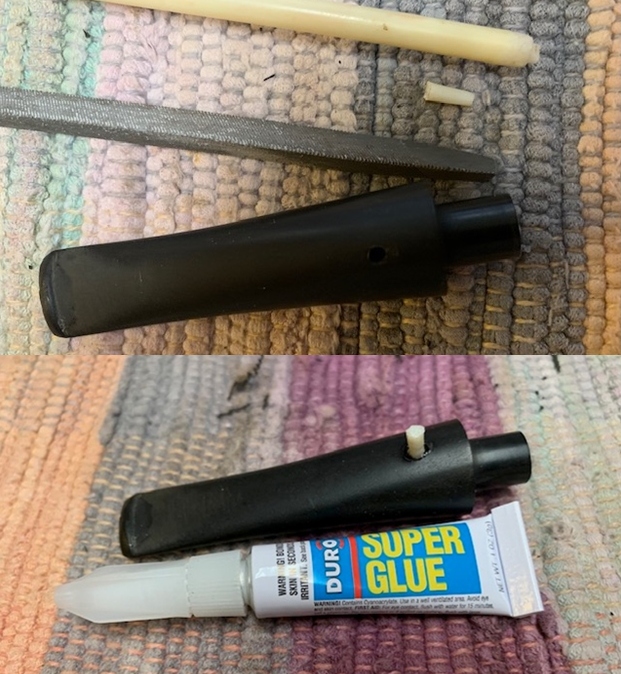
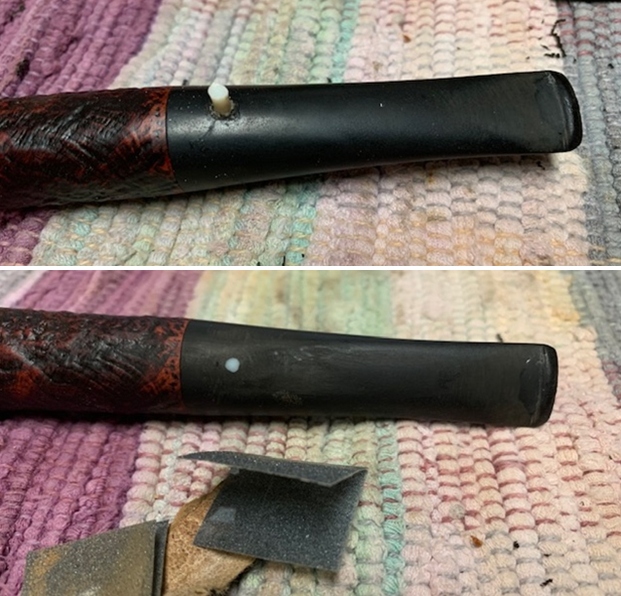
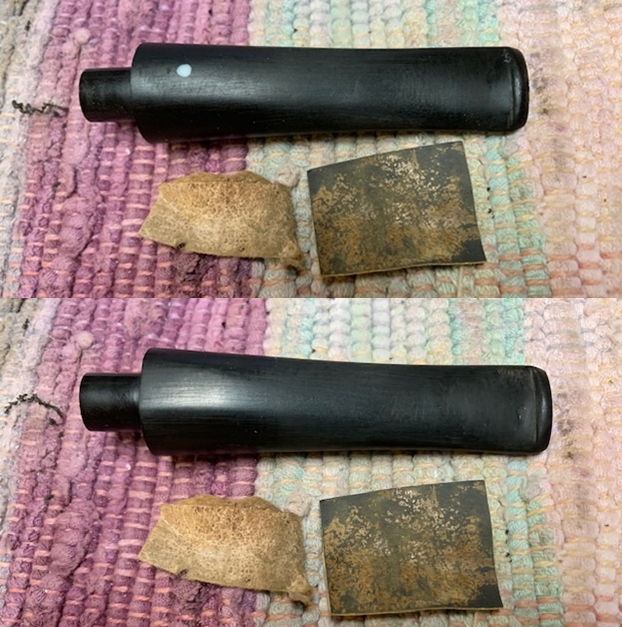
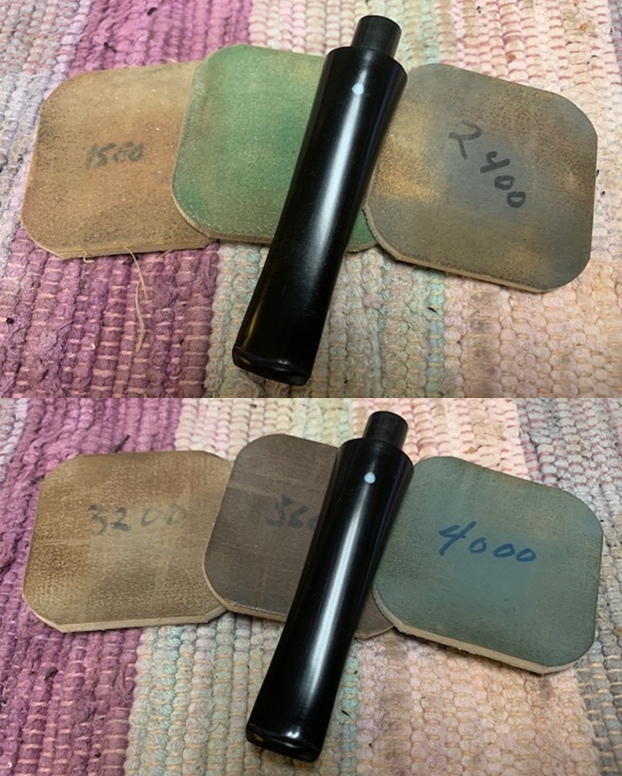
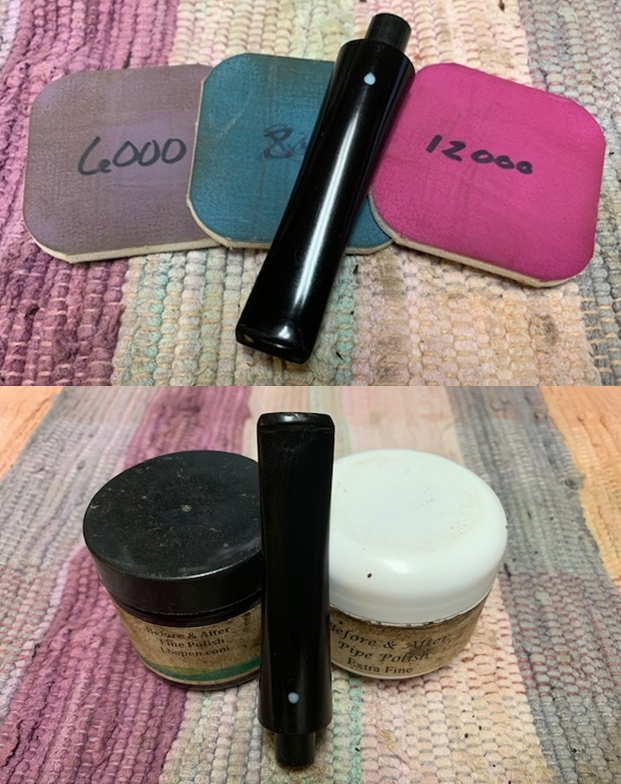
I have also included a chart from the site from Dunhill spelling out the Standard Pipe Finishes and giving short information and a timeline.I turned to work on the pipe itself. Jeff had carried out his usual thorough cleanup of the pipe. He had reamed it with a PipNet reamer to remove the cake and cleaned the reaming up with a Savinelli Fitsall Pipe Knife. He scrubbed the internals of the bowl and stem with alcohol, cotton swabs and pipe cleaners. He scrubbed the externals with undiluted Murphy’s Oil Soap and rinsed the bowl off with running water. He soaked the stem in Before & After Deoxidizer and once it had soaked rinsed it off with warm water to remove the residual solution. He dried it off and rubbed it down to remove any oxidation that was still on the stem. The pipe looked very good when I received it. I took a photo of the rim top to show the condition. You can see the damage on the front outer edge of the bowl in the photo. It is roughened and chipped. The replacement stem came out looking quite good. There are some tooth marks and chatter on both sides with deeper marks on the underside near the button.    I took a photo of the underside of the shank to show the stamping. It is clear and readable with some faint spots. I also took a photo of the damage to the front outer edge of the rim top to show the damaged areas.   I removed the stem from the shank and took a photo of the pipe parts to show what I was working with. It is a nice looking pipe.I decided to start the restoration on this one a little differently. In examining the outer edge damage to the bowl it appeared that I could work it over with a burr on my Dremel and minimize the damage by patterning the reworked surface to match the rest of the rim top. Once I worked it over I used a Mahogany and Walnut stain pen to blend the newly carved areas into the rest of the bowl finish.   With the repair completed I rubbed the briar down with Before & After Restoration Balm. I worked it into the briar with my fingertips and a horsehair shoe brush to work it into the nooks and crannies of the sandblast finish. The product works to clean, enliven and preserve the briar. I let it sit for 10 minutes while I worked on the stem. After the time passed I buffed it with a cotton cloth to deepen the shine. The briar really comes alive with the balm. I set the bowl aside and turned my attention to the stem. I “painted” the tooth marks on the stem to lift them up. I was able to lift them significantly. I filled in the remaining tooth marks with black super glue and set the stem aside to let the repairs cure. Once the repairs cured I used a needle file to recut and redefine the button edges and to smooth them out and blend them into the stem surface.  I sanded the repairs smooth and then decided to drill a spot on the top of the stem and put in a white dot. I did not do this to fool anyone just so I could get a feel of the stem looking almost right until I picked up a Dunhill stem. I used a piece of a white acrylic crochet needle to make the dot. I used a Dremel and sanding drum to take the end down to a spot. I then used a triangular shaped file to continue to take the top down to make it small enough to work for a white dot. I made the dot a little larger than normal and off just enough to give clue to the fact that it is a fake! But I am going to enjoy it anyway!    I used an awl to start a hole on the top of the stem to serve as a guide for drilling the hole to put the white spot in.    I cut off the piece of acrylic and used a file to reduce the diameter a little more with a file while I held it in a pair of vise grips. Once I had the end small enough I put a drop of super glue in the hole and pressed the piece of acrylic in the hole.     Once the repair cured I used the Dremel and sanding drum to take the pin back to the surface of the vulcanite. Once it was close to the top of the stem I used 220 grit sandpaper to smooth it out.   I sanded the repaired areas and the inserted acrylic white spot with 220 grit sandpaper to further blend them into the stem surface. I started the polishing of the stem with 400 grit wet dry sandpaper.     I polished the vulcanite with micromesh sanding pads – 1500-12000 grit pads. I wiped it down with Obsidian Oil after each sanding pad. I used Before & After Pipe Polish – both Fine and Extra Fine to further polish the stem.       This Dunhill Shell Briar LB F/T Chunky Billiard is a beautiful sandblast with the unique Dunhill Sandblast finish made in 1968. It is a great looking pipe that is in almost new condition. The dark finish that is identified as a black stain highlights some great grain around the bowl sides and the heel. It has some great rugged sandblast that Dunhill specialized in making. The finish on the pipe is in excellent condition and the repaired area on the front outer edge of the rim top looks very good. The mix of stains works well to highlight the grain. The polished black vulcanite taper replacement stem adds to the mix. With the dust gone from the finish and the bowl it was a beauty and is eye-catching. I put the stem back on the bowl and buffed the pipe with Blue Diamond on the buffing wheel being careful to not buff the stamping. I gave the bowl multiple coats of Conservator’s Wax and the stem multiple coats of carnauba wax on the buffing wheel and followed that by buffing it with a clean buffing pad. I hand buffed the pipe with a microfiber cloth to deepen the shine. The finished LB F/T Shell Briar Billiard is quite nice and feels great in the hand. Give the finished pipe a look in the photos below. I can only tell you that like the other pipes I am working that it is much prettier in person than the photos capture. The dimensions of the pipe are Length: 5 ¾ inches, Height: 2 inches, Outside diameter of the bowl: 1 ¼ inches, Chamber diameter: ¾ of an inch. Thanks for walking through the restoration with me as I worked over another beautiful pipe. If any of you have an LB stem for sale or trade let me know. Thanks for your time.
 

A Nice Break – a 1971 Dunhill Shell 53 F/T Group 3 Bent Billiard


Breathing Life into a 1971 Dunhill Shell 53 F/T Group 3 Bent Billiard

Blog by Steve Laug

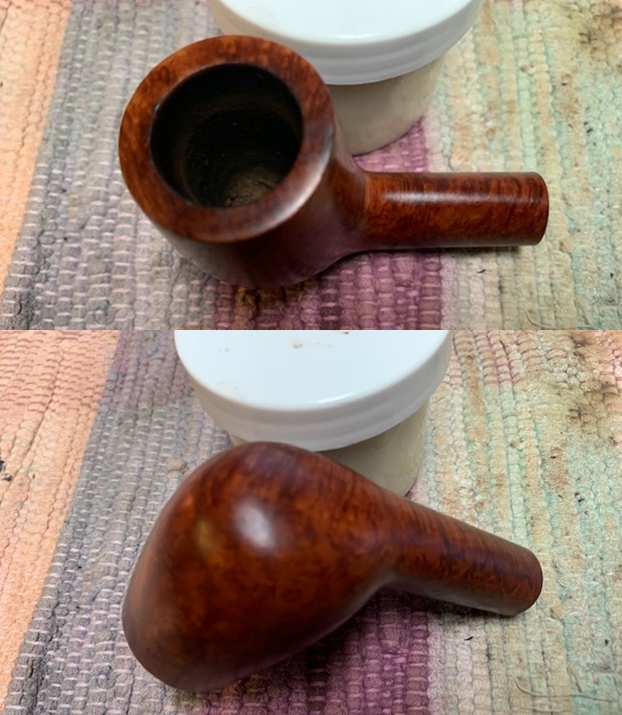
The next pipe on the table came to us from an estate that Jeff and I purchased from an old pipeman in the St. Louis, Missouri in the US. It is a Dunhill Shell Bent Billiard that is in decent condition. It still has the tag in the bowl from the time the older gentleman purchased it. It is stamped on a smooth panel on the underside of the shank. On the heel of the bowl it is stamped with the shape number 53F/T followed by Dunhill Shell [over] Made in England11. That is followed by 3 in a circle followed by S for shell. Interpreting that stamp it is as follows: The 53 is the shape for a bent billiard and the F/T is the stem shape – a Fish Tail stem. The Dunhill Shell is the finish which is corroborated the S at the end of the stamping. The 11 following the D of England gives the date the pipe was made and identifies it as 1971. The stamping is clear and readable. The pipe has a mix of brown stains on a sandblast finish and some amazing grain that the shape follows well. The finish was dirty with dust around the nooks and crannies of the sandblast. The bowl had been reamed and cleaned before the older gentleman purchased it. The stem was lightly oxidized but there were no tooth marks or chatter. The stem has the Dunhill White Spot logo on the top of the taper stem. I took photos of the pipe to show what it looked like before I started working on it. I took photos of the bowl and rim top to show how clean they were and of the stem to show the light oxidation and lack of damages to the surface of the stem on either side.The stamping on the underside of the shank is shown in the photo below. It looks very good and readable. It reads as noted and explained above.I took a photo of the pipe as a whole including the label that was in the bowl when we received it. It is fascinating to see that when he purchased the pipe he paid $300USD for it. He had said he picked it used in the 1970s. The shape number on the tag is incorrect and should read 53 instead of 63. I turned to Pipedia’s section on Dunhill Root Briar to get a bit of background on the Duhill finishes (https://pipedia.org/wiki/Dunhill#Root_Briar). I quote:

Shell

A deep craggy sandblast with a black stain finish (usually made using Algerian briar) – the color of the stain used has varied over the years. Although there is some doubt as to them being the first to sandblast pipes, Dunhill’s Shell pipes, and the sandblasting techniques developed to create them are considered one of Dunhill’s greatest and most lasting contributions to the art of pipe making.

The documented history of Dunhill’s inception of the Shell is largely limited to patent applications — there are no catalog pages or advertisements promoting blasted pipes at the time. The preliminary work on the English patent (No. 1484/17) was submitted on October 13, 1917. The patent submission was completed half a year later, on April 12, 1918, followed by the granting of the English patent on October 14, 1918. This was less than a month before the end of The Great War on November 11th.

In 1986 Dunhill released a line of premium Shell finish pipes – “RING GRAIN”. These are high-quality straight grain pipes which are sandblasted. Initially only Ring Grain, but now in two different finishes. In 1995 the “Shilling” was introduced with Cumberland finish – it is an extremely rare series. These pipes exhibit a deeper blast characteristic of that of the 1930’s – mid-1960’s (and the limited ‘deep blast’ pipes of the early 1980s) and show a fine graining pattern. These are considered the best new Dunhills by many enthusiasts today and are very rare. The finish is sometimes described as tasting like vanilla at first, with the taste becoming more normal or good as the pipe breaks in.

I have also included a chart from the site from Dunhill spelling out the Standard Pipe Finishes and giving short information and a timeline.I turned to work on the pipe itself. It was very clean with just some dust on the finish. The stem was going to take a bit of work but the bowl was quite simple. The bowl had been reamed and cleaned and the shank was spotless. If the pipe had been smoked at all it was lightly smoked and did not even smell of tobacco. So I rubbed the briar down with Before & After Restoration Balm. I worked it into the briar with my fingertips and a horsehair shoe brush to work it into the nooks and crannies of the sandblast finish. The product works to clean, enliven and preserve the briar. I let it sit for 10 minutes while I worked on the stem. After the time passed I buffed it with a cotton cloth to deepen the shine. The briar really comes alive with the balm. I set the bowl aside and turned my attention to the stem. Because it was in such good condition I polished the vulcanite with micromesh sanding pads – 1500-12000 grit pads. I wiped it down with Obsidian Oil after each sanding pad. I used Before & After Pipe Polish – both Fine and Extra Fine to further polish the stem.  This Dunhill Shell 53F/T Bent Billiard is a beautiful sandblast with the unique Dunhill Sandblast finish made in 1971. It is a great looking pipe that is in almost new condition. The dark finish that is identified as a black stain highlights some great grain around the bowl sides and the heel. It has some great rugged sandblast that Dunhill specialized in making. The finish on the pipe is in excellent condition and the stain works well to highlight the grain. The polished black vulcanite taper stem adds to the mix. With the dust gone from the finish and the bowl it was a beauty and is eye-catching. I put the stem back on the bowl and buffed the pipe with Blue Diamond on the buffing wheel being careful to not buff the stamping. I gave the bowl multiple coats of Conservator’s Wax and the stem multiple coats of carnauba wax on the buffing wheel and followed that by buffing it with a clean buffing pad. I hand buffed the pipe with a microfiber cloth to deepen the shine. The finished 53 F/T Bent Billiard is quite nice and feels great in the hand. Give the finished pipe a look in the photos below. I can only tell you that like the other pipes I am working that it is much prettier in person than the photos capture. The dimensions of the pipe are Length: 5 inches, Height: 1 ¾ inches, Outside diameter of the bowl: 1 1/8 inches, Chamber diameter: 5/8 of an inch. Thanks for walking through the restoration with me as I worked over another beautiful pipe. This pipe will be added to the British Pipe Makers section of the rebornpipes store soon. If you want to add it to your collection send me an email or a message! Thanks for your time.
Breathing Life into a 1957 (or is it a 1967) Dunhill Root Briar 251 EX606 Billiard


Blog by Steve Laug

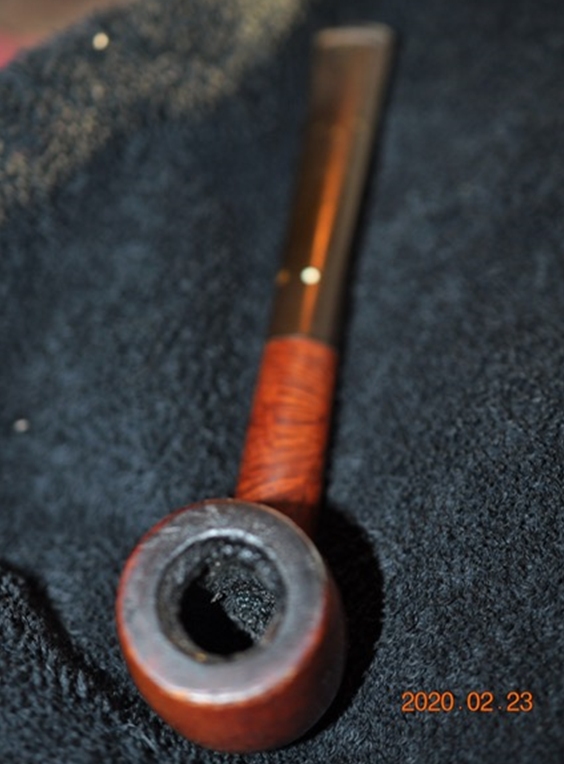
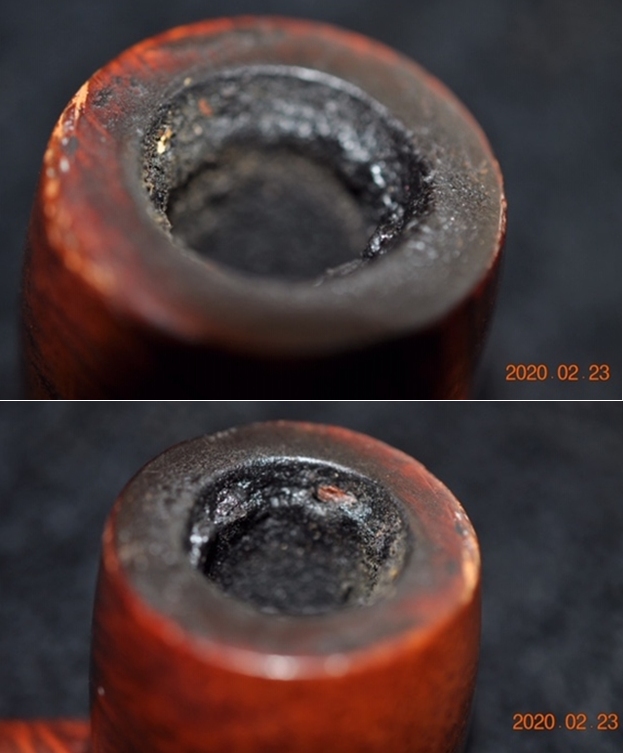
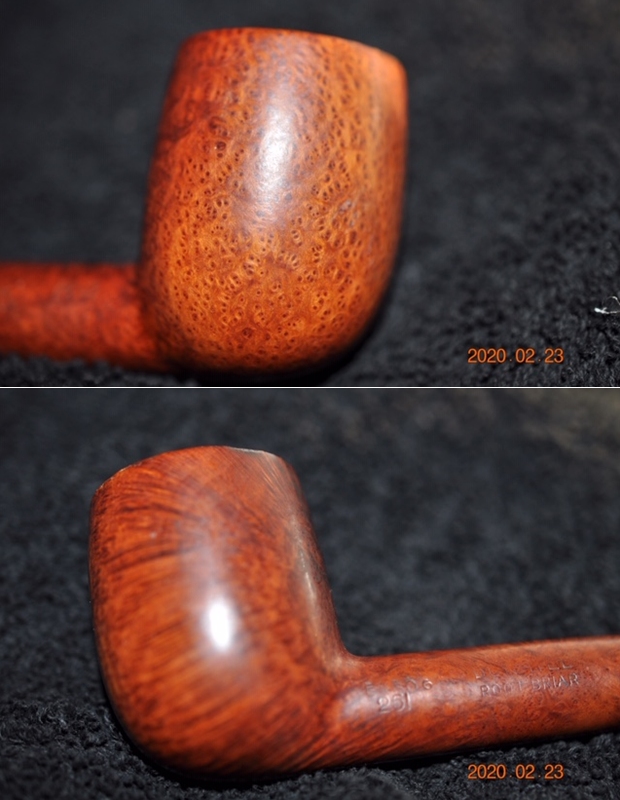
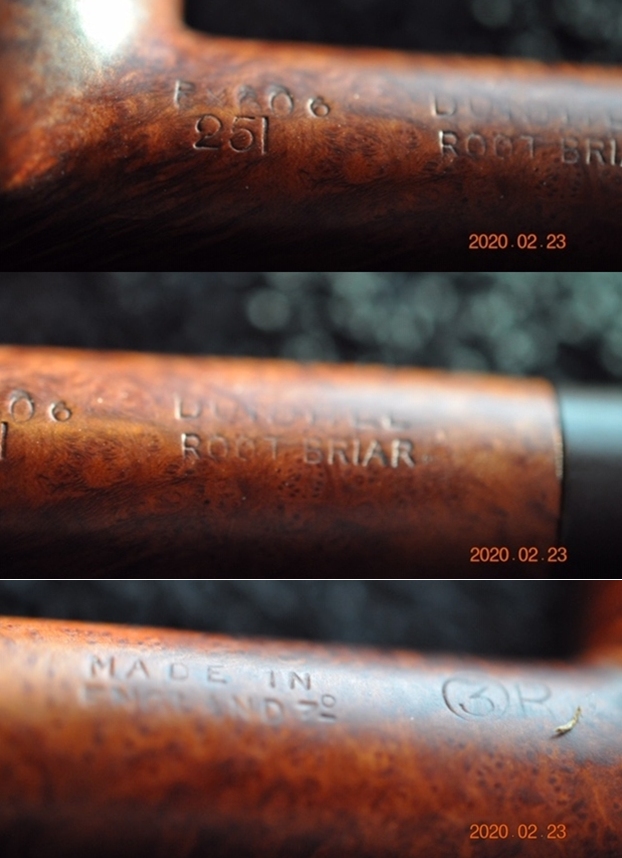
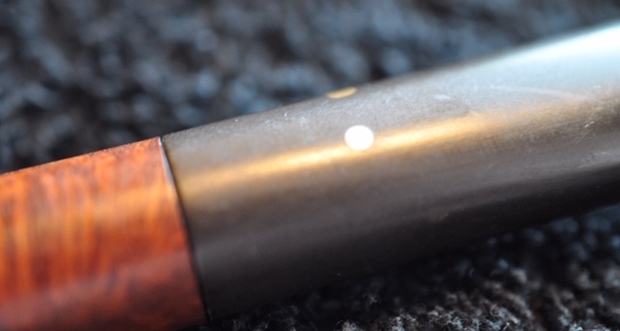
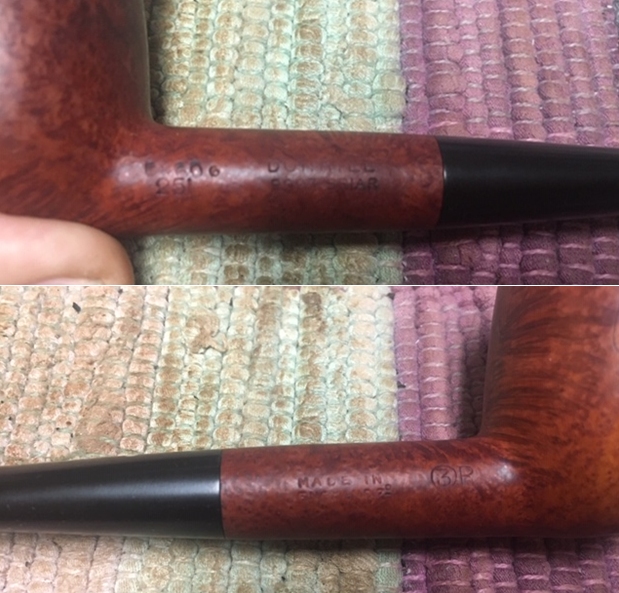
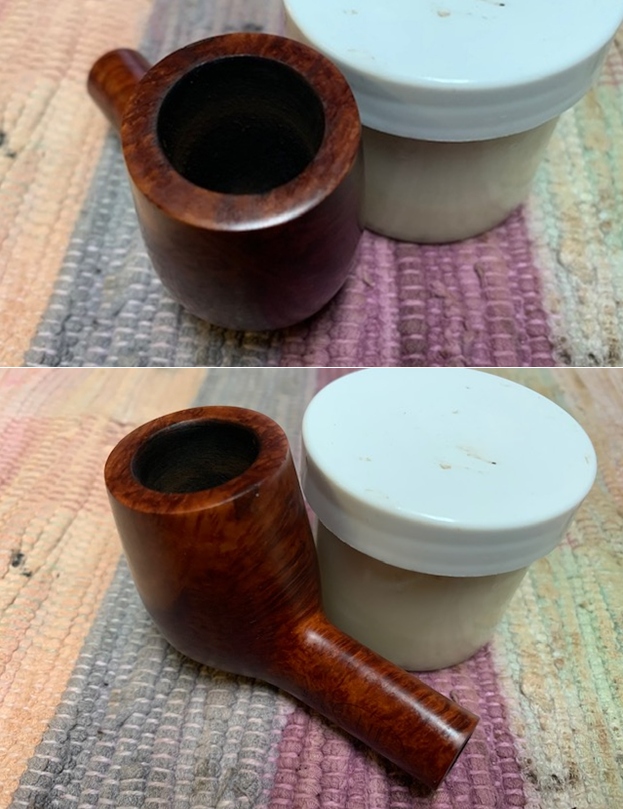
The next pipe on the table came to us from one of Jeff’s pipe hunts on the Oregon Coast. It is a Dunhill Root Briar Billiard that is in decent condition. It is stamped EX606 over 251 which is the shape number followed by Dunhill over Root Briar on the left side of the shank. On the right side it is stamped with the 3R (which is the Group size and the R for Root Briar) and to the left is reads Made in England with what looks like a 7 superscript to me and 0 which gives the date the pipe was made. The stamping is clear and readable. The pipe has a medium brown finish and some amazing grain that the shape follows well. The finish was very dirty with grime ground into the grain around bowl sides. The bowl had a thick cake in the bowl and a heavy lava overflow on the top and the inner edge of the top. There was a burn mark on the left outer edge of the bowl. It was hard to know the overall condition of the rim top and edges because of the grime. The stem was dirty, oxidized and had some calcification around the button. There was light tooth chatter and marks on the stem near the button on both sides. The stem has the Dunhill White Spot logo on the top of the taper stem. Jeff took photos of the pipe to show what it looked like before he cleaned it up. Jeff took photos of the rim top to show the thick cake in the bowl and the lava overflow on the top and damage to the outer edge of the rim. The photos show the rim top and bowl from various angles.Jeff took some photos of the bowl sides and heel to show the nice grain that was on this bowl. It is a quite beautifully grained pipe. The stamping on each side of the shank is shown in the photos below. They look very good and readable. Here is where the question comes in on the date – is the 7 after the D in England on the third photo below a superscript or is it the same as the D. To me it is a superscript. You can also see the White Spot on the top of the taper stem in the last of the four photos below. The stem was a very good fit to the shank. It was oxidized, calcified and had debris stuck to the surface of the vulcanite. There was tooth chatter and marks on both sides of the stem and on the button surface.    I turned to Pipedia’s section on Dunhill Root Briar to get a bit of background on this particular Duhill finish (https://pipedia.org/wiki/Dunhill#Root_Briar). I quote:

Introduced in 1931 and highly prized because the grain is more pronounced in this finish (usually made using Corsican briar). The Root Briar finish requires a perfectly clean bowl with excellent graining. Therefore, it is the most expensive of the Dunhill pipes. Corsican briar was most often used for the Root finish since it was generally more finely grained. This is a rare finish, due to the scarcity of briar suitable to achieve it. These pipes are normally only available at Company stores, or at Principle Pipe Dealers. Straight grained pipes were formerly graded A through H, but are now only “Dr’s” and graded with one to six stars, with the letters G and H still used for the very finest pieces.

The article also cited a section from John Loring confirming the above information and giving a bit more colour to the information.

“Dunhill introduced its third major finish, the Root finish, in 1931. Corsican mountain briar is characteristically beautifully grained and the Root was made exclusively from that briar into the 1960s. The pipe was finished with a light natural stain to allow the beauty of the graining to show through. Although always available with a traditional black vulcanite bit, the Root was introduced in either 1930 or more likely 1931 and fitted with a marble brown dark and light grained vulcanite bit that has since become known as the ‘bowling ball’ bit because of the similarity in appearance between the bit’s finish and that of some bowling balls of the time. With the war, however, the bowling ball bit was dropped from production. Through 1954 (and after) the Root pipe nomenclature (including shape numbers) was identical to that of the Bruyere except that instead of the “A” of the Bruyere, the Root was stamped with an “R”. In 1952 when the finish rather than LONDON was placed under DUNHILL, ROOT BRIAR rather than BRUYERE was used for the Root.” Loring, J. C., The Dunhill Briar Pipe, The Patent Years and After (self-published, Chicago, 1998).

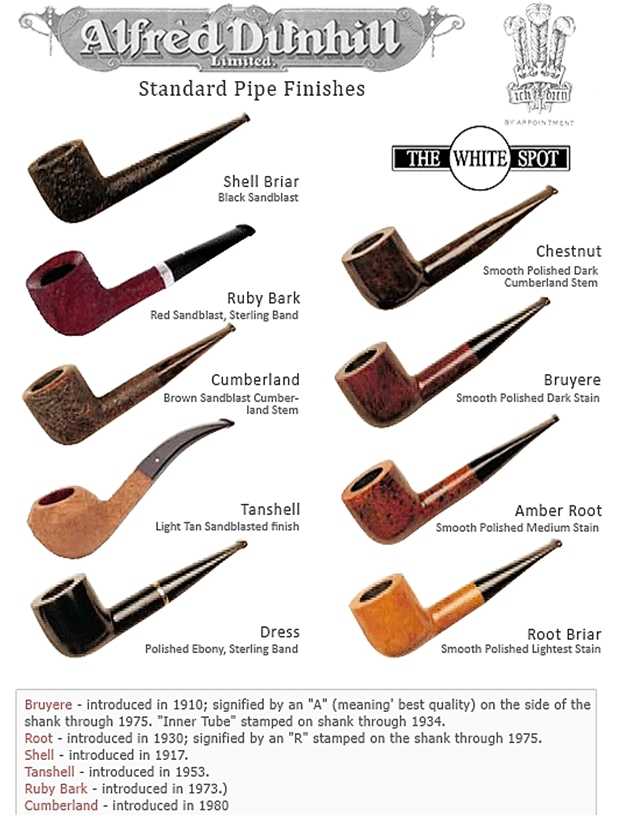
I have also included a chart from the site from Dunhill spelling out the Standard Pipe Finishes and giving short information and a timeline.

I also wanted to understand the additional stamps on the shank. There were two I wanted to clarify. One the left side there was the EX606 over the shape number. On the right side there was the superscript Date code and a second number – an underlined 0. I continued to search the connected pages on Dunhill. There was a specific page or section on the Dunhill Additional Stamps that helped some (https://pipedia.org/wiki/Dunhill_Additional_Stamps).

“The reason for dating a pipe was due to a one-year-guarantee offered by Dunhill, that they would replace a pipe if it had any issues in its first year. Sometimes, a pipe would be made and stamped, yet wouldn’t leave the factory until the next year or even later, when it would then receive a current extra date-code. Due to this, there are several examples of pipes with double, triple, or even quadruple date-codes stamped onto them.” Steven Snyder.

These additional codes were added by the retail stores – that’s why they were not uniform. For example, situations that the pipes were not sold in the same year of production, it was a way to establish a new warranty period. In cases where the customer requested a F/T stem (for example) or some minor cosmetic issue was found, the pipe returned to the factory and, in some cases, received a new coverage date. In these situations the extra date-code is uniform.

“It might have been added by the point-of-sales (shop, when the pipe was actually sold, so the guarantee period was easier to identify.” Hener, K. S., Product Line Director – The White Spot Smoker’s Accessory Division and Walthamstow site.

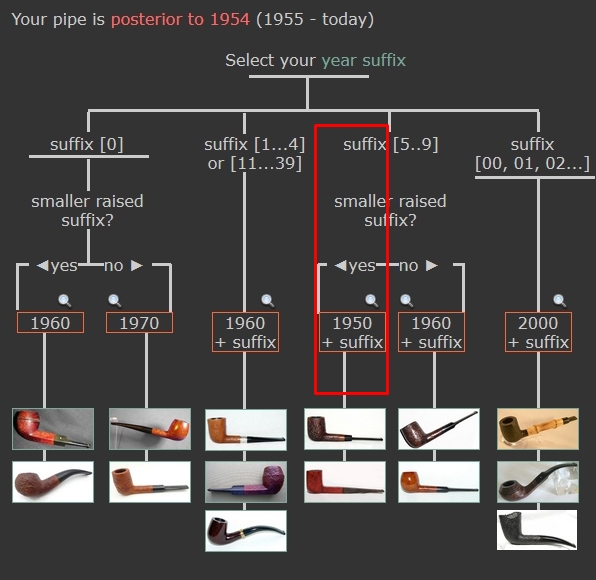
There is a bit of question as to the date on this pipe. I have had people on the various groups on Facebook say it is a 1957 sold in 1960 pipe and others say it is a 1967 sold in 1970 pipe.  All of the dating is dependent on how you see the 7 after the D in England. I turned to Pipephil (http://www.pipephil.eu/logos/en/dunhill/cledat-en1a.html) to see what I could find out. Here is the chart I used and I have drawn a red box around the portion I used.I also captured the stamping on two separate pipes to show my conclusion. The first one shows the stamp on a 1967 pipe with the 7 being essentially the same size as the D in England. The second one is a 1958 pipe with a smaller superscript that is in the same placement as the 7 on the pipe that I have in hand. So I am pretty confident that the double date stamp was the year the pipe was made and the year that it sold. In this case it was a 1957 pipe that sold in 1960.

I turned to Eric Boehm’s part of the article on the Pipedia section on the Dunhill shapes. I found the listing for the Billiard that I was working on but still no information on the EX 606 number above it (https://pipedia.org/wiki/Dunhill_Shapes_List). I quote:

251 Billiard, tapered bit (Relief bit) 3 5¾” 1950 3

That fits this pipe perfectly – a billiard with a tapered stem with a length of 5 ¾ inches. First used in 1950 in a Group 3 size.

I posted a question on the stamping on the Tobacco Pipe Restorers Group on Facebook and got this response from Alfredo Baquerizo:

This is a Root Briar from 1957 shape 251, group 3 and the R is for root. It’s an EX an exchange pipe by warranty Dunhill system. The 606 I think that is the exchange pipe number, I’m not sure.

I also posted on the Vintage Dunhill Pipes Group on Facebook and enjoyed the responses. One of the posters there, Jean-Paul Varon gave this information.

Ex606 = exchange of a pipe under guarantee.

That was the extent of the information that I could find at this point. It seems likely that the EX is the Dunhill Exchange Warranty system and the 606 could well be the Exchange pipe number. Is it possible that the EX606 could also include a date code in it? Possibly being the year 1960 and the sixth pipe of the year that was a replacement?

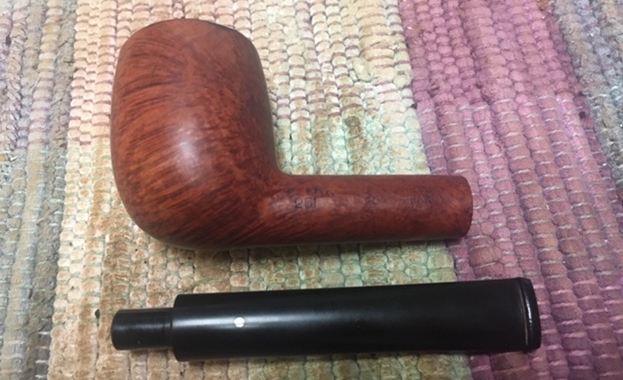
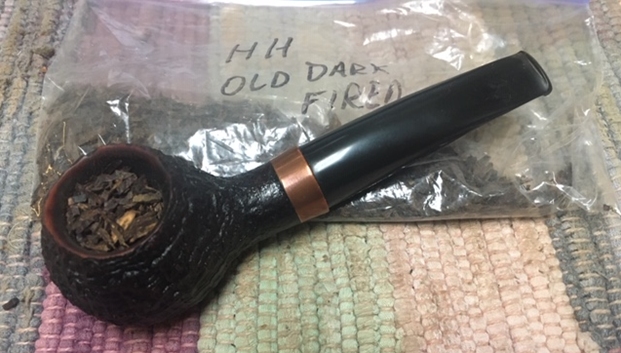
I turned to work on the pipe itself. Jeff had done a great job cleaning up the pipe as usual. He reamed the pipe with a PipNet reamer and cut back the cake back to the bare briar. He cleaned up the walls with a Savinelli Fitsall Pipe Knife. He scrubbed the interior of the bowl and shank with pipe cleaners, cotton swabs and alcohol to remove the tars and oils. He scrubbed the exterior of the pipe with Murphy’s Oil Soap and a tooth brush to remove the grime from the finish. He worked on the rim top lava and darkening with the soap and tooth brush. He scrubbed the inside of the stem with alcohol and pipe cleaners. He scrubbed the exterior with Soft Scrub and then soaked it in Before & After Deoxidizer. He washed it off with warm water to remove the deoxidizer. The pipe looked far better. I took photos of the pipe when I received it before I started working on it. I took photos of the bowl and rim top as well as the stem to show their condition. You can see the damage to the rim topo and inner edge. There a nicks and chip on the edge and top there is a burned area on the rear left outer edge. There is generally some heavy darkening on the top.  The stem on the other hand looks very good in the photos. I took photos of the stamping on the sides of the shank. The stamping is clear and readable as noted above.   I took a photo of the pipe with the stem removed to show the overall look of stem, tenon and profile of the pipe.I decided to start my work on the pipe by addressing the darkening and damage on the rim top and edges of the top. I lightly topped the bowl to remove the damage on the top and the inner edge of the rim. It also helped with the damage to the outer edge as well. I used a folded piece of 220 grit sandpaper to work on the inner edge a bit more. It took work but I was able to remove the majority of it. There was still one spot of burn damage on the left rear outer edge but it was smaller than when I had started.   I polished the briar with micromesh sanding pads – dry sanding with 1500-12000 grit pads and wiping the bowl down with a damp cloth after each pad.   I stained the polished rim top with the lightest coloured stain pen I have – Oak and was able to blend it into the overall colour of the bowl. The rim top looked amazingly better than when I started and has some great grain that is parallel to that on the heel of the bowl.I rubbed the briar down with Before & After Restoration Balm. I worked it into the briar with my fingertips. The product works to clean, enliven and preserve the briar. I let it sit for 10 minutes while I worked on the stem. After the time passed I buffed it with a cotton cloth to deepen the shine. The briar really comes alive with the balm.  I set the bowl aside and turned my attention to the stem. Because it was in such good condition I polished the vulcanite with micromesh sanding pads – 1500-12000 grit pads. I wiped it down with Obsidian Oil after each sanding pad. I used Before & After Pipe Polish – both Fine and Extra Fine to further polish the stem.   I decided to pause and go sit in the yard in the shade and enjoy a bowl of MacBarens HH Old Dark Fired in my Downie Pipe before I polished the Dunhill. Need a bit of a break!This uniquely stamped Dunhill Root Briar 251 Billiard is a piece of Dunhill’s Warranty History – made in 1957 and sold or exchanged in 1960 at least that is my call though others have seen it as made in 1967 and sold in 1970. It is a great looking pipe in spite of the remaining burn mark on the rim. The Light Brown stain highlights some great grain around the bowl sides and the heel. It has some of the most stunning birdseye grain I have seen in a while on the right side of the bowl. The finish on the pipe is in excellent condition and the stain works well to highlight the grain. The polished black vulcanite taper stem adds to the mix. With the grime and debris gone from the finish and the bowl it was a beauty and is eye-catching. I put the stem back on the bowl and buffed the pipe with Blue Diamond on the buffing wheel being careful to not buff the stamping. I gave the bowl and the stem multiple coats of carnauba wax on the buffing wheel and followed that by buffing it with a clean buffing pad. I hand buffed the pipe with a microfiber cloth to deepen the shine. The finished 251 Billiard is quite nice and feels great in the hand. Give the finished pipe a look in the photos below. I can only tell you that like the other pipes I am working that it is much prettier in person than the photos capture. The dimensions of the pipe are Length: 5 ¾ inches, Height: 1 ¾ inches, Outside diameter of the bowl: 1 ¼ inches, Chamber diameter: ¾ of an inch. Thanks for walking through the restoration with me as I worked over another beautiful pipe. This pipe will be added to the British Pipe Makers section of the rebornpipes store soon. If you want to add it to your collection send me an email or a message! Thanks for your time.
Restoring a long awaited Dunhill Shell Briar 483FT 4S Don


Blog by Steve Laug

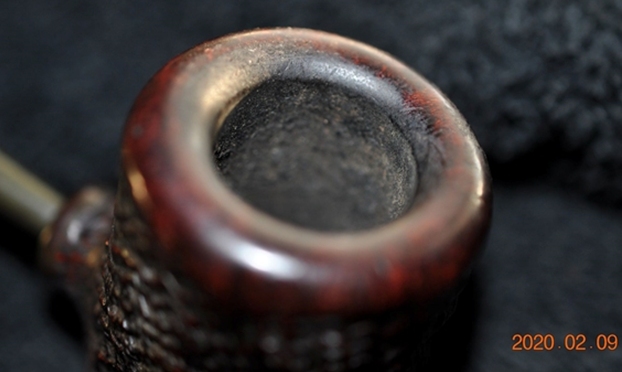
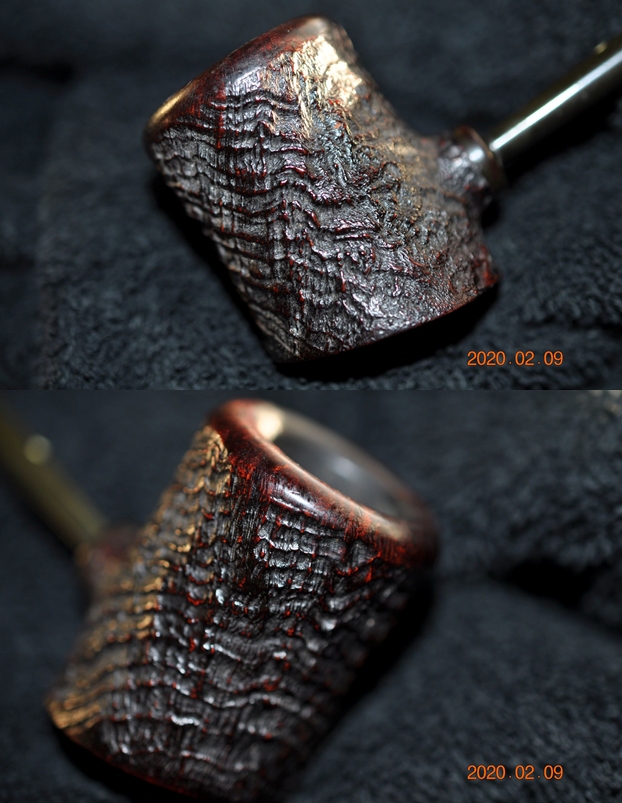
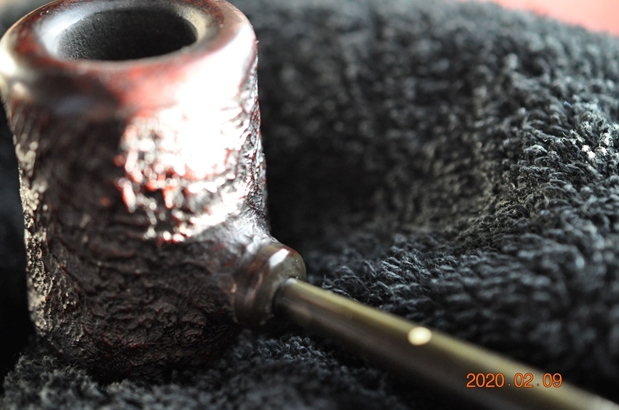
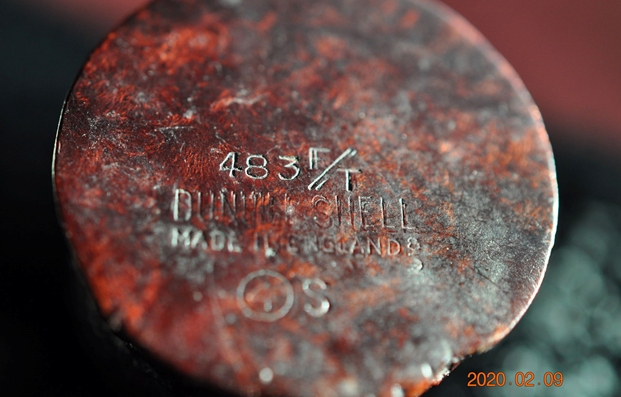
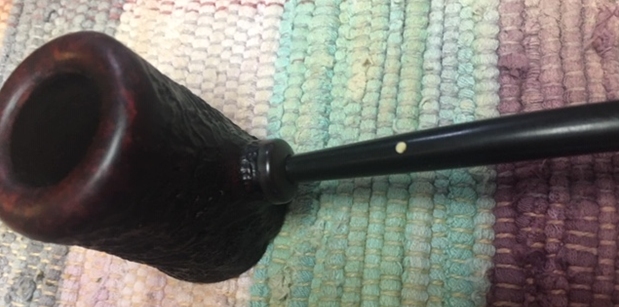
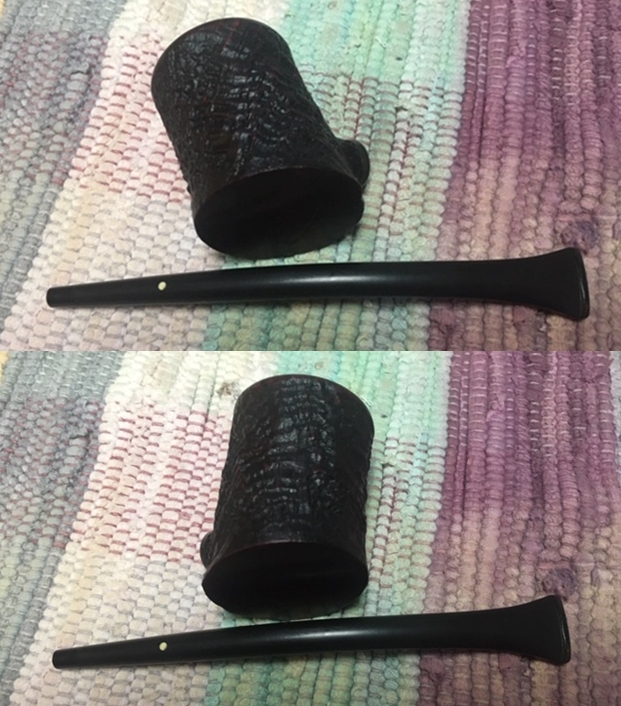
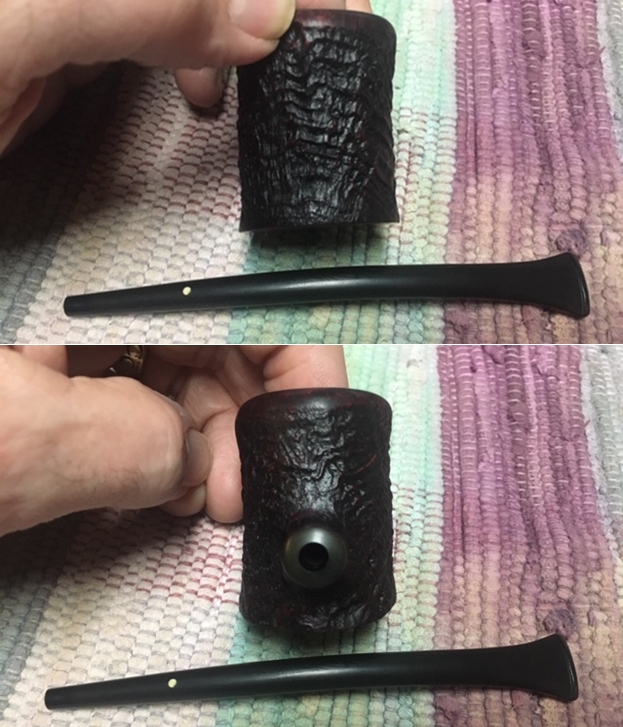
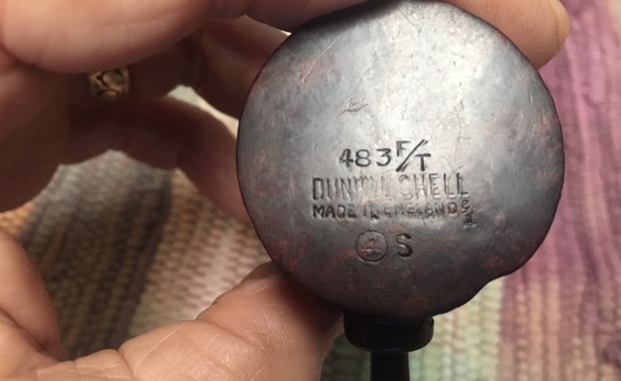
Not too long ago Jeff sent me pictures of a pipe that someone had sent him an email about. They were selling it and the price was not too bad for what it was. Interestingly it was a shape that I have been looking for, for several years. It was Dunhill shape that they called a Don. It had a Shell finish with deep sandblasting around the bowl and a smooth crowned rim top and base. The shank was very short and capped with a vulcanite button. The stem was a thin military bit fishtail with a broad flare at the button. The pipe is stamped on the base as follows: 483F/T over DUNHILL SHELL. Under that it was stamped Made in England with the numbers 8 and 9 following he D in England. From my research that means the pipe was made in 1968 and sold in 1969. There is a Circle 4S stamped as well – 4 referring to the size of the pipe (Group 4) and S referring to the Shell finish on the bowl. The pipe is very dirty with grime and dust in the sandblast finish. There is a thick cake in the bowl and an overflow of lava and tars on the crowned rim top. The base is dirty and has some scratching around the stamping but it is readable. The vulcanite shank cap was oxidized as and dirty. Then thin stem was oxidized and there were light tooth marks and chatter on the surface of the stem on both sides ahead of the button. Otherwise it is a clean looking stem. Jeff took photos of the pipe before he started his cleanup work. Jeff took photos of the rim top from various angles to show the condition of the bowl and rim as I described above. The finish appears to be okay beneath the grime and the inner and outer edge of the rim look very good under the thick cake and lava overflow. There do not appear to be any nicks of dents in the smooth briar crown of the rim. He took photos of the sides of the bowl showing the deep and rugged sandblast that I like on these Dunhill Shell pipes. This one was exceptional. You can also see the vulcanite shank cap in the photos. I have included the last photo is this series even though it is a little blurry because it captured the blast on the lower part of the left side of the bowl. Jeff took a photo of the stamping on the smooth heel of the bowl. It is a little double stamped but is still readable. There was a lot of grime and debris in the stamping and on the base.He took photos of the stem to show the oxidation as well as the wear on the button. You can also see the calcification, tooth marks and chatter on both sides.Using the information on pipephil’s site I was able to confirm my interpretation of the stamping spelled out above (http://pipephil.eu/logos/en/dunhill/shell-briar1.html). The 483F/T stamp tells me the pipe is a shape number 483 (a Don) while the F/T tells me that the stem is a fish tail stem. The Shell Briar stamp refers to the sandblast finish. The number 8/9 following the Made in England stamp identifies the date as 1968 and sold in 1969. The circled 4 is the Group bowl size. The S is the stamping for the Shell Briar finish.

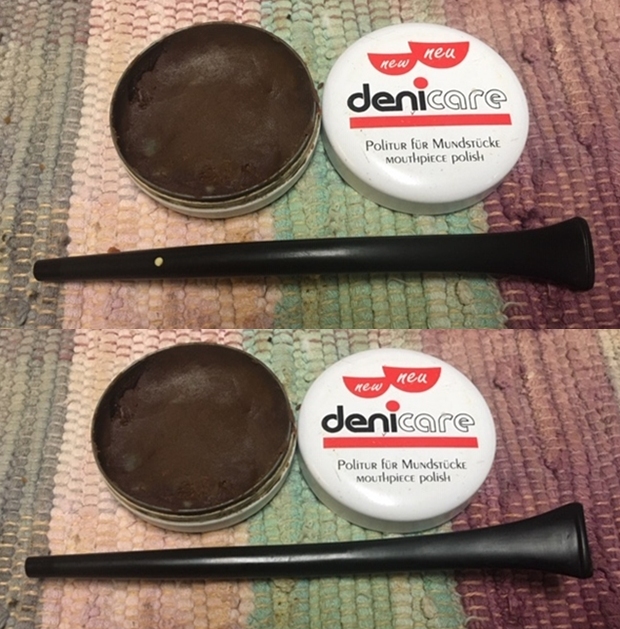
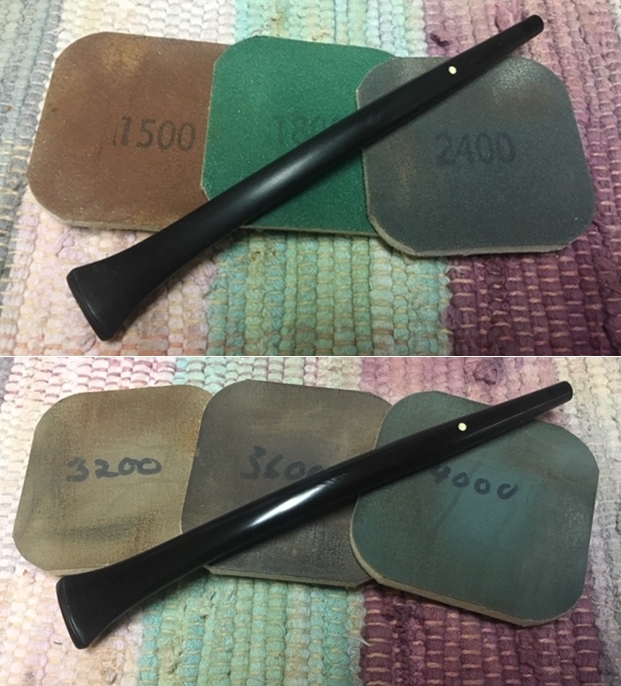
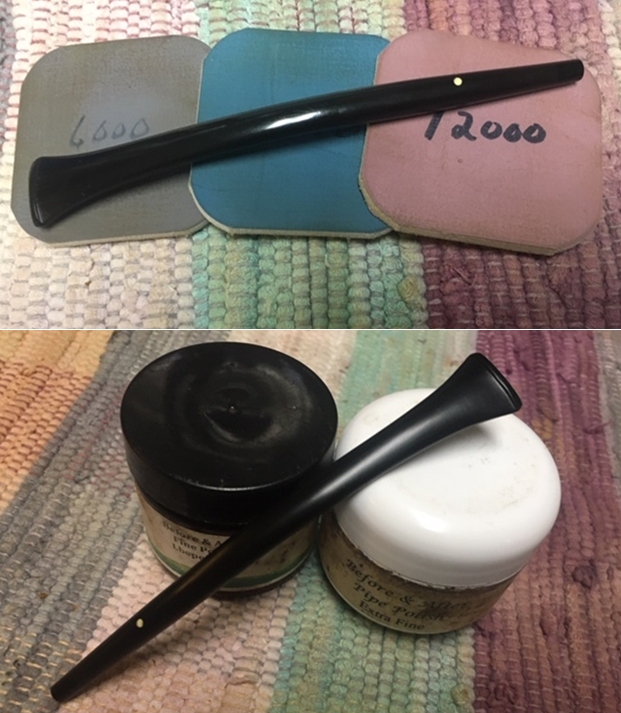
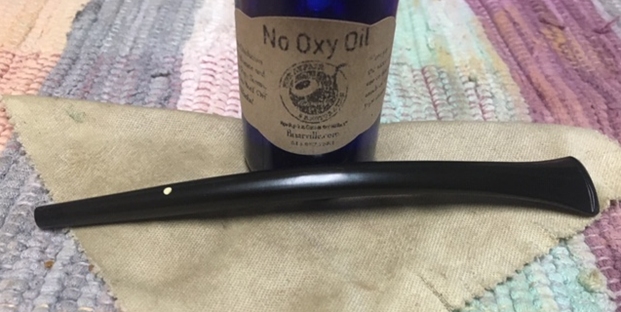
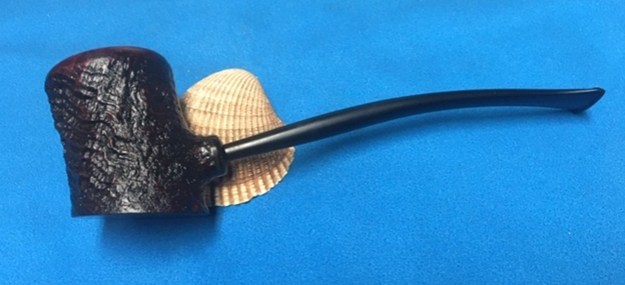
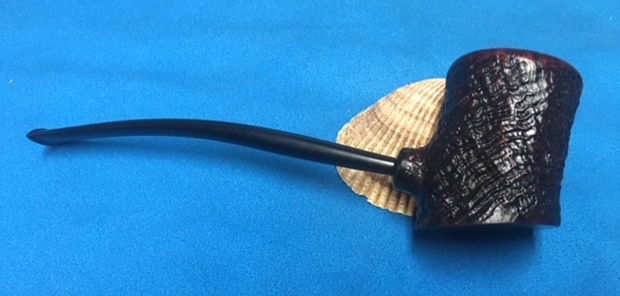
With that in mind I turned to work on this pipe. When Irene and I met with Jeff and Sherry on the Oregon Coast he sent me back with a bag of cleaned pipes and this was one of them. Jeff had done a great job in cleaning up this Dunhill. He had reamed the bowl with a PipNet reamer and cleaned up the remnants with a Savinelli Fitsall Pipe Knife. He took back the thick cake to the walls of the bowl. He also scraped off the lava and grime on the rim. He scrubbed the exterior of the bowl with Murphy’s Oil Soap and a tooth brush to remove the grime on the bowl and rim and rinsed it off with warm running water. He cleaned out the interior of the bowl and shank with pipe cleaners, cotton swabs and alcohol until they came out clean. The rim top looked much better when you compare it with where it started. He cleaned the stem with Soft Scrub to remove the grime on the exterior and cleaned out the airway with alcohol, cotton swabs and pipe cleaners. He soaked it in Before & After deoxidizer and rinsed it clean after wards I took some photos of the pipe as I saw it. It was a beautiful piece of sandblasted briar. To show how clean the rim top and stem really was I took a close-up photo of the rim and stem. The bowl was clean and cake free. The rim top is quite clean and the inner edge of the bowl has all of the lava removed. The crowned rim looks great. The vulcanite fishtail stem looks very good. The surface and the button edge appear to be in good condition. There were some small tooth marks and chatter on both sides but it looked good.I took a photo of the shank cap to show that it still had some oxidation but it was in good shape.I took the stem off the pipe and took photos of the bowl sides to show the rich and deep sandblast on the craggy sides of the bowl. I took a photo of the stamping and the heel of the bowl. It looks a lot better. You can see the double stamping on most of the stamp – readable but also has a ghost!I started my part of the restoration of the pipe by polishing the crowned rim top and the vulcanite shank cap with micromesh sanding pads. I dry sanded with 1500-12000 grit pads and wiped the surface of both down with a damp cloth between each sanding pad. I worked some Before & After Restoration Balm into the finish of the bowl and the rim top. I worked it into the surface with my fingertips and a horsehair shoe brush to clean, enliven and protect the wood. I let the balm sit for 10 minutes and buffed it off with a soft cotton cloth. I took photos of the pipe at this point in the process to show what the bowl looked like at this point. I set the bowl aside and turned my attention to the stem. I also sanded out the tooth marks and chatter on the surface of the vulcanite with a folded piece of 220 grit sandpaper. I followed the 220 grit sandpaper with 400 grit wet dry sandpaper to minimize the scratching.    I polished the stem with Denicare Mouthpiece Polish to take out the oxidation at the button edge and on the end of the mouthpiece. I buffed the stem with a microfiber cloth.I polished out the scratches with micromesh sanding pads – wet sanding with 1500-12000 grit pads. I wiped the stem down after each sanding pad with Obsidian Oil. I polished it with Before & After Pipe Stem Polish – both Fine and Extra Fine. Once I had finished the polishing I wiped it down with Briarville’s No Oxy Oil and set it aside to dry. I am happily on the homestretch with this pipe and I really look forward to the final look when it is put back together and polished and waxed. I put the bowl and stem back together. I polished the bowl and stem with a light touch of Blue Diamond on the buffing wheel. I gave the bowl multiple coats of Conservator’s Wax and the stem multiple coats of carnauba wax. I buffed the pipe with a clean buffing pad to raise the shine. I hand buffed it with a microfiber cloth to deepen the shine. The pipe polished up pretty nicely. The rugged sandblasted bowl really looked good with the polished black vulcanite. This 1968 Dunhill Shell Briar 483F/T Group 4 Size Don was a fun pipe to work on. The Don really has a classic Dunhill look in a Shell Briar finish that catches the eye. The combination of red and black stains really makes the pipe look attractive. It is a comfortable pipe to hold in the hand. The finished pipe is shown in the photos below. The dimensions of the pipe are Length: 6 ½ inches, Height: 2 inches, Outside diameter of the bowl: 1 3/8 inches, Chamber diameter: ¾ of an inch. This pipe is staying with me. I look forward to loading a bowl of a favourite Virginia and enjoying this pipe. Thanks for reading this blog and my reflections on the pipe while I worked on it. This is an interesting estate to bring back to life.

Cleaning up a 1965 Dunhill 631 F/T Root Briar Group 1 Billiard for Henry


Blog by Steve Laug

If you have followed rebornpipes for long you will know that I am a sucker for older pipes and that if I have restored pipes for you in the past I will definitely be available to you for future restorations. The post just previous to this one on an old 1902 LKL Cutty was an example of both of those these maladies of mine. This post speaks to the second one – if I have worked on a pipe for you in the past I will be available as best I can for future restorations. Some of you will recognize Henry Ramirez name as he was a long time contributor to rebornpipes with his innovative restorations. Henry is a dentist who retired not long ago and got rid of his restoration tools. He wrote to see if I could help him out with the restoration of a small Dunhill he had. He wrote the following email:

Hi Steve, long time no talk. I recently moved again to San Francisco and upon opening an empty tin of vintage Dunhill tobacco found the small Dunhill that I’d thought was lost. I’ve gotten rid of my pipe cleaning supplies since moving to an apartment and was hoping you could clean this pipe up for me. You seem to be very busy and in the middle of large restorations. Let me know if you can help. Best, Henry

What could I say to such a request from a fellow pipe restorer? I sent him an email and said I would take on his pipe. He packed it up and sent it to me in Vancouver. It arrived here a couple of weeks ago. Today, I took a break from the large estates and the other repairs I have going to work on Henry’s pipe. It is a small Dunhill saddle stem billiard. It is stamped on the left side of the shank 631F/T next to the bowl shank junction. The 631 is the shape number and the F/T is the designation for a Fish Tail stem. That is followed by Dunhill over Root Briar. On the right side of the shank it is stamped with a circle 1 R next to the bowl shank junction designating the group size of the pipe – a 1 and R which says it is a Root Briar. To the left of that it is stamped Made in England5 which tells me that the pipe was made in 1965. The finish on the bowl was dirty and spotty. The bowl had a thick cake in it and the lava overflowed onto the rim top. The inner edge of the bowl was damaged on the right side with both carving from a knife and a burned area. There was some darkening on the outer rim edge at the front of the bowl. It was in rough condition. The stem was not too bad. It was heavily oxidized but other than tooth chatter was in good condition. I took photos of the pipe before I started the restoration work to document the progress that way Henry can vicariously work on this pipe. I took some close up photos of the bowl and rim top and the stem surfaces. The first photo shows the condition of the bowl and rim top. I described the damage above but I have to say I probably minimized it in my description. It is in rough shape. The inner edge is hacked and uneven showing that it had probably been reamed with a knife. There was burn damage on the right inner edge and on the front edge. The stem on the other hand looked good other than the heavy oxidation on the surface. There was light tooth chatter but it still was in great shape.I took photos of the stamping on the shank. The left side was definitely in better condition than the left. You can see the stamping on the left side in the first photo. The second photo shows the right side of the shank. It reads as noted above.I turned to Pipedia to read about the Root Briar. I have worked on enough Dunhill pipes to have a good idea of the history and I already knew I was working on a 1965 pipe but I wanted to refresh my memory on the Root Briar finish (https://pipedia.org/wiki/Dunhill#Root_Briar).

(The Root Briar finish) was introduced in 1931 and highly prized because the grain is more pronounced in this finish (usually made using Corsican briar). The Root Briar finish requires a perfectly clean bowl with excellent graining. Therefore, it is the most expensive of the Dunhill pipes. Corsican briar was most often used for the Root finish since it was generally more finely grained. This is a rare finish, due to the scarcity of briar suitable to achieve it. These pipes are normally only available at Company stores, or at Principle Pipe Dealers. Straight grained pipes were formerly graded A through H, but are now only “Dr’s” and graded with one to six stars, with the letters G and H still used for the very finest pieces.

“Dunhill introduced its third major finish, the Root finish, in 1931. Corsican mountain briar is characteristically beautifully grained and the Root was made exclusively from that briar into the 1960s. The pipe was finished with a light natural stain to allow the beauty of the graining to show through. Although always available with a traditional black vulcanite bit, the Root was introduced in either 1930 or more likely 1931 and fitted with a marble brown dark and light grained vulcanite bit that has since become known as the ‘bowling ball’ bit because of the similarity in appearance between the bit’s finish and that of some bowling balls of the time. With the war, however, the bowling ball bit was dropped from production. Through 1954 (and after) the Root pipe nomenclature (including shape numbers) was identical to that of the Bruyere except that instead of the “A” of the Bruyere, the Root was stamped with an “R”. In 1952 when the finish rather than LONDON was placed under DUNHILL, ROOT BRIAR rather than BRUYERE was used for the Root.” Loring, J. C., The Dunhill Briar Pipe, The Patent Years and After (self-published, Chicago, 1998).

That was a good reminder for me of the character and the rarity of the finish. Henry was going to enjoy this pipe. Now it was time to work on it. I carefully removed the stem and found that there was an inner tube stuck in the shank. I examined it and found that I could see glimmers off it under the cake in the bowl. I would need to work on the cake and try to ream the bowl a bit around the entrance of the airway to loosen it. I reamed the bowl back around the airway with the tip of a Savinelli Fitsall Pipe knife. I ran alcohol down the tube using a pipe cleaner. I folded the pipe cleaner and dribbled alcohol around the end of the tube sticking into the bottom of the chamber. I worked alcohol in next to the tube using pipe cleaners. I paused and wiggled the tube regularly. I heated it a bit with a lighter and wiggled some more. Finally it came free. You can see all the debris on the outside of the tube.I cleaned up the outside of the tube with sandpaper to remove the grime. Once it was gone I could see significant damage to the tube. Where it was stuck in the shank there some deep pinch marks. Where it sat in the shank also had some grooves. It was actually damaged enough that I did not want to use it again. I have a box of inner tubes that I picked up in an estate I purchased. I have probably 8-9 different tubes of different sizes. I went through the tubes and found the identical tube but undamaged. The photos below show the original tube and the new replacement tube. I checked the fit in the bowl, shank and stem and it was perfect.I reamed the bowl with a PipNet pipe reamer using the smallest cutting head. I was able to remove the heavy cake. I cleaned up the remaining cake with a Savinelli Fitsall Pipe knife and then sanded the walls of the bowl with 220 grit sandpaper on a piece of dowel. I was pleased to see that the walls of the bowl were undamaged. I moved on to clean the interior. I scraped the walls of the shank with a pen knife to remove the oils and tars that had locked the inner tube in the shank. I was able to remove the majority of the debris with the knife. I followed up by scrubbing the airway in the shank and mortise as well as the stem with alcohol, cotton swabs and pipe cleaners. I scrubbed the exterior of the stem with some Soft Scrub to soften and remove some of the oxidation (of course I forgot to take photos of that part of the process). I used 3-4 cotton pads to scrub the stem and I was happy with the amount of oxidation that it removed. When I was finished I rinsed it off and dropped the stem into a bath of Before & After Deoxidizer. I left it in the mix for a while and turned my attention to the bowl.I topped the bowl with 220 grit sandpaper on a hard board to minimize the damage. I worked it over the sandpaper in a circular motion to reduce the scratches left behind by the sandpaper. When I finished topping it to my liking I used a folded piece of 220 sandpaper to give the inner edge of the bowl a bevel to reduce the burn damage. The third photo below shows the rim top after this treatment. It has come a long ways from the original rim top. I polished the briar with micromesh sanding pads – wet sanding with 1500-12000 grit pads. I wiped the bowl down with a damp cloth after each sanding pad to remove the debris from sanding. The photos show the developing shine on the bowl and rim top. I  used an Oak and a Maple stain pen to blend the colour of the rest of the bowl. I am happy with the blend as well as the new look of the rim top… What an improvement.I worked some Before & After Restoration Balm into the briar with my fingertips to clean, enliven and protect it. I find that the balm really makes the briar come alive again. It also works well to blend the restained areas of the bowl with the rest of the pipe. The contrasts in the layers of stain really made the grain stand out. I let the balm sit for a little while and then buffed with a cotton cloth to raise the shine. This is the point that tells the truth about the blend on the rim top. It really does look good! I am very happy with the way the pipe is looking at this point in the process. I set the bowl aside and turned my attention to the stem. I took it out of the Before & After Bath and scrubbed it with warm water to remove the bath product and blew out the airway. I buffed it with a rough cotton cloth but sadly the oxidation though better was still present. I scrubbed it again with Soft Scrub and was able to remove a lot more of the oxidation.I sanded the stem with 220 grit and 400 grit wet dry sandpaper to remove the oxidation that remained. Even after the sanding it was still present.I polished the stem with micromesh sanding pads – wet sanding with 1500-12000 grit pads. I wiped the stem down after each pad with a damp cloth. I polished it with Before & After Pipe Polish – Fine and Extra Fine. I finished by buffing the stem with Briarville’s No Oxy Oil. Now that the stem is finished the pipe is one step away from packing and sending back to Henry. It is a pretty little Group 1 Dunhill saddle billiard. The pipe cleaned up really well and the stem looks quite stunning in place. I put the new inner tube in place and put the pipe back together again. I buffed it on the wheel with Blue Diamond polish and then gave the entirety several coats of carnauba wax. I buffed it with a clean buffing pad to raise the shine. I hand buffed it with a microfiber cloth to deep the shine. It really is a beauty and should serve Henry well while he holds it in trust. The dimensions of the pipe are Length: 5 inches, Height: 1 ½ inches, Diameter of the bowl: 1 1/8 inches, Chamber diameter: 5/8 of an inch. I will be putting it in the mail to Henry on Monday after work. I am looking forward to what he thinks of the pipe when he receives it. I am happy with the finished look of the pipe. Thanks for walking with me through the restoration. It was a fun one with its own set of challenges.
Refreshing a Dunhill Root Briar 708 F/T Oval Shank Canted Stack for Alex


Blog by Steve Laug

Around Christmas time I got together with Alex to enjoy some great hot cocoa, smoke our pipes and talk about all things pipes. I always have a great time when we get together and this time was no exception. He greeted me at the door with slippers and an old smoking jacket. I took my seat in the living room among his latest pipe finds and was handed a great cup of cocoa. I set it down and we both loaded out pipes with some new Perretti’s tobacco that he had picked up. We touched the flame of the lighter to the tobacco and sat back and blissfully enjoyed the flavour. As we did Alex walked me through his latest finds. There were some amazing pipes to look at and savor. He had found several really nice pipes – 3 different Dunhill pipes that he wanted me to work on for him. I have already written a blog on the Dunhill Wanghee Tan Shell Briar with a Bamboo shank (https://rebornpipes.com/2020/01/08/refreshing-a-dunhill-tanshell-w60-t-1962bamboo-lovat-for-alex/). I have also written a blot on the reconstruction of a nice little Shell Briar Lovat(https://rebornpipes.com/2020/01/11/breathing-life-into-a-worn-and-beat-up-dunhill-shell-briar-ec-canadian-for-alex/). The third Dunhill he had picked up is a shape number I could find little information on – a shape 708F/T Root Briar. For lack of a better title for the shape I have called it a canted stack.
Alex had reamed the pipe and cleaned the pipe very well. The bowl was clean. The rim top had a lot of damage including burn marks and dents. The bowl was also very far out of round with damage around inner edge. There were burn marks on the inner and outer edge toward the right front side of the bowl. The finish looked very good around the bowl other than the burn mark on the left side where it looked like the bowl had been laid in an ash tray against a hot ash. He had already enjoyed smoking it and was hooked on it. He asked if I could take it home with me and see what I could do about the rim top damage and the burn mark on the bowl. I told him I would take it home and have a go at it. The pipe was stamped on the left side of the shank with the following nomenclature: 708F/T at the bowl shank junction followed by Dunhill over Root Briar. The Dunhill Root Briar stamp is faint but readable with a lens and light. The right side reads Made in England followed by what looks like a 2 (another 1962?) and a Circle 4 A. The 4 is the size of the pipe and the A is the designation for Root Briar. The stamping on the right side of the shank is also faint.

When I got home I laid it aside and today took it up to work on it. I examined the pipe to see what I was working with and took some photos. You can see from the first photo below that there was a burn mark on the left side mid bowl. It was a cosmetic burn marks in the finish but not too deep. It was like the pipe had been laid down in an ashtray. The rim top had significant darkening and damage. The stem was in good condition other than tooth chatter on both sides just ahead of and on the top of the button. Overall the pipe was in good condition. I took a close up photo of the rim top. You can see the darkening on the rim top and the damage on the front inner and outer edge of the bowl. The inner edge was hacked up like it had been poorly reamed with a pocket knife. There were also nicks and deep scratches in the rim top. It was in rough shape. The stem looked pretty good. There was tooth chatter on the top and underside of the stem and on the button surface itself. Otherwise the stem was in very good condition.I took a photo of the stamping on the underside of the bowl. You can see that it reads as noted above. It is indeed faint but with a lens and light it is very readable.I decided to start the refurbishing by addressing the issues with the rim top and inner edge of the bowl. I lightly topped the bowl on a topping board with 220 grit sandpaper. Once it was smooth I worked on the inner edge of the bowl with a folded piece of 220 grit sandpaper. I also cleaned up the burned outer edge on the rim front. I sanded the burn mark on the left side of the bowl with the 220 grit sandpaper and was able to minimize the burn a bit. It was deeper than I initially thought. I polished the rim top and bowl with micromesh sanding pads – wet sanding it with 1500-12000 grit sanding pads. I wiped the bowl down after each sanding pad with a damp cloth to remove the dust and debris left behind by the sanding. I used a Maple Stain Pen to blend the sanded area on the side of the bowl and the rim top with the rest of the finish on the bowl. I have found that this particular stain pen works well to match the stain on the Root Briar.With the finish cleaned I rubbed it down with Before and After Restoration Balm. It is a product developed by Mark Hoover to clean, enliven and protect briar. I worked it into the briar with my fingertips. I let it sit while I went and had some lunch. When I came back I buffed it off with a cotton cloth. You can see the results below. While the burn mark did not disappear it is significantly lighter than when I started. The rim top also looks much better. I set the bowl aside and turned to address the tooth chatter on the stem surface. The stem was in excellent condition other than that so it did not take a lot of work. I used a folded piece of 220 grit sandpaper to sand out the tooth marks and then started the polishing with 400 grit sandpaper.I polished it further with Denicare Mouthpiece Polish – a red paste that does a great job in removing the oxidation remnants in the crease of the button and also polish out some of the lighter tooth chatter.I finished the stem with micromesh sanding pads – wet sanding it with 1500-12000 grit pads and wiping it down after each pad with a damp cotton pad to remove the dust. I polished it with Before and After Pipe Polish – both fine and extra fine. I finished by wiping the stem down with some No Oxy Oil that I received from Briarville Pipe Repair to experiment with. Once I finished I put the stem back on the shank and carefully buffed the pipe and stem with Blue Diamond polish. I wanted to polish out the minute scratches in the briar and the vulcanite. I gave the bowl and the stem several coats of carnauba. I buffed the pipe with a clean buffing pad and hand buffed it with a microfiber cloth. The finished Root Briar pipe is shown in the photos below. It is a great pipe and certainly looks better than when I began the process. The dimensions of the pipe are Length: 5 ½ inches, Height: 1 7/8 inches, Outer Bowl Diameter: 1 1/8 inches, Chamber Diameter: ¾ of an inch. The pipe will soon be heading back to Alex so he can continue to enjoy it. This is a beauty that he can enjoy as he carries on the trust of these Dunhill pipes. Thanks for walking with me through the restoration.