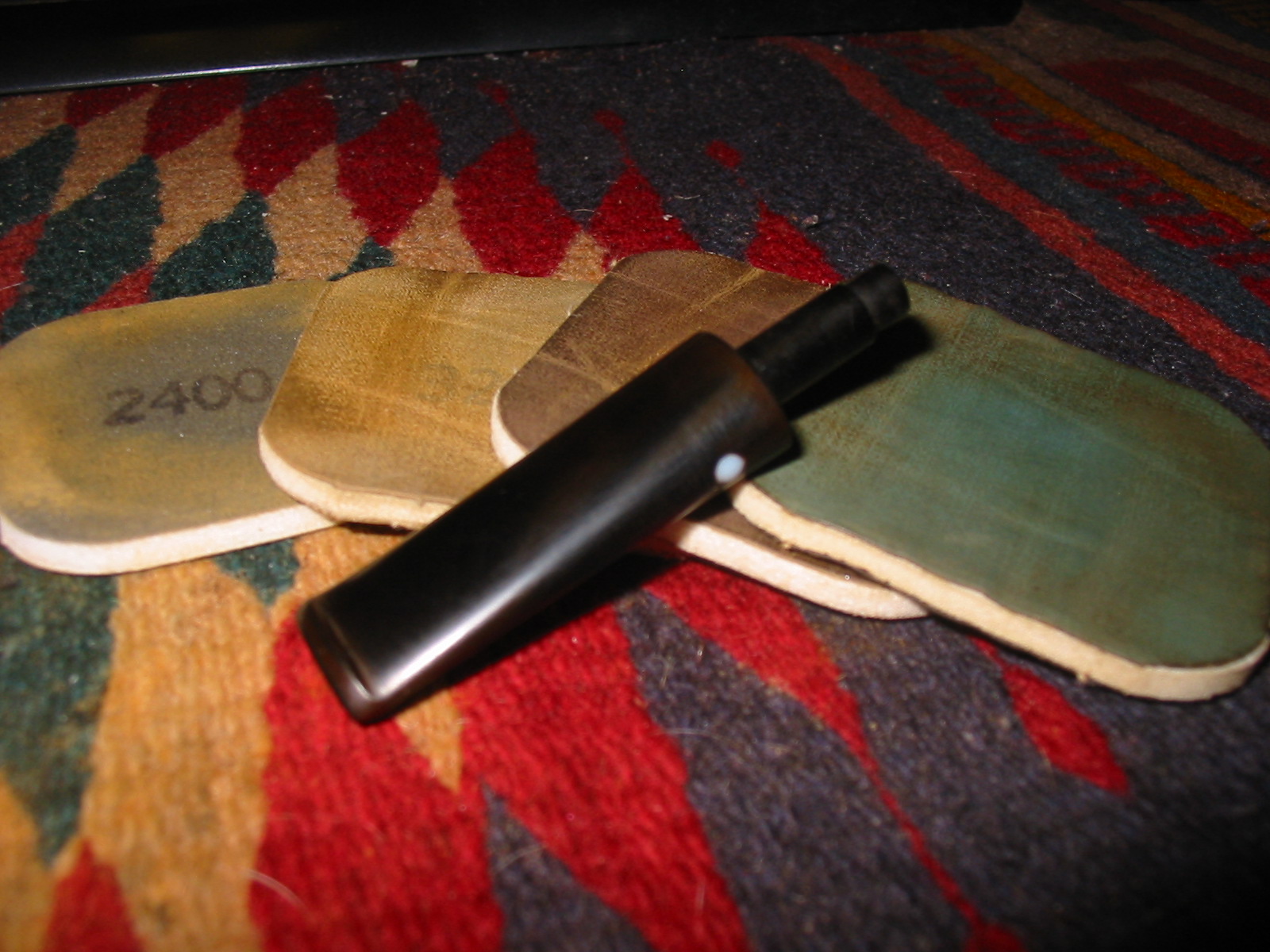
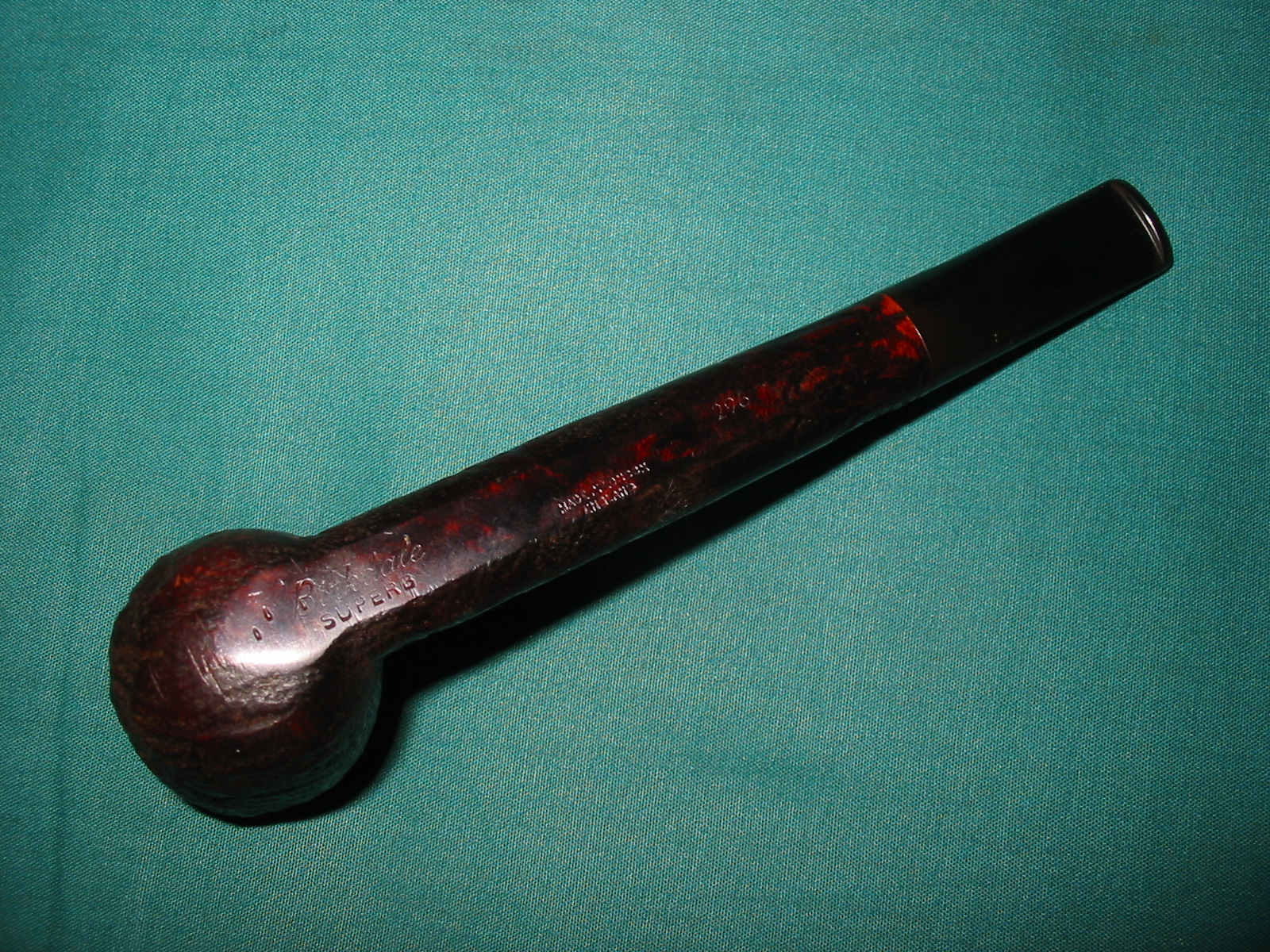
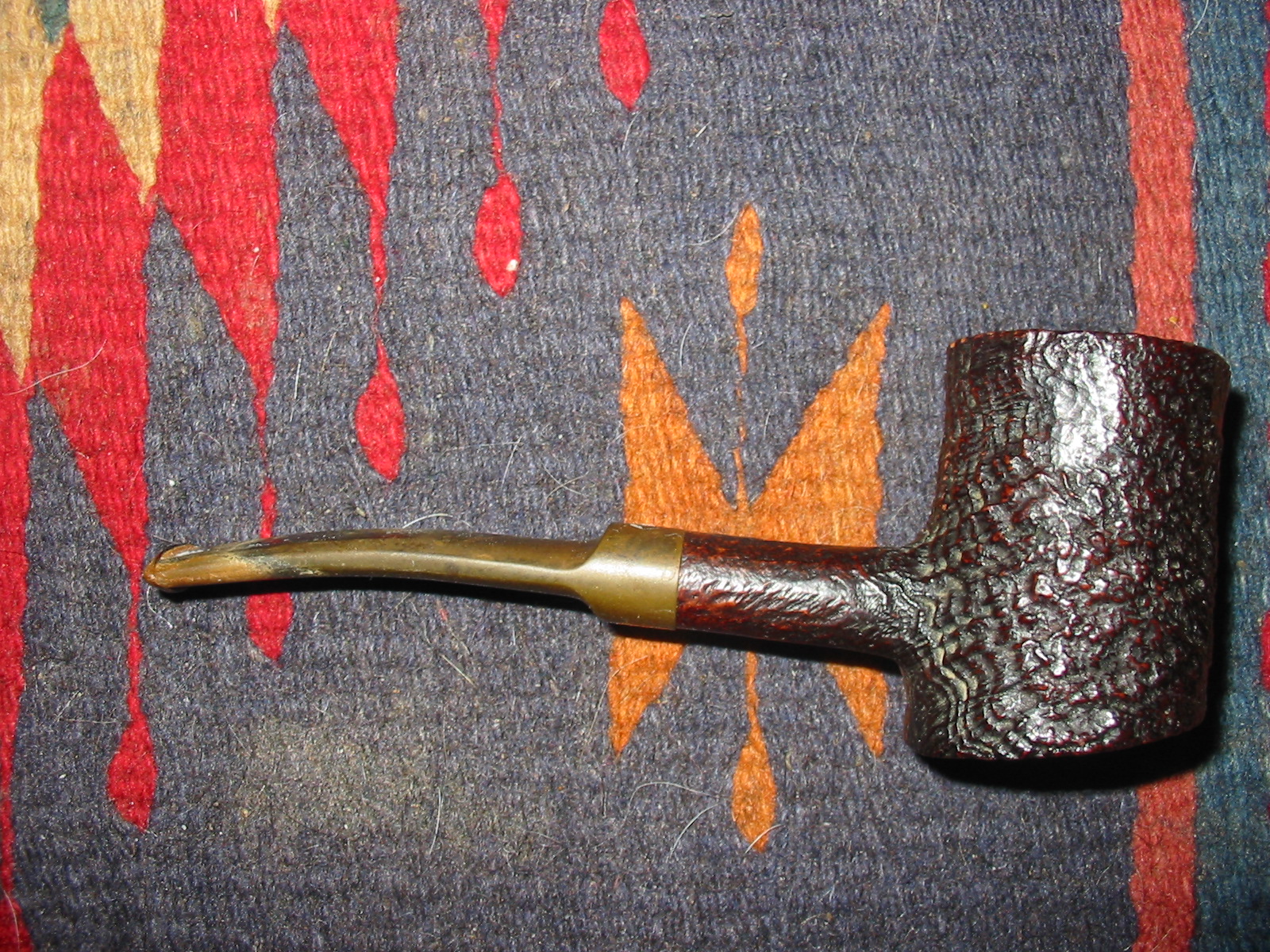
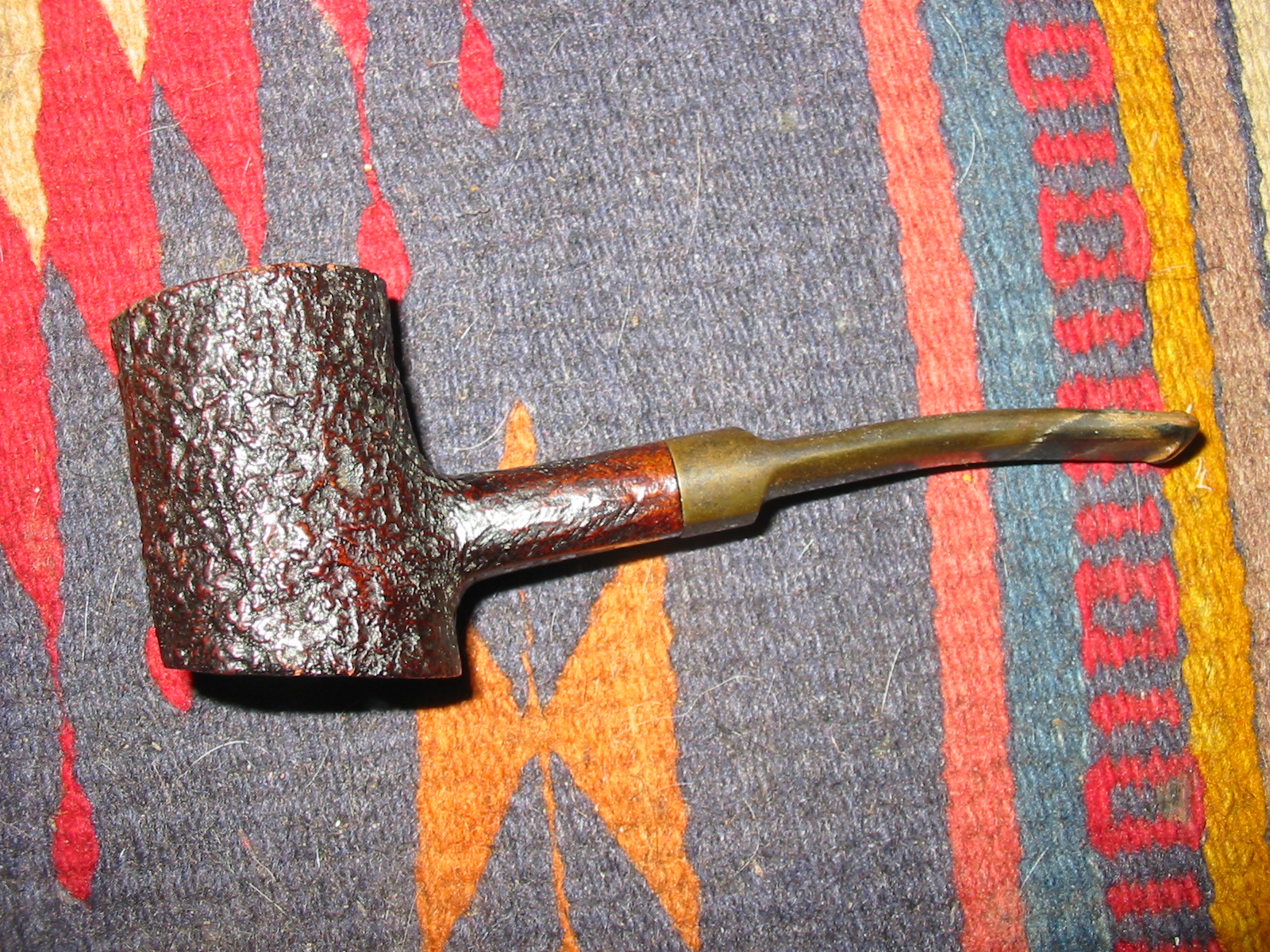
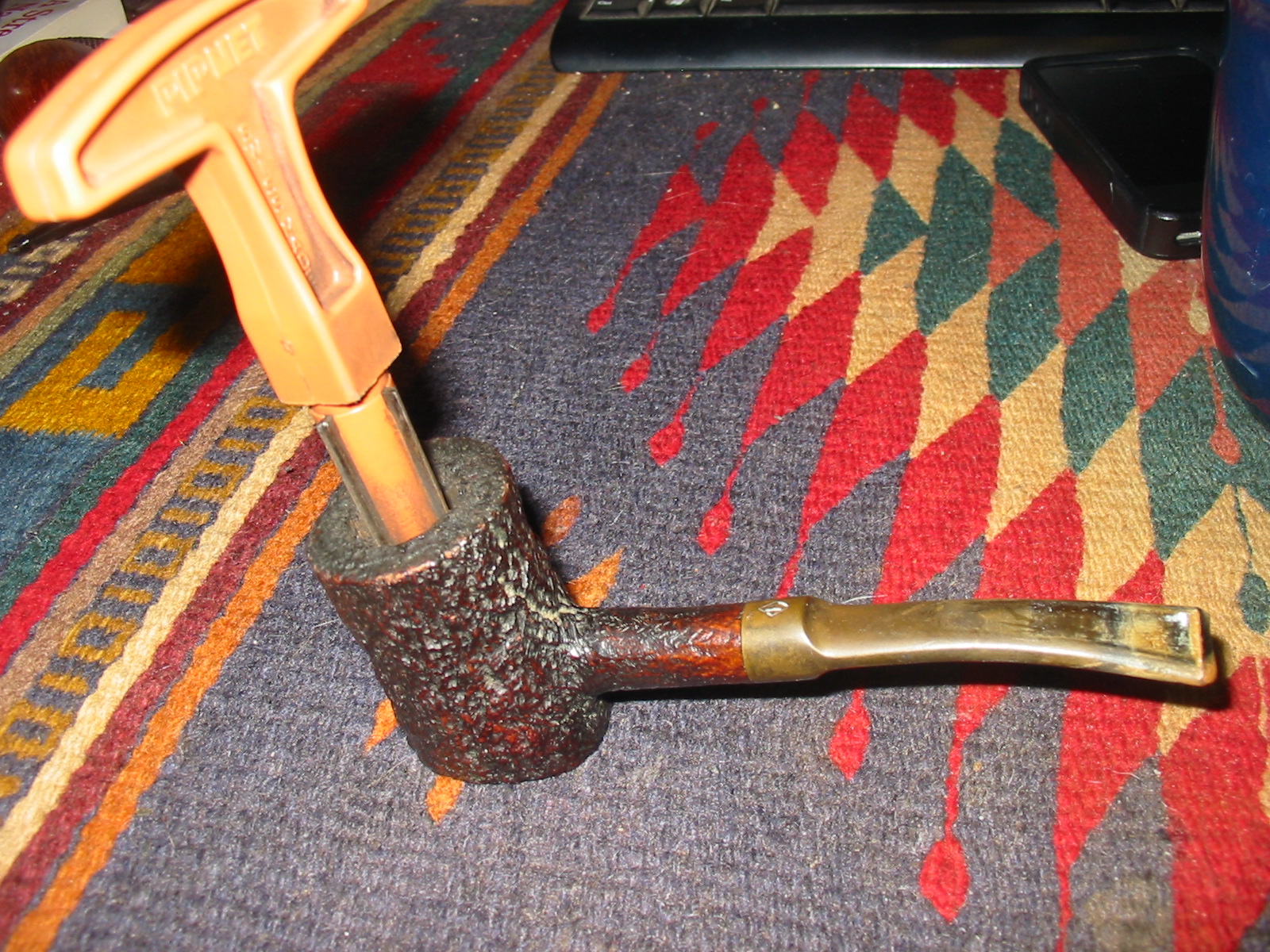
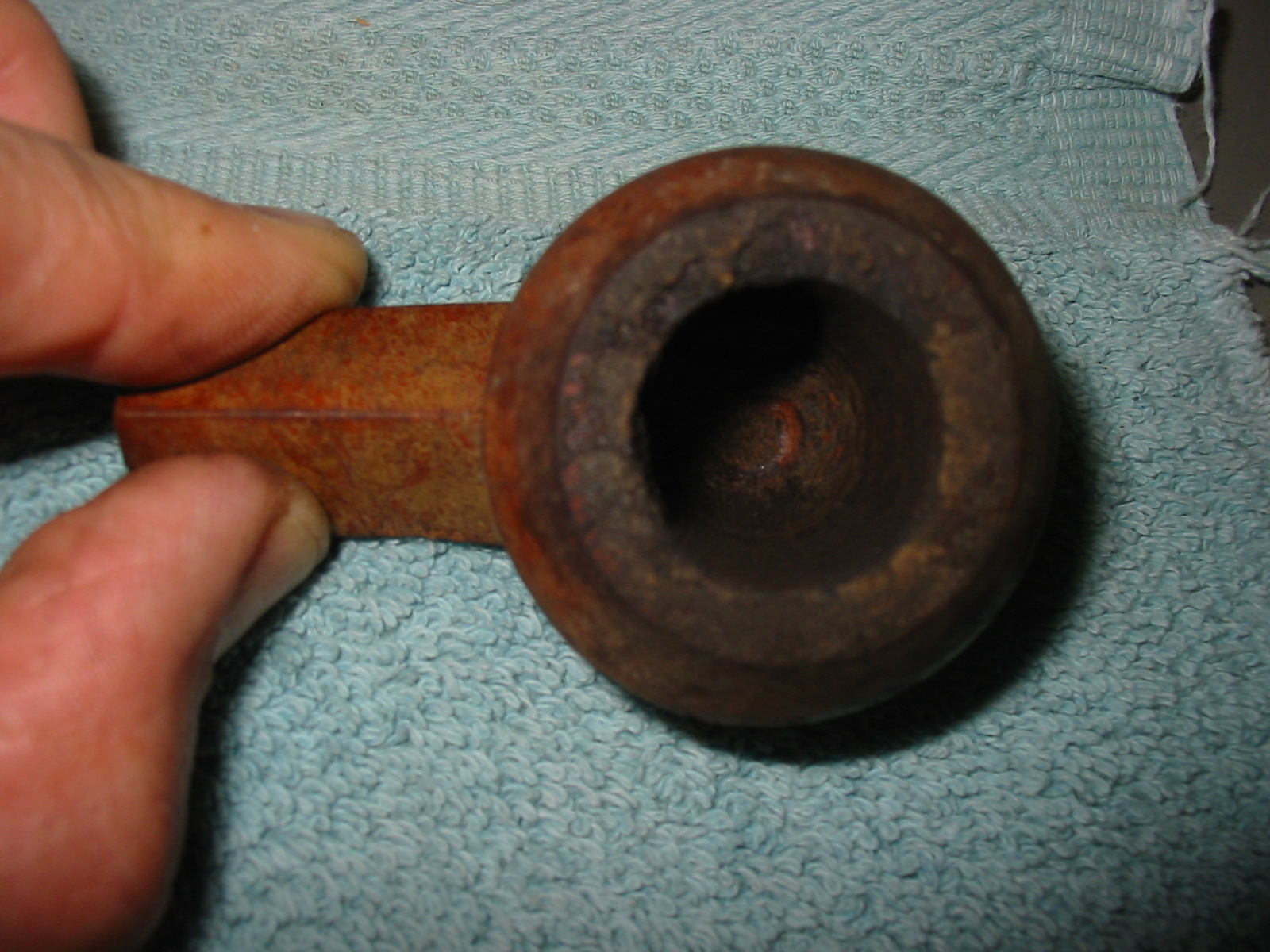
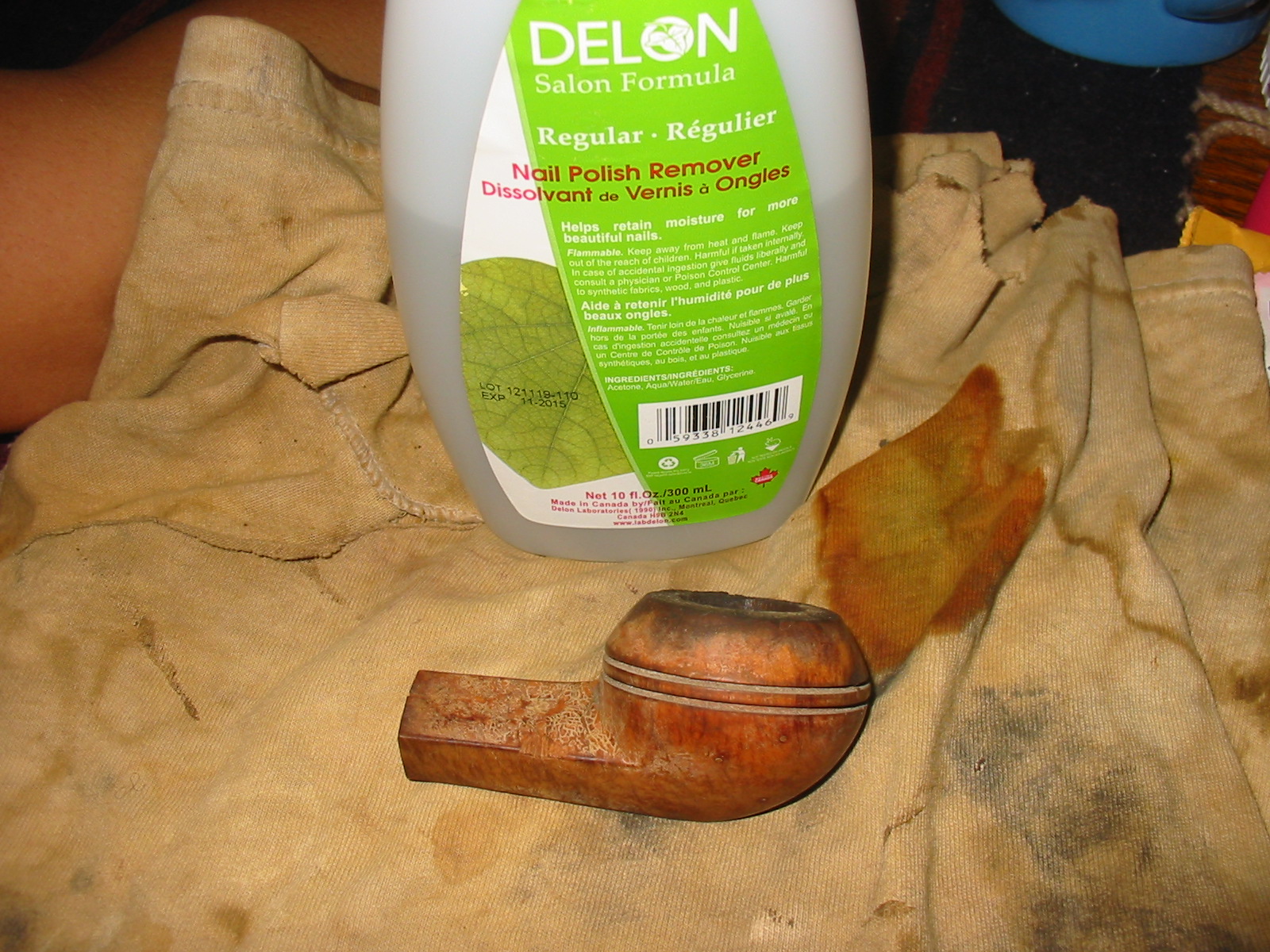
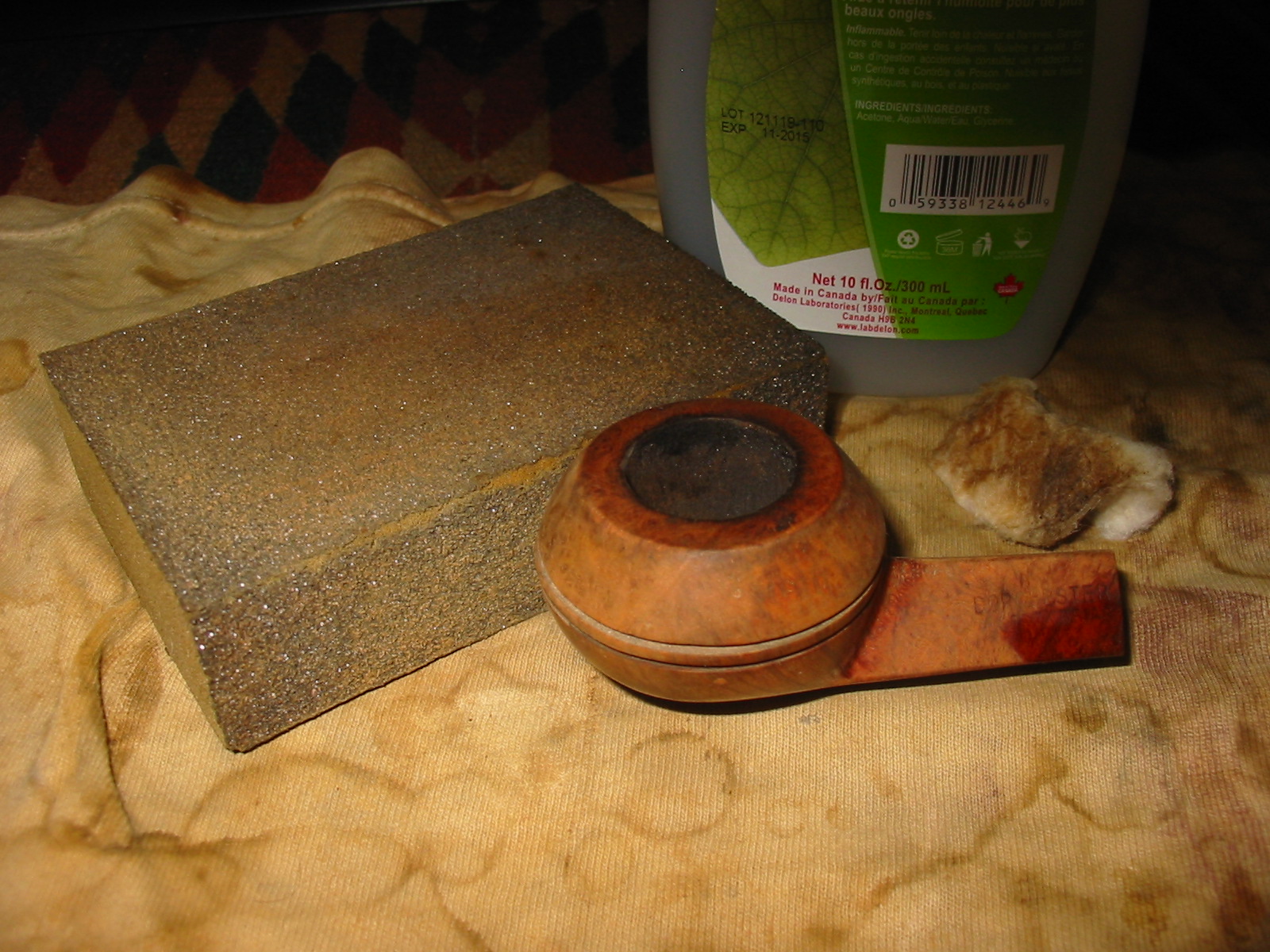
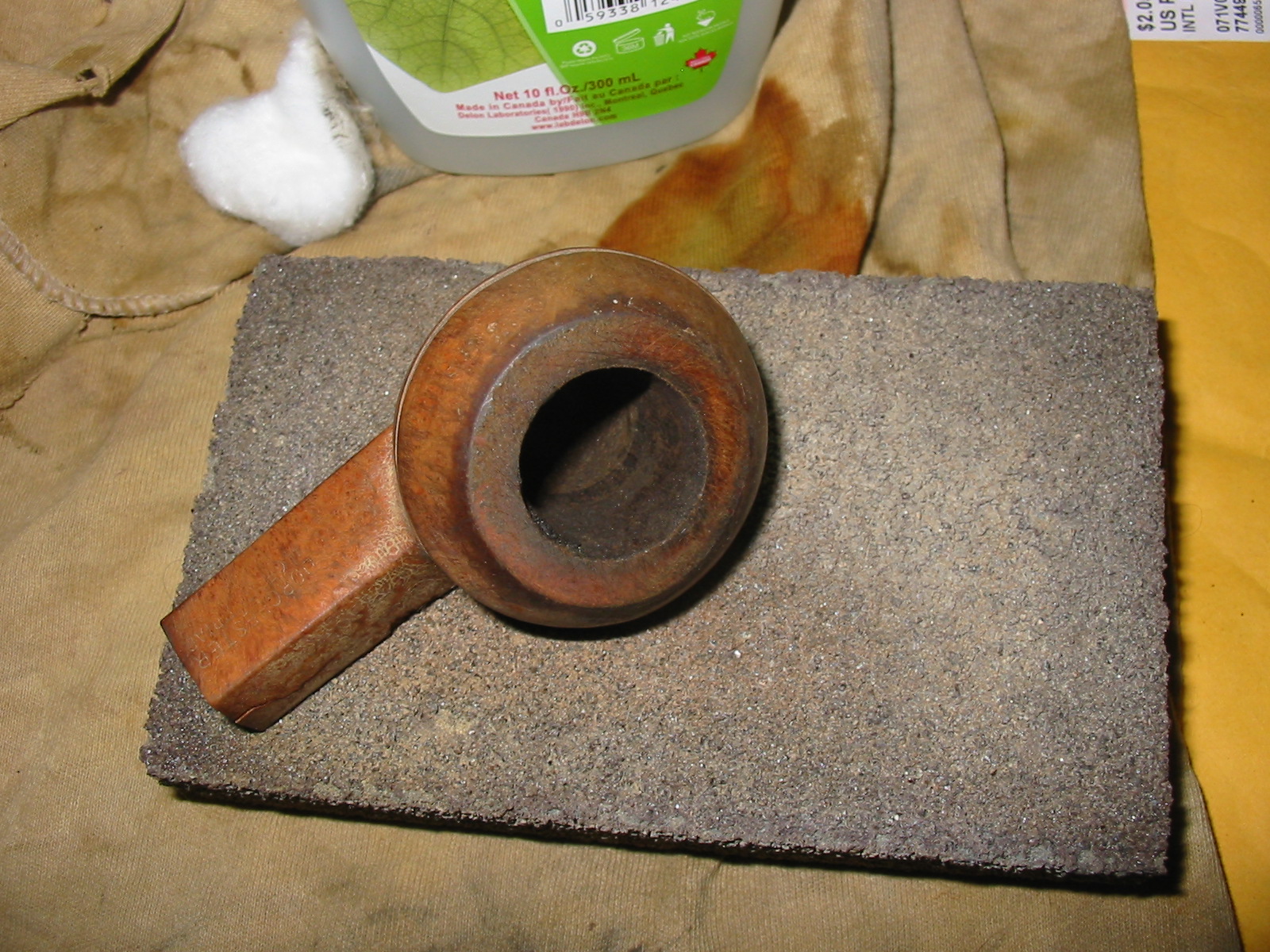
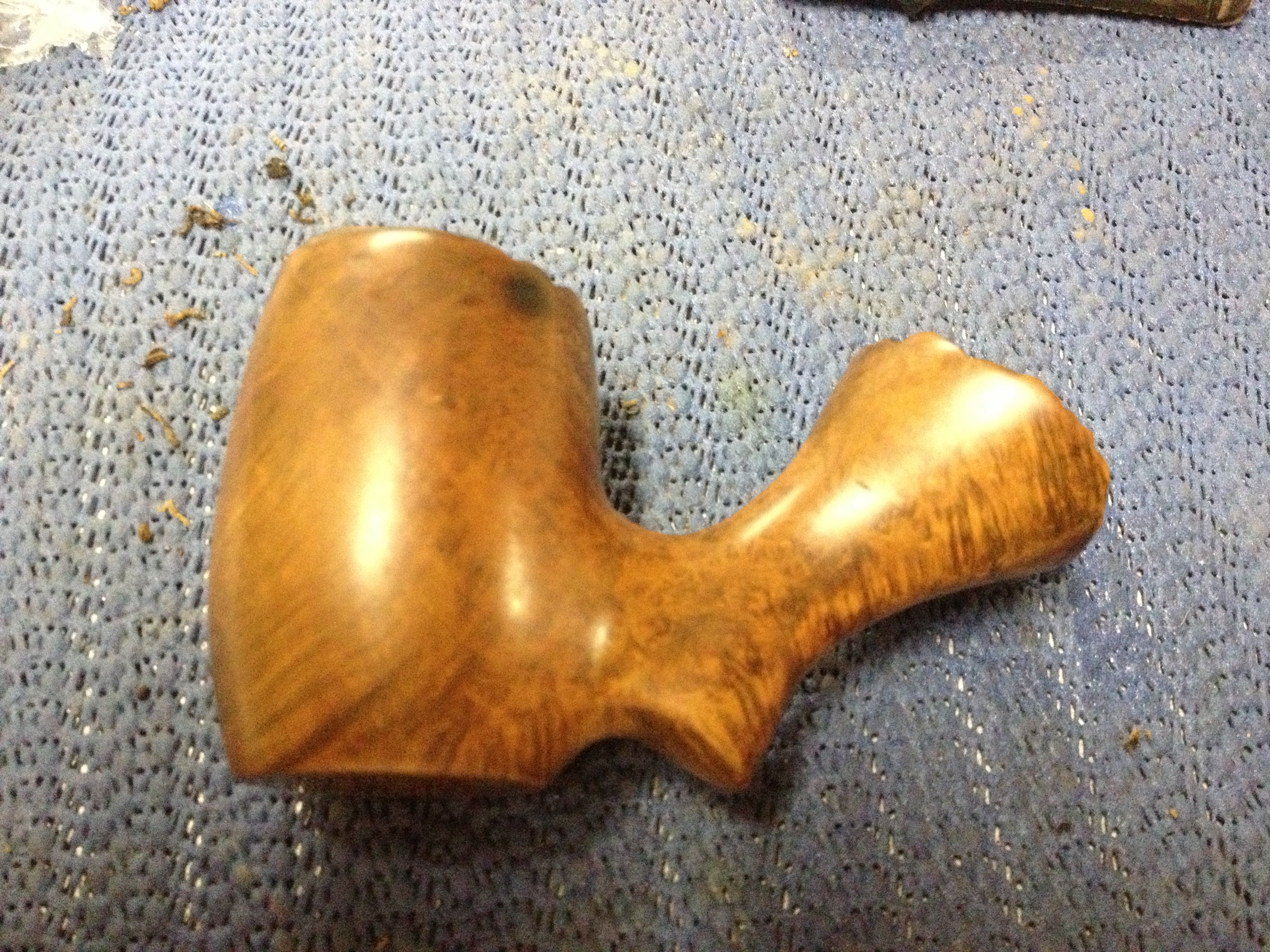
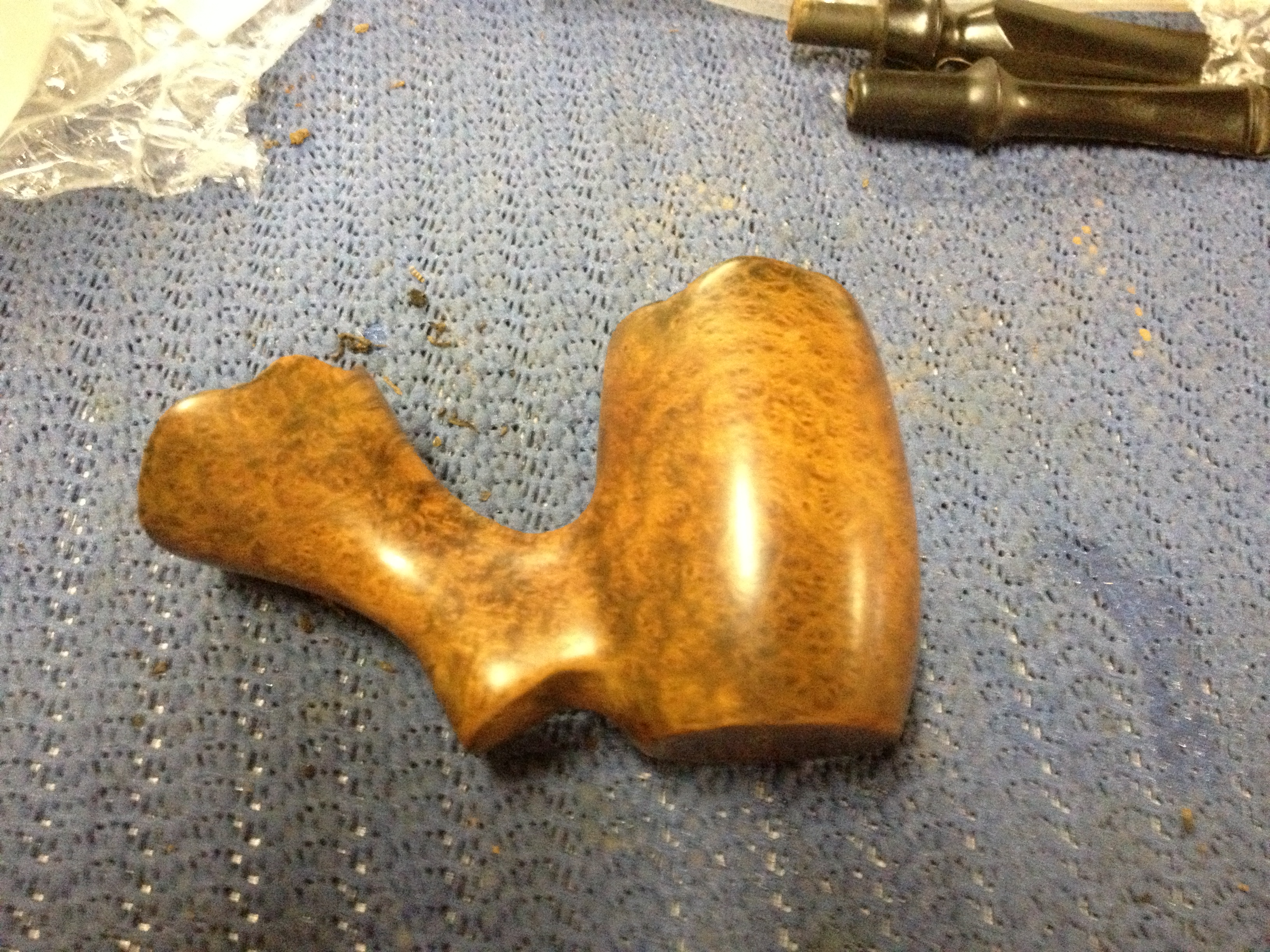
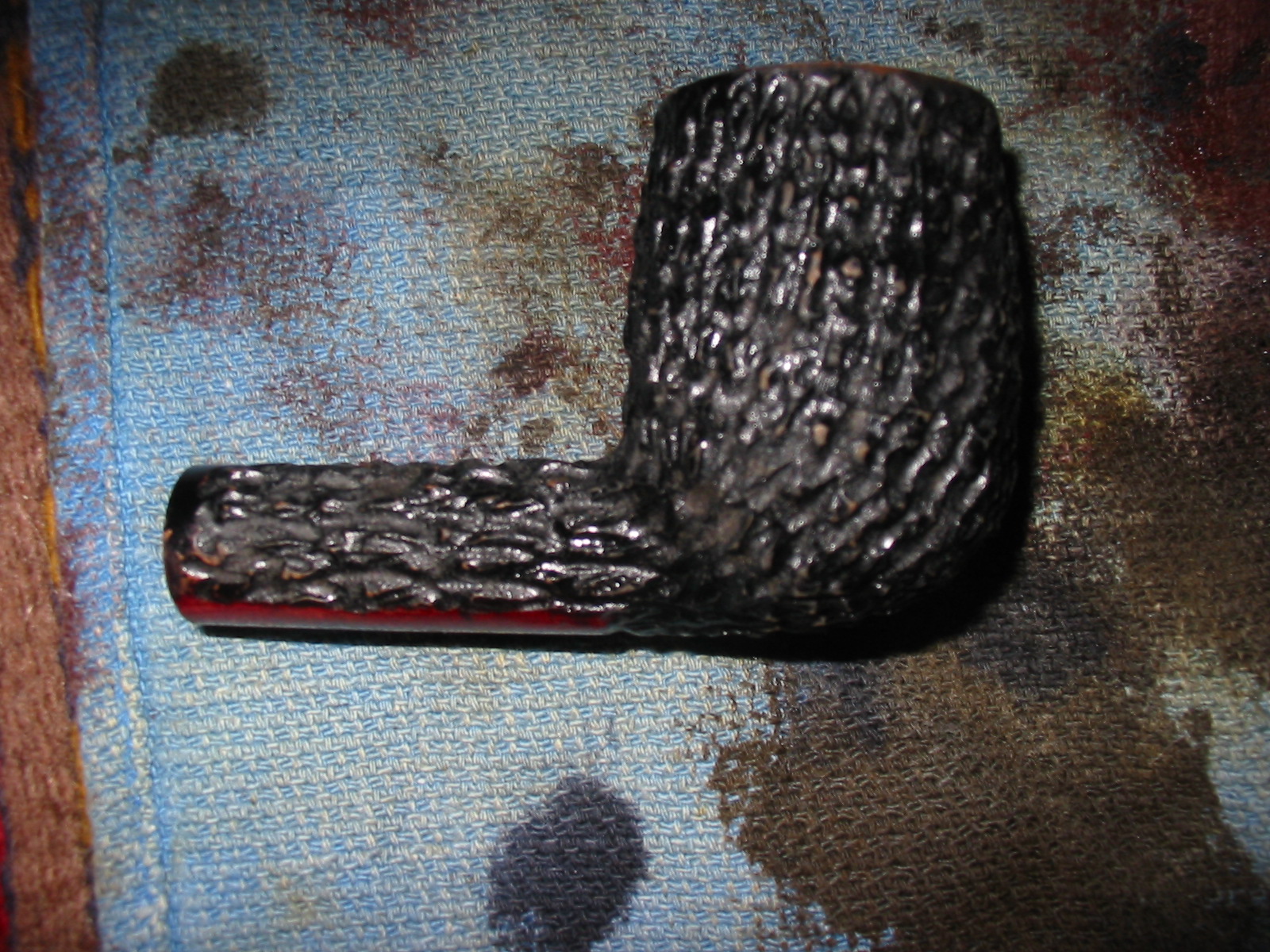
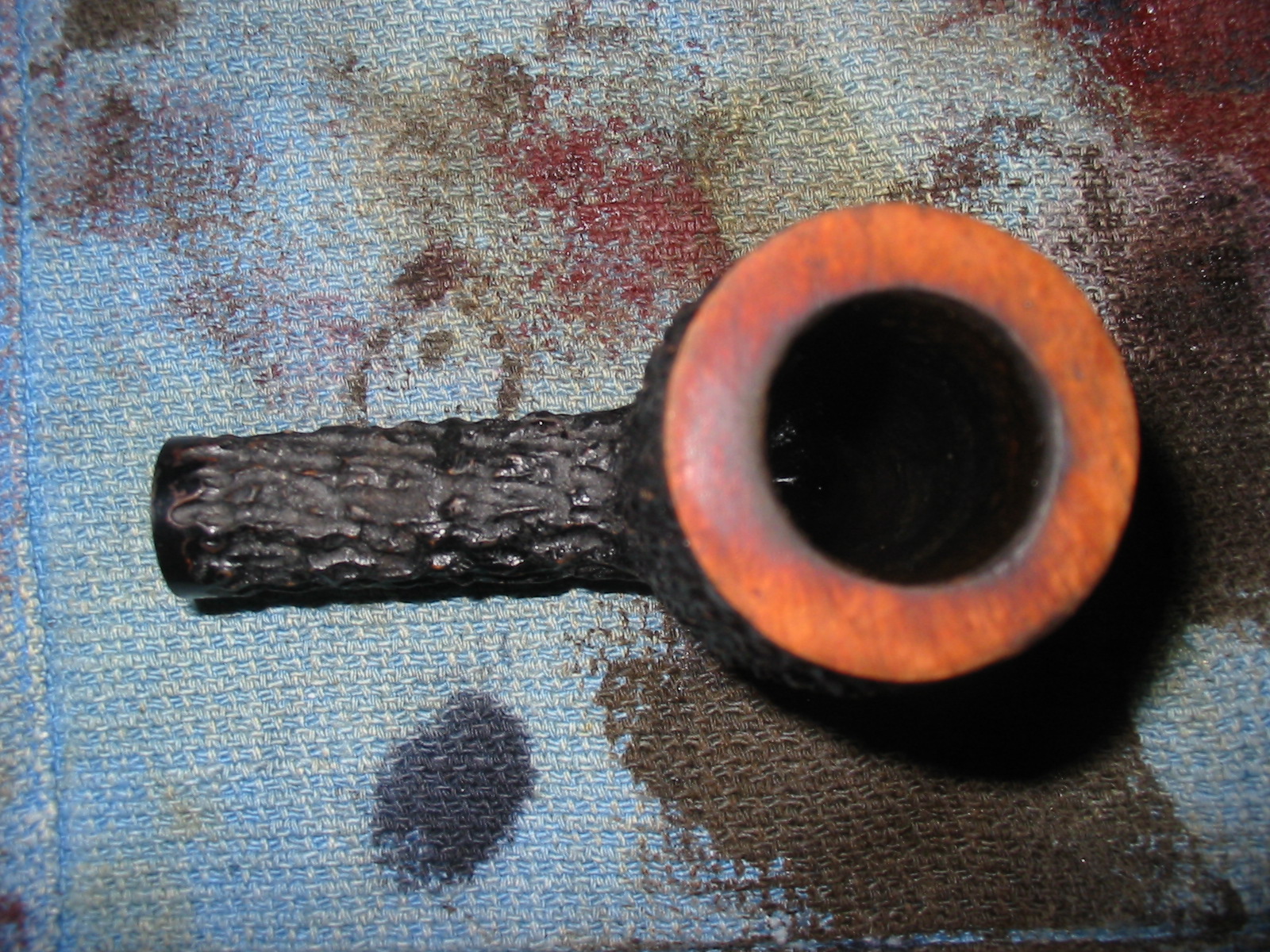
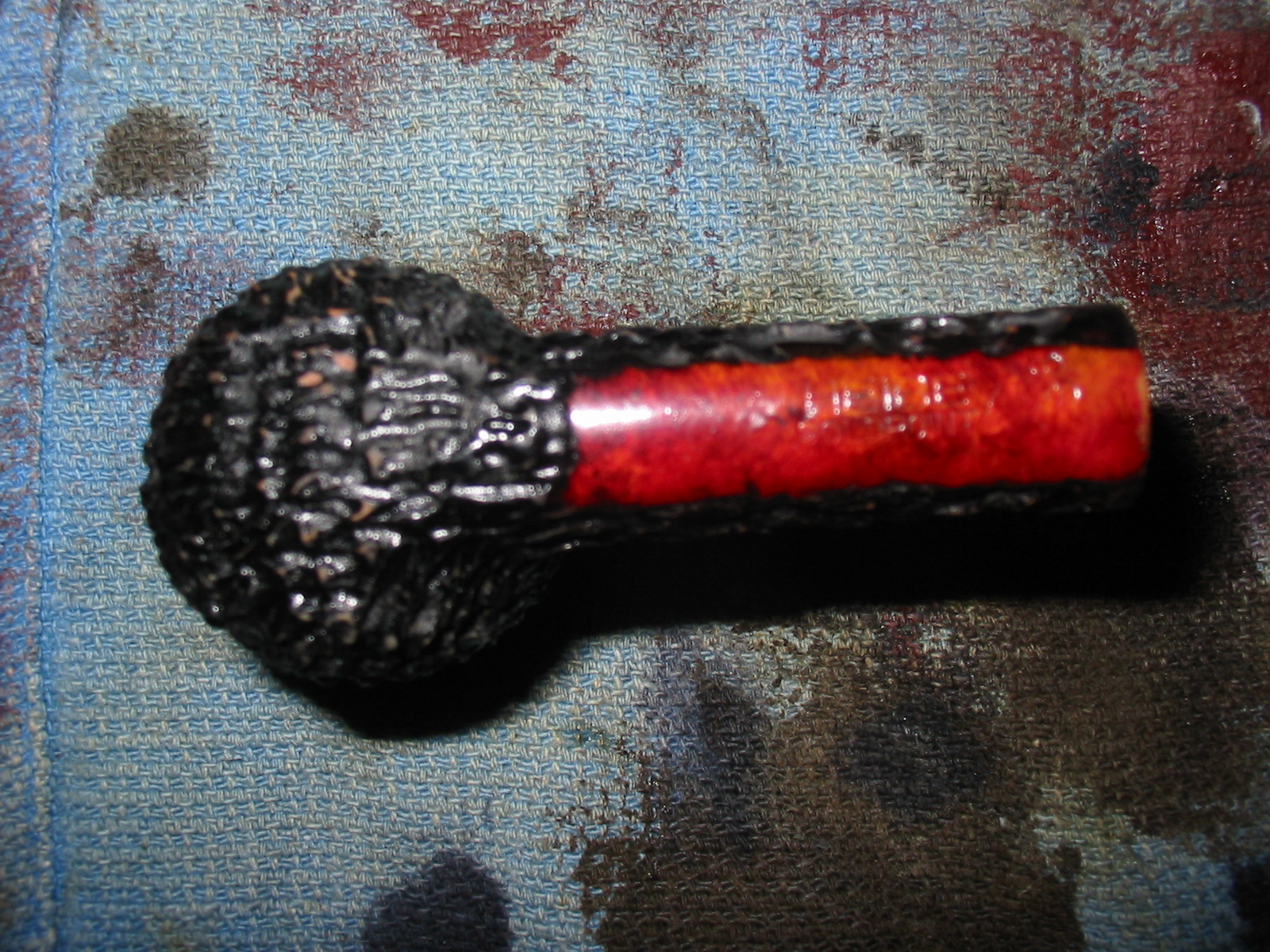
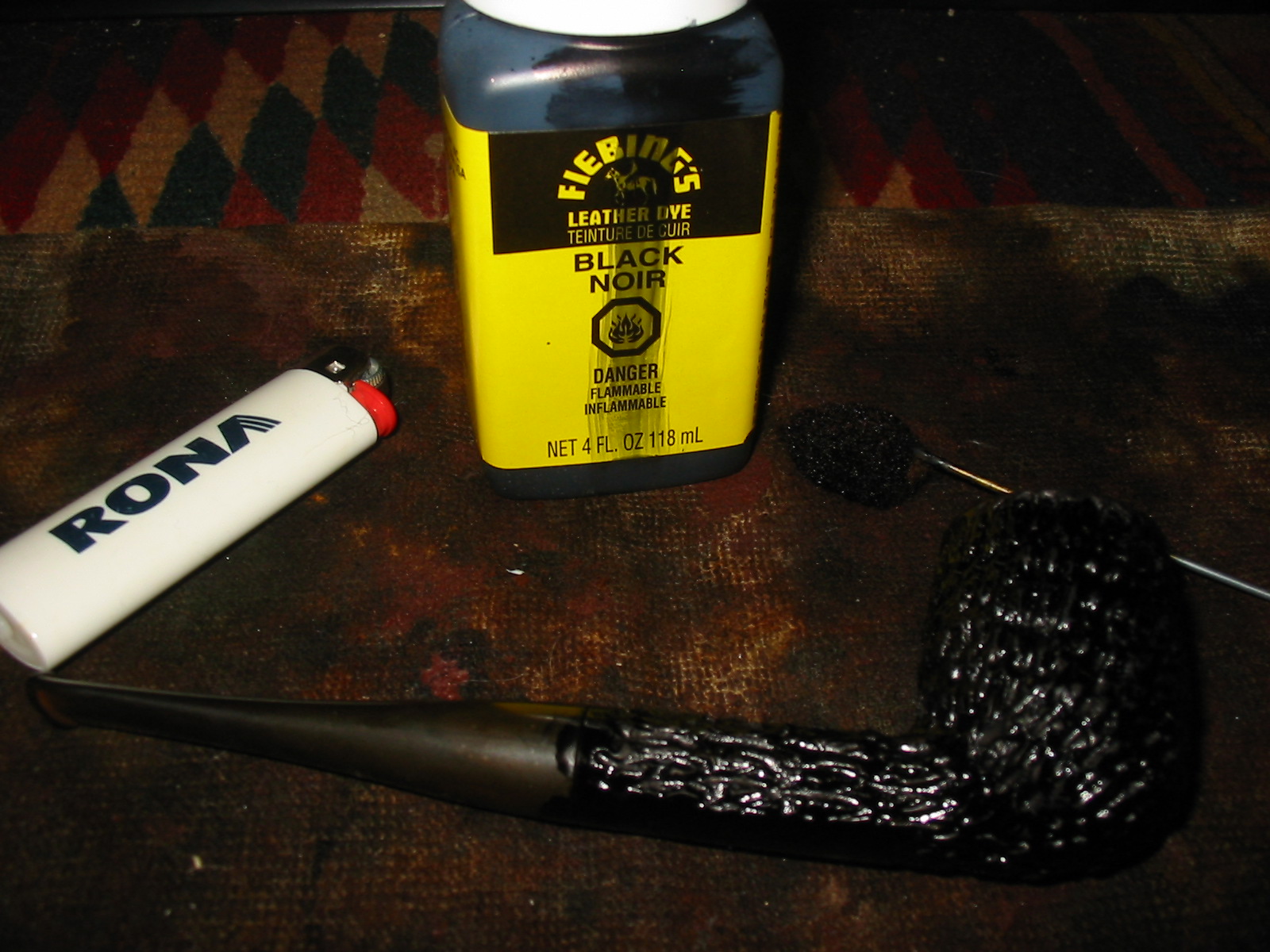
Tag Archives: contrast staining

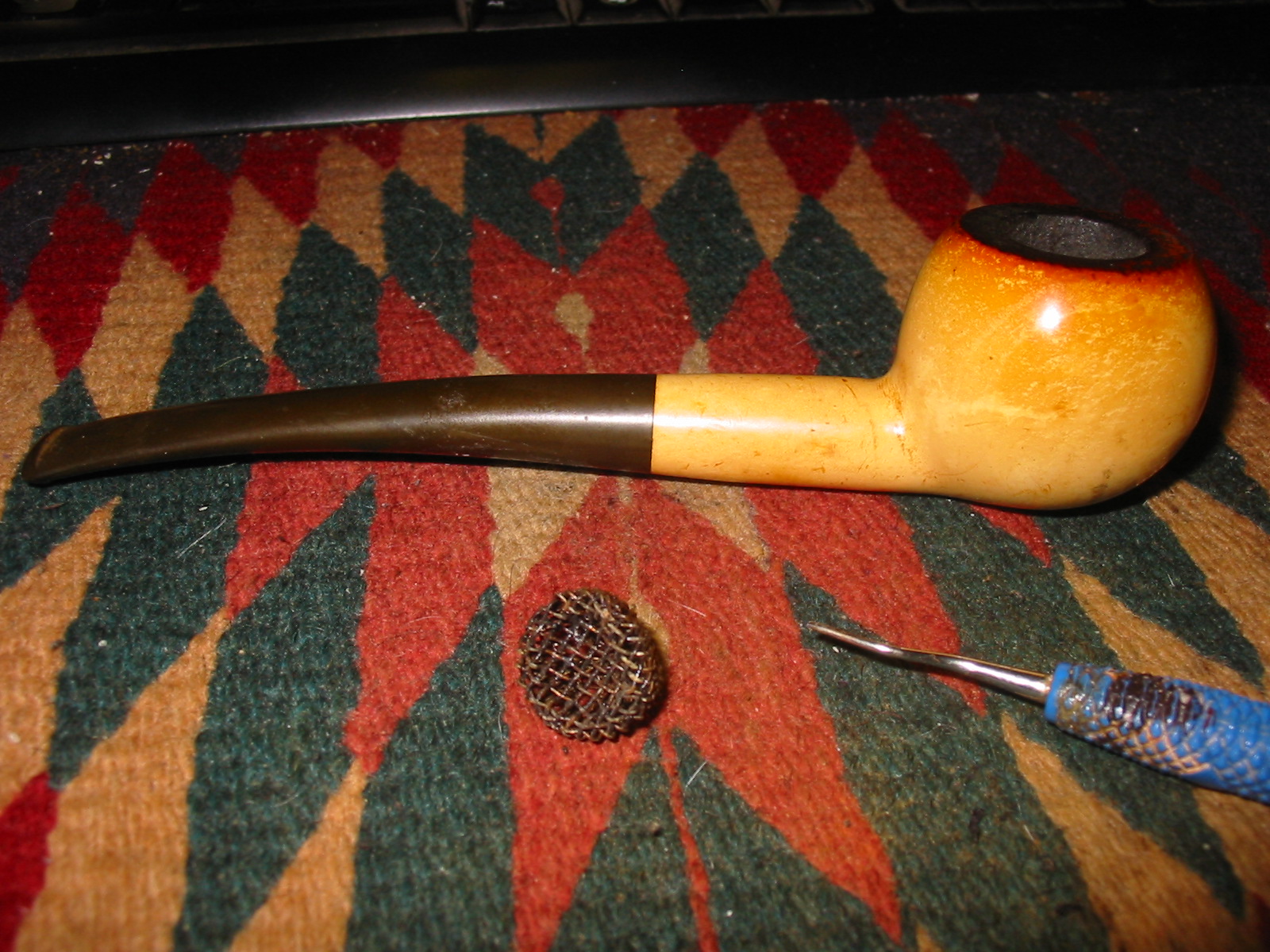
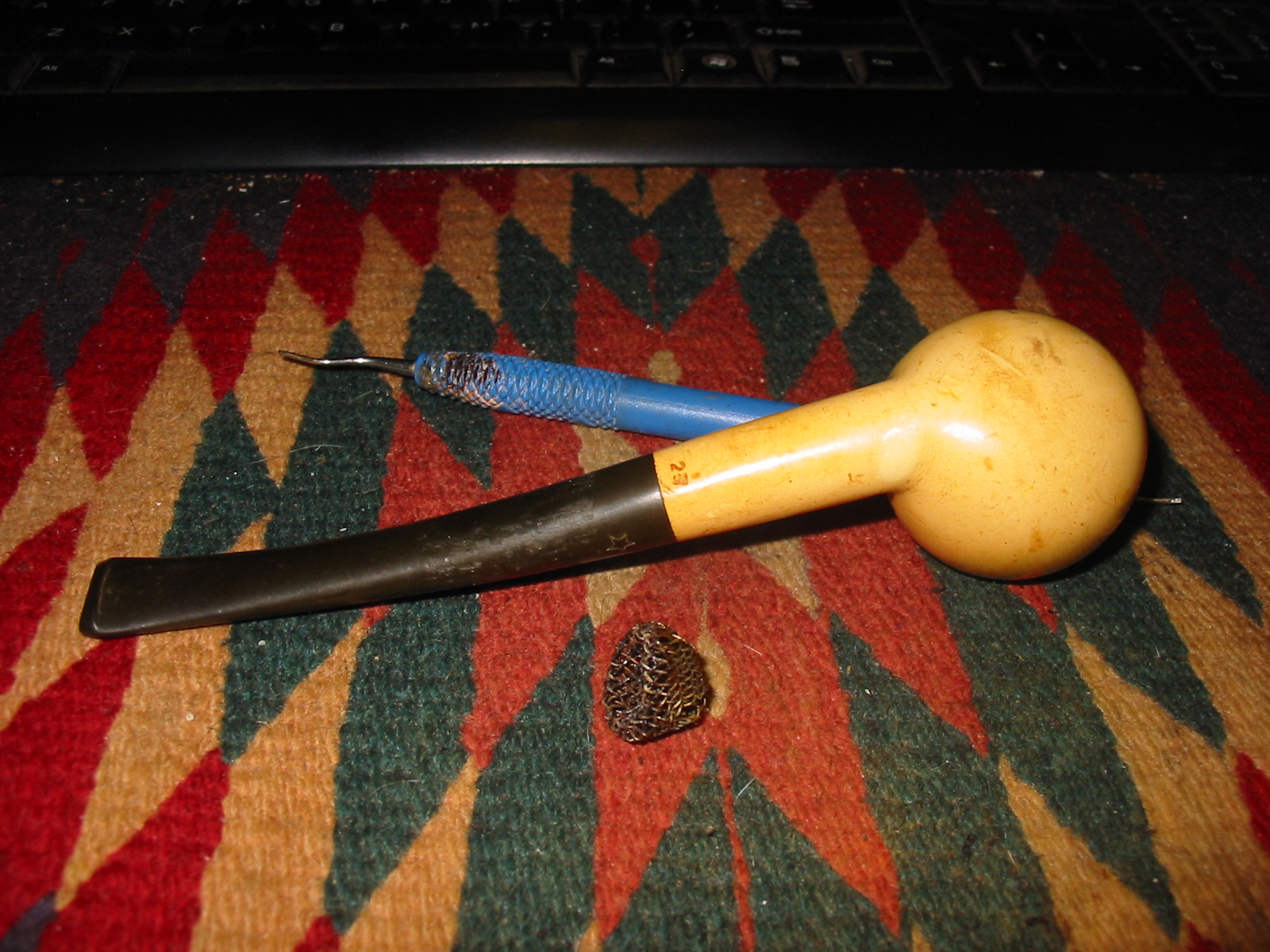
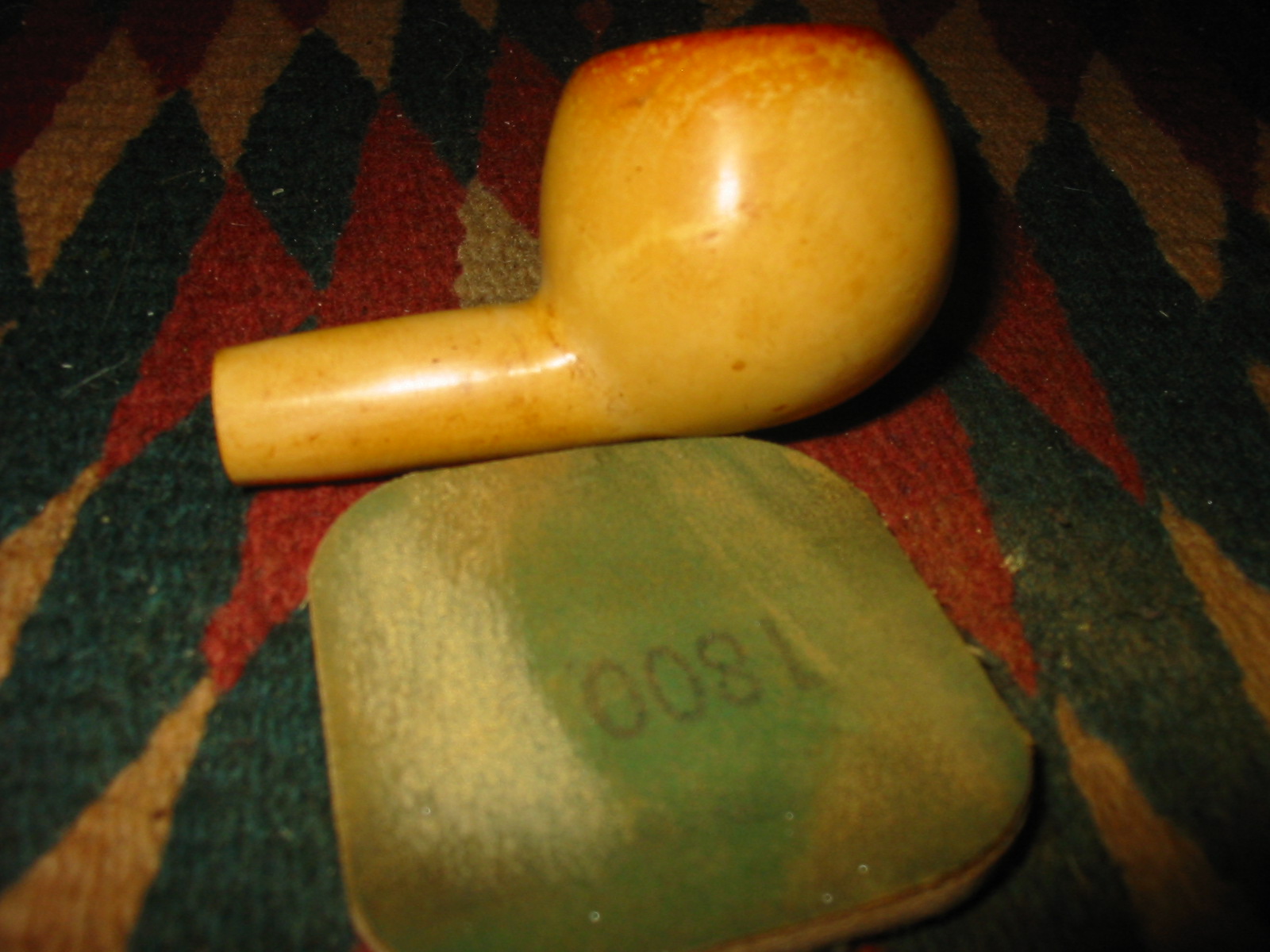
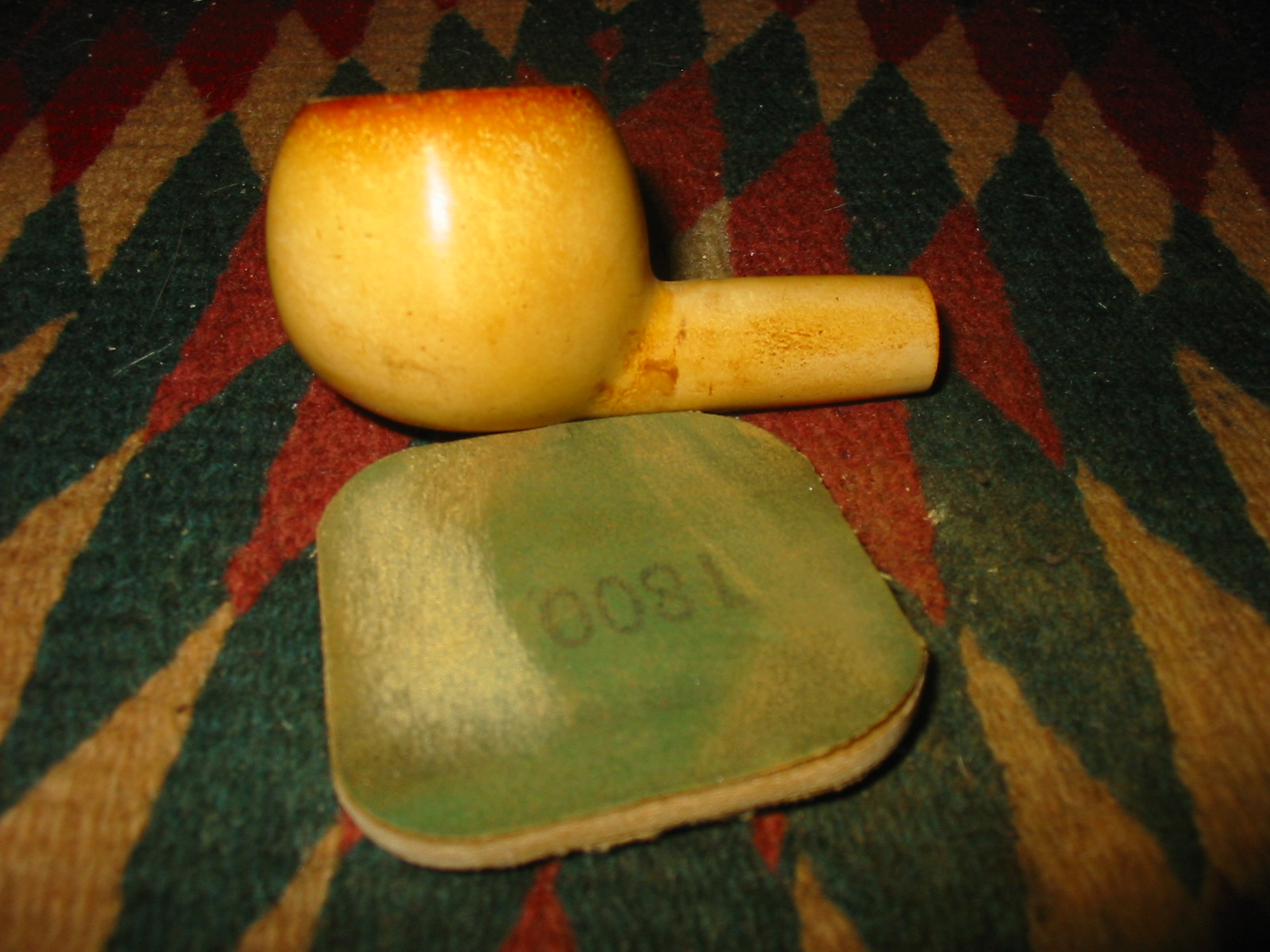
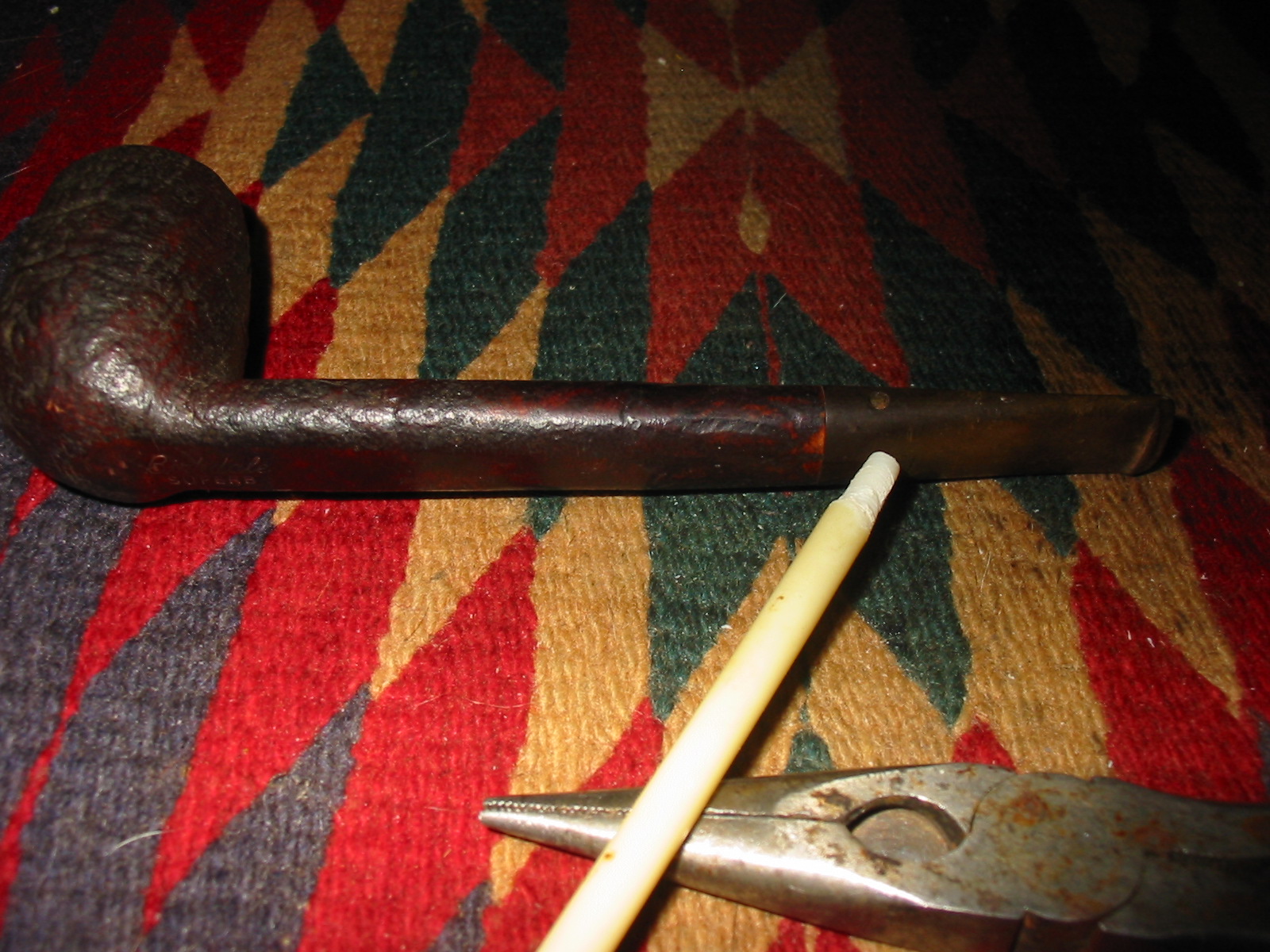
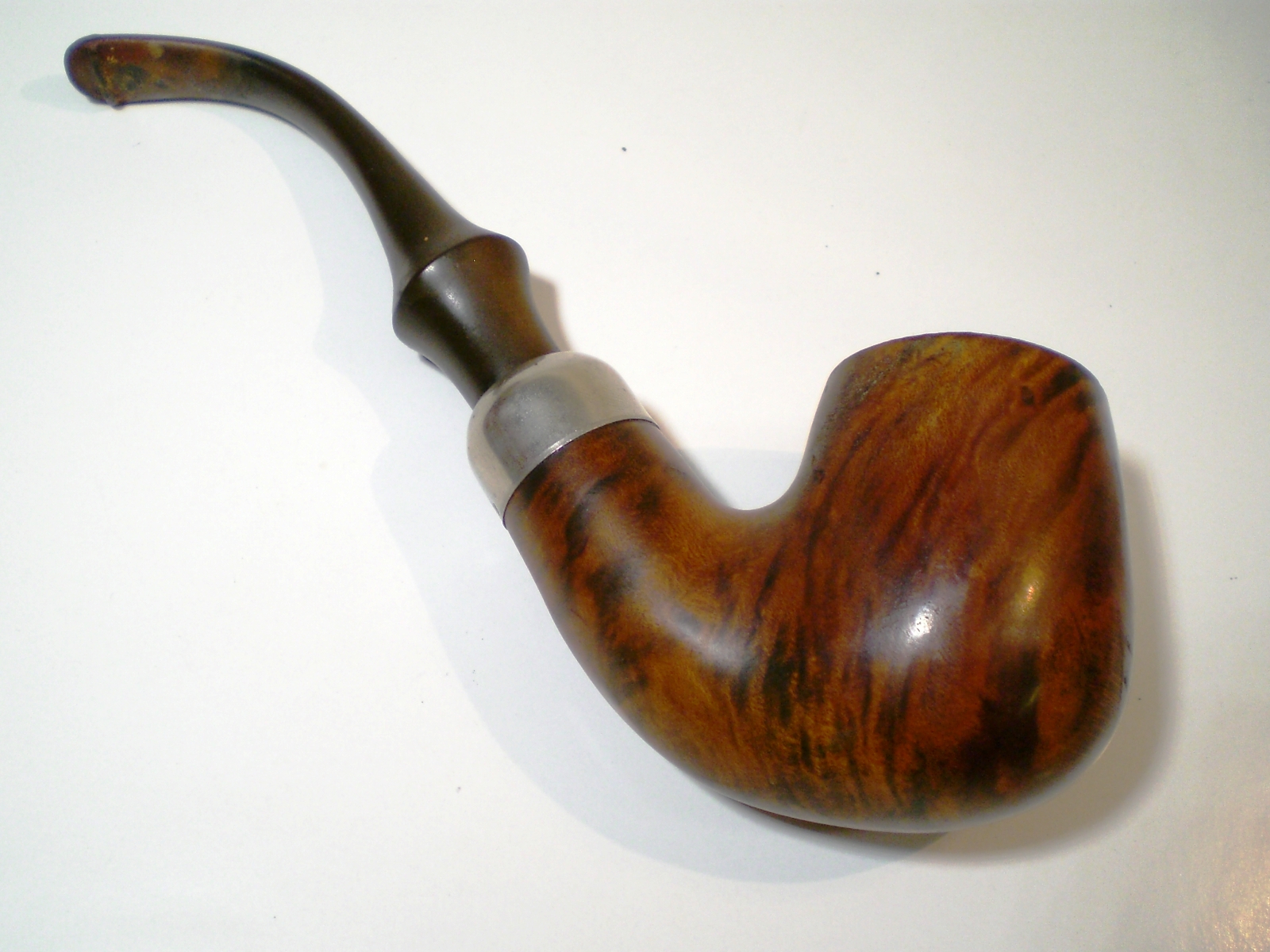
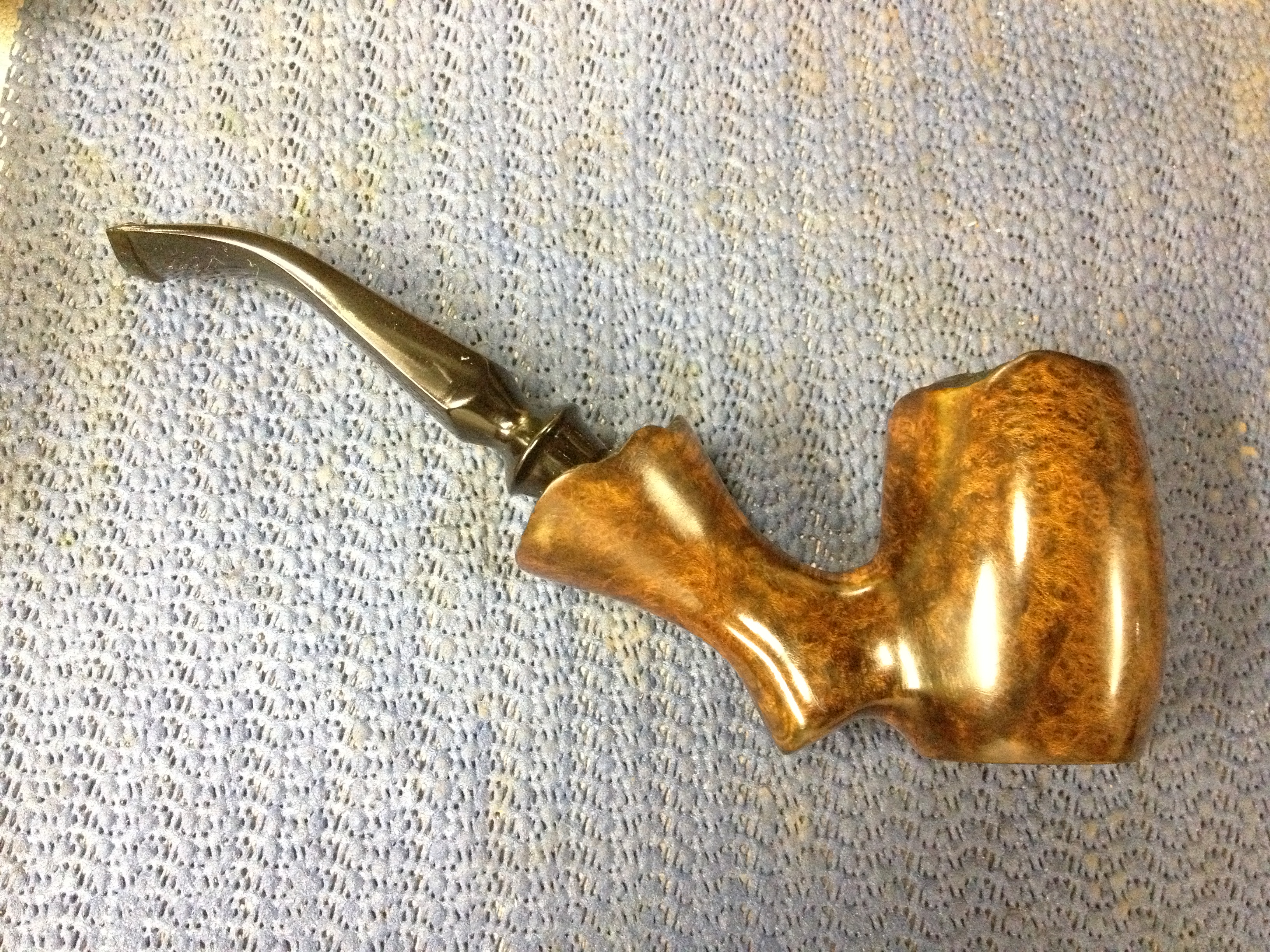
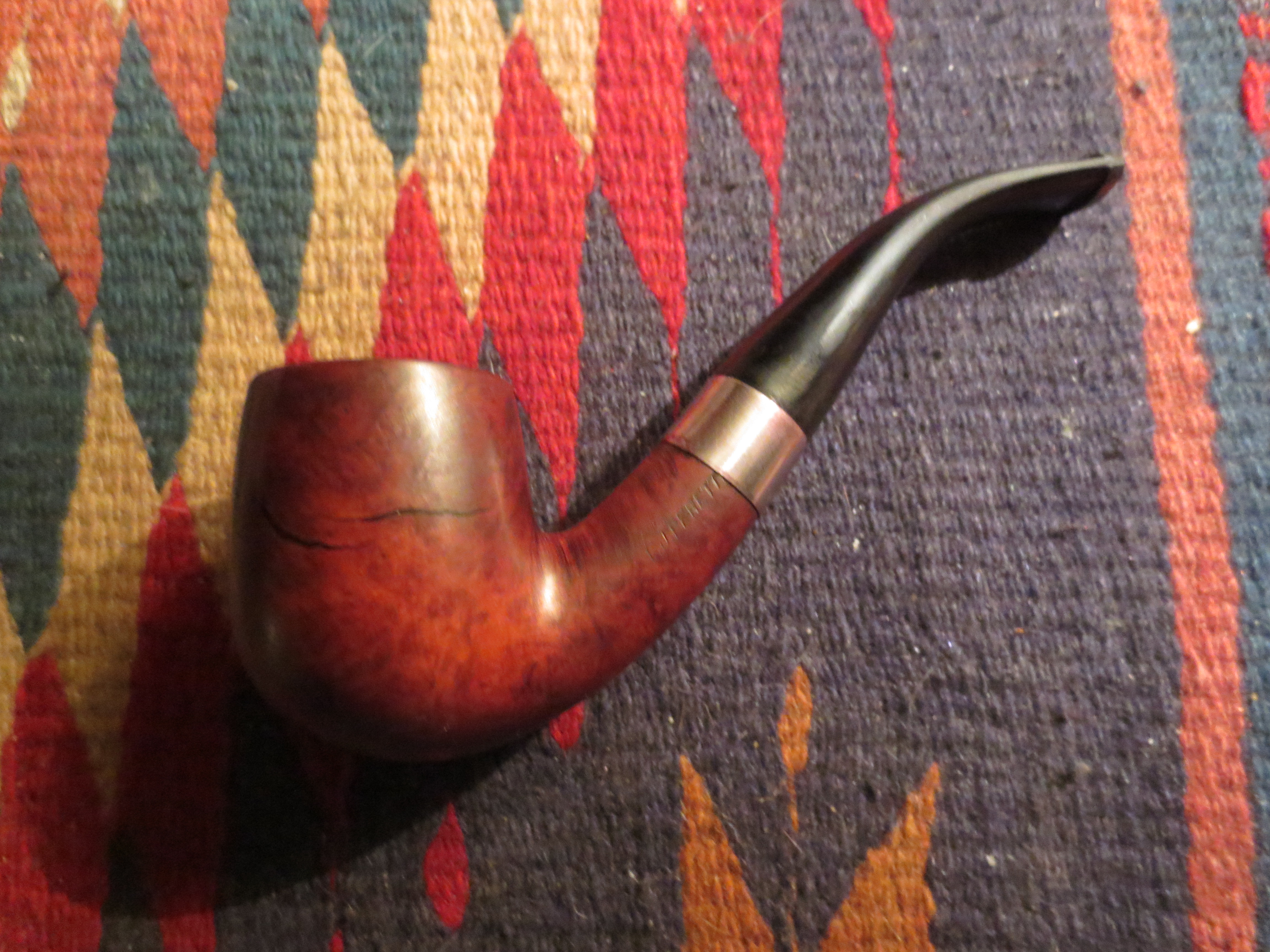
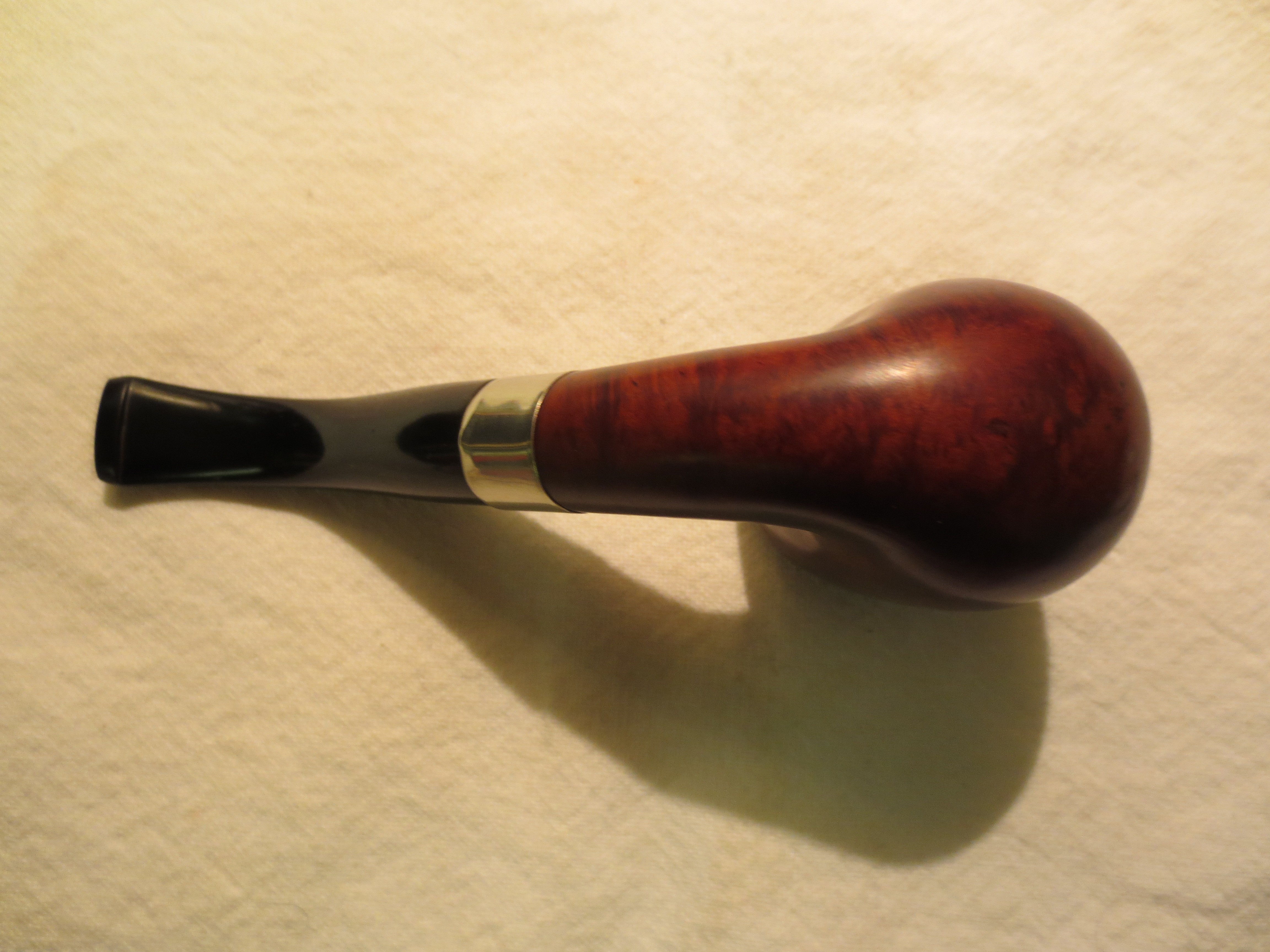
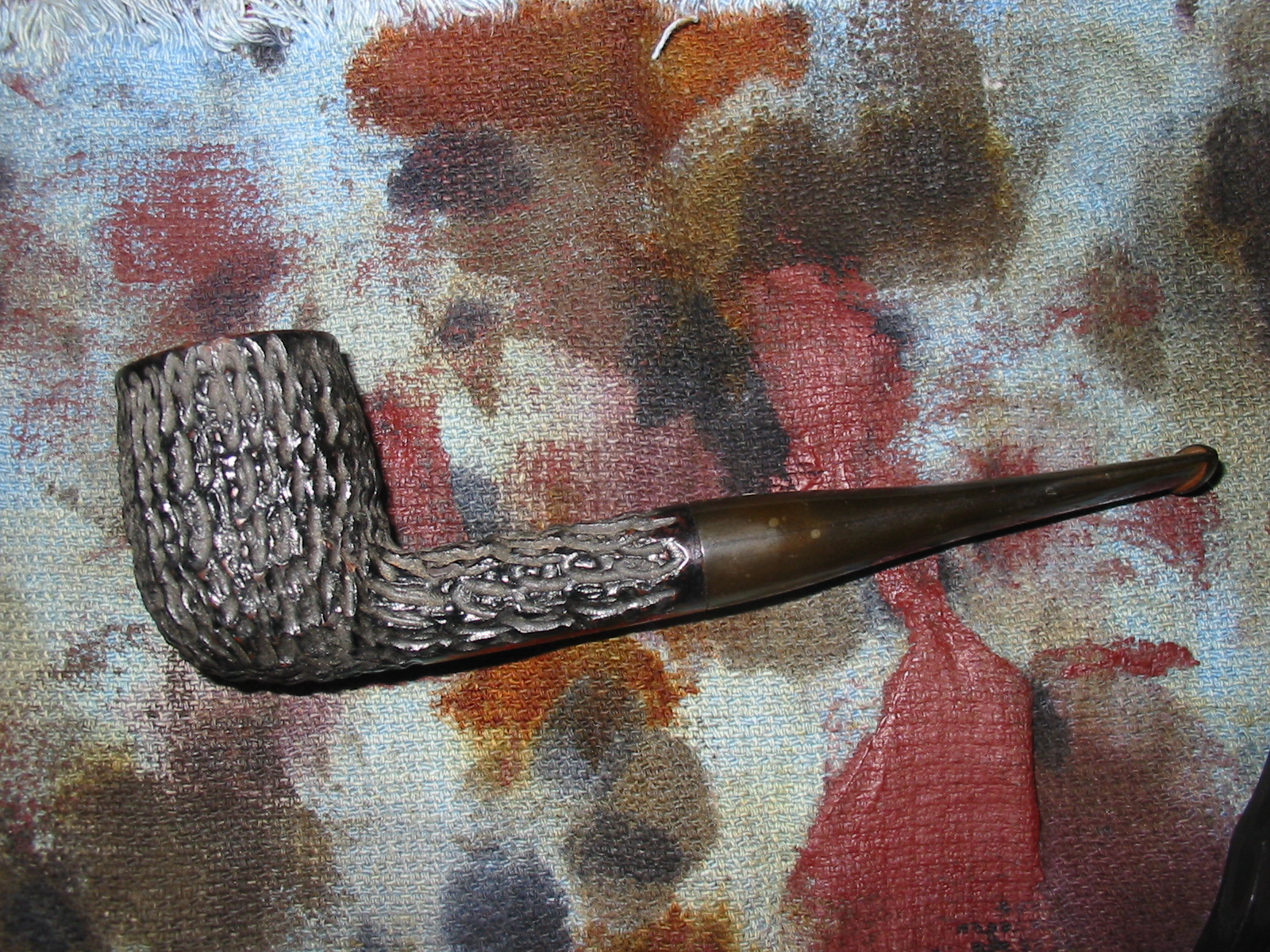
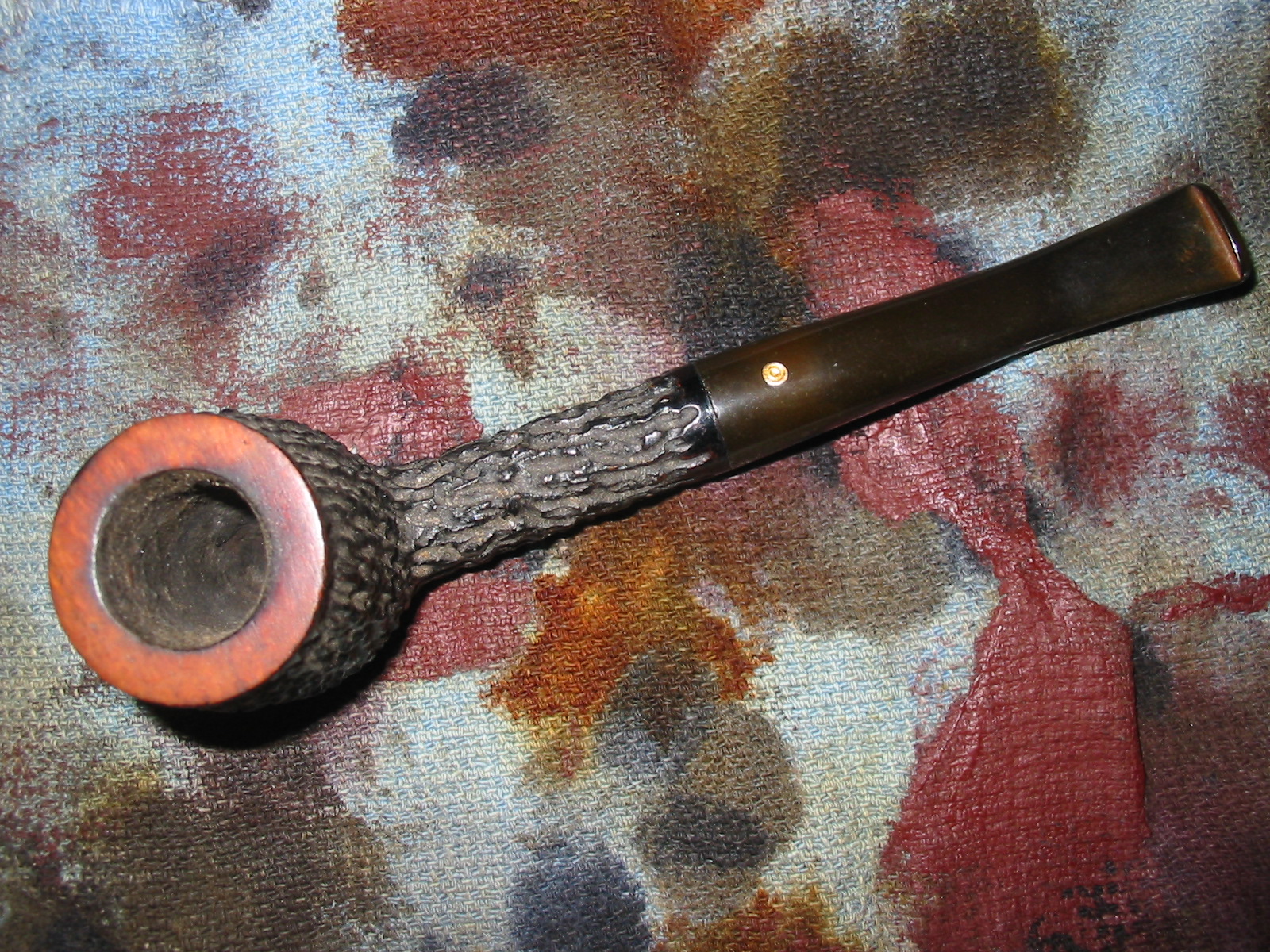
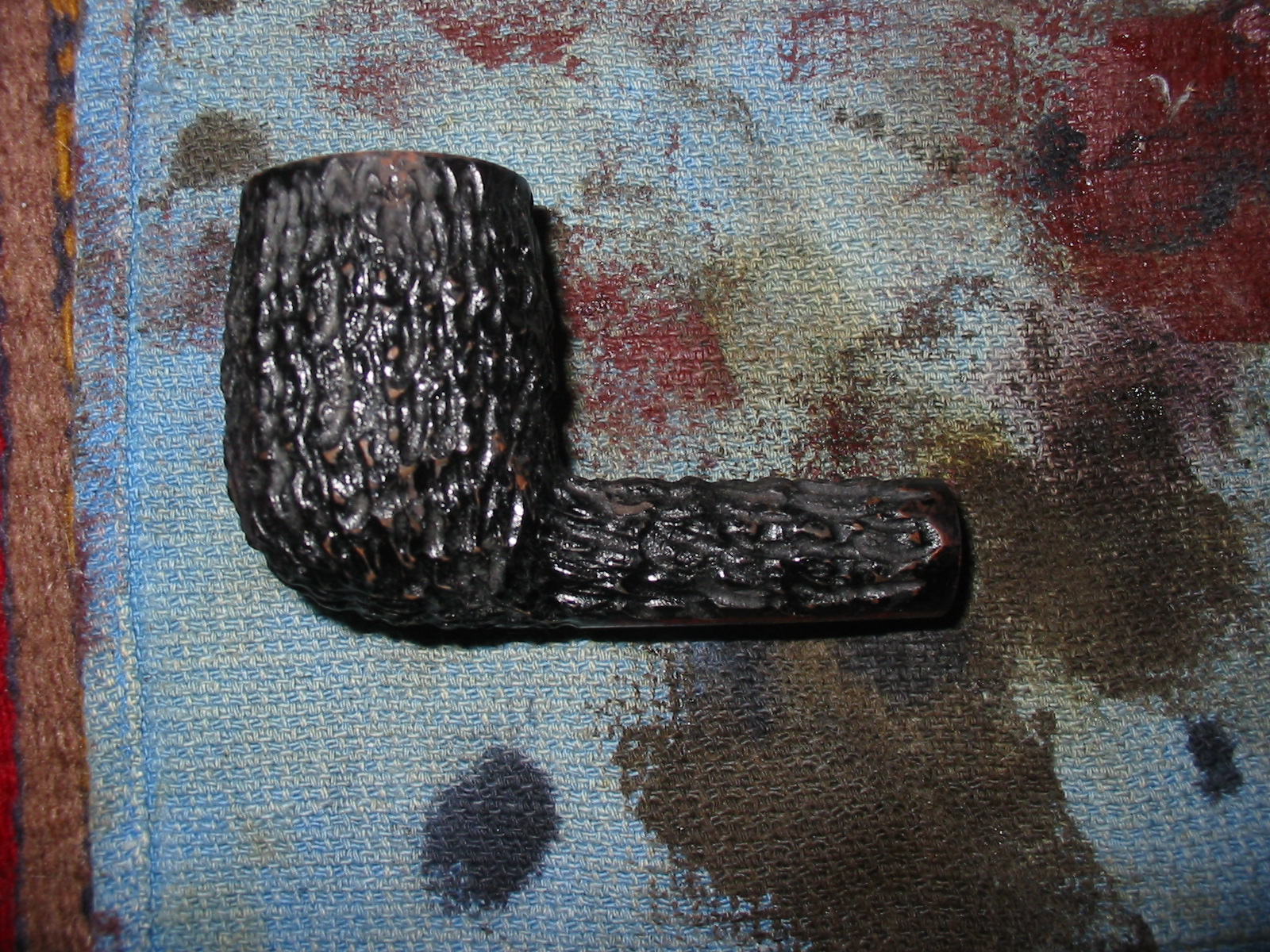
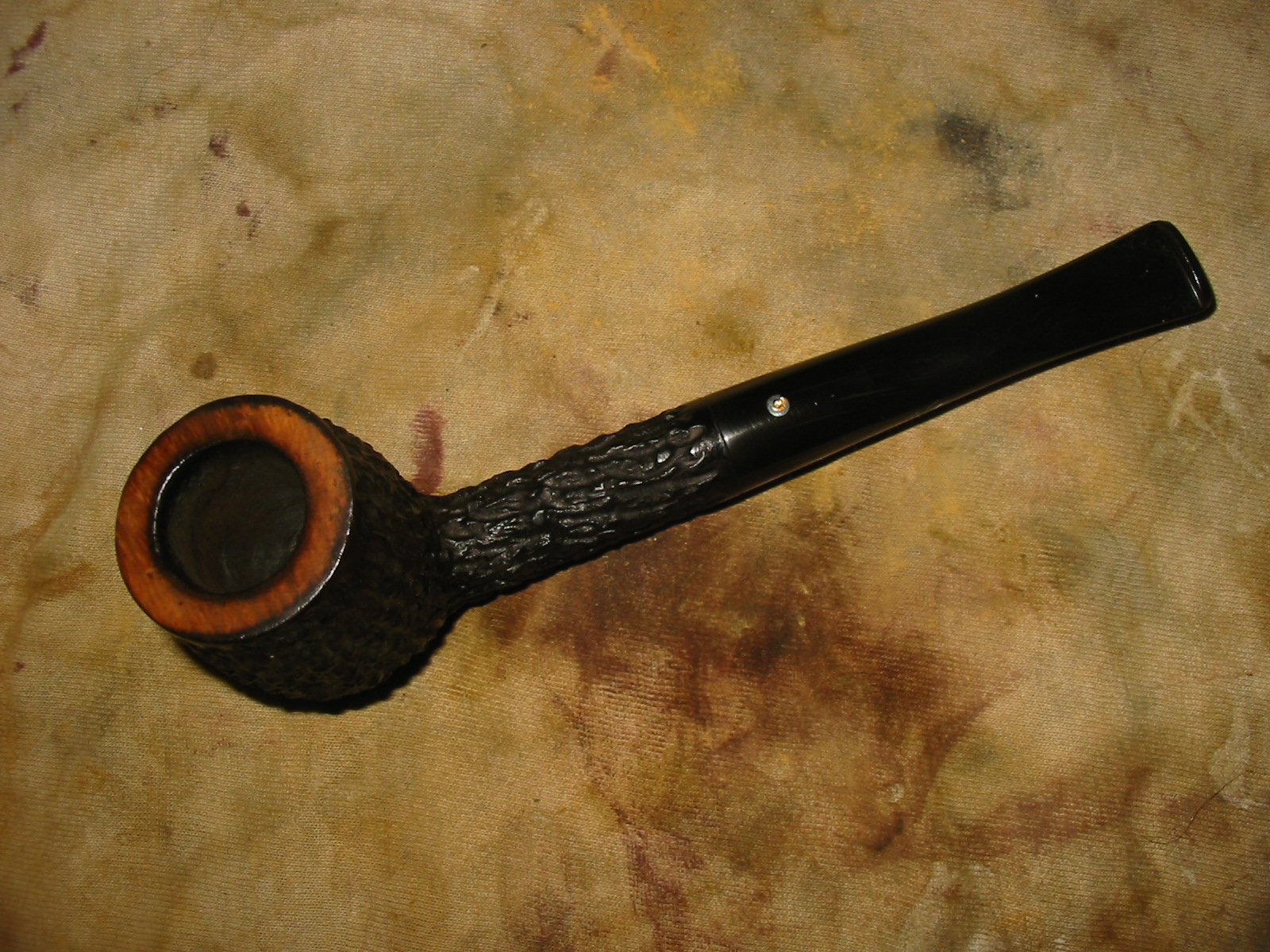
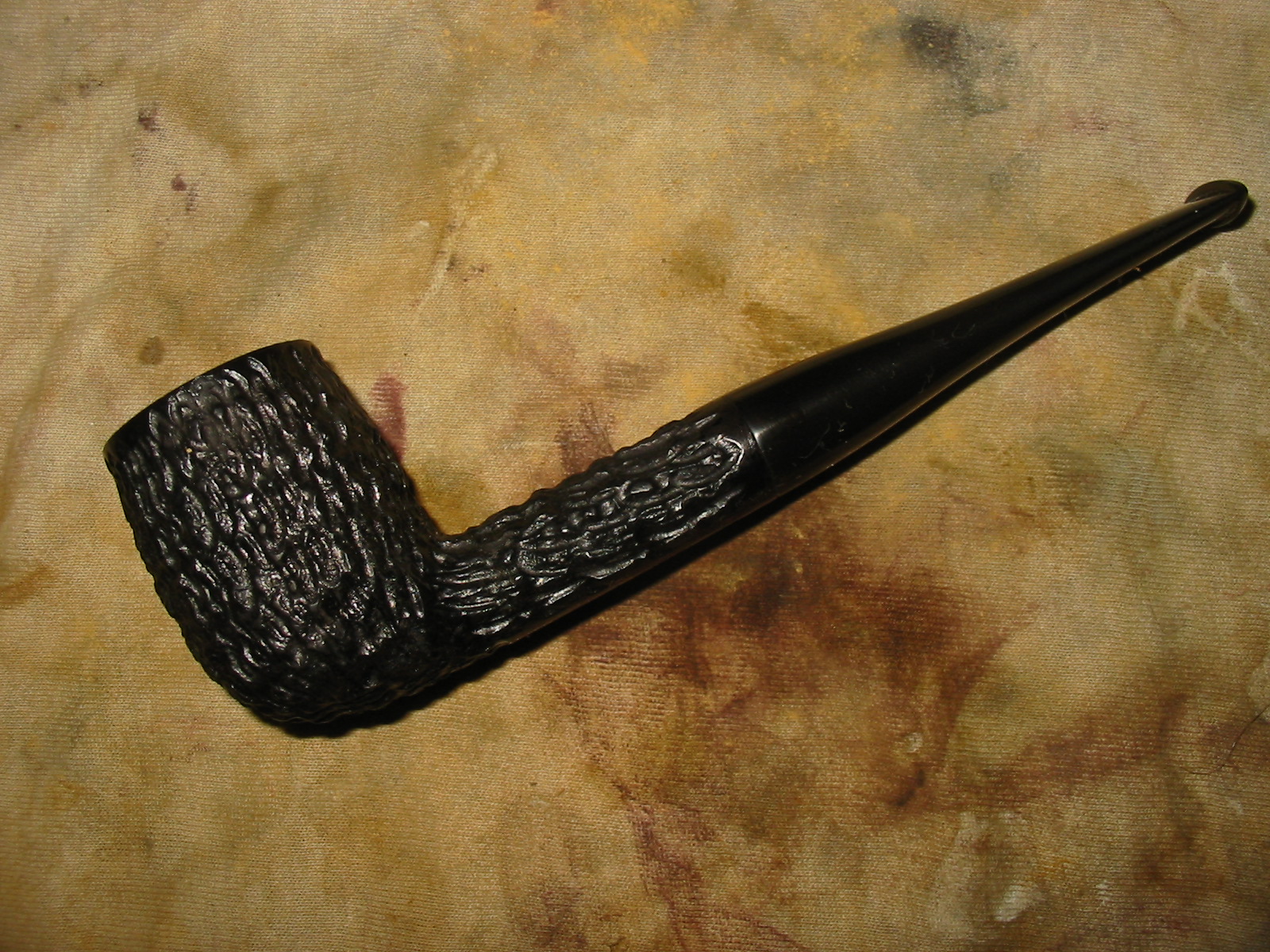
An Engagement Pipe (GBD 548 Seventy-Six)


My family had a pretty big life event here last week. My daughter came home from New Orleans for a week of vacation, with the boyfriend of two years in tow again. He had called us a few weeks prior to ask permission to marry her, the first of our daughters to get engaged. This young man is quite a gentleman, as you might have guessed (who knew guys still ask for permission?). He and I share a number of interests, including pipes. I enjoyed my week with him and we were able to spend some time in the shop where I shared with him some estate pipe restoration techniques. He left here with a few briars that he cleaned. I miss him and her already.

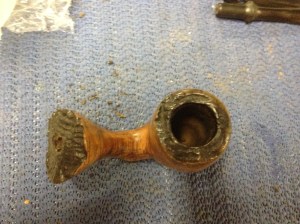
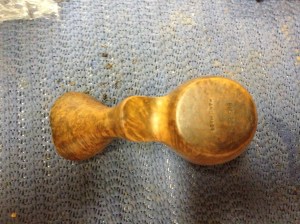
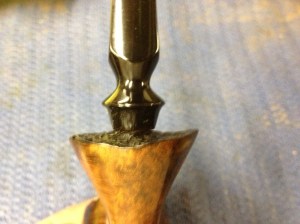
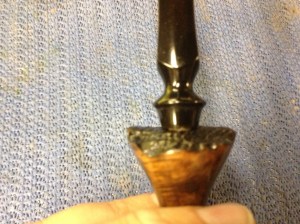
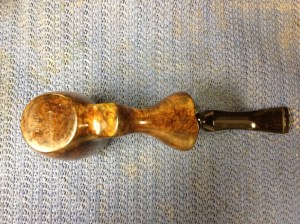
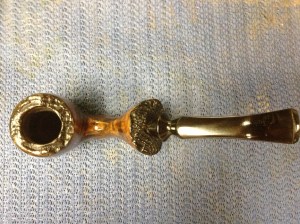
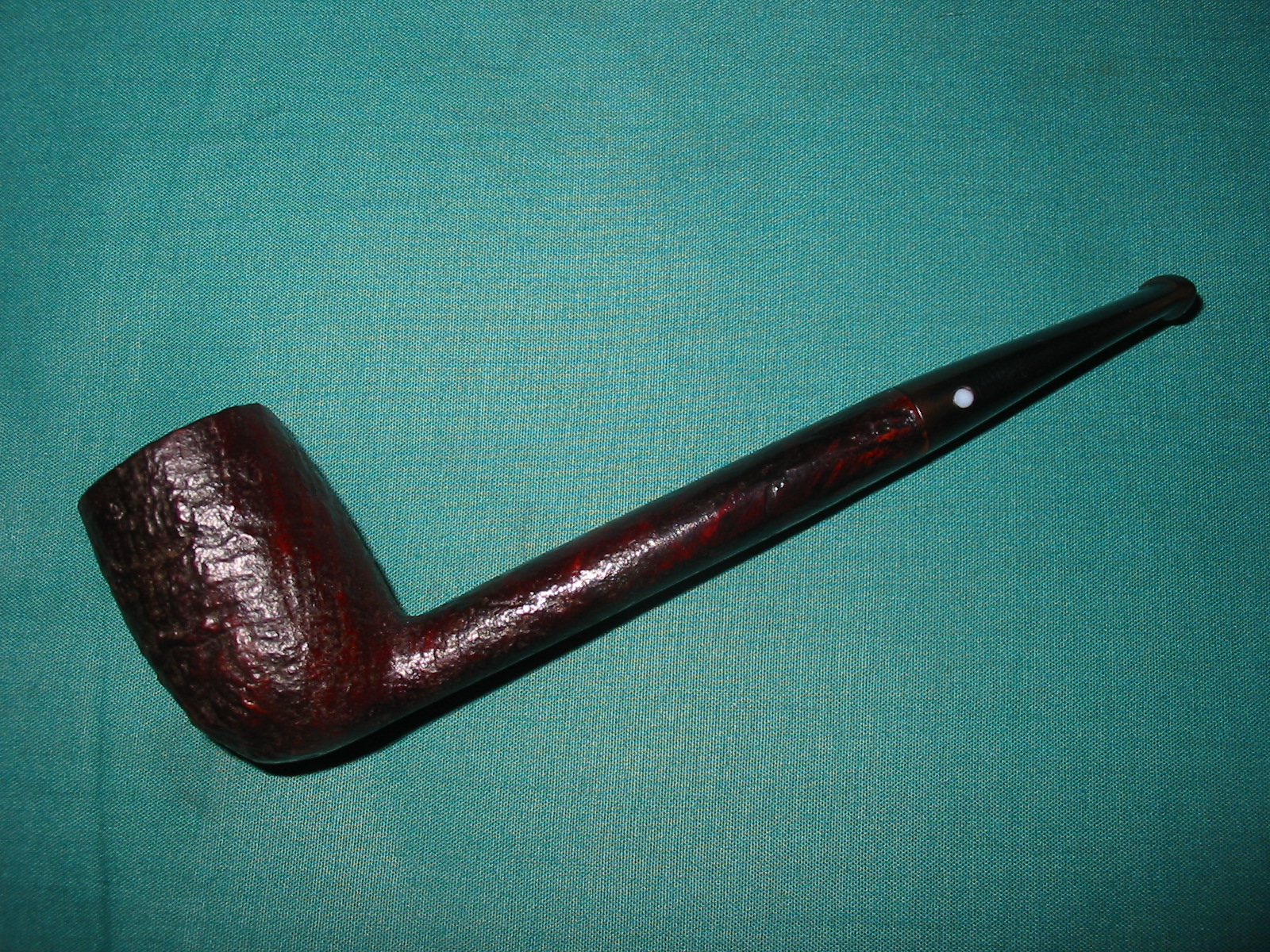
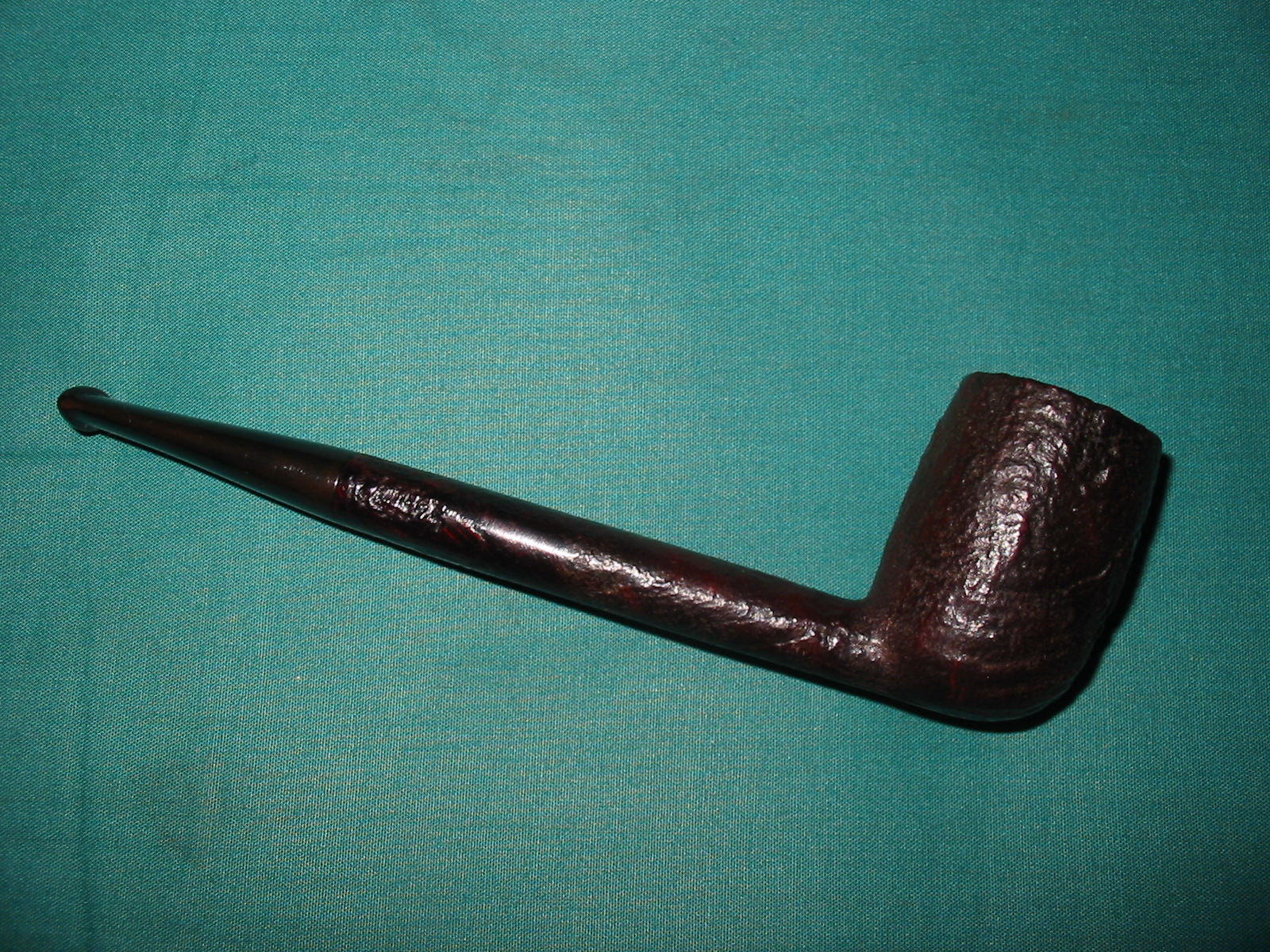
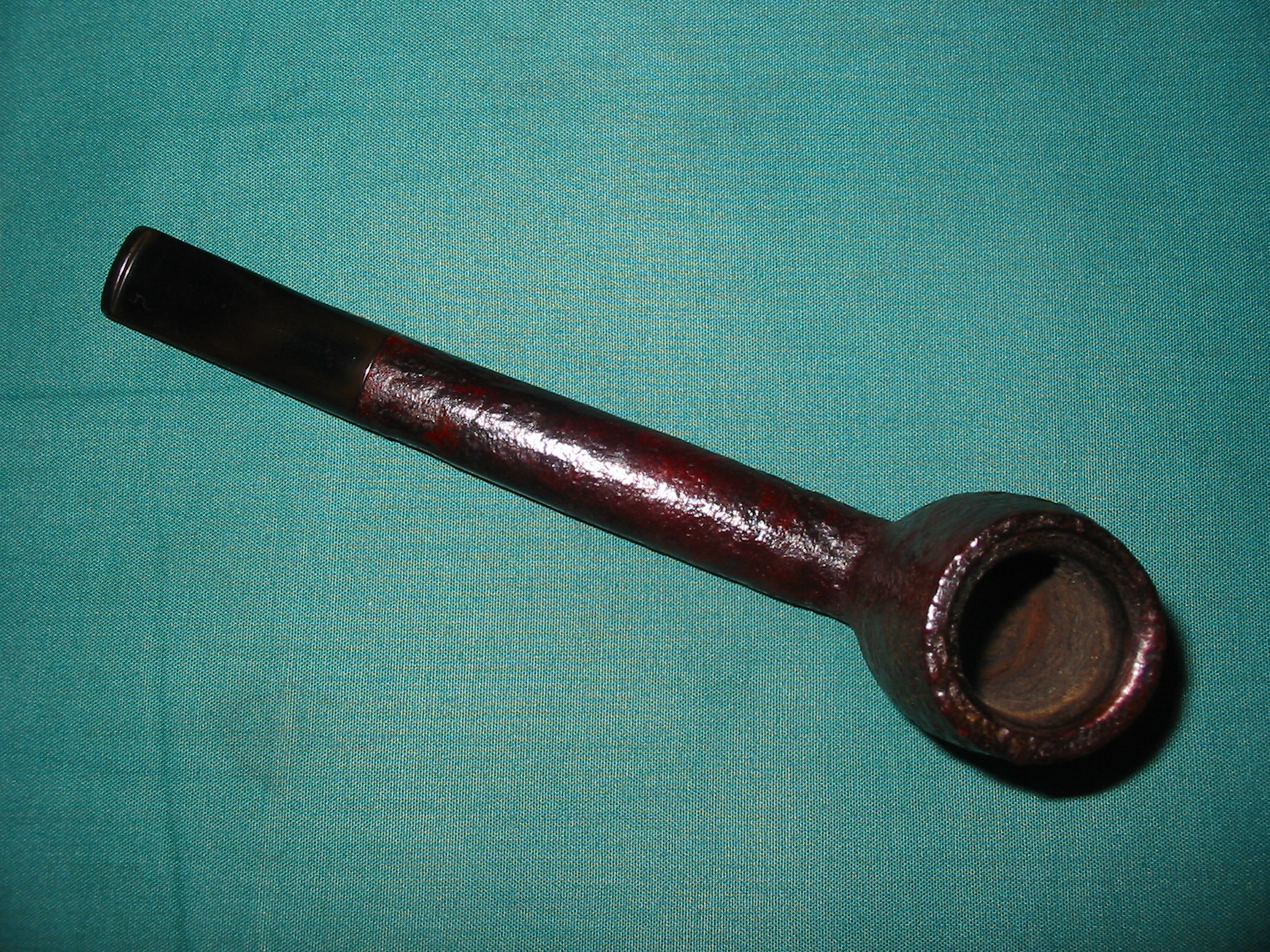
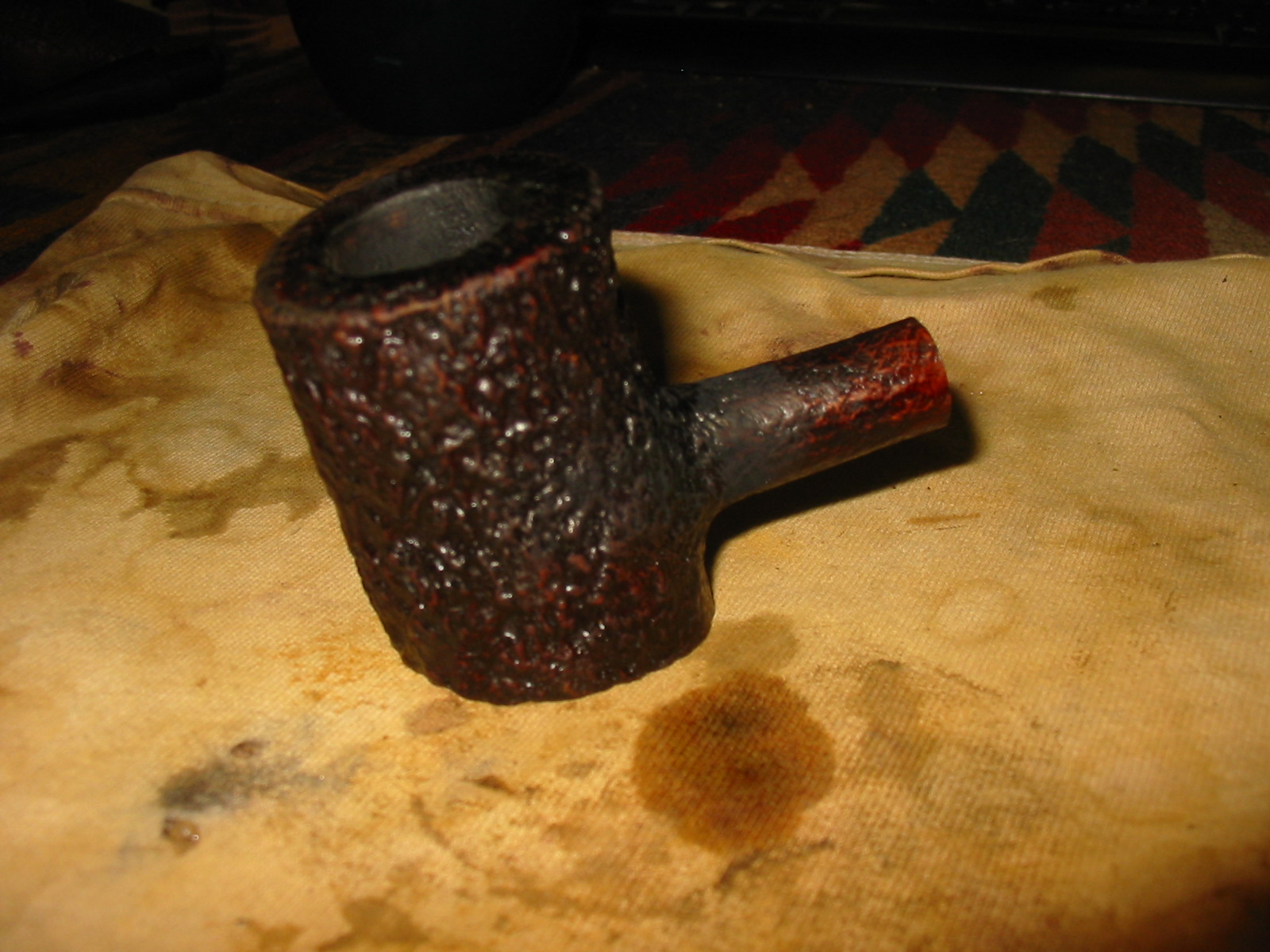
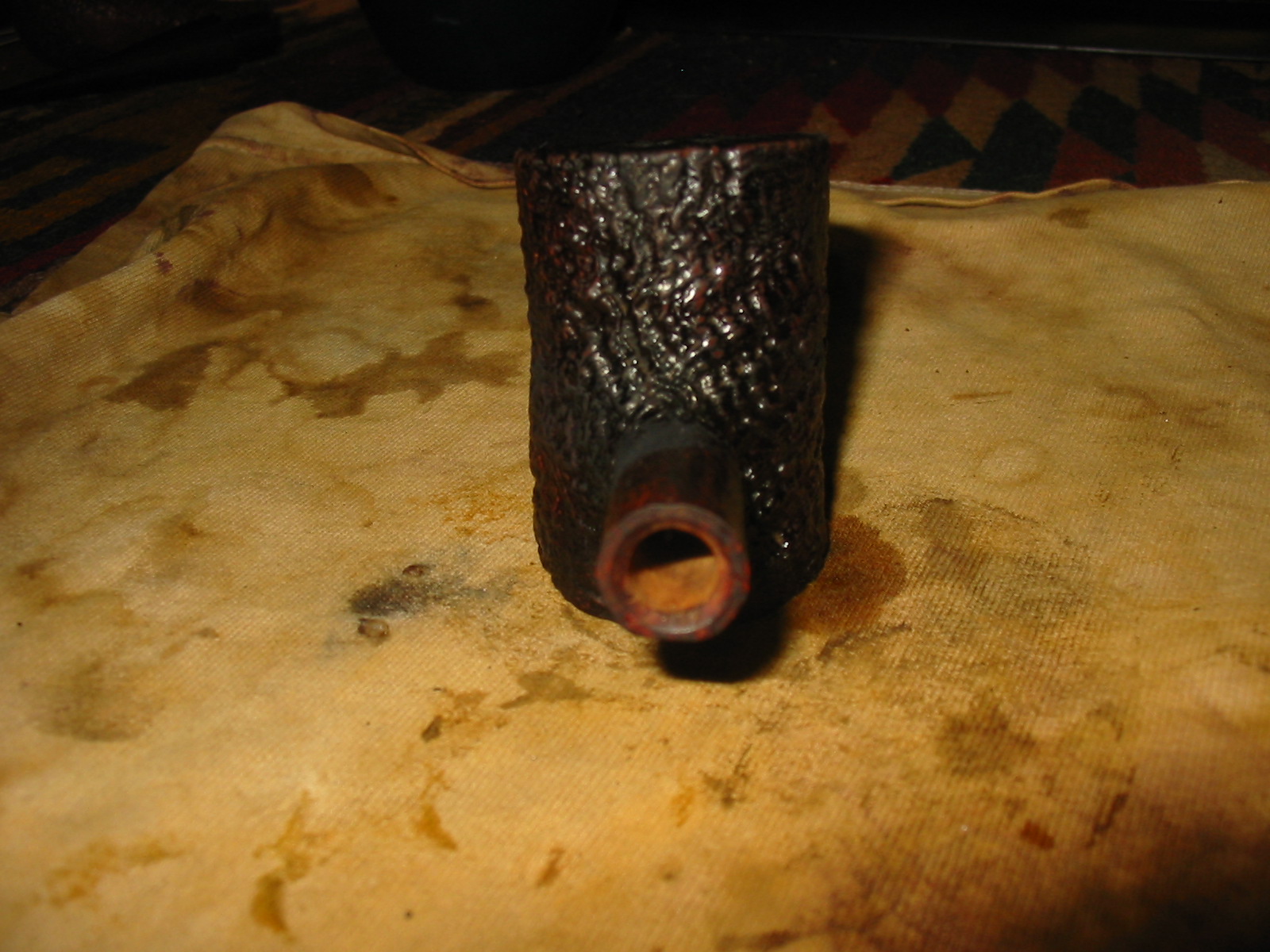
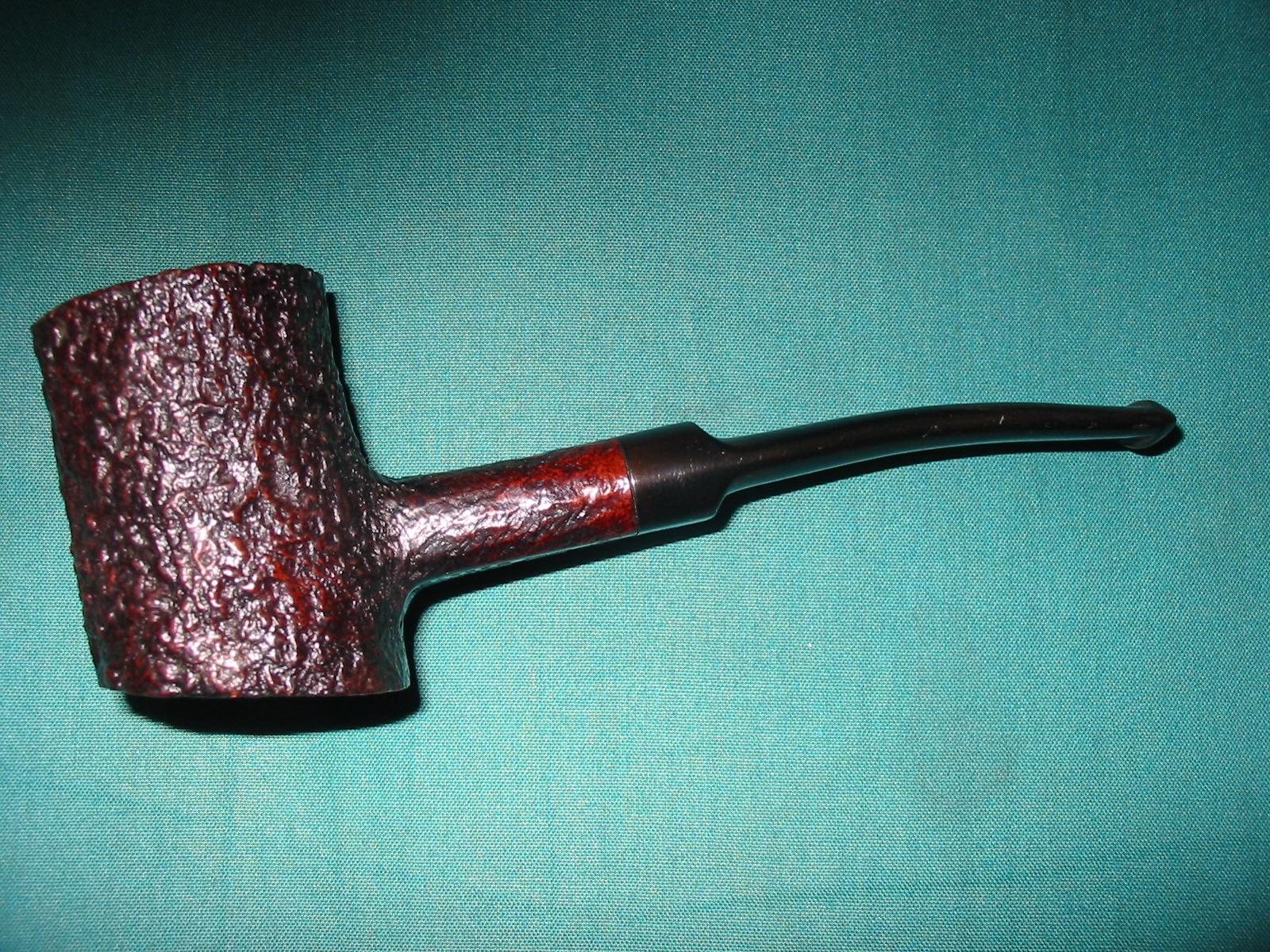
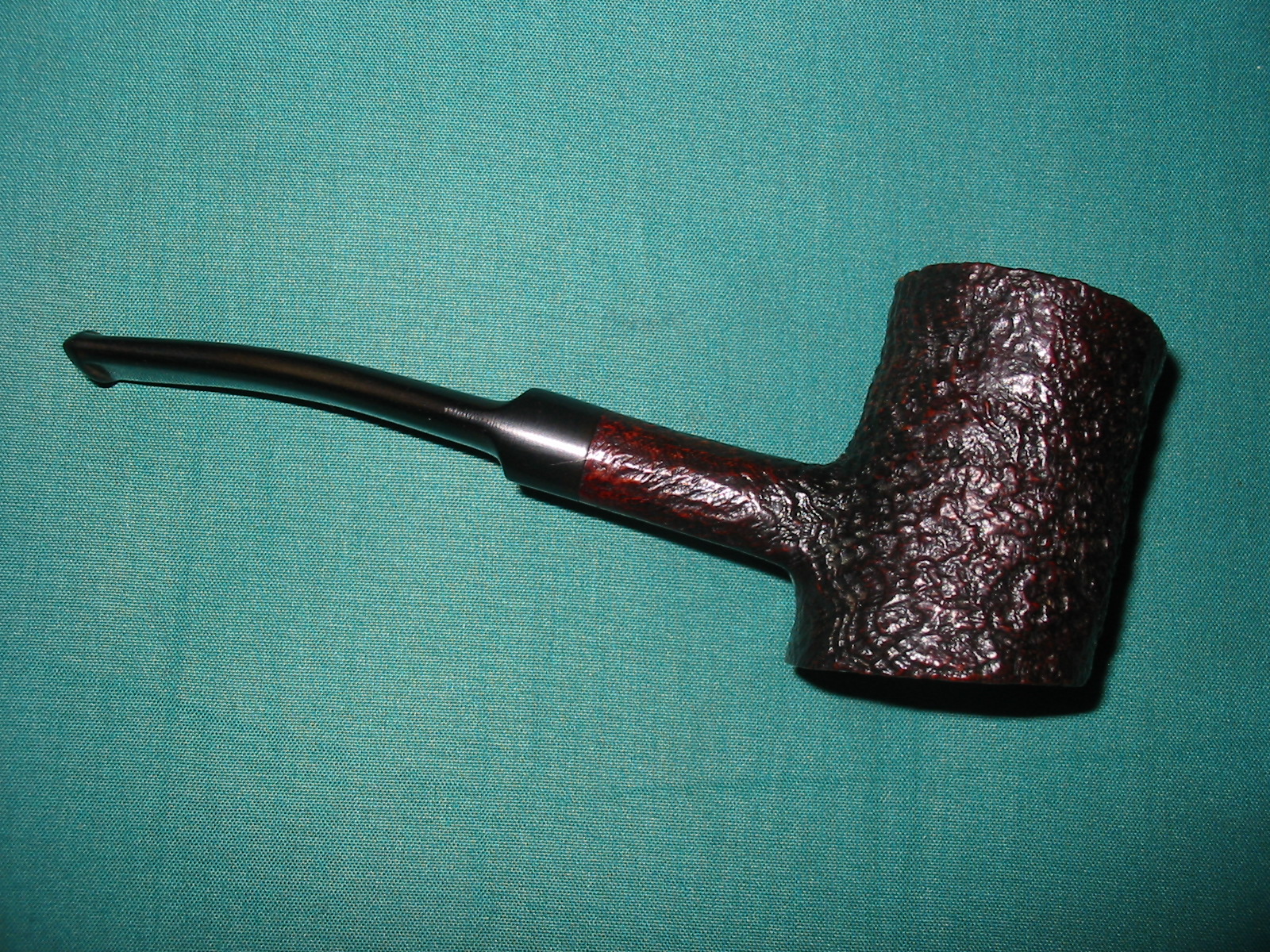
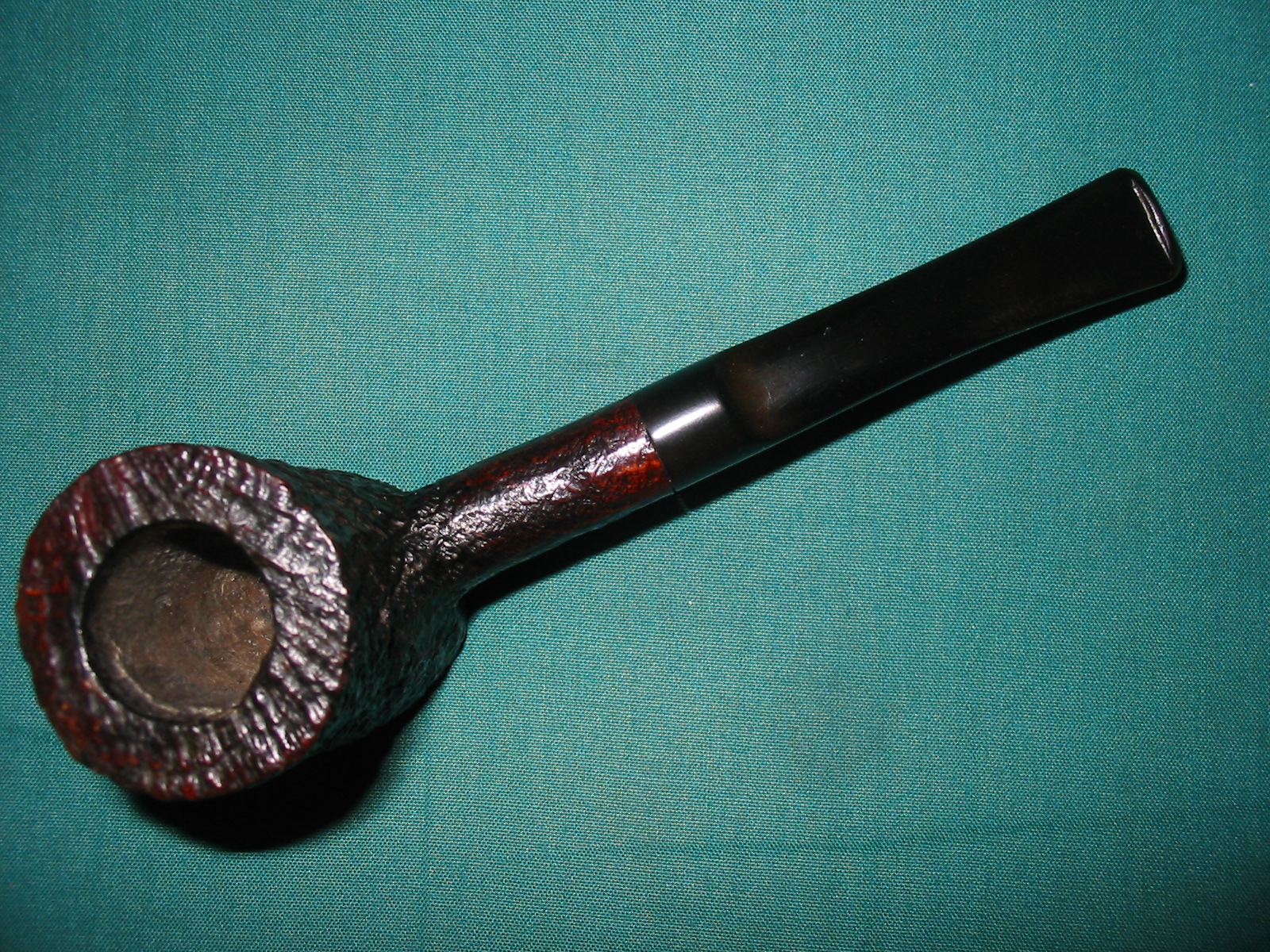
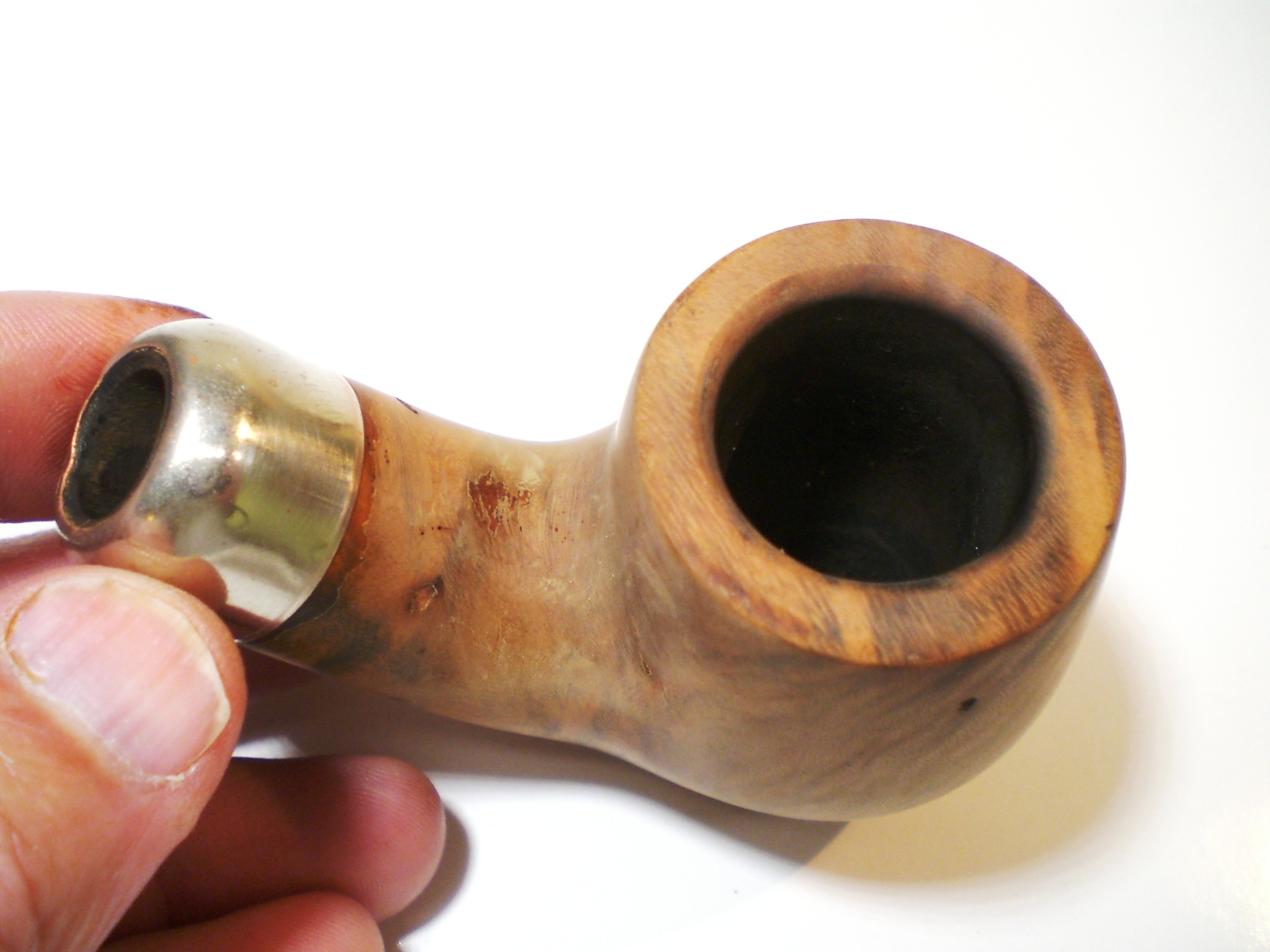
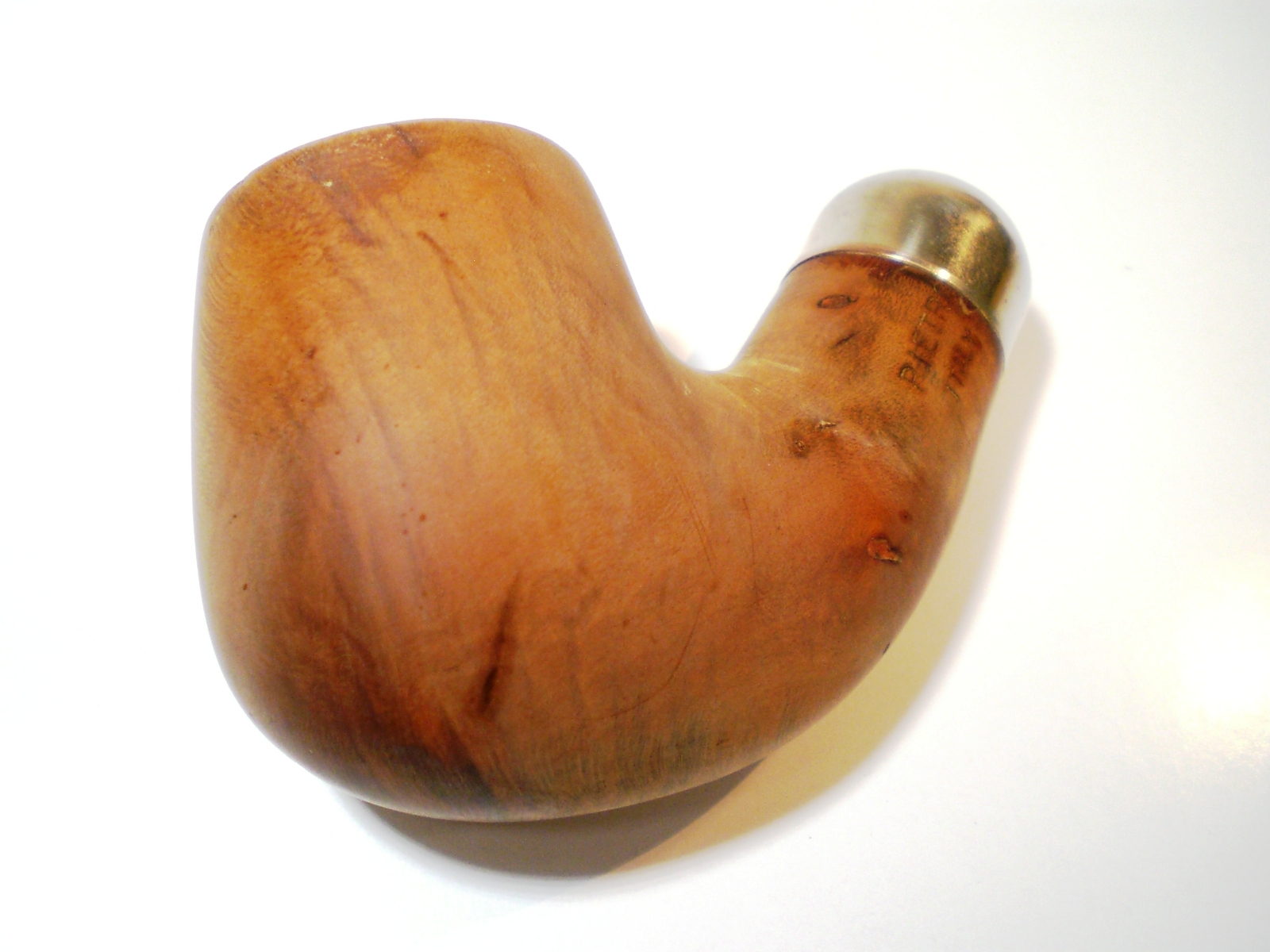
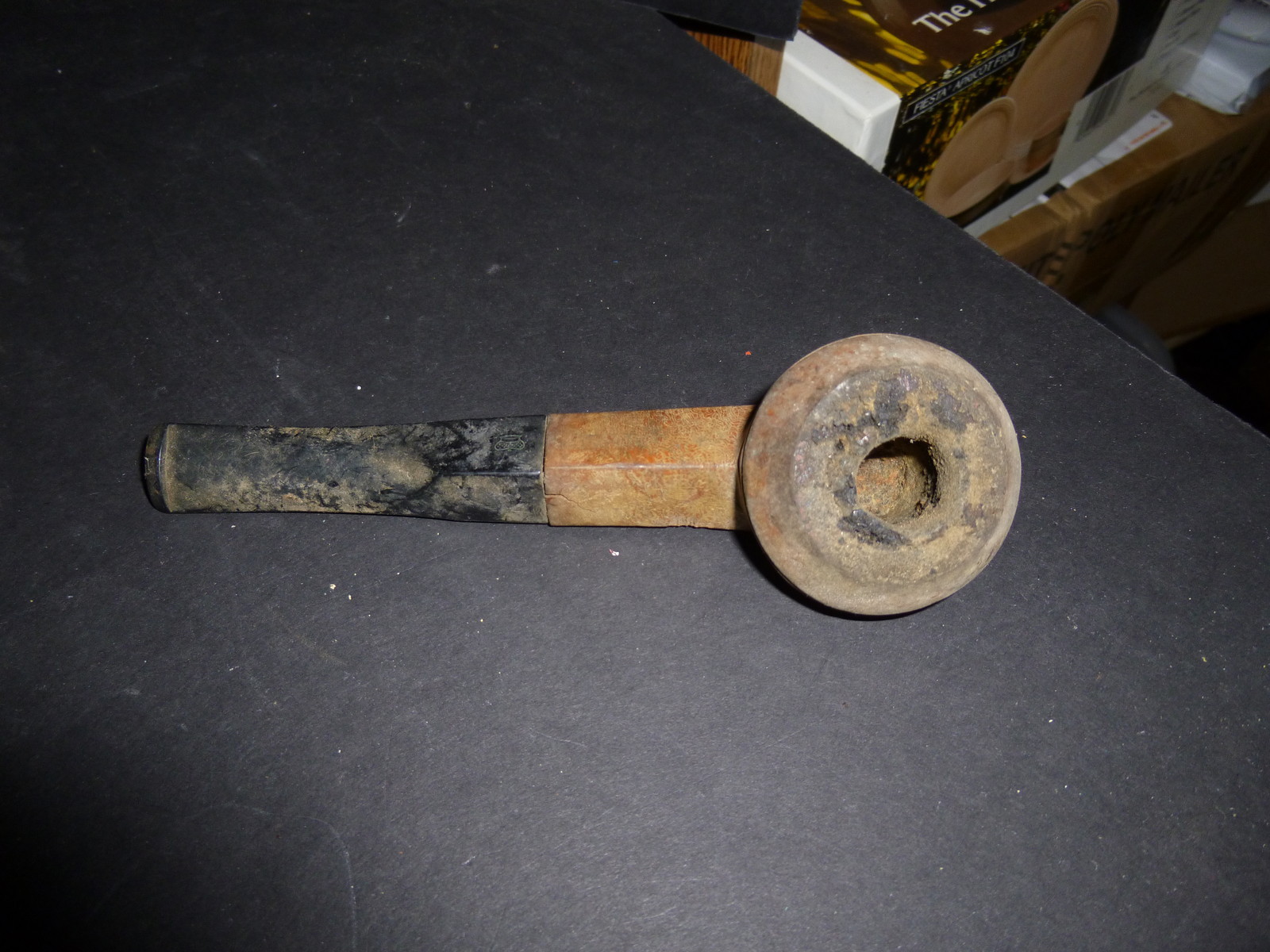
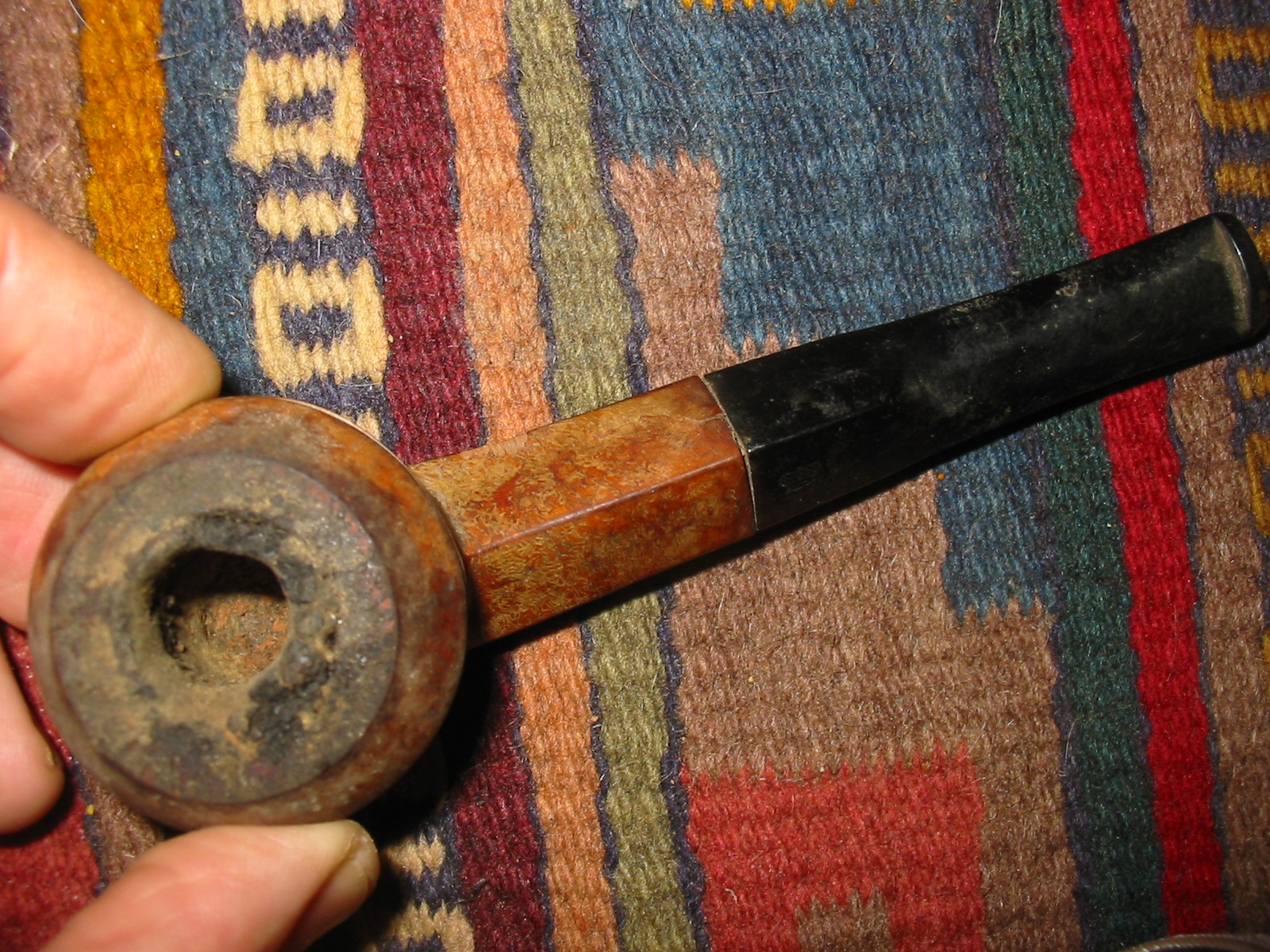
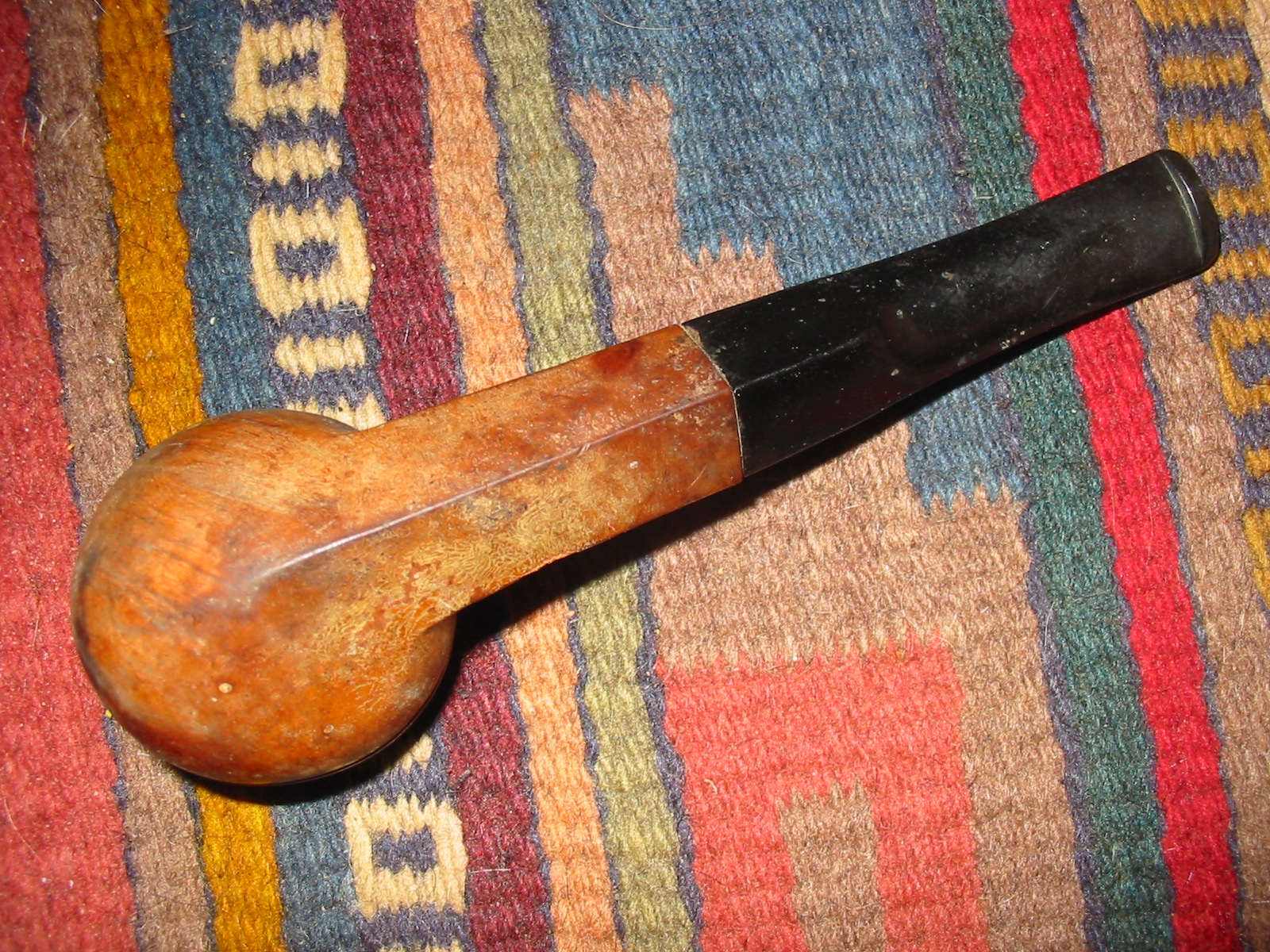
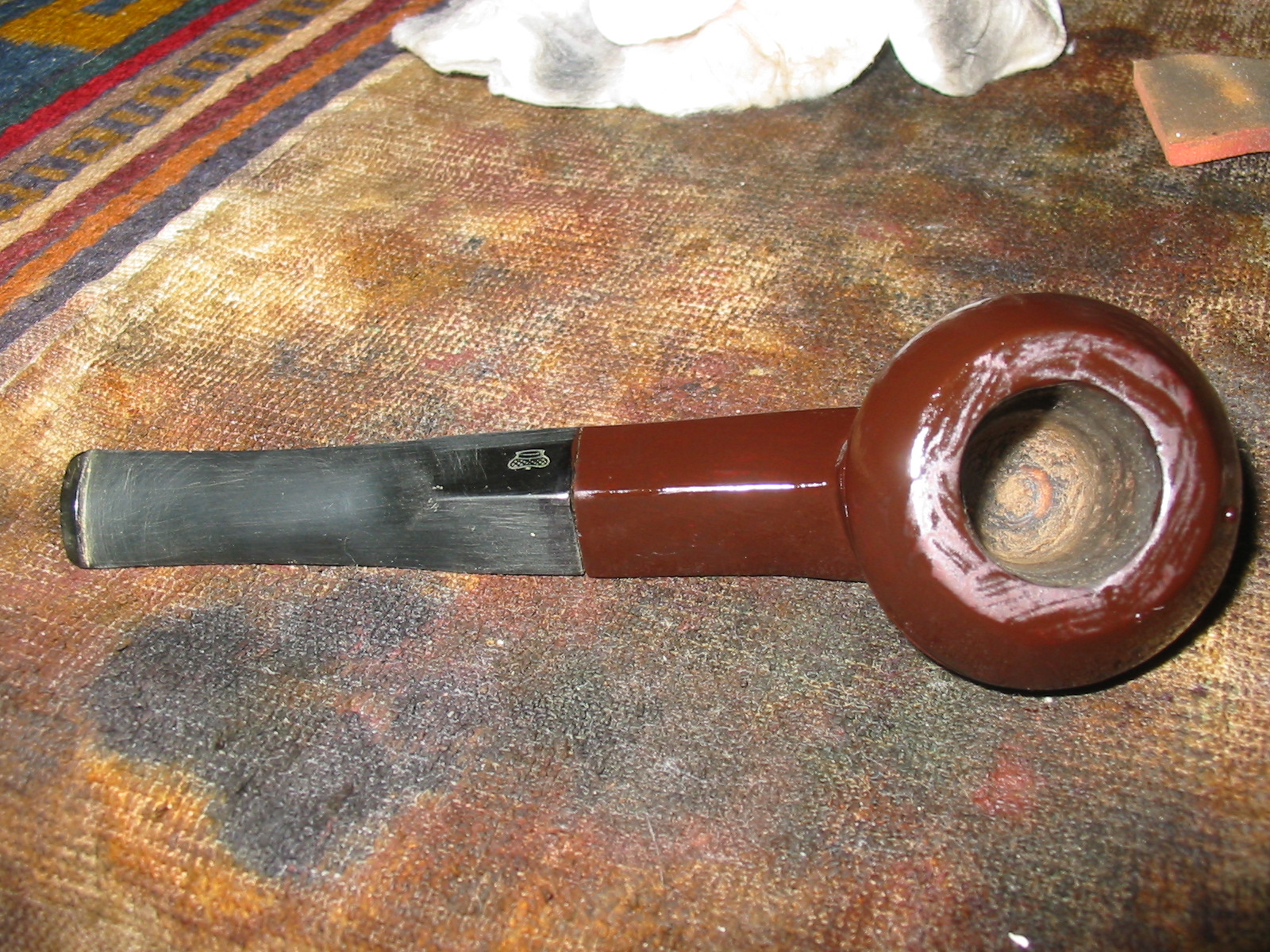
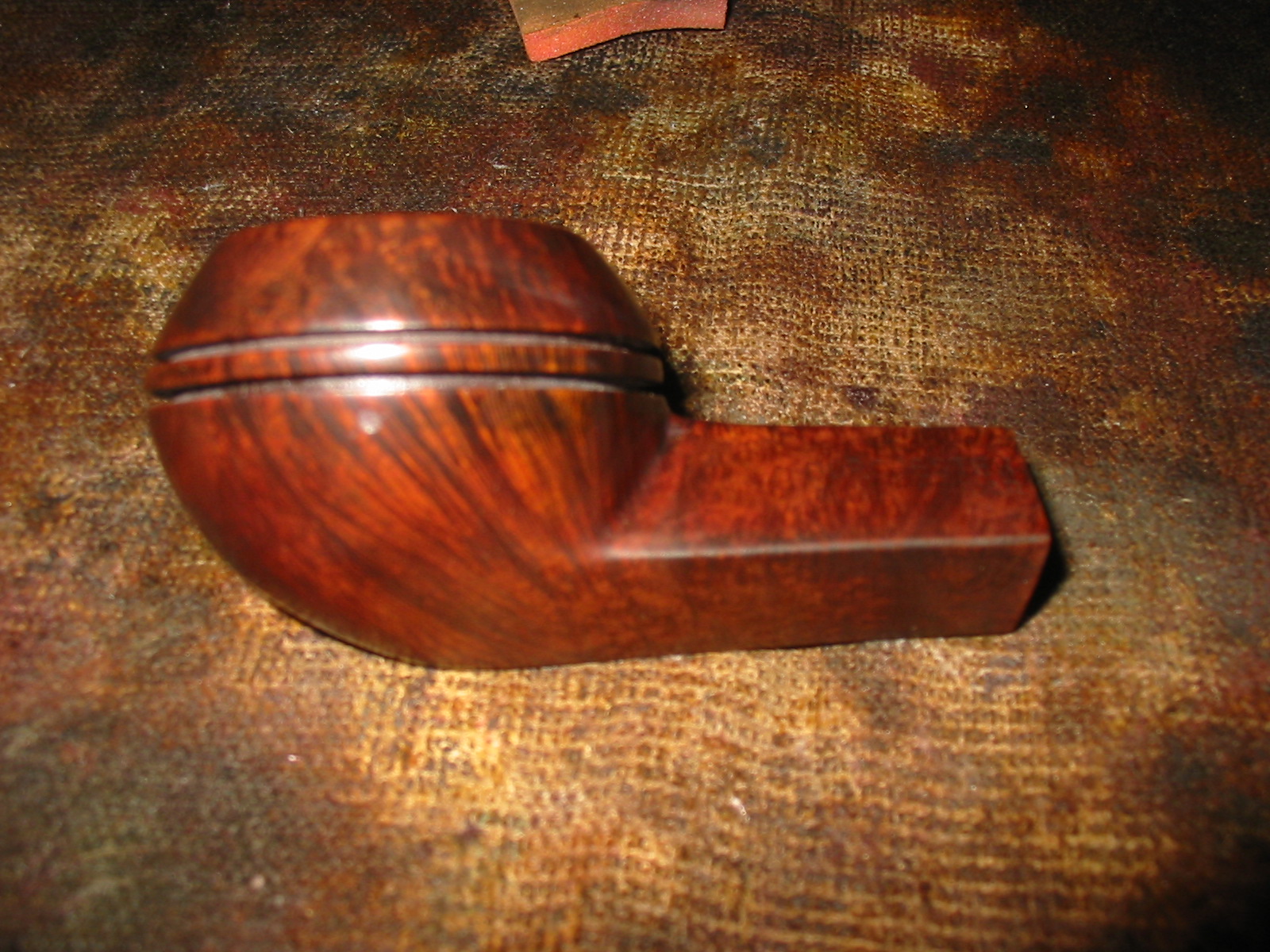
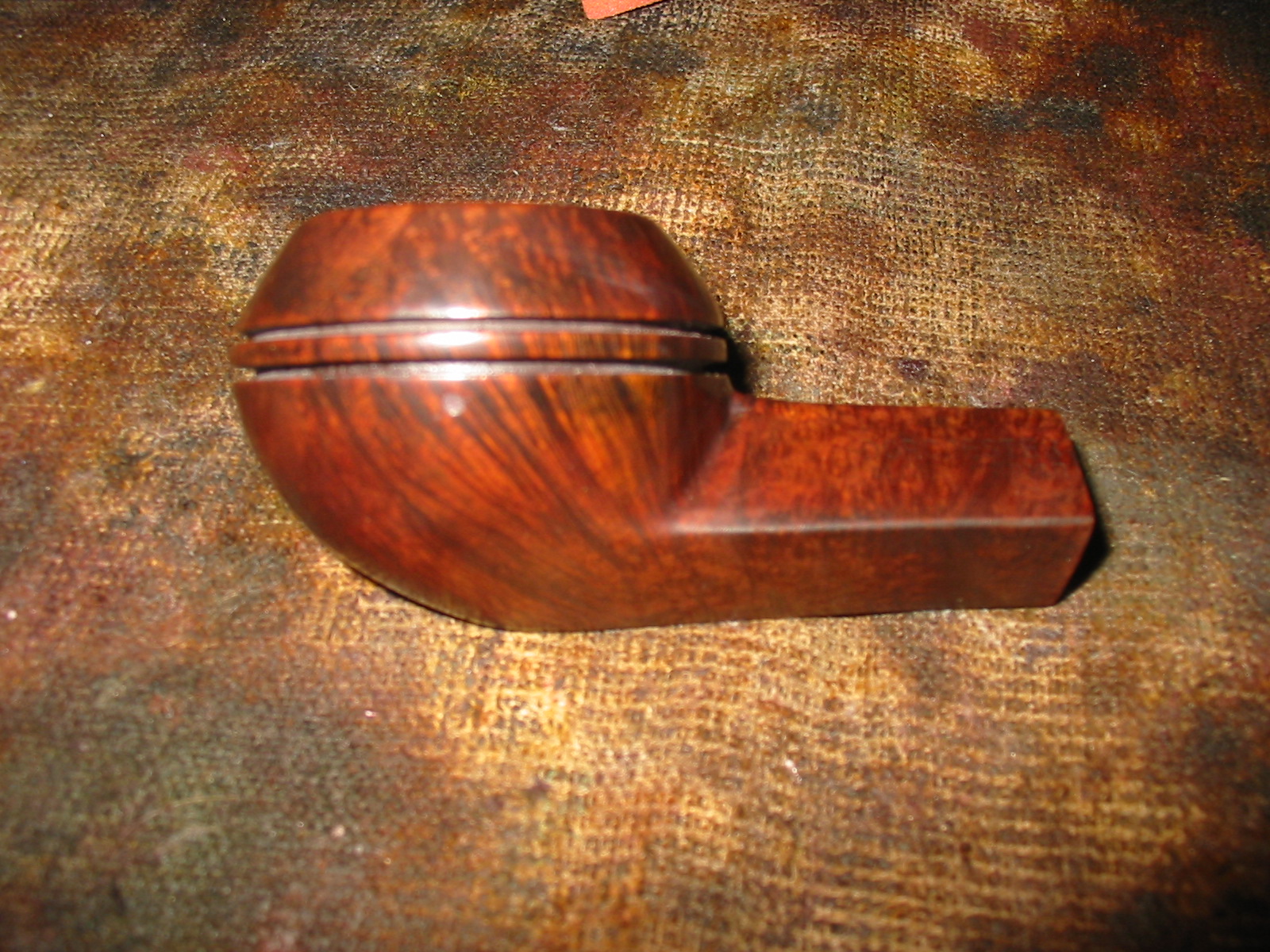
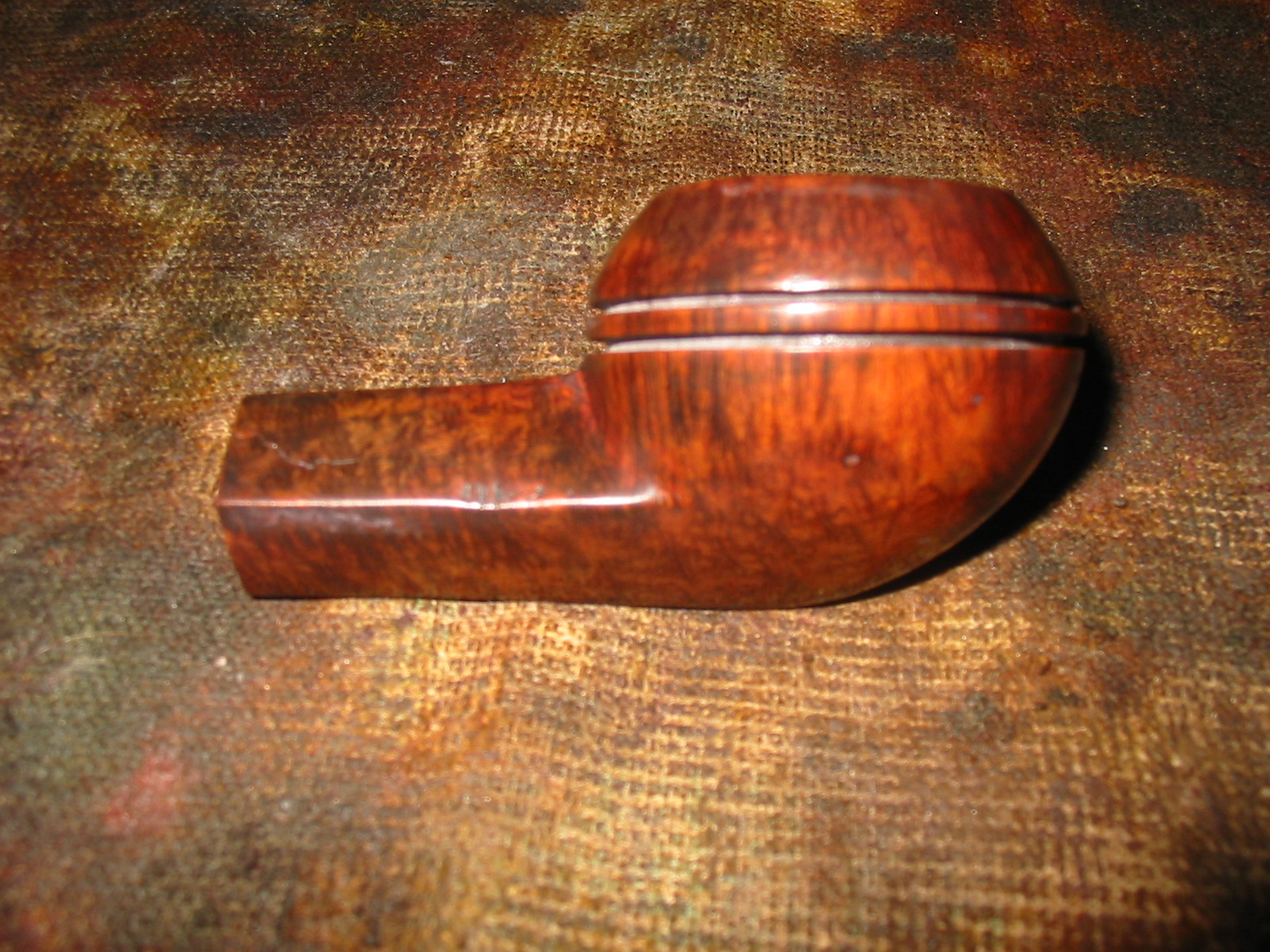
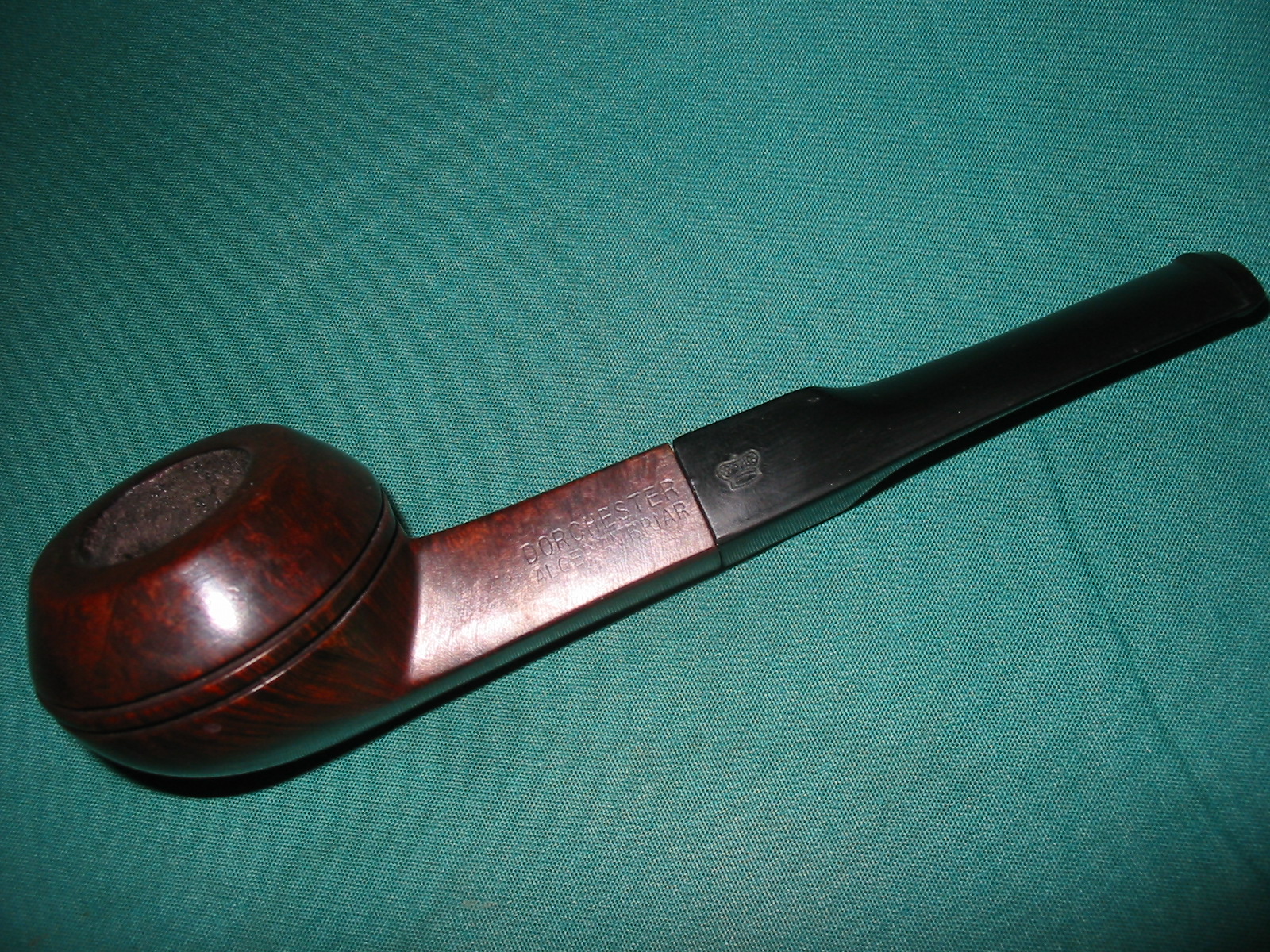
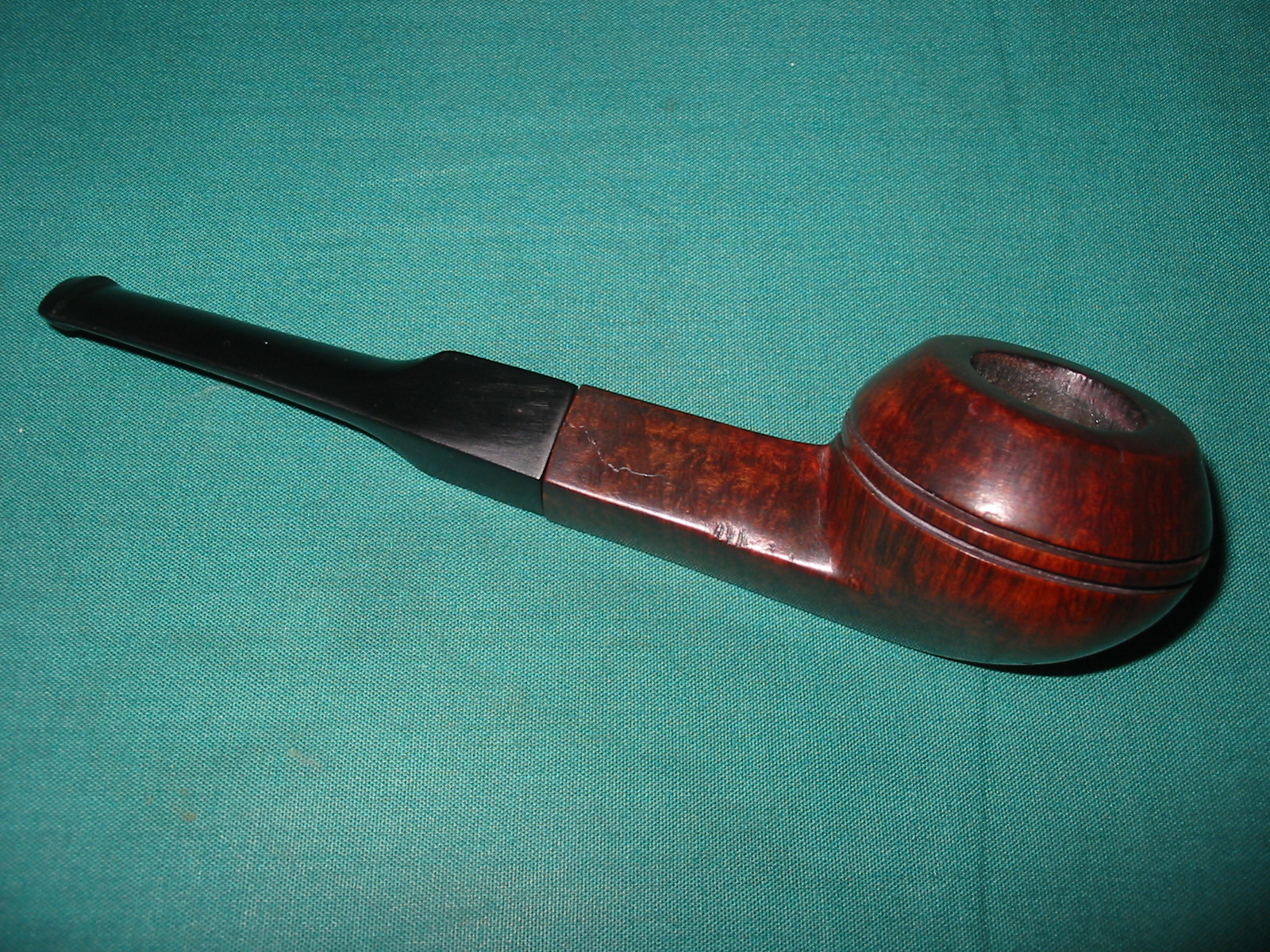
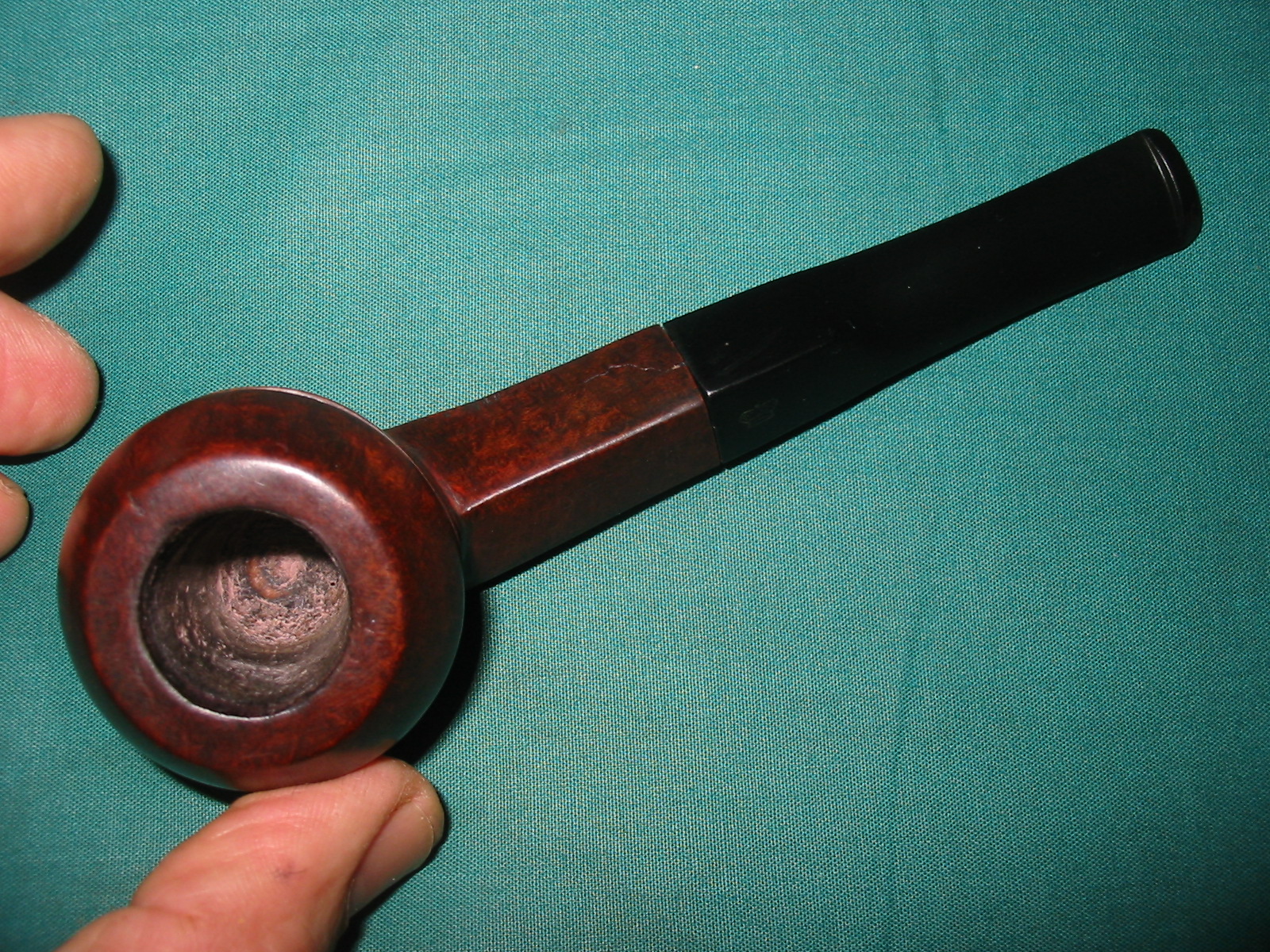
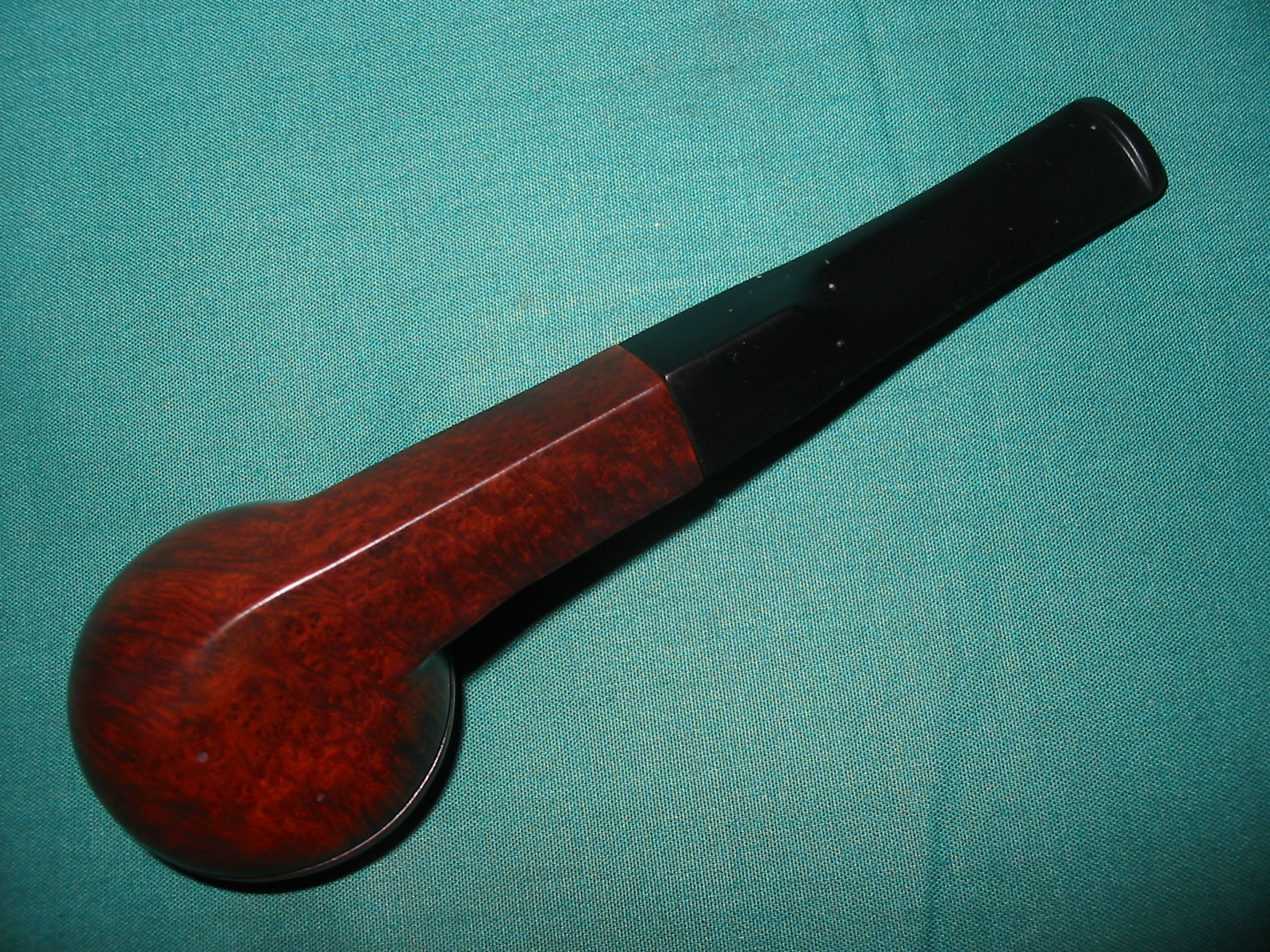
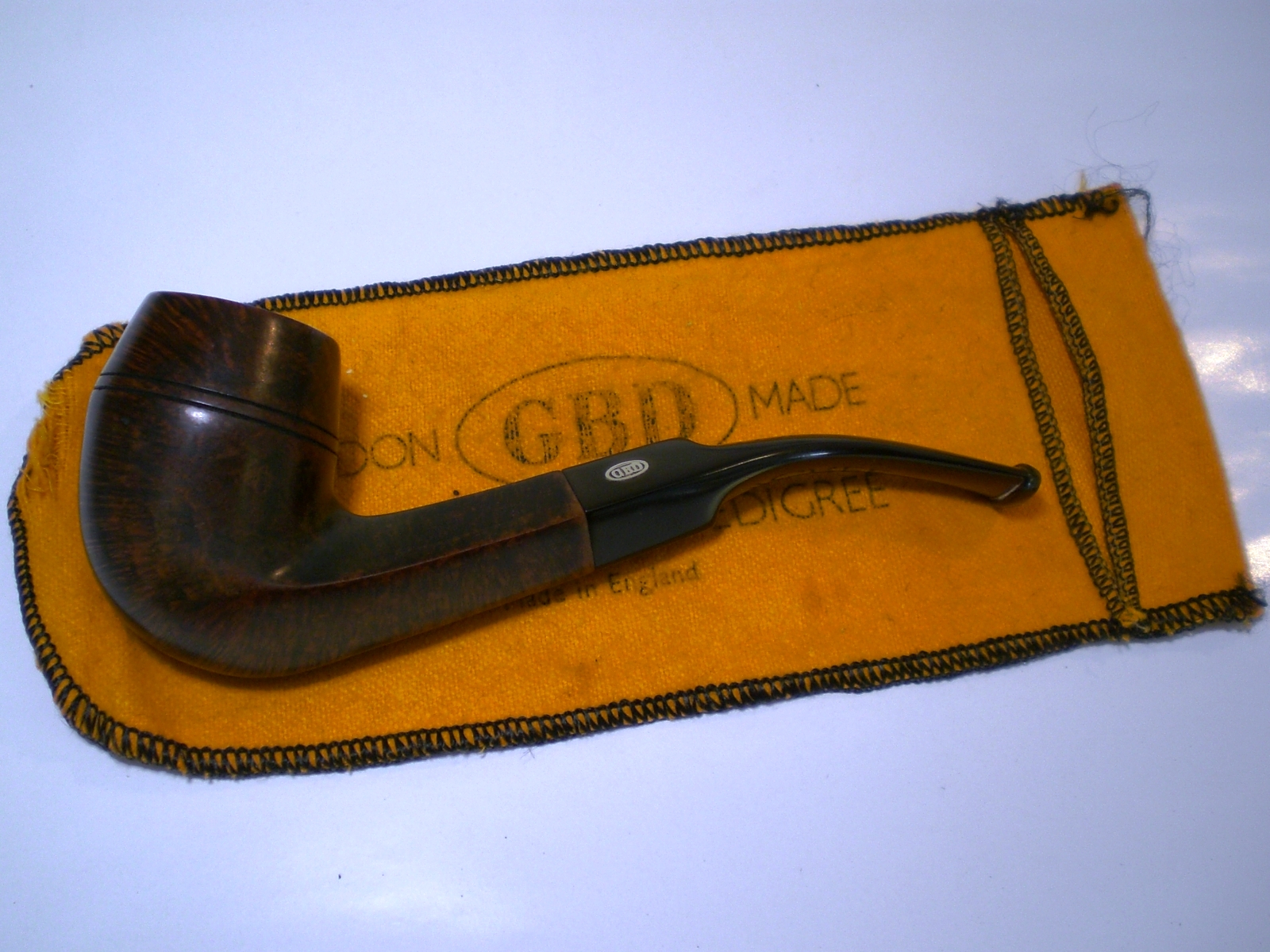
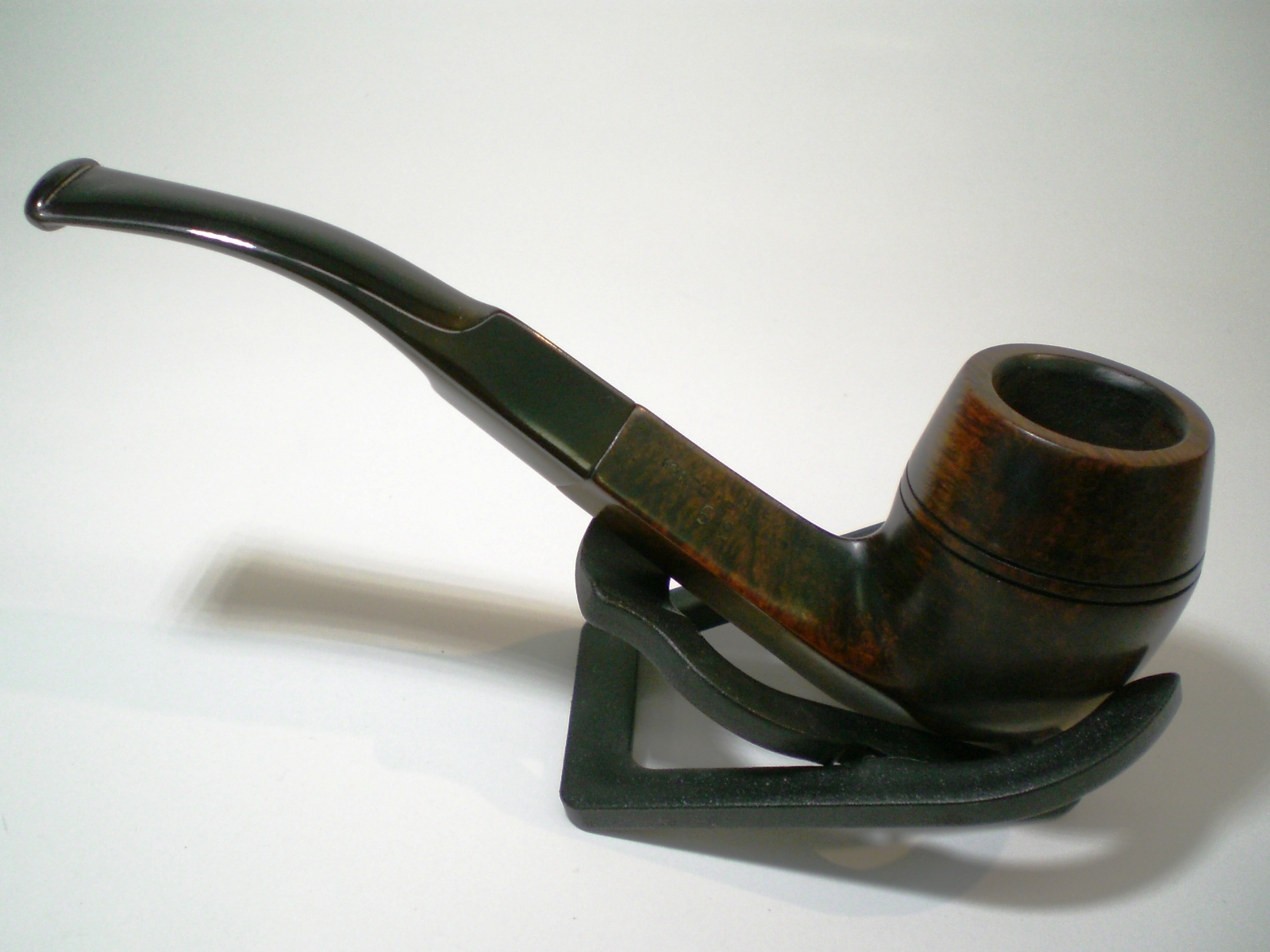
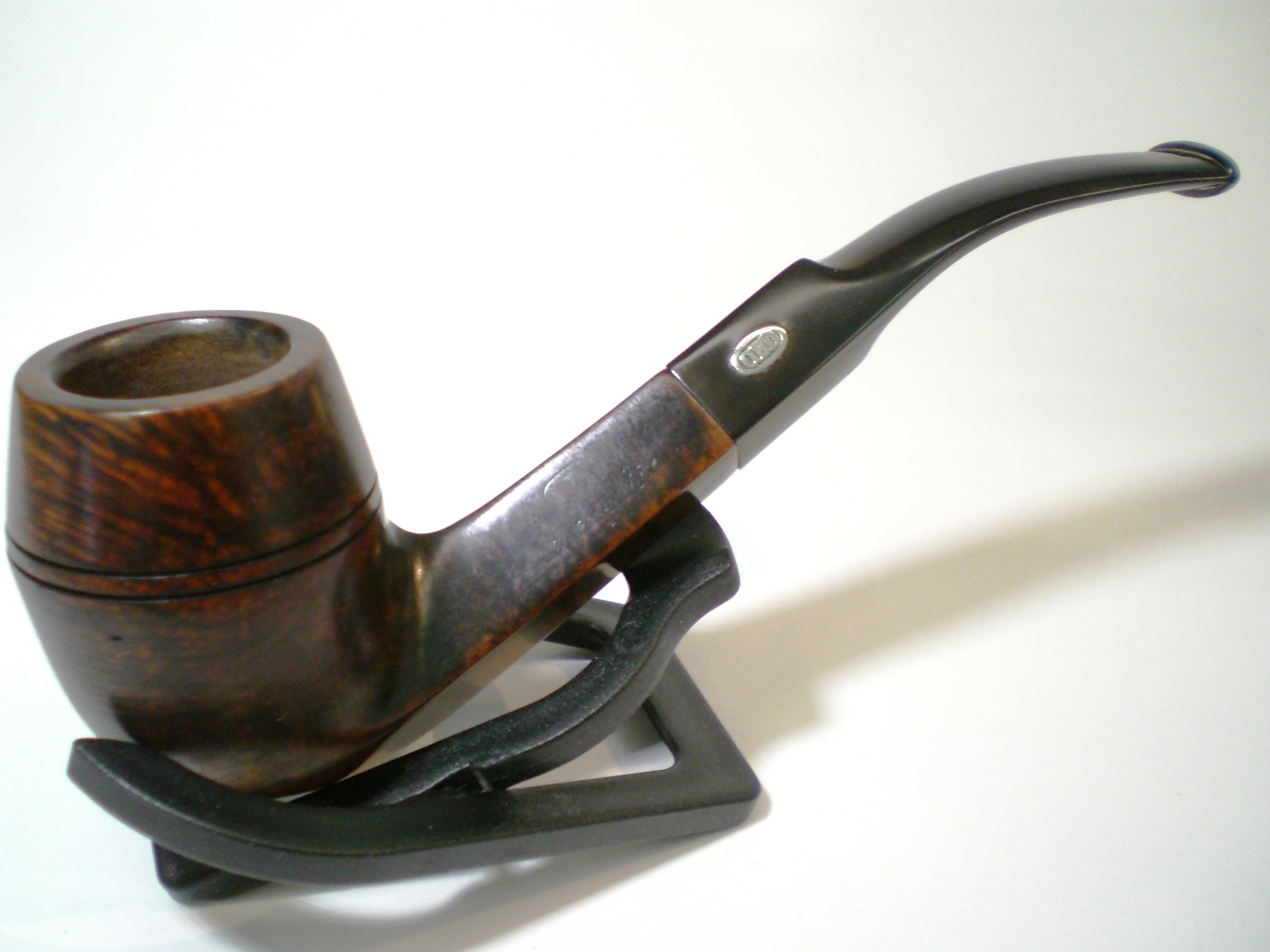
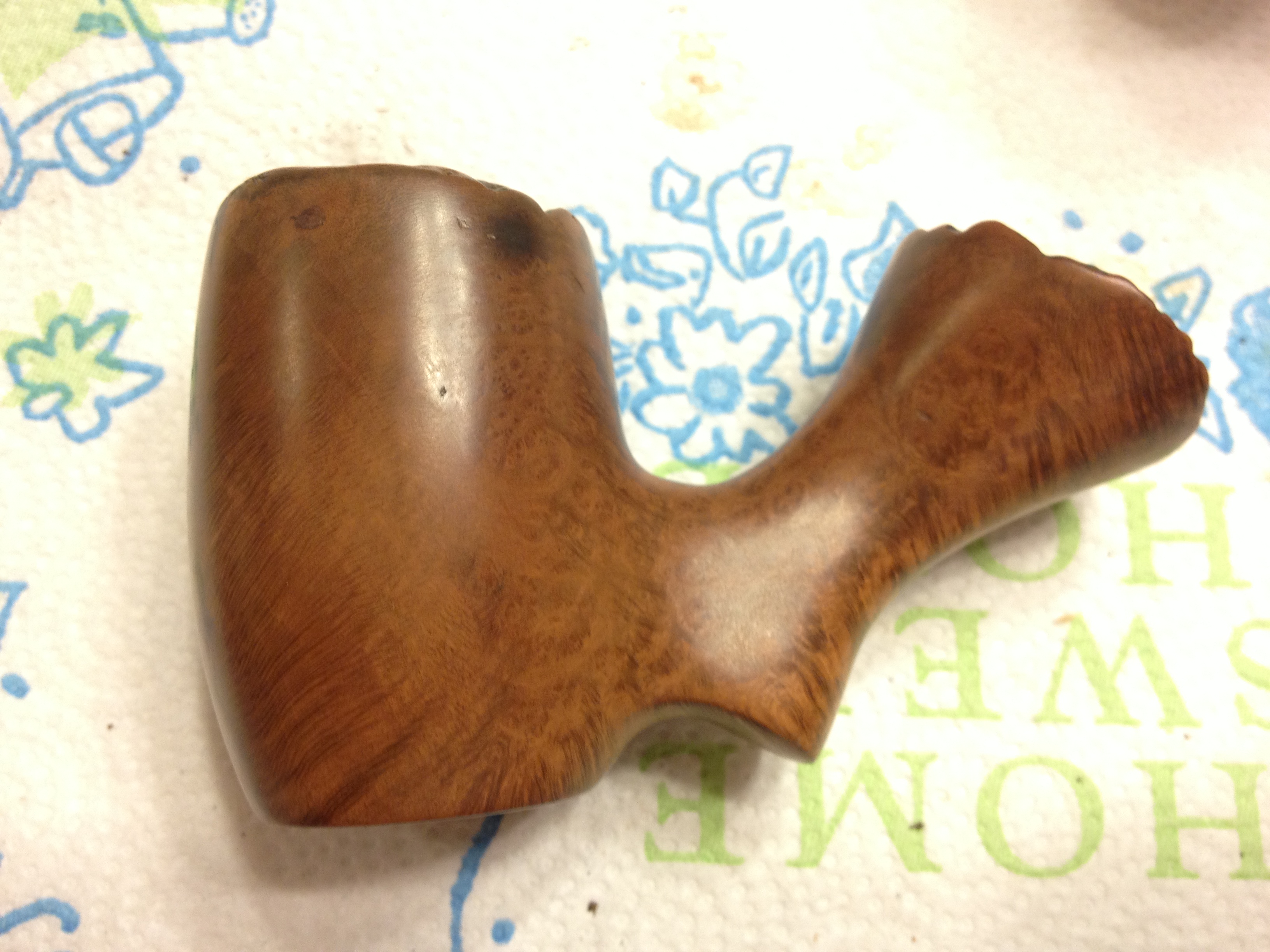
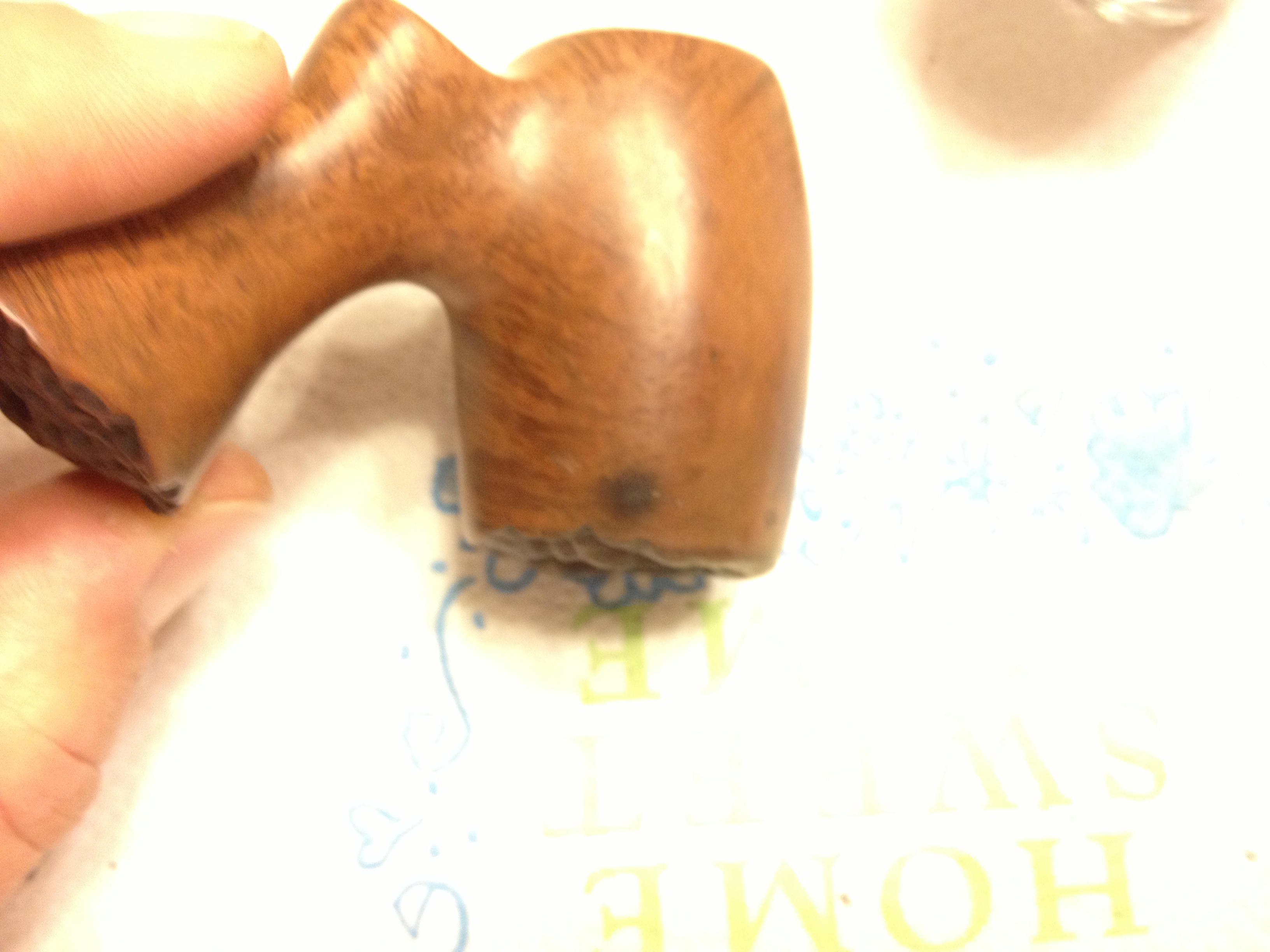
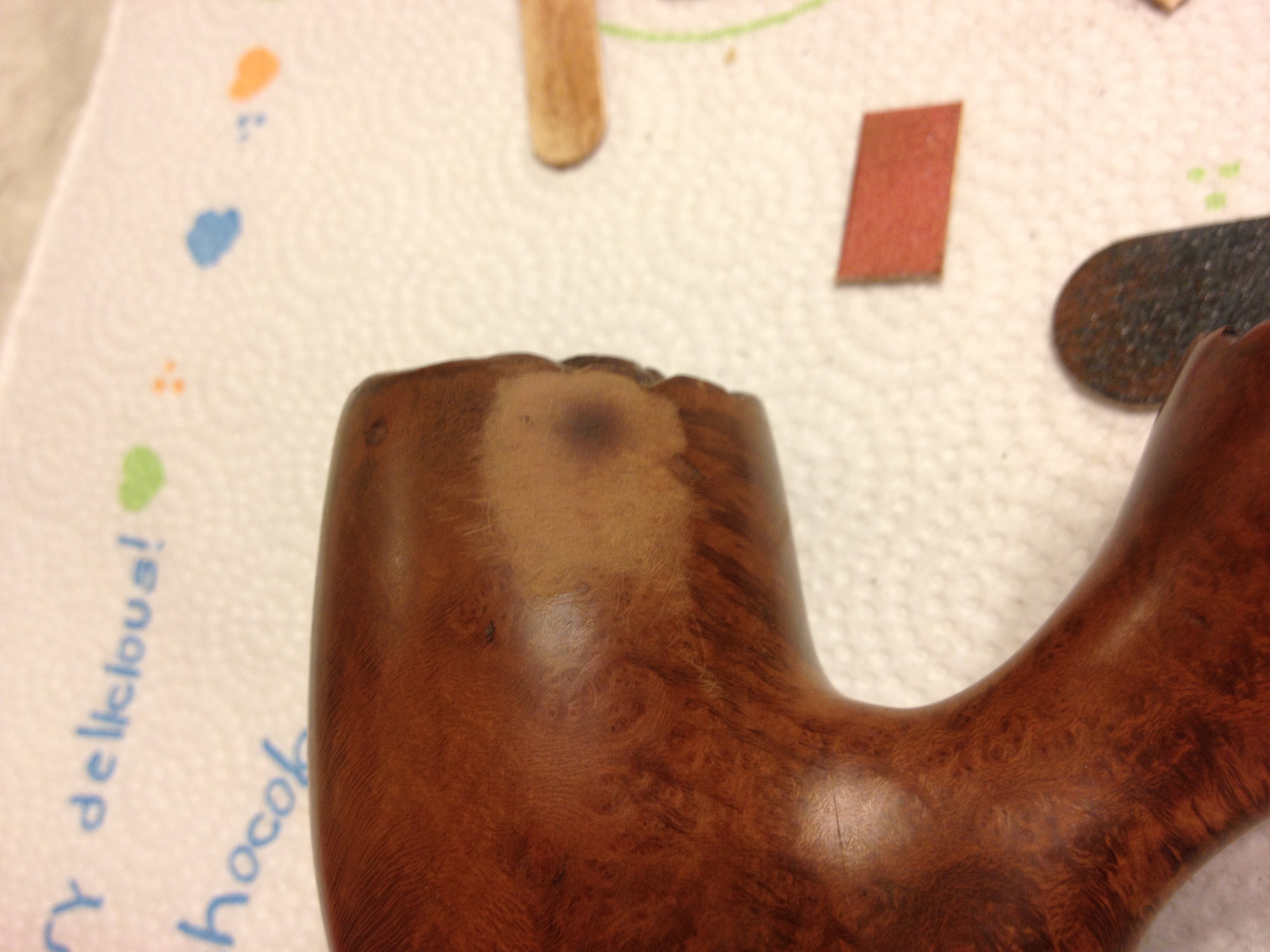
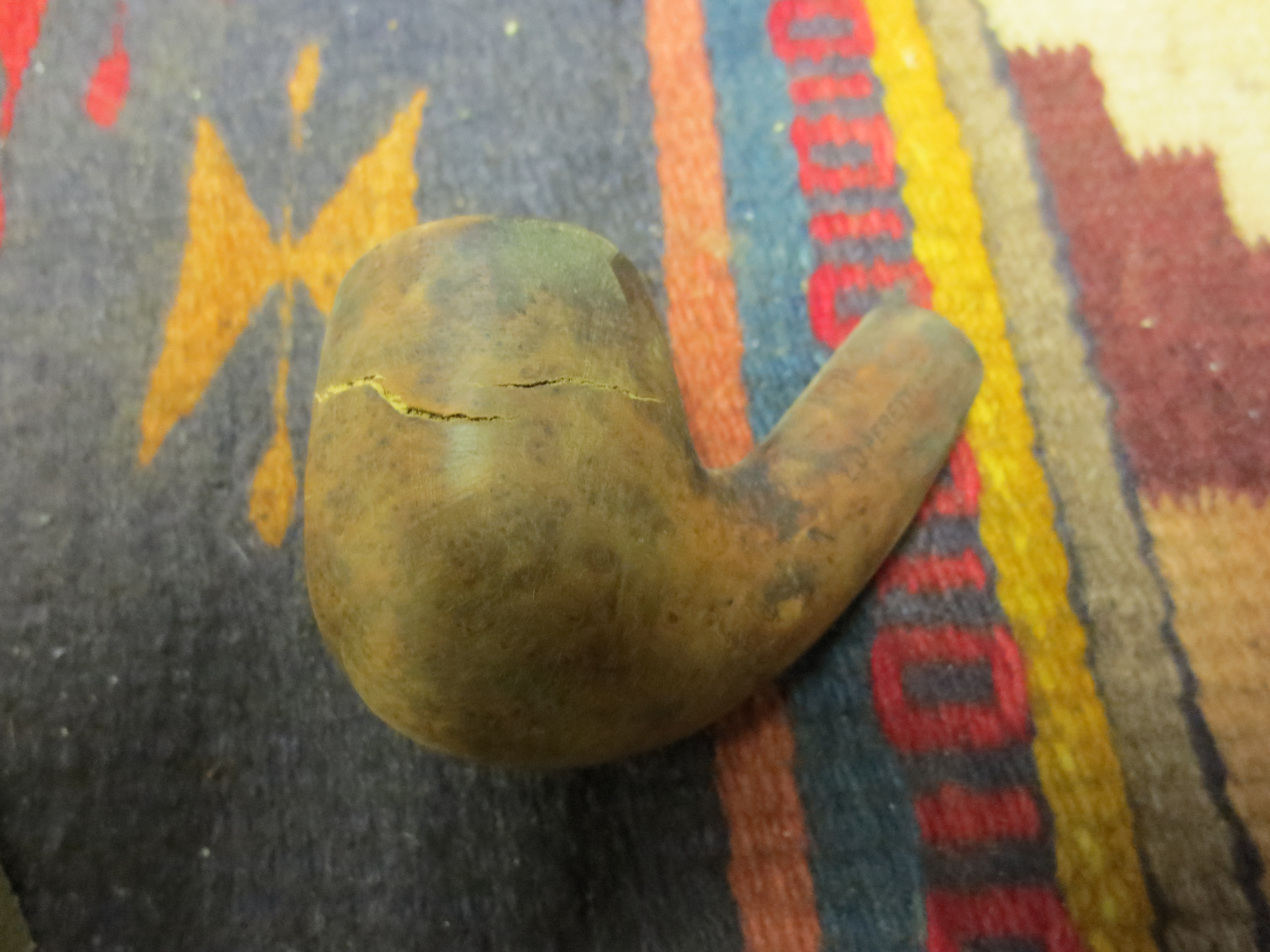
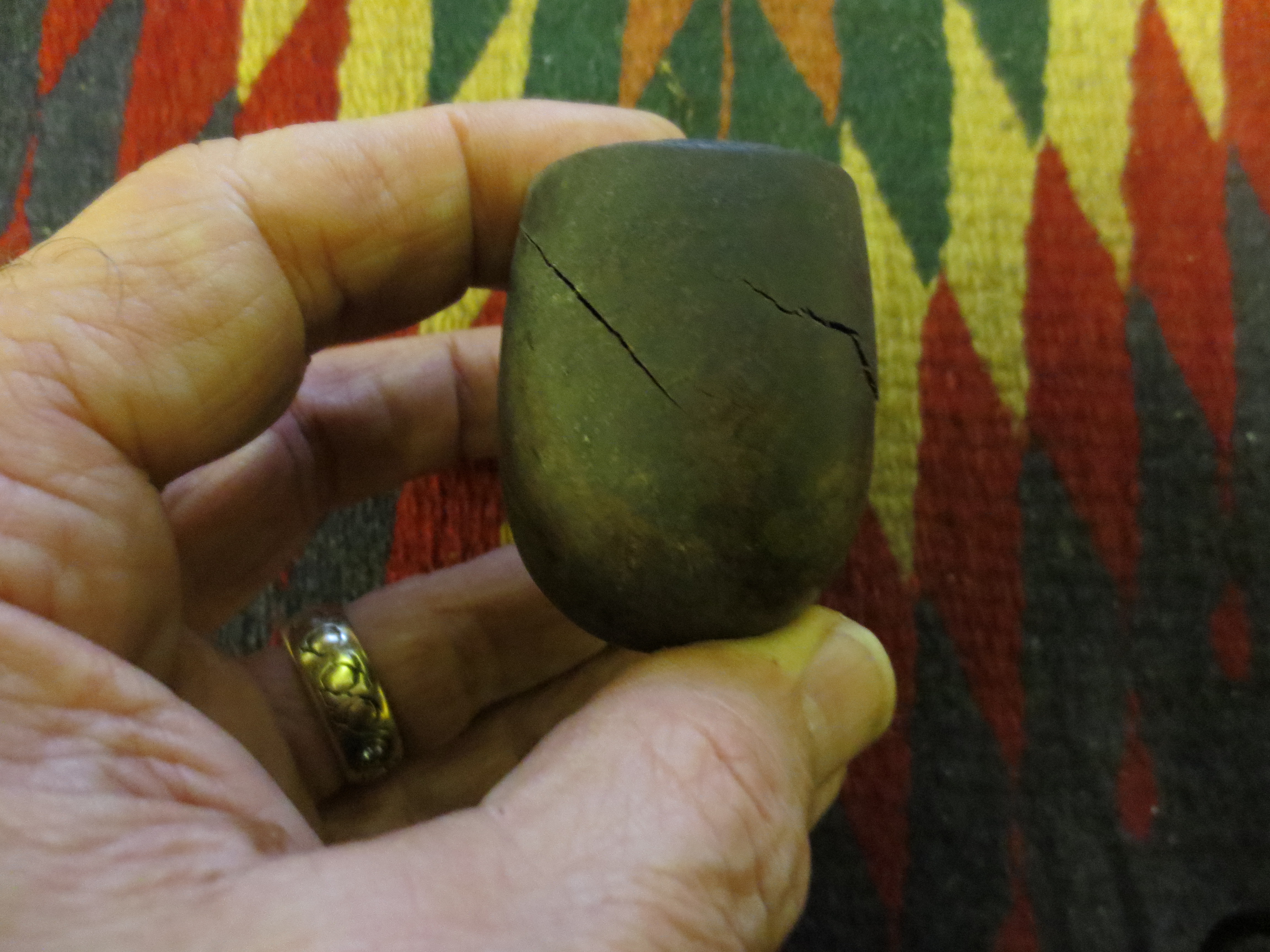
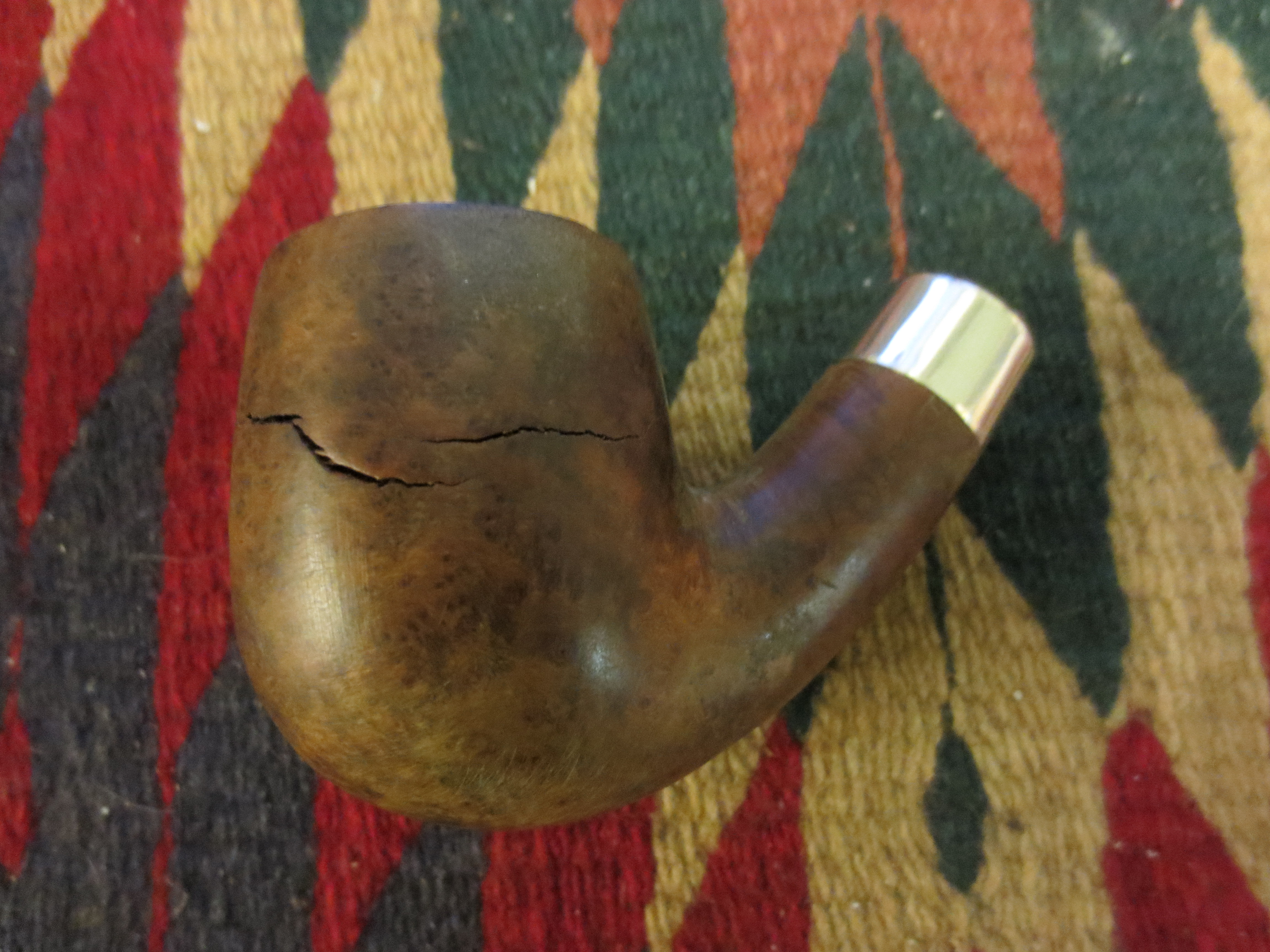
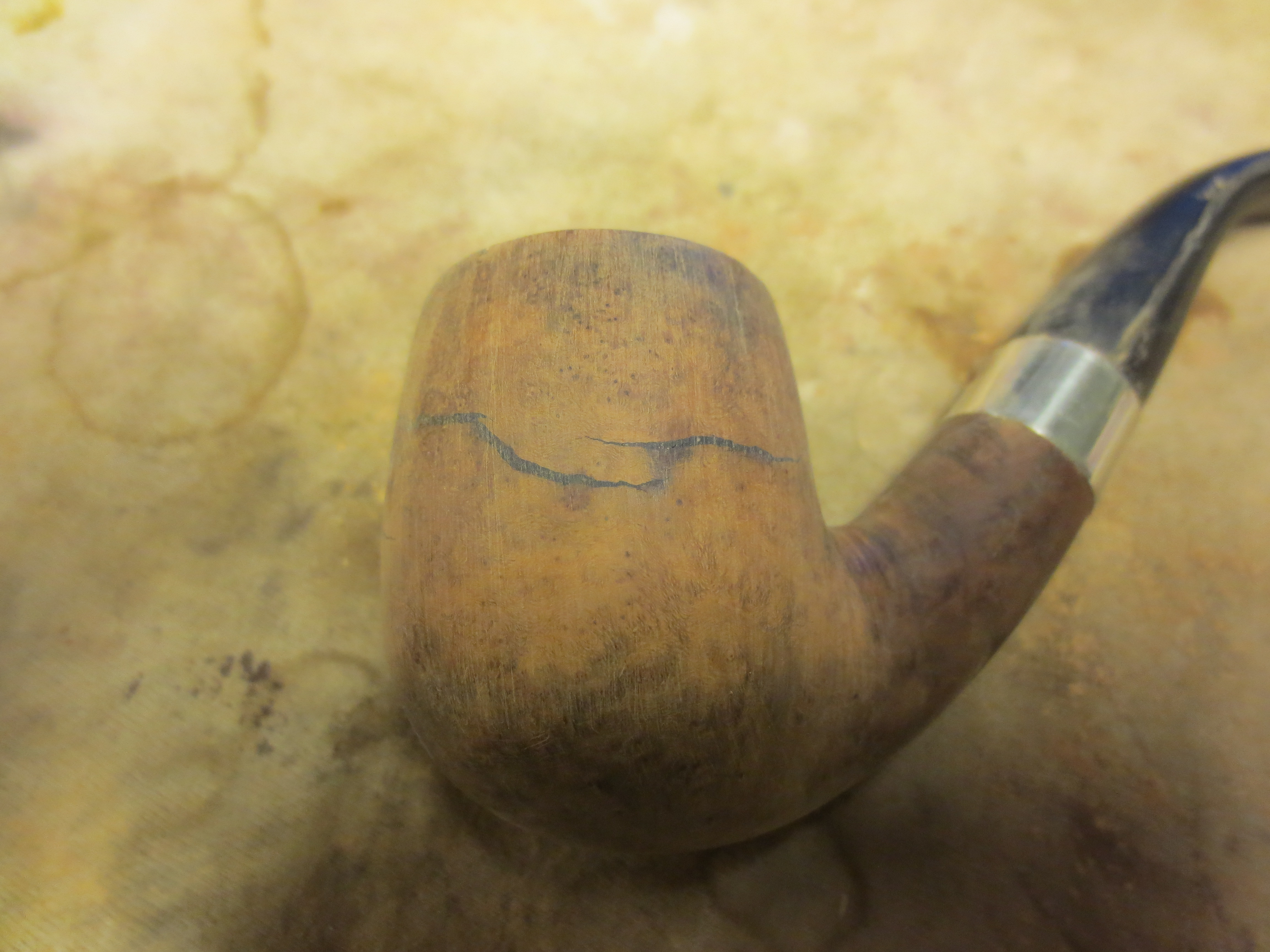
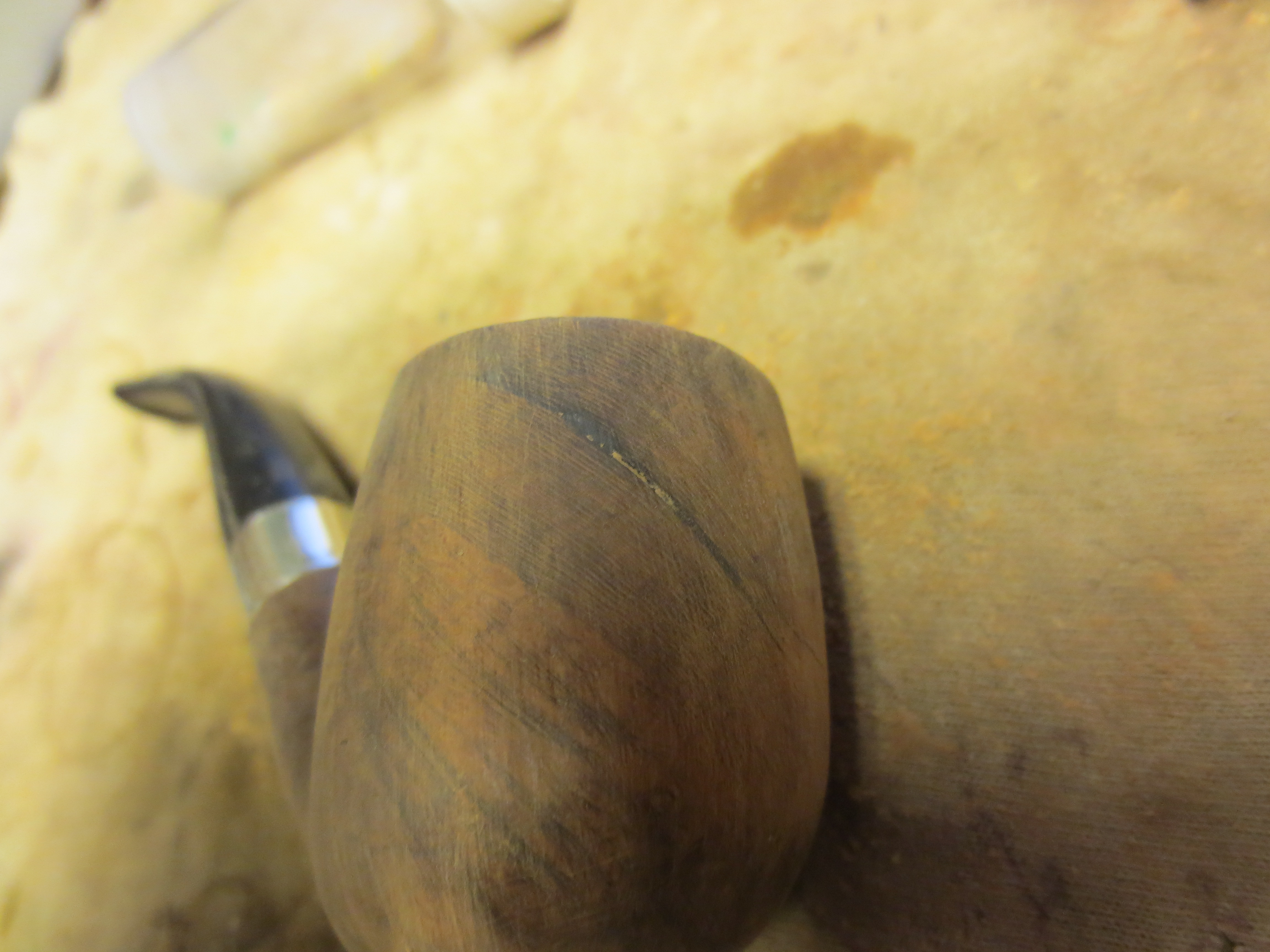
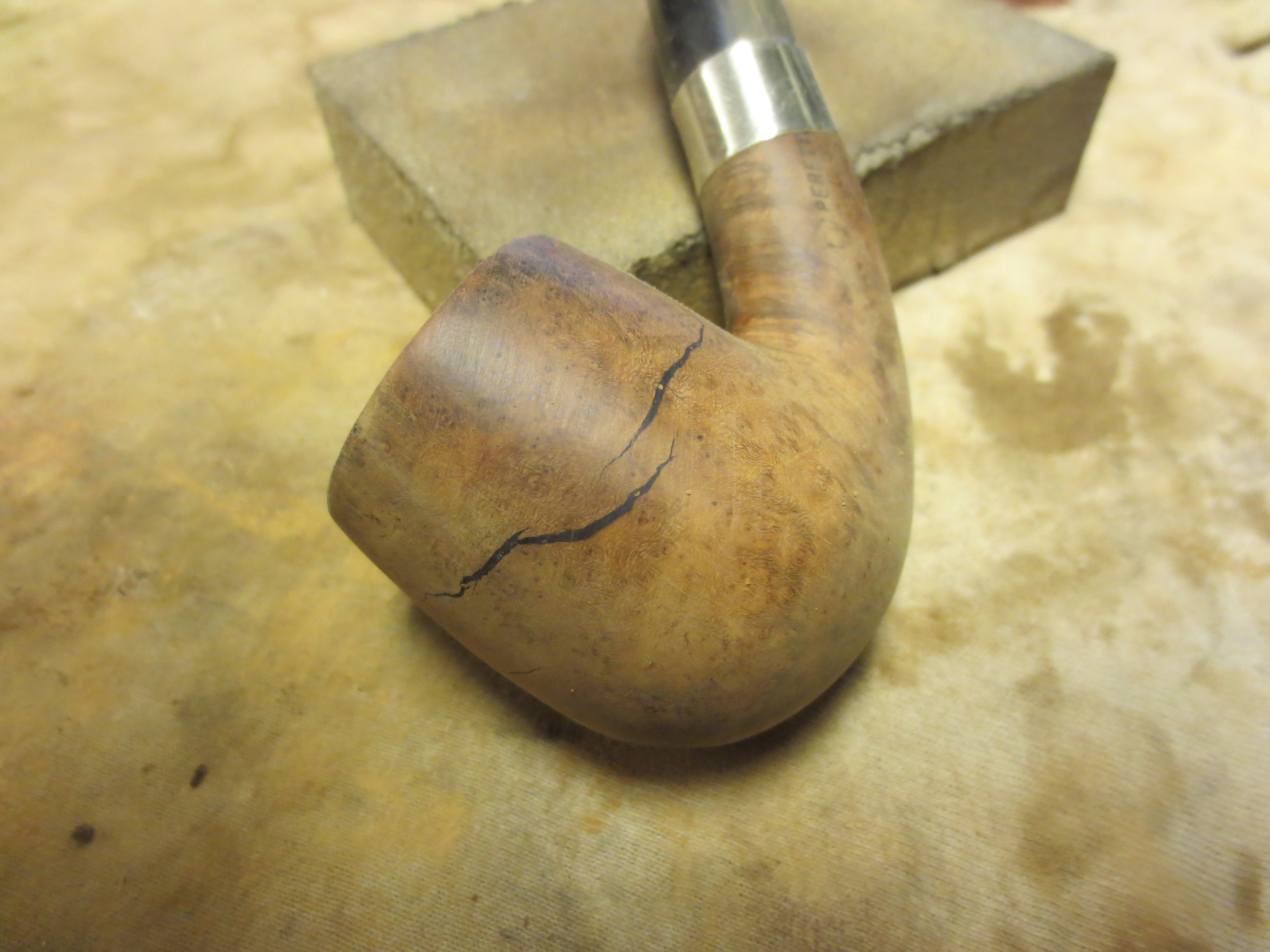
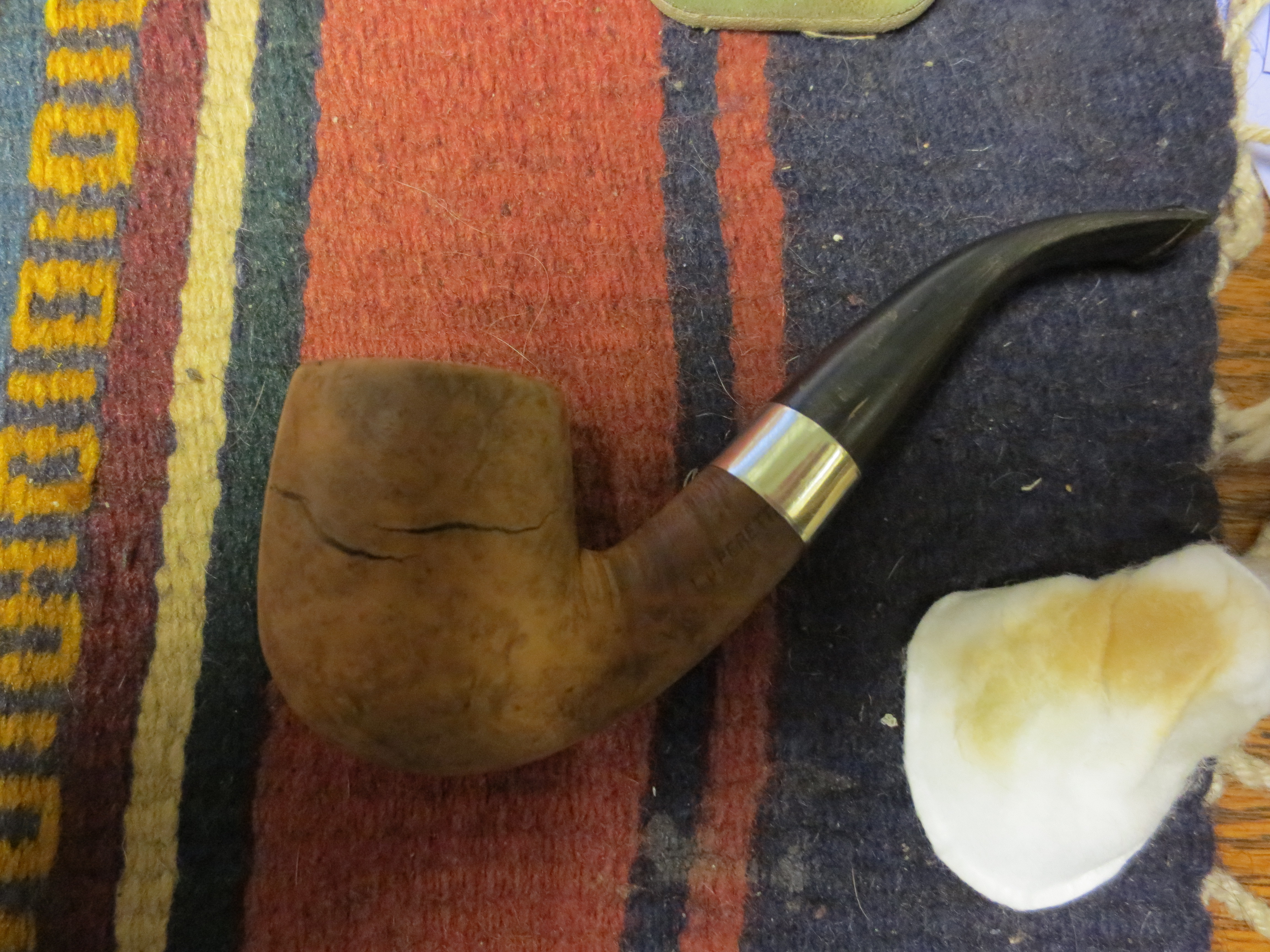
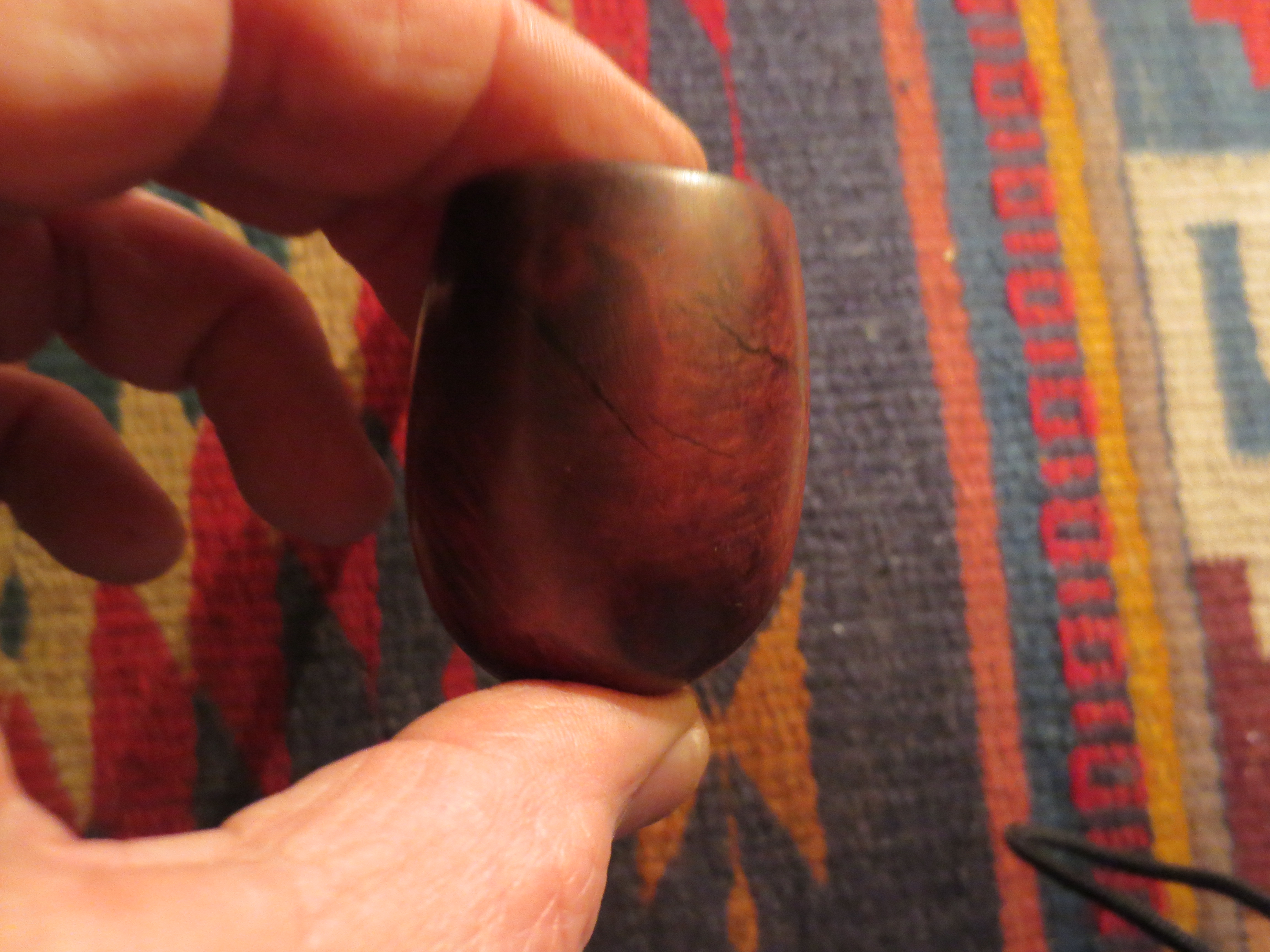
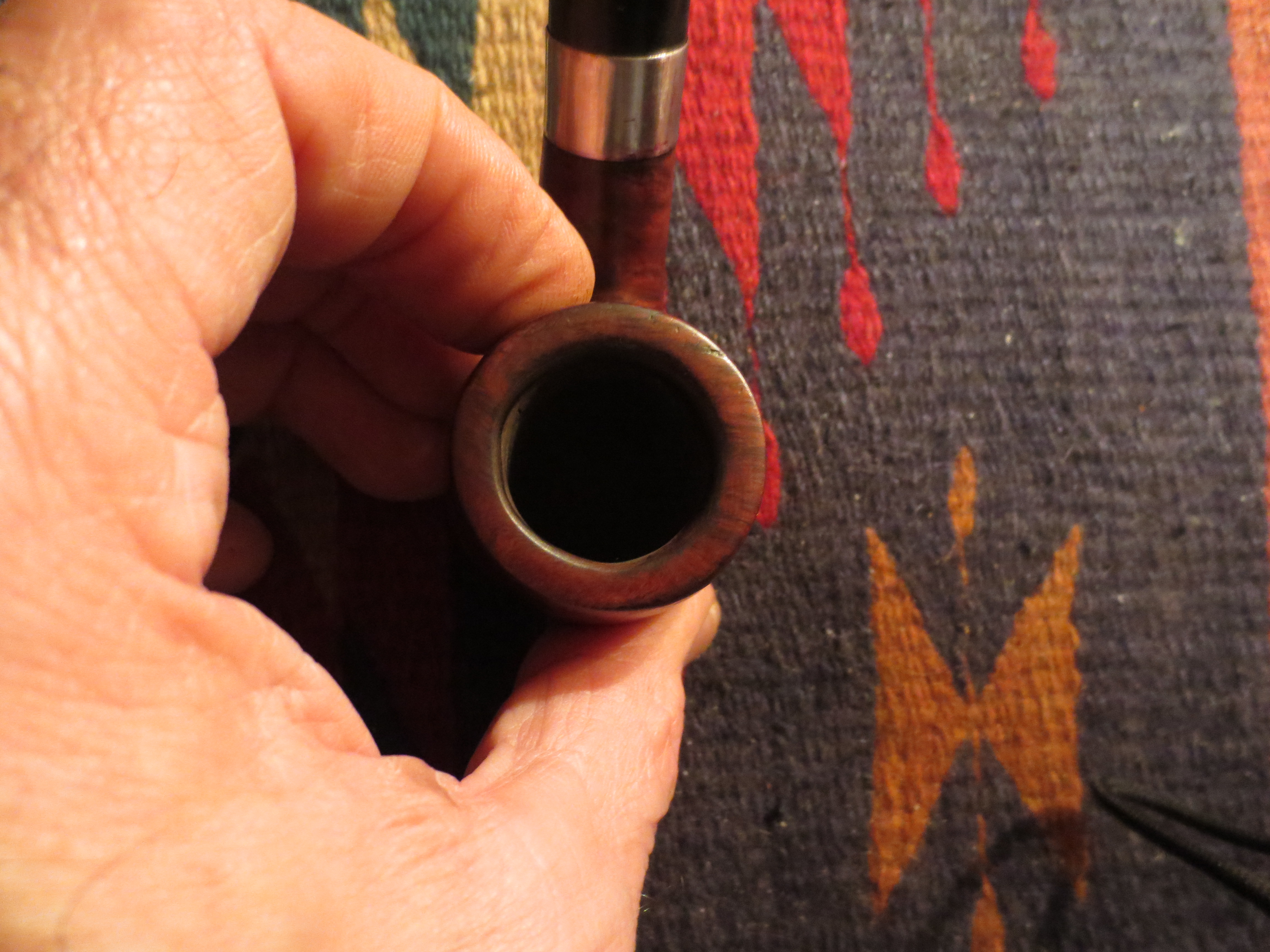
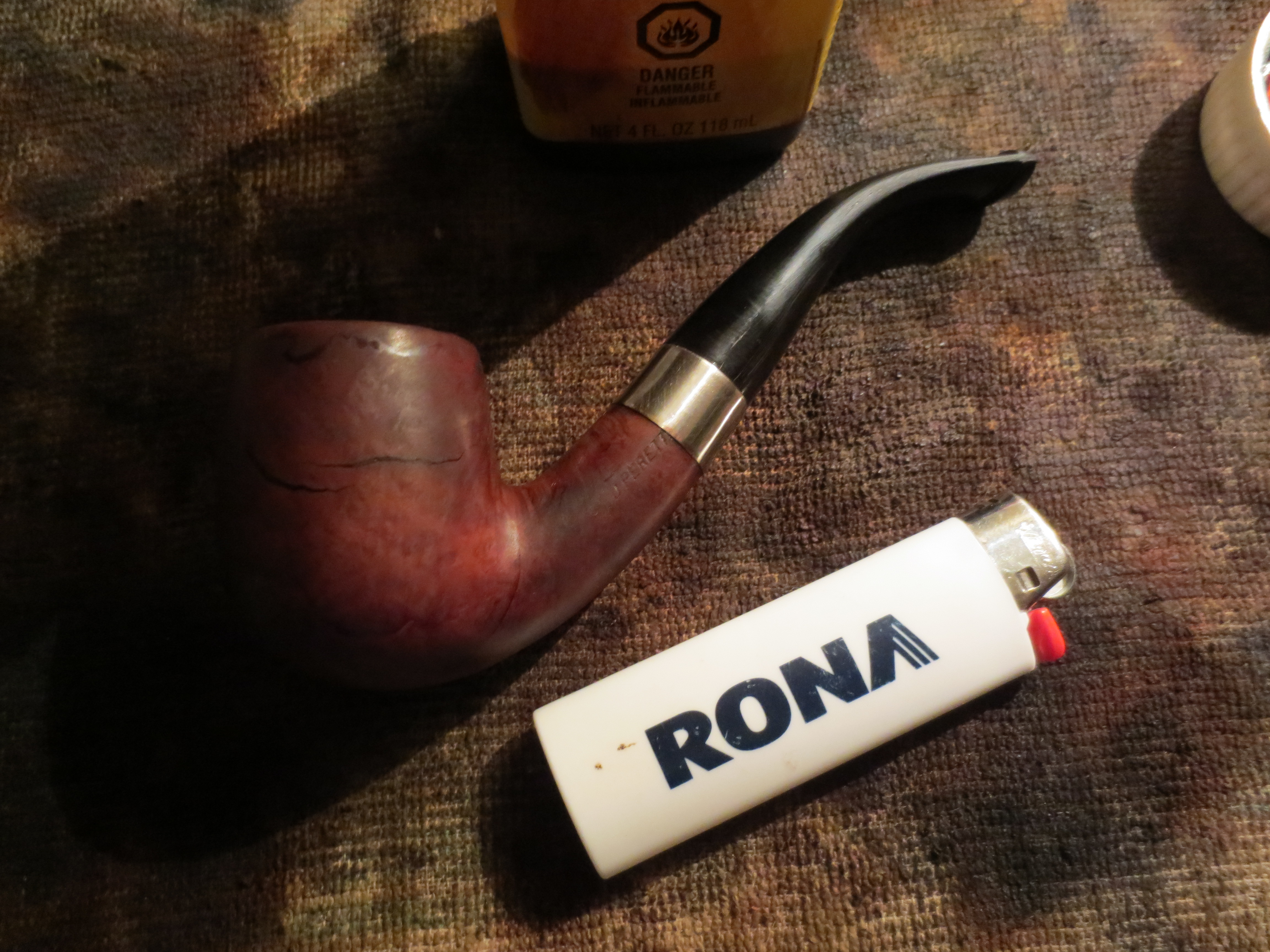
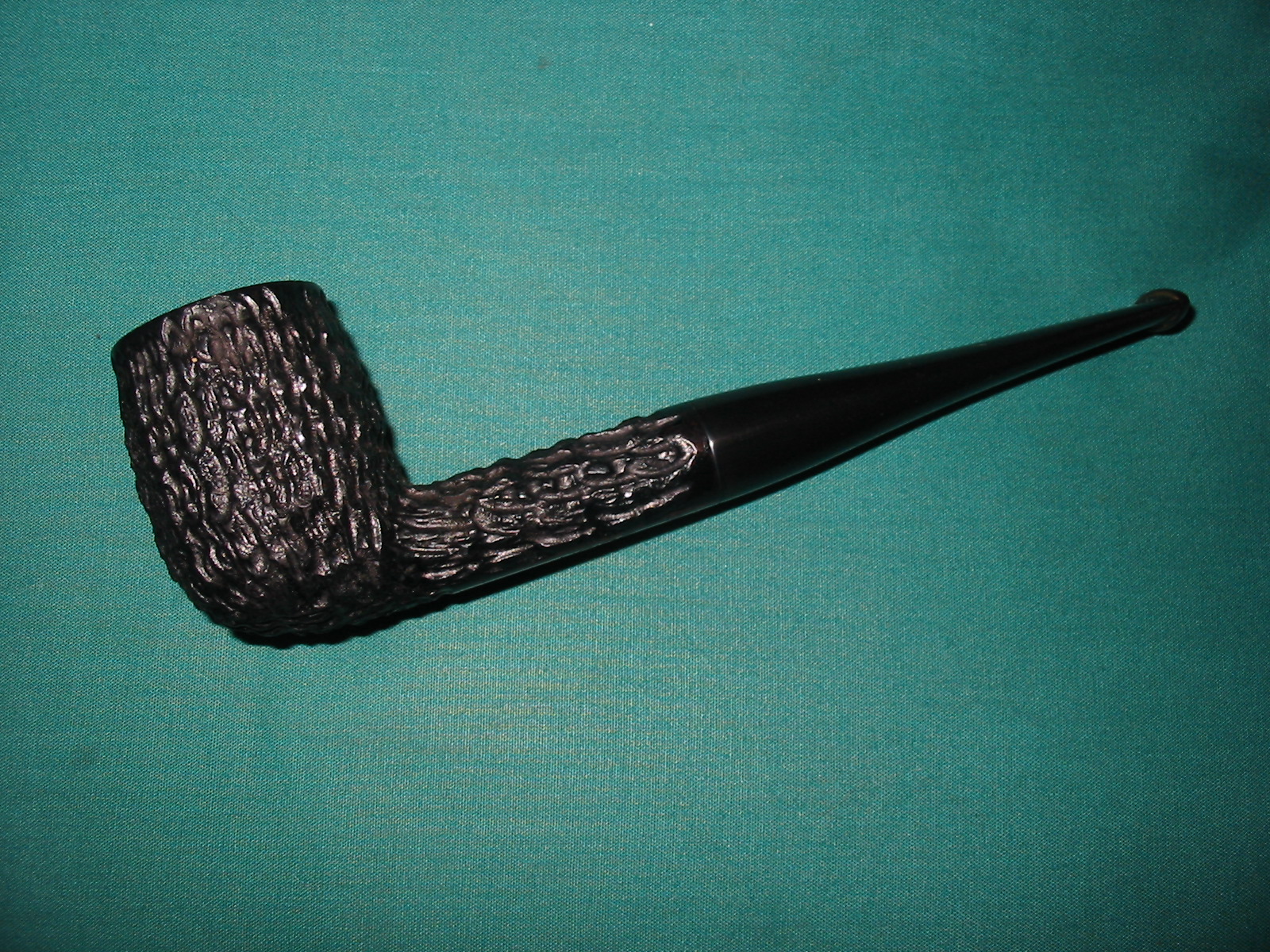
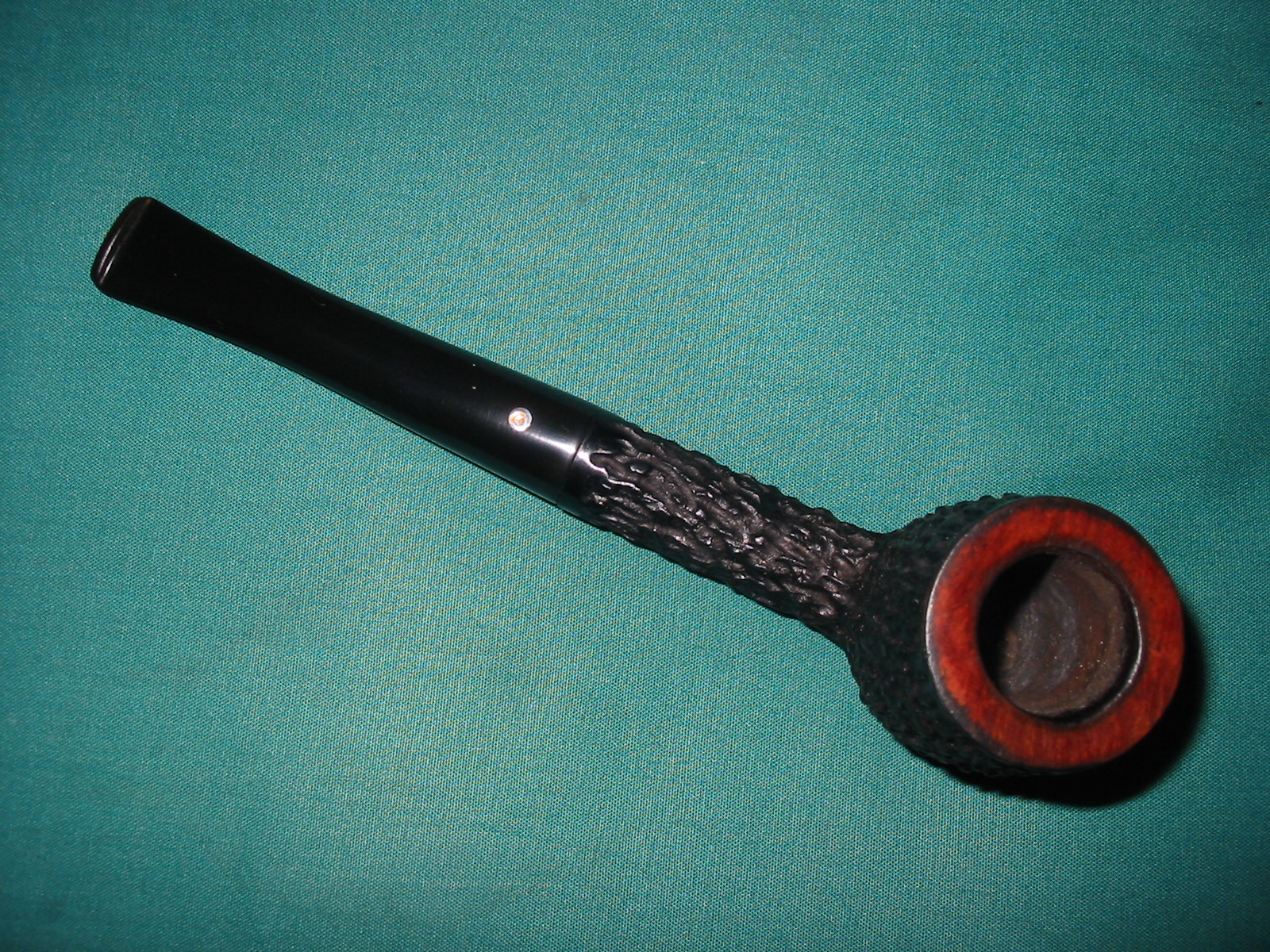
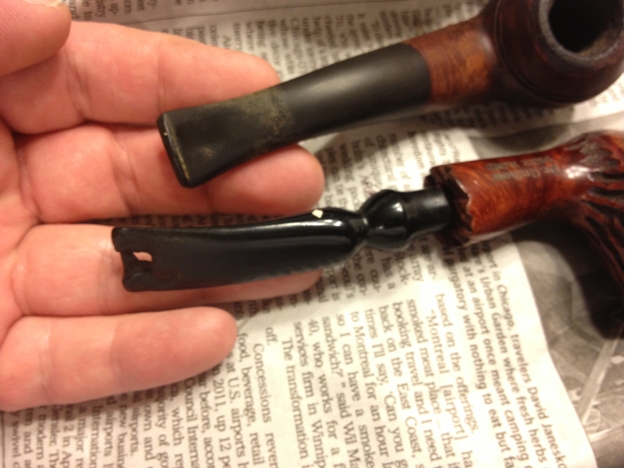
As they were getting ready to depart, I found this GBD Seventy-Six, shape 548, on Ebay. I later learned it was sold by our own Bob Landry. The pipe had some issues and I was a bit skeptical that a good outcome could result. I’m a fan of the Seventy-Six line and I liked the tall bulldog shape. The bowl top had some chips on it but the tall bowl looked like there was plenty of briar there to top it just a bit. The stem was in great shape, just oxidized and I rationalized that if it didn’t work out, at least I had a brass rondell for the parts box. The big concern was the two burn marks on the briar (photographed and described well by Bob). I knew it would require a restain. Here is the pipe as it was received.

GBD_584_76-Before

GBD_584_76-Before (1)

GBD_584_76-Before (2)

GBD_584_76-Before (3)

GBD_584_76-Before (4)

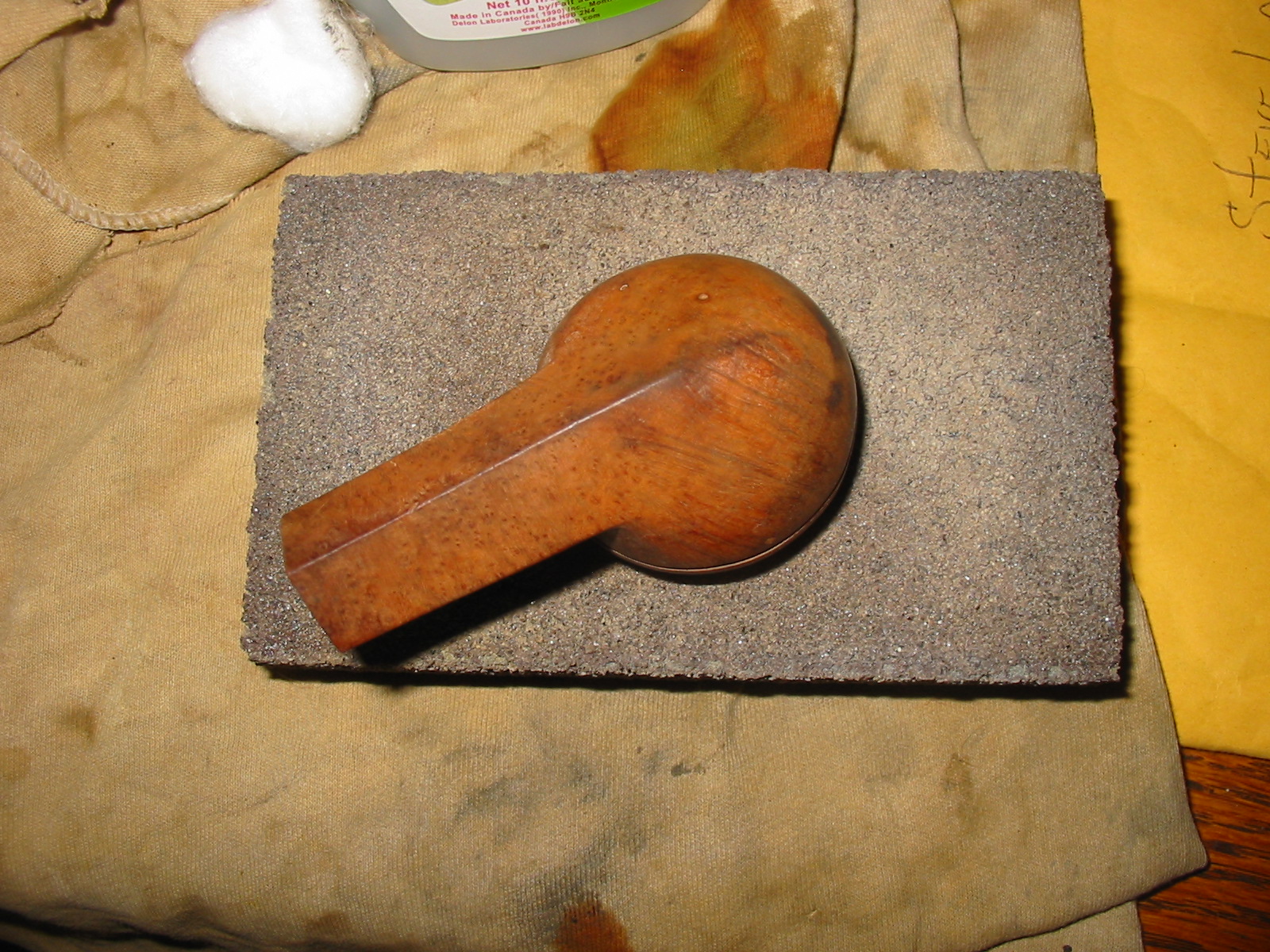
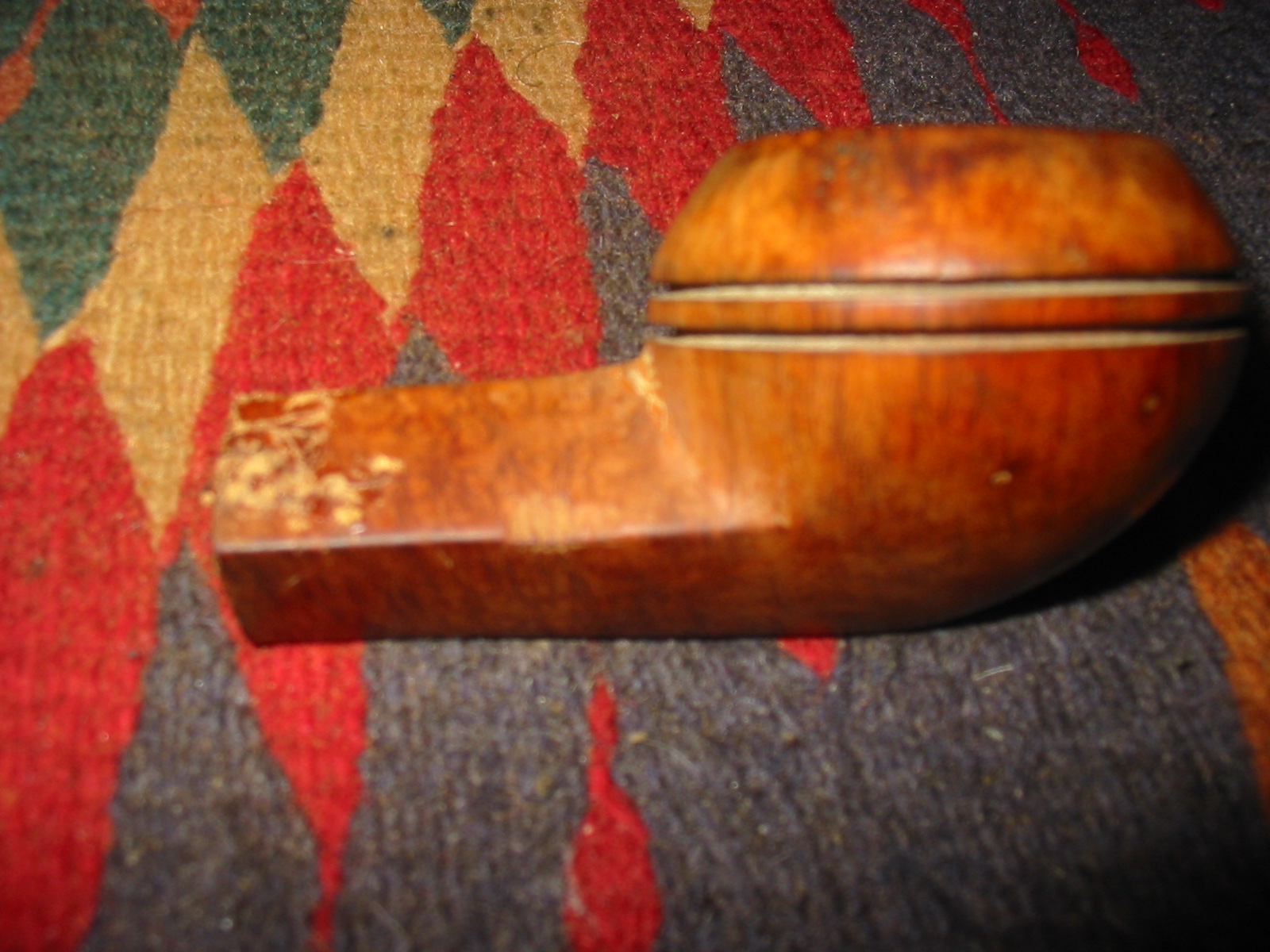
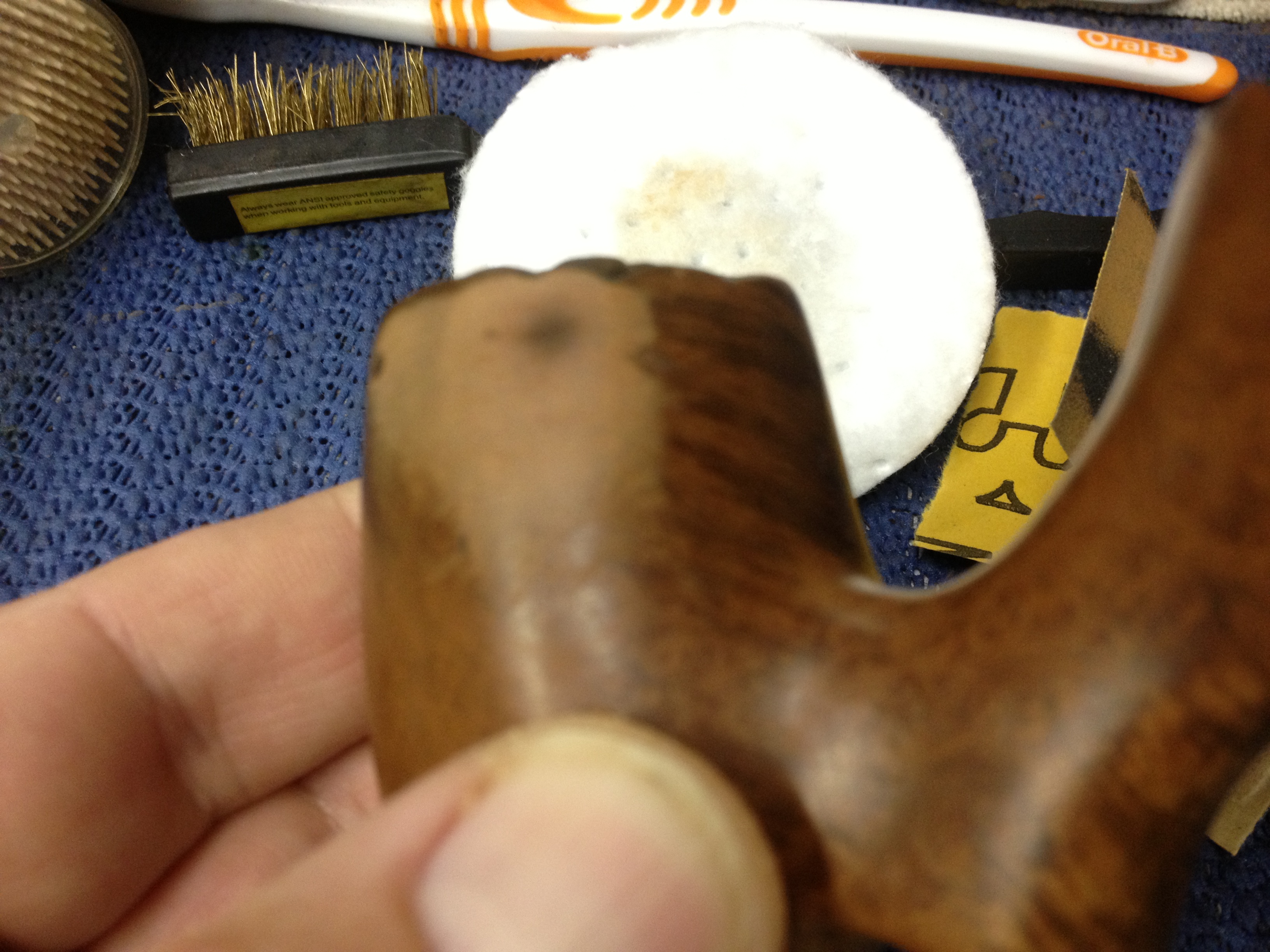
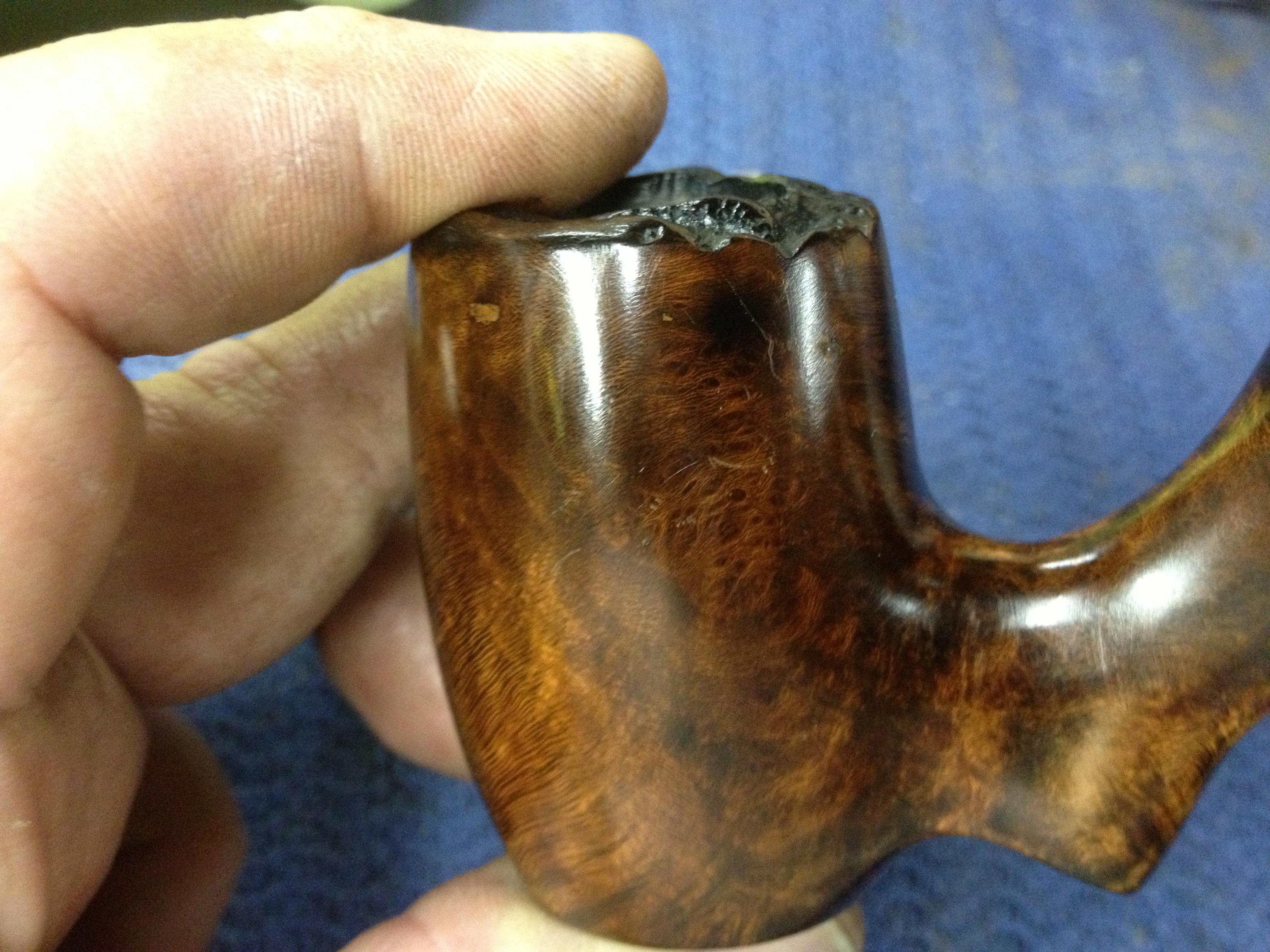
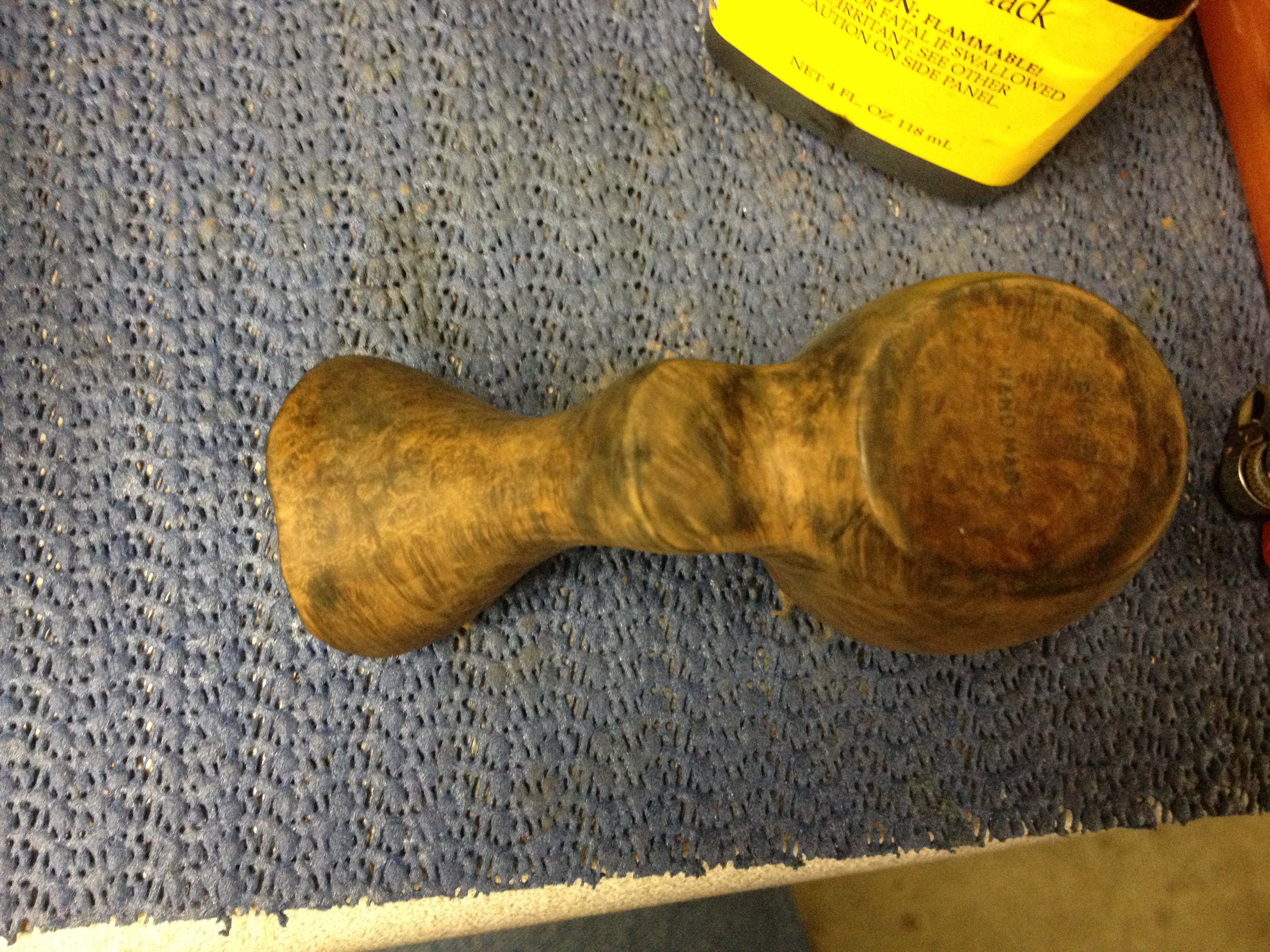
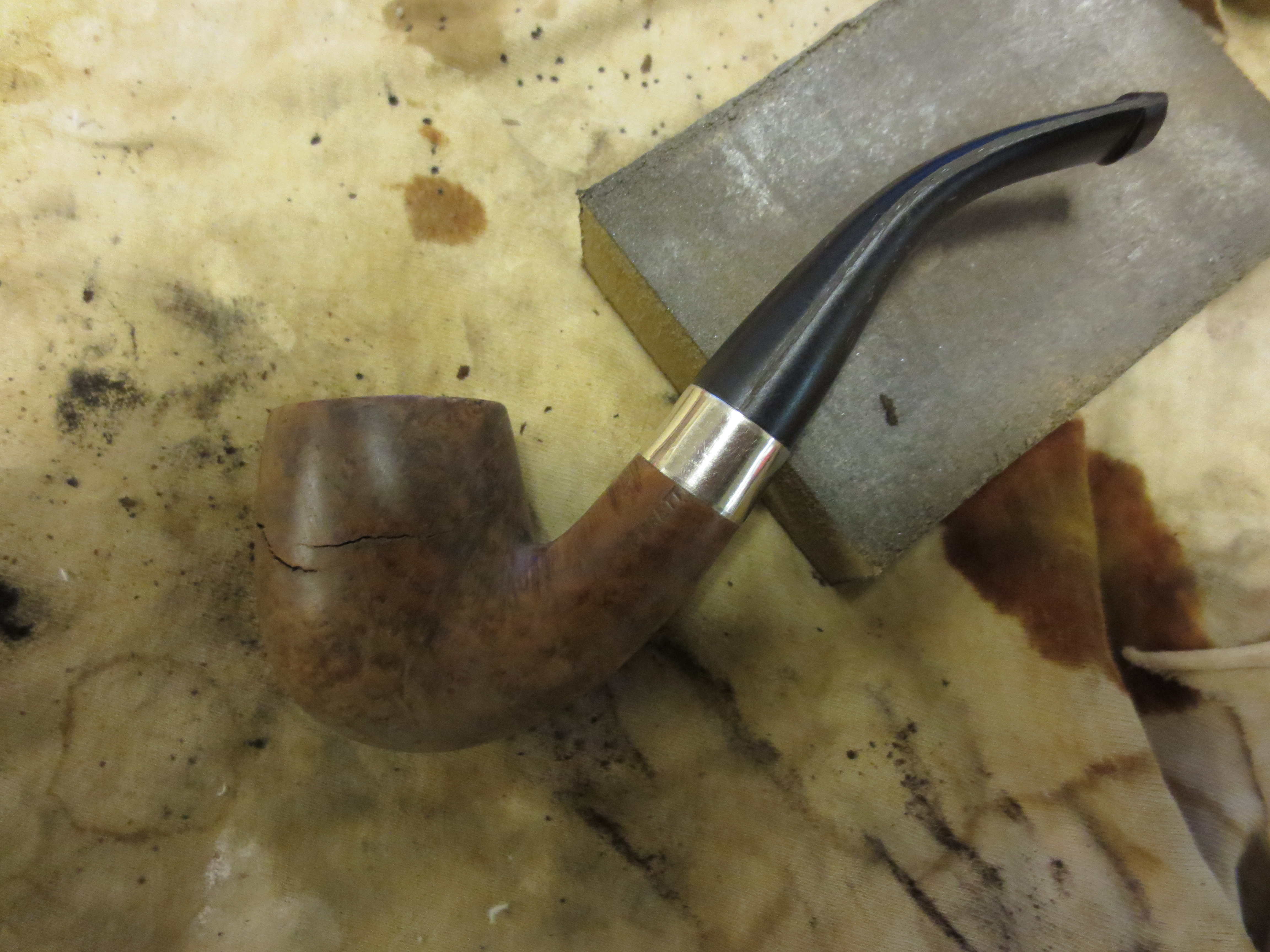
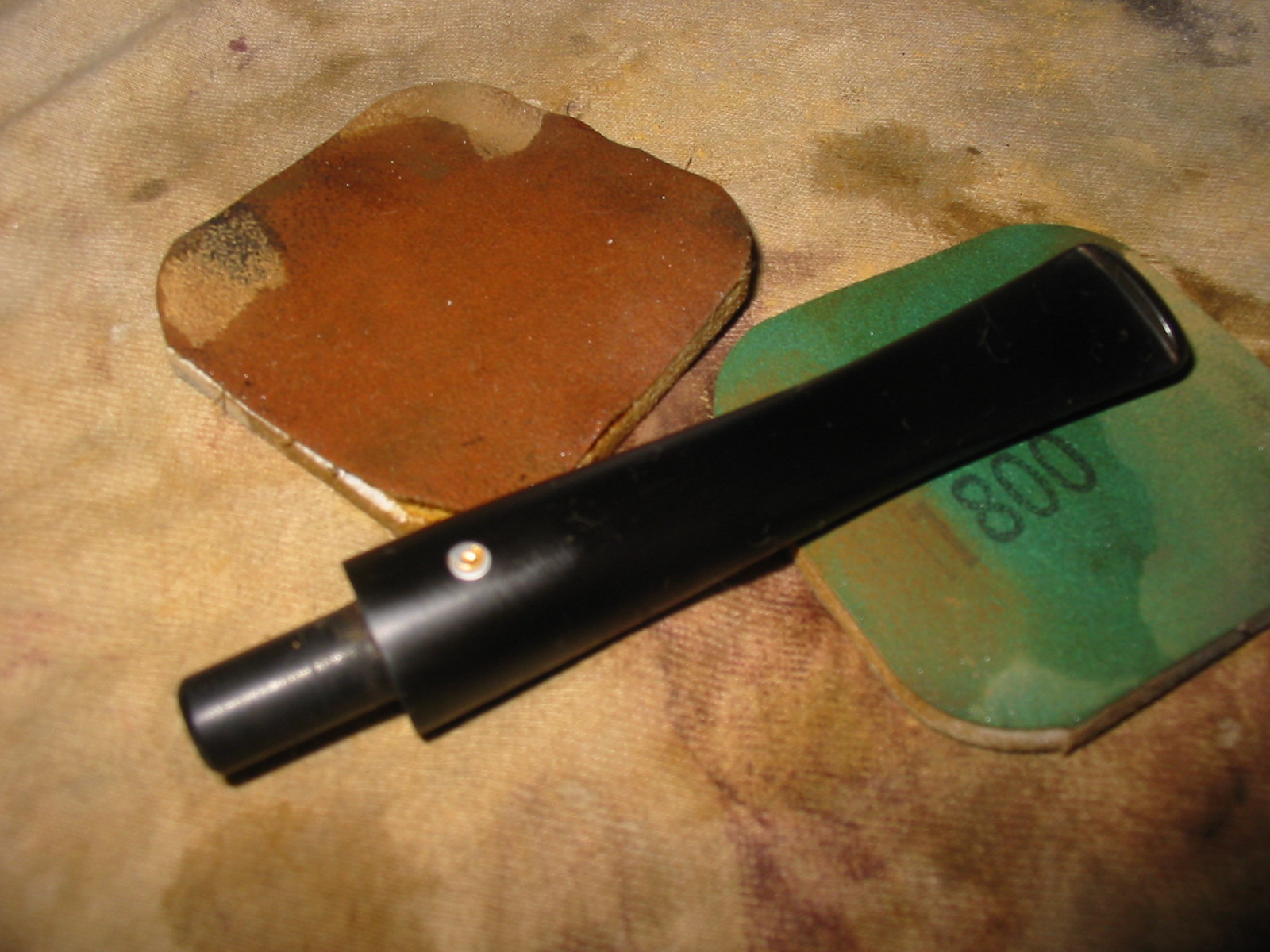
I reamed the bowl and found it to be in great shape. I used a sheet of 800 grit paper on my flat work bench to top the bowl and work past the damaged area. That fix came out great and the tall bowl definitely lent itself to that repair. Next up, I soaked the bowl in alcohol to remove the stain. This really exposed the burned areas. I tried to sand past them, but that was not possible and I was afraid of putting a flat spot on the bowl, particularly on that right side. This work exposed some other nicks on the bottom of the bowl. I was able to buff/sand out most of those.

GBD_548_76_Work (4)

GBD_548_76_Work (3)

GBD_548_76_Work

GBD_548_76_Work (2)

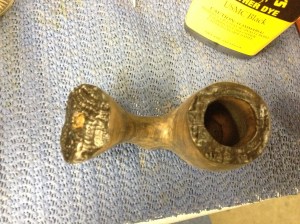
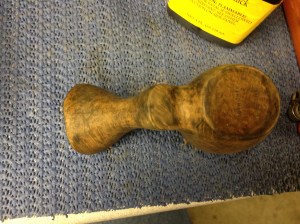
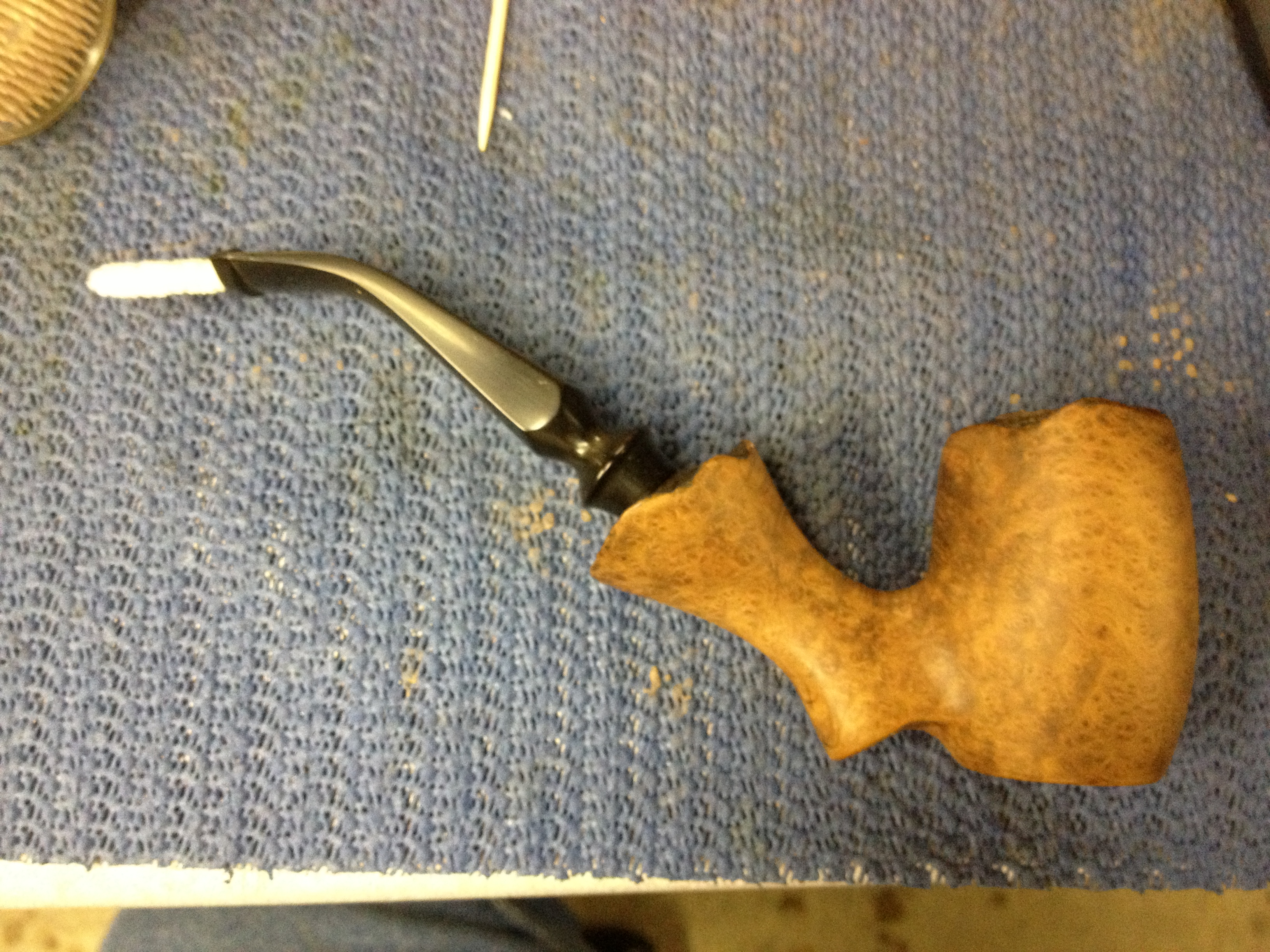
The GBD Seventy-Six line used a two stain process that I really like, much like Comoys used. I stained the bowl black but must have put it on too heavy, as I had a hard time getting the black off. The plan was to sand off the black, leaving it to highlight the grain and then apply a very light brown stain. I mulled over just leaving it black, but that didn’t set well with me either. I was a bit frustrated at this point and almost bagged the whole project and save the stem for a future project. I left it on the bench for the better part of a week, working on other projects. I decided to soak off the black stain and left it in an alcohol bath for several days. That finally did the trick and afterwards, I sanded the briar smooth with some 2000 grit paper and then 8000 grit micromesh.

GBD_548_76_Work (5)

GBD_548_76_Work (6)

GBD_548_76_Work (9)

GBD_548_76_Work (8)

GBD_548_76_Work (7)

I then applied a very light brown stain using Feiblings Medium Brown heavily diluted with alcohol (20:1 ratio or so?) The combination of the black and brown stain finally hid the burn marks rather well and I was pleased with the outcome. The bowl was then polished with White Diamond and then several coats of carnuba wax was applied.

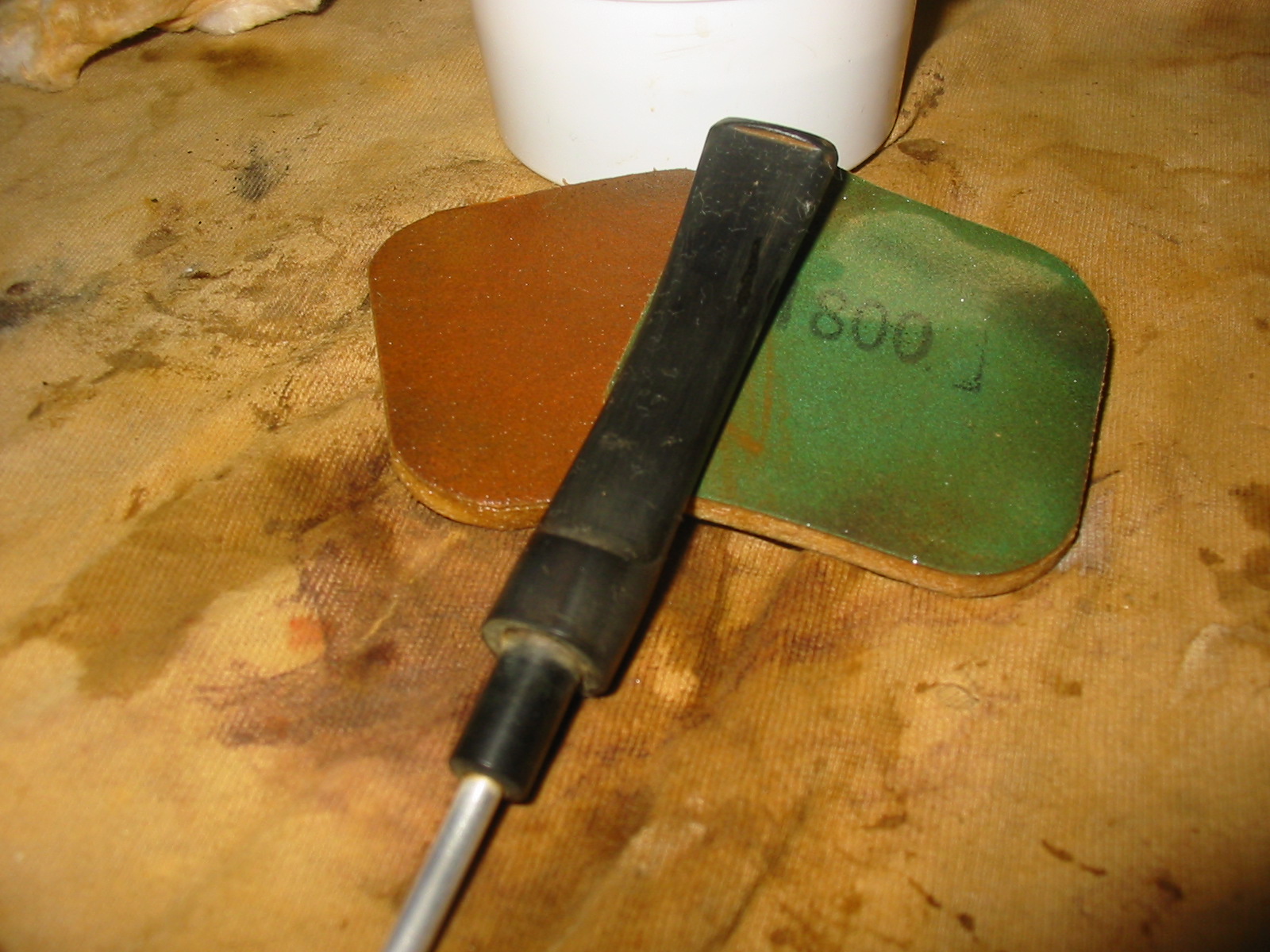
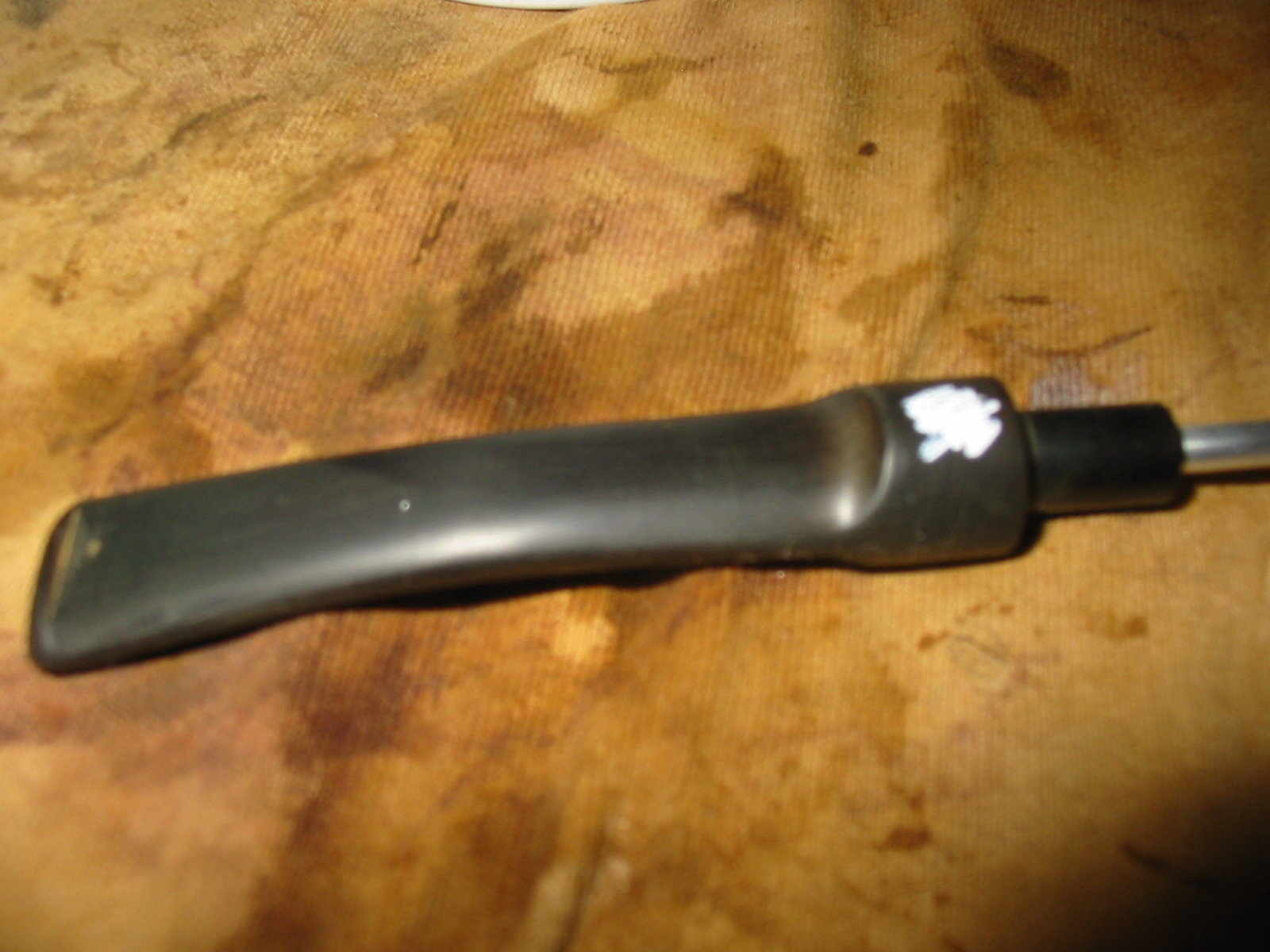
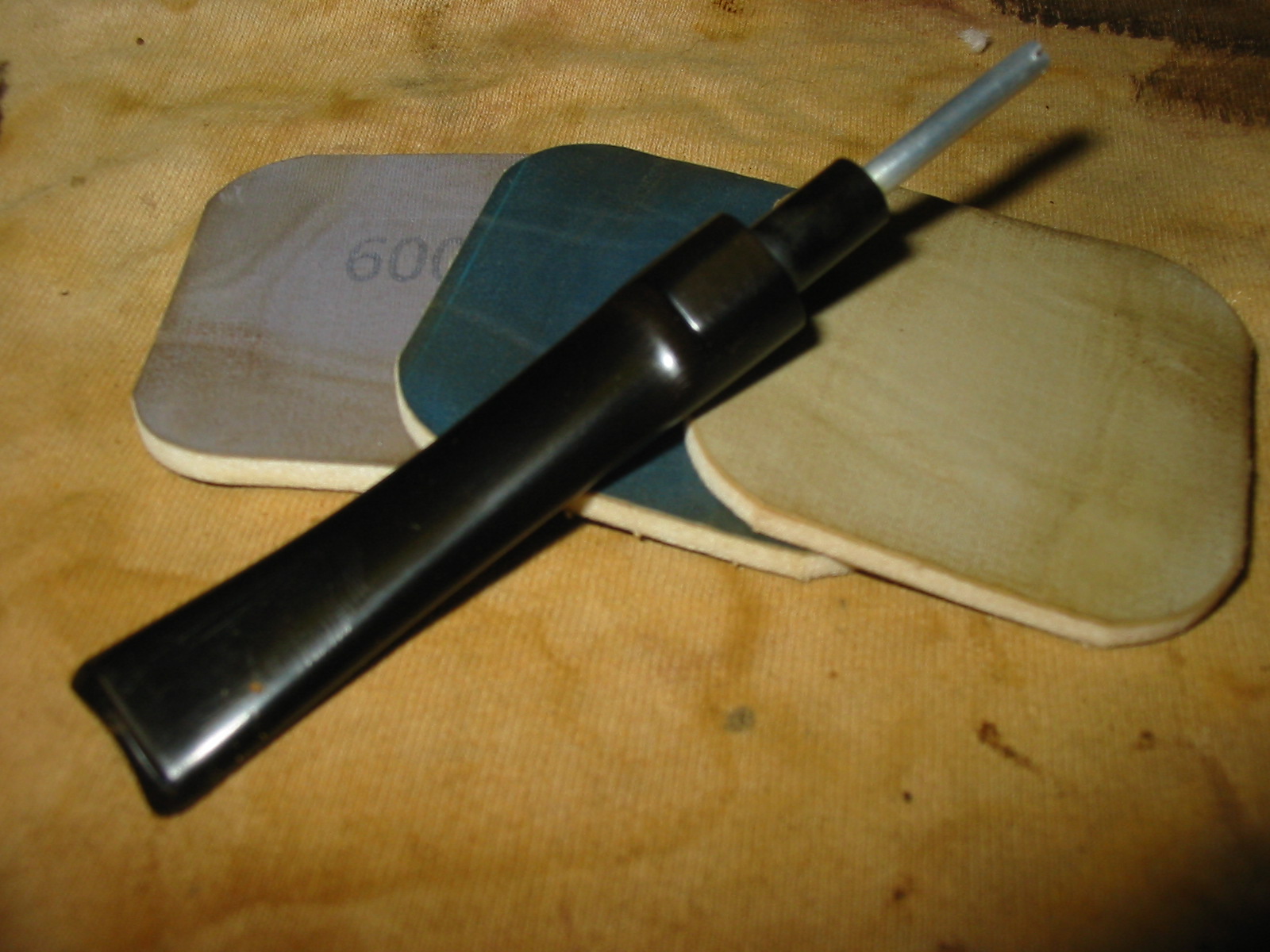
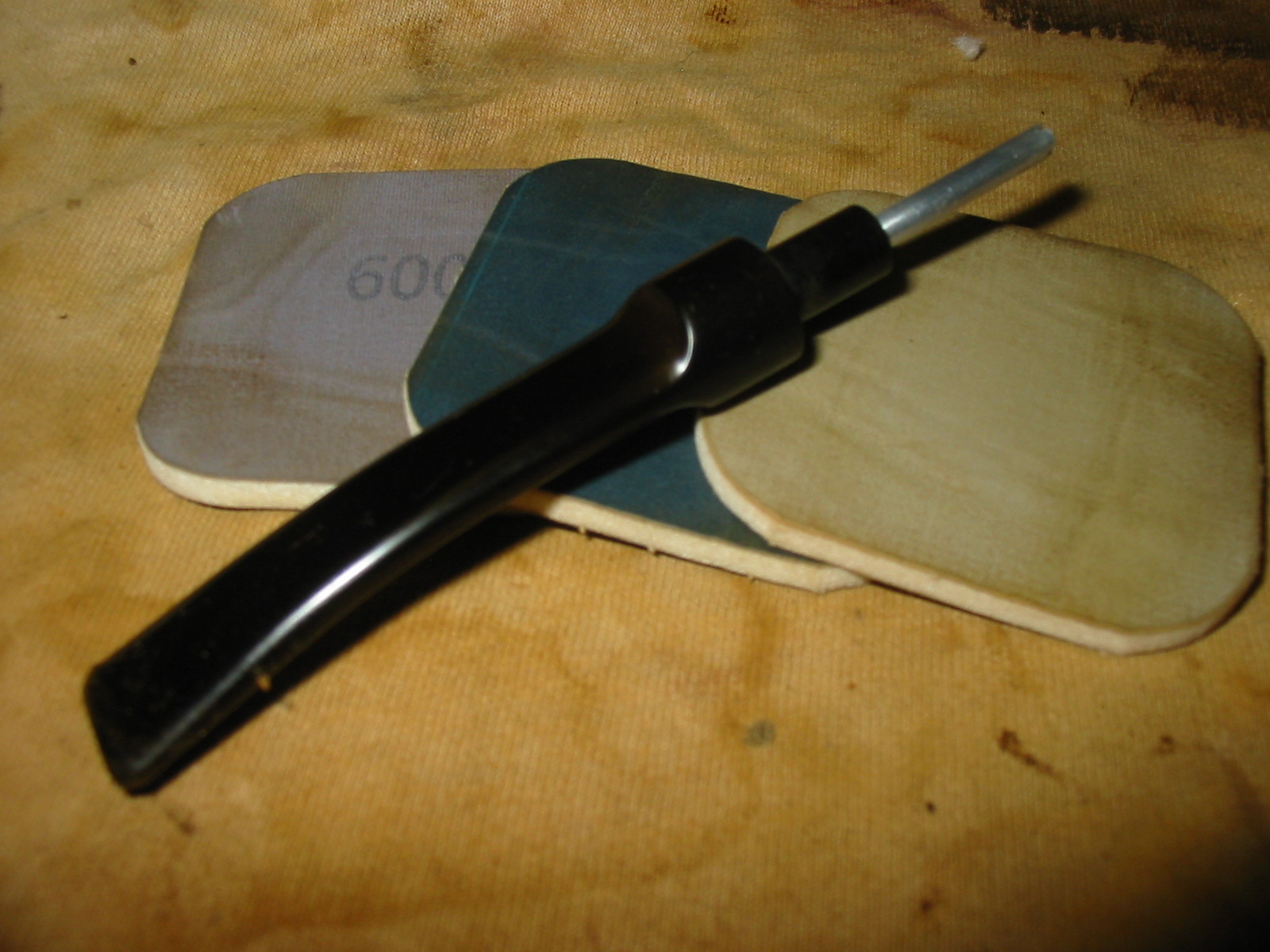
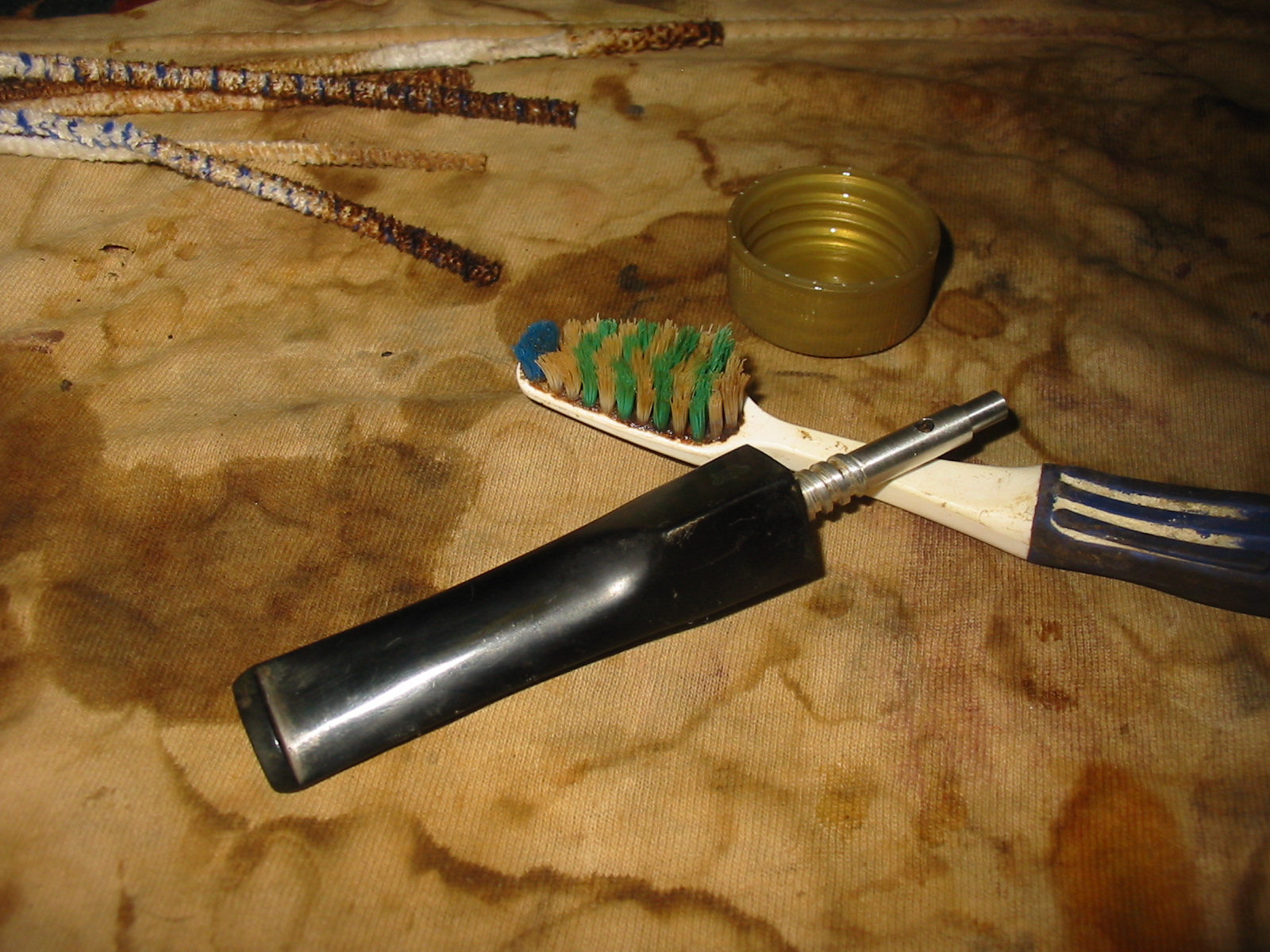
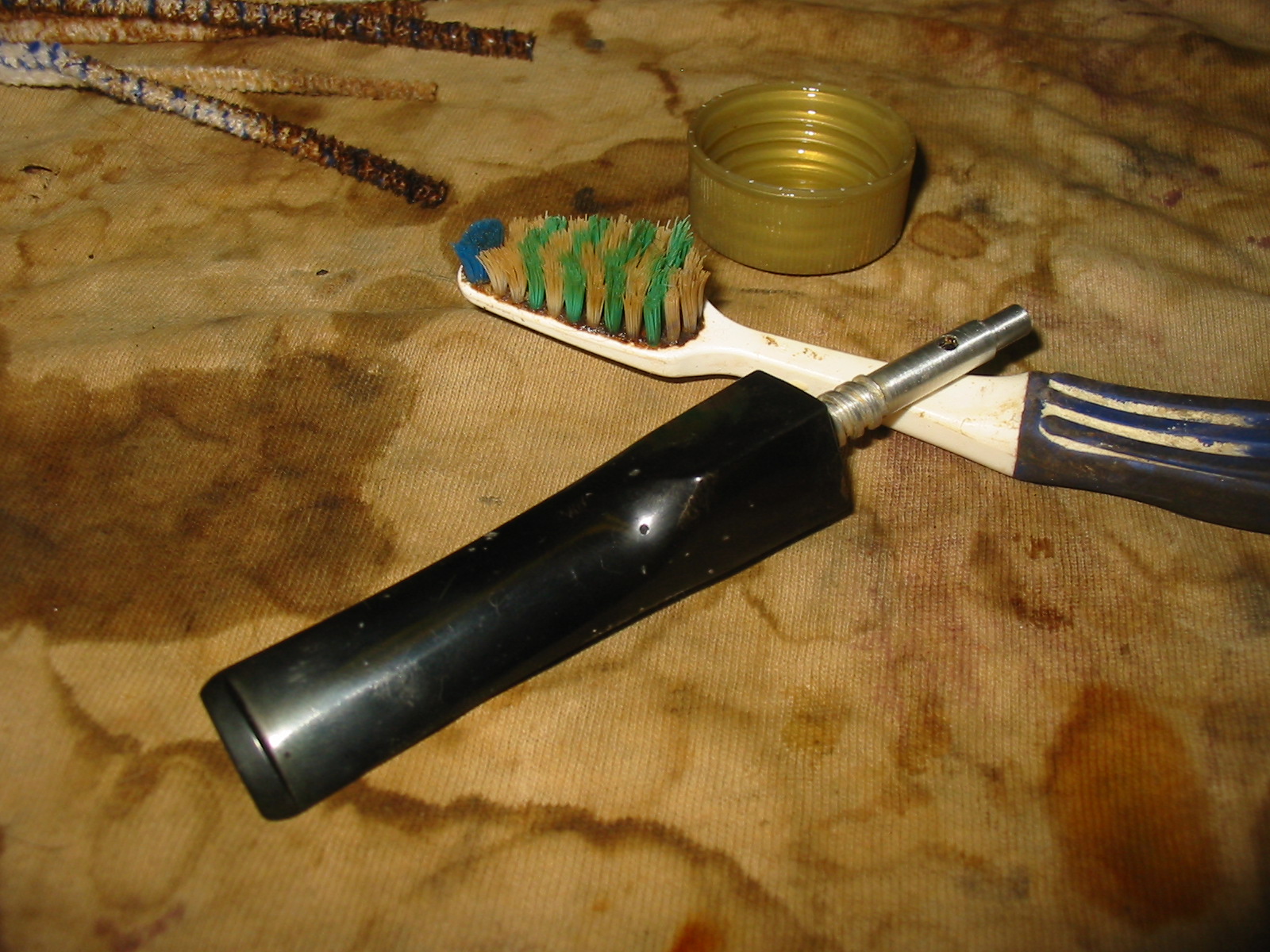
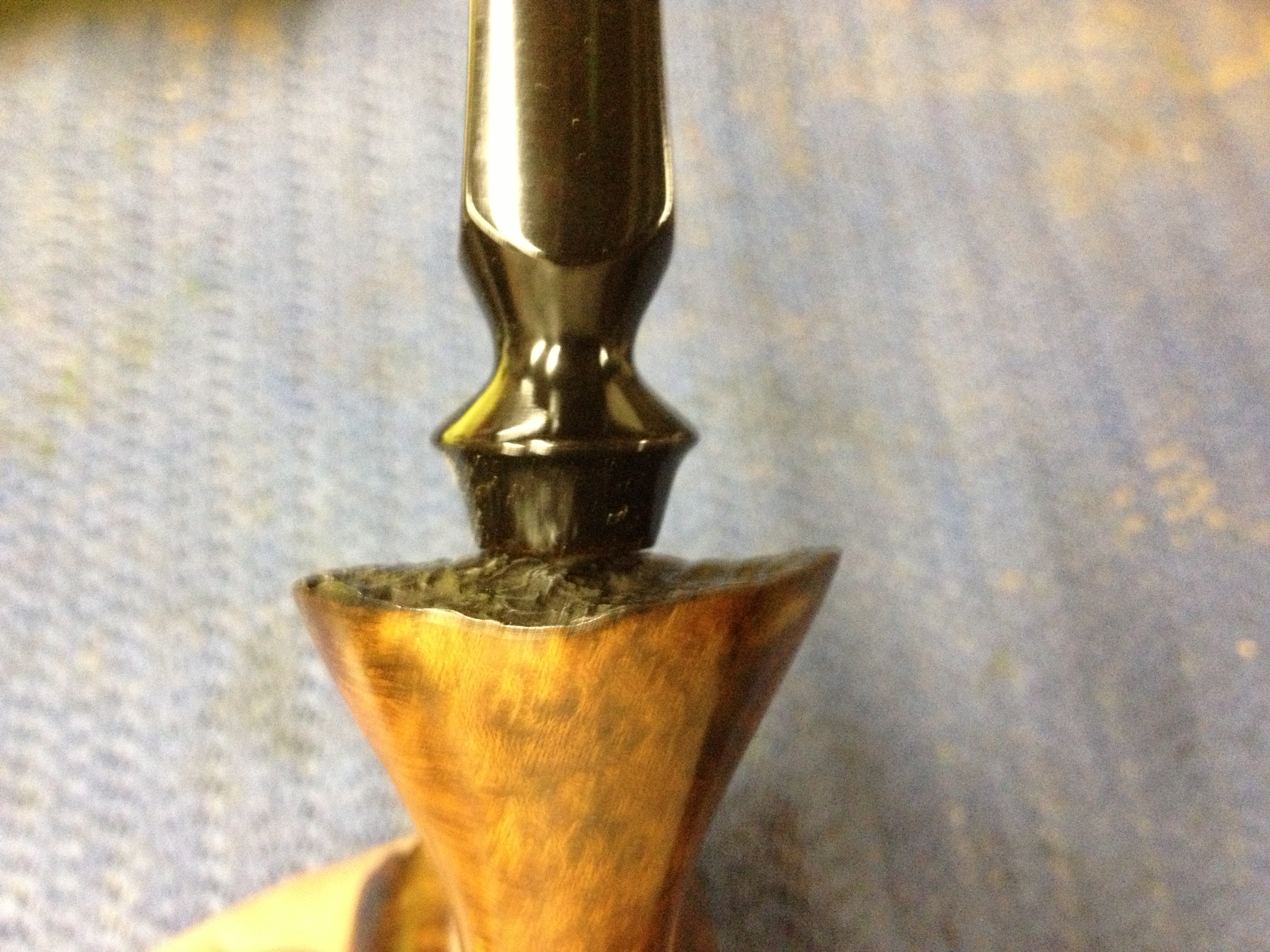
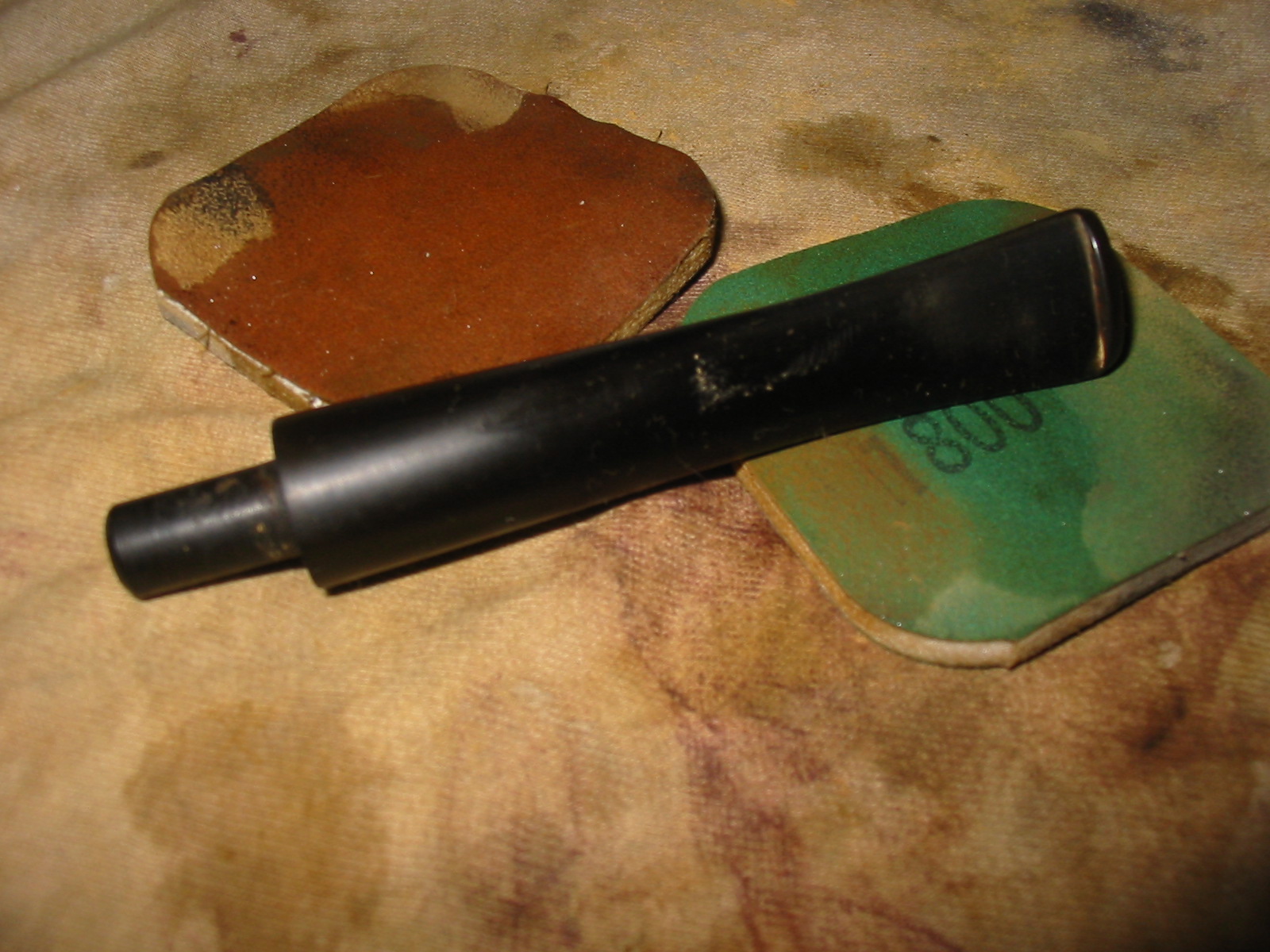
With the bowl completed, I turned my attention to the stem, which didn’t require nearly as much work. Using a piece of plastic, cut into a round shape I inserted it as a shield between the stem and the briar for the sanding work. I sanded the stem with 800, 1500 and 2000 grit paper, all wet. I then moved to 8000 and 12000 grit micromesh sheets. The stem was then buffed with White Diamond and an automotive plastic polish.

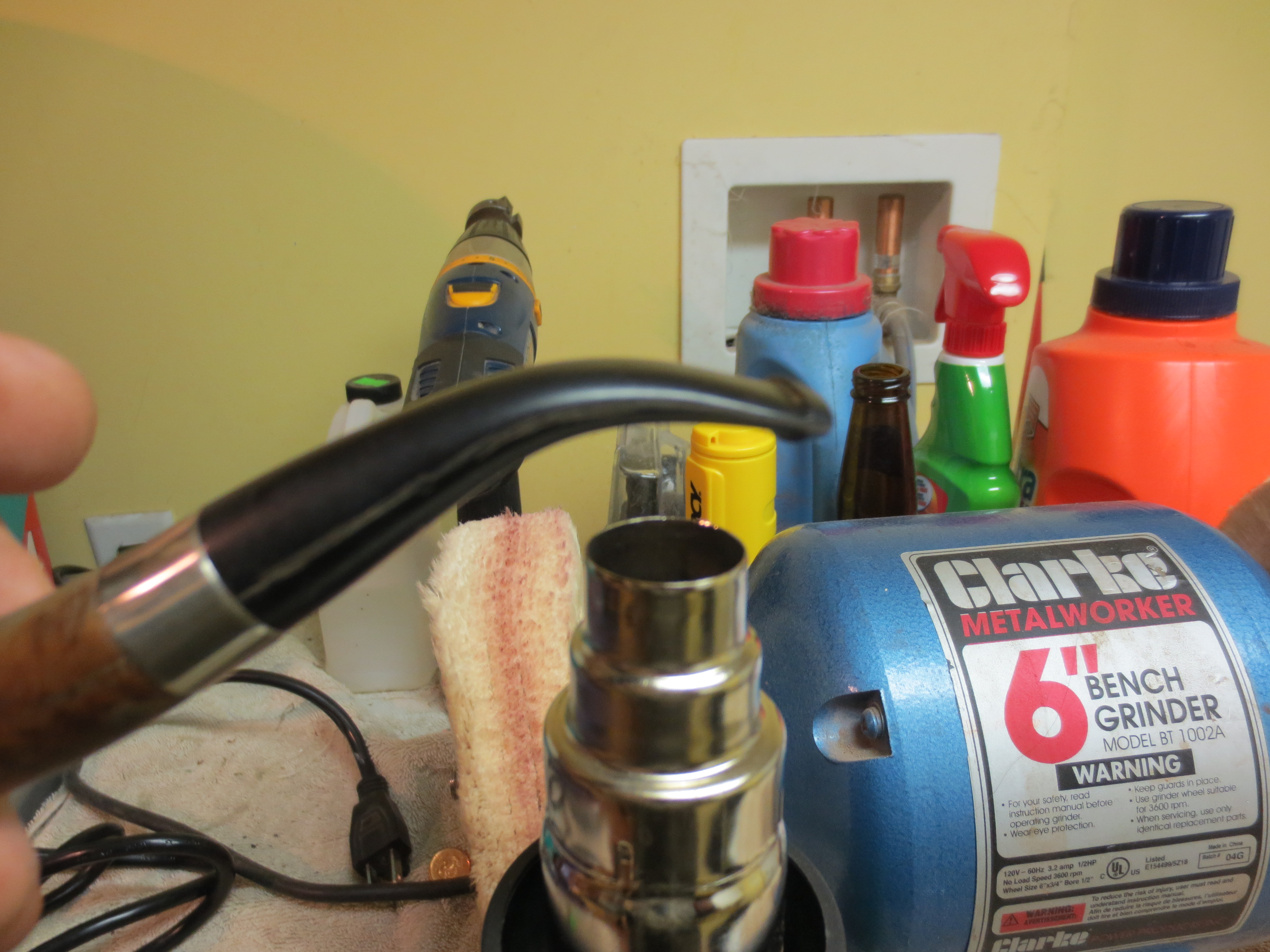
This shows the plastic shield.

GBD_584_76_Work (10)

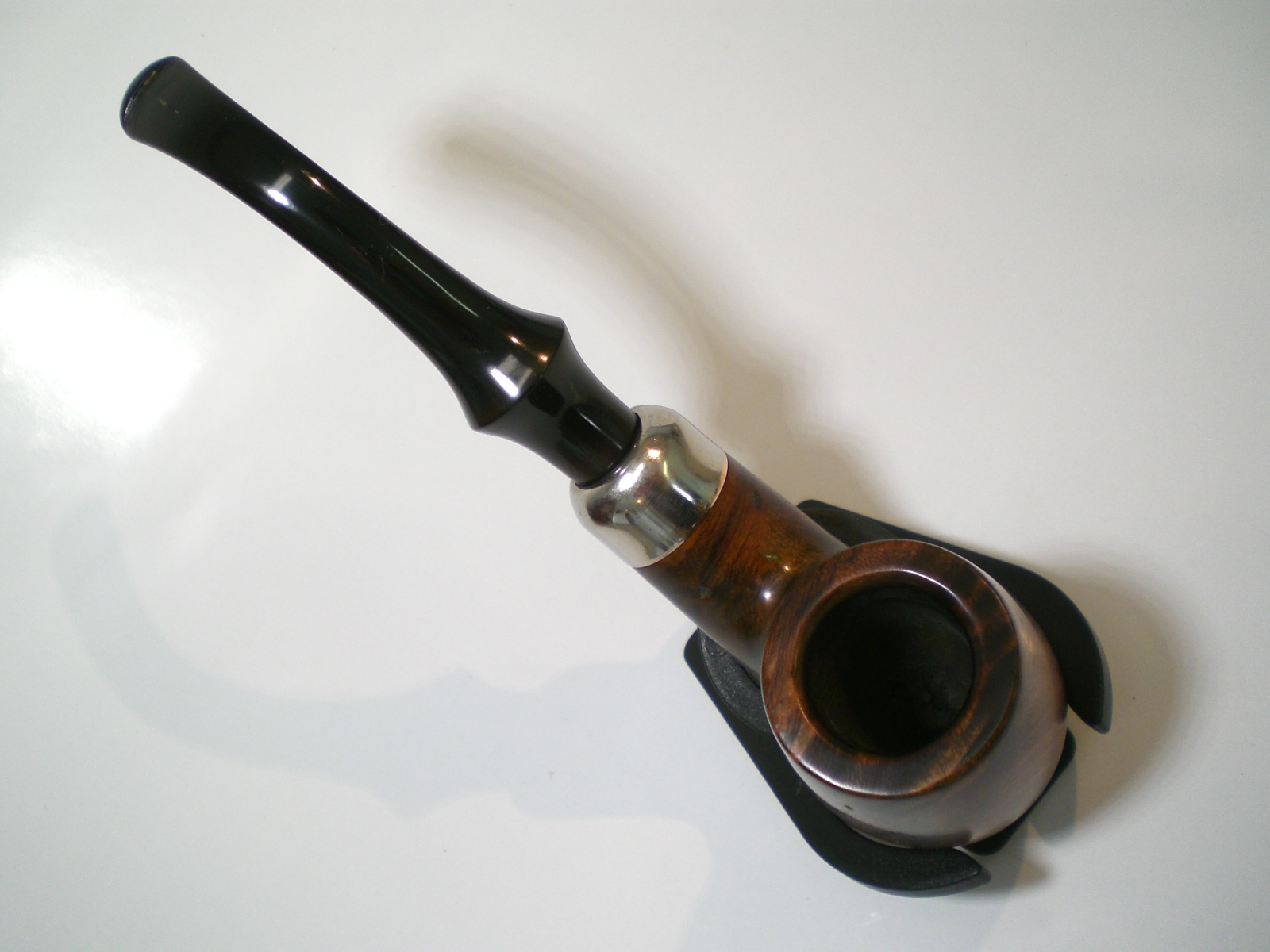
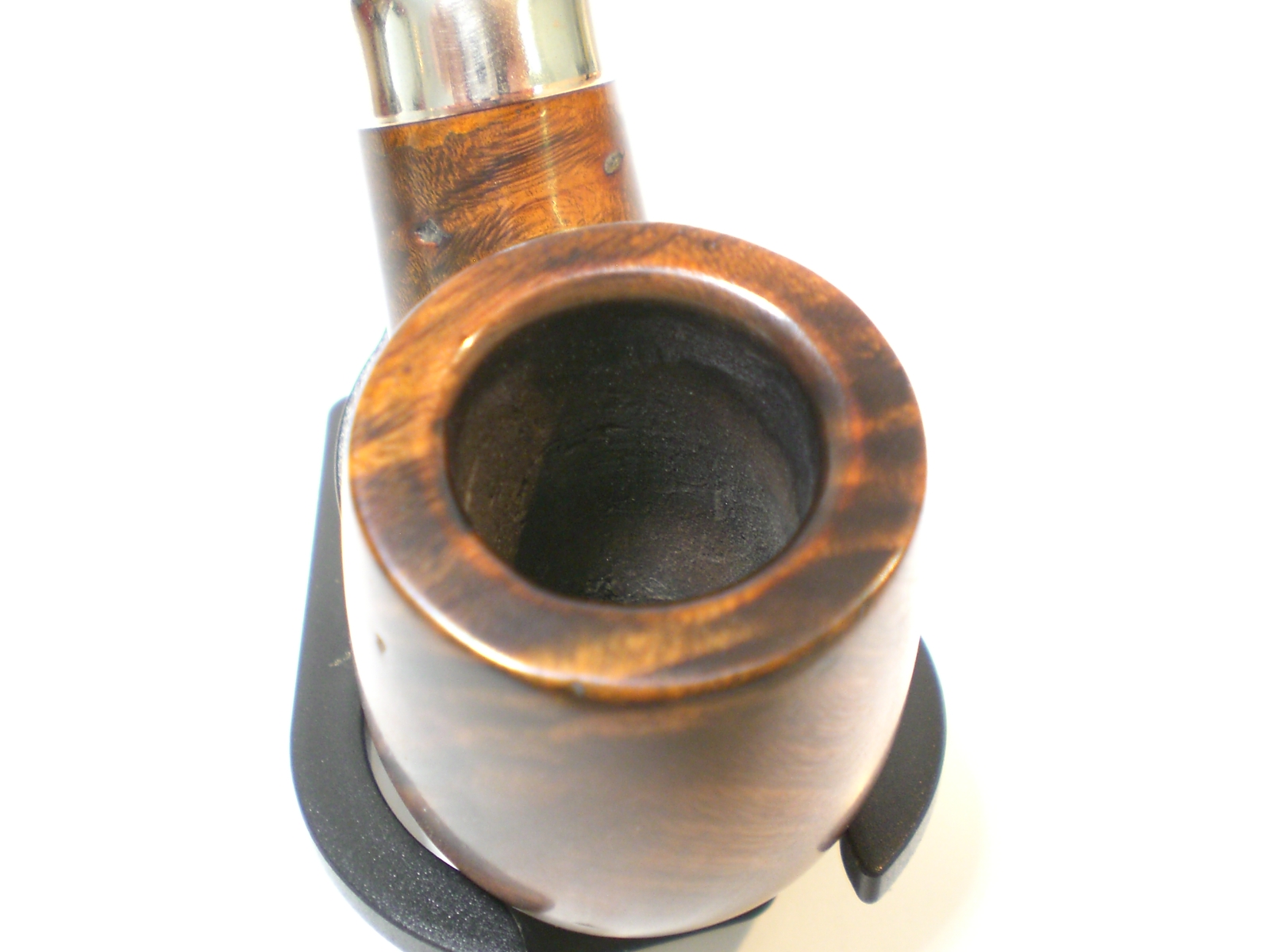
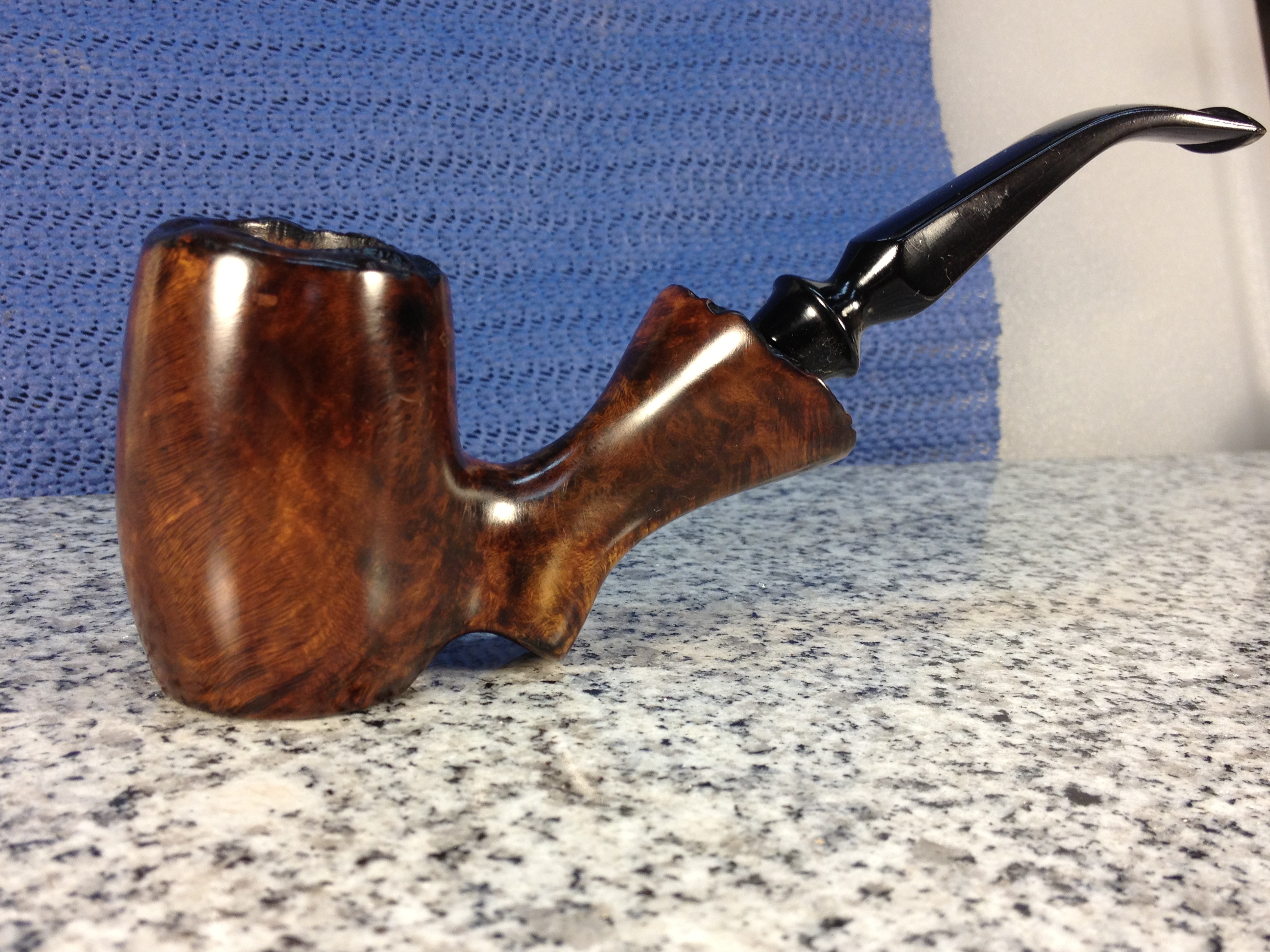
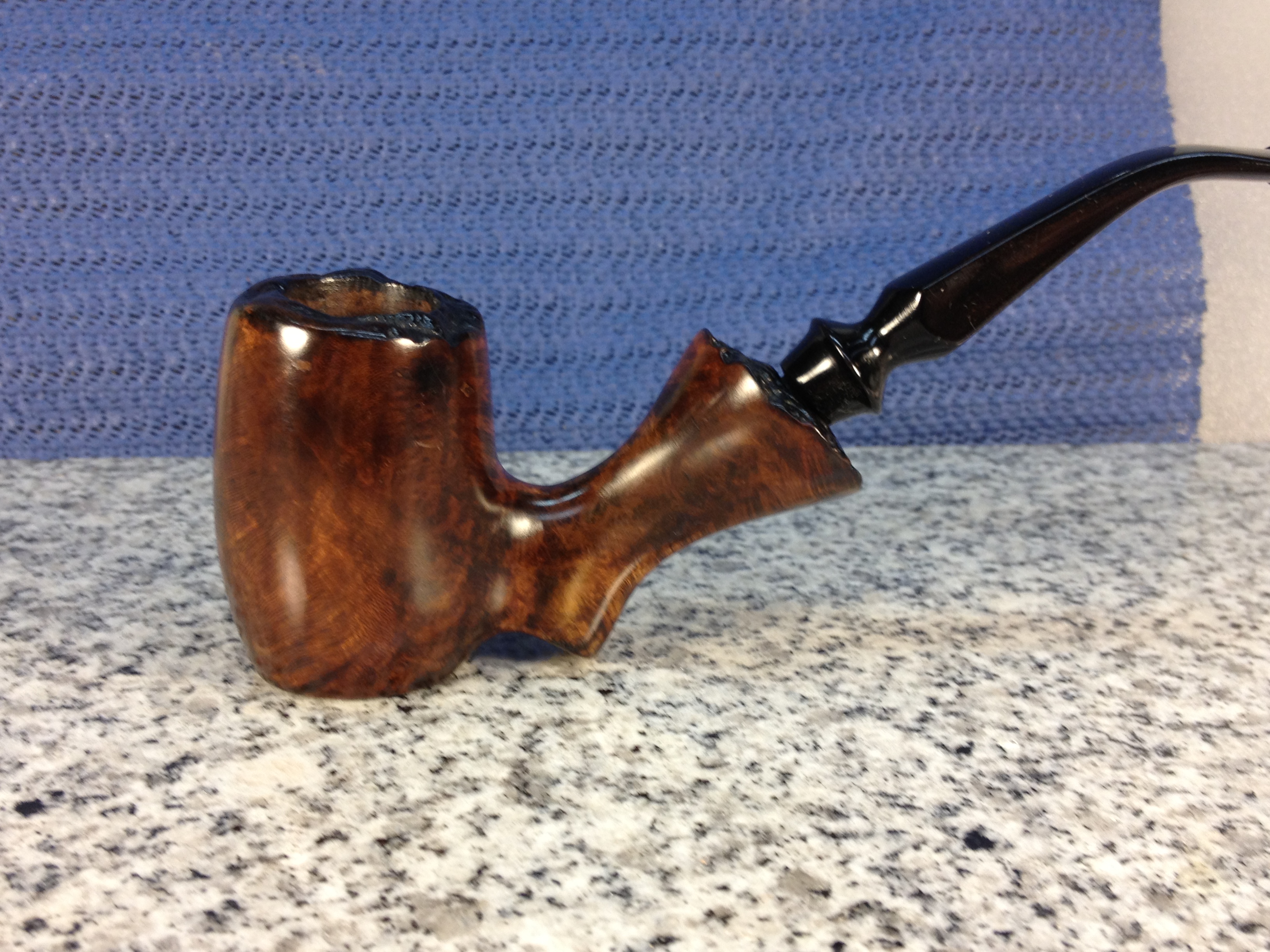
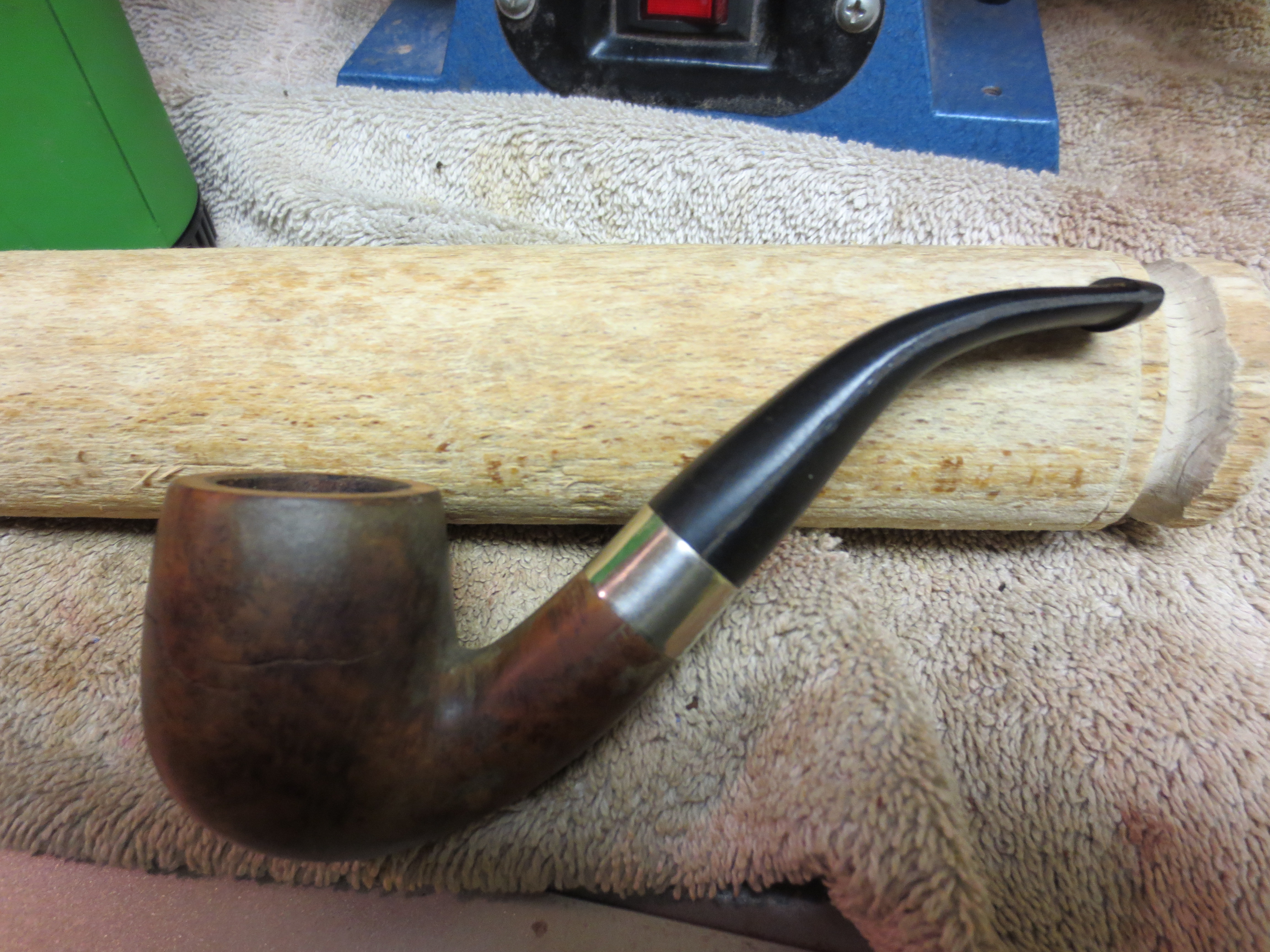
As I was finishing the pipe and thinking about my daughters marriage, it struck me that there were some similarities in this pipe project and a successful marriage. Like a marriage, at times things don’t always go the way you anticipated and being patient with your spouse or a project always pays off. I sent the pipe off to my future son-in-law with a note welcoming him to our family. I hoped when smoking the pipe, he would remember the week he spent here and his proposal to my daughter.

GBD_584_76-Finished (4)

GBD_584_76-Finished (3)

GBD_584_76-Finished (2)

GBD_584_76-Finished (1)

GBD_584_76-Finished

Big Ben Freehand: Re-Stemmed and Reborn


Blog by Greg Wolford

This stummel was gifted to me by a friend from Louisiana. We met via one of the pipe smokers forums probably near a year ago and he recently sent me two stemless pipes, this one and one I have yet to get to, to restore. These are interesting pieces, in my opinion, because of their history, a little of which I will share with you before I get into the “meat and potatoes” of the work.

RJ, my friend, inherited a large quantity of pipes, near 100 if memory serves me. They were given to him by an aunt, I think it was, after her father passed away. Her father was Major in the US Army and served overseas in World War 2 (again, some of these details may be a tad off but they are close enough for our purposes). He was an avid pipe smoker and acquired many of his pipes while deployed overseas.

The Major’s wife was involved in a serious car accident many years ago. Her injuries were serious, leaving her with diminished mental, and to a lesser extent, physical capabilities. THe Major, as they affectionately called the man, took care of her himself after this accident. Sadly, the Major began to develop Alzheimer’s with dementia in his latter years, though he continued to care for his beloved wife; they were separated from their daughter, who gave the pipes to RJ, by miles, geographically.

The Major called his daughter the day after Valentine’s Day, 2005, and told her, quite confusedly, that her mother had gone missing. After much questioning, she called the police, local to her parents, and they dispatched a unit to the couple’s home. Shortening the story some, the Major had, in a state of mental confusion brought on by his disease, killed his wife. He was never found competent to stand trial for the killing of his wife 50-years. As far as I understand it, he was in a mental hospital for the rest of his life. A tragic story to be sure but an interesting one to go along with these unique pipes!

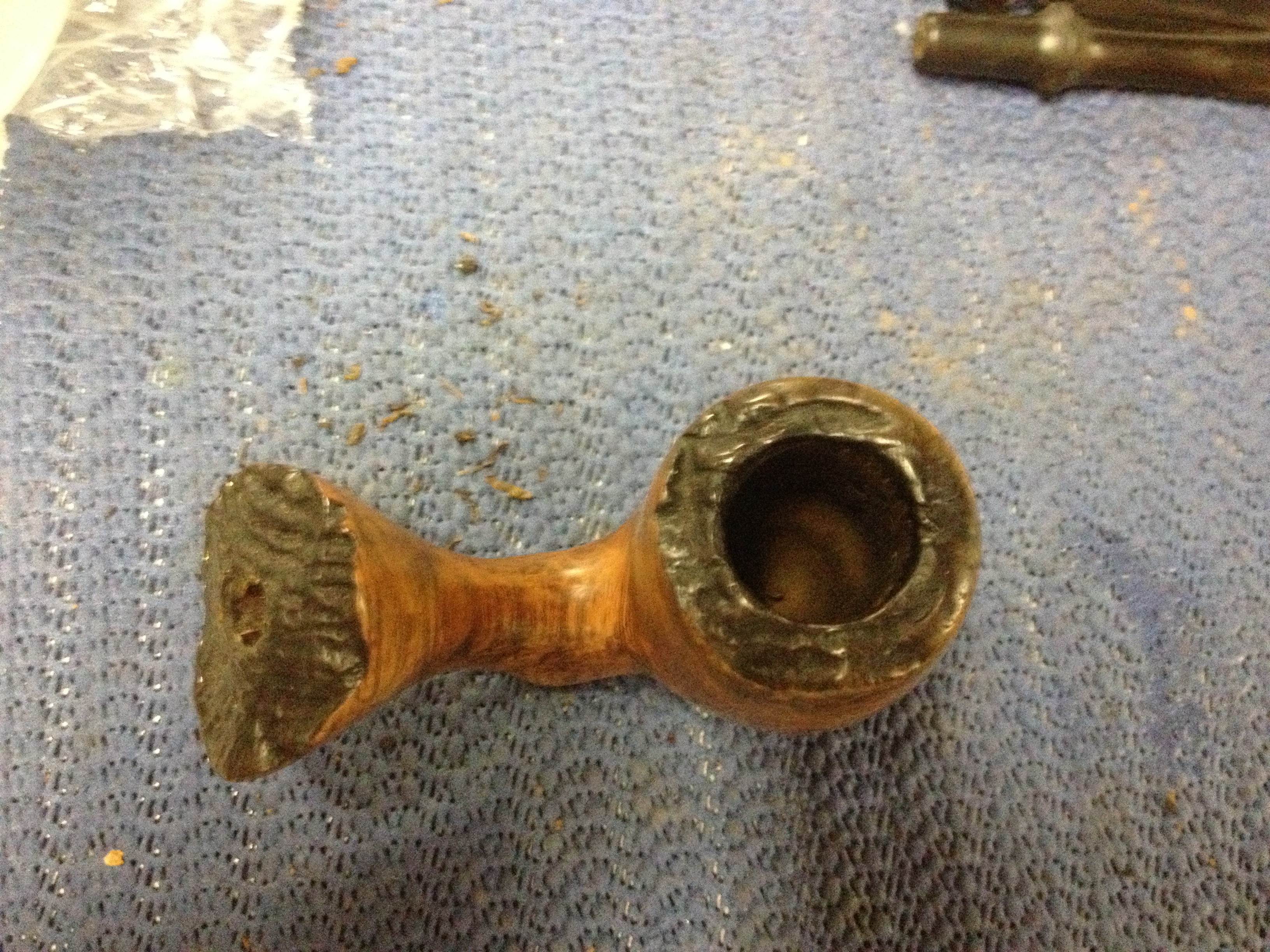
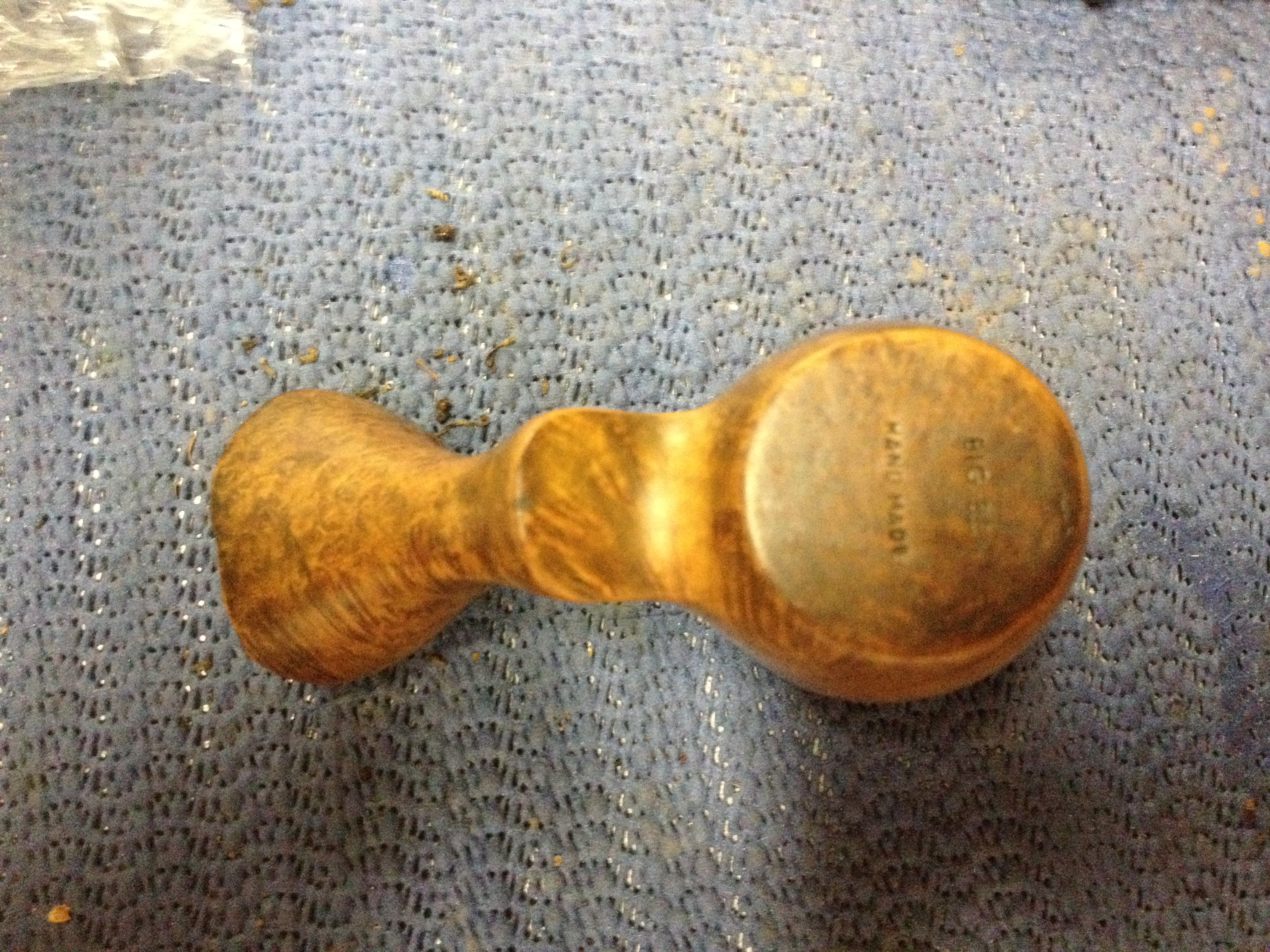
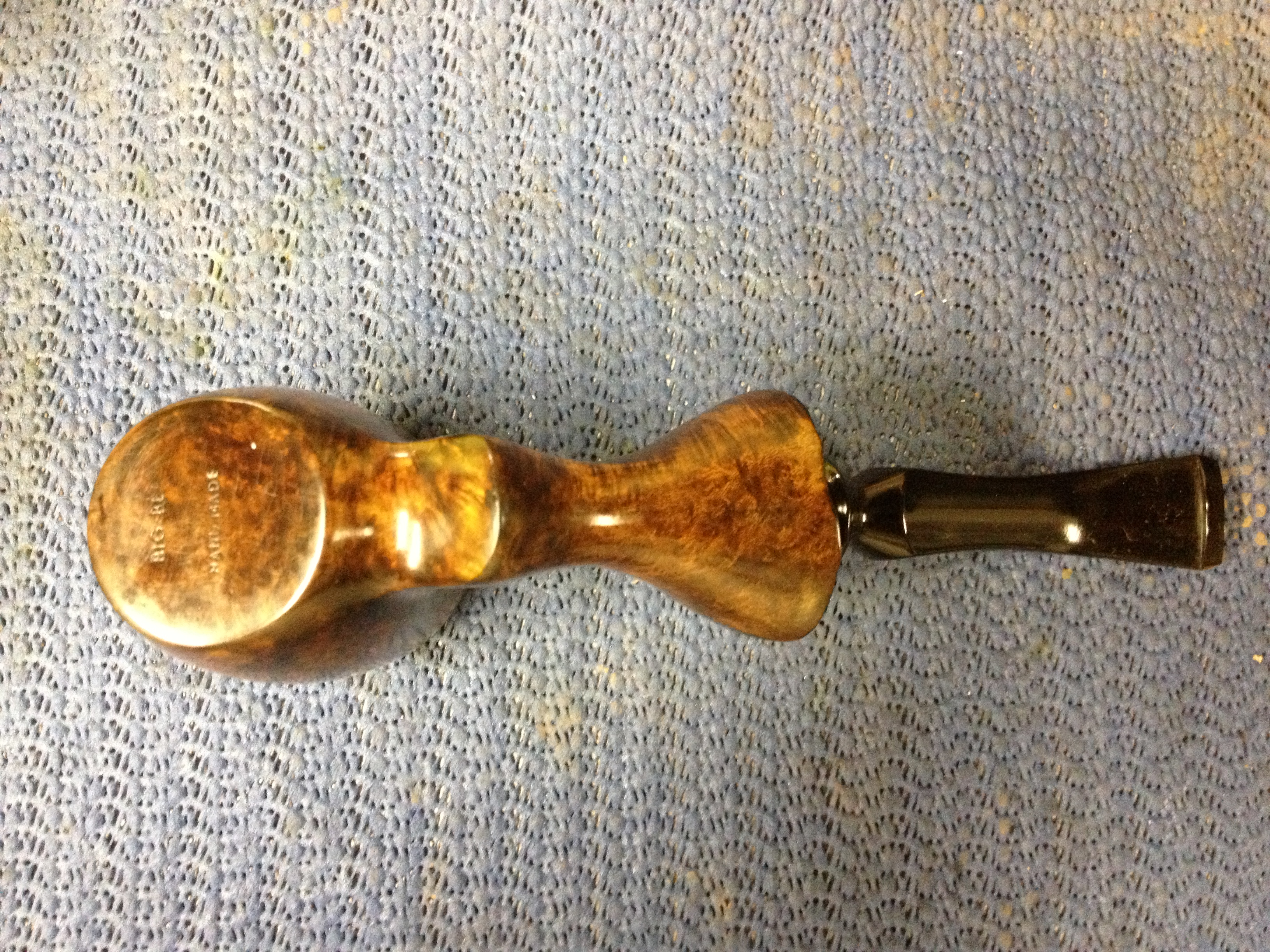
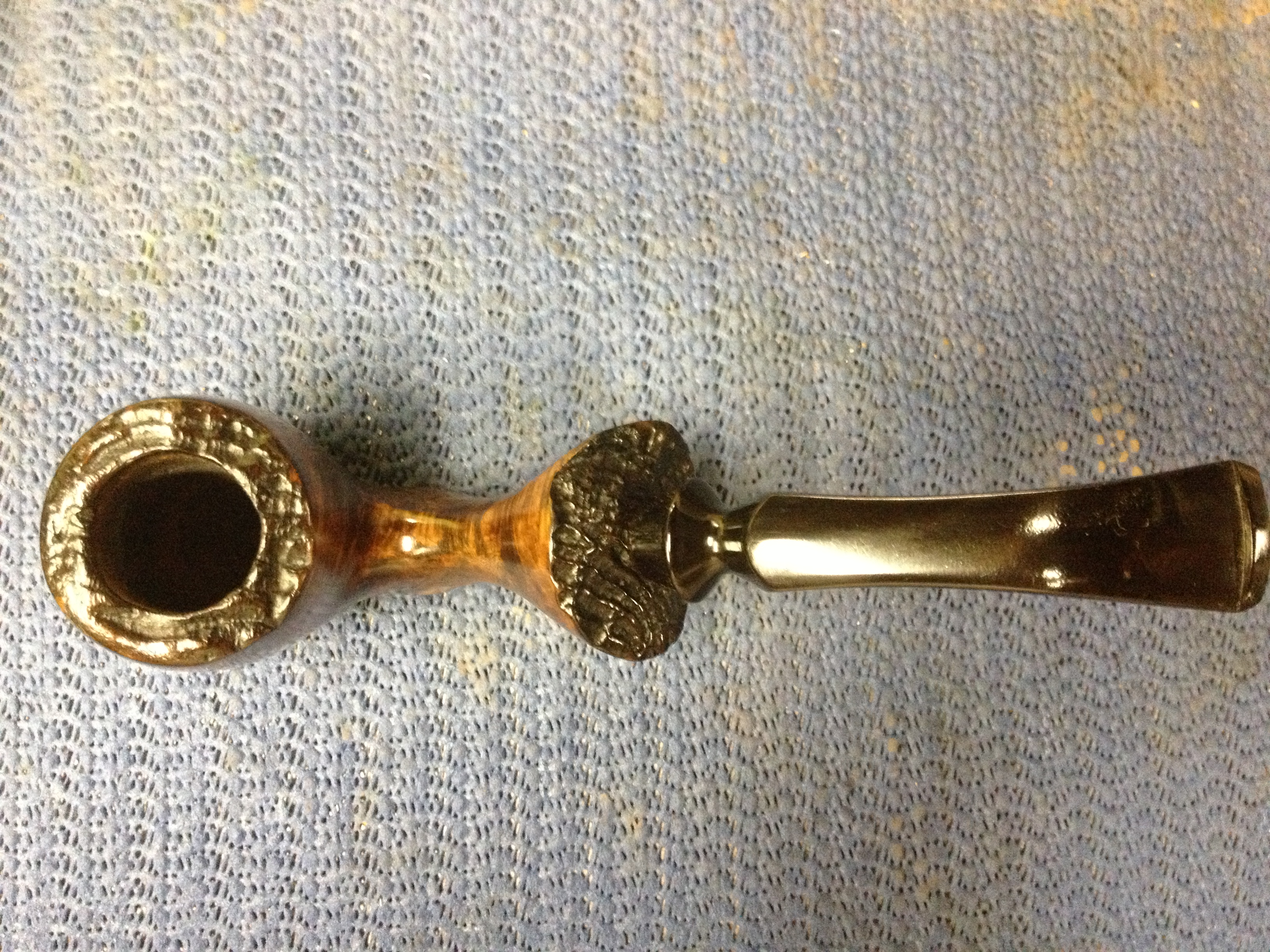
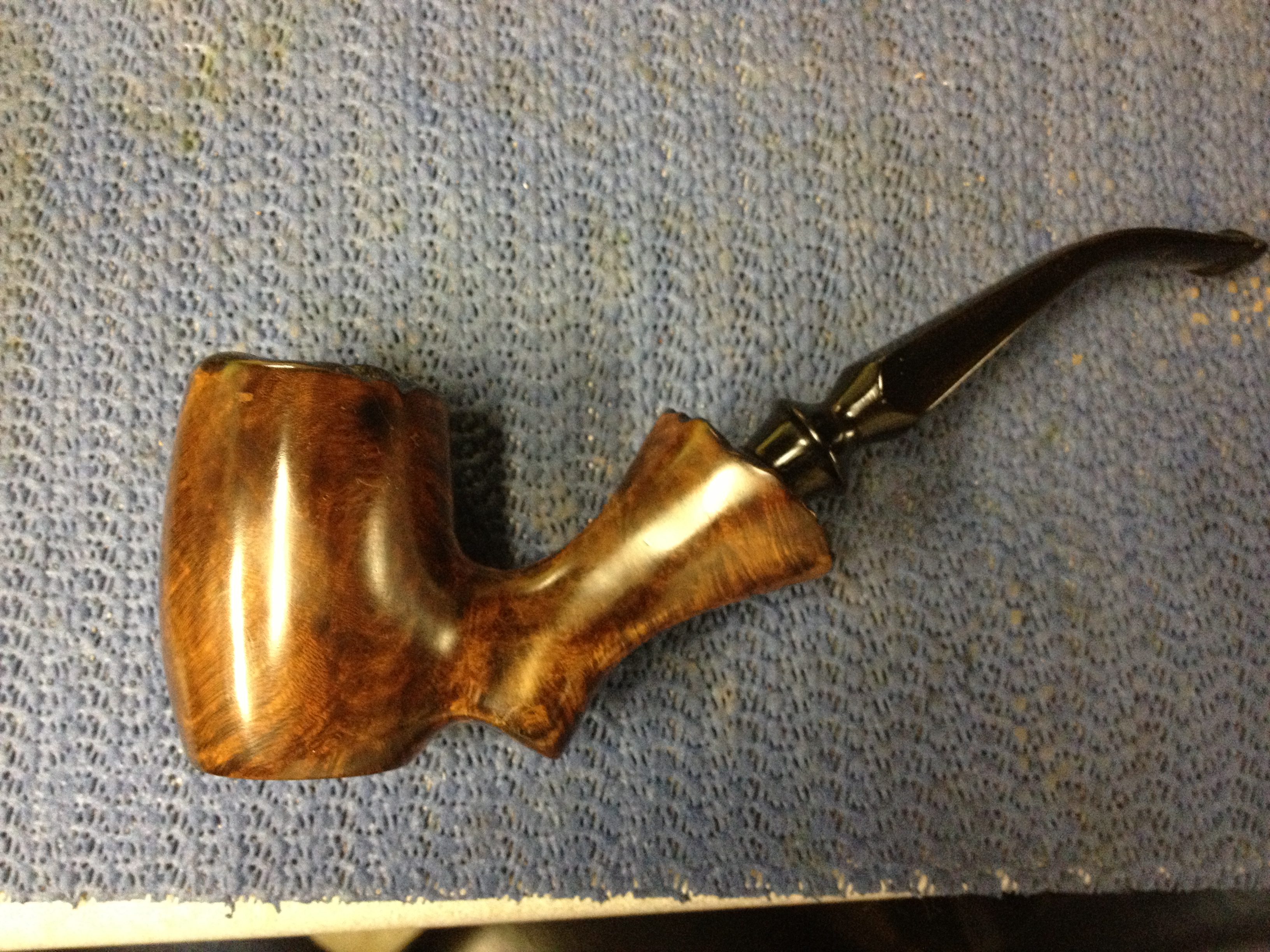
When the stummel arrived it was dull and dirty and, as I said, without a stem. The bottom of the pipe is stamped “Big-Ben” over “Handmade” and the stamping is pretty good overall. Doing a quick search on http://pipephil.eu, it seems that the Big-Ben brand is a brand of the Elbert Gubbels & Sons -Royal Dutch Pipe Factory. Here are a few photos of it before I began any work.
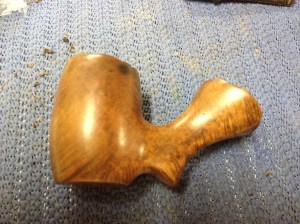
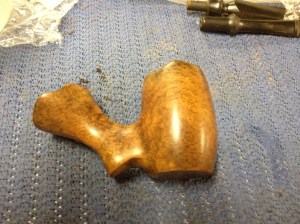
IMG_6726 IMG_6727 IMG_6728 IMG_6729

I actually began this restoration with the stem, finding the pipe a new one that is. I had planned on using an acrylic stem but changed my mind for a couple of reasons: I was turning my first tenon with my brand new Pipe Makers Emporium tenon turner and know that acrylic is more finicky than vulcanite and I thought, after looking at it, that the rubber stem would look better on this stummel.

The PME tenon tool is, by all accounts, essentially the same tool as the one offered by PIMO. I chose the PME tool because it was about $10 cheaper and they happened to have a couple of acrylic stems I liked on clearance for cheap. I plan on writing about my thoughts on the tool in a separate article.

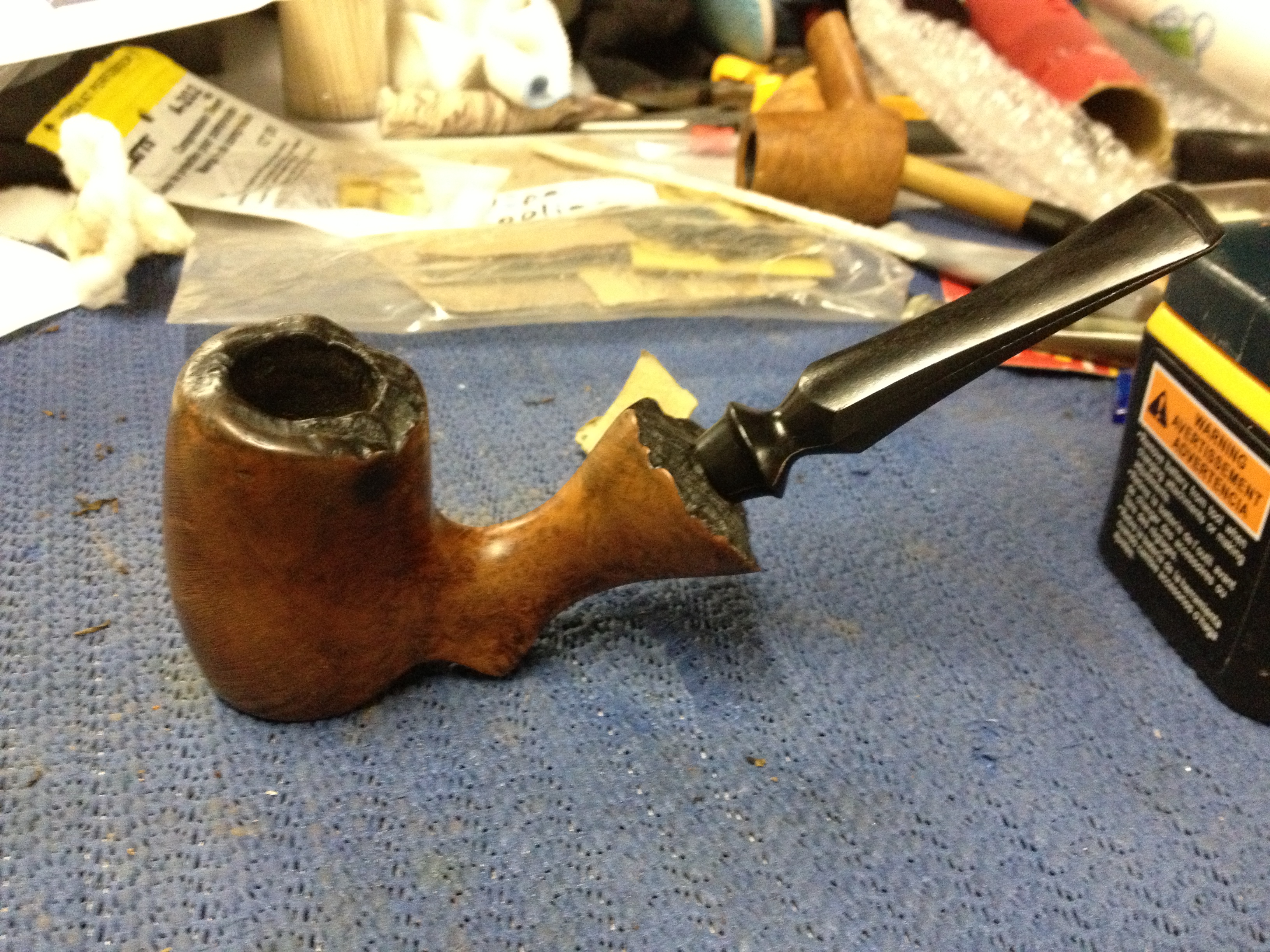
I choose a pre-formed Italian ebonite freehand-style stem for this stummel. To my eye it looked like it would be something very close to what the pipe would have originally had. I took my time turning the tenon down to fit since it was the first time I had done this and I didn’t have another stem like this one to use if I fouled up. After I got the tenon very close with the tool I hand sanded the tenon to get to the final fit; I know from reading Steve’s articles that it is easy to over-turn a tenon and you can’t put the material back on once it is gone! Here is a photo of the stem placed in the stummel after getting it fit:
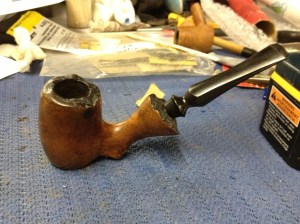
IMG_6717

I decided to not bend the stem until after I had sanded and polished it. In retrospect, I probably should have bent it before I did all the sanding; there are some very small “marks” on the stem where the bend is now that I had not anticipated. Next time I will bend after the initial sanding is done I think,

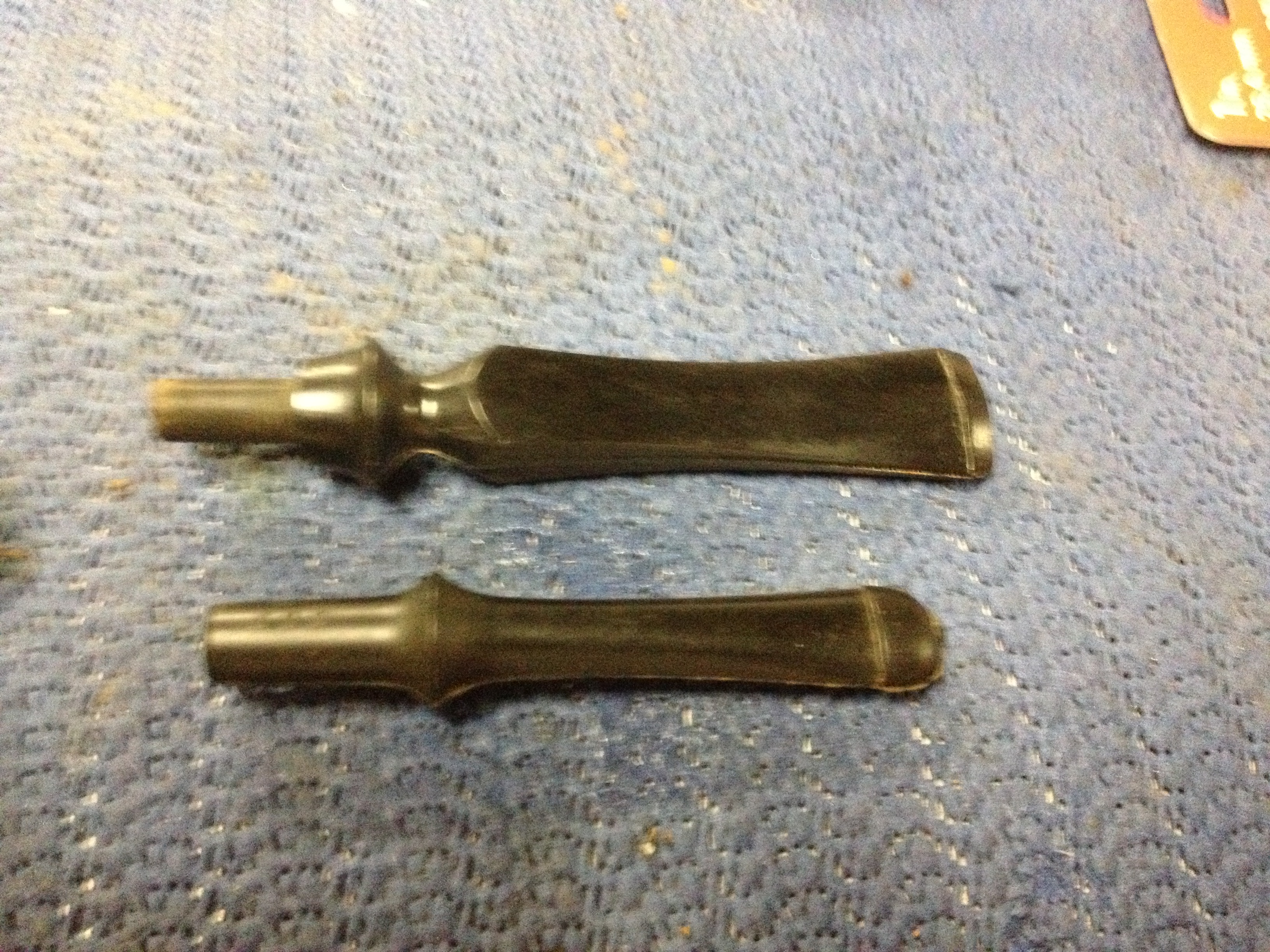
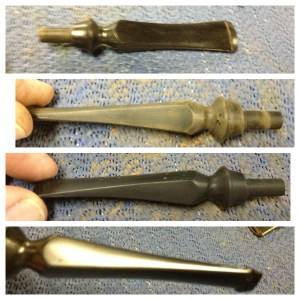
I began the sanding with 220 grit sandpaper to take out the casting/molding lines on the sides. I forgot to photograph the stem before I had started to sand it. This shows it early on and beside a smaller ebionite stem from the same lot to try to give you an idea of what the lines looked like from the start:
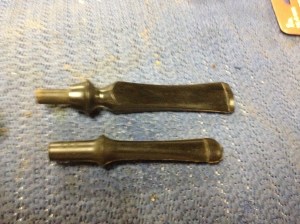
IMG_6725

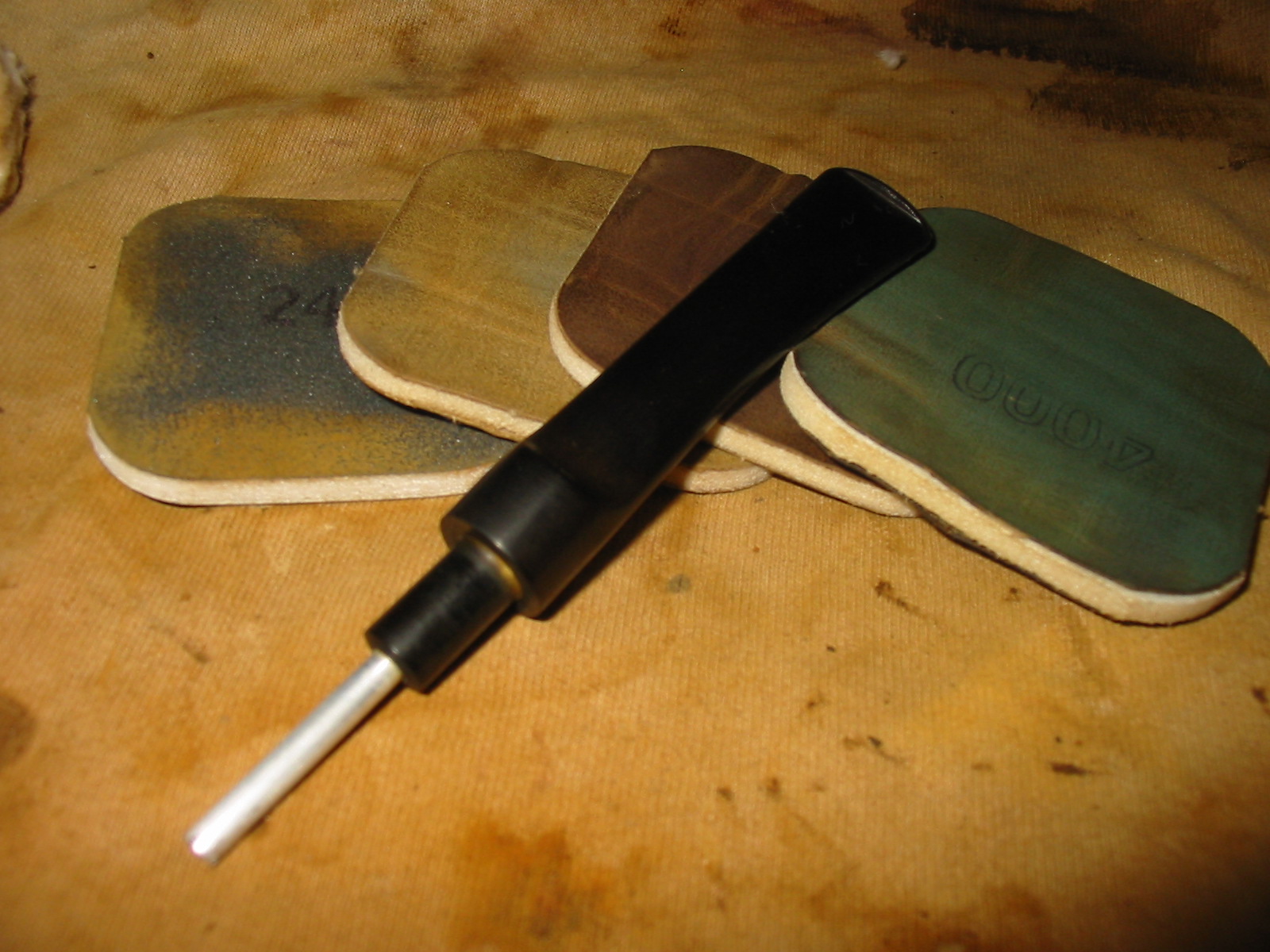
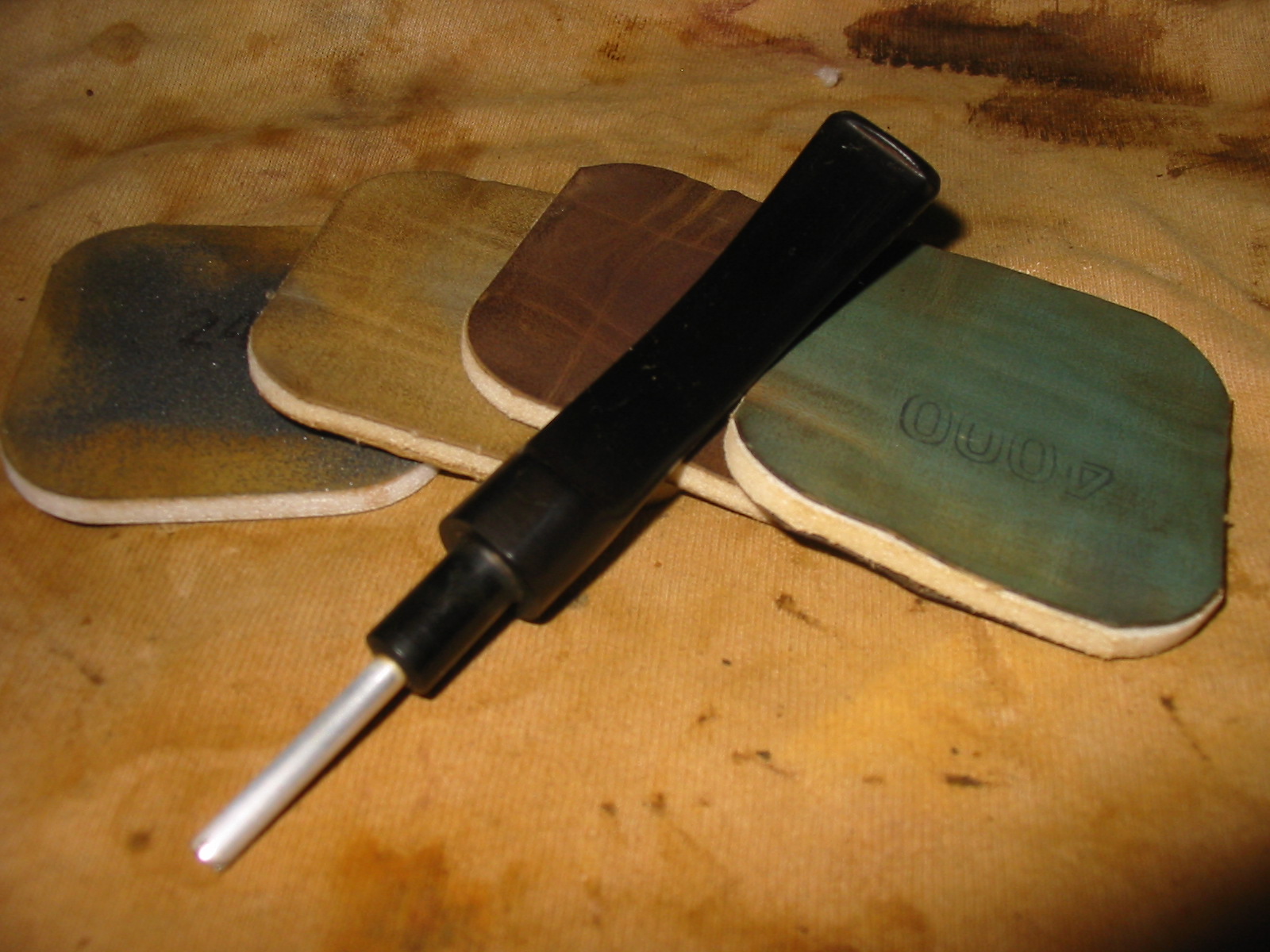
I sanded out the marks with 220 then 320 grit paper. The stem had some, but not many, small sots on it that made me decide to go head and use the 320 wet/dry paper on the entire stem. I progressed to 400 grit wet/dry and then micro mesh 1800 through 12000 (I also used the plastic polish several times between grits to make sure I wasn’t missing any scratches). Here is a progressive photo along the way from rough through 12000 grit micro mesh.
IMG_6736

The stem didn’t fit flush at the top and bottom due to the angle of the shank so I had to do a considerable amount of file work to get it almost completely flush to the shank on the top and bottom. At this point I stopped working on the stem and turned my attention to the stummel.

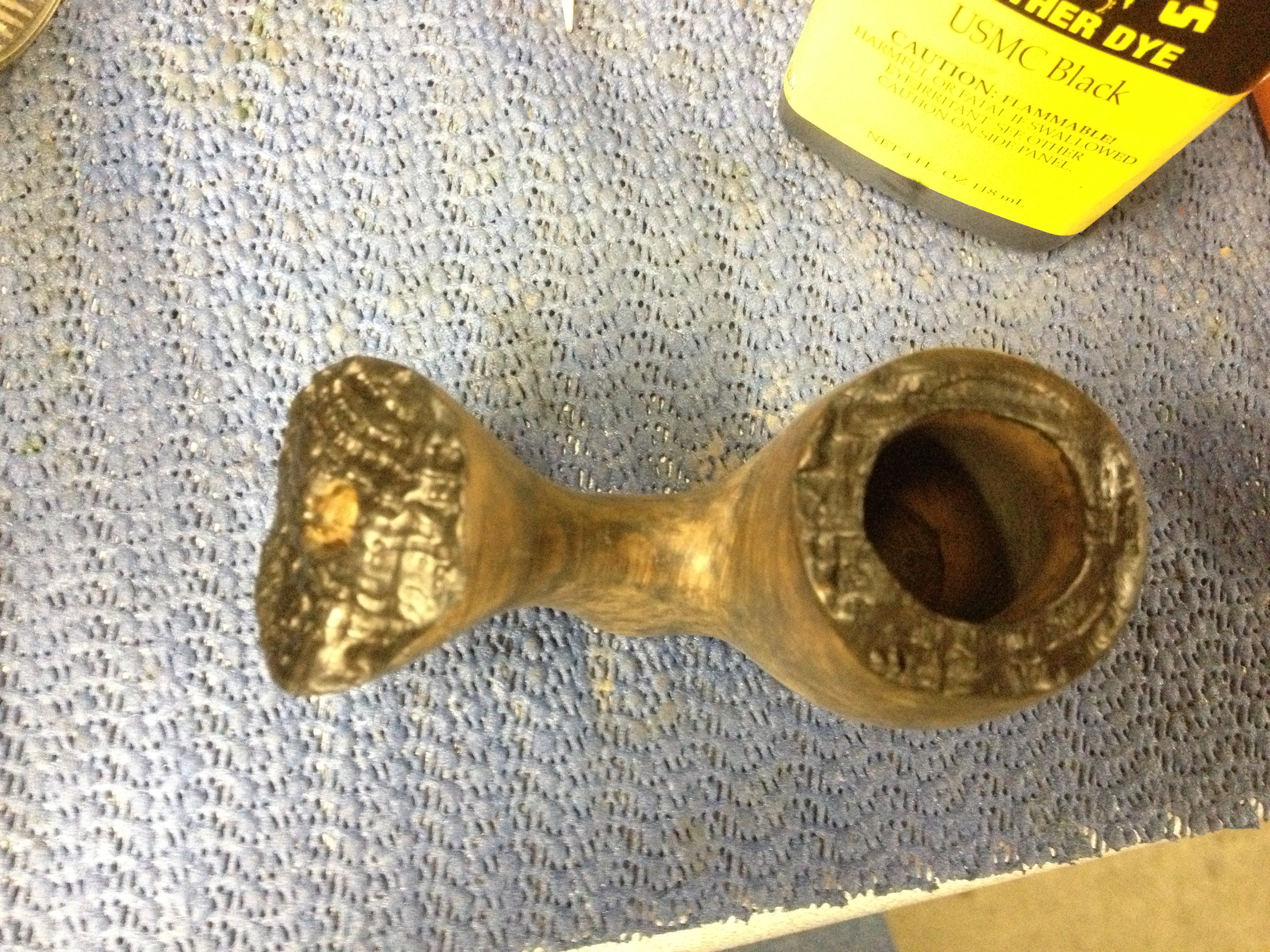
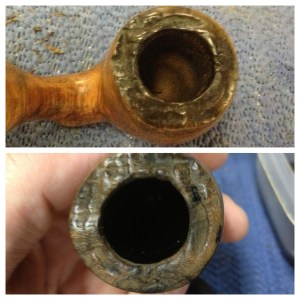
I wiped the pipe down with an alcohol soaked cotton pad. There was little wax left on the pipe and the wipe down removed what remained as well as some surface dirt. While the pipe was wet with the alcohol I could see there was a nice grain hiding under there, one that I hoped to bring out with a contrast stain. But first it would need an alcohol bath. So, I soaked the stummel a couple of in an alcohol bath. When I removed it I realized that the rim had a lot of build up on it; the rim, I thought, was stained black but that was just dirt, grime, and tar, and it was actually not stained black. I then scrubbed the rim with a brass bristle brush lightly to loosen the grime, with not a lot of success so I put the pipe back in the alcohol bath and left it overnight. The next afternoon I removed it from the bath and wiped it down then took it over another container of alcohol that I use for cleaning and dipped in my wire brush and started to scrub gently again. This time I saw much more removal of grime; the extra time in the alcohol has paid off in really softening the buildup. I switched to a toothbrush and scrubbed out all the remaining grime. I found that there were some rim char under there that the gunk had hidden. Below is a photo of before and after the 12-plus hour soak and scrubbing.
IMG_6754

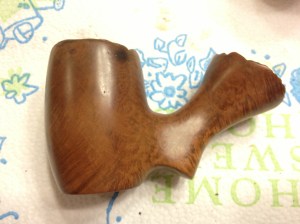
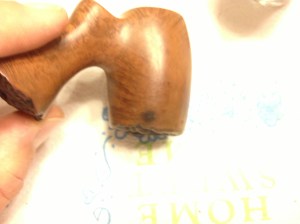
The charring made me decide that the rim would need to be stained black now. The large shank end was stained black so this would match and look good I was sure. But there was also a fairly large burn on the back, left side of the bowl that would have to be addressed. There were two fairly large fills near the burn but I didn’t plan on removing and/or refilling them; I planned on leaving them and seeing how they covered with the contrast stain. I had recently read a post suggesting that fills should be done with carbon dust, not briar dust, and super glue. The idea was that the pipe would darken over time with use and the black fills would blend in more naturally. I don’t know if that is a fact but I thought on this pipe I would stain the existing fills black and see how it ended up looking. Here are a few photos:
IMG_6766 IMG_6770

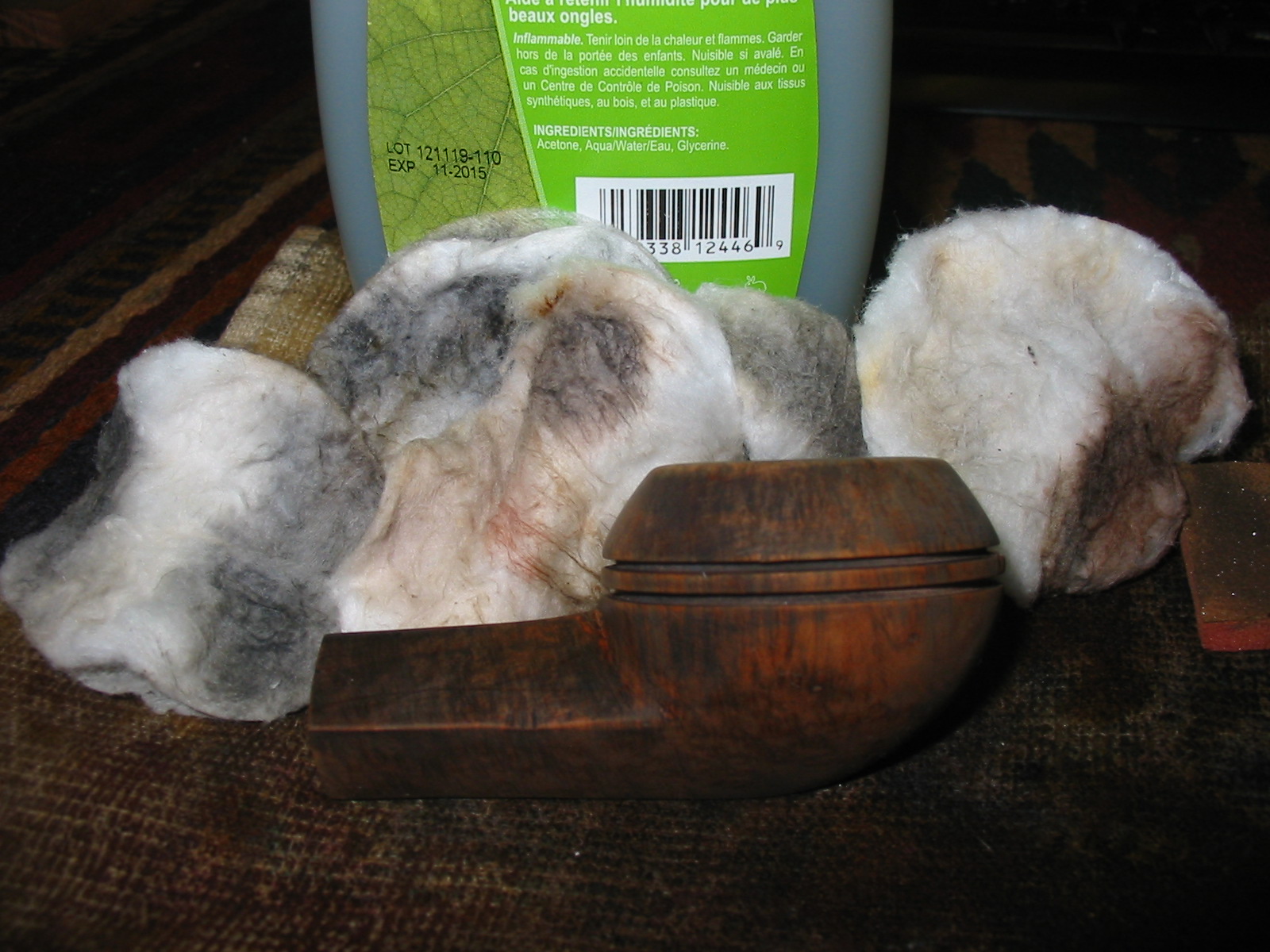
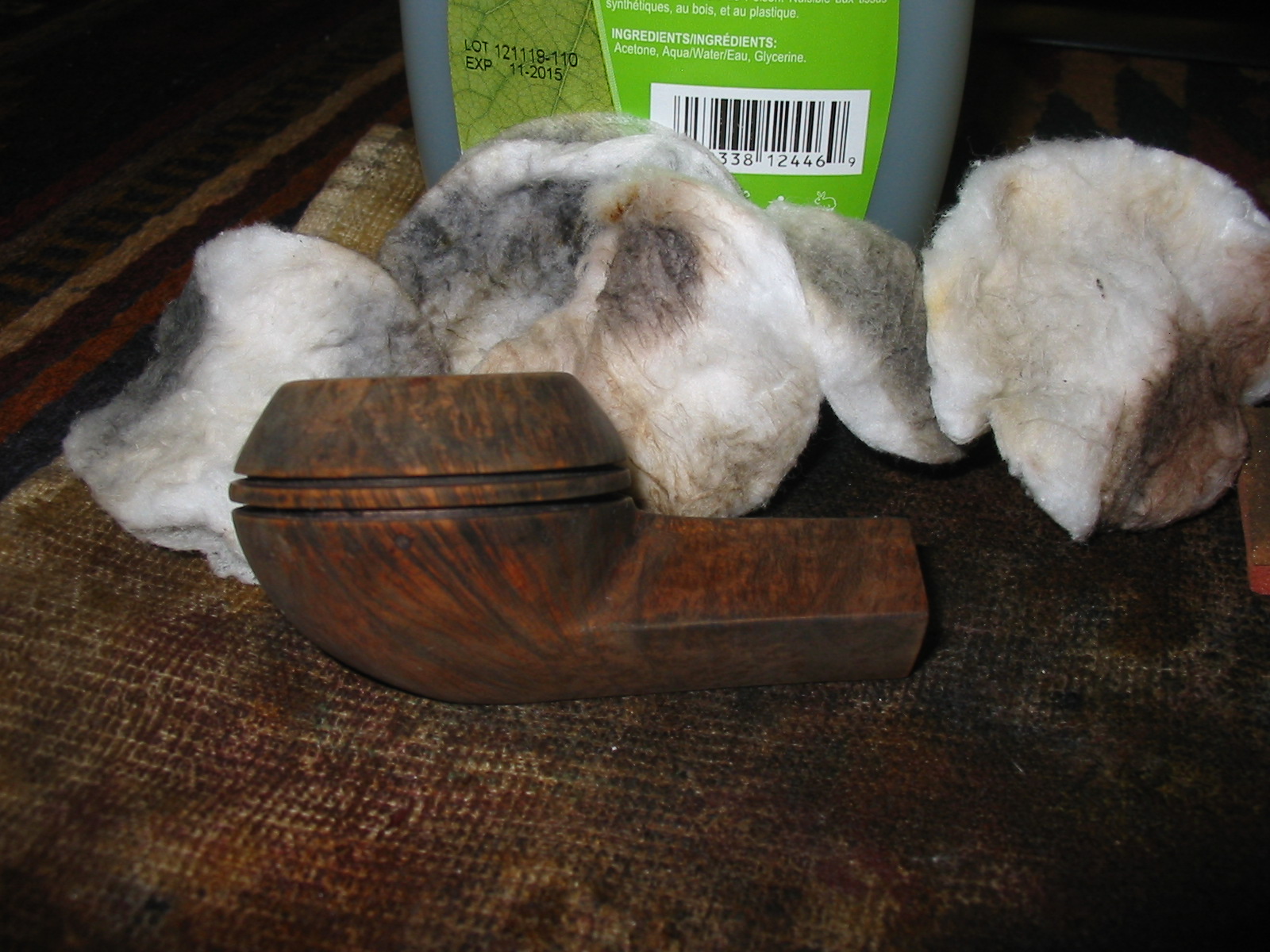
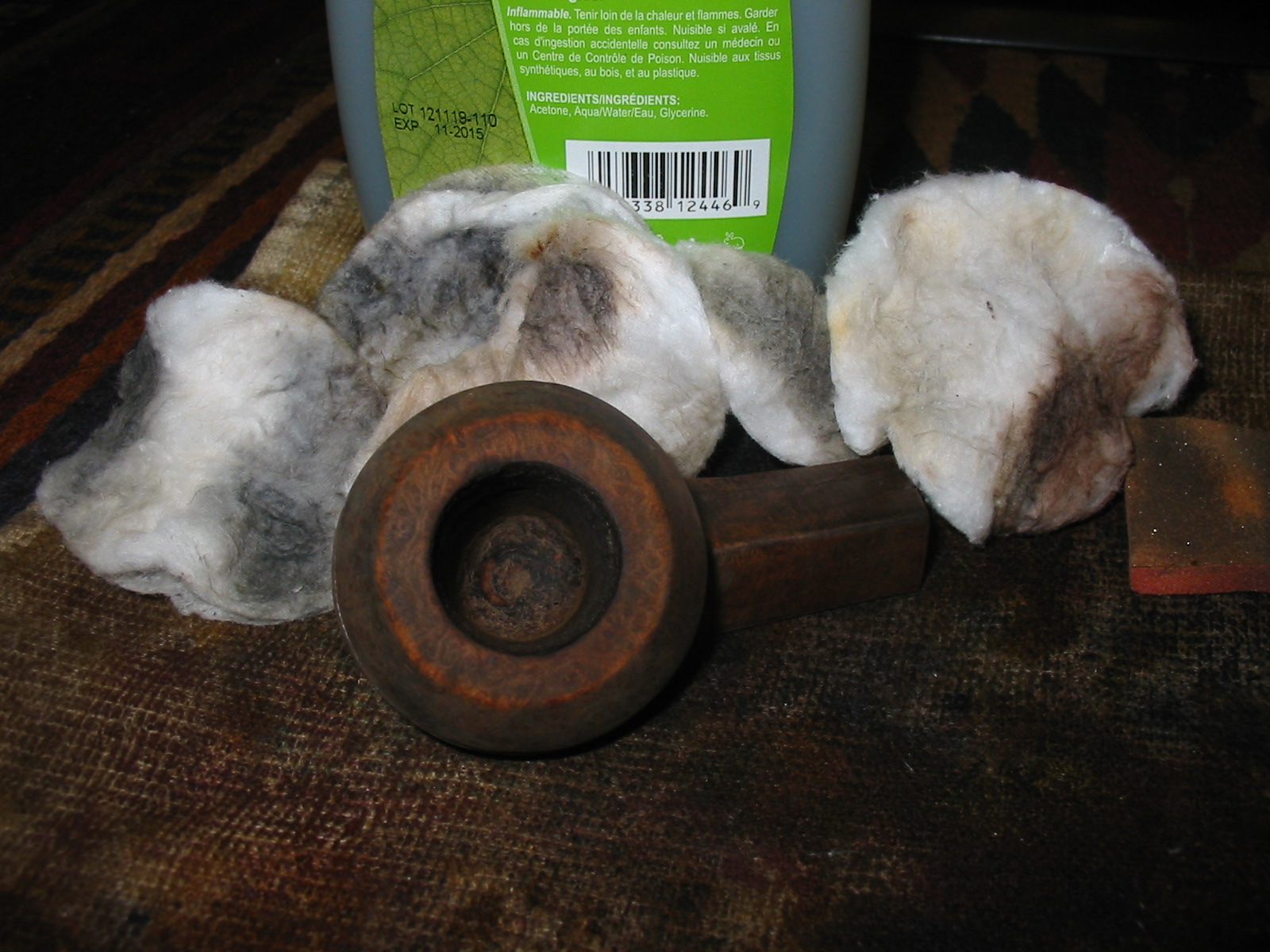
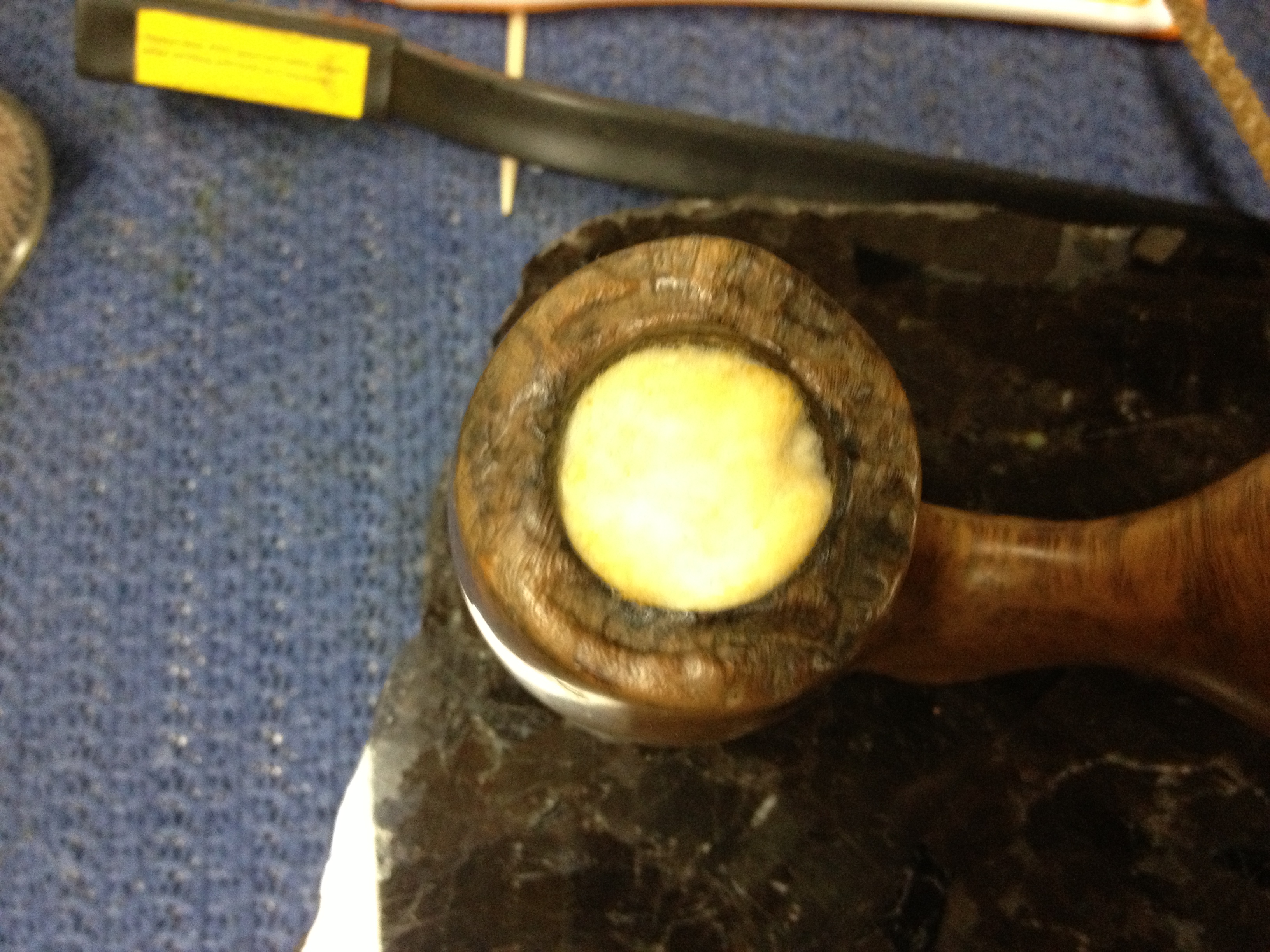
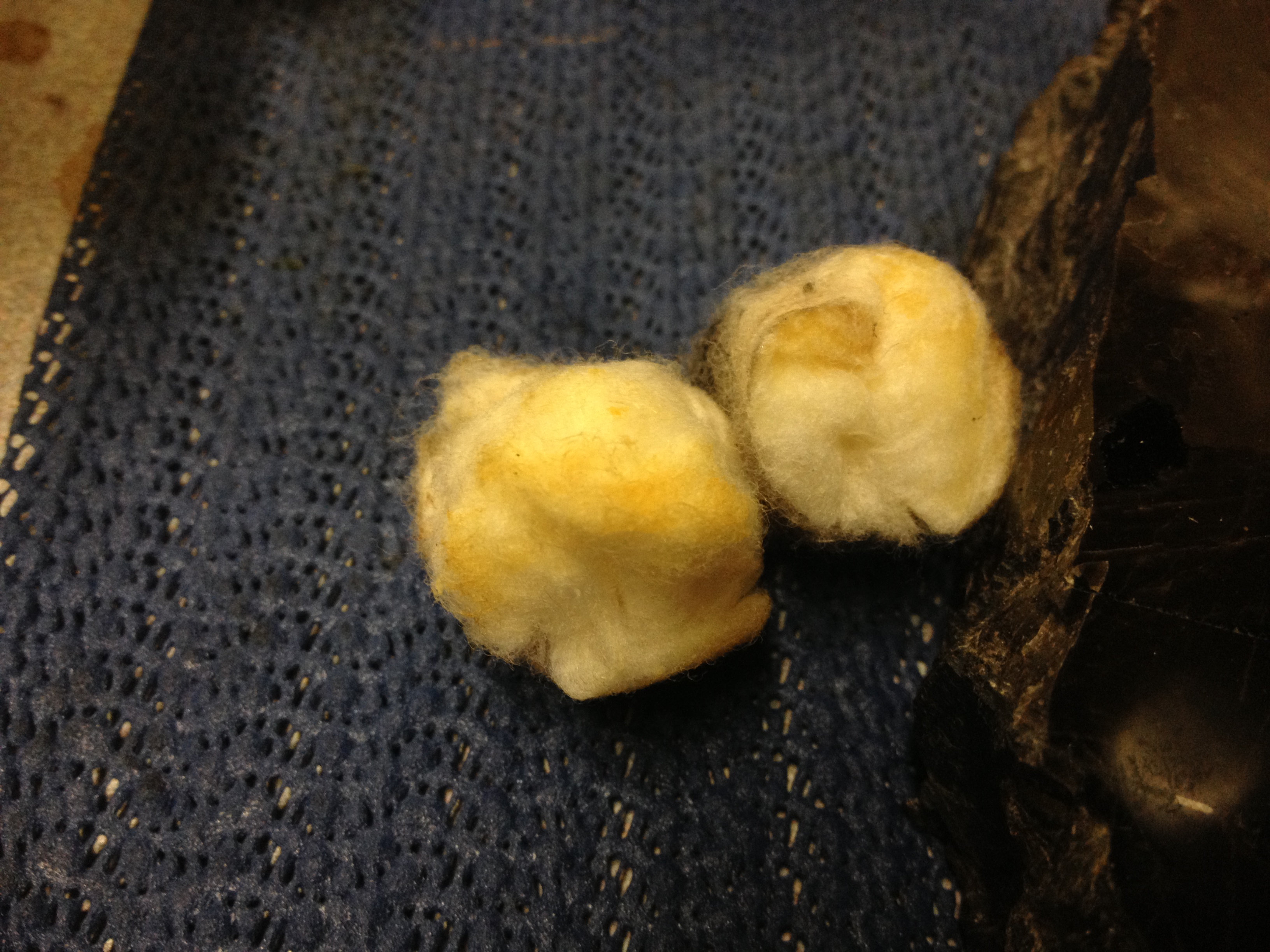
It was at this point that I decided to clean and ream the pipe. Knowing this pipe had more or less been in retirement for almost a decade, I expected it probably would be fairly dirty; I was right. The alcohol bath had softened the cake some, I suspect, and it was fairly thick and not very even so reaming was definitely in order. I used a Castleford reamer to do the job, using the second largest bit to ream the bowl; the two smaller sizes didn’t touch the cake in this large bowl. After reaming I began to clean the shank, which was terribly gunked up. I used the drill bit-tool on my Kleen-Reem to open up the shank, both with and without pipe cleaners on it. After many pipe cleaners, both on the drill bit and doubled over off of the bit, I finally decided that I needed to do an alcohol and cotton ball treatment; this is the same as a salt and alcohol treatment only you use cotton balls instead of salt. I put two large cotton balls in the bowl and, using an old medicine syringe, I filled the bowl with 91% isopropyl alcohol. Then I took the syringe and filled the shank; since this pipe is a sitter with such a large shank this idea worked very well and was quite easy to do. I topped off the bowl with a bit more alcohol and left it till morning. This is what the cotton balls looked like when I came back the next day:

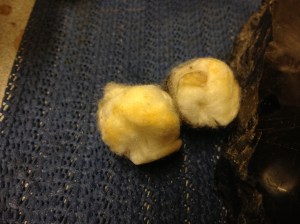
IMG_6764 IMG_6765

The photos don’t really show how much tar leached out into them; they were really quite brown. The shank was much cleaner now as I went back to it, only taking less than a dozen pipe cleaners to get it clean now.

Back to the burn on the bowl, I started out with some course emery boards to remove some of the charred area. I had three different grits, from a package I bought at the local dollar store, and I worked through all three grits on it. The burn mark was reduced in size a fair amount but would need more, which I planned on doing with sandpaper. I thought the emery boards would be a good way to keep the more coarse sanding confined to a smaller area and it seemed to work fairly well.
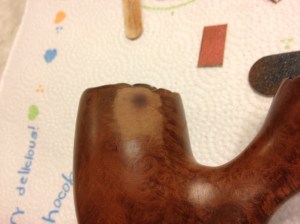
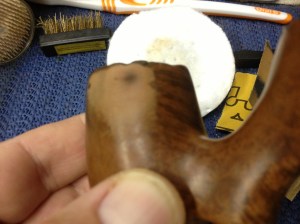
IMG_6774IMG_6775

From here I went to 220 grit paper and got out the biggest part of the burn, feathering out the sanding a little, too. I then went to 320 wet/dry paper and sanded the entire pipe, except for the bottom; I didn’t want to sand any where the nomenclature was if I could keep from it. I then moved up to 400 wet/dry paper, wiping ever so often with an alcohol pad to see how the pipe looked, making sure it was smooth and scratch free. After I got the pipe to where I thought it would be good I took it to the buffer and buffed it with black compound; I find that this buffing highlights any small scratches or dents that may have been missed during the sanding. Here is what the pipe looked like at this point:
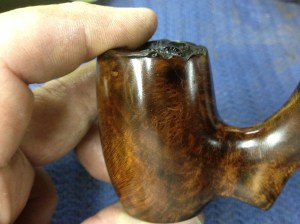
IMG_6798

I saw one small scratch I had missed so I took the 400 grit paper to it and got that one out, along with lightening the burn mark a bit more. Now it was time to bend the stem.

I heated the stem with my heat gun on low until it was pliable, after putting a pipe cleaner in the stem to keep from closing off the airway accidentally. I had set up my maul as my bending guide on my table. I heated and bent it and eyeballed it; it wasn’t quite what I wanted. So, I heated it again and bent it a little more and looked it over carefully; now it was more to my liking:
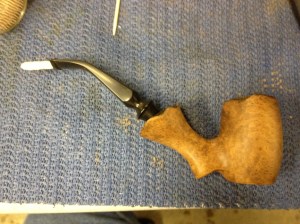
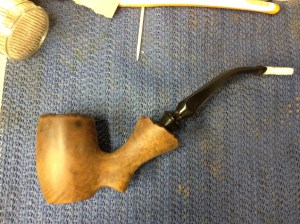
IMG_6784 IMG_6783

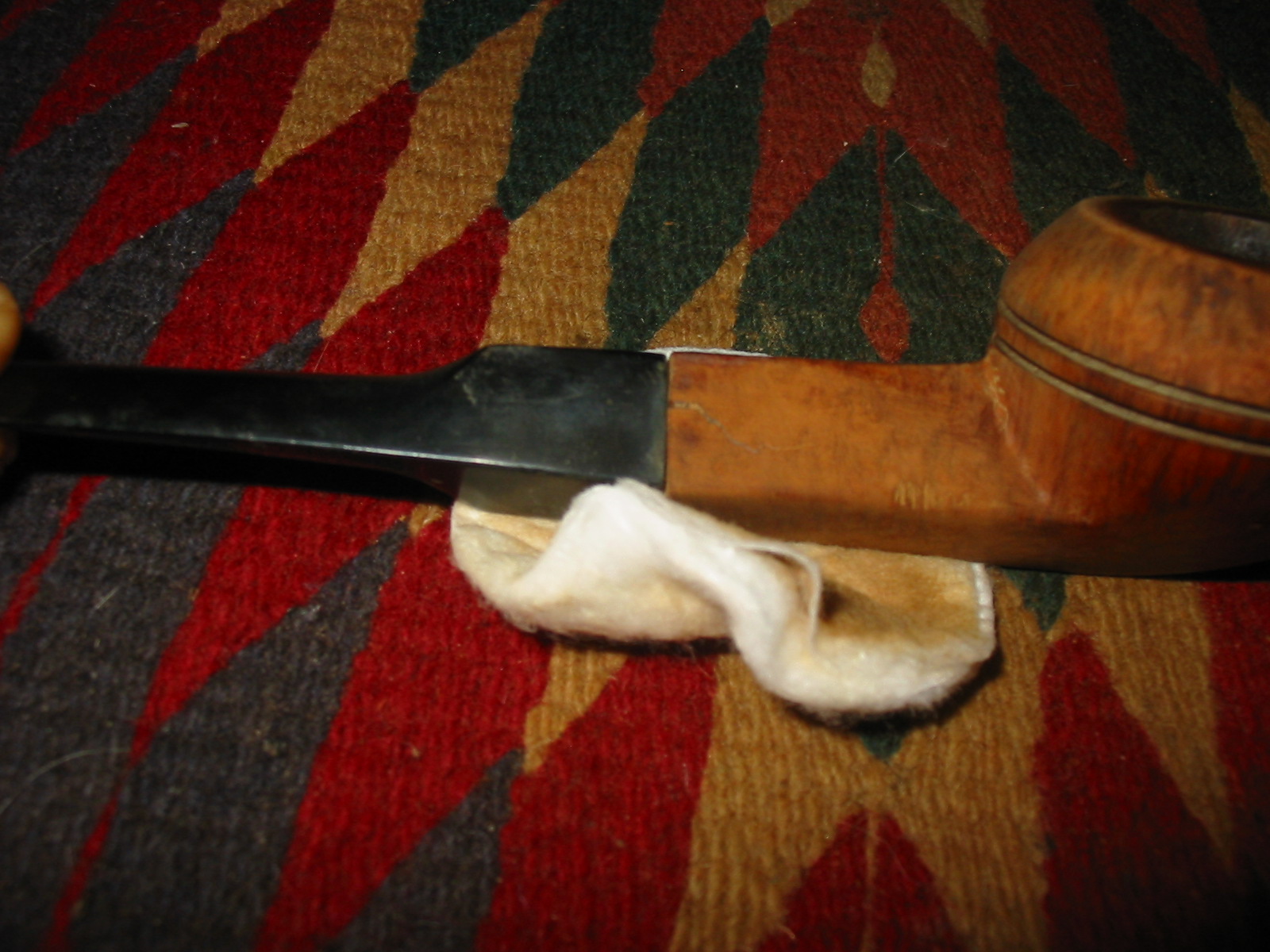
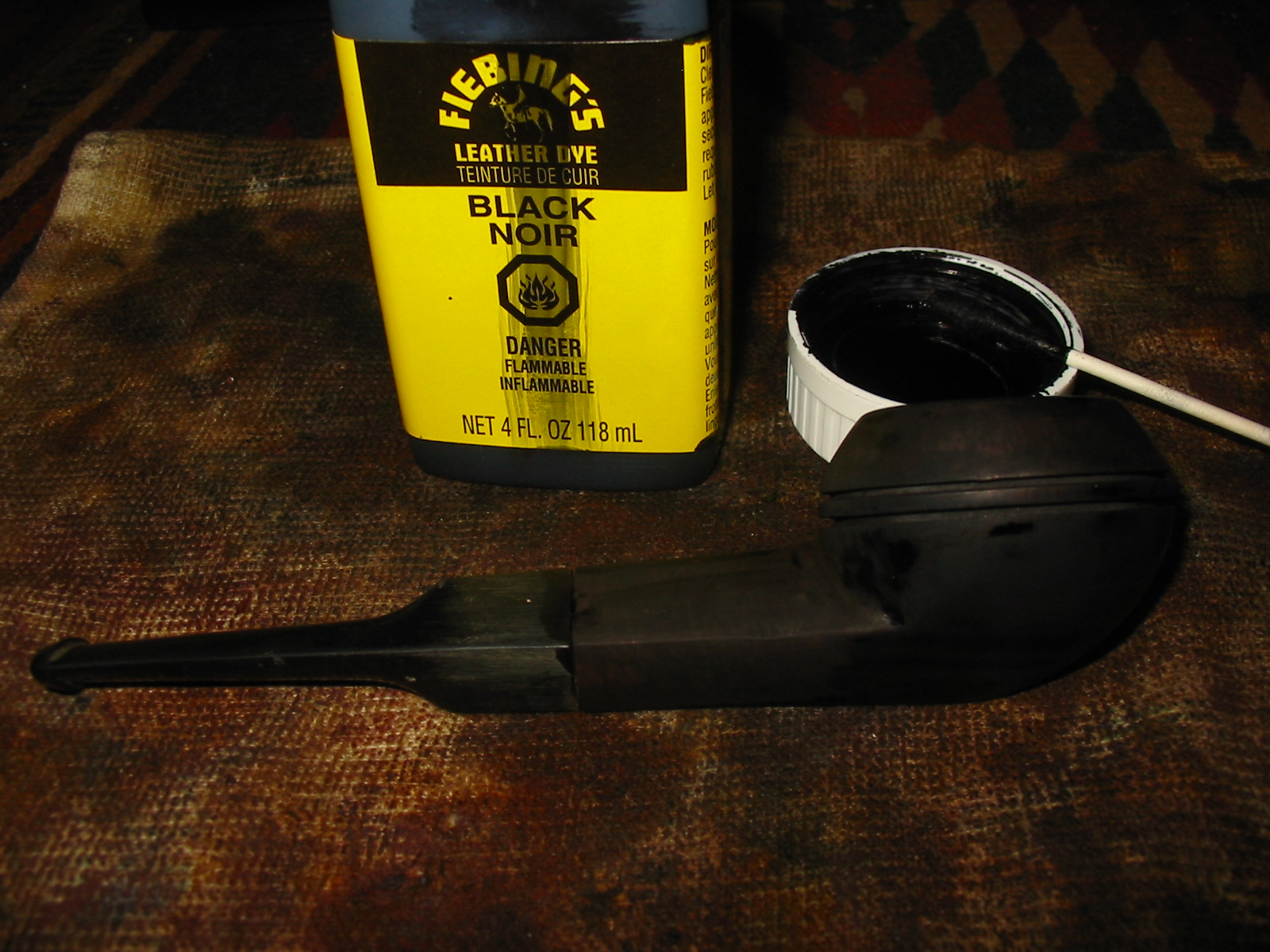
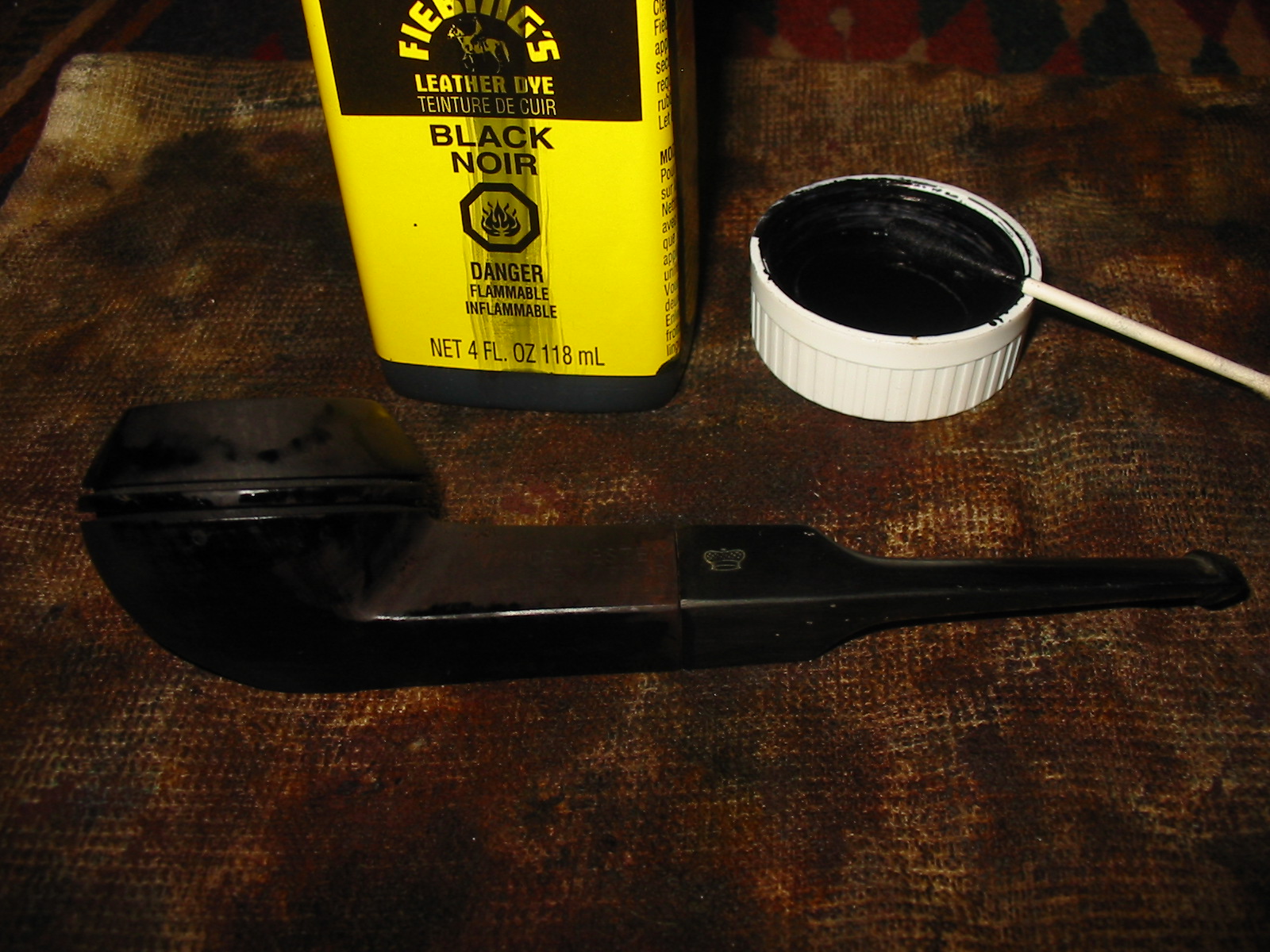
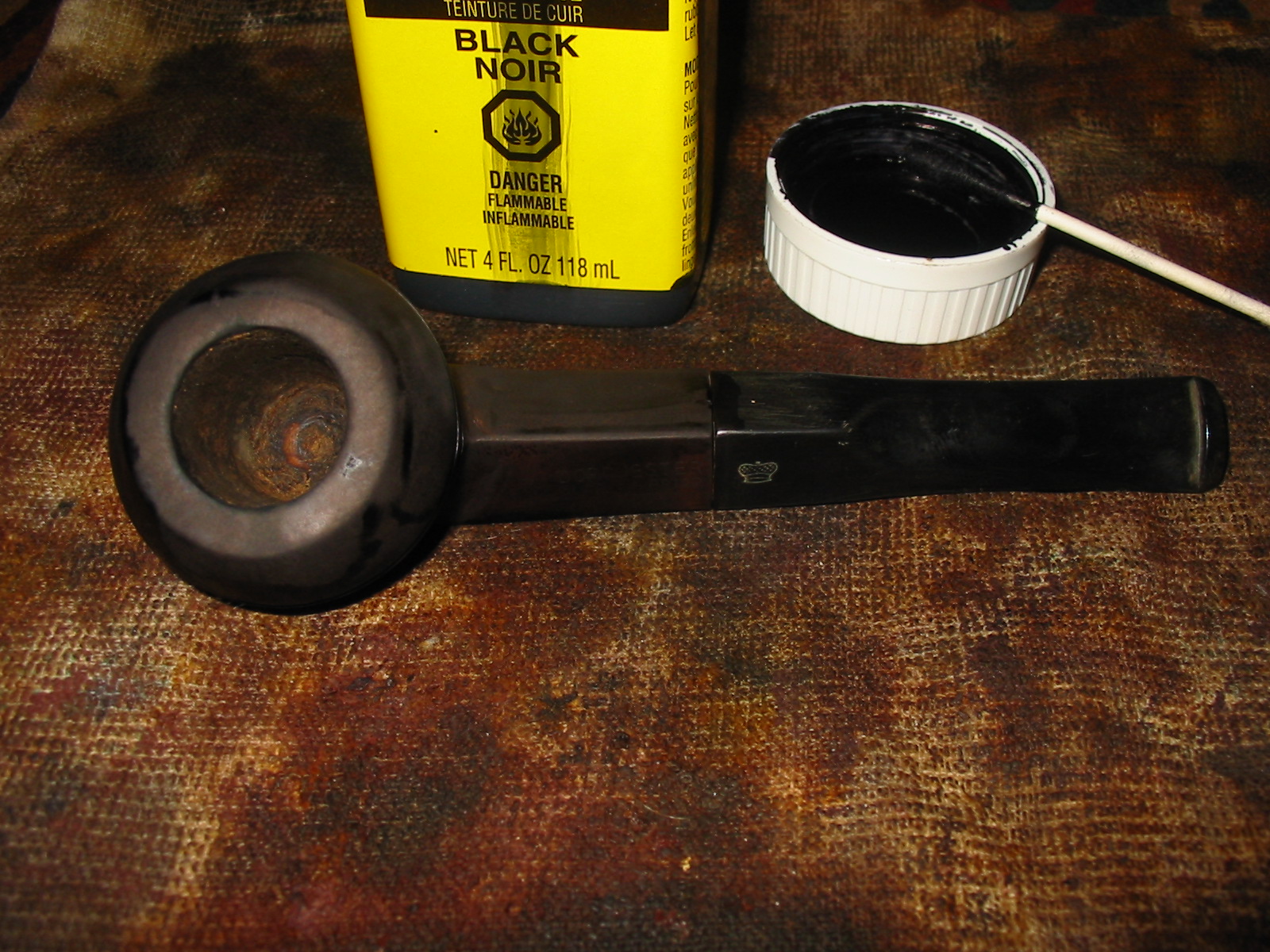
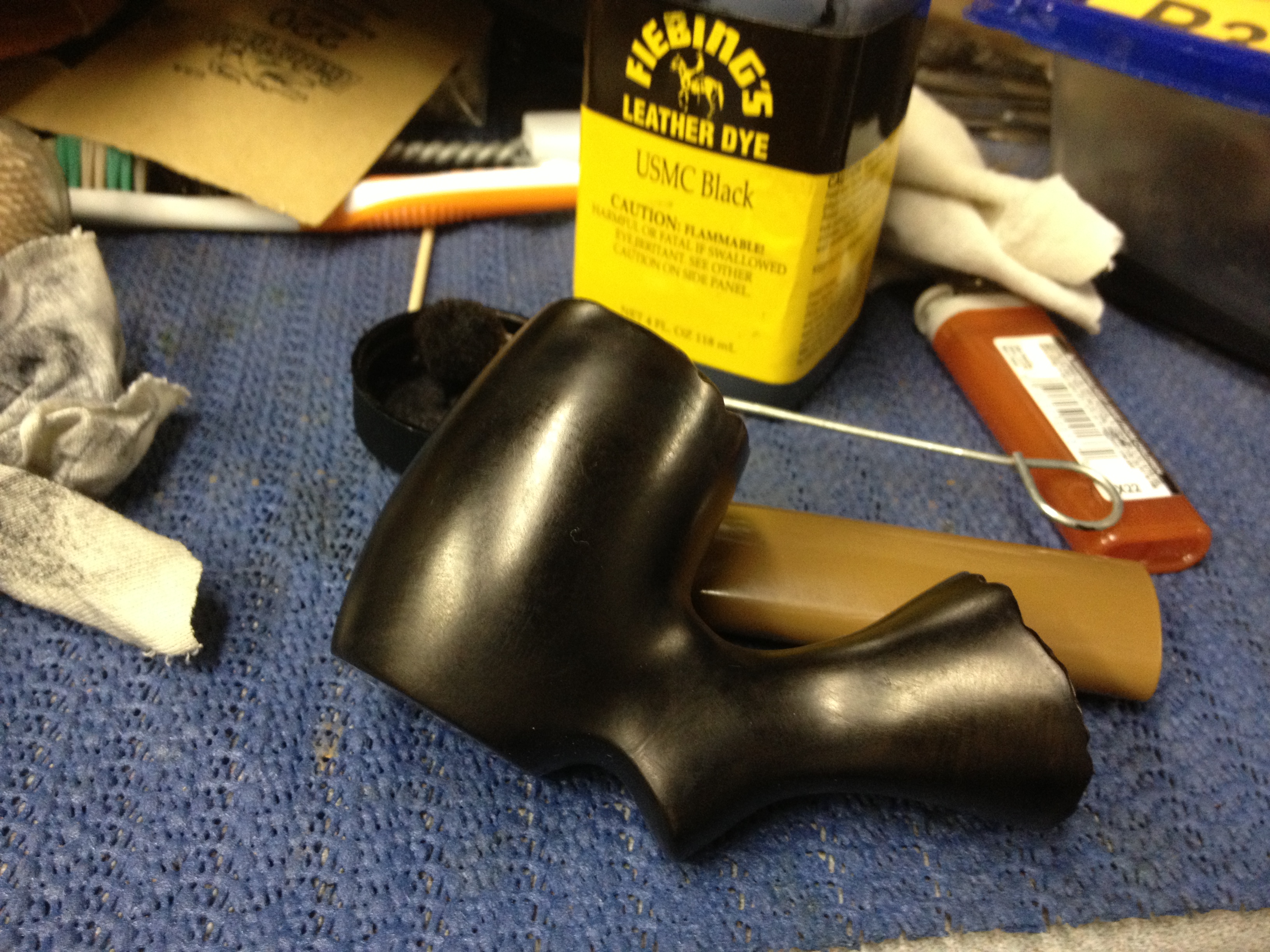
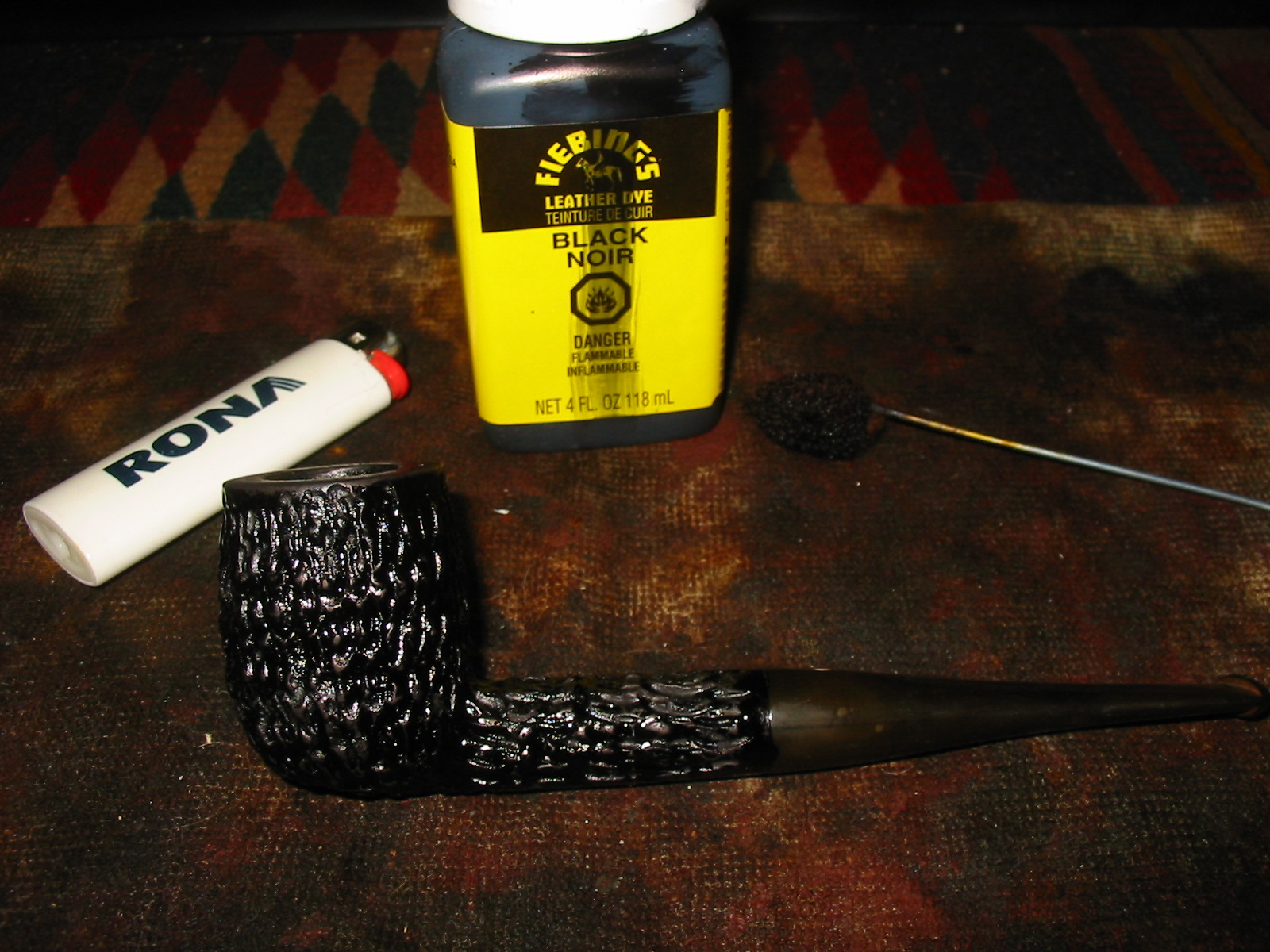
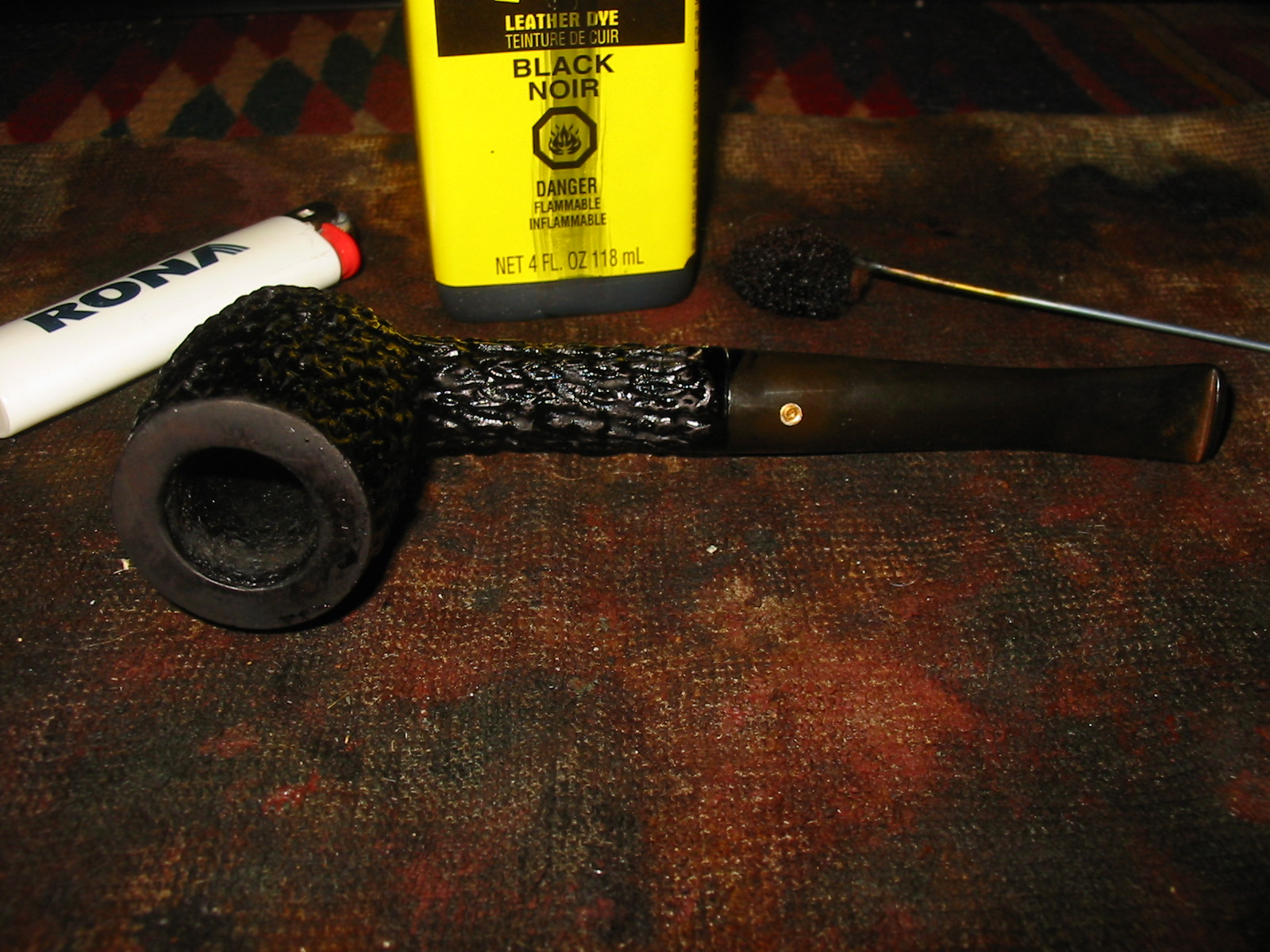
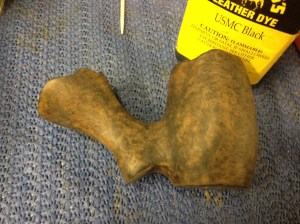
I used Fiebing’s USMC Black leather dye to the rim and shank end, since I knew these would need deeper penetration of color since they would remain black. I applied the stain, flamed it in and then repeated. I then heated up the stummel, setting the stem aside, to start the contrast staining. I got the stummel nice and warm, wearing leather gloves to protect my hand. I then applied the dye to the entire pipe, flamed and repeated. Next I hand buffed the pipe with an old cotton t-shirt leaving it at this point:
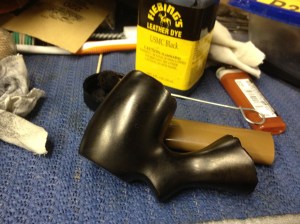
IMG_6788

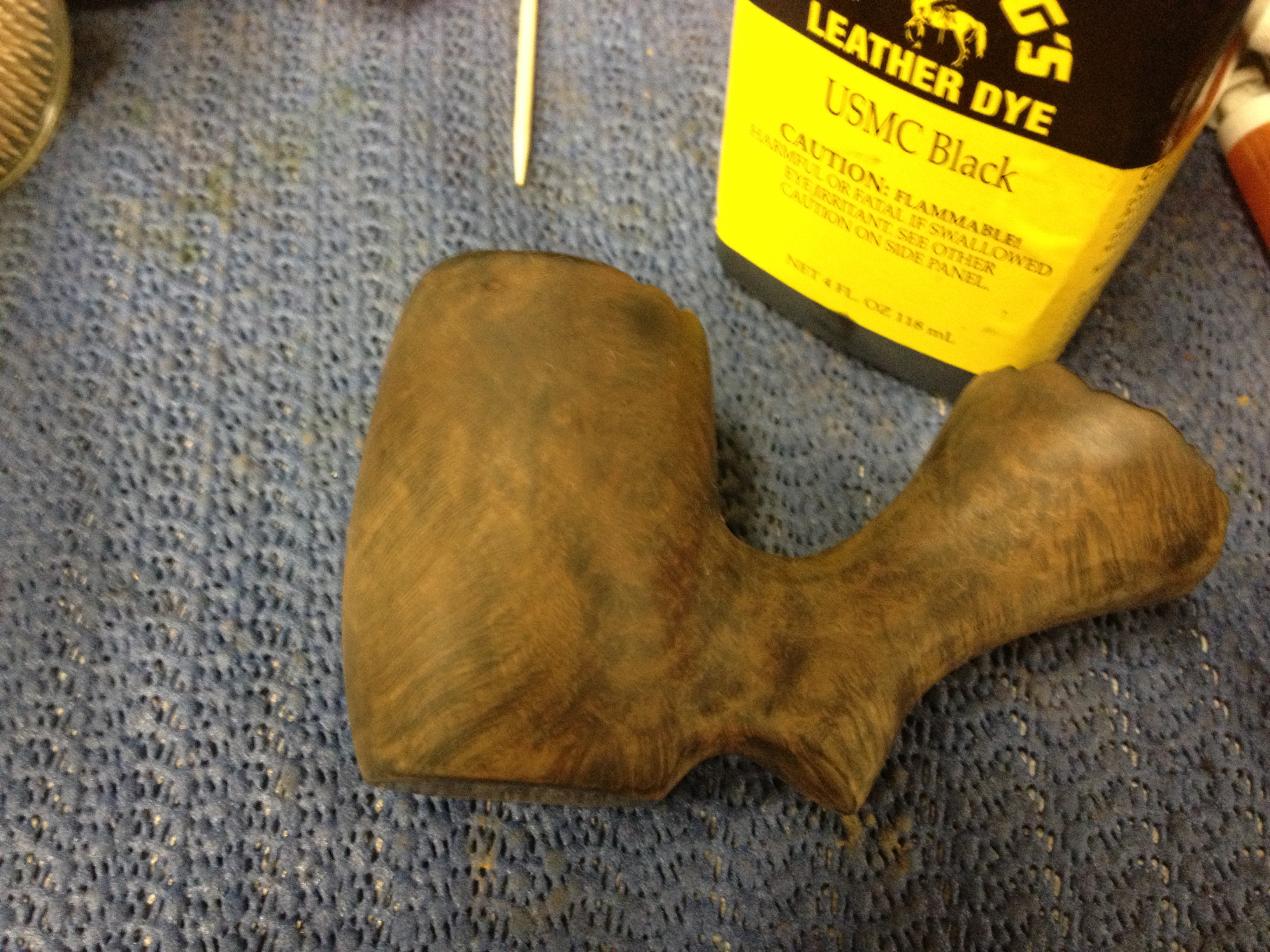
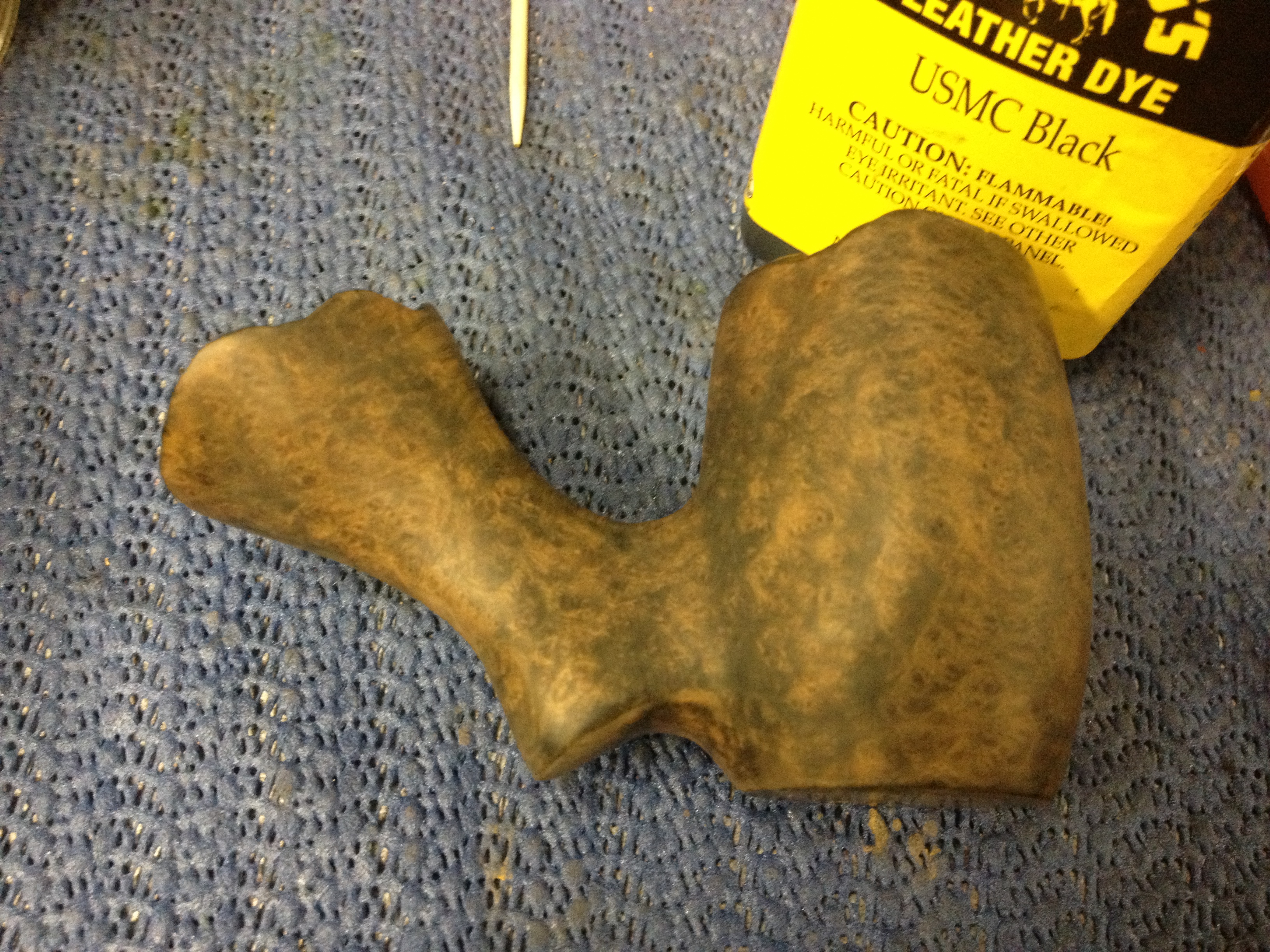
After the pipe had cooled for 10-15 minutes and was no longer warm I began to sand off the black; I wanted to remove the majority of the black but leave it in the grain areas as much as possible. I also wanted to try to blend in the burn as much as possible. I sanded and wiped it clean with a dry cotton pad until I thought I was getting close to where I wanted it to be; I didn’t want to use an alcohol pad until I had to in order to not lift any stain that I wanted left on the pipe. I think I sanded it over about three times before I wiped it with an alcohol pad. As the dust came off the alcohol wet pipe began to look more like what my mind’s eye had thought it would:
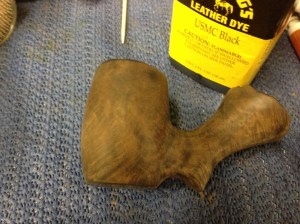
IMG_6789 IMG_6790IMG_6791 IMG_6792

Now I applied a brown stain that I had mixed up earlier for another project; to be honest, I don’t recall what color I used or what I diluted it to. I applied the stain, flamed and repeated. After buffing it off with the old t-shirt I realized it was too dark for what I had wanted so I took an alcohol pad to it and removed some stain. But it was still too dark so back to the 400 grit I went. I sanded it over, wiped with an alcohol pad, and repeated until I was happy with the color; I think it took about four cycles to get it where I left it. I then buffed it off with the t-shirt one last time before heading to the buffer.

I buffed the stummel with Tripoli and then the stummel and stem, separately due to the way this pipe is made, with white diamond. Both parts then got several coats of carnauba wax, buffed on a clean soft wheel and finally hand buffed with my flannel gloves; I don’t know the flannel glove-buff is needed but it seems it adds a little “something” though it may only be in my head. But since it only takes a few extra minutes, and gets any stray threads of the pipe that the wheel may have left, I almost always finish this way.

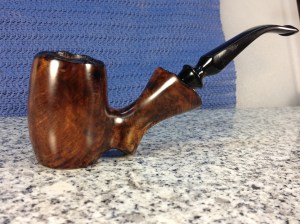
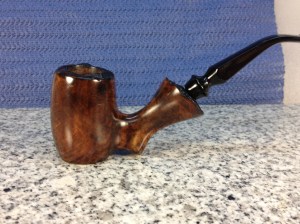
I am really happy with how this old pipe came out. The new stem was a success, both in fitting it and in the look, and I really like how the contrast staining came out. The rim looks much better now stained black with dye not tar. The fills didn’t hold the stain as well as I’d hoped but are much less noticeable now. And the and burn mark is almost invisible, which really pleases me. The only thing that I am not happy about, really confused about more than unhappy, is that the stem has loosened from the tight fit it had the day I turned it. I don’t know if the humidity (it had been extremely humid here the last two weeks), the alcohol soak, the extended time of separation for stem and stummel or what caused that. Hopefully a few days seated together and/or some use will remedy that. If not, I’ll likely heat and gently expand the tenon a tad to get the fit better. At any rate, here is the final result:
IMG_6802 IMG_6801 IMG_6800 IMG_6799 IMG_6796 IMG_6795 IMG_6794 IMG_6793

Can a Cracked Bowl be Repaired? – Taking a Lesson from Gan Barber’s Work


Blog by Steve Laug

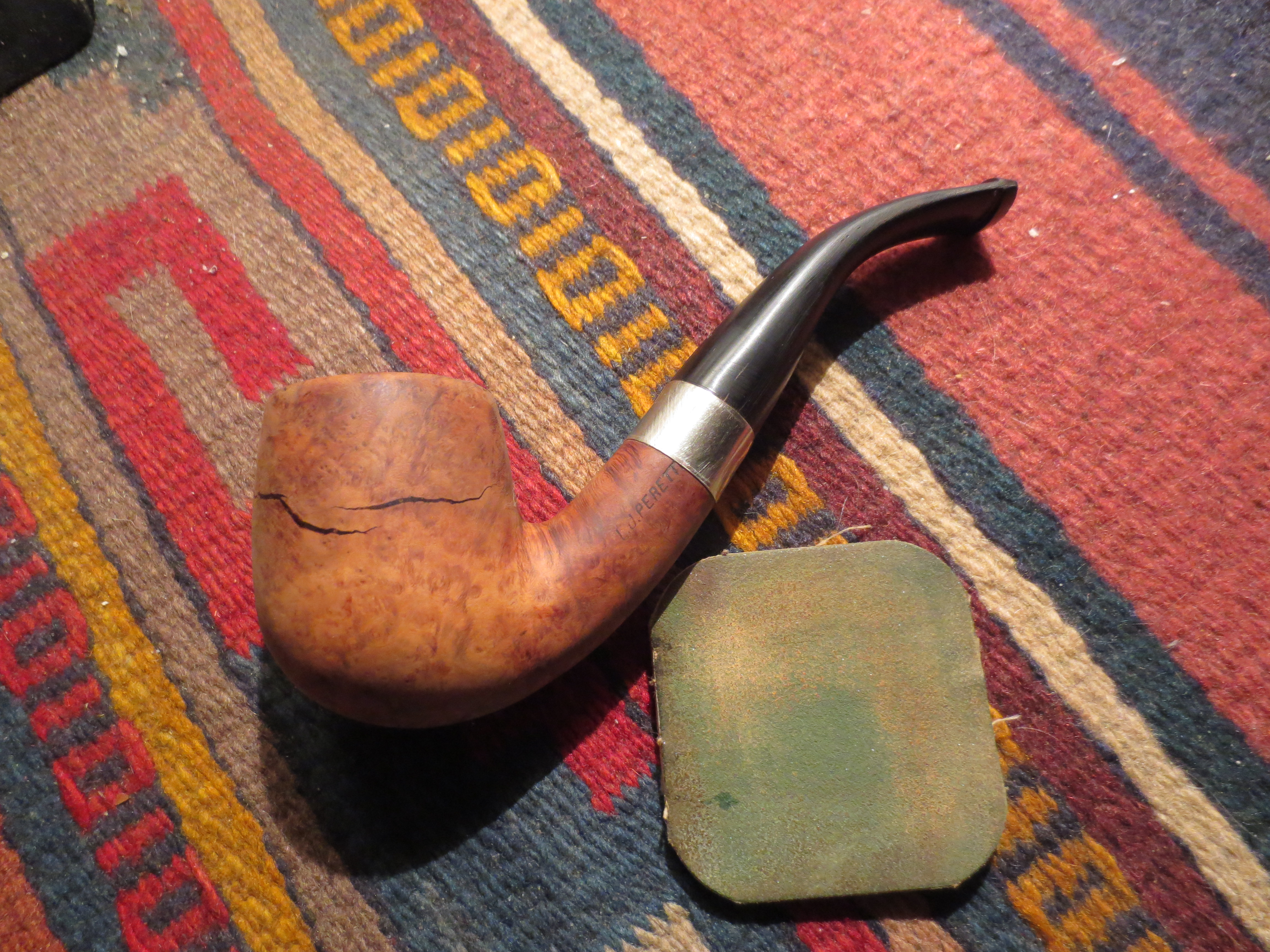
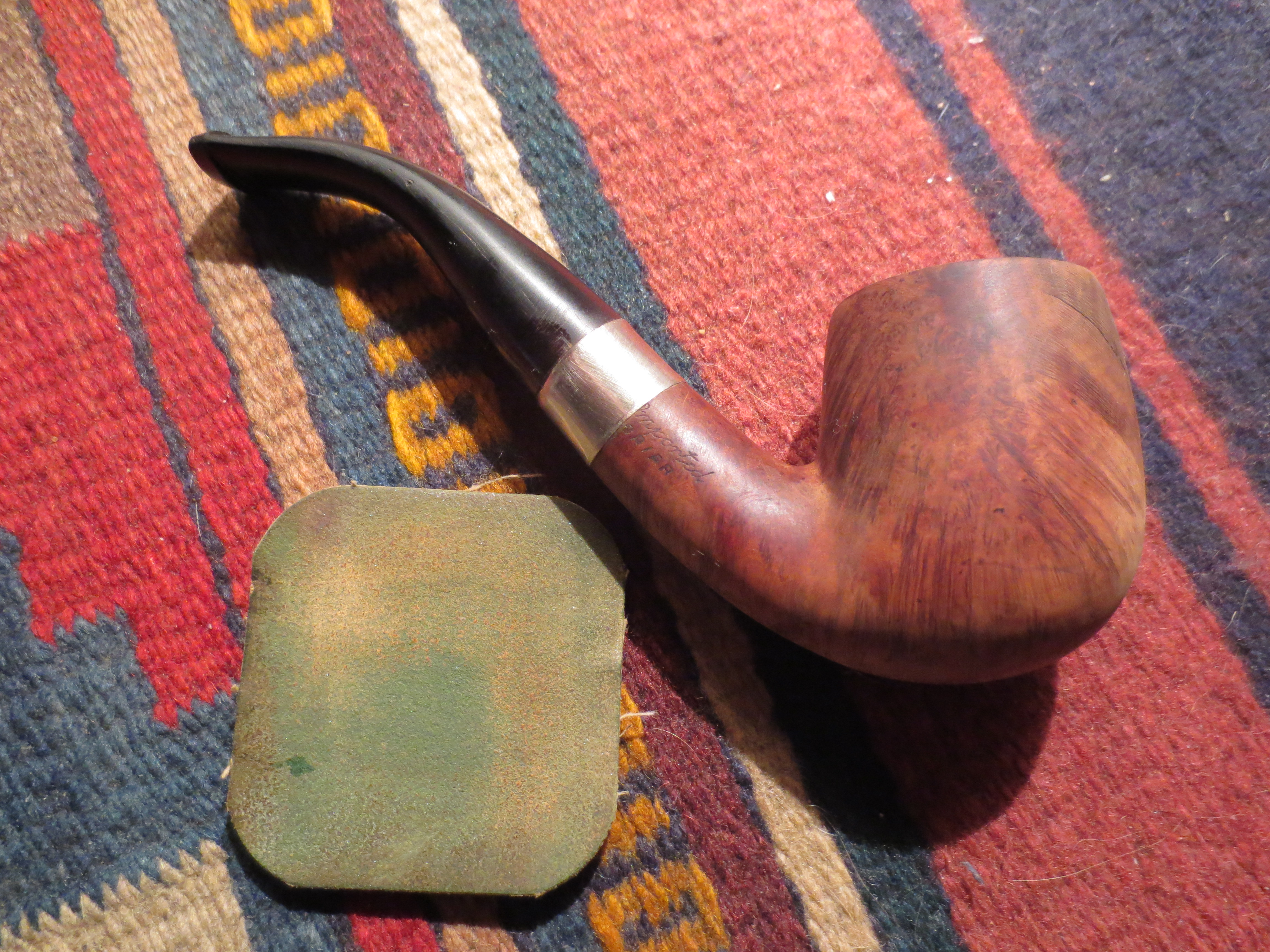
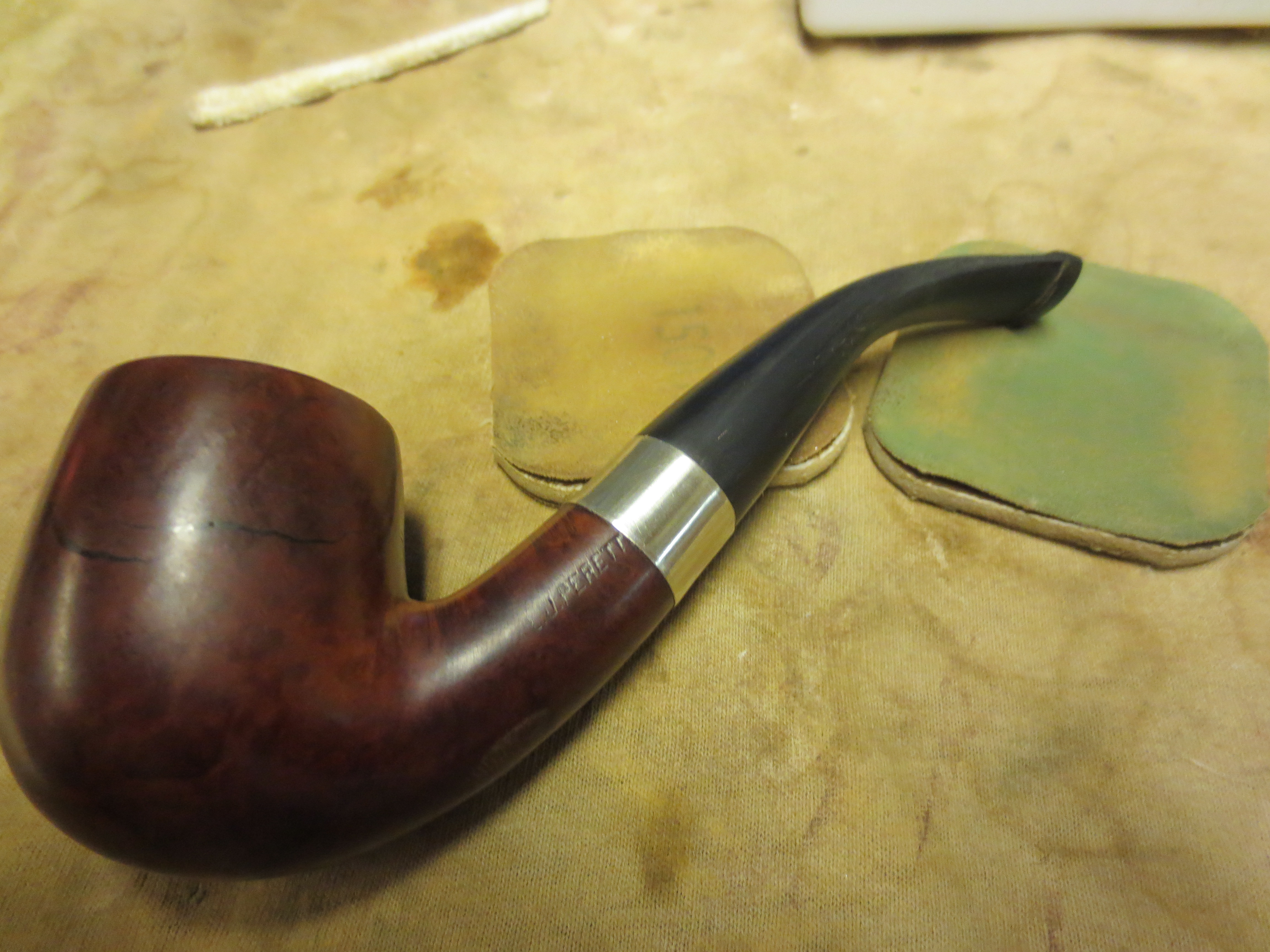
Many of you have read the piece that Gan wrote on “All the King’s Horses and All the King’s Men – A Peterson Adventure” https://rebornpipes.wordpress.com/2012/10/03/all-the-kings-horses-and-all-the-kings-men-a-petersen-adventure-gan-barber/ In it he described the process of reconstructing a Peterson that was in pieces. It arrived with cracks and he put the pieces back together. Since interacting with Gan on that pipe and rereading his article I have wanted to try my hand at repairing a cracked bowl. Finally I picked one up in an EBay lot that I purchased. It was an L. J. Perretti Smooth Bent Billiard. It was in rough shape and needed a stem. I figured I would practice some of the magic Gan used on the Peterson pipe he wrote about on this one.

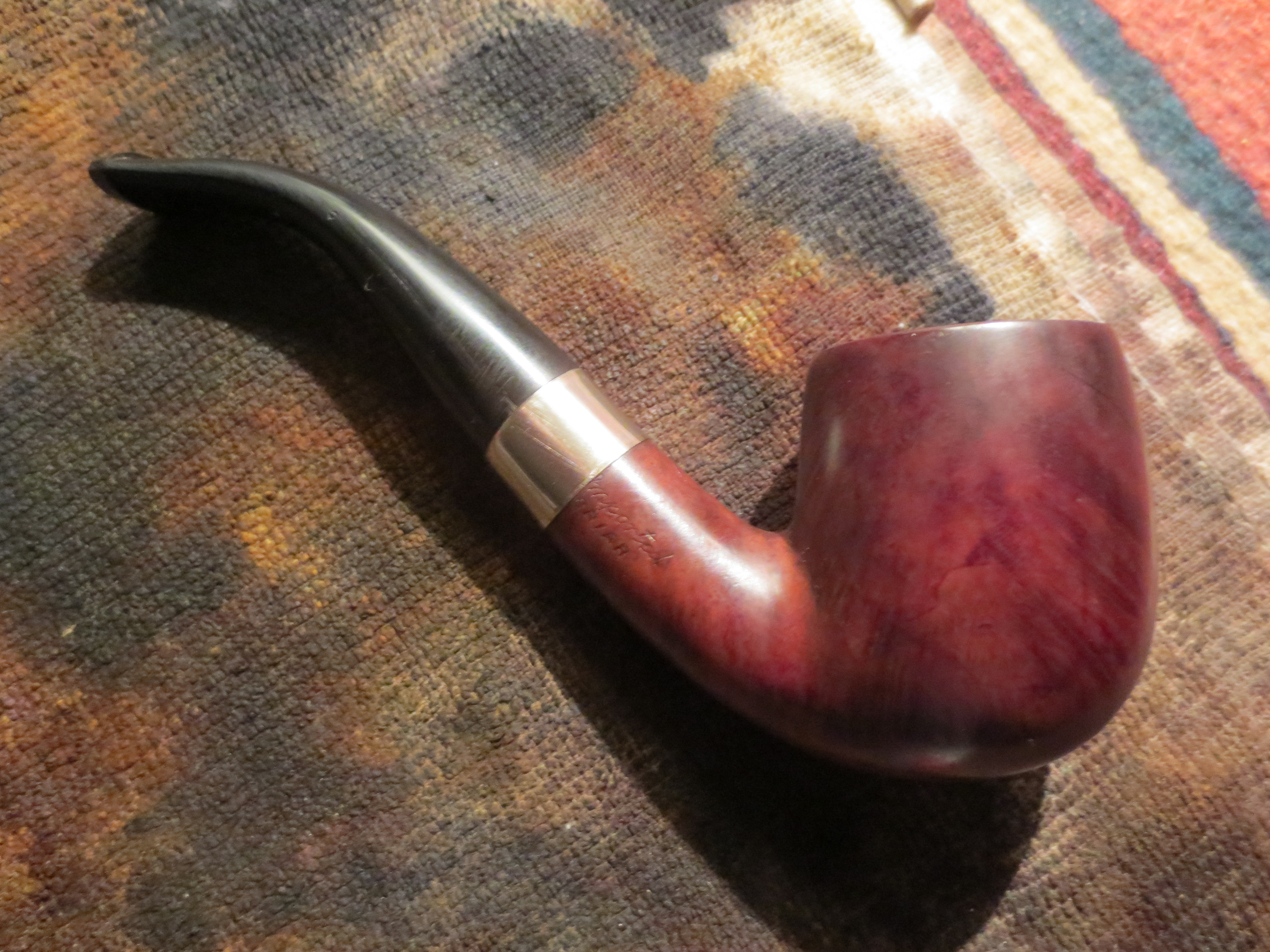
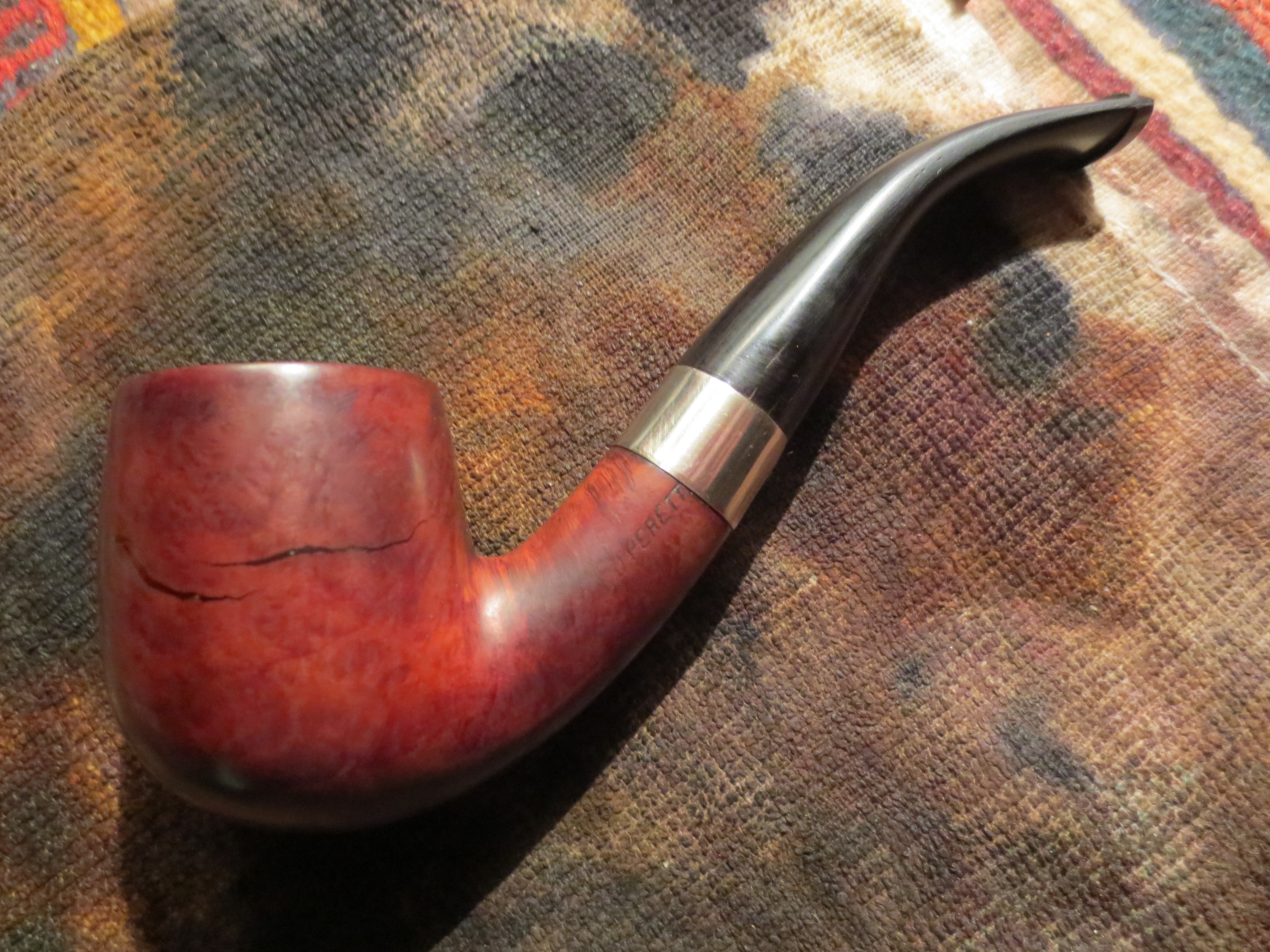
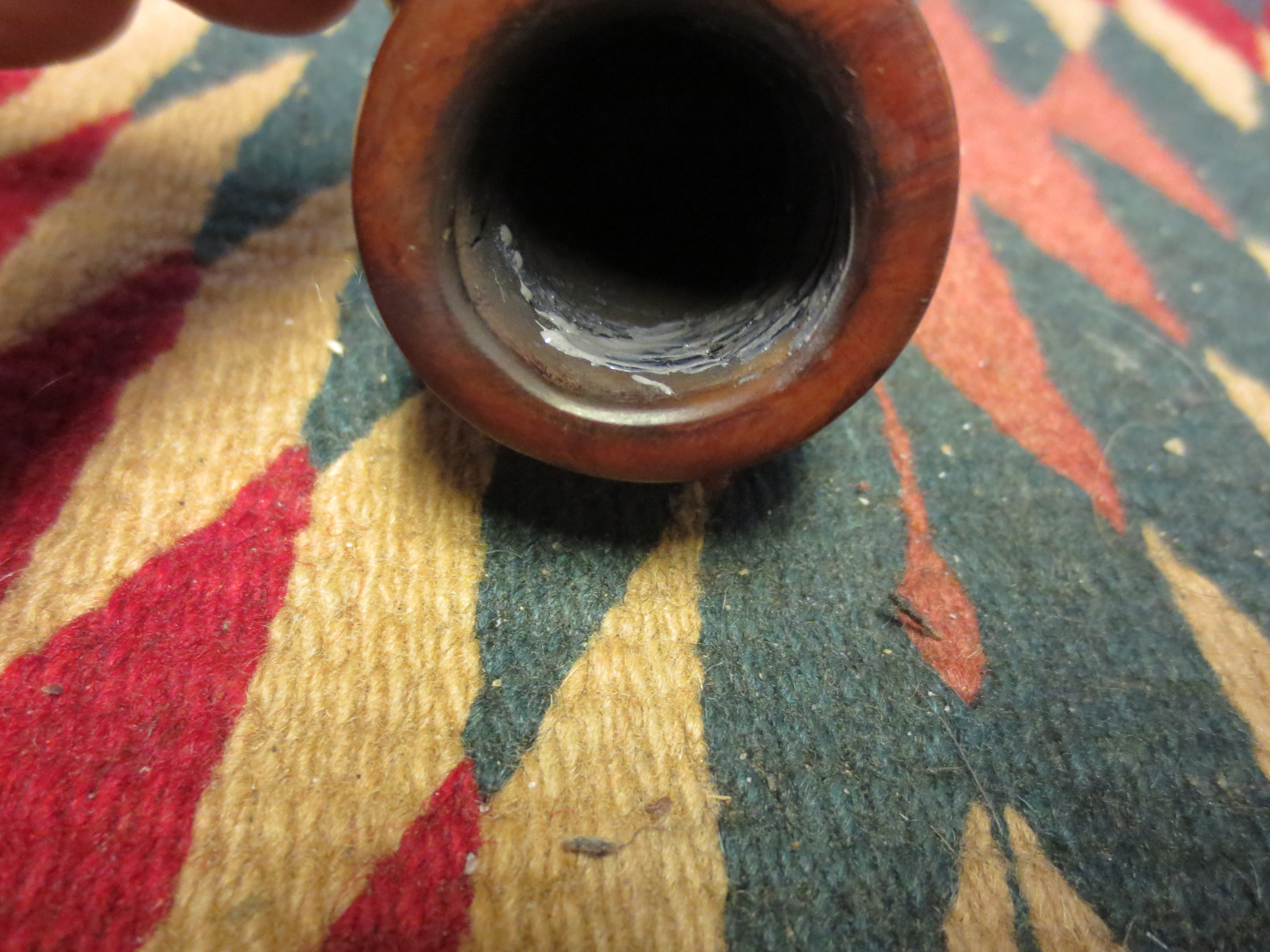
This Perretti had some deep cracks that ran through the bowl from outside to the inside. Once I had reamed the extremely thick cake out of the bowl I could see that the cracks went all the way through the briar. There were deep gouged areas on the inner walls of the bowl directly behind the cracks. The wood was not charred so it was not a true burnout. I think that a combination of too thick a cake and possible flaws in the briar made these cracks appear. Interestingly the cracks follow the grain all the way through the pipe. I shined a light through the cracks and I could see light on the opposite wall of the pipe bowl. There were two large cracks on the left side and one running with the grain on the front of the bowl. The one on the front was not as open and it did not go all the way through the briar. The ones on the left side were quite open and cavernous.

The first series of seven photos shows the state of the bowl when I began the experiment. I figured I had nothing to lose on this one. If it fell apart or did not work out it was not a great loss at all, but it would fun giving it a try. I wanted to try out some of the methods that Gan used in his reconstruction of the Pete on this one and see what I could do with it.

IMG_0880

IMG_0881

IMG_0957

IMG_0961

IMG_0958

IMG_0959

IMG_0960

After reaming thick cake back to the bare wood I sanded the exterior with 240 grit sandpaper to clean off the finish and get a better look at the nature and depth of the cracks. I wanted to be able to more clearly see how far across the bowl they stretched and if the cracks followed the grain. I had already seen the state of the inside bowl walls. The left side interior showed damage from the crack extending into the bowl. The front side was less damaged. It had some very minor cracks on the inside walls. I blew air through the shank into the bowl and plugged the top of the bowl to see where the air came through the walls. The only one that really allowed airflow was the larger crack on the left side toward the front of the bowl. The next three photos show the sanded bowl. I left sanding dust in the cracks to highlight their depth and the extent of damage.
IMG_0961

IMG_0962

IMG_0963
I decided to put the bowl in the alcohol bath. I wanted to soften the remaining cake in the cracks and crevices inside the bowl and also soften the grime within the cracks. I had no idea what would happen to the bowl as it soaked. I almost expected it to come out of the bath in several pieces. I got busy with work and other demands and ended up leaving it in the bath for over 24 hours. When I finally removed it and let it dry for several days I figured that the drying would probably make the cracks worse.
IMG_0964

IMG_0965
When I removed the bowl from the bath it was not in pieces but the cracks did open a bit wider on the side of the bowl. The finish and grime was gone and I could clearly see what I had to do if I was going to repair this bowl. The end of the shank had also been damage and chipped so I decided to band it to give me a smooth edge for the new stem I was going to turn for it. I used a nickel band, heated it with the heat gun and pressure fit it on the shank of the pipe. The one bonus in the process was that the grain on this pipe was actually quite nice. The next three photos show the dried and banded bowl and shank. There was still a lot of sanding that would need to be done to prepare the bowl for the repairs and even more sanding once those were done.
IMG_1037

IMG_1036

IMG_1038
I selected a stem that had the same diameter as the shank and turned the tenon on the Pimo Tenon Tool. I finished the fit by hand with a little help from the sanding drum on the Dremel. Once I had a good fit I set up the heat gun and heated the stem to bend it to match the bend of the bowl and bring the tip even with the top of the bowl. The next three photos show the heating and bending process as well as the finished look of the pipe with its new stem.
IMG_1039

IMG_1040

IMG_1041
After I restemmed the pipe I did some more sanding on the bowl. I wanted a clean surface to work with when I did the patches on the cracks. I also cleaned out the inside of the bowl with sandpaper and a dental pick. I wanted to clean out the interior cracks in the bowl as well as the exterior ones. Each would use a different kind of patch but each needed a clean surface to work with. The next five photos show the cleaned exterior of the pipe and two photos of the interior. Still more work needed to be done to clean them up before I patched them.
IMG_1042

IMG_1043

IMG_1044

IMG_1045

IMG_1046
For the exterior cracks I decided to use a patch mix of briar dust and superglue. I cleaned the cracks out with my dental pick and some Everclear. Once they were clean I packed them with briar dust, tamping it into the cracks with both the flat head of a tamper and also the tip of the dental pick. Once they were filled the first time I dripped the superglue into the cracks. The glue binds the dust and the surrounding briar and also compacts the briar dust. I then retamped in some more briar dust and repeated the process until it was filled. The next six photos show the process of filling the cracks around the bowl.
IMG_1047

IMG_1048

IMG_1049

IMG_1050

IMG_1051

IMG_1052
Once all the cracks were filled I sanded the bowl with 240 grit sandpaper to remove the excess material on the surface of the bowl. You will note the scratches in the surface of the briar. These would be removed in the successive sanding that still would be done to the bowl. The cracks are filled and the surface hard. The briar dust and superglue form a good bond with the crack and when dry are dark black in colour. They are hard to the touch even with the dental pick. The next four photos show the bowl after sanding. The surface is smooth to the touch.
IMG_1053

IMG_1054

IMG_1055

IMG_1056
The scratches on the bowl have been minimized with the fine grit sanding sponge pictured above. I continued to sand until the marks were gone using 320 grit sandpaper. Once I had the bowl to that point I wiped it down with Everclear on a cotton pad. The three photos below show the bowl after the wash.
IMG_1057

IMG_1058

IMG_1059
I continued to sand the bowl with micromesh sanding pads from 1500-12,000 grit to smooth out the surface of the bowl. The micromesh left the surface ready to be stained. The cracks are still visible in terms of the black lines but the cavernous gaps are filled and repaired.
IMG_1058

IMG_1060

IMG_1061
I decided to stain the bowl with a rich oxblood aniline paste stain. I applied it to the bowl, flamed it and applied it a second time and flamed it. Once it was dry I wiped it off and hand buffed the surface. My purpose was not to hide the flaws but to minimize the glaring nature of the repairs. The next six photos show the staining and rubbed down bowl. I was not happy with the coverage but I buffed it quickly with White Diamond to see what I had to work with. The final photos in the series of six show the buffed and polished look of the bowl.
IMG_1063

IMG_1064

IMG_1065

IMG_1066

IMG_1067

IMG_1068
I decided to give the bowl a second staining of a dark brown aniline colour. This was a mix of dark brown and alcohol 1:1. I applied it and flamed it. I repeated the process to darken the colour of the bowl. The four photos below show the result of the application of the brown stain.
IMG_1069

IMG_1070

IMG_1071

IMG_1072
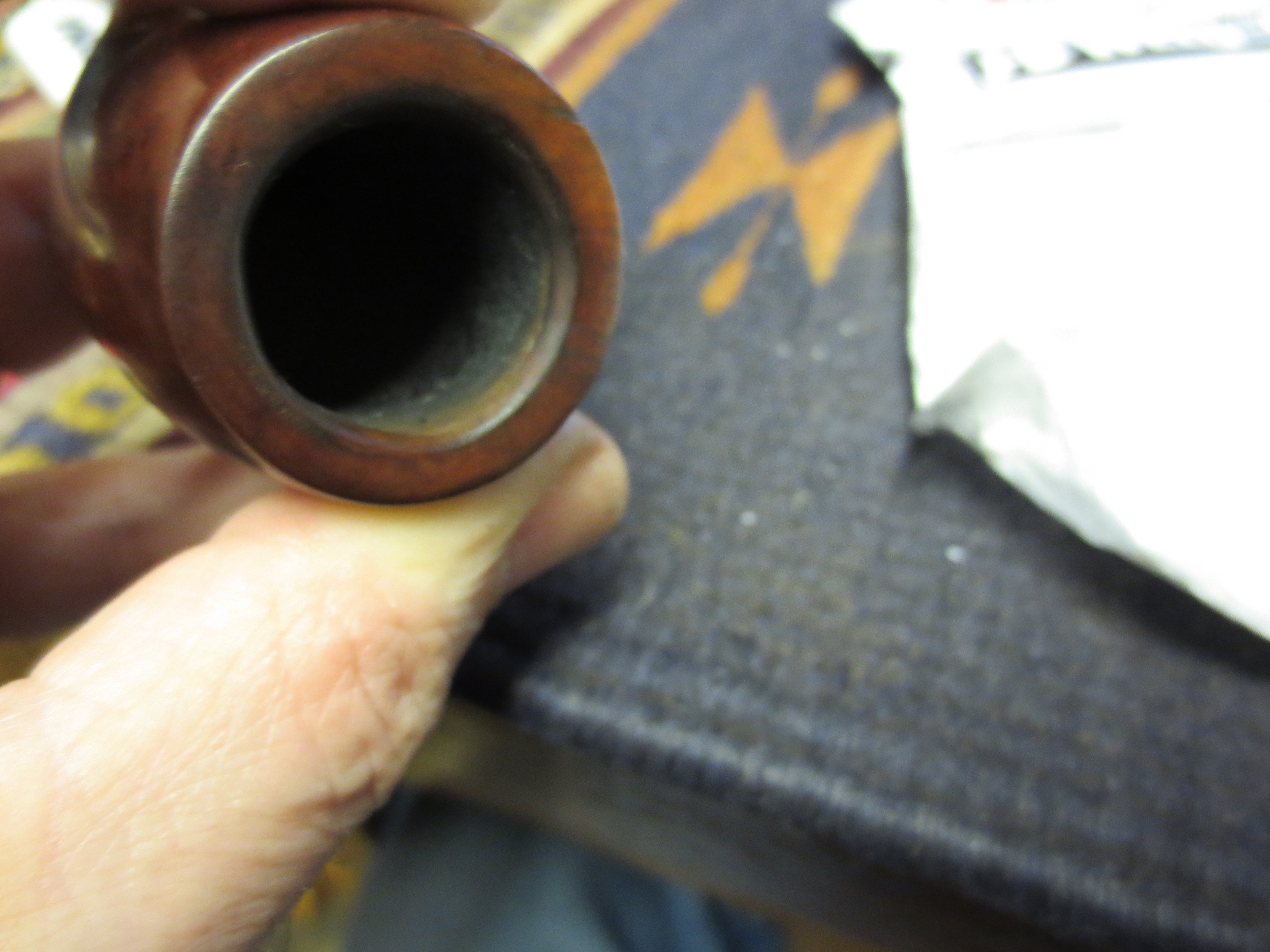
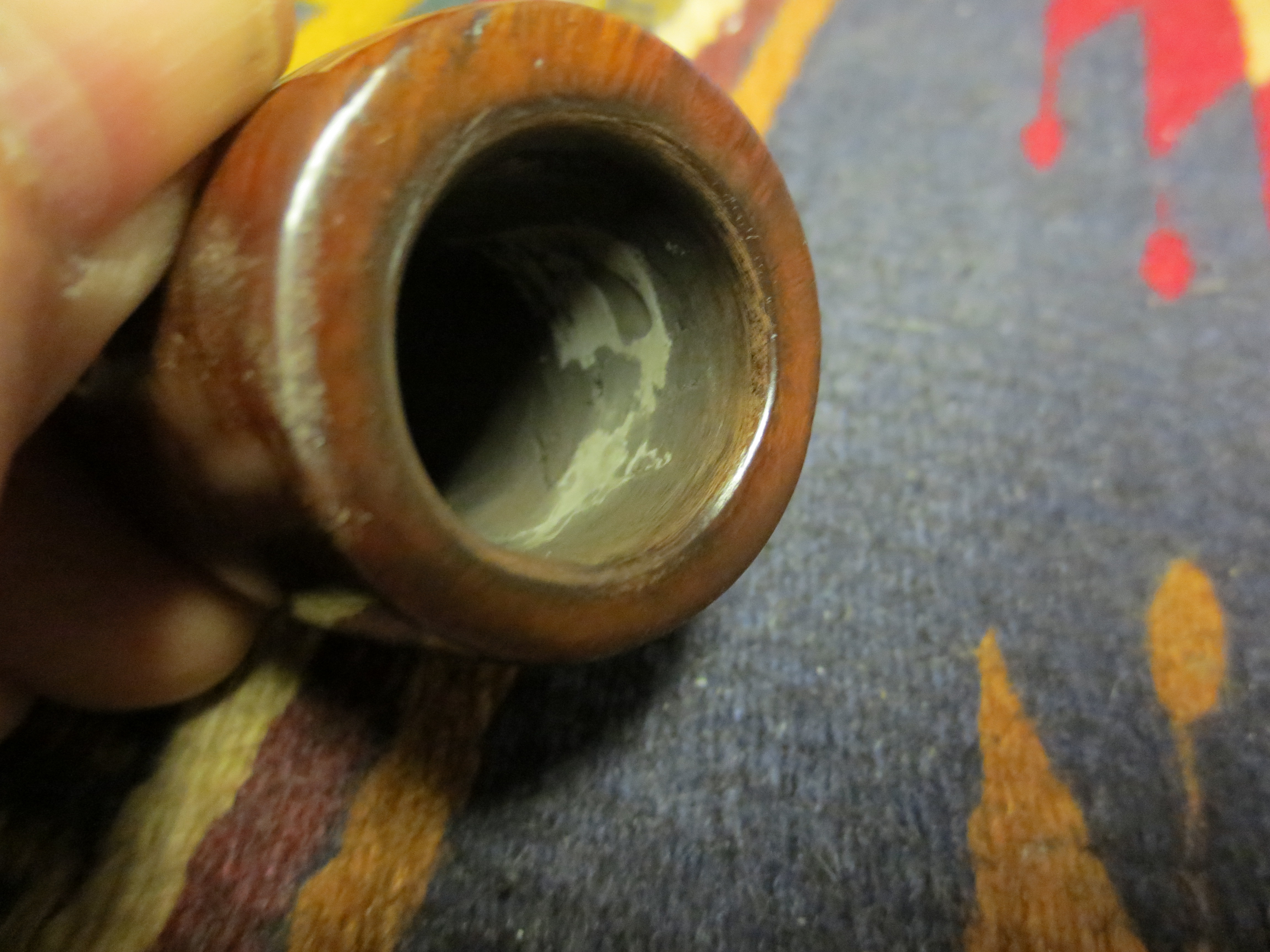
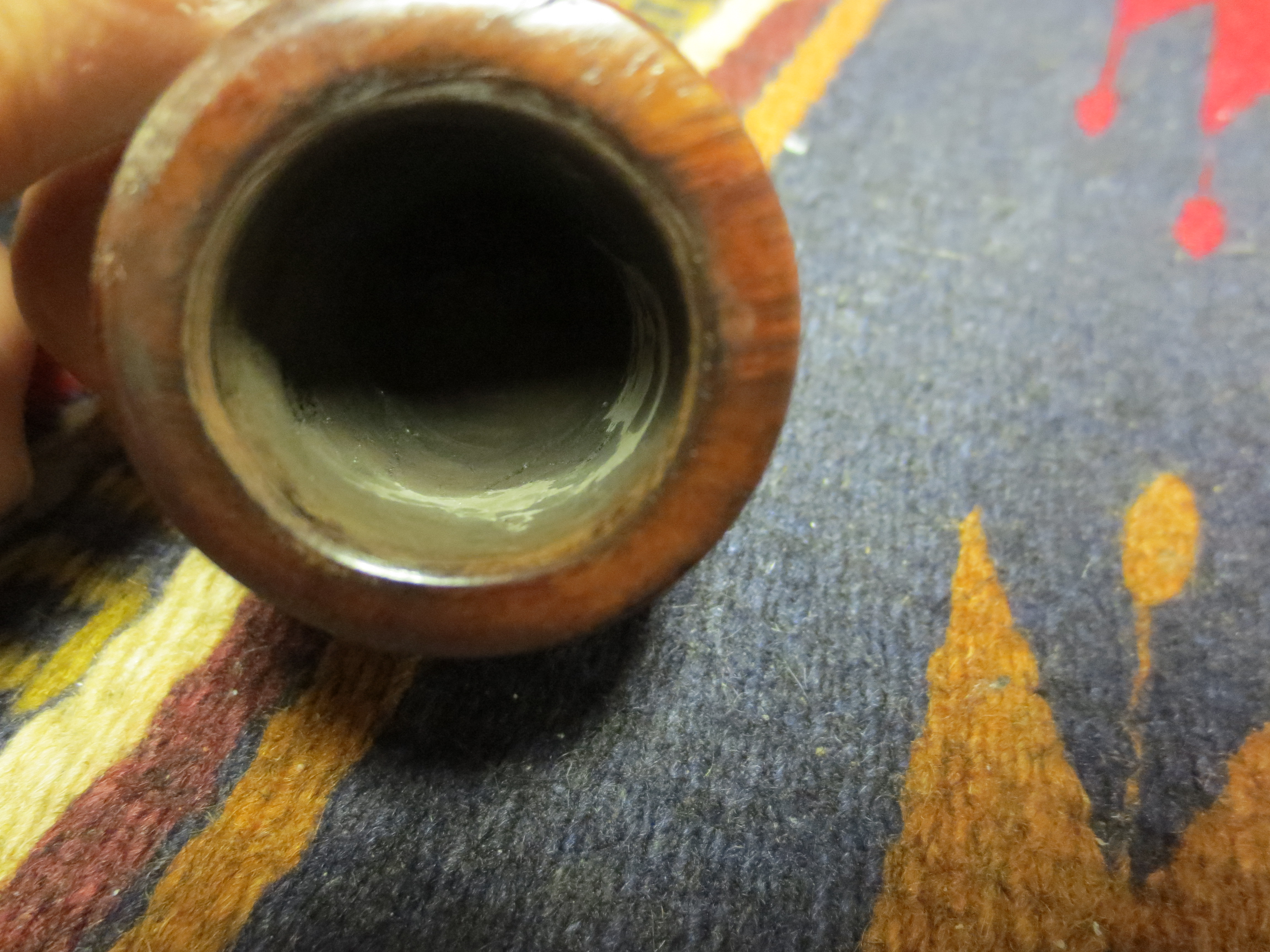
After the stain had dried it was time to address the inside of the bowl. I sanded it out quickly with a Dremel with a sanding drum attachment. I was careful not to change the shape of the bowl but to merely remove any carbon cake that still remained. I wiped the inside down with Everclear and then flamed it to dry out the surface of any moisture. I then mixed a batch of JB Weld. This would be the first step in doing the interior repairs. I packed it into the cracks on the inside of the bowl using the spoon end of the pipe nail. I continue to pack it into the bowl cracks until they were smooth. The four photos below show the mix and the patch in the bowl. It has a drying time of 6 hours to dry to touch and 24 hours to cure.
IMG_1073

IMG_1074

IMG_1075

IMG_1076
While the bowl was drying I worked on the new stem. I sanded down the castings on the side of the stem and polished it with micromesh sanding pads. I used 1500-12,000 grit micromesh pads on the stem. I pictured three photos below to show the process.
IMG_1077

IMG_1078

IMG_1079
The next series of eight photos show the patch after it had dried. I also reapplied the JB Weld after the initial 12 hours so that it filled in the places where it had shrunk as it dried. The patch dried a fine grey coloured. I sanded it down until it was only in the cracks themselves and not in the clean briar. I wanted to give the briar as much absorption area as possible as the JB Weld does not absorb moisture at all. It dries to a neutral, hard metallic material that has no taste.
IMG_1080

IMG_1081

IMG_1082

IMG_1083

IMG_1084

IMG_1085

IMG_1086

IMG_1087
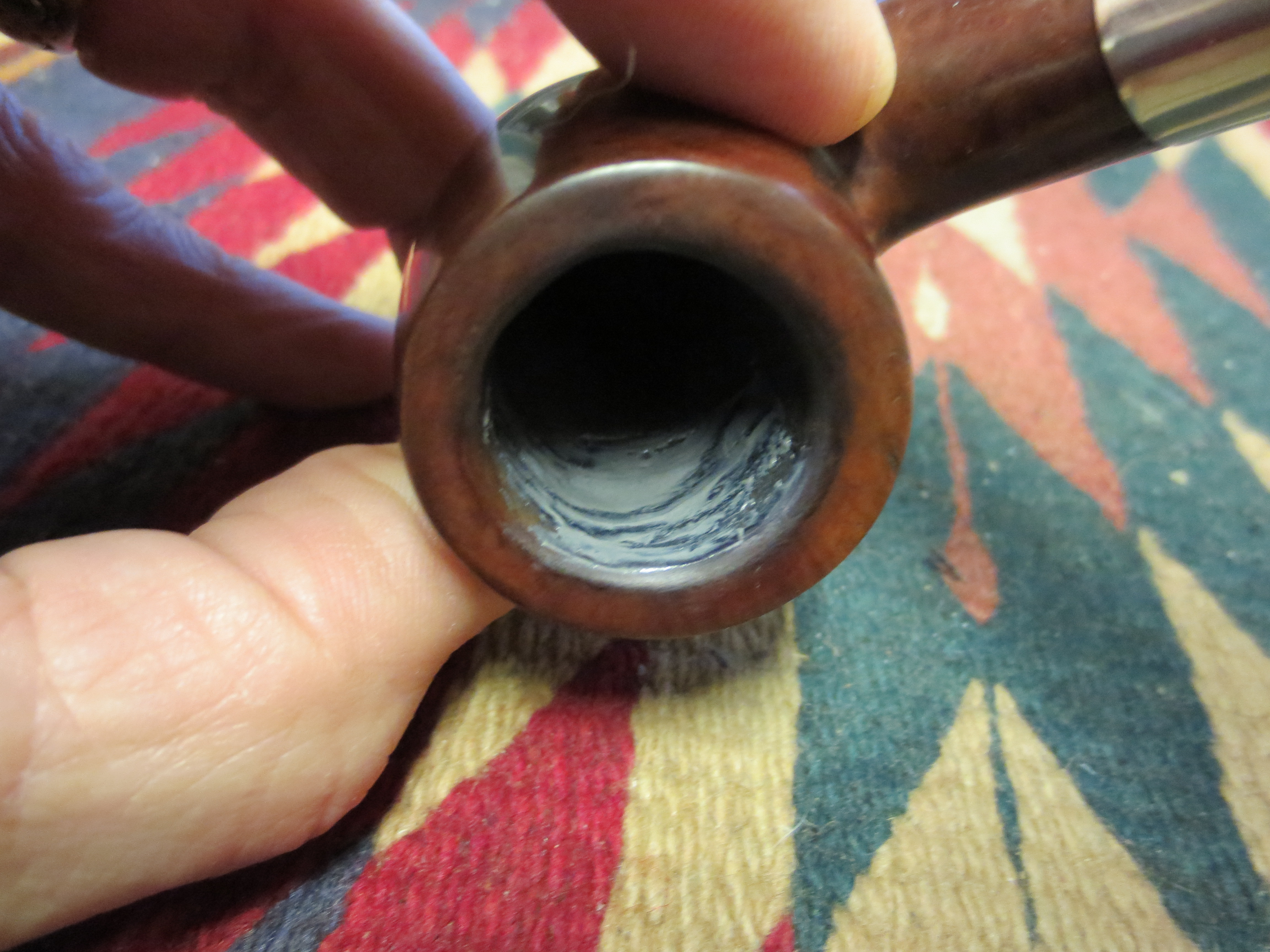
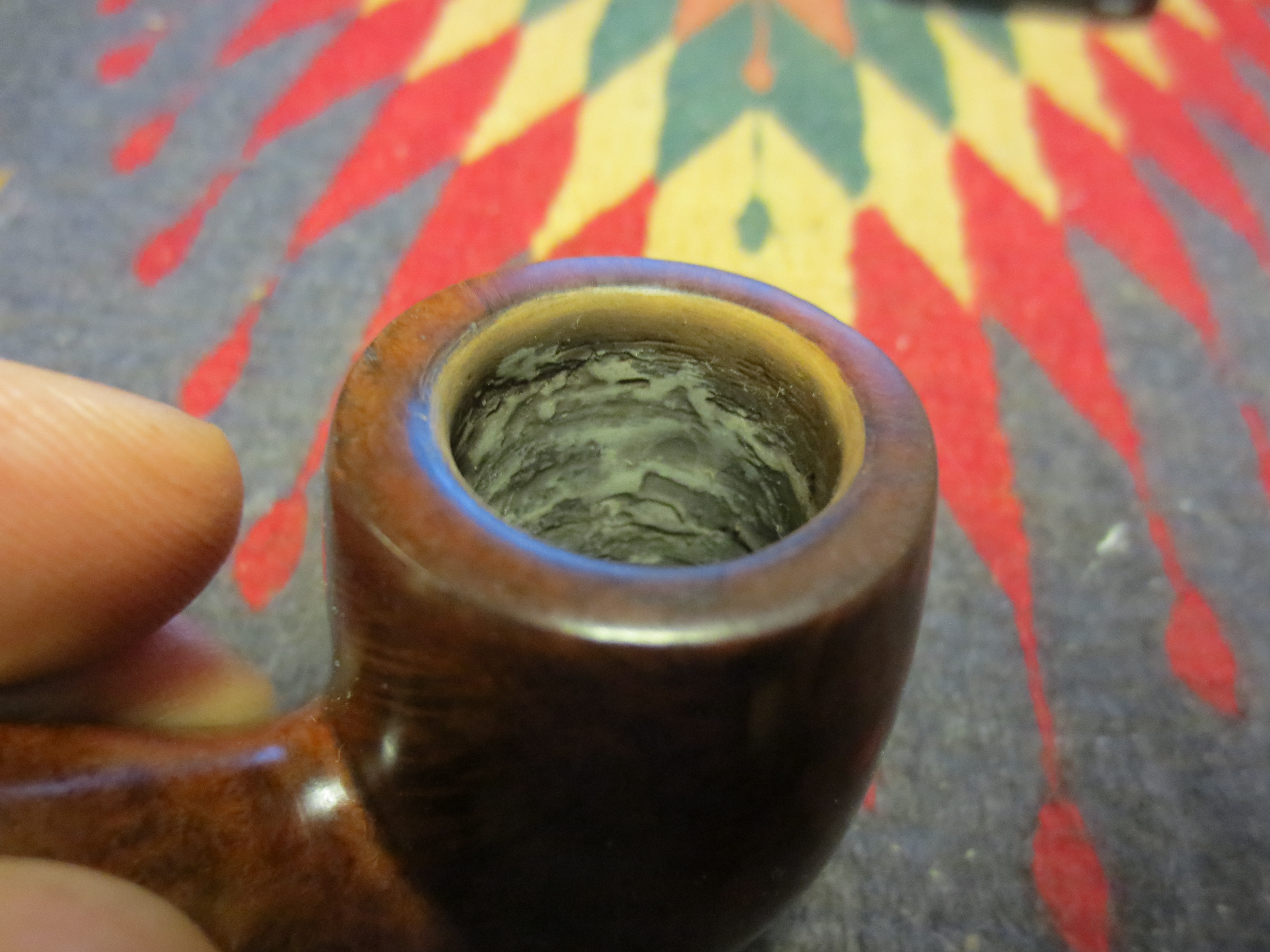
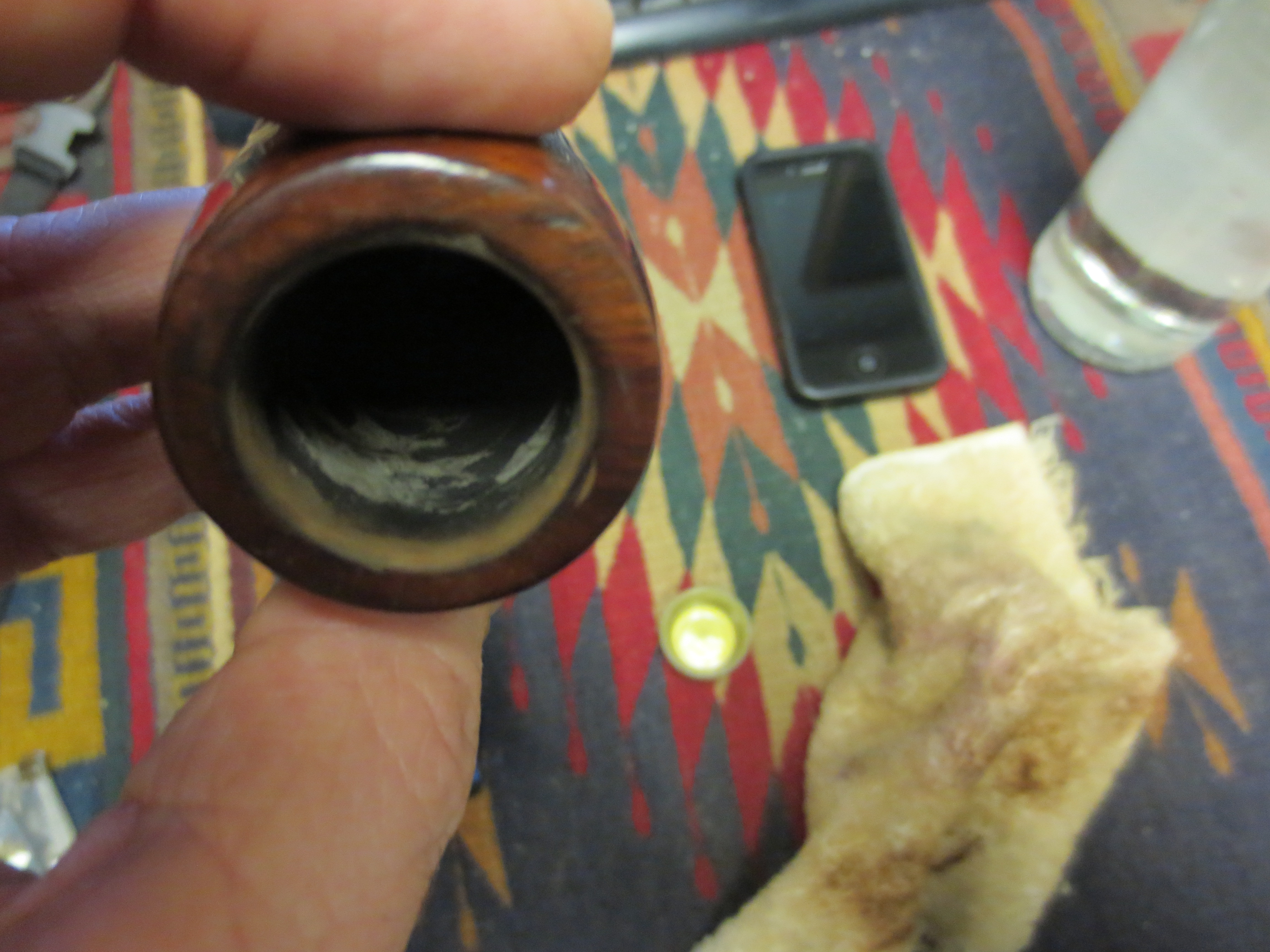
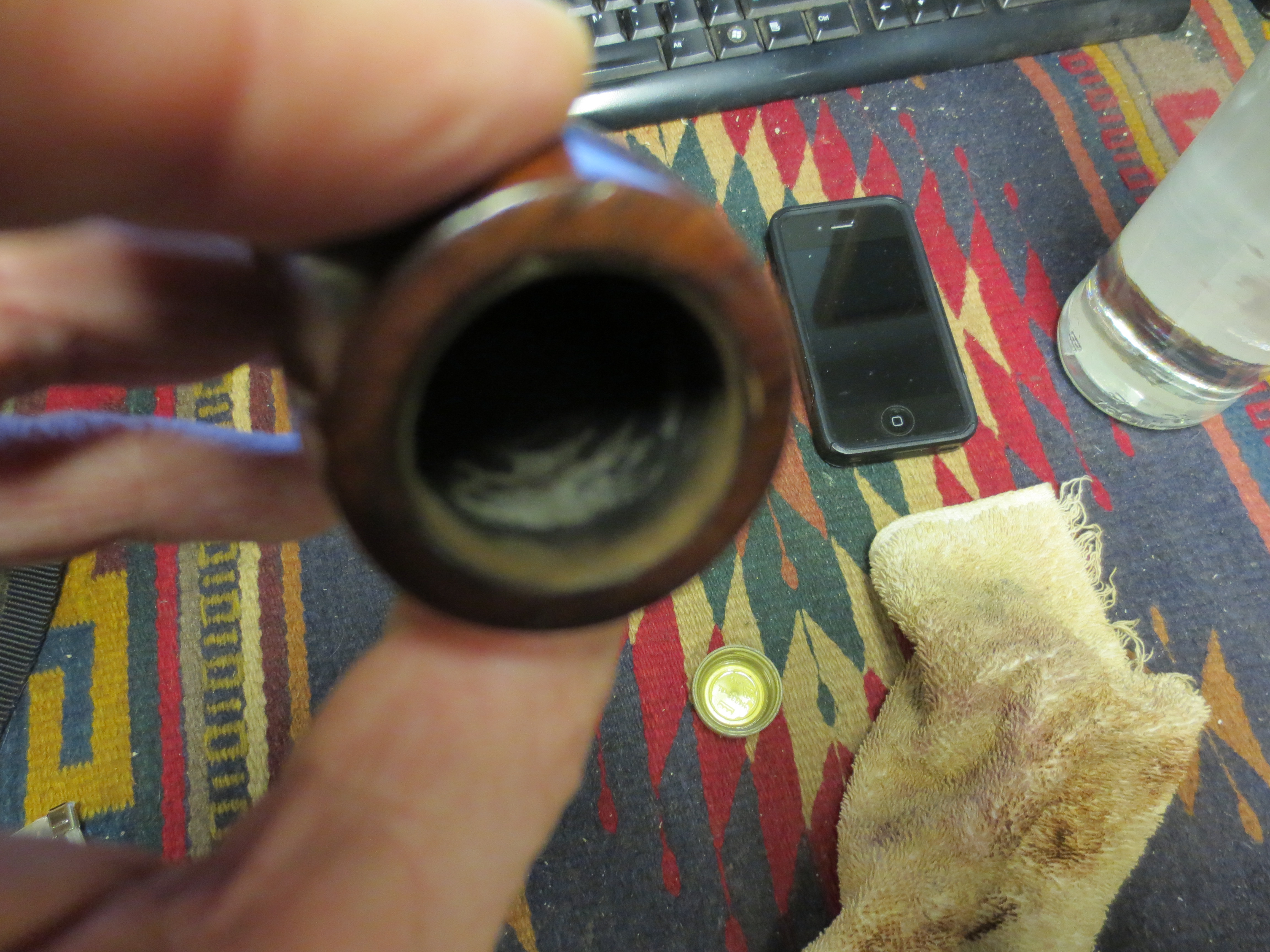
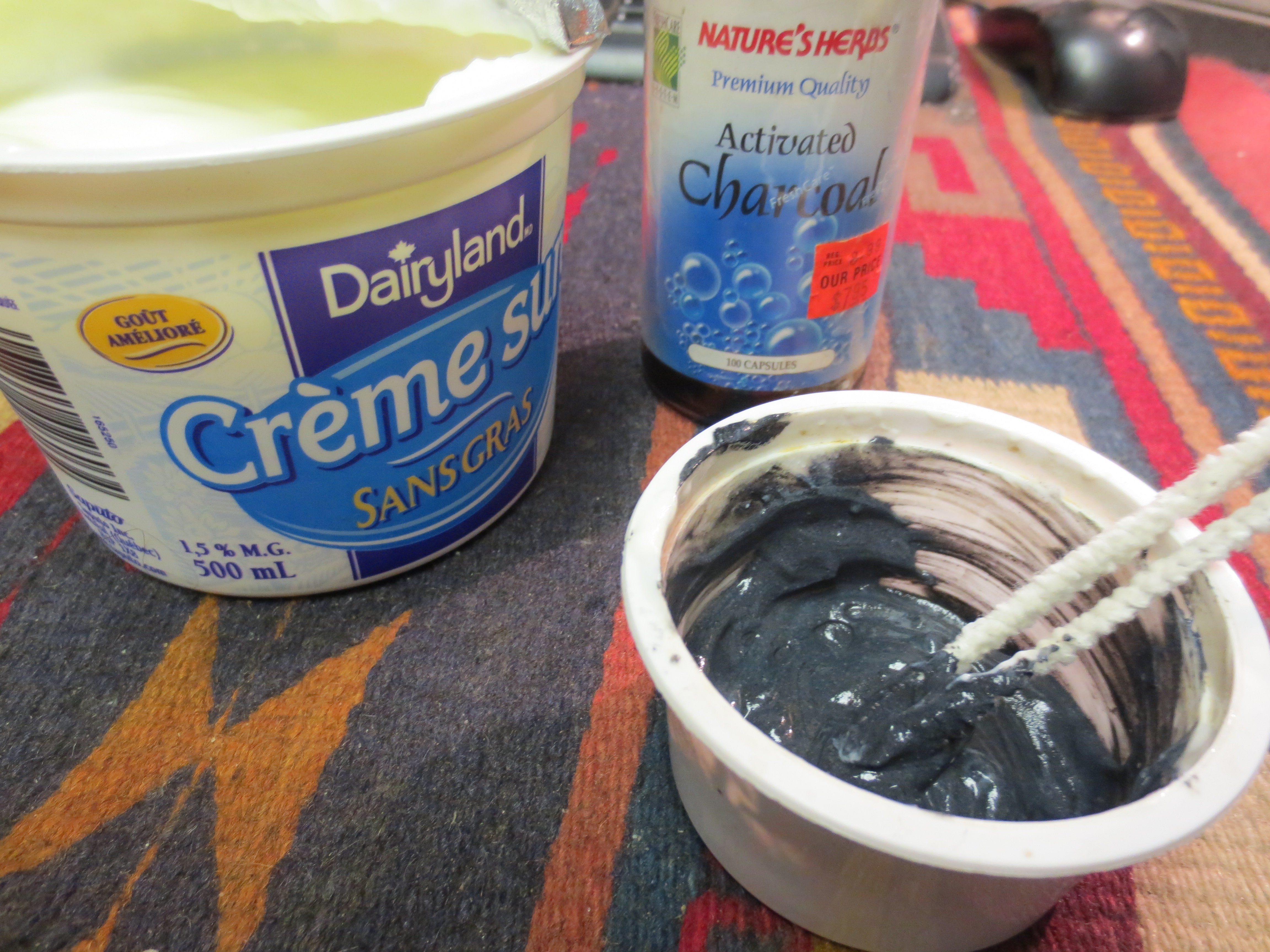
Once the JB Weld was cleaned up and reduced to only filling the cracks it was time for the second step of the bowl interior renewal. I mixed a batch of bowl coating composed of activated charcoal powder and sour cream. I stirred the batch until it was a consistent blue/black grey colour. I applied it to the entire bowl from top to bottom with a folded pipe cleaner. Once it dries it is a solid black colour and neutral in taste. It gives the bowl an additional layer of protection until the cake builds up. The next three photos show the mix and the application in the bowl.
IMG_1105

IMG_1107

IMG_1108
With that done, both the inside and the outside cracks are repaired and the pipe is back in service. I gave the entire pipe a final buff with White Diamond and then applied multiple coats of carnauba wax for protection. The final photos below give you an idea of how the pipe looks today. It is still curing from the bowl coating but I will load it and smoke it once that has cured. The finish of the two stains worked well to blend in the repairs but not hide them. The surface is smooth and the open cracks have been repaired. Now the ongoing test begins. Will the patches hold up or will the new heat from the fired tobacco open them a second time? Time will tell but it is worth the experiment in my opinion.
IMG_1089

IMG_1090

IMG_1091

IMG_1092

IMG_1093

IMG_1094

Rejuvenating a Heibe Goldpoint Billiard


Blog by Steve Laug

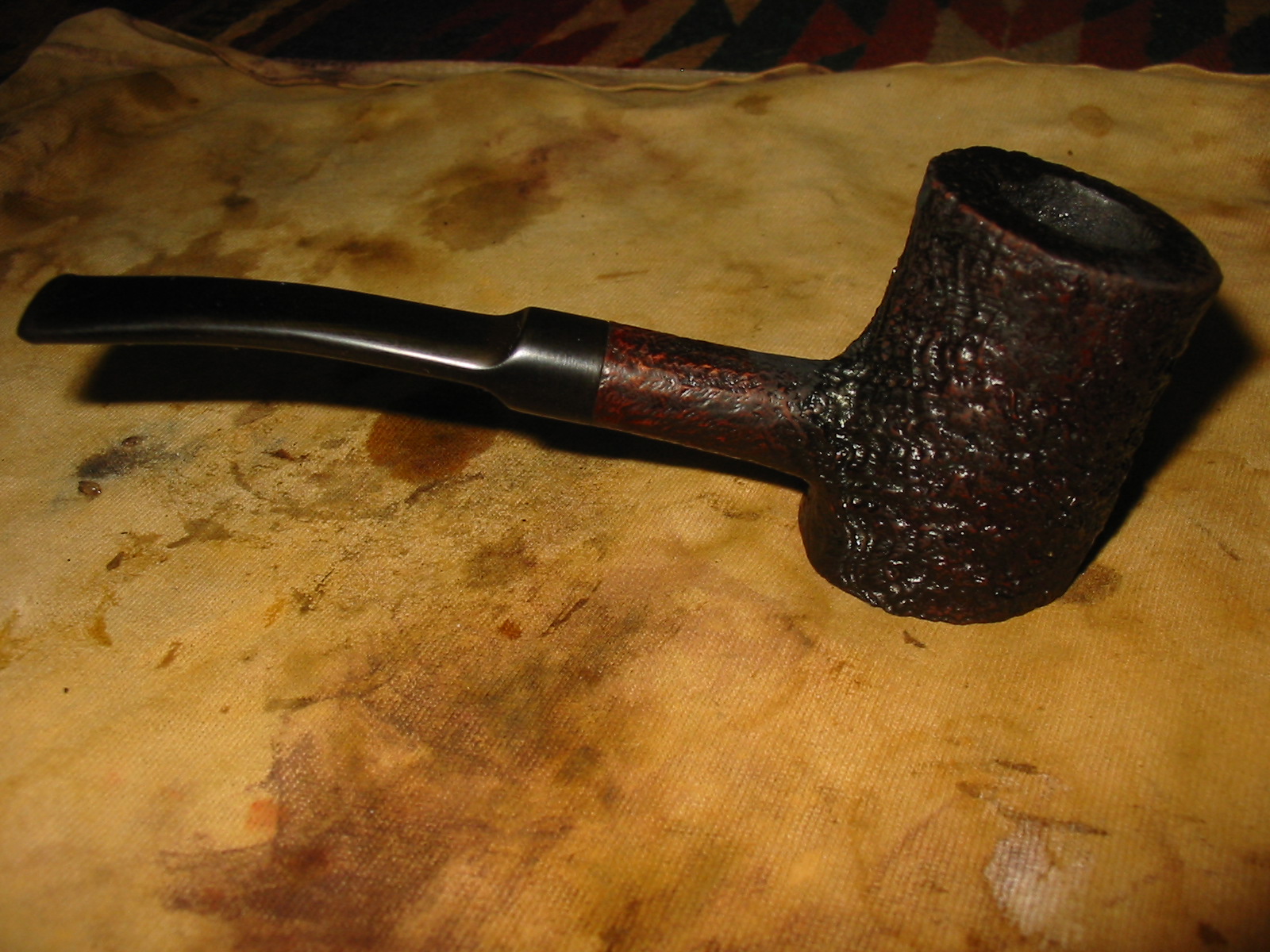
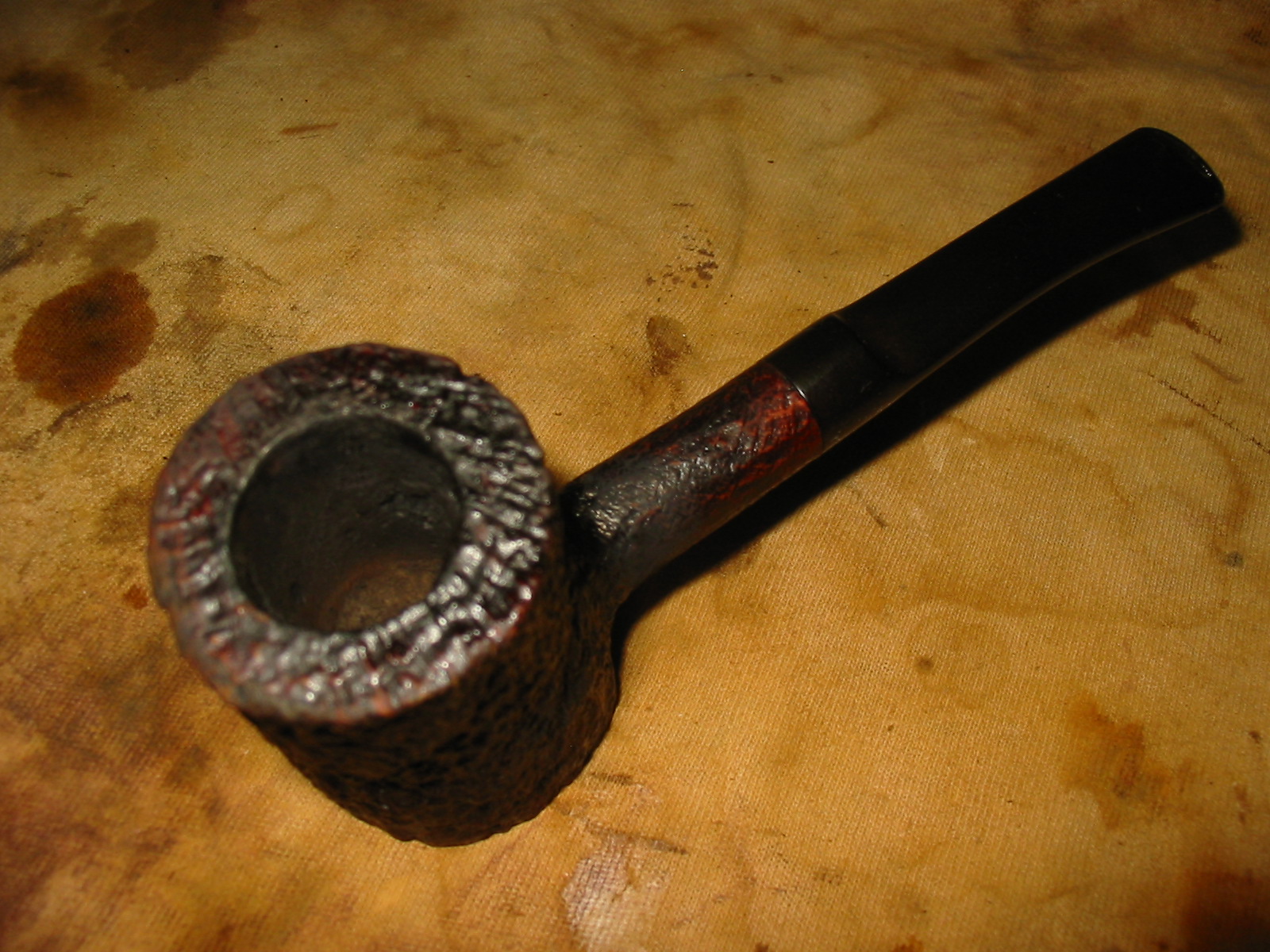
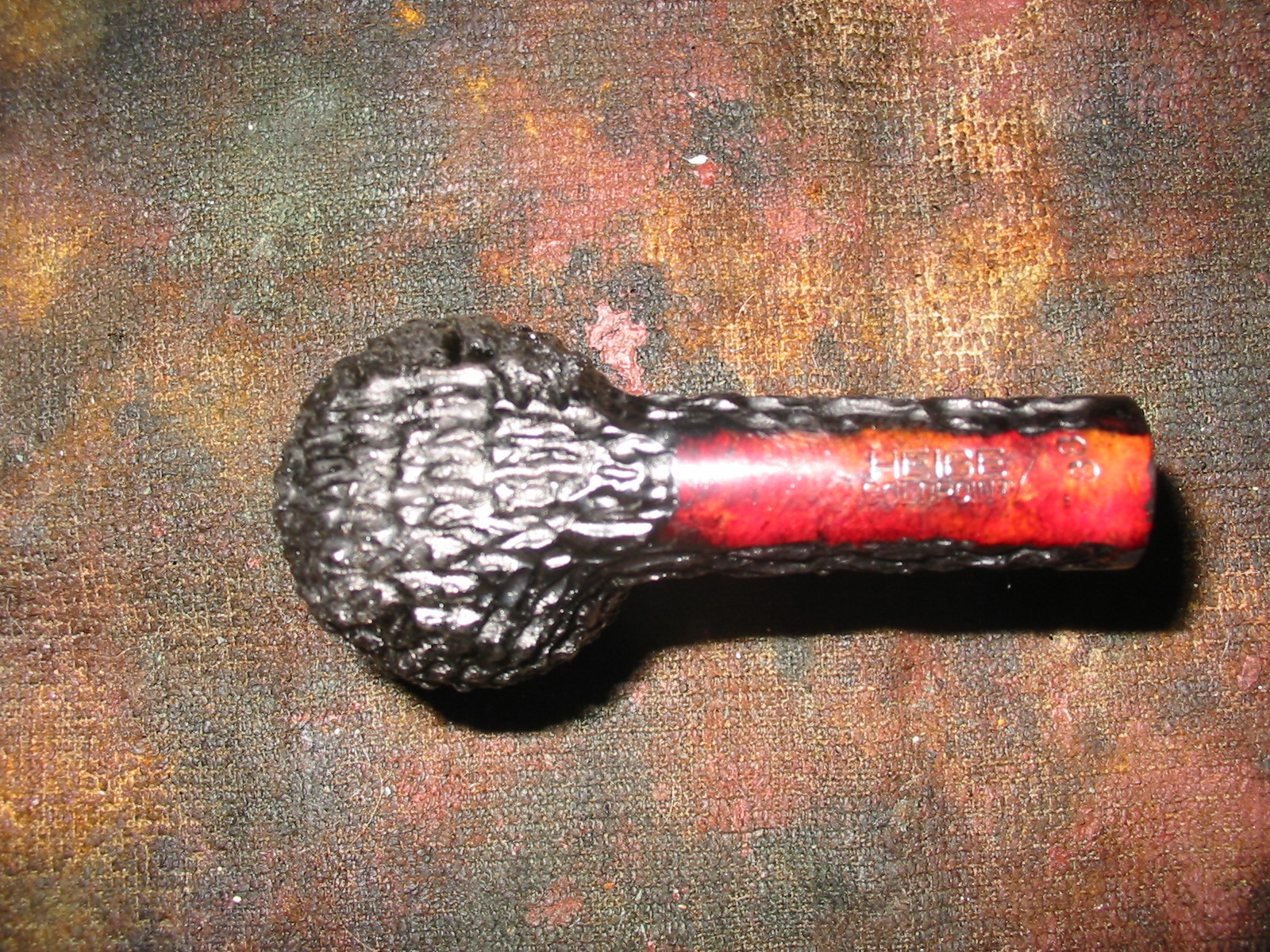
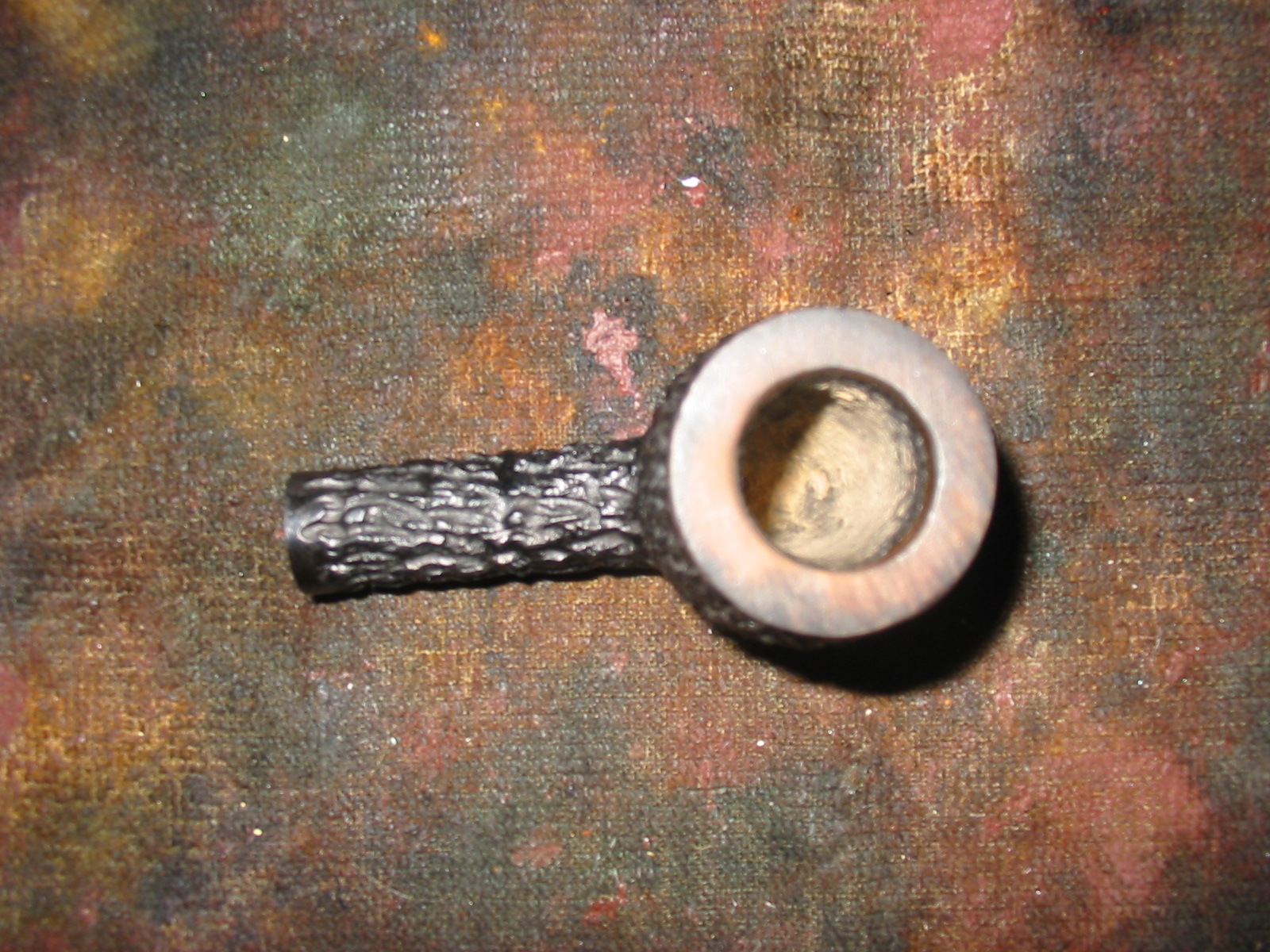
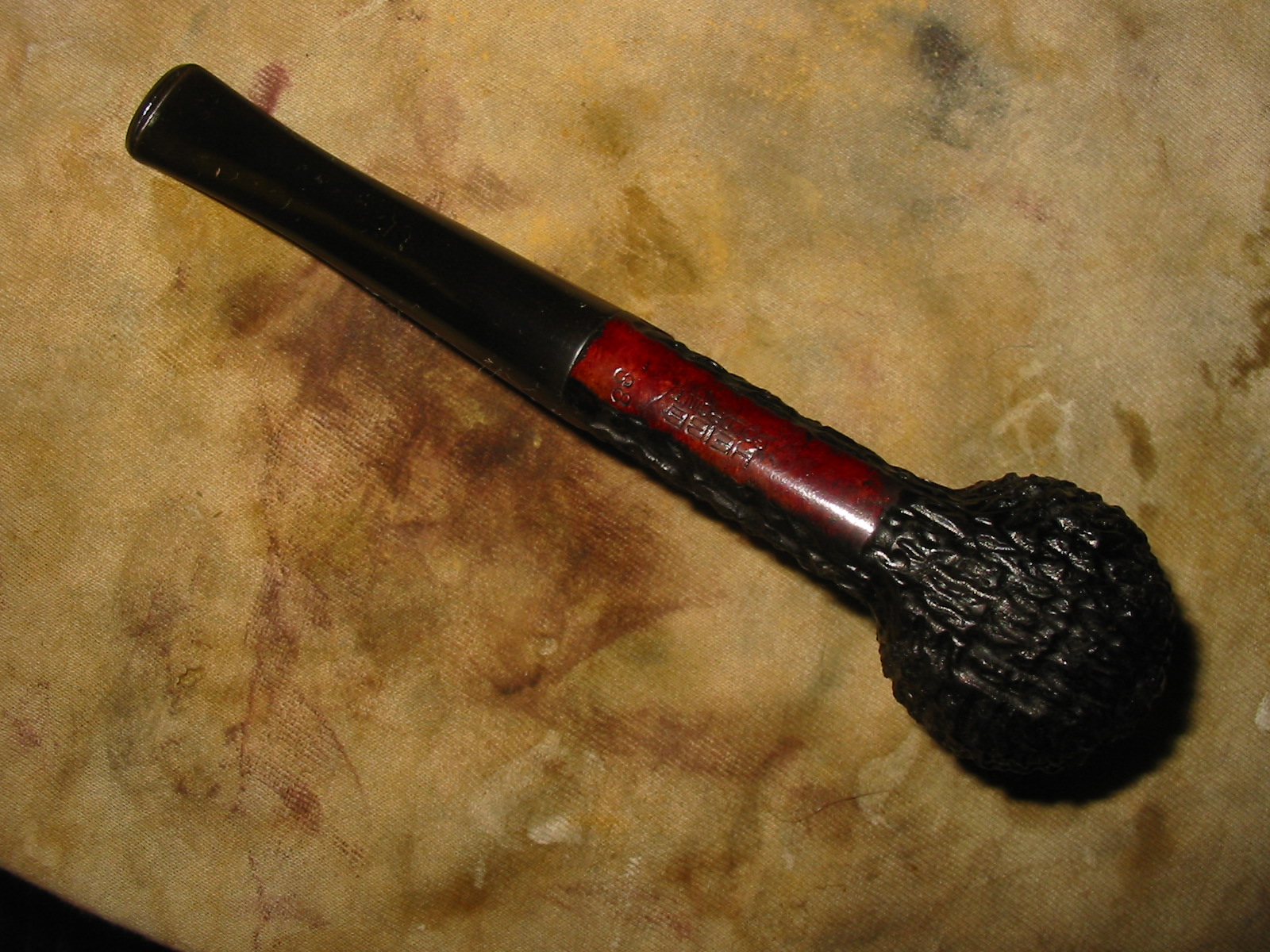
Heibe is a German brand of pipe made by pipe maker Erich Heikaus; Bergneustadt, Germany in the 1970’s. The stamping is on the smooth bottom of the shank and it reads HEIBE over Gold Point and to the right of that stamping is stamped 88. I am guessing that is the shape number. It has an ebonite stem with a gold point in the top of it. The point swirls and gives an attractive look to the stem. The stem was oxidized and had some tooth chatter and a tooth mark on the top and underside of the stem. The stem was also loose fitting. The bowl was caked but not evenly and the cake seemed to be very soft. The rim was a bit darkened but no burn marks and the inner rim was still round. The bowl finish is rusticated with a tree bark like rustication and the stain was black. The rim and the smooth spot on the underside of the shank were stained oxblood. The finish was dirty and in spots the stain was missing and the briar was showing through – particularly on the edges of the rim and on the shank near the stem. Some of the high points on the bark rustication were also showing briar through the stain. The original stain was black. The next series of four photos shows the state of the pipe when I started working on it this morning.

ImageImageImageImage

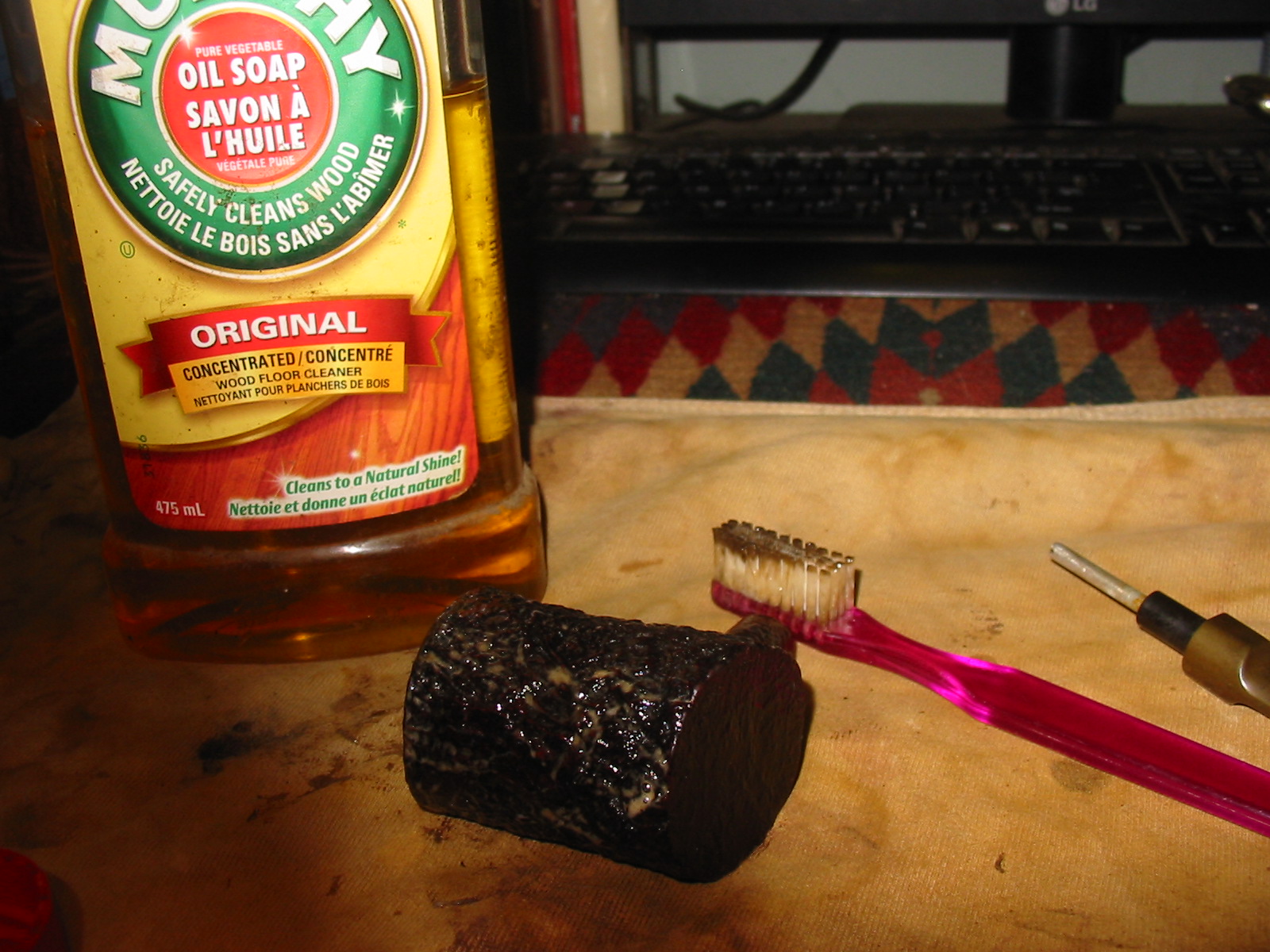
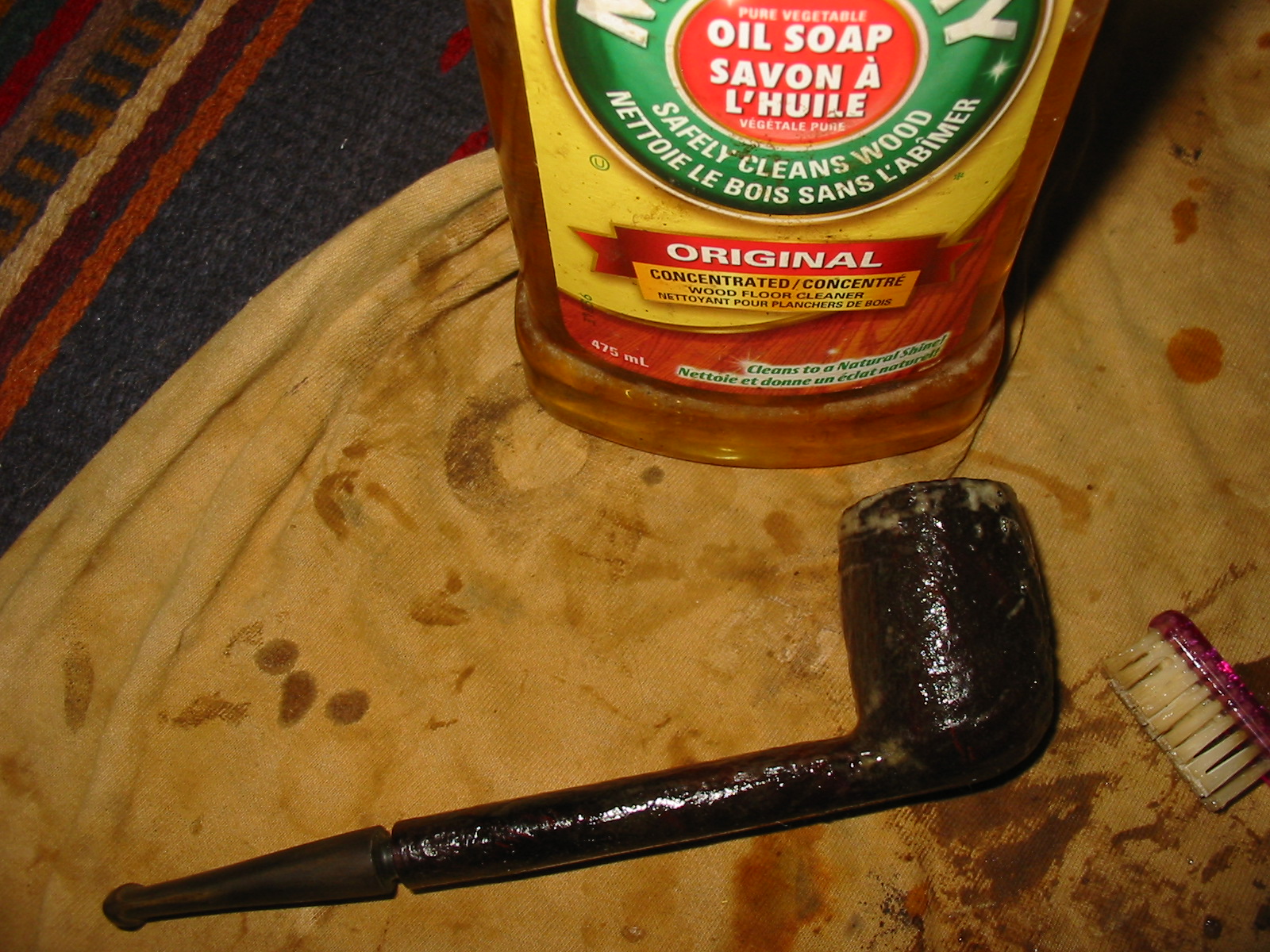
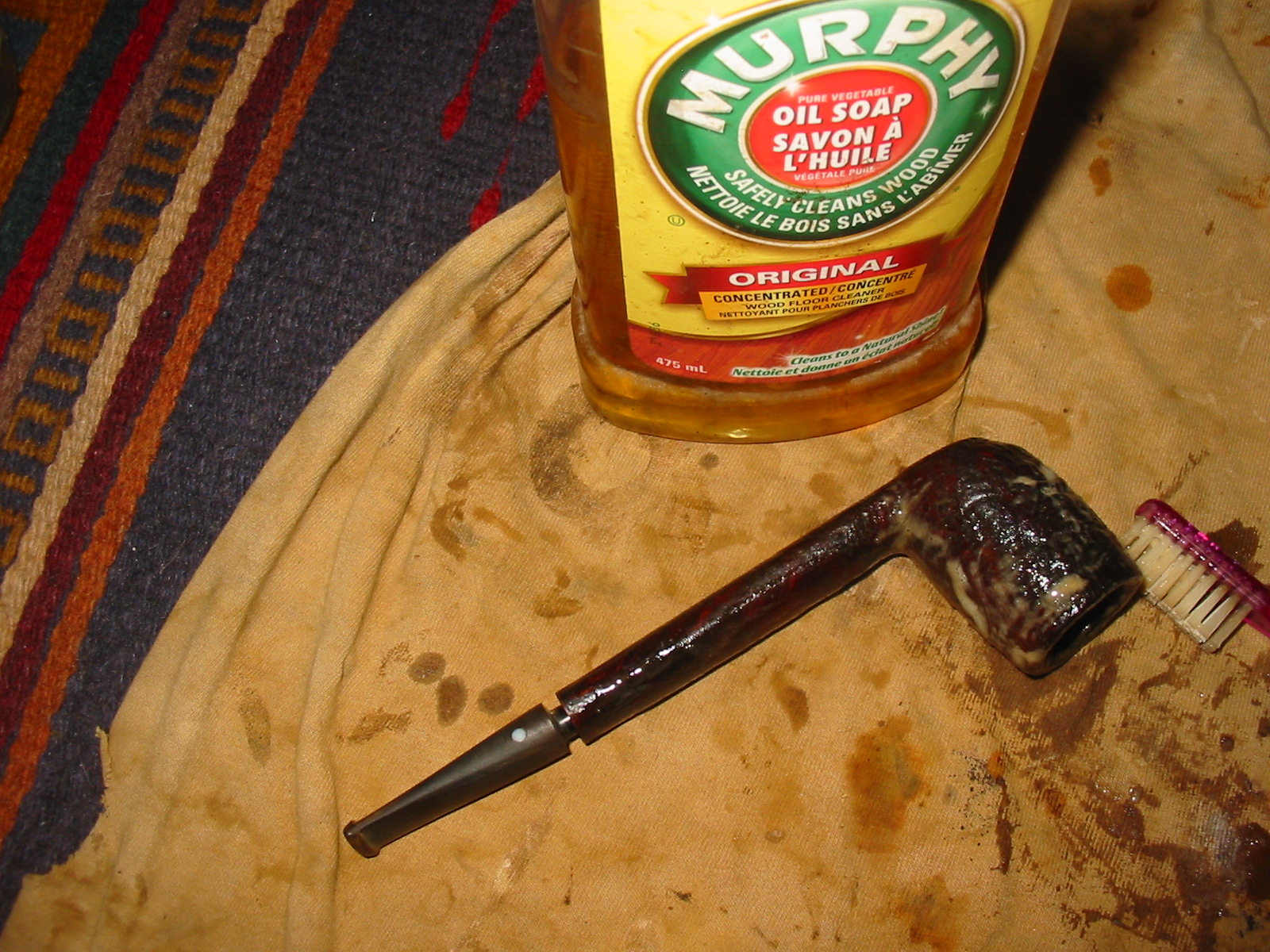
I decided to begin by scrubbing the bowl with Murphy’s Oil Soap and a soft bristle tooth brush that I have used for a long time to scrub deeply into the rustication patterns. Once I scrubbed it thoroughly I rinsed it off under warm water in the sink. I do not leave it under the water long, just enough to scrub off the soap and get it cleaned. I then dry it off with a soft cotton cloth and wipe out any water than got in the bowl with a cotton swab. The first picture below shows the pipe scrubbed and covered with the oil soap. The tooth brush in the photos is the one I use to scrub the bowl. The next four photos show the bowl after I have rinsed it with warm water and dried it off. You can see where removing the grime and dirt from the bowl left the spots very visible that needed to be restained. The rim also cleaned up nicely.

ImageImageImageImageImage

After I thoroughly dried it off it was time to stain the bowl. I did a bit of research and found some estate Heibe pipes on a German estate pipe selling site. The finish on this one was normal for Heibe’s rustications and it states that it was stained black. With that information I decided to restain it with some black aniline stain. I used the dauber that came with the stain and applied it heavily to the rim and the bowl making sure that it went deeply into the crevices of the bowl and the shank. I would clean off the rim and the shank later and worry about staining them afterwards. I stained the bowl and flamed it with a Bic lighter, then restained and reflamed the bowl. The next series of three photos show the newly stained pipe.

ImageImageImage

Once it was dry I rubbed the stain off the rim and also off the shank smooth portion with a soft cloth and then with some alcohol on a cotton pad. I also buffed the bowl with White Diamond on the buffing wheel. The smooth portion on the shank cleaned up nicely and the finish of the oxblood stained came through well. The rim (fourth photo below) did not fare as well. I wiped it down with acetone and also more isopropyl but in the end I would need to use a soft sanding sponge to remove the black from the edges of the rim.

ImageImageImageImage

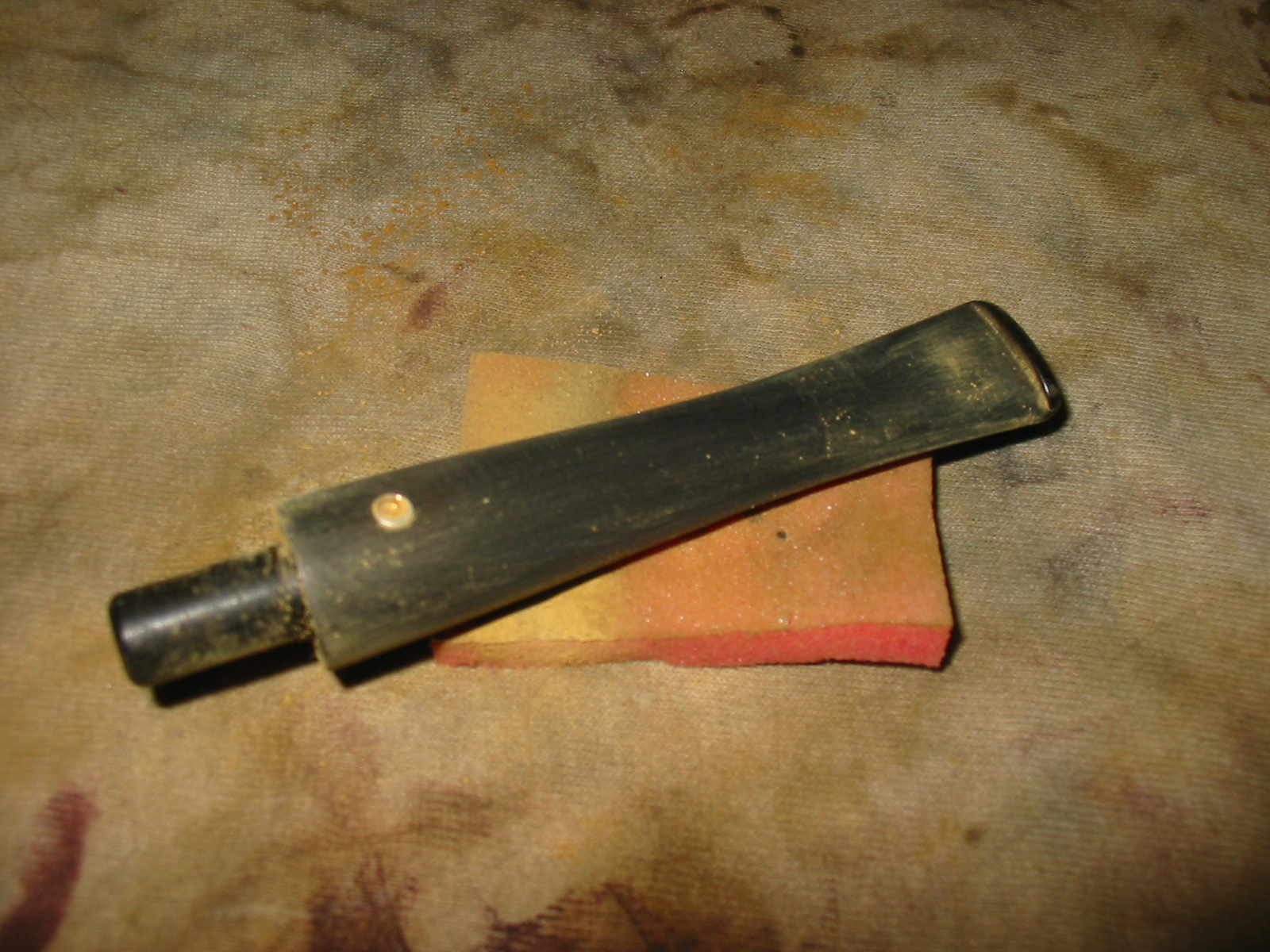
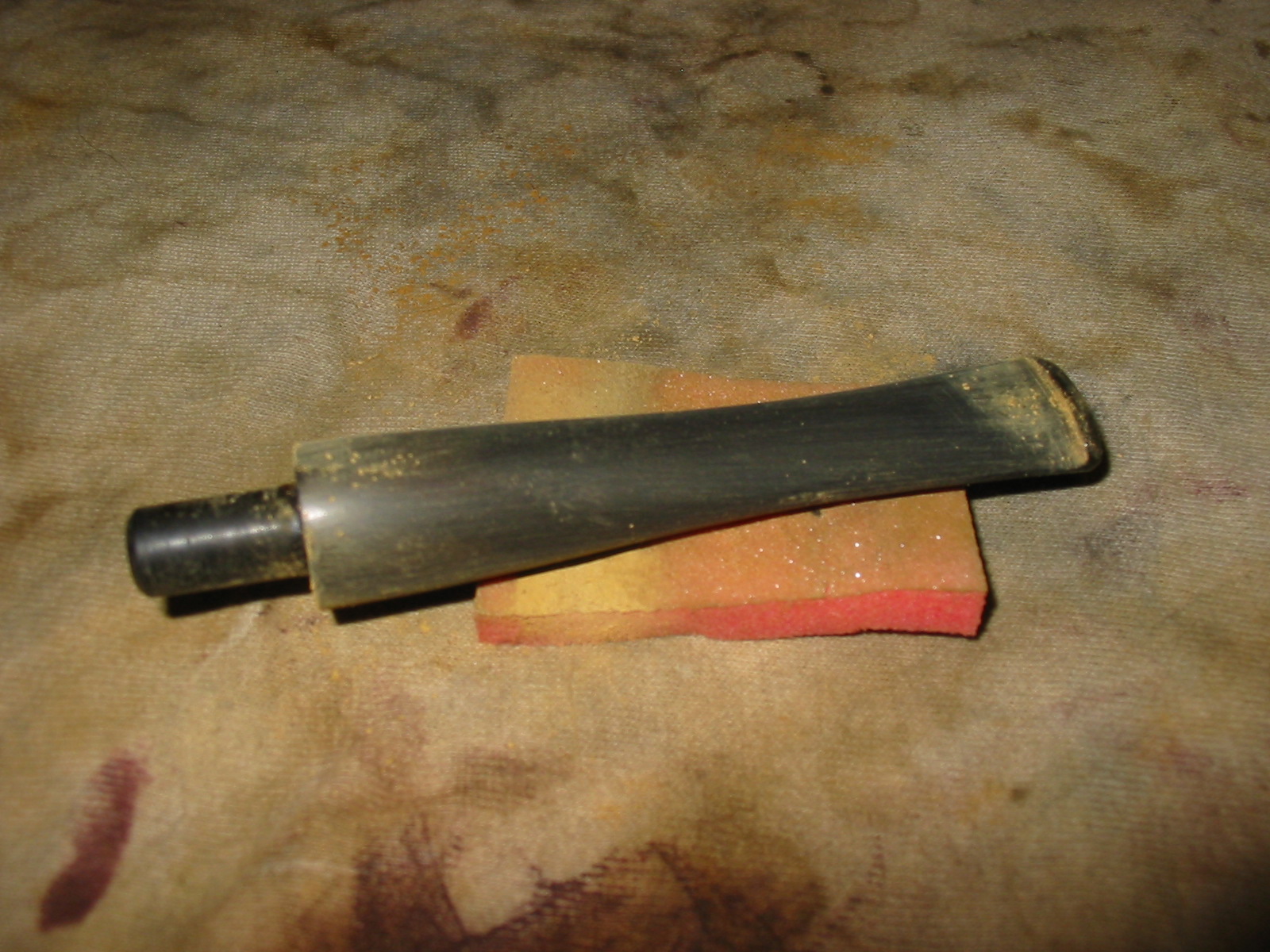
I set the bowl aside to let it dry thoroughly while I worked on the stem. I began by sanding out the tooth marks and the tooth chatter with 320 grit sandpaper until they no longer showed. I then used my medium grit sanding sponge to sand the entire stem and work on removing the oxidation. The first two photos below show the sanding sponge and the work that it did in removing the oxidation. The next two photos below show the stem after I wiped it down from the sanding with the sanding sponge.

ImageImageImageImage

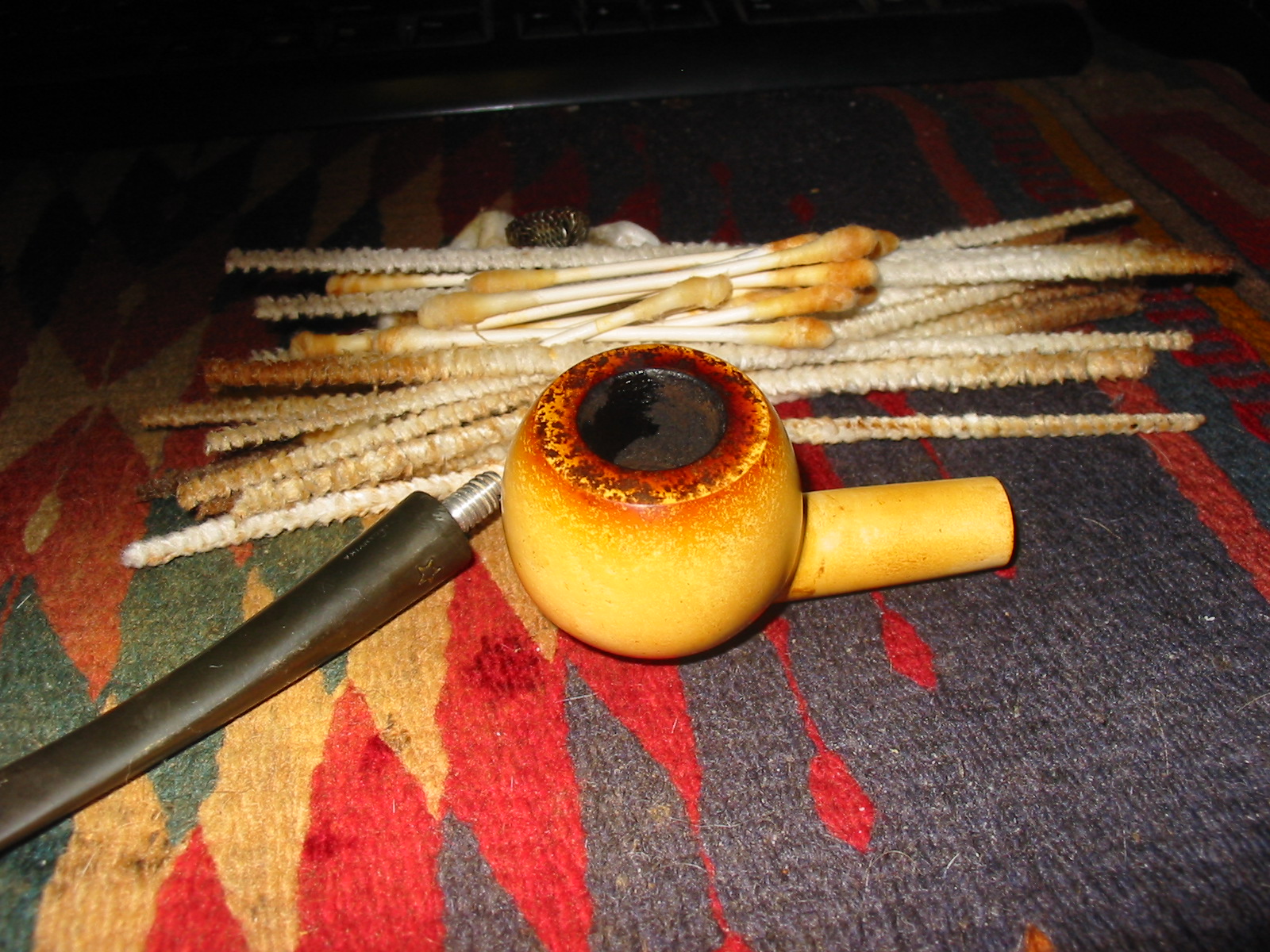
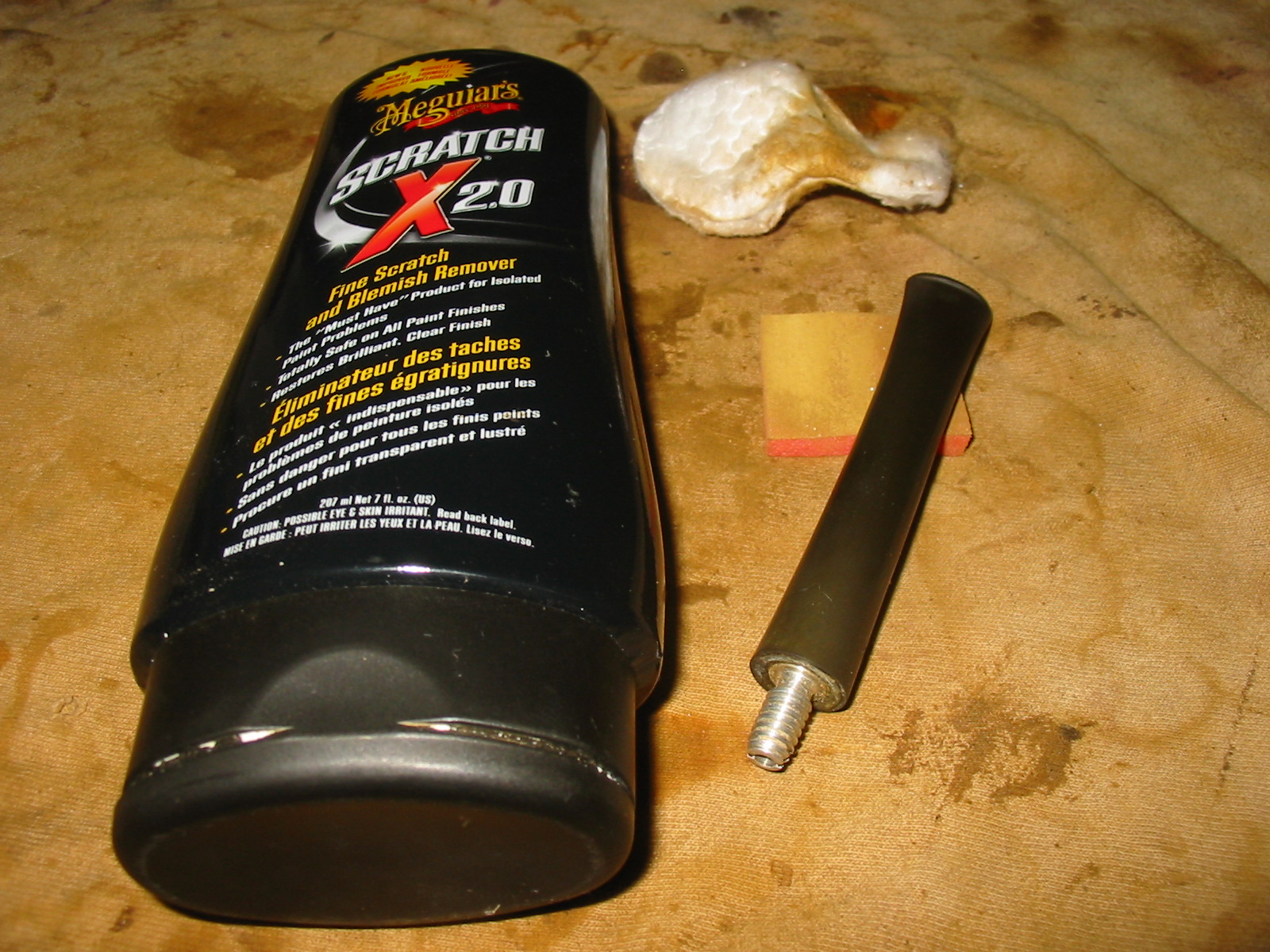
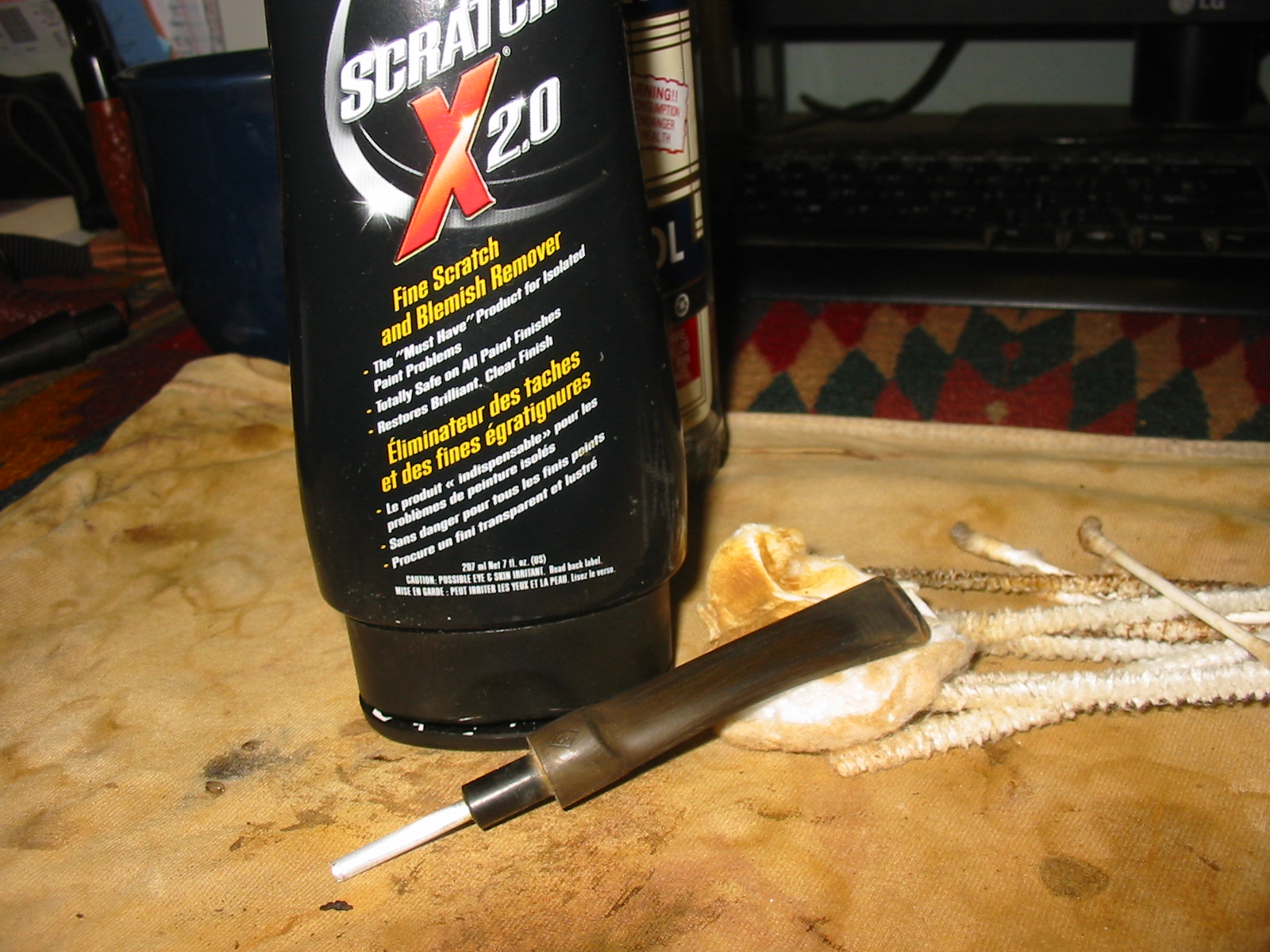
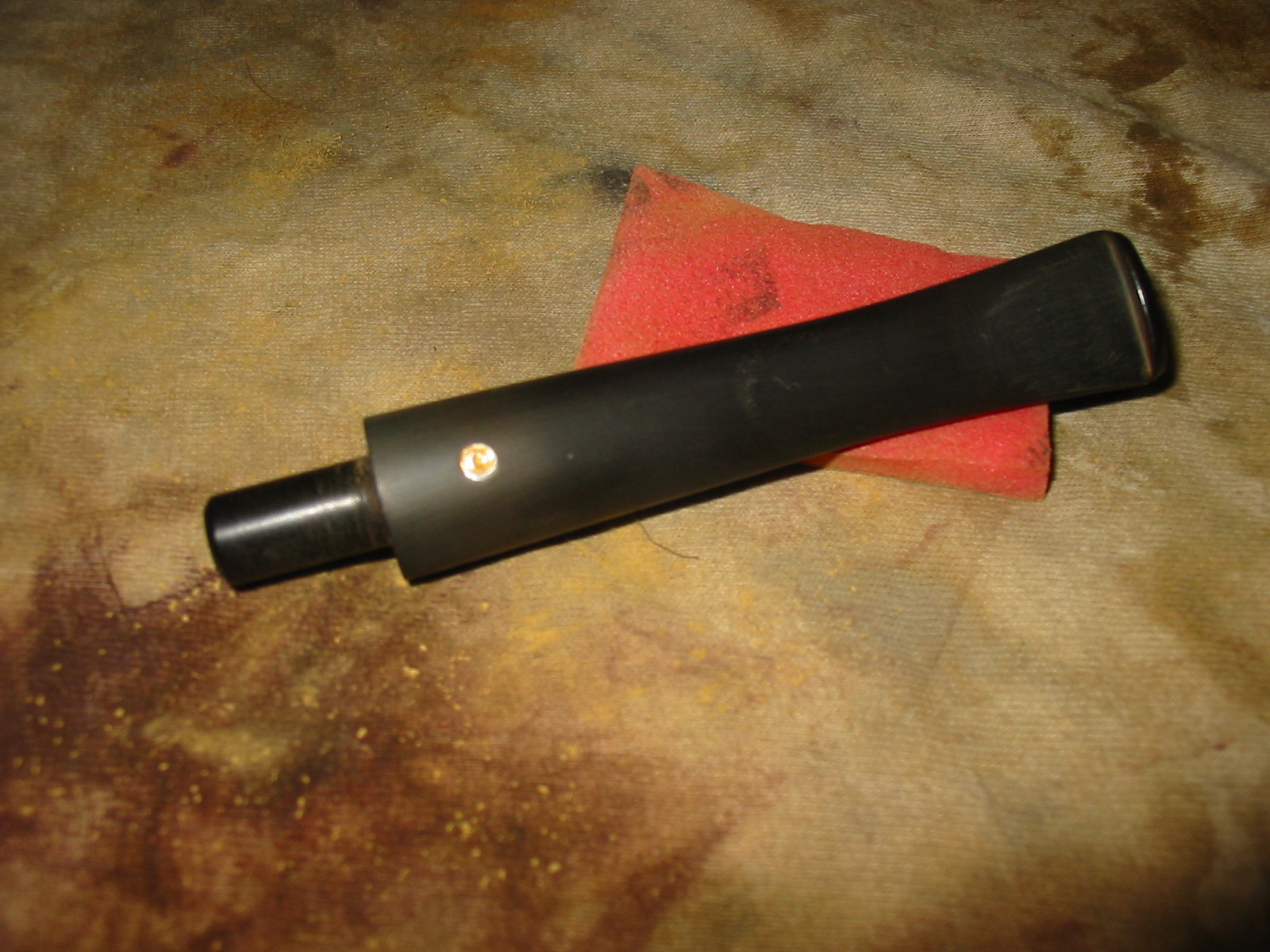
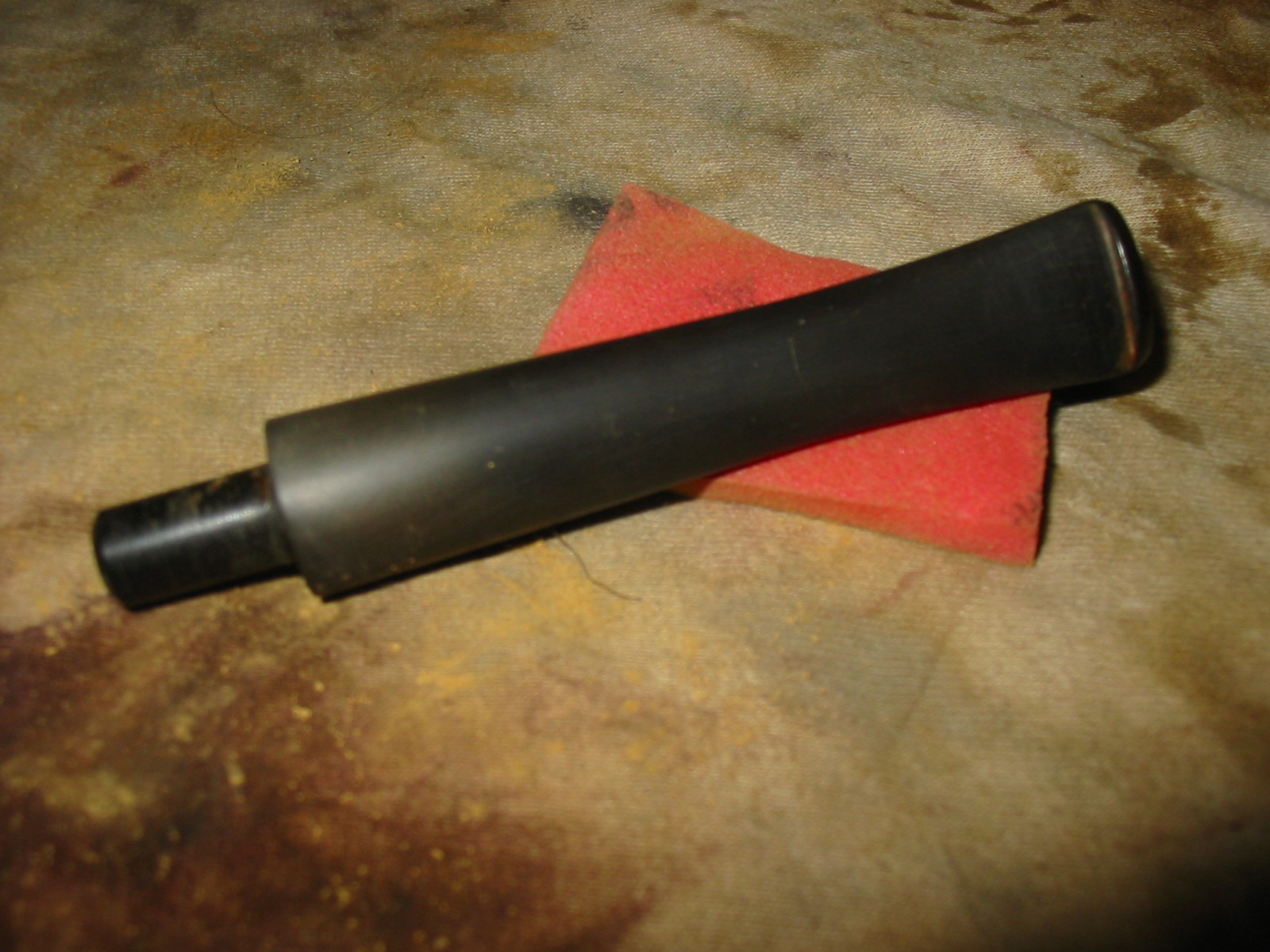
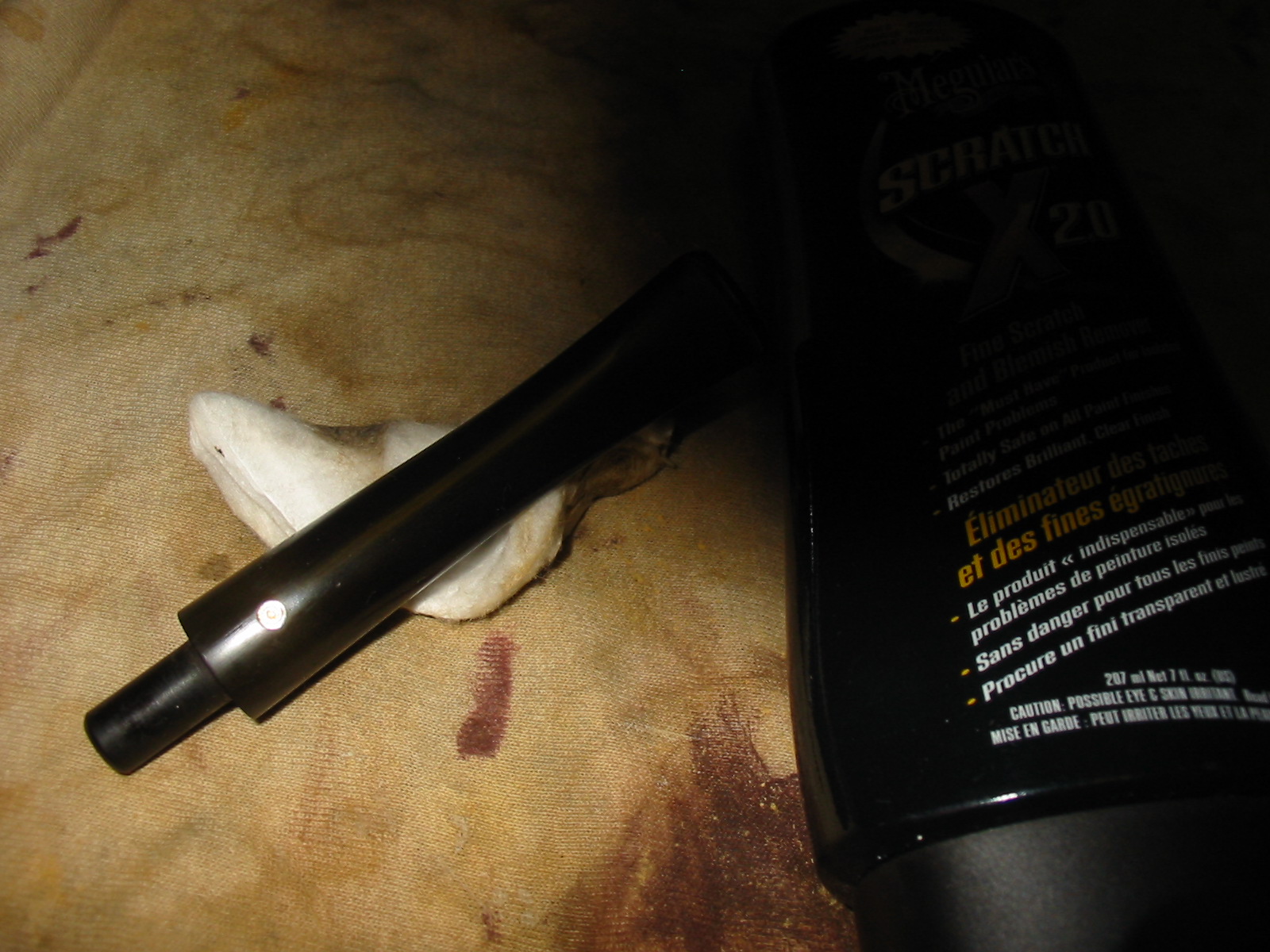
I then used some Maguiar’s Scratch X2.0 and scrubbed the stem with my finger as I applied it and then rubbed it off with a cotton pad. The point was that I wanted to remove more of the scratches and also polish off some of the oxidation. The next two photos show the stem after polishing (forgive the first photo – somehow it blackened on the right edge but you can still see the polish that is happening around the logo).

ImageImage

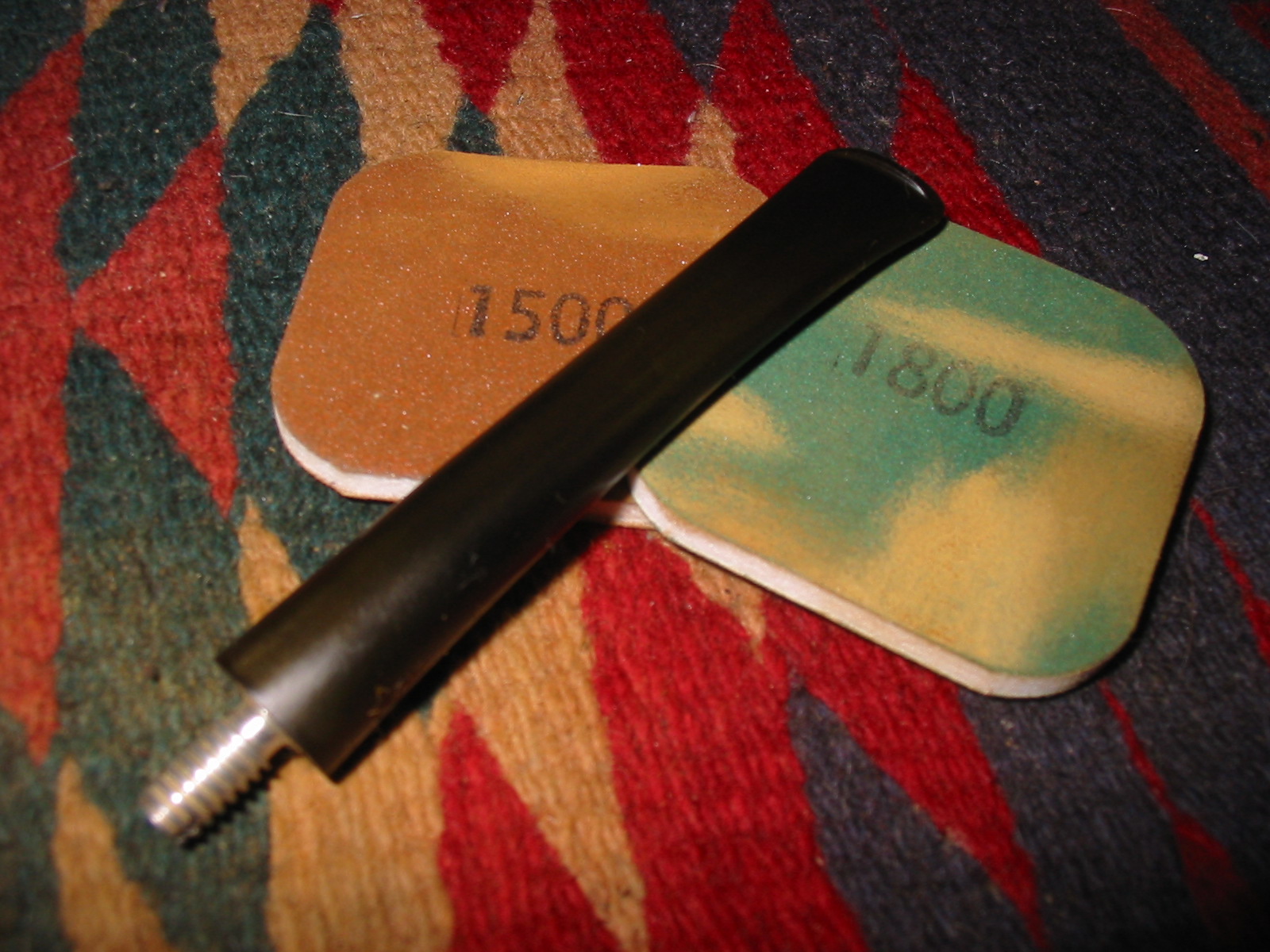
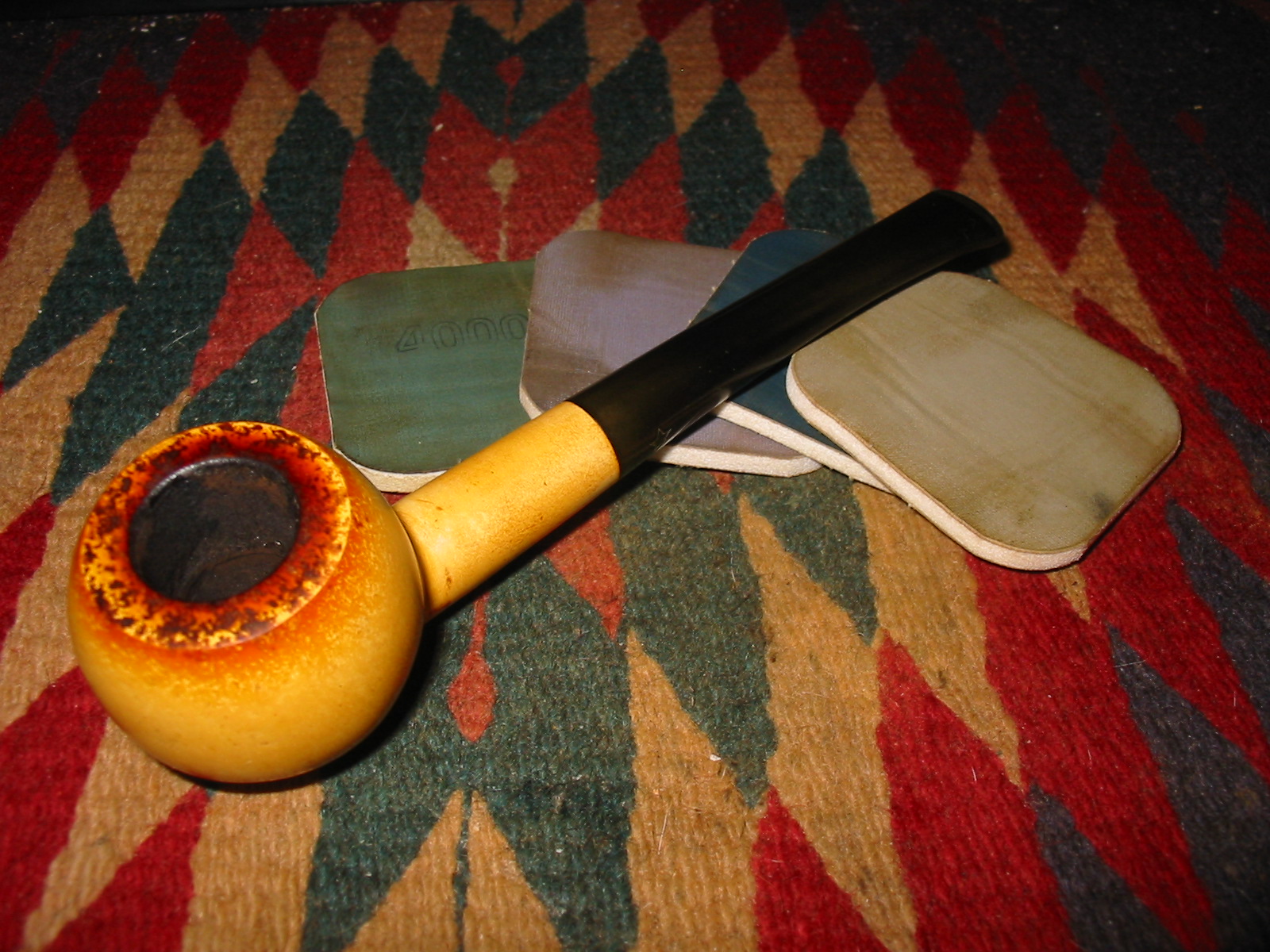
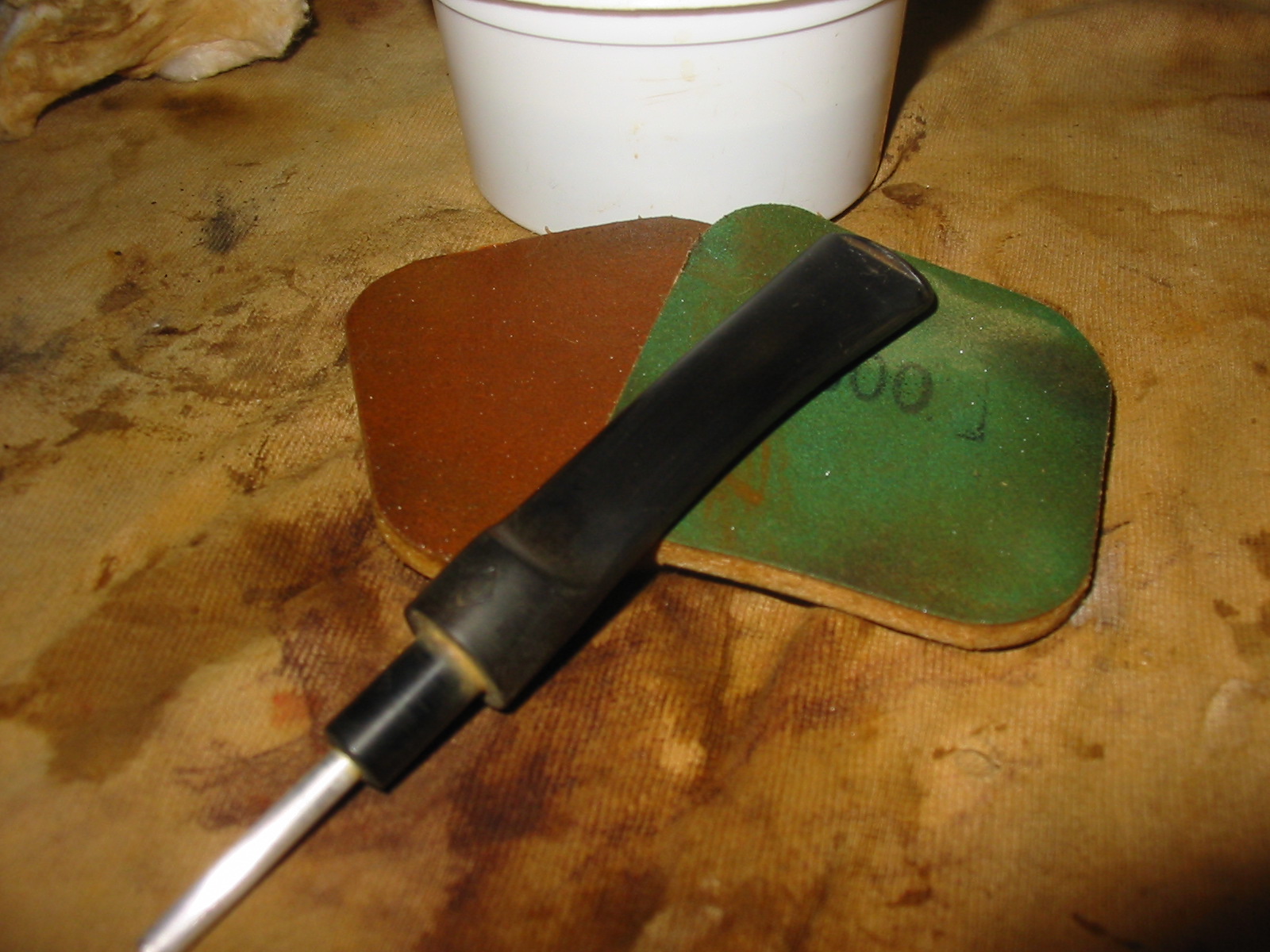
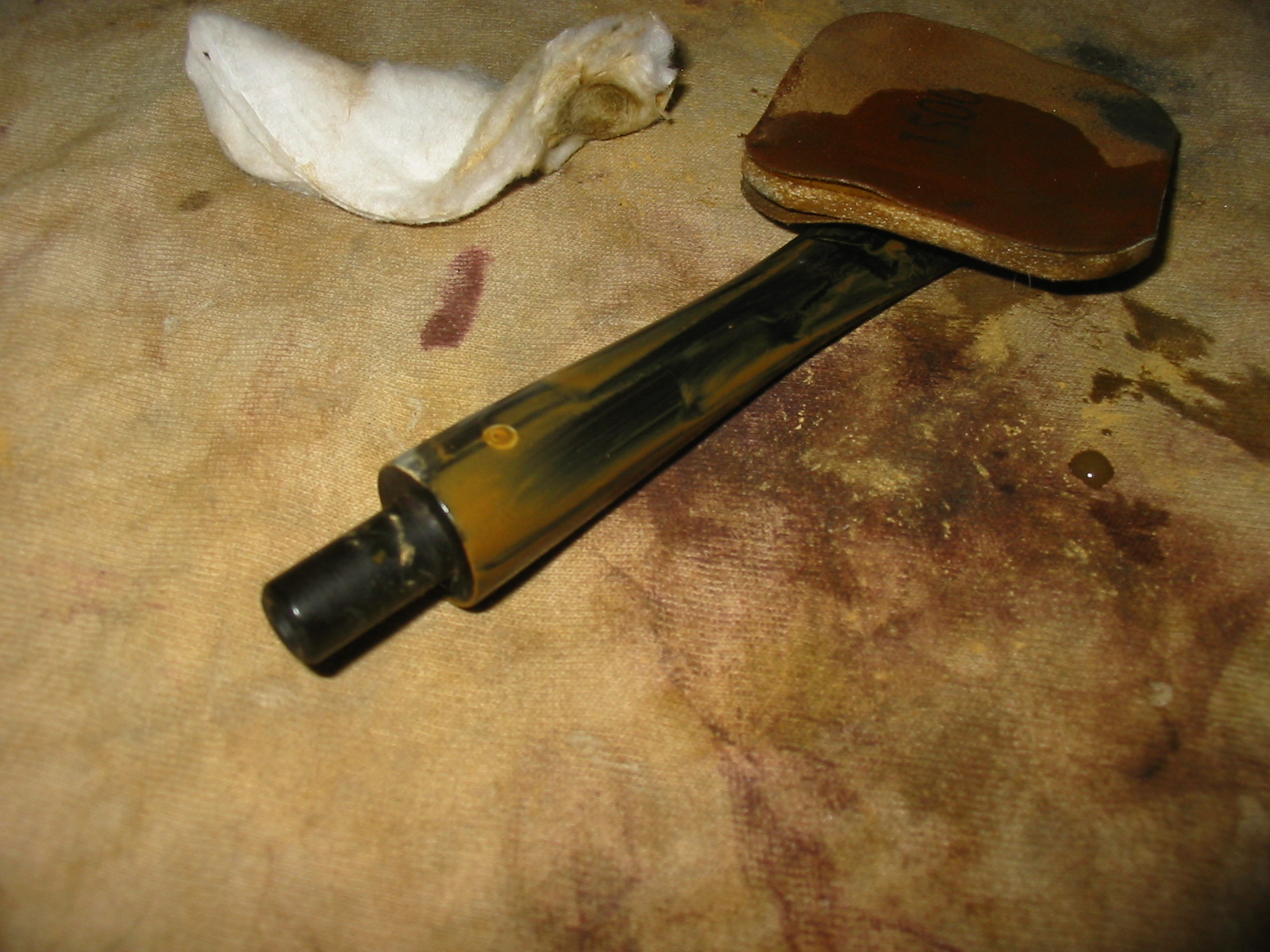
After polishing with the Maguiar’s you can see the oxidation on the stem particularly on the tenon end. It extends about an inch back toward the button and was also in the crease of the button. It was time to sand the stem with the micromesh sanding pads. I wet sanded the stem with 1500 and 1800 grit micromesh pads. The next three photos show the stem in process and after the sanding. I finished wet sanding and then wiped the stem down. I then dry sanded the stem with the remaining micromesh pads from 2400-12,000 grit. I used the Maguiar’s a third time to polish the stem and then buffed it with White Diamond on the buffer. Once I had finished buffing I wipe the stem down with Obsidian Oil and set it aside to dry.

ImageImageImage

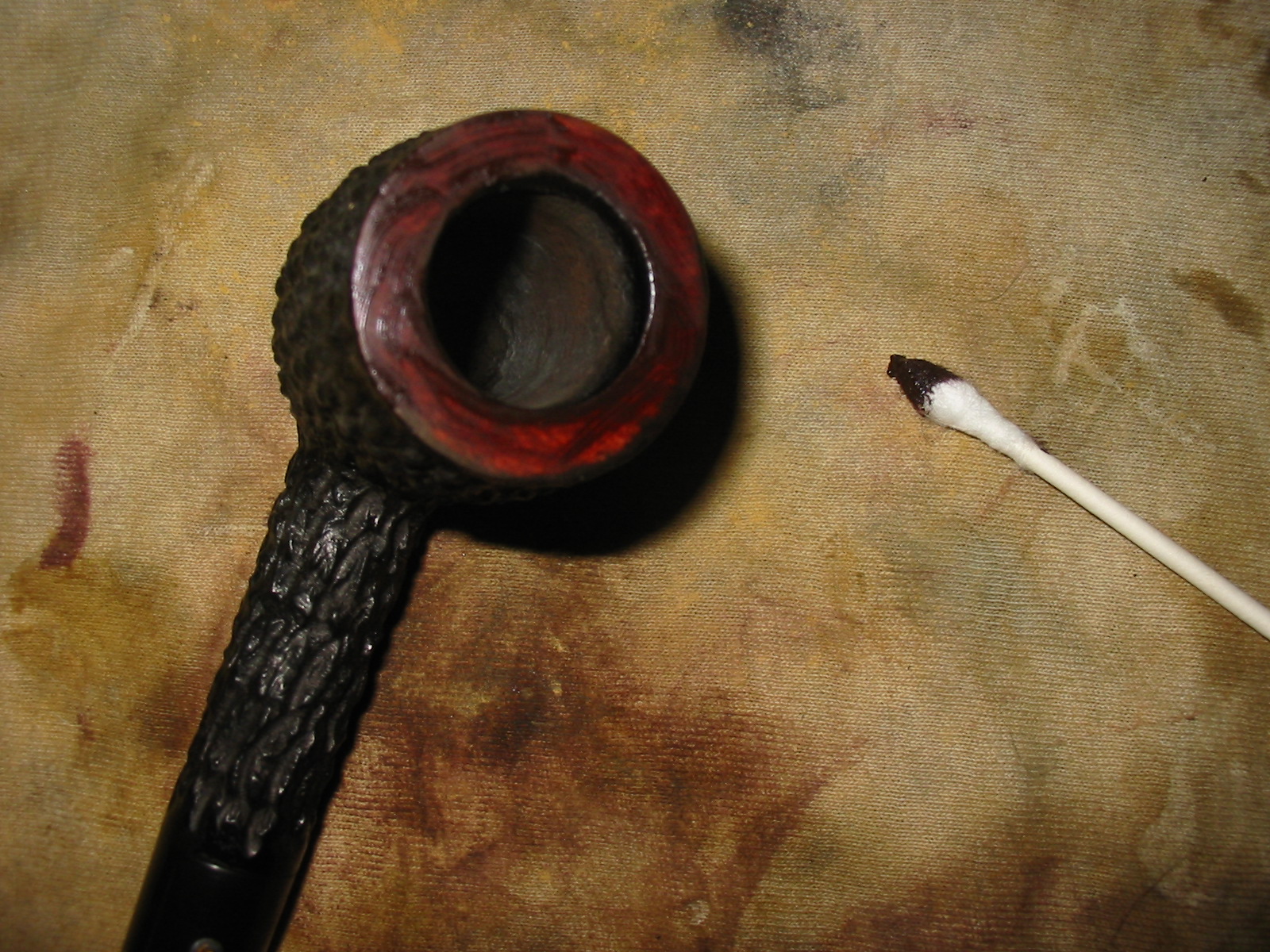
The next series of four photos show the finished stem. I reinserted it in the bowl. The tenon fit was loose so I dripped superglue on the tenon and then sanded it back until the fit was snug. I gave the bowl and stem another buff with White Diamond. I coated the stem with carnauba wax and buffed it with a flannel buff. In the first photo below you can see that the rim needed some work. The stain just did not come back after the cleaning. I sanded it with the micromesh 3200 grit pad and then it was ready to be stained. The fifth picture below shows the restaining of the rim with a cotton swab and oxblood stain. I applied the stain with a cotton swab and then flamed it. I hand buffed it with a terry cloth towel I use for hand buffing and applied carnauba wax to the rim.

ImageImageImageImageImage

The final series of four photos show the finished pipe. The stain contrast came out very well. The black and the oxblood highlights look great. The stem shined up exceptionally well. It is a group four sized pipe and should smoke very well. It has a nice open draw. I know that some of the Heibe pipes were made for filters but this one is not fit for filters. It is just a normal push tenon. All in all it is a beautiful pipe.

ImageImageImageImage

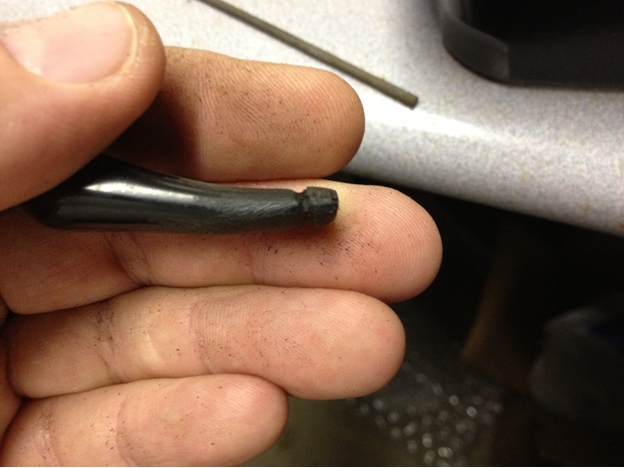
Dr Grabow Restoration and Stem Repair


Blog by Greg Wolford

I picked up this Dr Grabow Freehand at an antique mall about a month ago when I got the Wally Frank that is visible in the photos, too. It was scratched to heck on all the smooth briar and the stem was chewed completely through. But I went ahead and bought it for three reasons:

– I’ve  never had a freehand
– I have been wanting to restore a stem with a hole or, in this case, a lot of damage
– I got a pretty decent price
So, I picked it up.Greg1

Greg2

Greg3

Greg4

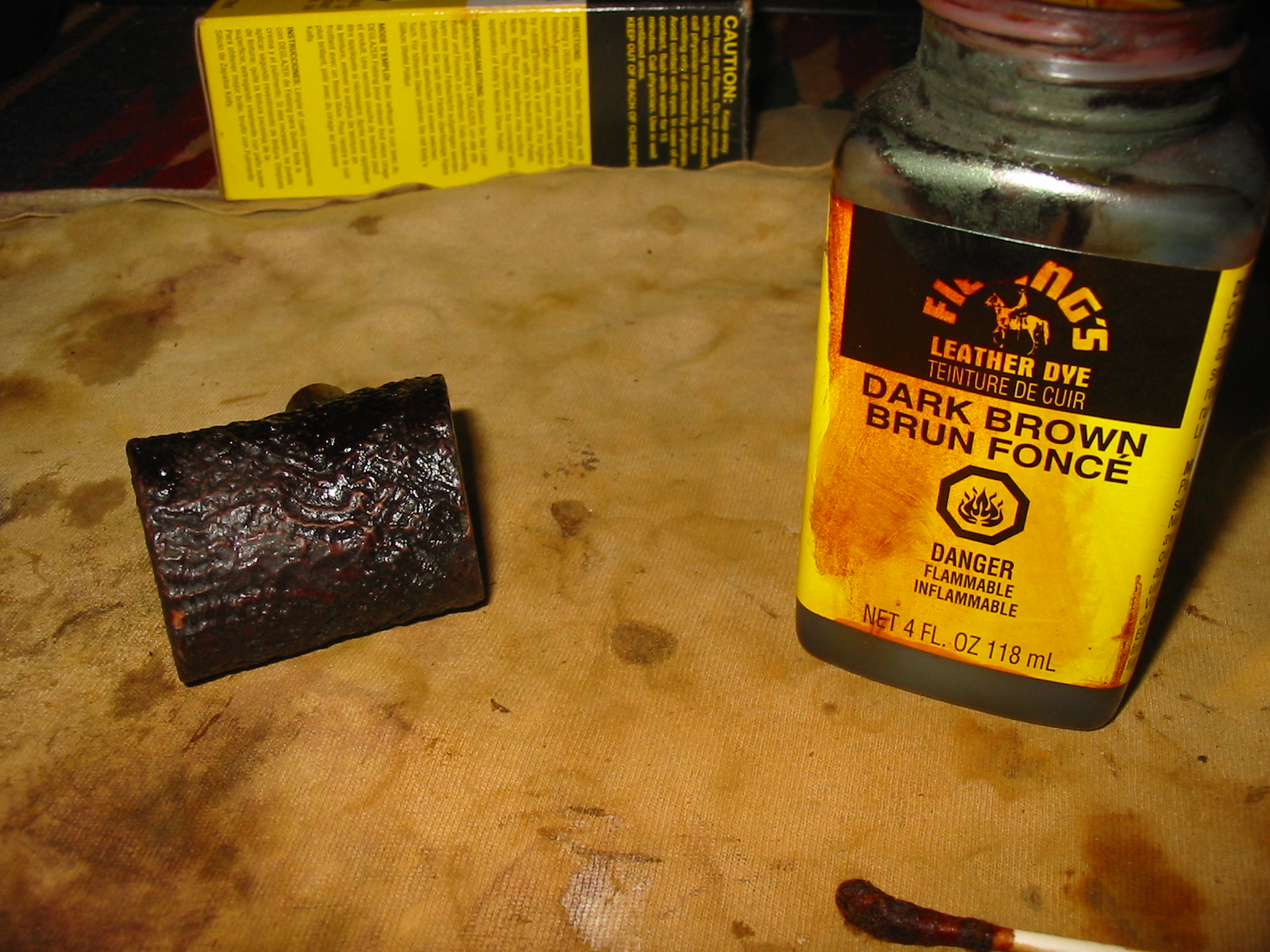
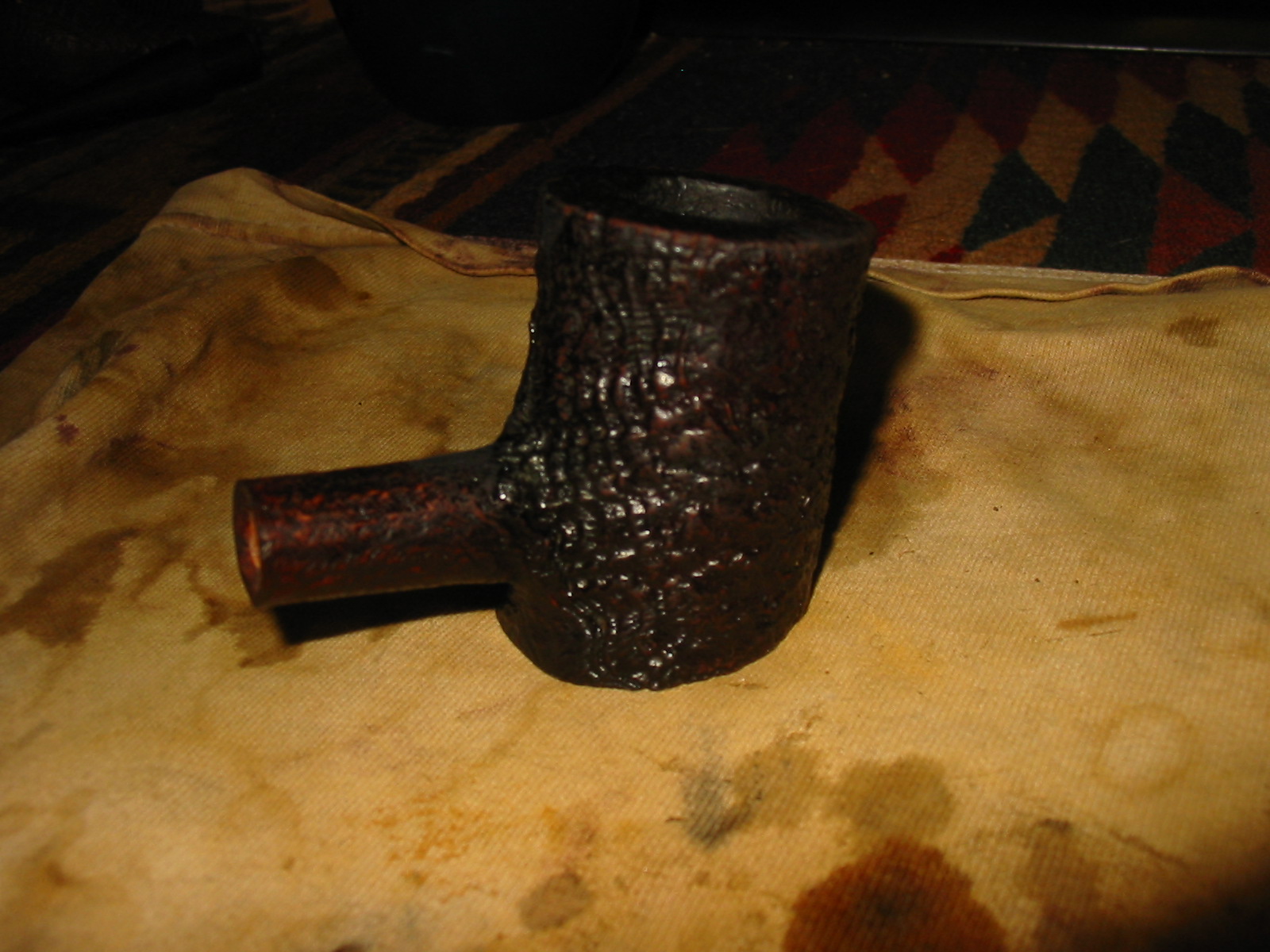
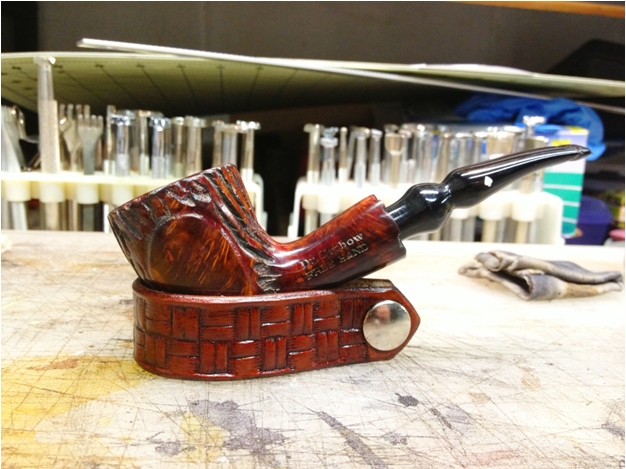
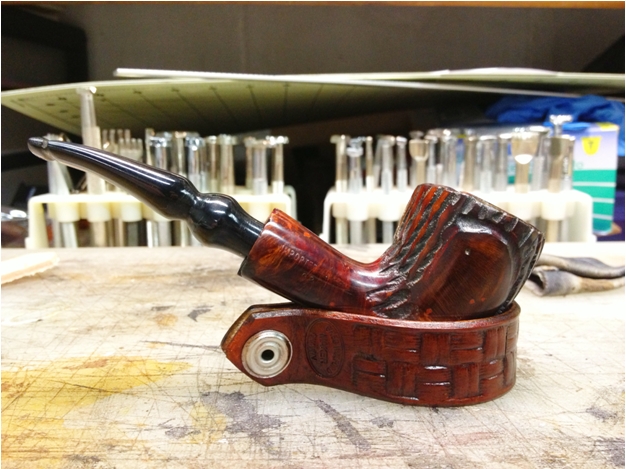
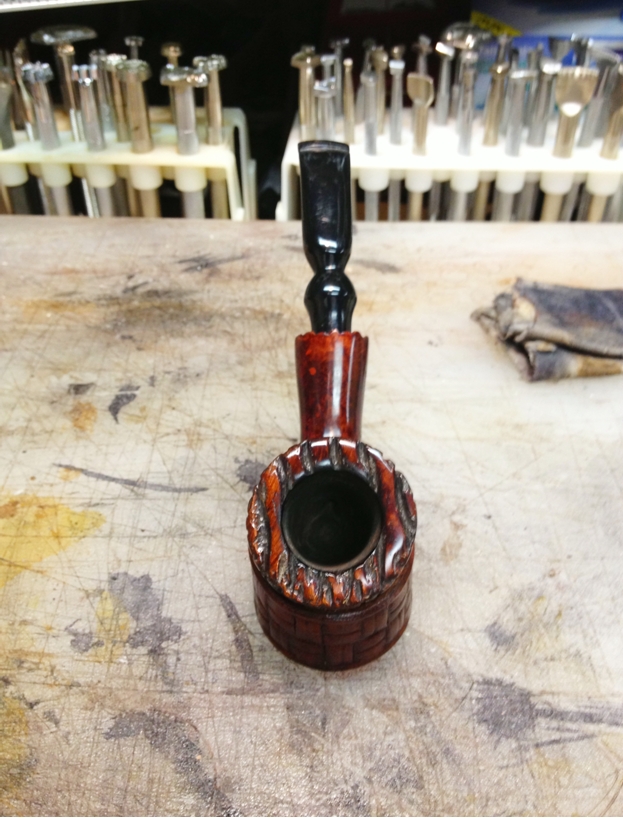
Greg5 I decided to deal with the bowl first, by stripping it with acetone and soaking it overnight in an alcohol bath; I also put the stem in a OxiClean soak at this time.  After removing the bowl from the alcohol bath I then used a brass bristle brush to get all the tar and gunk out of the rusticated top grooves. Then I sanded it to remove all the scratches from the smooth briar and take the old stain off the high points using 400 grit wet/dry sandpaper.Then I used some water based black leather dye on it, getting into the recesses well and wiping of the smooth portions as I went; I wanted to keep that darker contrast in the grooves. After I had it covered to my liking I dried it with the heat gun. Next I went back to 400 grit to take down the high points and smooth areas to remove the small amount of black color from the water based dye. When that looked good to my eye I polished it with 600 grit, wiped it down with 91% isopropyl alcohol on a cotton pad to remove any left over dust and dirt.  I heated it with the heat gun again to make sure the briar was good and dry. When it was nice and warm I applied Fiebing’s dark brown spirit-based leather dye, diluted 2:1 with 91% alcohol and flamed it in; I did this twice. The color was a bit too dark now so I wiped the pipe down, taking care to not soak my cotton pad too heavily or get into the recesses too much, with alcohol until it looked right to me. I then set it aside.Greg6

Greg7 When I soaked the bowl in the alcohol bath I also left the stem in a OxiClean soak overnight. I had removed and washed it well before starting on the bowl so it was ready now to work on.Greg8 I decided to shorten and reshape the stem instead of replacing it or trying to fix the gaping holes. I used a coping saw to cut off the end, saving as much of the stem as I could. The bottom hole had also cracked so it required removing quite a lot of the stem to get most of the crack out. The next step was to grease a pipe cleaner with petroleum jelly and insert it into the stem. I then dripped some Super Glue into the crack and let it set up while I worked on something else.

When I came back to it, the glue was hardened and I was ready to move on to the next step: making a new button. I began this process by scoring a line along the top and bottom of the stem where I wanted the button with a cutoff wheel on my Dremel. After I had the new button laid out, I then started to shape it with various needle files. I began shaping from the button back, forming it into shape with the rest of the stem. This took considerable time to get it even and “natural” looking. When I was satisfied I then began to shape the end of the button.Greg9

Greg10 I shaped the bit with needle files, too, again using several to get the shape right. The first step for this was getting the angle to look right on the top; this didn’t take as long as I expected. I then began to form the bottom of the bit, trying to match the shape of the top as close as I could; this took more time and effort than I’d expected.

Making a new drought hole was something new to me. And was not without its challenges either. I used my needle files, again, to start shaping the new hole, making it a bit taller as well as wider than the hole that was left in the cut off stem. I took the extra time to fan the drought hole, too, partly because I wanted to and partly to see if I could do it. This ended up being some of the most time-consuming and tedious work of the entire project: I needed to make sure I didn’t go too thin in any direction but I wanted the hole to really funnel out well. I am pleased with the results and the way it smokes and would say it was worth the extra time and effort to accomplish it.Greg11
Greg12 After all the shaping I wiped the stem well with alcohol to clean it off for a test fit – to my mouth. The test failed; the bit was too long and too steep. So back to the files I went. I filed, tested, filed, tested a few times until it felt comfortable in my mouth and looked good to me. Now time to get it shiny again.

I began with a fine/medium grit sanding sponge. It worked very well to get in and around the bit to smooth it a bit more and to take out the file marks. I then began wet sanding with grits 220/320/400. At this point I applied some Novus 2 plastic polish. The Novus line come in three grades: 3 – the most course, 2 – the second, and 1 – the final polish. I began using this product on my motorcycle windshield a few years ago and loved it. I have numbers 1 & 2 but have yet to try 3.
After using the Novus, I began with the micro mesh, wet sanding with grits 1500/1800/2400/3200/4000 (I’m not looking at the numbers but I believe that was the correct grit numbers. I applied the Novus 2 again and then polished with micro mesh 6000/8000/12000. Now it was off to the buffer with pipe and stem.

I buffed the pipe several times around with Tripoli to get the color just where I liked it. I then moved onto the white diamond for both the pipe and stem. I took a little extra time on the stem to make sure I fine tuned the button a little more, testing it every so often. After buffing the pipe and stem with white diamond I changed to a metal buffing wheel with blue rouge to polish the metal tenon on the stem; I hate a nicely polished stem that hasn’t has the metal (if there is any) not polished, too.Greg13

Greg14

Greg15 Several coats of carnauba wax was then applied to both pipe and stem. I did the final buffing with my “mushroom” on my cordless drill. I like the control I have with it and also the fact it’ll reach almost anyplace with little effort. The final touch was to polish the rustication with a soft toothbrush to make sure I didn’t have any wax residue left.Greg16 There were, and still are, some fills in the pipe but I wasn’t particularly concerned with them. Several are on the shank and it would have been “dicey” to try to fix them without ruining the nomenclature. There was one fill on the side that fell out, presumably from the softening of the putty in the alcohol bath. I missed that one until after I had already started smoking it.  If I’d seen it earlier in the process I would have fixed that one but now it’s there for the duration.Greg17 (I couldn’t get a good focused shot of the finished button.)

Refurb – Jarl Ribbon Acorn


Blog by Steve Laug

This little pipe caught my eye when I was going through my box of pipes to be refurbished. It is stamped Jarl and is in what they call their Ribbon finish. It an acorn shape with what for all intents and purposes looks like a Celius style stem on it. It is light and clean.

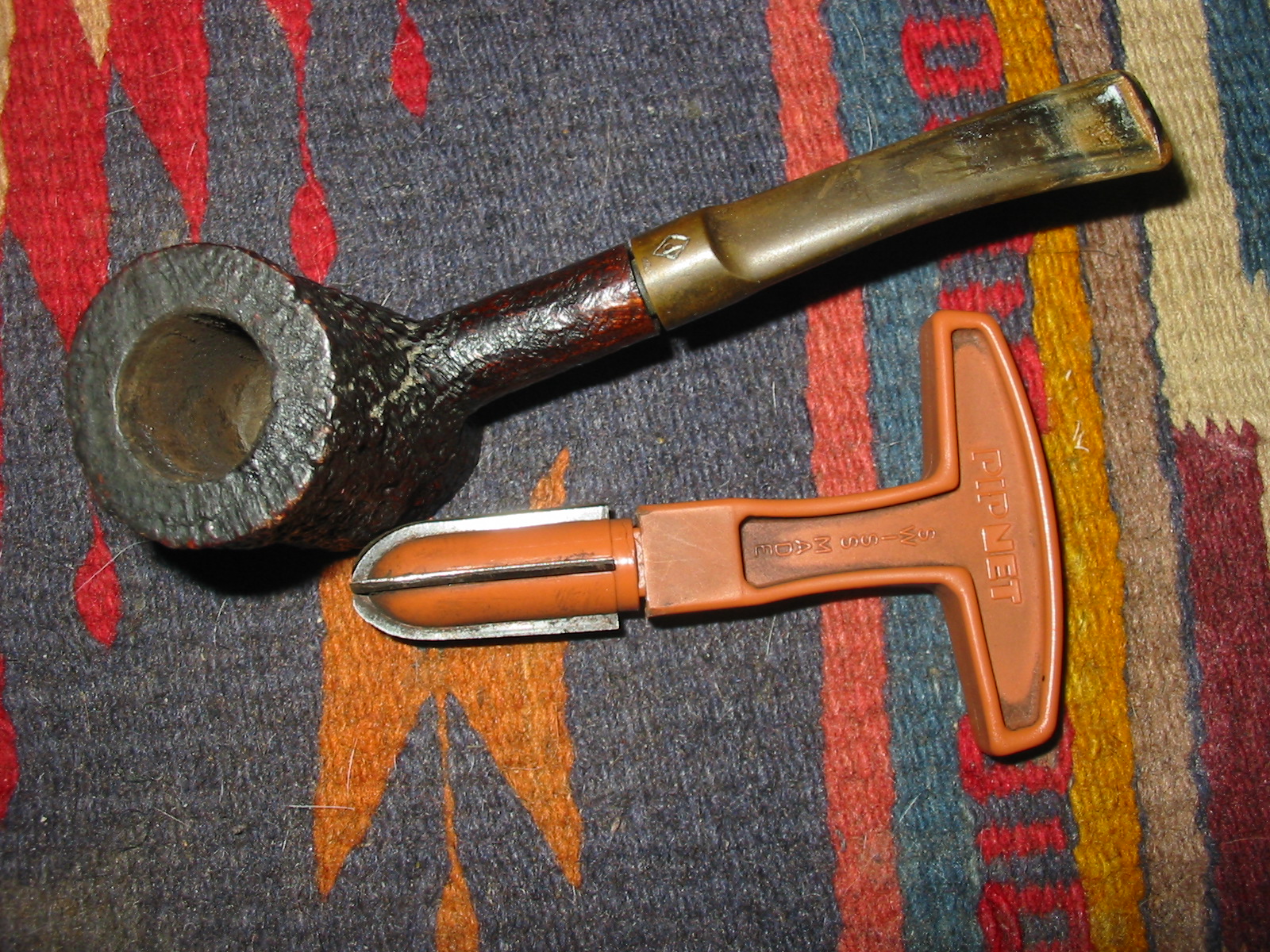
The bowl needed a good reaming – a bit of a trick as it is a conical bowl. I used several of the PipNet bits on the T handle to ream the bowl. The finish was faded and dirty. The inside of the shank was tarry and dirty and the inside of the stem was the same. The stem was oxidized and the original owner had modified it by carving some horizontal lines (3x) on the top and bottom of the stem to make kind of a homemade dental bit. He had also used some Elmers Glue to repair the button where he cracked it trying to put a pipe cleaner through it. The glue was all over the top of the stem.

ImageImage

I scrubbed the bowl with some Murphy’s Oil Soap and a soft bristle tooth brush to clean out the grime and dirt from the sand blasted portions of the bowl and shank. I scrubbed the ribbon or smooth portions with a cotton pad and Oil Soap. It took a bit of scrubbing to remove the tars from the rim edge and restore the finish there to a clean colour. I ran it under a clear stream of warm water to wash away the soap and then dried it off with a microfibre cloth. Once it was dry I decided to restain it with an oxblood and black stain on the blast portion and a nice oxblood/cherry on the smooth parts. Before staining I cleaned out the shank and airway with cotton swabs/qtips and bristle pipe cleaners to remove the grime. I finished with fluffy pipe cleaners. Once clean it was ready to be stained. I first used a black aniline stain and then flamed it. I took it to the buffer and buffed it with Tripoli and White Diamond to remove the black stain from the smooth surfaces and from the high spots on the blasted portion. Then I restained it with a top coat of oxblood/cherry stain, flamed it and then buffed it with White Diamond to get a good contrast colour to the bowl.

The stem took some work. I was able to sand out the homemade cuts without compromising the thickness to much as they were fortunately not too deep. The cracked button was a challenge. I cleaned off the Elmers Glue and then scrubbed the crack clean with alcohol and a soft brush. I picked out the bits of glue that were in the crack with a dental pick. I dried the area and then repaired it with Super Glue. It came out looking like new. The stem was buffed with Tripoli and White Diamond after sanding. The entirety was given a coat of Halcyon II wax and buffed with a shoe brush.

ImageImageImage

Some sad news came back to me regarding this beautiful little acorn pipe. When I finished working on it I gave it away to Desertpipe as a gift. He loved the look and feel of it and appreciated it for what it is. Then one day after using it the cracked portion of the button broke off entirely. He sent the pipe out to be restemmed. I am looking forward to the day it is finished and he sends me some pictures.

Had Some Time on My Hands Today So I Reworked One of My Own


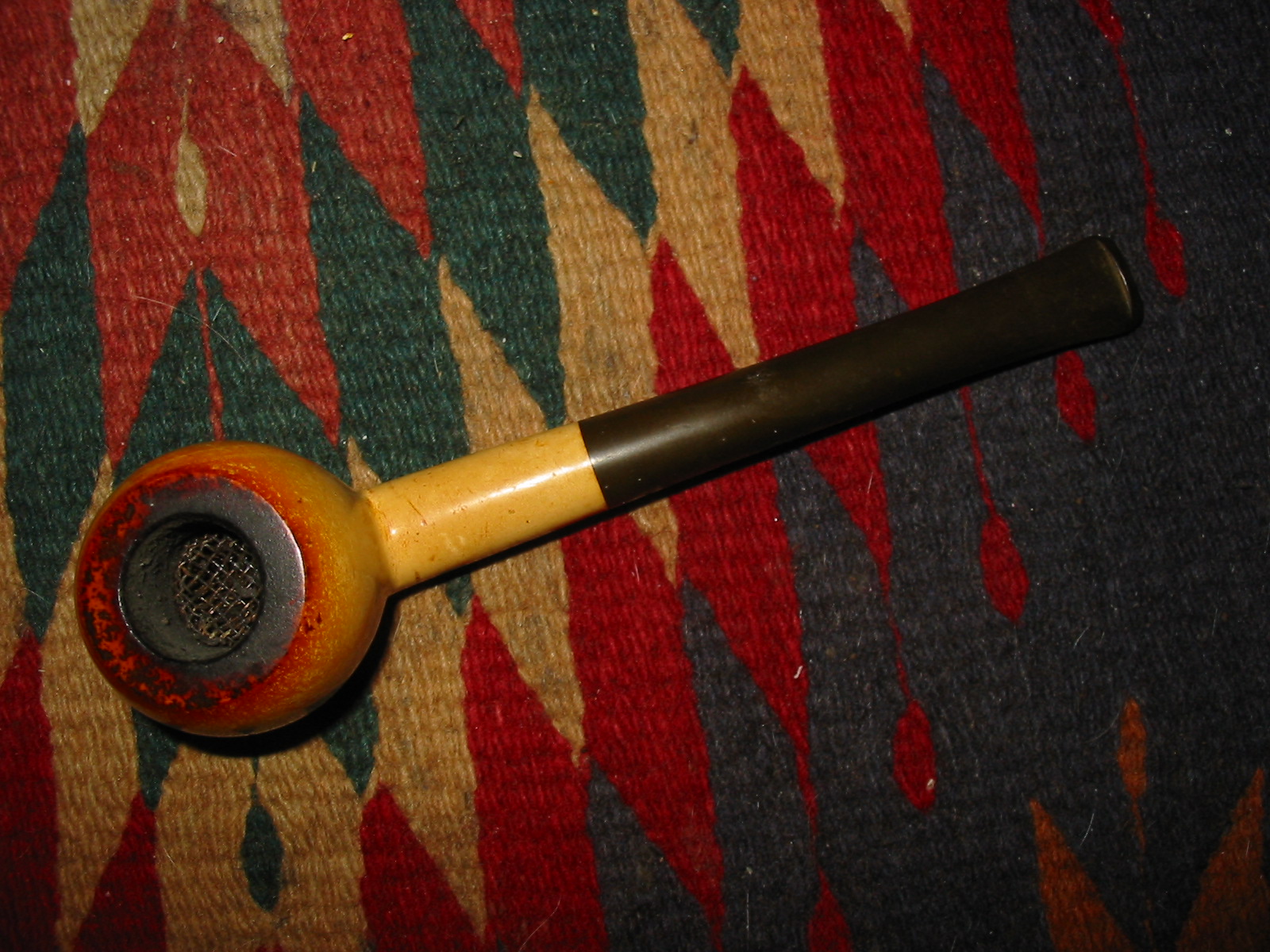
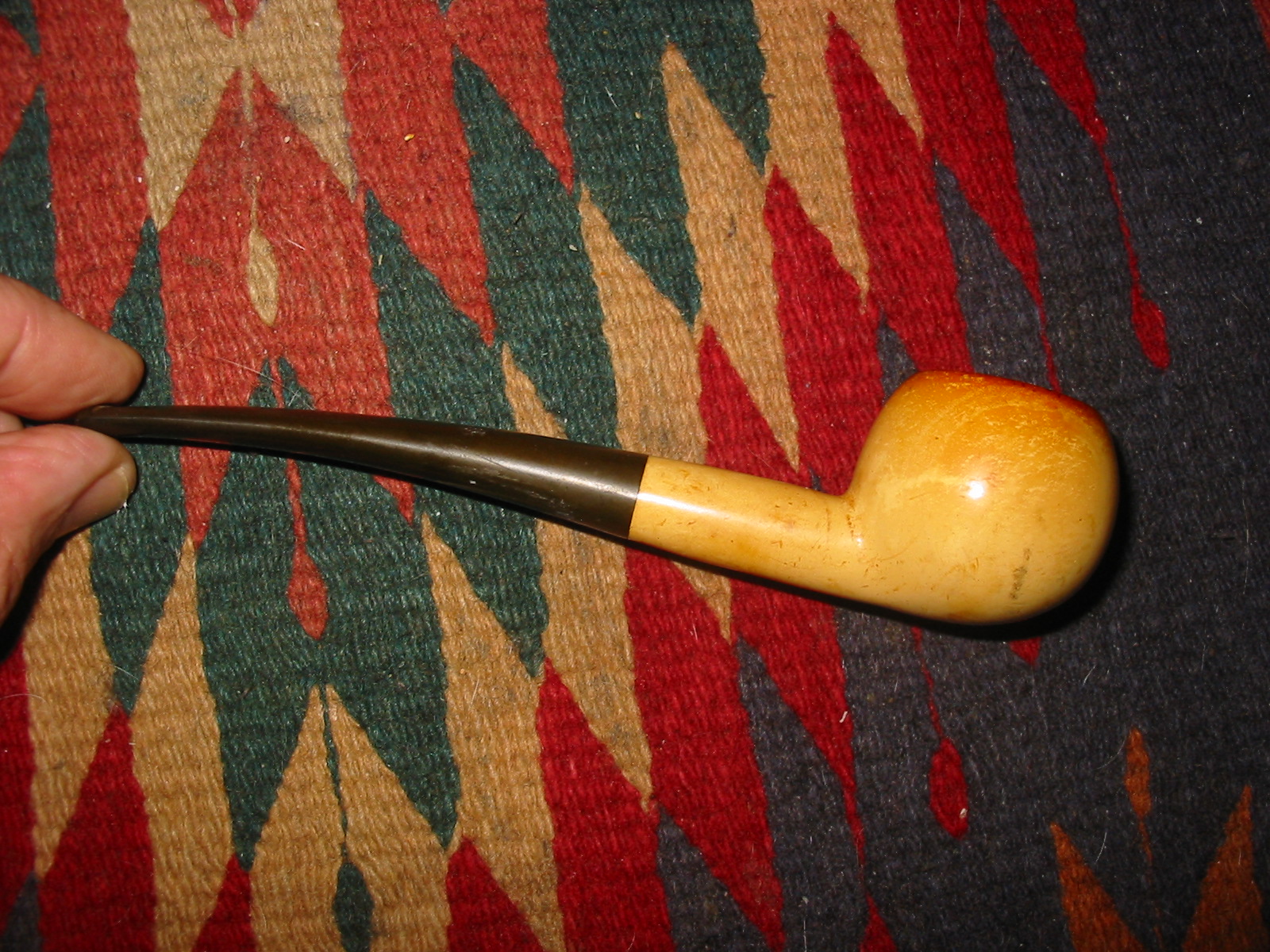
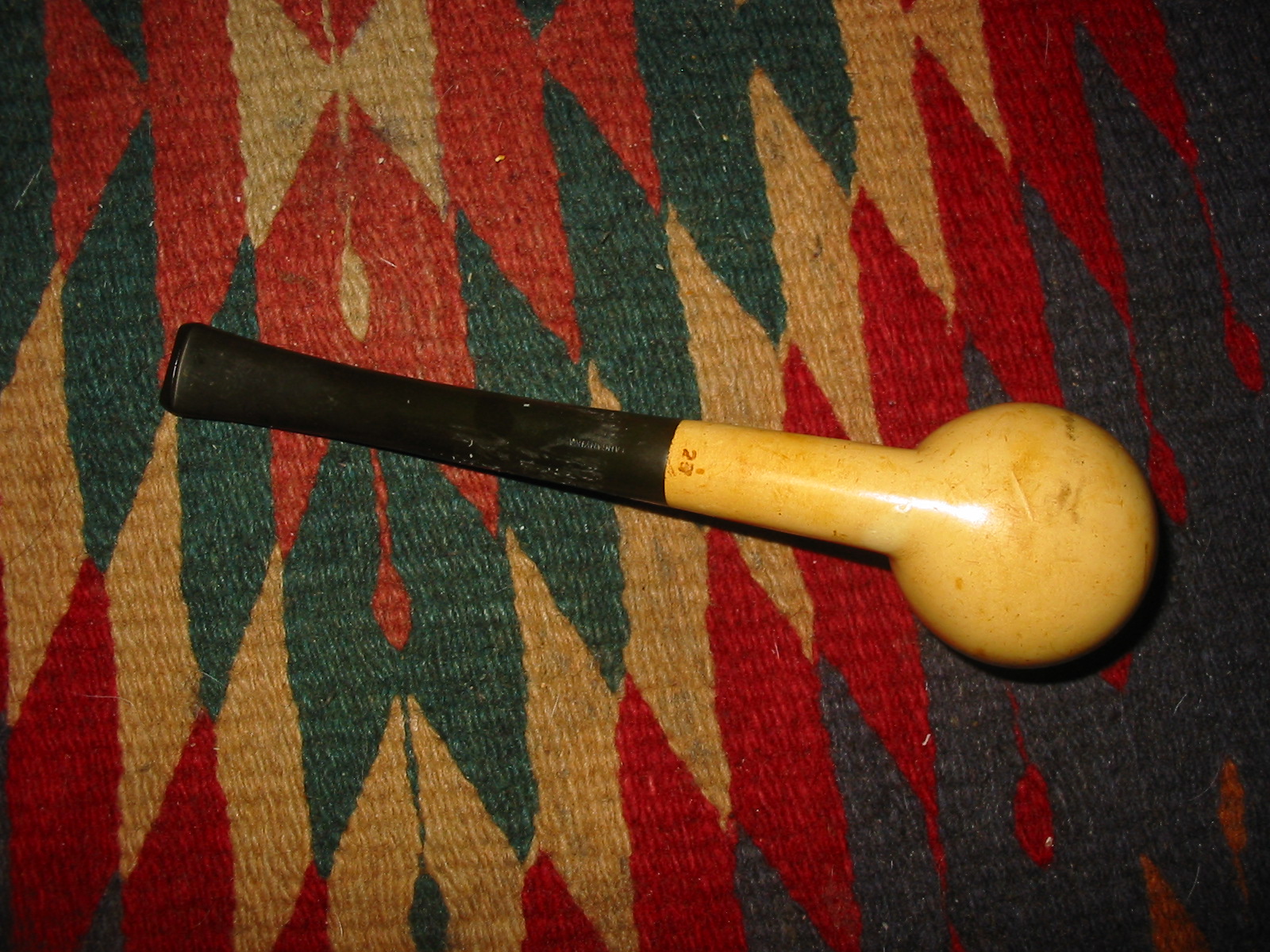
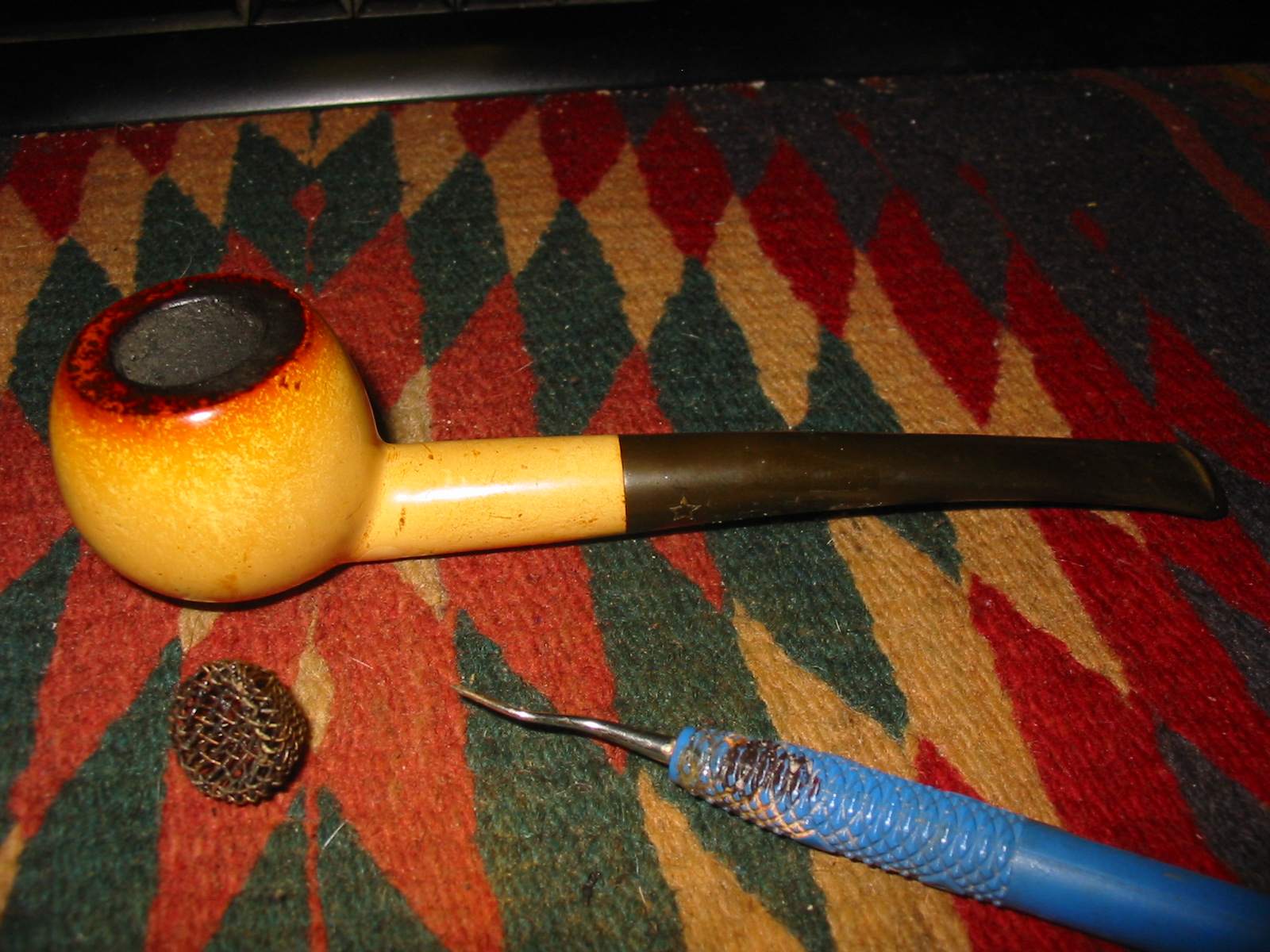
Probably a year or more ago, I picked up this pipe on EBay. It is stamped CAVEMAN over Singleton on the bottom of the bowl and shank. To me these old timers are ugly and never really look done. But they are smoked the way they are and often come with a good cake and a tooth marked stem. The stem bears an S in a circle as a logo. I keep an eye open for these pipes and try to snag them as they come up. I have found that they are easily finished and make a nice small group 2 sized smokers. The stems are usually a good fit and the briar is not too bad. I have reworked three of these Cavemen and all have become favourite smokers. When they arrive they are generally well smoked and thus already broken in so that part of my job is finished. All I have to do is to decide what shape I want the finished pipe to have and then reshape it meet my desires.

The first set of pictures below show the state of the pipe when it arrived in the post. I reamed the bowl and cleaned the shank and stem inside to make it a bit cleaner for me to work with. I generally sand the sides of the bowl and the top before I begin to get a feel for the grain on the pipe. Once it is sanded then I wet the briar with water to get a good look. From there I sketch a shape on the block and get my Dremel out with the sanding drum.

ImageImageImageImage

The next series of photos show the pipe after I have removed a large portion of the briar. I decided to play around with a wedge shape on this one initially. I had seen one on one of the pipe sites I frequent and wanted to give it a go. I knew that if I did not like it I could easily change the shape and try something new. But you can see the basic shape in the photos. The stem I flattened on the top and the bottom to fit the flatness of the wedge. I left the edges of the stem rounded and planned to do the same with the bowl.

ImageImageImageImage

The next series of photos show the pipe after I have sanded it and readied it to be stained. The wood is smooth and the stem is polished smooth. I sanded it with medium grit Emery cloth and then 280 and 220 grit sandpaper to smooth out the sanding marks from the Dremel. Once it was smooth with those papers I moved on to sand it with 400 and 600 grit wet dry sandpaper and water. There was definitely a bit of grain present but it was fairly light so I would need to do a bit of contrast staining to get the grain to lift and be visible.

ImageImageImageImageImage

I decided to use some black aniline stain to make the grain patterns more visible. I stained it with the black, flamed it and restained it and flamed it again. I then took it to the buffer and buffed it with Tripoli to remove the excess stain and make the contrast visible. I had to sand the pipe a second time as well to remove more of the stain. I used the 600 grit wet dry sandpaper to do this. Once it was sanded I buffed it a second time with White Diamond to give it a shine. I gave it a top coat of medium brown stain diluted by 75% with Isopropyl alcohol. I wanted the brown to be basically a wash coat. I applied it with a dauber, flamed it, reapplied it and flamed it again. Then I buffed it with White Diamond. The series of photos below show the finished look of the newly carved and stained Caveman. It was a marked improvement in my opinion.

ImageImageImageImageImage

However, over the months though I smoked it quite a bit somehow the shape just did not do anything for me. I found that unless I intentionally took it out of the cupboard to smoke that I would never reach for it naturally. So today it was quiet around the house, I still have some time off until after New Years. The wife and daughters were doing banking and errands. I was home listening to the radio and cleaning my study. I finished that and decided I wanted to work on a pipe – either to refurbish one from my box or something else. I went to my cupboard and my eye fell on the little wedge shaped pipe. The time had come for me work it over and see what I could do with it. I got out my Dremel with the sanding drum and went to work on the pipe. I removed the sides of the wedge and squared the shank and the stem. I decided to make a tapered stem that continued the taper right up the shank to the bowl. It did not take too much time with the Dremel to get the shape close to what I was aiming for in my mind. The picture below shows the basic shape after the work with the Dremel. It still needed a lot of sanding to bring it to the final shape but you can see where I was heading with it.

Image

The next series of pictures shows the pipe after I have sanded it with some medium grit Emery cloth. I sanded it until the shape was clean and smooth and the flow of the taper was at the angle I wanted to have when I was done. As I sanded the bowl I came upon the small flaw in the briar that is visible on the bottom edge of the bowl in the first photo below. Once I had the bowl sanded to the shape and curve I wanted I scraped out the flaw and opened it with a dental pick and then filled with briar dust and super glue. I figured that since I had a lot of sanding and smoothing to do that the time for the fill was this point.

ImageImageImageImage

The next four photos show the pipe after I have sanded both the stem and the bowl with 1500-2400 grit micromesh sanding pads and water. I then used the Maguiar’s Scratch X 2.0 and rubbed it on and polished the stem. I wiped it off and then buffed the pipe and stem with White Diamond. I took it back to the work table and sanded it with the remaining 3200-12,000 grit micromesh sanding pads. The photos below show the pipe after the sanding.

ImageImageImageImage

I decided to stain the pipe with a medium brown aniline stain. I daubed the stain on, flamed it and then restained the bowl and shank a second time. I flamed it a second time and then took it to the buffer to remove any of the excess stain and give it a polish. I used Tripoli with a light touch and removed the stain. It was still pretty dark so I wiped the bowl down with an Isopropyl alcohol dampened cloth to lighten the finish and make the grain more visible. The next four photos show the pipe after the alcohol wipe.

ImageImageImageImage

After the wiped down I took it back to the buffer and used White Diamond. The White Diamond polished the pipe and gave it the rich brownish red appearance that is visible in the next series of photos. The feel in the hand and the mouth are much better with this newly revised shape. The richness of the colour is appealing to my eye. It seems that when I carve a pipe I keep going back to it to revise the shape and stain. This one has come a long ways from the original Caveman pipe that was pictured in the first photos above. Whether it is done or not I am never sure… in fact as I look at the enlarged photos I still see a few areas that may need some more work as some of the scratches that are not visible in the light of the shop show up really well in the flash. Ah well. That is the joy of having the tools and a bit of time on my hands this holiday season.

ImageImageImageImage

A Classic Rework of A Royal Duke Supreme


Blog by Steve Laug

I had this old Royal Duke bowl in my box. It had some promise to my eye but it needed some work. The first thing I did was drill out the metal mortise that took a threaded tenon. I did not have any stems that fit it anyway and I wanted to try something new. The issue that remained once it was gone was the fact that the mortise rough inside and the end of the shank was not square so that there was no way to get a new stem to fit it seamlessly. The finish was very rough as can be seen in the photos below. The varnish on the outside of the bowl had bubbled and blistered. The front edge of the bowl was actually darkened as the varnish seemed to have burned or at least coloured. There were dents in the bowl and the rim was rough. I turned a precast stem with my tenon turner and got it close. I had to custom fit it as the shank was a little tapered toward the end.

ImageImageImage

The stem fit fairly well but would take a bit of customizing to get a good tight fit to the shank. It would also need a good cleanup to trim off the castings on the stem. The vulcanite was fairly decent quality as I have had it a long time but it showed no oxidation.

Image

I decided to work on the bowl first to clean up the remaining finish and remove the varnish from the bowl. I also wanted to see if I could remove the darkening around the front and back of the bowl. I washed the bowl with acetone on a cotton pad and cleaned off the finish. It took repeated washing to break through the varnish coat and also the burned and bubble finish. The next two photos show the pads after the wash. You can begin to see the grain coming out on this beauty. That is what drew me to the pipe in the first place and I was glad to see that it was truly there.

Image

I repeated the washing until the pipe was clean and had no remaining finish coat. The dark undercoat of stain still remained and light brown topcoat also was still present. This is clearly seen in the photos below. I worked on the fit of the stem and tapered the tenon enough to get a good snug fit to the bowl. I also used my Dremel to remove excess vulcanite from the top and the sides of the stem so that it lined up smoothly with the shank of the pipe. It was at that point I decided to pressure fit a nickel band to the shank to square things up a bit. There was no way that the stem and the shank would meet squarely as the shank was a bit angled and dented from the metal inserted mortise. The previous mortise had been threaded in and it had a thin band or flat top on it that sat against the briar. It was also patched a bit with putty to make the flow from the shank to the insert smooth. I fit the nickel band with heat and pressed it into place. I liked the finished look of the band and it gave me a straight edge to work with on the new stem. I again used the Dremel with a sanding drum to shave off more of the vulcanite and make the stem fit against the band inside edge. The next two pictures below show the stem after the fit and the shaving with the Dremel. You can see the rough surface on the saddle and the cleaned up edges of the cast stem and the button.

ImageImage

I then sanded the bowl and the stem with 240 grit sandpaper to remove the scratches in the briar and also on the vulcanite stem. It took quite a bit of sanding to smooth out the saddle of the stem. The next five photos show the progress of the sanding on the stem. I also sanded the bowl to remove the remaining finish and scratches. I topped the bowl and smooth out the inner and outer rim to remove the damages to them both. I also used my heat gun to put the bend in the stem. I have a curbed dowel here that I put the heated stem on to ensure that the bend is straight and that I do not crimp or bend the stem unevenly.

ImageImageImageImageImage

Once the sanding was at this point I wiped the bowl down with Isopropyl alcohol. I find that it removes any sanding dust and also the wet look shows me places where I still need to sand the bowl and stem. Once that was done I sanded the bowl again with 400 and 600 grit wet dry sand paper and water. I progressed through micromesh sanding pads 1500-12,000 grit – the first four pads with water and the remaining ones dry sanding. Once it was completed and smooth I wiped it down a final time before staining it.

ImageImage

While I was sanding the pipe and working on the stem I tried to visualize what stain I wanted to use on this pipe. At this point remember I was not trying to restore the original Royal Duke colouration. I was working a new pipe out of this piece of briar even though I left the stamping. I decided to go with an oxblood aniline stain. I applied it with a cotton swab, flamed it and then took it to my buffer and buffed it with White Diamond.

ImageImage

The next three photos show the pipe after the buffing with White Diamond. I had not applied any wax at this point nor was I finished working on the stem. The colour came out better than I imagined. The dark under notes of the grain come through nicely in the finished pipe. The light areas have a reddish brown hue that is a bit lighter as the pipe has been waxed and buffed.

ImageImageImage

Once the pipe was stained I coated the bowl with multiple coats of carnauba wax to protect the new stain while I worked on the band and the stem. The nickel bands shine up really well with the higher grit micromesh sanding pads. I sanded the band with the 6000-12,000 grit pads and then polished it with some wax as well. I moved on to the stem. I sanded it some more with 240 grit sandpaper to remove some more of the scratches in the saddle area left by the Dremel. I then sanded it again with the 400 and 600 grit wet dry and water to smooth out the lesser scratches left behind by the 240 grit sandpaper. I went on to use 1500-3200 wet micromesh sanding pads to polish up the stem some more. These early grits of micromesh leave behind a matte finish as they sand out the scratches. It takes the grits above 4000 to really see the depth and polish that is there when finished. Once I used the lower grits I then polished the stem using Maguiar’s Scratch X2.0 polish and rubbed it on with a cotton pad and polished it off. I buffed the stem with White Diamond following this to see what I needed to work on.

I took the stem back to my work table and used the higher grits of micromesh. I started with 3600 and worked through 4000, 6000, 8000 and 12,000. Once I finished I buffed it again with the White Diamond and then coated the stem with Obsidian Oil and let it sit while the oil soaked the stem. I hand buffed the oil with a soft cotton cloth and then polished it with some carnauba wax paste and then buffed the entire pipe with several coats of carnauba. I buffed it with a clean cotton buff between coats of wax. The final photos are of the pipe as it stands now.

ImageImageImageImage

Reworking a Dr. Grabow Viscount


I had this old bowl in my box of pipes to refurb. It needed a stem and it needed a good cleanup. When I took it out of the box to match a stem to it, I noticed that it had some pretty nice grain under the cherry red stain. It seemed like it had a nice dark contrast stain added to bring out the grain and then the red stain was over that. On top of the red stain was a coating of varnish or lacquer of some sort. That topcoat was peeling and the red beneath it was also rubbed off. It seemed like the red stain was more of a wash on top of the bowl rather than one that permeated the bowl. I went through my can of stems and found an old saddle stem that fit quite well. It was badly oxidized but I liked the overall look of the pipe with the saddle stem.
vis1

vis2

vis3

vis4

With the state of the finish I decided to wipe it down with acetone to remove the varnish/lacquer finish and see what I could do with the stain. I was not overly concerned as I figured I would need to remove the red topcoat and start over. The wiped off portions of the finish would require a restain. I just was not sure what was underneath the topcoat. Sometimes on these older Grabows there are a lot of fills hidden under the opacity of the topcoats. I was hoping that this would not be the case with this one. I used a cotton pad wet with acetone to wipe down the finish on the bowl. The rim took a bit more work to remove the tars and build up. I used a fine grit sanding pad and carefully removed the grime while leaving the finish intact. I wipe the bowl down with about three pads and acetone. The result is seen in the photos below. The grain and the stain on this one was beautiful. It has a great contrast stain that makes the grain pop and the lighter reddish brown stain provides a soft canvas to highlight the grain. Once the red finish was removed I left the bowl as it was. I buffed it with White Diamond to polish and remove any remaining red portions of the stain. Then I waxed it with multiple coats of carnauba wax. I put the stem in an Oxyclean bath to soak while I continue to polish the bowl and finished cleaning out the interior of the shank and bowl.
vis5

vis6

vis7

vis8

The stem took a lot of work as the oxidation was very deep. I soaked it twice in the Oxyclean bath and sanded it with micromesh 1500 and 1800 grit sanding pads between soaks. There was some deep, stubborn oxidation on the flat portion of the blade – about mid stem. It was very hard to remove. I sanded it with 2400-3600 grit micromesh and then polished with Maguiar’s Scratch X 2.0 polish repeatedly. Eventually the stubborn oxidation came to the surface and I was able to remove it. I then continued to sand on the stem with the higher grits of micromesh sanding pads – 4000-12,000 grit. I find that the higher grits really deepen the shine of the stem. Each successive grit of micromesh pad brought more of a polish to the stem. The hardest spot at the end was the saddle area. In the photos below there still remains a bit of oxidation that I am still working on – this is particularly clear in the photo of the underside of the pipe.

Ah well – here is the reworked Dr. Grabow Viscount. It is ready to load up a bowl for its new inaugural smoke.
vis9

vis10

vis11

vis12

Refurbished – A Stunning New Look for a Butz Choquin Billiard


I picked up this old Butz Choquin in a lot I was given by a friend and it was in very rough shape. I somehow neglected to take any pictures of what the pipe looked like when it arrived. But it came stem less and the rim was ruined. It had been hammered on concrete or something like that as it was stippled and rough. The inner rim was ruined as it seemed to have been reamed with a pocket knife and it was cut and grooved at all different angles. To have topped it I would have had to lose almost a half an inch on the pipe. In my opinion that would have ruined the billiard profile and created a pot shape. I decided to try something different on this one. The finish was shot as well and the stain was gone. It was a dull brown with much dirt and grime ground into the surface of the briar.

I reamed the pipe with a PipNet reamer (like a Castleford T handle reamer) to even the sides of the bowl and smooth out the inner surface. I wiped the bowl down with acetone to clean off the grime and grit. Once it was clean I hunted down a stem blank that would work on a pipe with this sized shank. I cut the tenon with my Pimo tenon turner and shaped the stem to a clean fit with my Dremel. Then I took the bowl and dropped it in the alcohol bath while I worked on the stem. I sanded the stem to remove the scratches left by the Dremel. I also shaped the button a bit to change the shape and open up the slot to an oval.

I took the bowl out of the bath and dried it off. I gave it another wipe down with the acetone to give me a clean surface to work on. I then went to work on the rim. I wanted to chamfer the rim inward toward the bowl to remove the damaged material and give it a different look. I topped the bowl first to get a smooth and even surface. From there I sanded the inner edge of the rim with a folded piece of sandpaper (280 grit). I use a one inch square piece of sandpaper folded into quarters. Then I set the angle I want to have on the chamfer by the way I hold the paper. I sanded it until I got it at the angle I wanted and removed the damaged material. Once I had the angle right I then changed the grade of sandpaper sanding it with 400 and 600 grit wet dry and then with the micromesh sanding pads from 1500 to 6000 grit.

At that point I put the stem back on the pipe and sanded it until the transition between the shank and the stem was smooth. I wanted it to be a fit that appeared to be seamless. Once I had that done and had sanded the stem smooth with the various grades of micromesh sanding pads I took it to the buffer to give the stem a shine. I brought it back to my work table and sanded the bowl and shank until they were also smooth. I did not sand around the nomenclature as I wanted that to be intact.

I decided that I would give the bowl a contrasting stain finish. I heated the briar with a blow dryer to warm it up and open the grain on the bowl. Once it was warm I stained it with a black aniline stain. I flamed the stain and let it dry. I took it to the buffer and buffed it with Red Tripoli to remove the black stain from the surface of the briar. This takes off the extra black and leaves it in the softer grain of the briar. I sanded it again with 600 and 800 grit wet dry sandpaper and then buffed it again with White Diamond. I wanted contrast between the black that was deeply set in the grain and the harder smooth surfaces. Once that was done I wiped the bowl down with acetone to tone down the blacks and to clean off the surfaces that did not have the stain set in them. I restained the pipe with a Medium Brown aniline stain and flamed it as well. Once it was dry I buffed it with White Diamond to polish it. The whole pipe was then given multiple coats of carnauba wax and a finish buff with a soft, clean, flannel buffing pad.

While I liked the look of the pipe at this point I decided that it needed a bit of bling to finish it off. I have a box of bands here and found one the correct size – a nickel band that would add just the touch I was looking for. I heated the band with my heat gun and pressure fit it on the shank of the pipe. The finished product is in the photos below. This pipe found a new home with a friend on one of the online forums. I am sure he has enjoyed it as it was a great smoking machine.

The verdict is yours is the new look stunning or not?
bc1

bc2

bc3

bc4

bc5