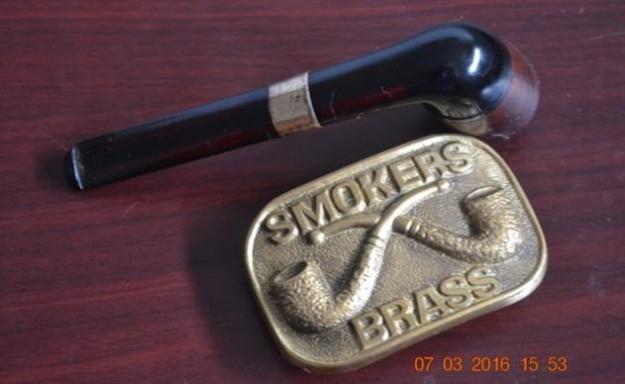
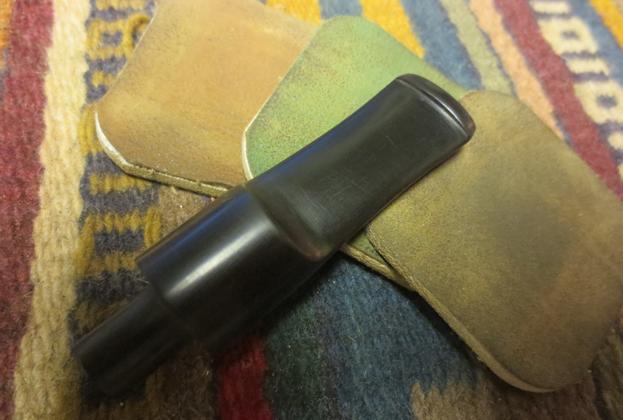
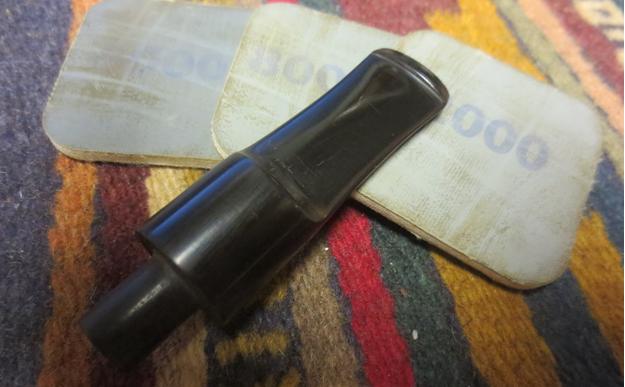
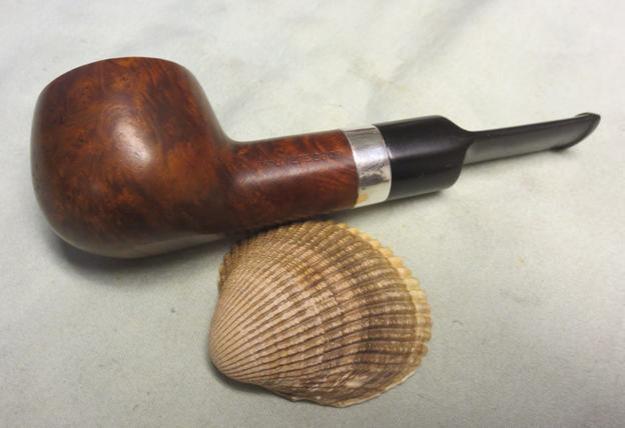
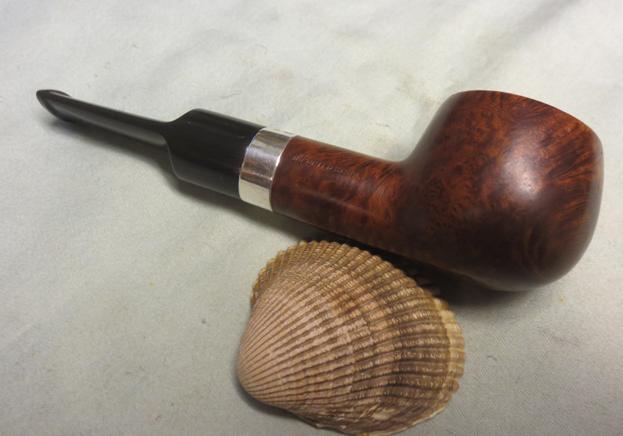
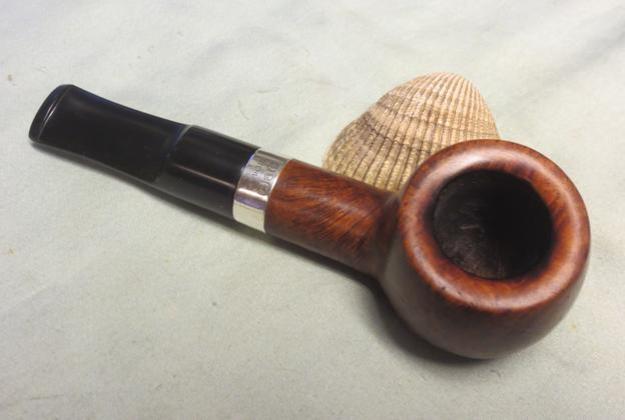
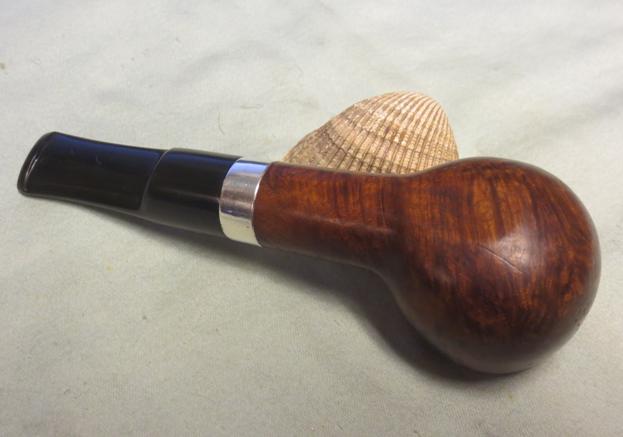
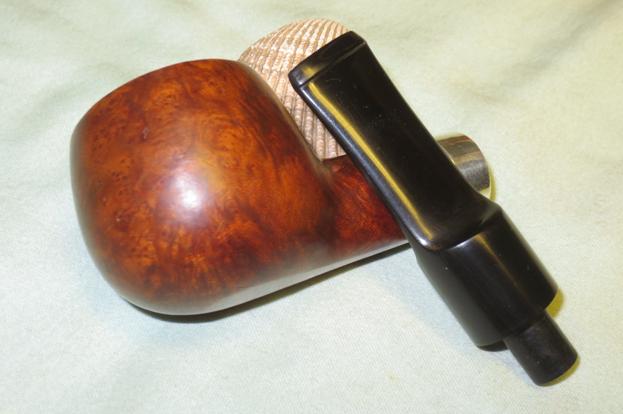
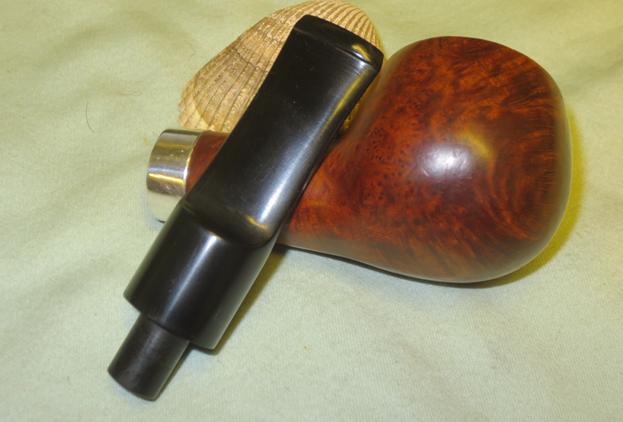
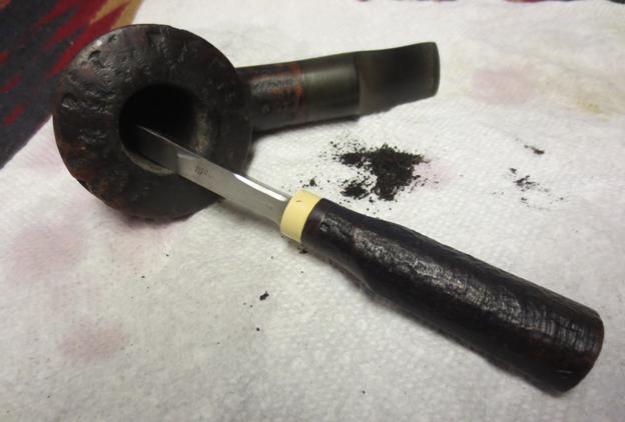
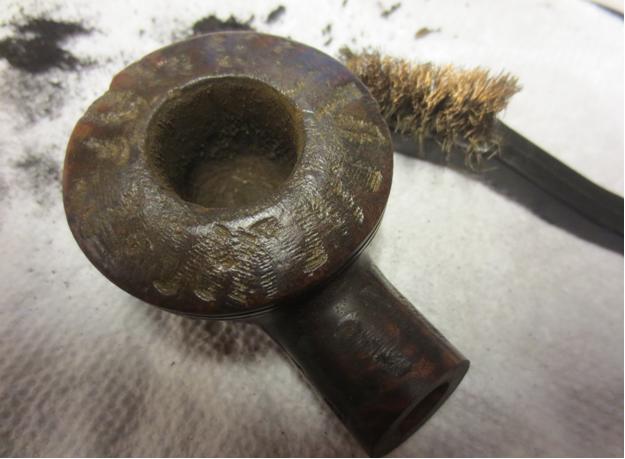
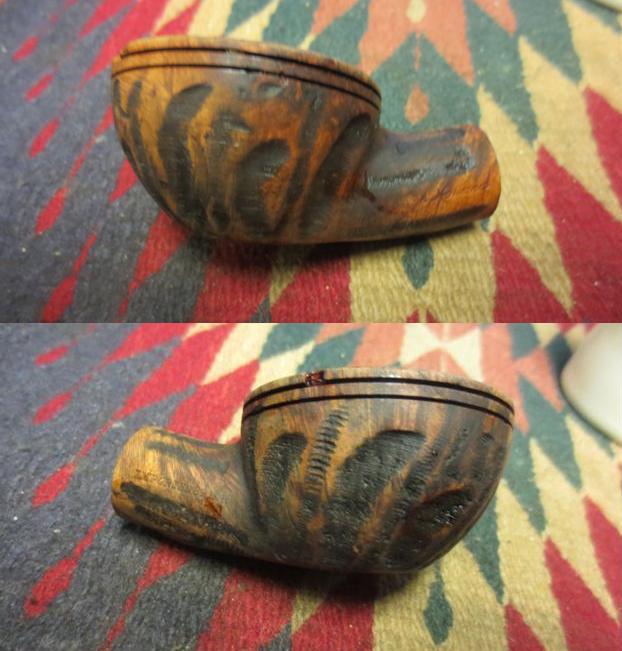
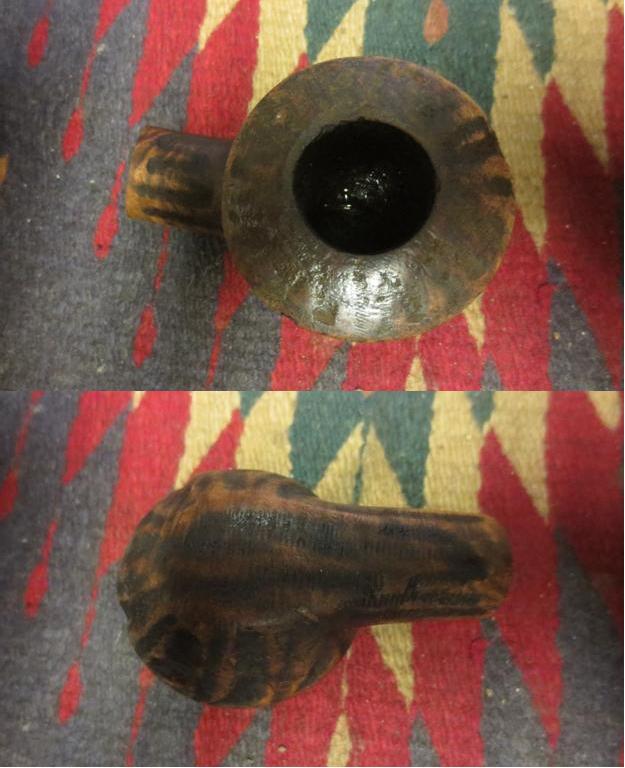
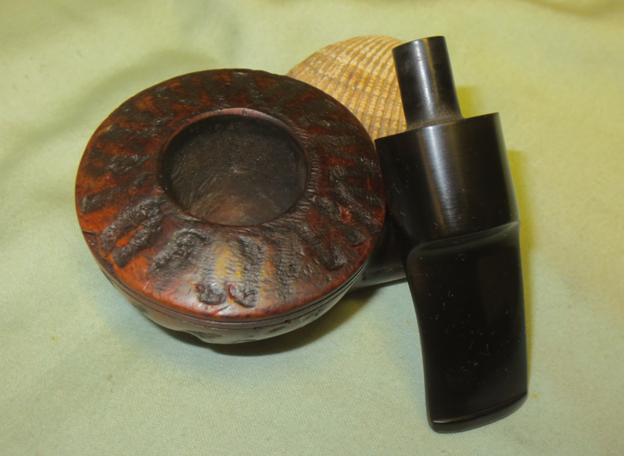
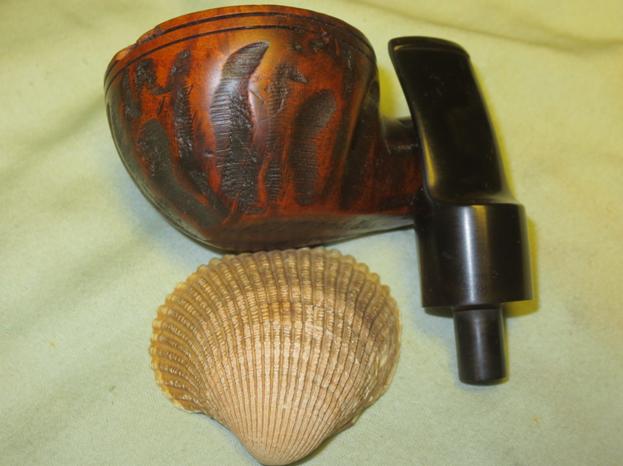
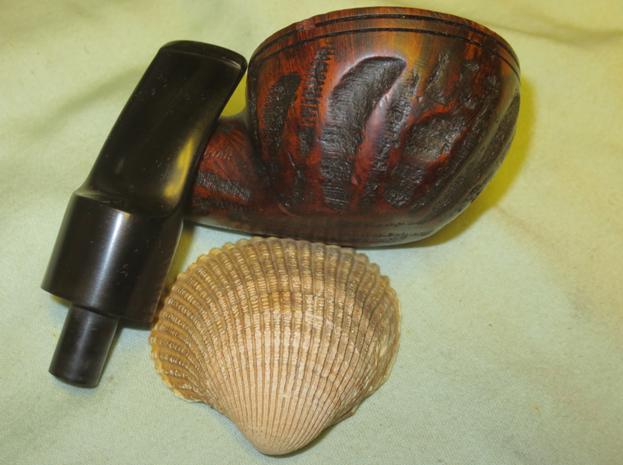
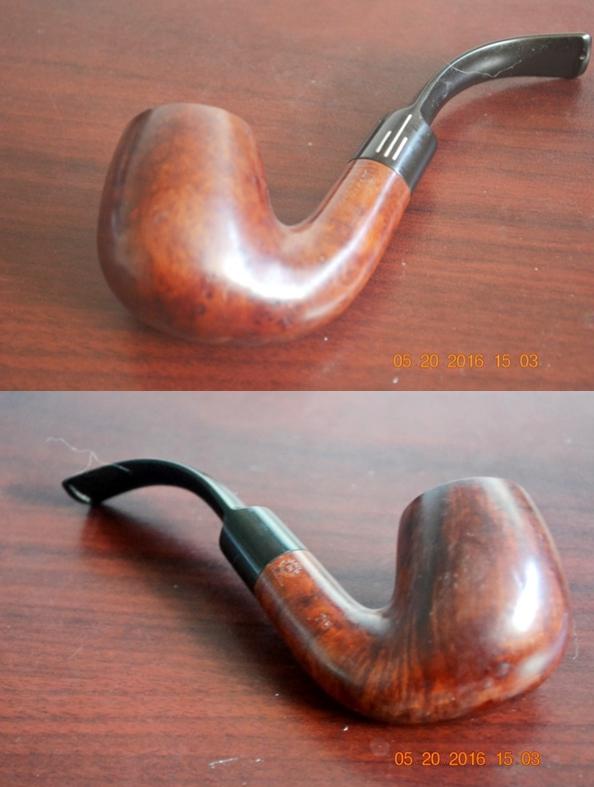
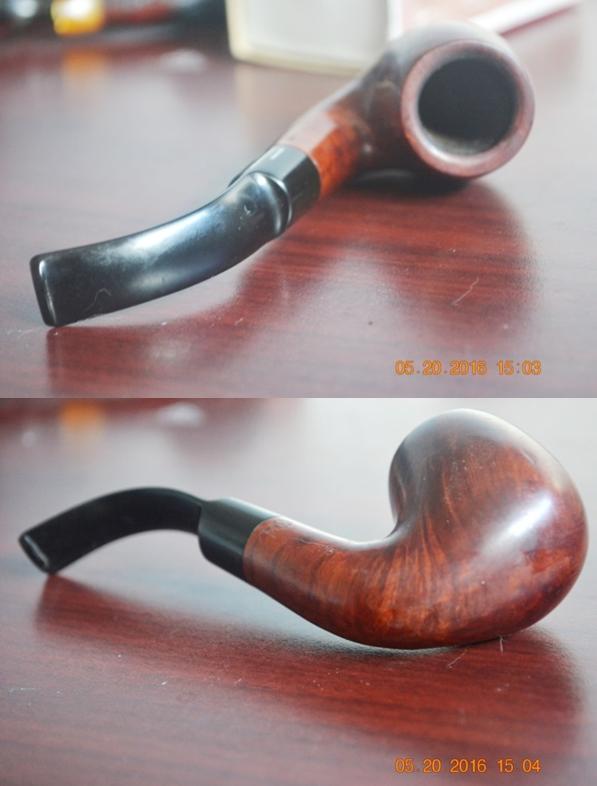
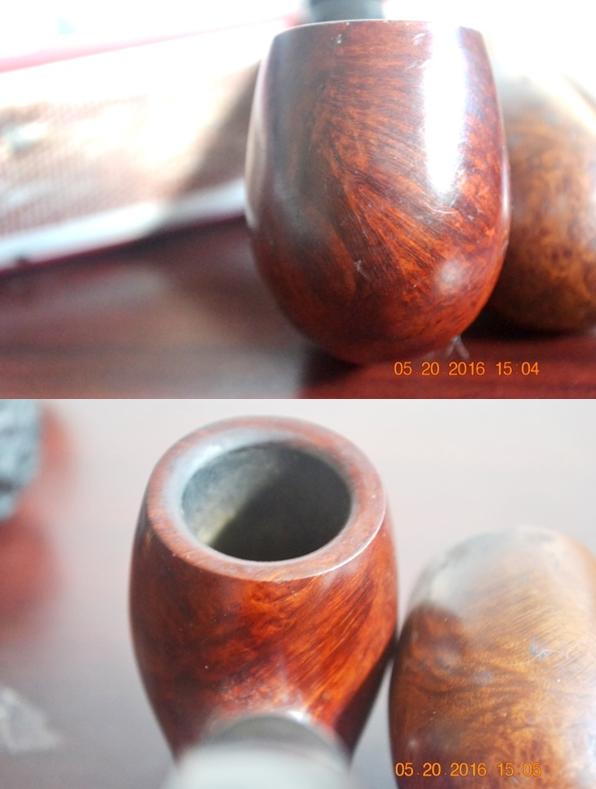
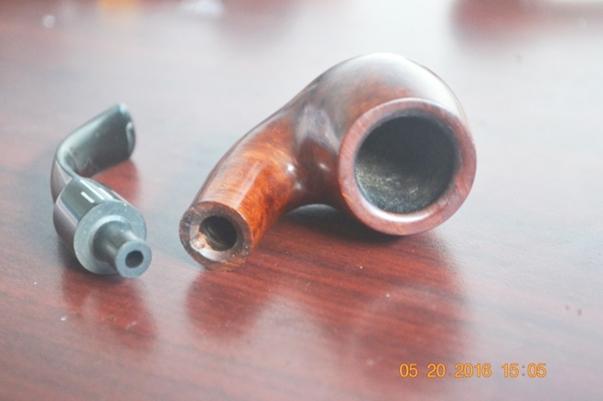
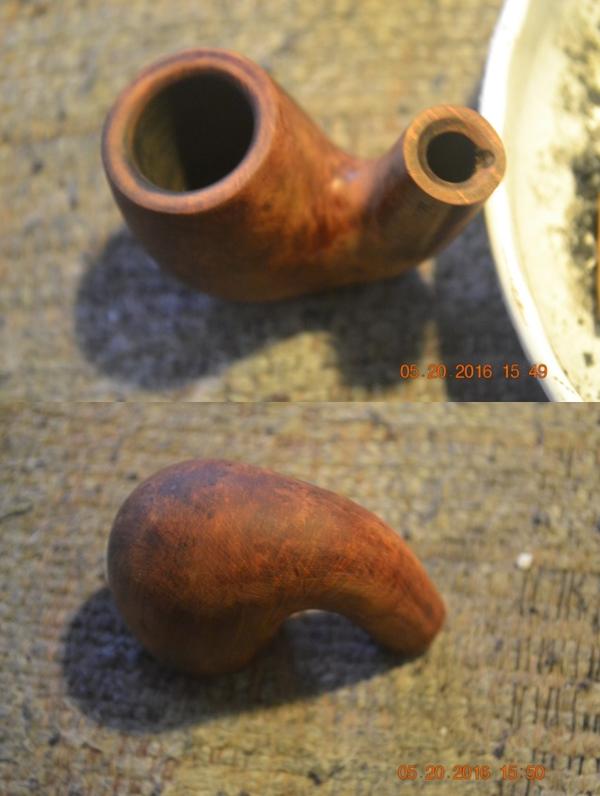
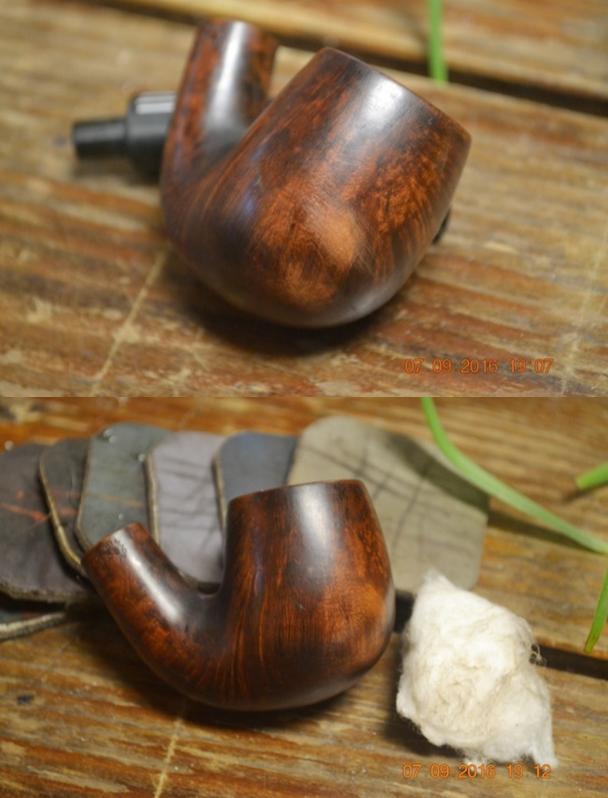
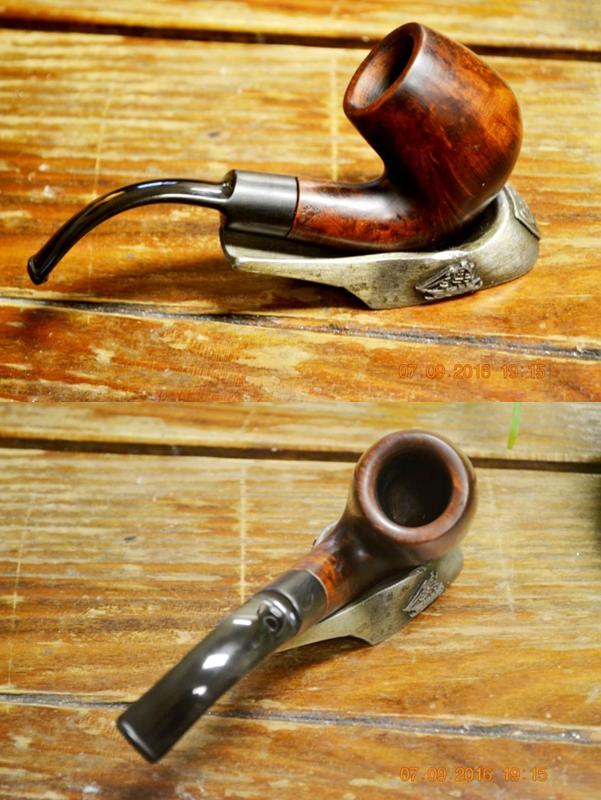
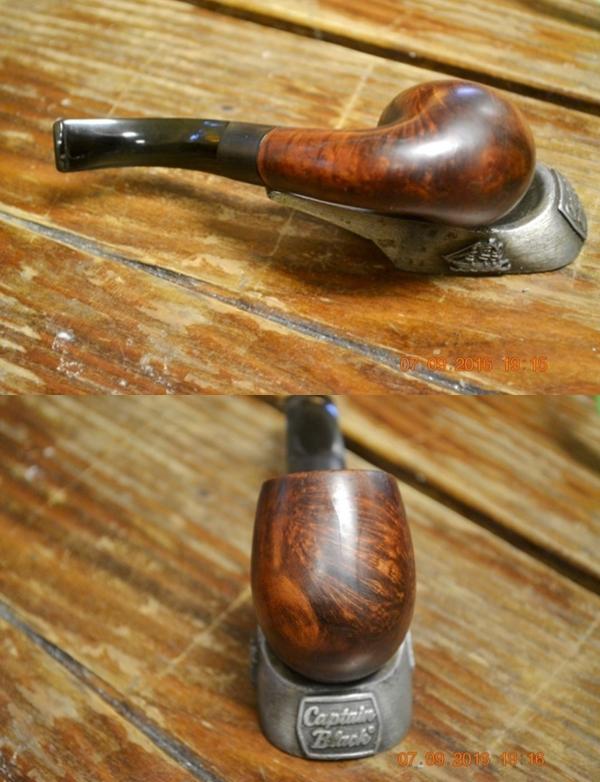
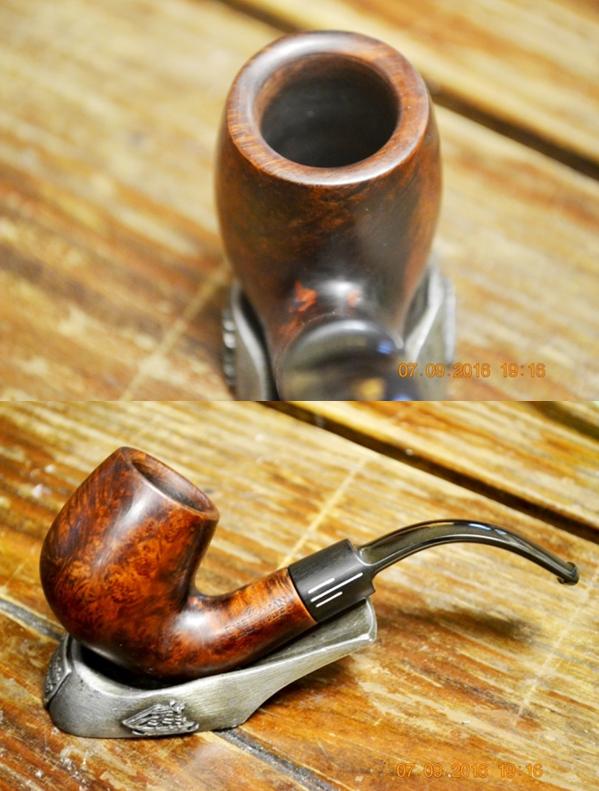
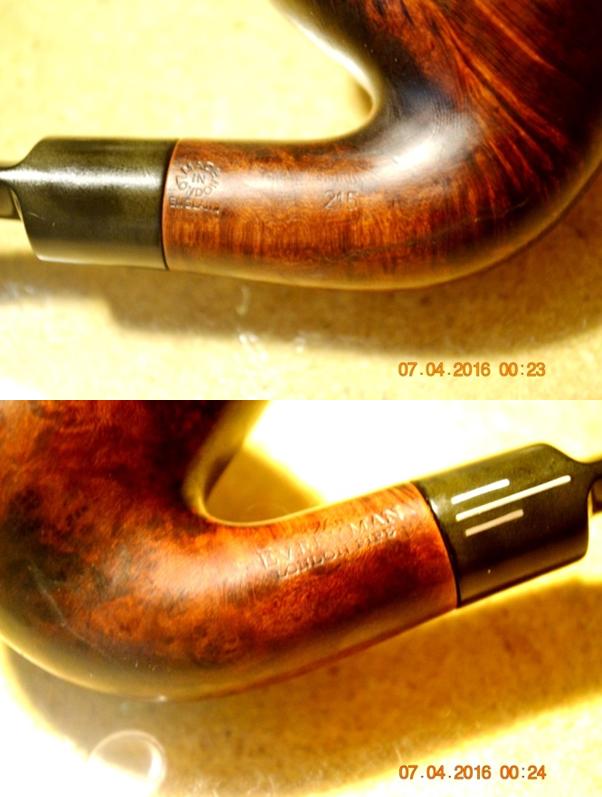
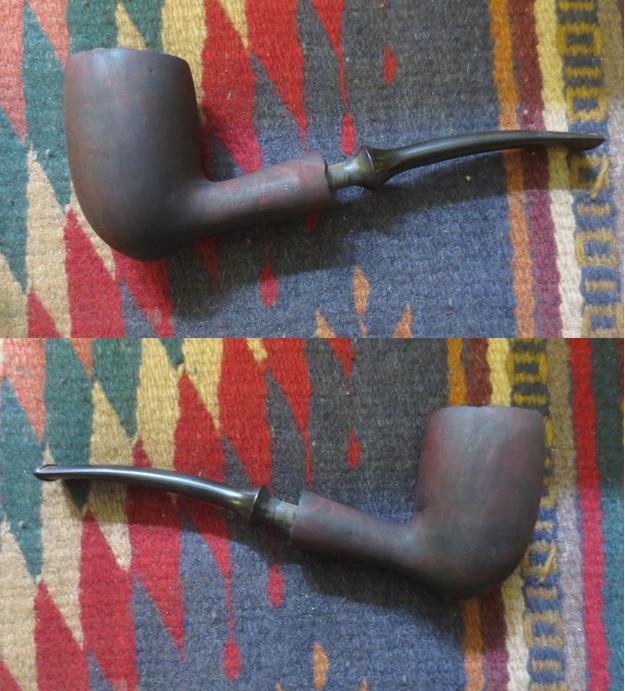
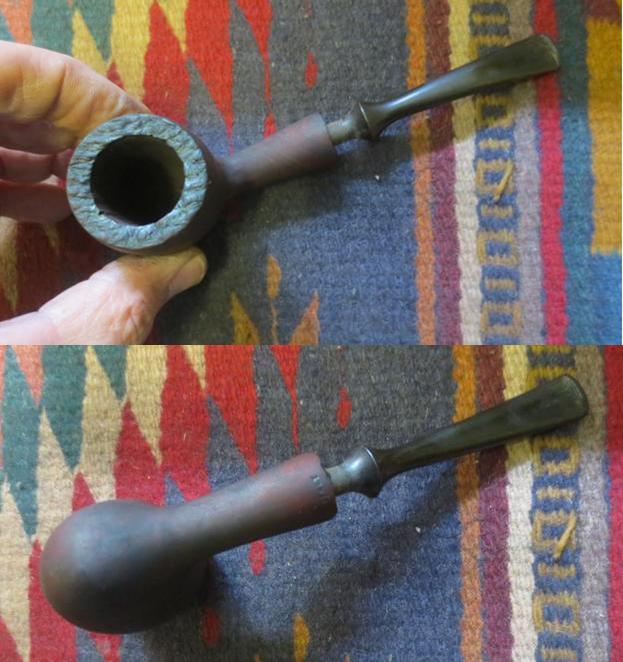
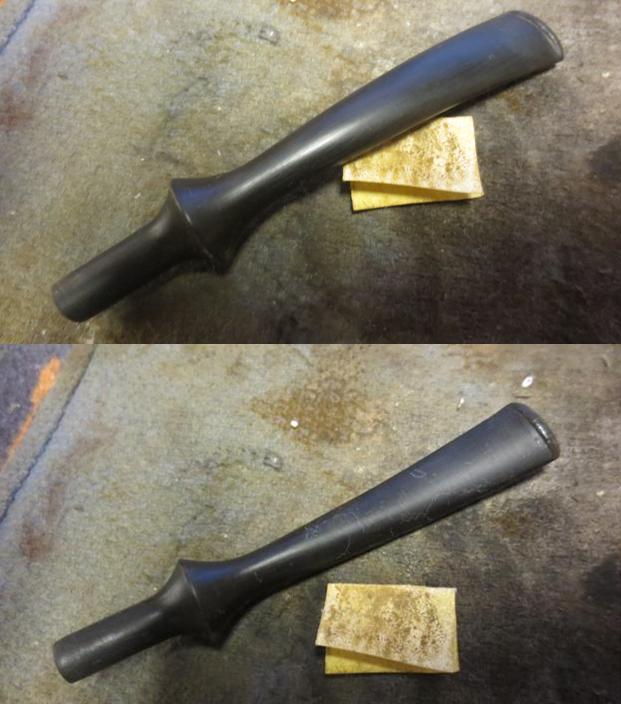
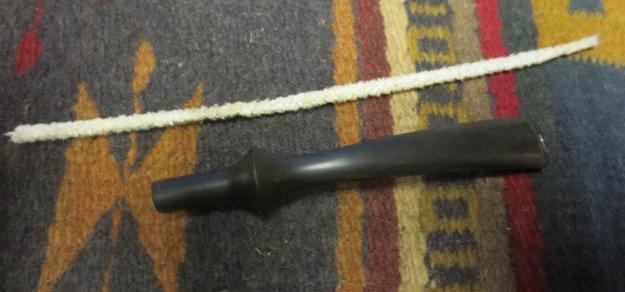
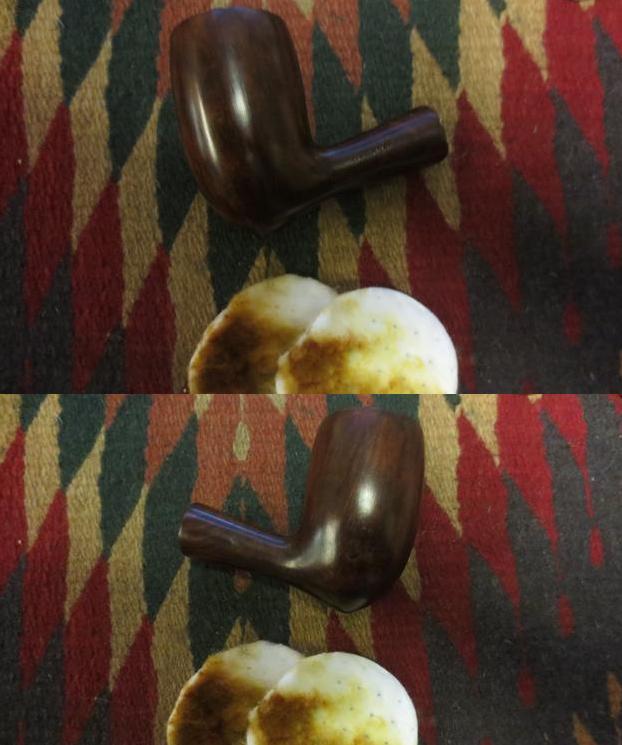
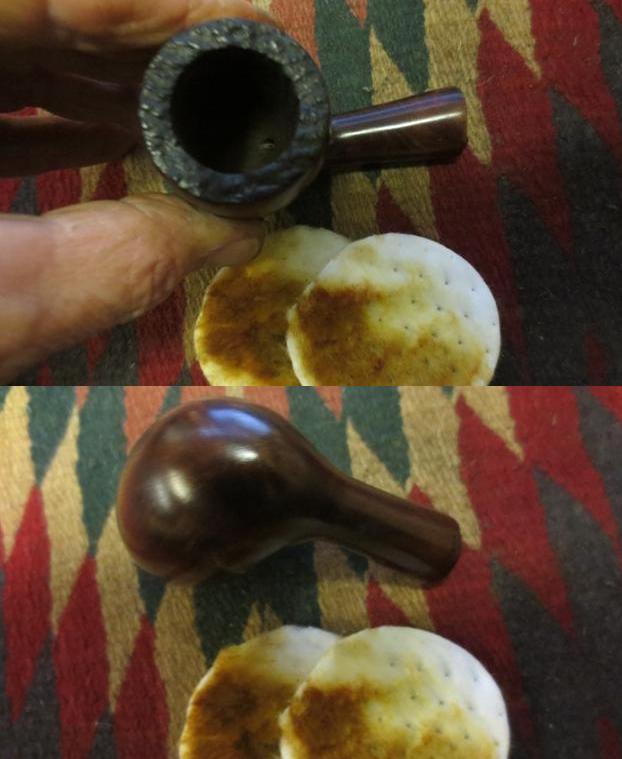
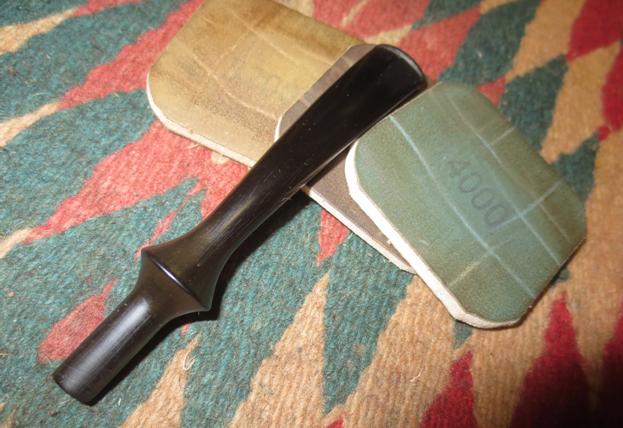
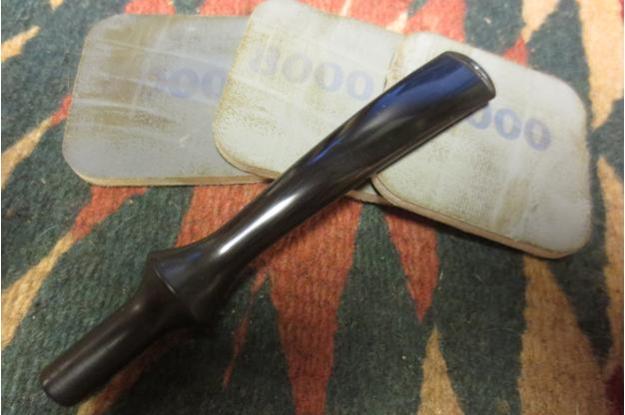
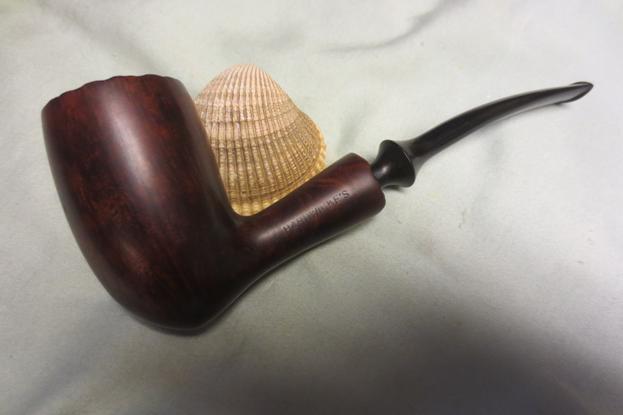
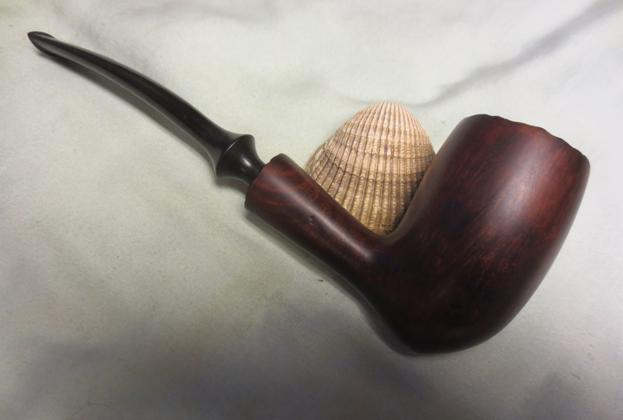
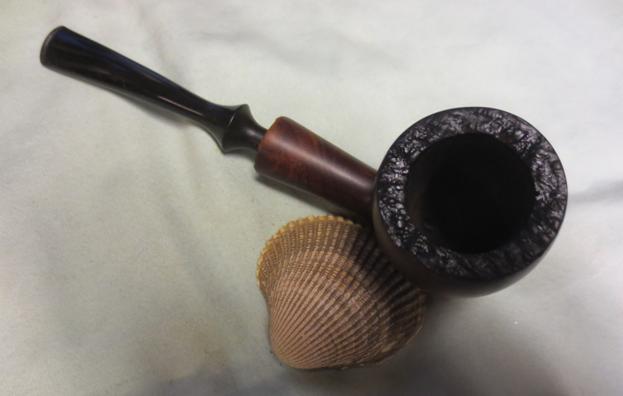
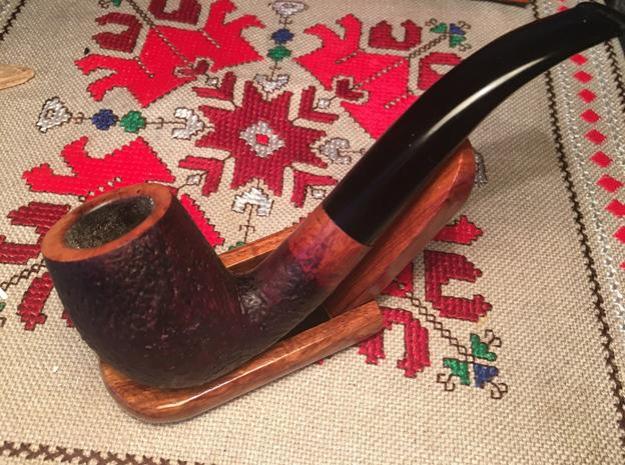
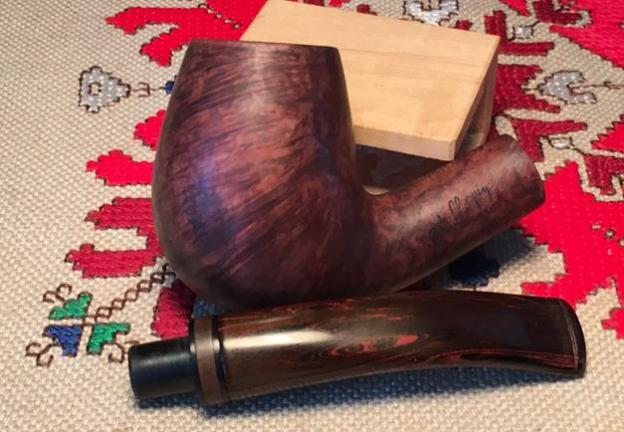
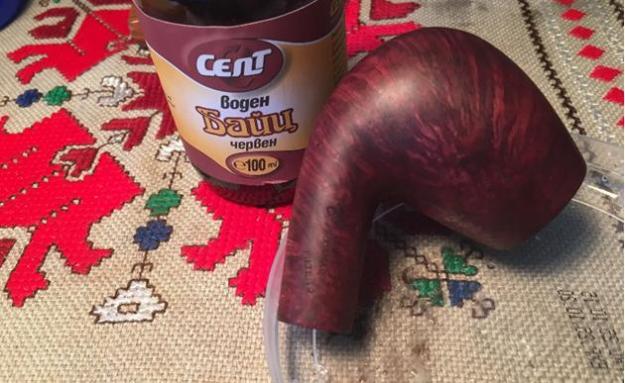
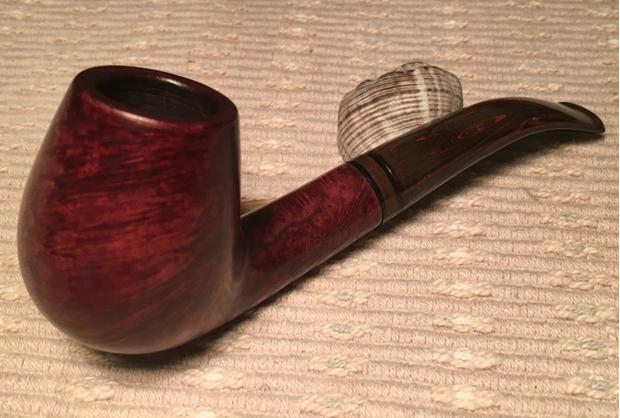
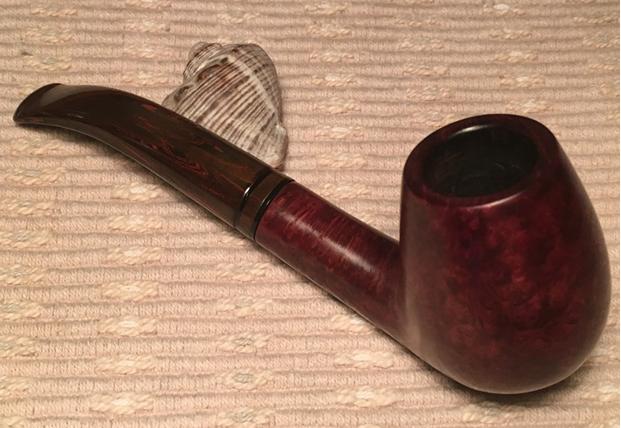
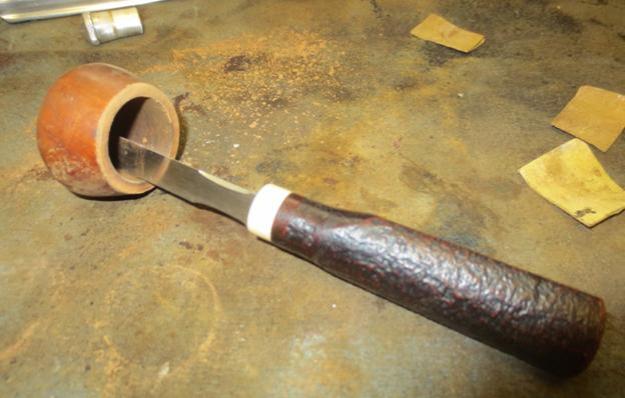
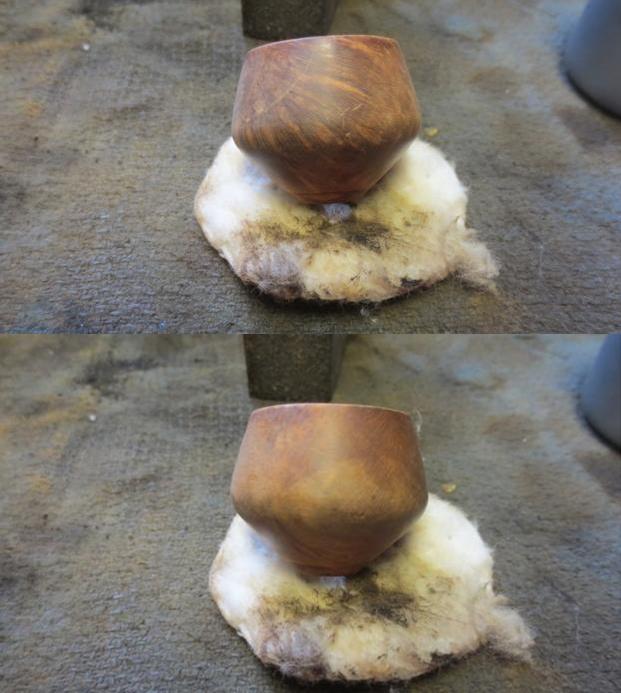
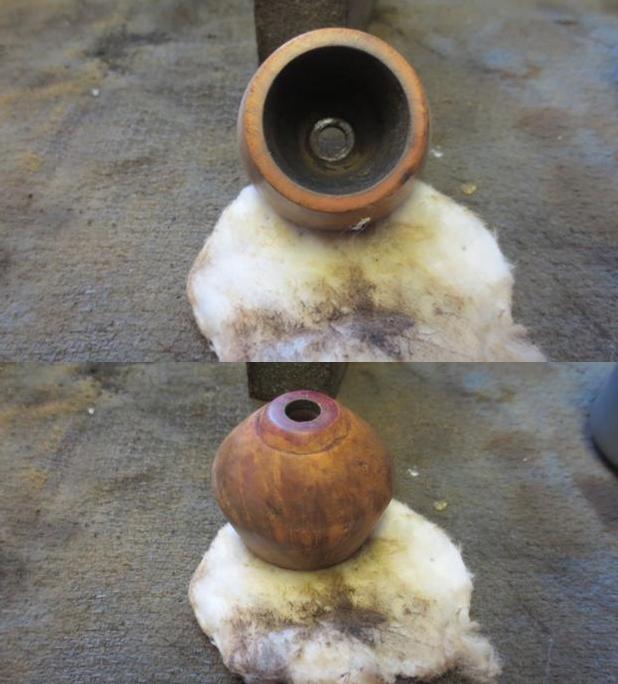
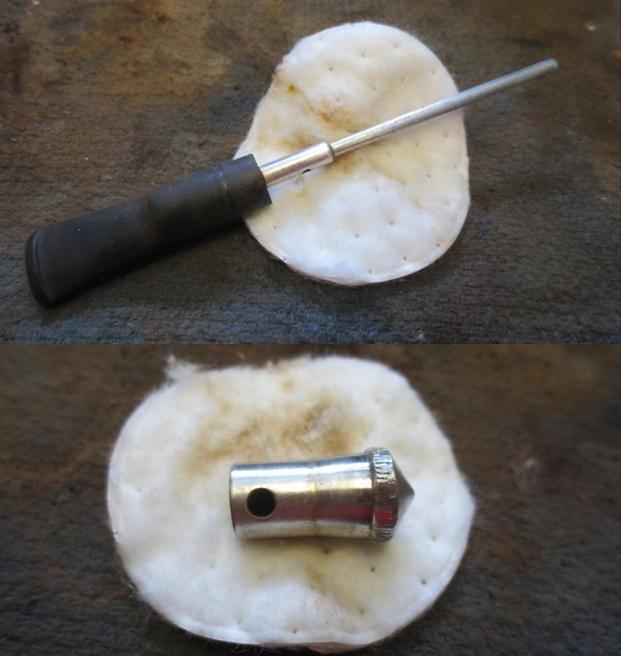
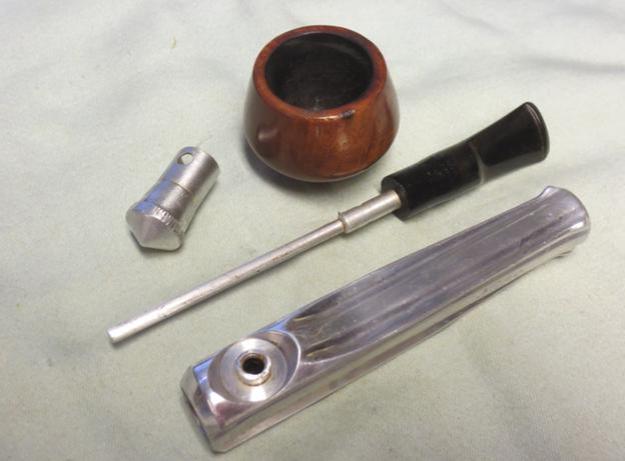
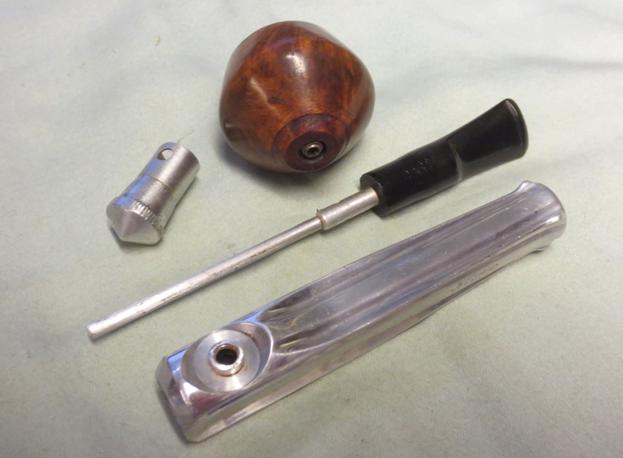
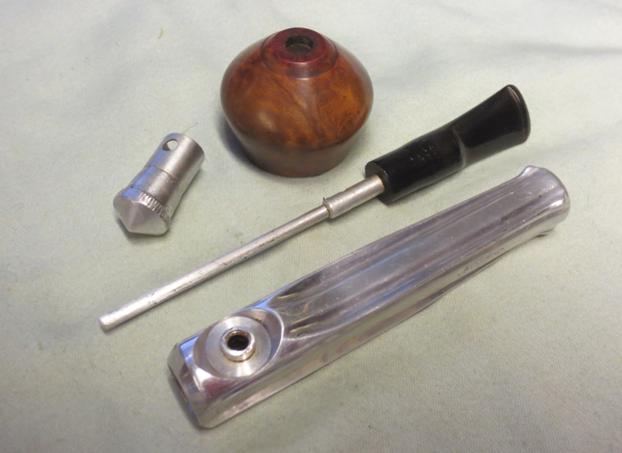
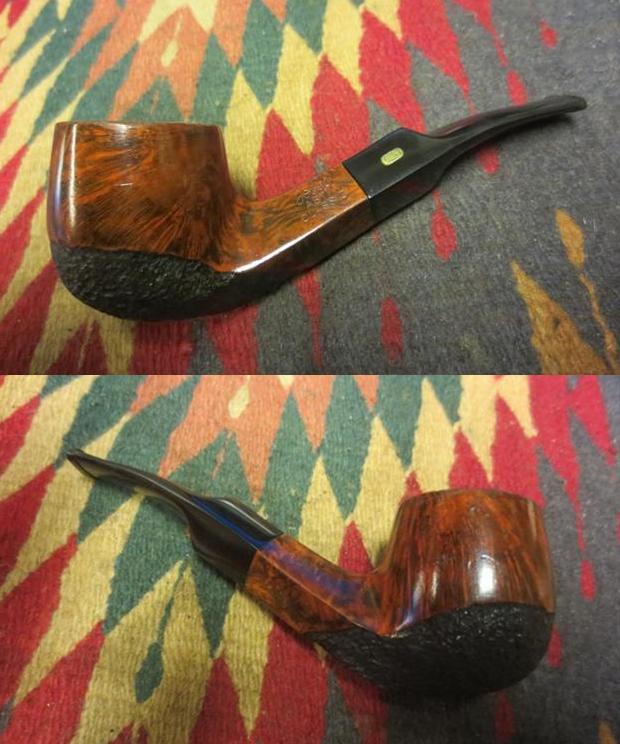
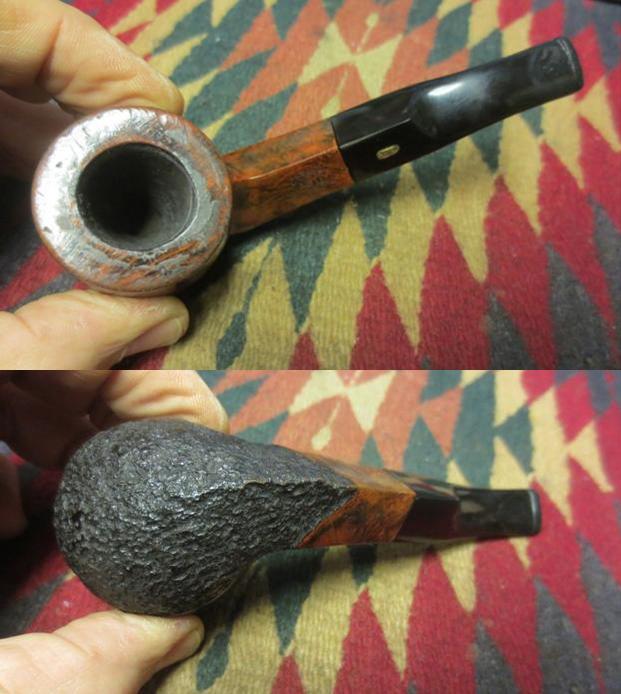
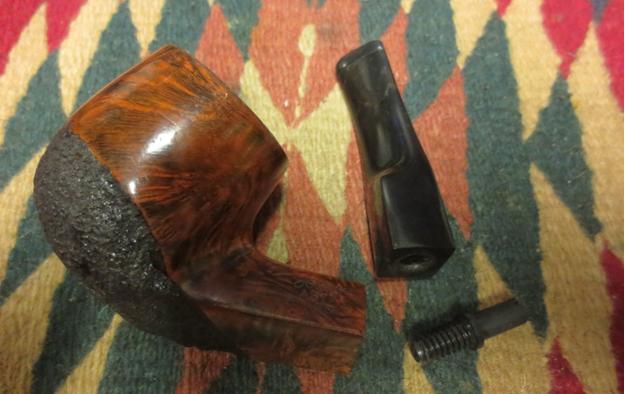
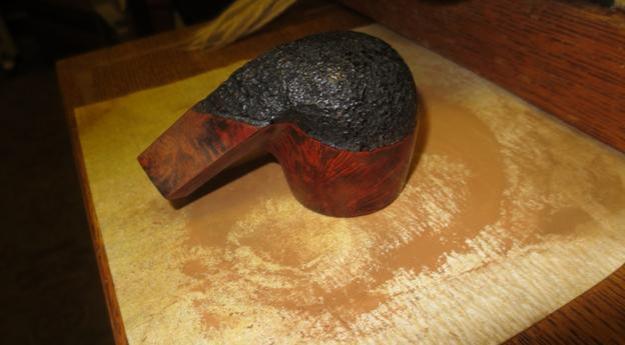
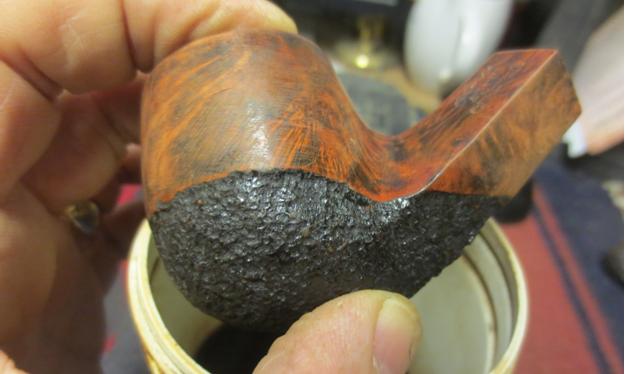
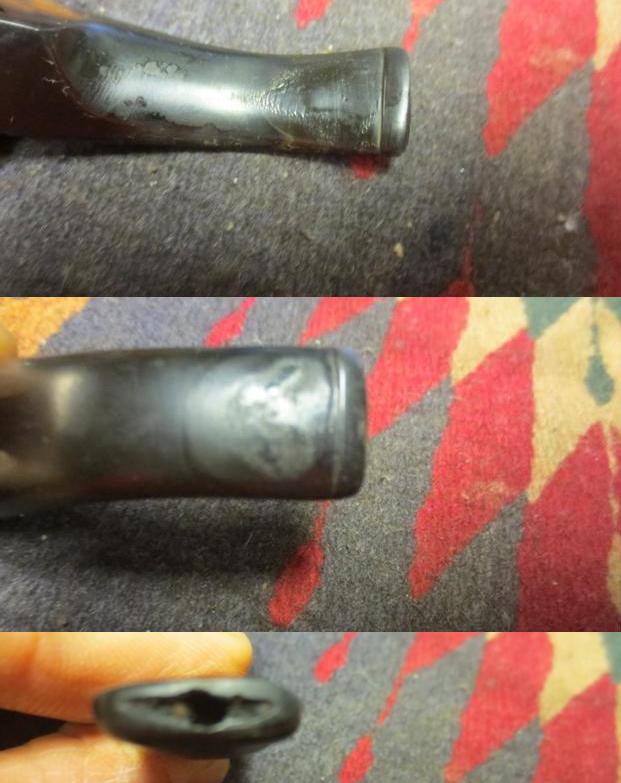
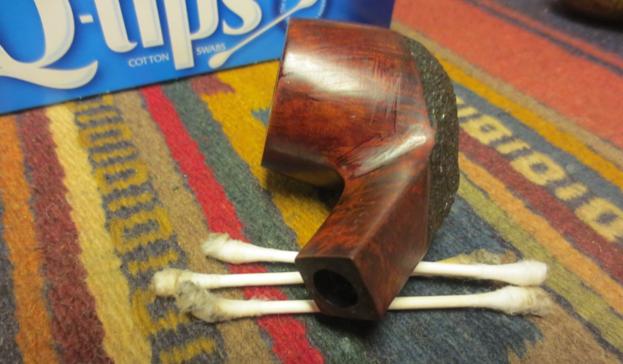
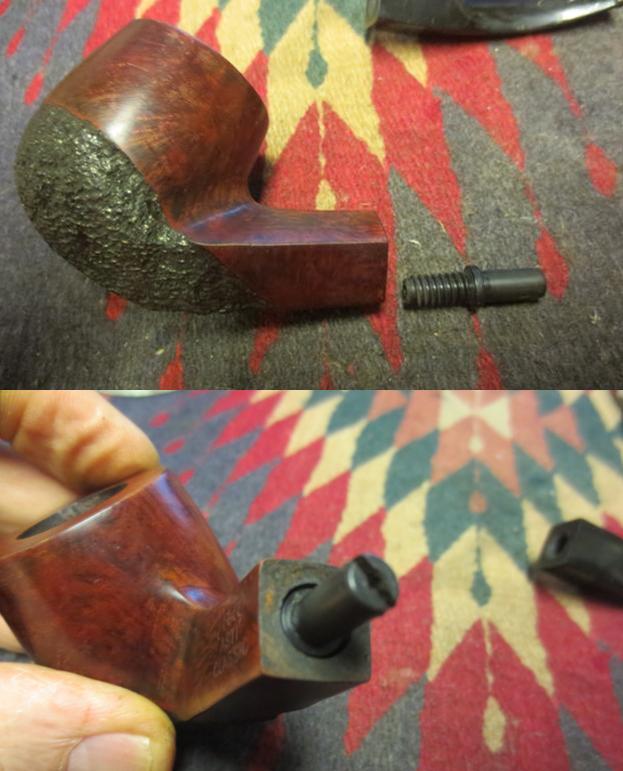
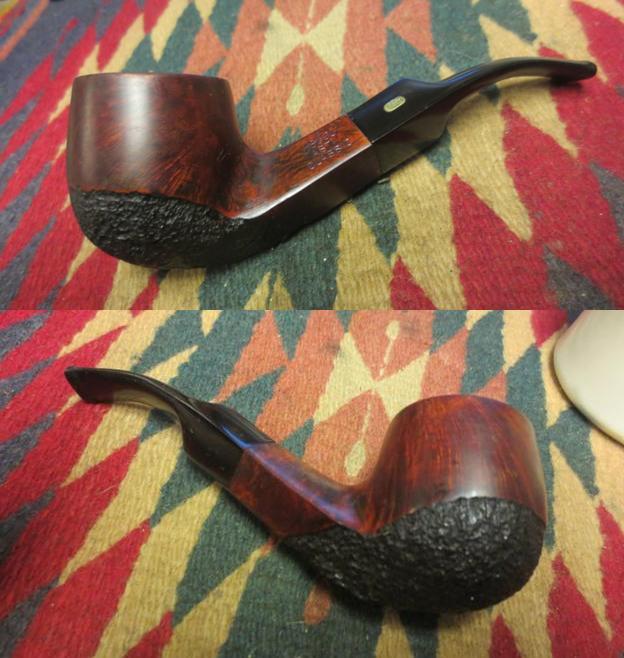
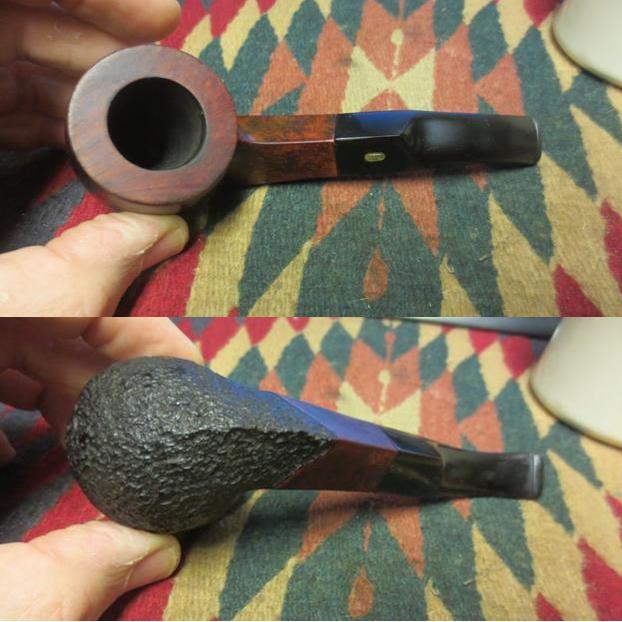
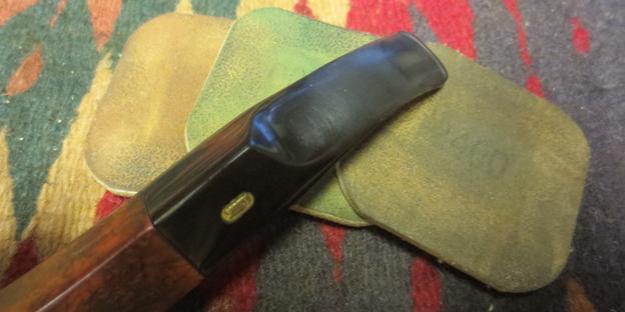
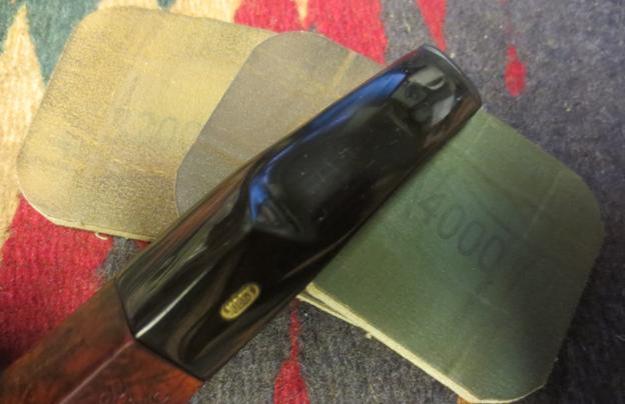
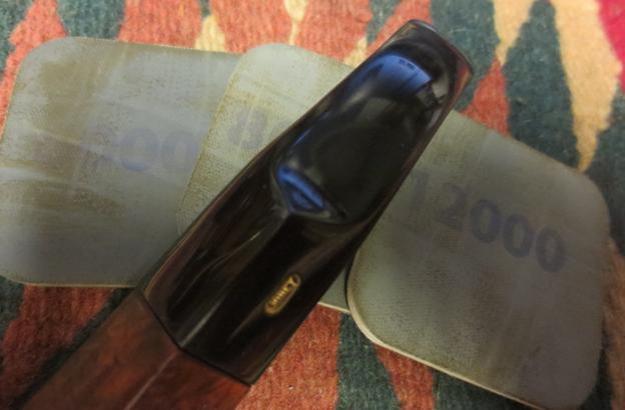
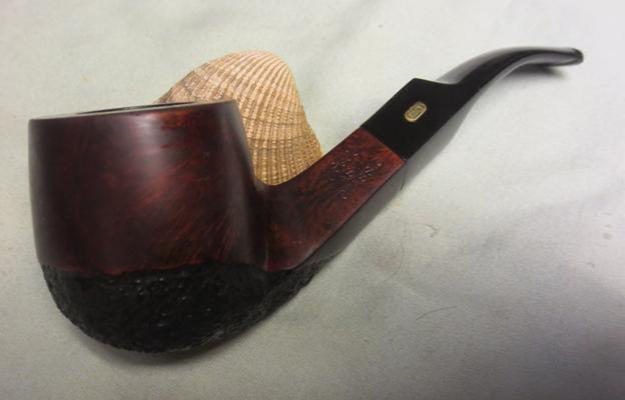
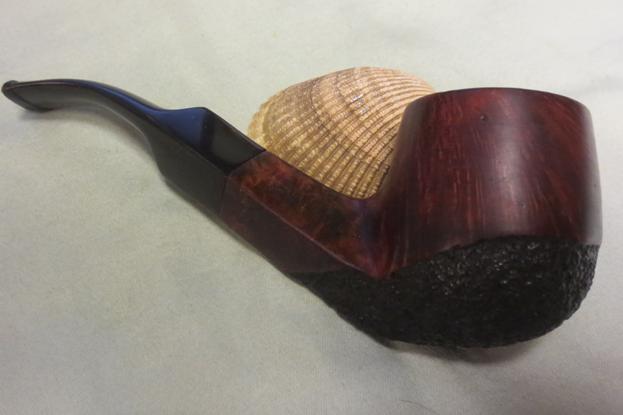
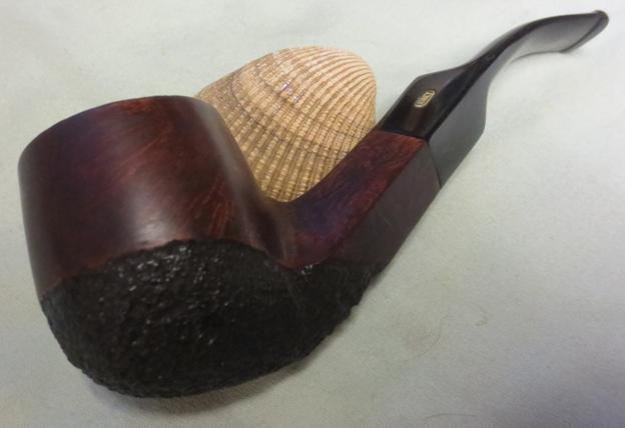
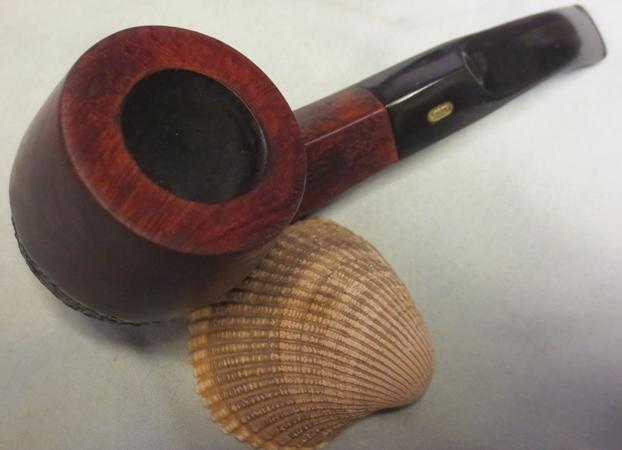
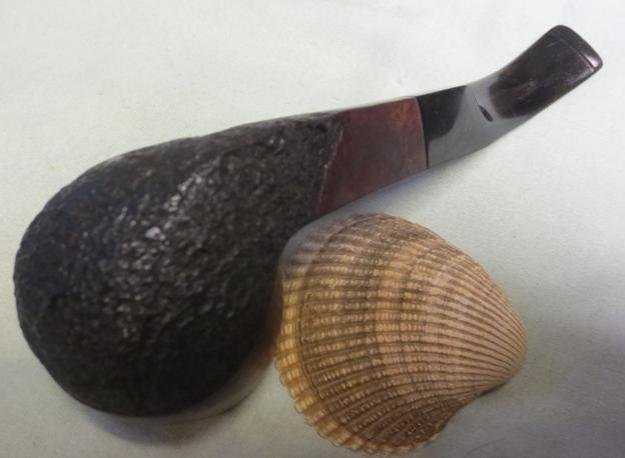
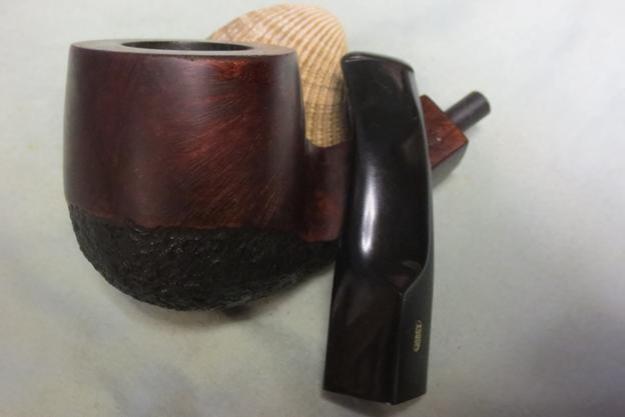
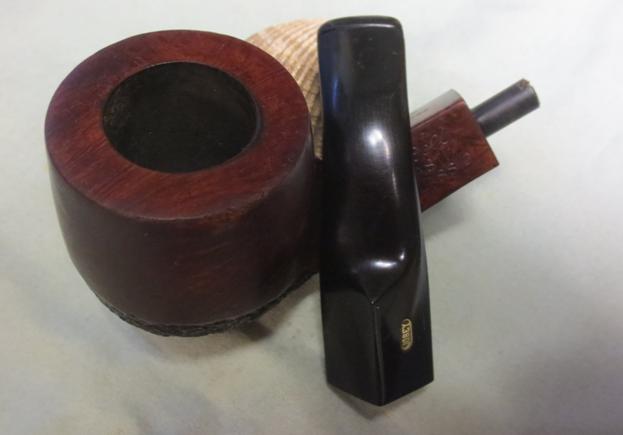
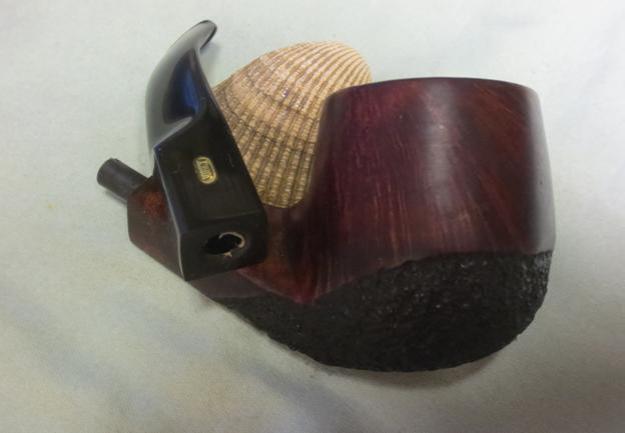
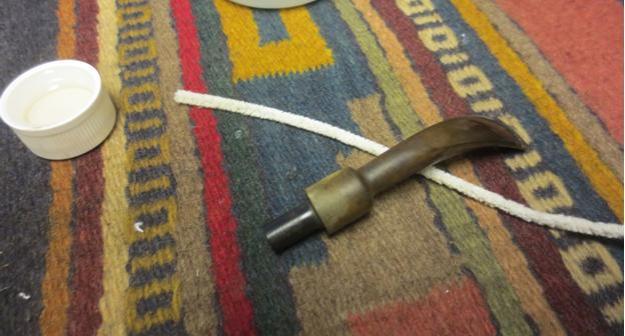
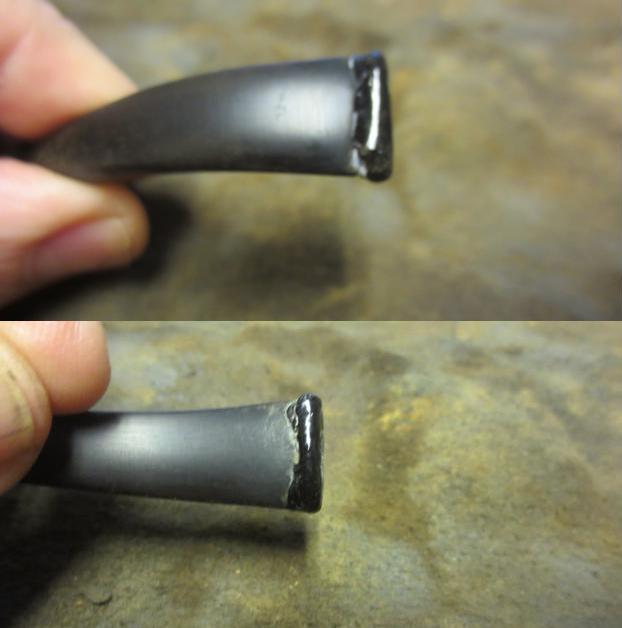
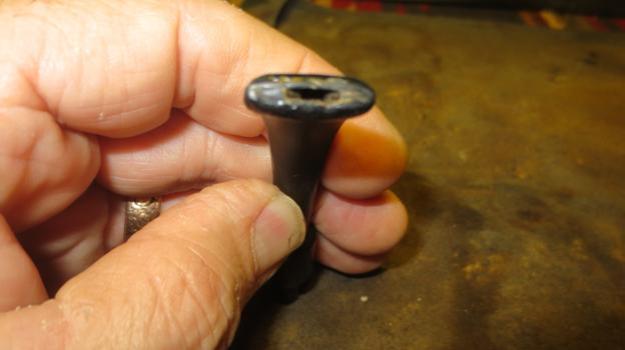
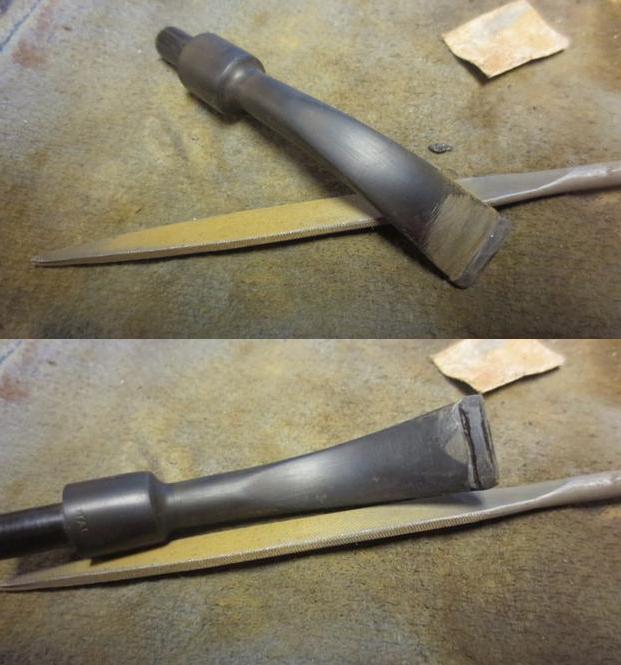
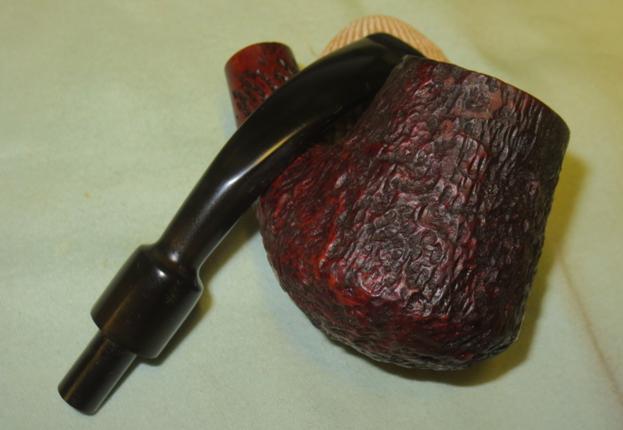
Tag Archives: contrast staining

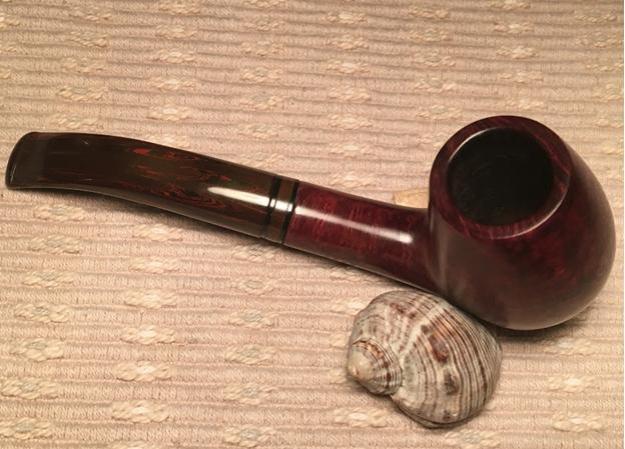
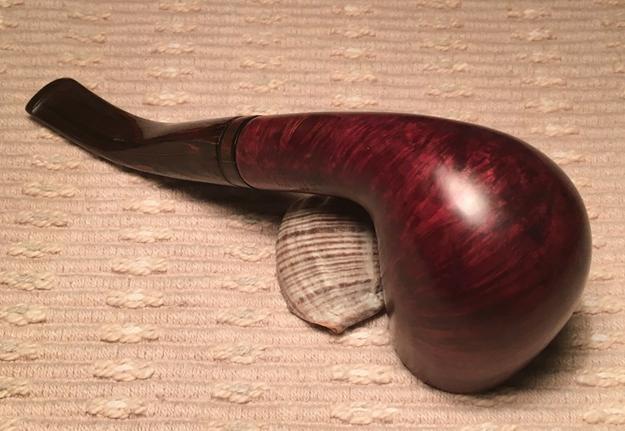
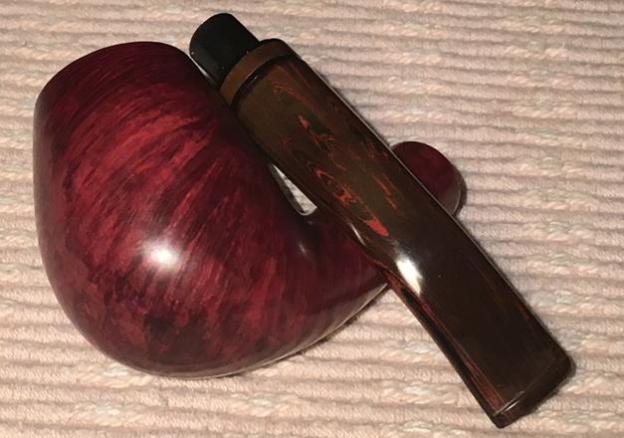
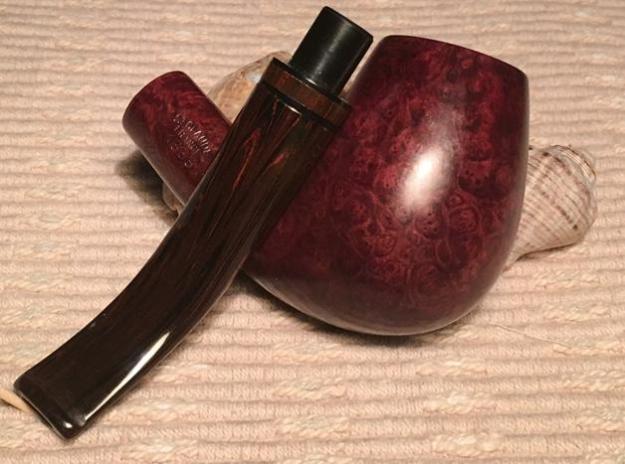
The Scintillating Antique KB&B Redmanol Pipe


Guest Blog by Robert M. Boughton

Member, International Society of Codgers
Member, North American Society of Pipe Collectors
http://www.naspc.org
http://about.me/boughtonrobert
Photos © the Author except as noted

When life was like a summer day,
And I was under twenty,
Three loves were scattered in my way –
And three at once are plenty.
Three hearts, if offered him with grace,
One thinks not of refusing.
The task in this special case
Was only that of choosing.
I knew not which to make my pet –
My pipe, cigar or cigarette!

— Henry S. Leigh (1837-1883), British writer, playwright and lesser poet, “My Three Loves,” 1875

INTRODUCTION

As a writer, I make it a habit to look words up in the dictionary before committing to print, even when I am confident they are the best to convey my true messages.  In the process, I have often been surprised to learn how many words come nowhere close to their common usage.  I have stopped using fantastic (related to a fantasy or other such literary, delusional or wishful thinking, when I want to suggest excellent; I’ve dropped mesmerizing (named for the Australian physician/showman F.A. Mesmer, which deals with the alleged ability to place someone in a trance so deep the subject cannot feel pain, as opposed to something considered fascinating, and of course I have my pet peeve: unique, or existing as one, sole, solitary, alone.  Therefore, there can be no higher degree than unique, such as more, very or, God help us, totally unique, dude.  Thomas Jefferson’s unique literary and diplomatic exception to the same rule applied to another word, in penning the “Declaration of Independence” and referring to a more perfect Union, was a brilliant misuse of the language directed to good old King George V, whom the masterful wordsmith, diplomat and statesman knew would not miss the Colonial revolutionary’s attempt to play nice.

Somewhat of a language purist, therefore, I was disappointed upon checking the past participial adjective scintillating in the OED.  I hoped to find a meaning with common uses I have heard indicating something more alluring in a sensuous sense.  I suffer from chronic migraines and was struck by the sole usage referenced, to scintillating scotoma, the technical name for auras we who live with the often blinding, nauseating, debilitating torture of these attacks call the event that precedes the onset of the pure anguish that can last 12 hours, 24 or for days before running out of air, if you will, burning out (or more descriptive of their quality, terminating with a thermonuclear-like reaction) – and then returning, as they come in cycles of three or so for me.  Thanks to my dear Dad, however, who taught me the value of a good double meaning in any title, I moved to the verb scintillate and found more general references to sparks, flecks, twinkles and flashes of light, without the negative but illustrative connection of scintillating scotoma.

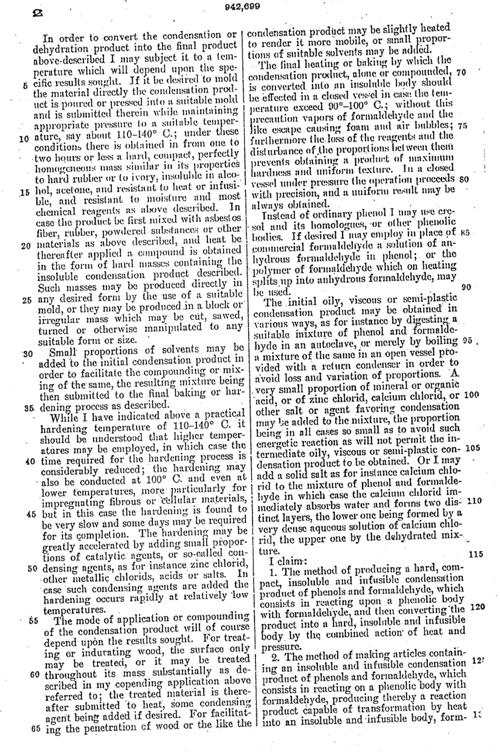
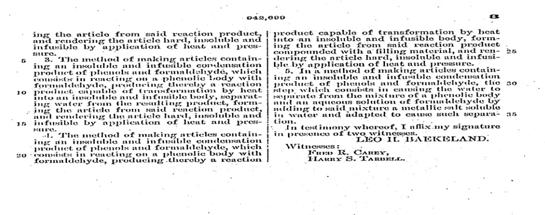
The story behind Bakelite and two of its competitors, and the Machiavellian way the three in time merged into a single Bakelite incarnation, is one for the annals of business law.  The basic original resin used to make Bakelite, a phenol formaldehyde based synthesis, was patented as such in 1900 by Leo H. Baekeland, a Belgian-American chemist.  Baekeland’s synthetic plastic, the first formulated in the world, was named in honor of its inventor and began production in 1907.   See below for the 1900 patent.

The first of many Bakelite satellite companies worldwide, the Bakelite Gessellschaft gmbH, was founded in Berlin in 1910 by Baekeland and two German companies.  Late the same year, the General Bakelite Co. was established in the U.S. by Baekeland.

Two independent chemical research and production companies in the same time period, Redmanol Chemical Co. founded by Lawrence V. Redman after whom the harder, more durable and amber-colored synthetic was called, and the Condensite Co. established by A.J. Aylesworth, developed and sold their products which included substantial differences from Bakelite although they employed the same heat process.  The hard, durable synthetic plastic redmanol was called thus after its developer and is made from the action of formin on carbolic acid.  On the other hand, condensite is formed from the action of chlorine on naphthalene.  In other words, all three have fundamental differences that make them viable as separate synthetic plastic products.

Perhaps seeing the only way to maintain ultimate proprietary control over his original Bakelite idea and not miss out on the opportunity to use newer, better variations on his theme, in 1922 Baekeland sued a distributor of Redmanol, which had a controlling interest in Condensite, for patent infringement.  Baekeland must have known the other companies could not fight the complaint in court and maintain production.  His civil action ending in success, he “arranged” for the two smaller chemical concerns to be consolidated with the formation of the Bakelite Corp.  From then on, Redmanol and Condensite products, including pipes, were stamped Bakelite – but all anyone needed to do was look at the quality of the product to know the difference.  Bakelite Corp. was consumed by Union Carbide and Carbon Corp. in 1939.

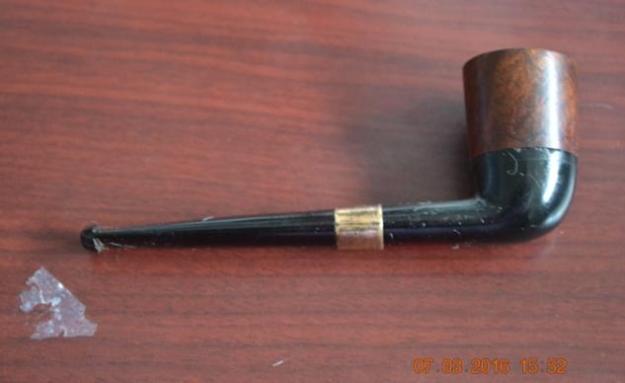
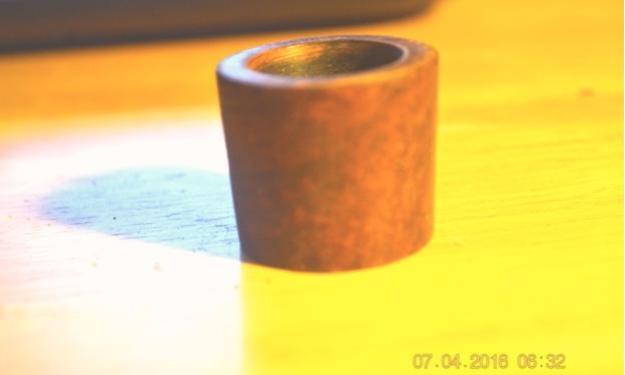
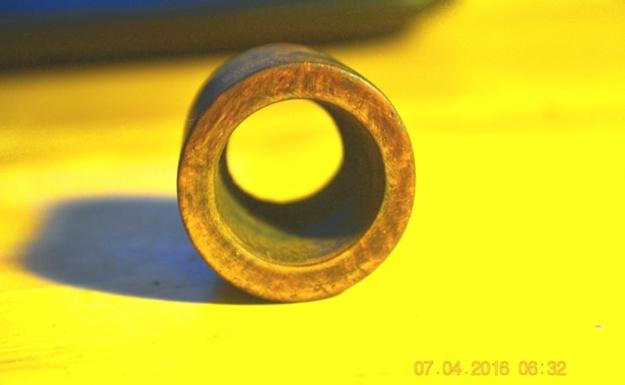
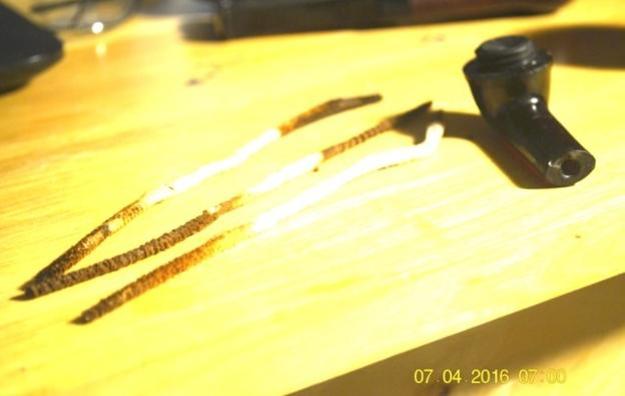
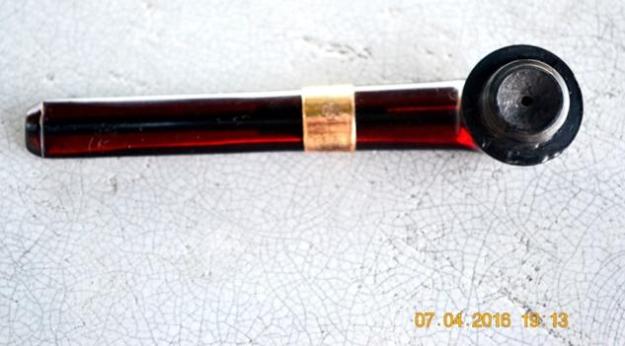
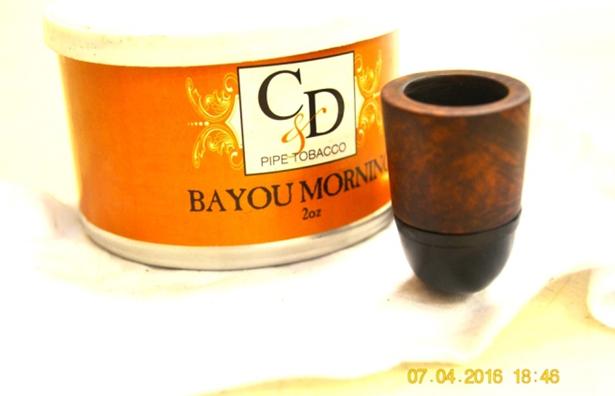
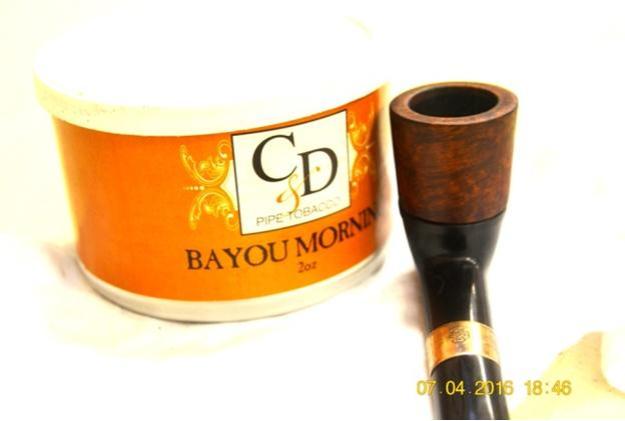
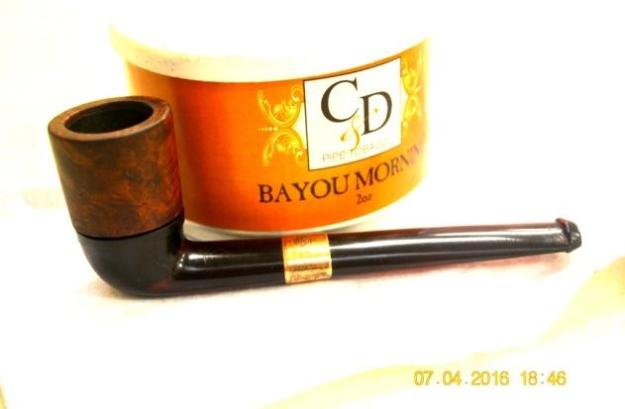
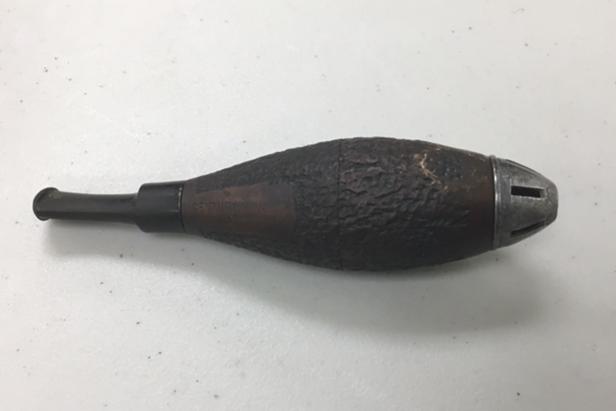
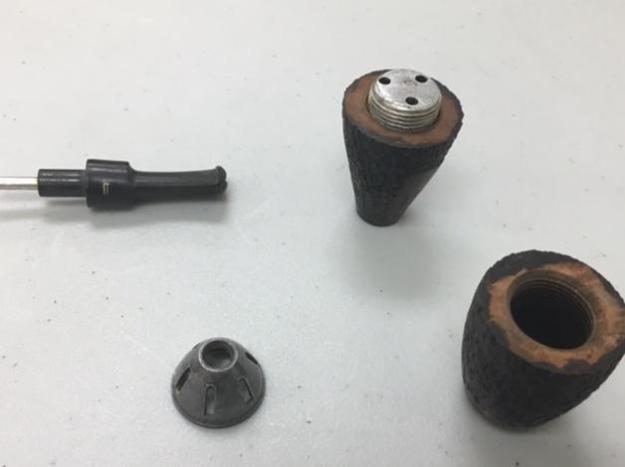
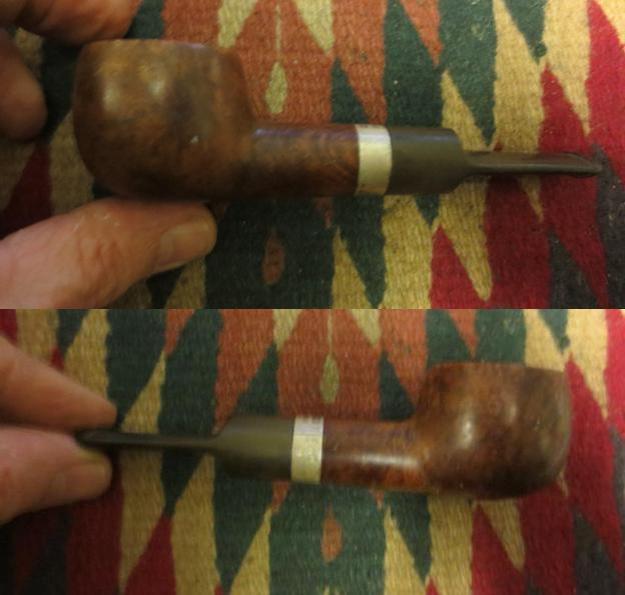
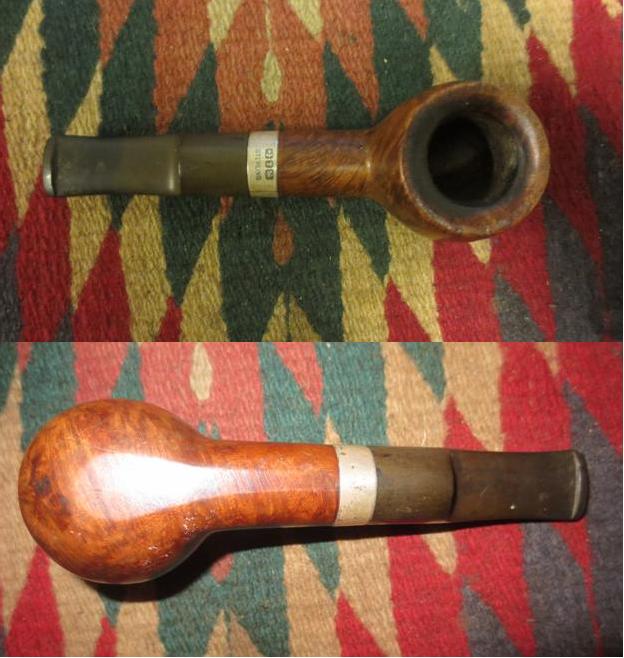
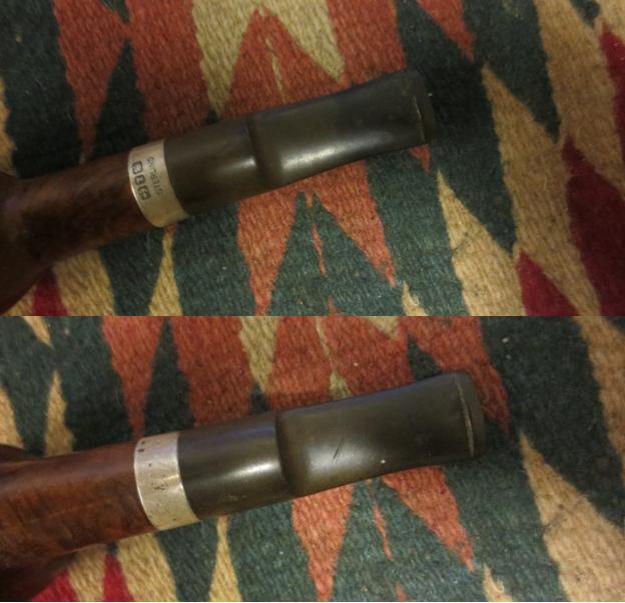
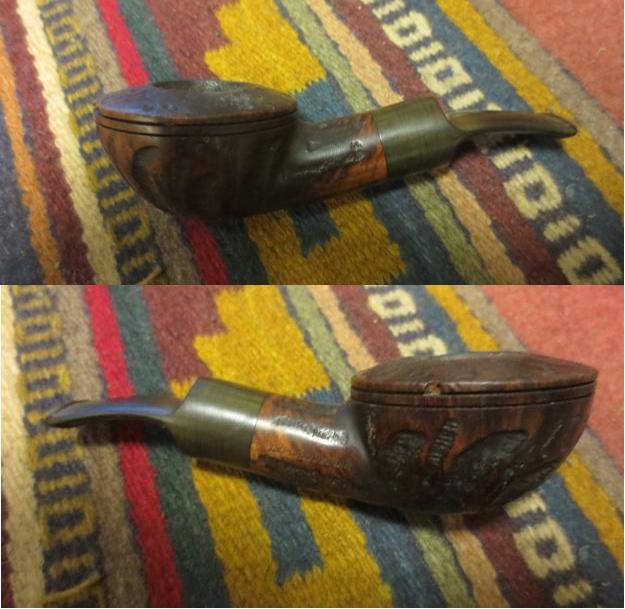
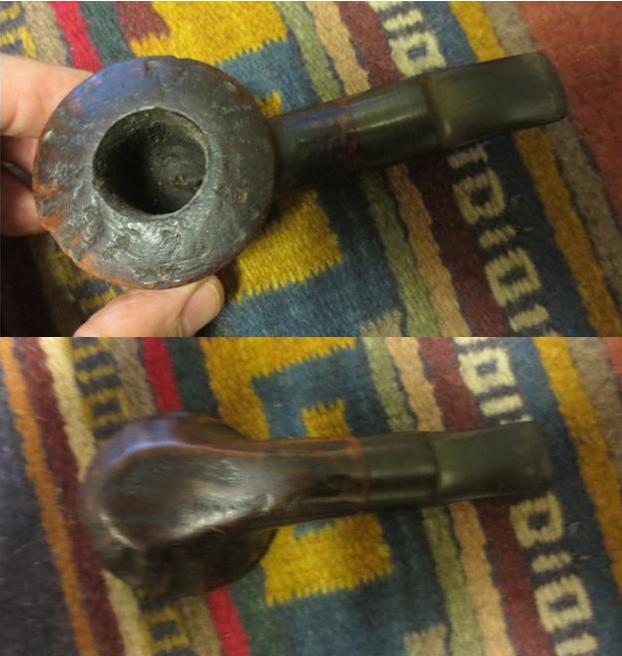
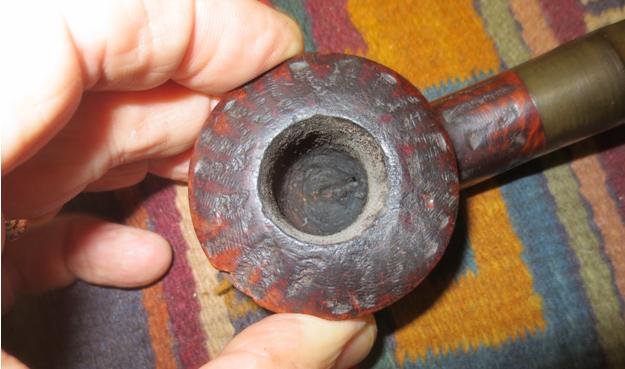
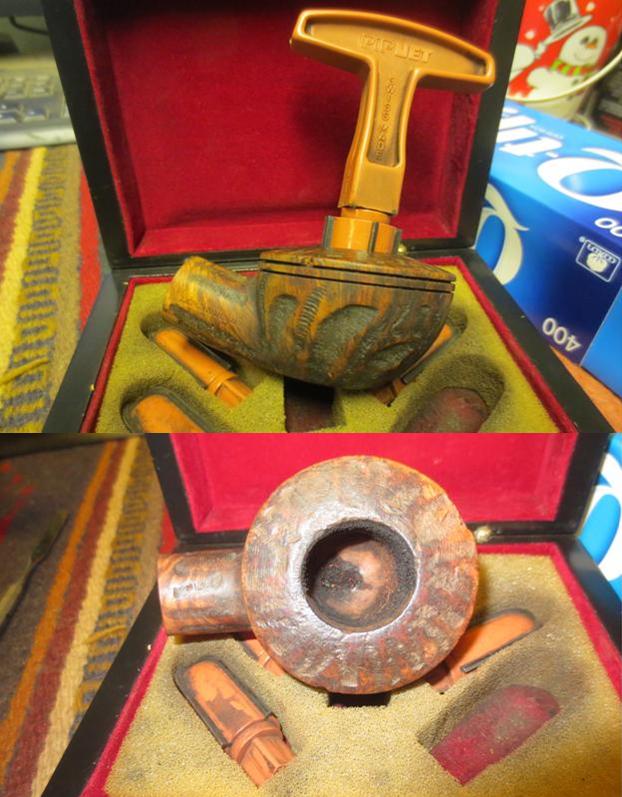
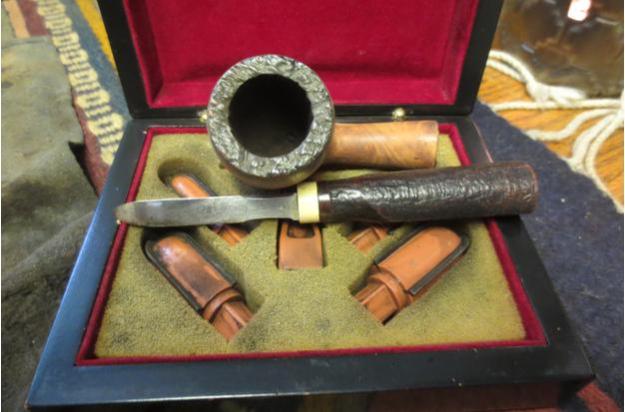
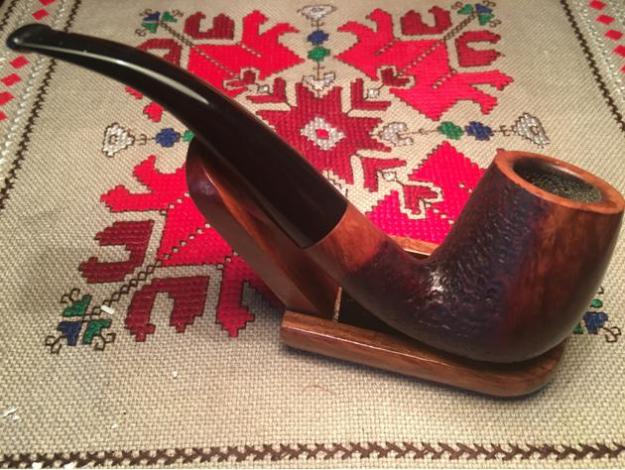
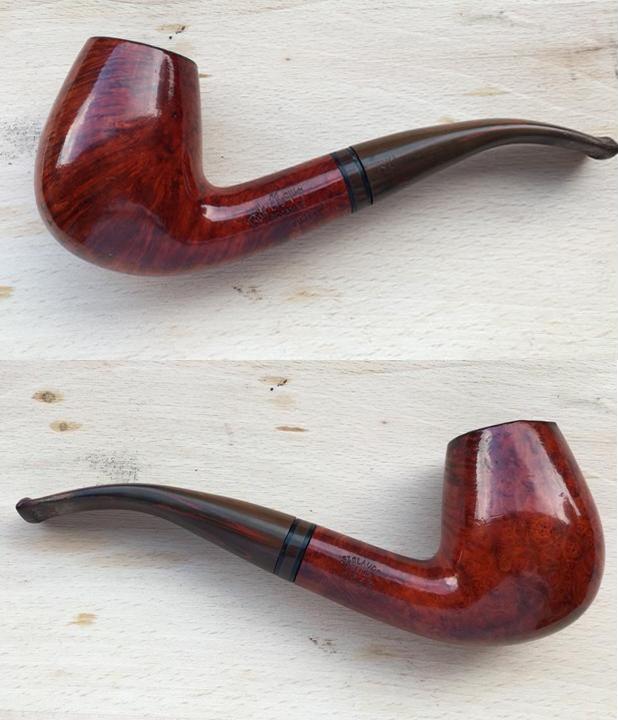
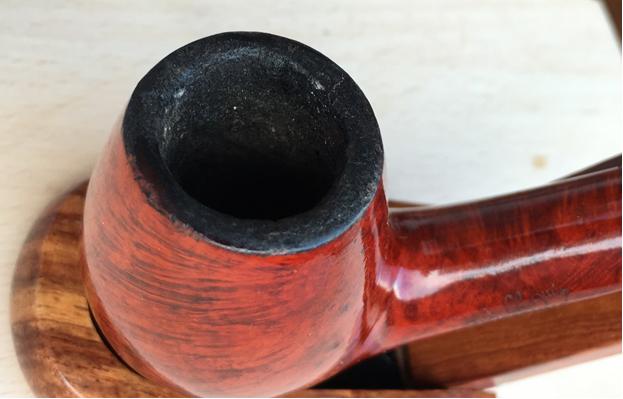
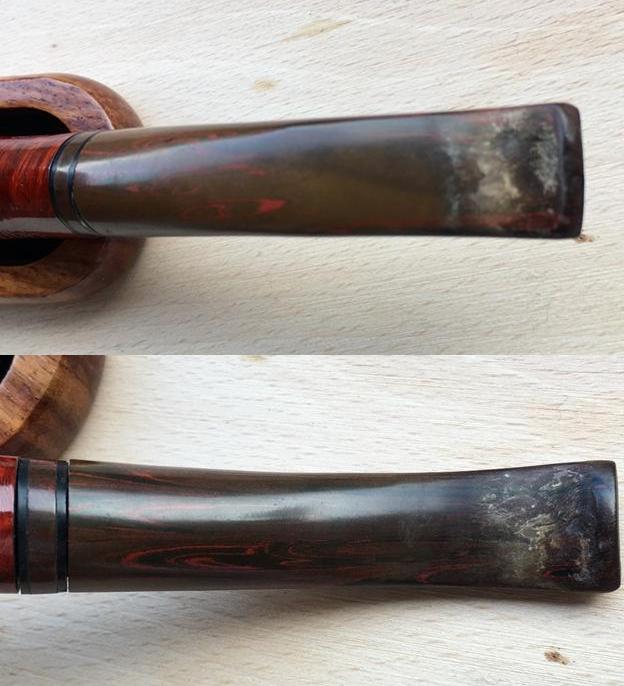
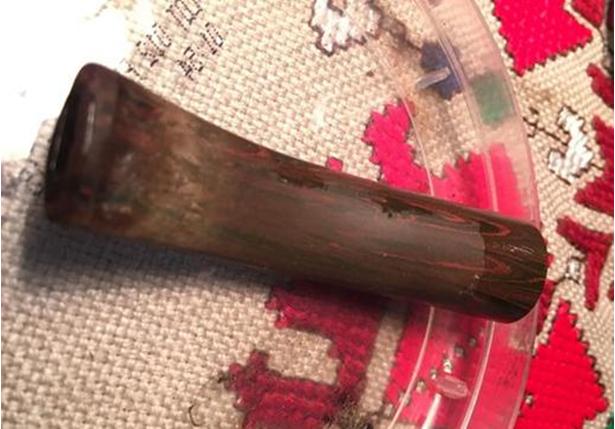
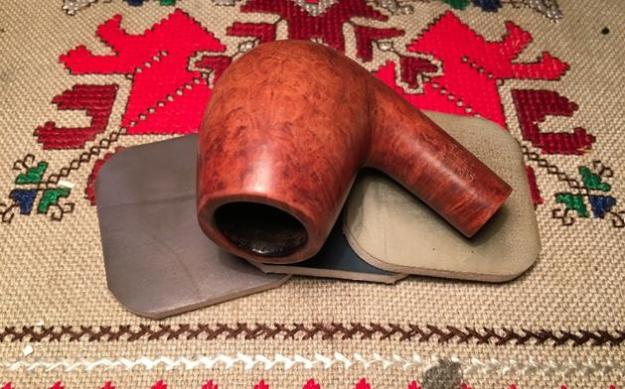
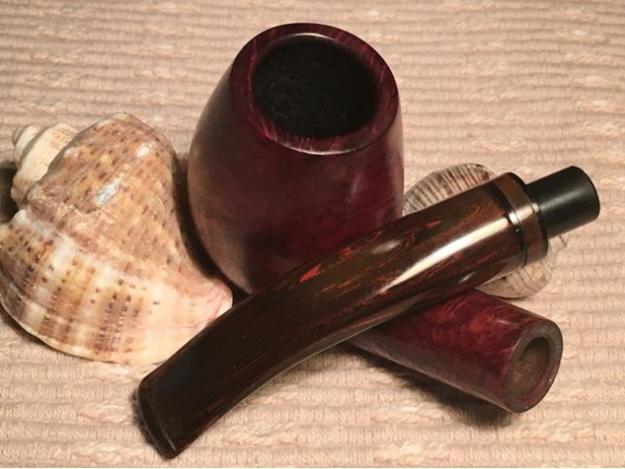
Redmanol so approximated the appearance of amber – which, remember, was prized in meerschaum and other pipes before and after the turn of the 20th century – for which Redmanol Chemical Products in its own name took out ads like one in the June 1919 issue of “The Scientific American.”  High-minded and overblown, as was the custom of the day, the ads were headed, “In Search of the Man Made Amber.”r1 r2 r3This amazing combination of all that one could hope to find in a pipe – artistry, elegance, refinement, style, class and functionality, to name a few attributes – alas does not belong to me, and I will neither hesitate nor pretend not to be jealous of the fact.  Instead, my fellow piper and friend, Darryl Loomis, is the very lucky new owner.  He loves it so much that he was willing to tolerate a somewhat bad taste he detected rather than trust it to someone to restore.  I am honored to clean it up for him.  Shocked to find I have no photo of Darryl, I suspect he will not be unhappy.

Darryl asked me to clean it up.  Well, the fact is, I got one look at it and could almost not keep my voice under control when I said I would love to do it for him if he had no plans for the project.  I admit I was jazzed to be able to take it home with me from Friday night’s local pipe get-together at the tobacconist.  But there’s one important thing I should now note about any pipe “cleaning” job I undertake, unless the owner makes it clear that’s all he wants done, period.  I don’t half-ass anything.  Even when my business site was up (and it will be again this week), I included basic refurbishing with cleaning jobs and the full works with refurbs/restores (any necessary replacement parts not included in the base price).  So that’s what’s happening here.

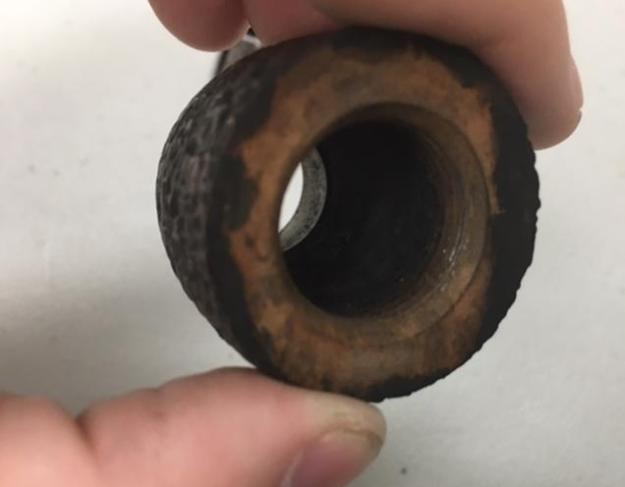
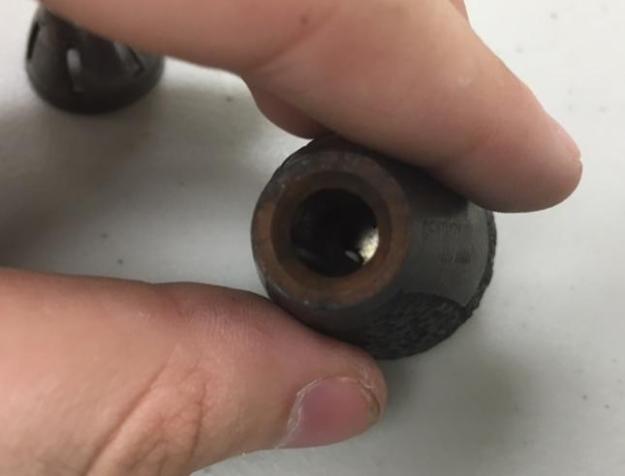
While we talked about the pipe, Darryl mentioned something peculiar.  He said he noticed a somewhat bad taste but seemed willing to tolerate it as he did not expect to rotate this pipe very often.  I unscrewed the bowl from the shank and saw right away where some of the unpleasant effect may have originated, but mentioning it to him, he was emphatic that he had heard the metal plate inside the shank (just as with any standard system metal, interchangeable bowl pipe such as a Kirsten) was coated with an unknown substance to keep it from overheating.

Being somewhat more curious than usual, after I was home with the pipe, I ran a cleaner through it, loaded a half-bowl of MacBaren 7 Seas Red cherry and lit up.  Very soon the nastiness Daryl had understated rose in full force, ending with such awful dottle I spat it into a handy cup.  My tentative conclusion, until I can query Daryl more, is that he trusted the person who sold it to him and didn’t considered it might never have been cleaned.

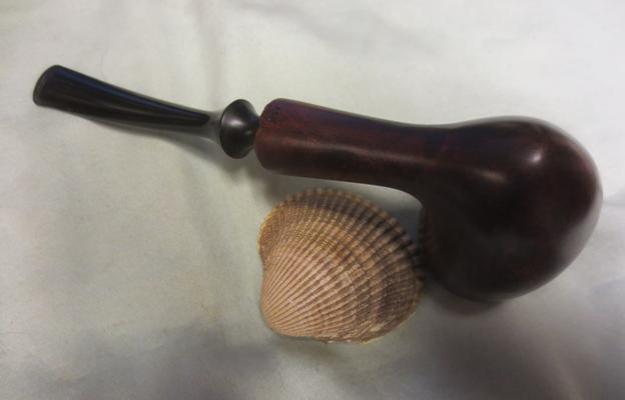
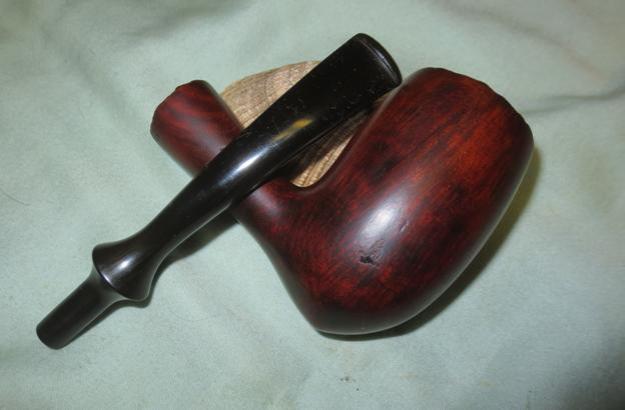
Now, for the before photos of this gorgeous, unique Kaufman Brothers & Bondy work of art – a pipe with a screw-in bowl that predates Kirstens by more than two decades.r4 r5 r6 r7 r8 r9 r10 r11 r12 r13RESTORATION
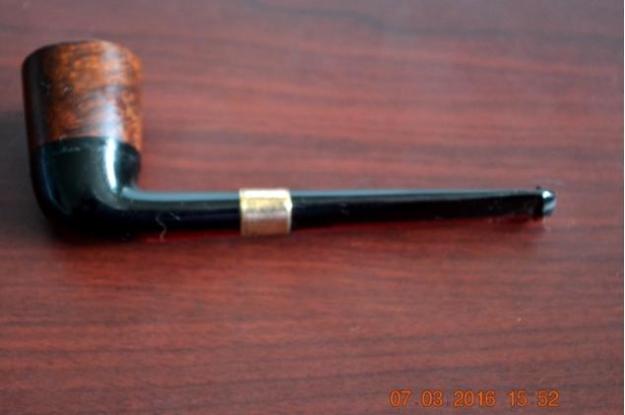
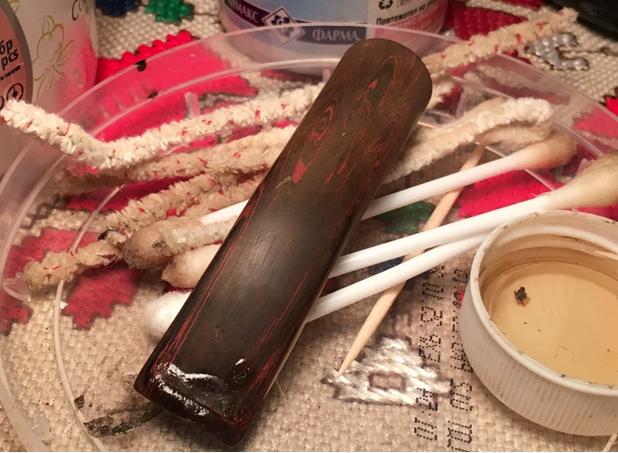
I removed the bowl and began there.  Having come across a couple of Reborn Pipes blogs, one by Troy Wilburn a year ago about a KB&B Blue Line Poker c. 1909-1914 and the other by Steve Laug concerning Redmanol bits from almost four years back, I was prepared for how to deal with the briar bowl as well as cleaning the deep red quality synthetic plastic, the cubic zirconia of the phenol formaldehyde resin world.

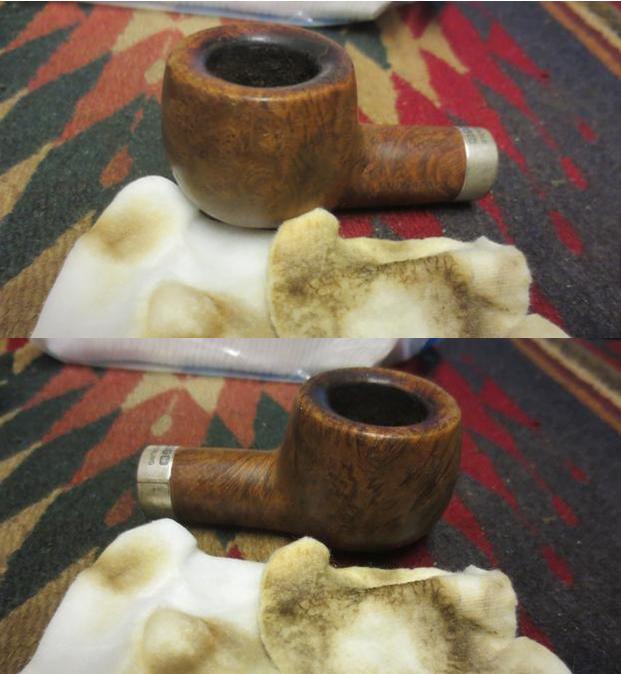
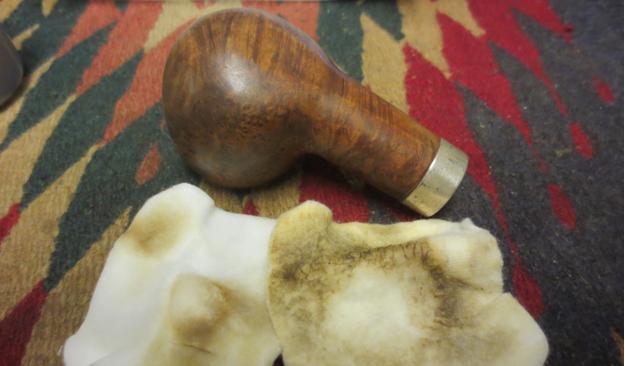
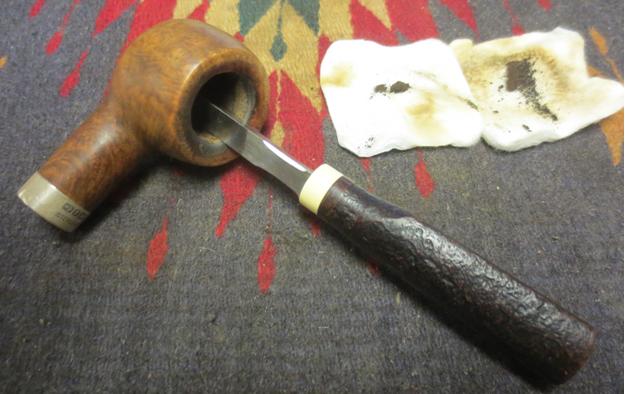
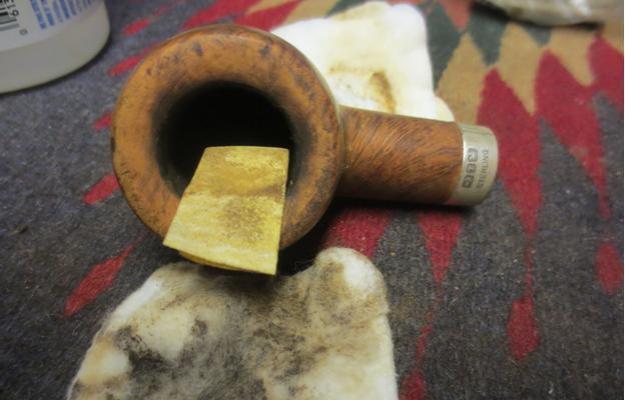
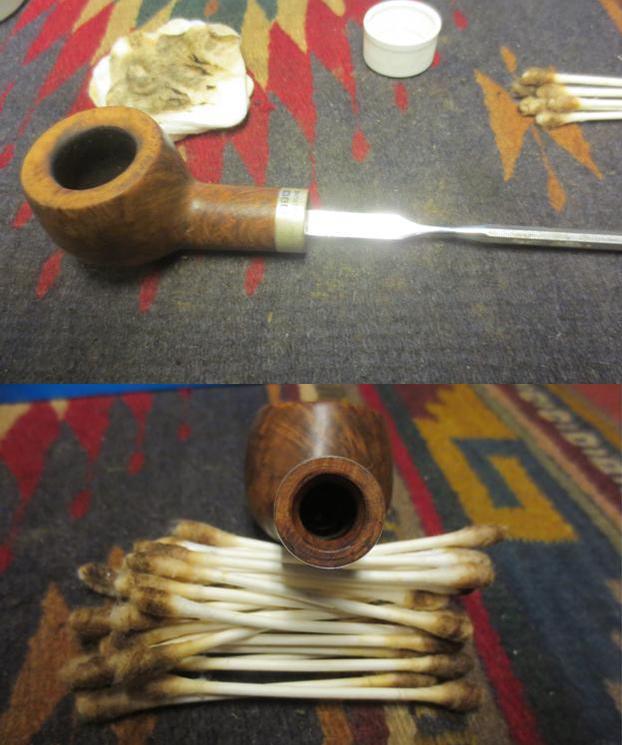
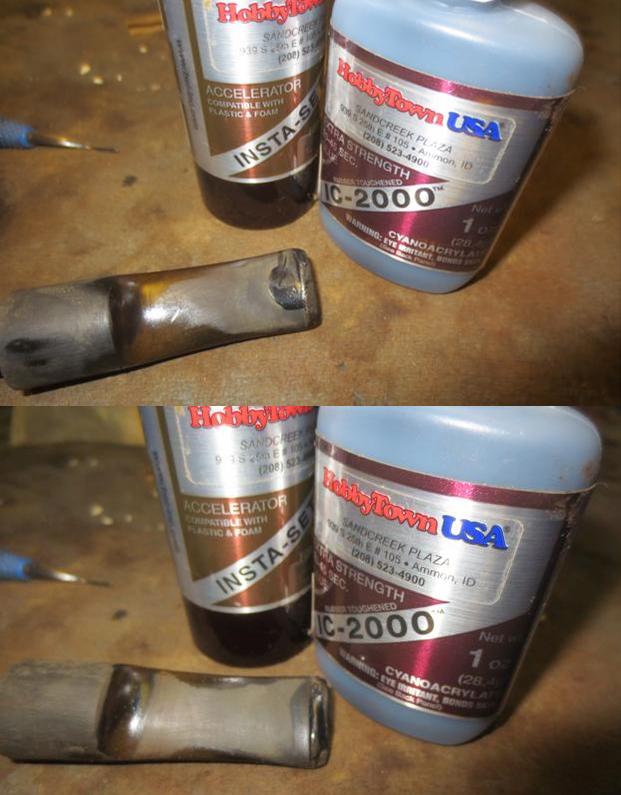
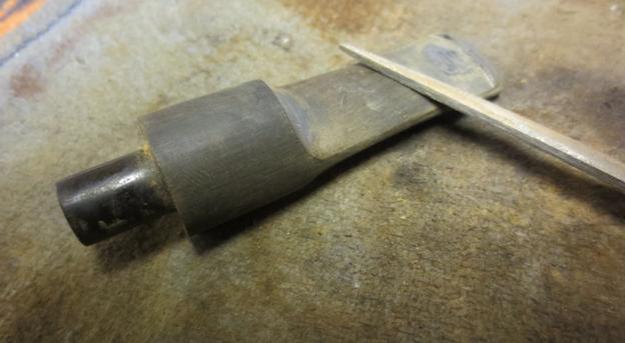
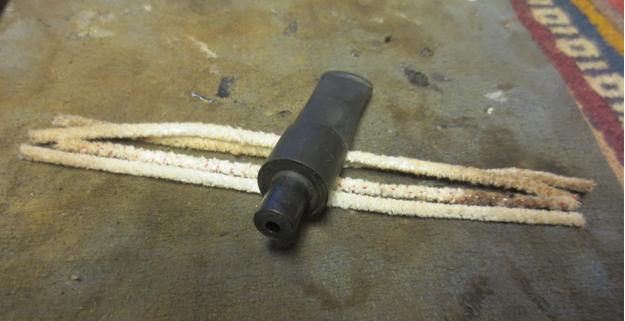
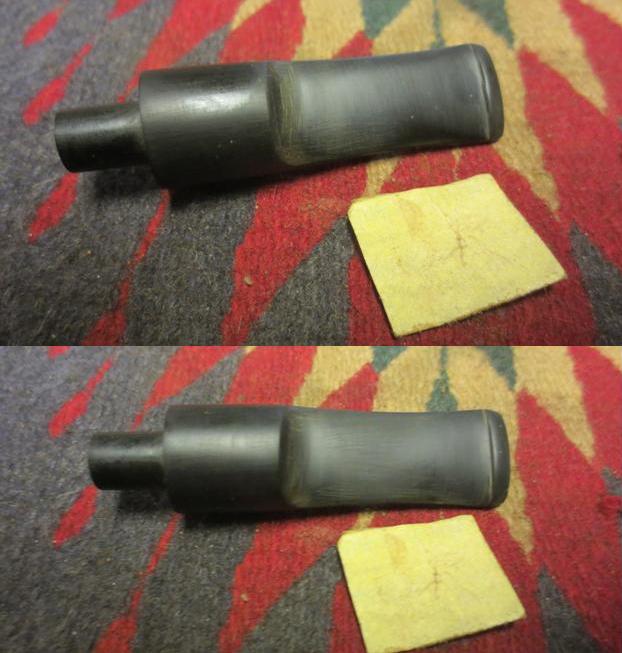
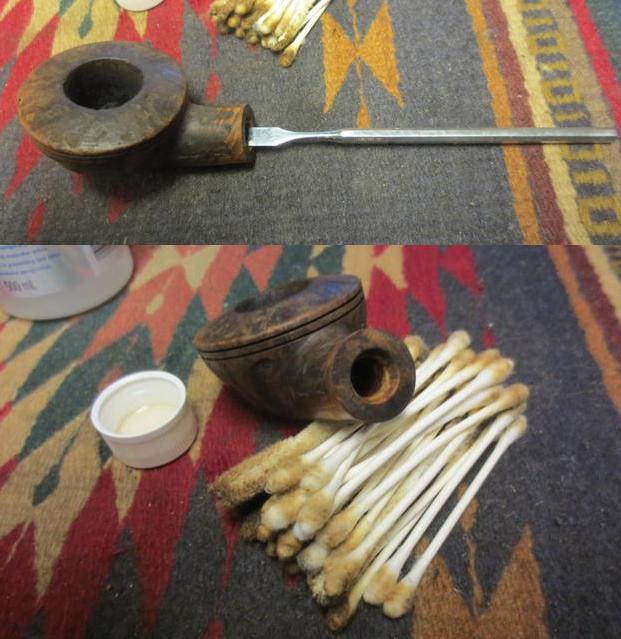
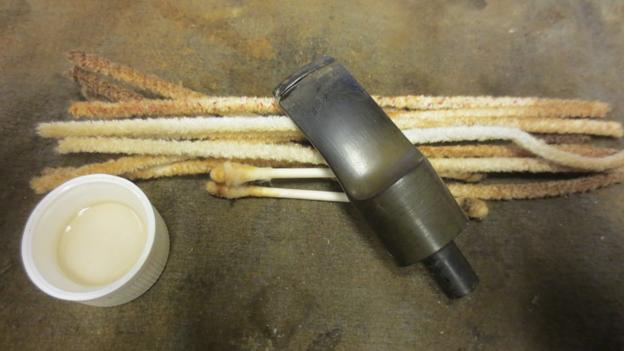
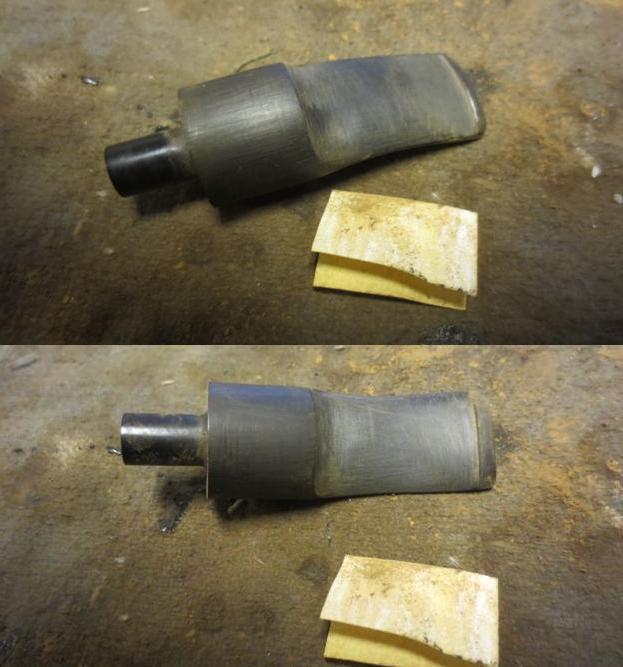
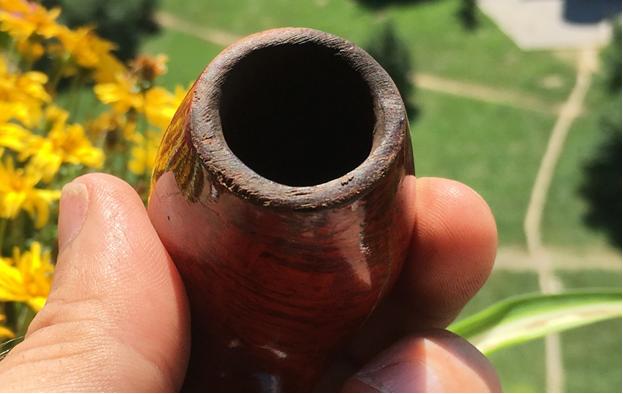
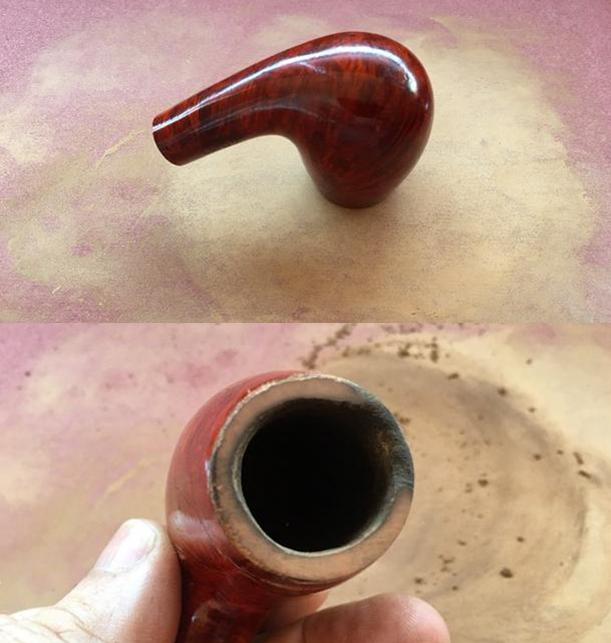
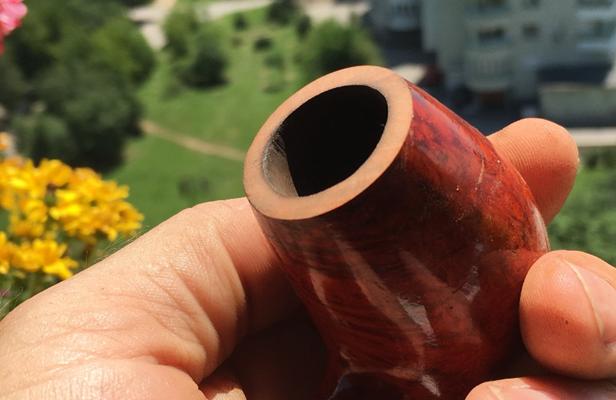
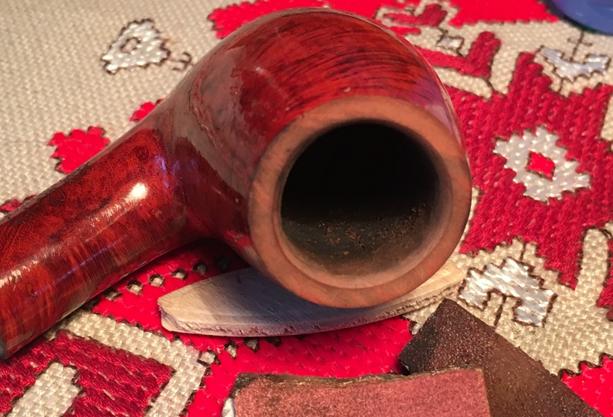
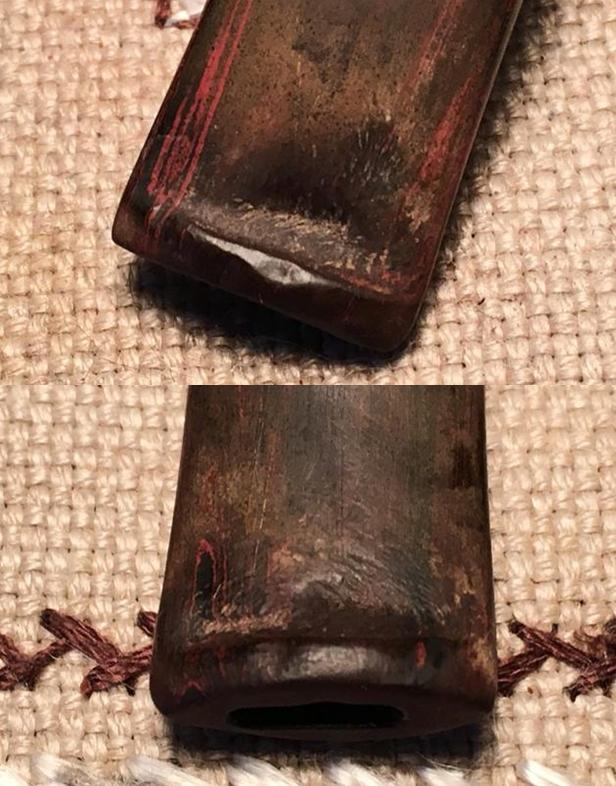
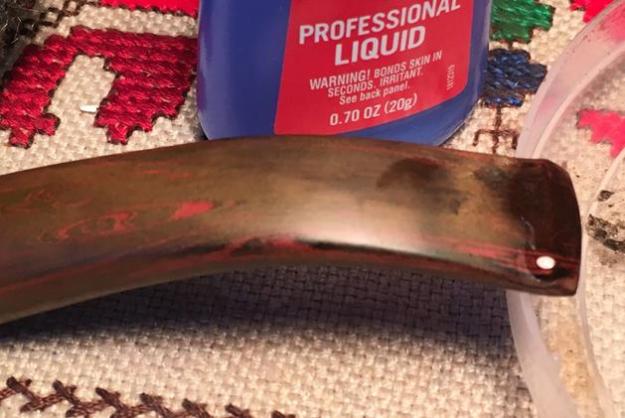
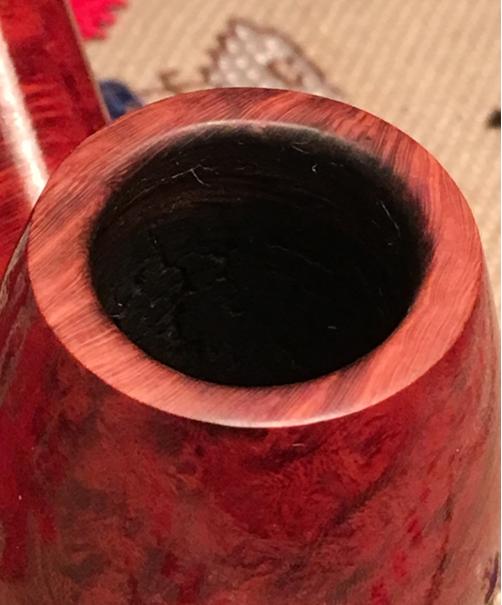
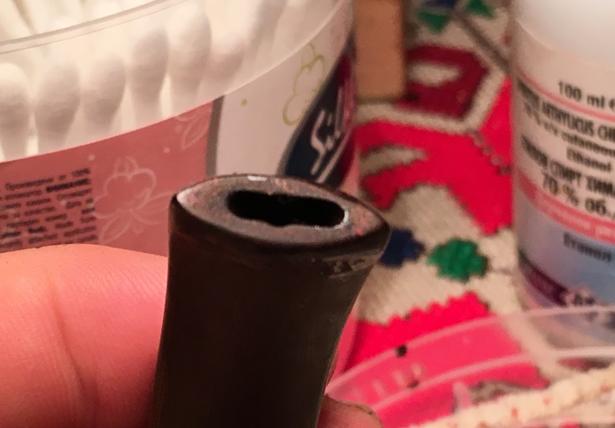
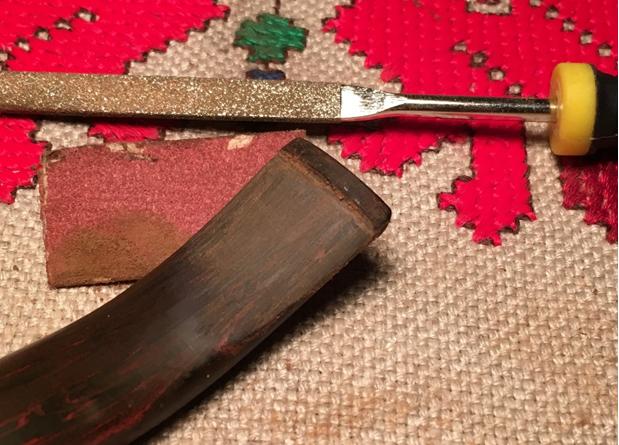
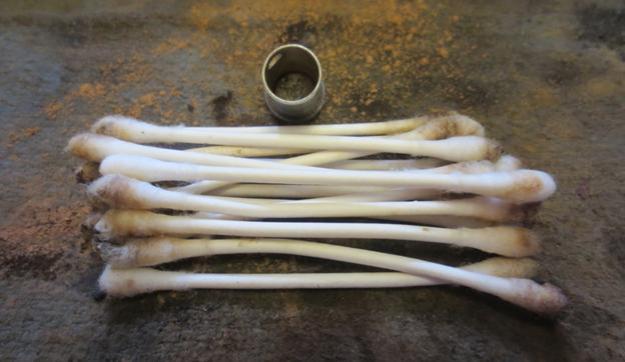
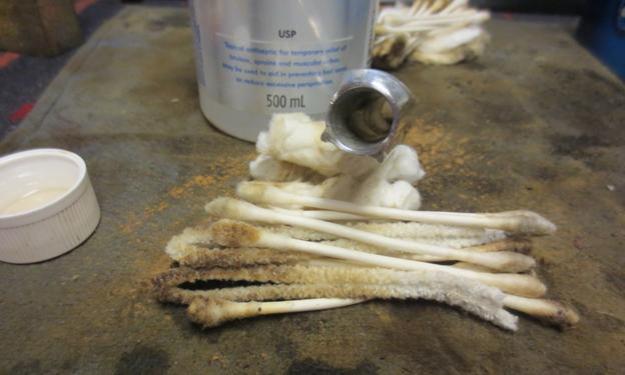
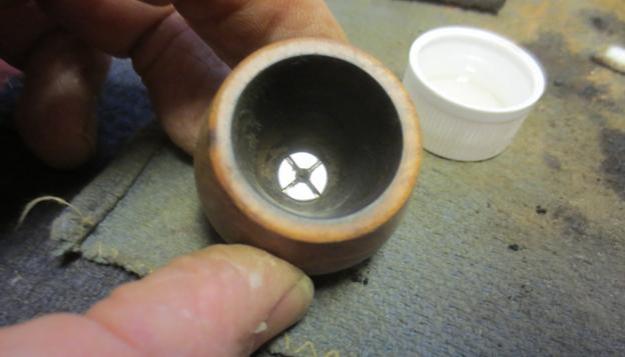
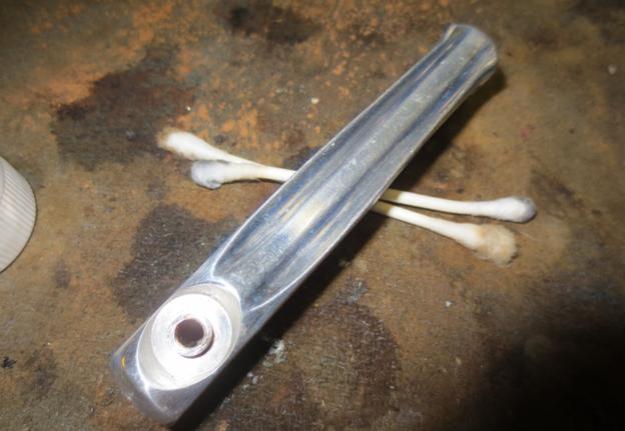
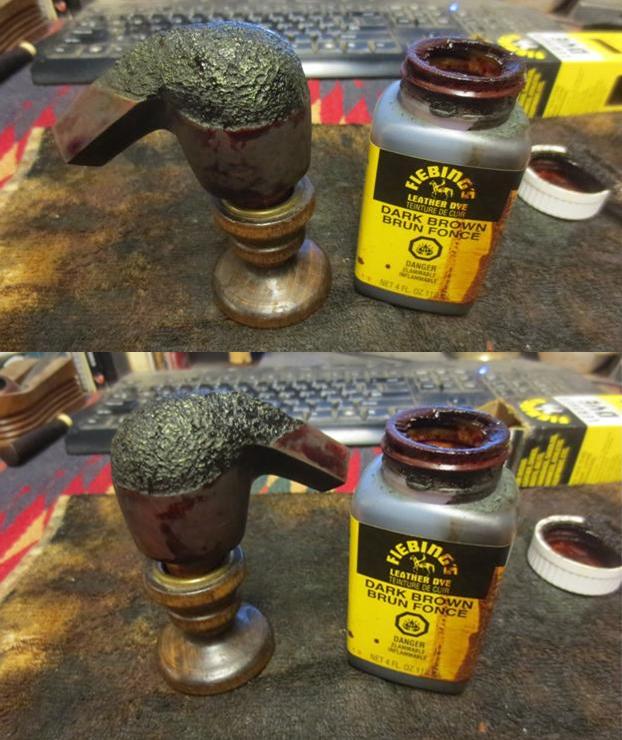
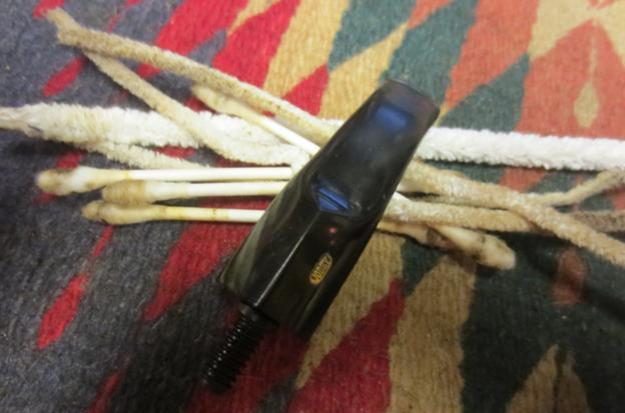
Steve had used nail polish remover (acetone) as a less invasive way of stripping the stain, and it worked quite well of course.  Not having any of the stuff on me, however, and being short on cash and time to do this job for gratis, I compromised.  Instead of a long, thorough soak in Everclear, I dunked the bowl in a tiny Tupperware container for a minute, removed it and scrubbed it dry inside and out with a soft cotton rifle cleaning cloth.  I did have to repeat that process, but still, the combined soak time was minimal.r14 r15 r16 r17Again I regretted not being able to follow Steve’s lead using a Pipnet reamer because I saw the good reasoning behind it…BUT, my handle broke some time ago, rendering it useless.  You get what you pay for.  Next time, I’ll invest a little more for a lot better.  But just a couple of turns of the Senior followed by 500-grit and 320 paper made the chamber baby smooth and clear of char.  I also used the 320-grit on the rim to remove some scrapes, and both papers on the bottom side which was rougher from after wear from repeated turning into the grooves of the shank.r18 r19 r20I ran a few cleaners dipped in freshener through the bit’s air hole, the first of which came out filthy, but the end result was clean.r21Next, I used wet micro mesh from 1500-12000 on the entire surface of the Redmanol shank and bowl cup.  The minimal blemishes there made that fast work.  Cleaning out the draught hole was trickier with more cleaners dipped in freshener, but the accreted gunk and juice all came out.  I tested it again later to be sure, but it was clean.  I really don’t like not being able to retort any pipe.r22 r23Near the end, I stained the pipe bowl with Fiebing’s Brown, flamed it and after it cooled gave it a gentle 3200 micro mesh buff.  I was very pleased with the color I got from the wood.r24The bell tolled the time to do that which I had put off and Steve graciously reminded me needed doing.  He suggested a little Super Glue around the sharp edges of the Redmanol ledge where the bowl was to fit would fill in the cracks.  That followed by micro mesh or light sandpaper would do the rest.  Here is the best before shot I could get with my failing flash system, but the cuts on the right side of the synthetic plastic show up well enough.  There was a matching pair on the left side, suggesting the pipe’s enjoyer was screwy in his habits or the bowl never quite fit right.r25Here’s a shot I admit is horrible with the Super Glue applied, and one after it dried.  I opted for super fine “0000” steel wool to even off the ledge.r26 r27I really can’t say what those apparent white flecks are other than that I took it in a hurry outside.
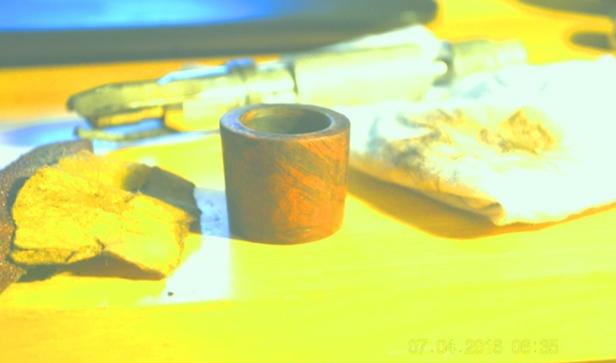
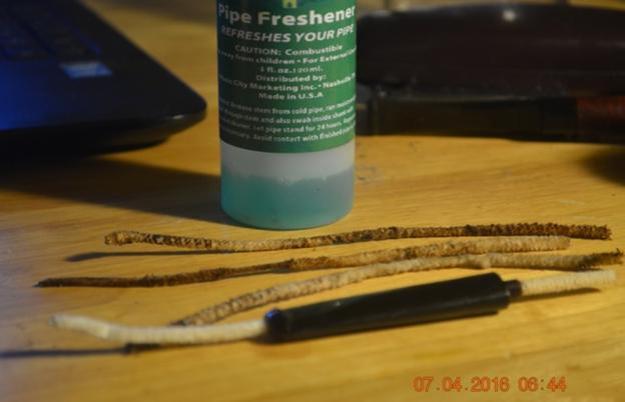
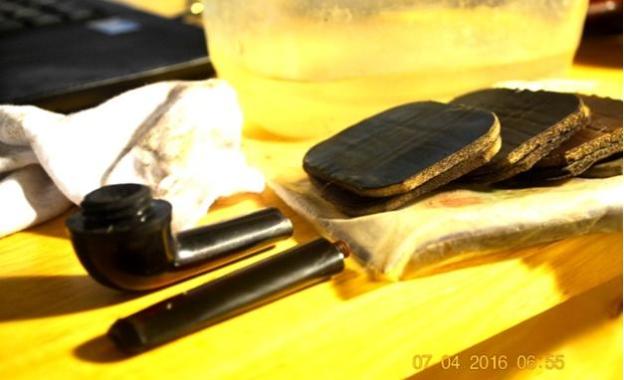
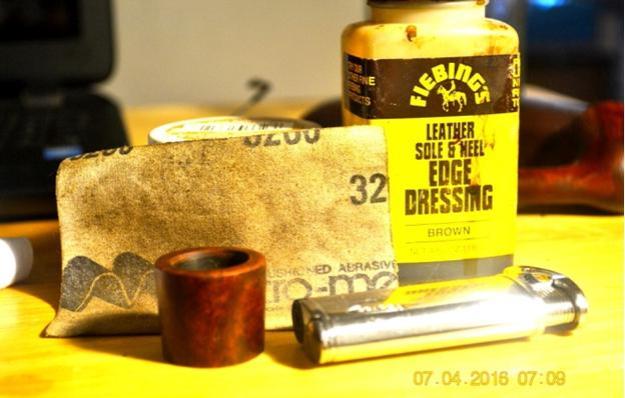
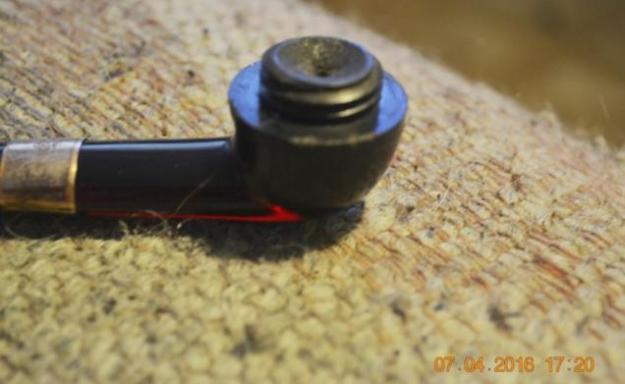
Not touching the bit with any kind of wax, I buffed the briar bowl with white Tripoli, White Diamond and carnauba.

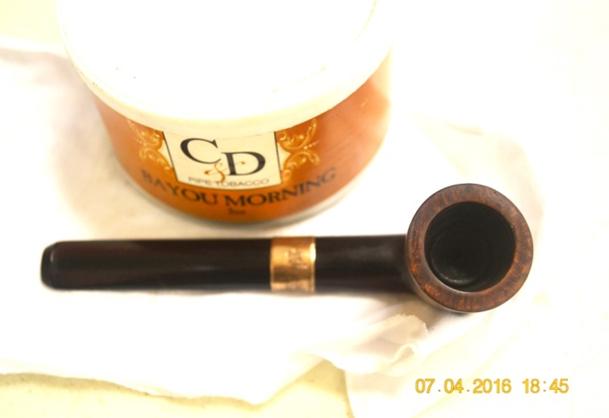
r28 r29 r30 r31 r32 r33 r34 r35CONCLUSION

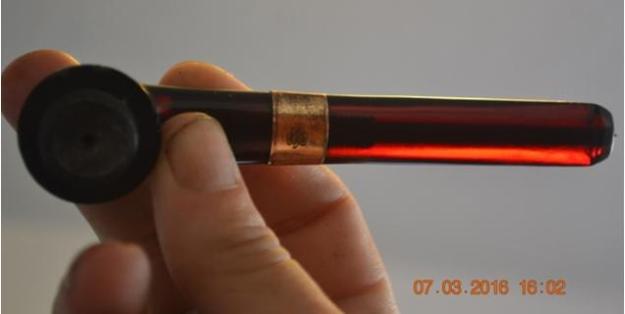
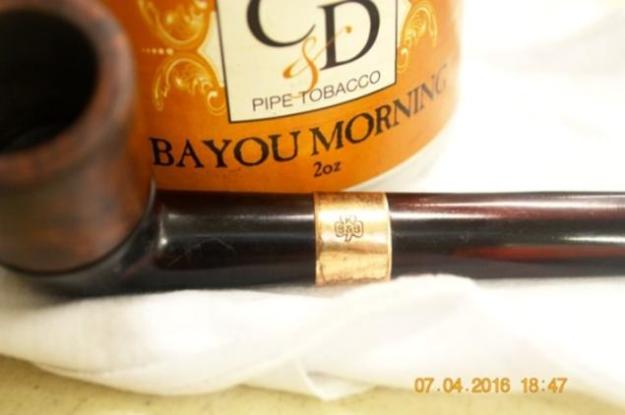
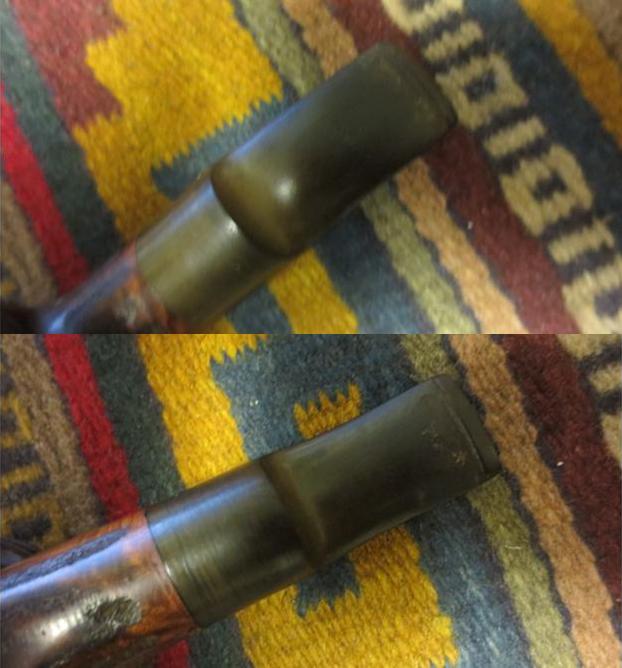
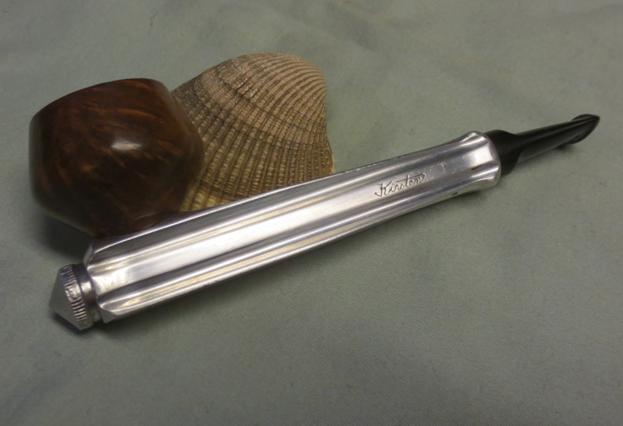
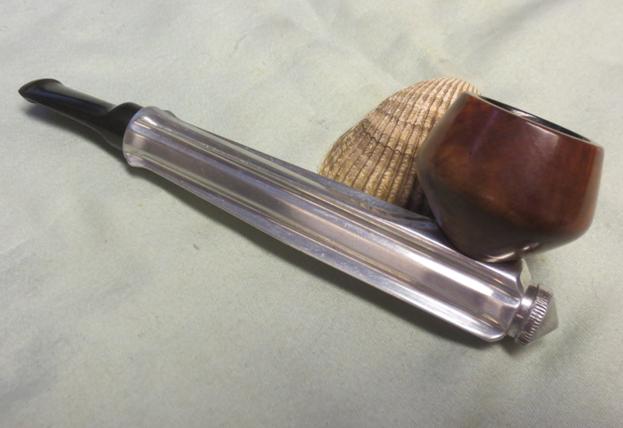
For this special pipe, instead of my usual last photo being the left side full shot, after a detail picture of the band’s KB&B stamp, I chose the close-up of the wonderful red translucence of the bit held up to the light by a friend.  The old I would have tried to take it myself despite having to hold down the flash pop-up at the same time, and the probable end would have been, well, unthinkable.  But I love those flashes, sparkles and twinkles that make the lovely amber-like bit, which is often called Bakelite because of its more famous owner, so scintillating.

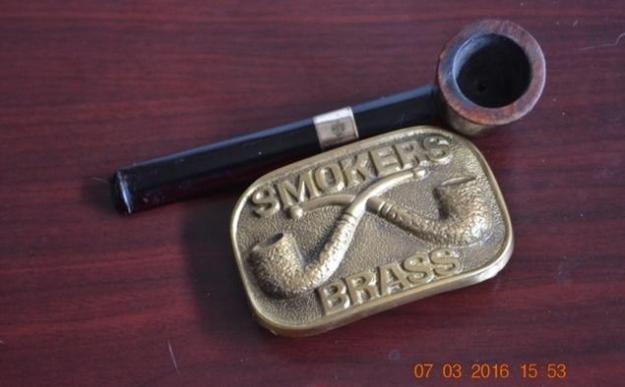
HOLD THE PRESSES!  At the exact moment I was about to hit SEND and dispatch the blog to Steve, I made a connection between Redmanol and a meerschaum-lined art-deco style bulldog Chuck sold me some time back with a bottom he described as what I thought was “red menaul,” or something to that effect.  Now I understand what it was.r36
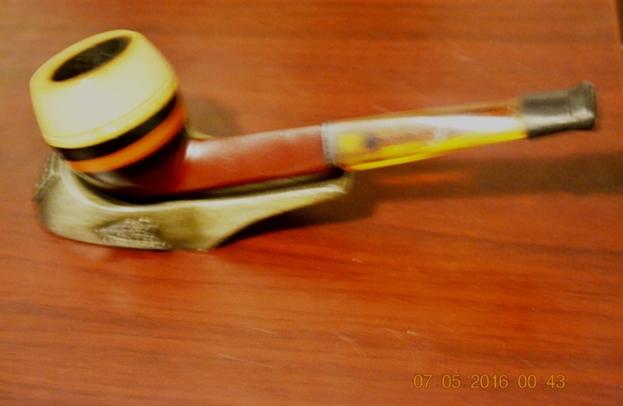
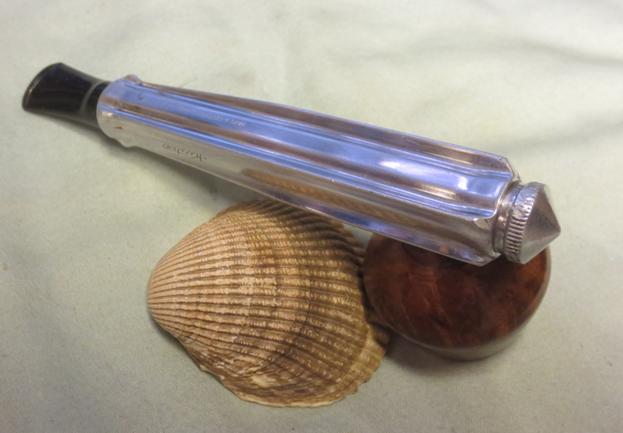
Redmanol art deco style socket bulldog

Redmanol Art Deco style socket bulldog

Here I’ve had this great, smooth and cool smoking pipe in my collection for several years and never knew what to call it.  All mysteries come to an end in time.

 SOURCES

http://www.pipephil.eu/logos/en/logo-r3.html

“Phenolic Resins Technology Handbook,” p. 6, at https://books.google.com/books?id=oYZGAQAAQBAJ&pg=PA6&lpg=PA6&dq=redmanol+chemical+products+founder&source=bl&ots=juthNFh-rW&sig=b9qO8plogjv6fj_u2TBjkdpIfCM&hl=en&sa=X&ved=0ahUKEwj-gNj4h9nNAhUM9YMKHXKjBwMQ6AEINDAE#v=onepage&q=redmanol%20chemical%20products%20founder&f=false

https://rebornpipes.com/2015/06/06/spiffing-up-a-kbb-blue-line-bakelite-poker-1908-1914/comment-page-1/#comment-18773

https://rebornpipes.com/tag/redmanol-stems/

https://www.acs.org/content/acs/en/education/whatischemistry/landmarks/bakelite.html

https://en.wikipedia.org/wiki/Bakelite

“Compton’s Pictured Encyclopedia, Vol. 2,” pp. 813-816, at https://books.google.com/books?id=11FHAQAAMAAJ&pg=PA816&dq=in+search+of+the+man+made+amber+redmanol&hl=en&sa=X&ved=0ahUKEwis5OvgmNvNAhVk0oMKHYveA6sQ6AEIIzAB#v=onepage&q=in%20search%20of%20the%20man%20made%20amber%20redmanol&f=false

“Factory and Industrial Management,” Vol. 64, p. 167, at https://books.google.com/books?id=nTs8AQAAMAAJ&pg=PA144&lpg=PA144&dq=redmanol+bakelite+infringement+judgment&source=bl&ots=TCel6fmccJ&sig=ehZijKCRrQSs-RnL6xiDbVA5aKM&hl=en&sa=X&ved=0ahUKEwi39veundvNAhUT32MKHbeiCJwQ6AEIHDAA#v=onepage&q=redmanol%20bakelite%20infringement%20judgment&f=false

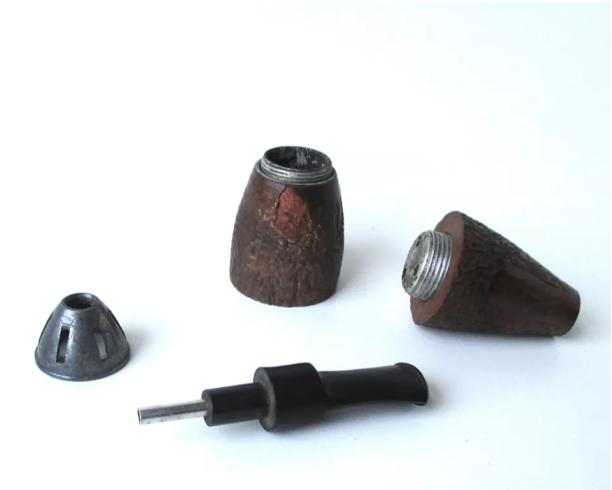


Restemming and Restoring a Hardwicke’s Freehand


Blog by Steve Laug

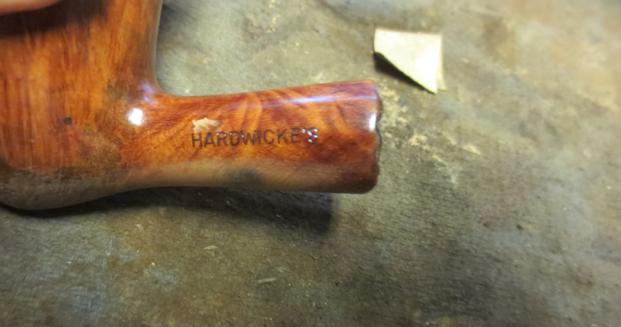
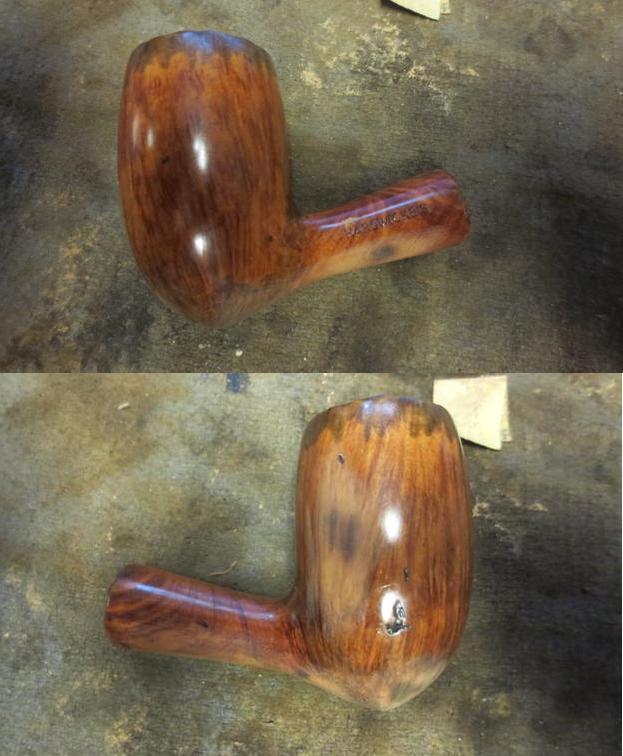
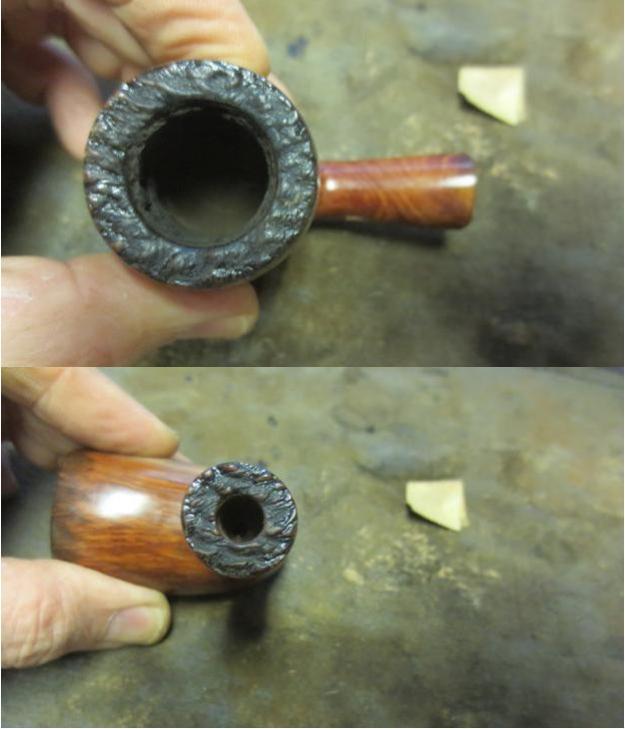
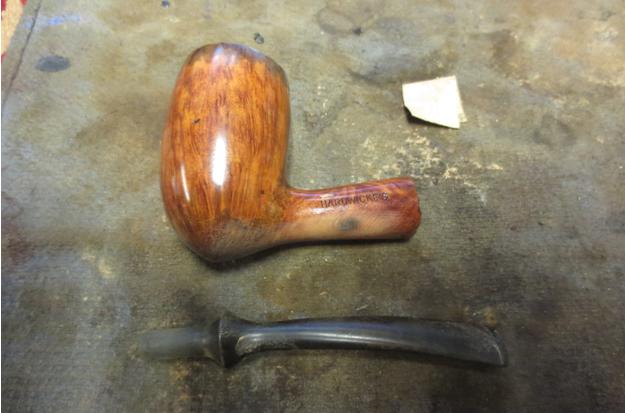
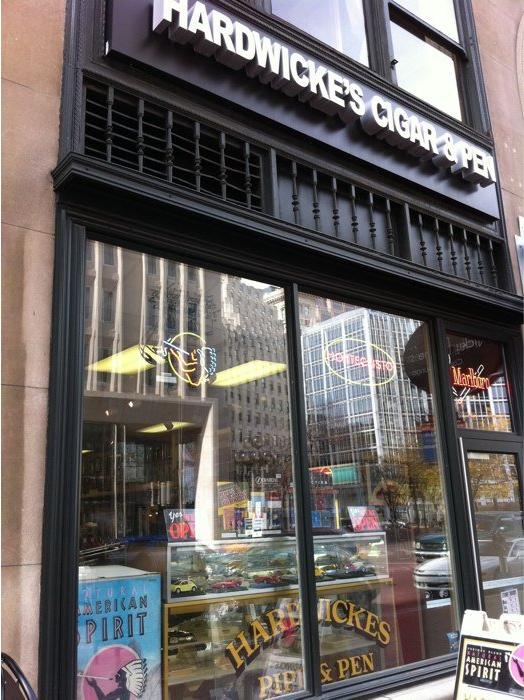
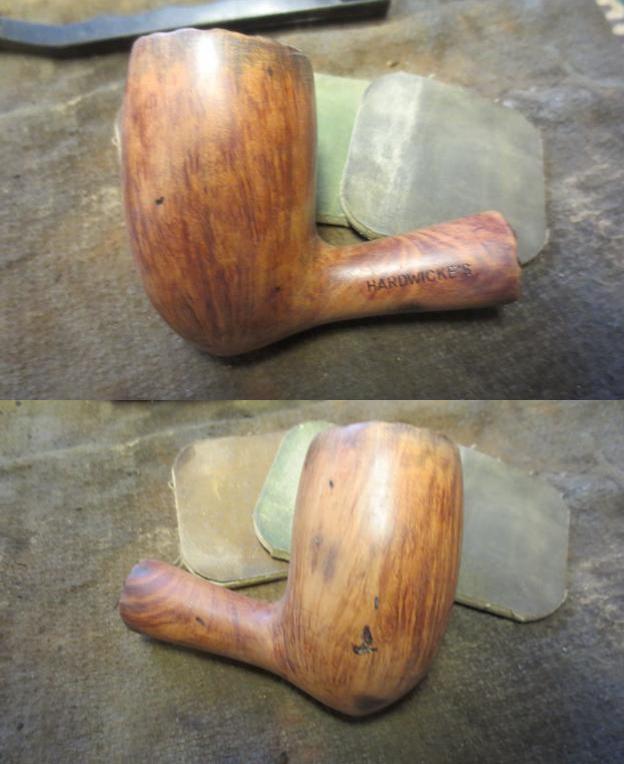
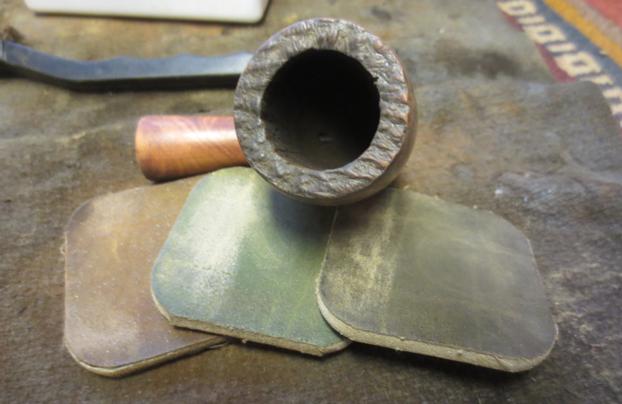
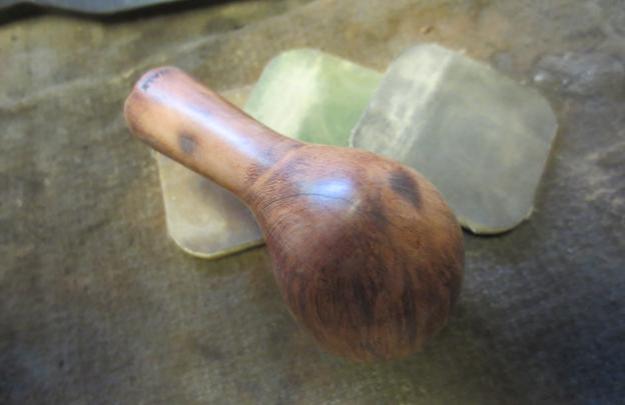
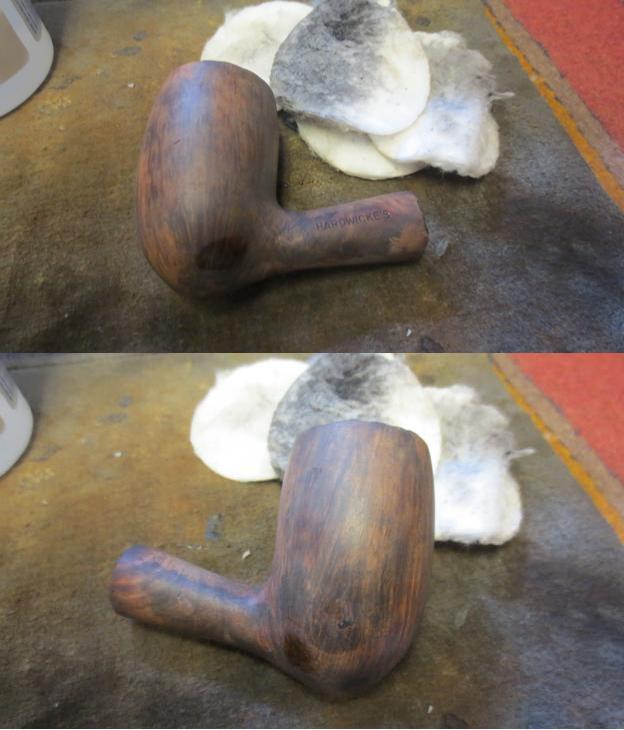
One of the pipe bowls that came to me in the box of pipes from my brother was a tall nicely grained freehand that was stamped on the shank Hardwicke’s and Italy on the underside of the shank next to the shank stem junction. H1I had never heard of the brand before and it was not listed on Pipedia or on the Pipephil website. The more I looked in my usual sources such as Who Made that Pipe the more stymied I was about the brand. It was an interesting shaped bowl. The bowl had some dark marks on the shank, the bowl bottom and on the right side at the point and up the side midway. There was a thick coat of urethane over the entire bowl and the faux plateau. The rustication on the rim matched that of the end of the shank and had been done with tools. There was a thick coat of tars and oils under the urethane on the rim. The bowl itself had a thick cake in it that filled it from top to bottom. The first quarter inch down from the top of the rim had a darker stain that ran down the walls. (I almost forgot to take photos of the bowl before I had sanded all of the urethane off the surface. I stopped and caught these. On the lower part of the bowl on the right side there was a spot of real plateau.H2 H3I went through my box of stems and had a stem that would work really well with this pipe. It would need to have the tenon end reduced so that it would sit in the mortise.H4I decided to Google Hardwicke’s Cigar and Pen to see if the pipe could have been a shop pipe. It was made in Italy but the Hardwicke’s stamping pointed elsewhere. I found that there was a group of shops in Indianapolis, Indiana. The main shop was located at 743 Broad Ripple Ave, Indianapolis.H5One reviewer of the shop had this to say about the shop: “This small cigar shop is located just south of the circle, so in the heart of downtown. They carry a pretty impressive stock of cigars and the pricing is relatively reasonable considering their location. The staff is incredibly knowledgeable and willing to help you find something in your price range. They do have a lot of cigars at the $5 price point so don’t be put off by the fact there are also a lot of $15+ cigars.”

“They also have their own brand, which is rolled with several different tobaccos and in several sizes, these should not be overlooked, especially if you don’t want to spend a lot on your smoke.”

“They also offer pens, pipes, pipe tobacco and the usual array of cutters and lighters you’d expect from a cigar shop. I’ve only purchased cigars here so cannot comment the rest of their offerings, although their selection of pipes does seem good to me.”

Further digging found an article in the Indy Star newspaper about the Downtown shop closing. The article also says that the Broad Ripple Store remains open. I have included the link to the article as well the article in full. http://www.indystar.com/story/money/2016/01/20/smoke-free-downtown-landmark-hardwickes-exits/78800744/

Hardwicke’s Pipe & Tobacco, a long-time Indianapolis fixture, seems to have shuttered its Downtown store.

The inventory was being removed last week, and a store clerk said closure was imminent. The store now stands empty, void entirely of the fine cigars, cigarettes and pipes the retailer sold for five decades.

Hardwicke’s Broad Ripple store, which predates the Downtown shop, remains open. Staffers answering the phone there declined to comment on the fate of the Downtown location, which had occupied a storefront at 18 N. Meridian St., just off Monument Circle, since 1977.

The demise of Hardwicke’s Downtown comes amid a flurry of change for Indianapolis’ old-time businesses.

Last month Kincaid’s, the high-end meat market at 56th and Illinois streets that had been in the same family since its founding nearly a century ago, was sold. Virginia Jarvis Coiffures, a beauty shop for many of Indianapolis’ leading women since 1965, closed its doors Saturday. G. Thrapp Jewelers, in the Butler-Tarkington neighborhood, closed Sunday after 33 years.

Contact IndyStar reporter Will Higgins at (317) 444-6043. Follow him on Twitter @WillRHiggins.
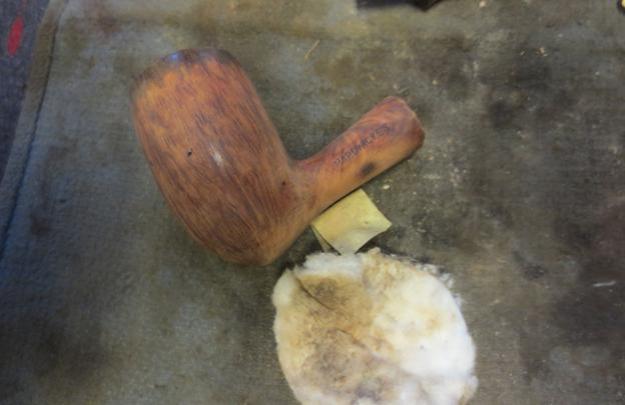
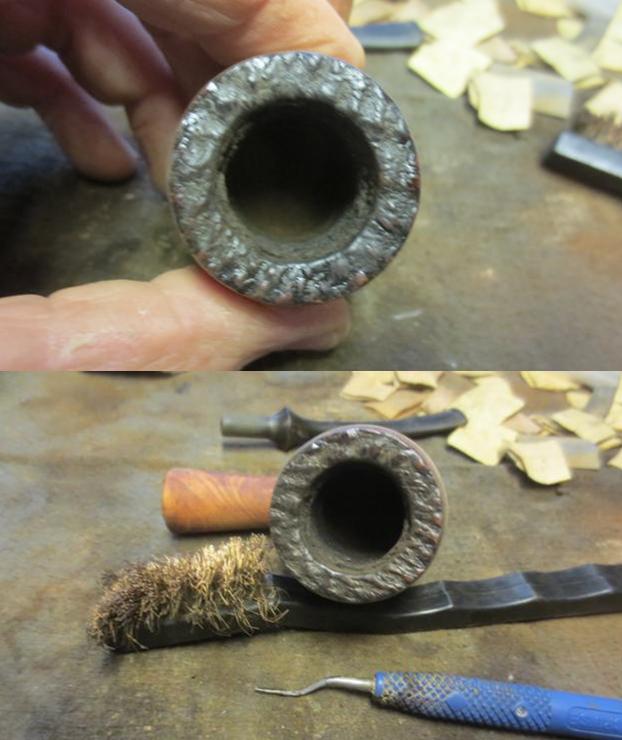
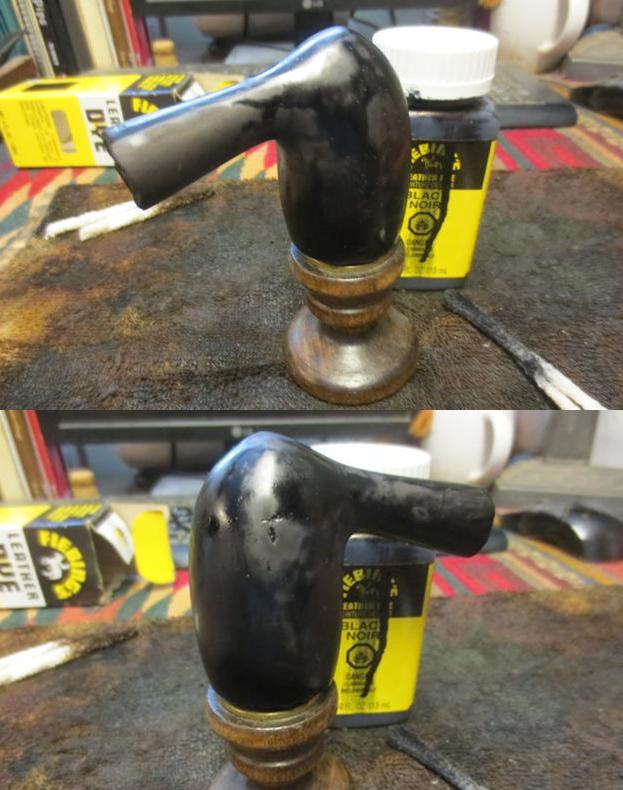
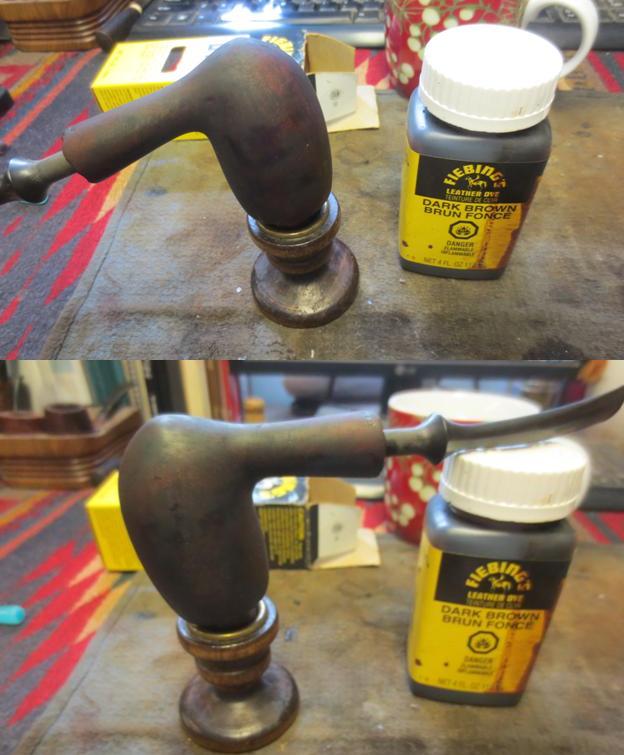
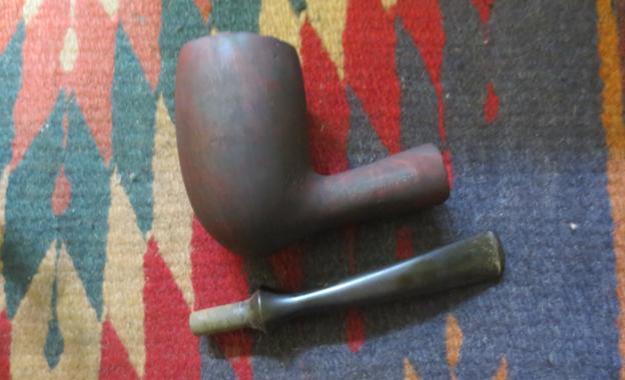
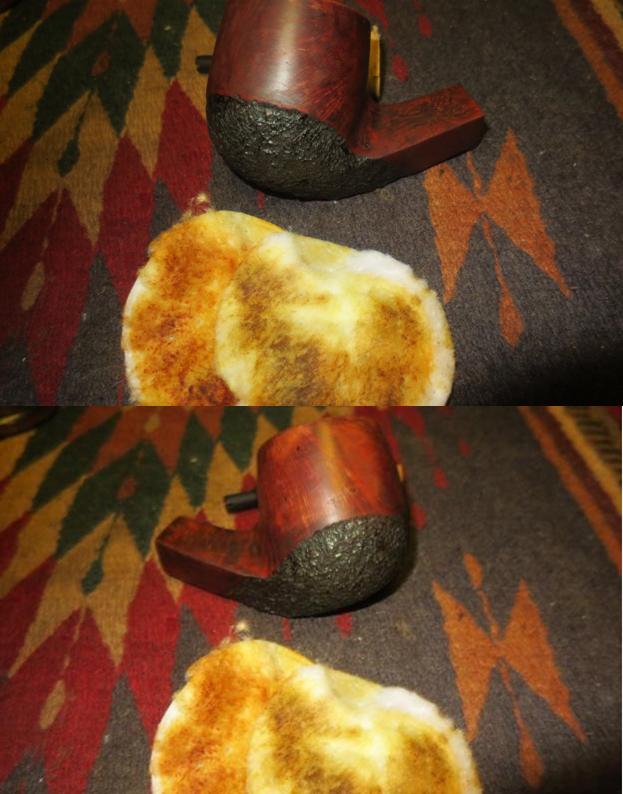
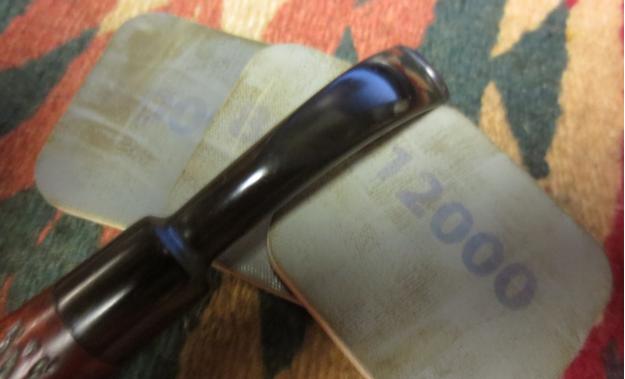
So now I knew that the pipe I had was indeed a shop pipe made for Hardwicke’s Tobacco Shop of Indianapolis. Now it was time to work on it and restore and restem it. I sanded the bowl with 220 grit sandpaper to remove the urethane finish that covered the grime and the burn marks. I sanded the burn marks and tried to reduce the damage to the briar. The more I worked on them the more I am convinced that they were not burn marks but rather dark stains that happened when the bowl was laid in something that left a stain mark. I remember when my mom made pickles when I was a lad and the jars of vinegar left dark rings in the oak table top. These looked identical to the ones I remember as a boy. I sanded and was able to remove several of them. I wiped the bowl down with acetone to clean off the stain and the dust.H6The rim was thickly caked. I worked on it with a brass bristle wire brush and a dental pick to remove the build up on the rim. You can see from the second photo the rustication pattern in the faux plateau on the rim. It is identical to the one that is cut on the end of the shank.H7I reamed the bowl with a PipNet reamer and took the cake back to bare wood. I cleaned up the edges and the bottom of the bowl with the Savinelli Pipe Knife.H9I sanded the bowl with a medium and fine grit sanding sponge and then with 1500-2400 grit micromesh sanding pads to remove the scratching in the surface left behind by the 220 grit sandpaper. I remove the darkening around the top of the rim so the surface of the briar was the same over the entire bowl.H10 H11The bottom of the bowl shows a scratch in the surface that looks like it is a hairline crack. Looking at it with a magnifier I am pretty sure it is a scratch and not a crack.H12To deal with the darkened spots on the shank and the bowl bottom as well as the scratch I decided to use a contrast stain. I stained the bowl with a black aniline stain and flamed it. I repeated the process until the coverage was even.H13I wiped down the black stain with alcohol on cotton pads to remove the stain in the body of the briar and leave it in the grain.H14I washed it down with an alcohol damp pad and gave it a top coat of brown stain. I flamed it and applied it until the coverage was even. Then I set it aside to dry.H15I used the Dremel and sanding drum to reduce the diameter of the tenon. I cleaned it up with a piece of 220 grit sandpaper. I put the stem in the shank and took some photos of the look of the pipe at this point in the process.H16 H17 H18I sanded the stem with 220 grit sandpaper to remove the tooth chatter on the top and bottom sides of the stem at the button.H19I cleaned out the airway with a pipe cleaner and alcohol. It was not dirty at all which surprised me.H20I wiped down the bowl with alcohol on cotton pads and then buffed the bowl with Blue Diamond on the buffing wheel.H21 H22I wet sanded the stem with 1500-2400 grit micromesh sanding pads and rubbed it down with Obsidian Oil. I dry sanded with 3200-4000 grit pads, gave it another coat of oil and finished sanding it with 6000-12000 grit pads. I gave it a final coat of Obsidian Oil and set it aside to dry.H23 H24 H25I buffed the bowl and stem with Blue Diamond on the buffing wheel. It removed a little more of the brown stain and made it a bit more translucent. I gave the stem and bowl several coats of carnauba wax and buffed it with a clean buffing pad to raise the shine. The new stem looks like it belongs with the pipe and the curve of the bowl and the new stain look great in my opinion. The grain on the pipe is very nice. The black and brown stain combination hides the dark mars on the shank and the bowl. They are still present but blend in nicely. Thanks for looking.H26 H27 H28 H29 H30 H31 H32

Sofia Hole in the Wall #3: A Butz-Choquin Rocamar with a Cumberland stem


Blog by Dal Stanton

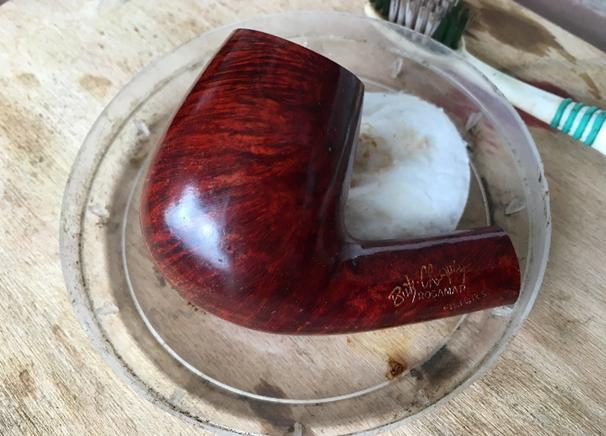
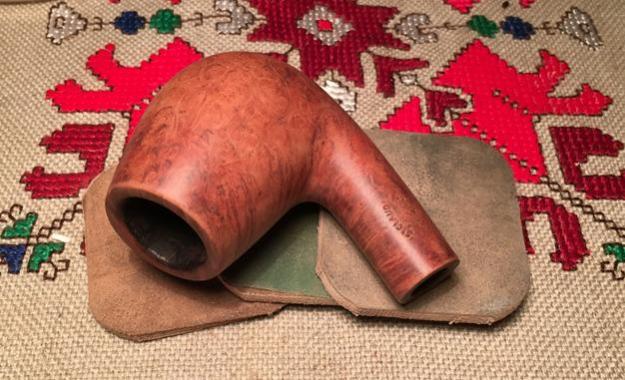
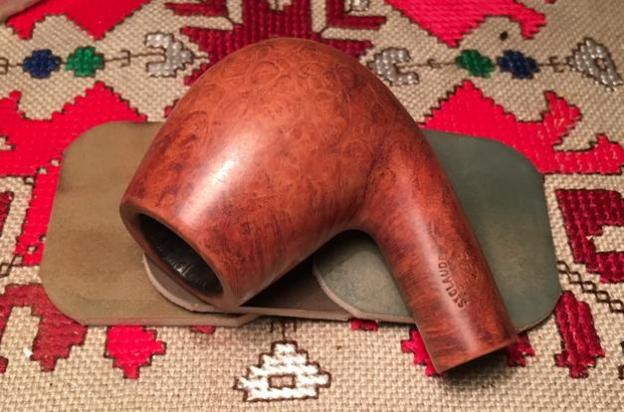
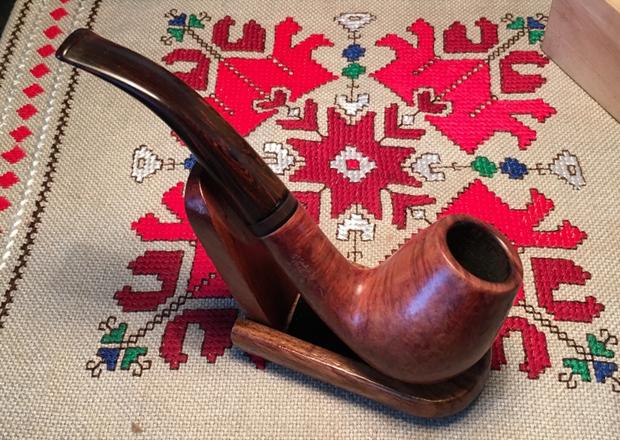
This is my third restoration from what I called the ‘Bag of 4’ that Steve and I saw at the ‘Hole in the Wall’ antique store during his visit to Sofia, Bulgaria.  Thanks again for indulging my ‘newbie’ offerings. My favorite of the bunch was a Savinelli Tortuga (https://rebornpipes.com/2016/06/18/sofia-hole-in-the-wall-find-savinelli-tortuga/).  The second, which I didn’t write up, was a beautiful Danske Club Vario, which I discovered on Pipedia is a Stanwell second.  Behind the Tortuga, the Vario was a close second. It is now next to my Tortuga in regular rotation – a great addition to my growing collection. Take a look at a few pictures of the finished Danish Danske Club Vario. I’m drawn to the blended smooth and sandblasted briar finishes on this pipe:Dal1 Dal2The markings I found on pipe #3 on the left side is Butz-Choquin over Rocamar with a ‘Filter 9’ diagonal imprint.  On the right side, St. Claude, France 1333, which I assume is the BC shape or series number.  The Cumberland stem has the BC imprinted marking.  From Pipedia I discovered a bit of the early history of the name from Pipedia:

“Jean-Baptiste Choquin of Metz started out as a tobacconist. This enterprise was prosperous; he had several employees. Among those, there was a certain Gustave Butz who was its first workman and who became his son-in-law by marrying Choquin’s daughter Marie in 1858.  In 1858 Jean-Baptiste Choquin created, in collaboration with Gustave Butz, the Choquin pipe. This bent pipe with a flat-bottomed bowl was finished with an albatross-bone mouthpiece, fixed with silver rings.  In 1858, still in Metz, Gustave Butz built an establishment for the manufacture of the Choquin pipe which took the name of -. In 1951, the Berrod-Regad company bought the trademark, continuing manufacture until 2002. Departing from Metz, the workshop was relocated to Saint-Claude, then also called ‘the world capital of the briar pipe,’ under the Berrod-Regad group.”

I could find nothing specific about the series name Rocamar so I decided to send an email to Butz-Choquin using their info contact from their current website which is under construction (http://www.butzchoquin.com/).  We’ll see where that goes.

The BC Rocamar has an attractive fiery grain and the bent billiard chimney is tall and elegant to me – perhaps tending toward an egg shaped bowl.  What I’m drawn to also is the bent Cumberland stem – my first to work on.  Not quite knowing what kind of stem it was I did a bit of research and discovered pipesmokersforum.com a thread discussing this stem:

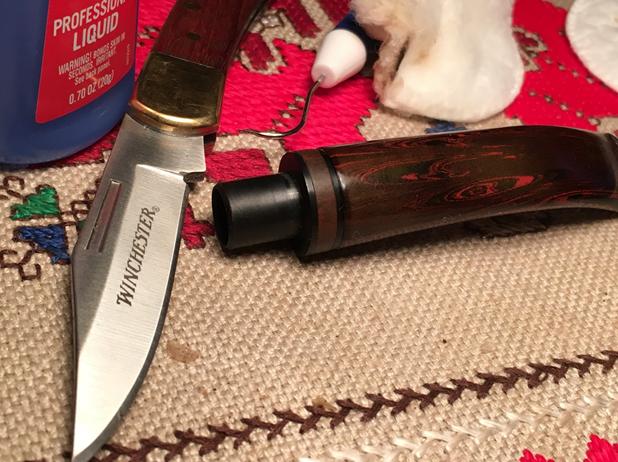
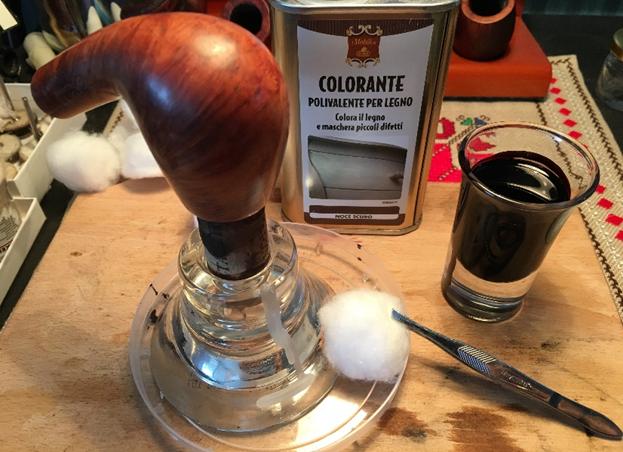
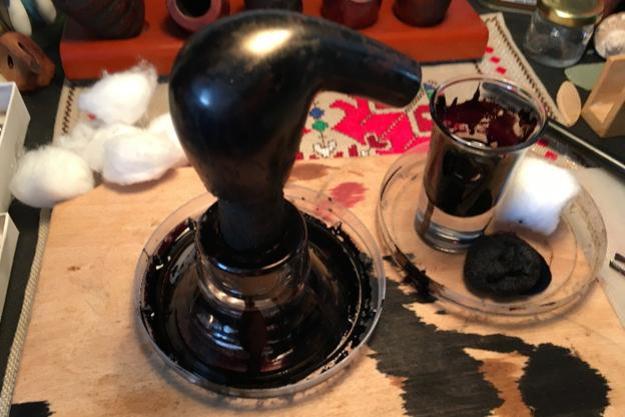
“Cumberland proper is a vulcanite rod made up from red and black rods, melted and swirled together for the brown/red marble effect. It is very soft, and oxydizes fairly quickly if the protective wax coating is scraped off. There is a harder version in ebonite, which has a higher sulfur content if I understand these things correctly, but the color combos are not quite as subdued as the vulcanite version. It’s a bit more “brick” colored.”  Another comment I read was that if one found a Cumberland stem it was most likely hand cut – to me that is cool.  Helpful information.  Here are pictures of the BC Rocamar when it arrived home from the Hole in the Wall:Dal3 Dal4 Dal5 Dal6 Dal7The briar is in great shape and will need basic clean-up.  The rim shows a burn scar about 2 o’clock and lava build up.  As the comments about Cumberland stems and oxidation stated, this one had its share.  The bit has significant teeth chatter and some significant divots that will need repair.  Yet, I see the potential of the color swirl of the Cumberland being a very nice augmentation to the fiery briar stummel.  The filter casing had dislodged from the stem and that will need to be reattached.  I decide to drop the stem in an Oxyclean bath to start working on the oxidation while I turn my attention to the bowl – whoops, that is after I retrieved the stem from underneath the bed – I forgot it was on my lap when I stood to head for the Oxyclean!  I took a close-up of the rim and bowl before I go to work.  I moved from the bedroom work table to the 10th floor balcony mobile work station with Pipnet reaming kit in hand.  I want to minimize pipe soot being released into the bedroom atmosphere resulting in a happier wife.  I use only the two smallest blades from the reaming kit to take the cake down to the wood.  I finish the fire chamber by rubbing it with 120 then 240 grit sanding paper to smooth and clean the chamber walls even more.  Turning to the rim, I clean it with isopropyl 95% and a brass brush which will not scratch the surface of the bowl. I want to see the rim wood clearly before I top the bowl to repair the burn scar and reveal the briar.  With the sunshine helping I can see the rim (and holding tightly not to lose it over the edge!).  I note that the rim circumference is small as the sloping shape of the bowl culminates. Dal8 Dal9 Dal10 Dal11I move to top the bowl but with a view to take off as little as possible to preserve the dimensions of the slender egg-peeked chimney of the bowl.  With the stem soaking in the Oxyclean bath I’m not able to reattach it to the stummel to help make sure I’m maintaining a true perpendicular top and not leaning into the softer burned area.  Before rotating the bowl to top it, I let it free stand and gently rotated the pitch of the bowl so that I could ‘feel’ the low spot where the rim was burned.  By doing this I was able to acclimate to the ‘healthy’ flat part of the rim during the sanding rotation.  It worked well!  I took a picture after only a few rotations on the topping board.  It revealed that I wasn’t fudging into the low spot as it was not yet impacted by the sanding but the other ¾ of the rim was.  I’m careful to keep eyeballing the progress.  I use 240 grit paper on a chop board as my topping table. Moving in a circular, even motion I remove only what is needed.  Satisfied with the topping, I made a small bevel on the inside of the rim using 120 and 240 grit paper.  I did this to take out a bit of inner rim damage and a small bevel is always nice and gives a classy touch. I followed this by using micromesh (1500-12000) on the rim to remove all scratches.  The pictures tell the story.Dal12 Dal13 Dal14 Dal15I decided to wait on staining the rim using a stain-stick and move to the cleaning of the internal and external of the bowl.  The reason I did this was I was able to differentiate the actual unstained color of the briar by looking at the newly repaired rim and compare it to the bowl color.  The rim briar leaned brown whereas the bowl, to the reds.  With cleaning with Murphy’s Soap of the external bowl, I expect there to be a slight change in the color of the bowl briar.  At that point I would go to work again on the color of the rim aiming for the best match.  I decided at this point to move to cleaning the internals of the stummel with Q-tips and pipe cleaners dipped in isopropyl 95%.  I found the internals to be amazingly free of muck and it was not long before Q-tips and pipe cleaners were coming out clean.  Turning to the external cleaning, I used Murphy’s Soap undiluted with cotton pads to remove the wax and grime on the bowl.  The bowl itself is in great shape – no significant scratches or fills.Dal16 Dal17At this point, I came to a road block which necessitated a quick email to ‘Master Obi-wan Steve’ for his input.  After the Murphy’s Soap cleaning I was expecting/hoping the high gloss finish on the bowl to have been dulled – getting to a more natural grain look not competing so much with the bared rim – at least this is what was in my mind.  My hesitations were not wanting to be too aggressive with the bowl finish and mess up the patina that is under the gloss….  With the time difference between Sofia and Vancouver, I put the stummel aside and turn to the much anticipated work on the Cumberland stem – what to me is the unique part of this BC stummel/stem ensemble.  After I extract the stem from the Oxyclean bath, I take some pictures to chronicle the progress.  After an initial buff with 000 steel wool to remove the surfaced oxidation, I take a closer look at the significant teeth divots on the bit and decide to apply super glue to the top and bottom to be able to redefine the button and cover the chatter damage. I want the superglue patches in place before beginning the sanding of the stem.Dal18 Dal19 Dal20 Dal21With the superglue curing, Steve’s reply came about my bowl conundrum and it is now decision time. He suspects that I’m dealing with a urethane finish much like he just dealt with in a Jobey restore (https://rebornpipes.com/2016/06/29/i-thought-this-one-would-be-easy-boy-was-i-wrong/) that was a bear to remove. The options before me are to either come up with a high gloss finish for the rim seeking to match up with the bowl or to aggressively remove the plastic, gloss finish and rescue the beautiful briar beneath.  The close-up picture below revealing the bare briar in rim repair sealed my decision – I put the bowl in an overnight alcohol bath hopefully to soften the glossy finish to be revisited tomorrow.  The time had come to watch some European football – Portugal and Poland – on my widescreen HDTV in my favorite recliner.Dal22The next day, with Poland and Portugal playing to a 1-1 tie the night before, I was anxious to see if the alcohol bath made a dent on the glossy finish.  Upon inspection (picture 1) it was still pretty shiny so I took a light grit sanding sponge to loosen the finish.  I was careful to lightly work around the nomenclature.  This did the trick.  The alcohol bath undoubtedly softened things up.  After the sponge sanding, I followed with rubbing the bowl with acetone with cotton pads to draw the stain out of the grain.  I finished with wiping down the stummel with isopropyl 95% to make sure all was cleaned and no grit left behind.Dal23 Dal24 Dal25I feel like I’m on a roll and I’m anxious to see the grain of this piece of briar unveiled.  I use micromesh pads from 1500 to 2400, 3200 to 4000, and 6000 to 12000.  The pictures below show the progress.  I have to be honest, this is perhaps my favorite part of the restoration process – each set of micromesh pads brings out more of the grain revealing the profoundly unique ‘fingerprint’ of each piece of briar we handle.  I euphemistically think of micromesh pads as ‘magicmesh’ pads – they bring the wood to life.  In my opinion, the grain that I’m now enjoying is much more satisfying than looking through the plastic shiny sheen of the original Butz-Choquin design.Dal26 Dal27 Dal28I decide to put the bowl aside and focus now on completing the Cumberland stem clean up and restoration.  I want to have an idea of the colors of the finished stem before I decide on the best finish for the stummel.  I like working on a clean stem so I first clean the airway using pipe cleaners and Q-tips dipped in isopropyl 95%.  During the cleaning, I saw something that I had missed before.  The button airway opening has a divot – I’ll need to add that to the list.  The superglue applications on the bit and button have had plenty of time to dry.  I use 240 grit sanding paper and needle files to work on the bit and button repair.  The bit repair looks good so I move to micromesh and the homestretch.  I wet sand using 1500-2400 and then apply Obsidian oil to the stem.  At this point, I inspect the repair work on the bit to make sure there are no scratches that I’ve missed before proceeding.  I’ve learned that often scratches are covered by the rough vulcanite.  With the Obsidian oil on the stem I dry-sand using micromesh pads 3200-4000 and apply more Obsidian oil.  I do the same with the last set of three – 6000-12000 and give a good coat of oil and put it aside to dry.  The pictures show the progress rejuvenating the Cumberland stem.  I like what I’m seeing.Dal29 Dal30 Dal31 Dal32 Dal33 Dal34 Dal35I had one undone job – re-attach the filter casing to the stem.  My assumption is that it was initially glued and after inspecting the inside of the stem, I detected residue that I assume was the glue previously used.  I clean the old gunk off the housing and the inside of the stem with alcohol and cotton pad and reattach the housing with superglue.  To get the job done I used my Winchester pocket knife and a dental pick to dig out the old glue.  With the filter housing reattached, the stem is complete.  I really like the rich color of the Cumberland stem.Dal36 Dal37After allowing the filter housing glue to dry I want to see the lay of the land, I rejoin the Cumberland stem to the stummel (picture #1 below).  I decide to stain the bowl with a new stain I found at the German owned ‘Mr. Prakteker’ –  like Home Depot in the US.  Finding alcohol-based stains in Bulgaria has been a challenge so I’ve been mixing my own batches up to this point. The brand is Italian and the cost was a bit more – I’m hoping that translates into better quality. When I opened the tin, a whiff of the stain revealed alcohol.  With the help of Google Translate, the flavor of the stain is Dark Nut.  The Bulgarian stick-on information tag said Dark Walnut.  My thinking is to aim for a darker stummel to blend with the darker hues of the stem.  If this succeeds, then I’m hoping the reds of the Cumberland stem ‘pop’ more instead of competing with the stummel.  We’ll see!   I can use alcohol-dipped cotton pads to lighten the stain after application if I choose.   After setting the stummel up on the cork/candle stand I apply the stain undiluted with a cotton swab to see how it goes.  I liberally allow stain to move over the inverted stummel – making sure of coverage over the inverted rim.  After a good covering I use a lighter to fire the stain which is a quick-combustion of the alcohol leaving the stain to set well into the grain.  The Italian stain ‘fired’ as hoped!  I repeated the procedure and then used the alcohol dipped pads to clean off the burn layer of the stain revealing how the grain received the stain – it’s never the same!  I take a picture to do a quick compare of stummel and stem.  After comparing I’m thinking that I like the dark hue but it needs some reds so I decide to add a layer of Cheren stain – red which I will mix with alcohol as it is a water based stain.  In my mind I’m thinking of the ‘Ox Blood’ depth that Steve uses – which is not found in Bulgaria!  I think the addition of the red stain does the trick (last picture) though it’s difficult to see the difference comparing the last two pictures.Dal38 Dal39 Dal40 Dal41 Dal42Next, I apply several layers of carnauba wax to the stummel and stem with Dremel and cotton wheels.  I’m careful to keep the Dremel wheel moving in rotation over the wood and use the lowest speed so not to overheat the wood. The buffing brings out the grain and the luster of the Cumberland stem.  I continue the buffing with a clean cotton wheel over the entire stummel and stem surface.  I finished with a thorough vigorous buffing with microfiber cloth to bring out the grain depth while watching Germany and Italy’s World Cup match.  The recommissioning of this Butz-Choquin Rocamar was more of a project than I was expecting.  I prefer the finish now before me to the shiny finish I started with.  I like the new color scheme for the bowl and Cumberland stem – I believe it works well.  The reds in the Cumberland stem match the grain amazingly well and the grain swirl in the rim has the appearance of continuing in the stem – a neat effect.  I’m very pleased with the color blends.  Another project done with new things learned to draw upon for the next candidate brought back to life!  Thanks for joining me!Dal43 Dal44 Dal45 Dal46 Dal47 Dal48 Dal49 Dal50
Restoring a Kirsten Generation 1 Medium Straight Pipe


Blog by Steve Laug

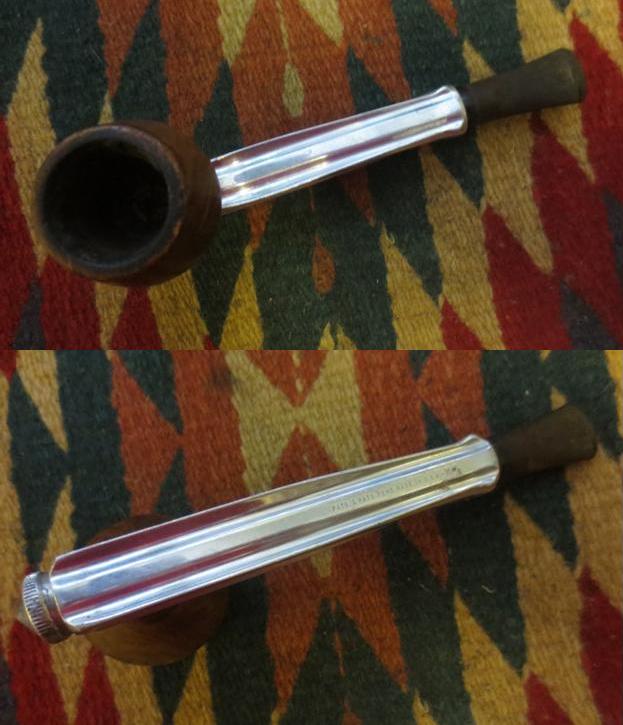
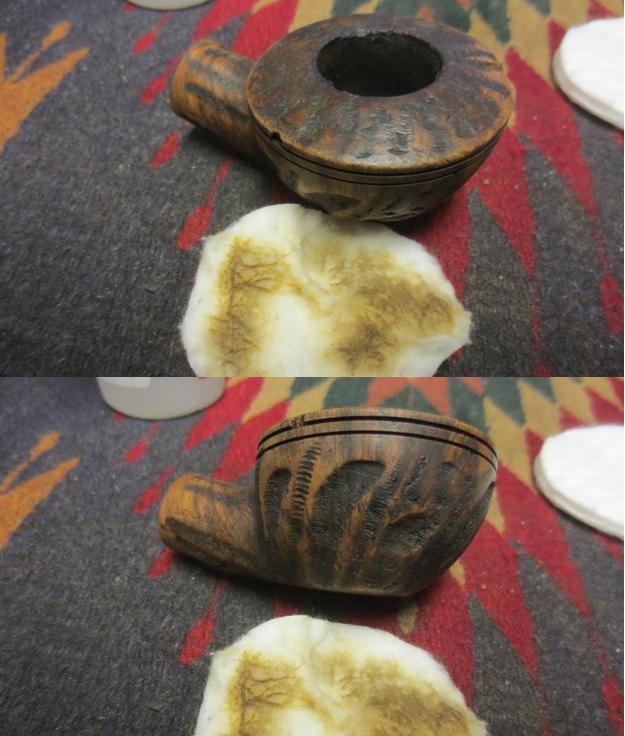
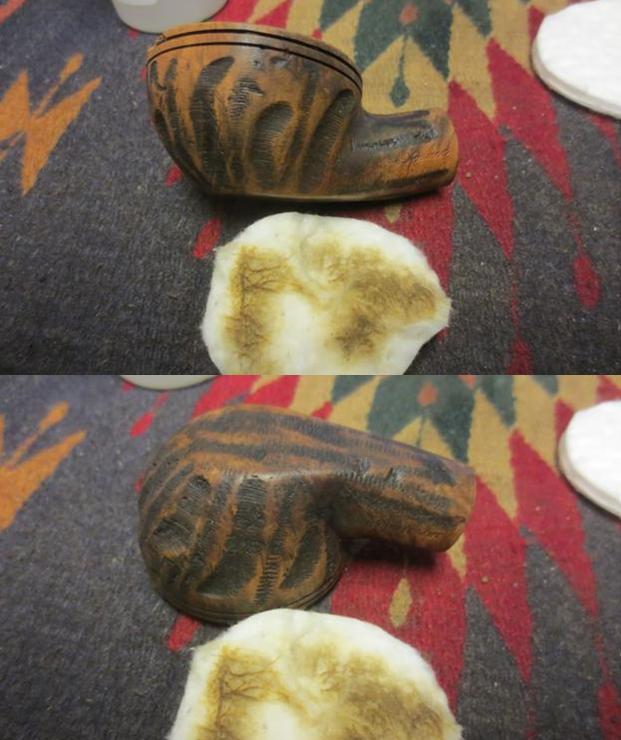
My brother continues to look for Kirsten estate pipes. He picked up this Kirsten because it looked like an old-timer. When I received it I could see that he was right about it being an older one. All the signs were there. The bowl was threaded directly on the barrel of the pipe and bottom cap that is on new models was not present. When the stem was removed there were no O rings on the end of the insert. The valve cap was stuck in the end of the shank and it could not be turned. The rim had a lava overflow on it and there was a heavy cake in the bowl. The screw mount in the bottom of the bowl was caked over to the point that it was stuck in the bowl. The metal barrel was oxidized and pitted. It had no shine left but looked like a well-worn pipe. The stem was oxidized and a dirty brown colour. There were tooth marks next to the button on the top and the bottom sides of the stem. The rod that ran through the barrel was dirty and coated with tars and oils that had hardened.K1 K2The left side of the barrel is stamped Kirsten in script. The underside is stamped Pats. & Pats.  Pend. USA M. The stamping along with the absence of O rings, the bowl screwed directly on top of the barrel pointed to a Generation 1 Kirsten which dated it between the years 1936-1958. In a previous blog I spelled out the features of each generation of Kirsten pipes that were released. https://rebornpipes.com/2012/11/03/kirsten-generation-1-1-5-2-3/ I quote the following from there: The wooden bowl on this generation connects directly to the metal barrel and there is no metal cup spacer. It is a pretty flush fit that goes flat against the barrel. On the underside of the metal barrel it is stamped with one or more of the following “Pat. Appl. For” (1936-38) and “Pats. & Pats. Pending” (1938-1958) over “Made in USA” – S” (or applicable size – S, M, L). There are no O-rings on the bit or metal shank insert. The M stamp on the pipe identifies it as a Medium sized pipe.

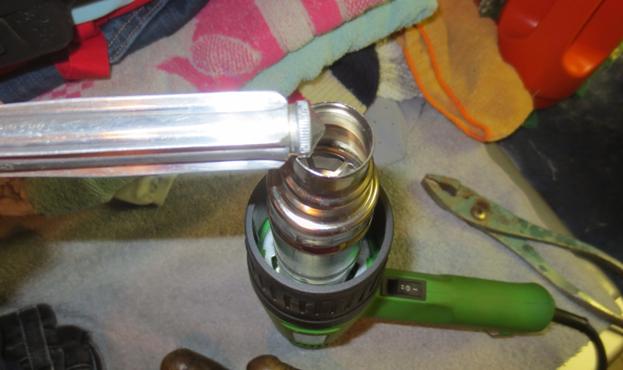
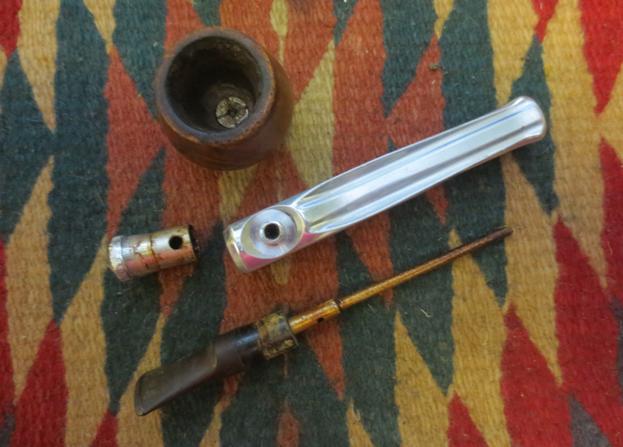
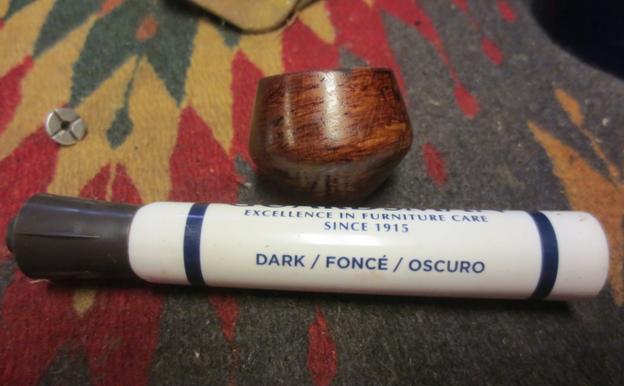
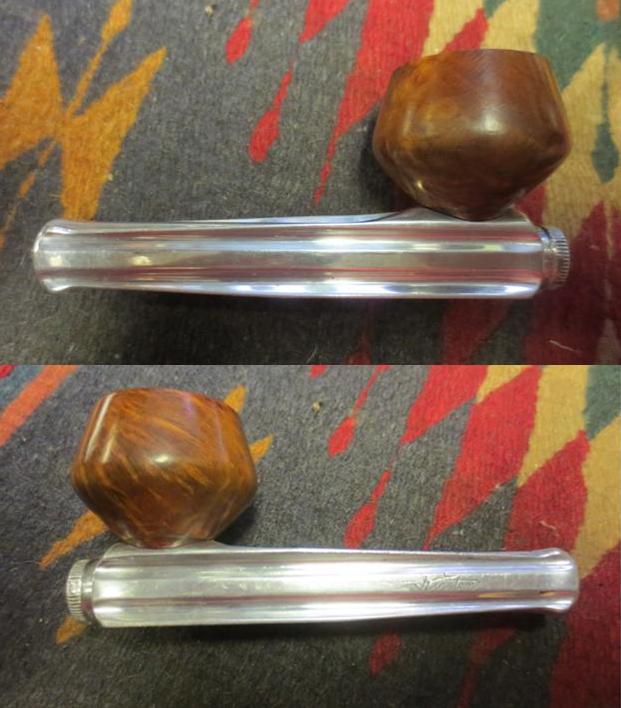
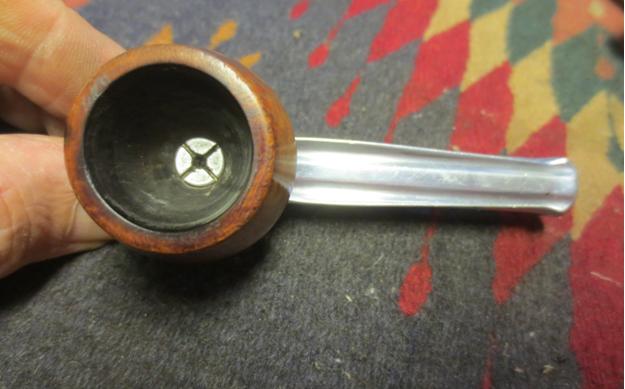
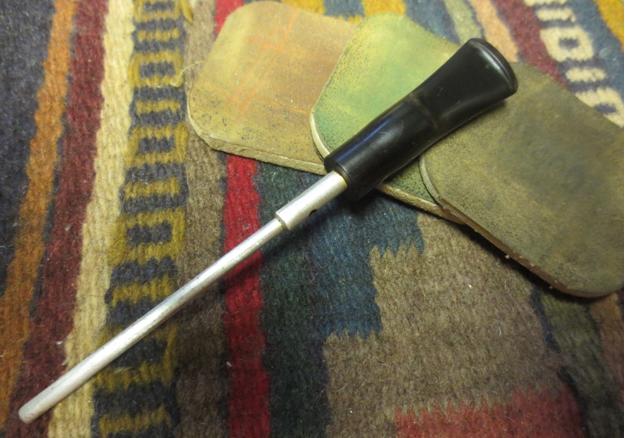
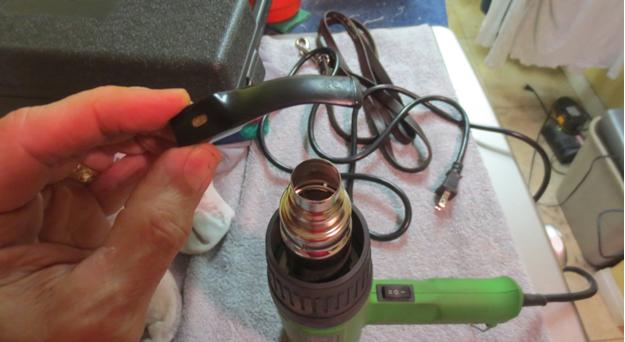
So I armed with that information I knew that the pipe I had, came from the time period of 1936-1958 and the lack of O rings on the mouthpiece and I assumed on the valve once I was able to remove confirmed that. I was ready to get to work on the pipe. I heated the valve insert with a heat gun to loosen the tars that held the cap in place. It did not take too long and I was able to insert a screw driver in the barrel and tap on the valve.K3The next photo shows the pipe taken apart. The condition of all of the parts is clear – dirty but functional. The knurled edges on the valve were damaged by previous attempts by someone else to remove the valve with pliers. In the photo above there are pliers present but I did not use them on the end cap.K4The screw in the bottom of the bowl was held in place by the cake in the bowl. The photo also shows the condition of the bowl and the rim. The other close-up photos show the stem and the tooth marks on both sides near the button.K5 K6I sanded the stem with 180 and 220 grit sandpaper to remove the oxidation and the tooth marks. I was able to blend the tooth damage into the flow of the stem because fortunately they were not deep.K7I lightly topped the bowl on the topping board to remove the damage to the rim and the build-up.K8I reamed the bowl with the Savinelli Pipe Knife and took the cake back to bare briar. I sanded the inside of the bowl with a piece of sandpaper to clean out the remaining cake.K9I scrubbed the exterior of the bowl with cotton pads and acetone to remove the grime and the remaining finish.K10 K11I scrubbed the rod on the stem unit with acetone to remove the tars and oils. I did the same with the exterior of the valve.K12I cleaned out the tarry build-up in the valve/end cap with cotton swabs and alcohol.K13I cleaned out the barrel with cotton swabs and rolled cotton pads and alcohol pushed through the opening with a screw driver. I also pushed a rolled piece of 0000 steel wool through the barrel to polish the inside. I used pipe cleaners to clean out the threads in the opening on the top of the barrel.K14I cleaned up the screw and the airway through the screw with a dental pick, pipe cleaners and alcohol. I cleaned the threads on the screw with cotton swabs and alcohol.K15I polished the aluminum barrel with Meguiar’s Scratch X2.0 and cotton swabs.K16I restained the bowl with a dark brown stain pen. K17I put the bowl on the barrel buffed them with Blue Diamond on the wheel to polish the stain and even out the coat on the bowl as well as polish the aluminum. The next photos show the bowl and barrel at this point in the process.K18 K19I cleaned out the airway in the stem with pipe cleaners and alcohol and then worked on the stem with micromesh sanding pads. I wet sanded with 1500-2400 grit pads and gave it a coat of Obsidian Oil. I dry sanded with 3200-4000 grit pads and gave it another coat of oil. I finished sanding with 6000-12000 grit pads and gave it a final coat of Obsidian Oil. I set the stem aside to dry.K20 K21 K22I gave the pipe and stem multiple coats of carnauba wax and buffed the barrel, bowl and stem with a clean buffing pad to raise the shine. I hand buffed it with a microfibre cloth to add depth to the shine. The photos below show the finished pipe. This one will also go on the store soon. If you are interested in it let me know. Thanks for looking.K23 K24 K25 K26 K27 K28 K29


I thought this one would be easy – boy was I wrong


Blog by Steve Laug

I wanted a bit of a breather so I went through my box of pipes for repair and picked this multi-finish Jobey Asti Classic Bent Billiard to clean up. The stamping on the left side reads Jobey Asti Classic and on the right side France and the shape number 470. At first glance it looked like it would be a simple restore and clean. The bowl looked decent in the box and the stem was okay as well. When I got back to the table and did a closer examination I was surprised by what I saw. The bowl rim was in bad shape with the outer edge knocked and damaged. There were dent and score marks in the top of the rim. The lava had flown over the top and it looked as if someone had thrown a coat of Urethane on top of the bowl, grime and all. I looked at the exterior and found that even the grooves in the rusticated bottom of the bowl were thickly coated with the plastic stuff. The stem looked good at first but as I examined it I found that it had been cut off and the button recut and a slot fashioned that was not clean or even. The surface of the stem on the top and bottom next to the button was heavily built up with what appeared to be black epoxy and it was bubbled and full of pin prick like holes. It also was not bent correctly to the shape of the bowl. Truly it would need a lot more work than originally thought. (As an aside don’t use Urethane on bowls it is a bear to clean off and if you have to at least clean them before you dip them in that awful plastic stuff.)Asti1 Asti2I took the pipe apart and unscrewed the Jobey Link from the bowl and took a picture of the parts. I wanted to see how dirty the internals were and if the Link would come out easily. For those of you who don’t know the Link system one of the nice perks is that the end of the tenon that sits in the stem are slotted so you can insert a slot or blade screwdriver to loosen and remove the Link. It is a great piece of forethought on the part of the designer.Asti3Because of the coat of Urethane over the lava I needed to top the bowl to remove the grime and also to clean up the outer edges of the bowl. I topped it with 220 grit sandpaper on my topping board.Asti4I sanded the finish on the smooth portion of the bowl with a medium grit sanding block and then wiped the bowl down with acetone to try to break the plastic finish. I was partially successful in removing it but more work would need to be done.Asti5I reamed the bowl with the PipNet reamer and also with the Savinelli Pipe Knife to remove the remnants of cake that still were deep in the bowl. I reamed it back to bare briar so that the new owner could build a cake of their own choosing. You can also see the top and outer edge of the rim in these photos that show it after the topping of the bowl.Asti6In the next photo you can see the film of the plastic stuff still on the bowl with the scratches from the sanding block visible. I decided to let it soak in the alcohol bath for a day and a half to see if the finish would break down some more now that it had been broken through with the sanding blocks.Asti7When I took it out of the bath the finish was pretty smooth. The plastic stuff was gone. I sanded the bowl and shank with micromesh sanding pads to remove some of the scratching and was careful around the stamping on the sides of the shank. I washed the bowl down with some acetone on cotton pads and then stained it with a dark brown aniline stain. I flamed it and repeated the process to make sure I got and even coverage.Asti8While the bowl dried I turned to work on the stem. I heated it with the heat gun to soften the Lucite enough that I could bend it to the proper angle. It did not take too much to get the angle correct but the heat caused the epoxy patch to bubble. The perk of that was that the airhole pin prick marks disappeared.Asti9I wiped the bowl down with alcohol on cotton pads to remove some of the dark stain and bring the grain to the forefront.Asti10I cleaned out the interior of the stem with cotton swabs, pipe cleaners and alcohol. I cleaned out the area where the Jobey Link sat in the stem and the airway to ensure good fit and draw.Asti11Now it was time to work on repairing the stem repairs! The next photos show what the patches looked like when I started. They stood out clearly and the heat of the gun made them raise and bubble. To me they looked like overkill in terms of a repair. It was almost if the person who did the patch was trying to build up the thickness of the stem at the button to give it strength. It would take some work to make it blend in. I sanded the surface of the stem with 220 grit sandpaper to smooth things out and try to match the stem surface. Of course I forgot to take photos of the process but the ones shown below with the micromesh sanding pads will show the change. The third photo below shows the slot in the button. I worked on it with needle files to clean it up and shape it and again forgot to take photos of the process.Asti12I rubbed the bowl down with some Conservator’s Wax so that when I cleaned out the shank and Jobey Link System with would not damage the finish that I had done. (I know I should have done this before staining but this one irritated me and I forgot to do so.) I cleaned the link and then put a little Vaseline on the threads and turned it into the mortise. I adjusted it with the screwdriver to set it into the shank.Asti13 Asti14I buffed the bowl lightly with Blue Diamond on the wheel and gave it a light coat of olive oil. I took the following photos to show what the pipe looked like at this point in the process. You can also see the state of the stem in these photos. Overall the pipe is looking pretty good at this point. It is far better than I expected when I started. The contrast of the dark stain on the rustication and the lighter stain on the smooth briar makes this pipe look quite “classic” matching its name.Asti15 Asti16I wet sanded the stem with 1500-2400 grit micromesh sanding pads and dry sanded with 3200-4000 grit pads. I finished sanding with 6000-12000 grit pads. Asti17 Asti18 Asti19I buffed the bowl and stem with Blue Diamond. I avoided the rusticated portion so as not to get polishing compound in the crevices and pits of bottom half of the bowl. I waxed the bowl and the stem with multiple coats of carnauba. The finished pipe is shown in the photos below. The grain is quite beautiful and the contrast between the smooth and the rusticated portions gives a unique look to the pipe. Thanks for looking.Asti20 Asti21 Asti22 Asti23 Asti24 Asti25 Asti26 Asti27

An Interesting Churchill’s Volcano Brought to Life


Blog by Steve Laug

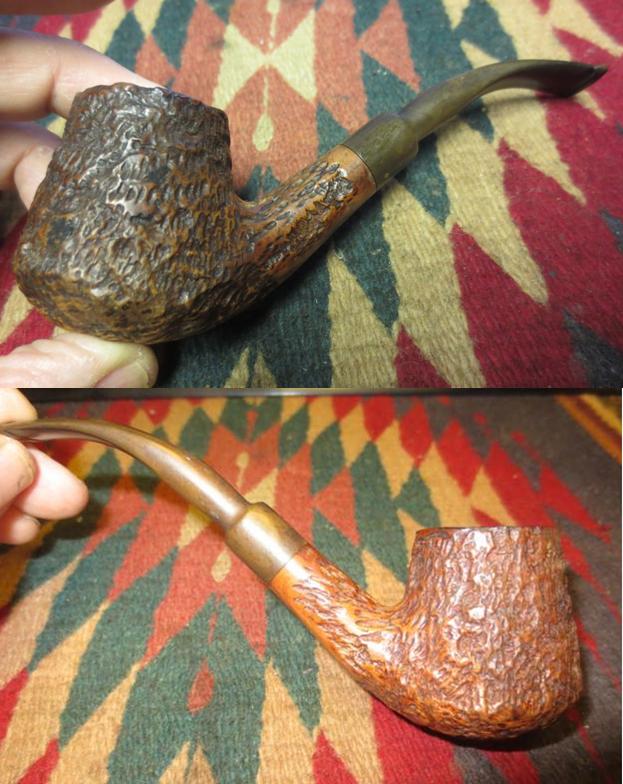
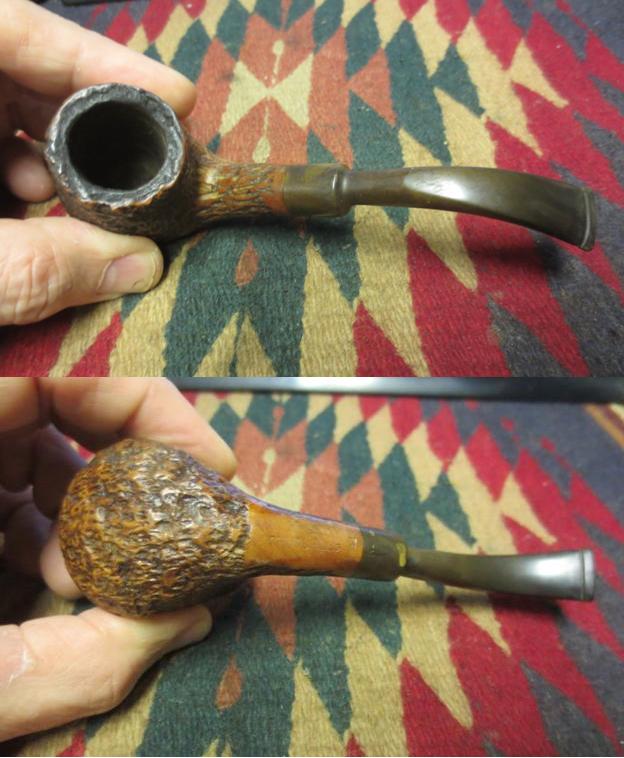
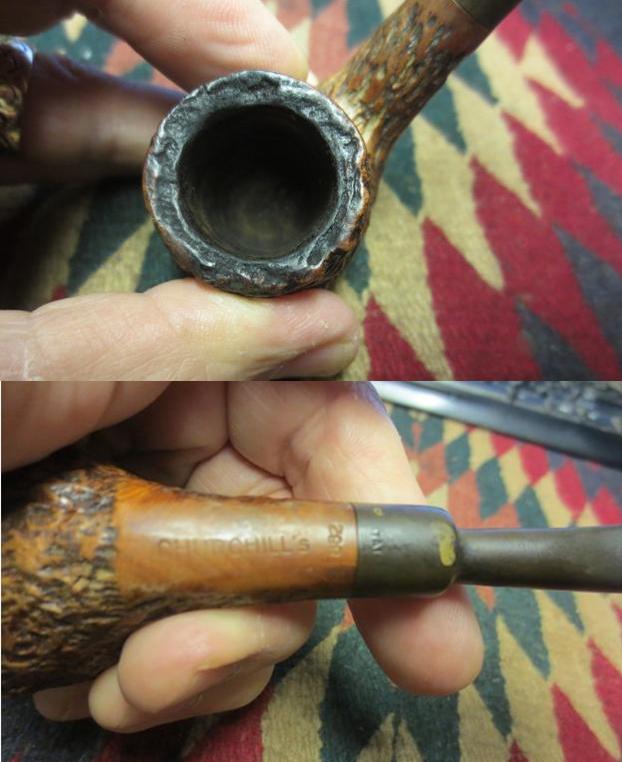
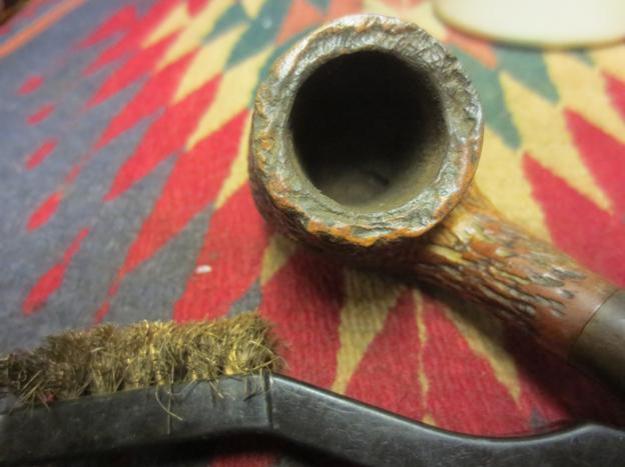
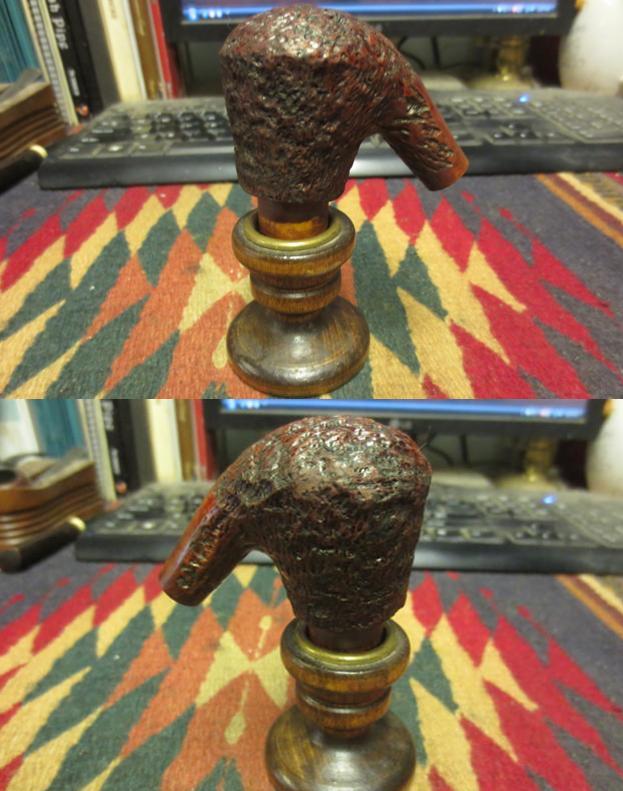
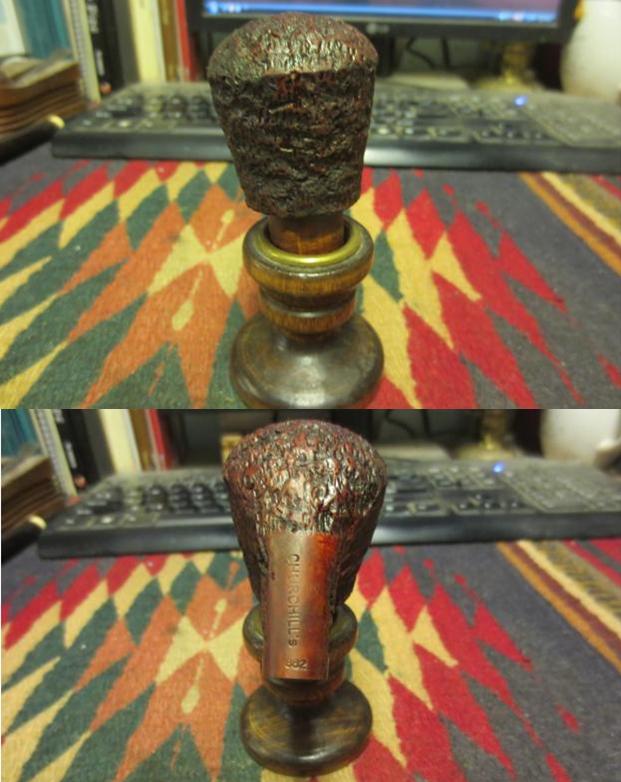
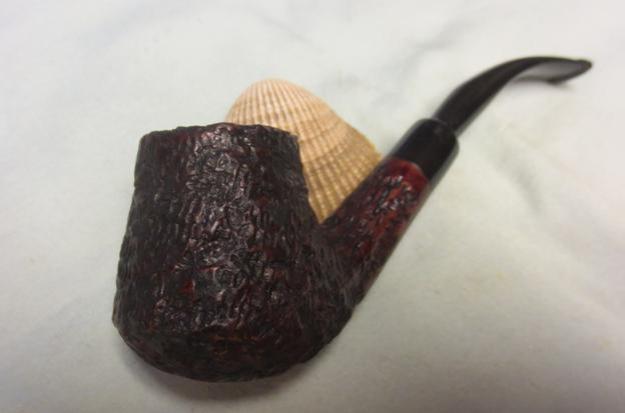
The next out of the box of pipes from my brother is the one below. It is stamped Churchill’s on the smooth underside of the shank. The shape number 882 is along the shank stem junction on the underside. I have refurbished several Churchill’s pipes from their pipe shop in Norwich. I wrote a bit about that shop when I did a refurbish on a Churchill’s Bent Pot. The link to that article is as follows: https://rebornpipes.com/2013/09/08/churchills-bent-pot/. This pipe had a rustication that is very similar to those I have seen on Lorenzo pipes. The stem on this pipe is stamped Italy on the underside. The finish was tired and dirty but the rustication was in good shape. The rim was solid with no damage to the inner or outer edge but it was thick with tars. The bowl was reamed while I was visiting in Idaho. The stem was in good shape at first glance. It was oxidized but there were no tooth marks. As I examined it I found that the stem had been cut off and a new button was cut into the surface. The slot was also reshaped. The button itself was very thin as the stem was also thin at this point.Church1 Church2I took a close up photo of the rim and the stamping on the underside of the bowl. The rim is dirty but the rustication is in good shape with no burn marks or damage. The stamping is also very clear.Church3I scrubbed the rim with a brass bristle wire brush to remove the tars and oils that had built up there. Once it was loosened I scrubbed it with a tooth brush and Murphy’s Oil Soap to clean off the grime in the finish. I rinsed the bowl with warm running water to remove the grime and soap.Church4 Church5The next photos show the cleaned finish on the pipe.Church6 Church7I used the dental spatula to scrape out the inside of the shank and break the tars and oil build-up away from the walls of the shank and mortise. I cleaned out the mortise and airway in the shank and stem with pipe cleaners, cotton swabs and alcohol.Church8 Church9I sanded the stem with 220 grit sandpaper to remove the oxidation. I built up the button with black super glue to add thickness and enable a grip on the button.Church10 Church11I used a file to shape the button and recut the sharp edge against the stem surface. I sanded it with 180 grit sandpaper to smooth out the areas in front of the button on the top and the bottom sides.Church12 Church13I continued to shape the stem surface and the button with 220 grit sandpaper and also used the needle files to open up the slot in the button and reshape that.Church14I sanded the stem with 220 grit sandpaper to clean off the oxidation. I wet sanded the stem with 1500-2400 grit micromesh sanding pads. I rubbed it down with Obsidian Oil. I dry sanded the stem with 3200-4000 grit sanding pads and gave it another coat of oil. I finished sanding the stem with 6000-12000 grit pads and gave it a final coat of Obsidian Oil. I let the stem dry.Church15 Church16 Church17I stained the bowl with a dark brown aniline stain and flamed it. I repeated the process until the coverage was good. I hand buffed the bowl with a shoe brush. I gave it a light coat of olive oil and hand buffed it again. I rubbed the surface down with some Conservator’s Wax and then hand buffed it with the shoe brush for a final shine.Church19 Church20I buffed the pipe lightly with Blue Diamond polish on the wheel and then gave the stem multiple coats of carnauba wax. I buffed the pipe with a clean buffing pad and then hand buffed it with a microfibre cloth. The finished pipe is shown in the photos below. The rustication has depth and textures both visually and tactilely. It feels great in the hand. The shape of the bowl and the faux military stem give the pipe a classic look with a flair that is almost Danish looking. I like the finished look of this one. Thanks for looking.Church21 Church22 Church23 Church24 Church25 Church26

Restoring a W.O. Larsen 11 Handmade Bent Brandy


Blog by Steve Laug

Charles Lemon of Dadspipes blog picked up a batch of pipes that included a lot of Danish made ones from an estate not long ago. He has been writing about their restoration on his blog. He sent me some photos of the pipes and offered to sell some to me. I chose two of them. The first one was the Larsen that is pictured below. The description of the pipe said that it was stamped on the underside of the shank 11 over W.O. LARSEN over Handmade over Made in Denmark. On the topside of the shank next to the stem/shank junction it was stamped SUPER. The stem had a broken tenon and it was stuck in the shank. Charles had mentioned that he thought it looked like it had been glued in so it would take a bit of work. When I saw the grain on it I decided that it would be a fun piece to work on for my own rack. It has some stunning flame grain on all around the bowl sides and birdseye grain on the rim and the bottom of the bowl and shank.Larsen1I looked up some background on W.O. Larsen and found a great summary on this site. It was helpful and brief so I quote it in full below: https://www.finepipes.com/pipes/danish/w-o-larsen?sort=20a&page=1&zenid=debcdee8f415c1977fb5c359652d6aeb W.O. Larsen was one of the most famous tobacco shops in Copenhagen, with a beautiful store located on Copenhagen’s famous “Walking Street.” During the flowering of the Danish pipe in the ’60’s, they first began retailing pipes by such carvers as Sixten Ivarsson, Sven Knudsen, Poul Rasmussen, and Brakner. Urged on by his store manager Sven Bang, the owner, Ole Larsen, decided to begin making pipes in the basement of the shop. He first hired Sven Knudsen as the pipe maker, who soon passed the job to his protégé Hans “Former” Nielsen. Larsen’s fortunes rose along with the rest of the Danish pipe business and Former was soon managing a group of carvers in the old Larsen cigar factory. Among these were Teddy Knudsen, Tonni Nielsen, Jess Chonowitch, Peter Hedegaard and others, who were responsible for the Select and Straight Grain series before they branched out on their own. After Former left to start Bentley pipes in Switzerland, his duties were taken over by Soren Refbjerg Rasmussen, while the straight grains were made by Teddy’s student Benni Jorgenson. As Ole’s health began to fail, the reins were taken over by his son Nils. Nils became convinced that the way for Larsen to prosper was by entering the low-end market, and acquired the Georg Jensen pipe factory to make an array of less expensive pipes. This turned out to be a fatal error, and Larsen was recently sold to Stanwell, who continue to produce so-called “Larsen” pipes in their huge factory. Thus ended an important part of Danish pipe history.
I was looking forward to seeing it firsthand so I paid Charles and he shipped it on Friday. Wonder of wonders, Canada Post delivered it on Monday. I came home from work to find the awaited box on the table. I opened it and found the Larsen in a bag with the label printed on the outside enumerating it’s stamping. I took it out of the bag and immediately took it to the work table. The photos below show the pipe as it looked when it arrived. It was much lighter in colour than the photo had led me to believe.Larsen2The bowl was dirty and there were some dents and marks in the briar. The rim had a thick coating of tars and the back edge of the rim was worn down from knocking the pipe out to empty it. There was an uneven cake in the bowl. The tenon was stuck in the shank and there were dried bits of glue on the end of the shank and around the end of the stem where someone had glued the stem onto the end of the shank. Fortunately the stem did not stick to the briar but the tenon certainly did. The stem was clean of bite or tooth marks and was lightly oxidized.Larsen3 Larsen4 Larsen5I took a photo of the end of the shank to show the glue spots on the briar and around the broken tenon.Larsen6When I had looked at the initial photo I was uncertain that the stem was original as it looked to be bigger in diameter than the shank. I lined up the broken tenon in the shank with the rough end on the stem and took some photos to see if it actually fit the pipe.Larsen7I decided to try pulling the tenon with my normal screw and it did not budge. It began to shatter and break apart.Larsen8Thus I knew that I would have to resort to drilling out the broken tenon. I set up my cordless drill and put a drill bit slightly larger than the airway in the chuck. I slowly drilled out the tenon, increasing the size of the drill bit until it was the just slightly smaller than the mortise. The last bit I used broke the tenon piece free from the shank and the mortise was clear.Larsen9While I had the drill out I also drilled out the broken tenon in the stem in preparation for the replacement tenon I would use.Larsen10Once the airway was drilled out on the stem I used a tap to thread the newly drilled airway to accommodate the threaded replacement Delrin tenon.Larsen11I used the topping board and 220 grit sandpaper to clean off the glue residue on the end of the stem before I put the new tenon in place. I want a clean, flat surface to work with against the shank when I was finished.Larsen12I used some clear super glue on the new tenon and twisted it into the stem. I put it in the shank to check the alignment several times before putting a few more drops of super glue around the tenon stem union.Larsen13Once the glue dried I put the stem in place in the pipe and took some photos to evaluate the fit.Larsen14 Larsen15With the tenon repair completed it was time to address the bowl. I took some close up photos of the bowl/rim and the stamping on the shank.Larsen16I reamed the bowl with a PipNet reamer using the third cutting head and took the cake back to bare briar. I cleaned up the reaming with a Savinelli Pipe Knife.Larsen17 Larsen18I sanded the inside of the bowl with a tube of sandpaper. This smoothed out the walls of the bowl and began to clean up the damage on the inner edge of the rim.Larsen19The rim damage on the back side needed to be dealt with so I topped the bowl to remove the damaged area.Larsen20I scrubbed the briar with acetone on cotton pads to remove the wax, grime and oils in the wood. The grain is really beautiful in the photos below.Larsen21 Larsen22I scrubbed out the mortise and airway in the shank and stem with alcohol, cotton swabs and pipe cleaners until they came out clean.Larsen23I mixed three of the stain pens together to get the correct brown on the rim. Once it was blended and sanded I stained the bowl with a dark brown aniline stain and flamed it. I repeated the process until the coverage was even on the bowl.Larsen24 Larsen25 Larsen26I wiped down the bowl with alcohol on cotton pads to make it more transparent and make the grain show through. It still needed more work but it was definitely getting there.Larsen27 Larsen28The inner edge of the rim needed more work to remove the damage but the colour was correct.Larsen29I used a folded piece of 180 grit sandpaper to bevel the inner rim of the bowl to remove the damaged areas. I followed up by sanding it with a piece of 220 grit sandpaper and continued to sand the inner edge. I sanded the inner edge and rim with 1800-2400 grit micromesh sanding pads.  I restained the inner bevel with a dark brown stain pen to match the finish on the bowl.Larsen30With the bowl finished I wet sanded the stem with 1500-2400 grit micromesh sanding pads. I rubbed it down with Obsidian Oil and dry sanded it with 3200-4000 grit pads. I gave it another coat of oil and sanded it with 6000-12000 grit pads. I gave it a final coat of Obsidian Oil and let it dry.Larsen31 Larsen32 Larsen33I buffed the pipe with Blue Diamond on the buffing wheel and then gave the bowl and stem multiple coats of carnauba wax. By now you are all probably very familiar with my process. I buffed it with a clean buffing pad to raise a shine and then hand buffed it with a microfibre cloth to add depth. The finished pipe is shown in the photos below. It is one I plan on hanging onto for my own rack and I am happy with how it turned out. Thanks for looking.Larsen34 Larsen35 Larsen36 Larsen37 Larsen38 Larsen39 Larsen40 Larsen41

Spotlight: Ladies Pipes, Part 5/7, a Vintage Dr. Grabow Carved Duke


Guest Blog by Robert M. Boughton
Member, International Society of Codgers
Member, North American Society of Pipe Collectors
http://www.naspc.org
http://www.roadrunnerpipesnm.biz
http://about.me/boughtonrobert
Photos © the Author

If a man loves you…he’s willing to profess it. He’ll give you a title after a while. You’re going to be his lady, his woman, his fiancée, his wife, his baby’s mama, something.
— Broderick Steven “Steve” Harvey (b. 1957), U.S. comedian, actor, TV and radio talk show host, writer of books on relationships, former New York public high school teacher

INTRODUCTION
I neither forgot nor gave up on this special series despite the relative vacuum of responses. Instead, I was sidetracked by developments in a portfolio of litigious necessity that might very well expand with more certainty and regularity than the universe. Returning to the subject of this blog, just the other day I chanced upon a woman with a rather off-putting appearance. Perhaps some significant other had at last given her a title she disliked. At any rate, she was chain-smoking cigarettes with almost the frenetic zealousness of the late great Lloyd Bridges near the end of the comic classic “Airplane.”

Nevertheless, by pure nature, I acquainted her with my name and part-time occupation, and of course mentioned the several new customers I came across in recent weeks, under circumstances that can only be called serendipitous, who were already free of cigarettes. Undeterred when the lady did protest – with a deceptively soft, dismissive laugh that was somehow more like a tiger stifling a yawn before it pounces – that the idea of a woman smoking a pipe did not seem very lady-like. Still not dissuaded, I pulled from my magic box the perfect specimen of a lithe, sleek, petite bent billiard that I had reserved for one other singularly odd woman who never claimed it.

“That’s why I also restore ladies pipes such as this,” I said with a hint of enthusiasm, and held it out.

With the most cursory pretense of a glance I never before had the pleasure of noting in my writer’s mental file, she gave a flick of the head every bit as memorable, so that her long, dirty blonde hair made room for a fresh cancer stick. She shoved in her mouth, so forcefully punctuating her contempt that the nasty, chemical laden coffin nail went farther into her mouth than anticipated and almost choked her. I had to admire the quick recovery with a lengthy, chic, palliative drag, so reminiscent of any one of the many Golden Age of Hollywood starlets now long dead from the same prop rather than age. I know when I’ve been shot down. But it still goes to show the progress society needs to make before a lady can be comfortable walking into a tobacconist to buy a pipe.

On the subject of pipes, it turns out there really was a Dr. Grabow – Paul E. Grabow, MD (1868-1965), a general practitioner in Chicago who was a friend of Louis Linkman, co-founder with August Fisher of M. Linkman and Co. in 1898. During a conversation between the two in the early years of the Great Depression, Linkman reportedly told Dr. Grabow of his idea to introduce a new and improved line of pipes that he felt would sell better if they were named after a physician. Dr. Grabow, flattered by the request to use his name, accepted. The pipe brand named for him was launched in 1932, and until his death at age 97 the good doctor was given new models whenever he wanted them. Grabow1

The free pipe perk persisted despite Linkman’s production of the brand stopping in February 1953, when the Dr. Grabow Pipe Co. filed for dissolution a month before Henry Leonard and Thomas Inc. (HLT) of Queens, New York bought the rights, and they were produced by Sparta Pipes Inc. U.S. Tobacco bought out Sparta in 1969, assuming control of the Dr. Grabow production until Lane Ltd. paid for the rights some time later. Around 2000, RJ Reynolds and British American Tobacco took over.

As for the peculiar little carved Duke that is the subject of this installment, regardless of its smallness, the bowl seems to have six subtle sides. I am inclined to call such a shape a panel. But the best narrowing I can do with the multitude of Dr. Grabow sites is a “textured” slim pear, shape number 74.Grabow2Grabow3Grabow4Grabow5

And here is a photo I found online of a Dr. Grabow “Duke G,” which appears to be the same pipe except for the white spade.Grabow6

RESTORATION
At a glance, the Duke was rough from age and unnatural wear. Here are a few close-ups of the stummel showing the thick, dark stain and some of the damages I faced, as well as the nomenclature I needed to preserve. The bit was in good shape, needing only moderate work. The six-sided paneling (two each on the front and back, and then the sides) is hard to spot by eye, but an inspection with fingers reveals the presence.Grabow7Grabow8

This kind of surface of a pipe stummel – whether it be referred to as carved, rusticated, textured or by any other designation – always poses a challenge in stripping the old stain. No matter how long the wood soaks in alcohol, at least by my concept of safe and sane standards, sanding is always still needed, in particular for the crevices. Of course, I could have started this project with an arduous application of several grades of paper, but the overdone original finish suggested the need for an Everclear soak to begin. And so that is how I commenced the task, putting the bit in an OxiClean bath at the same time.Grabow9

I removed the bit from its bath first and stuck a regular cleaner through the air hole. I was surprised by the remaining blackness of the Vulcanite, which I rubbed dry with a strip of soft white cotton rifle barrel cleaning cloth. Grabow10

I apologize for my camera’s continuing flash problems, which for the above photos required manipulation of the color and brightness settings in my editor to show the minor scratches near the lip of the mouthpiece. Here it is, again with the editor adjustments, after light sanding with 320-grit paper and wet micro mesh from 1500-12000. I know it’s hard to see the difference, but the entire surface was smooth.Grabow11

And here’s the stummel after drying with another piece of cotton cloth, running another cleaner through the shank, sanding with 200-grit paper and wiping down with 0000 super fine steel wool. The additional cleaner is from the bit. Note the still dark crevices.Grabow12Grabow13Grabow14

I began an assault on the crevices that turned out to be the crux of the battle to fix this nice, older Dr. Grabow. I started with super fine steel wool, squeezed into small enough edges to fit into the crevices. This was a tedious process, but it did improve the situation.Grabow15Grabow13 Grabow14I tried 180-grit paper folded to maneuver the edge into the pesky crevices, and the result was an improvement in spots but still disappointing. I only show the next photos as emphasis of the point.Grabow18 Grabow19 Grabow20For the first time in a long while, I concluded a second Everclear soak was needed, as I had not really let the first one complete. The success is clear, following another drying with cotton cloth and scrubbing the shank more with both ends of an ear cleaner. I flashed back to my childhood, at times when such cleaners came out of my ears in about the same condition.Grabow21 Grabow22 Grabow23The task of ridding the crevices of unwanted darker color accomplished, I prepared the pipe for the final steps, very gently using 320-grit paper again and the full scale of micro meshes.Grabow24 Grabow26 Grabow25I retorted the pipe, and for the re-stain used Fiebing’s brown alcohol-based leather conditioner and flamed it with a lighter.Grabow27A clean up of the char with 2400 micro mesh and a little reduction of the darkness with super fine steel wool worked well.Grabow28The fine briar was ready for Halcyon II. For once I laid it on thick.Grabow29When the wax compound had time to set in, I wrapped it in a cotton cloth and wiped it vigorously for about a minute. Then all that was left was buffing on the electric wheels, with red and White Tripoli, White Diamond and carnauba on the bit. To my eye, the wood needed a little more gloss, so I added some carnauba with the wheel, as always followed by the clean buffer. I was more happy than usual with the final results. Please excuse the unfortunate symbol in most of the following shots. I had rushed outside of the club where I was for open sunlight and didn’t notice until I saved the photos from my camera’s memory card to the computer hard drive, by which time the sun had set.Grabow30 Grabow31 Grabow32CONCLUSION
For a weathered old Dr. Grabow, this restoration provided some interesting lessons to me in working with a carved pipe. My dear friend and mentor, Chuck Richards, has always advocated a toothbrush for the crevices, but try as I have, that venerable method has never worked for me. Every situation seems a little different. This one required attacks from several different directions.

SOURCES
http://www.drgrabow.net/dr-grabow-pipes/
https://pipedia.org/wiki/Dr._Grabow
http://www.geocities.ws/lokomac8/grabow.htm
http://drgrabows.myfreeforum.org/index.php?component=content&topicid=15&postdays=0&postorder=asc&start=40
http://www.drgrabow-pipe-info.com/drgrabowp03.html
http://www.pipephil.eu/logos/en/logo-l4.html M. Linkman & Co.
http://www.pipephil.eu/logos/en/logo-drgrabow.html
http://www.drgrabow-pipe-info.com/pipenames09aa.html Date guide
https://1fa1282d-a-62cb3a1a-s-sites.googlegroups.com/site/seanspipes/home/dr-grabow-shape-charts/drg1988shapechart1.jpg?attachauth=ANoY7coHvB5qOmn44n9H_4wsnE06IzBJemJ0T5wa-FPbZh08FdvUUxghql7wG8V643ehj8Lj3Qjz4dhyUHGqC8PjXVHPy7yUihii1MNoOToCN-ZApjh36oFXVhS77OqW1r_meXdwIMaTYJP391i8GxBuwipjRfJyF-PbV4dNJrnK4684TJR7xnektgvTVNZ52aHs8nJKdigkmmVsgS06lld4DlOYIxYa2zismOQMQ1Lavw-0v_HcC4jddbKt2qVHTLKognYdJ2tD&attredirects=0 Slim Pear Shape 74

Restoring my Paris Finds – A Pair of Hilson Double Ecume Sandblast Pipes


Blog by Steve Laug

As I wrote earlier in another blog, I found these two pipes on an evening walk to dinner in the Latin Quarter of Paris (https://rebornpipes.com/2016/06/10/some-good-pipe-finds-on-a-recent-work-trip-to-europe/). The pair of Hilson pipes was stamped in block letters Hilson over Double Ecume with the word Sandblast following. The delicate canted Dublin was stamped with the shape number 5 just before the stem shank union, while the stack with the saddle stem was stamped with the shape number 95/S on the bottom of the bowl. The finish on both pipes was dirty and worn but not ruined. The bowls were meerlined and the top of the Dublin had a heavy build up of tars and cake that overflowed the bowl. The stack/billiard was less dirty but the cake overflowed onto the rim as well. The meer lining was darkened. The bowl in the Dublin had a thick cake that extended to the bottom of the bowl and reduced the size of the already petite bowl. The bowl on the stack was less thick but it nonetheless reduced the diameter of the bowl as well. The stems on both pipes had some tooth chatter and light oxidation but would easily clean up. Both stems bore a stylized capital H on the left side. As I looked at them I was glad I had picked them up for small sum of 10 Euros or slightly over 14 dollars Canadian. Hilson1 Hilson2 Hilson3 Hilson4

I remember when I purchased them I took them back to the hotel in Paris and used a wooden coffee stirrer to scrape away some of the cake and debris in the bowls to check the meerlinings. I was hoping that they were intact all the way to the bottom of the bowl. I breathed a sigh of relief when I found that they were uncracked as far as I could see.

I was curious as to the stamping on the pipes. I have cleaned and restored quite a few Hilson pipes over the years – many of them meerschaum lined – and I do not recall seeing the Double Ecume stamping before. First I wanted to know what the name Ecume meant so I looked it up in a French/English dictionary and found that it meant Foam. Thus the pipe name was Hilson Double Foam. I liked the French far better! It sounded more elegant. I used Google and found out that the pipes were made when Hilson was still a Belgian Company. This dates them as pre 1980 as the company was then purchased by Gubbels in Holland. I checked on Pipedia and found an advertisement for Hilson Elan pipes. The sandblast looks like the one on my Ecume pipes. The interesting thing that came from this Wally Frank Catalogue advertisement was the description of the tube in the shank. It is described as Hilson’s special tubular dry smoking condenser. You can see a line drawing of that in the photo below marked as FIG. A (circled in red in the photo below).Hilson5From that link I checked out Chris Keene’s Pipe pages site for more information and found the following catalogue page. http://pipepages.com/2wf14.htm. Even thought the advertising page is for Hilson Fantasia Pipes it confirmed several facts for me that I had not previously known. First was that the meerschaum lined bowl was cut from block meerschaum and not a pressed meerschaum. That is probably why it had survived intact through the years. Second, that all Hilson Belgian pipes had the condenser tube in the shank. I also found a page from an Iwan Ries Catalogue from 1962 that showed meerschaum lined briar pipes. Sadly I could not view the page as the link was not functional.Hilson6I carefully reamed out the cake in both pipes with the Savinelli Pipe Knife to take it back to the meerschaum lining. I did not want to gouge or chip the meerlining so I proceeded with caution. I sanded the interior of the bowl with a piece of 229 grit sandpaper around the cutting head of the PipeNet pipe reaming tool to take out all of the cake in the bowls.Hilson7 Hilson8Once I cleaned the bowls I decided to top the two pipes to remove the build up on the rim surfaces. Since both pipes appeared to have smooth rims topping them would not damage the original look of the pipe and would allow me to smooth out the top of the meerschaum bowl insert. I topped both bowls on 220 grit sandpaper on the topping board.Hilson9When I finished topping them the meerschaum was clean the surface of the rim was smooth.Hilson10I sanded the rims with 1500-2400 grit micromesh sanding pads to remove the scratches left behind by topping the bowls. The polished rims looked really smooth and ready to be stained. I stained the rim of the briar outer bowl with a dark brown stain pen and a Sharpie black permanent marking pen to get the dark brown colour of the bowl.Hilson11I scrubbed out the inside of the stem and the shank of the pipes with alcohol, pipe cleaners and cotton swabs. There was a lot of grime in both pipes. The condenser tubes on both were coated with tars and oils that I removed with 0000 steel wool. I had to reshape the open end of the tube in the Dublin stem as someone had tried to remove it with pliers. It was crushed and there were some marks from the jaws of the pliers. I reshaped it with an ice pick inserted and heated the tube with a lighter. I was able to bring it back to round. I was also able with the heating to remove both tube inserts and clean the stems before putting them back in place. I scrubbed the briar with a tooth brush and Murphy’s Oil Soap and rinsed them with tap water. I dried them off and both bowls were clean.Hilson12I sanded the tooth marks and chatter on the stems with 220 and 380 grit sandpaper and a medium grit sanding stick. I was able to remove all of the marks.Hilson13 Hilson14I wet sanded the stems with 1500-2400 grit micromesh sanding pads and rubbed them down with Obsidian Oil. I dry sanded the stems with 3200-4000 grit pads and gave them another coat of oil. I finished sanding them with 6000-12000 grit pads and gave them a final coat of Obsidian Oil and let them dry.Hilson15 Hilson16 Hilson17I buffed the stems with Blue Diamond on the wheel and gave them both multiple coats of carnauba wax. I hand waxed the bowls with Conservator’s Wax and a shoe brush. I hand buffed both the bowls and stems with a microfibre cloth to add depth to the shine. The finished pair of Hilsons is shown in the photos below. They are a beautiful set of pipes and serve as a reminder of my recent Paris trip. Thanks for looking.Hilson18 Hilson19 Hilson20 Hilson21 Hilson22 Hilson23

I Believe I Found an Undercover Lorenzo of Some Sort


Guest Blog by Robert M. Boughton
Member, International Society of Codgers
Member, North American Society of Pipe Collectors
http://www.naspc.org
http://www.roadrunnerpipes.net/ (Opening soon)
http://about.me/boughtonrobert
Photos © the Author

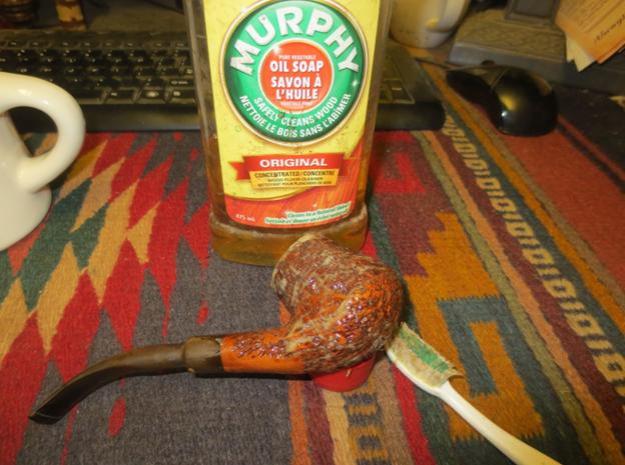
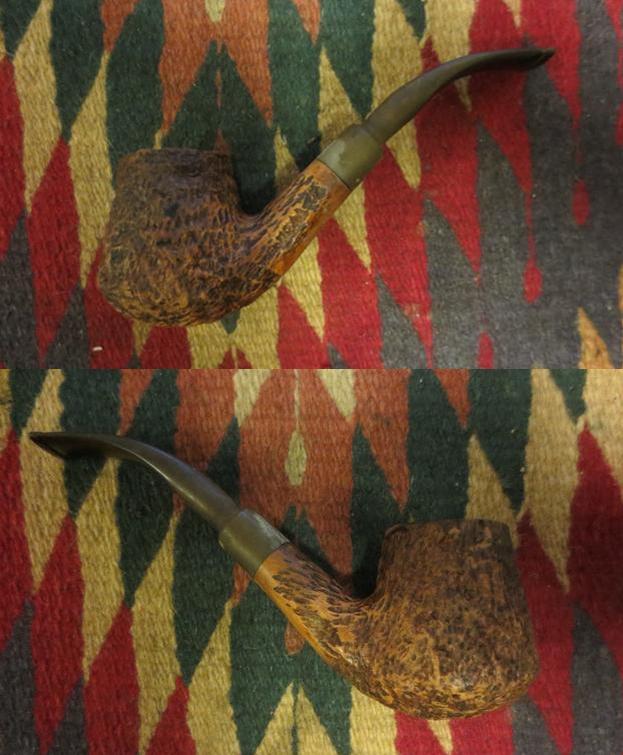
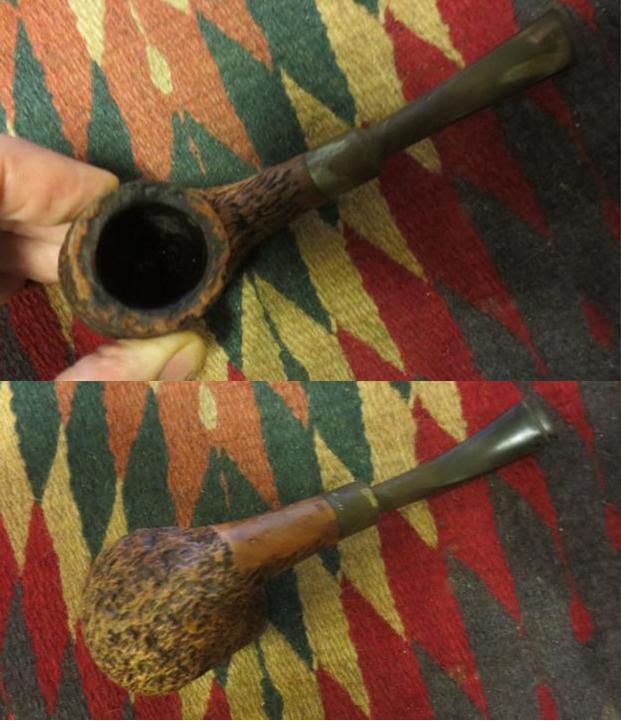
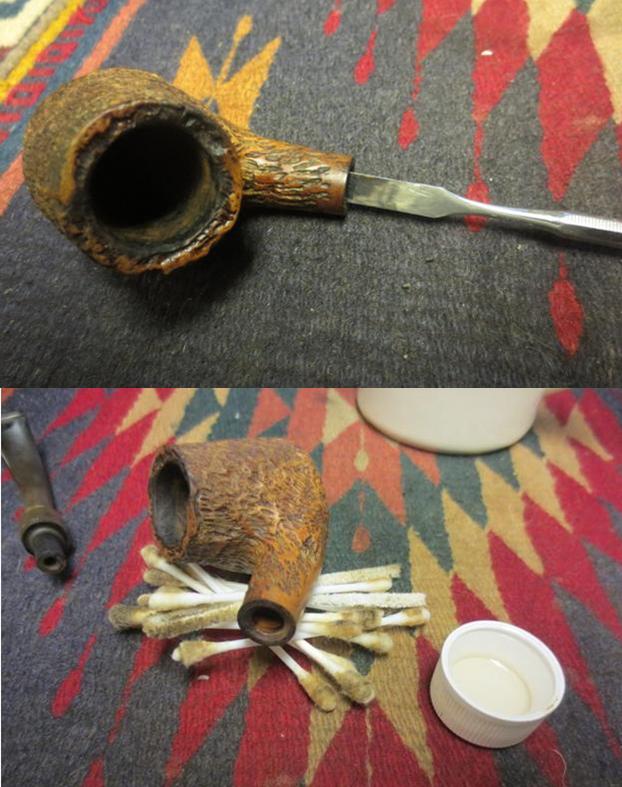
INTRODUCTION
In late October of 2014, I wrote a blog here about a Lorenzo second with the name Spitfire Mille (Italian for thousand, just as Starbuck’s large drinks are designated by Venti, meaning 20 – for the number of ounces, including the ice in my With Room Raspberry Iced Americano right now).  Lorenzo, an Italian brand that has been around since 1946, makes an assortment of traditional shapes and styles but is, among my local pipe friends at least, best known for its lines of, well, enormous proportions.  Take this Spitfire, not all versions of which are so large.Lor1 Lor2 Lor3 Lor4 Lor5You can’t tell by these pictures, but although the length was near the limit of the norm at about 6”, the chamber diameter was something like 1” x 2” when I checked before adding the Spitfire to my old business website.  That’s about 6/8 (¾”) x 1” larger than usual.  Then I measured less common specifications, including the diameter of the entire rim across, bowl height and the top half of the shank leading into the bit.  Here is where the numbers became astounding: from one side of the rim to the other was a little under 2”; the height of the bowl was close to 3”, and the shank was 1” across.

If those numbers don’t sound impressive, consider three of my largest pipes, the Peterson 150th Anniversary smooth bent billiard, the Digby Six-Panel and the Soborg Danish Panel.Lor6 Lor7The Pete’s length is 7”; chamber diameter is ⅞” x 1¾”; the full rim is 1⅜”; the bowl height is 2¼”, and the shank is 1½”.  The Digby’s length is 5¾”; chamber 1” x 1¾”; rim 1½”; bowl height 2½” and square shank 1” at the halfway point.  The Soborg’s length is 7”; the chamber is ¾” x 1½”; total rim is 1¼”; bowl height is 2”, and the shank is 1”.

And so, it seems, not counting the length, the Spitfire is the overall “winner,” if size really counts.  All of this is to introduce the no-name Italian Dublin XM (by way of indicating extra monster, for lack of a better description).  This pipe without a name, perhaps the more so for that most unfortunate social status, has all the earmarks of a Lorenzo reject.  It looks like a Lorenzo; comports itself like the portlier brothers, sisters, uncles, aunts and so on and on of its fertile familia, and as it was stamped with the single word “Italy” to boot, so it must be a Lorenzo by birth if not legitimacy.

RESTORATIONLor8 Lor9 Lor10 Lor11Once again the troubles the marvelous pipe faced before it could be presented to a new owner who would cherish it were greater than met the casual eye.  The rim was just a tad crusty and therefore offered itself as the place to begin.  I chose super fine 0000 steel wool to commence the task.  Most times now I have at last embraced more popular techniques such as the wet micro mesh method, but on this occasion I did it with steel wool before I performed a little sanding with 320-grit paper with the goal of ridding the fair and rounded rim of scratches attendant to burning.  There are still other means to this end.  Yet with gentle ministration, I have found the finest steel wool an excellent first step in the process in some situations.  This was one of them.Lor12At that juncture of the growing adventure, I considered the dull state of the bit and the small but numerous scratches and dings through the original stain to the excellent Mediterranean briar beneath.  Perceiving an unusual thickness to the lovely red coating, I arrived at the clear and positive efficacy of an OxiClean bath for the bit and a concurrent but somewhat longer soak of the stummel in Everclear.Lor13 Lor14I slipped the bit and stummel into their respective Tupperware containers and the sequel to the prequel of the not only continuing but never-ending adventures of the Starship Enterprise (“Into Darkness”) in the desktop PC’s DVD player to watch – once again for me – with my new roommate.  He had somehow managed never before to see the movie, and we had some time to relax and smoke our pipes.  The roommate, Darren, became convinced by someone that he could give up the doubly negative costs of cigarettes with the far lesser expenses and greater merits of a good tobacco pipe.  Of course, he will gladly pay me tomorrow, figuratively speaking, for the pipe he savors today.

Furthermore, no less, his eyes became misty and enamored at the sight of the Albertson Belgian black rustic small bent billiard that is scheduled to be the culmination of my seven part series on ladies pipes and, despite his professions to the opposite, I knew he had to have it – oh, how I know that dewy look!  Picture this: a guy who looks and dresses and has tats like a gang banger, getting misty for a tiny little pipe that, although not specifically made for ladies, certainly fits the bill!  The fantastic sci-fi epic aside, I could only imagine what Darren must have thought of the no-doubt perplexing acts I surely appeared to be perpetrating against the once whole but weathered Dublin XM.

Here is the bit following its bath and then after sanding with 220-grit paper and wet micro meshing all the way from 1500-12000.Lor15 Lor16The stummel had the thickest stain I have ever encountered other than with some Chinese pipes on which I’ve labored.  It took longer than the 2 hr. 12 min. movie, with Darren or me (he’s decided he wants to learn about this esoteric occupation) flipping the big piece of briar over in the alcohol now and then to keep it soaking evenly, for the Everclear to eat through the barrier enough to sand the stummel lightly, also with 220.  I only found one small spot where a hole was filled.  In an email later, Steve, who had expressed some doubt that the pipe was a Lorenzo reject but suggested it might be a second, wrote that Lorenzo seconds are known for fills.  To me, given the similarity of style, stain and huge proportions of the ostensible Italian no-name (the single word ITALY was stamped almost flush with the steel band, on the underside), my theory of a Lorenzo connection was cinched in my mind at least. Lor17 Lor18 Lor19 Lor20By a stroke of good luck, as I always see it, the band came off at the end of the sanding, and I was able to make the area under it match the rest.  I got on with the next step, micro meshing from 1500-12000.Lor21 Lor22 Lor23This is where the real challenge came.  Forced to strip the stummel of its original stain to get at the scratches without creating more damage using sandpaper, I wanted to re-stain the wood as close as possible to the bright reddish tone it had, knowing that was impossible with the stains I had on hand.  I opted to mix Lincoln Marine Cordovan about three-to-one with Fiebing’s Brown alcohol-based boot dyes.  When flamed with a lighter or matches, the stain is fixed to the stummel without running as the light char is micro meshed off and again later with waxes and compounds buffed on.Lor24I also knew this combination, or even using only the burgundy color, would be so dark that none of the grain would show through.  Applying the mix liberally, I used a couple of good strong wooden kitchen matches from a box of 250 I bought at Walmart for about a dollar to flame the pipe, but the result was not the usual impressive blue flash I expected.  Still, it did the trick.  I think the alcohol in my liquid stains is evaporating with age.  I told Victor Rimkus, a successful pipe crafter/engineer here, how I needed to buy a new supply as well as other colors.  He said I could mix what was left with alcohol, which sadly only struck me as obvious when I heard the idea, or, as he does, buy the powder and mix it as needed with alcohol.  I had never heard of this powder stain before but found it online at a very affordable price.  There are even some great discounts for buying the complete kit with every color made – and the variety of colors and shades is staggering.  You know I can’t pass up a good discount.Lor25The light coat of residual char came off with 2400 and 3200 micro mesh.  Super fine 0000 steel wool gradually lessened the dark combination of stains until I concluded the color mix was still a bit off.  I deliberately took the stain down a notch lighter to add another quick layer of the brown, and when it cooled after flaming again I wiped off the char as before.  The result was much better.Lor26 Lor27 Lor28Lor29I used a couple of dabs of Super Glue spread thin around the inside of the band to reattach it.  In one of the emails I exchanged with Steve regarding the chance of this pipe being a Lorenzo relative, he pointed out that in the photo of the band I attached with a plea for help in identifying the hallmarks, the band had been placed unevenly.  Trying first to determine the meaning of the marks on my own, I had found a site that was clearly not the best.  The closest I came was a reference to a pair of brothers named Edwin and John Power, known naturally as Power Brothers, who ran a tobacconist shop and seem to have made pipes in 1900.  They marked their bands with an EP in an oval which, given the site’s other shortcomings, I considered might be – but given the year, likely was not – a misnomer for the diamond on this band.  Steve identified it as an Electro-Plate band that he thought could be an after-addition.  Studying the band and the one item of nomenclature on the bottom side of the shank – the block lettered word ITALY near the opening but above the band – I was doubtful it was indeed an afterthought.

But by that time, the restoration had progressed to the point where I had already corrected the problem.

The time to retort the odd Dublin had come, but looking at the wider than wide mouthpiece of the bit, I knew that of the three rubber tubes I have, none would work.  And so, as I have done in past situations like this, I rummaged around my spare bits until I found one from a Ropp natural cherry wood that matched the tenon size – at least halfway in.  As always, I was happy I retorted the pipe thoroughly, as this one had more than usual use on it.  I had to run six alcohol soaked regular cleaners through the shank before the last came out clean.Lor30 Lor31After buffing the bit with red and white Tripoli, White Diamond and carnauba, and the nice smooth reddish-brown wood with the same progression (I laid on a heavy coat of the red Tripoli to approximate the original color somewhat closer), here is the result.Lor32 Lor33 Lor34 Lor35
CONCLUSION
I have to say, this was nowhere near the most difficult restore I’ve ever done, but the research into Lorenzo, in my attempt to establish whether or not it is one of their rejects or a second of some sort, made the process one of the most exciting of my projects.  In my mind now, there is no doubt this conundrum of a pipe, is in fact a Lorenzo reject.  This conclusion is not based on an overwhelming desire to make the pipe more than it may be.  It is based on the evidence: the undeniable similarity of design between the Spitfire by Lorenzo Mille second; the identical color of each that has the appearance of being created specially by the maker, and the presence of somewhat erratic grain and even the single fill I found after stripping the original stain, given that Steve wrote of Lorenzo seconds tending to be known to present these defects.  Although, with due respect to Steve, I doubt this is a second because of the lack of any such nomenclature, the same standards would apply to outright rejects.  I did my best to make it once more the beautiful pipe it was when first created, but the grain certainly is less than perfect, and there is one place where briar shavings were mixed with some clear bonding element to fix a ding.  But now, neither of these facts detracts from the pipe’s allure and good fit in a large hand, which its new owner certainly has.

The Spitfire awaited a new home for months after I finished the restoration, and in the end was purchased by a New World gentleman, from Raymore, Missouri to be specific, who read my blog of another pipe and found the massive Lorenzo (second) on my site.  The lovely example of Italian flair and craftsmanship in this blog, on the other hand, was reserved prior to its restoration by a visitor to my pipe club’s monthly meeting.  His name is Evan, and here he is at the tobacco shop with his “new” pipe.  See how snug it is in Evan’s big mitt. Lor36When Evan, who resides in the much smaller town of Placitas about a half-hour’s drive from the relative metropolis of Albuquerque (close enough to commute to and from where he works here), talked to me alone in the big back room of the Moose Lodge where our official monthly pipe meeting is held, I asked if he had seen any of my pipes he found interesting.  I assumed he had not located one he wished to buy but also wanted to get an idea of what he looks for in a pipe, other than the Dunhill with its distinctive dot on the bit he enjoyed for the meeting.  I admit to thinking I might have something I put off restoring that I could perhaps expedite.

Evan was courteous enough to tell me the truth: none of the pipes I had displayed was big enough for his general taste.  That remark turned out to be the exact sort of intelligence I hoped to receive from my question, for I knew I had just what he was looking for, at my humble home and small business, waiting to be cleaned up.  I inquired if he had heard of Lorenzo pipes and added that I had restored and sold one but had another pipe like it that I believed was a reject by that company, although there was nothing wrong with its looks or quality.  Evan had not heard of Lorenzo but was intrigued by my description of the large pipe.

After getting a look at the photos I emailed to him showing the restored Spitfire and the no-name as it was before cleaning up, the good man replied with considerable enthusiasm.  In fact, considering the low price I offered him, he asked me to name the time and place he could pick it up!  I had the pleasure of presenting Evan with the finished Lorenzo or second or whatever it is Monday morning at the tobacconist shortly after the comfortable little shop opened at 10.  With any sale, online or in person, and in particular when the buyer has requested a pipe that was not yet restored, I always wonder if it – or, rather, I – will match the new owner’s expectations. I observed at once that Evan had pondered his reverse version of the same scenario from his reaction of unconcealed surprise.  In short, the pipe was just the kind he loves most – big enough to fit in his large hand, solid, possessed of an unusual shape and beautiful to behold.  I add the last part not to pat myself on the shoulder but due to Evan’s appraisal.  To my way of thinking, pipe restoration is very much the same as newspaper editing, with which I have had more experience than working on pipes: the flaws in the pipe or article are unimportant so long as all of the necessary information is there to put in order.  The best word to describe Evan’s reaction to his latest acquisition – which went on for close to a half-hour – is effusive.

SOURCES
https://www.smspipes.com/index.cfm/fuseaction/catalog.listProducts/catId/4/Lorenzo_Pipes.htm
http://vermontfreehand.com/product/powdered-dye/
http://www.pipes.ws/Lorenzo
http://www.silvercollection.it/DICTIONARYTOBACCONISTE.html Power Bros. hallmark