Blog by Steve Laug
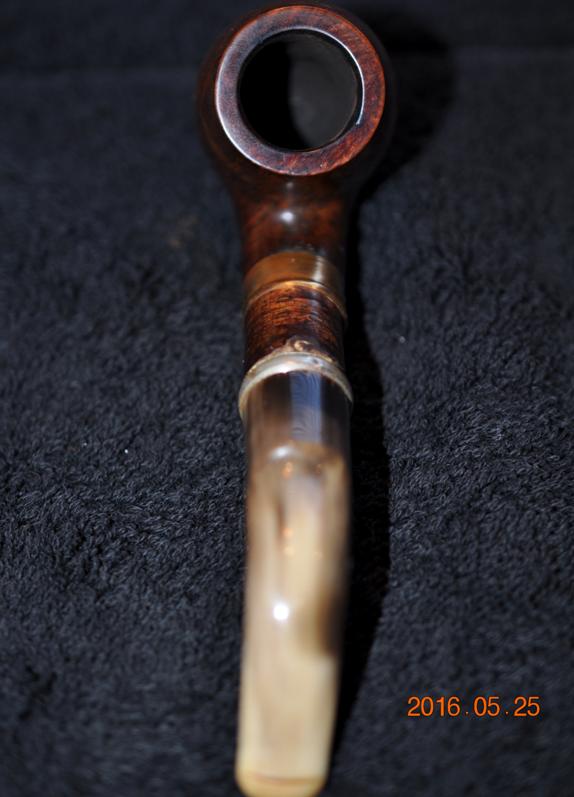
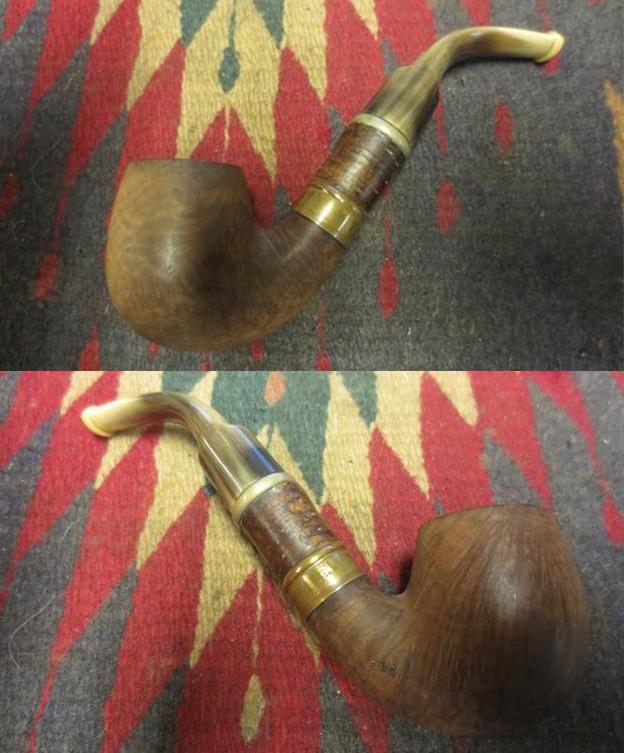
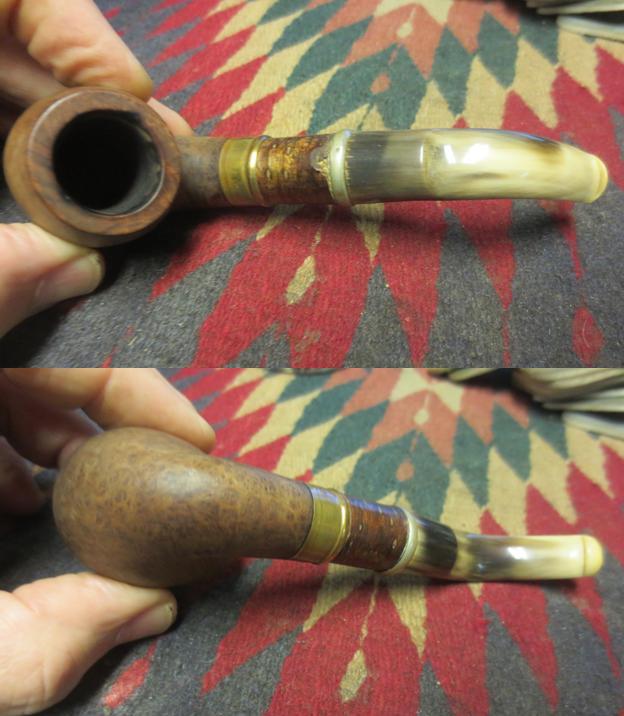
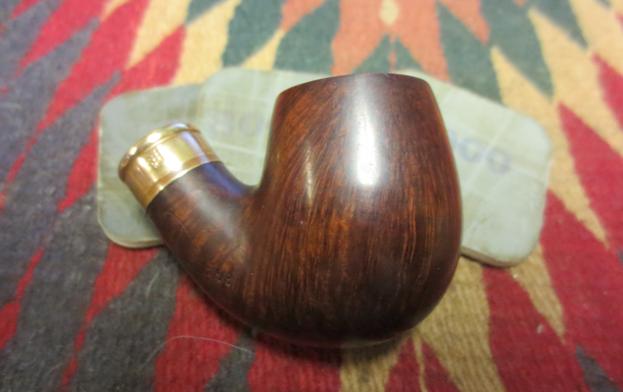
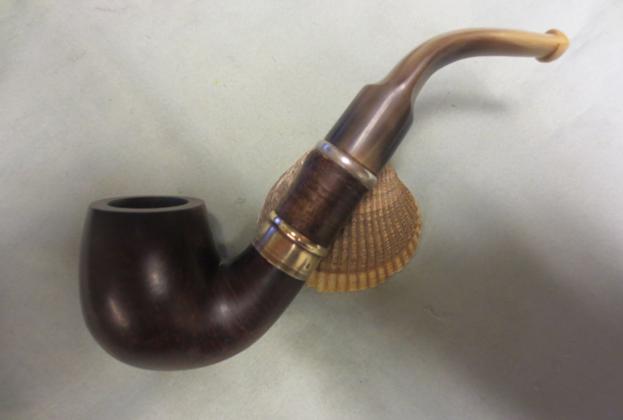
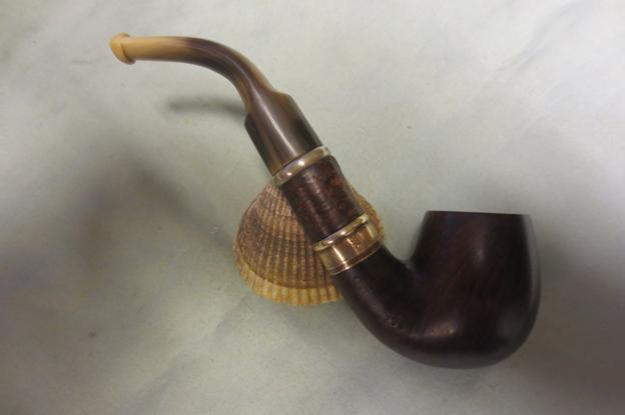
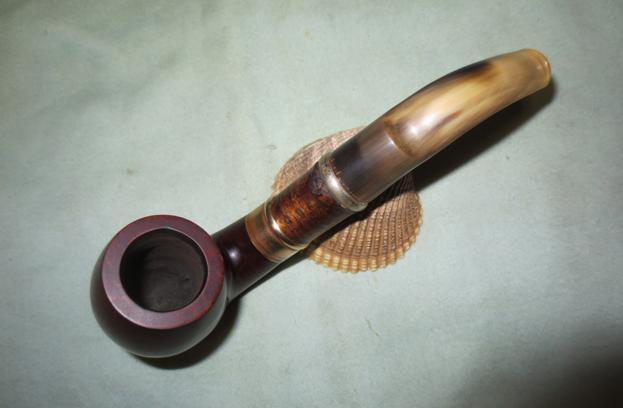
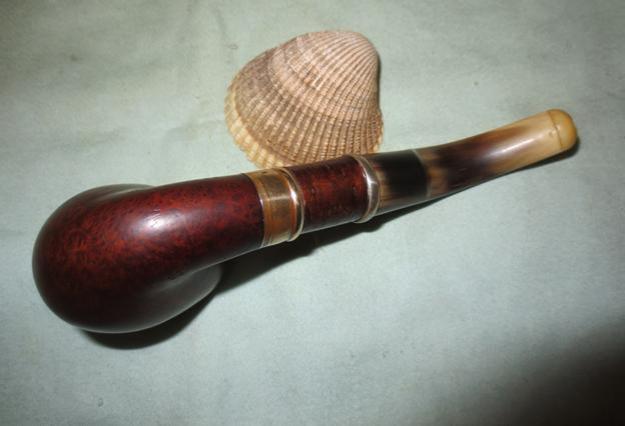
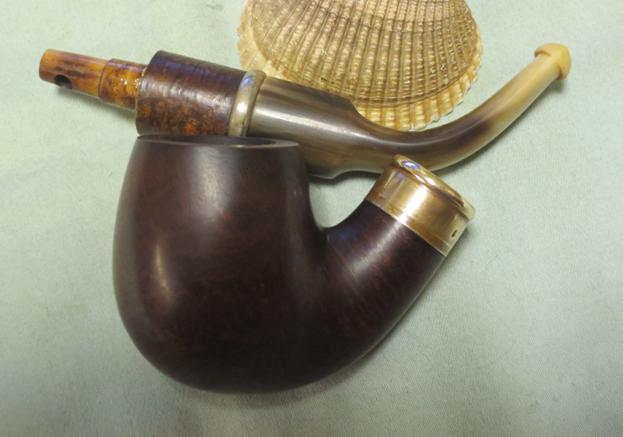
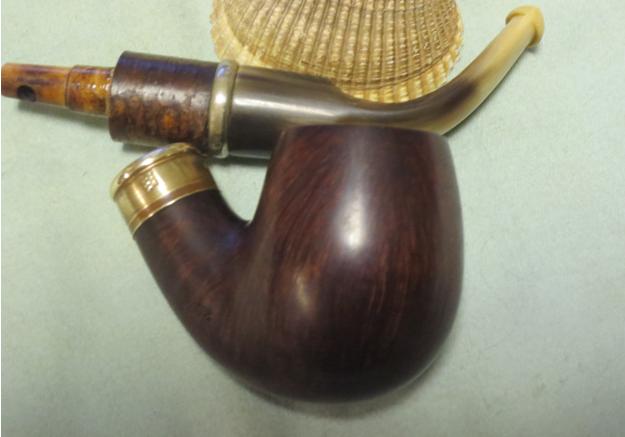
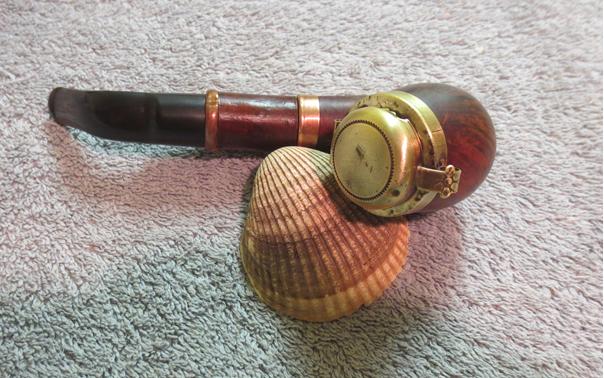
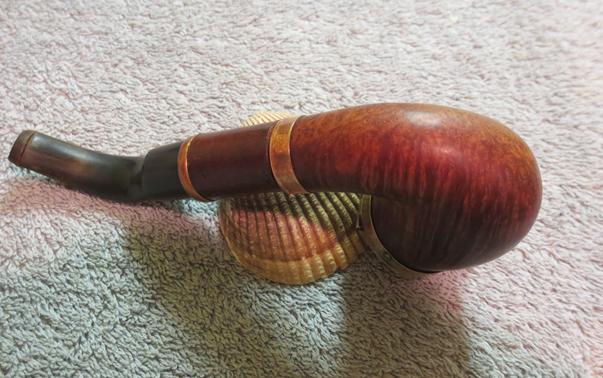
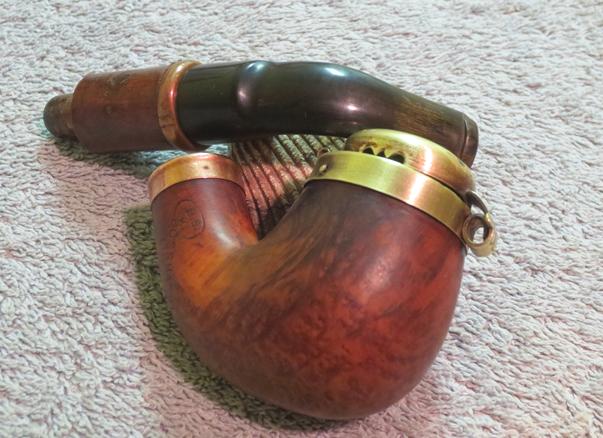
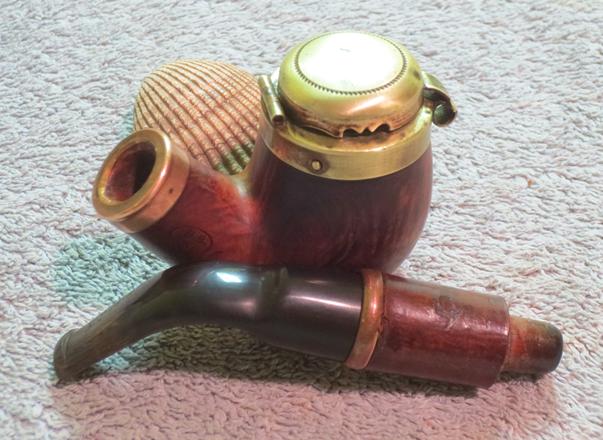
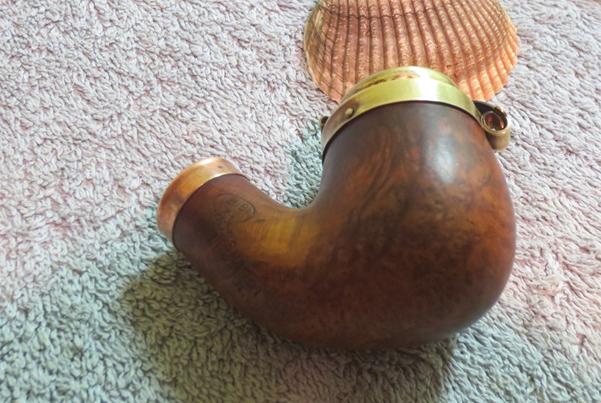
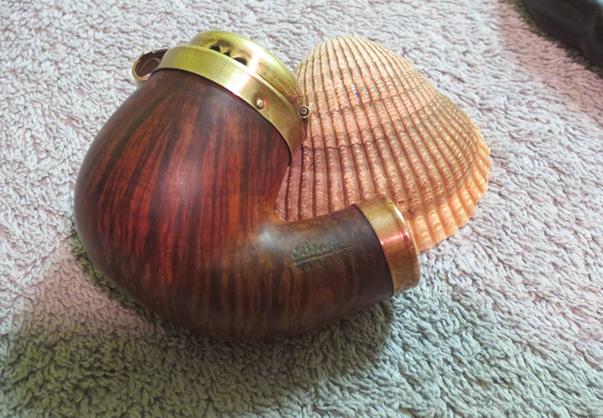
This old pipe came to me from my brother. He picks up some interesting pipes in his hunts and eBay purchases and this is a unique one. The bowl is a really nice piece of briar with some amazing grain – a mix of flame and birdseye on the bowl. The rim cap and bowl cap are brass coloured. The hinge on the back of the rim connects the rim cap and the bowl cap. There is a curved spring piece of brass on the front that fits over a ridge on the front of the rim. The end of the briar shank has a brass shank cap/ferrule. It was tarnished to almost copper coloured brass. The shank extension is cherry wood and is pressure fit into the mortise. The top of the cherry wood extension has a brass ring that is pressure fit on the end of the extension. The stem is horn. The end of the cherry wood has a threaded end that the horn stem screws onto. The stem had some tooth marks and chatter on the top and underside of the stem next to the button. The shank of the pipe is stamped on the left side with the words Bruyere over Garantee. On the right side of the shank it is stamped BBK in an oval over Bosshardt over Luzern.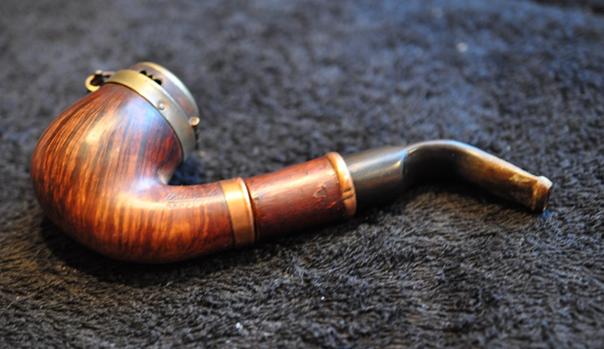 Through the years I have cleaned up several BBK pipes. The last one was a rusticated hunter pipe with a windcap. Prior to that, I restored a square shanked panel billiard. I have written about both them on rebornpipes at the following links: https://rebornpipes.com/2012/09/21/refurb-on-a-bbk-panel-billiard-swiss-made/, https://rebornpipes.com/2014/08/31/restoring-an-old-bbk-hunter-pipe/.
When I worked on the BBK Hunter I researched the brand. The BBK was a Swiss made brand as the shanks of all the pipes I had cleaned up and restored were stamped that way. Pipedia was my primary reference in that blog. Here is the link: http://pipedia.org/index.php?title=Bru-Bu. I have included the material from the previous blog below.
“Josef Brunner, oldest son of the farmer Konstantin Brunner from the hamlet Nieder-Huggerwald, belonging to the community of Kleinlützel (Canton Solothurn), was sent in 1871 to a pipe turner in Winkel/Alsace for his apprenticeship. As was usual at that time, Brunner wandered as a journeyman after ending the apprenticeship. Eventually, he went to Saint-Claude, France which was then the world’s stronghold of briar pipe manufacturing. There, Brunner was able to increase and deepen his knowledge in the field of industrial pipe making. When he returned home in 1878, he installed a small turner’s workshop in the house of his father. With the energetic support of his two younger brothers, he began to produce tobacco pipes of his own calculation, taking them to the markets in the surrounding area. In 1893, Bernhard Brunner’s wife inherited the mill in Kleinlützel. At this point, the pipe fabrication was transferred to an annex belonging to the mill. Now it was possible to drive the machines by water power – an important relief to the workers and a considerable innovation compared to the previous pedal-driven system.”
“The business developed so well after the turn of the century even when a lack of workers in Kleinlützel occurred. The problem was solved by founding a subsidiary company in the small nearby town Laufen an der Birs in the Canton of Bern. This plant didn’t exist too long. The disastrous economic crisis in the 1920’s and early 1930’s forced the Brunner family to restrict the fabrication of pipes dramatically. In addition the big French pipe factories in Saint-Claude – although suffering from the same circumstances – flooded the Swiss market with pipes at prices that couldn’t be matched by Swiss producers. By 1931 approximately 150 of 180 Brunner employees had been sacked – the rest remained in Kleinlützel, where the cheap electric energy ensured a meager survival.”
“In 1932, Mr. Buhofer joined the Brunner family. The company was named Brunner-Buhofer-Kompagnie, and, shortly thereafter, Bru-Bu. Buhofer had made his fortune in the United States but, homesick, returned to Switzerland to search for a new challenge. Bru-Bu’s fabrication program was expanded with many handcrafted wooden art articles: carved family coats of arms, bread plates, fruit scarves, and – more and more – souvenir articles for the expanding Swiss tourism industry. Pipes remained in the program continuously, but the offerings changed from traditional Swiss pipes to the more standard European shaped pipes. Bru Bu is widely known as BBK.”
The last paragraph of the Pipedia article linked BBK pipes to Former Nielsen. I have two of Former’s pipes so this stood out to me. “At some point in the late 1970’s, Bru-Bu went out of business. Some of the Brunners, as far as known, continued as timber traders. But in 1986 new life filled the old Bru-Bu pipe workshop, when Dr. Horst Wiethüchter and “Former” Nielsen started to produce the high-grade Bentley pipes there.”
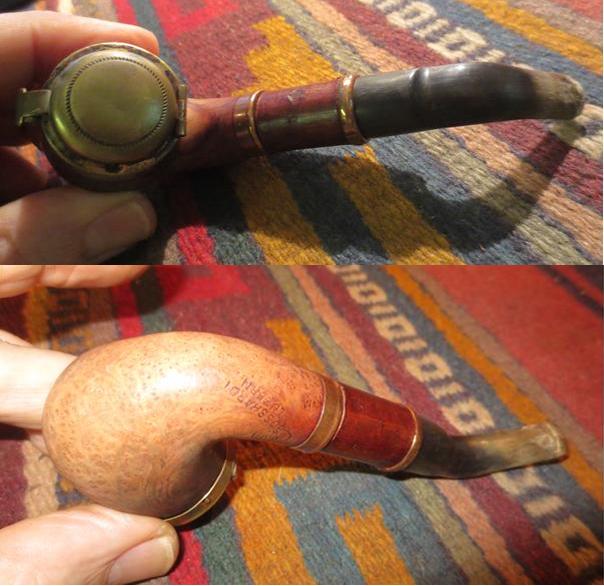
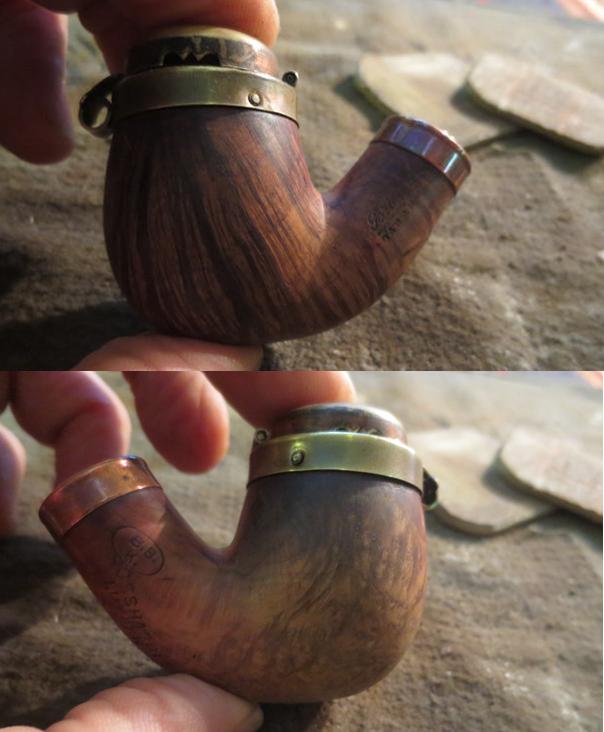
My brother cleaned up the pipe and reamed the bowl. He scrubbed out the wind cap and the brass rim cap. He cleaned out the shank and the airways in the stem, shank extension and the mortise. It turned out that the cherry wood extension was loose fitting in the shank. The wood had worn enough that it was no longer snug. The horn stem was clean but had tooth chatter and a deep tooth mark on the underside of the stem near the button. The brass rim cap was dented and worn but the wind cap still fit tightly against it. The next set of four pictures show the condition of the pipe after he had cleaned it up. 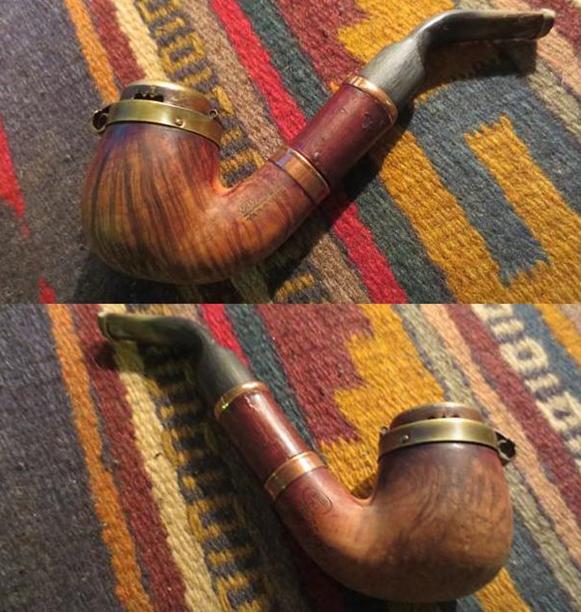
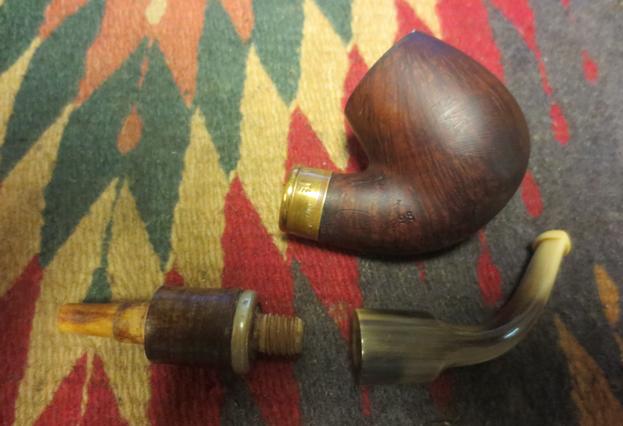
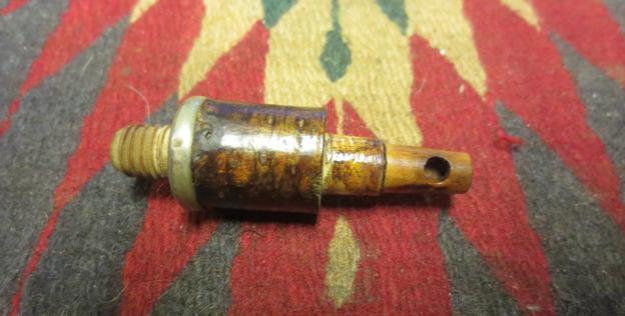
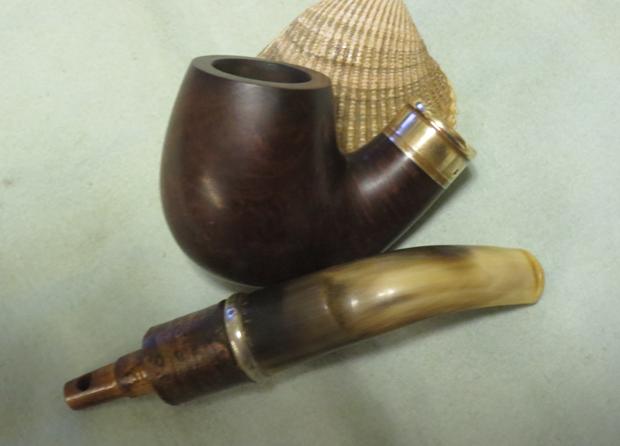
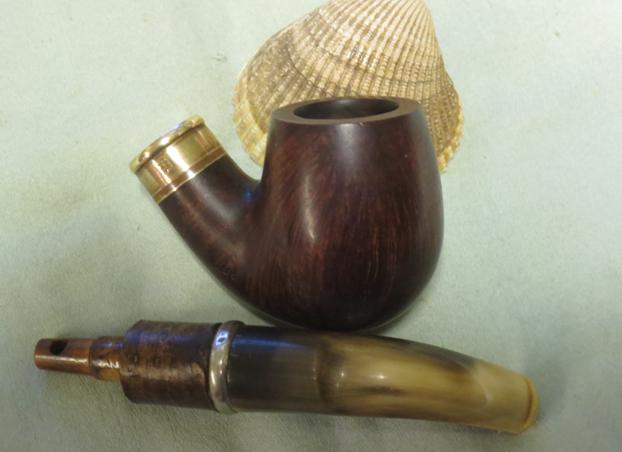
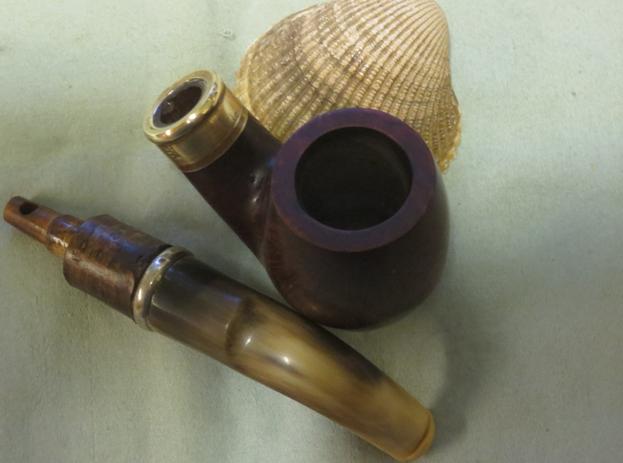
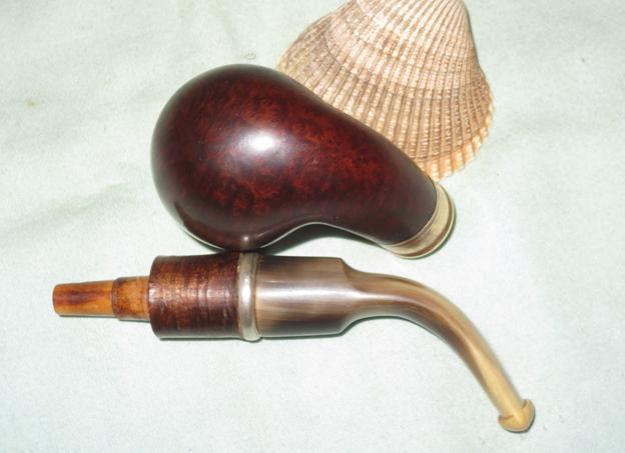
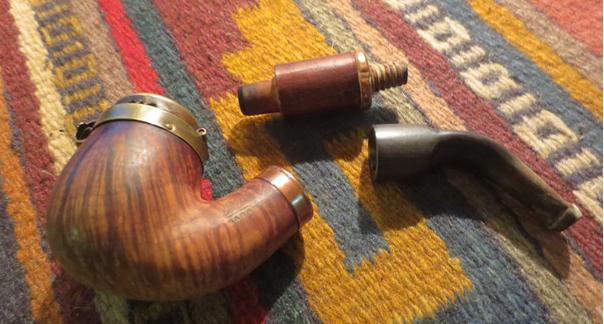
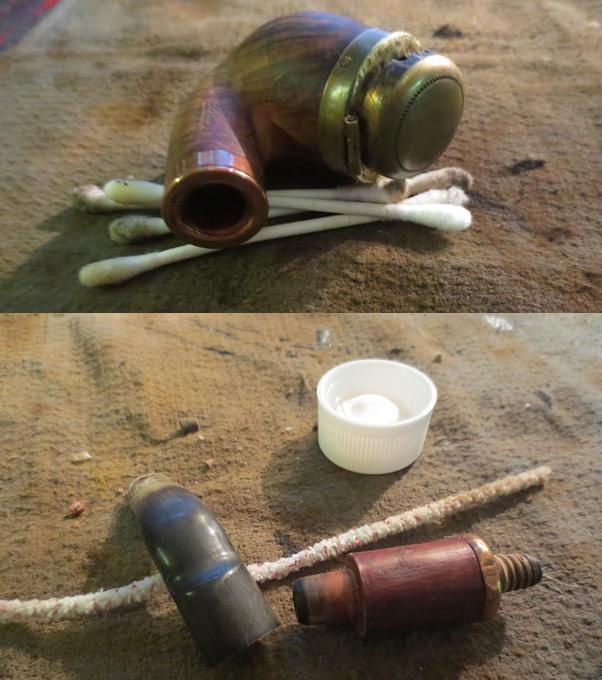
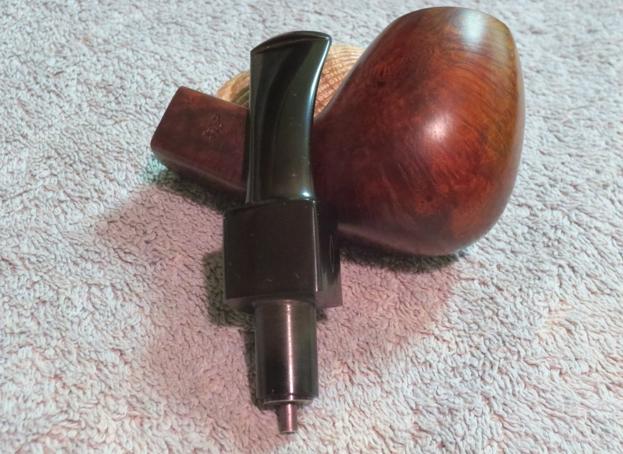
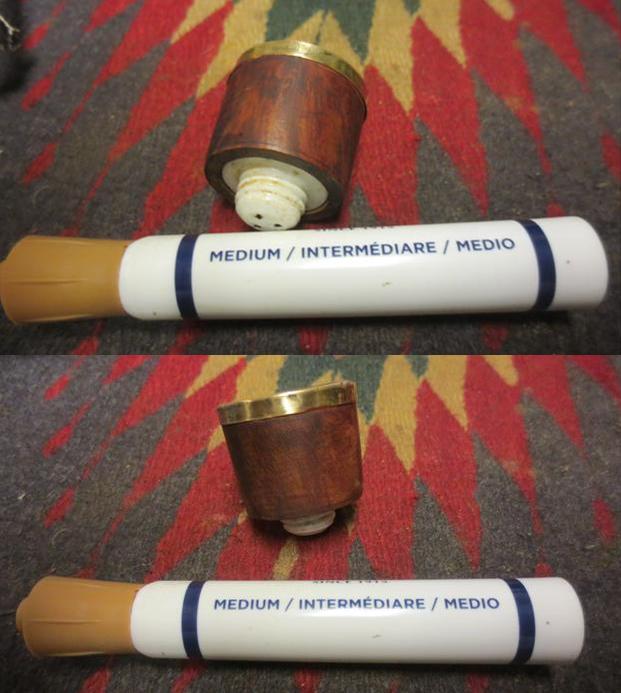
 I took the pipe apart to show the various components of the pipe. The cherry wood extension in the centre of the photo has a tapered end that fits into the shank and a threaded end that the stem screws onto.
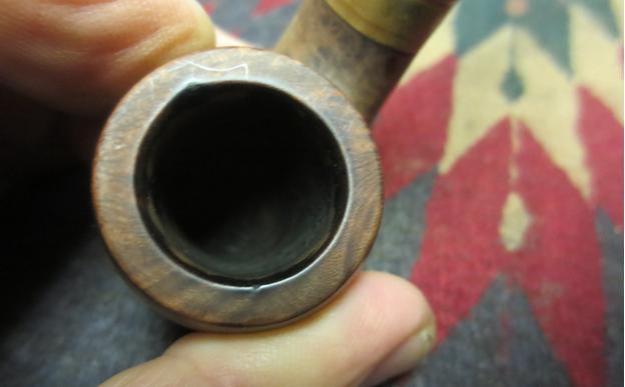
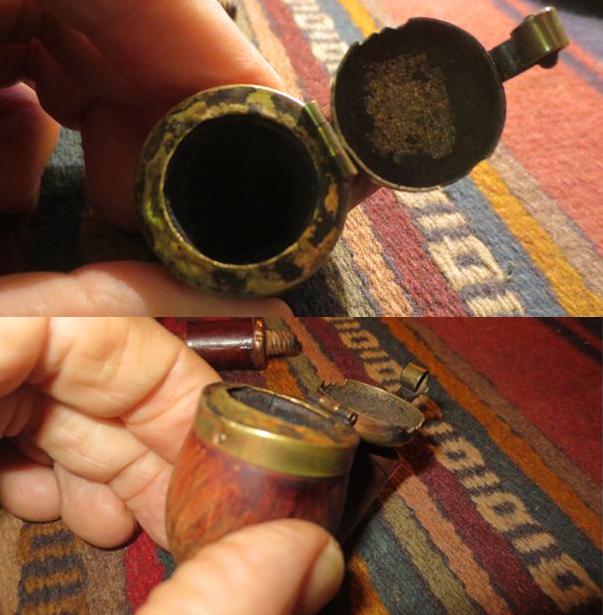
 I took a close up photo of the rim cap and the inside of the wind cap. You can see from the photo that the rim is badly dented and quite dirty. The inside of the wind cap is pitted and has some rust. The edge of the rim on the front had lifted slightly from the inner edge of the bowl and was dented on the front. The ridge on the edge was still there and held the front spring on the wind cap in place.
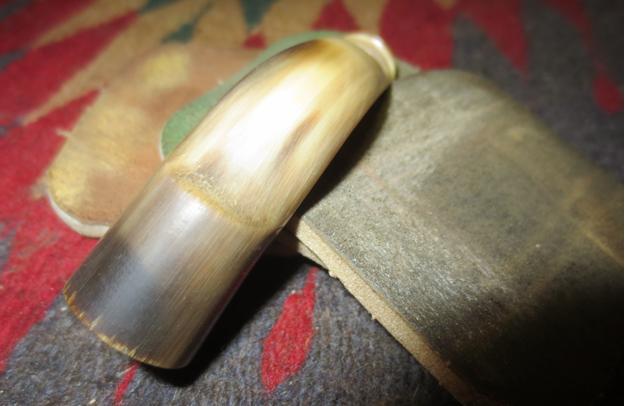
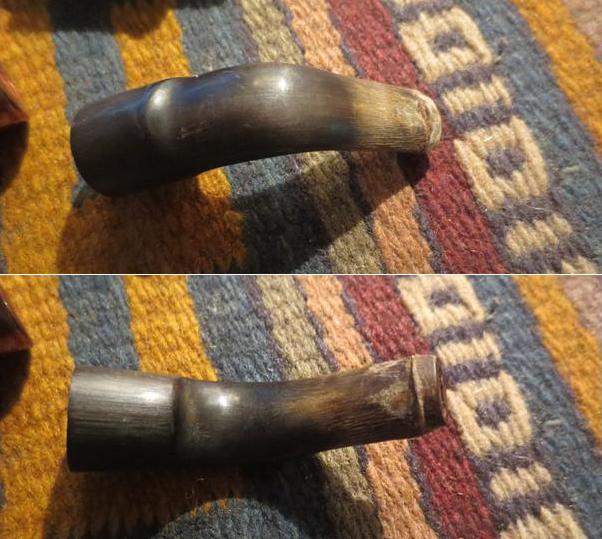
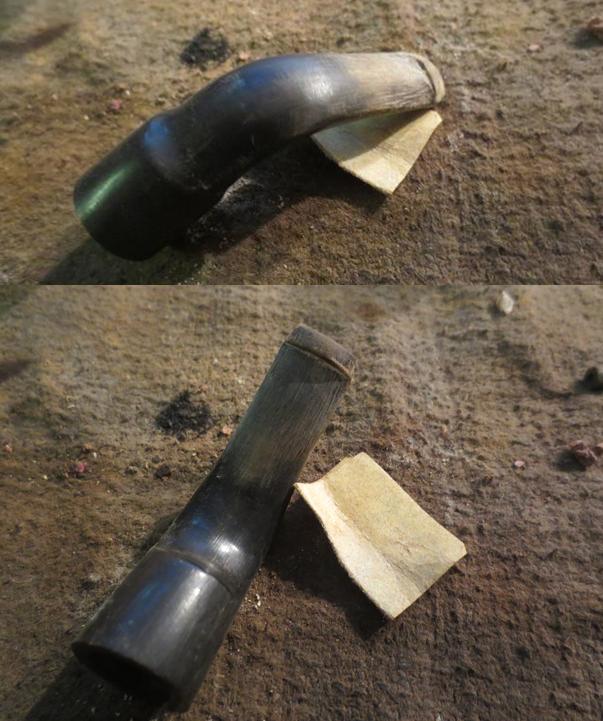
 I took some photos of the stem to show the tooth chatter and worn surface of the stem near the button on both the top and the bottom near the button. There was also some deeper tooth marks on the underside of the stem.
 I used a small ballpein hammer to flatten the rim cap to the briar rim underneath. I worked on it to minimize some to the dents and dings in the brass rim.
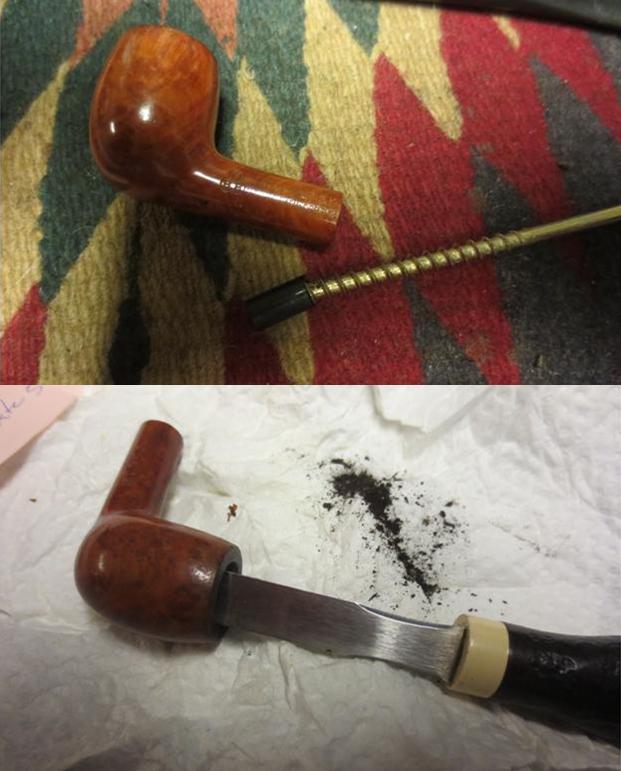
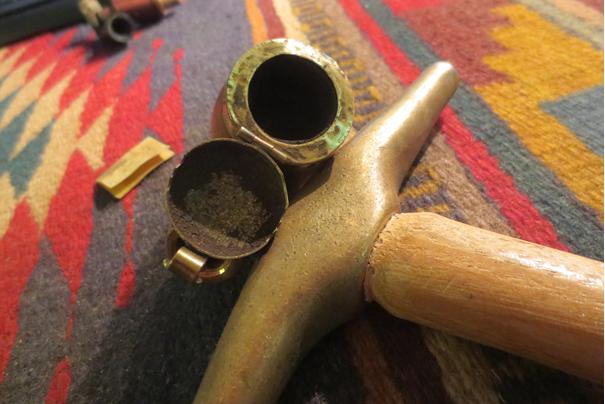 I cleaned out the remaining debris in the bowl with a Savinelli Pipe Knife. My tapping the hammer on the rim knocked some pieces of cake free so the knife cleaned up what remained. I used a brass bristle wire brush to clean out the inside of the wind cap. I was able to remove some of the rust on the inside with the brush.
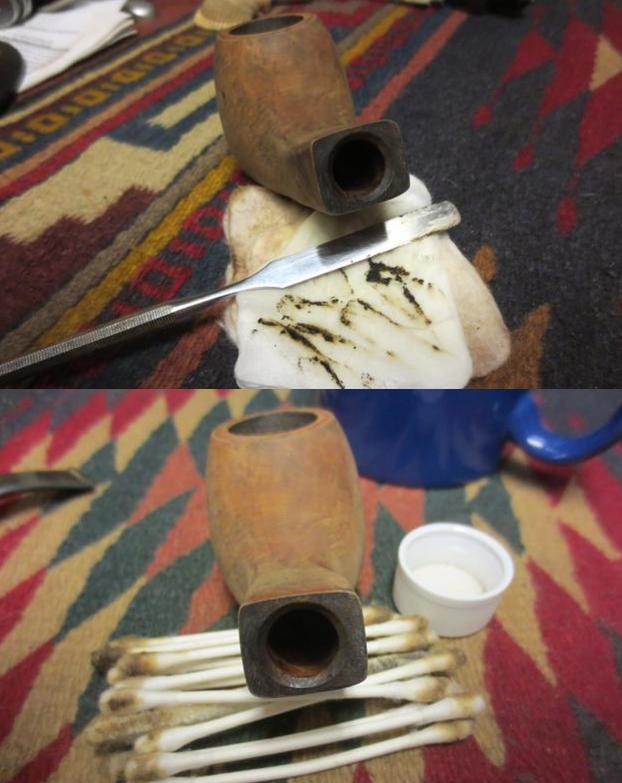
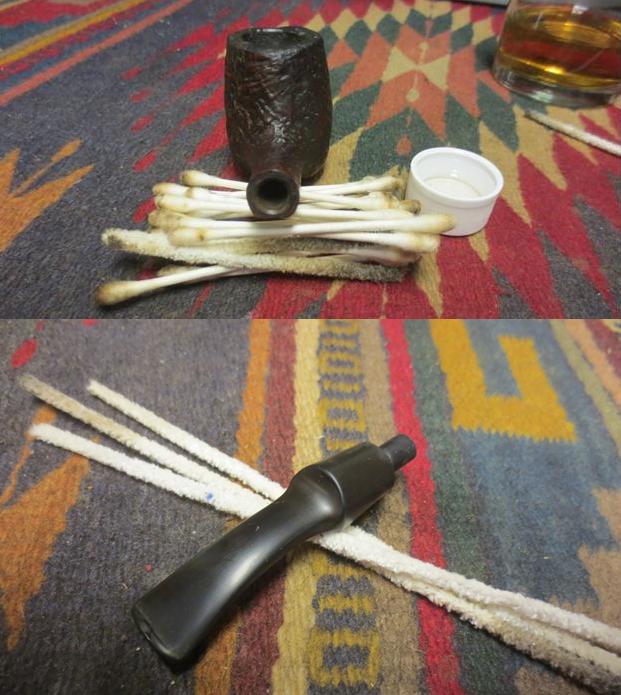
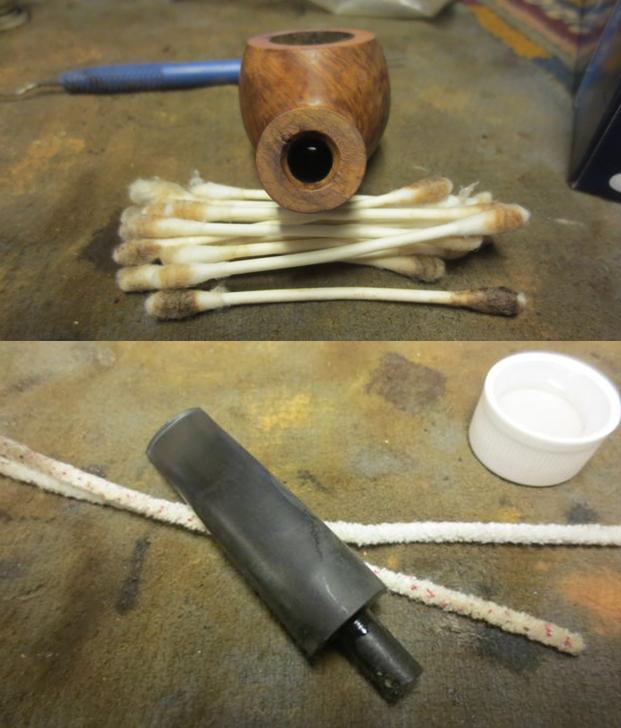
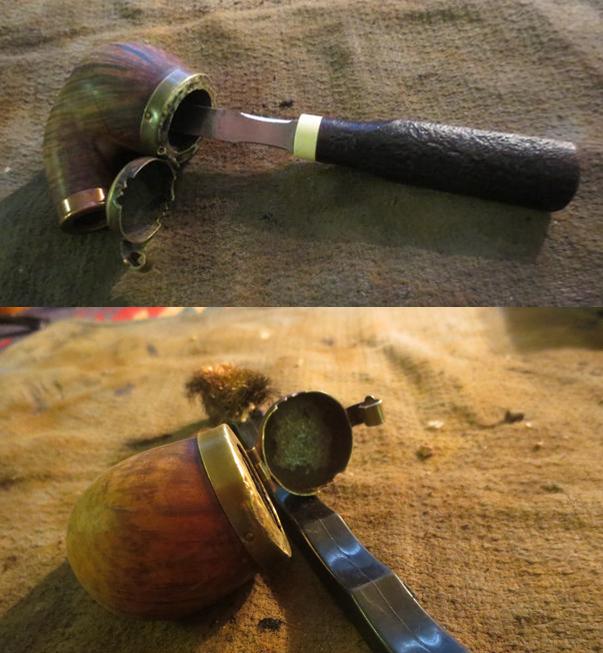 I scrubbed the shank with alcohol and cotton swabs to remove any of the dust from my quick ream clean up. It was amazingly clean. I also ran pipe cleaners and alcohol through the shank extension and the stem.
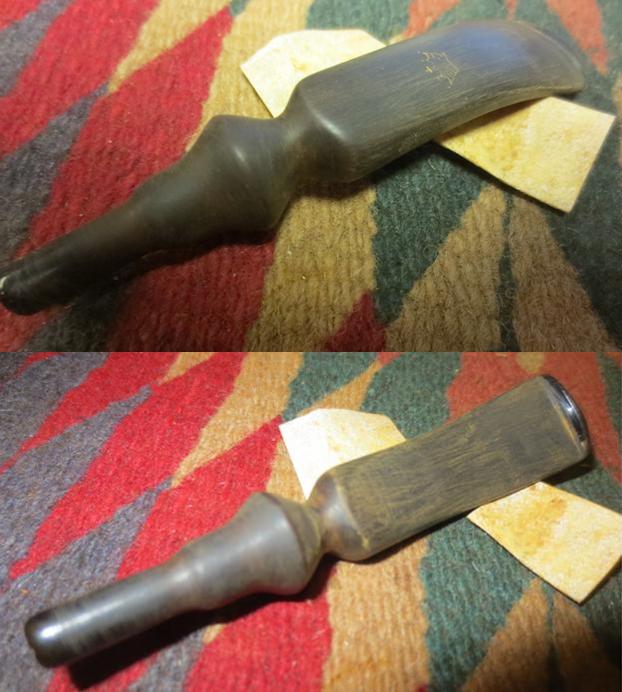
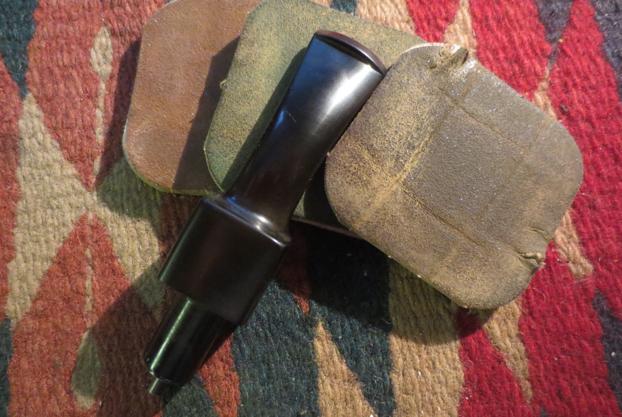
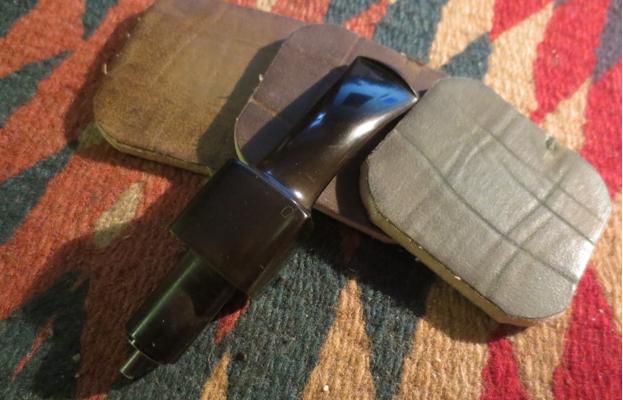
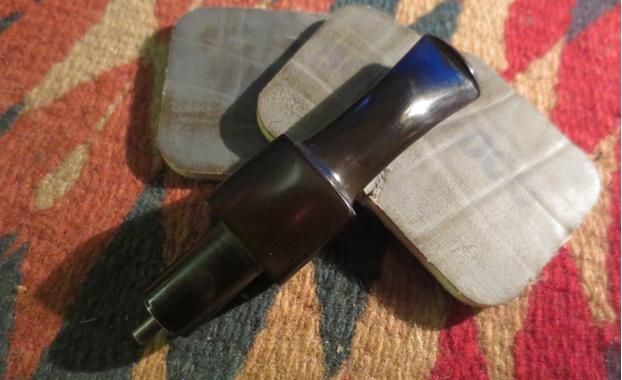
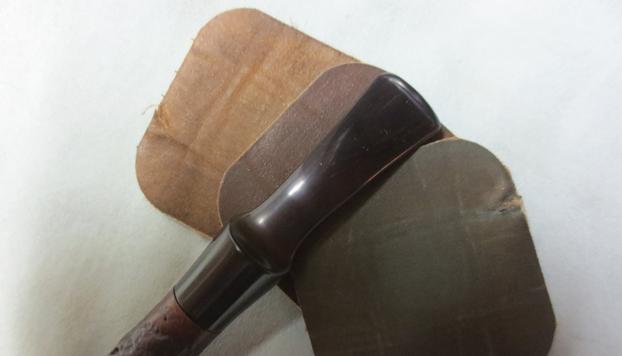
 I sanded the tooth chatter and the tooth marks on the horn stem with 220 grit sandpaper to remove them and blend them into the material. I also wanted to smooth out the roughness of the stem at those points.
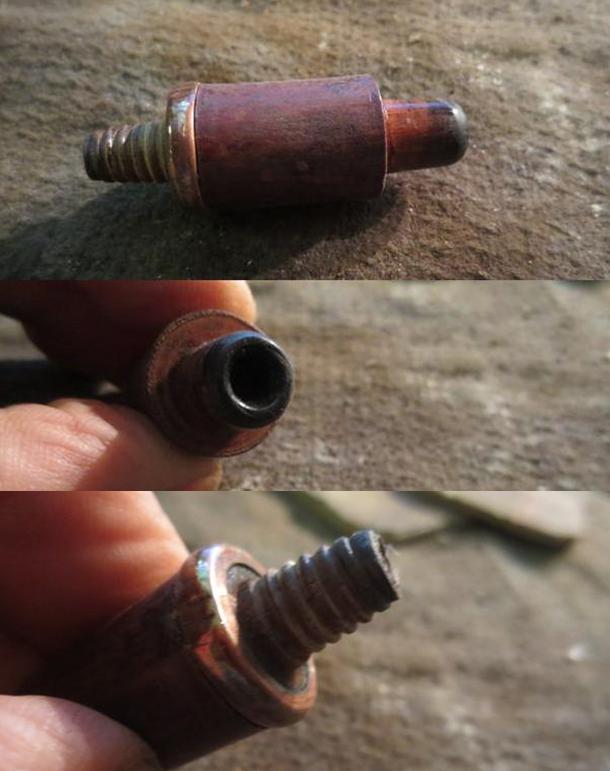
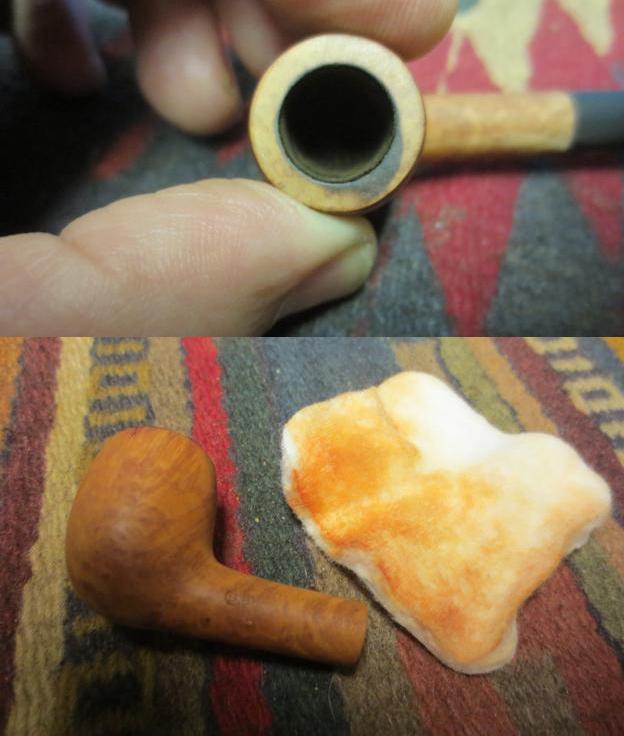
 The cherry wood shank extension was dirty so I wiped off the exterior with an alcohol dampened cotton pad. I noticed that the end of the pressure fit tenon had a horn end cap to seal the end of the wooden tenon. I believe that addition preserved the tenon from shrinkage and splintering. The threaded tenon on the other end of the extension fit snug into the end of the horn stem.
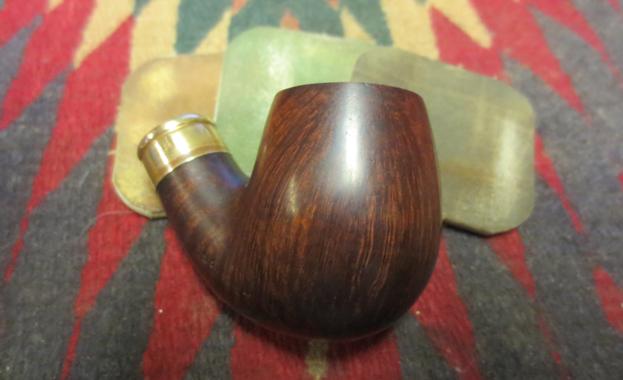
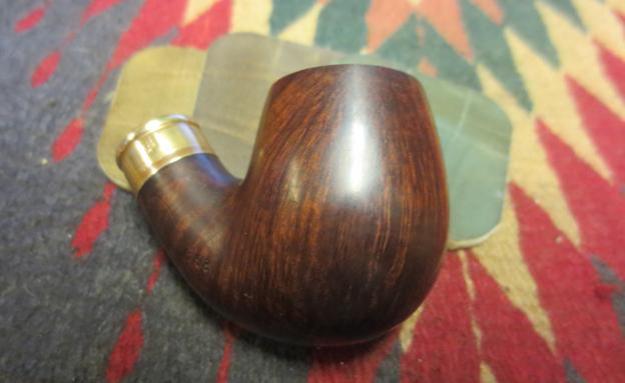
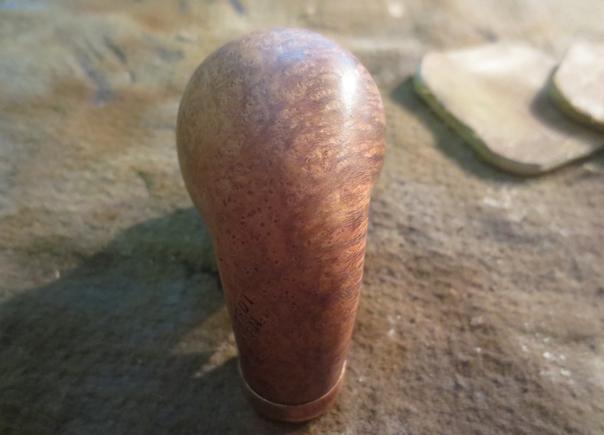
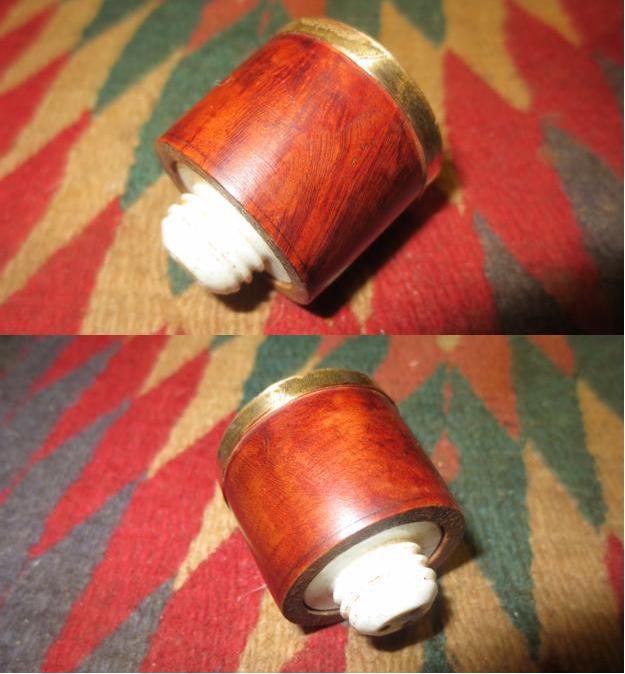
 I polished the wind cap, rim cap and the shank cap with 1500-4000 grit micromesh sanding pads. I took some photos the pipe after the polishing was completed. It is a beautiful piece of briar.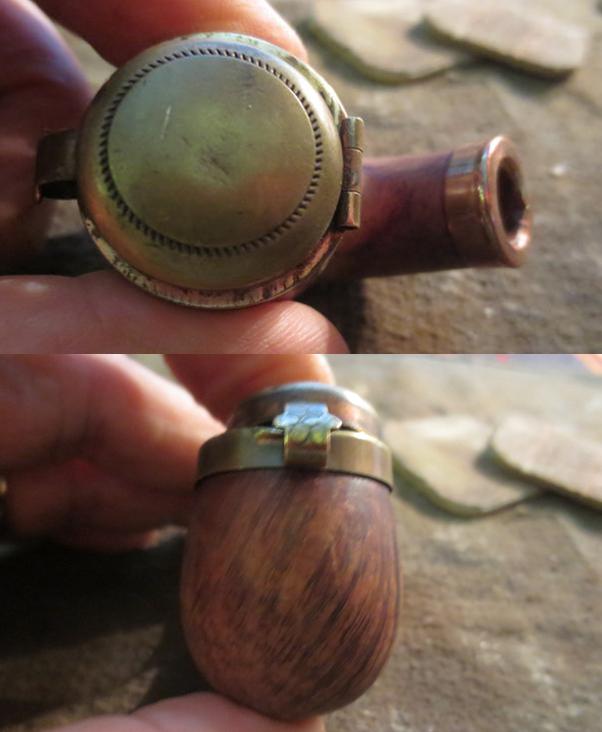
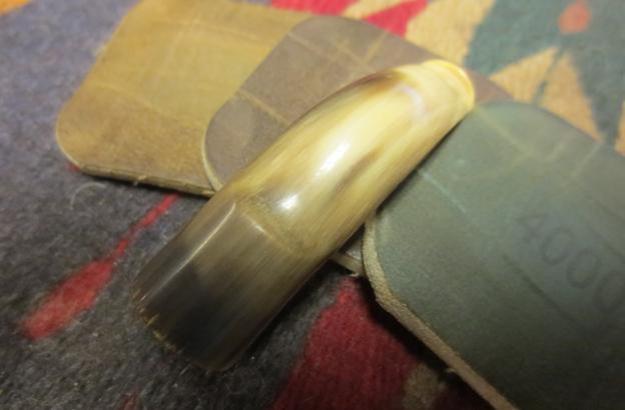
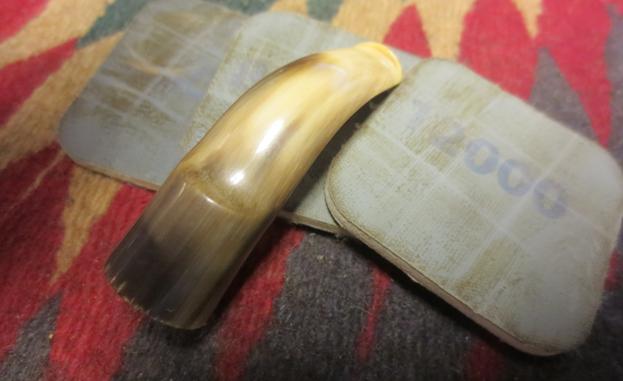
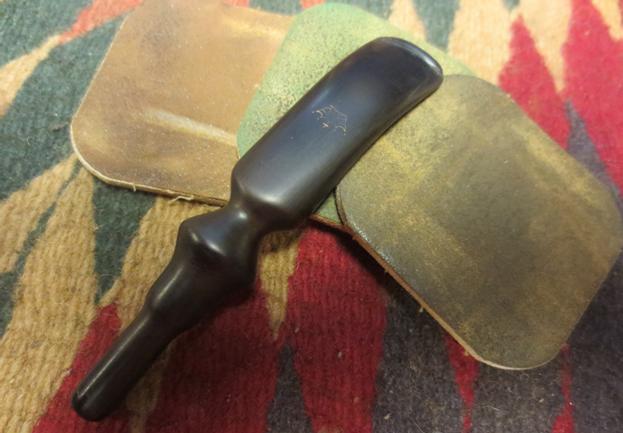
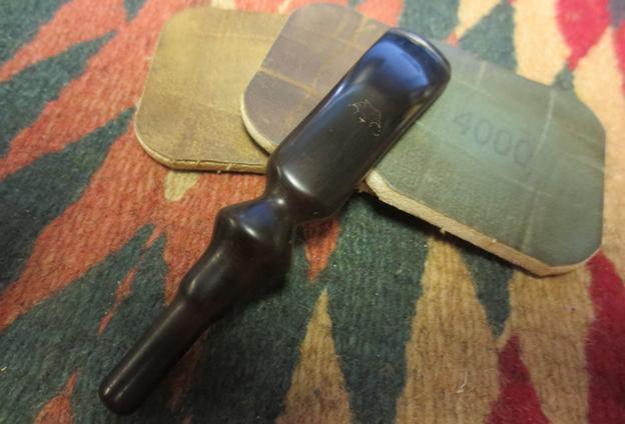
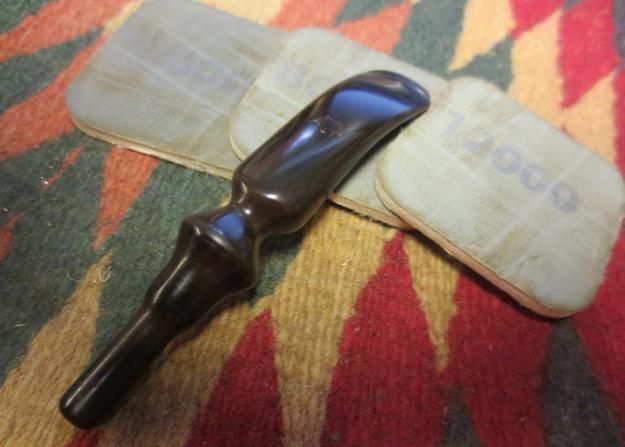
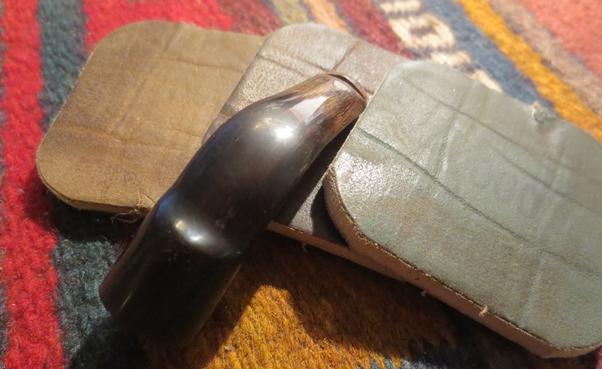
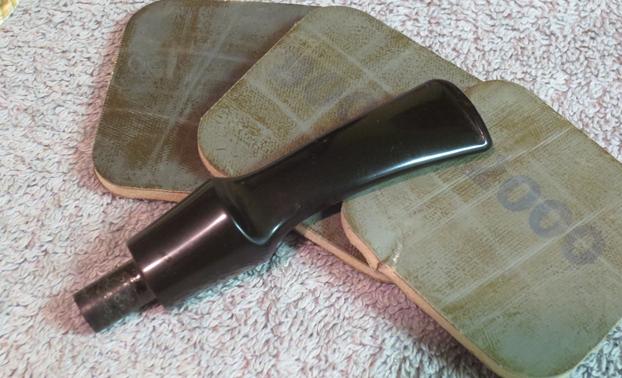
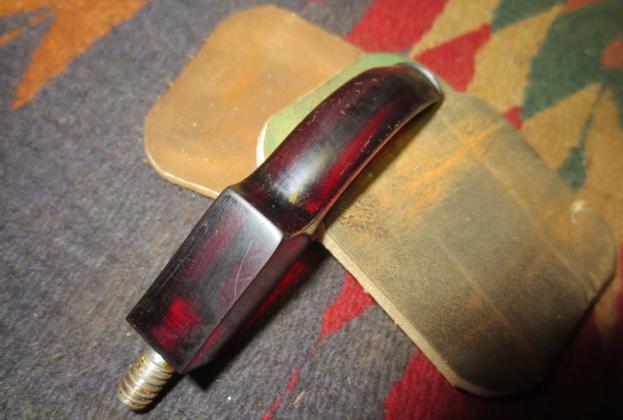
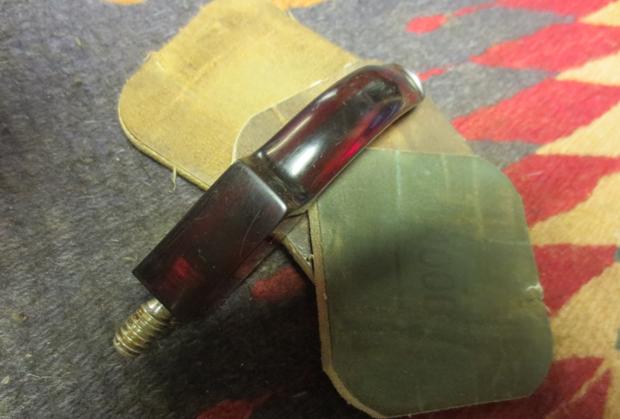
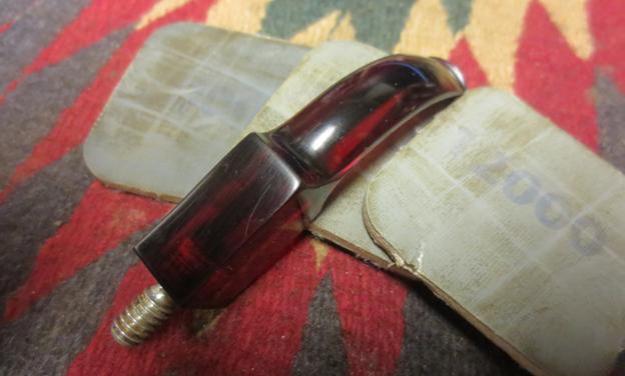
 I polished the horn stem with micromesh sanding pads – wet sanding with 1500-2400 grit pads and dry sanding with 3200-12000 grit pads. I rubbed the stem down with Obsidian Oil between each set of three pads. I gave it a final rubdown of oil after sanding it with the 12000 grit pad and set it aside to dry.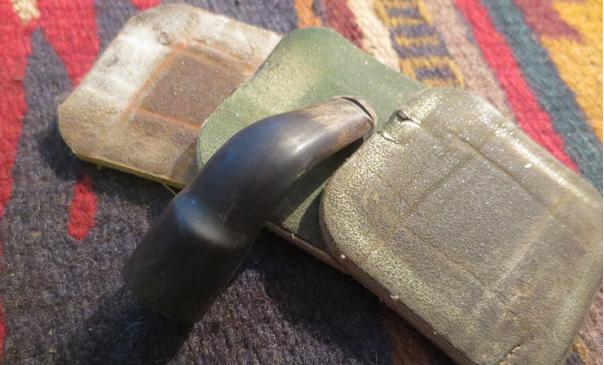
 I stained the bowl with a Danish Oil and Cherry stain mixture.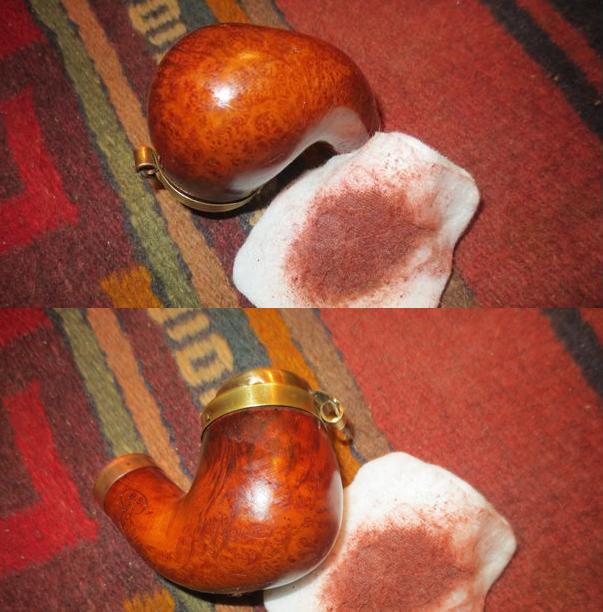
 After it sat for about 20 minutes I rubbed it down with a soft cloth to polish it. After the hand rubbing the grain stood out more clearly. The red stain and the brass caps really looked great together.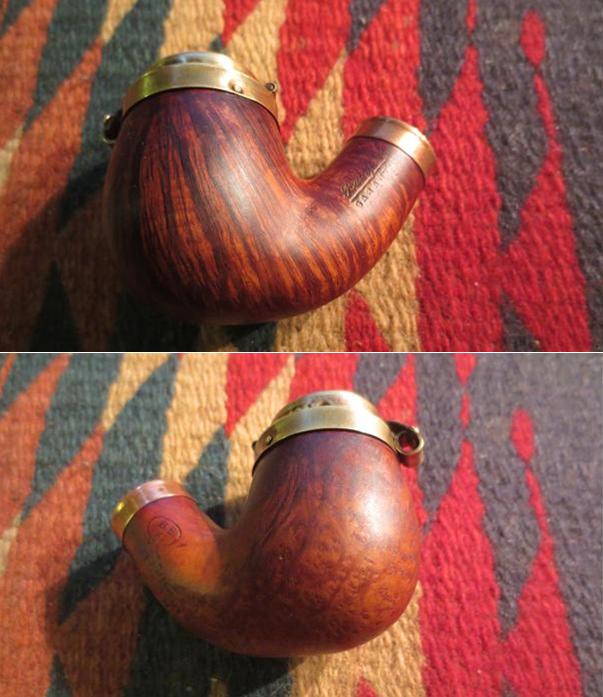
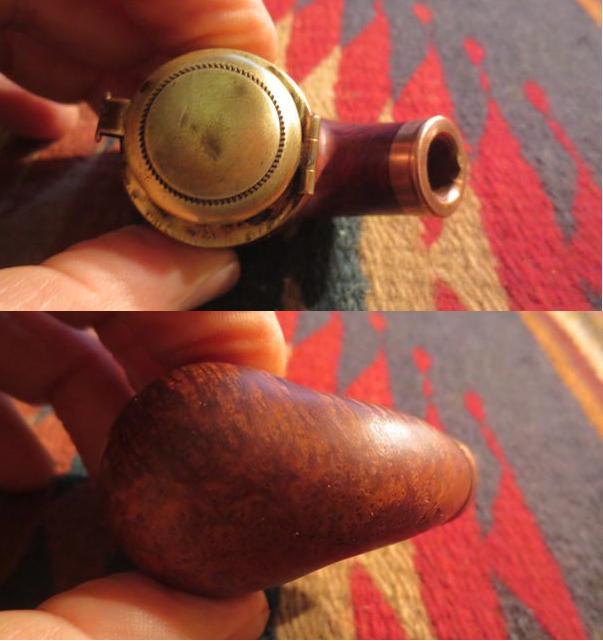 I gave the wooden friction fit tenon several coats of clear fingernail polish, being careful to keep it off of the horn cap on the end. That did the trick and the extension sat snug in the mortise.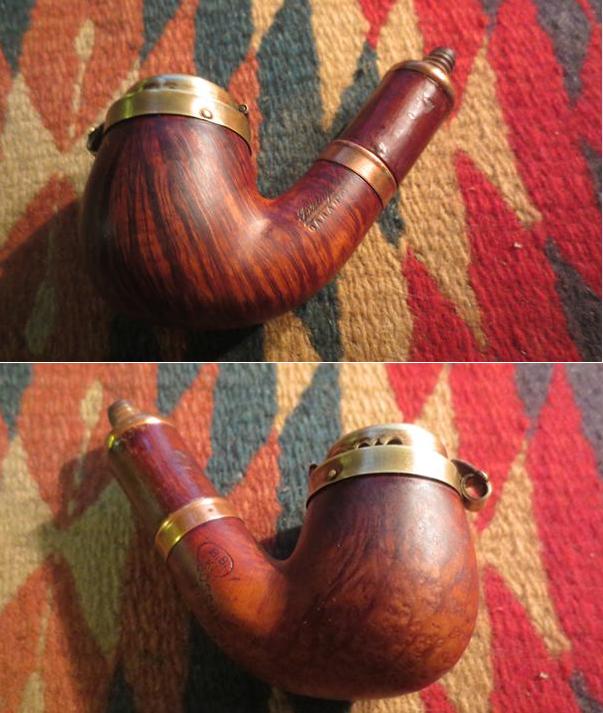
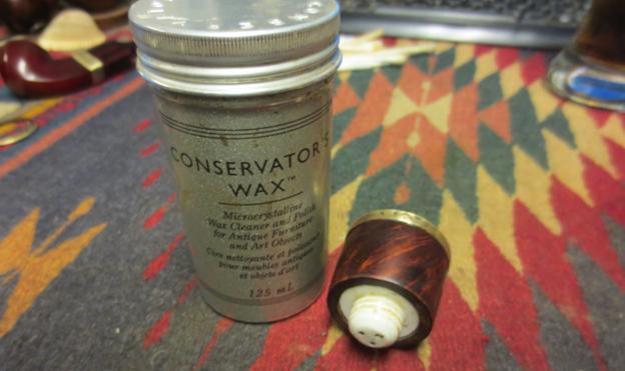
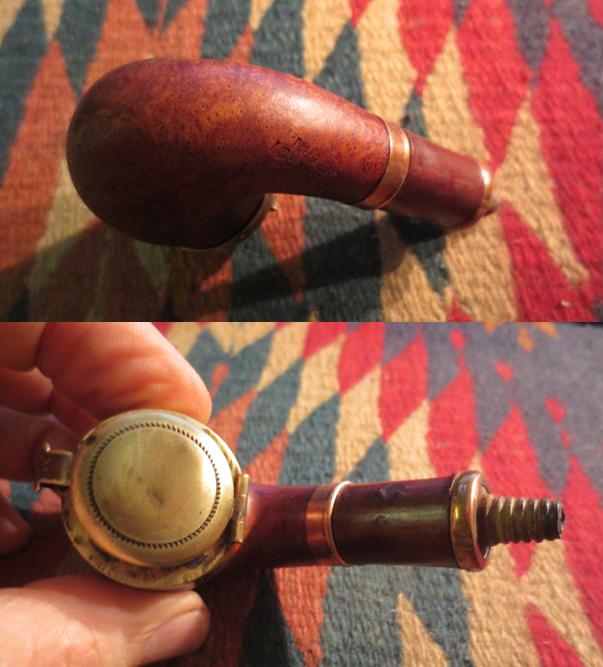 I gave the bowl, shank and stem a thick coat of Conservator’s Wax and let it dry. I hand buffed it and gave it a second coat of the wax.
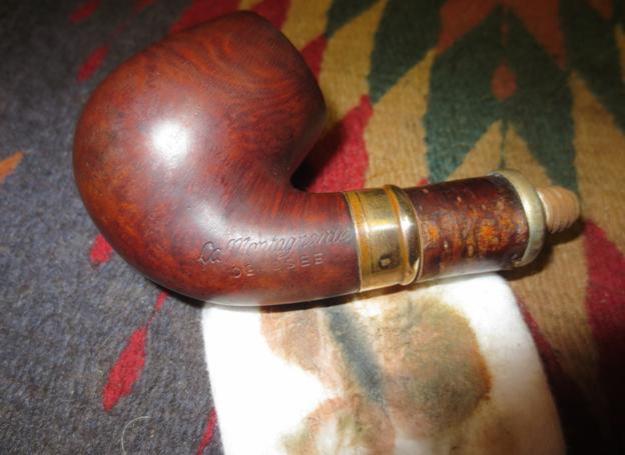
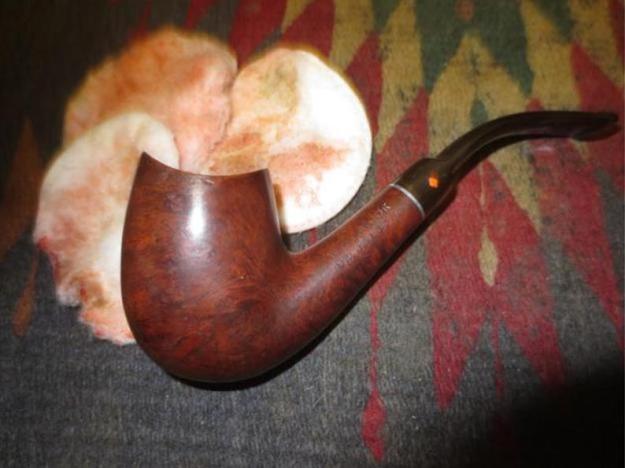
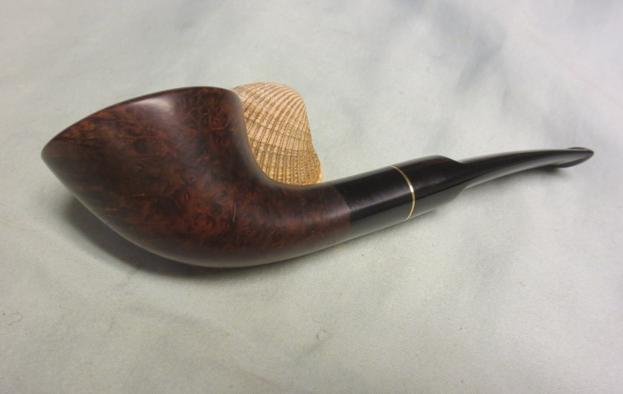
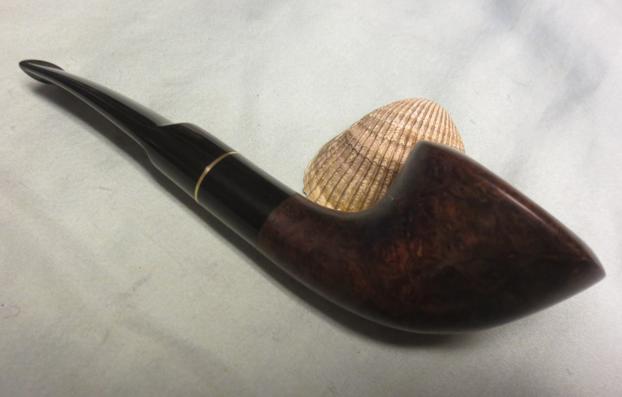
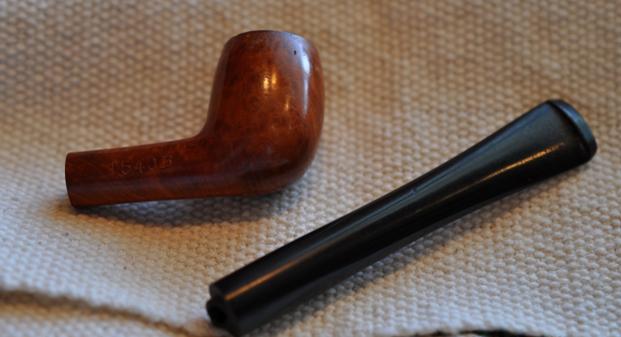
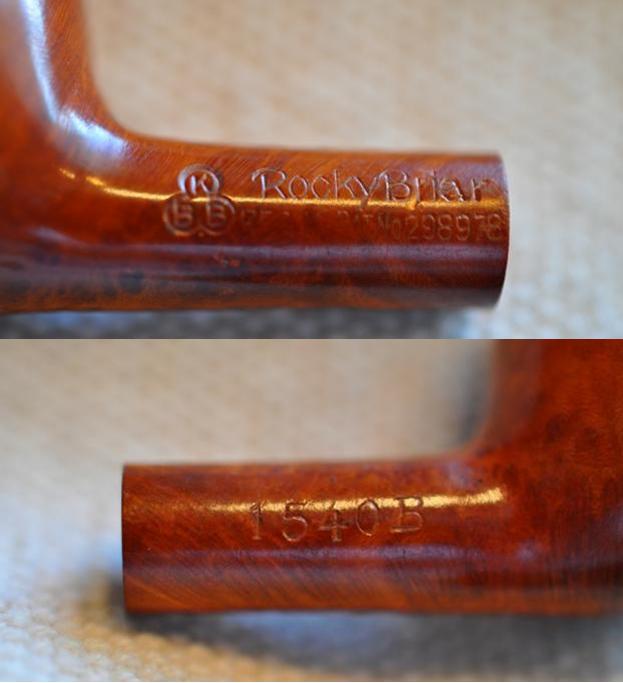
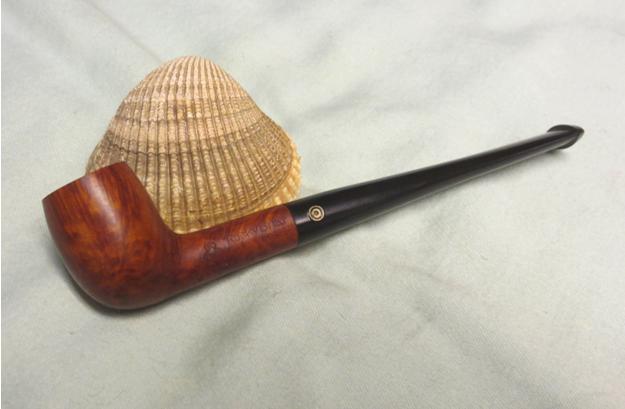
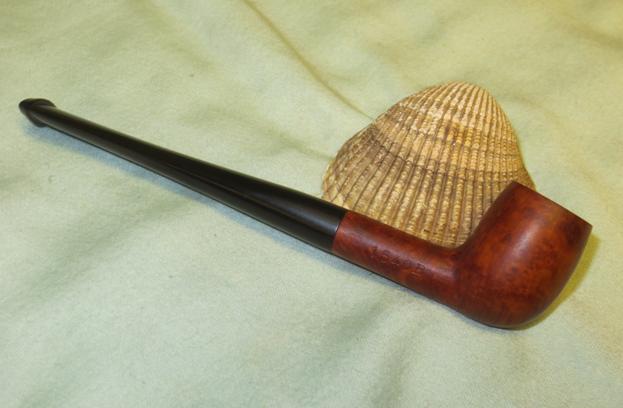
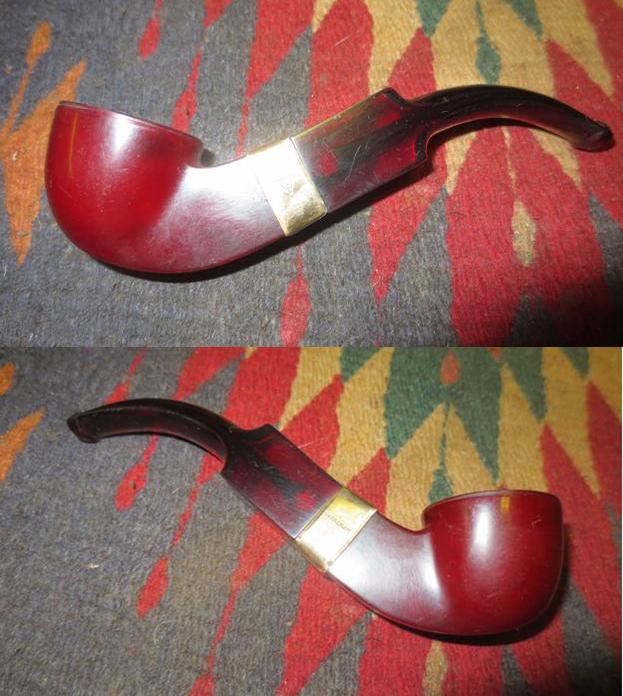
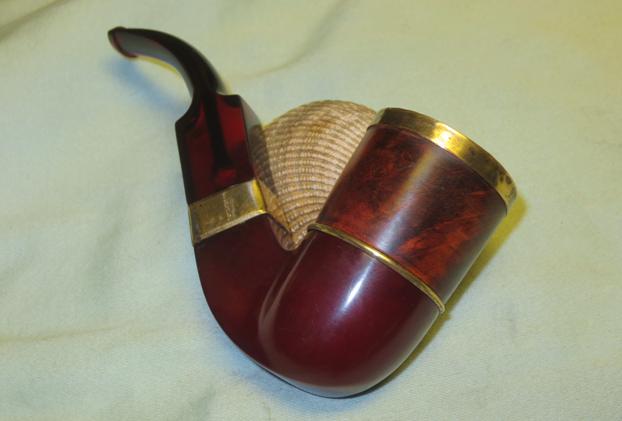
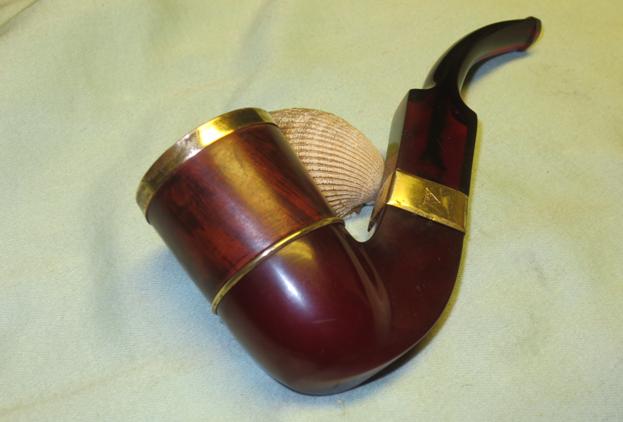
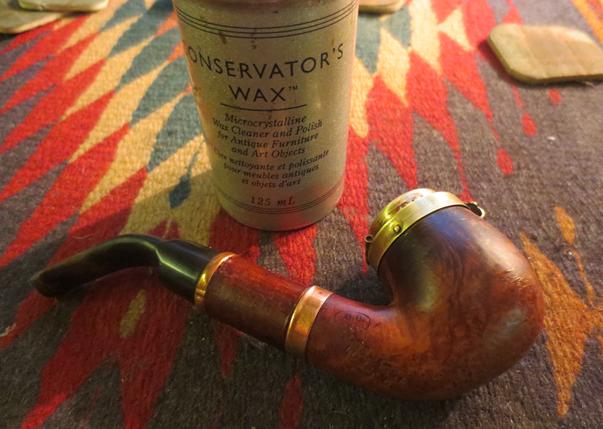 I buffed the pipe by hand with a microfibre cloth and polished the metal with a jeweler’s cloth. The finished pipe is shown in the photos below. I love the way the grain just pops on this old pipe. The cherry wood shank extension adds not only length but also a touch of rustic to the pipe, though this particular piece of cherry wood has bark that is quite smooth. The dark striations of the horn stem also go well with the wood. The brass bands at the stem and the shank as well as the rim cap and wind cap give this old timer a real look of class. The finished pipe is shown in the photos that follow. It is a beautiful pipe to my eyes. Thanks for looking.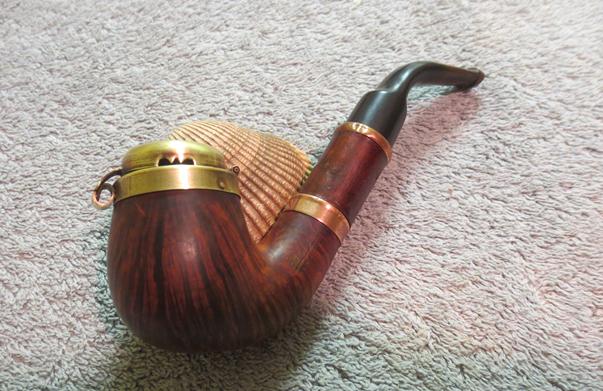


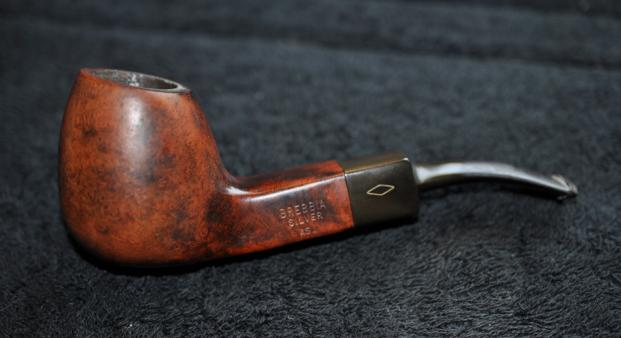
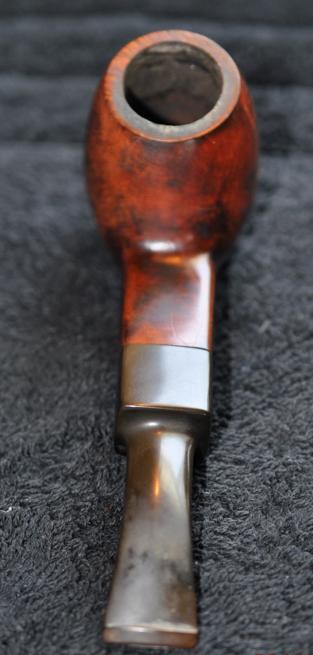
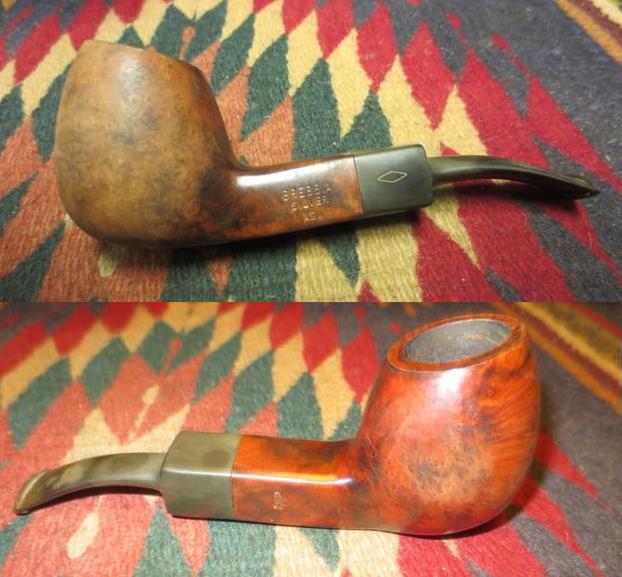
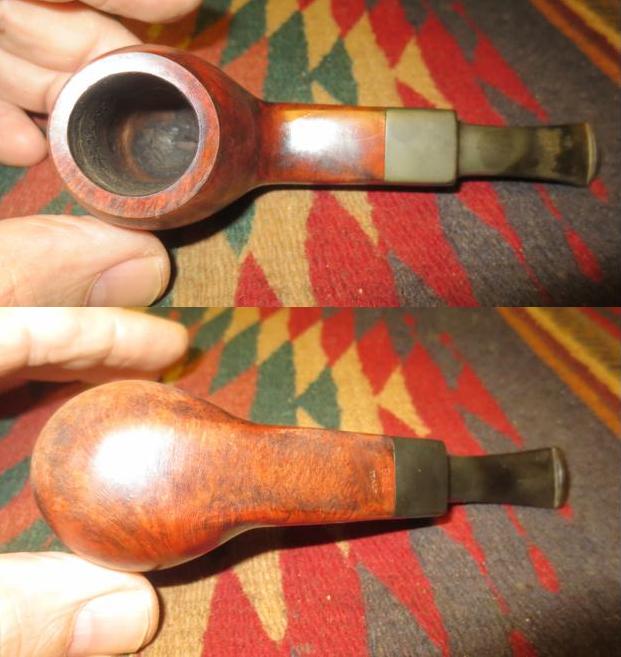
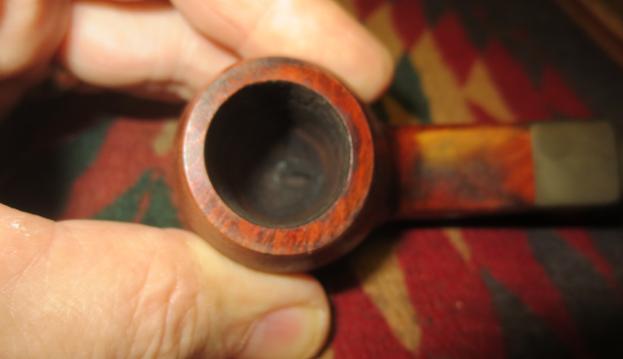
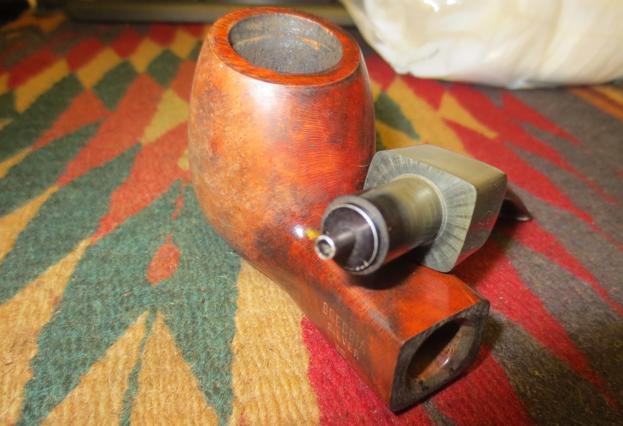
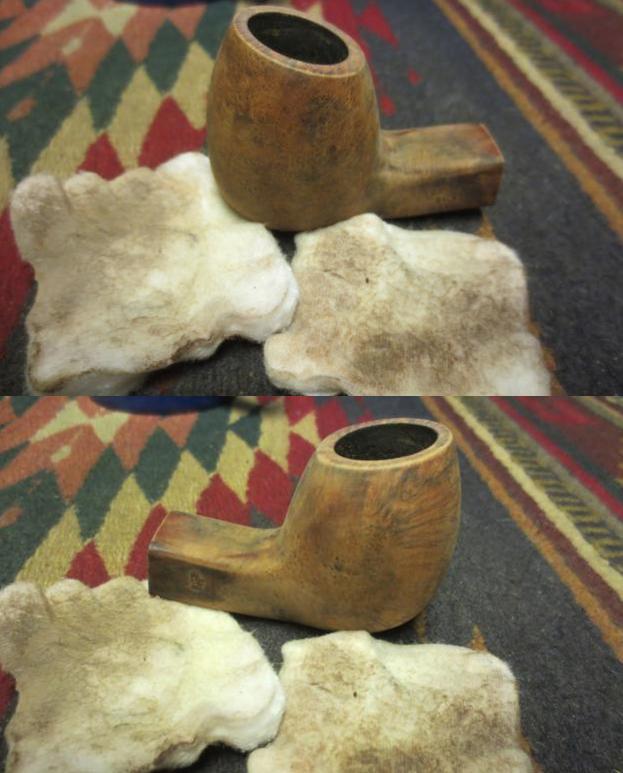
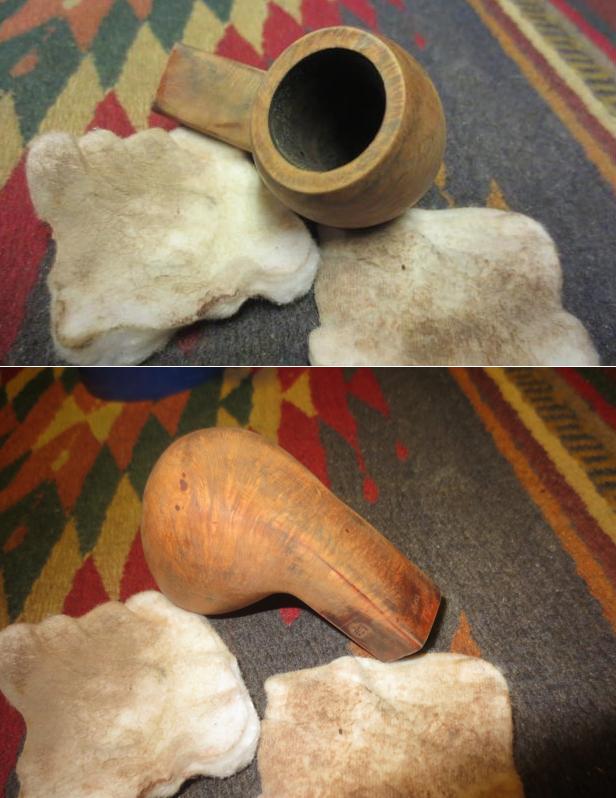
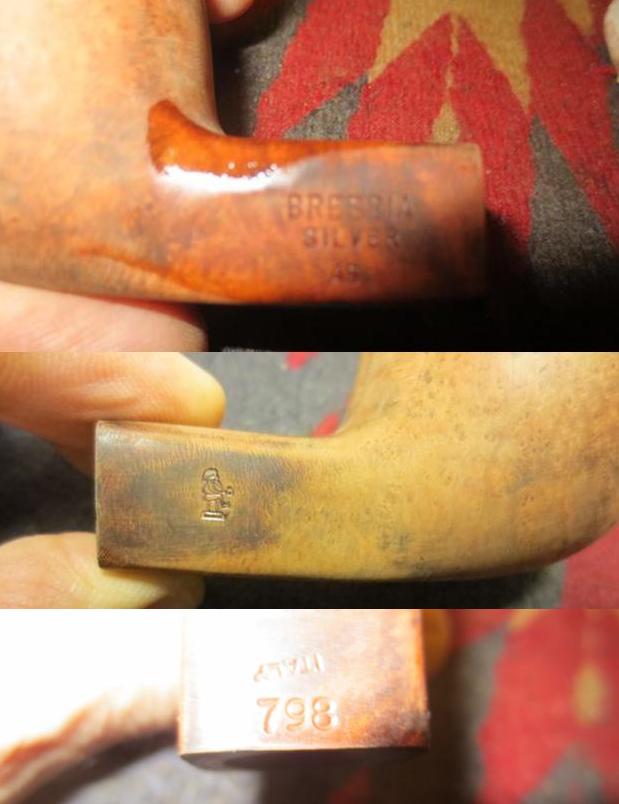
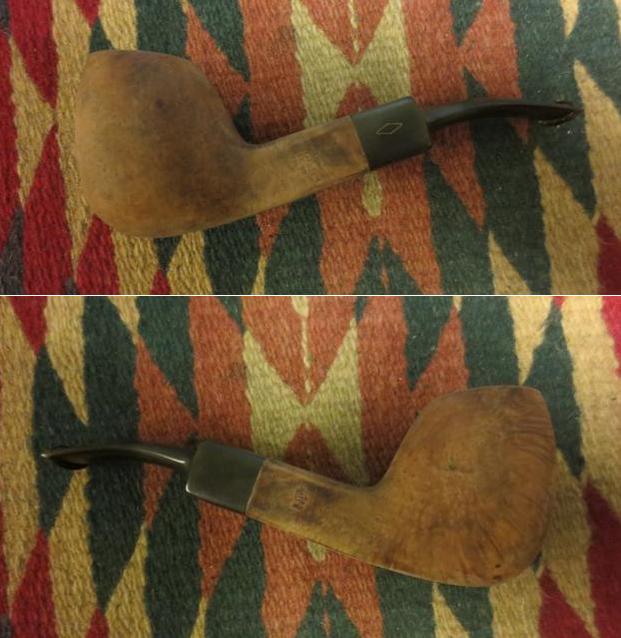
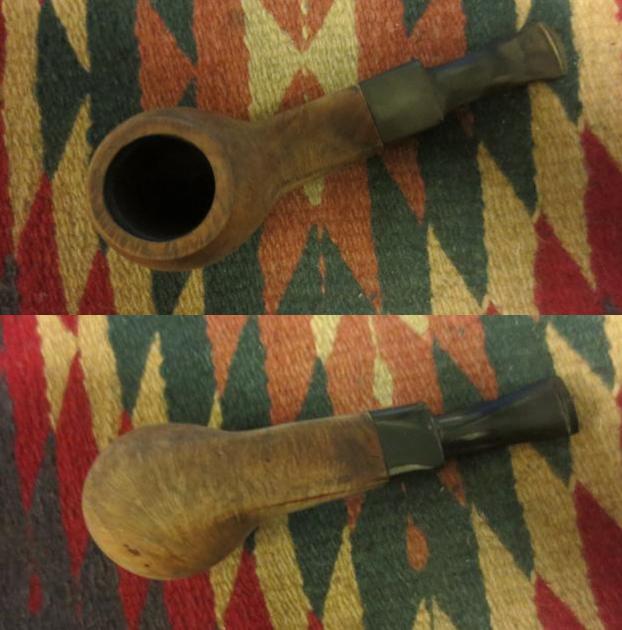
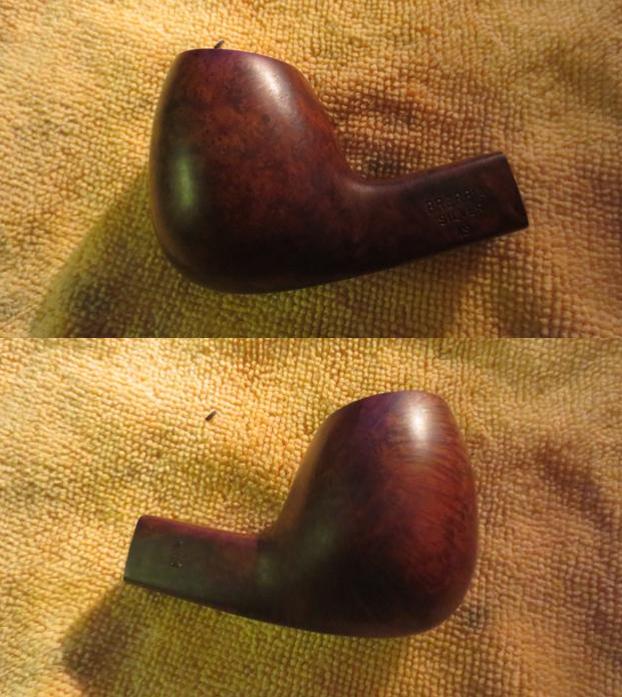
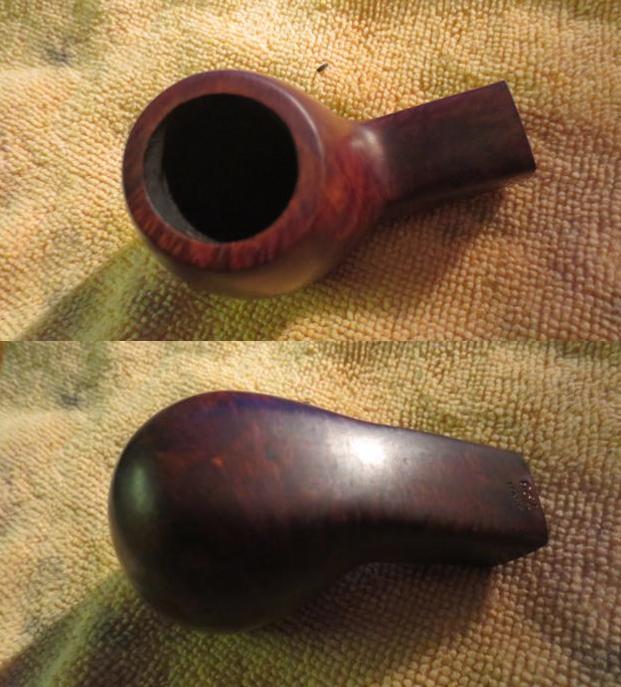
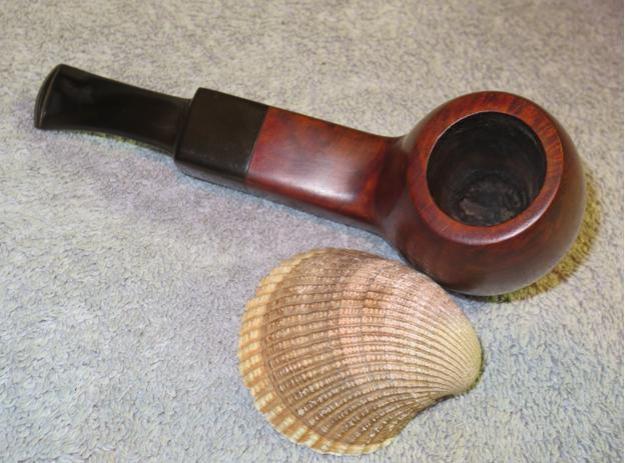
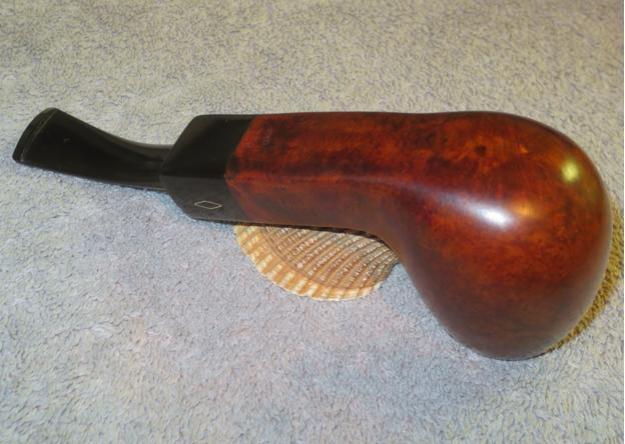
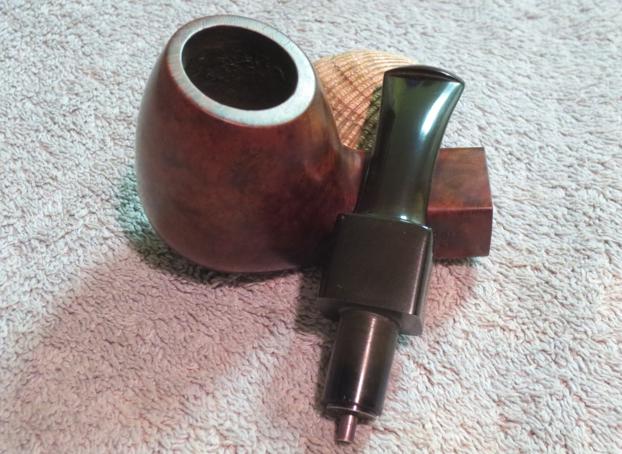
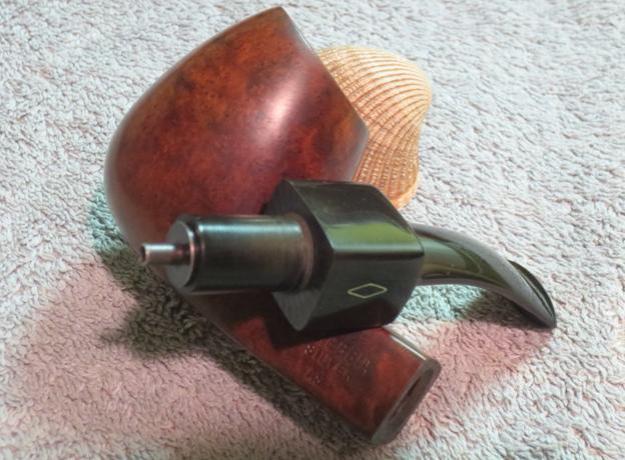
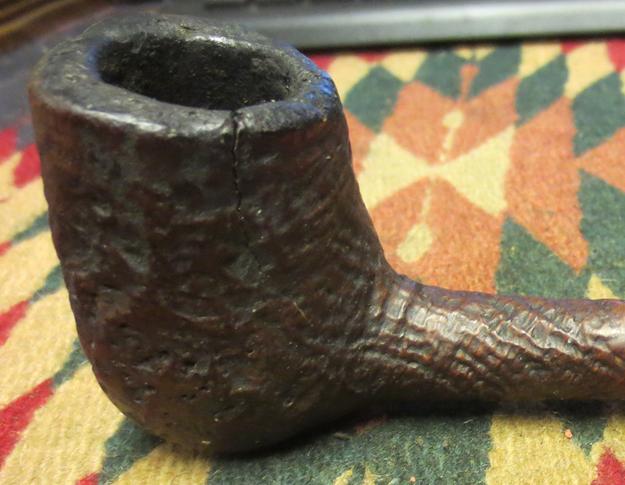
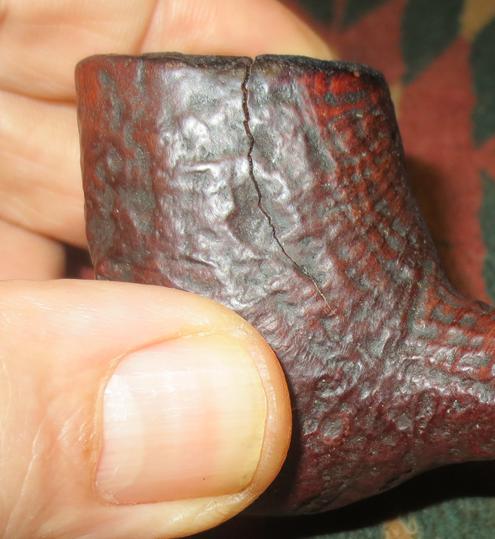
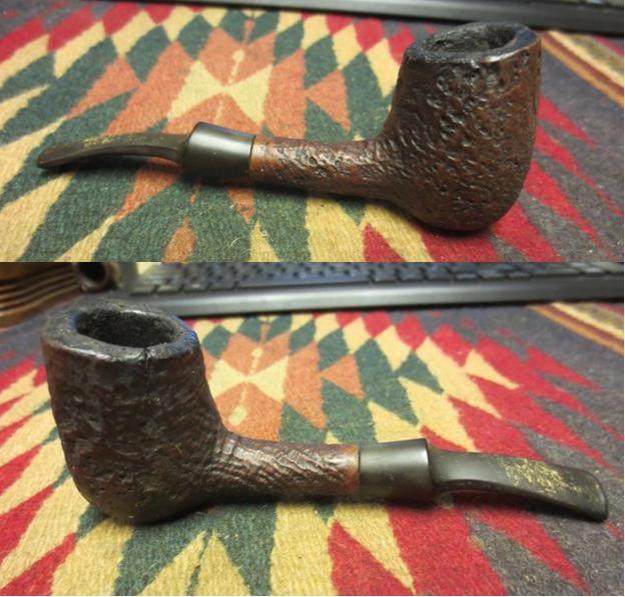
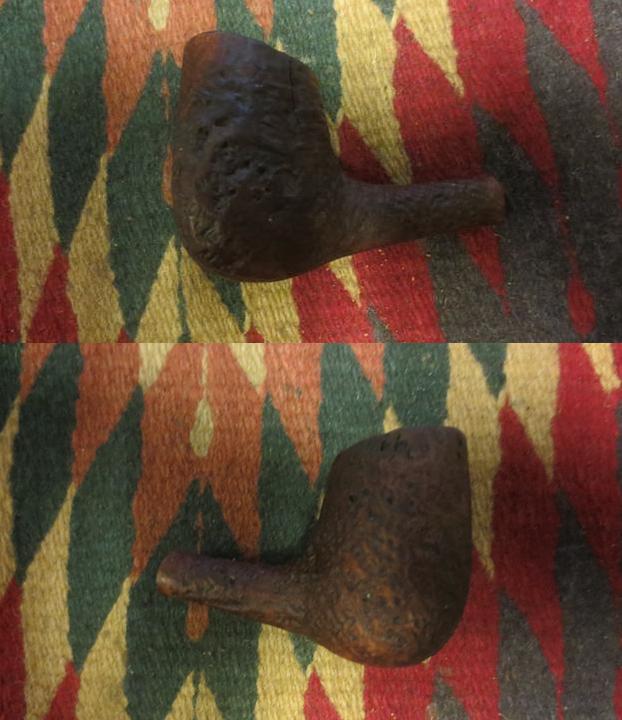
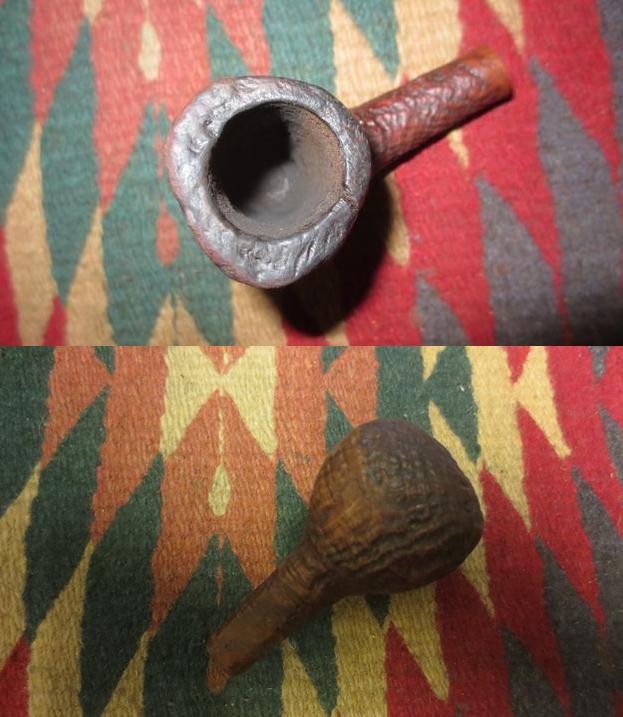
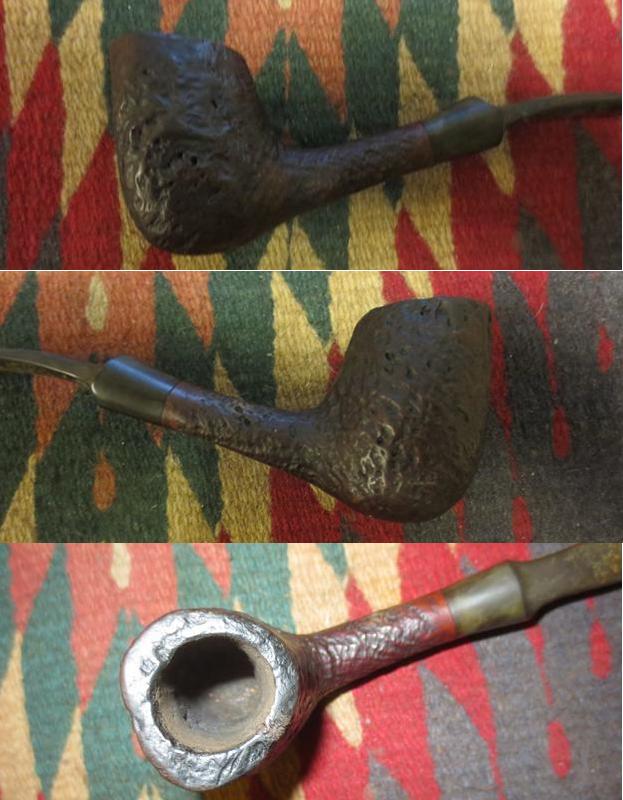
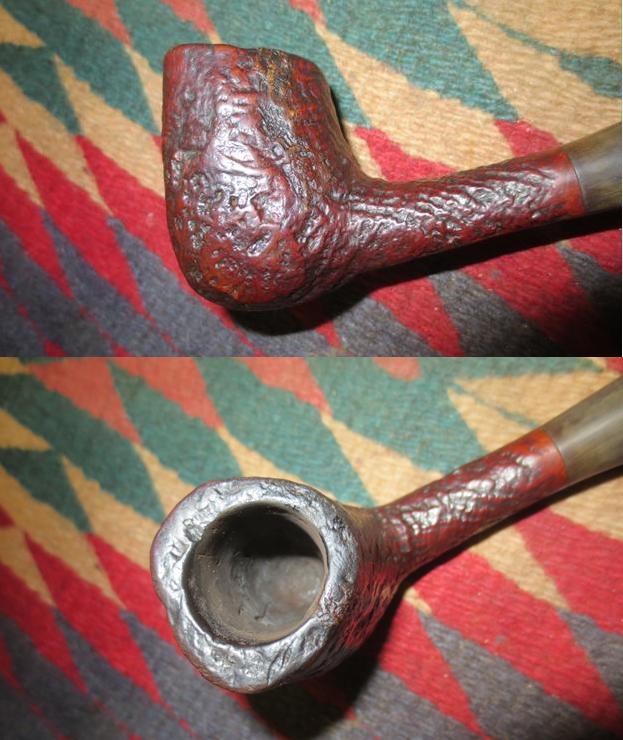
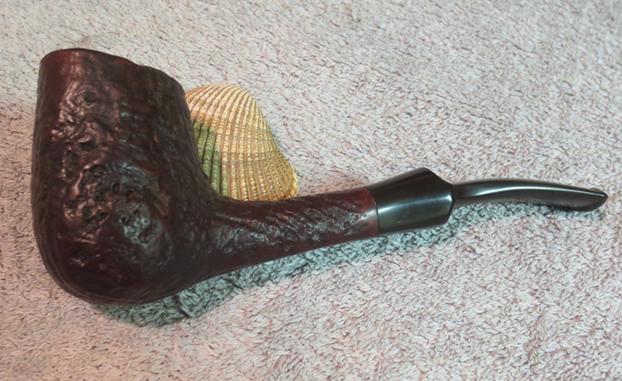
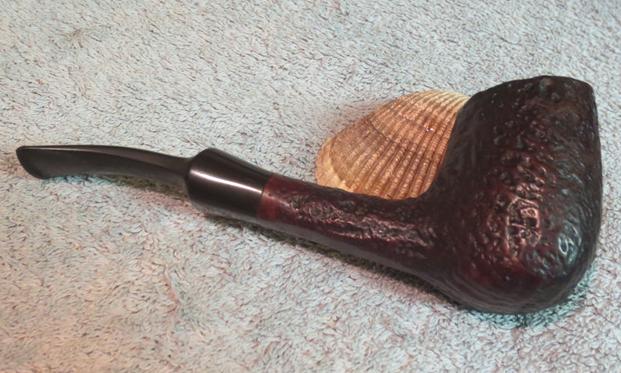
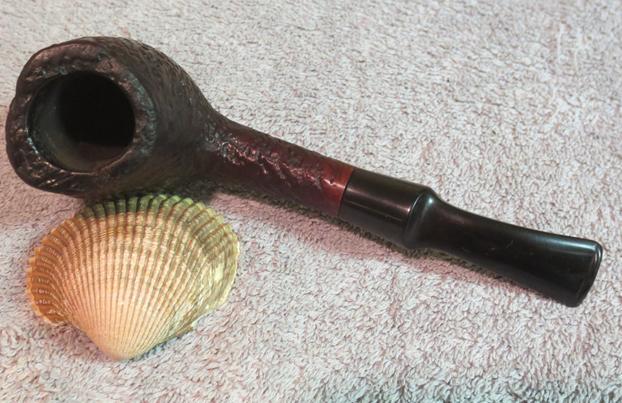
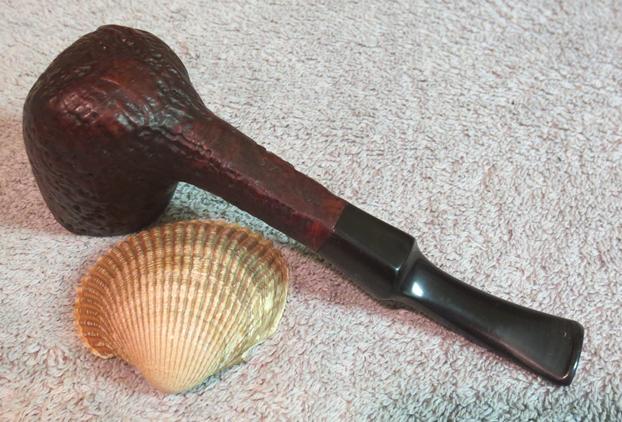
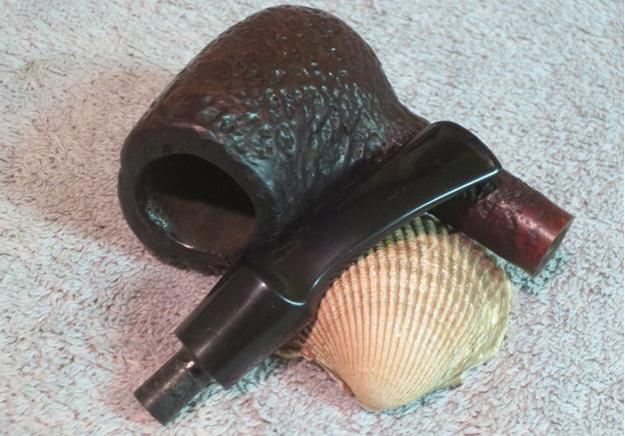
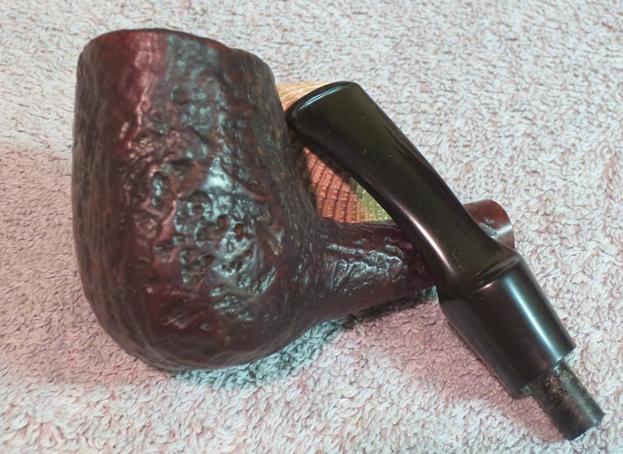
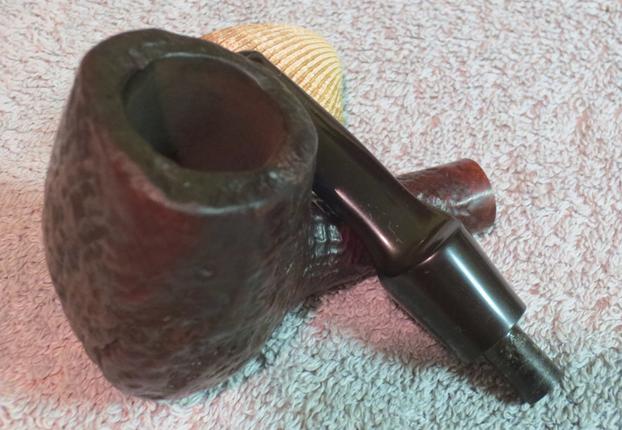
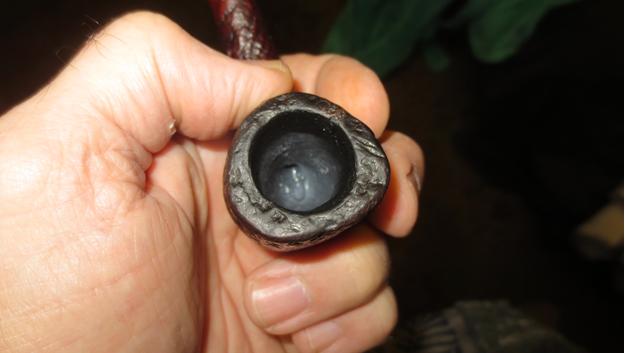



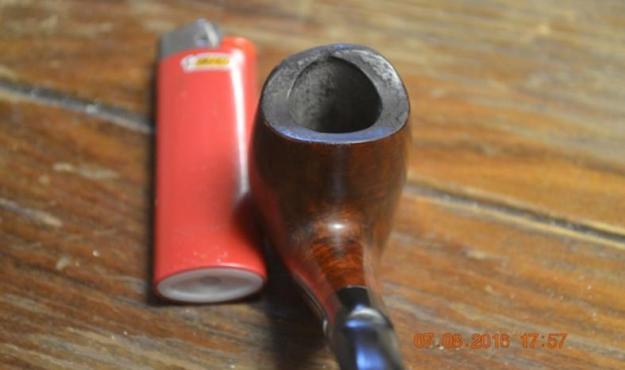



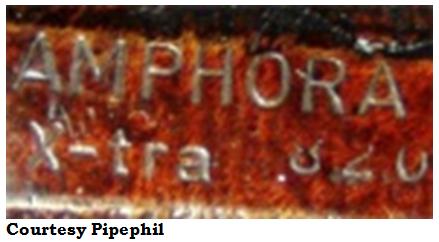







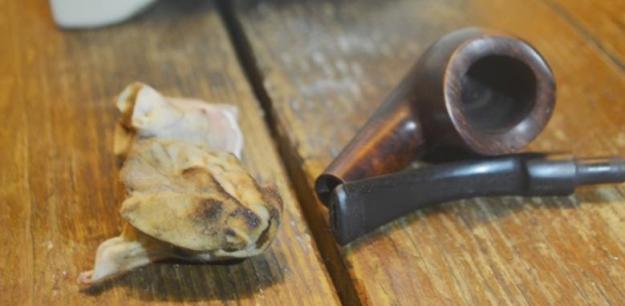


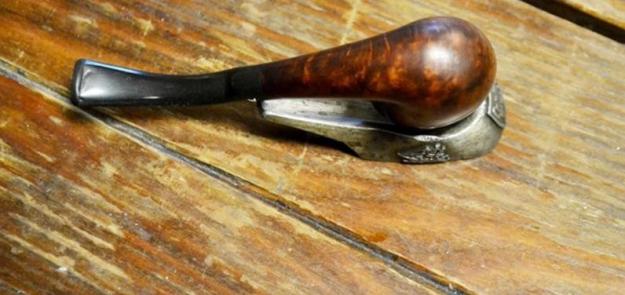
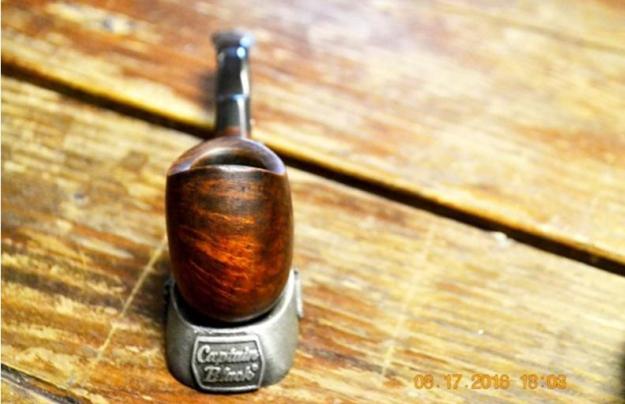


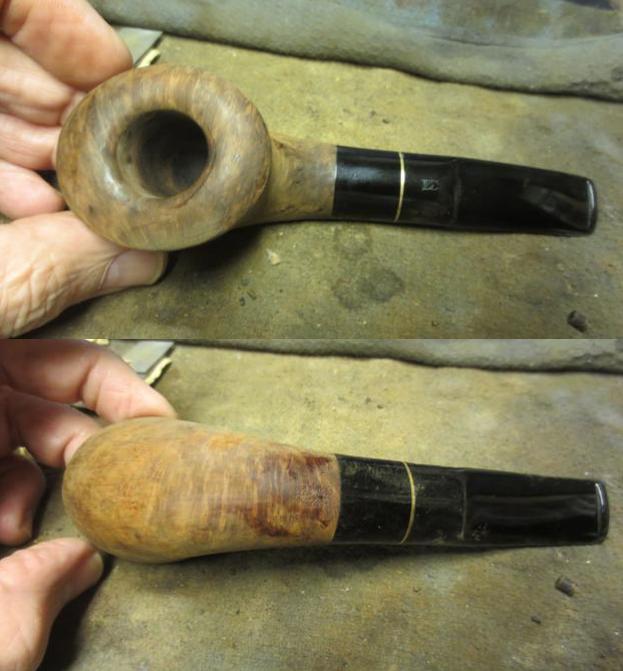
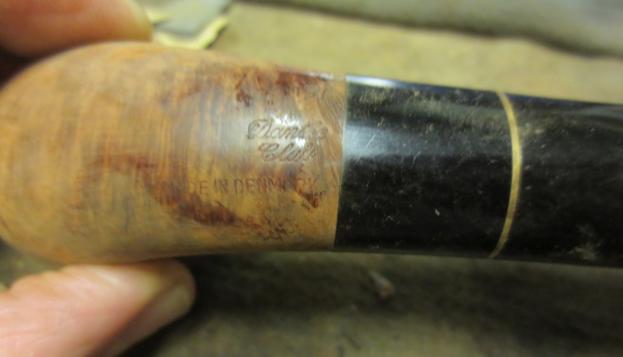
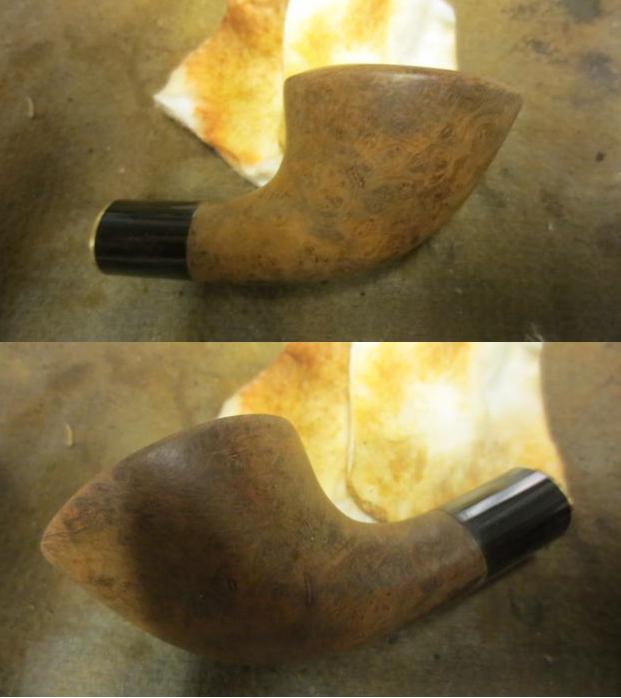
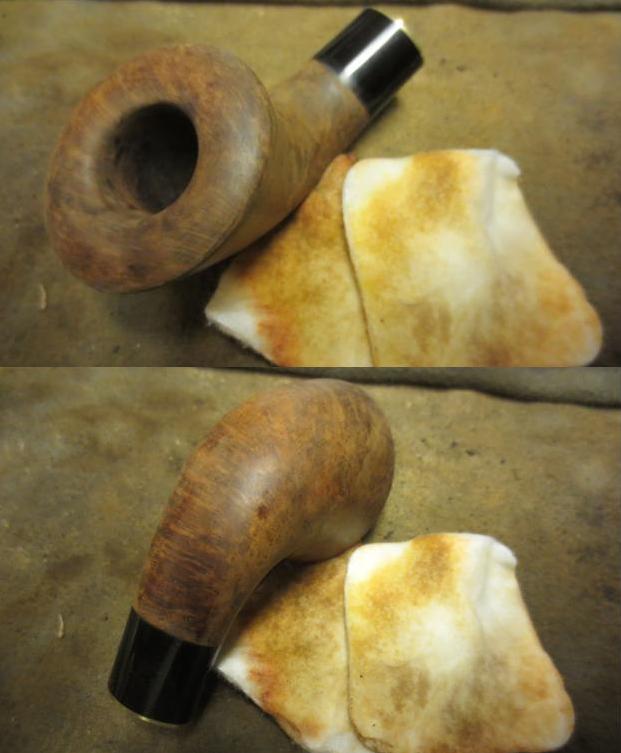
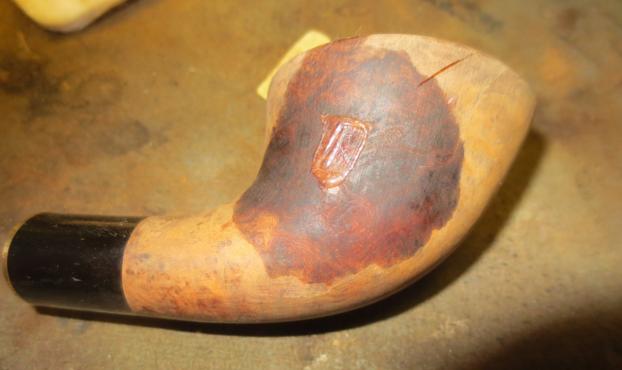
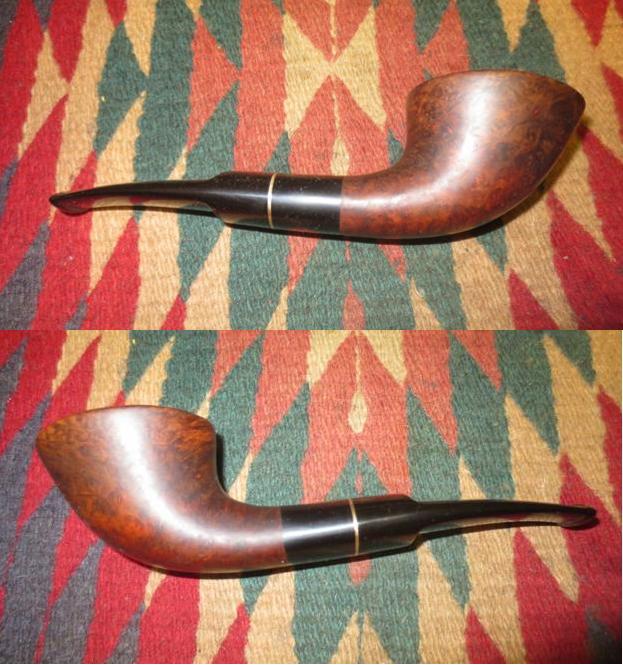
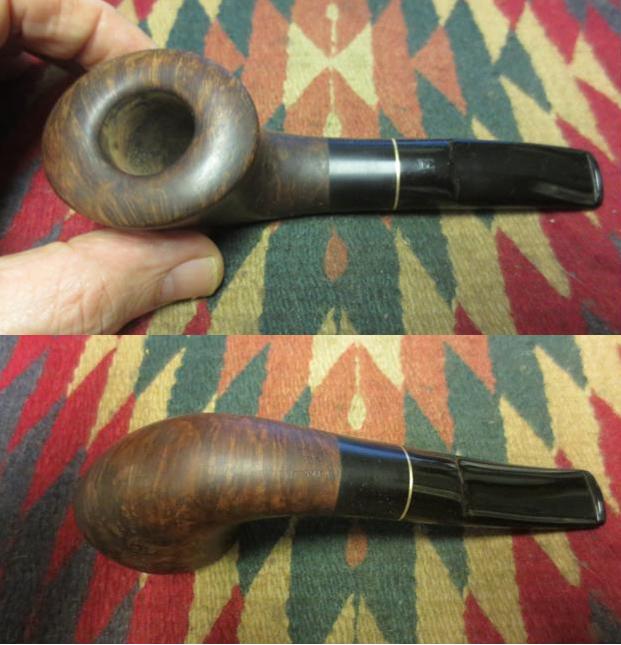

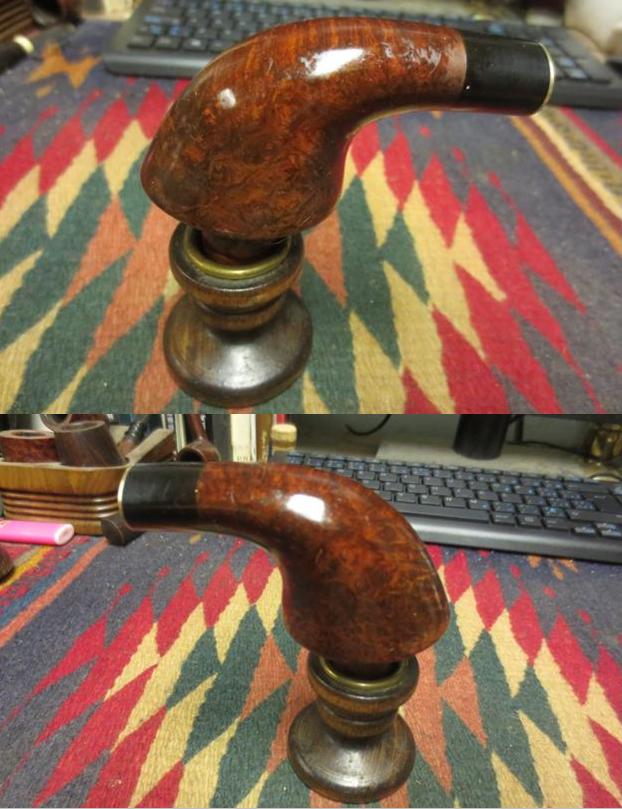


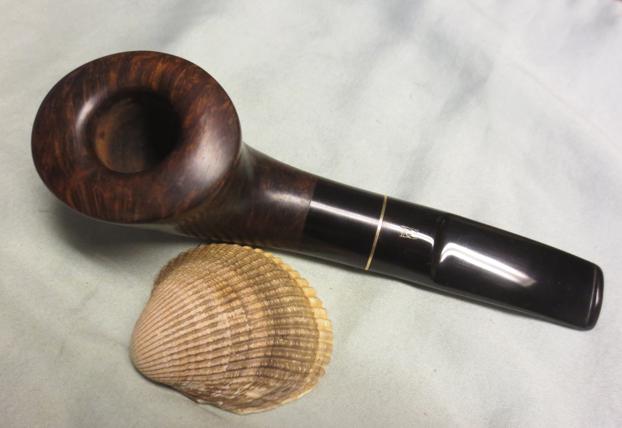
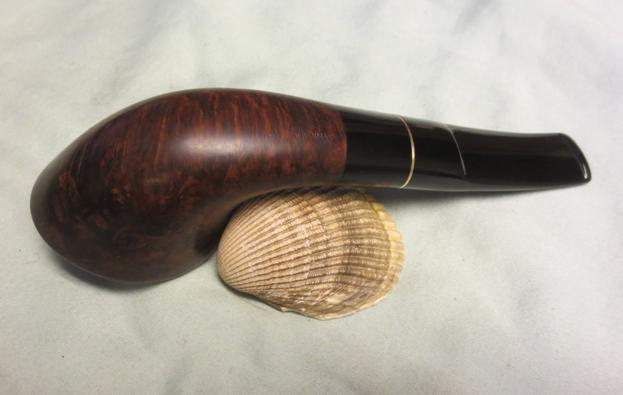
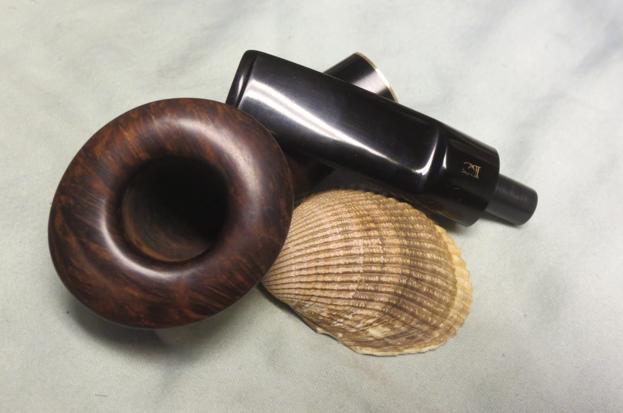
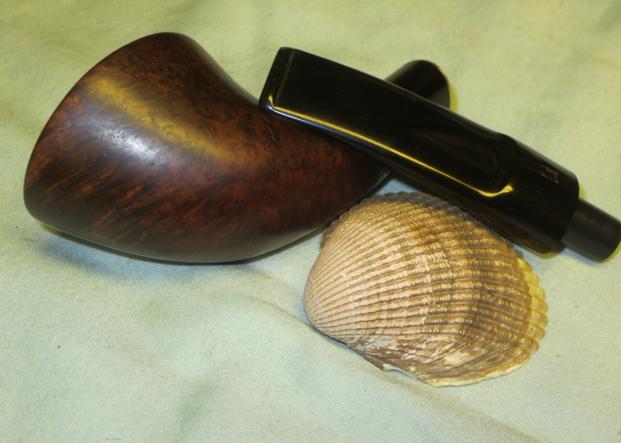
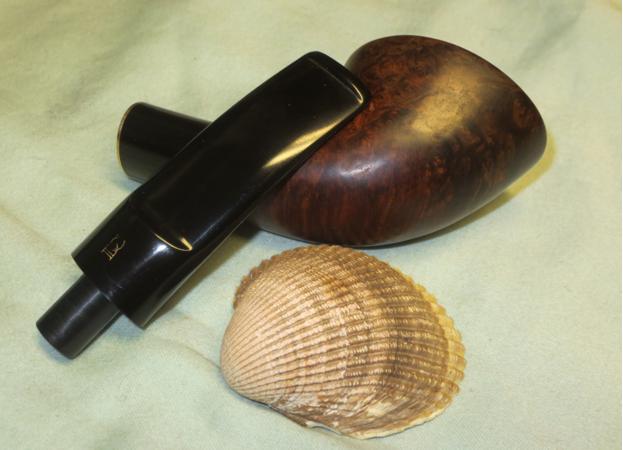
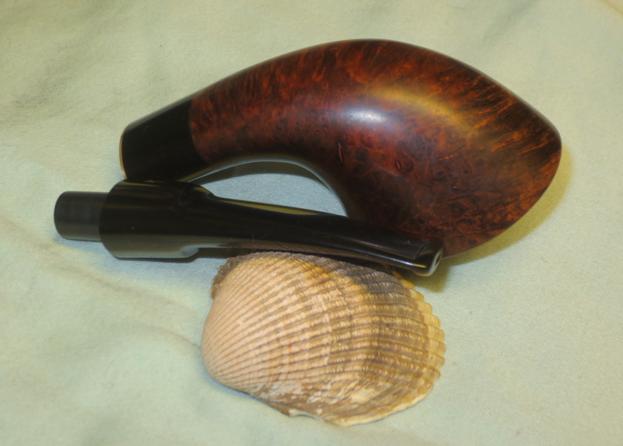
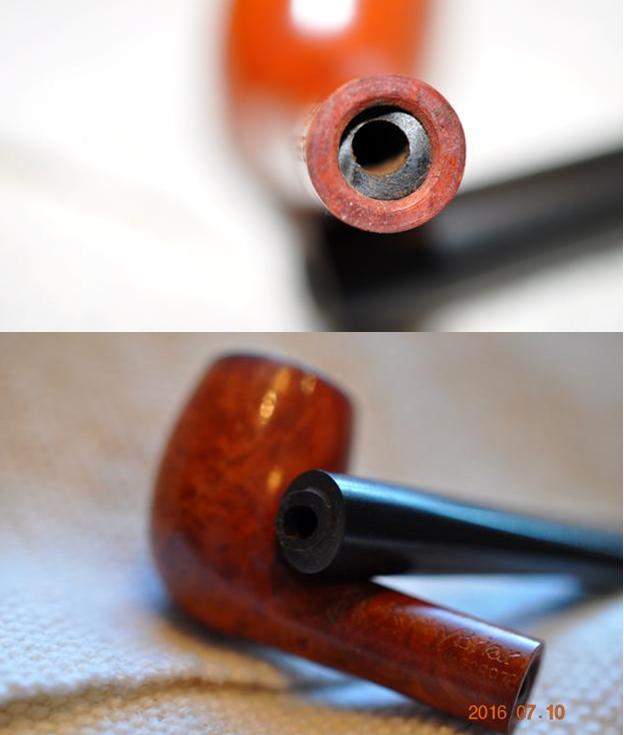

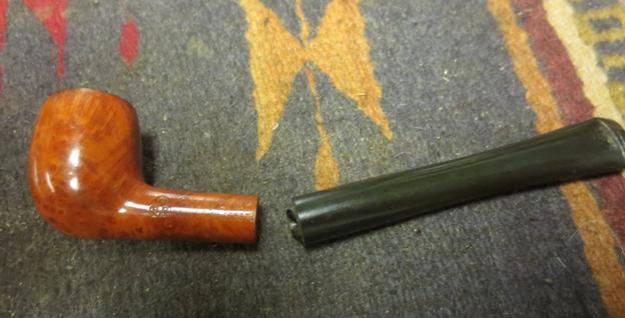
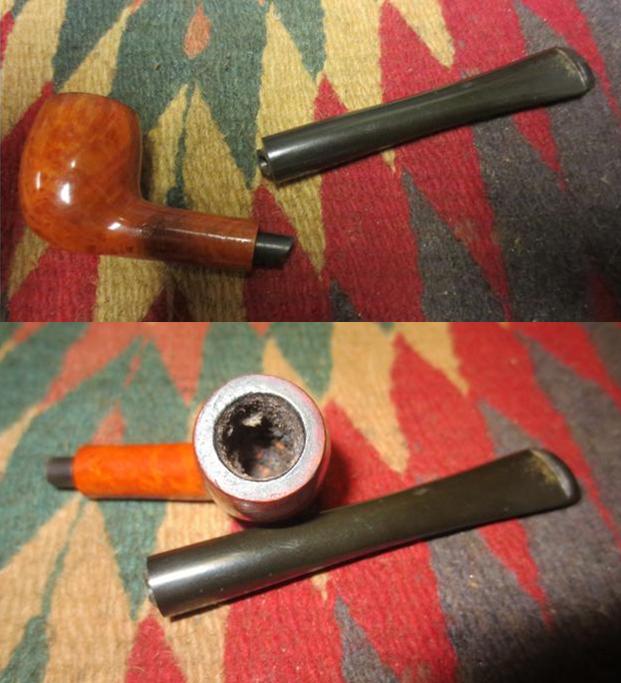
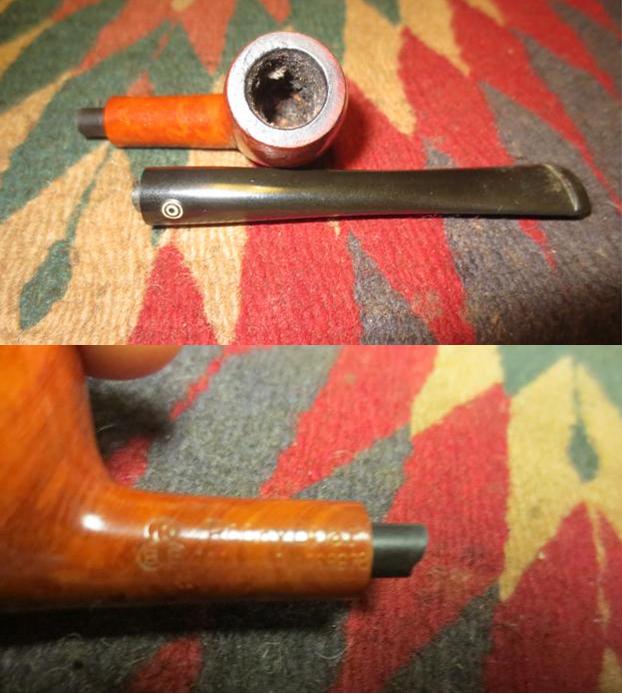

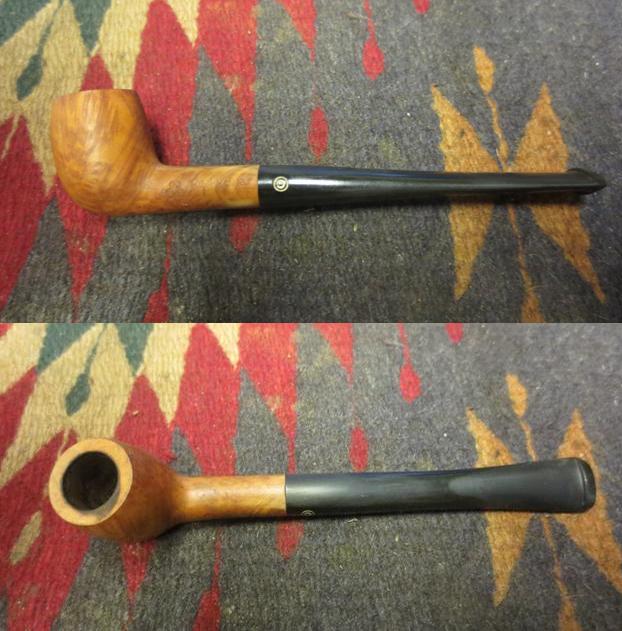
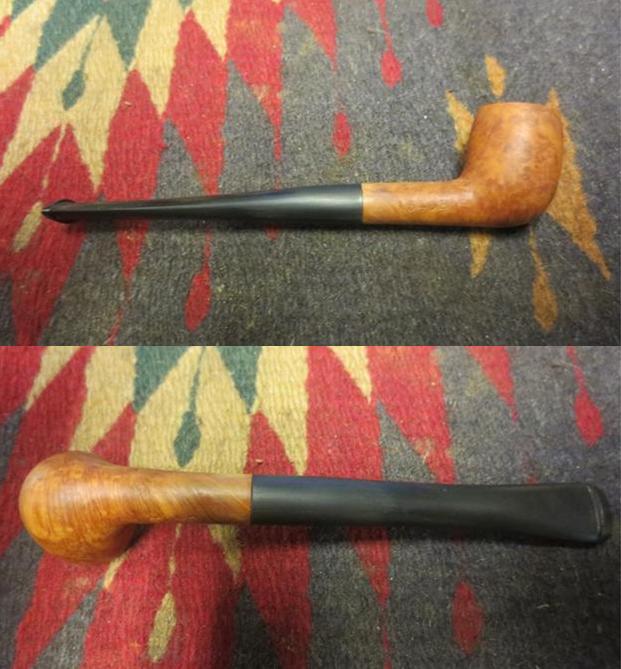


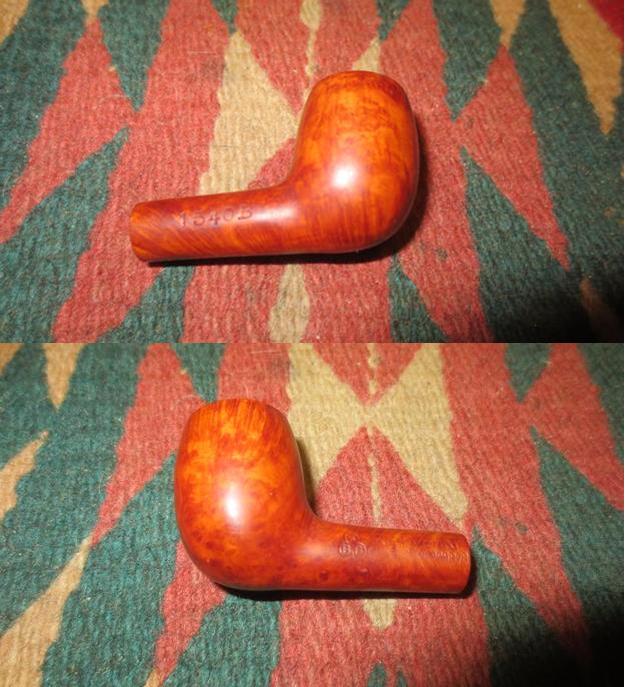
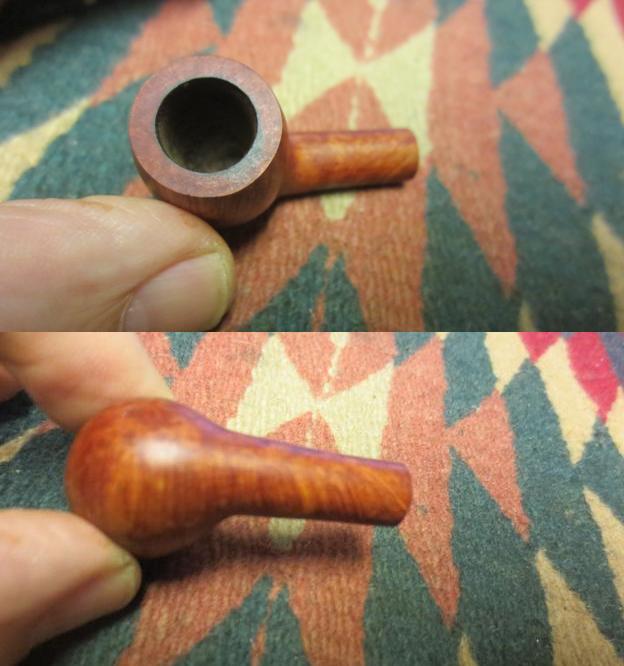
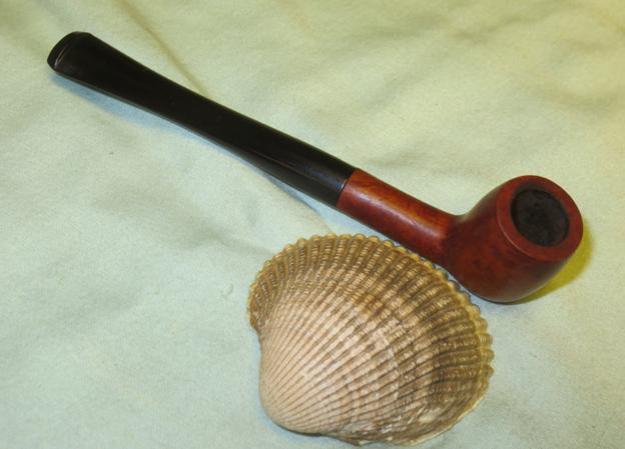
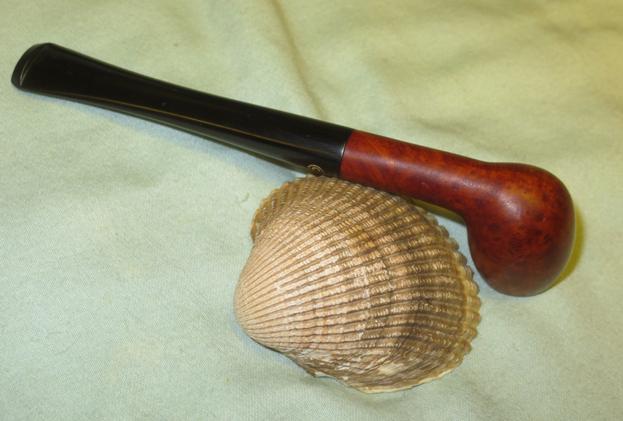
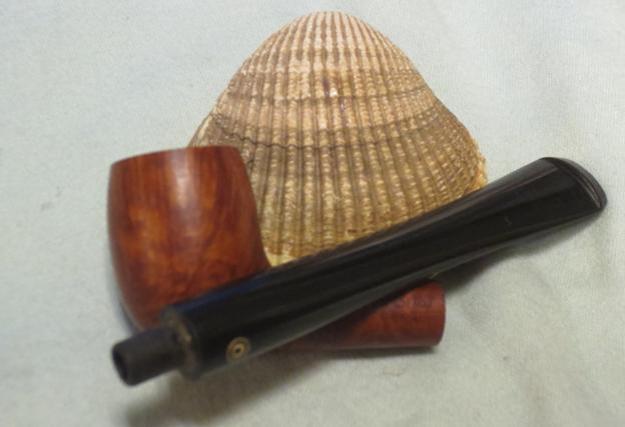
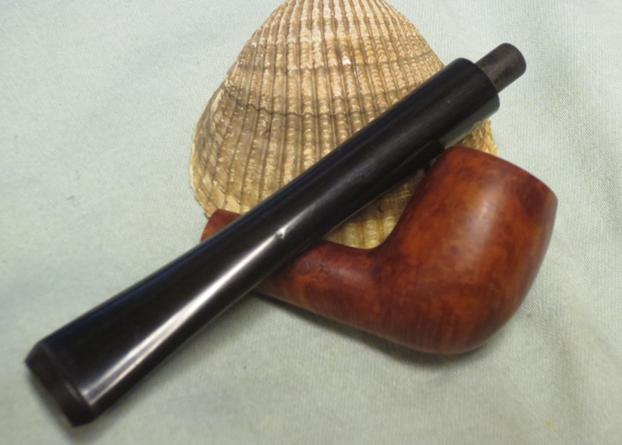
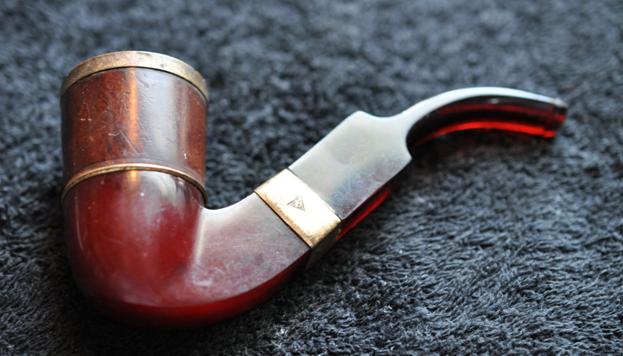
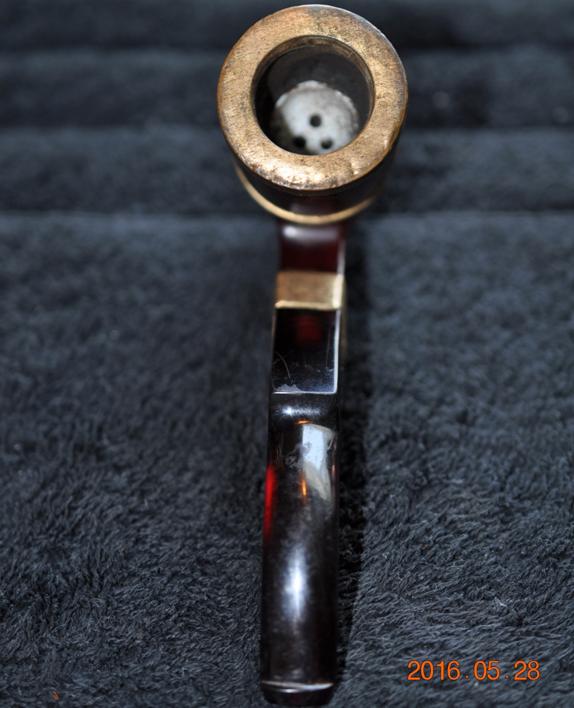
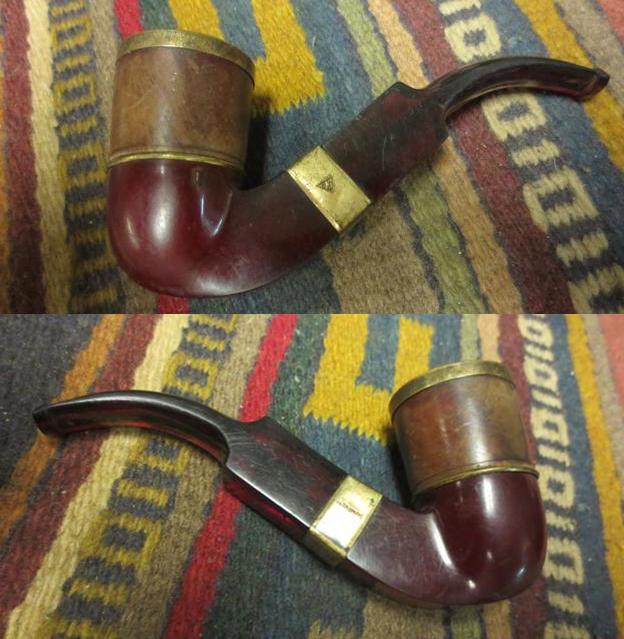
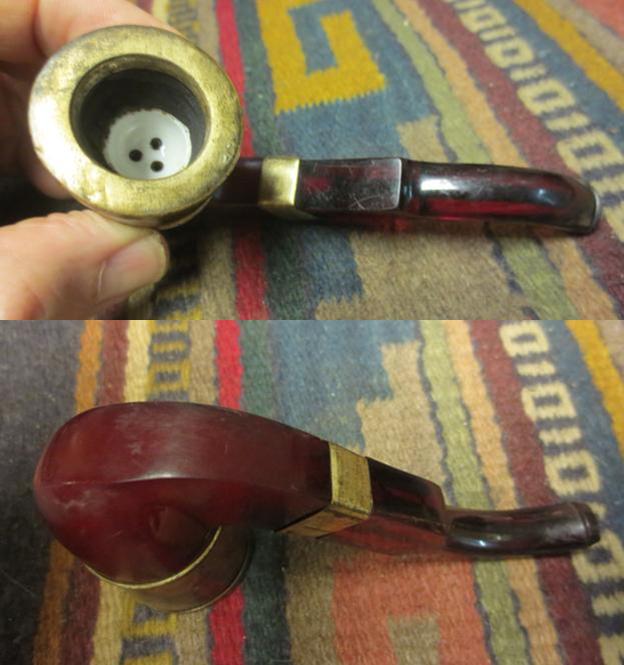
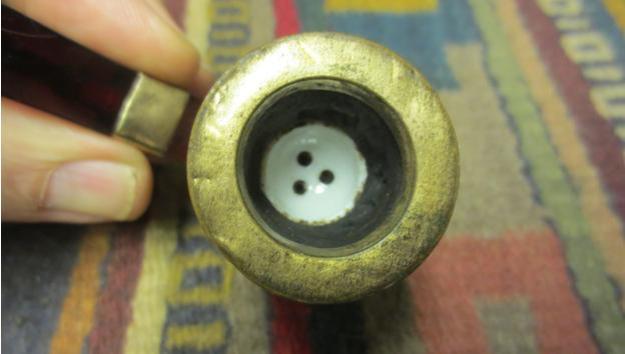
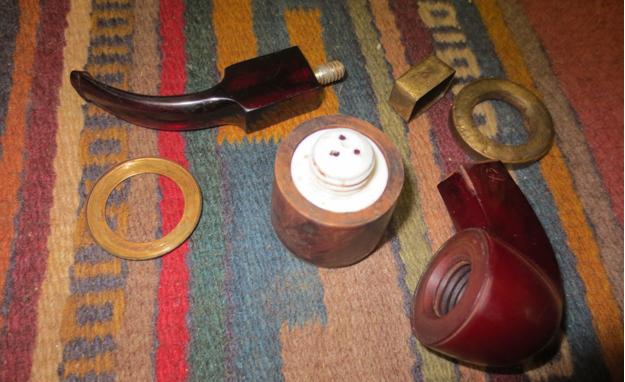
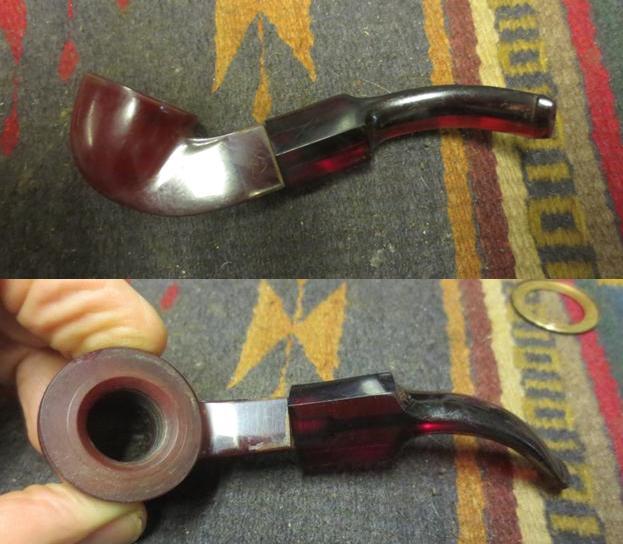
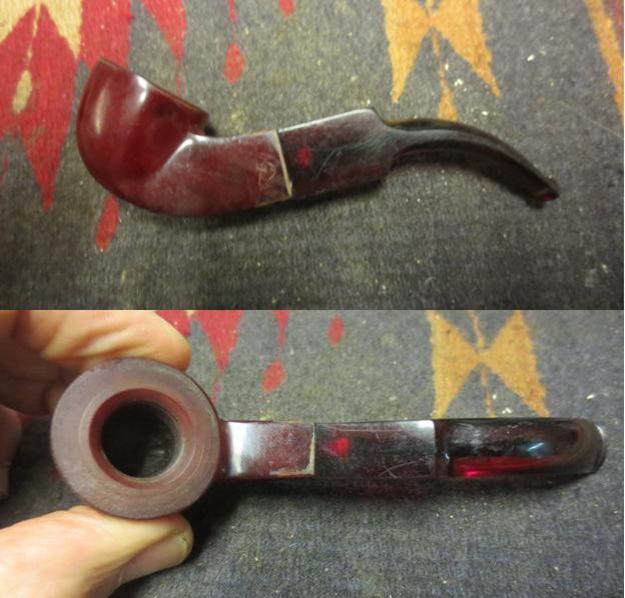
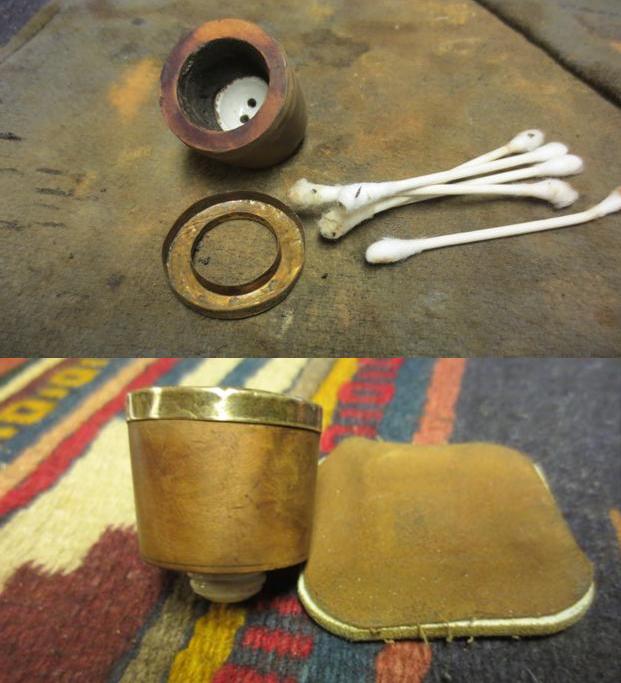

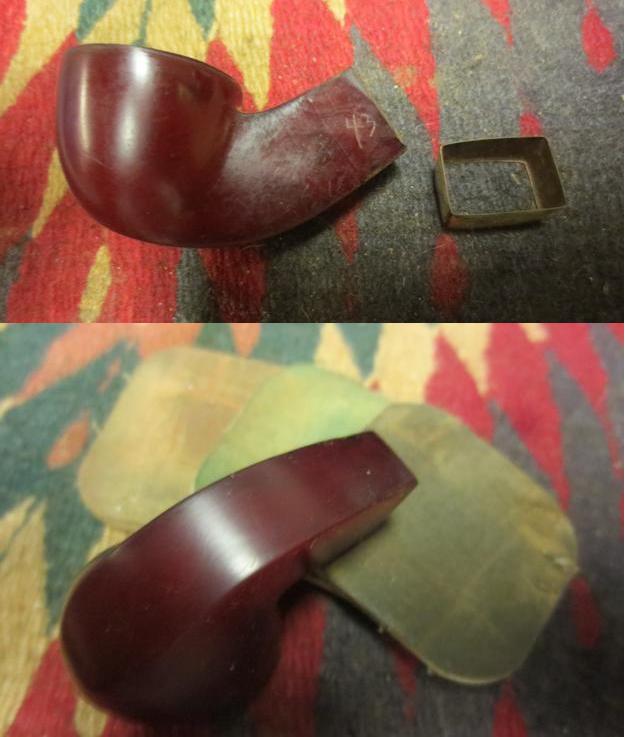
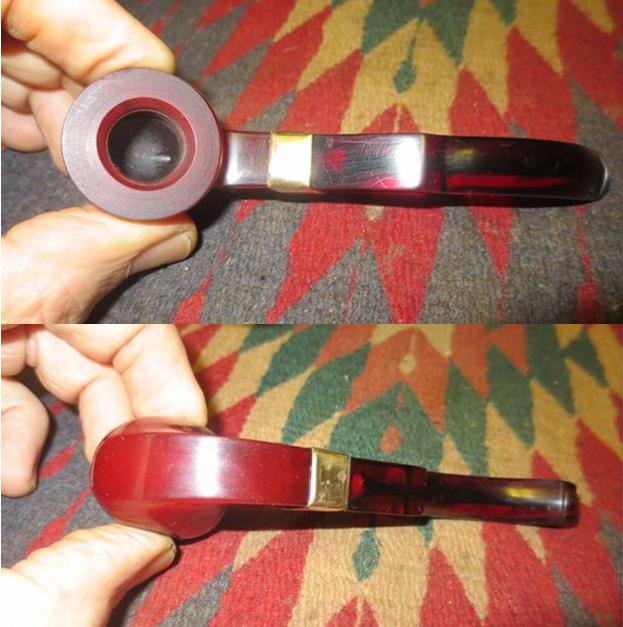
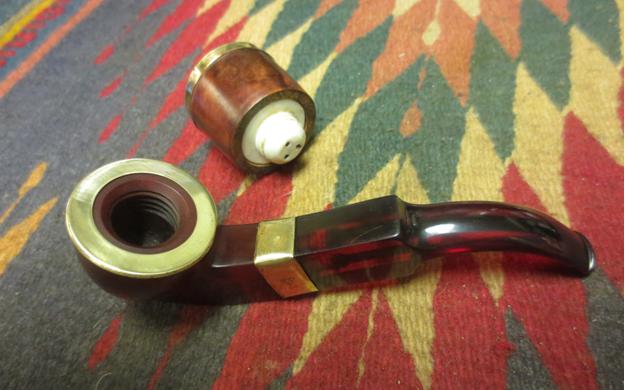
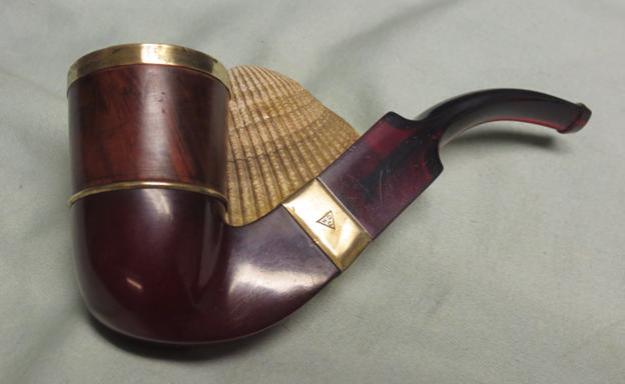
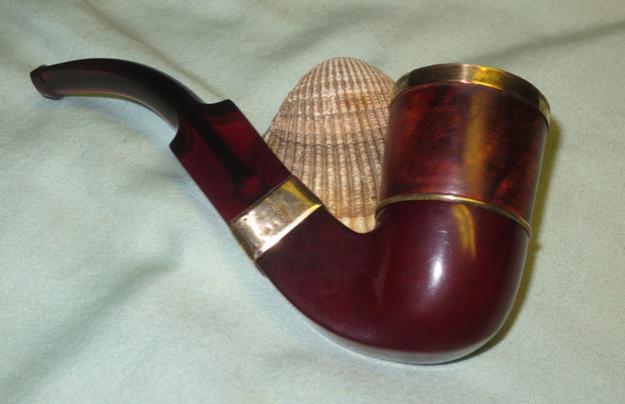

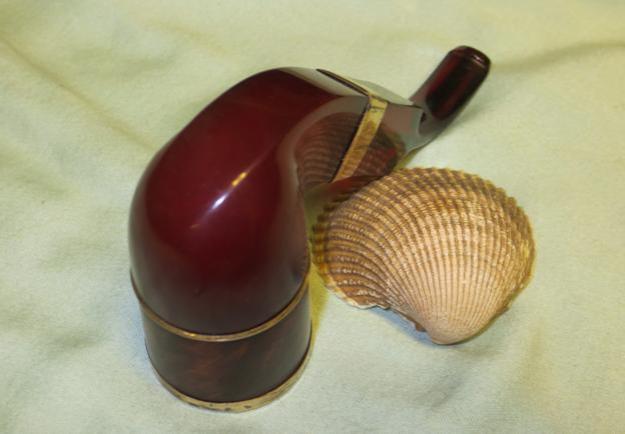
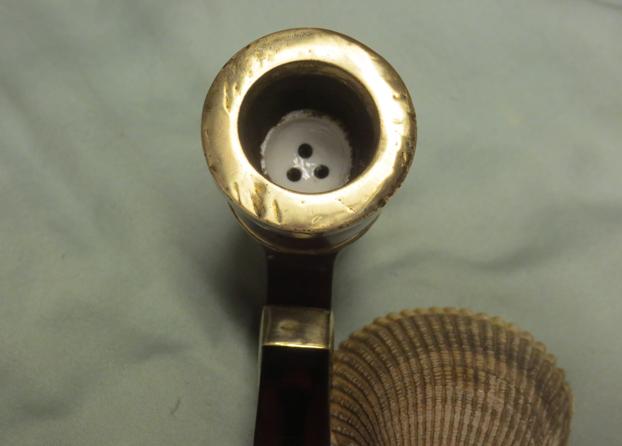
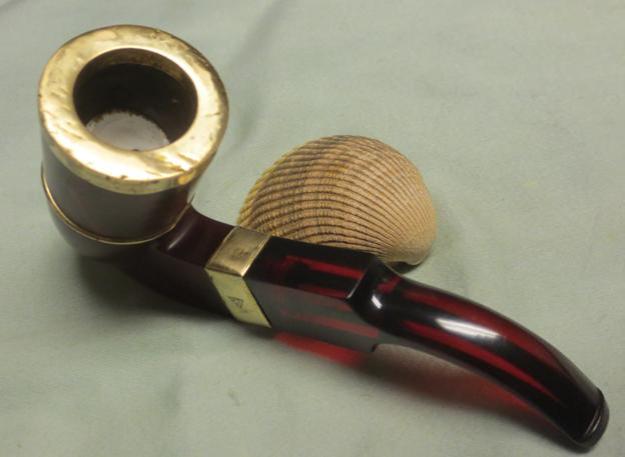
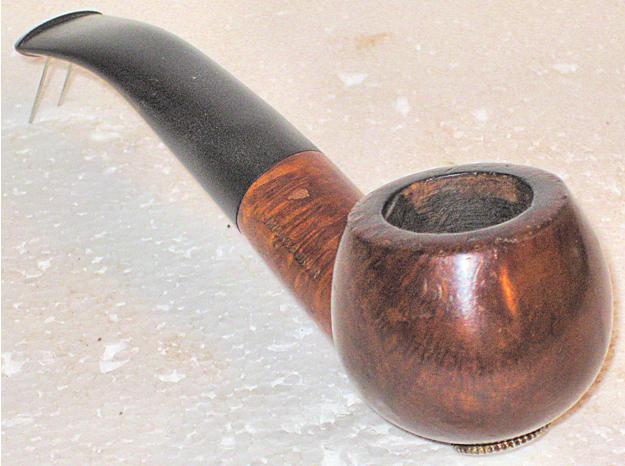
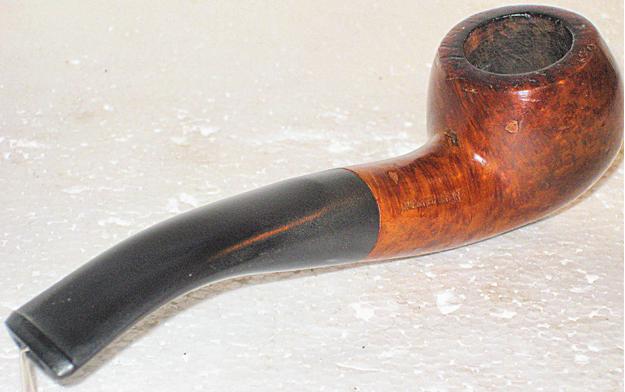
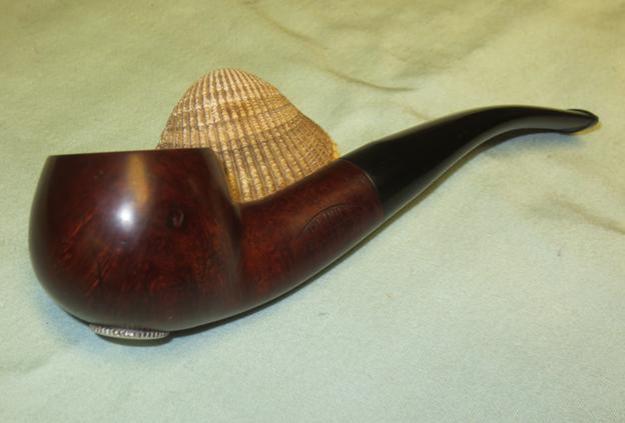
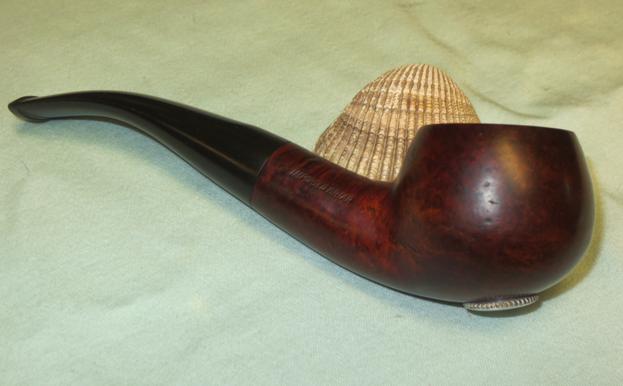
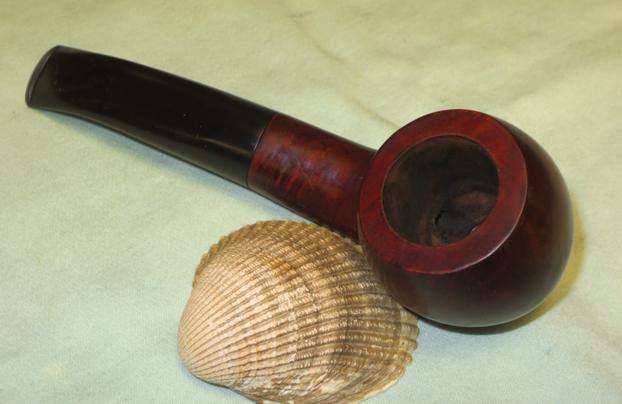
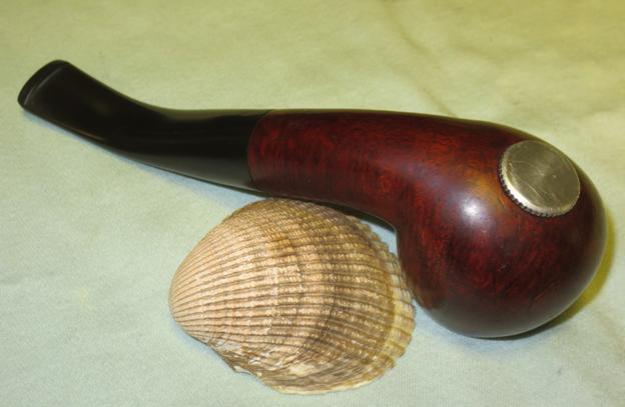
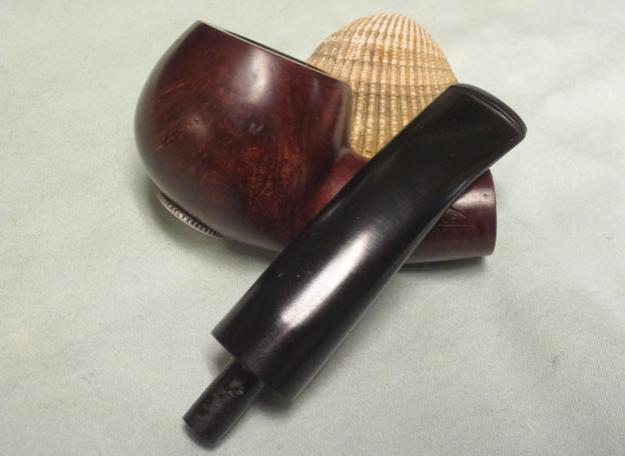
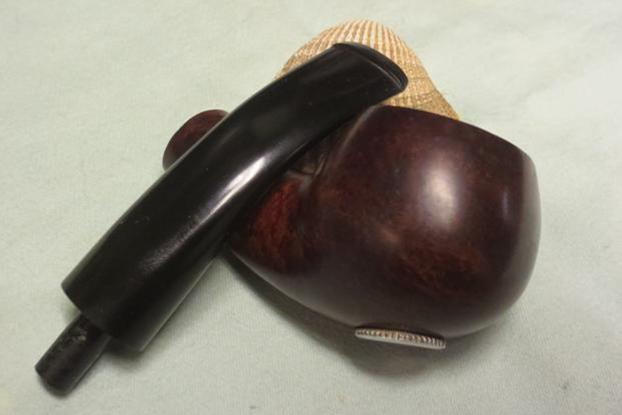
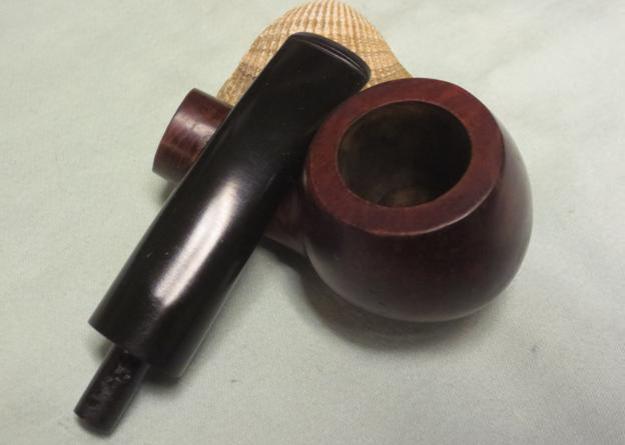
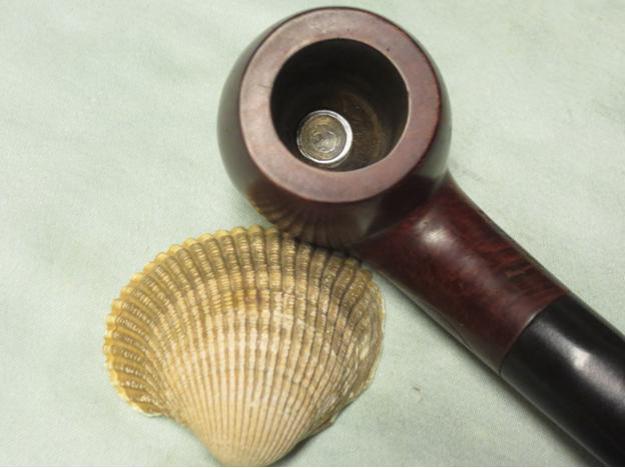
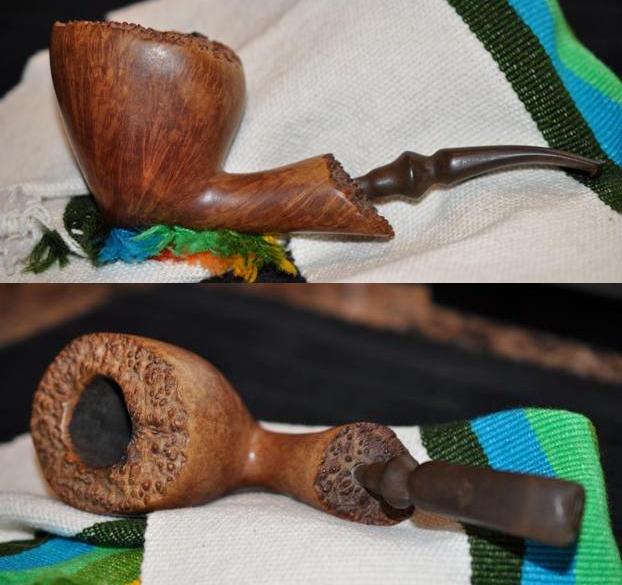
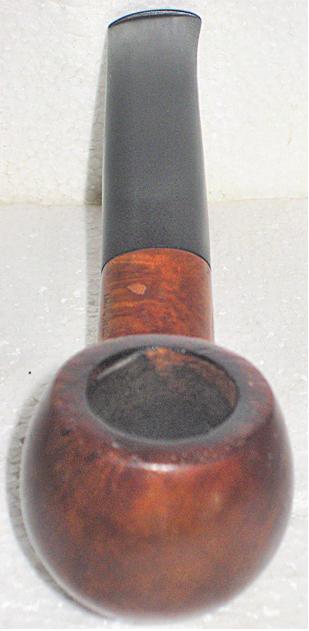 The fourth and fifth pictures remove the mystery of the knurled edge on the bottom of the bowl that showed in the first photo. You can see in that photo of the bowl bottom that the silver disk looks like it was made to be rotated. We talked and my brother bid and won the pipe (I can’t wait for the pipe to get here so I can check this out). The fifth photo shows the inside of the bowl. The top of the disk appears to be a cup intruding into the bowl bottom. It was really odd looking.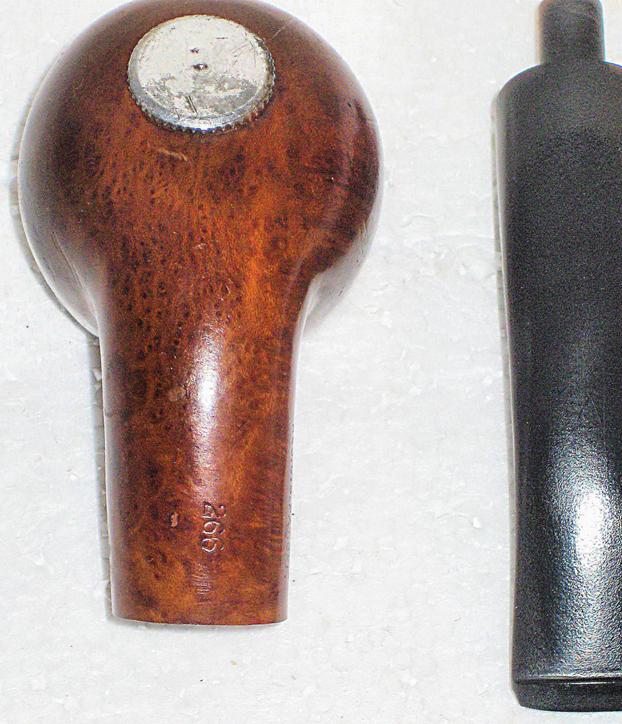
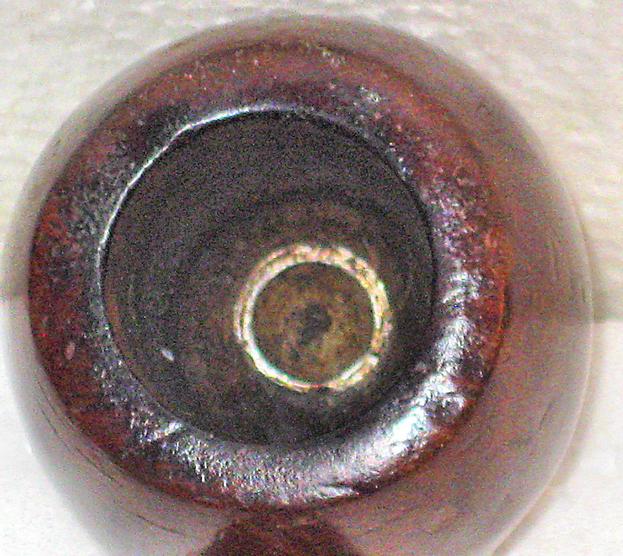 That information was helpful on many levels. He did not however have any photos or drawings of the pipe or pictures of the advertisements. I wanted to know if the bottom “sump” as he called it was pressure fit or threaded and screwed into the briar. I wanted to know if the bottom of the bowl was damaged or if the “sump” sat as it was supposed to flush with the bottom. It was hard to tell from the photos. I wanted to know was the “wads” were that sat in the sump. From the look of the bowl bottom it appeared that the “wads” may well have been lozenges that fit in the curved cup and then sat flat in the bottom of the bowl. But what did they look like? More research would be needed to answer these questions. But at least the mystery of the knurled edge peaking from the first photo was solved. It was a single unit with a cup on the inside of the bowl. I could not wait to see this in person and “fiddle” with it.
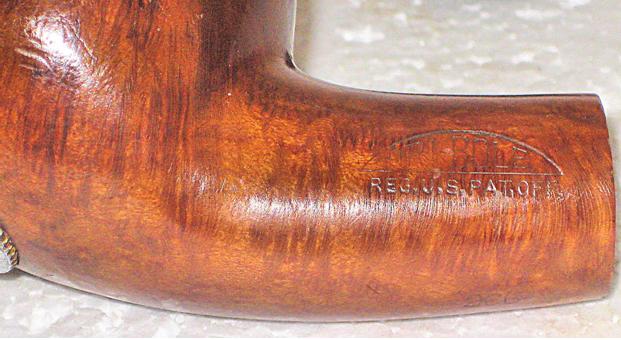 He gave the dimensions of the pipe as follows: overall length: 5 ½ inches, bowl height: 1 ½ inches, diameter of the bowl: 1 5/8 inches, bore diameter: 7/8 inches, bore depth: 1 1/8 inches and the weight: 44 grams or 1.6 ounces
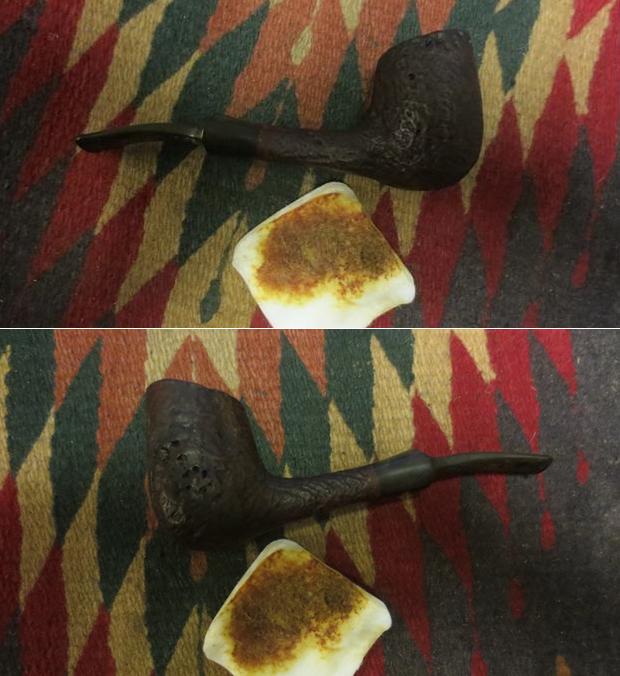
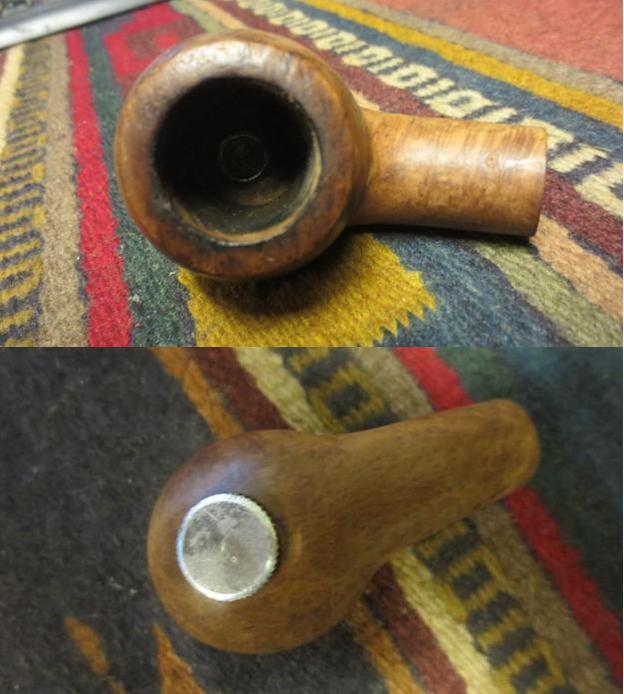 I took it out of the alcohol bath and heated the disk with the flame of a lighter. I used a pair of pliers to hold tightly to the edge of the disk and I was able to twist it out of the bowl. Once it popped free I could undo it by hand. The first photo below shows the inside of the silver disk. The second shows the knurled outside.
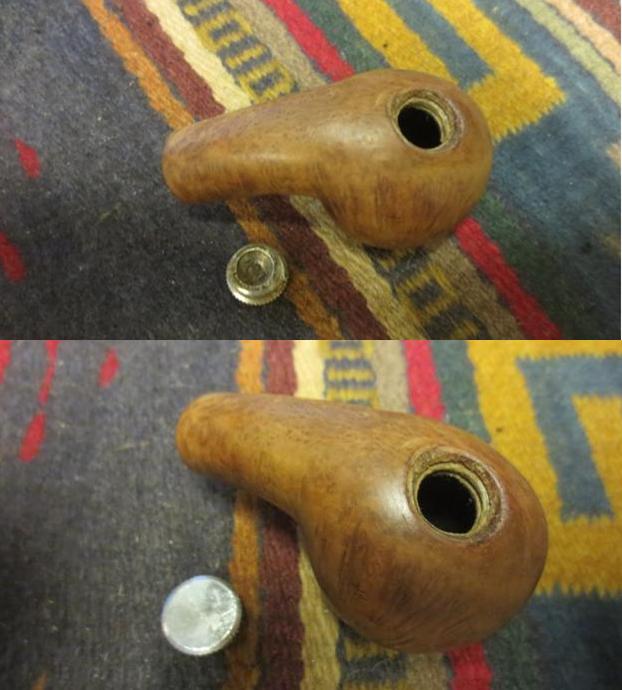 To remove the damage to the rim top and edges I topped the bowl on a topping board with 220 grit sandpaper.
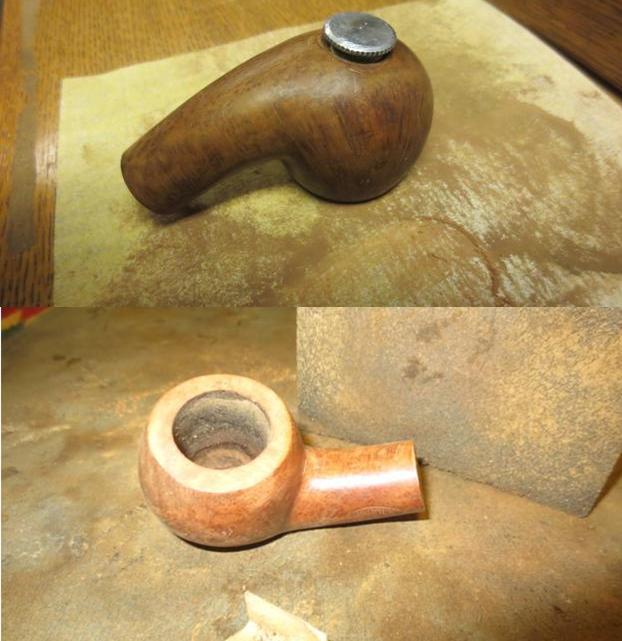 There were some nicks around the hole in the bottom of the bowl so I sanded those smooth with sandpaper and then cleaned out the threads in the briar with a cotton swab and alcohol.
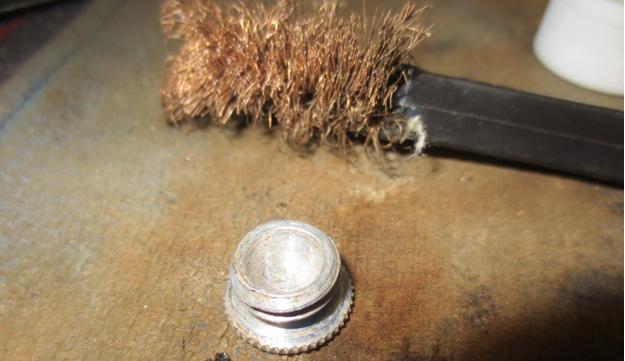
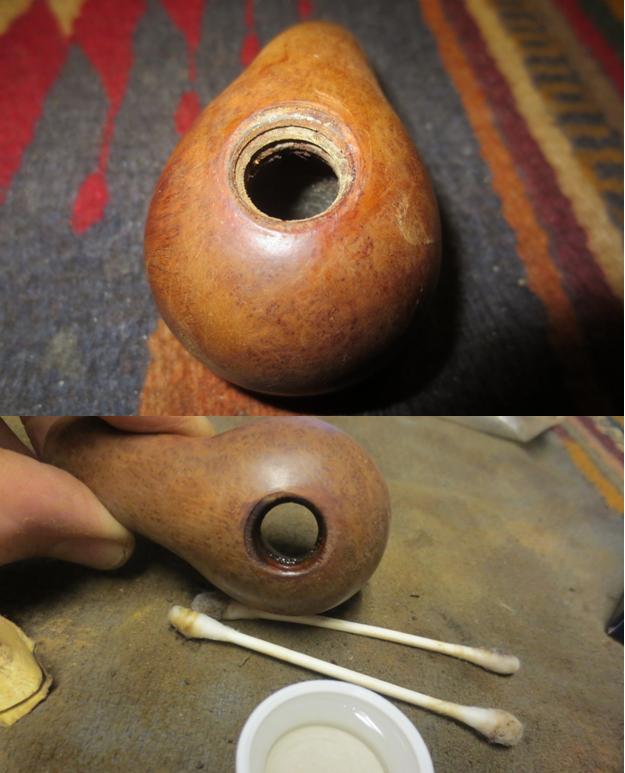 I used the brass bristle brush to scrub the threads and the cup on the disk. I cleaned it afterwards with cotton swabs and alcohol.
 I used a cotton swab to coat the threads on the disk with Vaseline and turned it into the bottom of the bowl. I wanted to make sure that I could easily turn the disk by hand.
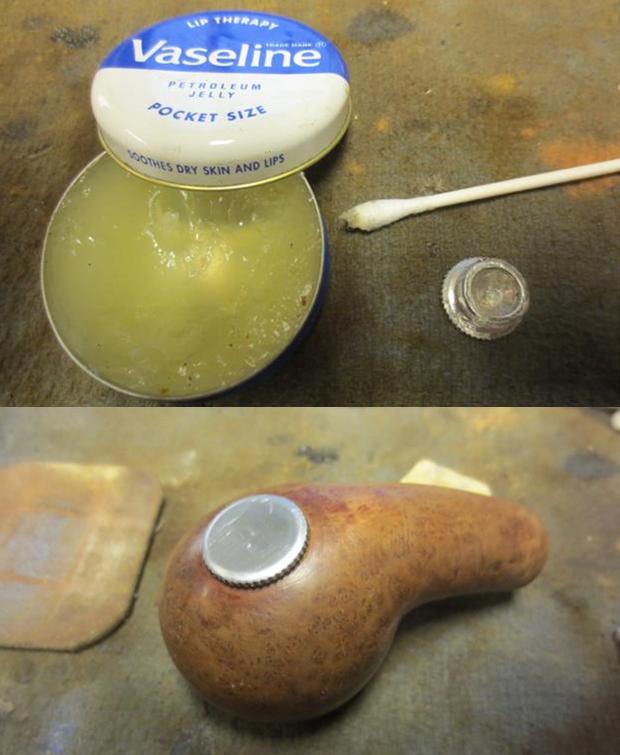 I cleaned out the internals with pipe cleaners, cotton swabs and alcohol. It was pretty clean thanks to my brother. It did not take too many to clean it out.
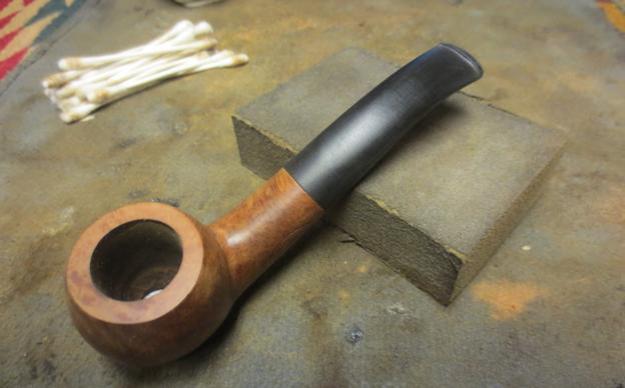
 I sanded the bowl and stem with a medium and a fine grit sanding block. The pipe is beginning to look really good. I had to make a decision how far to sand the bowl and how many of the original dings and dents to remove without changing the “story” and character of this old timer.
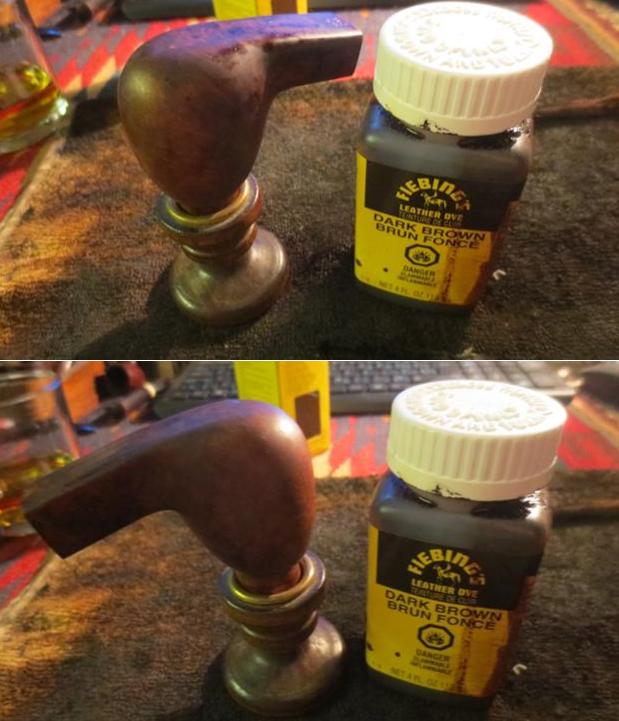
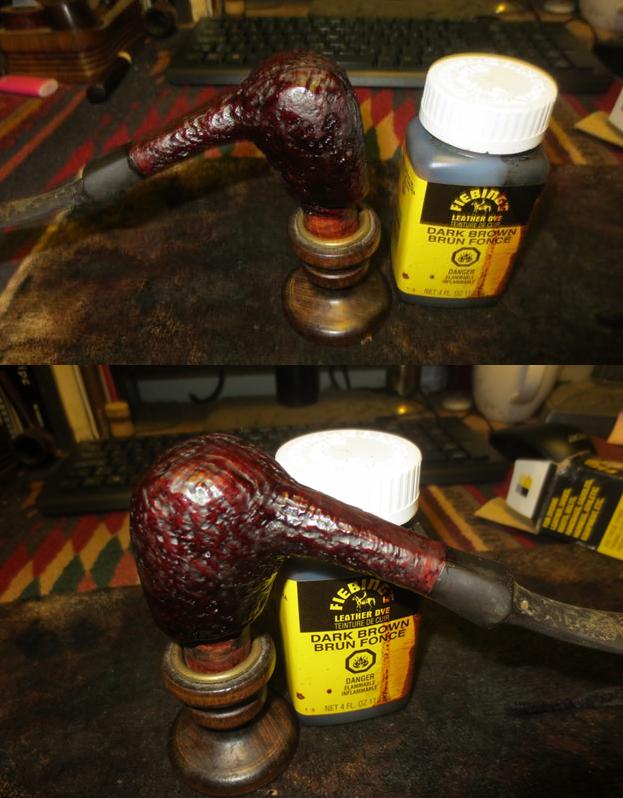
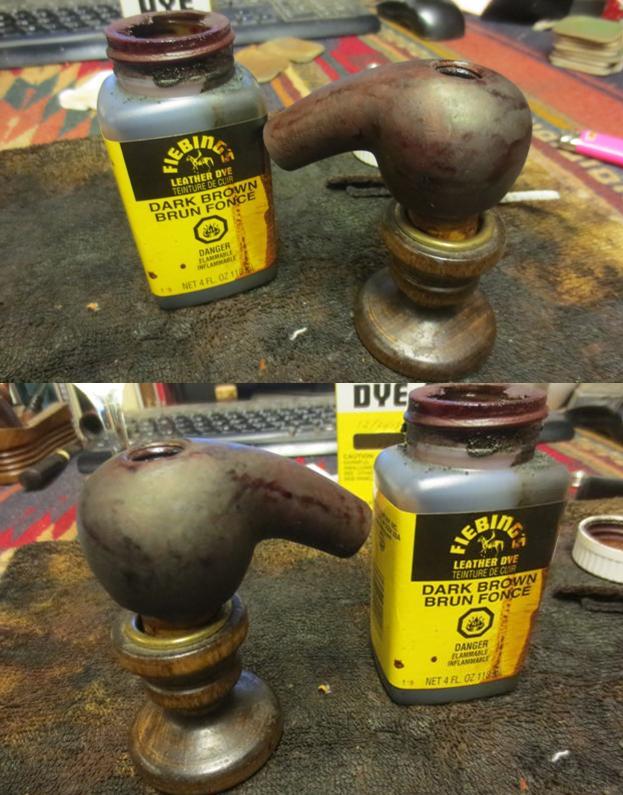
 I heated the briar and then stained it with dark brown aniline stain cut by 50% with isopropyl alcohol. I flamed it to set the stain and repeated the process.
 I wiped down the stain with alcohol dampened cotton pads to make it more transparent and make the grain stand out. At this point the fills stood out and I would need to address them a bit differently.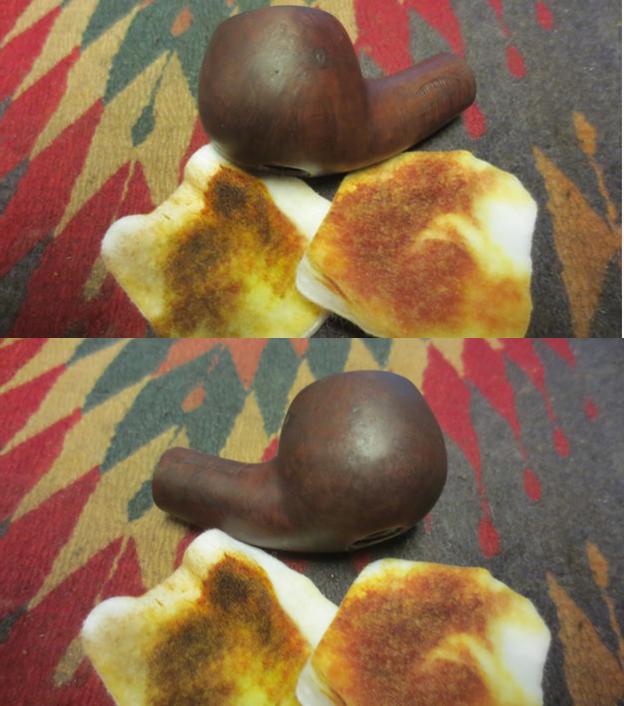
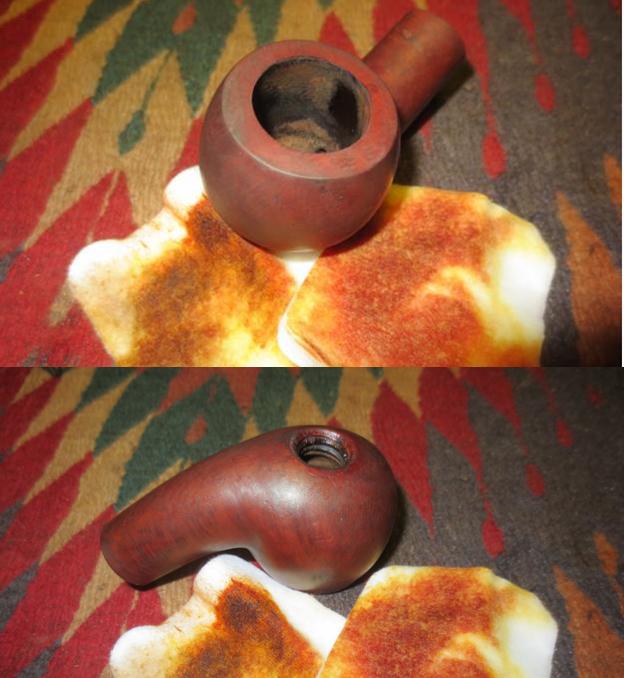 I used a black Sharpie Permanent Marker to draw some lines across the fills and blend them into the grain on the pipe. I then chose to give the bowl a second contrast staining using a Cherry Danish Oil stain. I find that the combination of the black marker and the cherry stain blends the fills better than a brown stain. The combination of the brown and the cherry stains gives depth to the finish so I like using them together.
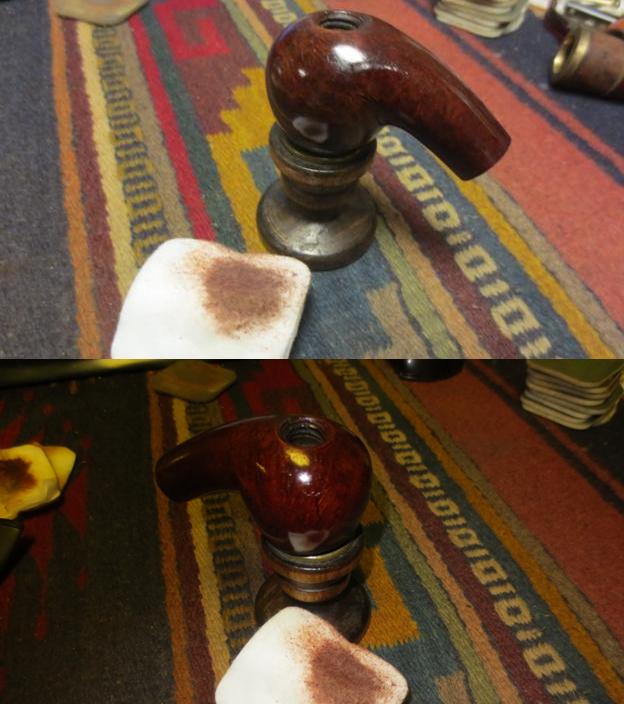 Once the cherry Danish Oil stain dried (overnight) I buffed it lightly on the wheel with Blue Diamond and then gave the bowl a coat of carnauba wax. I hand buffed it with a microfibre cloth. You can see the small dings that I left in the bowl sides rather than change the look. I polished the silver disk with a silver polishing cloth. The next series of photos shows the bowl at this point in the process.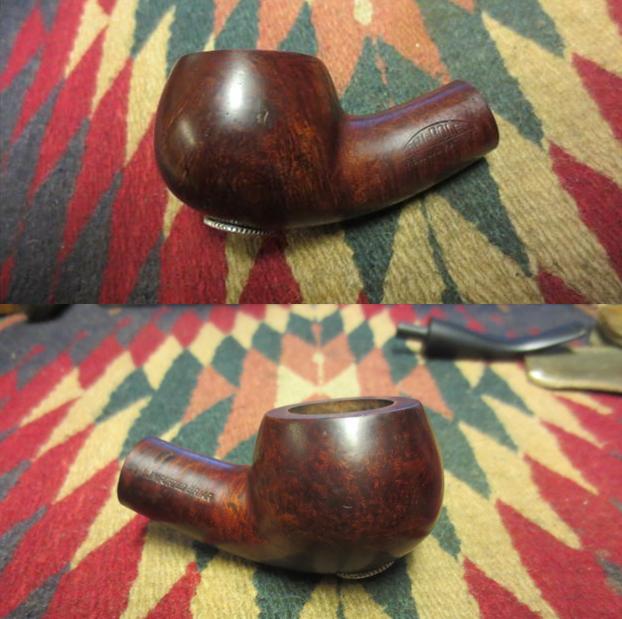
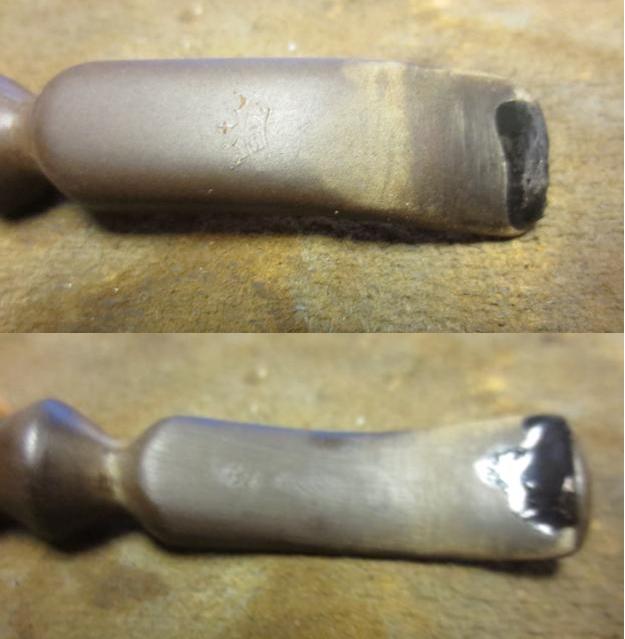
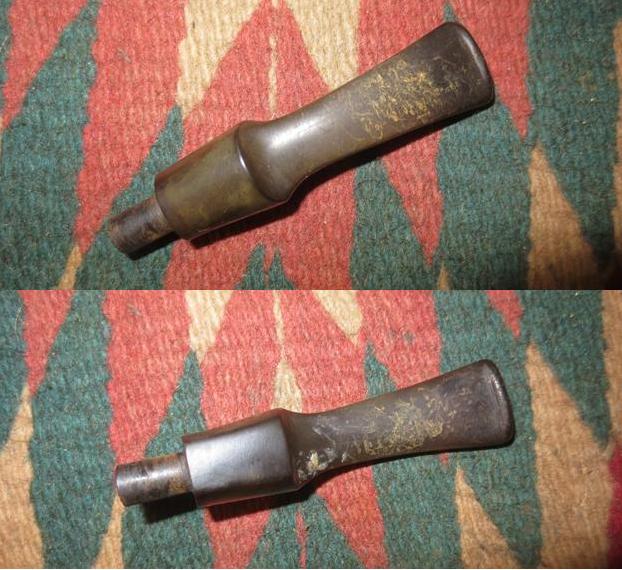
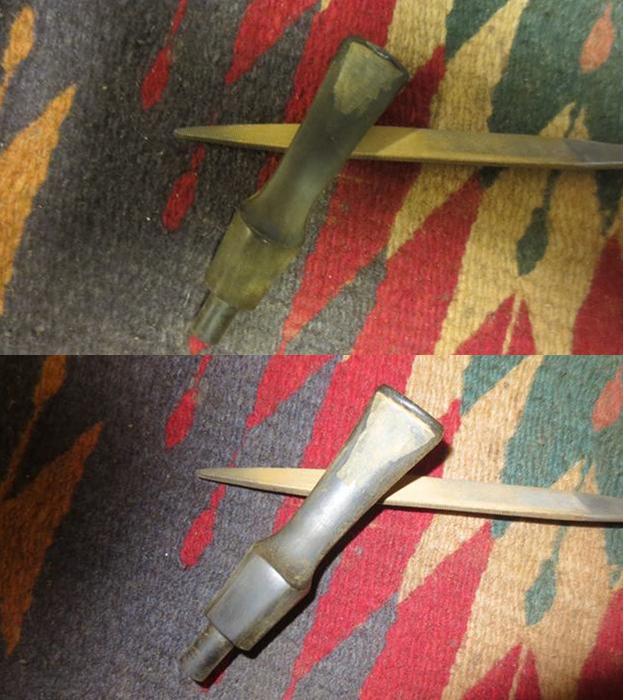
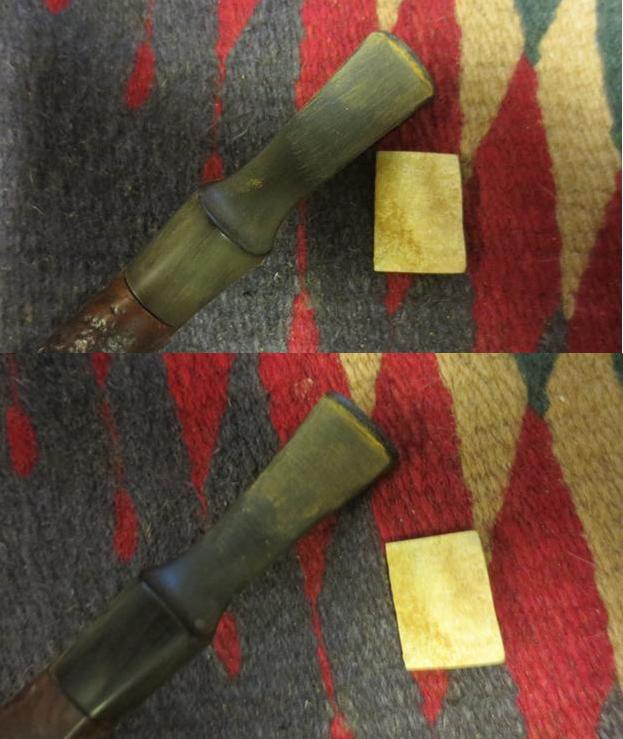
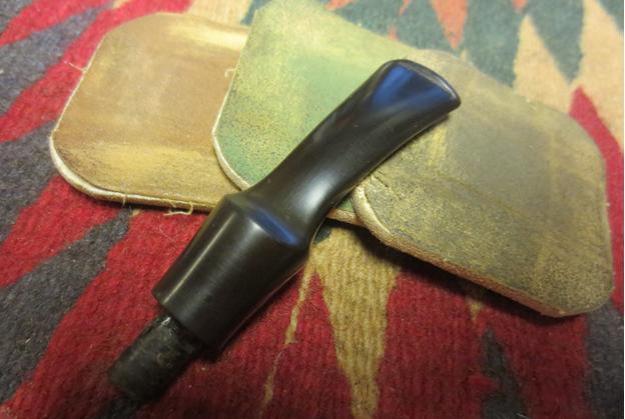
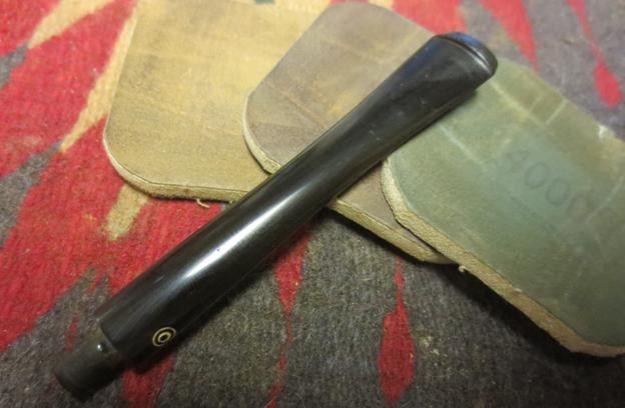
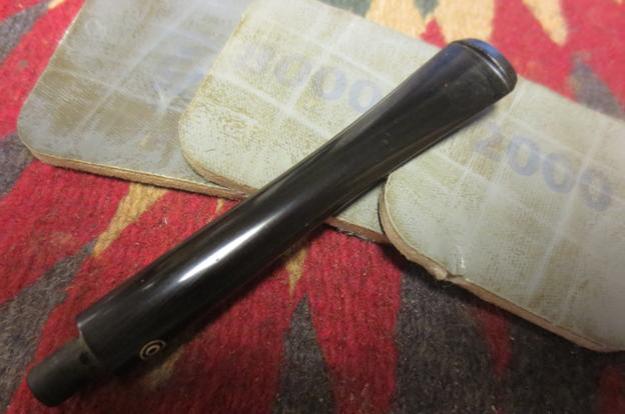
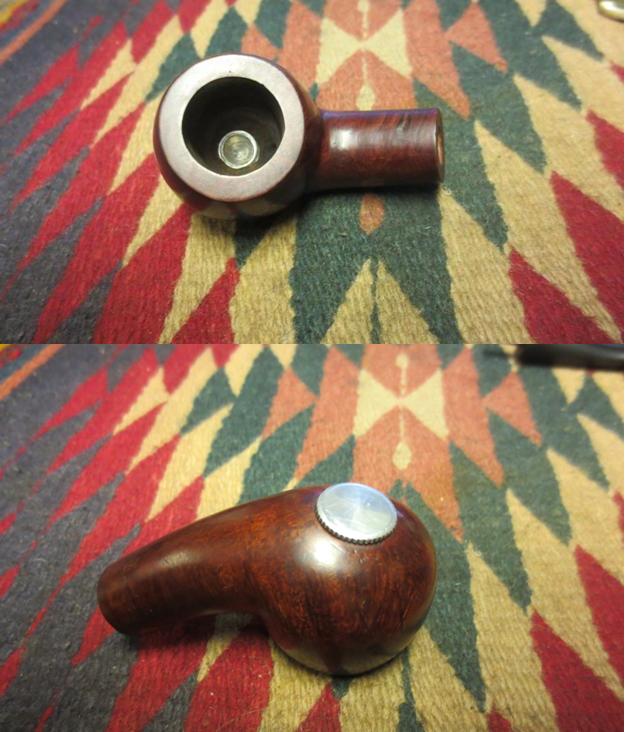 I set the bowl aside and worked on the stem. The old hard rubber that was used on this stem was good quality. There was very little oxidation if any on it. The main issue was the pitting that covered the surface of the stem. I sanded it with 220 grit sandpaper to address the pitting and smooth out the surface and then began my normal sequence of micromesh sanding pads. Between each set of three grits (1500-2400, 3200-4000, 6000-12000) I rubbed the stem down with Obsidian Oil. I gave it a final coat of the oil and let it dry before I buffed the pipe.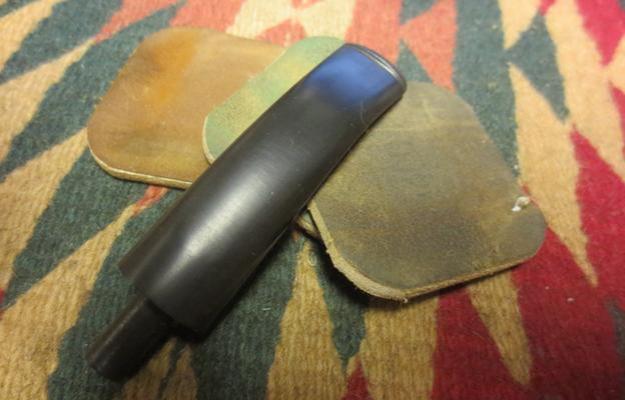
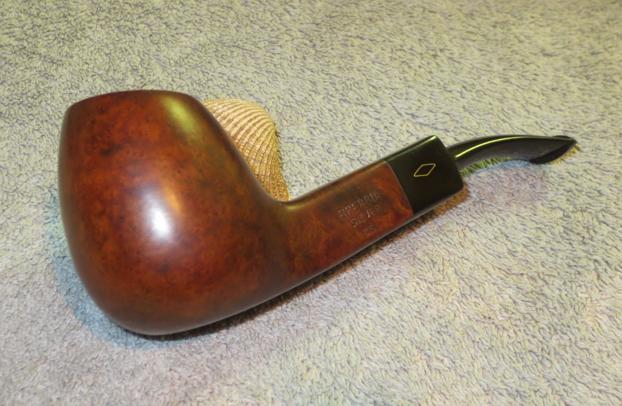
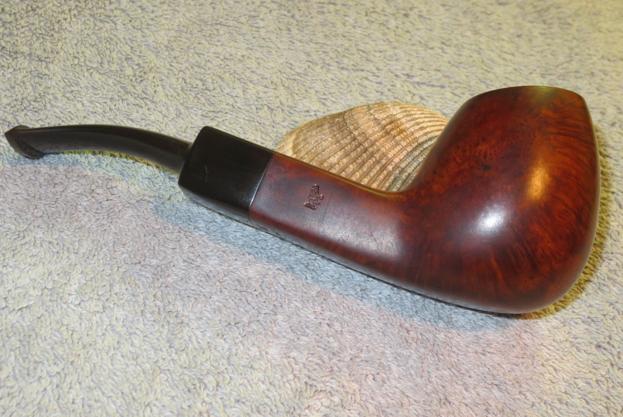
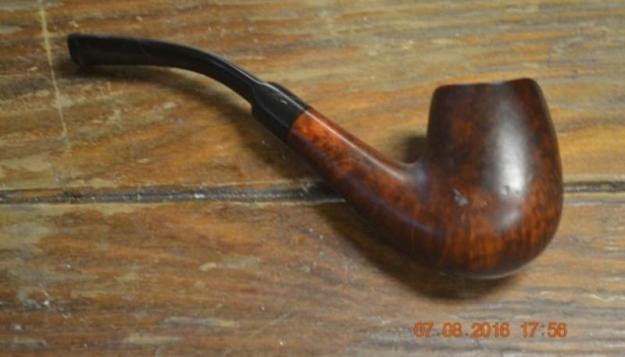
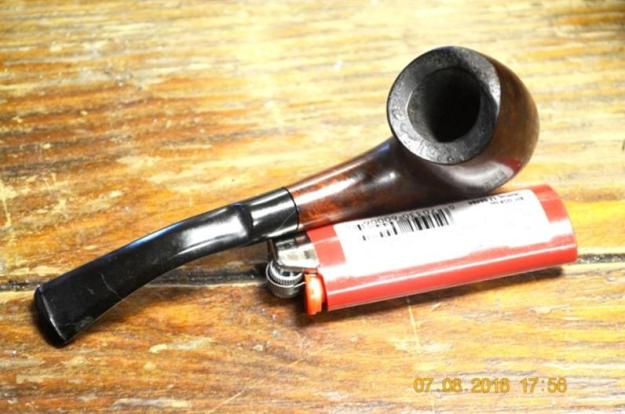
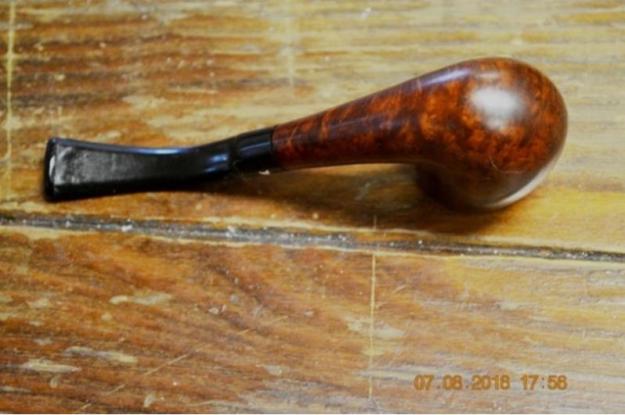
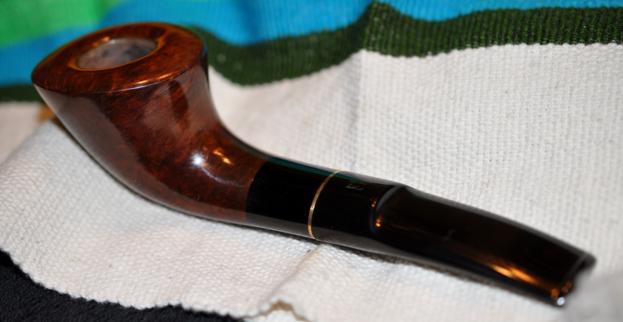
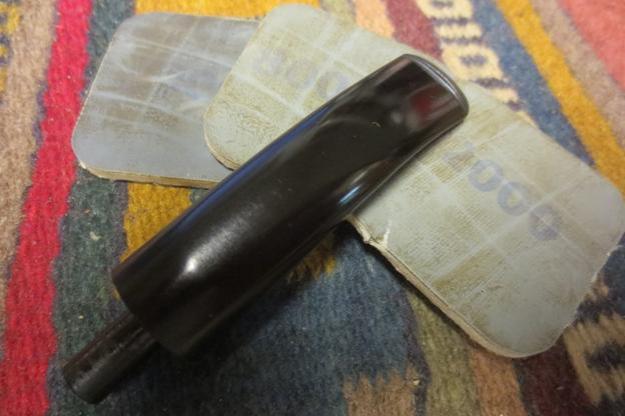 I buffed the pipe and stem with Blue Diamond and gave it several coats of carnauba wax. I buffed it with a clean buffing pad to raise the shine. I hand buffed it with a microfibre cloth to put the finishing touches on the pipe. The finished pipe is shown in the photos below. Thanks for looking.