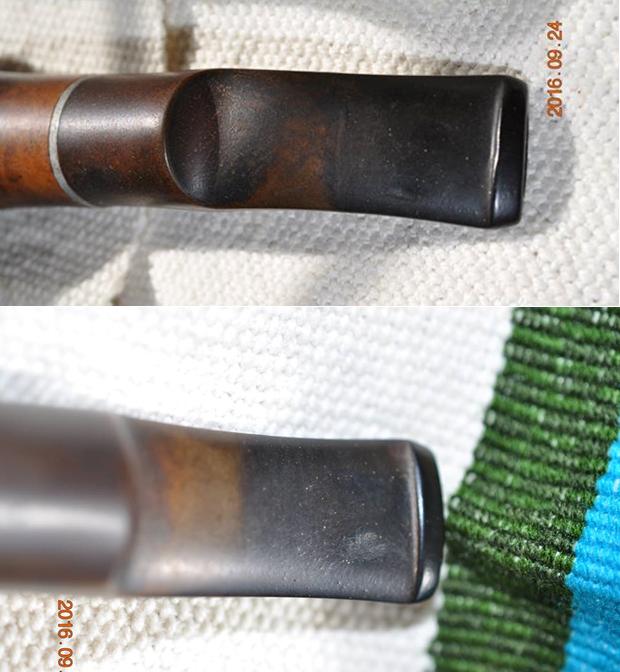
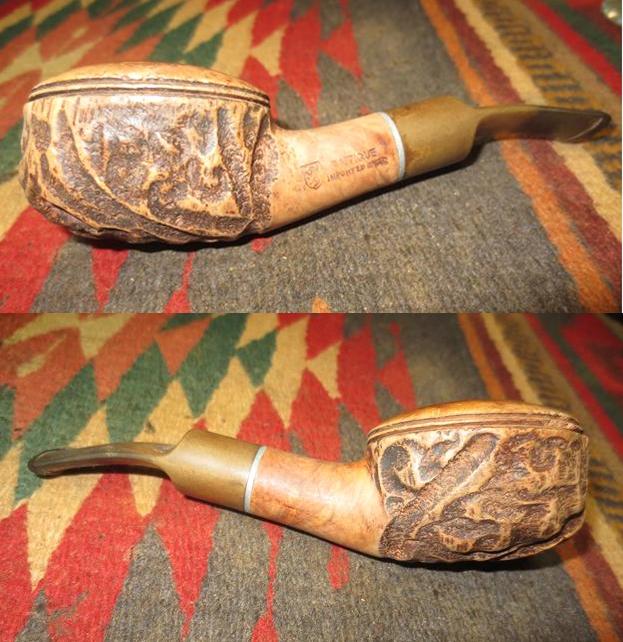
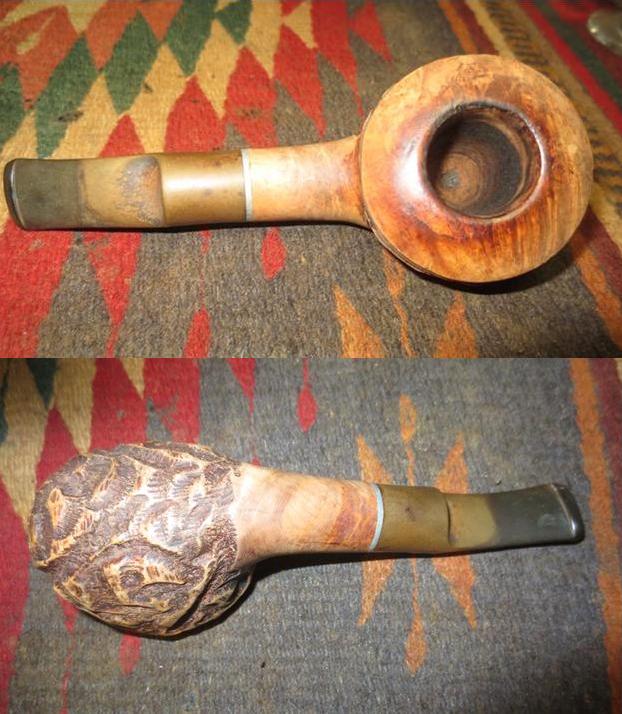
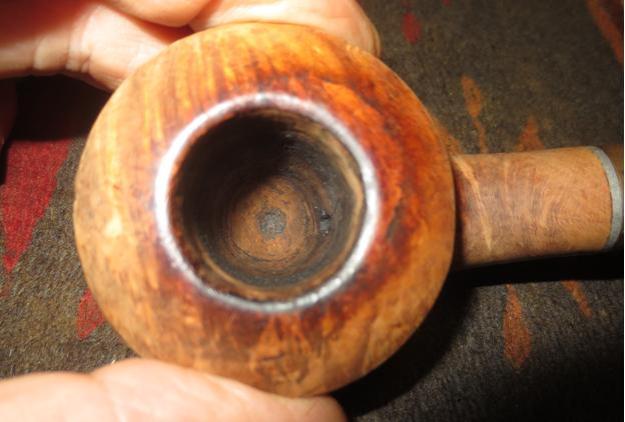
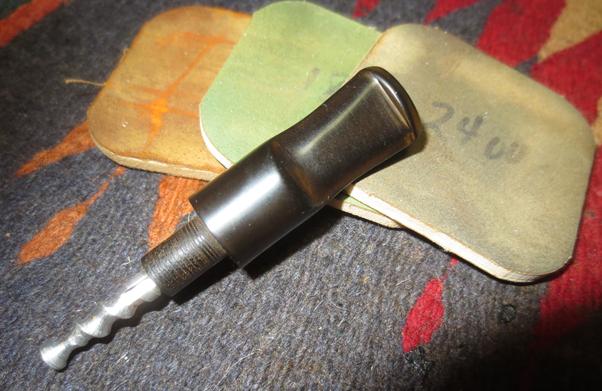
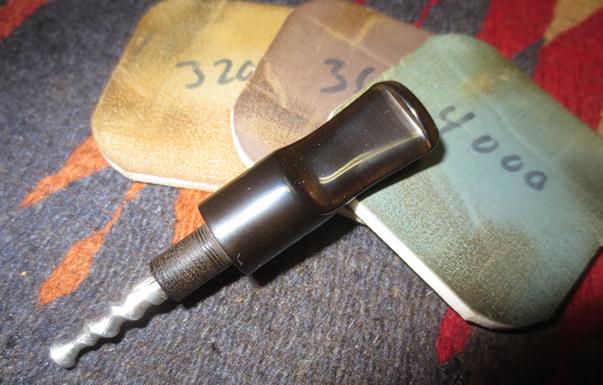
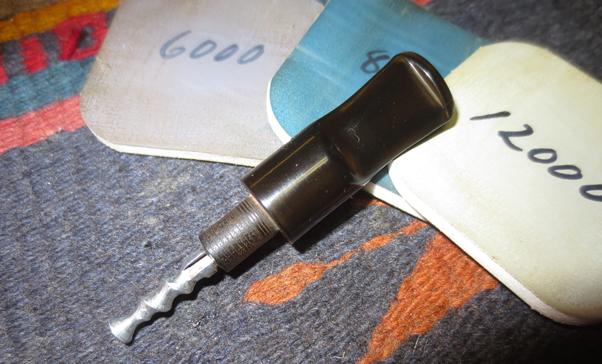
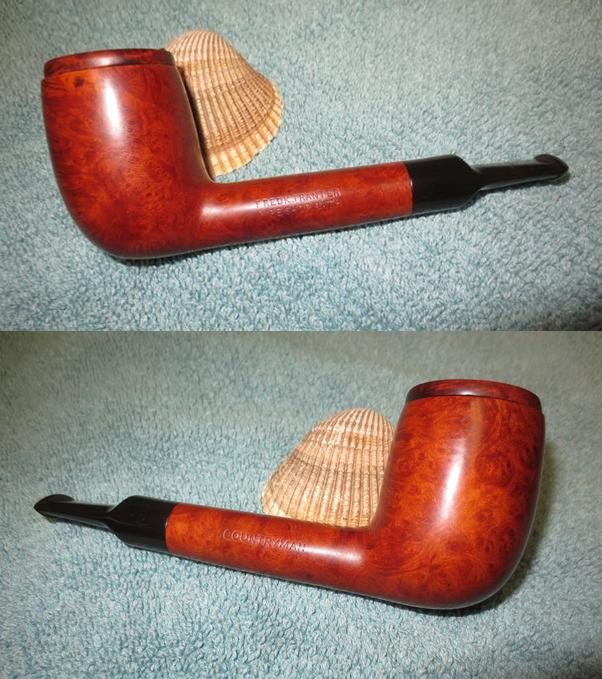
Tag Archives: contrast staining

A difficult trust: Gift of a Grandfather – A BBB Double Star Made in England


Blog by Dal Stanton

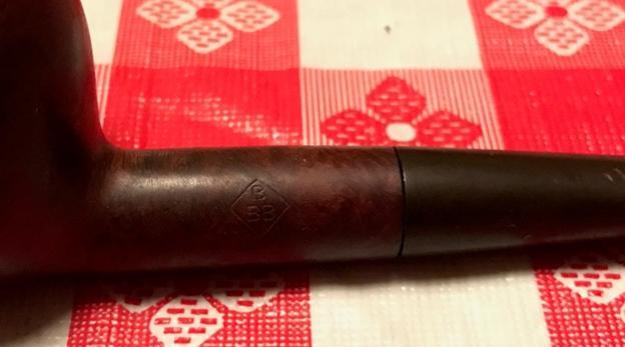
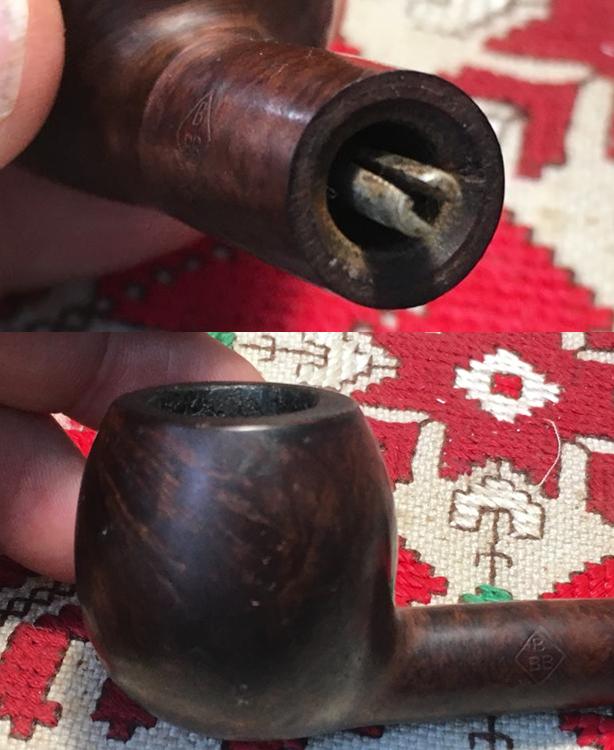
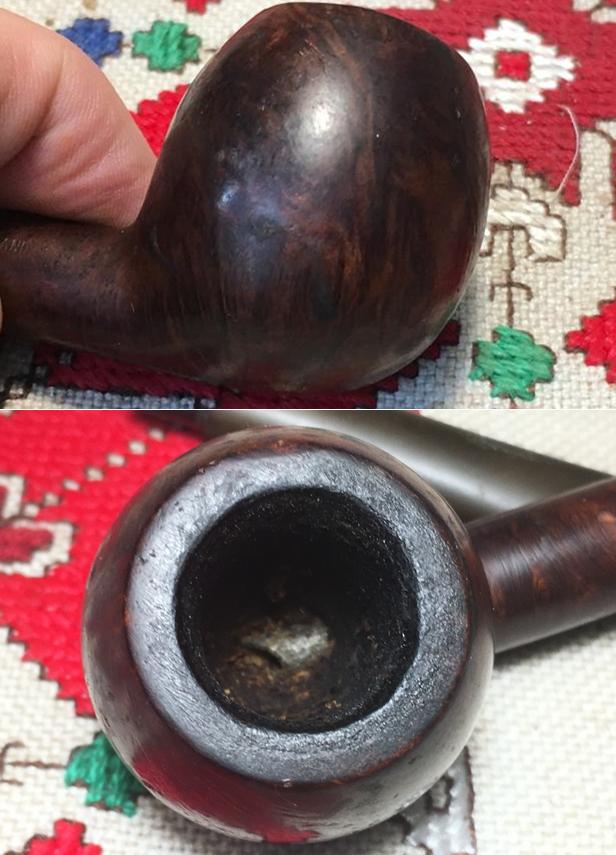
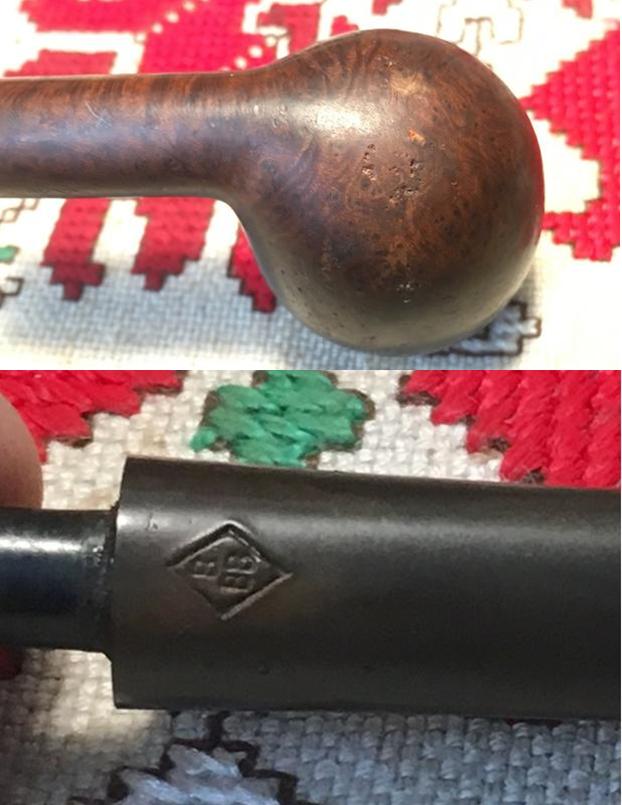
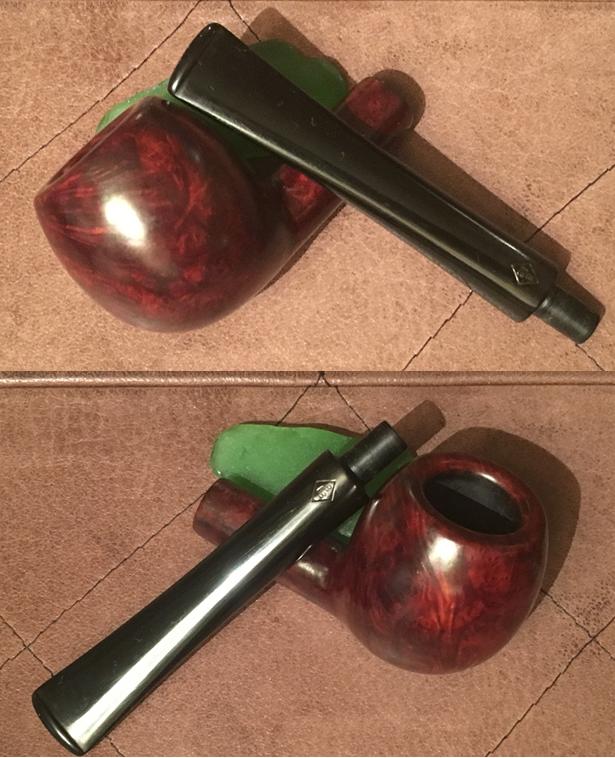
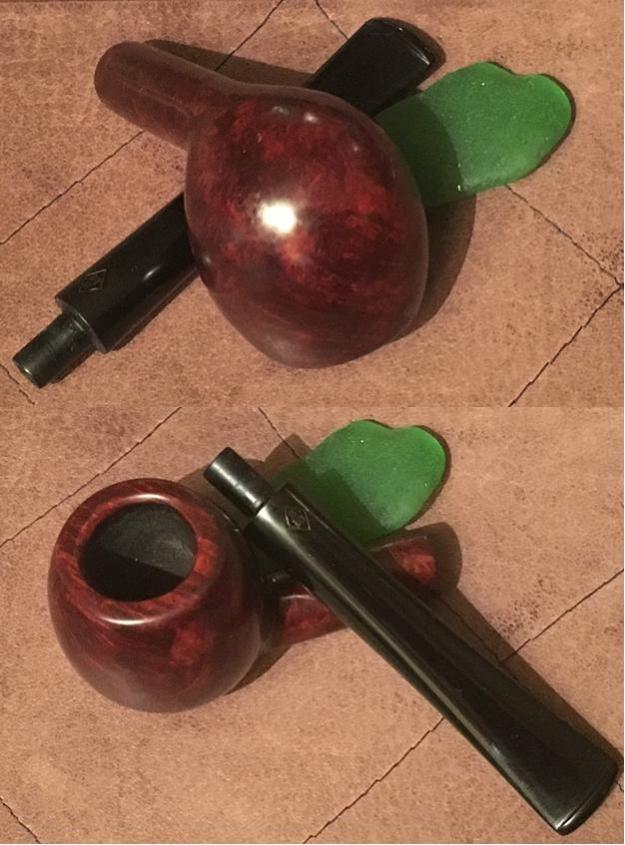
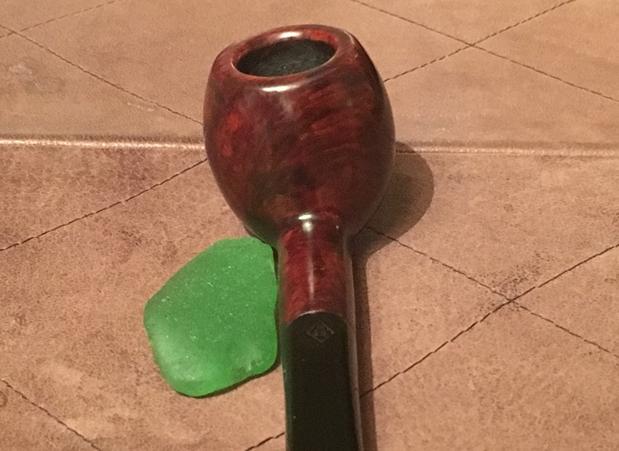
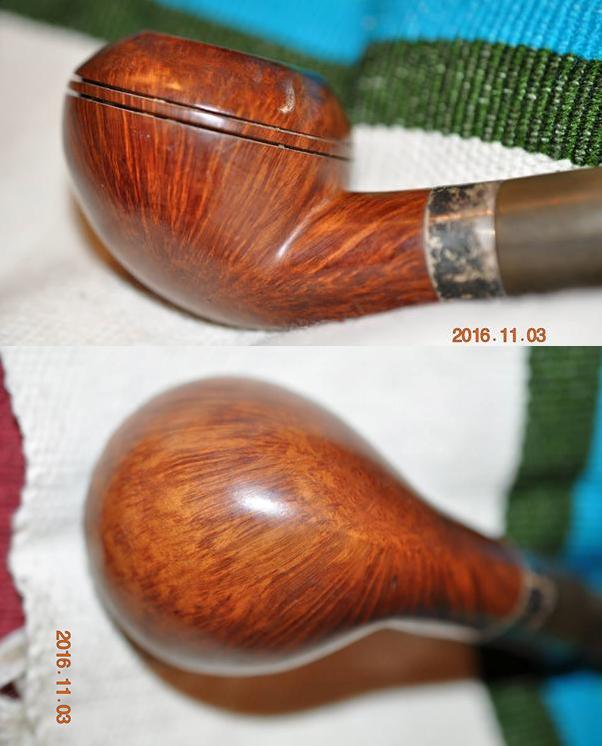
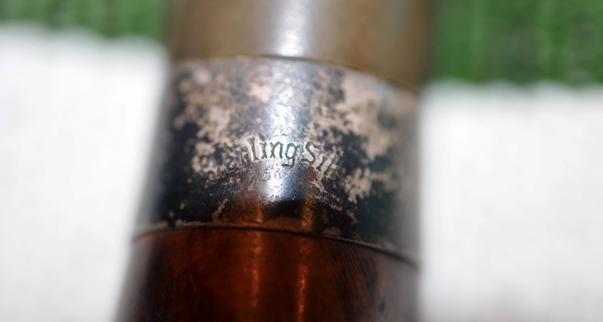
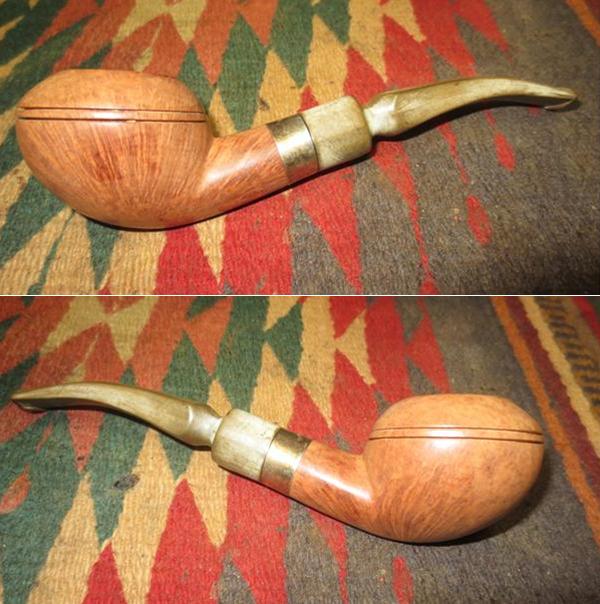
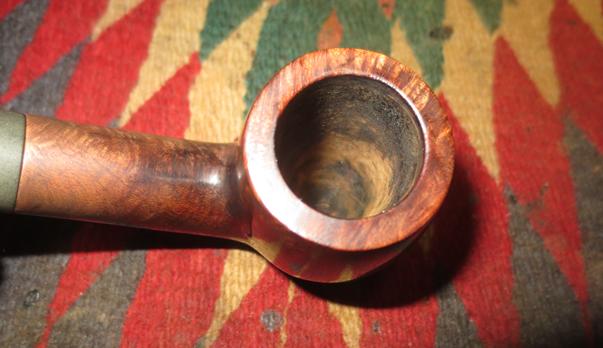
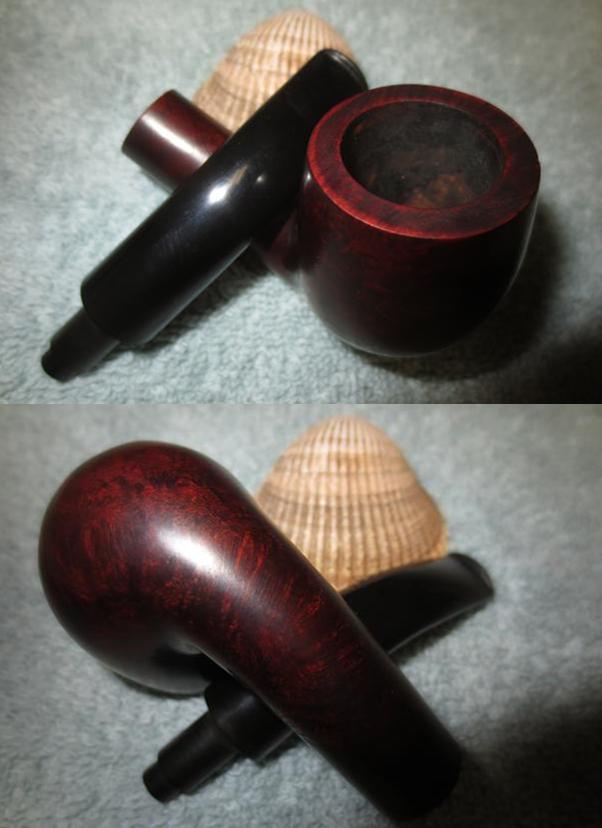
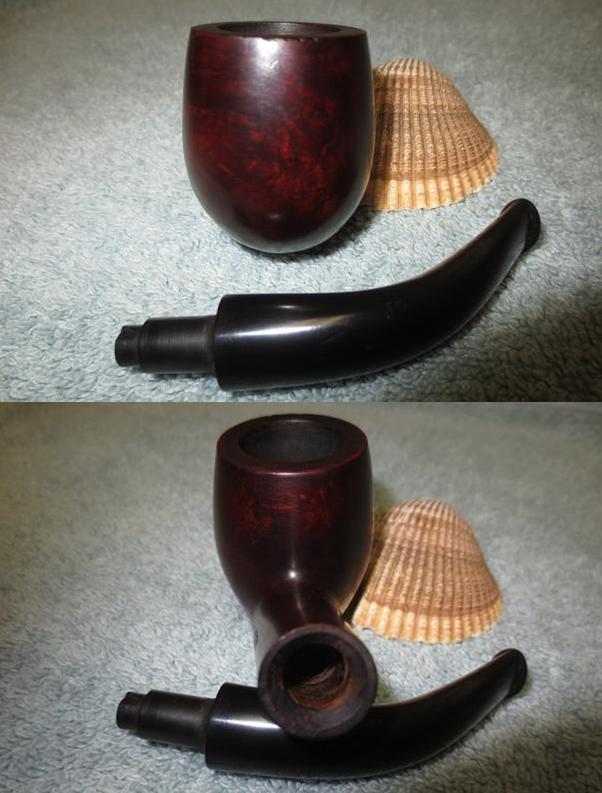
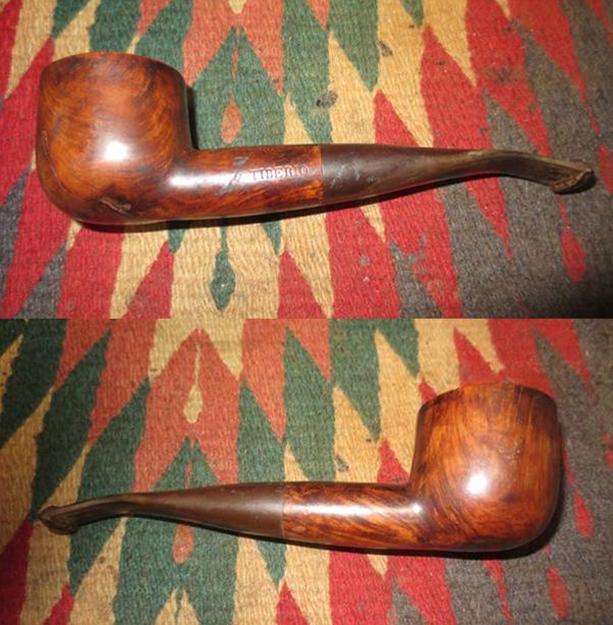
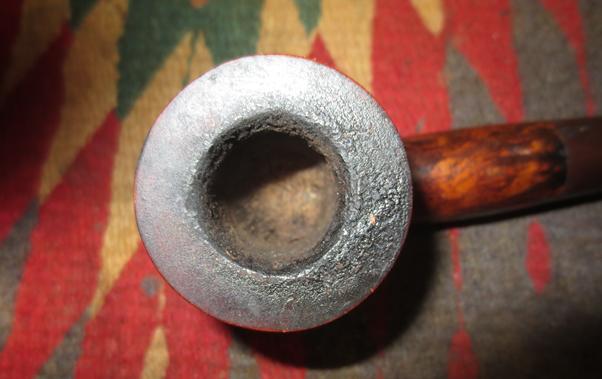
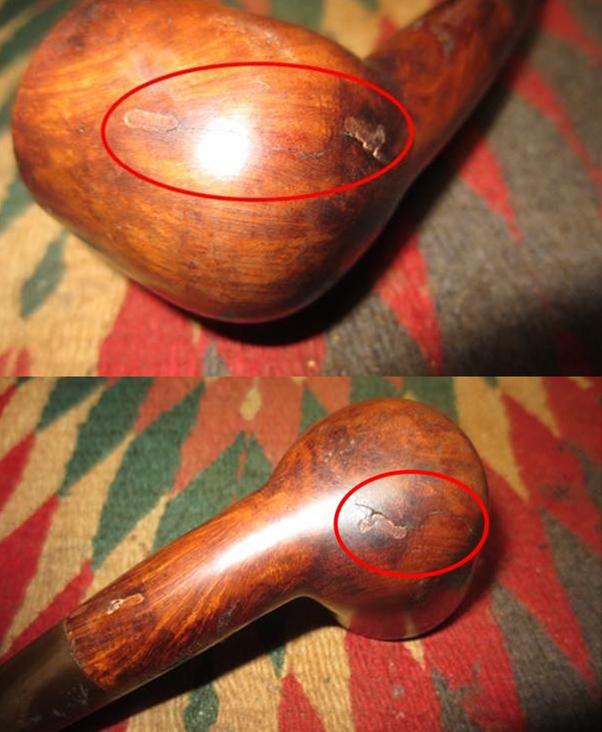
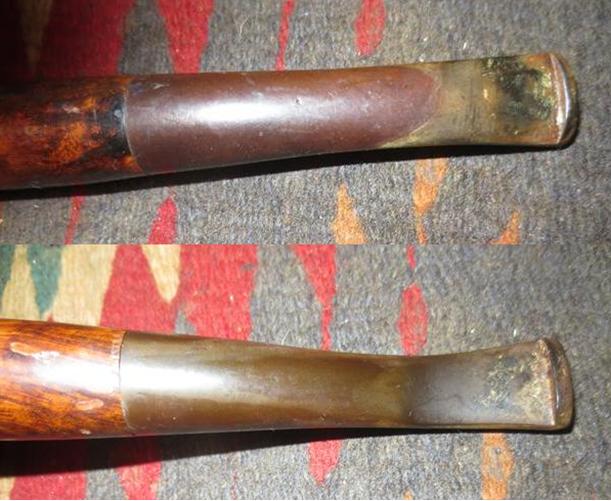
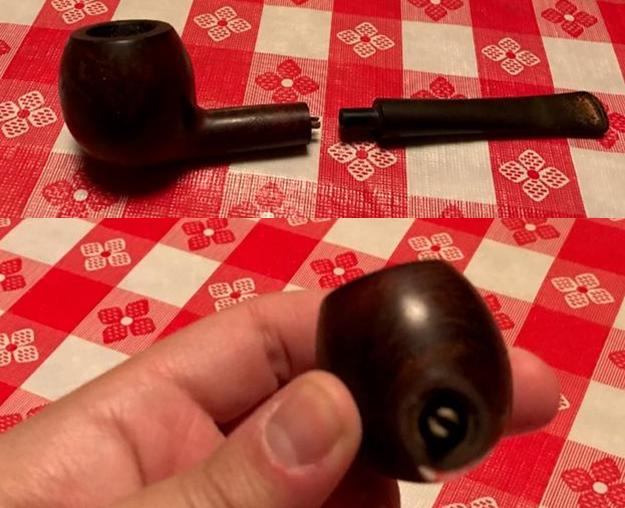
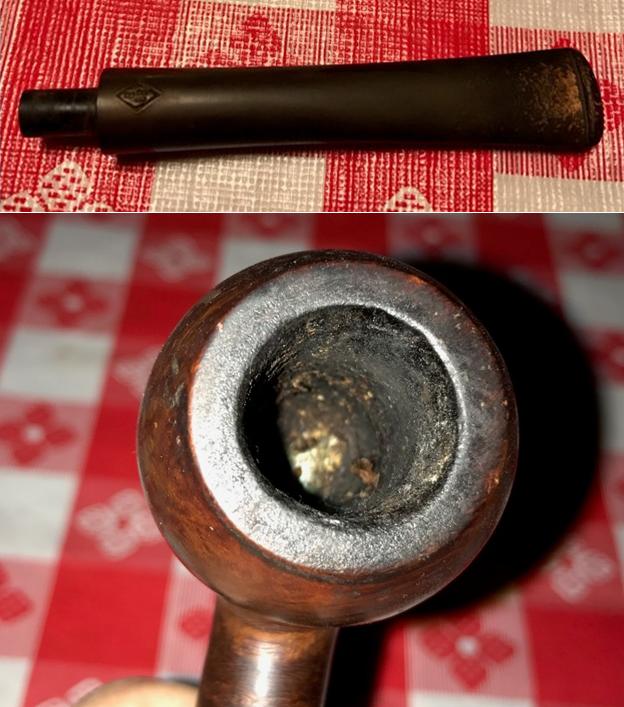
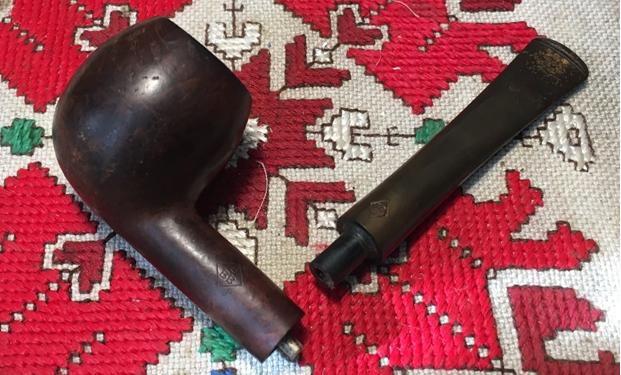
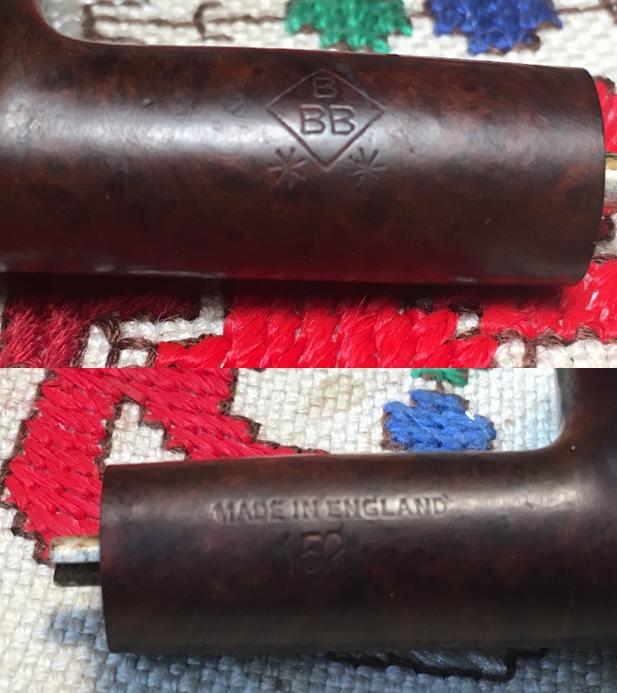
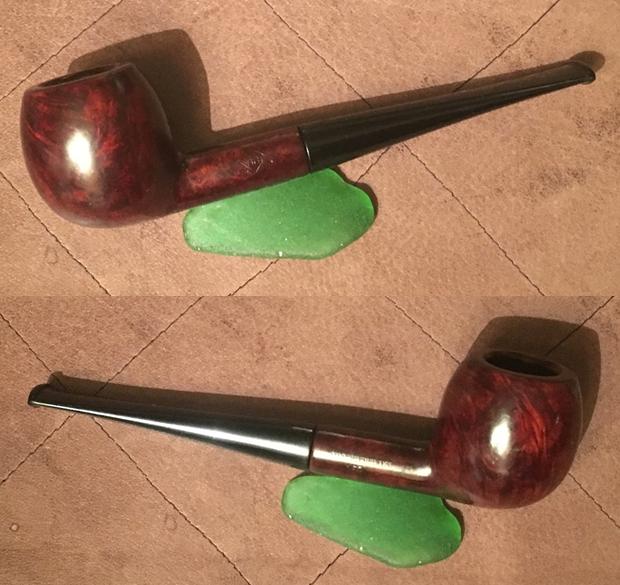
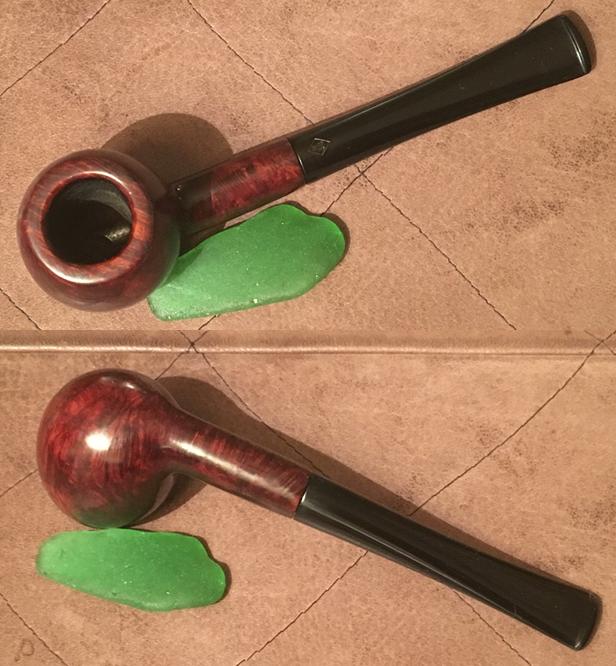
When I study the venerable pipe on my work table, it is not a glamorous display of briar and silver bands.  Some might call it a basket pipe.  The two stars imprinted on the shank were an indication of a working man’s pipe – not high quality, but among those pipes accessible to normal, if not common, people who work, live, love and as is the case with us all, die.  This unremarkable Apple shaped, BBB [diamond over] Double Star, MADE IN ENGLAND [over] 152, is remarkable because of the story it represents.   I enjoy restoring ‘estate’ pipes because they were left to others and these pipes carry with them stories and memories of loved ones who once befriended and valued them.  Greg heard from my son, Josiah, who are college buddies, that Josiah’s old man (my words not theirs!) restored ‘old’ pipes.   This ‘old’ pipe came to Greg from his grandfather through his mother.  Josiah’s email came to me asking what I could do with these pictures from Greg. My understanding is that Greg was a bit reluctant at first to send his pipe off to Bulgaria to be restored, but after Josiah directed him to some of the restorations I’ve done, he felt he could trust me with the heirloom that had come to him.  Knowing that this pipe was from his grandfather I asked that Greg send me information about his grandfather so that I not only could place the pipe better in history, but Greg’s grandfather as well.  This is the letter he sent me:
Hi Mr. Stanton,

Thank you so much for agreeing to restore my grandfather’s pipe. I am sorry for the delay in getting you the below information, but it’s been a crazy couple of weeks.

My mother inherited the pipe from my grandfather when he passed away in 1998. I saw it in the china cabinet one day and asked her if I could have it, since I had taken up pipe smoking. She kindly agreed. She doesn’t really know when my grandfather got the pipe, but she said he must have bought it in Hong Kong.

My grandfather was from Hong Kong, and only emigrated to the United States in the 1980s. He was a malaria inspector for the Hong Kong government for his entire working career. He must have gotten the pipe at the latest in the late 1940s or early 1950s, as my mother remembers him having it when she was a child. He never smoked the pipe when I knew him, but from its condition, I assume it was well used at an earlier period in his life.

Having graduated from the University of Georgia Law School in Athens, Georgia, passed his bars and currently serves as a law clerk to a federal magistrate judge in Augusta, Georgia, AND as a young married man, I can understand why Greg “took up” smoking pipes!  Pipes are wonderful companions for blooming attorneys!  His letter concluded with an agreement to the cost of the restoration would benefit our work with the Daughters of Bulgaria!  Thank you, Greg!

The information Greg received from his mother was invaluable for placing this BBB in time and space.  Pipedia’s article about BBB is helpful.  BBB in the mid-1800s originally stood for “Blumfeld’s Best Briars”, but after the death of Blumfeld, the Adolph Frankau Company took over the company and BBB gradually became “Britain’s Best Briars”.

The “BBB Two Star” rating also is referenced in the same article in a discussion of quality descriptors for BBB pipes:

In the Thirties, the top-of-the-range one becomes “BBB Best Make” with alternatives like “Super Stopping” and “Ultonia Thule”. The BBB Carlton, sold with the detail with 8/6 in 1938, is equipped with a system complicated out of metal, system which equipped the BBB London Dry too. Blue Peter was not estampillées BBB but BBB Ultonia, and the BBB Two Star (* *) become the bottom-of-the-range one. 

When Greg’s pipe arrived in Bulgaria, thanks to a visitor’s willingness to carry it across the Atlantic and European continent, I unwrapped it and put it on my work desk and took these pictures to fill in the gaps. At PipePhil.eu an example of the BBB Two Star marking is pictured along with the stinger/tube style extending into the chamber as Greg’s grandfather’s BBB does ( as seen above).In Pipes Magazine, I found a thread discussing the dating of the BBB Two Star.  One threader’s opinion, ‘jguss’ corroborates Greg’s mother’s recollections:

My guess is that the Two Star line started at the end of WWII; the first mention I’ve found so far is dated 1945, which at least gives a tpq (that is, an approximate dating). I know the line lasted at least into the early sixties.

It is not too difficult to speculate about the provenance of Greg’s pipe.  During WW2, briar became a scarce commodity throughout Europe and pipe manufacturing companies made do with what they could acquire.  Two Star BBBs would be lower end but more than likely during this time, a very close second when rations were short.  Added to this backdrop is the origin of our story in Hong Kong.  Hong Kong, a British holding since 1841 (see LINK), lost control of Hong Kong during WW2 to Japan in 1941 during the Battle of Hong Kong.  Undoubtedly, Greg’s grandfather would have experienced this first hand.  When Japan unconditionally surrendered in 1945, the British regained control of Hong Kong, but to counter Chinese pressures to control Hong Kong, reforms were introduced that broadened and increased the stake of local inhabitants of Hong Kong:

Sir Mark Young, upon his return as Governor in early May 1946, pursued political reform known as the “Young Plan“, believing that, to counter the Chinese government’s determination to recover Hong Kong, it was necessary to give local inhabitants a greater stake in the territory by widening the political franchise to include them.[19] (Link)

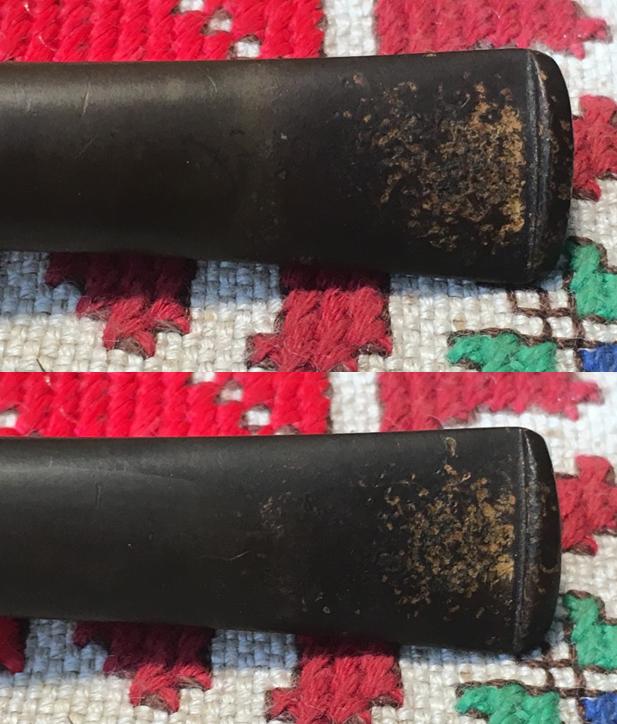
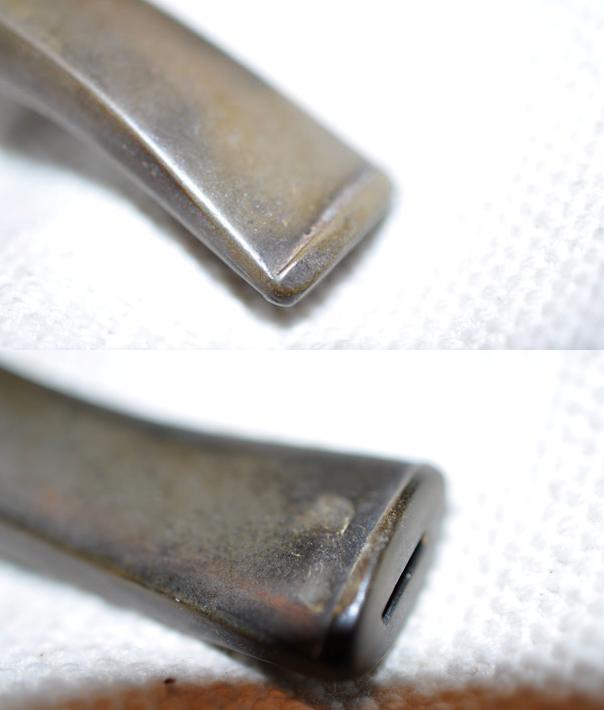
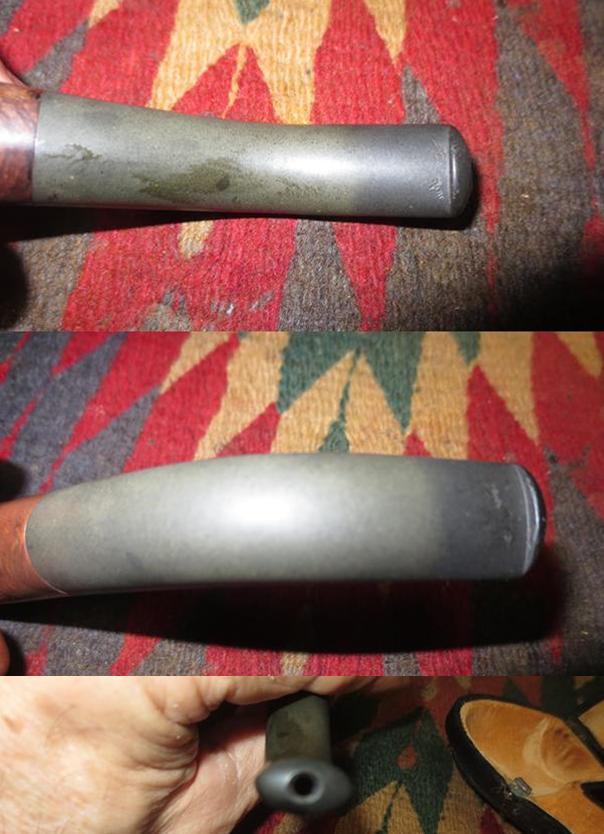
During the years following the Second World War, the same article describes unprecedented economic development which resulted in the economic powerhouse that Hong Kong became.  This period would have been while Greg’s grandfather was working as a malaria inspector for the government of Hong Kong and during which he acquired this BBB Two Star.  The smaller Apple shape would have served him well as he performed his inspection duties but given the ‘stem forensics’ pictured above, he probably chewed on it a bit as well while he worked!

With a greater sense of the story that this BBB Two Star tells, from England, to Hong Kong, to America, and now to Bulgaria, I’m anxious to restore this precious family gift from Greg’s grandfather.  At Greg’s request, he’s hoping for a pipe that is as good as new and ready for a new lifetime of service.  Yet, with all restorations, undoubtedly there will be some marks and blemishes remaining – these an ongoing testament to the memory of those who those who went before.

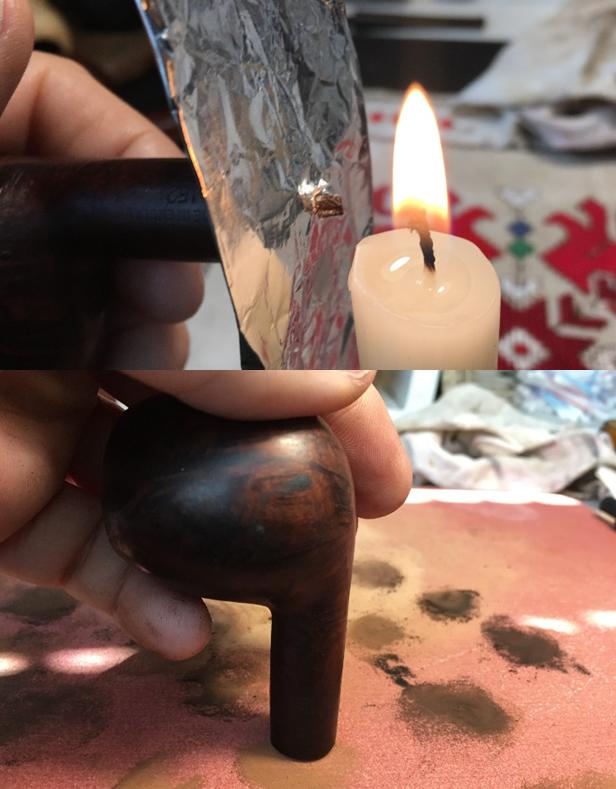
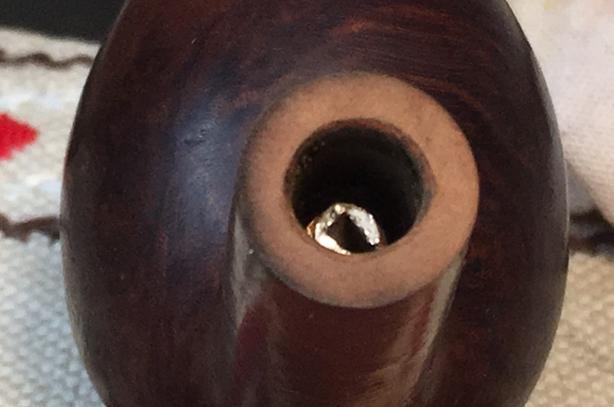
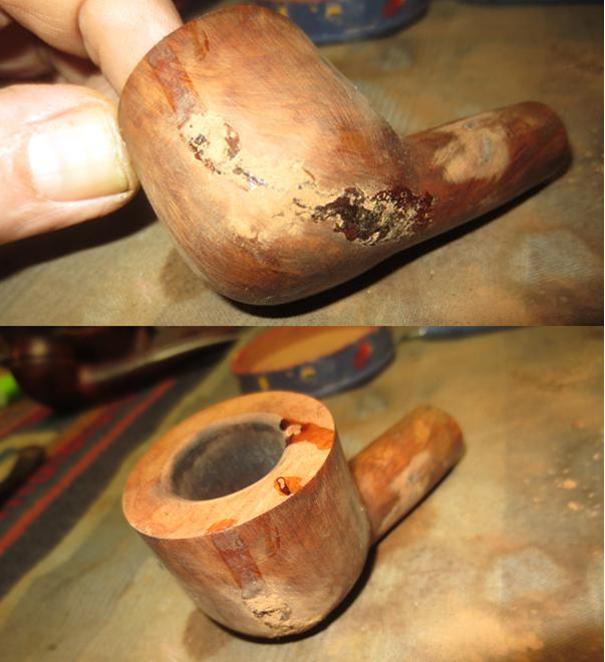
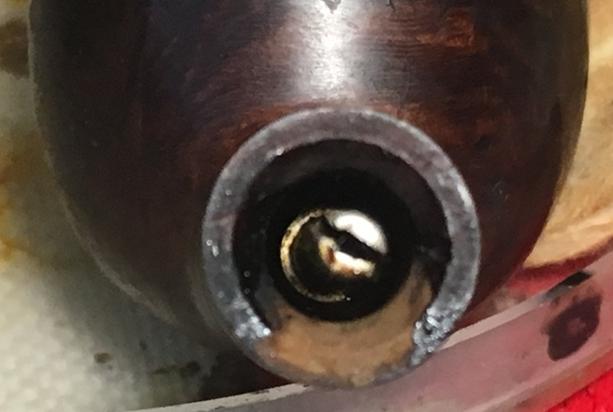
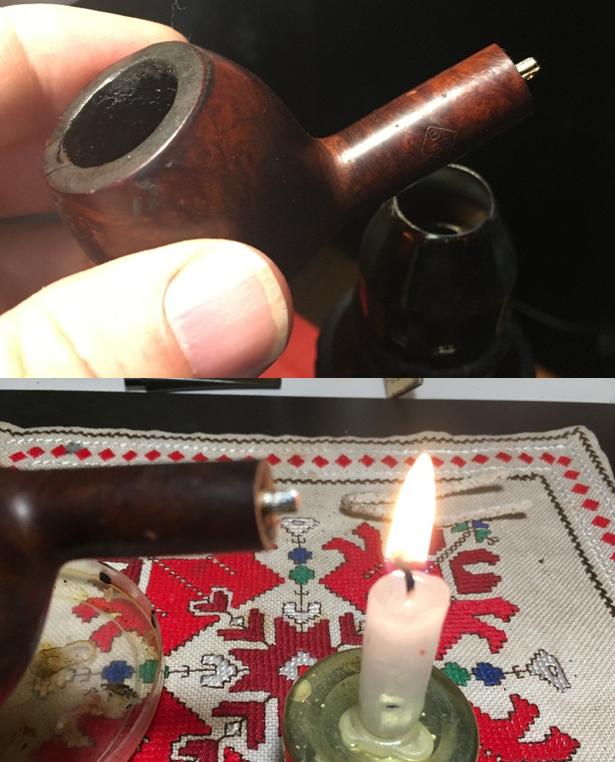
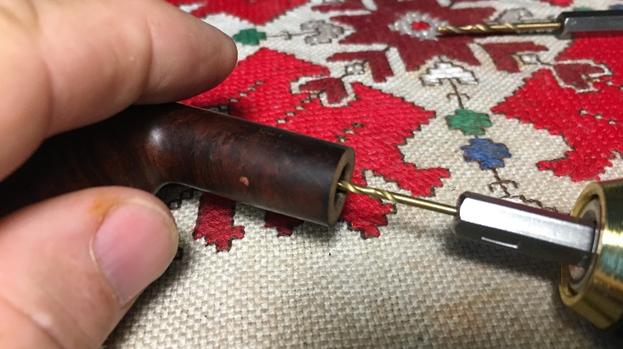
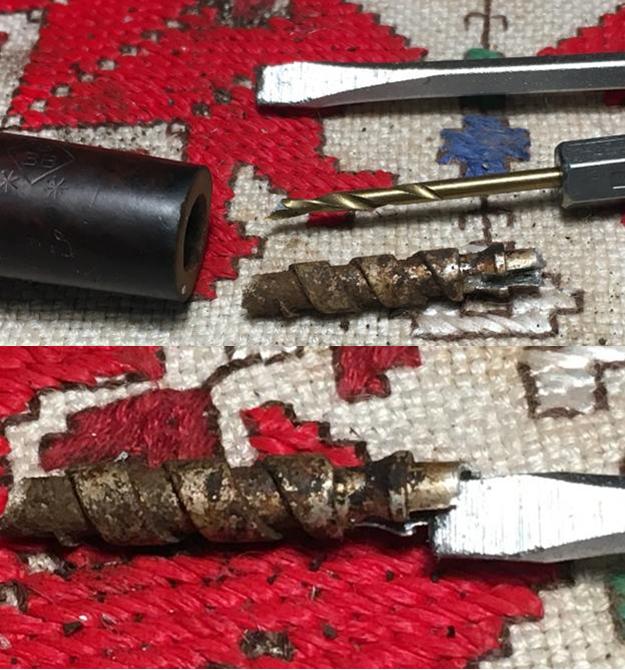
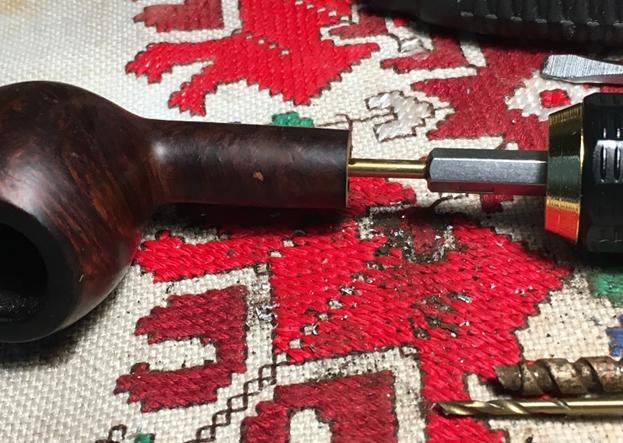
The first order of approach is with the stinger.  When the pipe arrived, the stinger was already separated from the stem.  The stinger extends from the stem through the mortise into the chamber itself through a metal tube air draft hole.  Using a pair of plyers, I wrap a piece of cloth around the end to pull gently to dislodge the stinger from the mortise.  I can see in the mortise that there appears to be a metal sheath that the stinger is lodged in – at least, that is what it appears to be.  The stinger is not budging and I do not want to break the stinger off.  To try to loosen things up, I pour some isopropyl 95% in the chamber to allow it to soak into the draft hole.  Hopefully, in time, this will loosen the stinger. The alcohol soak did not work.  In fact, a few weeks have transpired since writing the words above.  This stinger has given me quite the challenge.  In the back of my mind constantly, is the concern that I not leverage too much pressure pulling on the stinger.  I’m concerned about damaging the shank.  After soaking the internals for some time with alcohol, I pulled with plyers hoping to break the grip.  I also attempt heating the stummel with a heat gun in hope of dislodging the stinger.  I also heat the protruding part of the stinger with a candle, hoping that this would break the bond.  It did not.   I also was concerned about the candle flame close to the briar while trying to heat the stinger.  I craft a tinfoil shield, but this was not successful.  Unfortunately, I singed the end of the shank and had to remove the damage by ‘topping’ the shank end, which leads to a bit of work lining up the stem and shank later.  As you might expect, the protruding end of the stinger did not hold up under the pressure and eventually broke off. After the stinger protrusion broke off, and after a second email to Steve for input, I’m at the point of using a drill bit in another attempt to remove the bonded stinger.  Starting with a very small bit, I hand turn the bit to allow the drill to find the center of the stinger and gradually, remove the stinger introducing the next larger drill bit.  The end of the broken stinger begins at about 1/4-inch-deep into the mortise.  Unfortunately, this method is not working either because the drill bit will not bite into the metal and remain straight.  At the end of the stinger slot that I’m boring into with the drill bit, my efforts are flummoxed by the stinger’s design.  It has a slanted metal airflow deflector that causes the drill bit to veer off mark.  After breaking the end of the drill bit in the slot (ugh!), and digging it out with needle nose pliers, I sit and begin to think I was facing failure.  Nothing was working.  I’m introducing more problems to the restoration as I try unsuccessfully to solve the stuck stinger problem.  I can’t move forward and I’m stuck and begin to compose an apology letter to Greg in my mind.  UNTIL, on a fancy, I insert a small flat head screw driver into the slot at the end of the broken stinger 1/4-inch-deep in the mortise and I twist it gently counter-clockwise, and it snaps.  Suddenly, it was loose and I easily extract the ‘middle’ of Grandpa’s old stinger – I’m sure he was the last one to see this artifact!  I see daylight through the mortise and I’m hoping that it might also be a metaphoric ‘light at the end of the tunnel’!  I’ve not forgotten that the other end of the stinger remains lodged in the draft hole tube at the foot of the chamber.  Thankfully, a larger drill bit was the perfect size and it reaches into the mortise and hand turning the bit, it clears the rest of the stinger shrapnel.  Finally!  Oh my….  I’ll be saving the stinger debris for Greg.  This BBB will continue without difficulty stingerless.  The pictures show the results. In the interest of full disclosure, these words are coming weeks after.  Why the hiatus?  Life’s normal twists and turns, work, some wonderful travel to Crete for an organizational conference, to Athens (not in Georgia) for a consultation on the Eastern Orthodox Church, AND my growing frustration with Greg’s grandfather’s pipe’s restoration as more complications arrived!  I’ll try to catch you up to the present:
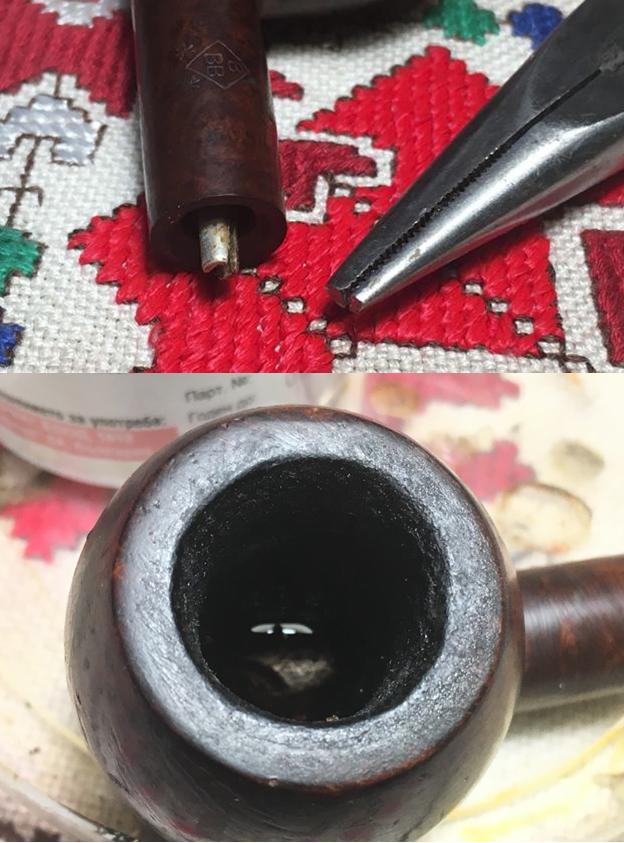
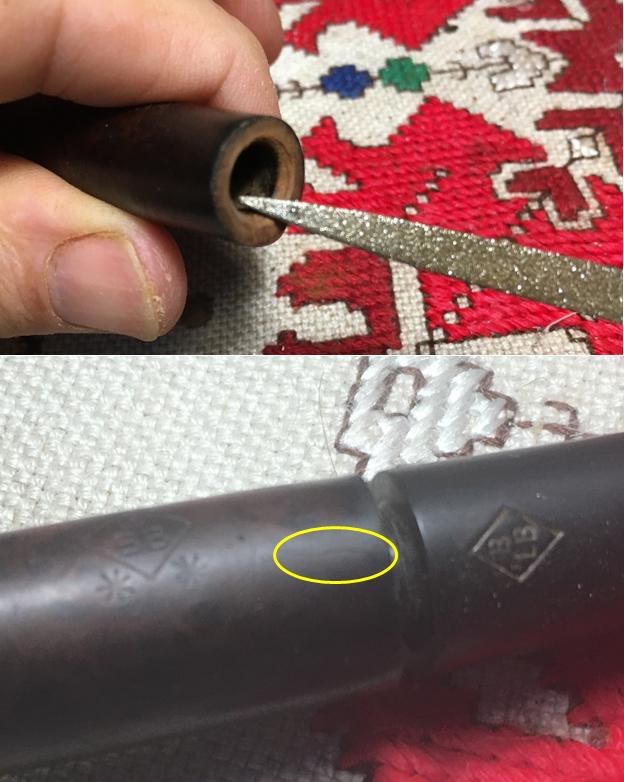
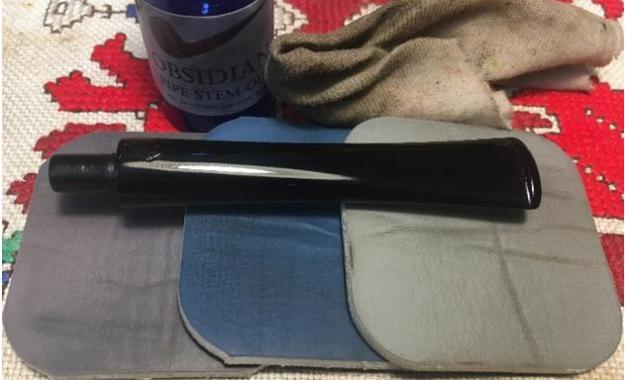
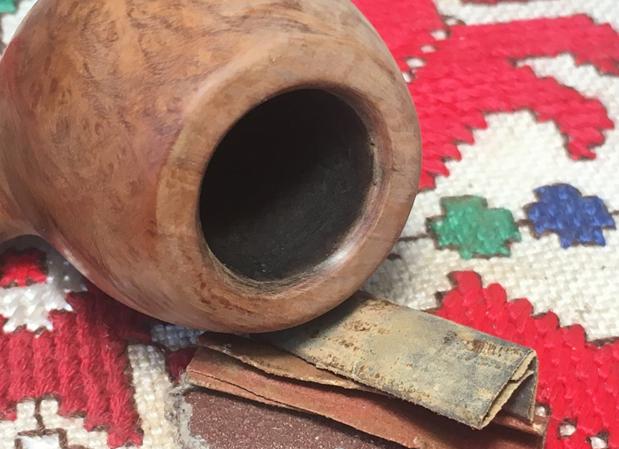
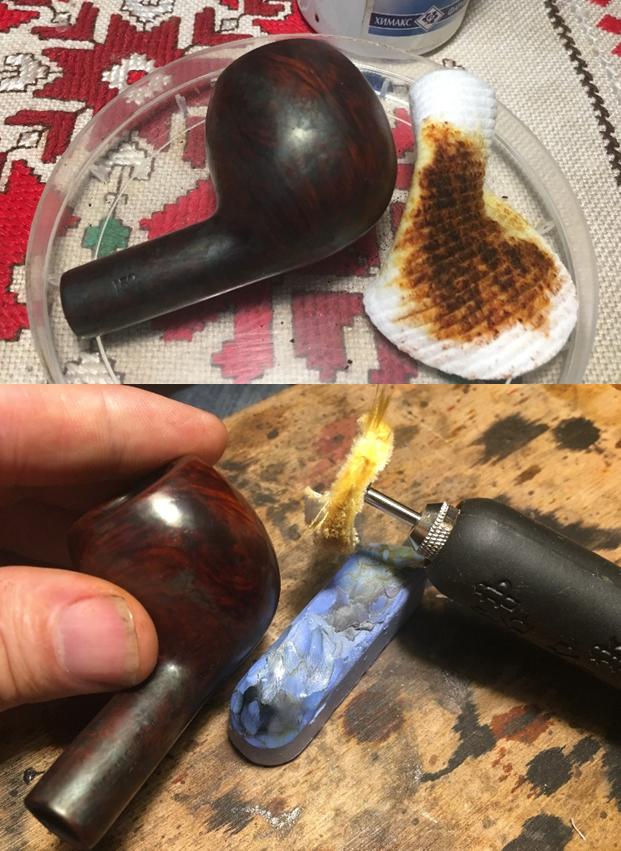
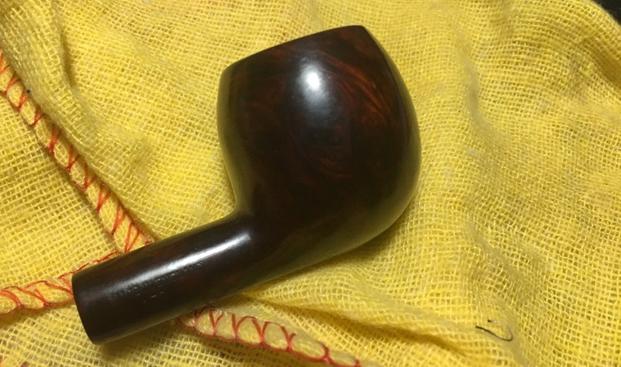
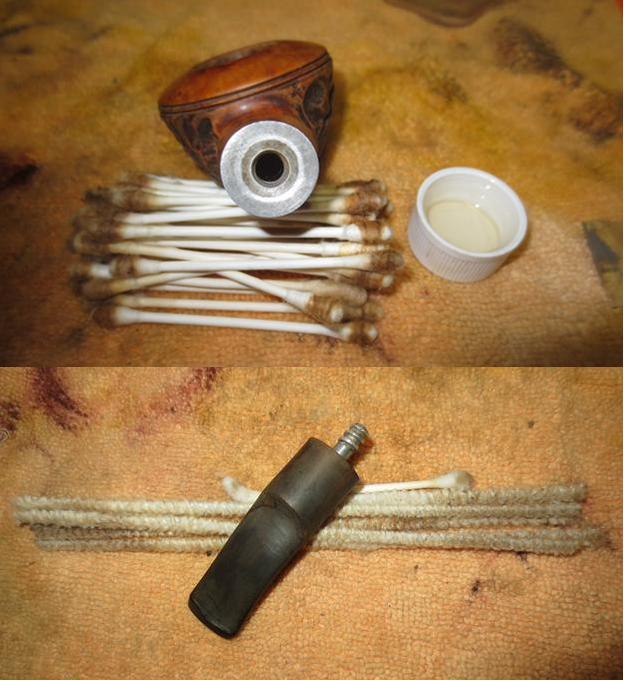
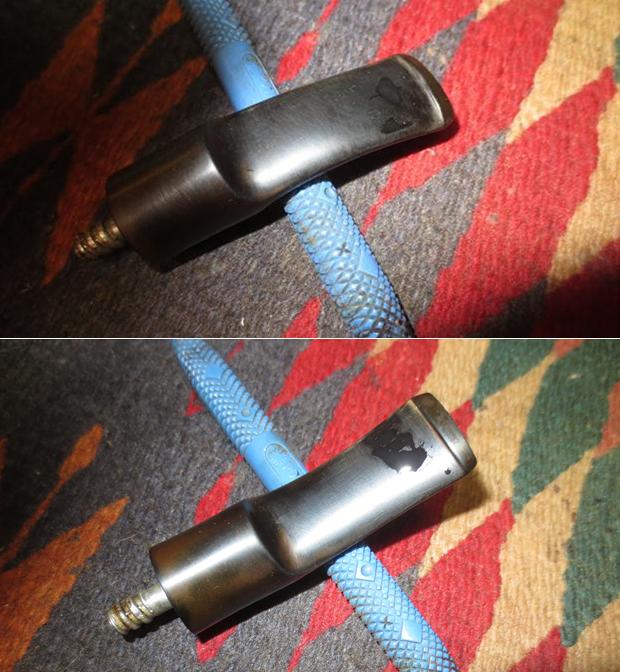
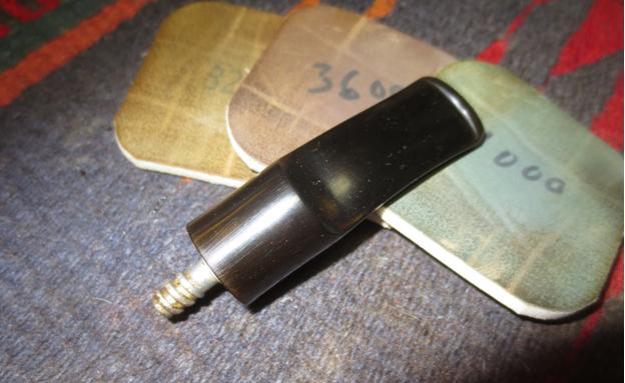
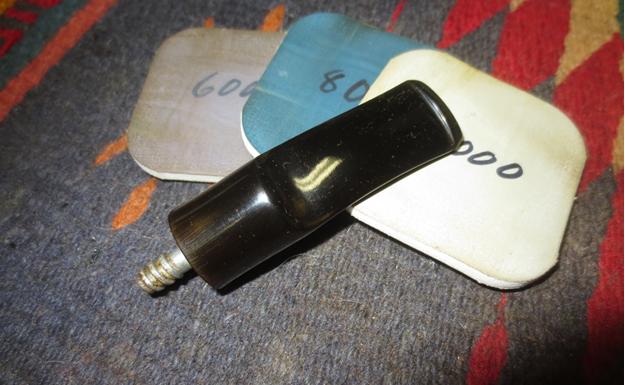
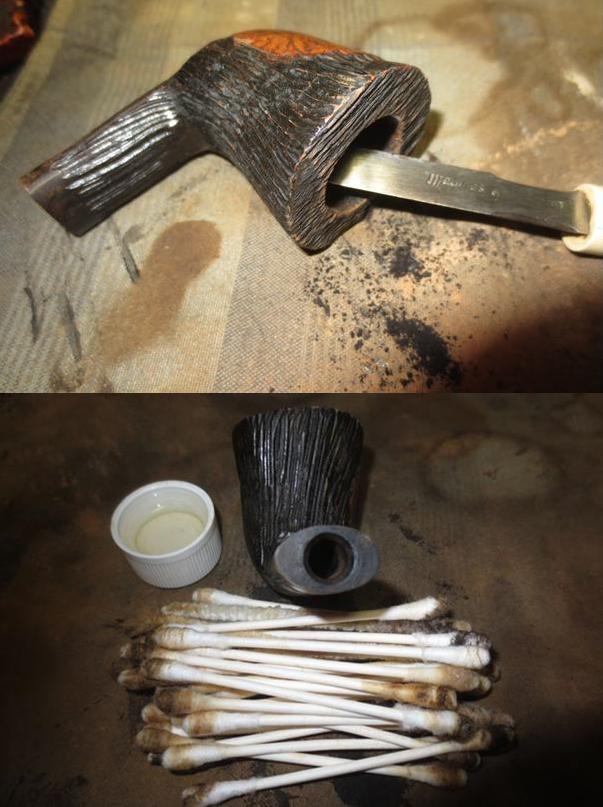
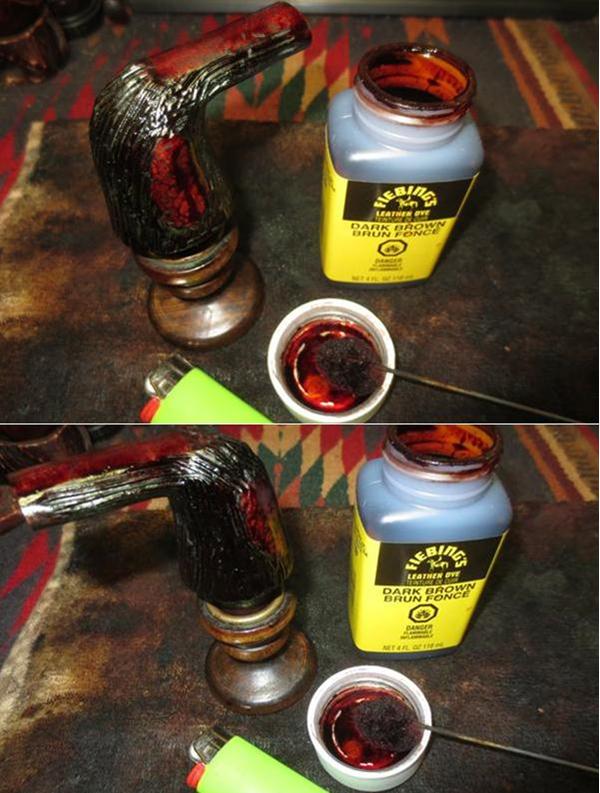
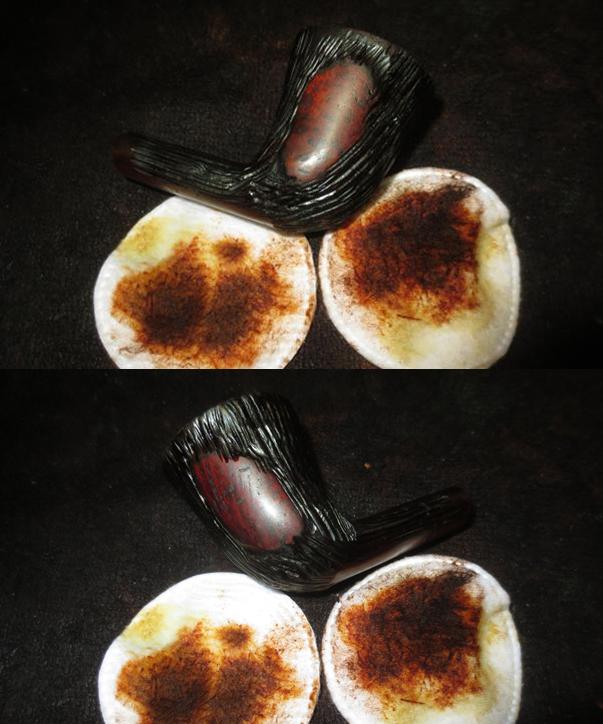
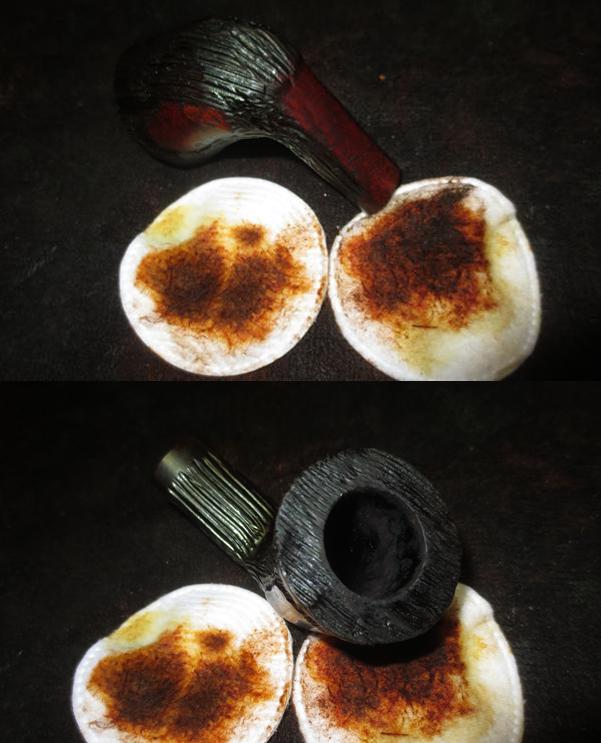
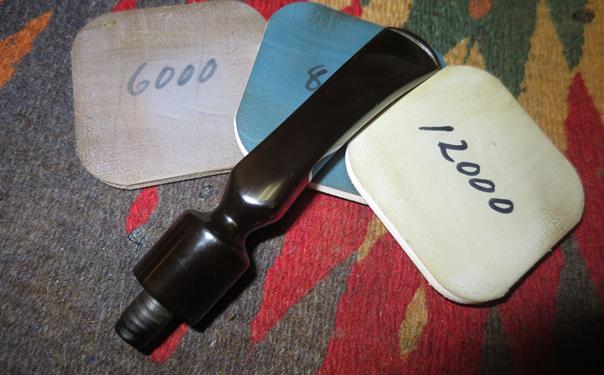
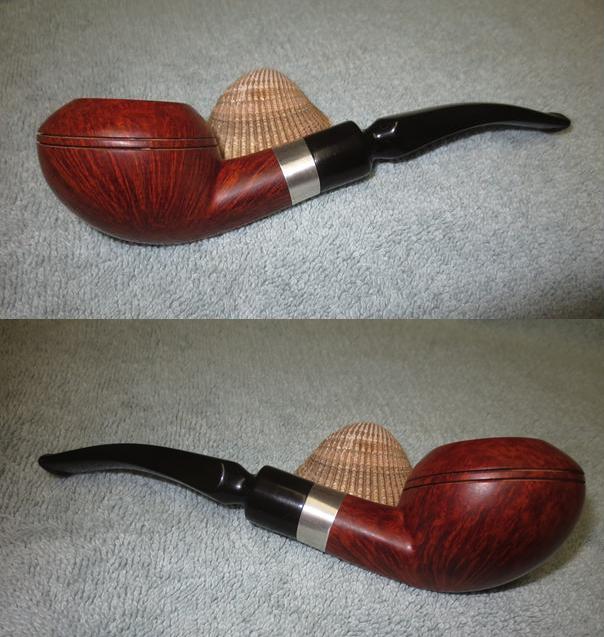
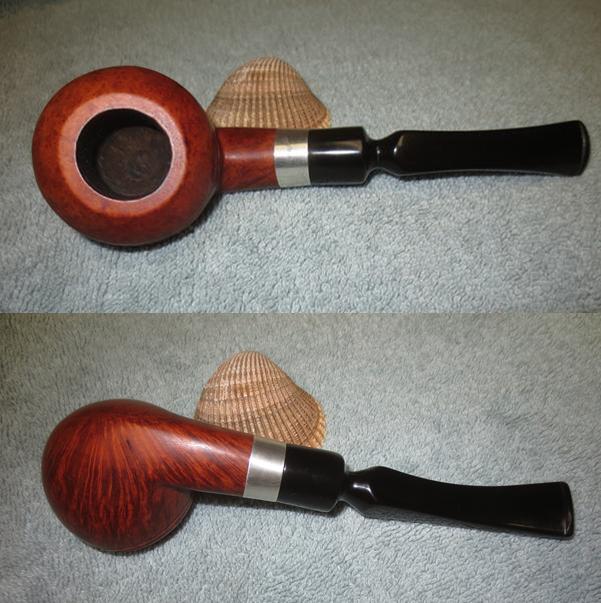
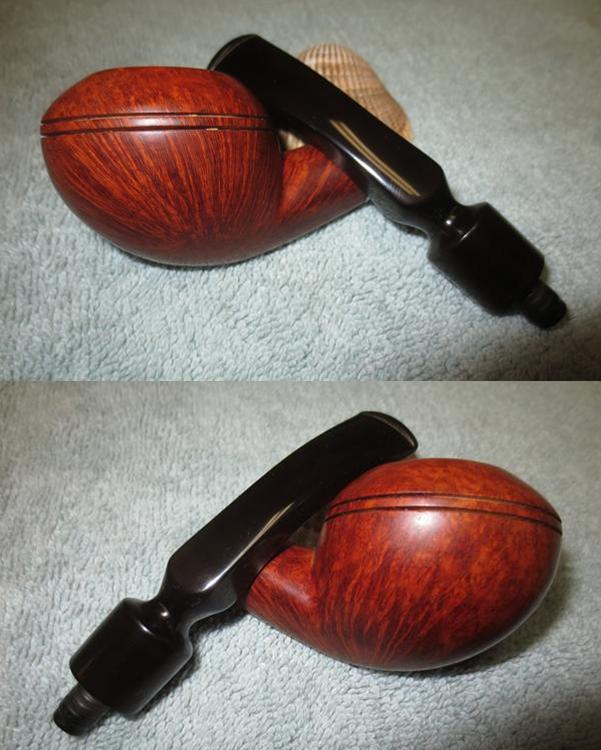
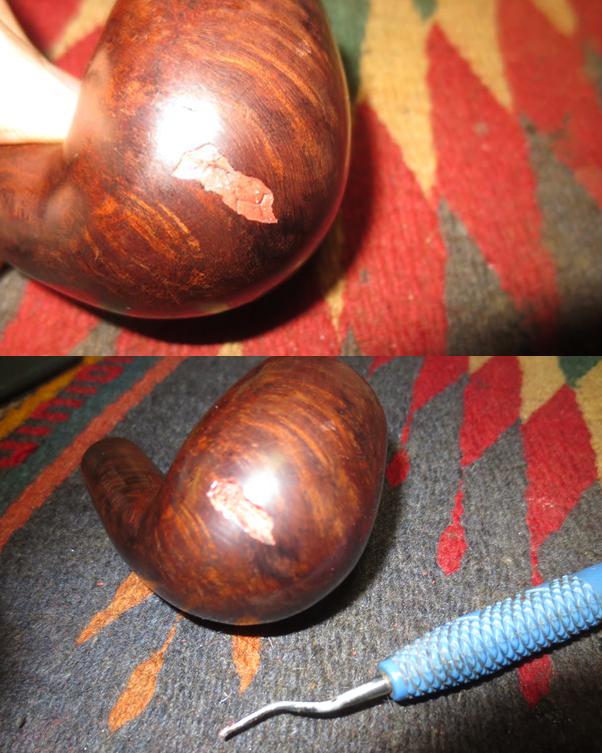
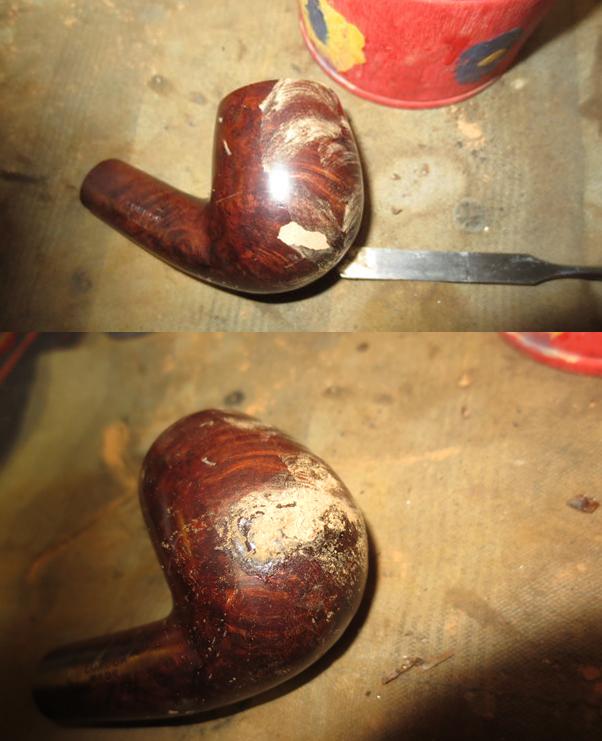
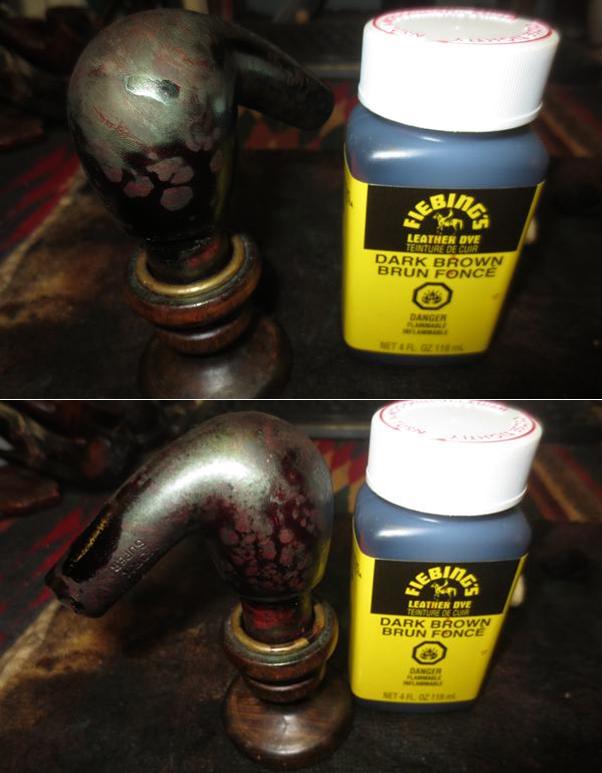
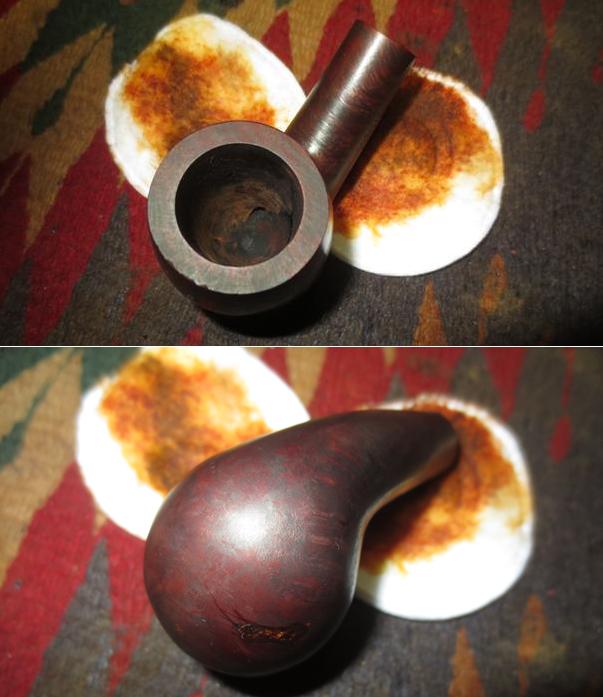
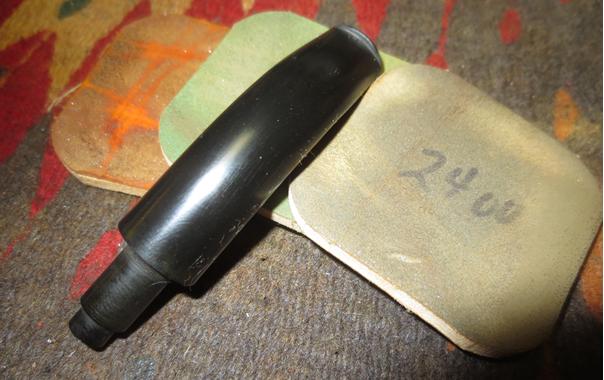
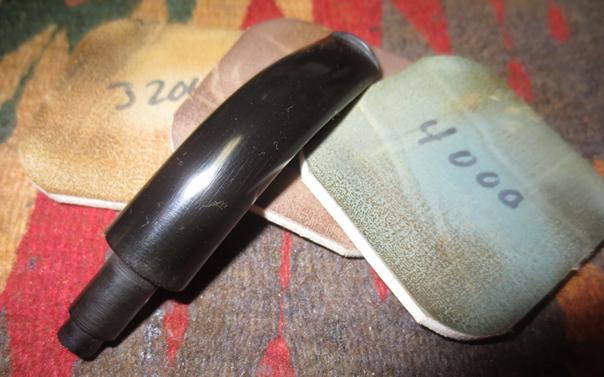
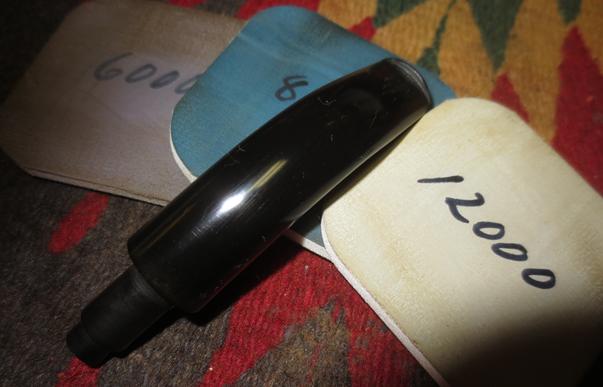
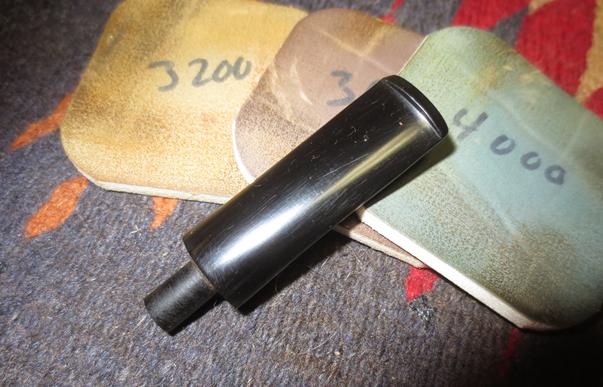
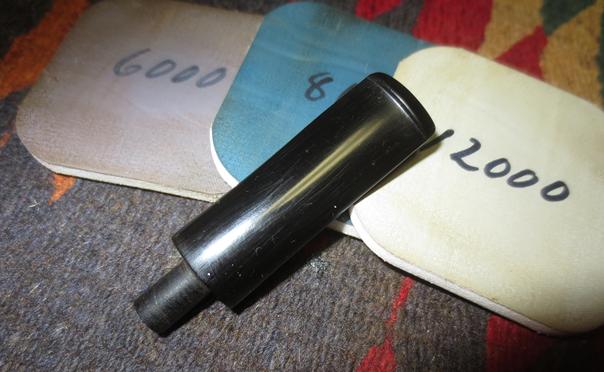
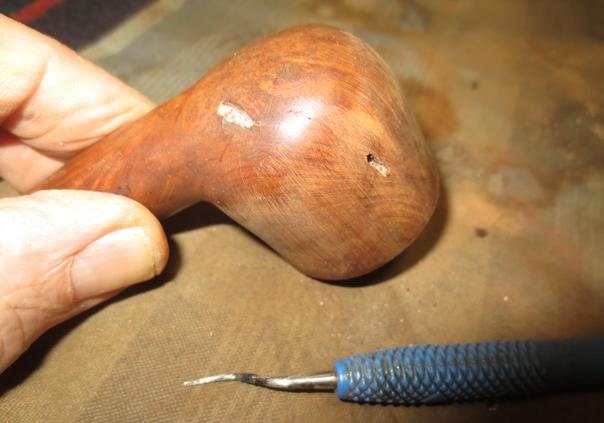
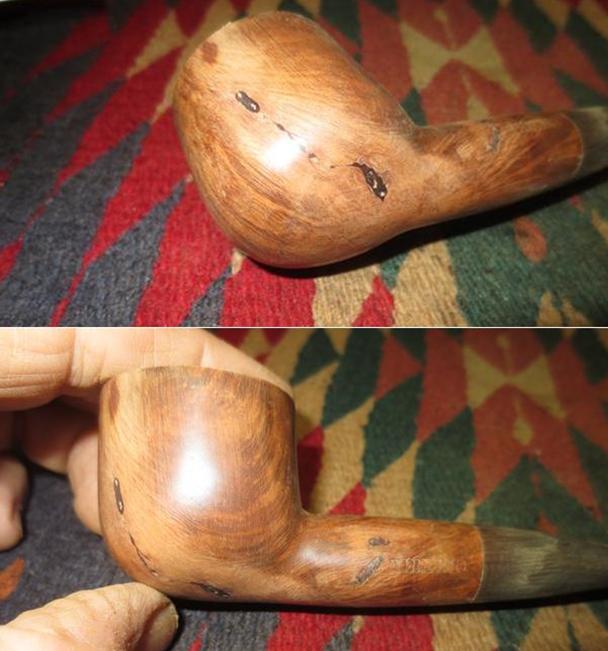
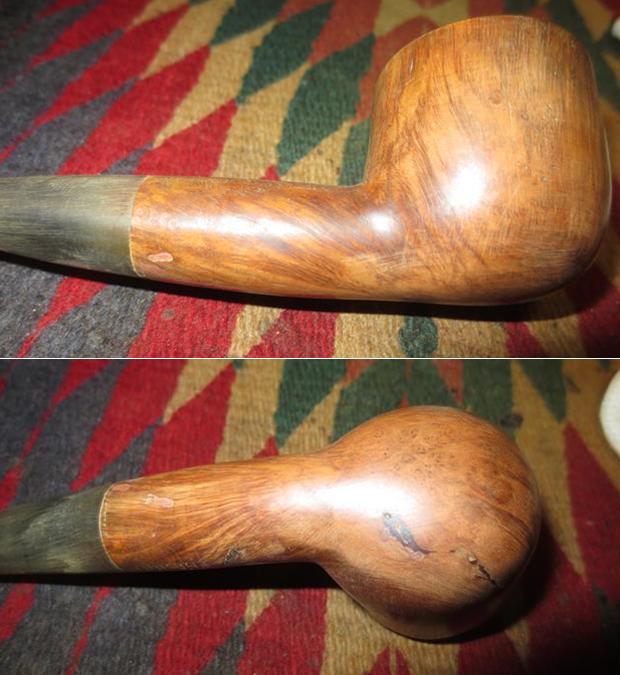
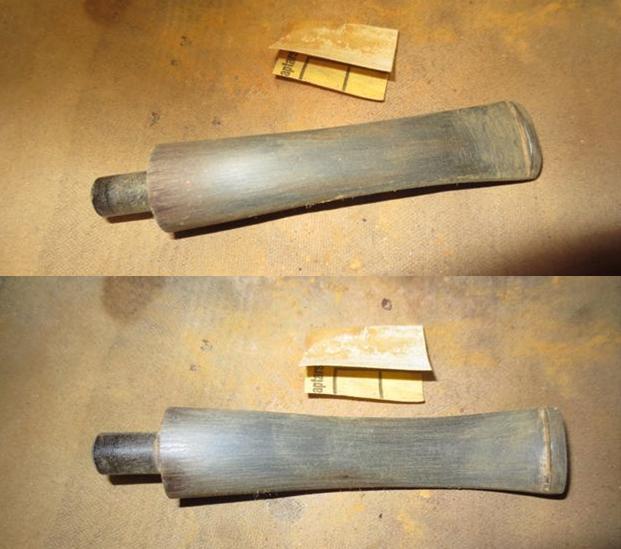
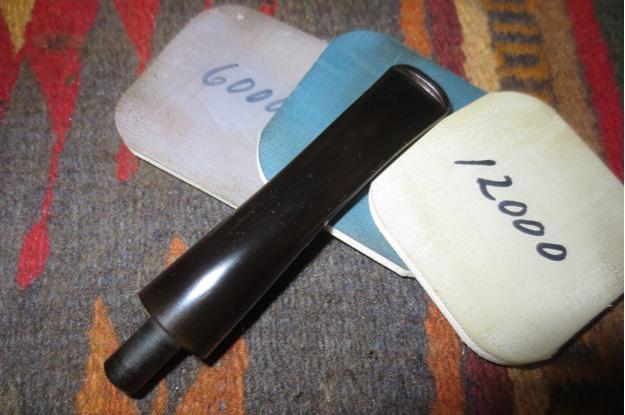
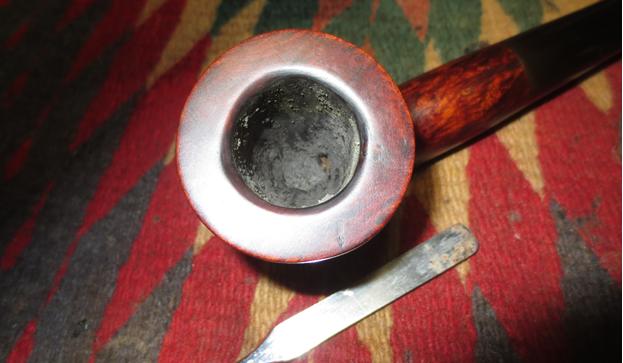
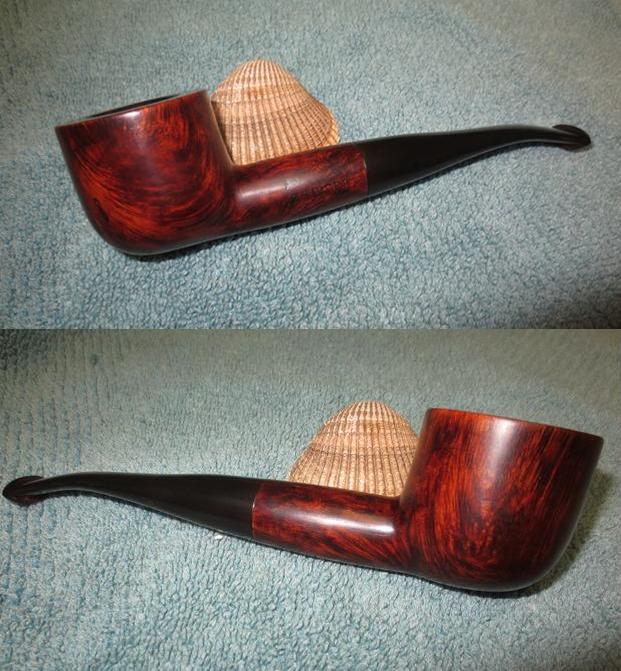
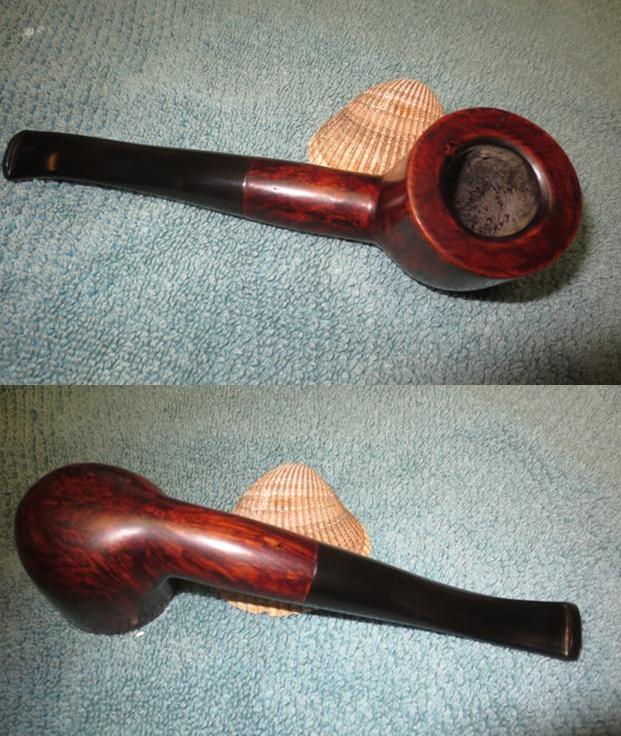
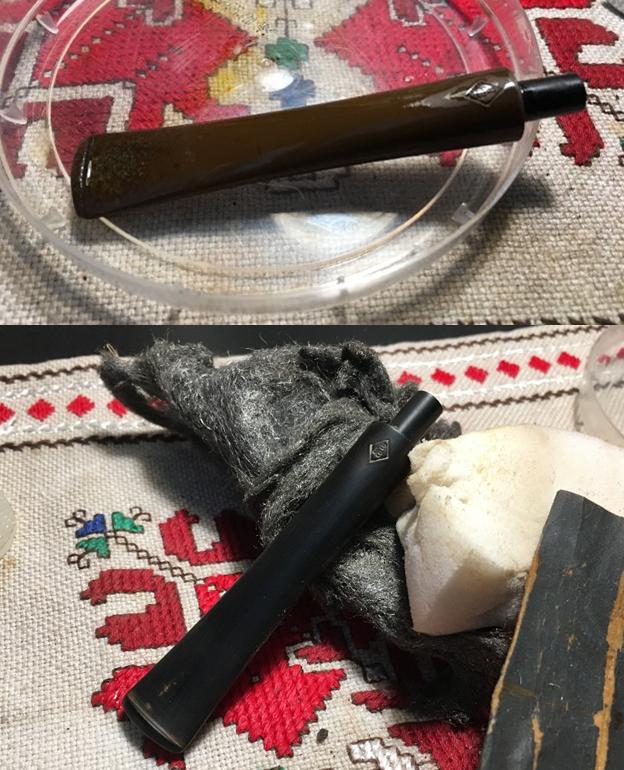
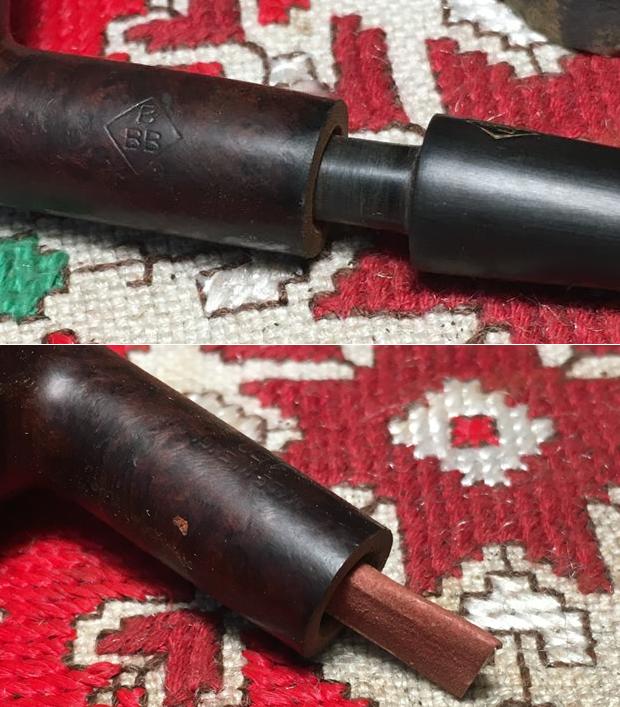
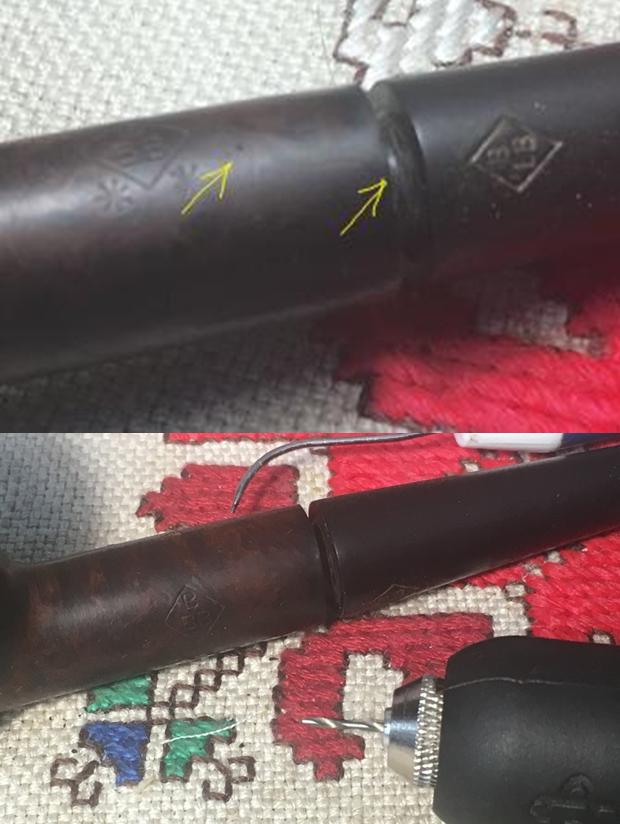
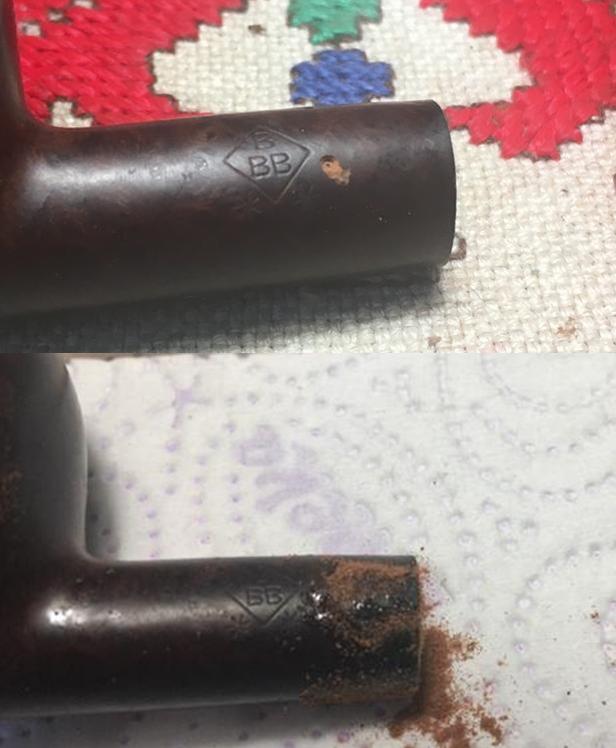
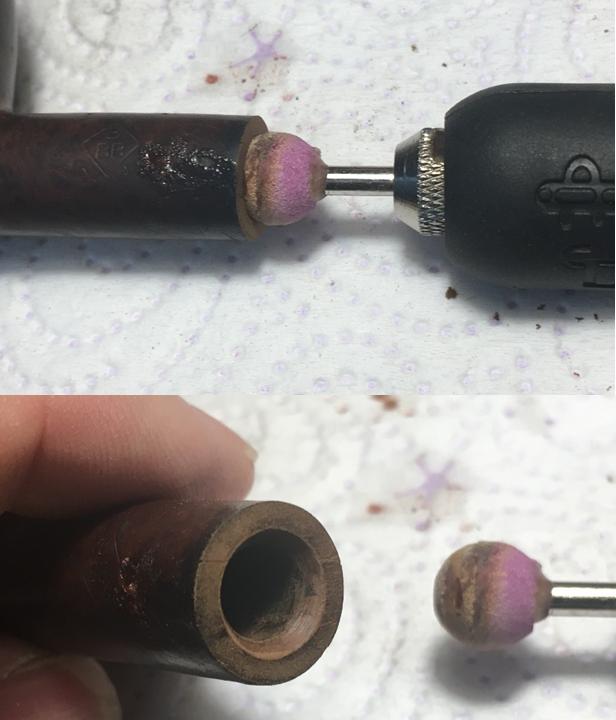
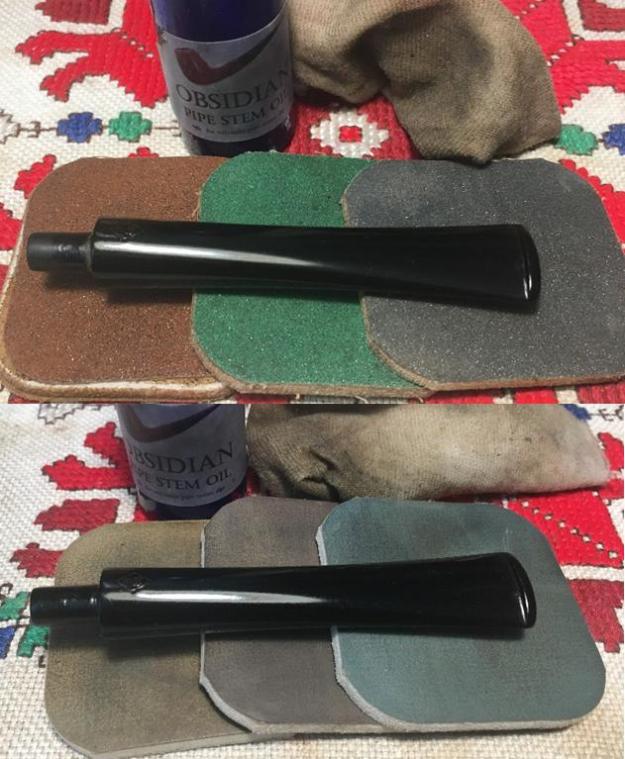
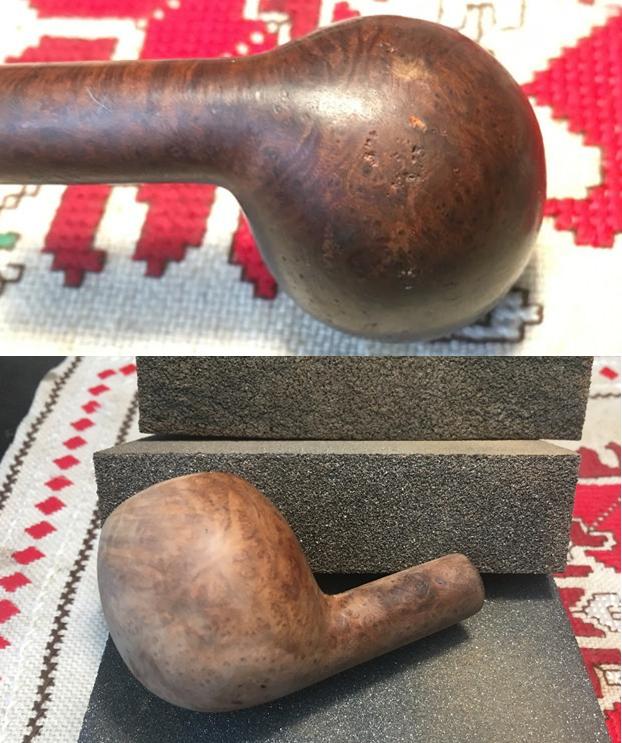
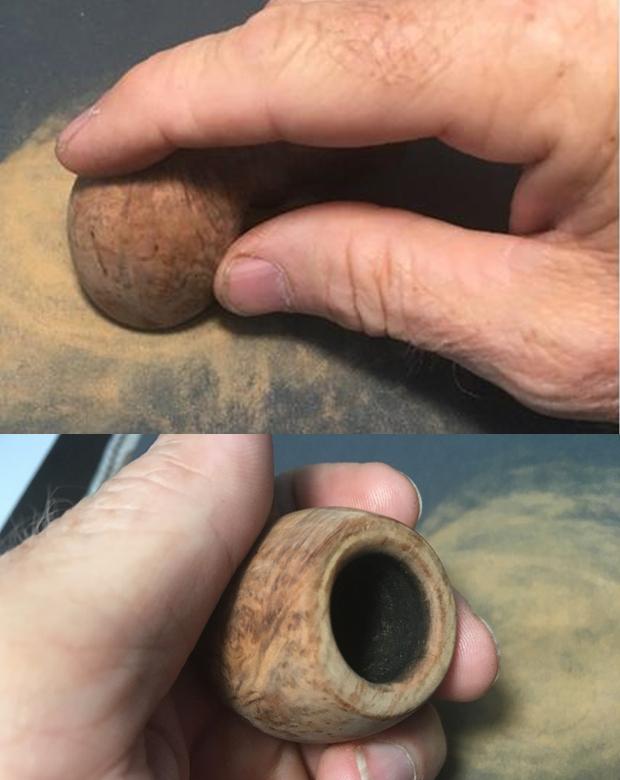
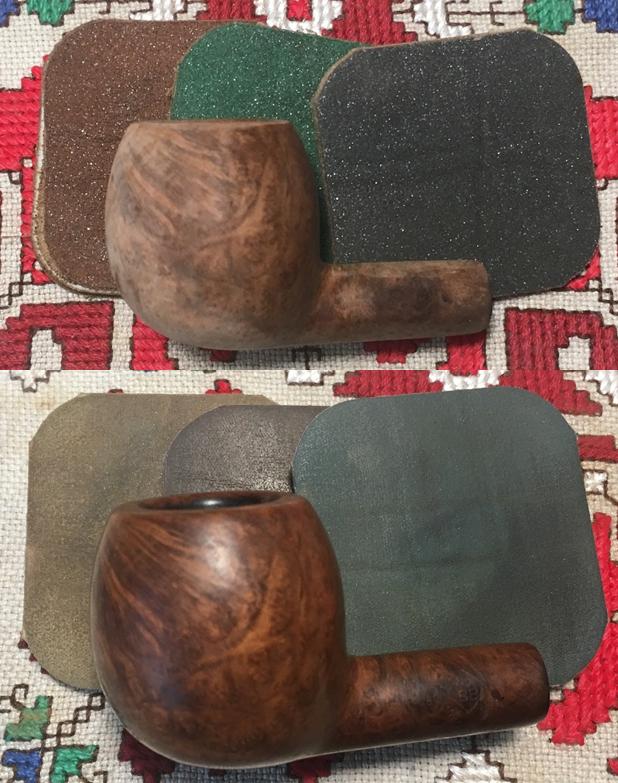
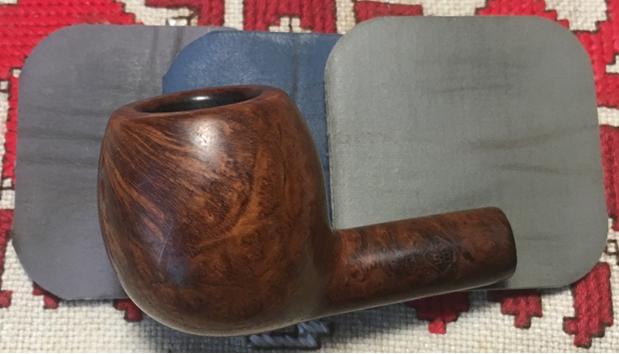
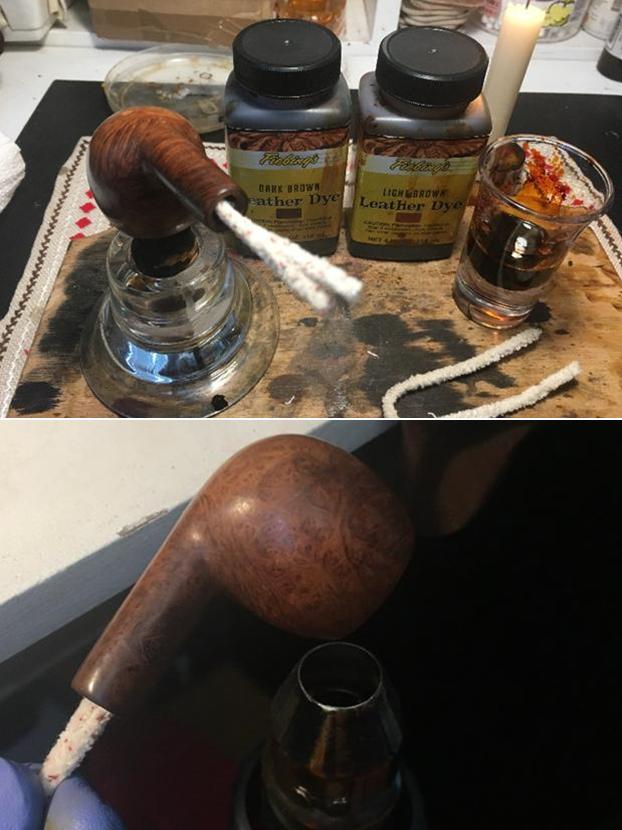
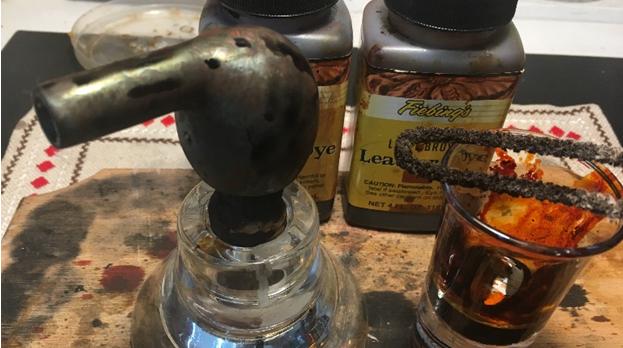
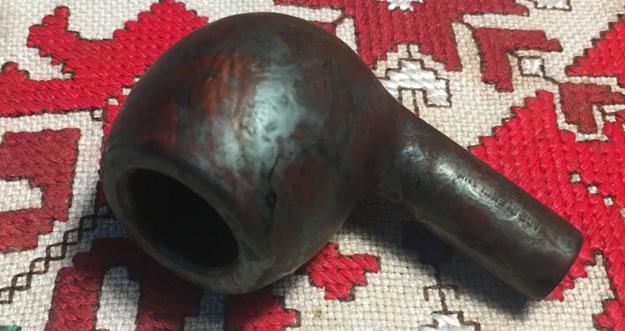
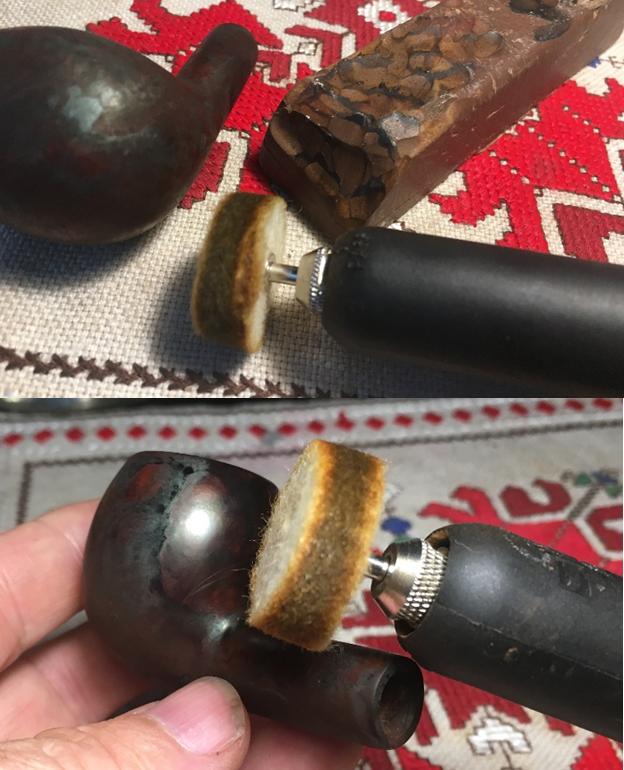
With the stinger removed, I was anxious to continue the restoration with a ‘normal’ pattern – the stem goes into the Oxi-Clean bath to deal with the oxidation in the stem.  After some hours, the stem is removed from the bath and I wet sand with 600 grade sanding paper removing the raised oxidation followed by 0000 steel wool. To clean and protect the BBB stamping on the stem, I use a non-abrasive Mr. Clean ‘Magic Eraser’ sponge.  The pictures show the progress.The next step is to re-seat the tenon into the mortise.  After the arduous process of removing the stinger, and after singing the shank end with a candle flame, and after ‘topping’ the shank to remove the damaged briar, the tenon and mortise needed to be re-wedded with the new realities.  The tenon was too large for full insertion into the shank.  Using a combination of reducing the tenon size with sanding paper and steel wool, sanding and filing the throat of the mortise, and using a rounded needle file to cut a new internal mortise openning bevel to accommodate the broader tenon base, I patiently, slowly, methodically worked to re-seat the tenon in the mortise which included working and then testing the new fit – GENTLY!  I suppose the fact that I said to myself, ‘Dal, careful, don’t crack the shank’, at least a 1000 times only made the sinking feeling more intense when I heard the sickening sound during what proved to be my last, ‘gentle testing’ of the tenon inserted into the mortise.  The hairline crack is pictured below that I took only a day ago – I couldn’t bear to take it then, when it happened.  I was sickened and put Greg’s pipe aside.  I needed some time to work through my own sense of failure of the trust given me to restore this family heirloom.  Now, after several weeks, I’ve regrouped and have taken up Greg’s pipe again.  The travels that I described above during this time in some ways felt more like Jonah running from Nineveh not wanting to face the scene of his calling and his sense of failure!  Though, my trip did prove beneficial – I sold some of my finished pipes to colleagues to benefit and raise the awareness of the Daughters of Bulgaria that The Pipe Steward supports.  I’ve included my Nineveh travels below for you who may not be familiar with ‘my world’, the Balkans – Sofia to Crete to Athens and back. Before moving forward, I needed to repair the cracked shank.  With the help of a magnifying glass, I locate the terminus of the crack and mark it by creating an indentation with a sharp dental probe.  The arrow to the left below marks this.  Using the Dremel tool, I mount a 1mm sized bit and drill a hole at that point – but not going through!  This hole acts like a controlled back-fire to stop the progress of a forest fire.  This will not allow the crack to continue creeping.  With the use of a toothpick, I spot-drop Hot Stuff CA Instant Glue in the hole and along the line of the crack which I expanded microscopically by partially inserting the tenon into the mortise.  This allows the CA glue better penetration to seal the crack.  I remove the stem immediately after the application of CA.  With the CA glue still wet, I apply briar dust to/in the hole and along the crack to encourage better blending.  The pictures show the progress. After some hours allowing the CA glue to cure on the shank repair, using a round grinding stone bit mounted on the Dremel, I reestablish an adequate and uniform internal bevel on the end of the shank to accommodate the base of the tenon when it is fully inserted into the mortise.  My theory is this is what caused the crack – lack of a sufficient internal bevel giving room for the slightly enlarged tenon as it merges with the stem proper.  With the Dremel engaged at the slowest setting, I’m careful to apply minimal pressure as I rotate the ball a bit to make sure it’s centered.  It looks good – the pictures show the progress.Due to a lapse of sorts and the intensity of my focus on re-seating the stem again without re-cracking the shank, I failed (or perhaps, had little desire) to take any pictures.  The short of it is, the stem and stummel have been reunited after some difficult times.  Also, not pictured are some of the basic steps: reaming the fire chamber of carbon cake buildup, cleaning the internals of the stummel and stem with cotton swabs and pipe cleaners wetted with isopropyl 95%, and cleaning the externals of the stummel with Murphy’s Soap.  Again, picking up the trail, pictured below is the micromesh pad process with the stem.  Using pads 1500 to 2400, I wet sand the stem, followed by dry sanding with pads 3200 to 4000 and then 6000 to 12000.  I follow each cycle with an application of Obsidian Oil to revitalize the vulcanite.  The stummel surface shows quite a bit of pitting in the first picture shown again below.  The rim also shows nicks. On the larger pits shown below on the heel of the stummel, I spot-fill with a toothpick using CA glue and shorten the curing time by using an accelerator spray on the fills.  After filing and sanding the fills to the briar surface, using a progression of 3 sanding sponges from coarse, medium to light, I work out most the remaining pitting over the stummel surface.  Using 600 grit paper on the chopping block, I also give a light topping to the rim to remove nicks and create fresh lines for the rim.  Following the topping, I introduce an internal bevel to the rim, first using a coarse 120 paper rolled tightly, then with 240 and 600.  The internal rim bevel to me, always adds a touch of class but also helps create softer lines which enhances this Apples shape.  The pictures show the unhindered progress! I now take micromesh pads 1500 to 2400 and wet sand the stummel followed by dry sanding with micromesh pads 3200 to 4000 and then 6000 to 12000 taking a picture after each set to mark the progress.  I am careful to guard the BBB nomenclature on the shank sides.  As I move through these cycles, I realize that I have been so wrapped up in the technical aspects of this restoration for Greg, that I failed to see the beauty of this diminutive Apple shape.  The grain that emerges from Grandpa’s old timer is truly beautiful. Flame grain and swirls, with a few bird’s eyes accenting the whole – totally eye-catching for a Two Star sub-mark BBB I would say! To see the big picture to help determine the next steps, I reunite stem and stummel and stand back and take a good look.  This BBB Made in England is looking real good – in spite of everything!  I can see by the way the BBB Apple naturally sits on the surface, leaning slightly like a listing ship, but remaining upright, provides some clues regarding the significant pitting on the heel of the stummel – just off center. Greg’s grandfather undoubtedly and conveniently placed his pipe on a table or counter surface, or perhaps on a nearby crate, as he made his rounds as a malaria inspector for the province of Hong Kong.  The original BBB coloring leaned toward the favored darker hues of English pipe makers and client proclivities. I decide not to go that dark, but to stain the stummel using a light brown base with a touch of dark brown to tint it down that track a bit.  This will make for better blending, especially for the darker briar around the nomenclature on the shank.  Using Fiebing’s Light Brown Leather Dye as the base, I add a touch of Fiebing’s Dark Brown.  Using a folded pipe cleaner in the shank as a handle, I begin by warming the stummel with a hot air gun to expand the briar making it more receptive to the dye.  After heated, I apply the dye mixture to the stummel generously aiming for total coverage.  I then fire the wet stummel with a lit candle igniting the aniline dye, burning off the alcohol and setting the pigment in the grain.  After a few minutes, I repeat the process concluding with firing the stummel.  I put the stummel aside to rest for several hours.  The pictures show the staining process – yes, you can see my blue fingers – I’ve started wearing latex gloves when I’m staining. After some hours, I’m looking forward to ‘unwrapping’ the fired stummel to reveal the stained briar beneath.  Using a felt buffing wheel mounted on the Dremel, set at the slowest speed, I use Tripoli compound to remove the initial layer.  Moving in a methodical, rotating pattern, I work my way around the stummel not apply a great deal of down-pressure on the wheel, but allowing the RPMs of the felt wheel and the compound to do the work. After removing the crusted layer with Tripoli, I wipe the surface with a cotton pad wetted with isopropyl 95%.  I do this not so much to lighten the finish, but to blend and even out the stain over the surface.  Following this, I mount a cotton cloth wheel on the Dremel, increase the speed slightly, and apply Blue Diamond – a slightly less abrasive compound.  After both compounds, I use a clean towel to hand buff the stummel to remove excess compound dust before applying the wax.  Pictures show the progress. Reattaching the stem and stummel, I apply several coats of carnauba wax to both.  Using a cotton cloth wheel, I set the speed of the Dremel to 2 with 5 being the fastest, I apply the carnauba and I like what I see.  With the carnauba wax applied, I mount a clean cotton cloth buffing wheel on the Dremel and again buff the stummel and stem.  Finally, I apply a rigorous hand buff using a micromesh cloth to raise the shine more.

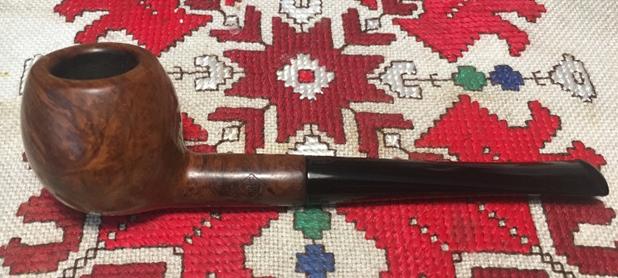
This BBB Double Star Apple has come a long way from England to Hong Kong to the US to Bulgaria, and now it’s ready to return to its new steward.  This restoration was a bit bumpy, but then, so is life.  I’m glad to help give this pipe a new lifetime and I hope Greg not only enjoys it, but that it provides a special connection with his past.  I’m sure Grandpa would be proud.  Thanks for joining me!
Breathing Life into an Antique Imported Briar Bull Moose


Blog by Steve Laug

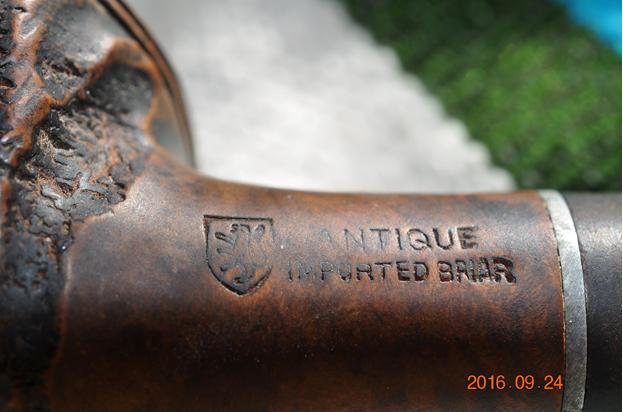
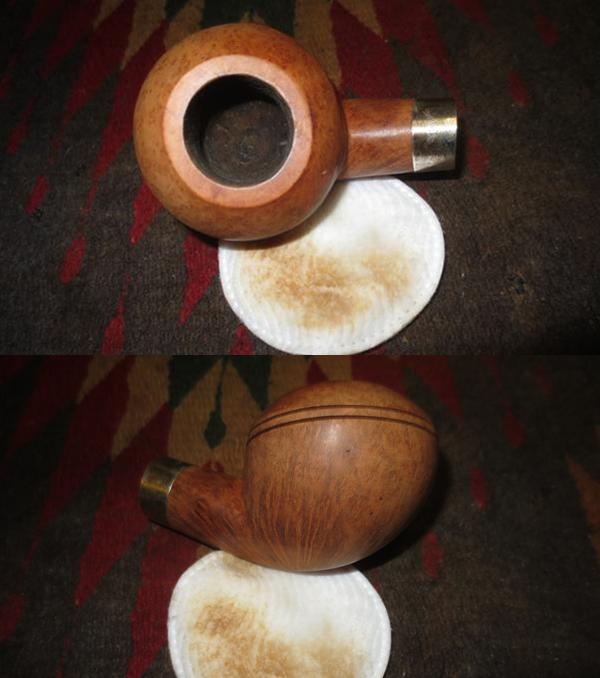
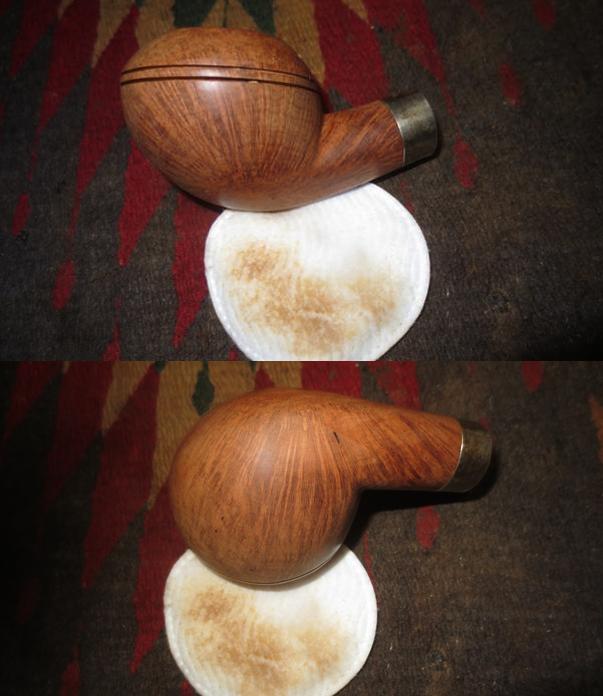
There is something about these older Mincer style pipes that grabs my attention. I am drawn to their rustic appearance and feel in the hand. This one was a Bullmoose shape – though the “nose” on it is much more conservative than many of these that I have seen. The stamping on the left side of the shank is a standing lion inside of a shield and next to that ANTIQUE over Imported Briar. I have searched on the web and in my books for this logo and cannot find it but I did find a listing for the ANTIQUE in Who Made That Pipe for a company called Heritage Pipes Inc. NYC. The company is to be distinguished from the Heritage line made by Kaywoodie as a high end alternative to Dunhill pipes. I have looked for information on the company online but so far have not found any. Anyone have any information on the brand?

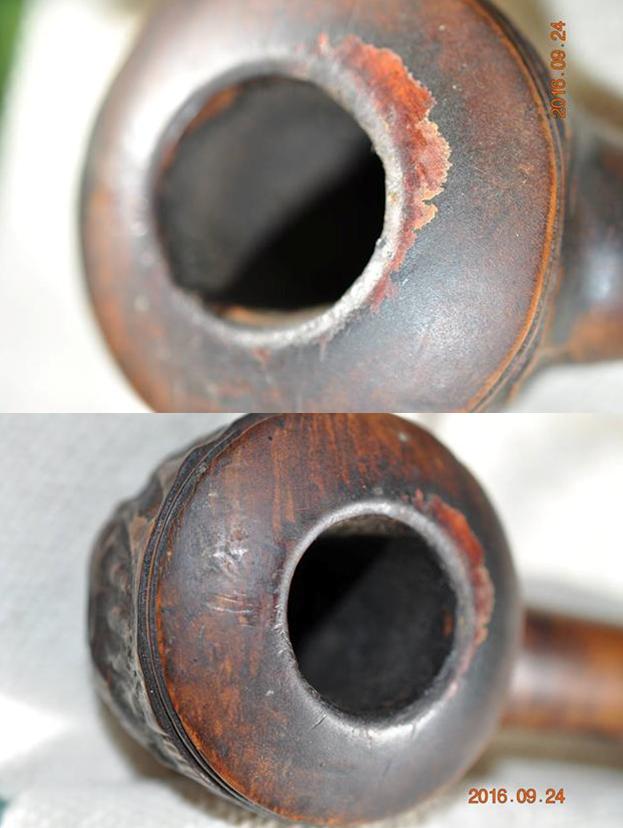
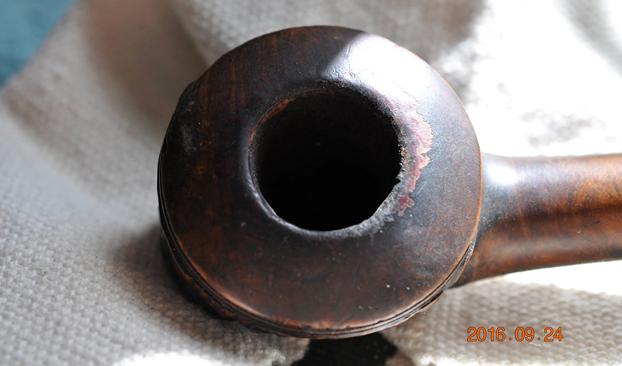
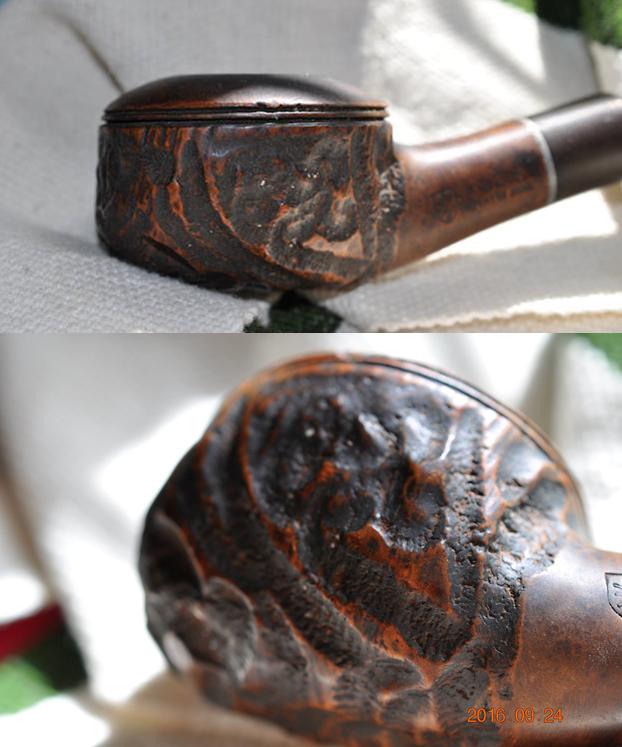
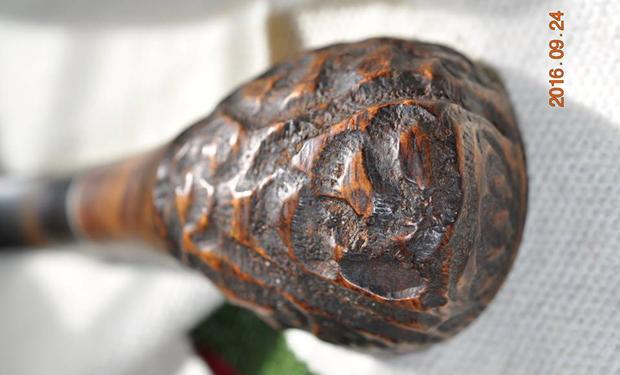
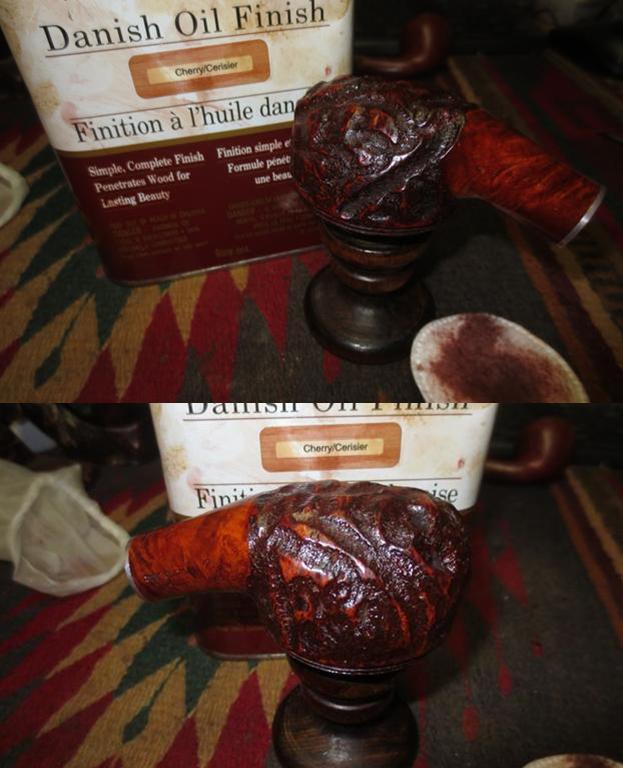
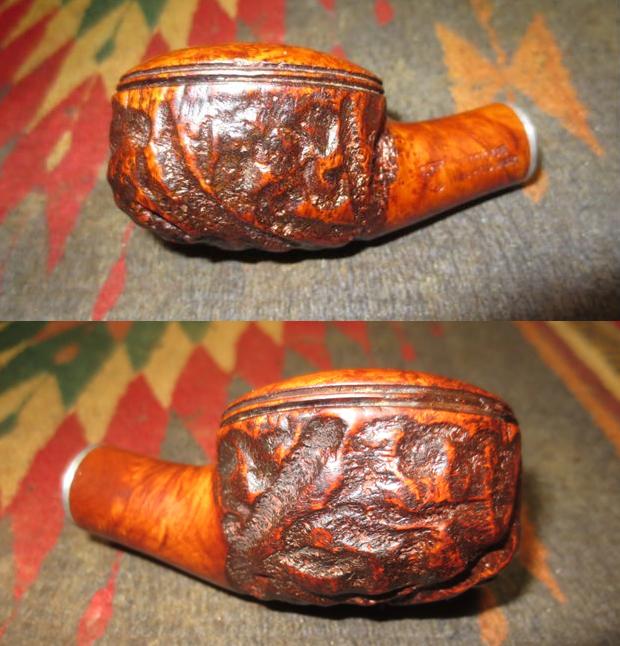
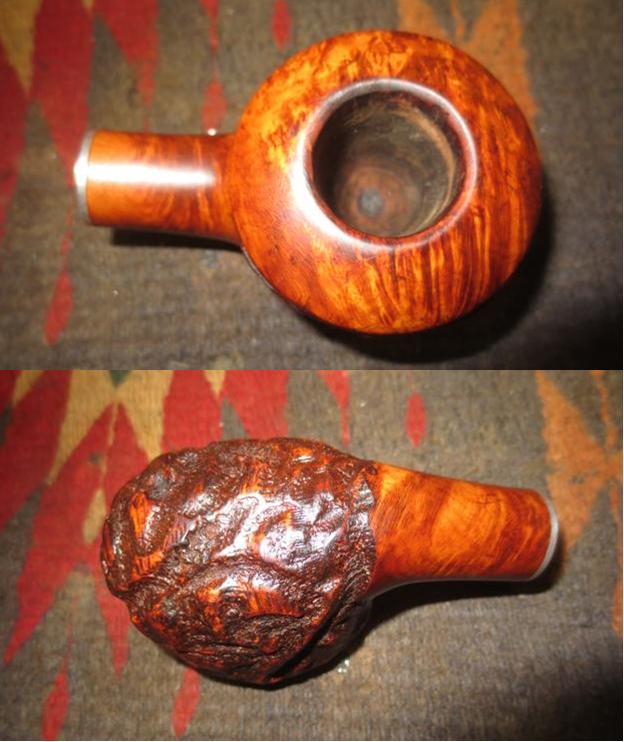
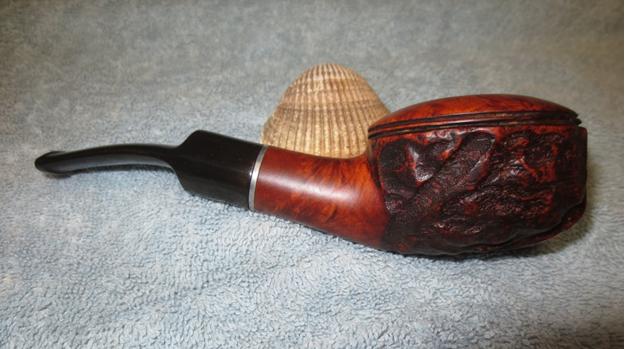
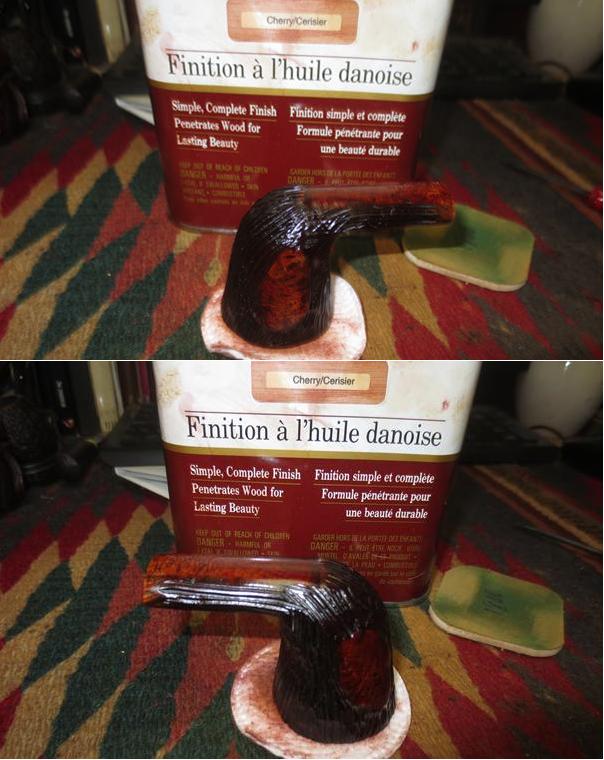
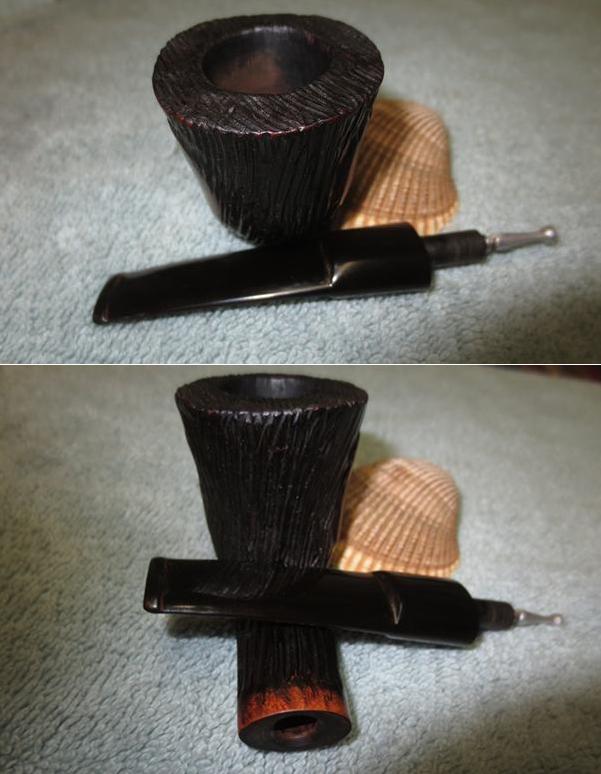
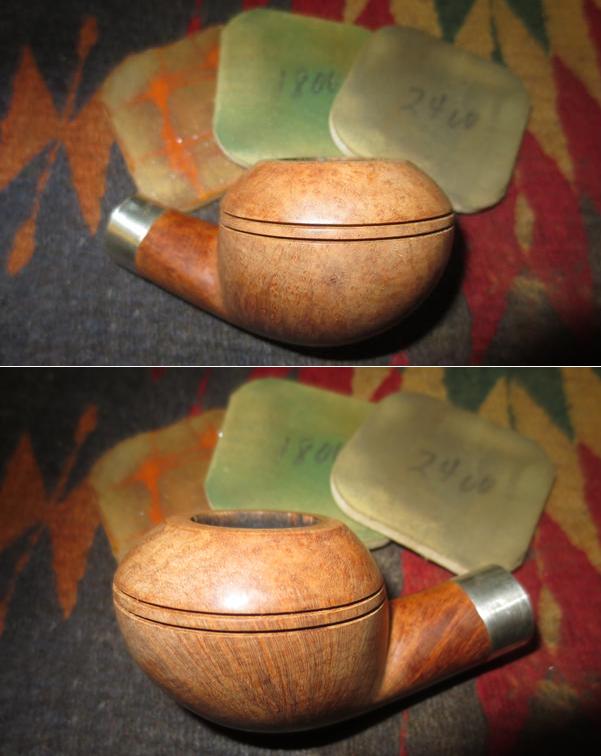
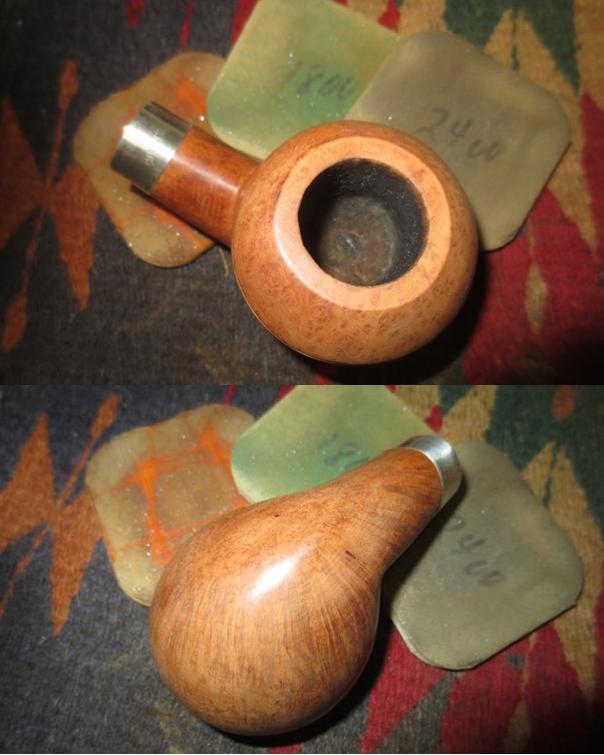
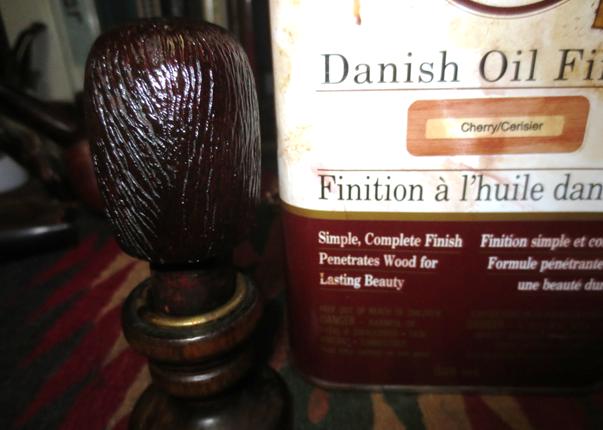
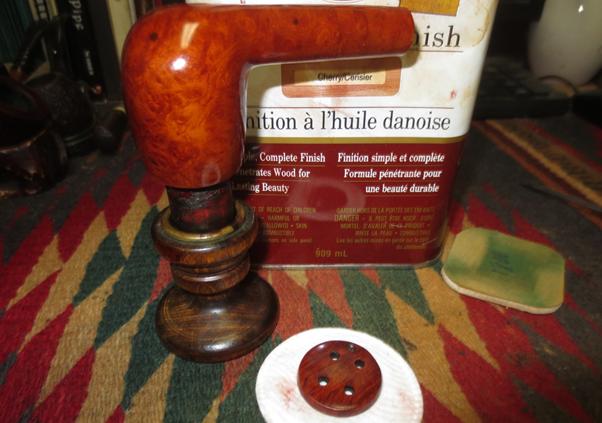
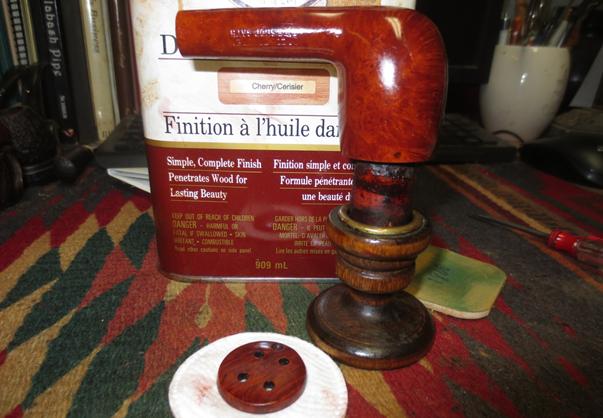
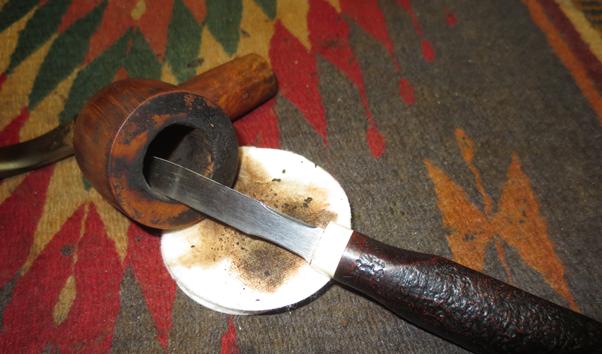
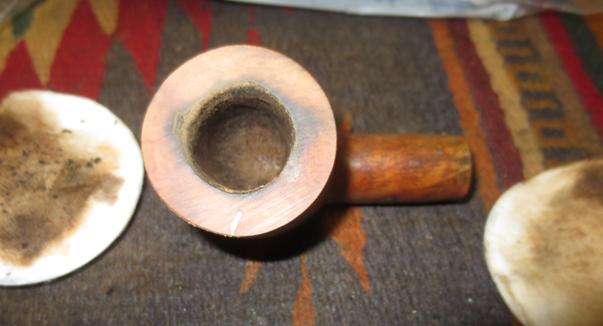
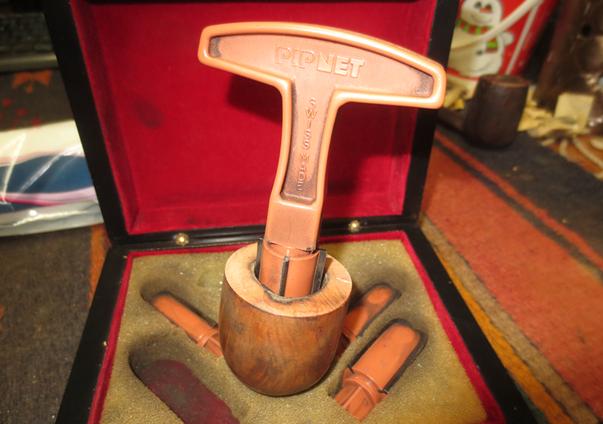
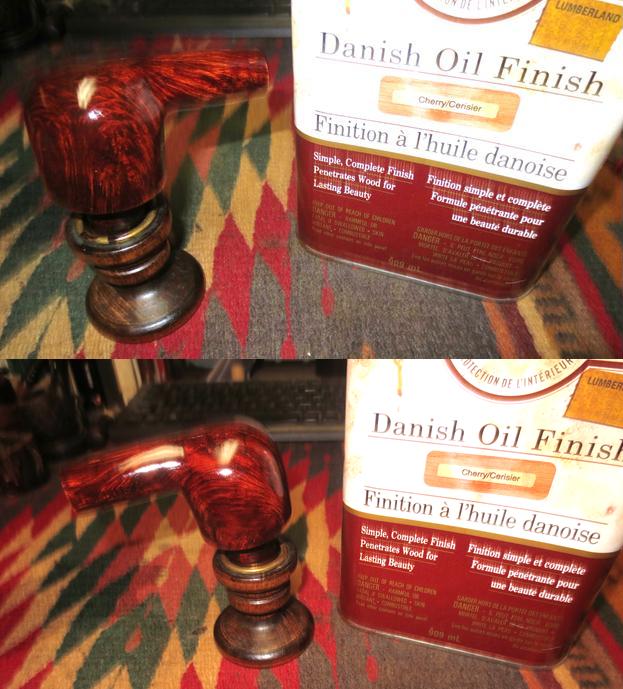
My brother took photos of the pipe before he cleaned it up. I have included those photos below. It is an interesting pipe.The next photos of the pipe show the damage on the rim top. The three different photos show the damaged areas from different angles. The rim top looked like it was damaged on the inner and outer edges of the bowl. The top looked like the finish was peeling but I would know more about it once I had it in hand. He took photos of the rusticated bowl sides. The smooth portions show grain. The double rings around the bowl cap have nicks and chips out of the top and bottom edges of the rims as well as the centre spacer. The next photo shows the stamping on the left hand side of the shank. Metal shank insert that separates the stem from the shank is oxidized.The stem is oxidized and has tooth chatter and tooth marks on both sides near the button. It is also overclocked making the stem sit crooked in the shank.My brother reamed the bowl with a PipNet reamer and cleaned out the insides. Pipes with the threaded metal mortise hold a lot of grime and tars so I will need to clean it further. The exterior was scrubbed with Murphy’s Oil Soap and a tooth brush and the grime and deteriorating finish was removed completely. The stem oxidation came to the surface in the cleaning. The next four photos show the condition of the pipe when I received it. I took a close up photo of the rim to show what it looked like when it arrived. Fortunately the areas on the rim that looked like flaking in the early photos was only lava buildup and it was gone. I breathed a sigh of relief when I saw that.The next two photos show the stem. The tooth chatter was lighter on the top of the stem than the underside. There were two deep tooth marks on the underside. The button edge on the topside was dented from teeth as well.I took the stem off the shank and was surprised that the conical stinger apparatus was gone. I heated the metal tenon with a lighter until the glue softened and twisted the stem around in the mortise until it lined up straight on the shank.I sanded the rim top and the inner beveled edge of the bowl with 220 grit sandpaper to remove the damage and the darkening. It did not take too much work to smooth out the dents and nicks and clean out the darkened inner edge of the bowl.To repair the chip out of the ring around the cap on the bowl on the right side I filled in the gap with briar dust and put drops of clear super glue on top of the dust. I used a dental spatula and a knife to recut the twin rings around the cap. Once it dried I sanded the repaired area on the ring and the rim top with a medium and fine grit sanding sponge and with 1500-6000 grit micromesh sanding pads to smooth out the scratches left behind by the paper.I cleaned out the inside of the mortise and the airway in the shank and stem with pipe cleaners, cotton swabs and alcohol until the cleaners came out white.I sanded the stem with 220 grit sandpaper to remove the oxidation and then used black super glue to fill in the tooth marks on the top edge of the button and the underside of the stem.When the glue dried I sanded the stem with 320 grit sand paper and polished it with micromesh sanding pads. I wet sanded it with 1500-2400 and dry sanded it with 3200-12000 grit pads. I rubbed the stem down after each pad with Obsidian Oil. After sanding it with the 4000 grit pad I buffed it with red Tripoli on the buffing wheel then finished polishing it with the final three grits of micromesh. I gave it a final coat of oil and set it aside to dry. I stained the bowl with Cherry Danish Oil and wiped it down to give it a shine. I wanted to highlight the red colours in the briar. The colour came out really well and the grain shines through on the rim and the smooth portions of the bowl and shank. I buffed it lightly with a shoe brush. The photos below show the staining and the finished bowl. I buffed the stem some more with red Tripoli and with Blue Diamond on the buffing wheel to polish out the oxidation that still remained at the junction of the stem and shank. I gave the stem multiple coats of carnauba wax and gave the bowl several coats of Conservator’s Wax. I buffed the bowl with a clean buffing pad to raise the shine and hand buffed it with a microfibre cloth to deepen the shine. The dimensions on the pipe are Length: 5 1/2 inches, Height: 1 1/2 inches, Outer diameter: 2 inches, Chamber diameter: 7/8 inches. The finished pipe is shown in the photos below. It really is a nice looking older piece of pipe history and should make a great addition to someone’s pipe rack. It will go on the rebornpipes store shortly. If you would like to purchase it contact me via private message on Facebook or through my email at slaug@uniserve.com. Thanks for looking.


New Life or an Oval Shank Whitehall Saratoga Dublin


Blog by Steve Laug

Not long ago I received and email from Dave, a reader of the blog, asking about a couple of pipes that he had picked up. This is the second of the two pipes – the Whitehall Saratoga. I have included part of his email below. He gives his assessment regarding the pipes and what he wanted done.

Steve… I have recently been gifted 2 estate pipes that I would love to have reincarnated by your hands? I am not sure of the cost and wanted to speak with you first… The 2 pipes in question are not in bad shape, just have some age, cake and minimal wear; one is a Whitehall rusticated with saddle stem and the other a Pear shaped Dr. Grabow Westbrook… I have attached some images with this email so that you have some idea of how they look. If you need additional images please let me know. Thank you for your time and consideration.

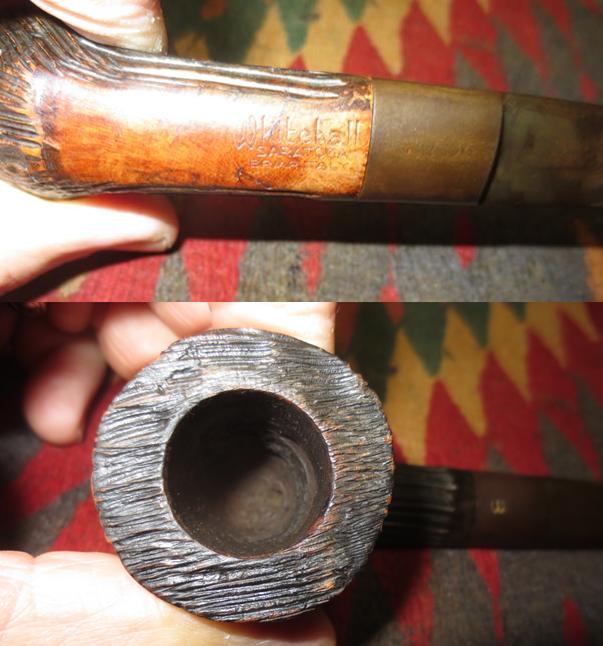
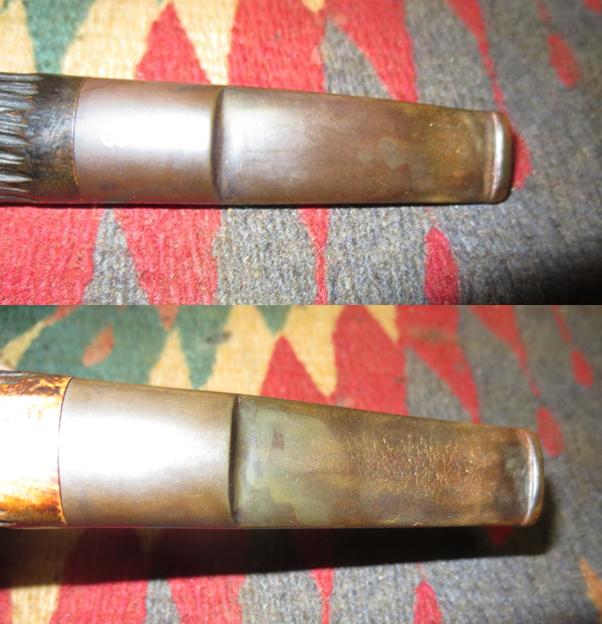
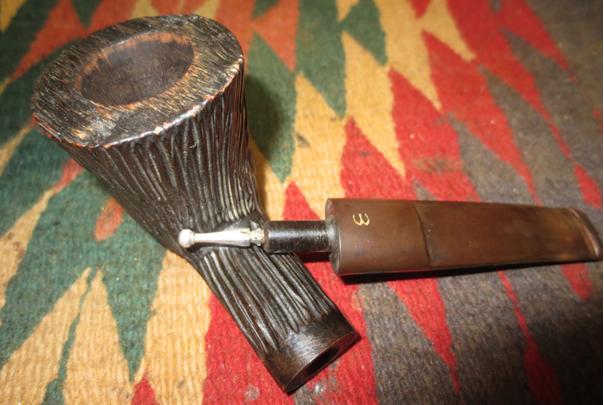
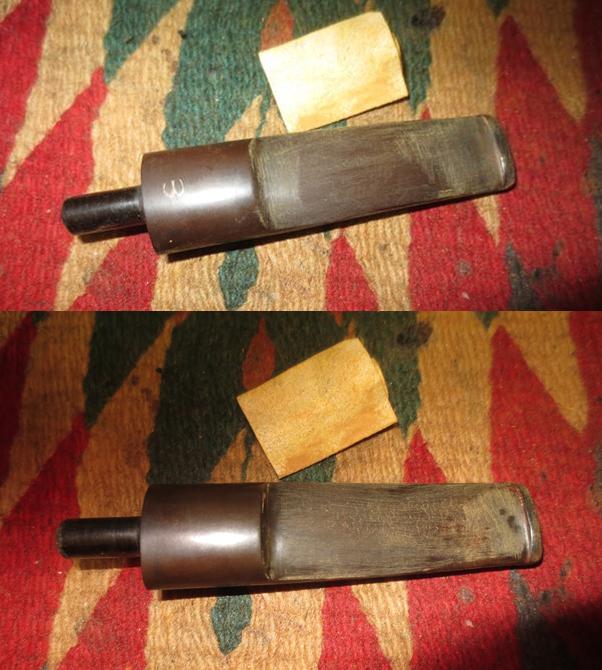
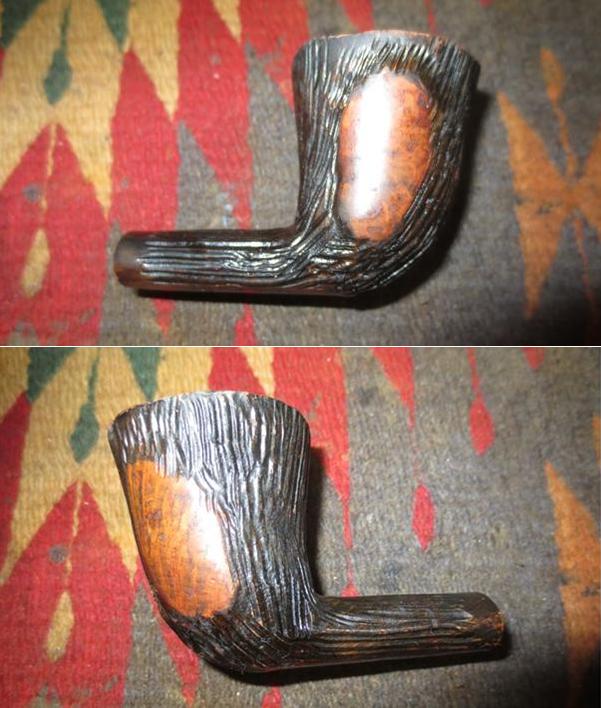
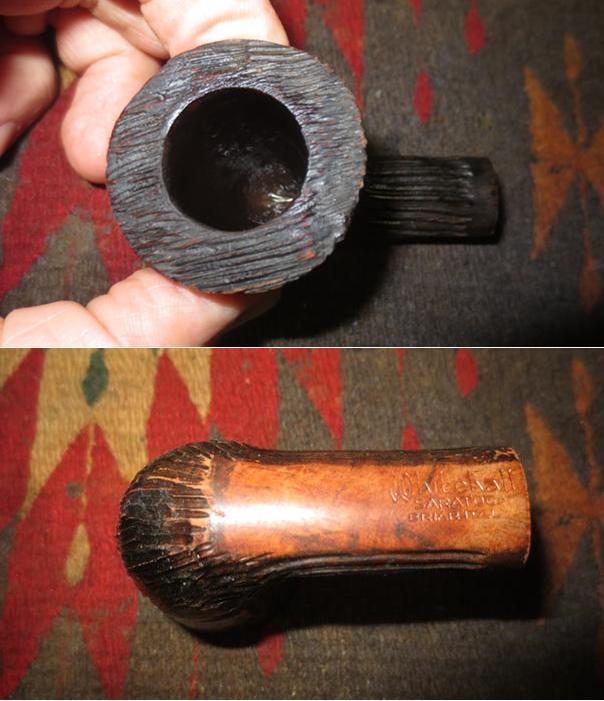
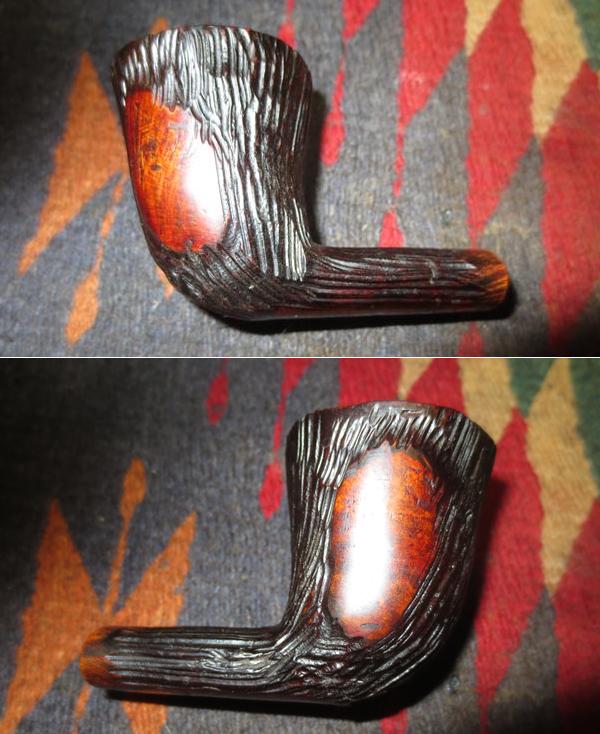
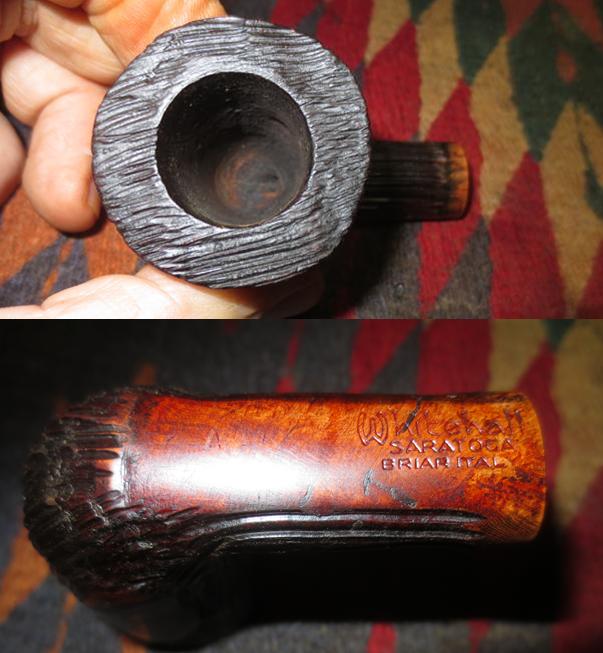
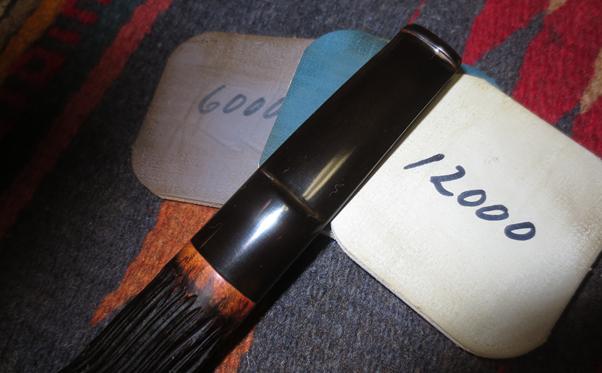
Regards, Dave The pipe was in pretty decent shape over all. The rim was dirty but the inner and outer edges were in good shape. The finish was worn and dirty but the carved striations looked good. The smooth patches around the shank, the underside and the two panels on the bowl sides were scratched but otherwise clean. The stem was oxidized and had some deep tooth marks on both the top and underside near the button. The W stamp on the top of the saddle was faint and worn. I would need to be careful in cleaning the oxidation not to damage the logo stamp. The photos below show the condition of the pipe when I received it. I took a close up photo of the stamping on the shank. The stamp is clearly legible and reads Whitehall over Saratoga over Briar Italy. The second photo shows the rim and bowl condition. There was still a light cake that would need to be scraped out but it was really quite nice.I took photos of the stem. It is hard to see the tooth dents in the photos below but they are present. There was a W on the top of the saddle stem that was a decal and it was coming off. The button is worn from use. The oxidation is quite deep.When I took the stem out there was a small stinger in the tenon. It was dirty but was easily removed and would be polished and put back in place.I sanded the stem with 220 grit sandpaper to break up the oxidation on the stem and reshape the button. I sanded out the shallower tooth marks to remove them. I wiped down the stem and repaired the deeper marks with black super glue. I set the stem aside to let the repairs cure. I turned my attention to the bowl. I scrubbed it with a tooth brush and Murphy’s Oil Soap to remove the grime from the grooves in the briar on the bowl and rim. I rinsed the bowl down with warm water and dried it off with a towel. The freshened pipe is shown in the photos below. I reamed out the bowl to remove the last of the cake with a Savinelli Fitsall Pipe Knife. It did not take too long to smooth out the remnants of the cake in the bowl. I scrubbed out the mortise and the airway in the shank and stem with pipe cleaners, cotton swabs and alcohol to remove the tars and oils. I went through a lot of pipe cleaners and cotton swabs before they came out clean.I restained the bowl with a dark brown aniline stain and flamed it with a lighter. I repeated the process until the coverage was even and I was happy with the results. I wiped down the bowl with alcohol on cotton pads to lighten the stain and make the contrast between the rusticated part and the smooth ones more obvious. I gave the pipe a coat of Conservator’s Wax and buffed it with a shoe brush to give it a shine and check out what the colour looked like. I took some photos of the polished bowl to show how it looked at this point in the process. The pipe is beginning to look really good. I sanded the top of the shank to remove the dark colour and make it more transparent at the stem shank junction. Note the nicks in the smooth portions of the bowl and shank. They are deep so I will not be able to sand them out. They actually act like marks of history of the journey of this pipe. It was not quite right. I wanted a little more red in the finished briar. I wiped the bowl down with alcohol on a cotton pad to remove the wax so I could do a bit of a contrast stain. For the second coat I rubbed down the bowl with a coat of Cherry Danish Oil to highlight the red colour in the briar. The combination of stains gives a nice contrast look to the pipe. I polished it with a soft cloth and took photos of the finished bowl. I set the bowl aside and turned my attention to the stem. I talked with Dave regarding the W decal on the saddle and we decided to remove it as it was worn and kept me from removing the oxidaiton on the saddle while trying to protect it. I resanded the with 220 grit sandpaper to remove the oxidation and the remnants of the decal. I polished it with micromesh sanding pads. I wet sanded it with 1500-2400 grit pads and rubbed it down with Obsidian Oil between each pad. I dry sanded it with 3200-12000 grit pads and repeated the oil treatments. I buffed the stem with red Tripoli on the buffing wheel and followed that with Blue Diamond polish. I gave the stem several coats of carnauba wax and polished it by hand. I buffed the stem with Blue Diamond to polish out some of the minute scratches in the surface. I gave the stem several coats of carnauba wax to protect and give it a shine. I hand waxed the bowl with Conservators Wax and buffed the bowl and stem with a clean buffing pad to raise the shine. I hand buffed it with a microfibre cloth to deepen the shine. The finished pipe is shown in the photos below. I will be packing it up soon and sending it back to Dave so he can fire up a bowl and give this beauty a smoke. Thanks for looking.

Refreshing a Beautiful Aldo Velani Bent Dublin


Blog by Steve Laug

This is the second pipe from the lot my brother Jeff picked up an estate sale a few weekends ago. He had received a call from the auction house that was running the sale to let him know that there were going to be some pipes in the sale. They said that many of the pipes were what they called higher end pipes. They talked a bit and he asked if they would mind sending him a list of the pipes that were coming up. They went one step better and sent him the two photos to the left of the pipes as a preview of what was going on sale. Using FaceBook Messenger we went through the pipes and picked the ones that we wanted to purchase. He would go to the sale the next day and see what he could find. It is times like this that I wish I lived close so I could go with him to these sales.

Friday morning he went into the sale and they handed him a bucket and the box of pipes that they had set back behind the counter for him. There were indeed some nice pipes in the batch and certainly pricier than the average lot we usually find at estate or antique sales and malls. There were quite a few Savinelli pipes as well as Stanwell, GBD, Aldo Velani, Nording, Il Ceppo, Barlings, DiMonte and a Chacom Sahara. They made him a proposition for the entire lot of pipes and he went for it. He came home with all of the pipes in the photos to the left.

When he got home he called me on FaceTime and went through the pipes he had picked up. We were both pretty excited by the lot. As we went through them we noted the names, brands and the stamping on the shank of each pipe. I got more excited as we noted each pipe and its condition. We realized that these pipes were in pretty decent shape other than the usual dirtiness and grime from smoking. There was not any significant damage to rims or bowls. Almost all the stems had tooth marks near the button on both sides that would need to be cleaned up. But other than that, it was a very nice lot of pipes. We had done well with the purchase.

I chose to work on the Aldo Velani Italian Dublin next. It is a beautiful Dublin shaped pipe that was in pretty good shape. It was stamped on the left side of the shank with the brand ALDO VELANI. On the underside of the shank next to the stem shank junction it bore the stamp ITALY. The saddle stem was Lucite and had not stamping or logo on it. My brother took the following photos before he worked on the pipes.The finish on the bowl was in pretty decent shape. The rim surface was dirty and had some tars and oil build up. Around the inner edge of the bowl some of varnish coat was peeling off and the briar was showing through. There were some dents and nicks in the surface. On the front right of the bowl there was a spot where the varnish was damaged like the bowl had been rubbed against a rough surface (it is visible in the second photo below). I would need to smooth out those areas and stain and give them a top coat to replace the shine. The finish on the sides and the  bottom of the bowl was in excellent shape. The next two photos show the stamping on the pipe – the brand on the left side and the country of origin on the underside next to the silver band.The stem had tooth chatter on the top side next to the button and on top of it. On the underside there were tooth marks and chatter that would need to be sanded out. Fortunately none of them were too deep.Once again Jeff did his usual thorough cleanup of the pipe. He scrubbed the interior and exterior and sent me a very clean pipe that I only needed to put the finishing touches on. The next four photos show the pipe when I brought it to my work table. The pipe looked really good. The finish on the bowl sides, bottom and shank were in excellent condition. The scrape on the front of the bowl and the rim scrapes where the varnish coat was missing were clean and ready to repair. The stem was clean as well other than the light oxidation and the tooth chatter. I took a photo of the rim top to show the damage on the inner edge. You can see the area on the right side of the inner edge and the back side. There was also some damage on the front inner edge of the bowl. These would need to be sanded and repaired.The stem was very clean other than the tooth chatter and tooth marks.When I removed the stem the silver band fell off in my hands. The glue that had held it in place had dried and cracked. I used a tooth pick to spread all purpose glue around the end of the shank and pressed the band in place.I sanded the inner edge of the rim to remove the damaged finish. I used 1500-6000 grit micromesh sanding pads to smooth out the damaged areas. I wet sanded the areas to minimize the damage. I touched up the sanded areas with a dark brown stain pen. It matched the stain on the surrounding bowl. I ran a pipe cleaner and alcohol through the mortise and airway in the shank and stem. The pipe cleaner came out very clean and showed that the pipe was spotless.I sanded out the tooth chatter and tooth marks with 220 grit sandpaper until the surface of the stem was smooth. Once I had it sanded smooth I polished it with micromesh sanding pad – wet sanding it with 1500-2400 grit pads and dry sanding it with 3200-12000 grit pads. I wiped the stem down with a damp cotton pad to remove the sanding dust after each pad so that I could see how it was polishing. To give the repaired areas on the rim top a shine like the rest of the bowl I buffed it with Blue Diamond and then applied some Cherry Danish Oil to the rim top with a cotton swab. I repeated the process until the top of the rim shone. It looked like the rest of the bowl once again. I buffed the bowl and stem with Blue Diamond polish on the buffing wheel. It polished out all of the minute scratches in the surface of the Lucite and the briar. It does a great job with a soft touch when polishing briar and the shine that the Blue Diamond gives Lucite is glassy. I gave the bowl and stem several coats of carnauba wax and buffed the pipe with a clean buffing pad to raise the shine. I hand buffed it with a microfibre cloth to deepen the shine. The finished pipe is shown in the photos below. It really is a beautiful looking pipe. The Dublin shape is perfectly laid out to maximize the grain. This one will soon be for sale on the rebornpipes store. If you are interested in adding it to your collection let me know either by email to slaug@uniserve.com or a private message on FaceBook. Thanks for looking.

Restoring an Unstamped Rhodesian Handmade


Blog by Steve Laug

When I saw this pipe that my brother picked up I was captivated by the grain. The unknown maker had done an amazing job of laying the shape out with the grain. The sides of the bowl and shank have stunning flame grain radiating from the point at the heel of the bowl. The heel and the cap on the bowl, as well as the top and the pointed bottom edge of the shank have beautiful birdseye grain. He sent me the following pictures to whet my appetite for this pipe. I like the Rhodesian shape and I like the combination of nice grain, a sterling silver band and a black vulcanite stem. This one had them all. The only oddities to me were the shape of the shank – it was an egg shape, pointed at the bottom and the freehand style panel stem. The bowl had a thick cake in it and it was scratched at about 11 o’clock in the photo below. It looked as if it could have been cracked but it was not once he had reamed it free of the cake. The finish was dirty and there was some darkening/burn marks on the back side of the cap. It appeared to me that it was originally a virgin finish but I would know more once I had it in Vancouver and had cleaned up the finish.The next two photos show the grain on the sides of the bowl and the bottom. There is birdseye toward the left side of the bottom of the bowl curving up to meet the grain on the sides.Underneath the oxidation and tarnish on the band it was stamped Sterling Silver in an arch. The stamping was centred on the top side of the shank.The stem was heavily oxidized and had tooth chatter on both sides near the button. On the underside of the button there were deep tooth marks and one of them was on the button. The chair leg style stem would be a challenge to clean up.My brother did his usual comprehensive clean up on the pipe. He was able to remove all of the cake in the bowl and on the rim. He cleaned up the dirty finish on the bowl and cleaned out the mortise and the airway in the shank and the stem. The stem was more oxidized from his cleanup but the oxidation was on the surface so it would be a bit simpler to work on. The next four photos show what the pipe looked like when I brought it to the work table. There was some rim damage on the back side of the bowl. You can see it in the photo below. There was some burn damage as well as some bad nicks in the burned area. The outer edge had been flattened at that point and would need to be reworked. I took close up photos of both sides of the stem to highlight the tooth marks and chatter on them. There were three sandpits on the bottom of the bowl. The first was on the right side and was the largest of the three. The second and third were on the opposite side and were mere pin prick flaws. I filled in the holes with clear super glue. When it dried I sanded it with a piece of 220 grit sandpaper and then with a medium and fine grit sanding sponge to blend it into the surrounding briar.I topped the bowl on a topping board with 220 grit sandpaper to smooth out the damaged rim and ready the back side for a repair. I was pretty sure that if I topped it most of the damage would be remedied and the burn mark would disappear. Fortunately it was not deep in the briar so the sanding took care of it. Once I had it smooth I sanded it with the medium and fine grit sanding sponge.I wiped the bowl down with alcohol on a cotton pad to remove any remaining oils and dirt on the on surface of the briar. The next set of four photos show the cleaned surface of the briar. I polished the briar with micromesh sanding pads – wet sanding it with 1500-2400 grit pads and dry sanding with 3200-12000 grit pads. The photos below tell the story of the polishing and interestingly the ring grain in the briar begins to show through by the polishing with the three final pads. I rubbed the polished briar down with a light coat of olive oil to highlight the grain and make it stand out. A little olive oil brings new life to the dry briar. This pipe truly  has some stunning grain as is evident in the following photos. I sanded out the tooth marks and chatter on the stem along with the oxidation with 220 grit sandpaper. The photo below shows the stem after the sanding. I rebuilt the dent in the button with black super glue. Once it was dry I sanded it to match the rest of the button.The stem had a very interesting tenon. It was short and it had what looked like threads on it. I decided to leave these in place rather than change the original shape of the tenon. I worked over the stem itself. I polished the vulcanite with micromesh sanding pads. I wet sanded it with 1500-2400 grit pads. I rubbed it down with Obsidian Oil repeatedly during the sanding. The photo below shows the stem after being sanded with the first three pads. There is still evidence of oxidation in the rubber so it will take a lot more sanding and polishing before it is black again. I buffed it after this with red Tripoli on the buffing wheel and was able to remove more of it. I dry sanded it with 3200-12000 grit pads (the second and third photos below) and again rubbed it down repeatedly with Obsidian Oil. Once it was finished I gave it a final coat of oil and let it dry. I buffed the bowl and stem with Blue Diamond a final time and worked to remove any remaining oxidation on the stem. The Blue Diamond is a plastic polish and it really brings a shine to the vulcanite. I gave the bowl and the stem multiple coats of carnauba wax. I buffed the pipe with a clean buffing pad to raise the shine. I finished buffing by hand to deepen the shine. I polished the silver band with a jeweler’s polishing cloth and removed the remaining tarnish. The finished pipe is shown in the photos below. I wish I knew who the unknown maker was. He or she did a great job making this pipe. The shape, the layout with the grain and the craftsmanship make this a pipe that will outlive me that is for certain. It is truly a beautiful pipe. Thanks for walking with me through the process of the restoration.

Restoring a York Super London Made Bent Billiard


Blog by Steve Laug

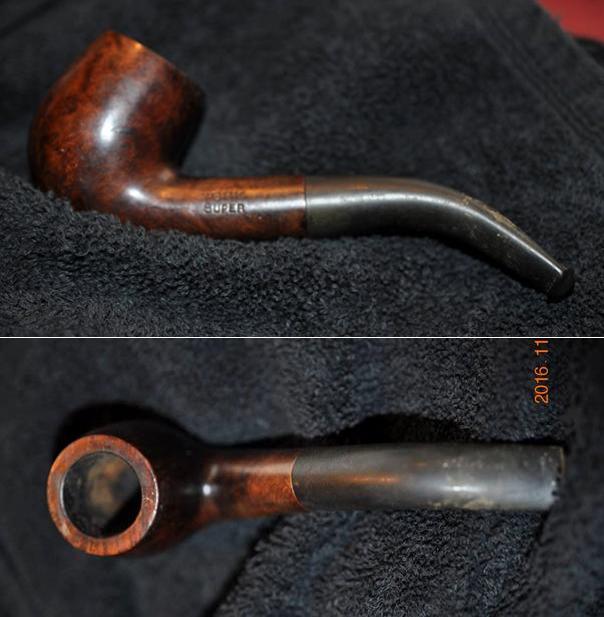
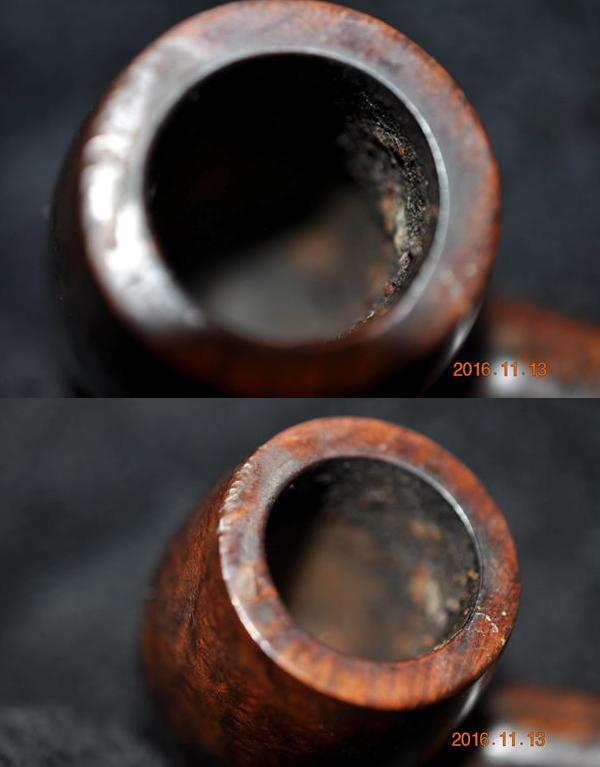
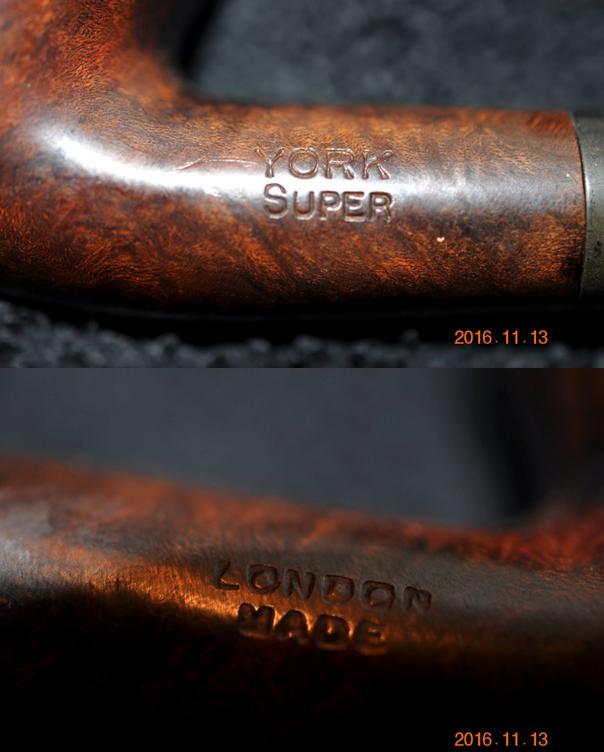
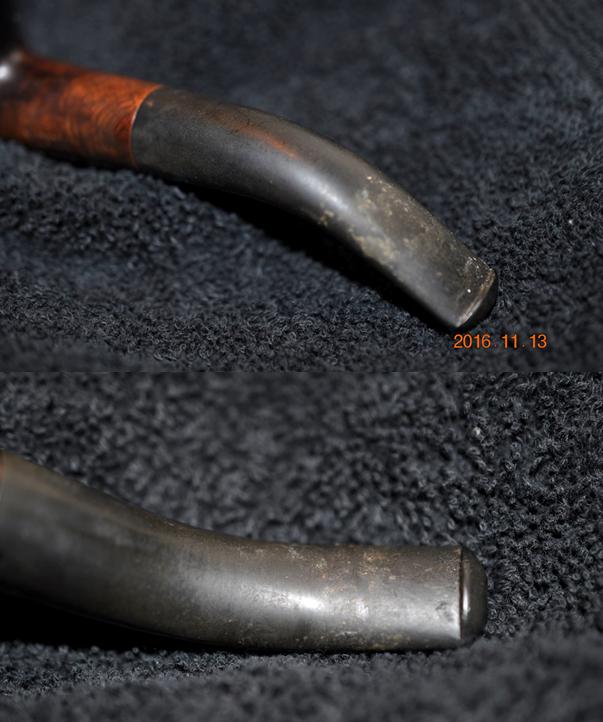
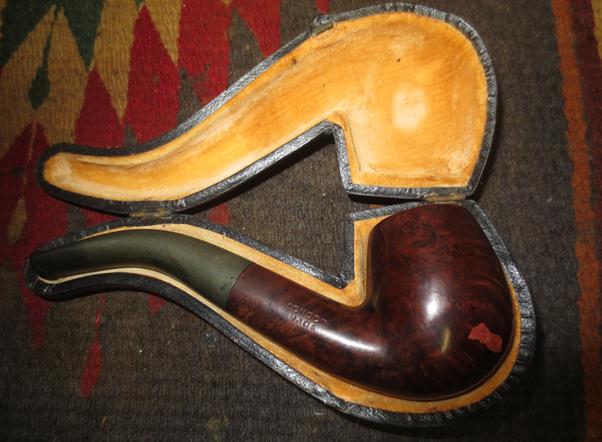
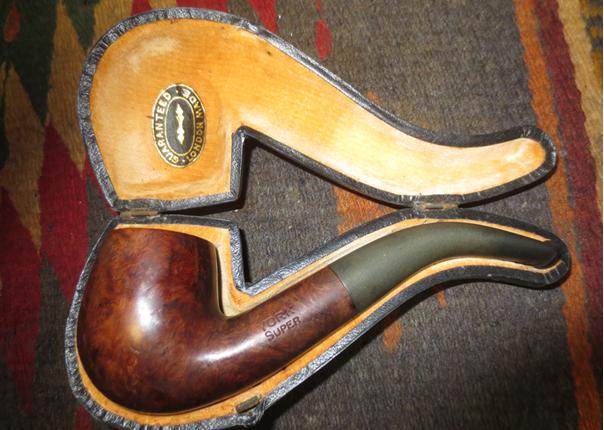
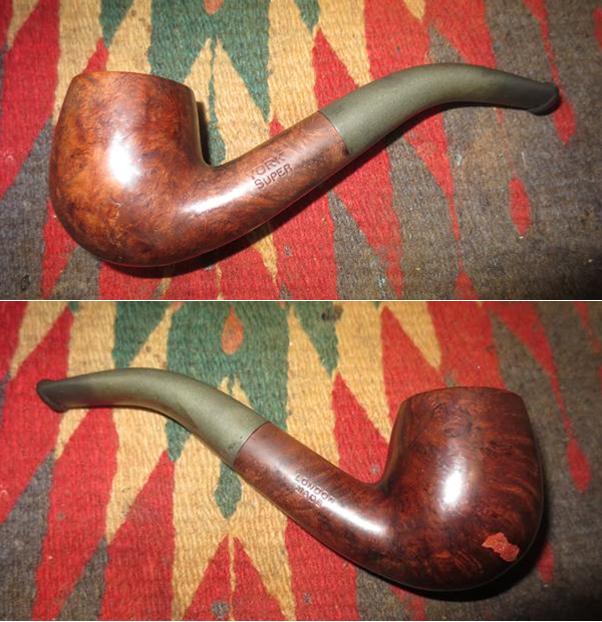
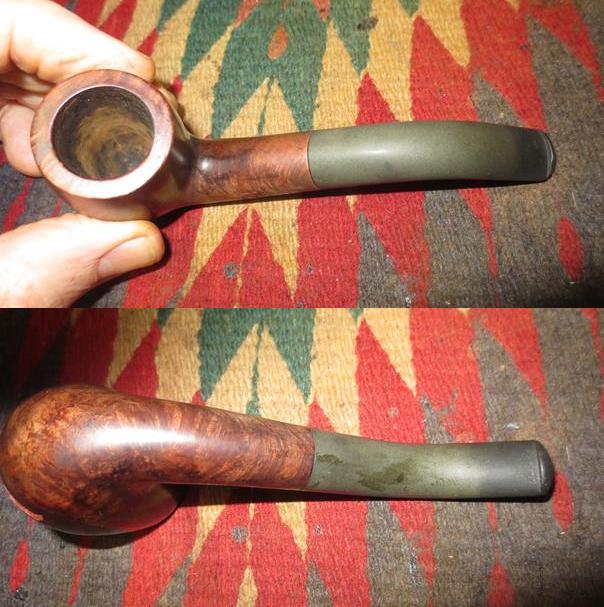
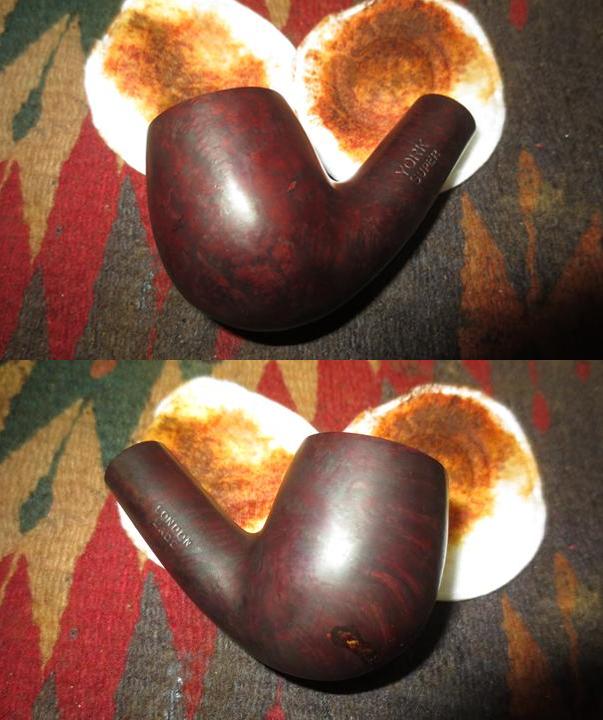
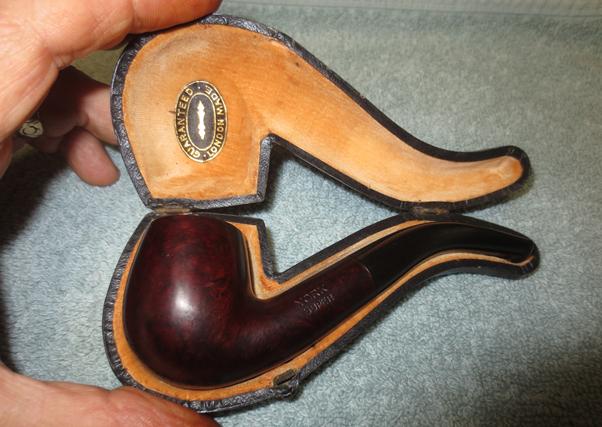
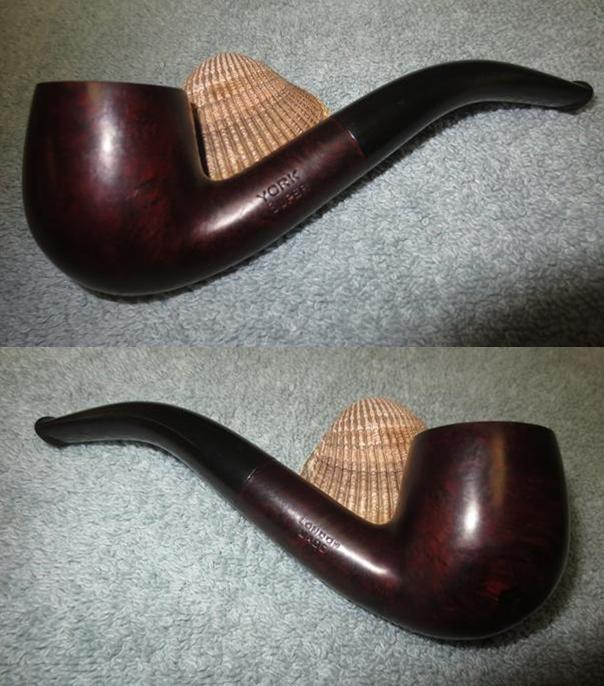
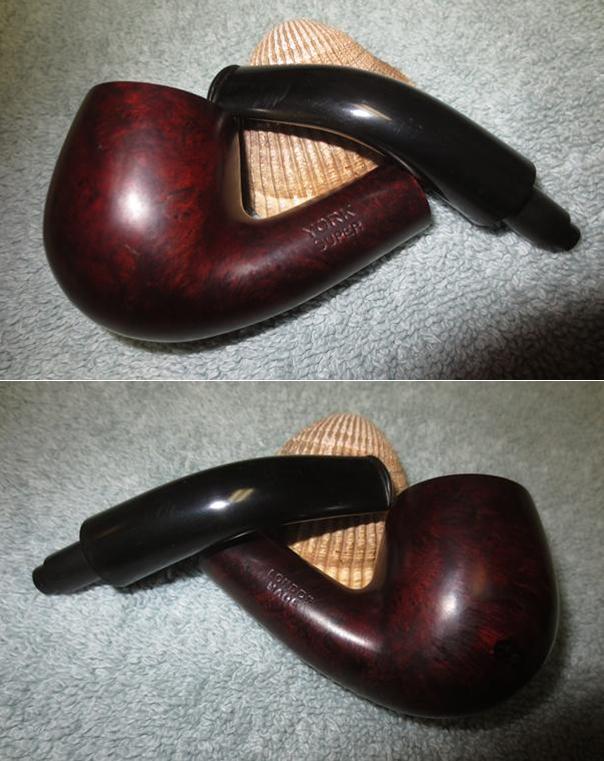
In a recent box of pipes that my brother Jeff sent to me from Idaho there was an interesting little pipe. It came in its own black leather case with a gold felt lining. There was a logo on the inside that read Guaranteed London Made. The case was in excellent condition. The pipe inside was really good looking and from the stem shape and orific button it was clear that it had some age on it. It was stamped on the left side of the shank with the words YORK over SUPER and on the right side of the shank with the words LONDON MADE. For a pipe of this age I was surprised that the finish was still in pretty decent condition. The only real issue of consequence was a spot on the right side where there was a large fill that was falling out. The bowl had a thin cake around the top half of the bowl while the lower part of the bowl appeared to be unsmoked. It had not even darkened from smoking it. There was some minor rim damage on the outer edge toward the bowl front where the pipe had been knocked out against something hard. There were some nicks on the front edge and there were some dents in the rim but they were not too bad. The rest of the finish was dirty and dull but would clean up nicely. The stem had tooth marks and chatter at the button on both the top and bottom sides of the stem and it was oxidized. The vulcanite was older and was a good quality rubber. The button was an older orific style with a single hole in the end. I liked the overall look of the pipe.The next series of photos show the large fill toward the front on the lower right side of the bowl. It was a pink putty fill and it was crumbling revealing the flaw in the briar. The third photo captures the crumbling area of the fill. It would need to be picked out and refilled. The next two photos show the stamping on both sides of the shank. It was sharp and readable and did not show signs of over buffing.My brother took two photos of the stem to show its condition. The photos show the oxidation on the stem and the nature of the tooth marks near the button. The quality of rubber used in this old timer can be seen in the lack of oxidation.I have restored on other older York pipe and from my research I found that it was probably made by KB&B. The London Made stamp on the cover of the case and on the pipe led me to consider several other options but the stamping itself matches exactly the style used by KB&B. From what I could find they also had London Made pipes like this. I would love to find the back story on this brand but at this point this is all I could find. Do any of you have any more information on the brand? Post it here for all of us to learn from. Thank you ahead of time for your help.

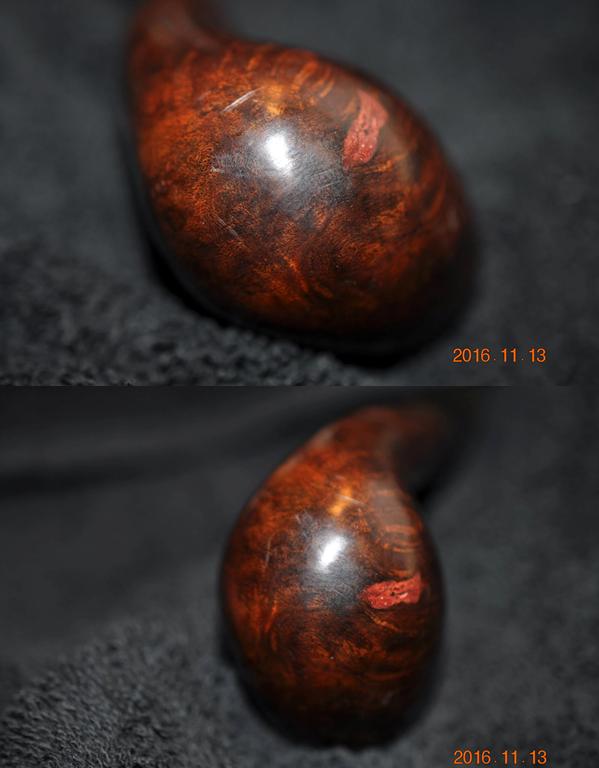
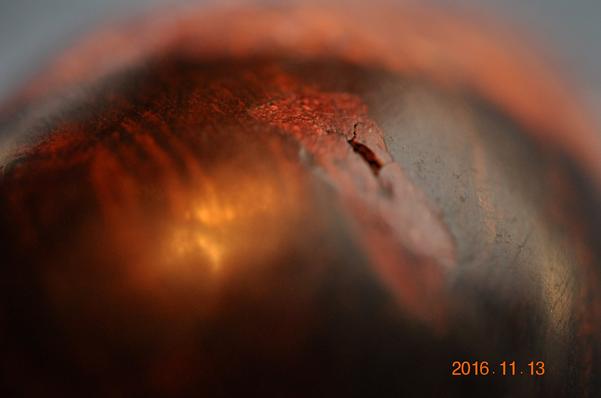
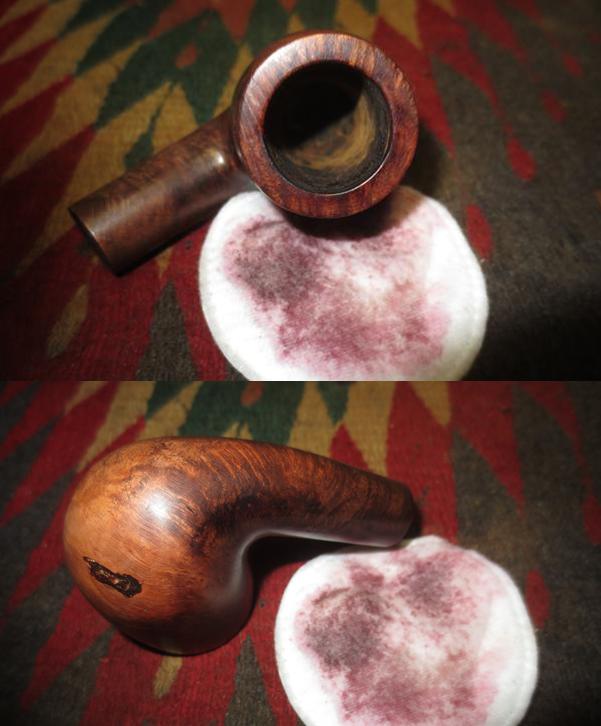
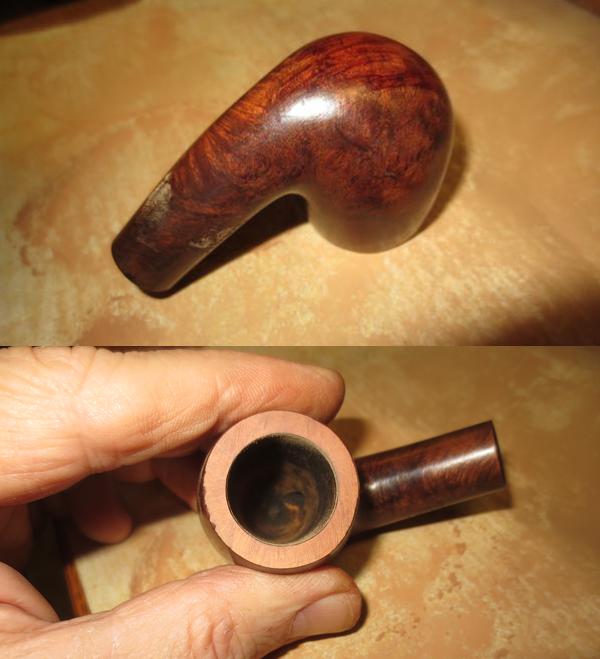
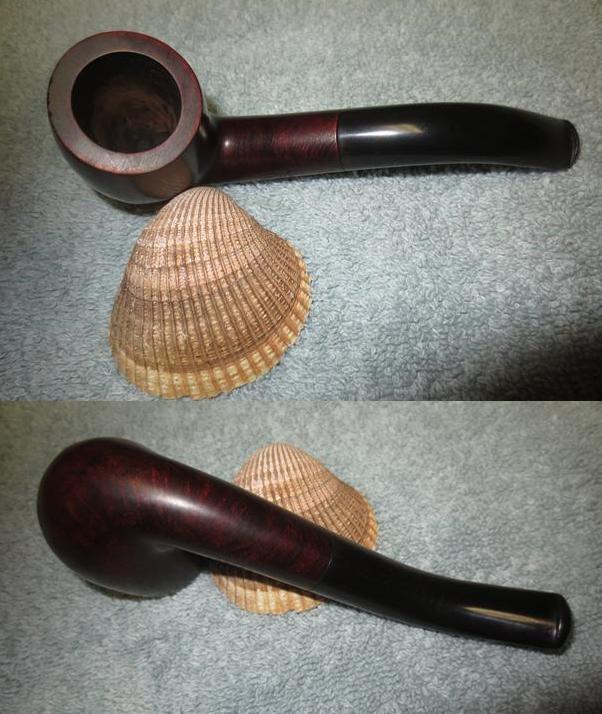
My brother did his usual stellar cleanup of the pipe. He scrubbed the surface with Murphy’s Oil soap and removed the buildup of wax and oils on the exterior of the bowl. He reamed the bowl and cleaned out the mortise and airway in the shank and the stem with pipe cleaners, cotton swabs and alcohol. When I ran a pipe cleaner through the pipe it came out clean. The chamber and mortise area showed that this pipe had not been heavily smoked. The stem was clean on the inside and needed no more work on my part. The light tooth marks and chatter would be fairly simple to remove. When it arrived at my work table I took the following photos of the pipe both in and out of the case. The shape is one of my favourites and the diminutive size make it a pipe that probably traveled well in a pocket. I took some close up photos of the bowl, rim and stem to show the condition of the pipe before I started the restoration process. The large pink putty fill was really ugly on the bottom right side of the bowl. It was cracked and chipped, but even if it were not I would still pick it out and start over. The grain on the pipe is quite nice but this eyesore of a fill makes it disappear from view. I picked the fill out completely with a dental pick. I wiped down the surface of the bowl around the area that needed to be repaired with alcohol on a cotton pad. I packed in some briar dust and put some drops of clear super glue on top. I added more briar dust and super glue until the surface bulged slightly above the bowl surface.When the repair dried I sanded the area with 220 grit sandpaper to blend the surface of the fill into the surrounding briar. I sanded it with a medium and a fine grit sanding sponge to remove the scratch marks. I refilled the small air bubbles that had showed up in the surface of the bowl with some more super glue and then sanded them again. Once the surface was smooth I wiped down the bowl with alcohol to remove the finish before restaining the pipe. I use alcohol as it does not react to the super glue repair like acetone does. Acetone actually dissolves the super glue and compromises the repaired area. At this point I could have left the rim alone and not worried about the nicks and dings. They do not show up well in the photos but they were very visible in person. I could also feel them when I ran a finger over the rim. To put it mildly, they bugged me. I lightly topped the bowl to remove the damage and minimize the damage to the front edge. I sanded the bowl with a medium and a fine grit sanding sponge to remove the scratches. I was happier with the rim top now that I had finished it.I stained the pipe with a dark brown aniline stain and flamed it to set it in the grain of the briar. I have found that when a pipe has been previously stained with a oxblood colour that it will come out in the final colour of the dark brown stain and give the pipe a rich patina that is really close to the original colour.I wiped the bowl down with alcohol on cotton pads to make it more transparent and help the grain show. You will notice in the second photo that the filled area is still showing. I needed to do a little more work on that to get it to blend in more. I used a black Sharpie pen and touched up the spots on the fill that looked lighter than the bowl. I hand buffed the pipe to give it some lustre and touched up the area of the fill with some more dark brown stain. I set the bowl aside to dry and turned my attention to the stem. I sanded out the tooth chatter and tooth marks with 220 grit sandpaper. I polished the stem with micromesh sanding pads – wet sanding with 1500-2400 grit pads and dry sanding with 3200-12000 grit pads. I repeatedly rubbed the stem down with Obsidian Oil and after the final sanding pad gave it a last coat of the oil and let it dry. I put the stem back on the pipe and buffed the pipe with Blue Diamond on the buffing wheel. I find that Blue Diamond gives lustre to the briar and the vulcanite. I gave the bowl and stem multiple coats of carnauba wax and buffed it with a clean buffing pad to raise the shine. Don’t skip this step in the process. Many folks do not buff with a clean pad after the waxing and miss out on giving the pipe a rich shine by missing this. I hand buff my pipes afterward with a microfibre cloth as I find that it deepens the shine and evens out the finished look on the briar and rubber. The finished pipe is shown in the photos below. The elegant shape of the older bent billiards is quite captivating. These smaller, compact ones have a definitive look all their own. Thanks for looking.

Reworking Rustication on a Savinelli Extra Lumberman


Blog by Steve Laug

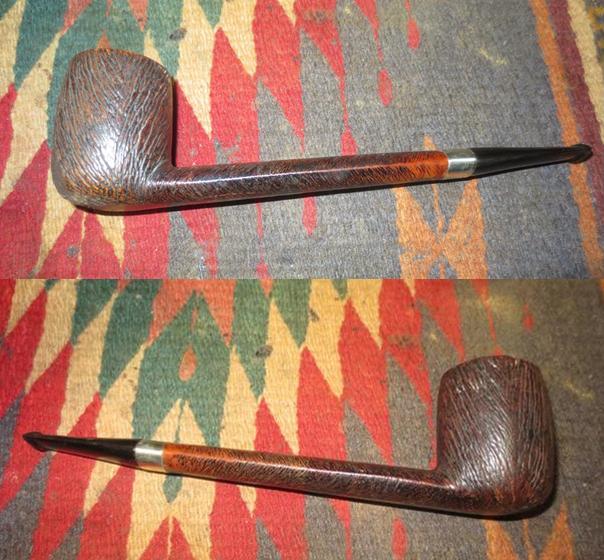
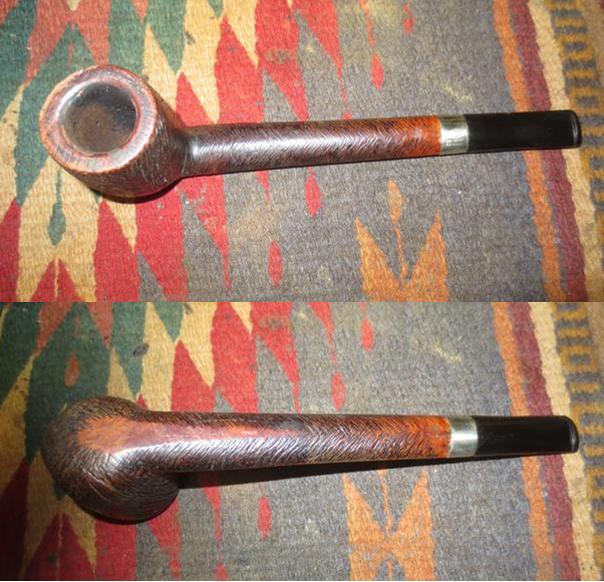
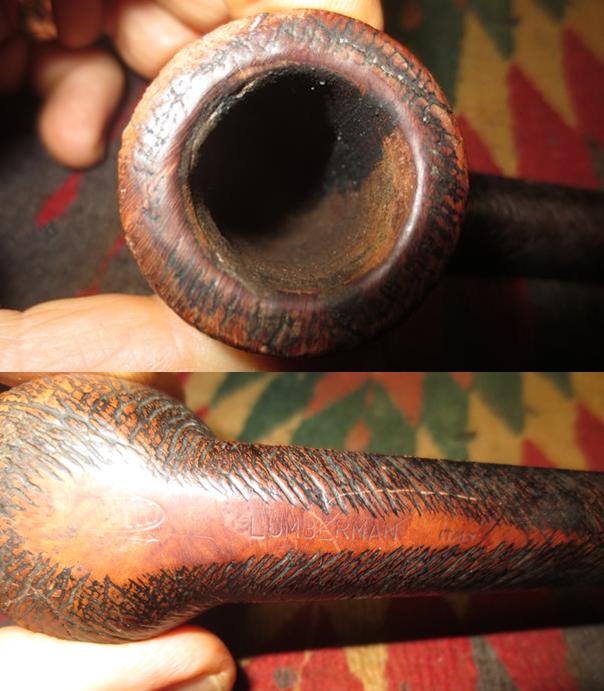
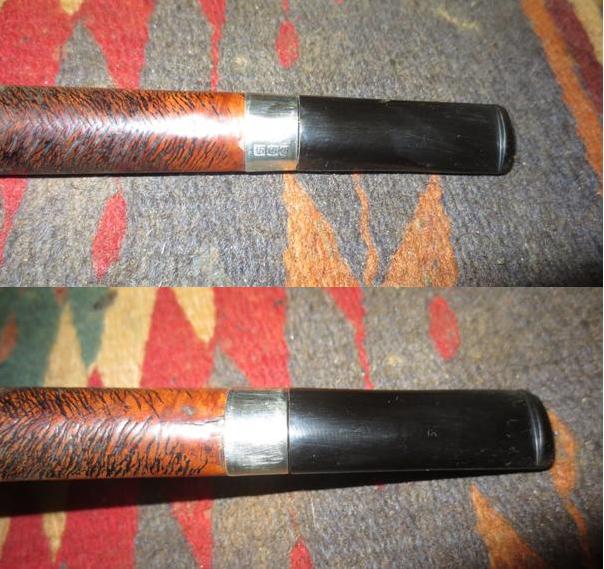
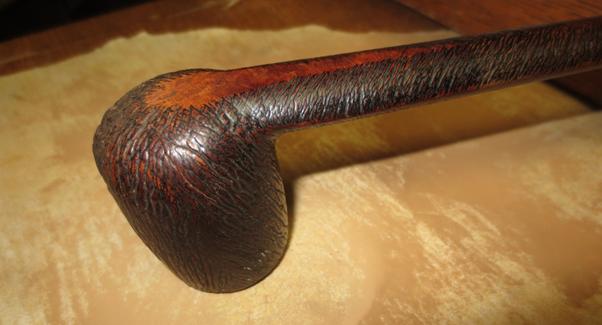
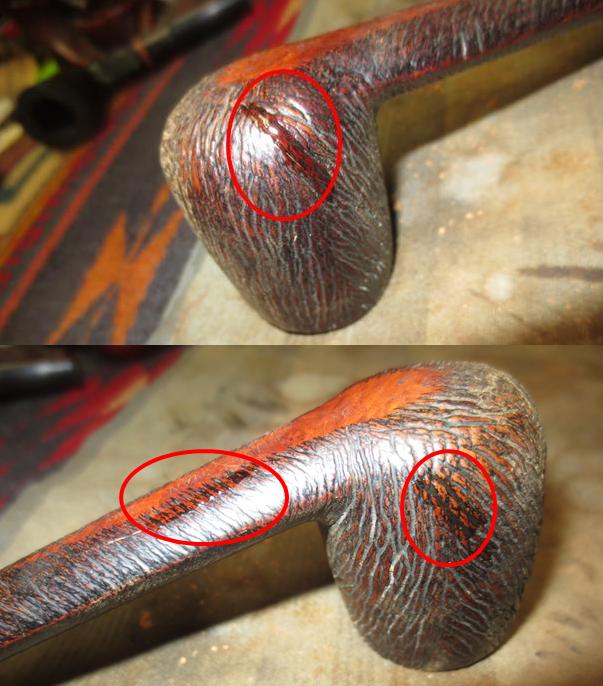
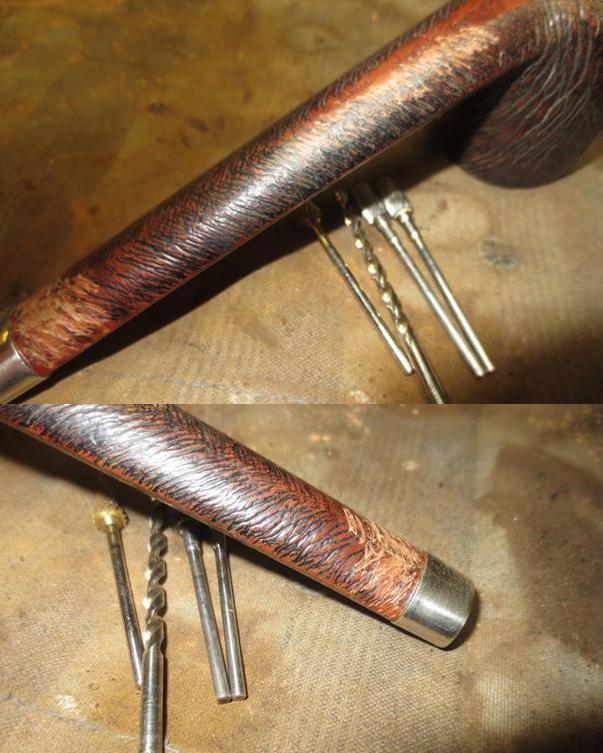
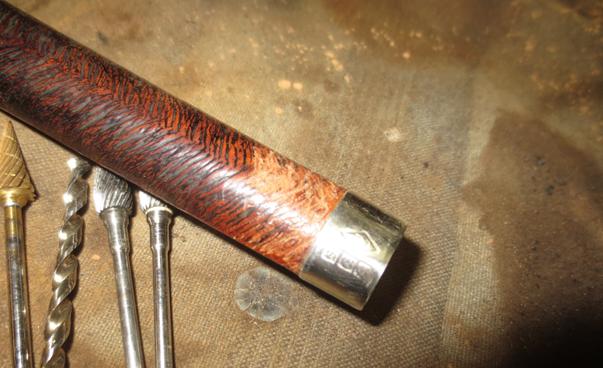
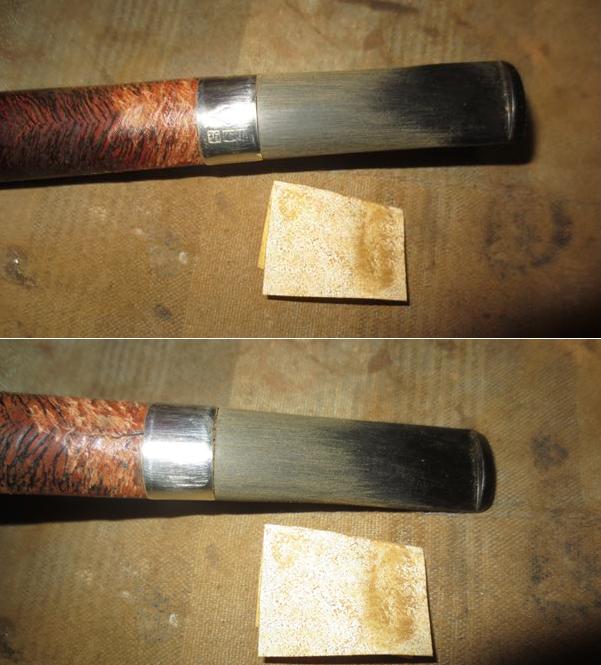
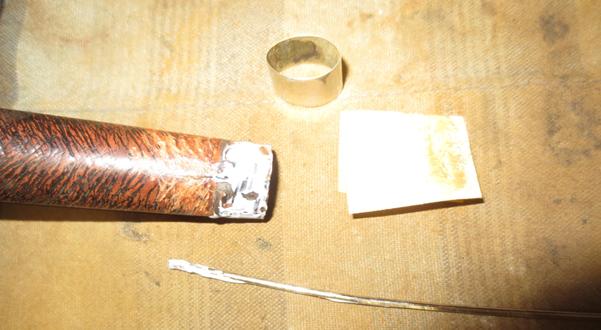
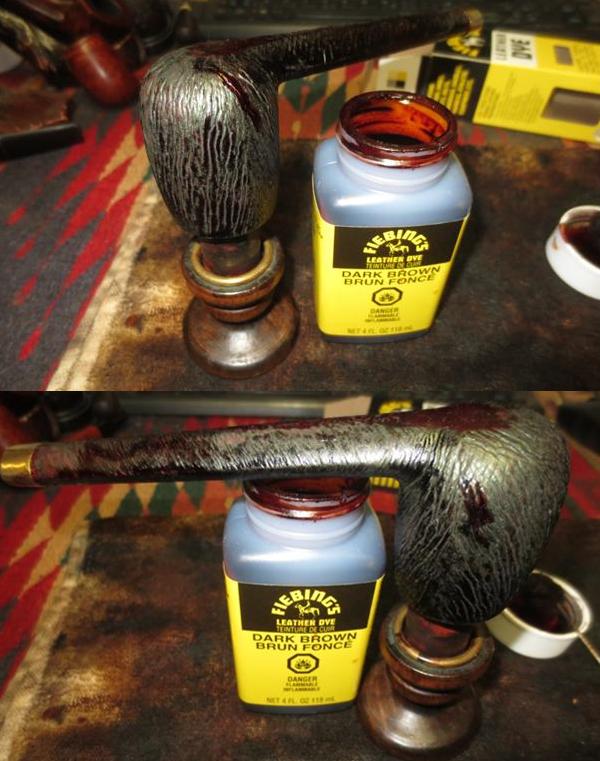
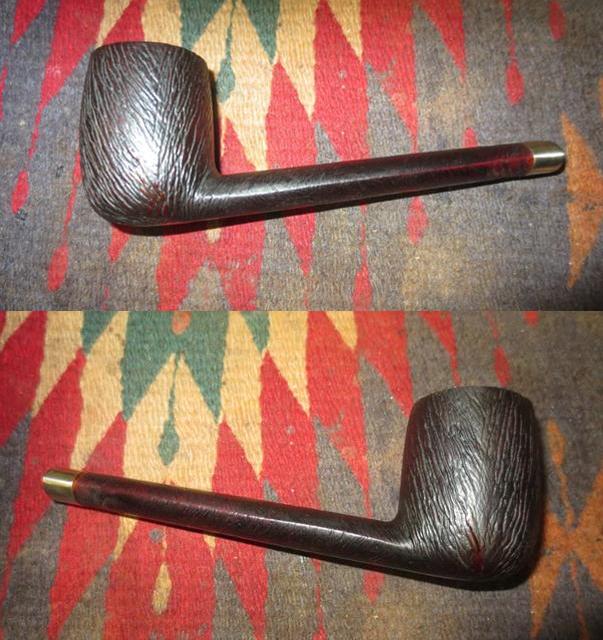
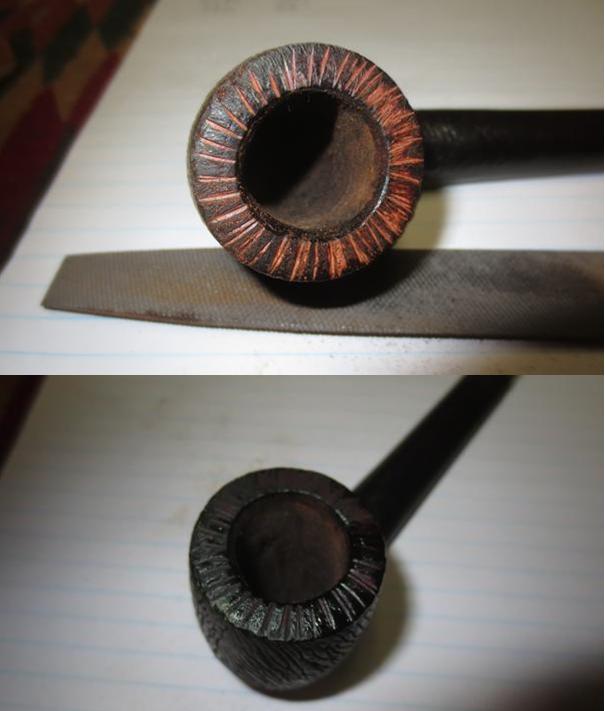
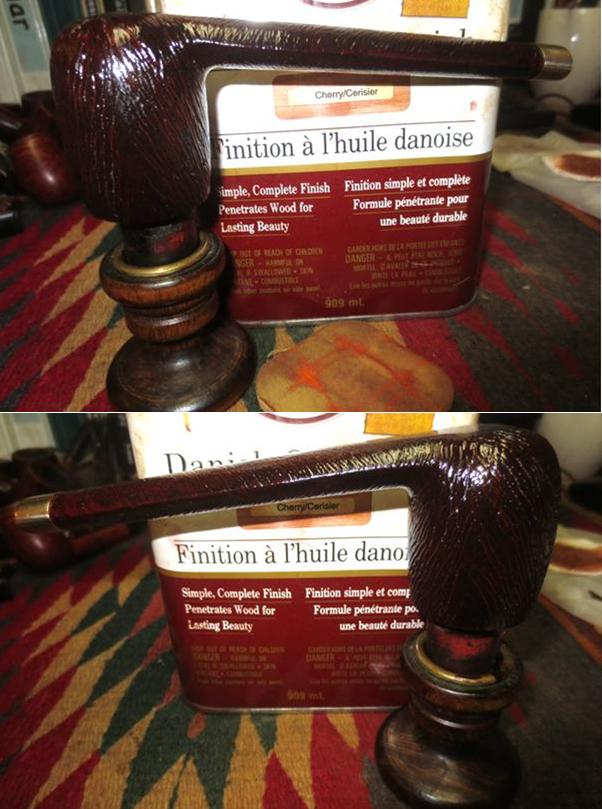
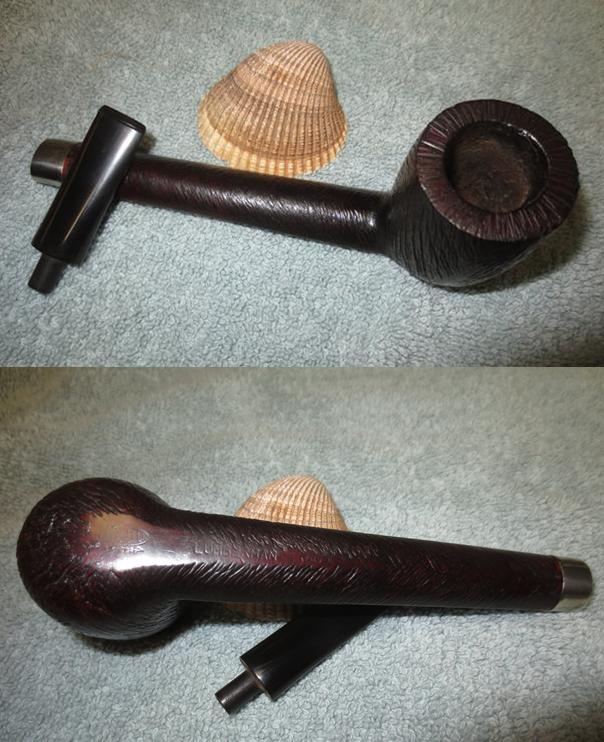
My brother and I picked up this long shanked Canadian when I was in Idaho. We bought it from the same seller that had all of the Calabash pipes. It is a wire wheel rustication that follows the bowl at an angle and runs almost chevron like on the top and bottom of the shank. It is a large pipe. The dimensions are: length – 7 ½ inches, height – 2 inches, external diameter – 1 ½ inches, inner bowl diameter – ¾ inches. There were some obvious issues with the pipe that I will point out through the following photos. First of all the big picture look at the pipe. It is stamped Savinelli Extra Lumberman on the underside of the shank. Next to that it is stamped Italy. In the second photo below you can see the line where the two sections of shank are joined. The next two photos of the rim top and the underside of the bowl and shank show some of the other issues. The rim top was worn smooth in places and the front right outer edge was rough from knocking the pipe out on hard objects. There was also some cake on the wall that needed to come out on the front right of the inner edge. The underside of the shank shows a hairline crack above the Lumberman and Italy stamping and another at the edge of the bowl just above my thumb. There was also a hard patch of something stuck to the bottom front of the bowl that was hard and rough. I am not sure if it is a repair or what but it will need to be addressed.The band on the shank is part of a shank repair that had been done on the pipe. The shank had been smoothed out and most of the rustication removed under and in front of the band. There was a repaired crack on the underside of the shank. The band was loose on the shank as the glue had dried. The band is an aftermarket repair band and not original. The replacement stem has been poorly fitted to the shank end. The diameter of the oval stem does not match that of the shank and band.There were definitely a lot of little issues that needed to be addressed on this long shanked Canadian but there was something about it that attracted me to its potential. I topped the bowl on a topping board with 220 grit sandpaper and removed the damage to the outer and inner edges of the rim.I pressed some briar dust into the small crack on the right side of the bowl toward the bottom and added some clear superglue. I repaired the hairline crack on the shank and on the lower left side of the bowl – drilling the ends carefully with a microdrill and then filling in the crack with briar dust and super glue. I circled the small cracks in red in the photos below.I used a series of dental burrs and drill bits on the Dremel to replicate the striated pattern of the wire rustication on the bowl and shank. It took some slow and careful handwork. I ran the Dremel at a speed of 5 so that I could easily maneuver it around the bowl and shank to match the pattern of the rustication. I used it to remove most of the thick, hard spot on the front of the bowl and match the rustication pattern surrounding it. I reworked the rustication on the rim of the pipe. I repaired the rustication under and against the band on the end of the shank and the repair on the underside of the shank. The first go at it I used the dental burrs but would later have to use files and rasps to cut the proper pattern in the briar. The next photos show the progress of the rustication. I slid the band off the shank, put the stem in place and shaped the stem to fit the curvature of the shank. I worked on it with 220 grit sandpaper until the flow of the shank and the stem matched. I personally like a smooth junction between the stem and the shank and the only way to do that correctly is to remove the band and rework that area before gluing the band back in place. The next two photos show the fit of the stem to the band and also the striated rustication pattern. Progress is being made.I slid the band off and put white all-purpose glue around the shank where the band would go. I pressed the band in place and wiped away the excess glue. I let the glue under the band set until the band was tight against the shank.I gave the bowl and shank an under stain of dark brown aniline based stain. I applied it and flamed it to set it in the briar. I repeated the process until the coverage was what I wanted.I hand buffed the pipe with a cotton cloth to give it a basic polish. I wanted to see what the coverage looked like once the stain had dried. I took photos to show how the pipe looked once I had gotten to this point in the restoration. The rim did not look right to me so I used a file to cut lines into the rim top. I used a large rasp and also a set of needle files to hand cut the lines. The photo below shows the lines after I used the wood rasp. I stained the rim top again with dark brown stain to have a look.I used some smaller needle files to cut lines between the lines that were already on the rim from the rasp. I wanted the pattern to look more like the patterns on the bowl sides and shank. I restained it with a dark brown stain. Once the stain was flamed and dried I gave the bowl a coat of cherry Danish Oil as a top coat that would add some contrast to the look of the briar and blend the all the repairs and the joint of the two parts of the shank into one cohesive looking piece. I hand buffed the bowl and shank with a soft cloth and then gave it a light buff with Blue Diamond on the buffing wheel. The contrast looks really good and the coverage makes the repairs blend in really well with the rest of the bowl and shank. I polished the stem with micromesh sanding pads – wetsanding with 1500-2400 grit pads and dry sanding with 3200-12000 grit pads. I buffed the stem between the 2400-3200 grit pads and then finished with the pads. I rubbed the stem down with Obsidian Oil after each grit of pad and then a final time after the 12000 grit pad. I set the stem aside to dry. There were still some faint sanding marks on the stem showing so I buffed the stem with Red Tripoli and then carefully buffed out the scratches with Blue Diamond on the wheel. I was able to polish the stem and it shone nicely. I buffed the nickel band and then lightly buffed the bowl with Blue Diamond. I gave the stem multiple coats of carnauba wax and gave the bowl and shank several coats of Conservator’s wax. I buffed the pipe with a clean buffing pad to raise a shine and hand buffed it with a microfibre cloth to deepen the shine. The finished pipe is shown in the photos below. It is a beauty and should provide a cool smoke to whoever wants to add it to their collection. I will be posting it in the rebornpipes store soon. Thanks for looking.

Restoring a Frederick Tranter Pipe Shop Bath Lovat


Blog by Steve Laug

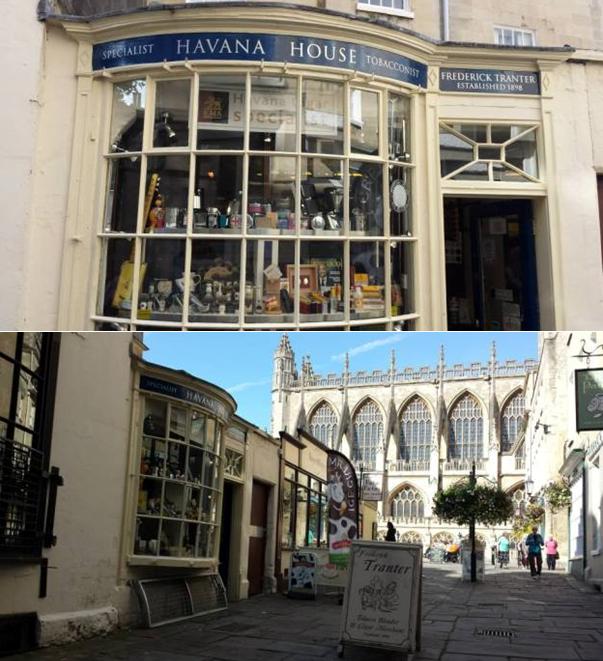
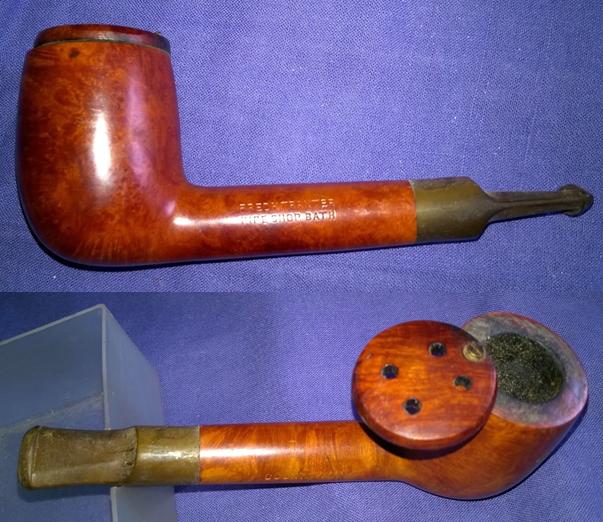
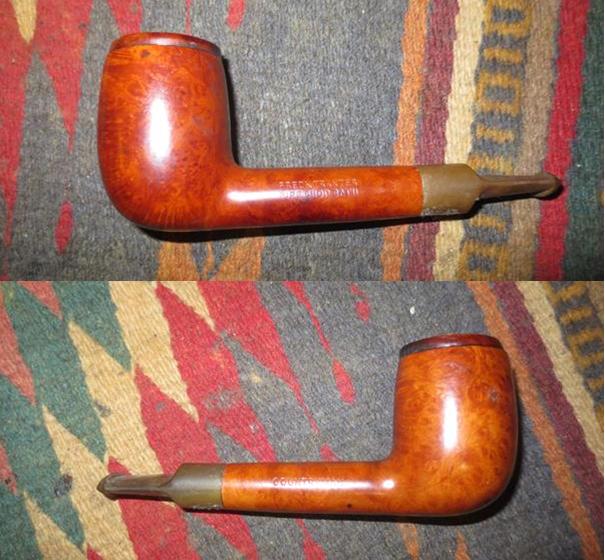
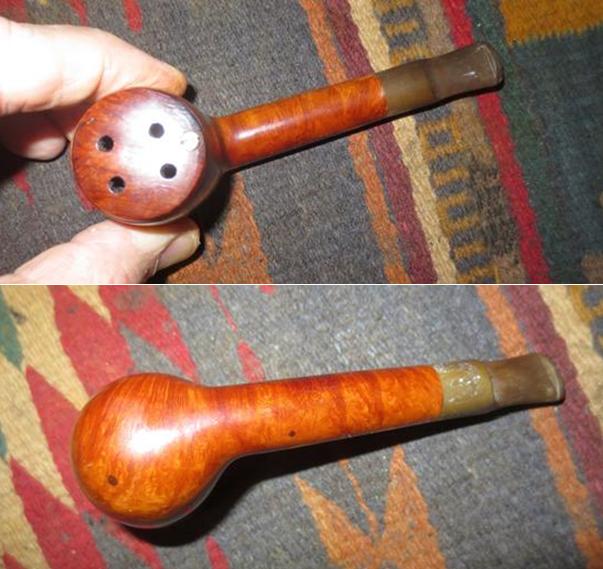
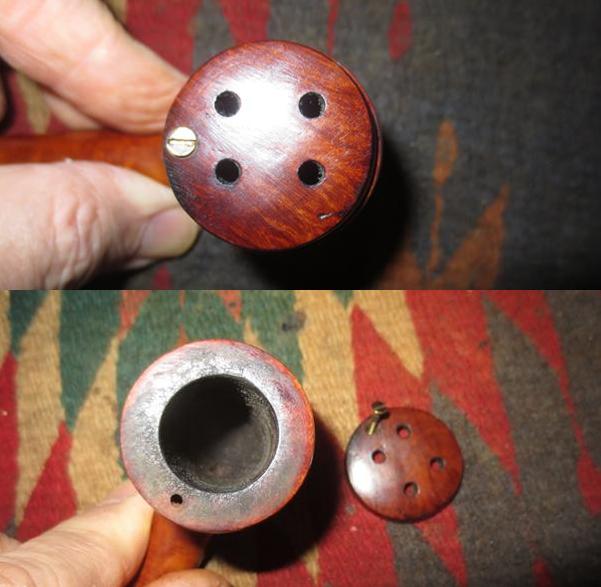
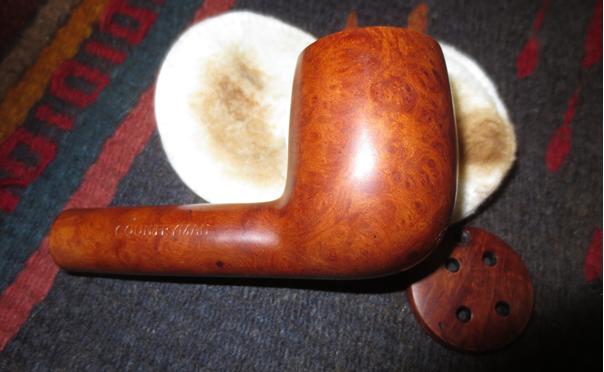
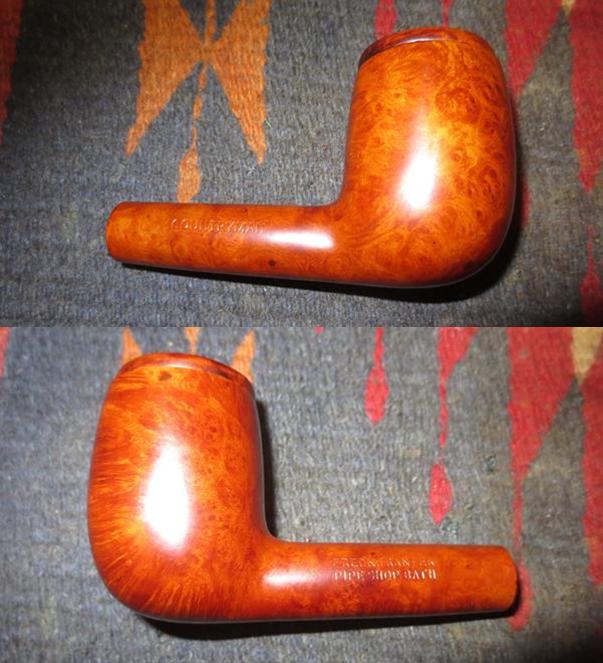
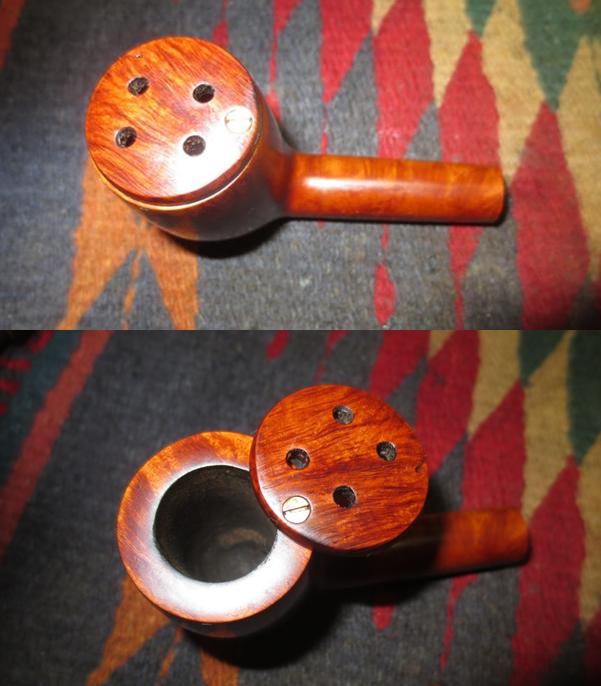
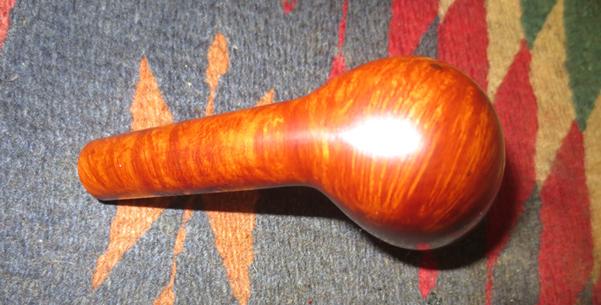
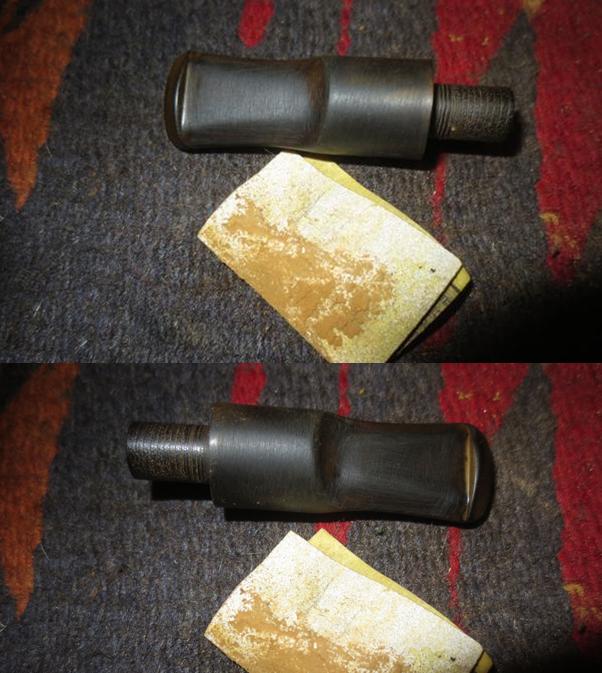
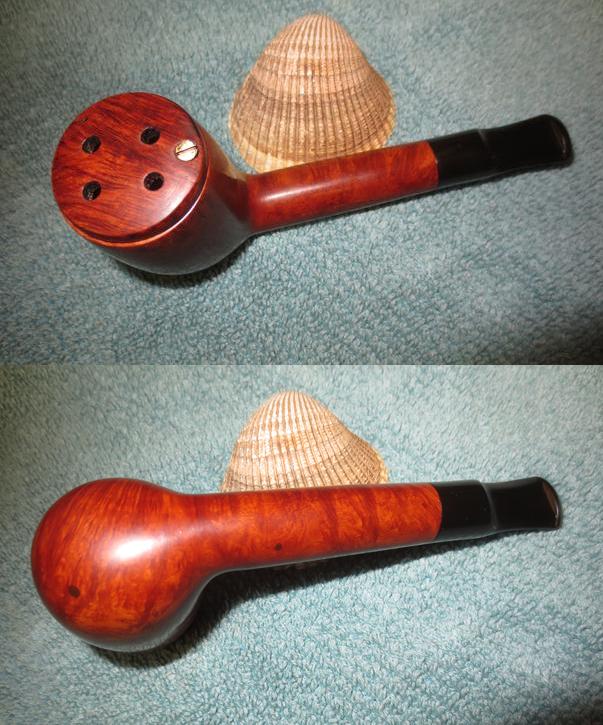
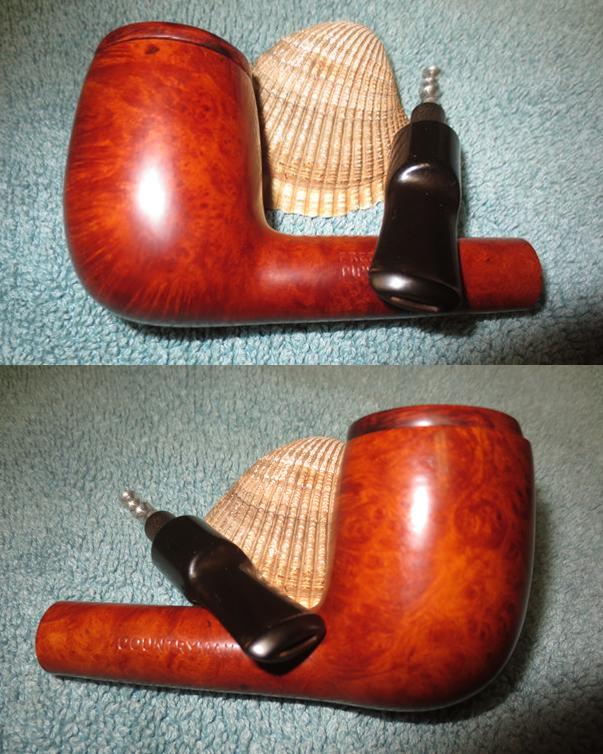
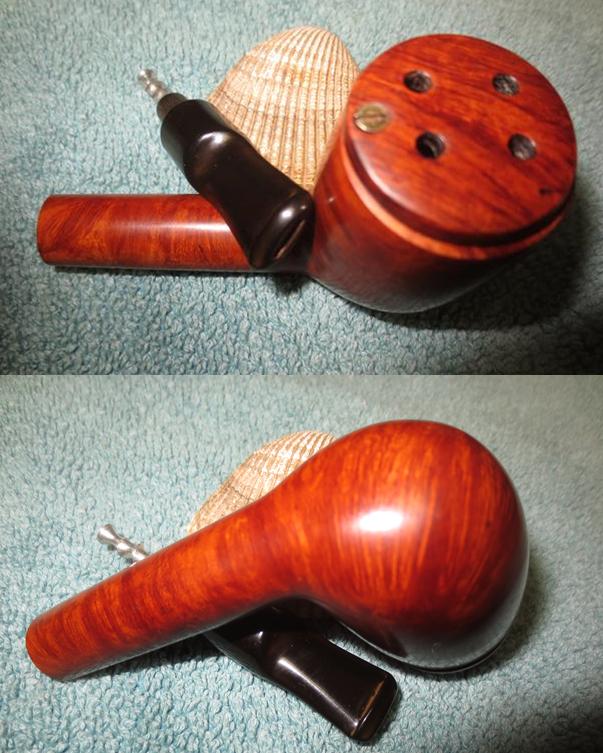
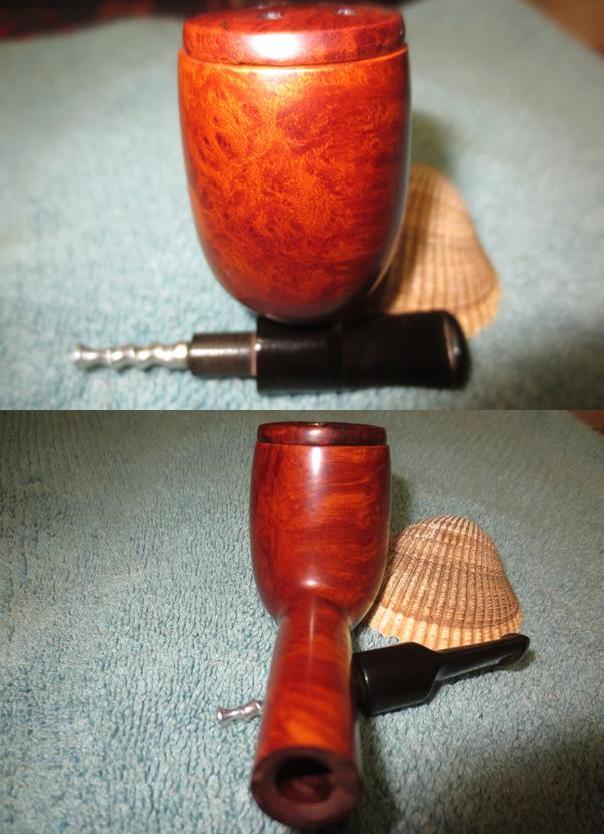
In 2002 my wife and I celebrated our 25th Wedding Anniversary and were gifted a trip to the United Kingdom. We landed at Gatwick Airport in London and took the train on a loop around the UK. We stopped in Cambridge and York for a few days. We traveled up to Edinburgh and then back to Oxford and Bath. We returned to London and spent a few days there. At each spot we stopped along the way we hunted down various tobacco shops. It was a real treat to visit shops around the UK. As I visited each one I was fairly certain that many of them would disappear over the years ahead. I was not sure when we would get back for another visit so I wanted to visit as many as possible (as of 2017 that turns out to be true). One of my favourite shops was the Frederick Tranter shop in Bath. It was not a big shop but it was packed with pipes and tobacco. It smelled and looked like a proper tobacco shop. I have written about it previously on the blog. Here is the link: https://rebornpipes.com/2014/03/01/remembering-my-trip-to-frederick-tranters-in-bath-england-in-2002/. I have included two photos of the shop that I took when I visited there. It really was a quaint shop and one in which I would enjoy spending a lot of time smoking a bowl and enjoying wares.Since the day I visited the shop and bought my first Tranter pipe, I have kept an eye out for Frederick Tranter Pipe Shop Bath pipes. When I saw this one on Ebay I liked it. It was a nicely shaped Lovat with a briar wind cap attached to the rim by a brass screw. The cap swivels right and left so that the pipe can be filled and lit. I put a bid on it and won. The next two photos are ones that the seller included. The pipe looked to be in good shape. The cap is not exactly the same diameter as the bowl but it does cover the bowl.The stamping on the shank of the pipe is very clear and sharp. On the left side it reads Frederick Tranter over Pipe Shop Bath. On the right side it reads Countryman. There are no shape numbers or other identification marks on the pipe. From my previous interaction with the shop and researching the brand I found that Cadogan made many of the pipes for them. I am not sure what the age is on this one but it is a great shaped Lovat. I took some close up photos of the wind cap on the top of the bowl. The first shows the cap in place over the top of the bowl. The brass screw in on the back side about middle of the rim top. There were four equal sized holes on the top and the edges crowned. The second photo shows the bowl with the cap removed by unscrewing the brass screw. The top of the rim had some tarry buildup and there was a light cake in the bowl. The inner and outer edge of the bowl were in perfect shape.I took a close up photo of the outside and the inside of the cap. The inside is slightly indented and had a carbon buildup. At first I thought it was burned however when I cleaned it up I found that it was only covered with carbon.I took photos of the stem surface on both top and bottom sides. It was oxidized and there was some gummy substance on the stem from what appeared to be a price tag.I scrubbed the surface of the bowl with alcohol on cotton pads to remove the grime. I scrubbed the rim top as well and I was able to remove all of the buildup. This was a nice looking piece of briar with birdseye and cross grain around the bowl.I reamed all of the cake out of the bowl with a Savinelli Fitsall Pipe Knife. I took it back to bare briar. I scrubbed out the mortise and the airway in the shank and stem with pipe cleaners, cotton swabs and alcohol until they were clean. I was surprised that the overall condition of the airways and shank were so clean.I rubbed the bowl and shank with Cherry Stain mixed with Danish Oil. I wiped it off and polished it by hand. The hand polished bowl is shown in the photos below. The stain made the grain really stand out and gave the pipe a fresh look. The stem needed a lot of work to remove the oxidation. I sanded the stem down with 220 grit sandpaper to remove the heaviest oxidation. The tenon had marks on it that I would need to leave to keep the snug fit in the mortise.I cleaned up the metal twisted stinger to remove all of the oils and tars that had collected there. I polished it on the buffing wheel and with a microfibre cloth. I put it back in the tenon. I polished the stem with micromesh sanding pads – wet sanding with 1500-2400 grit pads and buffing it with red Tripoli. I reloaded the buffing pads with the Tripoli and worked over the angles of the stem and saddle to get as much of the oxidation out of those spots as possible. I dry sanded the stem with 3200-12000 grit pads. I rubbed the stem down repeatedly with Obsidian Oil and after the final pad I left it to dry. There was still some oxidation remaining on the stem so I reworked it with the buffing pads and Tripoli. I worked on it until I had removed the remaining oxidation. I buffed it with Blue Diamond to polish it further. In the final photos there are still spots where the Tripoli showed up under the bright light of the flash but the stem now glows. The finished pipe is shown in the photos below. It is a beautiful looking older Lovat. The rounded button end and slot were smooth and comfortable. The vulcanite shone and the briar really looked good. I buffed the pipe with carnauba wax and then with a clean buffing pad to give it a shine. I took it back to the work table and hand buffed it with a microfibre cloth to deepen the shine. Thanks for walking with me through the refurb on this pipe.


Cleaning up a Dr. Grabow Westbrook 44


Blog by Steve Laug

Not long ago I received and email from Dave, a reader of the blog, asking about a couple of pipes that he had picked up. I have included his email below. He gives his assessment regarding the pipes and what he wanted done. He had also done a bit of research on the Dr. Grabow pipe for me. I really like this kind of information.

Steve… I have recently been gifted 2 estate pipes that I would love to have reincarnated by your hands. I am not sure of the cost and wanted to speak with you first. One because I have never shipped anything to Canada and I am not sure if there would be any issues. Two, I also wanted to get an estimate of cost before going forward. The 2 pipes in question are not in bad shape, just have some age, cake and minimal wear; one is a Whitehall rusticated with saddle stem and the other a Pear shaped Dr. Grabow Westbrook. The Dr. Grabow from what I can find is a special R J Reynolds model which has the orange spade on the side of the stem. I have attached some images with this email so that you have some idea of how they look. If you need additional images please let me know. Thank you for your time and consideration.
Regards, Dave The first that I chose to work on was the Dr. Grabow Westbrook Pear Shaped pipe. The pear shape came in both a slim pear (#74) and a medium pear (#44). The chart below is taken from https://pipedia.org/wiki/File:1960sDrGrabowFlyer5.jpg. It shows the shape of the pipe I was working on. I believe that I am working on a shape 44, Medium Pear.I examined the shank with a lens and I could see that the left side of the shank was stamped Westbrook over Dr. Grabow. The right side of the shank was stamped Imported Briar over PAT. The number that follows the PAT. stamp is illegible. It is very faint. From this I can extrapolate that the pipe is an early version of the Dr. Grabow Westbrook line. It came out in the early 1960s. https://pipedia.org/wiki/Dr._Grabow

I found an article on Pipedia about the RJ Reynolds pipes and when and how they were offered through pipe coupons. I have included the majority of the article as well as the link.

https://pipedia.org/wiki/RJR_Grabow_information

R.J. Reynolds Tobacco Company had two other pipe tobaccos which were George Washington and Carter Hall that shared a good hunk of the pipe tobacco market left over from Prince Albert and Sir Walter Raleigh. Thus sets the stage for a coupon to be placed in each package or can of these tobacco products. The pipes presented to the American public were the very finest mass produced pipes ever created by man, or in all probability will ever be created by man. Pipes were presented with either a metal filter or a paper filter. The highest quality pipes were presented with only a metal filter. The Westbrook model came either in a rustic or matte finish and had metal filters along with the Berwyck that presented the same choice with paper filters. These pipes could be purchased only by mailing five coupons and three dollars to Sparta, North Carolina. The classic of the series was a natural grain Emperor with only the metal filters and its cost was five dollars and required twenty five coupons. About half way through the duration of the offer the Sculptura was introduced as demand was high for a quality sandblast grain pipe. So, R. J. Reynolds Tobacco Company set out to produce the perfect sandblast grain pipe and boasted that no finer sandblast pipe had ever been produced by man nor ever would be produced by man than its Sculptura that could only be purchased by collecting five coupons and sending that along with four dollars to Sparta, North Carolina.

Each order that was filled for every pipe ordered throughout America came in a neat box with a full set of literature including a shape chart that actually gave a pipe smoker an immediate choice to choose from far greater than any pipe store or other outlet that America has ever seen or probably will ever see.

This mail order offer that began sometimes in the early 1950’s would end in 1987 when R. J. Reynolds Tobacco Company sold its tobacco products to John Middleton, Inc. At that time it was announced that this mail order offer was the longest running mail order offer in duration of time of any mail order offer of any product on the American market. Thus, an era ended eighteen years ago or so and as each year turns over these pipes become less available and thus more valuable.

The argument about a good smoking pipe so prevalent today among pipe smokers is not applicable to these pipes for the simple reason that they all smoke good and they all smoke just alike with no discernable differentiation that any one pipe is any better or worse than any of the others. These pipes came from the top twenty percent of Briar obtainable and were constructed with the quality control standards of a Zippo lighter. The only difference was in the shape and this was presented in a very large number of choices. The Dr. Grabow pipe is clearly stamped as such, but was never ever retailed. It was admitted by all that these pipes were superior to the retail Dr. Grabow pipe. Those with the metal filter are no longer obtainable from any source. Those with the paper filter, although similar to the present Dr. Grabow, is of a superior quality. Since those with the paper filter were not nearly so popular as the metal filter in those old days it is rather difficult to find one these days. There will not be many days until those with the metal filter are gone forever never to be replaced and it is likely that anyone who possesses such a pipe has a very valuable piece of Briar or to become such in not very many years. One other point, also like a Zippo, these pipes are virtually indestructible…

I took some photos of the pipe when it arrived. Overall impressions of the pipe were good. The briar was a beautifully grained piece; the stamping was faint on the left side of the shank and not readable on the right. The bowl had a light cake with overflow and darkening on the crowned rim. The stem was oxidized and appeared to have been clipped off. The new button was thin and the slot was sloppy. Work would need to be done with that end of the stem. I took a close up photo of the rim top and bowl to show the overall condition. It was in great shape for a pipe this age. It had been pretty well cared for over the years. I also took photos of the stem to show the thinness of the button. I am pretty certain it was reshaped somewhere along the way. The stinger apparatus was different from other Grabows that I have worked on. It was pressure fit into the threaded tenon and was a tube rather that the shovel stinger I was expecting.I scrubbed the top of the rim with a cotton pad and saliva to try to remove the buildup and darkening that was there. It actually worked very well. I sanded it with 1500 grit micromesh to further smooth things out. I reamed the bowl with a Savinelli Fitsall Pipe Knife and took the cake back to bare briar.I built up the button top and bottom with black super glue. I did not need to build it up too much so I decided to just use the glue and not add charcoal powder. I set the repaired stem aside to let the glue cure.I sanded the bowl with 1500-6000 grit micromesh sanding pads and wiped it down with a damp cotton pad to remove the sanding dust. The photos below show the bowl after sanding it with 1500-2400 grit pads. I scrubbed out the shank and the metal mortise with alcohol, pipe cleaners and cotton swabs until they came out clean. The interior of the shank was really dirty. Many pipe cleaners and cotton swabs later the shank was clean and the metal mortise was shiny.In the past I have used a Cherry Danish Oil Stain that matches the colour of these older Grabow Westbrook pipes really well. It is the kind of stain that you rub on, let sit and rub off. Since the finish on the Westbrook smooth pipes was smooth, once the stain was dry I would rub it down to a matte gloss look.I hand rubbed the finish once it had been sitting for a short time. The photos below show what the bowl looked like after it had been rubbed down. The grain really stands out now – showing a combination of birdseye and cross grain. I love the look of the briar on this old pipe. Once the repair had dried I reshaped the button with needle files. I worked on the slot with needle files. The third photo shows what the slot looked like at this point. I will need to smooth it out but it is looking better.I sanded down the file marks and the oxidation on the stem with 220 grit sandpaper. I folded a piece of 220 grit sandpaper and worked on the slot to smooth out the file marks. I sanded the flat end of the button. I cleaned out the airway in the stem with a pipe cleaner and alcohol. I polished the stem with micromesh sanding pads – wet sanding with 1500-2400 grit pads and dry sanding with 3200-12000 grit pads. I carefully buffed the stem with red Tripoli between the 2400-3200 grit pads. I finished with the pads. I rubbed the stem down with Obsidian Oil after each set of three pads. I gave it a final rubdown with oil and set it aside to dry. After I saw the oxidation still showing in the above photo I buffed the stem again with red Tripoli. I started the sanding process over and sanded the stem with the earlier micromesh sanding pads. I buffed it with Blue Diamond on the buffing pad.I worked some more on the stem to get out the hard to remove oxidation. It took time but I think it is gone for the most part. I polished the end of the stem with micromesh sanding pads to smooth out some of the scratches. The stem looks much better. I buffed the bowl and stem with Blue Diamond, carefully avoiding the Dr. Grabow spade logo so as not to damage it. I gave the bowl and stem multiple coats of carnauba wax to protect it. I buffed it with a clean buffing pad to raise the shine and by hand with a microfibre cloth to deepen the shine. I took the following photos of the finished pipe. It is truly a beautiful piece of briar – hard to believe it is a coupon pipe it is such nice wood. The pipe is ready to go back to Dave. Now I have to finish up the second pipe he sent to me. Thanks for looking.

Restoring a Pipeman’s First Pipe


Sometimes I get requests to restore pipes that touch a sentimental chord for me. When that happens it brings back all kinds of memories and thoughts for me. A while ago I received an email from Phil regarding a pipe he had that he wanted some help with. He explained that it was not an expensive pipe but that was his very first when he started as a pipeman. We emailed back and forth for a bit and then he sent it up to me in Vancouver to assess and see if it was worth restoring. It came in the mail last week and I opened the package to have a good look at it. I went over it slowly and carefully and found some issues that needed to be addressed. To me the pipe was very restorable and I was willing to take it on.

Here is what I saw as I looked at the pipe. I put together a list for Phil and emailed it back to him. I would say it is well worth a cleanup, repairs, refinishing and polishing. I think that it has a pretty long life ahead of it.

  1. He was concerned with the overall condition of the pipe. It was a basic basket pipe and had a lot of fills in the bowl and shank. The bowl had never been smoked to the bottom so the briar is raw. It is a little smoky looking but is basically sound. The pipe can be smoked for a long time.
  1. The little lines in the bottom of the bowl are called checking. They happen to the inside of almost all pipes and are caused by heating and cooling. In this case it appears that the pipe had never been smoked to the bottom. I recommended a complete reaming and then some pipe mud (cigar ash and water) to fill in the little fissures and then a simple bowl coating to protect the bowl while he built a cake.
  1. He had mentioned a crack on the left side of the bowl. The noted crack was definitely there. It was on the left side toward the front. It is a hairline crack that starts at a putty fill toward the top of the bowl and ran down to another putty fill on the bottom of the bowl. This is one time where fills actually worked in my favour. I repair cracks all the time by drilling a small pin hole at each end to stop the crack from spreading. In this case the fills did just that for me. Go figure. I would need to simply pick out the old putty and repair the fills or top them up with super glue and briar dust.
  1. The rim looked like it had several fills on the top and the inner edge. It was hard to be certain as there was a thick coat tarry lava. It would need to be cleaned off and the fills check for stability and repaired if not.
  1. The stem was in good shape but was oxidized and had tooth chatter. It would need to be cleaned and polished to remove the oxidation and make the vulcanite shine.
  1. Looking in the shank the mortise and airway are also sound.

Here is what the pipe looked like when it arrived in Vancouver. I took photos to set the base for what it looked like before I started. Note the fills on the shank sides, bottom and bowl sides and bottom. I took a close up photo of the rim top to show the condition of the bowl and the rim. The front inner edge of the rim appears to be burned and it is out of round. It is hard to know if there was any other damage on the rim top.I took some close up photos of the fills and crack on the left side of the bowl running between the two large fills. It is circled in red in the photos below. The crack is hairline and is fairly tight. The fills show some shrinkage in the putty and will need to be removed and replaced.I took a close up photo of both sides of the stem to show the tooth marks and chatter on both sides near the button.I reamed the bowl with a Savinelli Fitsall Pipe Knife to scrape out the cake to the bare briar. I used the sharp edge to scrape off some of the heavy cake on the rim top.I scrubbed the top of the rim with alcohol and cotton pads. I was able to remove most of it. The inner edge of the bowl showed a lot of damage. The front edge had a fairly deep burn mark that covered the surface of the rim at that point but did not go too deep.I cleaned up the inner edge of the rim and the sides of the bowl with the PipNet reamer. I used it to remove some of the damaged edge.I topped the bowl to deal with the burn mark that is visible in the above photo. After I topped it  I repaired the damaged fills on the rim and bowl sides that way I could top the repaired portions at the same times. I picked out the fills with a dental pick and removed the putty. The two that joined the crack were quite large and deep. I repaired them by tamping briar dust into the pits and then pushing clear super glue into the dust. I repeated the process leave a thick bubble of glue and dust on the surface of the repair. I did the same on the rim top, inner edge and the shank sides and bottom to repair the fills there.I sanded the fills smooth with 220 grit sandpaper to blend them into the surrounding briar. I added a little more super glue to some pits in the repairs and sanded them once the glue had dried. I sanded the oxidation and tooth chatter off the stem with 220 grit sandpaper. I was able to remove all of the chatter and even the tooth marks as they were not too deep in the vulcanite.I sanded the bowl and stem with a medium and a fine grit sanding sponge to begin to smooth out the scratches and sanding marks. I sanded the bowl with 1500-4000 grit micromesh sanding pads in preparation for staining the bowl. I planned on giving the pipe a contrast stain so I started with a dark brown aniline based stain. I applied the stain, flamed it and repeated the process until I was satisfied with the coverage.I wiped the bowl down with alcohol on a cotton pad to remove the heavy dark finish and make it more transparent. I wanted the dark brown deep in the grain once I had removed it from the lighter portions of the briar. I sanded the bowl with 1500 grit micromesh pads. I continued to sand the bowl with 1500-2400 grit micromesh pads to get the transparency that I wanted on the bowl. The next photos show what it looked like once I had finished sanding it. I gave the bowl a top coat of Danish Oil with a Cherry Stain. I rub the oil onto the bowl and rub it off and buff it. The next two photos are a little blurred but you can clearly see the cherry colour that is coming to the surface of the bowl. It works really well to blend in the fills.I set the bowl aside to dry and turned to the internals. I cleaned out the mortise and the airway in the shank and stem with alcohol, pipe cleaners and cotton swabs.I polished the stem with micromesh sanding pads – wet sanding with 1500-2400 and dry sanding with 3200-120000 grit pads. I buffed the stem with red Tripoli on the buffing wheel after the 4000 grit pad and then finish sanding it with the 6000-12000 grit pads. I gave the stem multiple rub downs with Obsidian Oil after each few pads to see if the oxidation at the shank end was getting better. By the time I was finished with the final pads the stem looked much better. I would give entire pipe a buff before I finished the restoration. I mixed a batch of pipe mud – cigar ash and water – to form a paste and applied it to the bowl bottom and sides with a folded pipe cleaner. I pressed the mud into the small checking that was around the bowl bottom with a dental spatula. The pipe mud will protect the bowl while a cake is formed.I buffed the bowl and stem with Blue Diamond on the buffing wheel to raise the shine and highlight the grain on the bowl. The fills are still visible but they blend into the surface of the briar better than they did before. I gave the pipe multiple coats of carnauba wax and buffed it with a clean buffing pad to raise the shine. I hand buffed it with a microfibre cloth to deepen the shine. The finished pipe is shown in the photos below. I will be packing it up and mailing it back to Phil once I give it a bowl coating. I am hoping he enjoys this piece of his personal pipe history. It should provide many more years of enjoyment for him.