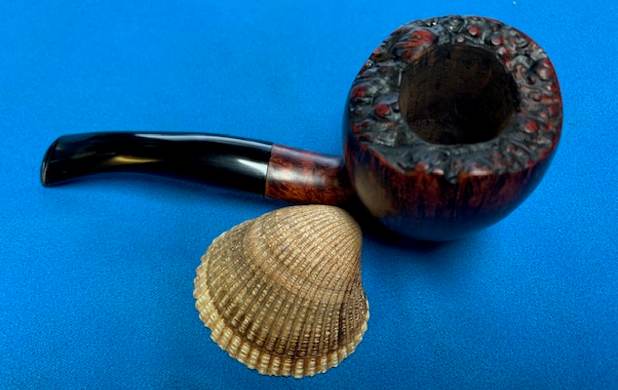
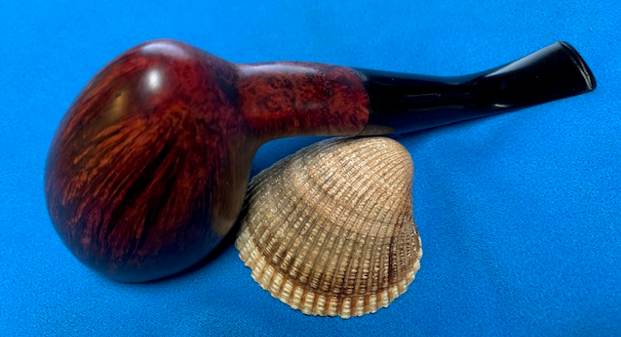
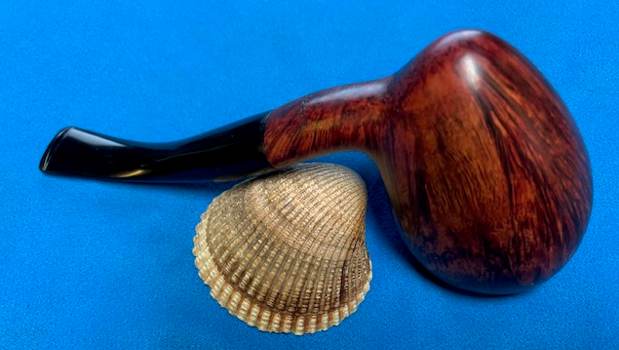
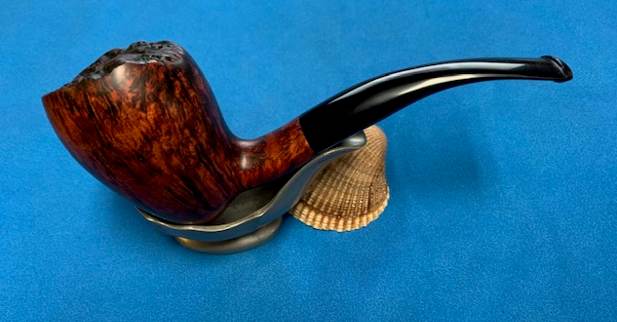
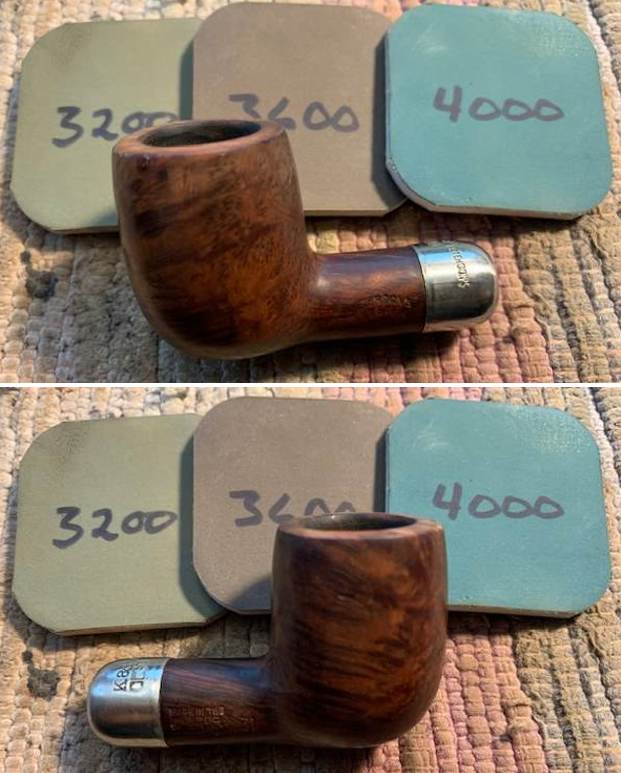
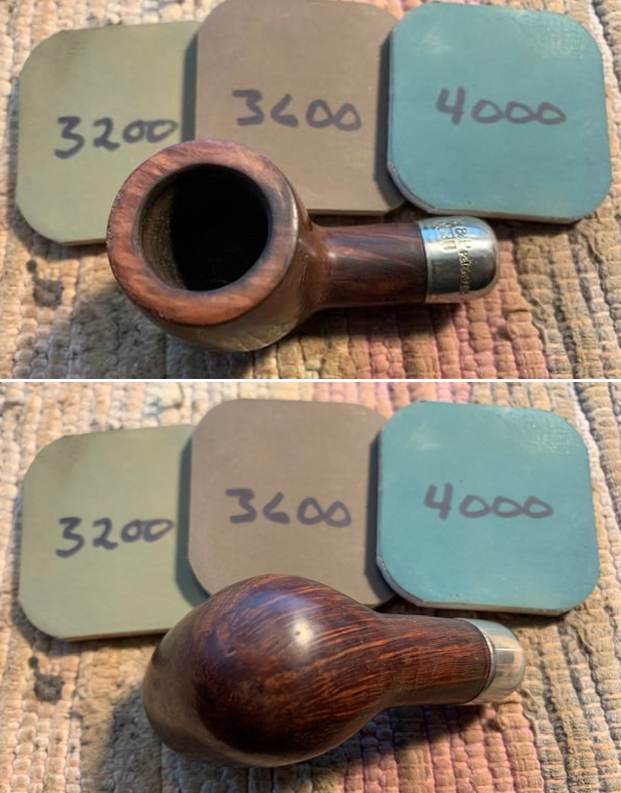
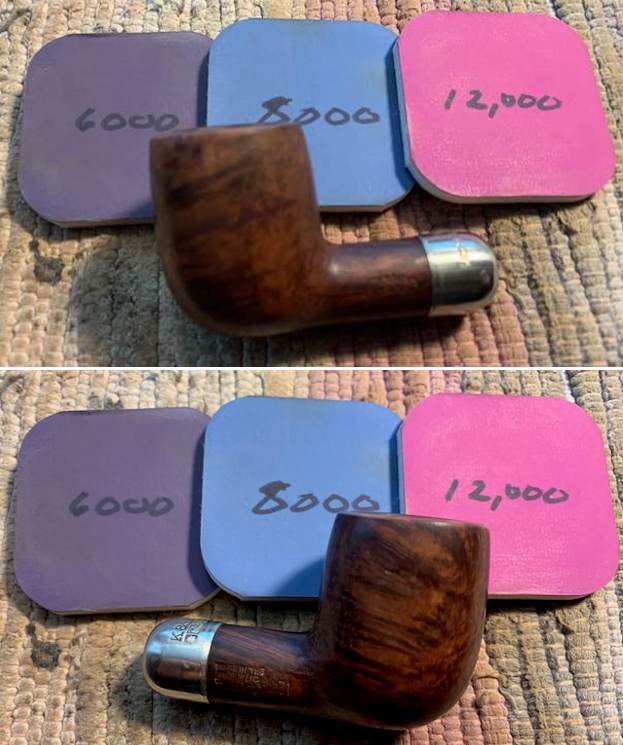
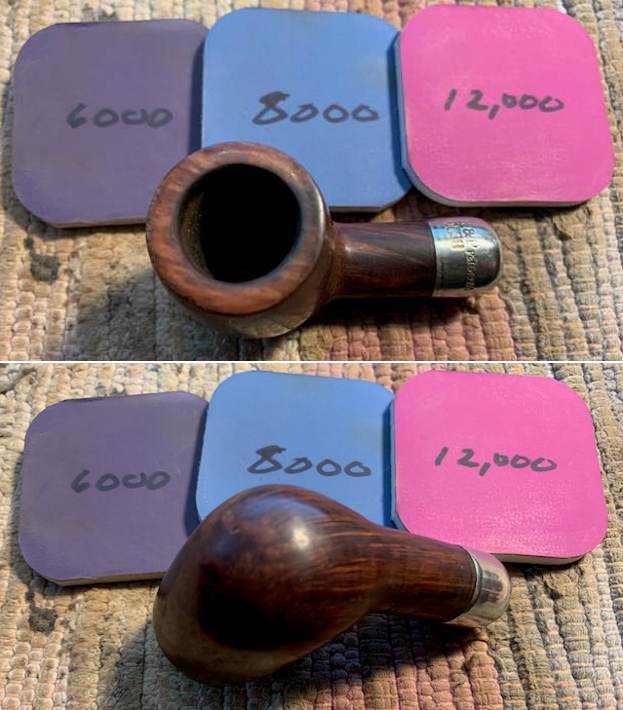
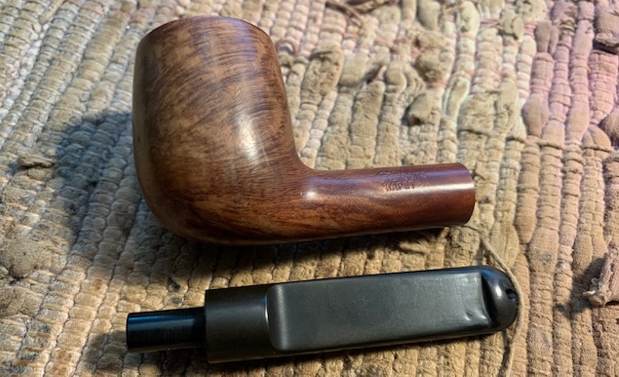
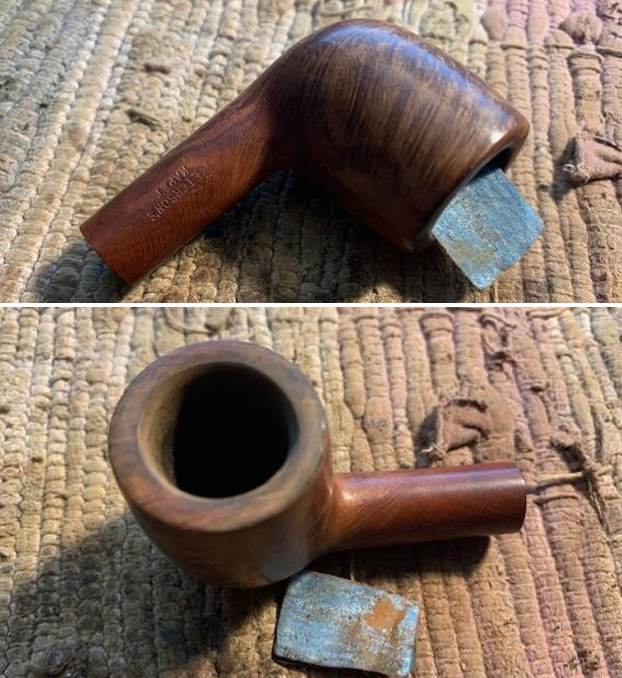
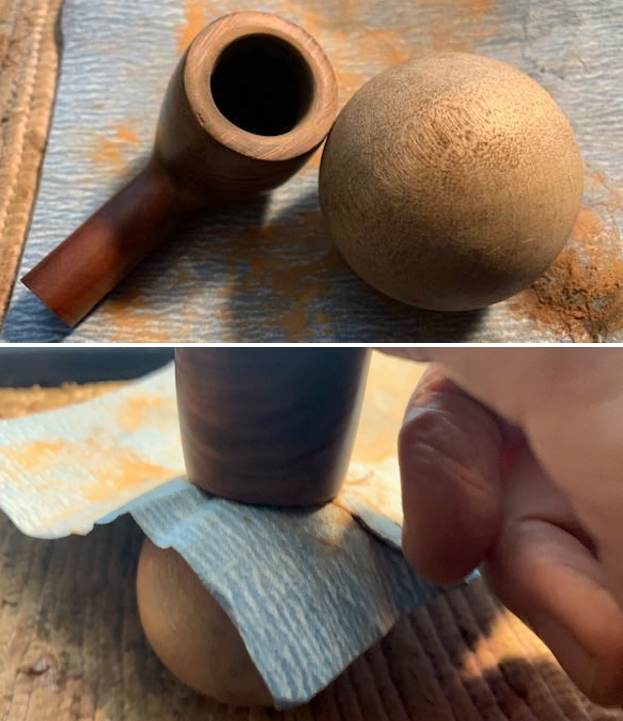
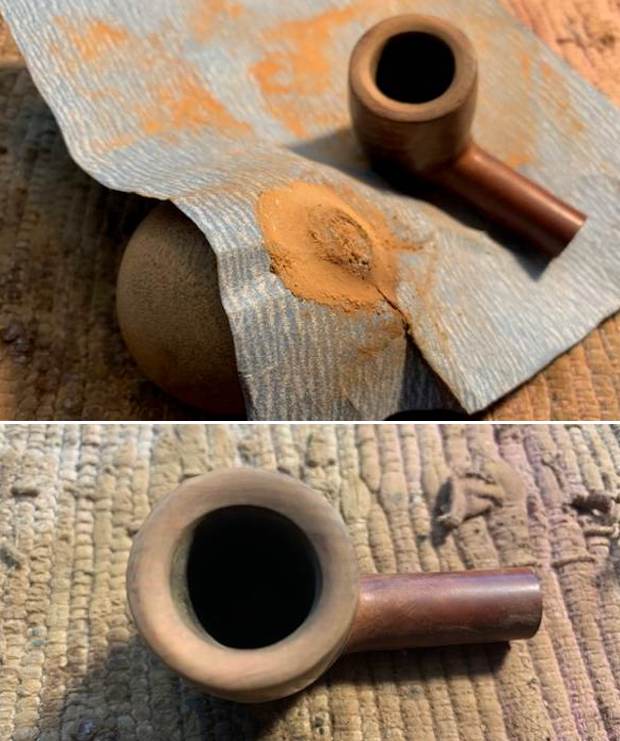
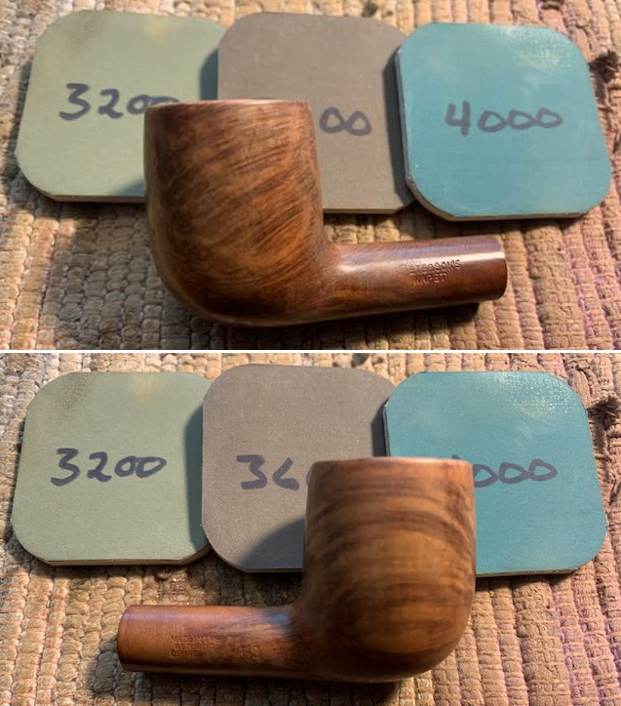
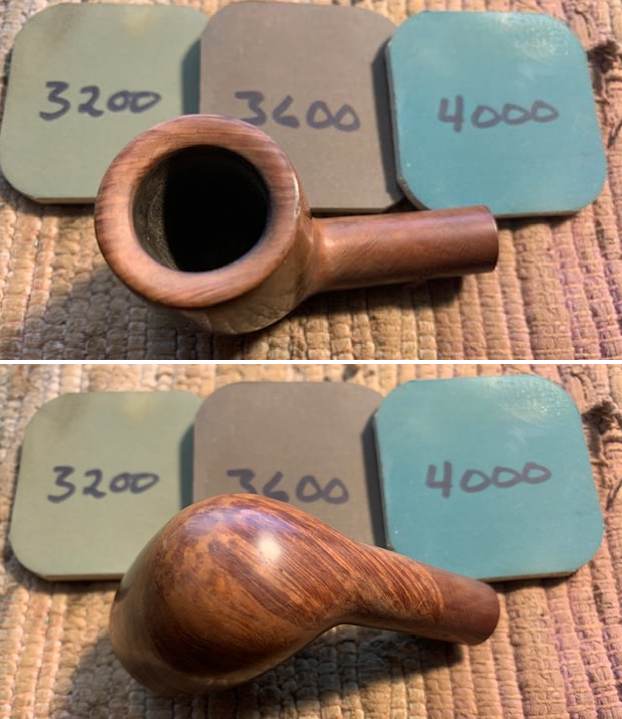
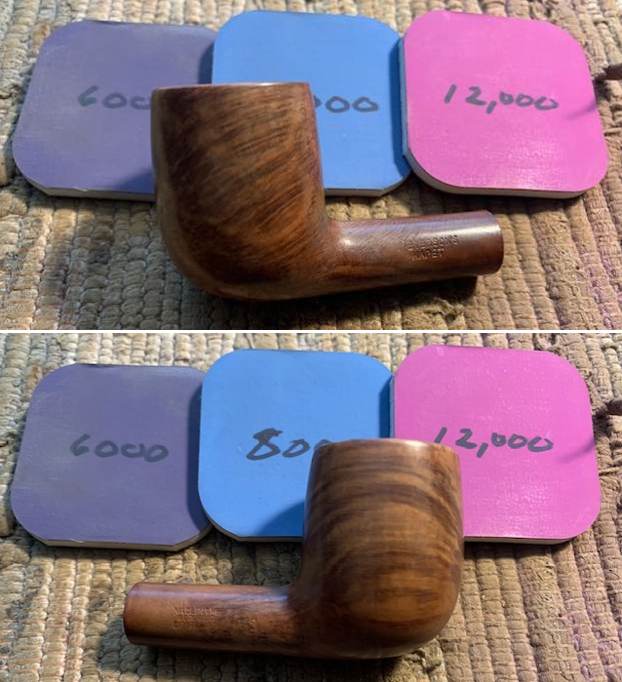
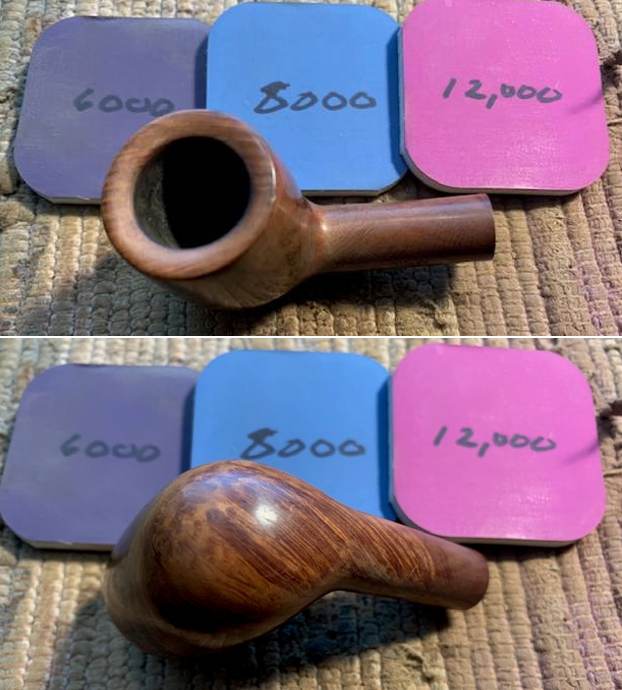
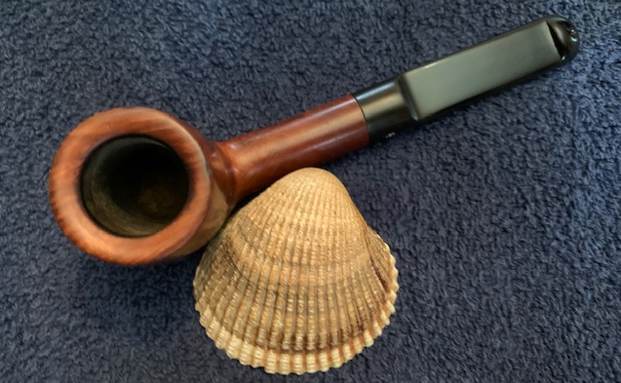
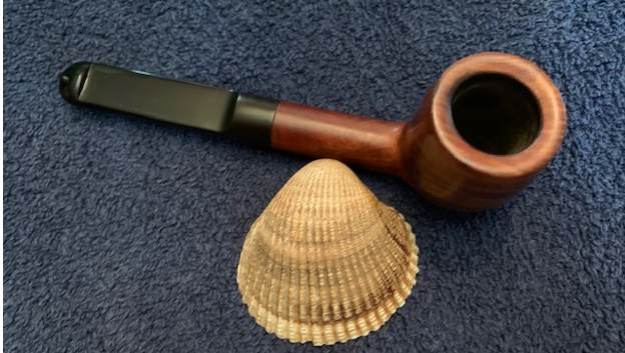
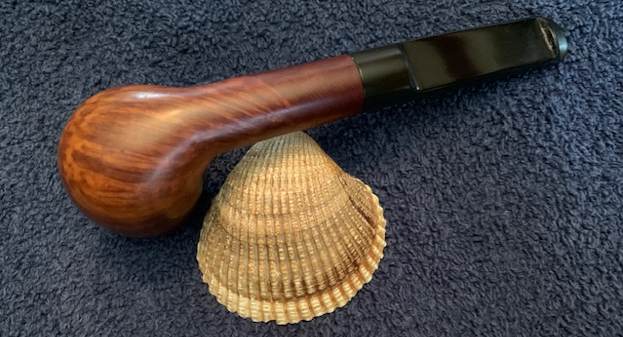
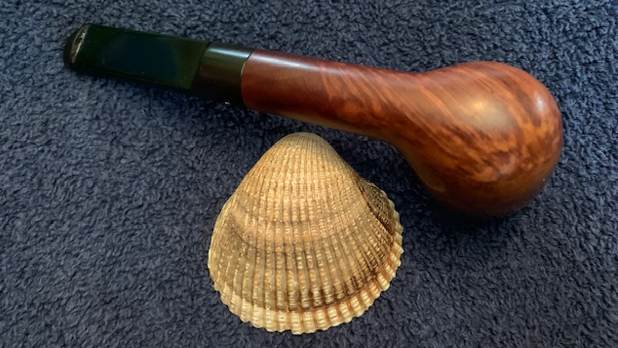
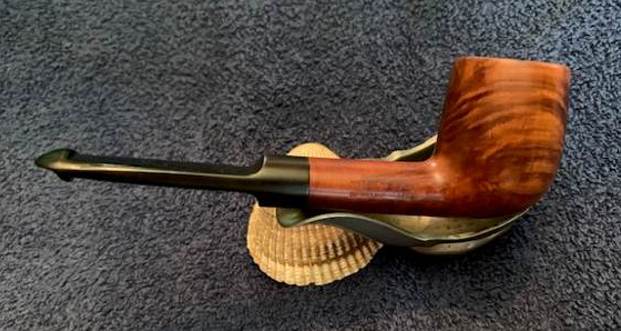
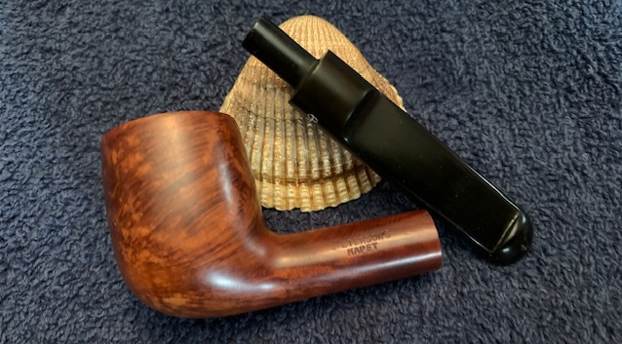
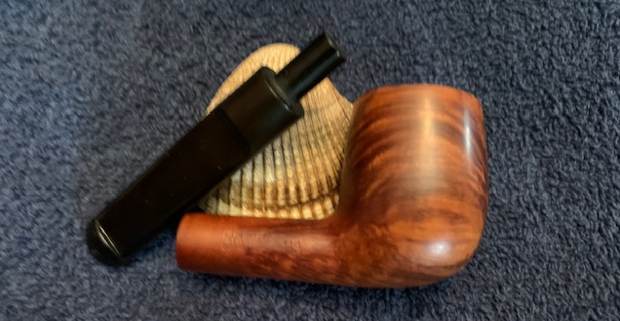
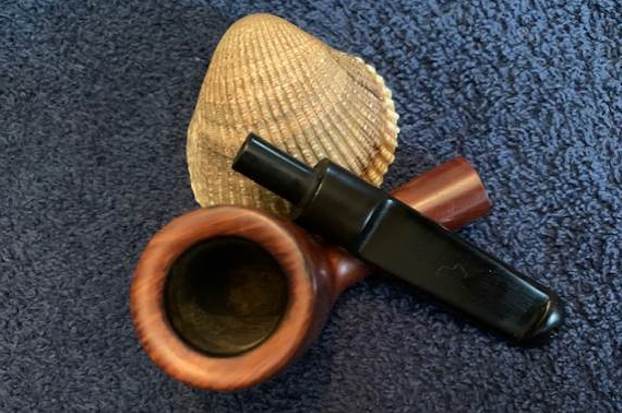
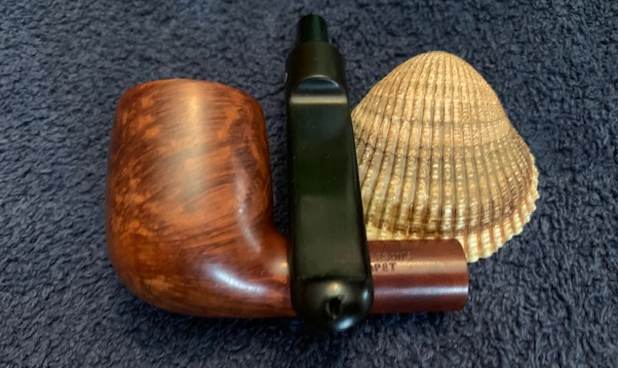
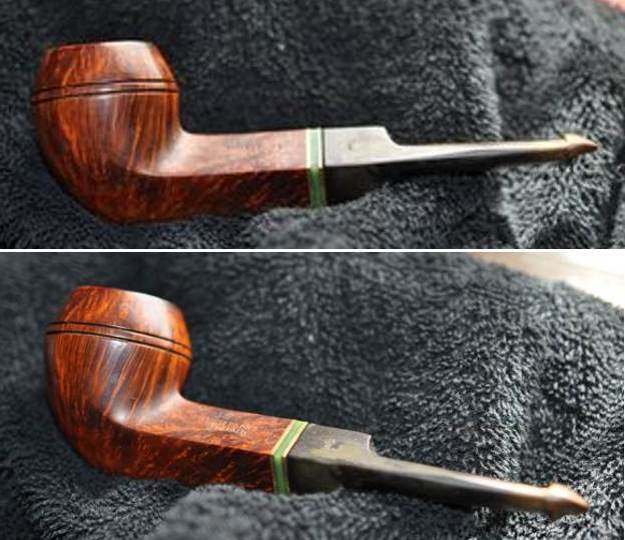
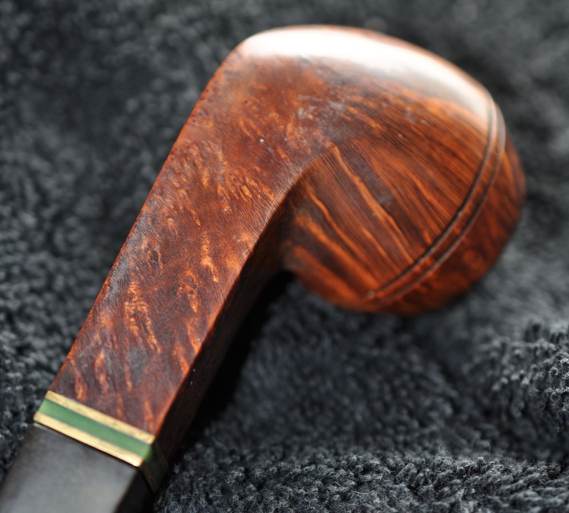
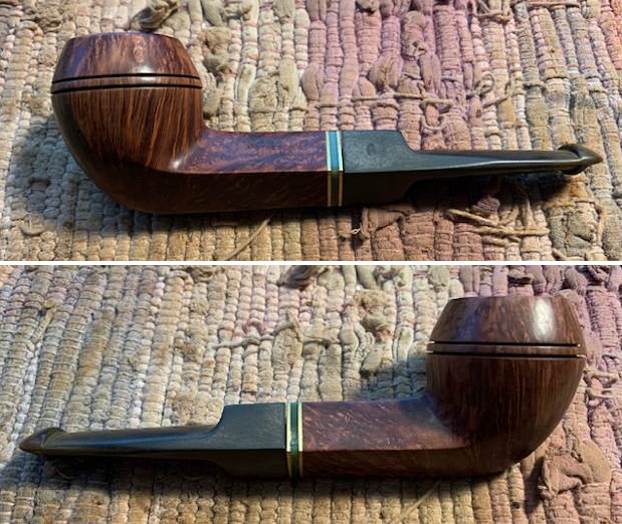
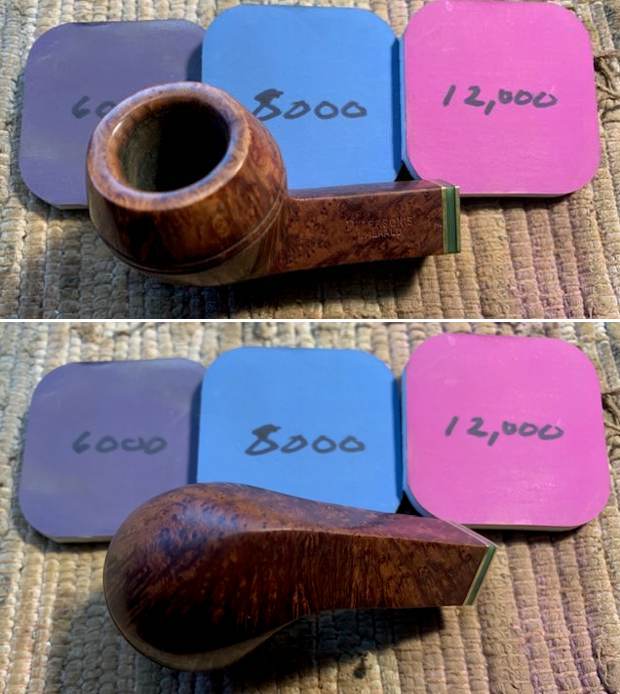
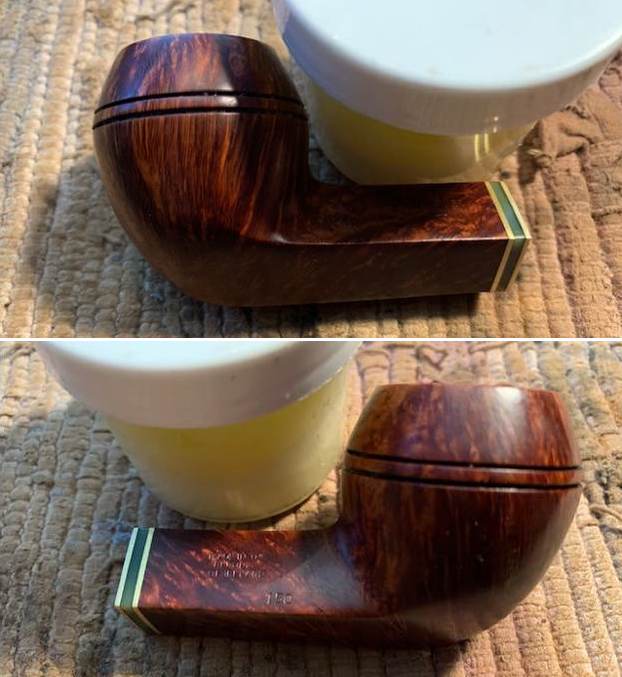
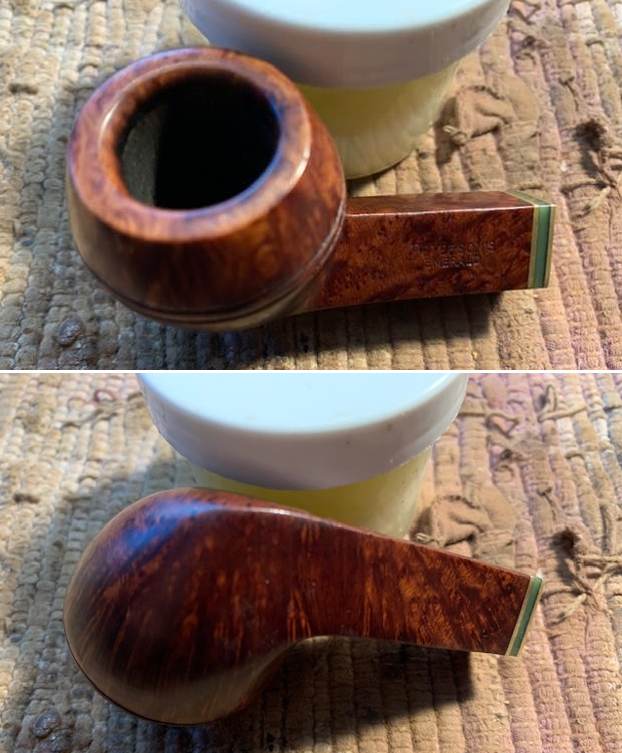
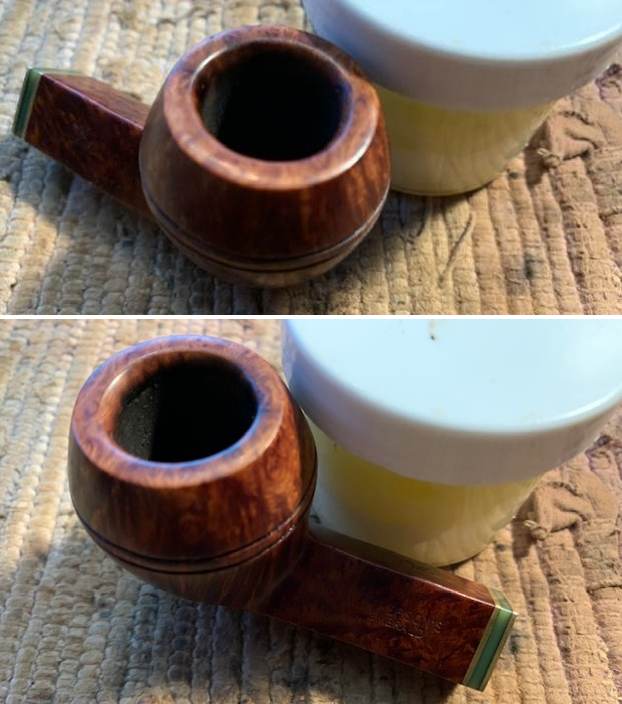
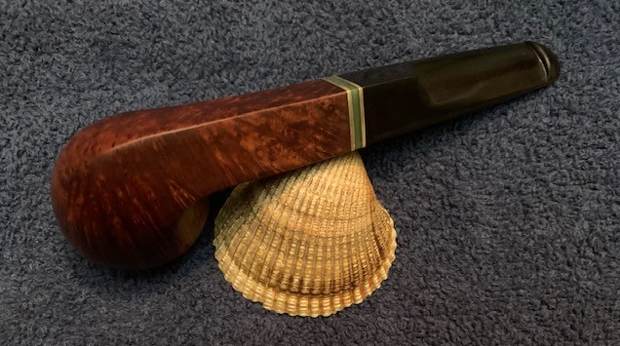
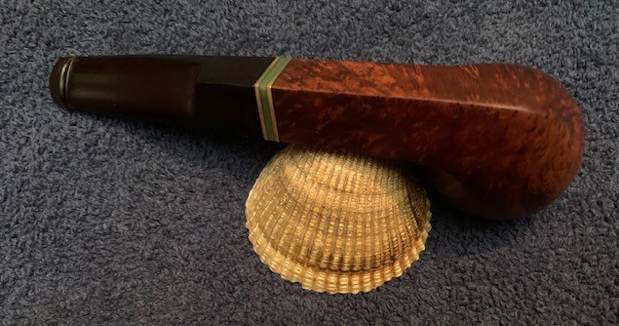
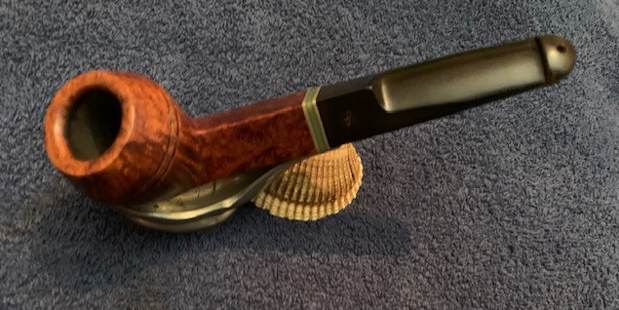
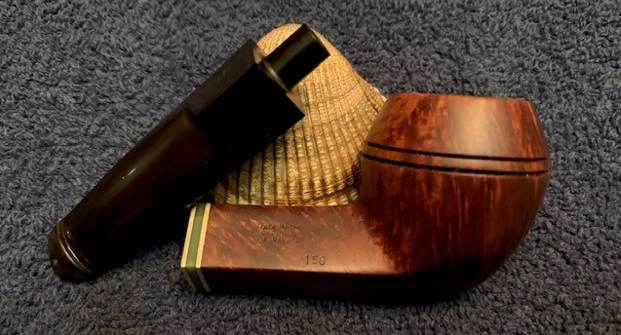
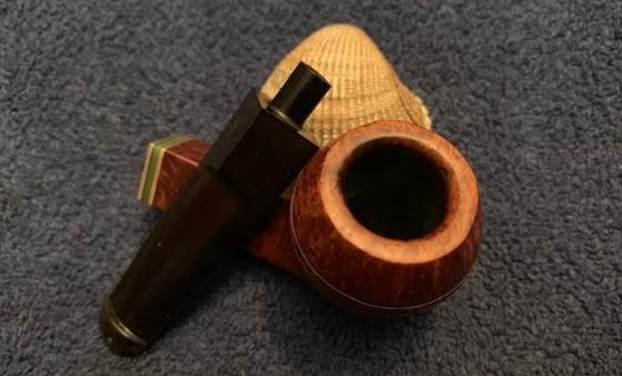
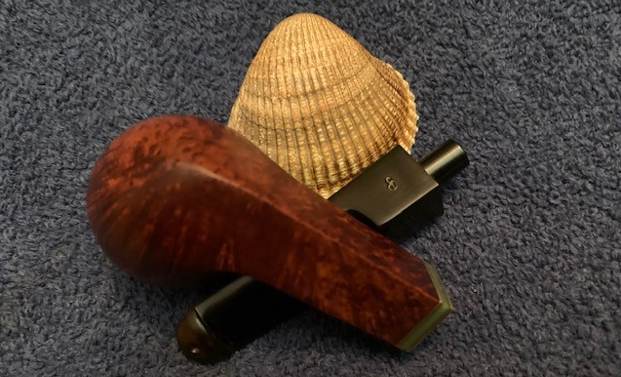
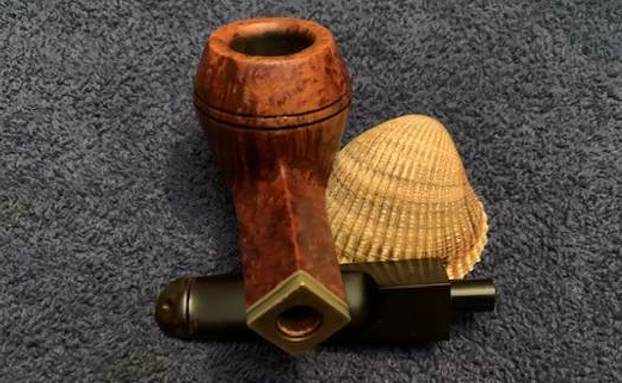
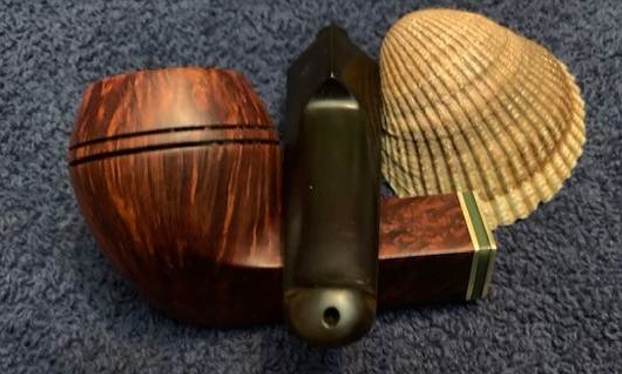
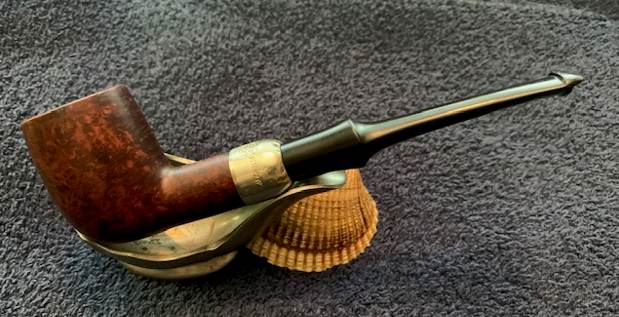
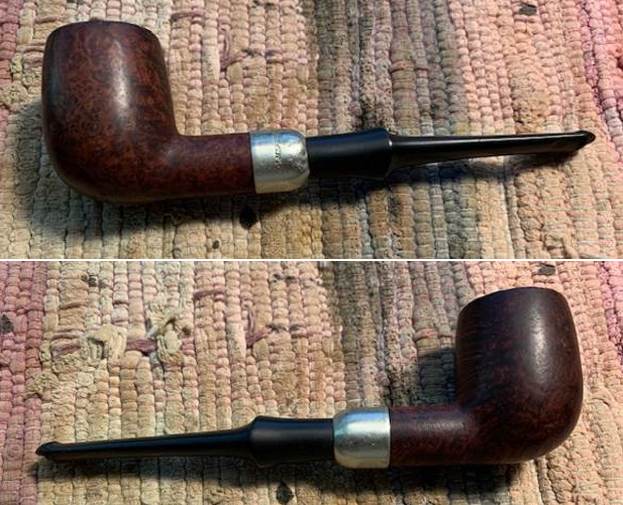
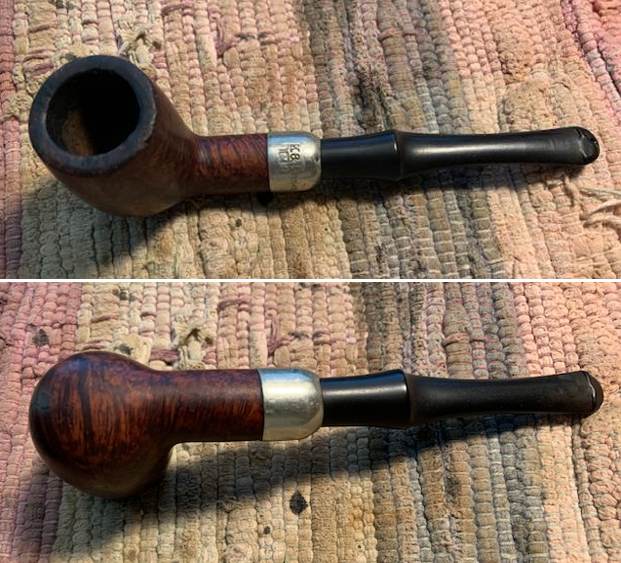
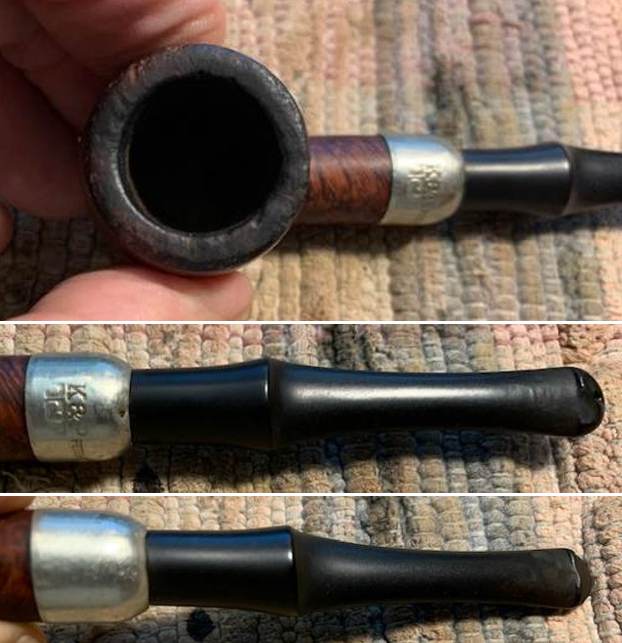
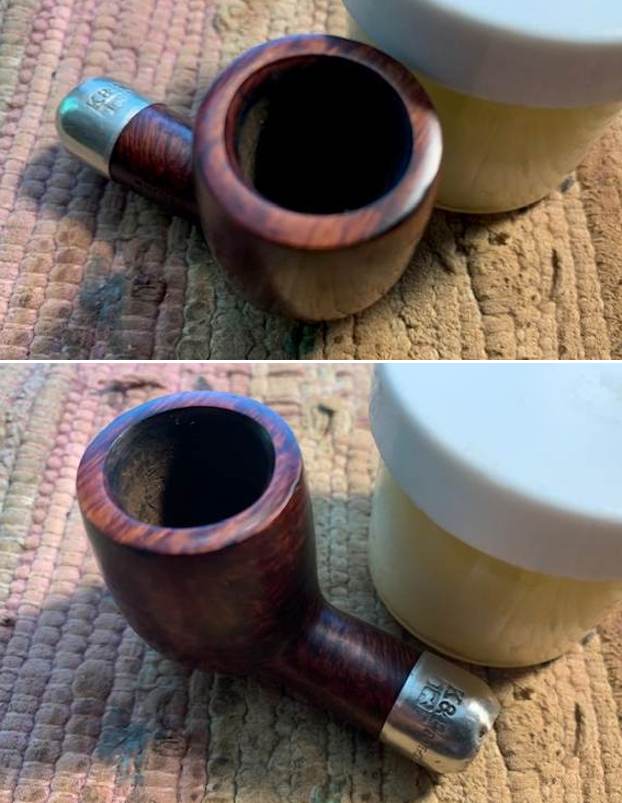
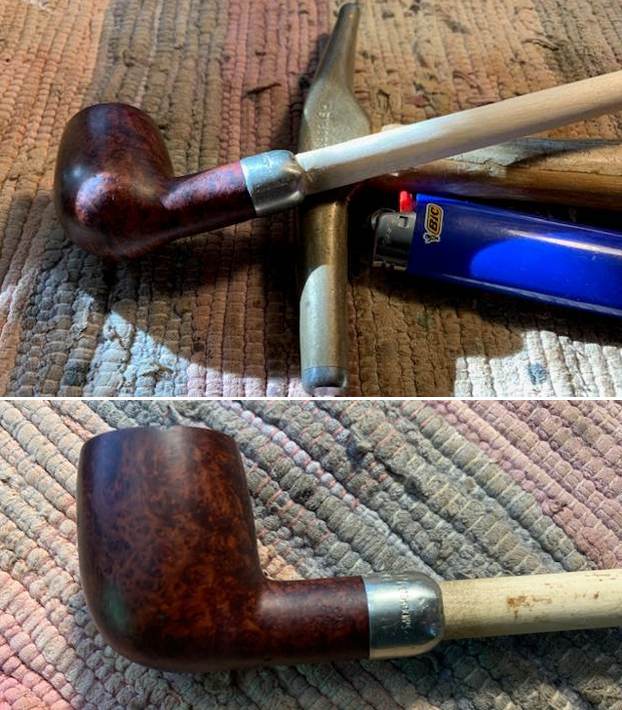
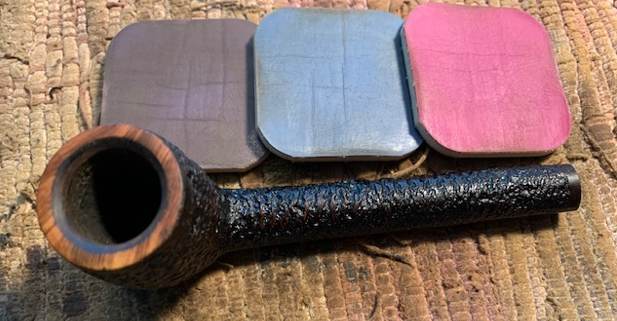
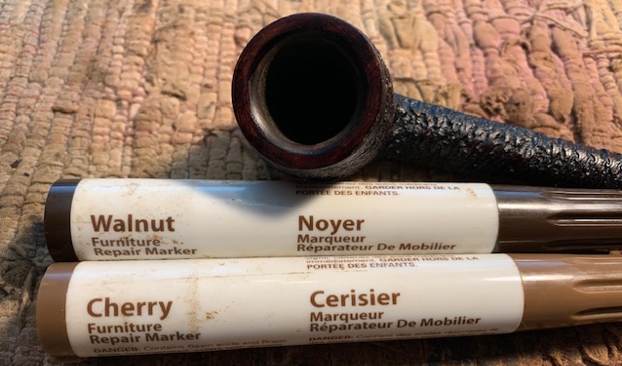
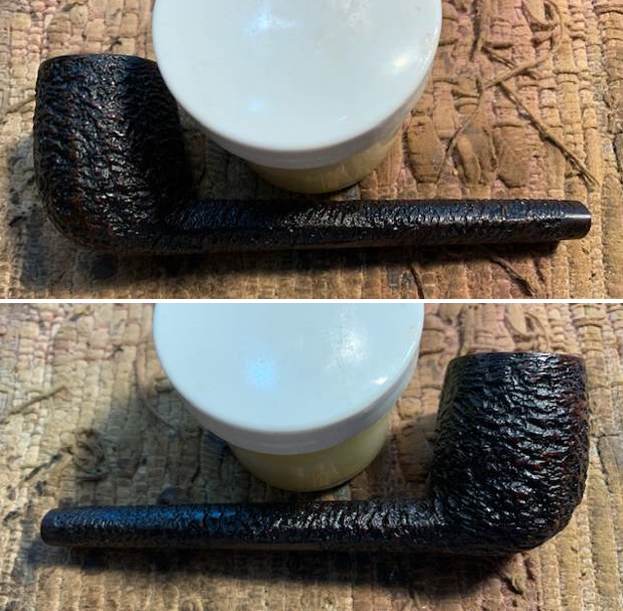
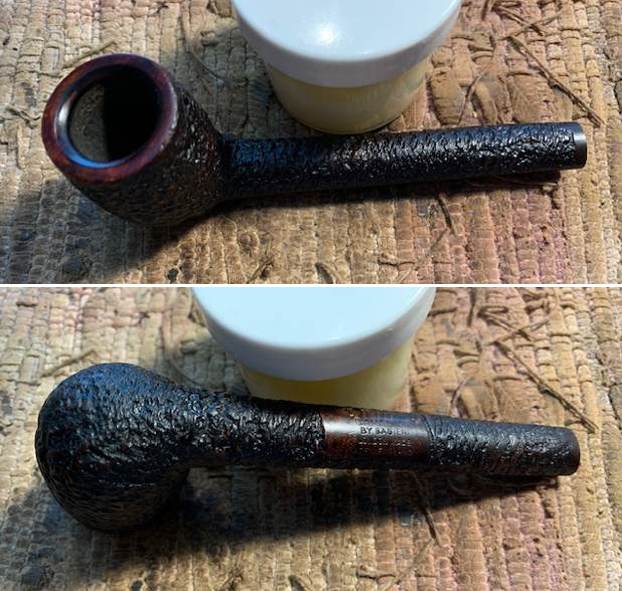
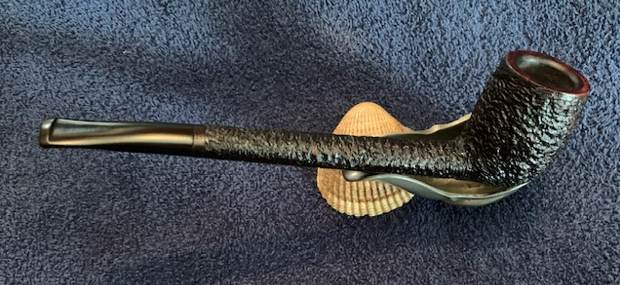
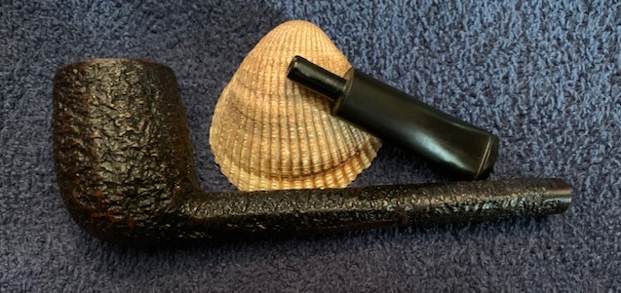
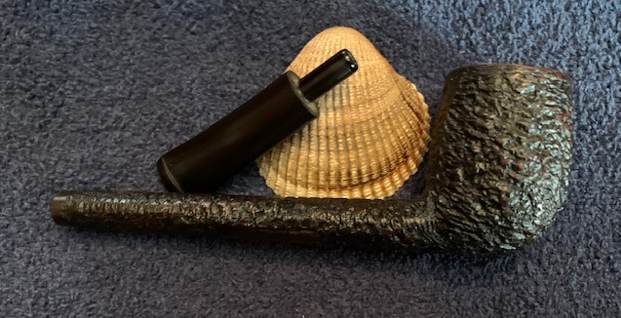
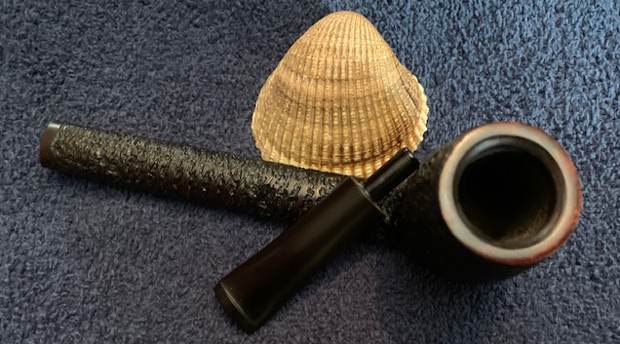
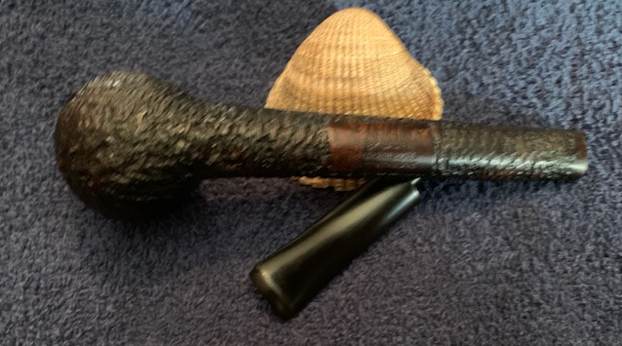
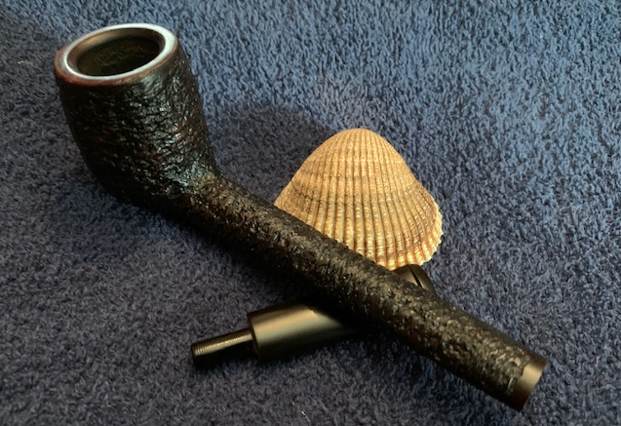
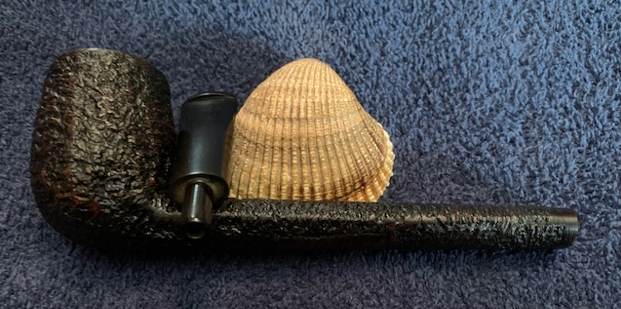
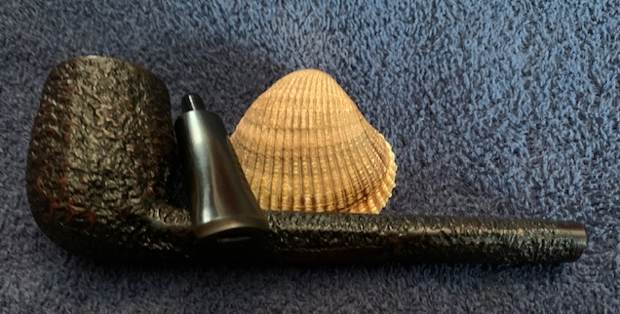
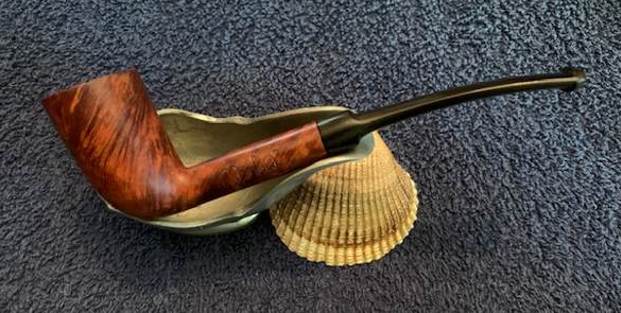
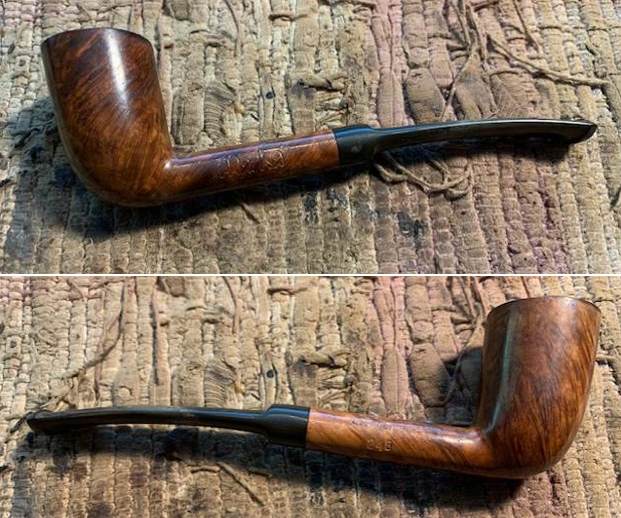
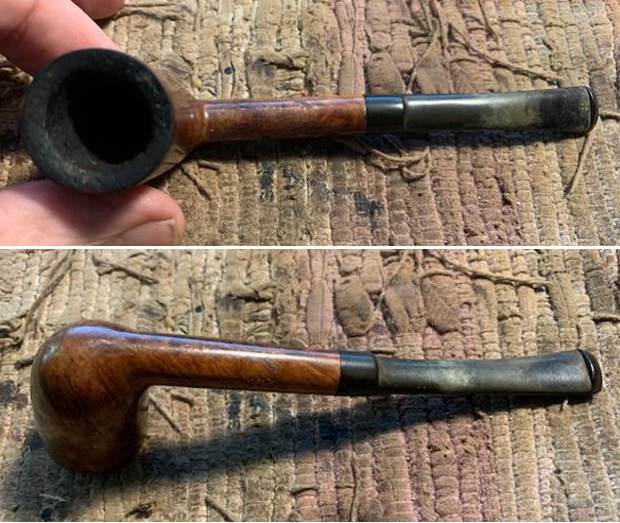
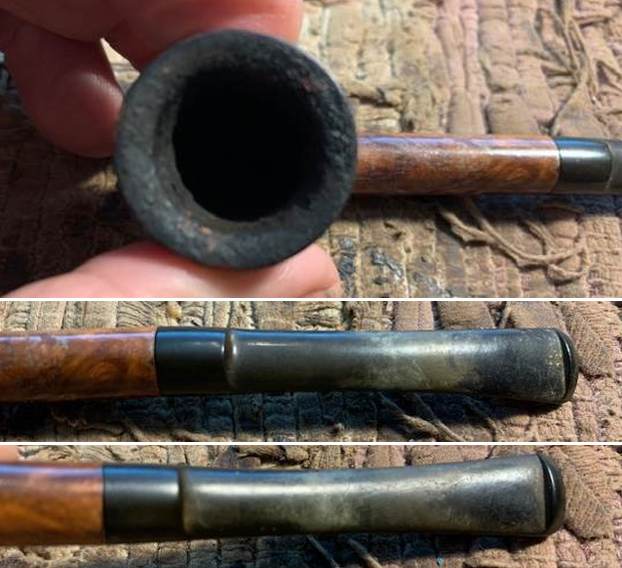
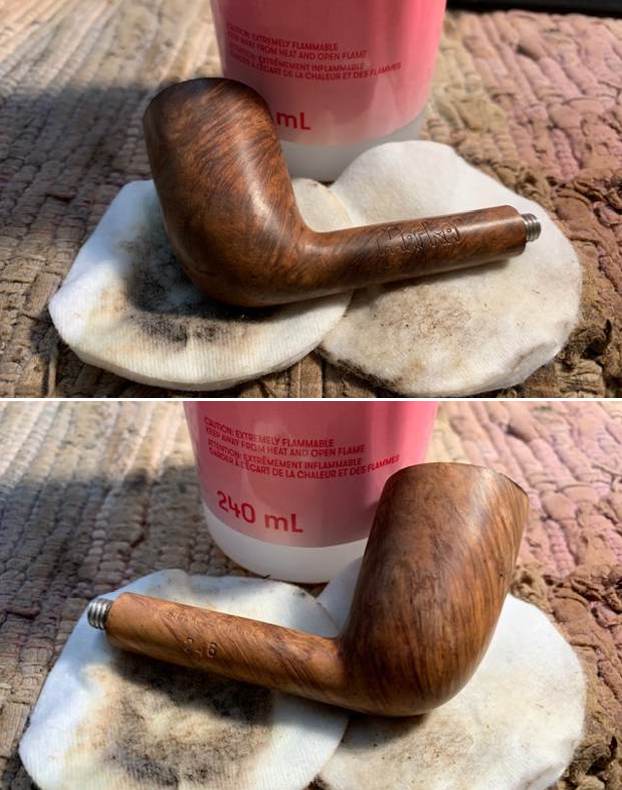
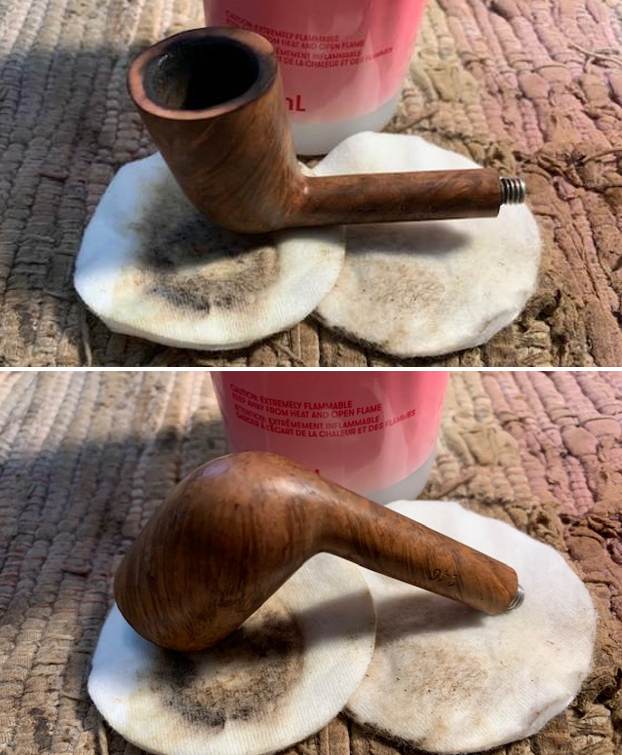
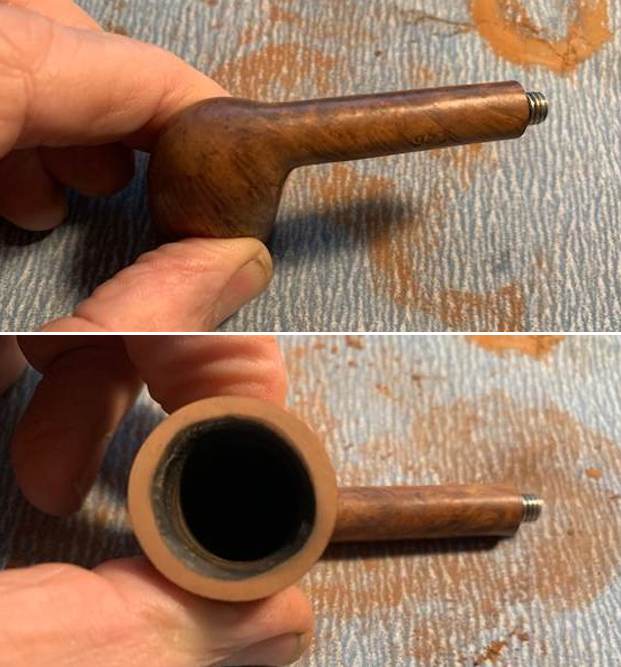
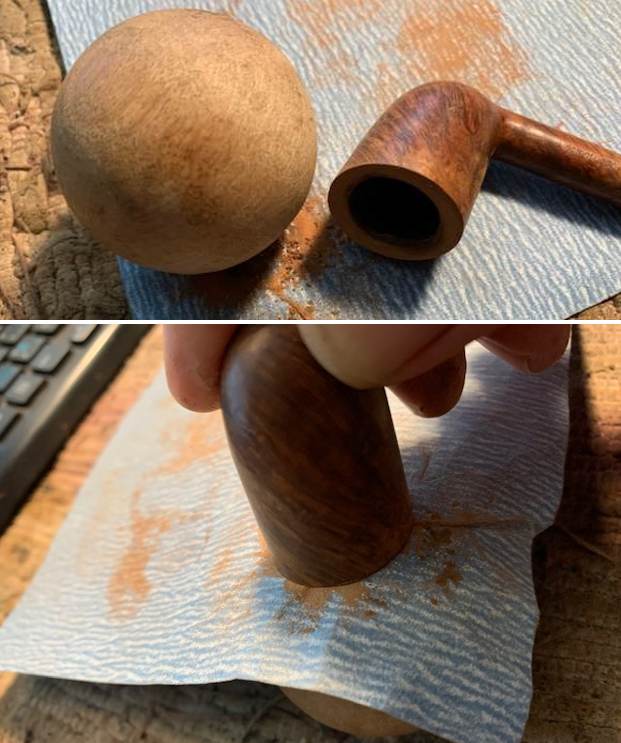
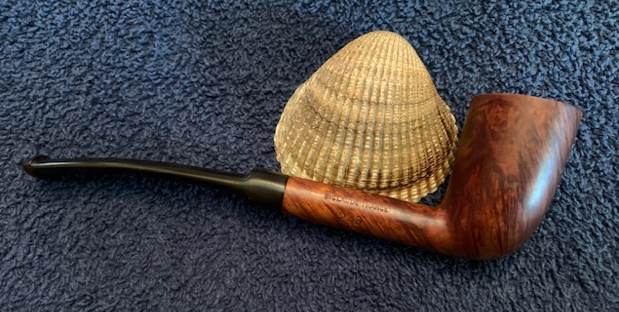
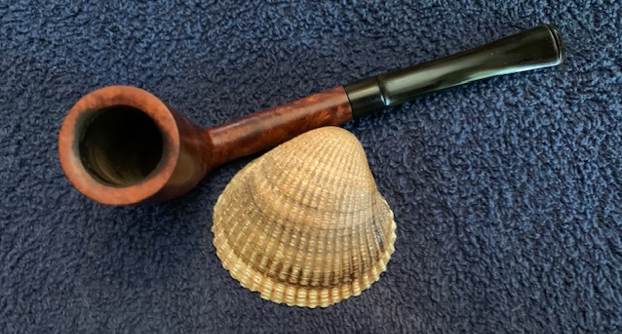
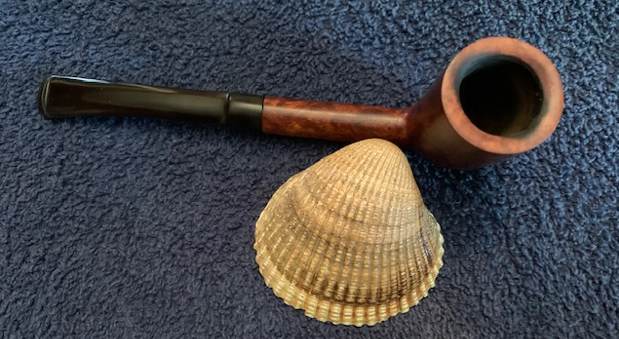
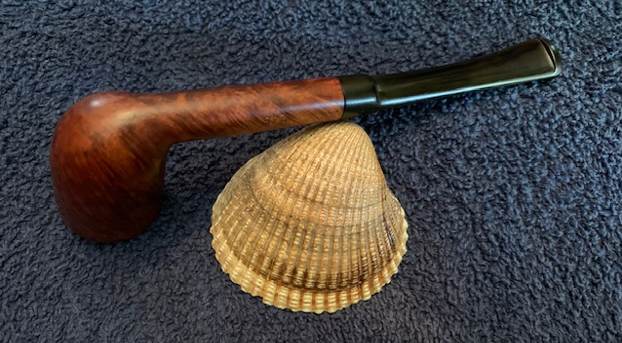
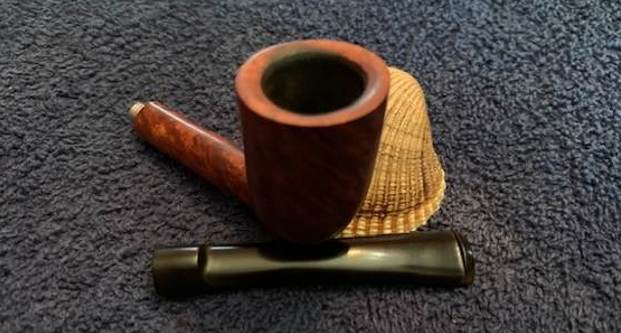
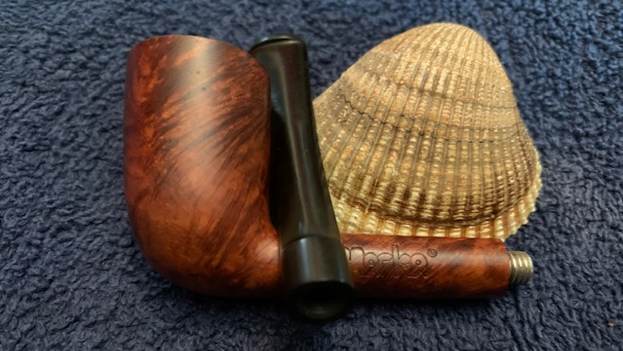
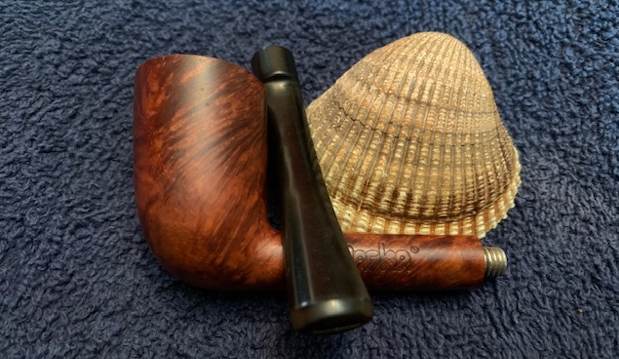
Tag Archives: contrast staining

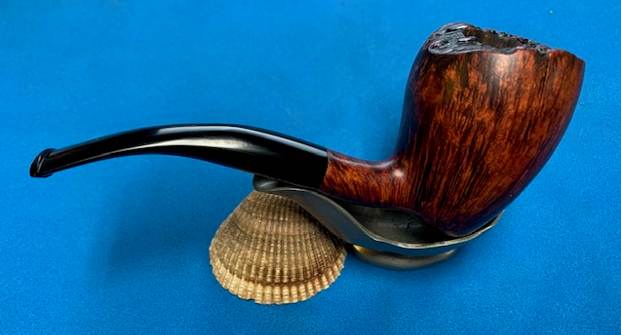
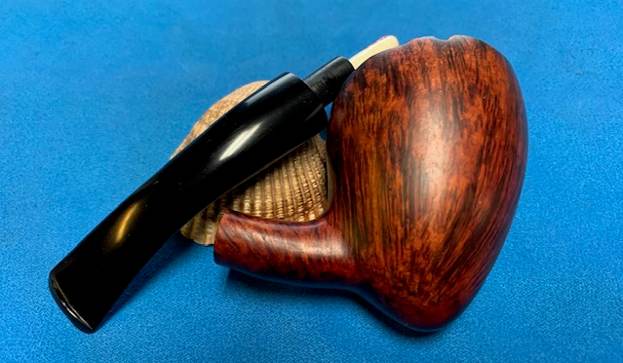
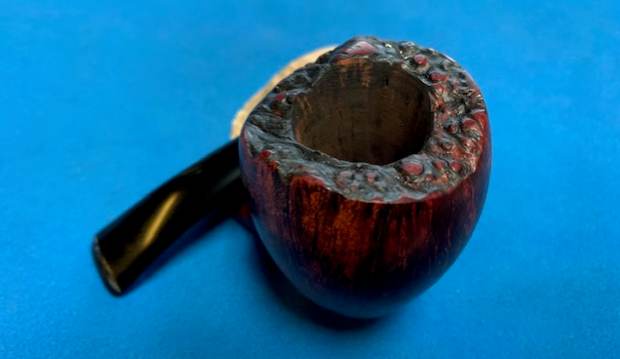
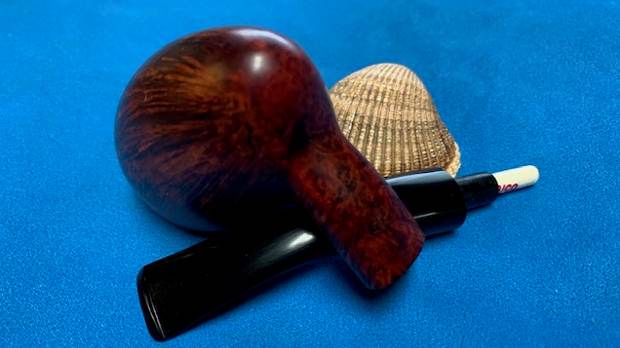
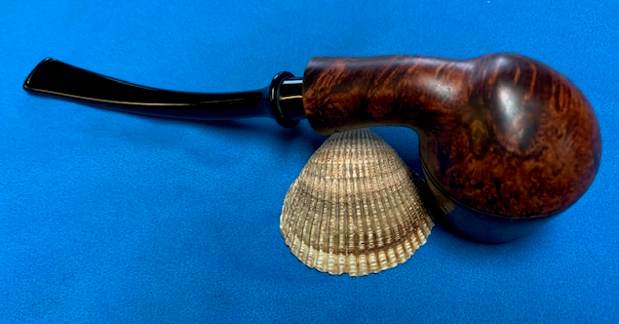
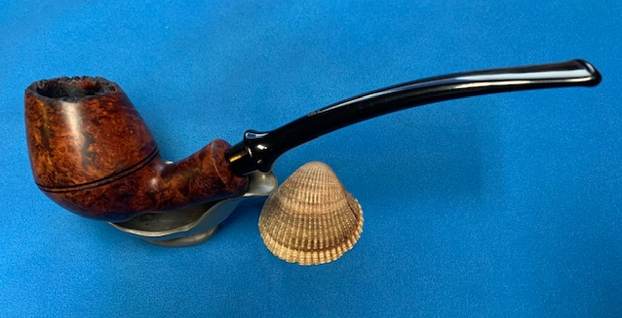
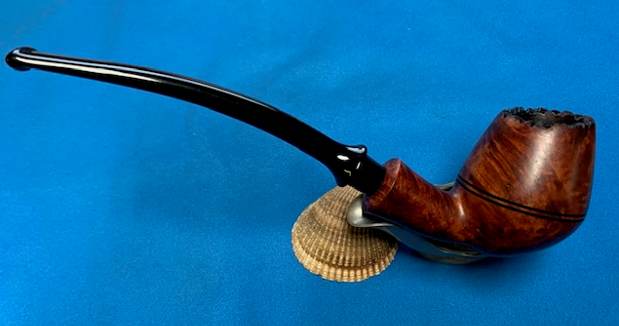
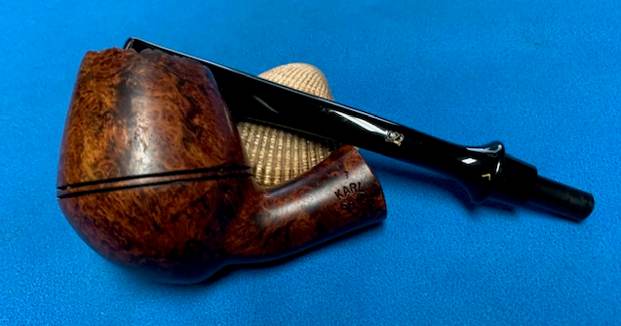
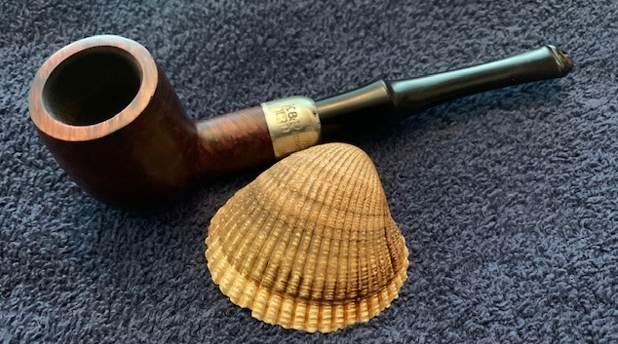
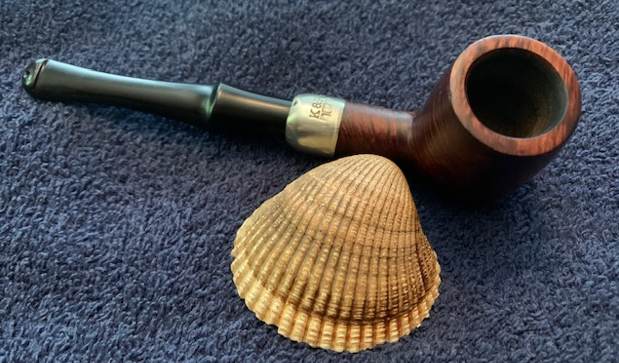
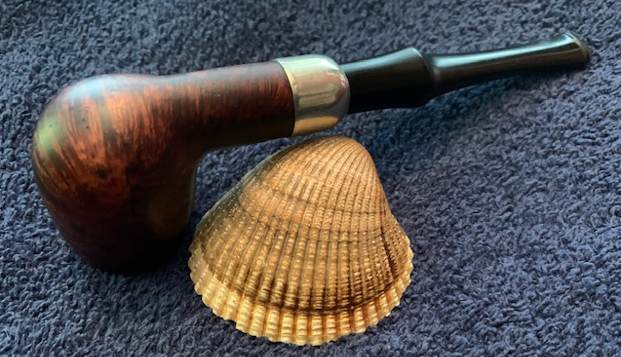
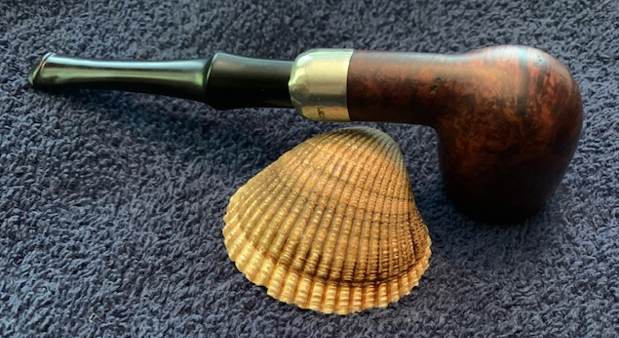
Restoring a Beautiful Karl Erik Made in Denmark Bent Egg Freehand Filter Pipe


Blog by Steve Laug

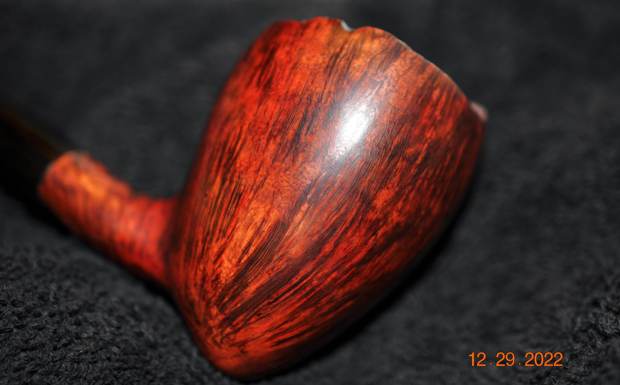
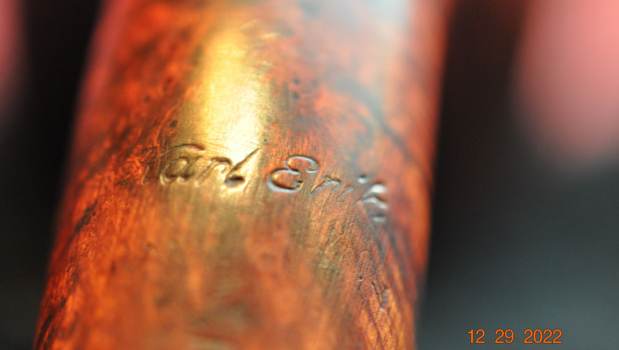
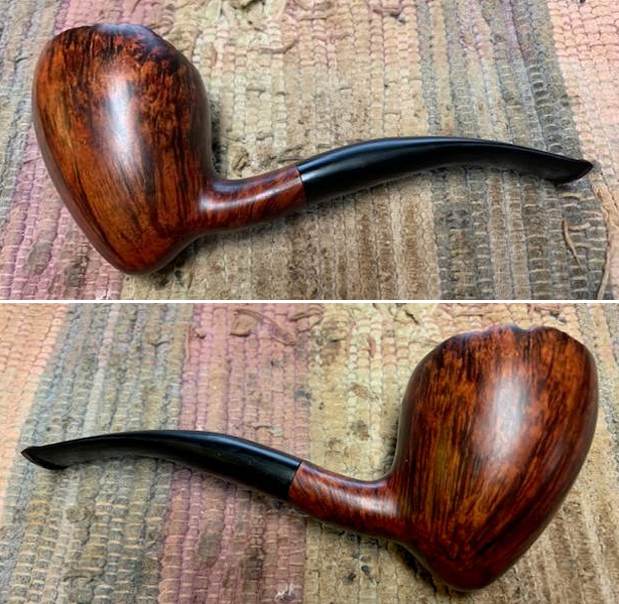
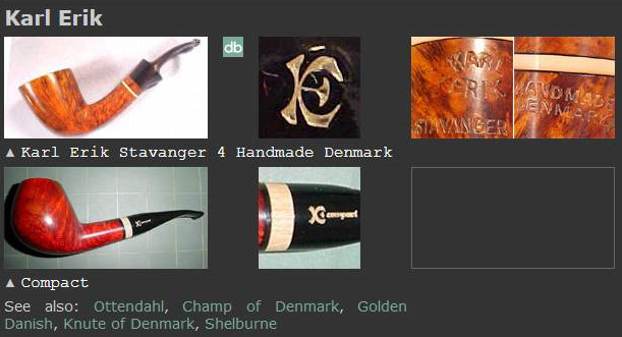
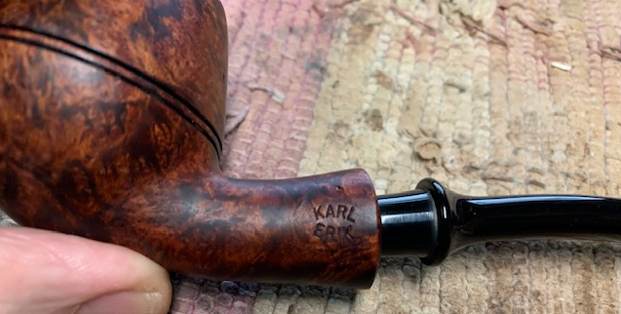
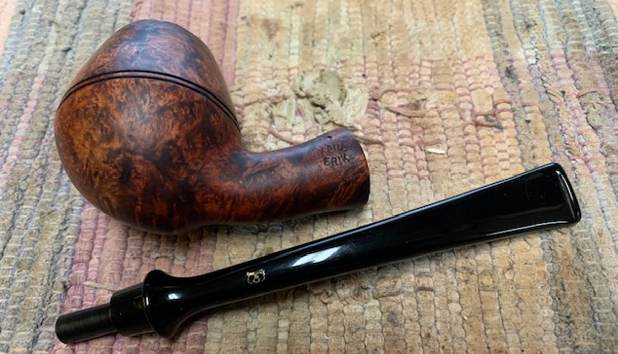
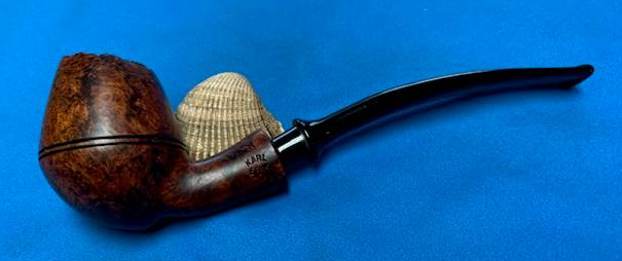
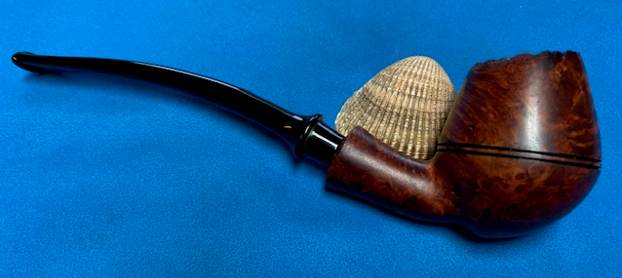
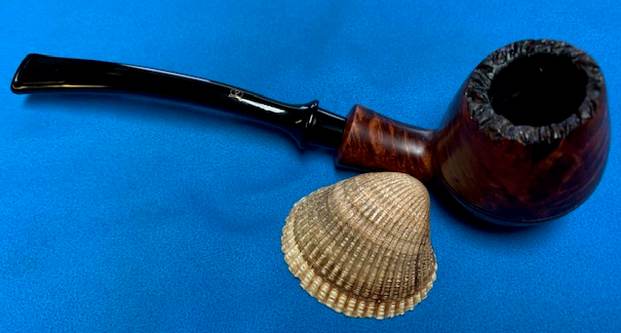
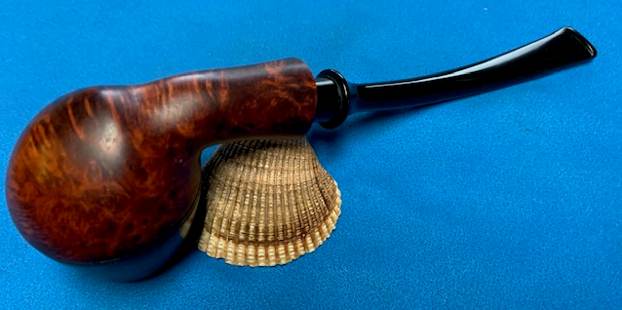
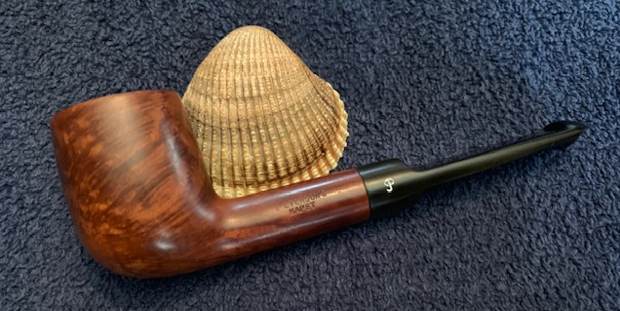
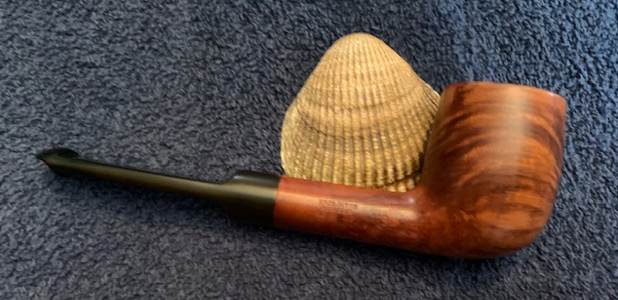
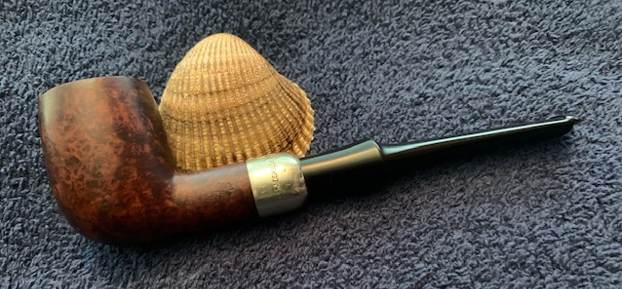
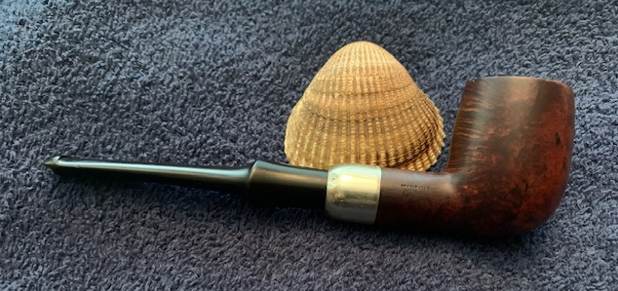
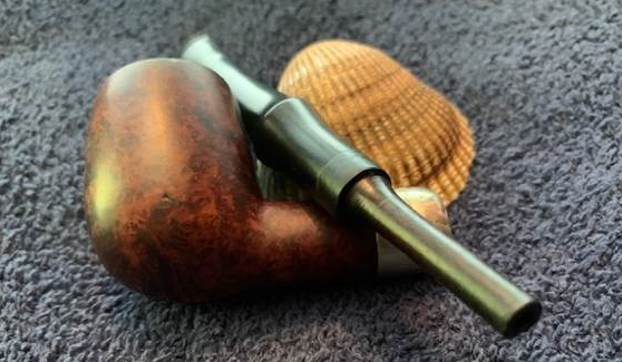
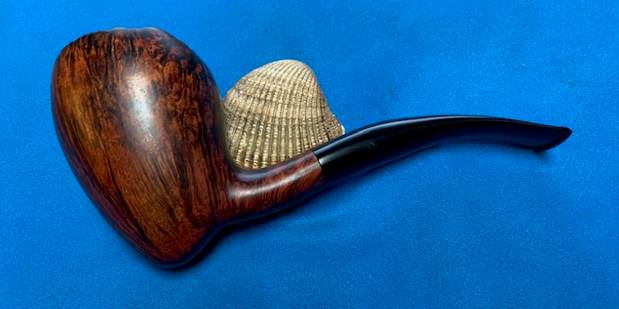
After work today I decided to work on the another one of the pipes that I have still to work on from a variety of places. This pipe was another one that was purchased on 10/03/2022 in a lot of pipes that came to us from Copenhagen, Denmark  It is an interesting pipe with a bowl that combines beautiful straight and flame grain with a Plateau rim top and an egg shape. The pipe is stamped on the underside of the shank and reads Karl [arched over] Erik [over] Hand Made in Denmark. The latter portion of the stamping is faint but readable. The pipe was a well used pipe when Jeff received it. There was dust and grime ground into the finish. The mixture of brown and black stains highlights some beautiful grain under the dirt. The bowl was heavily caked and there was an overflow of lava on the plateau rim top. The inner edge appeared to be in good condition. The filter stem was made for a 6MM filter is vulcanite and was not oxidized. It was dirty with light tooth marks and chatter on both sides ahead of the button and on the button itself. I wonder if the stem is not one made at a later time for the pipe, however the fit to the shank is like and original fit. Jeff took photos of the pipe before he started his clean up work on it.He took photos of the bowl and rim top to show what they looked like before his clean up. He also took some of the stem to show the condition of both sides. The photos of the sides and heel of the bowl show the uniquely stained grain around the bowl and shank. The mixture of black and brown stains adds depth finish on the pipe. Even under the grime it is a real beauty. The stamping on the underside of the shank is shown in the photos below. It is faint but is still clear and readable as noted above.Before I started my work on the pipe I wanted to see if I could find any information that would help me date this pipe and get a sense of the line. I turned to Pipephil to get a quick review of the brand (http://pipephil.eu/logos/en/logo-k1.html). The stamp on the stem shown in the photo below is different than the one I am working on. It includes a K and an E while this one is just an E stamp. I have included a screen capture of the brand info there as well as a note in the side bar about Karl Erik Ottendahl along with a small picture.Brand created in 1965-66 by Karl Erik Ottendahl (1942 – 2004 †). In the best years he employed up to 15 craftsmen among which Bent Nielsen (see Benner) and Peder Christian Jeppesen. Former grading (ascending): from 4 to 1, and “Ekstravagant” (entirely hand made)

I then turned to Pipedia (https://pipedia.org/wiki/Karl_Erik) for more information. I am including just the opening remarks but would encourage you to give the link a read for a very interesting history of the brand. I quote:

Karl Erik Ottendahl (1942 – 2004) was born in Aalborg (Jutland), just a few miles from the very northernmost tip of Denmark. He began smoking a pipe when he was 14 and upon leaving school he started an apprenticeship in the craft as a lithographer at the age of 16.

While working as an apprentice he began hand carving pipes as a hobby. Many were given as gifts to his more senior colleagues. Upon completion of his apprenticeship he moved to Nairobi, Kenya to work as a lithographer during the 1962 war. While in that war torn country, he was unable to procure pipes for himself. In the face of such a predicament, he chose to continue to make pipes for his own use rather than go without.

Returning to Denmark after three years he couldn’t find a well paid occupation in his job, and so he began making a few pipes on the side to boost his income choosing his prenames “Karl Erik” – logo “KE” – for his label. When he managed to find some major Copenhagen pipe stores willing to sell his pieces his reputation grew little by little and he was finally able to purchase more and better machinery and began working full time as a pipe maker.

With that information in hand I knew what I was dealing with in terms of the stamping and the age of this pipe. I knew from the information that the pipe was made sometime between 1965 and 2004. Now it was time to work on the pipe.

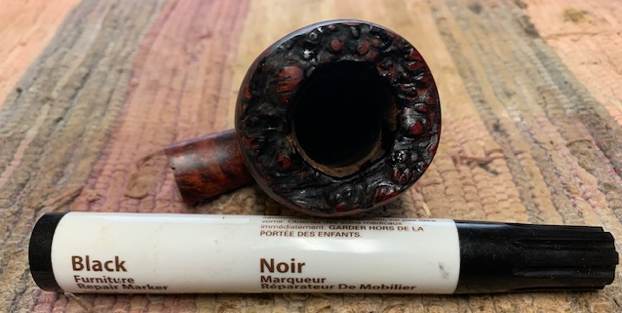
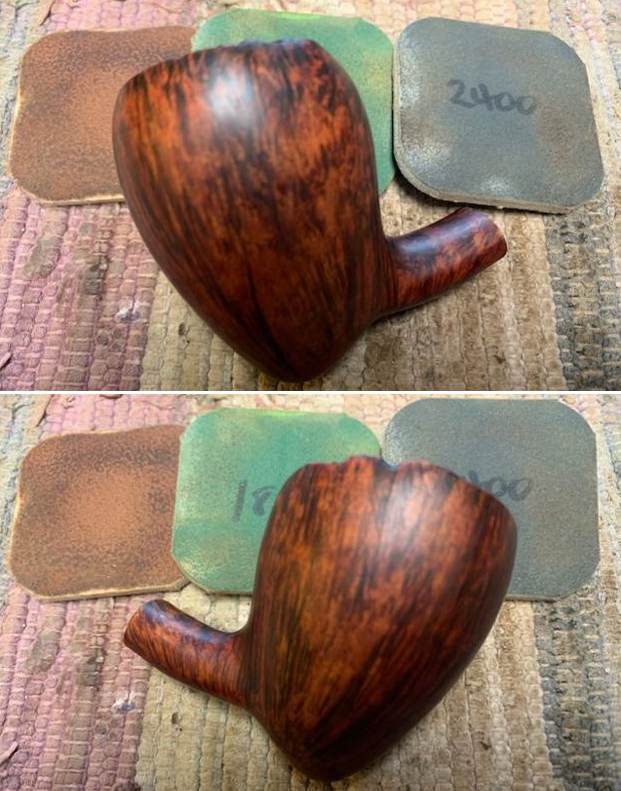
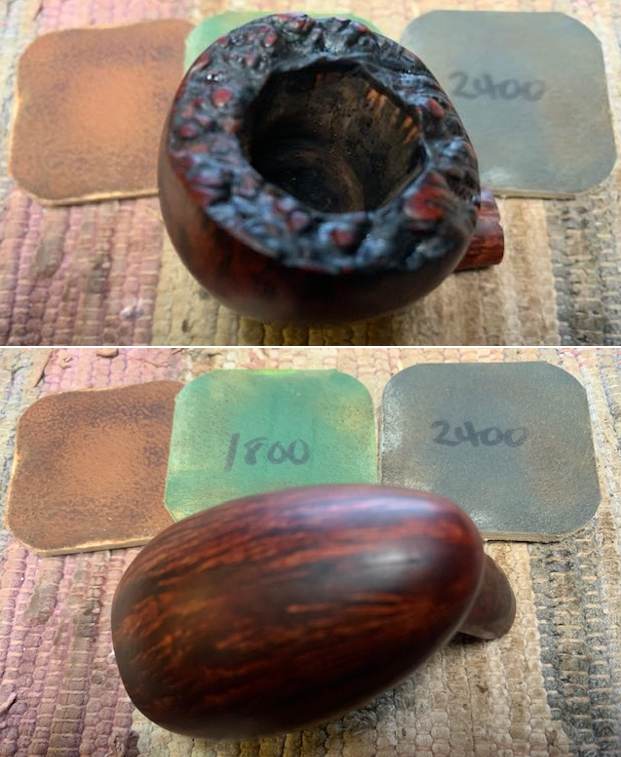
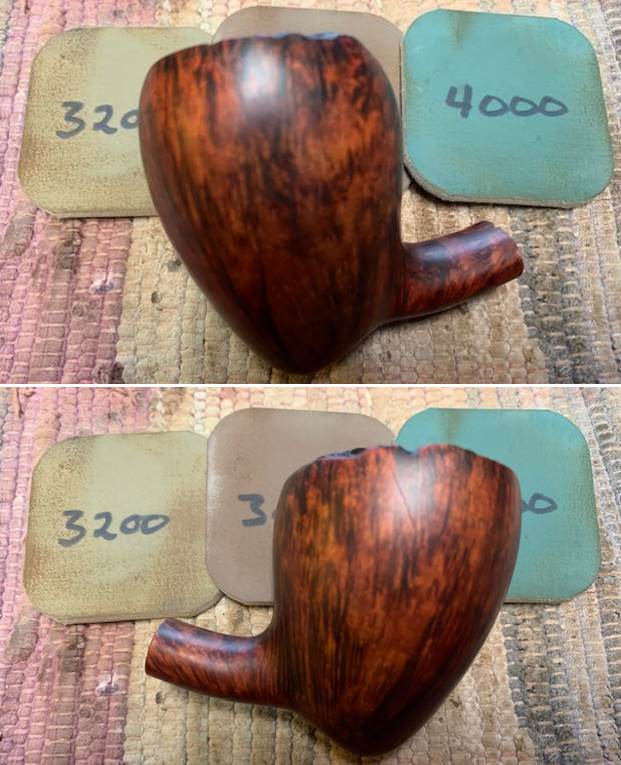
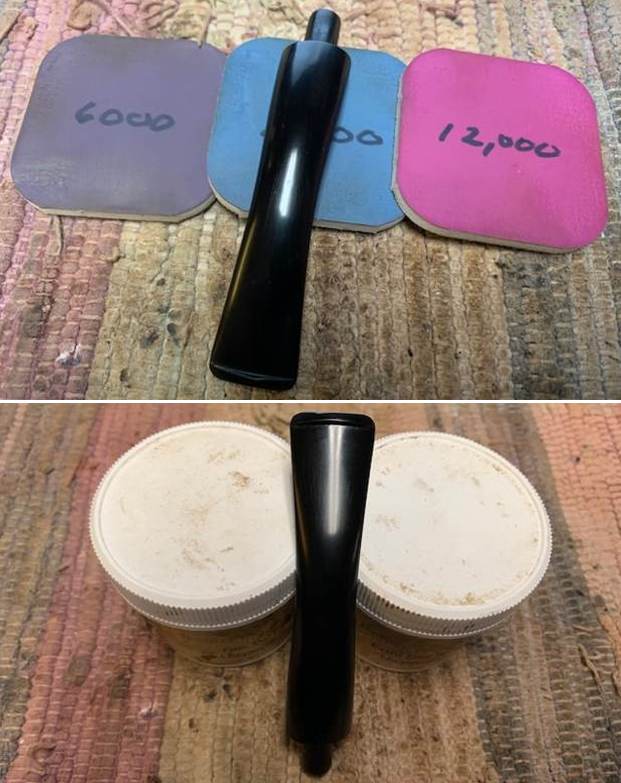
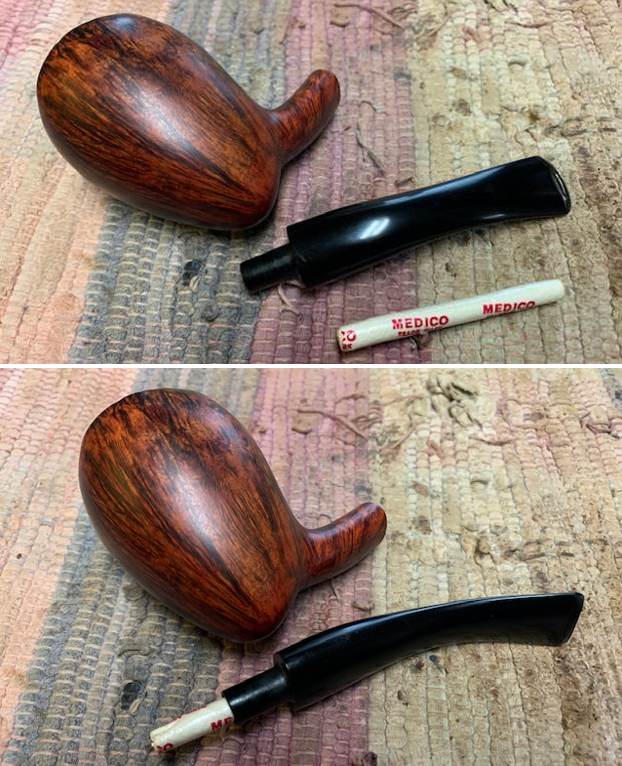
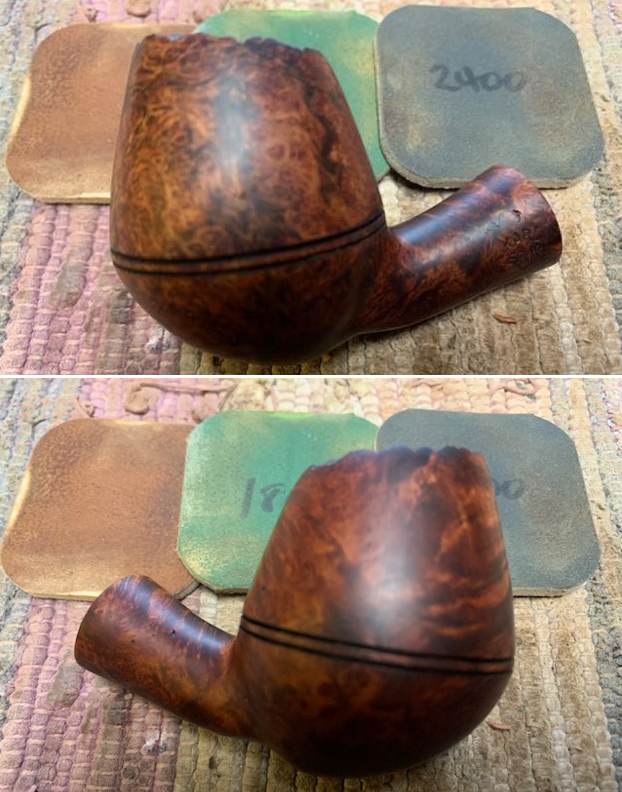
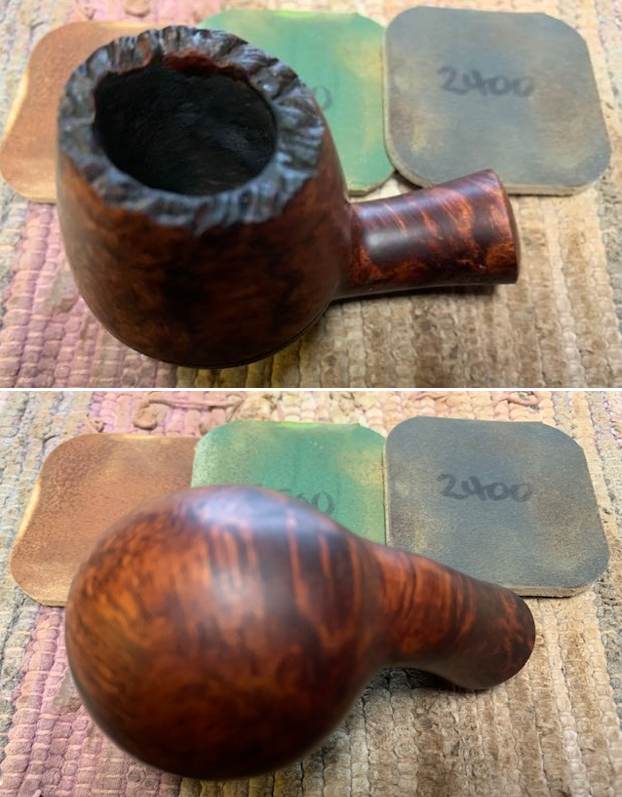
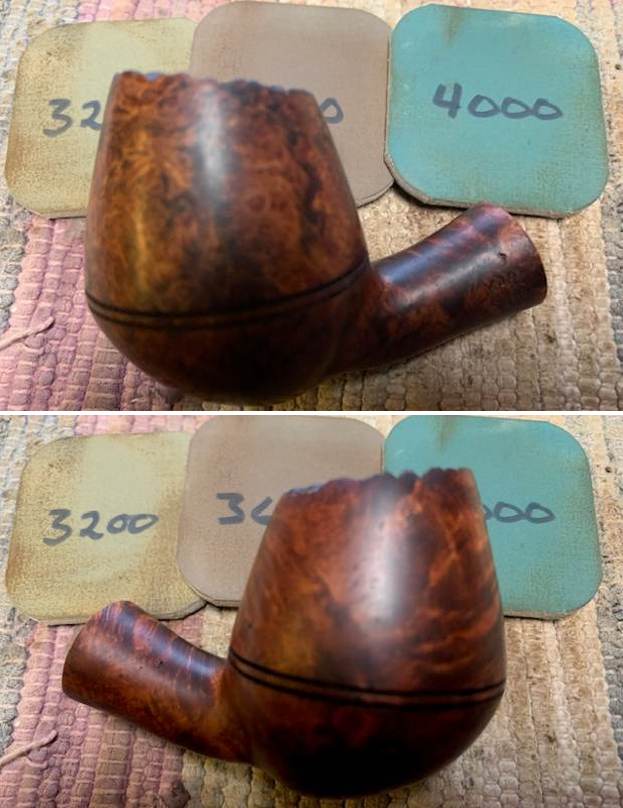
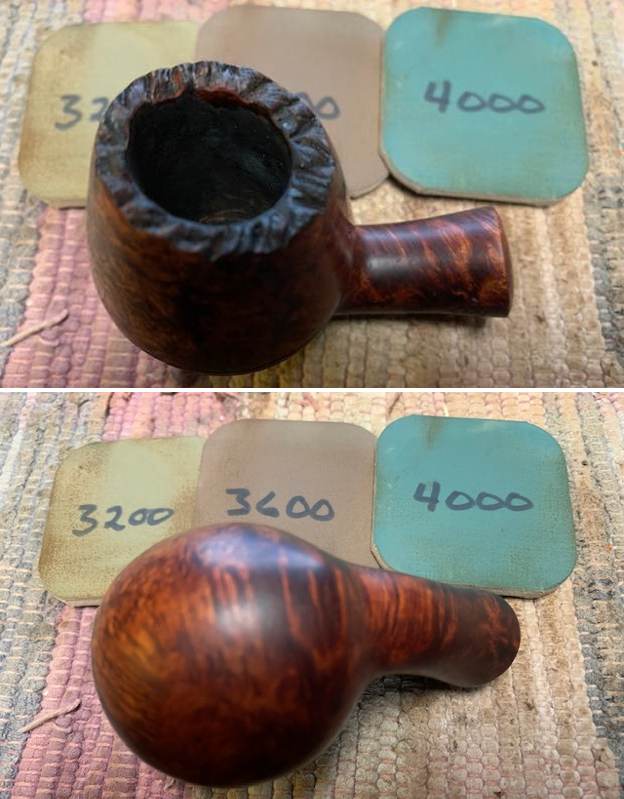
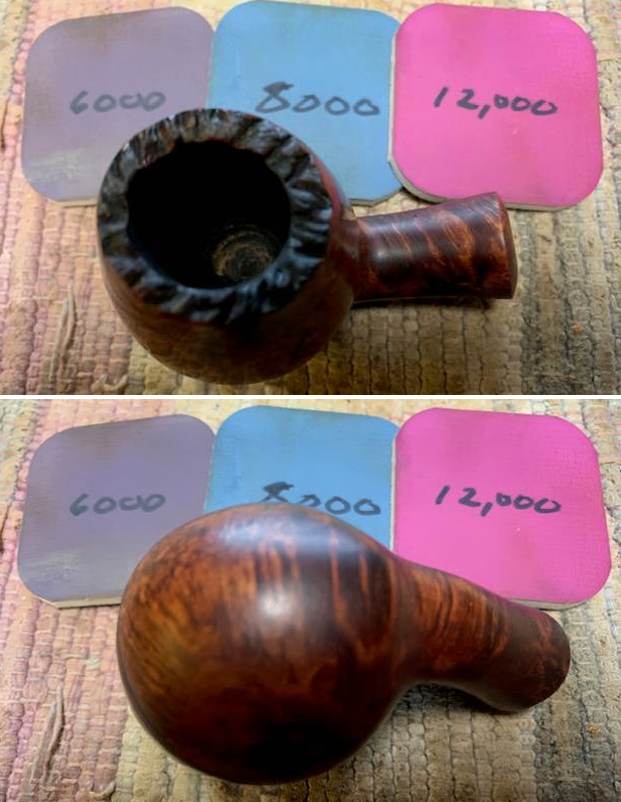
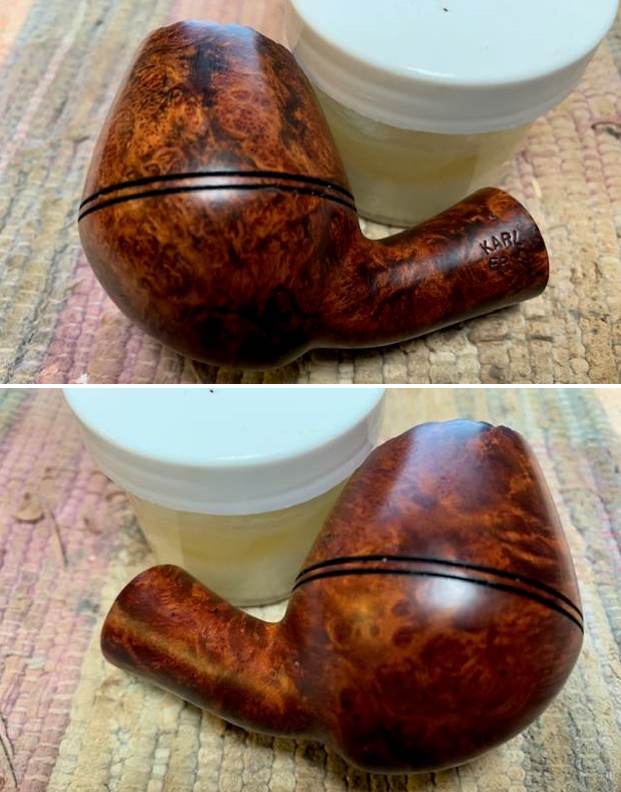
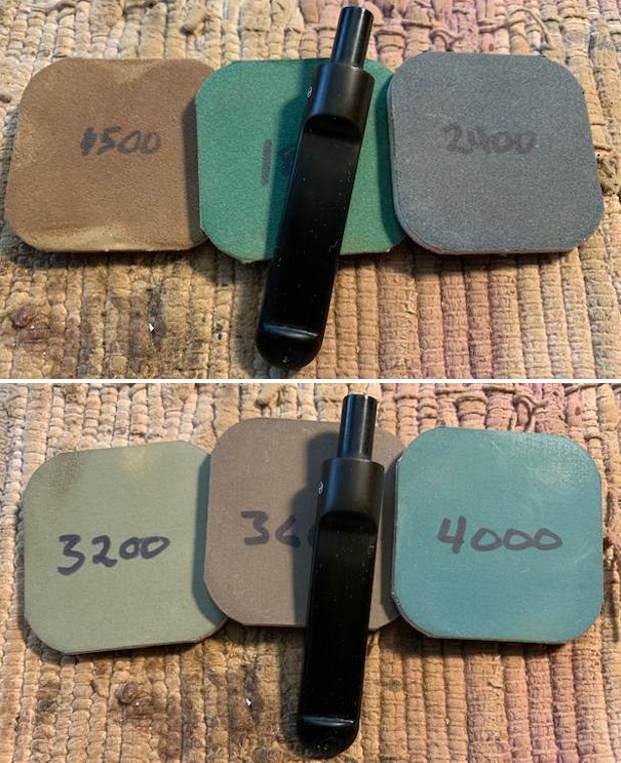
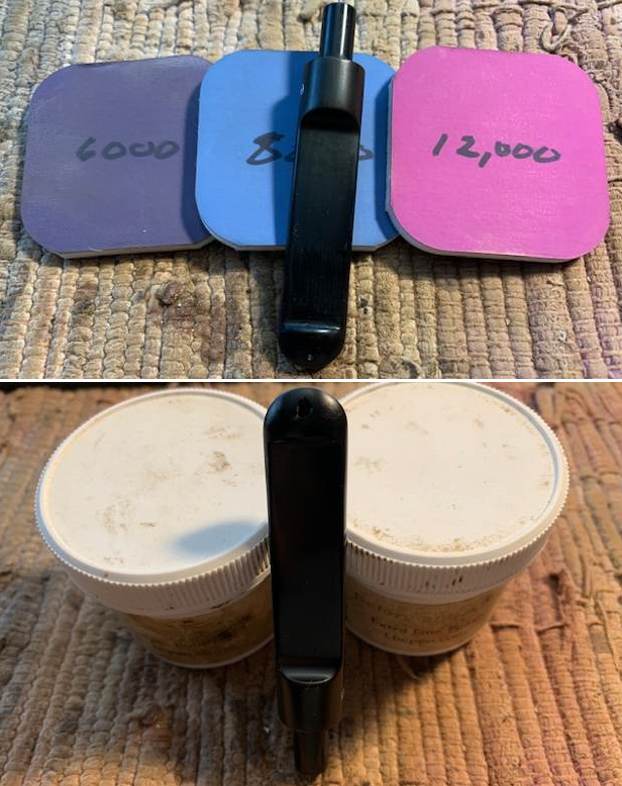
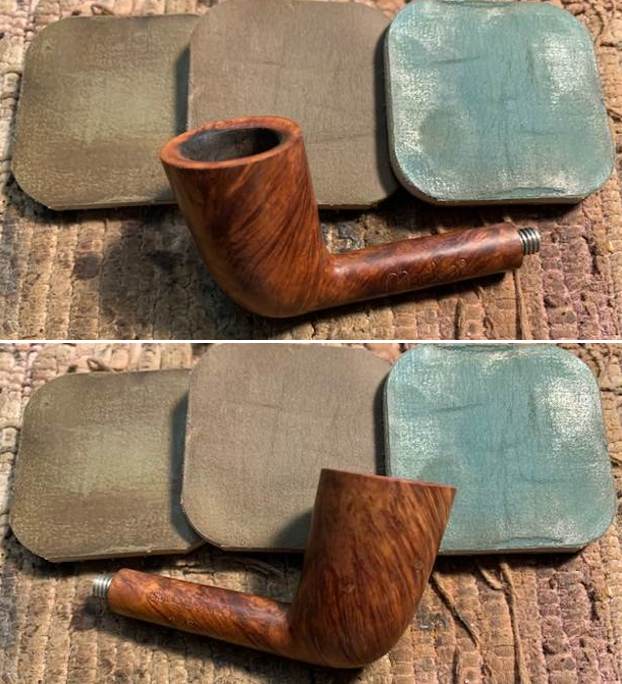
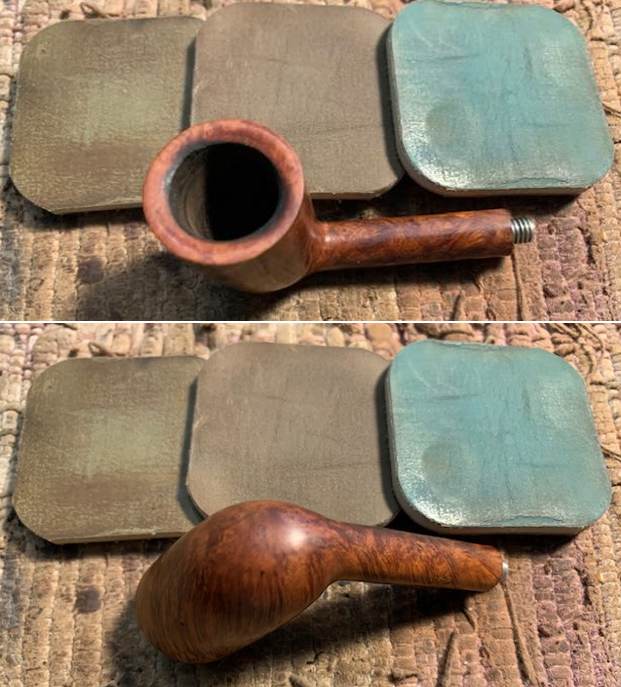
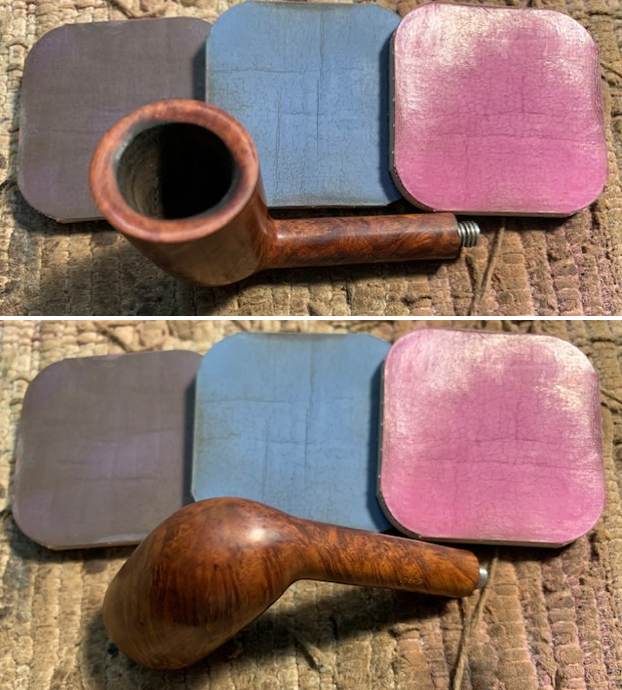
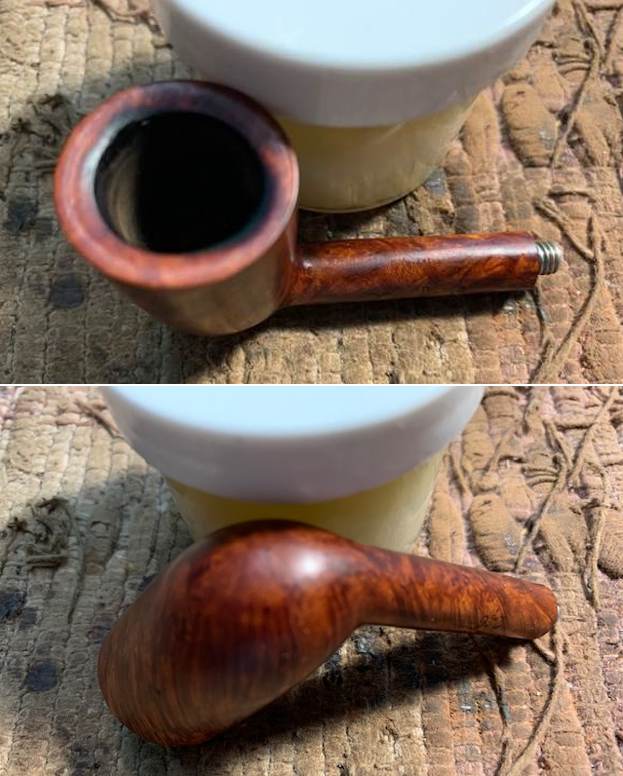
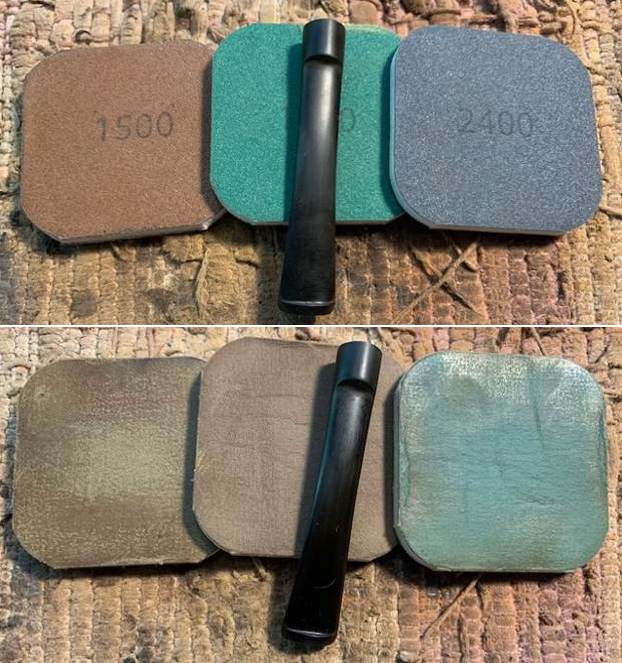
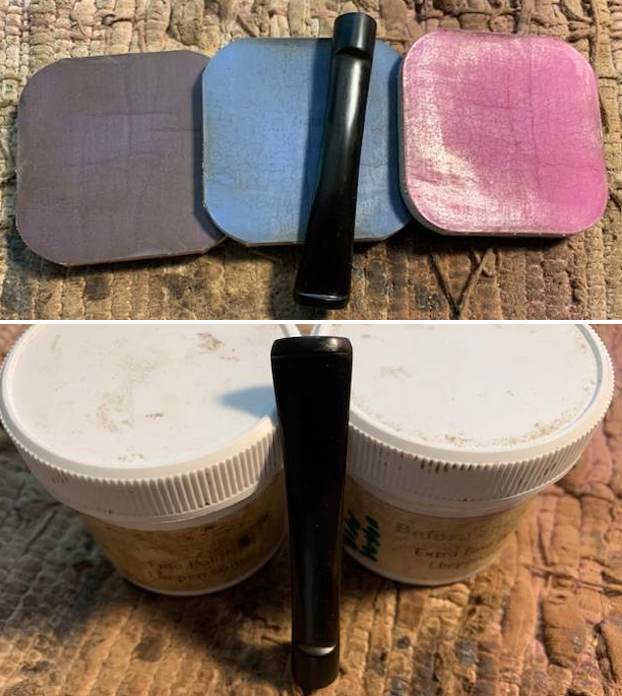
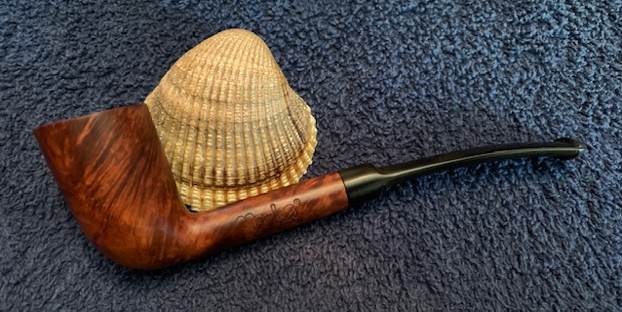
Jeff had thoroughly cleaned up the pipe. He reamed the pipe with a PipNet Pipe Reamer and cleaned up the remnants with a Savinelli Fitsall Pipe Knife.  He scrubbed the bowl with undiluted Murphy’s Oil Soap with a tooth brush. He rinsed it under running warm water to remove the soap and grime. He cleaned out the inside of the sump in the shank and the airway in the stem with alcohol, cotton swabs and pipe cleaners. He scrubbed the exterior of the stem with Soft Scrub to remove as much of the oxidation and calcification as possible. He soaked the stem in Before & After Deoxidizer and rinsed it off with warm water. (I only remembered to take these photos after I had restained the plateau and polished the bowl.) I took close up photos of the bowl, rim and the stem. You can see how clean the bowl and rim top and edges are. The stem is in good condition with light tooth marks and some chatter as noted above.I took a photo of the stamping on the underside of the shank. It is clear and readable as noted above. I removed the stem from the shank and took a photo to give a sense of the proportions of the pipe.I started my work on the pipe by touching up the valleys and crevices in the plateau rim top with a black stain pen. It looked much better.I polished the briar with micromesh sanding pads – dry sanding with 1500-12000 grit pads. I wiped the bowl down after each  pad to remove the grit. The bowl began to take on a rich shine. It is a beauty.   I rubbed the bowl down with Before & After Restoration Balm. I worked it into the briar with my finger tips. I let it sit for 10 minutes and the Balm did its magic. It enlivens, cleans and preserves the briar. It certainly brought this bowl back to life. I buffed it off with a clean cloth and took the following photos.  I sanded out the tooth marks and some scratches in the stem sides with 220 grit sandpaper and started the polishing process with 600 grit wet dry sandpaper.I set the bowl aside and turned to work on the stem. I was able to polish out the tooth marks and chatter with micromesh sanding pads – 1500-12000 grit pads. I wiped it down with a damp cloth after each sanding pad. I used Before & After Pipe Polish – both Fine and Extra Fine to further polish the stem. I fit the filter stem with a 6MM Medico Paper Filter. It fit well in the shank and the draw on the stem was clear and easy.This Karl Erik Ottendahl Made in Denmark Freehand Egg with a 6mm filter stem is a great looking pipe now that it has been restored. The beautiful finish really highlights the grain and the polished finish is stunning. I put the stem back on the bowl and carefully buffed the pipe with Blue Diamond on the buffing wheel. I gave the bowl and the stem multiple coats of carnauba wax on the buffing wheel and followed that by buffing the entire pipe with a clean buffing pad. I hand buffed the pipe with a microfiber cloth to deepen the shine. The finished Karl Erik Freehand fits nicely in the hand and feels great. Give the finished pipe a look in the photos below. The dimensions of the pipe are Length: 6 inches, Height: 2 ½ inches, Outside diameter of the bowl: 1 ½ inches, Chamber diameter: 7/8 of an inch. The weight of the pipe is 60 grams / 2.12 ounces. I will be adding the pipe to the Danish Pipe Makers Section of the rebornpipes store. If you are interested in purchasing this pipe send me a message or an email. Thanks for reading this blog and my reflections on the pipe while I worked on it.

Restoring a Beautiful Karl Erik Freehand “Rhodesianish” Short Churchwarden


Blog by Steve Laug

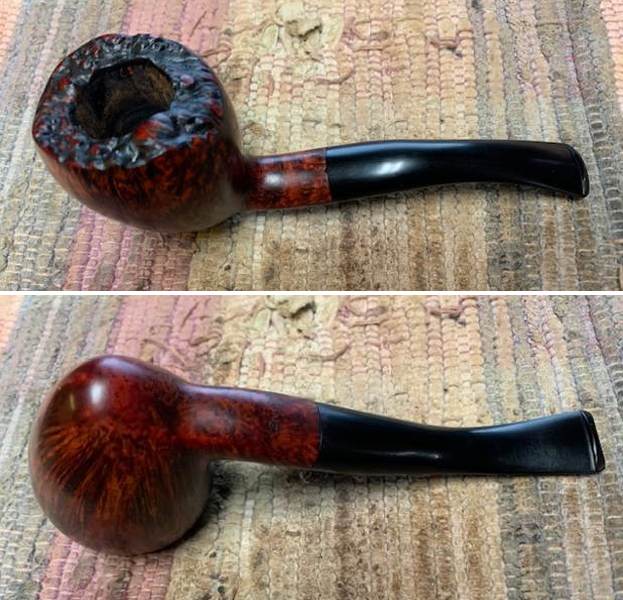
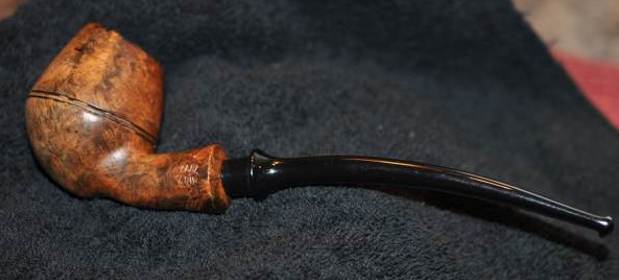
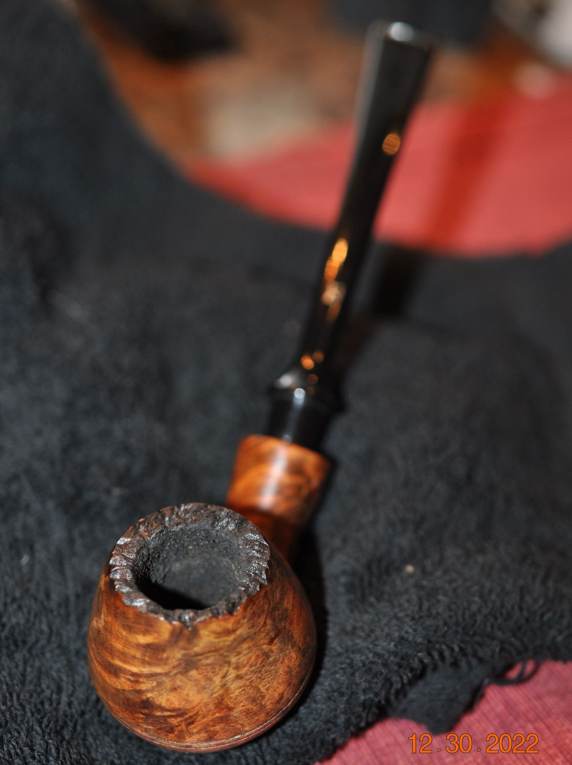
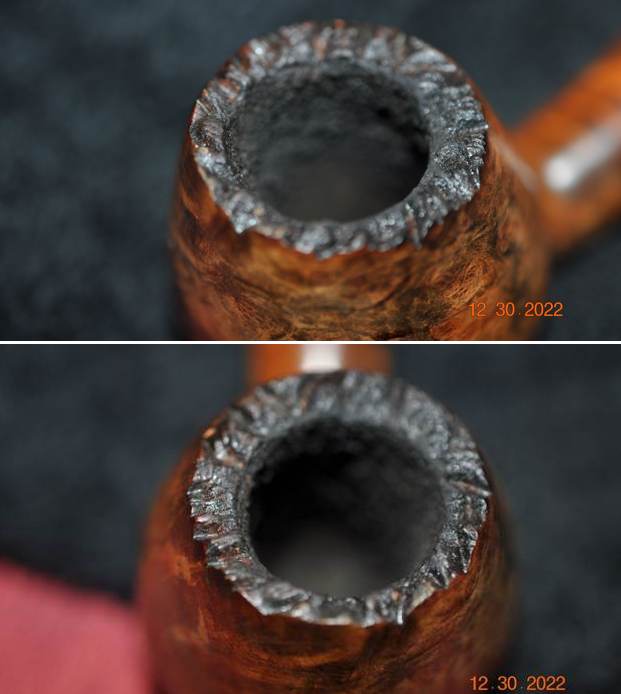
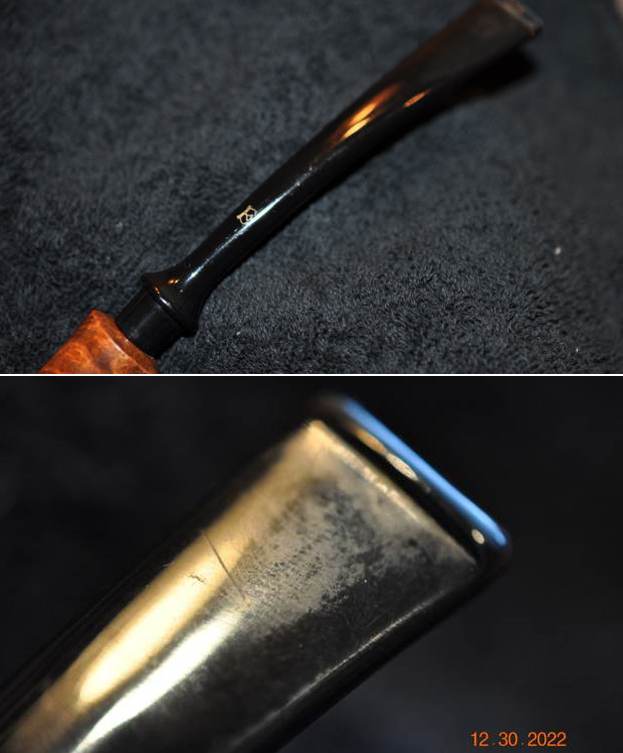
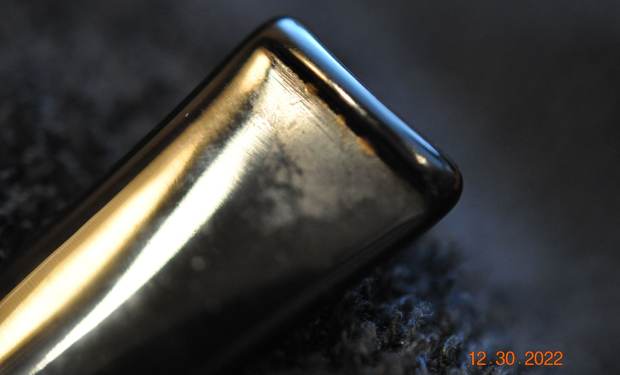
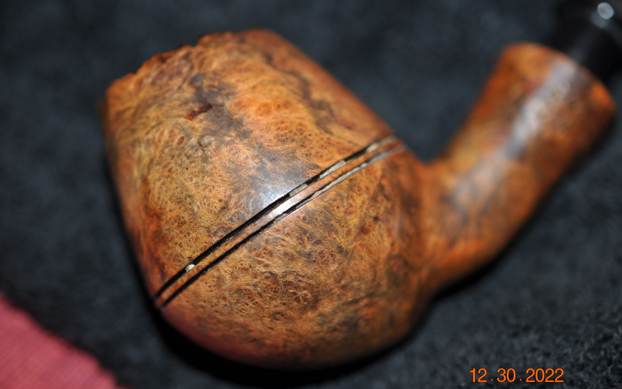
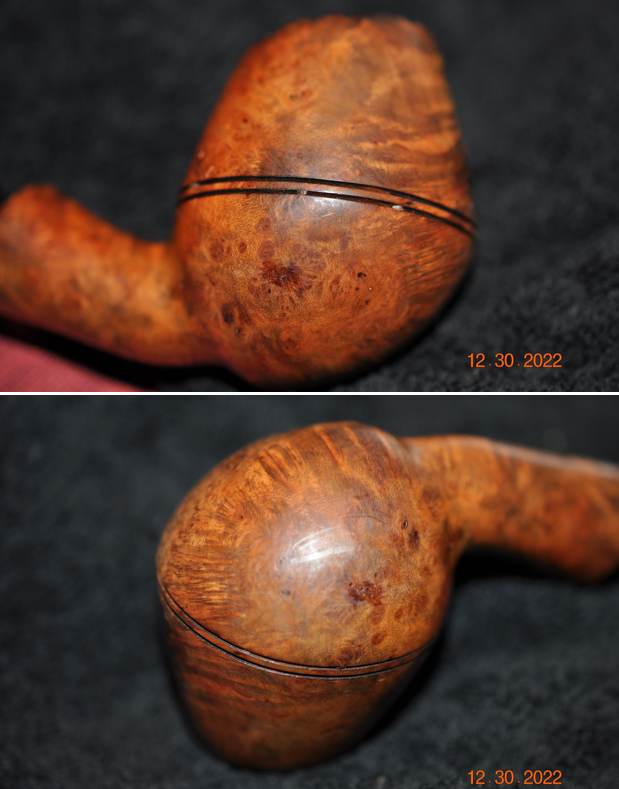
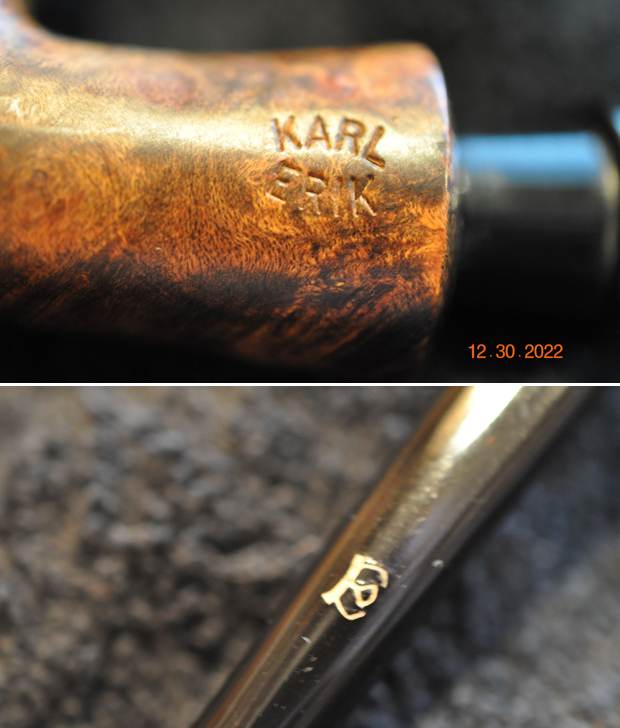
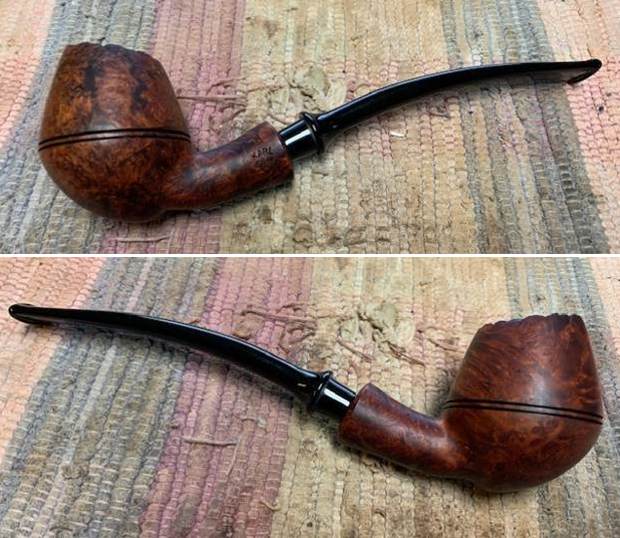
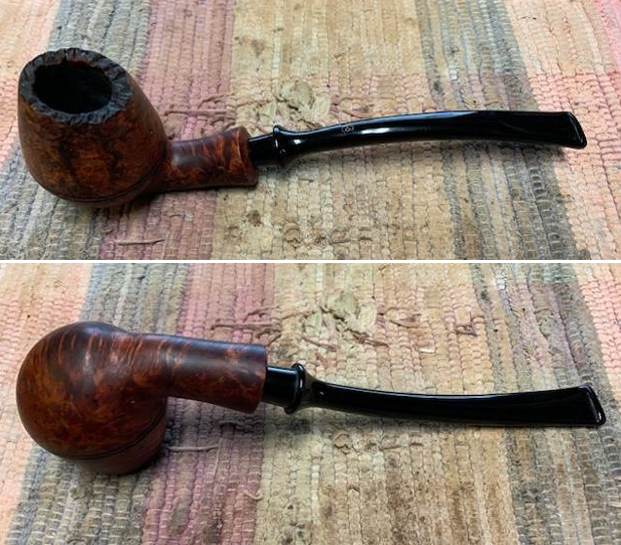
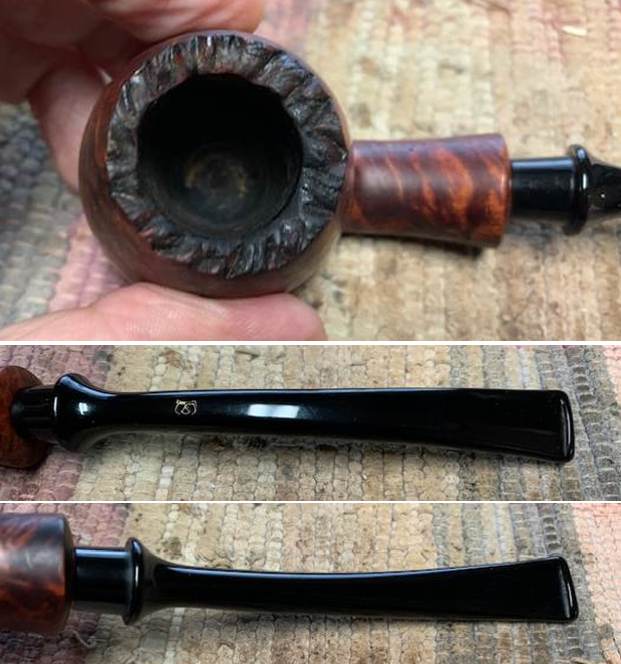
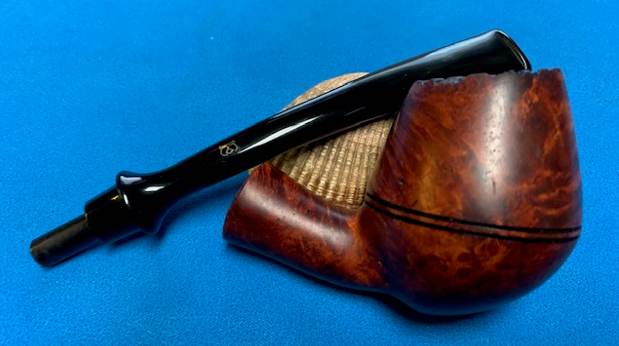
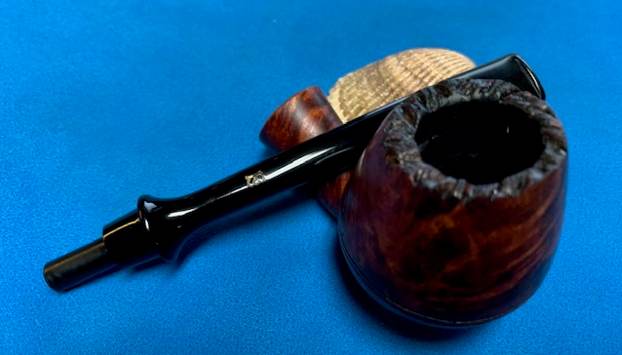
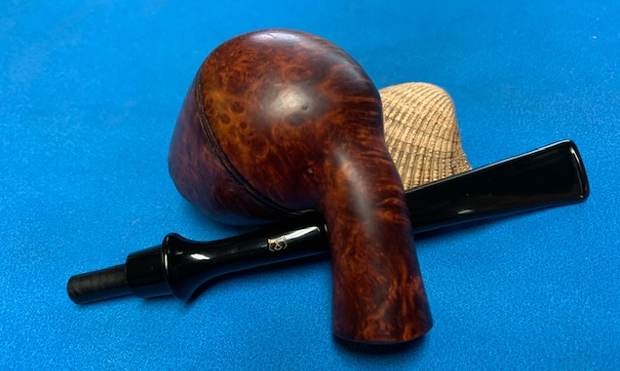
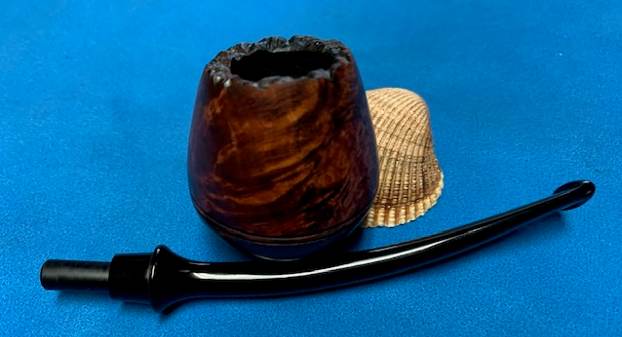
This afternoon I decided to work on a pipe from the lot that I have still to work on from a variety of places. This pipe was purchased from a friend on 06/05/21 in Brazil, Indiana, USA. It is an interesting pipe with a bowl that combines the twin rings of a Bulldog or Rhodesian with a Plateau rim top and a Freehand Flair. The pipe is stamped on the left side of the shank and reads Karl [arched over] Erik. The pipe was a well used pipe when Jeff received it. There was dust and grime ground into the finish. The mixture of brown stains highlights some beautiful grain under the dirt. The bowl was heavily caked and there was an overflow of lava on the plateau rim top. The inner edge appeared to be in good condition. The stem is acrylic and therefore was not oxidized. It was dirty with light tooth marks and chatter on both sides ahead of the button and on the button itself. There is a fancy E stamp in the top of the stem that is in good condition. Jeff took photos of the pipe before he started his clean up work on it. He took photos of the bowl and rim top to show what they looked like before his clean up. He also took some of the stem to show the condition of both sides. The photos of the sides and heel of the bowl show the uniquely stained grain around the bowl and shank. The mixture of black and brown stains adds depth finish on the pipe. Even under the grime it is a real beauty. The stamping on the left side the shank is shown in the photos below. It is clear and readable as noted above. He also took a photo of the fancy E logo on the top of the acrylic stem.Before I started my work on the pipe I wanted to see if I could find any information that would help me date this pipe and get a sense of the line. I turned to Pipephil to get a quick review of the brand (http://pipephil.eu/logos/en/logo-k1.html). The stamp on the stem shown in the photo below is different than the one I am working on. It includeds a K and an E while this one is just an E stamp. I have included a screen capture of the brand info there as well as a note in the side bar about Karl Erik Ottendahl along with a small picture.Brand created in 1965-66 by Karl Erik Ottendahl (1942 – 2004 †). In the best years he employed up to 15 craftsmen among which Bent Nielsen (see Benner) and Peder Christian Jeppesen. Former grading (ascending): from 4 to 1, and “Ekstravagant” (entirely hand made)
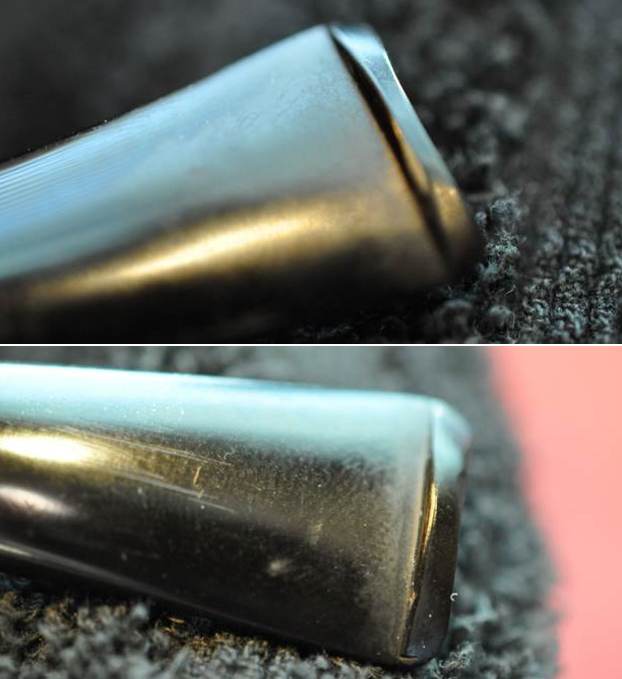
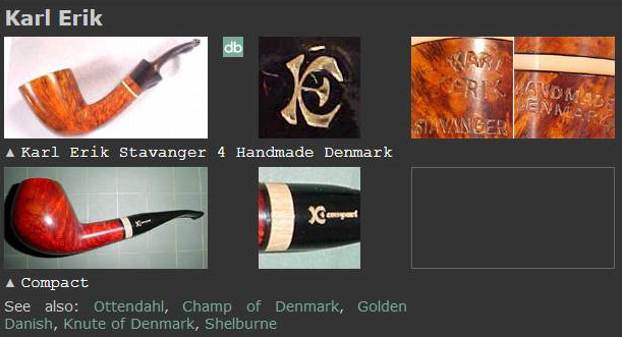
I then turned to Pipedia (https://pipedia.org/wiki/Karl_Erik) for more information. I am including just the opening remarks but would encourage you to give the link a read for a very interesting history of the brand. I quote:

Karl Erik Ottendahl (1942 – 2004) was born in Aalborg (Jutland), just a few miles from the very northernmost tip of Denmark. He began smoking a pipe when he was 14 and upon leaving school he started an apprenticeship in the craft as a lithographer at the age of 16.

While working as an apprentice he began hand carving pipes as a hobby. Many were given as gifts to his more senior colleagues. Upon completion of his apprenticeship he moved to Nairobi, Kenya to work as a lithographer during the 1962 war. While in that war torn country, he was unable to procure pipes for himself. In the face of such a predicament, he chose to continue to make pipes for his own use rather than go without.

Returning to Denmark after three years he couldn’t find a well paid occupation in his job, and so he began making a few pipes on the side to boost his income choosing his prenames “Karl Erik” – logo “KE” – for his label. When he managed to find some major Copenhagen pipe stores willing to sell his pieces his reputation grew little by little and he was finally able to purchase more and better machinery and began working full time as a pipe maker.

With that information in hand I knew what I was dealing with in terms of the stamping and the age of this pipe. I knew from the information that the pipe was made sometime between 1965 and 2004. Now it was time to work on the pipe.

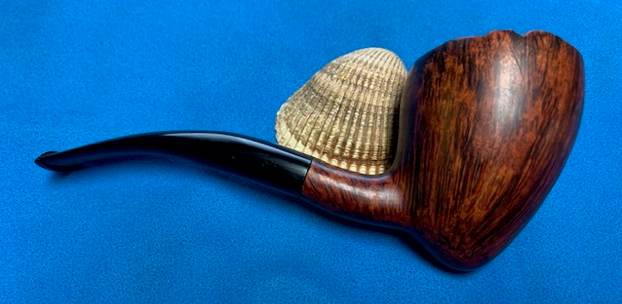
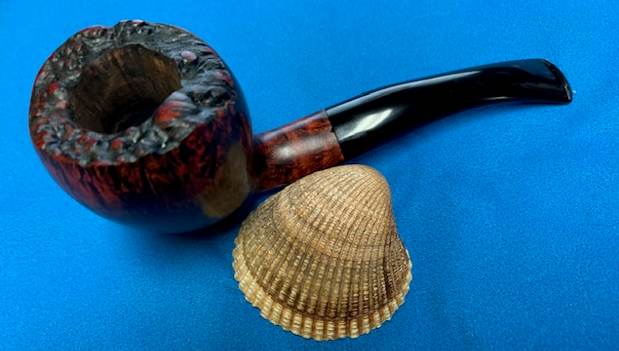
Jeff had thoroughly cleaned up the pipe. He reamed the pipe with a PipNet Pipe Reamer and cleaned up the remnants with a Savinelli Fitsall Pipe Knife.  He scrubbed the bowl with undiluted Murphy’s Oil Soap with a tooth brush. He rinsed it under running warm water to remove the soap and grime. He cleaned out the inside of the sump in the shank and the airway in the stem with alcohol, cotton swabs and pipe cleaners. He scrubbed the exterior of the stem with Soft Scrub to remove as much of the oxidation and calcification as possible. He soaked the stem in Before & After Deoxidizer and rinsed it off with warm water. I took close up photos of the bowl, rim and the stem. You can see how clean the bowl and rim top and edges are. The stem is in good condition with light tooth marks and some chatter as noted above.I took photos of the stamping on the sides of the shank. All are clear and readable as noted above. I removed the stem from the shank and took a photo to give a sense of the proportions of the pipe. I polished the briar with micromesh sanding pads – dry sanding with 1500-12000 grit pads. I wiped the bowl down after each  pad to remove the grit. The bowl began to take on a rich shine. It is a beauty.   I rubbed the bowl down with Before & After Restoration Balm. I worked it into the briar with my finger tips. I worked it into the twin rings and the plateau rim top with a shoe brush. I let it sit for 10 minutes and the Balm did its magic. It enlivens, cleans and preserves the briar. It certainly brought this bowl back to life. I buffed it off with a clean cloth and took the following photos.  I set the bowl aside and turned to work on the stem. I was able to polish out the tooth marks and chatter with micromesh sanding pads – 1500-12000 grit pads. I wiped it down with a damp cloth after each sanding pad. I used Before & After Pipe Polish – both Fine and Extra Fine to further polish the stem. This Karl Erik Ottendahl Rhodesian/Bulldog/Freehand with a long acrylic stem is a great looking pipe now that it has been restored. The beautiful finish really highlights the grain and the polished finish is stunning. I put the stem back on the bowl and carefully buffed the pipe with Blue Diamond on the buffing wheel. I gave the bowl and the stem multiple coats of carnauba wax on the buffing wheel and followed that by buffing the entire pipe with a clean buffing pad. I hand buffed the pipe with a microfiber cloth to deepen the shine. The finished Karl Erik Freehand fits nicely in the hand and feels great. Give the finished pipe a look in the photos below. The dimensions of the pipe are Length: 8 inches, Height: 2 inches, Outside diameter of the bowl: 1 ¼ inches, Chamber diameter: 7/8 of an inch. The weight of the pipe is 72 grams/ 2.54 ounces. I will be adding the pipe to the Danish Pipe Makers Section of the rebornpipes store. If you are interested in purchasing this pipe send me a message or an email. Thanks for reading this blog and my reflections on the pipe while I worked on it.
Restoring a Classic Custom-Bilt


Blog by Kenneth Lieblich

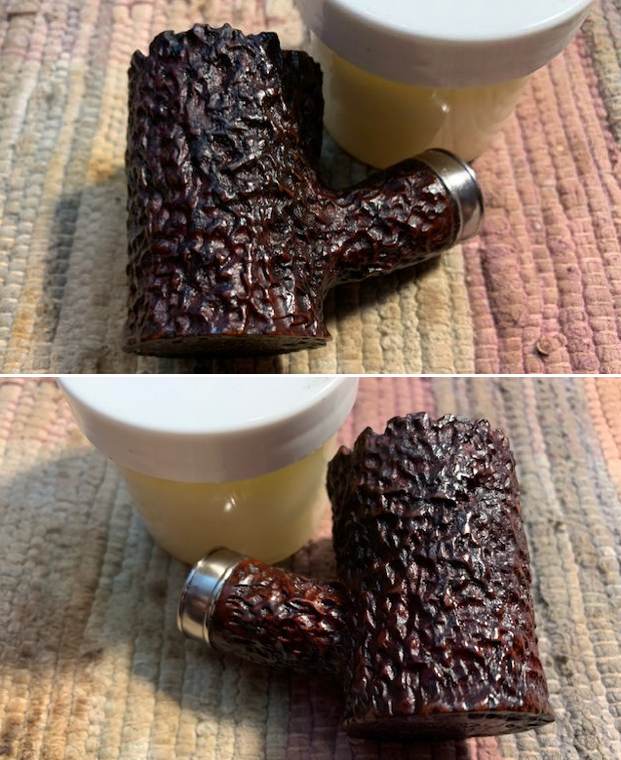
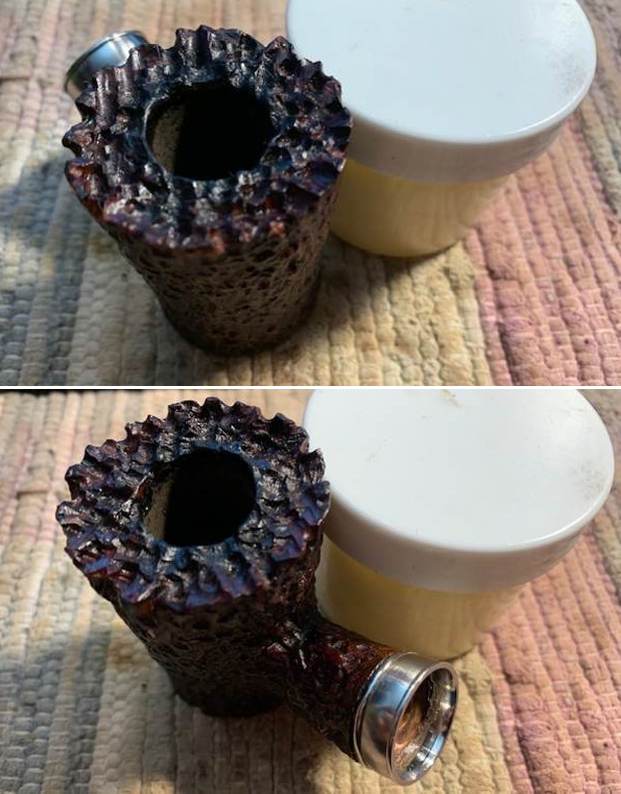
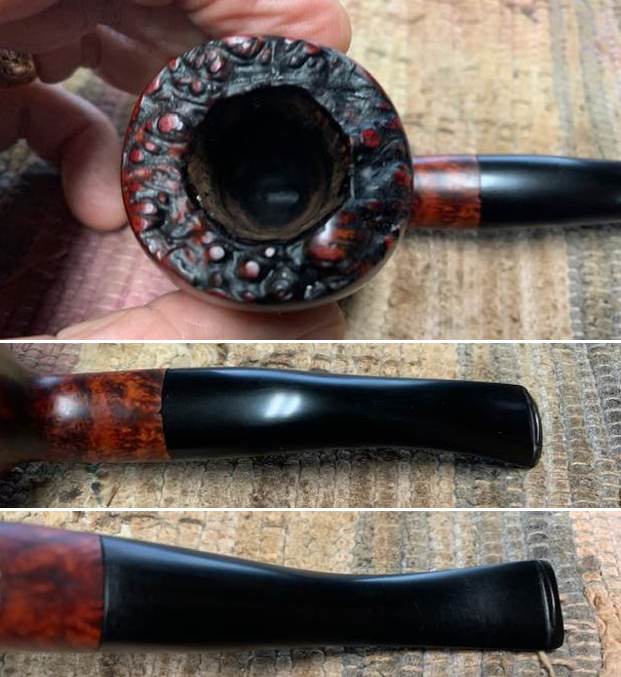
Next on the chopping block is this handsome and rugged Custom-Bilt Oom Paul. I acquired this pipe with Steve at one of those antique fairs where the term ‘antique’ is most loosely applied. Editorial comments aside, the fair was good fun and Steve and I enjoyed ourselves. This pipe piqued my interest because I know that there are many admirers (or should I say ‘fanatics’?) of Custom-Bilt pipes. Clearly, this one had had an active life and looked awfully tired now, but I felt I could bring it back to its best. As you can see, the pipe has the classic Custom-Bilt rustication on it. These marks are reminiscent of Tracy Mincer’s original work and are seen as something of a hallmark of the brand, nowadays. On the left side of the shank, the markings were as follows: Custom-Bilt [over] Imported Briar. No markings on the right side and no markings on the stem.The history of Custom-Bilt pipes is an interesting one and the most comprehensive source of information comes from The Custom-Bilt Pipe Story by Bill Unger. By all the accounts that I’ve heard, it is a very good book. I haven’t had the chance to read it myself, but it would appear to be the fount of knowledge on these pipes. If you’ve got a copy of Unger’s book that’s you’d like to get rid of, please drop me a line!Pipedia’s article on Custom-Bilt consists primarily of review’s of Unger’s book. It offers a cursory view of the markings and their approximate dating. My pipe’s markings correspond to “Stamp Number Three” as seen below, even though the markings on my pipe are not identical to that one. Thus, this pipe seems to be from the Wally Frank era.Pipephil provided a bit more information on the brand, although not strictly related to my pipe.Finally, the pipesrevival.com website has yet more information on Custom-Bilt pipes. This page seemed to confirm that my pipe is from the Wally Frank era, but my interpretation of the photos, etc. is that this is from the early part of that era – probably the early 70s. It is difficult to be sure, but that seems reasonable. In any event, if you are interested in these pipes, I recommend reading all three websites.I figure that this pipe must have been a good smoker because it had been thoroughly used and there was plenty of wear from its long life. This wasn’t a difficult restoration, but there were a lot of steps and it took longer than usual. The stem was heavily oxidized. There were a few minor scratches and a couple of notable tooth dents, and the inside was definitely dirty. However, the real issues were on the stummel. It had accumulated much dirt and debris over the years. The bowl had tons of cake inside and the rim was coated in lava (and potentially burn marks). The front edge of the rim was damaged, presumably from banging out dottle on a hard surface over the years. The grooves of the rustication were embedded with debris and there was a notable burn mark on the back-right part of the bowl, near the shank. Meanwhile, on the left of the bowl, there were a couple of fills (including a major one) that would need addressing. I haven’t even mentioned the miscellaneous scratches, dents and other marks all over the place! Let’s get restoring. The stem was first on my list. I wiped the outside with Murphy’s Oil Soap on some cotton pads. I also took a BIC lighter and ‘painted’ the stem with its flame to lift the few bite marks and dents. However, it did not do much. Then I cleaned out the inside with pipe cleaners and isopropyl alcohol. Given the amount of oxidation, this one needed the usual overnight Pipe Stem Oxidation Remover bath. The following day, I cleaned all of the de-oxidizing mess off with alcohol, pipe cleaners, et cetera. The oxidation had migrated to the surface and I scrubbed with SoftScrub on some cotton pads to remove the leftover oxidation. With that done, I built up the dents on the top and bottom of the stem with black cyanoacrylate adhesive and let them fully cure. I then sanded the adhesive down with 220-, 400-, and 600-grit sandpapers to meld seamlessly into the stem. I then used all nine Micromesh pads (1,500 through 12,000 grit) all over to bring out the lovely black lustre on the stem. I also used Obsidian Pipe Stem Oil in between each pad scrubbing.You may notice that the stem looked odd – well, you are right. Over time, it gradually straightened itself out. I wanted the end of the stem to be roughly parallel with the rim of the bowl, so I brought out my heat gun and heated the vulcanite stem to make it malleable. The heat gun is very powerful – it doesn’t take long! When soft, I gently curved the stem over a wooden dowel. The dowel provides a firm surface and a proper curve. Once I had the bend I wanted, I left the stem to cool and set itself in place.

When I was done, I noticed some unusual “stretch marks” on the stem where I’d bent it. Then I asked Steve about it and learned that it does happen occasionally. Suffice it to say, it was extremely annoying as I had to go back and sand that section again. Lesson learned: bend the stem before sanding it!All that finished, I set the stem aside and I began work on the very dirty stummel. Firstly, I decided to ream out the bowl. I used both the PipNet Reamer and the KleenReem to remove the built-up cake and followed that with 220-grit sandpaper taped to a dowel to eliminate as much as I could. I took the chamber down to bare briar, as I wanted to ensure there were no hidden flaws in the wall. Fortunately, there were none. As the photos show, there was quite a mound of debris. I then proceeded to clean out the insides of the shank with Q-tips, pipe cleaners, and lemon-infused isopropyl alcohol. It was ridiculously dirty and took up the country’s supply of cotton to get it clean. I followed that up by cleaning the insides with some dish soap and tube brushes. Next, I used cotton rounds and a toothbrush to scrub the outside of the stummel. Due to the lava on the rim, I carefully used a knife to scrape away as much as I could. All that scrubbing accentuated some very ugly fills which had been repaired with typical red putty.To exorcize the ghosts of tobaccos past, I decided to de-ghost the pipe. I thrust cotton balls into the bowl and the shank and saturated them with 99% isopropyl alcohol. I let the stummel sit overnight. This caused any remaining oils, tars and smells to leach out into the cotton. Although it helped, the de-ghosting was not as successful as I hoped. As a result, I plopped the stummel in my alcohol bath overnight. This removes old stain and cleans debris, odours etc. As you can see, after the bath, the stummel looked rather naked but much cleaner. I next used a dental pick to dig out the awful putty in those fills, as I felt I could do better. I redid the fills with a mixture of cyanoacrylate adhesive and briar dust. The main fill on the back of the bowl was in an awkward position for sanding and making it consonant with the surrounding wood was tricky. In any event, I used some miniature files and various grits of sandpaper to make it look good. Next was the burn on the backside. I took some oxalic acid, used several Q-tips, and rubbed and rubbed and rubbed. The burn dramatically improved and any stain I would later apply would cover it up. Fortunately, the burn was very superficial and did not affect the integrity of the wood at all.To remove the nicks on the rim, I “topped” the pipe – that is to say, I gently and evenly sanded down the rim on a piece of 220-grit sandpaper. This effectively removed the damage, without altering the look of the pipe. However, since I did not want to top the pipe too much, the bashed-in front edge of the pipe would have to be addressed differently. I dug out my iron and a damp cloth to attempt a repair. The hot and moist steam can often cause the wood to swell slightly and return to shape. There was some movement – not a lot, but it was better than doing nothing. I opted to ever-so-slightly round the rim of the pipe in such a way that looks both natural and handsome. Then I sanded the stummel down with all nine Micromesh pads (1,500 through 12,000 grit). The smooth areas got all nine pads, whereas the rusticated areas on received only the last four. Although almost all of the nicks were removed, a hint of a couple of wounds remains. This is part of the story of this pipe – it is its history. Due to all the necessary work for this pipe, I needed to restore the colour, so I stained it with Fiebing’s Medium Brown Leather Dye. First, I brought out my heat gun and spent a couple of minutes thoroughly heating the wood, so it would be as receptive as possible to the stain. I needed the brown to penetrate well into the wood, to give the best results. I applied dye with a cotton dauber. I flamed it with my BIC lighter, let it set, then coated it again with dye, flamed it again, and let that set too. I decided to let the pipe sit overnight. This dye is alcohol-based, so I used isopropyl alcohol to wipe down the pipe and remove excess stain. My intent was not to create a new look for this pipe, but rather to restore the original colour. Finally, I took it to the buffer and used some White Diamond and a few coats of Conservator’s Wax. This pipe took a lot of work, but it was worth it. This Custom-Bilt looks fantastic again and is ready to be enjoyed again by the next owner! I am pleased to announce that this pipe is for sale! If you are interested in acquiring it for your collection, please have a look in the ‘American’ pipe section of the store here on Steve’s website. You can also email me directly at kenneth@knightsofthepipe.com. The approximate dimensions of the pipe are as follows: length 4¾ in. (120 mm); height 5⅛ in. (130 mm); bowl diameter 1½ in. (38 mm); chamber diameter ⅞ in. (22 mm). The weight of the pipe is 2⅜ oz. (69 g). I hope you enjoyed reading the story of this pipe’s restoration as much as I did restoring it. If you are interested in more of my work, please follow me here on Steve’s website or send me an email. Thank you very much for reading and, as always, I welcome and encourage your comments.

Moving another one of my own – an American Artisan Rusticated Cherrywood Pipe


Blog by Steve Laug

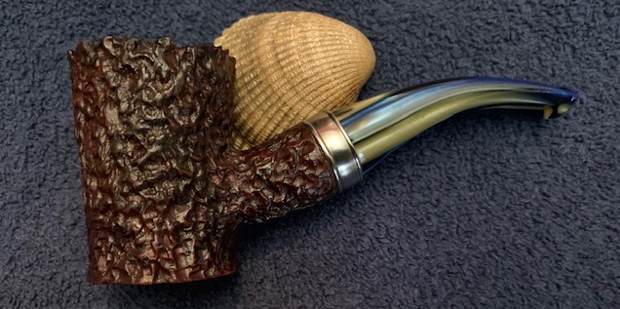
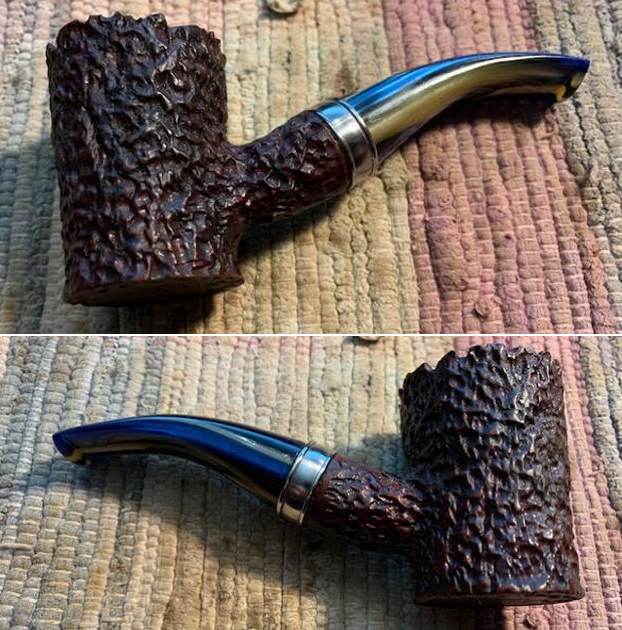
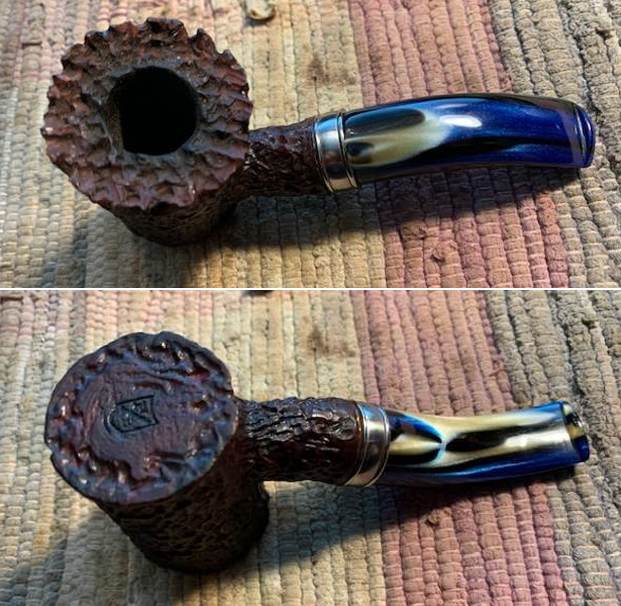
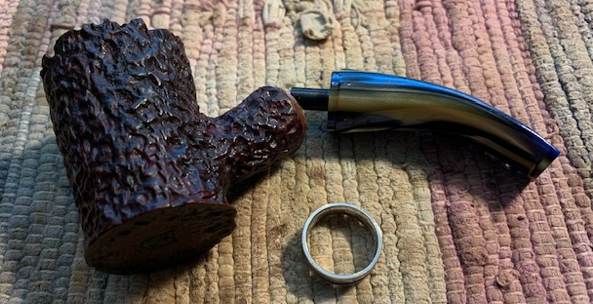
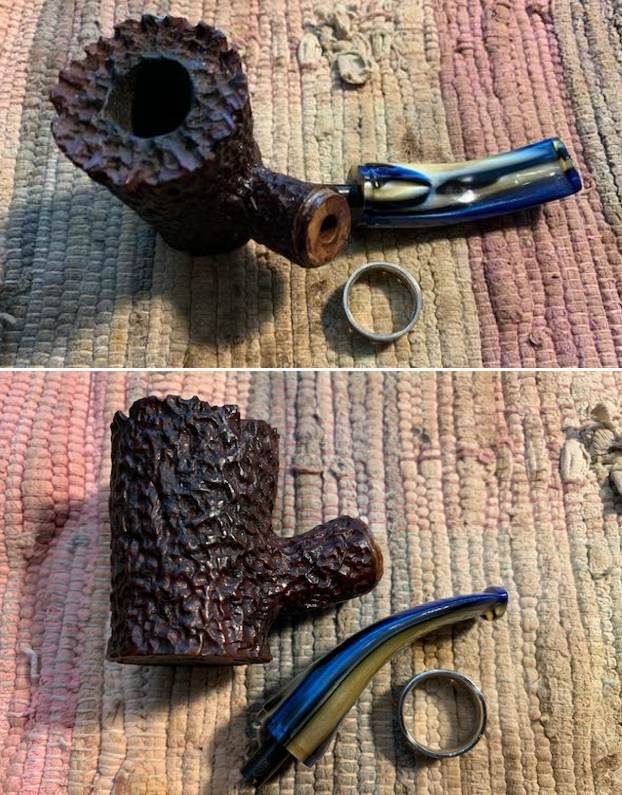
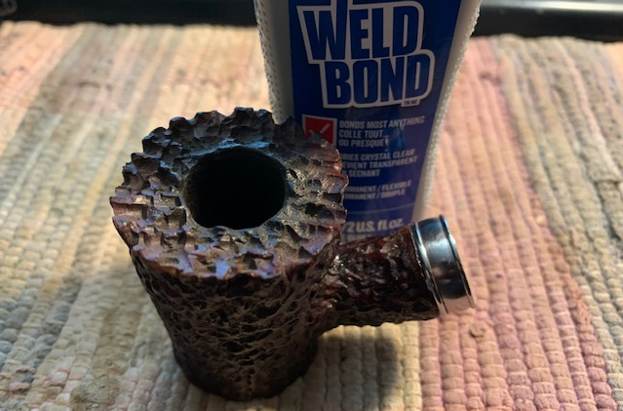
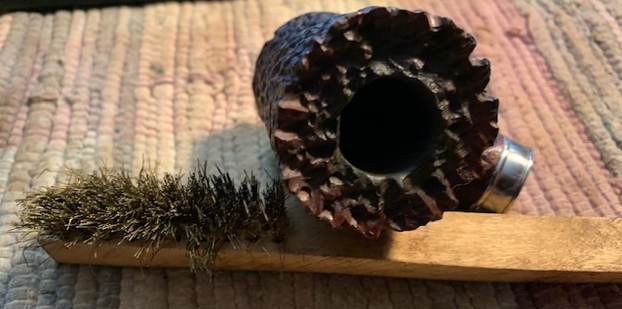
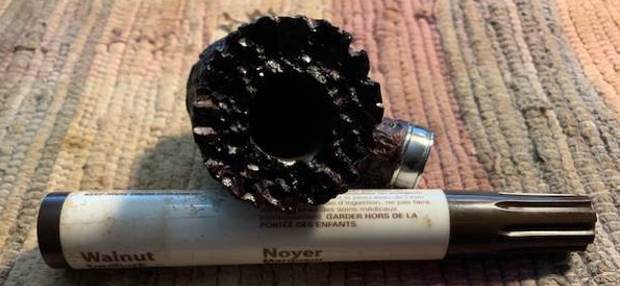
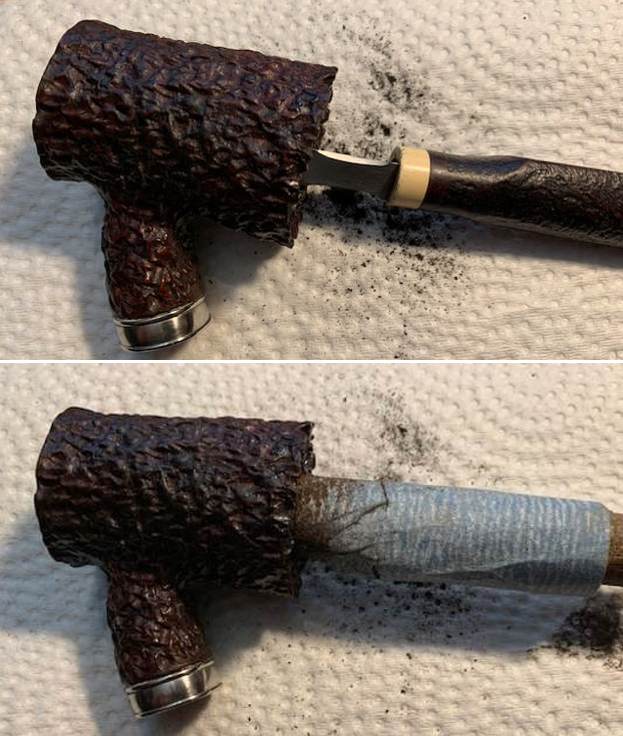
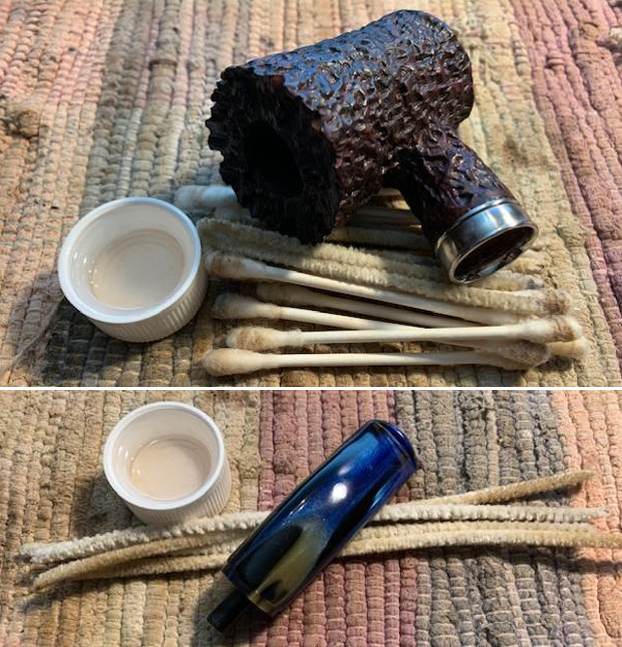
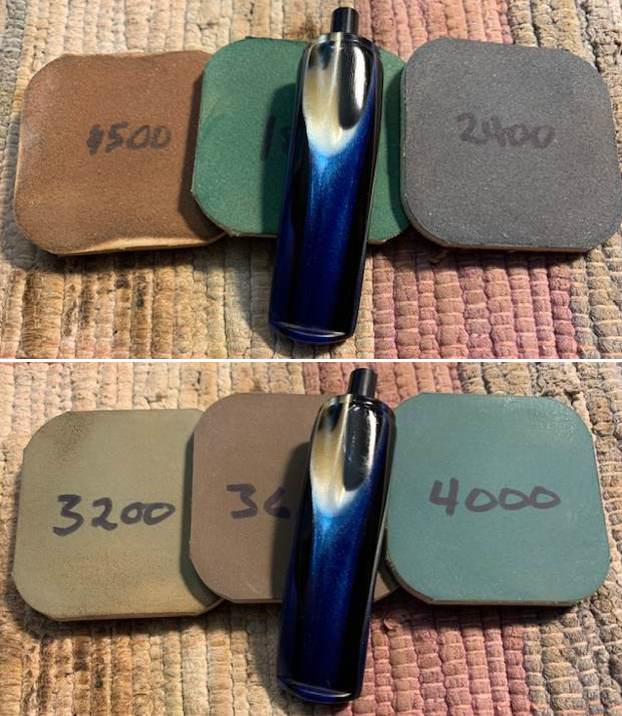
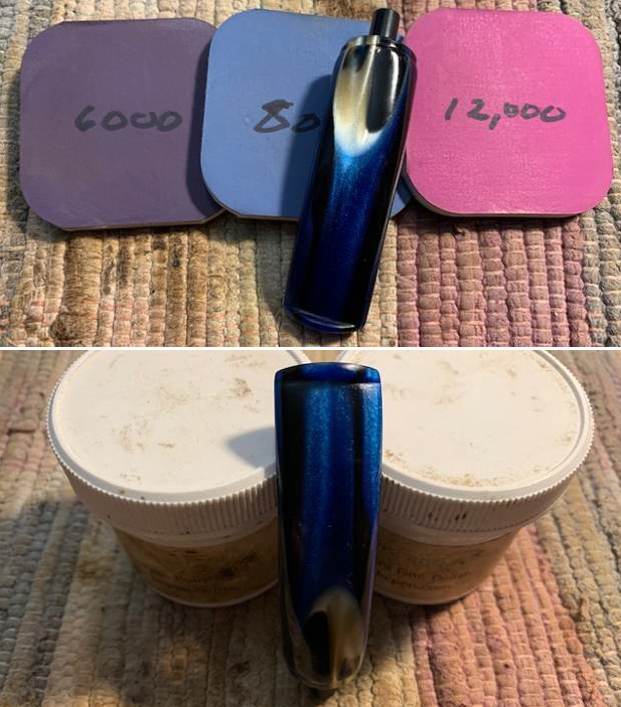
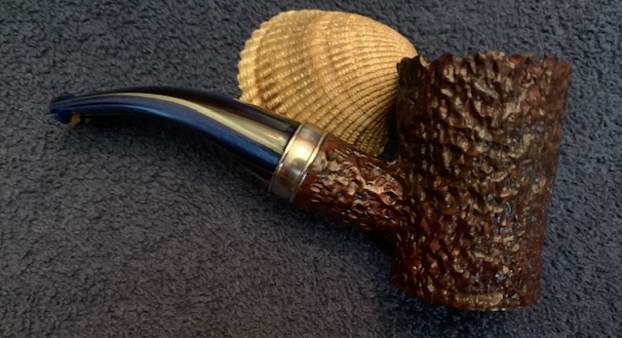
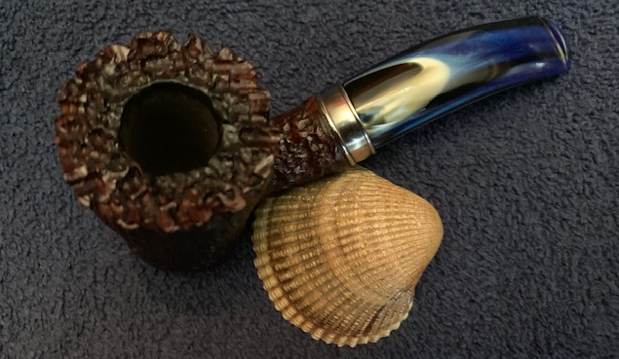
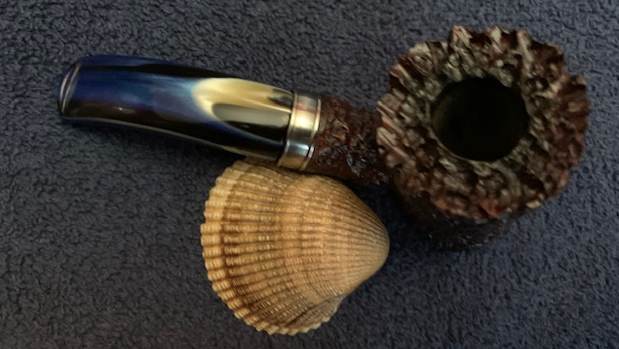
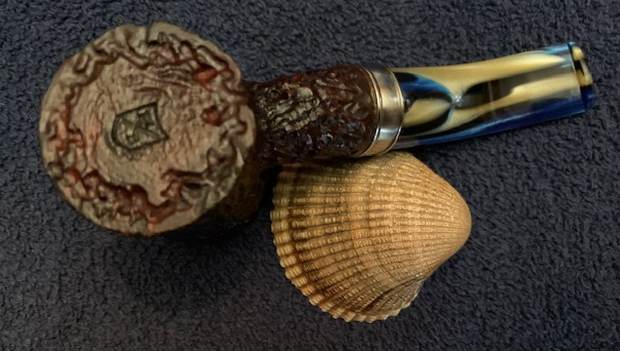
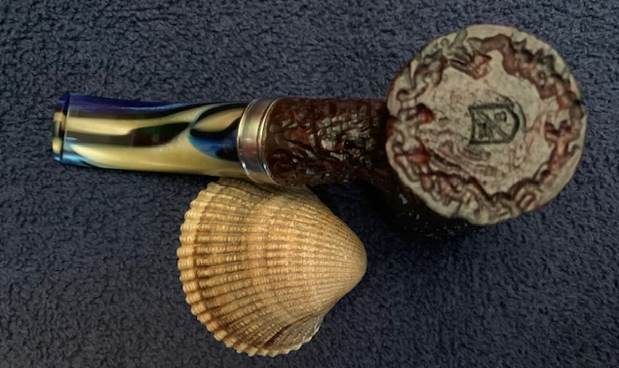
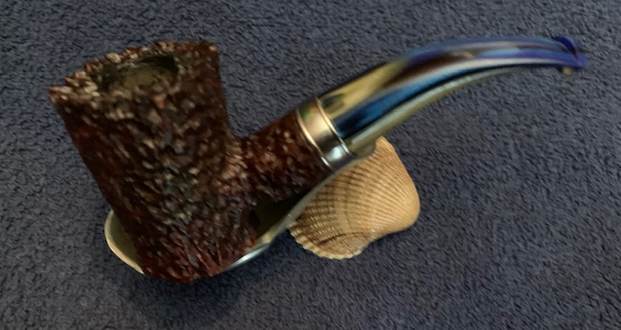
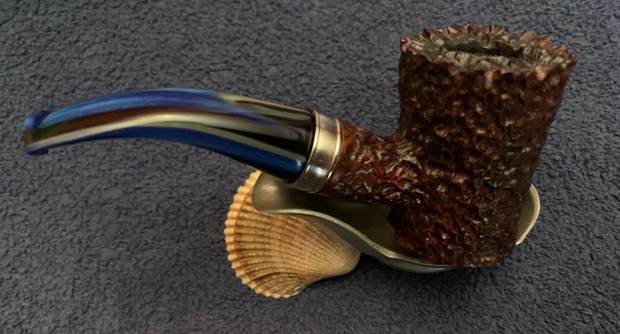
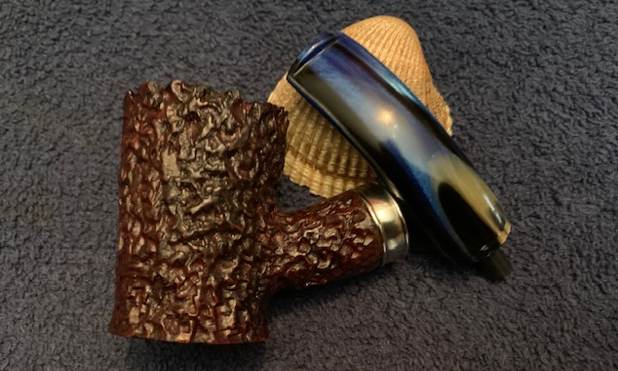
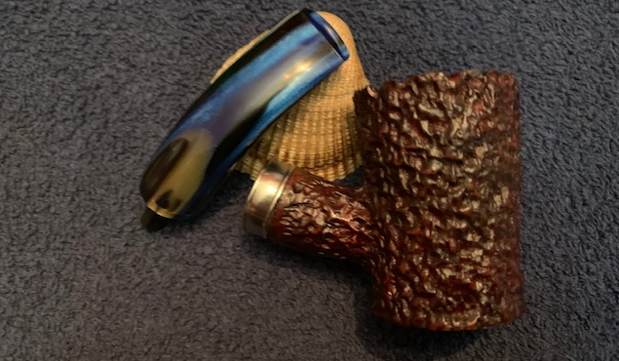
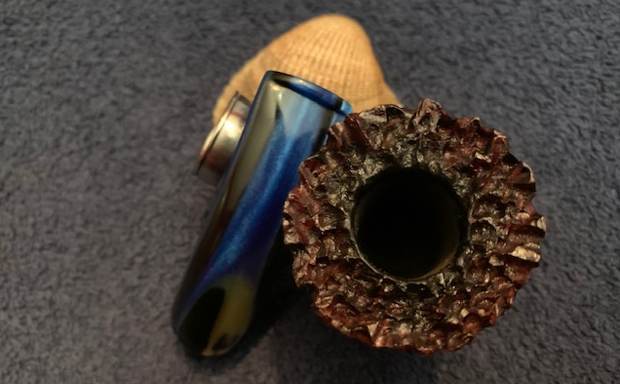
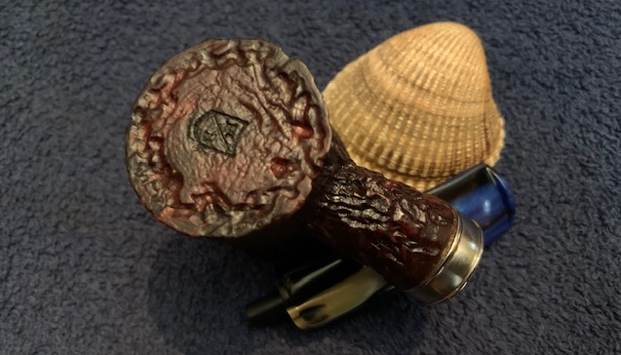
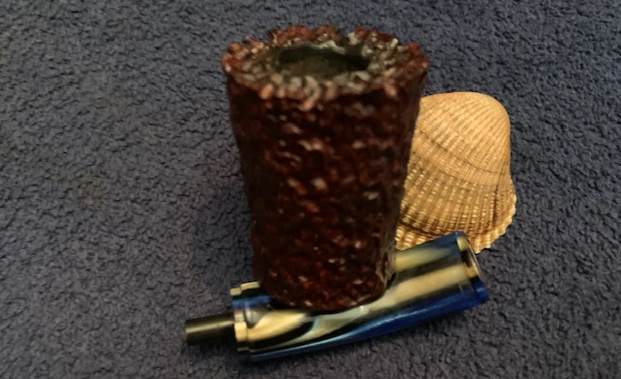
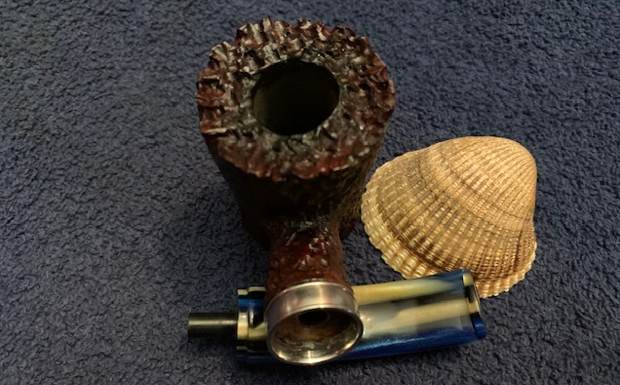
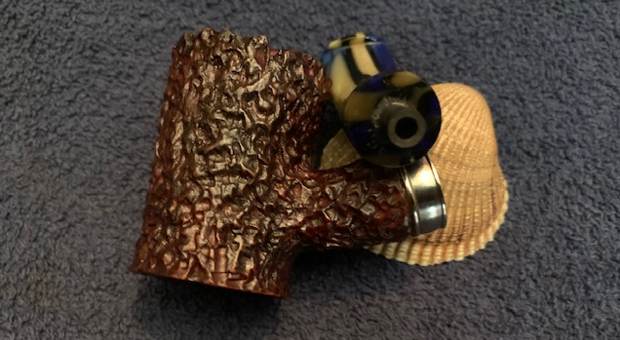
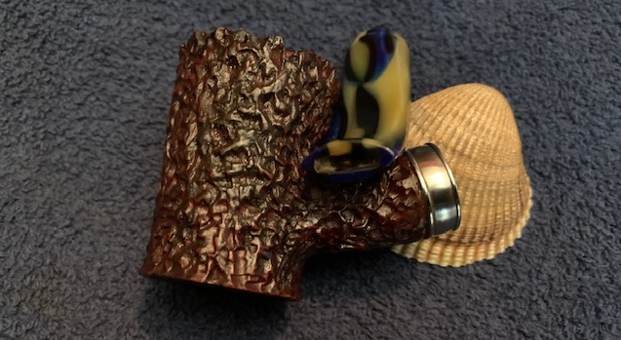
This is another pipe that I have taken out of my personal collection as I just do not use enough to warrant keeping it. This pipe was given to me in a group of pipes and I used it a bit when it came in. It is from a period of my journey where I smoked solely Virginia tobaccos so it is quite clean. The airway in the shank and the mortise were quite clean. The rusticated finish and rim top were in excellent condition. I don’t remember who made the pipe but I do remember it was a relatively new artisan American carver. It is stamped on the heel of the bowl with the letters B/B in a shield. There was a light cake in the bowl but the top and inner edge of the bowl clean and a bit faded. There is a polished steel band on the shank end. It is loose and the attachment is a bit odd. The shank end and stem end are both stepped down to receive the band. The blue and gold/tan acrylic stem is in good condition with some light tooth chatter ahead of the button on both sides. It has a inserted Delrin tenon that is a great fit in the shank. I took photos of the pipe before I did my clean up work on it. I took a photo of the bowl and rim top to verify the description above. I also took photos of the stem surface showing the light chatter on either side.I took a photo of the stamping on the heel of the bowl. It is clear and readable as noted above.  I took the stem off the bowl and took a photo of the pipe to give a sense of proportion of the pipe. You can also see the loose band and the step down area on the shank end and stem end. There was still some bits of glue on the shank end that I would clean off when I reglued the band. I used a toothpick to spread some Weld Bond all purpose glue around the shank end.I pressed the band on the shank end and wiped off the excess glue around the edge of the band.I cleaned up the rustication on the rim top with a brass bristle wire brush. It looked cleaner and more distinct.I touched up the stain on the rim top and worked it into the faded spots on the rim top, working it down into the valleys of the rustication.Now it was time to work on the pipe. I cleaned up the light cake in the bowl with a Savinelli Fitsall Pipe Knife. I sanded the bowl walls with a piece of dowel wrapped in 220 grit sandpaper.I cleaned the mortise and airways in the shank and stem with cotton swabs, pipe cleaners and isopropyl alcohol to remove the debris and tars from my smoking. You can see that it was not too bad as I tend to keep my pipes clean.The bowl was in such good condition that decided to give the bowl and shank a coating of Before & After Restoration Balm. I worked it into the surface of the briar with my fingertips and a horsehair shoe brush to clean, enliven and protect the briar. I let the balm sit for 15 minutes and then buffed with a cotton cloth to raise the shine. The photos show the bowl at this point in the restoration process. Since the stem was in quite good condition other than tooth chatter I polished out the chatter with micromesh sanding pads – dry sanding with 1500-12000 grit pads. I rubbed it down between pads with Obsidian Oil. I polished it with Before & After Fine and Extra Fine Pipe Stem Polish. I wiped it down with some Obsidian Oil and buffed it off. It is a beautiful stem. I am excited to put the final touches on this great looking American Made Artisan BB Rusticated Cherrywood. I put the pipe back together and buffed the stem with Blue Diamond on the buffing wheel. I gave the bowl multiple coats of Conservator’s Wax and the stem multiple coats of carnauba wax. I hand buffed the pipe with a clean buffing pad to raise the shine. It is fun to see what the polished bowl looks like with the rugged rustication all around it. Added to that the polished blue and gold/tan acrylic stem combined with the bowl and make a stunning pipe. This rusticated BB Cherrywood is great looking and the pipe feels great in my hand. It is light and well balanced. Have a look at it with the photos below. The dimensions are Length: 5 inches, Height: 2 inches, Outside diameter of the bowl: 1 ½ inches, Chamber diameter: ¾ of an inch. The weight of the pipe is 59 grams/2.08 ounces. It is a beautiful pipe that I will soon be putting on the rebornpipes store in the American Pipe Makers Section. If you are interested in adding it to your collection send me an email or a message. Thanks for walking through the restoration with me as I worked over this pipe. Thanks to each of you who are reading this blog.
Restoring a Republic Era Peterson’s System 31 Billiard


Blog by Steve Laug

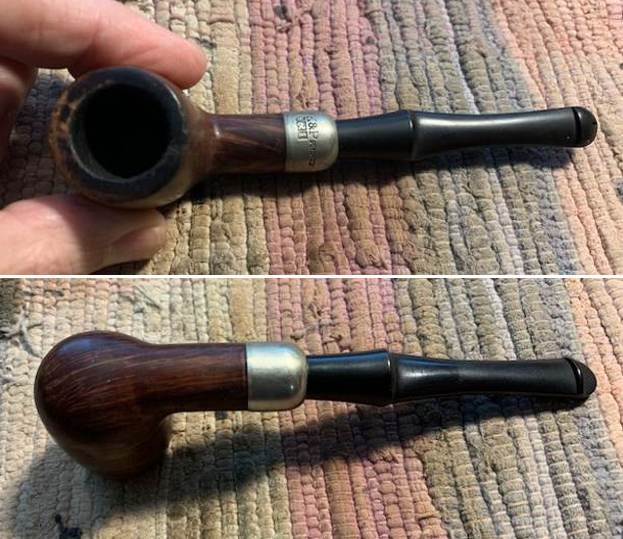
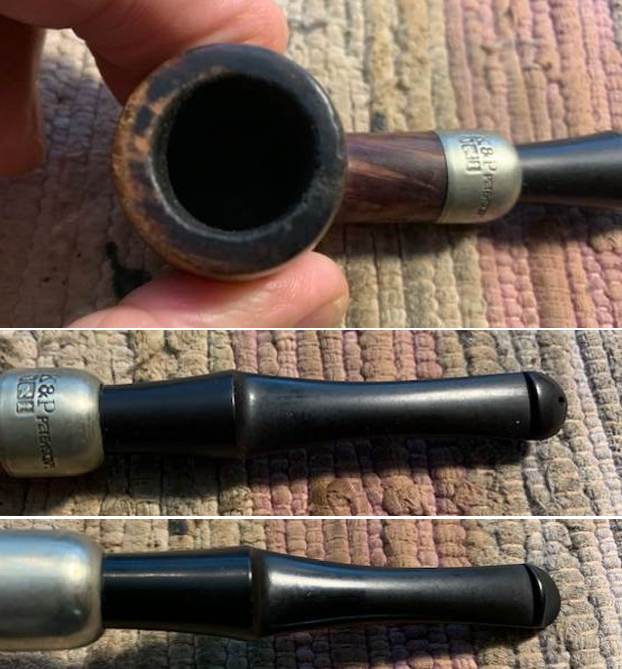
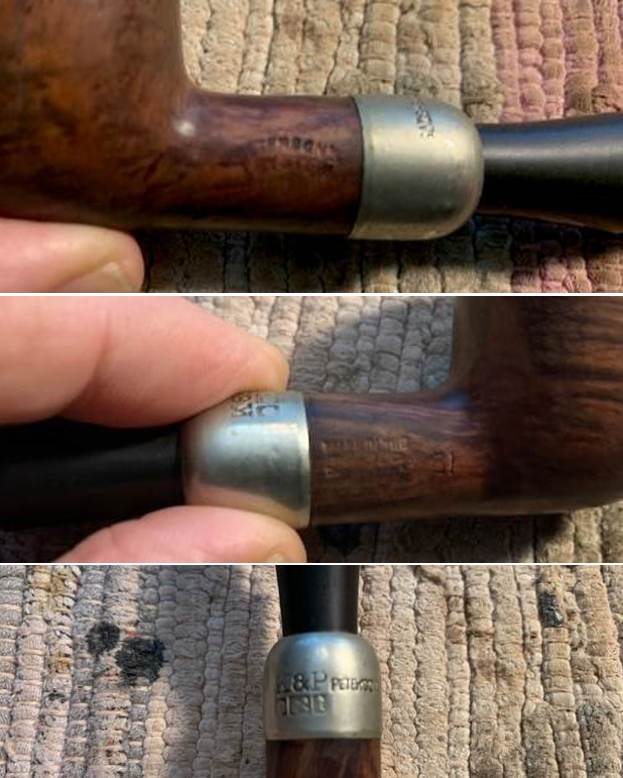
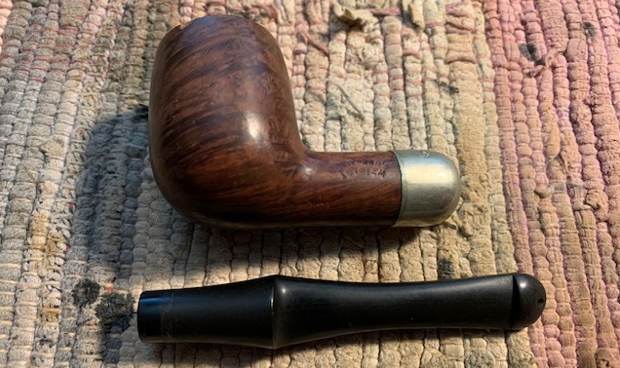
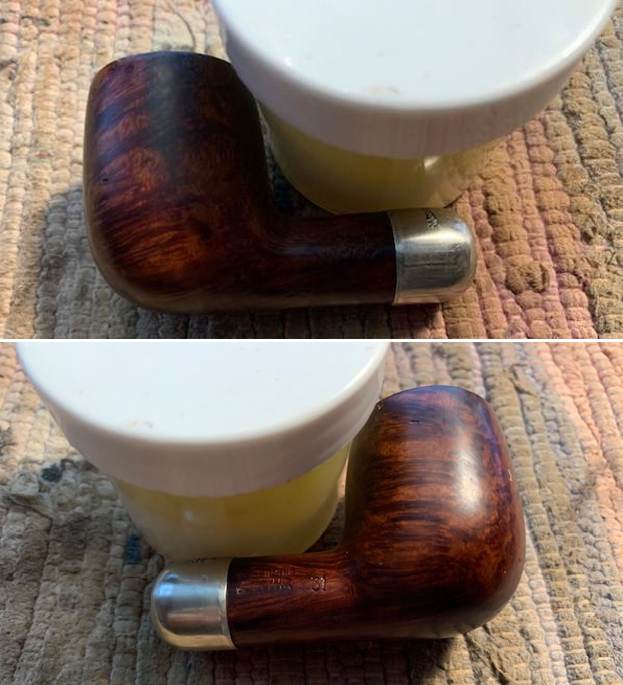
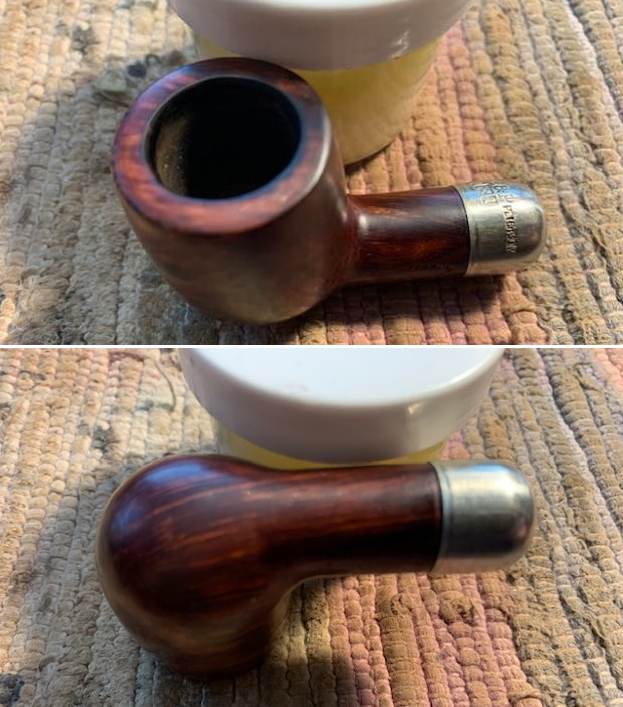
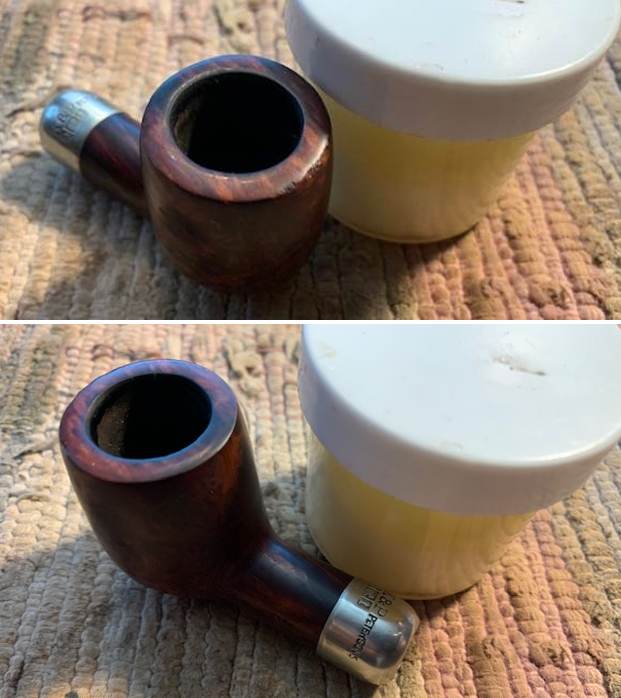
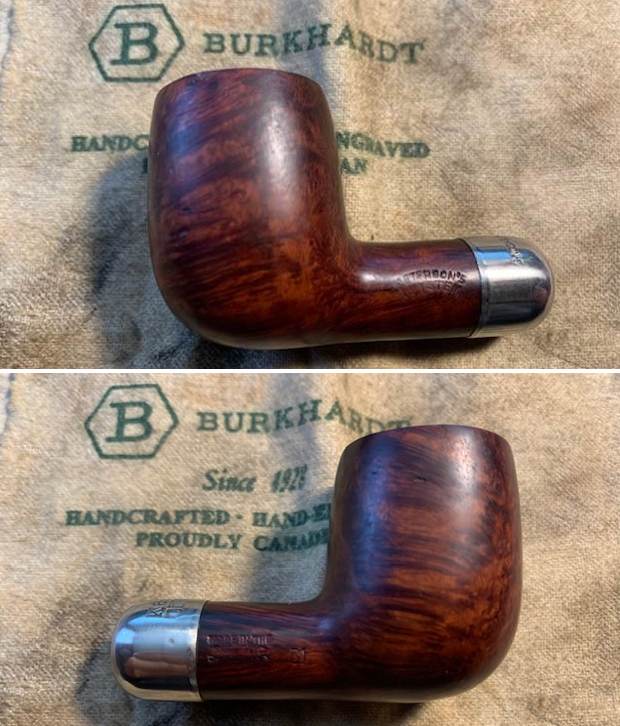
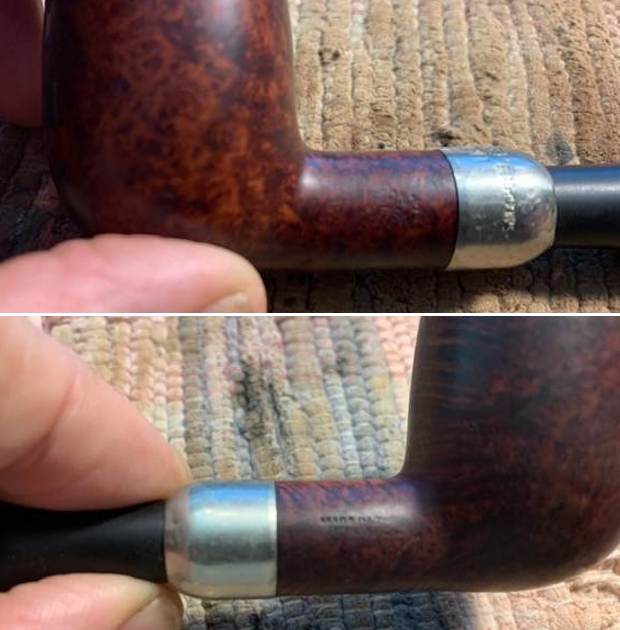
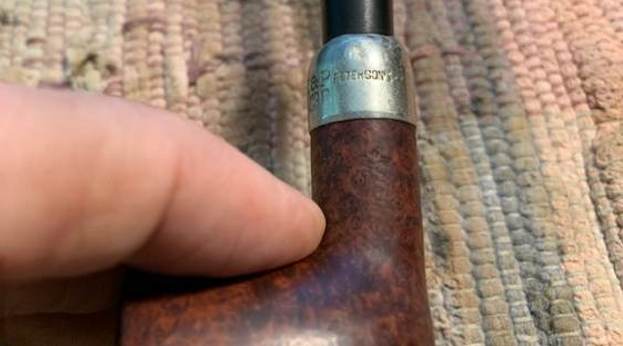
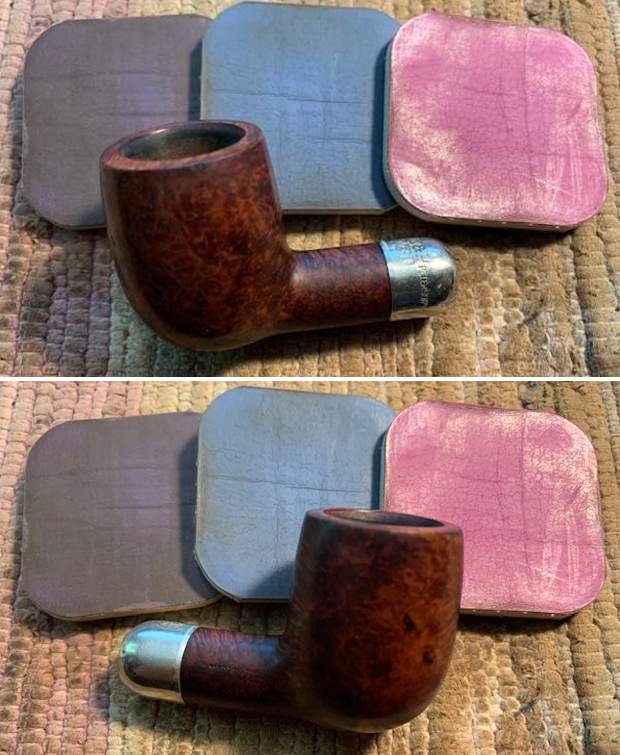
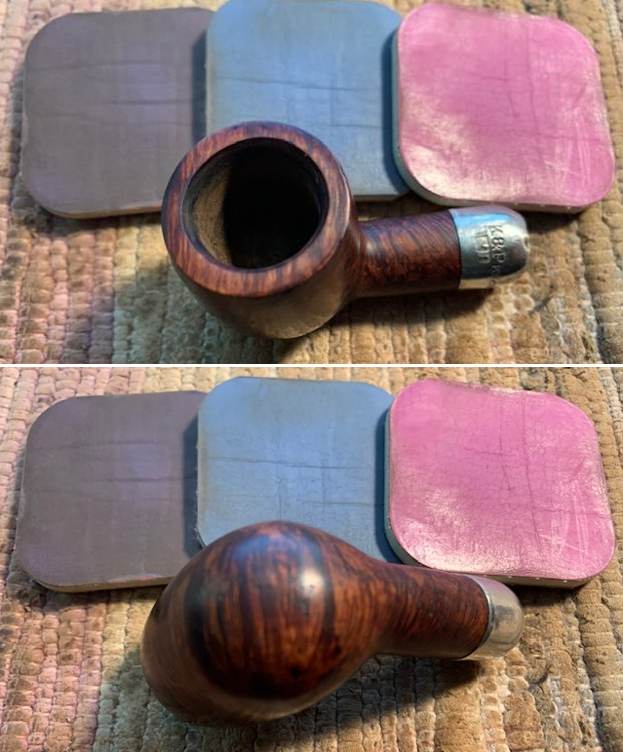
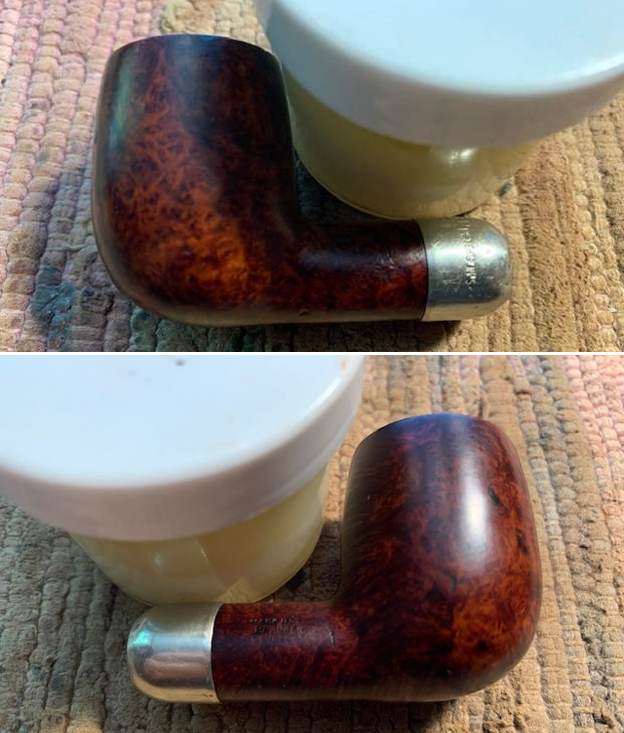
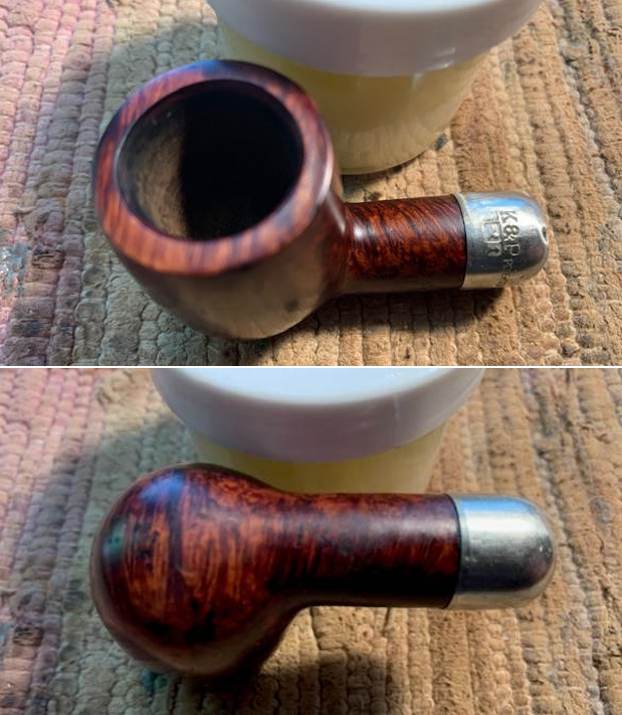
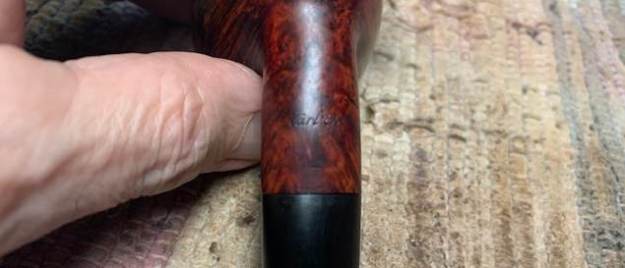
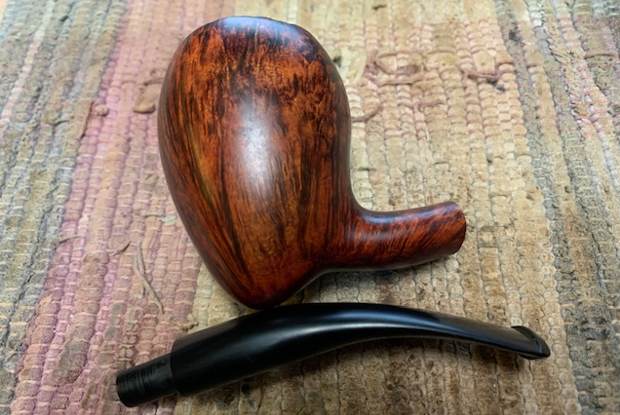
This is another one of those pipes that has been here for a long time and I have no memory where it came from. It had been cleaned and reamed. The inside of the shank, the system sump and the shank was quite clean. The smooth rim top was damaged and had some darkening. The edges – both inner and outer had some damages by burning and the bowl was out of round. The smooth finish was very clean from Jeff’s scrubbing. The stamping on the shank is clear and readable. The left side is stamped Peterson’s [arched over] System. On the right side it was stamped Made in the Republic of Ireland (3 lines). To the right of that stamp is the shape number 31. The nickel ferrule is oxidized and dull but it has the K & P stamp over three symbols. Next to that it was stamped Peterson’s. The stem was quite clean and free of tooth marks and chatter on both sides. I took some photos of the pipe before I started my work on it. I took close up photos of the bowl and the stem. You can see the reamed bowl and the darkening and damage on the rim top. The stem surface was clean and free of tooth marks or chatter on both sides. I took a photo of the stamping on the sides of the bowl and shank. It is clear and readable as noted above. I removed the stem from the shank and took a photo to give a sense of the proportions of the pipe. It is really quite nice looking.I am including the information from Pipedia’s article on Peterson pipes. It is a great read in terms of the history of the brand (https://pipedia.org/wiki/Peterson). I have included a bit of the pertinent history here.
1950 – 1989 The Republic Era  – From 1950 to the present time, the stamp for this era is “Made in the Republic of Ireland” in a block format generally in three lines but two lines have been used with or without Republic being abbreviated.

During the 1950’s and 60’s the Kapp & Peterson Company was still in the ownership of the Kapp family. However 1964 saw the retiral of the company Managing Director Frederick Henry(Harry) Kapp.

I found a great description of the System 31 shape on smokingpipes.com (https://www.smokingpipes.com/pipes/new/peterson/moreinfo.cfm?product_id=192182). I am including a portion of that below.

Peterson’s “31” shape is the only straight pipe featured in the System Standard line, yet it still features system drilling. Featuring a push-style tenon and a long, tapering metal tube, it houses a condensation chamber just under the bowl itself — providing the same gurgle free smoke you’d expect of a bent System configuration.

Paresh had worked on System 31 pipe so I went back and reread his work on that smooth pipe. It was very helpful for the background information included (https://rebornpipes.com/tag/peterson-system-31-pipe/).

I knew that I was dealing with a Republic Era pipe made between 1950-1989. The K&P mark on the nickel band ties to Kapp & Peterson brings the date to the time between 1950-1964. It was a smooth Straight billiard with a unique shape and chamber beneath the bottom of the bowl. The finish was stained with a combination of rich reddish brown stains. Now it was time to work on the pipe.

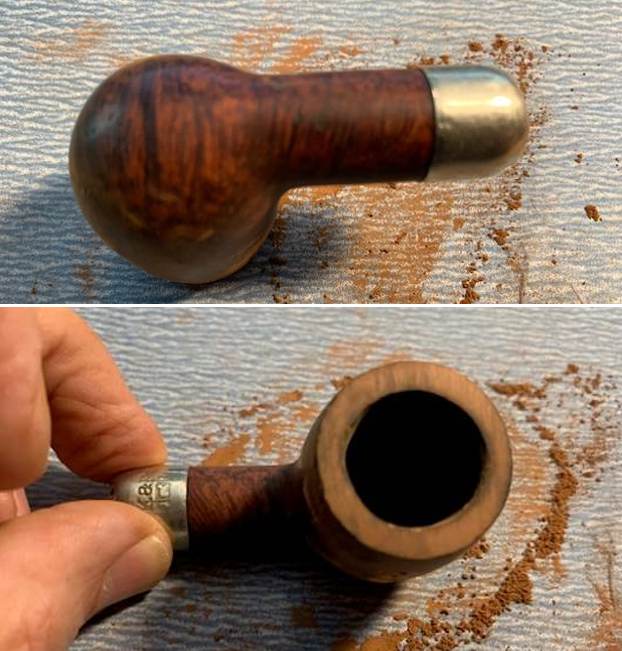
The bowl had been reamed and cleaned. I started working on the pipe by topping the damaged rim top on a topping board with 220 grit sandpaper to remove the damage on the rim top and edges of the bowl. I used a folded piece of 220 grit sandpaper to smooth out the inner edge of the bowl. I gave the inner edge of the bowl a slight bevel. I polished the rim top and edges with micromesh sanding pads – dry sanding with 1500-12000 grit pads to raise a shine. I wiped it down with a damp cotton pad to wipe off the debris after each sanding pad. I worked some Before & After Restoration Balm into the surface of the briar with my fingertips. It works to clean, enliven and protect the briar. I let it sit for 15 minutes then buffed it off with a soft cloth and raised the shine. The bowl looks great at this point.   I polished the nickel ferrule with a  jeweler’s cloth. The cloth is impregnated with polish that not only raises a shine but protects the metal.   I polished the stem with micromesh sanding pads – dry sanding it with 1500-12000 grit pads. I wiped the stem down with Obsidian Oil after each pad. I polished it with Before & After Pipe Polish – both Fine and Extra Fine and gave it a final coat and set it aside to dry.  I put the stem back on the Peterson’s System 31 Straight Billiard and buffed the pipe with Blue Diamond on the buffing wheel. I polished the briar and the vulcanite of the stem until there was a rich shine. This classic Peterson’s shape and finish really highlights a proportionally well carved pipe. Once I buffed the pipe the briar came alive and popped with polishing. The black vulcanite stem has a rich glow. This Peterson’s System Straight Billiard fits well in the hand and sits right in the mouth. Have a look at it with the photos below. The dimensions are Length: 5 ½ inches, Height: 1 ½ inches, Outside diameter of the bowl: 1 1/8 inches, Chamber diameter: ¾ of and inch. The weight of the pipe is 1.20 ounces/34 grams. This beauty will be going on the rebornpipes online store in the Irish Pipemakers Section. If you are interested let me know. Thanks for walking through the restoration with me as it was a pleasure to work on.

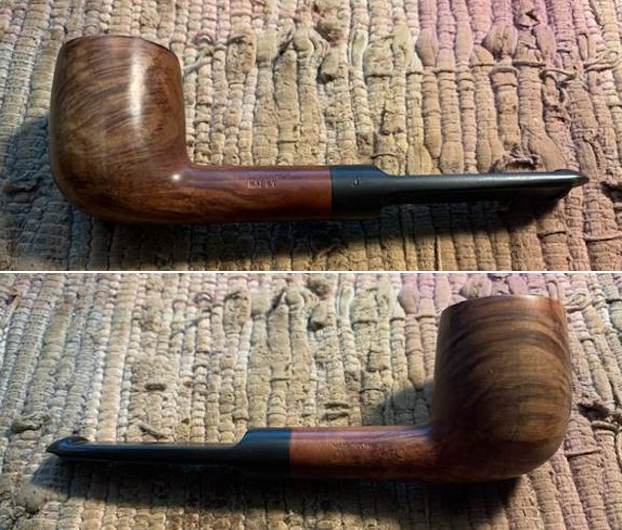
Rebirthing a Lovely Late Republic Era Peterson’s Kapet 14S Saddle Stem Billiard


Blog by Steve Laug

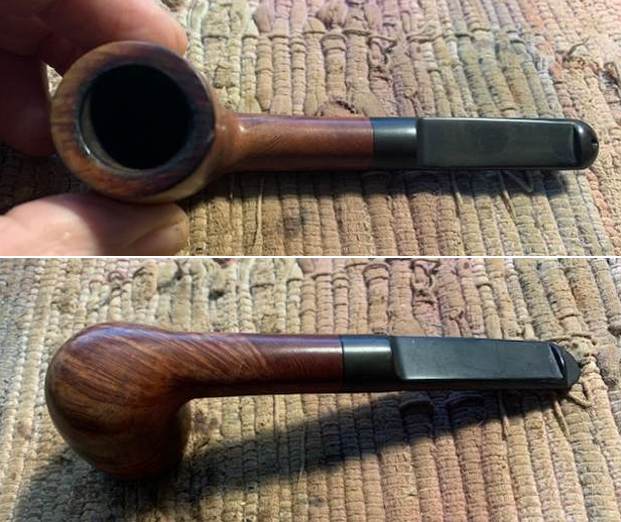
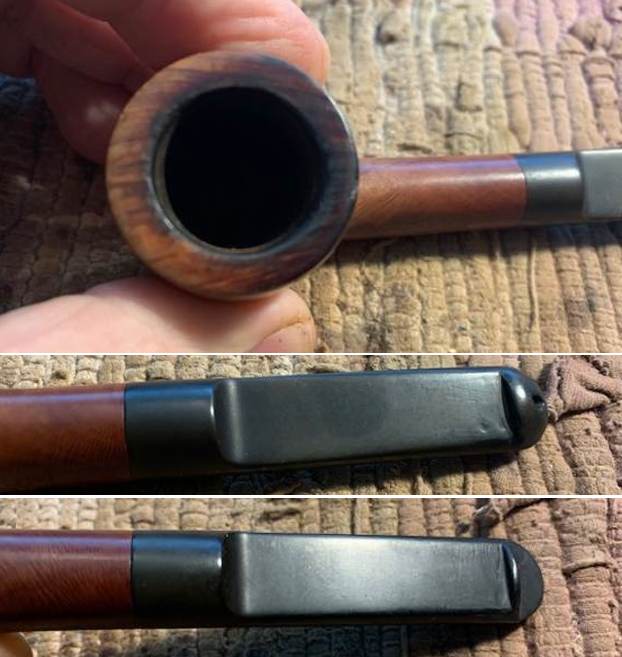
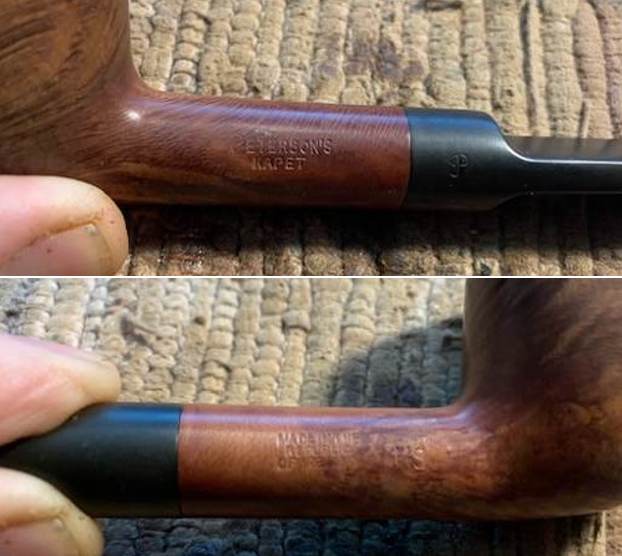
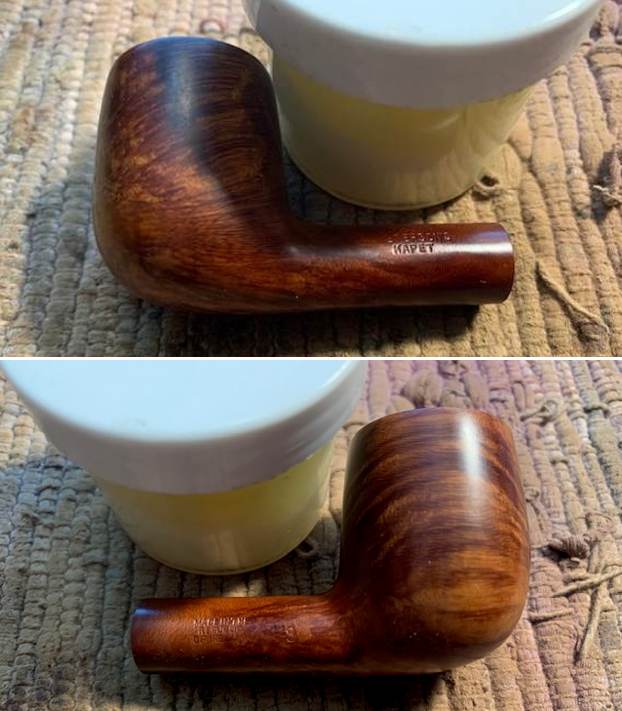
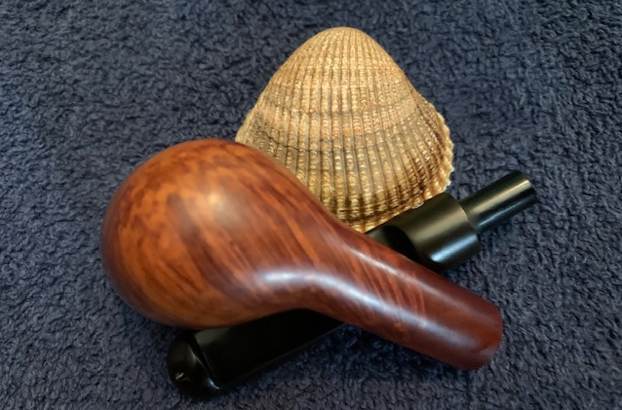
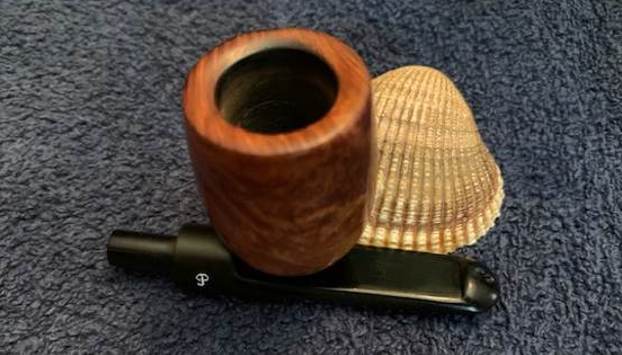
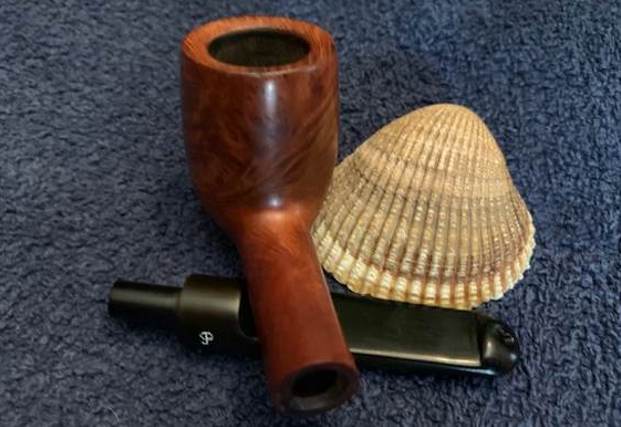
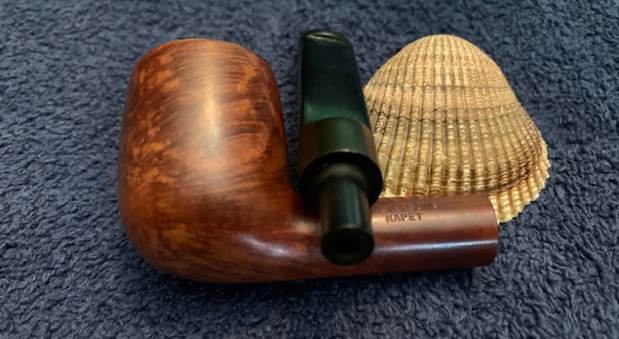
The next pipe I have chosen is a smooth Peterson’s pipe, a straight, saddle stem Billiard. It was also incredibly dirty. This Billiard is a real beauty under the grime with some great grain around the bowl. The grime was ground into the finish on the bowl sides. The contrast of the brown stains gave the grain a sense of depth. It was stamped on the left side of the shank and read Peterson’s [over] Kapet. The right side had the shape number 14S stamped near the bowl. Centered on the right side of the shank is stamped Made in the Republic of Ireland (in three lines). Neither Jeff nor I remember where we got the pipe or when. So we have no photos of the pipe before clean up. Judging from the damage on the rim top and edges I would guess it had been a mess. The stem had tooth marks and some oxidation. But Jeff had done a great job cleaning up the pipe as usual. He reamed the pipe with a PipNet reamer and cut back the cake back to the bare briar. He cleaned up the walls with a Savinelli Fitsall Pipe Knife. He scrubbed the interior of the bowl and shank with pipe cleaners, cotton swabs and alcohol to remove the tars and oils. He scrubbed the exterior of the pipe with Murphy’s Oil Soap and a tooth brush to remove the grime from the finish. He worked on the rim top lava and darkening with the soap and tooth brush. He scrubbed the inside of the stem with alcohol and pipe cleaners. He scrubbed the exterior with Soft Scrub and then soaked it in Before & After Deoxidizer. He washed it off with warm water to remove the Deoxidizer. The pipe looked far better when it arrived. I took some close up photos of the rim top and also of the stem surface. I wanted to show how well it had cleaned up. The rim top photo looks good but there is some burn damage on the inner edge at the back of the bowl and all around the inner edge there is darkening. I also took close up photos of the stem to show the light tooth marks and chatter on the surface near the button. I took photos of the stamping on the sides of the shank. You can see that it is stamped as noted above. It is clear and readable. He took photos of the stamping on the sides of the shank. It is clear and readable and reads as noted above. I took the pipe apart and took a photo of the pipe. It is a good looking pipe and has some great cross grain on the sides of the bowl. I am including the link to the Pipedia’s article on Peterson pipes. It is a great read in terms of the history of the brand (https://pipedia.org/wiki/Peterson). There was a short note toward the bottom of the page about the series. It is definitely referring to the newer line that came out later. I quote:

I turned to Pipedia (https://pipedia.org/wiki/Peterson) to first pin down a date that the pipe was made. I knew that the Made in Ireland stamp would give me that. I quote:

As usual when trying to get accurate facts in regard to Peterson history, something will jump up and get in the way. They are missing many of their records. The following is the best that we can do for a guide to the myriad markings during the period 1922 – 1949. Prior to 1920 it was rare for a country of origin to be stamped on the pipe, just Peterson’s Dublin on the band. After 1921/22, if it is stamped “MADE IN IRELAND” and the “Made in” is stacked over “Ireland” or “MADE IN EIRE” or several other forms, it was made between 1922 and 1938. A considerable number of Peterson pipes were stamped “Irish Free State”. From about 1930 to 1949, most of the pipes (those which were stamped) were stamped “Made in Ireland”.” If the stamp reads “MADE IN IRELAND” in a circle, the pipe was made between 1939 and 1948. These are all “Pre-Republic” pipes. I can tell you that the mark “Irish Free State” was adopted in 1922; and replaced by “Eire” in 1937 and then by “Republic of Ireland” in 1949.

That gave me a date for the pipe – it was made between 1922 and 1938 as can be proved by the Made in Ireland stamp on the right side of the shank.

I turned to “The Peterson Pipe” by Mark Irwin and Gary Malmberg to get some background on the Kapet line. On page 305 it had the following information.

Kapet (1925-87) Line first described in 1925 brochure and featured in occasional catalogs through ’87. Early specimens will be stamped IRISH over FREE STATE. Described in 1937 catalog as available in dark plum or natural finish. Featured an aluminum “inner tube” or stinger until ’45. Mid-century specimens may be stamped MADE IN over IRELAND. Specimens from 1970 on may have mounts with hallmarks.

I knew that I was dealing with a Late Republic Era Kapet. Now it was time to work on the pipe.

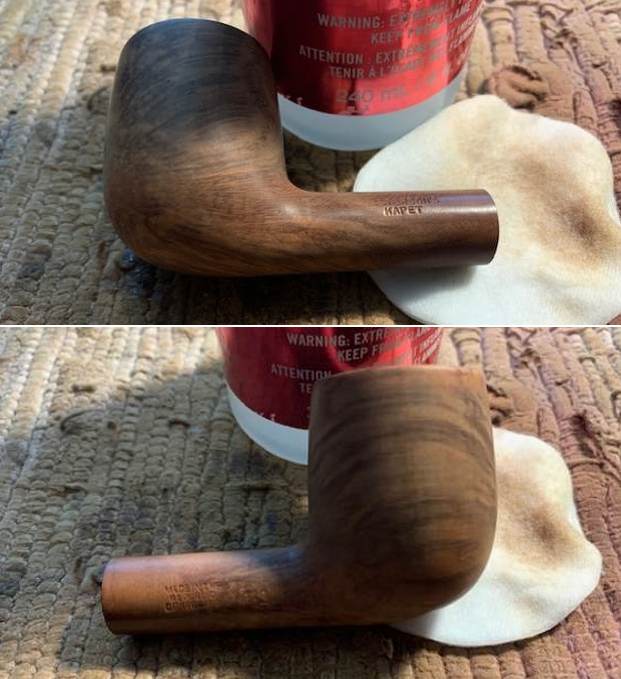
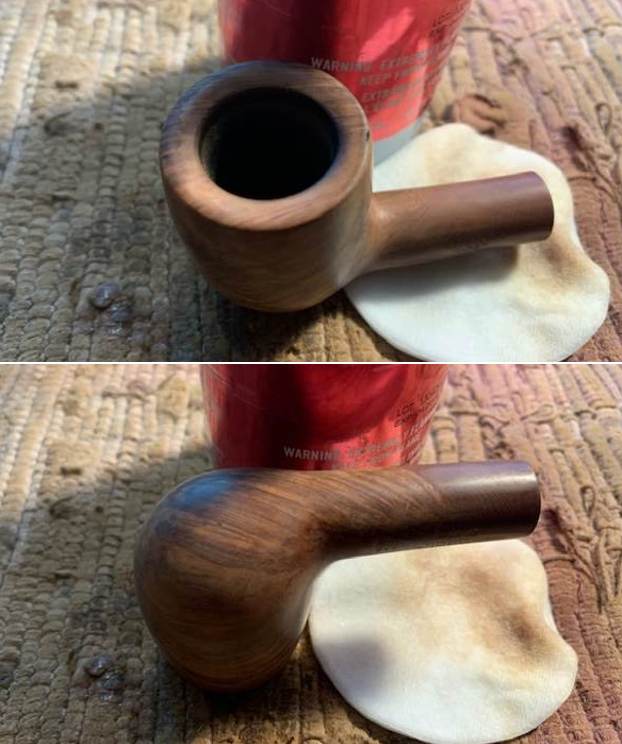
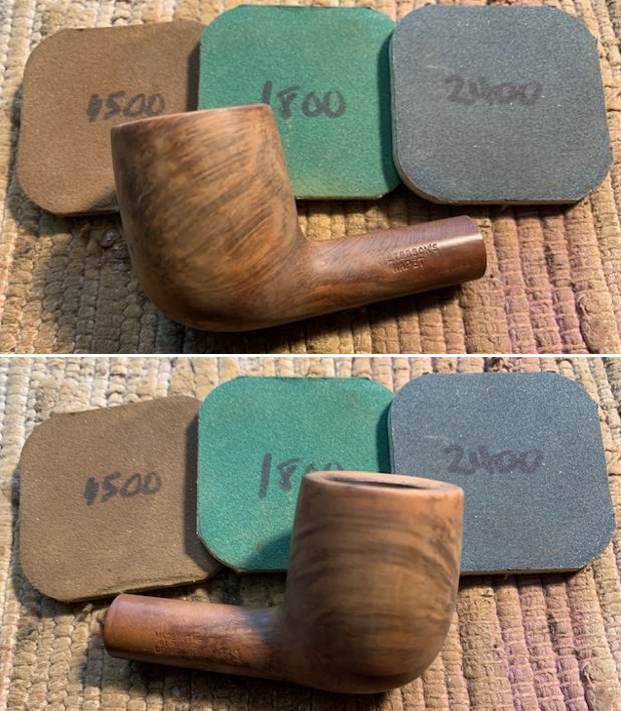
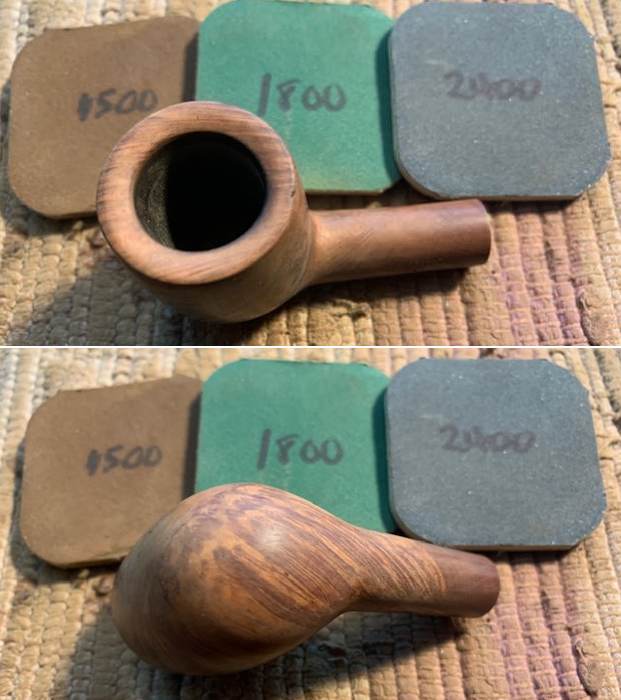
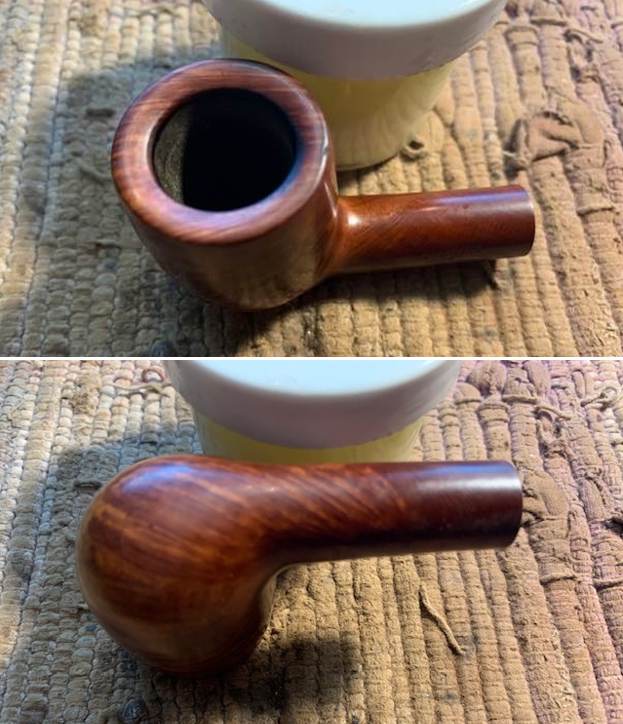
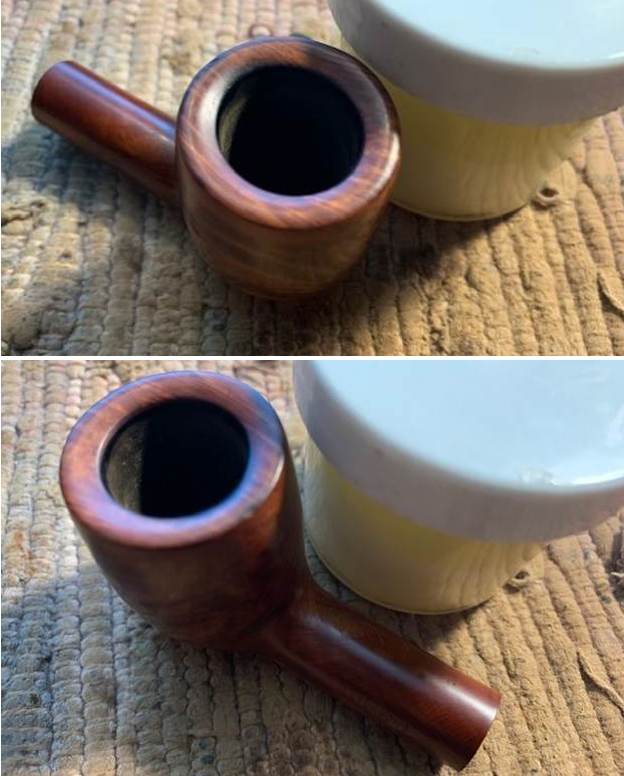
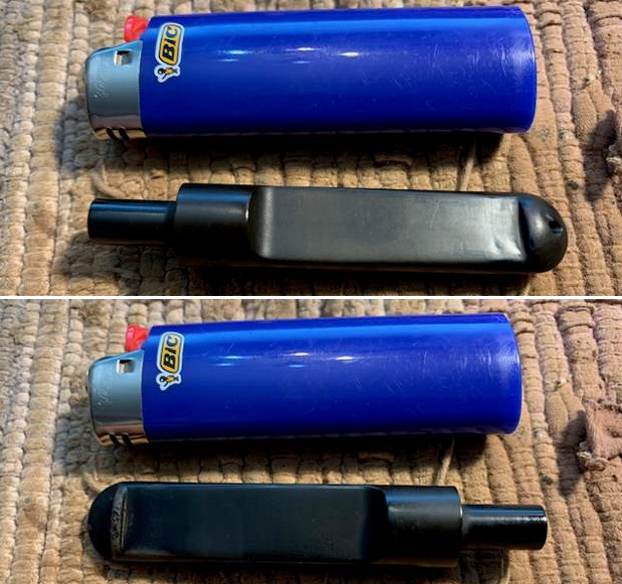
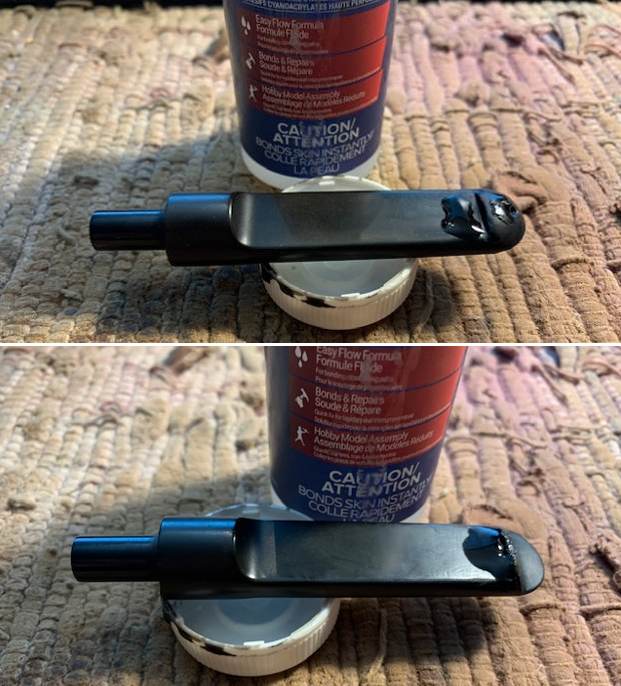
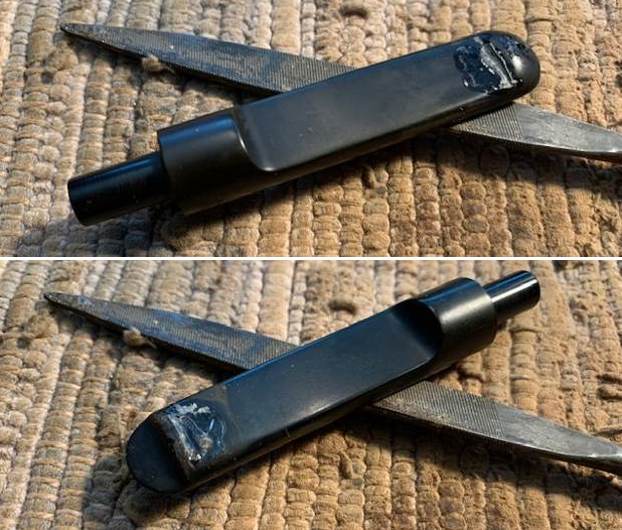
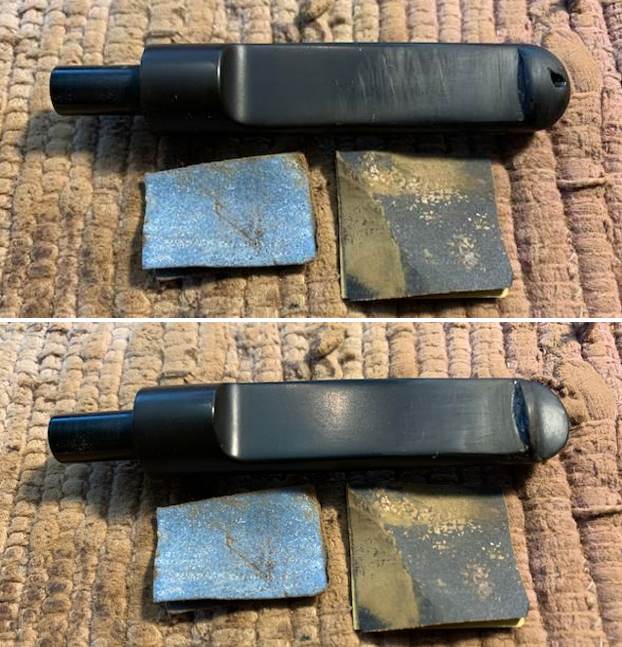
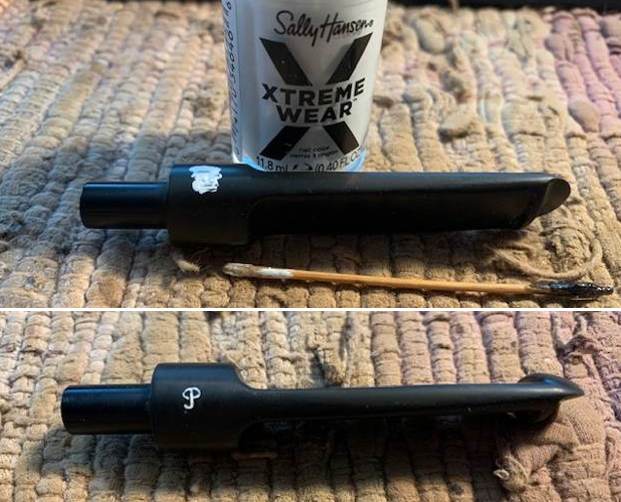
I decided to address the rim top damage first. I used a folded piece of 220 grit sandpaper to give the edge a slight bevel to further minimize the damage to the rim. I then used a piece of sandpaper and a wooden ball to even the bevel and give the rim a uniform look. I think that it is definitely better once I finished. I wiped down the bowl and rim top with acetone on a cotton pad to remove the spotty finish on the bowl and make blending in the sanded rim top simpler. I polished the briar rim top and edges along with the rest of the briar with micromesh sanding pads –dry sanding with 1500-12000 grit pads and using a damp cloth after each pad. I worked some Before & After Restoration Balm into the surface of the briar with my fingertips to clean, enliven and protect the briar. I let the balm sit for 15 minutes and then buffed with a cotton cloth to raise the shine. The photos show the bowl at this point in the restoration process. I set the bowl aside and turned my attention to the stem. I “painted” the tooth marks with the flame of a lighter to lift them. They came up significantly. I filled in the tooth marks that remained on both sides with clear super glue. I let the repairs cure. Once they had cured I recut the edge and flattened the repairs with a flat file. I sanded them with 220 grit sandpaper. I started the polishing with 400 grit wet dry sandpaper. I wiped it down with some Obsidian Oil. I touched up the “P” stamp on the stem with an acrylic white fingernail polish. I worked it into the stamp with a toothpick. I let it sit for a few minutes then scraped off the excess.I polished the stem with micromesh sanding pads – wet sanding with 1500-12000 grit sanding pads. I wiped it down after each sanding pad with Obsidian Oil. I polished it with Before & After Pipe Stem Polish – both Fine and Extra Fine. I am always excited to finish a restoration and this Peterson’s Kapet 14S Saddle Stem Billiard is no exception. I put the pipe back together and buffed it with Blue Diamond on the buffing wheel. I gave the bowl and stem multiple coats of carnauba wax. I hand buffed the pipe with a clean buffing pad to raise the shine and hand buffed it with a microfibre cloth to deepen the shine. It is fun to see what the polished bowl looks like with the polished black vulcanite stem. This Classic looking Peterson’s Kapet 14S Billiard feels great in my hand. It is light and well balanced. Have a look at it with the photos below. The dimensions are Length: 5 ½ inches, Height: 1 ½ inches, Outside diameter of the bowl: 1 ¼ inches, Chamber diameter: ¾ of an inch. The weight of the pipe is 30 grams/1.09 ounces. It is a beautiful pipe and one that will be on the Irish Pipe Makers Section of the rebornpipes store soon. If you are interested in adding it to your collection let me know. Thanks for walking through the restoration with me as I worked over this pipe. Thanks to each of you who are reading this blog.

New Life for a Republic Era Peterson’s Emerald 150 Bulldog


Blog by Steve Laug

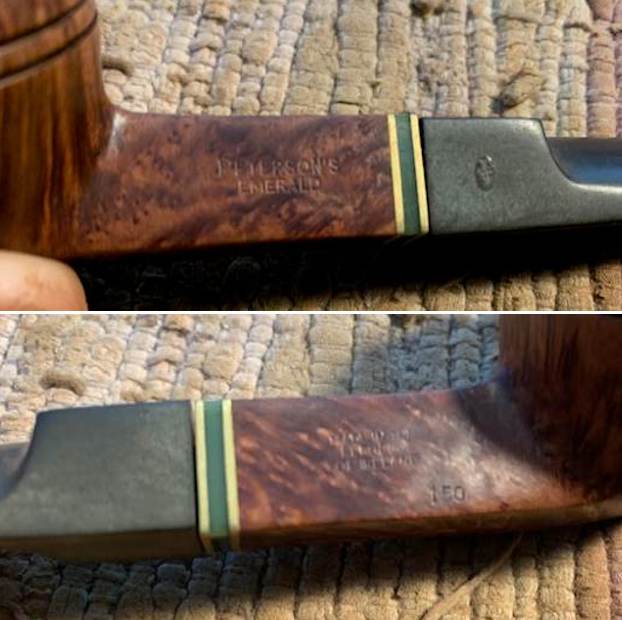
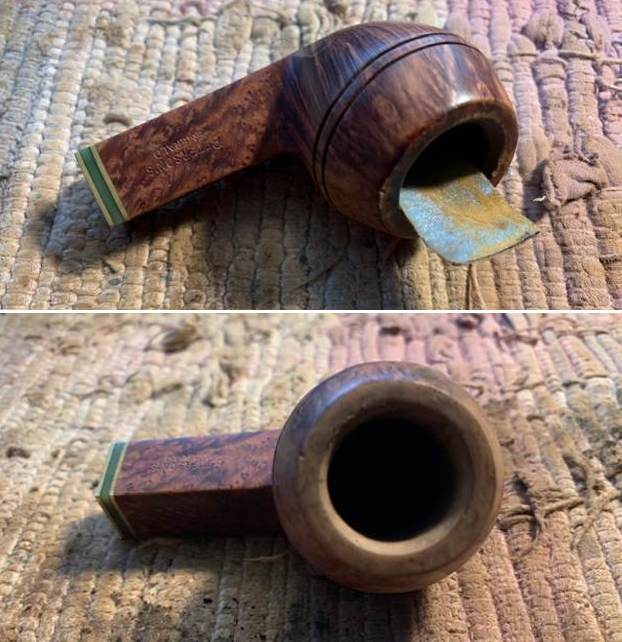
The next pipe I have chosen is smooth finished Peterson’s Emerald pipe. This one is a smooth 150 Straight Bulldog. It has a triple band on the shank – 2 thinner brass bands separated by and emerald green acrylic band. This pipe was purchased off eBay on 03/01/17 from Rochester, New York, USA. The pipe was very dirty with grit and grime on the bowl and shank. The mix of brown stains gives depth to the grain around the bowl. It was stamped on the top left side of the shank and read Peterson’s [over] Emerald. On the right side it reads Made in the Republic of Ireland in three lines and the shape number 150. The bowl was heavily caked with a thick overflow of lava on the rim top. The edges of the bowl appeared to be in good condition under the lava. The stem was oxidized, calcified and had tooth chatter and marks on the top and underside on and near the button. Jeff took photos of the pipe before his cleanup work. They tell the story and give a glimpse of the pipe.Jeff took photos of the rim top and stem to show the general condition of the pipe. The bowl is heavily caked with a thick overflow of lava on the top and edges. The stem is calcified, oxidized and has tooth marks and chatter on the top and underside near the button. Jeff took photos of the bowl sides and heel to show the grain around this bowl and shank. Underneath all the grime it is a nice looking pipe. He took photos of the underside of the shank to show the stamping. The stamping is readable in the photos below and is as noted above. I am including the information from Pipedia’s article on Peterson pipes. It is a great read in terms of the history of the brand (https://pipedia.org/wiki/Peterson). I have included a bit of the pertinent history here.

1950 – 1989 The Republic Era – From 1950 to the present time, the stamp for this era is “Made in the Republic of Ireland” in a block format generally in three lines but two lines have been used with or without Republic being abbreviated.

During the 1950’s and 60’s the Kapp & Peterson Company was still in the ownership of the Kapp family. However 1964 saw the retiral of the company Managing Director Frederick Henry(Harry) Kapp.

I knew that I was dealing with a Republic Era pipe made between 1950 and the present. Now it was time to work on the pipe.

I turned to The Peterson Pipe book by Mark Irwin and Gary Malmberg for more information. On page 299 there was a summary of the Emerald Pipe. I quote

Emerald (1987-) Moderate-priced  line in Bordeaux and black rustic finish with a shank band of green acrylic between brass rings, P-lip mouthpiece; smooth walnut version added in ’91. Fishtail mouthpiece added in ’97. Identical line and finishes named Jade from early eighties until ’87.

This information narrowed down the date even further. The smooth walnut finish was added in 1991 so this one came out before 1991 and has a P-lip style mouth piece.

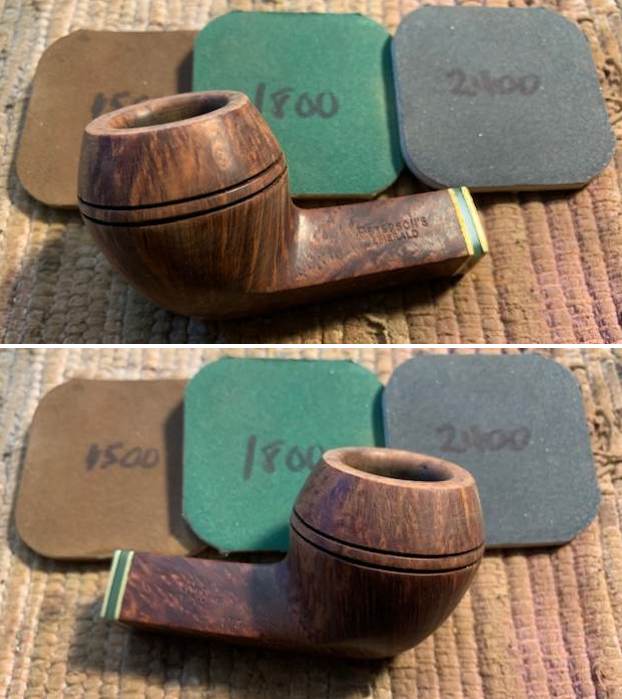
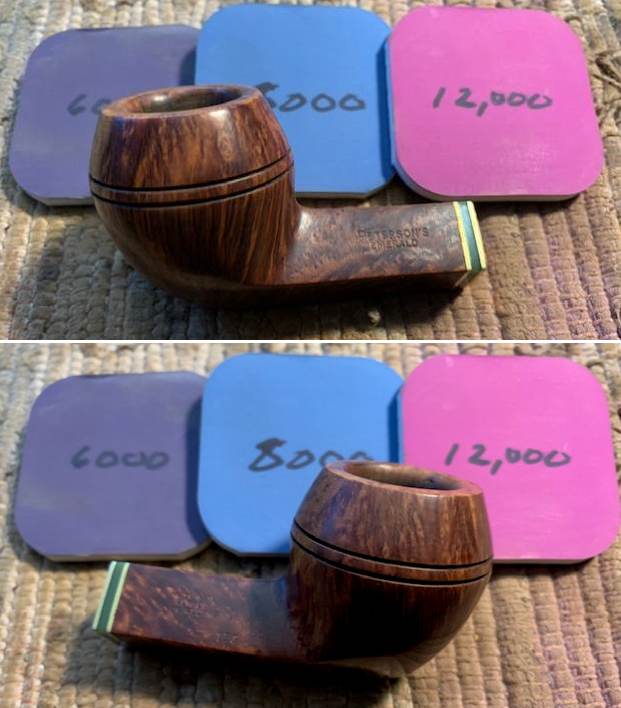
Jeff had done a great job cleaning up the pipe as usual. He reamed the pipe with a PipNet reamer and cut back the cake back to the bare briar. He cleaned up the walls with a Savinelli Fitsall Pipe Knife. He scrubbed the interior of the bowl and shank with pipe cleaners, cotton swabs and alcohol to remove the tars and oils. He scrubbed the exterior of the pipe with Murphy’s Oil Soap and a tooth brush to remove the grime from the finish. He worked on the rim top lava with the soap and tooth brush. He scrubbed the inside of the stem with alcohol and pipe cleaners. He scrubbed the exterior with Soft Scrub and then soaked it in Before & After Stem Deoxidizer. He rinsed it off with warm water to remove the Deoxidizer. It looked very good when I brought it to the worktable. The briar was very clean with some darkening on the rim top and inner edge. The stem had light oxidation and tooth marks. I took close up photos of the rim top and the stem surface. I wanted to show how well it had cleaned up. The rim top looked very good. The beveled inner edge and top had some darkening that would need to be cleaned up in the next steps of the process. I took photos of the stem to show the tooth marks on the surface ahead of the button and the light oxidation on the stem surface.I took a photos of the stamping on the sides of the shank. You can see that it is stamped as noted above. It is clear and readable.I took the pipe apart and took a photo of the pipe. It is a good looking pipe and has beautiful grain around the bowl and shank.I began my work on the pipe by dealing with the rim top and beveled inner edge of the bowl. I used a folded piece of 220 grit sandpaper to smooth it our and lessen the darkening. It cleaned up well and looked very good. I  polished the briar with micromesh sanding pads – dry sanding with 1500-12000 grit pads and wiping the bowl down after each sanding pad. The grain really began to shine through. It is a beautiful pipe. I worked some Before & After Restoration Balm into the surface of the briar with my fingertips to clean, enliven and protect the briar. I let the balm sit for 15 minutes and then buffed with a cotton cloth to raise the shine. The photos show the bowl at this point in the restoration process. I set the bowl aside and worked on the stem. I sanded out the tooth marks and chatter in the surface and the button edges with 200 grit sandpaper. I started the polishing with 400 grit wet dry sandpaper.I polished the stem with micromesh sanding pads – wet sanding with 1500-12000 grit sanding pads. I wiped it down after each sanding pad with Obsidian Oil. I polished it with Before & After Pipe Stem Polish – both Fine and Extra Fine. I am excited to finish this Republic Era Peterson’s Emerald 150 Straight Bulldog.  I put the pipe back together and buffed it with Blue Diamond on the buffing wheel. I gave the bowl and the stem multiple coats of carnauba wax. I buffed the pipe with a clean buffing pad to raise the shine and hand buffed it with a microfibre cloth to deepen the shine. It is fun to see what the polished bowl looks like with the rugged rustication all around it. Added to that the polished triple brass and emerald acrylic band and the black vulcanite stem was beautiful. This Classic Peterson’s Emerald is nice looking and the pipe feels great in my hand. It is light and well balanced. Have a look at it with the photos below. The dimensions are Length: 5 ½ inches, Height: 1 ¾ inches, Outside diameter of the bowl: 1 ¼ inches, Chamber diameter: ¾ of an inch. The weight of the pipe is 42 grams/1.48 ounces. It is a beautiful pipe and one that will be on the Irish Pipe Makers Section of the rebornpipes store soon. If you are interested in adding it to your collection let me know. Thanks for walking through the restoration with me as I worked over this pipe. Thanks to each of you who are reading this blog.

Restoring a Republic Era Peterson’s System 31 Billiard


Blog by Steve Laug

This is another one of those pipes that has been here for a long time and I have no memory where it came from. I had not been cleaned so it is not one that ever went to Jeff for clean up. It was a dirty but appeared to have some great grain under the grime. The bowl had been reamed somewhere in the journey and was quite clean inside. The smooth rim top was damaged and had some darkening. The edges – both inner and outer had some damages by burning and the bowl was out of round. The smooth finish is dirty with grime and grit deep ground into the sides of the bowl and shank. There were some deep nicks in the briar on the right side and heal of the bowl. The pipe stinks like heavily cased aromatics. The stamping on the shank is clear and readable. The left side is stamped Peterson’s [arched over] System. On the right side it was stamped Made in the Republic of Ireland (3 lines). To the right of that stamp is the shape number 31. The nickel band is oxidized and dirty but it has the K & P stamp over three symbols. Next to that it was stamped Peterson’s. It had some nicks and dents around shank end of the ferrule. The stem was quite clean and has deep tooth marks and chatter on both sides ahead of the button and on the topside of the button. I took some photos of the pipe before I started my work on it. I took close up photos of the bowl and the stem. You can see the reamed bowl and the darkening and light lava on the rim top. The bowl reeked of aromatic tobaccos. The stem surface was clean but there are deep tooth marks and chatter on both sides on and ahead of the button.I took a photo of the stamping on the sides of the bowl and shank. It is clear and readable as noted above. I removed the stem from the shank and took a photo to give a sense of the proportions of the pipe. It is really quite nice looking.I am including the information from Pipedia’s article on Peterson pipes. It is a great read in terms of the history of the brand (https://pipedia.org/wiki/Peterson). I have included a bit of the pertinent history here.

1950 – 1989 The Republic Era  – From 1950 to the present time, the stamp for this era is “Made in the Republic of Ireland” in a block format generally in three lines but two lines have been used with or without Republic being abbreviated.

During the 1950’s and 60’s the Kapp & Peterson Company was still in the ownership of the Kapp family. However 1964 saw the retiral of the company Managing Director Frederick Henry(Harry) Kapp.

I found a great description of the System 31 shape on smokingpipes.com (https://www.smokingpipes.com/pipes/new/peterson/moreinfo.cfm?product_id=192182). I am including a portion of that below.

Peterson’s “31” shape is the only straight pipe featured in the System Standard line, yet it still features system drilling. Featuring a push-style tenon and a long, tapering metal tube, it houses a condensation chamber just under the bowl itself — providing the same gurgle free smoke you’d expect of a bent System configuration.

I did a search on Google about the Peterson System 31 Straight Billiard to see if I could learn any specific information on the shape. I found a link to a pipe for sale on Smokingpipes.com. I quote:

Paresh had worked on System 31 pipe so I went back and reread his work on that smooth pipe. It was very helpful for the background information included (https://rebornpipes.com/tag/peterson-system-31-pipe/).

I knew that I was dealing with a Republic Era pipe made between 1950-1989. The K&P mark on the nickel band ties to Kapp & Peterson brings the date to the time between 1950-1964. It was a smooth Straight billiard with a unique shape and chamber beneath the bottom of the bowl. The finish was stained with a combination of rich reddish brown stains. Now it was time to work on the pipe.

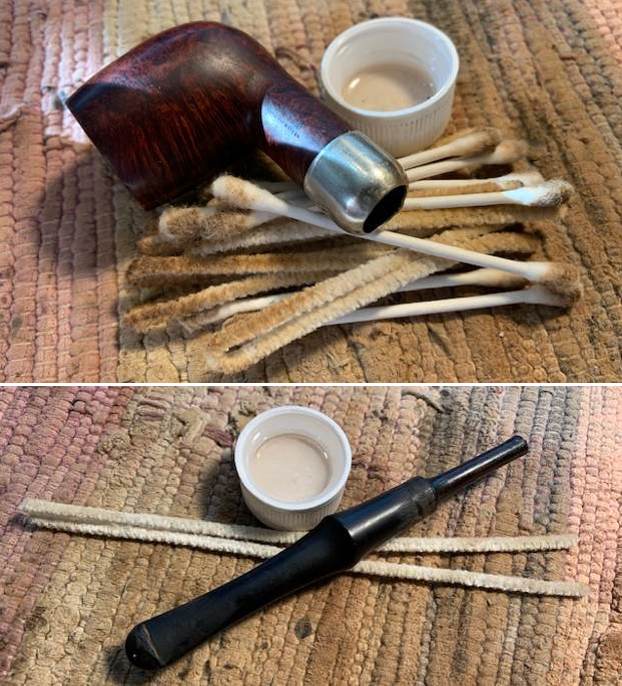
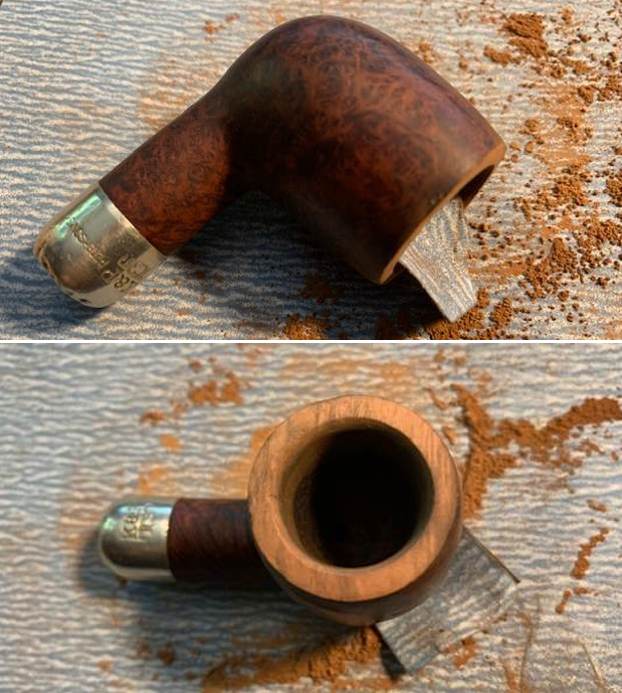
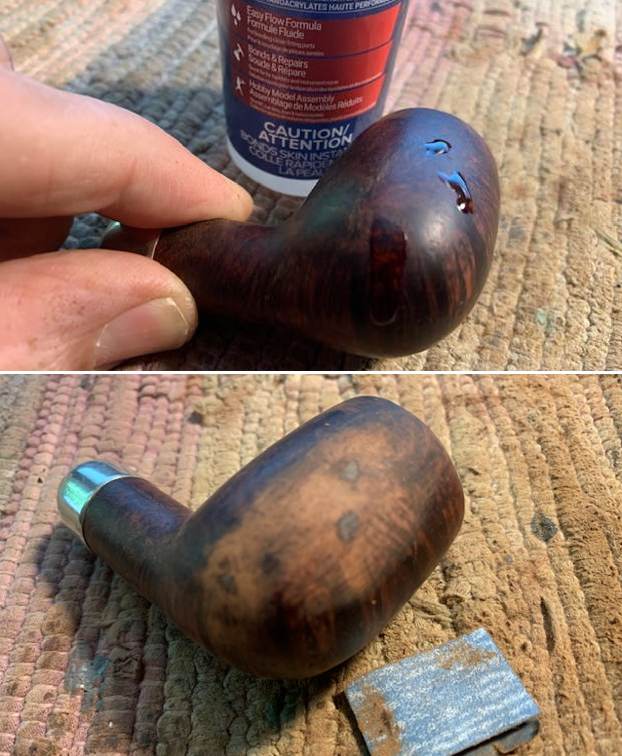
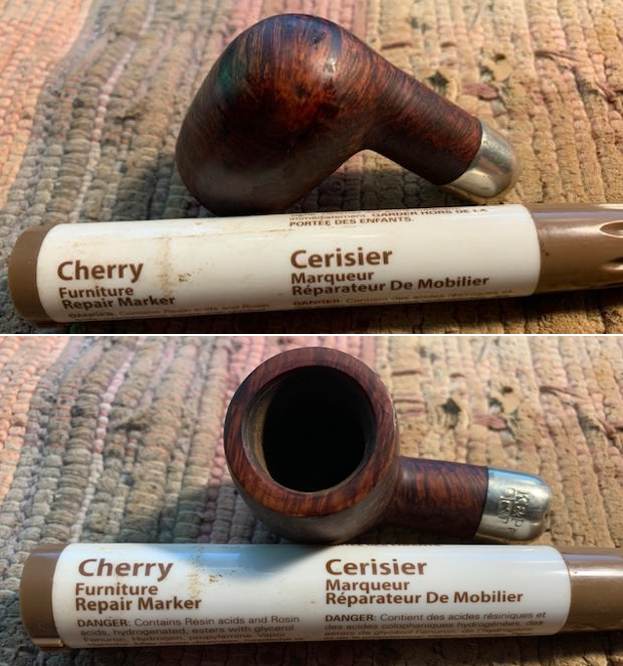
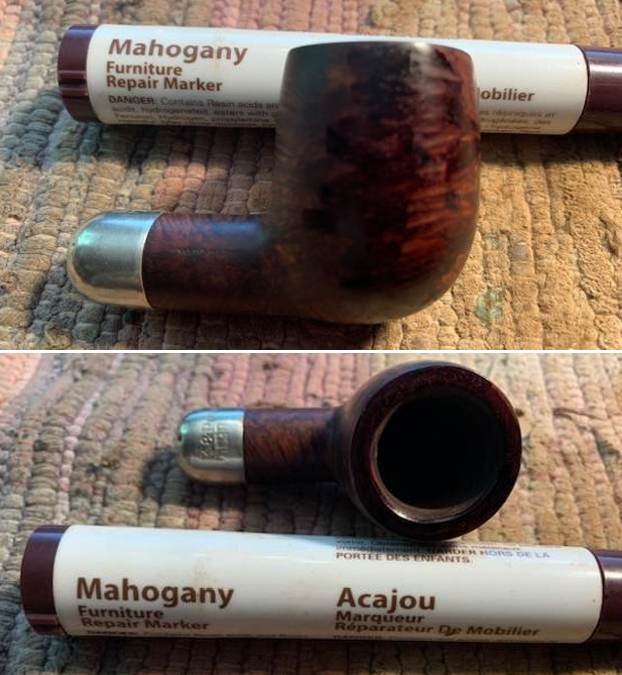
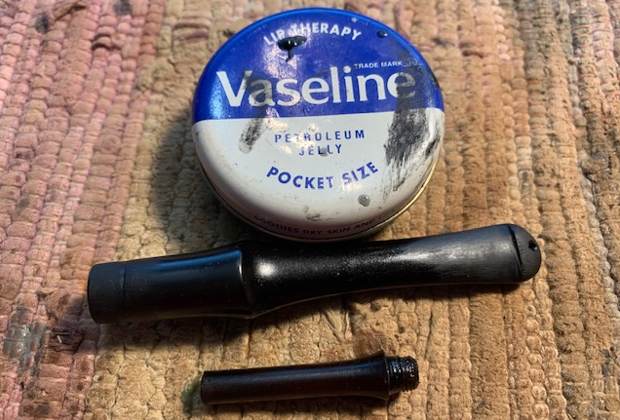
The bowl had been reamed and cleaned. I started working on the pipe by cleaning out the inside of the shank and the airway into the bowl and the stem. I scraped the shank out with a small pen knife to remove the thick tars. I then cleaned it with a isopropyl alcohol, cotton swabs and pipe cleaners until it was clean.  I topped the damaged rim top on a topping board with 220 grit sandpaper to remove the damage on the rim top and edges of the bowl. I used a folded piece of 220 grit sandpaper to smooth out the inner edge of the bowl. I gave the inner edge of the bowl a slight bevel. I filled in some of the deep gouges in the briar on the right side and heel of the bowl with some clear CA glue. Once the repairs cured I sanded the briar surface with 220 grit sandpaper to smooth it out and blend it into the surrounding briar.I stained the sanded area on the bowl side and the rim top with a Cherry stain pen to lay a base coat and then did a top coat of Mahogany stain pen. I polished the rim top and edges with micromesh sanding pads – dry sanding with 1500-12000 grit pads to raise a shine. I wiped it down with a damp cotton pad to wipe off the debris after each sanding pad.   I worked some Before & After Restoration Balm into the surface of the briar with my fingertips. It works to clean, enliven and protect the briar. I let it sit for 15 minutes then buffed it off with a soft cloth and raised the shine. The bowl looks great at this point.   The nickel ferrule was out of round and dented. It was solidly connected to the shank end so I did not want to removed it. Instead I fit a dowel into the end of the ferrule that was round and heated the nickel with a lighter to soften it. Once it was softened I used a small furniture hammer to bring the ferrule end back to round. I repeated the process until the opening in the ferrule was round and the stem fit well. It was not perfect but it was better than when I started. I set the bowl aside and worked on the stem. I “painted” the stem with the flame of a Bic lighter to lift the tooth marks in the stem. I was able to raise them slightly. I filled in the remaining marks with Black CA glue. Once the repairs cured I sanded it smooth with 120 grit sandpaper and started polishing it with 400 grit wet dry sandpaper. I unscrewed the extension tube from the end of the stem. I cleaned up the threads on the extension and inside the stem with pipe cleaners, cotton swabs and isopropyl alcohol. It did not take long to clean it. I coated the threads on the extension with Vaseline and screwed the extension back into the stem. I worked on the stem to further smooth and reshape the button and stem with the 220 grit sandpaper and the 400 grit wet dry sandpaper.  I polished the stem with micromesh sanding pads – dry sanding it with 1500-12000 grit pads. I wiped the stem down with Obsidian Oil after each pad. I polished it with Before & After Pipe Polish – both Fine and Extra Fine and gave it a final coat and set it aside to dry.  I put the stem back on the Peterson’s System 31 Straight Billiard and buffed the pipe with Blue Diamond on the buffing wheel. I polished the briar and the vulcanite of the stem until there was a rich shine. This classic Peterson’s shape and finish really highlights a proportionally well carved pipe. Once I buffed the pipe the briar came alive and popped with polishing. The black vulcanite stem has a rich glow. This Peterson’s System Straight Billiard fits well in the hand and sits right in the mouth. Have a look at it with the photos below. The dimensions are Length: 5 ½ inches, Height: 1 ½ inches, Outside diameter of the bowl: 1 1/8 inches, Chamber diameter: ¾ of and inch. The weight of the pipe is 1.23 ounces/35 grams. This beauty will be going on the rebornpipes online store in the Irish Pipemakers Section. If you are interested let me know. Thanks for walking through the restoration with me as it was a pleasure to work on.

Restoring a Long Shank “Canadian” By Sasieni London Made


Blog by Steve Laug

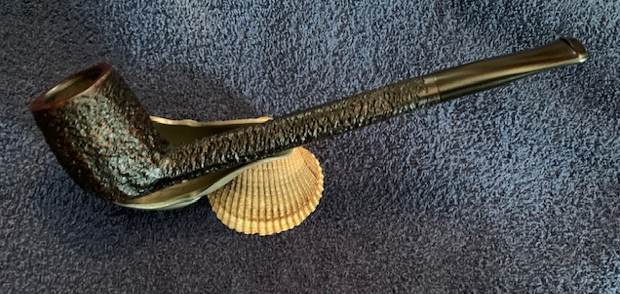
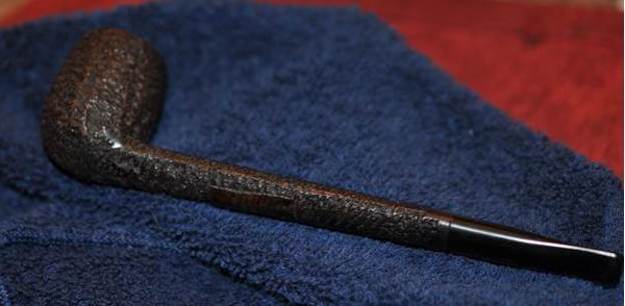
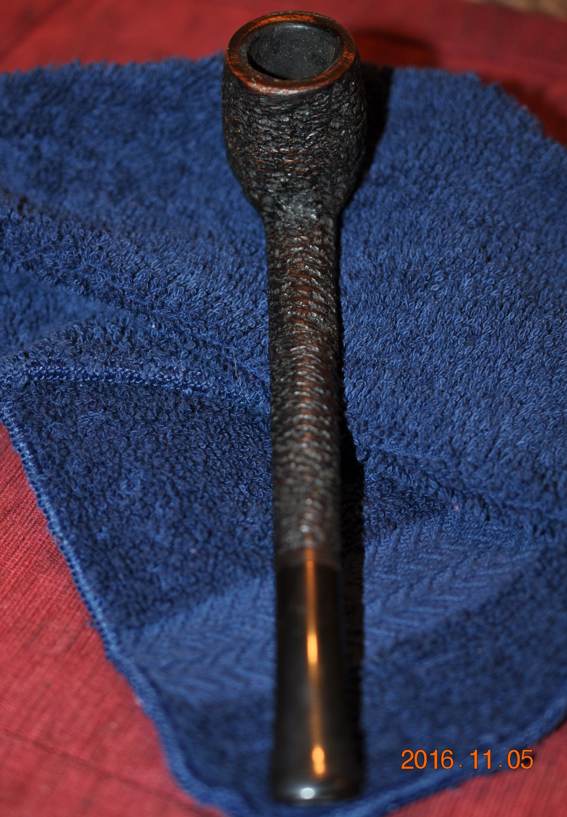
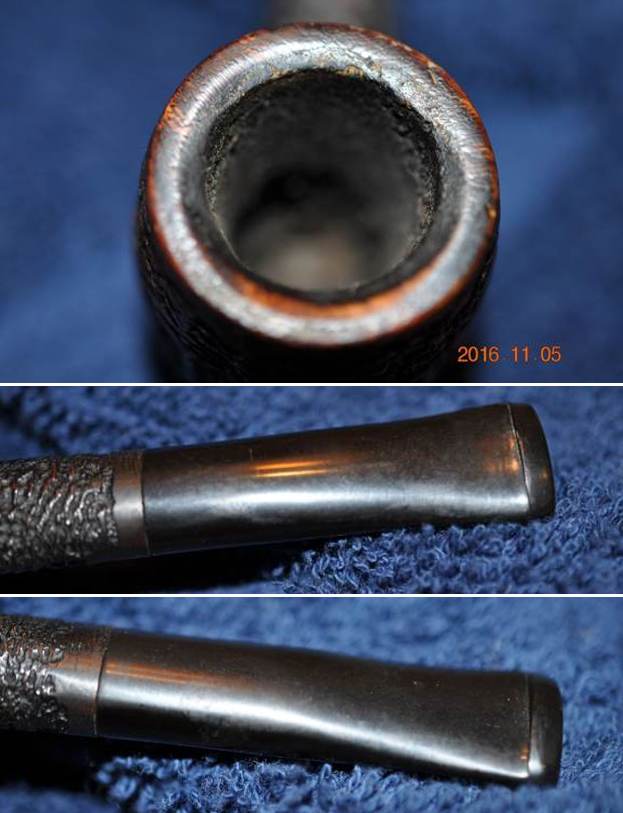
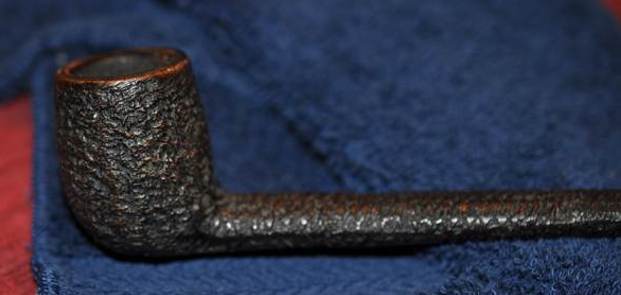
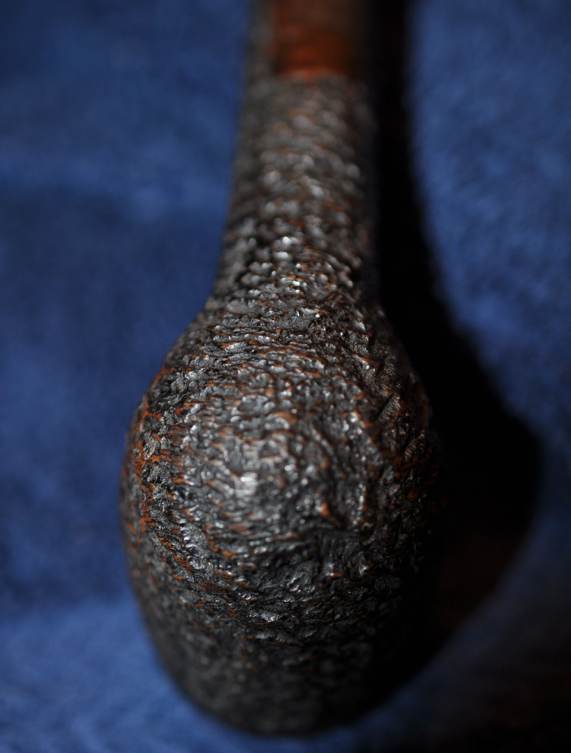
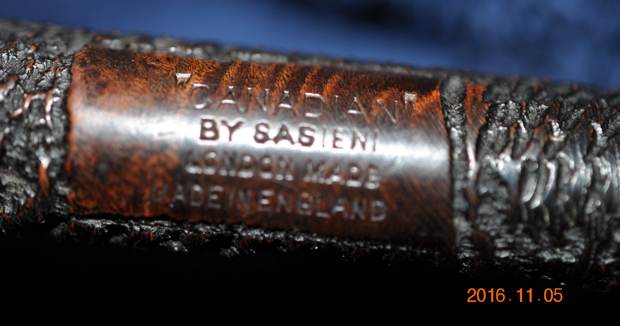
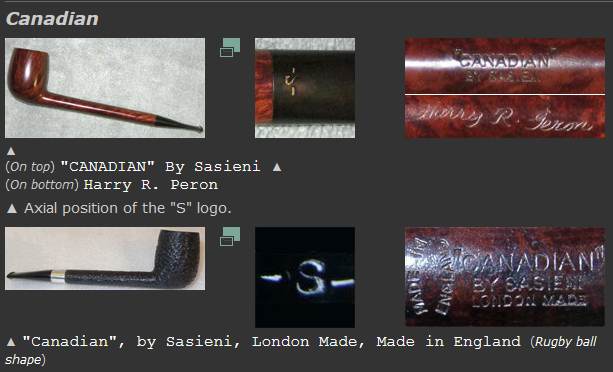
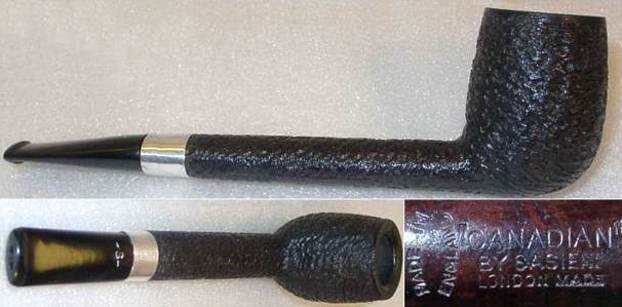
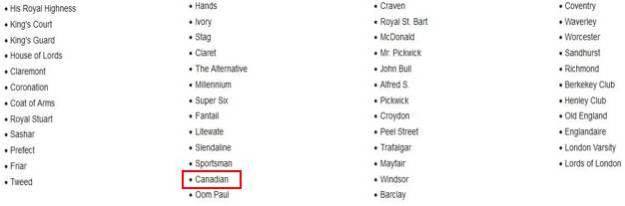
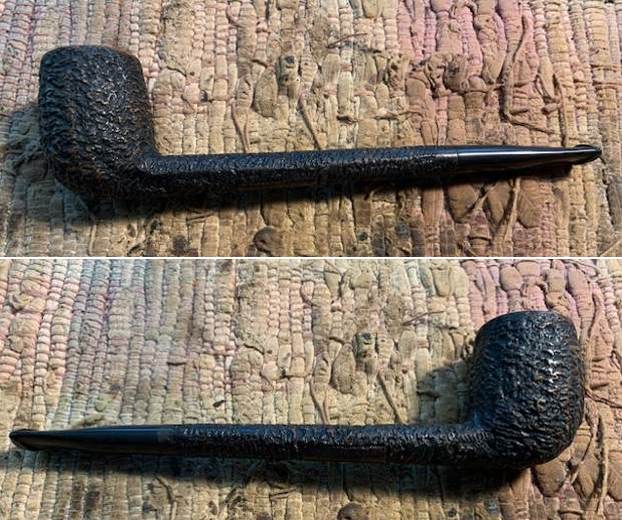
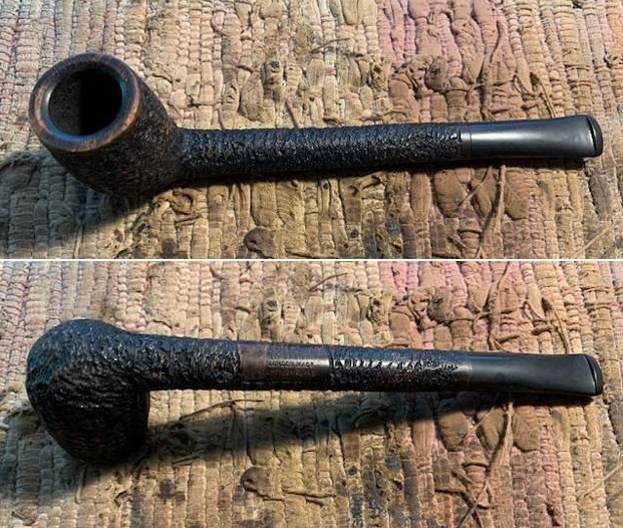
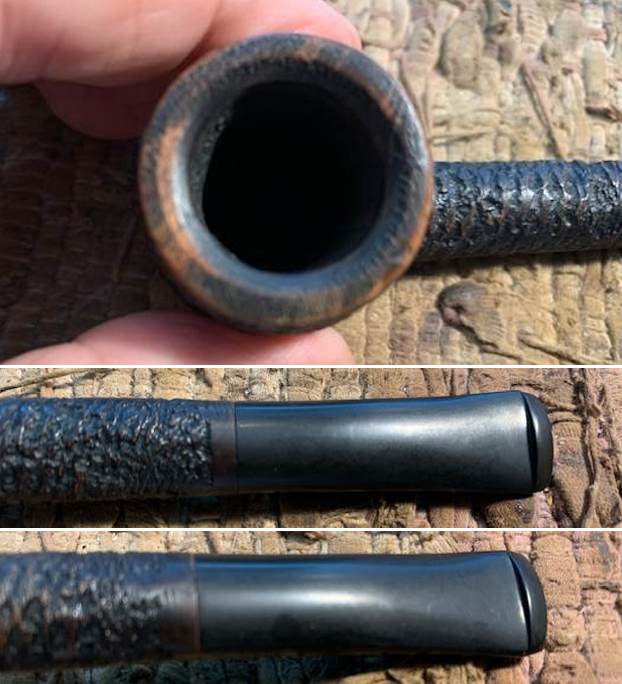
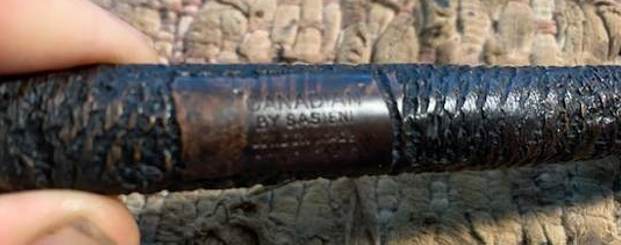
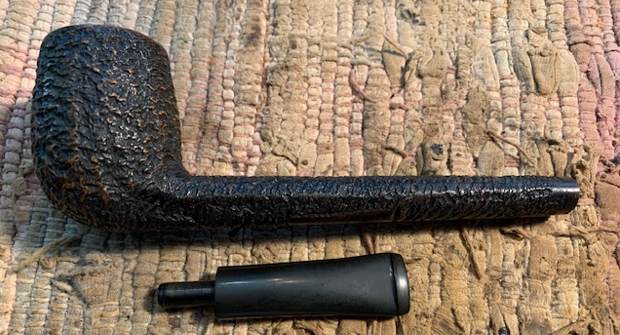
The next pipe I chose to work on has the characteristic rustication that I have seen on quite a few of the Sasieni Rusticated pipes that I have worked on. It is a long shank Canadian with hatch marked rim top and beveled inner edge. Jeff bought the pipe at an antique store on 10/29/2016 in Boise, Idaho, USA. It is stamped “Canadian” [over] By Sasieni [over] London Made [over] Made in England. The rustication on the bowl and shank was rugged with a tight pattern. The briar was stained with dark brown and black stains that provided depth to the finish. The finish on the pipe is dirty with a lot of dust and grime in the grooves of the rustication. There was a thick cake in the bowl and lava overflowing on to the rim top. The rim top is hatch marked and the inner edge is smooth. The outer edge of the rim has some wear from being knocked against a hard surface. There is a smooth ring around the end of the shank. The stem looked dirty but otherwise there were no tooth marks or chatter on the surface on either side. It was in good condition. Overall the pipe looked good. Jeff took photos of the pipe before he started his clean up work on it. Jeff took photos of the bowl and rim top and the stem to give a sense of the condition they were in. You can see the cake in the bowl and lava on the rim top as well as the hatch marks scratched into the rim top in the first photo. The stem photos show a relatively clean stem. He took photos of the bowl sides and heel to give a sense of the rustication around the bowl. To me it is a classic Sasieni style rustication. He took a photo of the stamping to show how clear and readable it is. It reads as noted above.I turned to Pipephil’s site to see if there was any specific information on “Canadian” By Sasieni (http://pipephil.eu/logos/en/logo-sasieni2.html). There was a listing there under the section on Sasieni seconds that matched the pipe I was working on. The pipe I have on the table is a lot like the second pipe in the screen capture below. The finish is the same though the stamping is slightly different and the stem does not have the –S- logo stamp on the top of the taper. I also captured the additional photos of the second pipe to show the finish and shape of the pipe. I then turned to Pipedia (https://pipedia.org/wiki/Sasieni#Sasieni_Seconds) and clicked on a list of seconds that had been provided by Doug Valitchka. The “Canadian” line is in the list at the bottom of the second column below. I have marked it in red for ease of reference on the chart below.Now it was time to work on the pipe. It is really a beautiful piece. Jeff had done a great cleanup on the pipe. He reamed the bowl with a PipNet pipe reamer and followed up with a Savinelli Fitsall pipe knife to remove the cake. He scrubbed out the mortise and the airway in the shank and the stem with alcohol, cotton swabs and pipe cleaners. He scrubbed the bowl exterior with a tooth brush and Murphy’s Oil Soap to remove the grime on the finish of the bowl and the lava from the rim top. He rinsed it under running water. One of the benefits of this scrub is that it also tends to lift some of the scratches and nicks in the surface of the briar. He dried it off with a soft cloth. He cleaned the internals and externals of the stem with alcohol, pipe cleaners and cotton swabs. He soaked the stem in Briarville’s Pipe Stem Deoxidizer and rinsed it off with warm water and cleaned out the airway in the stem with alcohol, pipe cleaners and cotton swabs. I took photos of the pipe as I saw it when I put it on the table. I took photos of the rim top and stem to show the condition. The rim top and edge looked much better. You can see the darkening on the beveled inner edge of the bowl and the hatching marks on the top of parts of the rim top. It seems to me that those marks are not original to the pipe when it was made. The stem looked very good and was smooth on both sides. There were scratches on both sides but no tooth marks or chatter.   The stamping on underside of the shank on the smooth panel is clear and readable as noted above. I really like the rugged Sasieni style rustication on the bowl and shank. The pipe is a beauty and the long shank fascinating to me. I removed the stem from the shank and took a photo of the pipe to give a sense of the proportions of the bowl and stem.I started my work on the pipe by dealing with the darkening on the beveled inner edge of the rim and the hatch marks on the rim top. I used a folded piece of 220 grit sandpaper to clean up the bevel and then stained it with a black Sharpie pen to blend it into the rest of the bowl walls. I then used the sandpaper to further flatten out the rim top. It definitely looks much better. I polished the rim top with micromesh sanding pads – dry sanding with 1500-12000 grit sanding pads. I wiped it down after each pad with a damp cloth to remove the sanding dust and debris. I restained the rim top with a combination of Walnut and Cherry stain pens to match the stained panel on the underside of the shank and the variations in colour on the rustication. Once it is buffed it will look very good.I rubbed the bowl and shank down with Before & After Restoration Balm. I worked it into the surface of the bowl sides and shank with my fingertips and a horsehair shoe brush to clean, enliven and protect the briar. I let the balm sit for 10 minutes, then buffed with a cotton cloth to raise the shine. The Balm did its magic and the rustication took on depth. It really looks good.  I set the bowl aside and worked on the stem. It was in great condition so I polished it with 1500-12000 grit micromesh sanding pads. I wiped it down with Obsidian Oil after each sanding pad. I finished the polishing with Before & After Polishes – both Fine and Extra Fine. I gave it a final rub down with Obsidian Oil and set it aside to dry.   This “Canadian” By Sasieni London Made with a vulcanite taper stem has a classic Sasieni rusticated finish that looks great. The rich dark contrasting stain gives depth to the rustication with the polishing and waxing. I put the stem back on the bowl and carefully buffed the pipe with Blue Diamond on the buffing wheel using a light touch on the briar. I gave the bowl multiple coats of Conservator’s Wax and the stem multiple coats of carnauba wax on the buffing wheel. I buffed the entire pipe with a clean buffing pad. I hand buffed the pipe with a microfiber cloth to deepen the shine. The finished Sasieni Made Canadian really is a beauty and fits nicely in the hand and looks very good. Give the finished pipe a look in the photos below. The dimensions of the pipe are Length: 7 inches, Height: 1 ¾ inches, Outside diameter of bowl: 1 ¼ inch, Chamber diameter: ¾ of an inch. The weight of the pipe is 1.38 ounces /39grams. This pipe will soon be on the British Pipe Makers section of the rebornpipes store if you would like to add it to your collection. Thanks for reading this blog and my reflections on the pipe while I worked on it. There are many more to come!
Restoring a  Petite MARKA St. Claude France 246 Dublin for a New Pipe Smoker


Blog by Steve Laug

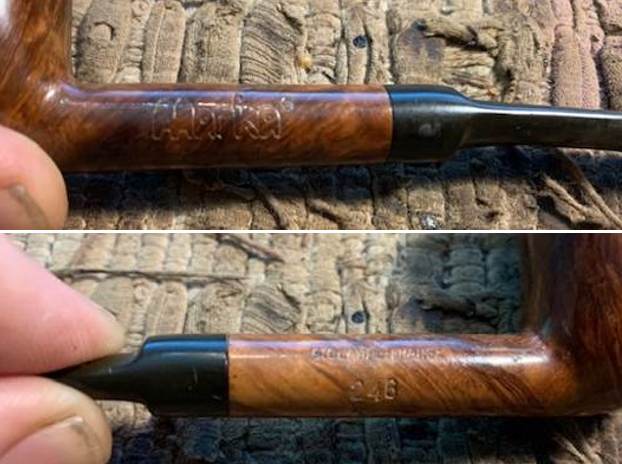
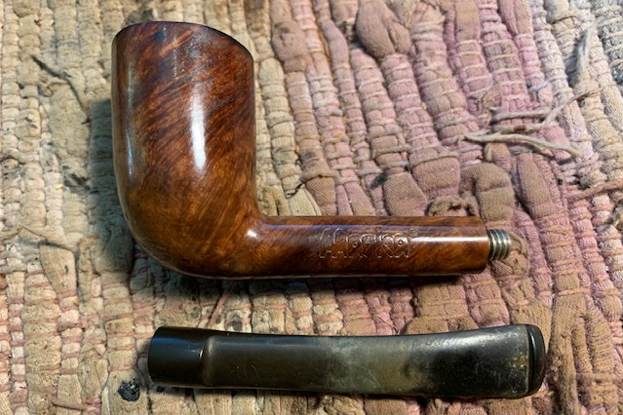
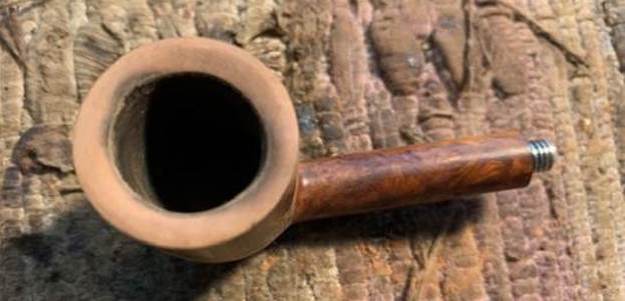
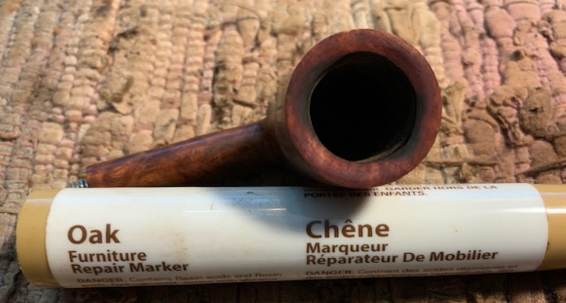
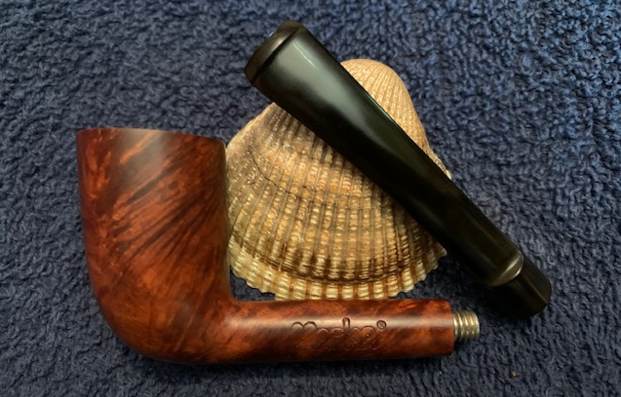
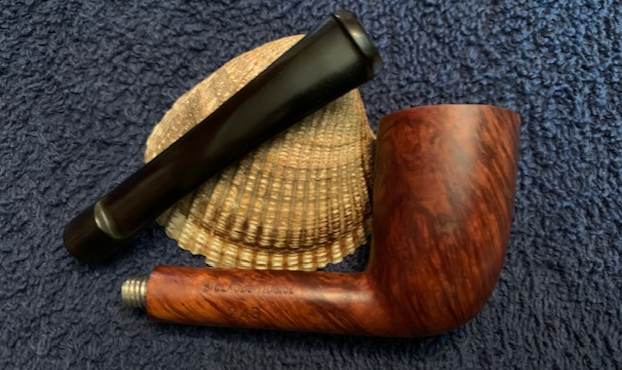
Yesterday I got a call from a local lady who had been directed to me by our local pipe shop. She had found a pipe at an antique store when her family was traveling and decided it was time to load a pipe and try it out. When she was at the shop she picked up some tobaccos to sample once the pipe was cleaned up. We made arrangements for her to stop by and show me the pipe and I would be able to tell her what I saw. She arrived and took a small bag out of her pocket and removed a hard shell case. She opened it and took out the small pipe that is shown in the photos below. The pipe was stamped on the left side of the shank and read MARKA in bubble style type. On the right side it was stamped St. Claude – France [over] the number 246 (shape number). The bowl had a thick cake and an overflow of thick lava on the inwardly beveled rim top and edges. The finish was very dirty and appeared to be coated with a thick varnish coat that was bubbled or peeling on the underside of the shank. The thin saddle stem was oxidized, calcified and had light tooth chatter on the top and underside of the stem ahead of the button. The stem screwed on to a threaded metal tenon that was set in the shank of the pipe. The small pipe is a nice looking delicate Dublin that should clean up very well. I took photos of the pipe before I started my clean up work.  I took a close up photo of the bowl and rim top to show the thickness of the cake in the bowl and the thick overflow of lava on the beveled rim top. It really is a mess and hard to know what it looks like under the lava. I also took photos of the stem to show the condition it was in when she dropped it off. I took photos of the stamping on the shank sides. It is clear and readable as noted above.I unscrewed the stem from the tenon and took a photo of the bowl and stem to show the delicate proportions of the pipe. Note the metal threaded tenon on the shank end.I did some work on the background for this pipe. I checked on PipePhil and Pipedia and did not find any information on the Marka brand. I checked several other French brands to see if there was a sublisting for the Marka brand. There was nothing there. I also did a search on Google for the brand but found nothing listed. I also checked the book “Who Made That Pipe” and there was nothing listed there.  I wrote to Kenneth Lieblich to see if he was familiar with the brand or had any information on it. While I waited I did some work on the shape number 246. Interestingly it is a three digit number that fits neatly into the list of Comoy’s and Chacom shape numbers. That particular number is not listed, however the number before that – 245- is listed as is the number after it. Kenneth wrote me back that he wondered if the shape number pointed to Chacom. So independently we both came to the same conclusion that the brand was connected to Chacom. I don’t know if we will ever know for certain but that is where it stands at this point.

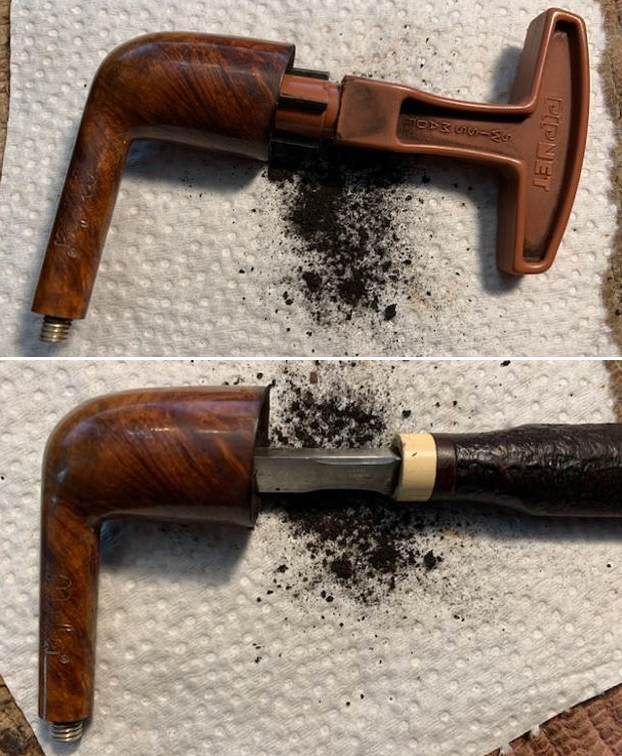
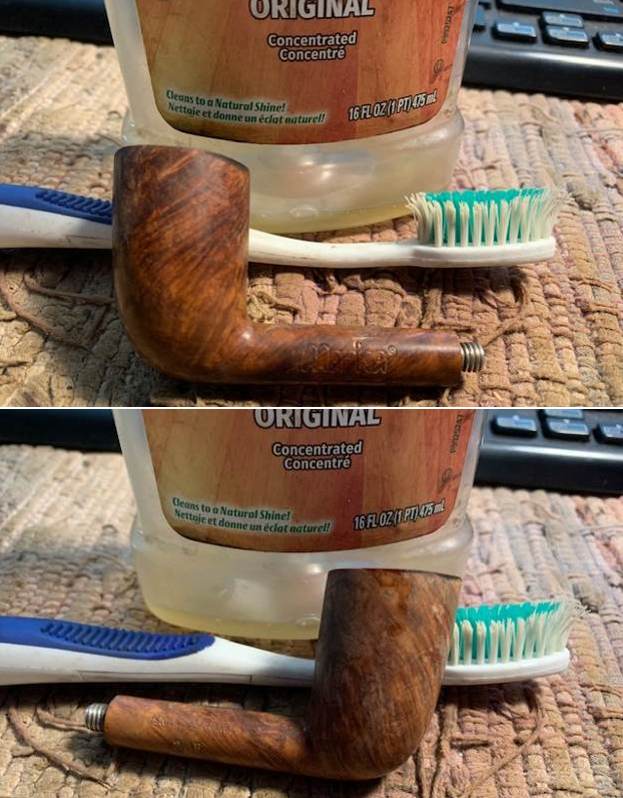
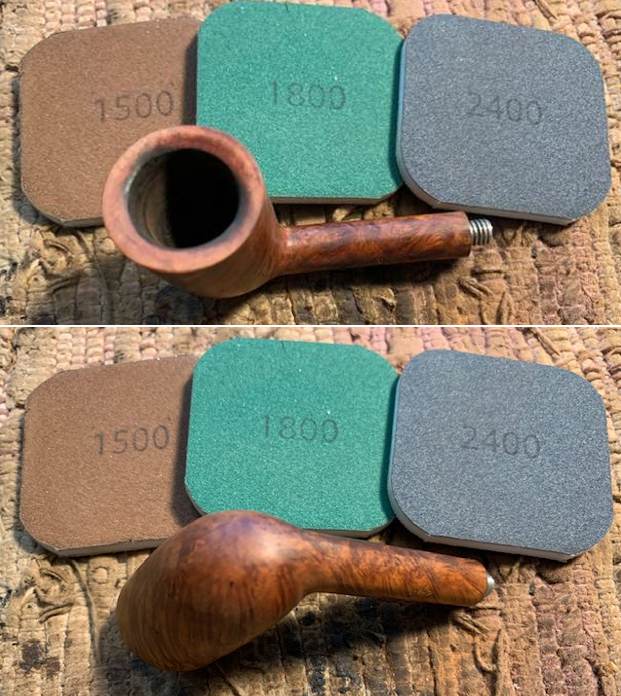
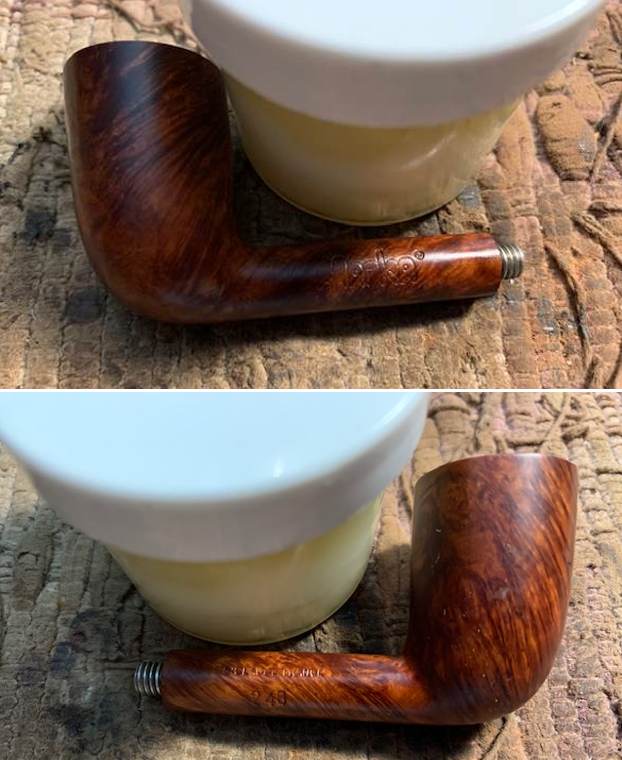
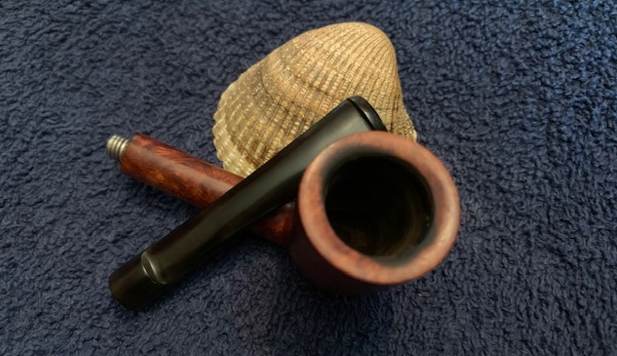
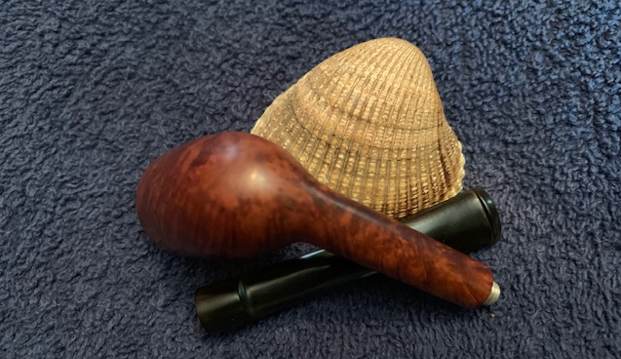
Now it was time to work on the pipe. I reamed the bowl back to bare briar with a PipNet reamer with the smallest cutting head. I cleaned up the reaming with a Savinelli Fitsall Pipe Knife. I finished the bowl work by sanding it with 220 grit sandpaper wrapped around a small piece of briar. Once finished I wiped out the inside. The bowl walls looked very good with no heat damage or checking.   I scrubbed the exterior of the bowl and rim with undiluted Murphy’s Oil Soap and a tooth brush. I scrubbed the pipe with the brush to remove the grime and the tars on the rimtop. I rinsed the bowl with warm water to remove the soap and the grime. It began to look better. There was some burn damage on the outer edge of the rim toward the back of the bowl. It was not deep damage and would probably be easily removed. I wiped down the bowl and rim with acetone on cotton pads to remove some of the darkening and the remnants of the varnish. It worked well and you can see the debris on the cotton pads. It looked much better.    Now it was time to address the damage on the rim top and the inner bevel of the chamber. I topped the pipe on a piece of 220 grit sandpaper on a topping board. I removed the damage and the top looked significantly smoother.   The beveled inner edge of the bowl still had some burn damage and darkening on the front and the back of the bowl. I used a piece of 220 grit sandpaper and a wooden ball to work on the bevel. I put the sandpaper on the ball and turned the bowl rim on the paper to remove damaged areas on the top. The rim top looked better but you can see the damage on the inner front and back of the bowl edge.     I used an Oak Stain Pen to match the sanded rim top to the rest of the bowl. It certainly looks better at this point.Now it was time to clean out the inside of the shank and stem. I used isopropyl alcohol, cotton swabs and pipe cleaners to remove the tars and oils. The shank was clogged near the entry to the bowl. I used an unfolded paper clip to poke through the airway and then worked pipe cleaners through the airway until the draught in the pipe was open and clean. I cleaned the airway in the stem at the same time using the same supplies. Once finished it smelled clean and fresh. I polished the briar with micromesh sanding pads – dry sanding it with 1500-12000 grit pads. I wiped it down with a damp cloth after each sanding pad. The pipe took on a shine as I moved through the sanding pads.   I rubbed the bowl and shank down with Before & After Restoration Balm. I worked it into the surface of the bowl sides and shank with my fingertips and a horsehair shoe brush to clean, enliven and protect the briar. I let the balm sit for 10 minutes, then buffed with a cotton cloth to raise the shine. The Balm did its magic and the grain stood out on the briar.     I polished the stem with micromesh sanding pads – 1500-12000 grit pads. I wiped it down with Obsidian Oil after each sanding pad. I finished the polishing with Before & After Polishes – both Fine and Extra Fine. I gave it a final rub down with Obsidian Oil and set it aside to dry.  This St. Claude-France Marka 246 Dublin with a vulcanite saddle stem has some beautiful grain. The rich brown stain makes the grain come alive with the polishing and waxing. I put the stem back on the bowl and carefully buffed the pipe with Blue Diamond on the buffing wheel. I gave the bowl and the stem multiple coats of carnauba wax on the buffing wheel. I buffed the entire pipe with a clean buffing pad. I hand buffed the pipe with a microfiber cloth to deepen the shine. The finished Marka 246 Dublin really is a beauty and fits nicely in the hand and looks very good. Give the finished pipe a look in the photos below. The dimensions of the pipe are Length: 5 inches, Height: 1 ½ inches, Outside diameter of the bowl: 1 inch, Chamber diameter: 5/8 of an inch. The weight of the pipe is .56 ounces/16 grams. This pipe will soon be back in the hands of the pipewoman who brought it to me to restore. I think she will enjoy smoking this petite little French Pipe. Thanks for reading this blog and my reflections on the pipe while I worked on it. There are many more to come!