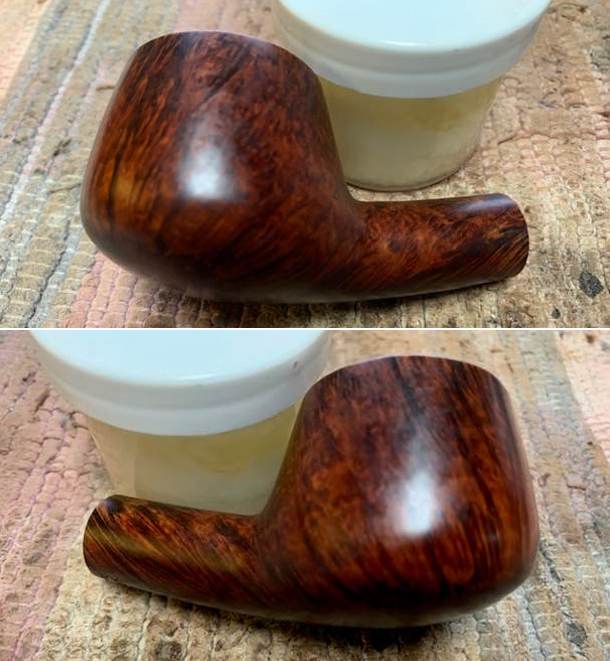
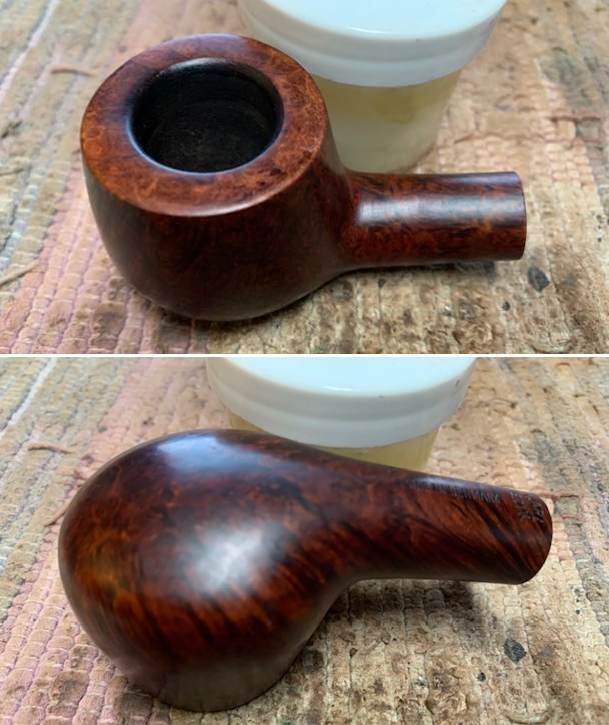
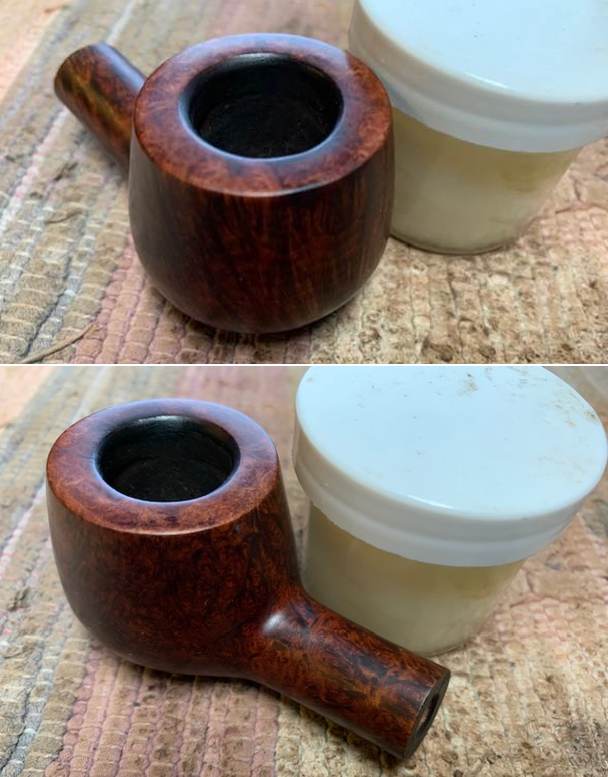
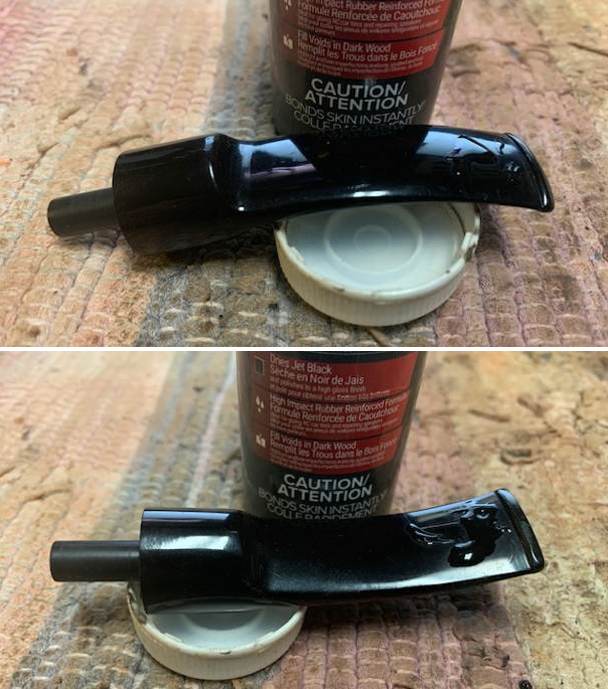
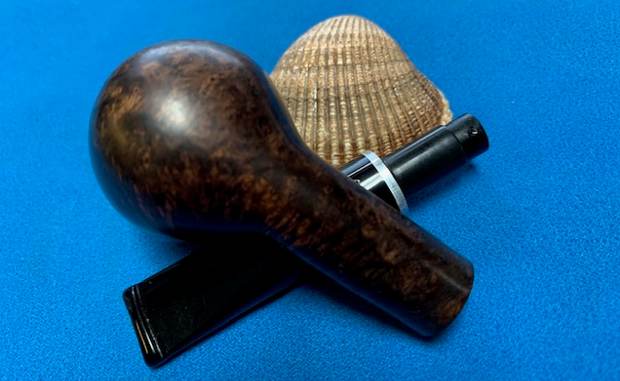
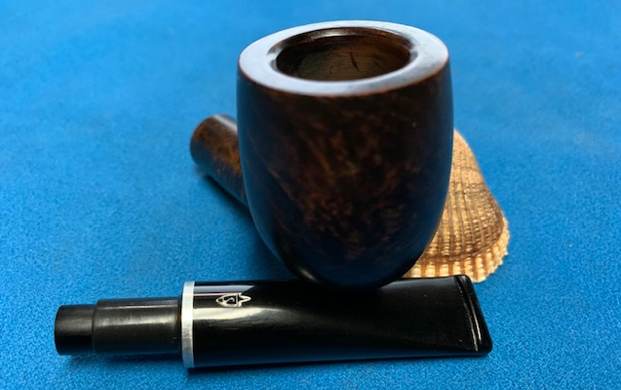
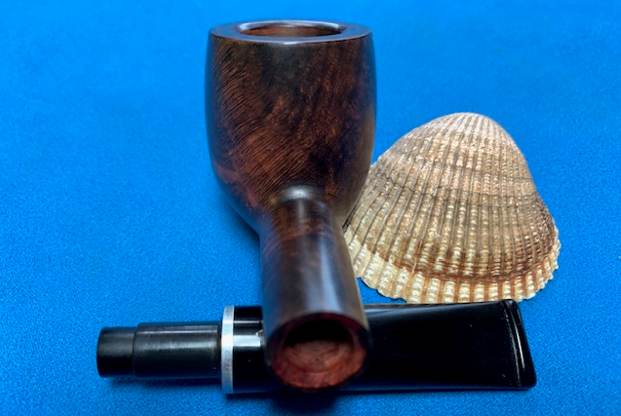
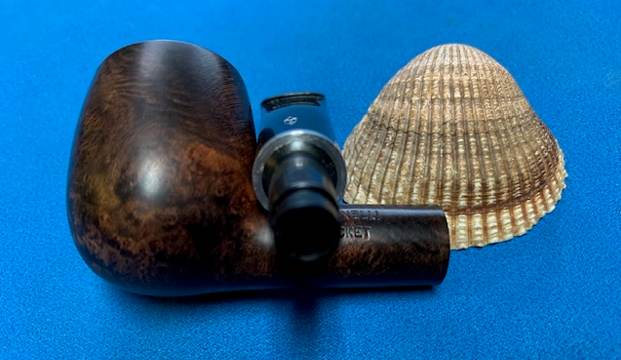
Tag Archives: contrast staining

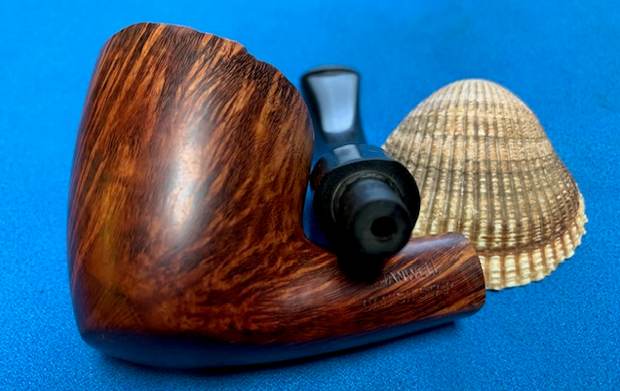
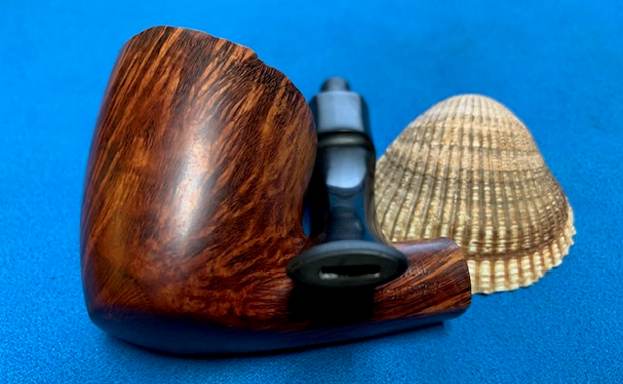
Restemming and Restoring a Stanwell Danish Star 64 Freehand Dublin


Blog by Steve Laug

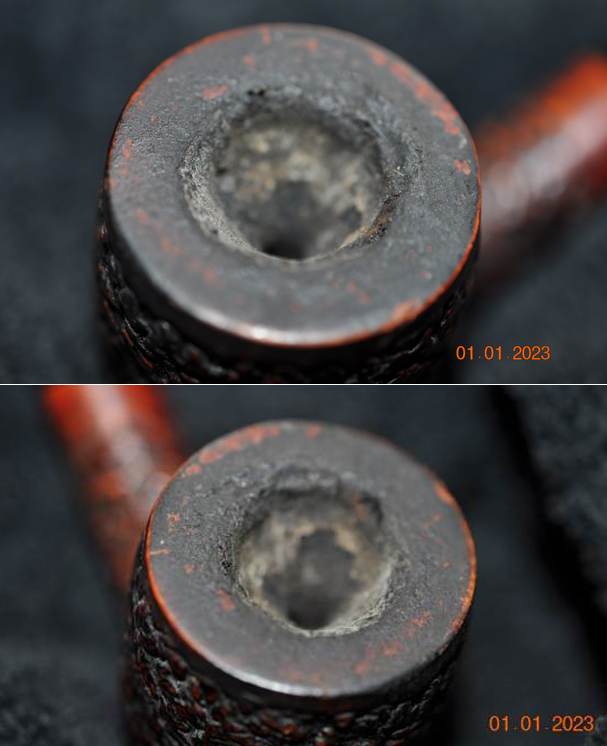
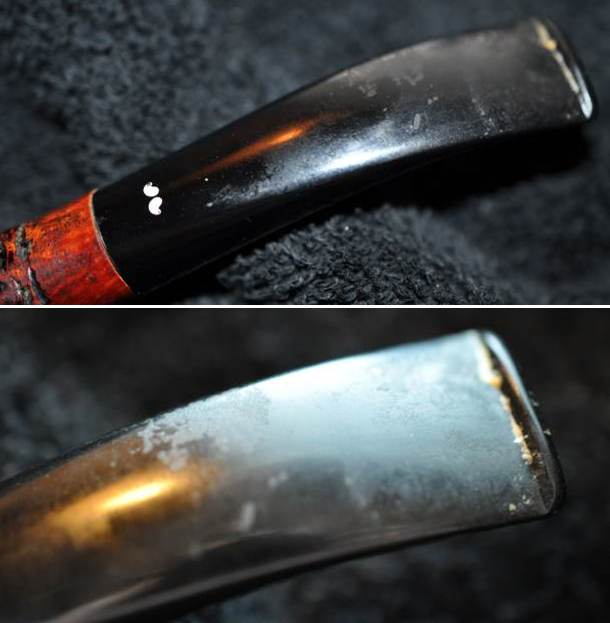
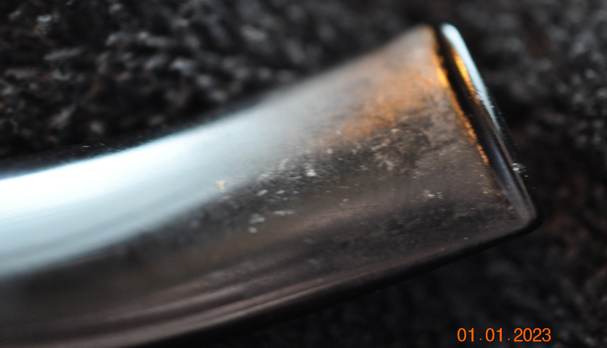
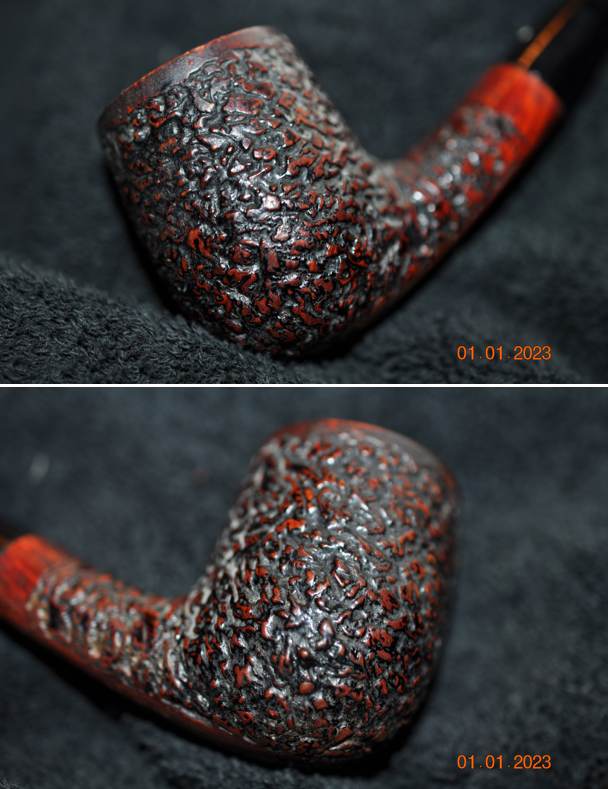
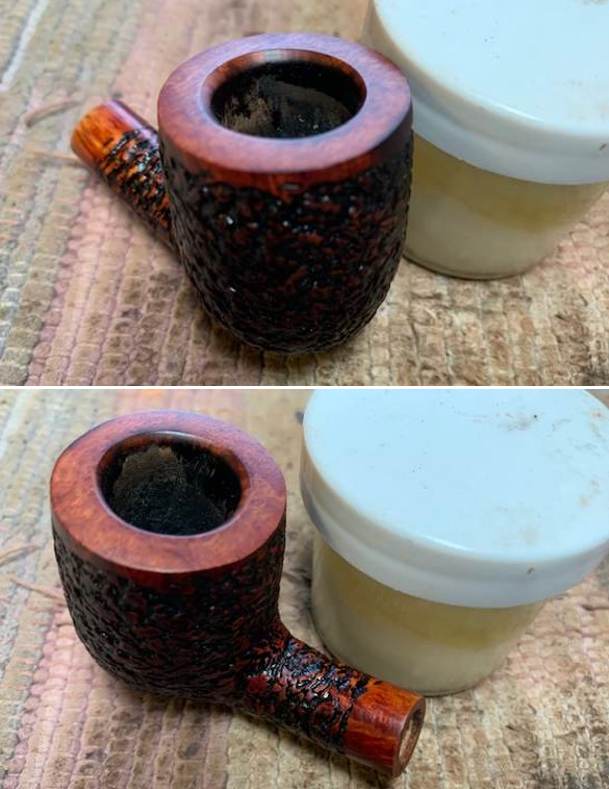
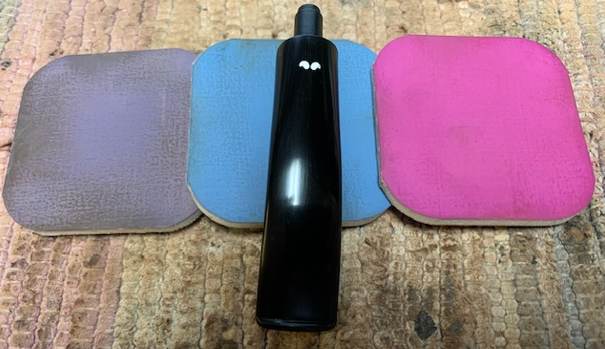
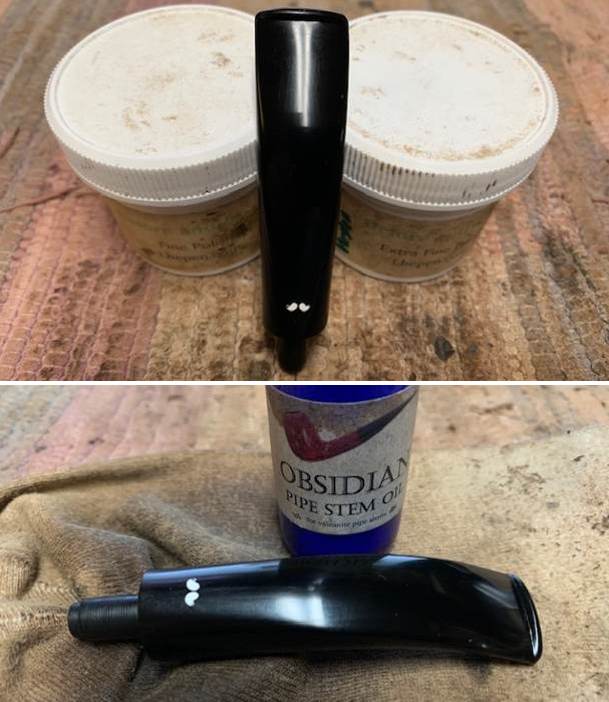
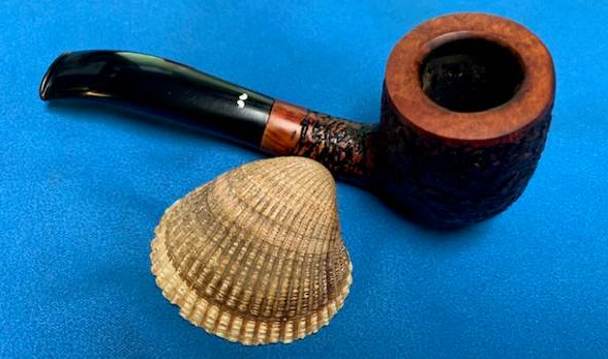
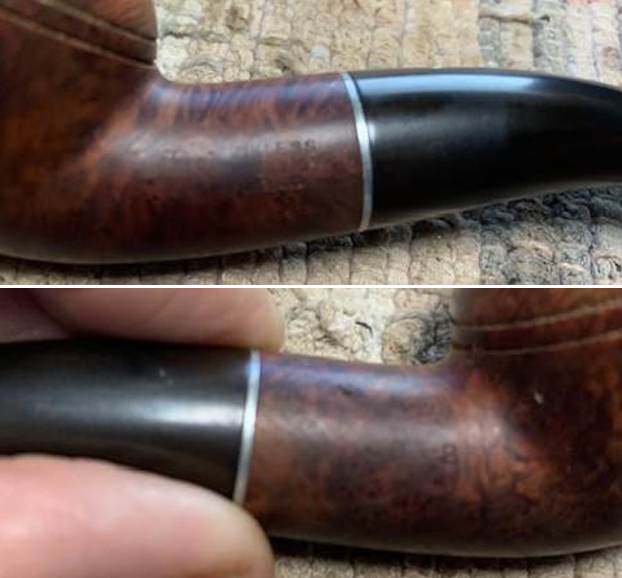
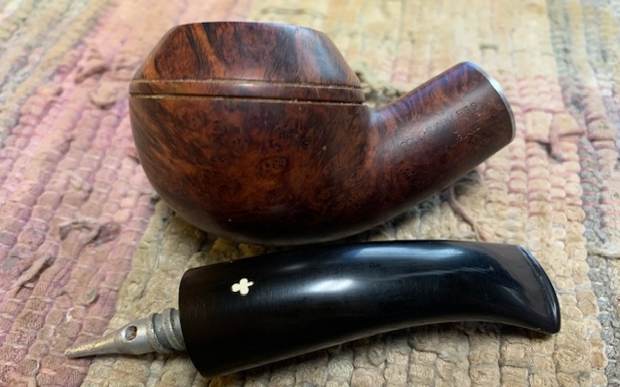
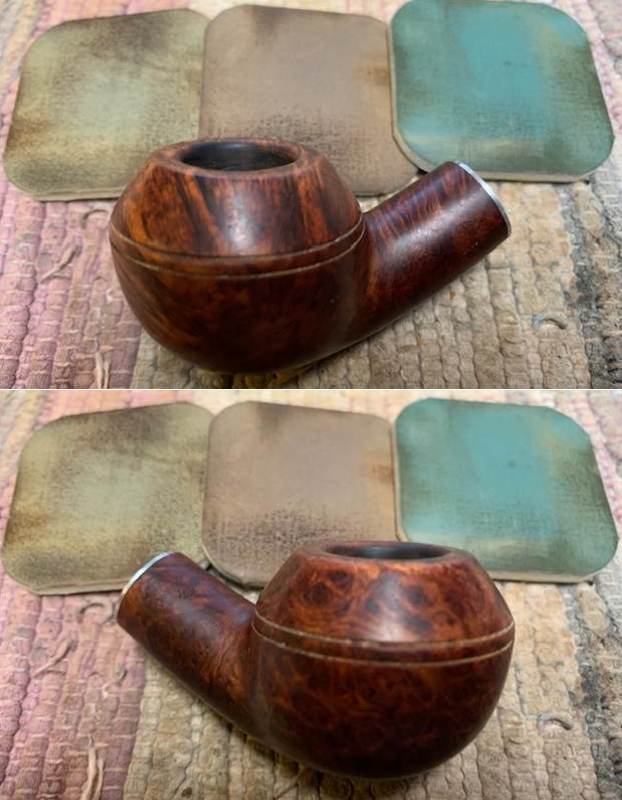
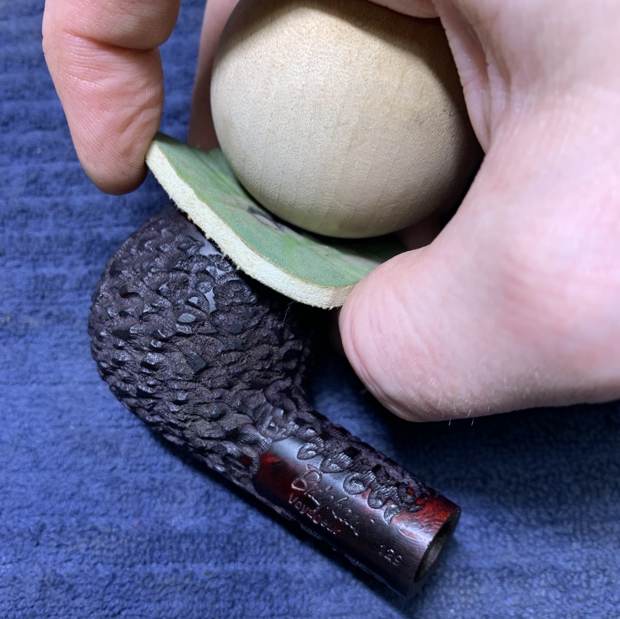
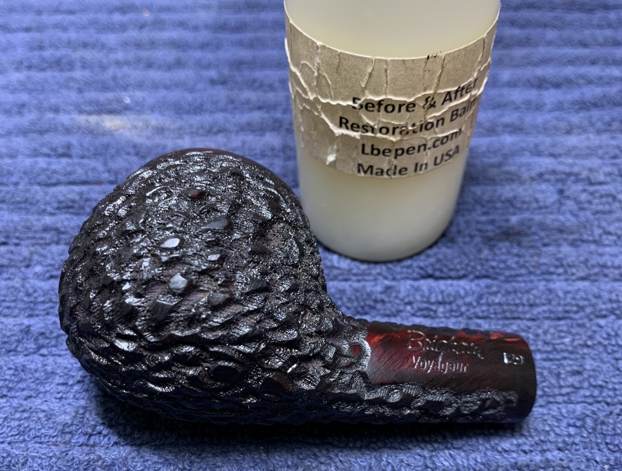
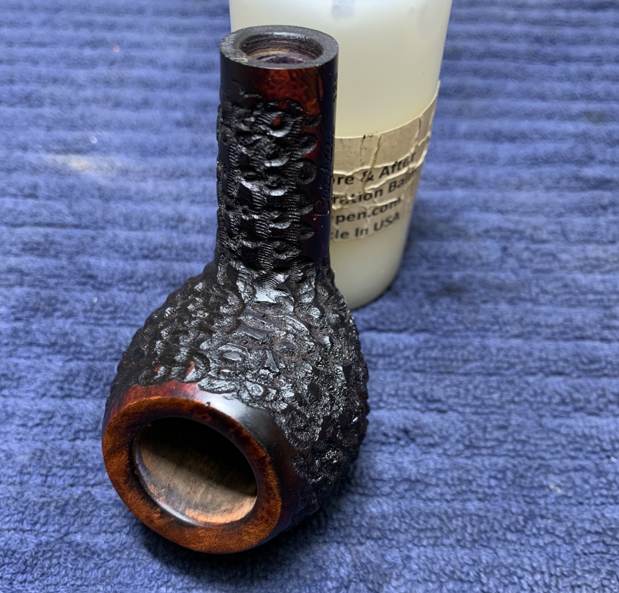
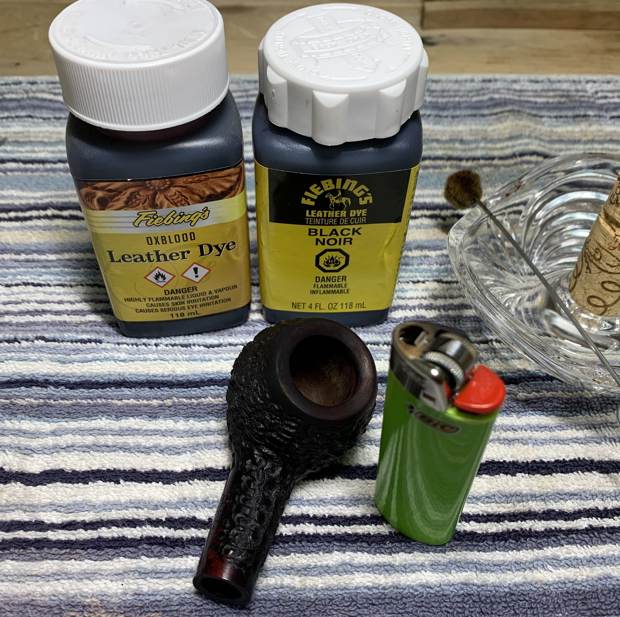
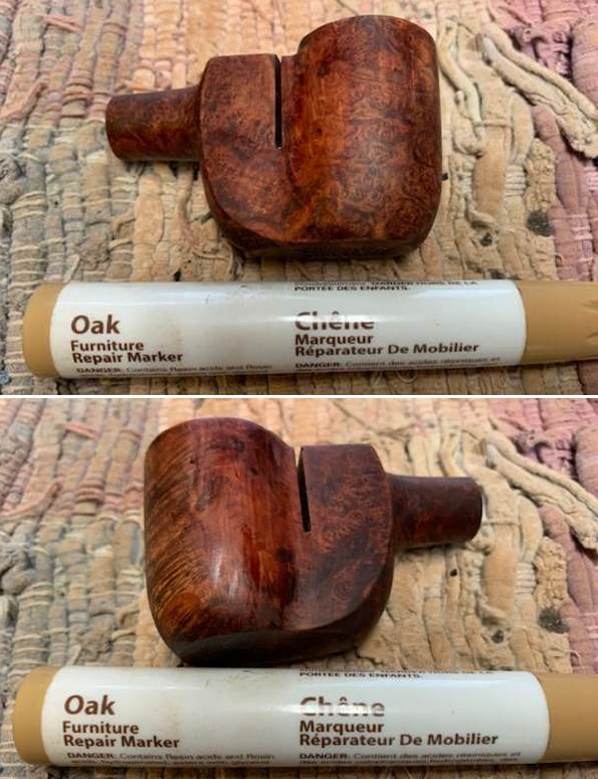
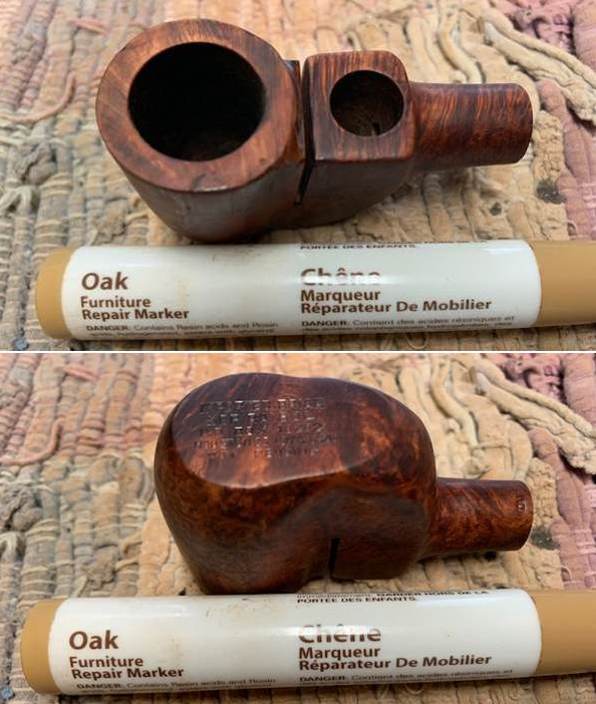
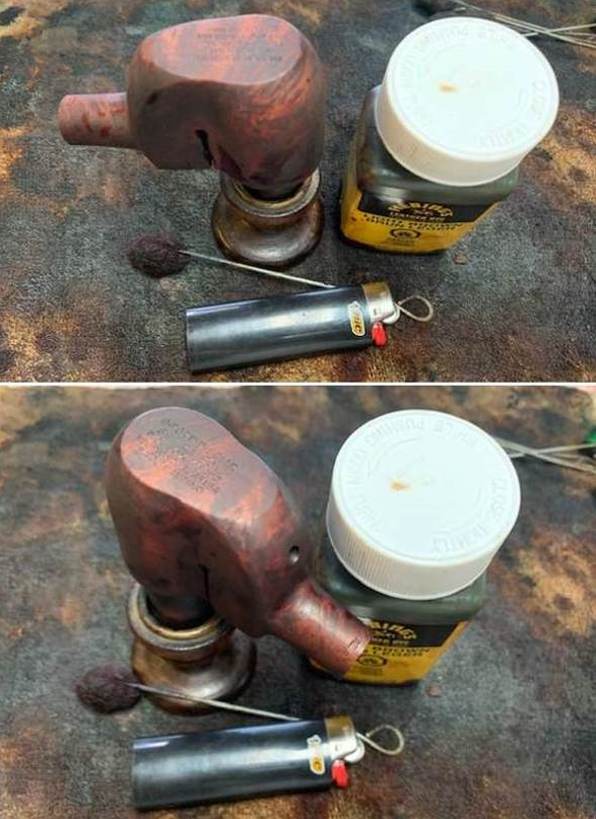
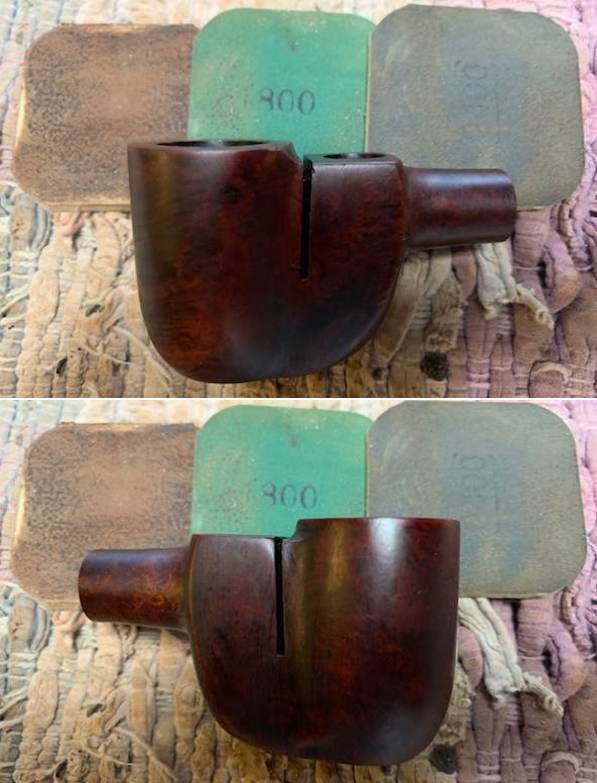
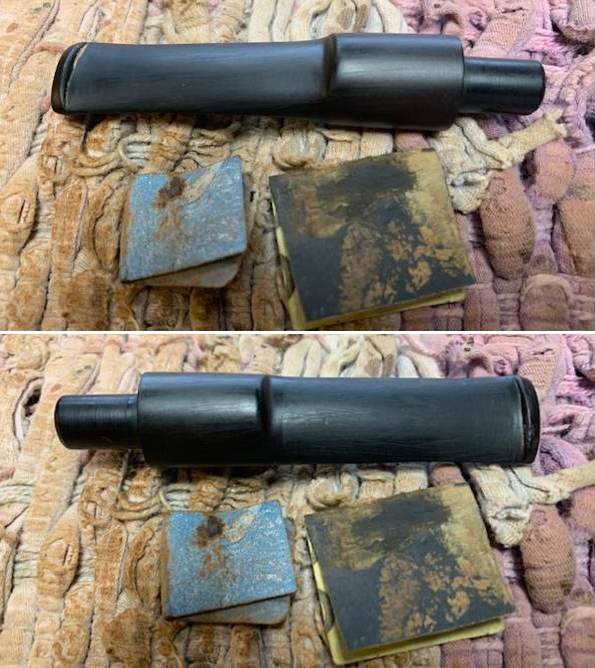
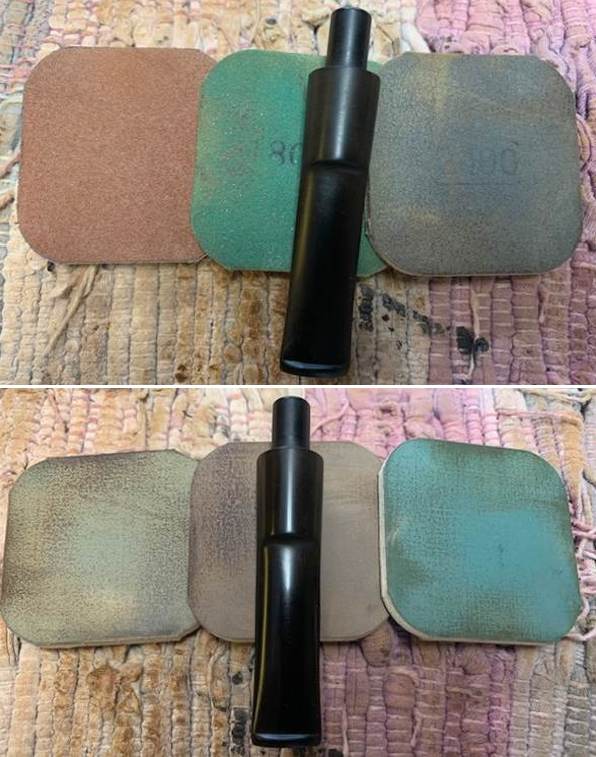
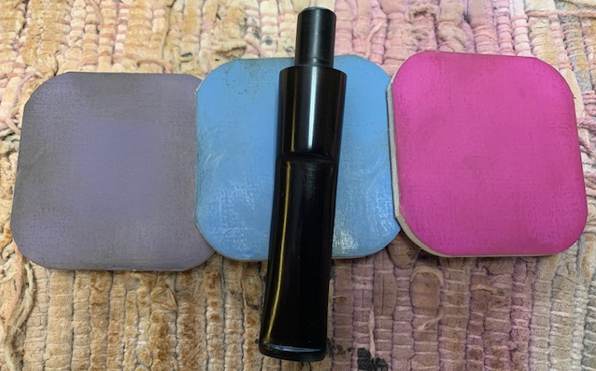
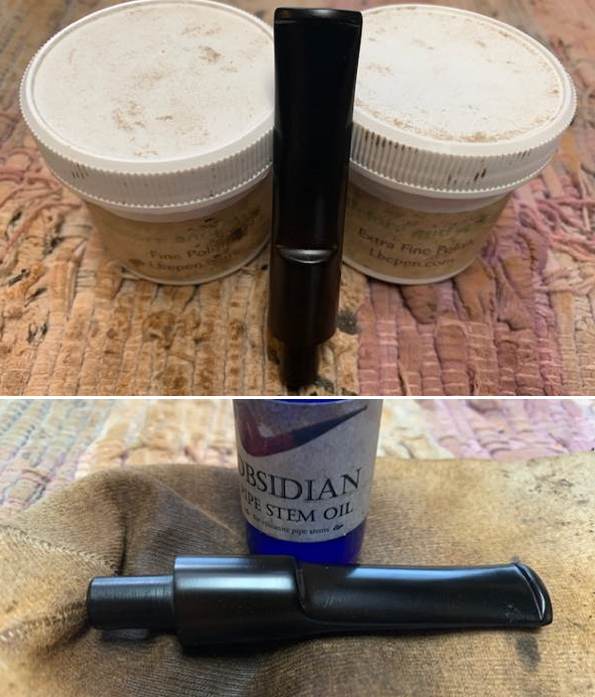
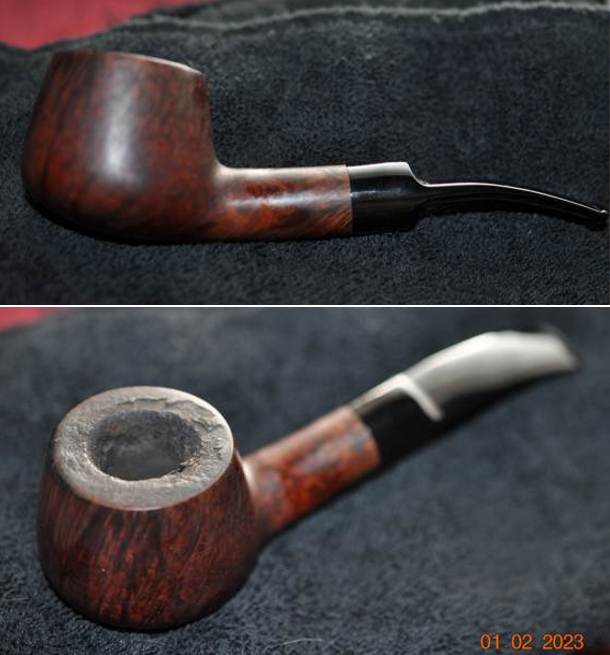
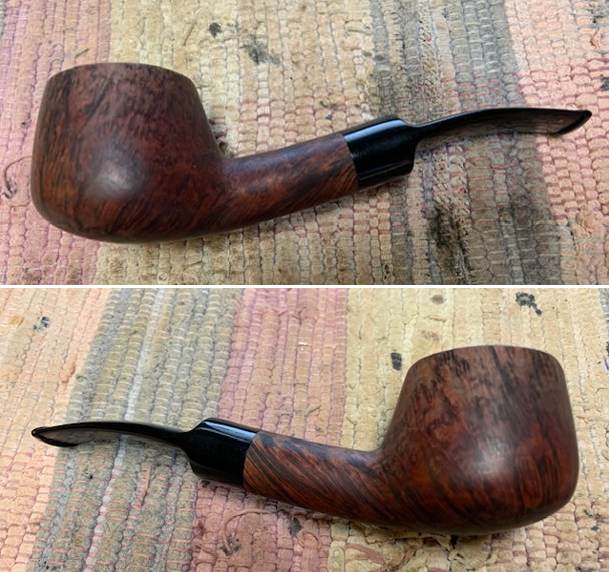
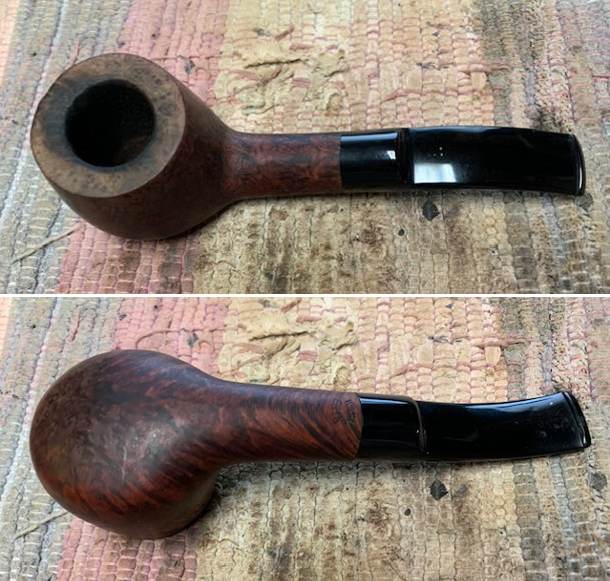
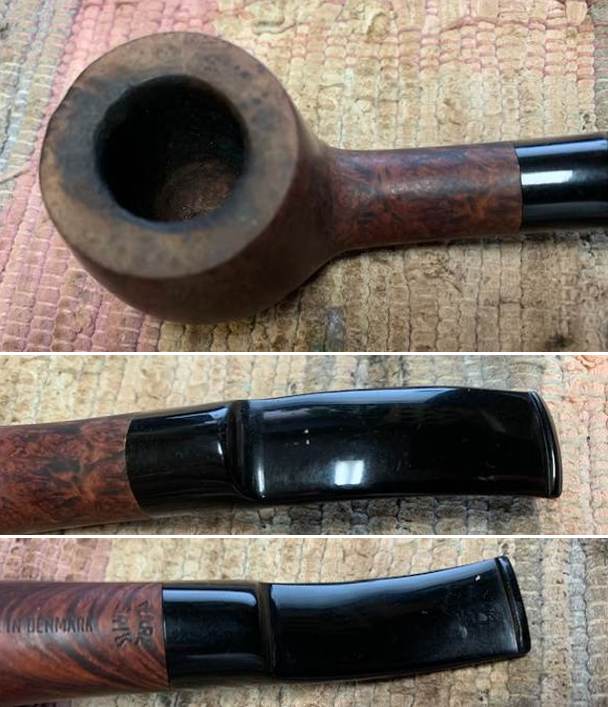
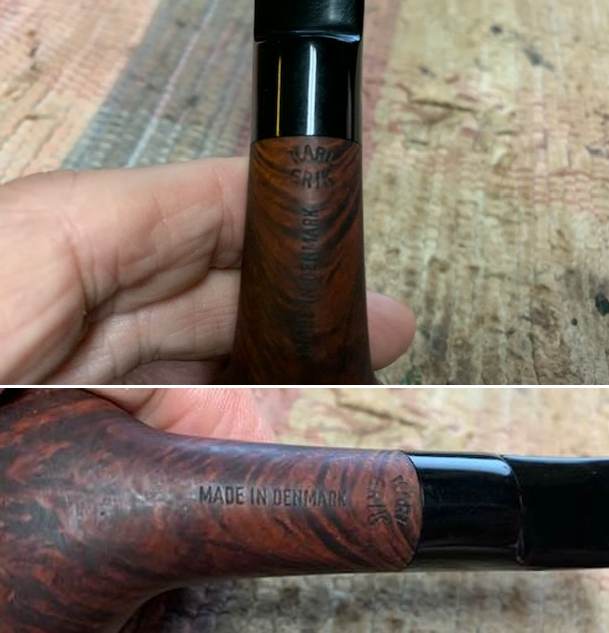
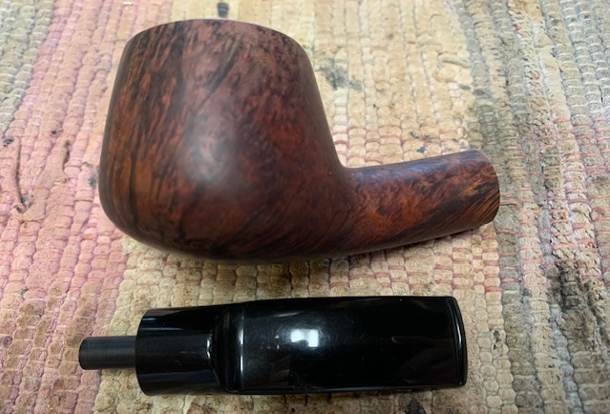
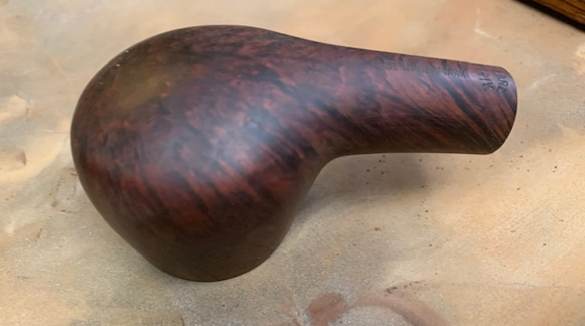
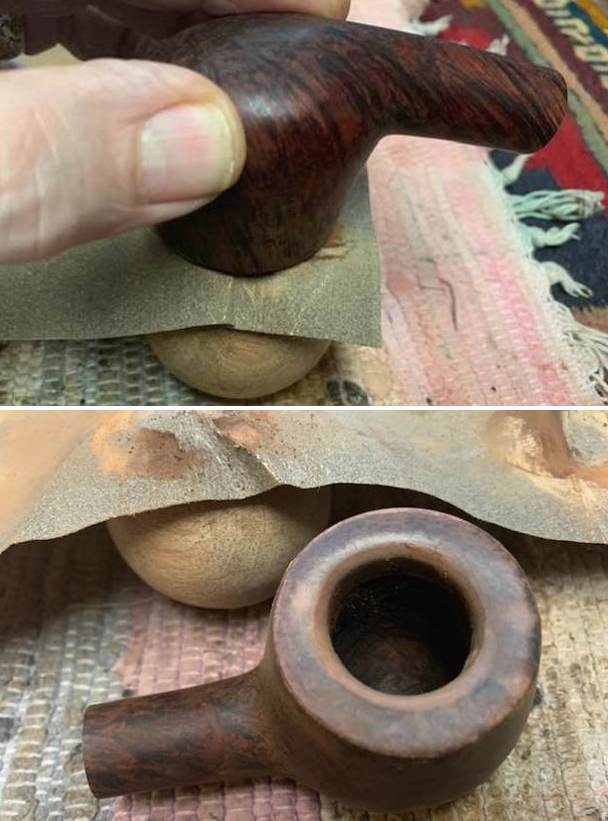
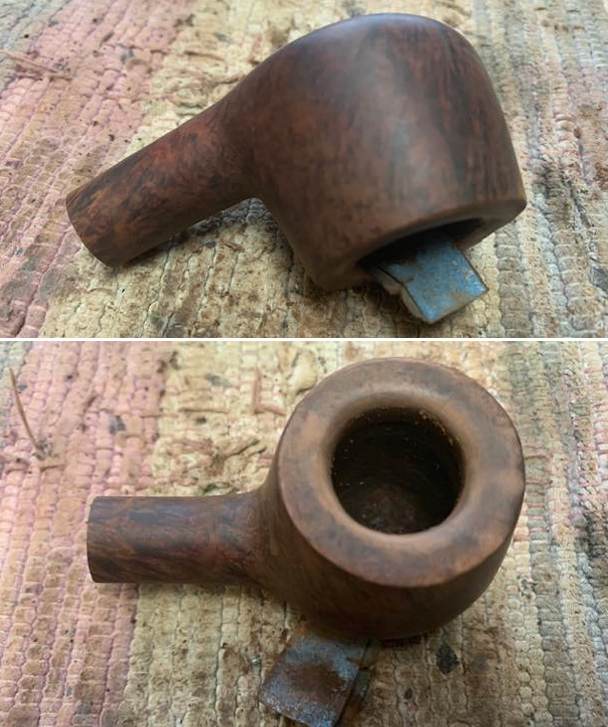
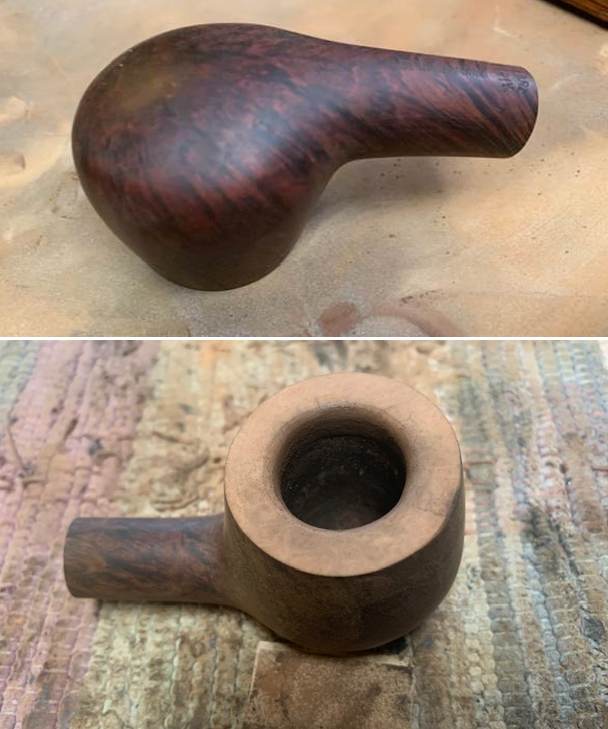
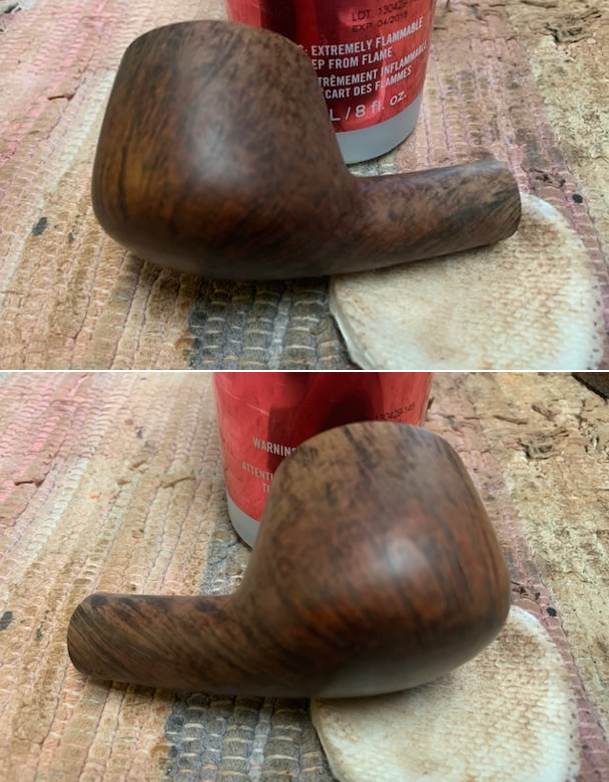
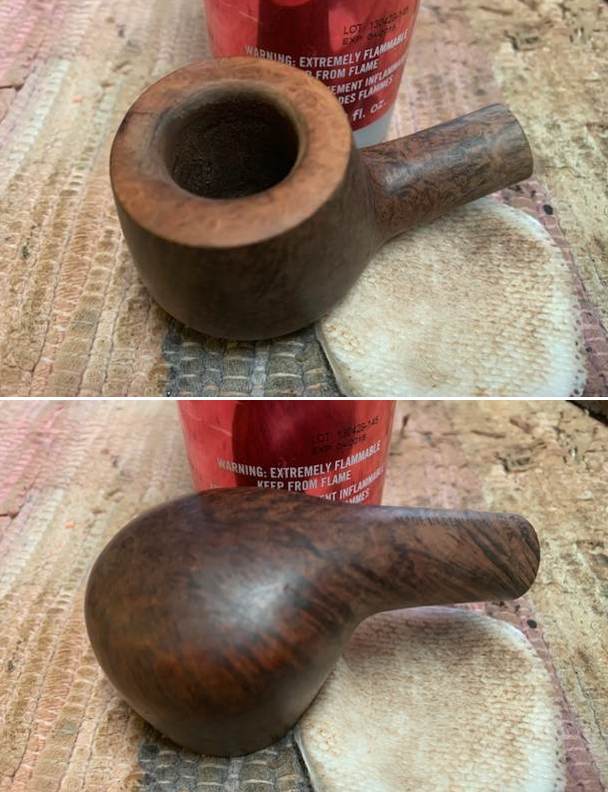
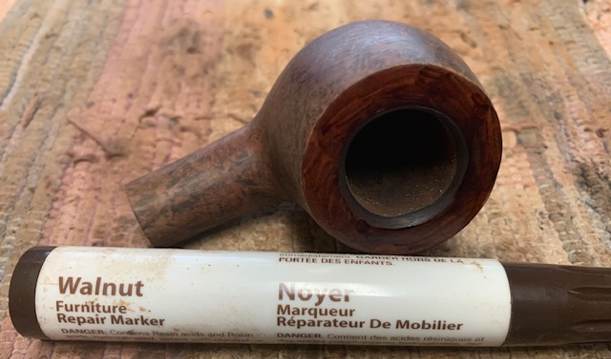
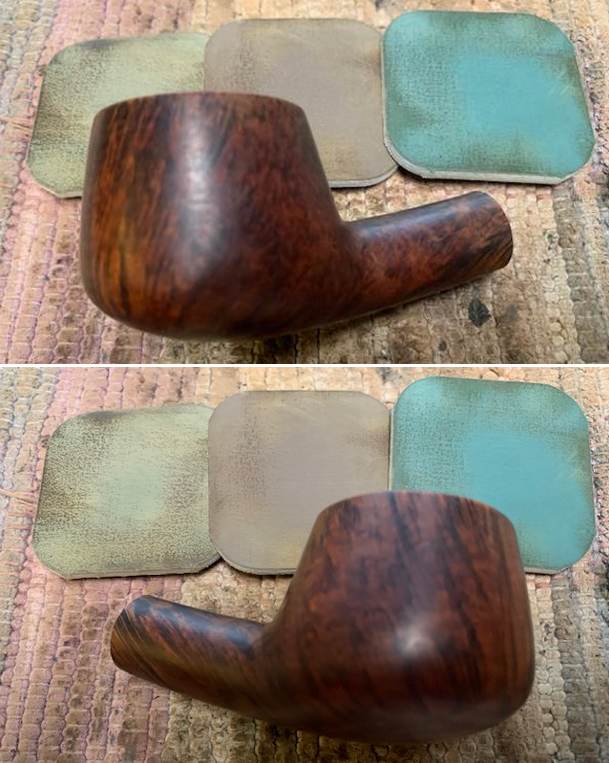
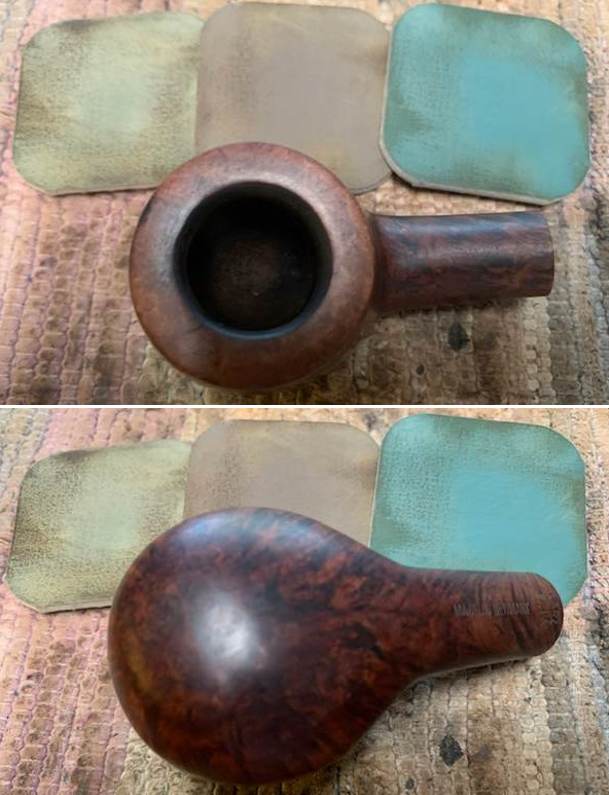
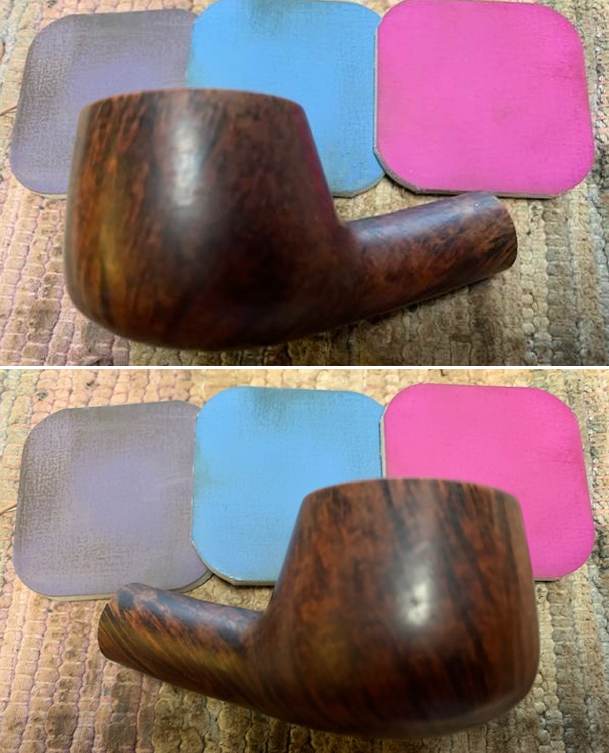
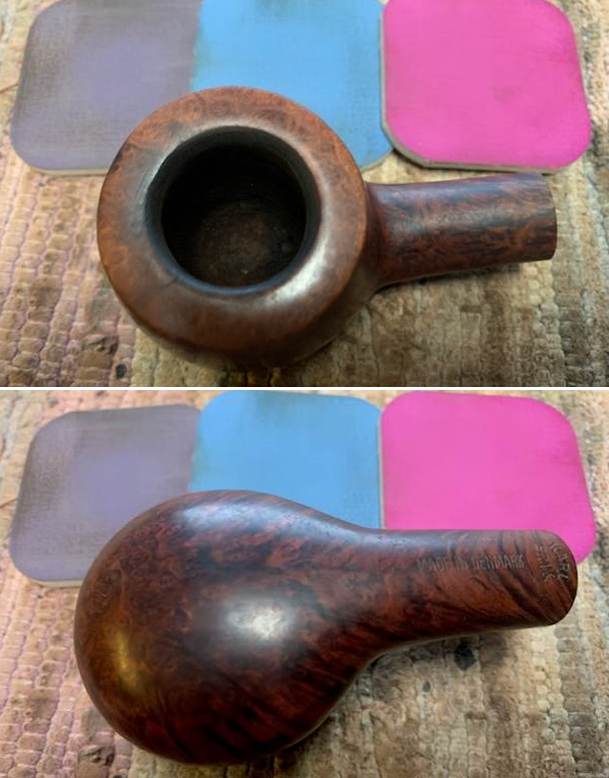
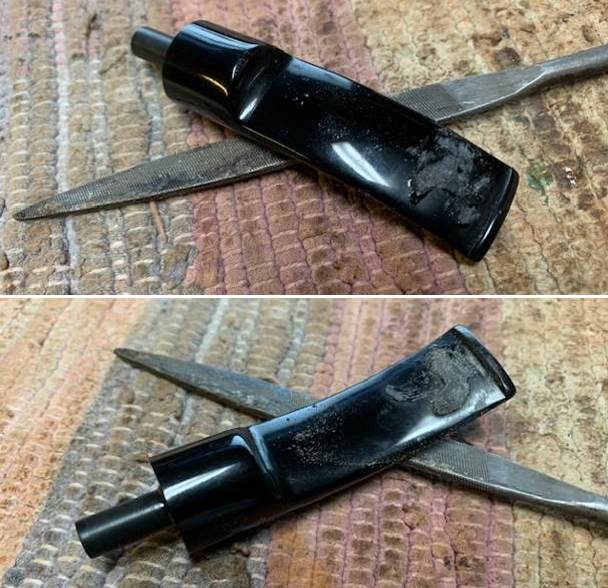
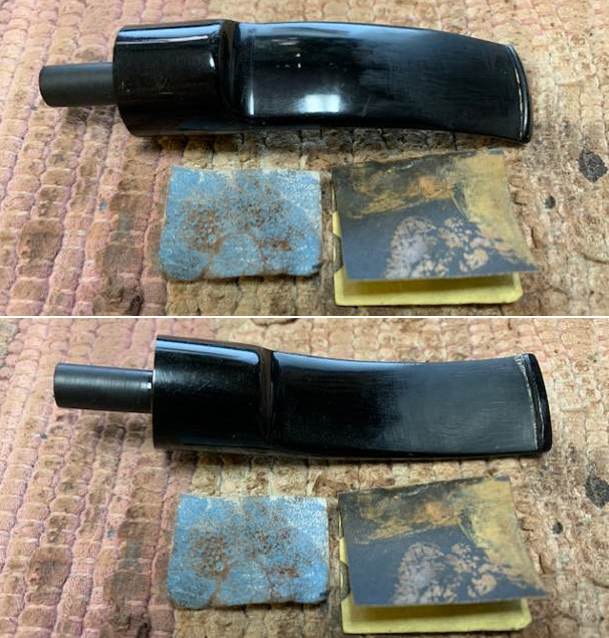
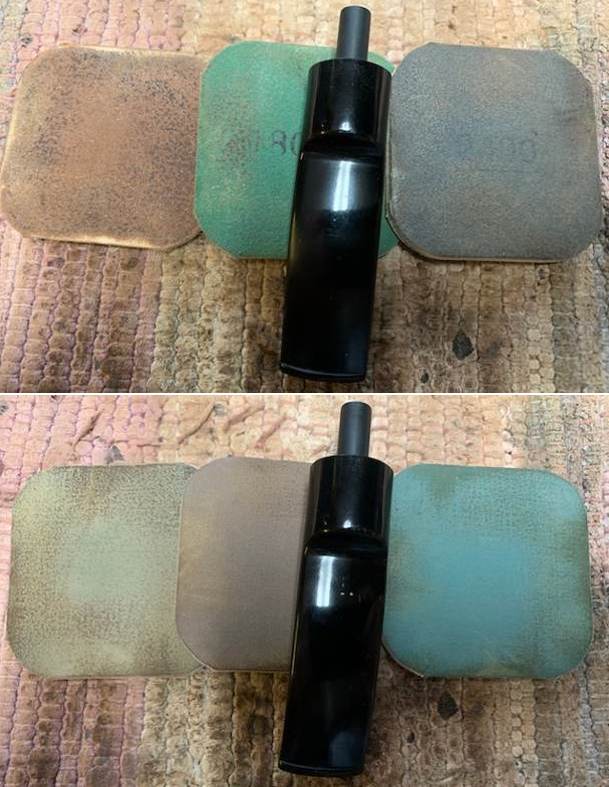
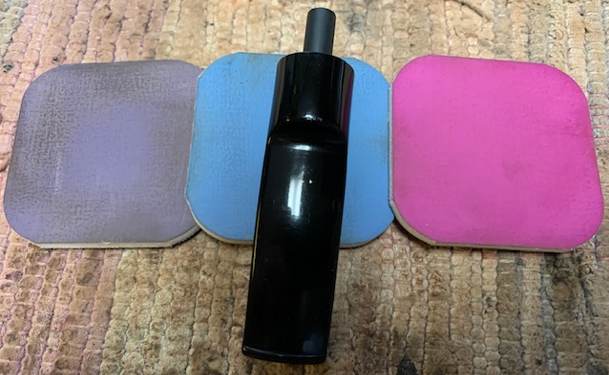
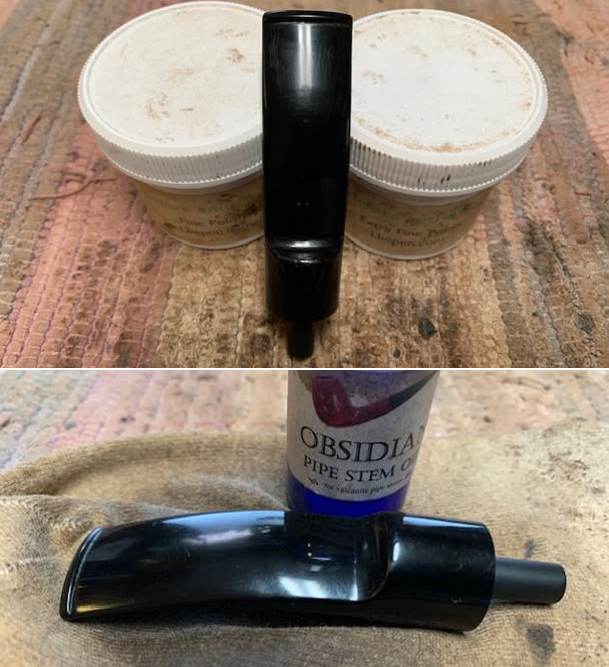
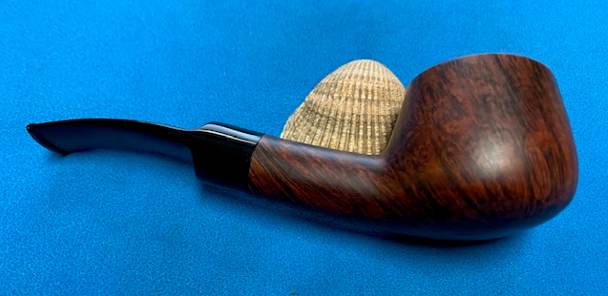
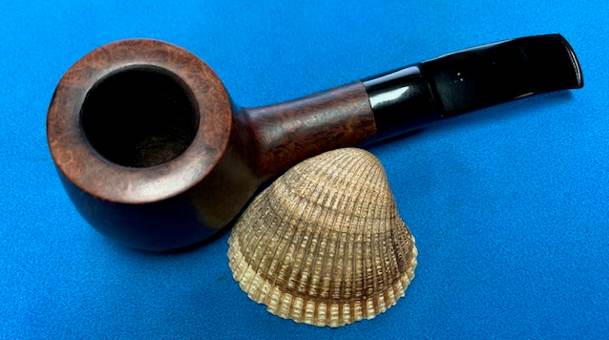
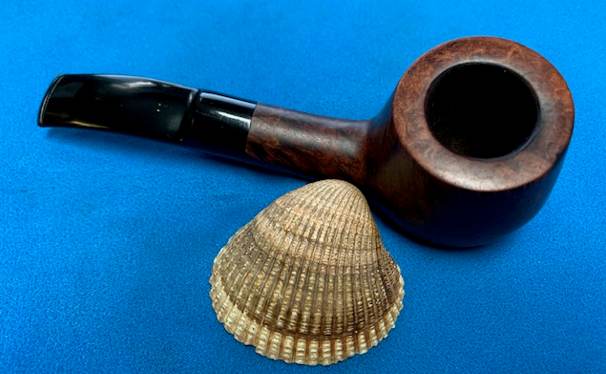
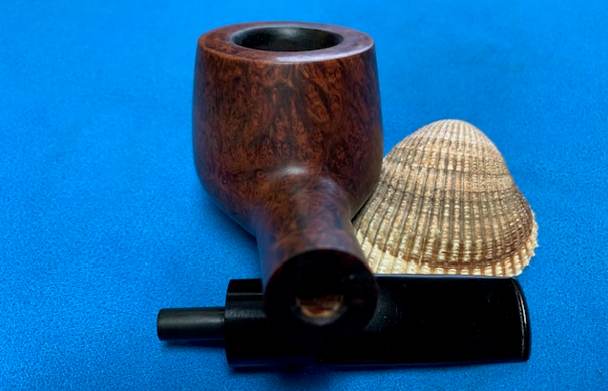
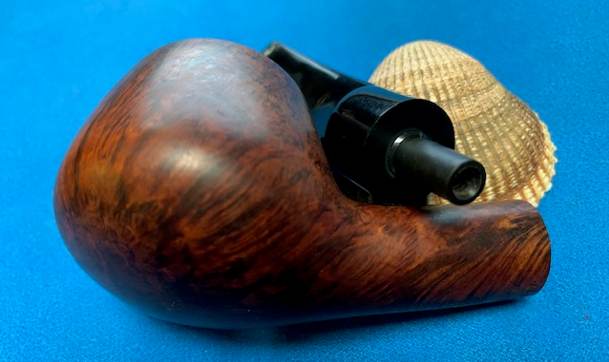
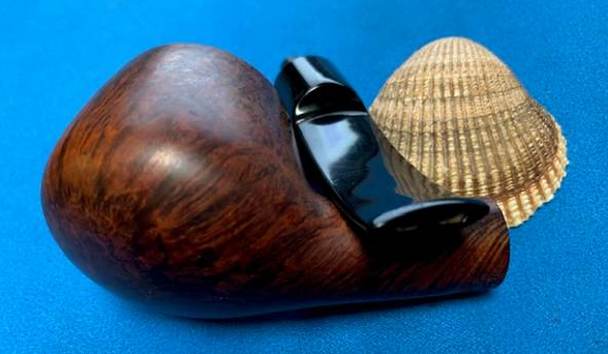
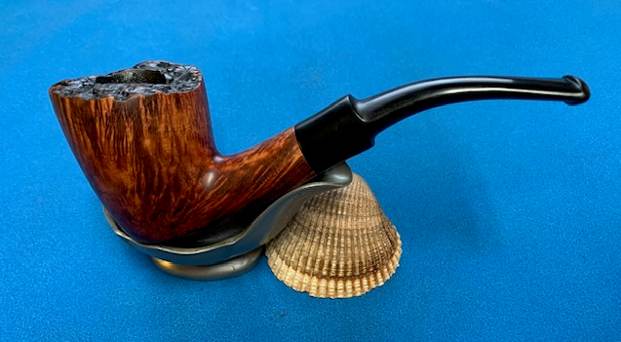
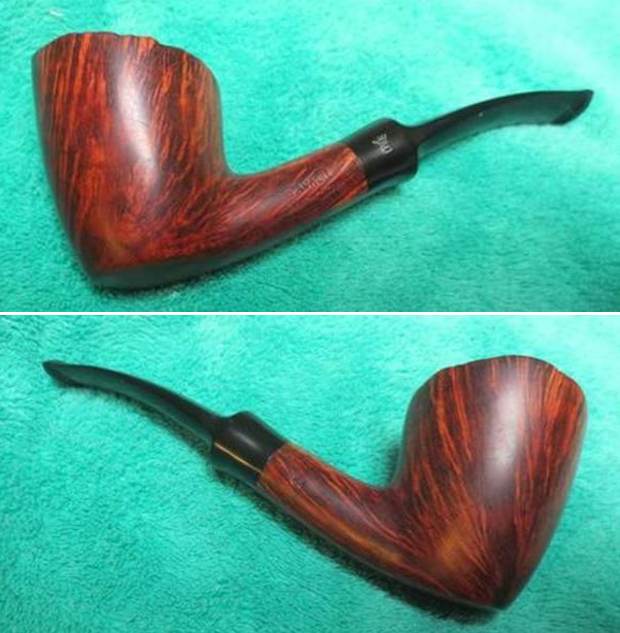
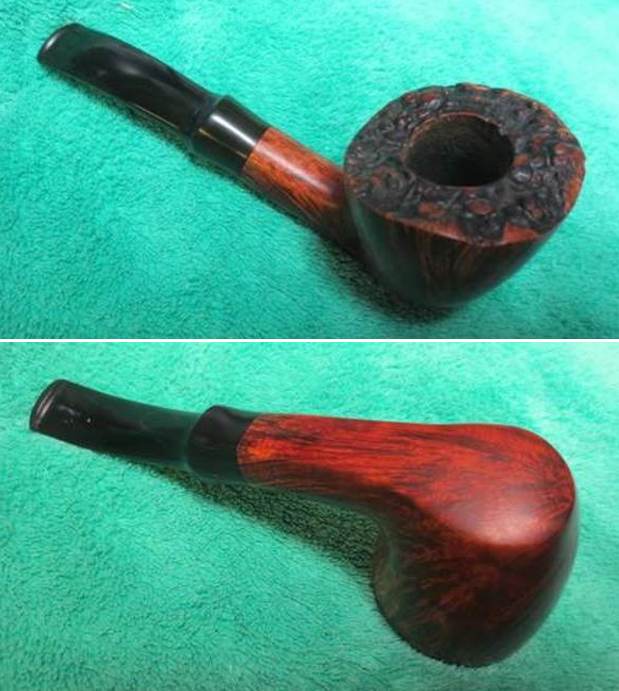
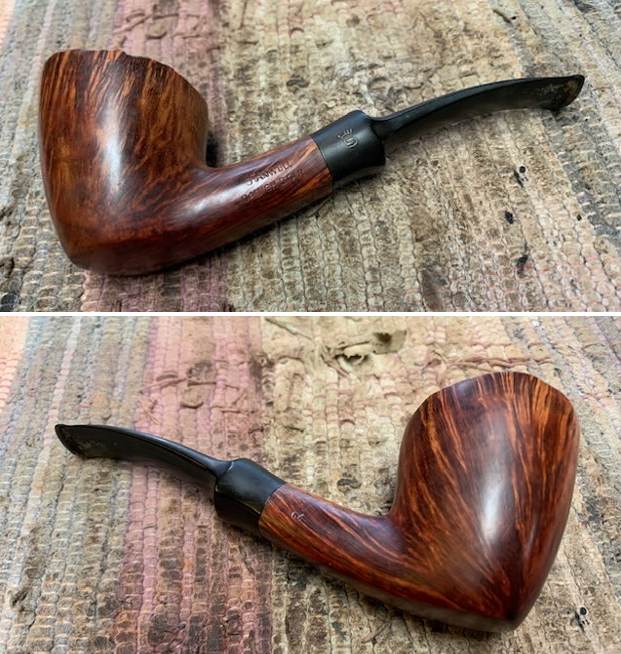
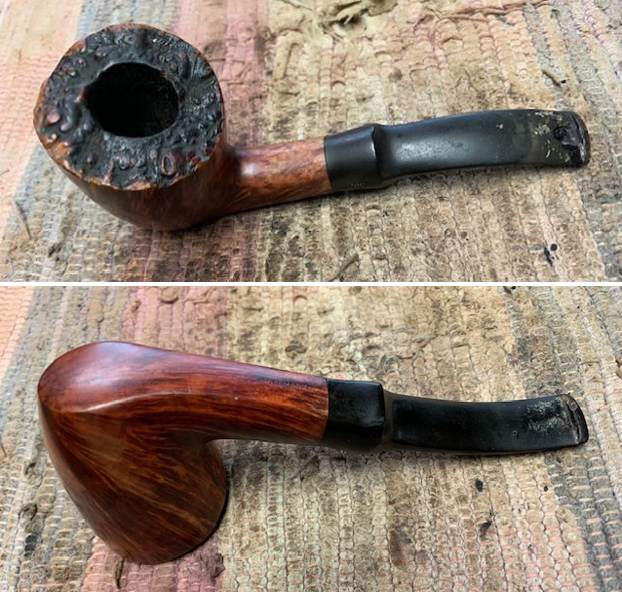
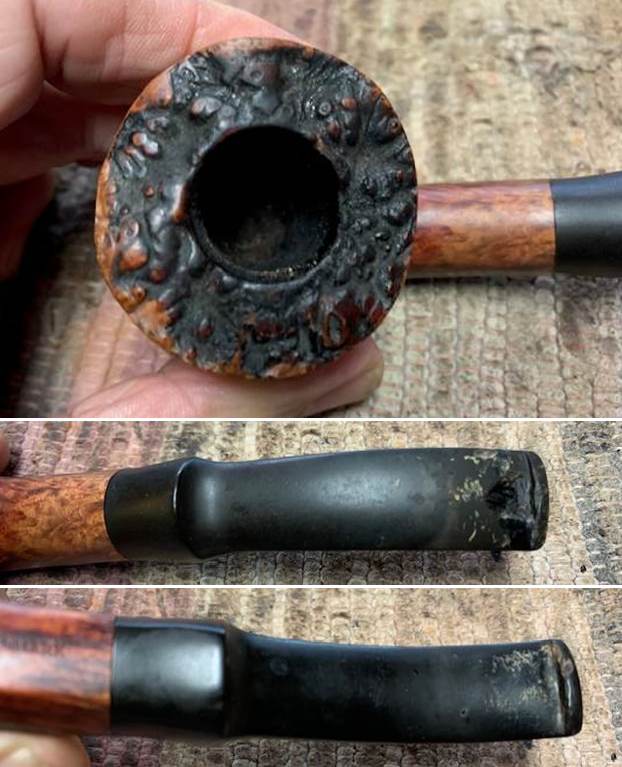
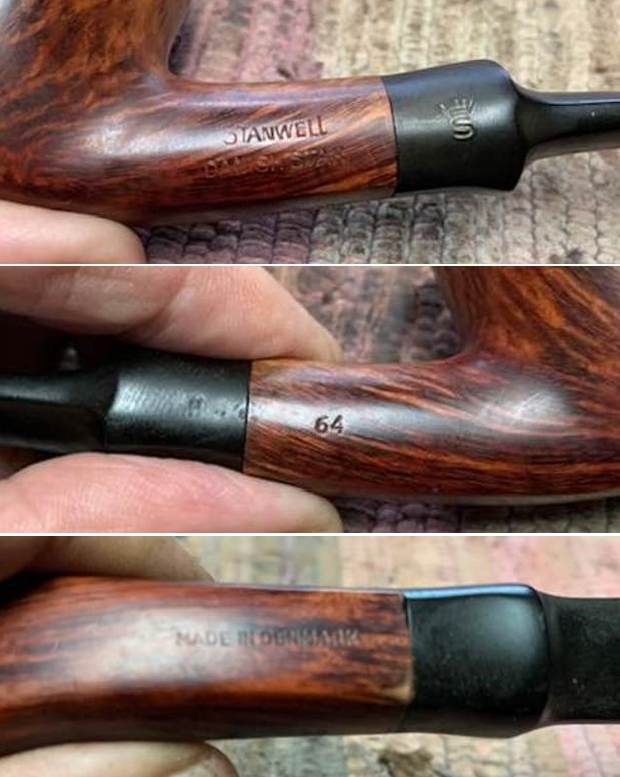
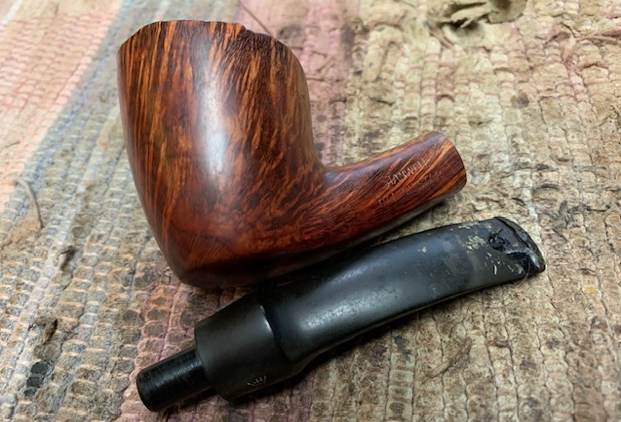
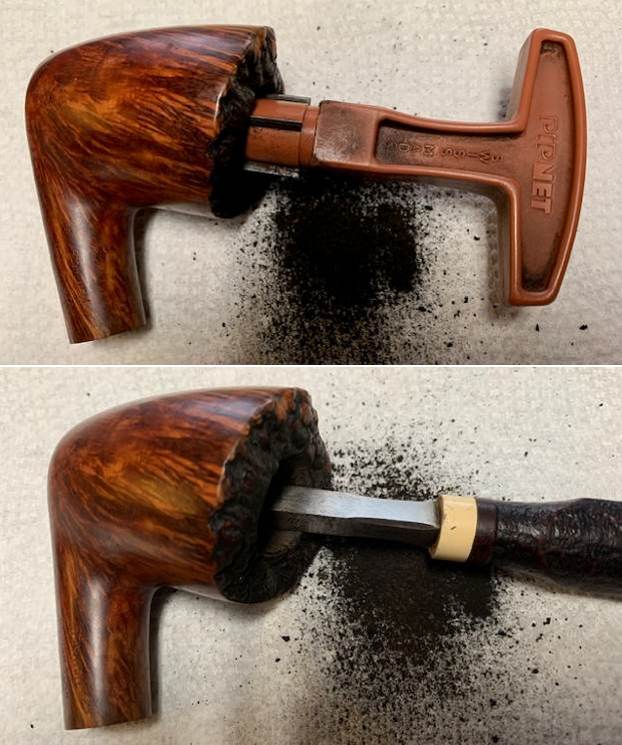
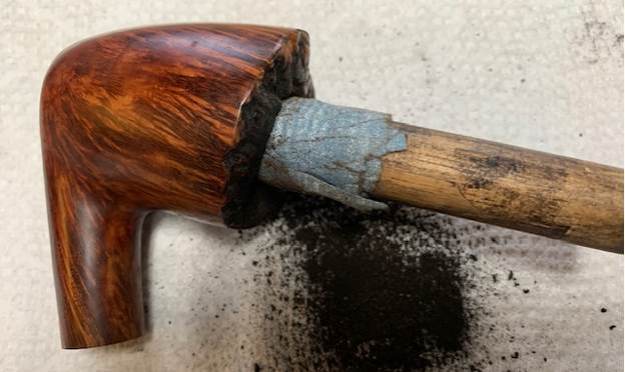
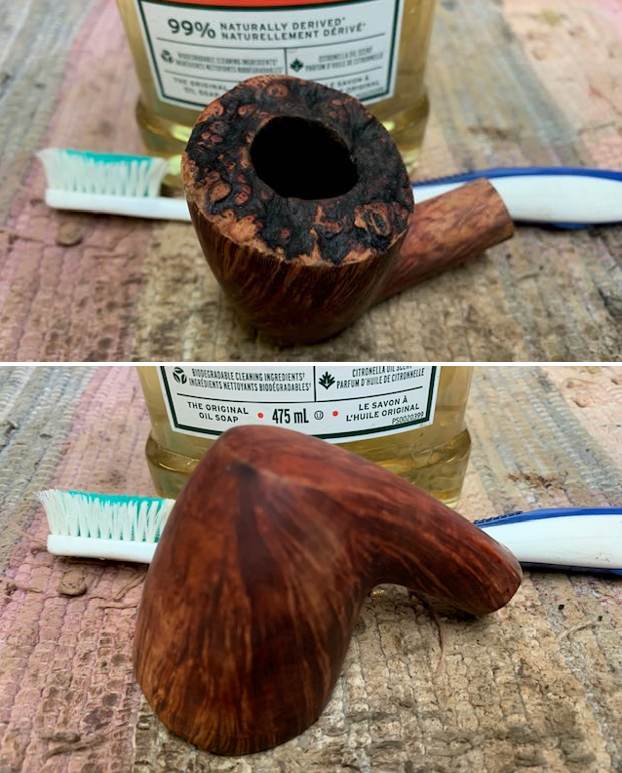
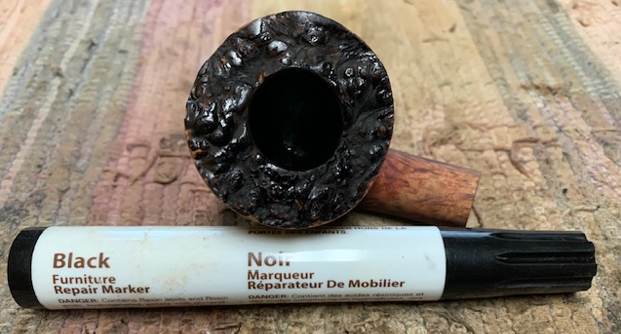
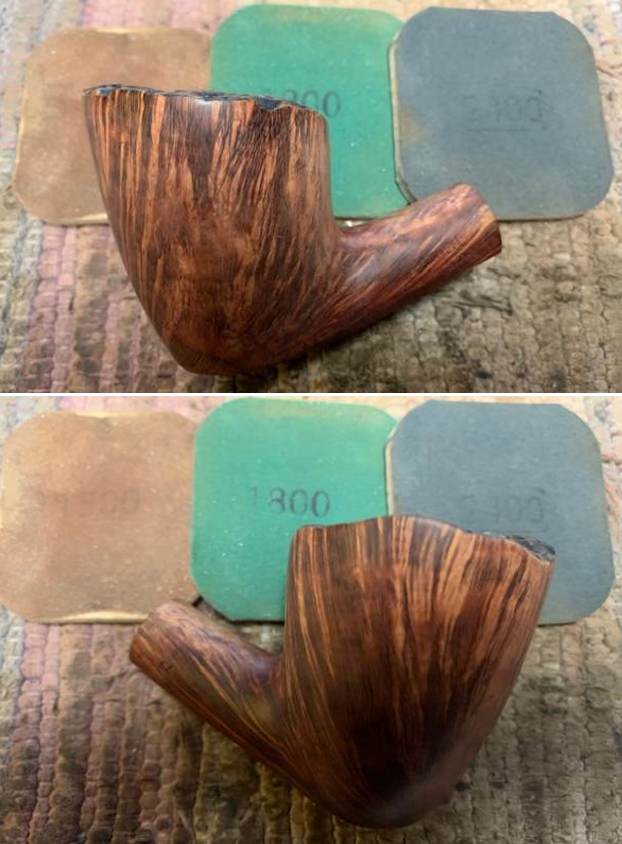
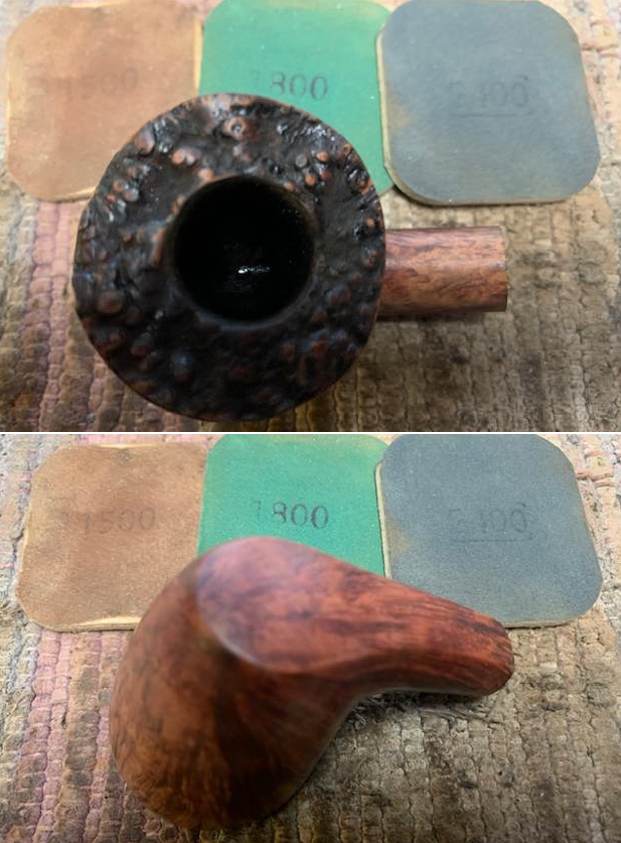
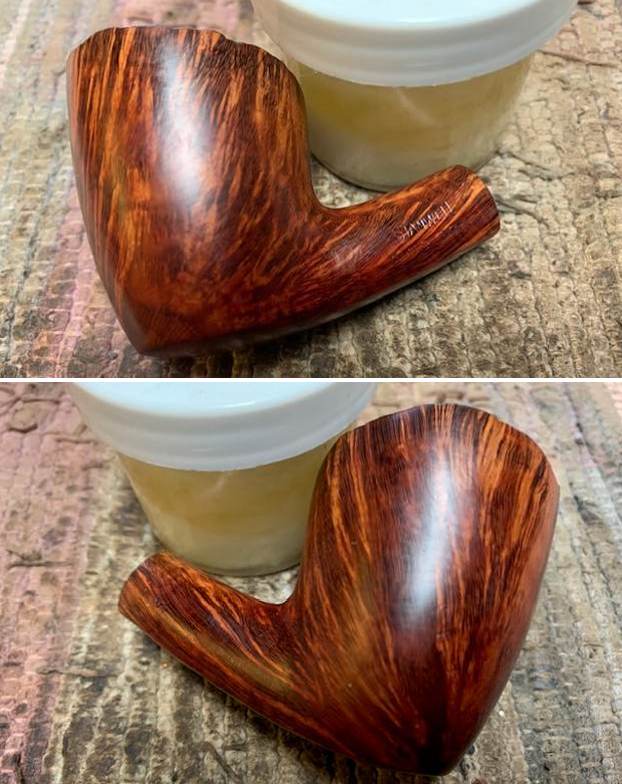
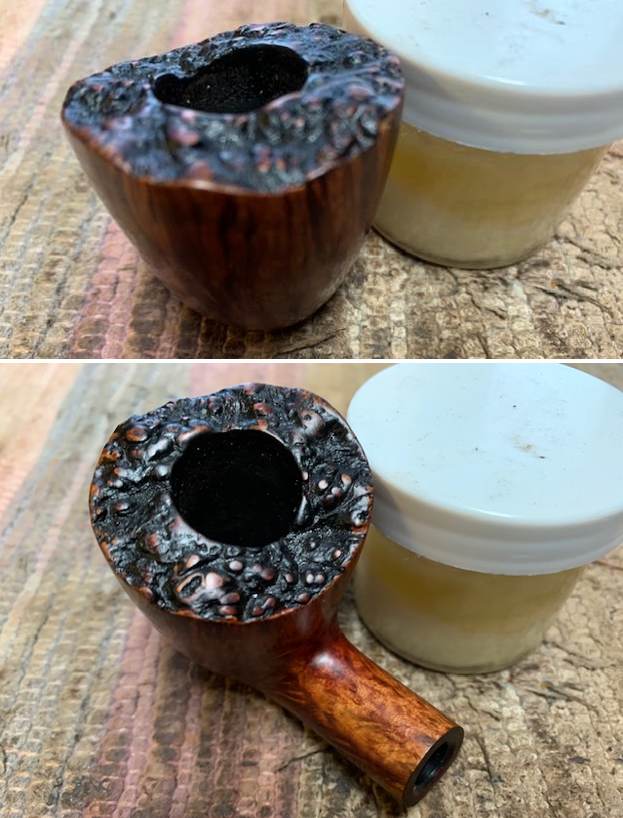
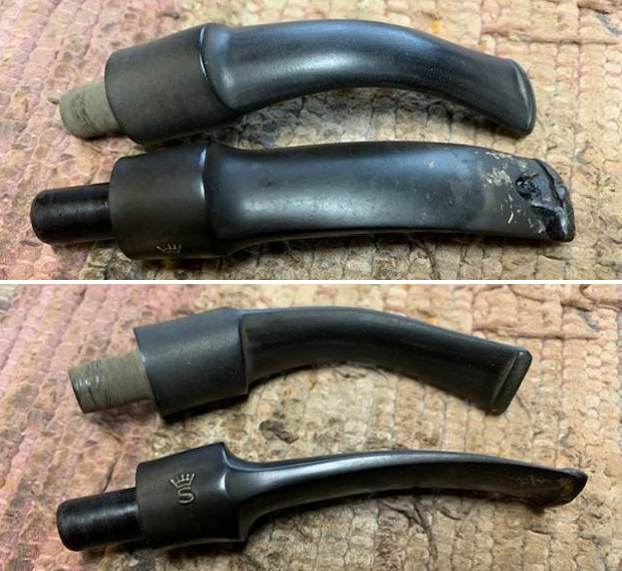
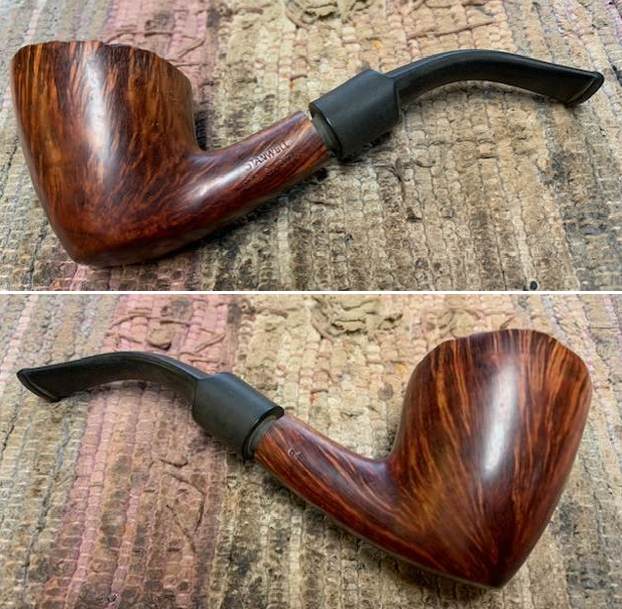
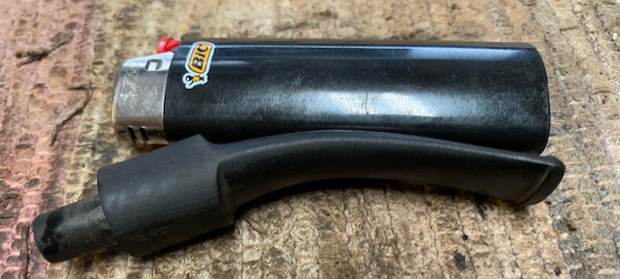
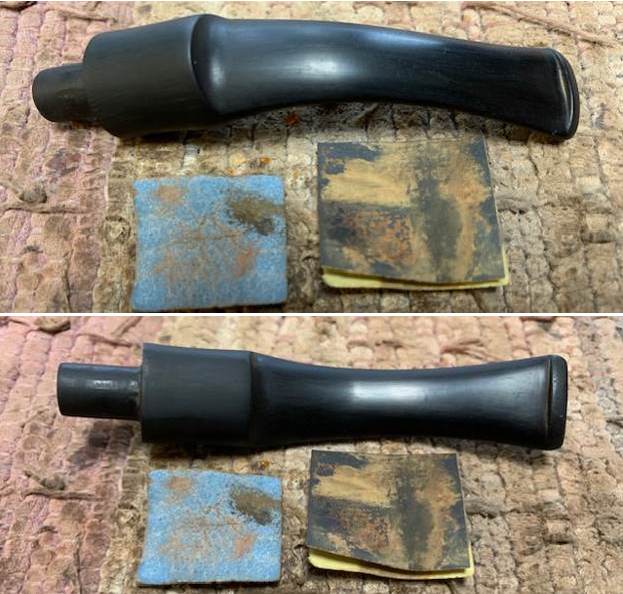
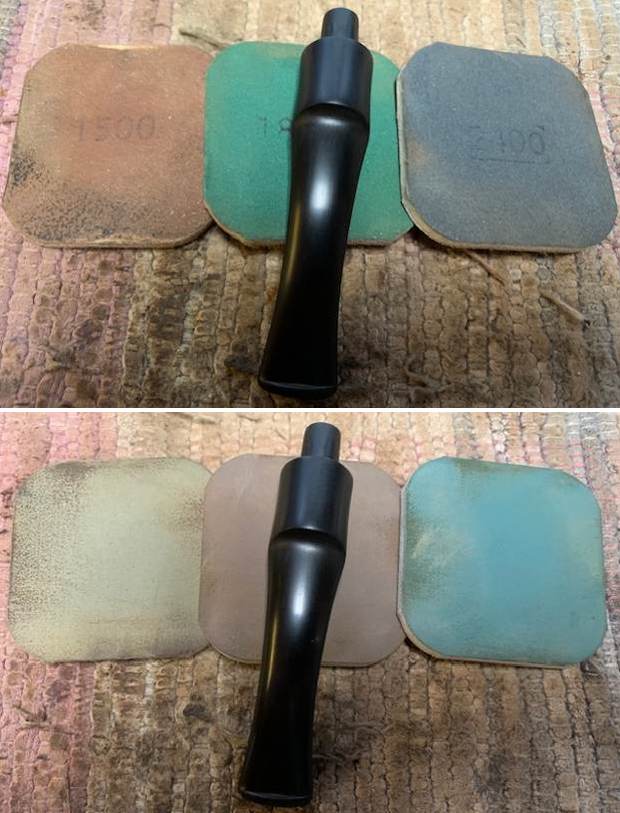
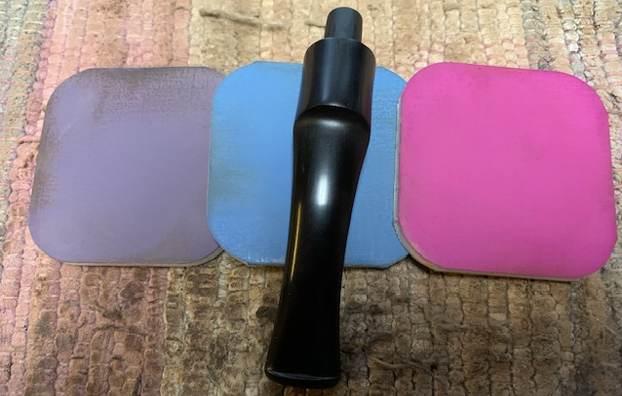
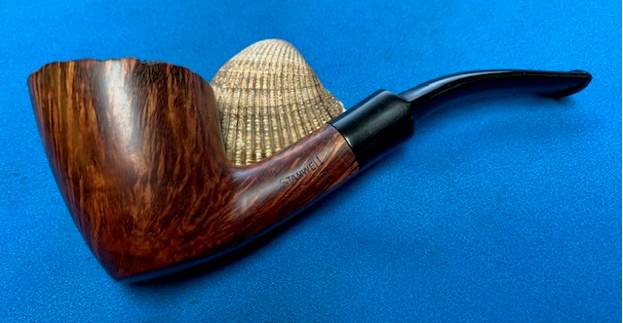
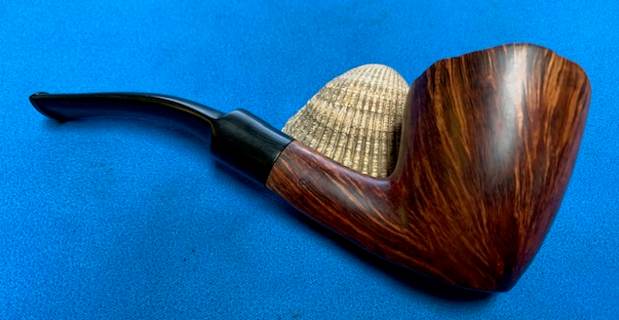
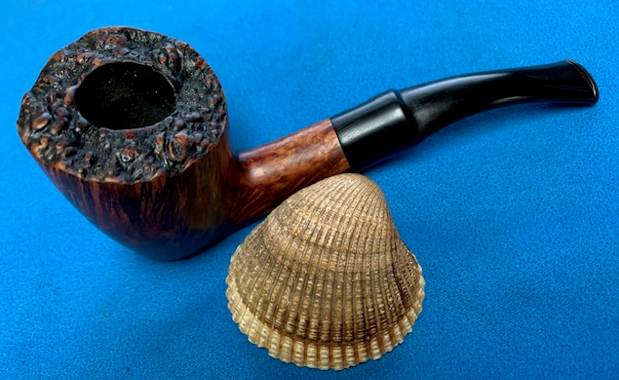
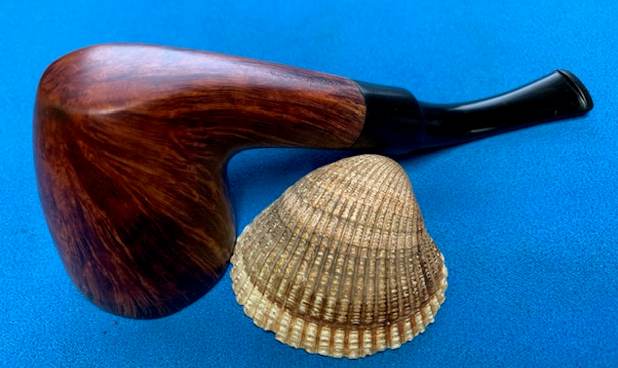
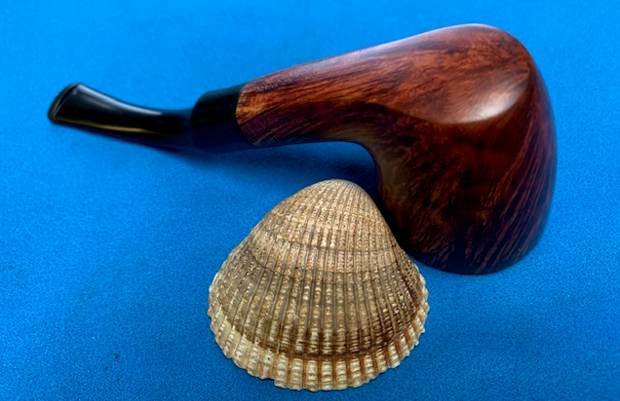
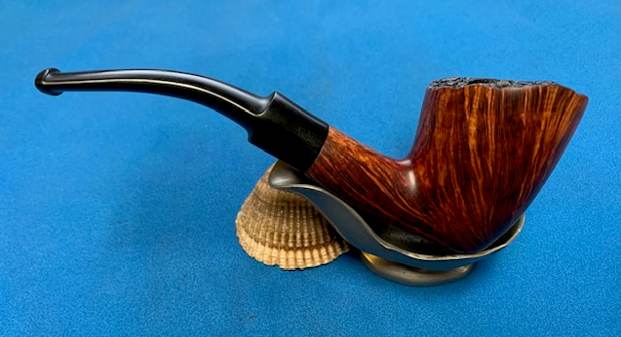
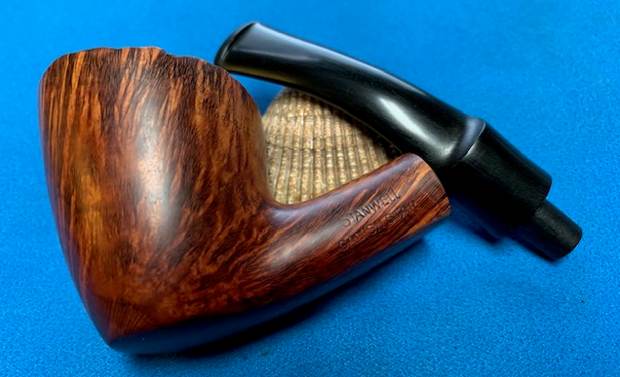
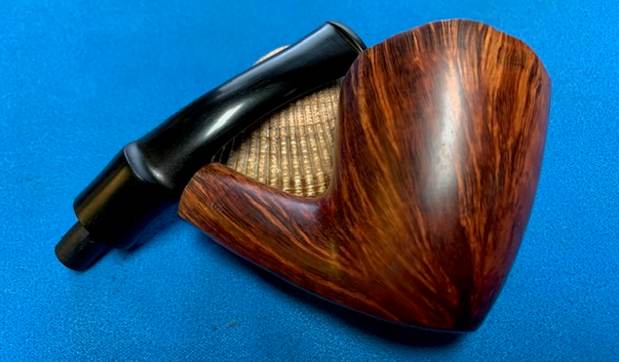
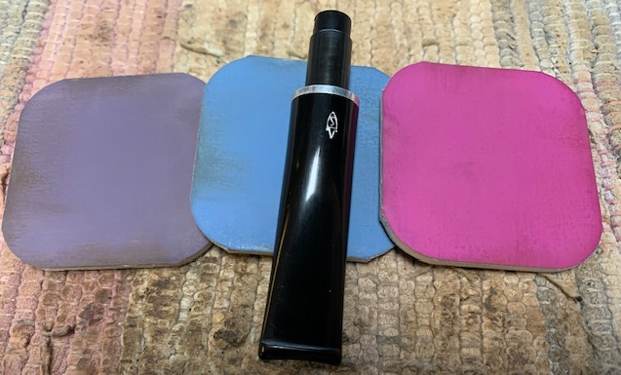
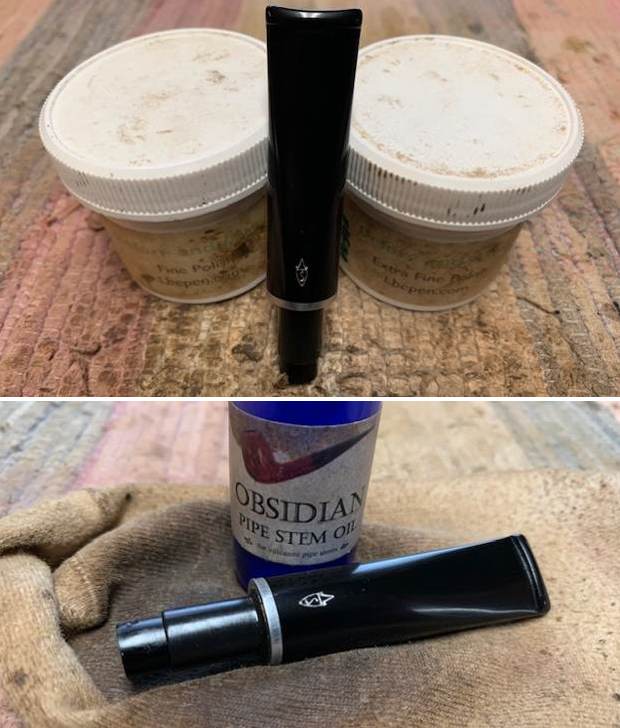
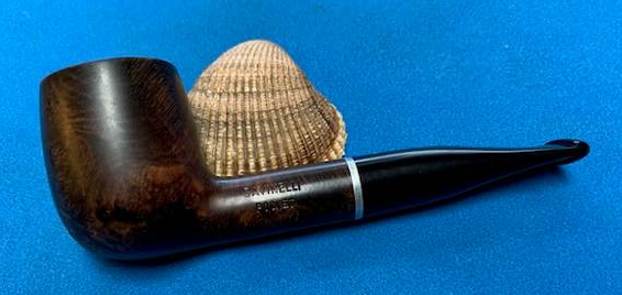
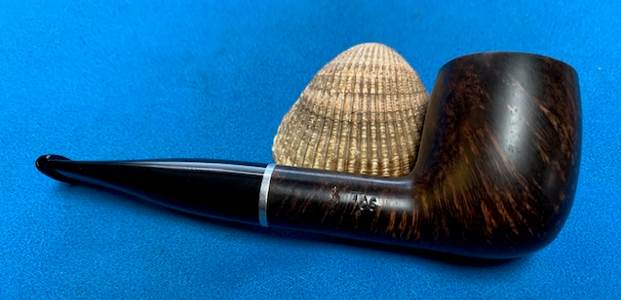
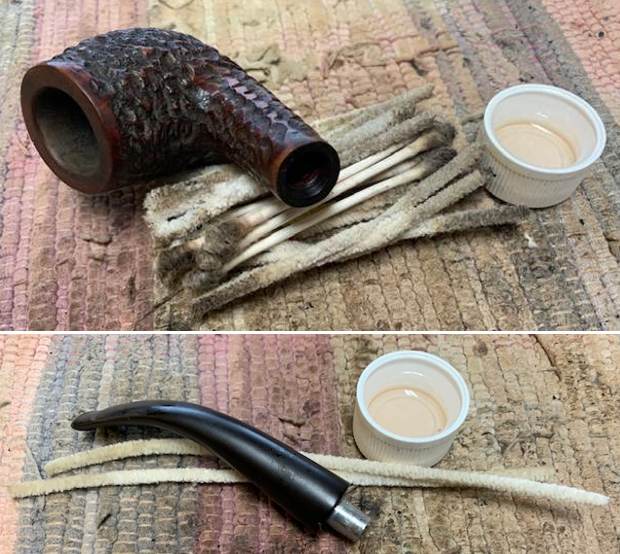
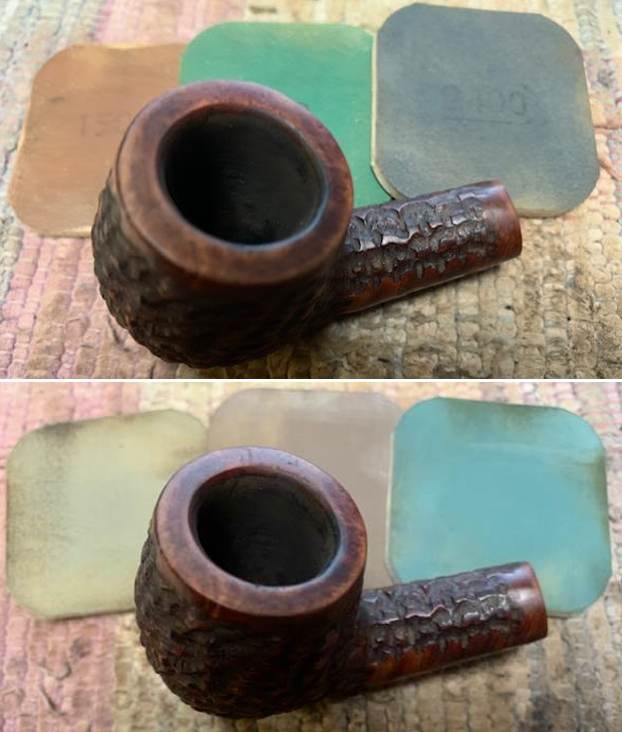
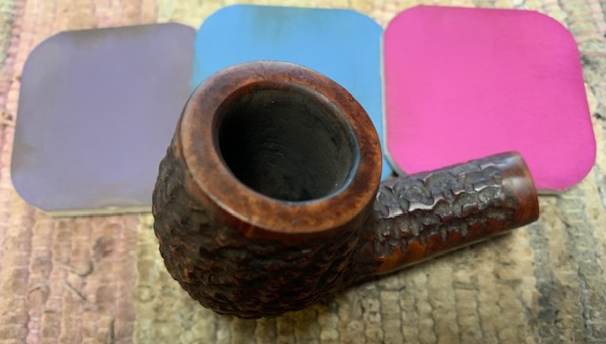
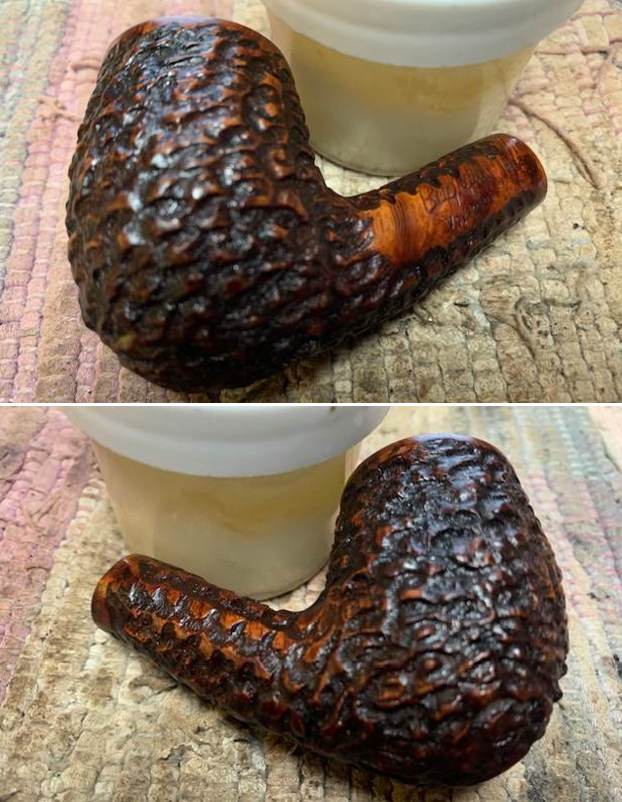
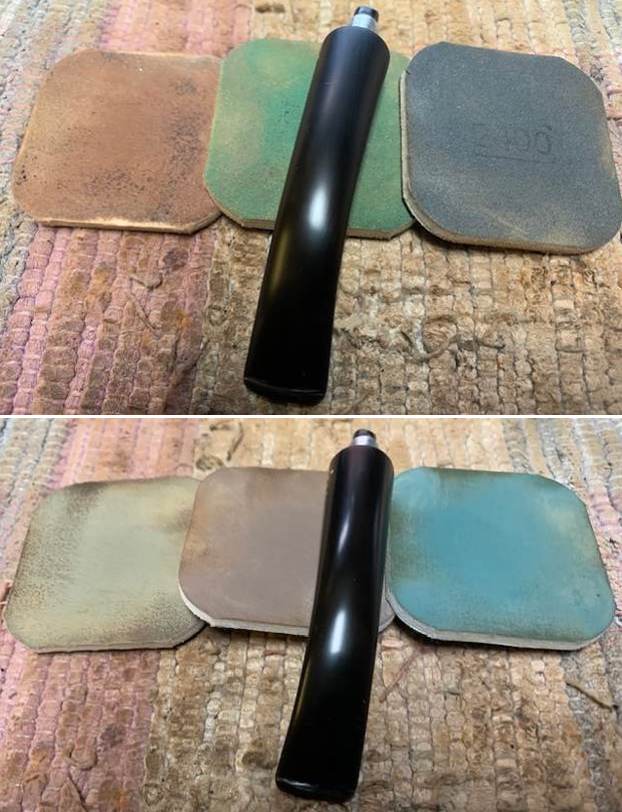
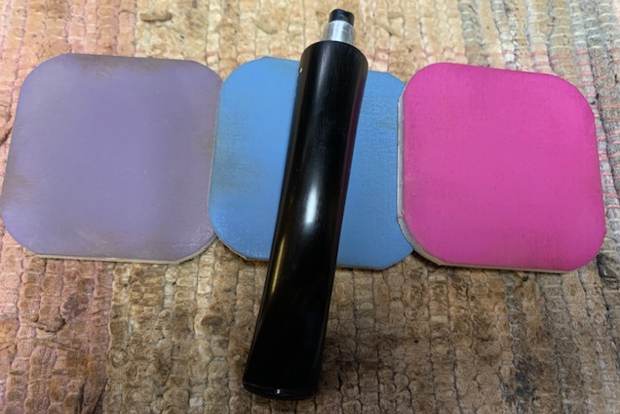
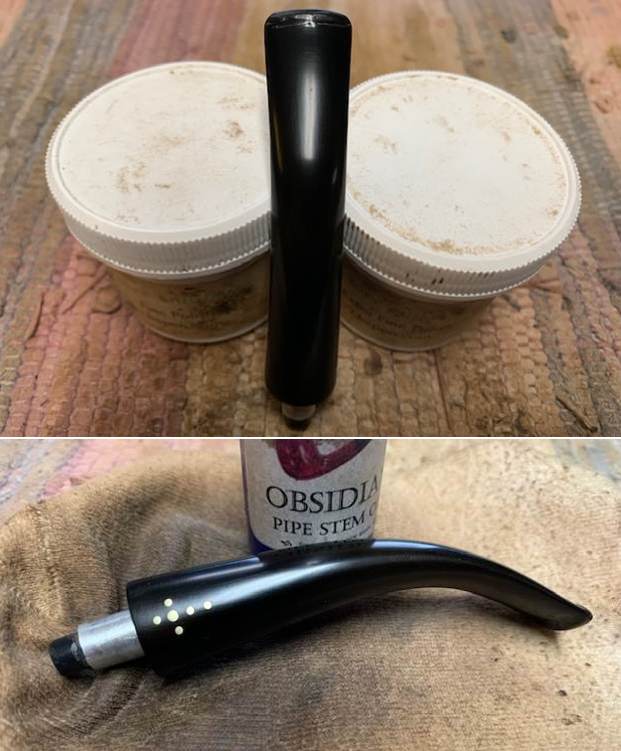
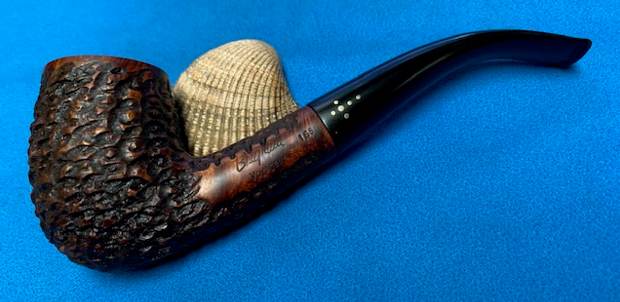
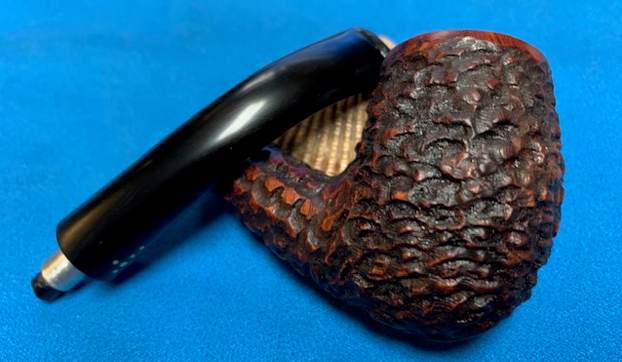
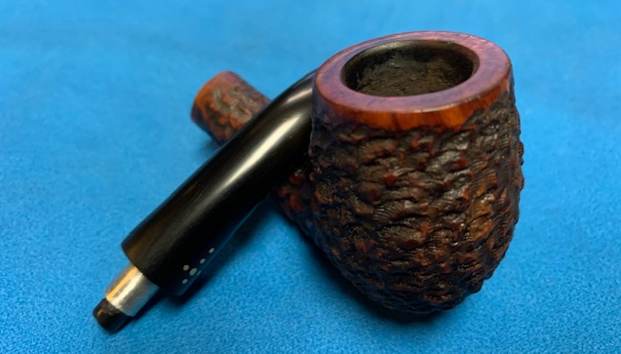
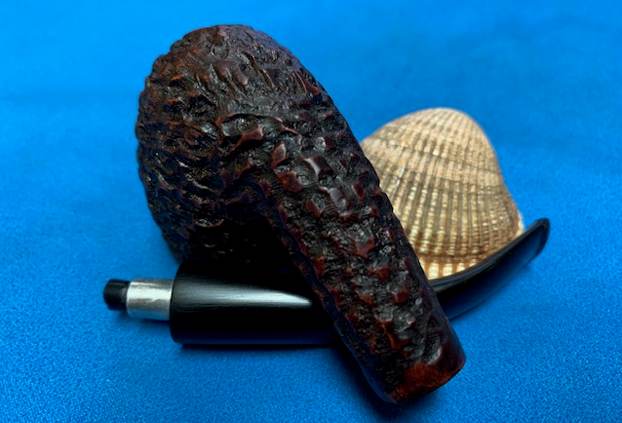
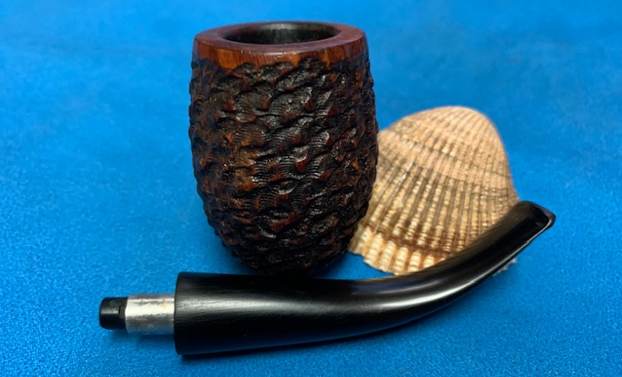
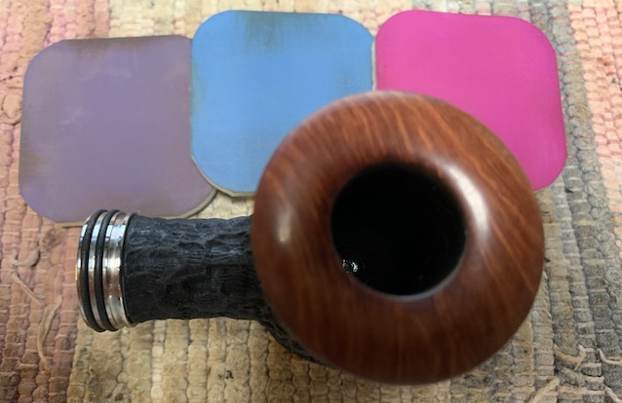
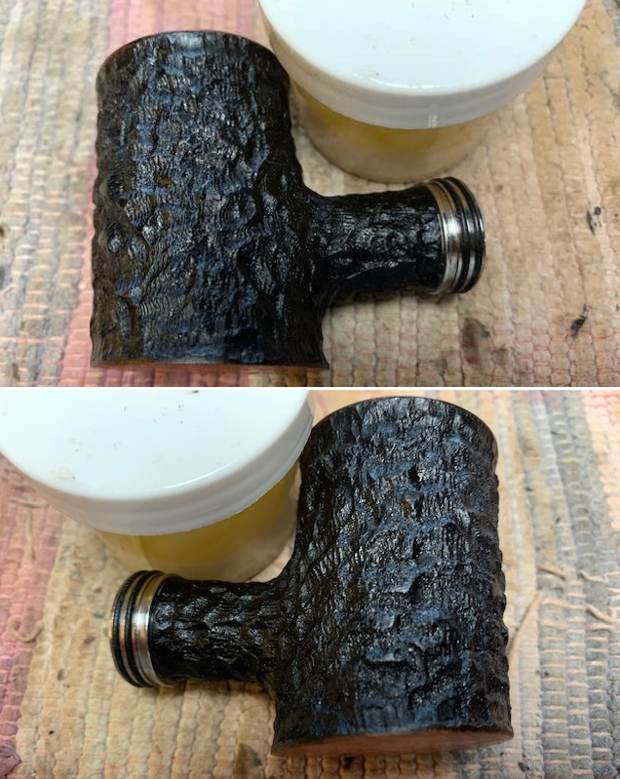
The next pipe on the table is the last of the five pipes that the Vancouver pipe man dropped off for me to work on for him. It was stamped Stanwell Danish Star and had a great flame and straight grain around the bowl and shank with plateau finish on the rim top. It is a Bent Dublin that was finished in a brown stain. It needed restoration on the bowl which was moderately caked and the shank was dirty. It also needed new stem as the current push stem was chewed and broken at the button. It was another pipe that I had restored back in 2016 and he had purchased at that time. I had done a complete restoration and removed the thick cake at that point. The stem had a small hole in the top that was about half the size it is now. The repair worked for at least 6-7 years so I am pleased with that. It is obviously another of his favourites as it is well used. The stem on it was original so I kept it and repaired it the first time. Here is the link to restoration (https://rebornpipes.com/2016/11/30/a-stanwell-danish-star-64/). Here are some photos of the pipe when he picked it up in 2016 to give a bit for context for my latest work. When I took the pipe out of the bag of pipes to work on this afternoon, this is what I saw. The finish on the briar looked very good. It was dirty but the colour had stayed true. It had a bit of patina on the bowl but it was beautiful. The bowl had a moderate cake and the airway in the shank was dirty. The stem was oxidized, calcified and had a large chunk of vulcanite missing on the topside. I took photos of the rim top and stem to show their condition. You can see the moderate cake in the bowl how it looked. The plateau rim top had some lava in the grooves of the finish and some build up around the inside edge of the rim. It will clean up pretty well. The photos of the stem show the condition of the stem. You can see the tooth marks and the large hole on the top of the stem surface. I took photos of the stamping on the sides of the shank. The stamping on the left side of the shank reads Stanwell [over] Danish Star. On the right side it is stamped with the shape number 64. On the underside of the shank it is stamped Made in Denmark. There was a Crown S stamp on the left side of the saddle I removed the stem from the shank to give a sense of the flow of the pipe.  Now it was time to work on the pipe itself. I started my work on the pipe by cleaning and reaming the bowl The cake was quite thick but it can hold residual oils from previous tobaccos and I wanted to check the bowl walls for burn damage or checking. I reamed it with a PipNet pipe reamer to cut cake back to bare briar. I cleaned up the remnants of the cake with a Savinelli Fitsall Pipe knife. I sanded the walls with 220 grit sandpaper wrapped around a piece of dowel. I worked on them until they were smooth. There was no checking or burn damage to the bowl walls. It was quite clean.  I cleaned out the internals with 99% isopropyl alcohol, pipe cleaners and cotton swabs. I worked over the shank and the airway in the new stem. It took some work but once finished it was clean and smelled fresh.  I used a brass bristle wire brush to clean up the plateau and knock off the lava and debris from the grooves and high spots on the rim top. It looked much better.I scrubbed the bowl with undiluted Murphy’s Oil Soap with a tooth brush to remove the oils and grime from the finish. I rinsed the bowl with warm water to rinse off the soap and grime. I dried it off with a soft cloth. I stained the plateau rim top with a Black stain pen. I stained the entire rim top in the valleys and in the plateau. I knock of the stain on the high spots sanding and polishing process I sand off the high spots.I polished the rim top with micromesh sanding pads – dry sanding with 1500-12000 grit pads. I sanded the stain off the high spots on the plateau rim top. I wiped the briar down with a damp cloth after each sanding pad. It took on a real shine by the time I finished with the last sanding pad. I worked some Before & After Restoration Balm into the smooth bowl and the plateau rim top. I worked it into the surface of the briar with my fingertips to clean, enliven and protect the wood. I used a horse hair shoe brush to work it into the crevices and the valleys of the plateau. Once the bowl was covered with the balm I let it sit for about 15 minutes and buffed it off with a soft cotton cloth and the shoe brush. I polished it with a microfiber cloth. I took photos of the pipe at this point in the process to show what the bowl looked like at this point. Now it was time to deal with the replacement stem. I went through my can of stems and found a bent saddle vulcanite stem that was a close fit. It was more bent than the original but with a little straightening it would be perfect. I would also need to remove a little of the diameter of the tenon to get a snug fit in the shank. I put it in the shank as far as it would go before I fitted it correctly but you can see what the pipe will look like with the new stem. It is going to work very well.  To correct the bend in the stem to match the rim top I “painted” it with the flame of a Bic lighter until the vulcanite was flexible. I bent it to the angle of the shank and rim top until I had the right look I was waiting for. It looked good.I used a piece of 220 grit sandpaper to reduce the diameter of the stem and flatten the bottom of the saddle portion to match the shank. I also sanded out the casting marks on the new stem and also the scratches in the vulcanite at the same time. I started polishing the stem with 600 grit wet dry sand paper. I used micromesh sanding pads and water to wet sand the stem with 1500-12000 grit sanding pads. I wiped it down after each sanding pad with Obsidian Oil on a cotton rag after each sanding pad as I find it does two things – first it protects the vulcanite and second it give the sanding pads bite in the polishing process. After finishing with the micromesh pads I rub the stem down with Before & After Fine and Extra Fine stem polish as it seems to really remove the fine scratches in the vulcanite. I rub the Fine Polish on the stem and wipe it off with a paper towel and then repeat the process with the Extra Fine Polish. I finished the polishing of the stem down with a final coat of Obsidian Oil and set the stem aside to let the oil absorb. This process gives the stem a shine and also a bit of protection from oxidizing quickly. I took the finished Stanwell Danish Star 64 Freehand Dublin bowl to wax and polish. I don’t buff the plateau rim top on the wheel as it leaves a lot of grit in the deep grooves of the finish. I polished the bowl and the stem with Blue Diamond on the buffing wheel to polish out the scratches in the briar and vulcanite. I buffed it and gave it multiple coats of carnauba wax to protect and give it a shine. I buffed the pipe with a clean buffing pad to raise the shine. I hand buffed it with a microfiber cloth to deepen the shine. The pipe polished up pretty nicely. The contrast of the dark stain on the briar revealing the grain with the shine of the polished vulcanite saddle stem is quite stunning. The rich finish around the bowl and shank is quite remarkable and the plateau rim top gives the pipe an incredible tactile presence. The Stanwell Danish Star 64 is a nice looking pipe and one that will be a great smoking pipe. The finished pipe is shown in the photos below with each of the stems. The dimensions of the pipe are Length: 6 inches, Height: 2 inches, Outside diameter of the bowl: 1 ¾ inches, Chamber diameter: ¾ of an inch. The weight of the large pipe is a light and comfortable 56 grams/1.98 ounces. It is a beautiful pipe and the last of the five pipes left with me for work. They are finished and ready for him to pick them up and enjoy once more. As always I encourage your questions and comments as you read the blog. Thanks to each of you who are reading this blog. Remember we are not pipe owners; we are pipe men and women who hold our pipes in trust until they pass on into the trust of those who follow us.

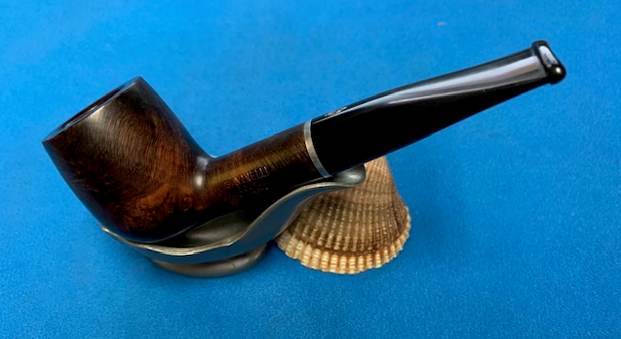
Restoring a Stubby Italian Made Savinelli Pocket 106 Billiard with a Filter Stem


Blog by Steve Laug

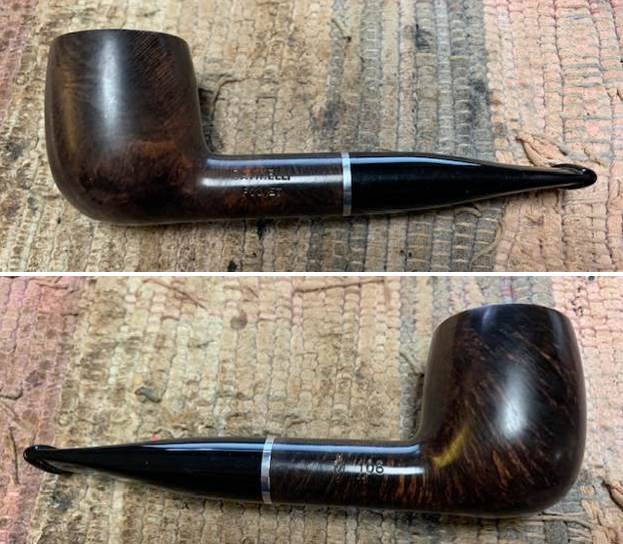
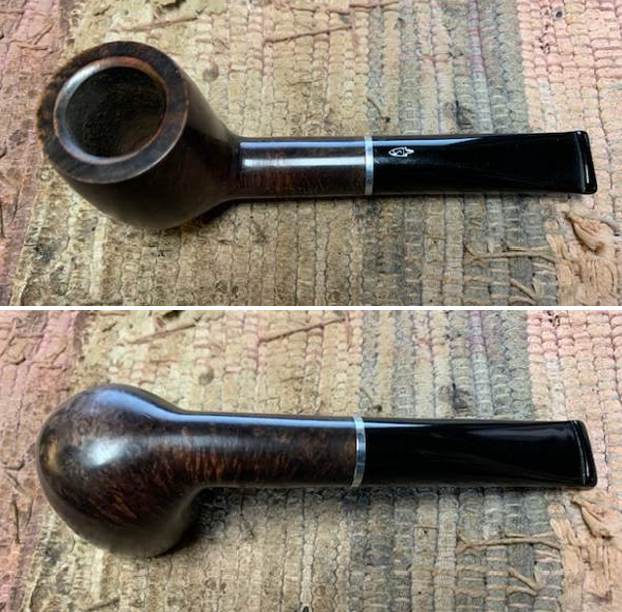
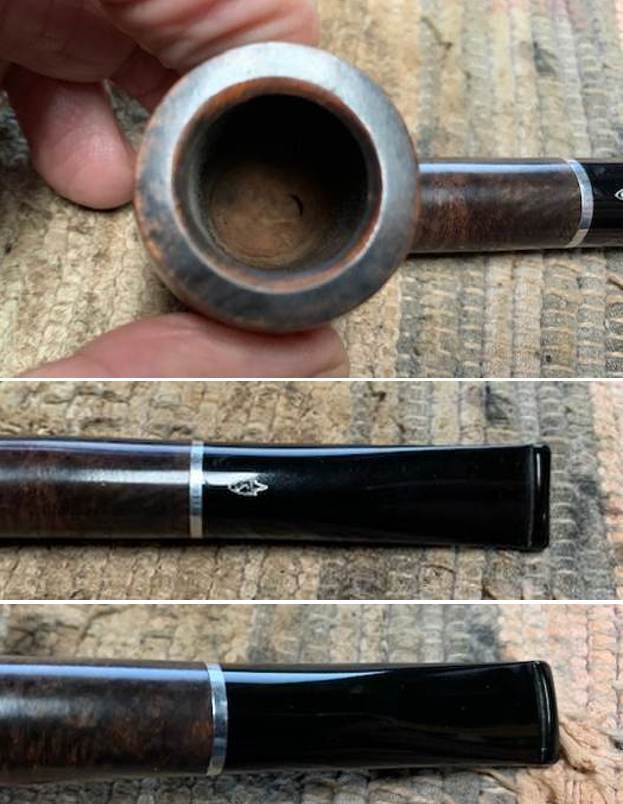
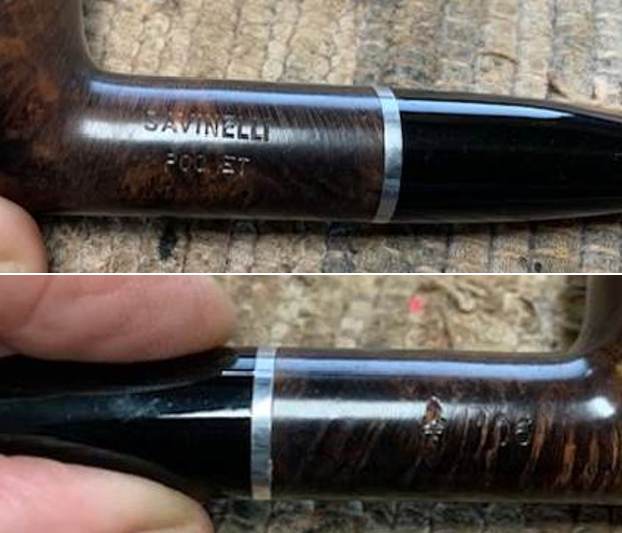
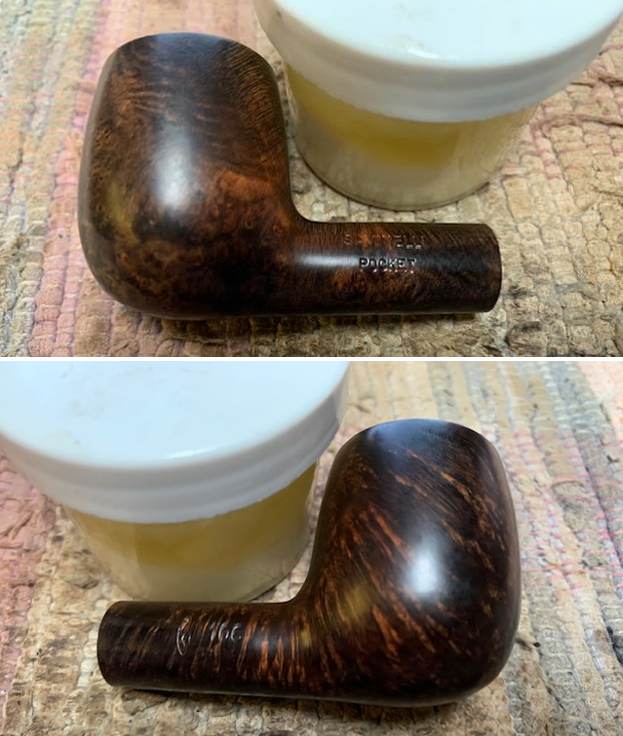
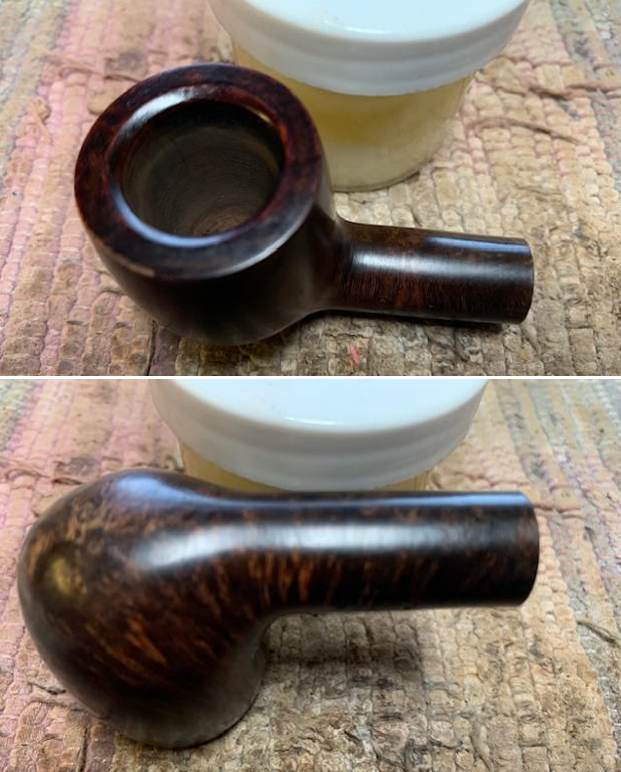
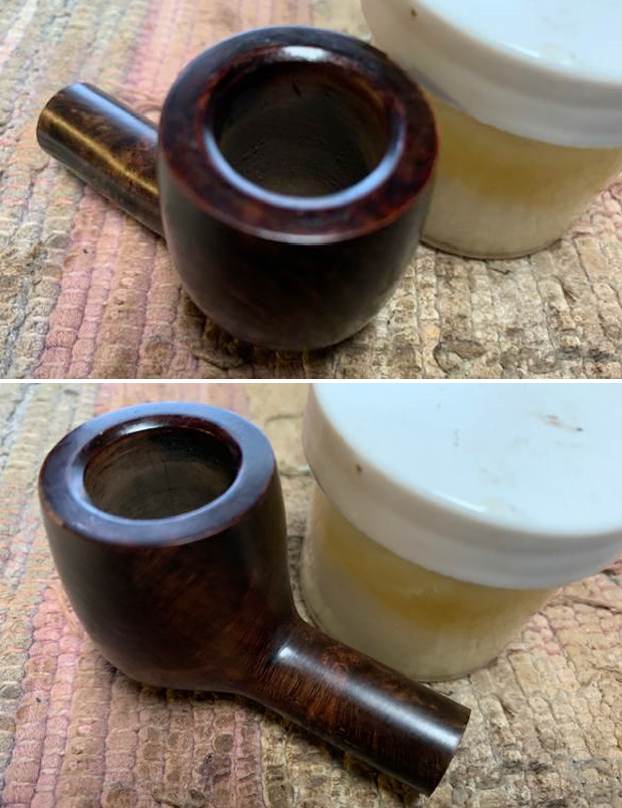
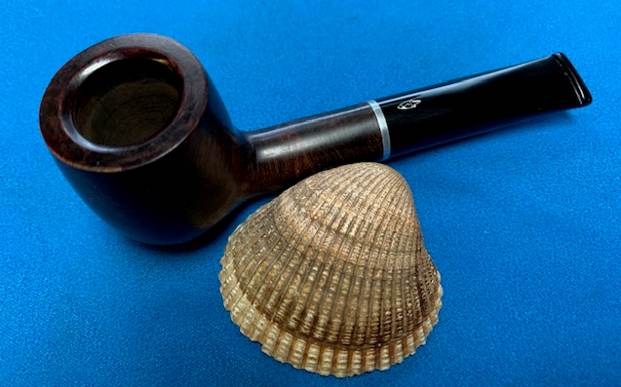
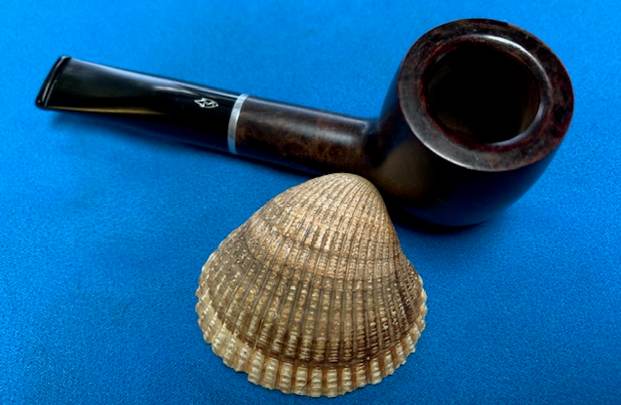
The next pipe I have chosen to work on is a nice looking smooth black and brown Billiard with a thin silver band/adornment on the acrylic stem that I picked up in a lot of 10 pipes from a fellow on Vancouver Island who was selling his collection. The stamping on the left side of the shank reads Savinelli [over] Pocket. On the right side it was stamped with the Savinelli Shield followed by the shape number 106 [over] Italy. The thin silver band on the stem has no stamping. The acrylic taper stem has a stamped silver Savinelli S shield. The pipe is a nice looking dark finish. It is short, light weight and comfortable to hold. I picked up the pipe and turned it over in my hands. It was in good condition.

This is what I saw when I over the pipe.

  1. The finish was very good with only some light dust and grime ground into the finish around the bowl sides. The dark brown/black stain is dull but the it really highlights the grain around the bowl sides and shank
  2. The smooth rim top looked very good with some spots on the inner bevel and the out edge where the finish had lightened. There was no lava build on the top and the edges were clean and undamaged.
  3. There was a light cake in the bowl. It held the aroma of the tobaccos smoked in it – fortunately not aromatic. The walls looked to be undamaged but once I removed the light cake I could confirm that.
  4. The band on the stem is silver in colour and looks to be good condition. It is undamaged and clean. The thin band looks really good with the finish on the bowl and the acrylic taper stem.
  5. The acrylic taper stem has a silver Savinelli Shield logo stamped on the topside that identifies it as a Savinelli pipe. It is in excellent condition with just some light tooth chatter on the top and underside ahead of the button.

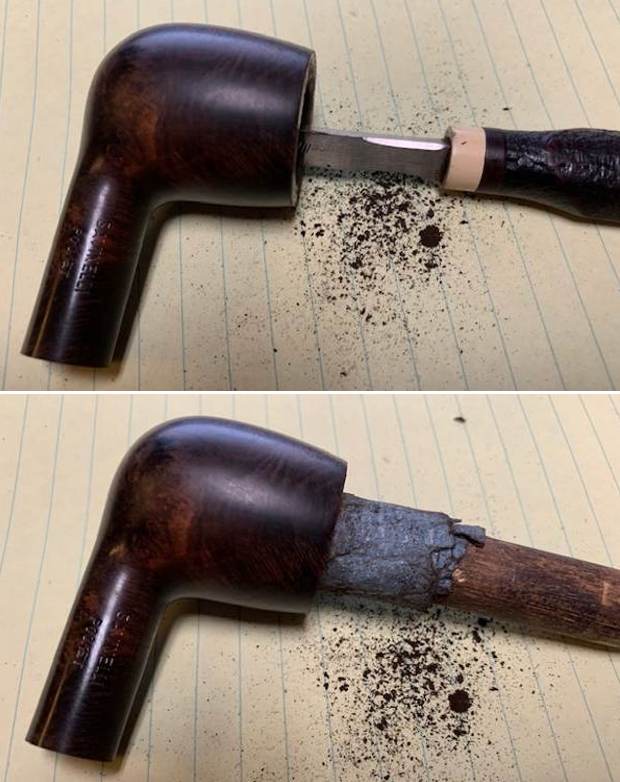
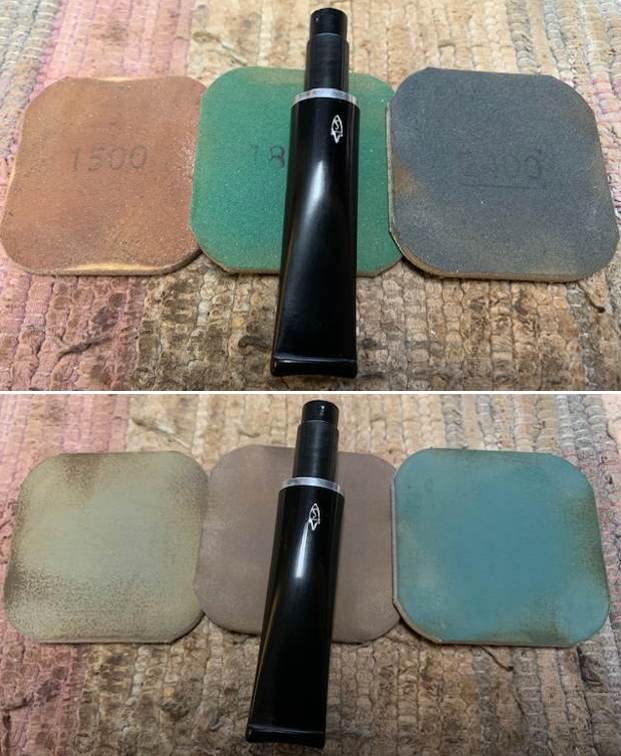
To summarize what I saw – this Savinelli Pocket 106 Billiard is a well made pipe. It is a little dusty but otherwise in good condition. The acrylic stem is lightly marked but otherwise undamaged. The tenon has a converter taking it from a 9mm to a 6mm stem. There does not appear to be any calcification on the stem surface. The look and feel of the pipe in the hand is great. It is going to clean up very well. Here are photos of the pipe before I started my clean up. The bowl of the pipe looked very good. The rim top is clean does not seem to have any damage to the smooth finish. The edges of the bowl were undamaged and looked very good. I see no warning signs in the rim top or the edges of the bowl. I took photos of the stem to show the condition of each one. Though hard to see there are light tooth chatter on the surface of both sides ahead of the button but it should clean up easily with sandpaper.The next photo captures the stamping on the shank. It read as I have noted above. I removed the stem from the shank and took a photo of it to give a sense of proportion.Now it was time to work on the pipe itself. I started my work on the pipe by cleaning the internals. The cake was quite thin but it can hold residual oils from previous tobaccos and I wanted to check the bowl walls for burn damage or checking. I reamed it with a Savinelli Fitsall Pipe knife and took the cake back to bare briar. I sanded the walls with 220 grit sandpaper wrapped around a piece of dowel. I worked on them until they were smooth. There was no checking or burn damage to the bowl walls. It was quite clean. I cleaned out the internals of the shank and the airway in the stem with 99% isopropyl alcohol, cotton swabs and pipe cleaners. I worked them over until they were clean.     I polished the briar with micromesh sanding pads. I choose to dry sand the briar rather than wet sand it. Again it is a matter of personal preference. I prefer to use the pads dry and find they work very well on the briar. I sand with each pad (9 in total) and group them by threes for ease of reference. I wipe the bowl down after each pad with a damp cloth to remove the sanding debris and check the briar. I love seeing the developing shine on the briar as I move through the pads which is why I include so many photos of this step. I used a Walnut stain pen to touch up the faded spots on the rim top and edges. I set it aside to let the stain cure. It matched the rest of the stain on the bowl top and sides. I worked some Before & After Restoration Balm into the finish on the bowl and shank. I worked it into the surface of the briar with my fingertips to clean, enliven and protect the wood. Once the bowl was covered with the balm I let it sit for about 15 minutes and buffed it off with a soft cotton cloth and the shoe brush. I polished it with a microfiber cloth. I took photos of the pipe at this point in the process to show what the bowl looked like at this point. The light sandblast finish looks very good and has a real touch of beauty. I set the bowl aside and worked on the stem. I dry sanded both sides of the stem with 1500-12000 grit pads to polish it further. I wiped it down with a cloth impregnated with Obsidian Oil after each sanding pad. Though I know that it does not do much with the acrylic I find that it still adds depth to the final shine on the stem which grew deeper with each sanding pad. I finished polishing the stem with Before & After Pipe Polish – both Fine and Extra Fine polishes. I wiped the stem down with some Obsidian Oil afterwards and buffed it with a soft microfiber cloth. I took the Savinelli Pocket 106 Billiard to wax and polish. I buffed the bowl and stem with Blue Diamond polish on the wheel to polish out the scratches in the acrylic. I gave the pipe multiple coats of carnauba wax on the wheel and then buffed the pipe with a clean buffing pad to raise the shine. I hand buffed it with a microfiber cloth to deepen the shine. The pipe polished up pretty nicely. The contrast of the dark stain on the briar with the shine of the polished acrylic stem is quite stunning. The rich finish around the bowl and shank is quite remarkable. The Savinelli Pocket 106 Billiard is a beautiful pipe and one that will be a great smoking pipe. The finished pipe is shown in the photos below with each of the stems. The dimensions of the pipe are Length: 5 inches, Height: 1 ½ inches, Outside diameter of the bowl: 1 ¼ inches, Chamber diameter: ¾ of an inch. The weight of the small pipe is a light and comfortable 35 grams/1.23 ounces. This is a great looking Savinelli Pocket Billiard. I will be adding it to the rebornpipes store in the Italian Pipe Makers Section. If you want to add it to your rack let me know. Thanks for walking through the restoration with me. Cheers.

Restemming and Restoring a Brigham Voyageur 165 Bent Acorn


Blog by Steve Laug

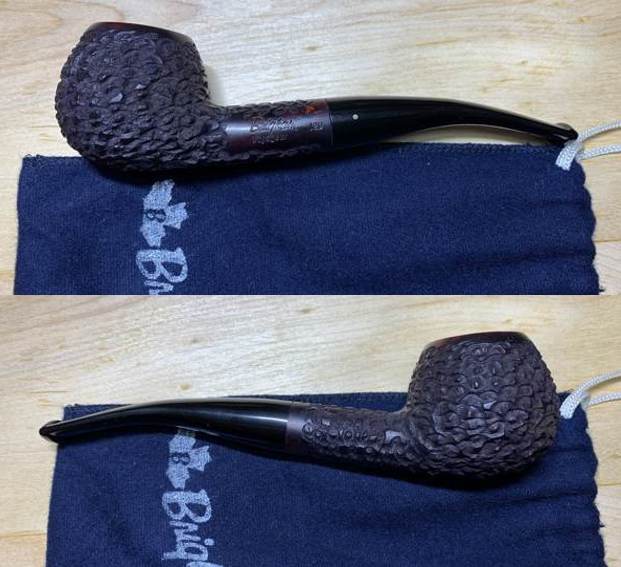
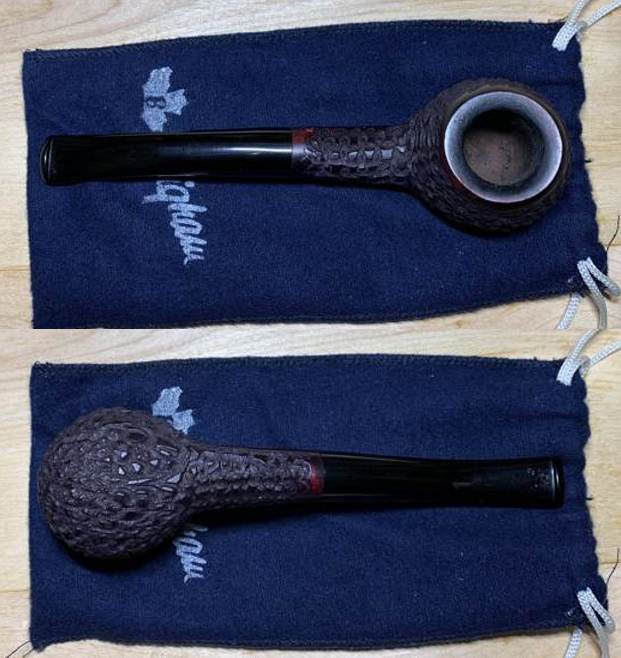
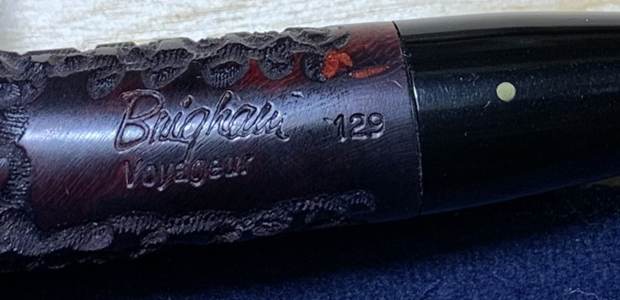
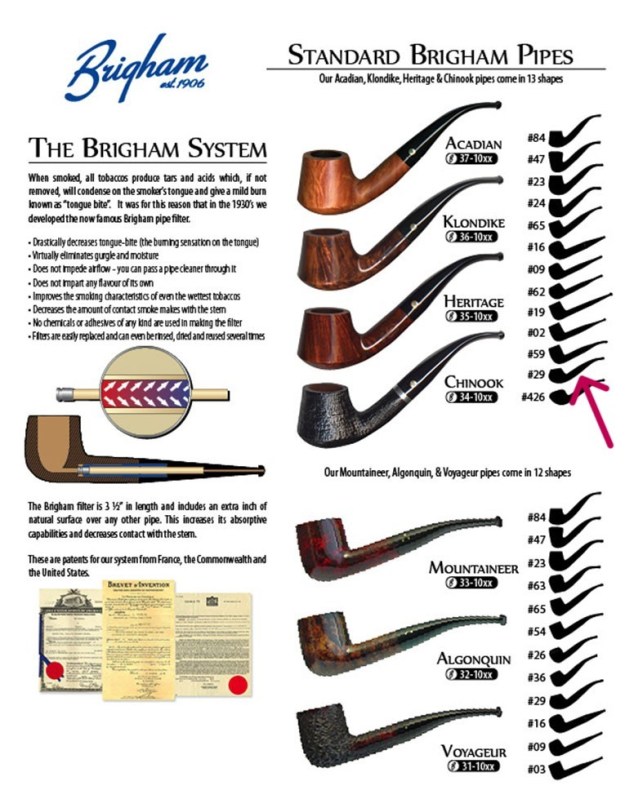
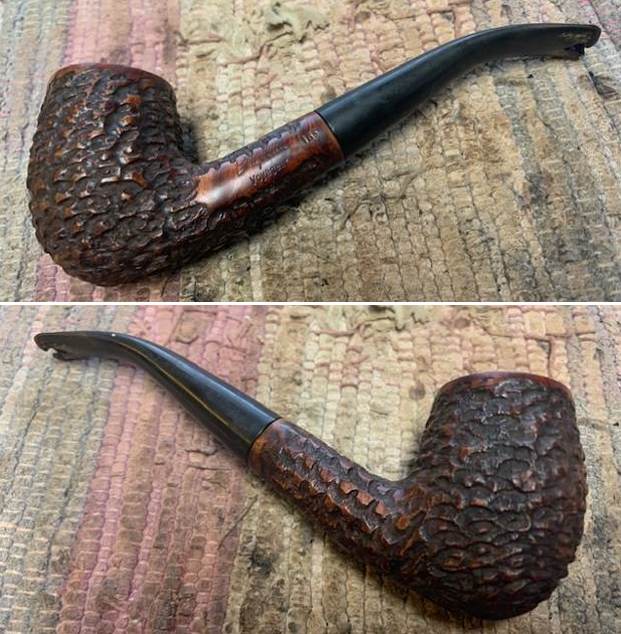
The next pipe on the table is another that the Vancouver pipe man dropped off for me to work on for him. It was stamped Brigham Voyageur 165 and had a mixed finish of smooth top and rusticated bowl and shank. It is a Bent Acorn that was finished in a brown stain. It needed restoration on the bowl which was moderately caked and the shank was dirty. It also needed new stem as the current push stem was chewed and broken at the button. It was another pipe that I had previously repaired for him back in 2017. At that point it needed had done a complete restoration and fitted a regular push stem as requested. It had a thick cake at that point as well and was well used. The original stem had nylon Brigham system tenon that was broken as well. Here is the link to that restoration. (https://rebornpipes.com/2017/04/02/restemming-and-reconditioning-a-brigham-voyageur-165/). Here are some photos of the pipe when he picked it up in 2017 to give a bit for context for my work. When I took the pipe out of the bag of pipes he brought for me to work on it last evening this is what I saw. The finish on the briar looked very good. It was dirty but the colour had stayed true. It had a bit of patina on the bowl but it was beautiful. The bowl had a moderate cake and the airway in the shank was dirty. The stem was oxidized, calcified and had a large chunk of vulcanite missing on the underside. I took photos of the rim top and the thick cake in the bowl to show how it looked. There was also tobacco debris on the walls. The rim top had some darkening and there were nicks around the inner edge of the bowl. It will clean up pretty well. The photos of the stem show the condition of the stem. You can see the tooth marks and chatter under the calcification on the stem surface.I took a photo of the stamping on the smooth panel on the left side of the shank. You can see it is clear and readable and reads as noted above. I removed the stem from the shank to give a sense of the flow of the pipe.Now it was time to work on the pipe itself. I started my work on the pipe by cleaning and reaming the bowl The cake was quite thick but it can hold residual oils from previous tobaccos and I wanted to check the bowl walls for burn damage or checking. I reamed it with a PipNet pipe reamer to cut cake back to bare briar. I cleaned up the remnants of the cake with a Savinelli Fitsall Pipe knife. I sanded the walls with 220 grit sandpaper wrapped around a piece of dowel. I worked on them until they were smooth. There was no checking or burn damage to the bowl walls. It was quite clean. I cleaned out the internals with 99% isopropyl alcohol, pipe cleaners and cotton swabs. I worked over the shank and the airway in the stem. It took some work but once finished it was clean and smelled fresh.I polished the rim top with micromesh sanding pads – dry sanding with 1500-12000 grit pads. I wiped the briar down with a damp cloth after each sanding pad. It took on a real shine by the time I finished with the last sanding pad. I worked some Before & After Restoration Balm into the smooth rim and the rusticated finish on the bowl and shank. I worked it into the surface of the briar with my fingertips to clean, enliven and protect the wood. I used a horse hair shoe brush to work it into the crevices and keep from building up in the valleys and crevices of the finish. Once the bowl was covered with the balm I let it sit for about 15 minutes and buffed it off with a soft cotton cloth and the shoe brush. I polished it with a microfiber cloth. I took photos of the pipe at this point in the process to show what the bowl looked like at this point. Now it was time to deal with the replacement stem. I went through my can of stems and found an interesting bent taper vulcanite stem that was a perfect fit. It was a 6 dot Brigham stem that someone had cut off to be a push stem. It would not hold a filter so it was relegated to my can. Since the pipeman wanted a replacement push stem I would be able to modify it to work perfectly. Because the modified Brigham stem was made for the Hardrock Maple filter it was a wide open draw. I used a piece of Delrin tubing to make a converter to fit in the tenon and change it to a regular bore. I used a Dremel and sanding drum to reduce the diameter of the Delrin so that it would fit into the tenon. It worked well as can be seen in the second photo below. It is longer than necessary in the photos below but I cut it and shaped the end like other converters that have been used on Savinelli pipes.I build up the damage to the button edge on the top and the marks in the top and underside of the stem with black CA rubberized glue. Once it had cured I used a small file to recut the button edged and flattened the repairs. I smoothed out the repairs and worked on the stem diameter at the shank with 220 grit sandpaper to get a good seat. I started polishing the stem with 600 grit wet dry sand paper. I use micromesh sanding pads and water to wet sand the stem with 1500-12000 grit sanding pads. I wiped it down after each sanding pad with Obsidian Oil on a cotton rag after each sanding pad as I find it does two things – first it protects the vulcanite and second it give the sanding pads bite in the polishing process. After finishing with the micromesh pads I rub the stem down with Before & After Fine and Extra Fine stem polish as it seems to really remove the fine scratches in the vulcanite. I rub the Fine Polish on the stem and wipe it off with a paper towel and then repeat the process with the Extra Fine Polish. I finished the polishing of the stem down with a final coat of Obsidian Oil and set the stem aside to let the oil absorb. This process gives the stem a shine and also a bit of protection from oxidizing quickly.I took the Brigham Voyageur 165 Bent Acorn bowl to wax and polish. I don’t buff the rusticated bowl on the wheel as it leaves a lot of grit in the deep grooves of the finis. I gave the bowl and shank multiple coats of Conservator’s Wax and buffed it with a shoe brush to raise the shine. The wax is great protection and I love using it on sandblast finishes because it does not build up in the grooves and valleys like carnauba wax does. I buffed it by hand with a microfiber cloth to finish the shine. I polished the stem with Blue Diamond on the buffing wheel to polish out the scratches in the acrylic. I buffed the pipe with a clean buffing pad to raise the shine. I hand buffed it with a microfiber cloth to deepen the shine. The pipe polished up pretty nicely. The contrast of the dark stain on the briar with the shine of the polished acrylic stem is quite stunning. The rich sandblast finish around the bowl and shank is quite remarkable and gives the pipe an incredible tactile presence. The Brigham Voyageur Bent Acorn is a nice looking pipe and one that will be a great smoking pipe. The finished pipe is shown in the photos below with each of the stems. The dimensions of the pipe are Length: 6 inches, Height: 2 inches, Outside diameter of the bowl: 1 ¼ inches, Chamber diameter: ¾ of an inch. The weight of the large pipe is a light and comfortable 51 grams/1.80 ounces. It is a beautiful pipe and the fourth of the five pipes left with me for work. Once I am finished with the lot he will get them back to enjoy once more. As always I encourage your questions and comments as you read the blog. Thanks to each of you who are reading this blog. Remember we are not pipe owners; we are pipemen and women who hold our pipes in trust until they pass on into the trust of those who follow us.

Restoring a Lightly Smoked Joe Case 2013 Hand Made Poker


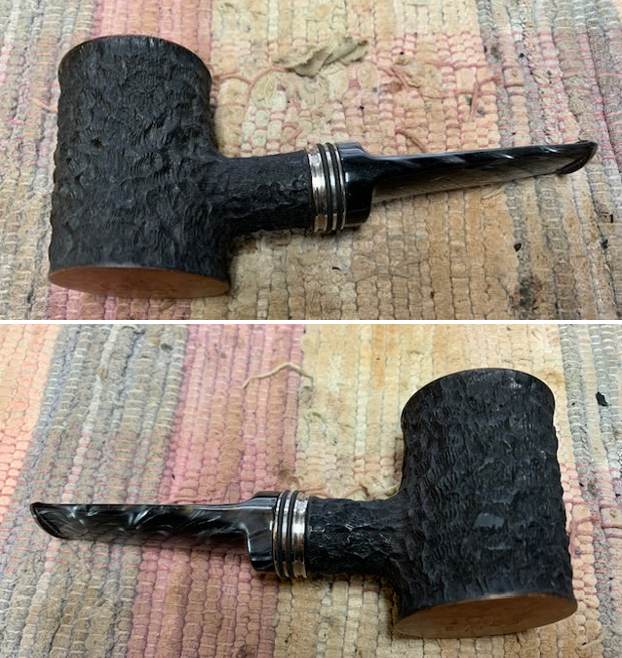
Blog by Steve Laug

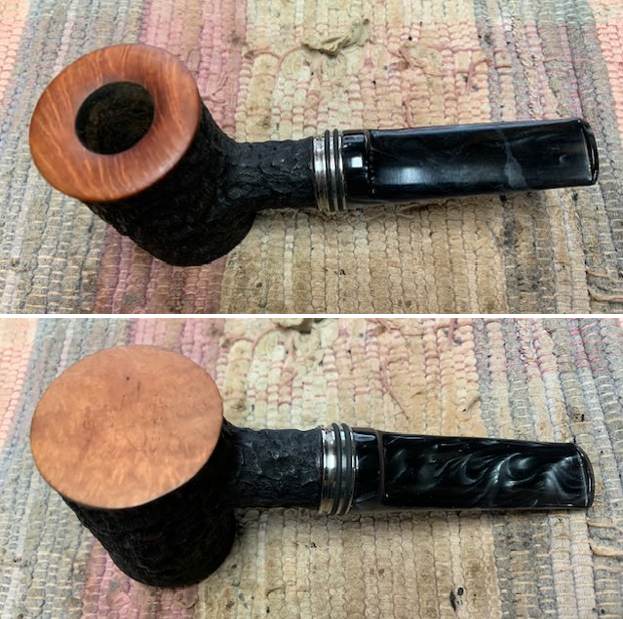
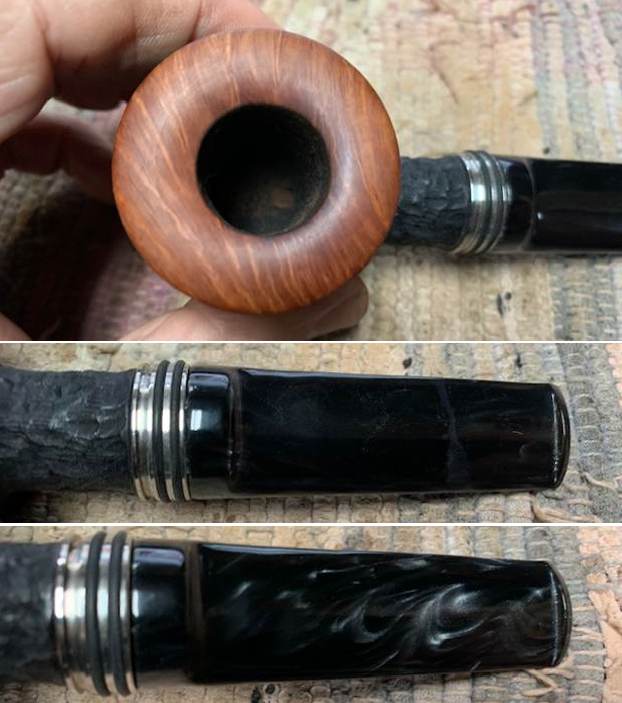
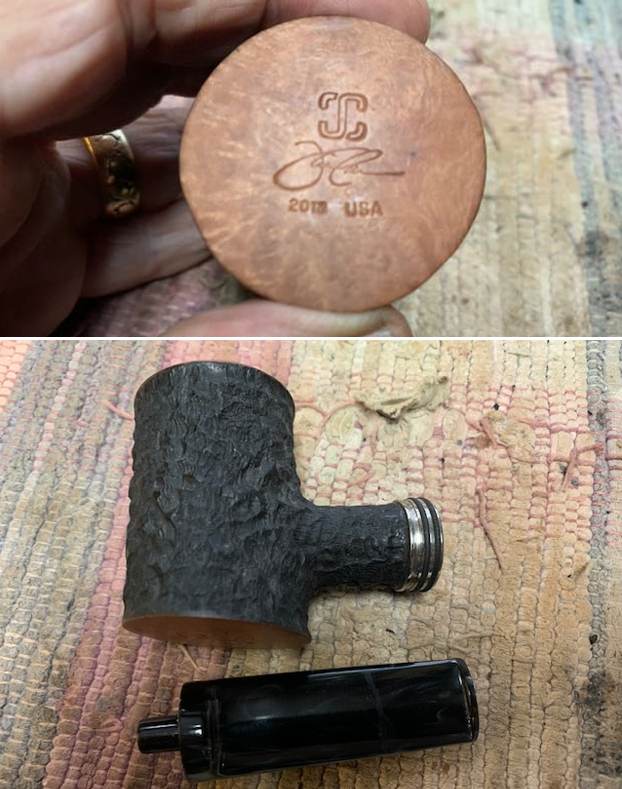
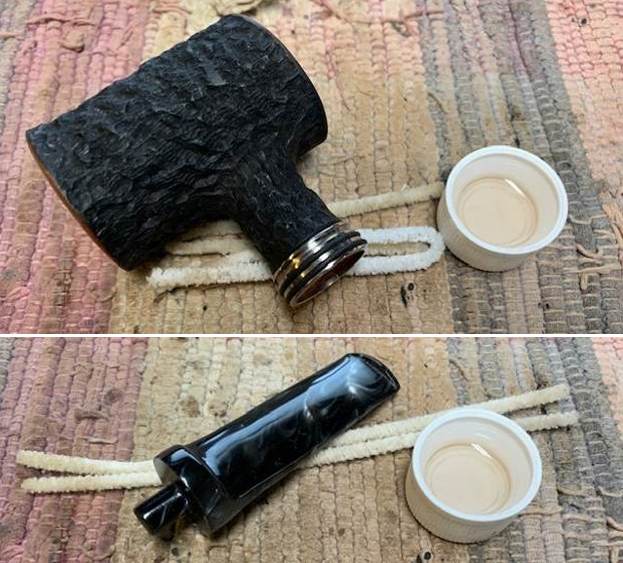
The next pipe I have chosen to work on is a nice looking rusticated Joe Case Poker that I picked up in a lot of 10 pipes from a fellow on Vancouver Island who was selling his collection. The stamping on the smooth heel of the bowl reads JC interlocked [over] the signature of Joe Case [over] 2013 followed by USA. The variegated silver acrylic saddle stem has no stamping or marks. There is a silver coloured (Stainless?) band on the shank that is decorative. It has four thin silver bands with the space between the final two painted black. The heel of the bowl and the rim top were smooth while the rest of the pipe is rusticated. The pipe came in a no name pipe sock. I took the pipe out of the sock and turned it over in my hands. It was in pretty good condition. This is what I saw

  1. The finish was dusty and dirty in the grooves and valleys of the bark like rusticated finish. Otherwise the finish looked very good.
  2. The smooth rim top showed some light darkening on the crowned top. There was no lava build on the rim top and the inner and outer edges of the bowl were clean and undamaged.
  3. There was a light cake in the bowl. It held the aroma of the tobaccos smoked in it but fortunately they were not aromatic. The walls looked to be undamaged but once I removed the light cake I would know more about that.
  4. The variegated grey/black acrylic saddle stem had no identifying logos or stamping. There was light tooth chatter and marks on both sides but nothing deep.

To summarize what I saw – this Joe Case Poker is a well made pipe as to be expected. It is dusty but otherwise in good condition. The acrylic stem is lightly marked but otherwise undamaged. The look and feel of the pipe is great in the hand and the rustication is well done. It is going to clean up very well. Here are photos of the pipe before I started my clean up. What do you see when you examine it?  The bowl of the pipe looked very good. The crowned rim top is clean other than a little darkening toward the back of the bowl. The edges of the bowl were undamaged and looked very good. I see no warning signs in the rim top or the edges of the bowl. I took photos of the acrylic stem to show its condition. Though hard to see there are light tooth marks and chatter on the surface of both sides ahead of the button but it should clean up easily with sandpaper.The next photo captures the stamping on the heel of the bowl. They read as I have noted above. I removed the stem from the shank and took a photo of the parts to give a sense of proportion.Joe Case made some of the most sought after, hand-crafted, custom pipes in America. They are truly works of art if you can find them. Joe died 12/22/21 in Nashville, Tennessee, USA. It is fascinating to me that he was not only a pipe maker but also a pastor who specialized in planting new churches (some thing we have in common as that is what I did for many years). He made beautiful pipes that are all on the larger size. The one I am working on is a large one – both tall and big. His pipes still come up now and again on eBay and other online sales sites and command a good price as they are limited in number since his death.

I found and interesting interview with Joe Case on Tobaccopipes.com that gives a great introduction to Joe and his philosophy of pipe carving. It also gives a good clue to the influences that moved him as a pipemaker. Here is the link – take time to give it a read (https://www.tobaccopipes.com/blog/joe-case-leads-a-wave-of-exciting-southern-pipe-makers-interview/).

I have also included a YouTube video that I found on the sight with Joe himself speaking with regard to his pipe making design and concepts. Give it a watch.

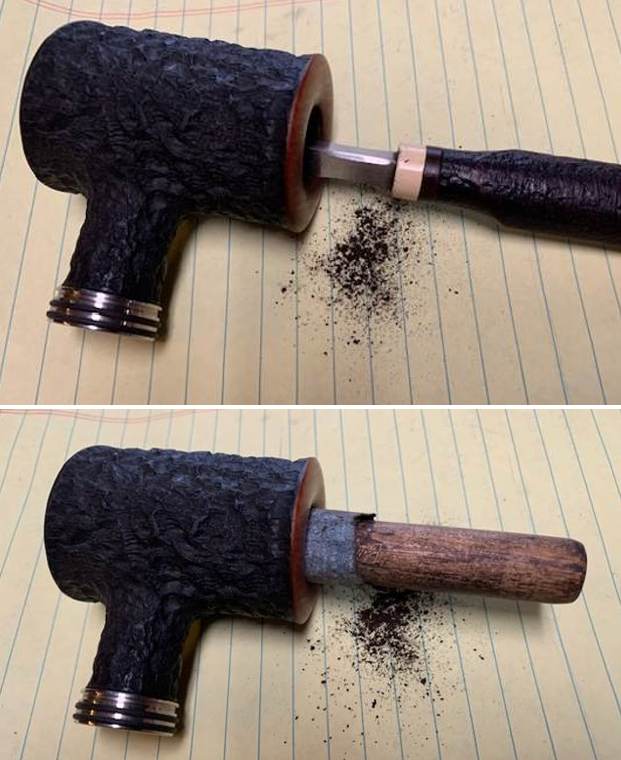
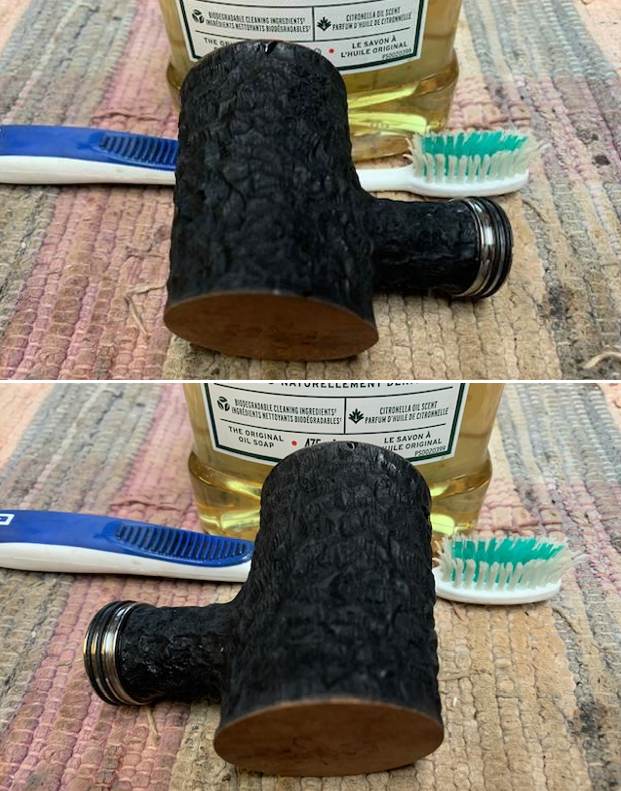
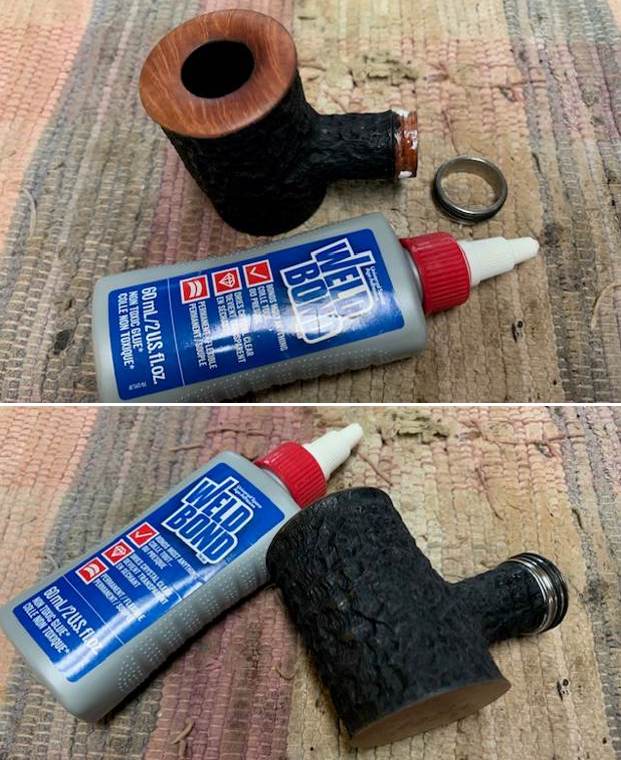
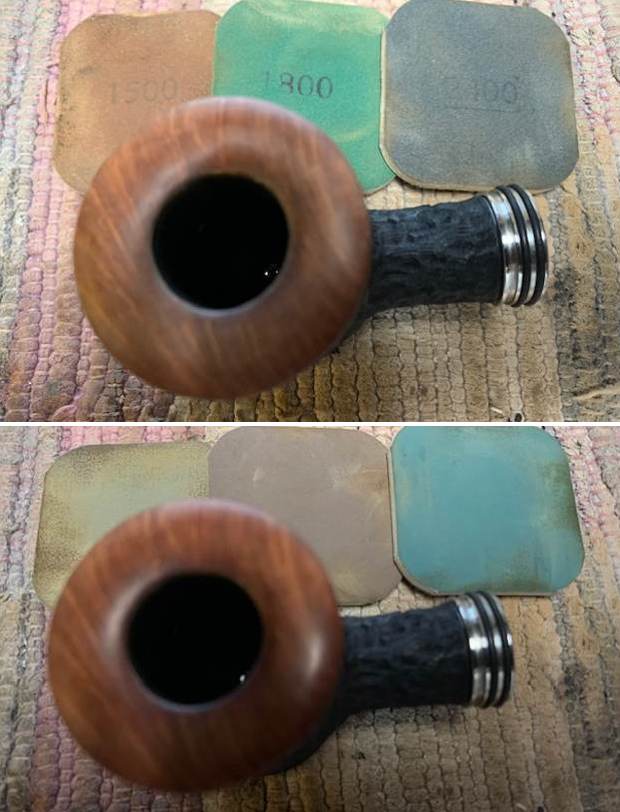
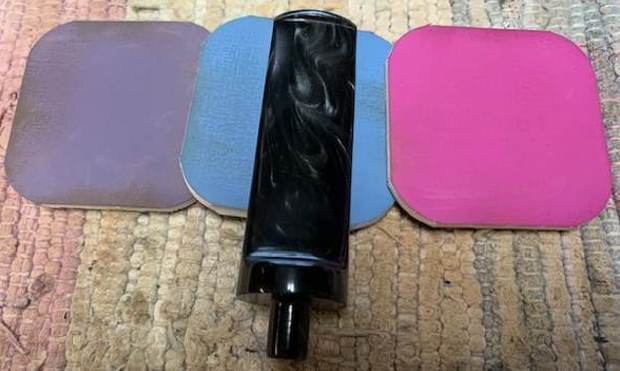
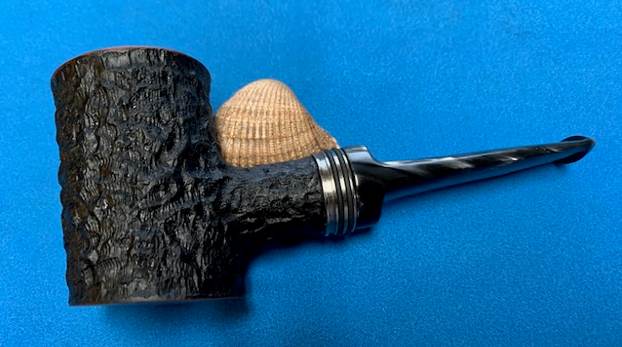
Armed with that information and renewing my knowledge of the brand it was time to work on the pipe. I started my work on the pipe by cleaning the internals. The cake was quite thin but it can hold residual oils from previous tobaccos and I wanted to check the bowl walls for burn damage or checking. I reamed it with a Savinelli Fitsall Pipe knife and took the cake back to bare briar. I sanded the walls with 220 grit sandpaper wrapped around a piece of dowel. I worked on them until they were smooth. There was no checking or burn damage to the bowl walls. It was quite clean.I cleaned out the internals of the shank and the airway in the stem with 99% isopropyl alcohol, cotton swabs and pipe cleaners. I worked them over until they were clean.  I scrubbed the externals of the bowl and shank with undiluted Murphy’s Oil Soap and a tooth brush. I worked the soap into the grooves and valleys in the finish. I rinsed it off with warm running water. I dried it with a soft cotton towel. The bowl looks much better at this point in the process of recovery. The band was loose on the shank so I gave the shank end a few drops of Weld Bond all purpose glue. I pressed it into place wiped off the excess.I polished the smooth crowned rim top with micromesh sanding pads – dry sanding with 1500-12000 grit  pads. I wiped the briar down with a damp cloth after each sanding pad. The rim top began to take on a rich shine. I worked some Before & After Restoration Balm into the rusticated finish on the bowl and shank and the smooth rim top. I worked it into the surface of the briar with my fingertips to clean, enliven and protect the wood. I used a horse hair shoe brush to work it into the crevices and keep from building up in the valleys and crevices of the finish. Once the bowl was covered with the balm I let it sit for about 15 minutes and buffed it off with a soft cotton cloth and the shoe brush. I polished it with a microfiber cloth. I took photos of the pipe at this point in the process to show what the bowl looked like at this point. I polished the silver band with a jewelers cloth. It is impregnated with an anti-tarnishing compound and polish. I rubbed the shank end band down with the cloth to polish and protect the band. It came out with a rich glow and shine. I set the bowl aside and worked on the stem. I dry sanded both sides of the stem with 1500-12000 grit pads to polish it further. I wiped it down with a damp cloth after each sanding pad. The shine grew deeper with each sanding pad. I finished polishing the stem with Before & After Pipe Polish – both Fine and Extra Fine polishes. I wiped the stem down with a damp cotton pad afterwards and buffed it with a soft microfiber cloth. I put the bowl and stem back together. I don’t buff the rusticated bowl on the wheel as it leaves a lot of grit in the deep grooves of the rustication. I gave the bowl and shank multiple coats of Conservator’s Wax and buffed it with a shoe brush to raise the shine. The wax is great protection and I love using it on rusticated and sandblast finishes because it does not build up in the grooves and valleys like carnauba wax does. I buffed it by hand with a microfiber cloth to finish the shine. I polished the stem with Blue Diamond on the buffing wheel to polish out the scratches in the vulcanite. I buffed the pipe with a clean buffing pad to raise the shine. I hand buffed it with a microfiber cloth to deepen the shine. The pipe polished up pretty nicely. The contrast of the blacks, dark browns and reds of the stain on the briar with the shine of the polished vulcanite stem is quite stunning. The dark and shallow rustication around the bowl and shank is quite remarkable and gives the pipe an incredible tactile presence. The smooth rim top is a great addition. This is truly a beautiful pipe and one that will be a great smoking pipe. The finished pipe is shown in the photos below. The dimensions of the pipe are Length: 5 ½ inches, Height: 2 ¼ inches, Outside diameter of the bowl: 1 ½ inches, Chamber diameter: ¾ of an inch. The weight of the pipe is a light and comfortable pipe for its size: 78 grams/2.75 ounces. This is the first Joe Case pipe that I have worked on. I will be putting it on the rebornpipes store in the American Pipe makers Section of the store. If you are interested in adding it to your collection let me know. Thanks for walking through the restoration with me. Cheers.

Restoring a Beautiful Rusticated Ferndown Bark 2 Star Lovat


Blog by Steve Laug

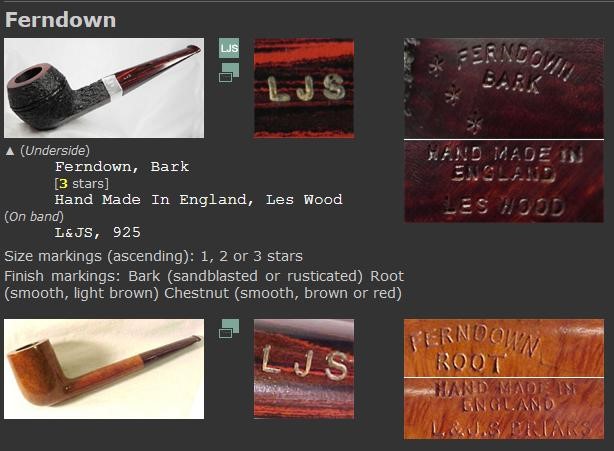
The next pipe I have chosen to work on is a nice looking rusticated Ferndown Lovat that I picked up in a lot of 10 pipes from a fellow on Vancouver Island who was selling his collection. The stamping on the underside of the shank and reads Ferndown [arched over] 2 *s and Bark. That is followed by Hand Made In [over] England [over] Les Wood. The silver band on the shank is stamped L&JS in a rectangle [over] 925. The vulcanite saddle stem is stamped LJS in gold on the left side of the saddle. The pipe came in a no name pipe sock. I took the pipe out of the sock and turned it over in my hands. It was in pretty good condition. This is what I saw

  1. The finish was dusty and dirty in the grooves and valleys of the shallow, tight rusticated finish. Otherwise the finish looked very good.
  2. The smooth rim top showed some darkening and scratches in the finish. There was some light lava build on the rim top and the inner and outer edges of the bowl were clean and undamaged.
  3. There was a light cake in the bowl. It held the aroma of the tobaccos smoked in it but fortunately they were not aromatic. The walls looked to be undamaged but once I reamed it I would know more about that.
  4. The vulcanite saddle stem had the LJS Logo on the left side in gold. The vulcanite stem is lightly oxidized on the left side but otherwise clean. There are light tooth chatter and marks on both sides but nothing deep.

To summarize what I saw – this Ferndown is a well made pipe as to be expected. It is dusty but otherwise in good condition. The vulcanite stem is lightly marked but otherwise undamaged. The look and feel of the pipe is great in the hand and the rustication is shallow but very beautiful. It is going to clean up very well. Here are photos of the pipe before I started my clean up. What do you see when you examine it? The bowl of the pipe looked very good. The rim top is clean other than a light lava build up and some scratching. The edges of the bowl were undamaged and looked very good. I see no warning signs in the rim top or the edges of the bowl. I took photos of the acrylic stem to show its condition. Though hard to see there are light tooth marks and chatter on the surface of both sides ahead of the button but it should clean up easily with sandpaper. The next photo captures the stamping on the underside of the shank. They read as I have noted above. The second photo shows the stamp on the silver band and on the left side of the saddle stem. It is also clear and readable.  I removed the stem from the shank and took a photo to capture the economy of this nice pipe.It has been awhile since I had cleaned up a Les Wood pipe and in this case a Ferndown rusticated Lovat stamp that left me with some questions that I need to answer before I began to work on the pipe. I turned first to the Pipephil site to help me interpret the stamping on the pipe and gain some background information on the brand and line (http://pipephil.eu/logos/en/logo-f1.html). The photo to the left shows Les Wood and the information below came from the side bar. I have also done a screen capture of the information on the site.

Artisan: Leslie (Les) Wood. He was the master silver smith at Alfred Dunhill Ltd. before starting L. & J.S. Briars. Pipes for the European market are stamped “L. Wood” while those for US are stamped “Ferndown”. Production: ~ 2000 pipes/year (Ferndown + L.Wood) See also Elwood.From the information on Pipephil I learned that I was working on a pipe made for the US and that it was a large 2 star pipe in terms of size. I also learned that the Bark finish was a sandblasted or rusticated. The one I had in hand was a tightly rusticated finish with a smooth strip on the underside of the shank for the stamping. All of which helped to understand the pipe I was going to work on.

I turned to Pipedia (https://pipedia.org/wiki/Ferndown) to find a more detailed history and description of the brand and was amazed to find that the majority of it was either quotes or written by Les Wood himself. I am quoting some pertinent parts of the article below. You can turn to the site to read it in full.

Leslie “Les” John Wood worked for Dunhill for 19 years. His last position was as master silversmith. Following his tenure with Dunhill, Les formed his own brand, L. & J.S. Briars together with his wife Dolly in 1978. Les Wood follows Sasieni, the first ex Dunhill worker to start their own enterprise, and he was followed by William John “Ashton”-Taylor.

“I started working at Dunhill’s in March 1963, in the silver mounting department working under Jack Spriggs he left the firm after I had been there for 2 years, and I took over the department, at that time I worked alone it was only when the department was relocated to the top floor that the increase of pipes that needed mounting that we took on trainees. After 19 years I was asked if I would buy the machinery and move out of the factory and set up on my own, so off I went. With me I took the staff that worked with me at that time, Robert Morris was the best, he could mount anything, he now has his own jewellery retail shop and makes some really nice handmade jewellery from his shop at Whitstable in Kent.”

“I worked on Dunhill’s pipes from 1980/81 and soon built up a reputation as the firm to send your mounting to. As time went on and Dolly left Dunhill’s we decided to start to turn our own bowls and make our own pipes under the name of my house.” Les Wood. Jan, 2020…”

Due to the vagaries of international trademark law, he sold his earlier pipes as ” L.&J.S Briars”, “Ellwood”, “Les Wood” or “L. Wood”. Until recently, an average of 1500 – 2000 pipes a year were sold as “Ferndown” — named for the mansion he lives in — in the UK and US, but as “L. Wood” pipes in Germany…

To many pipe smokers, Les Wood’s pipes embody the revival of great English pipe making initiated by Ashton in the early 1980s. The high-grade Italian and Spanish plateau he prefers is oil-cured in the tradition of both Dunhill and Ashton. The pipes are renowned for their pleasant, slightly nutty flavor and remarkable smoking characteristics. They feature impeccable craftsmanship extending to very good stem/bit work, though many pipes are often a bit heavier. The hallmark of his work, of course, is the excellent silver work. Almost all of his pipes feature rings or ferules for spigot stems. Grading is by finish: “Bark” (ca. 90%, rusticated, dark brown and black), “Antique Bark” (tan rusticated), “Reo” (brown and red, smooth), “Root” (orange, smooth), and “Tudor Root” (orange and brown smooth) and by size (one to four stars). He also designates straight grains with SG…

“We bought the briar from Italy and Spain, one is mush denser that the other I like the Spanish briar it is lighter and Dolly would make the Roots look like glass with only a natural vanish, all the pipes were finished with the same varnish, the bark finish on the bowl is put on by Dolly by hand, one slip and you have a problem. That’s one job that needs to be seen to see how it’s done.”

There also was a great paragraph on the oil curing process that Les and Dolly developed. I am including that below as the pipe I am working on was definitely oil cured.

“We had our method of Oil-Curing. We applied Oil to the outside and the inside of the bowl, that was because when Dolly was at Dunhill’s factory, she worked in the finishing department and got such a high finish on the pipes they wanted to know how she did it. The bowls had already gone through Dunhills’ oven oil curing system, but to her, it was not enough, because it could not get the shine that she wanted, then, she oiled the bowl on the outside and the inside to get a better finished. She left Dunhill and came to work with me. Because of this process, we found out the smokers liked the taste when light up their pipe – they said there was no aftertaste and it had a sweet taste doesn’t matter what tobacco they used. We have carried it on from there.”

Armed with that information and renewing my knowledge of the brand it was time to work on the pipe. I started my work on the pipe by cleaning the internals. The cake was quite thin but it can hold residual oils from previous tobaccos and I wanted to check the bowl walls for burn damage or checking. I reamed it with a Savinelli Fitsall Pipe knife and took the cake back to bare briar. I sanded the walls with 220 grit sandpaper wrapped around a piece of dowel. I worked on them until they were smooth. There was no checking or burn damage to the bowl walls. It was quite clean.I cleaned out the internals of the shank and the airway in the stem with 99% isopropyl alcohol, cotton swabs and pipe cleaners. I worked them over until they were clean. I scrubbed the externals of the bowl and shank with undiluted Murphy’s Oil Soap and a tooth brush. I worked the soap into the grooves and valleys in the finish. I rinsed it off with warm running water. I dried it with a soft cotton towel. The bowl looks much better at this point in the process of recovery. I polished the smooth rim top with micromesh sanding pads – dry sanding with 1500-12000 grit  pads. I wiped the briar down with a damp cloth after each sanding pad. The rim top began to take on a rich shine.  I worked some Before & After Restoration Balm into the rusticated finish on the bowl and shank and the smooth rim top. I worked it into the surface of the briar with my fingertips to clean, enliven and protect the wood. I used a horse hair shoe brush to work it into the crevices and keep from building up in the valleys and crevices of the finish. Once the bowl was covered with the balm I let it sit for about 15 minutes and buffed it off with a soft cotton cloth and the shoe brush. I polished it with a microfiber cloth. I took photos of the pipe at this point in the process to show what the bowl looked like at this point. I polished the silver band with a jewelers cloth. It is impregnated with an anti-tarnishing compound and polish. I rubbed the shank end band down with the cloth to polish and protect the band. It came out with a rich glow and shine. I set the bowl aside and worked on the stem. I sanded out the chatter and tooth marks with 220 grit sandpaper. I was able to remove the marks from the surface very well, leaving behind no sign of the tooth damage. I started polishing the stem surface with 600 grit wet dry sandpaper. I dry sanded both sides of the stem with 1500-12000 grit pads to polish it further. I wiped it down with a damp cloth after each sanding pad. The shine grew deeper with each sanding pad. I finished polishing the stem with Before & After Pipe Polish – both Fine and Extra Fine polishes. I wiped the stem down with a damp cotton pad afterwards and buffed it with a soft microfiber cloth. I put the bowl and stem back together. I don’t buff the rusticated bowl on the wheel as it leaves a lot of grit in the deep grooves of the rustication. I gave the bowl and shank multiple coats of Conservator’s Wax and buffed it with a shoe brush to raise the shine. The wax is great protection and I love using it on rusticated and sandblast finishes because it does not build up in the grooves and valleys like carnauba wax does. I buffed it by hand with a microfiber cloth to finish the shine. I polished the stem with Blue Diamond on the buffing wheel to polish out the scratches in the vulcanite. I buffed the pipe with a clean buffing pad to raise the shine. I hand buffed it with a microfiber cloth to deepen the shine. The pipe polished up pretty nicely. The contrast of the blacks, dark browns and reds of the stain on the briar with the shine of the polished vulcanite stem is quite stunning. The dark and shallow rustication around the bowl and shank is quite remarkable and gives the pipe an incredible tactile presence. The smooth rim top is a great addition. This is truly a beautiful pipe and one that will be a great smoking pipe. The finished pipe is shown in the photos below. The dimensions of the pipe are Length: 6 ½ inches, Height: 1 ¾ inches, Outside diameter of the bowl: 1 ¼ inches, Chamber diameter: 3/4 of an inch. The weight of the pipe is a light and comfortable 56 grams/1.94 ounces. This is the first Ferndown Bark in my collection and I have been hunting for one for a while. This is a little larger than I was hoping for but it is a great looking pipe. I will be putting it on the holding onto it for awhile and enjoying it. Thanks for walking through the restoration with me. Cheers.

Sasieni Four Dot Patent No. Amesbury Rusticated Canadian


Blog by Steve Laug

The next pipe I have chosen to work on was purchased on 11/11/2021 from an Antique Store in Aurora, Oregon, USA. It is a nice looking rusticated Canadian with 4 light blue dots on the top side of the taper stem. It was stamped on the underside of the shank and read Sasieni in script with the tail of the “i” short and tight. Underneath that it was stamped FOUR DOT in block letters [over] London Made [over] Pat. No. 50221/20 [over] “Amesbury”. Next to the bowl shank junction it was stamped Made in England shaped like a football vertically. The rusticated finish was very dirty with dust and debris in the grooves of the rustication. The bowl had a thick cake in it with lava overflow into the rustication on the rim top. It was an incredibly dirty pipe. The stem was oxidized and had calcification along the first inch ahead of the button. There were tooth marks and chatter on both sides of the stem ahead of the button and on the button surface itself. The 4 light blue dots on the left side of the taper stem were in good condition and very light in colour.

Jeff took these photos of the pipe before he started the clean up work on it. I want you to understand why we take the photos we do. It is not accidental or chance as the photos have been taken to help me make an assessment of the pipe Jeff sees before he starts his clean up work. We do this to record the condition that the pipe was in when received it and to assess what kind of work will need to be done on. When I look at these photos this is what I see.

  1. The rusticated finish is very messy and dirty. There was dust and grime ground into the deep grooves of the finish around the bowl. There are also nicks in the finish were there is wear and tear from being knocked around on ash trays and perhaps a heel of a boot. There are no burn marks or dark spots on the bowl sides and heel of the bowl.
  2. The rim top is filthy. The lava overflow from the cake in the bowl on the rim top though is thick and fills in the grooves. The front outer edge of the bowl has been damaged from being knocked against something hard.
  3. The bowl has a very thick cake in it that covers the inner edge of the bowl. That lava can either act as protection or could hide damage. We will not know until the bowl is cleaned. There does not appear to be any burning or reaming damage to the edges of the bowl.
  4. The stem is vulcanite and has the Sasieni Four Dot light blue dots logo inlaid in the top of the vulcanite taper stem.
  5. The stem was oxidized, calcified and very dirty. There was tooth marks and chatter ahead of the button visible in the photos below. The ones on the underside of the stem were quite deep in the surface of the stem.

Overall my impressions of this pretty rusticated Canadian was that it was in solid shape with no significant damage to the briar other than the knock about damage on rim top and edges. The cake is very thick so I have no way of knowing what is under it. The good news is that it does not seem to have any cracks in the bowl from the overloaded cake. The photos below confirm the assessment above.Jeff took close up photos so that I could have a clearer picture of the condition of the bowl and rim edges and top. The rim top photos confirm my assessment above. The cake in the bowl is quite thick and the rim top has a coat of lava and debris on it that will need to come off. You can also see the lava on the inner edge of the rim. You can also see the condition of the inner and outer edges of the rim and down the outside of the bowl. This is what I look for when assessing a pipe. The bowl appears to be still round. His photos of the stem surface confirmed and heightened my assessment of the condition. You can see the oxidation, calcification and tooth chatter and marks on both sides ahead of the button. From the photos you can see the light blue four dot diamond the top of the taper stem they are in good condition.  He took photos of the sides and heel of the bowl to show the rustication patterns in the briar. It is a unique finish that shows the grain through the finish. He took photos of the stamping on the smooth panel on the underside of the shank to capture what was stamped there. It is faint but readable as noted above. I decided to do some work on the stamping of this pipe to get an idea of the time period it was carved. I turned first to Pipephil’s site to see what I could learn (http://pipephil.eu/logos/en/logo-sasieni.html). I found a pipe that was stamped the same way as the one I am working on. I is stamped on the underside of the shank like the one in the screen capture photo below. Mine is stamped the same way Sasieni in script without the fish tail. Underneath it is stamped FOUR DOT [over] London Made [over] Pat. No. (1)50221/20 (the 1 is faint and almost illegible). Mine does not have the “Retford” stamp but rather the “Amesbury” stamp in the same place. To the left it is stamped with a football shaped Made in England stamp. I included the side bar notes below the picture. From that I knew that the pipe was made during Pre-transition Period 1946-1979.Pre-transition, 1946 – 1979. Four dot. Notice the change of “Sasieni” script without the fish-tail initiated by Alfred Sasieni after second world war.

I then turned to Pipedia for more detailed information (https://pipedia.org/wiki/Sasieni). I quote a section of that article below. It refers to the Patent Number that is on the pipe I have on the table. The underlined  portion below is particular pertinent to this pipe.

To begin with, there are three main elements to dating the Sasieni pipe, the patent number, the style of the name “Sasieni” as it appears on the shank, and the Dots themselves. Naturally, there are exceptions to these rules (this hobby would be boring without them), but for the most part these guidelines apply better than 95% of the time. All Sasieni One, Four, and Eight Dot pipes made before W.W.II and destined for the U. S. market carried a patent number on the shank which usually started with the numbers “15″, with 150221/20 and 1513428 being representative of the group. Also, the name “Sasieni” was stamped on the shank in a very florid manner, with the tail of the last “i” sweeping underneath the name forming a shape which has been compared to a fish by more than one collector. This script was discontinued by Alfred almost immediately after he took over the company, so this alone tells you your pipe is pre W.W.II. Underneath in block lettering are the words “London Made”, with the patent number making the third line.

The dots will help you narrow this down further. As we mentioned, the short lived U. S. market One Dot was introduced around 1920, and was replaced by the early to mid 1920’s by the Four Dot. The 1920’s Four Dot is distinguishable by the florid Sasieni script, a patent number, and four blue dots, which are quite small compared to the pipes of post war years. Furthermore, by 1935 Sasieni began stamping pipes, based on the shape, with their own names, which were usually, but not always, English towns. For example, apples were stamped “Hurlingham”, bulldogs were “Grosvenor” or “Danzey”, and panels were “Lincoln”. One rare and interesting variation of this was the large bent, dubbed “Viscount Lascelles”. Even in this soft Sasieni market, these pipes regularly sell for $150 in their rare appearances in mailers.

The pipe I have is one that was made for the US market as established by the Patent Number on the shank. The flourished “i” was discontinued by Alfred so that confirms that the pipe was made Pre-transition, 1946 – 1979. The third line stamped is London Made in block lettering. The single dot stamp was changed to a four dot in the early to mid 1920s. The 1920s Four Dot is distinguished on this pipe by the florid script, the patent number and four faint blue dots that are quite small. With all that information I knew that my pipe was from the period before the transition so it was an old timer.

In reading the history of the brand on the page I also read through the various photos and brochures that were included in the article. I found a photo of a page from a catalogue describing the rustic briar that I have included below. The rustication pattern is very similar to that on the pipe one that I have here. It is interesting to read the descriptions on the page both of the rustication and the patent.Now that I knew the early dating of the pipe that I had in hand it was time to work on it.

I am sure many of you skip my paragraph on the work Jeff has done before the pipe gets here in my many blogs but it is quite detailed in its brevity. I know some laugh at my opening line Jeff did a thorough cleaning of this pipe. However, I want you to know the details of the work. Back in 2020 Jeff wrote a blog about his cleaning process. I am including a link to that now so you can see what I mean about his process. Do not skip it! Give it a read (https://rebornpipes.com/2020/01/20/got-a-filthy-estate-pipe-that-you-need-to-clean/). Here is the introduction to that blog and it is very true even to this day.

Several have asked about Jeff’s cleaning regimen as I generally summarize it in the blogs that I post rather than give a detailed procedure. I have had the question asked enough that I asked Jeff to put together this blog so that you can get a clear picture of the process he uses. Like everything else in our hobby, people have different methods they swear by. Some may question the method and that is fine. But it works very well for us and has for many years. Some of his steps may surprise you but I know that when I get the pipes from him for my part of the restoration they are impeccably clean and sanitized. I have come to appreciate the thoroughness of the process he has developed because I really like working on clean pipe!

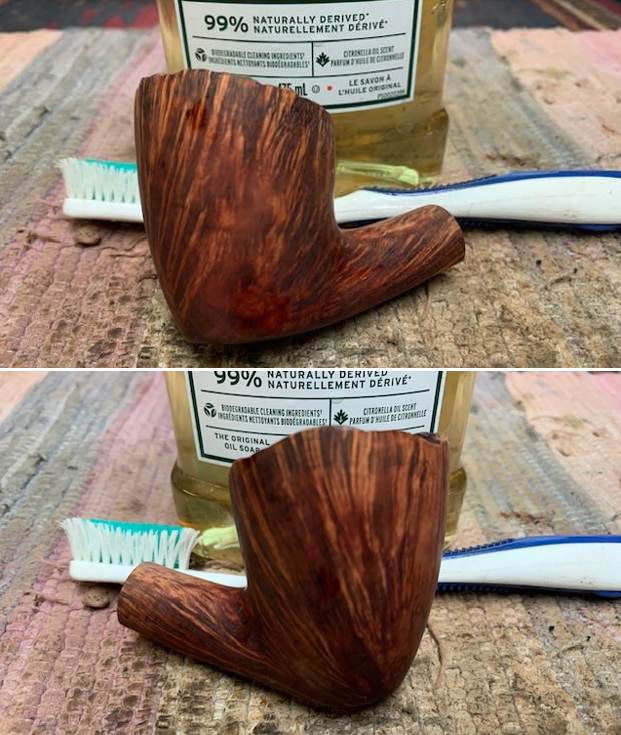
For the benefit of some of you who may be unfamiliar with some of the products he uses I have included photos of three of the items that Jeff mentions in his list. This will make it easier for recognition. These three are definitely North American Products so you will need to find suitable replacements or order these directly on Amazon. The makeup pads are fairly universal as we were able to pick some up in India when we were with Paresh and his family.

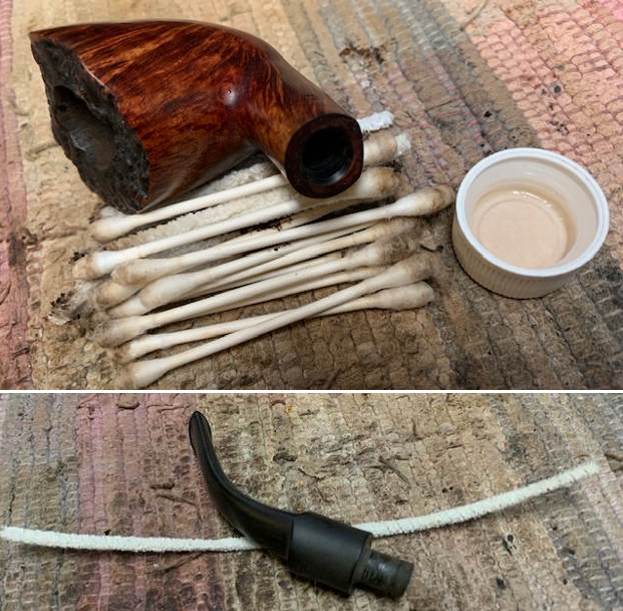
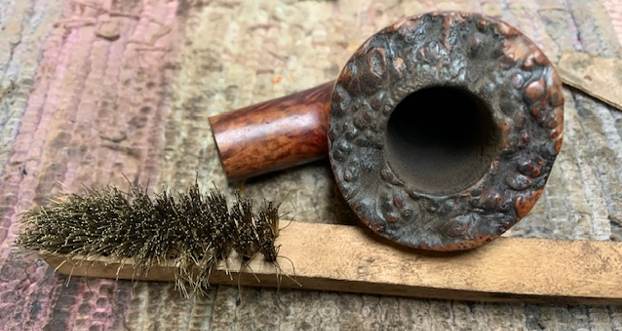
In the blog itself he breaks his process down into two parts – cleaning the stem and cleaning the bowl. Each one has a large number of steps that he methodically does every time. I know because I have watched him do the work and I have seen the pipes after his work on them. He followed this process step by step and when the pipe got to me it was spotlessly clean and ready for my work. The inside of the stem, shank and bowl were clean and to me that is an amazing gift as it means that my work on this end is with a clean pipe! I cannot tell you how much difference that makes for my work.

  1. The rusticated finish cleaned up very well. There was dust and grime were gone and the pipe looked clean. The nicks in the around the rim top and edges were visible. There are no burn marks or dark spots on the bowl sides and heel of the bowl.
  2. The rim top is was clean but showed damage. The rustication on the top and outer edge were clean but damaged slightly. The front outer edge of the bowl has been damaged from being knocked against something hard.
  3. The bowl was clean and the inside was smooth without checking or damage. There is not any burning or reaming damage to the edges of the bowl. The beveled inner edge of the bowl looks good.
  4. The stem is vulcanite and has the Sasieni Four Dot light blue dots logo inlaid in the top of the vulcanite taper stem.
  5. The stem looks much better and was clean. There were tooth marks and chatter ahead of the button visible in the photos below. The ones on the underside of the stem were deeper than the ones on the top side of the stem.

Hopefully the steps above show you both what I look for when I go over the pipe when I bring it to the work table and also what I see when I look at the pipe in my hands. They also clearly spell out a restoration plan in short form. My work is clear and addressing it will be the next steps. I took photos of the whole pipe to give you a picture of what I see when I have it on the table. This is important to me in that it also shows that there was no damage done during the clean up work or the transit of the pipe from Idaho to here in Vancouver. I took photos of the rim top and the top and underside of the stem. You can see the clean bowl and rim top. The stem has light tooth chatter and marks on both sides ahead of the button. It is dirty but otherwise great. It is a nice looking pipe. The next photo shows the stamping on a smooth panel on the underside of the shank. It is clear and readable as noted above. I removed the stem from the shank and took a photo of the parts to give a sense of the overall look of the pipe. It is really a nicely looking pipe that will look great once it is cleaned up.I used a brass bristle wire brush to clean up the rim top. The rustication patterns on the surface came back to life with the brushing. The beveled inner edge looked surprisingly good. I touched up the nicks and light spots on the top and the edges of the bowl with a walnut stain pen. The match was perfect and looked great with the other parts of the rusticated finish.I rubbed the bowl down with Before & After Restoration Balm to deep clean the nooks and crannies of the rusticated finish, enliven and protect the briar. I hand rubbed it with my fingers and worked it into the deep rustication with a horsehair shoe brush. I let it sit for 15 minutes to let it do its work. I wiped it off with a soft cloth. I buffed the bowl with a cotton cloth. It really began to have a deep shine in the briar. I took some photos of the bowl at this point to mark the progress in the restoration. I set the bowl aside and turned my attention to the stem. I “painted” the surface dents with a Bic light flame and was able to lift them significantly. I filled in the deep marks that remained with clear CA glue. I set it aside to cure. When it cured I reshaped the button edge and flattened the repairs with a small file. I sanded the stem with 220 grit sandpaper to further blend them into the vulcanite. I started the polishing of the stem with 600 grit wet dry sandpaper. To polish the stem and repairs I use micromesh sanding pads and water to wet sand the stem with 1500-12000 grit sanding pads. I wiped it down after each sanding pad with Obsidian Oil on a cotton rag after each sanding pad as I find it does two things – first it protects the vulcanite and second it give the sanding pads bite in the polishing process.After finishing with the micromesh pads I rub the stem down with Before & After Fine and Extra Fine stem polish as it seems to really remove the fine scratches in the vulcanite. I rub the Fine Polish on the stem and wipe it off with a paper towel and then repeat the process with the extra fine polish. I finish the polishing of the stem down with a final coat of Obsidian Oil and set the stem aside to let the oil absorb. This process gives the stem a shine and also a bit of protection from oxidizing quickly.The final steps in my process involve using the buffer. I first buff the stem and the briar with Blue Diamond on the buffing wheel. Blue Diamond is a plastic polish but I find that it works very well to polish out the light scratches in the vulcanite and the briar. I work the pipe over on the wheel with my finger or thumb in the bowl to keep it from becoming airborne. It works well and I am able to carefully move forward with the buffing. The briar and stem just shone! This is another pipe I am excited to finish. It is a Patent Number Sasieni London Made Four Dot Rusticated Canadian. I put the pipe back together and buffed it lightly with Blue Diamond on the buffing wheel. I gave the bowl multiple coats of Conservator’s Wax and the stem multiple coats of carnauba wax. I buffed the pipe with a clean buffing pad to raise the shine and hand buffed it with microfiber cloth to deepen the shine. It is fun to see what the polished bowl looks like with the polished vulcanite stem. It really was a beautiful pipe. The rusticated surface is quite unique and there is grain shining through the rich browns/black stain on the finish of this Sasieni London Made Four Dot Rusticated Canadian. It is nice looking and the pipe feels great in my hand. It is light and well balanced. Have a look at it with the photos below. The dimensions are Length: 6 inches, Height: 1 ¾ inches, Outside diameter of the bowl: 1 ¼ inches, Chamber diameter: ¾ of an inch. The weight of the pipe is 1.20 ounces/34 grams. It is a beautiful pipe and one that will be going on the rebornpipes store in the British Pipe Makers Section. Thanks for walking through the cleanup with me as I worked over this pipe. Thanks to each of you who are reading this blog. Remember we are not pipe owners; we are pipemen and women who hold our pipes in trust until they pass on into the trust of those who follow us.

Restoring a Vauen Luxus 4234 Filter Billiard


Blog by Steve Laug

I thought I would take you through my process of working on each pipe that we purchase. This is one that I am working on for a friend so it is not a purchase. When I am working on a pipe from the start I take the same photos. By now you should now why I included these photos. Even when I am starting from scratch myself I take the photos because they tend to show things clearly in a way that I might miss when I am looking at it in person. Combing the two gives a good view of what is going on with the pipe. I also take the photos to record the condition that the pipe was in when I received it and to assess what kind of work will need to be done on. When I look at the pipe along with these photos this is what I see.

  1. The finish is dull and very dirty with dust ground into the grooves of the sandblast finish around the bowl. There oils from holding the pipe on the sides of the bowl. The blast is rugged and shows some interesting grain patterns.
  2. The rim top is dirty with grime and lava all around the bowl and filling in much of the sandblast on the rim top. There was also darkening on the top and on the edge of the rim.
  3. The bowl has a thick cake in it and it had overflowed onto the inner edge of the bowl. It actually looks to be undamaged from what I can see at this point. There is a trough carved in the bottom of the bowl from either overdrilling or more likely from zealous use of pipe cleaners. There does not appear to be any burning or reaming damage to the inner edges of the bowl. There were some nicks in the briar on the outer edge.
  4. The stem is vulcanite and has the Vauen white dot logo inlaid into the vulcanite on the saddle stem. It fits the shank very well. It is made for a filter but significantly smaller than a 9mm. Could well be the Vauen 6mm filters would fit.
  5. The vulcanite stem had oxidation, calcification and tooth chatter and some deeper marks ahead of the button that are visible in the photos below. Nothing to deep but nonetheless present.

Overall my impressions of this German made Billiard was that it was in solid shape with no significant damage to the briar on the bowl sides and rim. The cake does not seem to hide any burns or checking and the exterior of the bowl does not show any hot spots or darkening. My examination of the bowl and what I see in the photos below confirm the assessment above. I took close up photos so that I could have a clearer picture of the condition of the bowl and rim edges and top. The rim top photos confirm my assessment above. The cake in the bowl is quite thick and the rim top is filled in with lava and is dirty. You can also see the darkening on the inner edge and the rim top. You can also see the condition of the outer edge of the rim and see that nicks toward the back of the bowl. This is what I look for when assessing a pipe. The photos of the stem surface confirmed my assessment of the condition. You can see that the stem is dirty – oxidized and calcified. You can also see the tooth chatter and marks on the surface. The white dot logo on the top of the saddle stem is in great condition. I took photos of the sides and heel of the bowl. While this definitely shows the grain patterns around a bowl it also allows me have a different look at the of the condition of the briar and the finish. I look at the finish to make sure there are no nicks and damage. The stain on the bowl is spotty but highlights the grain.There were no cracks or splits following the grain or coming down from the rim edges. There were no cracks in the shank. I also look for flaws in the grain as those can also hide cracks or damage. In this case the bowl exterior is darkened on the sides by hand oil but is still sound and should clean up very well. The grain patterns are nice. I took photos of the stamping so I can see if it is faint in any spots or double stamped or unclear. It often takes several photos to capture what I am looking for. The stamping on the underside of the shank are clear and readable in the pictures below. It reads Vauen [over] Luxus. It is followed by the shape number 4234 followed by the stamp of crossed pipes. As usual I do some background reading to remind myself of the background on the Vauen brand before I started my work on the pipe. It is an important part of the restoration to me as it adds colour to the pipe I am working on. I turned to Pipephil’s site (http://pipephil.eu/logos/en/logo-v1.html). I did a screen capture of the information on the site. There was a great sidebar that gave some history of the brand. I include both of them below. In 1848, Karl Ellenberger and his partner Carl August Ziener establish a pipe factory in Nuremberg. In 1901 they merge with Gebhard Ott an other factory in town and they create a firm named Vereinigten Pfeifenfabriken Nürnberg (abbreviated : VPFN*). Shortly after Ernst Eckert, a member of the Ott family became manager of the society. During the 20th century Adolf, Ernst (jr) and Alexander Eckert (CEO in 2012) followed one another at Vauen’s head.* VPFN : “V” is said VAU in German (pronounce faou) and “N” becomes EN. Hence VAUEN.
Dal Stanton (Pipesteward.com) wrote a great piece on the history of the brand on a Vauen pipe that he worked on. I reread that and quote a section from the blog below that gives a great sense of the history of the German brand and some photos from the website (https://rebornpipes.com/2021/04/27/breathing-new-life-into-a-german-vauen-6294-p-lip-saddle-billiard-for-a-special-young-lady/).

… I turn to the question of the history of the VAUEN name? I look to the History section of the VAUEN website and again, I am impressed with the presentation. Whenever I work on a pipe, and especially when a pipe name is new to me, I enjoy looking at its history to appreciate the pipe more fully now on my worktable. From VAUEN’s website:Quality and a wealth of ideas have a long tradition at VAUEN. 160 years of VAUEN: that means 160 years of skilled workmanship and modern technology and 160 years of experience in fulfilling the individual wishes of today’s pipe lovers, and those of tomorrow.

In Nuremberg in 1848, Karl Ellenberger and his partner Carl August Ziener turned an idea into reality: Germany’s first pipe manufacturer produced tobacco pipes for connoisseurs around the world using a selection of the best wood. In an amalgamation with the Gebhard Ott pipe factory, which was founded in 1866 in Nuremberg, the Vereinigten Pfeifenfabriken Nuremberg (United Pipe Factories Nuremberg, or VPFN) was born in 1901.  Under the management of Ernst Eckert, a descendent of the founding Ott family, a company was born whose products and services would shape the tobacco and smoking culture in Europe and overseas for the next 160 years and counting.

The question about the name, VAUEN, not being a name of a person and why it is capitalized throughout is explained:

In his search for a name that would be easily remembered by all pipe lovers, Ernst Eckert’s son, Adolf Eckert, coined a new name for the company in 1909: VAUEN – a composition of the first letters V (pronounced vow) of Vereinigte Pfeifenfabriken and N (pronounced en) of Nuremberg. A brand for the future was born.

Knowing that about me you can guess that I started working on this pipe by turning to the bowl. I turned to the bowl and started working on the cake to remove it. I reamed back the cake on the bowl walls with a PipNet Pipe reamer and  cleaned it up with a Savinelli Fitsall Pipe Knife. I sanded the walls smooth with 220 grit sandpaper wrapped around a piece of dowel. I used a brass bristle wire brush to remove the debris in the sandblast of the rim top. I scrubbed the sandblast exterior of the bowl with undiluted Murphy’s Oil Soap and a tooth brush. I rinsed it off with warm water to remove the grime and the soap. It looked much better once it was clean. Once the bowl had dried the finish was very spotty. There were dark places on the bowl and the rim top was dark. The spottiness really had to go. I generally start with this kind of thing by wiping the bowl down with acetone on cotton pads. I was able to get a lot of the spots off but there were still dark spots on the sides and rim top. It would need to be restained. It dried out and it was much better even though the spots were bothersome to me. There were also some putty fills that were visible in the finish. I mixed up a wash of light brown stain and isopropyl alcohol. I stained the bowl and shank with the stain was using a dauber. I lit the stain on fire with a lighter and flamed the stain to set it in the grain. I repeat the process until I am happy with the look of the finish.I set the bowl aside to let the stain cure. It was a bit dark to my liking but it was no longer spotty looking. Usually the stain will dry to the point of being able to work on it in about 40 minutes. I wanted to get a bit more opacity to the stain coat and show the various layers in the grooves and high points of the finish. I wiped it down with some isopropyl alcohol to remove the  heaviness of the stain coat. I really like the way it is looking at this point. Then I remembered I had not cleaned out the shank and stem. I went back and cleaned out the mortise and airway into the bowl and the stem with cotton swabs, pipe cleaners and isopropyl alcohol until they came out clean. It looked much better.I rubbed the bowl and shank down with Before & After Restoration Balm. I worked it into the finish with my fingers and used a shoe brush to press it deep into the crevices of the sandblast. The product works to deep clean the finish on the bowl and shank and enliven and protect the briar. After it sat for 15 minutes I wiped it off with a soft cloth. The briar really came alive with a rich shine. I took some photos of the bowl at this point to mark the progress in the restoration. It is a beautiful bowl. I will need to buff the bowl to finish the shine. I decided to address the “overdrill” or overzealous pipe cleaner damage to the inside front bottom and wall of the bowl by mixing a batch of cigar mud – a mixture of fine cigar ash and water to form a paste (I added a bit too much water so it needed to sit for a while to evaporate). Once it was the right consistency I put a pipe cleaner in the airway entry to the bowl and pressed the mud into the trough. I used a dental spatula to lay the mud in place and pressed it against the wall and bottom of the bowl. I layered it into the groove and set it aside to harden. I set it aside in the evening and in the morning when I checked on the bowl to make sure the bowl had cured. I was happy to see that the repair had cured very well.I set the bowl aside to let the repair to the bowl bottom cure. It is wet and dark but will dry hard and a light grey. I turned my attention to the stem. I “painted” the stem surface with the flame of a Bic lighter to lift the tooth marks. I was able to lift them all to the point that I would be able to sand the remnants of them out. I sanded the stem surface with 220 grit sandpaper and started the polishing the stem with 600 grit wet dry sand paper. I wiped it down with some Obsidian Oil and moved on to polishing the stem. I polish the stem to remove the light chatter and scratches. Over the years I have developed my own process for this. It is all preparation for the buffing that will come last. I use micromesh sanding pads and water to wet sand the stem with 1500-12000 grit sanding pads. I wiped it down after each sanding pad with Obsidian Oil on a cotton rag after each sanding pad as I find it does two things – first it protects the stem and second it give the sanding pads bite in the polishing process. After finishing with the micromesh pads I always rub the stem down with Before & After Fine and Extra Fine stem polish as it seems to really remove the fine scratches in the acrylic. I rub the Fine Polish on the stem and wipe it off with a paper towel and then repeat the process with the Extra Fine polish. I finish the polishing of the stem by wiping it down with a final coat of Obsidian Oil and set the stem aside to let the oil dissipate. This process gives the stem a shine and also a bit of protection for the stem surface.Once I finish a filter stem I like to fit it with a clean filter. In this case I do not have the filters to fit it. My thinking is that it is a Dr. Perl Junior 6mm filter. The pipeman I am restoring it for will have to pick some up. I have included a photo of what I think the filters will be.The final steps in my process involve using the buffer. I first buff the stem and the briar with Blue Diamond on the buffing wheel. Blue Diamond is a plastic polish but I find that it works very well to polish out the light scratches in the acrylic and the briar. I work the pipe over on the wheel with my finger or thumb in the bowl to keep it from becoming airborne. It works well and I am able to carefully move forward with the buffing. I finished with the Blue Diamond and moved on to buffing with carnauba wax. Once I have a good shine in the briar and vulcanite I always give the bowl multiple coats of Conservator’s Wax and the stem multiple coats of carnauba wax. I have found that I can get a deeper shine if I following up the wax buff with a clean buffing pad. It works to raise the shine and then I follow that up with a hand buff with a microfiber cloth to deepen the shine. It is always fun for me to see what the polished bowl looks like with the polished stem. It really is a beautiful pipe. The bowl coating and build up of cigar mud should harden and provide a base for the build up of new cake. The sand blast finish around the bowl sides and shank show the grain patterns underneath the rich brown stains of this Vauen Luxus 4234 Filter Billiard and the polished vulcanite stem is a great addition. The finished pipe feels great in my hand. It is light and well balanced. Have a look at it with the photos below. The dimensions are Length: 5 ¾ inches, Height: 1 ¾ inches, Outside diameter of the bowl: 1 ¼ inches, Chamber diameter: ¾ of an inch. The weight of the pipe is 1.10 ounces/31 grams. It is a beautiful pipe that I will be sending to a friend of mine who is collecting older Vauen pipes. I look forward to hearing what he thinks of it.

Hopefully this tack of writing this blog is helpful to you in some way. In it I show both what I am looking for and how I move forward in addressing what I see when work on a pipe has been helpful to you. It is probably the most straightforward detailed description of my work process. As always I encourage your questions and comments as you read the blog. Thanks to each of you who are reading this blog. Remember we are not pipe owners; we are pipemen and women who hold our pipes in trust until they pass on into the trust of those who follow us.

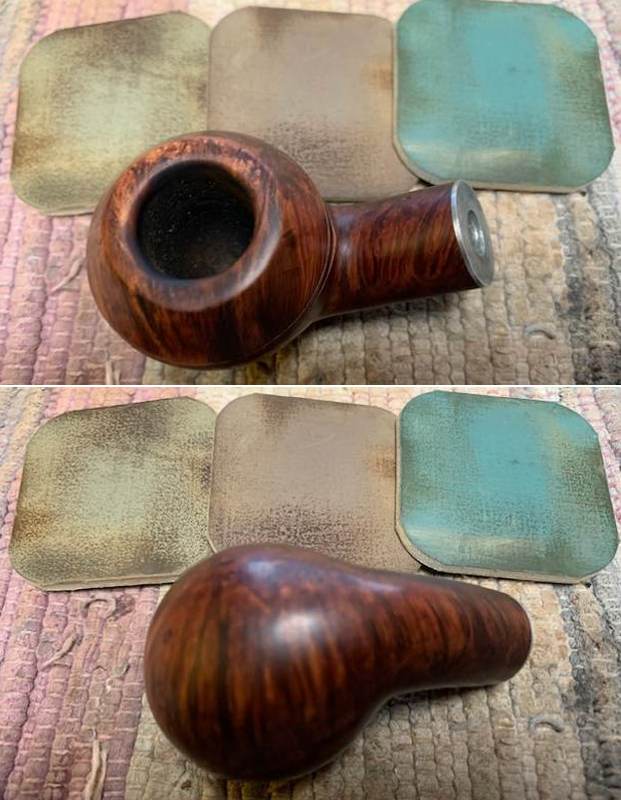
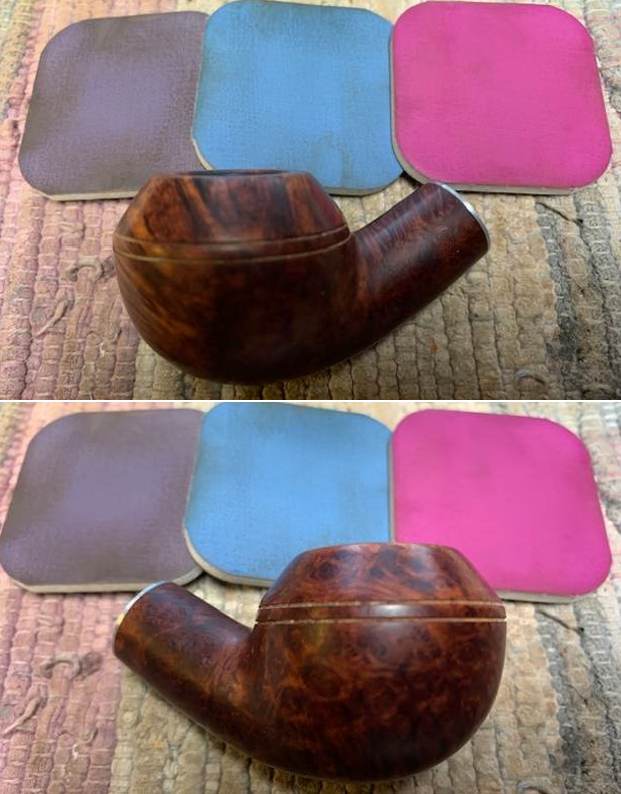
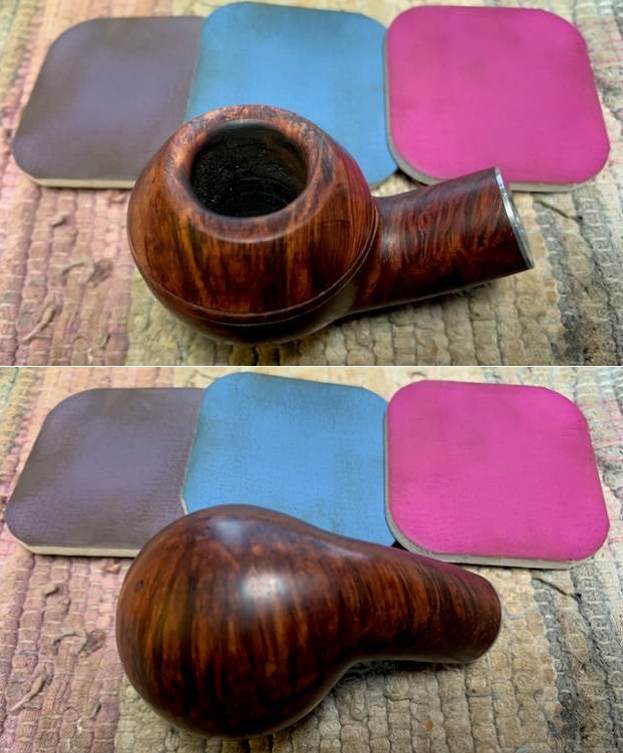
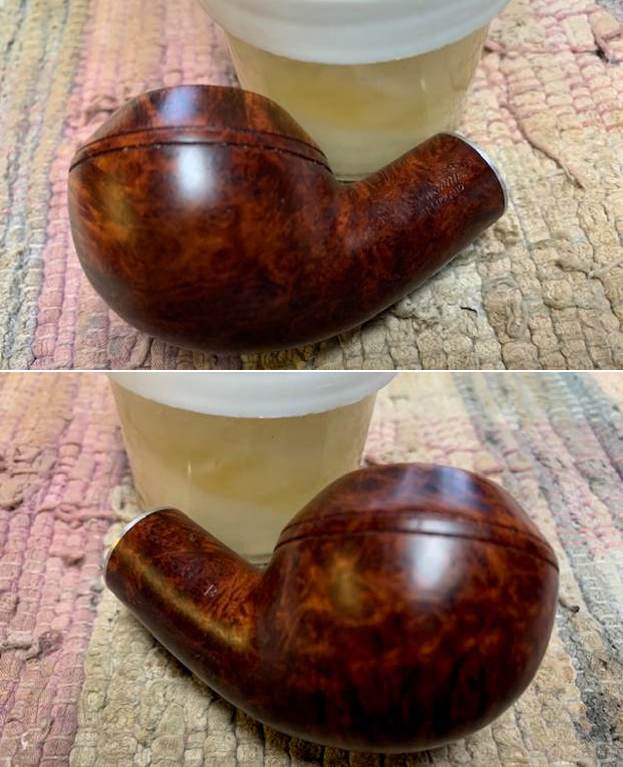
Restoring a Silver Banded BBB Own Make 722 Diplomat


Blog by Steve Laug

I thought with this blog that I would take a different tack in the write up and take you through my process of working on each pipe that we purchase. Jeff has set up a spread sheet to track where the pipe came from, the date of purchase and what we paid for it so that we know what we have invested in the pipe before we even work on it. This takes a lot of the guess work out of the process. This particular pipe was purchased on 01/26/2023 from Copenhagen, Denmark from a seller we buy a lot of pipes from. I also want you to understand why we take the photos we do. It is not accidental or chance as the photos have been taken to help me make an assessment of the pipe Jeff sees before he starts his clean up work. We do this to record the condition that the pipe was in when received it and to assess what kind of work will need to be done on. When I look at these photos this is what I see.

  1. The finish is dirty and there are nicks in the sides of the bowl from being dropped it looks like. There appeared to be some nice grain under the grime. The shank is fairly short with the factory silver band on the end.
  2. The slightly crowned rim top had a thick lava overflow from the cake in the bowl. It was thicker on the back half of the rim top. There was also some darkening around the top and edges as well. The inner and outer edges of the bowl looked to be in good condition though covered with thick lava. Its overall appearance is very dirty looking.
  3. The bowl has a thick cake in it but the inner edge of the bowl actually looks to be undamaged from what I can see at this point. There does not appear to be any burning or reaming damage to the edges of the bowl. You would be surprised (though maybe not) in how many pipes we pick up that have major issues in this area.
  4. The stem is an oddity to me. The first inch of the stem from the silver band back down the stem is lighter in colour than the rest of the stem. It appears to combine vulcanite and acrylic bound together somehow. I want to try to understand how the two materials are bound together.
  5. The stem had some oxidation on the top portion around the logo. The acrylic portion was clean and there were no tooth marks and chatter visible in the photos below.

Overall my impressions of this pipe is that it is a beauty that once cleaned up will look pretty amazing. The cake does not seem to hide any burns or checking and the exterior of the bowl does not show any hot spots or darkening. The pipe is very English looking and is a classic Diplomat shape. It has a lot of BBB stylistic touches that I have come to expect as I have worked on a lot of them over the years. The photos below confirm the assessment above.Jeff took close up photos so that I could have a clearer picture of the condition of the bowl and rim edges and top. The rim top photos confirm my assessment above. The cake in the bowl is quite thick and the rim top has lava and debris on it. You can also see the condition of the inner and outer edges of the rim. This is what I look for when assessing a pipe. While there is lava and darkening there is no visible burn damage at this point and the previous reaming has not left damage either. The bowl is still fairly round. There are some scratches in the surface of the crowned rim top. His photos of the stem surface confirmed and heightened my assessment of the condition. You can see the oxidation (particularly around the top inch of the stem from the shank end back) and a different appearance to the second part of the stem. It really does appear that they are two separate materials – vulcanite around the brass logo and acrylic on the back two thirds. The stem is quite dirty but otherwise undamaged. I always ask Jeff to take photos of the sides and heel of the bowl. While this definitely shows the grain patterns around a bowl it also allows me to do a more thorough assessment of the condition of the briar and the finish. In this case I look at the nicks and scratches around the bowl sides to see if there are any cracks or splits radiating from the pits in the centre of each one. I also look for flaws in the grain as those can also hide cracks or damage. In this case the bowl exterior is sound and should clean up very well. I love the grain patterns and the way the play off the silver band on the shank end. I also ask him to take photos of the stamping so I can see if it is faint in any spots or double stamped or unclear. It often takes several photos to capture what I am looking for. The stamping on the underside of the shank is actually undecipherable for the most part. It appears to have a BBB diamond logo at the top of the photo (left side). Underneath that is seems to read Own Make (very faint) [over] Made in [over] London England [over] 722. There is also an odd symbol next to the shape number. Jeff also took photos of the stamping on the silver band and the brass inset logo on the top of the stem. The stamp on the band is hallmarked with three silver hallmarks – a rampant lion, a lion’s head and the letter C. The first one tells us that it is sterling silver. The second one tells us that it is a London assay mark. The third one – the C – is a date stamp. I will work on the date of the pipe once I have it in hand. The brass logo is slightly damaged on the lower side of the inset. I love working on background history of the pipes I restore as they add a depth to my ongoing understanding of the pipe. Being able to put it in a specific date on the pipe puts it in a time frame. I turned to a British Silver Makers Hallmarks site that I use all the time. I narrowed down my search to the London pipes. The first two marks as noted above – the rampant lion and the lion’s head were simple to decipher. The Rampant Lion is the symbol for Sterling silver. The The Lion’s Head is the symbol for London Silver makers. I turned to the dates list on the site. I have included it below (https://www.silvermakersmarks.co.uk/Dates/London.html).I clicked on the section that had a C stamp like the one on the band and it expanded to a size that I could easily read. I have included the link below as well as a screen capture of the section of the list (https://www.silvermakersmarks.co.uk/Dates/London/Cycle%201975-1999.html).

I knew that the pipe I had was made in London by BBB and the silver assay stamp dates the pipe as 1977 in terms of the shape of the C. The band I am working on does not have a Queen’s Stamp so it is a little different. But I am convinced that the pipe was made in 1977.

I am sure many of you skip my paragraph on the work Jeff has done before the pipe gets here but it is quite detailed in its brevity. I know some laugh at my opening line Jeff did a thorough cleaning of this pipe. However, I want you to know the details of the work. Back in 2020 Jeff wrote a blog about his cleaning process. I am including a link to that now so you can see what I mean about his process. Do not skip it! Give it a read (https://rebornpipes.com/2020/01/20/got-a-filthy-estate-pipe-that-you-need-to-clean/). Here is the introduction to that blog and it is very true even to this day.

Several have asked about Jeff’s cleaning regimen as I generally summarize it in the blogs that I post rather than give a detailed procedure. I have had the question asked enough that I asked Jeff to put together this blog so that you can get a clear picture of the process he uses. Like everything else in our hobby, people have different methods they swear by. Some may question the method and that is fine. But it works very well for us and has for many years. Some of his steps may surprise you but I know that when I get the pipes from him for my part of the restoration they are impeccably clean and sanitized. I have come to appreciate the thoroughness of the process he has developed because I really like working on clean pipe!

For the benefit of some of you who may be unfamiliar with some of the products he uses I have included photos of three of the items that Jeff mentions in his list. This will make it easier for recognition. These three are definitely North American Products so you will need to find suitable replacements or order these directly on Amazon. The makeup pads are fairly universal as we were able to pick some up in India when we were with Paresh and his family.

In the blog itself he breaks his process down into two parts – cleaning the stem and cleaning the bowl. Each one has a large number of steps that he methodically does every time. I know because I have watched him do the work and I have seen the pipes after his work on them. He followed this process step by step and when the pipe got to me it was spotlessly clean and ready for my work. The inside of the stem, shank and bowl were clean and to me that is an amazing gift as it means that my work on this end is with a clean pipe! I cannot tell you how much difference that makes for my work.

When the pipe arrives here in Vancouver I have a clean pipe and I go over it keeping in mind my assessment shared in the opening paragraph above. I am looking for any significant structural changes in the bowl and finish as I go over it.

  1. The finish is very clean and the grain stands out on the surface of the clean briar. The scratches in the briar swelled up a bit so that they were not as deep as originally assumed in the first photos. There are no cracks showing up in the grain lines or in the flaws under the leaf carvings. It is sound on the outside. I will need to polish the briar and buff it to bring back the shine.
  2. The slightly crowned rim top is clean of the lava but there is still some darkening on the top and edges of the bowl. The good news for me is that there are no cracks showing up in the rim top. The bowl was sound.
  3. The bowl was very clean and smelled clean. The clean walls did not show evidence of checking or cracking. There were no hot spots or damage on the walls or around the entrance of the airway into the bowl. It was clean and smooth which is great news for me. The inner edge of the bowl was undamaged and did not show any sign of burning or reaming damage to the edges of the bowl. Both the shank and the bowl were very clean showing no debris on a clean pipe clean run through them. I would need to give it a final cleaning with pipe cleaners and alcohol once I had finished with the external work to remove the debris that may have collected there in the process.
  4. The oddity I saw in the stem was even more evident now – the vulcanite stem end and the acrylic bit were bound together in a well done manner. It was going to be interesting to examine more closely and possibly remove some of the oxidation on the vulcanite portion.
  5. The oxidation was much less on the front portion of the stem after Jeff’s work on it. The acrylic portion did not show any tooth marks or chatter. It was in great condition.

Hopefully the steps above show you both what I look for when I go over the pipe when I bring it to the work table and also what I see when I look at the pipe in my hands. They also clearly spell out a restoration plan in short form. My work is clear and addressing it will be the next steps. I took photos of the whole pipe to give you a picture of what I see when I have it on the table. This is important to me in that it also shows that there was no damage done during the clean up work or the transit of the pipe from Idaho to here in Vancouver. I take some time to go over the bowl and rim top to get a sense of what is happening there. In this case has some darkening on the top and the inner edge of the bowl. It is clean but will need to be worked on to bring it back to normal. The edges are not damaged and neither is the top of the bowl. That is the good news. I also go over the stem carefully. There were no tooth marks or dents in the stem. The biggest mystery for me is the connection of the two materials on the stem. There is a visible difference in the photos below. I took photos of the rim top and stem sides to show as best as I can what I see when I look at them.I always check to make sure that the clean up work did not damage the stamping on the shank in any way. I was hoping that the clean up might have made the stamping more clear but that was not the case. It was as faint as before. You can see a bit of it in the last photo above. I also took a photo of the silver. I also removed the stem from the shank and took a photo to get a sense of what was in the mind of the pipe maker when he crafted the pipe. It is a beauty in flow and shape. The question at this point of where to begin the restoration work is always a matter of personal preference. If you read this blog much you will see that each of the restorers who post here all start at different points. I personally almost always start with the bowl because I truly do not like the tedious work of stem repairs and polishing. I always leave that until last even though I know that it needs to be done. So if you are restoring your pipes choose where you want to start and go from there. Just know that it all will need to be done by the end but for me the encouragement of seeing a rejuvenated bowl is the impetus I need to attack the stem work.

For me then I started working on this pipe by turning to the bowl. I chose to deal with the darkening to the rim edges and top. I used a folded piece of 220 grit sandpaper to reshape and remove the rim top and damage. It took a little work but I was able to remove all of the darkening. It is a beautiful piece of briar with some great grain.When I have to deal with scratch marks like those on the left side of the bowl I generally use a butter knife and a damp cloth to steam them out of the finish as much as possible. I know others use steam irons with great success but I generally use the butter knife and damp cloth to lift them as it allows me to pin point the tip of the knife on the marks. I was able to lift some of them nicely but some still remained when I finished. I used a small bit of CA glue to fill in the three marks that remained (it looks like more glue than it actually is – it is quite thin). I sanded the repairs smooth with 600 grit wet dry sandpaper. I started the polishing with micromesh sanding pads – working it over with 1500 grit pads.Once I have the repair sanded smooth I blend them into the surface of the briar. I polished the briar with micromesh sanding pads. I choose to dry sand the briar rather than wet sand it. Again it is a matter of personal preference. I prefer to use the pads dry and find they work very well on the briar. I sand with each pad (9 in total) and group them by threes for ease of reference. I also work over the plateau areas at the same time. I wipe the bowl down after each pad with a damp cloth to remove the sanding debris and check the briar. I love seeing the developing shine on the briar as I move through the pads which is why I include so many photos of this step. Once I have a bowl at this point in the process I go over it to see the coverage on the bowl. In this case the finish was very spotty. I chose to restain the bowl with a Light Brown aniline wash. I mixed some brown pigment with some isopropyl alcohol to mix a wash. I used a cotton dauber to  cover the surface of the briar with the stain wash. I lit the finish with a lighter and set the stain in the briar. I repeated the process a second time to make sure it was a smooth finish. I took a few photos of the stained bowl. It appears significantly darker than I expected but I knew that buffing it would lighten the finish and perhaps make it match. Buffing would tell the tale. When I stain a bowl like the one above I take it to the buffer after the stain has dried. I buffed it first with Red Tripoli to remove the “crust” of the new stain. The Tripoli took off the opacity of the stain on the bowl and gave me more of the colour I was hoping for under the stain coat. I buffed it a second time with Blue Diamond and was able to remove more. The bowl also began to take on a deep shine. I took photos of the bowl after buffing and have included them below. For the past few years now I have been using a product developed by Mark Hoover called Before & After Restoration Balm. It is a paste/balm that is rubbed into the surface of the briar and the plateau. The product works to deep clean the nooks and crannies of finish, enliven and protect the briar. I worked it into the briar with my finger tips and let it sit for 10 minutes to do its work. I wiped it off with a soft cloth then buffed it with a cotton cloth. The briar really began to have a deep shine in the briar and the grain shone through. The photos I took of the bowl at this point mark the progress in the restoration. It is a gorgeous pipe. Now it was time to address the part of the restoration I leave until last. I set the bowl aside and turned my attention to the stem. This one was a unique stem so I was not as slow to start because of damage to the stem it was more to try to put together why the stem has two materials and how they were joined. The junction was flawlessly done and the transition was very smooth. It made me wonder who had done this work and why. I have never seen any other BBB pipe with the compound material stem. Here are a couple of thoughts I have as I have been working on it. There are several possibilities.

The first is that this stem is kind of a Frankenpipe rebuild.

  1. Somewhere in the life of the pipe the original vulcanite stem was ruined from the button forward. The original owner wanted to keep the front portion next to the shank intact so that original brass logo would not have to be moved.
  2. A possibility is that the old stem was cut off and an acrylic end was made for it. They were joined together with a tenon and glue that bound the parts together seamlessly.
  3. The stem was then sanded to make the transition between the two materials seamless.

The second is that it originally came out that way as a means of protecting the stem from bite through. It may well have been a BBB innovation – just one that I have never seen or read about.

I suppose at one level I will never really know for sure but whatever the reason for the mixed material of the stem it is a beauty. Now it was time to work on it.

At this point in the process I chose to polish the stem and bring back a shine. I use micromesh sanding pads and water to wet sand the stem with 1500-12000 grit sanding pads. I wiped it down after each sanding pad with Obsidian Oil on a cotton rag after each sanding pad as I find it does two things – first it protects the vulcanite and second it give the sanding pads bite in the polishing process. After finishing with the micromesh pads I rub the stem down with Before & After Fine and Extra Fine stem polish as it seems to really remove the fine scratches in the vulcanite. I rub the Fine Polish on the stem and wipe it off with a paper towel and then repeat the process with the extra fine polish. I finish the polishing of the stem down with a final coat of Obsidian Oil and set the stem aside to let the oil absorb. This process gives the stem a shine and also a bit of protection from oxidizing quickly.The final steps in my process involve using the buffer. I first buff the stem and the briar with Blue Diamond on the buffing wheel. Blue Diamond is a plastic polish but I find that it works very well to polish out the light scratches in the vulcanite and the briar. I work the pipe over on the wheel with my finger or thumb in the bowl to keep it from becoming airborne. It works well and I am able to carefully move forward with the buffing. The briar and stem just shone! I finished with the Blue Diamond and moved on to buffing with carnauba wax. Once I have a good shine in the briar and vulcanite I always give the bowl and the stem multiple coats of carnauba wax. I have found that I can get a deeper shine if I following up the wax buff with a clean buffing pad. It works to raise the shine and then I follow that up with a hand buff with a microfiber cloth to deepen the shine. It is always fun for me to see what the polished bowl looks like with the polished vulcanite and acrylic combination stem. It really is a beautiful pipe. The smooth finish around the bowl sides and shank show the grain shining through the rich brown stains of this BBB Own Make 722 Diplomat. The finished pipe feels great in my hand. It is light and well balanced. Have a look at it with the photos below. The dimensions are Length: 5 ½ inches, Height: 1 ½ inches, Outside diameter of the bowl: 1 1/8 inches, Chamber diameter: 7/8 of an inch. The weight of the pipe is 1.59 ounces/44 grams. It is a beautiful pipe and one that I will be putting on the rebornpipes store in the British Pipe Maker section.

Hopefully this tack of writing this blog is helpful to you in some way. In it I show both what I am looking for and how I move forward in addressing what I see when work on a pipe has been helpful to you. It is probably the most straightforward detailed description of my work process. As always I encourage your questions and comments as you read the blog. Thanks to each of you who are reading this blog. Remember we are not pipe owners; we are pipemen and women who hold our pipes in trust until they pass on into the trust of those who follow us.

Life for a Karl Erik Carved Wenhall Langelinie Made In Denmark 1 Freehand


Blog by Steve Laug

I thought with this blog that I would take a different tack in the write up and take you through my process of working on each pipe that we purchase. Jeff has set up a spread sheet to track where the pipe came from, the date of purchase and what we paid for it so that we know what we have invested in the pipe before we even work on it. This takes a lot of the guess work out of the process. This particular pipe was purchased on 04/09/2022 from Cleveland, Ohio, USA from a seller we bought quite a few pipes from. I also want you to understand why we take the photos we do. It is not accidental or chance as the photos have been taken to help me make an assessment of the pipe Jeff sees before he starts his clean up work. We do this to record the condition that the pipe was in when received it and to assess what kind of work will need to be done on. When I look at these photos this is what I see.

  1. The finish is dirty and flat but underneath there is some excellent grain. There are also some leaves carved on the left side of the bowl and around the heel. These were typically done to obscure flaws in the briar.
  2. The plateau rim top and shank end are dirty. In the rim top plateau there is a lot of lava overflow from the cake in the bowl. Along with that there is dust and debris in both the plateau on the rim top and shank end. Its overall appearance is very dirty looking.
  3. The bowl has a thick cake in it but the inner edge of the bowl actually looks to be undamaged from what I can see at this point. There does not appear to be any burning or reaming damage to the edges of the bowl. You would be surprised (though maybe not) in how many pipes we pick up that have major issues in this area.
  4. The stem is vulcanite and has straightened out from heat and sitting and will need to be rebent to match the flow of the shank and bowl.
  5. The stem had some oxidation and tooth marks and chatter that are visible in the photos below. Nothing to deep but nonetheless present.

Overall my impressions of this pipe is that it is a beauty that once cleaned up will look pretty amazing. The cake does not seem to hide any burns or checking and the exterior of the bowl does not show any hot spots or darkening. When I look it I immediately think of the carver Karl Erik. It has a lot of his stylistic touches that I have come to expect as I have worked on a lot of his pipes over the years. The photos below confirm the assessment above. Jeff took close up photos so that I could have a clearer picture of the condition of the bowl and rim edges and top. The rim top photos confirm my assessment above. The cake in the bowl is quite thick and the plateau on the rim top is almost filled in with lava and debris. You can also see the condition of the inner and outer edges of the rim. This is what I look for when assessing a pipe. While there is lava and darkening there is no visible burn damage at this point and the previous reaming has not left damage either. The bowl is still fairly round. The plateau on the shank end is very dusty and dirty as can be seen in the fourth photo below. His photos of the stem surface confirmed and heightened my assessment of the condition. You can see the oxidation (particularly around the turned area and the speckled surface of the button area) and what appears to be a gummy substance on the stem surface. Note also the tooth marks on the edge of the button on both sides. It is actually more damaged than the surface of the stem. I always ask Jeff to take photos of the sides and heel of the bowl. While this definitely shows the grain patterns around a bowl it also allows me to do a more thorough assessment of the condition of the briar and the finish. In this case I look at the finish around the carved portions to see if there are any cracks or splits radiating from the pits in the centre of each one. I also look for flaws in the grain as those can also hide cracks or damage. In this case the bowl exterior is sound and should clean up very well. I love the grain patterns and even the odd leaf carvings do not detract too much from that for me. I also ask him to take photos of the stamping so I can see if it is faint in any spots or double stamped or unclear. It often takes several photos to capture what I am looking for. The stamping on the underside of the shank is relatively clear in the picture below. It reads Wenhall [over] Langelinie [over] Freehand [over] Made In Denmark [over] 1. The Wenhall stamp is faint at the top of the stamp but still readable. You can also see that part of the Langelinie is double stamped. The rest of the stamp is clear and readable.Before I start working on any pipe in my hands I want to confirm its provenance. I want to know for certain who made it rather than just counting on my memory. In this case in the back of my mind I remembered a connection between Wenhall and Karl Erik pipes. I could not remember the details of the connection but I remembered there was one. I have several sites that I turn to for this work. First I turned to Pipephil’s – Pipes, Logos and Stampings website and found that there was no information on the brand there.
Then I turned to Pipedia and looked up Wenhall in the Pipe Makers list that is included there. I found the link there I was looking for (https://pipedia.org/wiki/Wenhall). It was a short article but it made a lot of connections to names that I was familiar with from working on pipes. I include the majority of the article because of the pertinent information that it provides and for ease of reference in the future.

Wenhall Pipes Ltd. was a distribution company out of New York City.

By the end of the 1970’s Wenhall approached Michael Kabik and Glen Hedelson, at that time operating from a farm house in Glen Rock, Maryland to create a line of freehands called Wenhall. The situation was favorable, because Kabik & Hedelson had ended their cooperation with Mel Baker of Tobak Ltd. to produce the famed Sven-Lar freehands shortly before.

Upon Wenhall’s offer the partners got a bank loan and set up a studio of 2000 square feet in a fairly new industrial park in Bel Air, Maryland and took on the name Vajra Briar Works. Wenhall initially wanted 500 pipes a week! But Kabik & Hedelson doubted that they could move that much product and told them they would produce 250 pipes per week. Happily, some of the old crew from Sven-Lar joined them at Vajra Briar Works, and thus they rather quickly met the production demands.

Furthermore during this time, Wenhall requested to create a line of pipes consisting of 12 different shapes. The line was called The Presidential and, while they repeated the same 12 shapes for this series, each one was freehand cut. Although they came up with interesting designs, mainly developed by Hedelson, especially Kabik was never really happy with the line or the concept, but, by this time, they had nine people on full-time payroll.

The stint with Wenhall lasted a couple of years, at which time they asked them to join Wenhall in a move to Miami, Florida. But by this time Kabik and Hedelson felt very uncomfortable with the owners of Wenhall and decided that they’d rather close the shop than make the move. Time proved that decision very wise, as Wenhall folded shortly after the move. All the same they had to close Vajra, but scaled down to the two of them and moved the operation to the farm house Glen was currently living in.

Presumably for a shorter period only Wenhall had pipes made in Denmark by Karl Erik. (BTW K.E. Ottendahl ceased all sales to the USA in 1987.)

The last sentence in red above gave me the confirmation I was seeking. I knew that the pipe I had was made in Denmark and thus by Karl Erik. I also knew that it was made before he ceased all sales in the US so that it was made before 1987. That is when his time with Wenhall ended. I always love being able to pin down a time frame for the pipe I am working on and knowing that this one was made prior to 1987 meant this was an older pipe. Now on to the work.

I am sure many of you skip my paragraph on the work Jeff has done before the pipe gets here but it is quite detailed in its brevity. I know some laugh at my opening line Jeff did a thorough cleaning of this pipe. However, I want you to know the details of the work. Back in 2020 Jeff wrote a blog about his cleaning process. I am including a link to that now so you can see what I mean about his process. Do not skip it! Give it a read (https://rebornpipes.com/2020/01/20/got-a-filthy-estate-pipe-that-you-need-to-clean/). Here is the introduction to that blog and it is very true even to this day.

Several have asked about Jeff’s cleaning regimen as I generally summarize it in the blogs that I post rather than give a detailed procedure. I have had the question asked enough that I asked Jeff to put together this blog so that you can get a clear picture of the process he uses. Like everything else in our hobby, people have different methods they swear by. Some may question the method and that is fine. But it works very well for us and has for many years. Some of his steps may surprise you but I know that when I get the pipes from him for my part of the restoration they are impeccably clean and sanitized. I have come to appreciate the thoroughness of the process he has developed because I really like working on clean pipe!

For the benefit of some of you who may be unfamiliar with some of the products he uses I have included photos of three of the items that Jeff mentions in his list. This will make it easier for recognition. These three are definitely North American Products so you will need to find suitable replacements or order these directly on Amazon. The makeup pads are fairly universal as we were able to pick some up in India when we were with Paresh and his family.

In the blog itself he breaks his process down into two parts – cleaning the stem and cleaning the bowl. Each one has a large number of steps that he methodically does every time. I know because I have watched him do the work and I have seen the pipes after his work on them. He followed this process step by step and when the pipe got to me it was spotlessly clean and ready for my work. The inside of the stem, shank and bowl were clean and to me that is an amazing gift as it means that my work on this end is with a clean pipe! I cannot tell you how much difference that makes for my work.

When the pipe arrives here in Vancouver I have a clean pipe and I go over it keeping in mind my assessment shared in the opening paragraph above. I am looking for any significant structural changes in the bowl and finish as I go over it.

  1. The finish is very clean and the grain stands out on the surface of the clean briar. The carved leaves looked good as well and appeared to have some dark stain tracing the lines in them and helping them stand out. There are no cracks showing up in the grain lines or in the flaws under the leaf carvings. It is sound on the outside. I will need to polish the briar and buff it to bring back the shine.
  2. The plateau rim top and shank end are clean and have some faded spots due to the cleaning and removing of the tars and oils that were scrubbed off. This will mean that in need to restain them with black and buff them with wax to bring them back to what they looked like when sent to the US originally. The good news for me is that there are no cracks showing up in the rim top plateau or in the shank end plateau. Those two areas are also sound.
  3. The bowl was very clean and smelled clean. The clean walls did not show evidence of checking or cracking. There were no hot spots or damage on the walls or around the entrance of the airway into the bowl. It was clean and smooth which is great news for me. The inner edge of the bowl was undamaged and did not show any sign of burning or reaming damage to the edges of the bowl. Both the shank and the bowl were very clean showing no debris on a clean pipe clean run through them. I would need to give it a final cleaning with pipe cleaners and alcohol once I had finished with the external work to remove the debris that may have collected there in the process.
  4. The vulcanite stem has clearly straightened over the years and that can be seen in the angle of the stem to the top of the bowl. I will need to heat it and bend the end to match the angle of the rim top. I always aim to get a basic straight line from the rim top to the curve of the stem when it is sitting in my mouth.
  5. The oxidation was gone from the stem after Jeff’s work on it. The tooth marks and chatter will need to be dealt with once I finish the bowl.

Hopefully the steps above show you both what I look for when I go over the pipe when I bring it to the work table and also what I see when I look at the pipe in my hands. They also clearly spell out a restoration plan in short form. My work is clear and addressing it will be the next steps. I took photos of the whole pipe to give you a picture of what I see when I have it on the table. This is important to me in that it also shows that there was no damage done during the clean up work or the transit of the pipe from Idaho to here in Vancouver. I then spend some time going over the bowl and rim top to get a sense of what is happening there. Remember that with plateau tops there can be dips in the plateau that extend into the bowl edge and are not damage but rather a natural feature. You can see the fading to the black of the plateau on the bowl top and the shank end. It is clean but will need to be restained to match what it was when made. I also went over the stem carefully. There were dents in the stem that are visible in the photos. But the good news is that the tooth marks were not deep and did not seem to puncture the airway. They would clean up well. I examined the button edge as it was damaged with tooth marks as well but I was happy to see that there were no cracks in the button surface. I took photos of the rim top and stem sides to show as best as I can what I see when I look at them.I always check to make sure that the clean up work did not damage the stamping on the shank in any way. I know Jeff is cognizant of this but I do it anyway and take a photo to show what I see when I examine it. In this case it has not changed at all from the pictures I included above. I also remove the stem from the shank and check the tenon and lay the parts of the pipe out to get a sense of the proportion that was in the mind of the pipe maker when he crafted the pipe. It is a beauty in flow and shape.The question at this point of where to begin the restoration work is always a matter of personal preference. If you read this blog much you will see that each of the restorers who post here all start at different points. I personally almost always start with the bowl because I truly do not like the tedious work of stem repairs and polishing. I always leave that until last even though I know that it needs to be done. So if you are restoring your pipes choose where you want to start and go from there. Just know that it all will need to be done by the end but for me the encouragement of seeing a rejuvenated bowl is the impetus I need to attack the stem work.
For me then I started working on this pipe by turning to the bowl. I chose to deal with the faded plateau on the rim and shank first because I would be polishing the briar and always like to go over the rim top and shank end plateau at the same time. I find that polishing those areas with micromesh differentiates the high points of the plateau from the valleys. I used a black stain pen to restain both areas. Remember this is only the first step in rim top staining. Polishing the briar will come next and that will change these areas as well.From here I turned to polishing the briar with micromesh sanding pads. I choose to dry sand the briar rather than wet sand it. Again it is a matter of personal preference. I prefer to use the pads dry and find they work very well on the briar. I sand with each pad (9 in total) and group them by threes for ease of reference. I also work over the plateau areas at the same time. I wipe the bowl down after each pad with a damp cloth to remove the sanding debris and check the briar. I love seeing the developing shine on the briar as I move through the pads which is why I include so many photos of this step. Pay attention to the changes in the briar and the plateau top in these photos as you work through them. To further sharpen the curves and grooves of the plateau on the shank and rim top I used a brass bristle wire brush. It is soft enough metal to clean up edges but not hard enough to scratch the surface of the briar.For the past few years now I have been using a product developed by Mark Hoover called Before & After Restoration Balm. I find that it is remarkable in its ability to really give the bowl deepened sense of colour and grain. It is a paste/balm that is rubbed into the surface of the briar and the plateau. The product works to deep clean the nooks and crannies of finish, enliven and protect the briar. I worked it into the briar with my finger tips and a horsehair shoe brush to get it into the grooves of the plateau. I let it sit for 10 minutes to let it do its work. I wiped it off with a soft cloth then buffed it with a cotton cloth. The briar and the plateau really began to have a deep shine in the briar. The photos I took of the bowl at this point mark the progress in the restoration. You see the shine that the briar has taken on and the contrast finish on the plateau areas is very beautiful. It is a gorgeous pipe. Now it was time to address the part of the restoration I leave until last. I set the bowl aside and turned my attention to the stem. I wanted to repair the tooth damage on the stem surface and on the surface of the button. Before doing any repairs to a stem surface I try to lift the marks as much as possible. To do that I use a Bic lighter to heat the tooth marks and dents in the stem surface. I describe that as “painting” the surface. What I mean by that is that I hold the stem stationary and quickly move the flame of the lighter across the dents repeatedly. Typically I am able to lift the dents significantly and sometimes in totality with the heat. It utilizes the “memory” vulcanite and the heat raises the marks.In this case I lifted all but two – one on each side. The heat did not have any effect on the tooth damage on the edge of the button. To take care of that I filled the edge in with clear CA glue and let it cure. Once it was hardened I recut the button edge with a small file to clean up the damage. I finished the reworking of the button and stem with 220 grit sandpaper and started polishing it with 600 grit wet dry sandpaper to remove the scratches. This process makes the repairs almost invisible when polished and also takes care of scratching in the surface of the vulcanite.I usually heat a stem to be bent with my heat gun until it is pliable then set it with running water. Today however I ran into a problem. My heat gun is no where to be found. I evidently either loaned to someone who still has it or it is somewhere in the house where I have overlooked it in the hunt. So I had to resort to an older way of heating the stem that is a bit more tricky. I “painted” the underside of the stem at the bend that was present with the flame of a Bic lighter as described above. When it became soft and pliable enough to bend to the angle I wanted I set the bend with cold water and dried it off. I checked the angle of the bend with the shank repeatedly until I was happy with the new look. I took some photos of the stem and of the stem in place in the shank and have included them below. It is possible to bend a stem with minimal tools. With the bend in the stem finished I needed to polish the stem and bring back a shine. I use micromesh sanding pads and water to wet sand the stem with 1500-12000 grit sanding pads. I wiped it down after each sanding pad with Obsidian Oil on a cotton rag after each sanding pad as I find it does two things – first it protects the vulcanite and second it give the sanding pads bite in the polishing process. After finishing with the micromesh pads I rub the stem down with Before & After Fine and Extra Fine stem polish as it seems to really remove the fine scratches in the vulcanite. I rub the Fine Polish on the stem and wipe it off with a paper towel and then repeat the process with the extra fine polish. I finish the polishing of the stem down with a final coat of Obsidian Oil and set the stem aside to let the oil absorb. This process gives the stem a shine and also a bit of protection from oxidizing quickly.The final steps in my process involve using the buffer. I first buff the stem and the briar with Blue Diamond on the buffing wheel. Blue Diamond is a plastic polish but I find that it works very well to polish out the light scratches in the vulcanite and the briar. I work the pipe over on the wheel with my finger or thumb in the bowl to keep it from becoming airborne. It works well and I am able to carefully move forward with the buffing. I lightly buff the plateau on the rim top and shank end at the same time making sure to keep the product from building up in the grooves of the finish. I finished with the Blue Diamond and moved on to buffing with carnauba wax. Once I have a good shine in the briar and vulcanite I always give the bowl and the stem multiple coats of carnauba wax. I have found that I can get a deeper shine if I following up the wax buff with a clean buffing pad. It works to raise the shine and then I follow that up with a hand buff with a microfiber cloth to deepen the shine. It is always fun for me to see what the polished bowl looks like with the polished vulcanite stem. It really is a beautiful pipe. The smooth finish around the bowl sides and shank show the grain shining through the rich brown stains of this Karl Erik Wenhall Langelinie Freehand. The black plateau on the shank end and rim top looked very good with some of the high points showing through in brown. The contrast in the combination looks very good.  The finished pipe feels great in my hand. It is light and well balanced. Have a look at it with the photos below. The dimensions are Length: 6 inches, Height: 2 ½ inches, Outside diameter of the bowl: 1 ½ inches, Chamber diameter: 7/8 of an inch. The weight of the pipe is 1.90 ounces/54 grams. It is a beautiful pipe and one that I will be putting on the rebornpipes store in the Danish Pipe Maker section.
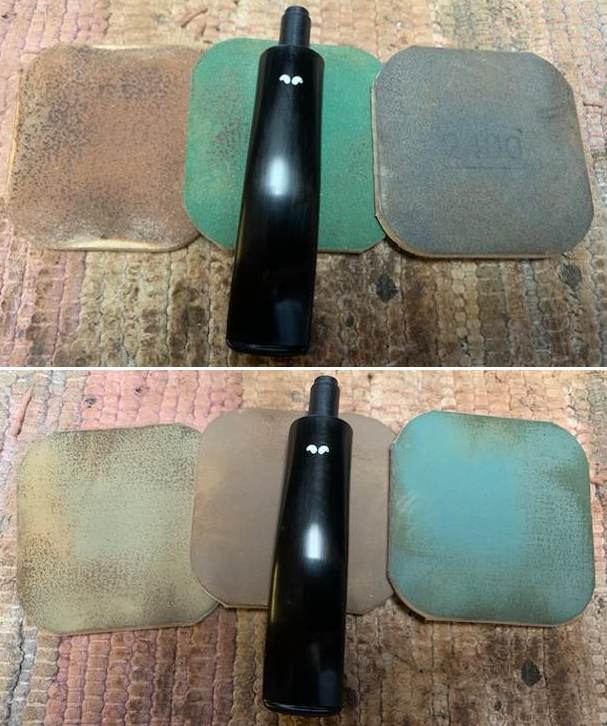
Hopefully this tack of writing this blog is helpful to you in some way. In it I show both what I am looking for and how I move forward in addressing what I see when work on a pipe has been helpful to you. It is probably the most straightforward detailed description of my work process. As always I encourage your questions and comments as you read the blog. Thanks to each of you who are reading this blog. Remember we are not pipe owners; we are pipemen and women who hold our pipes in trust until they pass on into the trust of those who follow us.
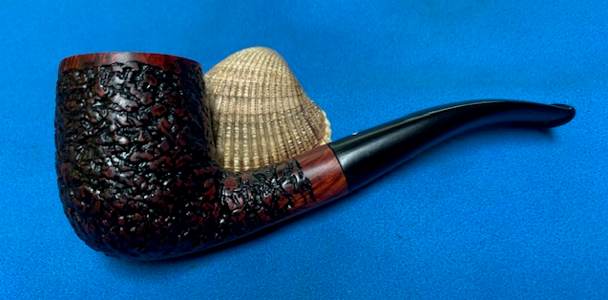
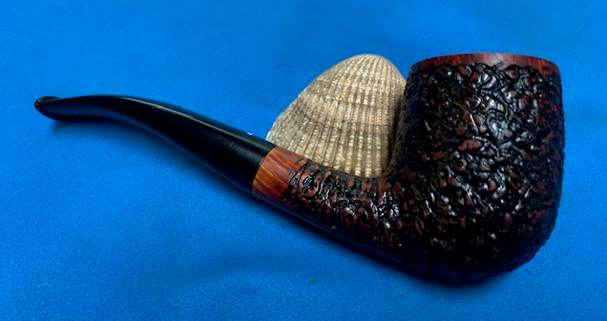
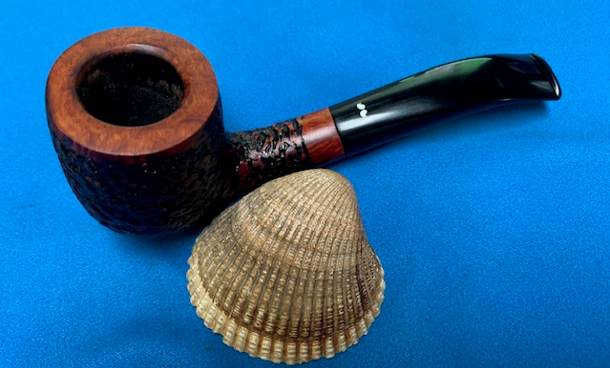
Cleaning Up and Restoring A “Caminetto Business” 185 Cavalier KS1


Blog by Steve Laug

The next pipe on my worktable is a Caminetto Business Pipe was purchased on 03/30/22 from Plano, Texas, USA. It is a beautiful rusticated Cavalier with an acrylic end cap on the shank and an acrylic saddle stem. It was a good looking pipe but it was filthy with grime and oils ground into the rusticated finish on the bowl. The pipe had some rustic beauty shining through the dust and debris in the valleys of the rough finish. The rustication covered the rim top, bowl and shank with a smooth panel on the underside of the shank. The finish was dull and lifeless and dirty from sitting around. There was a very thick cake in the bowl with lava flowing out of the bowl and over the rim top. The lava had filled in the deeper grooves of the rusticated finish on the rim top. The inner edge of the rim appeared to be in good condition but it was hard to tell under the thick lava. The stamping on the underside of the shank read “CAMINETTO [over] BUSINESS”. To the right of that toward the stem it was stamped HAND MADE IN ITALY [over] CUCCIAGO (CO). That was followed by the shape number 185 and KS1. The golden variegated acrylic saddle stem had light tooth chatter and a few deeper tooth marks on both sides near the button. Jeff took the following photos before he started his cleanup work on the pipe.He took close-up photos of the bowl and rim top from various angles to capture the condition of the bowl and rim top edges. You can see the lava overflow and debris in the rustication of the rim top. You can see the cake in the bowl. This was a dirty pipe but it was the finish was in great condition. The next photos show the overview of the stem and the fit in the rusticated shank end as well as the light tooth chatter and a few deeper marks on the top and underside of the stem. He took photos of the sides and heel of the bowl to show the beautiful incredibly deep rustication around the bowl. It is the same kind of rough rusticated finish that I really like on Castello Sea Rock pipes. You can see the oil, dust and debris in the finish on both sides of the bowl. Jeff took photos of the stamping on the shank. It reads as noted above. The stamping is clear and readable. I turned to Pipephil (http://www.pipephil.eu/logos/en/logo-c1.html) to see if he included not only information on this Caminetto Business 182. He gave some interesting information about the brand. It was created in 1986 by Guiseppe Ascorti, Luigi Radice and Gianni Davoli as the distributor. It states that in 1979 the first Caminetto period ended with Luigi Radic leaving the company. Guiseppe Ascorti continued making the pipe with his son Roberto. In 1986 the New Caminetto period began by Roberto Ascorti.I turned to Pipedia for more information on the Caminetto and how to date the pipe I had in hand (https://pipedia.org/wiki/The_History_of_Caminetto_(shapes,_stamping,_articles,_etc.). I quote a pertinent paragraph:

Stampings and dating: First off, dating earlier Caminetto’s is nearly impossible. Nevertheless, there were three phases, some in which were much earlier, of development that occurred in the stamping process of Caminetto. Before that though, every pipe had the stamp of Caminetto in one of two ways: Caminetto in script or Caminetto within quotation marks in block letters (I do not know how it was decided which pipe got which stamp, as I have had EARLY Caminetto’s with both)…

The stampings are shown in the photo to the left. The stamping on this pipe is like #2.

…Now, the question is which stamps are earlier and more likely to have been made by Ascorti and/or Radice. The answer is #1. The differences in #2 and #3 seem to be minute, as Cucciago is simply a suburb of Cantu. Pipes stamped like #1 are the most valuable Caminetto’s as they are the earliest production of the brand, as well as what some would claim the most perfect of Ascorti and Radice’s work. The last tidbit is, of course, debatable…

There is also another factor in stamping, that is, which series the pipe falls in. The majority of Caminetto’s one sees are those of the “Business” series, which are stamped such with their collective shape (see photo of shapes below). Another stamp that sometimes follows the “Business” one is “KS,” which from what I know means “King-size” (this could be wrong, as there are pipes stamped with KS1, KS2, and KS3).

Now it was time to look at it up close and personal. Jeff had done an amazing job in removing all of the cake and the lava on the rim top. He had reamed the bowl with a PipNet Pipe Reamer and cleaned up the remnants with a Savinelli Fitsall Pipe Knife. He took the cake back to bare briar so we could check the walls for damage. He scrubbed the exterior of the bowl with Murphy’s Oil Soap and a tooth brush to remove the grime on the bowl and rim and was able to remove the lava and dirt. He cleaned out the interior of the bowl and shank with pipe cleaners, cotton swabs and alcohol until they came out clean. He cleaned the stem and the trap at the end of the shank with Soft Scrub to remove the grime on the exterior and cleaned out the airway with alcohol, cotton swabs and pipe cleaners. I took photos of the pipe before I started my part of the restoration. To show how clean the rim top and stem really was I took a close-up photo of the rim and stem. The bowl was clean and cake free. The rim top is very clean with no residual lava buildup in the rusticated finish. The inner edges of the bowl look good. The golden acrylic saddle stem cleaned up nicely. The surface had some light tooth marks but the button edge looked really good. I took a photo of the stamping on the underside of the shank. You can see that is clear and readable as noted above.I removed the stem from the shank and took a photo of the parts of the pipe to show the overall sized of the pipe. It is a great piece that combines the gold acrylic on the shank end cap and the stem with the rusticated finish on the bowl and shank.I started my work on the pipe by staining the areas on the rim top and rusticated finish were worn and faded. I used a Walnut stain pen to touch up the rim and around the top edge. The bowl looked very good so I did not need to do any further work on it. I rubbed the bowl and shank down with Before & After Restoration Balm to deep clean the finish on the bowl and shank. The product works to clean, enliven and protect the briar. I worked it in with my fingers and with a horse hair shoe brush to get it into the nooks and crannies of the deep rustication of the finish on the bowl and shank. I let it sit for about 20 minutes to let it do its magic. I buffed it with a soft cloth. The briar really began to have a rich shine. I took some photos of the bowl at this point to mark the progress in the restoration. I set the bowl aside and turned my attention to the stem. I filled in the deep tooth marks with clear CA glue. I sanded the repaired tooth marks and chatter smooth with 220 grit. I started polishing the whole stem with 600 grit sandpaper until the sanding marks were gone. I touched up the mustache stamp on the stem with Rub’n Buff Antique Gold. I applied it with a toothpick working it into the stamp. There were places on the sides of the stamp that were faint. I buffed it off with a soft cotton pad. It looked better. I polished the stem on both sides using micromesh sanding pads. I dry sanded the stem with the 1500-12000 grit pads, then wiped it down with a cloth impregnated with Obsidian Oil. I finished polishing it with Before & After stem polish – both Fine and Extra Fine. I gave it a final coat of Obsidian Oil and set it aside to dry. I put the Caminetto bowl and stem back together again and buffed them with Blue Diamond on the buffing wheel. I used a soft touch on the rusticated bowl so as not to fill it in with the polishing product. I gave the bowl several coats of Conservator’s Wax and the stem several coats of carnauba wax. I carefully buffed the entire pipe with a clean buffing pad to raise the shine. I finished buffing with a microfiber cloth to deepen the shine. The finished pipe looks very good. The rustication is very tactile and feels great in the hand. It is comfortable and light weight. The finished Caminetto Business 185 Cavalier is shown in the photos below. The dimensions of the pipe are Length: 7 inches, Height: 3 1/2 inches, Outside diameter of the bowl: 1 ¼ inches, Chamber diameter: 1 inch. The weight of the pipe is 63 grams/2.26 ounces. This great looking rusticated Caminetto turned out very well. It should be a great pipe. It will be going on the rebornpipes store in the Italian Pipe Makers Section shortly if you are interested in adding it to your collection. Thanks for reading this blog and my reflections on the pipe while I worked on it.